Minneapolis Police

516 photos · 2009–2026

516 photographs tagged Minneapolis Police, 2009–2026.

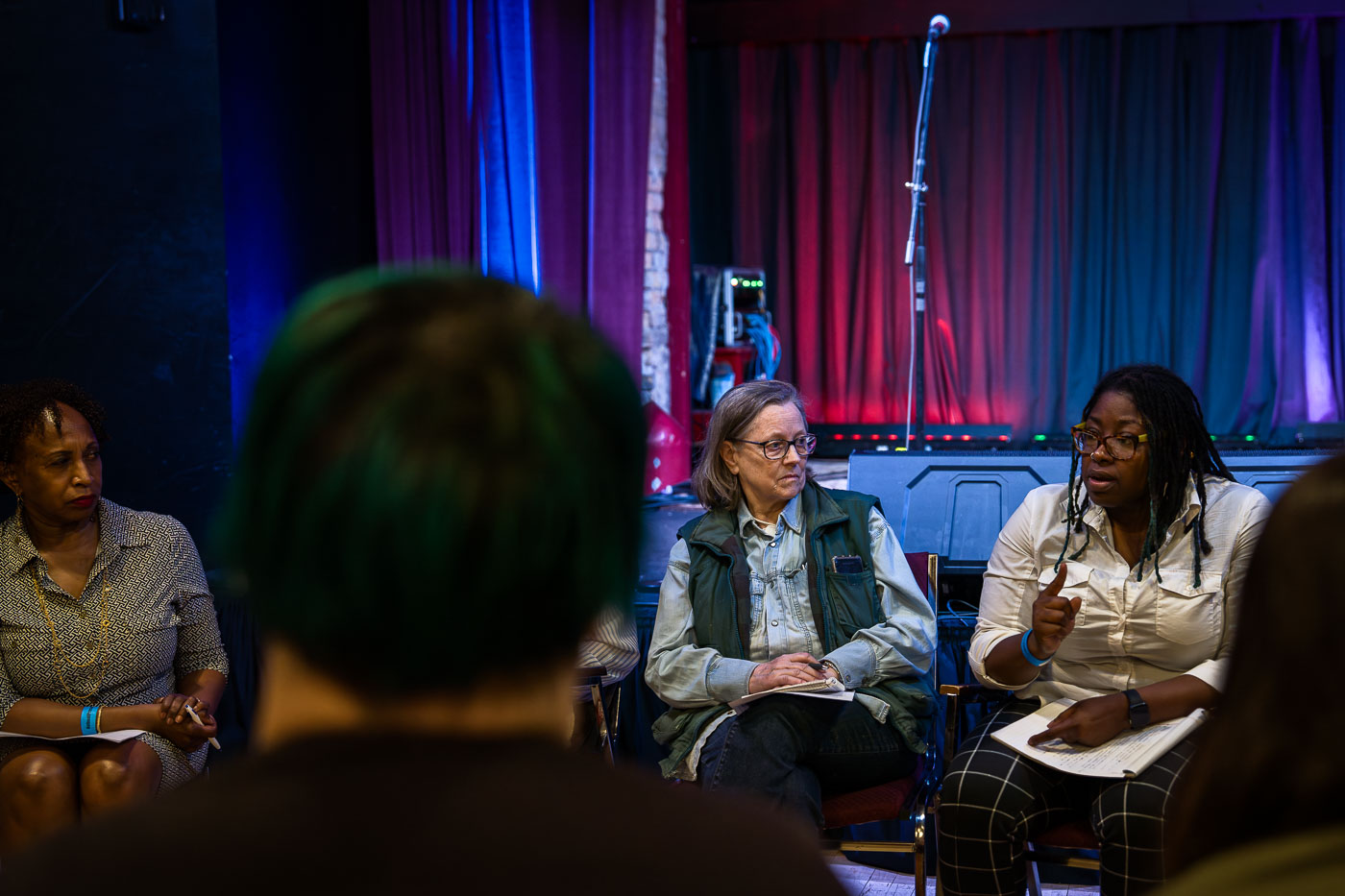
Robin Wonsley speaks at third precinct meeting
City Council Member Robin Wonsley addresses attendees at a community meeting in Minneapolis concerning the proposed new 3rd Precinct police station. The meeting, one of five held to discuss the precinct's future, was marked by significant public distrust of the Minneapolis Police Department and the history of the existing precinct. Many participants expressed opposition to a new station altogether, reflecting ongoing community concerns about policing in Minneapolis.

Robin Wonsley at Minneapolis 3rd Precinct Community Meeting

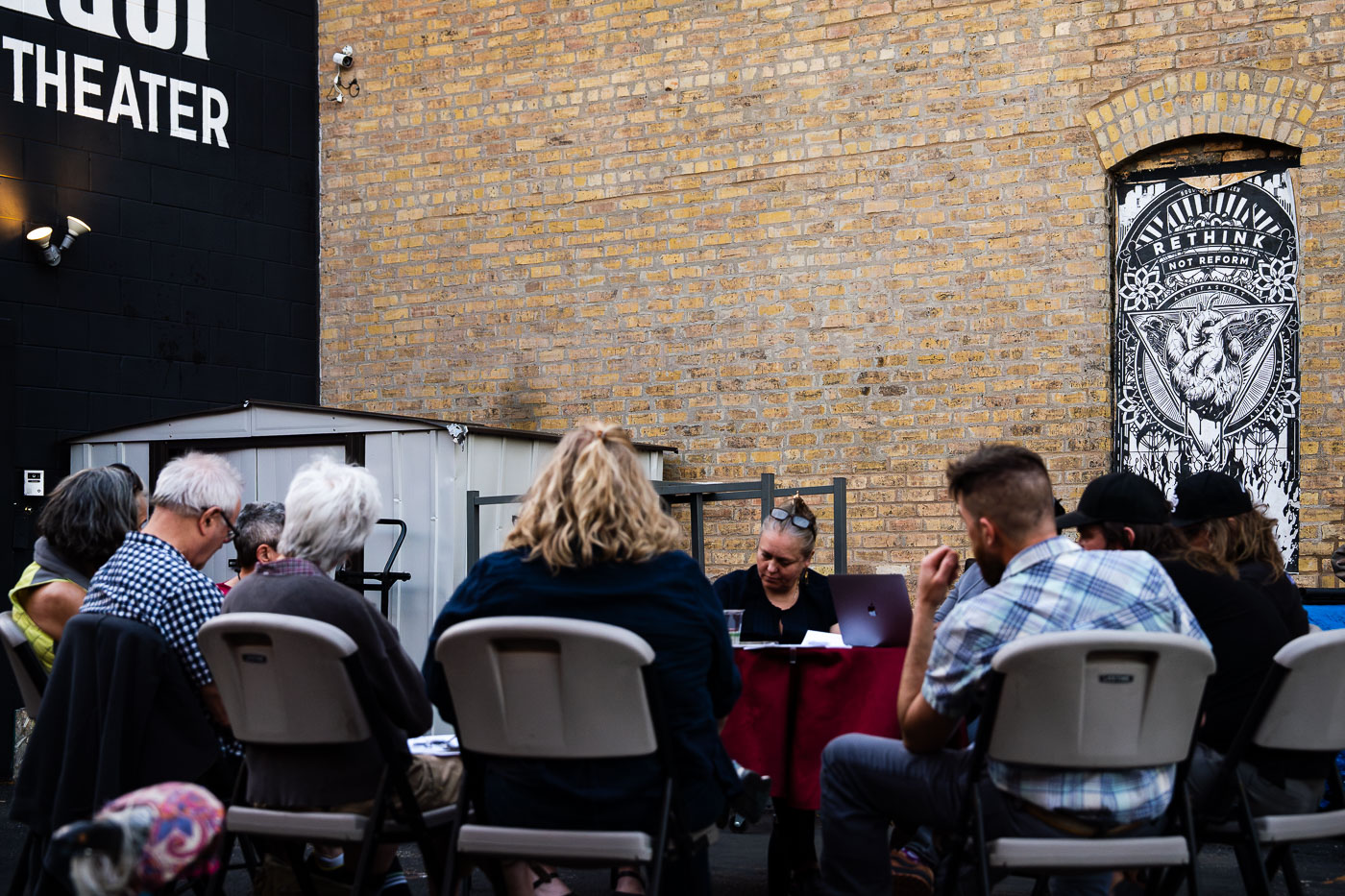
Third precinct community roundtable meeting
Community members gathered for a public meeting concerning the proposed new Minneapolis Police 3rd Precinct. The meeting, held outdoors near the Augsburg University Theater, addressed community concerns and historical distrust of the Minneapolis Police Department, particularly in relation to the 3rd Precinct. Many attendees expressed opposition to the construction of a new precinct, reflecting ongoing tensions and discussions following the 2020 Minneapolis uprising.

Minneapolis Police 3rd Precinct Community Meeting

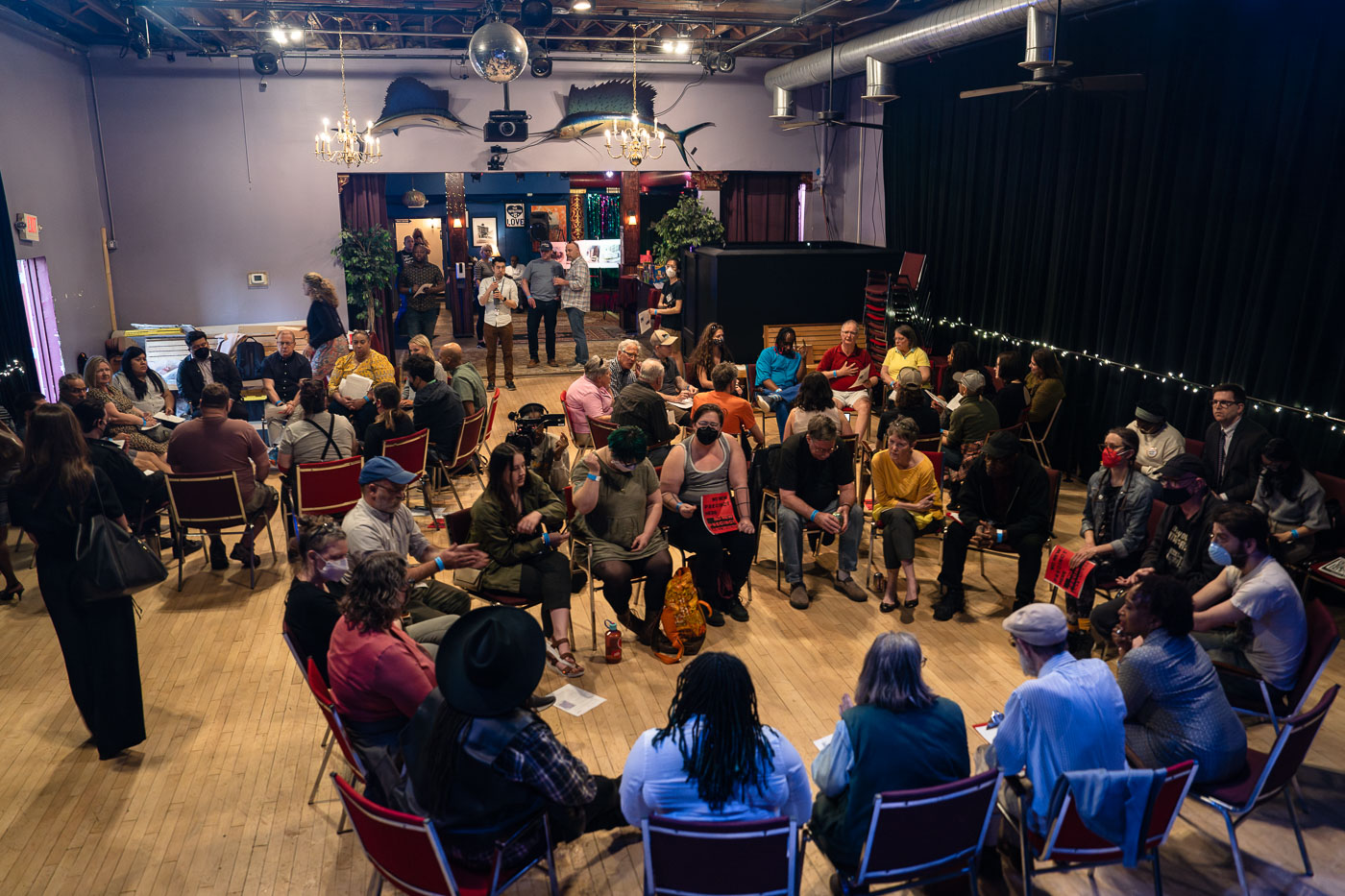
Community at a third precinct police station meeting
Aommunity meeting is held in Minneapolis concerning the proposed relocation of the Minneapolis Police Department's 3rd Precinct. The meeting, one of five public forums, addressed community concerns and distrust towards the MPD, with many attendees expressing opposition to a new precinct altogether. The discussions highlighted the historical context and community sentiment surrounding the 3rd Precinct, particularly in the wake of the Minneapolis Uprising.

Minneapolis Police 3rd Precinct Community Meeting on New Location

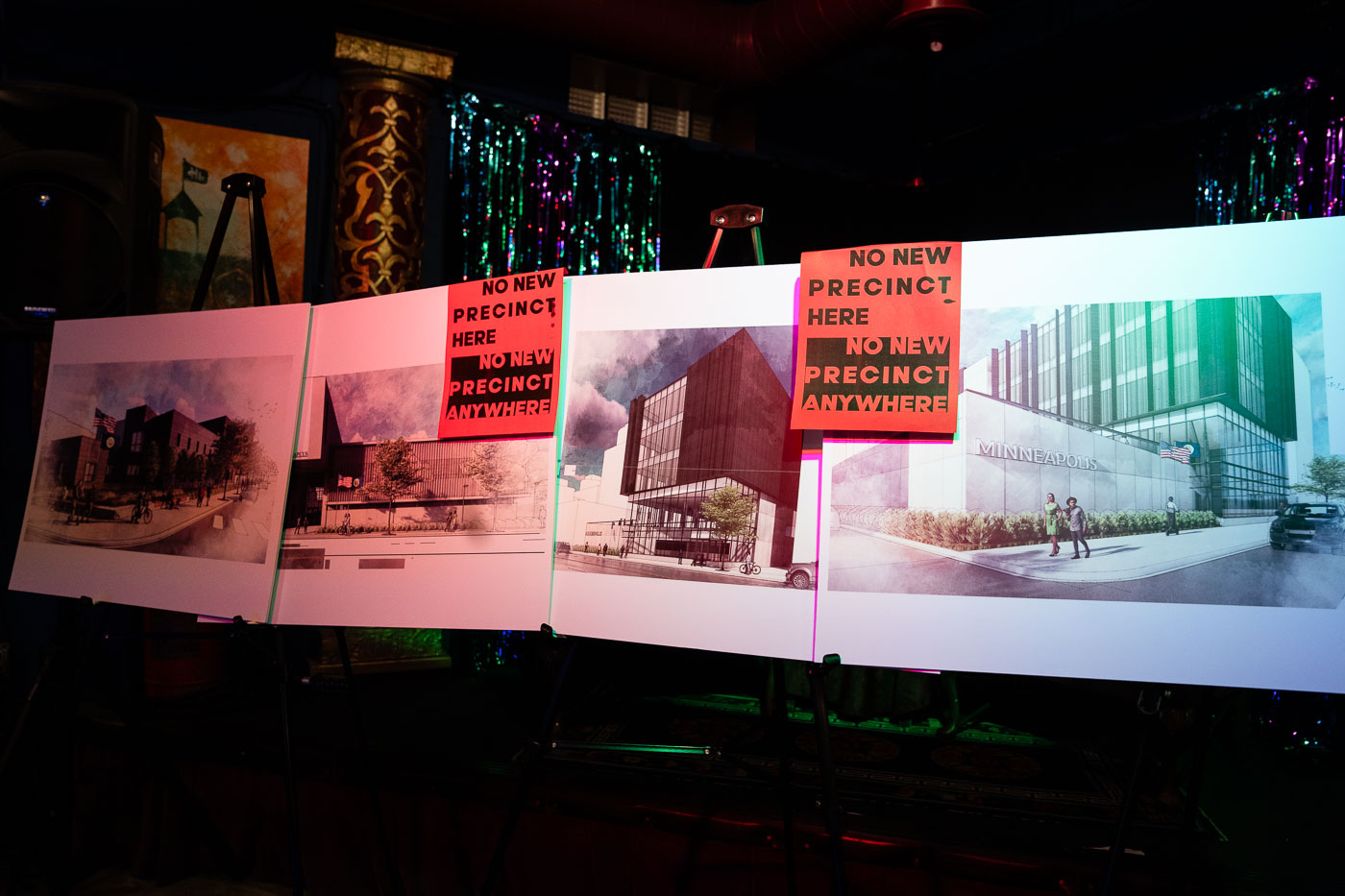
No new precinct signs on new precinct renderings
Renderings for a proposed new Minneapolis Police Department Third Precinct building are displayed at a community meeting. The project has faced significant opposition, as indicated by the "NO NEW PRECINCT HERE" and "NO NEW PRECINCT ANYWHERE" signs affixed to the displays.

Minneapolis Community Meeting: New Police Station Renderings
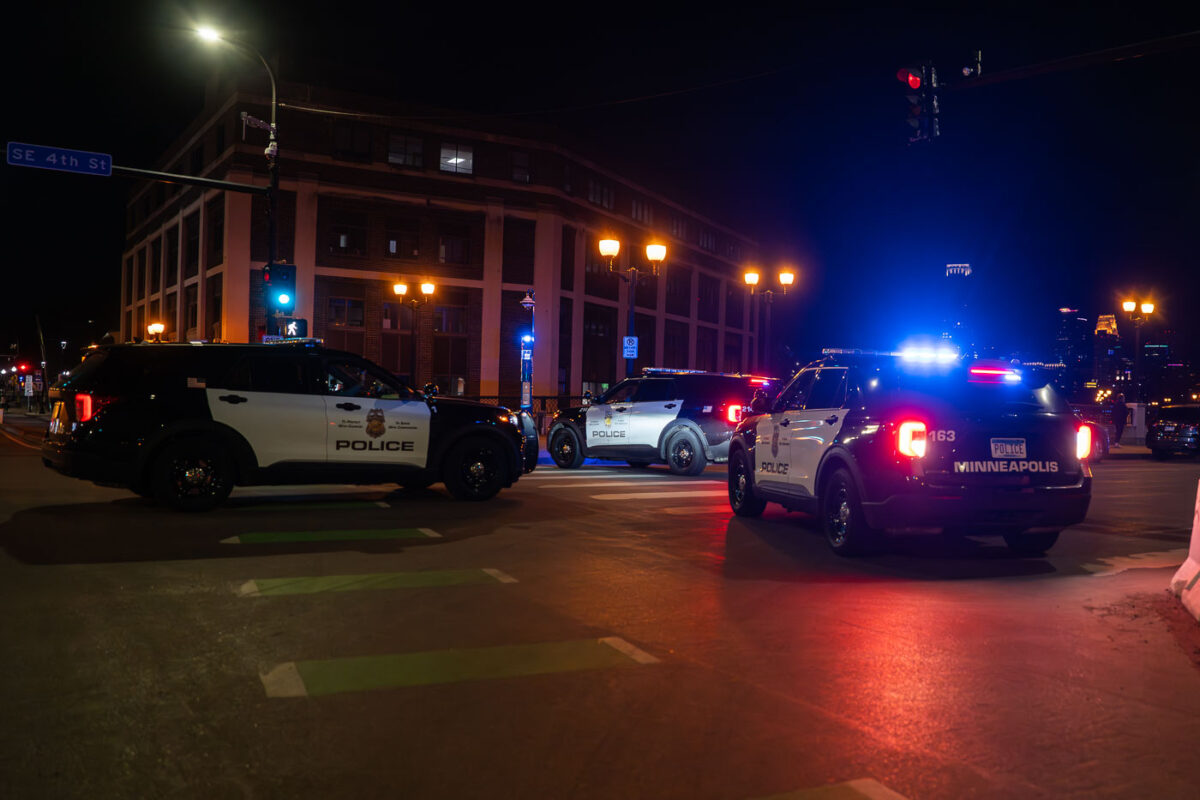
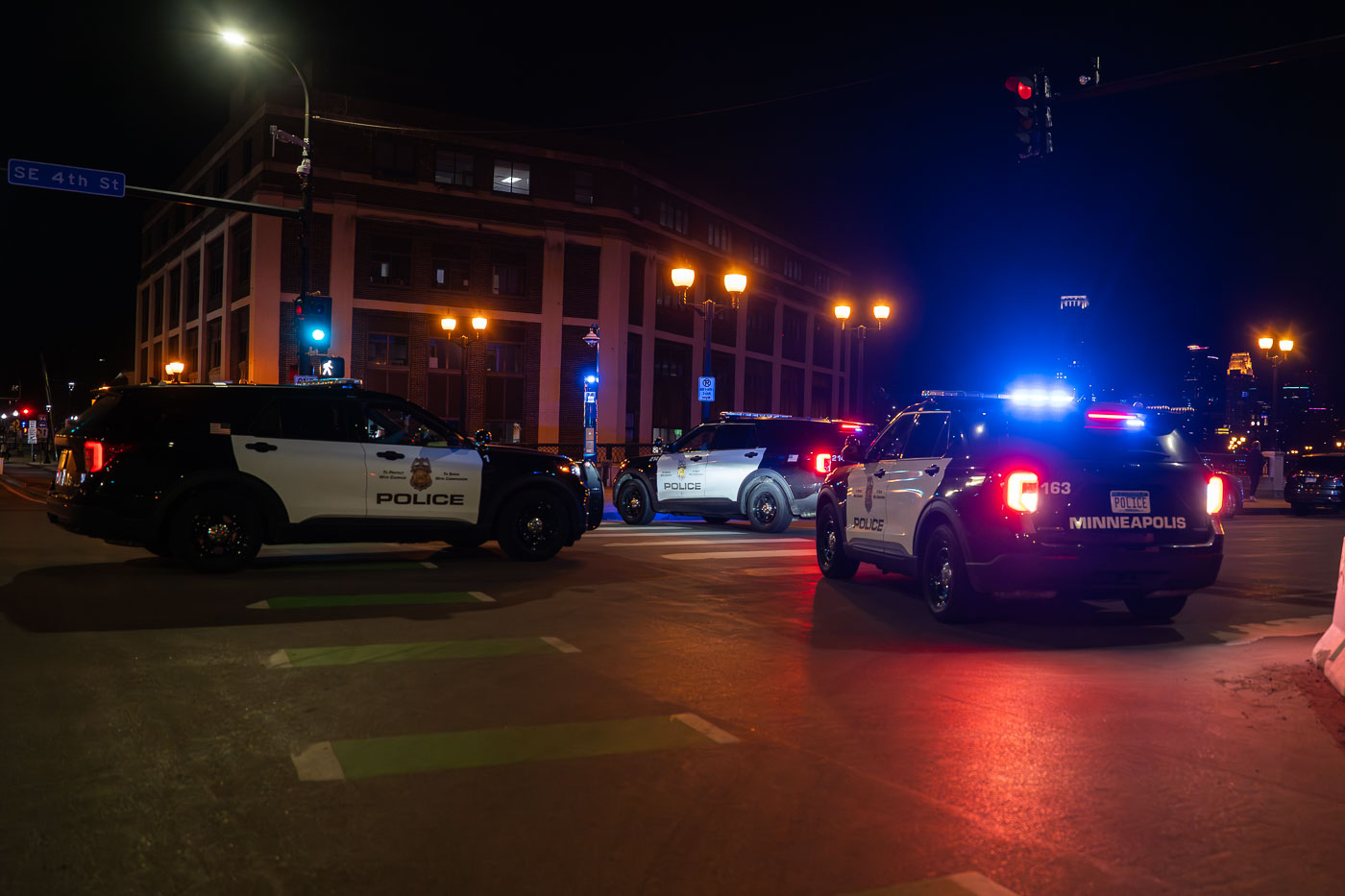
Minneapolis police squad cars in dinkytown with lights on
Minneapolis Police vehicles are shown in the Dinkytown neighborhood near the University of Minnesota campus on the night of March 25, 2023. The presence of police cars followed a college hockey game at the nearby arena, where the University of Minnesota Golden Gophers lost to Quinnipiac University in the NCAA tournament.

Minneapolis Police Cars in Dinkytown After Hockey Game

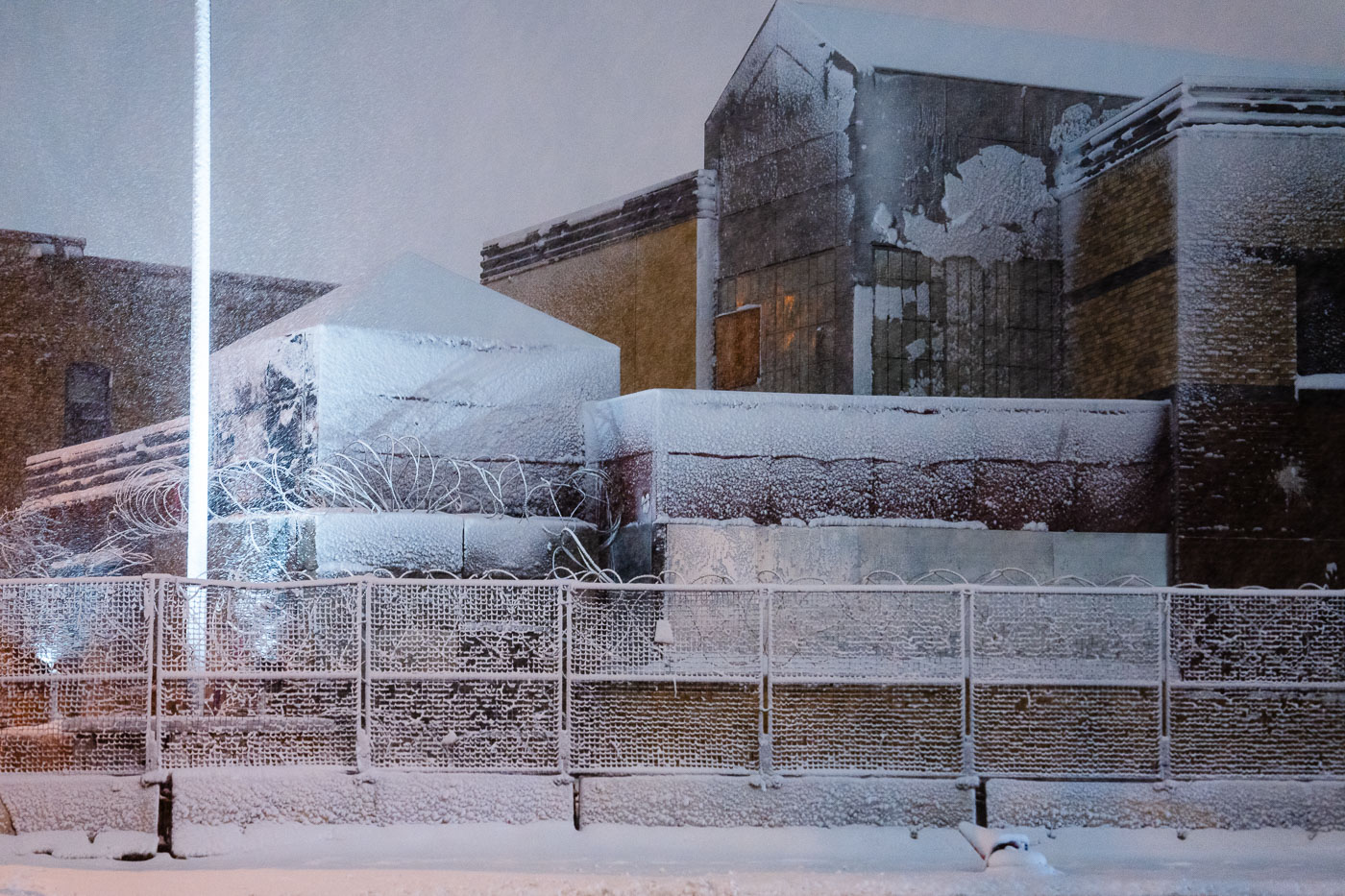
The Minneapolis Police 3rd Precinct building, damaged by fire and secured with fencing, sits vacant and snow-covered after civil unrest in May 2020.
The Minneapolis Police Third Precinct building, vacant and covered in snow, is secured by fencing and barbed wire. The structure shows visible damage from fire and is partially obscured by falling snow. The precinct has been unoccupied since it was damaged during civil unrest in May 2020, following the murder of George Floyd. The ongoing presence of security measures highlights the lasting impact of the events on the city's public facilities.

Minneapolis Police 3rd Precinct in Snow After Riots

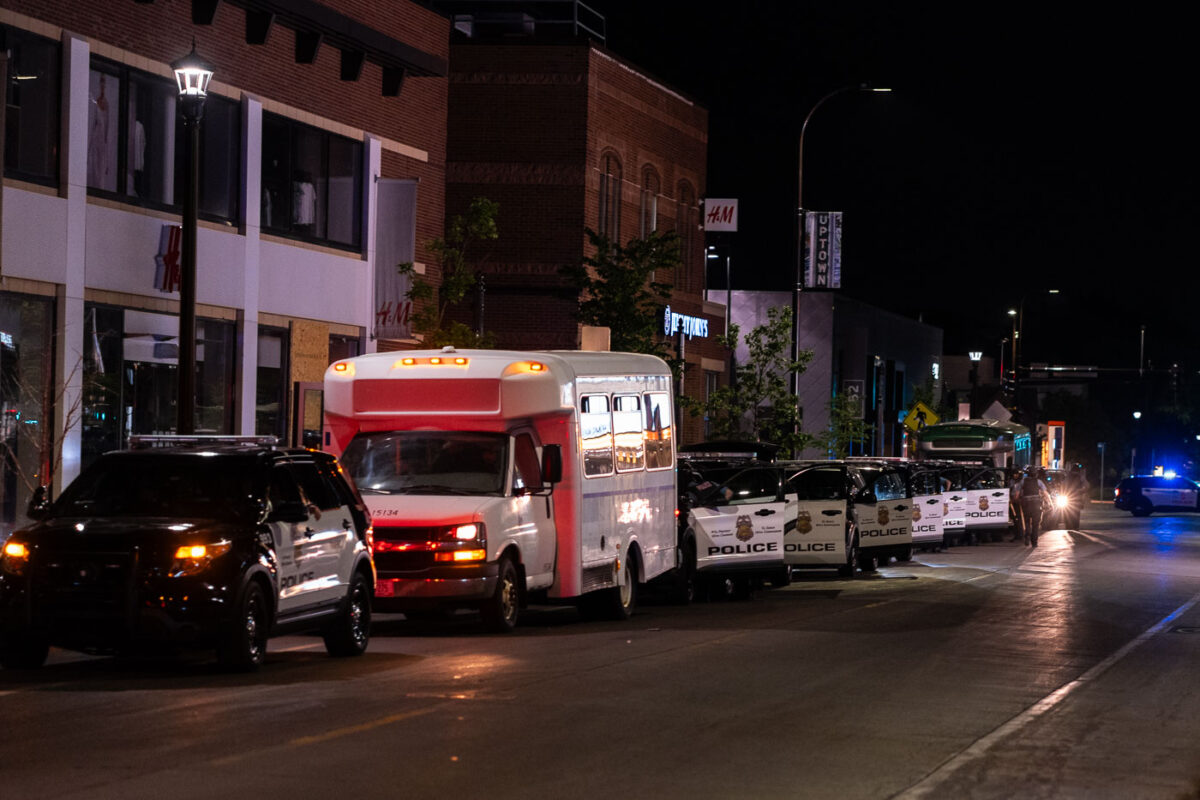
Minneapolis Police vehicles parked outside Uptown Ties Lounge & Rooftop on Lagoon Avenue at night.
Minneapolis Police vehicles are parked outside Uptown Ties Lounge & Rooftop on Lagoon Avenue in Uptown Minneapolis. Police officers regularly work off-duty at this location.

Police Squad Cars at Uptown Ties Lounge & Rooftop

Minneapolis Police vehicles parked outside Fire House bar with graffiti reading "No Good Cops. No Bad Protesters."
Minneapolis Police vehicles are parked outside the Fire House bar and restaurant on Lagoon Avenue in Uptown Minneapolis. Graffiti on ther fence reads "No Good Cops. No Bad Protesters."

Police Squad Cars Outside Fire House Bar in Uptown Minneapolis

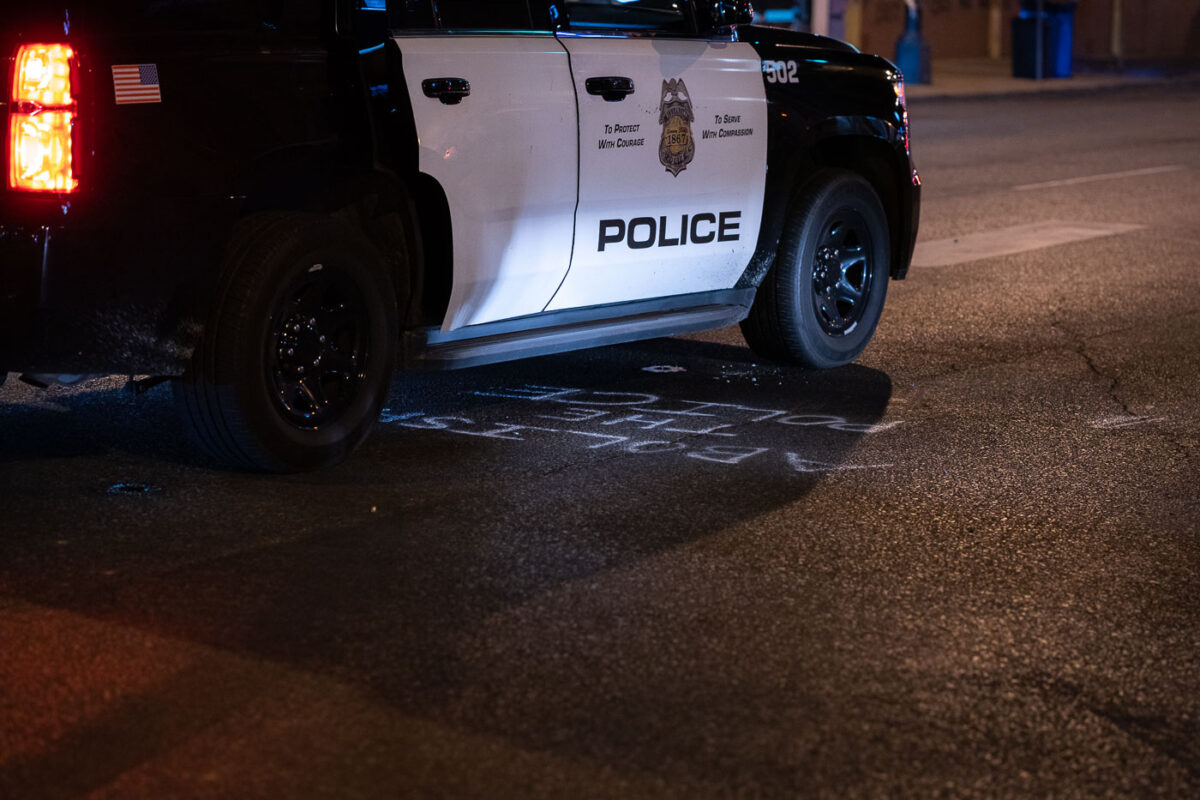
Minneapolis police SUVs parked on Lagoon Avenue in Uptown Minneapolis at night with lights flashing.
A Minneapolis Squad Car parked on Lagoon Avenue in Uptown Minneapolis.

Minneapolis Squad Car in Uptown Minneapolis 2023
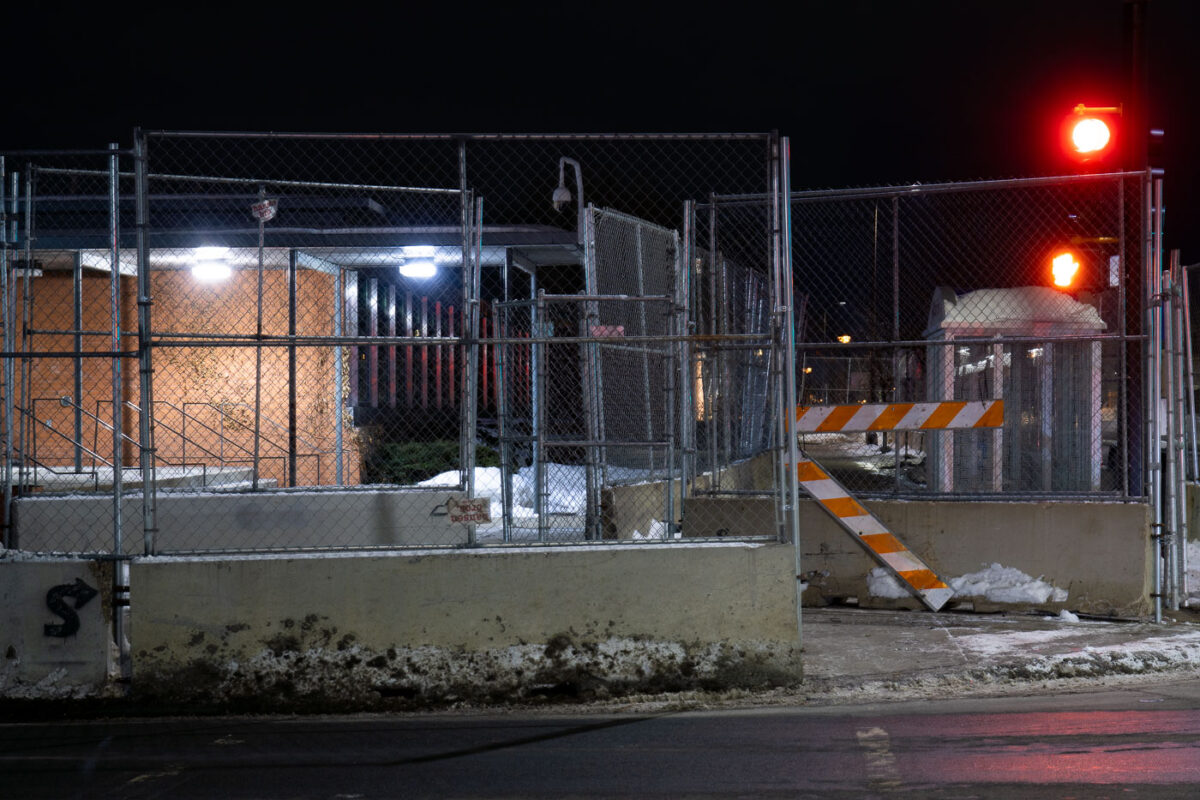
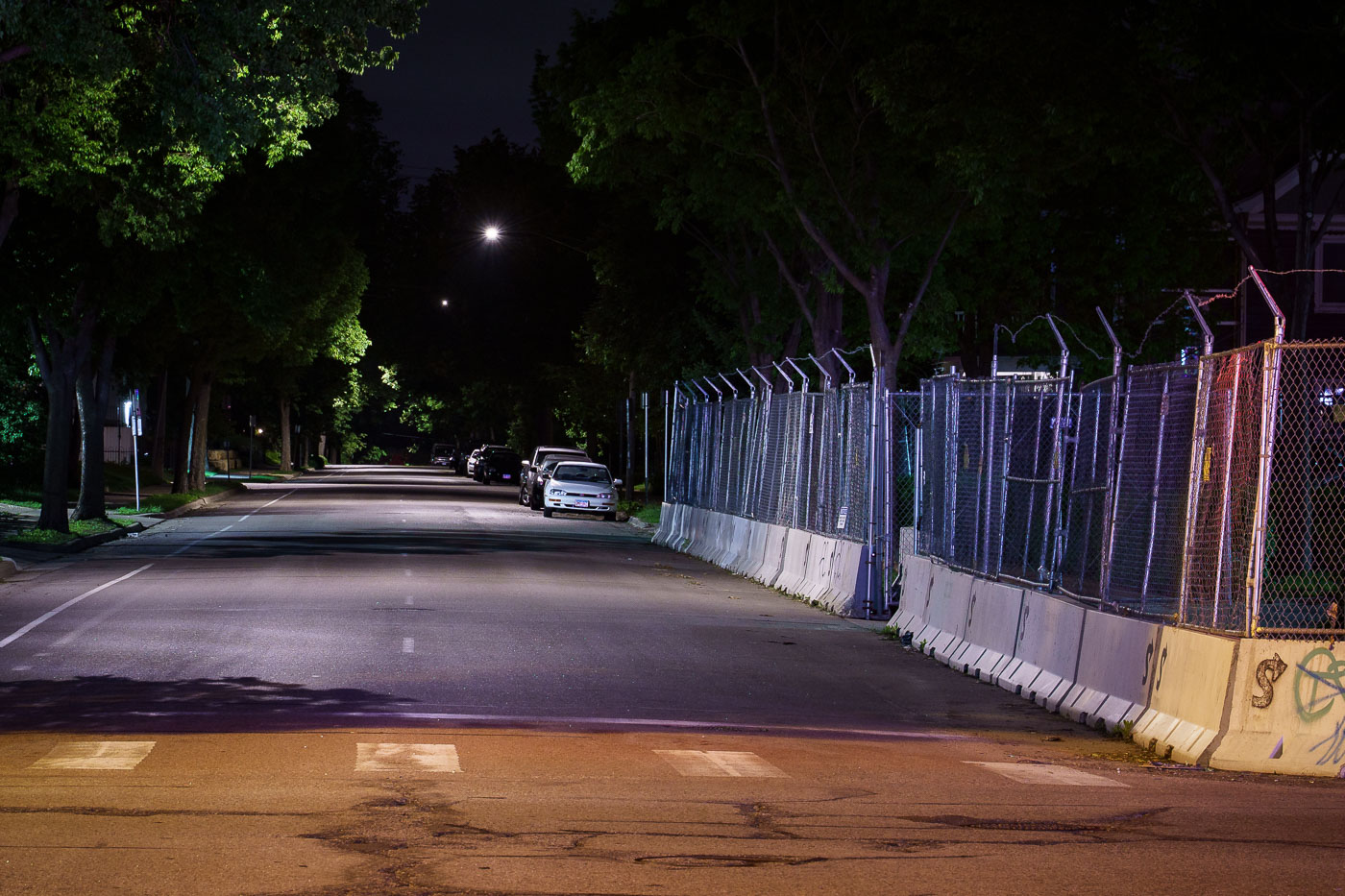
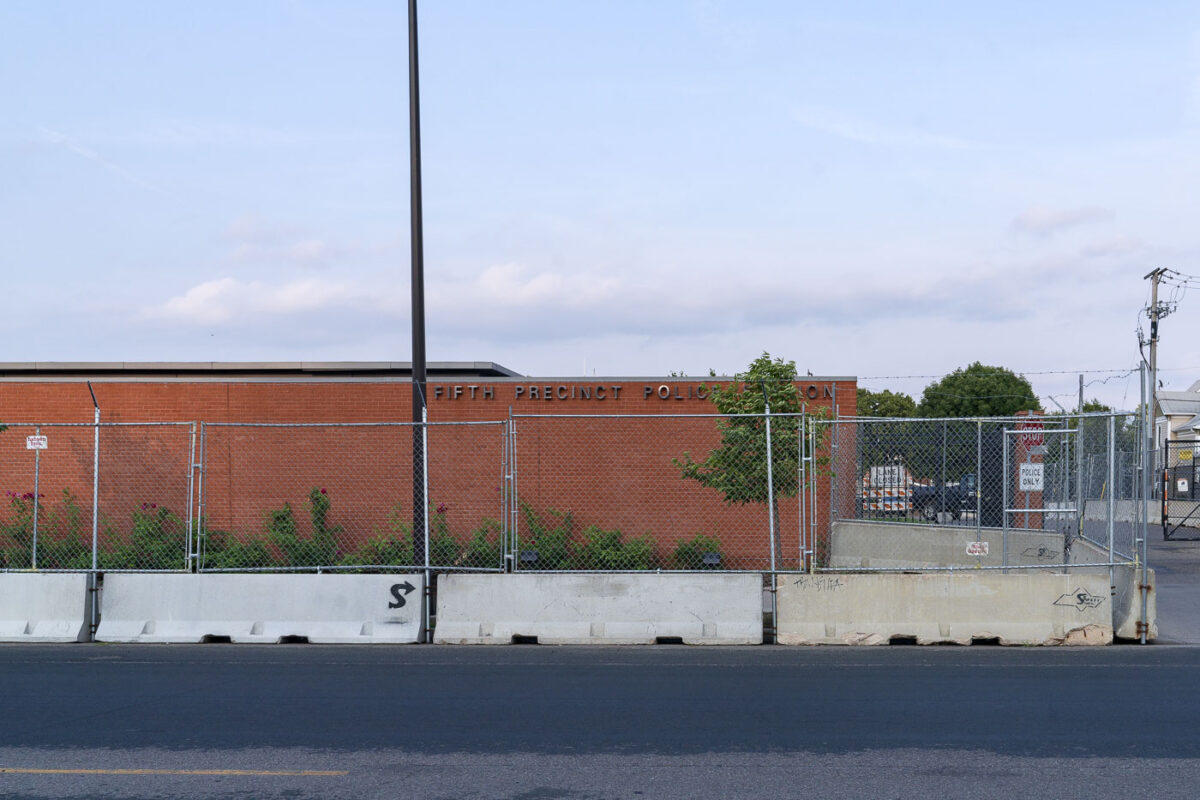
Minneapolis Police 5th Precinct surrounded by security fencing and concrete barriers at night.
Minneapolis Police 5th Precinct in Minneapolis is surrounded by security fencing and concrete barriers.

Fenced Entrance at Minneapolis Police 5th Precinct at Night
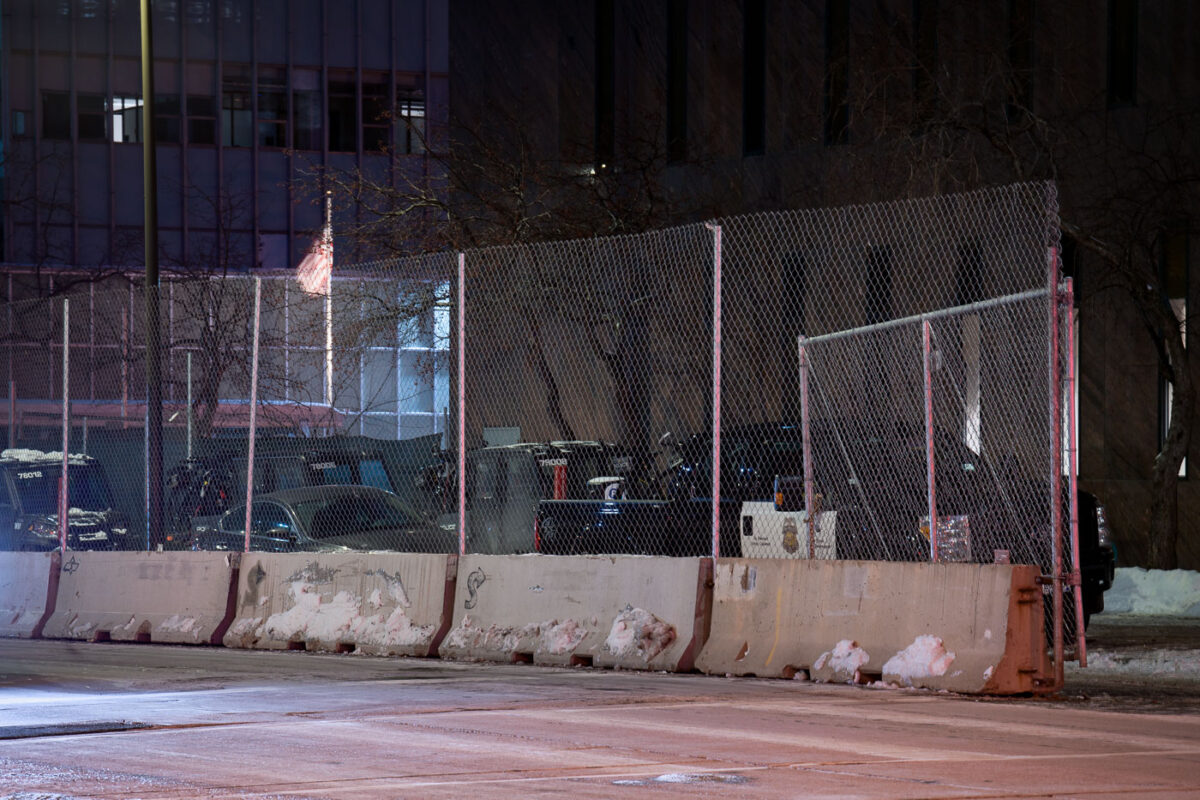
Minneapolis Police vehicles parked behind chain-link fence and concrete barriers at temporary Third Precinct site.
Minneapolis Police vehicles are seen behind barricades at the temporary Third Precinct site on January 28, 2023. This temporary location was established after the original Third Precinct building was destroyed by fire on May 28, 2020, during protests following the murder of George Floyd.

Police Vehicles Behind Fencing at the Temporary 3rd Precinct Site
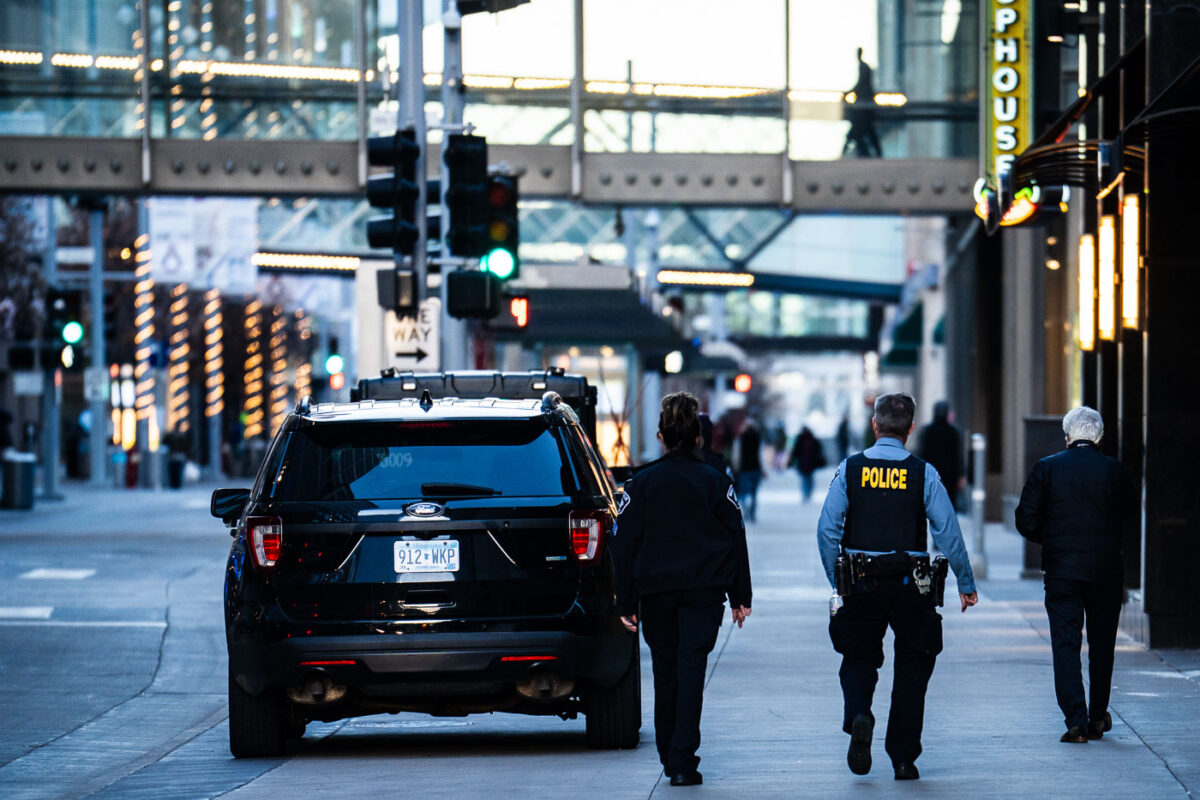
Minneapolis Police walk in Downtown Minneapolis part of Operation Endeavor
Minneapolis Police officers patrol downtown Minneapolis during "Operation Endeavor."

Minneapolis Police Patrol Downtown During Operation Endeavor
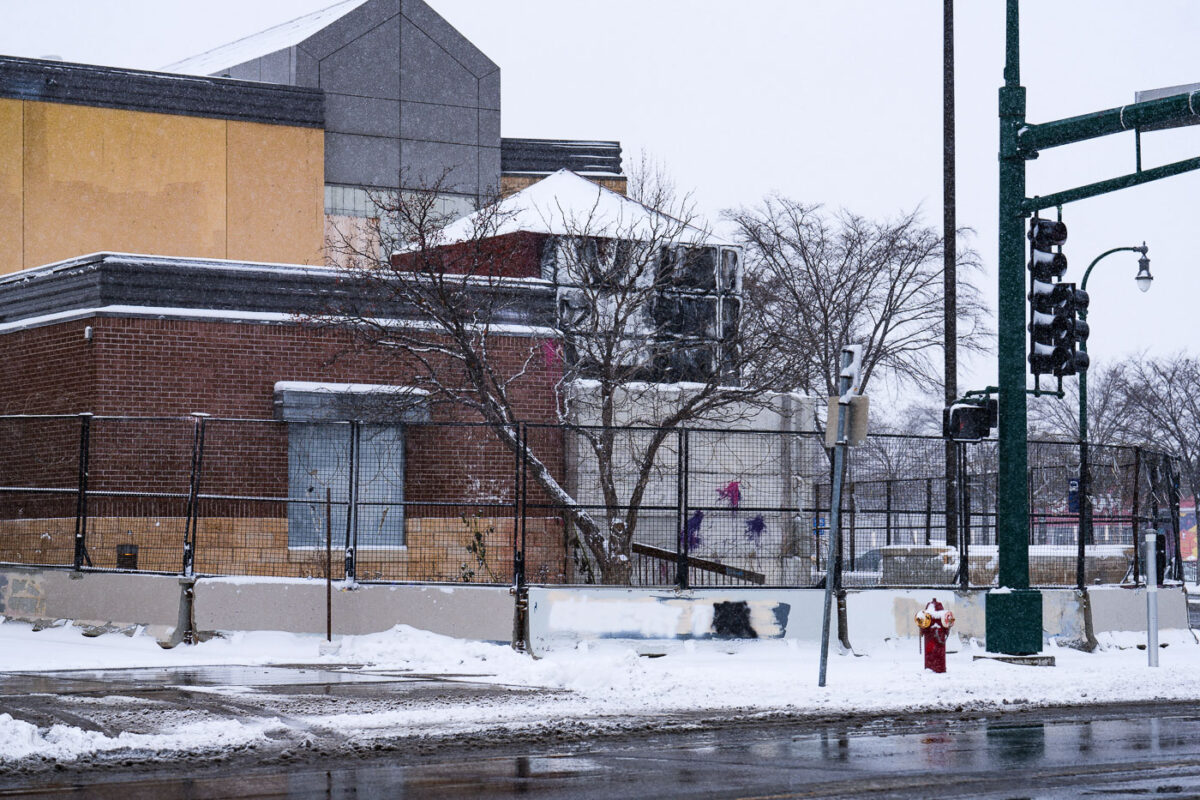
Snow around burned minneapolis police station
The former Minneapolis Police Third Precinct building in South Minneapolis is seen here during a snowfall. This precinct was a focal point of protests and unrest following the murder of George Floyd on May 25, 2020. The building was subsequently damaged by fire during demonstrations that occurred in the days following Floyd's death. The structure has remained vacant and secured since the incident.

Former Minneapolis Police 3rd Precinct in Snowfall
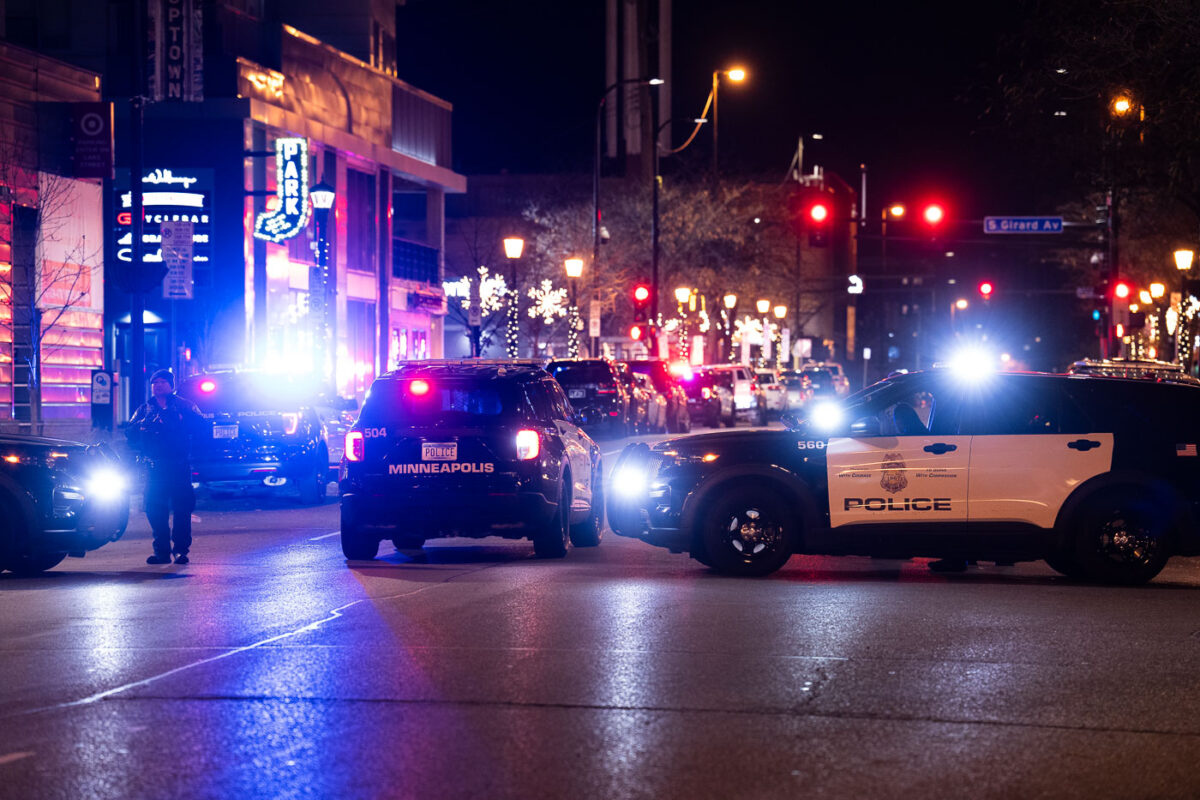
Minneapolis Police squad cars parked on Lagoon Ave November 2022
Minneapolis Police squad cars are visible on Lagoon Avenue in the Uptown neighborhood of Minneapolis.

Minneapolis Police Squad Cars on Lagoon Ave, Uptown
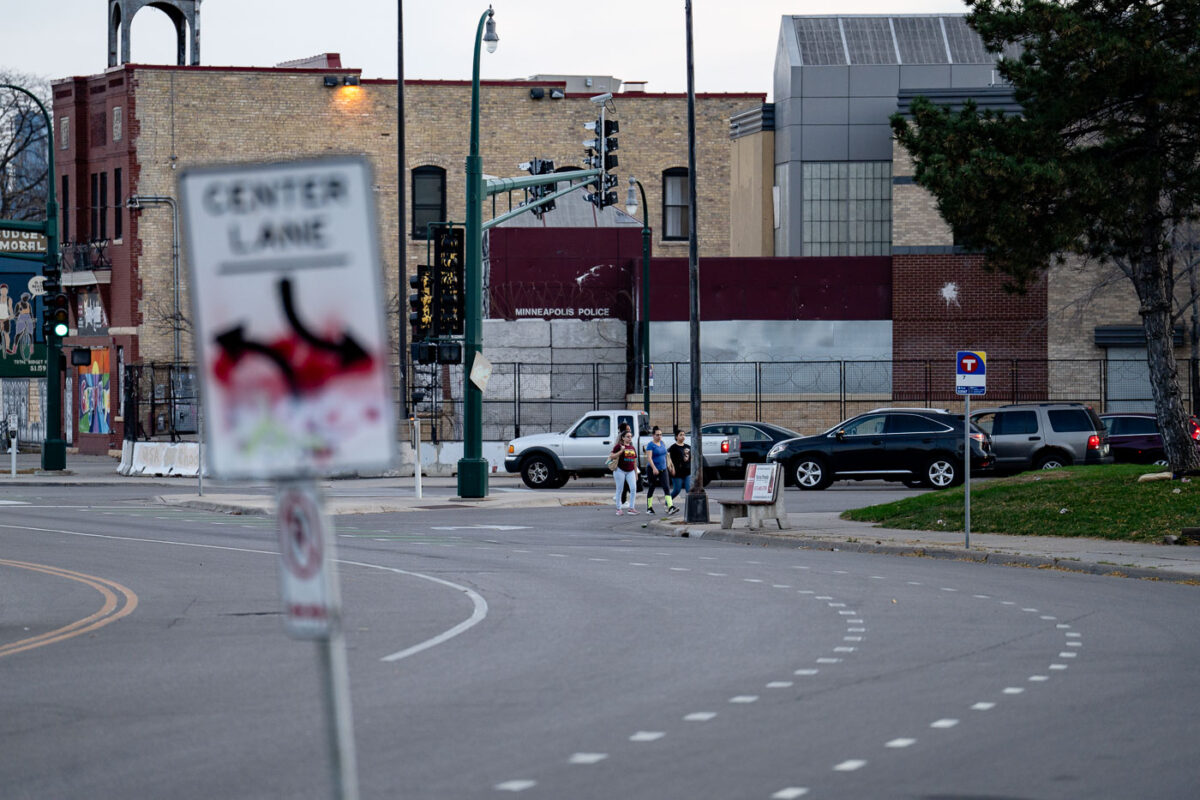
Minneapolis third precinct as seen on Minnehaha Ave
The former Minneapolis Police Third Precinct building, located on Minnehaha Avenue, stands after being significantly damaged by fire during protests in May 2020. The unrest followed the murder of George Floyd by a Minneapolis police officer.

Minneapolis Police 3rd Precinct, Minnehaha Ave, Post-Uprising
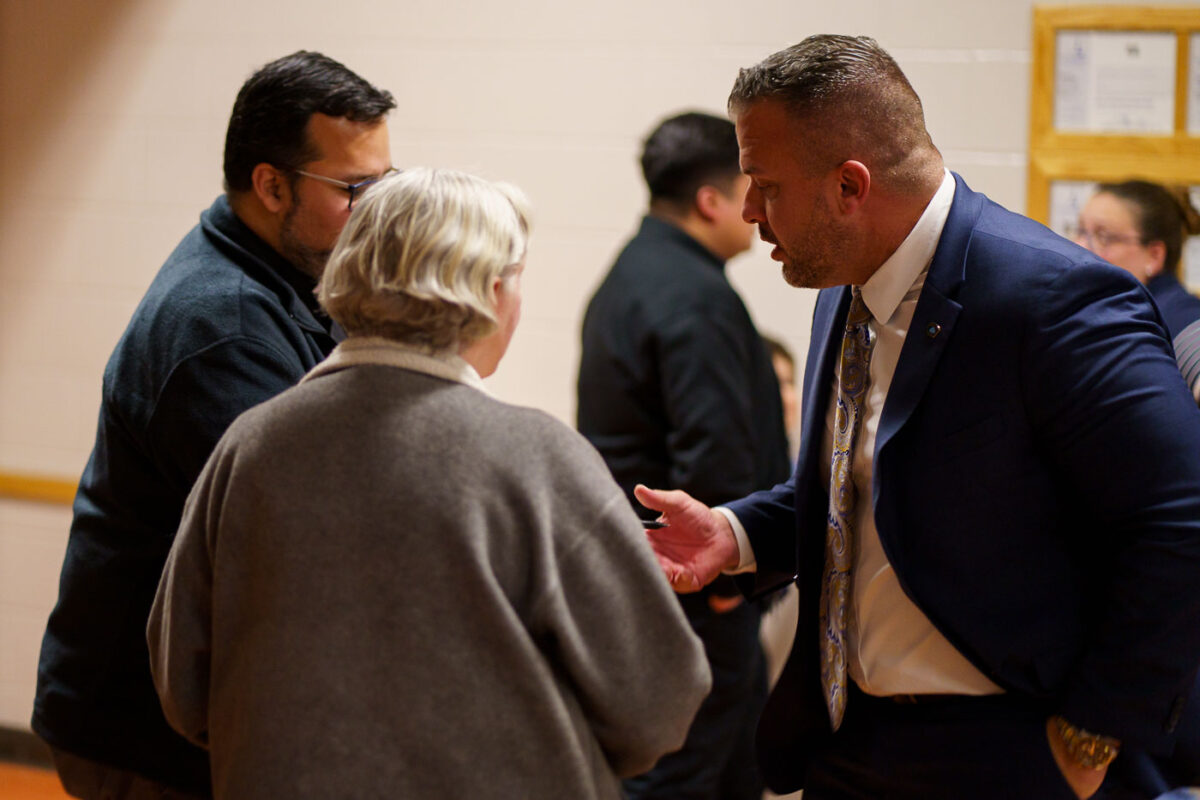
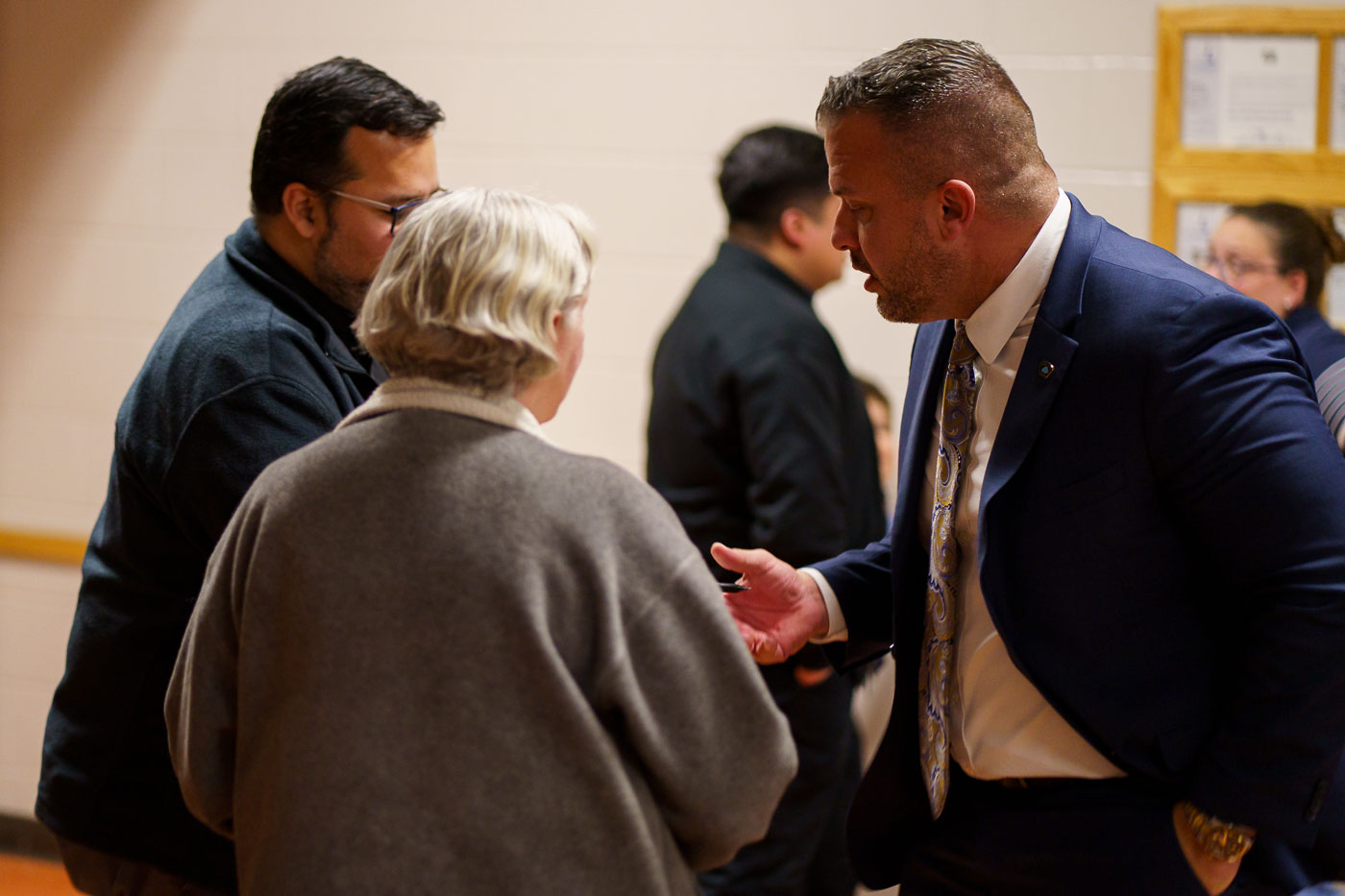
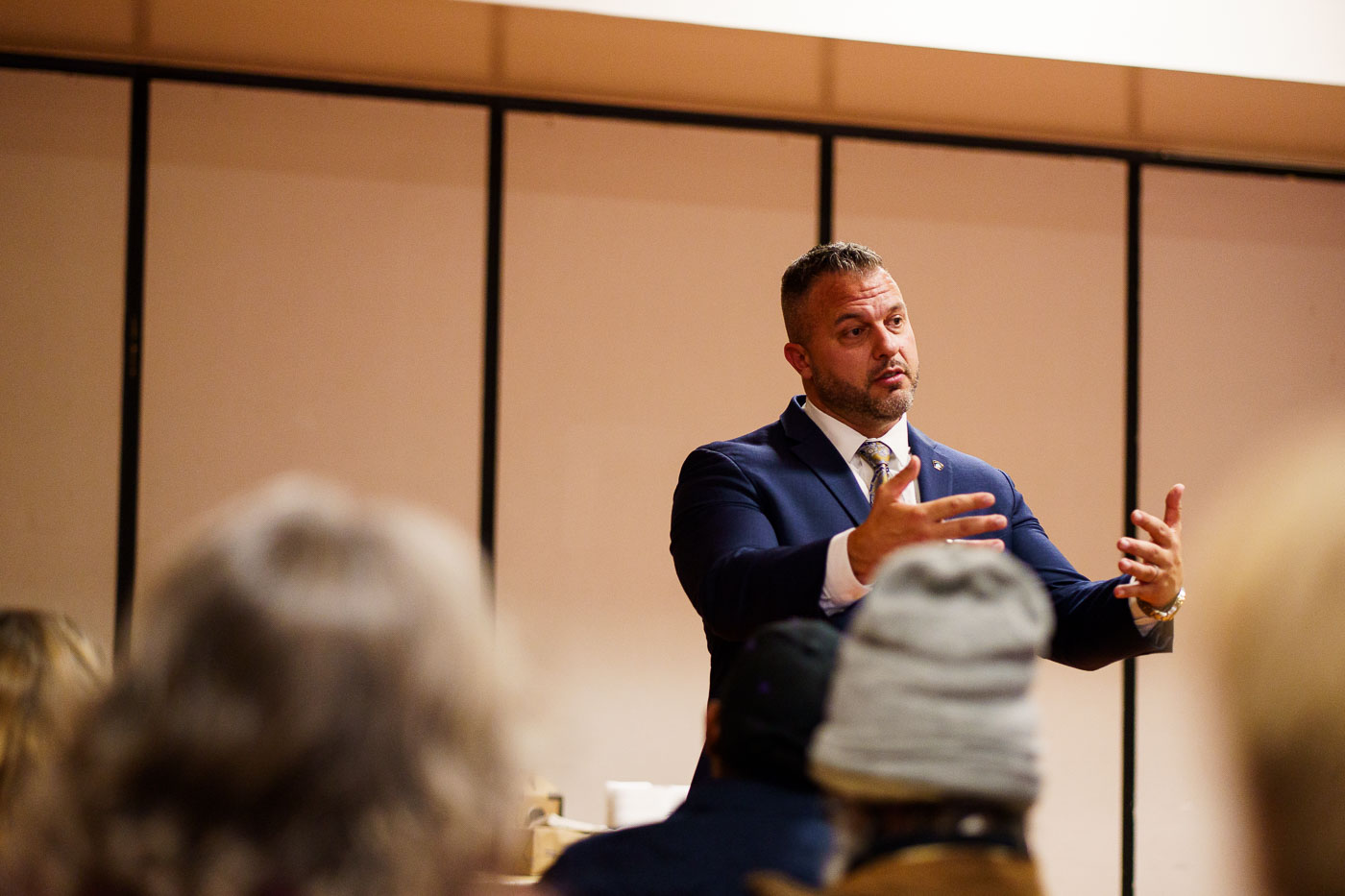
Brian Ohara speaks to the community
Minneapolis police chief nominee Brian O’Hara engaged with community members at Stewart Park. The meet and greet provided a forum for residents to discuss public safety concerns and the potential impact of a consent decree, a process O'Hara had experience with in Newark.

Brian O’Hara speaks to Minneapolis community at Stewart Park
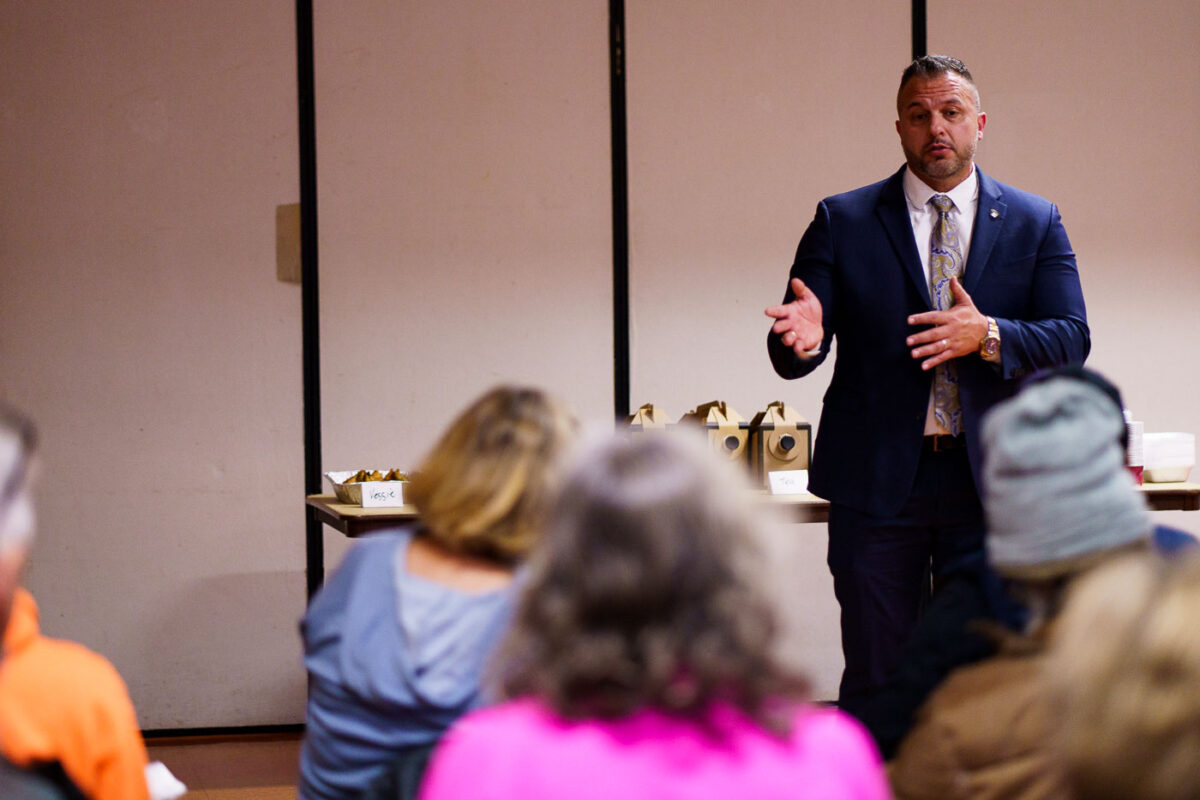
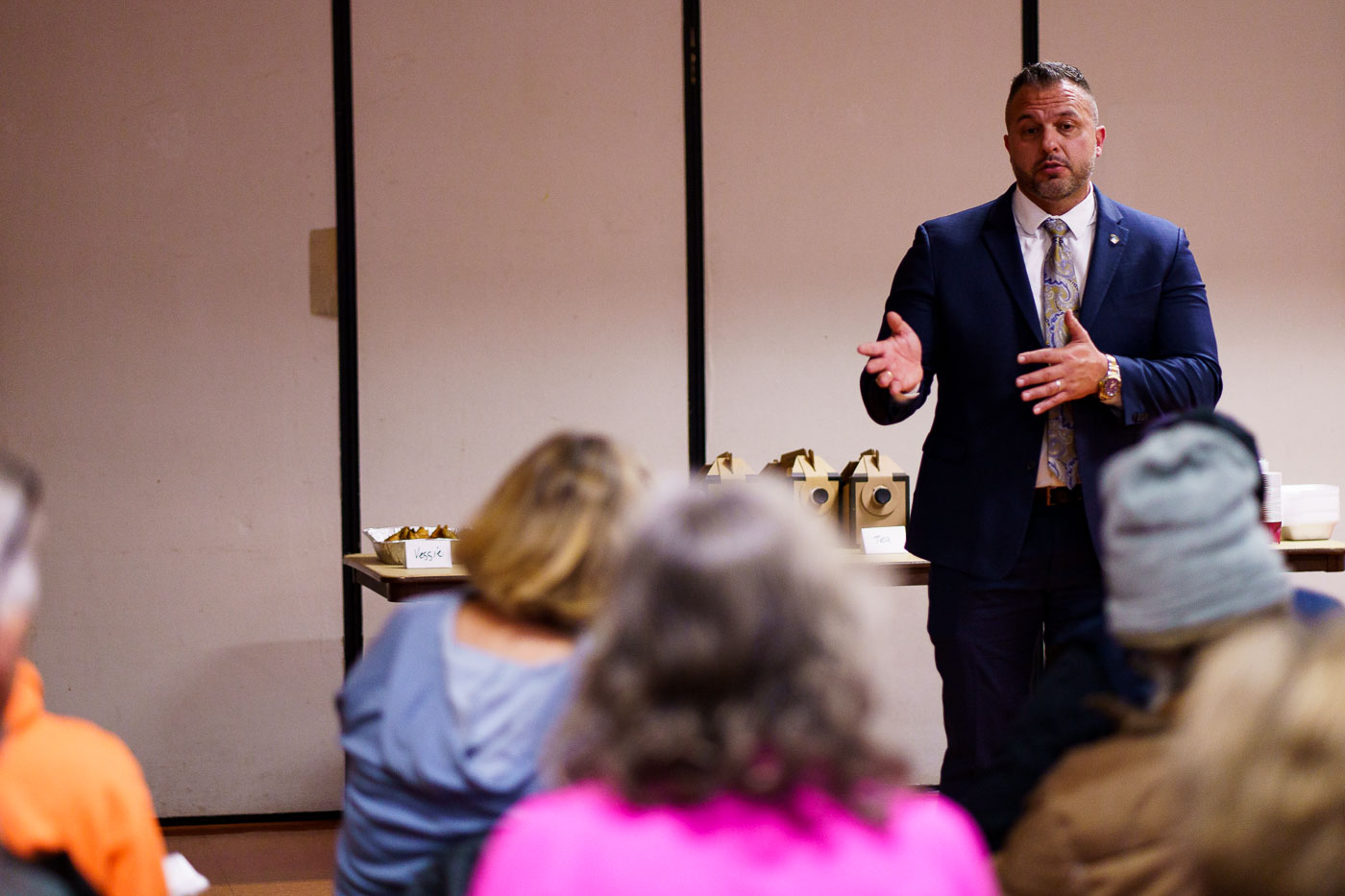
Minneapolis Police Chief Brian OHara at Community Meeting
Minneapolis Police Chief nominee Brian O’Hara addresses community members at Stewart Park in South Minneapolis. The meeting provided a forum for residents to discuss public safety and O'Hara's proposed leadership. During the gathering, O'Hara shared insights from his experience with a consent decree process in Newark, New Jersey, drawing comparisons to the unique challenges and context of Minneapolis.

Minneapolis Police Chief Brian O’Hara at Stewart Park Community Meeting
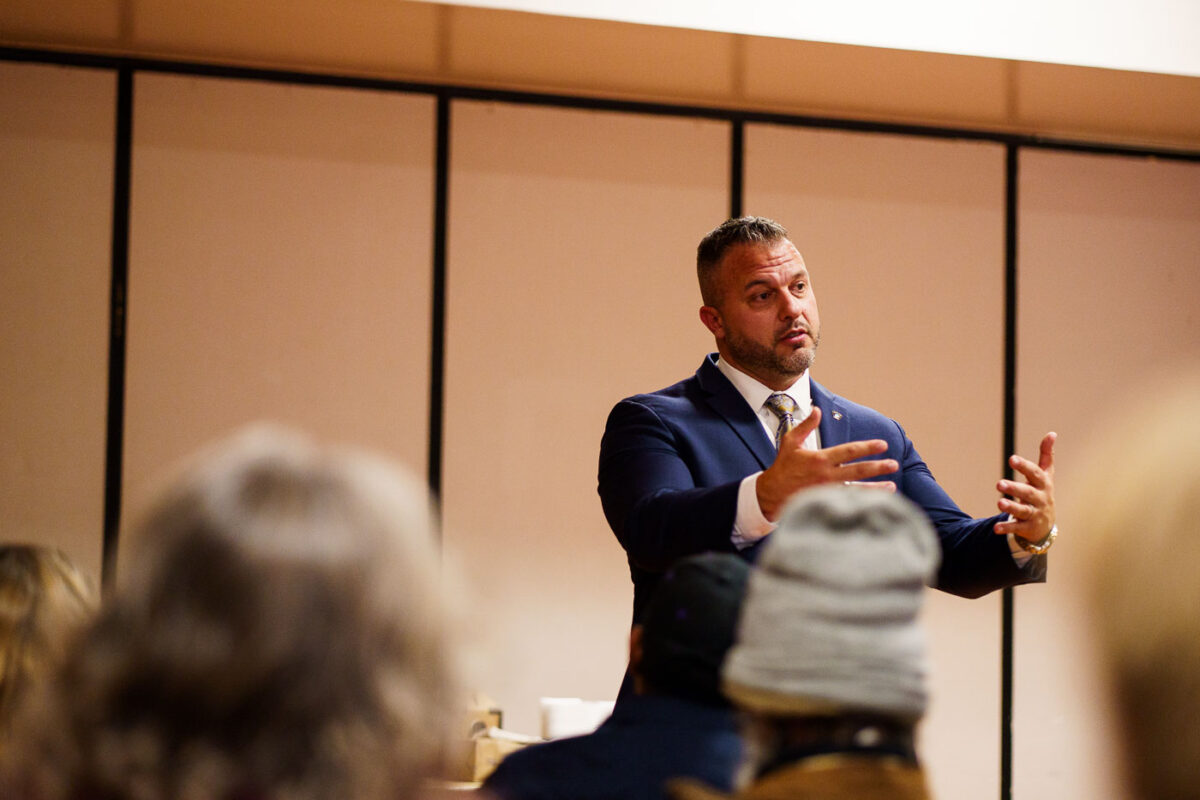
Brian OHara speaks in South Minneapolis
Minneapolis police chief nominee Brian O’Hara addresses community members at Stewart Park. O'Hara, who previously served in Newark, discussed the consent decree process that city underwent and drew comparisons to the situation in Minneapolis. This meet and greet provided residents an opportunity to engage with a candidate for a significant leadership position within the city's police department.

Brian O’Hara speaks to South Minneapolis community

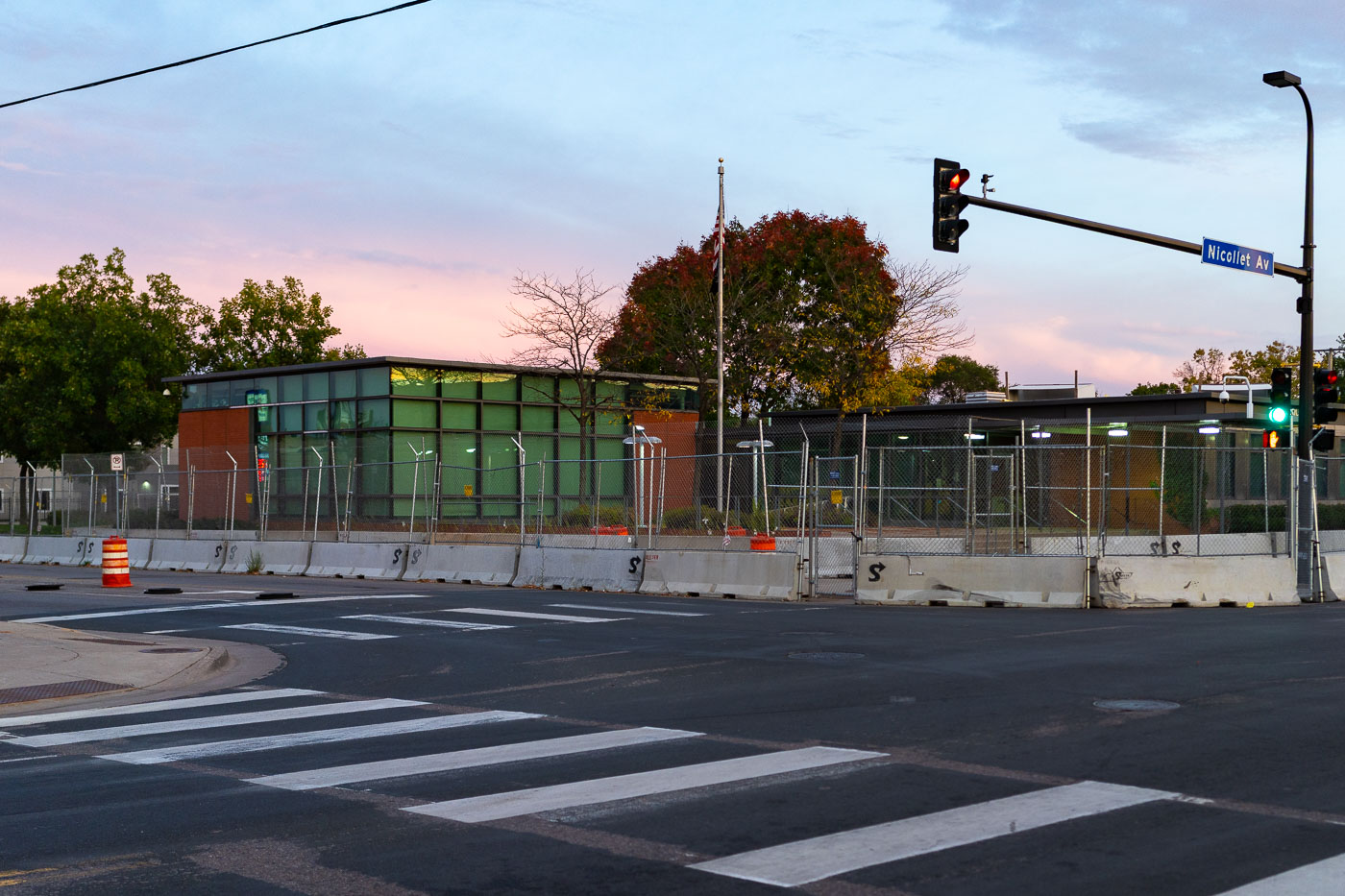
Minneapolis Police Station on Nicollet Avenue at night
The Minneapolis Police 5th Precinct station is located on Nicollet Avenue.

Minneapolis Police 5th Precinct, Nicollet Ave at Night

Operation Endeavor Squad Cars Parked in Downtown Minneapolis
Minneapolis Police Department vehicles are visible downtown during "Operation Endeavor." The operation was spearheaded by Minneapolis Community Safety Commissioner Cedric Alexander.

Minneapolis Police Cars Downtown During Operation Endeavor

We Remember signs at Minneapolis Police Station
The Minneapolis Police Third Precinct building, located on Lake Street, stands vacant and barricaded more than 2 years after it was taken over by protesters following the murder of George Floyd. Signs on the fencing read "The times are urgent, let us slow down". "We remember say their names" "cultivate care".

Minneapolis Police 3rd Precinct Barricade with Protest Signs

Minneapolis Police Third Precinct with Joyful Art
An art installation adorns the fencing surrounding the Minneapolis Police Third Precinct. The building sustained significant damage during the civil unrest that followed the murder of George Floyd in May 2020. The installation, featuring banners with messages like "CULTURE," "ONE SOUND IN UNITY," and "SPACE."

Minneapolis Police 3rd Precinct Fencing Art Installation

Make a Joyful Noise at Police Station
An art installation, "Make a Joyful Noise," is displayed on the fencing surrounding the Minneapolis Police Third Precinct. The precinct was heavily damaged during the civil unrest that followed the murder of George Floyd in May 2020.

Minneapolis Police 3rd Precinct Art Installation: Make a Joyful Noise

Minneapolis Police Third Precinct Art Fence
An art installation featuring hubcaps and other metallic objects adorns the security fencing surrounding the Minneapolis Police Third Precinct. This precinct was significantly damaged during the civil unrest that followed the murder of George Floyd in May 2020.

Minneapolis Police 3rd Precinct Art Fence with Hubcaps

Minneapolis Police squad car driving down Hennepin Ave in Downtown Minneapolis
A Minneapolis Police Department squad car patrols Hennepin Avenue in August 2022.

Minneapolis Police Squad Car on Hennepin Ave, August 2022
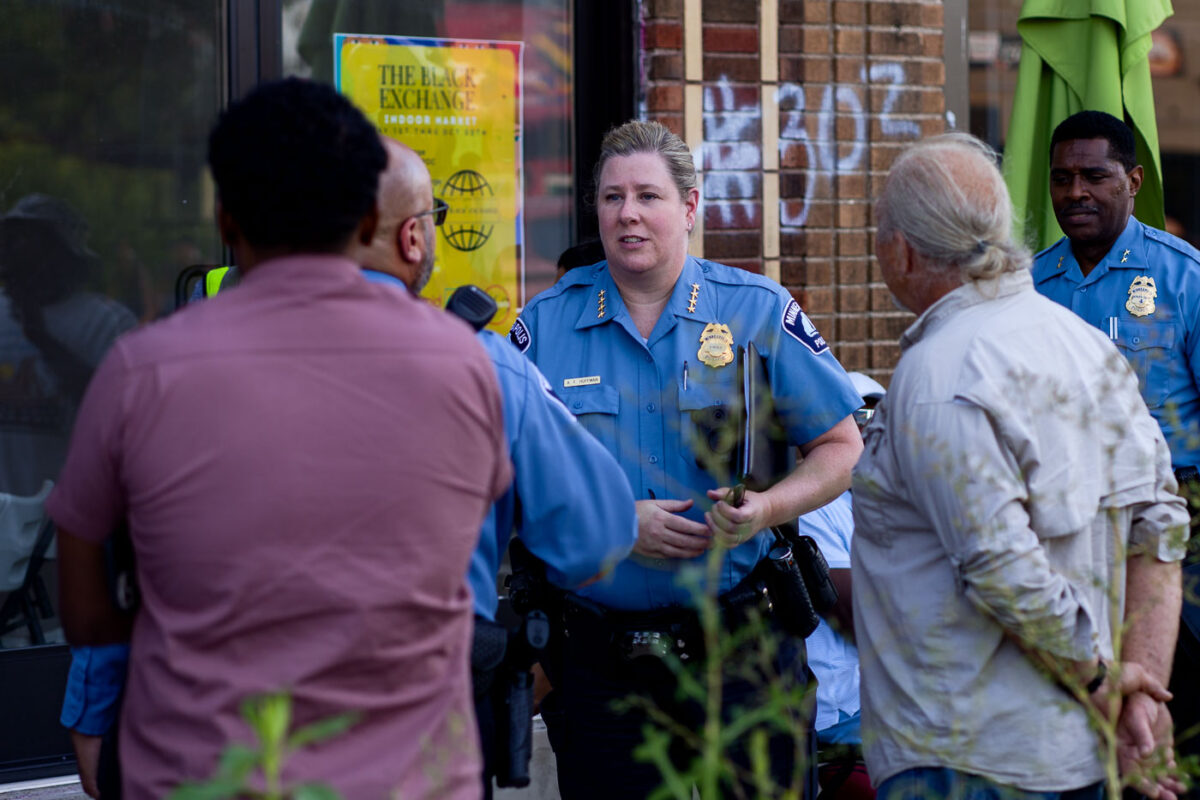
Interim Minneapolis Police Chief Amelia Huffman at George Floyd Square
Interim Minneapolis Police Chief Amelia Huffman attended a "Community Conversation" on public safety at George Floyd Square. The forum, held in the area that became a focal point for protests following the murder of George Floyd in May 2020, also included candidates for Hennepin County Attorney. This event aimed to foster dialogue between law enforcement and the community amidst ongoing discussions about public safety and policing in Minneapolis.

Interim Police Chief Huffman at George Floyd Square

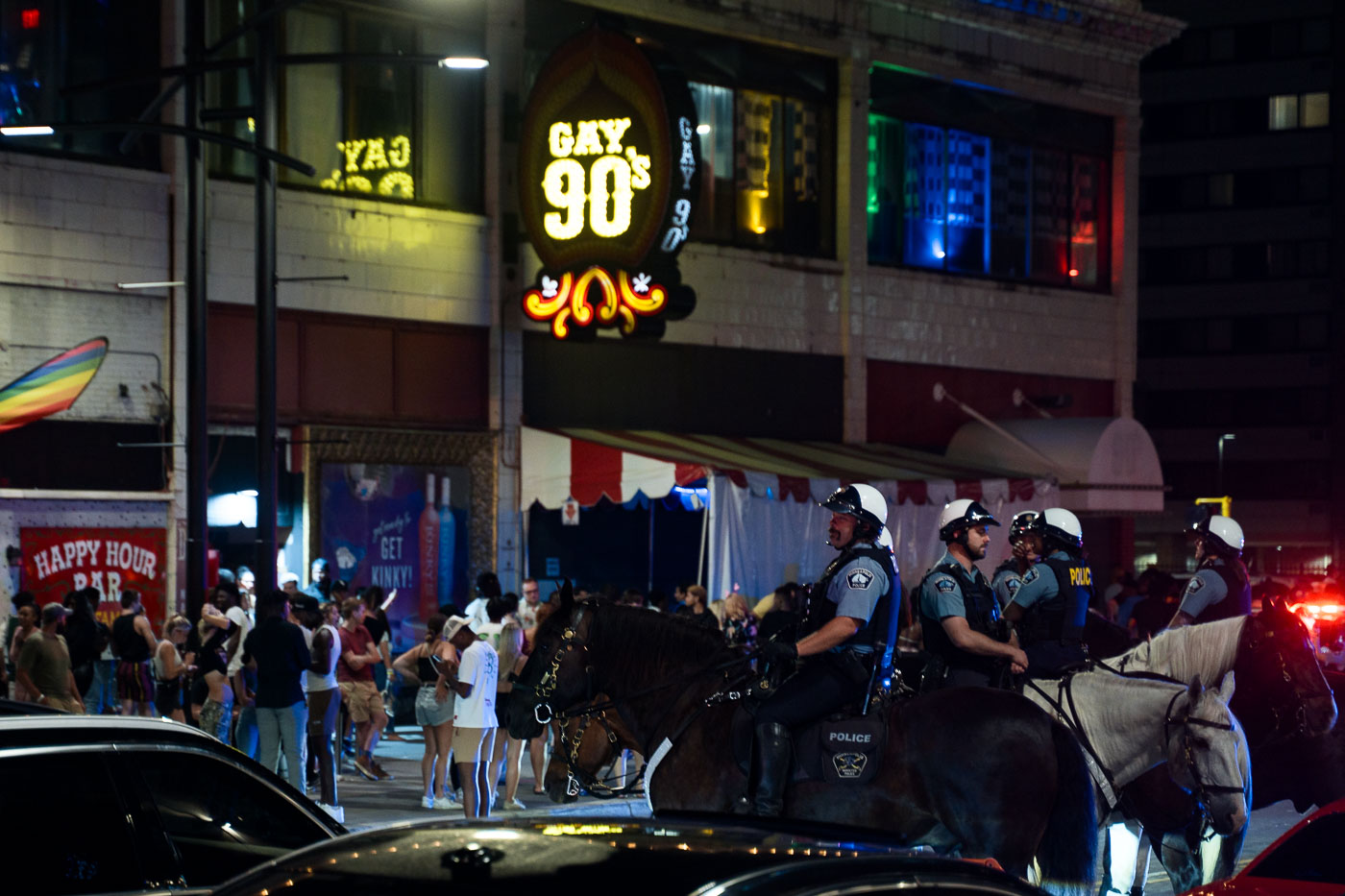
Mounted police outside the Gay 90's bar in downtown Minneapolis at night.
Mounted police officers are seen outside the Gay 90's bar in Minneapolis on July 24, 2022. The Gay 90's is a long-standing LGBTQ+ establishment in the city's downtown area, known for its nightlife. The presence of mounted police is common during public events or gatherings to maintain order and ensure safety. This image was taken during a period of heightened social awareness in Minneapolis following the murder of George Floyd in 2020, though the specific reason for the police presence on this particular night is not specified.

Mounted Police Outside Gay 90s Bar, Minneapolis 07/24/22

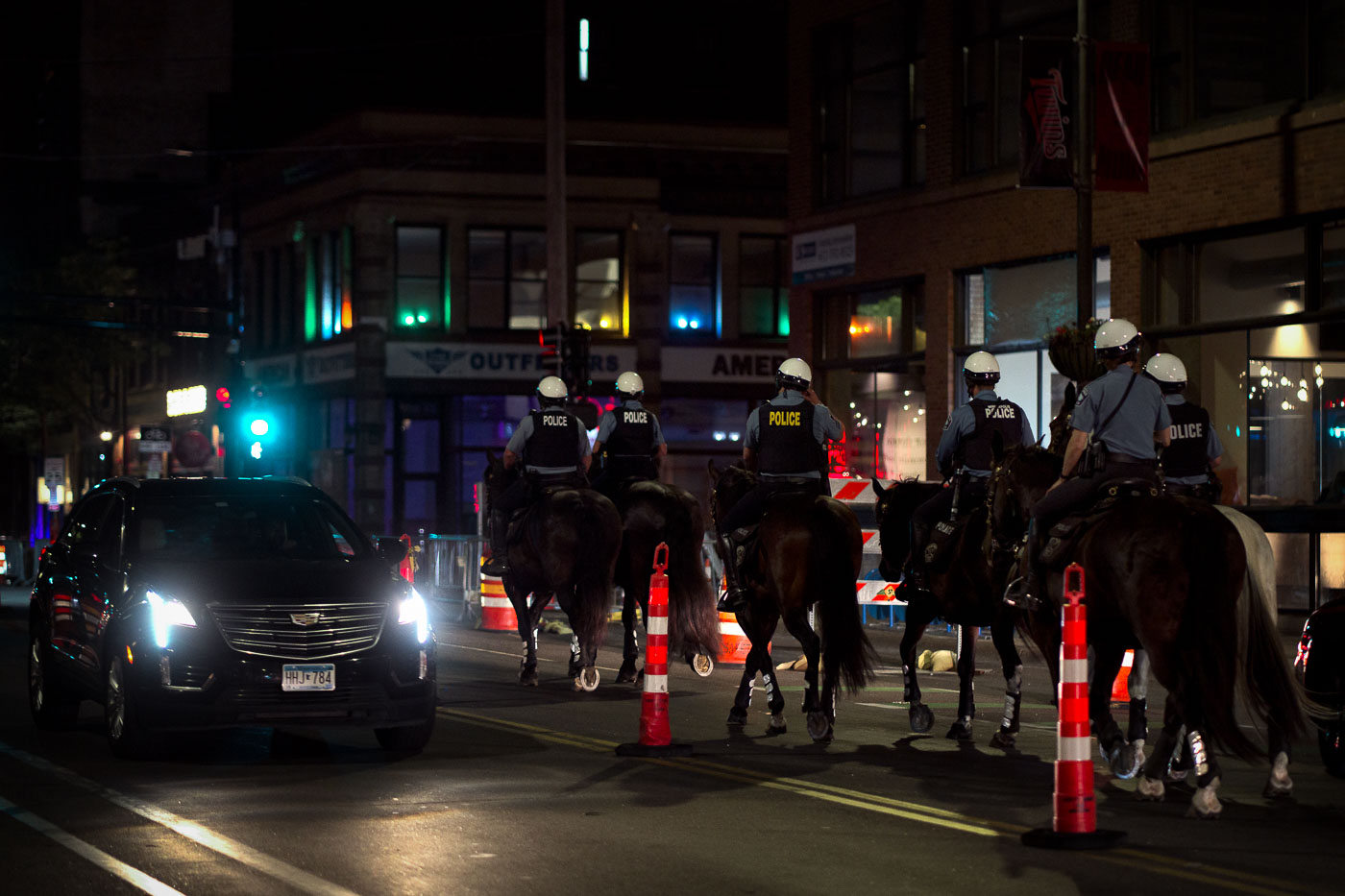
Minneapolis Police mounted patrol officers on Nicollet Mall at night.
Minneapolis Police Mounted Patrol officers on horseback patrol Nicollet Mall at night. This unit is frequently deployed for crowd management and public order during events and protests in the downtown area. Nicollet Mall, a significant pedestrian thoroughfare in Minneapolis, is lined with businesses and cultural institutions. The mounted patrol's presence serves as a visible deterrent and provides mobility in dense urban settings during public gatherings or civil unrest.

Minneapolis Police Mounted Patrol on Nicollet Mall at Night

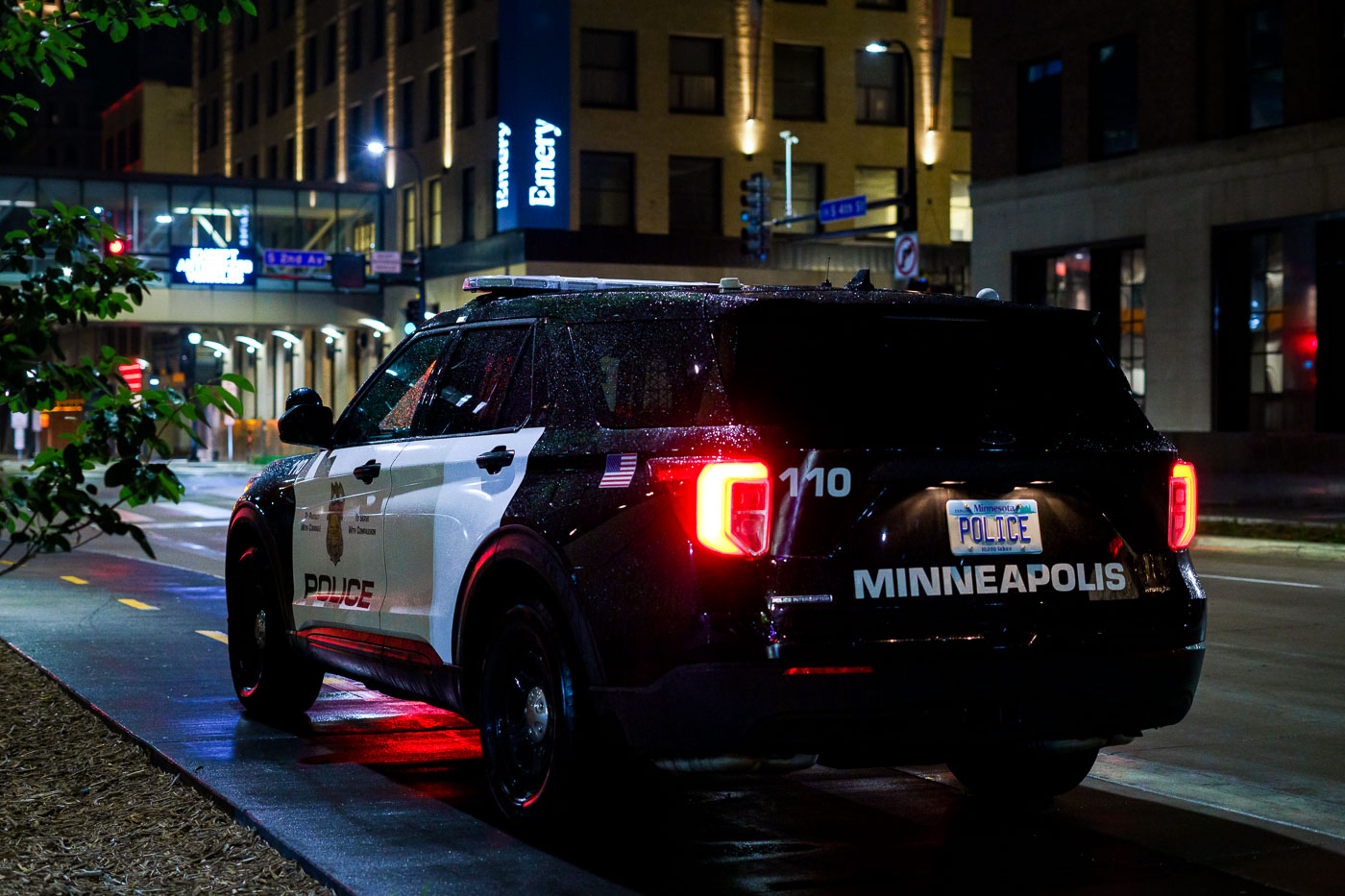
Minneapolis police SUV on 7th Street South near the Emery Hotel in downtown Minneapolis at night.
A Minneapolis Police Department SUV is parked on 7th Street South in downtown Minneapolis, adjacent to a protected bike lane and the Emery Hotel. The hotel’s skyway connection is visible above the street, identifying the block as part of Minneapolis’s downtown skyway network, which links hotels, offices, and other buildings across the central business district. The marked squad vehicle and city location place the vehicle within routine street patrol and enforcement operations in the downtown core.

Minneapolis Police Squad Car on 7th Street South

Building Blocks Minneapolis Police sign in South Minneapolis.
A Building Blocks Minneapolis Police sign in South Minneapolis. The neighborhood safety program recognizes blocks that work with the Minneapolis Police Department on crime prevention and community watch efforts.

Minneapolis Police Building Blocks sign
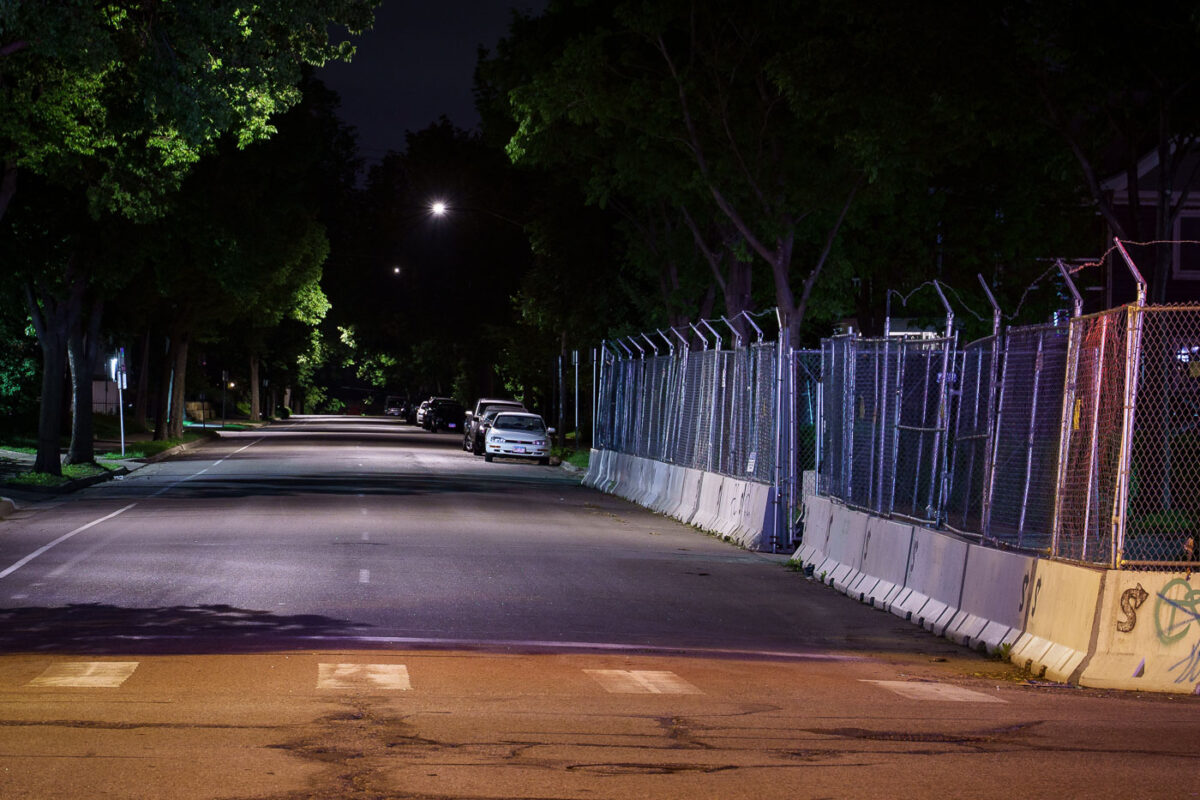
Minneapolis Police Fifth Precinct Chauvin Trial Security
Security fencing and concrete barriers were erected around the Minneapolis Police Department's 5th Precinct station during the trial of Derek Chauvin in 2021.

Minneapolis Police 5th Precinct Security Fencing During Chauvin Trial

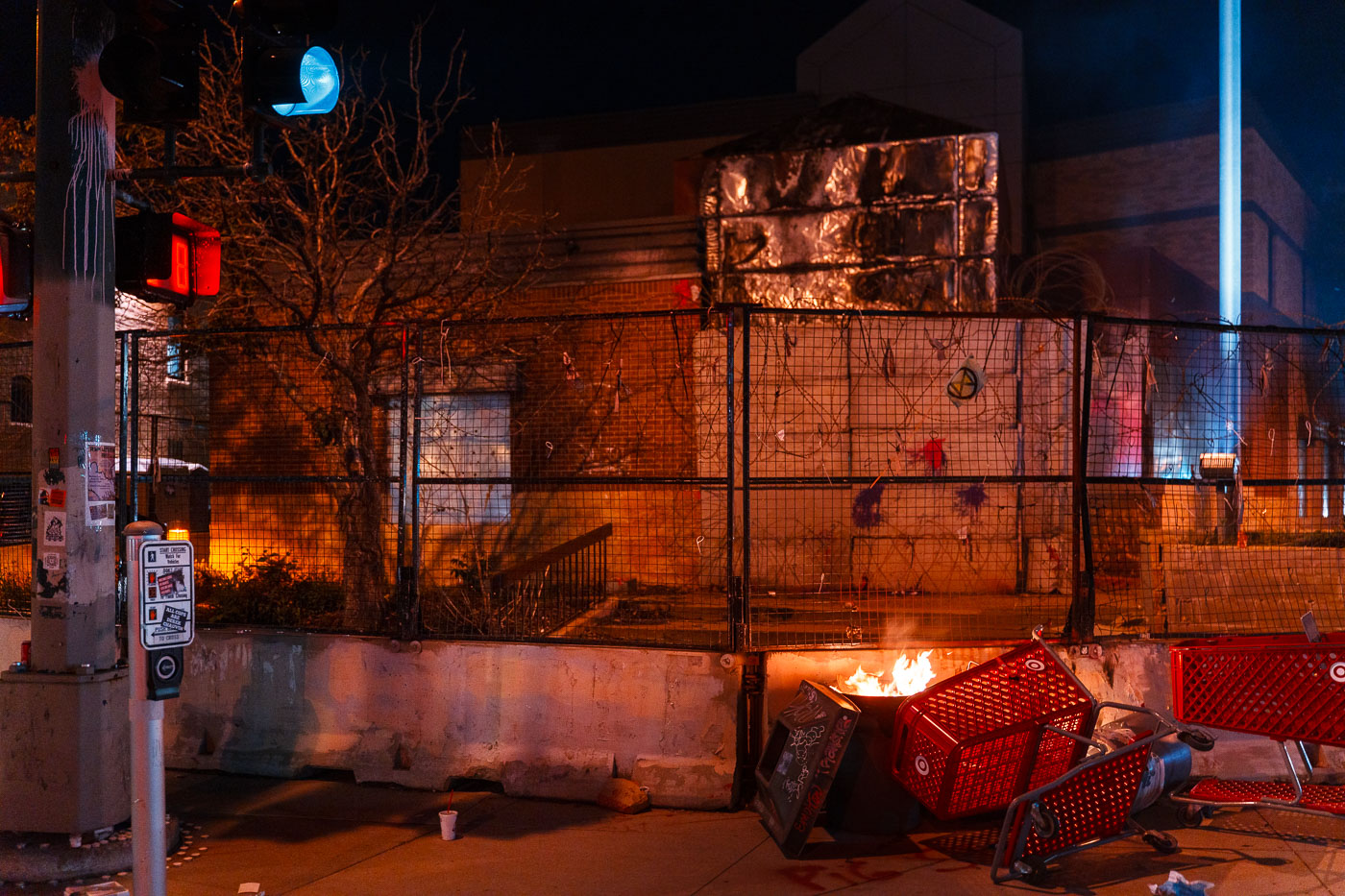
Shopping cart on fire outside the burned Minneapolis police station
Fires burned outside the Minneapolis Police Third Precinct building on May 28, 2022, on the second anniversary of the burnung of the police station by protesters after George Floyd's murder.

Minneapolis Police 3rd Precinct Fire and Damaged Shopping Carts
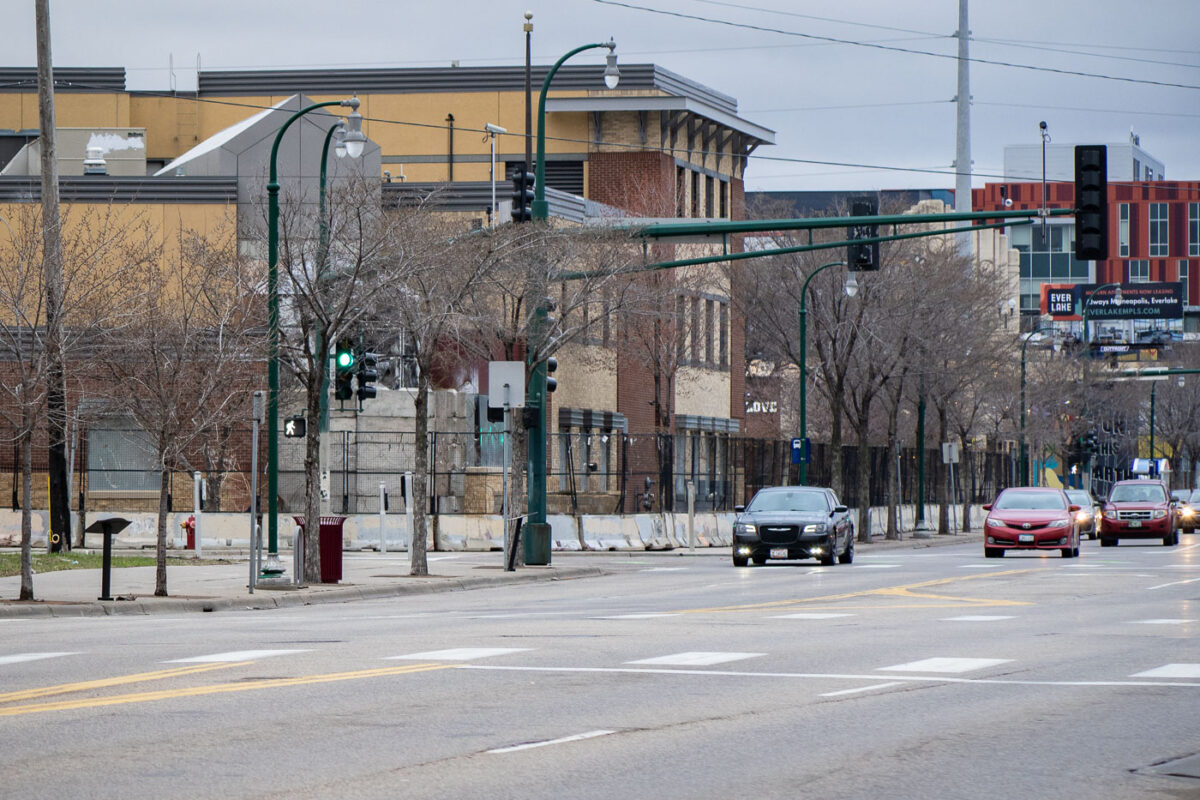
Minneapolis Police third precinct police station on Lake Street May 2022
The Minneapolis Police Third Precinct station on Lake Street is shown fortified with concrete barriers and fencing. This building was significantly damaged by fire during protests in May 2020 following the murder of George Floyd. Since the incident, the precinct has remained closed and secured.

Minneapolis Police 3rd Precinct Fortified on Lake Street
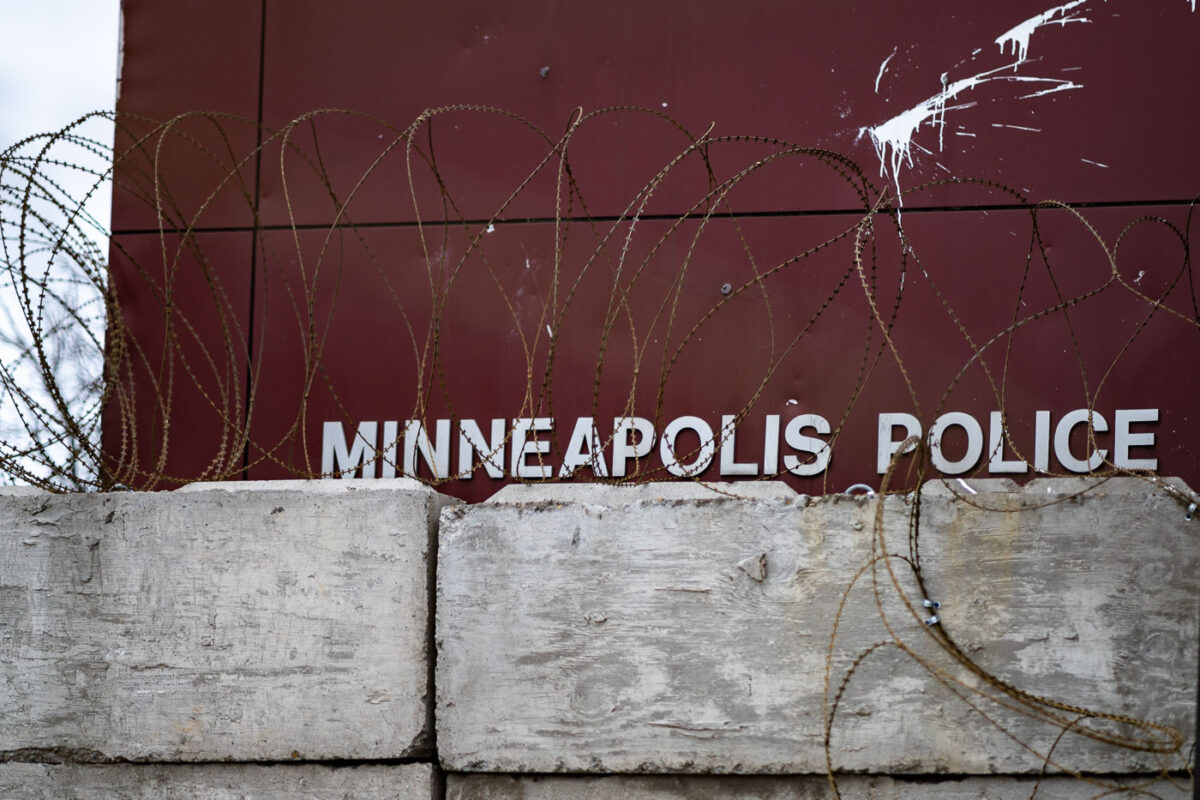
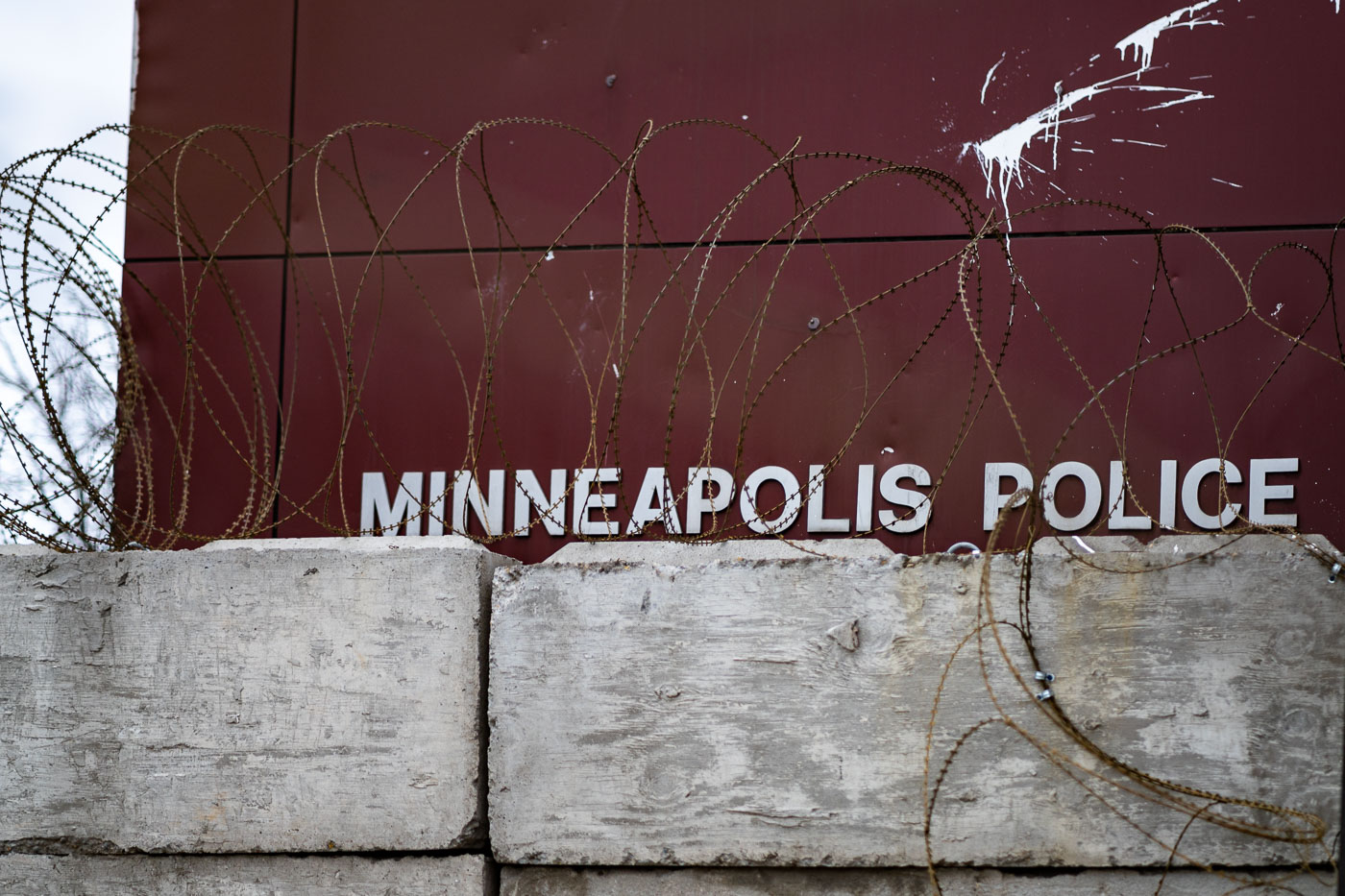
Minneapolis police sign on the burned 3rd precinct police station
The Minneapolis Police third precinct building, located on Lake Street, is shown on May 1, 2022, fortified with concrete barriers and razor wire. This structure was significantly damaged by fire during protests that followed the murder of George Floyd by Minneapolis police officer Derek Chauvin on May 25, 2020.

Minneapolis Police 3rd Precinct After Uprising
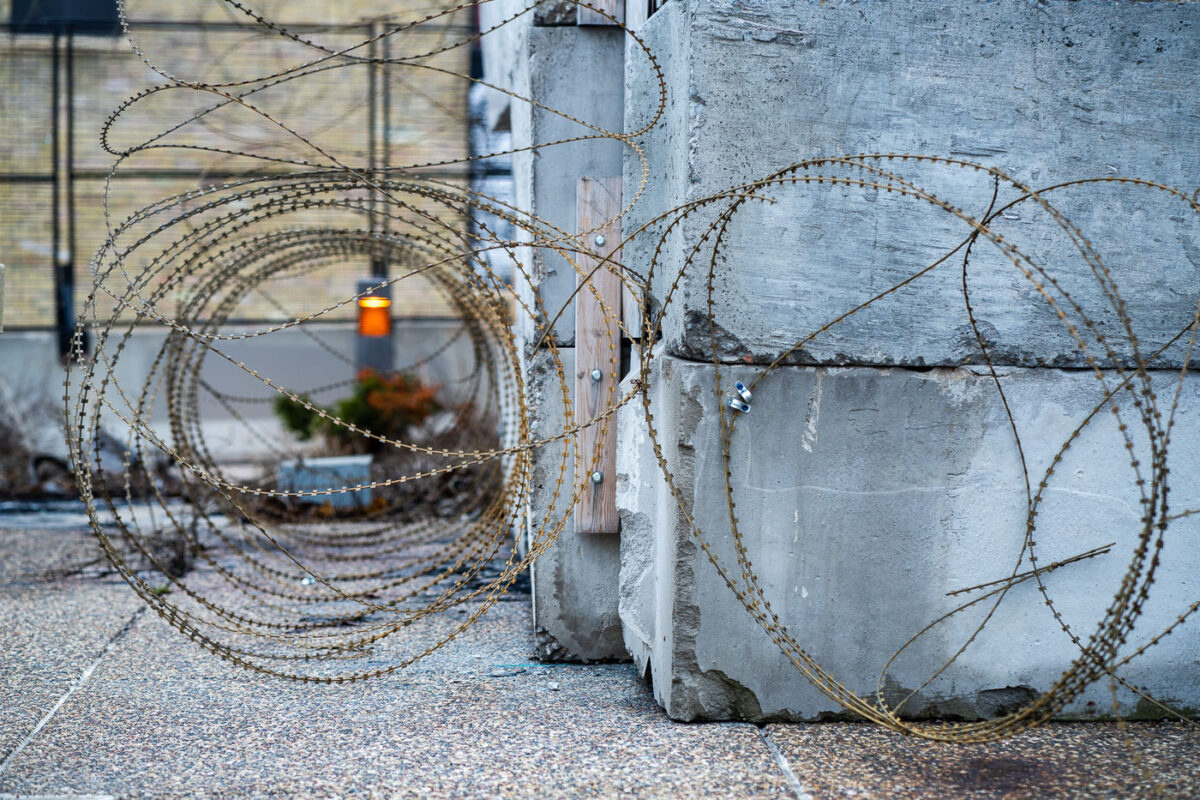
Razor wire and concrete blocks outside the door of the burned Minneapolis police station
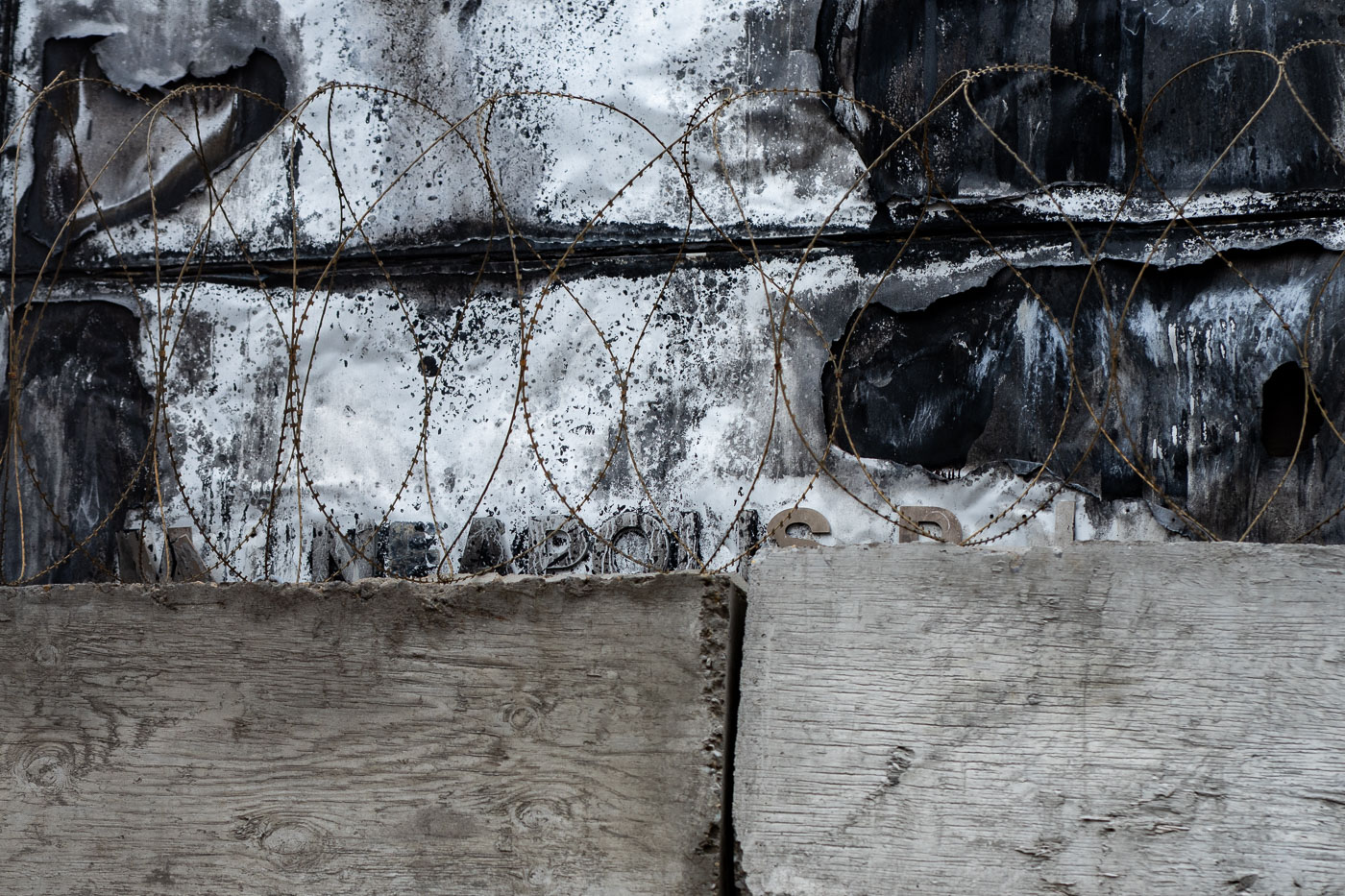
Razor wire and concrete barriers surround the exterior of the Minneapolis 3rd Precinct police station, which was damaged during protests in the summer of 2020. The station, located on Lake Street in Minneapolis, was a focal point of unrest following the murder of George Floyd.

Razor wire security at burned Minneapolis 3rd Precinct police station
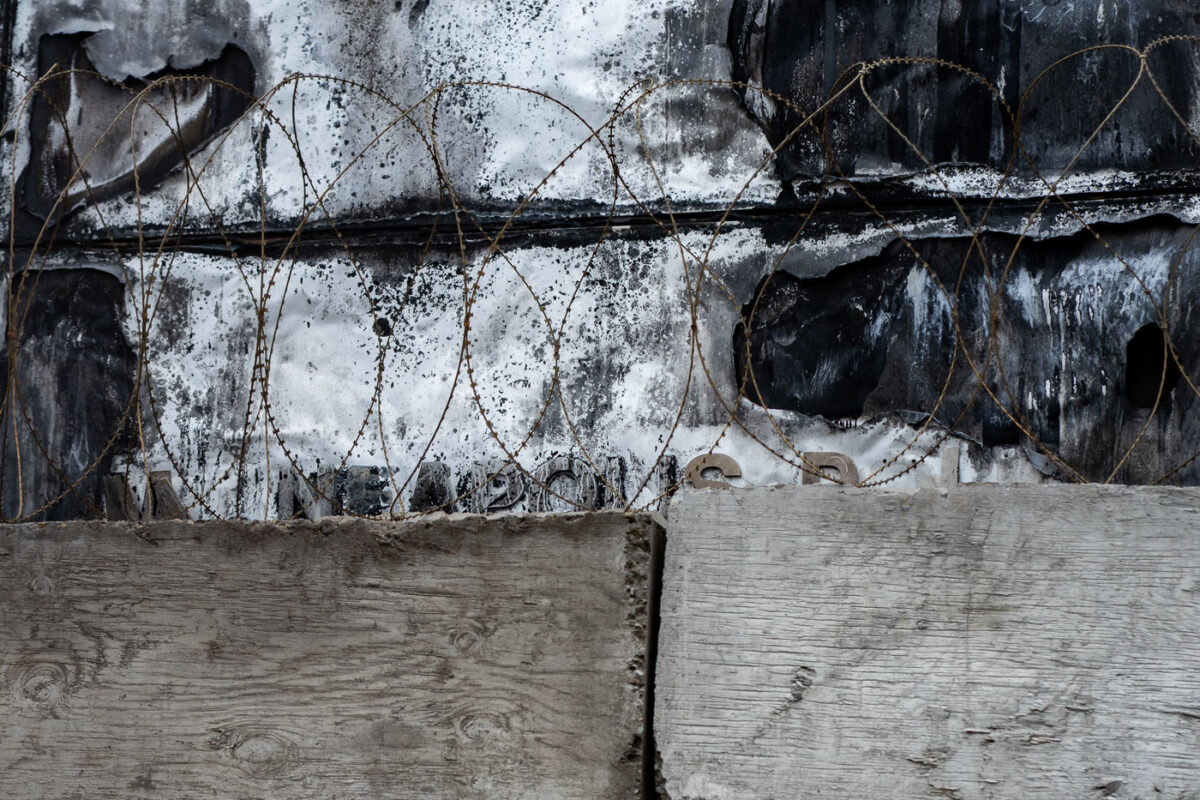
Concrete blocks over doors of burned police station in Minneapolis
Concrete blocks and razor wire secure the former entrance of the Minneapolis Police 3rd Precinct station following its damage during protests on May 28, 2020. The precinct, located on Lake Street in Minneapolis, was set ablaze by protesters in the aftermath of the murder of George Floyd on May 25, 2020. The incident marked a significant moment in the widespread unrest that followed Floyd's death, highlighting public anger towards police conduct and systemic injustice.

Minneapolis Police 3rd Precinct: Burned, Barricaded
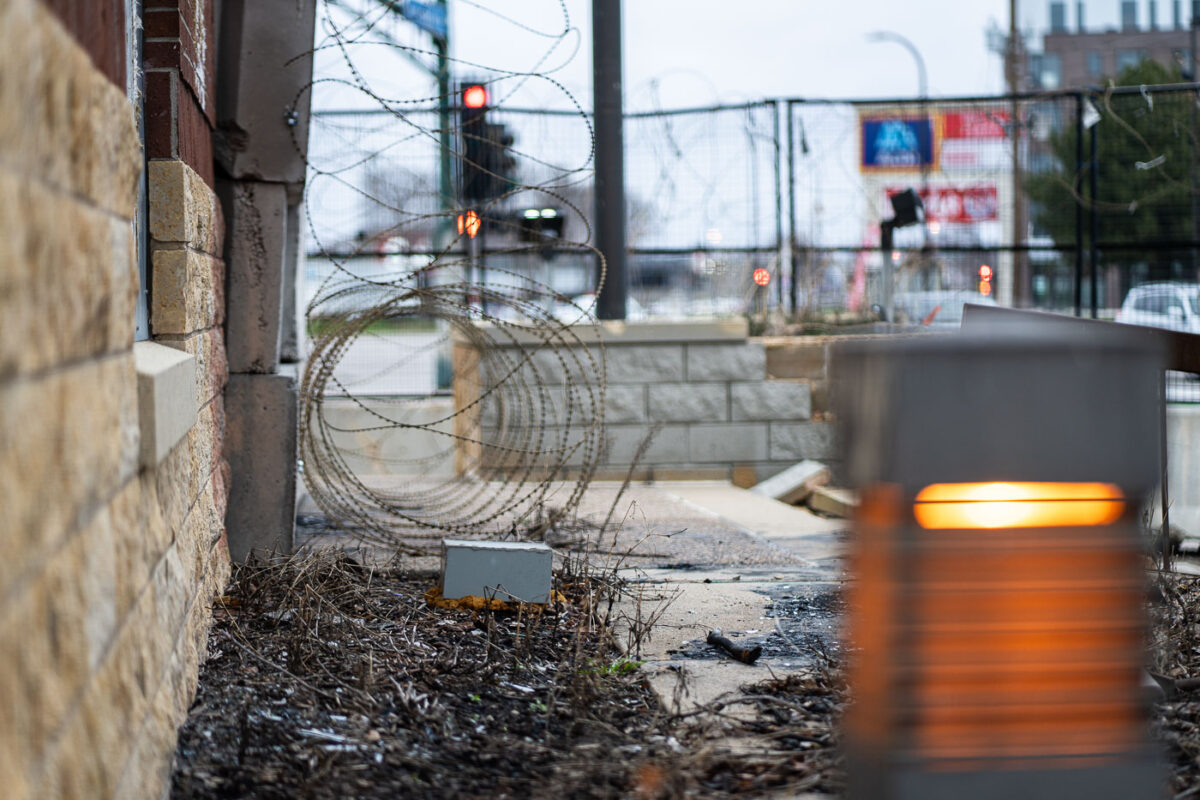
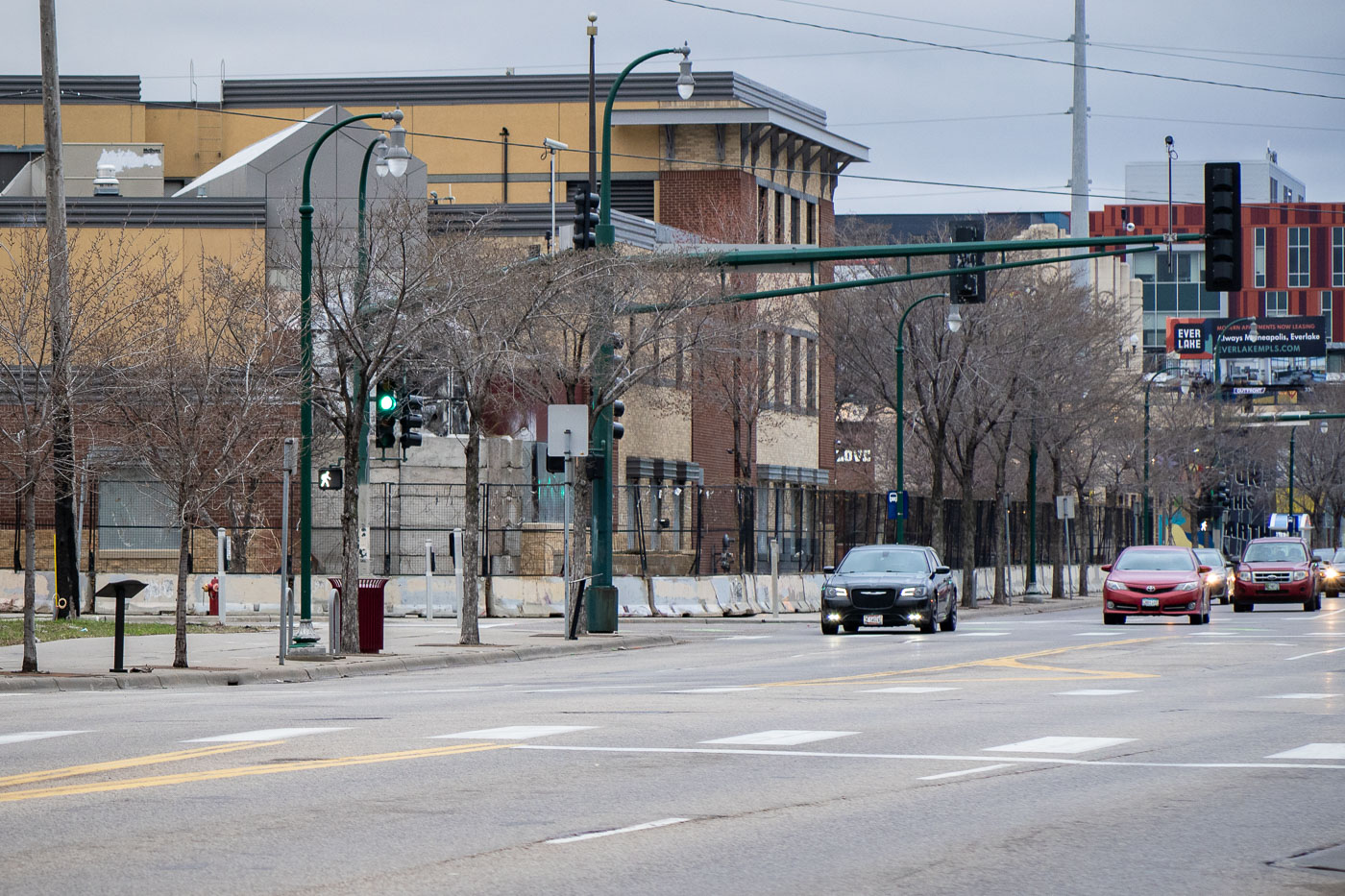
Razor wire at burned Minneapolis police station May 2022
Razor wire continues to surround the Minneapolis Police Department's 3rd Precinct building nearly two years after its evacuation. The precinct was abandoned by police in June 2020 following protests and unrest in the wake of George Floyd's murder. While surrounding structures, such as the Everlake apartment building on Lake Street, have since been rebuilt and reopened, the 3rd Precinct building itself has undergone no significant changes.

Razor wire surrounds Minneapolis Police 3rd Precinct, two years later
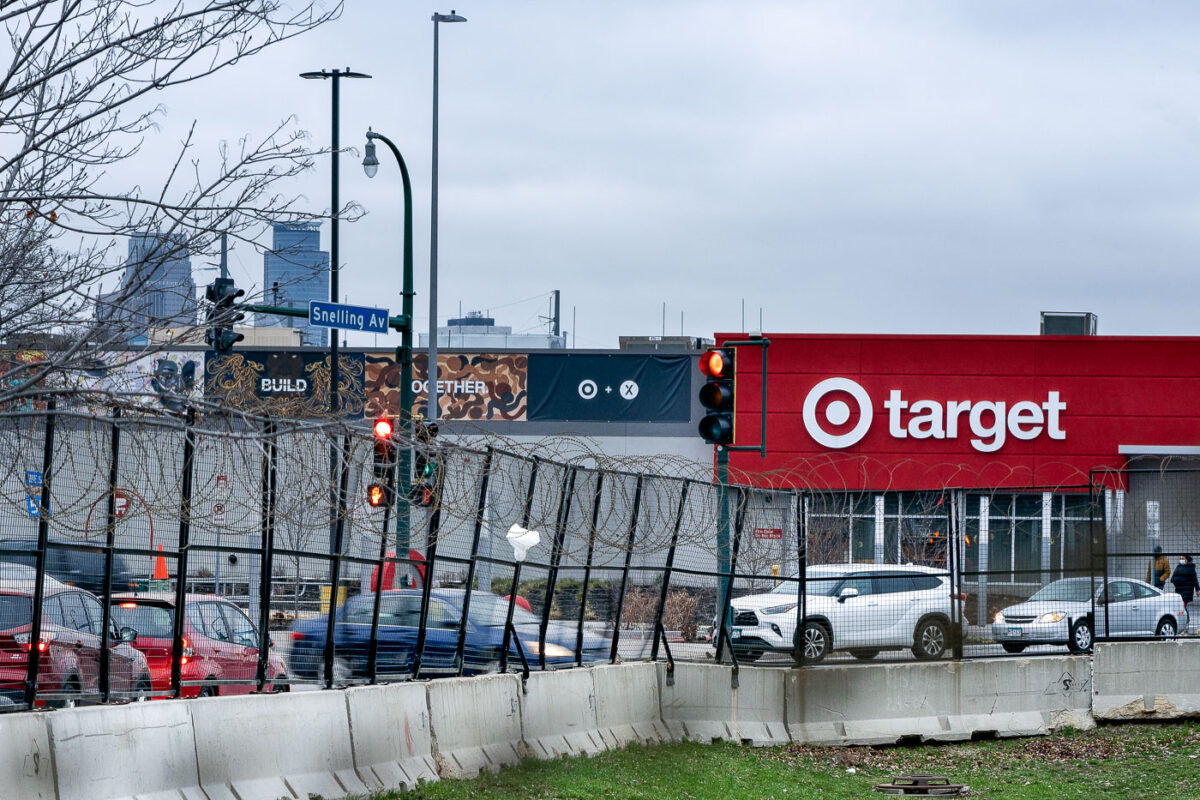
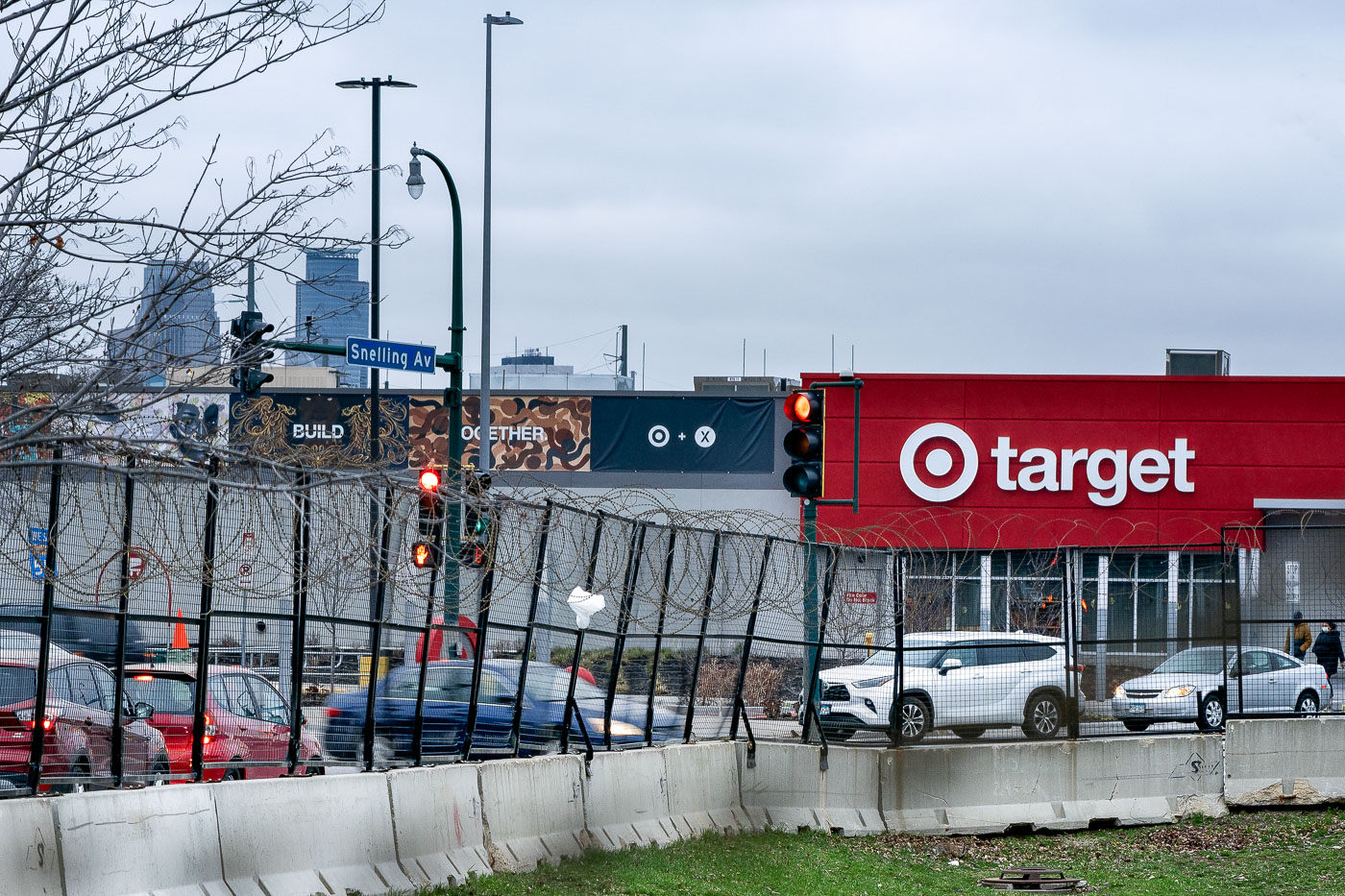
Razor wire surrounding parking lot of the burned Minneapolis police station
Razor wire encircles the Minneapolis Police Third Precinct parking lot, with a Target store visible across Snelling Avenue. This Target store was rebuilt after sustaining damage during the civil unrest that followed the murder of George Floyd by Minneapolis police on May 25, 2020. The precinct and surrounding businesses became focal points during the protests and riots that occurred in the aftermath.

Minneapolis Police 3rd Precinct Razor Wire and Target Store

Barricades outside Minneapolis Police 5th Precinct in South Minneapolis at night.
The Minneapolis Police Department's 5th Precinct is shown barricaded at night, surrounded by temporary fencing and concrete barriers. This measure was put in place during periods of civil unrest in Minneapolis, notably following the murder of George Floyd in May 2020. The precinct, located in South Minneapolis, serves as a key law enforcement hub for the area. The presence of barricades highlights the heightened security and the impact of public demonstrations on municipal infrastructure.

Minneapolis Police 5th Precinct Barricaded at Night

Nicollet Mall in downtown Minneapolis at dusk with a city bus and parked police SUV.
Nicollet Mall in downtown Minneapolis is a pedestrian-oriented street designed to foster commerce and public gathering. Originally conceived in the 1960s, it was transformed into a pedestrian mall in 1967, becoming a central hub for shopping, dining, and cultural events. The presence of a Minneapolis Police vehicle suggests ongoing public safety presence, which is a common sight in urban centers, particularly in areas that have experienced significant events such as the Minneapolis Uprising.

Nicollet Mall, Downtown Minneapolis at Dusk with Police Car

Minneapolis Police 5th Precinct at Nicollet Avenue in Minneapolis behind fencing at dusk.
The Minneapolis Police Department's 5th Precinct is situated on Nicollet Avenue. This facility is a key component of the city's law enforcement infrastructure, serving a substantial area and its residents. The precinct became a focal point of public attention following the 2020 Minneapolis Uprising, which led to increased scrutiny of police practices and community relations. The presence of fencing around the building indicates heightened security measures, a response to events and ongoing public safety concerns.

Minneapolis Police 5th Precinct, Nicollet Ave

Boarded-up Flanders Cycle on Lyndale Avenue in Minneapolis as a police SUV passes at night.
Flanders Cycle, a bicycle shop established in 1973, is boarded up with plywood on Lyndale Avenue in Minneapolis. The plywood covering is a common measure taken by businesses during periods of civil unrest. A Minneapolis Police Department vehicle passes the storefront at night, reflecting the heightened tensions in the city following the murder of George Floyd in May 2020. The "BLM" graffiti visible on the plywood further signifies the context of the Minneapolis Uprising.

Flanders Cycle boarded up, Minneapolis Police car passes

Minneapolis police SUV at East Lake Street and Bloomington Avenue beside protest graffiti in Minneapolis.
A Minneapolis Police Department vehicle seen near Lake Street with "Destroy MPD" graffiti on a concrete barricade in front. The city skyline visible in the distance. The graffiti comes after a march that occured about a week after Amir Locke was killed by Minneapolis police during a no-knock warrant.

Minneapolis Police Car at E Lake St Amidst Protest Graffiti

Protest signs outside Minneapolis Police 3rd Precinct in Minneapolis at night behind a passing car.
Protests against police brutality continued for ten days following the fatal shooting of Amir Locke by Minneapolis Police on February 2, 2022. Signs displayed outside the Minneapolis Police 3rd Precinct read "Our Children Are Speaking," "Justice for Amir Locke," and "Our Ancestors Are Watching."

Minneapolis Police 3rd Precinct Protest Signs and Car

Families and attorney Ben Crump at the Minnesota State Capitol in St. Paul calling for a no-knock warrant ban.
Families advocating for a ban on no-knock warrants gathered at the Minnesota State Capitol in St. Paul. The group, including the mother of Amir Locke and families of Jamar Clark and Winston Smith, were represented by attorney Ben Crump. They are calling for policy changes following the deaths of their loved ones, arguing that no-knock warrants contributed to these tragedies. Amir Locke, 22, was killed by Minneapolis police during such a warrant execution on February 2, 2022.

Families Advocate for No-Knock Warrant Ban at MN State Capitol

Karen Wells speaks at a press conference in the Minnesota State Capitol in St. Paul.
Amir Locke’s mother, Karen Wells, speaks at a press conference held at the Minnesota State Capitol in St. Paul on February 4, 2022. She was joined by families of Jamar Clark and Winston Smith, and attorney Ben Crump. Wells announced that her son, Amir Locke, was killed by Minneapolis police during a no-knock warrant execution on February 2, 2022. The group called for President Biden to ban no-knock warrants nationwide.

Karen Wells Speaks at Minnesota State Capitol Press Conference

Ben Crump speaks with Amir Locke's family at the Minnesota State Capitol in St. Paul.
At the Minnesota State Capitol in St. Paul, families of victims of police violence, including Amir Locke, Jamar Clark, and Winston Smith, gathered to demand a ban on no-knock warrants. Locke's mother spoke at the podium, paying tribute to her son, who was killed on February 2, 2022. Civil rights attorney Ben Crump joined the families in their call for federal legislation prohibiting the use of these warrants.

Minnesota State Capitol: Families Demand Ban on No-Knock Warrants

Amir Locke graffiti outside Minneapolis Police First Precinct in downtown Minneapolis at night.
Graffiti honoring Amir Locke is displayed on the exterior of the Minneapolis Police Department's First Precinct building in downtown Minneapolis. Locke, a 22-year-old Black man, was killed by a Minneapolis police officer during a no-knock warrant execution in February 2022. His death led to protests and renewed calls for police reform in the city.

Amir Locke Memorial Graffiti at Minneapolis Police First Precinct

Amir Locke memorial banner on the former Minneapolis Police 3rd Precinct building in Minneapolis.
A banner reading "Rest In Power Amir Locke" is displayed on the exterior of the former Minneapolis Police Third Precinct building. The banner was erected following the death of Amir Locke, who was killed by police during a no-knock warrant execution in February 2022. The Third Precinct building was a site of significant protest activity in 2020 after the murder of George Floyd and was subsequently vacated by the Minneapolis Police Department.

Minneapolis Police 3rd Precinct: Amir Locke Memorial Banner

Protesters with signs and red flag gather in downtown Minneapolis street at night demanding justice for Amir Locke.
Protesters gathered in Downtown Minneapolis to demand accountability following the police shooting death of Amir Locke. Locke was killed by Minneapolis police officers executing a no-knock warrant in February 2022. The protest, which occurred shortly after the incident, highlighted ongoing concerns about police conduct and racial justice in the city.

Night March for Amir Locke Through Downtown Minneapolis

Protesters holding signs gather at night in downtown Minneapolis during a march for Amir Locke.
Protesters gathered in Downtown Minneapolis to demand justice for Amir Locke, who was killed by police during a no-knock warrant execution on February 2, 2022. The marchers carried signs with messages such as "Abolish MPD," "Justice for Amir Locke," and "Black Lives Matter." This event occurred in the wake of increased scrutiny of Minneapolis police practices following previous incidents, including the murder of George Floyd in 2020.

Amir Locke Protest March, Downtown Minneapolis

Protesters with an anti-police banner in downtown Minneapolis after the killing of Amir Locke.
Protesters marched through Downtown Minneapolis following the police killing of Amir Locke on February 2, 2022. The banner, held by participants, reads "defund? meh abolish? sure BURN4MORE? FUCK YEAH! ACAB MEANS ALL COPS." This march occurred in the aftermath of Locke's death during a no-knock warrant execution by Minneapolis Police.

Minneapolis Protest: “Burn 4 More” and “ACAB” Banner

Protesters outside Hennepin County Government Center in Minneapolis on a snowy night.
Protesters gathered outside the Hennepin County Government Center in Minneapolis on February 2, 2022, following the fatal shooting of Amir Locke by Minneapolis police. The protest was a response to Locke's death during a no-knock warrant execution at his apartment. Demonstrators marched through the city, demanding accountability and calling for the resignation of the mayor.

Minneapolis Protest at Hennepin County Government Center

Protesters in downtown Minneapolis with an Amir Locke sign and Metro Transit train at night.
Protesters gathered in Downtown Minneapolis on February 4, 2022, following the death of Amir Locke. Locke was killed by Minneapolis Police during a no-knock warrant execution on February 2, 2022. The marchers voiced demands for accountability and the resignation of the mayor, reflecting broader calls for police reform in the city.

Minneapolis Protest for Amir Locke, Downtown

Protest sign in downtown Minneapolis calling to end no-knock warrants and qualified immunity.
Protesters gathered in Downtown Minneapolis to demand an end to no-knock warrants and qualified immunity for law enforcement. This march occurred in the wake of the death of Amir Locke, who was killed by Minneapolis Police during the execution of a no-knock warrant.

Minneapolis Protest: End No-Knock Warrants, Qualified Immunity

Worker removes graffiti from a brick wall in downtown Minneapolis after Amir Locke protests.
A worker cleans graffiti from a brick building in downtown Minneapolis. The graffiti appeared on the building following protests over the death of Amir Locke, a 22-year-old Black man killed by Minneapolis police during a no-knock warrant execution in February 2022. The incident prompted widespread protests and calls for police reform in the city.

Minneapolis: Worker removes graffiti after Amir Locke protest

Star Tribune box in downtown Minneapolis with headline on policing overhaul and Mpls. Council agenda.
A newspaper box displays the Minneapolis Star Tribune, dated Tuesday, February 8, 2022, with the headline "Policing overhaul back on Mpls. Council agenda." The front page prominently features images of Amir Locke, who was killed by Minneapolis police during a no-knock warrant execution. The article addresses the city council's agenda concerning policing reforms following Locke's death. The Star Tribune is a major newspaper serving the Minneapolis-Saint Paul metropolitan area and the state of Minnesota.

Minneapolis Star Tribune: Policing Overhaul on Council Agenda

Dolal Idd speaks at a protest for Amir Locke in downtown Minneapolis.
Dolal Idd, father of Amir Locke, speaks to a crowd during a protest in Downtown Minneapolis. The march occurred following the death of Amir Locke, who was killed by Minneapolis police during a no-knock warrant execution on February 2, 2022. This event was part of a broader series of protests and demonstrations in Minneapolis concerning police conduct and accountability.

Dolal Idd Speaks at Downtown Minneapolis Protest for Amir Locke

Amir Locke memorial in downtown Minneapolis with candles, flowers, and protesters nearby.
A memorial for Amir Locke, who was killed by Minneapolis Police during a no-knock warrant execution, is illuminated by numerous tea lights in Downtown Minneapolis. Protesters gathered to demand justice and accountability following the incident.

Minneapolis Memorial for Amir Locke

Protesters outside Target in downtown Minneapolis demanding justice for Amir Locke.
On February 4, 2022, a protest convened in Downtown Minneapolis following the fatal shooting of Amir Locke by Minneapolis police officers. The marchers gathered to demand justice and accountability, carrying signs that read "No More No-Knock Warrants" and "Black Lives Matter."

Minneapolis Protest Demands Justice for Amir Locke

Protesters at Government Plaza in downtown Minneapolis during an Amir Locke march.
A protest for Amir Locke took place at Government Plaza in Downtown Minneapolis following his death by police. Protesters gathered to demand accountability after Locke was killed during a no-knock warrant execution. Amir Locke was killed earlier in the month by Minneapolis Police officers during a no knock warrant at a Downtown Minneapolis apartment building.

Minneapolis Protest for Amir Locke at Government Plaza

Protest sign in downtown Minneapolis calling for Mayor Jacob Frey to resign after Amir Locke's killing.
A protest sign in Downtown Minneapolis calls for Mayor Jacob Frey to resign following the police shooting death of Amir Locke. The sign, displayed during a march, demands accountability and criticizes the mayor's response to the incident. Amir Locke was killed on February 2, 2022, during a no-knock warrant execution by the Minneapolis Police Department.

Minneapolis Protest Sign Demands Mayor Frey Resign After Amir Locke Shooting

Protester holding an Amir Locke sign in Downtown Minneapolis during a police accountability march.
Protesters gathered in Downtown Minneapolis to demand accountability from the Minneapolis Police Department and Mayor Jacob Frey following the fatal shooting of Amir Locke. Locke was killed on February 2, 2022, during the execution of a no-knock search warrant. The protest, held in the aftermath of the incident, featured signs questioning the role of law enforcement, such as one reading "PROTECT? MPD + FREY & SERVE?" with the slogan "JUSTICE FOR AMIR LOCKE" and "PROSECUTE KILLER COPS."

Minneapolis Protest: “Protect? & Serve?” Sign for Amir Locke
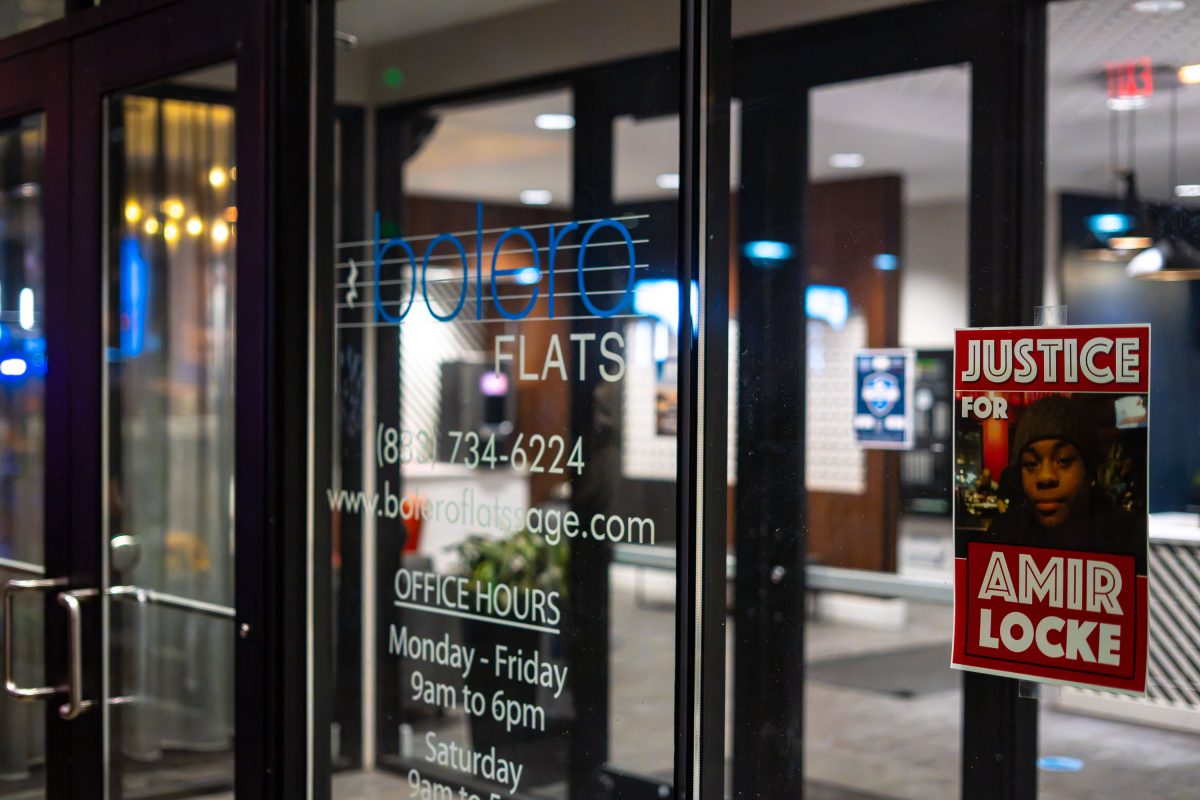
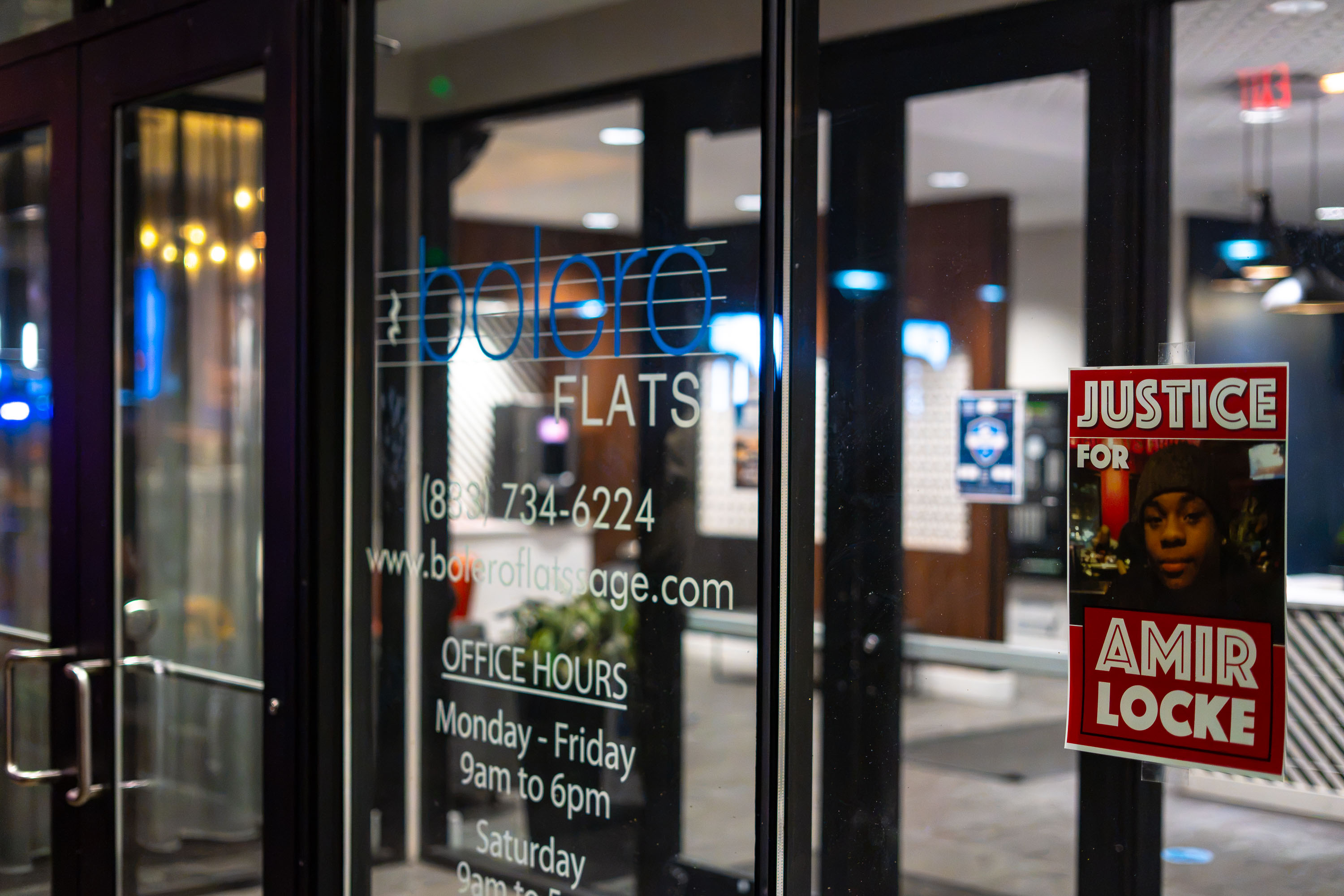
Justice for Amir Locke sign on Bolero Flats door
Protesters march through Downtown Minneapolis after demanding the Mayor resign following the Minneapolis Police shooting death of Amir Locke during a no-knock search warrant.

Justice for Amir Locke sign on Bolero Flats door

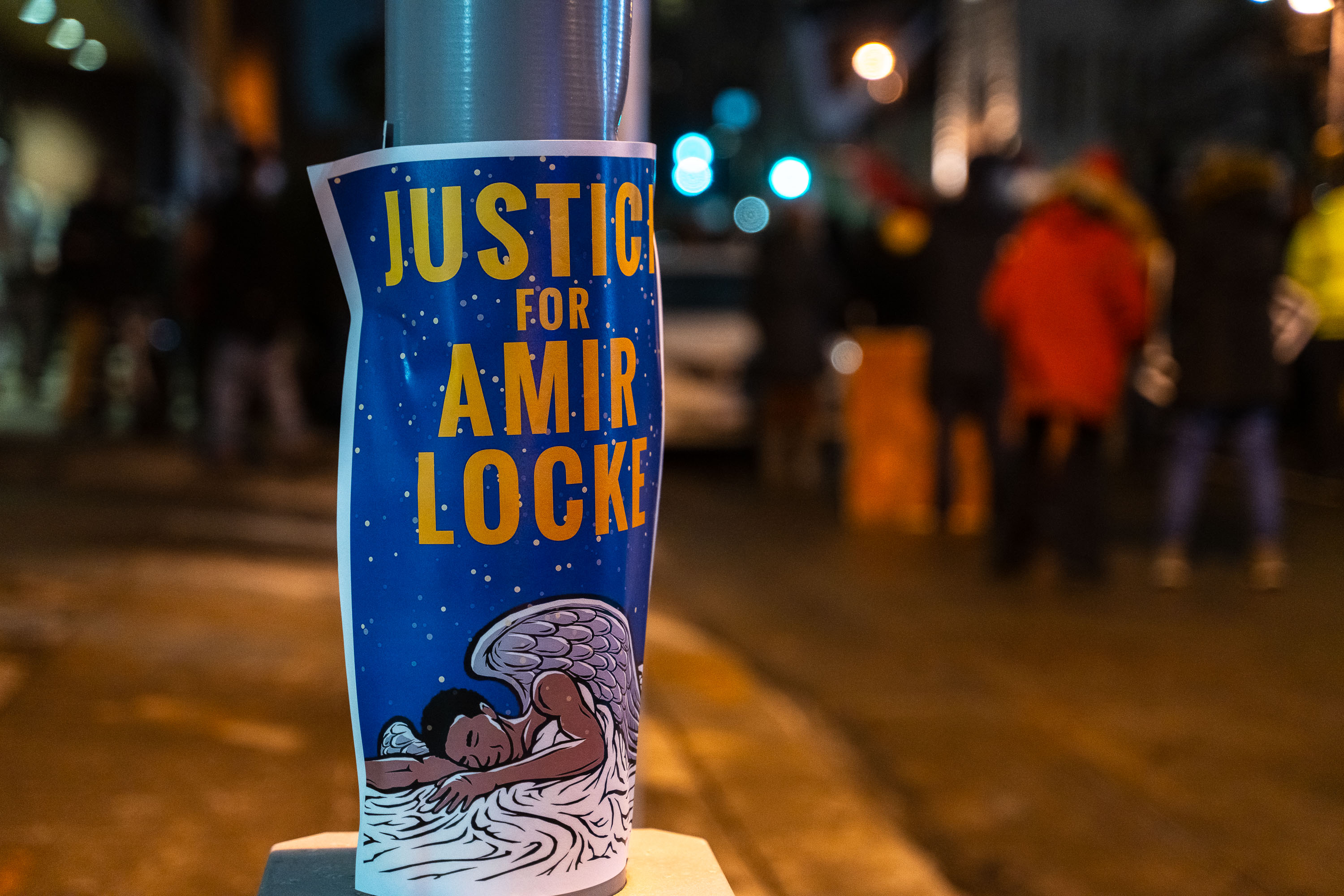
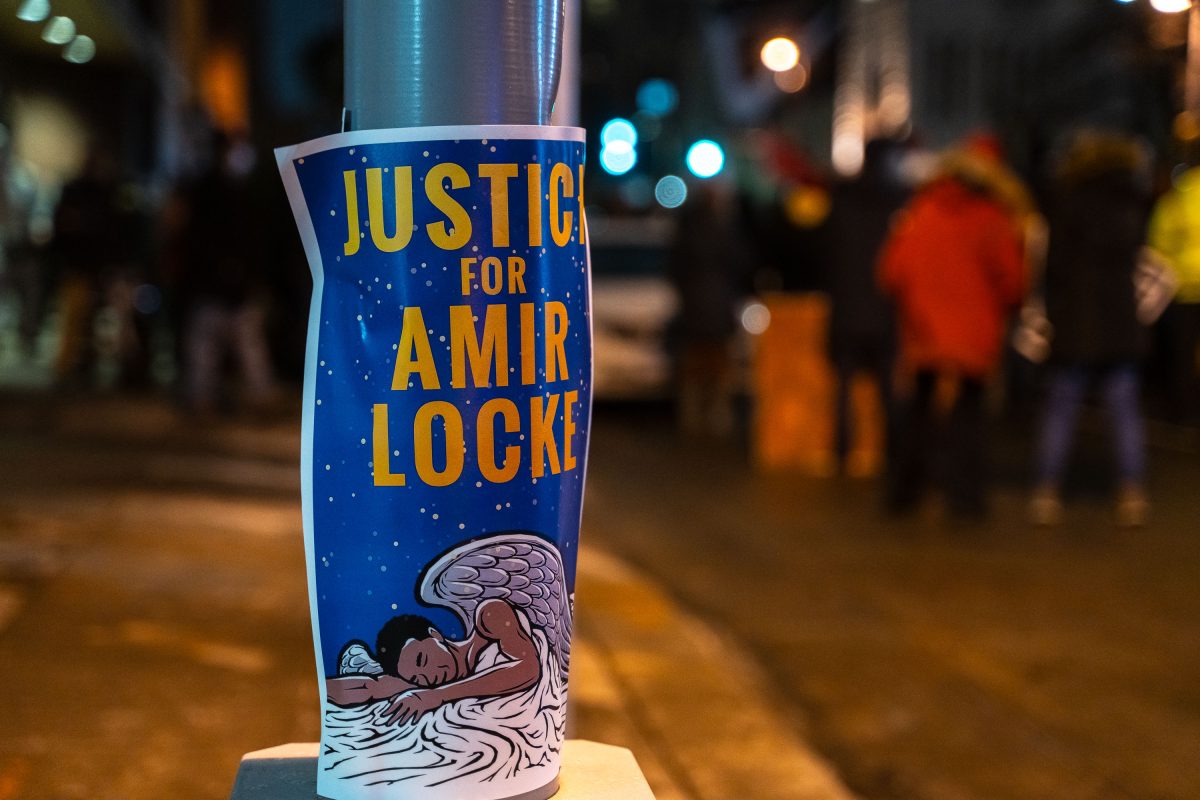
Justice For Amir Locke sign at the scene of his killing
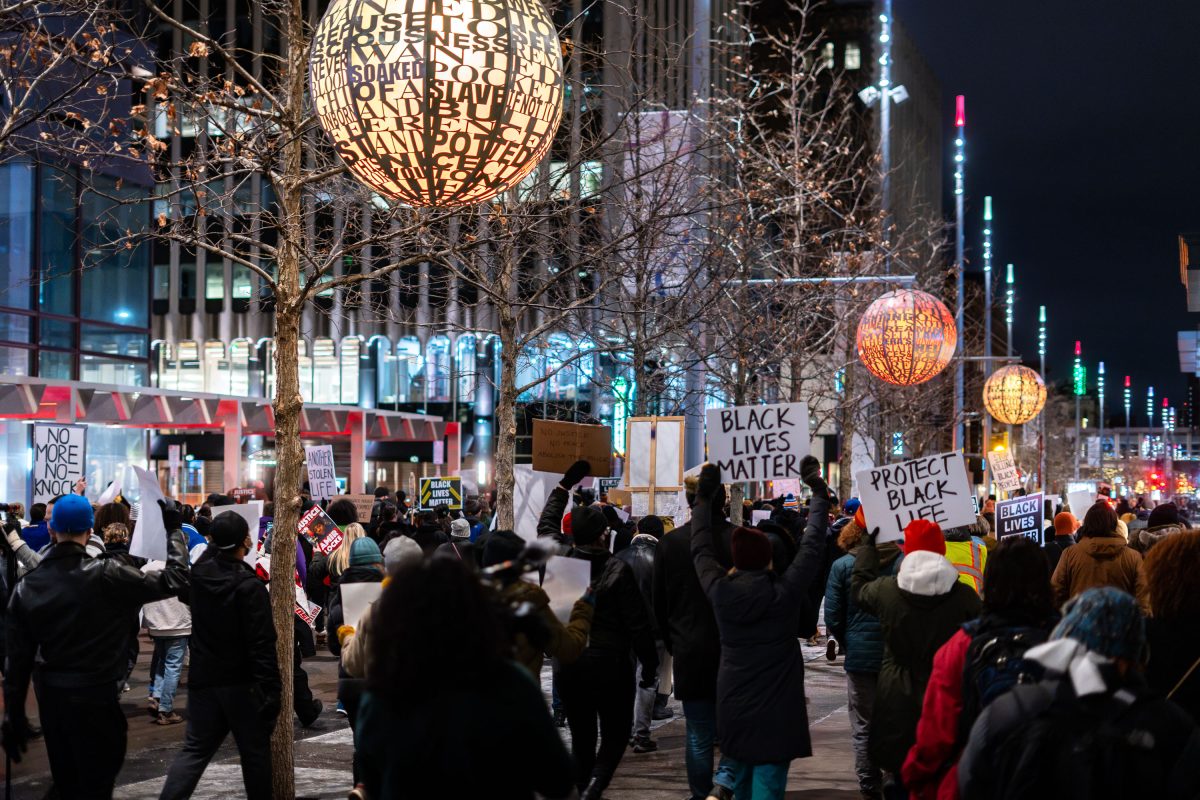
Protesters march through Downtown Minneapolis after demanding the Mayor resign following the Minneapolis Police shooting death of Amir Locke during a no-knock search warrant.

Justice For Amir Locke sign at the scene of his killing

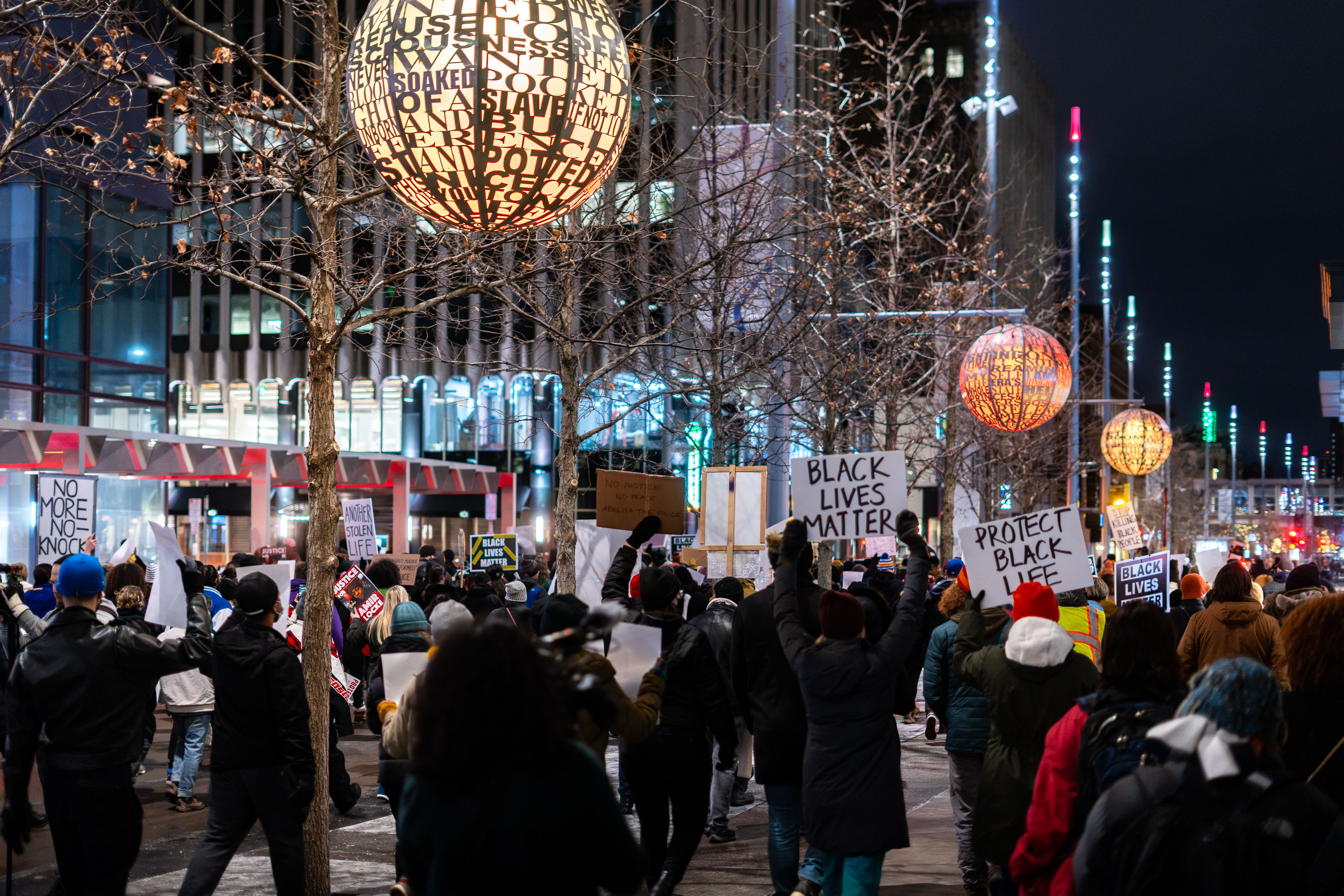
Protesters march on February 8, 2022 after Amir Locke is killed
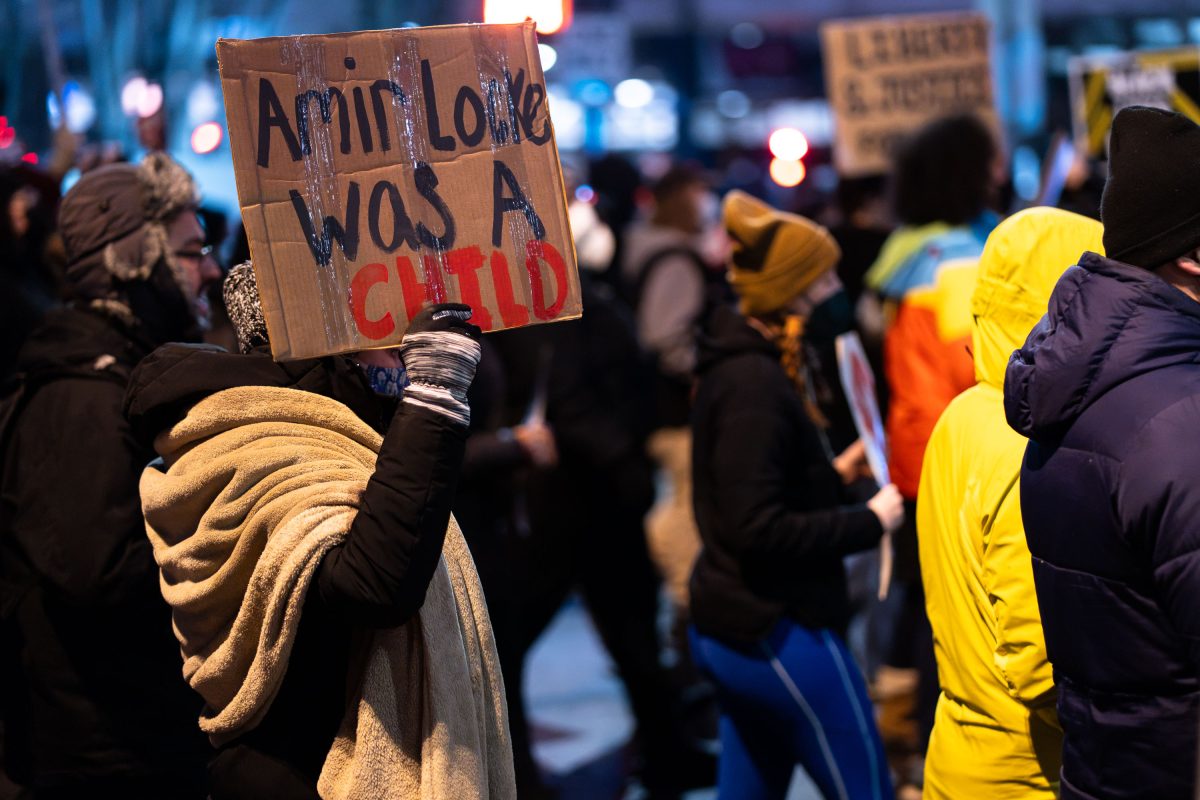
Protesters march through Downtown Minneapolis after demanding the Mayor resign following the Minneapolis Police shooting death of Amir Locke during a no-knock search warrant.

Protesters march on February 8, 2022 after Amir Locke is killed

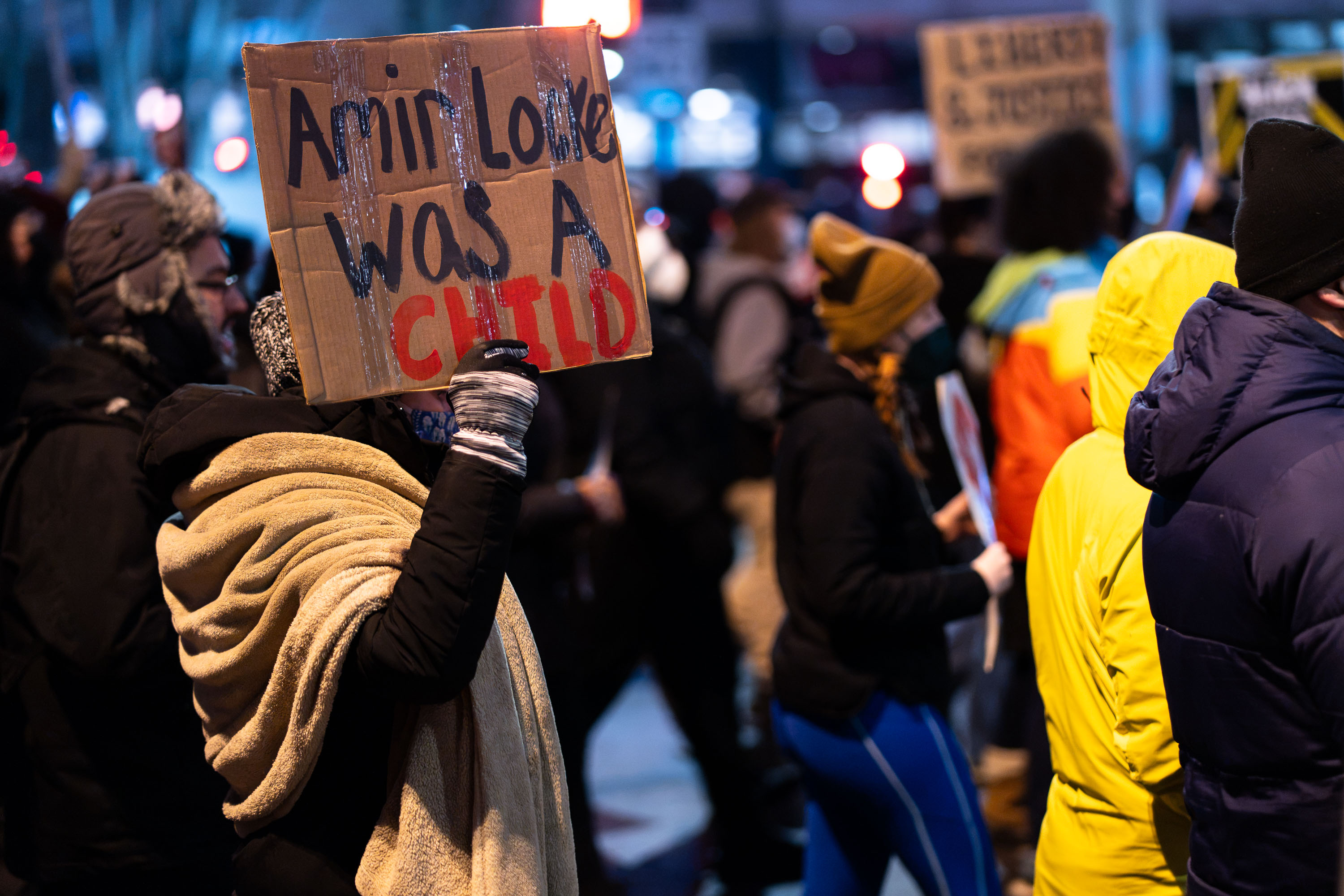
Protesters march after Amir Locke was killed by police
Protesters march through Downtown Minneapolis after demanding the Mayor resign following the Minneapolis Police shooting death of Amir Locke during a no-knock search warrant.

Protesters march after Amir Locke was killed by police

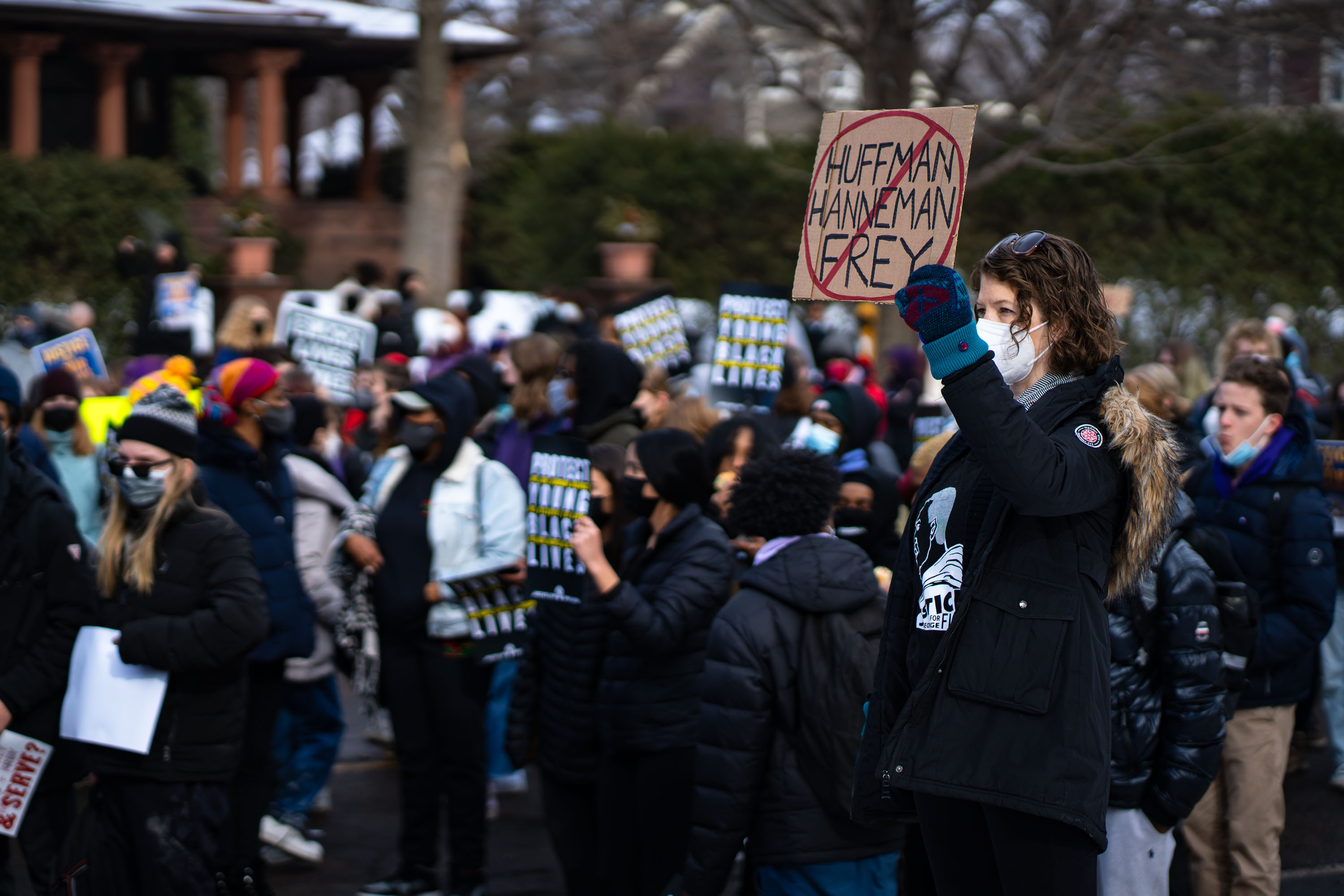
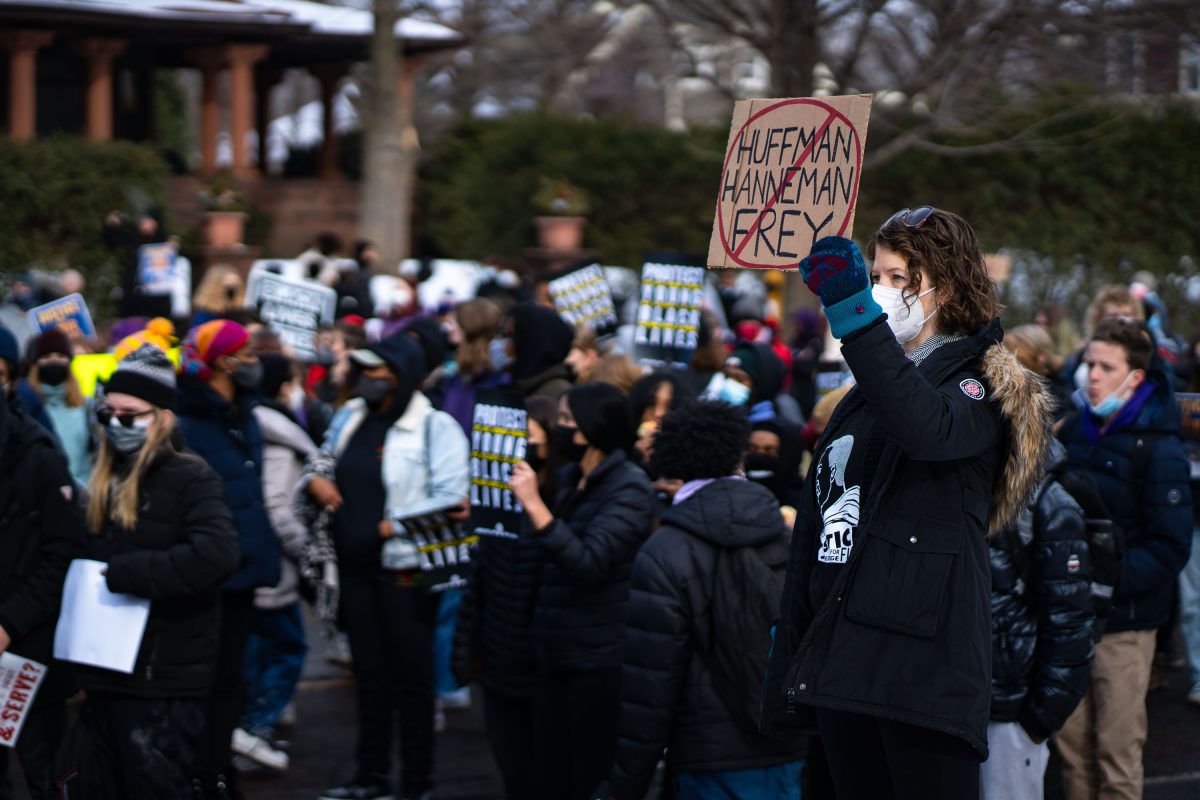
Huffman Hanneman Frey protest sign, Amir Locke Protest
High school students from around the area march to the Minnesota Governor's Mansion demanding justice for Amir Locke.

Huffman Hanneman Frey protest sign, Amir Locke Protest

Memorial sign for Amir Locke and other Black men killed by police in Minneapolis, with candles and roses in snow.
A memorial in Minneapolis honors Black men reportedly killed by police, including George Floyd, Dolal Idd, Winston Smith, Leneal Frazier, and Amir Locke. The sign, displayed during a protest outside the home of Minneapolis Police Chief Amelia Huffman, lists their names and dates of death. Amir Locke was killed on February 2, 2022 by Minneapolis Police officers during a no knock warrant at a Downtown Minneapolis apartment building.

Minneapolis Memorial for Amir Locke and Police Violence Victims

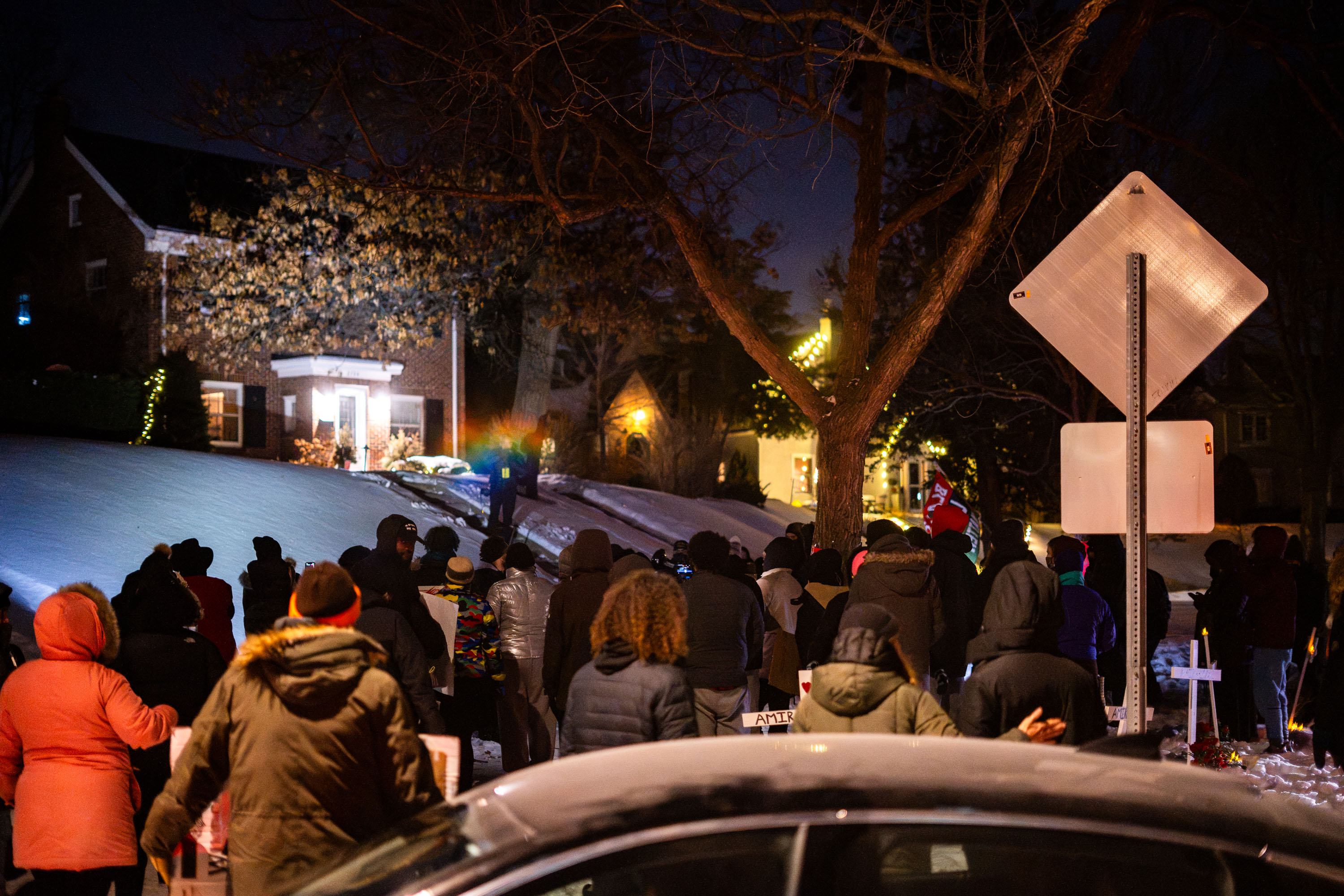
Amir Locke memorial crosses in snow outside Minneapolis police chief's home.
A memorial for Amir Locke, who was killed by Minneapolis police on February 2, 2022, is seen in the snow outside the home of the Minneapolis Police Chief. White crosses bearing Locke's name, along with flowers and candles, mark the site. This memorial was established following protests and community outcry over Locke's death, highlighting ongoing concerns about police accountability. Calls for the interim police chief to step down following the no-knock warrant. Amir Locke was killed on February 2, 2022 by Minneapolis Police officers during a no knock warrant at a Downtown Minneapolis apartment building.

Minneapolis Memorial for Amir Locke Outside Police Chief’s Home

Amir Locke memorial crosses outside the Minneapolis police chief's home in Minneapolis, Minnesota.
A makeshift memorial for Amir Locke, who was killed by Minneapolis Police, is seen outside the home of the interim Minneapolis Police Chief in Minneapolis, Minnesota. The memorial was put in place during a protest outside the Chief's home after the execution of the no knock warrant. Amir Locke was killed on February 2, 2022 by Minneapolis Police officers during a no knock warrant at a Downtown Minneapolis apartment building.

Minneapolis Protest Memorial for Amir Locke at Police Chief’s Home
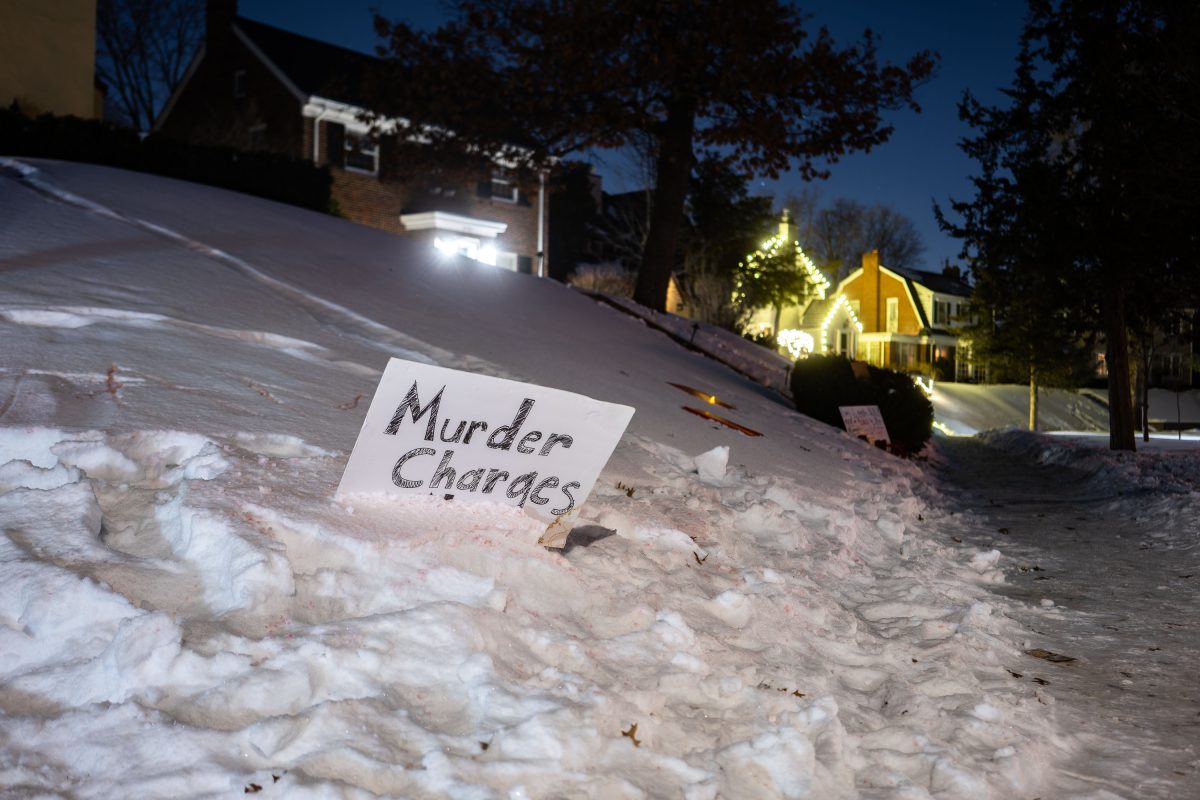
Amir Locke Protest at Police Chief's Home
Activists spoke and led chants outside the home of Minneapolis Police Chief Huffman following last weeks killing of Amir Locke by MPD. To neighbors: “Come down here & hold your murderous cop neighbor accountable!" “Hey hey! ho ho! amelia huffman has got to go!” Windchill: -7°F

Amir Locke Protest at Police Chief’s Home
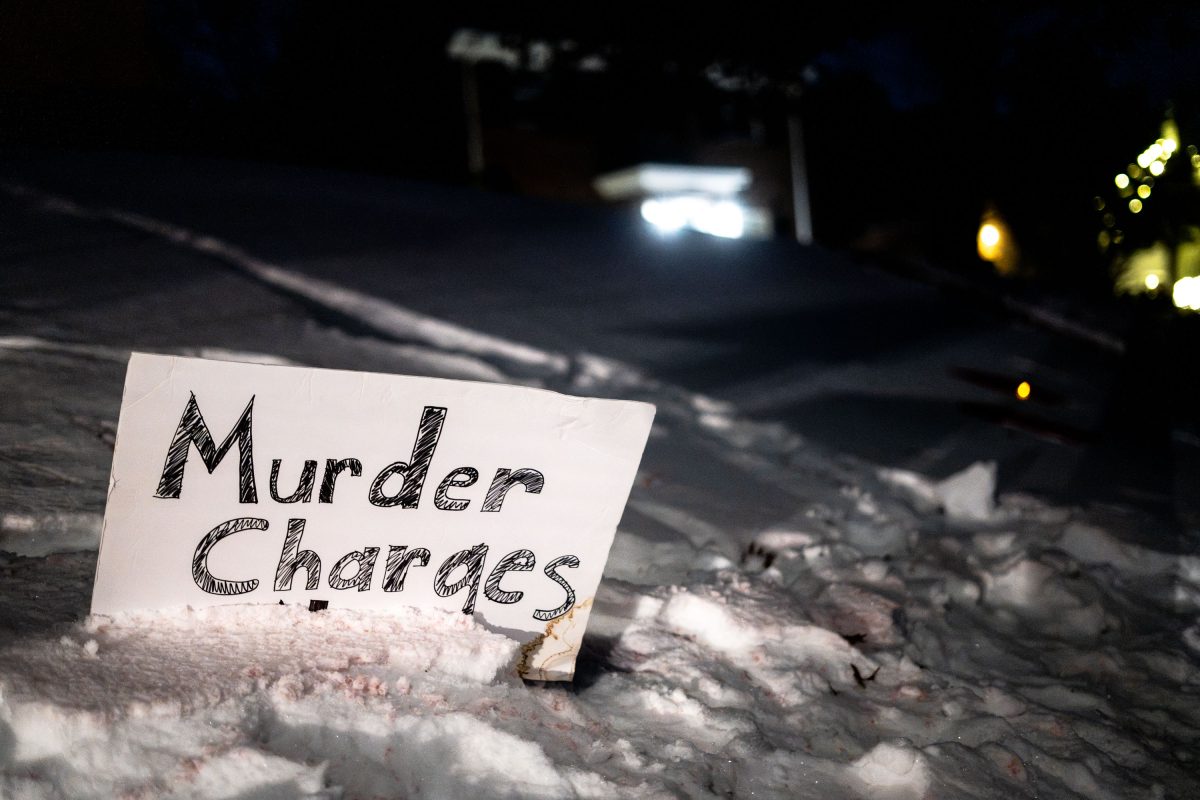
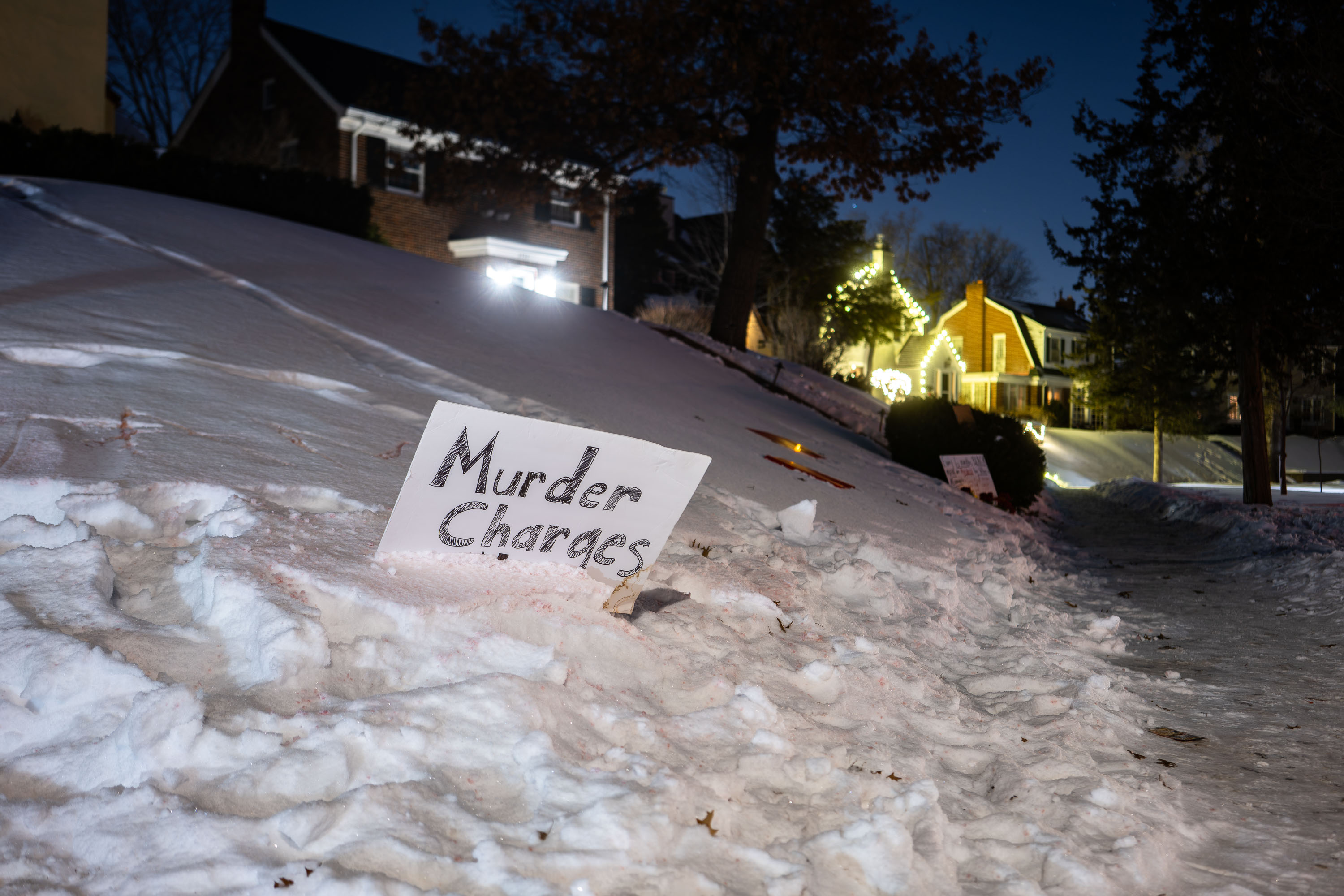
Sign in the snow that reads Murder Charges, Amir Locke Killing
Activists spoke and led chants outside the home of Minneapolis Police Chief Huffman following last weeks killing of Amir Locke by MPD. To neighbors: “Come down here & hold your murderous cop neighbor accountable!" “Hey hey! ho ho! amelia huffman has got to go!” Windchill: -7°F

Murder Charges sign in the snow, Amir Locke killing
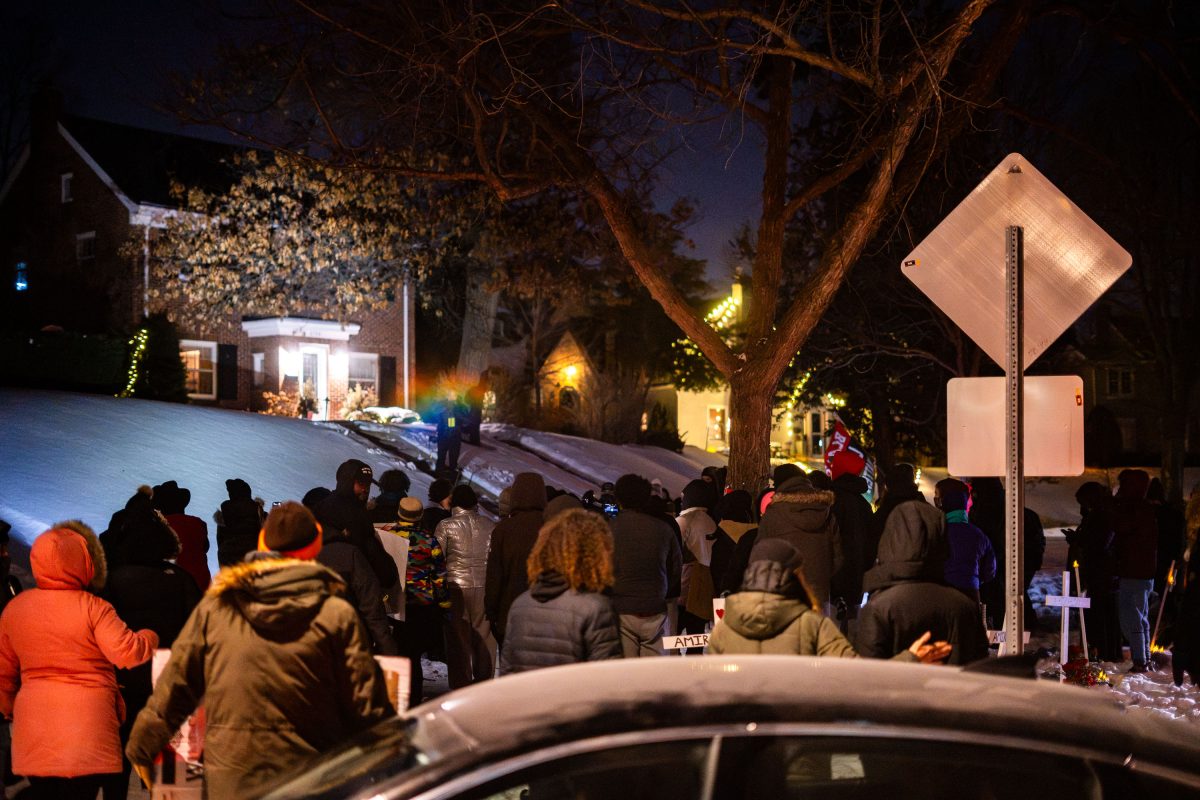
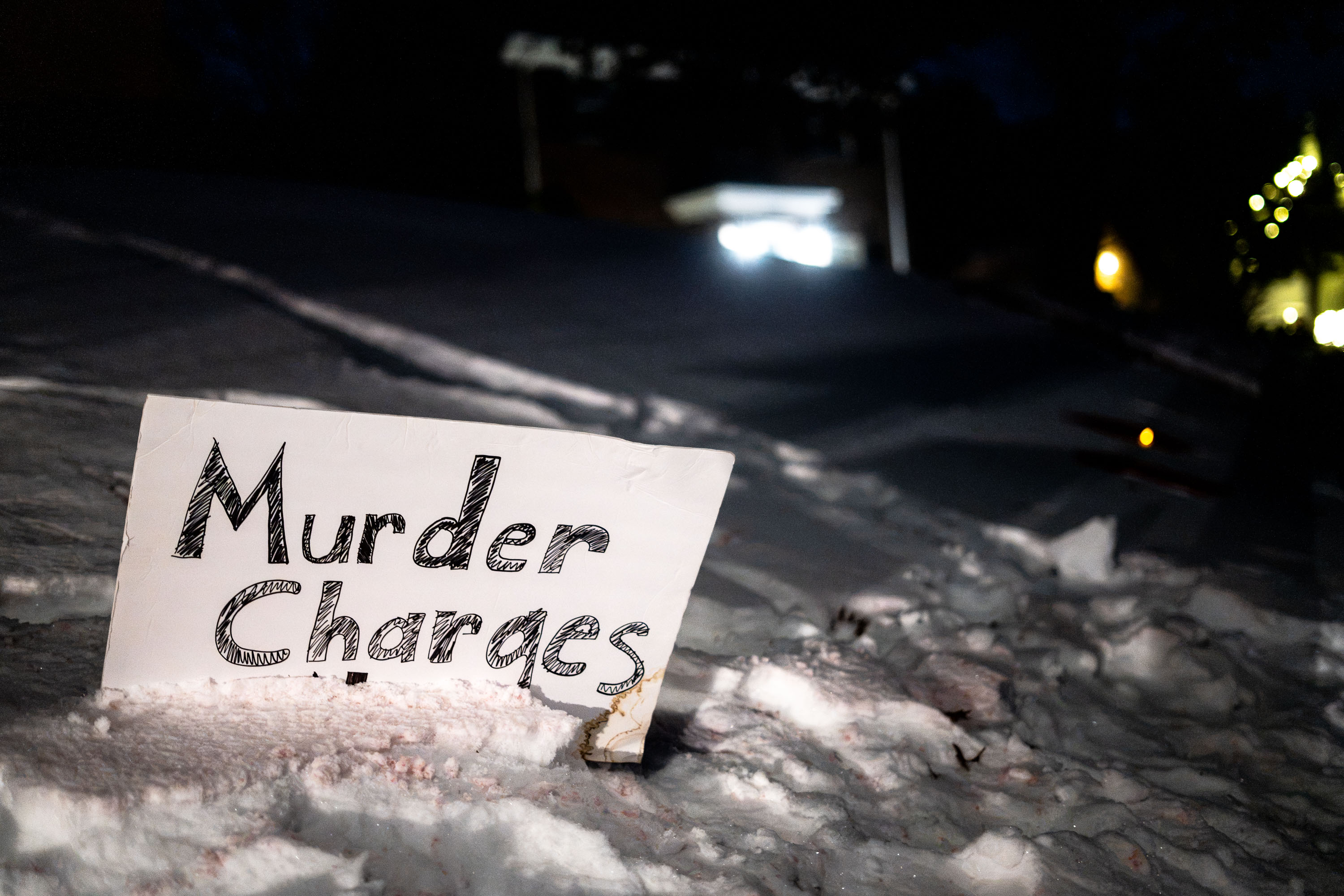
Amir Locke protests at police chief's home
Activists spoke and led chants outside the home of Minneapolis Police Chief Huffman following last weeks killing of Amir Locke by MPD. To neighbors: “Come down here & hold your murderous cop neighbor accountable!" “Hey hey! ho ho! amelia huffman has got to go!” Windchill: -7°F

Amir Locke protests at police chief’s home

Abolish the police flyer for Amir Locke on fence at Minneapolis Police 3rd Precinct.
Flyers advocating for police abolition, including an excerpt from Mariame Kaba's New York Times opinion piece, were posted on fencing around the Minneapolis Police 3rd Precinct. The flyers also reference Amir Locke, who was killed by Minneapolis police in February 2022. Amir Locke was killed on February 2, 2022 by Minneapolis Police officers during a no knock warrant at a Downtown Minneapolis apartment building.

Minneapolis Police 3rd Precinct: Abolish the Police Flyer for Amir Locke

Flyers on the barricade at Minneapolis Police 3rd Precinct in Minneapolis.
The former Minneapolis Police Third Precinct, damaged during protests in May 2020, is shown barricaded and adorned with flyers. These materials, including an opinion piece by Mariame Kaba titled "Yes, We Mean Literally Abolish The Police," originally published in The New York Times on June 12, 2020, signify the ongoing public discourse and protest following the precinct's destruction.

Minneapolis Police 3rd Precinct Barricade with “Abolish The Police” Flyers

Protesters beside Amir Locke memorial crosses outside a Minneapolis home at night.
On February 4, 2022, protesters gathered outside the Minneapolis home of Police Chief Amelia Huffman to protest the killing of Amir Locke by the Minneapolis Police Department. The demonstration occurred in sub-zero temperatures and featured chants and the placement of memorial crosses bearing Locke's name. Amir Locke was killed on February 2, 2022 by Minneapolis Police officers during a no knock warrant at a Downtown Minneapolis apartment building.

Minneapolis Protest for Amir Locke at Police Chief’s Home
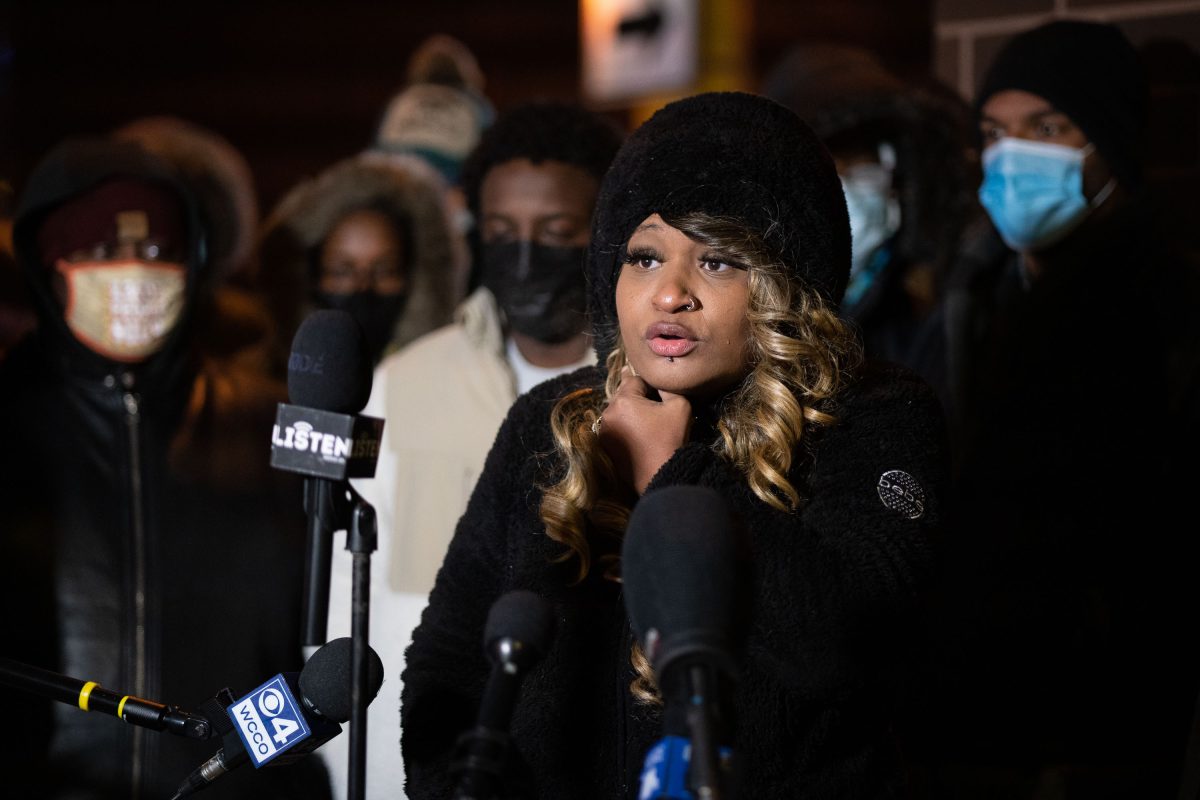
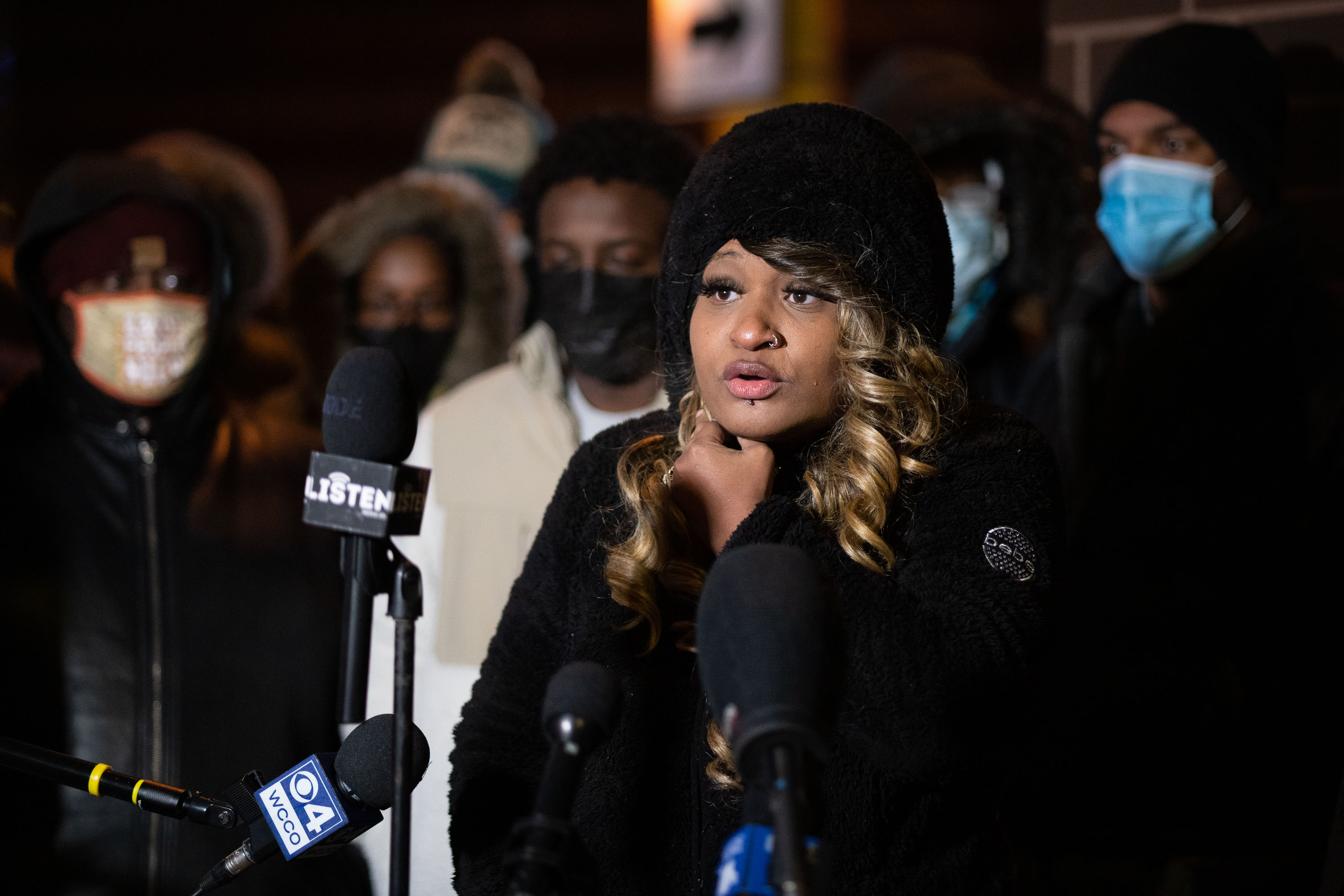
Toshira Garraway Allen speaks after Amir Locke is killed
Civil rights attorney Nekima Levy Armstrong, CAIR-MN and MN Senate candidate Zaynab Mohamed, activists DJ Hooker & Toshira Garraway Allen speak out in a cold 1°F night asking for the prompt release of information regarding the shooting death of Amir Locke by police this morning.

Toshira Garraway Allen speaks after Amir Locke is killed

Nekima Levy Armstrong speaks to reporters in Minneapolis after the Amir Locke shooting.
Civil rights attorney Nekima Levy Armstrong speaks to the press in Minneapolis on February 2, 2022, following the police shooting death of Amir Locke. The event, which occurred in the early morning hours, prompted immediate calls for transparency and accountability from law enforcement agencies, including the Bureau of Criminal Apprehension. Levy Armstrong, a prominent activist in Minneapolis, addressed the public and demanded the swift release of information regarding the incident. The shooting reignited discussions about police conduct and accountability in the city, echoing sentiments from previous unrest.

Nekima Levy Armstrong Speaks on Amir Locke Shooting in Minneapolis

Zaynab Mohamed speaks to reporters in Minneapolis after the police shooting of Amir Locke.
Zaynab Mohamed, Community Advocacy Manager with CAIR-MN and a Minnesota Senate candidate, speaks to the press in Minneapolis on a cold February night. Her statement followed the police shooting death of Amir Locke earlier that day. Mohamed called for the prompt release of information regarding the incident, which was under investigation by the Bureau of Criminal Apprehension.

Zaynab Mohamed speaks on Amir Locke shooting in Minneapolis

DJ Hooker speaks to reporters at an Amir Locke protest in Minneapolis.
Activist DJ Hooker speaks at a protest in Minneapolis on a cold night following the police shooting death of Amir Locke. The protest occurred shortly after Locke was killed by officers executing a no-knock warrant. Activists demanded the prompt release of information regarding the incident, which was under investigation by the Bureau of Criminal Apprehension.

DJ Hooker Speaks at Minneapolis Amir Locke Protest

Toussaint Morrison speaks to reporters in Minneapolis after the police shooting of Amir Locke.
Toussaint Morrison speaks to reporters in Minneapolis following the police shooting death of Amir Locke. The incident, which occurred in February 2022, led to public outcry and demands for accountability from the Bureau of Criminal Apprehension and the Minneapolis Police Department. Amir Locke was killed on February 2, 2022 by Minneapolis Police officers during a no knock warrant at a Downtown Minneapolis apartment building.

Toussaint Morrison Speaks on Amir Locke Shooting in Minneapolis

Police SUV and BCA truck outside Bolero Flats in downtown Minneapolis behind police tape.
Police vehicles and a Bureau of Criminal Apprehension (BCA) truck are present outside Bolero Flats on Marquette Avenue in Downtown Minneapolis following an officer-involved shooting. The incident occurred on the 7th floor of the apartment building, where an officer reportedly shot and killed a man who was holding a gun.

Bolero Flats, Minneapolis: Police Respond to Officer-Involved Shooting

Police tape and BCA vehicle on Marquette Avenue in downtown Minneapolis after an officer-involved shooting.
Yellow police tape cordons off Marquette Avenue in downtown Minneapolis following an officer-involved shooting. The incident occurred at Bolero Flats, where an officer reportedly shot a man holding a gun on the seventh floor of the apartment building. The Bureau of Criminal Apprehension (BCA) was called to investigate the shooting, a common procedure for officer-involved deaths in Minnesota.

BCA Investigates Officer-Involved Shooting on Marquette Ave, Minneapolis

BCA crime team truck and Minneapolis police outside Bolero Flats in downtown Minneapolis.
Law enforcement vehicles and a Minnesota Bureau of Criminal Apprehension (BCA) Crime Scene Team truck are present outside the Bolero Flats apartment building on Marquette Avenue in downtown Minneapolis. This location was the site of an officer-involved shooting on December 29, 2021. According to interim Minneapolis Police Chief Amelia Huffman, an officer discharged their weapon nine seconds after entering an apartment on the seventh floor, where the victim was reportedly holding a gun.

Bolero Flats, Minneapolis: BCA Crime Scene Investigation
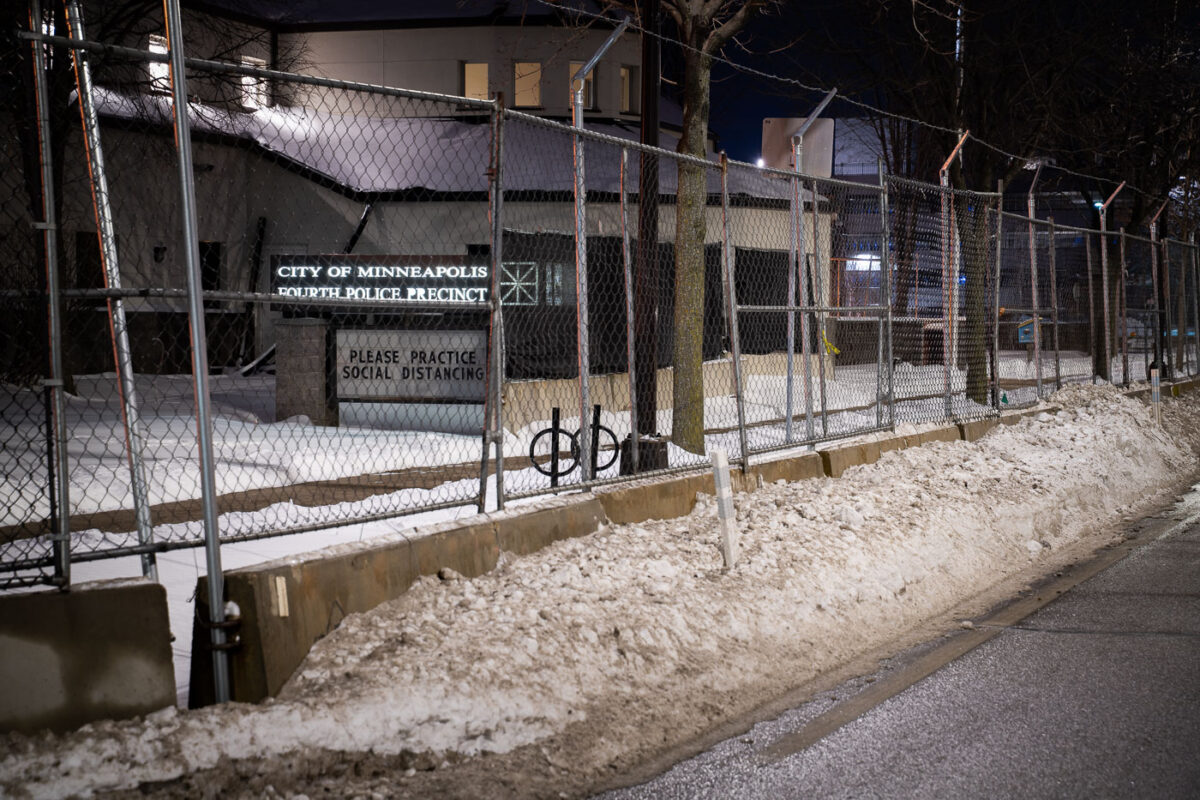
Fencing and razor wire around Minneapolis Police station
The Minneapolis Police Fourth Precinct station is shown fortified with security fencing and razor wire in January 2022. The security measures were put in place during the Derek Chauvin murder trial. Chauvin was on trial for the May 2020 murder of George Floyd.

Minneapolis Police Fourth Precinct with Razor Wire and Snow
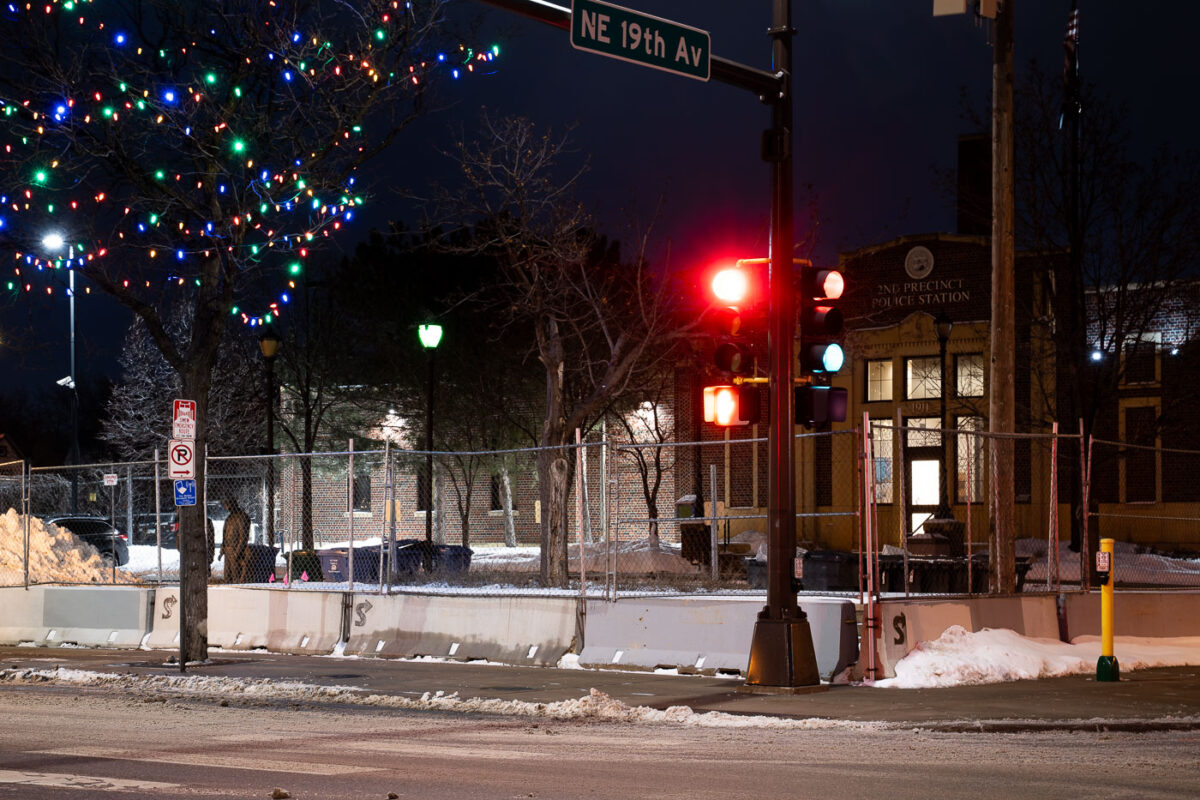
Christmas lights outside Minneapolis Police station
The Minneapolis Police Department's 2nd Precinct Station, located at NE 19th Avenue, is shown in January 2022. The police station, which has crhsitmas lights on the trees in front, is behind concrete barricades that were put in place during the murder trial of Derek Chauvin. Chauvin was on trial over the May 2020 murder of George Floyd.

Minneapolis 2nd Precinct Police Station with Christmas Lights
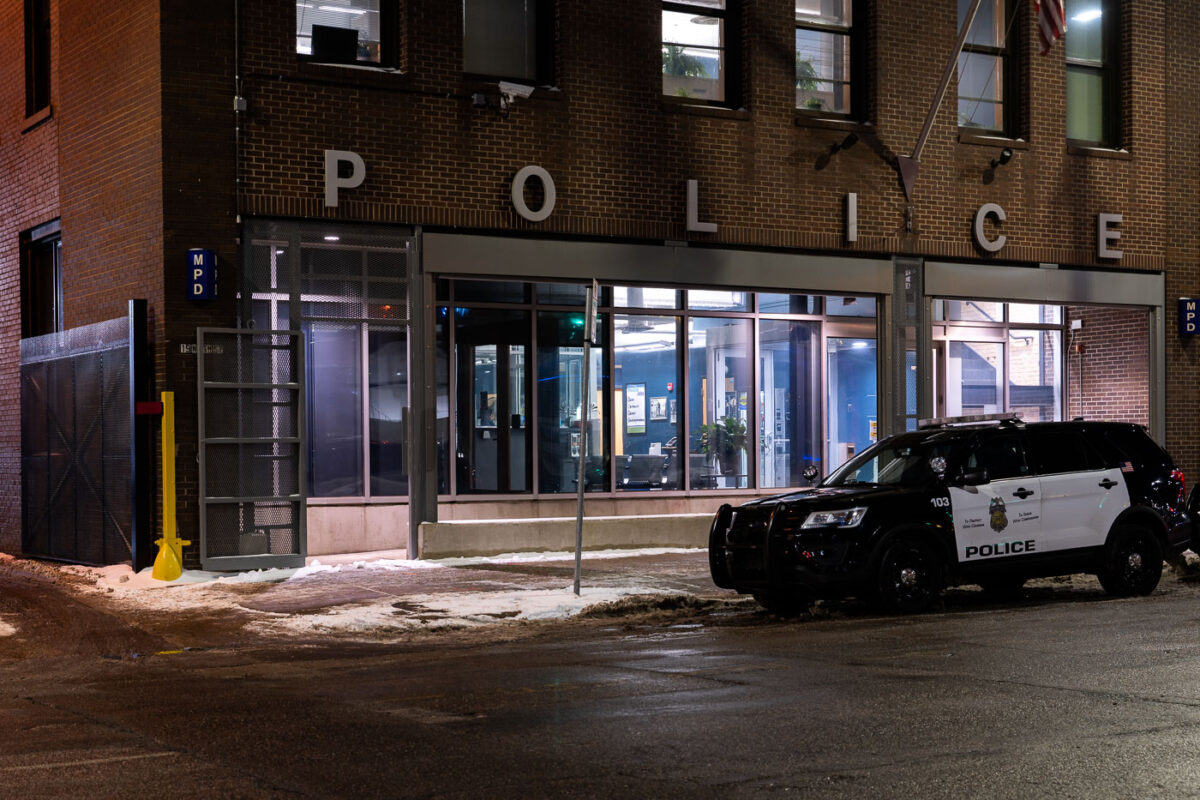
Minneapolis Police Downtown Police Station
Minneapolis police squad car outside the Minneapolis Police Department's 1st Precinct station in Downtown Minneapolis.

Minneapolis Police 1st Precinct Downtown
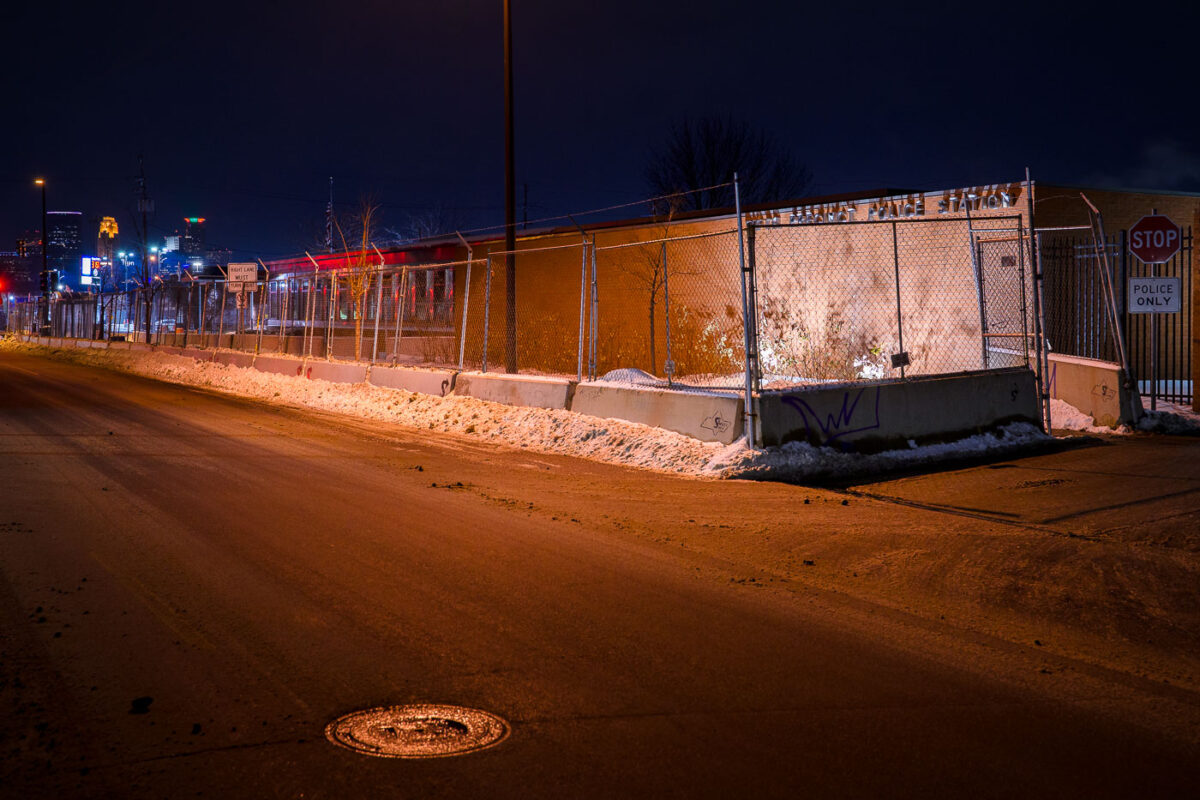
Security fencing around Minneapolis Police station
The Minneapolis Police 5th Precinct station is shown behind security fencing at night in January 2022. The precinct serves the south Minneapolis area and the fencing was pout in place during the Derek Chauvin murder trial. Chauvin was on trial for the May 2020 murder of George Floyd.

Minneapolis Police 5th Precinct Behind Fencing at Night

Avenge Kenosha Fuck Kyle at Minneapolis Police Station
"Avenge Kenosha" and “Fuck Kyle” written on the barriers surrounding the third precinct.

Graffiti on barricade at Minneapolis Police 3rd Precinct
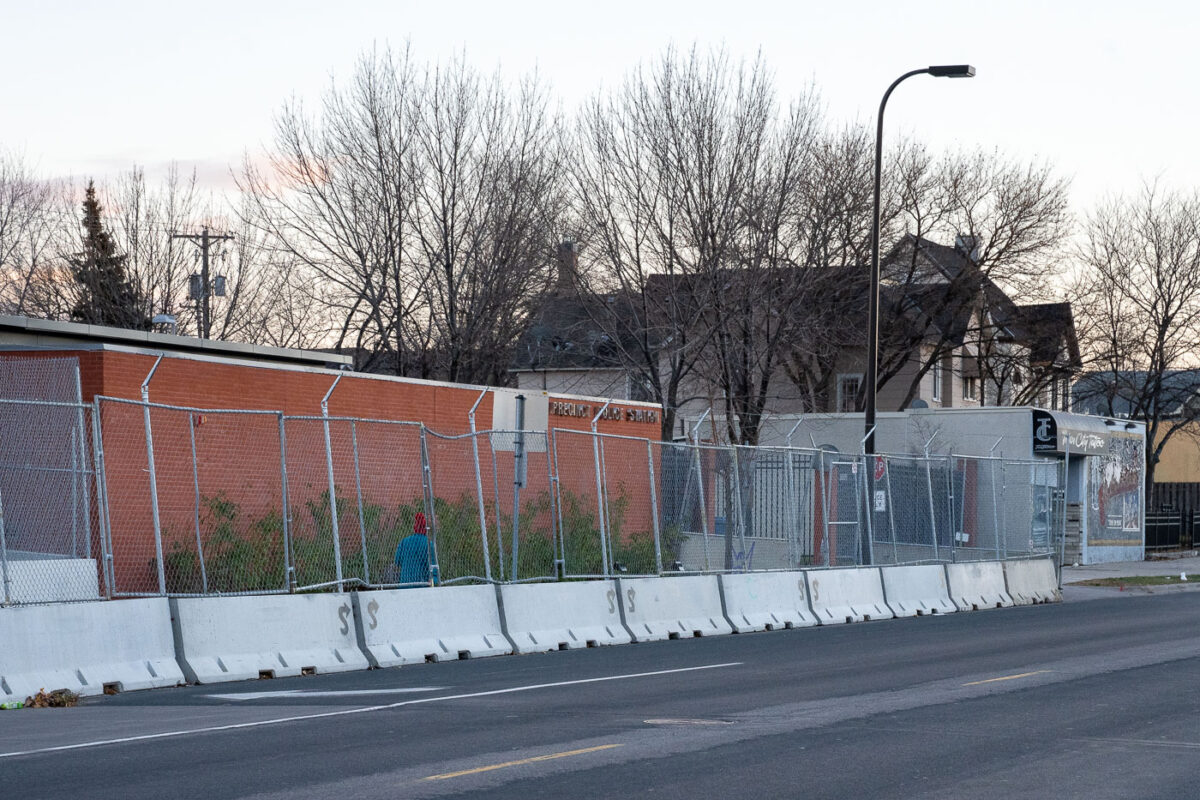
Minneapolis Police Fifth Precinct behind chain link fencing
The Minneapolis Police Fifth Precinct, located on Nicollet Avenue in South Minneapolis, is shown fortified with security fencing and concrete barriers. This measure was implemented in response to the civil unrest and protests that followed the murder of George Floyd in May 2020. The precinct, like many other public buildings in the area, became a focal point during the Minneapolis Uprising and required enhanced security to protect its facilities and personnel. The barriers serve as a physical deterrent and a symbol of the heightened security measures enacted during a period of significant social and political upheaval.

Minneapolis Police 5th Precinct Secured by Fencing and Barriers

Minneapolis Police and George Floyd Square Car Crash
Minneapolis Police and Rescue respond to a man having a medical emergency as he drove through the east side fist. No one on the scene was injured.

Minneapolis Police and George Floyd Square Car Crash

Minneapolis police respond after car crashes into George Floyd Memorial
Minneapolis Police and Fire Department personnel responded to a vehicle crash at George Floyd Square on East 38th Street. The incident involved a medical emergency for a driver who crashed through a barricade. The area, known as George Floyd Square, has been a focal point for protests and activism since the murder of George Floyd in May 2020. The square has been occupied by activists and has become a symbol of community organizing and demands for justice.

Minneapolis Police at George Floyd Square After Vehicle Crash

MPD and ambulances at Say Their Names Cemetery
Minneapolis police squad cars and an ambulance behind Say Their Names Cemetery at George Floyd Square.

Minneapolis Police Squads and Say Their Names Cemetery

Minneapolis Police Squad Car and Abolish The Police
A Minneapolis Police Department squad car passes a mural on Minnehaha Avenue that reads "Abolish The Police." The mural, painted on plywood covering a building, appeared in the context of widespread protests and calls for police reform following the murder of George Floyd in Minneapolis in May 2020. The "Open Streets" event, which temporarily closes streets to vehicles for community use, was concluding as the police vehicle drove by.

Minneapolis Police Car Passes “Abolish The Police” Mural

Minneapolis Police at Open Streets Minnehaha Ave
Minneapolis Police officers were present at the Open Streets Minnehaha Avenue event, a community gathering that temporarily closes streets to vehicular traffic to encourage walking, cycling, and local business engagement. These events are designed to foster community interaction and promote active transportation within the city's neighborhoods. The presence of law enforcement at such events is common for ensuring public safety and managing crowds. Minnehaha Avenue is a significant thoroughfare in Minneapolis, known for its commercial activity and residential areas.

Minneapolis Police at Open Streets Minnehaha Ave Event

Minnehaha Avenue Open Streets Banner
A banner reading "On Minnehaha, We Celebrate" hangs across Minnehaha Avenue in Minneapolis, during the 2021 Open Streets event. The event coincided with the city's election, and the presence of numerous candidates and discussions about ballot questions like the strong mayor policy, public safety, and rent control were prominent. The backdrop includes the Minneapolis Police Third Precinct building, which was barricaded with concrete barriers and barbed wire, reflecting the ongoing tensions and community responses following the 2020 Minneapolis uprising.

Minnehaha Avenue Open Streets Banner with Election Candidates

Minneapolis Police parked outside Seven Points Mall ramp
A Minneapolis Police squad car is parked near the Lake & Girard parking ramp on Lake Street in Uptown Minneapolis. The area was the site of protests and unrest following the murder of George Floyd in May 2020, and the "MinneapolisUprising" saw significant activity in this neighborhood. Graffiti visible on the building, including "Prosecute" and "Kops Out," reflects the sentiments expressed during that period. The "LIBERTINE" sign indicates a business in the vicinity, and the presence of a parking ramp highlights the urban infrastructure of the area.

Minneapolis Police Squad Car at Lake Street Parking Ramp
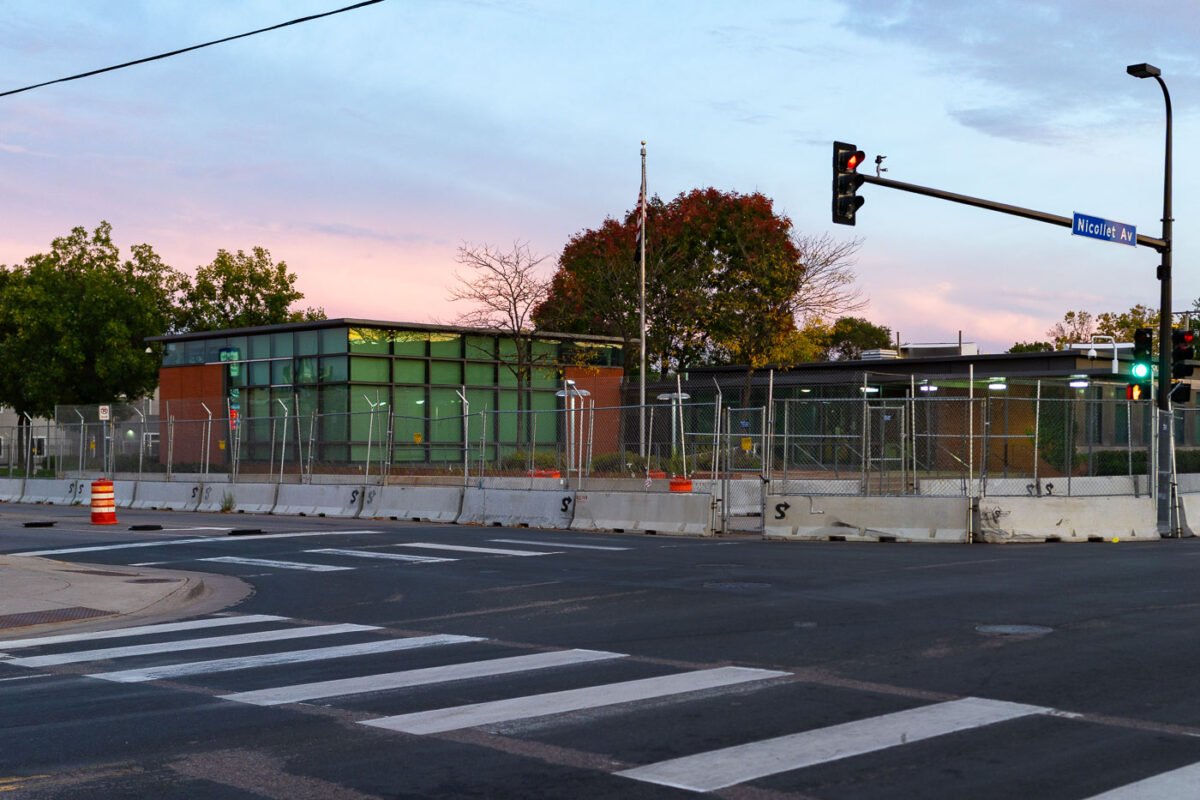
Minneapolis Police Fifth Precinct fencing and barricades
Security fencing and concrete barricades surround the Minneapolis Police Fifth Precinct building on Nicollet Avenue. The precinct is a key law enforcement facility in the city, and its security measures were heightened following the civil unrest in the summer of 2020. The barricades and fencing are indicative of the increased security protocols implemented to protect police facilities and maintain order in the surrounding urban environment. The presence of these measures highlights the complex relationship between law enforcement and the community in Minneapolis.

Minneapolis Police 5th Precinct Fencing and Barricades on Nicollet Ave

Nicollet Ave Stop N Shop Now Open
The Stop N Shop on Nicollet Avenue in Minneapolis has reopened following damage sustained during the civil unrest of 2020. The store is situated across from the Minneapolis Police Fifth Precinct, a location that became a focal point during the protests. Its reopening signifies a return to normalcy for the local business and the surrounding community after a period of significant disruption.

Nicollet Ave Stop N Shop Reopens After Damage
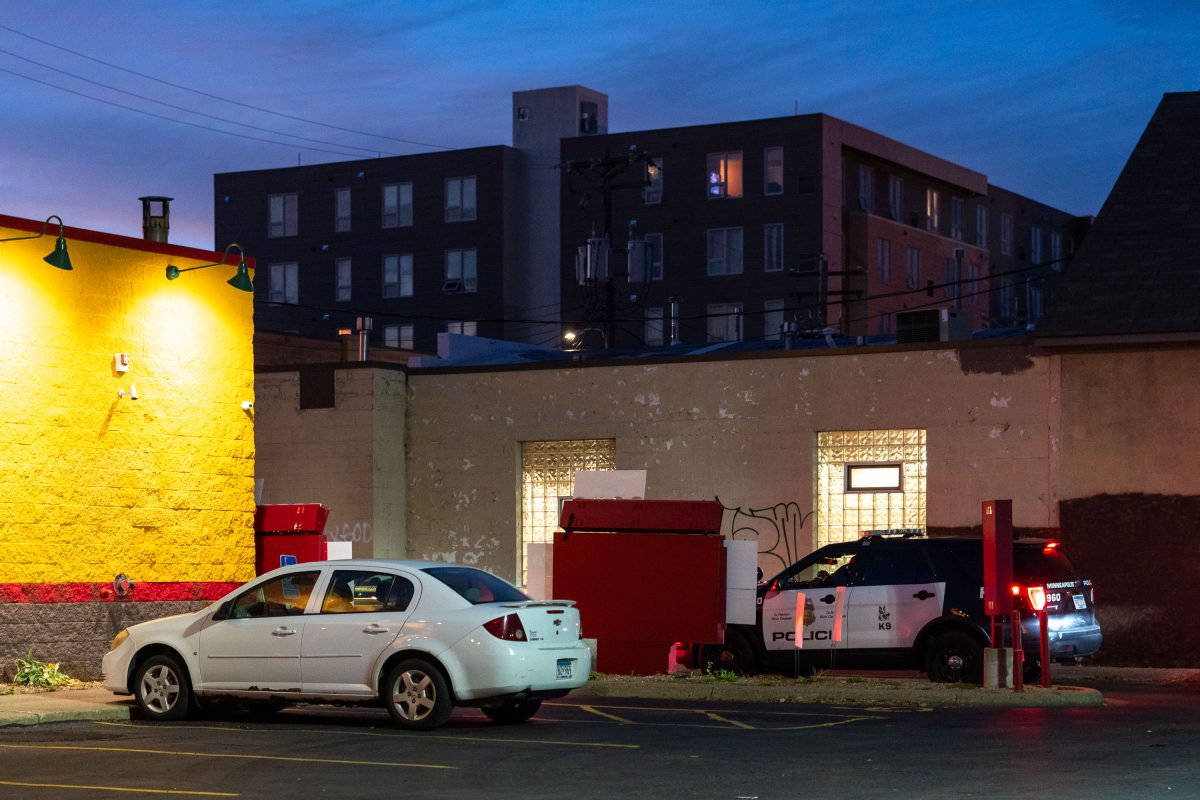
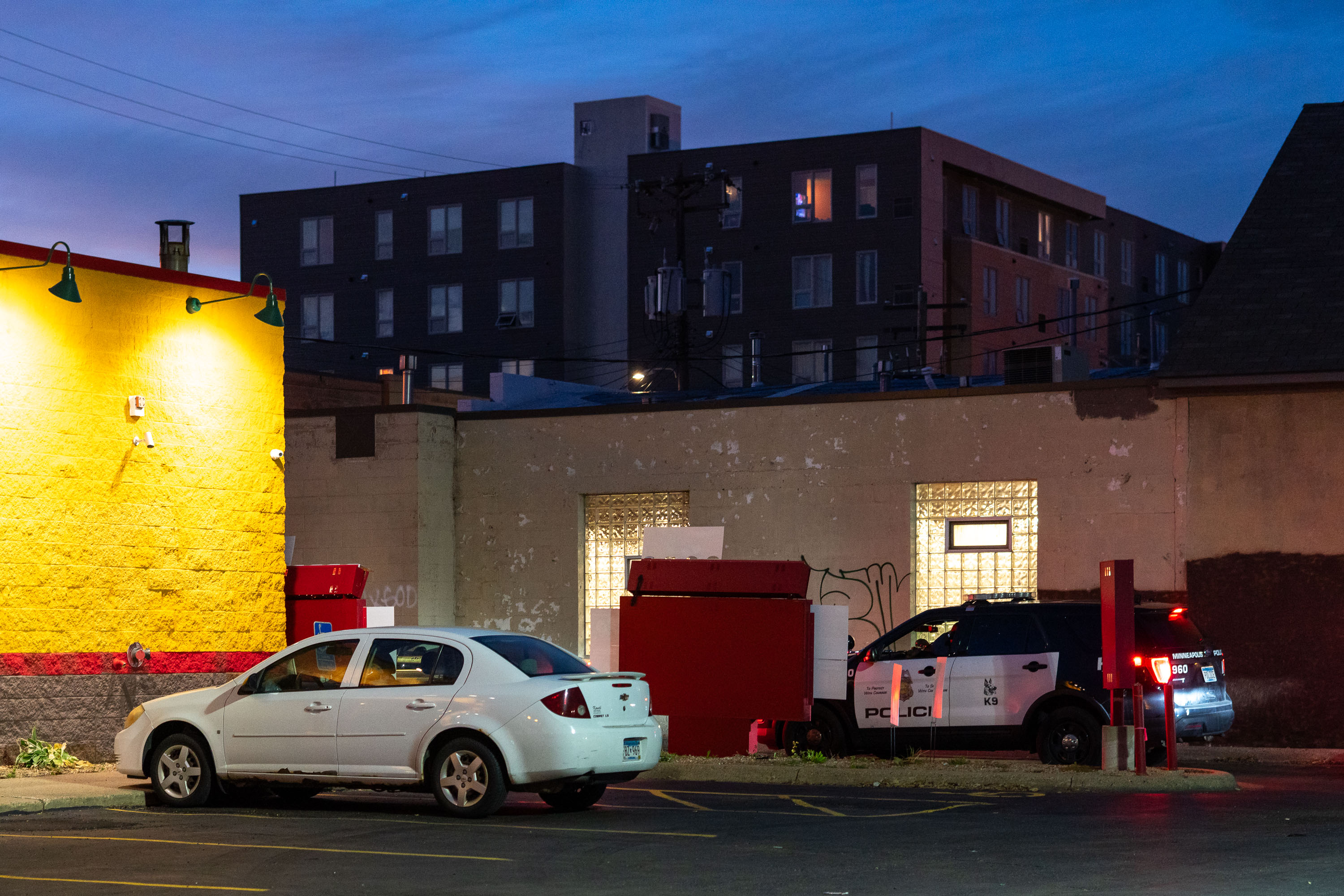
Minneapolis Police, Popeyes Drive-Thru
The drive-thru at Popeye's Chicken in Minneapolis.

Minneapolis Police, Popeyes Drive-Thru

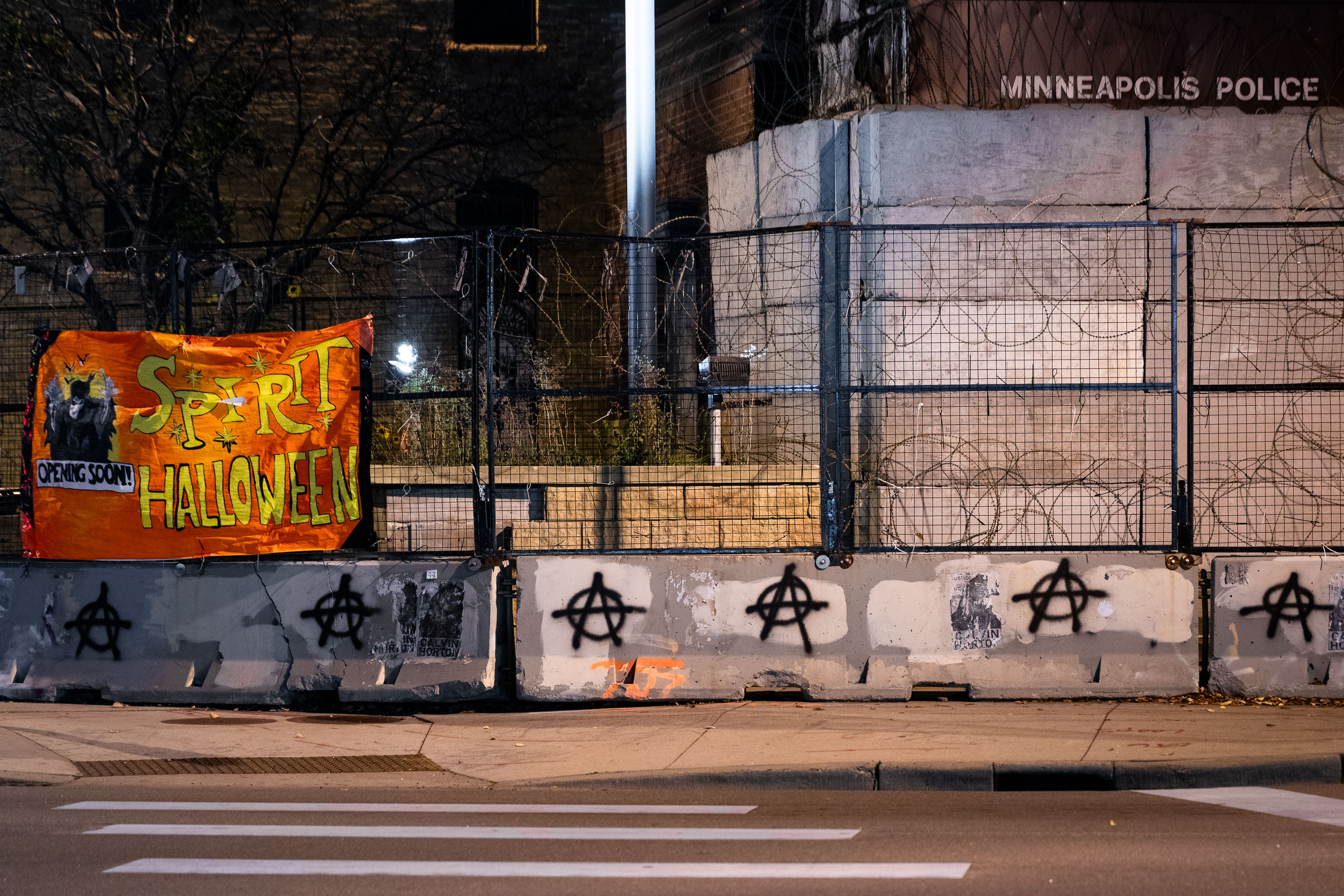
Spirit Halloween Minneapolis Police Station
Banners reading "Avenge Indigenous Children" and "Spirit Halloween" are displayed on the barricaded perimeter of the former Minneapolis Police Third Precinct. The building was set ablaze during protests that erupted following the murder of George Floyd on May 25, 2020. The precinct, located in the Powderhorn Park neighborhood, was a focal point of unrest and has remained a symbol of the protests against police brutality. The "Spirit Halloween" banner, featuring a grim reaper figure and the text "Opening Soon!", was placed on the site after the building's destruction.

Minneapolis Police 3rd Precinct: Spirit Halloween Banners on Burned Building

Spirit Halloween, Minneapolis police third precinct
A Spirit Halloween sign hangs on the former Minneapolis police third precinct in October 2021. The precinct was set on fire by protesters following the murder of George Floyd. It still sits vacant.

Spirit Halloween, Minneapolis police third precinct

MPD behind fencing on Nicollet Ave 2021
The Minneapolis Police 5th Precinct building is shown surrounded by security fencing and concrete barriers. This police station, along with others in the city, have been fortified during the Derek Chauvin murder trial. On May 25, 2020, Minneapolis police officer Derek Chauvin murdered 46-year-old George Floyd during an arrest outside Cup Foods at the intersection of 38th Street and Chicago Avenue in south Minneapolis. Video recorded by bystanders showed Chauvin kneeling on Floyd’s neck for more than nine minutes while Floyd repeatedly said he could not breathe. Three other Minneapolis police officers - J. Alexander Kueng, Thomas Lane, and Tou Thao — were also present during the arrest and later faced criminal charges for their roles in Floyd’s death. Floyd’s murder sparked protests and civil unrest across Minneapolis and around the world, leading to widespread demonstrations against police violence, major policy debates on policing, and the conviction of Chauvin on murder and manslaughter charges in 2021.

Minneapolis 5th Precinct Police Station with Security Fencing

Sunflowers at Third Precinct in South Minneapolis
Sunflowers grow amidst the debris and security measures at the Minneapolis Police Third Precinct. The building was damaged during the civil unrest that followed the murder of George Floyd in May 2020. On May 25, 2020, Minneapolis police officer Derek Chauvin murdered 46-year-old George Floyd during an arrest outside Cup Foods at the intersection of 38th Street and Chicago Avenue in south Minneapolis. Video recorded by bystanders showed Chauvin kneeling on Floyd’s neck for more than nine minutes while Floyd repeatedly said he could not breathe. Three other Minneapolis police officers - J. Alexander Kueng, Thomas Lane, and Tou Thao — were also present during the arrest and later faced criminal charges for their roles in Floyd’s death. Floyd’s murder sparked protests and civil unrest across Minneapolis and around the world, leading to widespread demonstrations against police violence, major policy debates on policing, and the conviction of Chauvin on murder and manslaughter charges in 2021.

Sunflowers Grow at Burned Minneapolis Police Third Precinct

Burned Minneapolis Police Station in September 2021
The Minneapolis Police third precinct. The precinct was burned last may during unrest over the murder of George Floyd.

Burned Minneapolis Police Station in September 2021

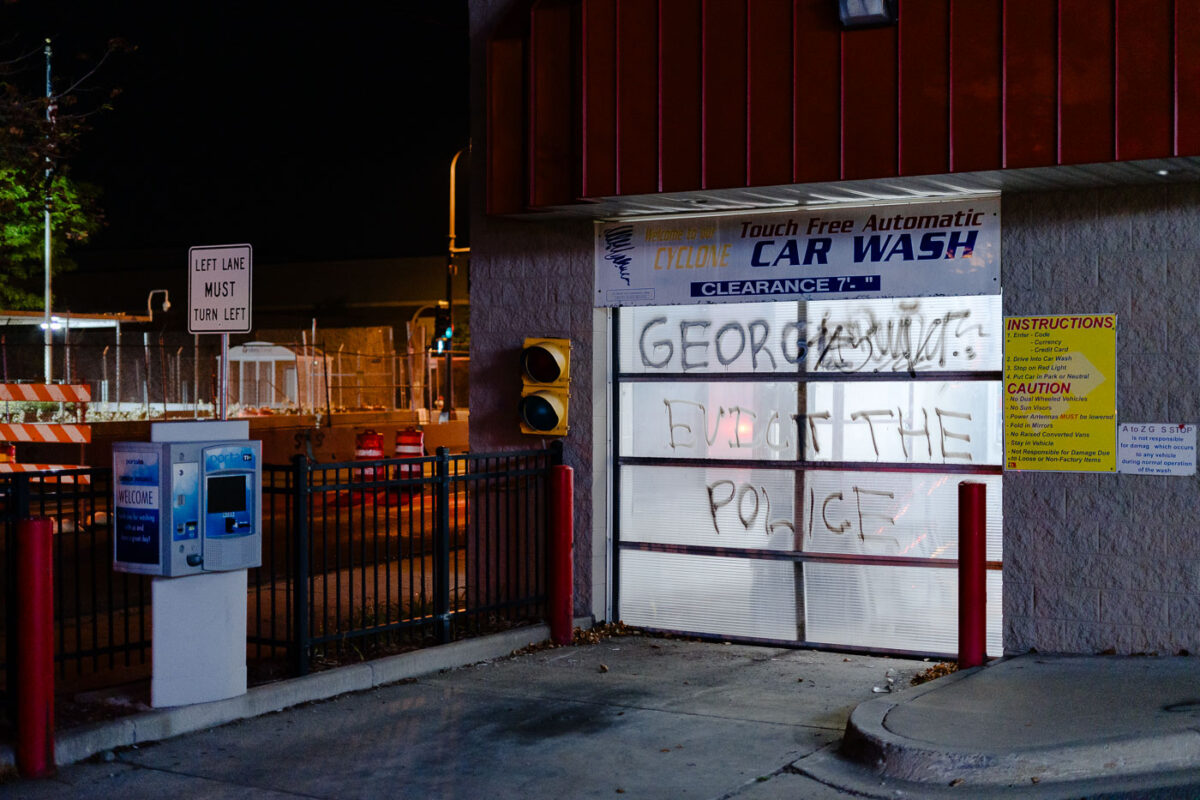
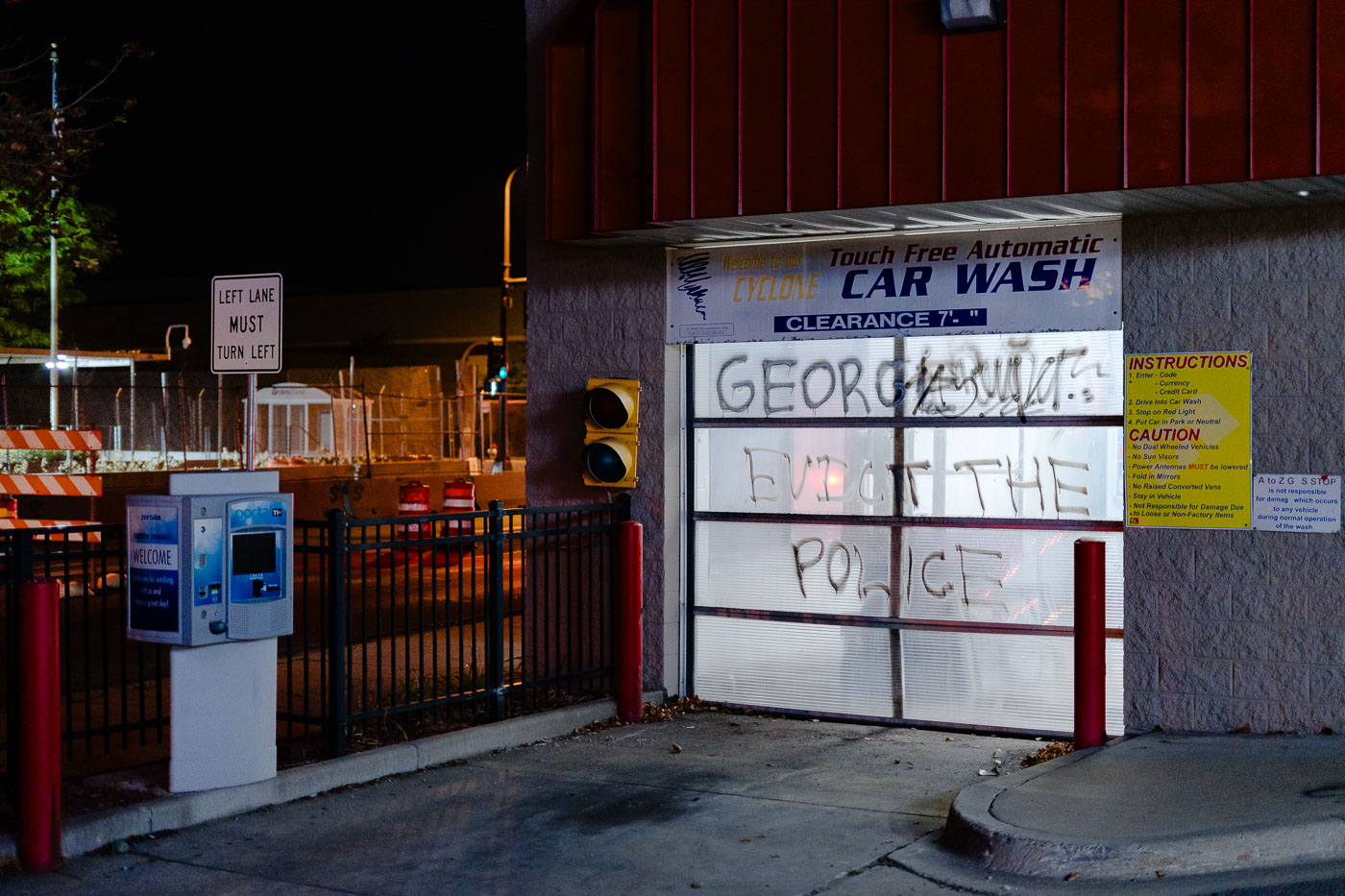
Evict The Police on building across from police station
Graffiti reading "George Floyd Evict The Police" is spray-painted on the garage door of the Cyclone Car Wash, located across from the Minneapolis Police Department's Fifth Precinct.

Minneapolis Cyclone Car Wash Graffiti: Evict The Police

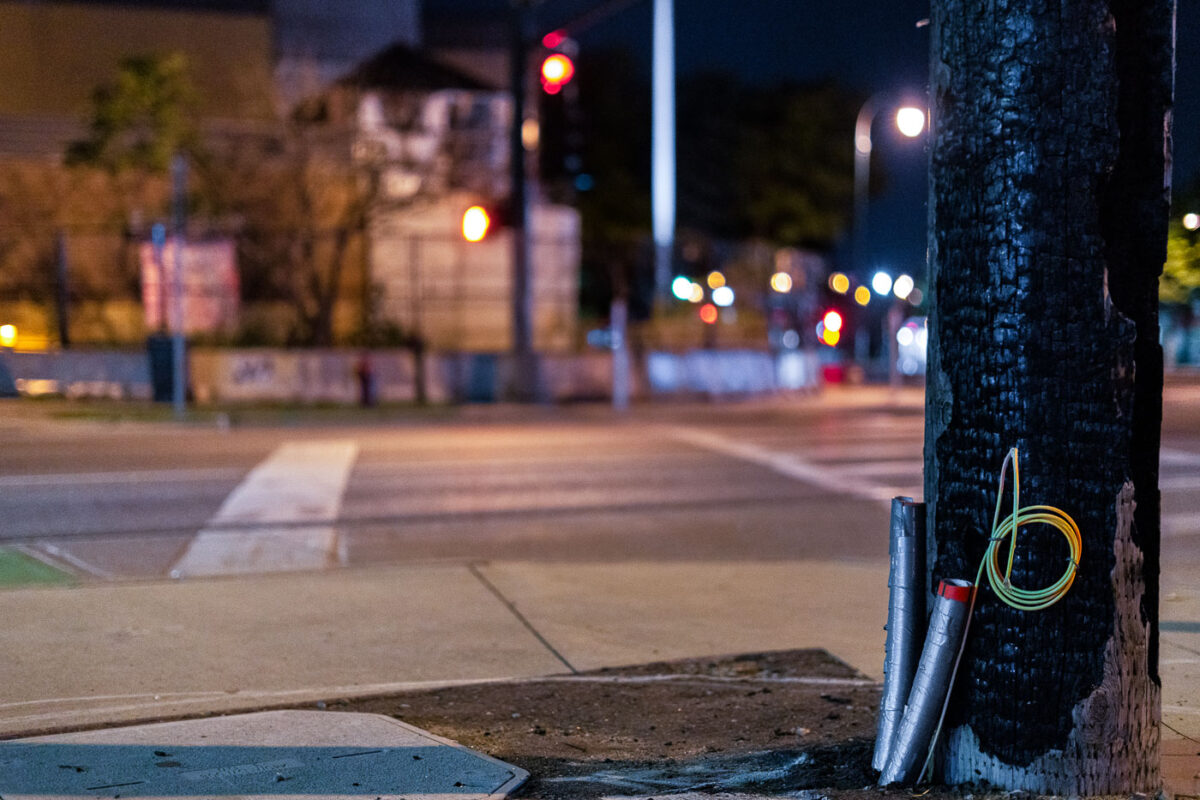
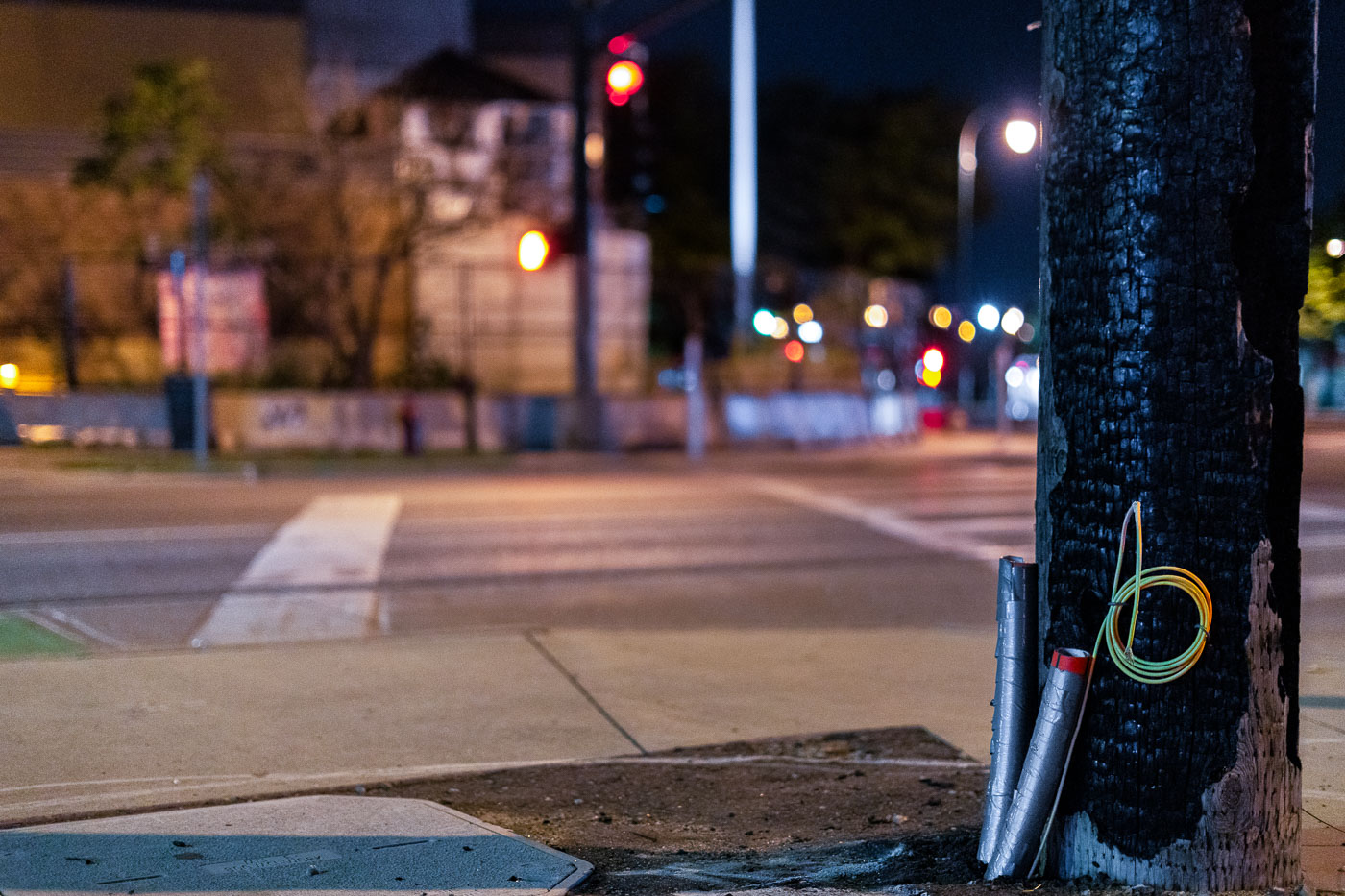
Burned pole across from Minneapolis police station
A burned utility pole stands across from the Minneapolis Police Third Precinct building in South Minneapolis. This pole was damaged during the civil unrest that followed the murder of George Floyd in May 2020. The precinct building itself was a focal point of protests and was eventually set ablaze and abandoned by the Minneapolis Police Department.

Burned pole near Minneapolis Police Third Precinct

Fencing around the Minneapolis police fifth precinct police station.
Temporary fencing and concrete barriers surround the Minneapolis Fifth Precinct Police Station. These security measures were erected in response to protests and civil unrest that occurred in the city, notably following the murder of George Floyd in May 2020.

Minneapolis Fifth Precinct Police Station Fencing and Barriers

Fencing goes up at Winston Smith protest site
Minneapolis Police and private security cleared the lot at the former Wince Marie Memorial Garden on July 17, 2021, and erected fencing. This action followed a protest related to Winston Smith, whose death in June 2021 sparked demonstrations in the city. The site had been occupied by activists who established a "guerrilla garden" in memory of Smith.

Fencing goes up at Winston Smith protest site

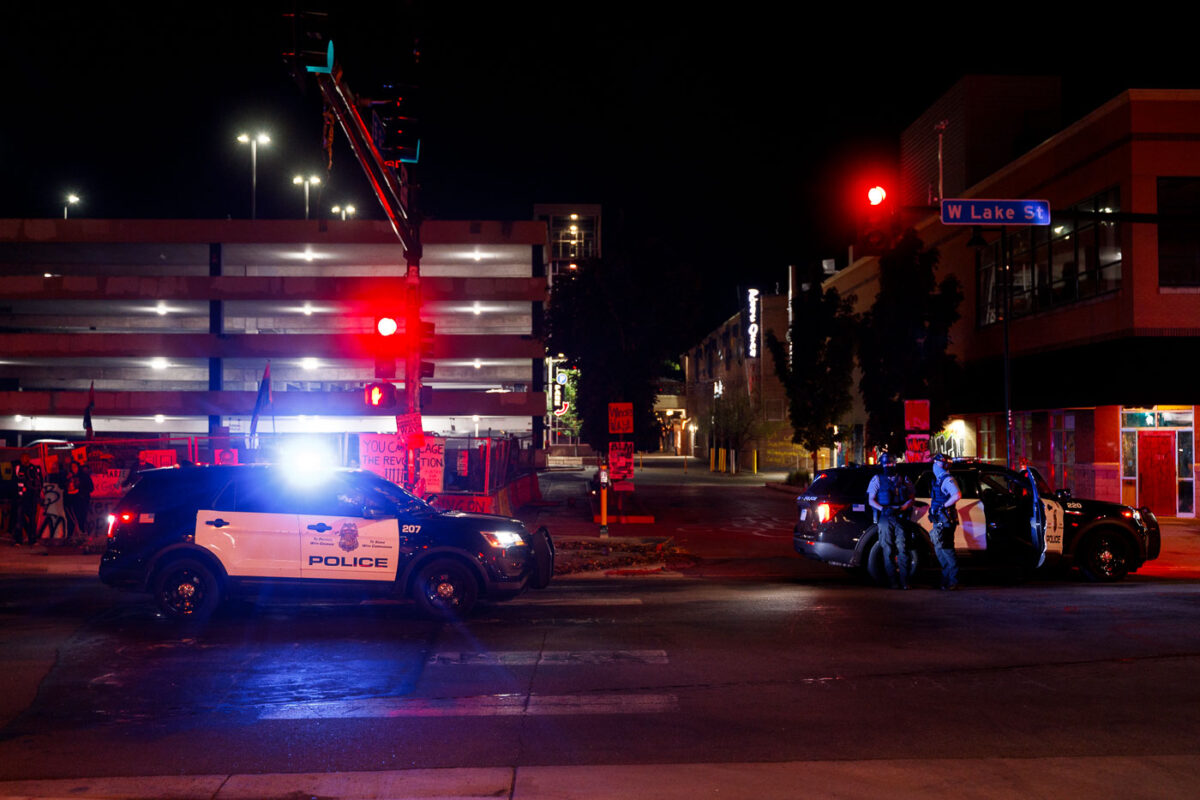
Minneapolis Police and Winston Smith protesters
Police vehicles are present on W Lake Street in Uptown Minneapolis during a protest related to Winston Smith. Protesters had previously shut down streets in the area, and police declared an unlawful assembly.

Minneapolis Police and Winston Smith protesters

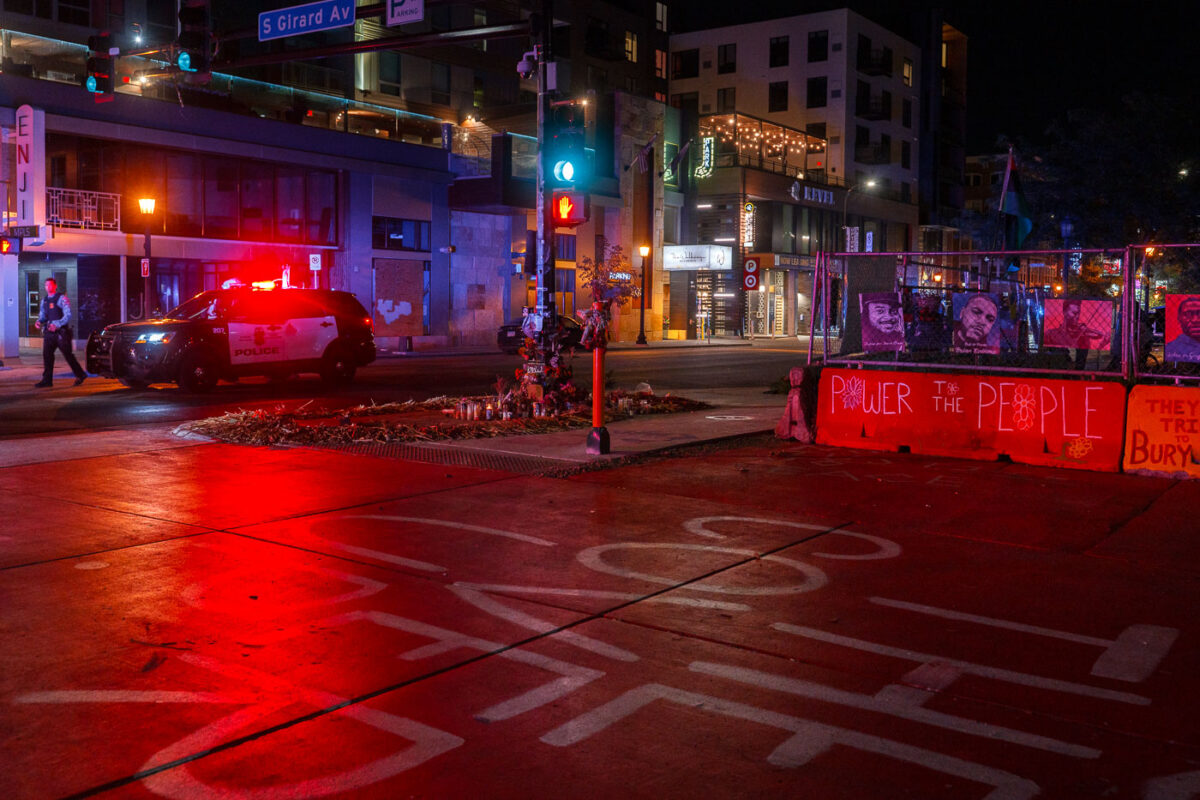
Power to the People in Uptown Minneapolis
Minneapolis Police officers are present near a memorial for Winston Smith Jr. in the Uptown neighborhood on July 14, 2021. The memorial, known as the "Wince Marie Peace Garden," was established following Smith's death earlier that month. Smith, a Black man, was killed by sheriff's deputies and federal marshals, sparking protests and unrest in Minneapolis.

Minneapolis Police at Uptown Protest Memorial for Winston Smith Jr.

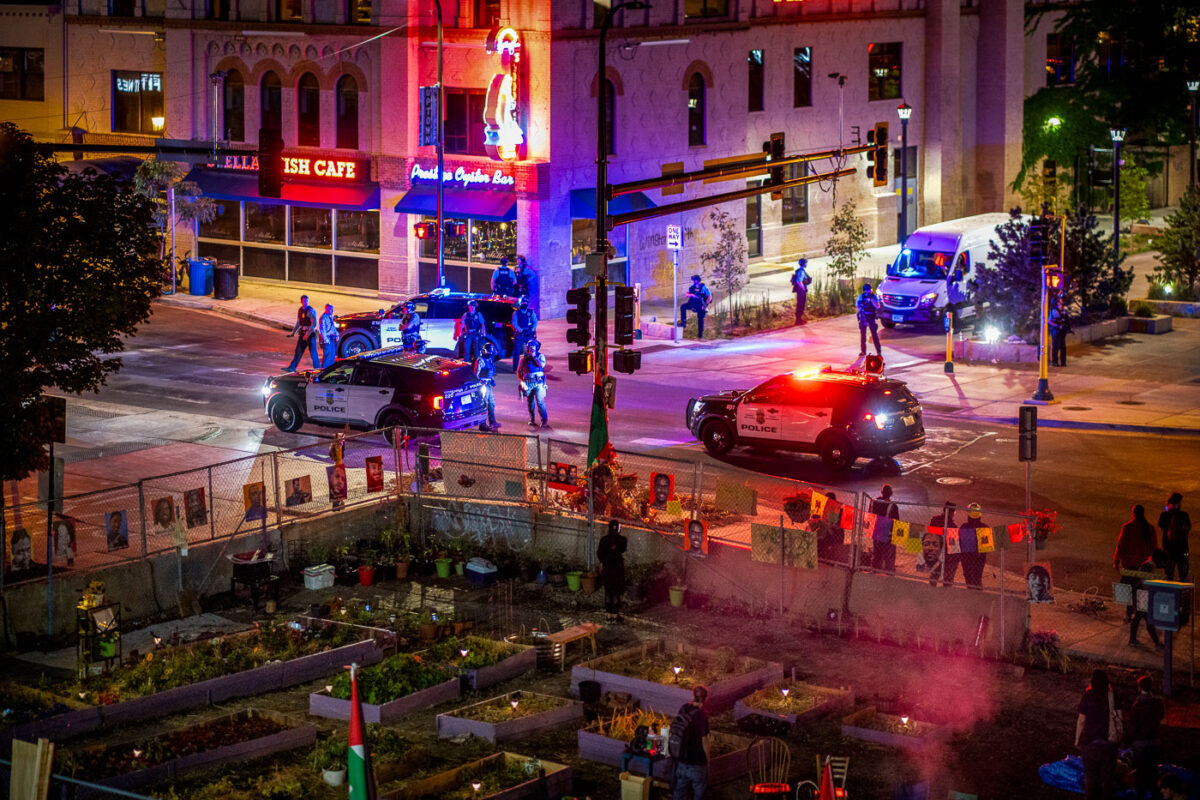
Minneapolis police at Winston Smith peace garden
Minneapolis Police officers are present at the Winston Smith Peace Garden in Uptown Minneapolis. The garden was established on a site where Winston Smith, a Black man, was killed by law enforcement in 2021.

Minneapolis police at Winston Smith peace garden

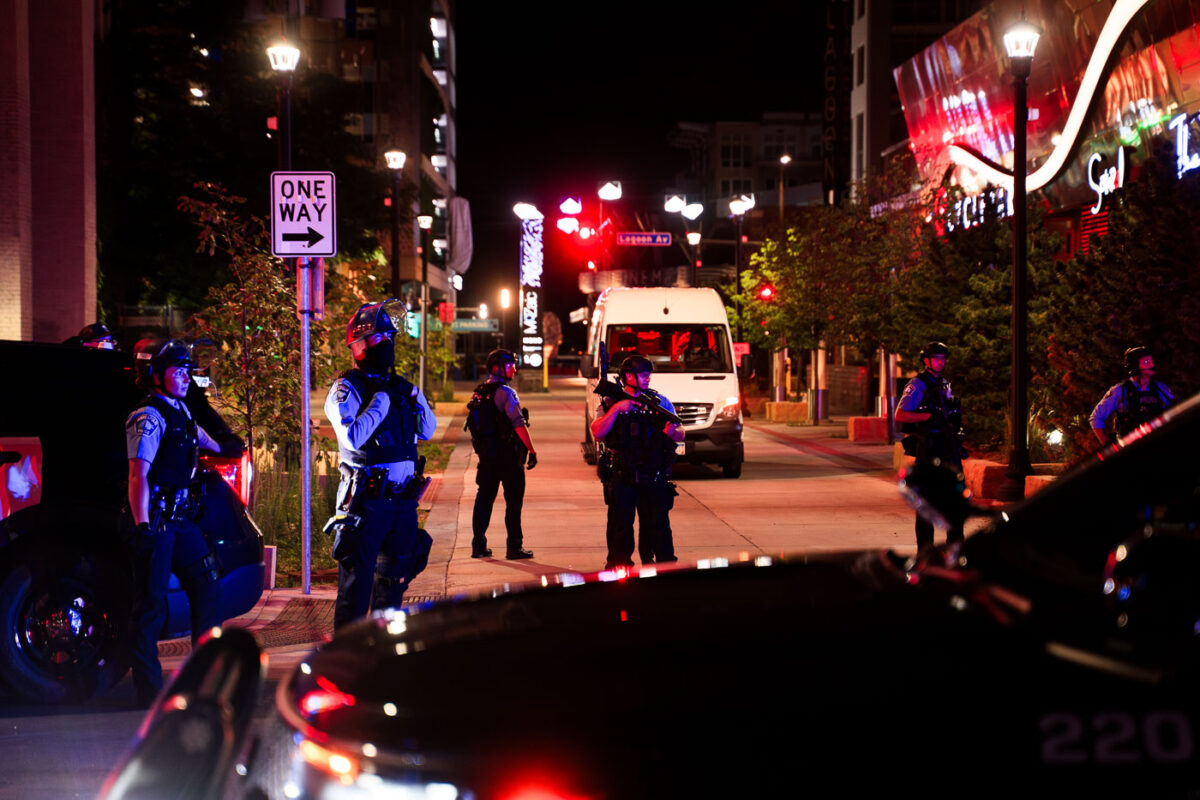
Minneapolis Police at the Winston Smith Protest
Minneapolis Police officers respond to attempt to clear out a protest garden outside Seven Points Parking Ramp. There have been sustained protests outside the parking ramp following the law enforcement killing of Winston Smith.

Minneapolis Police at Winston Smith Protest, Uptown Minneapolis

Minneapolis police vehicles line Hennepin Avenue in Uptown at night.
Minneapolis police vehicles are lined up on Hennepin Avenue in the Uptown neighborhood. This presence was in response to protests that occurred following the law enforcement shooting death of Winston Smith.

Minneapolis Police on Hennepin Ave During Winston Smith Protests

Minneapolis police SUV parked over graffiti on Lake Street in Minneapolis at night.
A Minneapolis Police squad car is positioned over "Abolish The Police" graffiti on Lake Street in Uptown Minneapolis. The image was take on June 16, 2021 during unrest following the killings of Deona Marie and Winston Smith. On June 3, 2021, members of a U.S. Marshals Service fugitive task force fatally shot 32-year-old Winston “Boogie” Smith Jr. on the top level of a parking ramp in Minneapolis’ Uptown neighborhood while attempting to arrest him on a felony warrant. Authorities said Smith fired a handgun from inside his vehicle during the encounter, while family members and activists questioned the official account and demanded the release of additional evidence. The killing led to weeks of protests, street occupations, and confrontations with police in Uptown, becoming another major flashpoint in Minneapolis during the period following the murder of George Floyd. Earlier in the day Minneapolis city officials along with The Agape Movement coordinated to open the streets that had been closed at George Floyd Square since his murder. On June 13, 2021, 31-year-old Deona Marie Knajdek was killed when a driver accelerated into a group of demonstrators gathered in Minneapolis’ Uptown neighborhood during ongoing protests over the killing of Winston “Boogie” Smith Jr. Protesters had blocked the intersection of West Lake Street and Girard Avenue with vehicles and barricades when Nicholas Kraus drove a Jeep Cherokee into the crowd at high speed, killing Knajdek and injuring several others. Kraus was later charged with second-degree murder, two counts of second-degree assault with a dangerous weapon, and criminal vehicular operation. In 2023, he pleaded guilty to murder and assault charges and was sentenced to more than 20 years in prison for the attack.
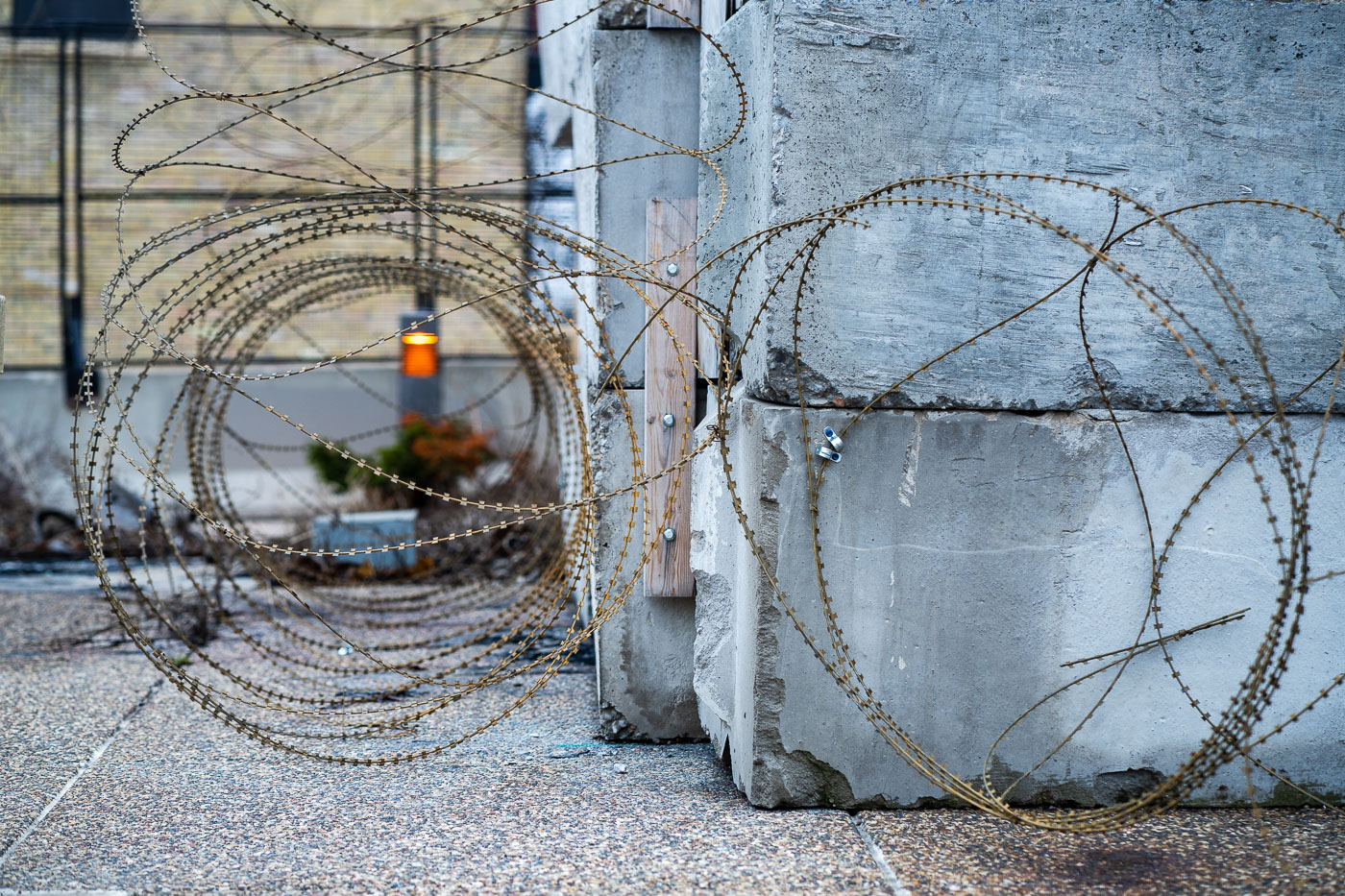
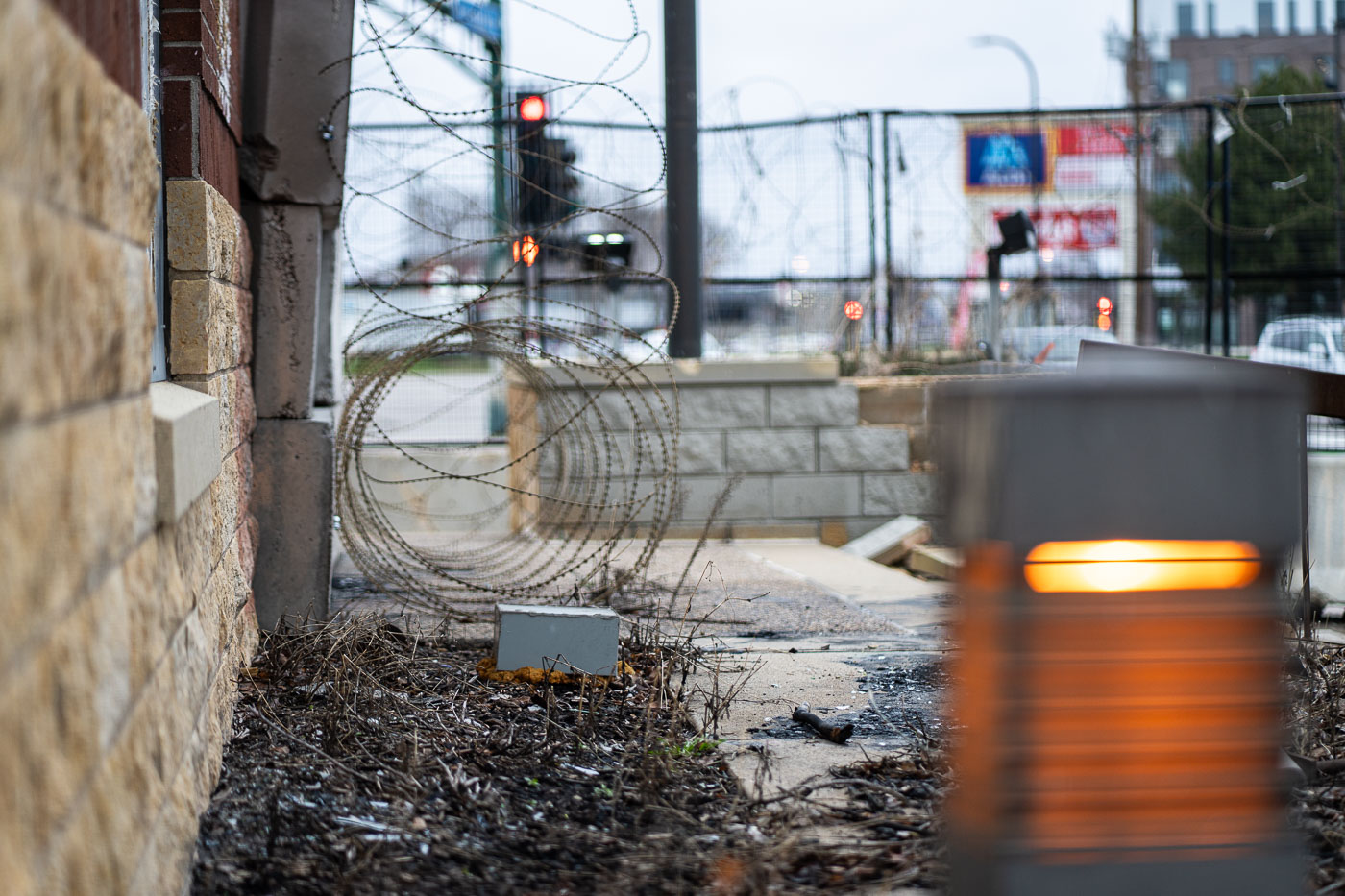
Minneapolis Police Car Over “Abolish The Police” Graffiti on Lake Street
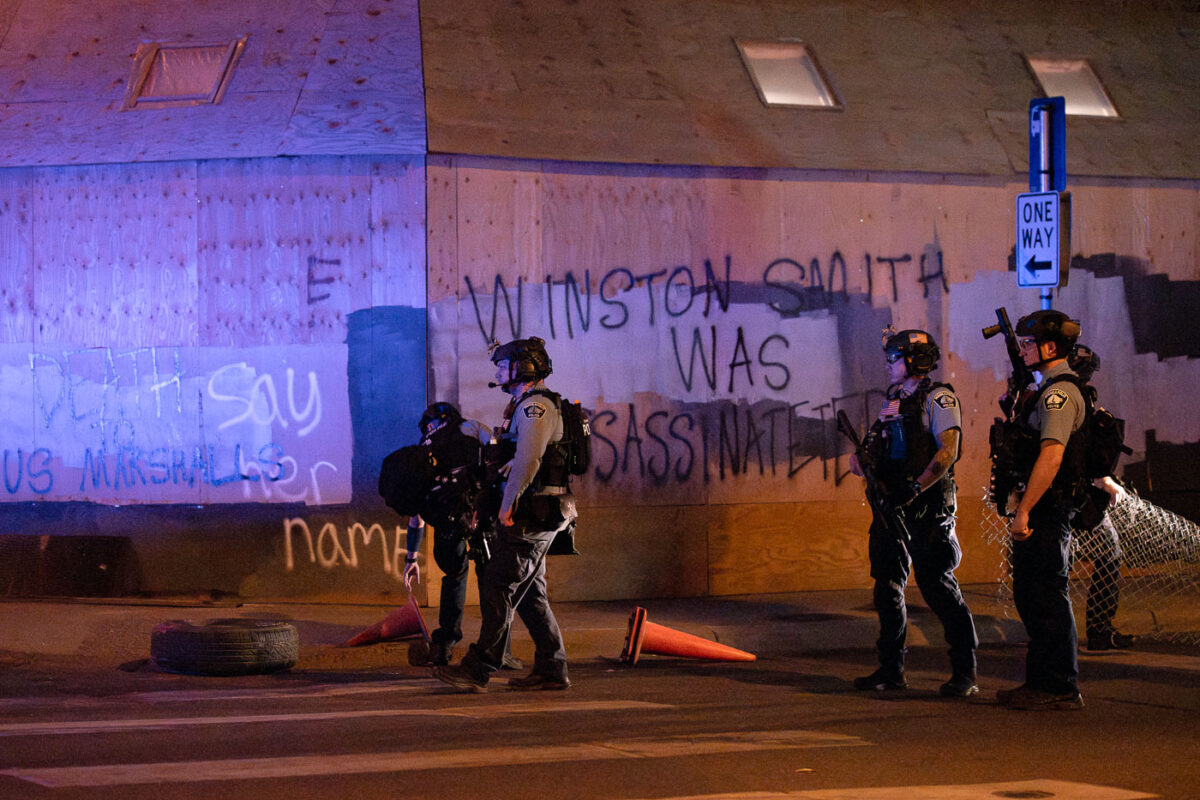
Minneapolis police officers stand by plywood barricades graffitied with Winston Smith during nighttime unrest at Lake Street.
Minneapolis Police officers are seen near the intersection of Hennepin Avenue and Lake Street, an area that became a focal point for protests following the killings of Winston Smith and Deona Marie in June 2021. Protesters had been occupying the space after Smith's death, which occurred when Hennepin and Ramsey County officers, part of a Federal Task Force, fired their weapons while serving a warrant. On June 3, 2021, members of a U.S. Marshals Service fugitive task force fatally shot 32-year-old Winston “Boogie” Smith Jr. on the top level of a parking ramp in Minneapolis’ Uptown neighborhood while attempting to arrest him on a felony warrant. Authorities said Smith fired a handgun from inside his vehicle during the encounter, while family members and activists questioned the official account and demanded the release of additional evidence. The killing led to weeks of protests, street occupations, and confrontations with police in Uptown, becoming another major flashpoint in Minneapolis during the period following the murder of George Floyd. Earlier in the day Minneapolis city officials along with The Agape Movement coordinated to open the streets that had been closed at George Floyd Square since his murder. On June 13, 2021, 31-year-old Deona Marie Knajdek was killed when a driver accelerated into a group of demonstrators gathered in Minneapolis’ Uptown neighborhood during ongoing protests over the killing of Winston “Boogie” Smith Jr. Protesters had blocked the intersection of West Lake Street and Girard Avenue with vehicles and barricades when Nicholas Kraus drove a Jeep Cherokee into the crowd at high speed, killing Knajdek and injuring several others. Kraus was later charged with second-degree murder, two counts of second-degree assault with a dangerous weapon, and criminal vehicular operation. In 2023, he pleaded guilty to murder and assault charges and was sentenced to more than 20 years in prison for the attack.

Minneapolis Police at Lake Street after Winston Smith protest
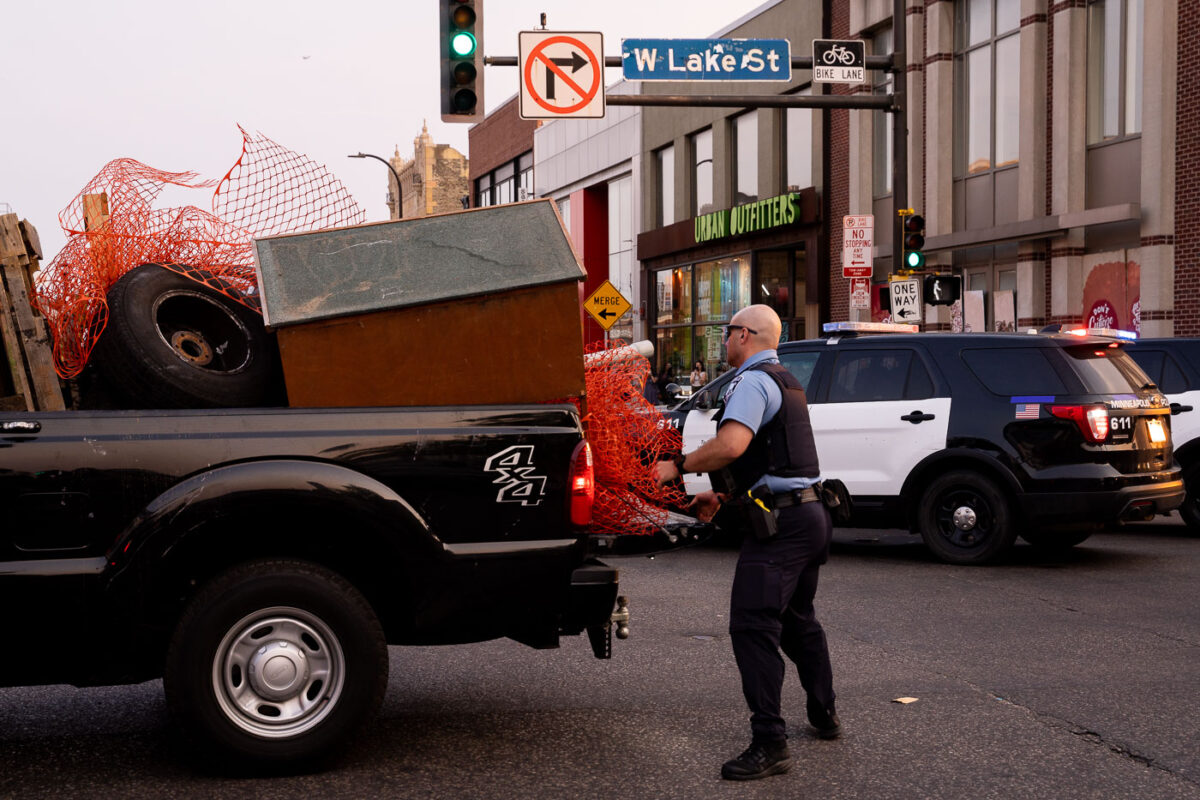
Minneapolis police officer removes barricade materials from a pickup on W Lake St in Minneapolis
Minneapolis police officers remove materials used by protesters to construct barricades on West Lake Street. The protests followed the deaths of Winston Smith on June 3rd and Deona Marie on June 13th. On June 3, 2021, members of a U.S. Marshals Service fugitive task force fatally shot 32-year-old Winston “Boogie” Smith Jr. on the top level of a parking ramp in Minneapolis’ Uptown neighborhood while attempting to arrest him on a felony warrant. Authorities said Smith fired a handgun from inside his vehicle during the encounter, while family members and activists questioned the official account and demanded the release of additional evidence. The killing led to weeks of protests, street occupations, and confrontations with police in Uptown, becoming another major flashpoint in Minneapolis during the period following the murder of George Floyd. Earlier in the day Minneapolis city officials along with The Agape Movement coordinated to open the streets that had been closed at George Floyd Square since his murder. On June 13, 2021, 31-year-old Deona Marie Knajdek was killed when a driver accelerated into a group of demonstrators gathered in Minneapolis’ Uptown neighborhood during ongoing protests over the killing of Winston “Boogie” Smith Jr. Protesters had blocked the intersection of West Lake Street and Girard Avenue with vehicles and barricades when Nicholas Kraus drove a Jeep Cherokee into the crowd at high speed, killing Knajdek and injuring several others. Kraus was later charged with second-degree murder, two counts of second-degree assault with a dangerous weapon, and criminal vehicular operation. In 2023, he pleaded guilty to murder and assault charges and was sentenced to more than 20 years in prison for the attack.

Minneapolis Police Remove Protest Barricade Materials on W Lake St
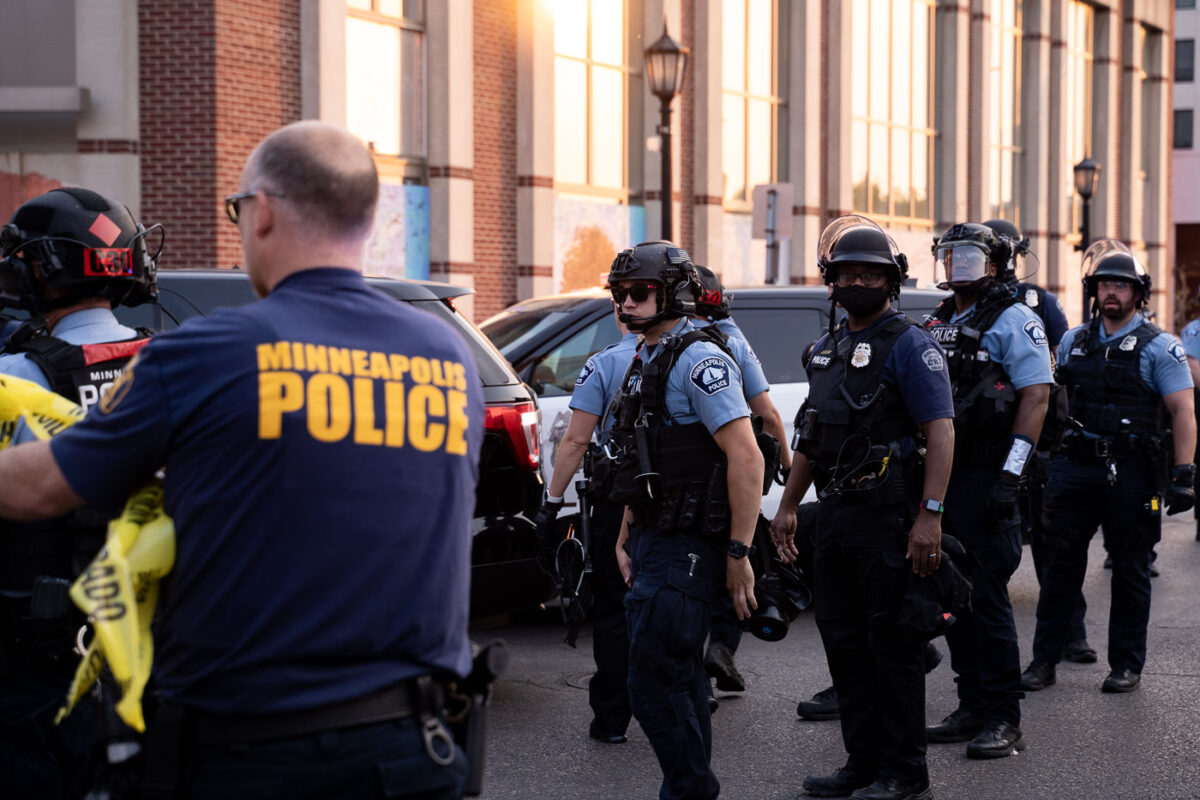
Minneapolis police officers stand near barricades on Lake Street in Uptown Minneapolis.
Minneapolis Police officers clear street barricades on Lake Street in Uptown Minneapolis. These barricades were erected following the killings of Winston Smith and Deona Marie in June 2021. On June 3, 2021, members of a U.S. Marshals Service fugitive task force fatally shot 32-year-old Winston “Boogie” Smith Jr. on the top level of a parking ramp in Minneapolis’ Uptown neighborhood while attempting to arrest him on a felony warrant. Authorities said Smith fired a handgun from inside his vehicle during the encounter, while family members and activists questioned the official account and demanded the release of additional evidence. The killing led to weeks of protests, street occupations, and confrontations with police in Uptown, becoming another major flashpoint in Minneapolis during the period following the murder of George Floyd. Earlier in the day Minneapolis city officials along with The Agape Movement coordinated to open the streets that had been closed at George Floyd Square since his murder. On June 13, 2021, 31-year-old Deona Marie Knajdek was killed when a driver accelerated into a group of demonstrators gathered in Minneapolis’ Uptown neighborhood during ongoing protests over the killing of Winston “Boogie” Smith Jr. Protesters had blocked the intersection of West Lake Street and Girard Avenue with vehicles and barricades when Nicholas Kraus drove a Jeep Cherokee into the crowd at high speed, killing Knajdek and injuring several others. Kraus was later charged with second-degree murder, two counts of second-degree assault with a dangerous weapon, and criminal vehicular operation. In 2023, he pleaded guilty to murder and assault charges and was sentenced to more than 20 years in prison for the attack.

Minneapolis Police Clear Barricades on Lake Street
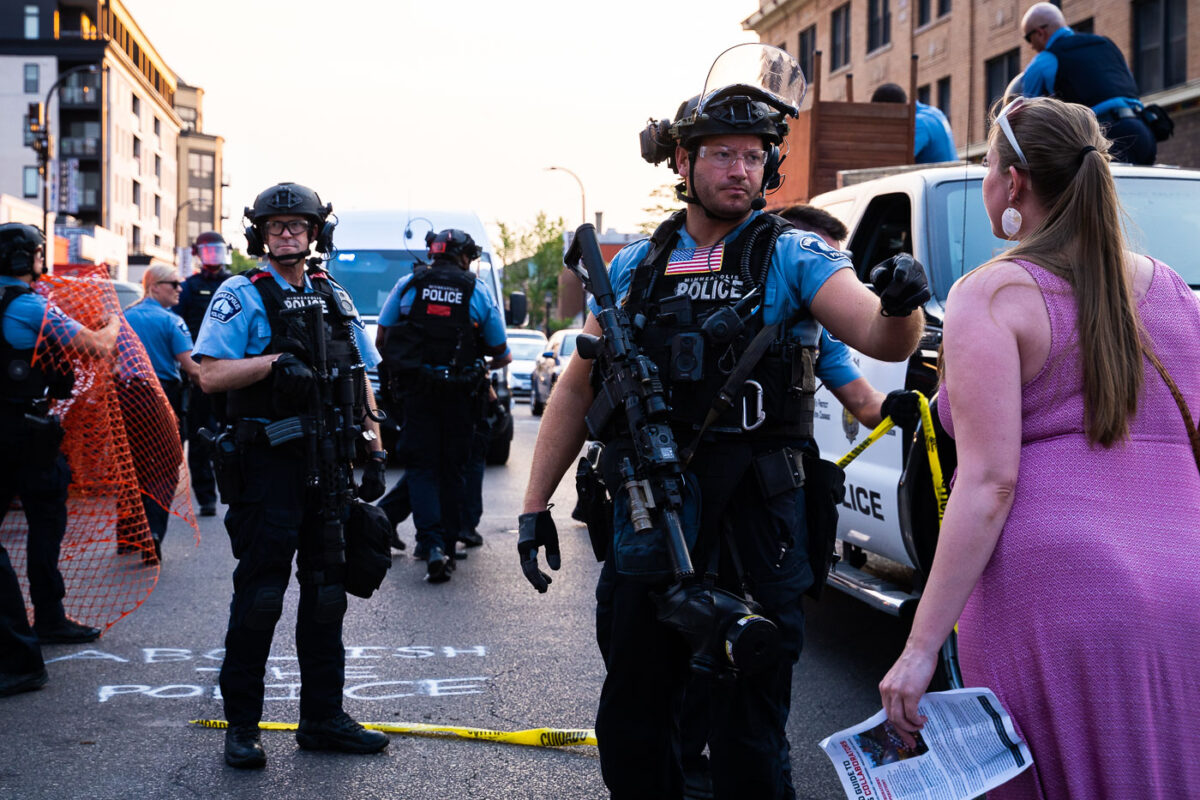
Minneapolis police officers clear protesters and barricades at Lake Street and Hennepin Avenue.
Minneapolis Police officers clear protesters and barricades from the intersection of Lake Street and Hennepin Avenue. The protests began following the deaths of Winston Smith on June 3rd and Deona Marie on June 13th. On June 3, 2021, members of a U.S. Marshals Service fugitive task force fatally shot 32-year-old Winston “Boogie” Smith Jr. on the top level of a parking ramp in Minneapolis’ Uptown neighborhood while attempting to arrest him on a felony warrant. Authorities said Smith fired a handgun from inside his vehicle during the encounter, while family members and activists questioned the official account and demanded the release of additional evidence. The killing led to weeks of protests, street occupations, and confrontations with police in Uptown, becoming another major flashpoint in Minneapolis during the period following the murder of George Floyd. Earlier in the day Minneapolis city officials along with The Agape Movement coordinated to open the streets that had been closed at George Floyd Square since his murder. On June 13, 2021, 31-year-old Deona Marie Knajdek was killed when a driver accelerated into a group of demonstrators gathered in Minneapolis’ Uptown neighborhood during ongoing protests over the killing of Winston “Boogie” Smith Jr. Protesters had blocked the intersection of West Lake Street and Girard Avenue with vehicles and barricades when Nicholas Kraus drove a Jeep Cherokee into the crowd at high speed, killing Knajdek and injuring several others. Kraus was later charged with second-degree murder, two counts of second-degree assault with a dangerous weapon, and criminal vehicular operation. In 2023, he pleaded guilty to murder and assault charges and was sentenced to more than 20 years in prison for the attack.

Minneapolis Police Clear Protest Site at Lake and Hennepin