Downtown Minneapolis

1,173 photos · 2009–2026

1,173 photographs tagged Downtown Minneapolis, 2009–2026.
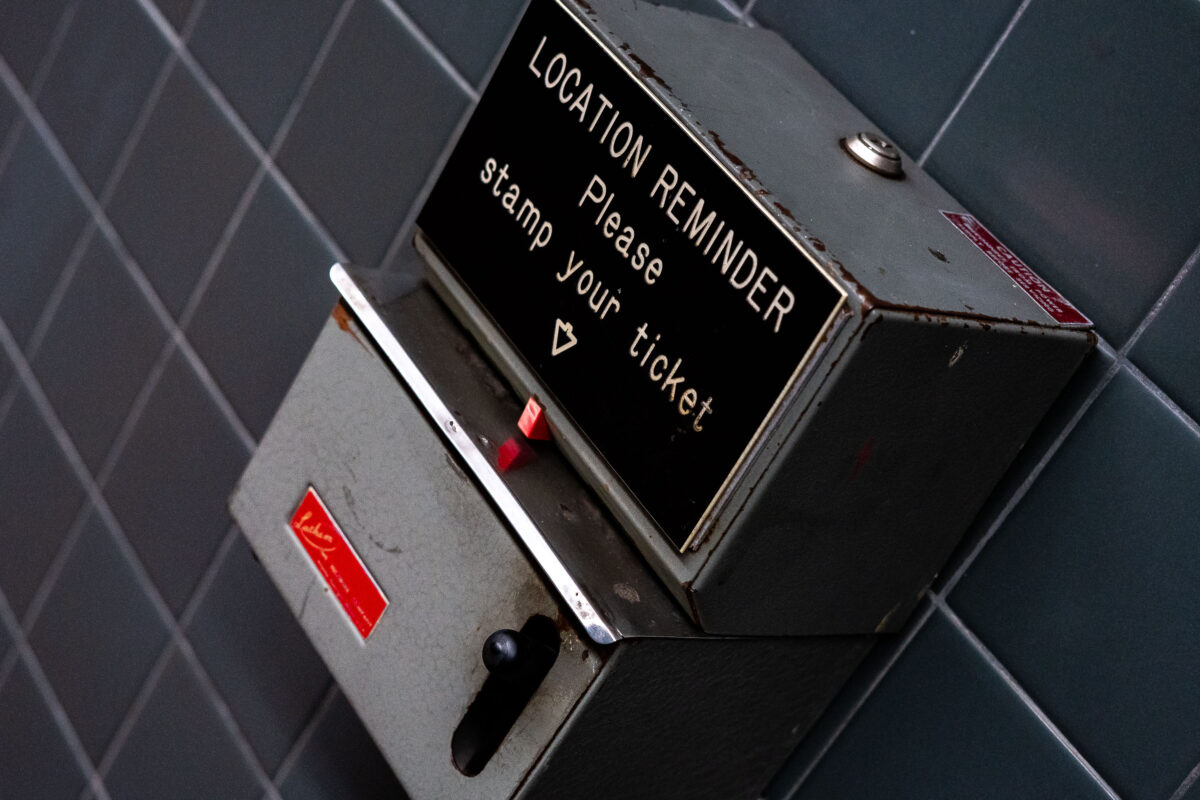
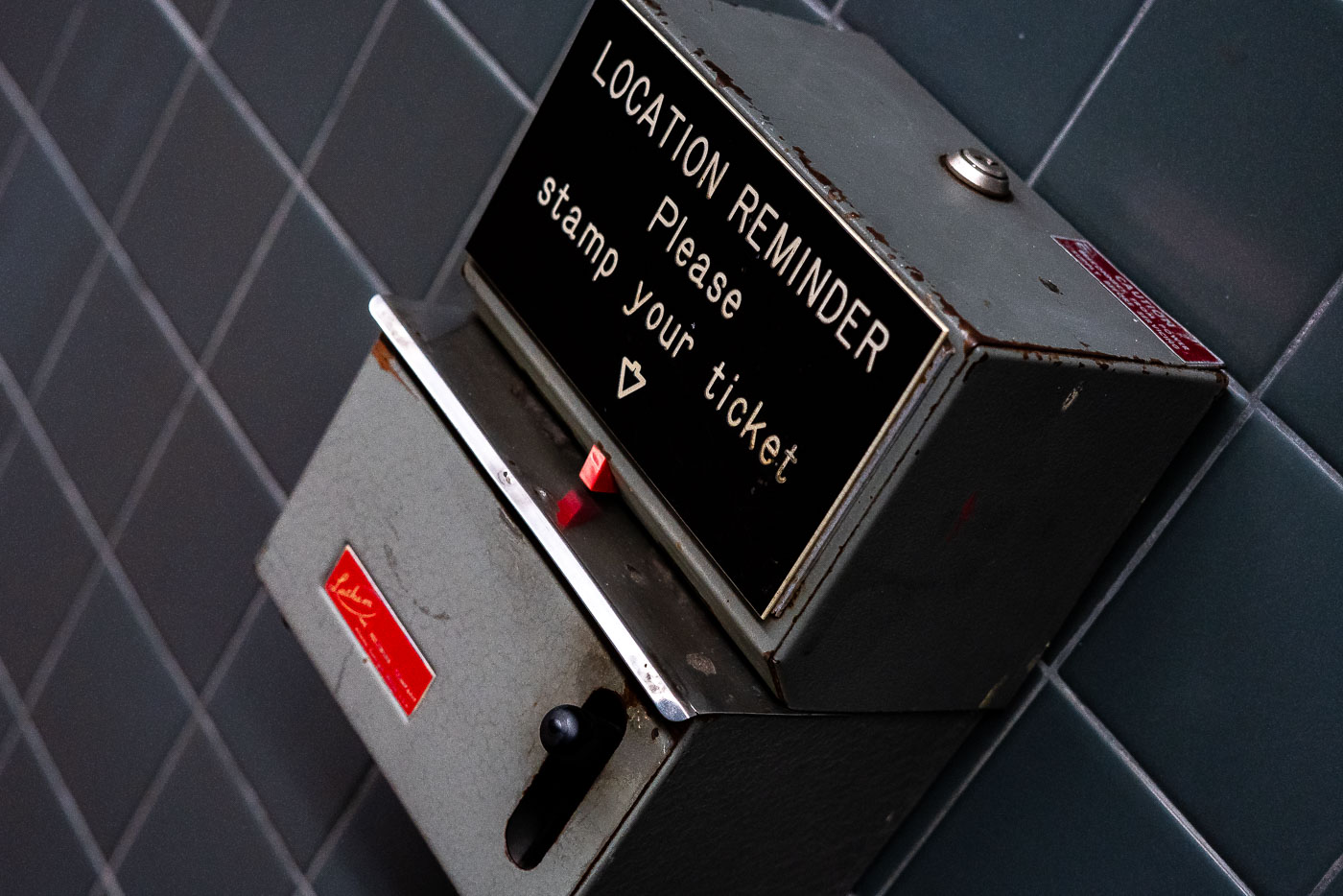
A "Location Reminder" ticket stamping machine, formerly in downtown Minneapolis transit stations, allowed passengers to mark tickets with arrival/departure times. This mid-20th-century device exemplifies transit infrastructure.
A "Location Reminder" ticket stamping machine, formerly installed in downtown Minneapolis transit stations, allowed passengers to mark their tickets with the time and place of their arrival or departure. This utilitarian device, with its lever-operated mechanism and faded instructional label, exemplifies mid-20th-century transit infrastructure. Such machines were essential for manual timestamping in parking facilities and public transit hubs before the widespread adoption of digital systems. The machine's robust, industrial design and its mounting on a tiled wall reflect the functional aesthetics of public transportation facilities of its era.

Location Reminder Ticket Stamping Machine, Downtown Minneapolis
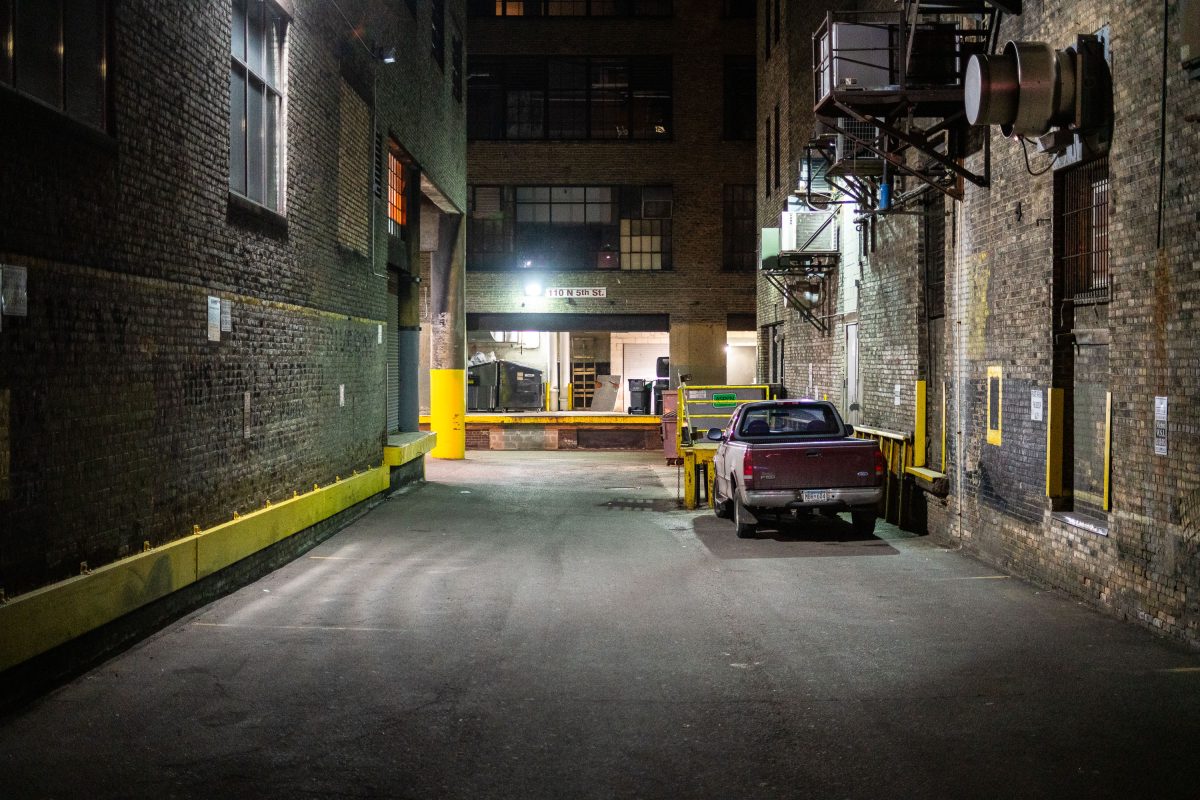
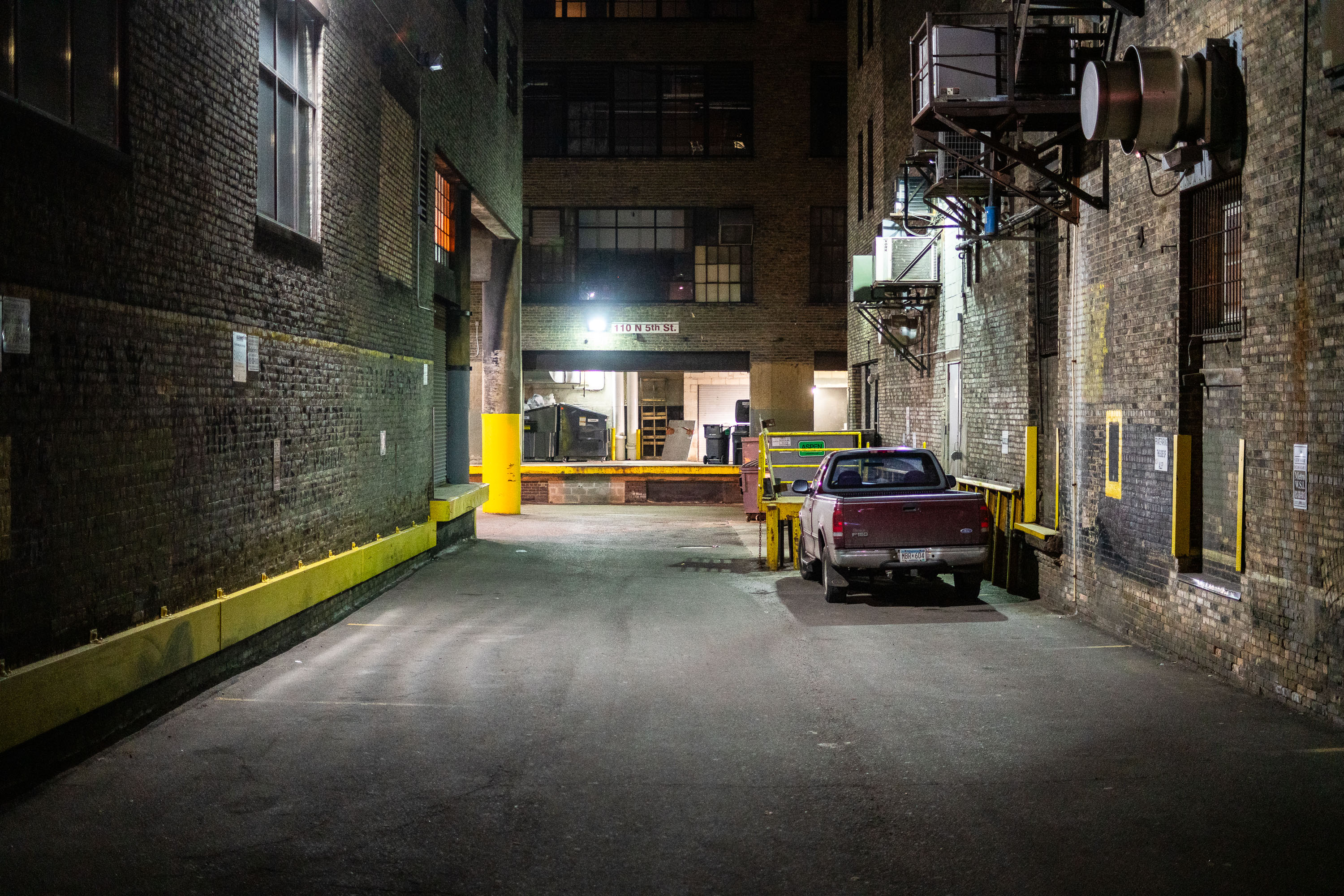
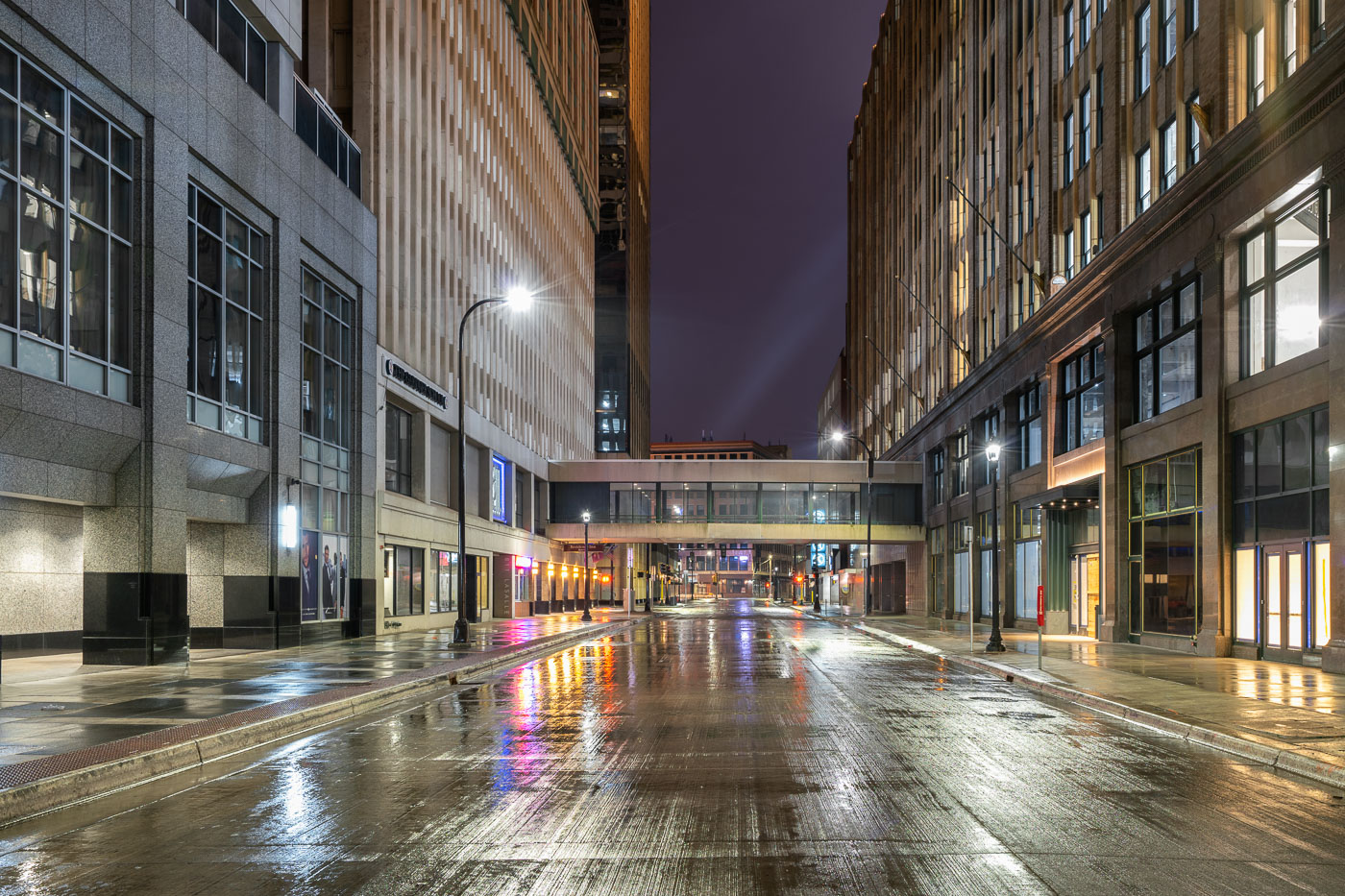
An Alley in Downtown Minneapolis
An alley in downtown Minneapolis.

An Alley in Downtown Minneapolis

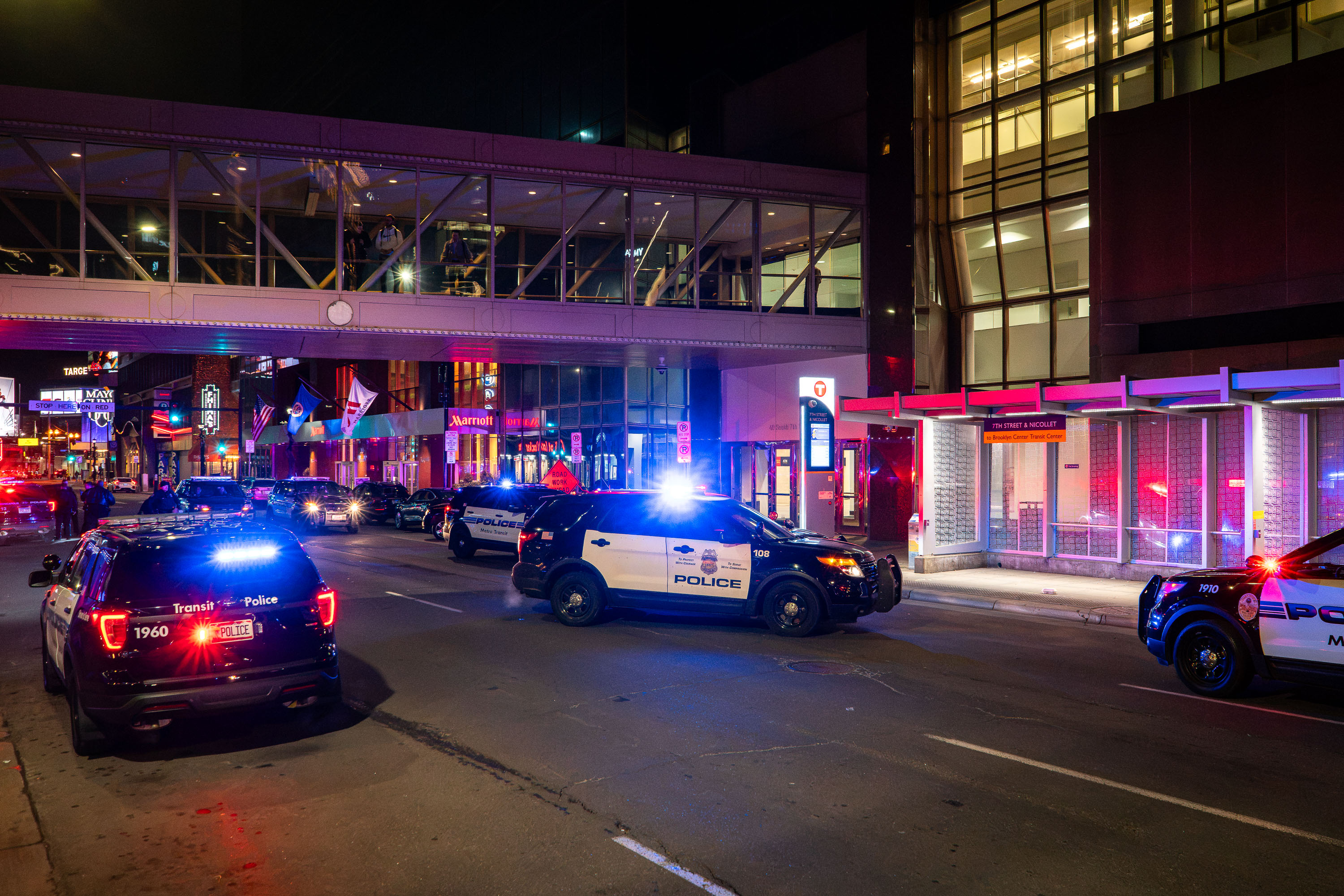
Minneapolis Police and Metro Transit Police, Downtown Minneapolis
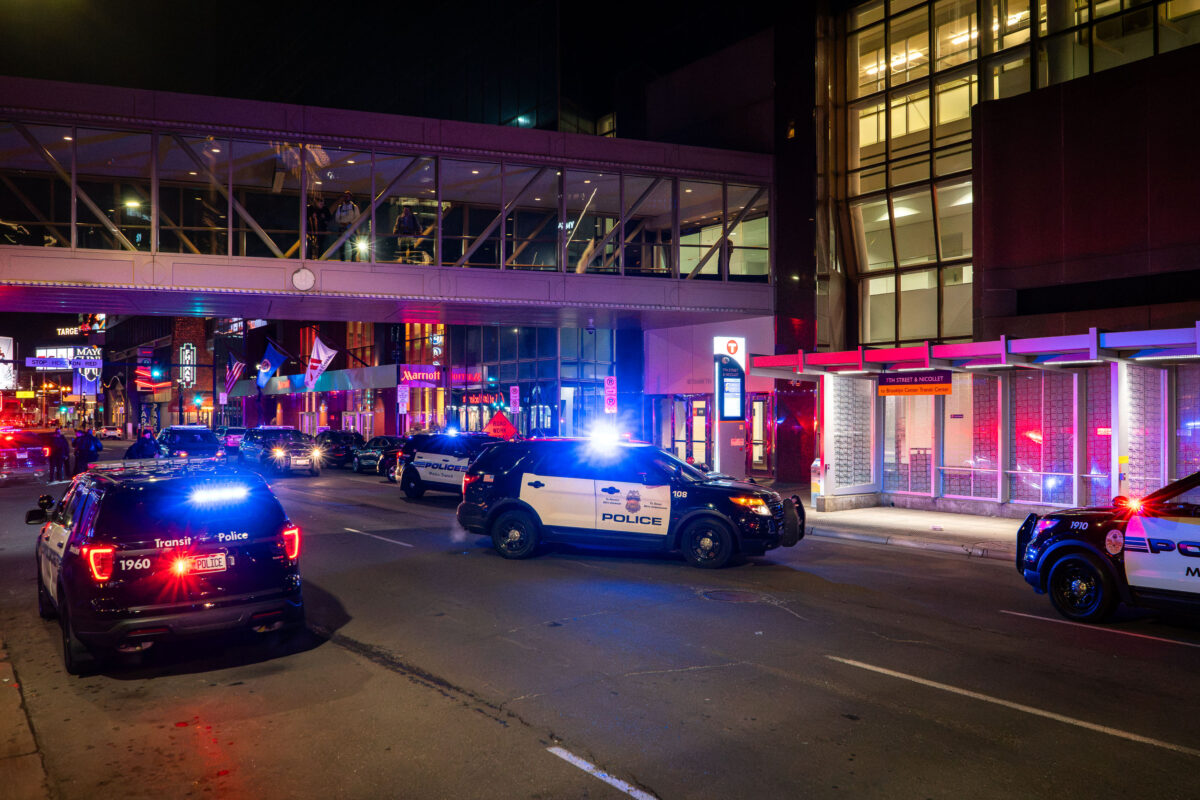
Minneapolis Police and Metro Transit Police on 7th Street in Downtown Minneapolis.

Minneapolis Police and Metro Transit Police, Downtown Minneapolis

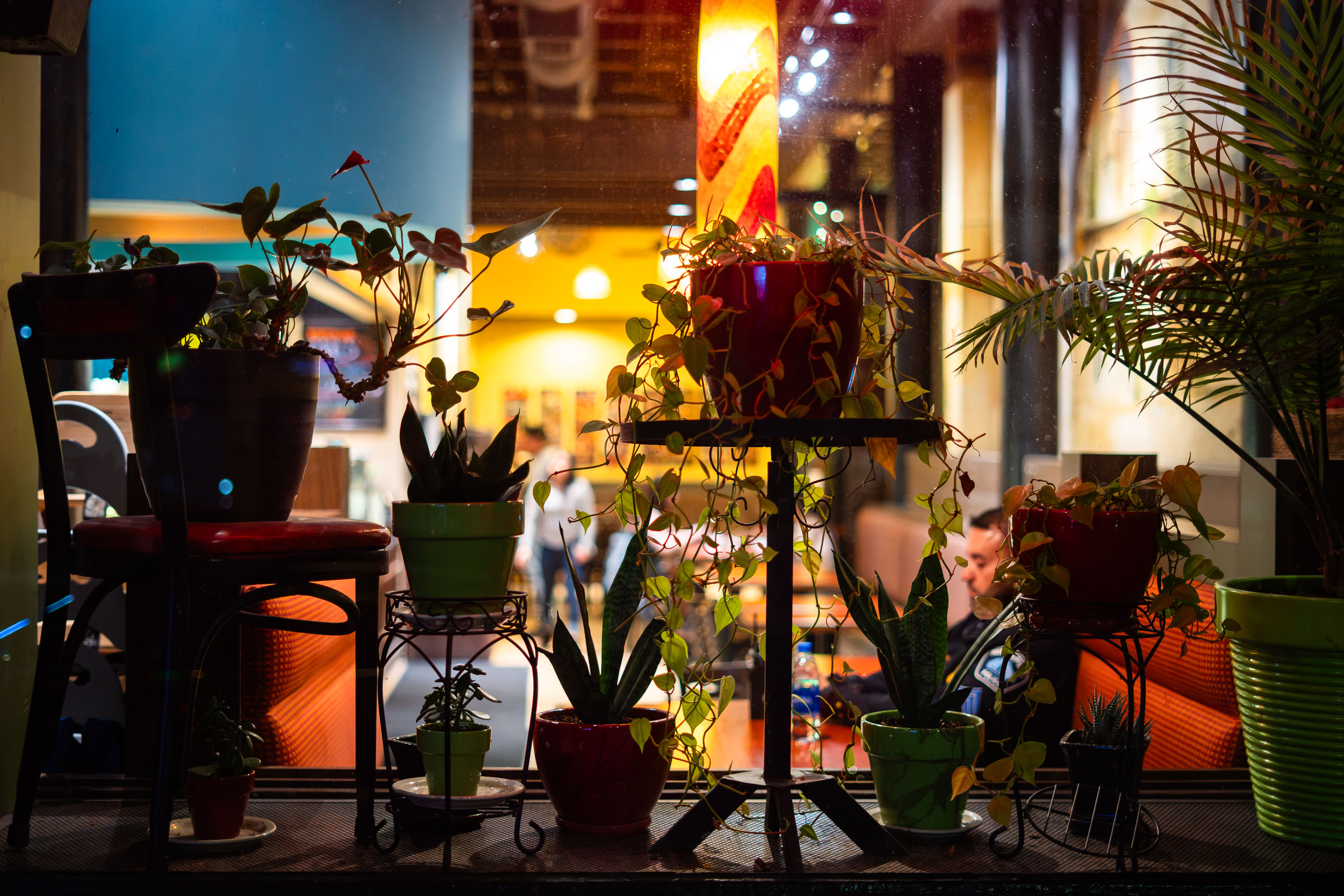
Window Plants at Pizza Luce in Downtown Minneapolis
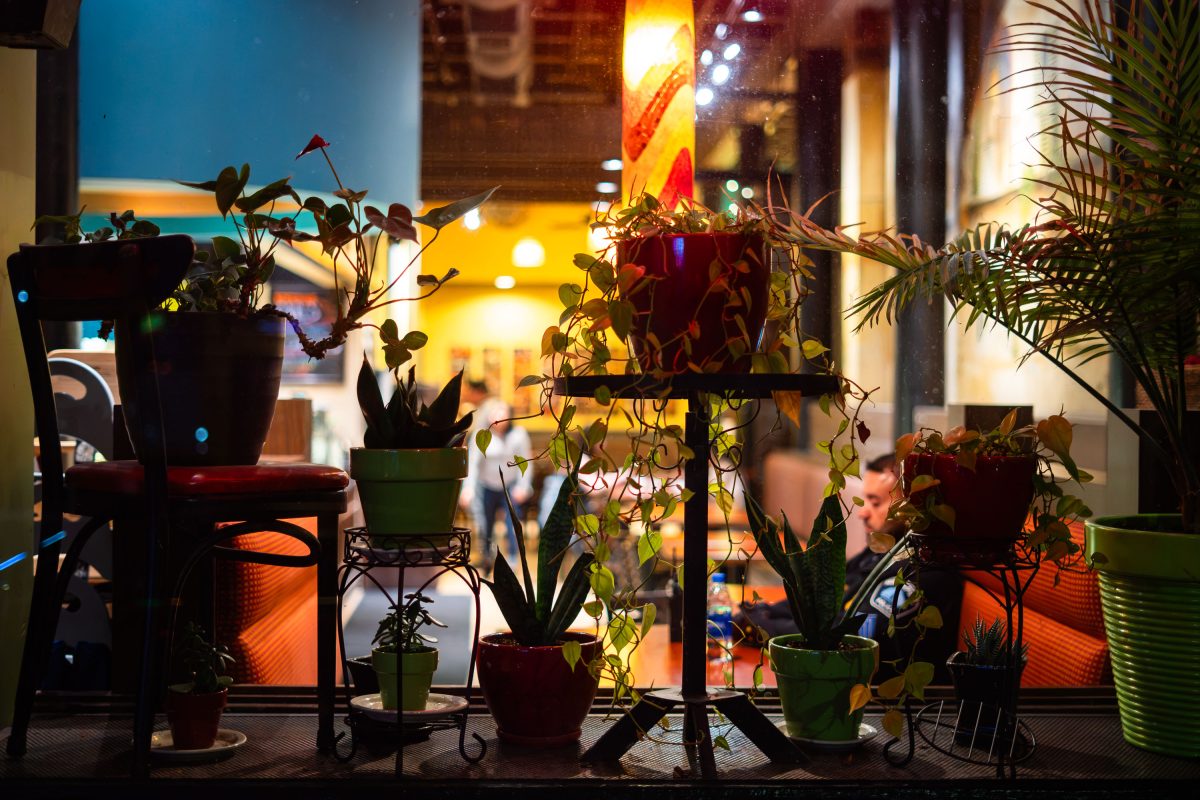
Plants in the window of Pizza Luce in Downtown Minneapolis.

Window Plants at Pizza Luce in Downtown Minneapolis

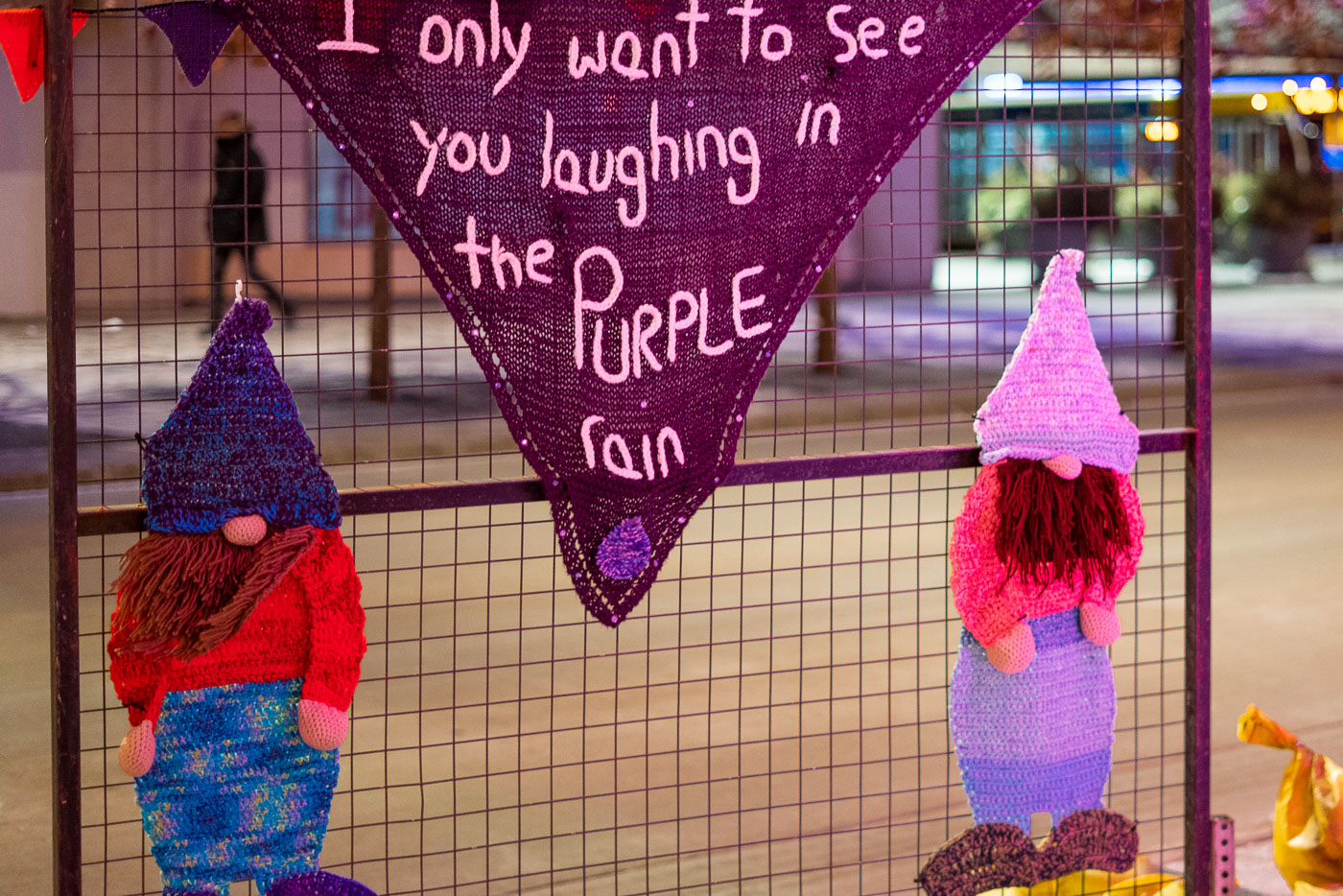
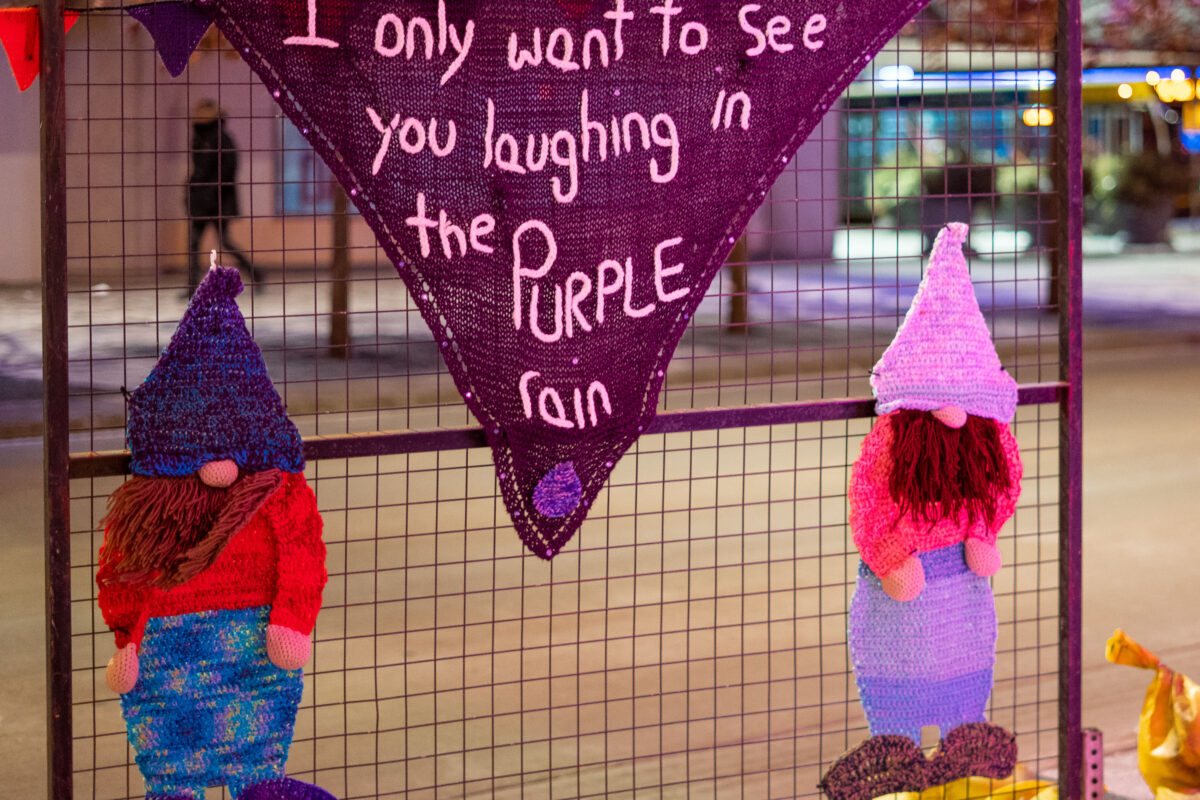
Knitted figures with a purple banner quoting Prince's "Purple Rain" hang from a downtown Minneapolis fence.
Fiber art installed on a fence in downtown Minneapolis on February 12, 2020 includes a stitched quotation from Prince’s “Purple Rain.”

Yarn-Bombed Gnomes with “Purple Rain” Quote on Nicollet Mall
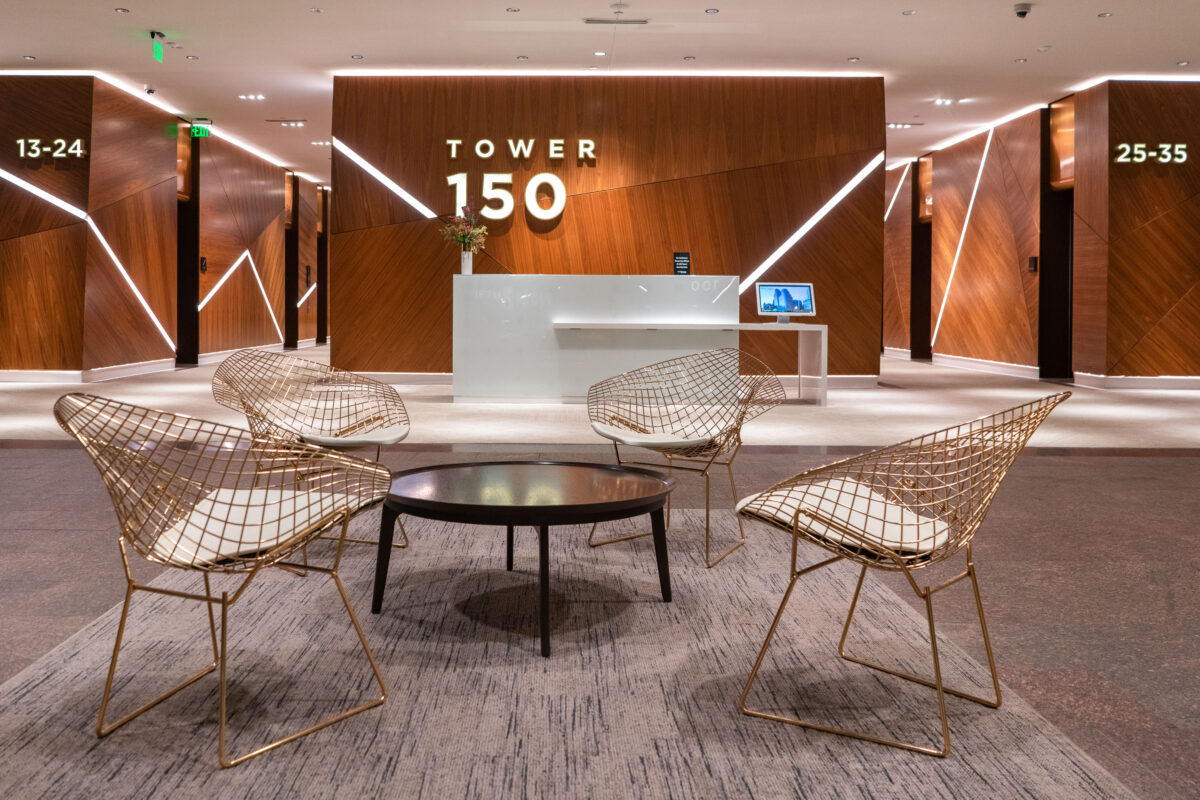
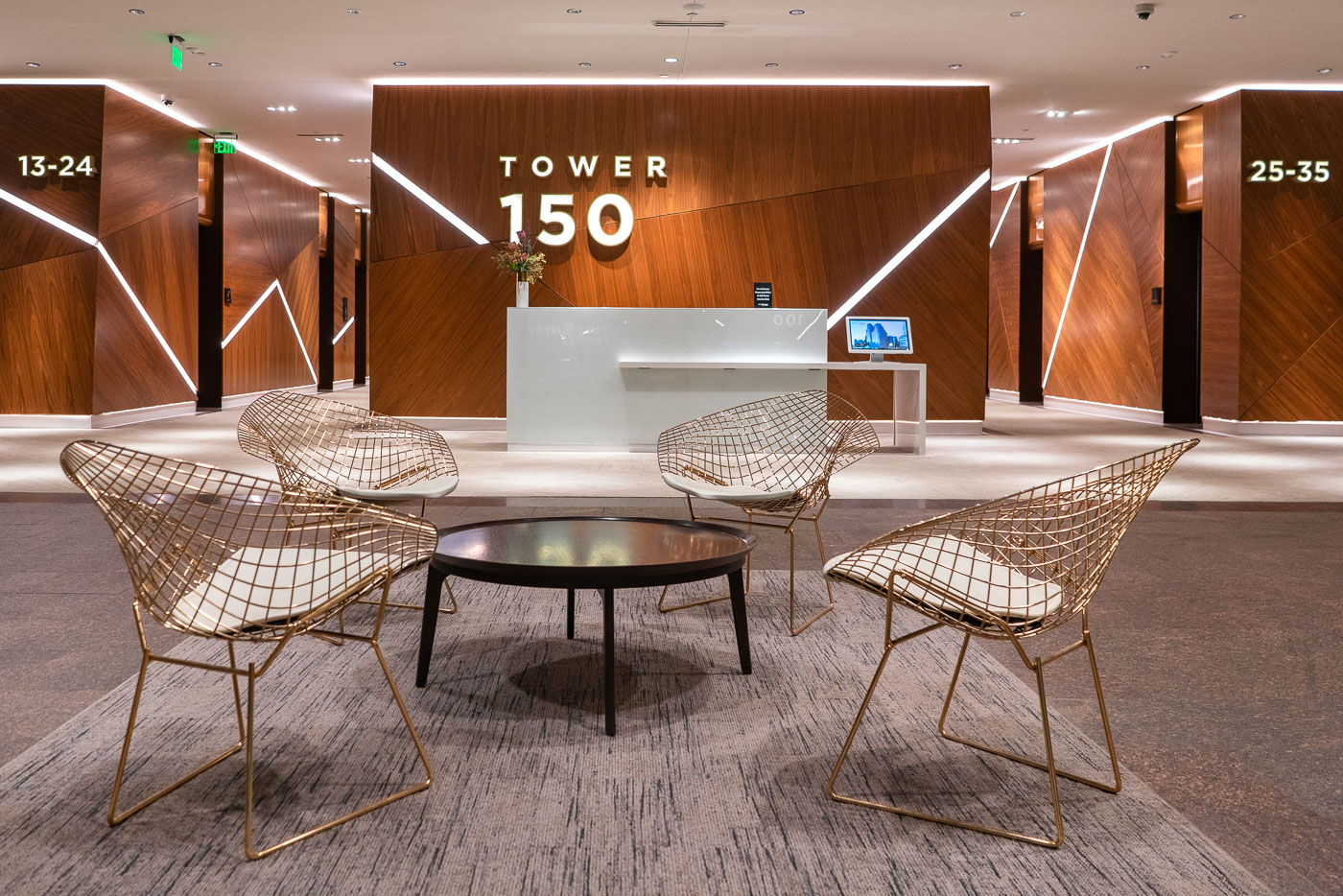
Tower 150 lobby at Fifth Street Towers in downtown Minneapolis with elevator banks and seating.
Tower 150 lobby at Fifth Street Towers in downtown Minneapolis. The office tower is part of the Fifth Street Towers complex, which connects to the Minneapolis Skyway system. The lobby provides elevator access to upper-floor offices and links building tenants and visitors with the downtown skyway network.

Tower 150 Lobby at Fifth Street Towers
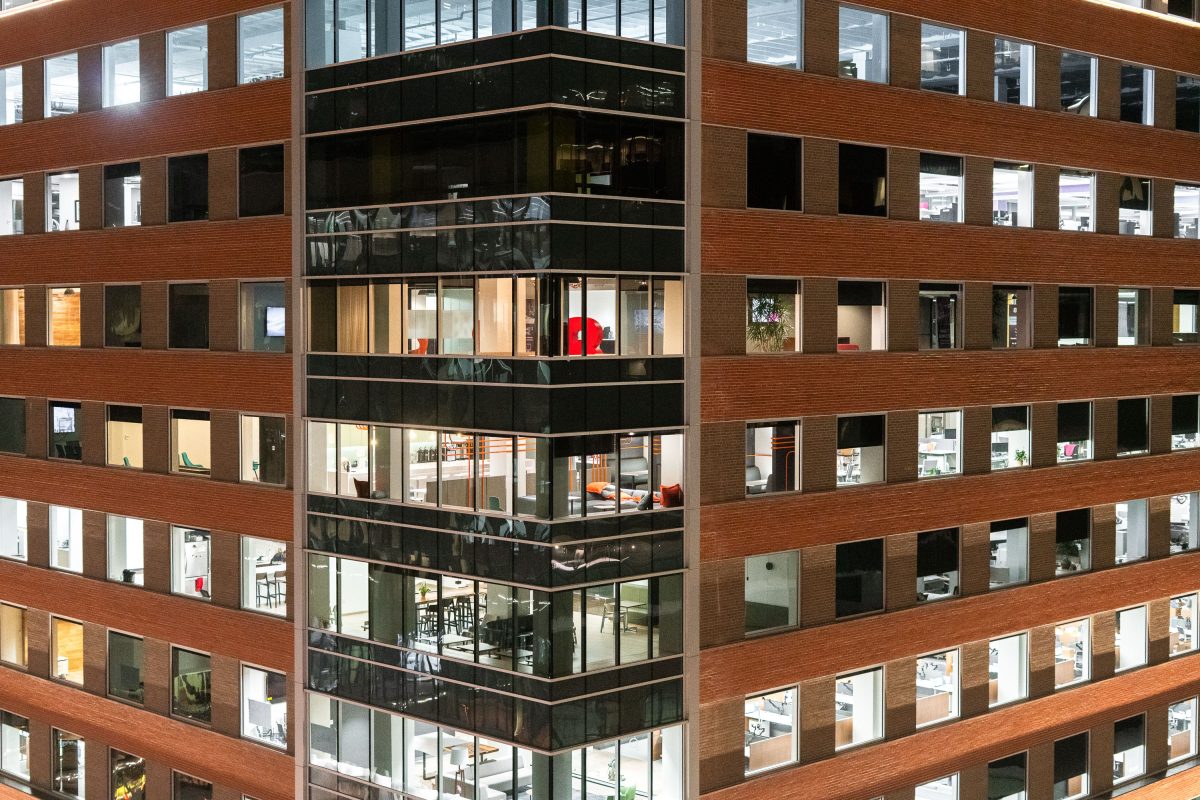
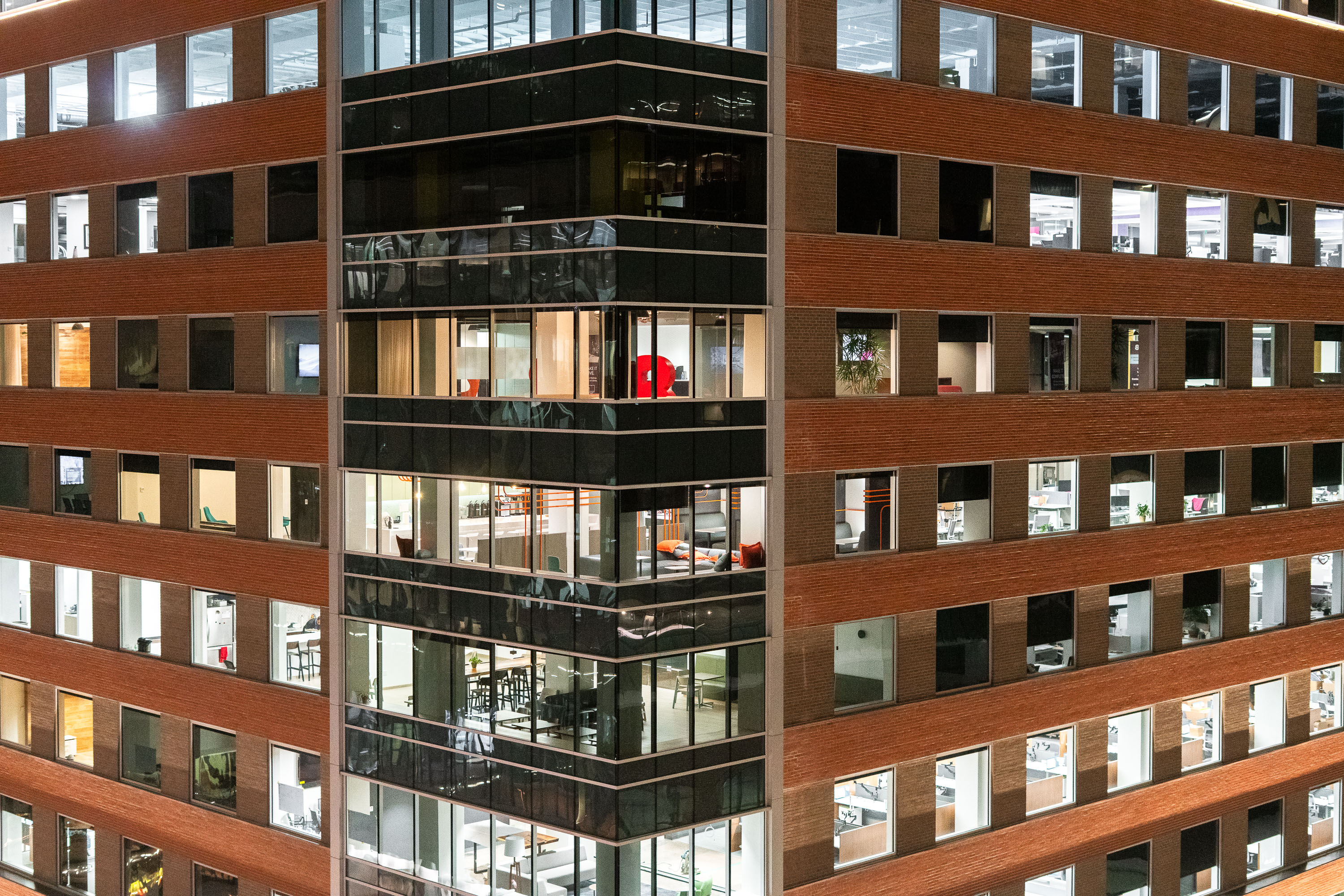
Baker Center Renovation in Downtown Minneapolis
The Baker Center office building in downtown Minneapolis after ungoing a large renovation both inside and outside.

Baker Center Renovation in Downtown Minneapolis

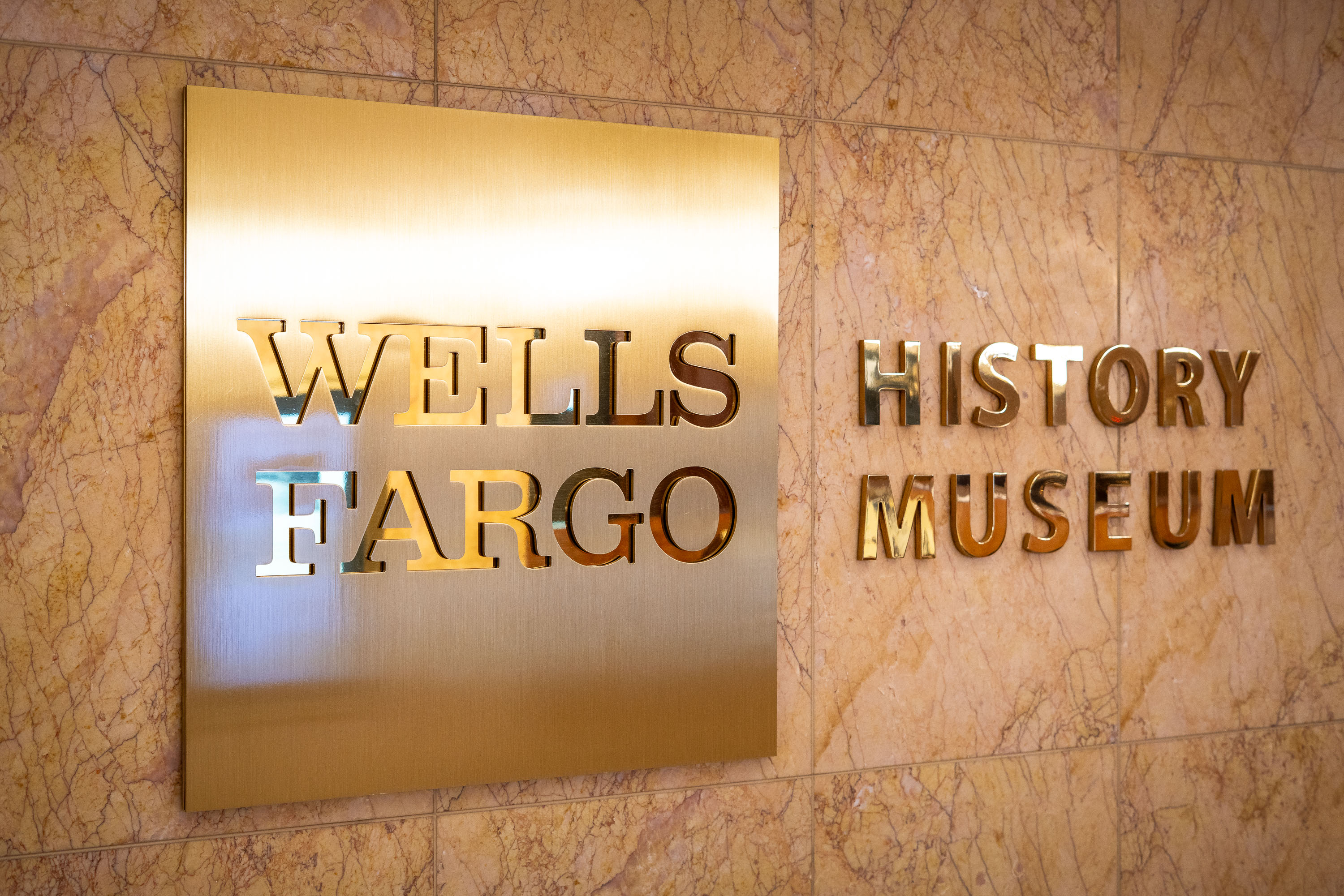
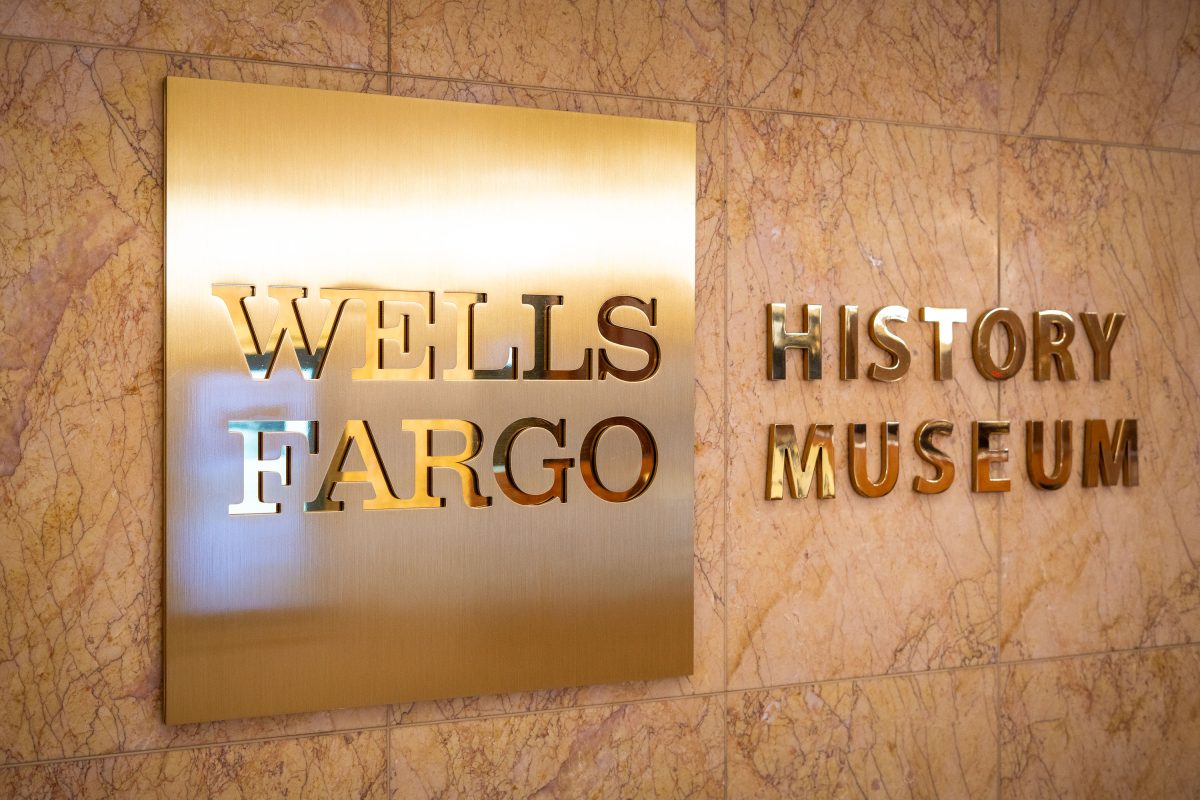
Wells Fargo History Museum signage mounted on marble wall in Minneapolis.
Wells Fargo operates several history museums across its footprint, including this one inside Wells Fargo Center in downtown Minneapolis. The museums showcase artifacts from the company's founding in 1852 by Henry Wells and William Fargo, when it began as an express delivery and banking service for customers headed to California during the Gold Rush. Exhibits typically include stagecoaches, mining-era currency, and telegraph equipment tracing the company's expansion across the American West. Wells Fargo Center itself, completed in 1988, is a 58-story skyscraper designed by César Pelli and remains one of the tallest buildings in Minneapolis.

Wells Fargo History Museum, Wells Fargo Center, Minneapolis
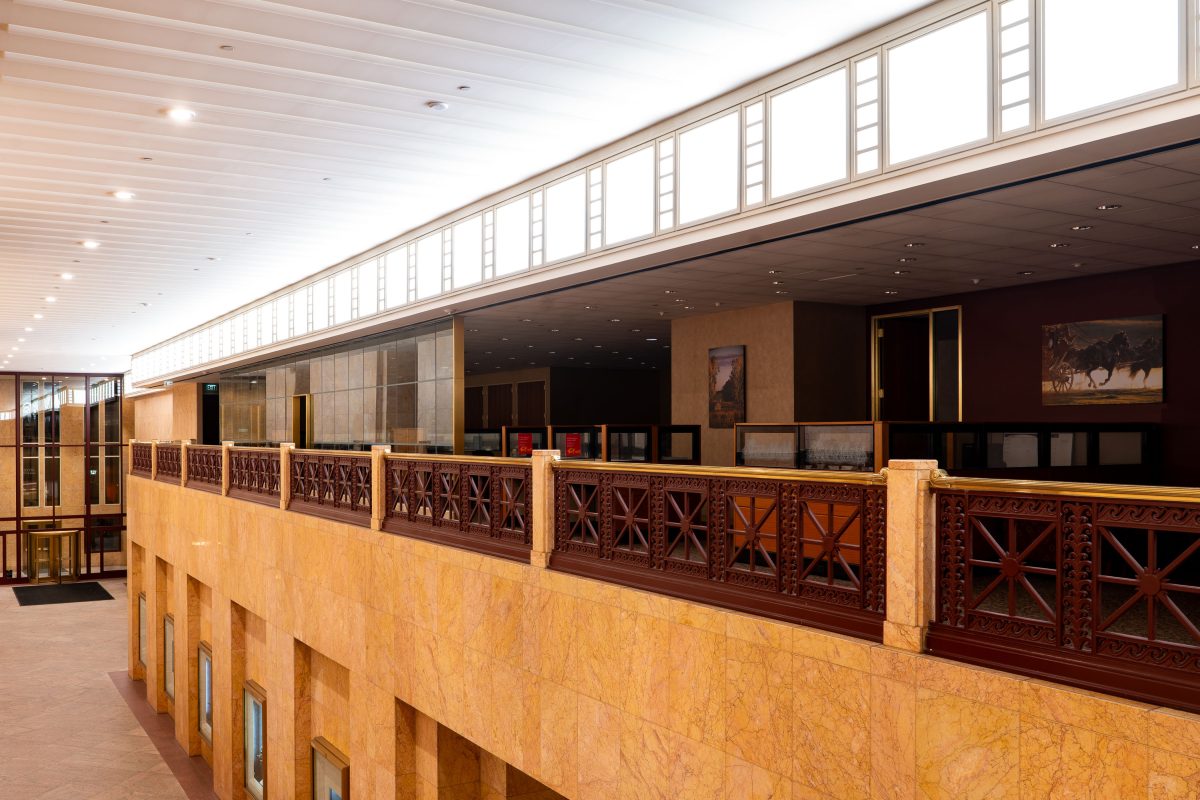
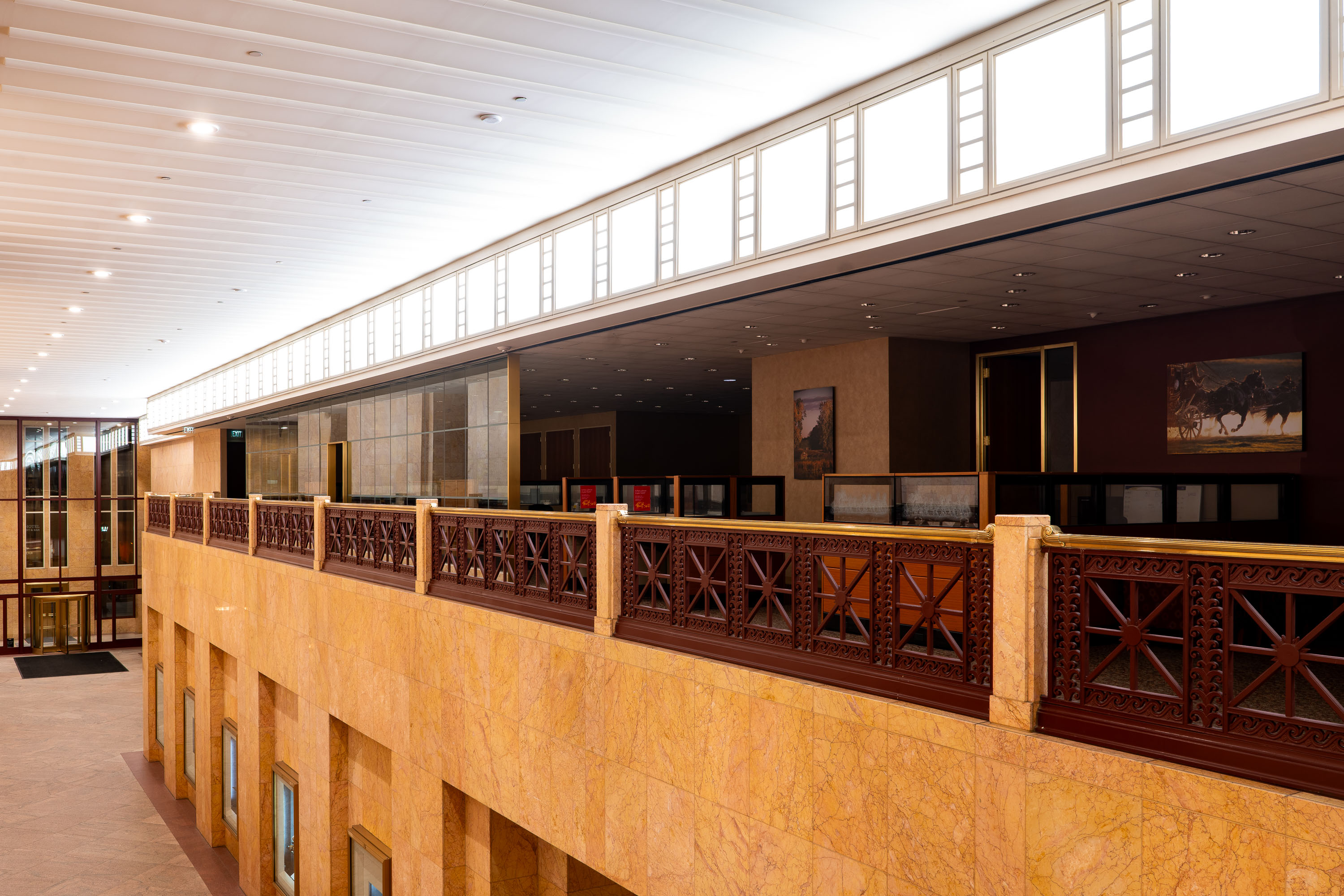
Interior of the Wells Fargo Center Museum in downtown Minneapolis featuring wooden railings and gallery spaces.
The Wells Fargo History Museum occupies the mezzanine level of the Wells Fargo Center at 90 South Seventh Street in downtown Minneapolis. Wells Fargo operates a small chain of these free museums in cities where it has a historic presence, using them to display stagecoaches, mining-era artifacts, and archival s tied to the company's founding in 1852. The exhibit cases along the balcony rail typically rotate items from the bank's corporate archives, including gold specimens and correspondence from the stagecoach express era. The Wells Fargo Center tower itself, completed in 1988 and designed by Cesar Pelli, rises 58 stories above the museum's perch overlooking the building's lobby.

Mezzanine Balcony, Wells Fargo History Museum, Minneapolis
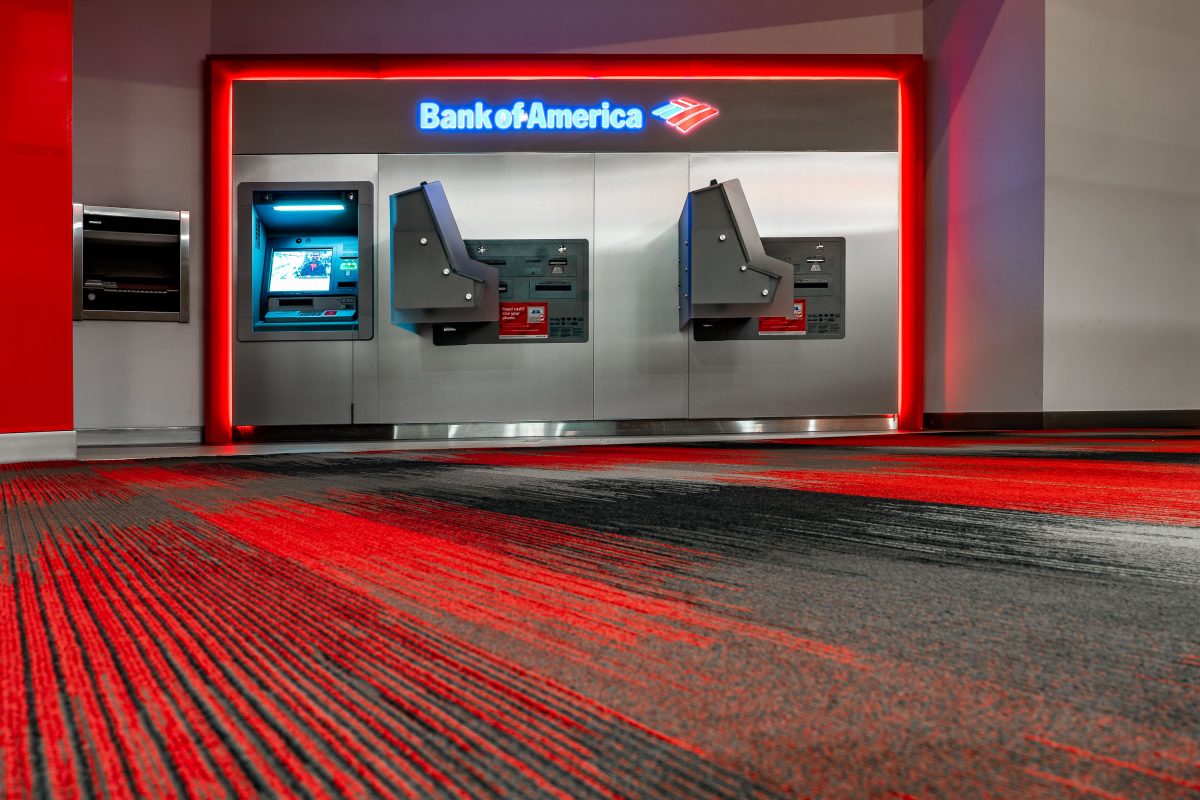
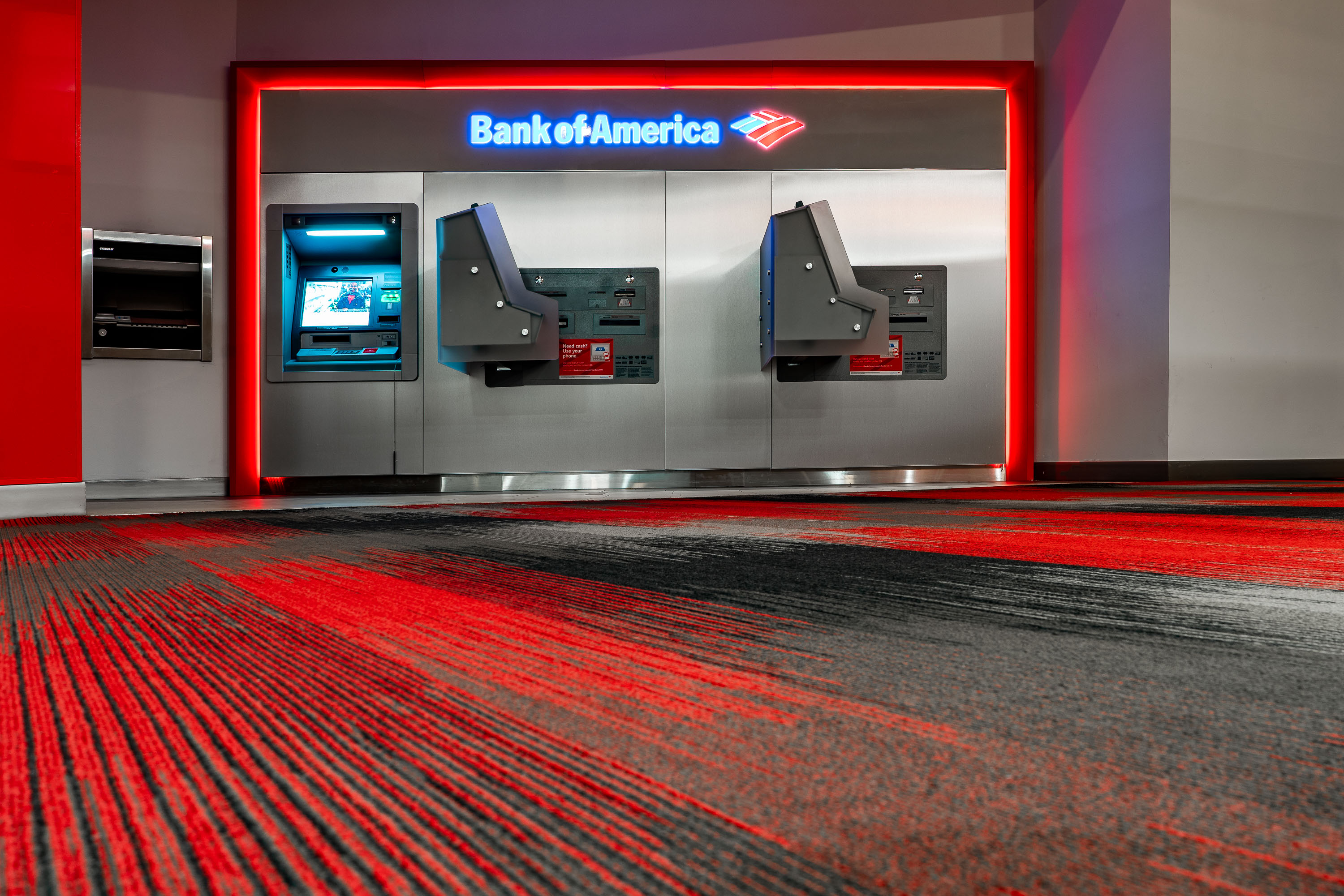
Bank Of America ATM Downtown Minneapolis
Bank Of America ATMs in the IDS Center in Downtown Minneapolis.

Bank Of America ATM Downtown Minneapolis

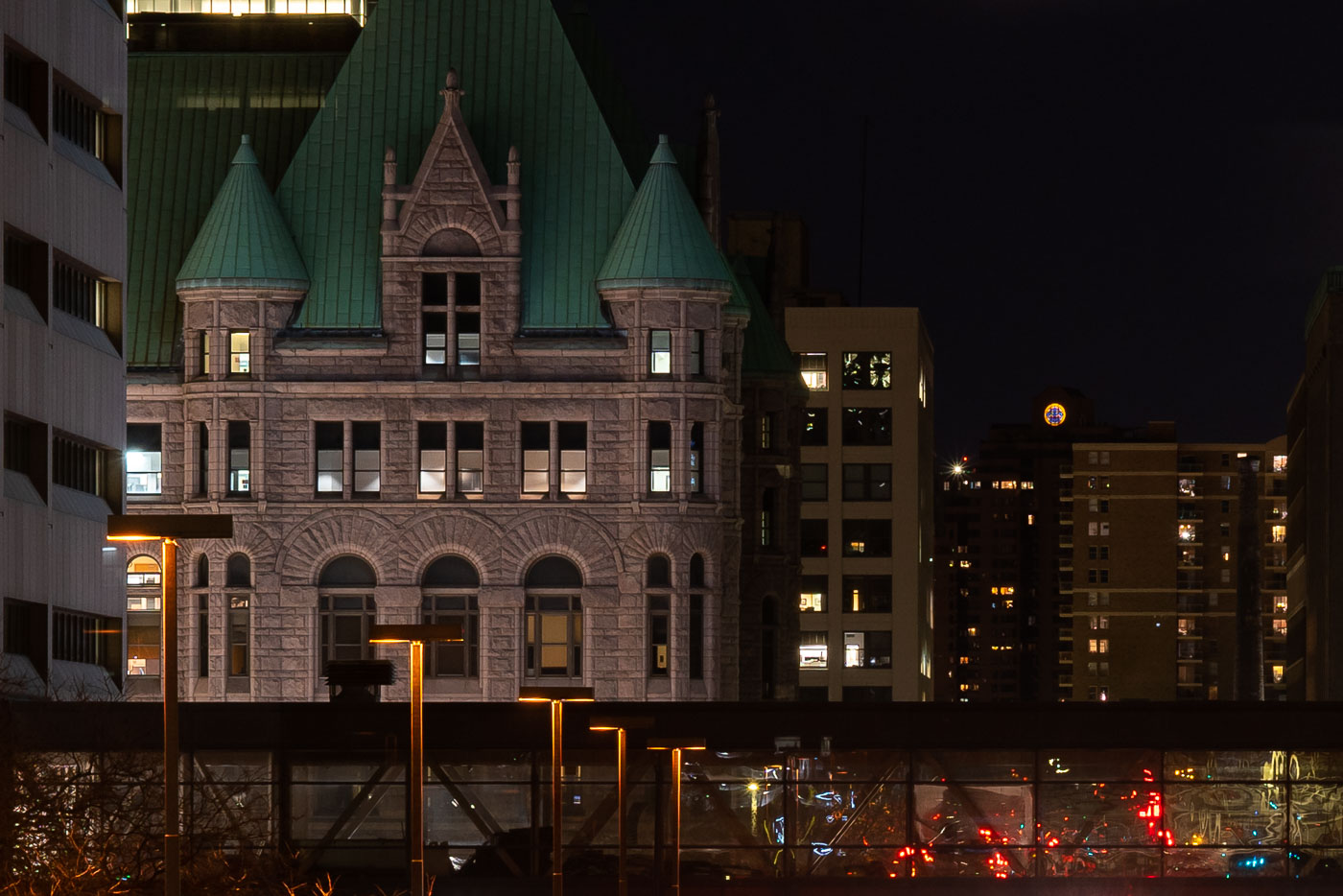
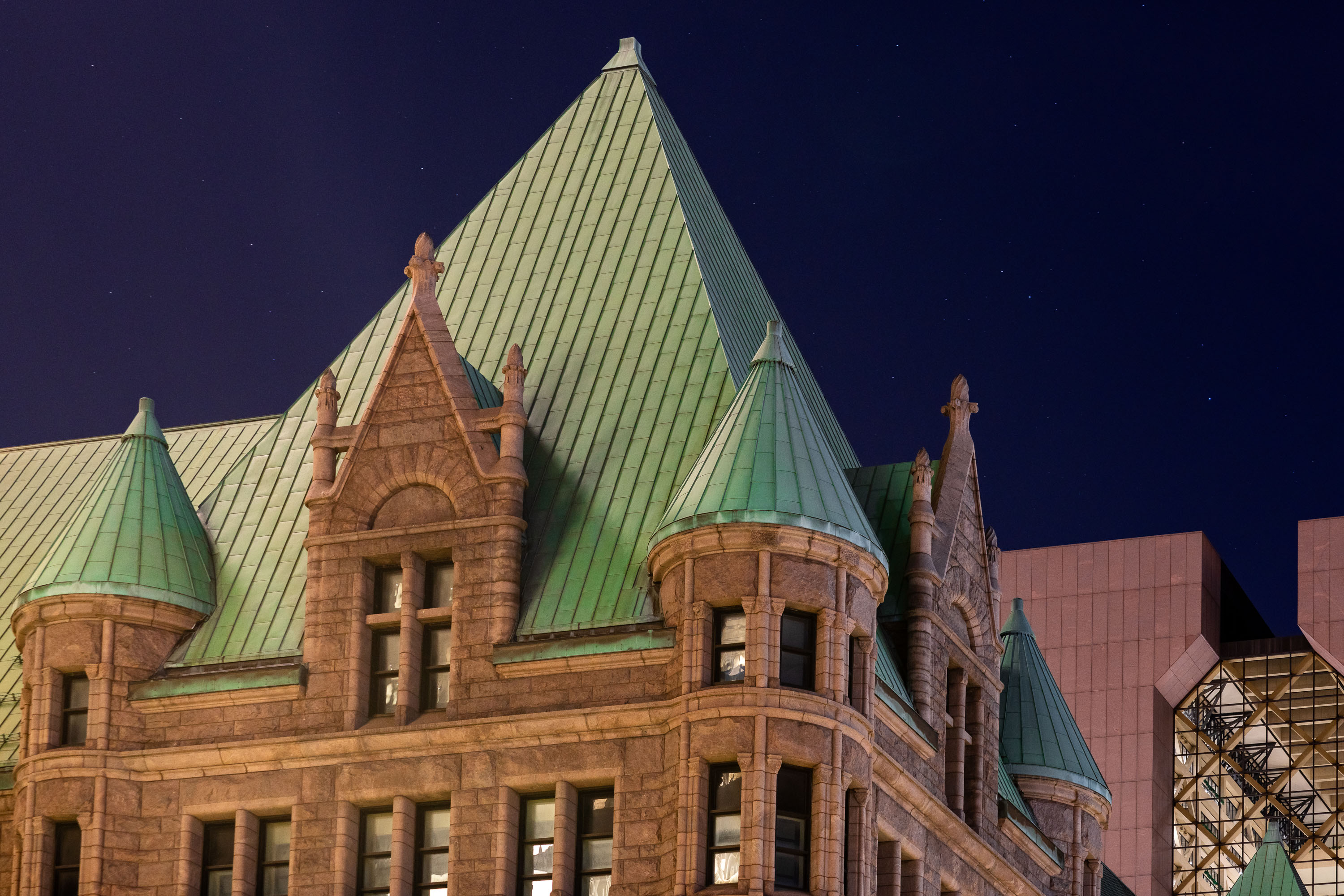
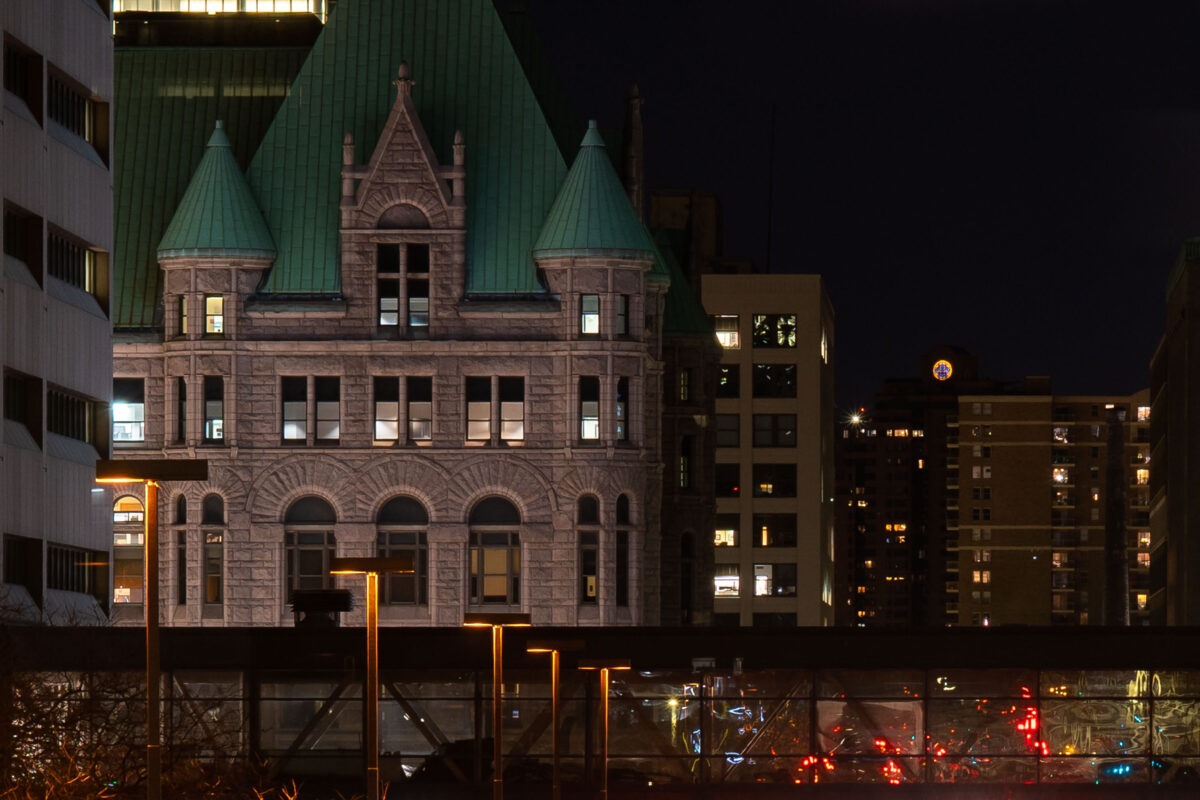
Minneapolis City Hall's green-roofed clock tower illuminated at night above downtown buildings and street lights.
Minneapolis City Hall rises behind a skyway in downtown Minneapolis at night. The historic building’s green roof and stone façade are lit against nearby apartment and office buildings.

Minneapolis City Hall Amid Downtown Towers at Night
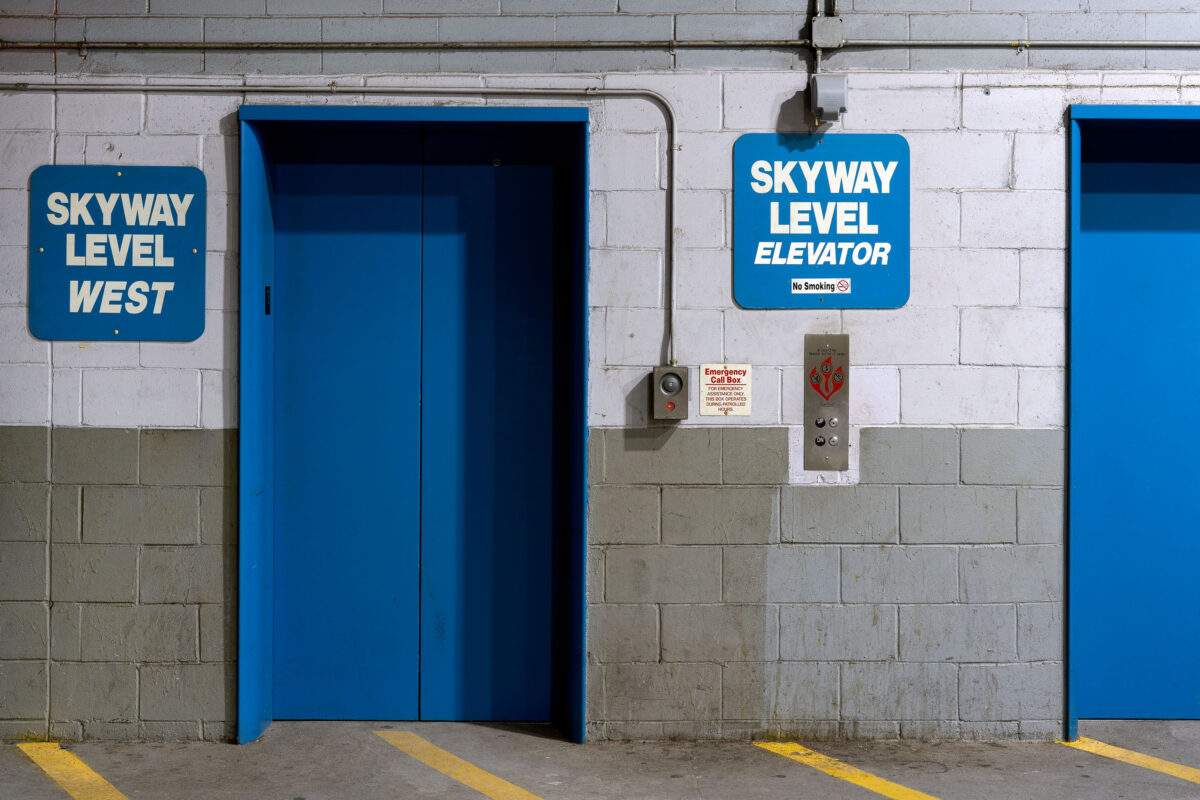
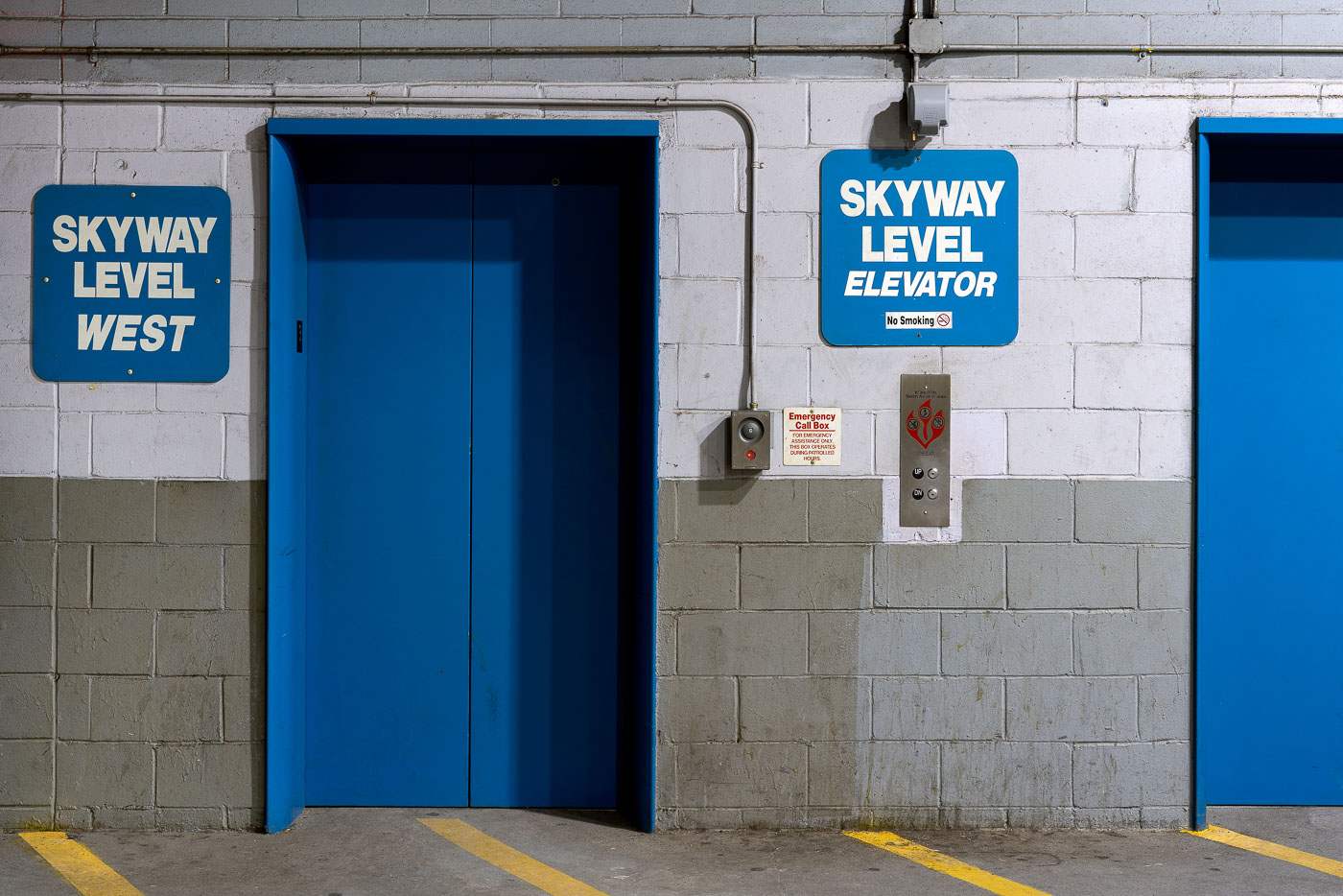
Blue directional signs for Skyway Level elevators in a downtown Minneapolis parking ramp.
Directional signs for Skyway Level elevators mark access points in a downtown Minneapolis parking ramp. The Minneapolis Skyway System connects downtown buildings at the second-floor level, allowing pedestrians to move between structures without exposure to weather. Elevator access from parking facilities is essential infrastructure for the skyway network's operation.

Skyway Level Elevator Signs, Minneapolis Parking Ramp
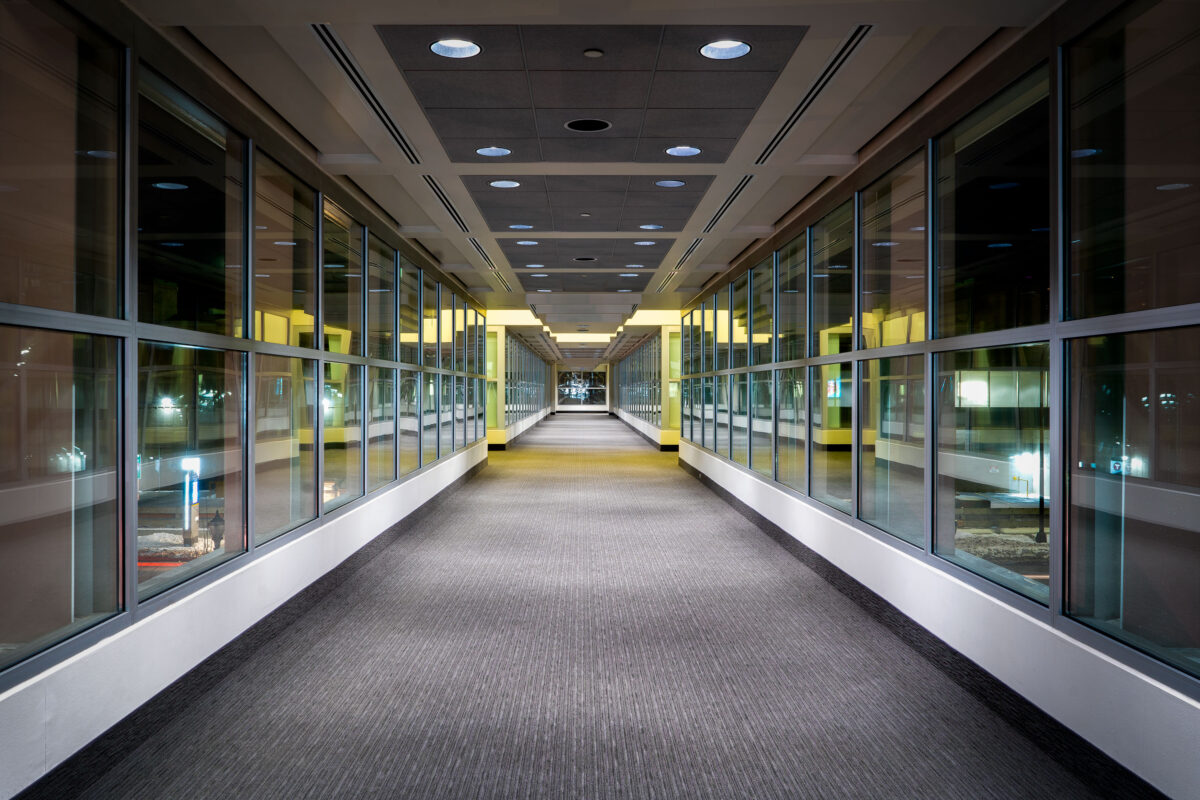
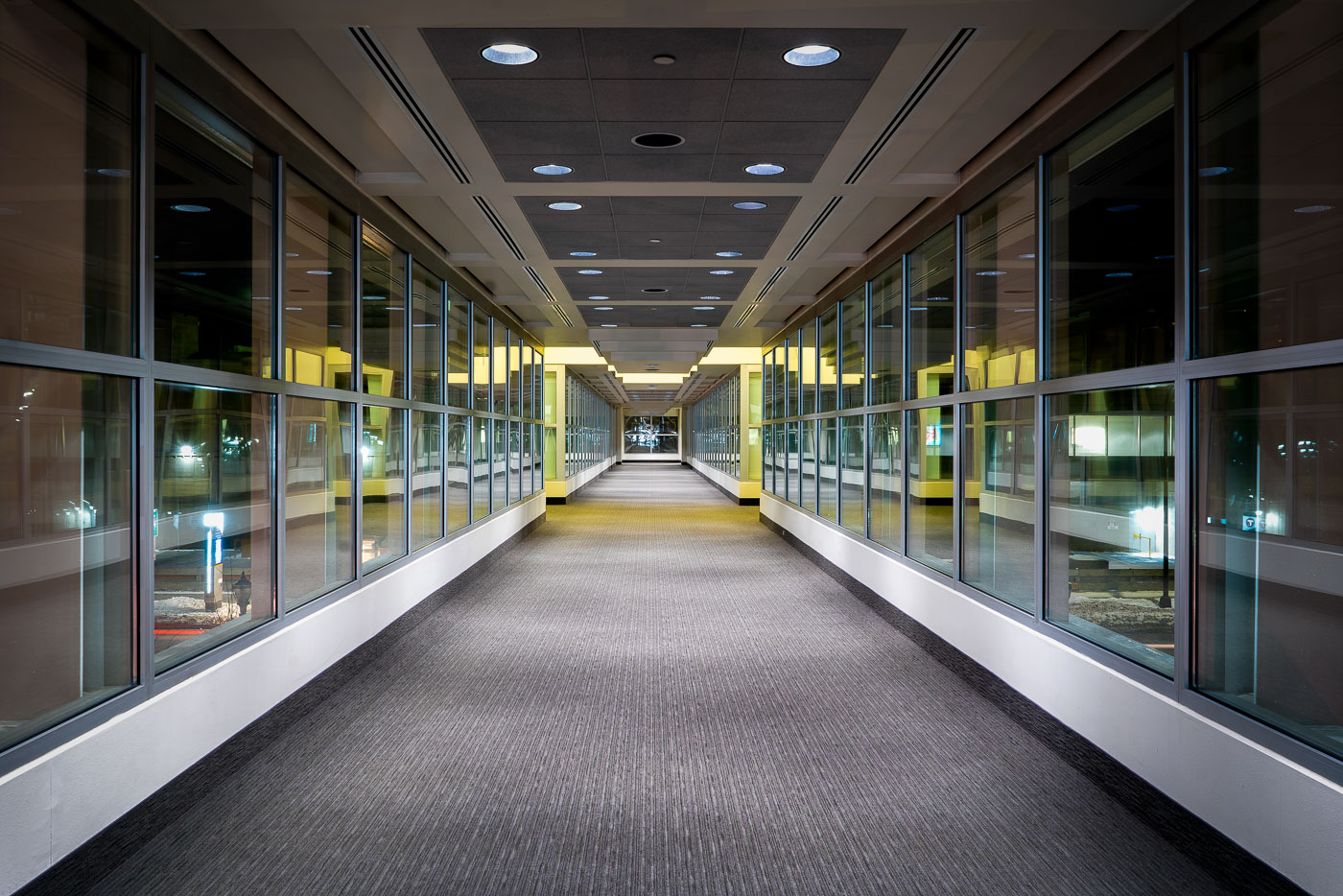
SPS Tower skyway corridor in downtown Minneapolis with windows lining the elevated walkway.
The SPS Tower skyway in downtown Minneapolis is part of the Minneapolis Skyway System. The enclosed elevated walkway connects downtown buildings above street level and supports pedestrian movement through the central business district.

SPS Tower Skyway, Downtown Minneapolis
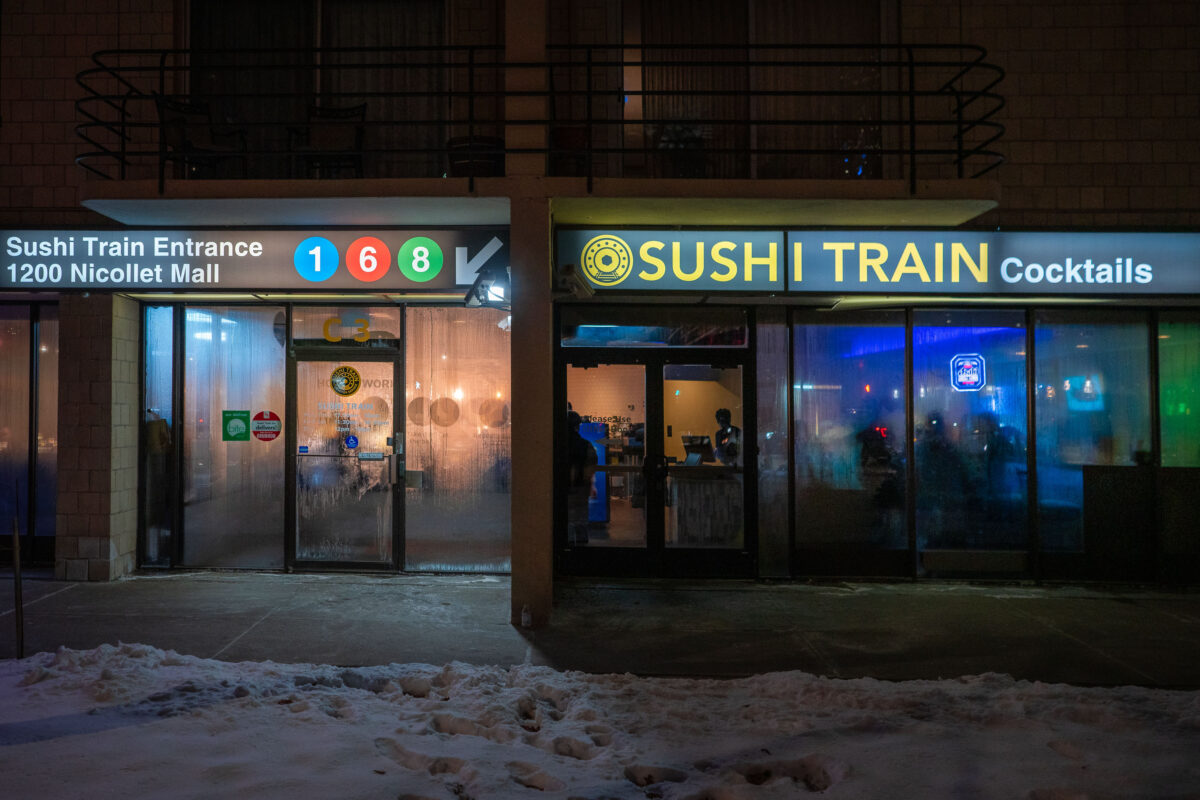
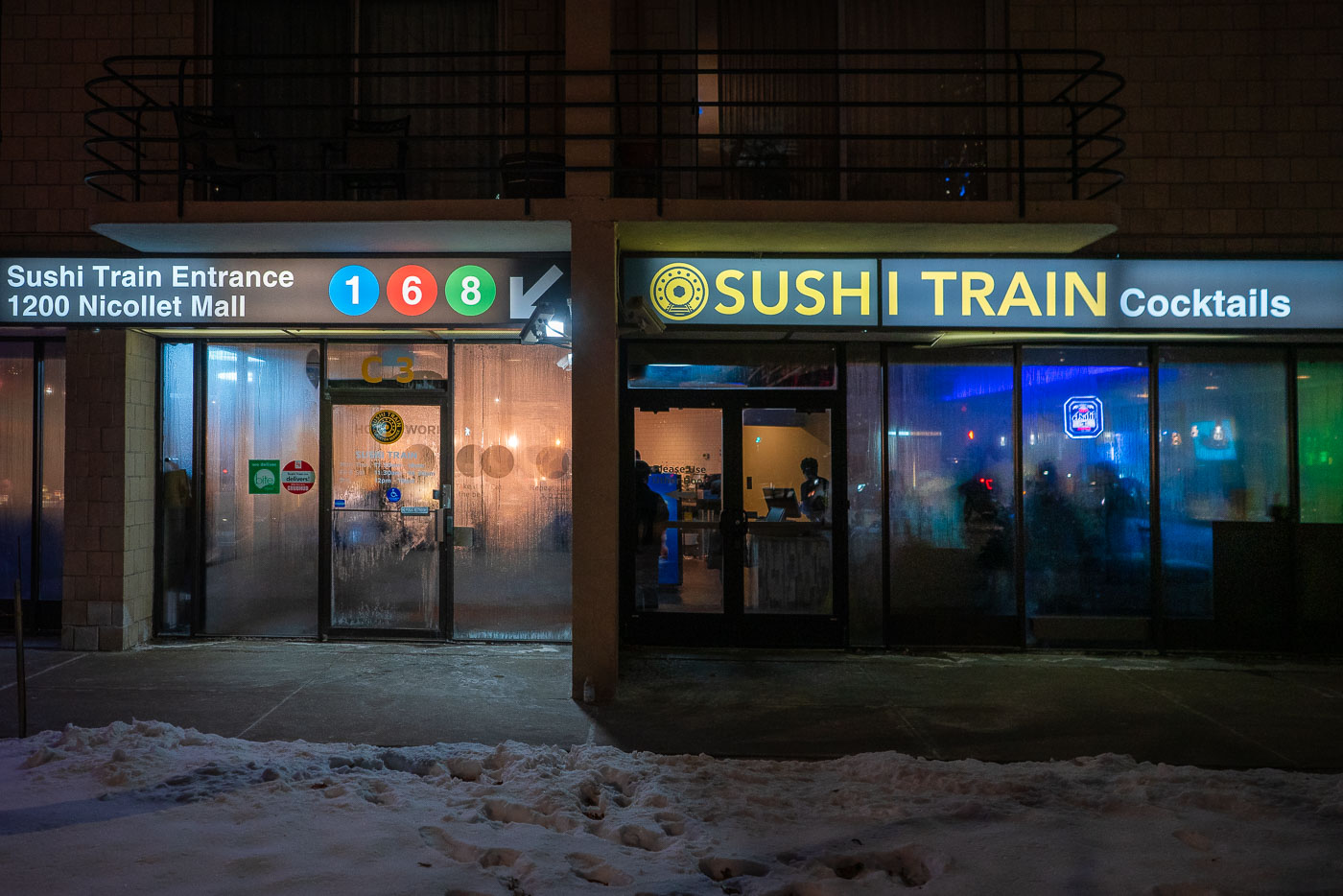
Sushi Train restaurant entrance at 1200 Nicollet Mall in downtown Minneapolis on a snowy evening.
Sushi Train is a conveyor-belt sushi restaurant at 1200 Nicollet Mall in downtown Minneapolis. The conveyor-belt format, where plates circle the dining counter for customers to pick up, began in Japan in the 1950s and later spread worldwide.

Sushi Train on Nicollet Mall on a Snowy Night
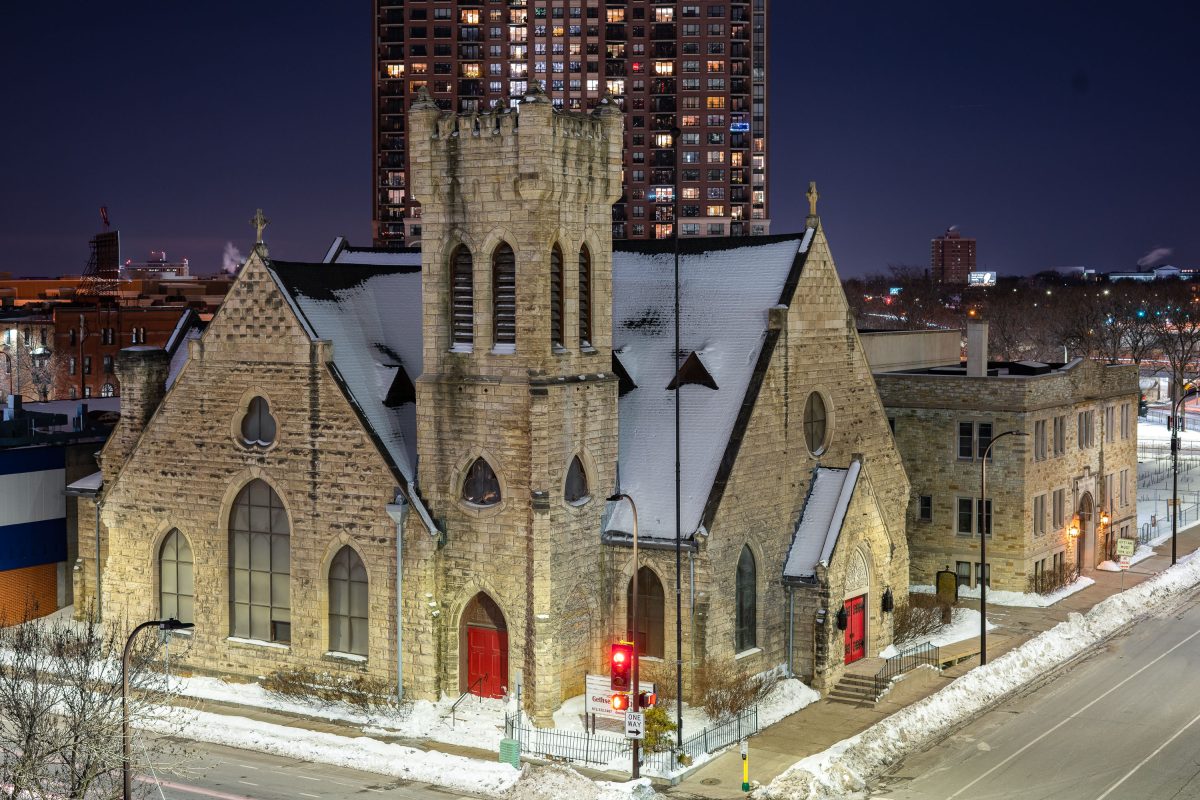
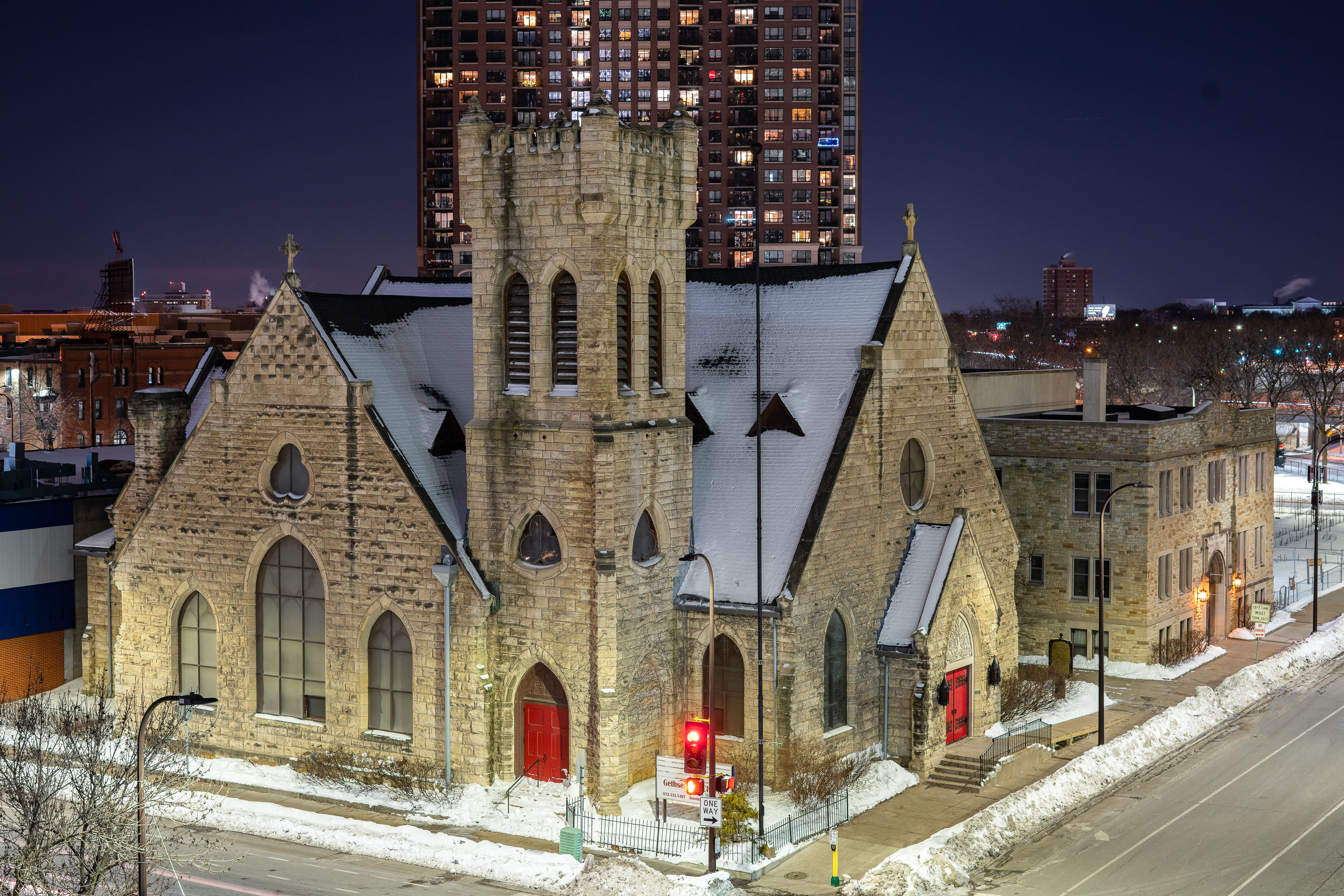
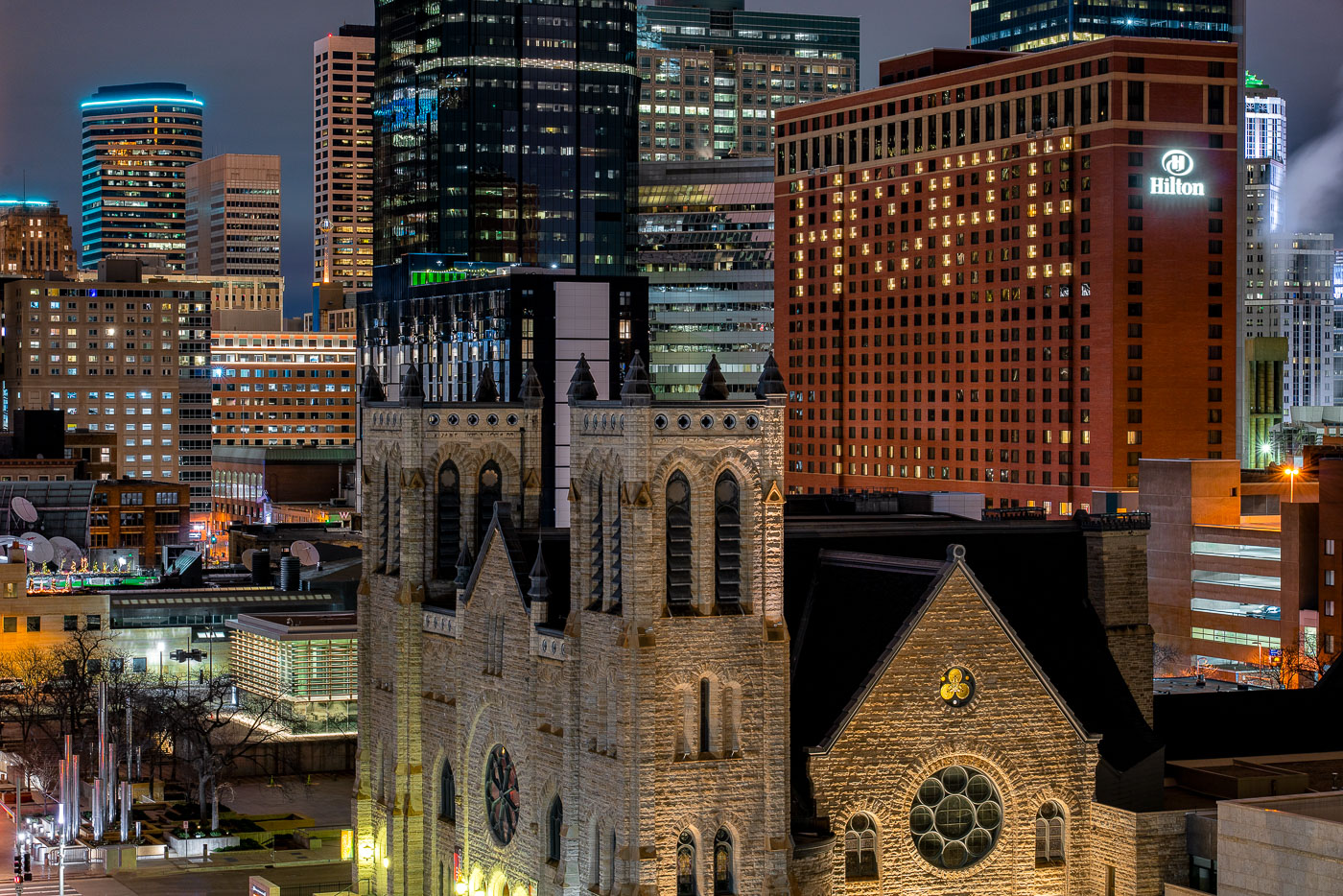
Gethsemane Episcopal Church's stone tower and snow-covered roof stand below a high-rise in downtown Minneapolis.
Gethsemane Episcopal Church stands at 905 4th Avenue South in downtown Minneapolis. The congregation was organized in 1856, making it one of the oldest Episcopal parishes in the city, and the current limestone building dates to the 1880s in a Gothic Revival style. The church has long served an urban parish role, offering outreach programs alongside regular worship. It sits within blocks of the Minneapolis Convention Center and the city's Loring Park neighborhood, surrounded in recent decades by high-rise residential towers built up around the older structure.

Gethsemane Episcopal Church Beneath Downtown Minneapolis High-Rise
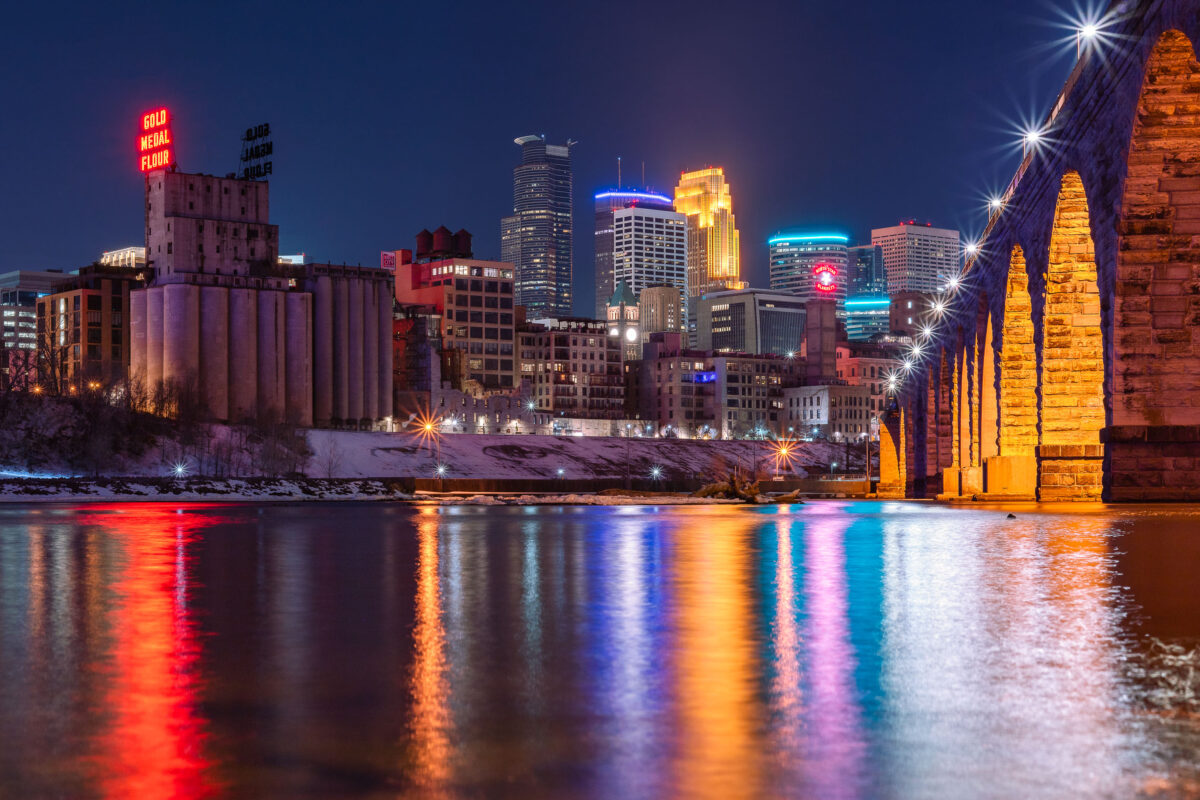
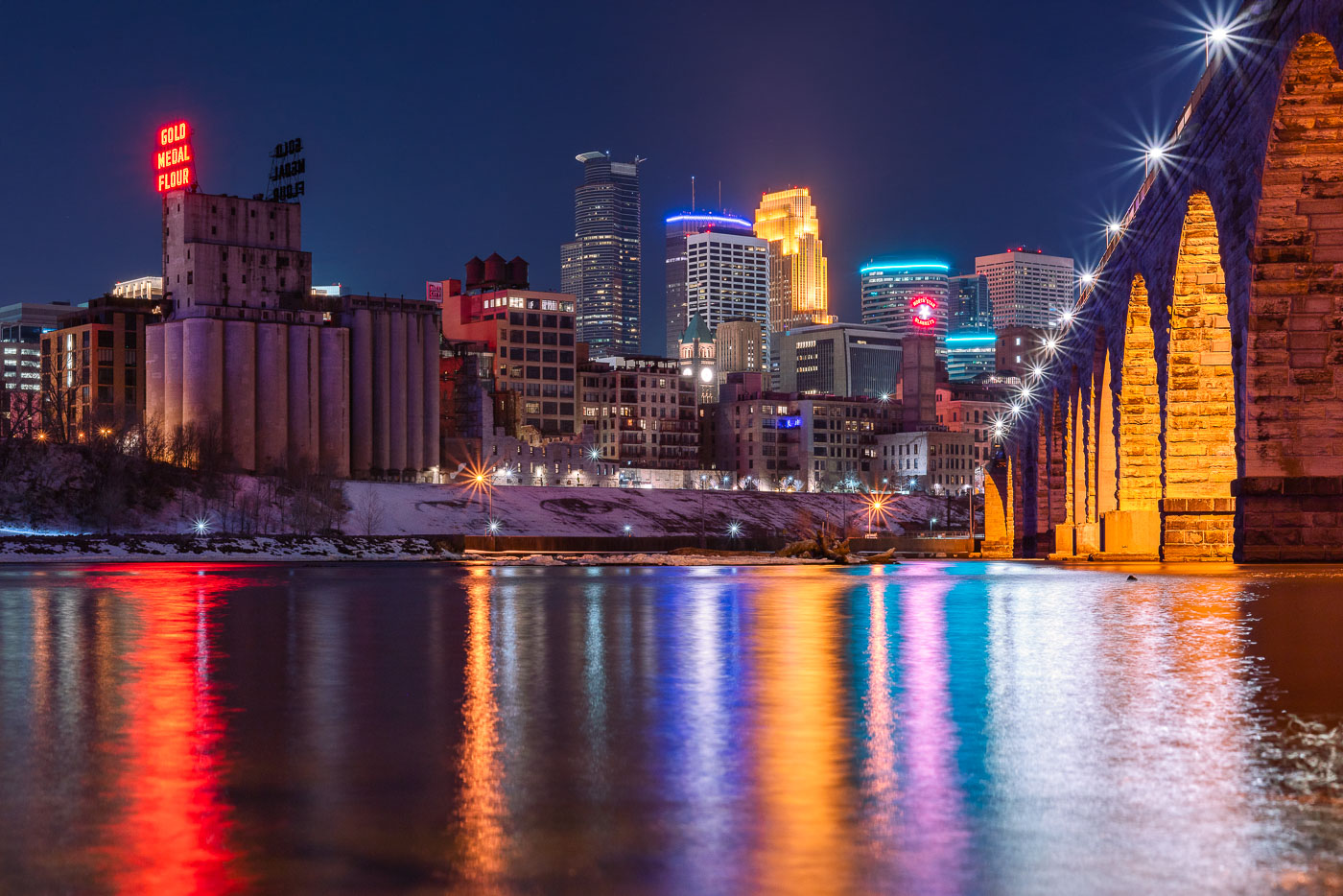
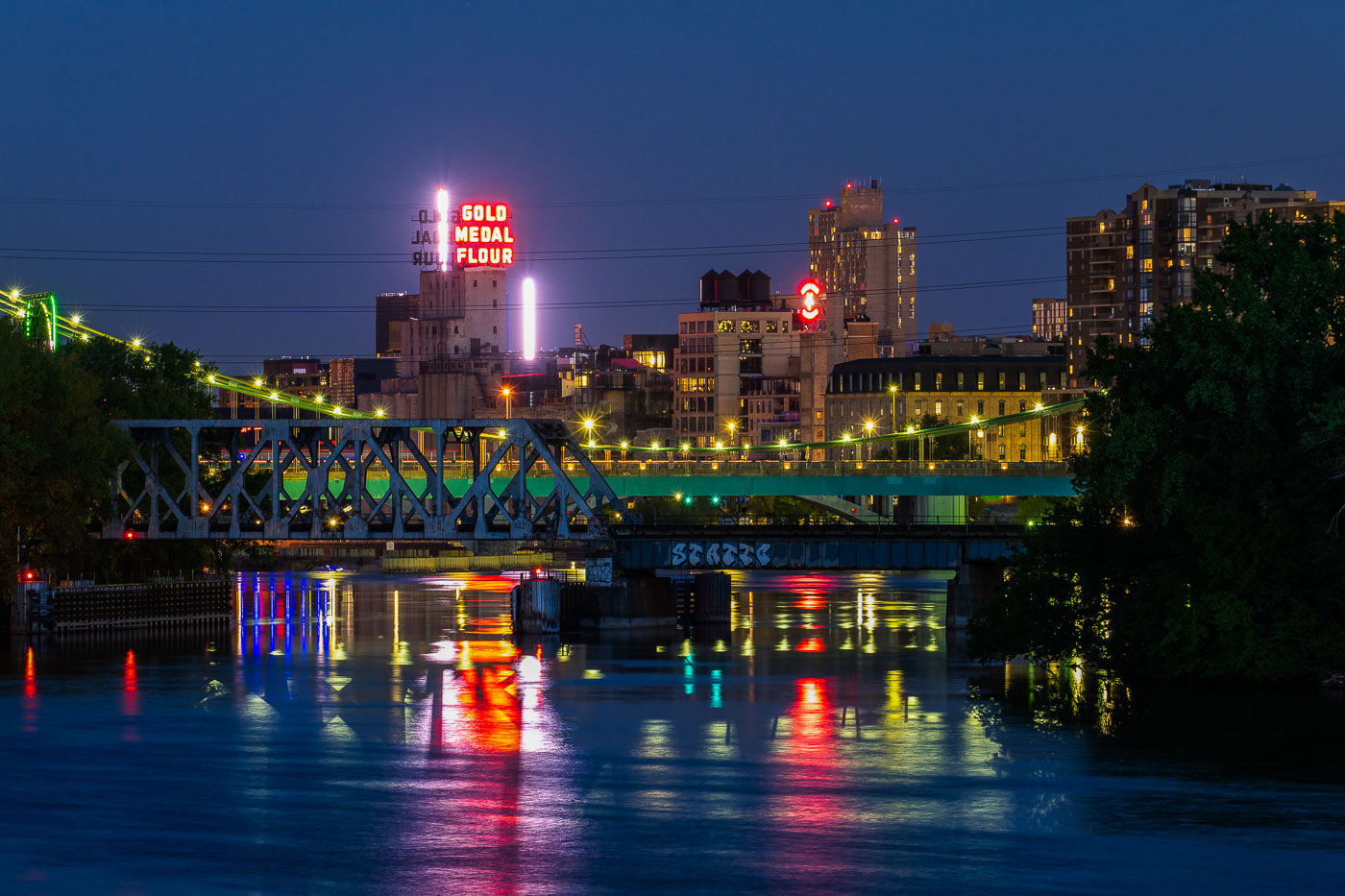
Stone Arch Bridge and Minneapolis skyline at night along the Mississippi River, with Gold Medal Flour mill sign visible.
The Gold Medal Flour sign sits atop the old Washburn-Crosby mill complex, a reminder of Minneapolis's decades as the flour-milling capital of the world. Washburn-Crosby, which later became General Mills, first put up the sign in 1910, and it has been relit and maintained as a fixture of the skyline ever since. The Stone Arch Bridge crosses the Mississippi just downstream, built in 1883 for the St. Paul, Minneapolis and Manitoba Railway to carry trains into the city's rail yards. Its limestone and granite piers were designed to withstand river ice, and the bridge now carries only pedestrians and cyclists between the riverfront and St. Anthony Main.

Gold Medal Flour Sign Above the Minneapolis Riverfront
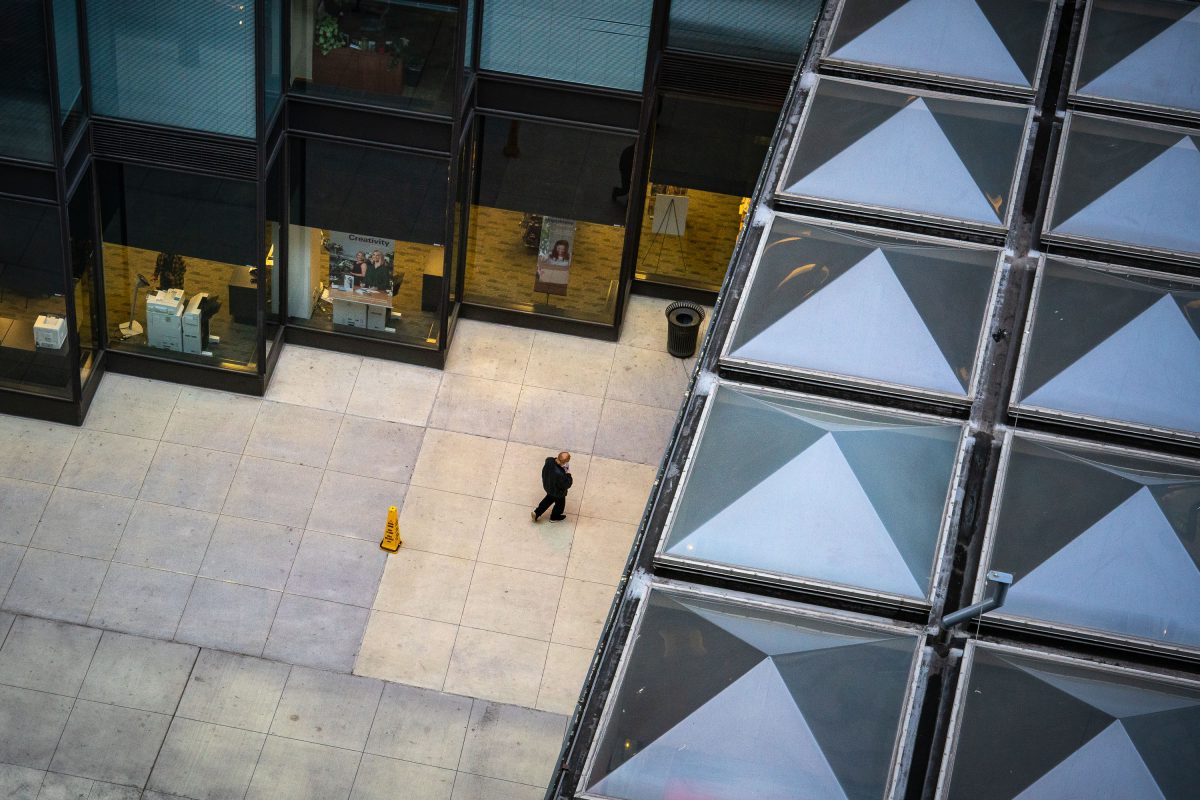
View from above the IDS Center Skyway
A man walks outside the IDS Center in Downtown Minneapolis. Seen from above the skyway.

Man walks outside the IDS Center, Minneapolis
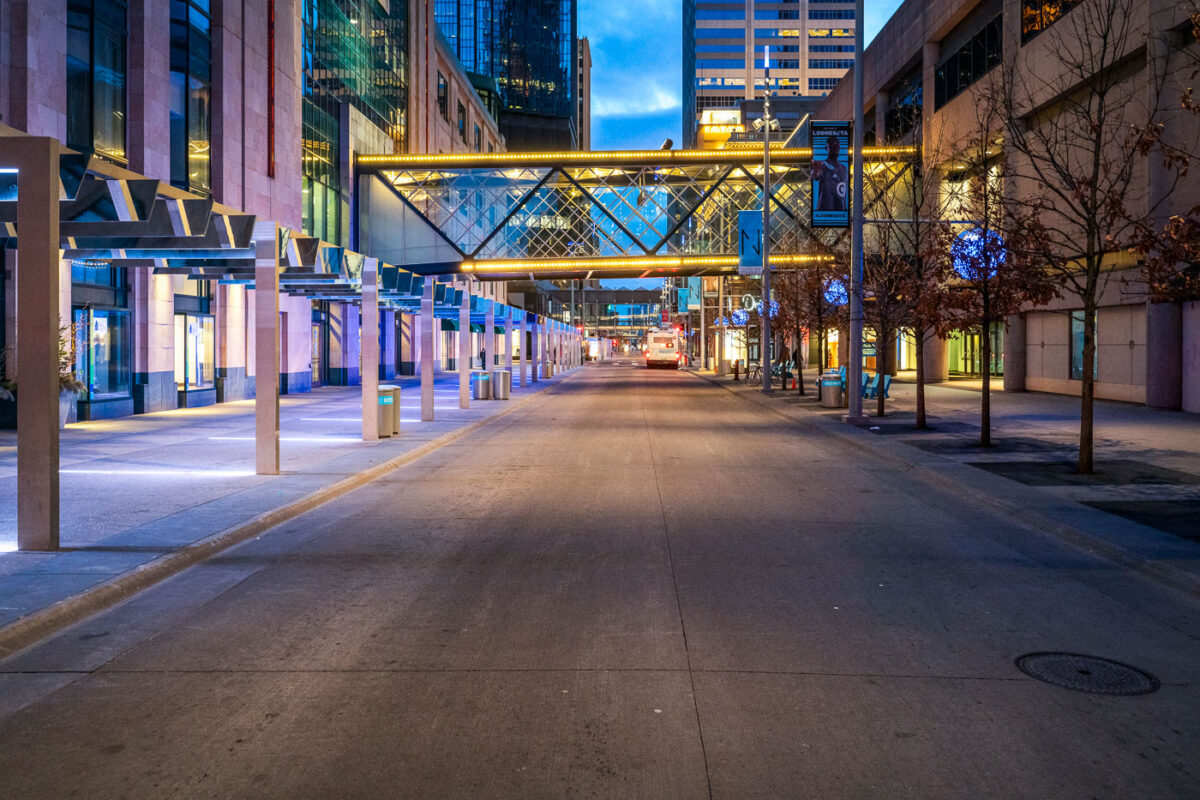
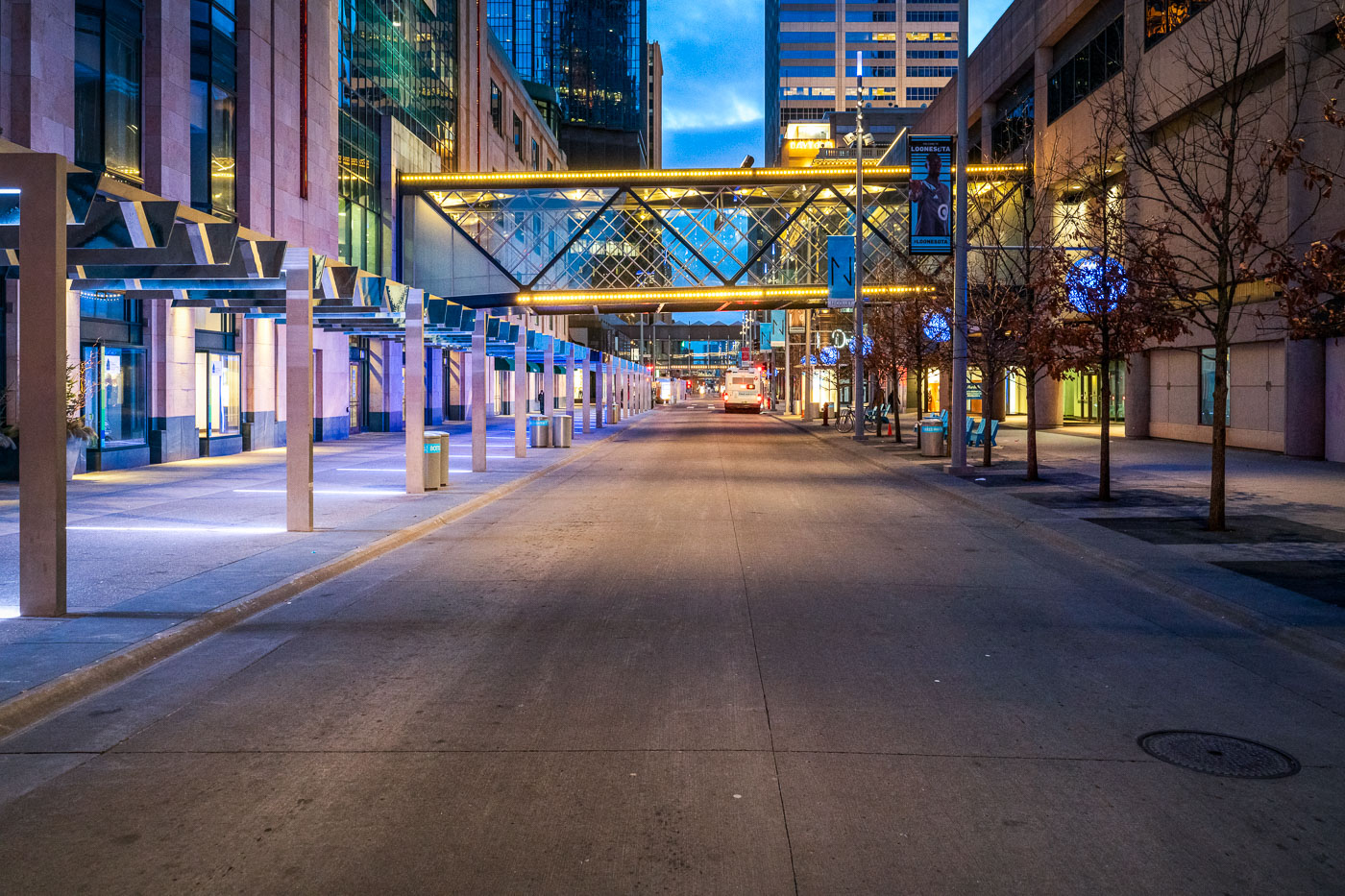
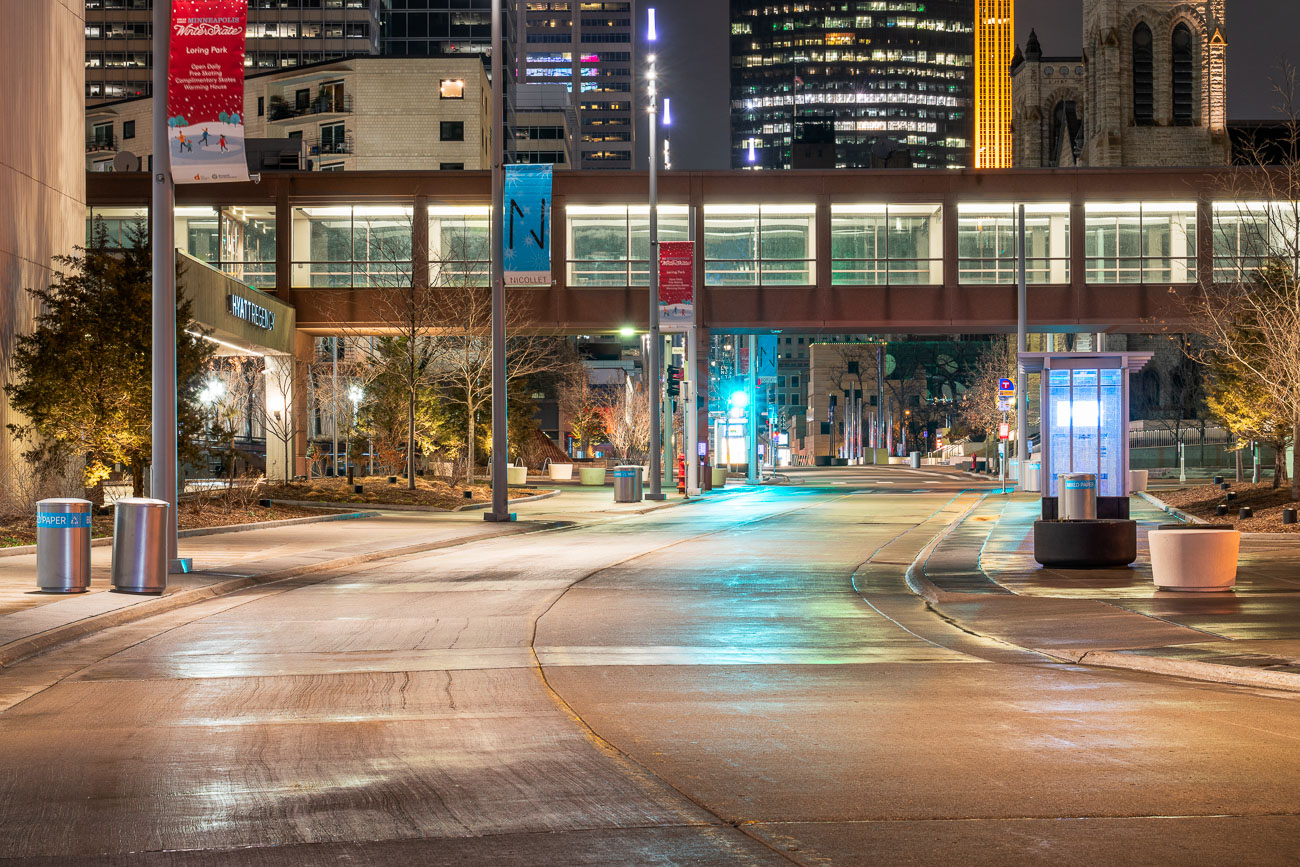
Empty Nicollet Mall pedestrian street in downtown Minneapolis at dusk during COVID-19 pandemic shutdowns.
Nicollet Mall is downtown Minneapolis's mile-long pedestrian and transit corridor, running between Washington Avenue and Grant Street. Cars have been barred from the mall since it opened in 1967, leaving the roadway to buses, taxis, and foot traffic. A $50 million redesign led by James Corner Field Operations, the firm behind New York's High Line, reopened the corridor in 2017 with wider sidewalks, new lighting, and updated bus shelters. Skyways link many of the office towers and retail buildings along the mall, letting workers move between blocks without going outside. In March 2020, Minnesota's stay-at-home order emptied the corridor of the office workers and shoppers who normally fill it on weekdays.

Nicollet Mall at Dusk During Minneapolis’s COVID-19 Shutdown
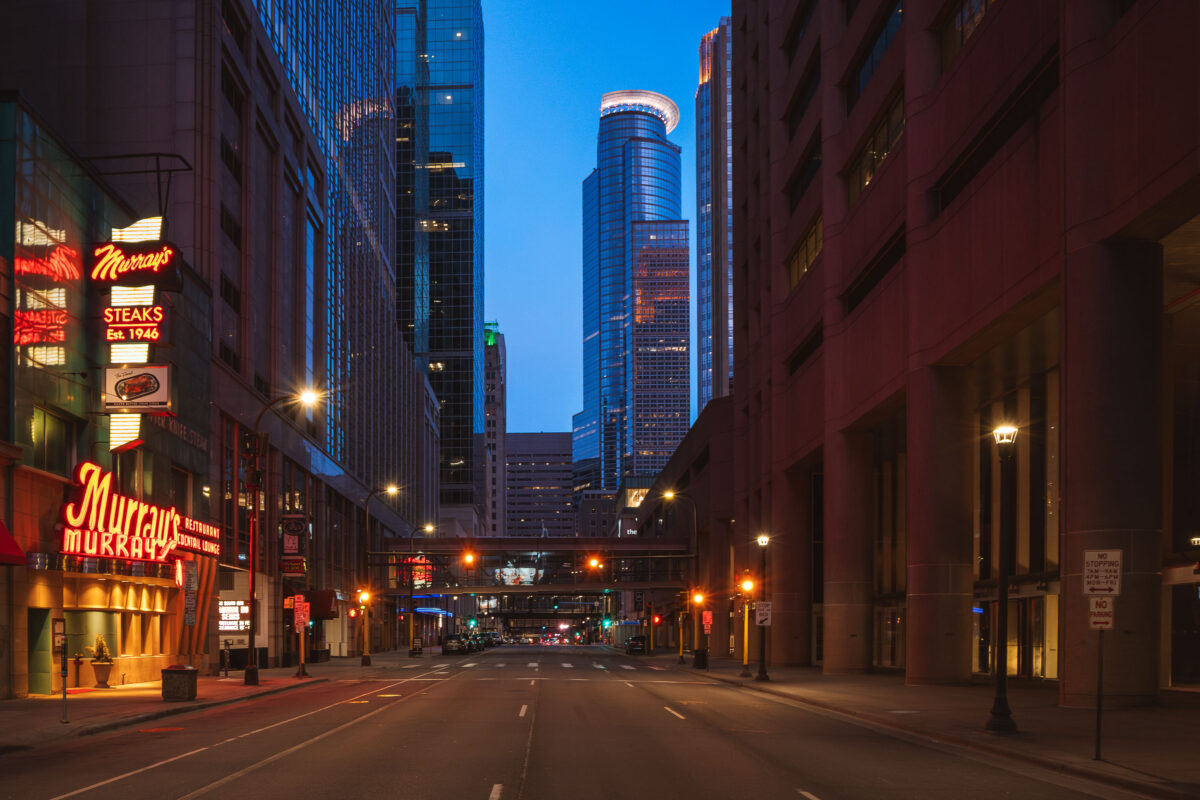
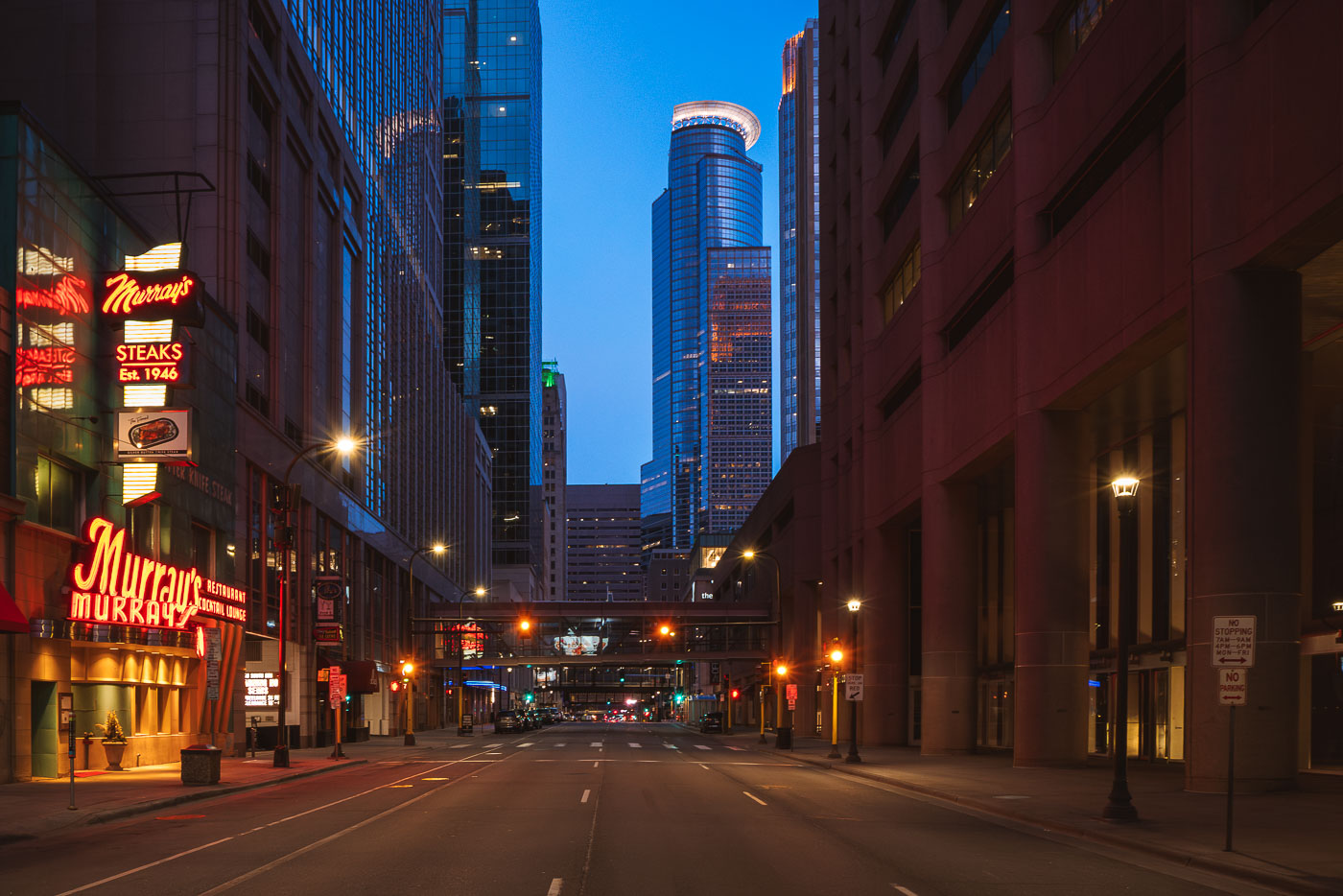
Murray's Steakhouse, Minneapolis Blue Hour
A north–south view through downtown Minneapolis during early evening, with illuminated office towers forming a dense street corridor and minimal traffic on the roadway below. The cylindrical crown of the IDS Center, completed in 1973, anchors the skyline in the distance as the city’s tallest building and a defining element of its modern profile. In the foreground, the neon signage of Murray’s, a Minneapolis institution since 1946, adds a warm counterpoint to the cooler glass-and-steel architecture surrounding Nicollet Mall.

Murray’s Steakhouse, Minneapolis Blue Hour
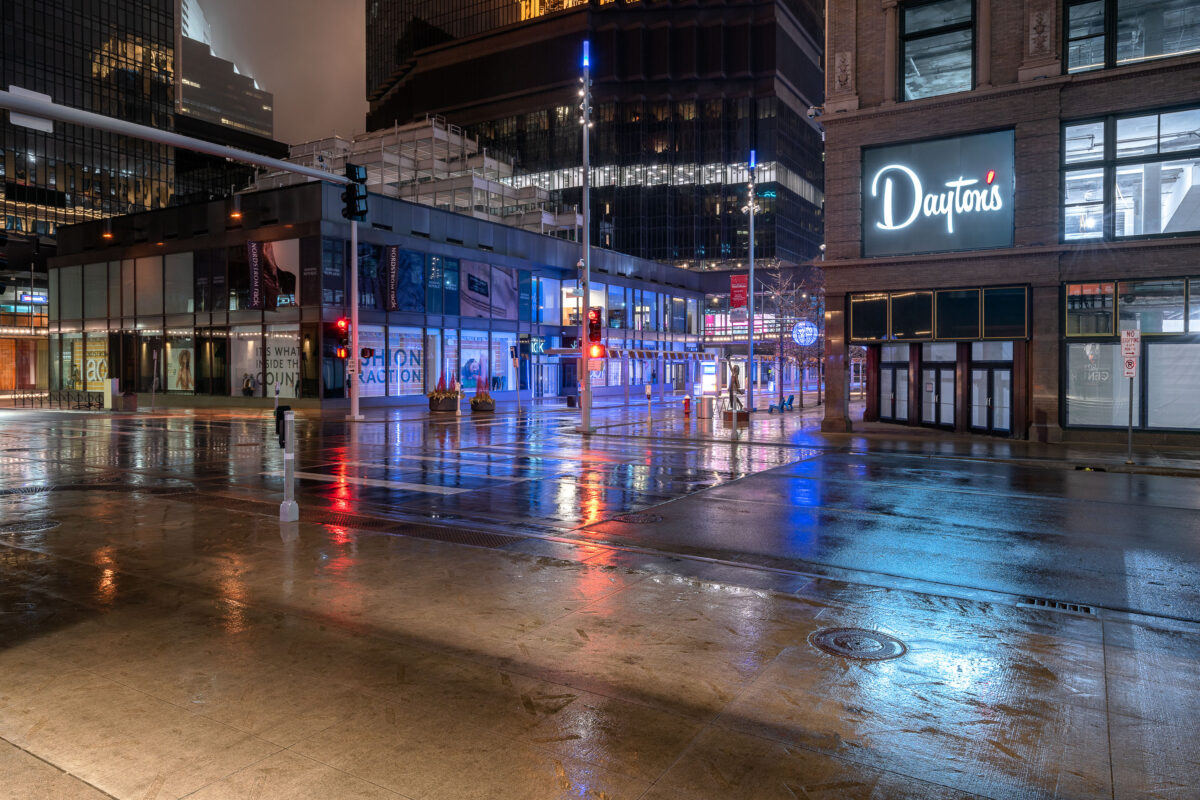
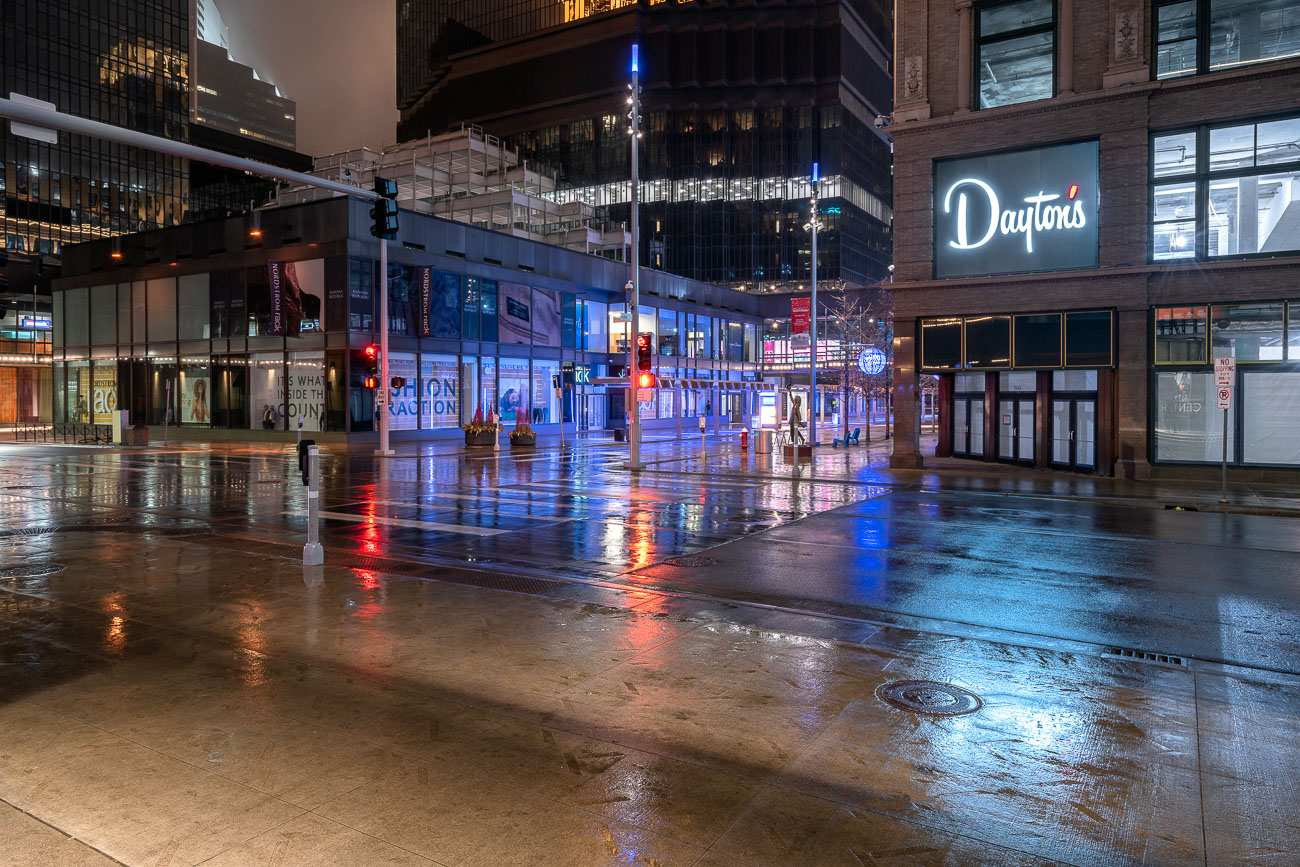
Daytons and IDS Center on Nicollet Mall in the rain
The Dayton's Project and the IDS Center stand on Nicollet Mall in Minneapolis during the early stages of the COVID-19 pandemic. The Dayton's building, a historic landmark in the city's retail landscape, was a prominent fixture on the mall for decades.

Dayton’s and IDS Center, Nicollet Mall, Minneapolis, Early COVID-19
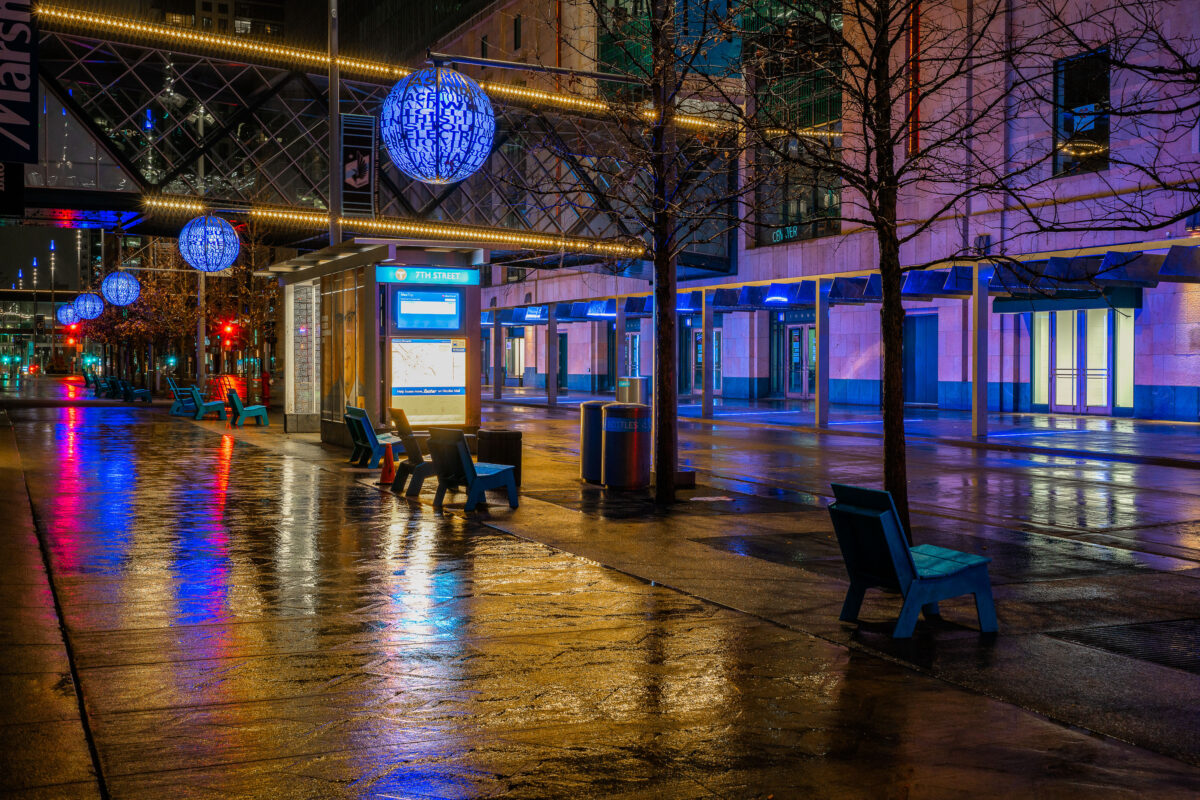
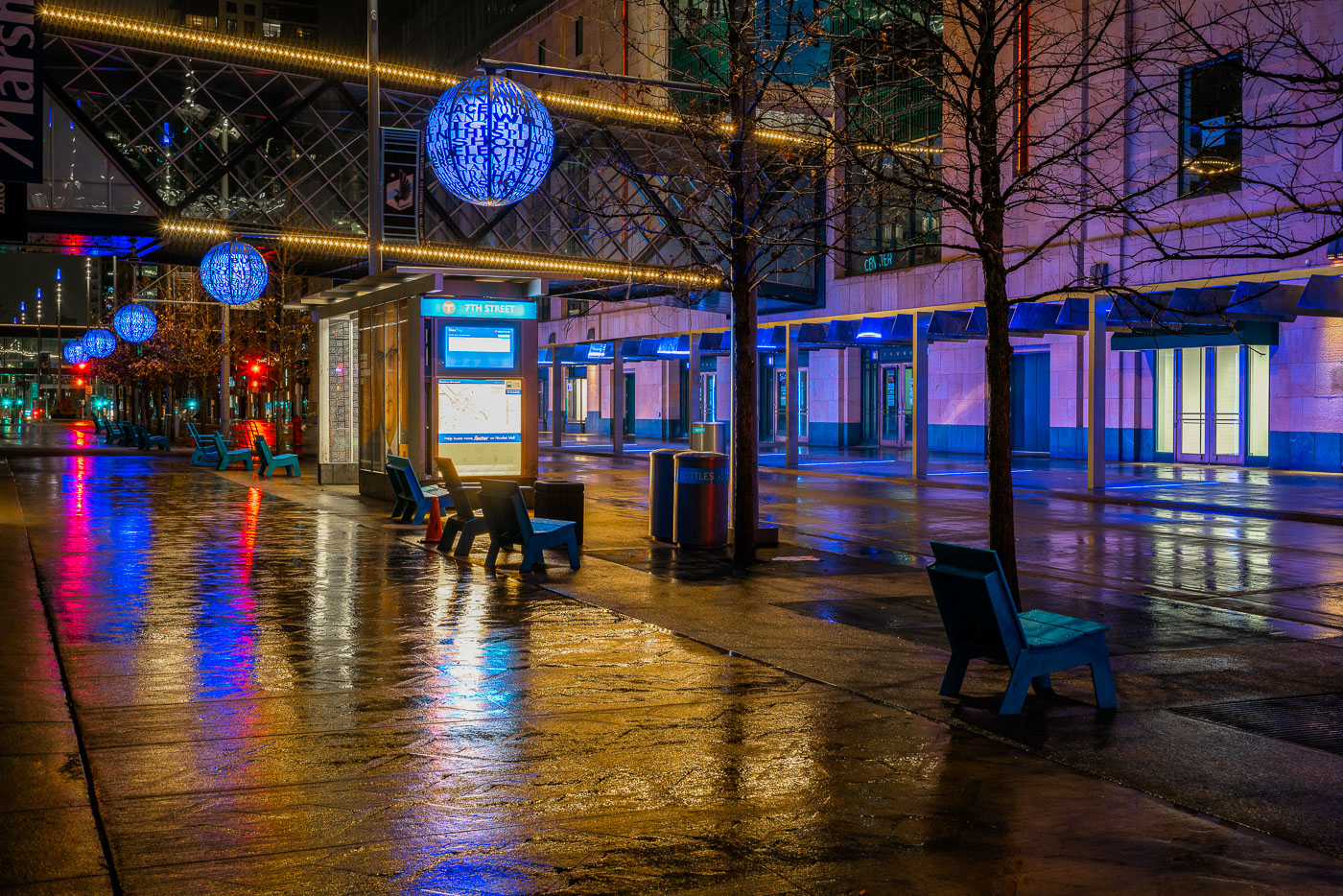
Chairs on Nicollet Mall during a rainy early COVID19 night
Nicollet Mall in Minneapolis is seen on a rainy night during the early stages of the COVID-19 pandemic.

Nicollet Mall, Minneapolis: Rainy Night During COVID-19
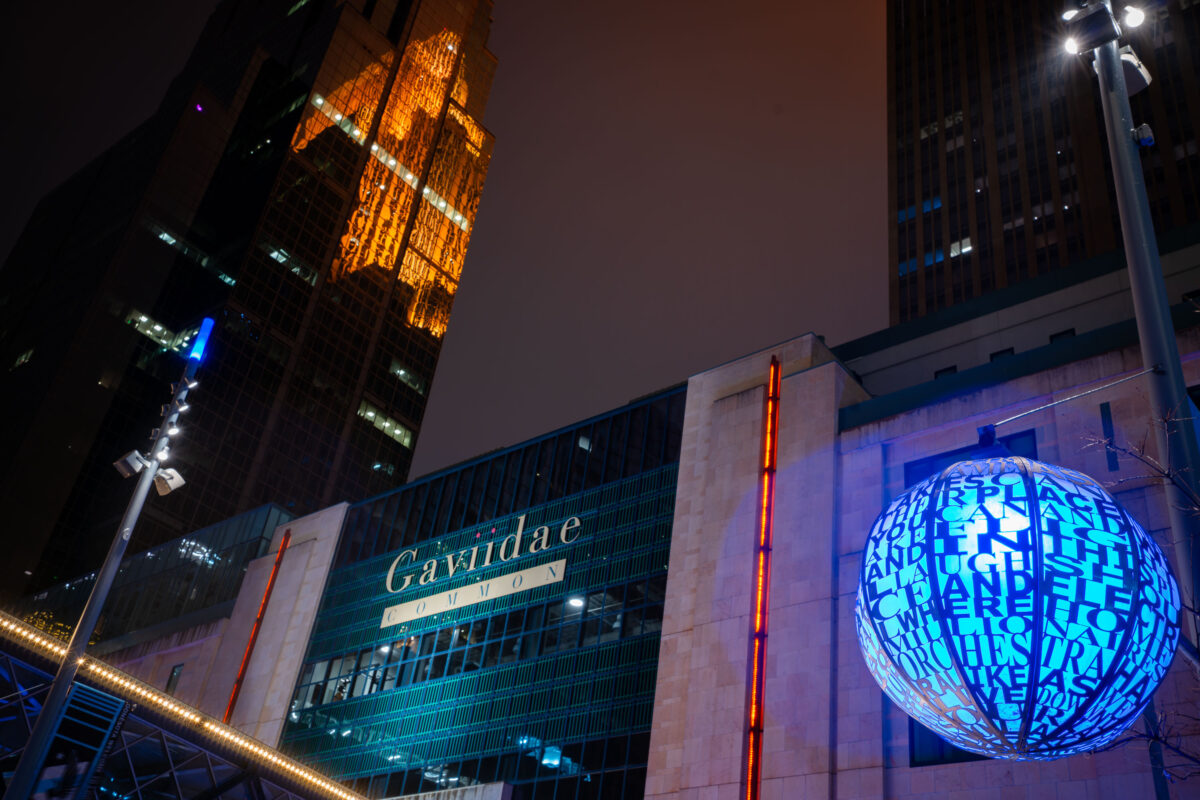
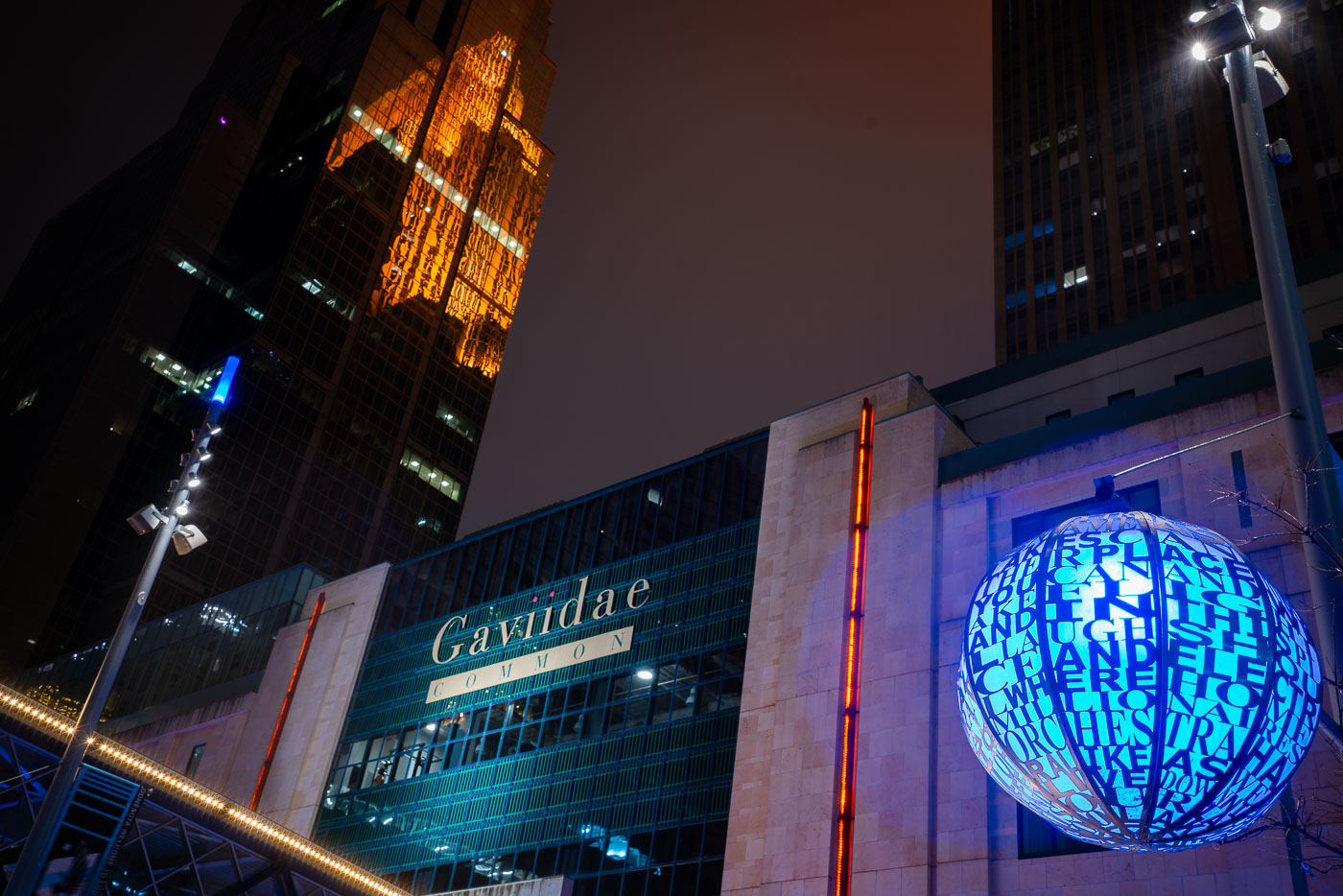
Gaviidae Common and Westin Reflection on Nicollet Mall
Downtown Minneapolis after dark, with the Gaviidae Common retail and office complex illuminated along Nicollet Mall. The metallic blue spherical public art installation in the foreground—inscribed with words referencing music, light, and community—adds a cultural element to the urban corridor. Reflected dramatically in the golden glass façade of the Westin building behind it is the historic Foshay Tower, one of Minneapolis’s earliest skyscrapers dating back to 1929. Today, Nicollet Mall serves as the city’s primary pedestrian and transit thoroughfare, blending modern commercial redevelopment, historic preservation, and public art into a central civic space.

Gaviidae Common and Westin Reflection on Nicollet Mall

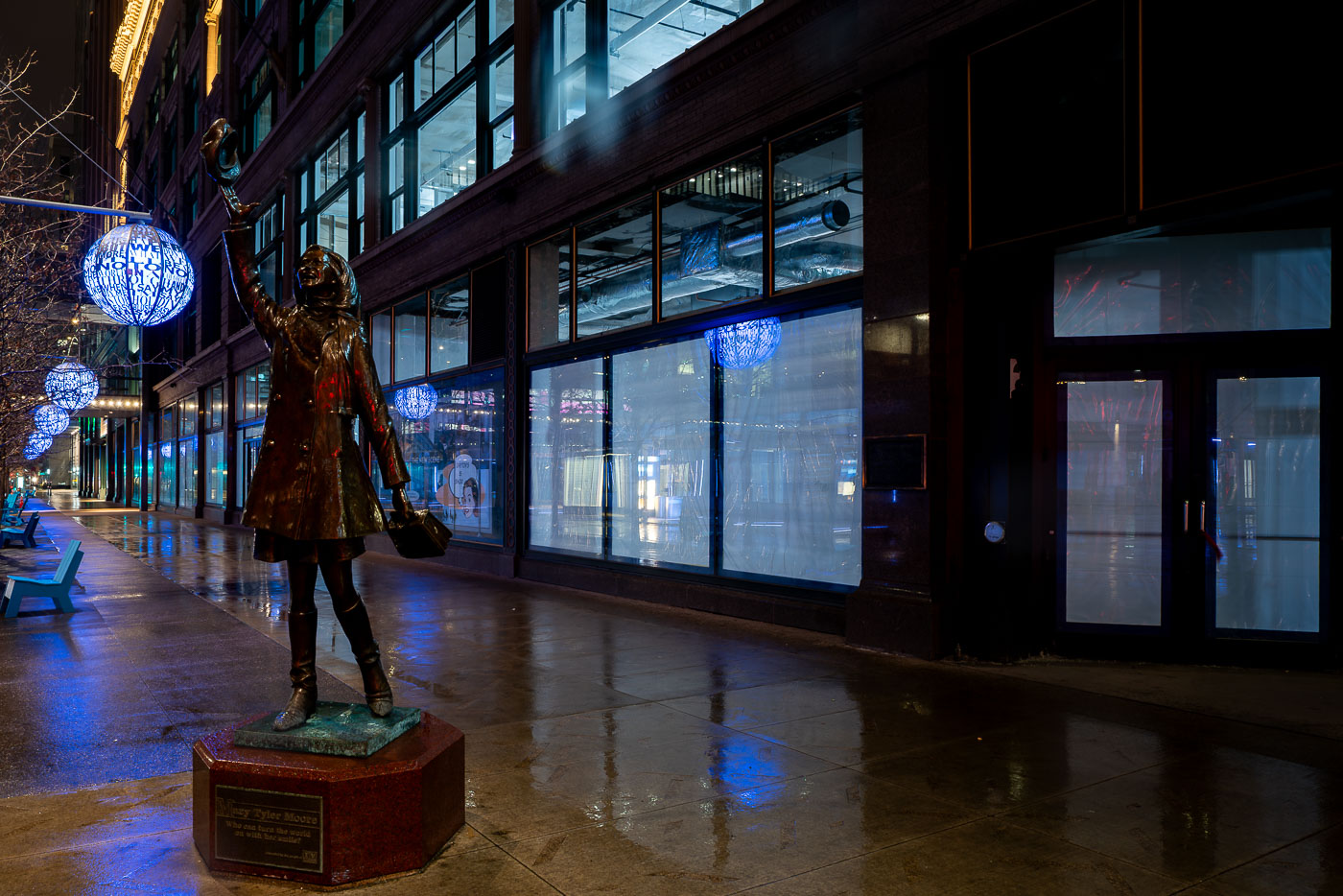
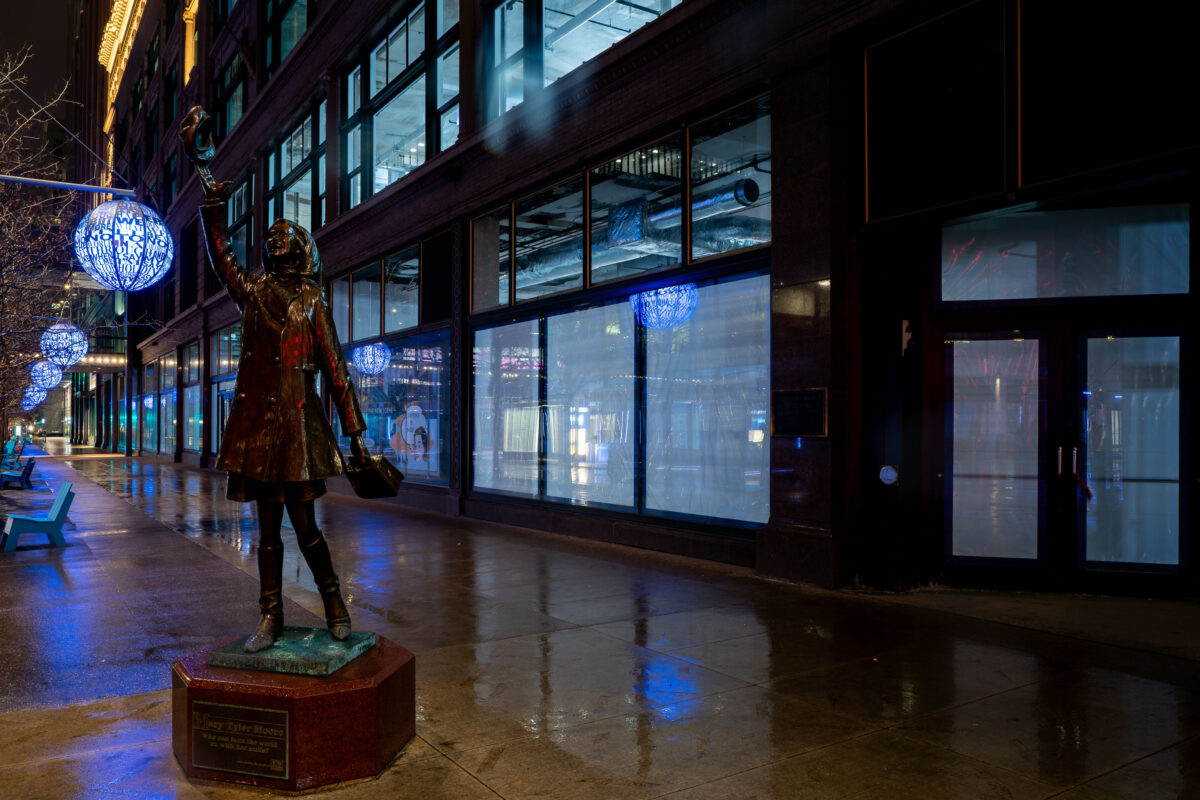
Mary Tyler Moore Statue on an Empty Nicollet Mall
The iconic bronze statue of Mary Tyler Moore along Nicollet Mall in downtown Minneapolis, depicting the memorable hat-tossing moment from the opening of The Mary Tyler Moore Show, which first aired in 1970 and helped cement Minneapolis in television history. Installed in 2002, the statue symbolizes the city’s cultural association with the show’s themes of independence and optimism. At the time of this photograph, Nicollet Mall—normally a busy pedestrian and transit corridor—appears unusually empty, reflecting the early days of COVID-19 shutdowns that drastically reduced public presence in city centers. Blue public art lanterns, added during street improvements completed in 2017, line the renovated streetscape, emphasizing Nicollet Mall’s evolution as both a commercial and cultural landmark.

Mary Tyler Moore Statue on an Empty Nicollet Mall

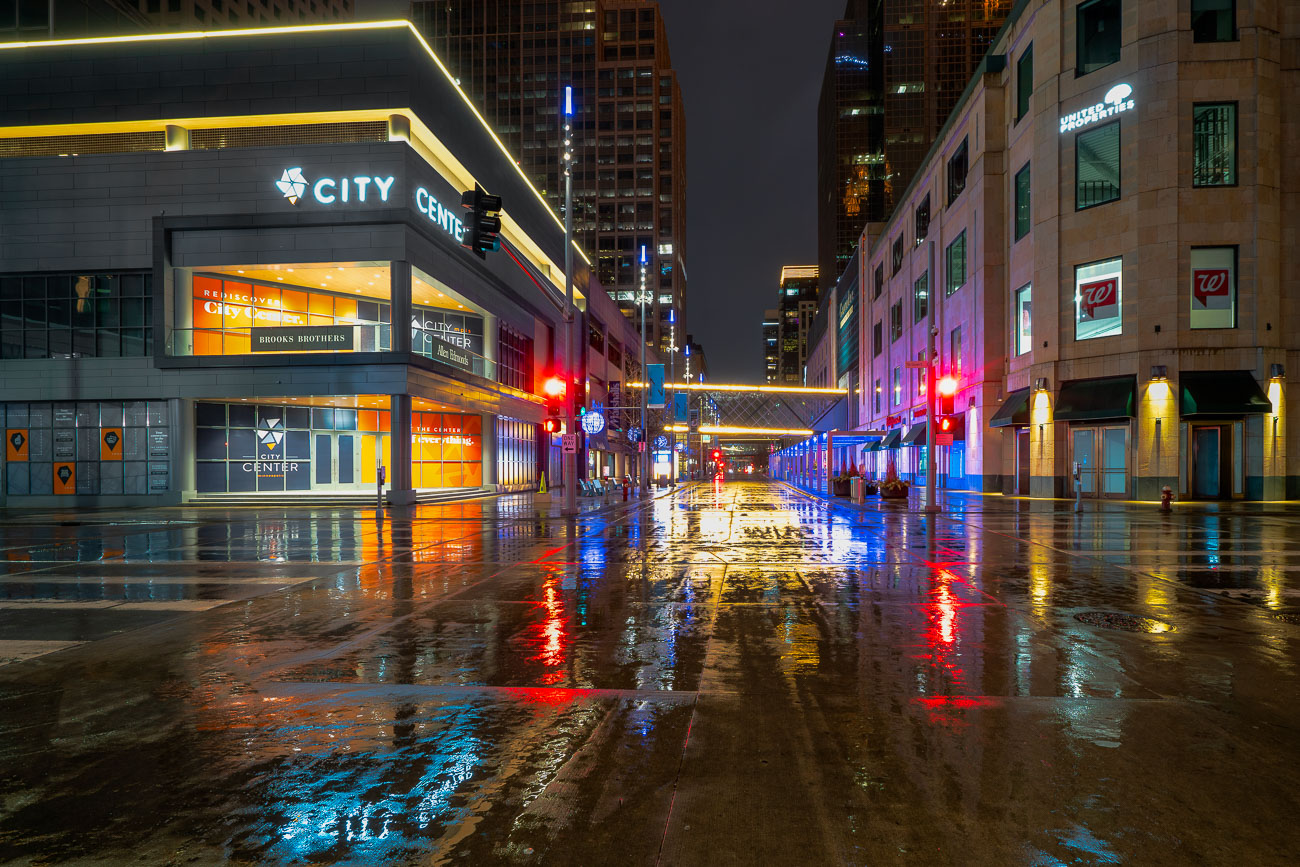
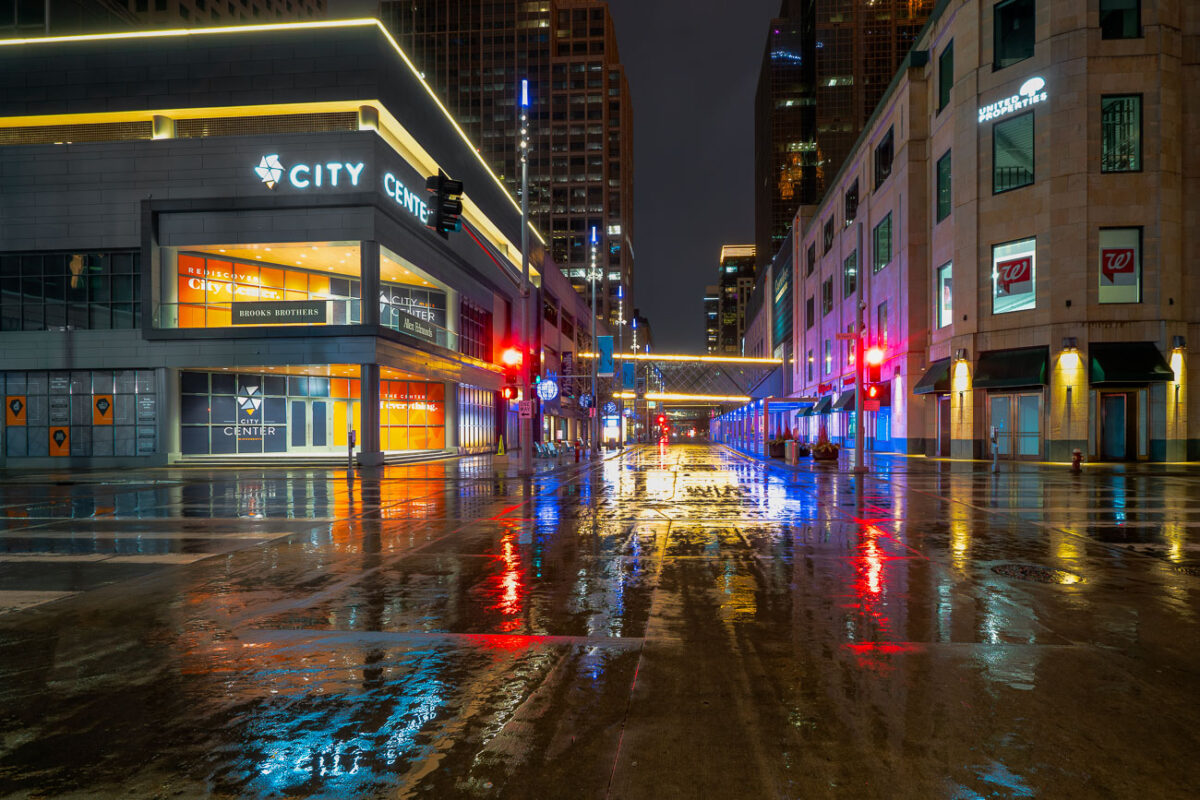
Rainy night outside CIty Center on Nicolelt Mall in Minneapolis.
Nicollet Mall in Downtown Minneapolis is reflected in the wet pavement on a rainy night in early 2020, during the initial phase of the COVID-19 pandemic.

Rainy Night on Nicollet Mall, Downtown Minneapolis, Early COVID-19
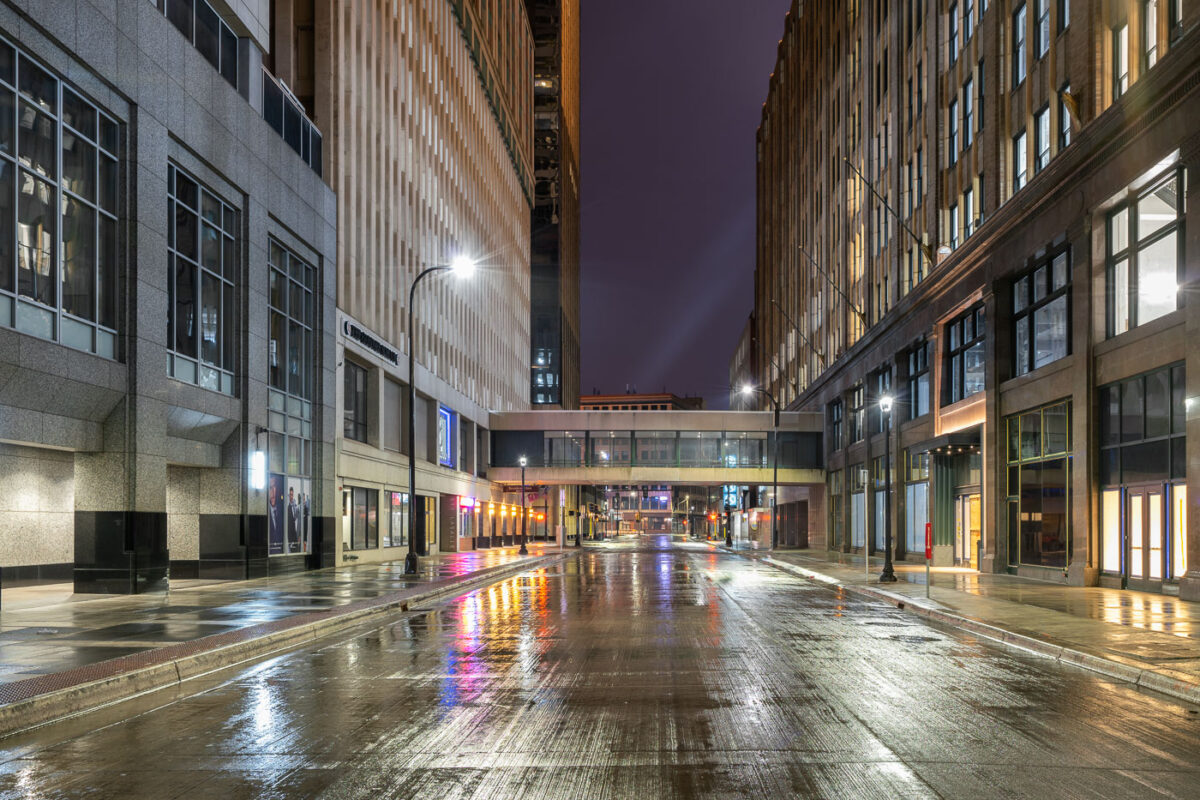
Looking down S 8th Street during COVID19 on rainy night
South 8th Street in downtown Minneapolis is seen on March 22, 2020, during the early stages of the COVID-19 pandemic. The street, typically bustling with activity, are empty.

Downtown Minneapolis S 8th St During COVID-19 Pandemic
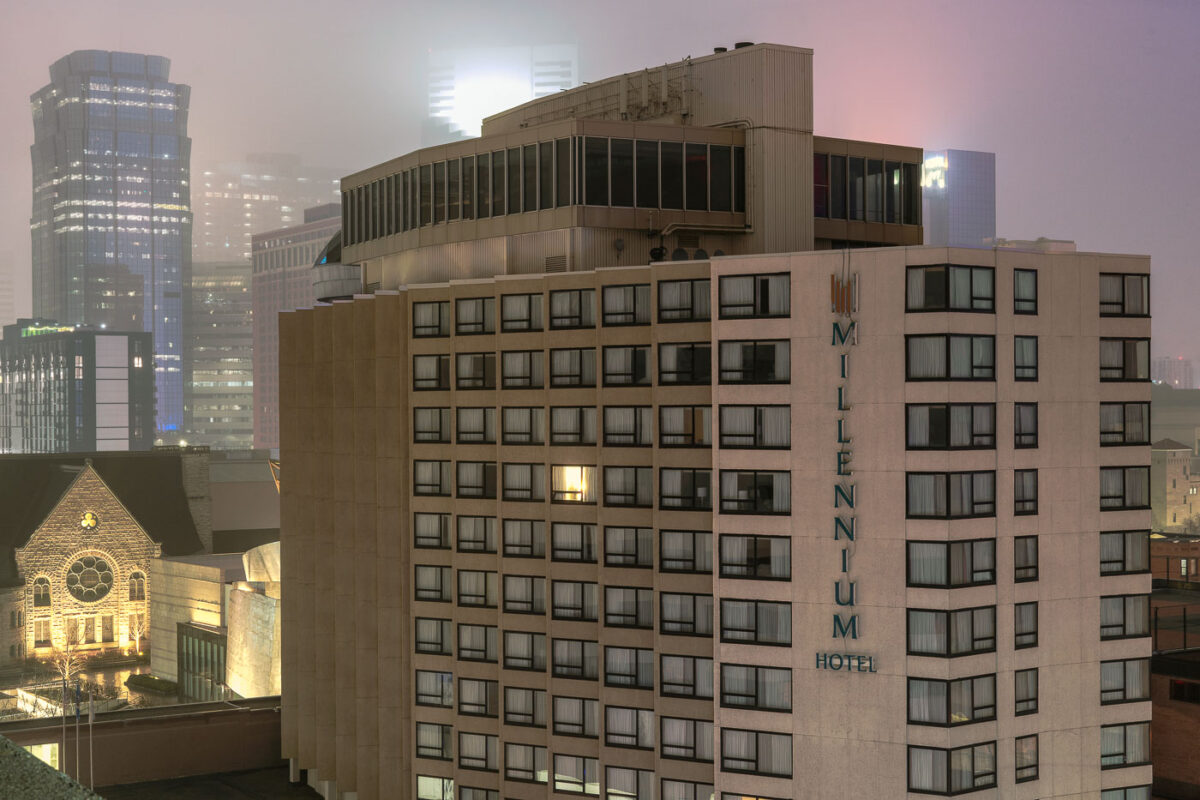
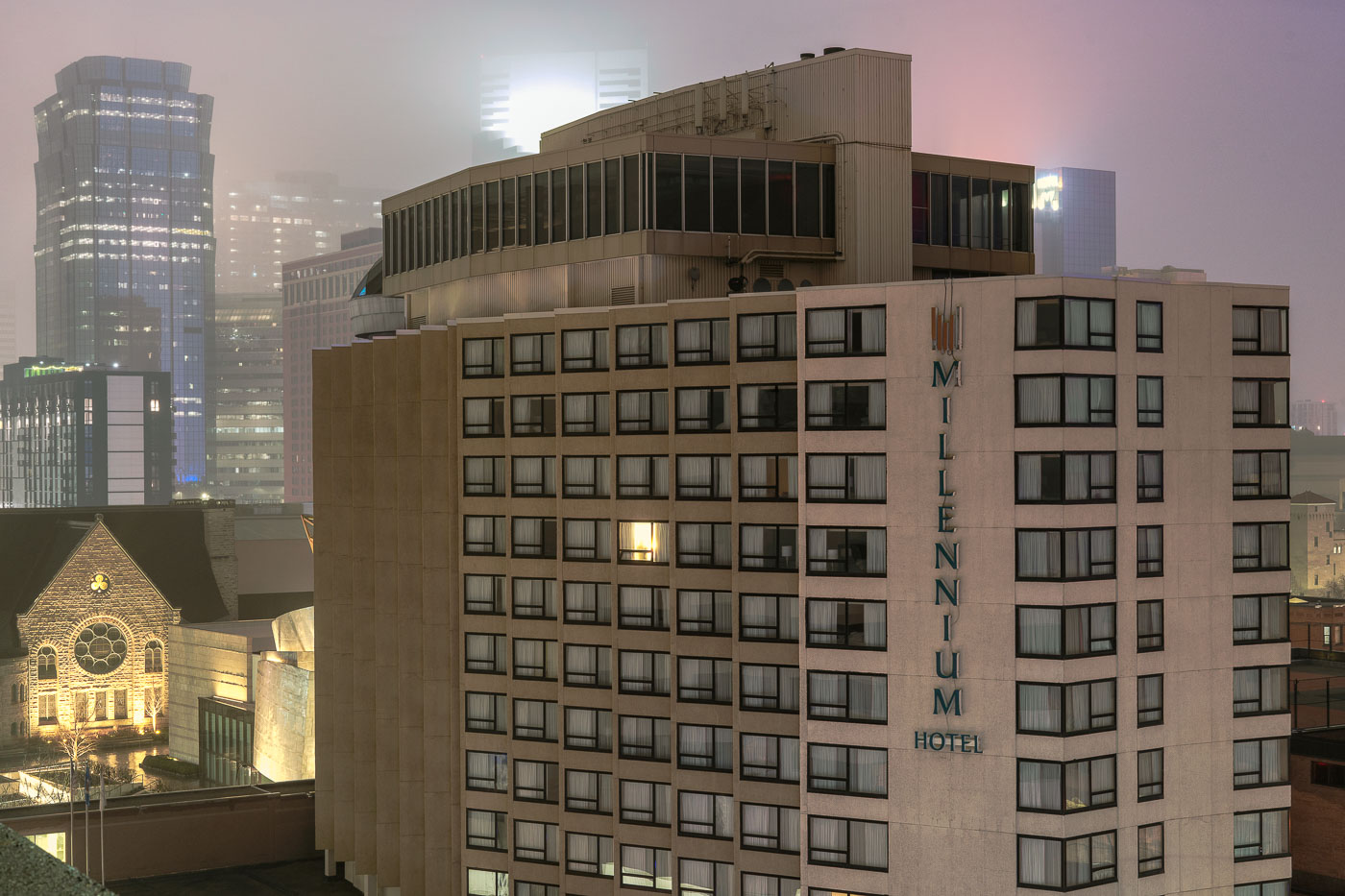
Millennium Hotel on Nicollet Mall in downtown Minneapolis with one lit window among darkened guest rooms during COVID-19 lockdown.
The Millennium Hotel stands at 1313 Nicollet Mall in downtown Minneapolis, a 14-story tower near the Minneapolis Convention Center. Nicollet Mall, the street it fronts, opened in 1967 as downtown Minneapolis's main pedestrian and transit street. Only one window lit up during COVID-19 lockdown.

Only One Light on at Millennium Hotel on Nicollet Mall
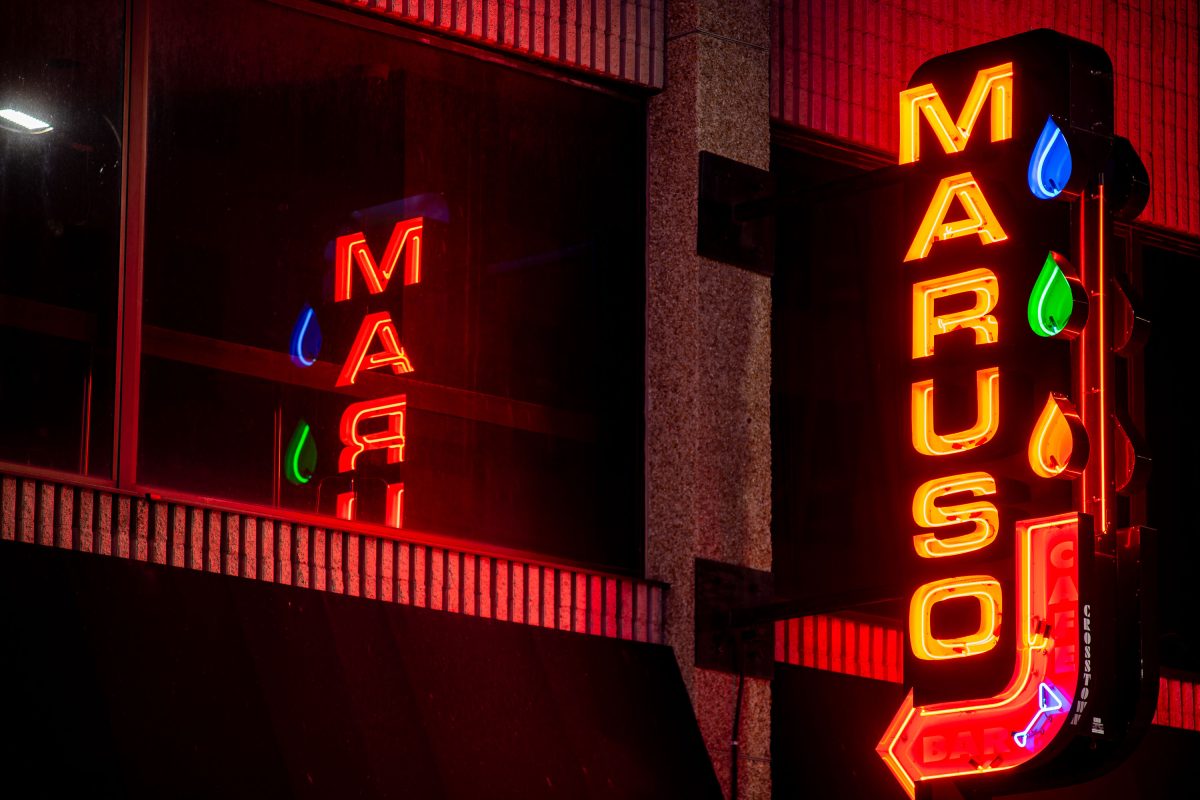
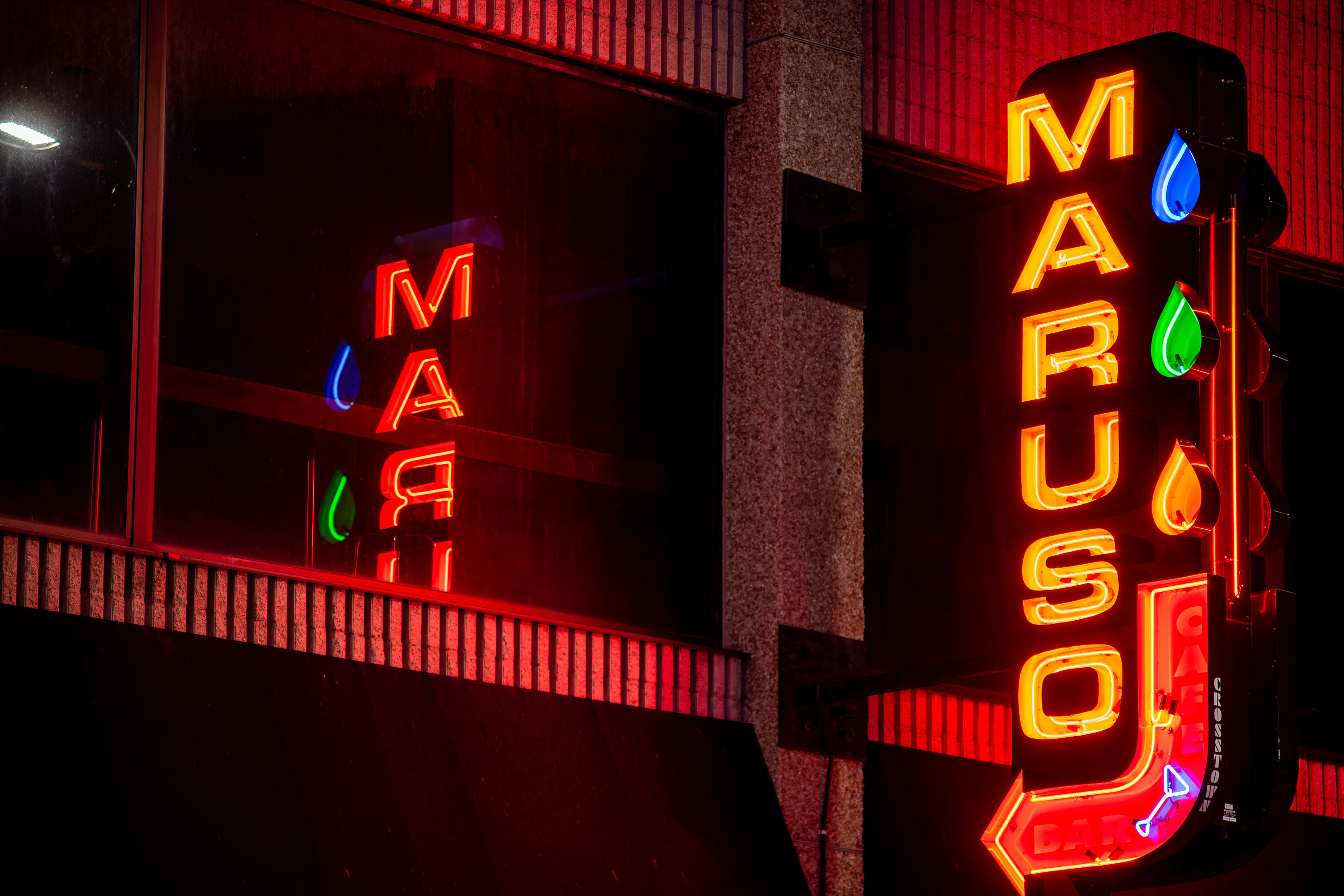
Maruso Sign in Downtown Minneapolis
The lit up Maruso neon sign on Hennepin Avenue in Downtown Minneapolis.

Maruso Sign in Downtown Minneapolis

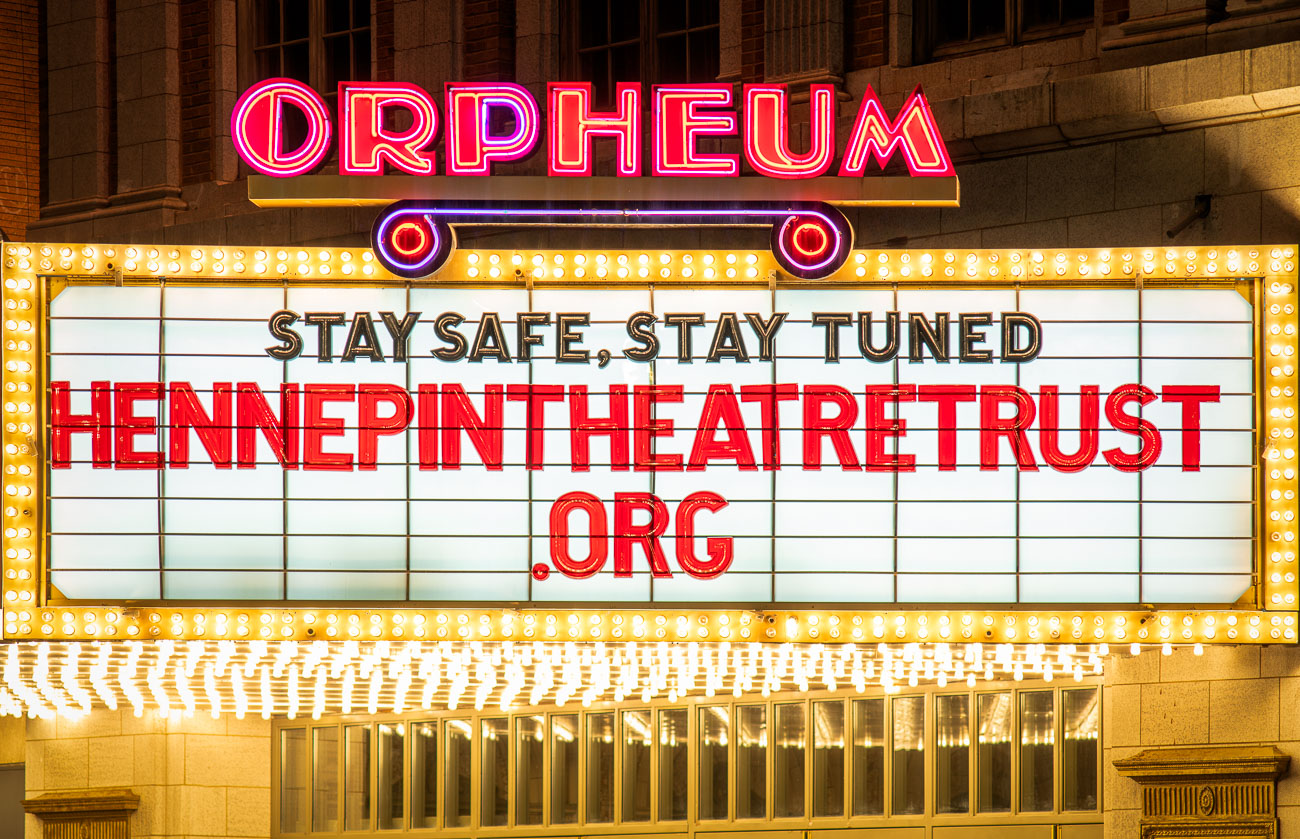
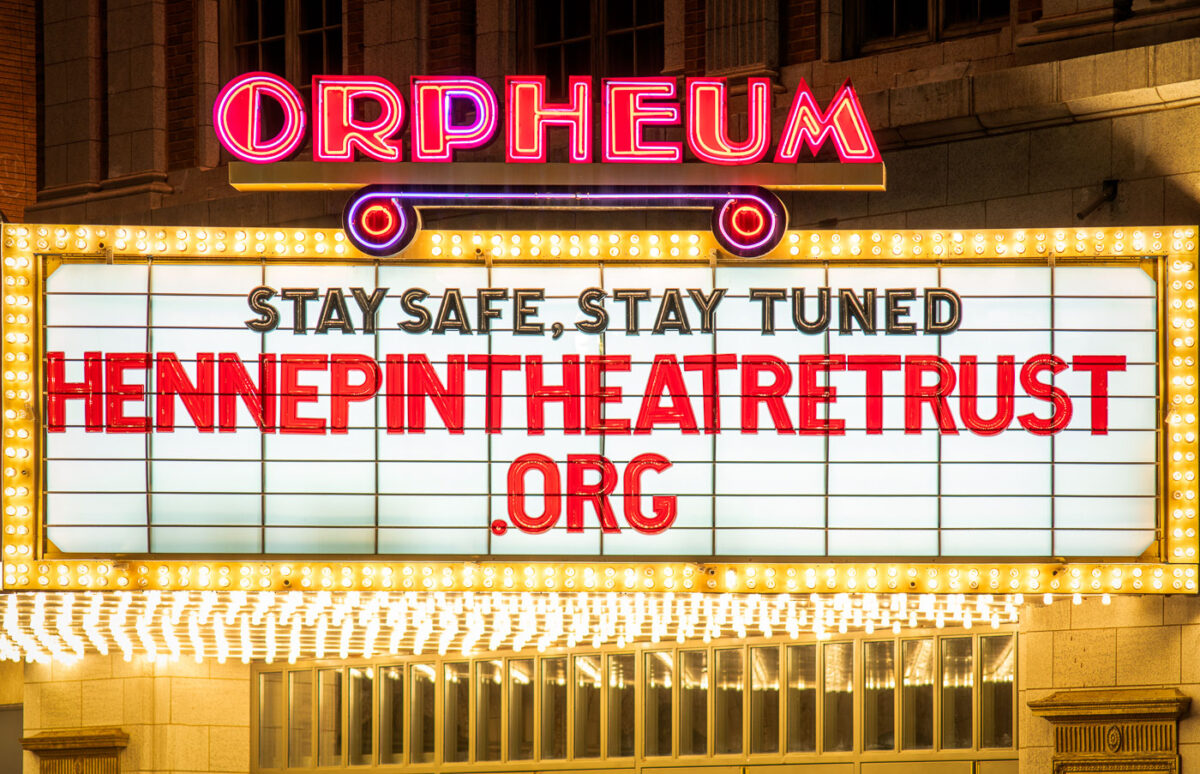
Orpheum Theatre marquee displays "Stay Safe, Stay Tuned" message on Hennepin Avenue during COVID-19 closure.
The Orpheum Theatre, at 910 Hennepin Avenue, opened in 1921 as the Hennepin Theatre and later operated as a vaudeville and movie house before its 1980s conversion to a live performance venue. It's now owned and operated by Hennepin Theatre Trust, part of the city's Hennepin Avenue theater district alongside the State and Pantages theaters. The marquee's message, directing passersby to HennepinTheatreTrust.org, went up during the closures ordered under Minnesota's COVID-19 stay-at-home order in the spring of 2020, when the Orpheum and other performance venues went dark to the public.

“Stay Safe, Stay Tuned” on the Orpheum Theatre Marquee
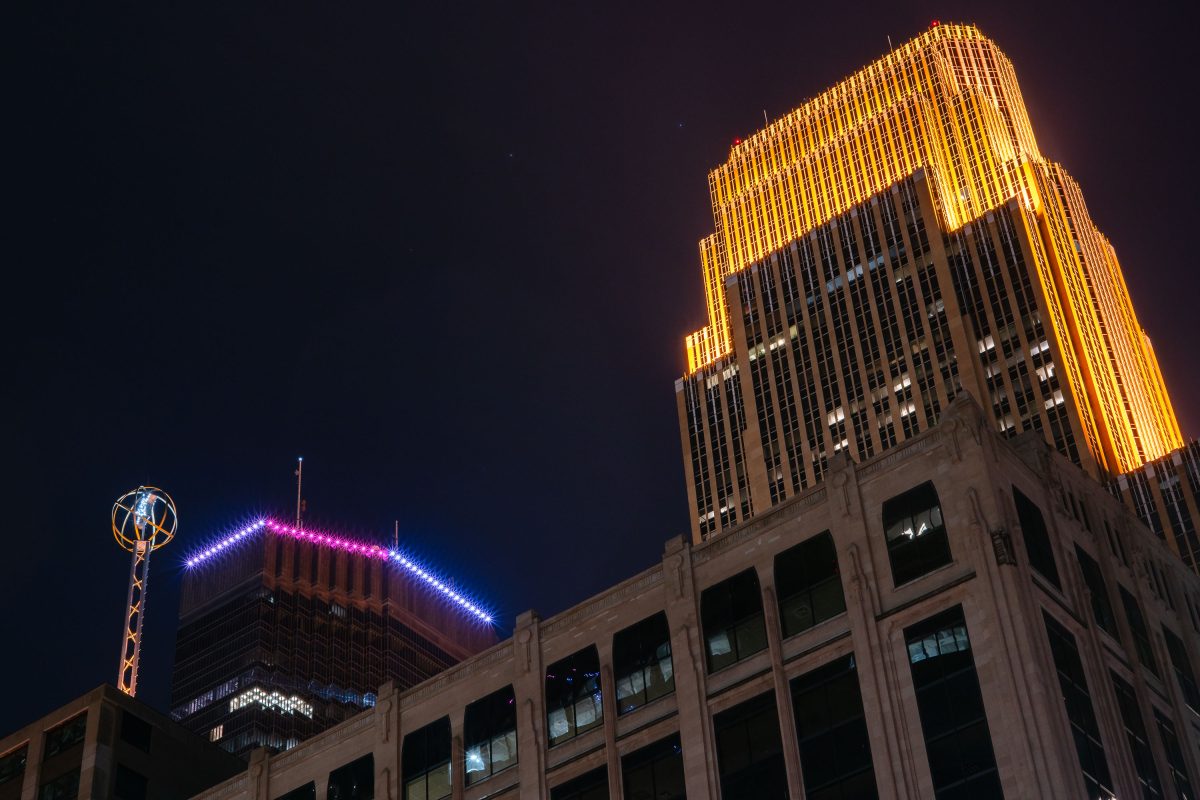
Northstar Center, IDS Center and Wells Fargo Center at night
The IDS Center and Wells Fargo Center in downtown Minneapolis with the star visible on top of the Northstar Center.

Northstar Center, IDS Center and Wells Fargo Center at night

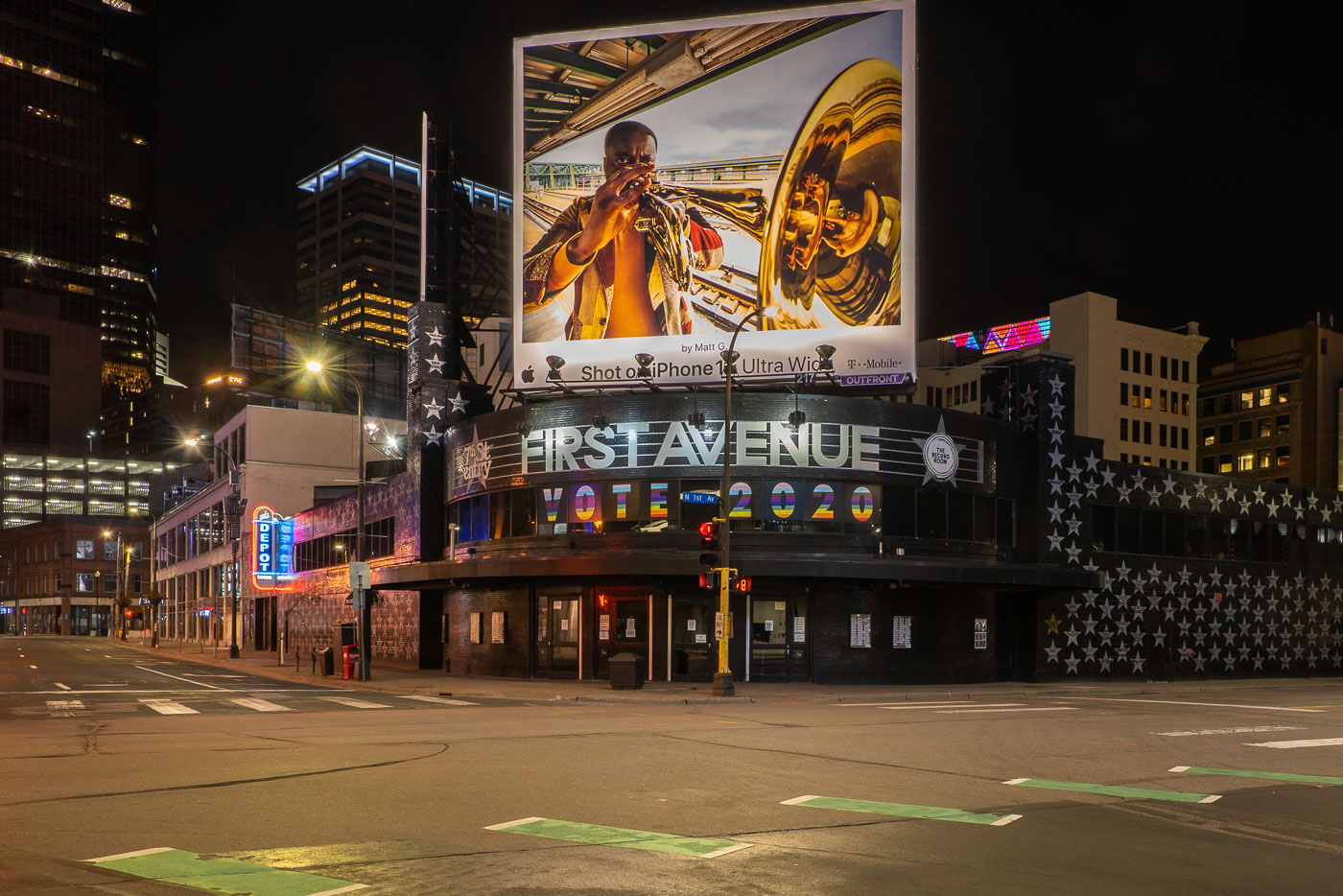
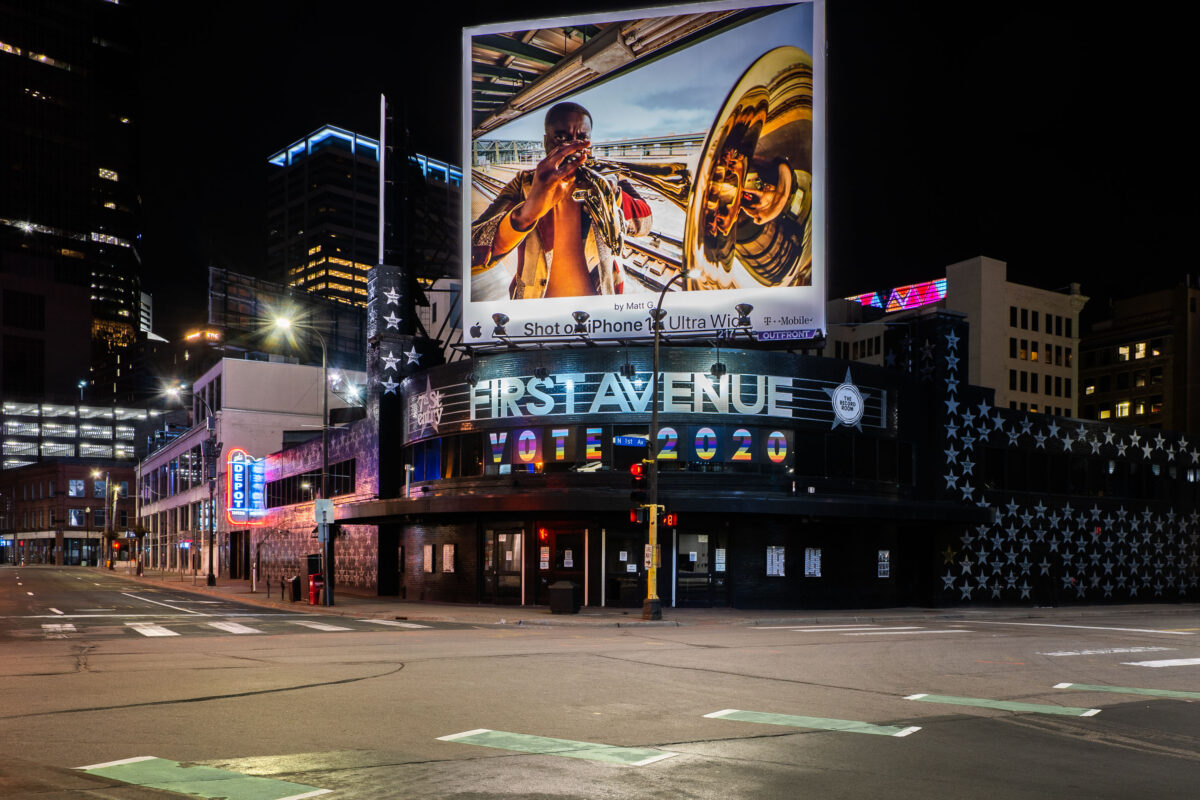
First Avenue concert venue displays large VOTE 2020 sign across its illuminated storefront in downtown Minneapolis.
First Avenue occupies a former Greyhound bus depot at 701 First Avenue North, built in 1937. The club opened in its current form in 1970 and has operated continuously except for a brief bankruptcy closure in 2004. Its exterior is covered in silver stars, each bearing the name of a musician who has performed there, a tradition that began in the 1980s. The venue gained international attention after Prince filmed key s of "Purple Rain" there in 1983, cementing its reputation as one of the country's best-known independent music clubs.

First Avenue’s “VOTE 2020” Marquee in Downtown Minneapolis
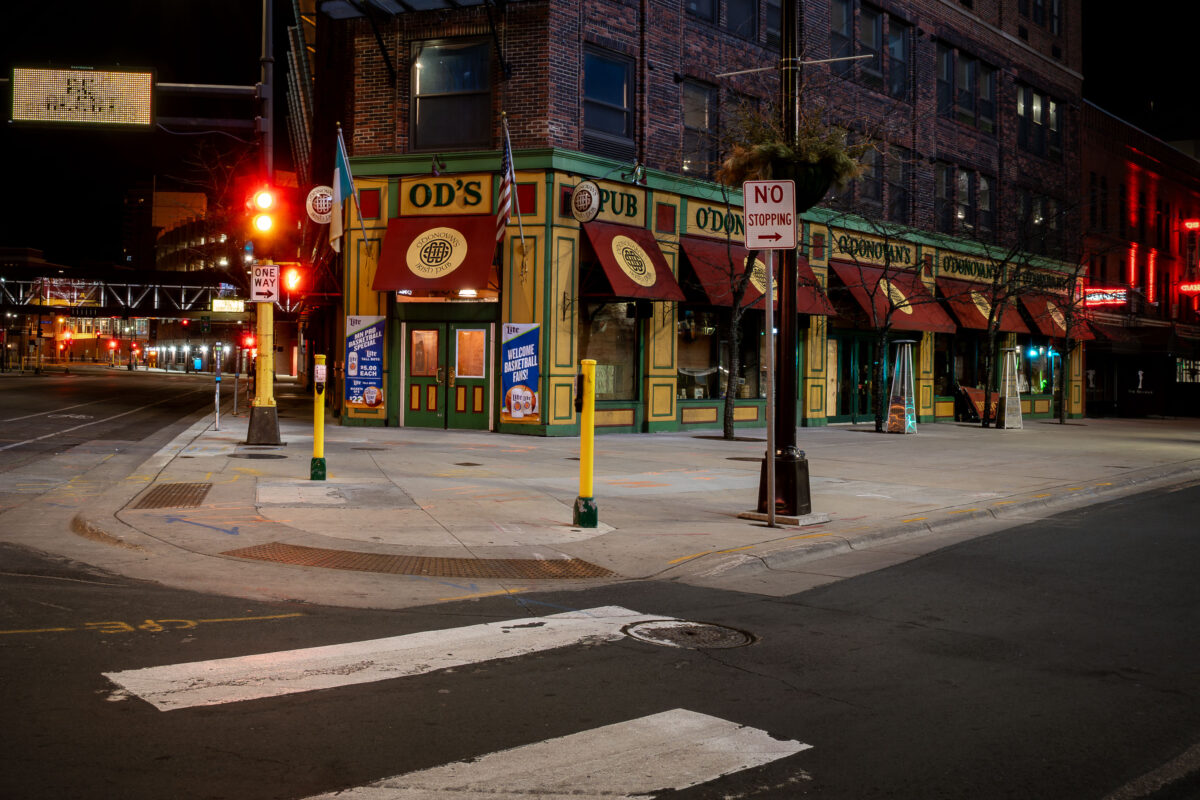
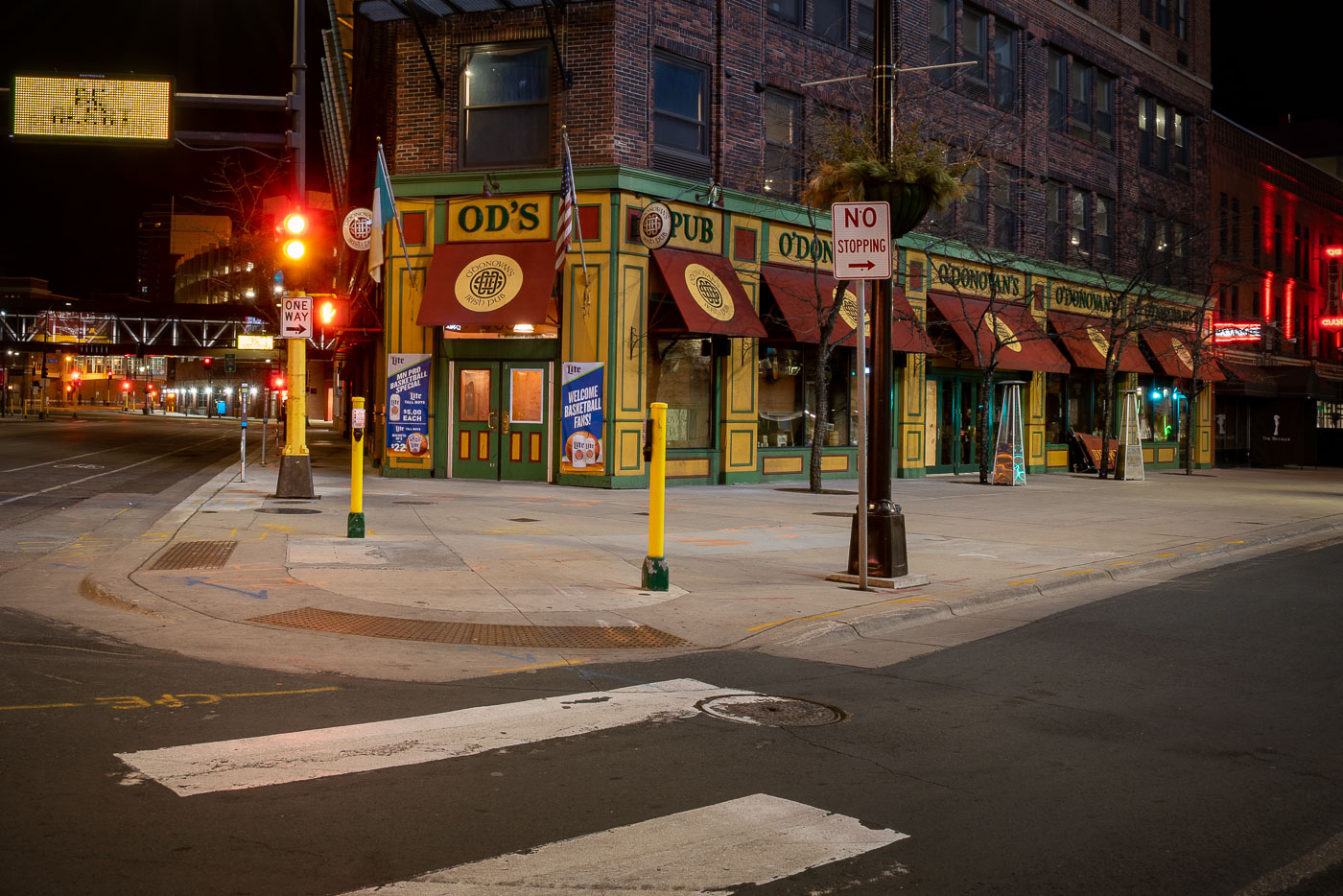
O'Donovan's Irish Pub, a yellow and green corner establishment in downtown Minneapolis, illuminated at night.
O'Donovan's Irish Pub occupies a corner storefront on First Avenue North in downtown Minneapolis, a few blocks from the First Avenue nightclub and the Warehouse District entertainment strip. The pub opened in 2004, and much of its interior — including the bar itself — was built in Ireland, then shipped and reassembled on site. It's part of a small local chain that also includes O'Donovan's locations elsewhere in the Twin Cities, though this Washington Avenue-area spot is the original.

O’Donovan’s Irish Pub on an Empty Downtown Minneapolis Corner
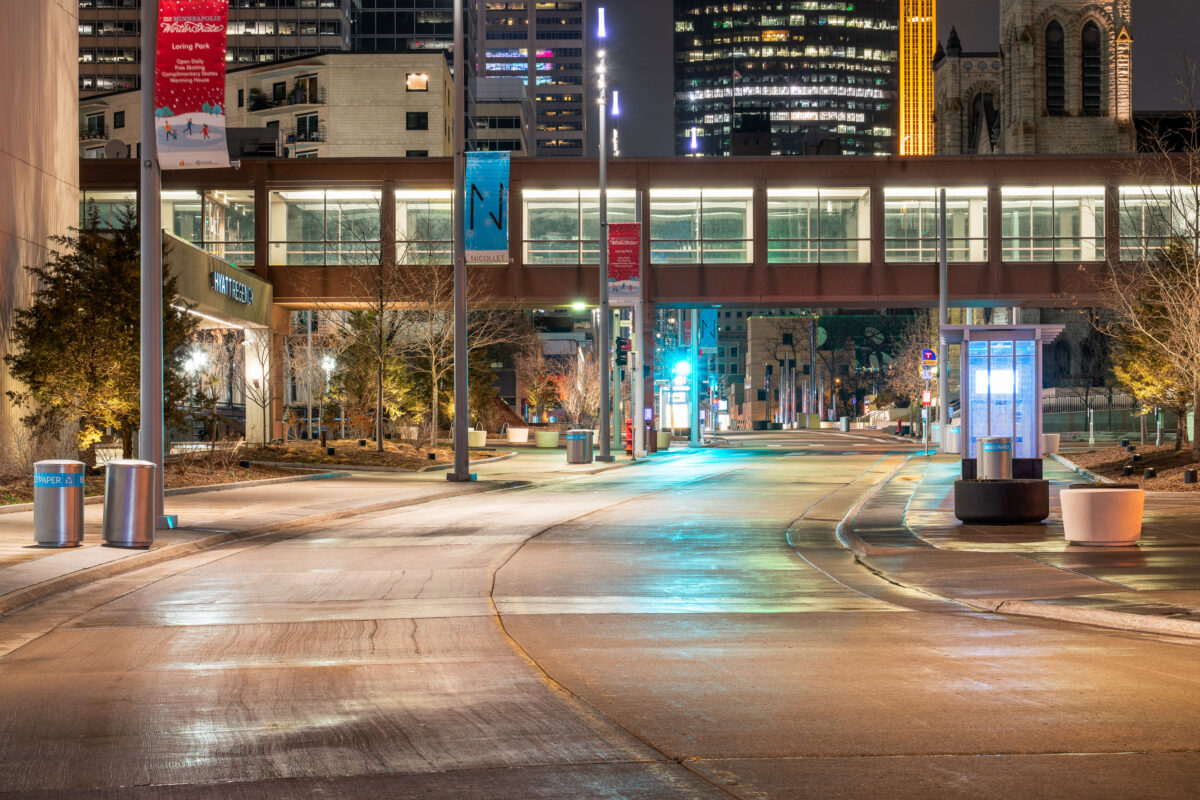
Nicollet Mall in Minneapolis during Stay At Home Orders
Nicollet Mall in downtown Minneapolis is seen during Minnesota's COVID-19 stay-at-home orders.

Nicollet Mall, Downtown Minneapolis During COVID-19 Stay-at-Home
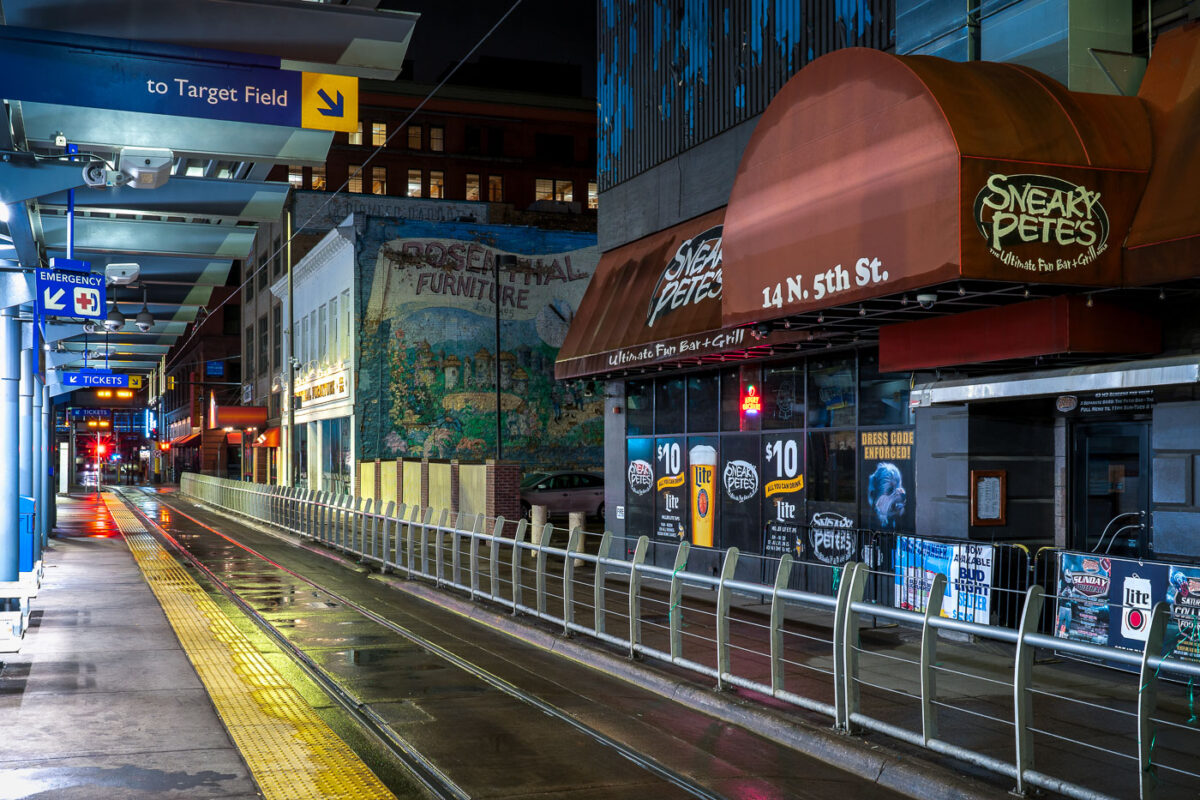
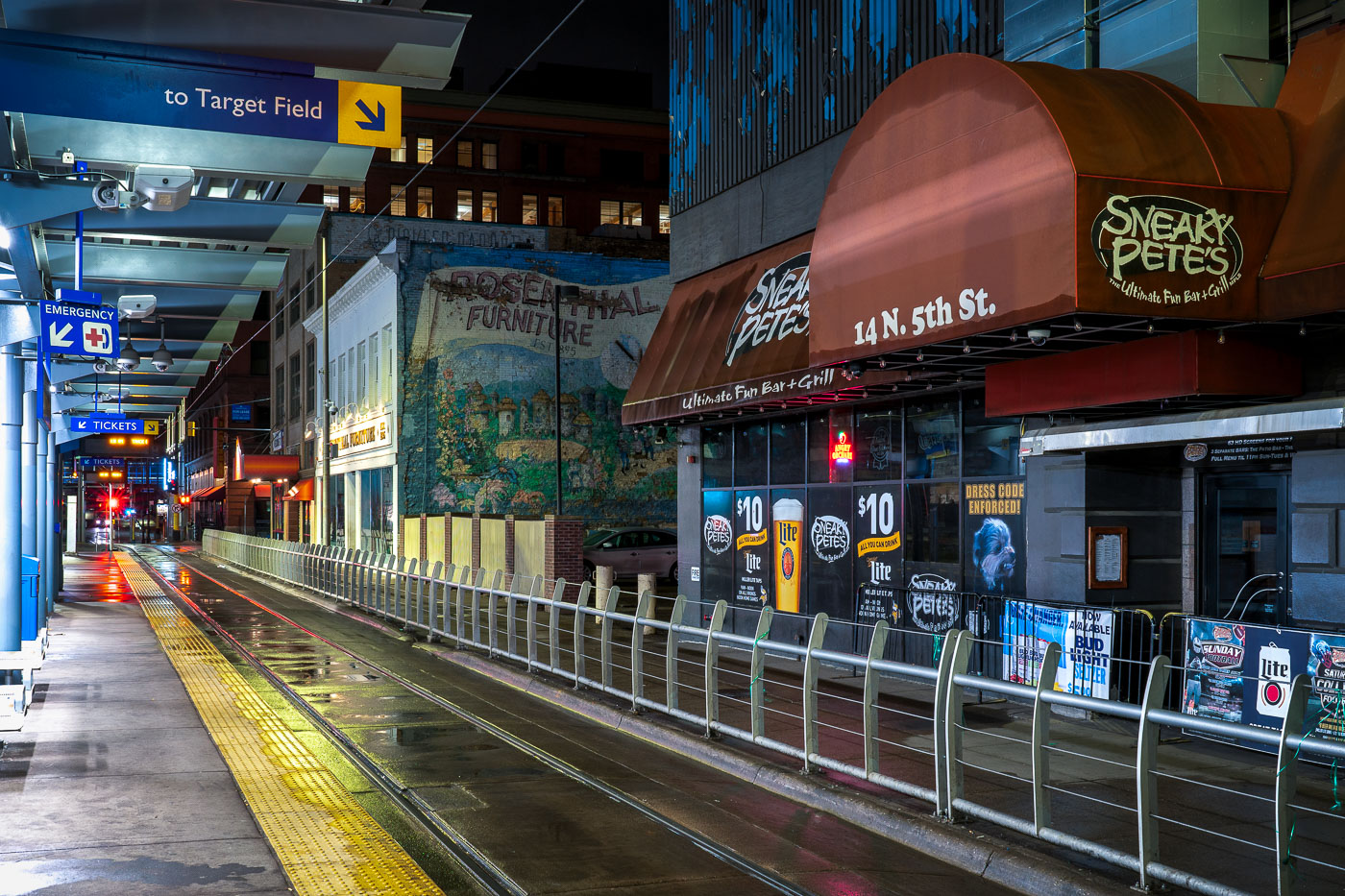
Sneaky Petes during covid19 stay at home orders
Sneaky Pete’s Bar at 14 N. 5th St. in downtown Minneapolis stands dark beside a METRO light rail platform on March 28, 2020, the first night of Minnesota’s COVID-19 stay-at-home order.

Sneaky Pete’s Bar, 14 N. 5th St., Minneapolis, COVID-19 Stay at Home Order
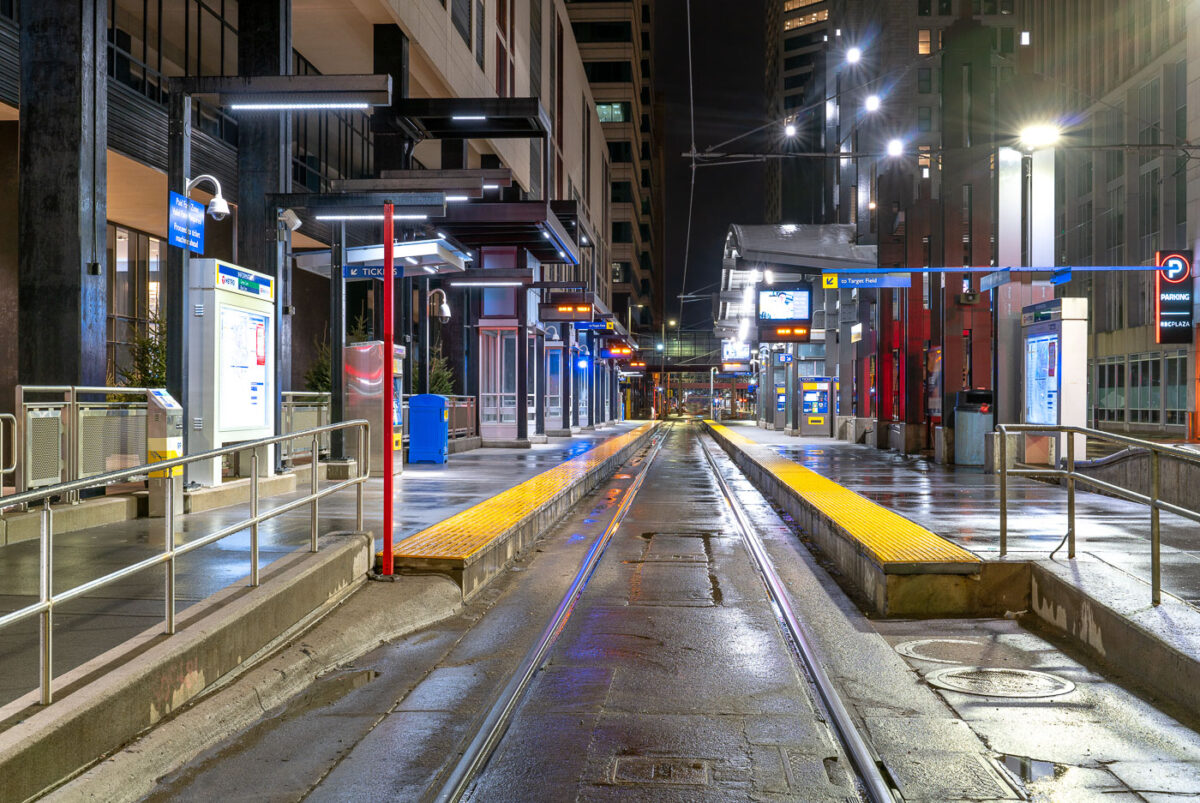
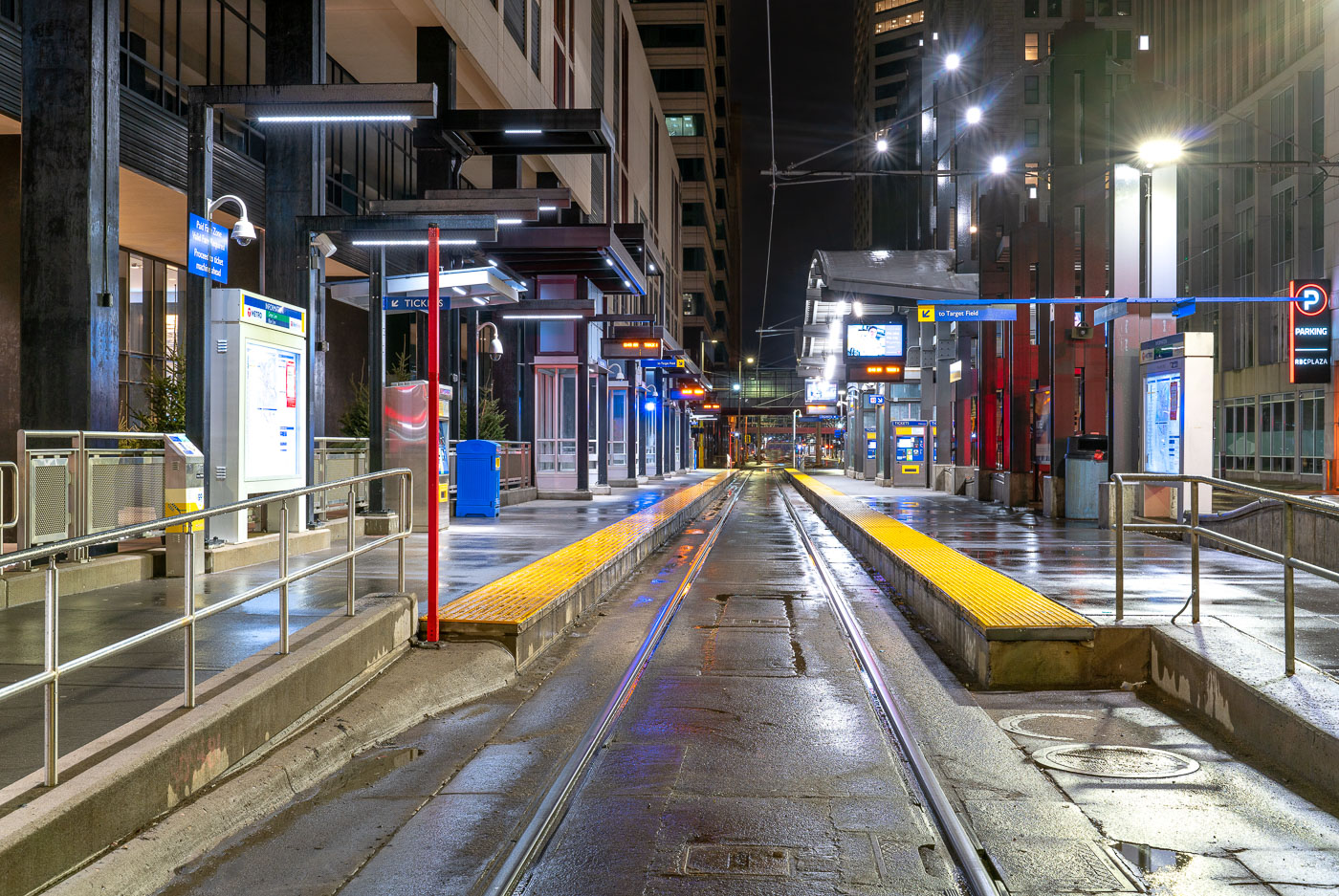
Nicollet Mall light rail station platform stretches empty at night during early COVID-19 pandemic closures in downtown
Nicollet Mall Station serves Metro Transit's Blue and Green Line trains along the transit mall in downtown Minneapolis. The Blue Line opened in 2004 as the region's first light rail line, running between downtown and the Mall of America; the Green Line, connecting downtown Minneapolis to downtown St. Paul, began service in 2014. The station sits along Nicollet Mall, a pedestrian and transit corridor that has restricted private vehicle traffic since the 1960s. Overhead signage points riders toward Target Field, home of the Minnesota Twins, a short walk to the north. This dates to late March 2020, during the early weeks of Minnesota's COVID-19 stay-at-home order, when ridership on the system dropped sharply from pre-pandemic levels.

A Rainy Night at Minneapolis’s Nicollet Mall Station
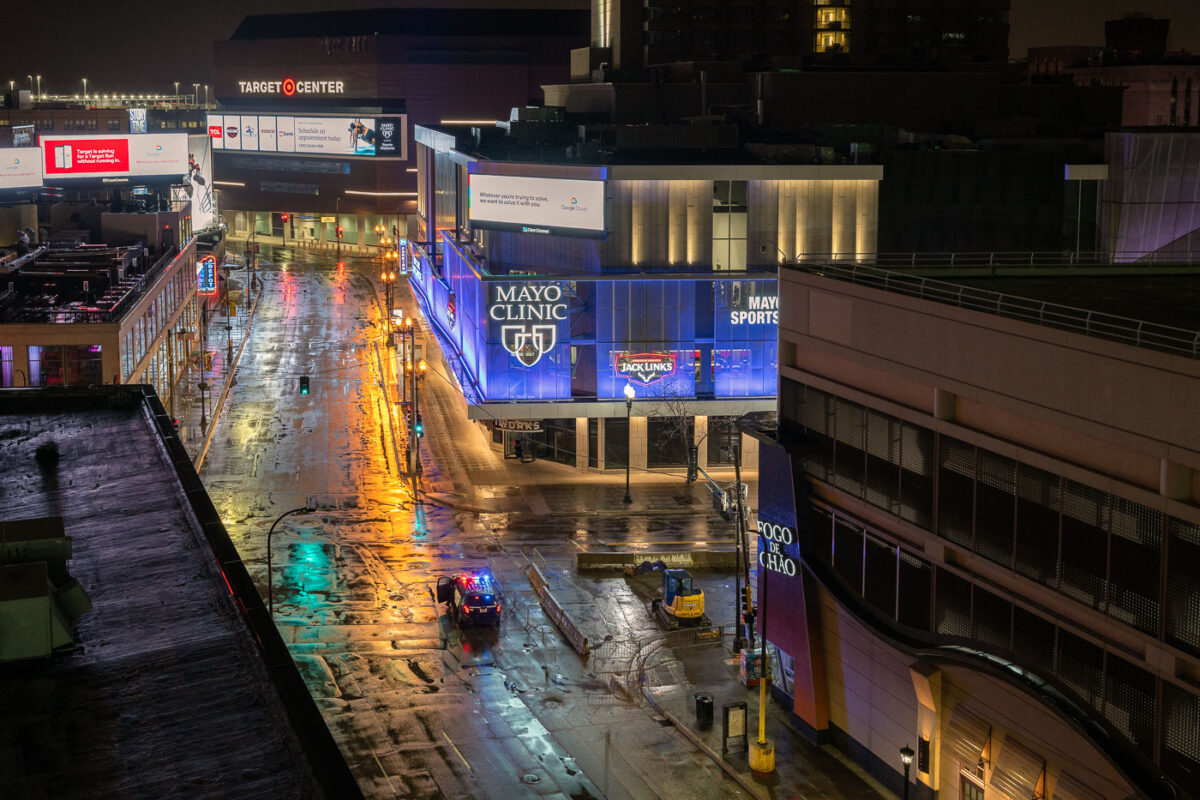
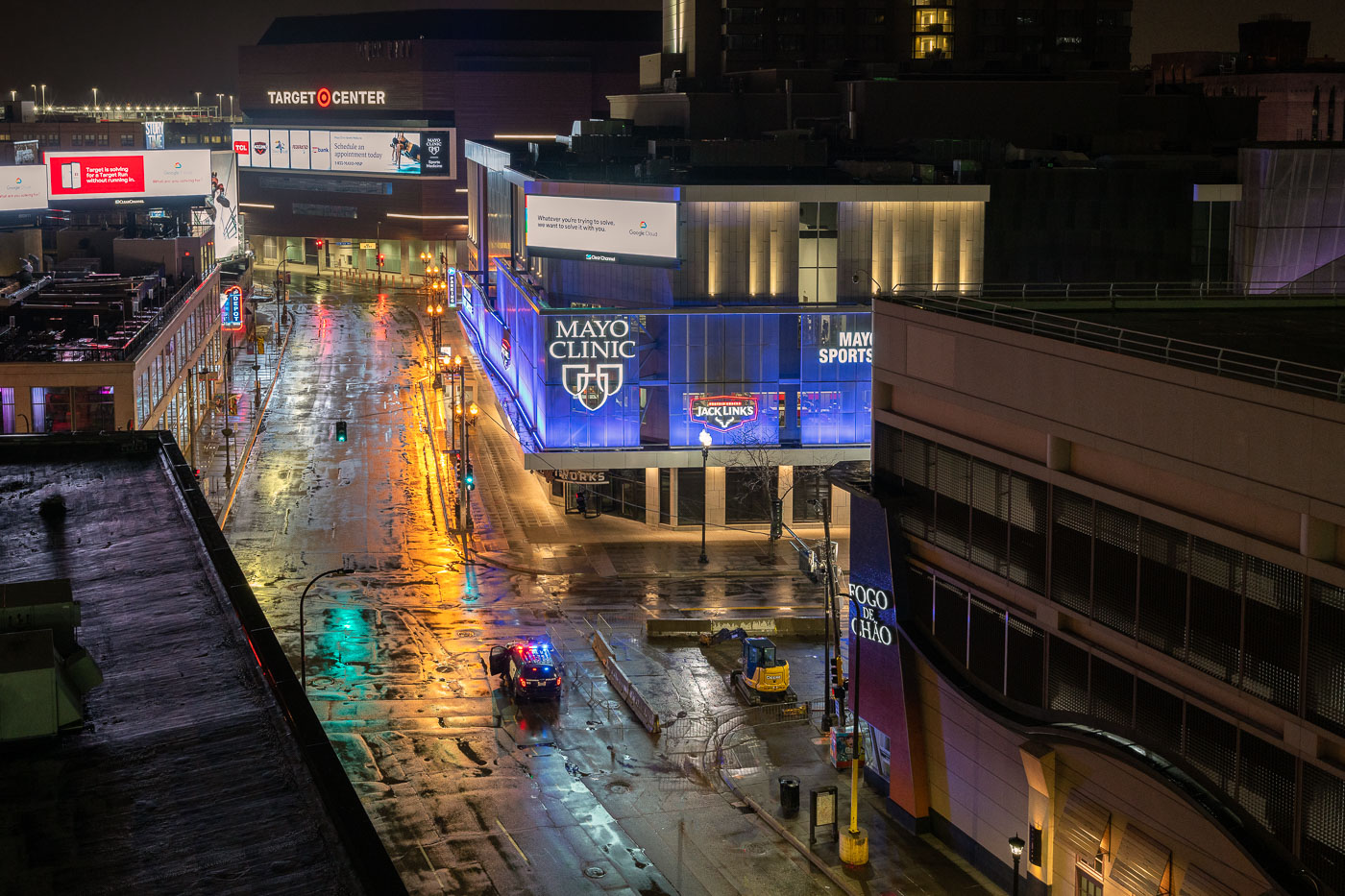
Police vehicle and excavator on wet Hennepin Avenue in downtown Minneapolis at night during COVID-19 shutdown.
Hennepin Avenue runs through downtown Minneapolis past Target Center, home of the Minnesota Timberwolves and Lynx, and Mayo Clinic Square, a mixed-use building housing retail space and the Minnesota Timberwolves' practice facility. The corridor sits at the center of the city's entertainment and sports district, connecting to First Avenue and the Warehouse District a few blocks south. In late March 2020, Minnesota's stay-at-home order emptied this stretch of its usual foot traffic, leaving only intermittent police and maintenance activity on the street.

Hennepin Avenue Near Target Center During Minneapolis’s COVID-19 Shutdown
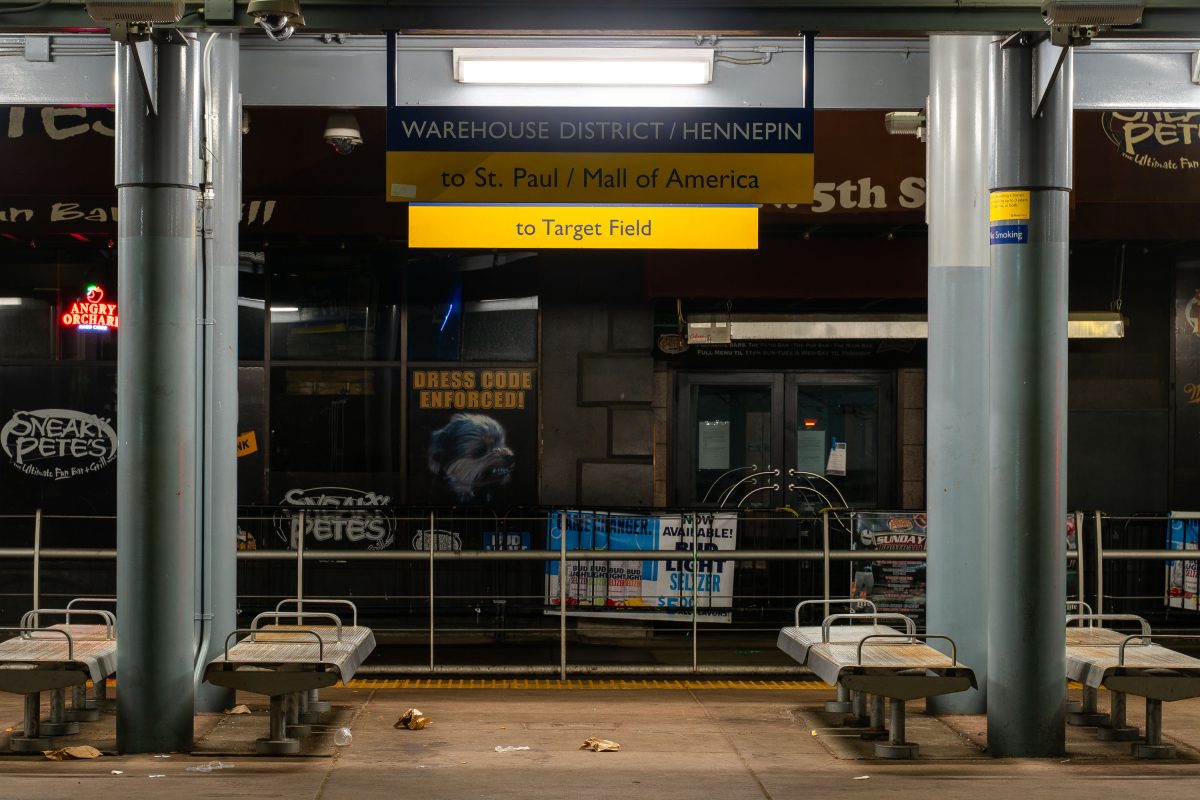
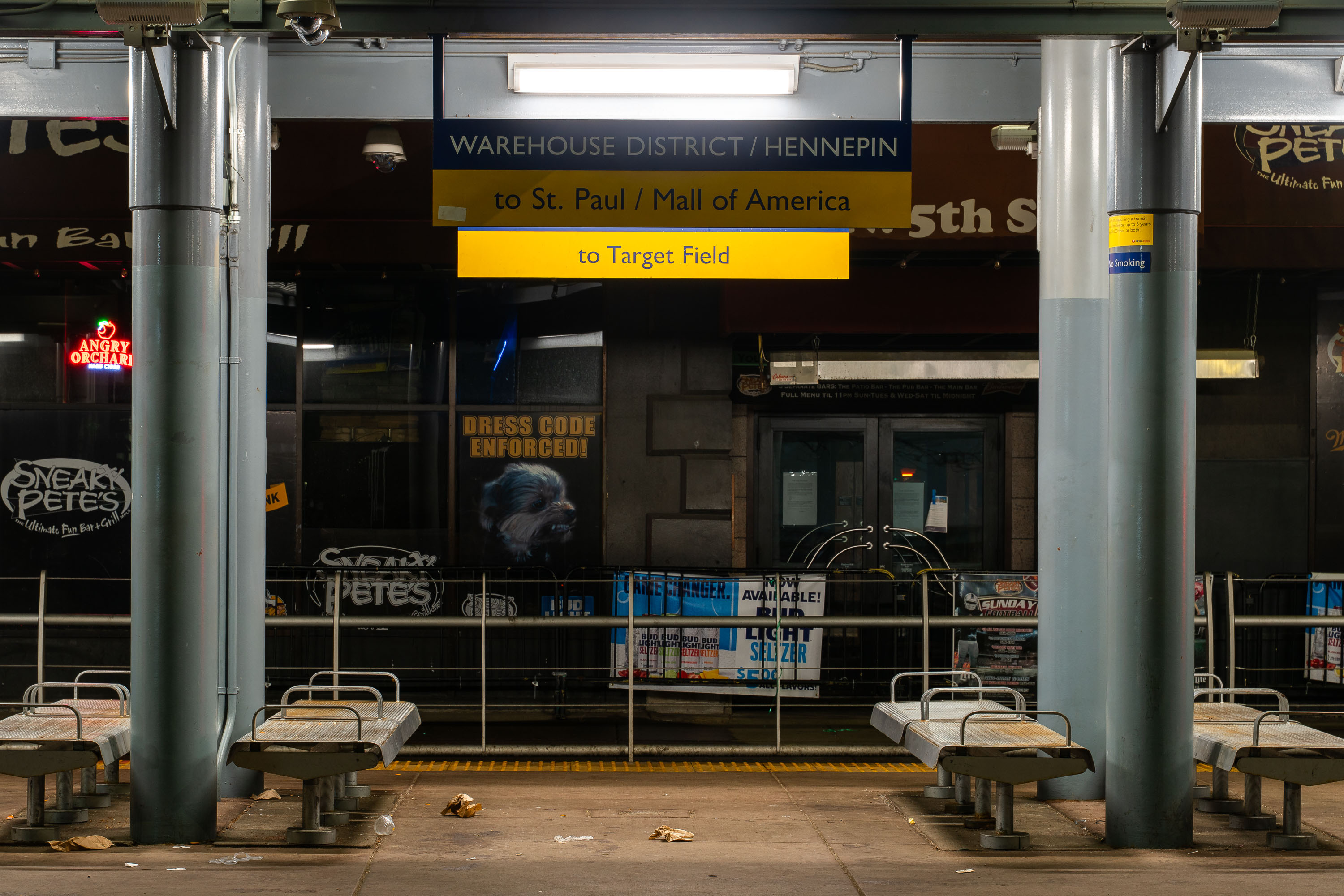
Warehouse District/Hennepin Avenue light rail station platform in downtown Minneapolis with directional signs to St. Paul.
The Warehouse District/Hennepin Avenue Station serves the METRO Blue and Green Lines in downtown Minneapolis, connecting riders to Target Field, St. Paul, and the Mall of America. Located near the Warehouse District entertainment area on 5th Street, the station provides transit access to nearby bars, clubs, and Target Field Station.

Empty Platform at Warehouse District/Hennepin Station, Minneapolis
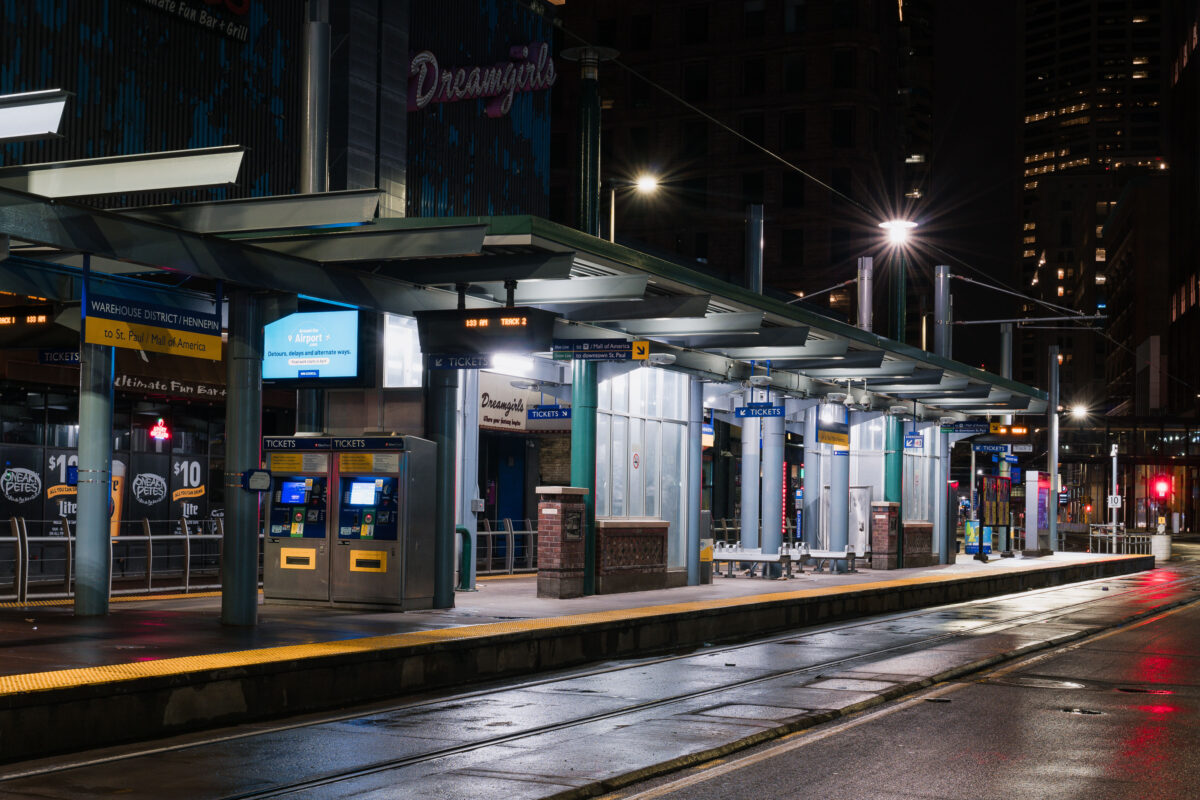
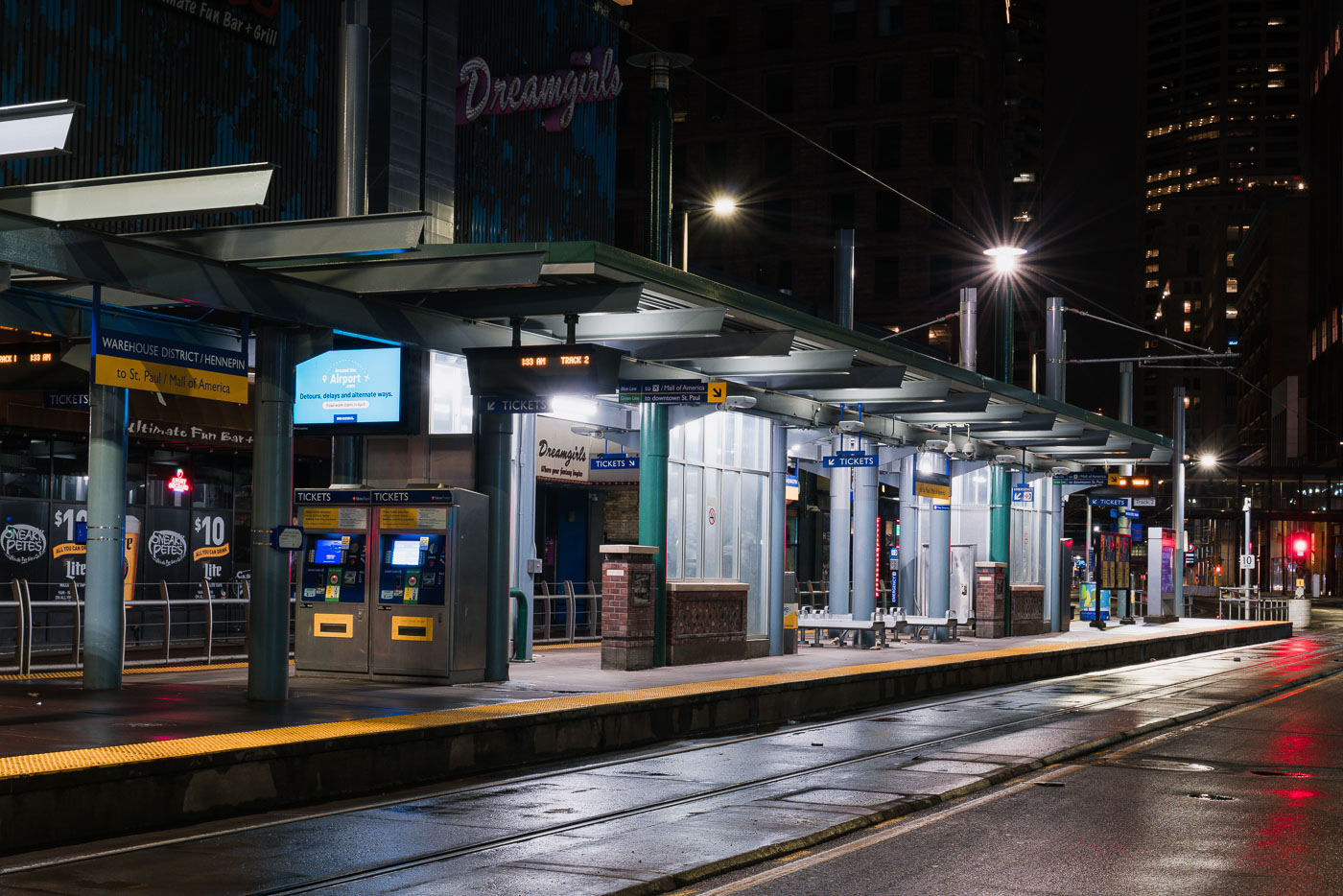
Warehouse District/Hennepin light rail station on North 5th Street in downtown Minneapolis, empty during early morning hours.
Warehouse District/Hennepin Station sits on North 5th Street in downtown Minneapolis, one of the stops serving Metro Transit's METRO Blue and Green Line trains. The station connects riders to downtown St. Paul and the Mall of America along one route, and to the Warehouse District's bars, theaters, and entertainment venues at street level. Metro Transit operates the regional light rail system, which opened its first line in 2004. This platform recorded far lower ridership in late March 2020, after Minnesota's statewide stay-at-home order took effect during the early weeks of the COVID-19 pandemic.

Warehouse District/Hennepin Station at Night, Minneapolis
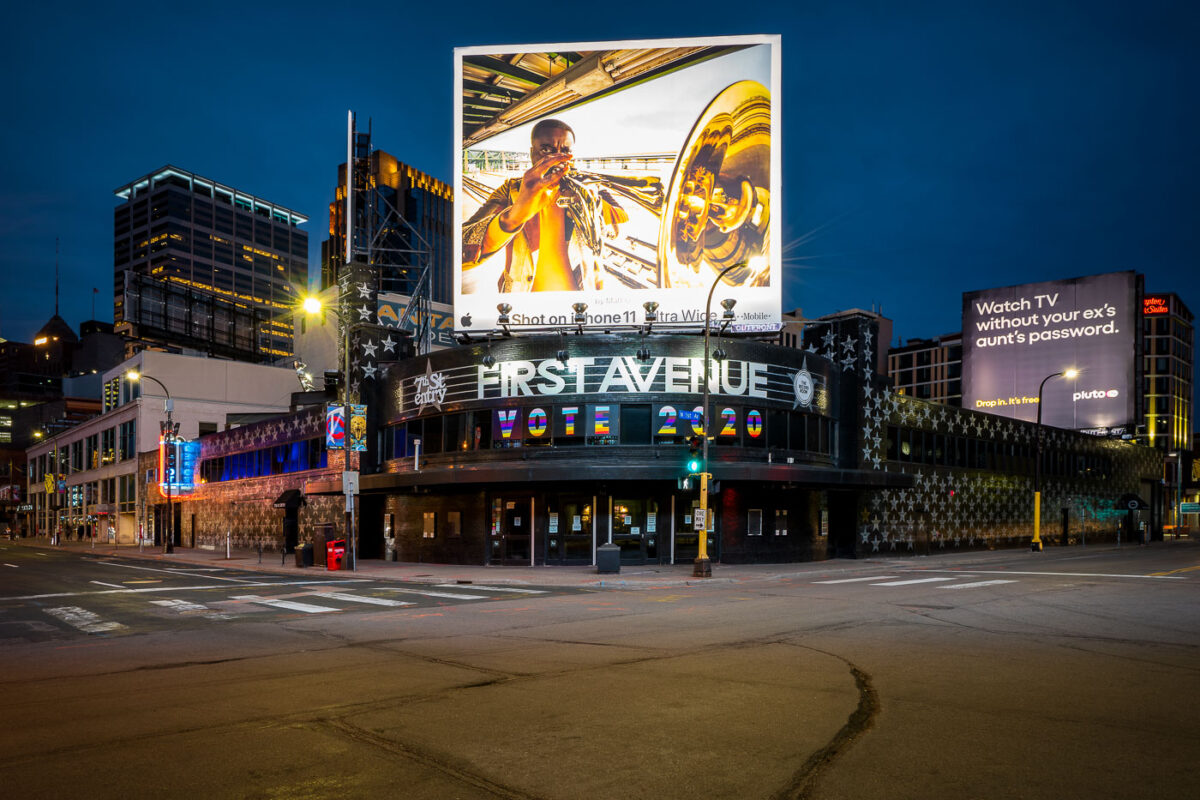
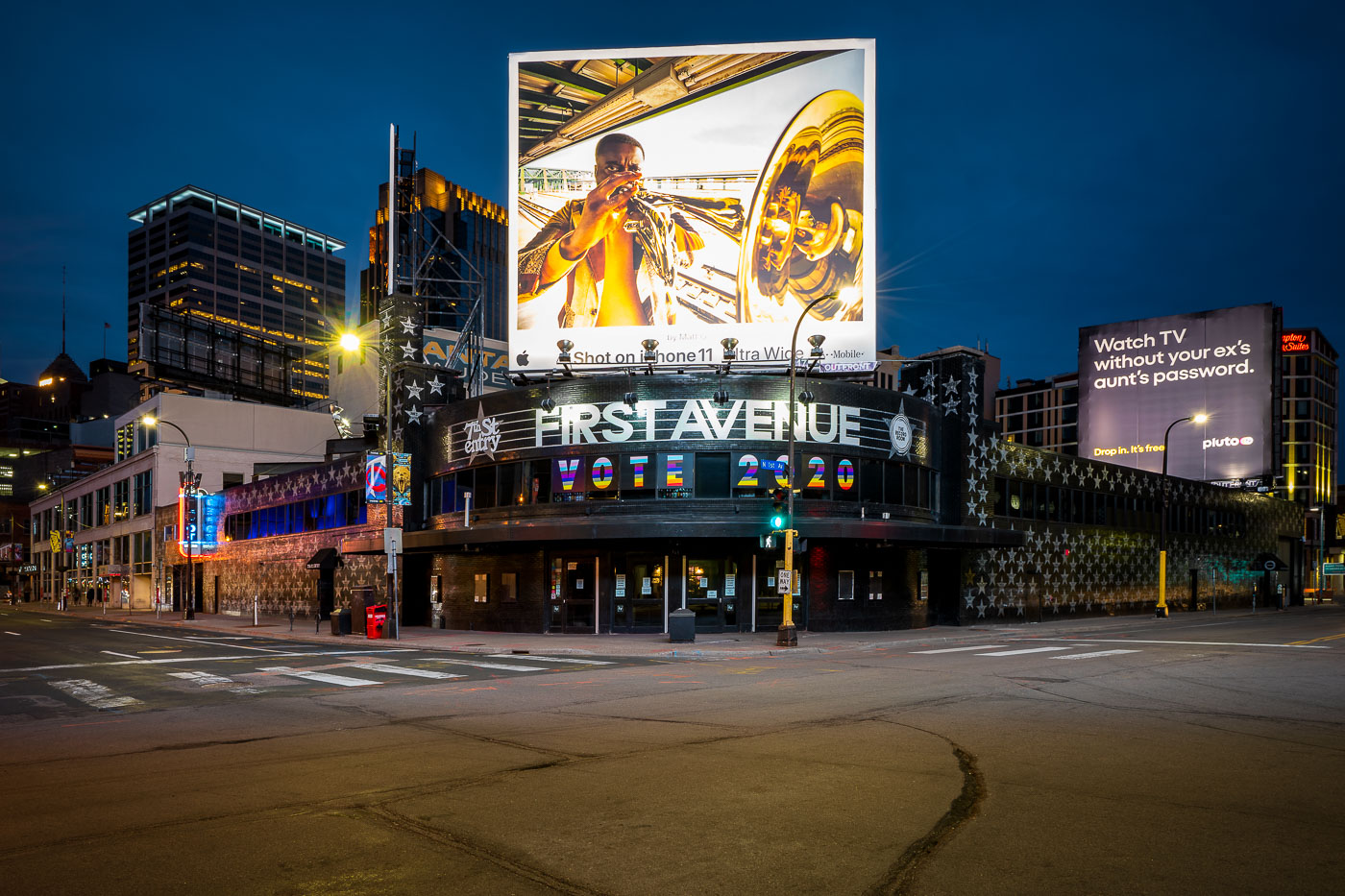
First Avenue music venue in downtown Minneapolis displays "VOTE 2020" on its marquee during COVID-19 shutdowns on April 2, 2020.
First Avenue, the nightclub at 701 First Avenue North, occupies a building that opened in 1937 as a Greyhound bus depot before its conversion to a music venue in 1970. Its Mainroom has hosted acts from Prince—who filmed key s of "Purple Rain" here—to touring bands across nearly every genre. The 7th Street Entry, the smaller adjoining room, opened in 1980 as a launching pad for punk and indie acts. The building's exterior stars, added over the years, each mark a musician who has performed there. On this night the marquee read "VOTE 2020" instead of a show listing, a message posted while the venue sat closed under Minnesota's statewide shutdown orders.

“VOTE 2020” Marquee at First Avenue During Empty Streets
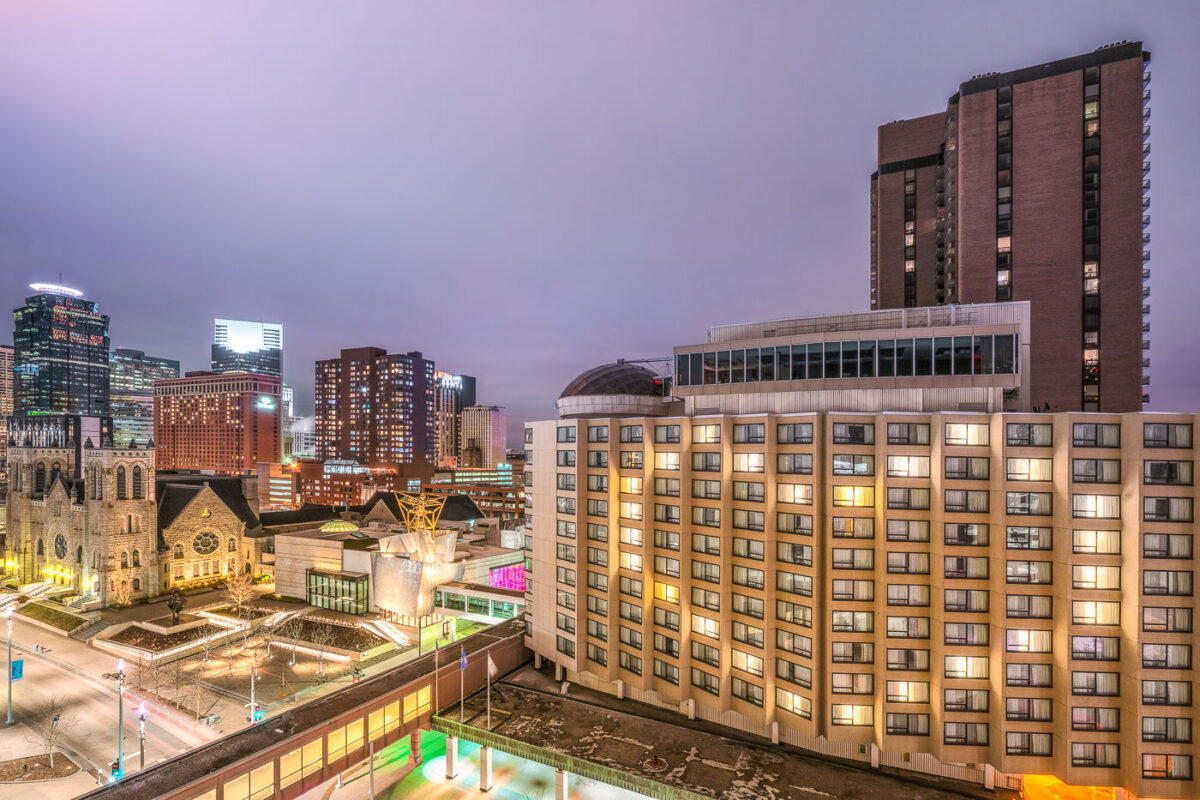
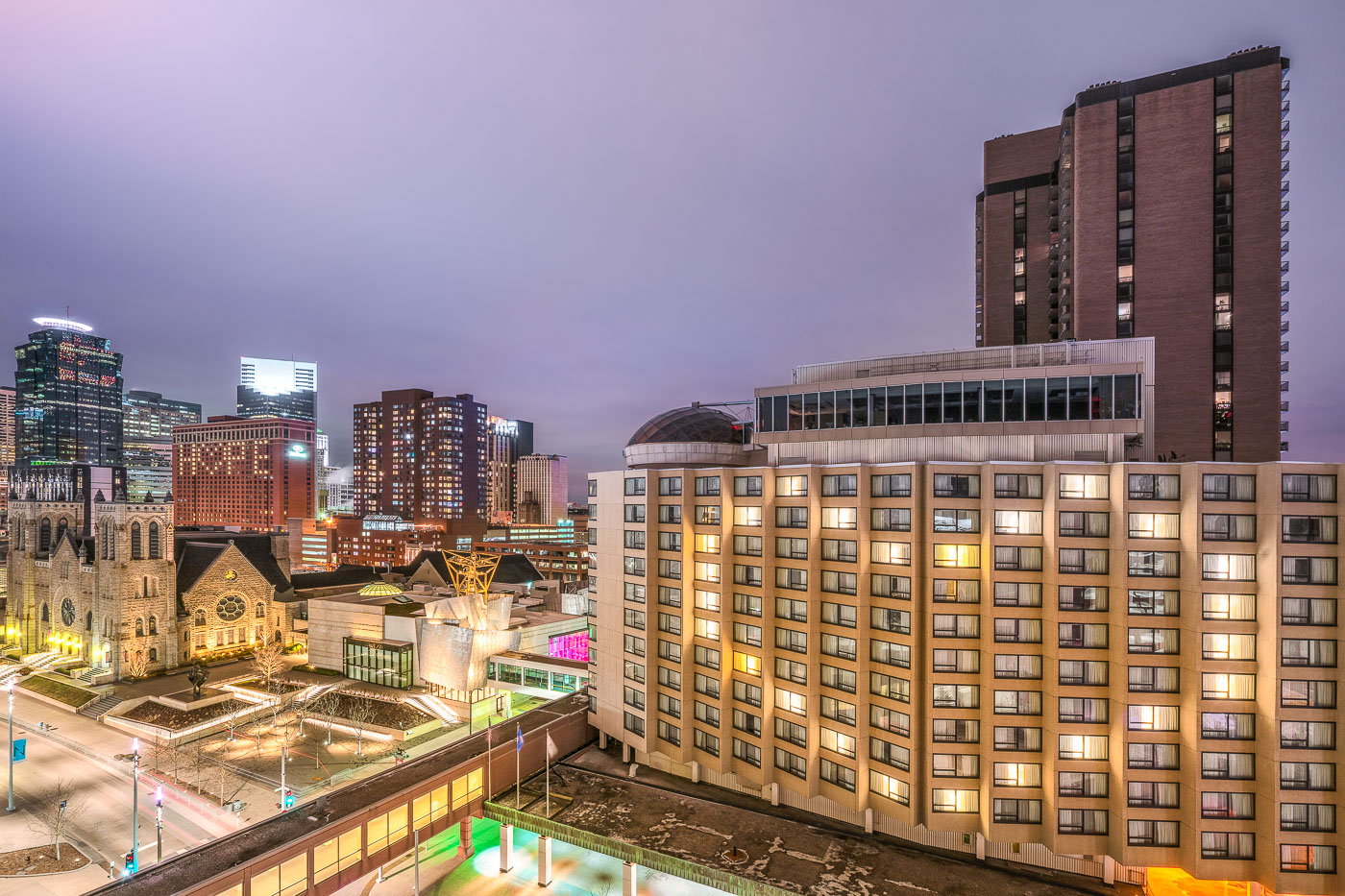
Millennium Hotel in downtown Minneapolis illuminated at twilight with lit windows forming a heart pattern during early COVID-19
The Millennium Hotel Minneapolis sits at 1313 Nicollet Mall, a high-rise a few blocks from the Minneapolis Convention Center. The tower opened in the 1970s under an earlier flag before joining the Millennium Hotels and Resorts chain, and its upper floors face north over downtown toward the Mississippi River. During the early weeks of the 2020 coronavirus shutdown, hotel occupancy across downtown Minneapolis fell sharply as conventions, sporting events, and business travel came to a halt.

Millennium Hotel Overlooking Downtown Minneapolis During COVID-19
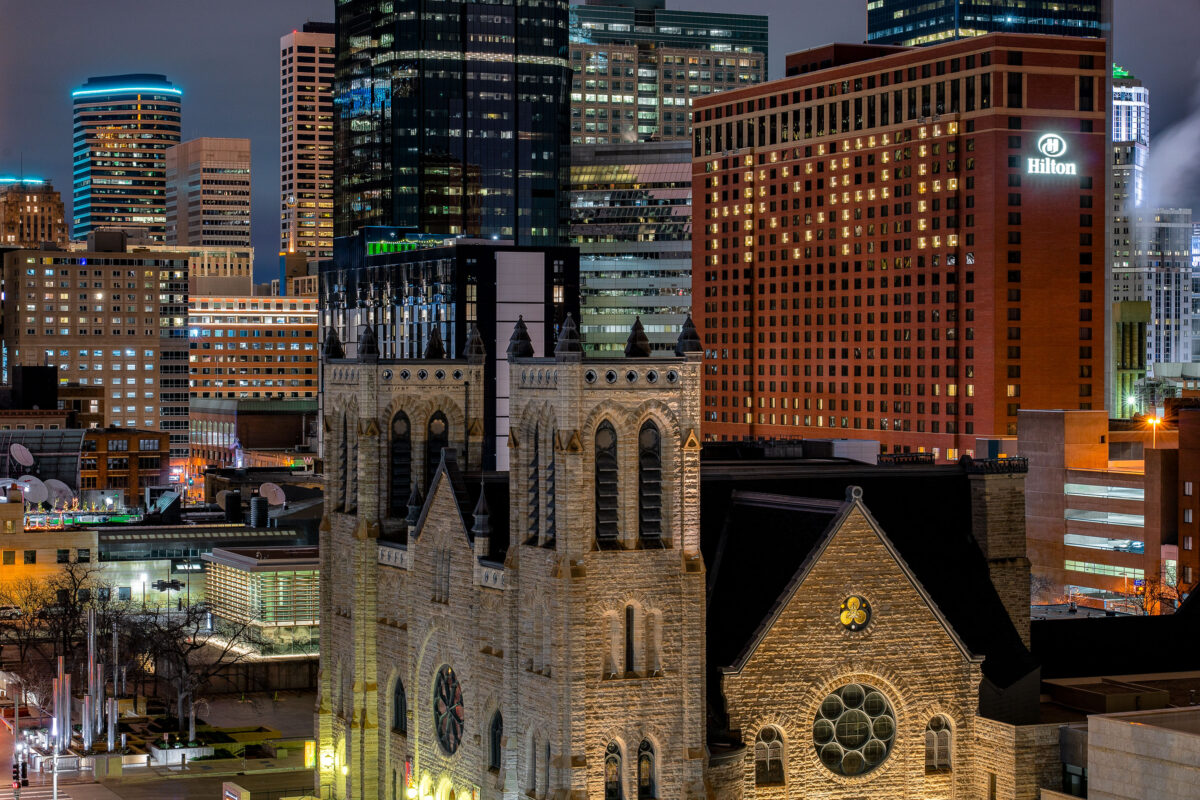
Hilton Minneapolis hotel displays "HOPE" message in illuminated windows during COVID-19 pandemic.
The Hilton Minneapolis, a 32-story tower at 1001 Marquette Avenue, spelled out the word "HOPE" and a heart in its guest-room windows on April 3, 2020, during the early weeks of Minnesota's COVID-19 stay-at-home order. The 821-room hotel opened in 1992 and remains one of the largest in the state. Just north of the hotel stands Westminster Presbyterian Church, a Gothic Revival building completed in 1897 for a congregation founded in 1857, making it one of downtown Minneapolis's oldest continuously operating churches.

Hilton Minneapolis Windows Spell “HOPE” During COVID-19
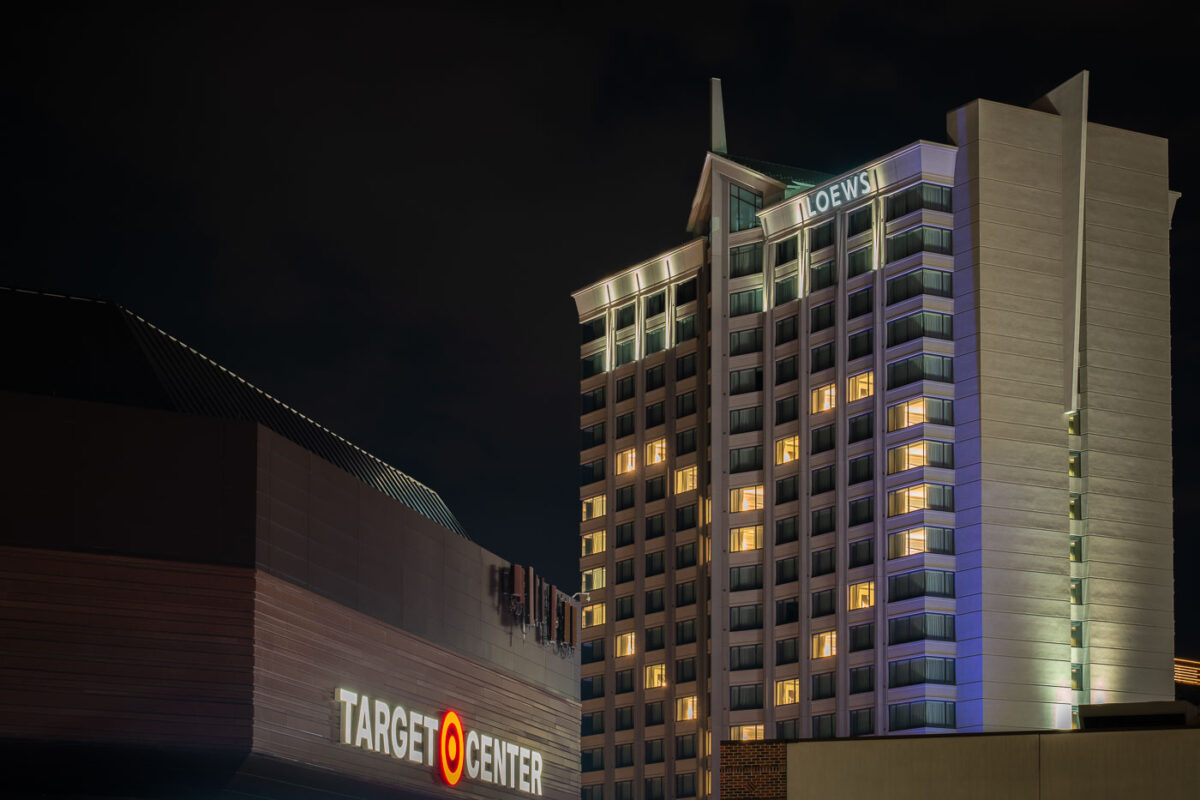
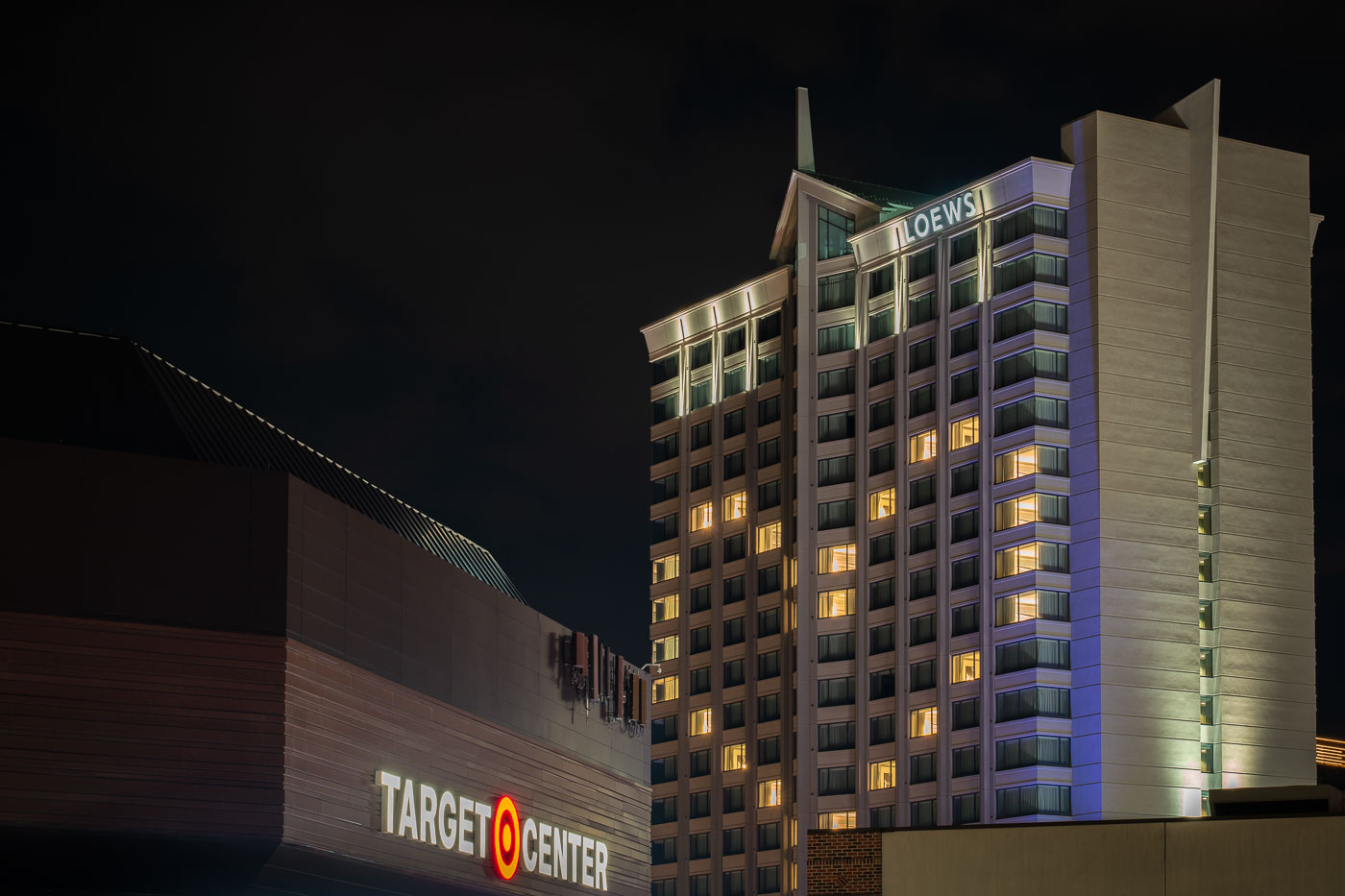
Loews Hotel and Target Center illuminated at night in downtown Minneapolis.
The Loews Minneapolis Hotel sits along First Avenue North next to the Target Center arena in downtown Minneapolis. Target Center opened in 1990 and has served as the home arena for the Minnesota Timberwolves and, since 1999, the Minnesota Lynx. The arena holds roughly 18,798 fans for basketball and has hosted concerts and other events since its debut. The Loews hotel occupies a tower built in 2000 as part of the same downtown block, giving visitors direct access to the arena's entertainment district.

Loews Minneapolis Hotel Beside Target Center at Night
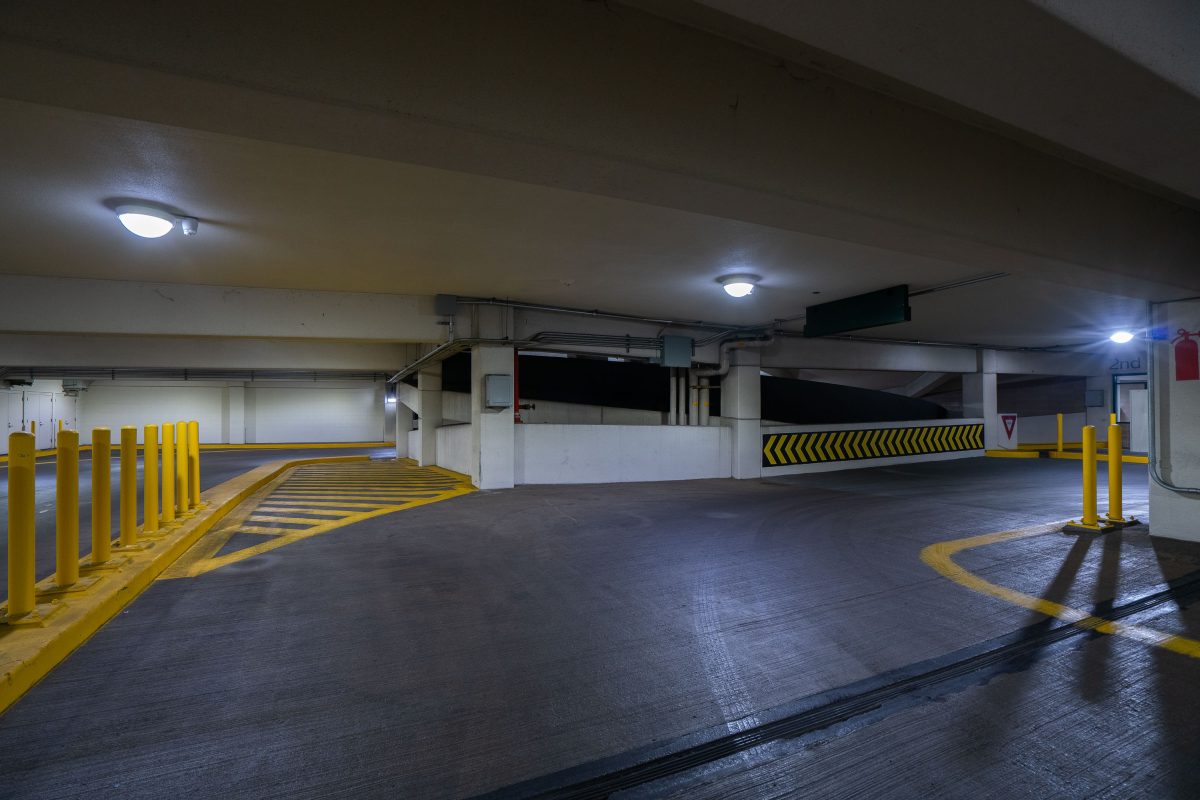
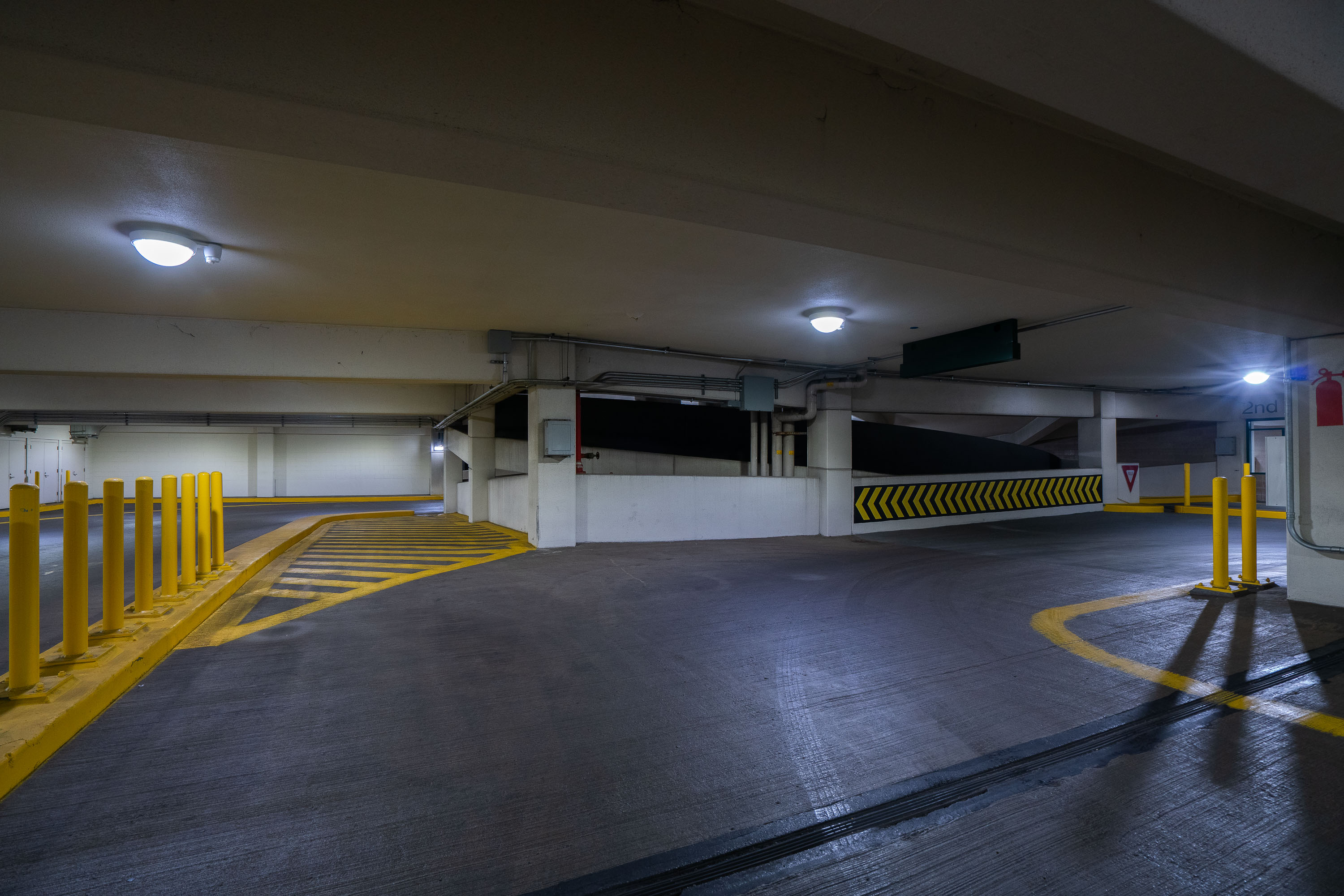
Empty parking ramp with yellow safety barriers and overhead lighting in downtown Minneapolis.
Ramp C is a parking garage in downtown Minneapolis, with a second level marked near its entrance. Yellow bollards and striped lane markings guide cars through the structure's lower level.

Interior of Ramp C in Downtown Minneapolis
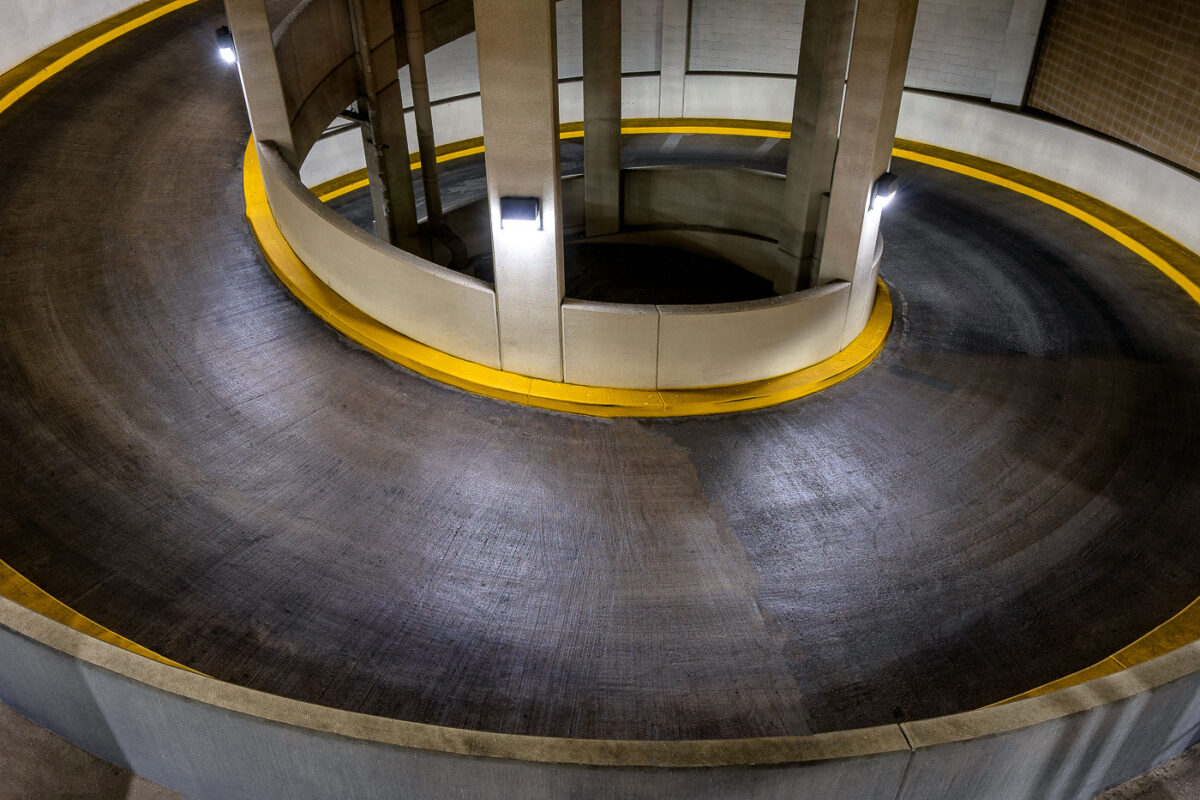
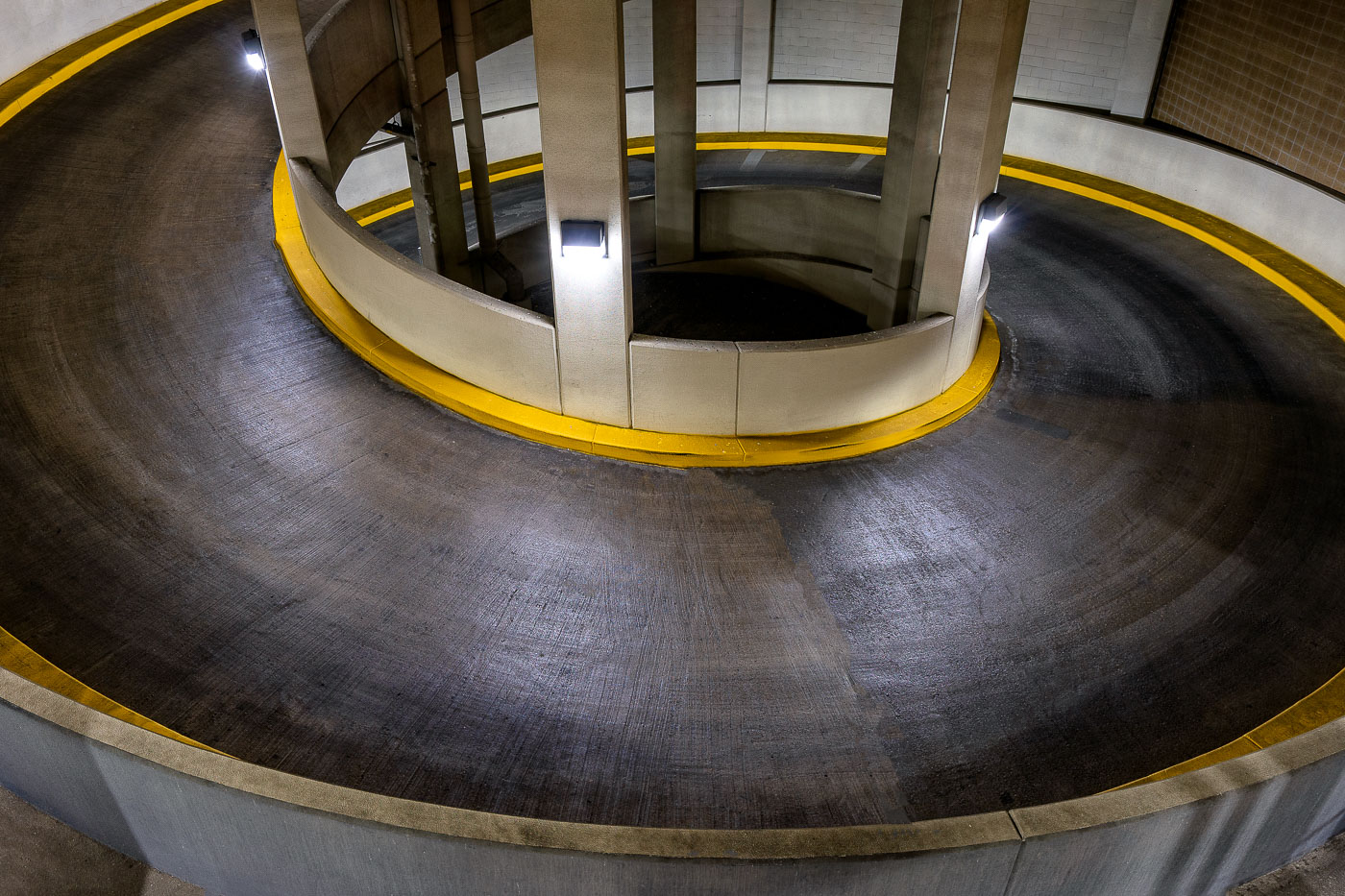
Spiral parking ramp with yellow-painted curbs and concrete support columns in downtown Minneapolis.
Ramp C is a municipal parking garage in downtown Minneapolis, operated by the city as part of its downtown parking system. The structure's central spiral connects its parking levels with a continuous curved roadway rather than straight ramps between floors, a common design solution for maximizing vehicle capacity on a compact urban site. Yellow curb markings delineate the traffic lane around the concrete support core. Facilities like Ramp C serve commuters, downtown employees, and visitors to nearby offices and entertainment venues in the central business district.

Spiral Ramp Inside Ramp C Parking Garage, Downtown Minneapolis
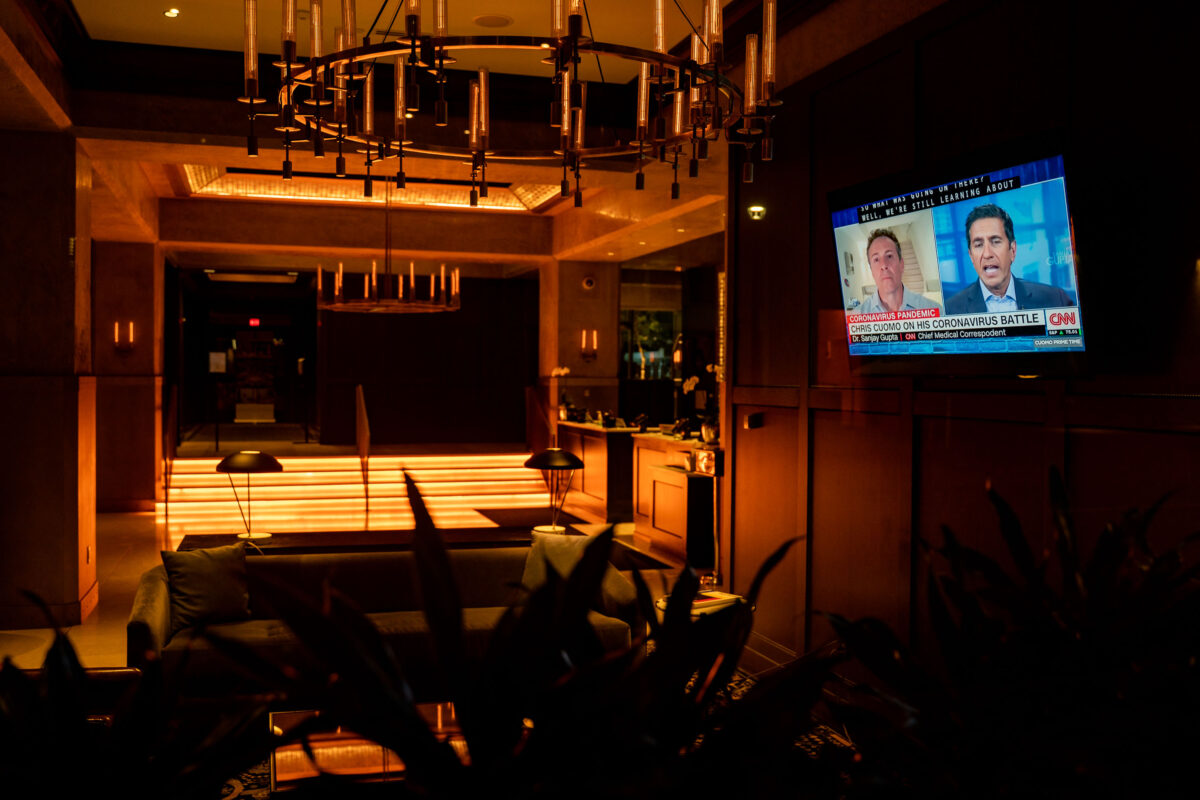
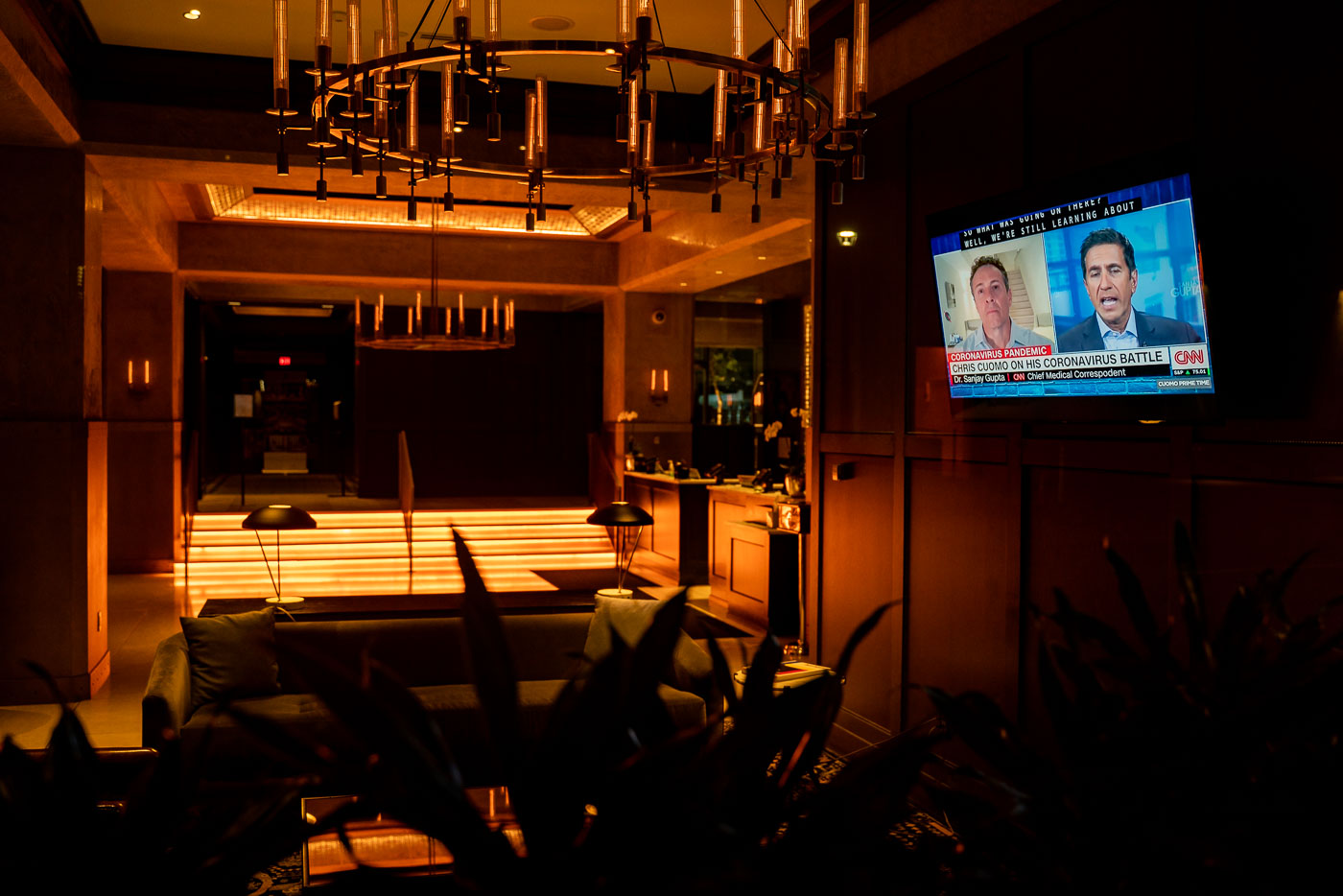
CNN broadcast with Chris Cuomo and Dr. Sanjay Gupta plays on television in the Marquette Hotel lobby, Minneapolis, April 2020.
Chris Cuomo discussed his own coronavirus diagnosis with CNN's chief medical correspondent, Dr. Sanjay Gupta, in an April 2020 segment that aired on the network amid the early weeks of the pandemic. The broadcast appeared on a lobby television at the Marquette Hotel in downtown Minneapolis, part of the Hilton-affiliated property on South Seventh Street near the IDS Center. Cuomo, then a primetime anchor for CNN, quarantined at home after testing positive and returned to reporting on air during his recovery.

Empty Marquette Hotel Lobby During Chris Cuomo’s CNN Interview
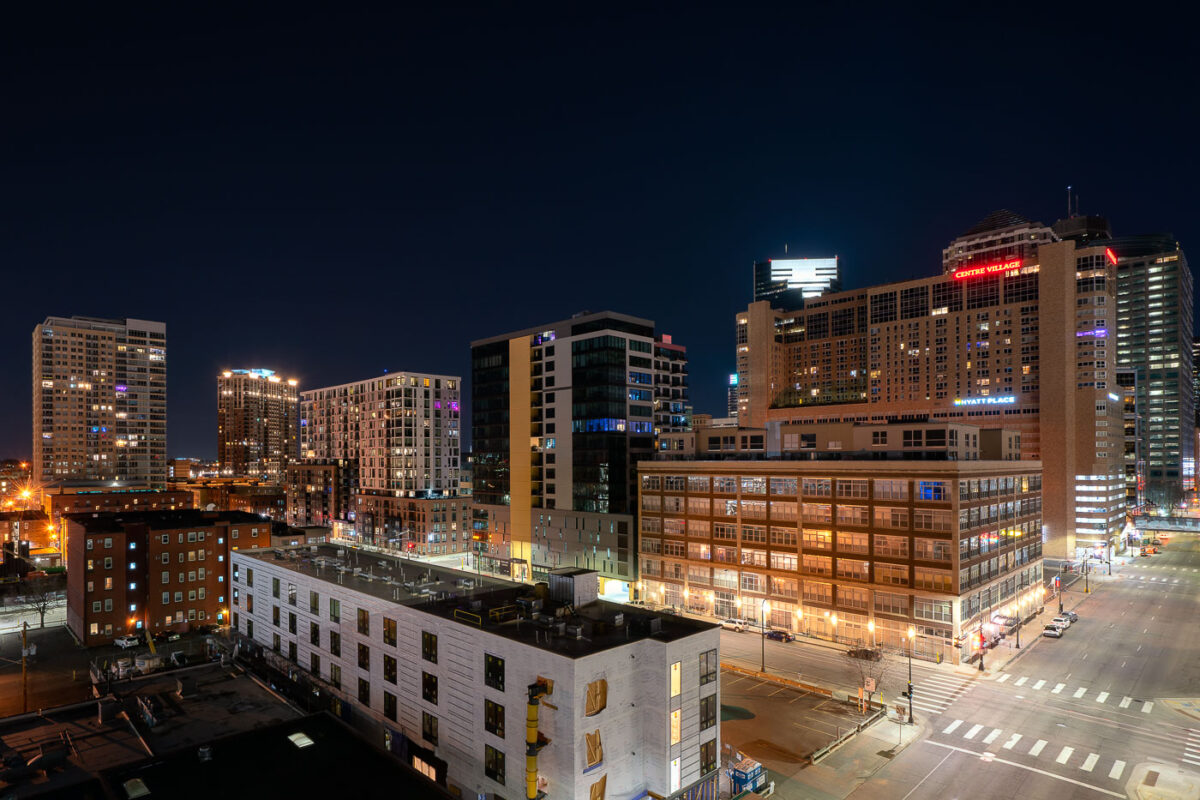
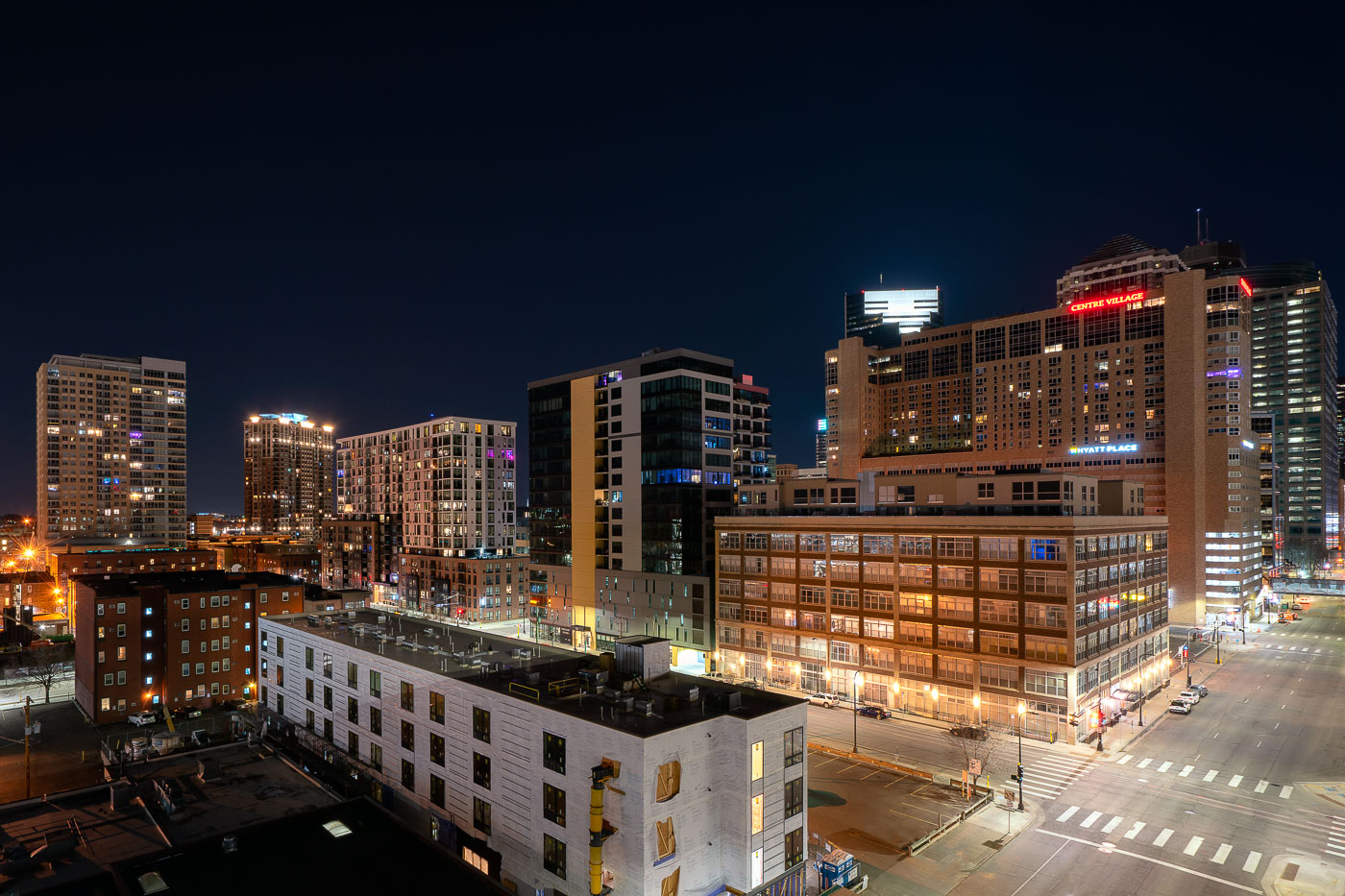
Downtown Minneapolis skyline at night showing Centre Village and Hyatt Place hotel buildings, April 2020.
Centre Village rises over downtown Minneapolis at Second Avenue South, a mixed-use high-rise completed in 1984 that combines residential units with commercial space. The Hyatt Place hotel occupies part of the same complex, serving business travelers and visitors to the city center. Both buildings sit within blocks of the Mississippi riverfront and the Central Business District, an area built up largely in the 1980s as downtown Minneapolis added residential towers alongside its office core.

Centre Village and Hyatt Place Above Downtown Minneapolis at Night
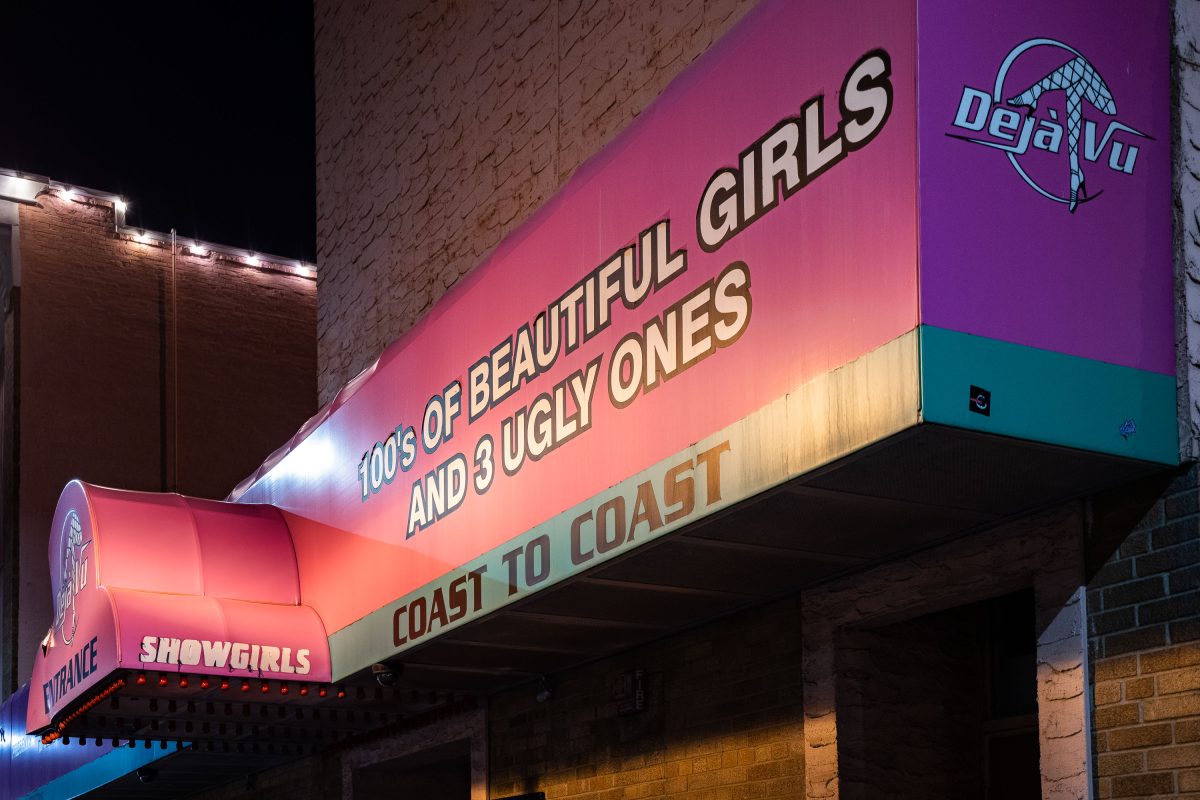
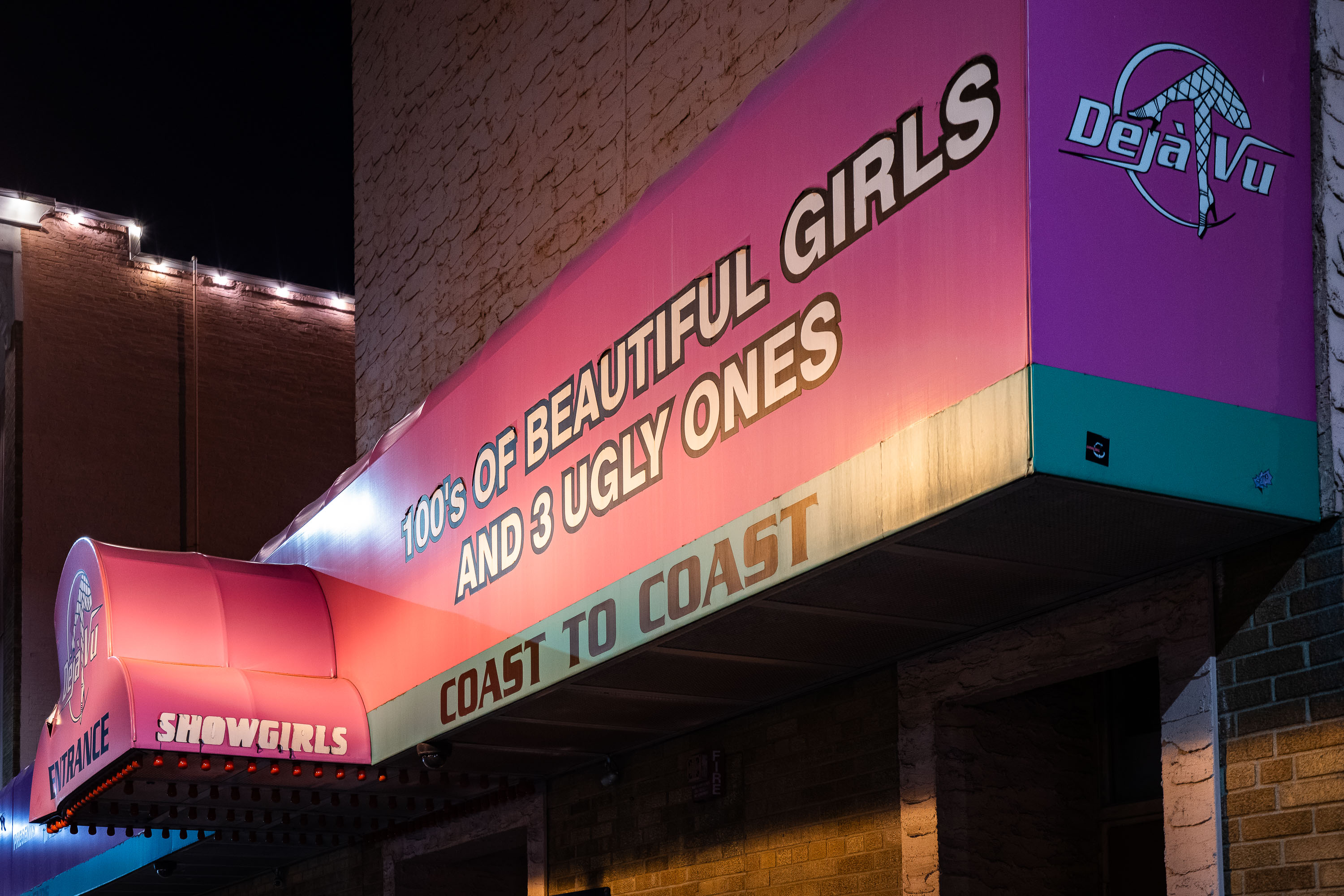
Neon sign for Deja Vu Showgirls strip club in Minneapolis displays humorous text about beautiful and ugly women.
Deja Vu Showgirls is a strip club in the North Loop neighborhood of Minneapolis. Its marquee reads "100's of Beautiful Girls and 3 Ugly Ones, Coast to Coast."

“100’s of Beautiful Girls” Sign at Deja Vu Showgirls in the North Loop
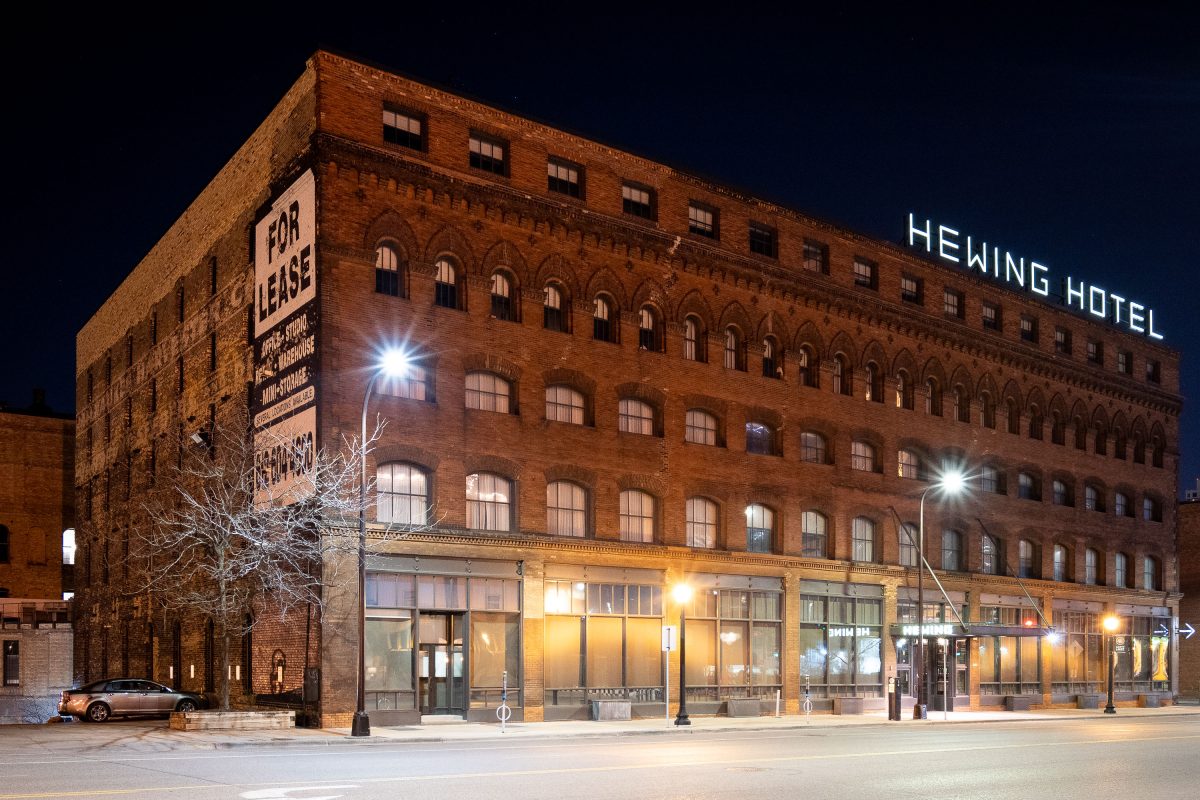
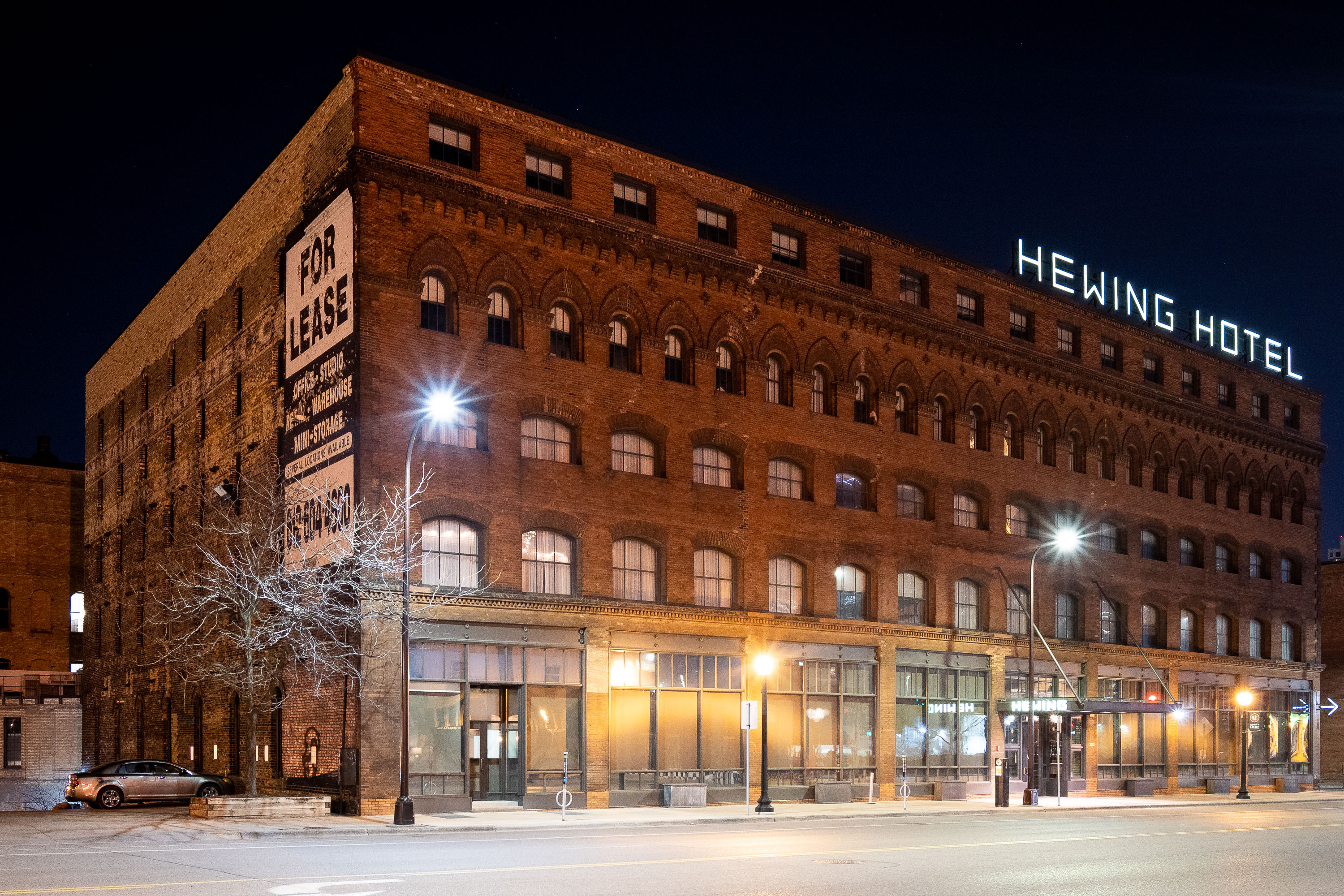
Hewing Hotel, a historic brick building in Minneapolis's North Loop neighborhood, illuminated at night.
The Hewing Hotel occupies a six story brick warehouse built in 1897 at 300 Washington Avenue North in the North Loop neighborhood of Minneapolis. The warehouse was converted into a boutique hotel that opened in 2017, with a rooftop pool and bar added on top of the original structure.

Hewing Hotel on Washington Avenue North in Minneapolis
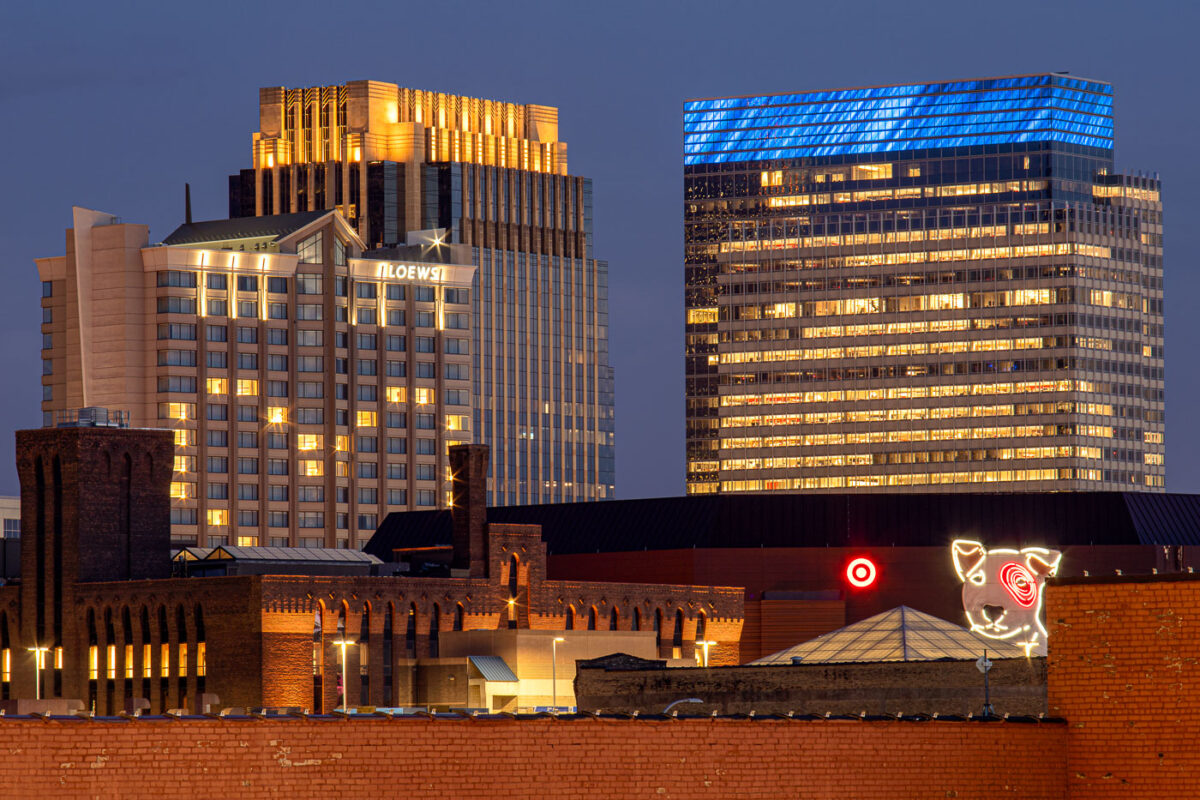
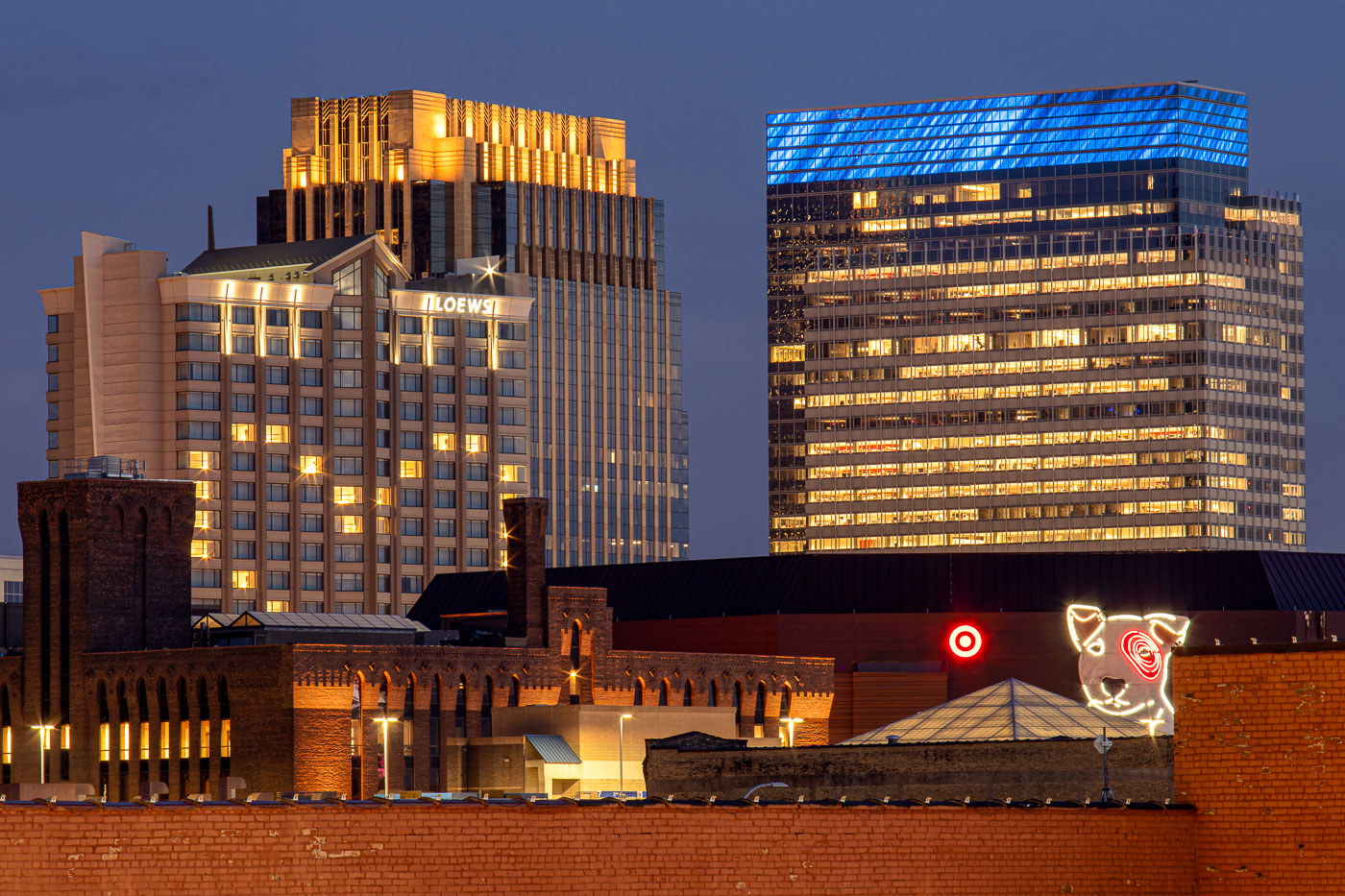
Loews Hotel and Target headquarters illuminated at night in downtown Minneapolis with Target Dog neon sign in foreground.
Target's corporate headquarters tower rises at 1000 Nicollet Mall, its glass exterior wrapped in a blue-lit crown near the top floors. The company has been based in downtown Minneapolis since its founding as a Dayton's discount offshoot in 1962, and its headquarters campus remains one of the largest employers in the city's core. The neon Bullseye dog sign near the building's base is a longstanding piece of Target's branding, drawn from the company's mascot, Bullseye. To the left, the Loews Minneapolis Hotel occupies part of the LaSalle Plaza complex, a mixed-use development completed in 1991 that also includes office space and street-level retail along Nicollet Mall.

Target’s Bullseye Dog Sign Beneath Its Minneapolis Headquarters
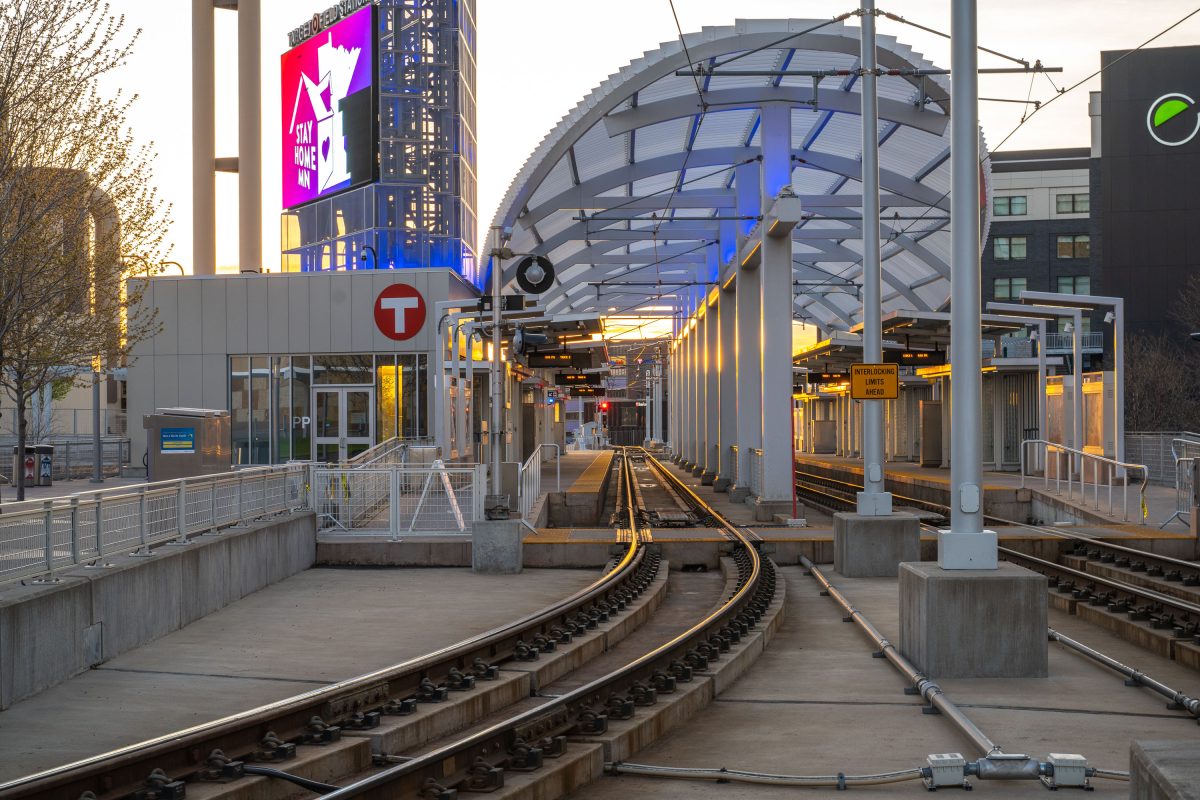
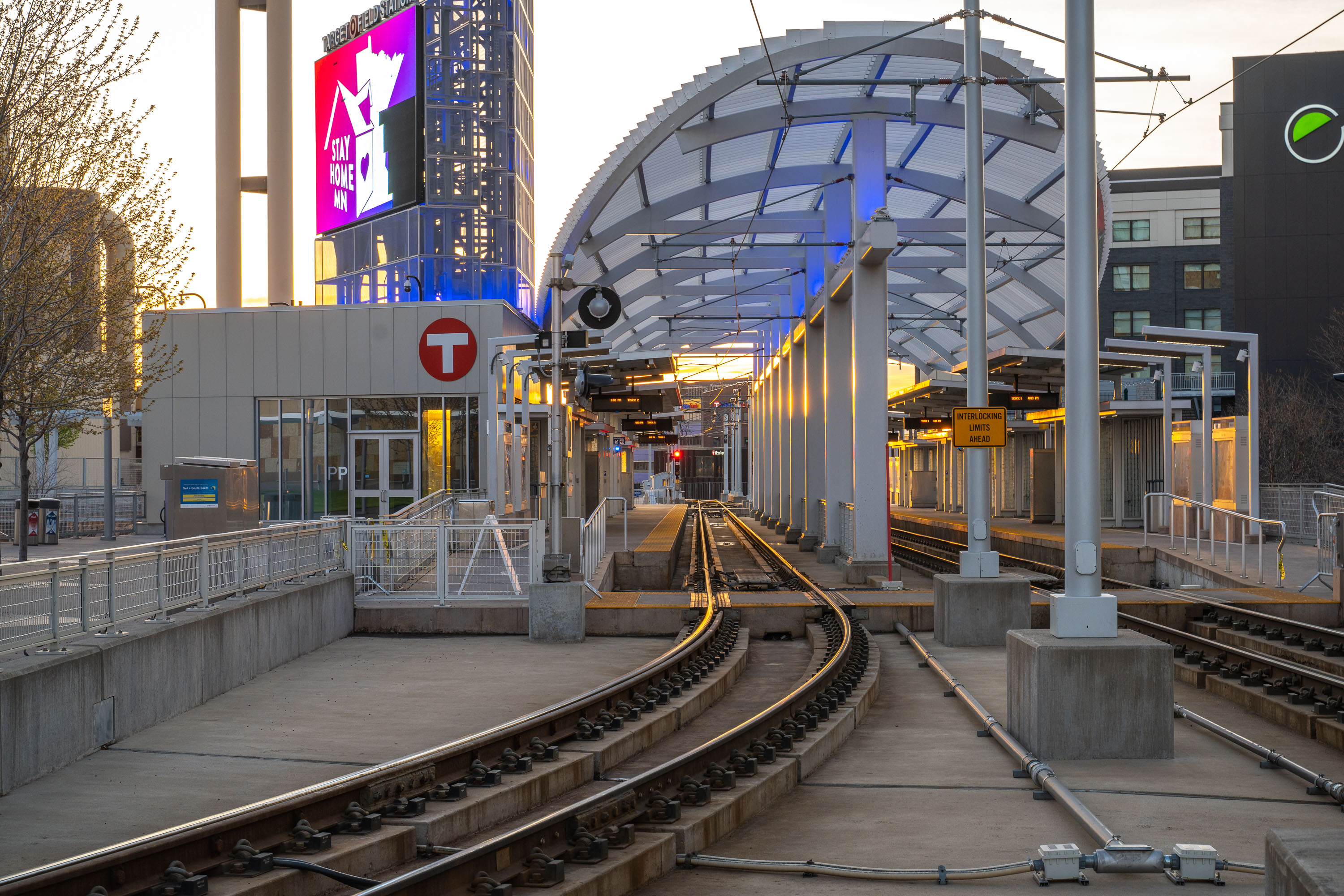
Empty platform at Target Field Station, a Minneapolis METRO light rail stop in the North Loop neighborhood.
Target Field Station sits in the North Loop neighborhood of downtown Minneapolis, serving as a stop on the METRO Blue and Green light rail lines. The station connects riders to Target Field, home of the Minnesota Twins, and links the North Loop to downtown Minneapolis and the broader METRO system.

“Stay Home MN” Sign Above Target Field Station at Dusk
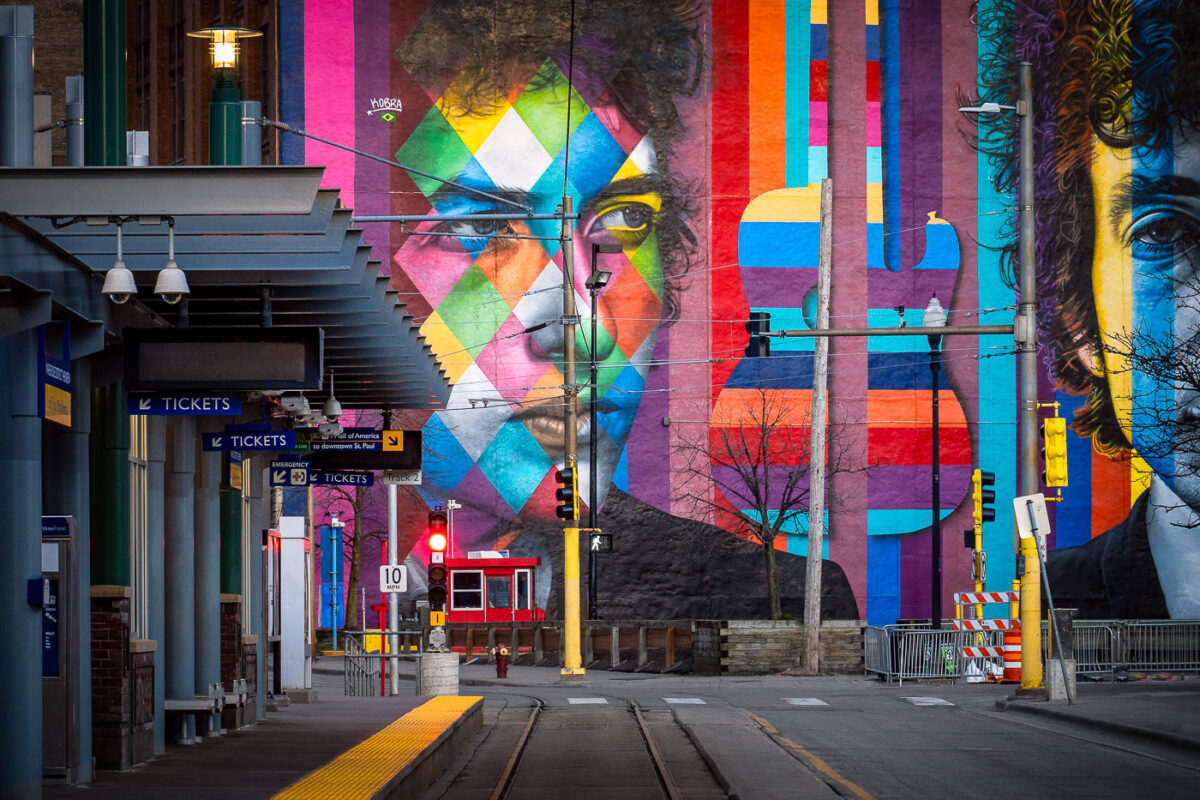
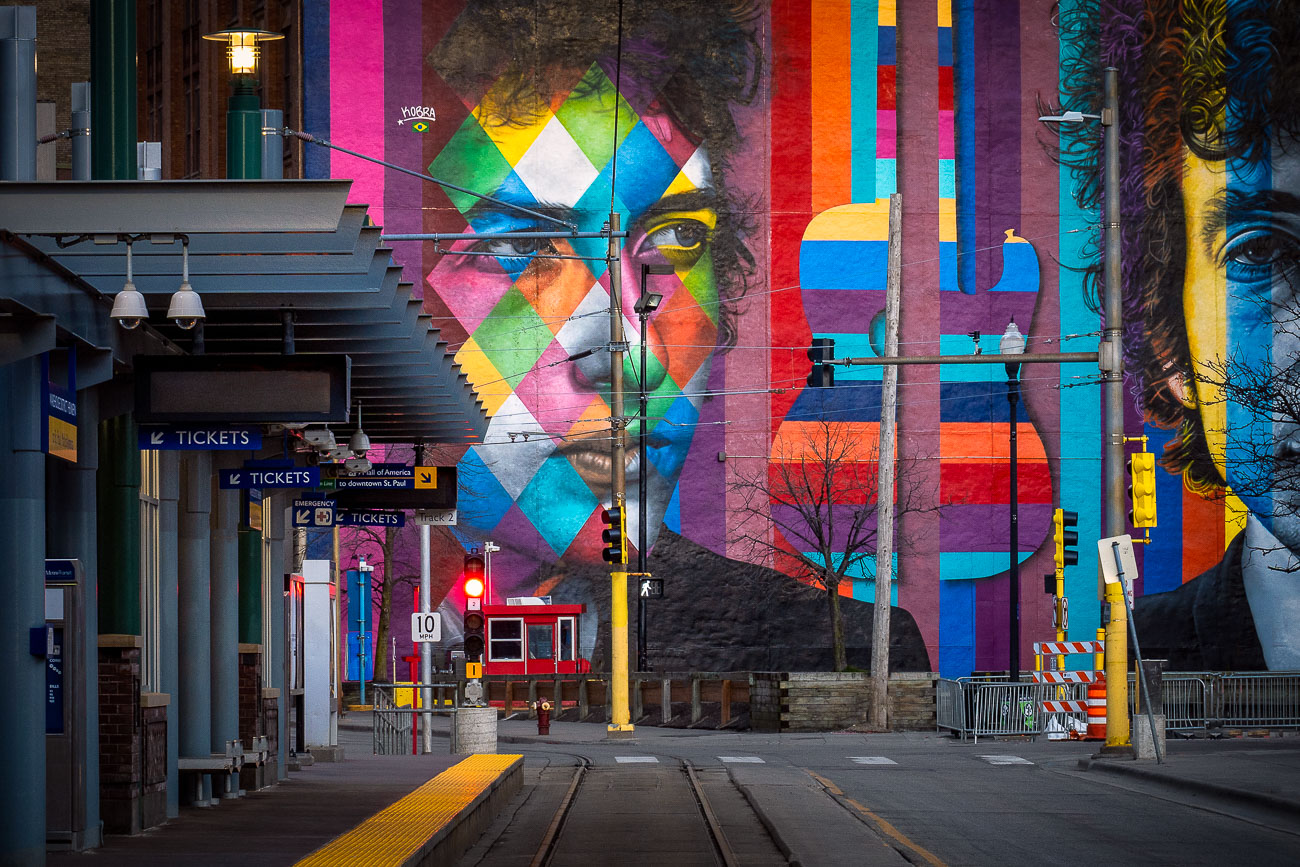
Eduardo Kobra's colorful Bob Dylan mural at Nicollet Mall station in downtown Minneapolis.
Eduardo Kobra painted this mural of Bob Dylan, titled "Face of Music," in 2015 for the Downtown Improvement District's Betsy-Ann Kane public art initiative. Brazilian street artist Kobra is known for his geometric, kaleidoscope-patterned portraits, which he has installed in cities worldwide. The mural covers roughly 90 feet of wall along the light rail corridor near Nicollet Mall Station, close to Hennepin Avenue in downtown Minneapolis. Dylan grew up in Hibbing, Minnesota, and began his music career in Dinkytown near the University of Minnesota before moving to New York in 1961.

Eduardo Kobra’s “Face of Music” Mural on Hennepin Avenue
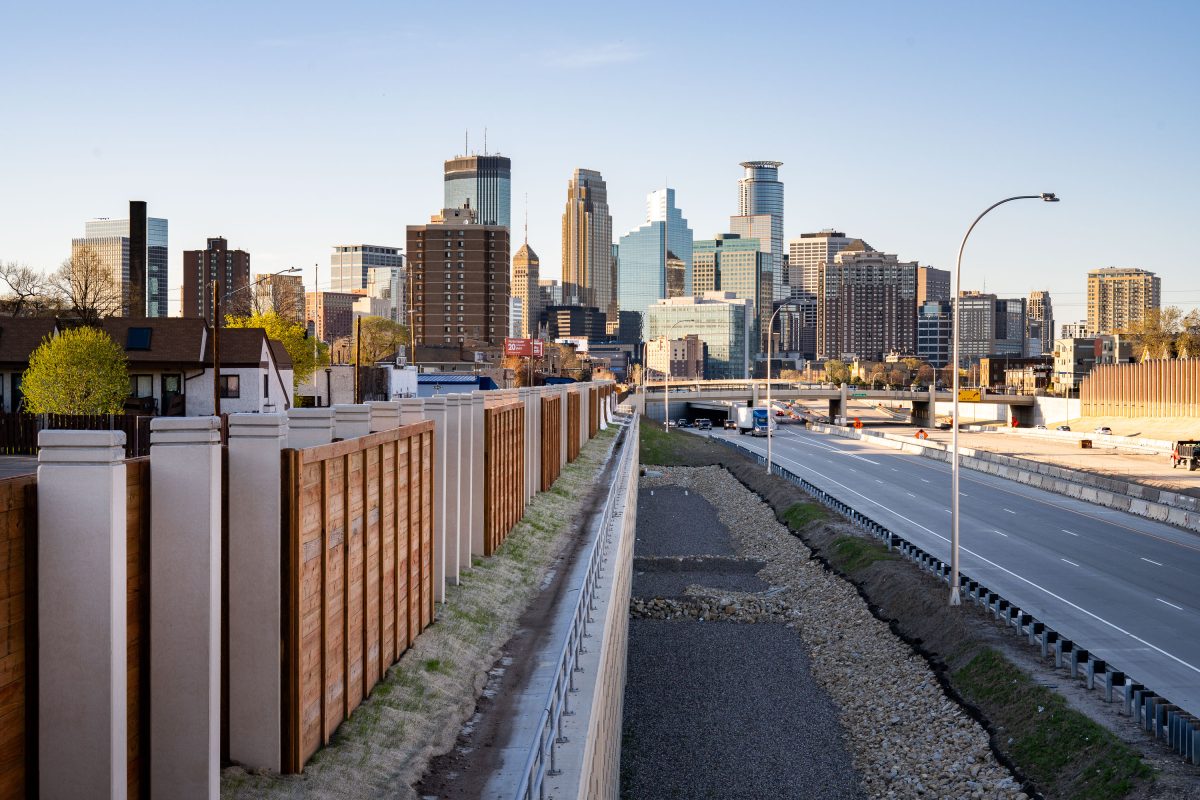
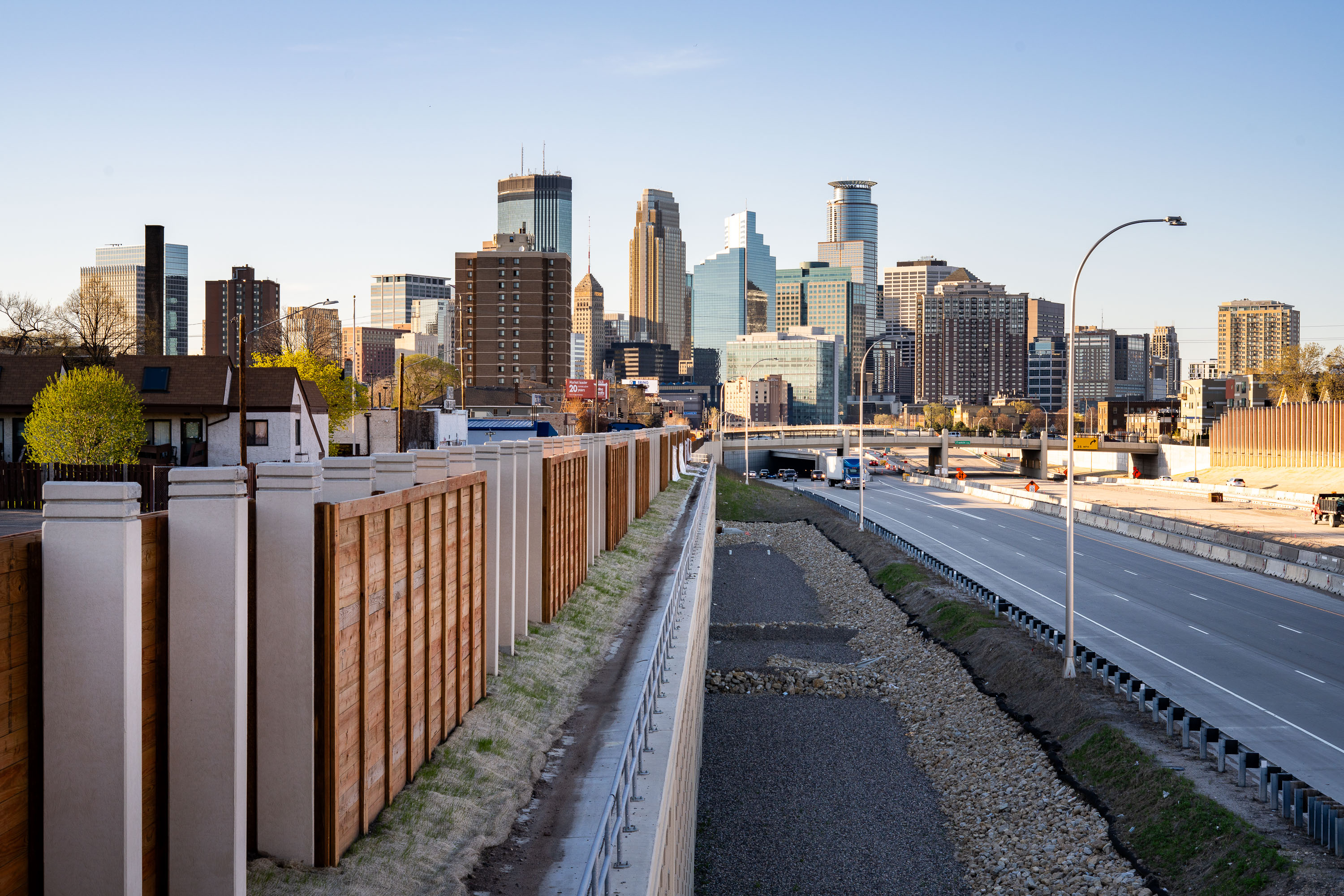
Minneapolis skyline seen from a bridge over 35W.
Downtown Minneapolis as seen from a bridge crossing I-35W.

Minneapolis Skyline Seen From a Bridge over I-35W
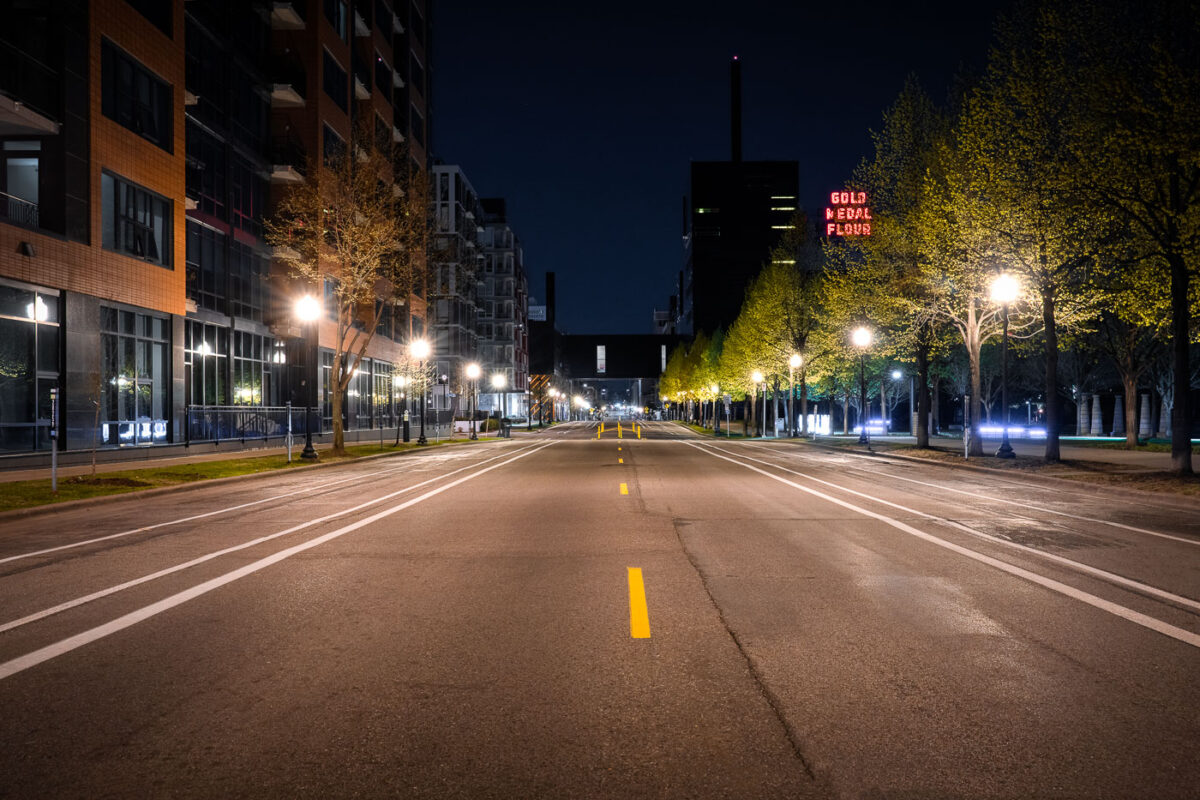
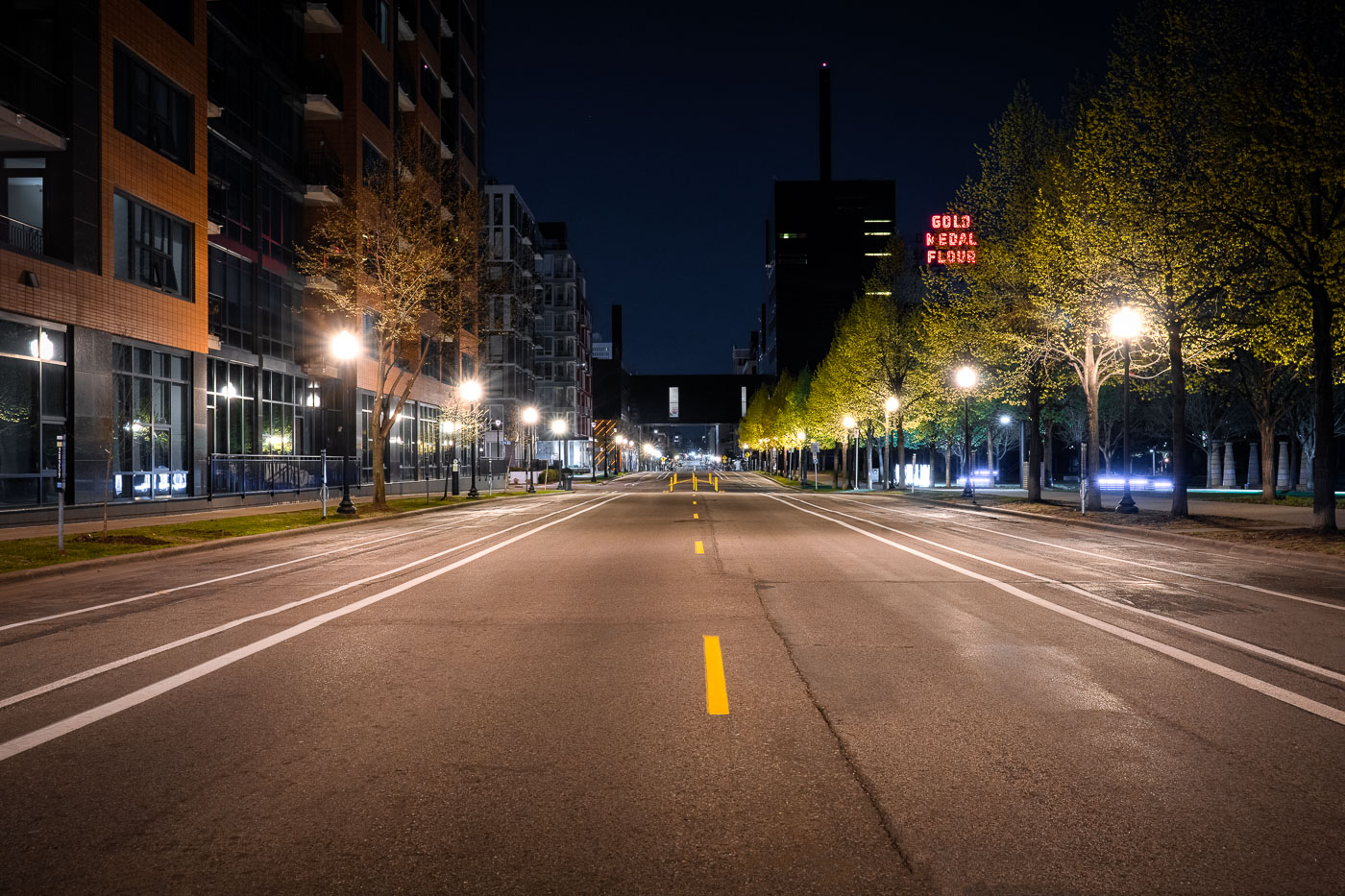
Gold Medal Flour neon sign as seen from 2nd st
South Second Street in downtown Minneapolis during the coronavirus (COVID-19) shutdown.

South Second Street in Downtown Minneapolis
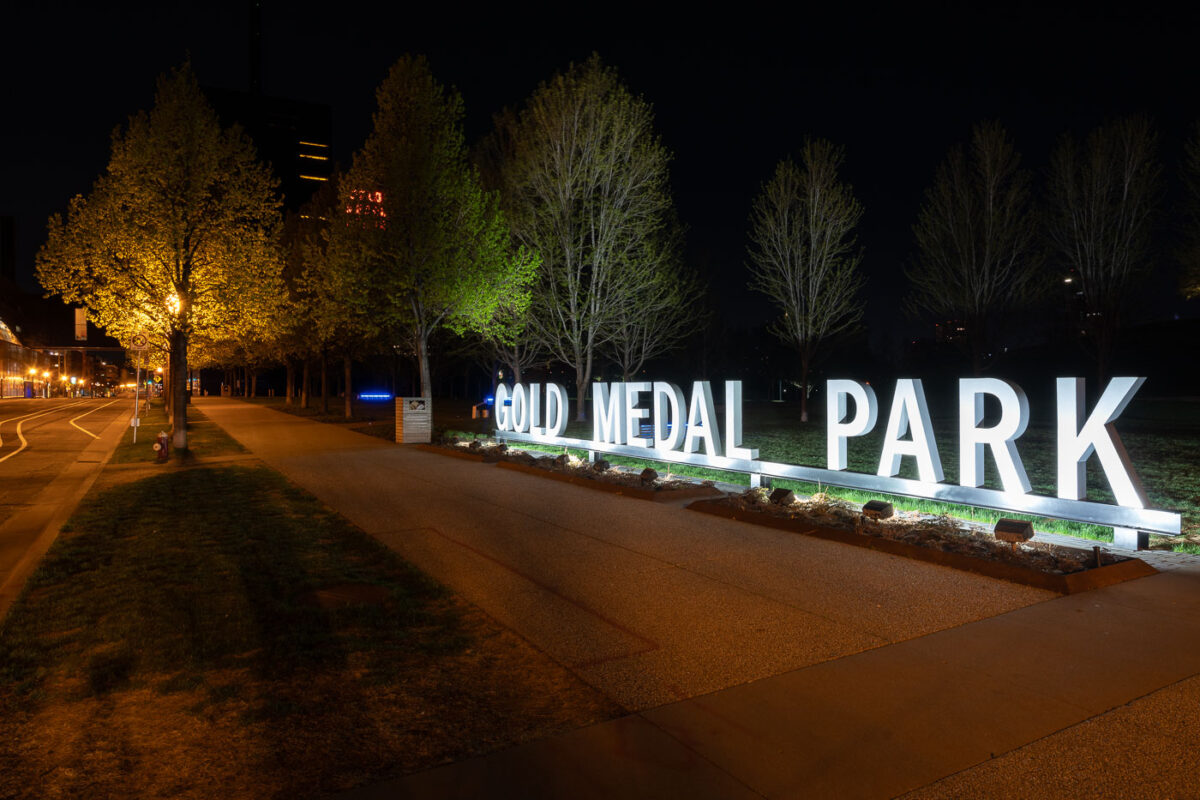
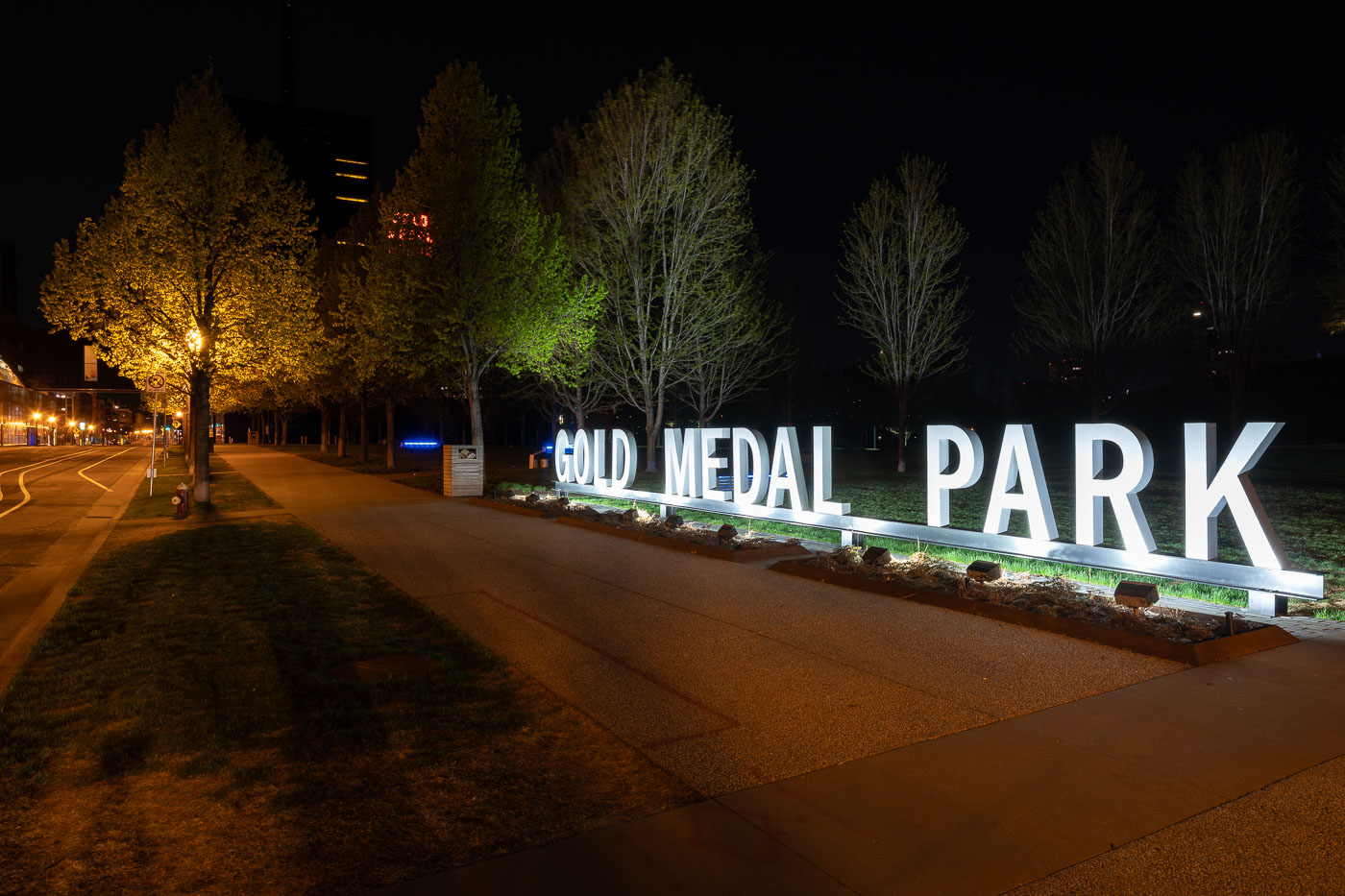
Gold Medal Park sign in Downtown Minneapolis park
Gold Medal Park sits along the Mississippi River near the Mill District in downtown Minneapolis, named in honor of the city’s flour-milling heritage and the iconic Gold Medal Flour brand. Designed by landscape architect Tom Oslund, the park opened in 2007 as part of the Guthrie Theater redevelopment and features a distinctive spiral mound at its center offering views of the river and city skyline. The illuminated park sign and tree-lined paths create a serene nighttime atmosphere against the industrial and cultural backdrop of the historic mill area.

Gold Medal Park at Night, Minneapolis Riverfront
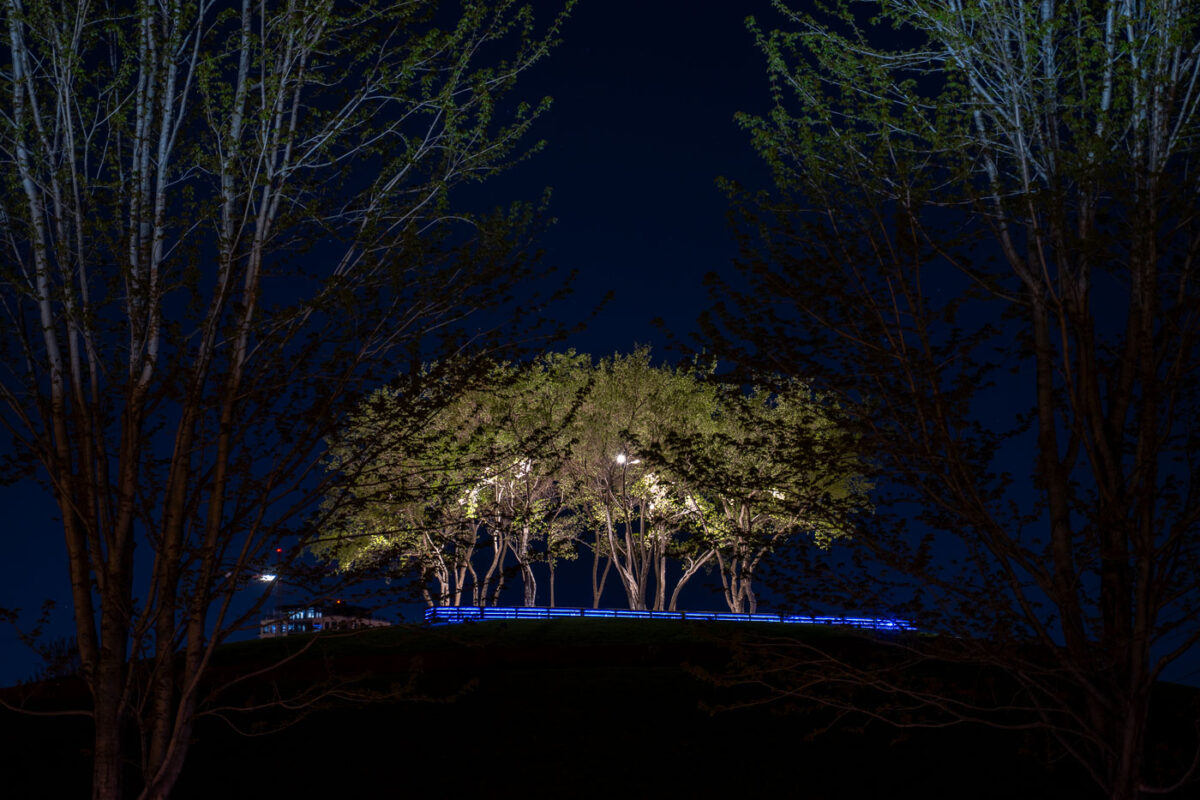
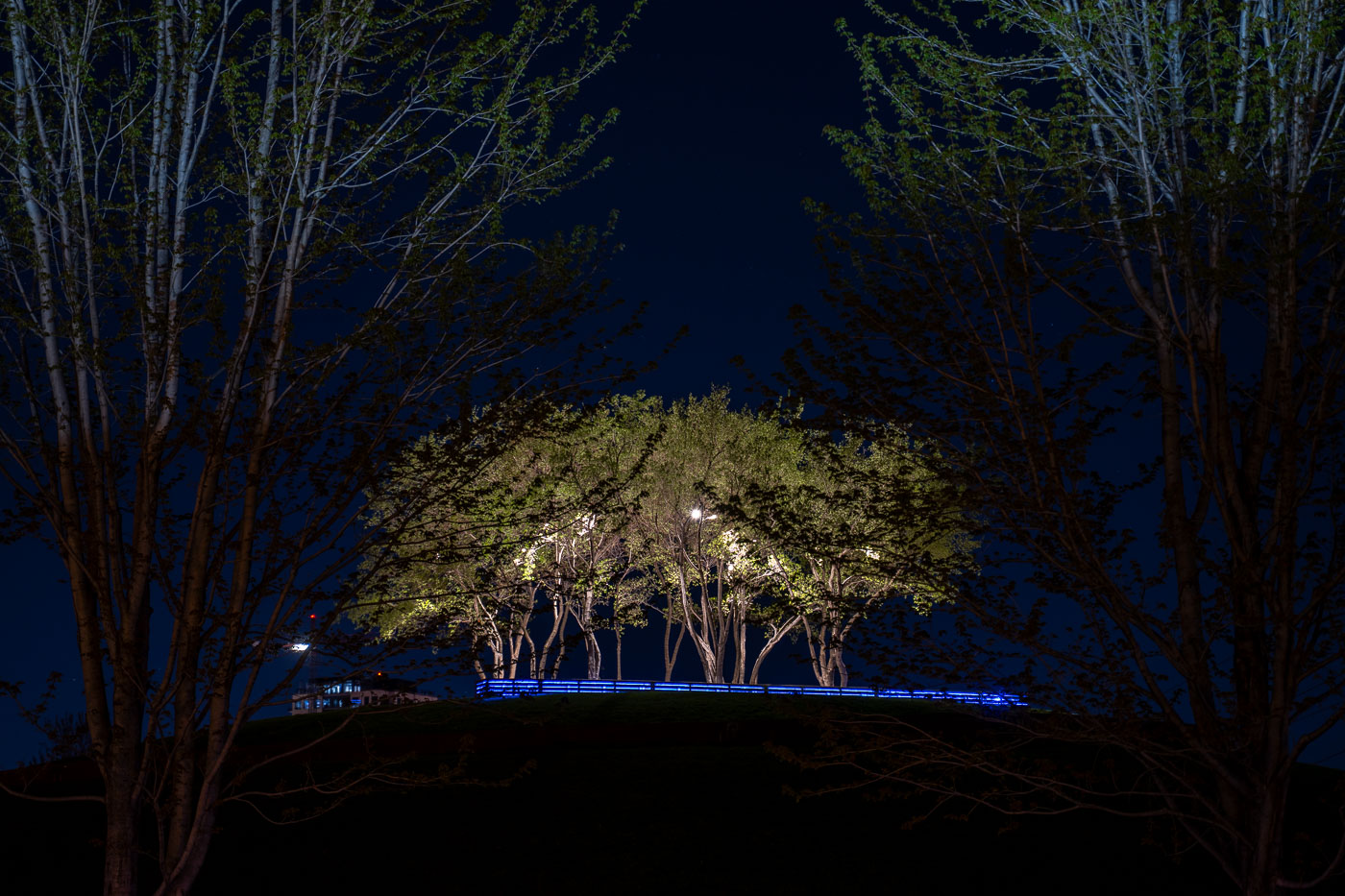
Trees in the middle of Gold Medal Park
Gold Medal Park in Minneapolis with the 40+ story "Eleven" rising in the background.

Trees in the middle of Gold Medal Park

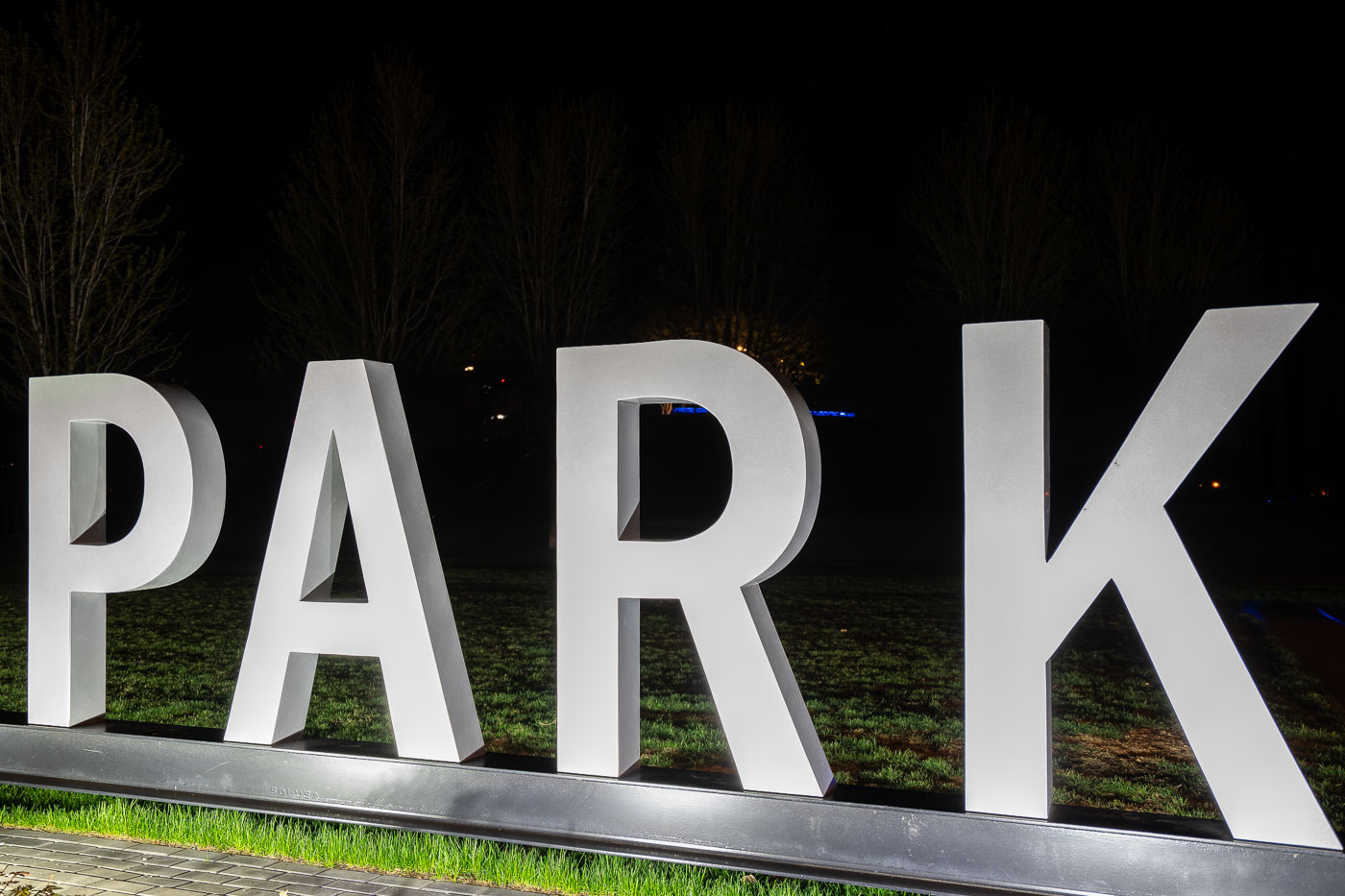
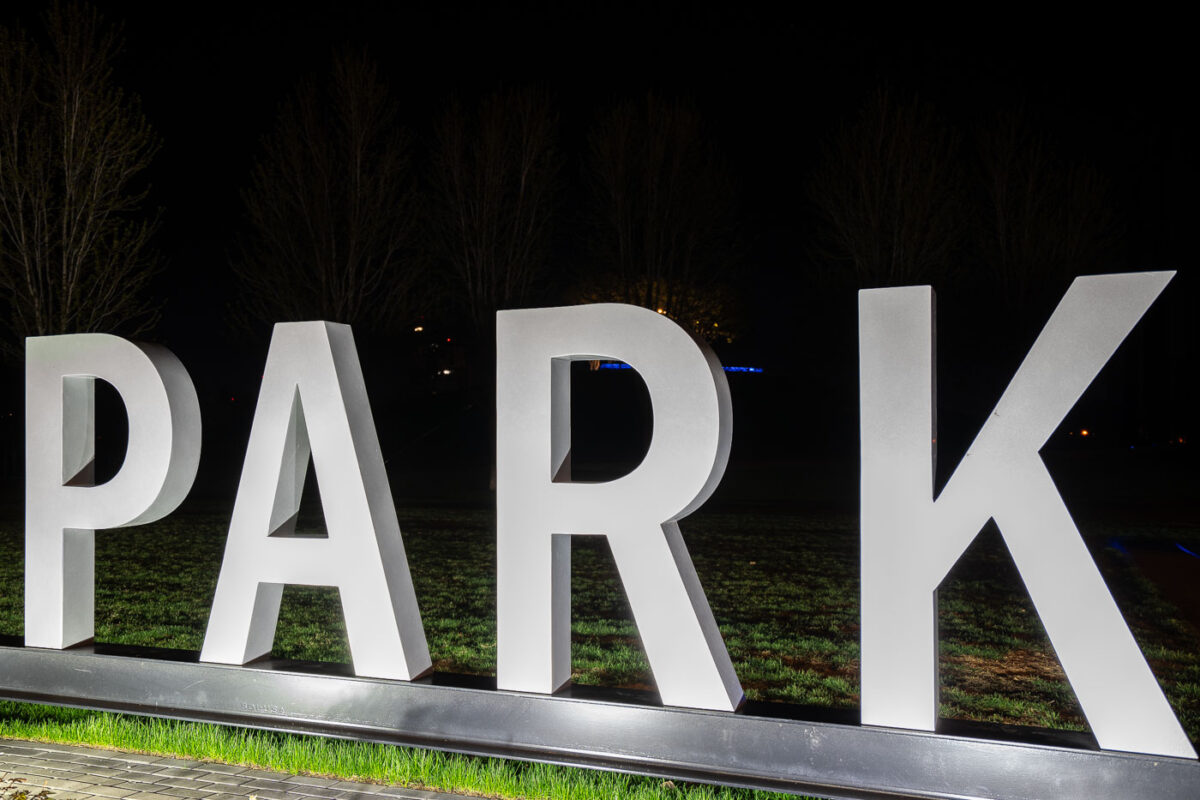
Illuminated "PARK" letters at Gold Medal Park near downtown Minneapolis.
Large illuminated letters spelling "PARK" stand at Gold Medal Park along the Mississippi River near downtown Minneapolis. The park occupies the site of the former Gold Medal Flour Mills, a major industrial landmark in the city's milling history. The signage serves as wayfinding and identification for the public green space.

Gold Medal Park Signage, Minneapolis

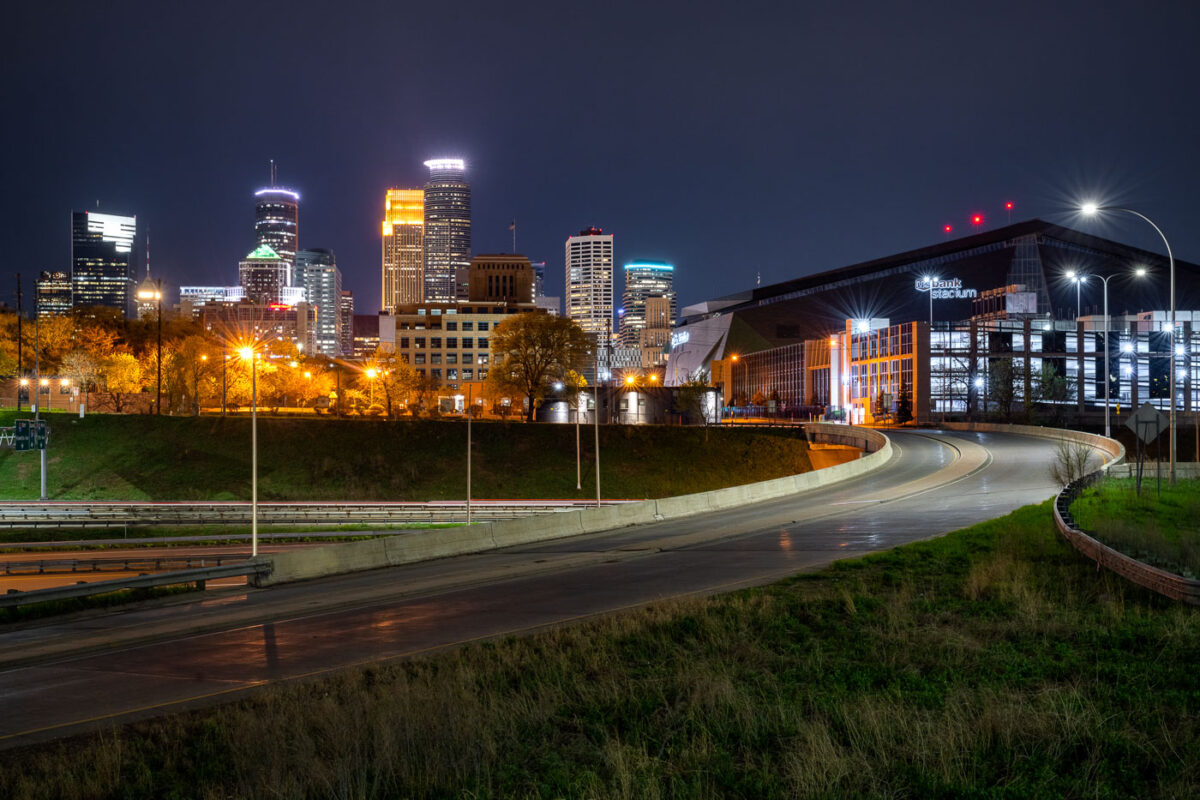
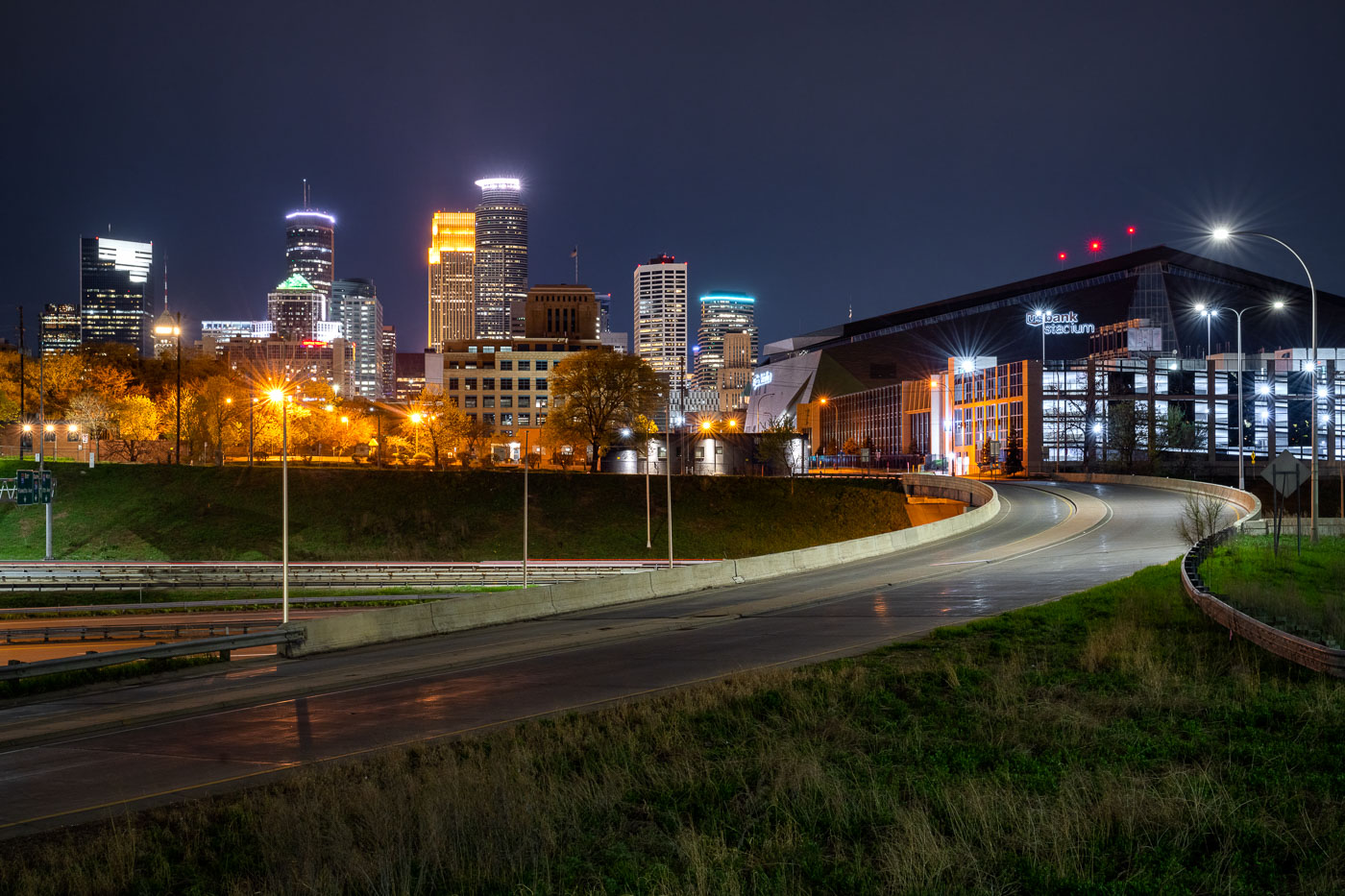
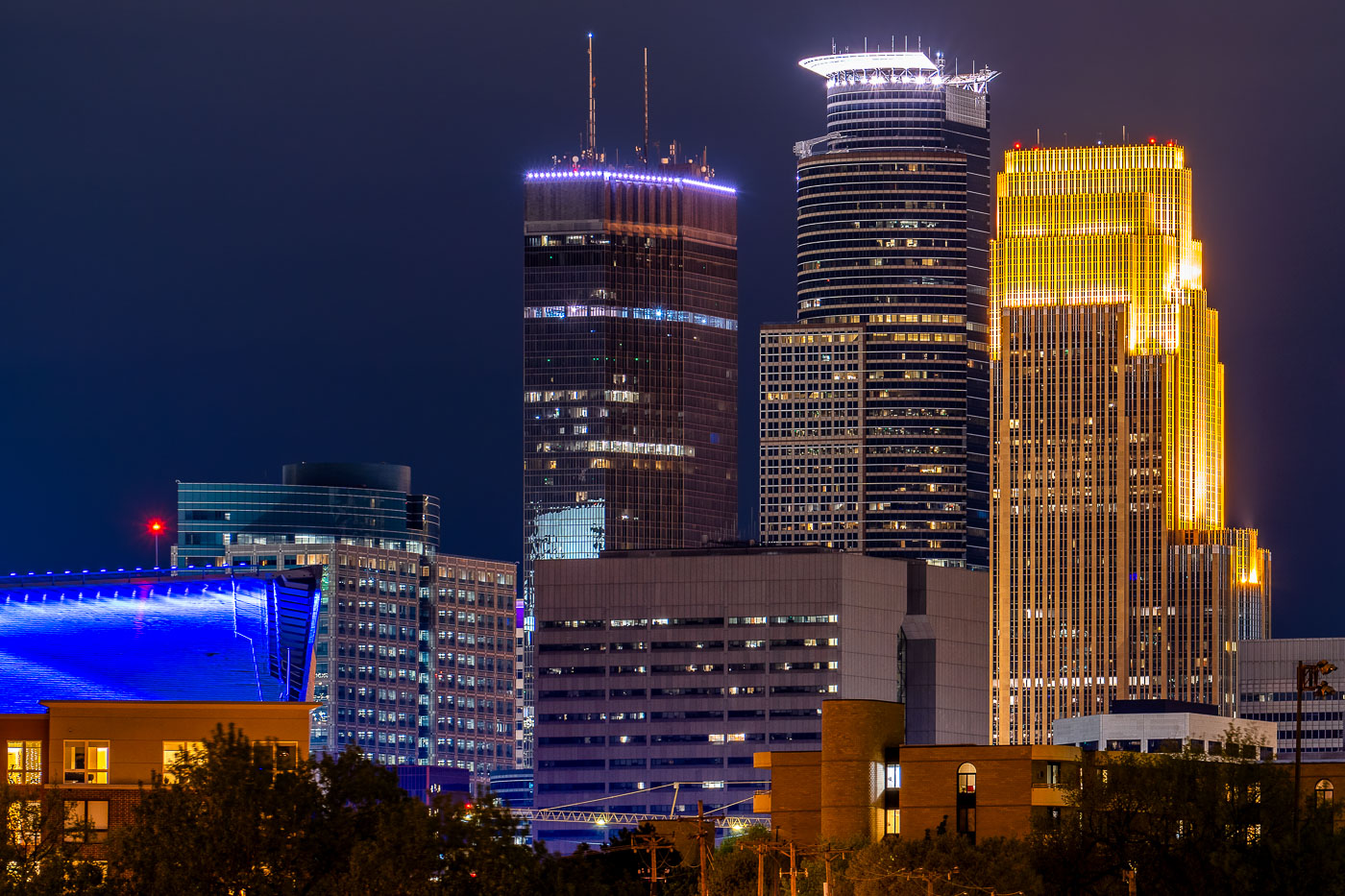
US Bank Stadium and the downtown Minneapolis skyline
US Bank Stadium, a multi-purpose venue in downtown Minneapolis, is illuminated at night. Opened in 2016, the stadium was built on the former site of the Metrodome and serves as the home for the Minnesota Vikings of the National Football League. Its distinctive architecture features a transparent ETFE roof and a faceted glass exterior, designed to reflect the city's sky and surrounding environment. The stadium hosts a variety of events, including professional football games, concerts, and other large-scale public gatherings.

US Bank Stadium and Minneapolis Skyline at Night
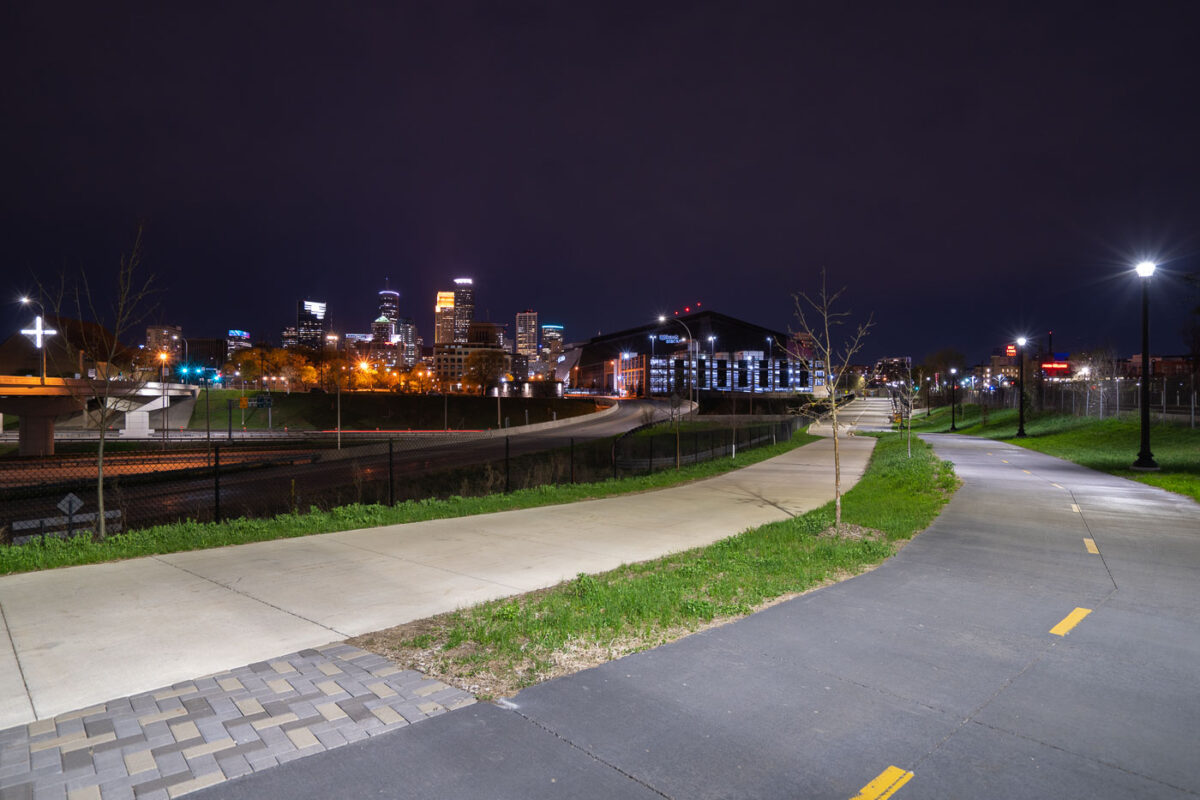
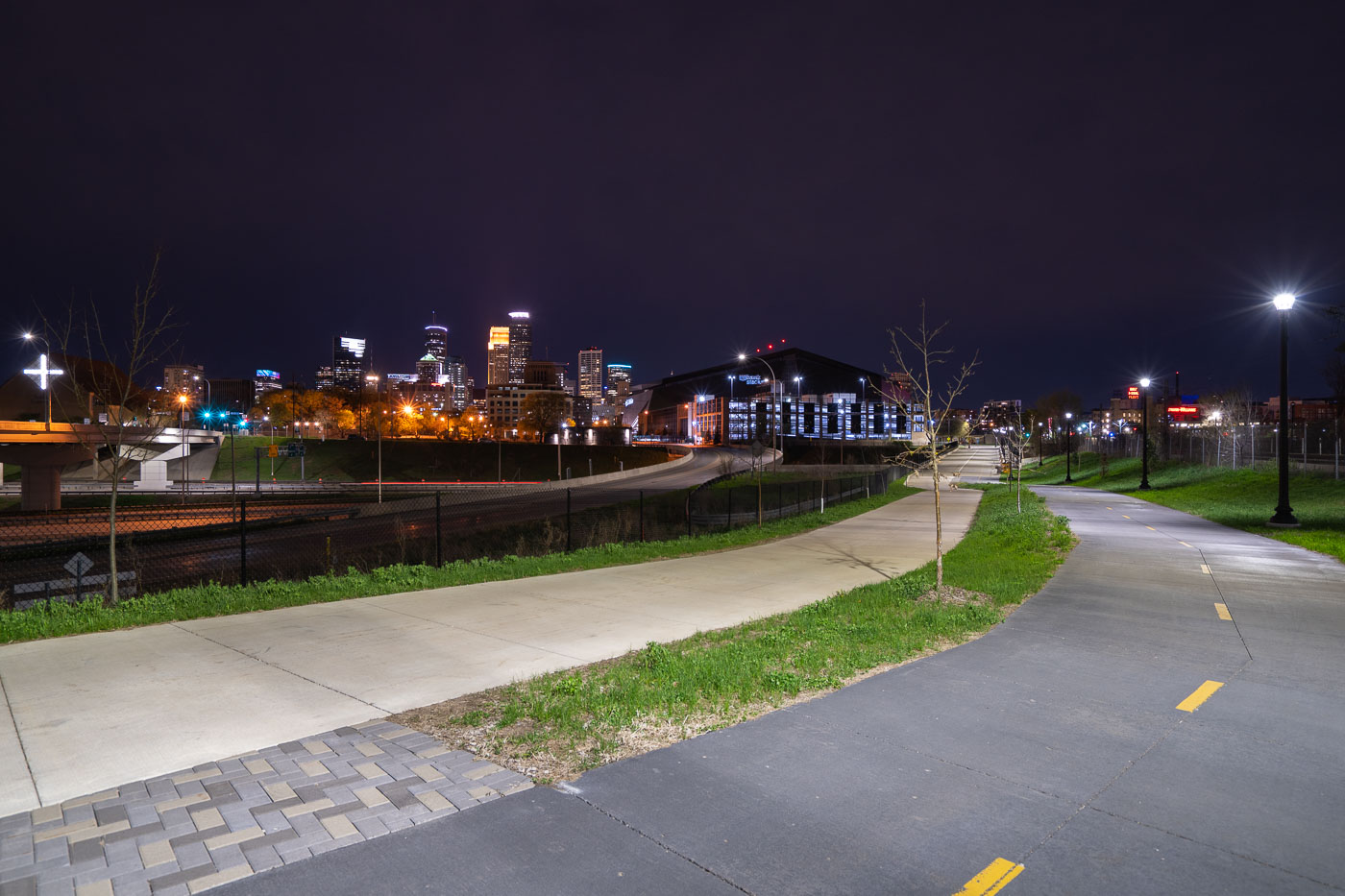
Samatar Crossing near Downtown Minneapolis
The Samatar Crossing shared use path near downtown Minneapolis. The path leads from Cedar Riverside to near US Bank Stadium.

Samatar Crossing near Downtown Minneapolis

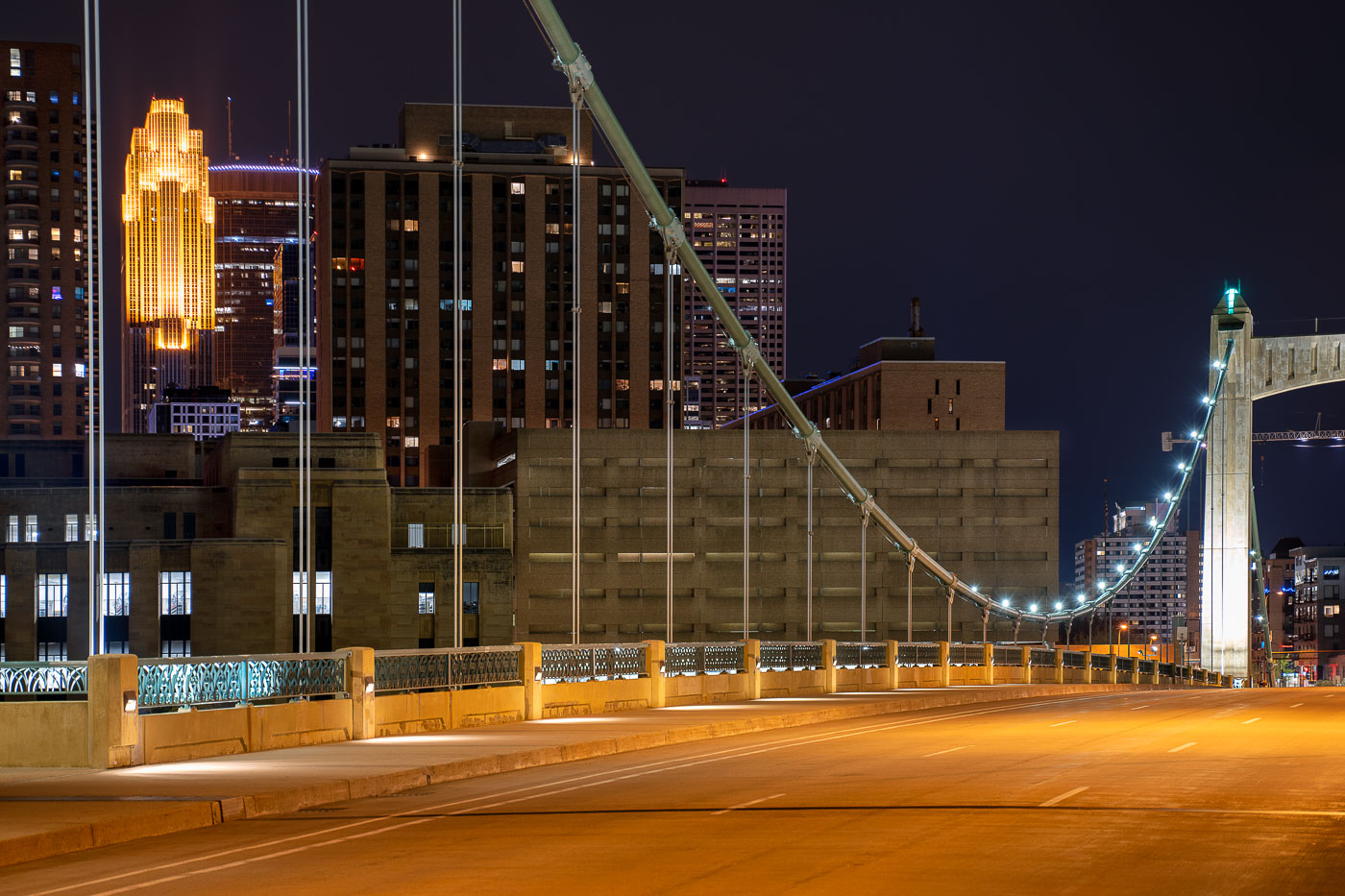
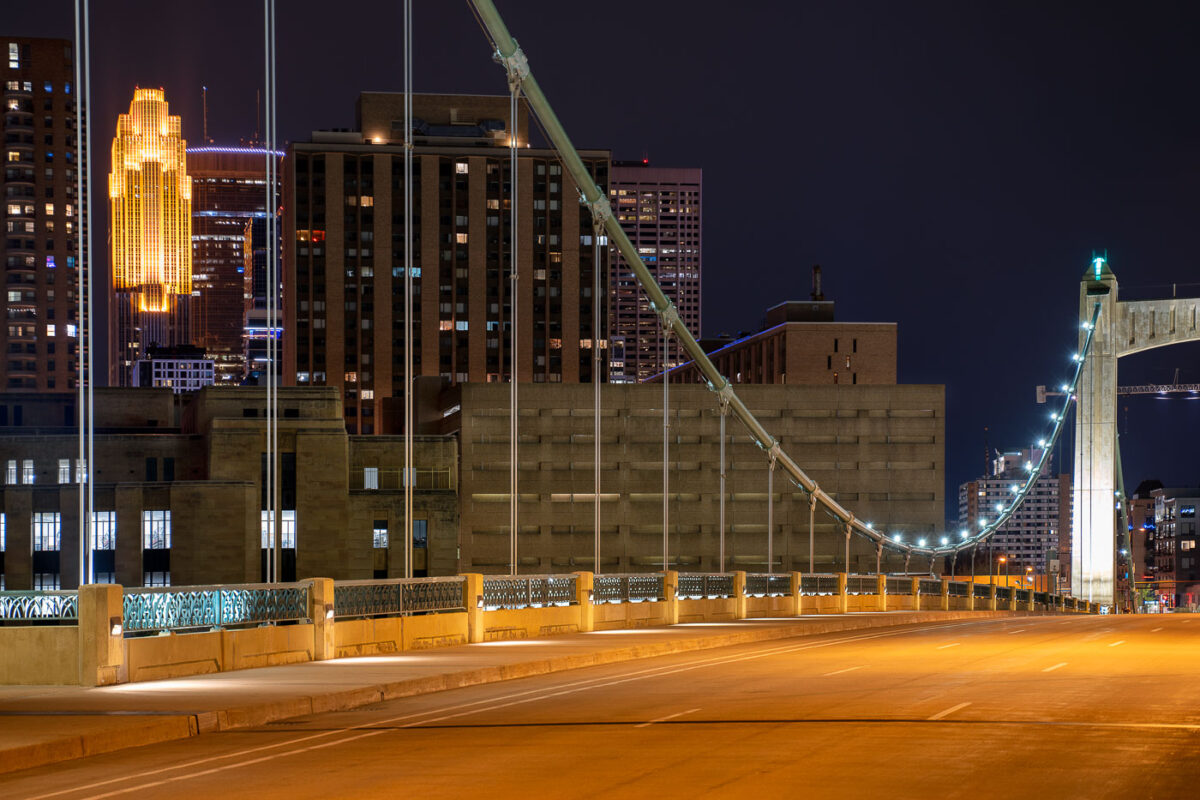
Hennepin Ave bridge at night during covid19
The Hennepin Avenue Bridge in Minneapolis, MN, is seen here during the COVID-19 pandemic.

Hennepin Avenue Bridge, Minneapolis, During COVID-19 Pandemic
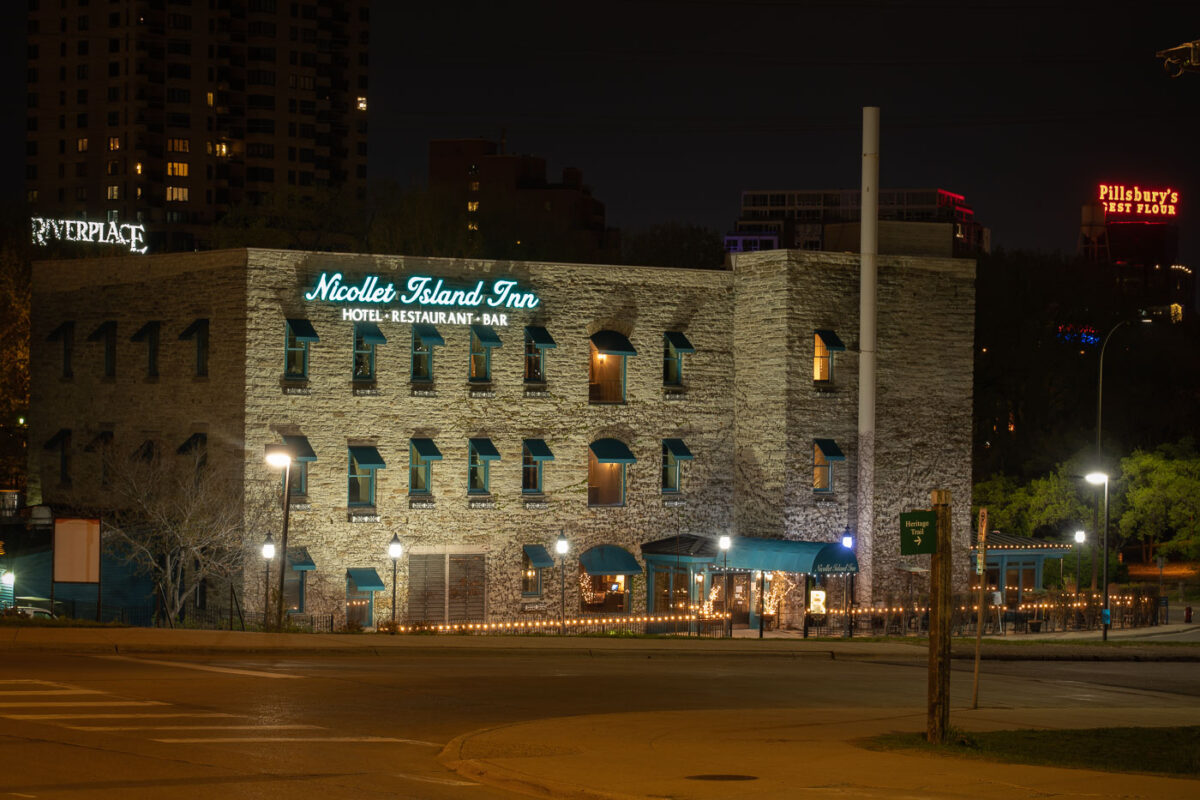
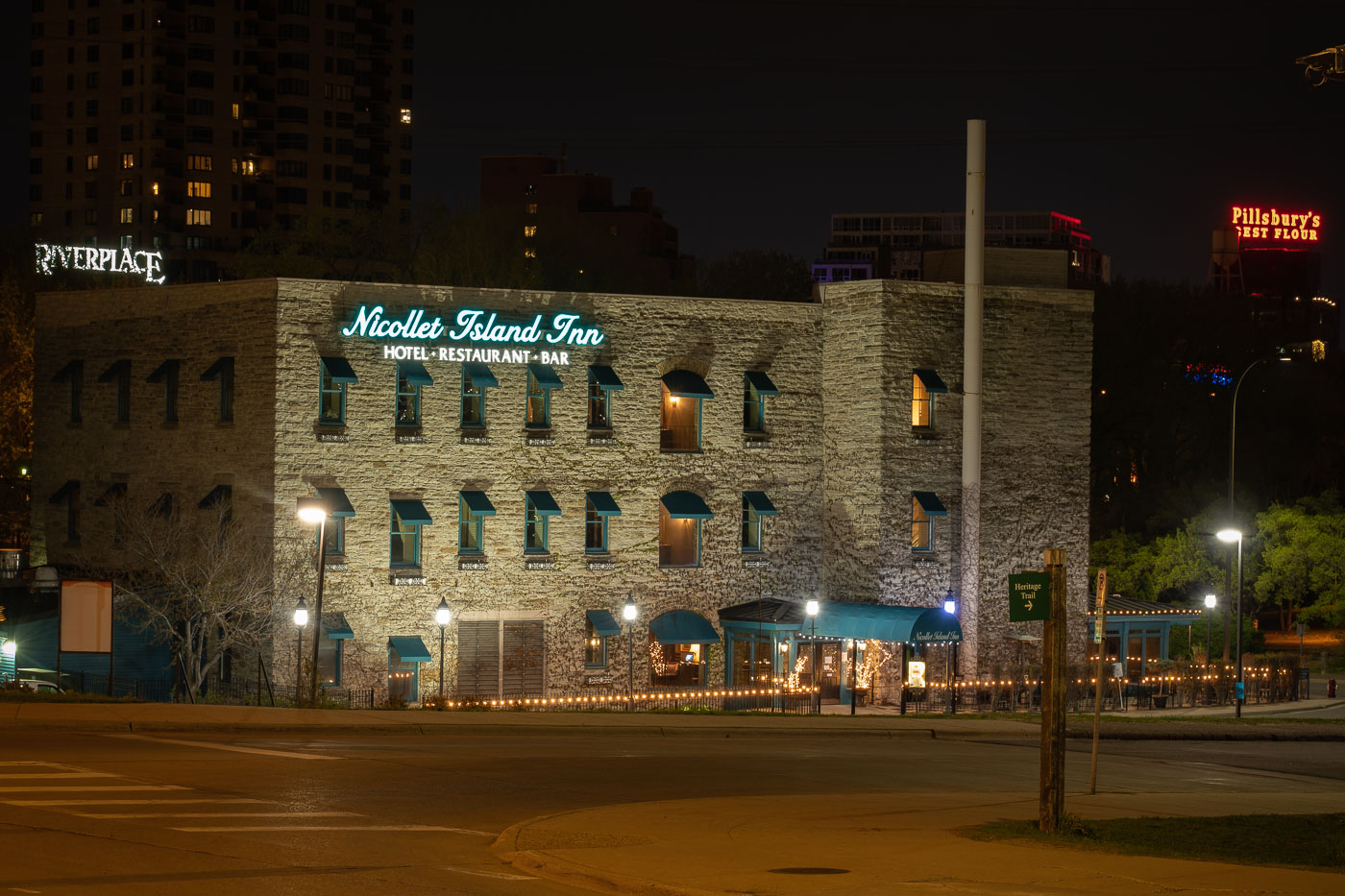
NIcollet Island Inn on Nicollet Island
The Nicollet Island Inn, a landmark along the Mississippi River in Minneapolis, occupies a 19th-century brick and limestone structure originally built in the 1890s as an industrial facility. Converted into a hotel and restaurant in the 1970s, it retains its historic character with exposed stone walls and vintage architectural details. Illuminated signage and soft outdoor lighting highlight the inn’s distinctive facade, with the iconic Pillsbury’s Best Flour sign visible across the river, linking the scene to the city’s milling heritage.

Nicollet Island Inn at Night, Minneapolis Riverfront
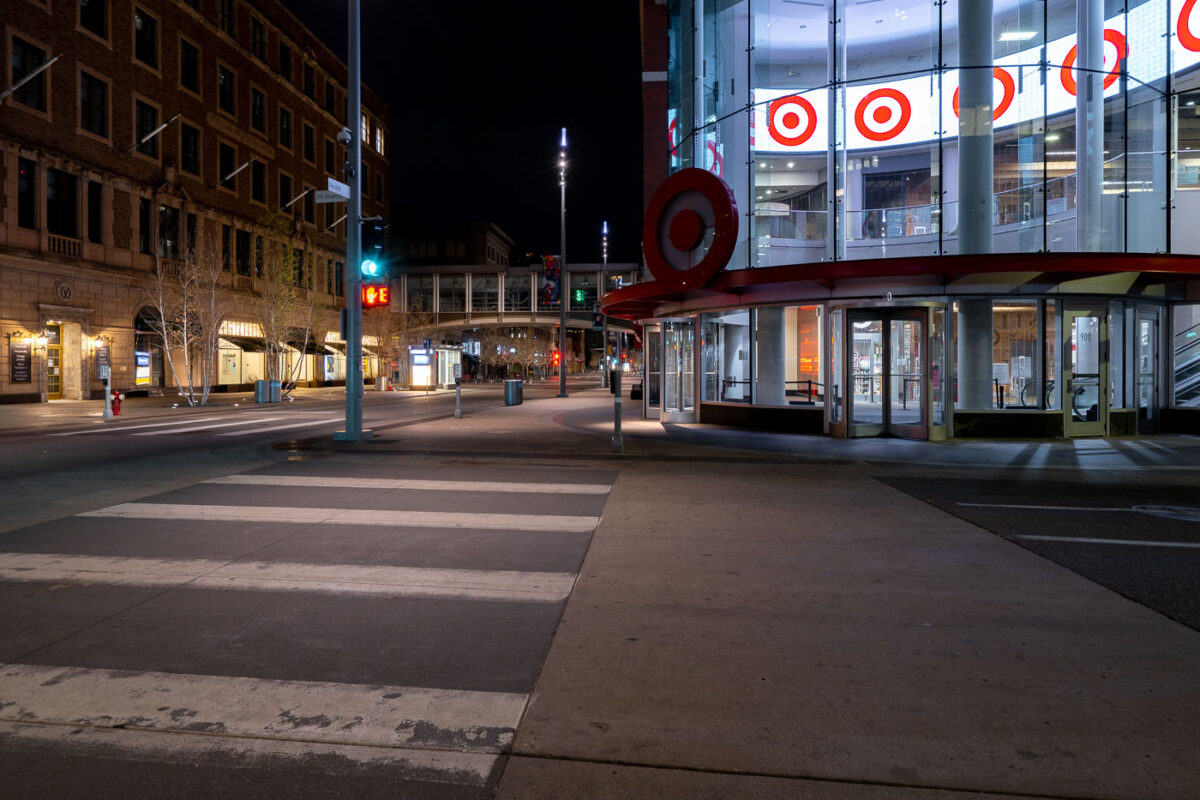
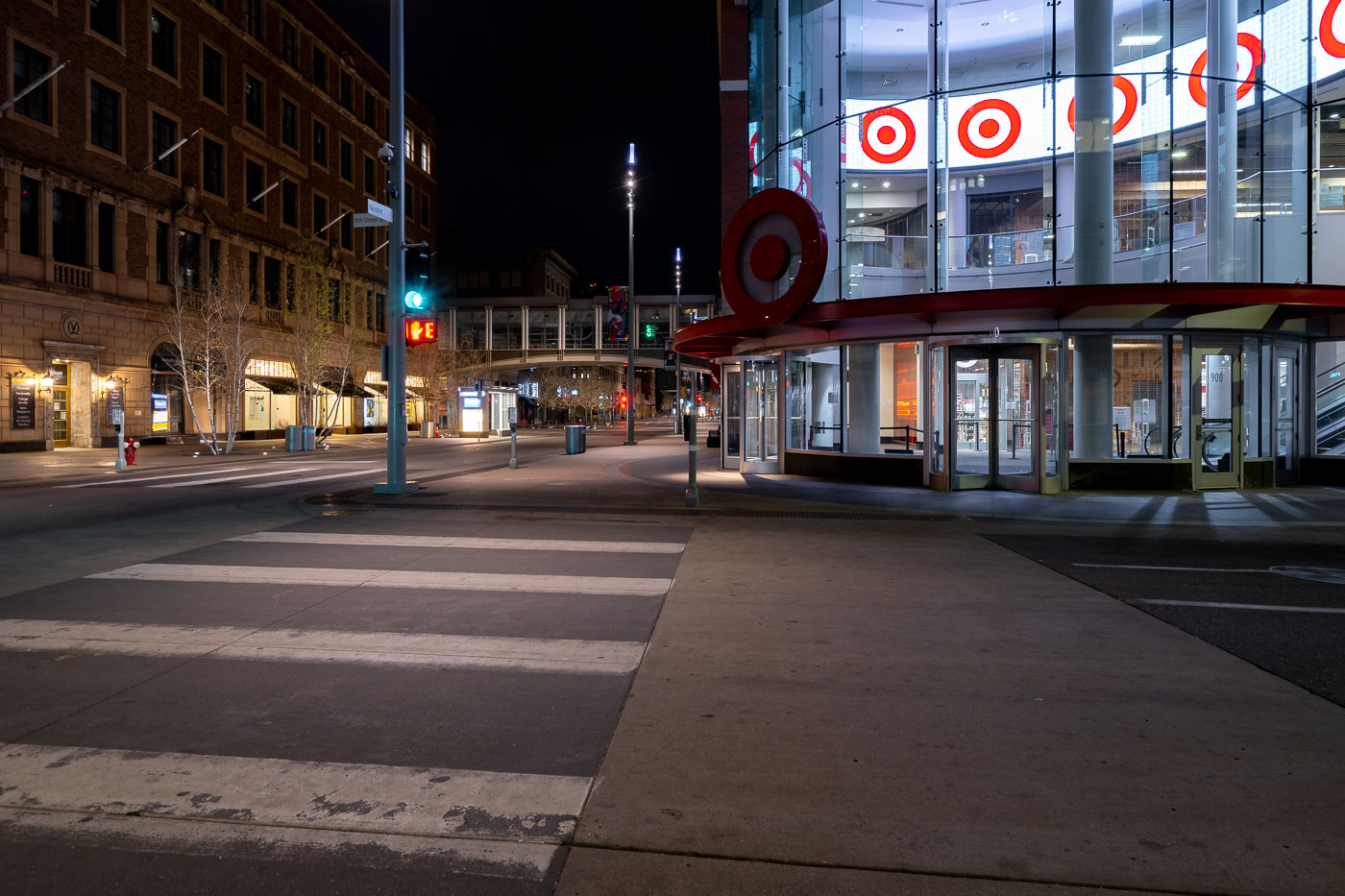
Target's flagship store illuminated at night on Nicollet Mall at South 9th Street in downtown Minneapolis.
Target's downtown Minneapolis store sits at the corner of Nicollet Mall and South 9th Street, its curved glass corner marked by the company's red bullseye logo. The flagship location anchors this stretch of the pedestrian mall, with a skyway overhead linking it to neighboring blocks.

Target Store on Nicollet Mall at night
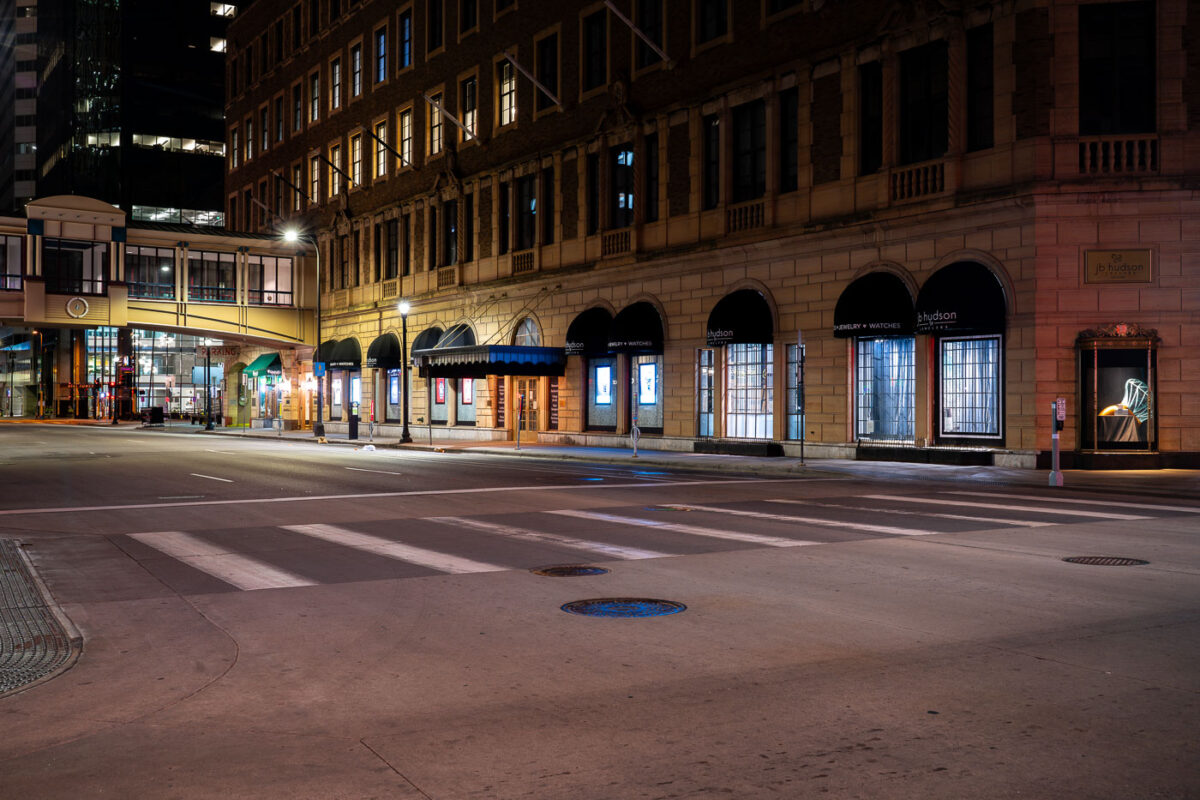
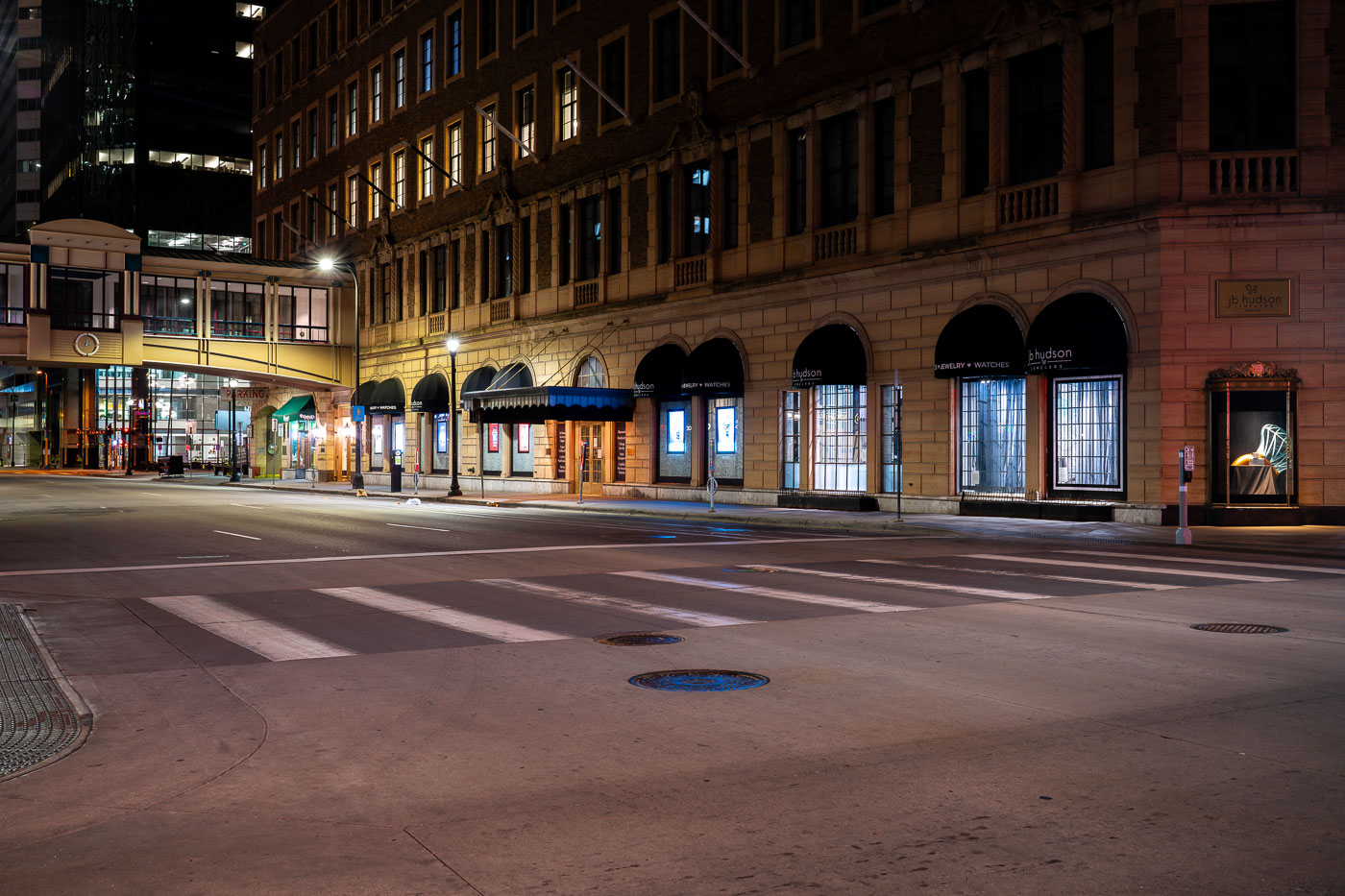
Nicollet Mall storefronts and retail businesses at night in downtown Minneapolis.
Nicollet Mall is a pedestrian shopping district in downtown Minneapolis featuring retail storefronts and restaurants along a tree-lined walkway. The mall, which opened in 1968, was designed as a mixed-use urban space connecting downtown businesses and offices. JB Hudson Jewelers operates among the various retailers along the mall, which has served as a commercial and gathering destination for decades.

Nicollet Mall storefronts at night, downtown Minneapolis
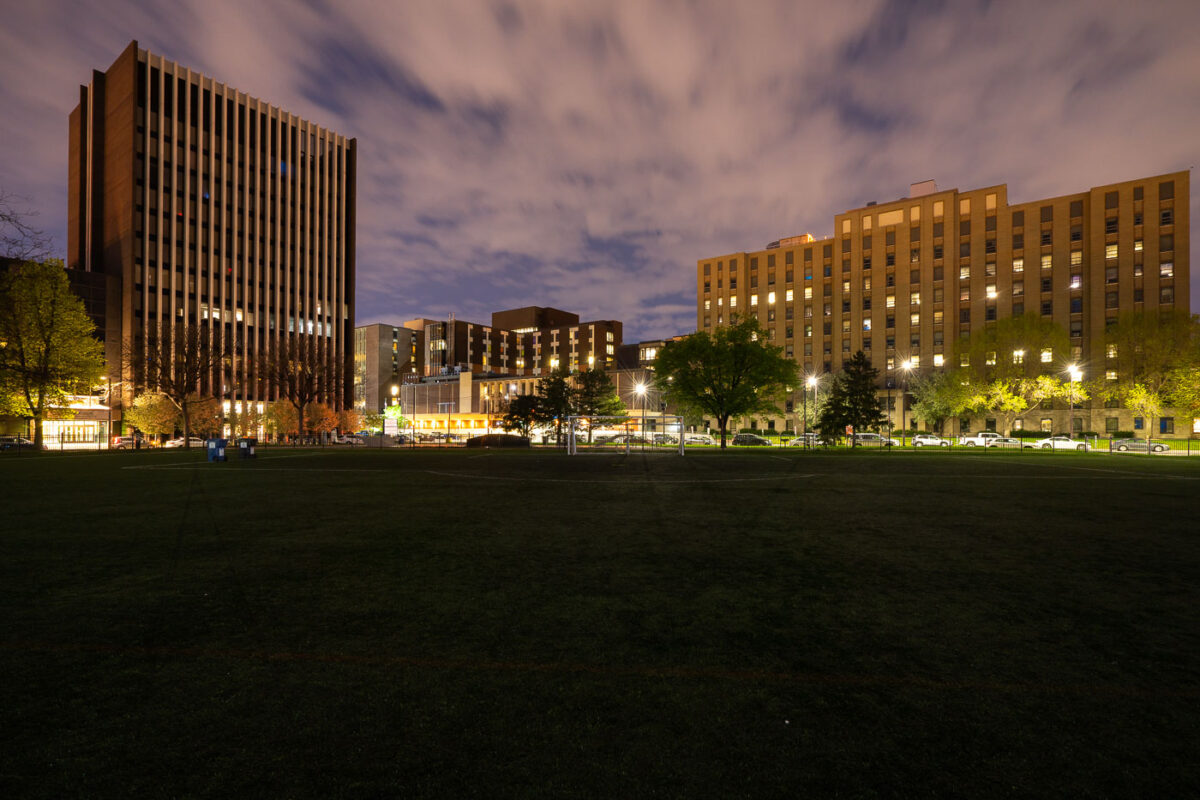
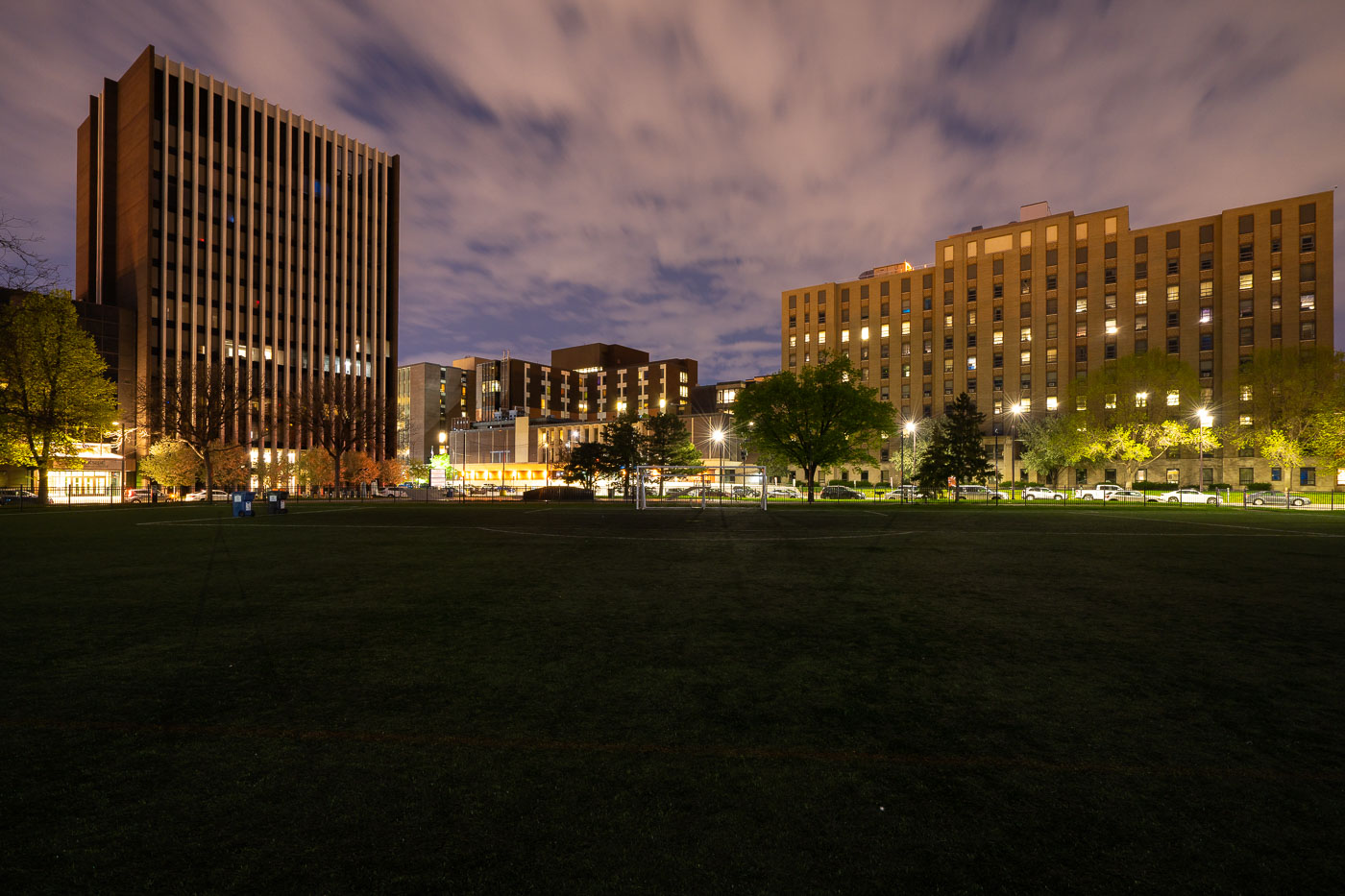
Elliot Park at night in downtown Minneapolis
Elliott Park in Downtown Minneapolis. One of my favorite parks downtown because of the skyline that's visible from the soccer fields.

Elliott Park in downtown Minneapolis at night
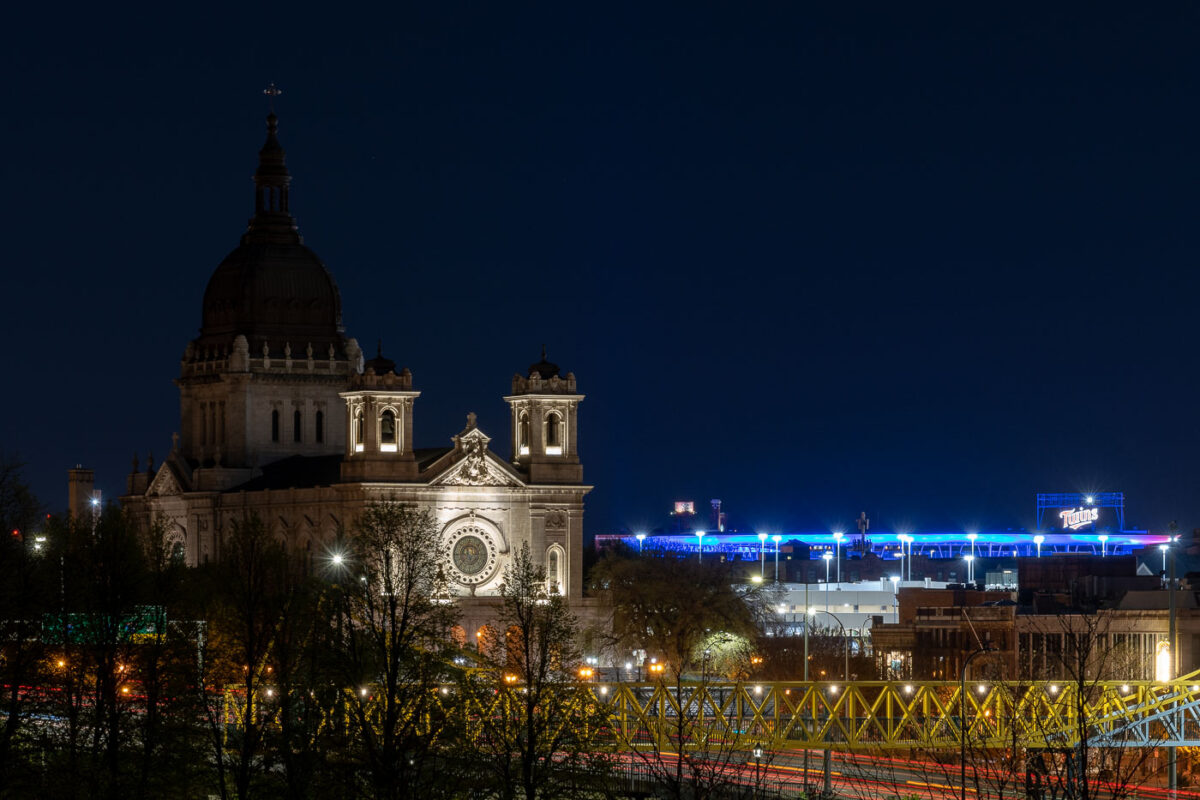
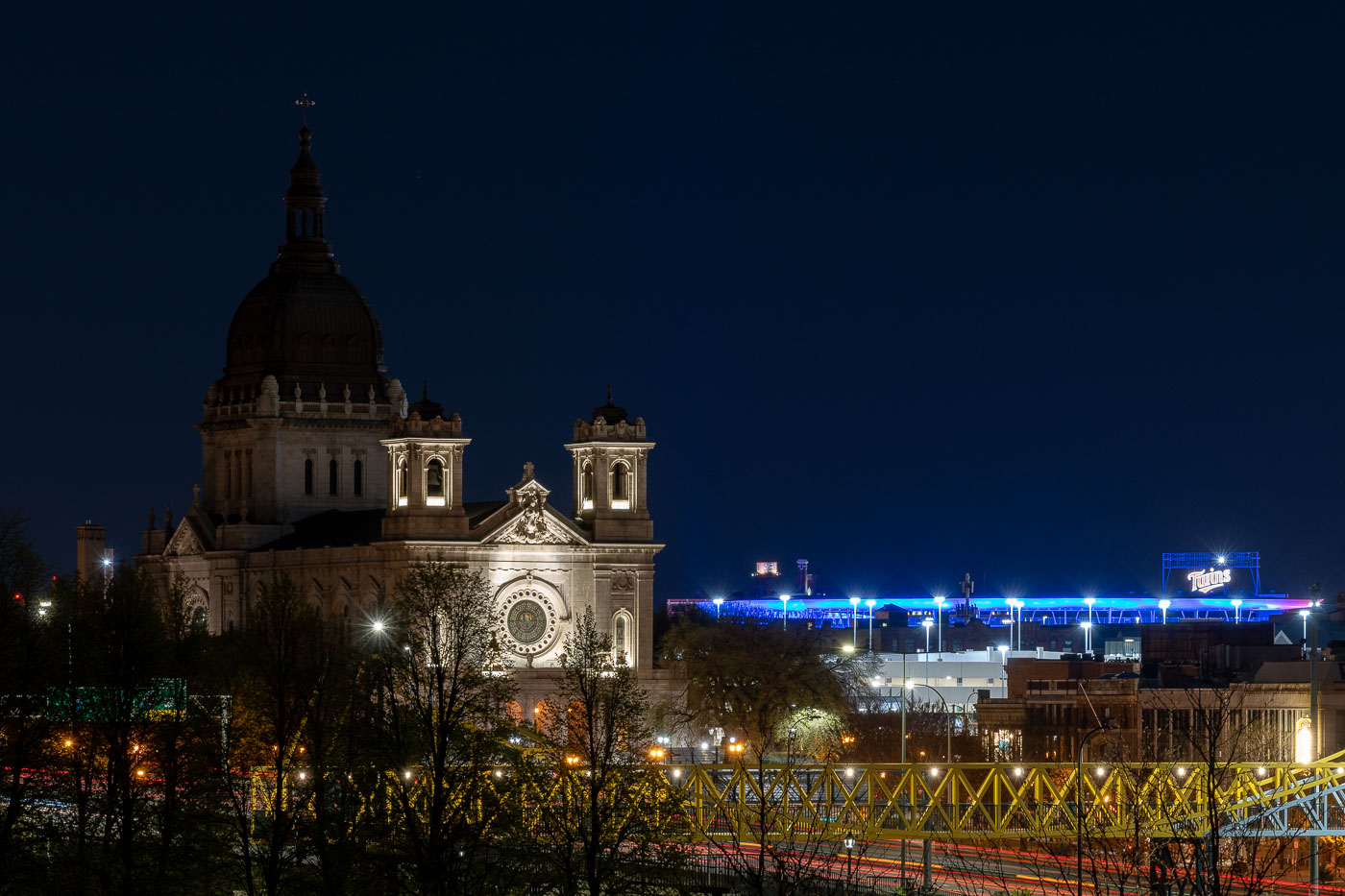
The Basilica of Saint Mary and Target Field illuminated at night in downtown Minneapolis.
The Basilica of Saint Mary stands at 1600 Hennepin Avenue in downtown Minneapolis, completed in 1926 as the first basilica designated in the United States. Target Field, home of the Minnesota Twins, opened in 2010 on the north side of downtown near the Mississippi River.

Basilica of Saint Mary Rises Over Target Field at Night
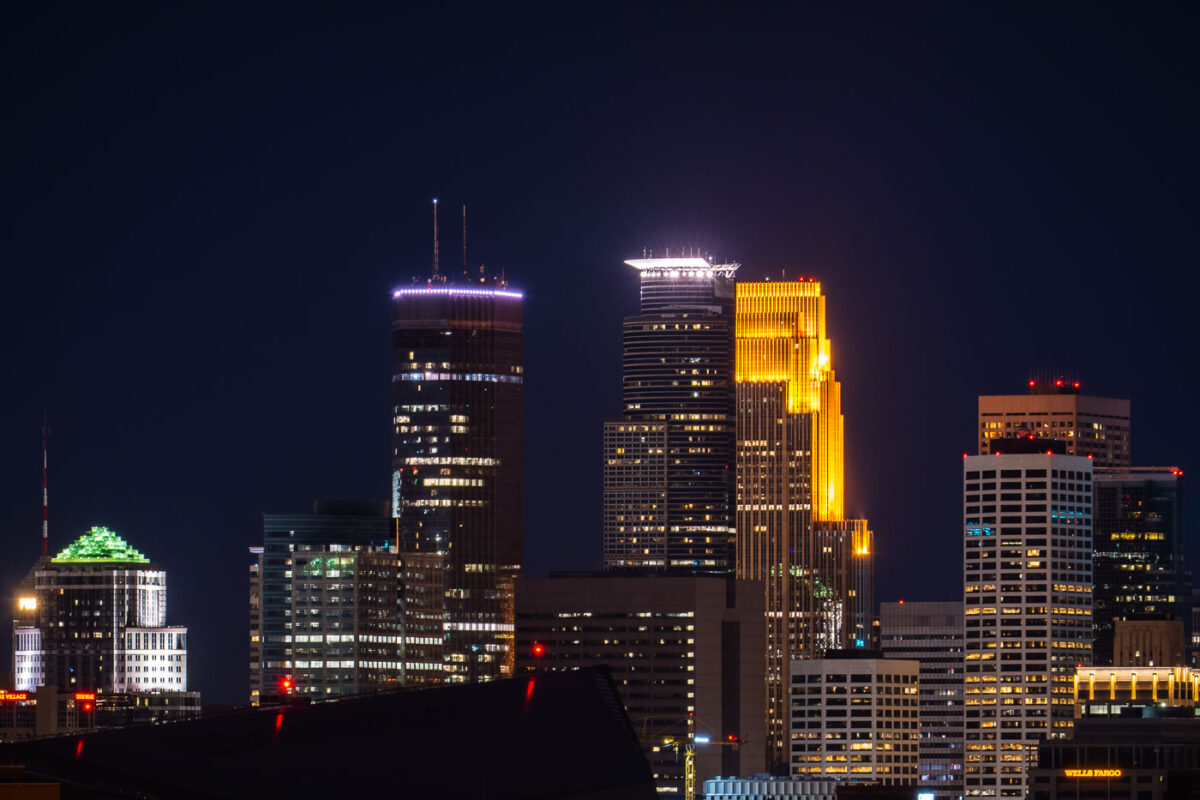
Downtown Minneapolis skyline with IDS Center, Wells Fargo Center, and Capella Tower at night.
Downtown Minneapolis skyline, Minnesota, includes IDS Center, Wells Fargo Center, and Capella Tower on May 6, 2020. The office towers are part of the city’s central business district, clustered around Nicollet Mall and the downtown core. IDS Center has long been Minnesota’s tallest building, while Wells Fargo Center is one of the city’s most recognizable high-rise office towers.

IDS Center and Wells Fargo Center, Minneapolis
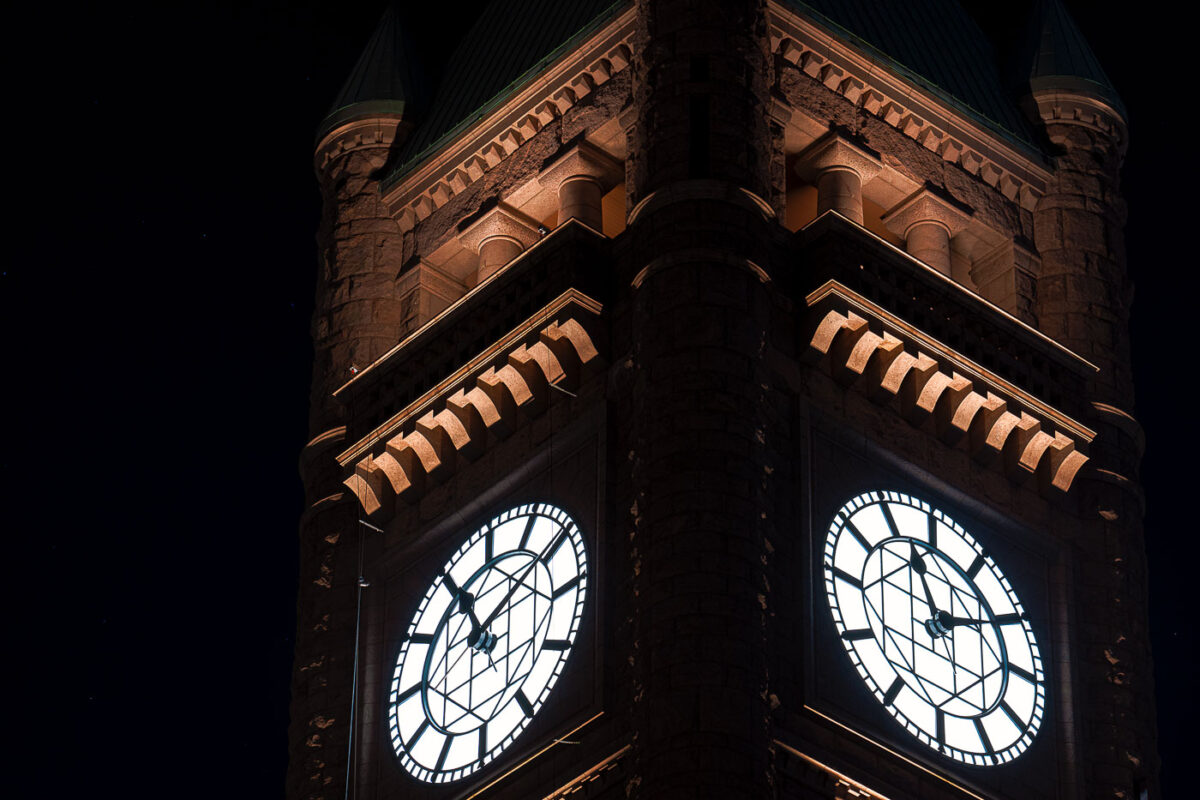
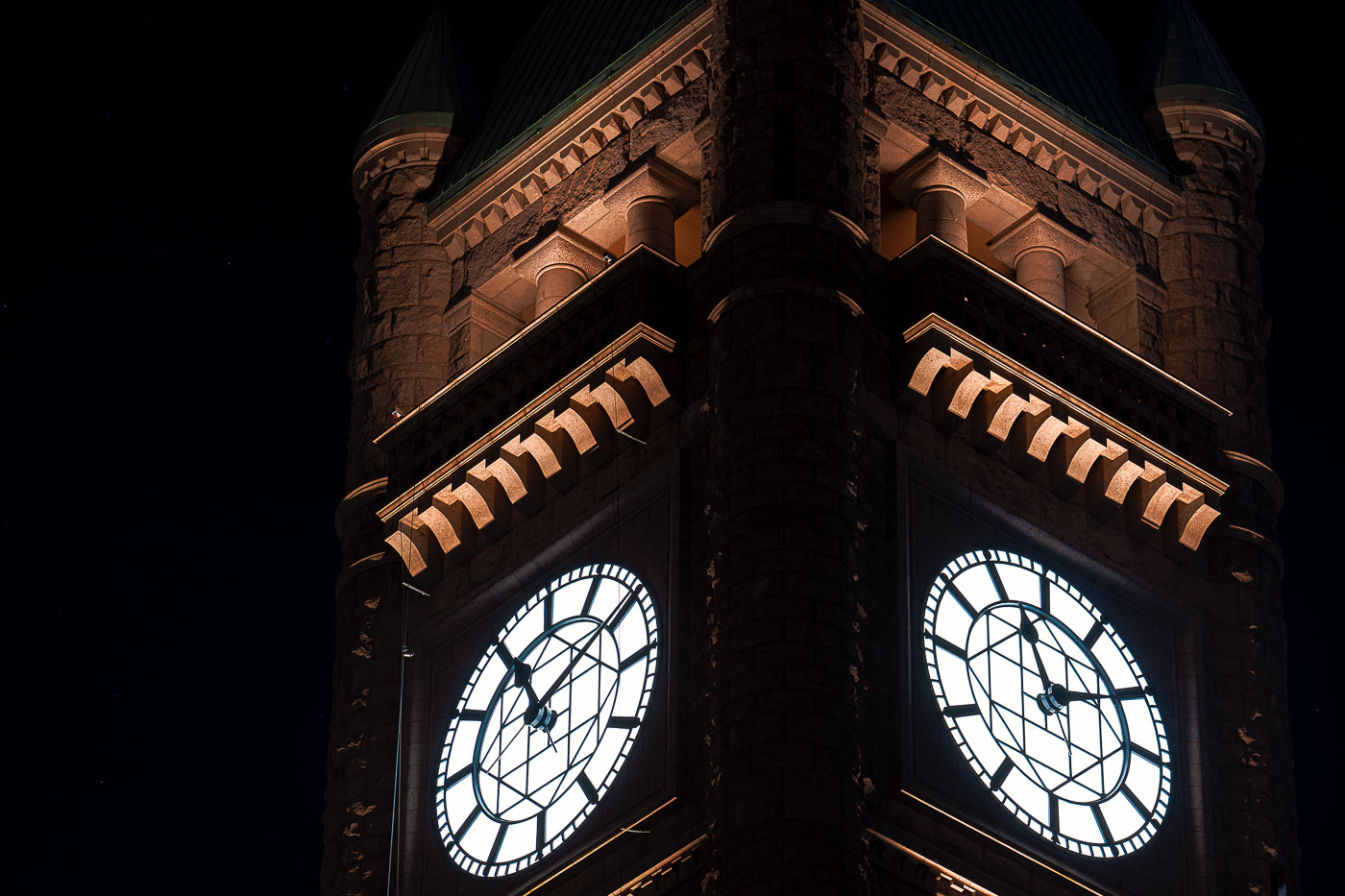
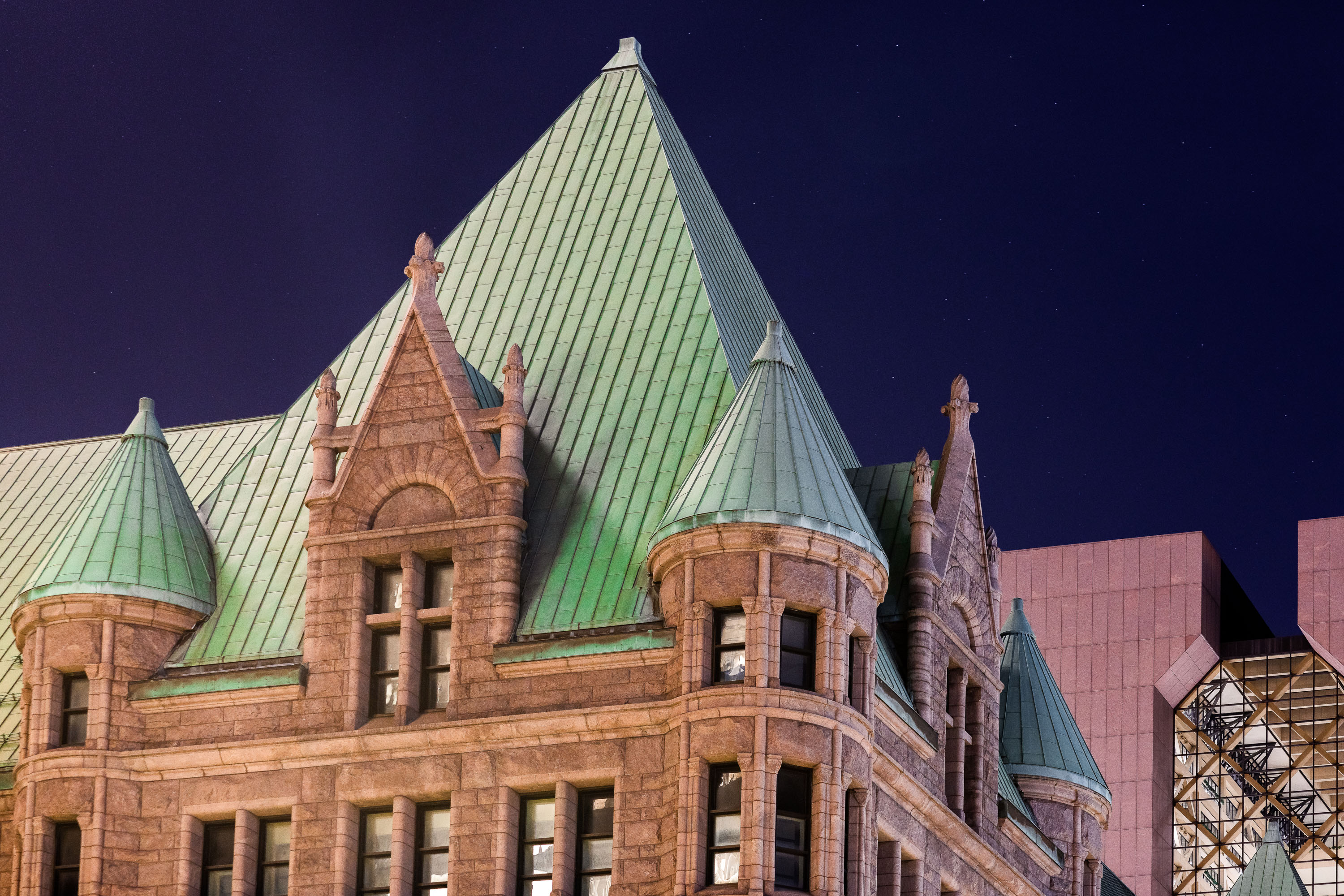
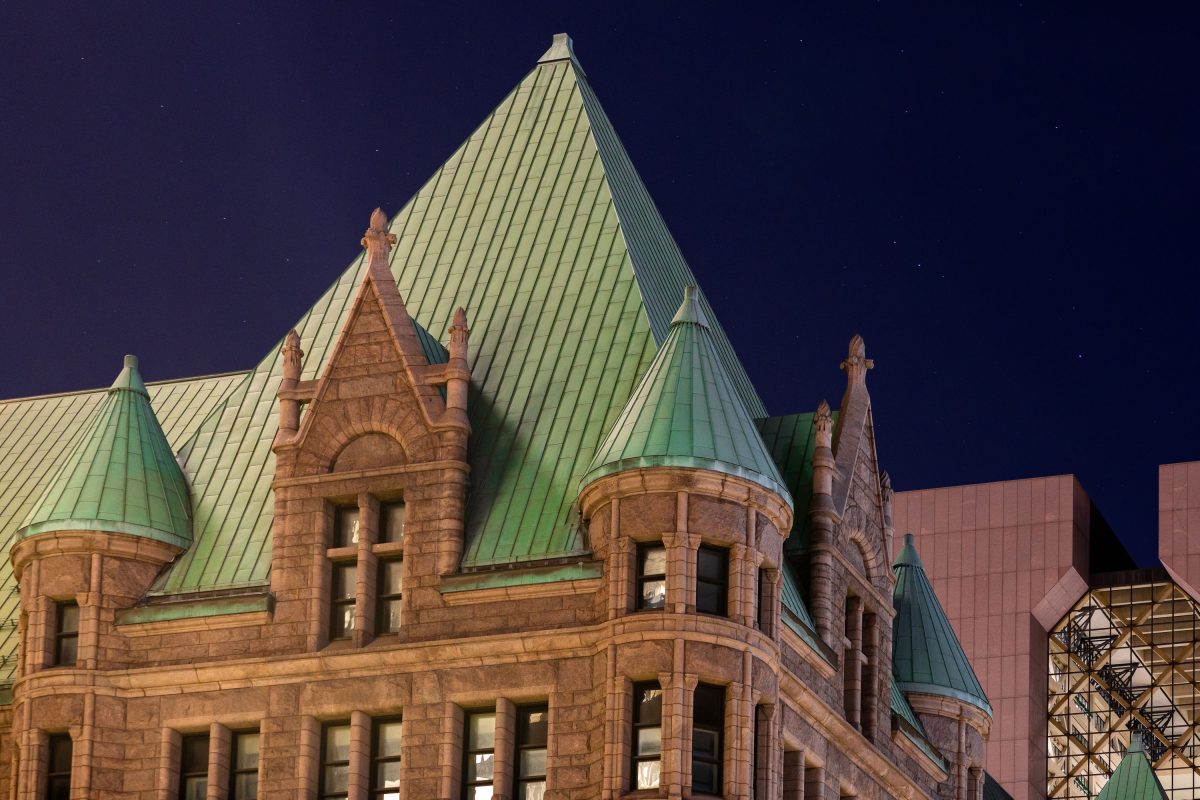
Minneapolis City Hall's illuminated clock tower displays two glowing faces against ornate Romanesque architecture at night.
The clock tower of Minneapolis City Hall glows at night, its illuminated faces visible across downtown.

Illuminated Clock Faces on Minneapolis City Hall’s Tower
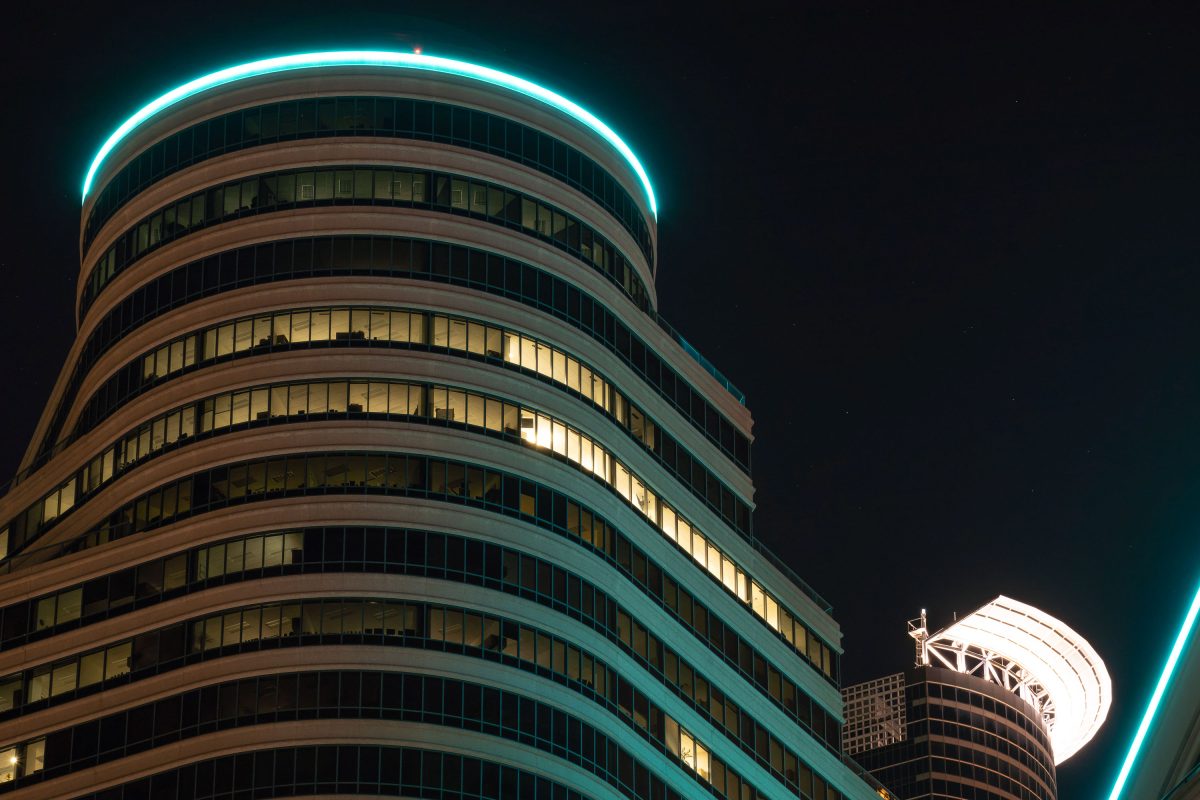
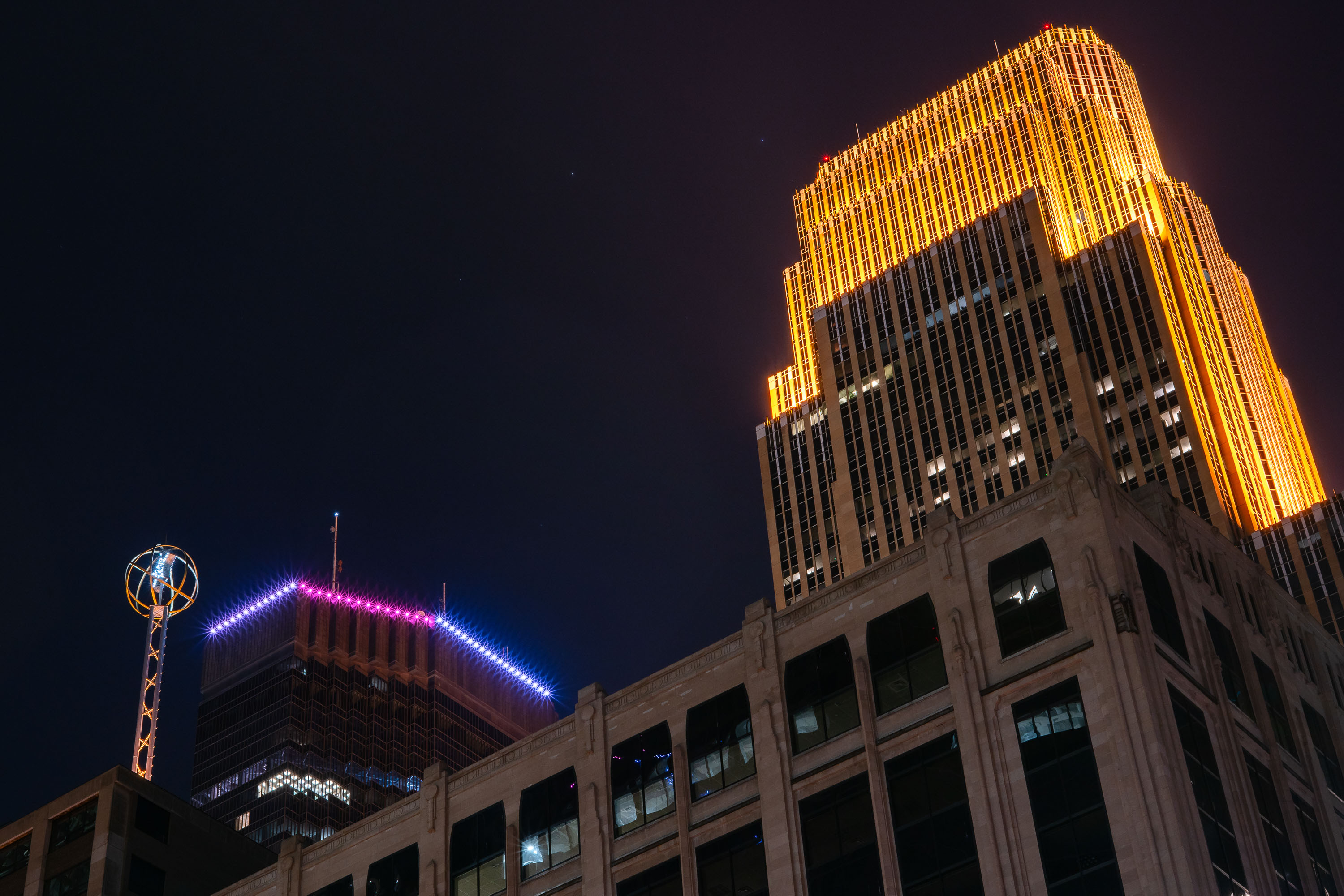
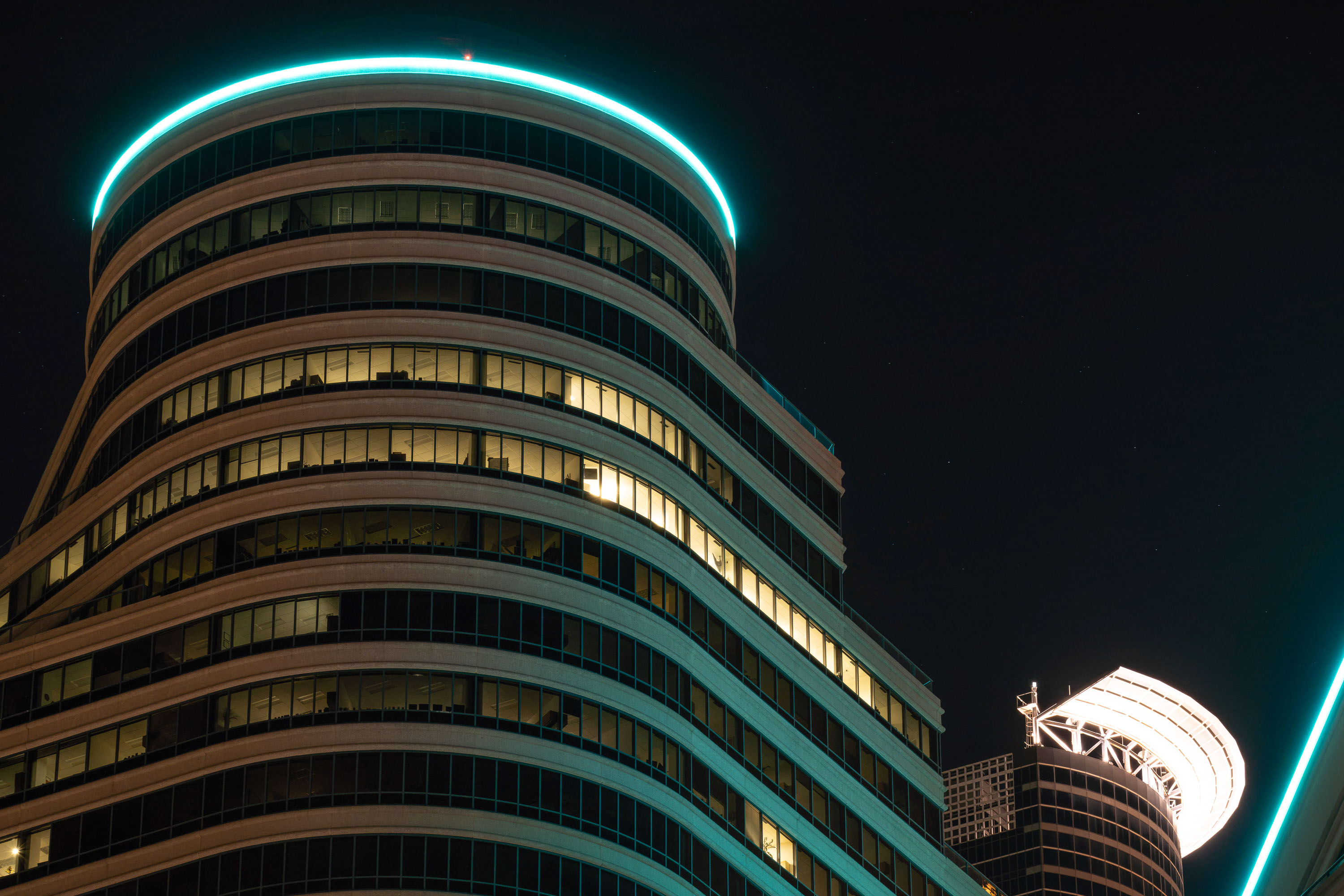
Fifth Street Towers in Downbtown Minneapolis at night
Fifth Street Towers and Capella Tower in Downtown Minneapolis.

Fifth Street Towers in Downbtown Minneapolis at night

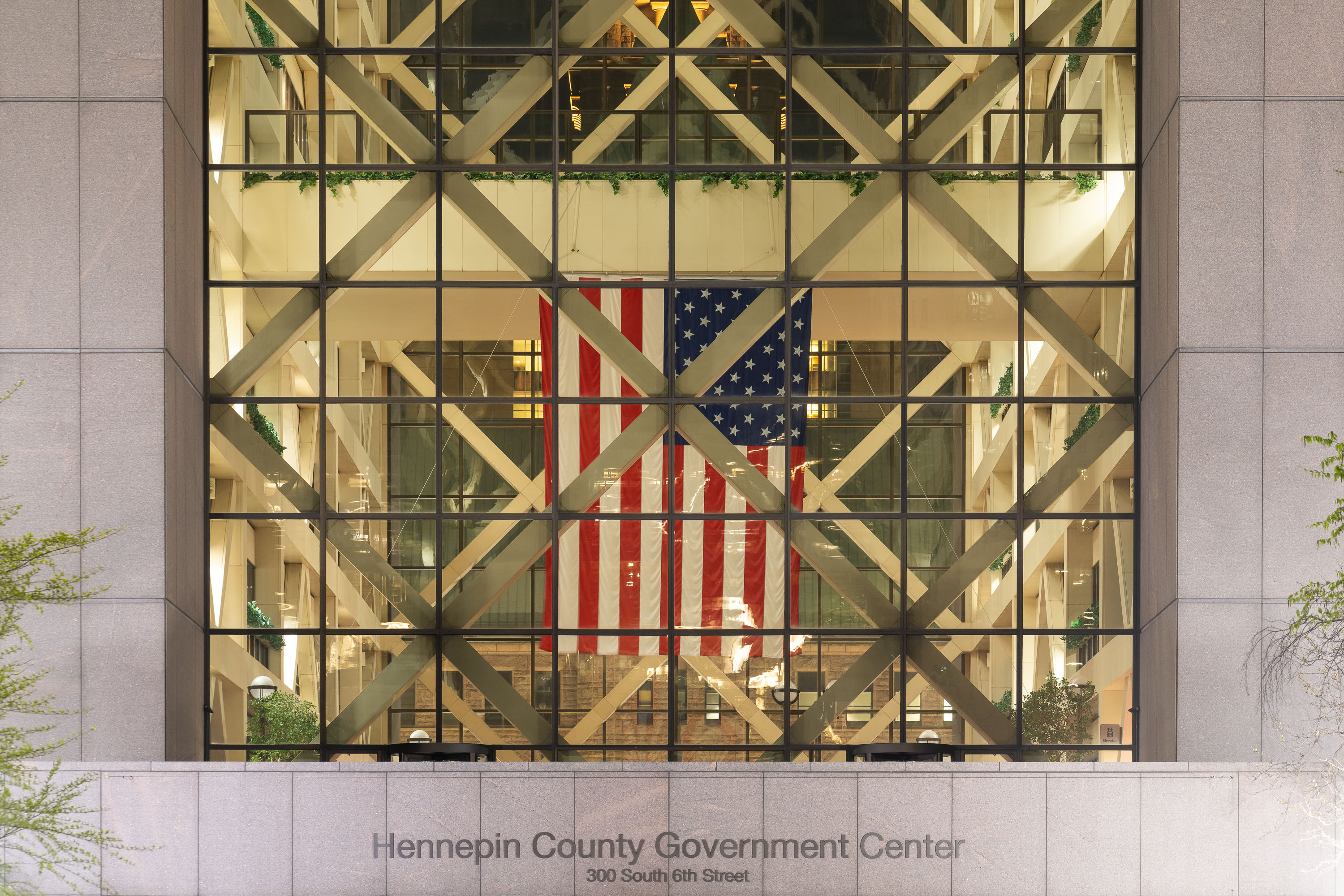
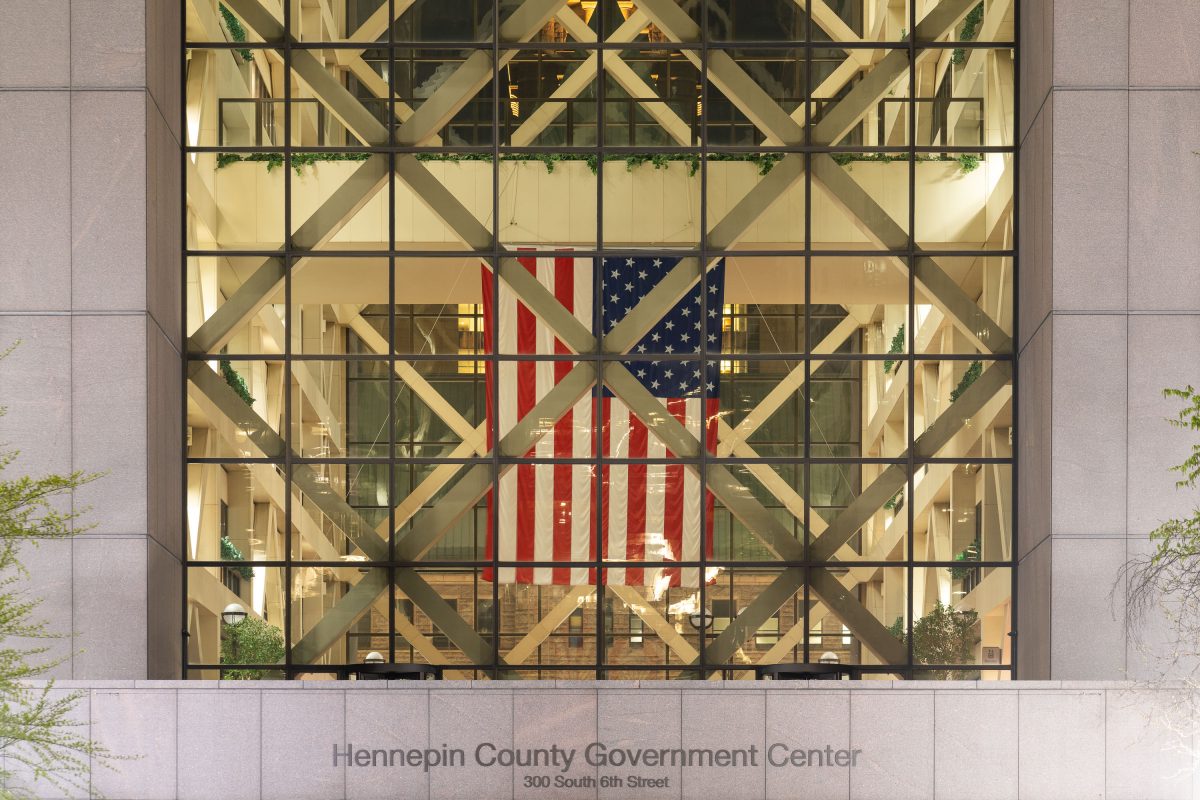
Hennepin County Government Center and the American Flag
An American Flag hangs inside the Hennepin County Courthouse in Downtown Minneapolis in May 2020.

Hennepin County Government Center and the American Flag

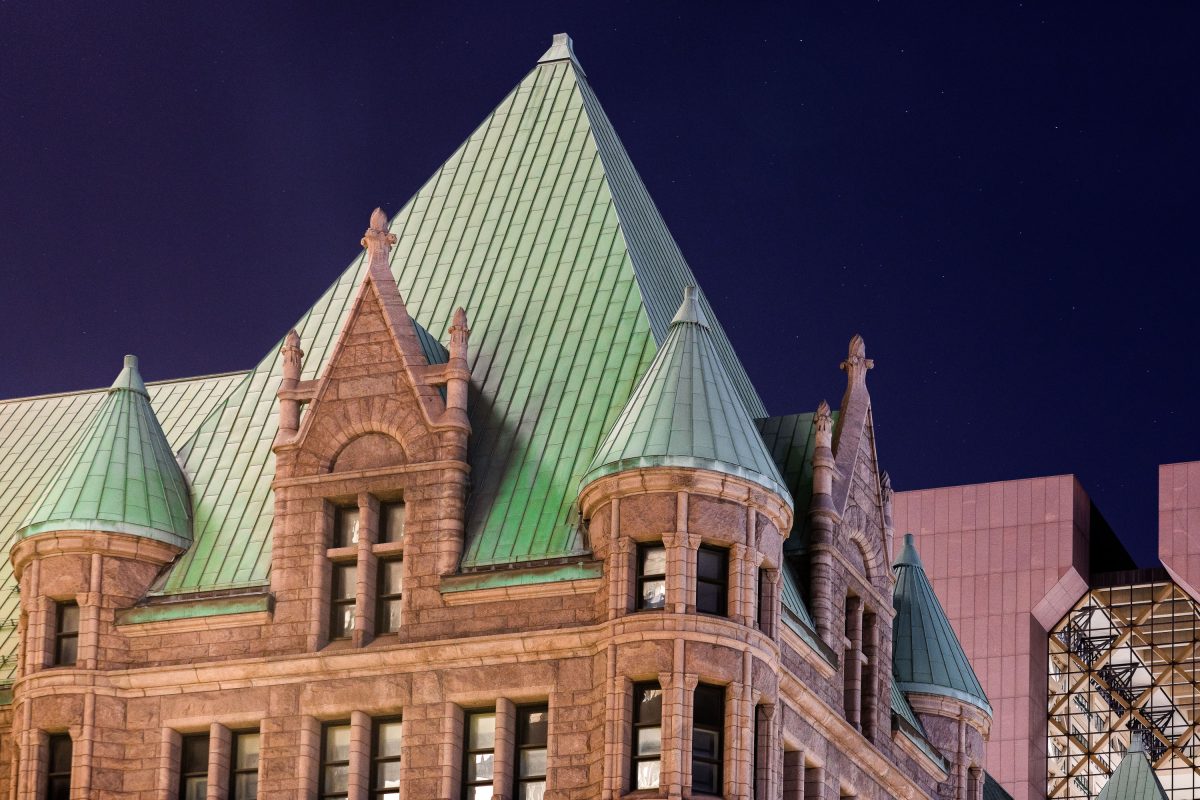
Minneapolis City Hall and Hennepin County Government Center at night
Minneapolis City Hall and the Hennepin County Government Center in downtown Minneapolis on a clear night.

Downtown Minneapolis City Hall At Night
Minneapolis City Hall at night in May 2020
The Minneapolis City Hall and Hennepin County Government Center in the background.

Minneapolis City Hall at night in May 2020

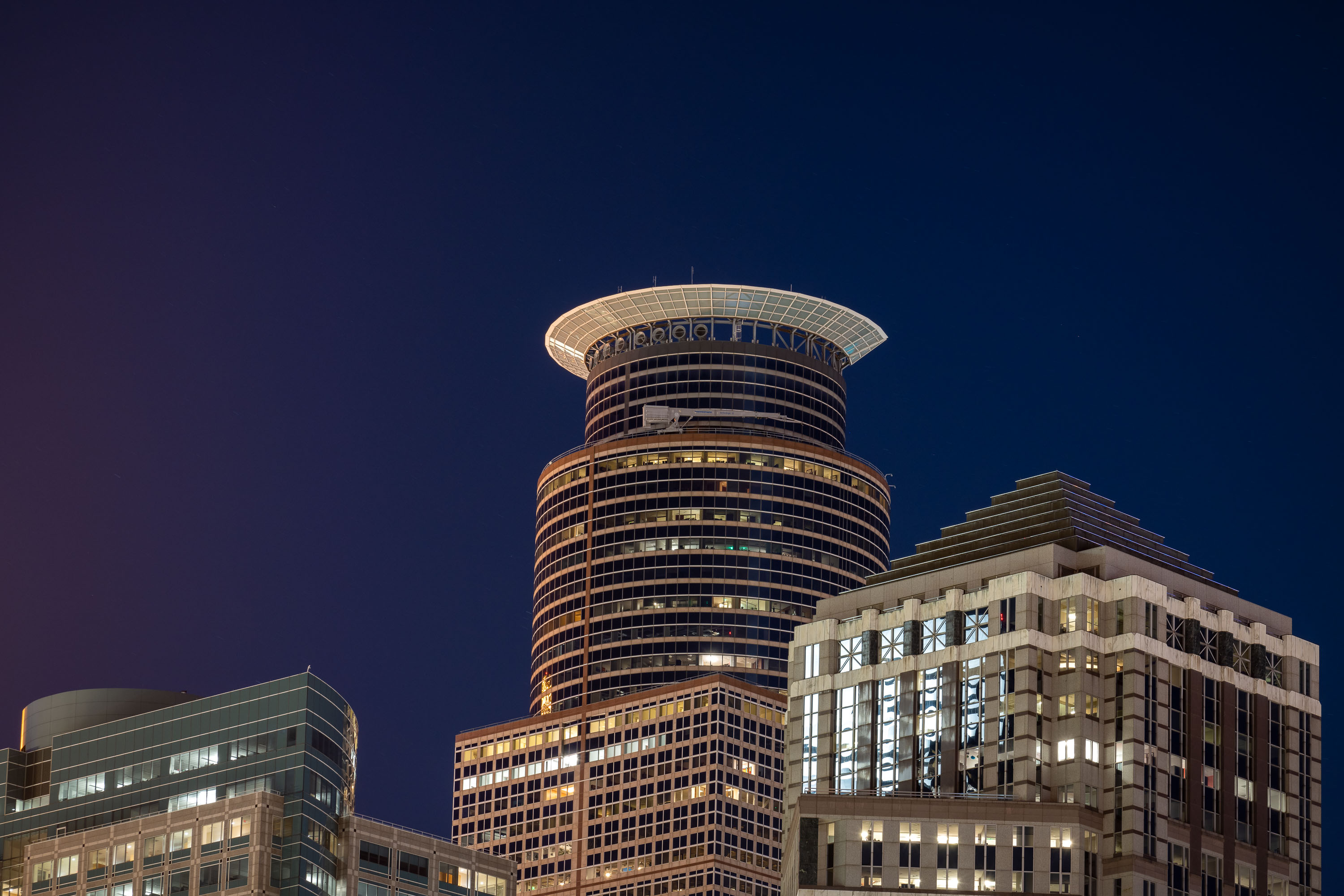
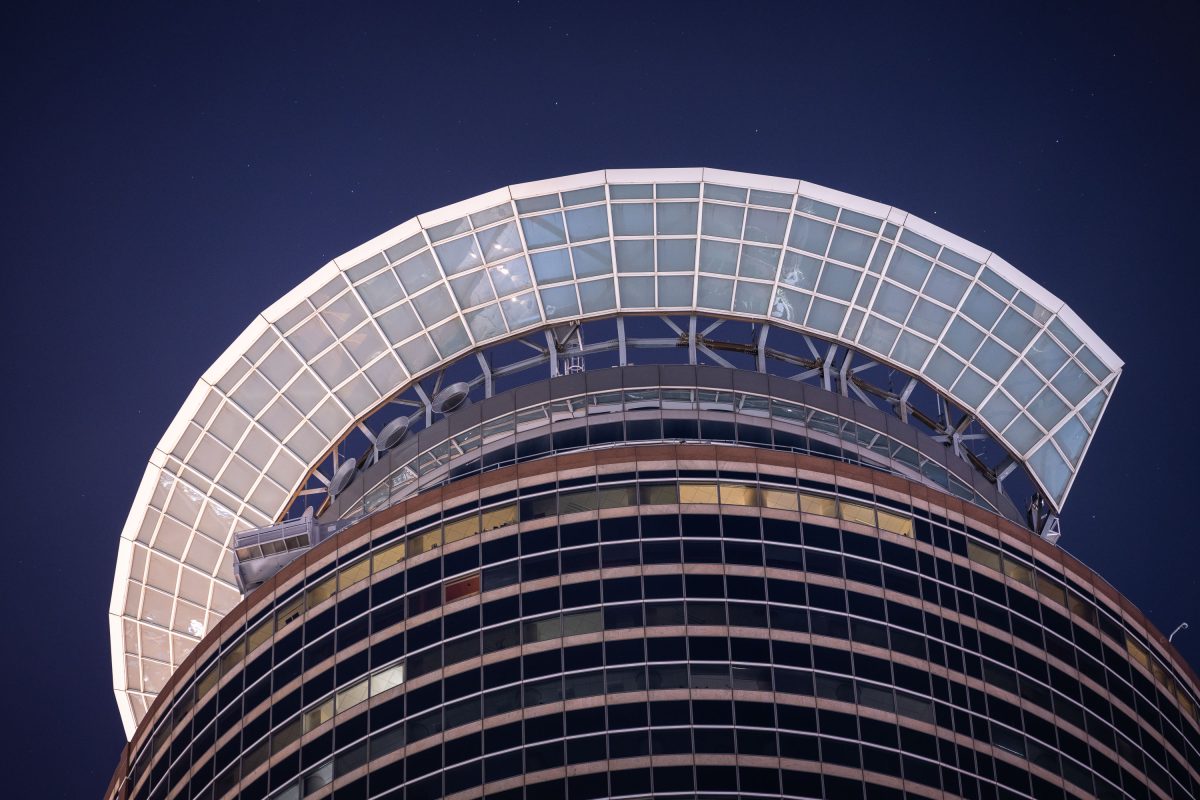
Capella Tower crown seen at night in Downtown Minneapolis
Capella Tower in Downtown Minneapolis

Capella Tower crown seen at night in Downtown Minneapolis

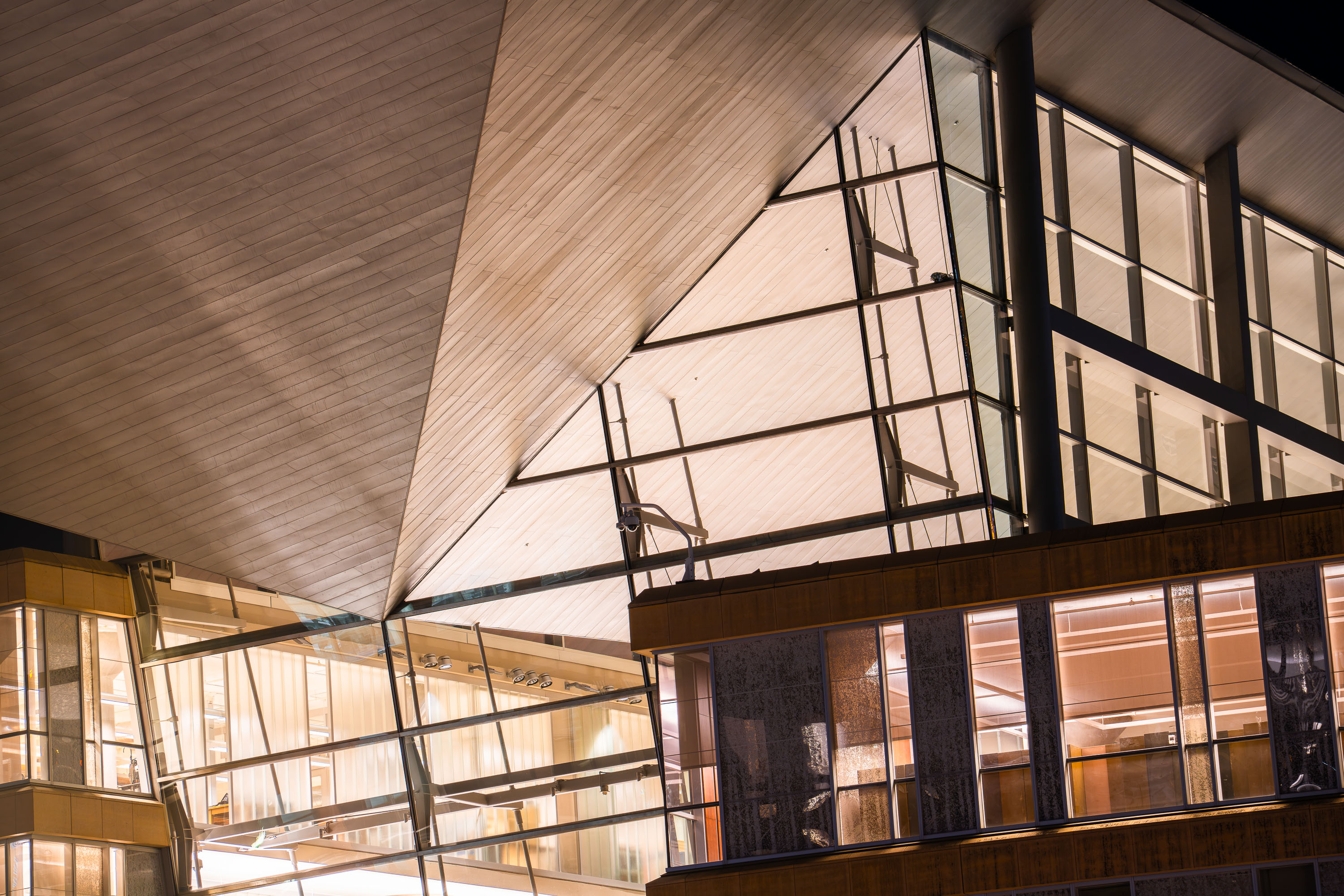
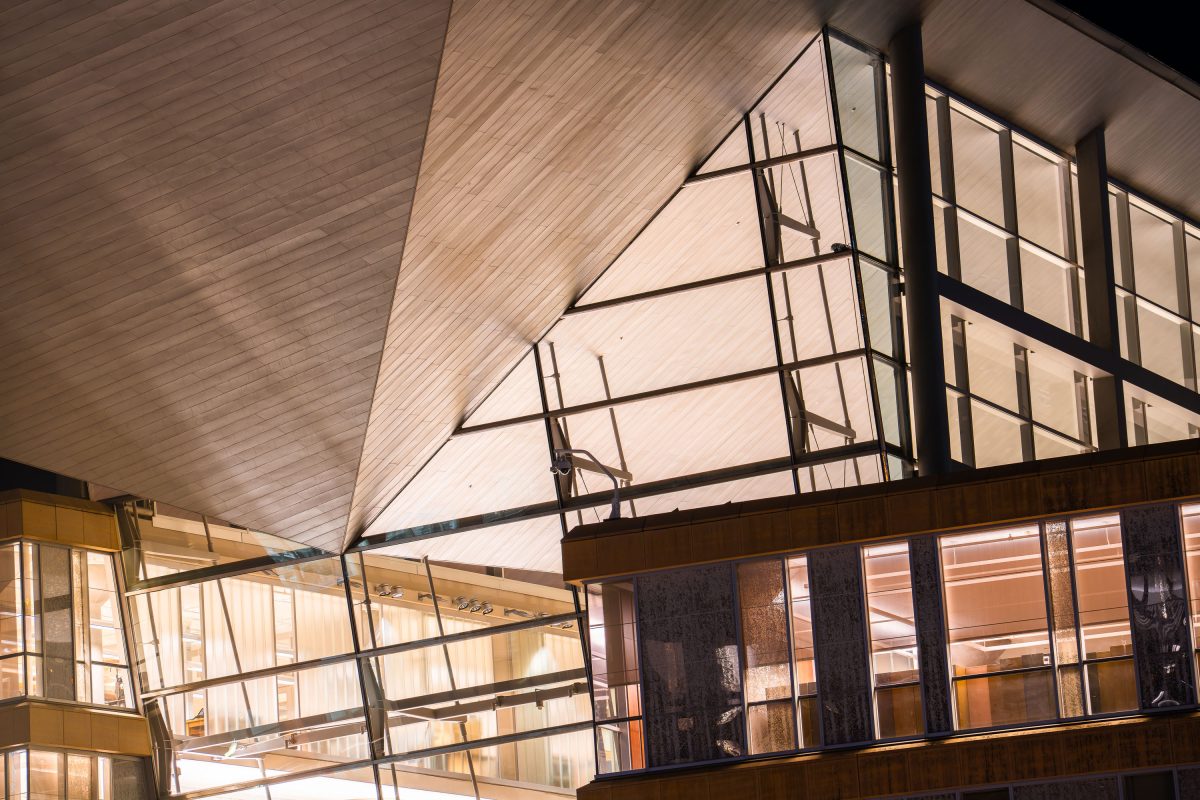
Minneapolis Central Library's interior skylight and metal framework structure illuminated from above.
The Minneapolis Central Library sits at 300 Nicollet Mall, serving as the flagship branch of the Hennepin County Library system. Designed by César Pelli and completed in 2006, the building replaced an earlier 1961 library on the same downtown site. Its cantilevered roof, clad in Kebony wood, extends over the building's glass curtain wall and was engineered to reduce solar heat gain on the reading areas below. The library holds close to 400,000 items and includes a rooftop garden above its lower levels. It also houses the Minneapolis Collection, an archive of historical materials documenting the city's development.

Cantilevered Roof of the Minneapolis Central Library at Night
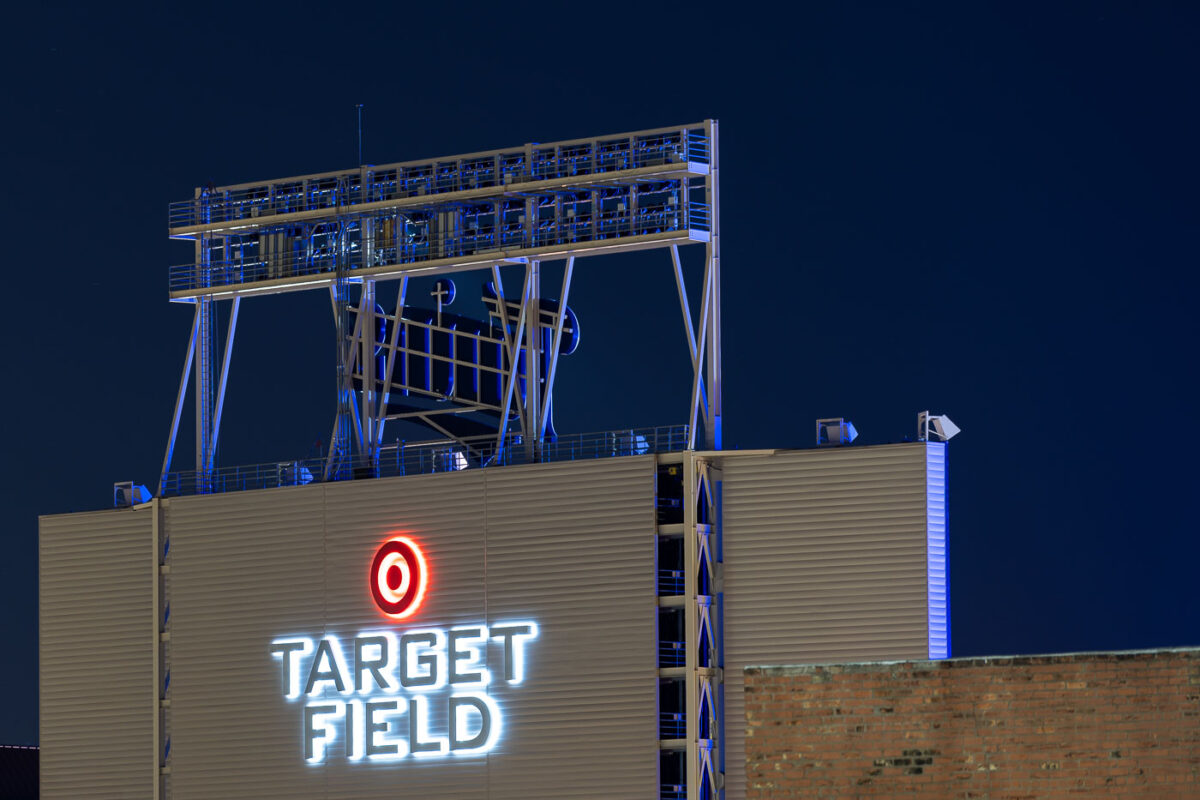
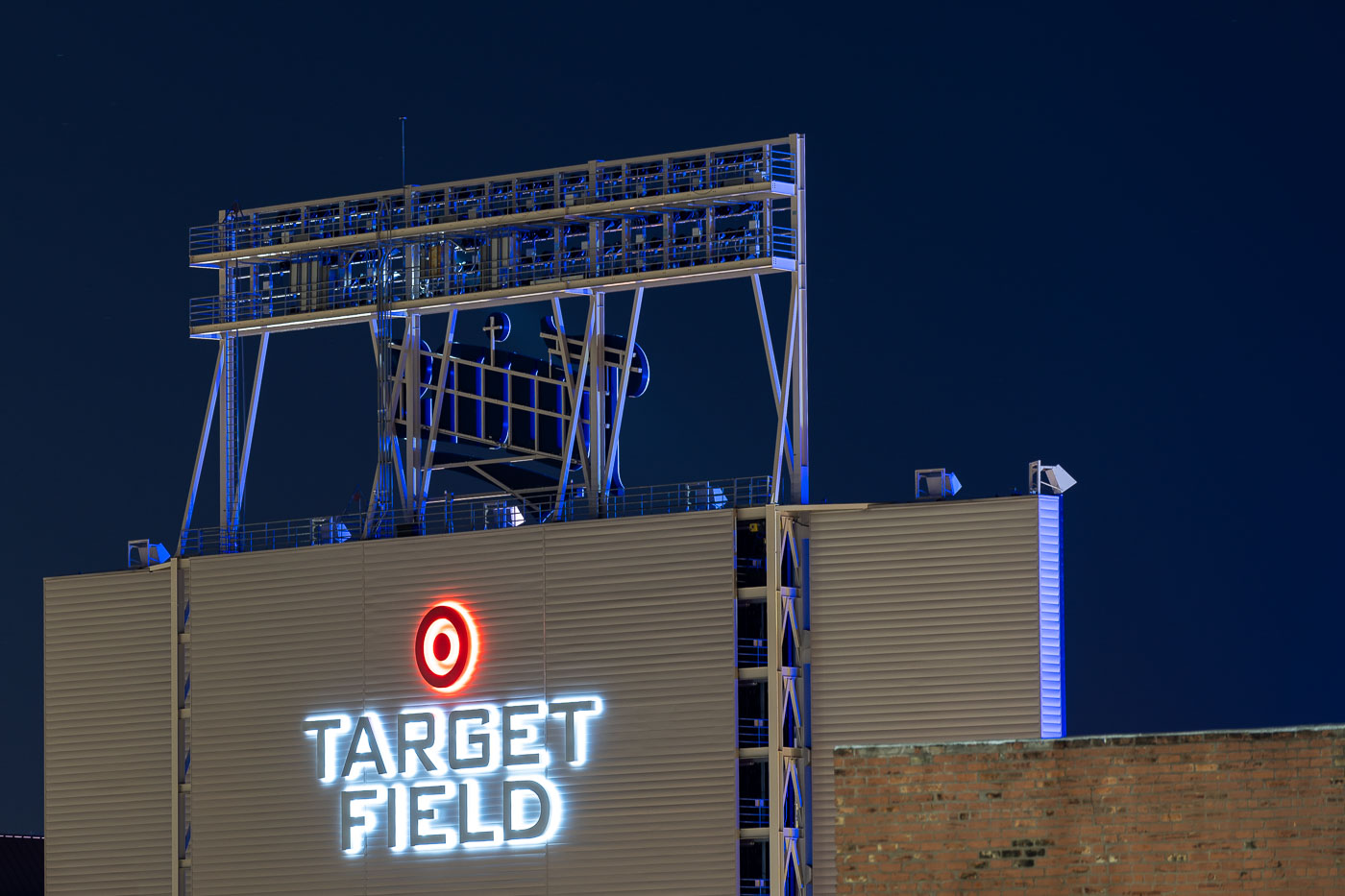
Target Field's illuminated sign and scoreboard structure at night in Minneapolis's North Loop neighborhood.
Target Field is the Minnesota Twins' ballpark in the North Loop neighborhood of Minneapolis. It opened in 2010, replacing the Hubert H. Humphrey Metrodome as the team's home and giving the Twins their first open-air stadium since Metropolitan Stadium closed in 1981.

Target Field’s Rooftop Sign at Night

Capella Tower Crown In Downtown Minneapolis
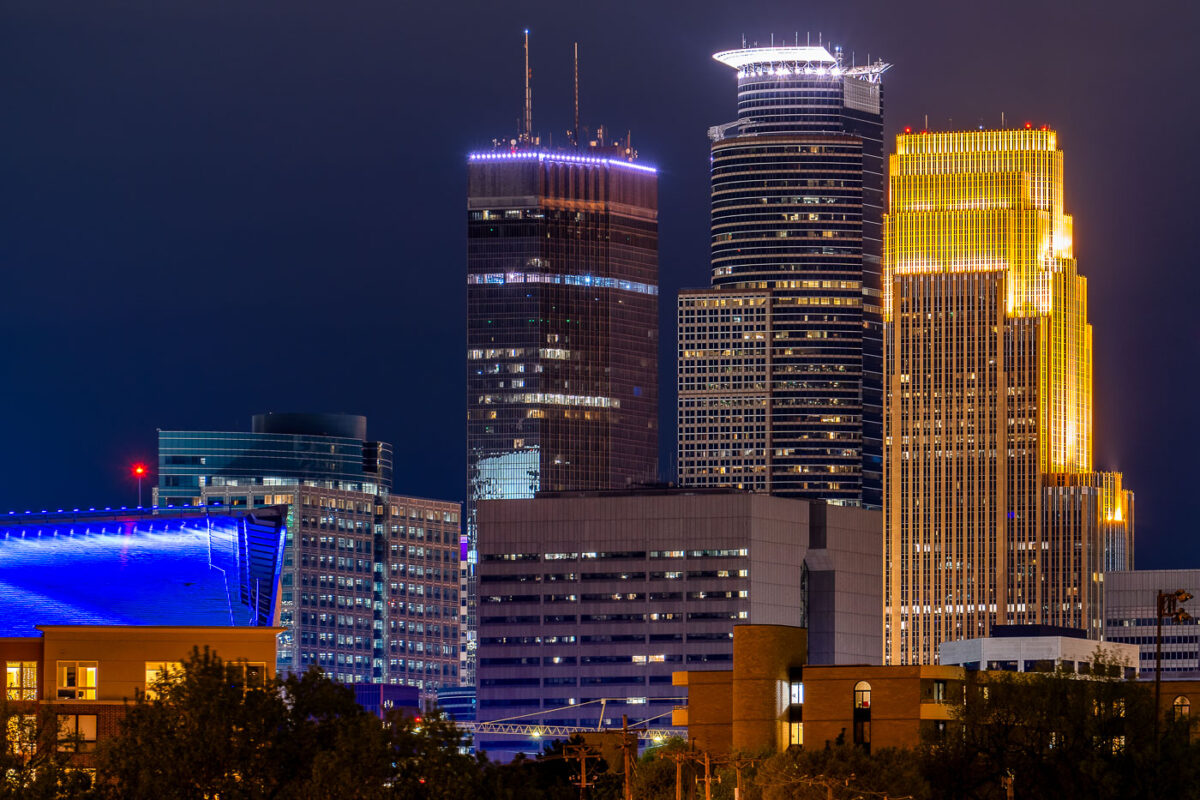
The Capella Tower (center) in downtown Minneapolis.

Capella Tower Crown In Downtown Minneapolis

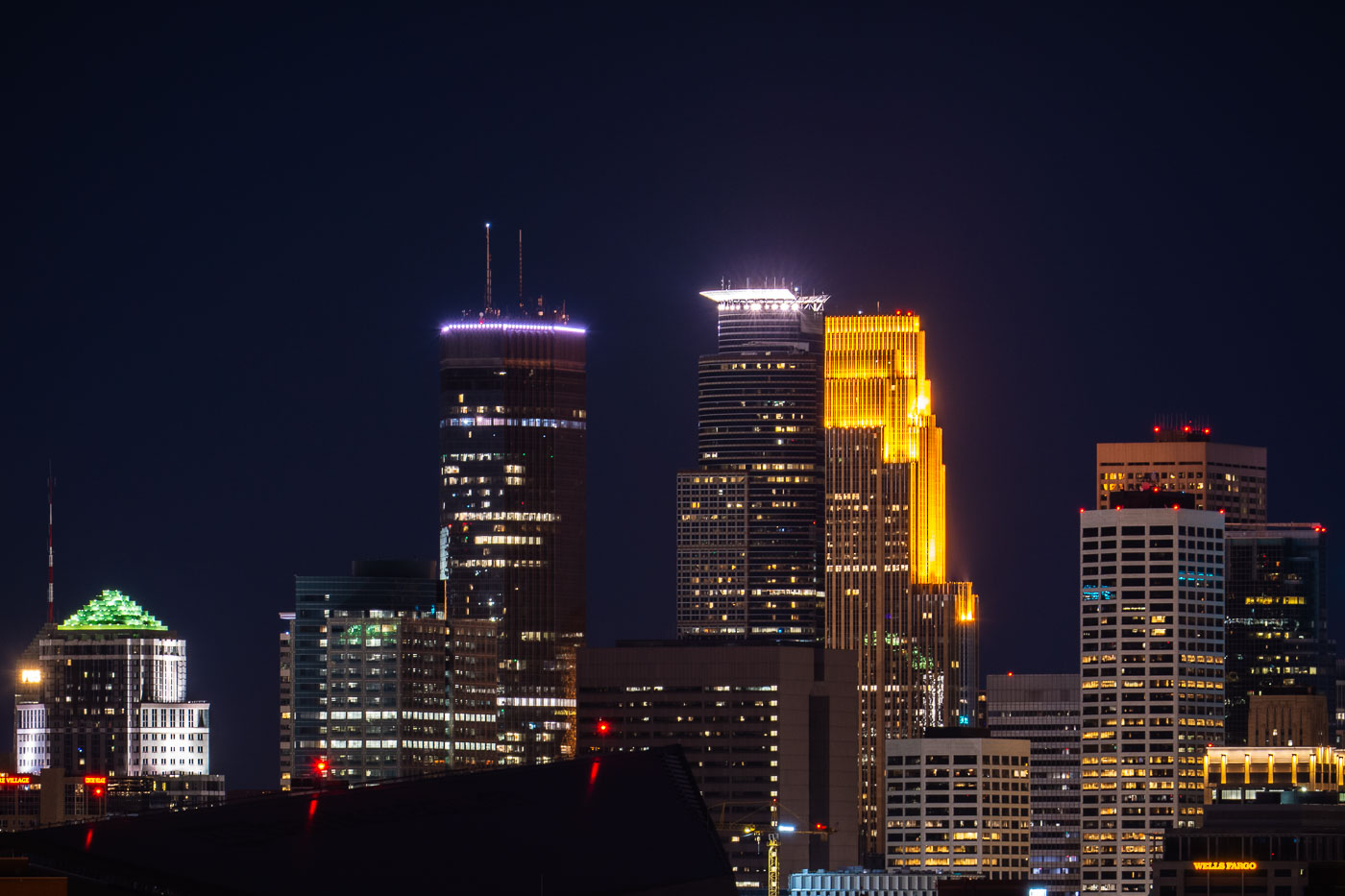
Skyscrapers in downtown Minneapolis on clear night
The Capella Tower, IDS Center, and Wells Fargo Center in Downtown Minneapolis at night.

Capella, IDS and Wells Fargo Center in Minneapolis
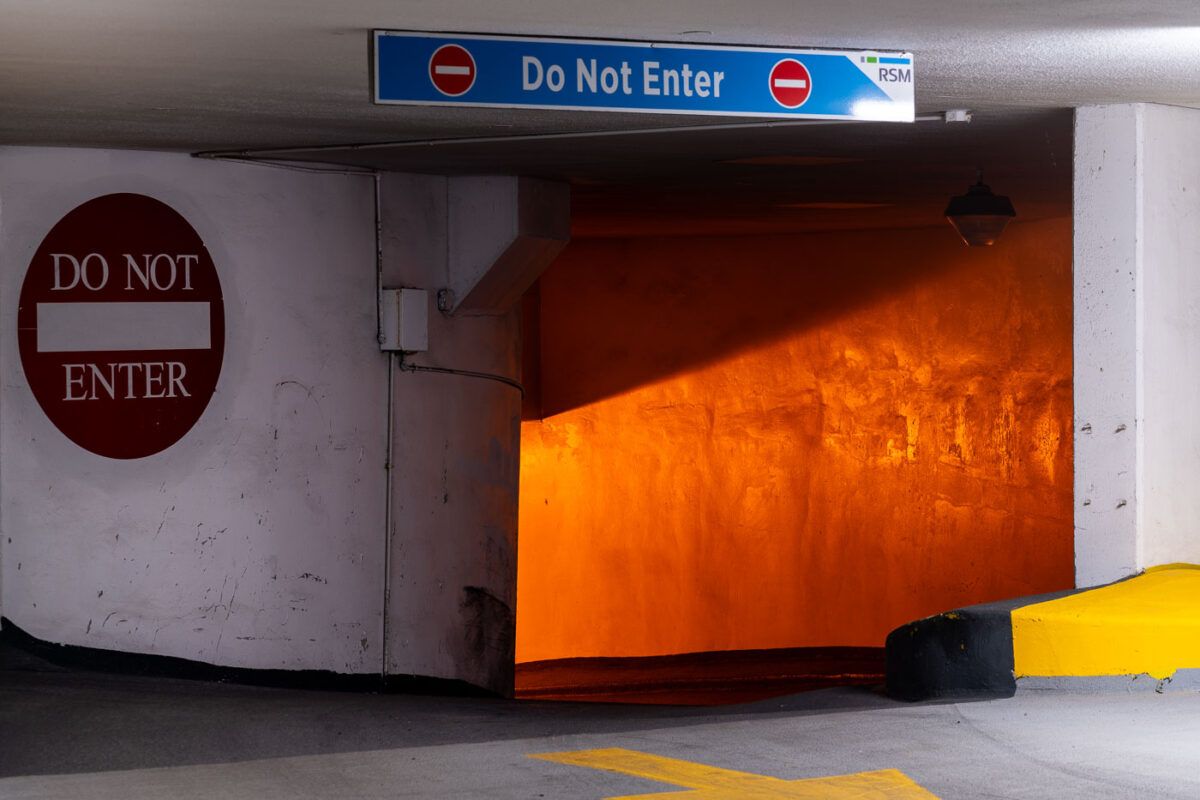
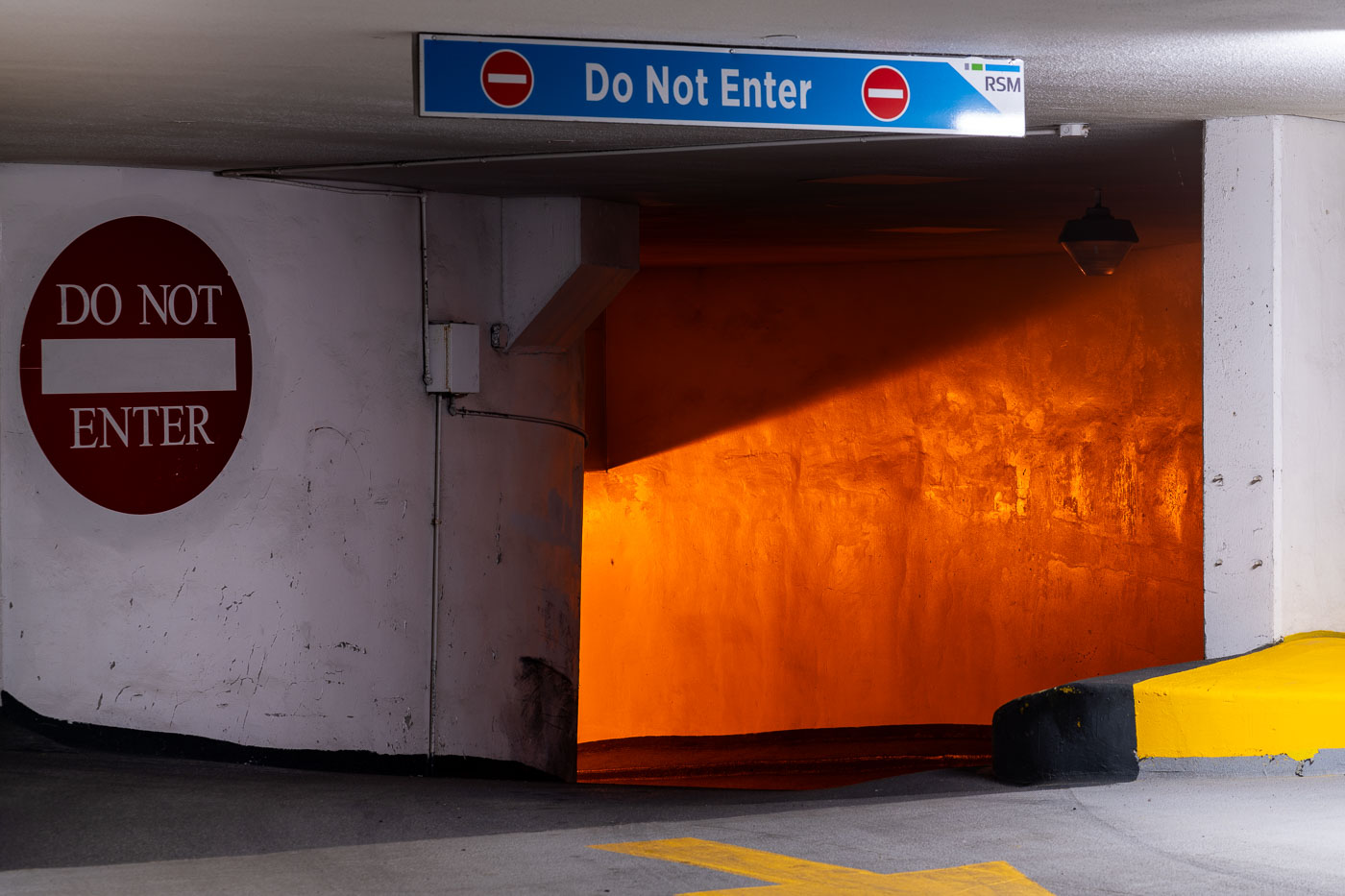
Orange safety barrier and "Do Not Enter" sign at RSM parking ramp entrance in downtown Minneapolis.
The RSM parking garage occupies a structure in downtown Minneapolis. The facility serves as commercial parking for the area's office and business district. An orange safety barrier marks an entrance, with "Do Not Enter" signage visible above.

RSM Parking Ramp, Downtown Minneapolis
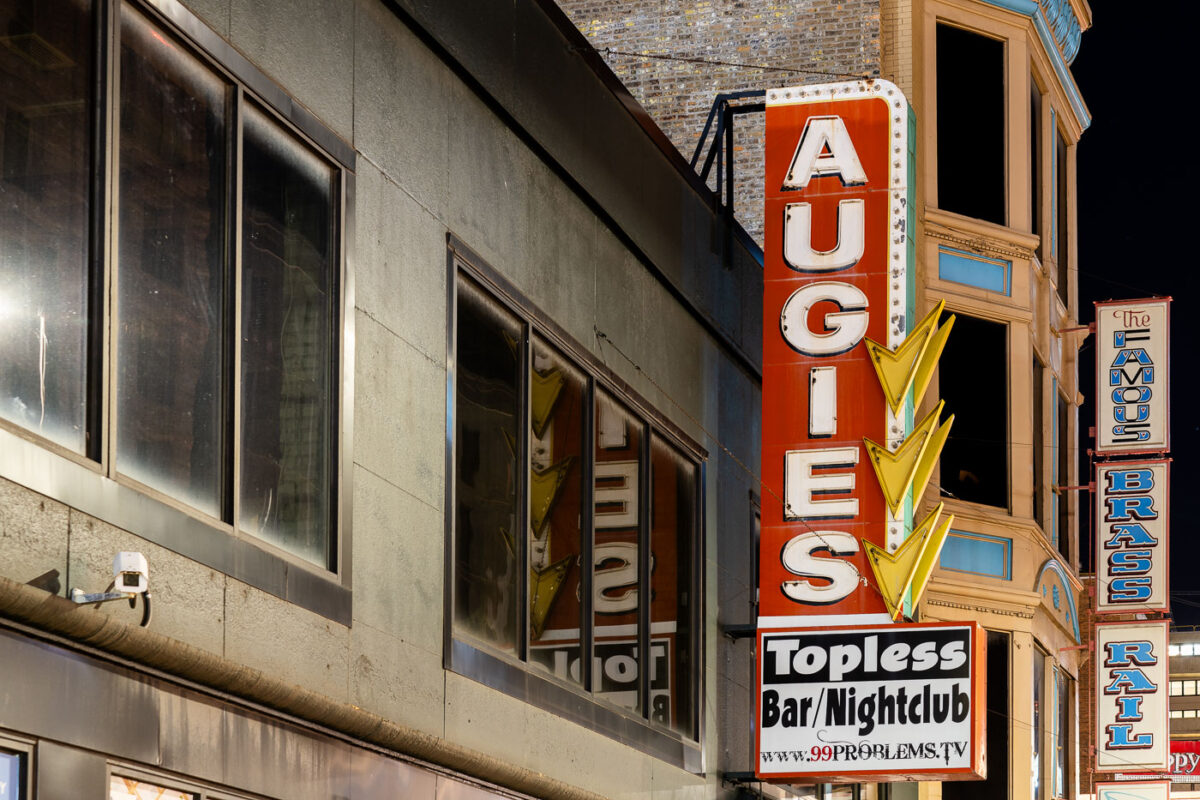
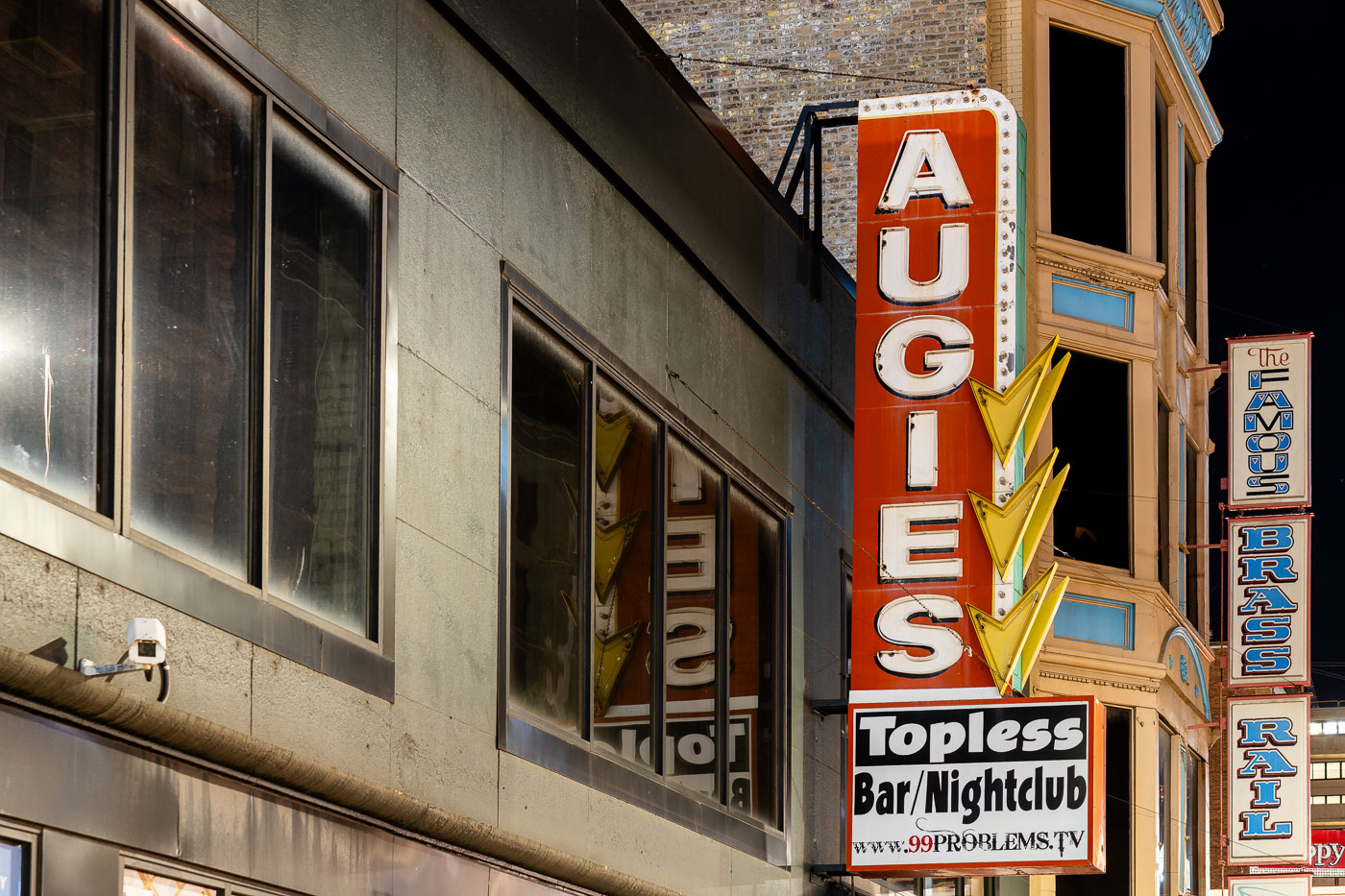
Vertical red neon Augies Topless Bar sign on downtown Minneapolis street at night.
Augies Topless Bar and Nightclub operated on Hennepin Avenue in downtown Minneapolis. The establishment's vertical neon sign, with its distinctive red background and white lettering, was a recognizable fixture in the entertainment district. The Famous Brass Rail sign is visible adjacent to it on the same block.

Augies Topless Bar sign, downtown Minneapolis
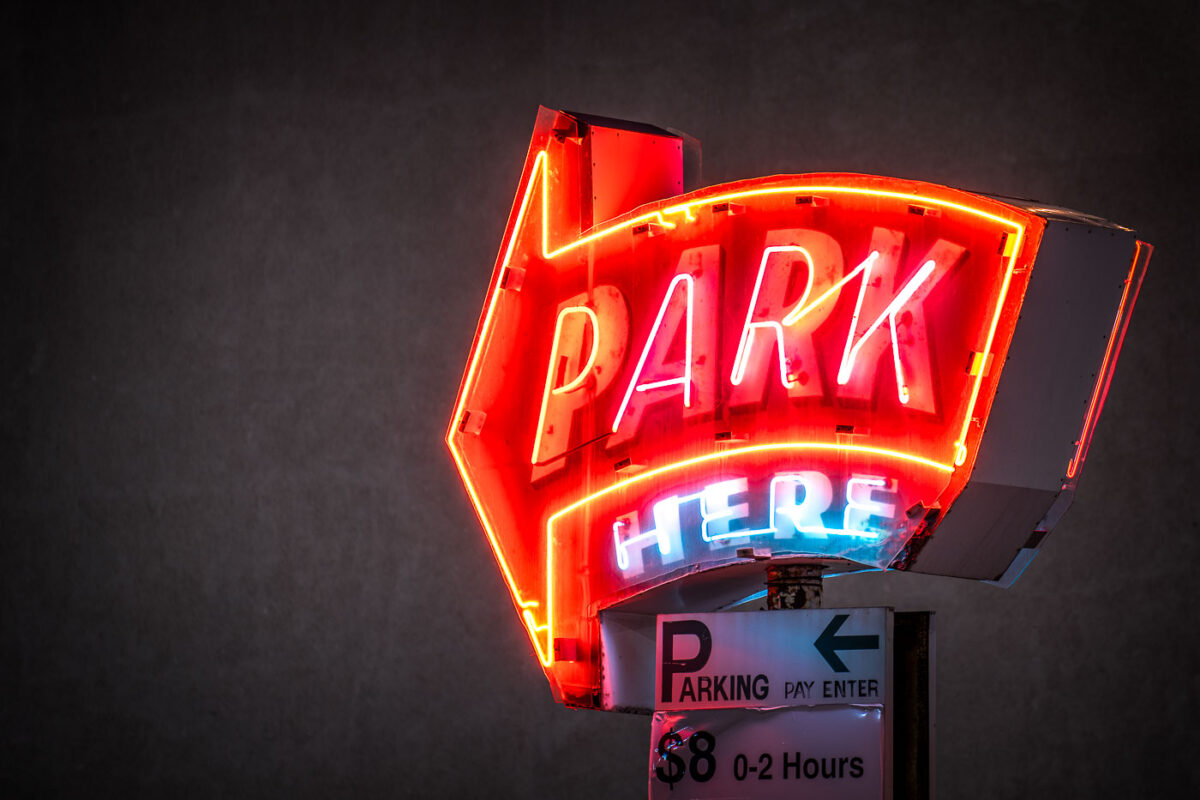
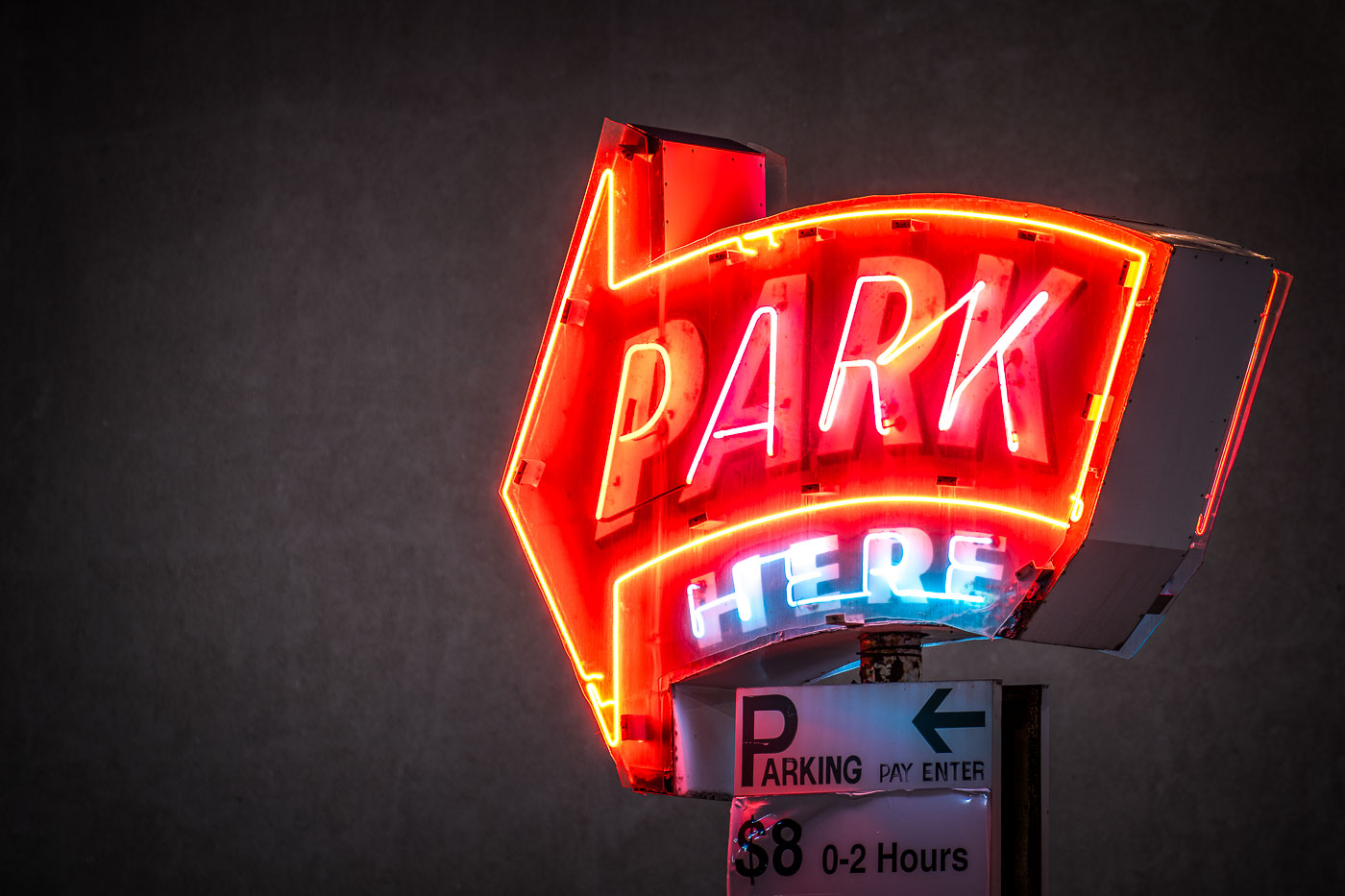
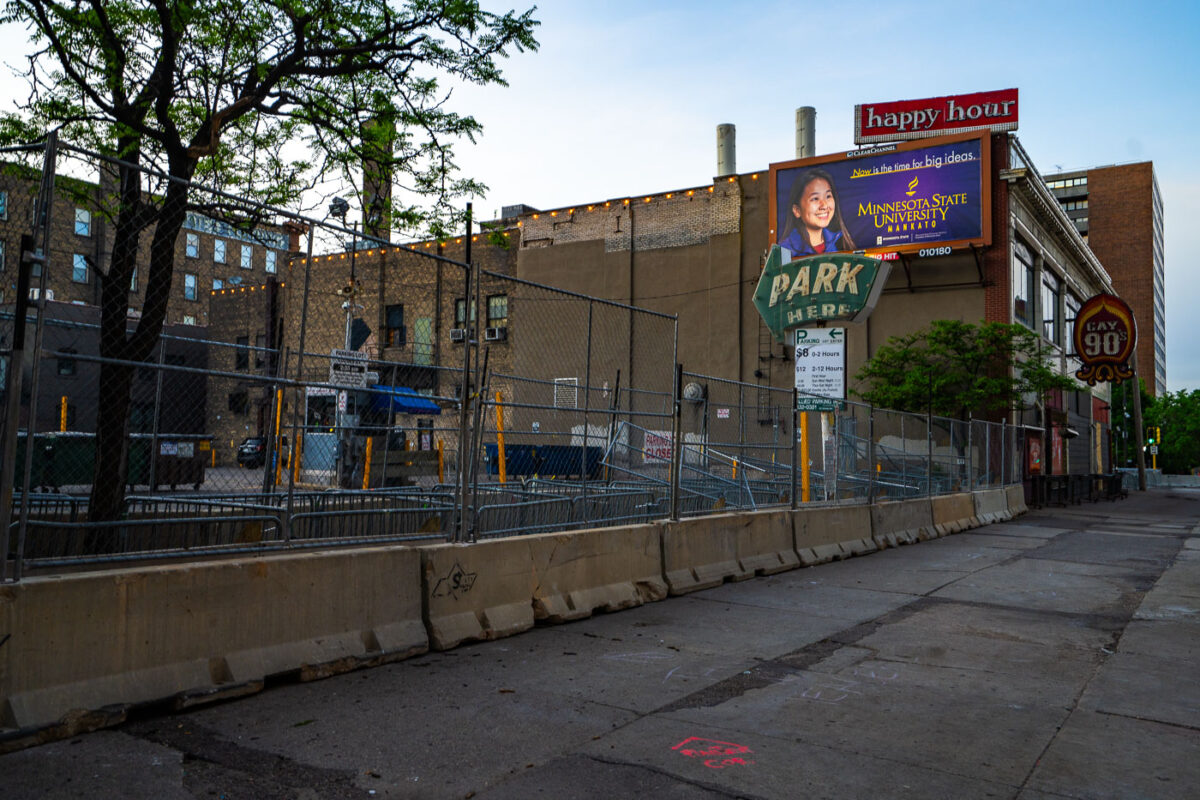
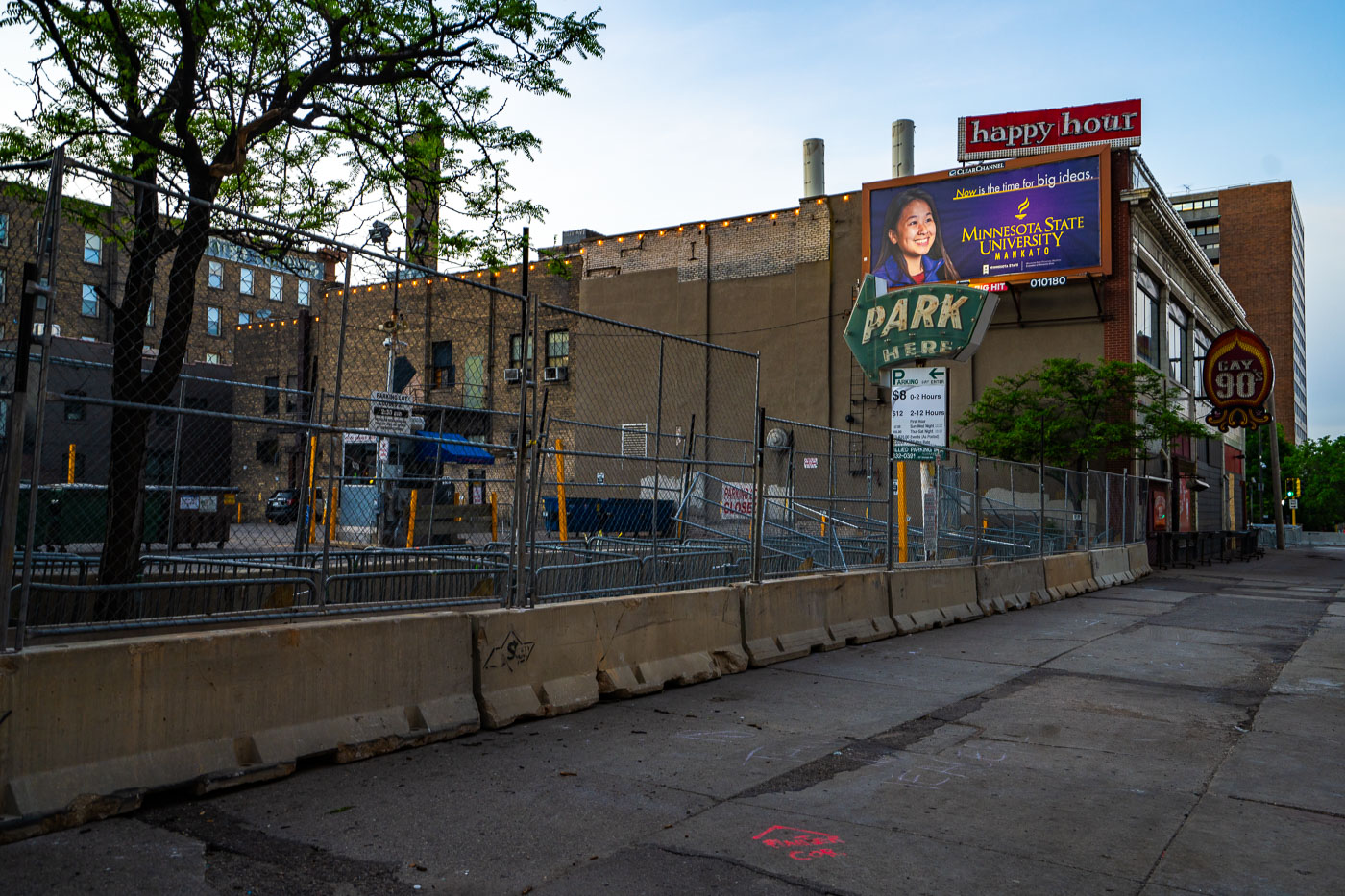
Red neon "Park Here" sign with arrow and parking rate board in downtown Minneapolis.
A vintage neon sign advertising parking in downtown Minneapolis. The red neon lettering reads "PARK HERE" with a directional arrow, typical of mid-20th-century commercial signage. Below the sign, a parking rate board s pricing for short-term parking, showing $8 for 0–2 hours.

Park Here neon sign, downtown Minneapolis
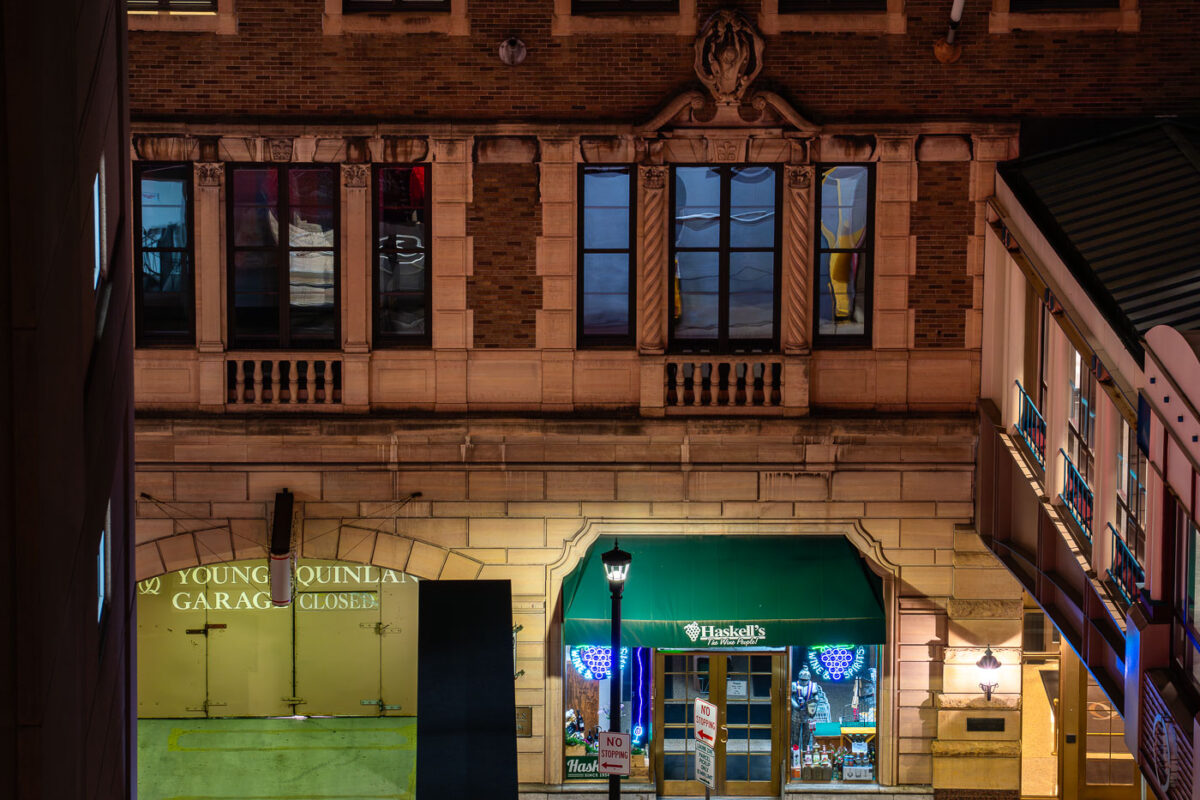
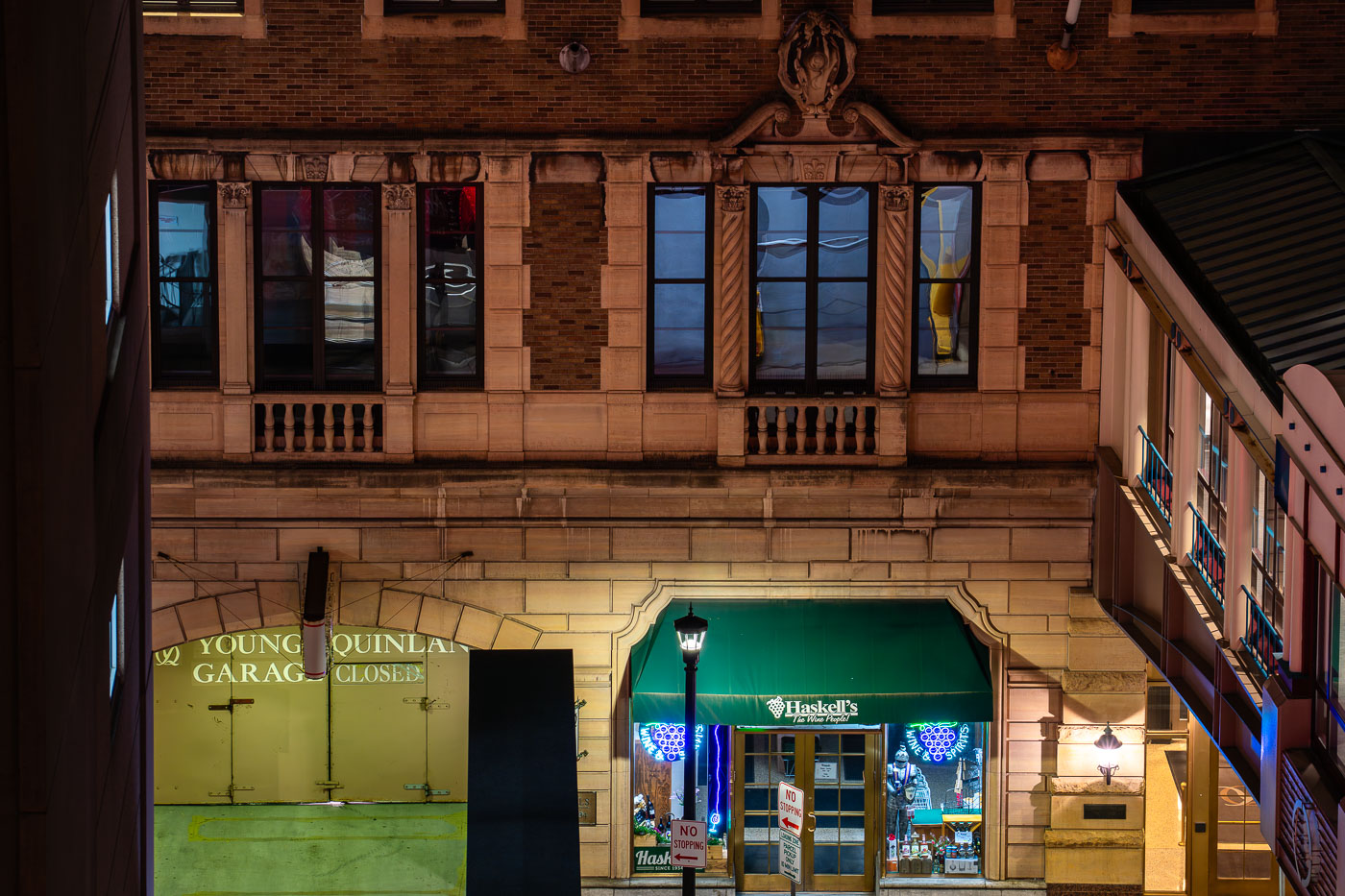
Haskell's liquor store storefront at street level in a historic brick building in downtown Minneapolis.
Haskell's is a liquor retailer located in downtown Minneapolis. The storefront occupies street-level space in a historic brick building with ornamental architectural details typical of early 20th-century commercial construction in the area.

Haskell’s Liquor Store, Downtown Minneapolis
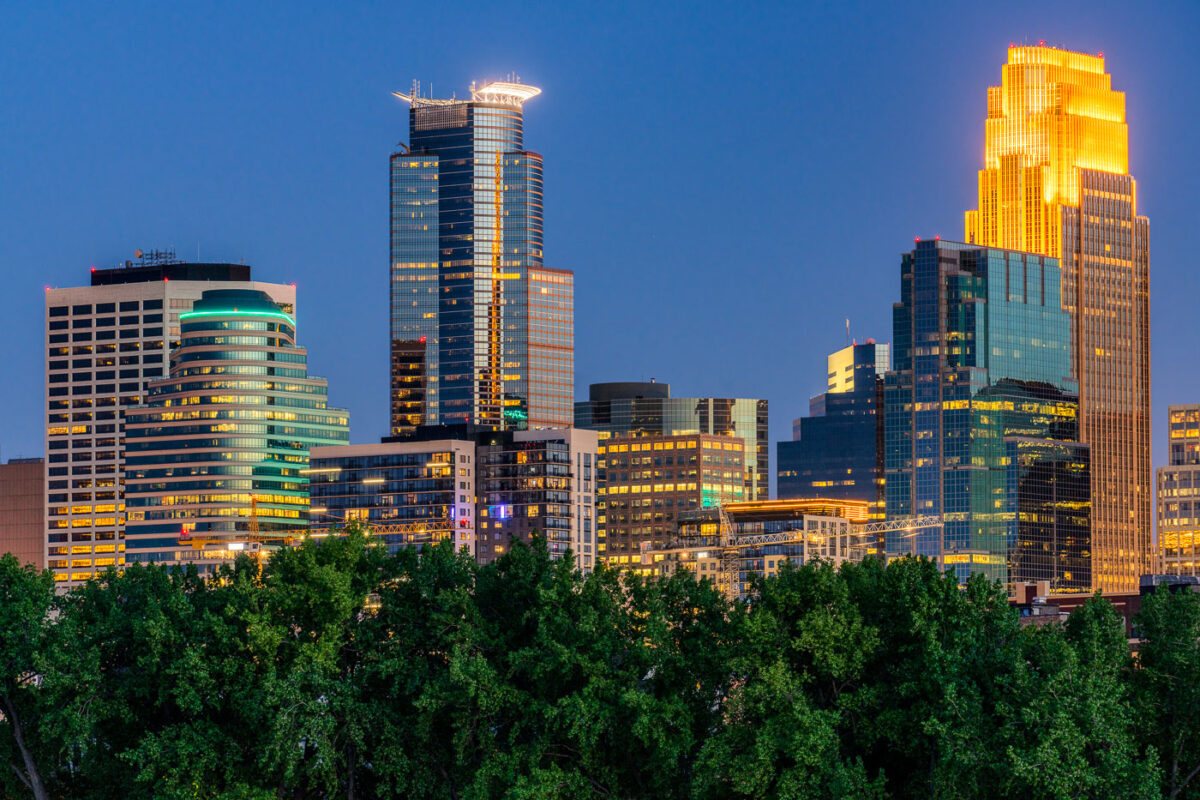
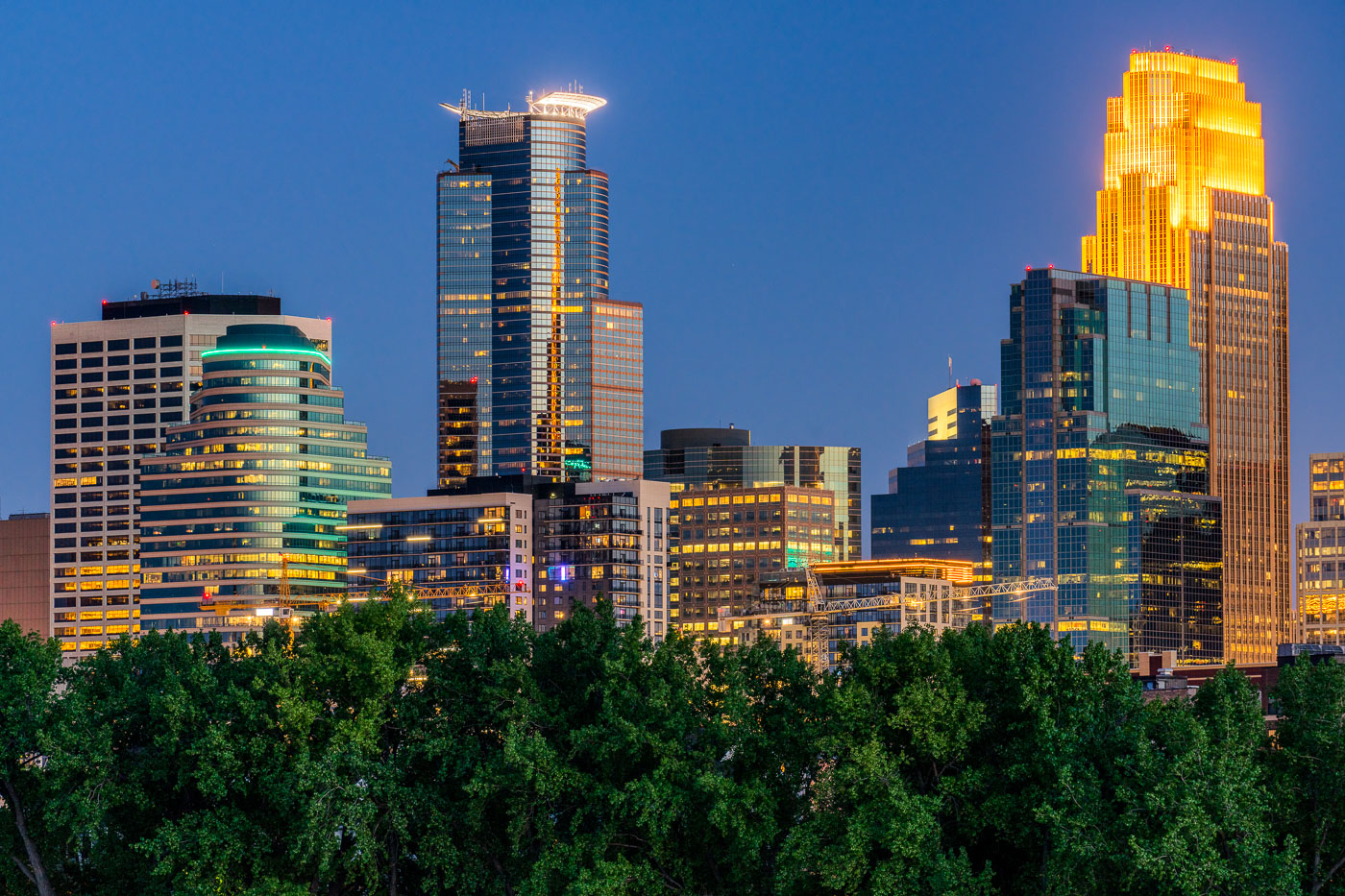
Downtown Minneapolis at dusk from Boom Island Park, with Wells Fargo Center and U.S. Bank Tower above treetops
Downtown Minneapolis is seen from Boom Island Park at dusk. The Wells Fargo Center and U.S. Bank Tower rise above the riverfront, with treetops in the foreground.

Downtown Minneapolis at dusk from Boom Island Park
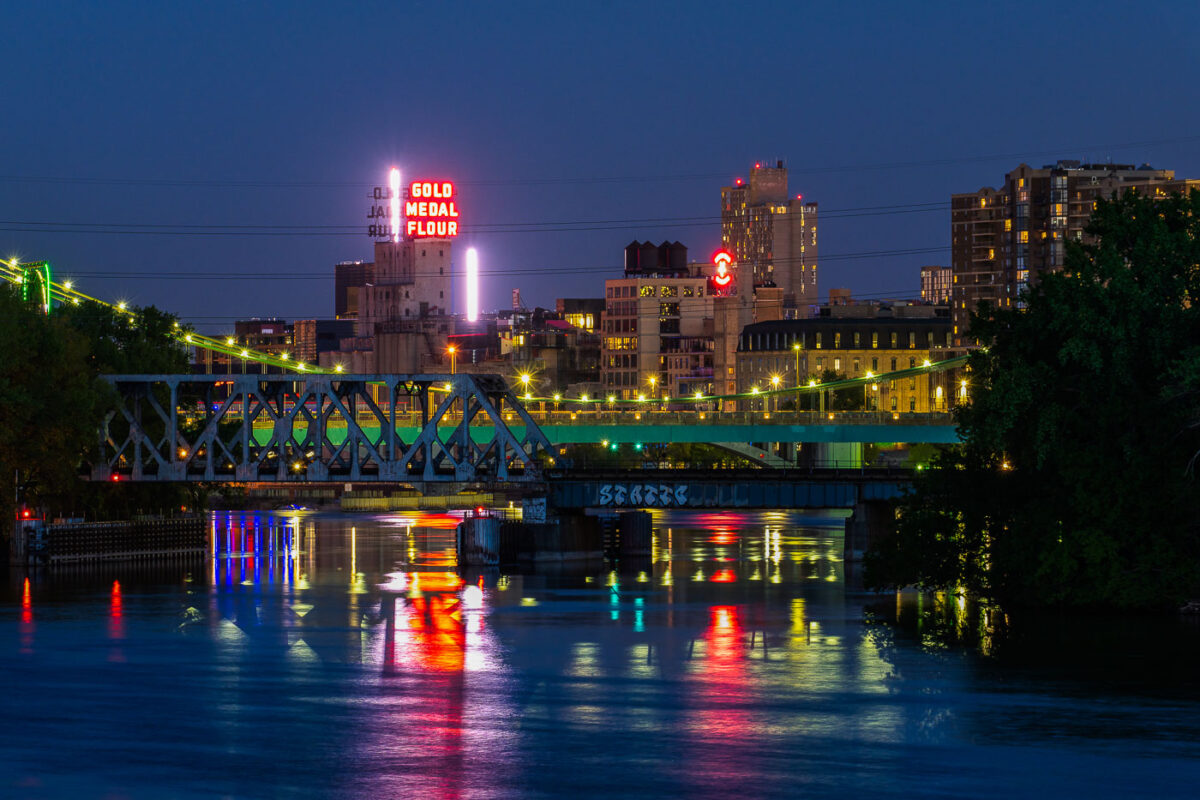
Gold Medal Flour seen from Boom Island in May 2020
Downtown Minneapolis as seen from Boom Island in May 2020. Gold Medal Flour and Northstar Blankets neon signs visible across the Mississippi River.

Neon signs of Downtown Minneapolis

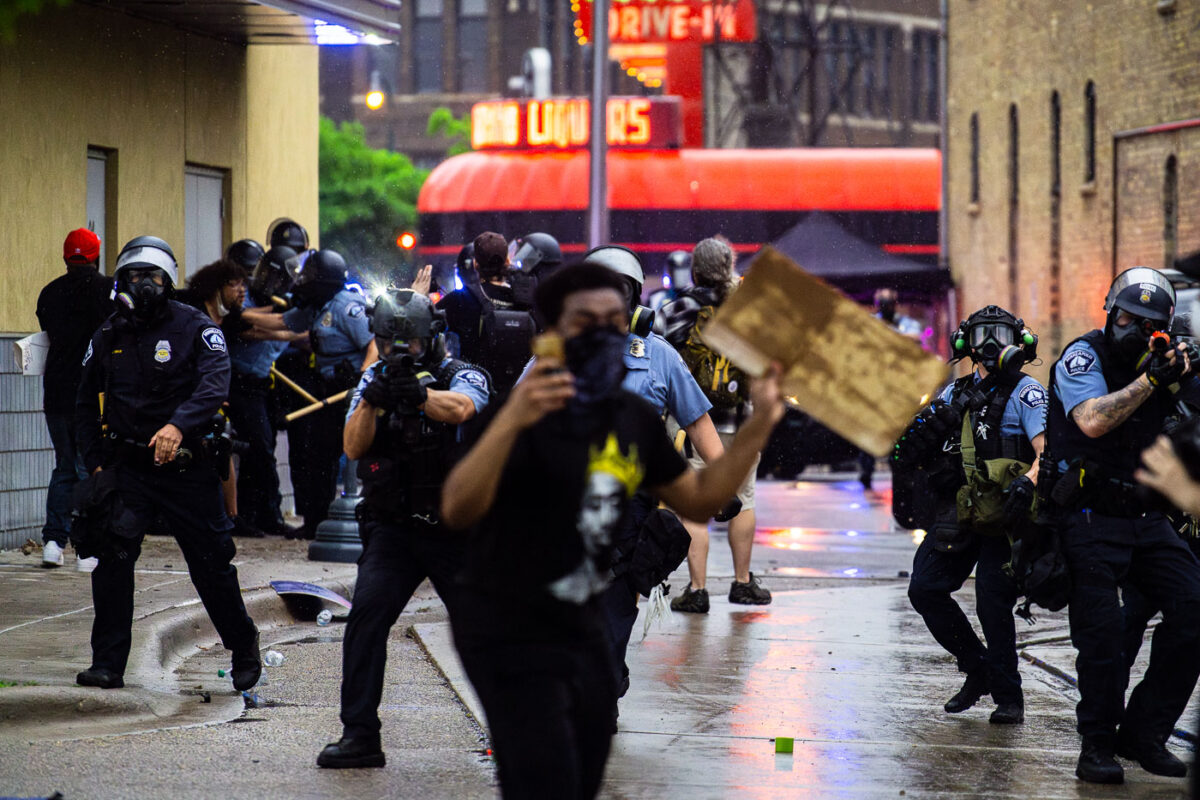
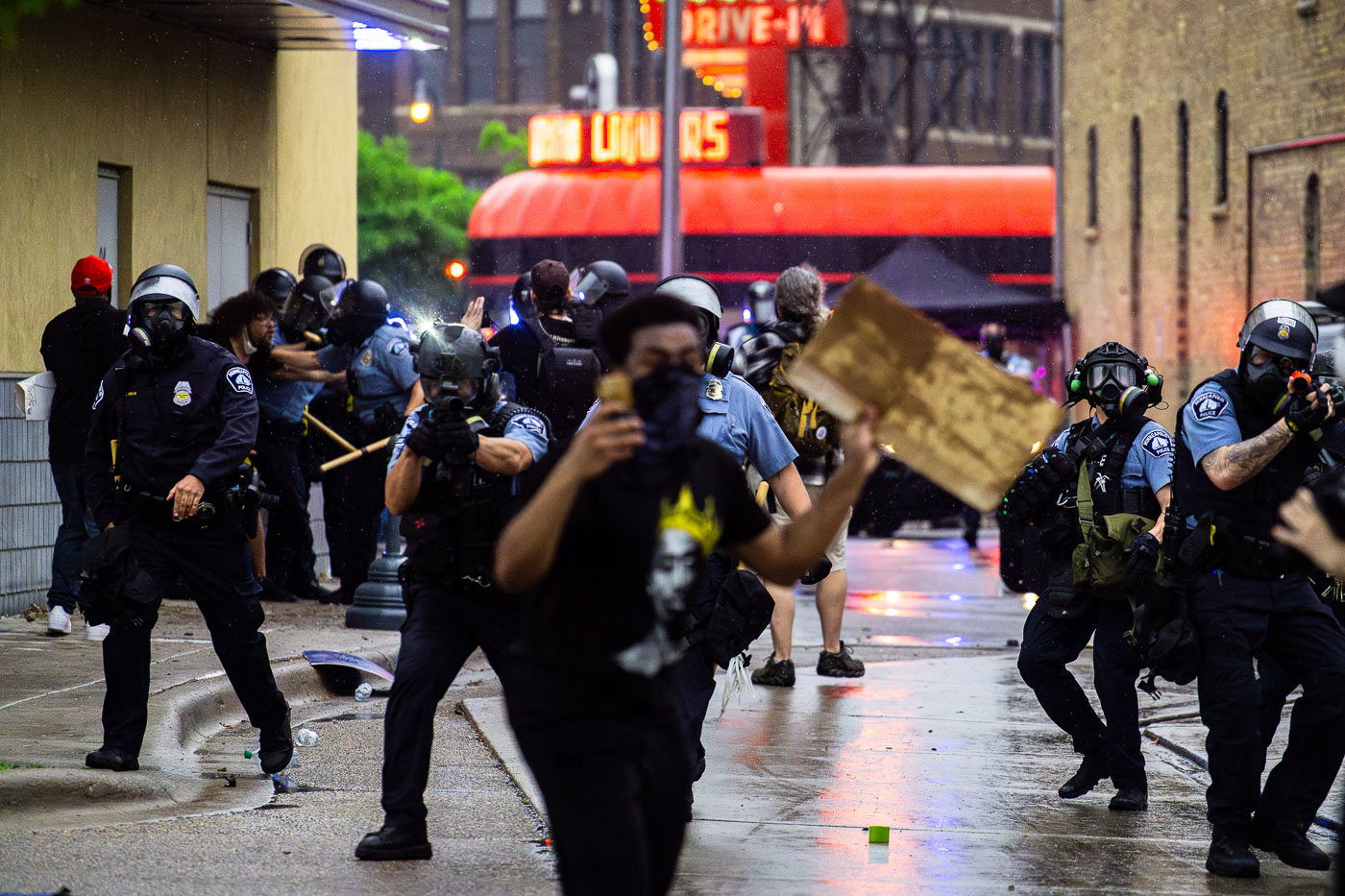
Minneapolis police fire less-lethal munitions near the 3rd Precinct as a protester runs past.
Minneapolis Police officers fire less-lethal munitions on a street near the 3rd Precinct station in Minneapolis on May 26, 2020, as a protester runs through the foreground holding a sign. The officers are wearing helmets and gas masks during demonstrations that followed the killing of George Floyd and intensified around the precinct.

Police Deploy Less-Lethal Weapons at Minneapolis Protest
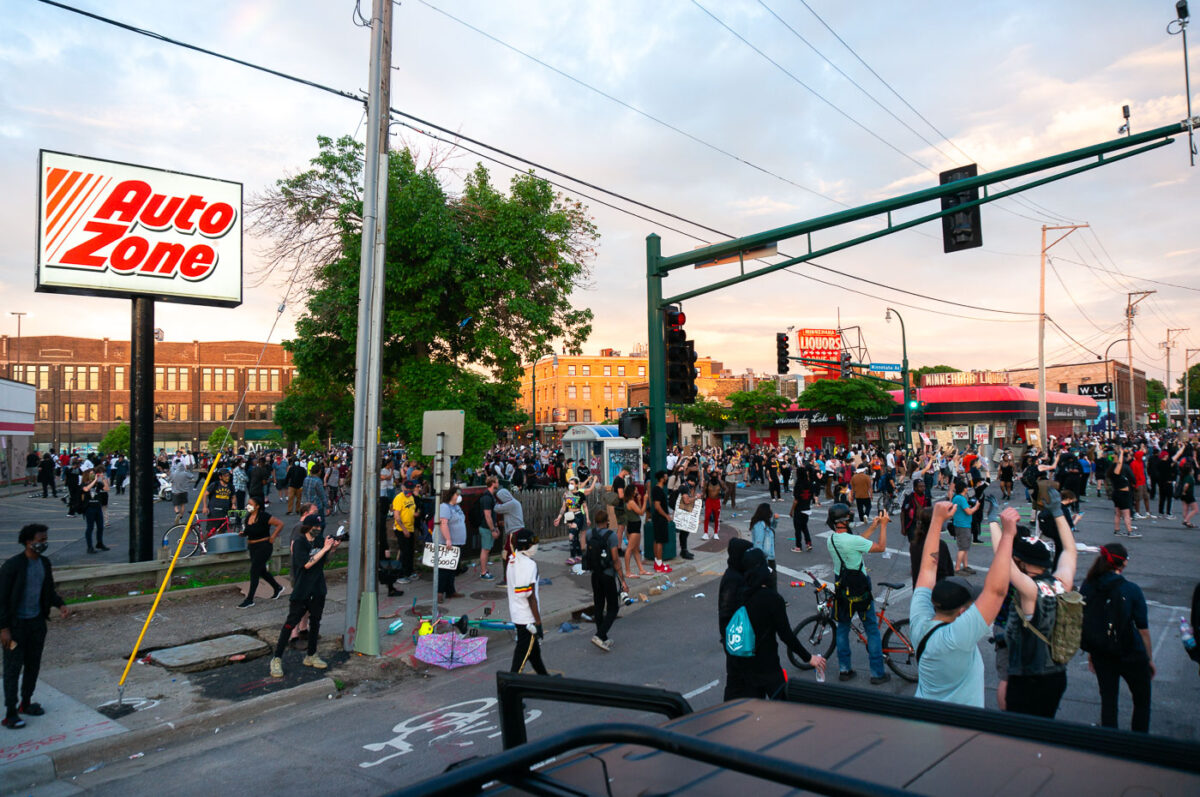
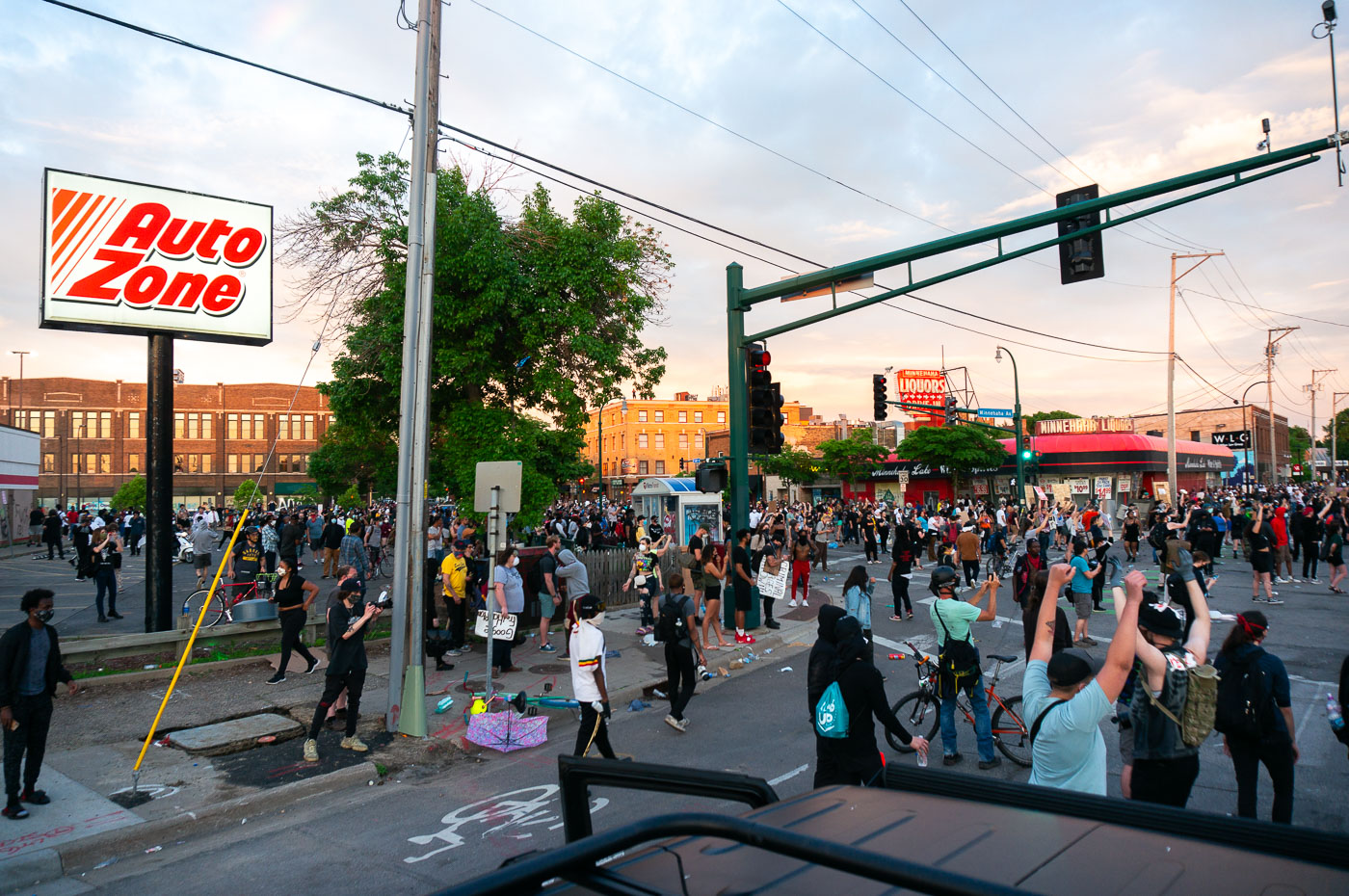
Protesters with their hands up at 3rd Precinct
Protesters gather at Lake Street and Minnehaha Avenue in south Minneapolis on May 27, 2020, during demonstrations following the killing of George Floyd. The intersection, directly across from the Minneapolis Police 3rd Precinct, became a major gathering point that evening.

Protest at Lake St & Minnehaha Ave, Minneapolis
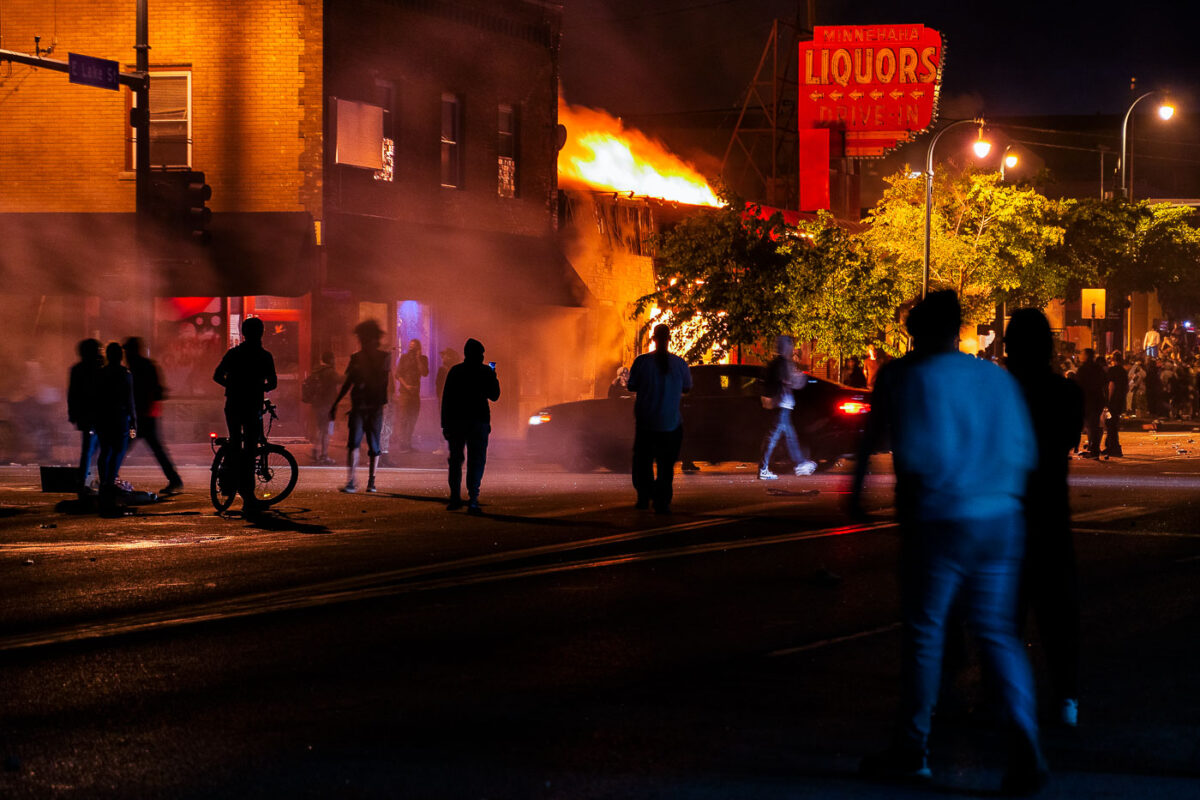
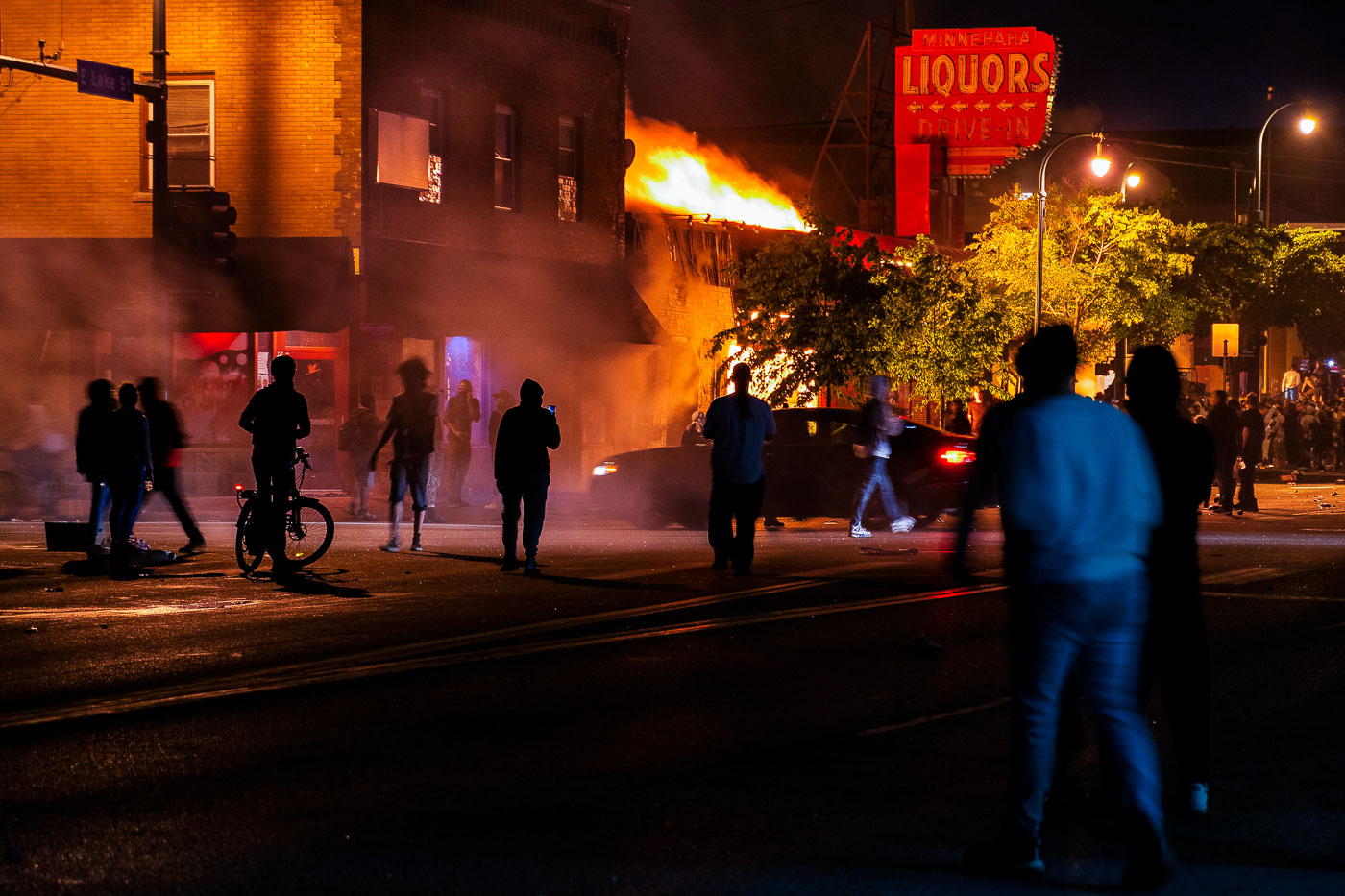
Minnehaha Liquors burns on East Lake Street in Minneapolis as people gather during protests.
The Minnehaha Liquors building on East Lake Street in Minneapolis burns on the night of May 28, 2020, as people gather in the street during unrest following the murder of George Floyd. The commercial building, marked by the large Minnehaha Liquors Drive-In sign, also housed Midori’s Floating World Cafe. The fire was part of widespread damage along the Lake Street corridor during several nights of protests, confrontations, and property destruction in south Minneapolis.

Minnehaha Liquors Fire, Lake Street

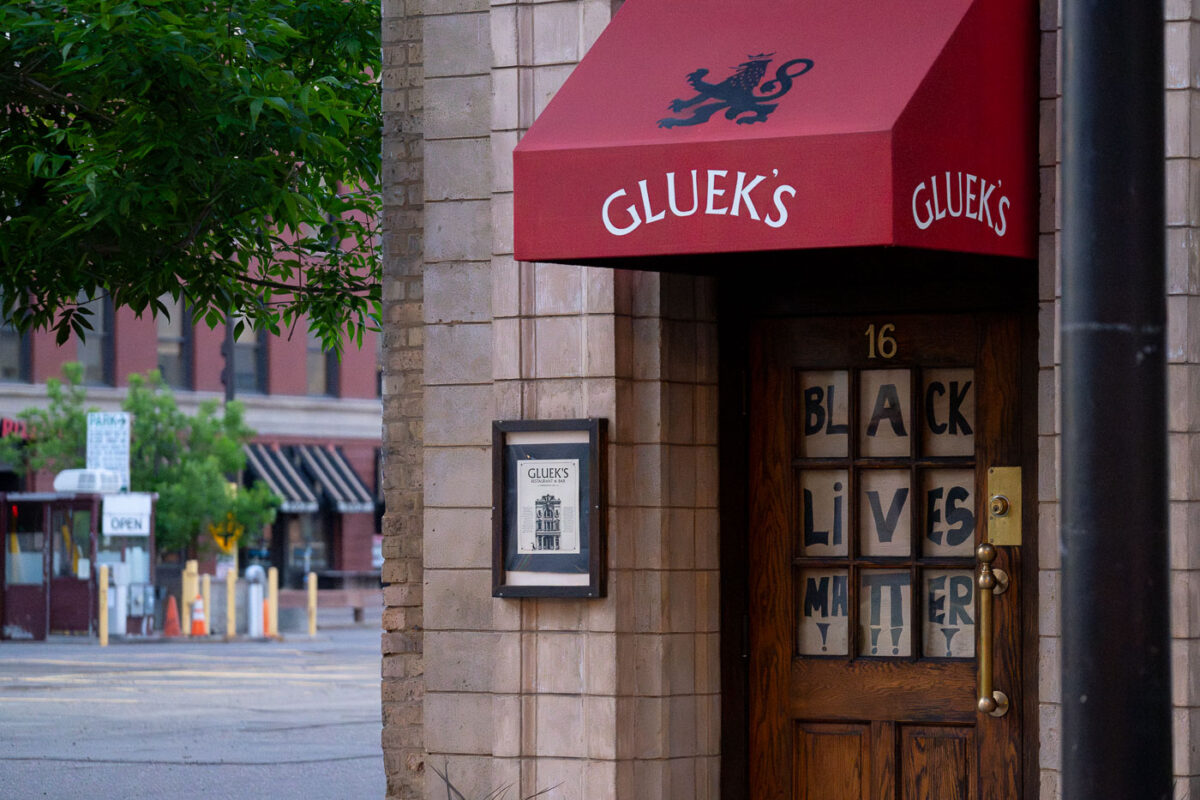
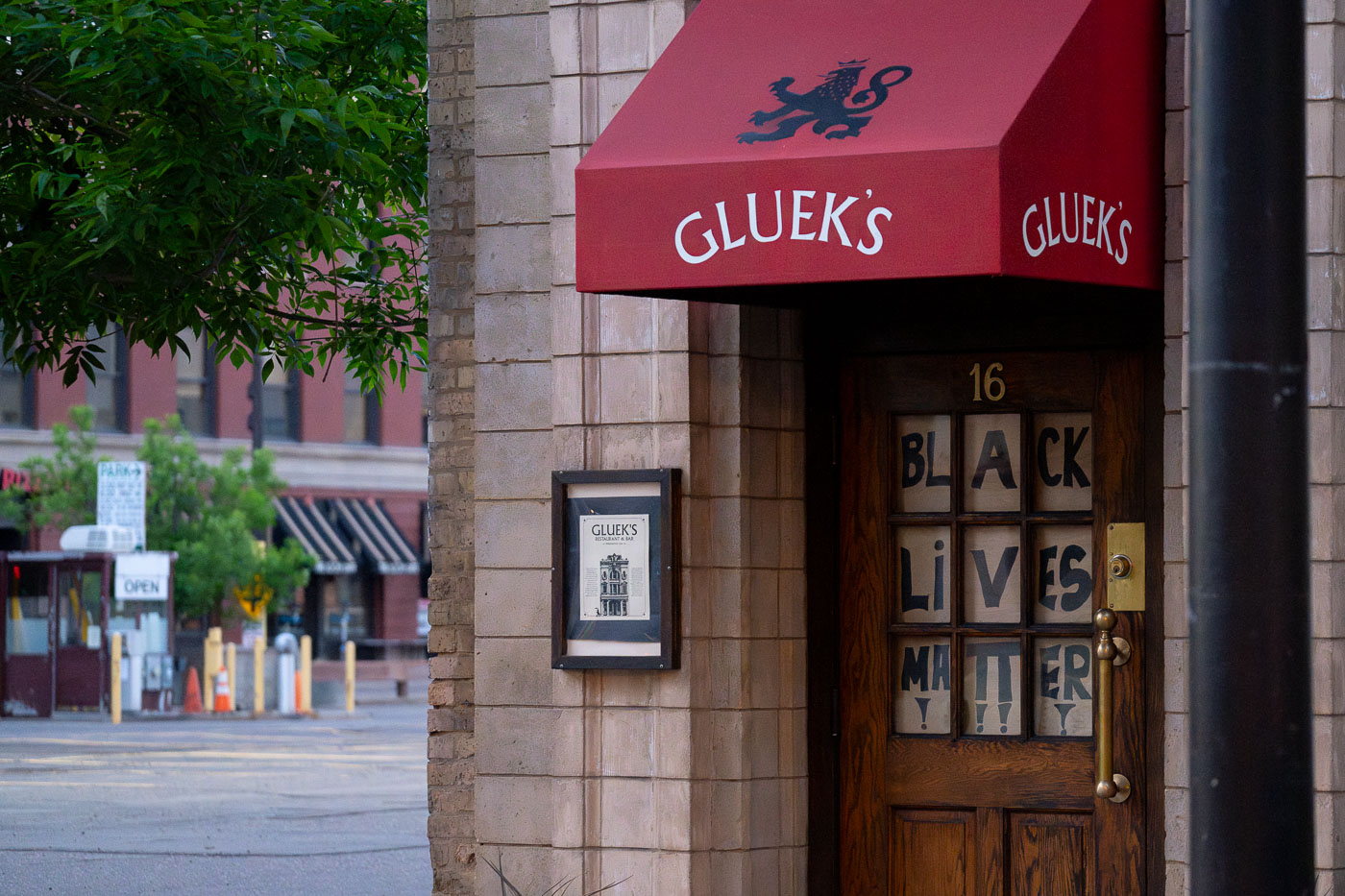
Gluek's Bar storefront in downtown Minneapolis displays "Black Lives Matter" lettering on its wooden entrance door below a red awning.
Gluek’s Bar & Restaurant in downtown Minneapolis displays a hand-lettered “Black Lives Matter” message across the glass panes of its entrance door. The photograph was made on May 28, 2020, during the protests and unrest that followed the killing of George Floyd.

“Black Lives Matter” Lettered on Gluek’s Door in Downtown Minneapolis
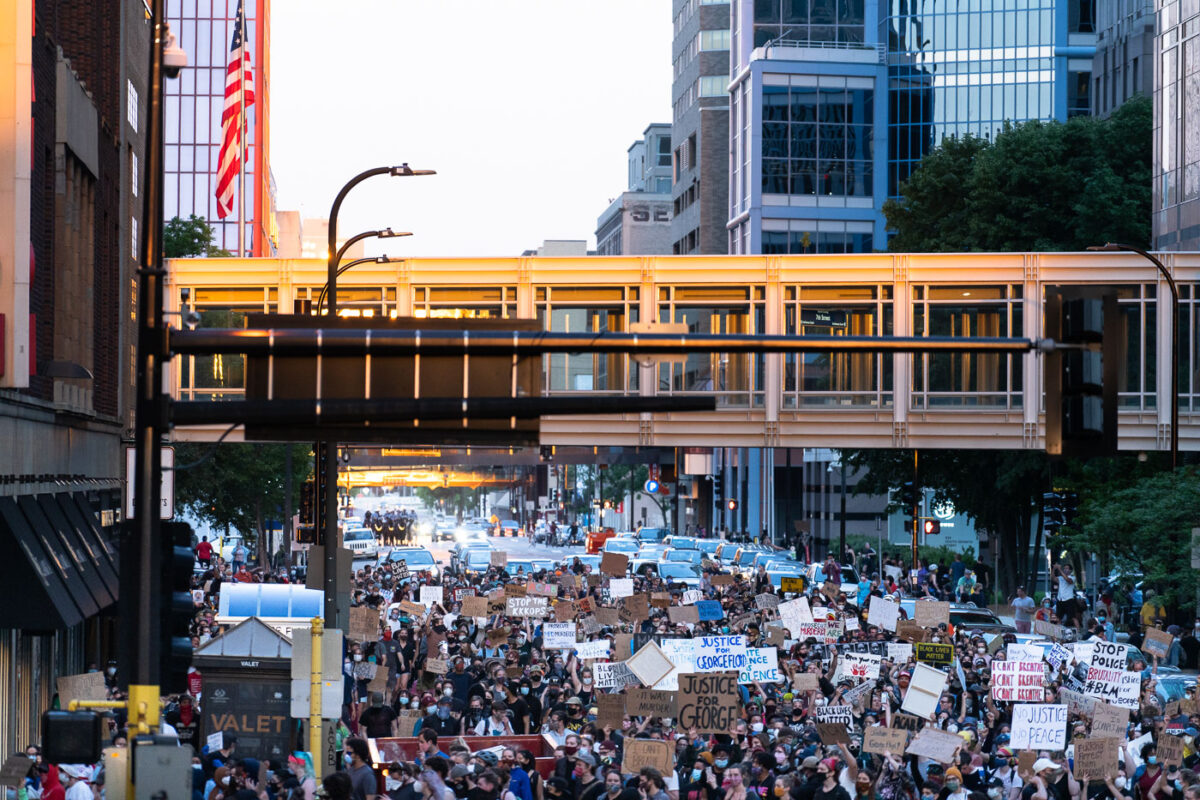
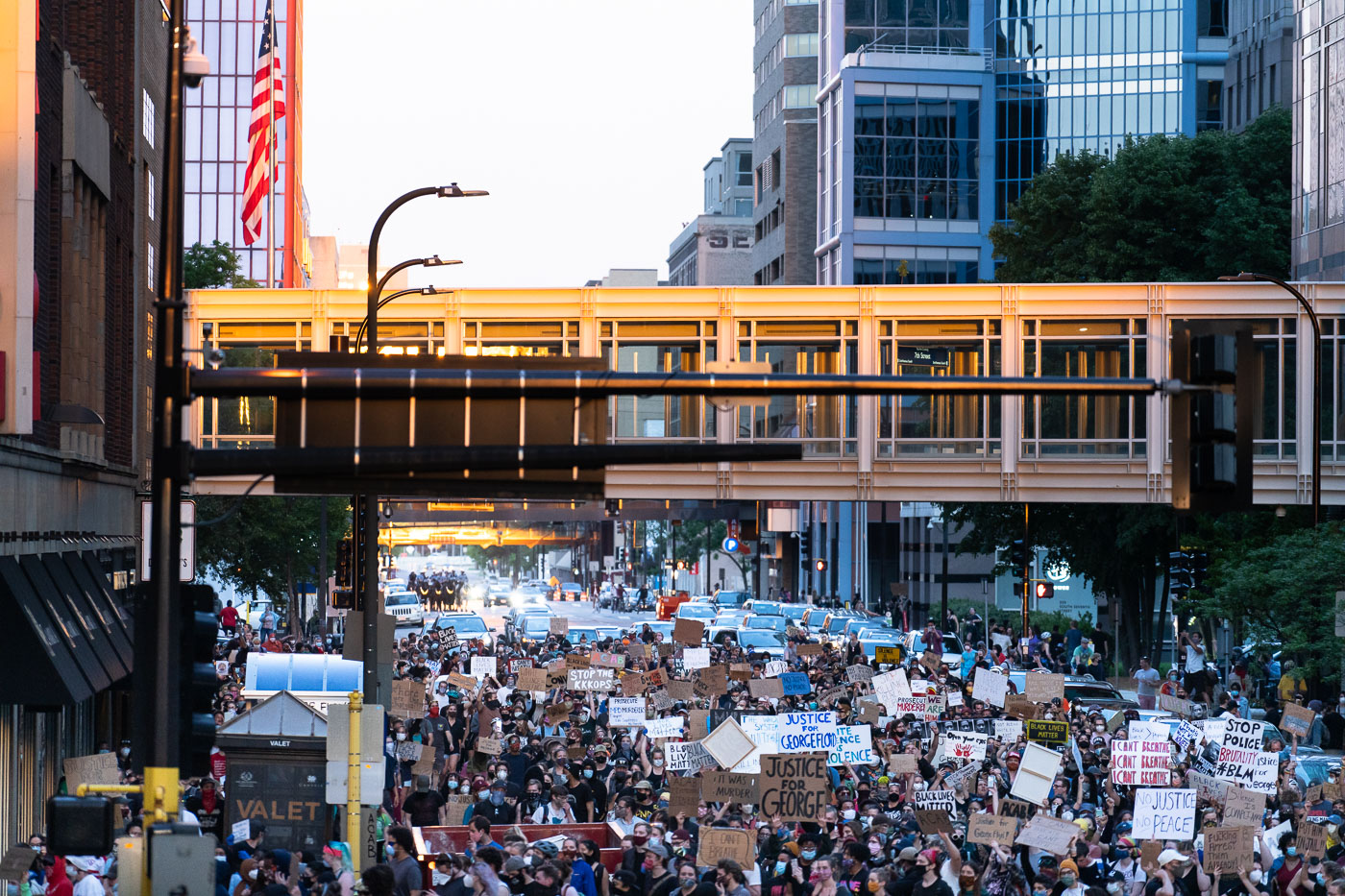
Thousands of protesters fill 7th Street in downtown Minneapolis during a march for George Floyd on May 28, 2020.
A protest march for George Floyd fills 7th Street in downtown Minneapolis on May 28, 2020. Protesters carry signs reading “Justice for George,” “Black Lives Matter,” and “Stop Police Brutality” as they move through downtown. The march took place on the third day of protests after George Floyd was killed by Minneapolis police.

George Floyd Protesters Fill 7th Street in Downtown Minneapolis
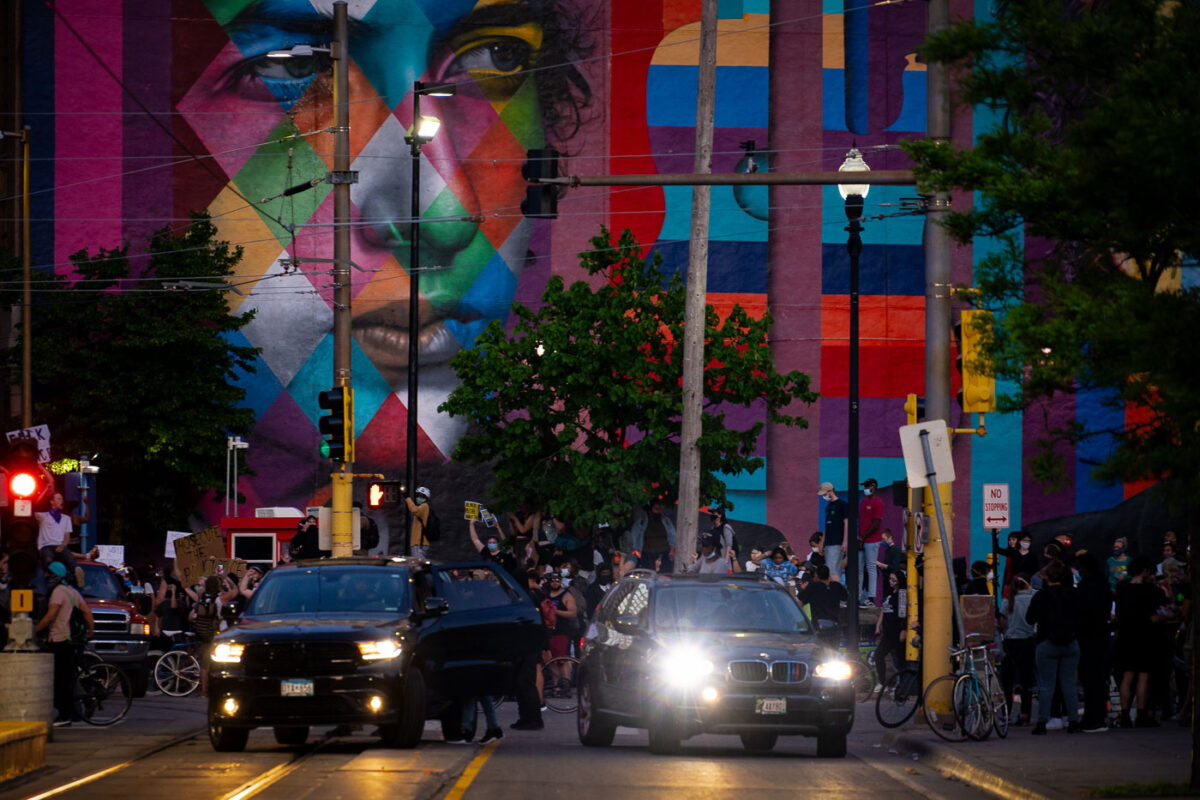
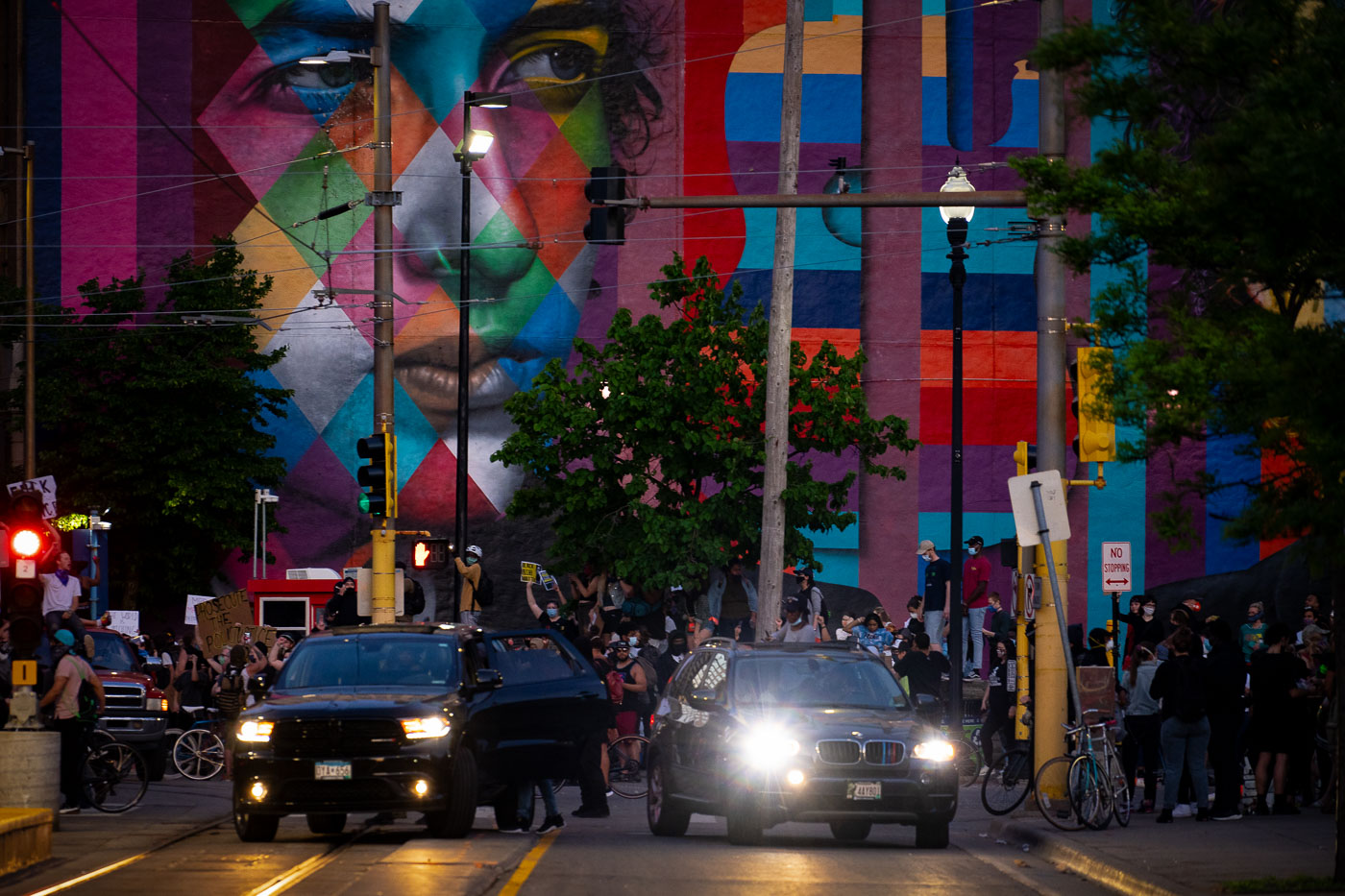
Protesters gather on Hennepin Avenue beside Eduardo Kobra's colorful Bob Dylan mural in downtown Minneapolis on May 28, 2020.
Protesters gather on Hennepin Avenue in downtown Minneapolis beside Eduardo Kobra’s Bob Dylan mural on May 28, 2020, during demonstrations following the death of George Floyd.

Vehicles Pass Protesters Beneath the Bob Dylan Mural on Hennepin Avenue
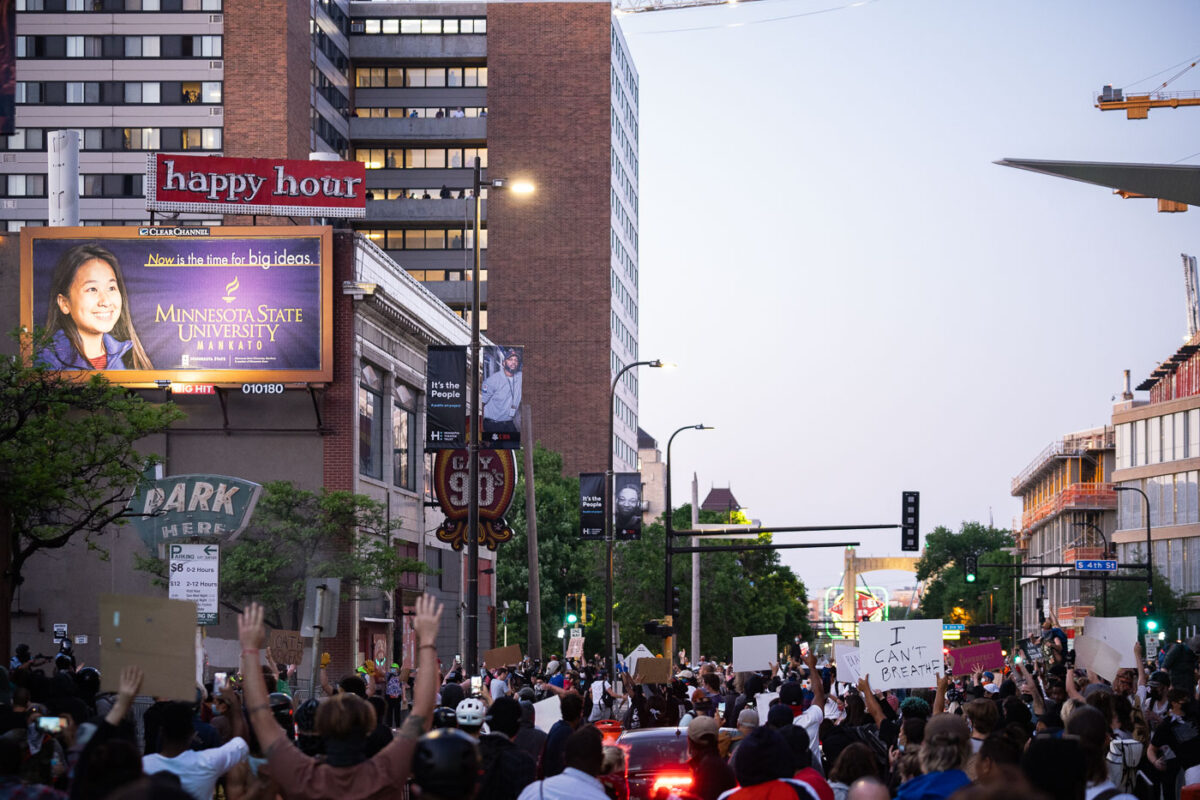
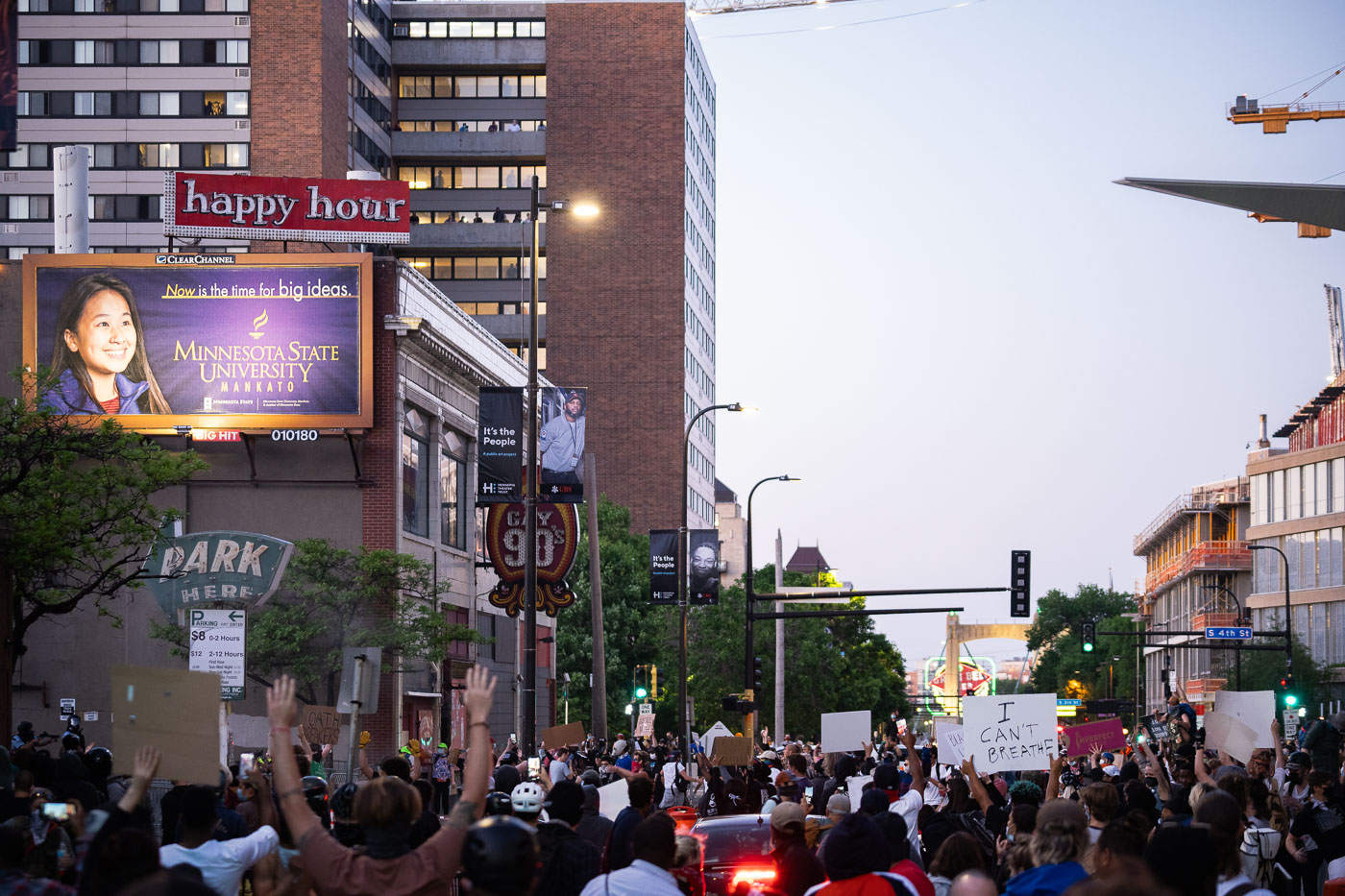
Hundreds of protesters fill Hennepin Avenue in downtown Minneapolis during a May 2020 demonstration following George Floyd's death.
Protesters march on Hennepin Avenue near the Minneapolis Police 1st Precinct in downtown Minneapolis on May 28, 2020, during demonstrations after the death of George Floyd.

George Floyd Protesters Fill Hennepin Avenue at Dusk
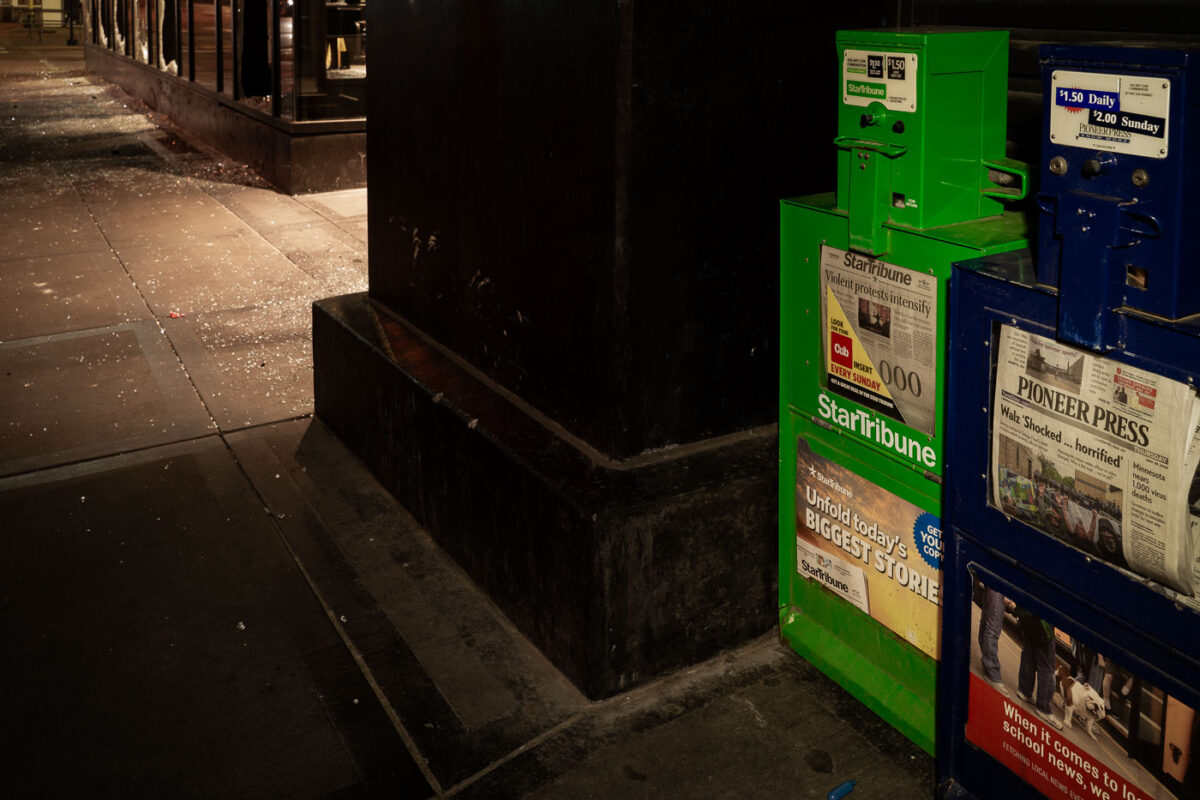
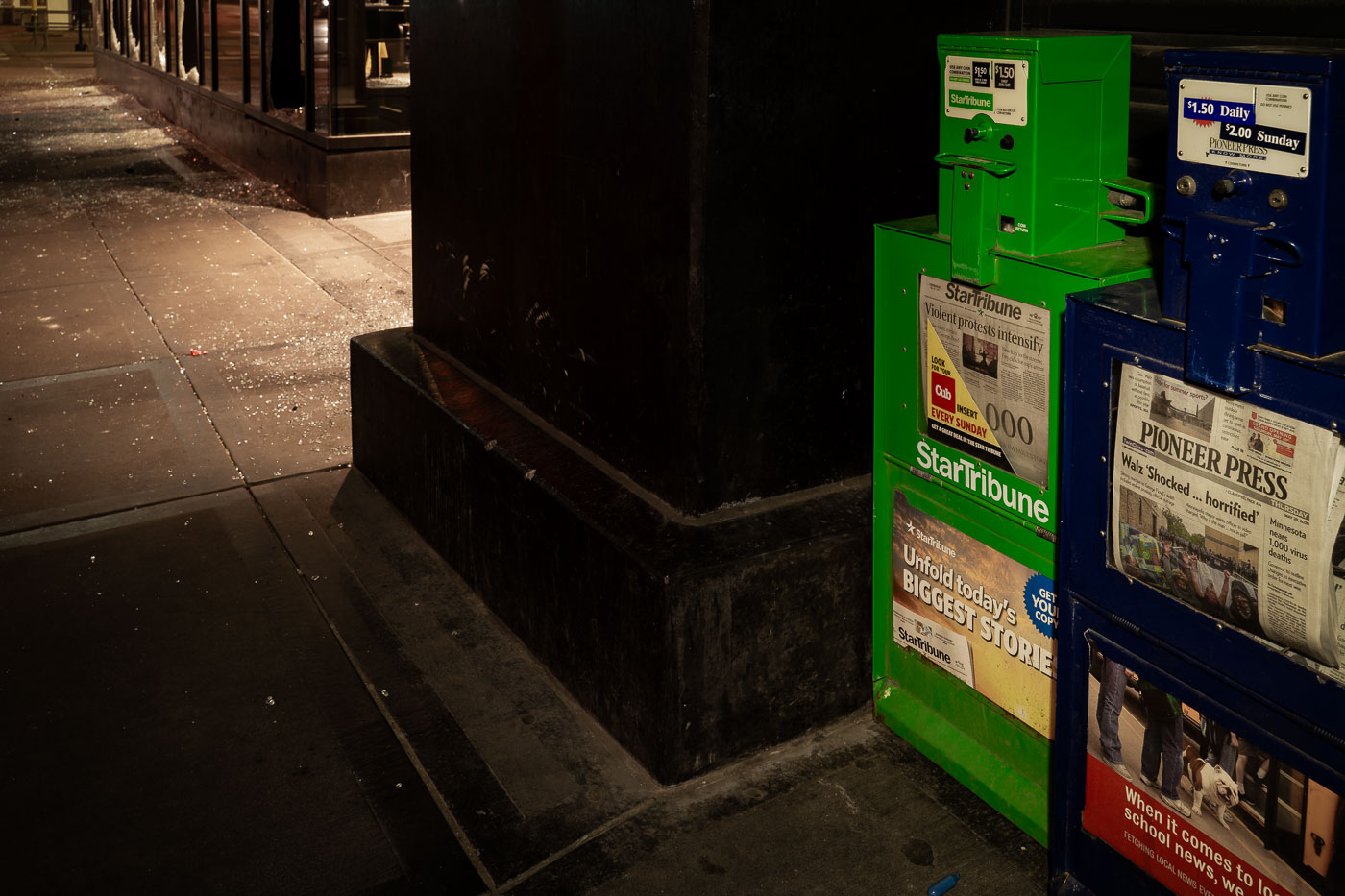
Star Tribune and Pioneer Press racks in downtown Minneapolis beside broken glass during May 2020 protests.
Star Tribune and Pioneer Press newspaper racks stand on a sidewalk in downtown Minneapolis in the early hours of May 29, 2020, with broken glass scattered across the pavement nearby. The visible Star Tribune front page reads “Violent protests intensify,” placing the photograph during unrest following the killing of George Floyd.

Newspaper Racks, Downtown Minneapolis Protests
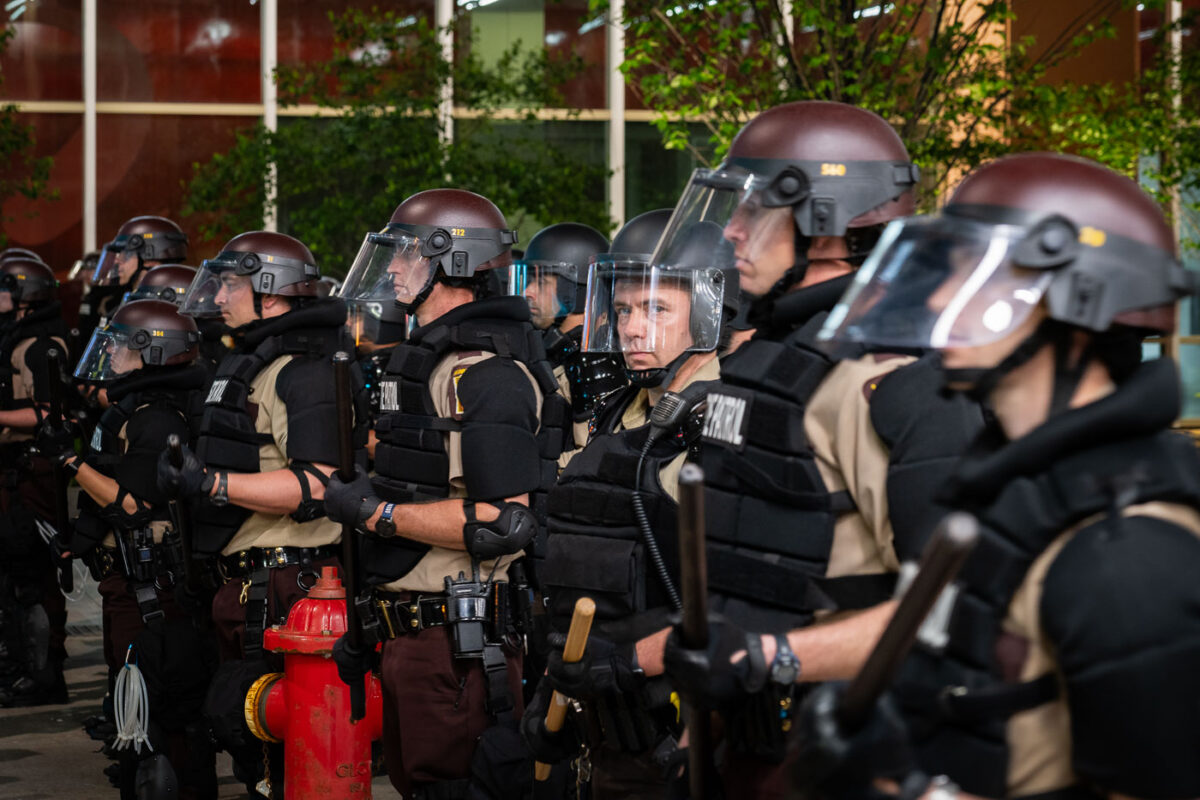
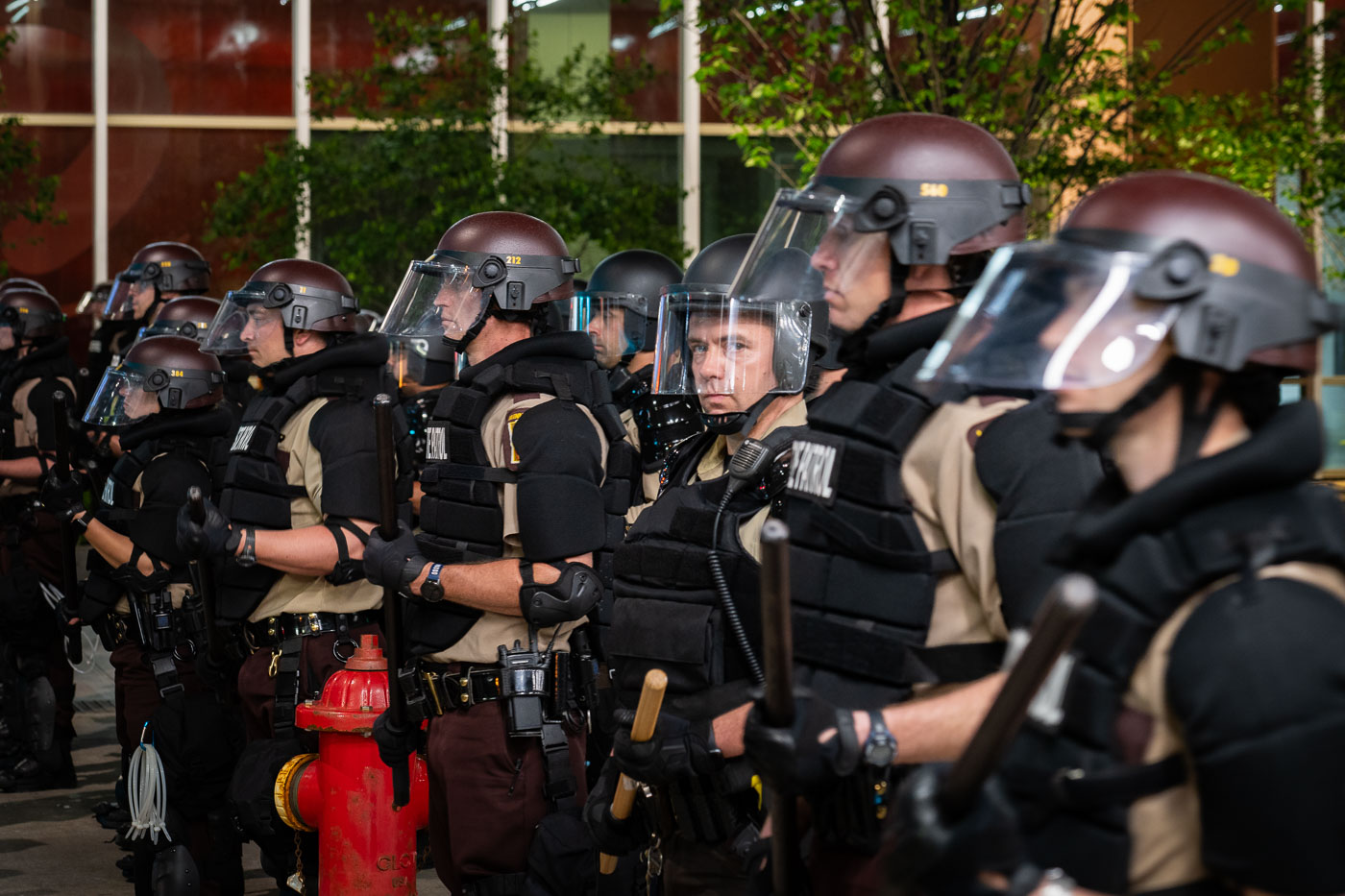
Minnesota State Patrol officers in riot gear on Nicollet Mall in downtown Minneapolis during protests.
Minnesota State Patrol officers in riot gear stand in formation on Nicollet Mall in downtown Minneapolis on May 29, 2020. The deployment took place during the third day of protests and unrest following the killing of George Floyd by Minneapolis police on May 25. Nicollet Mall is a major pedestrian and transit corridor in the city center, and state officers were mobilized there to reinforce law enforcement presence overnight.

State Patrol in Riot Gear, Nicollet Mall
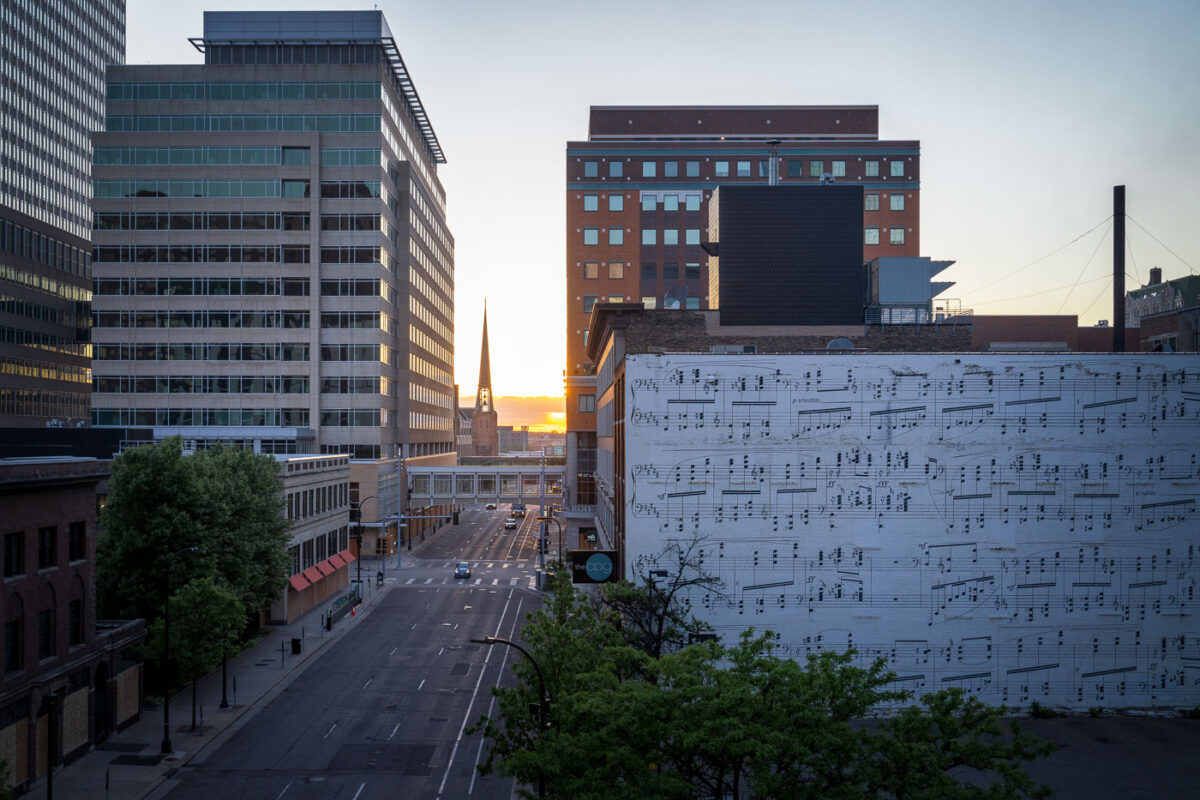
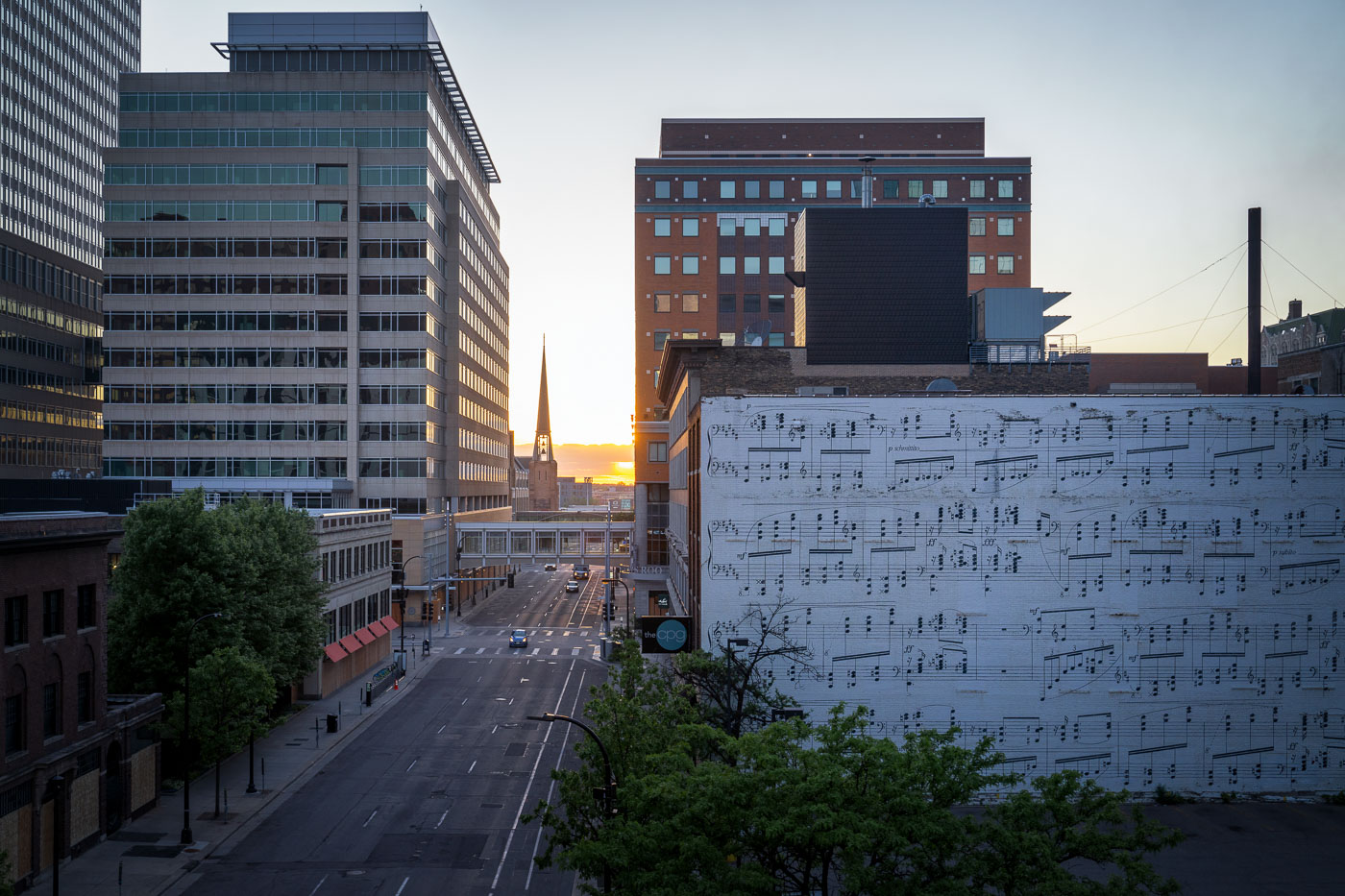
South 10th Street in downtown Minneapolis at sunset, with a music mural and sparse traffic.
S 10th Street in downtown Minneapolis is shown at sunset on May 29, 2020, with very light traffic and few people visible. Mid-rise office and commercial buildings line the corridor, and a large mural of musical notation covers the wall of the building at right, while a church spire rises in the distance. The photograph was made during the period of unrest in Minneapolis following the killing of George Floyd, when parts of the downtown street network were noticeably quieter than usual.

S 10th St Sunset, Downtown Minneapolis
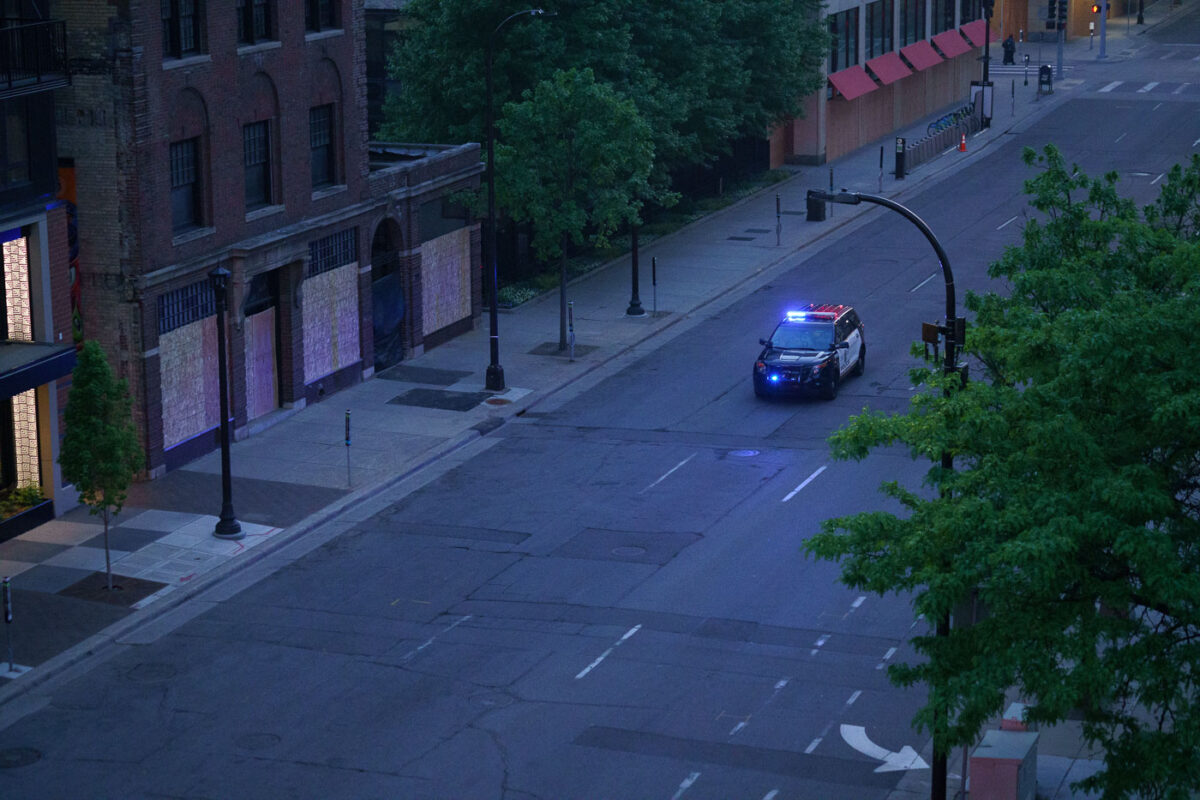
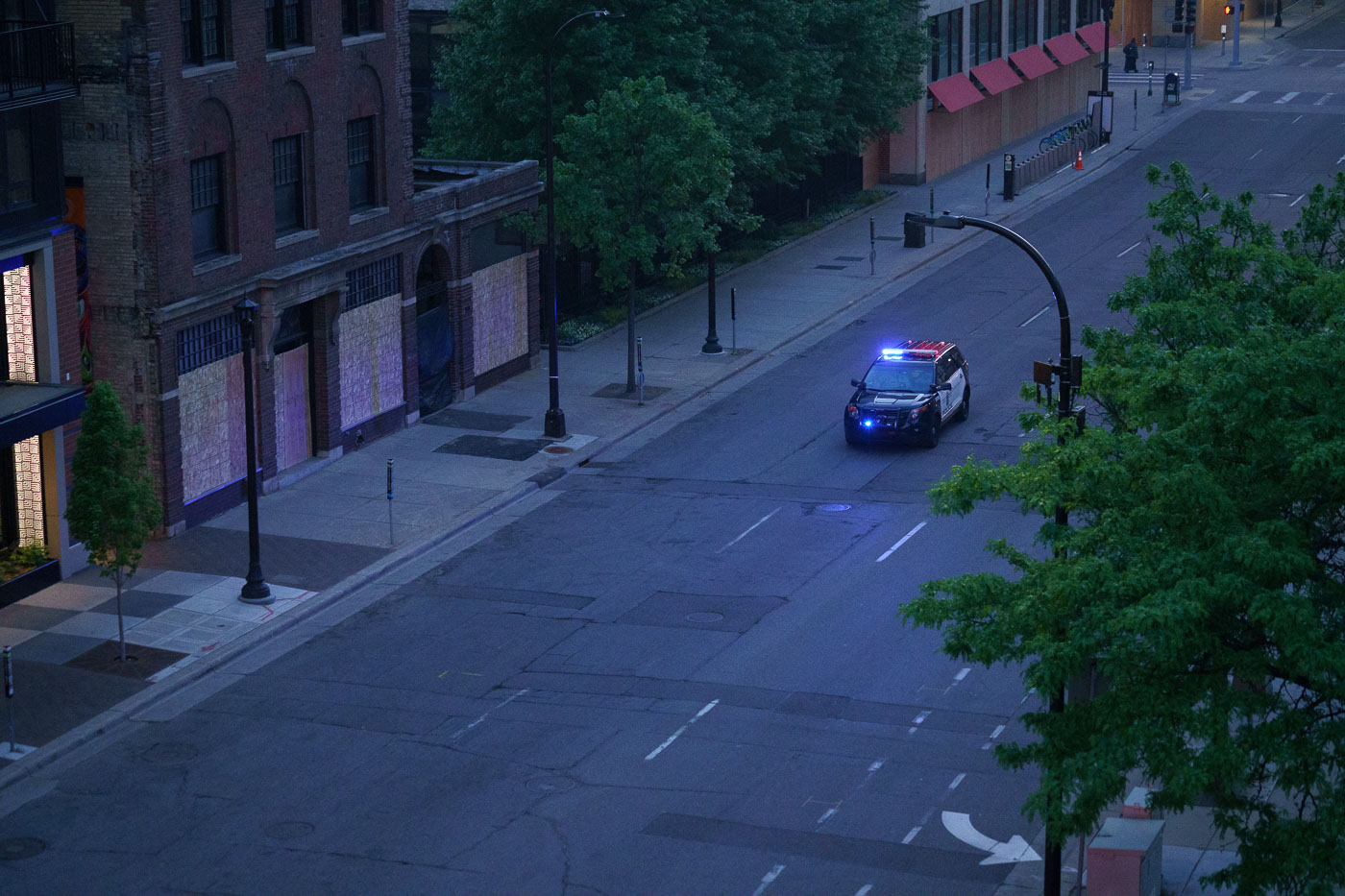
Minneapolis police SUV on South 10th Street beside boarded storefronts in downtown Minneapolis.
A Minneapolis Police squad car patrols South 10th Street in downtown Minneapolis on May 29, 2020, passing commercial buildings with plywood covering their ground-floor windows. The boarded storefronts document security measures taken by businesses during the unrest that followed the killing of George Floyd.

Police Car and Boarded Businesses, Minneapolis
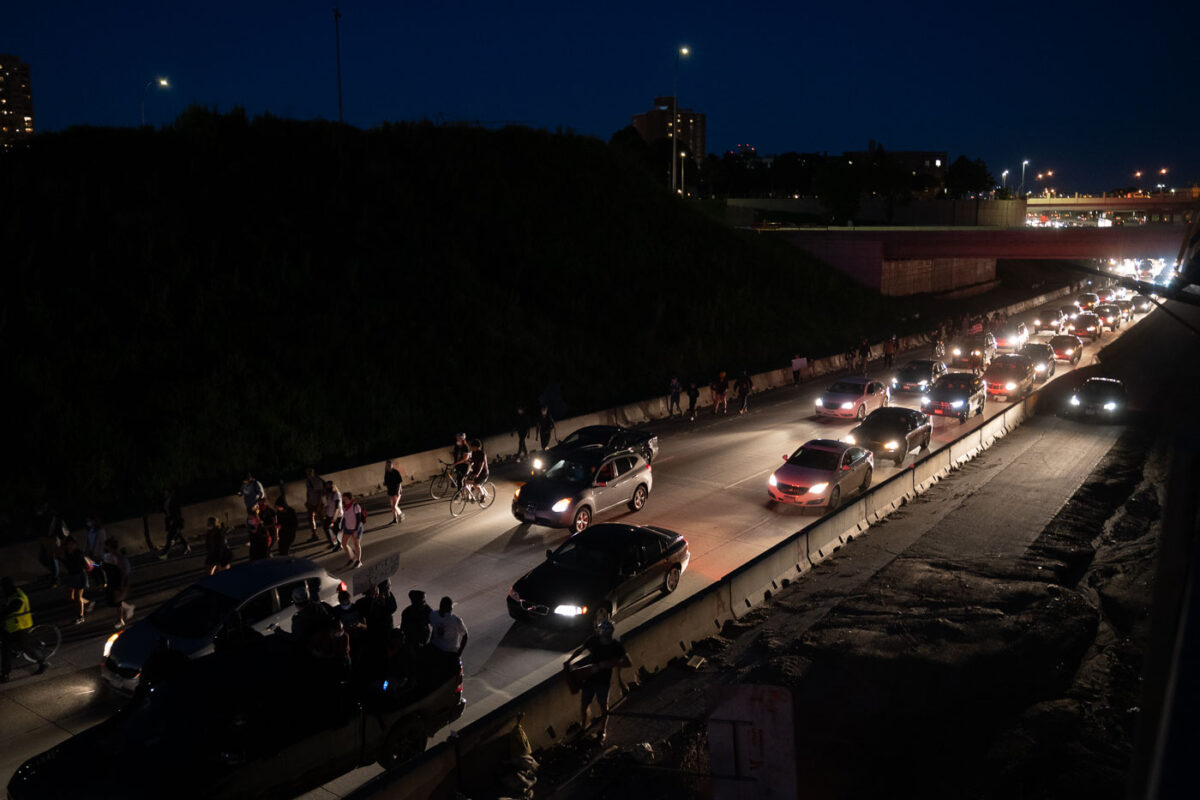
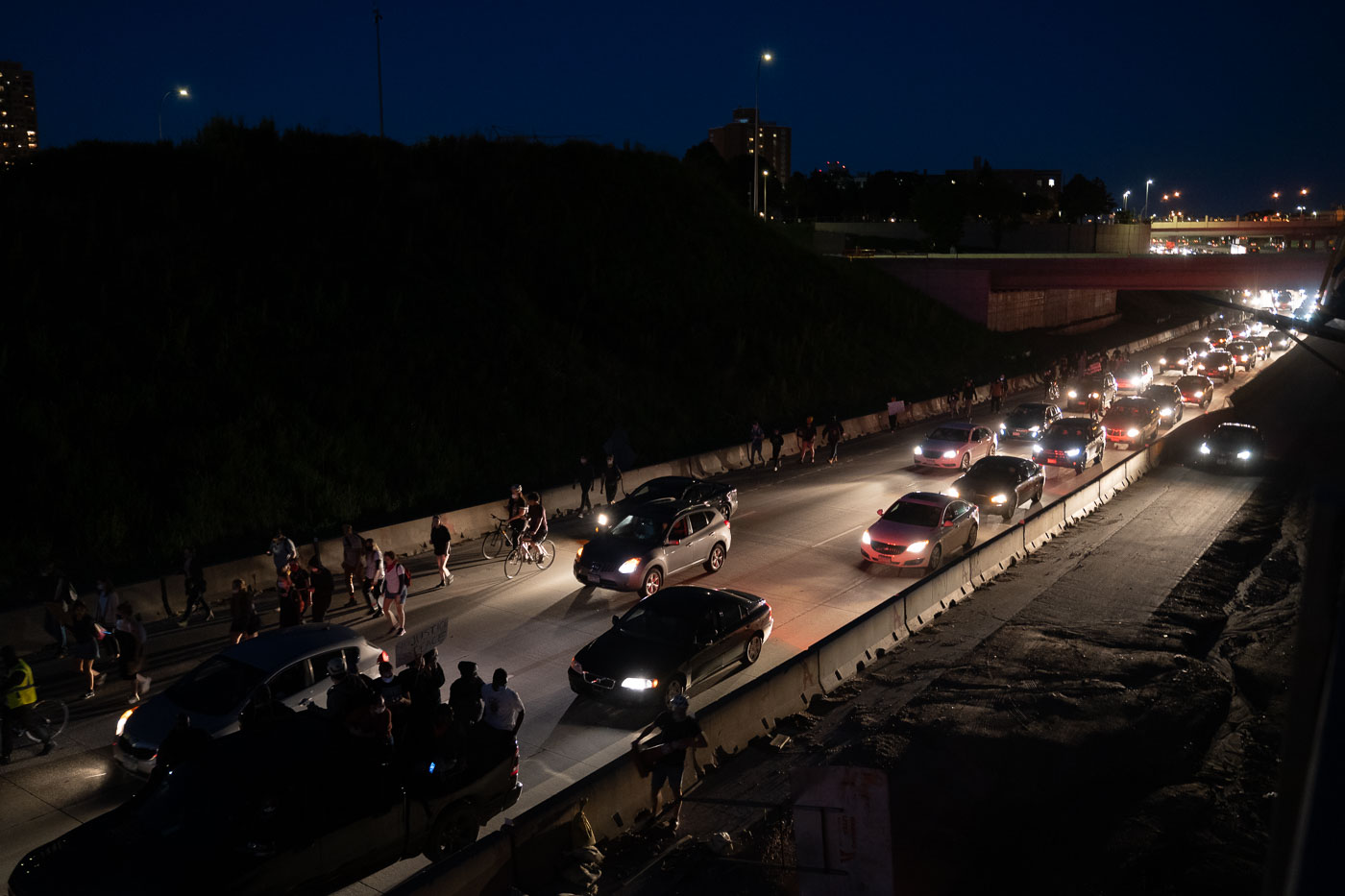
Protesters and stopped traffic on I-94 in Minneapolis at night.
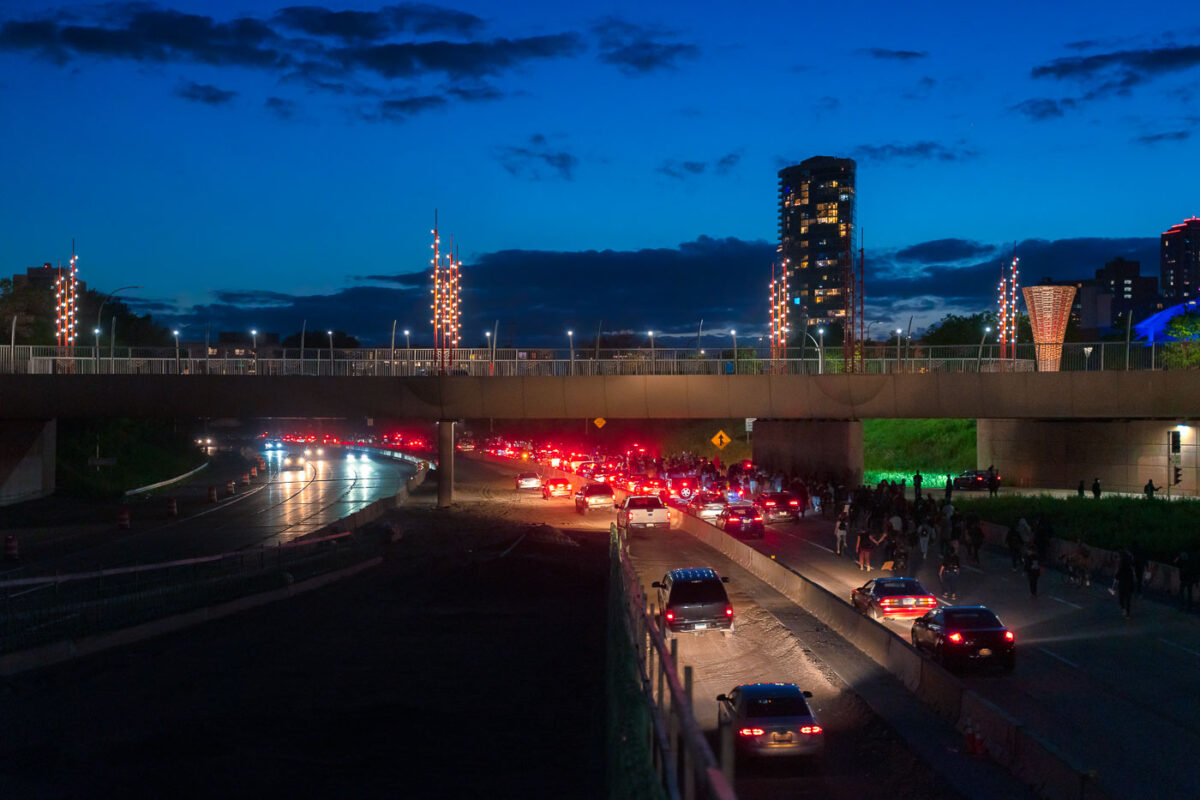
Protesters and stopped traffic occupy Interstate 94 in Minneapolis on the night of May 29, 2020, during demonstrations following the killing of George Floyd. Photographed from an overpass, the image shows marchers moving along the freeway while cars queue in adjacent lanes under streetlights.

I-94 Protests Minneapolis

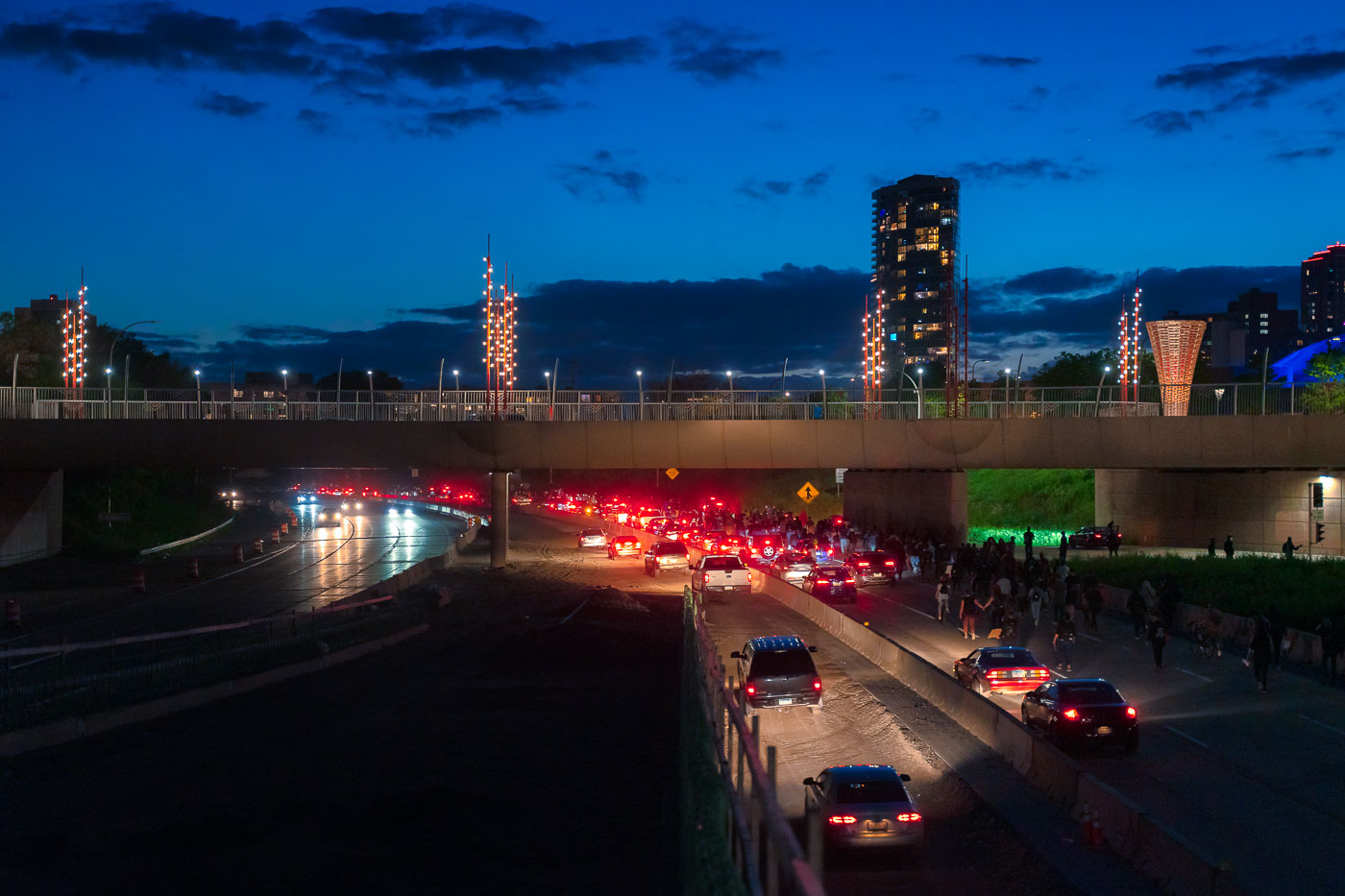
Protesters and backed-up traffic on Interstate 94 in Minneapolis at night.
Protesters and halted traffic fill Interstate 94 in downtown Minneapolis on May 29, 2020, during the fourth day of demonstrations following the killing of George Floyd. The nighttime photograph shows marchers occupying the freeway lanes beneath a pedestrian bridge as vehicles back up along the corridor. I-94 is a major east-west route through Minneapolis and Saint Paul.

Protest on I-94 in Minneapolis

Protesters and bicyclists on I-94 in Minneapolis at night, with slow-moving cars and a No Justice No Peace sign.
Protesters and bicyclists march along Interstate 94 in Minneapolis on May 29, 2020, during demonstrations after the killing of George Floyd. The freeway, a major route through Minneapolis and Saint Paul, was temporarily occupied as people moved through the traffic lanes carrying signs, including one reading "NO JUSTICE NO PEACE."

Protesters on I-94, Minneapolis

Boarded storefronts in downtown Minneapolis marked with BLM and Black Owned graffiti.
Boarded storefronts in downtown Minneapolis are marked with the spray-painted messages “BLM” and “BLACK OWNED” on May 29, 2020. The plywood covers were installed to protect retail businesses during unrest following the killing of George Floyd by Minneapolis police earlier that week.

Boarded Businesses, Downtown Minneapolis

Boarded Target store at Nicollet Mall and 9th Street South in downtown Minneapolis during early morning hours.
This Target store sits at Nicollet Mall and Ninth Street South in downtown Minneapolis, its glass rotunda entrance topped with the company's bullseye logo. Plywood covers the ground-floor windows and doors here in the early hours of May 29, 2020, as businesses across the city boarded up amid the unrest following George Floyd's killing by police.

Target Store Boarded, Downtown Minneapolis, George Floyd Unrest
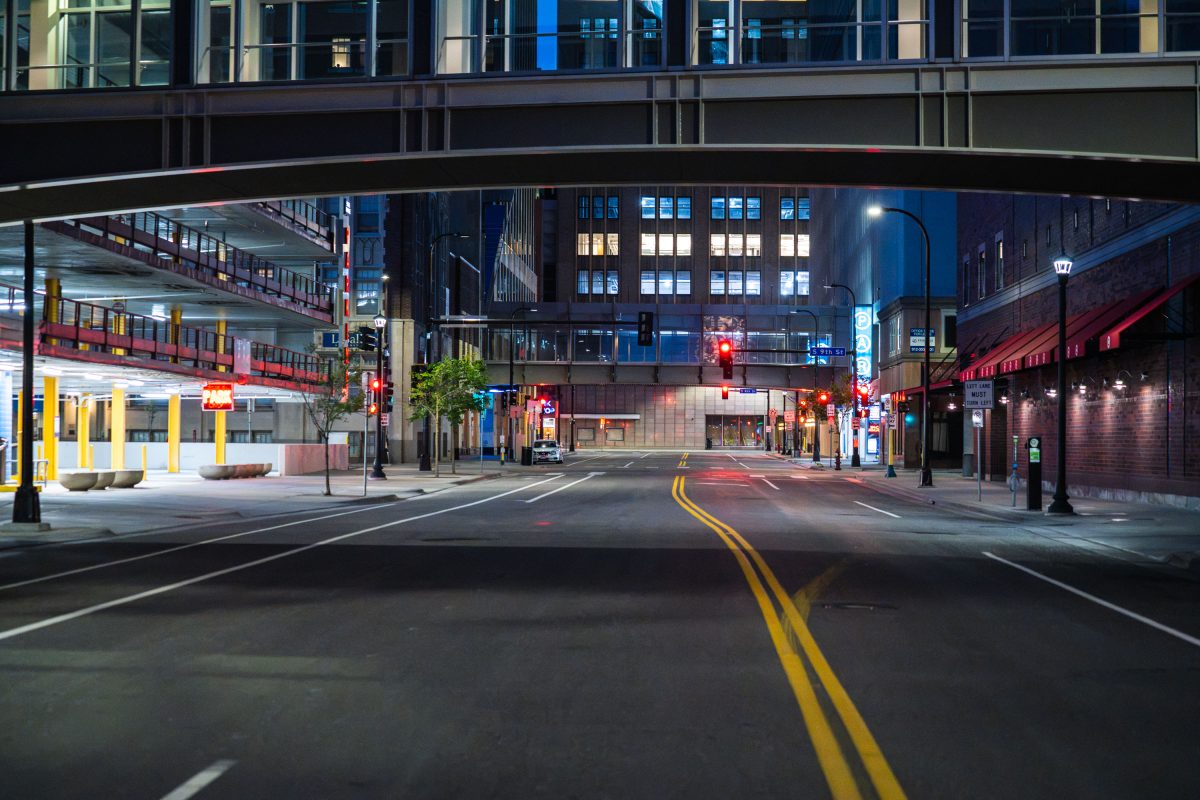
La Salle in Downtown Minneapolis
La Salle Avenue in Downtown Minneapolis on May 29, 2020.

La Salle Avenue in Downtown Minneapolis

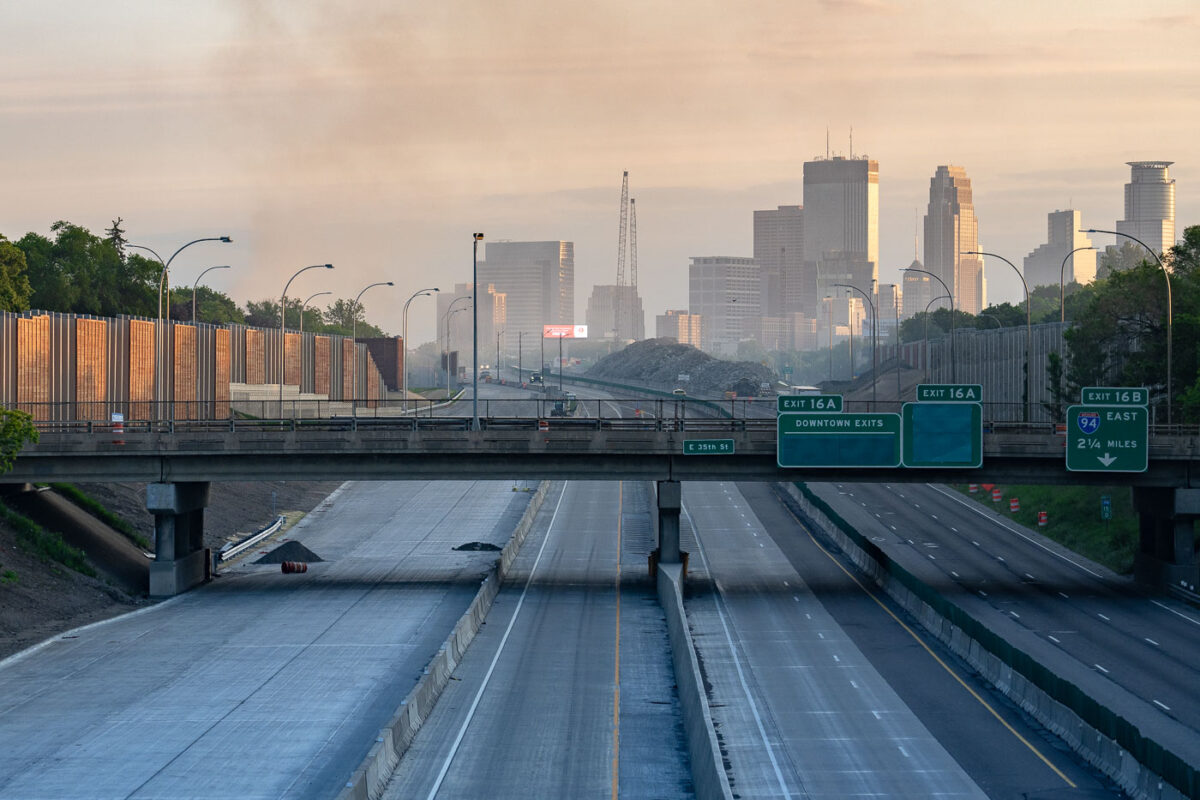
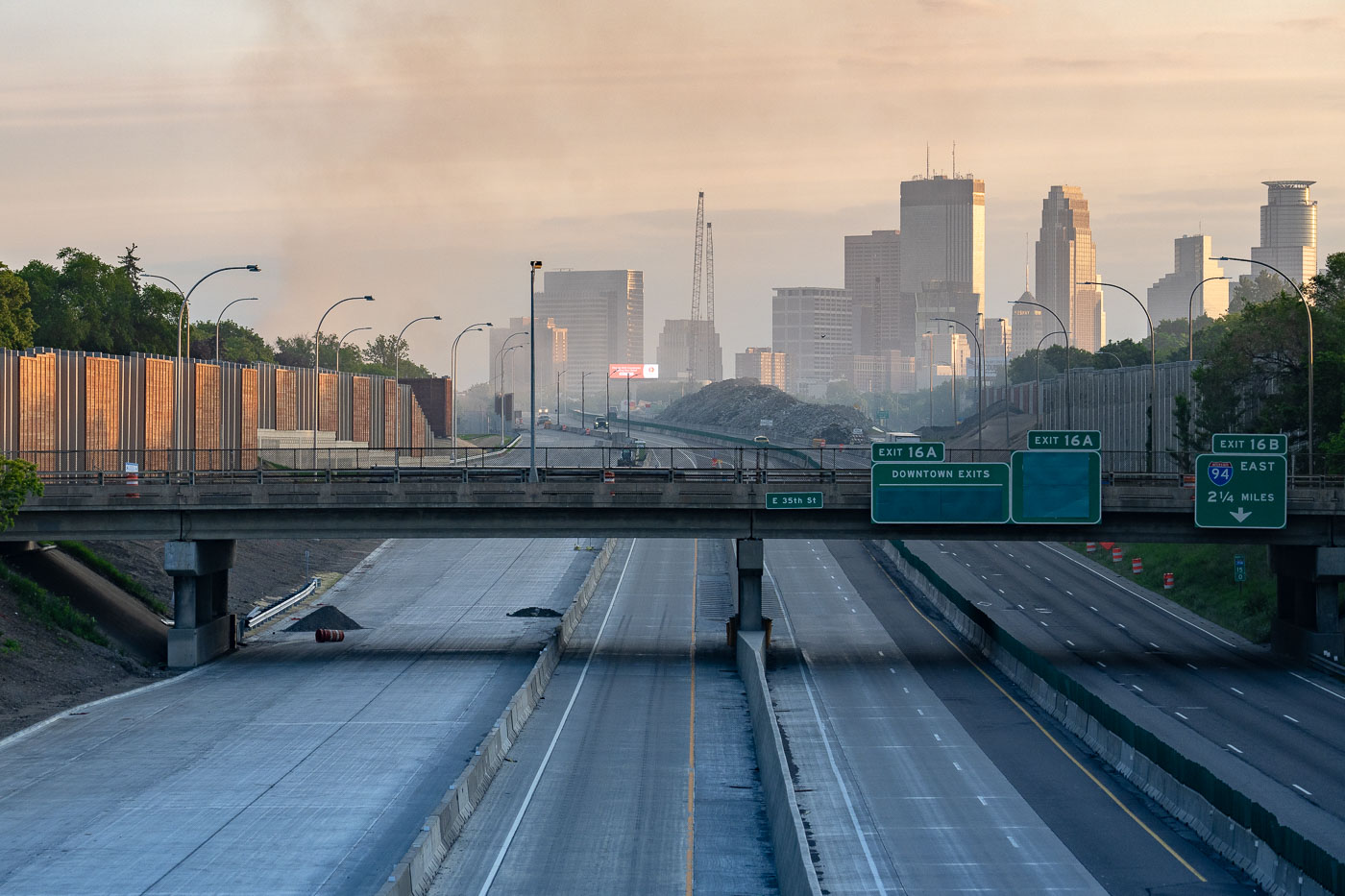
Interstate 35W approaching downtown Minneapolis under smoke haze at daybreak.
Interstate 35W approaching downtown Minneapolis, Minnesota, is seen under a layer of smoke at daybreak on May 30, 2020. Overhead signs for downtown exits, East 35th Street, and Interstate 94 place the view along the main north-south freeway corridor leading into the city center. The haze followed overnight fires during protests after the death of George Floyd, and the light traffic contrasts with the volume normally carried on this route.

I-35W Minneapolis Smoke Haze May 30 2020

Boarded storefront of Nordstrom Rack at the IDS Center on Nicollet Mall in downtown Minneapolis.
Nordstrom Rack occupies ground-floor retail space at the IDS Center on Nicollet Mall in downtown Minneapolis. The IDS Center, completed in 1972, rises as Minnesota's tallest building and anchors this stretch of the mall with offices and shops. Plywood now covers the storefront's windows in the early hours of May 30, 2020, after protests and unrest followed the killing of George Floyd.

Plywood Along Nordstrom Rack at the IDS Center After Unrest

National Guard troops on Nicollet Mall in downtown Minneapolis during George Floyd protests.
Minnesota National Guard soldiers stand at an intersection on Nicollet Mall in downtown Minneapolis on May 30, 2020, during overnight protests following the death of George Floyd. The troops are positioned outside commercial buildings with plywood covering the windows and doors, reflecting security measures taken as unrest spread through the city. Nicollet Mall is a major downtown pedestrian and transit corridor, and the Guard deployment marked the city and state's emergency response during the fourth day of unrest.

National Guard on Nicollet Mall during Minneapolis Protests

Fire-damaged Minnehaha Liquors sign on Lake Street in Minneapolis.
The fire-damaged Minnehaha Liquors sign and facade on Lake Street in Minneapolis are shown on May 31, 2020. The business was burned during the unrest that followed the death of George Floyd on May 25, leaving the storefront’s metal framing exposed and the neon sign partially intact. Lake Street, one of Minneapolis’s main commercial corridors, saw extensive damage to businesses during those days.

Minnehaha Liquors Fire Damage, Minneapolis

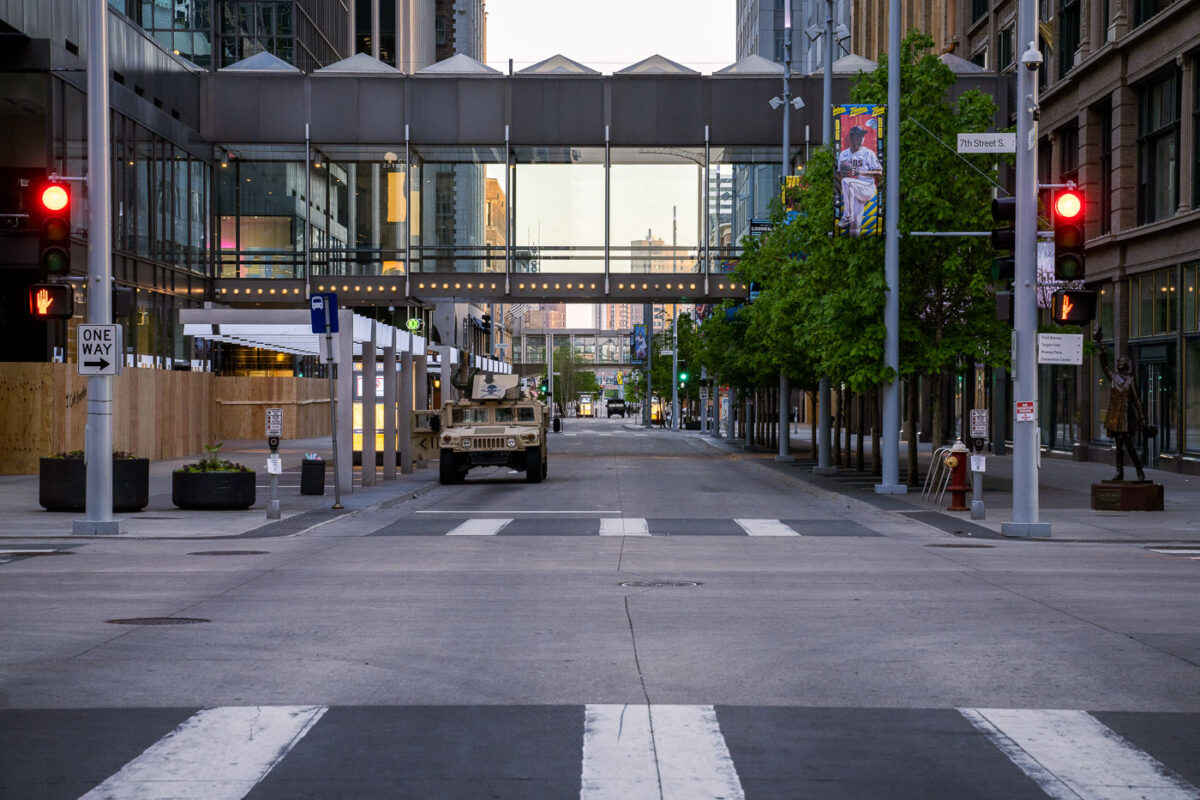
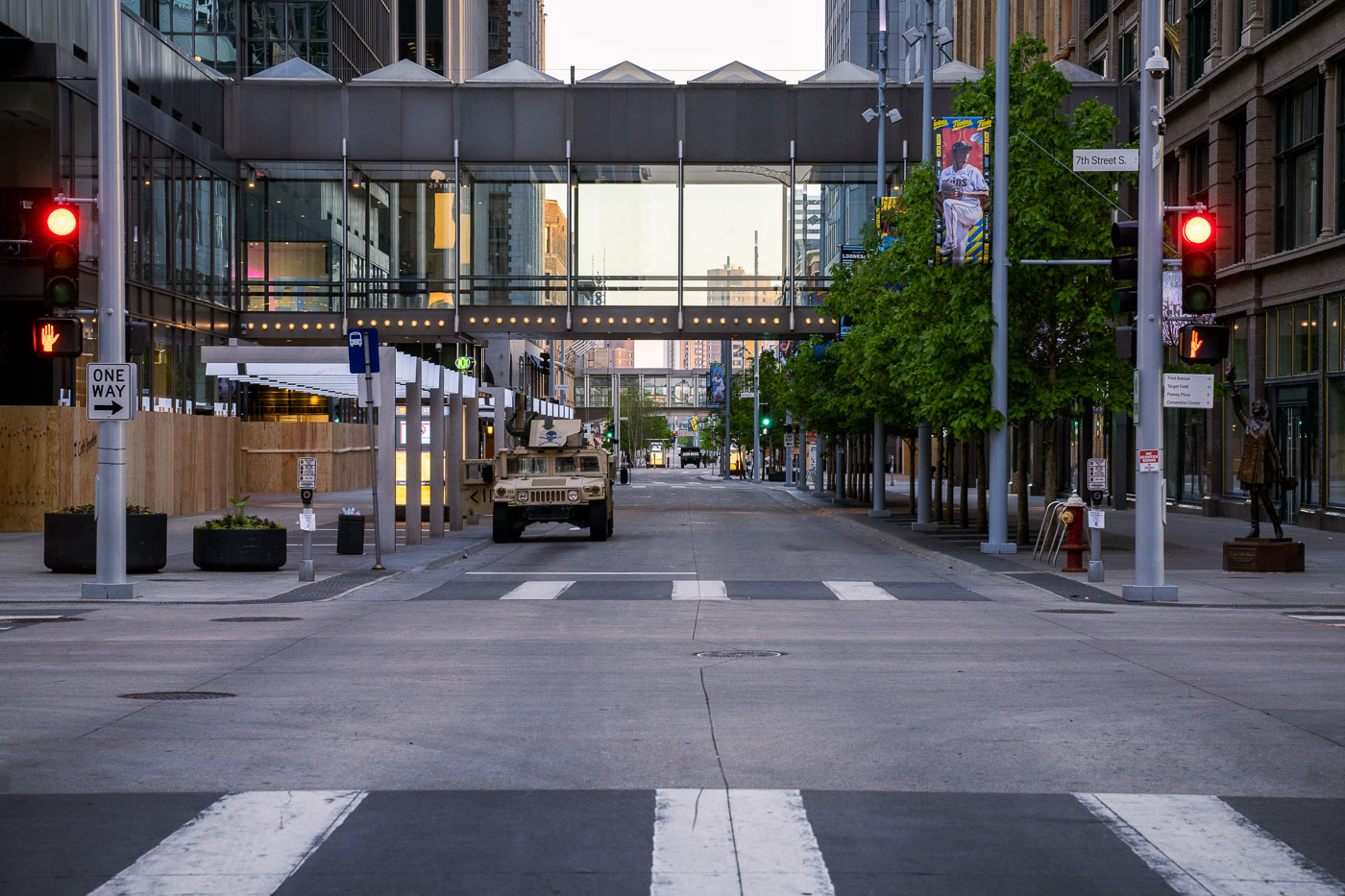
Minnesota National Guard Humvee on Nicollet Mall in downtown Minneapolis during unrest in June 2020.
A Minnesota National Guard Humvee is parked on Nicollet Mall in downtown Minneapolis, beneath the city’s skyway system near 7th Street South. The photograph was taken on June 1, 2020, during the period of unrest that followed the May 25 killing of George Floyd. Storefronts along the pedestrian corridor are covered with plywood, and the otherwise empty street shows the security presence in the central business district.

National Guard Humvee on Nicollet Mall, Minneapolis, June 2020

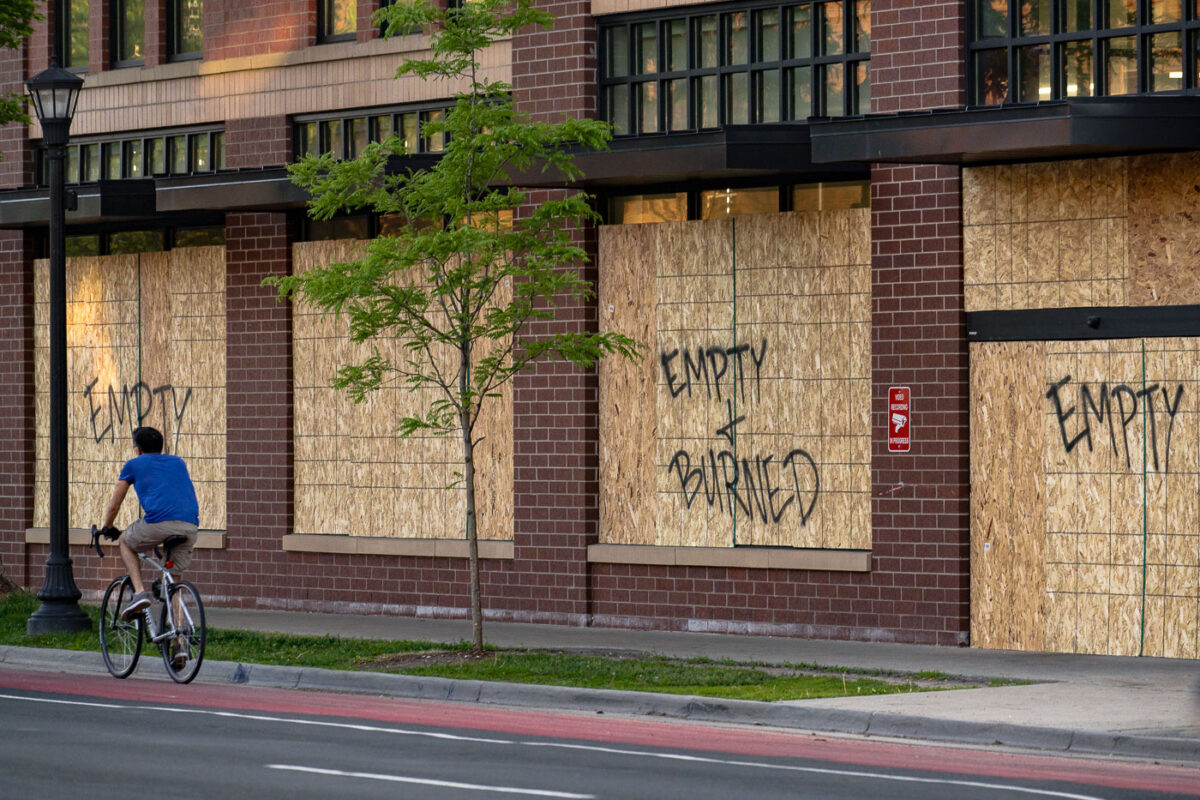
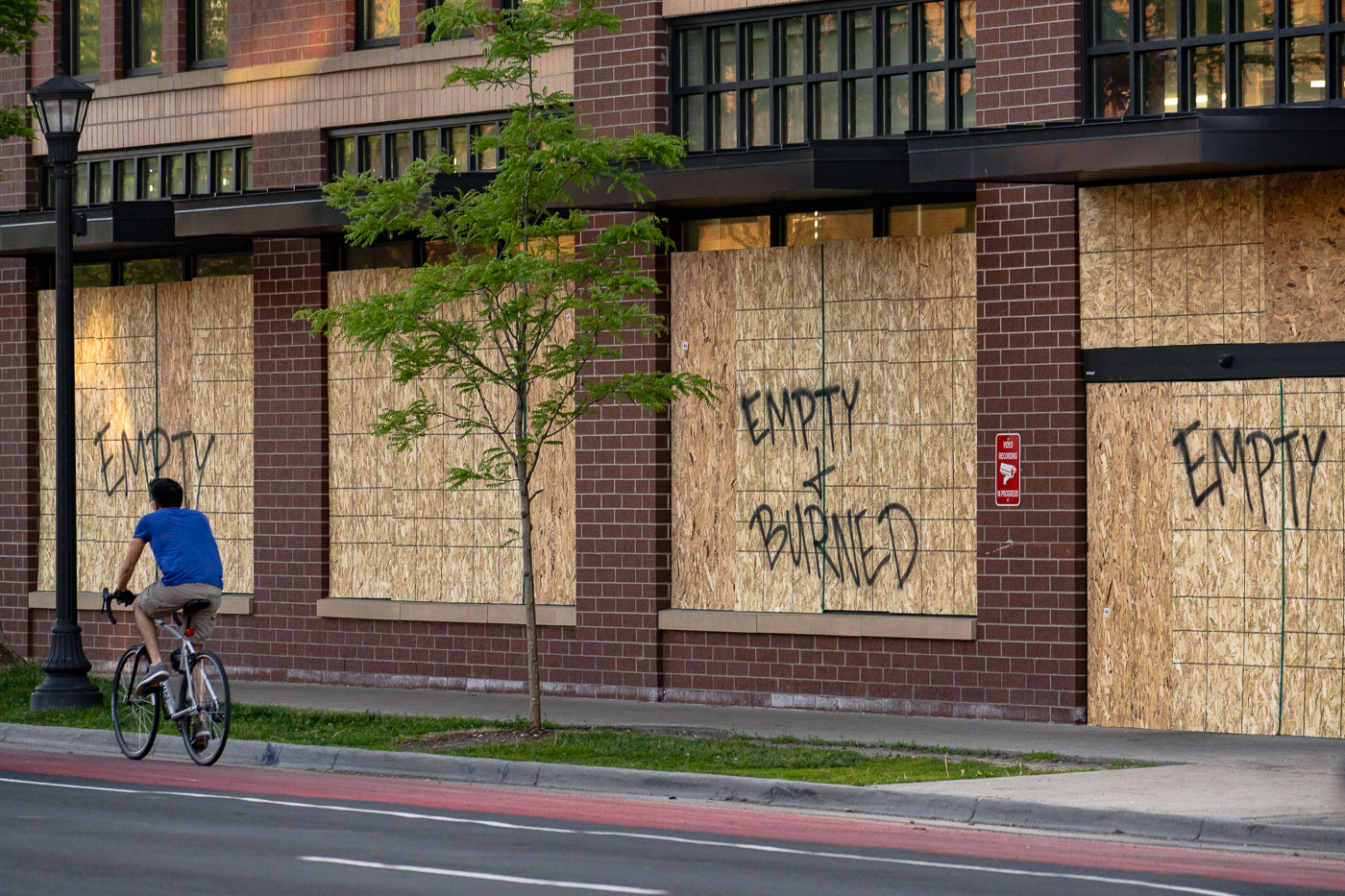
Cyclist passing boarded Walgreens on Hennepin Avenue in Uptown Minneapolis, June 2020.
A cyclist rides past a boarded Walgreens storefront on Hennepin Avenue in Uptown Minneapolis on June 1, 2020. Plywood covers the windows and doors, with graffiti reading “EMPTY + BURNED” painted across several panels. The boarding was installed after unrest in Minneapolis following the killing of George Floyd on May 25, 2020, leaving commercial corridors such as Uptown marked by temporary security measures and damage.

Uptown Minneapolis Walgreens, ‘EMPTY + BURNED’ graffiti

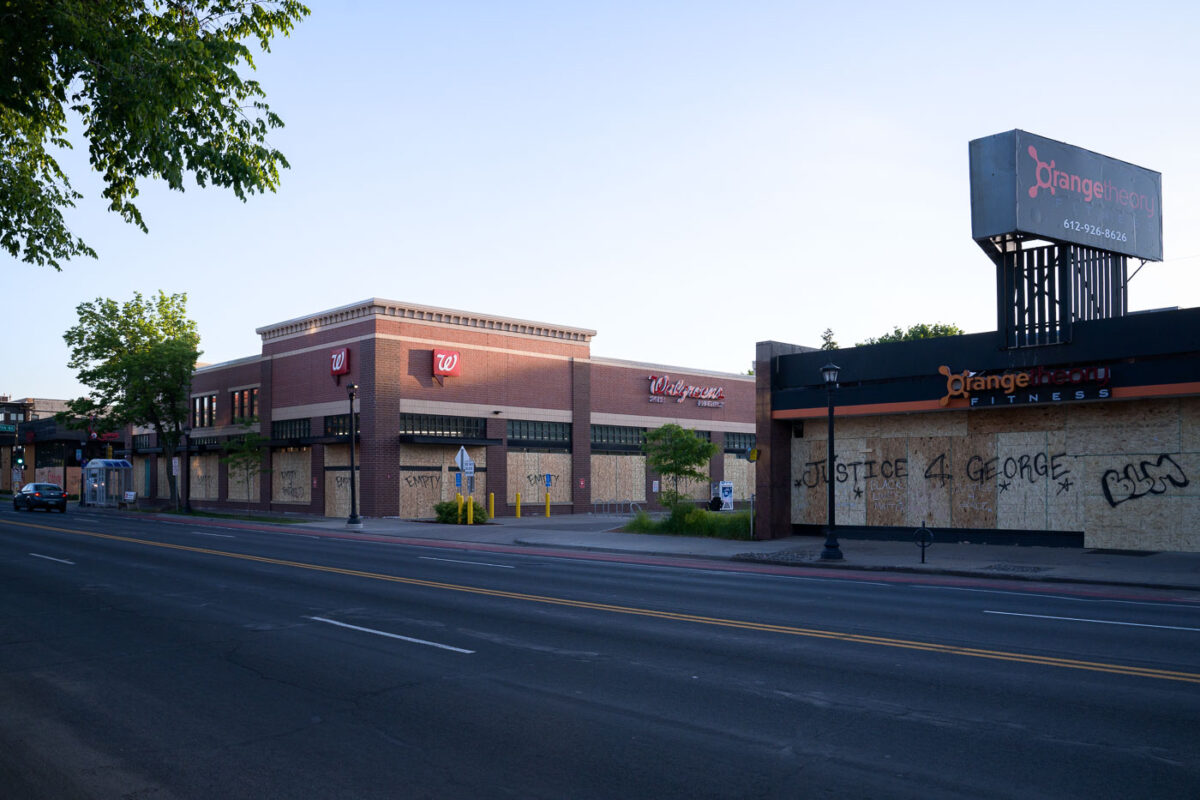
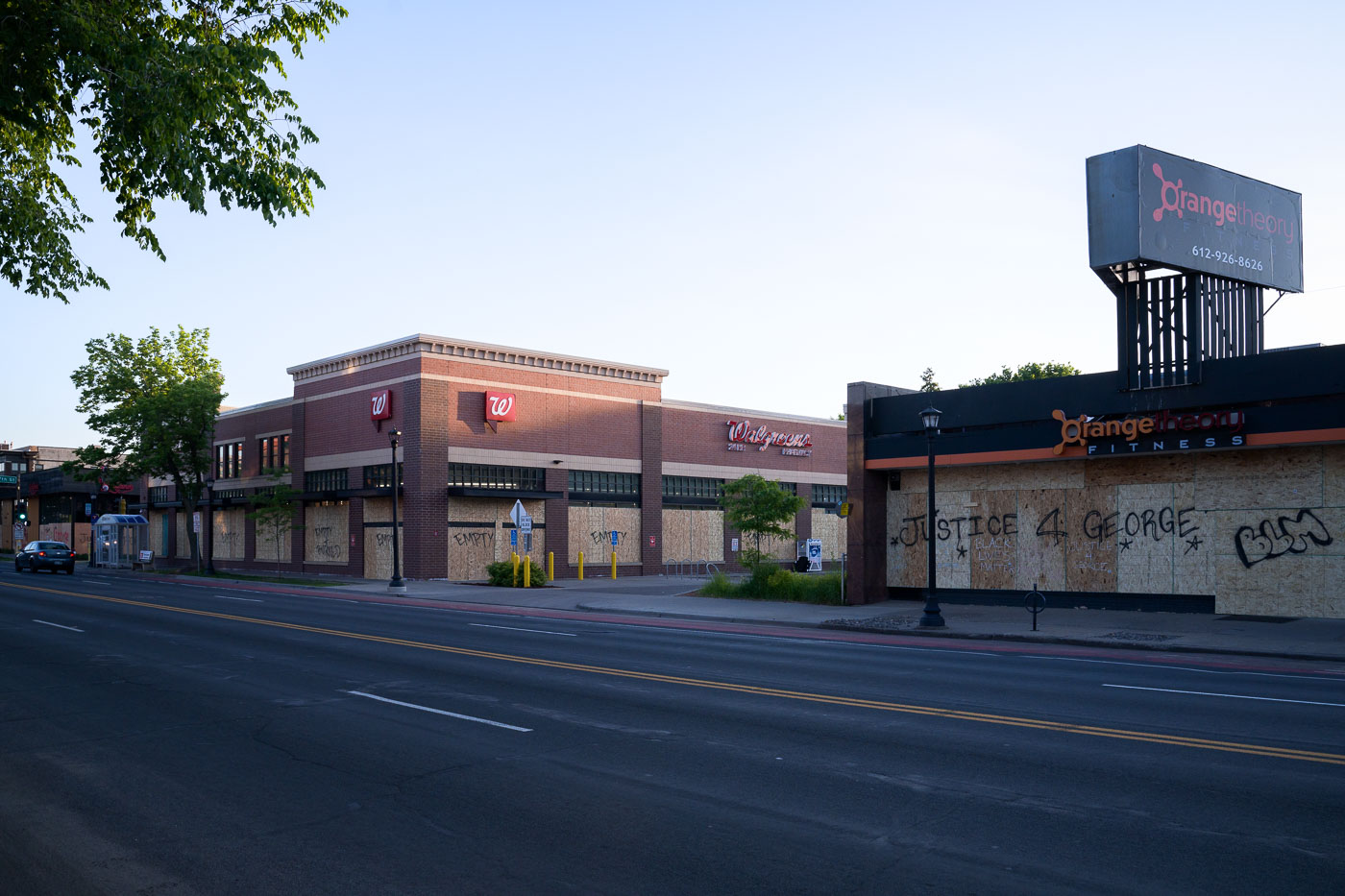
Boarded Walgreens and Orangetheory on Hennepin Avenue in Uptown Minneapolis, June 2020.
Boarded storefronts on Hennepin Avenue in Uptown Minneapolis, including a Walgreens and an Orangetheory Fitness, are shown on June 1, 2020. Plywood covers the windows and doors of both businesses following days of unrest in Minneapolis after the killing of George Floyd. Graffiti on the boards includes “JUSTICE 4 GEORGE” and references to Black Lives Matter.

Hennepin Avenue Boarded Walgreens & Orange Theory, Minneapolis

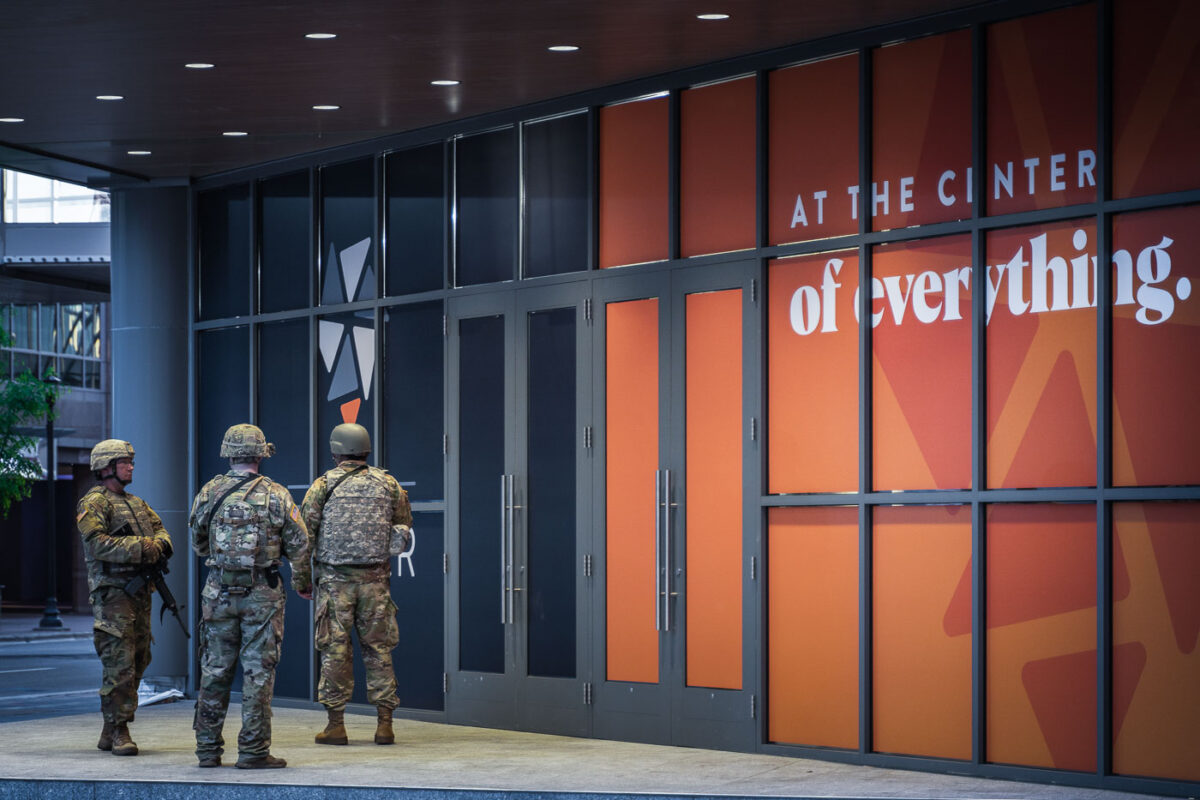
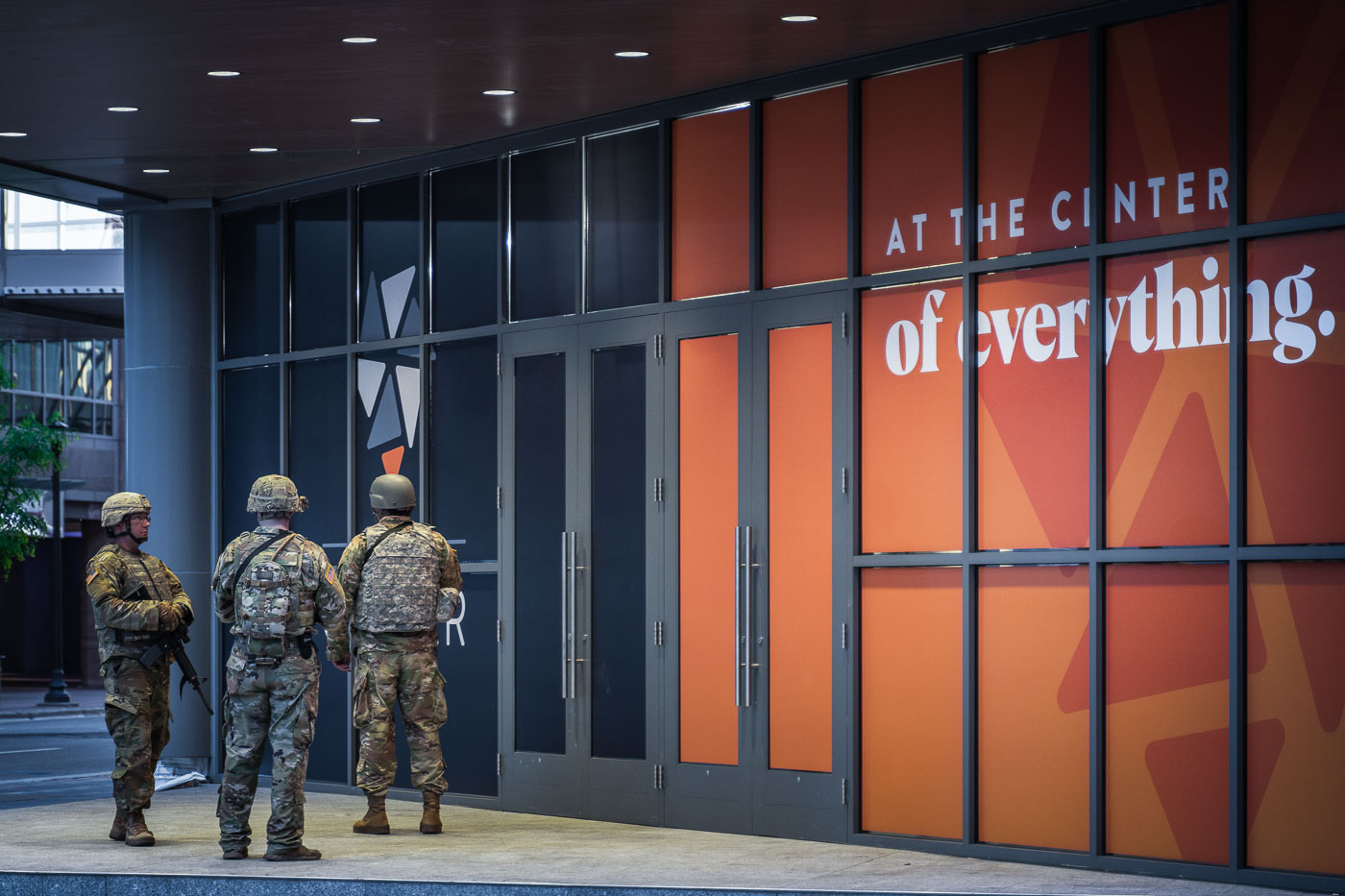
Minnesota National Guard troops outside City Center in downtown Minneapolis during George Floyd protest unrest.
Minnesota National Guard troops stand outside City Center in downtown Minneapolis on June 1, 2020, during protests following the May 25, 2020 murder of George Floyd. The image shows three armed service members at the entrance to the mixed-use retail and office complex as the city remained under curfew orders that week.

Minnesota National Guard at City Center, Minneapolis

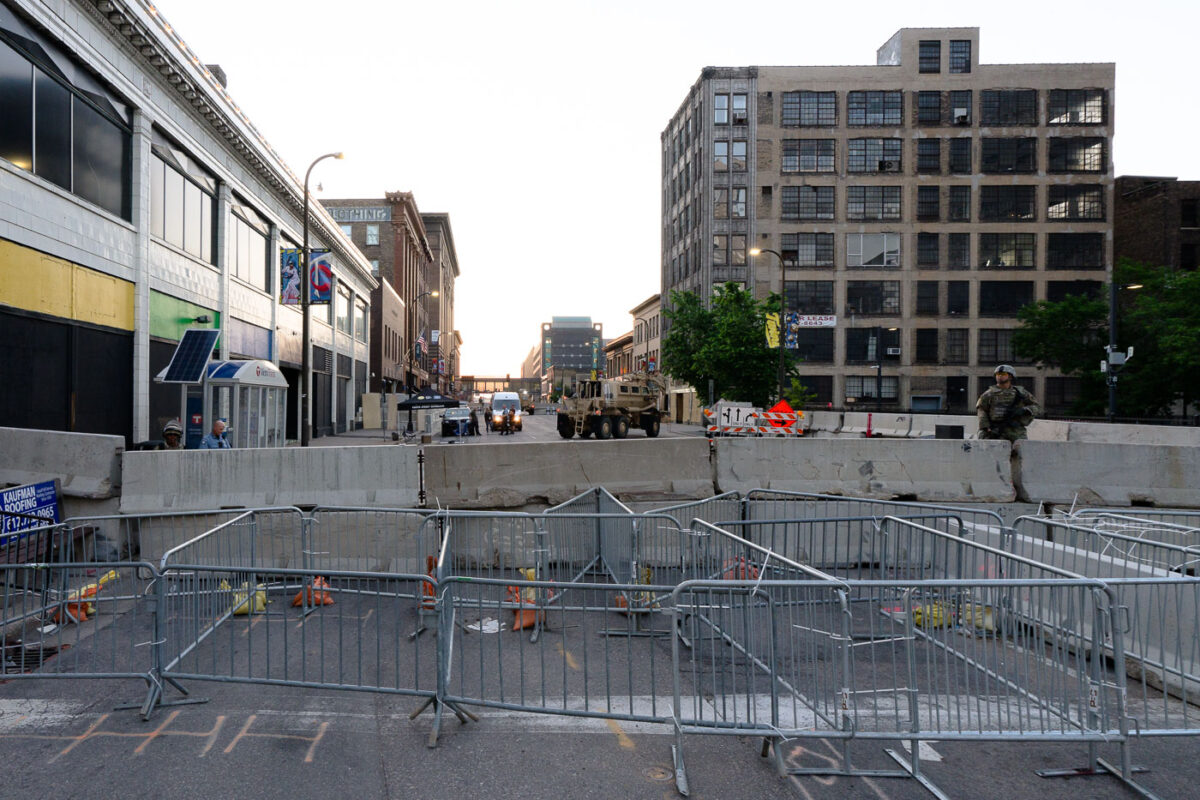
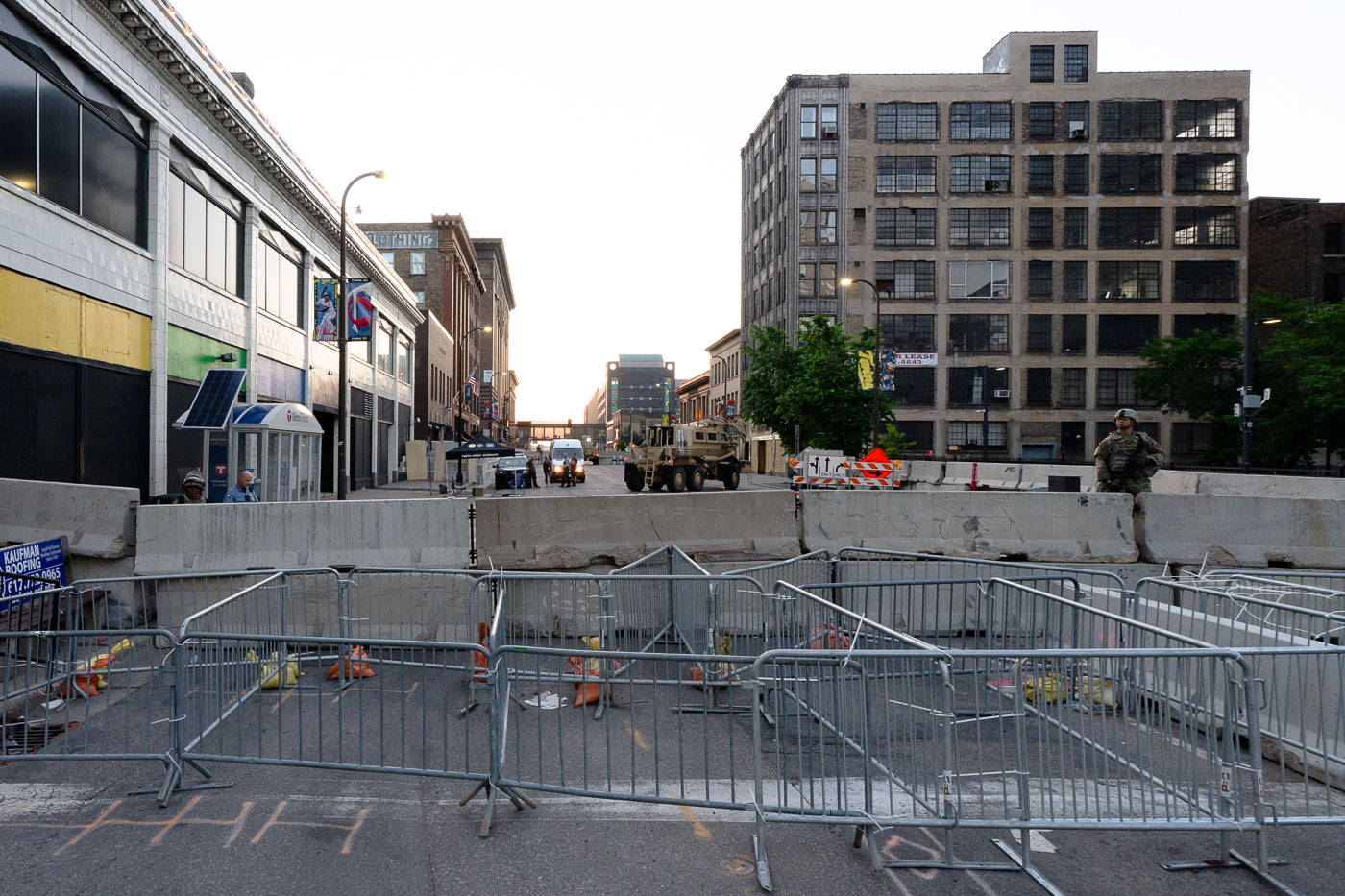
National Guard and concrete barricades outside Minneapolis Police 1st Precinct in downtown Minneapolis, June 2020.
National Guard troops and layered concrete and metal barricades block a street outside the Minneapolis Police 1st Precinct in downtown Minneapolis on June 1, 2020. The image shows a heavily restricted perimeter with military vehicles, fencing, and traffic-control barriers positioned around the station. These security measures were put in place during the unrest and protests that followed the killing of George Floyd on May 25, 2020.

National Guard and Barricades at Minneapolis Police 1st Precinct

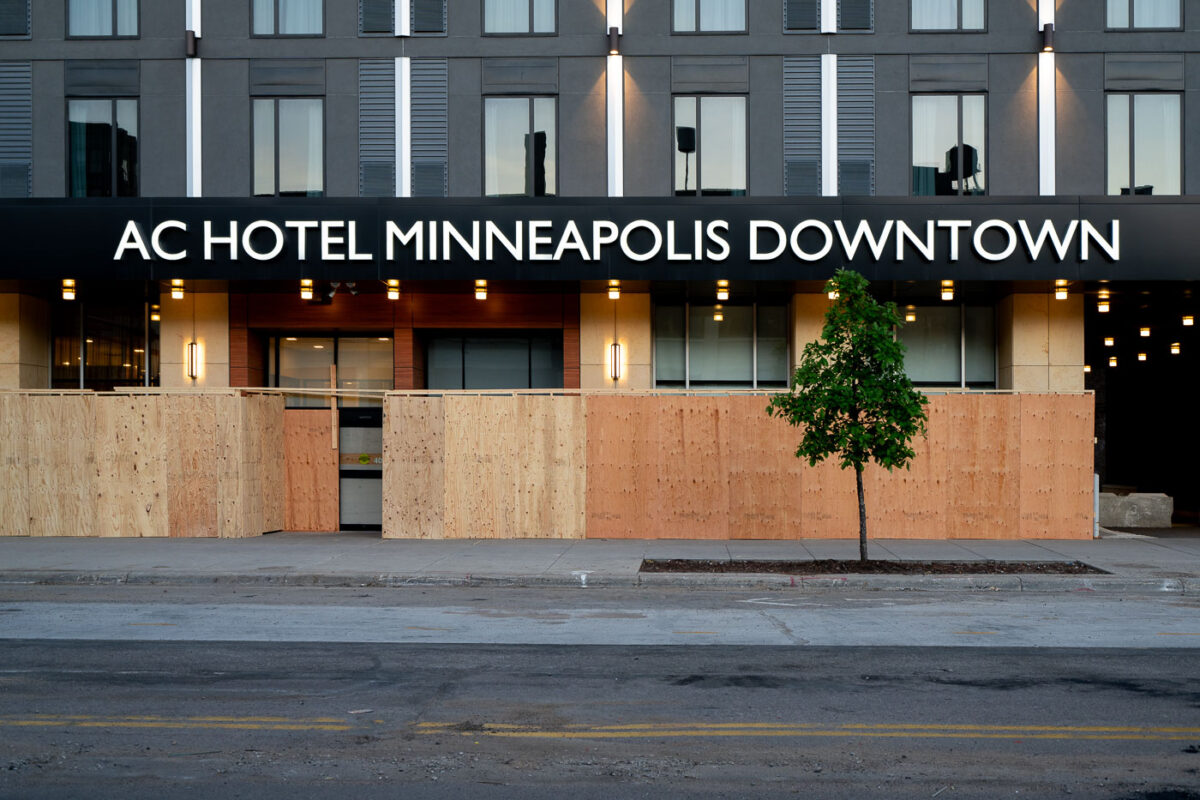
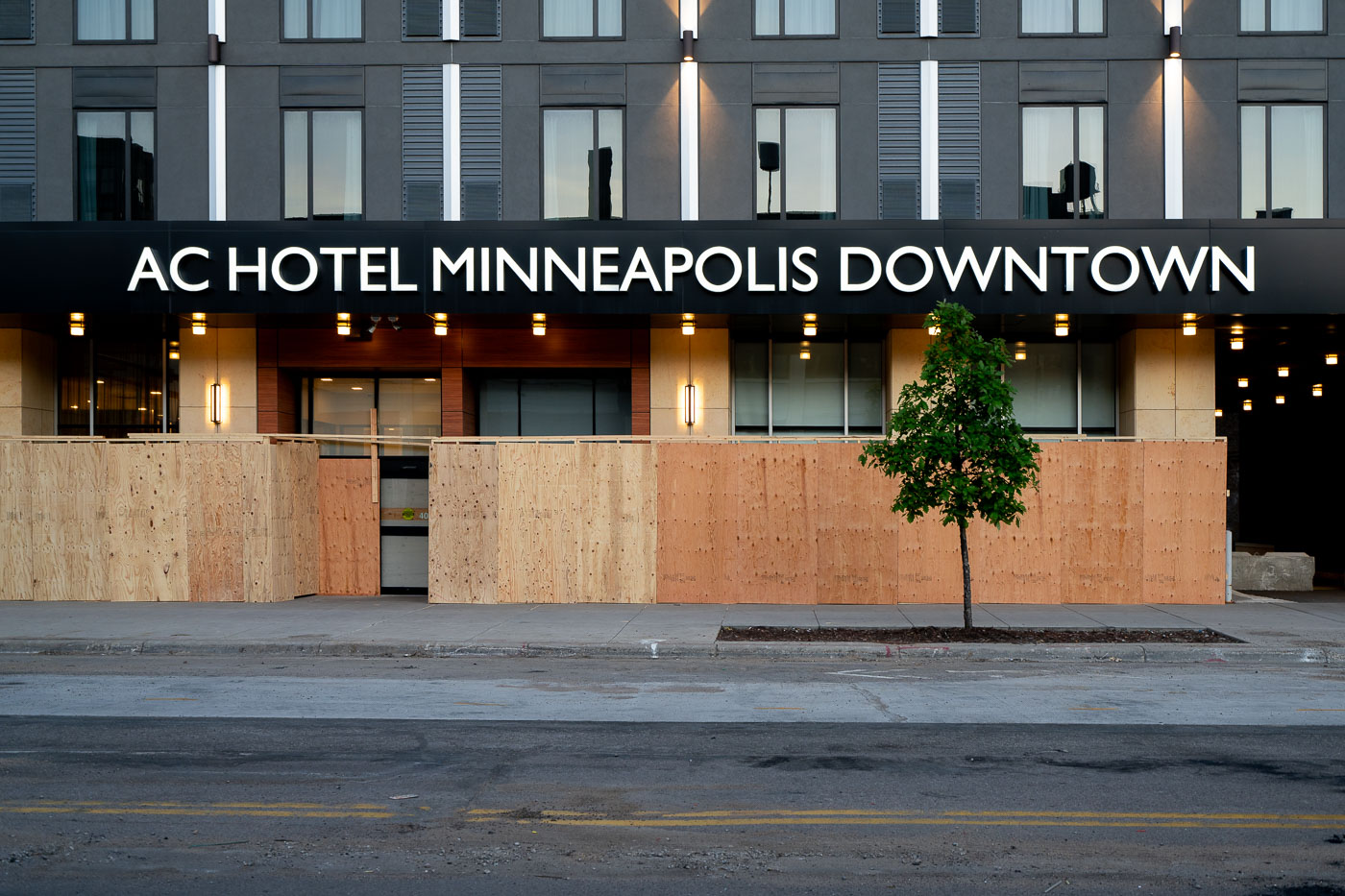
AC Hotel Minneapolis Downtown boarded with plywood before curfew during unrest on June 1, 2020.
The AC Hotel Minneapolis Downtown in downtown Minneapolis is boarded with plywood across its ground-floor windows and entrance on June 1, 2020. The protective barriers were installed as businesses prepared for a 10 p.m. curfew and possible damage during unrest following the killing of George Floyd on May 25.

AC Hotel Minneapolis Downtown, boarded for curfew

Concrete barricades and chain-link fencing on Hennepin Avenue near Minneapolis Police 1st Precinct, June 2020.
Concrete barricades and chain-link fencing line Hennepin Avenue in downtown Minneapolis near the Minneapolis Police 1st Precinct. The barriers were installed in late May and early June 2020 after protests followed the killing of George Floyd. In this block, temporary security measures surround parking lots and building frontages, reflecting the tightened perimeter around the precinct and nearby businesses.

Concrete barricades surround Downtown Minneapolis 1st Precinct

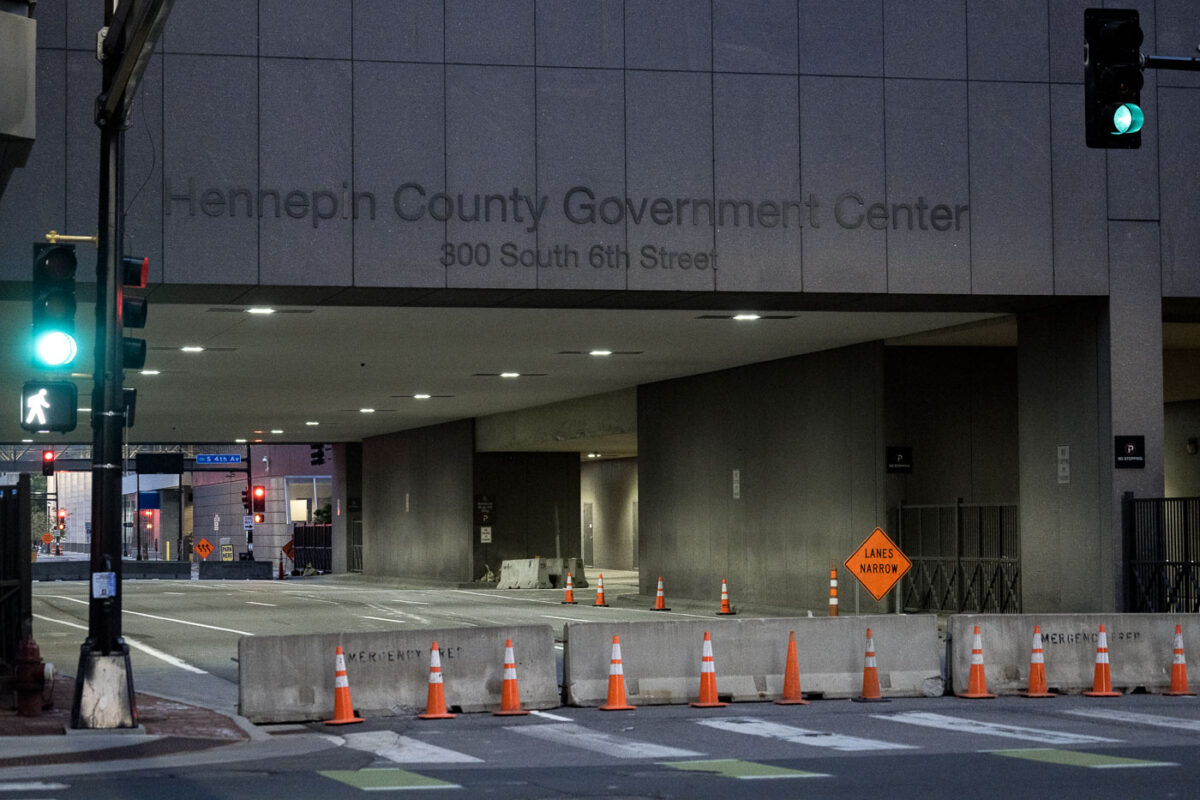
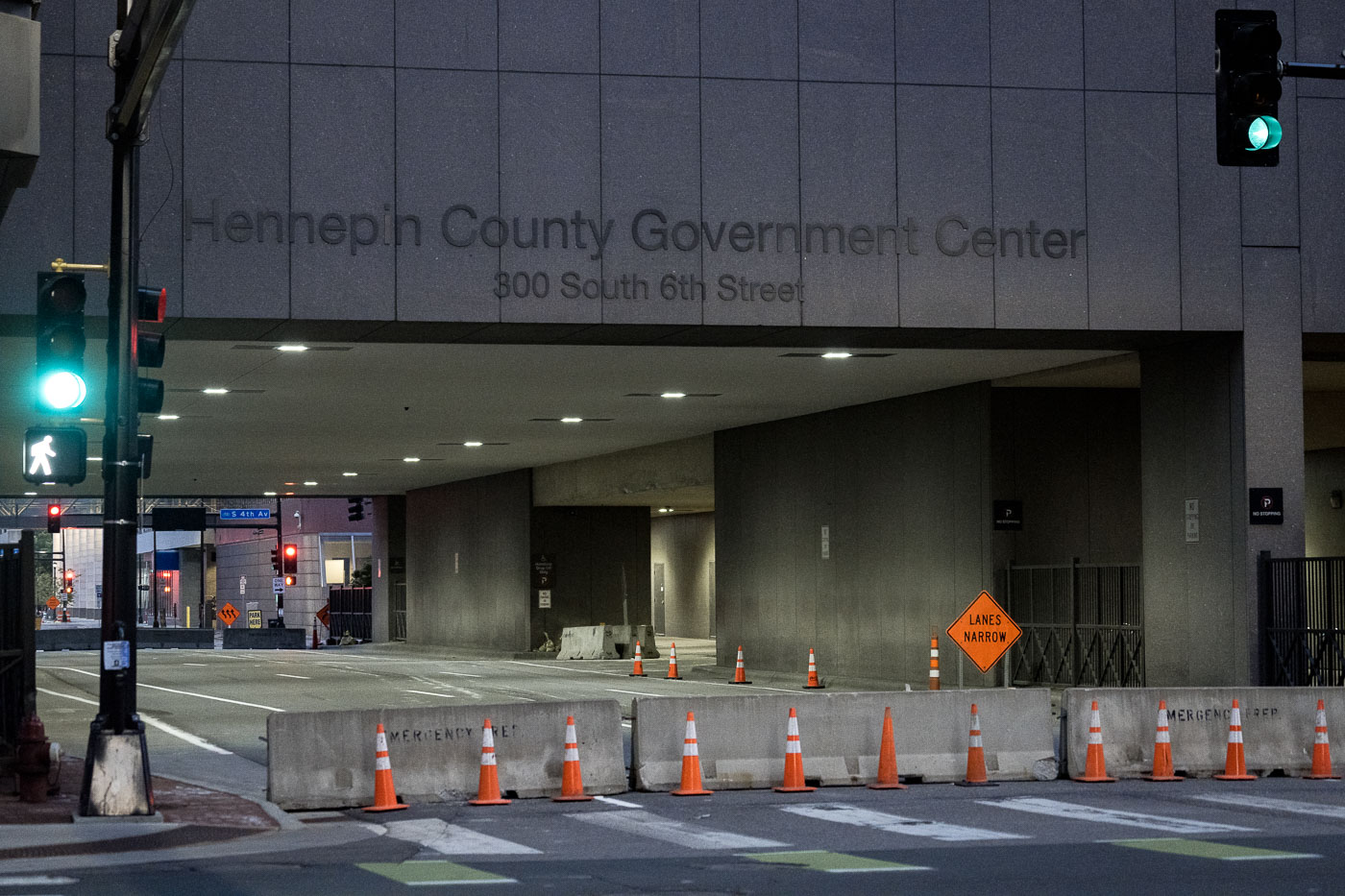
Barricades outside the Hennepin County Government Center on South 6th Street in downtown Minneapolis during curfew.
The Hennepin County Government Center at 300 South 6th Street in downtown Minneapolis is barricaded with concrete barriers and traffic cones across the street outside the building. The county complex houses administrative offices and courts, and the road restrictions appear to have been put in place during the nighttime security measures that accompanied the citywide curfew in early June 2020. The curfew followed protests after the police killing of George Floyd.

Hennepin County Government Center Barricades, Minneapolis Curfew

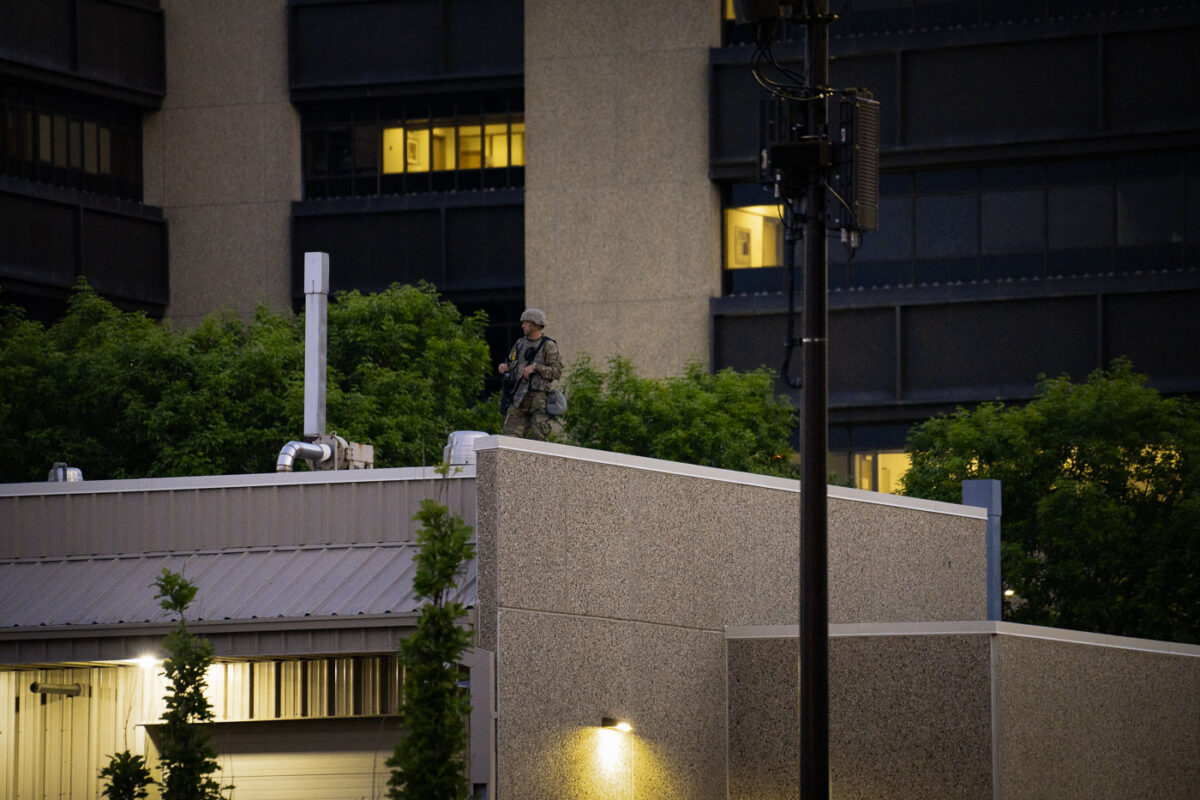
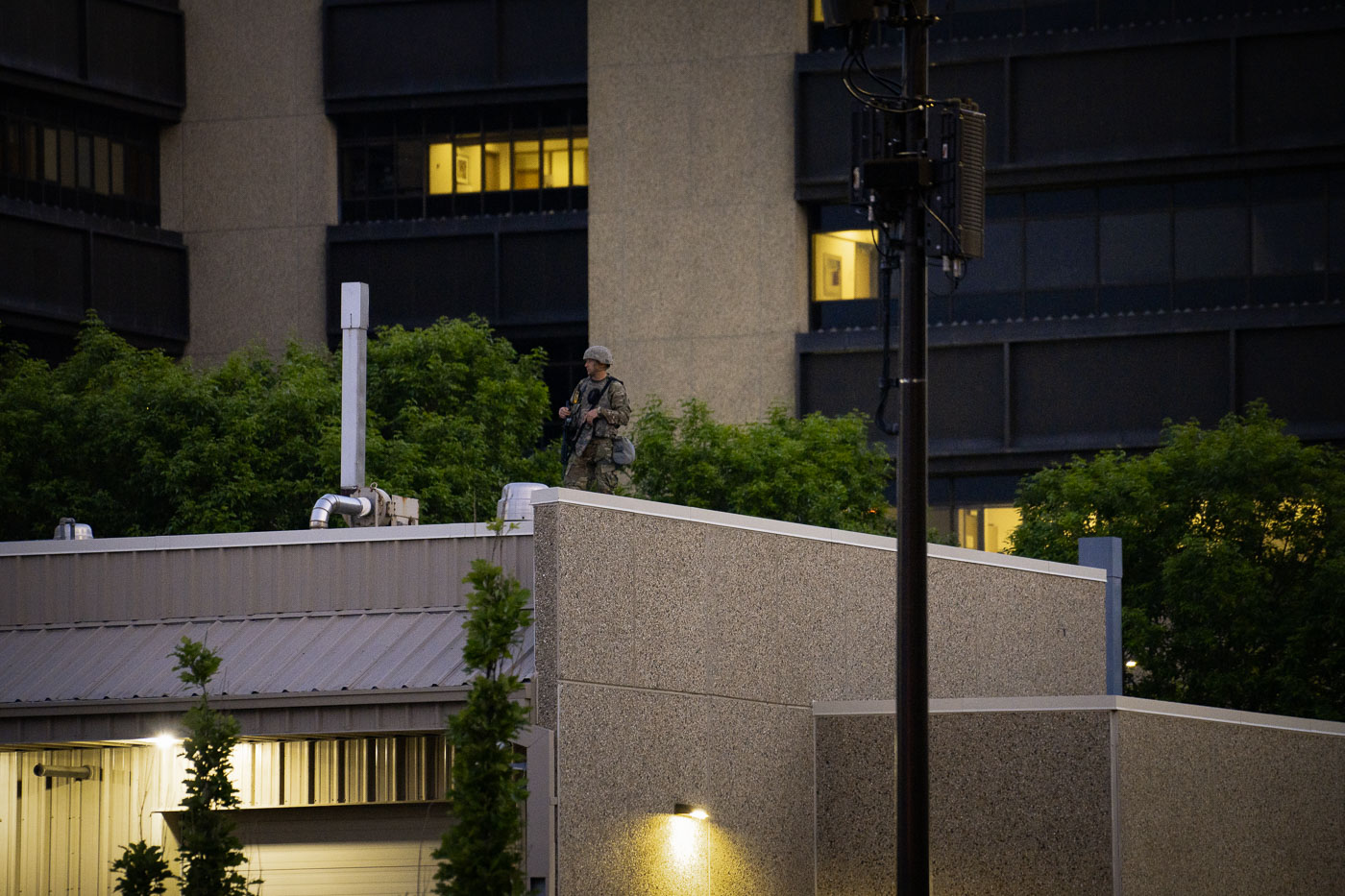
Minnesota National Guard member on the Hennepin County Forensic Science Laboratory roof in downtown Minneapolis.
A Minnesota National Guard member stands watch on the roof of the Hennepin County Sheriff’s Forensic Science Laboratory in downtown Minneapolis. The photograph was made on June 1, 2020, during the period of protests and heightened security that followed the killing of George Floyd. The laboratory is a Hennepin County law enforcement facility used for forensic analysis, and National Guard troops were deployed around Minneapolis as a nighttime curfew took effect.

National Guard on Hennepin County Forensic Lab Roof, Minneapolis

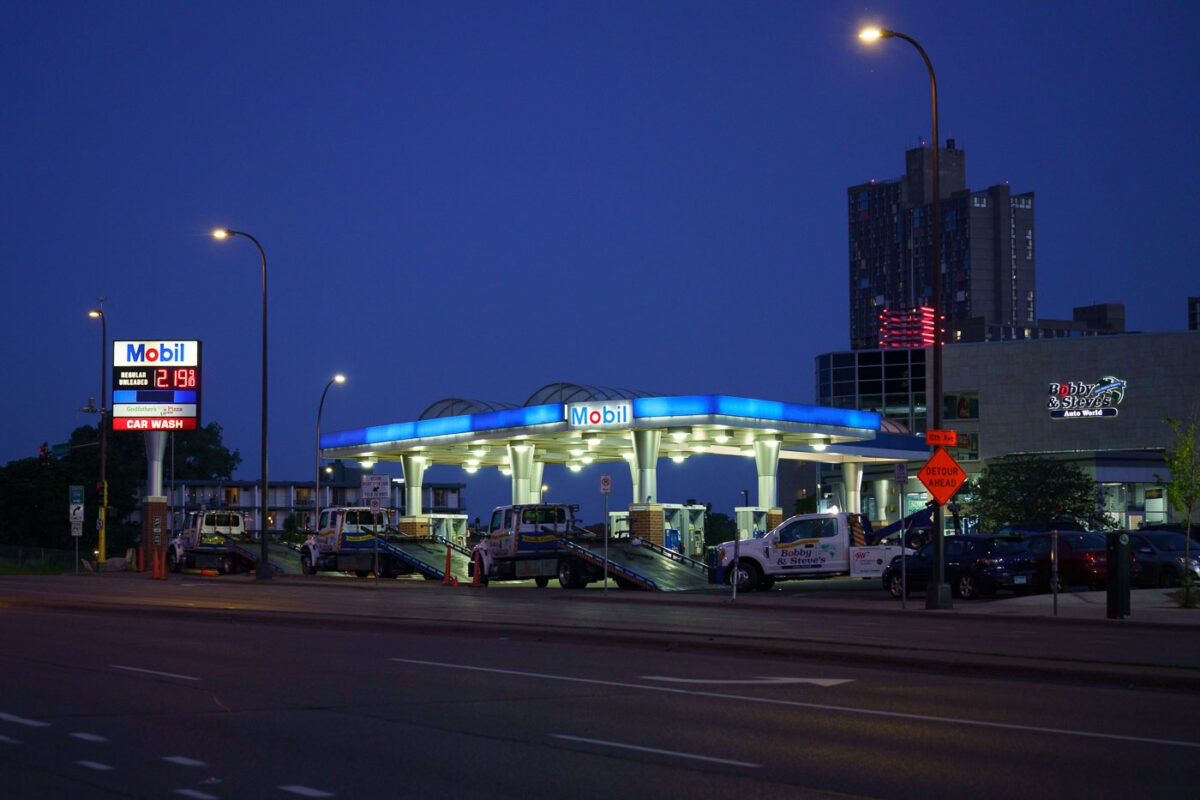
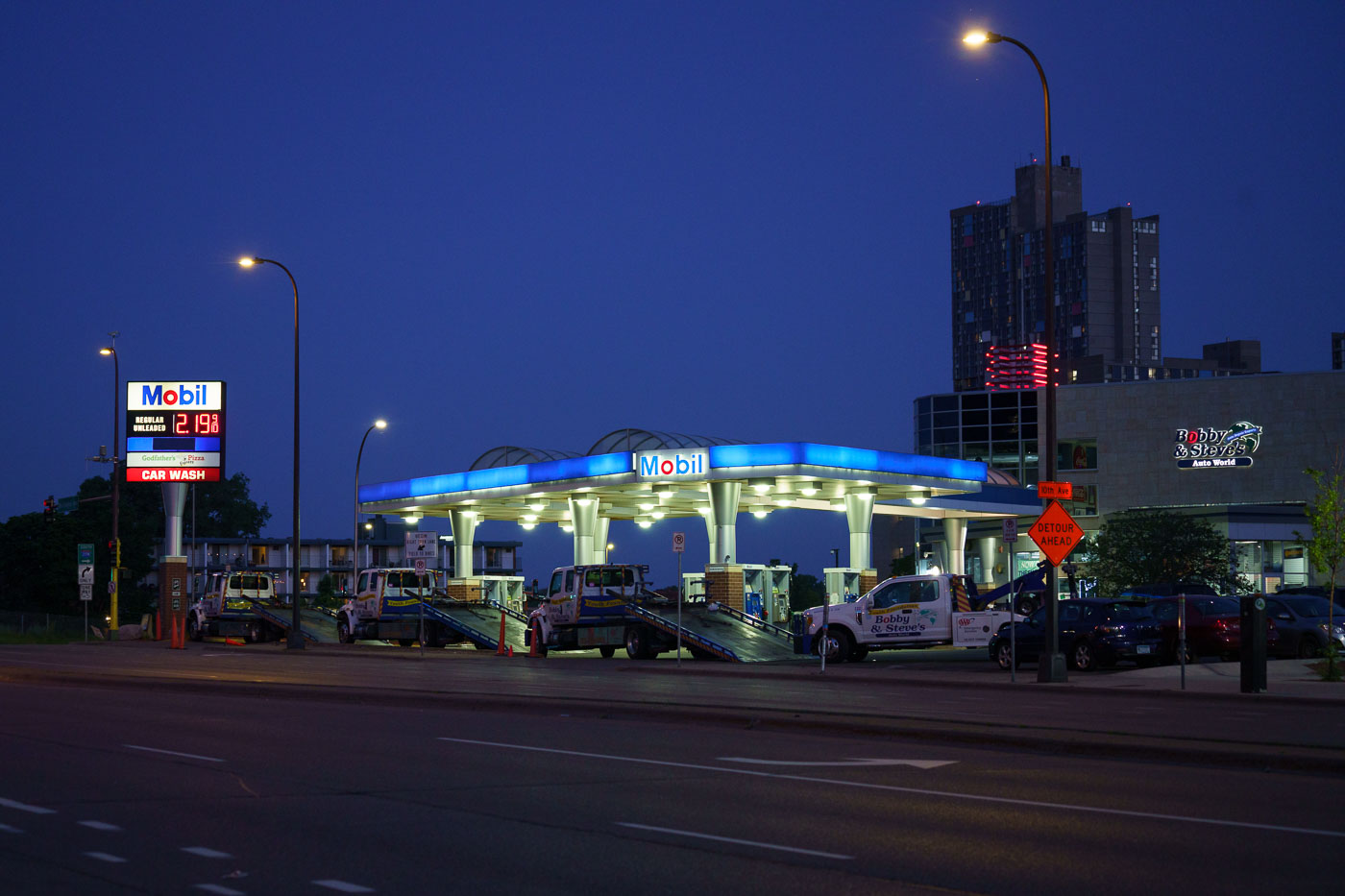
Tow trucks at Bobby & Steve's Mobil station in downtown Minneapolis before the June 1, 2020 curfew.
Tow trucks are lined up at Bobby & Steve's Auto World, a Mobil gas station and convenience store in downtown Minneapolis, on June 1, 2020. The photograph was made at about 9:20 p.m., roughly 40 minutes before a 10:00 p.m. curfew took effect after days of protests and unrest following the May 25 killing of George Floyd.

Minneapolis Curfew: Tow Trucks at Bobby & Steve’s Gas Station

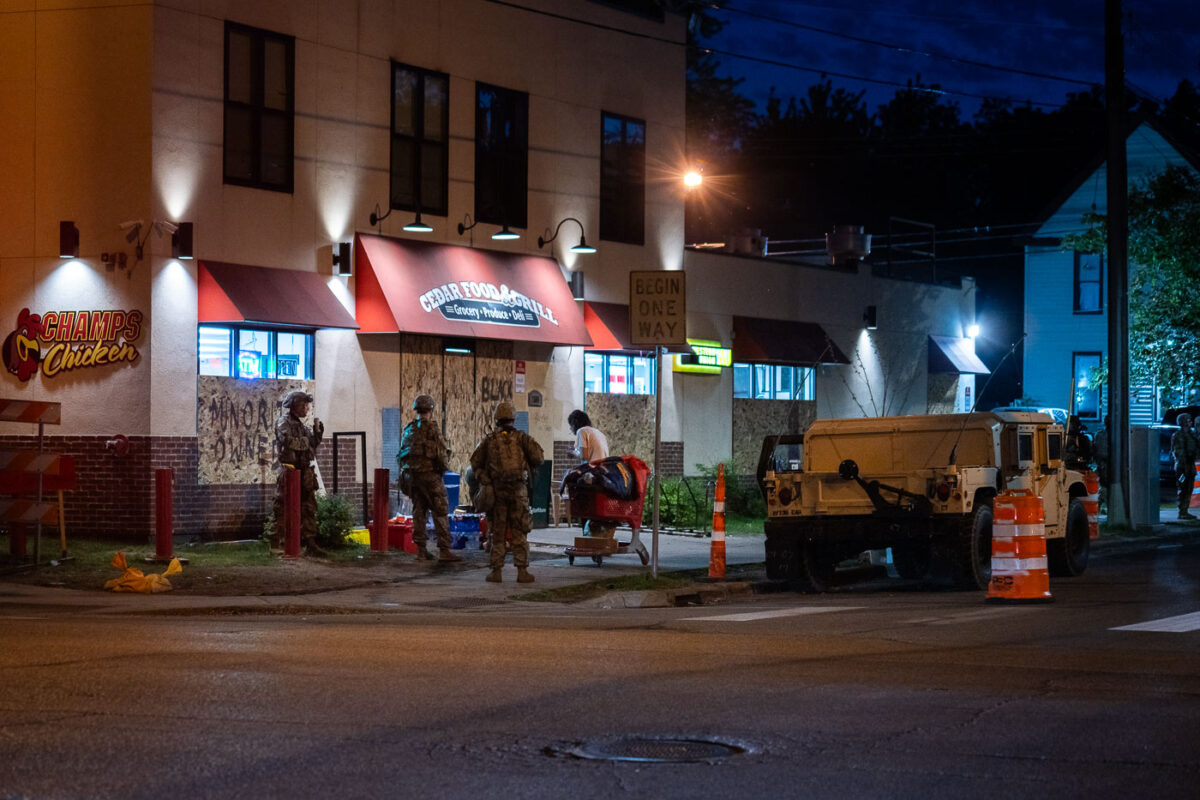
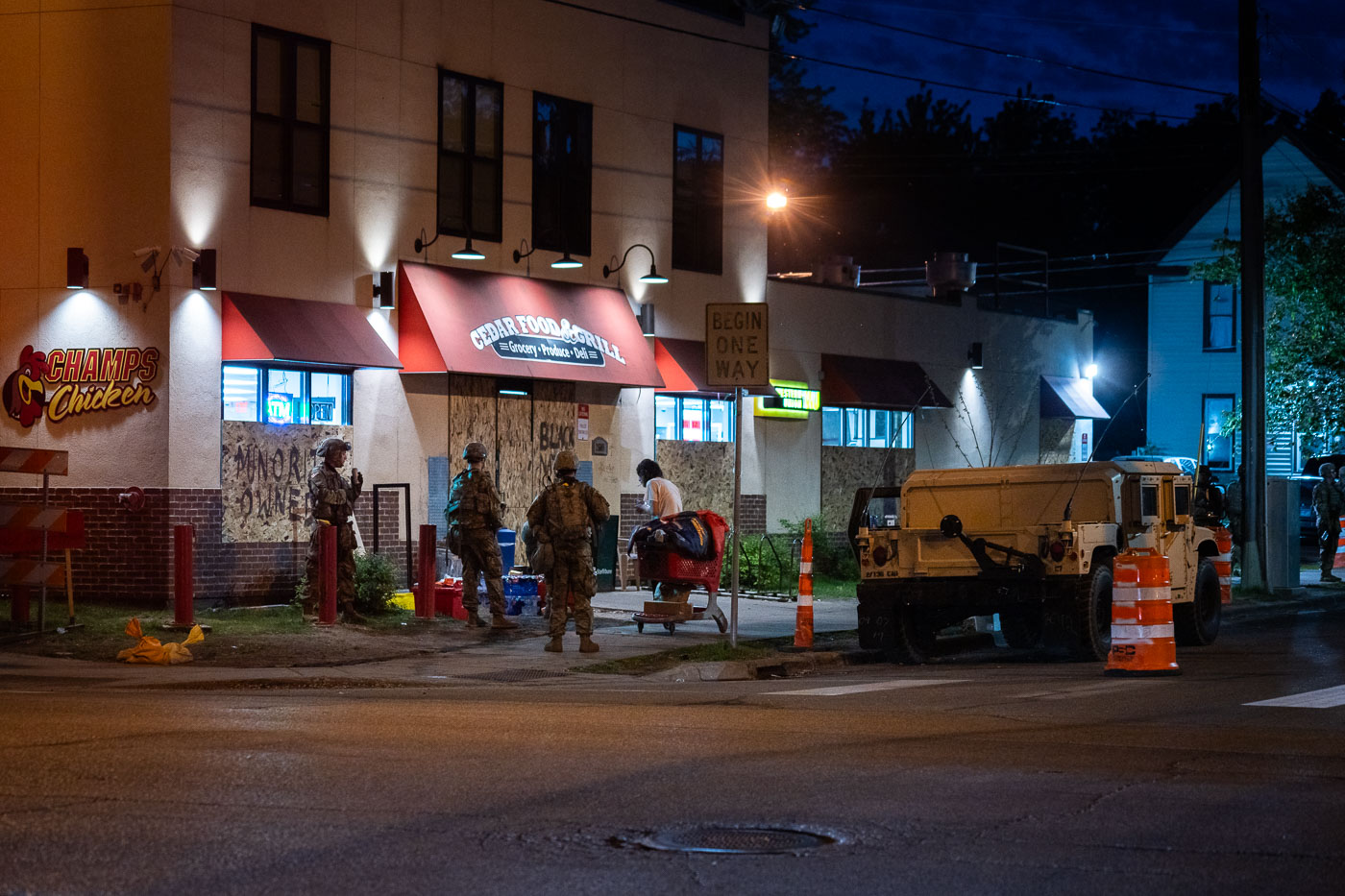
Minnesota National Guard outside Cedar Food & Grill on Cedar Avenue in South Minneapolis on June 1, 2020.
Minnesota National Guard troops stand outside Cedar Food & Grill on Cedar Avenue in South Minneapolis on June 1, 2020. The grocery, produce, and deli storefront is boarded up, with handwritten signs on the plywood noting that it is minority owned. Their deployment came in the days after the May 25 killing of George Floyd, when National Guard units were stationed around Minneapolis commercial corridors and neighborhood businesses during the unrest.

National Guard at Cedar Food & Grill during Minneapolis unrest

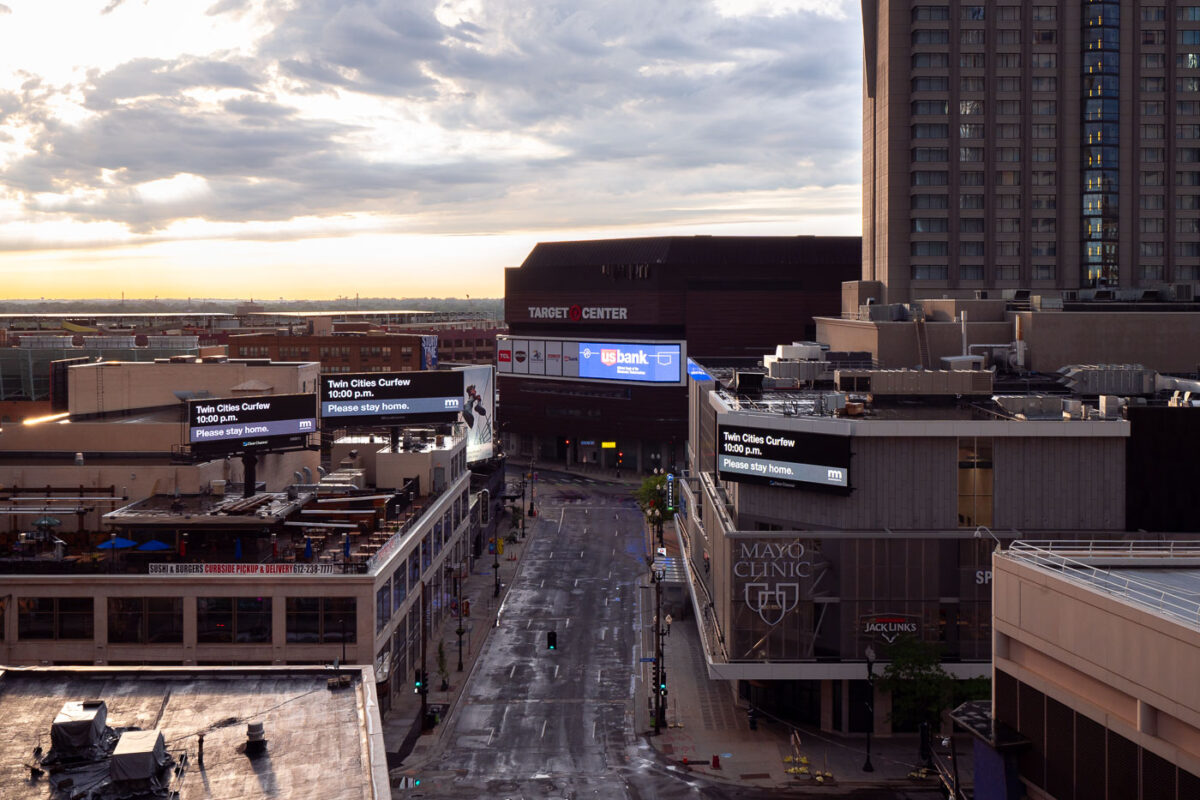
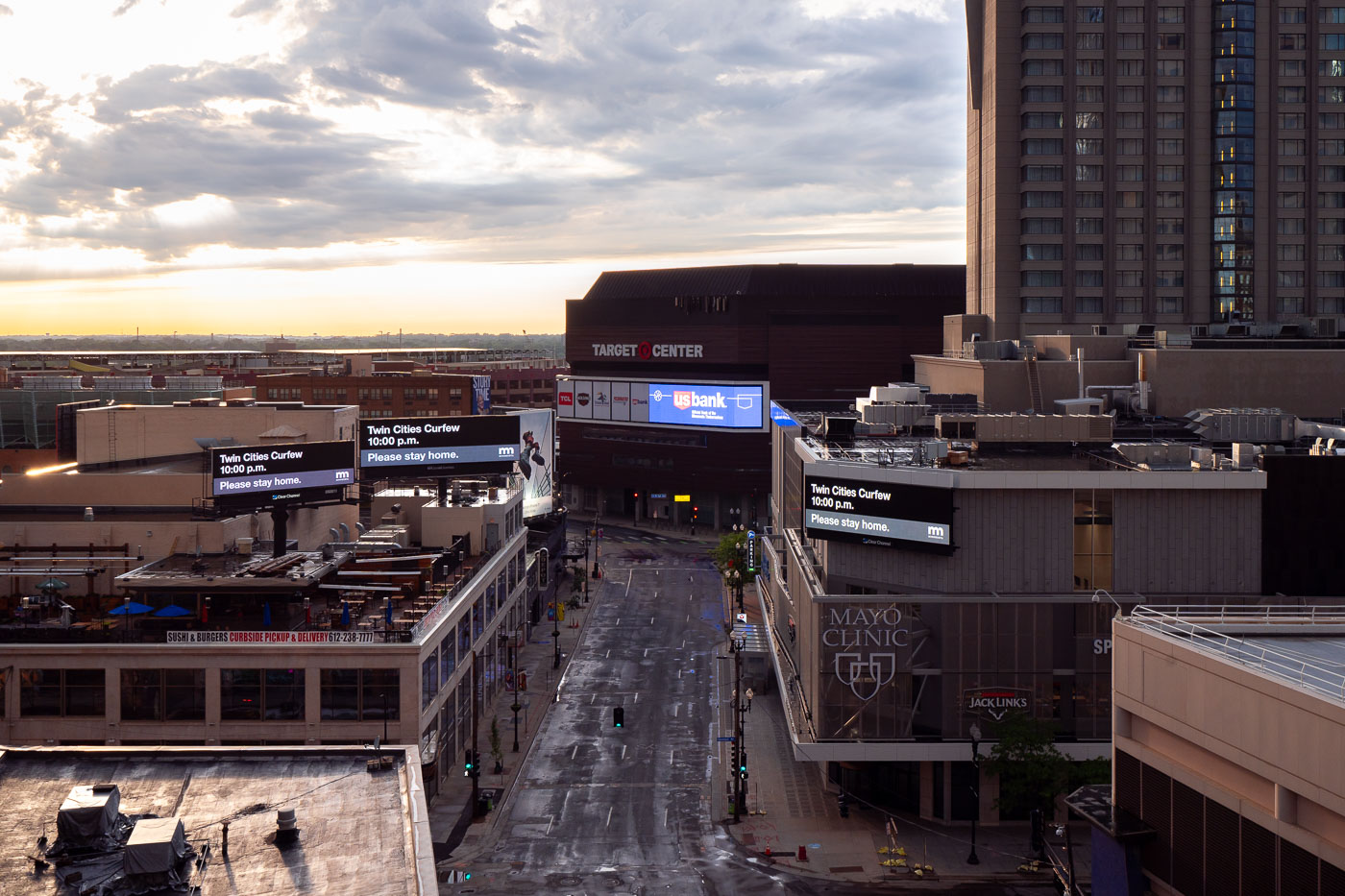
Curfew billboards near Target Center in downtown Minneapolis on June 2, 2020, above an empty South 7th Street.
Downtown Minneapolis near Target Center is lined with digital billboards displaying a “Twin Cities Curfew 10:00 p.m. Please stay home” message on June 2, 2020. The photograph looks down South 7th Street toward the arena, with nearby commercial buildings and largely empty streets under evening light. The warning was posted during the period of curfews imposed after the killing of George Floyd, when officials used roadside signs and billboards to communicate public safety restrictions across the city.

Downtown Minneapolis Curfew Billboards, George Floyd Unrest
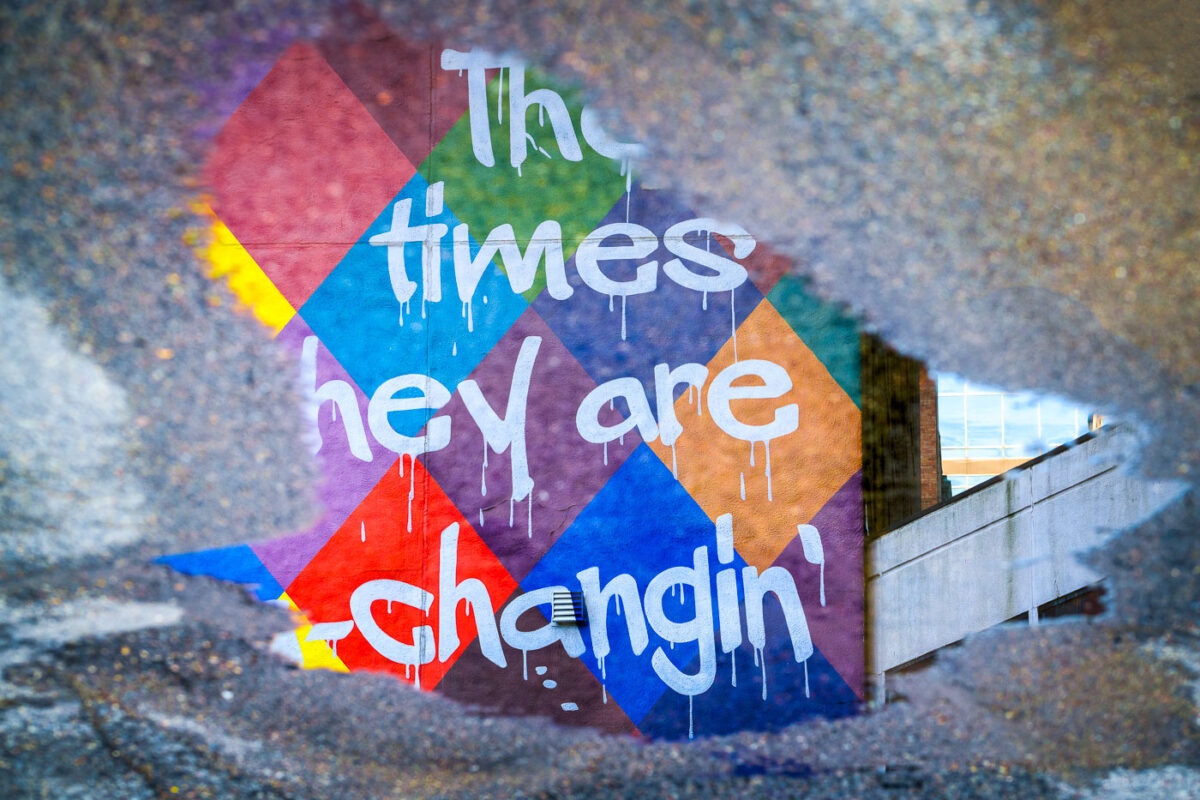
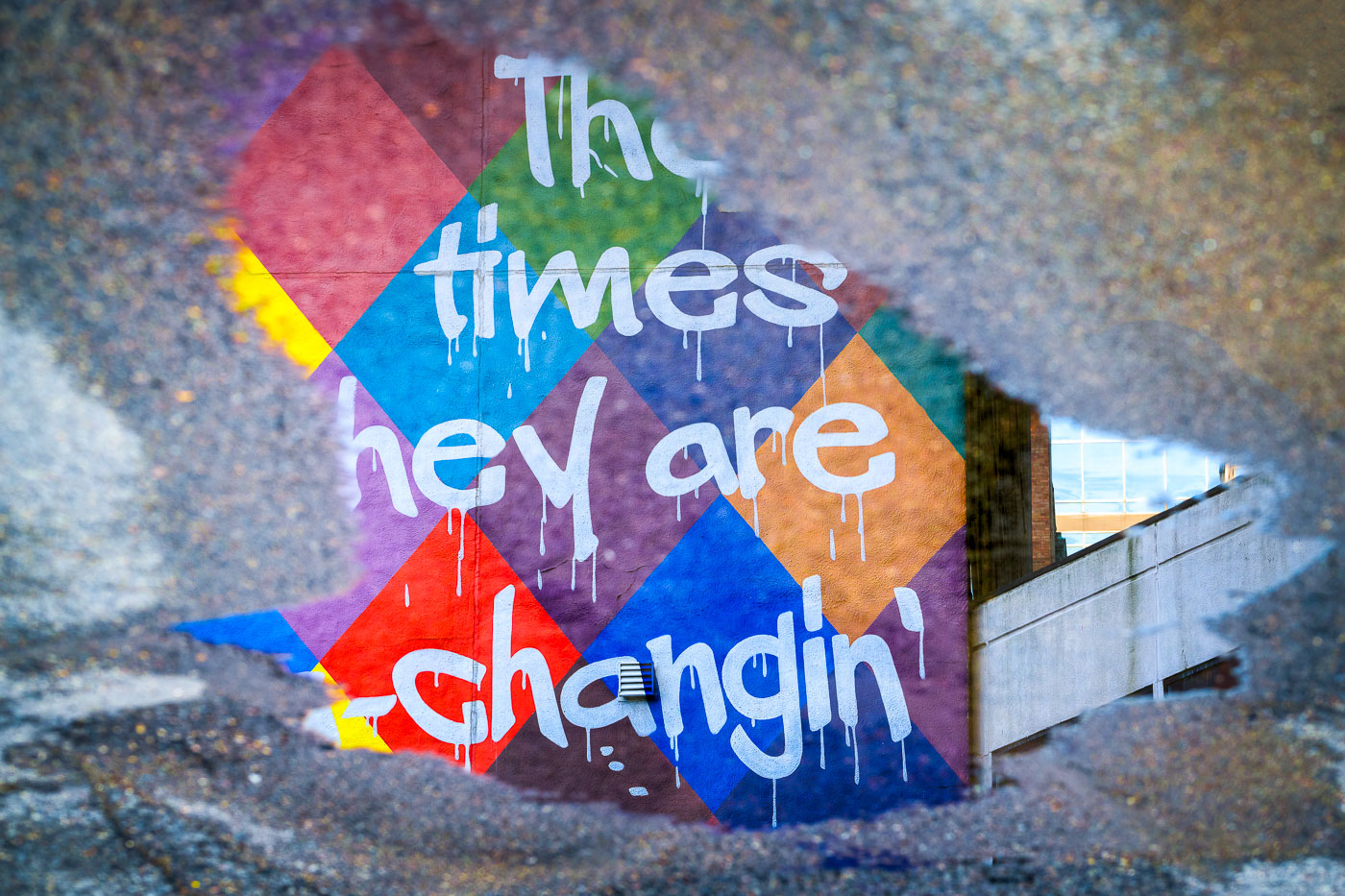
Bob Dylan lyric mural reflected in a puddle in downtown Minneapolis on June 2, 2020.
A mural with the words “The times they are a-changin’” is reflected in a puddle in downtown Minneapolis, Minnesota. The text quotes the title lyric of Bob Dylan’s 1964 song “The Times They Are a-Changin’,” linking the public artwork to the Minnesota-born songwriter.

Bob Dylan Mural Reflected in Downtown Minneapolis Puddle

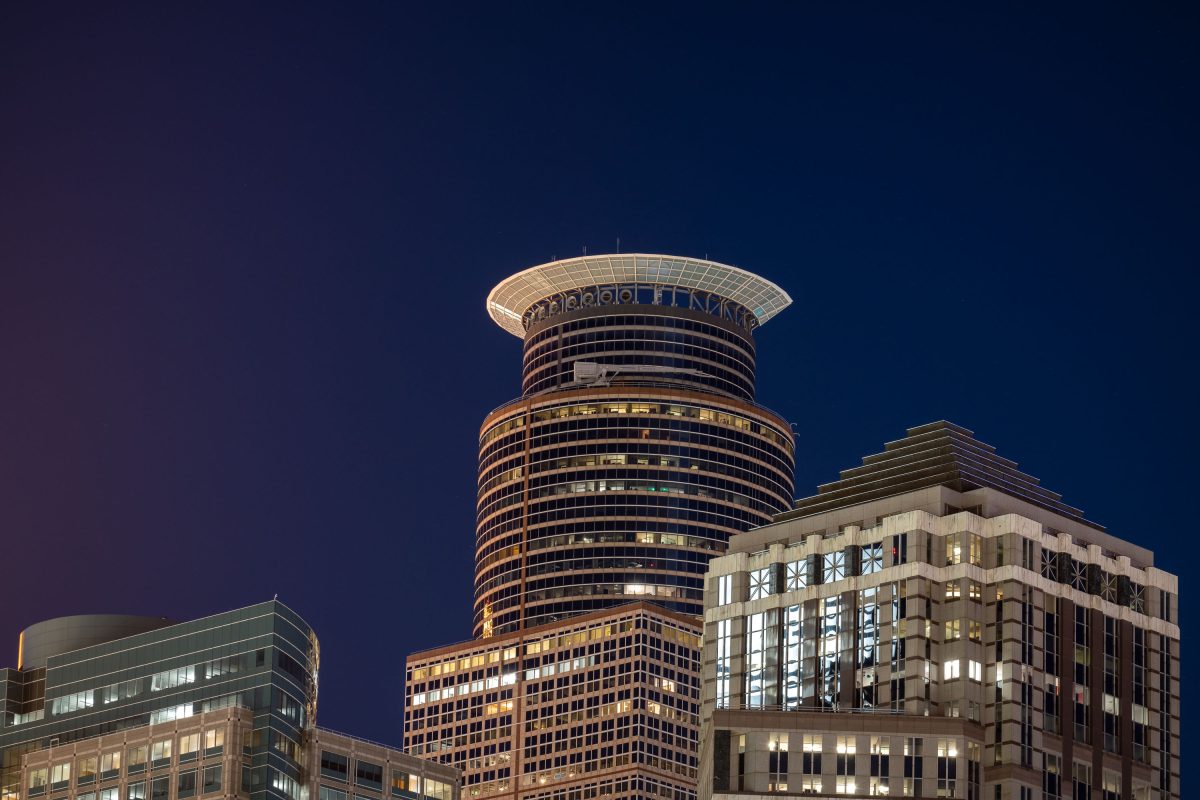
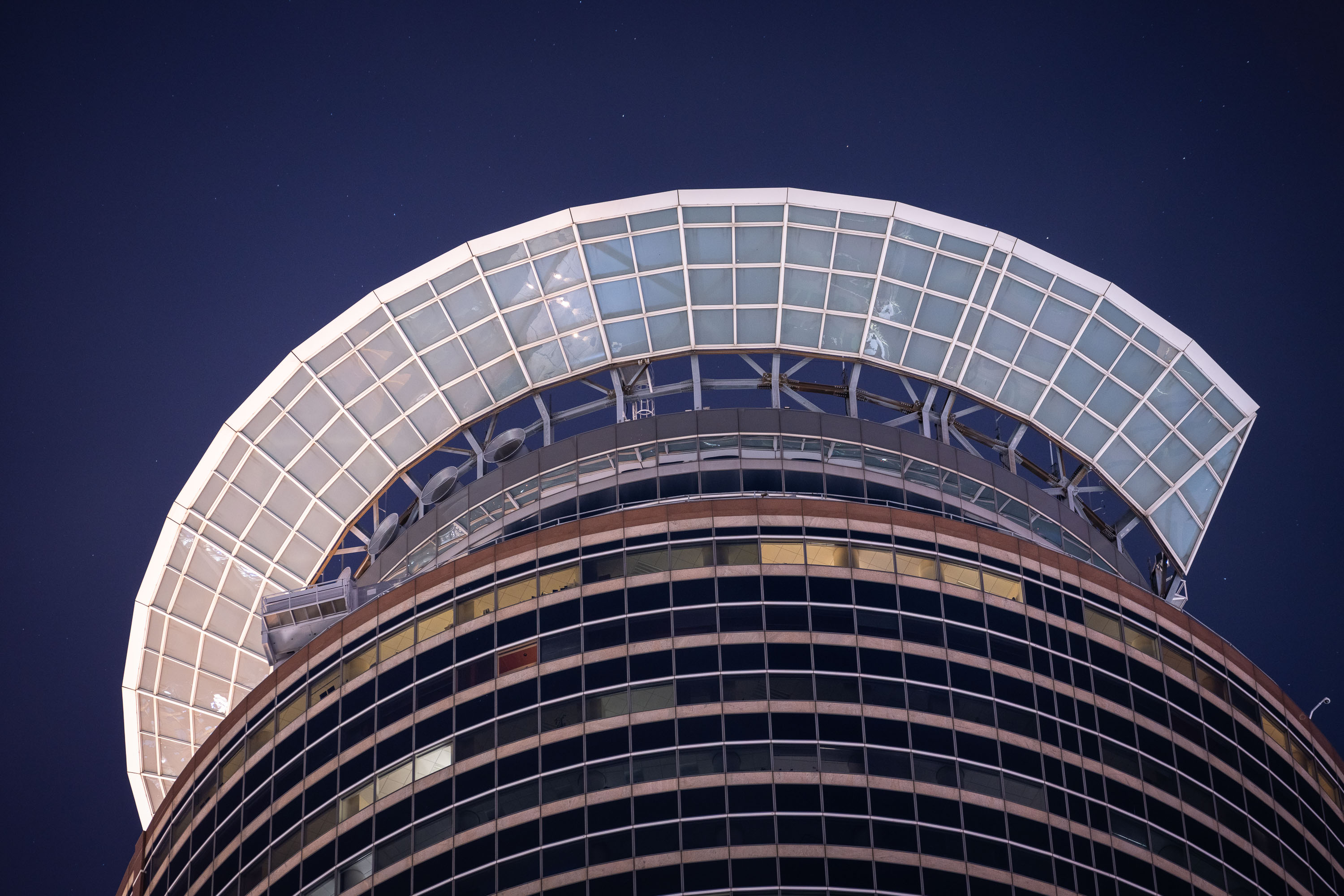
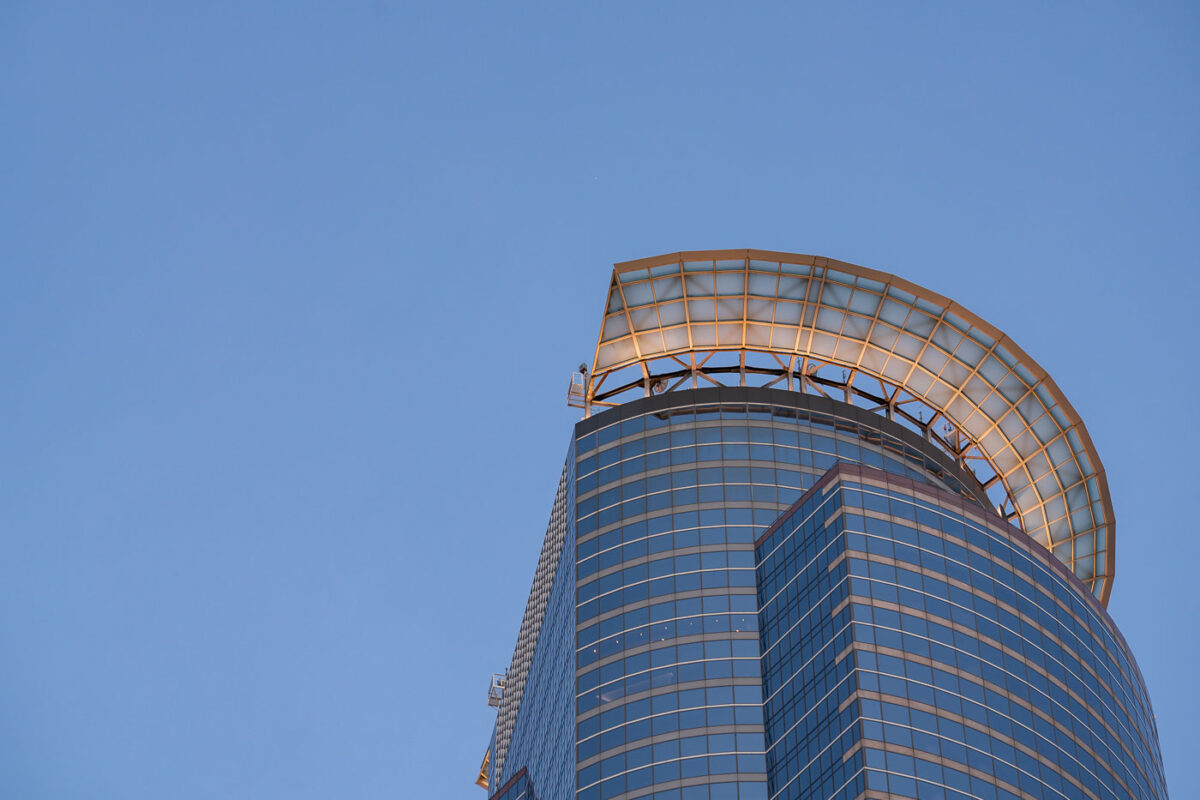
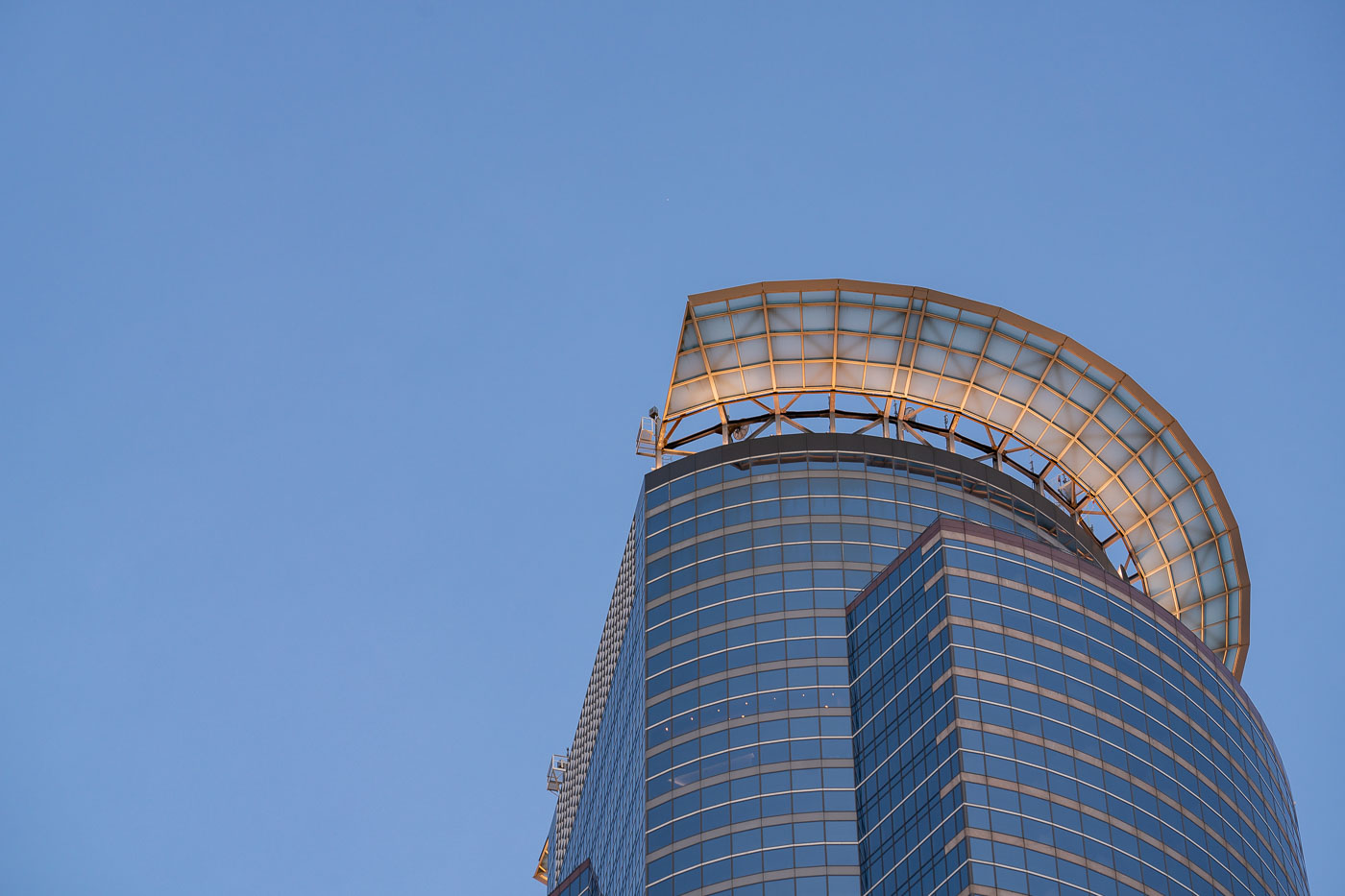
Capella Tower rooftop crown rises above downtown Minneapolis at dusk.
Capella Tower's rooftop crown rises above downtown Minneapolis. The 57-story office skyscraper opened in 1992 as First Bank Place and is one of the tallest buildings in Minnesota. Its semicircular crown is a defining architectural feature at the top of the tower.

Capella Tower Rooftop Crown, Minneapolis

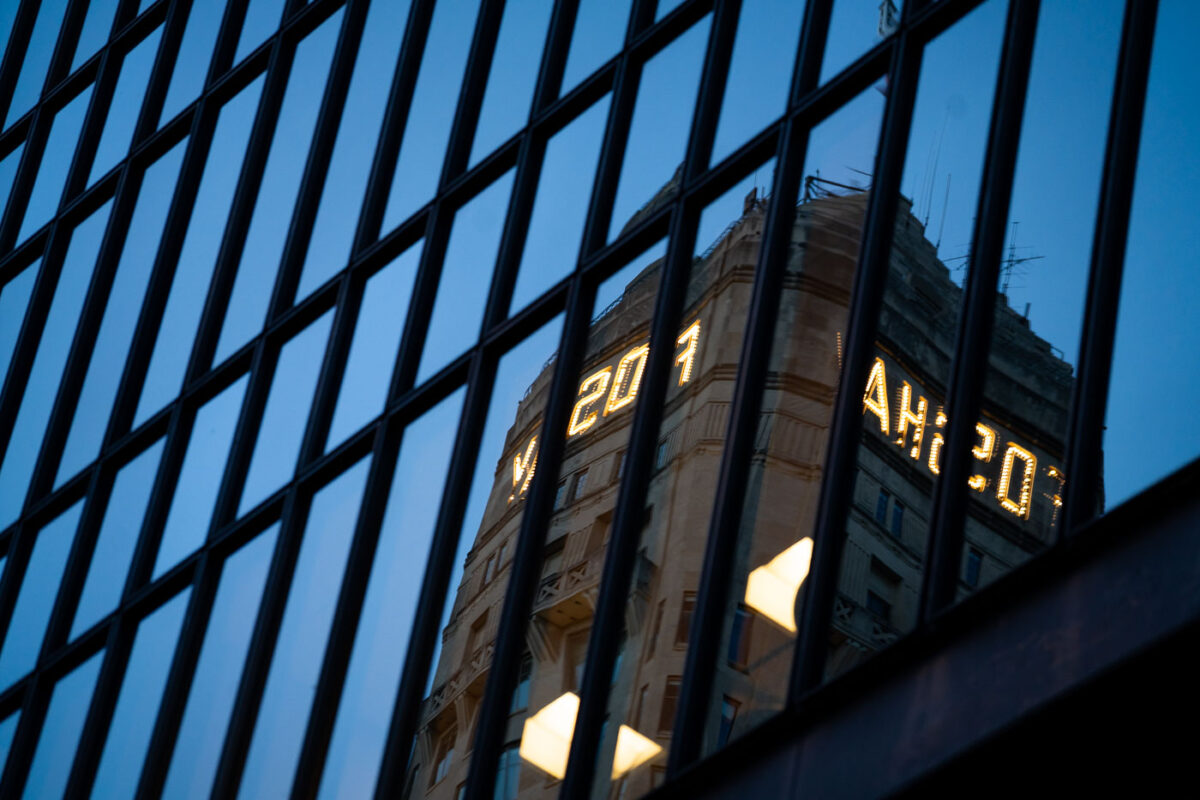
Foshay Tower mirrored in a downtown Minneapolis glass building facade.
Foshay Tower in downtown Minneapolis is mirrored in the glass façade of a nearby office building. Completed in 1929, the Art Deco skyscraper was built for utilities executive Wilbur B. Foshay and was modeled after the Washington Monument. The building is now part of W Minneapolis–The Foshay and remains a landmark in the city’s downtown core.

Foshay Tower Reflection in Downtown Minneapolis

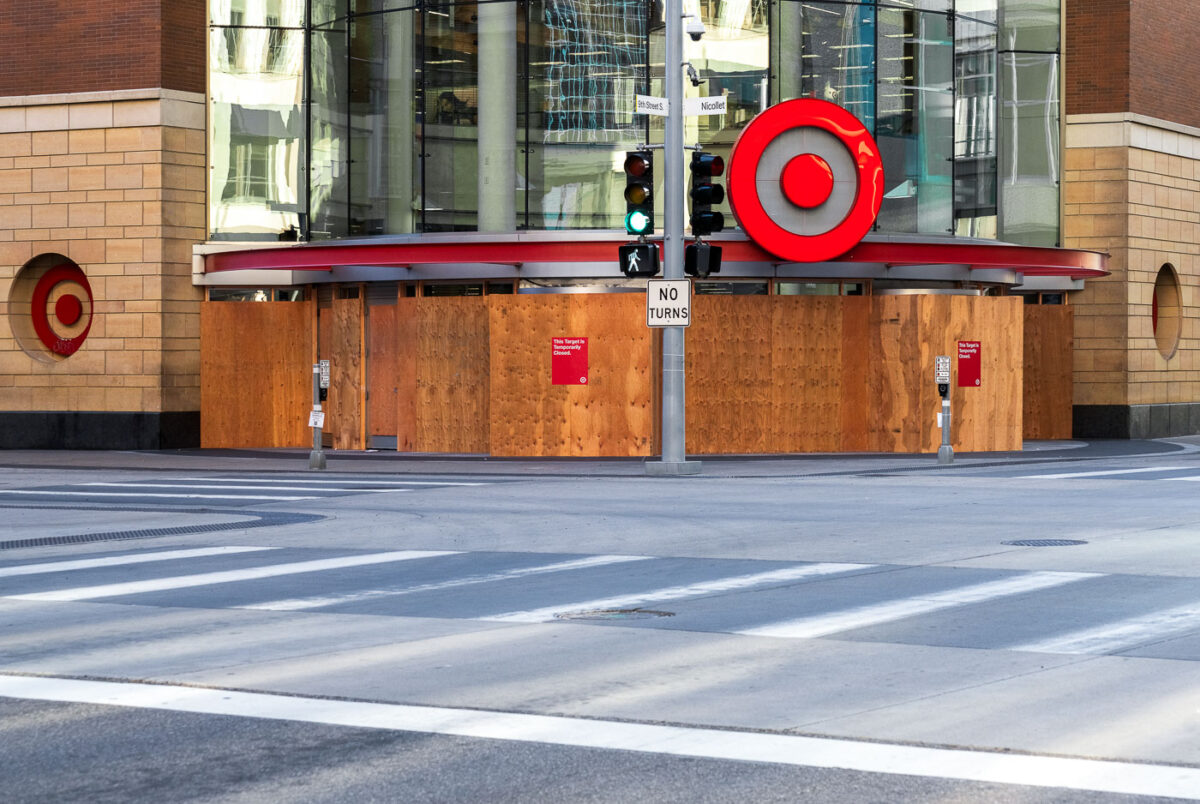
Boarded-up Target store at Nicollet Mall and 9th Street in downtown Minneapolis, closed during June 2020 unrest.
The Target flagship store at Nicollet Mall and South 9th Street in downtown Minneapolis is boarded up and closed on June 4, 2020. Temporary plywood covers the ground-level windows and entrances, and posted notices state that the store is temporarily closed. The closures came during the period of unrest and protests in Minneapolis following the May 25 killing of George Floyd, when businesses across the city center took protective measures.

Target Store, Nicollet Mall, Boarded Up During 2020 Unrest
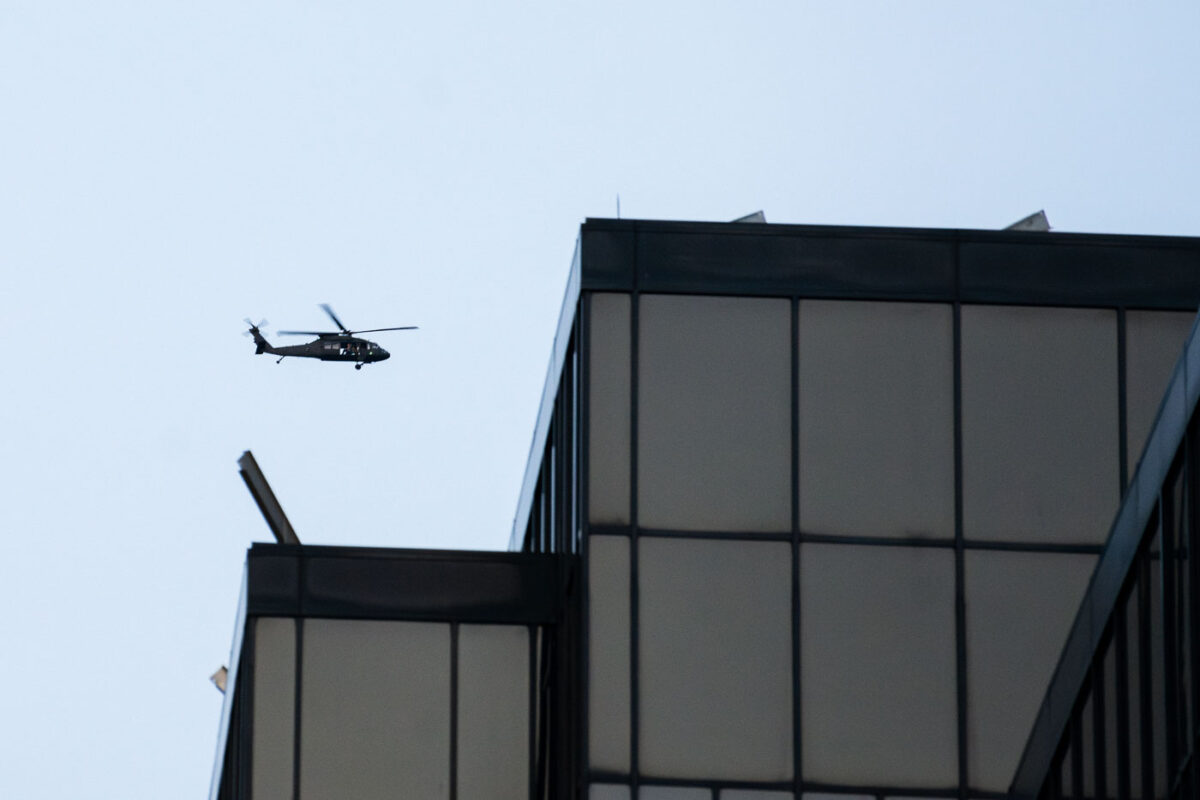
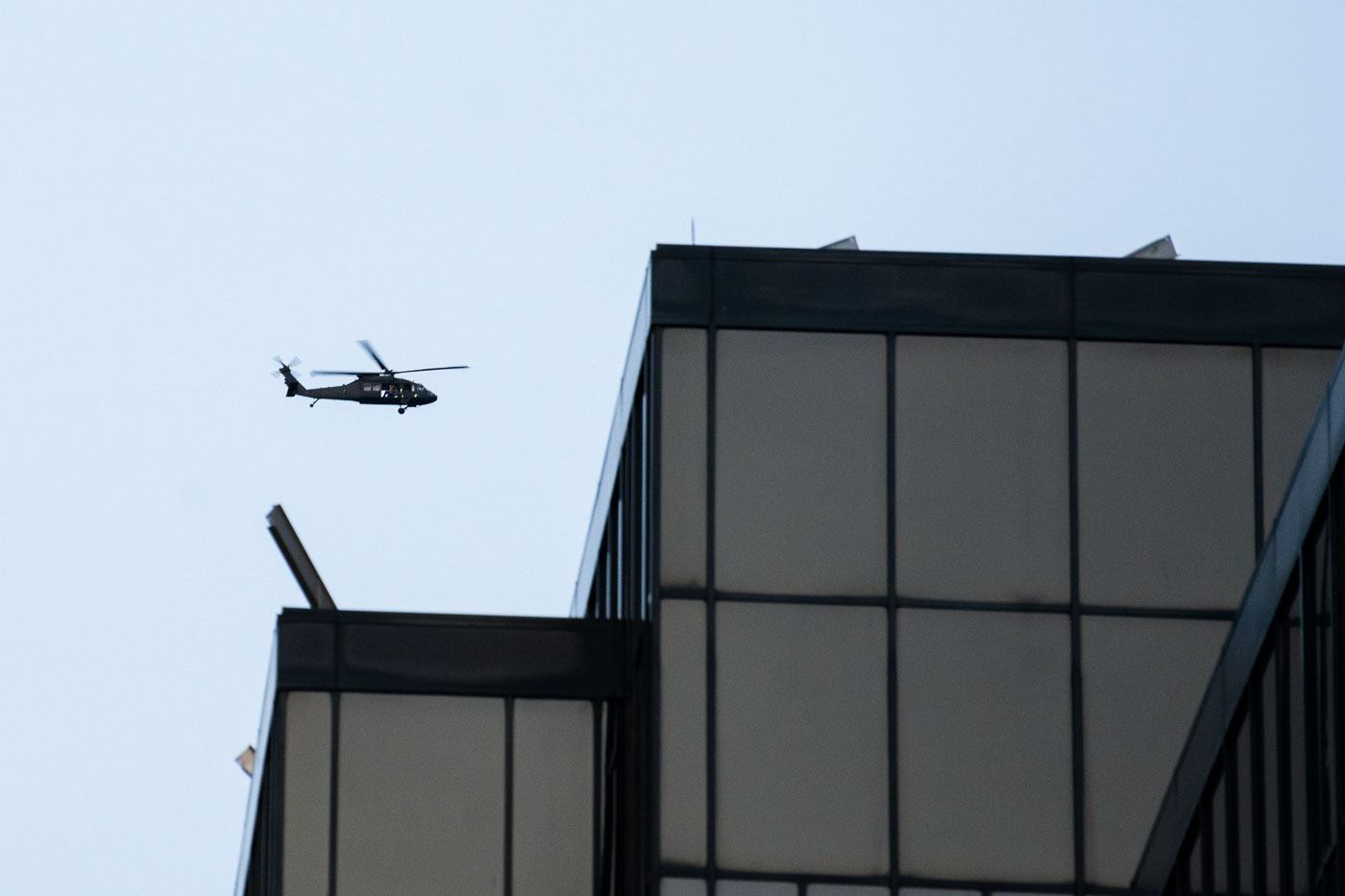
Military helicopter near the IDS Center in downtown Minneapolis on June 4, 2020.
A military helicopter flies past the IDS Center in downtown Minneapolis on June 4, 2020. The aircraft presence came during the state security response that followed protests over the killing of George Floyd. Completed in 1972, the IDS Center is the tallest building in Minneapolis and a major office, retail, and hotel complex in the city center.

Military Helicopter over IDS Center, Minneapolis 2020

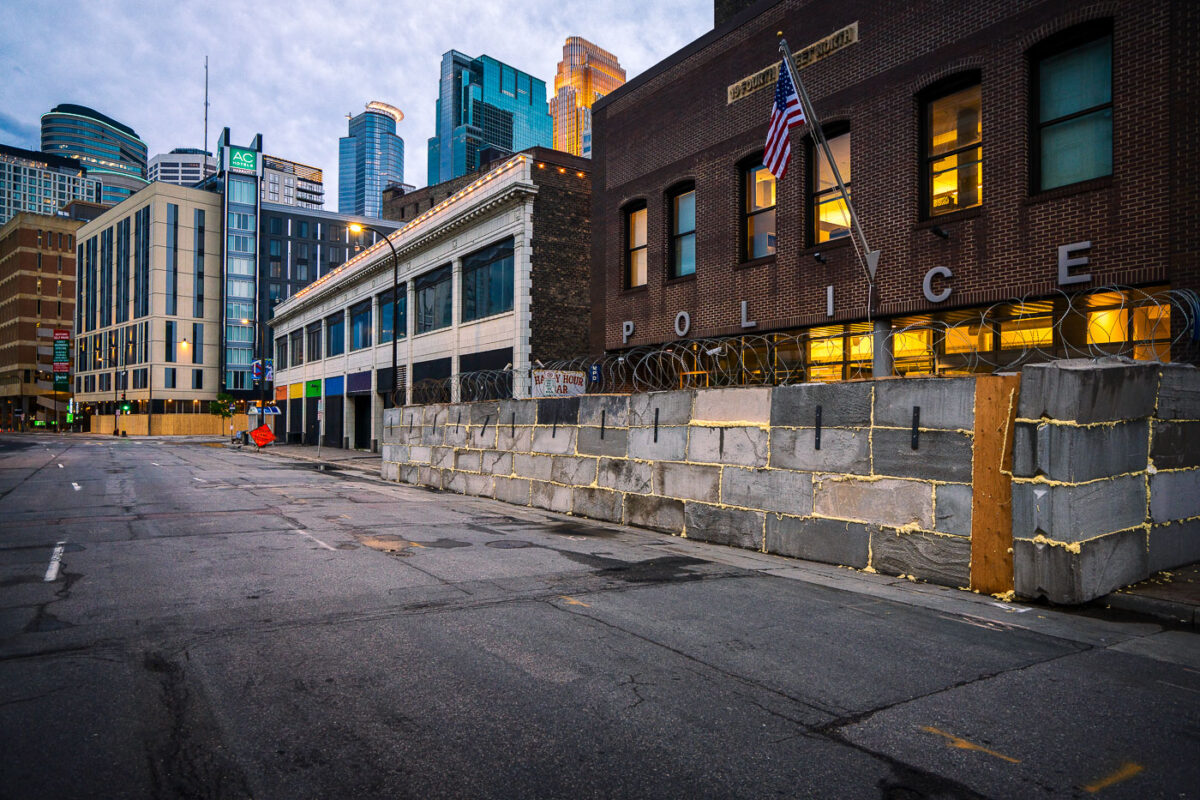
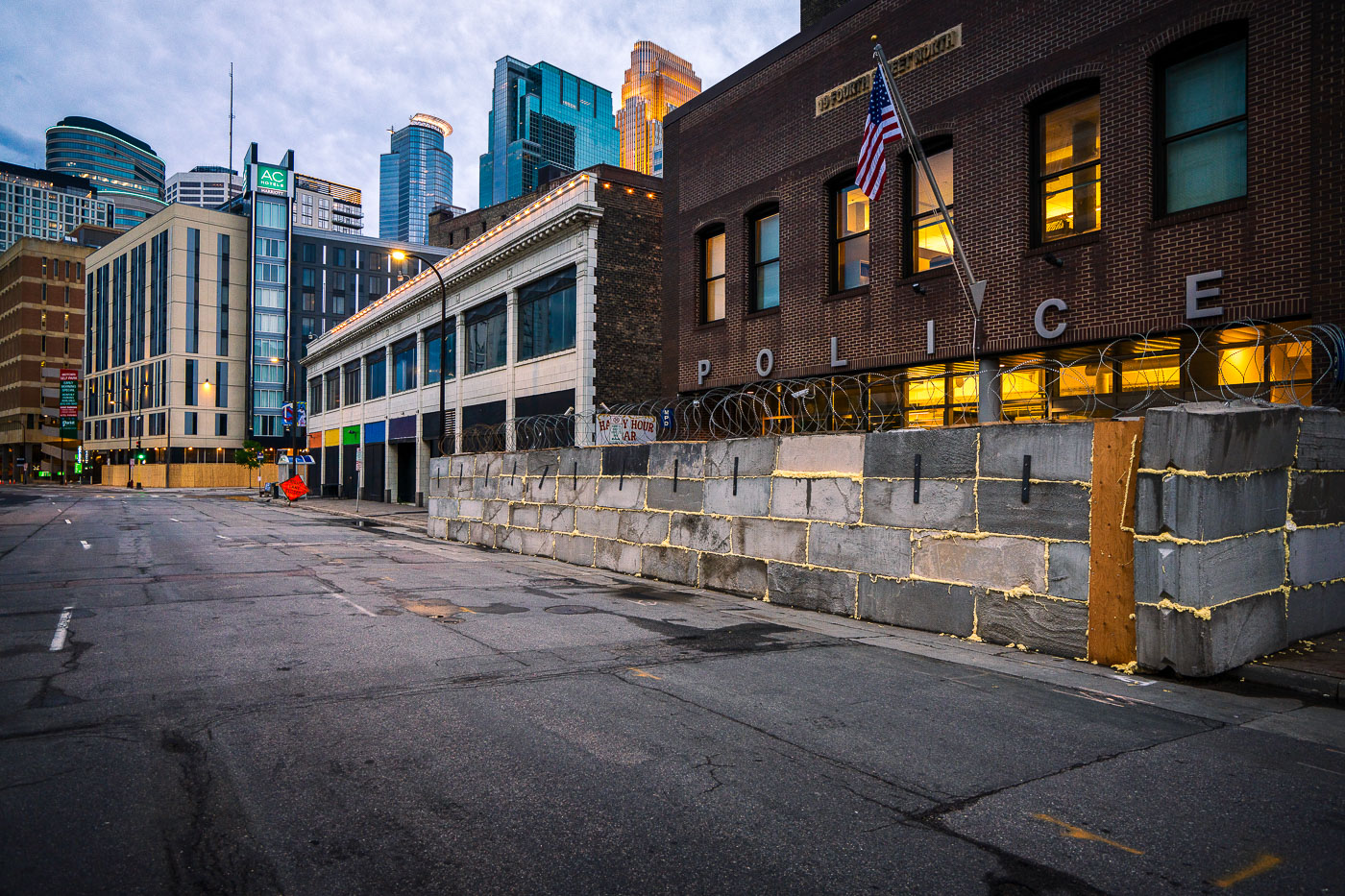
Minneapolis Police 1st Precinct on N 4th Street behind concrete barriers and razor wire in June 2020.
The Minneapolis Police 1st Precinct station on North 4th Street in downtown Minneapolis is surrounded by stacked concrete barriers topped with razor wire. The security fortifications were installed in early June 2020 after protests and unrest followed the killing of George Floyd and after the Minneapolis Police 3rd Precinct building was overrun and set on fire.
Minneapolis Police 1st Precinct Concrete & Razor Wire

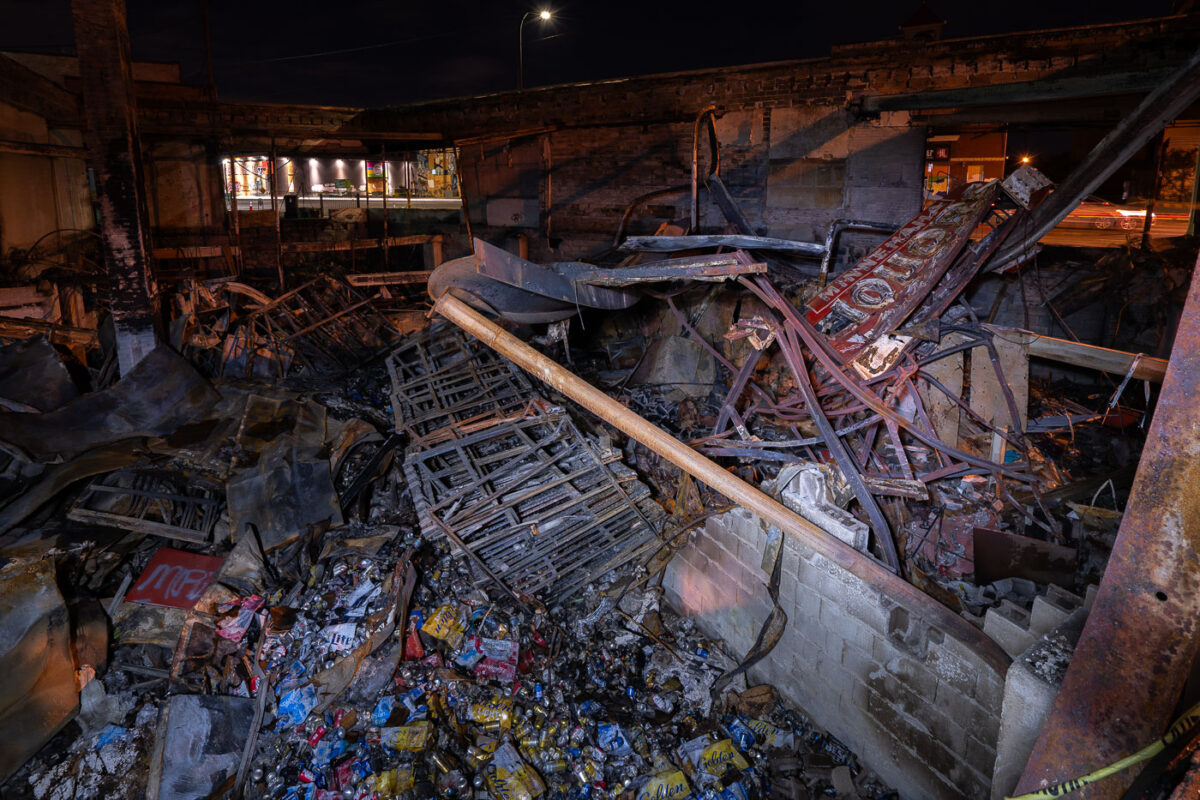
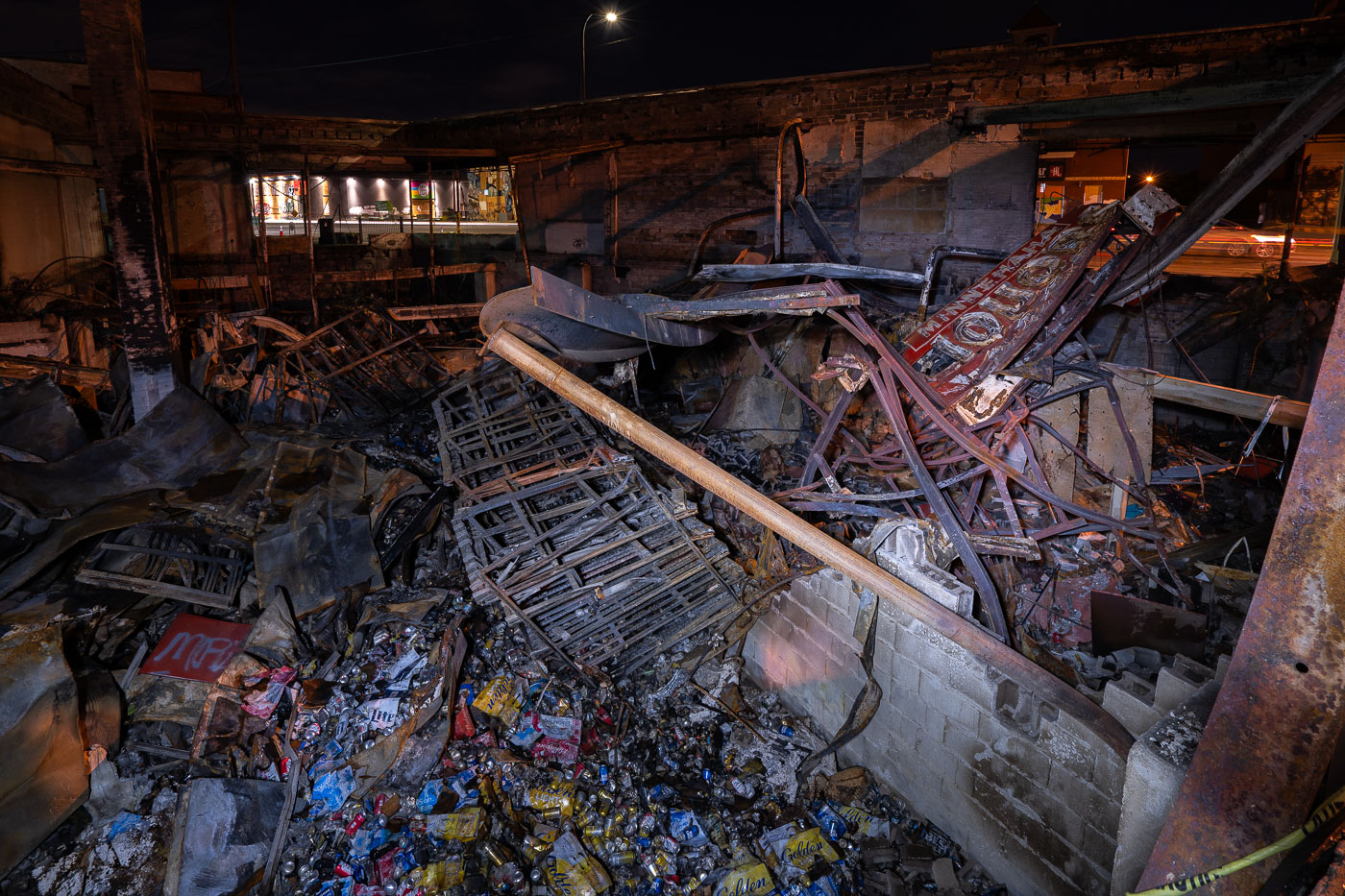
Burned interior of Minnehaha Liquors on East Lake Street in Minneapolis after the May 2020 unrest.
The fire-damaged interior of Minnehaha Liquors on East Lake Street in Minneapolis is shown in June 2020, with collapsed roof beams, twisted shelving, and burned merchandise filling the gutted store. The liquor store was destroyed during the unrest that followed the murder of George Floyd in May 2020. Located across from the Minneapolis Police Third Precinct, the building was one of many businesses on the Lake Street corridor that suffered extensive fire damage.
Burned Minnehaha Liquors, East Lake Street