New York City

90 photos · 2005–2022

90 photographs tagged New York City, 2005–2022.
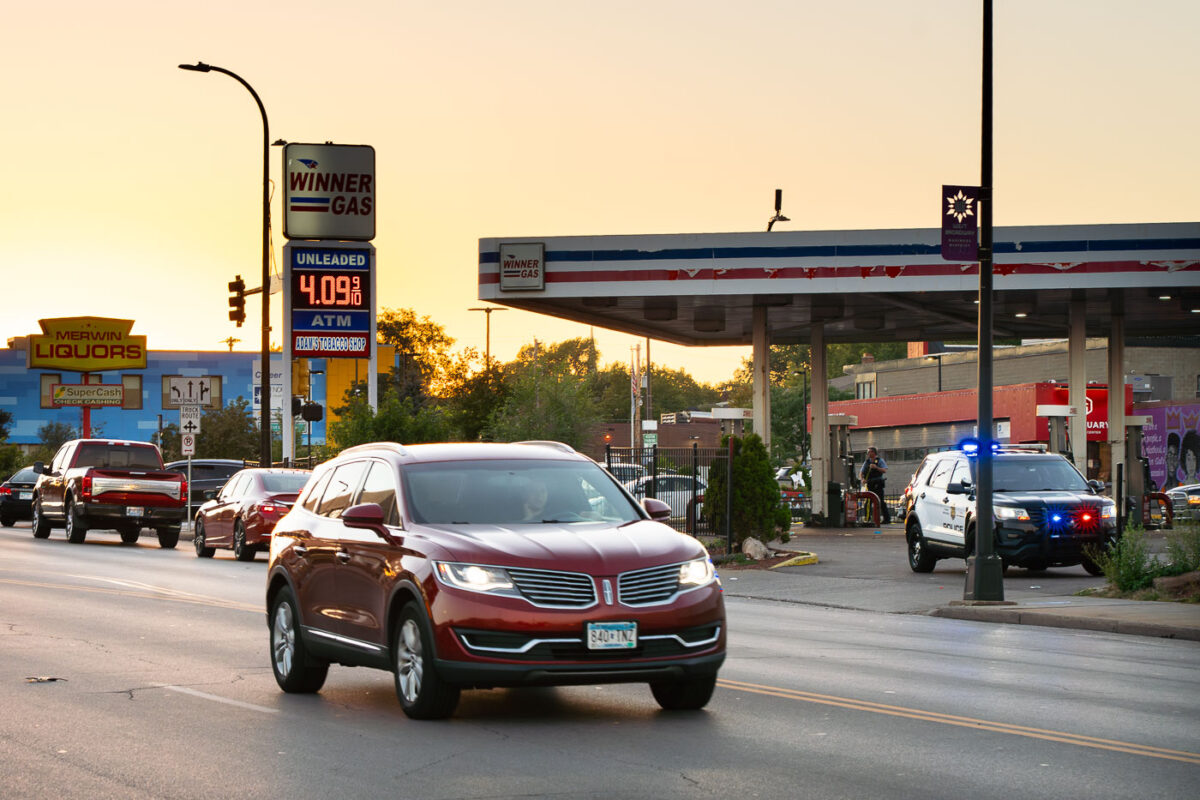
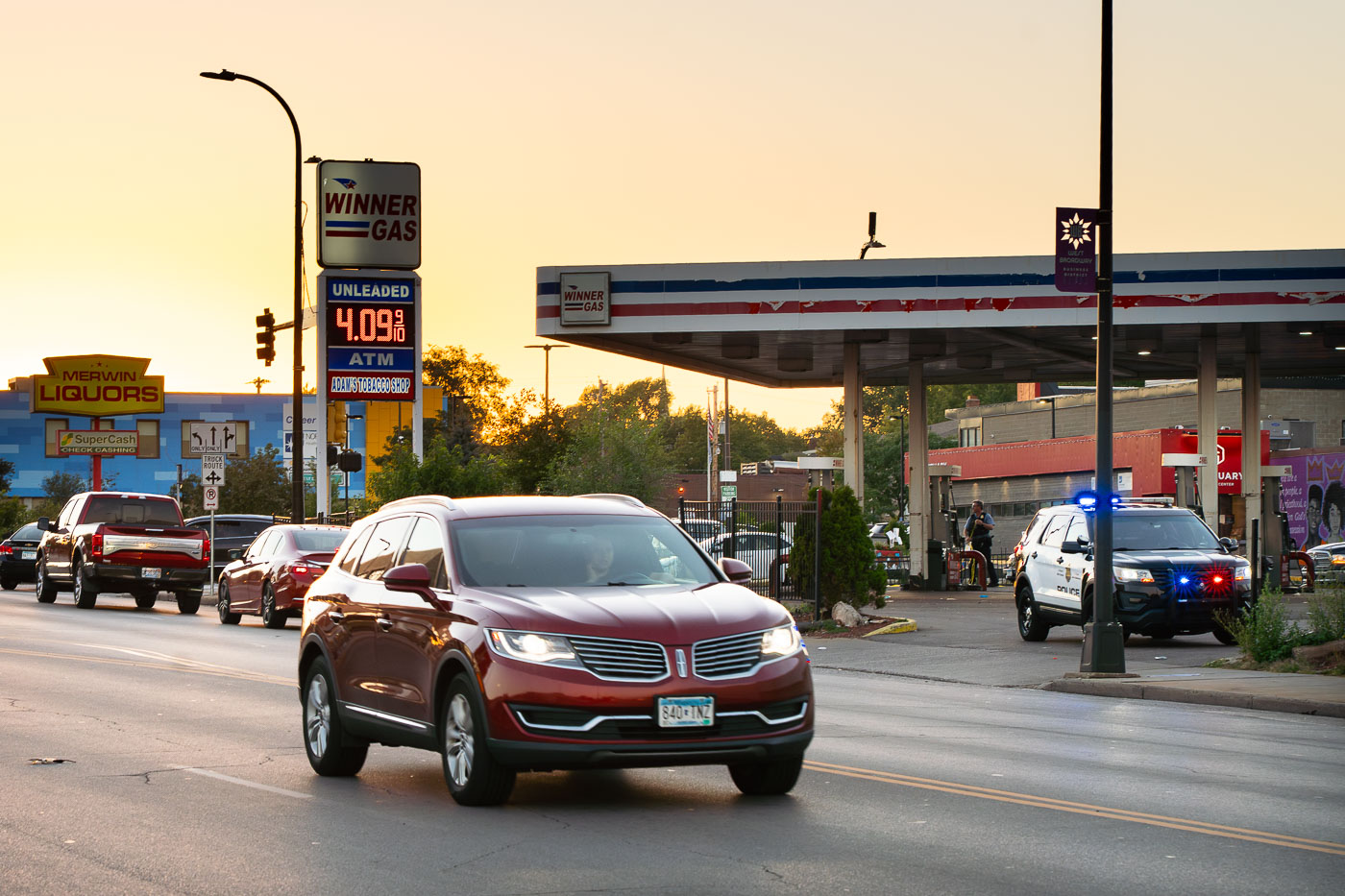
Winner Gas and Merwin Liquors at Broadway and Lyndale in North Minneapolis.
Winner Gas and Merwin Liquors at Broadway and Lyndale in North Minneapolis. The gas station and liquor store sit along a busy commercial corridor near the intersection.

Winner Gas and Merwin Liquors, North Minneapolis
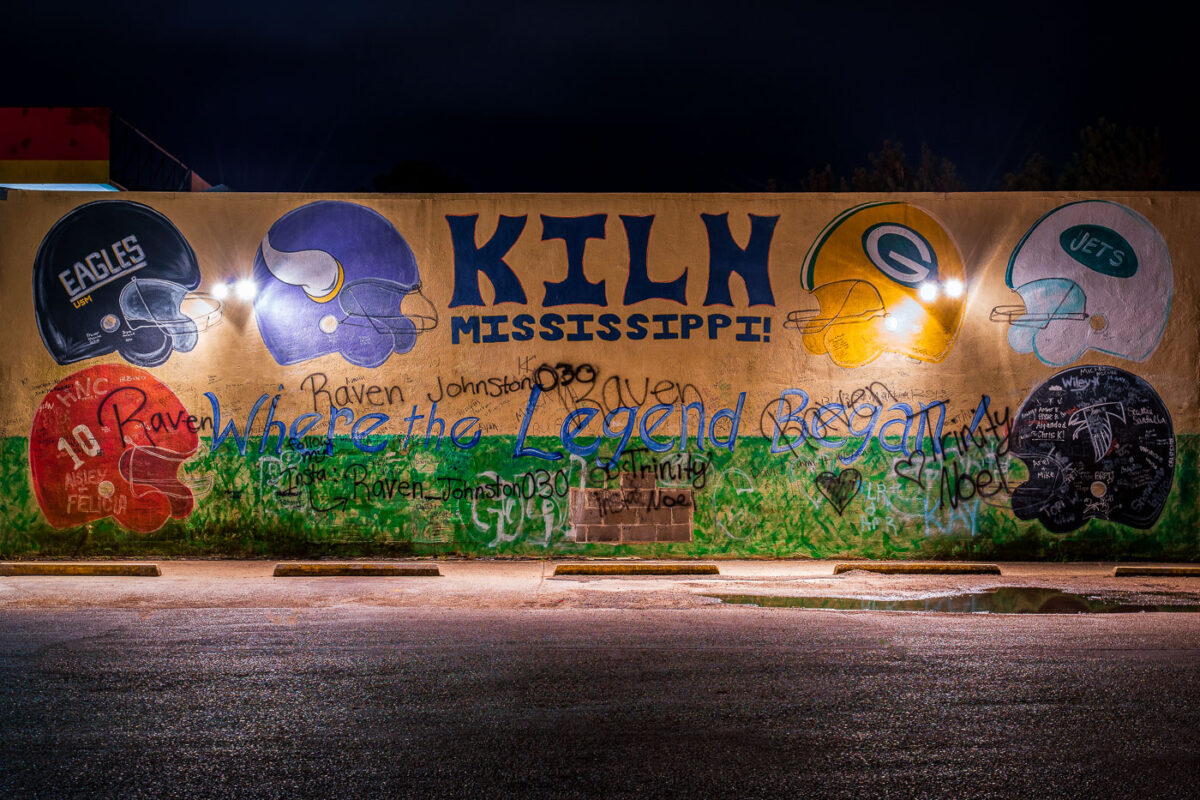
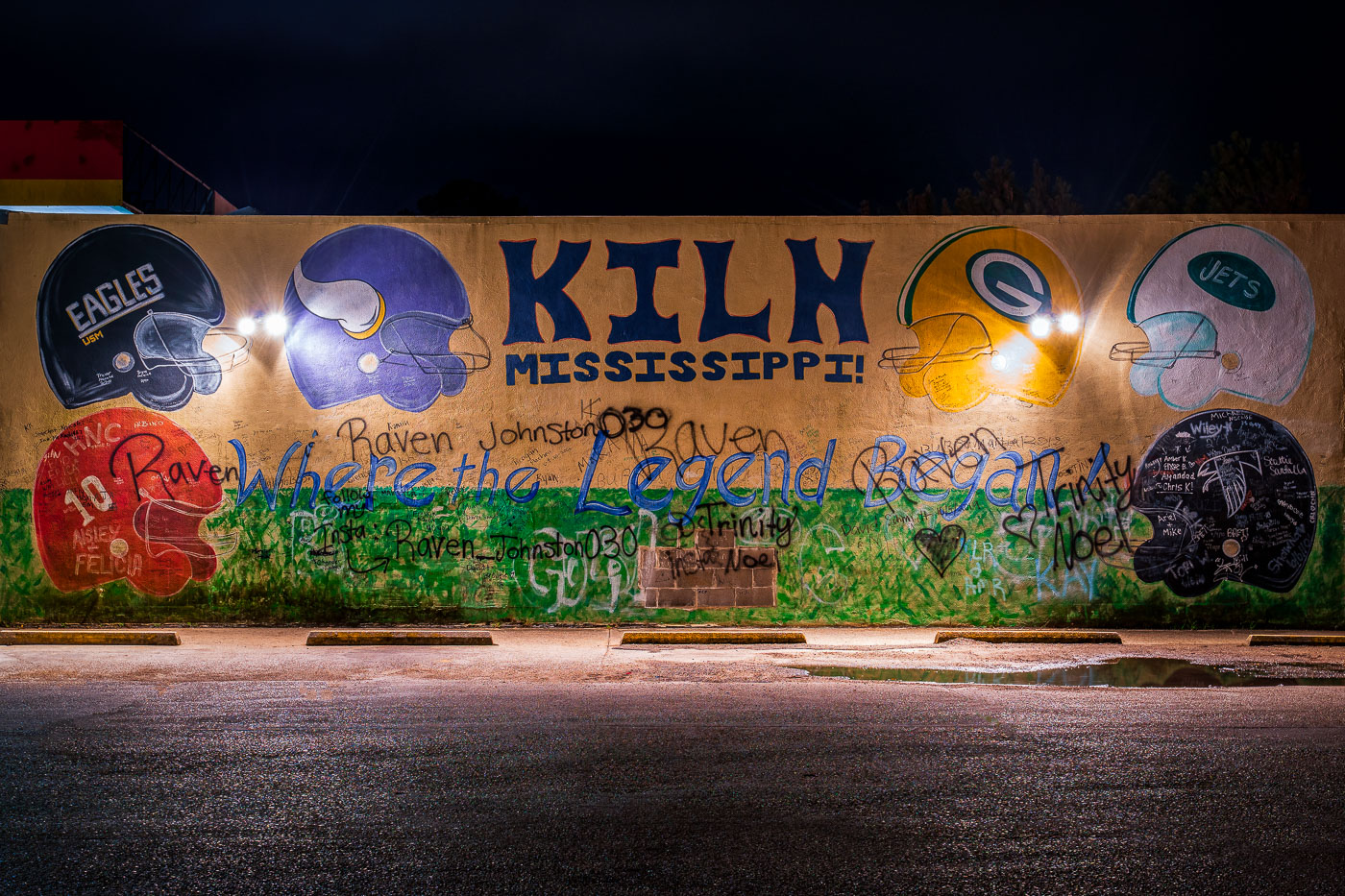
Brett Favre helmet mural in Kiln, Mississippi displays painted NFL team helmets honoring the quarterback's career.
Kiln, Mississippi, is the hometown of Brett Favre, the Hall of Fame quarterback who grew up here before starring at Hancock High School. This roadside mural marks that connection, pairing helmets from the four NFL teams Favre played for — the Atlanta Falcons, Green Bay Packers, Minnesota Vikings, and New York Jets — with the phrase "Where the Legend Began." Favre spent the bulk of his career with the Packers, where he won a Super Bowl following the 1996 season and set numerous passing records before later stints in Minnesota and with the Jets. The small unincorporated community, part of Hancock County near the Mississippi Gulf Coast, has leaned into its association with Favre as a point of local identity.

“Where the Legend Began” Mural in Kiln, Mississippi
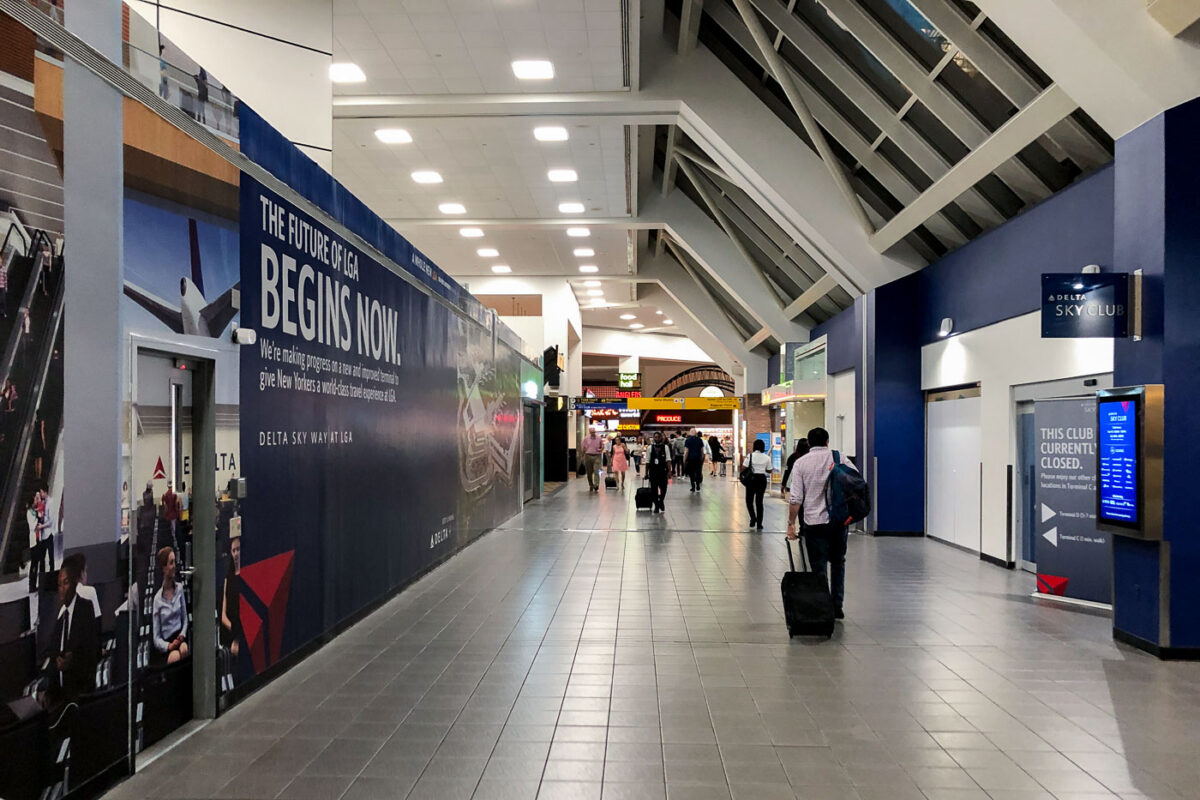
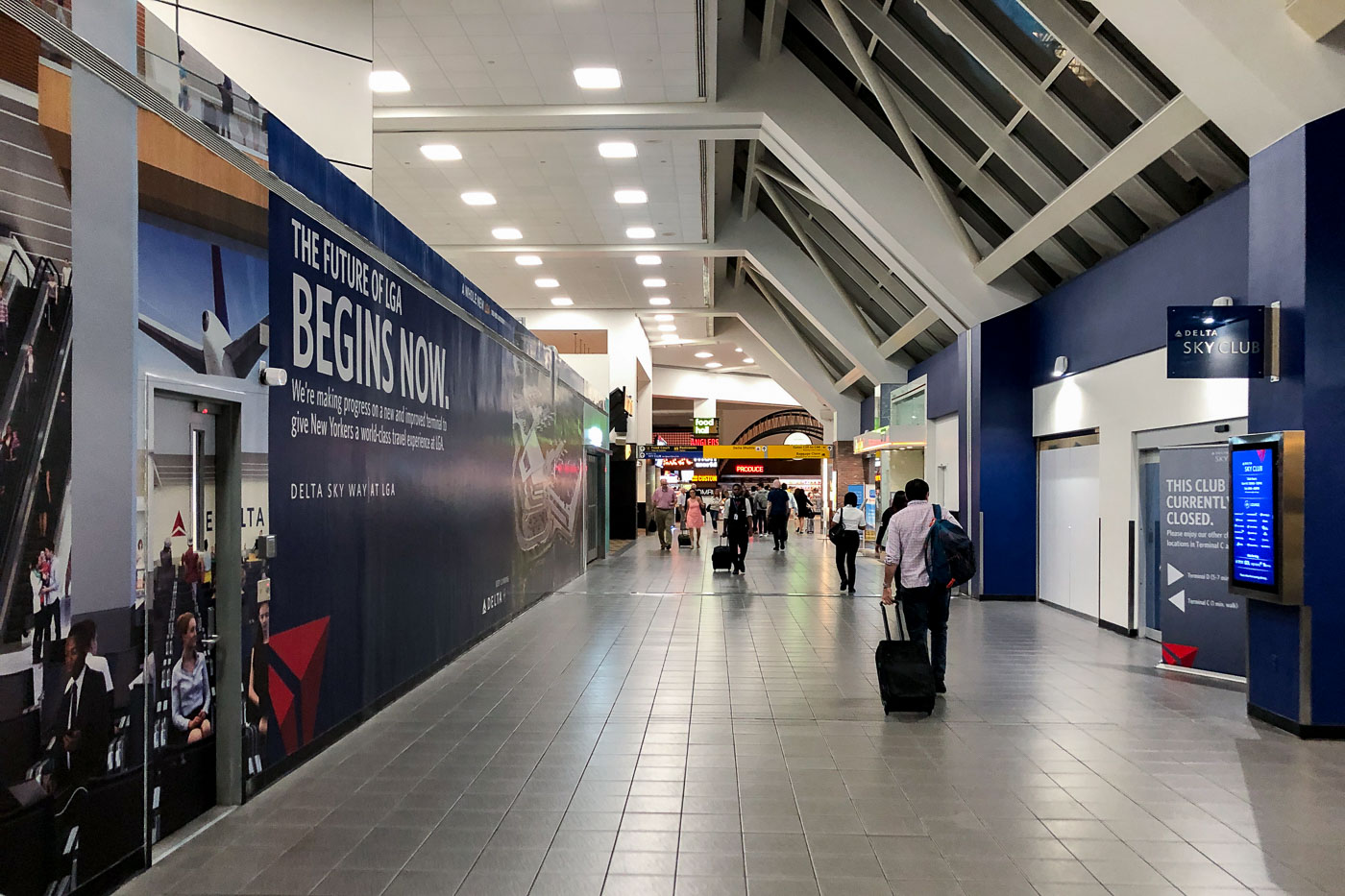
Travelers walk through LaGuardia Airport's temporary corridor past a closed Delta Sky Club during terminal reconstruction.
Delta Sky Way construction at LaGuardia Airport in Queens redirects passengers through a temporary corridor beside the Delta Sky Club. The barriers identify Delta's terminal redevelopment program, part of the airport's broader multibillion-dollar modernization. The project rebuilt and consolidated Delta's facilities at LGA with new gates, concourses, and passenger amenities.

Closed Delta Sky Club Along LaGuardia’s Temporary Terminal Corridor
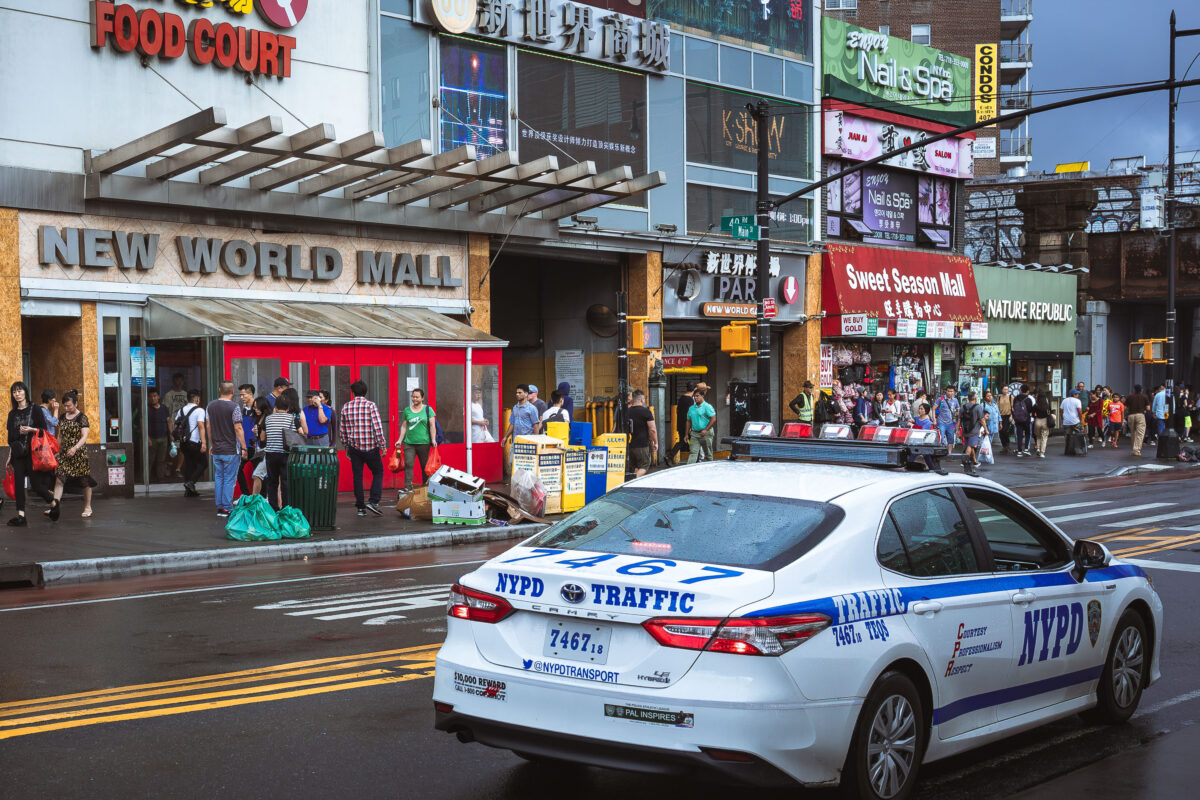
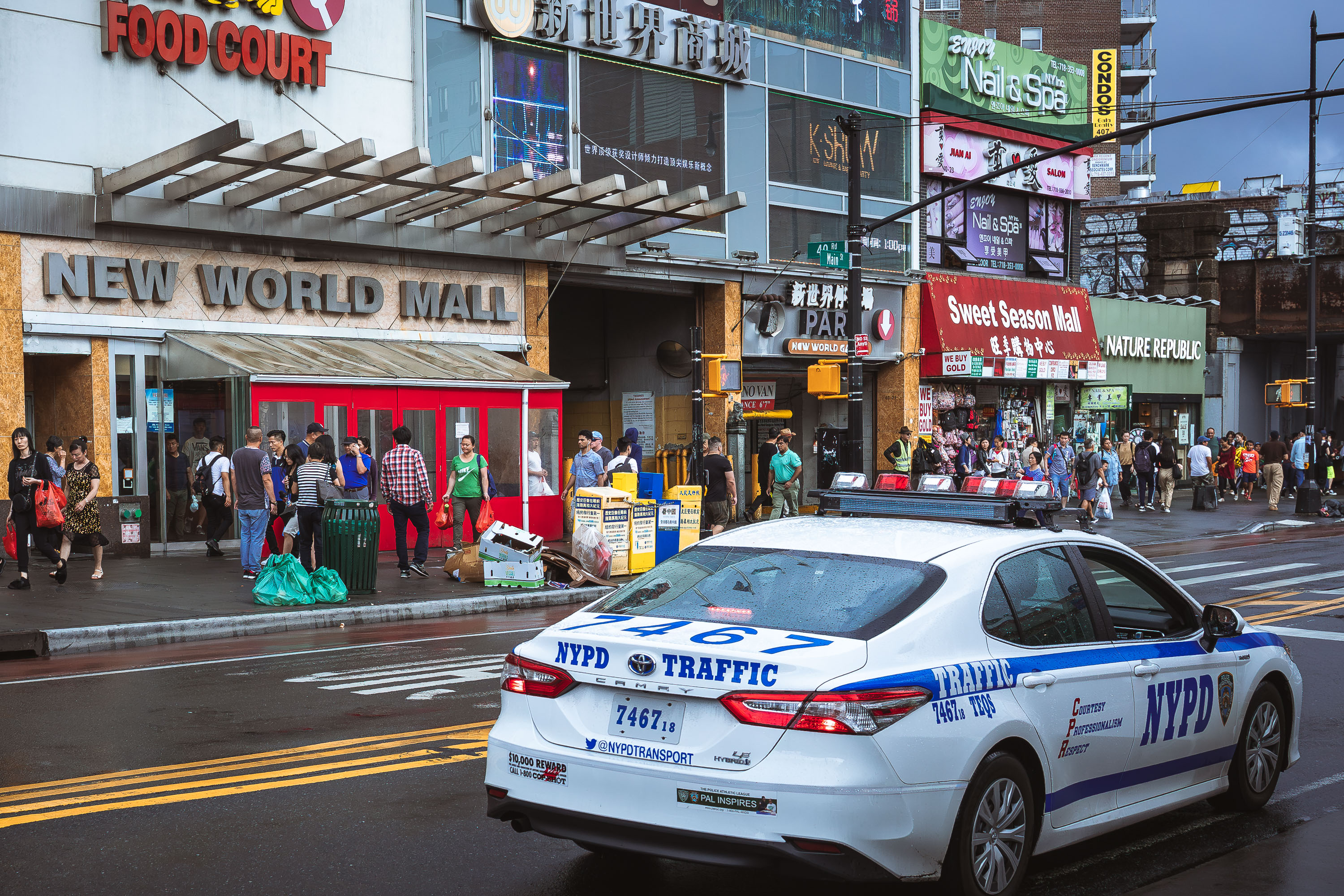
NYPD traffic patrol car parked outside New World Mall in Flushing, Queens, with pedestrians and storefronts visible.
New World Mall at 40th Road and Main Street in Flushing, Queens, is a multi-level retail and food court complex in the center of one of New York City’s largest Chinese commercial districts.

NYPD Traffic Car on Main Street Near New World Mall, Flushing
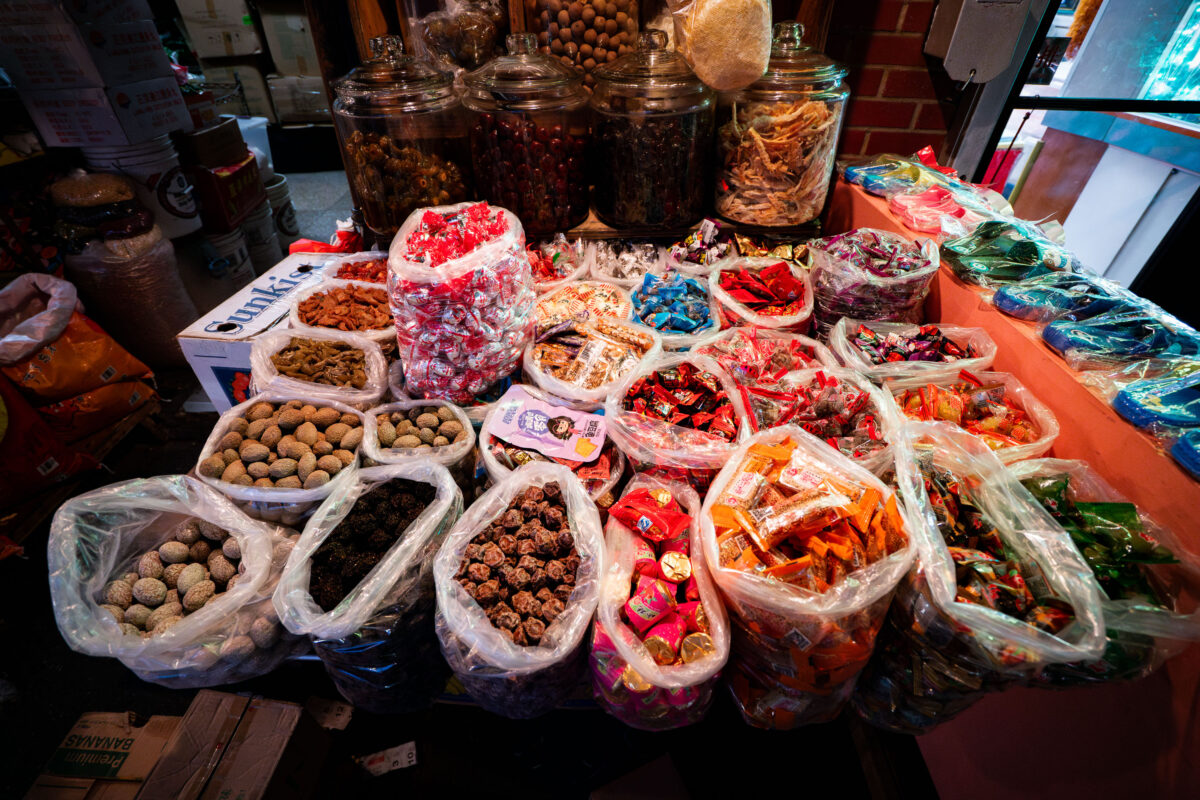
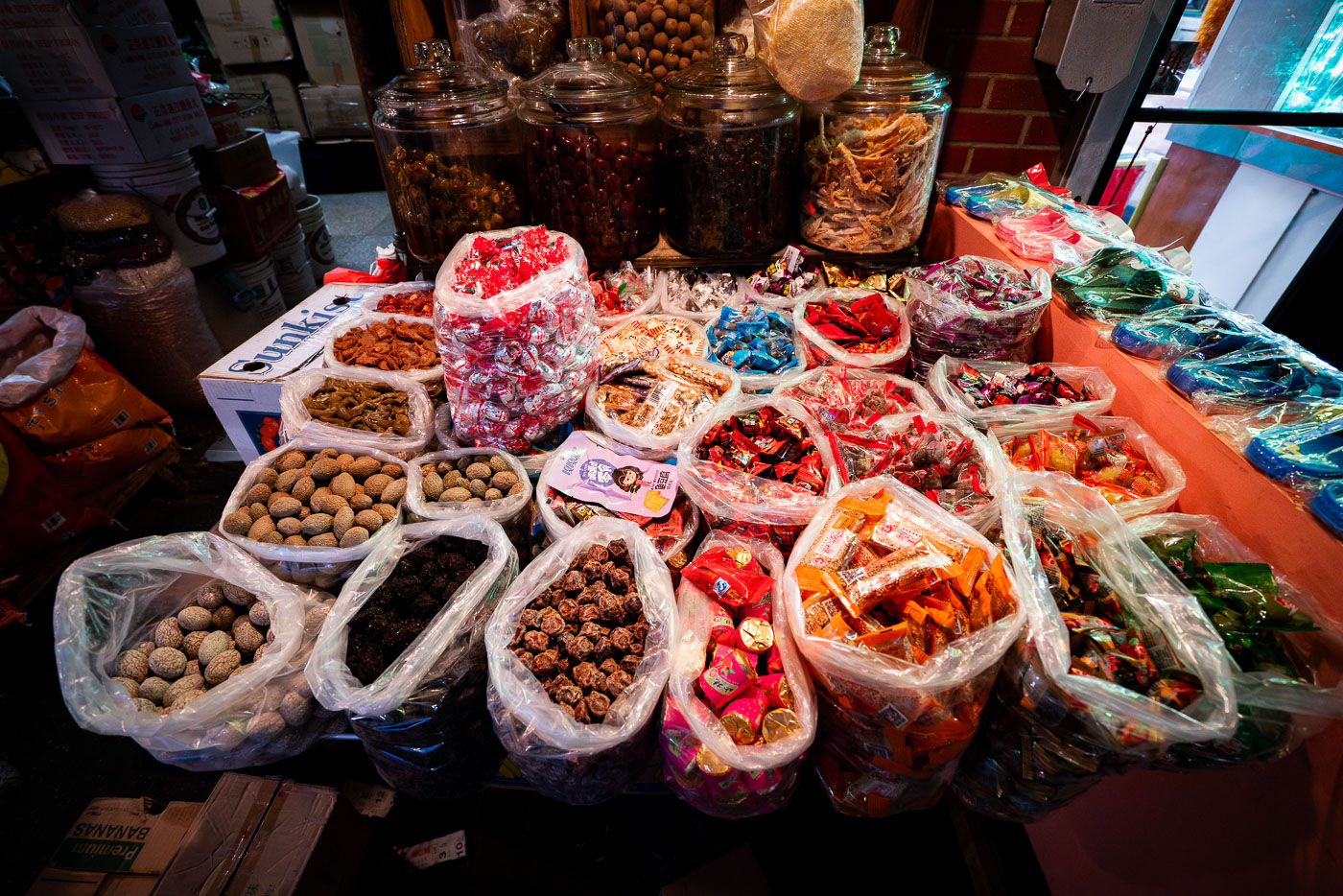
Chinatown market stall displaying dried fruits, candies, and snacks in plastic bags and glass jars.
A market stall in New York's Chinatown displays an abundant selection of dried fruits, candies, and snacks. The goods are presented in clear plastic bags and glass jars, with some items in colorful packaging, offering a vibrant visual of the diverse offerings available in the neighborhood.

Candy and Dried Fruit Stall in Chinatown
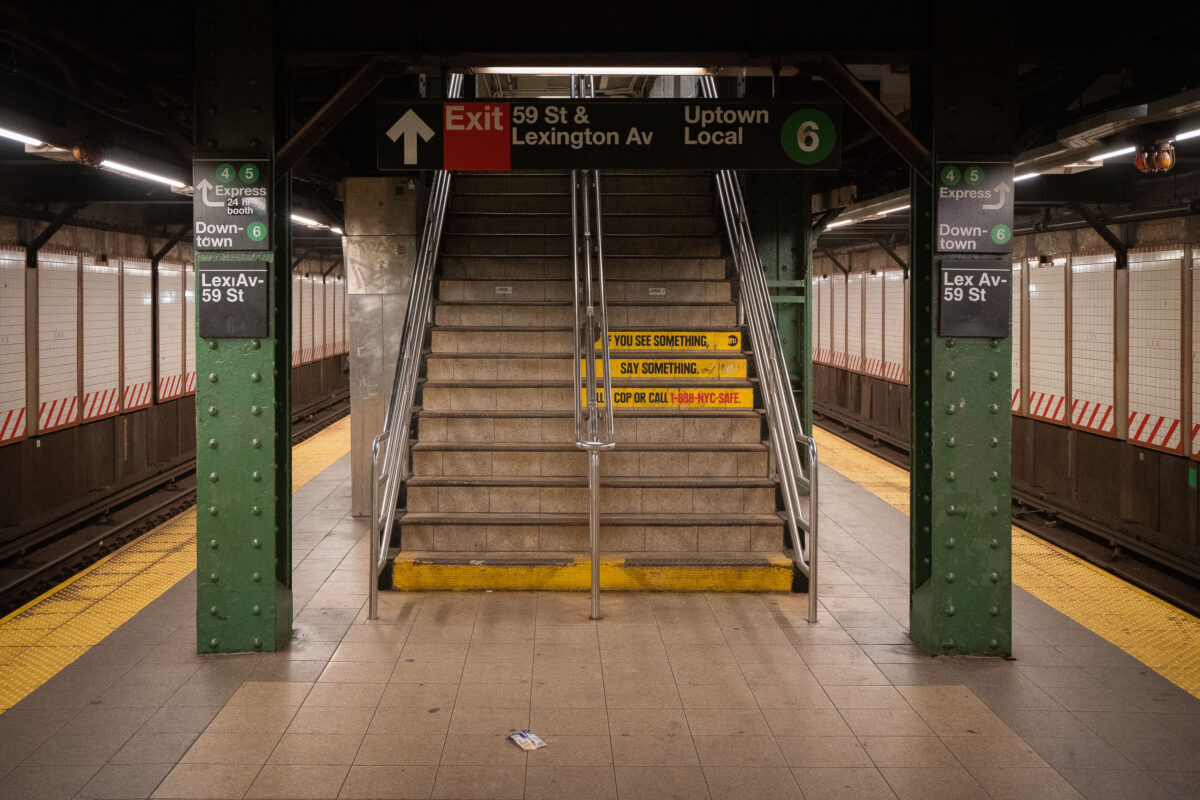
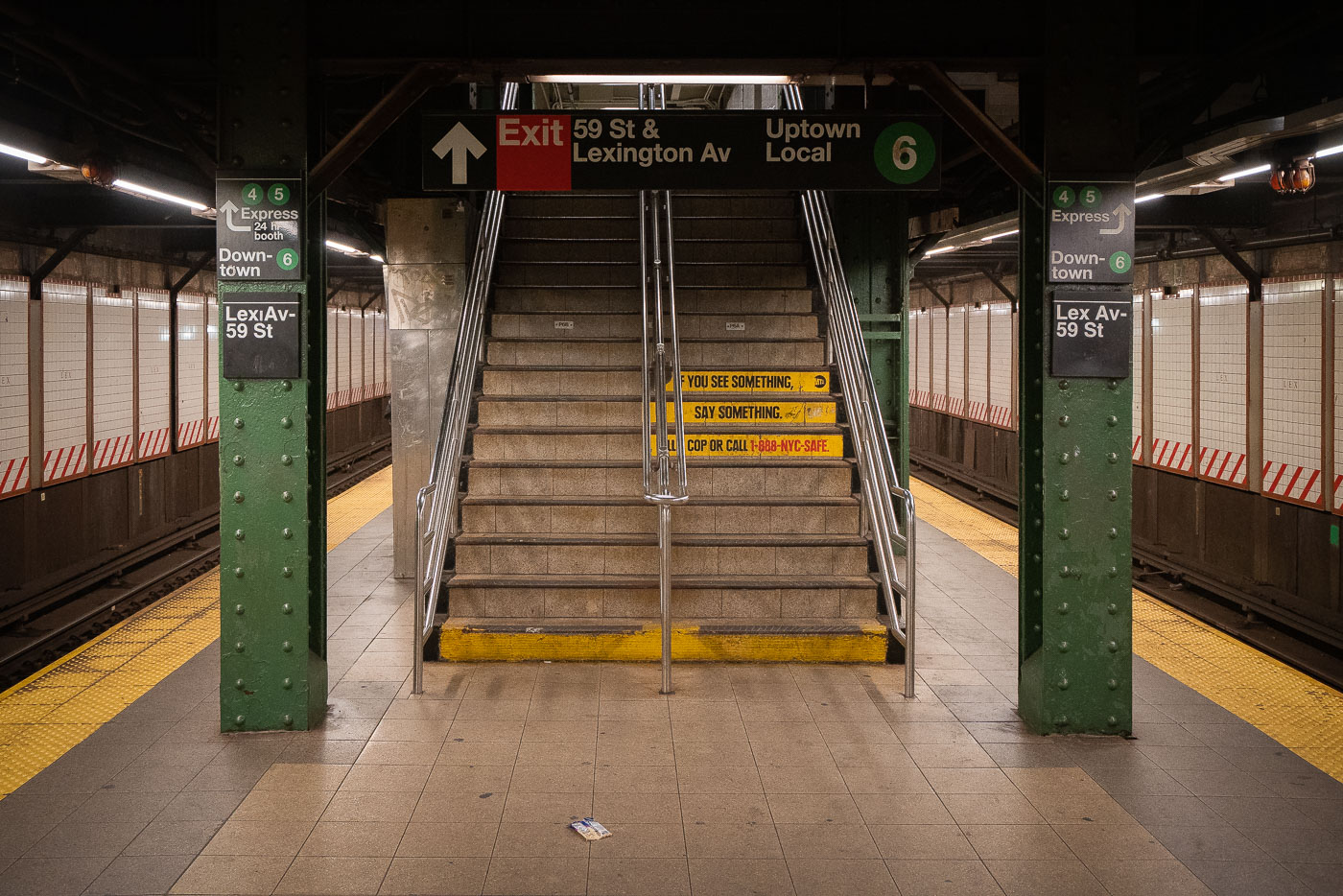
Stairway at Lexington Avenue-59th Street subway station with yellow safety signage and MTA directional signs.
Stairs lead up from the platform of the Lexington Avenue-59th Street subway station in New York City. Signage indicates "Exit 59 St & Lexington Av" and "Uptown Local 6," along with "4 5 Express" and "Downtown-6." The platform features yellow tactile paving and a sign reading "IF YOU SEE SOMETHING, SAY SOMETHING. COP OR CALL 1-888-NYC-SAFE."

Exit Stairs at the Lexington Ave-59 St Subway Station
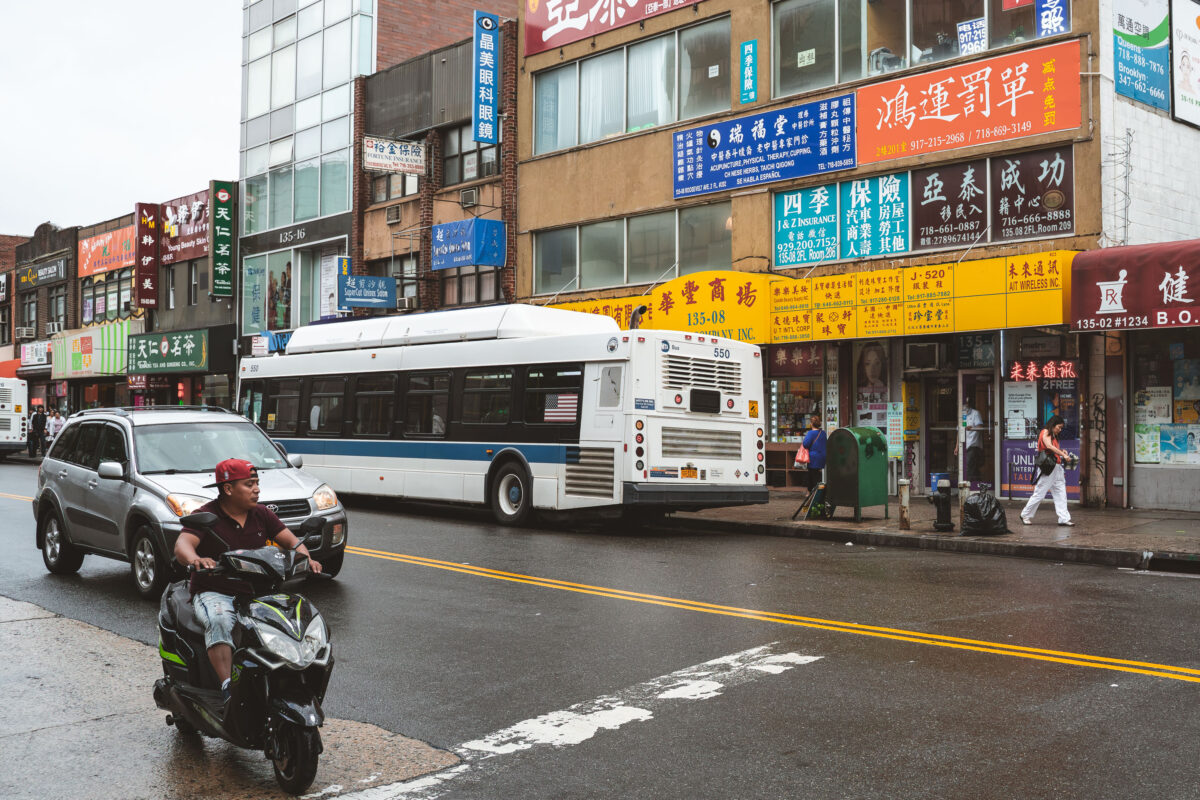
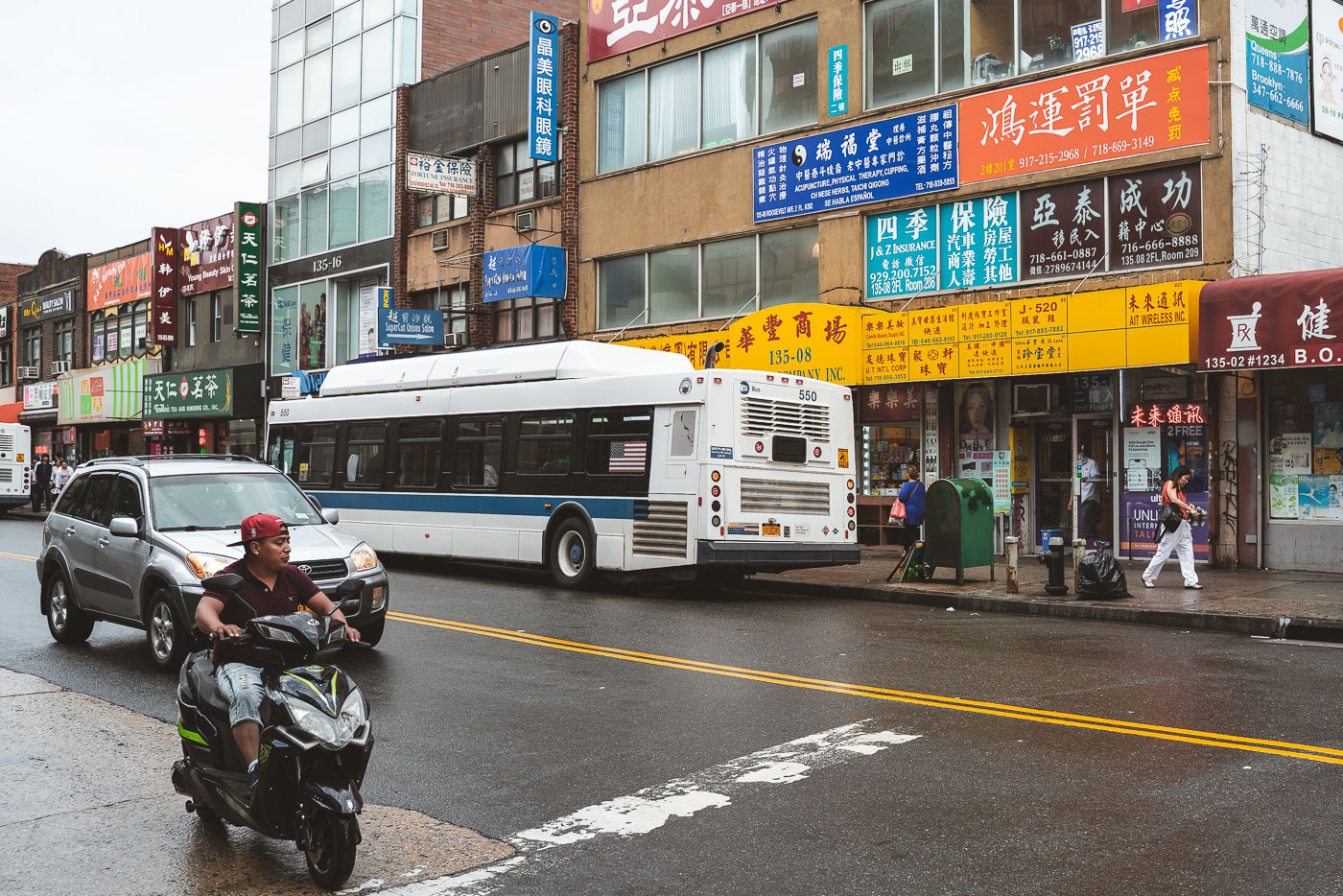
Scooter rider and MTA bus on Roosevelt Avenue in Flushing, Queens, with storefronts displaying Chinese and Korean signage.
Roosevelt Avenue in Flushing, Queens, is a major commercial thoroughfare serving a large Asian immigrant population. The street is lined with numerous businesses, many displaying signage in Chinese and Korean, reflecting the area's demographic makeup. An MTA bus, part of the public transportation system that serves millions of New Yorkers daily, is stopped along the avenue.

Scooter Rider Weaves Past an MTA Bus on Roosevelt Avenue
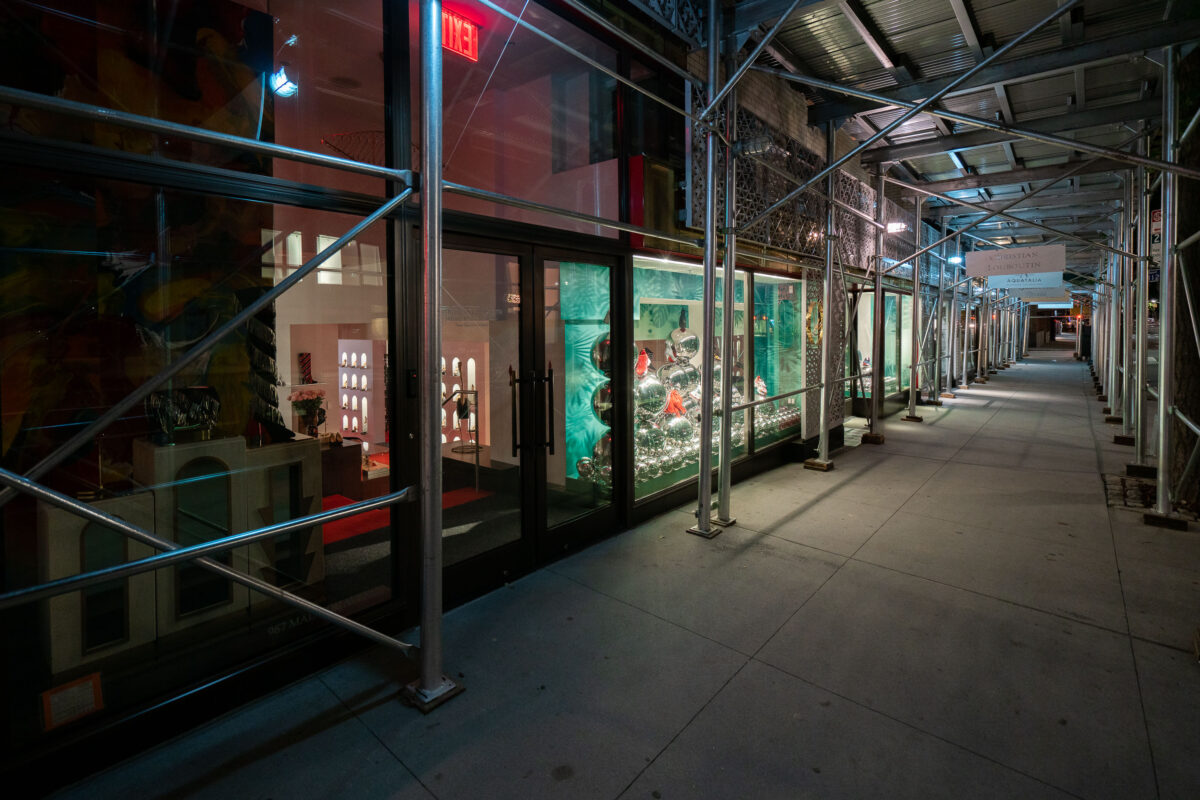
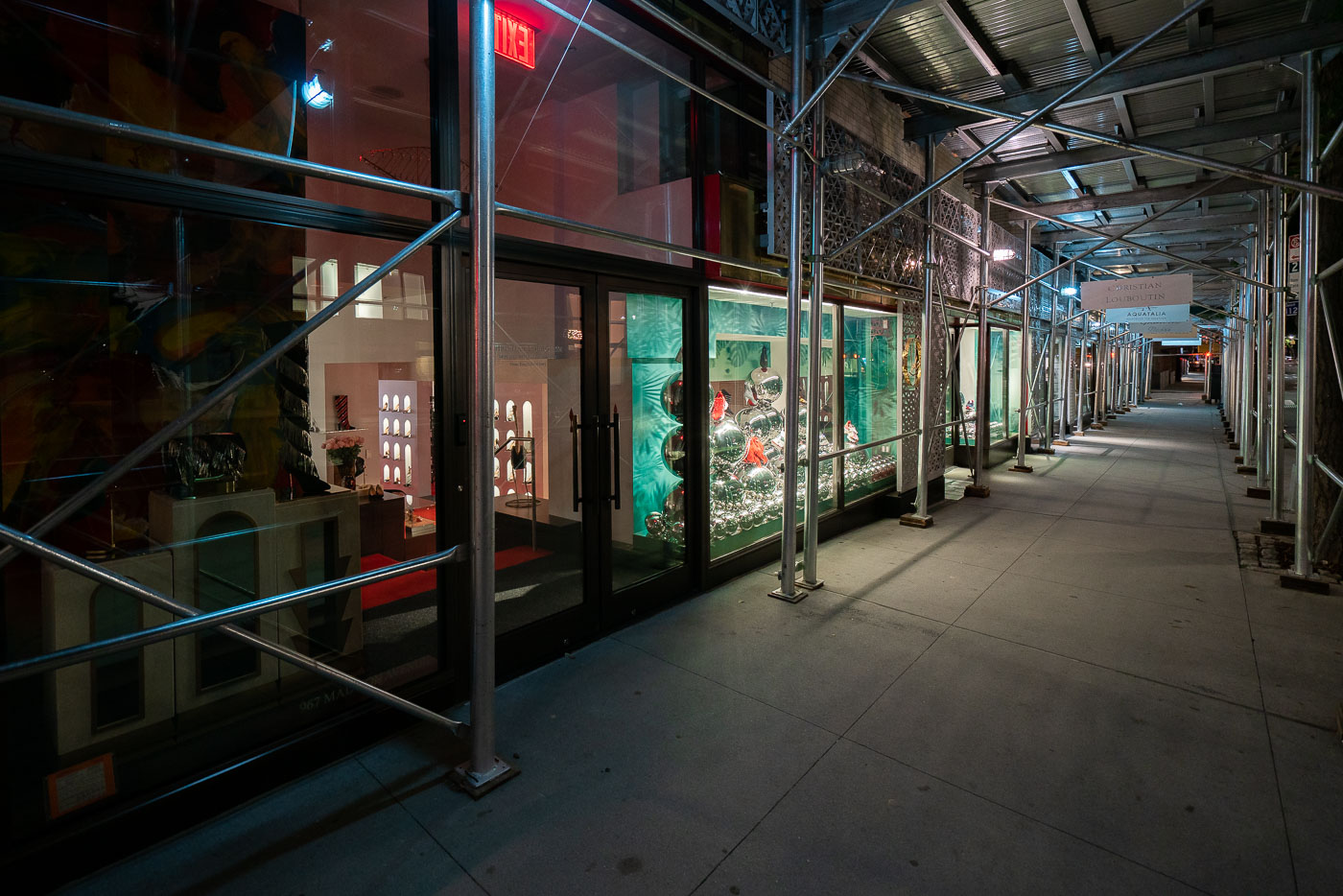
Christian Louboutin storefront on Madison Avenue surrounded by blue metal sidewalk scaffolding.
Christian Louboutin boutique on Madison Avenue in Manhattan is enclosed by sidewalk scaffolding. The luxury footwear and accessories retailer occupies a storefront on one of the Upper East Side's principal luxury shopping corridors. The temporary overhead sidewalk shed s exterior building work at the property.

Scaffolding Covers the Christian Louboutin Storefront on Madison Avenue
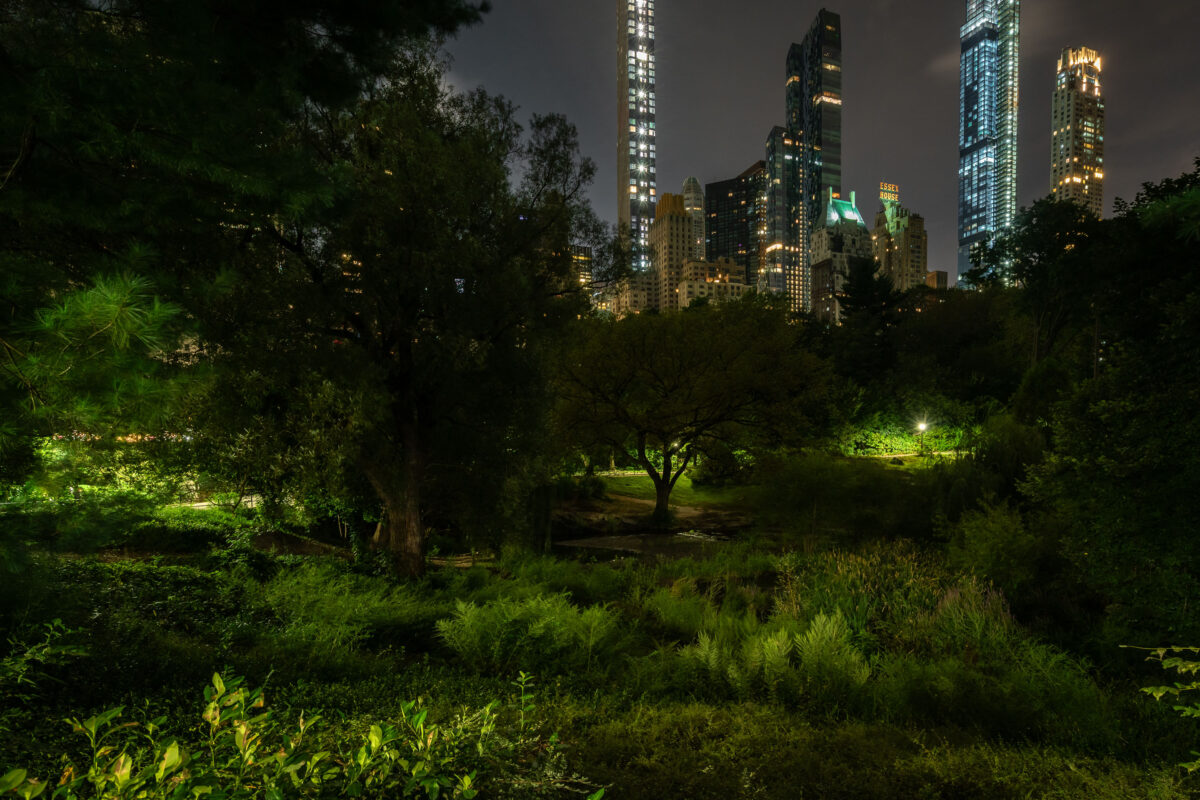
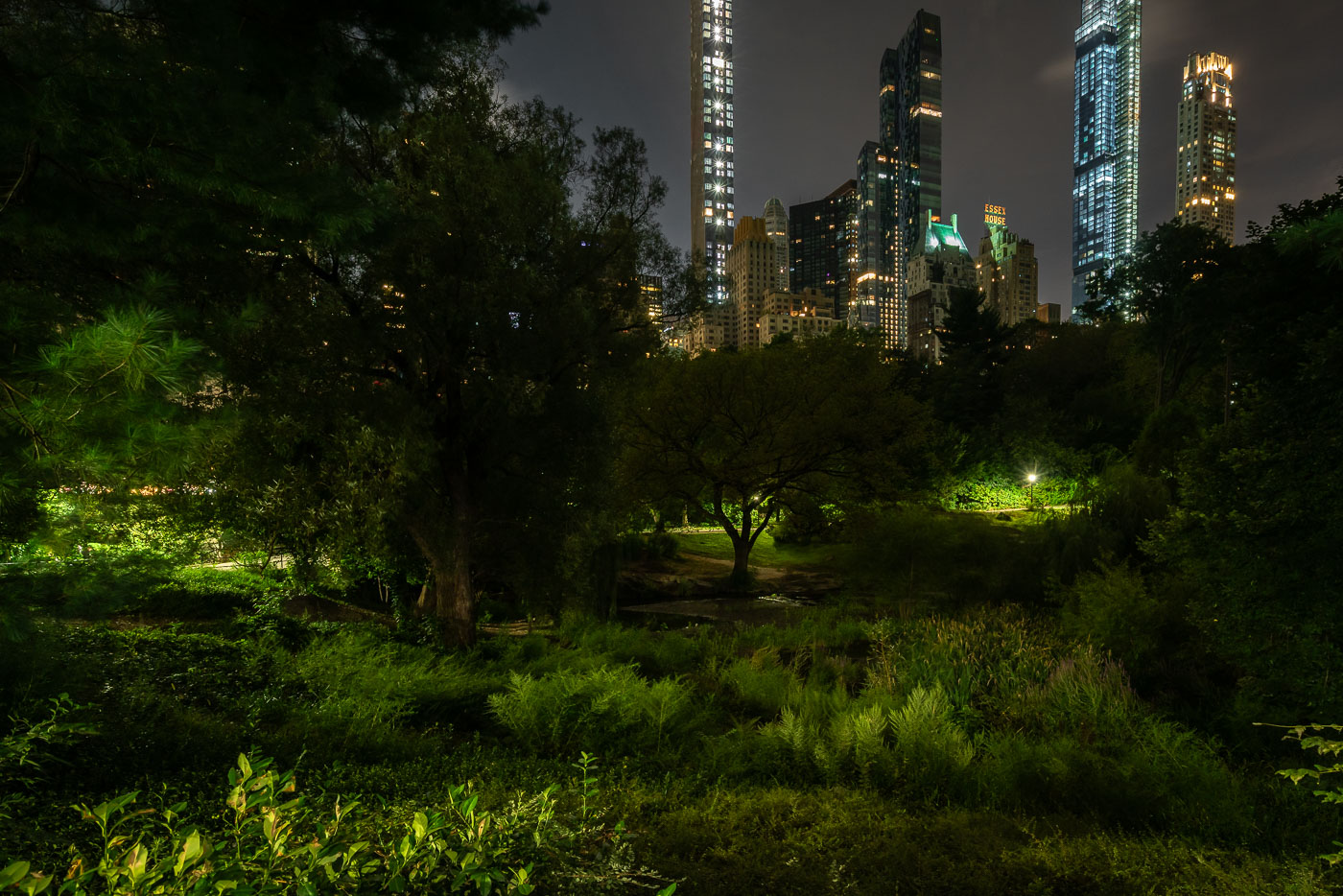
Central Park's trees frame illuminated Billionaires' Row towers and Essex House hotel at night in Manhattan.
Central Park South at night, featuring the Essex House hotel and the supertall residential towers of Billionaires' Row. The Essex House, an Art Deco landmark opened in 1931, stands adjacent to modern skyscrapers that have reshaped the Manhattan skyline. This view highlights the contrast between historic architecture and 21st-century supertall structures along Central Park South. The development of these supertall buildings, including 111 West 57th Street and Central Park Tower, represents a significant transformation of the area's built environment.

Central Park Woodland View of Essex House and Billionaires’ Row
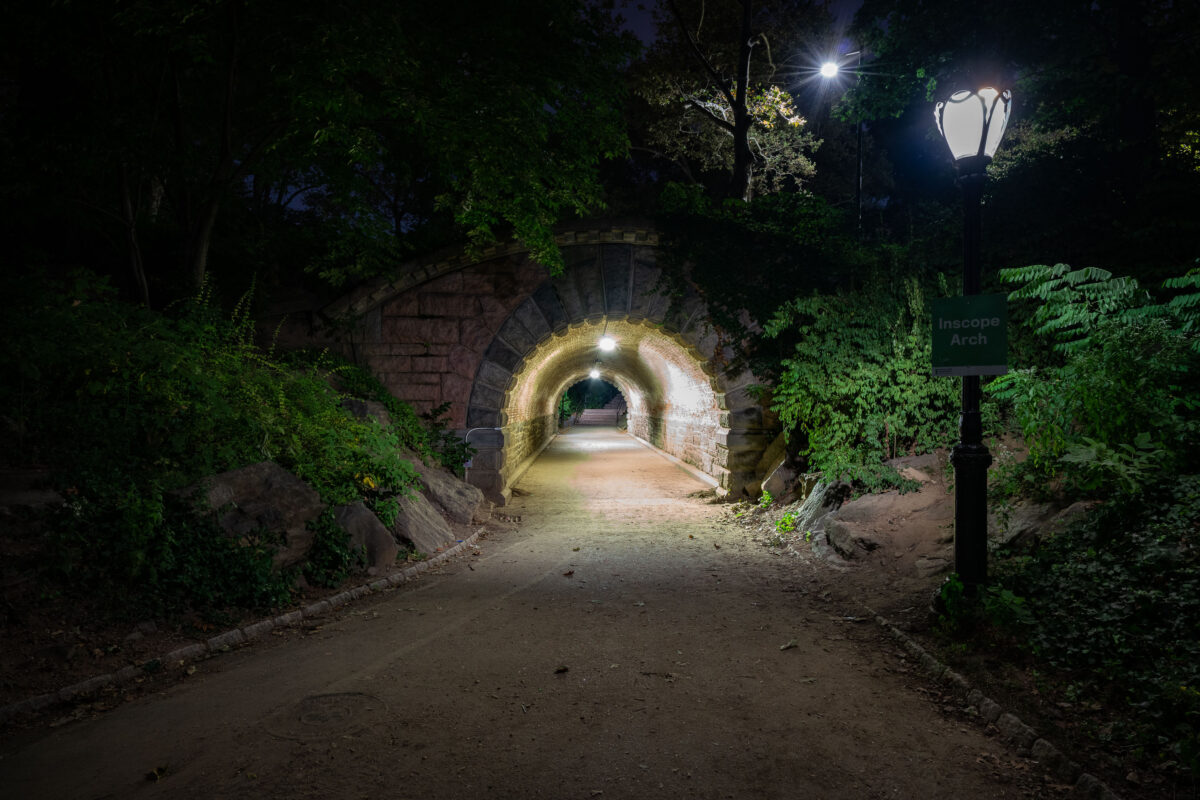
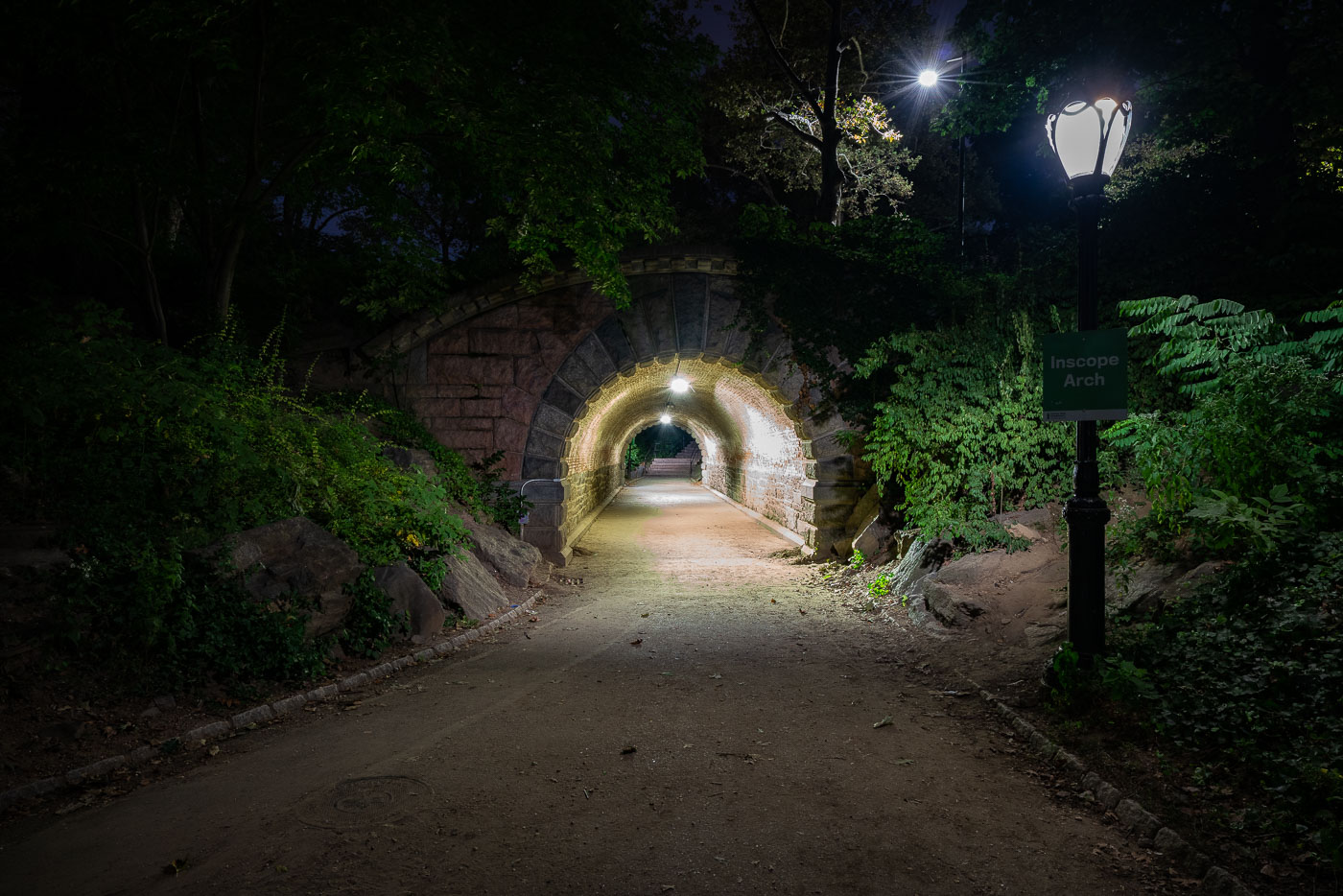
Inscope Arch, a stone passageway in Central Park, illuminated at night with surrounding vegetation.
The Inscope Arch, a stone passageway in Central Park, New York City, is illuminated at night. A green sign on a lamppost reads "Inscope Arch." Constructed as part of Central Park's original design by Frederick Law Olmsted and Calvert Vaux, this arch separates pedestrian paths from carriage roads. It facilitates circulation and connects different areas of the park, contributing to its naturalistic landscape design.

Night Light at Inscope Arch in Central Park
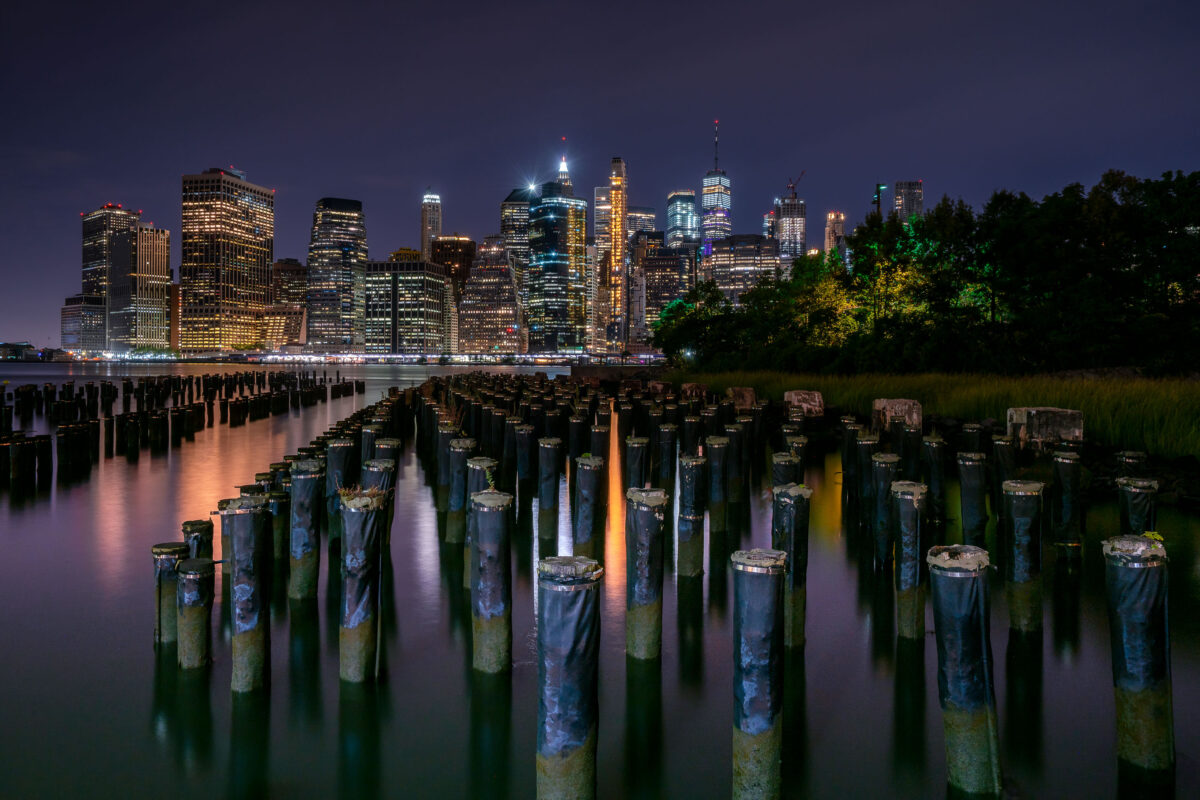
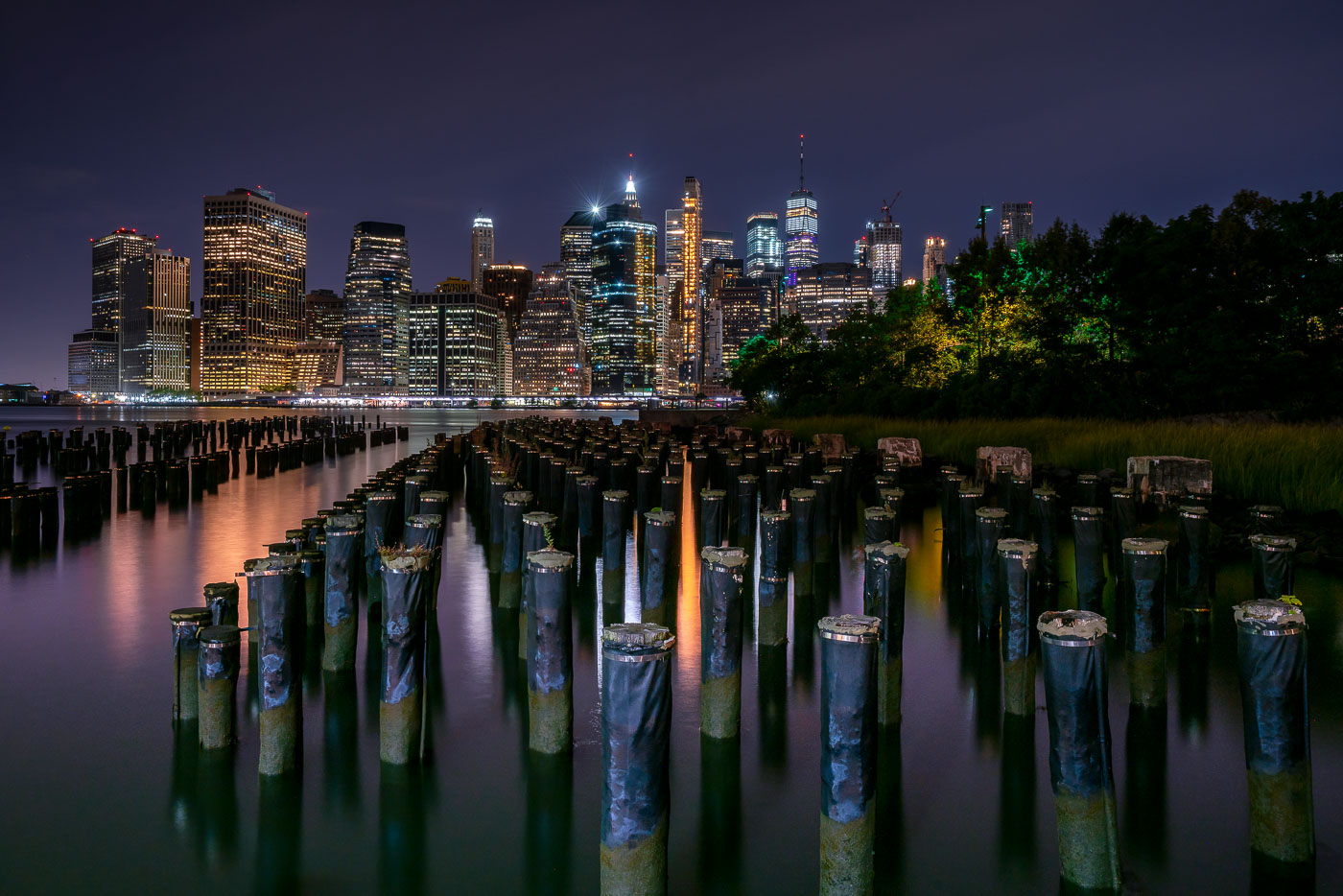
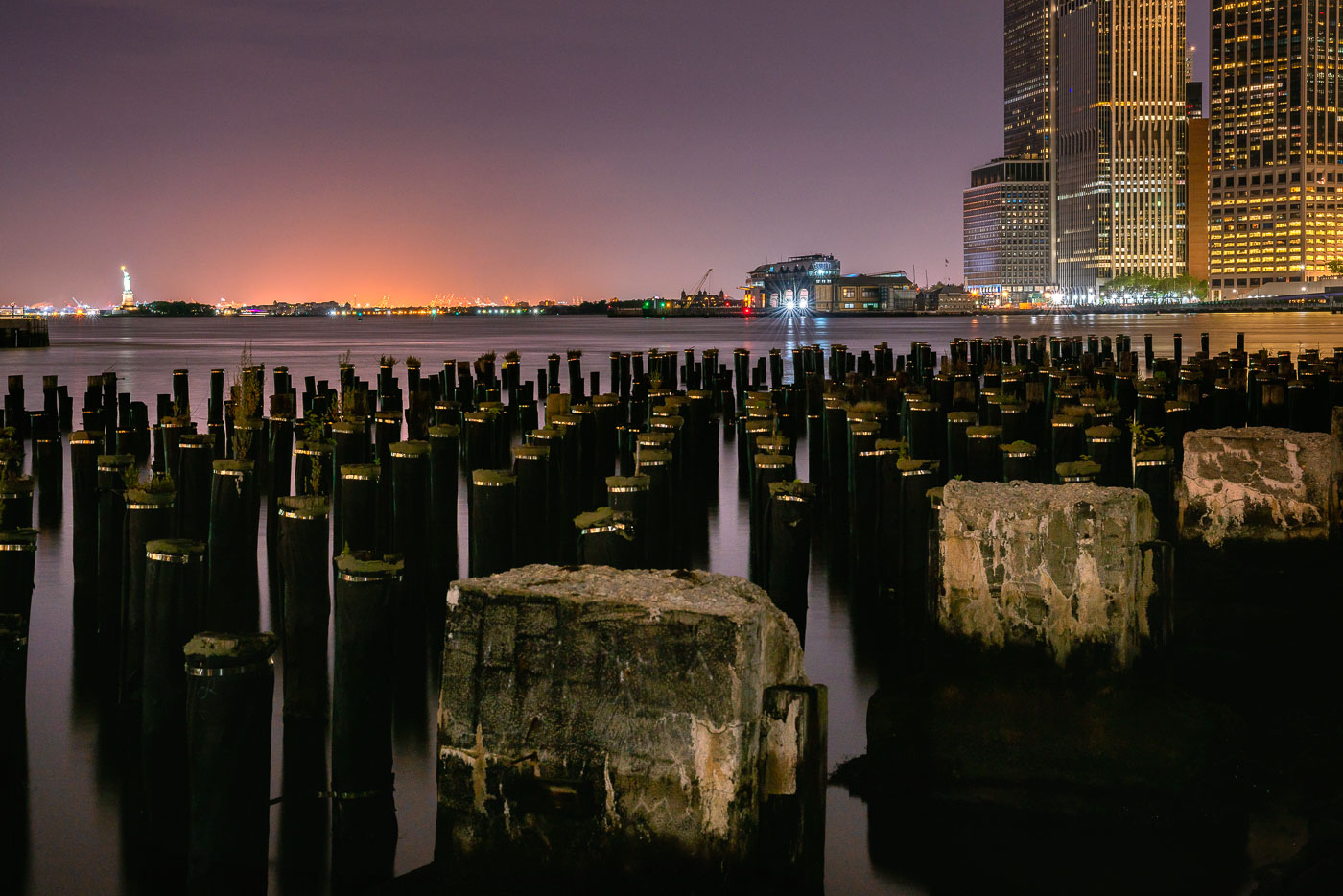
Weathered wooden pilings from abandoned East River piers frame Manhattan's illuminated skyline at dusk in Brooklyn Bridge Park.
Rows of old wooden pilings emerge from the East River, with the illuminated Manhattan skyline visible in the background. These pilings are remnants of former piers in Brooklyn Bridge Park, a waterfront area in Brooklyn, New York City. The park was developed on the site of former industrial port facilities, and the preservation of these pilings offers a visual connection to the area's maritime history.

Old Pier Pilings at Brooklyn Bridge Park Facing the Manhattan Skyline
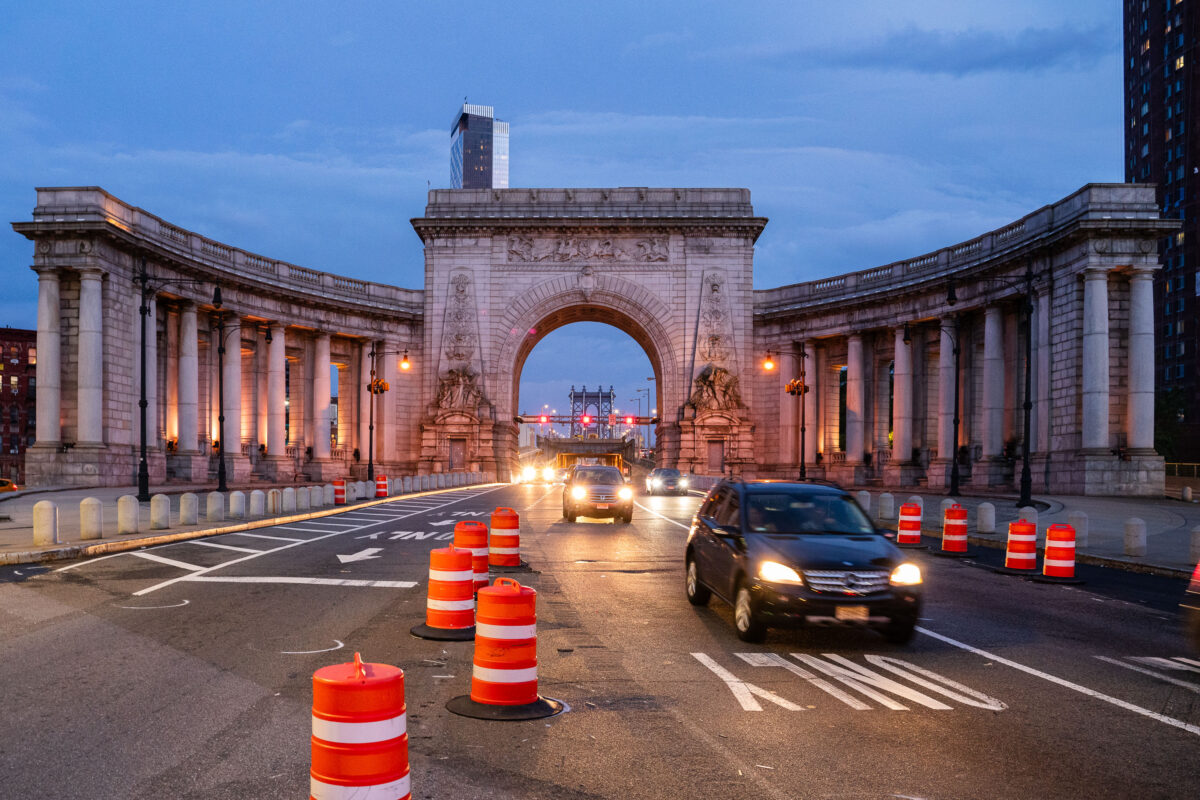
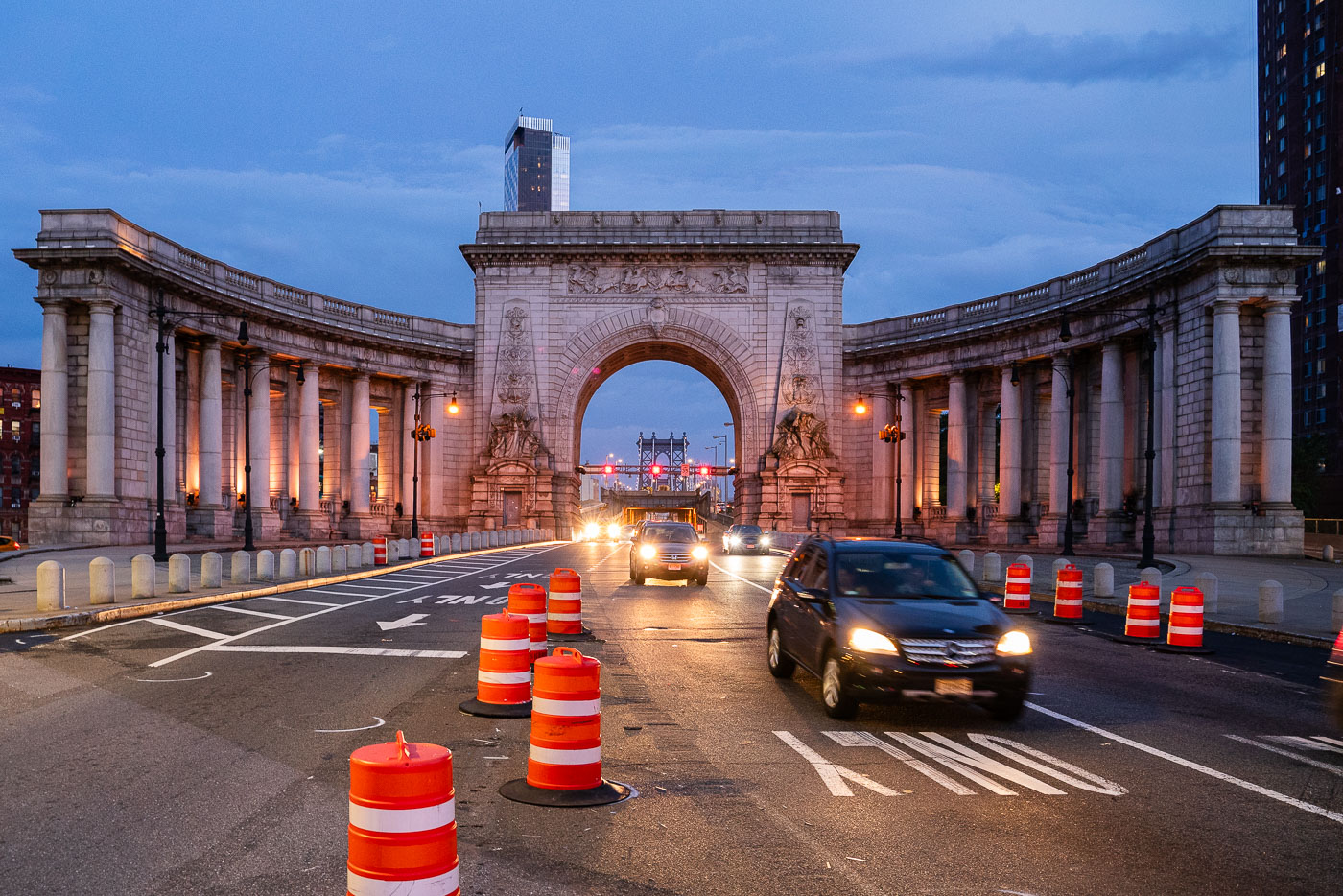
Cars drive through the Manhattan Bridge arch and colonnade at dusk with orange traffic barrels lining the roadway.
Cars pass through the Manhattan Bridge arch and colonnade at dusk in Lower Manhattan. Orange traffic barrels line the roadway as construction continues near the historic Beaux-Arts structure.

Traffic Through the Manhattan Bridge Arch During Roadwork

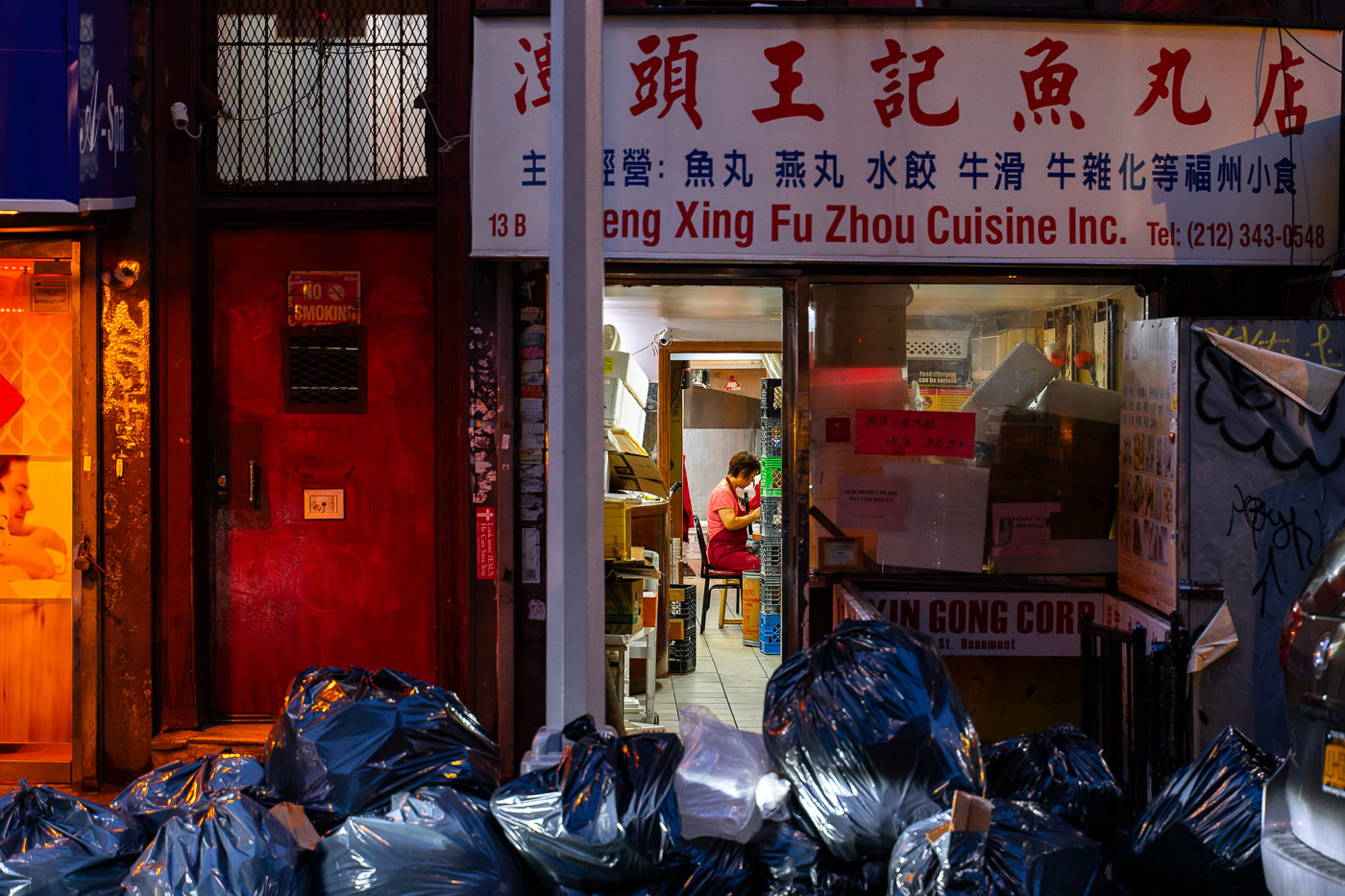
Worker prepares food inside Zheng Xing Fu Zhou Cuisine, a Fuzhou restaurant at 13B in Manhattan's Chinatown.
Zheng Xing Fu Zhou Cuisine Inc. in Manhattan's Chinatown is a small Fuzhou restaurant with a worker preparing food inside the narrow storefront at 13B. The business name appears in both Chinese and English on the exterior sign. Trash bags piled along the curb the restaurant's street-level location on a busy commercial block.

Trash Bags Piled Outside Zheng Xing Fu Zhou Cuisine in Chinatown
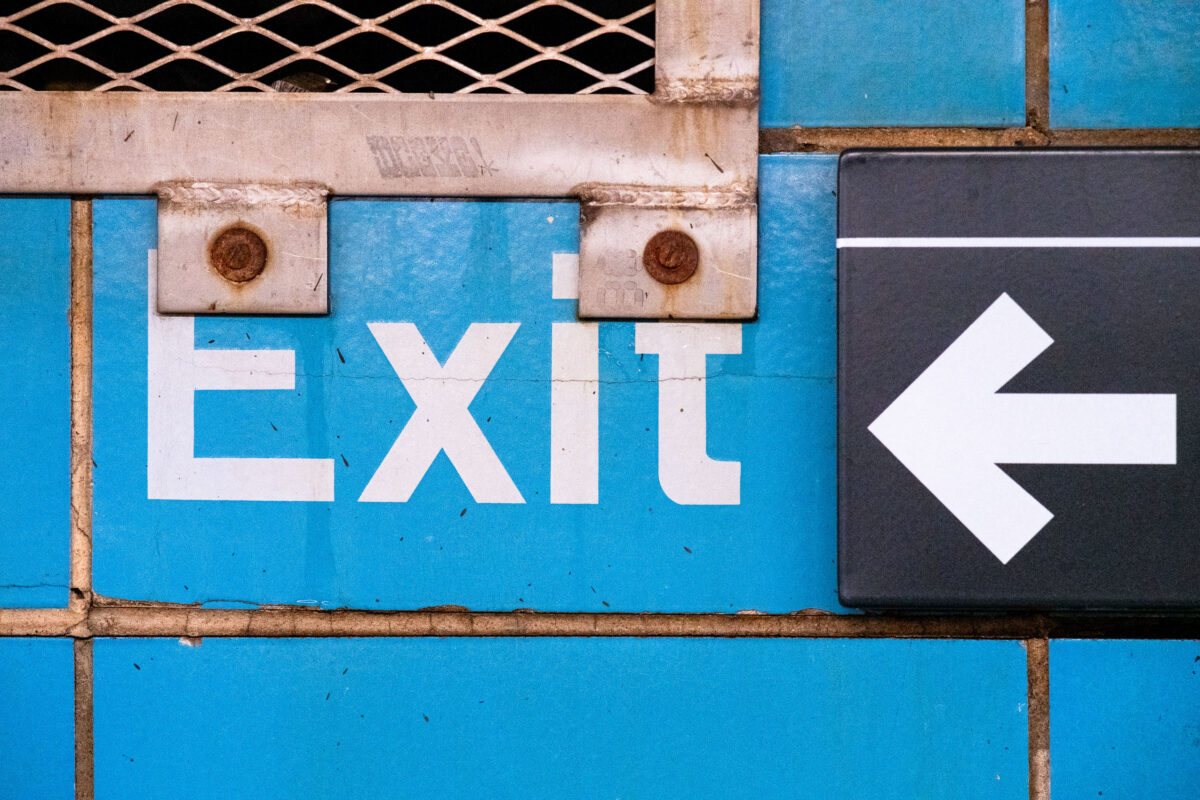
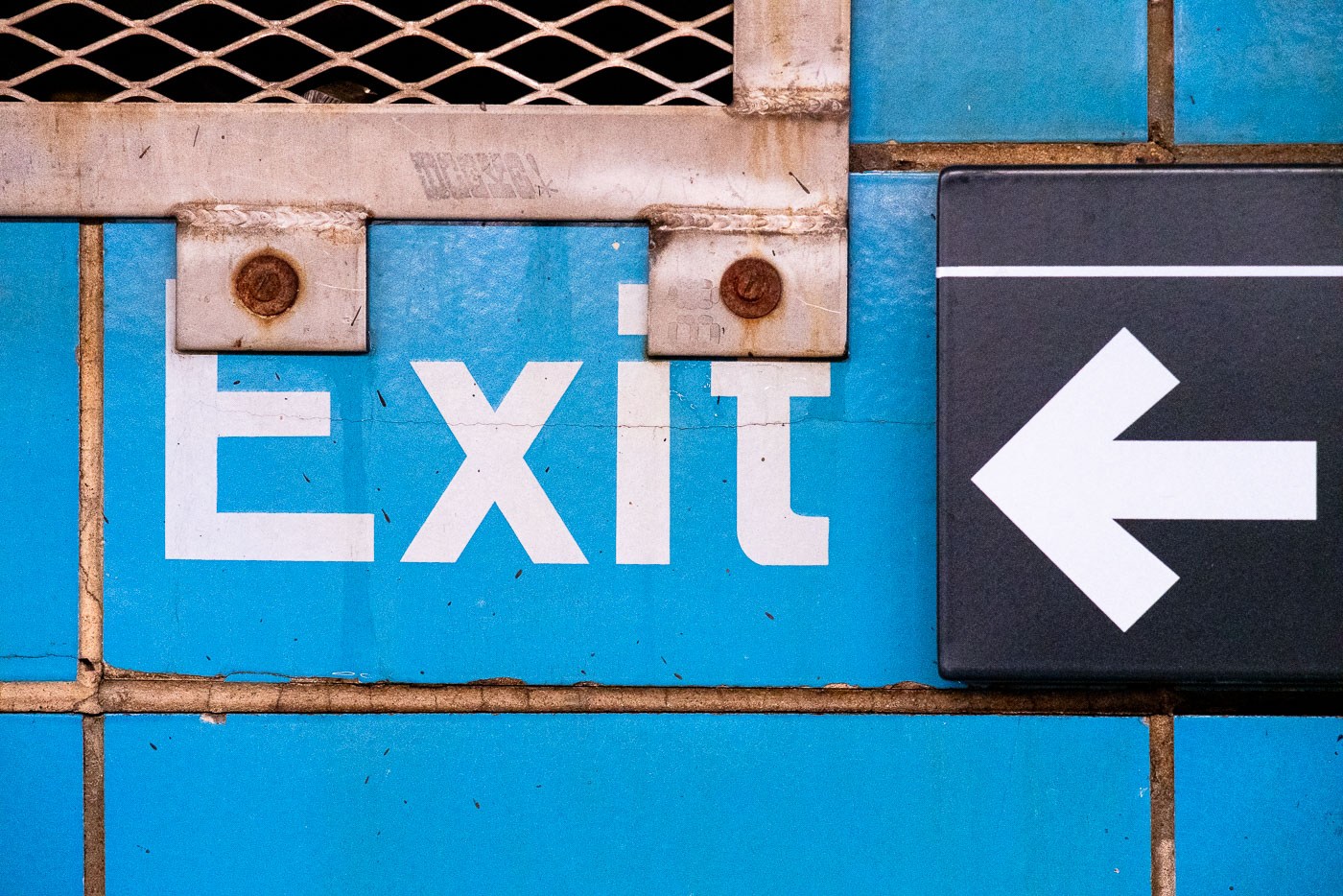
Exit sign with left-pointing arrow at Rector Street subway station in Manhattan.
Exit signage is visible at the Rector Street subway station in Manhattan, New York City. This station, part of the Metropolitan Transportation Authority (MTA) system, serves as a vital transit hub for commuters and visitors.

Exit Sign and Arrow at Rector Street Subway Station
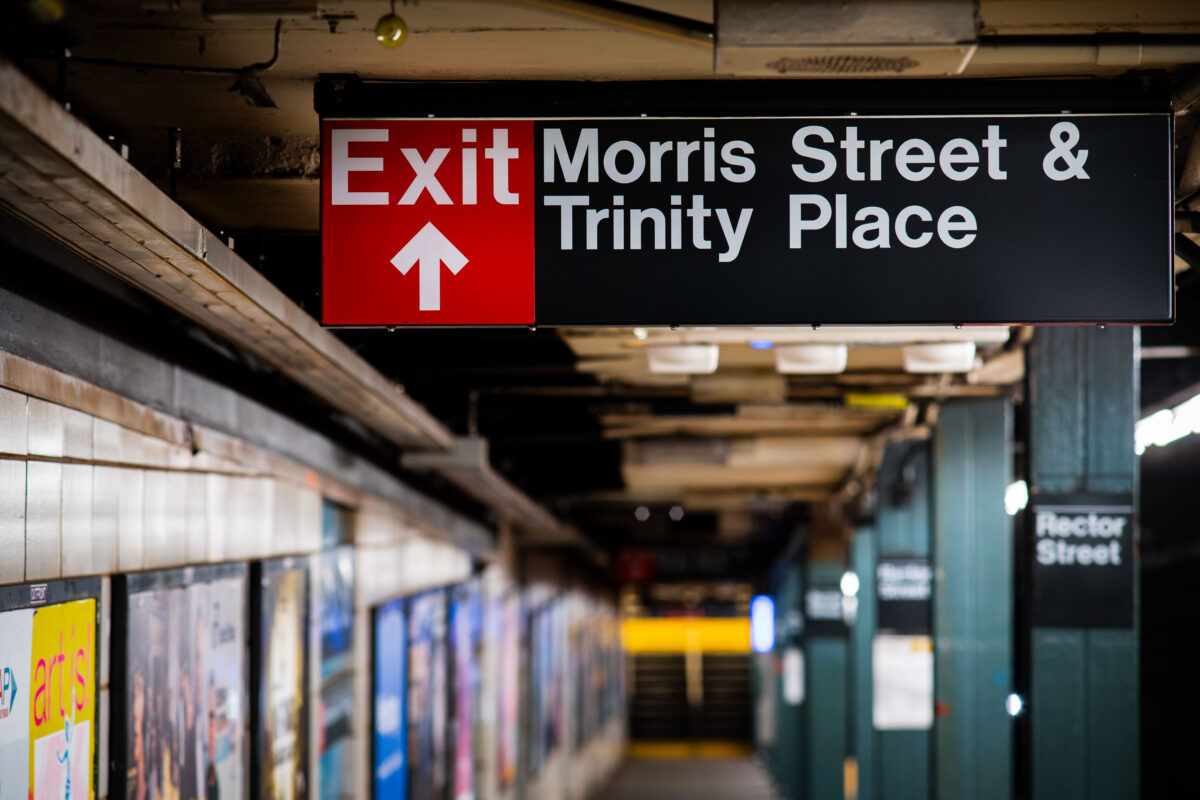
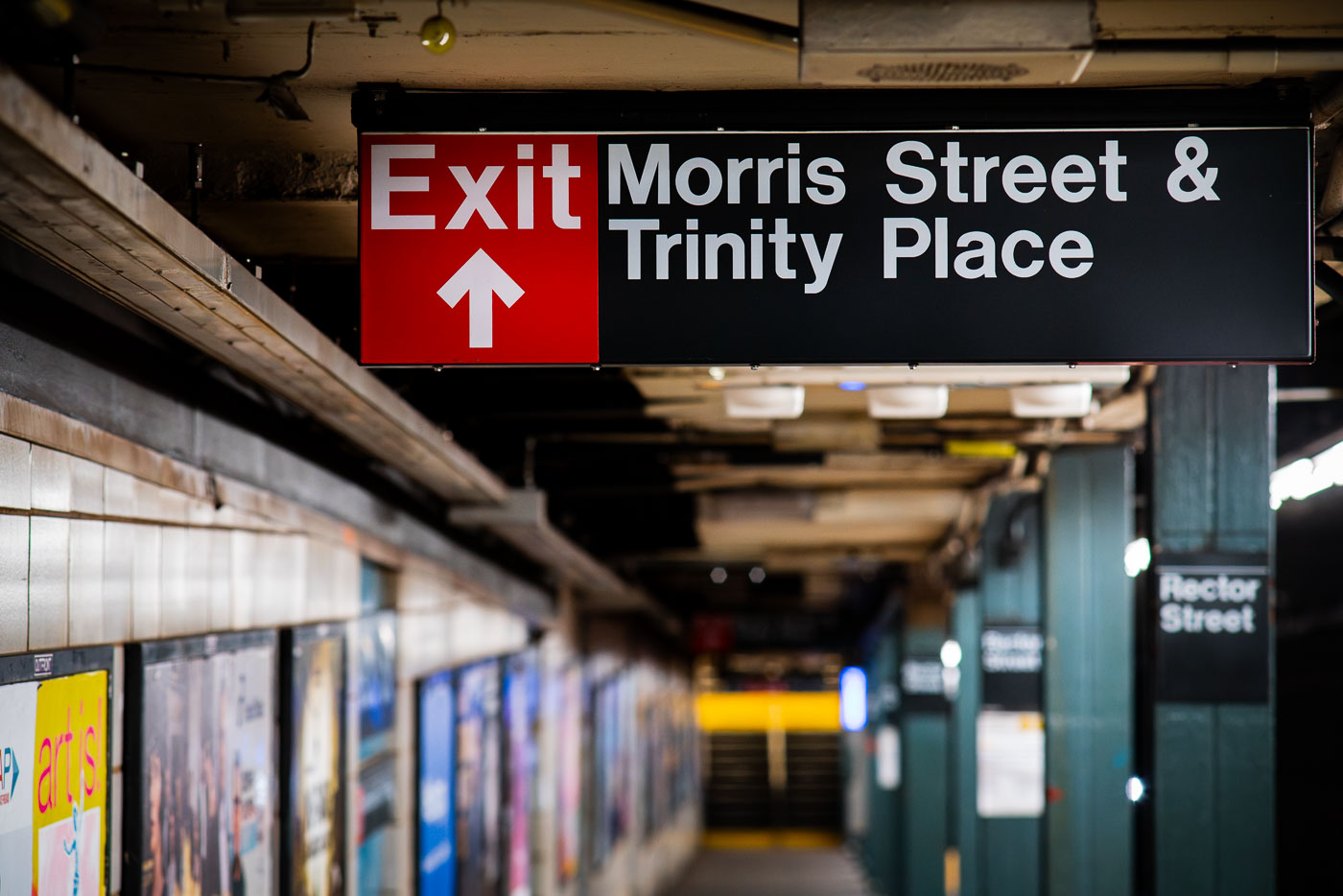
Exit sign at Rector Street subway station directing to Morris Street and Trinity Place in Manhattan.
Rector Street station serves the R train on the Broadway Line, running beneath Broadway in Lower Manhattan. It opened in 1904 as one of the original stations on the city's first subway line, built by the Interborough Rapid Transit Company. The station's exits connect riders to Trinity Place and Morris Street, placing it a short walk from Trinity Church and the New York Stock Exchange. Its platforms and mezzanines still carry much of the original tiling and signage typical of early IRT construction.

Exit Toward Morris Street and Trinity Place at Rector Street Station
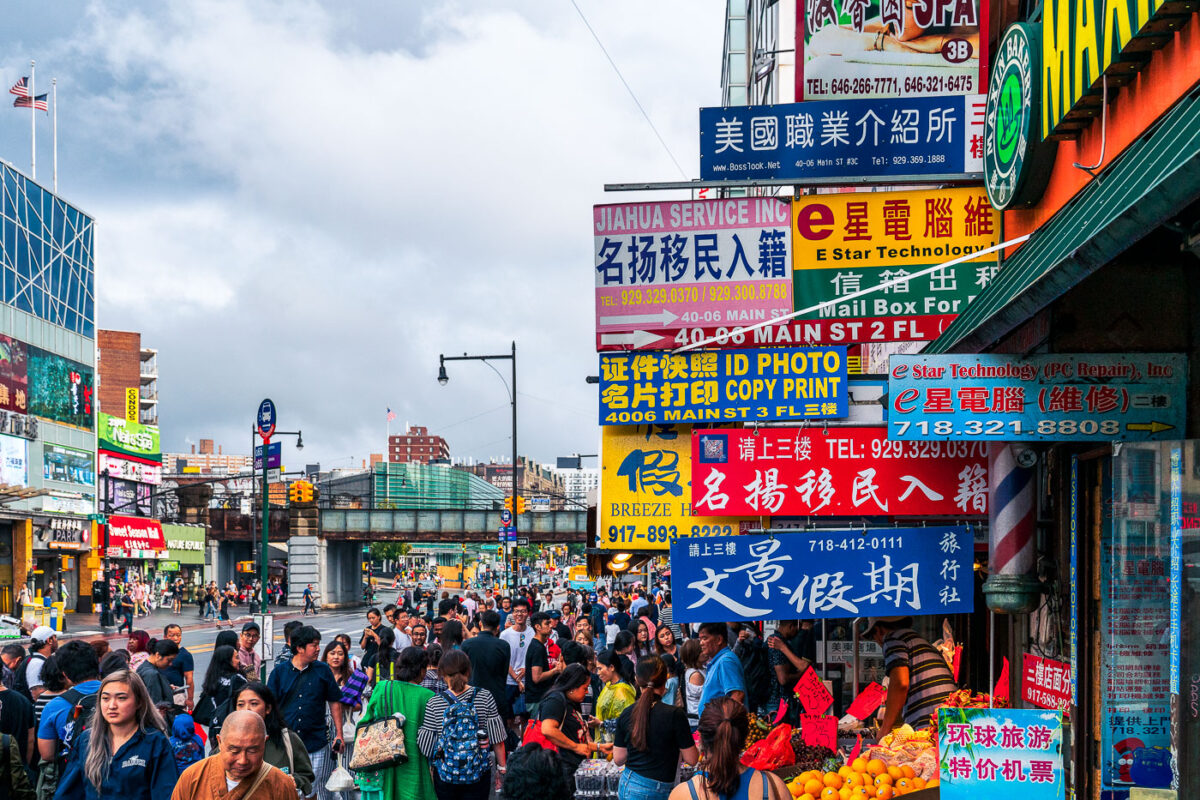
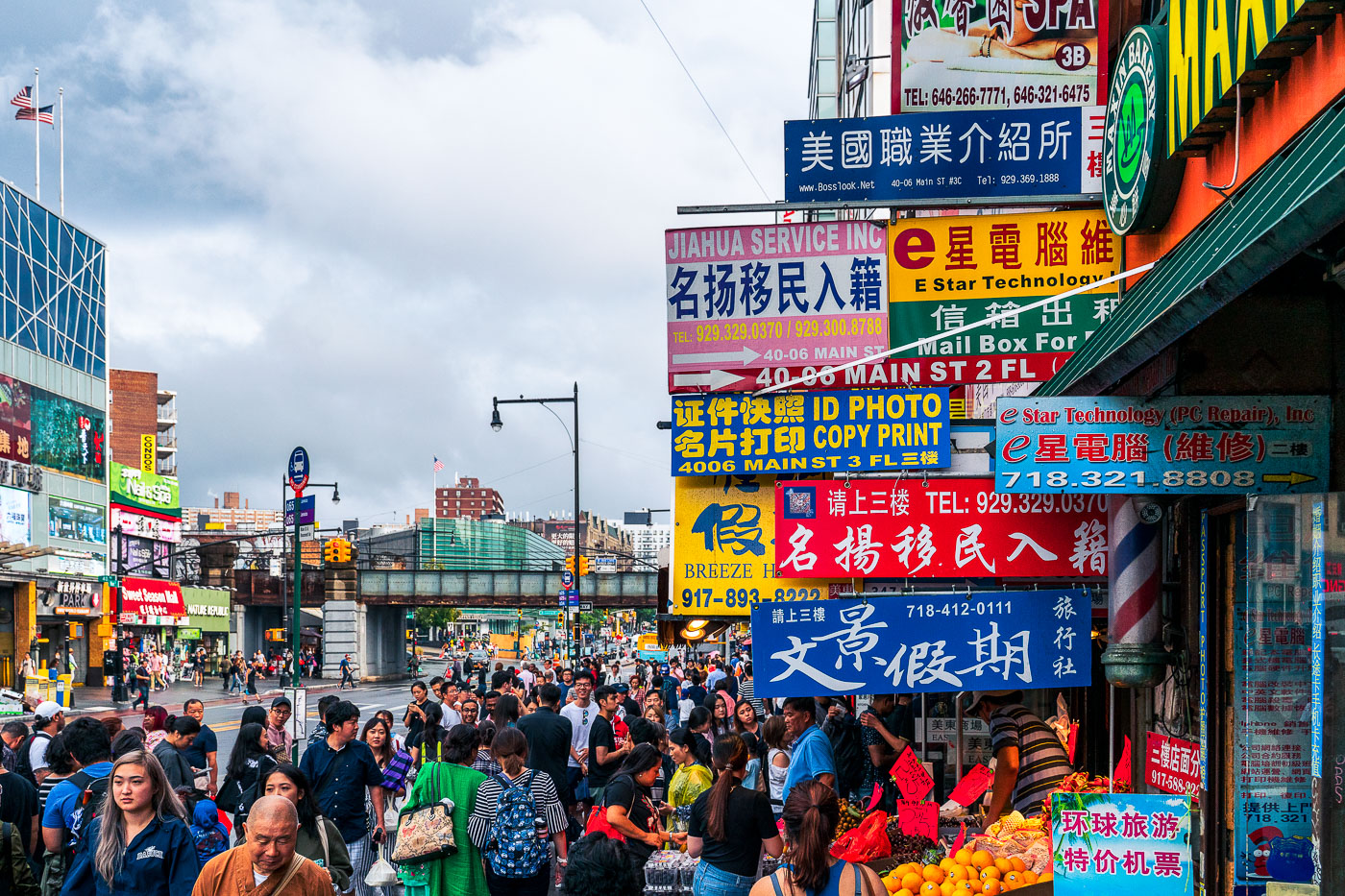
Crowded street in Flushing Chinatown, Queens, with bilingual signage and elevated subway structure overhead.
The bustling streetscape of Flushing Chinatown in Queens, New York City, is characterized by a dense concentration of businesses catering to the local Chinese-speaking community. Signs in both English and Chinese advertise a variety of services, including immigration assistance, technology repair, and travel agencies, reflecting the neighborhood's role as a vibrant commercial and cultural hub. The elevated railway structure overhead signifies the area's integration into the city's transit network, while the street-level activity highlights its function as a center for daily commerce and community life.

Crowded Sidewalk Beneath Signs on Main Street in Flushing
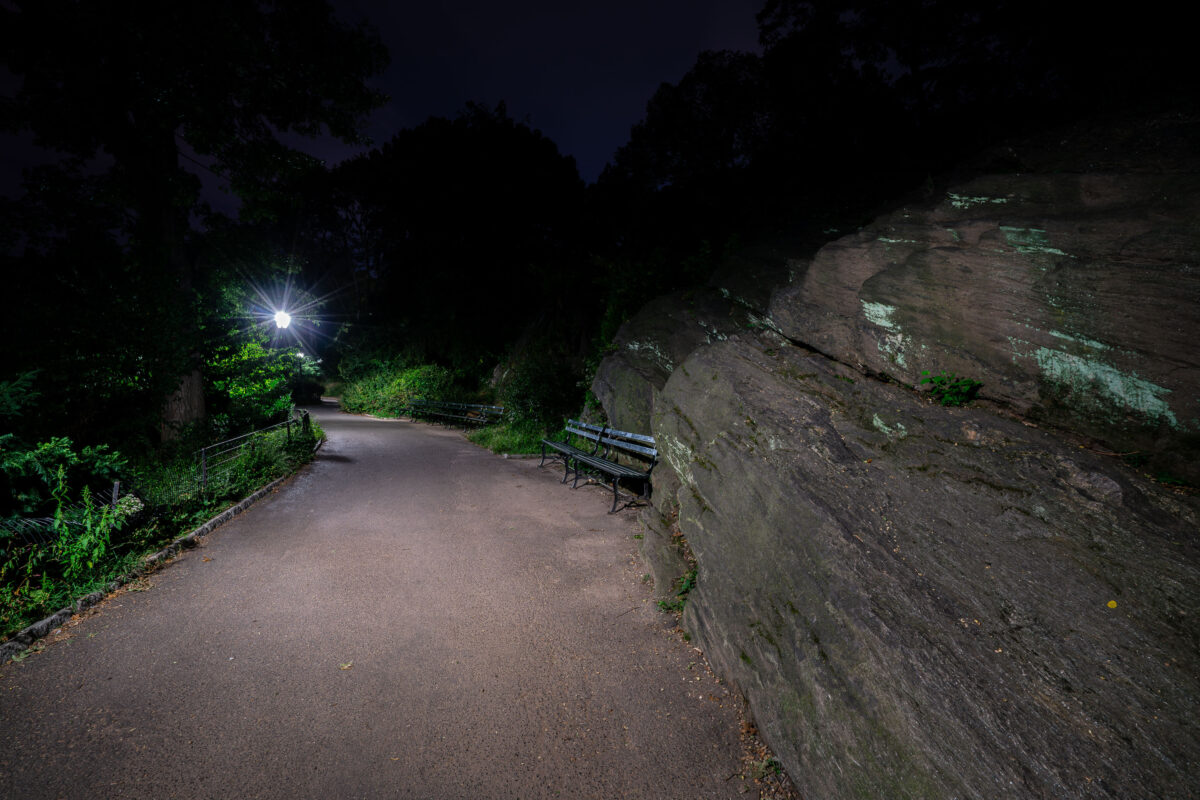
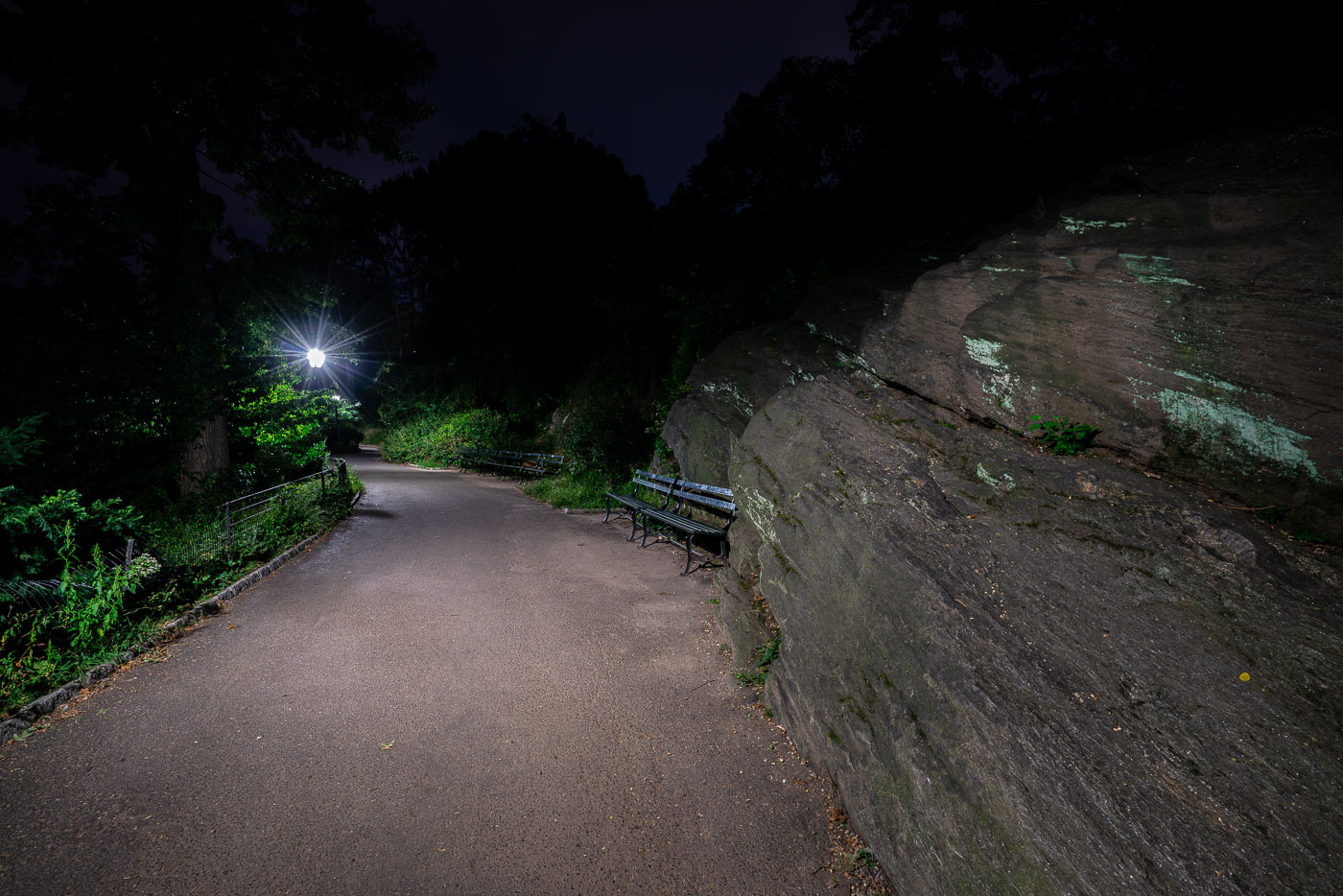
Park benches line a lamp-lit pathway in Central Park, Manhattan, at night.
Park benches are visible along a pathway in Central Park, Manhattan, illuminated by lamplight at night. Central Park, established in 1857, is a 843-acre public park in the center of Manhattan, New York City. The park's design by Frederick Law Olmsted and Calvert Vaux features naturalistic landscapes and winding paths, providing a green space for city residents and visitors. These benches are part of the park's infrastructure, intended for quiet contemplation and enjoyment of the natural surroundings within the urban environment.

Lamplit Path Along a Rock Outcrop in Central Park
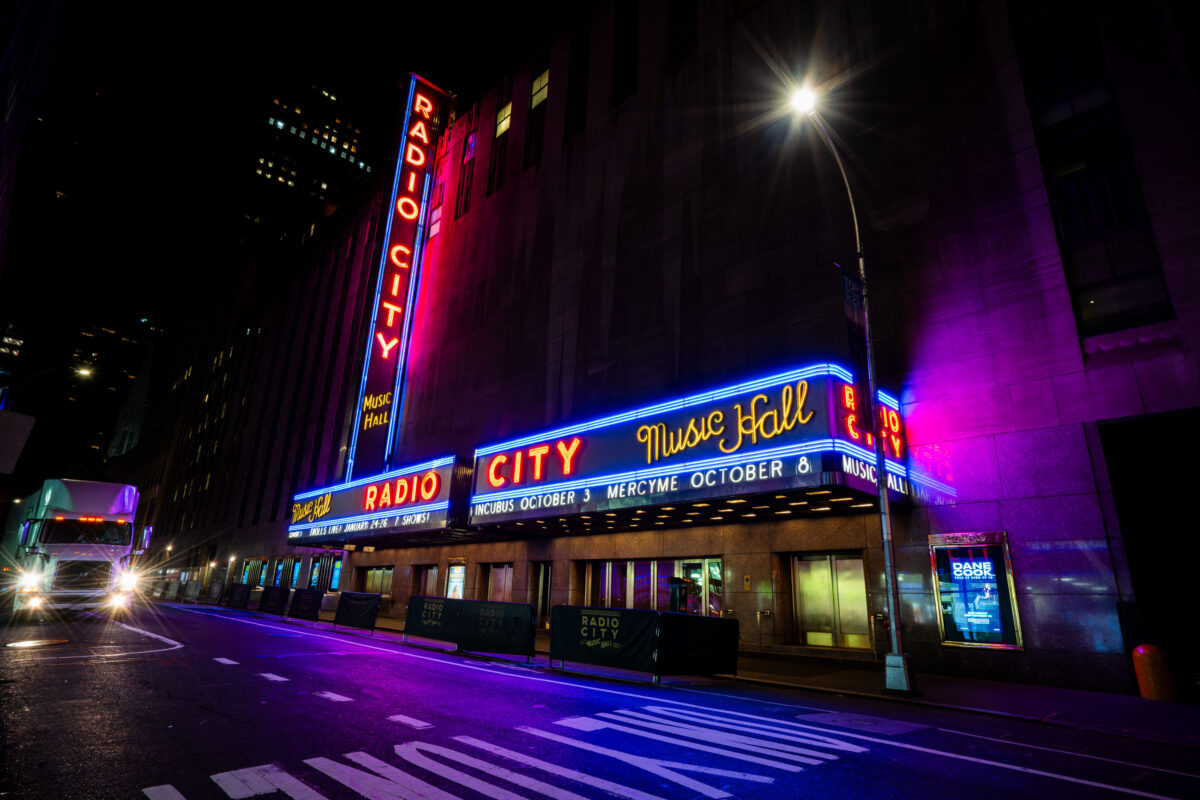
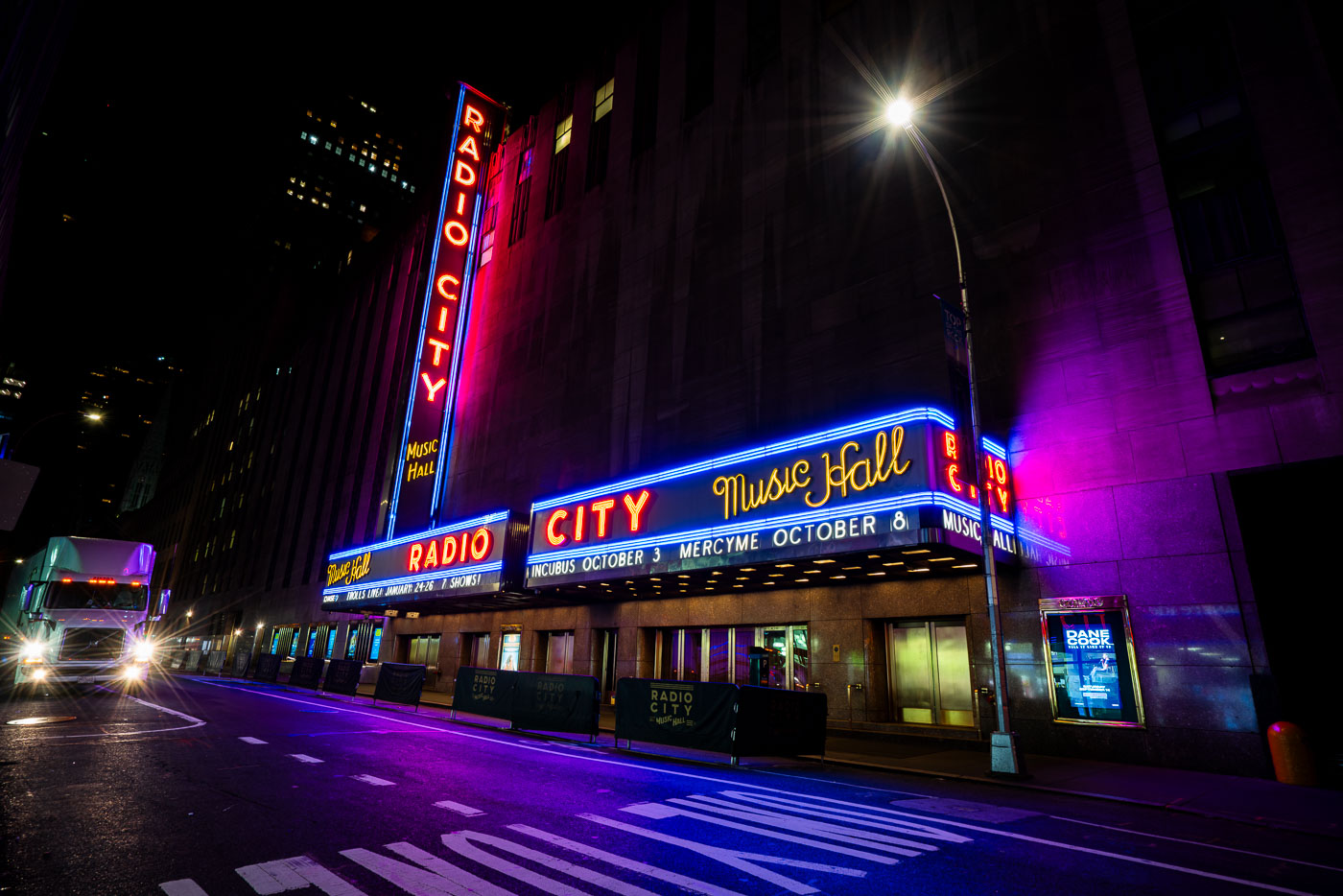
Radio City Music Hall marquee illuminated at night on 6th Avenue in Midtown Manhattan.
Radio City Music Hall on 6th Avenue in Midtown Manhattan is a theater and concert venue within Rockefeller Center. Opened in 1932, it was designed by Edward Durell Stone with interiors by Donald Deskey and became one of the city's best-known Art Deco performance spaces. The marquee advertises appearances by Incubus, MercyMe, and Dane Cook.

Radio City Music Hall’s Marquee Lit Up at Night
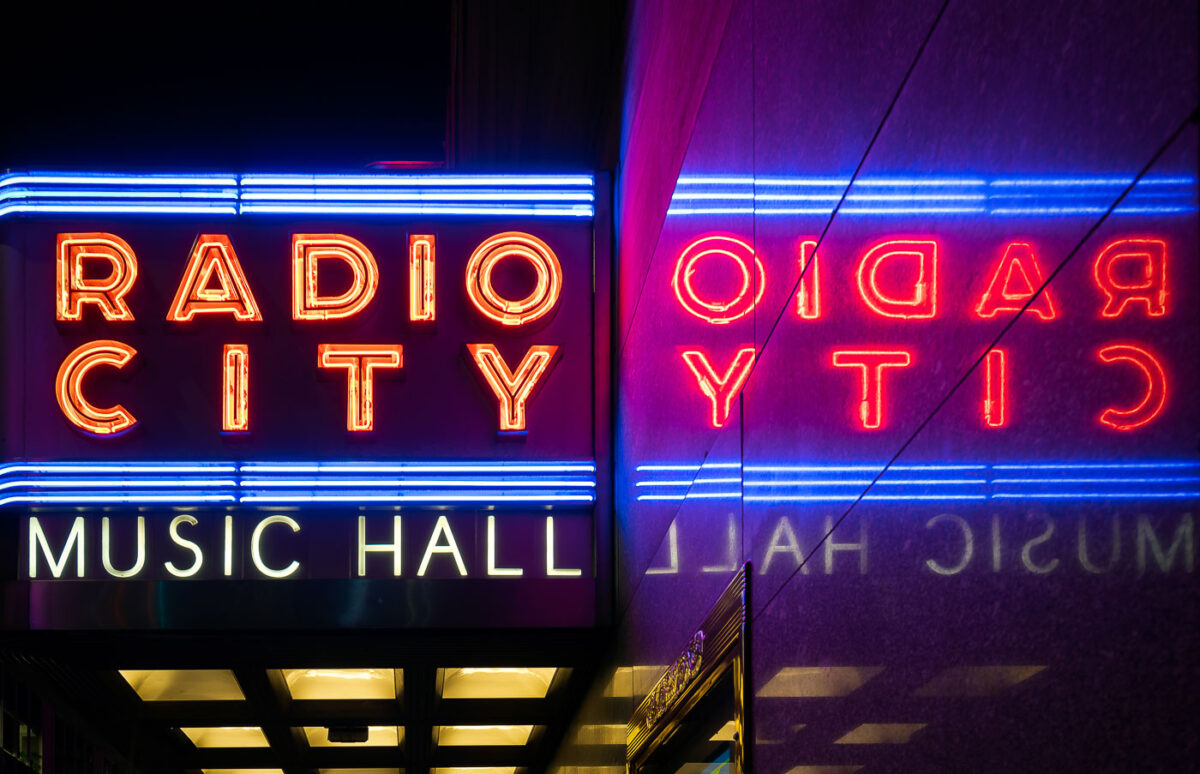
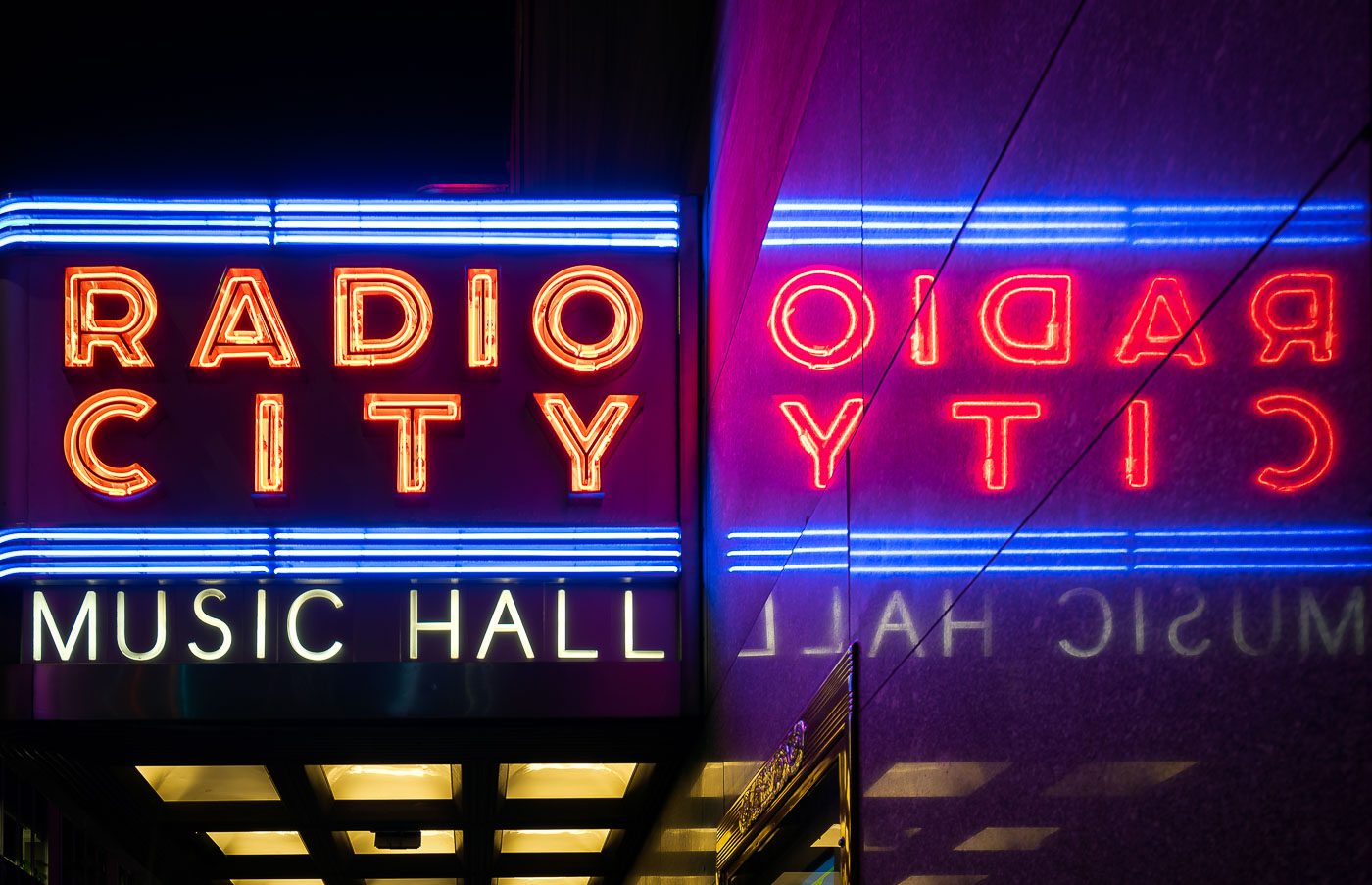
Radio City Music Hall neon sign glows orange and blue on Manhattan's facade at night.
The neon signage for Radio City Music Hall in New York City illuminates the building's facade at night. Opened in 1932, Radio City Music Hall was designed by architect Edward Durell Stone and interior designer Donald Deskey as a premier venue for vaudeville and musical productions. It quickly became a landmark of Art Deco architecture and a cultural hub in Manhattan. Today, the venue continues to host a variety of live performances, including concerts, stage shows, and the annual Christmas Spectacular starring the Rockettes.

Radio City Music Hall’s Marquee Reflected in Glass at Night
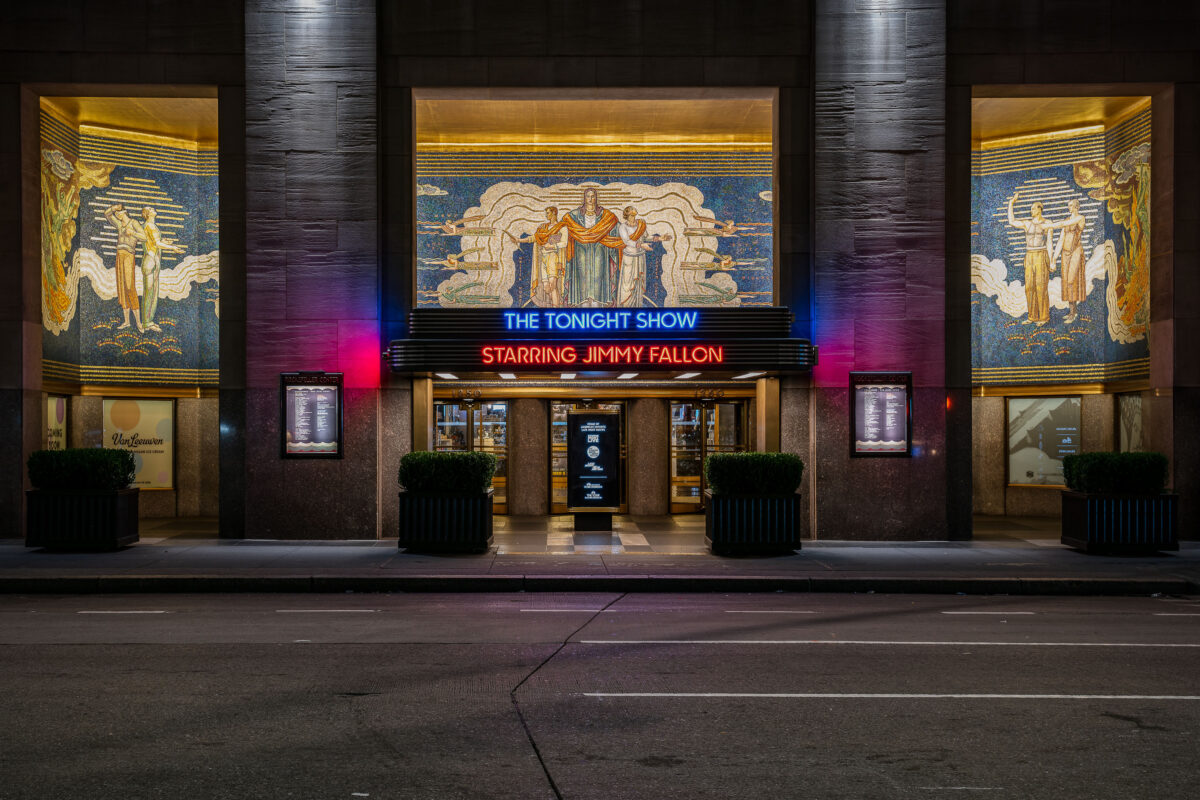
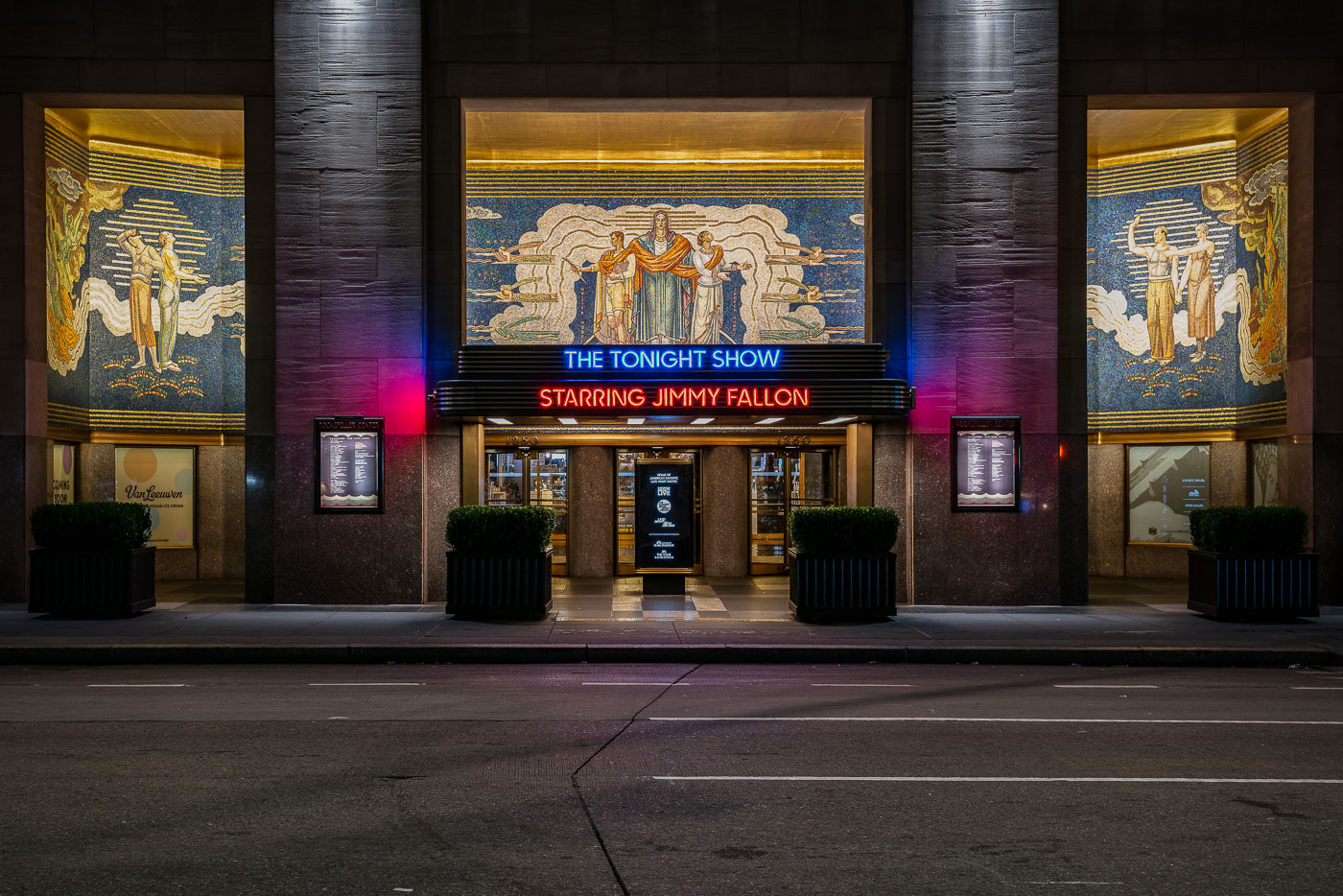
The Tonight Show marquee advertising Jimmy Fallon at NBC Studios, 30 Rockefeller Plaza in Manhattan.
The Tonight Show marquee marks the entrance to NBC studios at 30 Rockefeller Plaza in Midtown Manhattan. The program broadcasts from Studio 6B inside the building, part of Rockefeller Center and a longtime center of NBC television production. The Art Deco skyscraper, completed in 1933 as the RCA Building, remains a major NBCUniversal broadcast site.

The Tonight Show Entrance at Night, Rockefeller Center
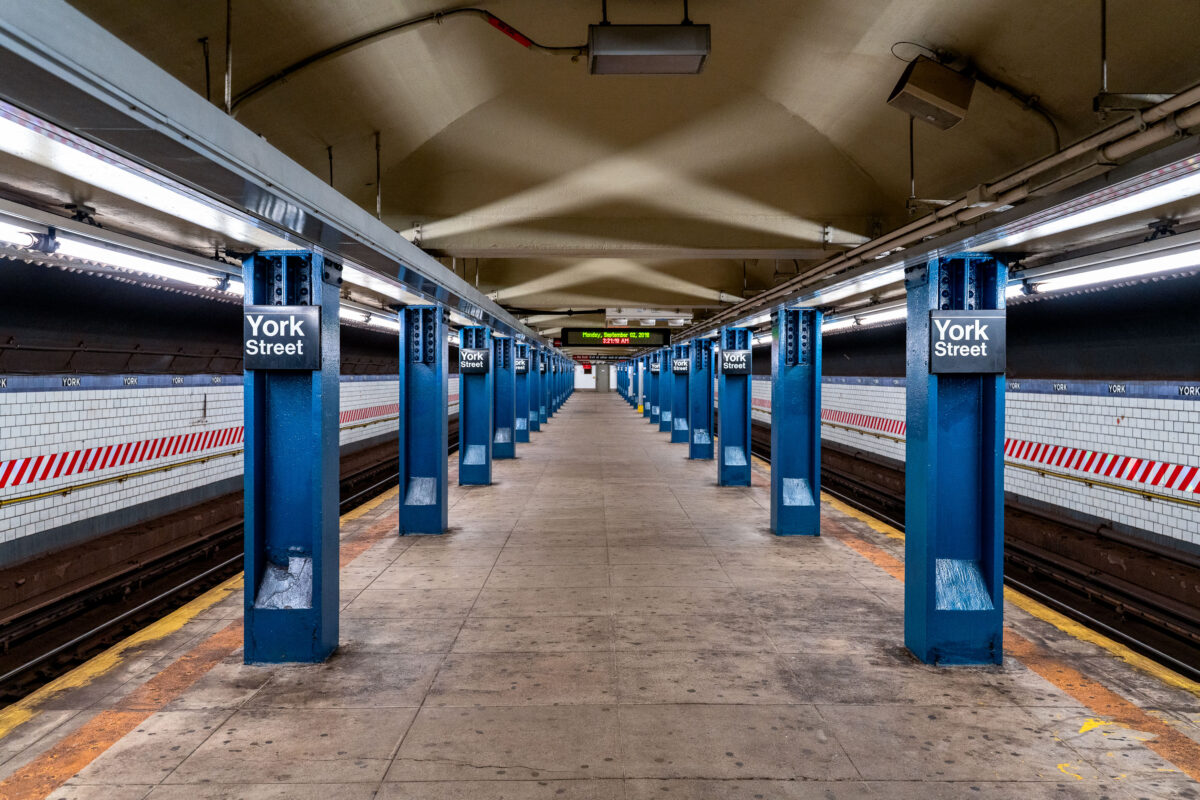
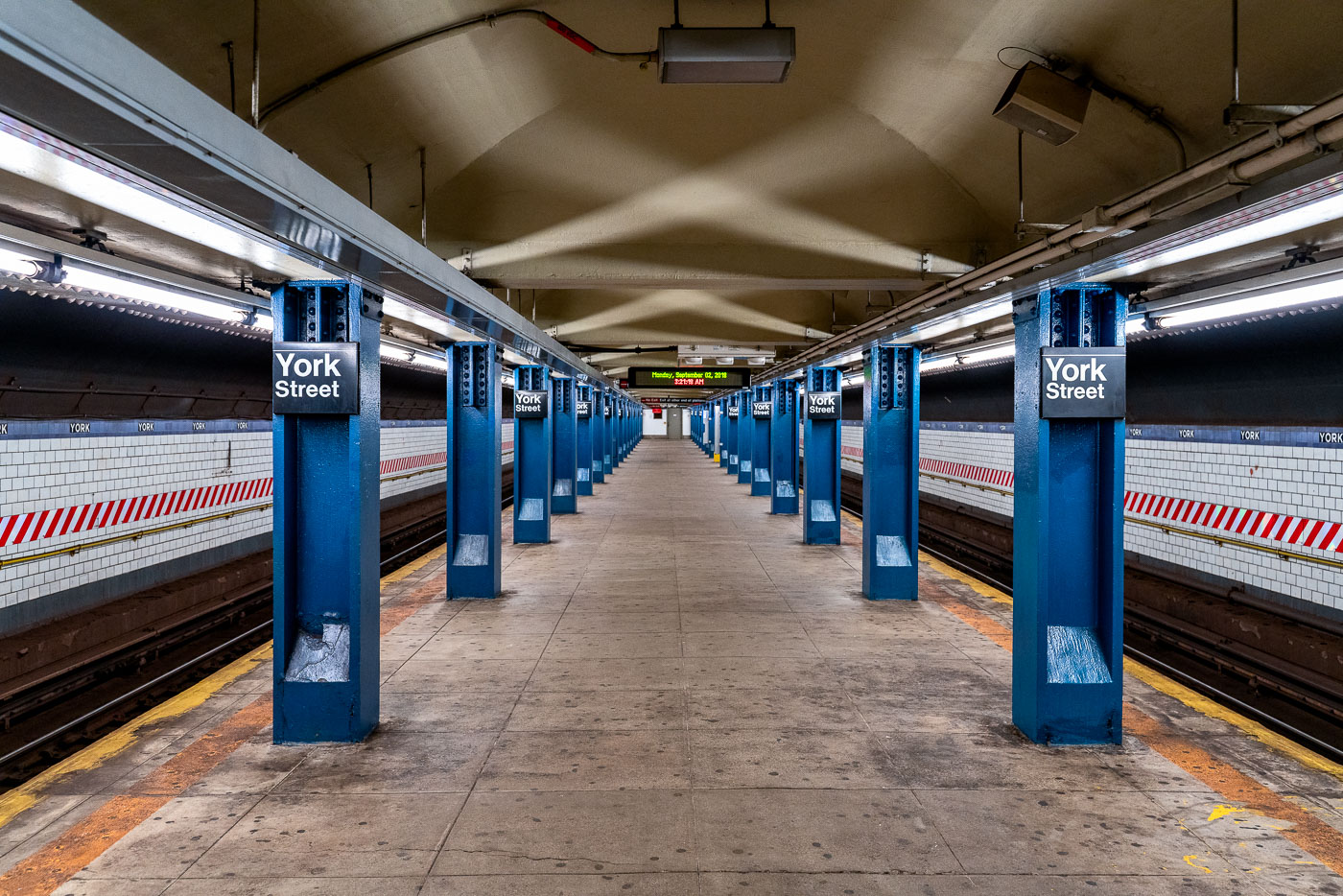
York Street subway station platform in Brooklyn with blue columns and fluorescent lighting.
The York Street subway station, located in the DUMBO neighborhood of Brooklyn, New York, serves the F and M trains. Opened in 1931, it is one of the deepest subway stations in the New York City Subway system.

Repeating Blue Columns Along the Platform at York Street Station
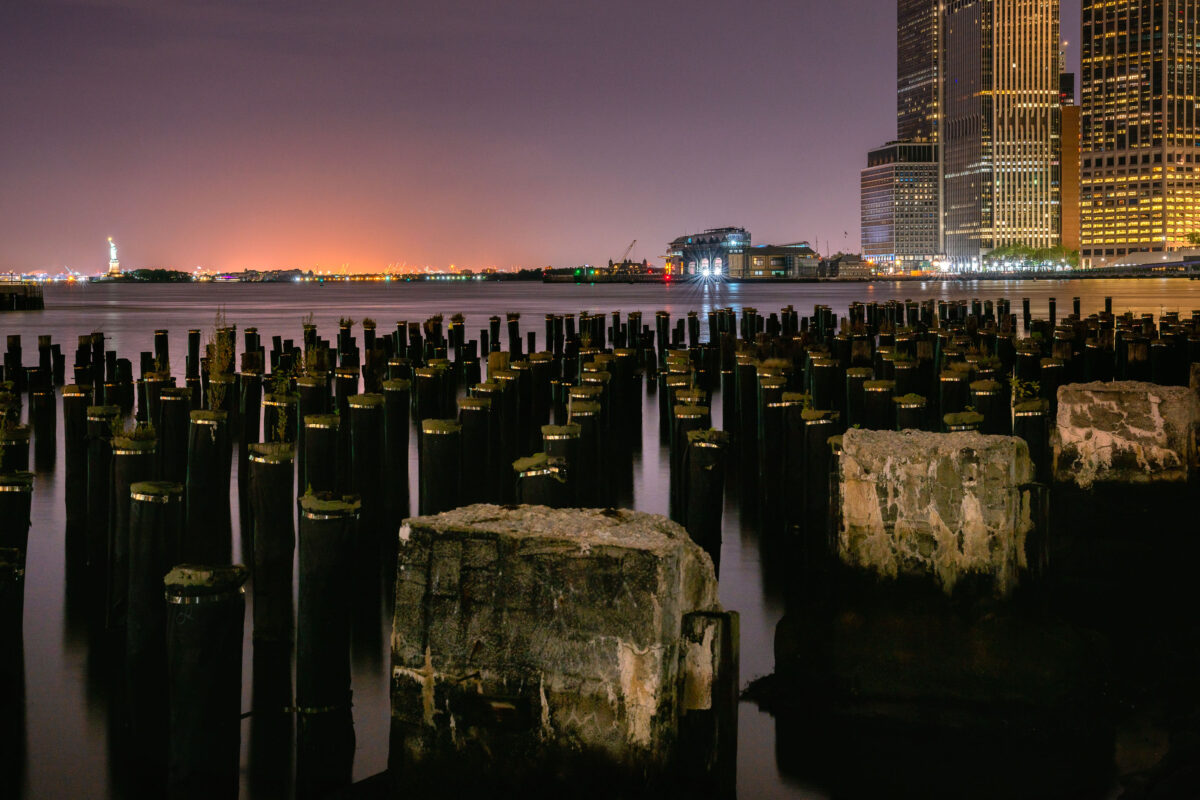
Weathered wooden pilings on the East River at dusk with Manhattan skyline and Statue of Liberty beyond.
The remnants of the East River piers stand in the foreground, a testament to New York City's maritime past. These pilings once supported bustling docks that facilitated trade and passenger travel along the East River. In the distance, the Statue of Liberty is visible, a symbol of the city's historical role as a gateway for immigrants. The modern Manhattan skyline rises behind, representing the city's continuous transformation and its enduring status as a global center.

Battery Park City Pilings at Night with the Statue of Liberty Beyond
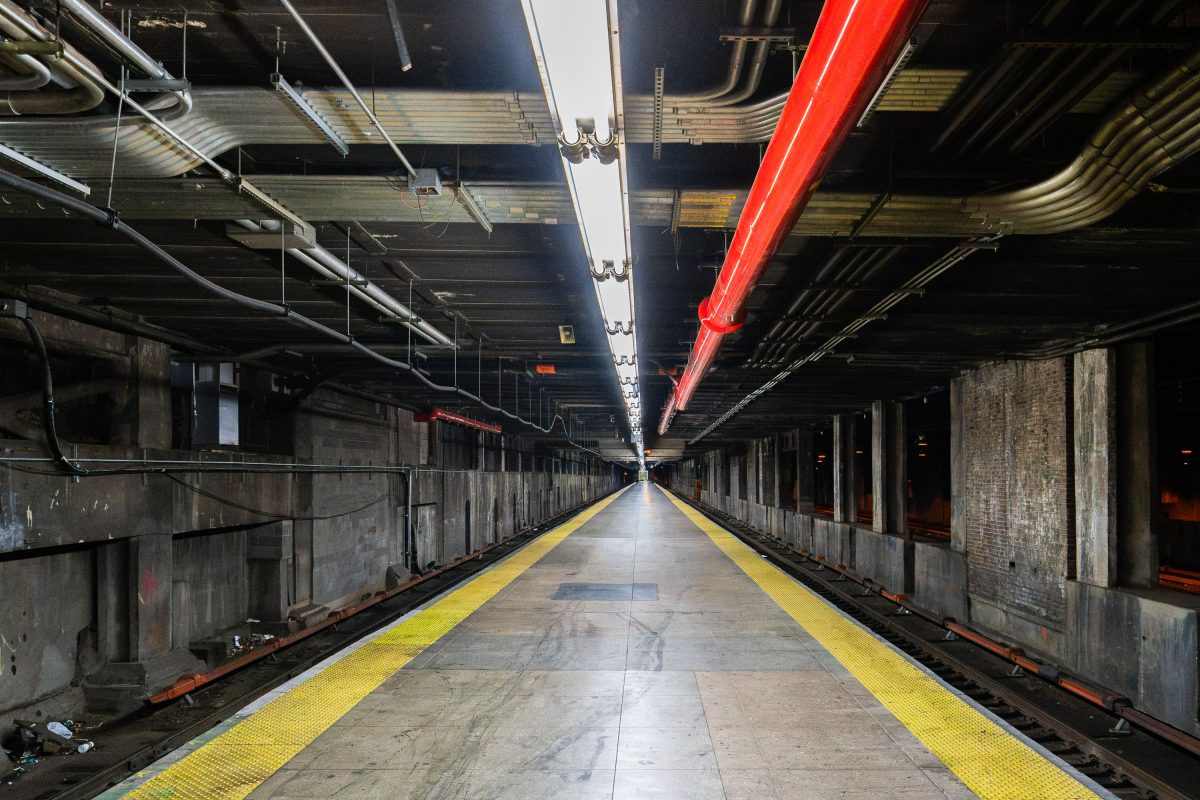
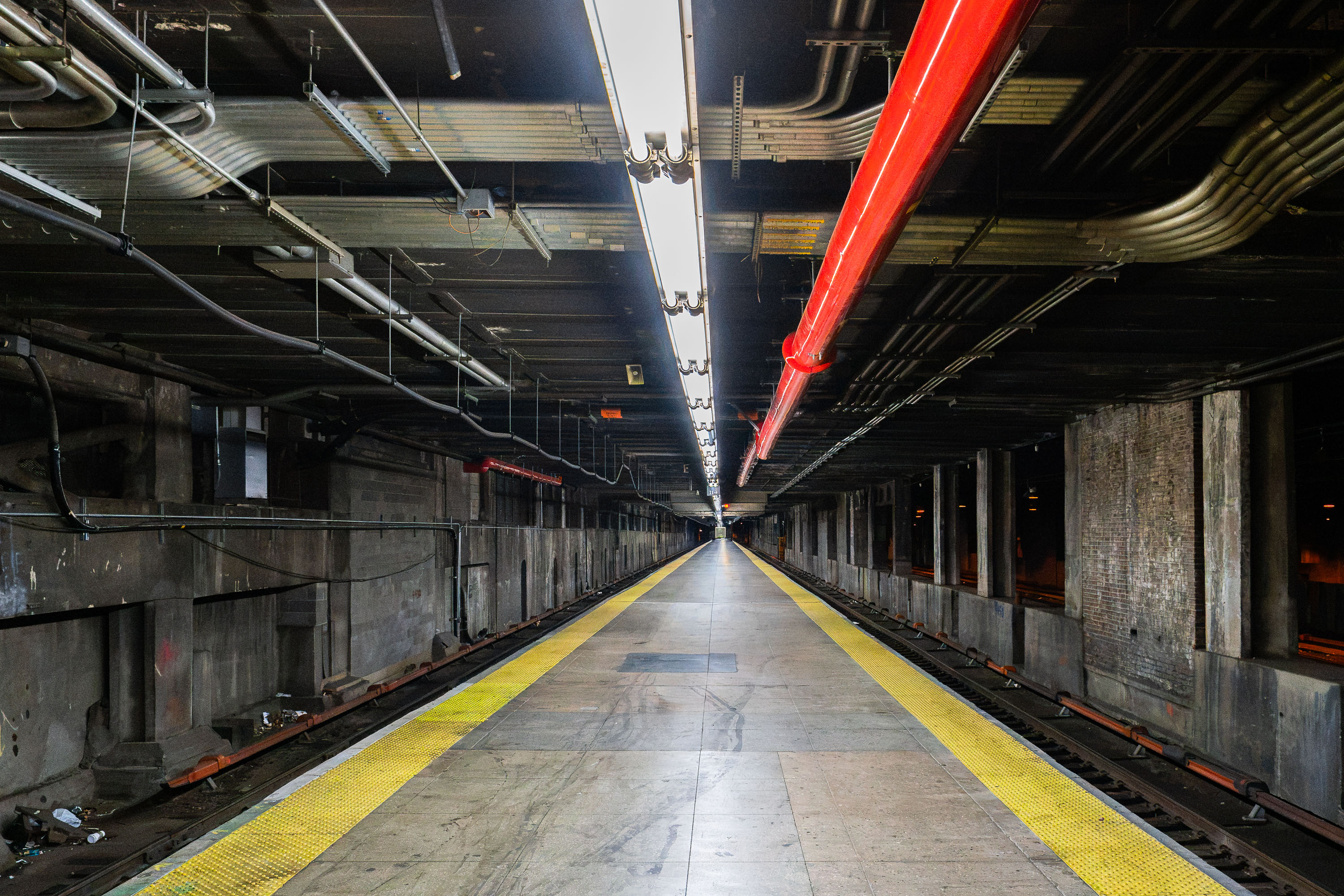
Empty subway platform at Grand Central–42nd Street Station in New York City with yellow safety lines and red overhead lighting.
Grand Central–42nd Street is one of the busiest stations in the New York City Subway system, serving the 4, 5, 6, and 7 trains along with the 42nd Street Shuttle to Times Square. The complex opened in stages beginning in 1904 as part of the original Interborough Rapid Transit Company line, the first subway built in New York City. It sits beneath Park Avenue and 42nd Street, adjacent to the Grand Central Terminal building operated by the Metropolitan Transportation Authority. The station's number 6 line platforms retain much of their early twentieth-century construction, including exposed steel columns and concrete platform edges dating to the original IRT build-out.

Empty Platform at Grand Central–42nd Street Subway Station
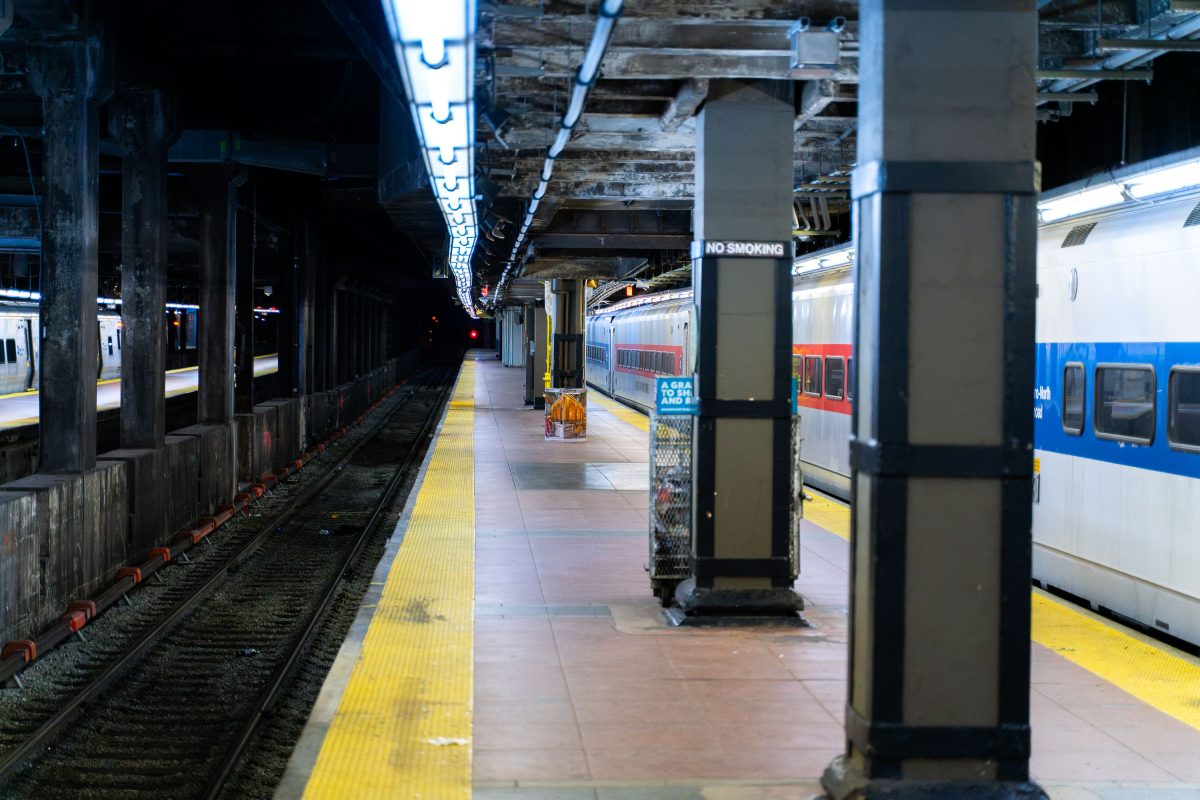
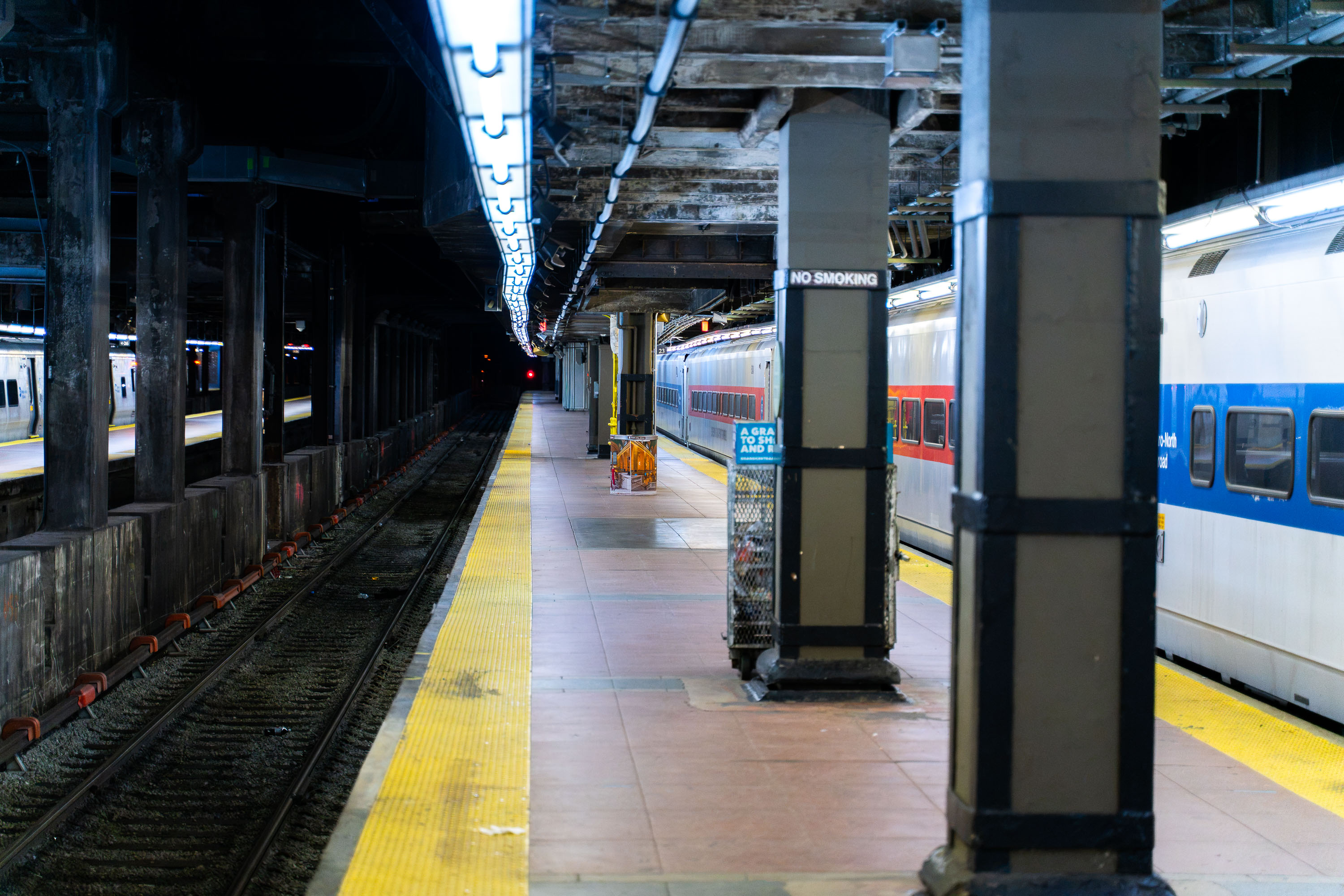
Metro-North Railroad platform at Grand Central Terminal in New York City with commuter trains at the station.
Grand Central Terminal opened in 1913 as the flagship station of the New York Central Railroad, replacing an earlier depot on the same site at 42nd Street and Park Avenue. Today the terminal serves as the southern terminus for the Metro-North Railroad, which operates commuter service on the Hudson, Harlem, and New Haven lines into the northern suburbs and Connecticut. The station's lower level, built to separate suburban and long-distance traffic, houses additional platforms below the main concourse. Metro-North alone carries tens of millions of passengers a year through the terminal, making it one of the busiest rail hubs in the country.

Empty Platform Below Grand Central Terminal’s Lower Level
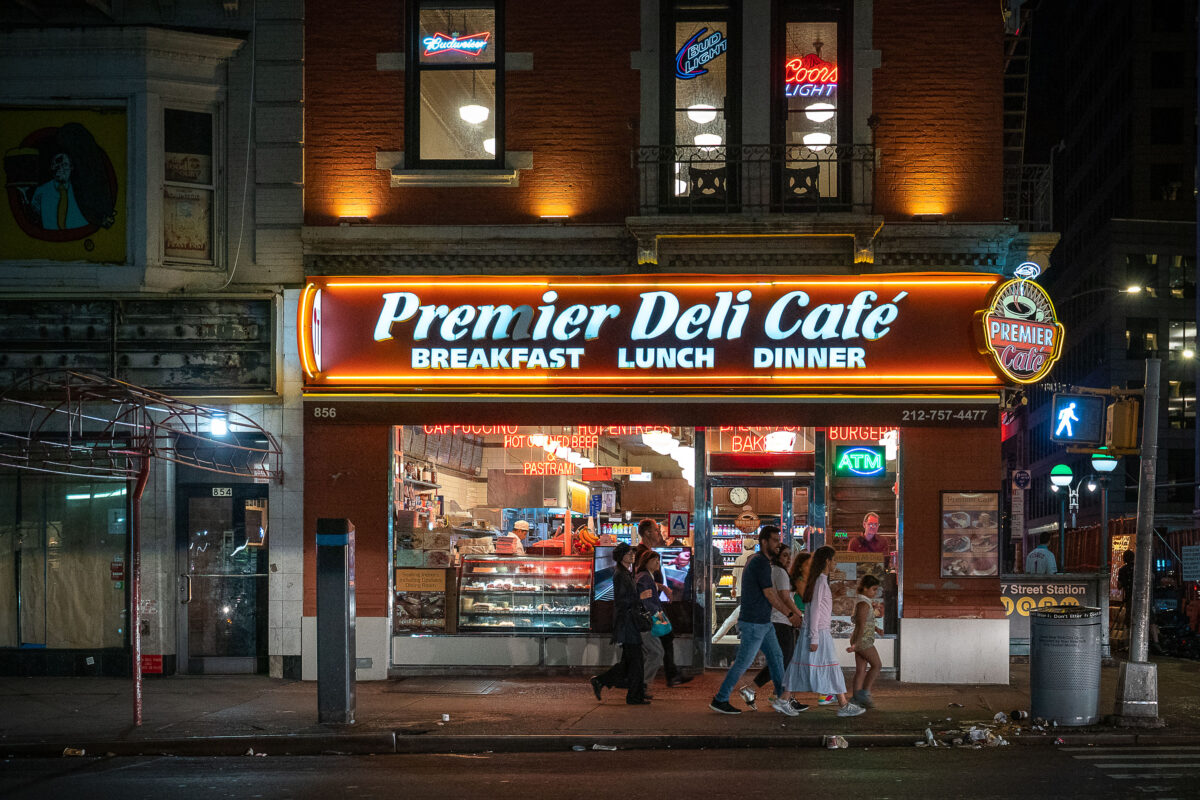
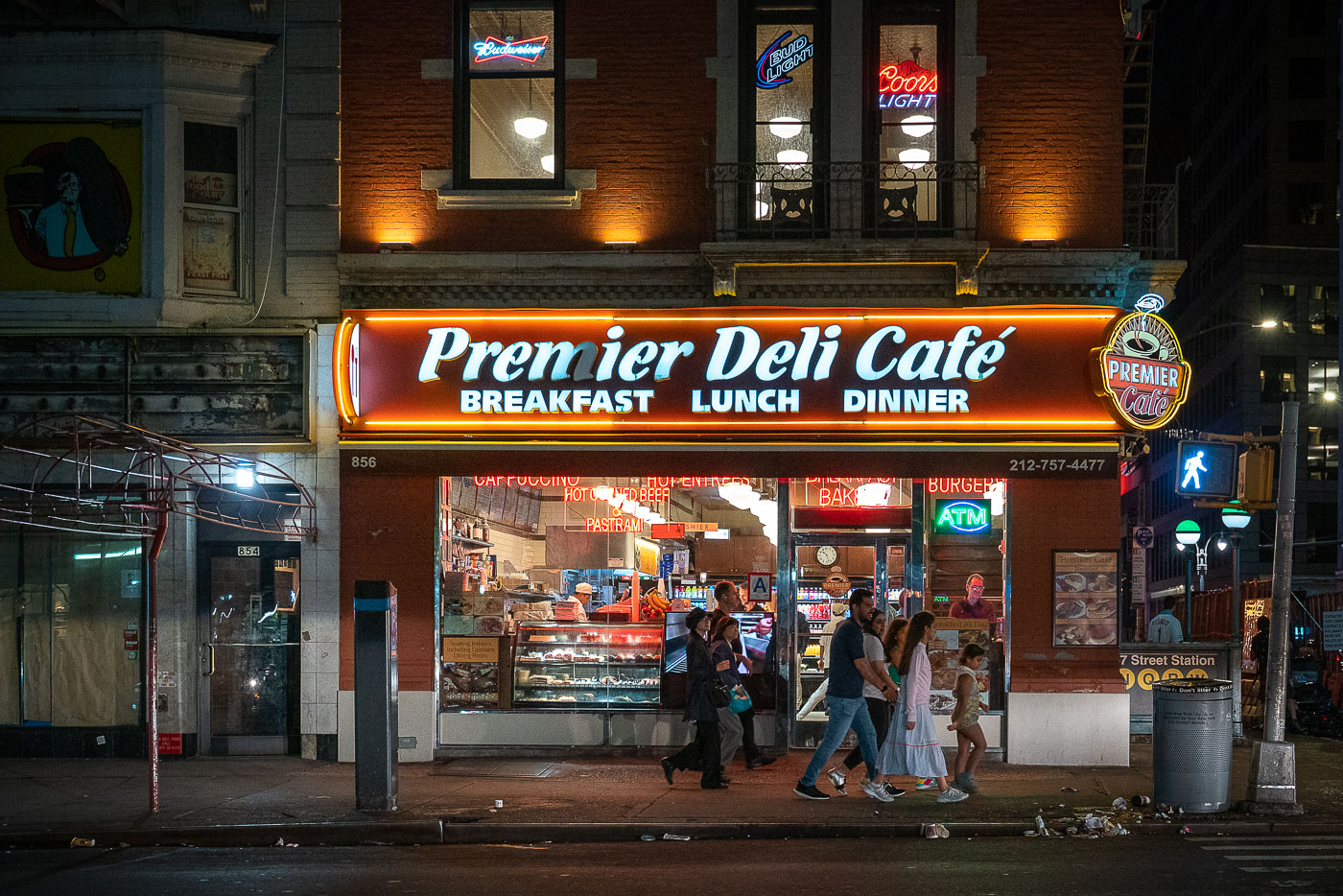
Premier Deli Cafe storefront at 856 Lexington Avenue on Manhattan's Upper East Side at night.
Premier Deli Cafe at 856 Lexington Avenue on Manhattan's Upper East Side is a neighborhood deli and grill open late for breakfast, lunch, and dinner. The storefront stands beside the 59 Street station entrance, placing it along a busy corridor near the Queensboro Bridge approach. Window signage advertises deli staples including pastrami, corned beef, burgers, baked goods, and coffee drinks.

Pedestrians Pass Premier Deli Café at Night on Lexington Avenue
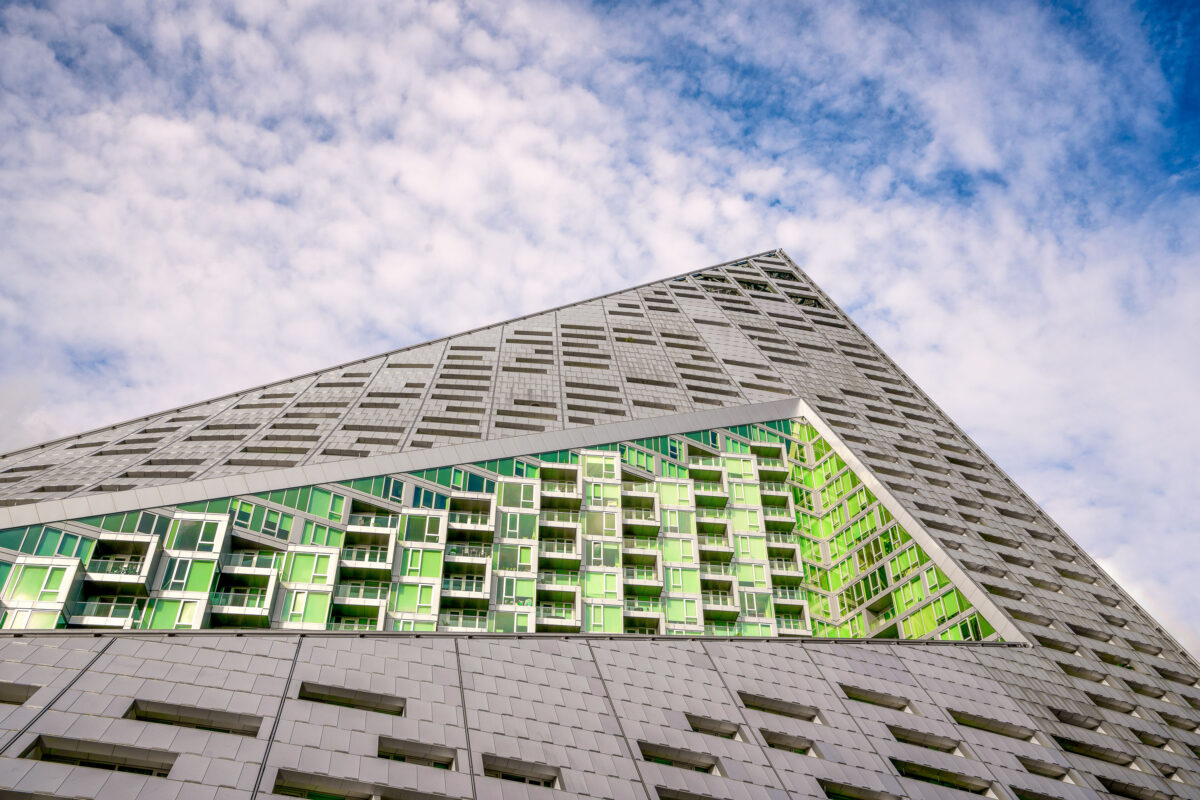
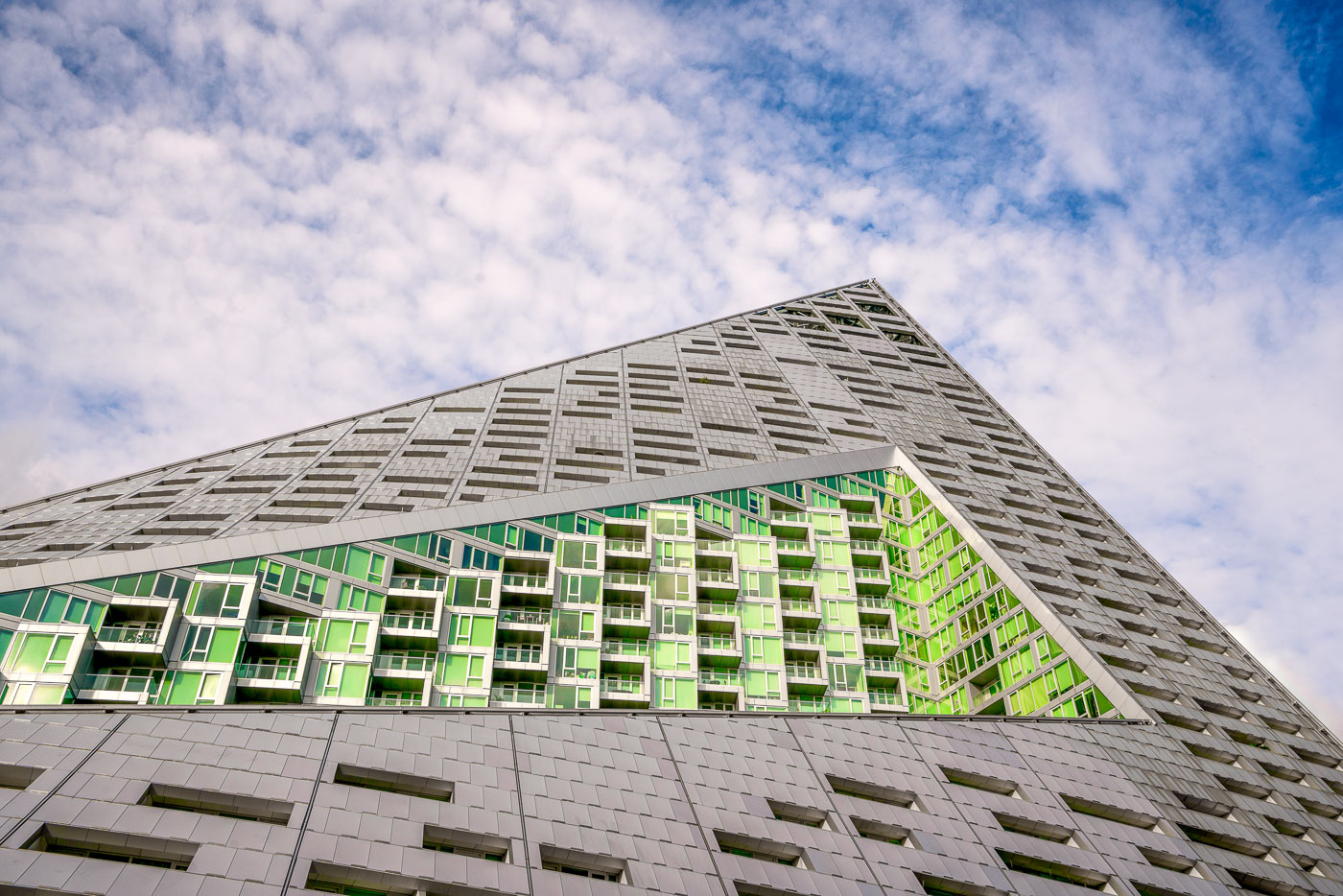
VIA 57 West residential building with green-windowed facade and geometric gray roof in Manhattan's Hell's Kitchen.
VIA 57 West at 625 West 57th Street in Manhattan is a residential building in the Hell's Kitchen neighborhood. Designed by Bjarke Ingels Group and completed in 2016, the project combines a high-rise tower with a courtyard block in a distinctive tetrahedron form. The design was developed to bring light and views into the apartments while enclosing a shared interior courtyard.

VIA 57 West’s Pyramid Facade in Hell’s Kitchen
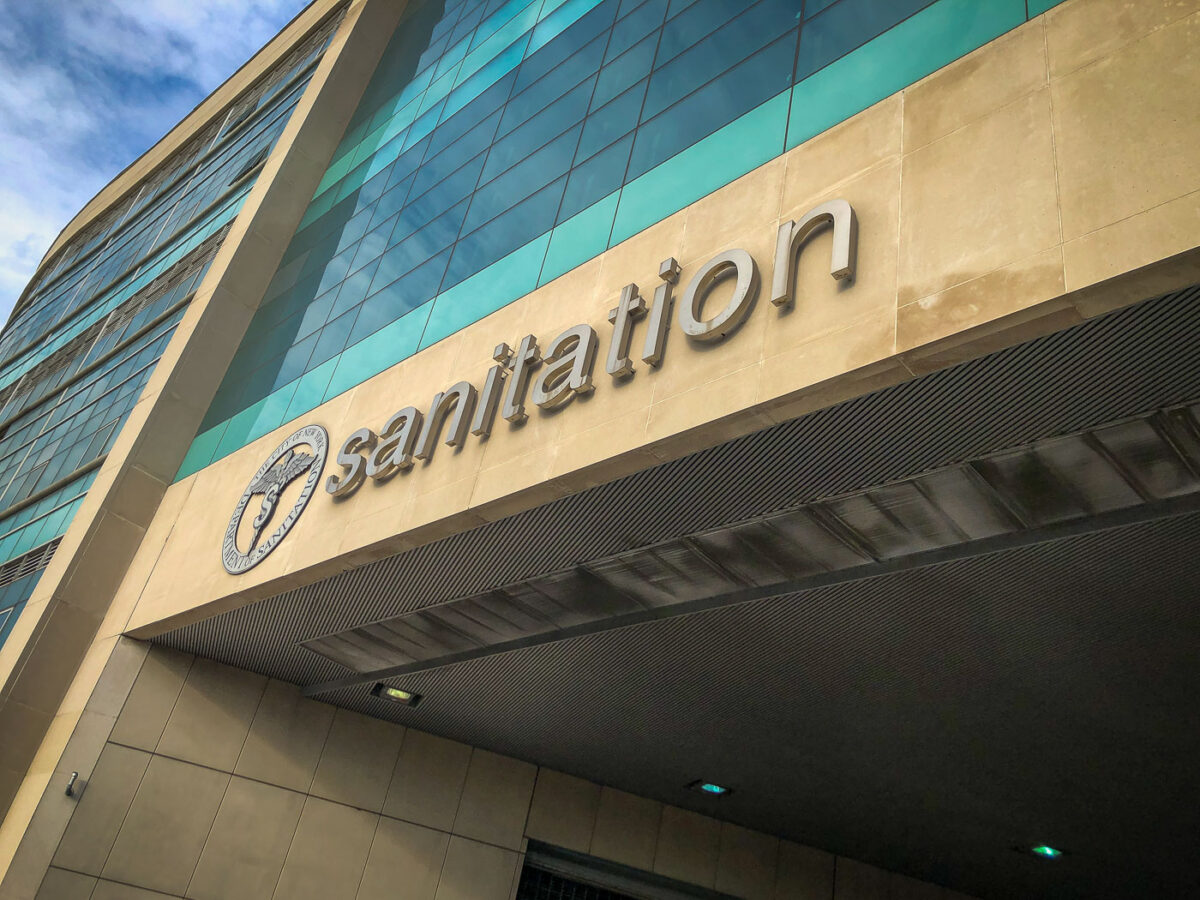
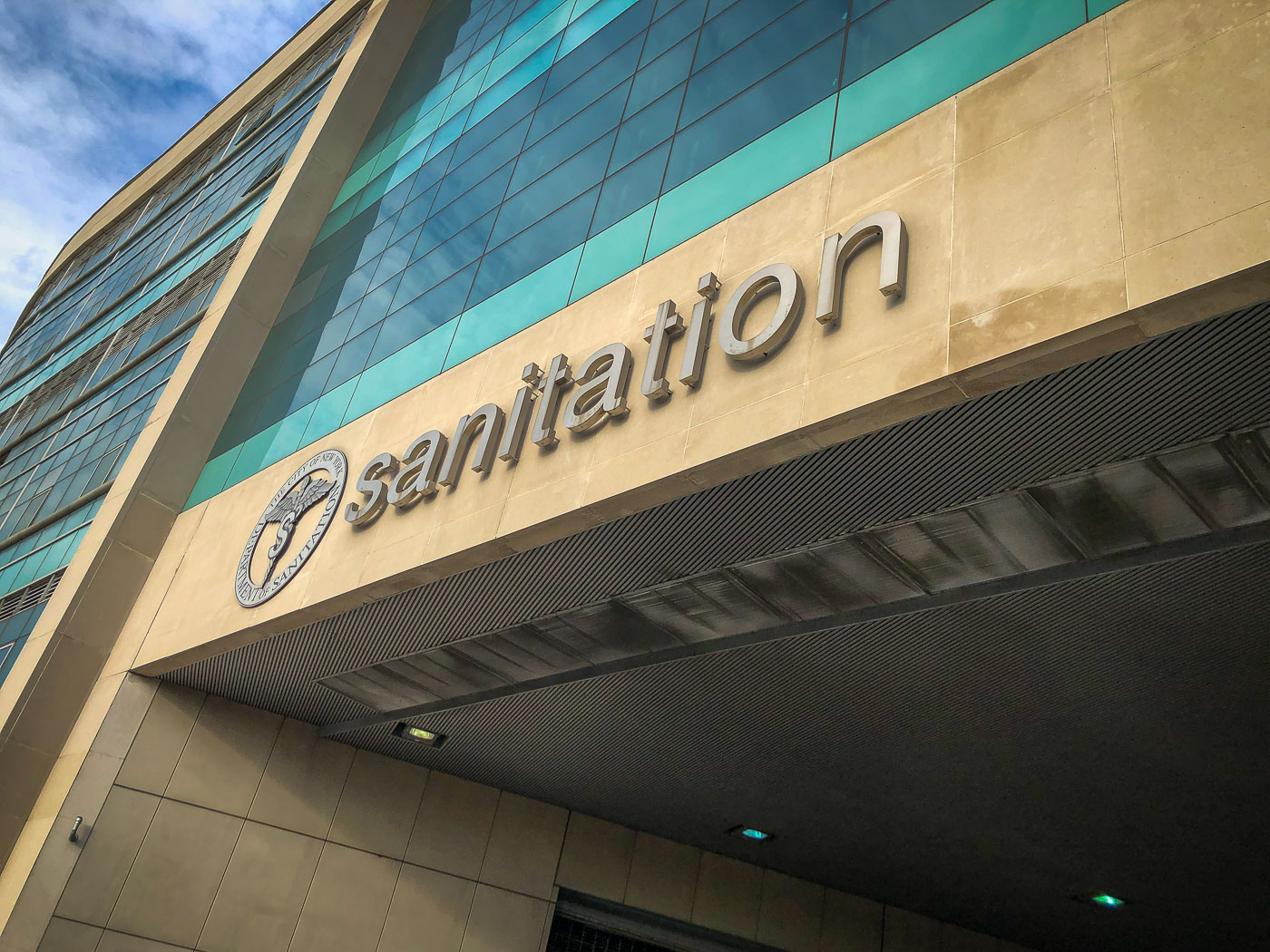
New York City Department of Sanitation headquarters building entrance with agency signage and seal.
New York City Department of Sanitation headquarters in New York City. The building entrance carries the agency seal and large “sanitation” lettering identifying the headquarters of DSNY, the municipal department responsible for waste collection, street cleaning, and snow removal. The facade combines stone cladding with a glass curtain wall typical of late 20th-century civic office construction.

DSNY Headquarters Entrance and Seal, Manhattan
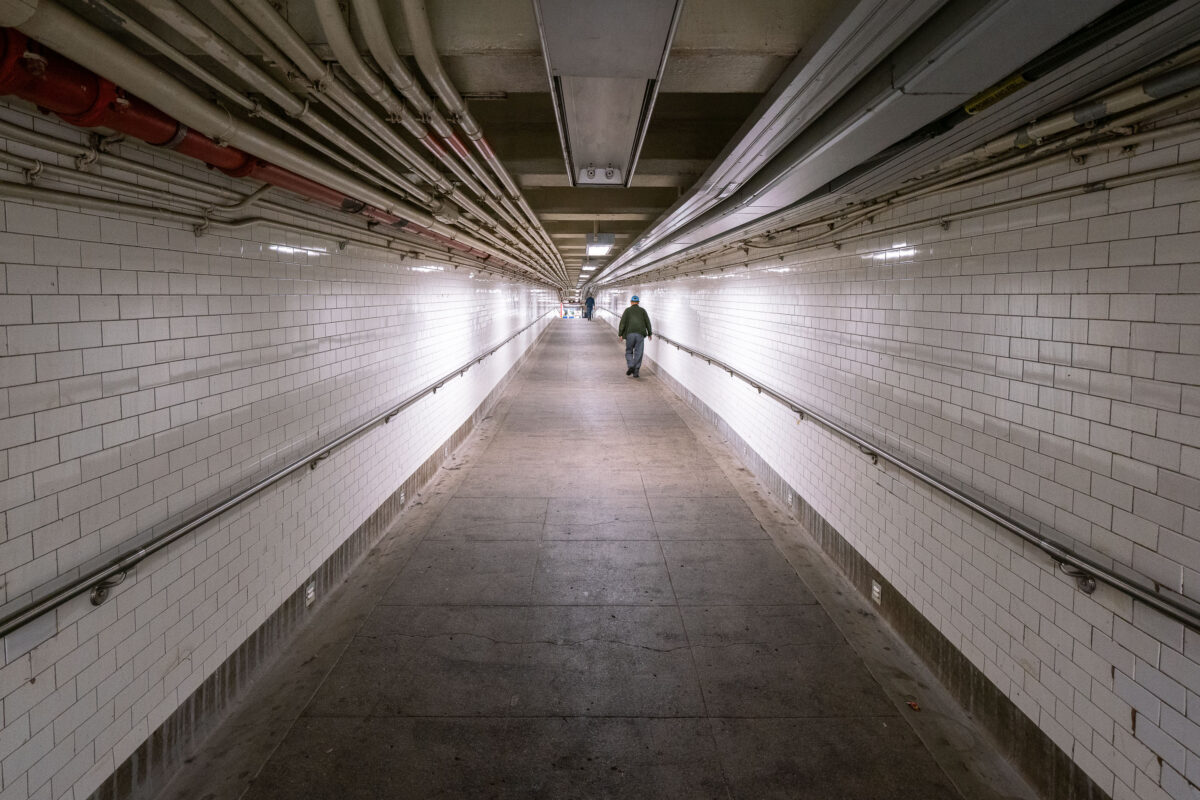
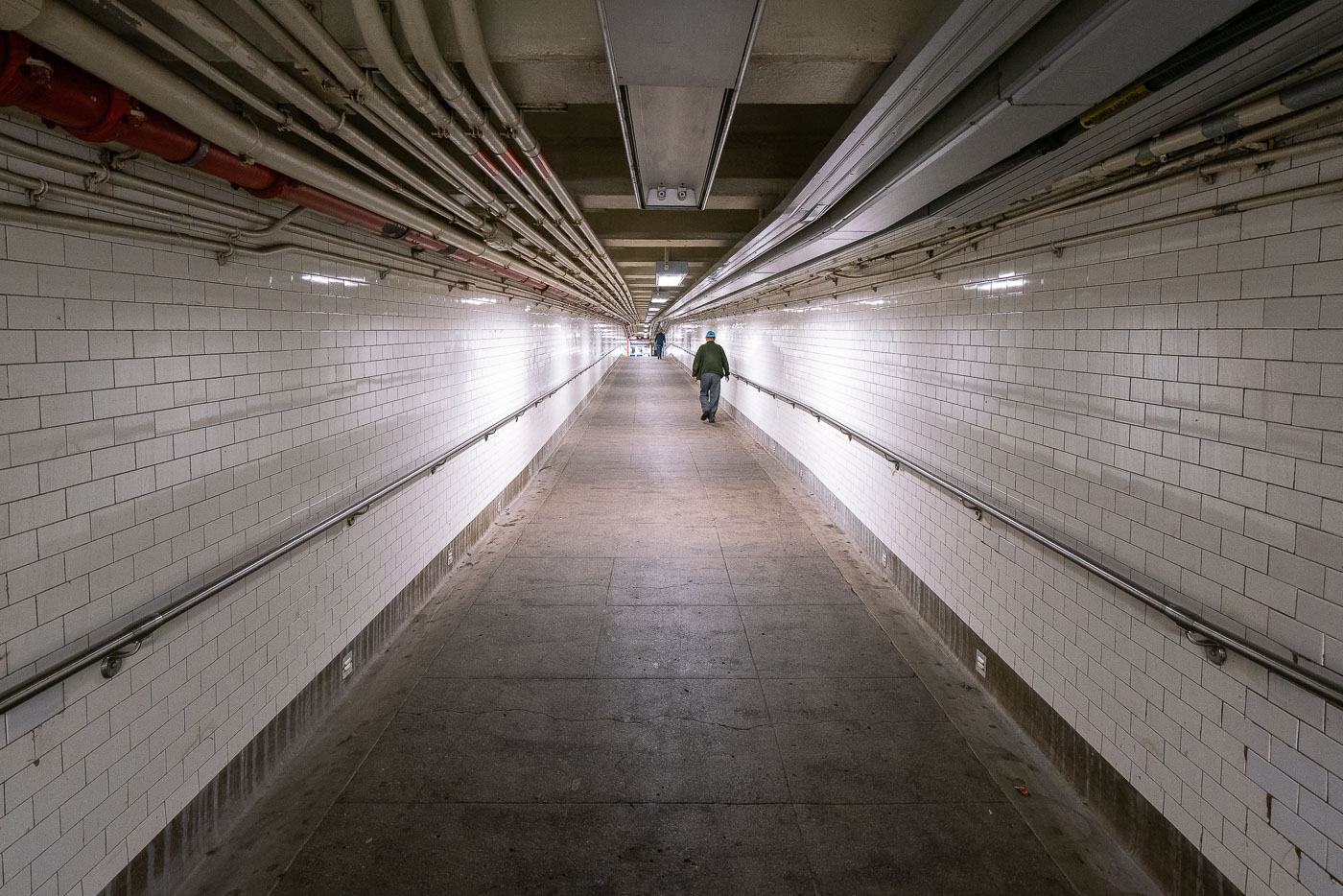
A solitary pedestrian walks through a white-tiled New York City subway tunnel with overhead pipes and conduits.
A lone figure walks through a long, tiled tunnel in the New York City Subway system, with numerous pipes and conduits visible overhead.

Lone Commuter in a Tiled Subway Passageway
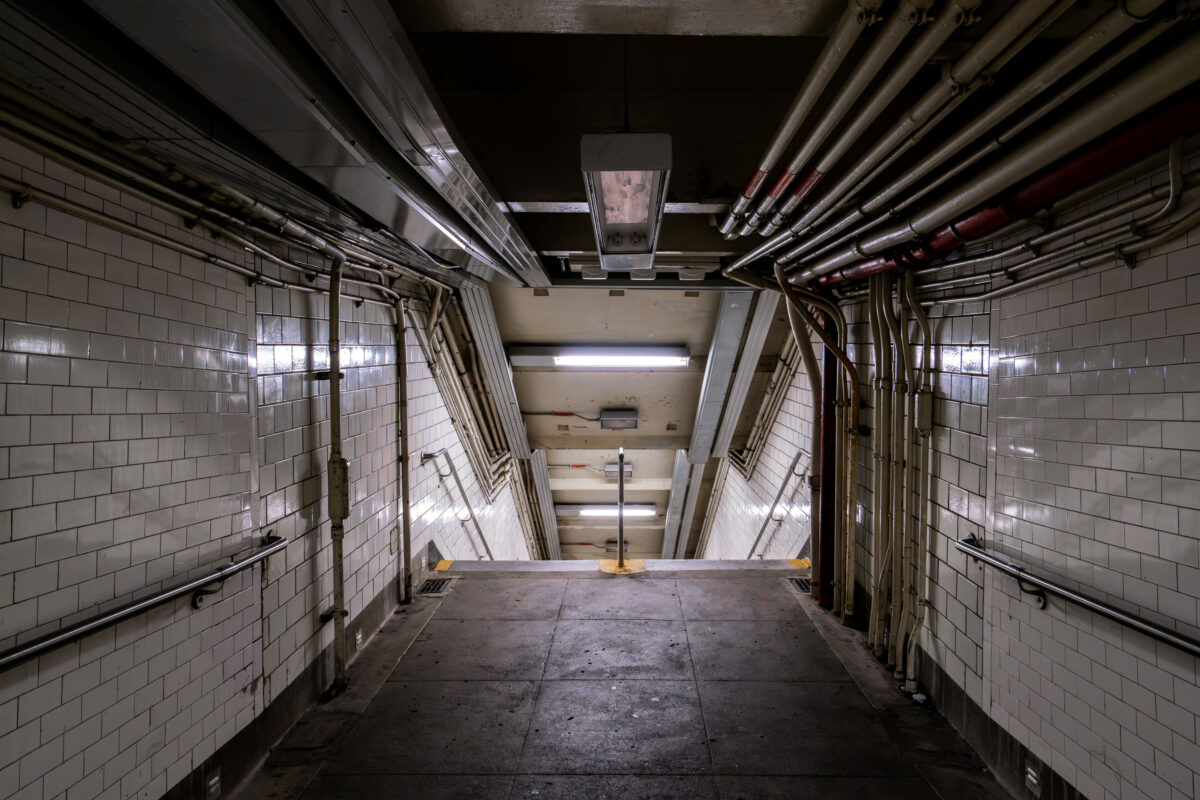
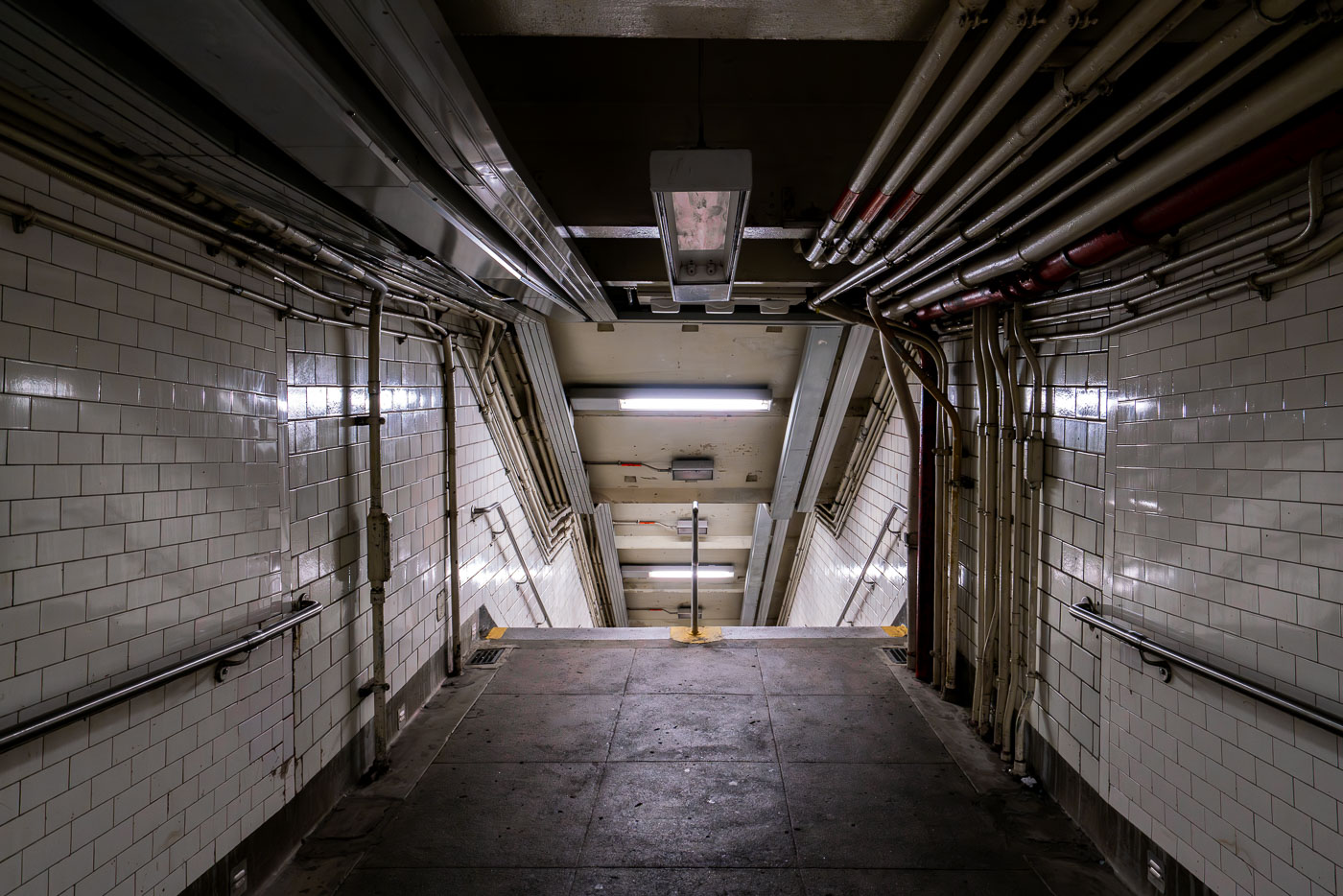
Descending stairway in a New York City subway station with white tile walls and exposed overhead piping.
A dimly lit stairway descends into a New York City subway station, revealing extensive exposed piping and tiled walls characteristic of aging transit infrastructure.

Tiled Stairwell and Overhead Pipes in an NYC Subway Passage
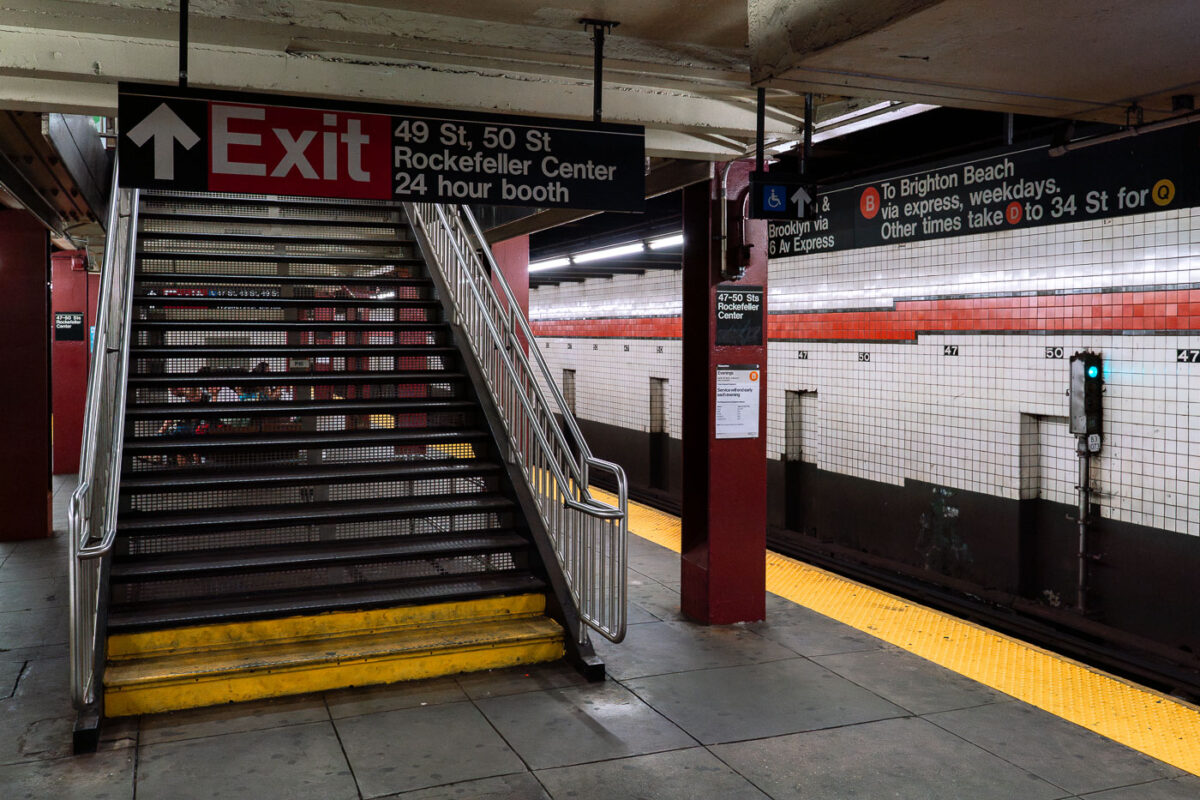
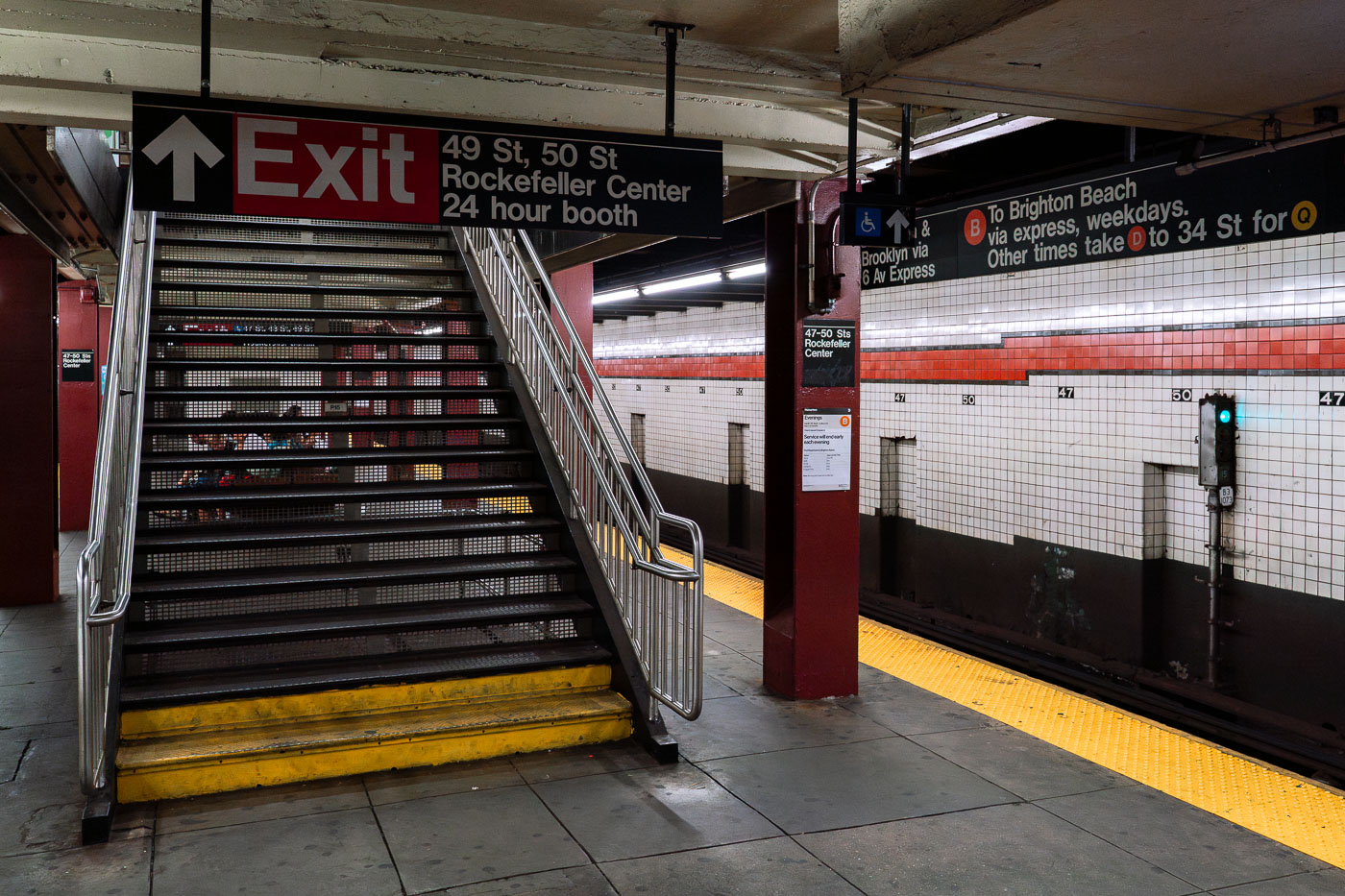
Exit staircase at 49-50 Streets Rockefeller Center subway station in Manhattan.
A staircase with metal railings and yellow-striped steps leads to an "Exit" sign for the 49-50 Streets Rockefeller Center subway station, which includes a 24-hour booth. The station serves the B, D, F, and M lines, with signage indicating routes to Brighton Beach and 34th Street.

Platform View of the 47-50 Sts Rockefeller Center Subway Station
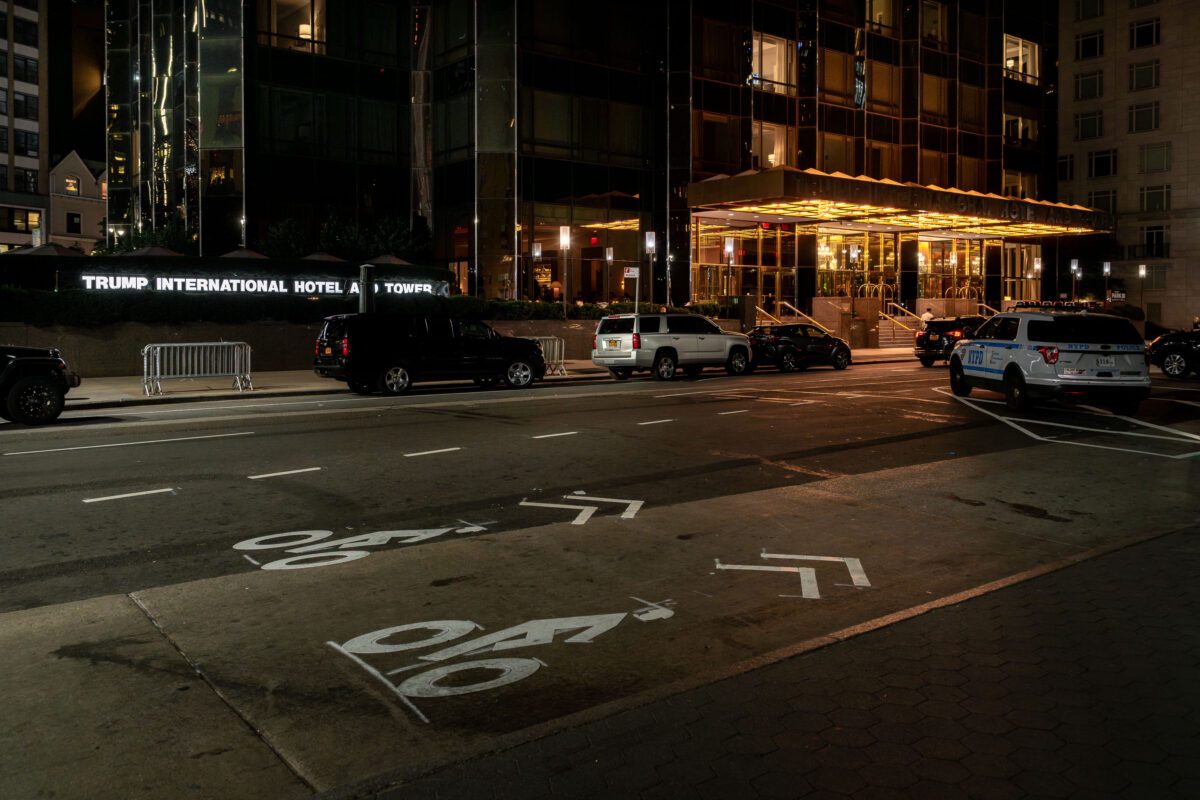
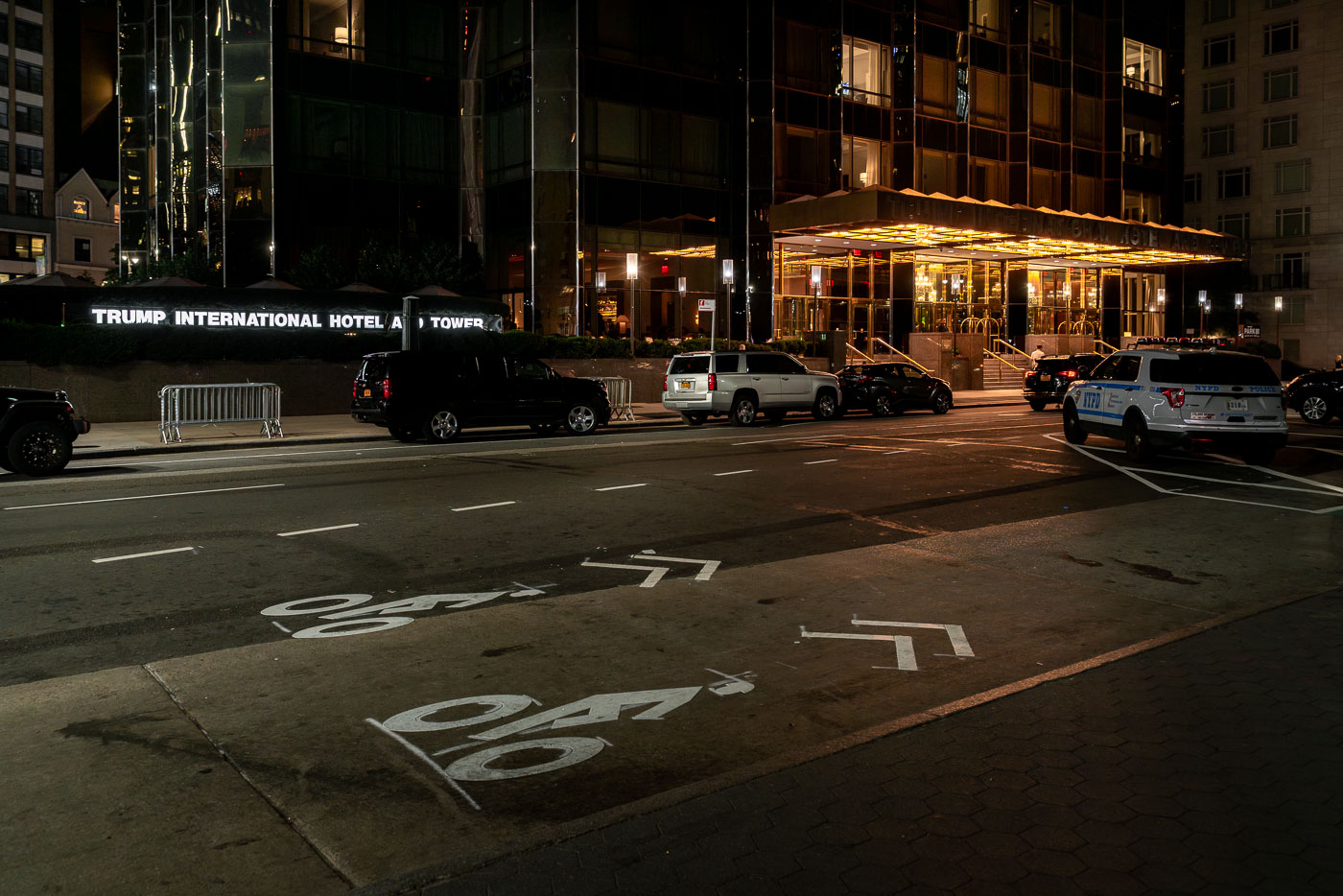
Trump International Hotel and Tower entrance in Manhattan at night with NYPD patrol car parked on street.
The entrance of the Trump International Hotel and Tower in Manhattan is illuminated at night. An NYPD police vehicle and other cars are parked along the street, adjacent to a marked bike lane.

NYPD Patrol Outside Trump International Hotel and Tower
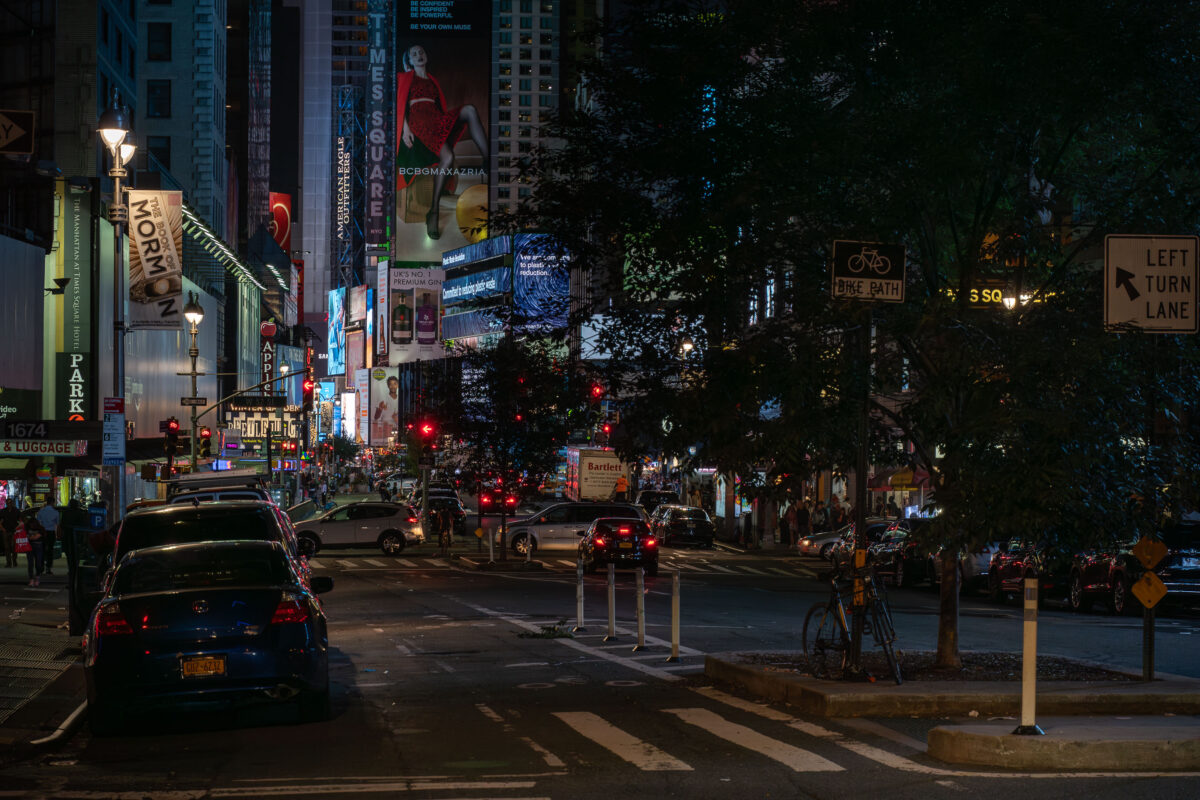
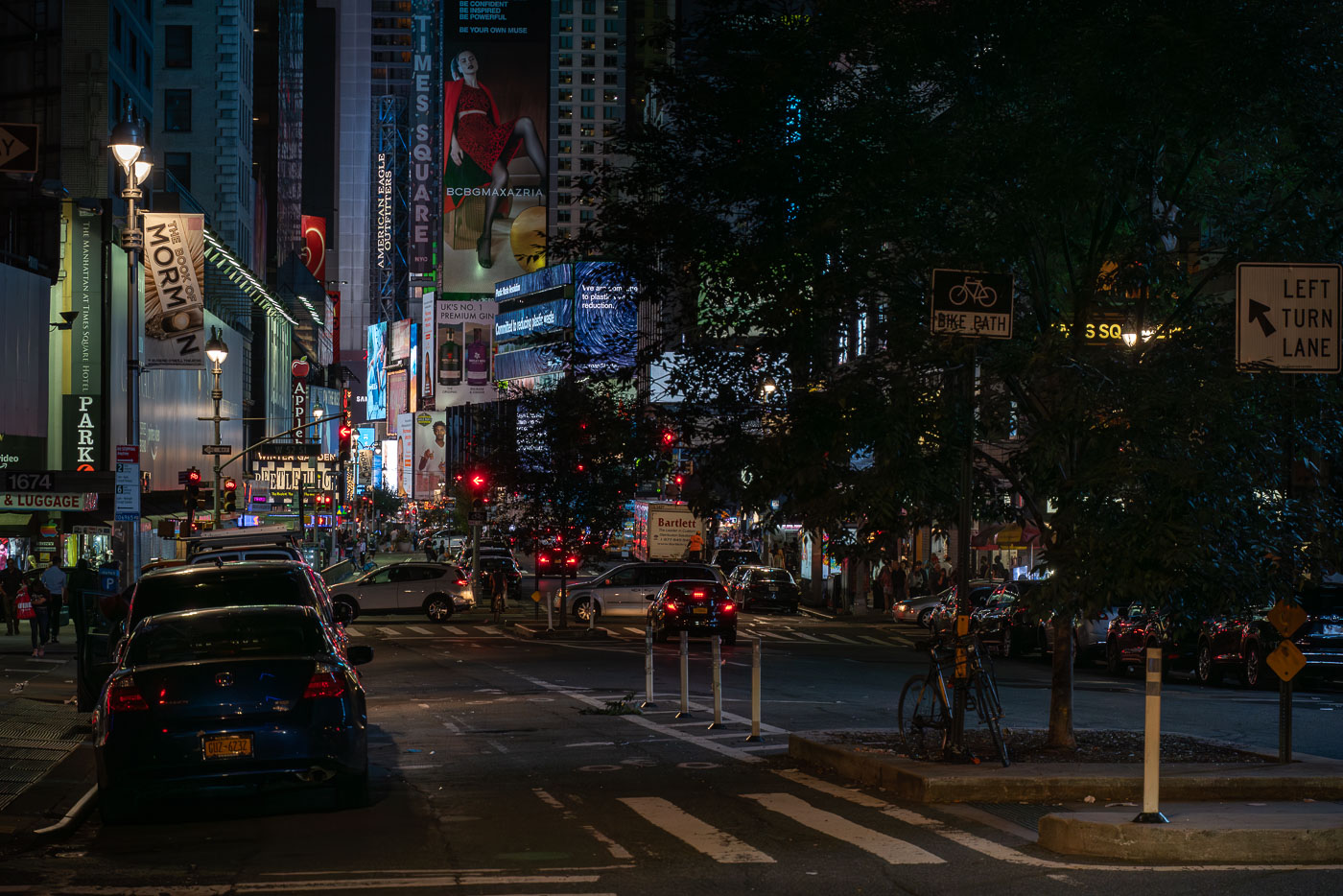
Times Square intersection at night displays illuminated billboards, theater signage, and traffic on Broadway in Manhattan.
Times Square, Manhattan, appears from Broadway at night with heavy traffic, illuminated advertising displays, and theater district signage including The Book of Mormon. Street signs for a bike path and left-turn lane mark this section of Midtown's traffic network. The area is one of New York City's principal commercial and entertainment districts, where Broadway theaters, retail advertising, and through traffic converge.

Broadway Traffic Near Times Square at Night
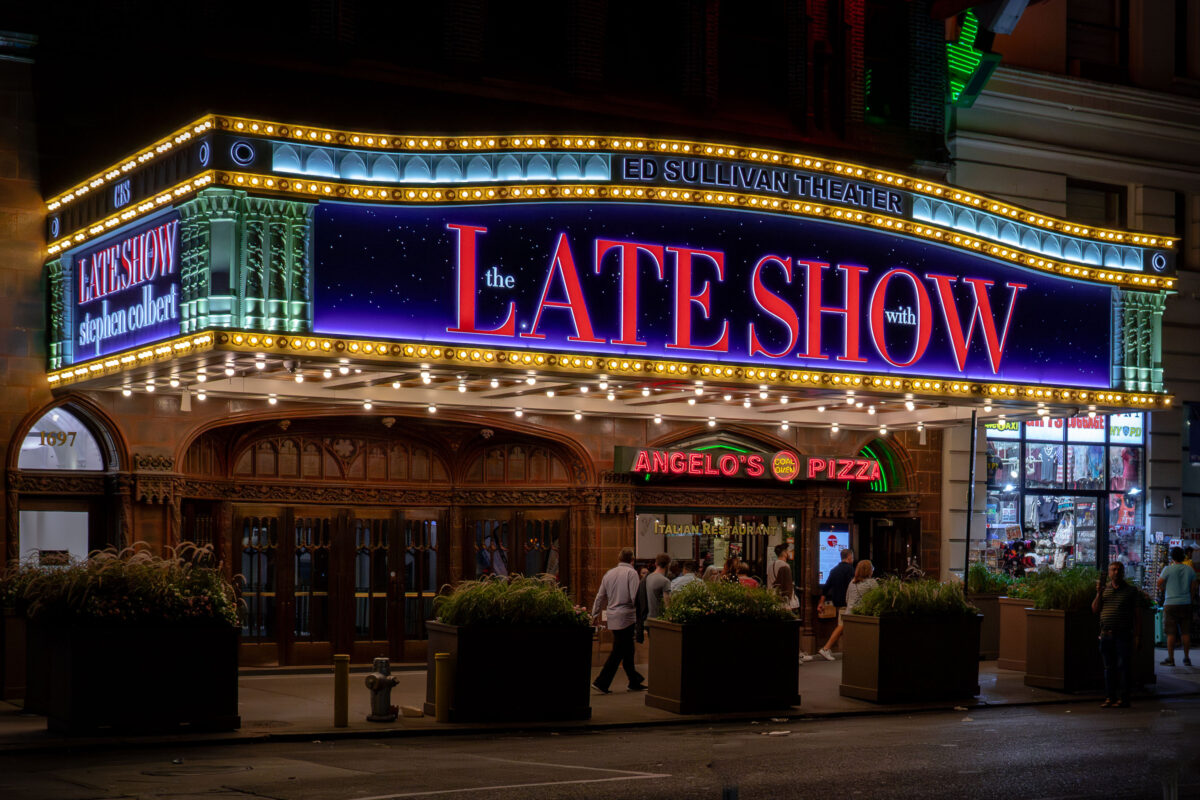
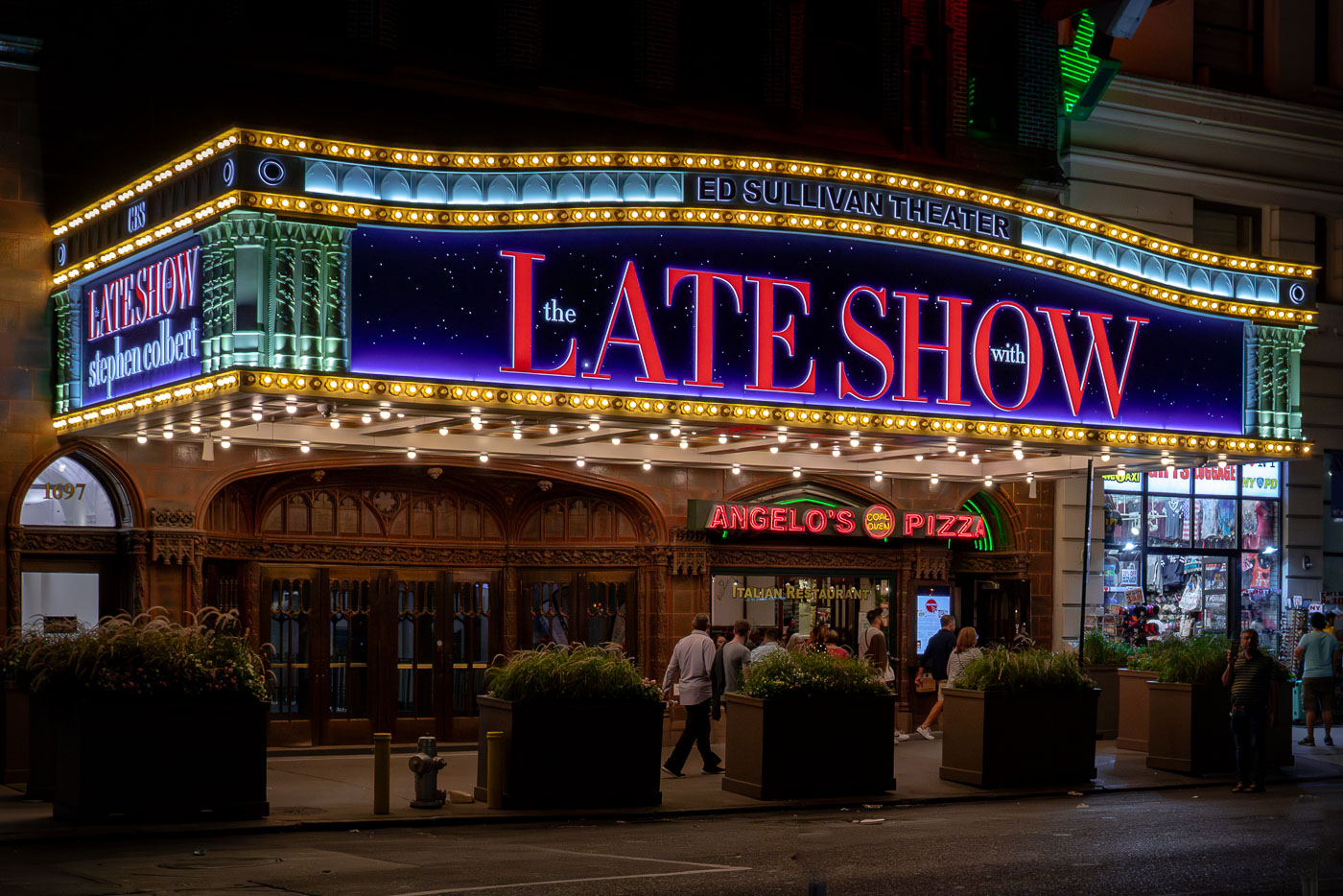
Ed Sullivan Theater marquee advertising The Late Show with Stephen Colbert in Midtown Manhattan at night.
The Ed Sullivan Theater in Midtown Manhattan carries the marquee for The Late Show with Stephen Colbert. The Broadway theater opened in 1927 and was later renamed for television host Ed Sullivan. It is best known as the home of The Ed Sullivan Show from 1948 to 1971 and has remained a major late-night television venue for CBS.

Marquee Lights Outside the Ed Sullivan Theater at Night
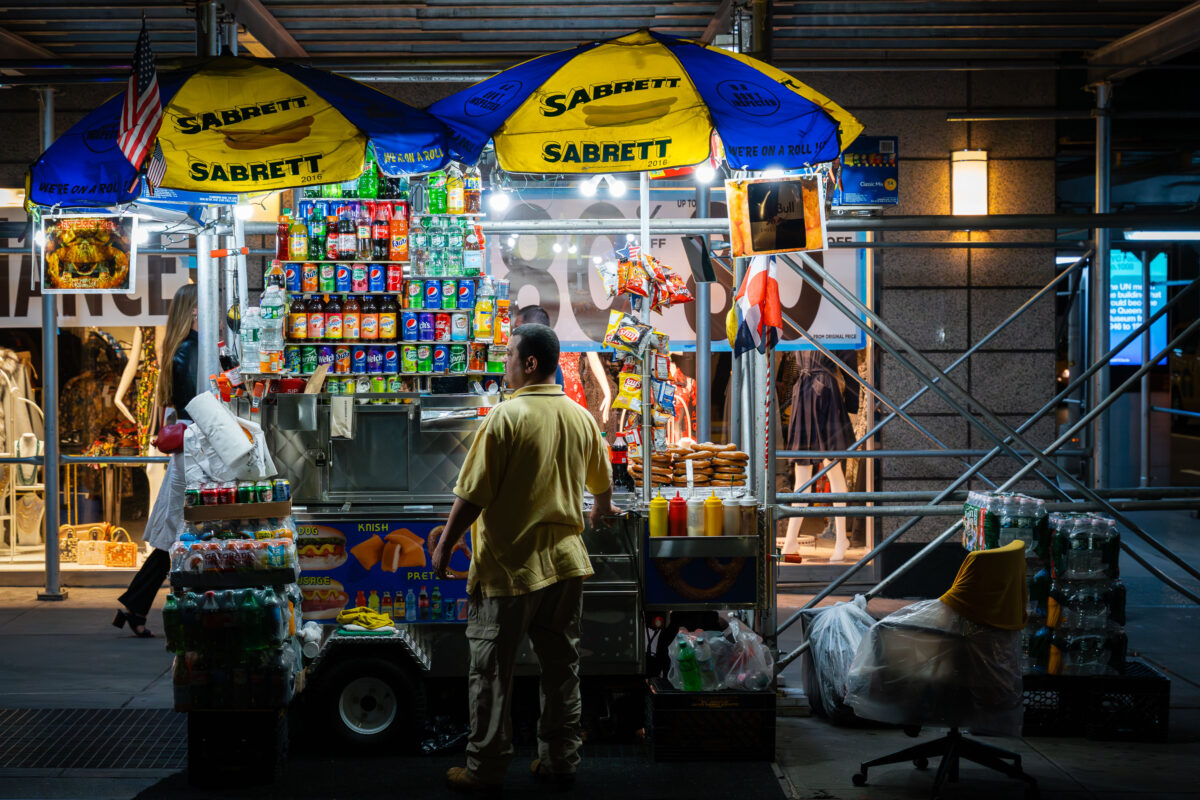
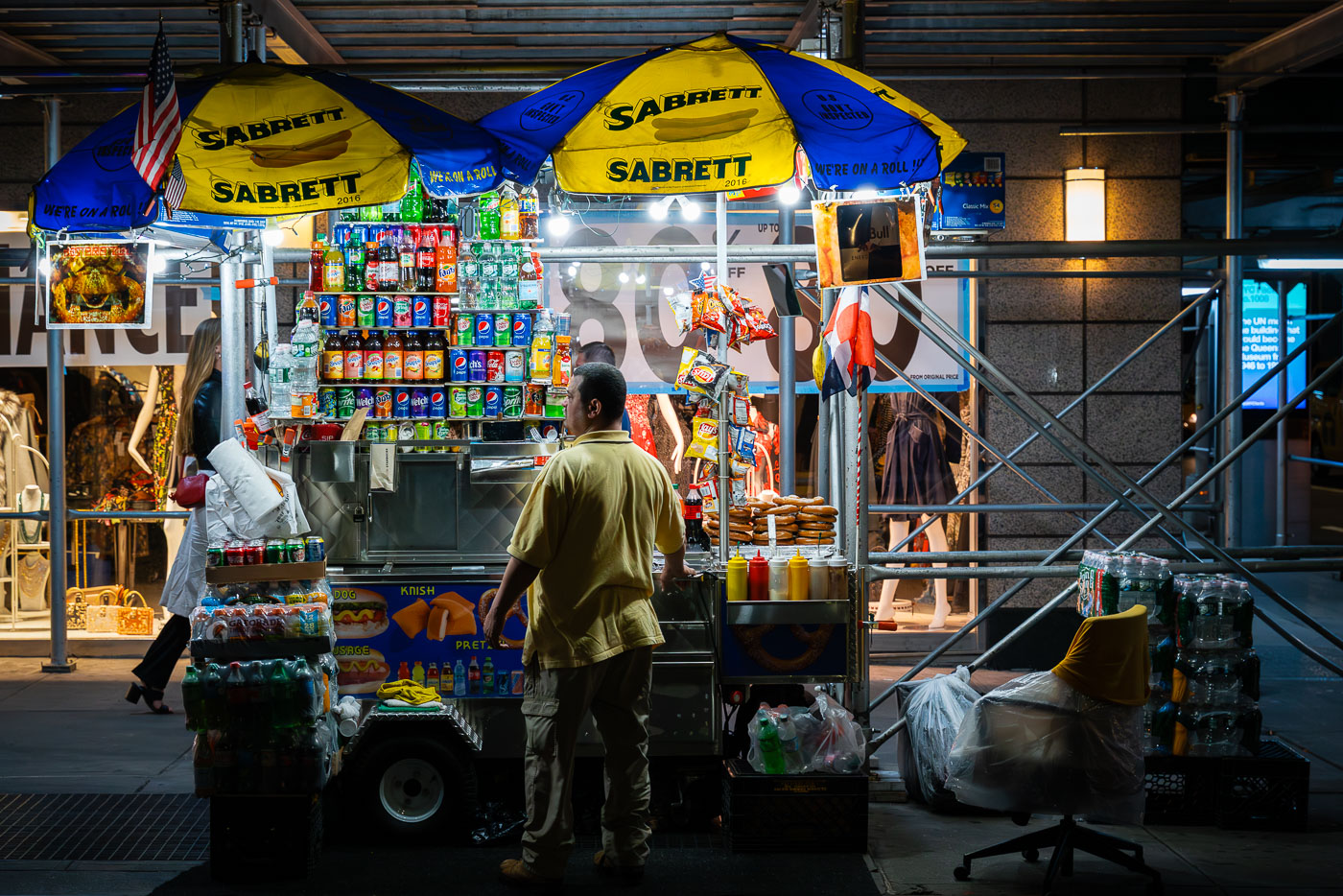
Sabrett hot dog cart vendor operates a street food stand selling hot dogs and snacks in Manhattan.
Sabrett hot dog cart vendor, Manhattan. The cart operates as a typical New York City sidewalk food stand, selling hot dogs, pretzels, drinks, and packaged snacks to pedestrians. Sabrett-branded carts are a longstanding part of the city's street food trade.

Vendor at a Sabrett Hot Dog Cart at Night
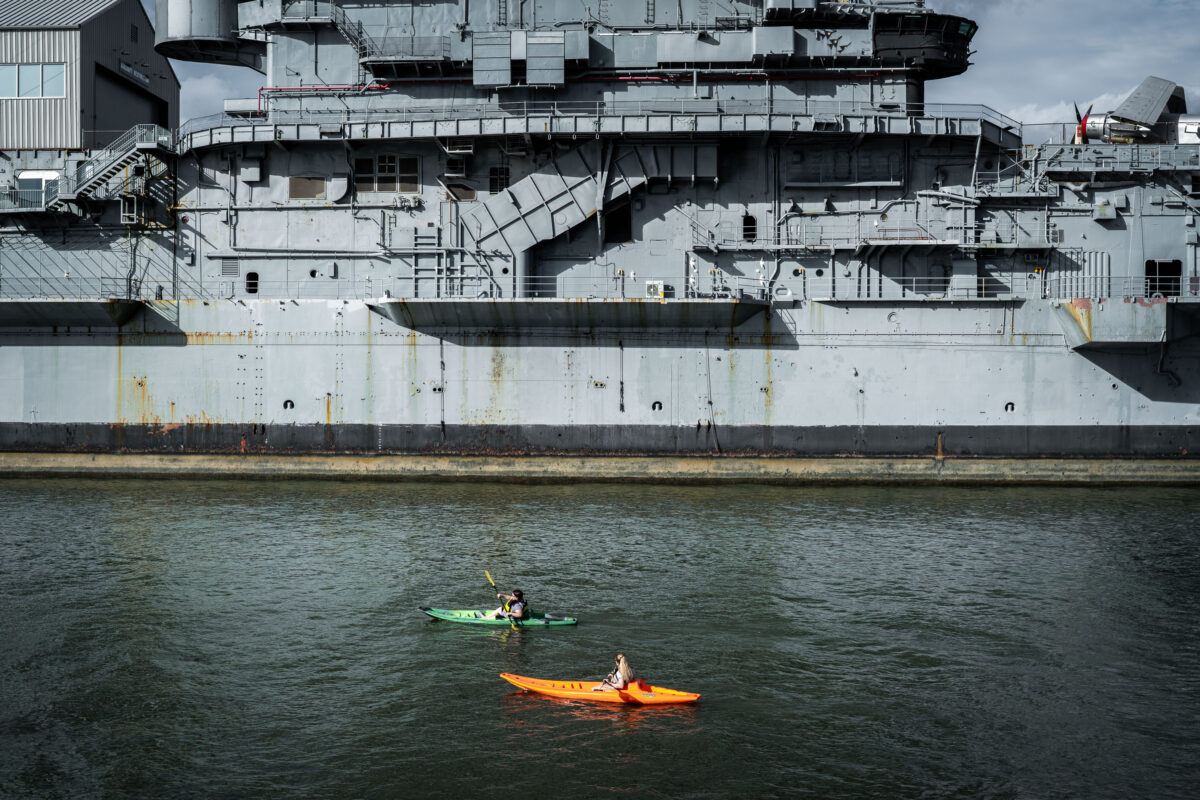
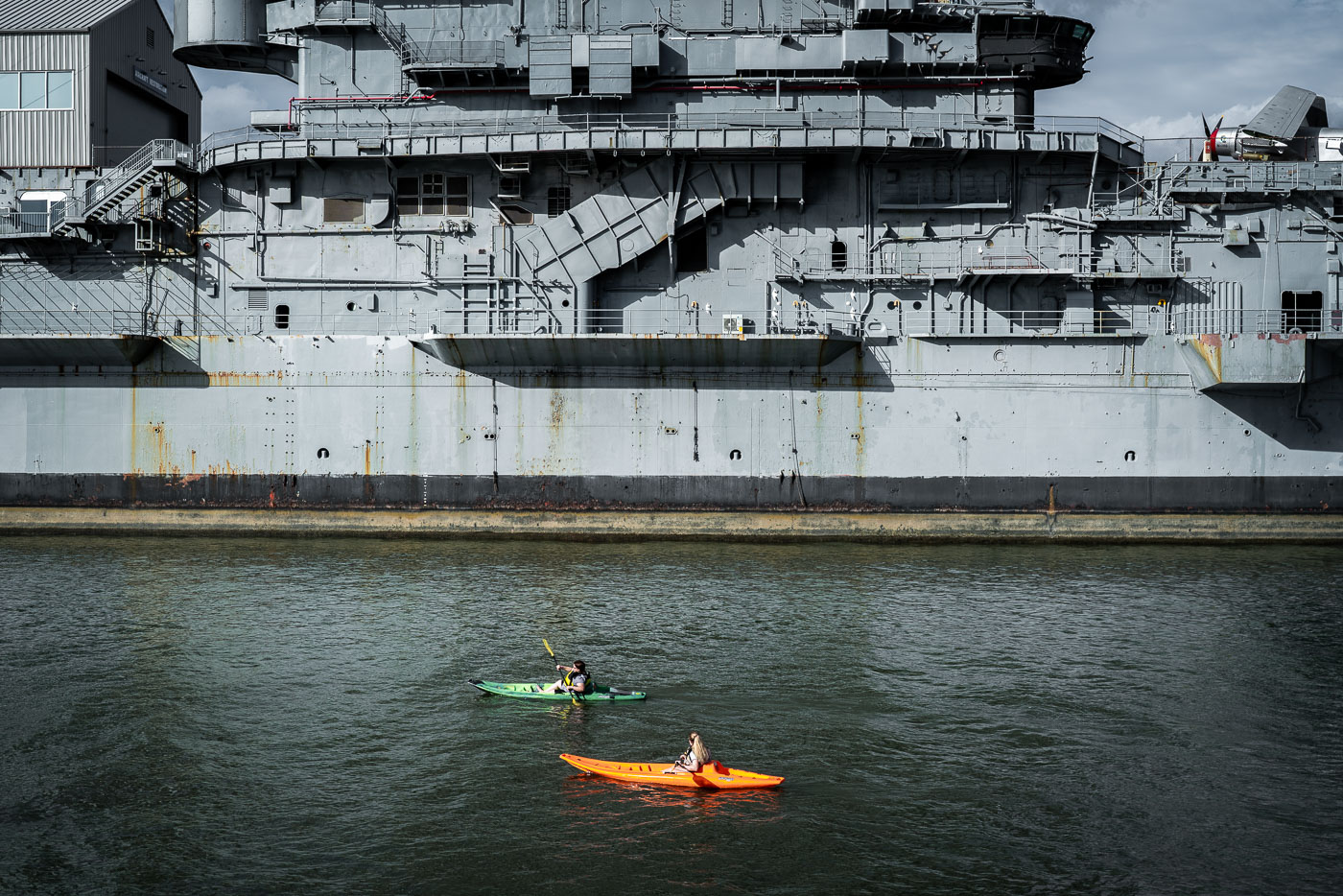
Two kayakers paddle on the Hudson River in front of the USS Intrepid aircraft carrier docked at Pier 86 in Manhattan.
Kayakers pass USS Intrepid on the Hudson River in Manhattan. The vessel is a decommissioned Essex-class aircraft carrier from World War II and the Korean War. It is permanently berthed at Pier 86 as the centerpiece of the Intrepid Sea, Air & Space Museum.

Kayakers Paddle Past the USS Intrepid’s Hull
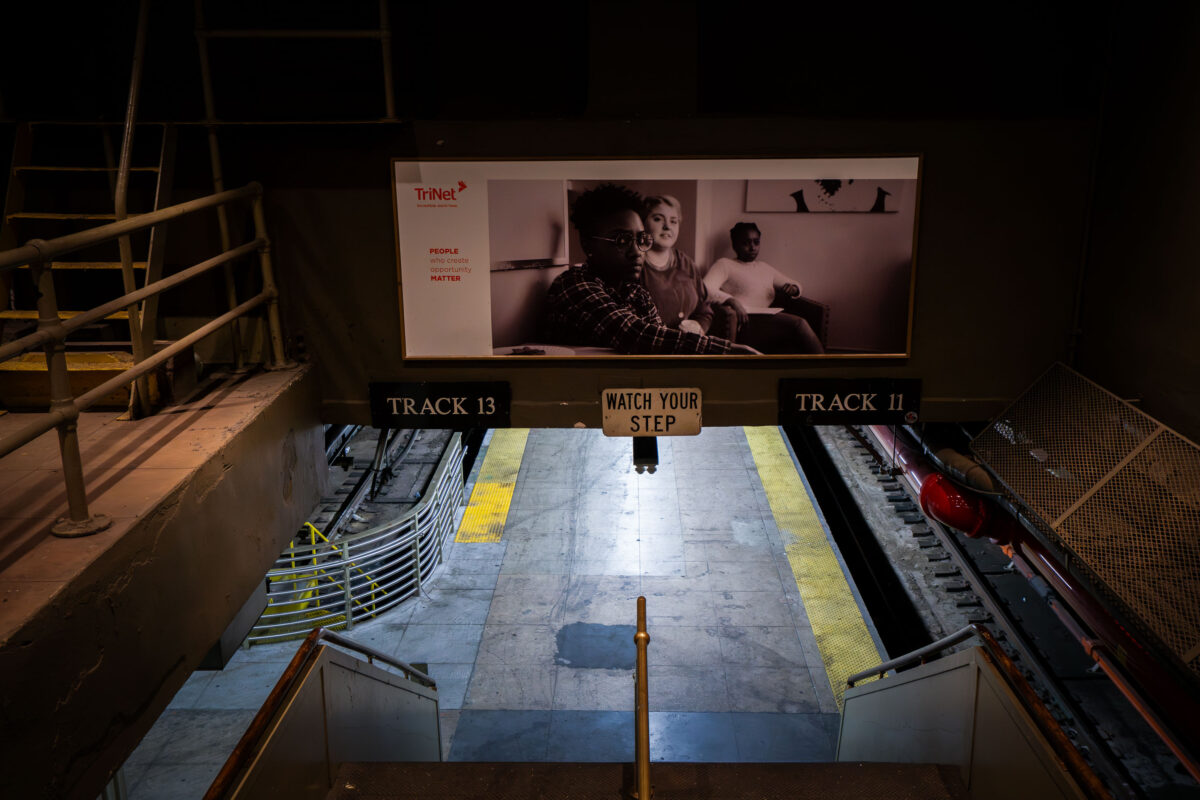
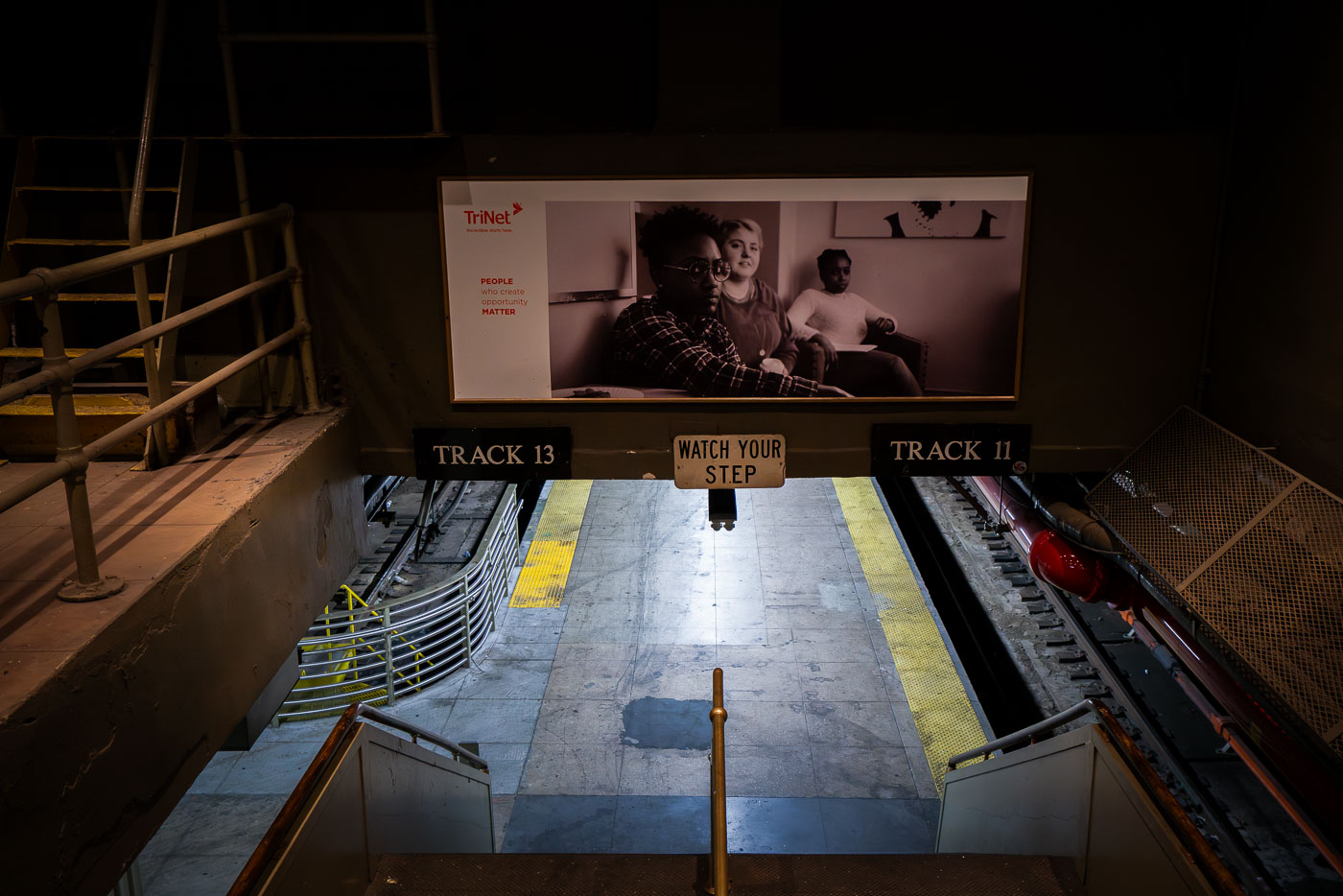
Penn Station platform between Tracks 11 and 13 with TriNet advertisement screen above.
A stairway leads down to the train platforms for Tracks 11 and 13 at Penn Station in Manhattan.

Stairway Down to Tracks 11 and 13 at Penn Station
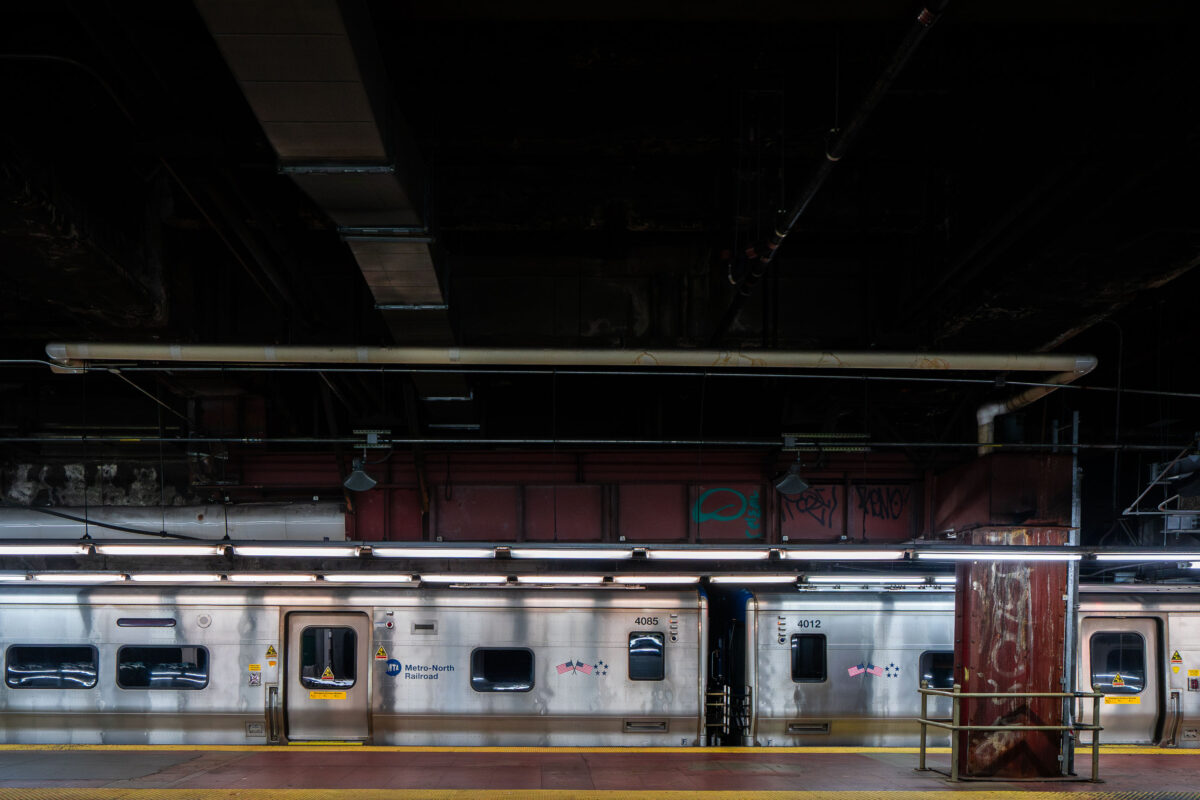
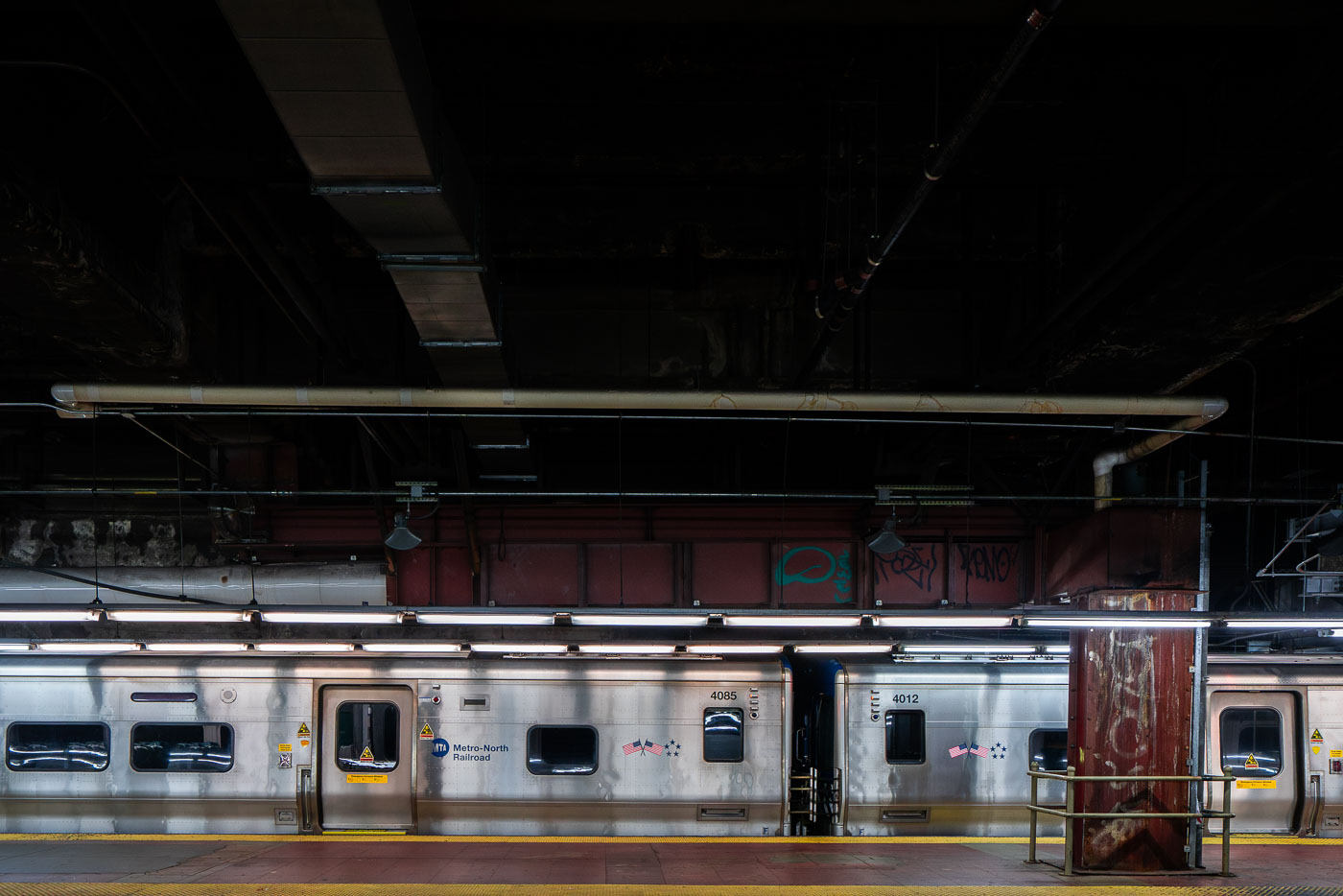
Metro-North Railroad commuter train at Grand Central Terminal platform in Manhattan.
A Metro-North Railroad train sits at a platform inside Grand Central Terminal in Manhattan. The stainless-steel cars reflect the dim lighting of the underground station, where exposed pipes and graffiti-marked beams highlight the aging infrastructure of the busy commuter hub.

Metro-North Railcars on the Platform, Grand Central Terminal
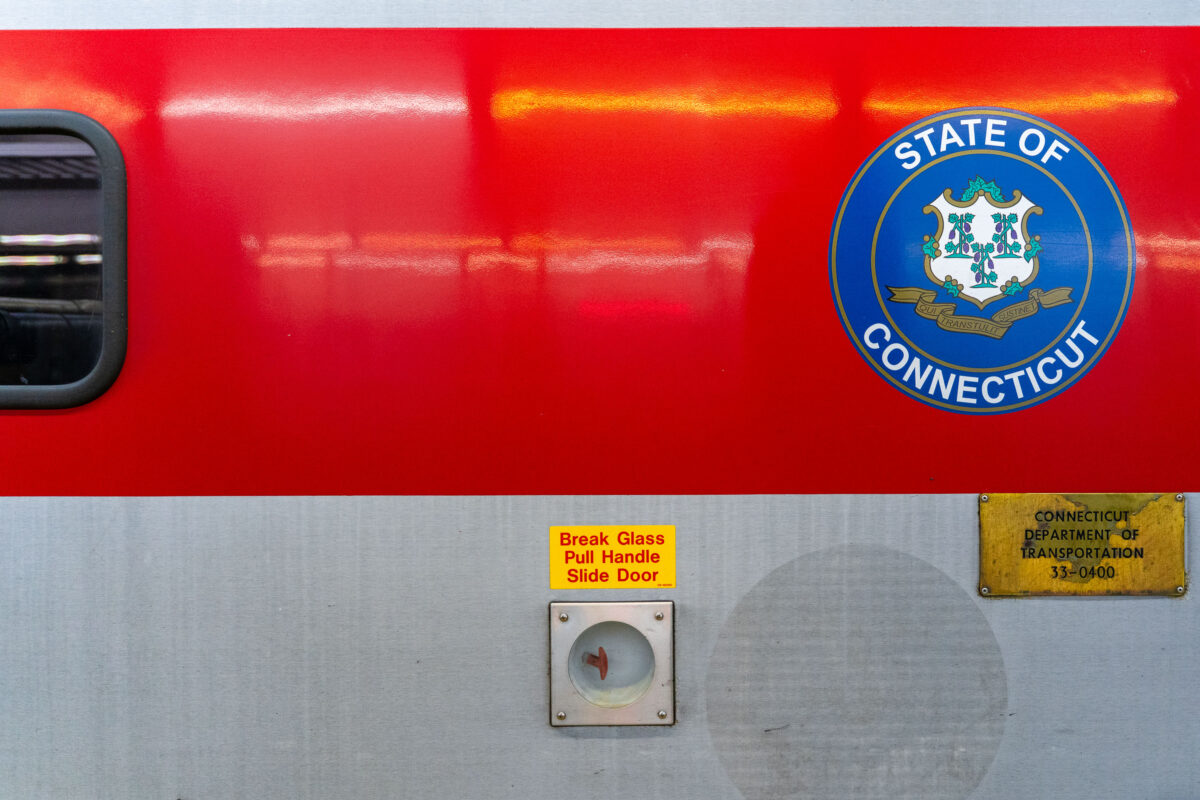
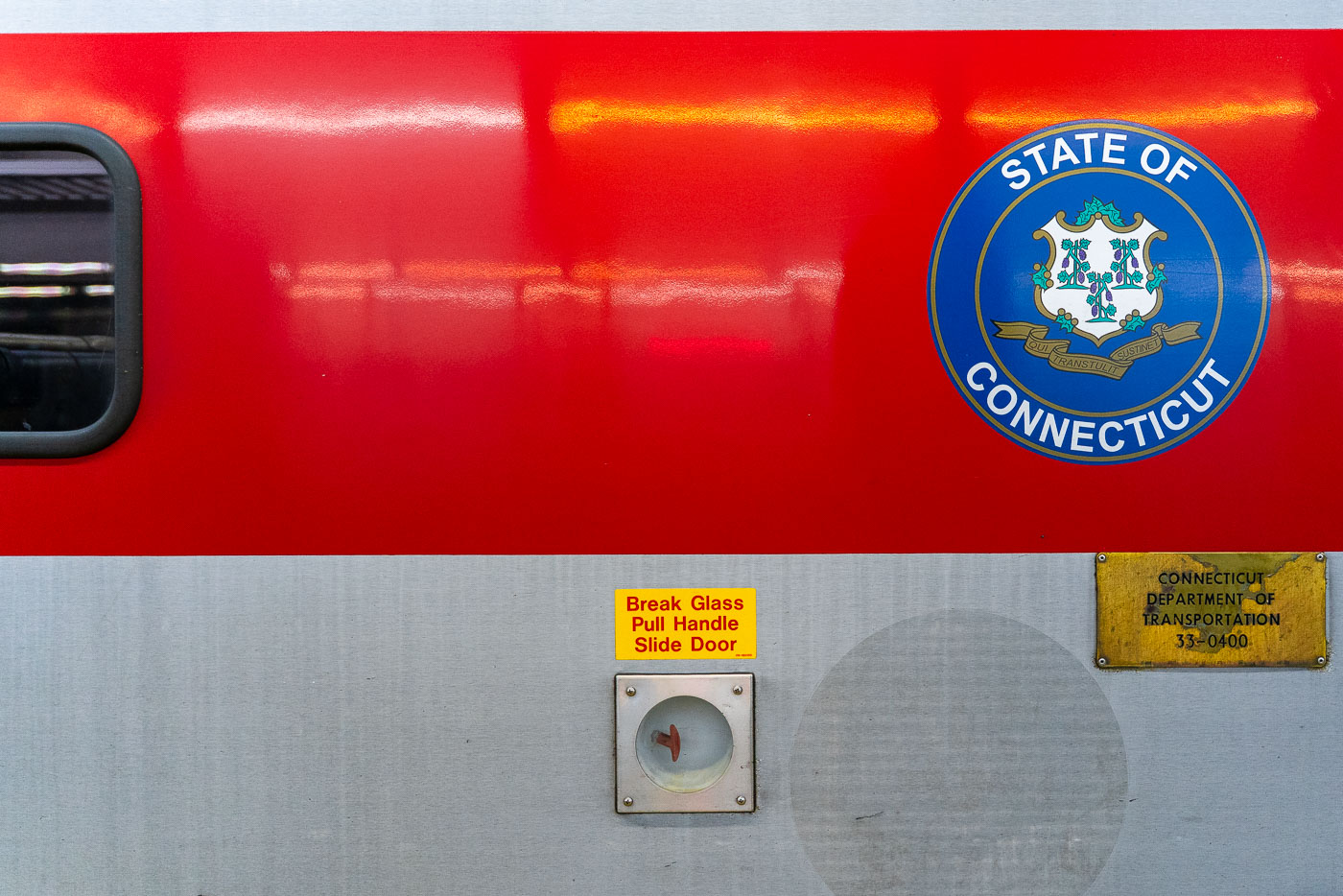
State of Connecticut seal displayed on the side of a red Metro-North Railroad commuter train car.
A Connecticut state seal is displayed on the side of a Metro-North Railroad train car, operated in partnership with the Connecticut Department of Transportation. The red-and-silver exterior includes safety instructions and signage, highlighting the regional rail system that connects commuters between New York and Connecticut.

Connecticut DOT Seal on a Metro-North Railcar
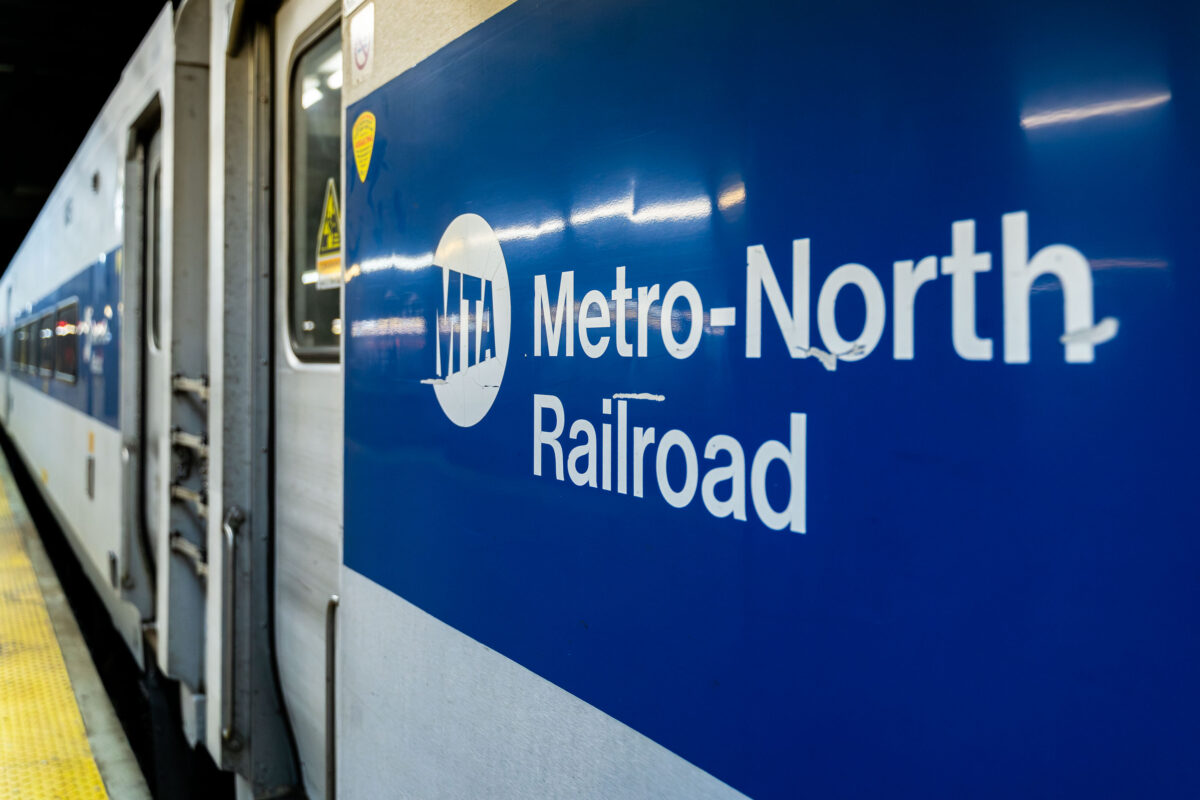
Metro-North Railroad commuter train with blue-and-white livery at a New York station platform.
A Metro-North Railroad train is seen at a station platform, its blue-and-white exterior bearing the MTA logo. The commuter rail line, operated by the Metropolitan Transportation Authority, connects New York City with suburbs across New York State and Connecticut.

Metro-North Railroad Car on the Platform at Grand Central
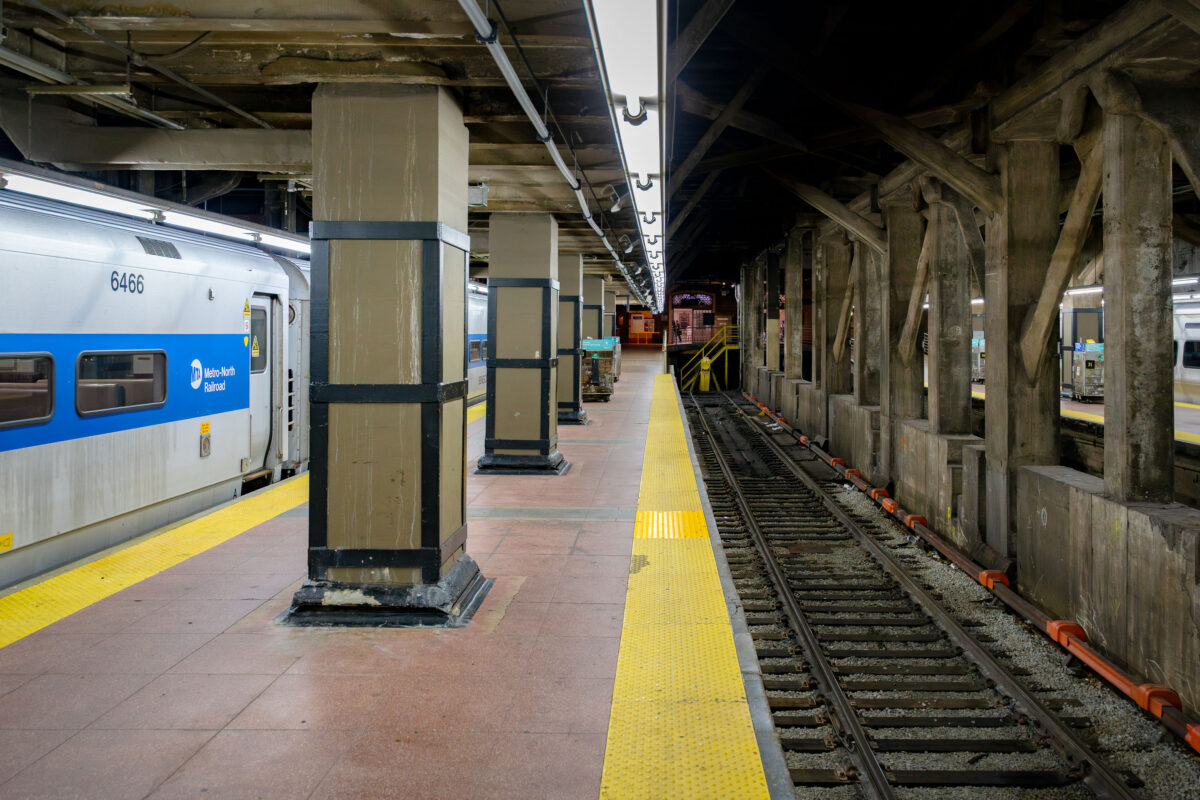
Metro-North Railroad train at platform inside Grand Central Terminal in Manhattan.
A Metro-North Railroad train waits at a platform inside Grand Central Terminal in Manhattan.

Metro-North Train at the Platform in Grand Central Terminal

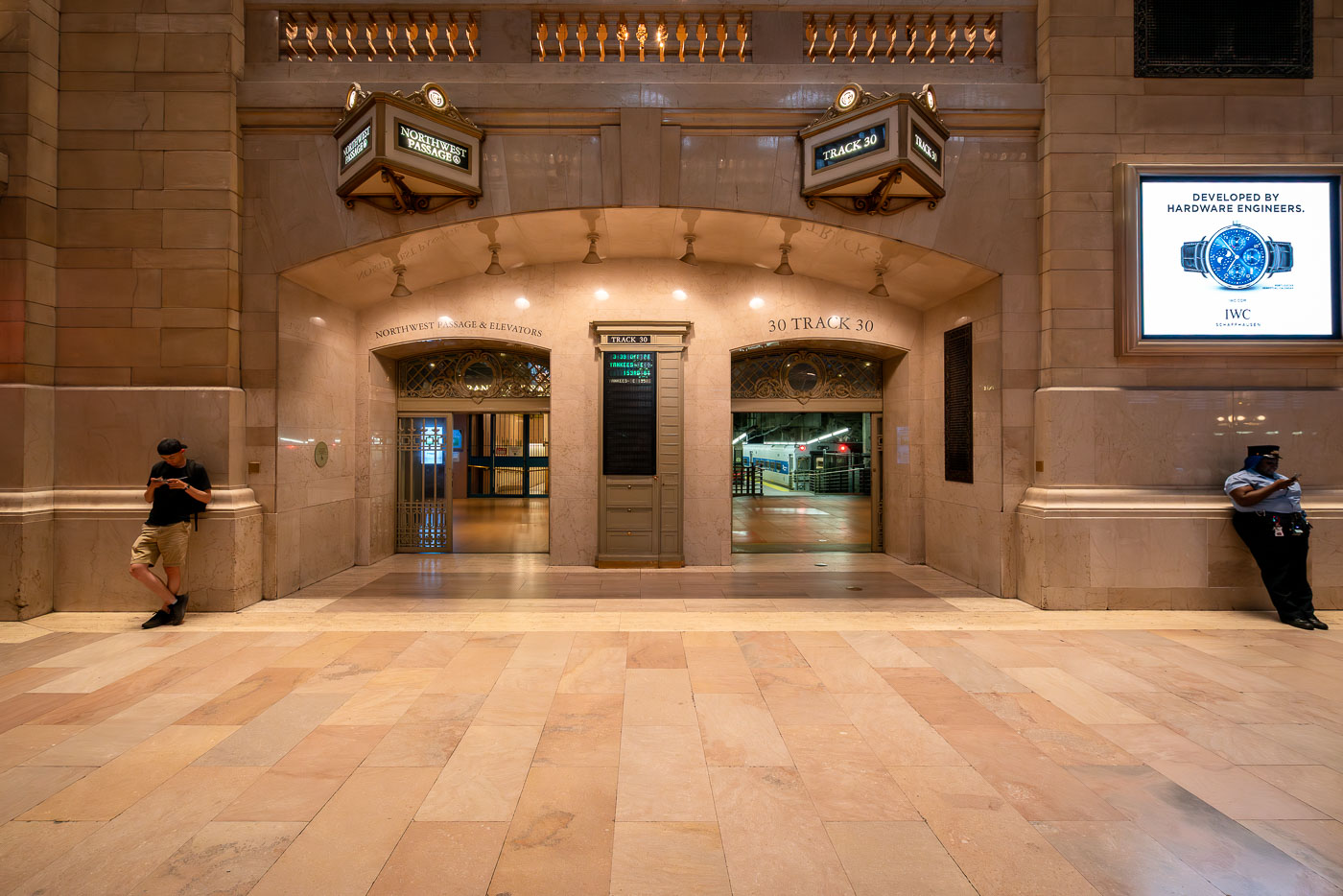
NYPD officer stands in the marble corridor leading to Track 30 at Grand Central Terminal in Manhattan.
The entrance to Track 30 inside Grand Central Terminal in Manhattan is seen at night. The marble hallways of the landmark station lead to the train platforms below, as a commuter and a security officer stand near the archways beneath illuminated signs.

Track 30 Entrance at Grand Central Terminal
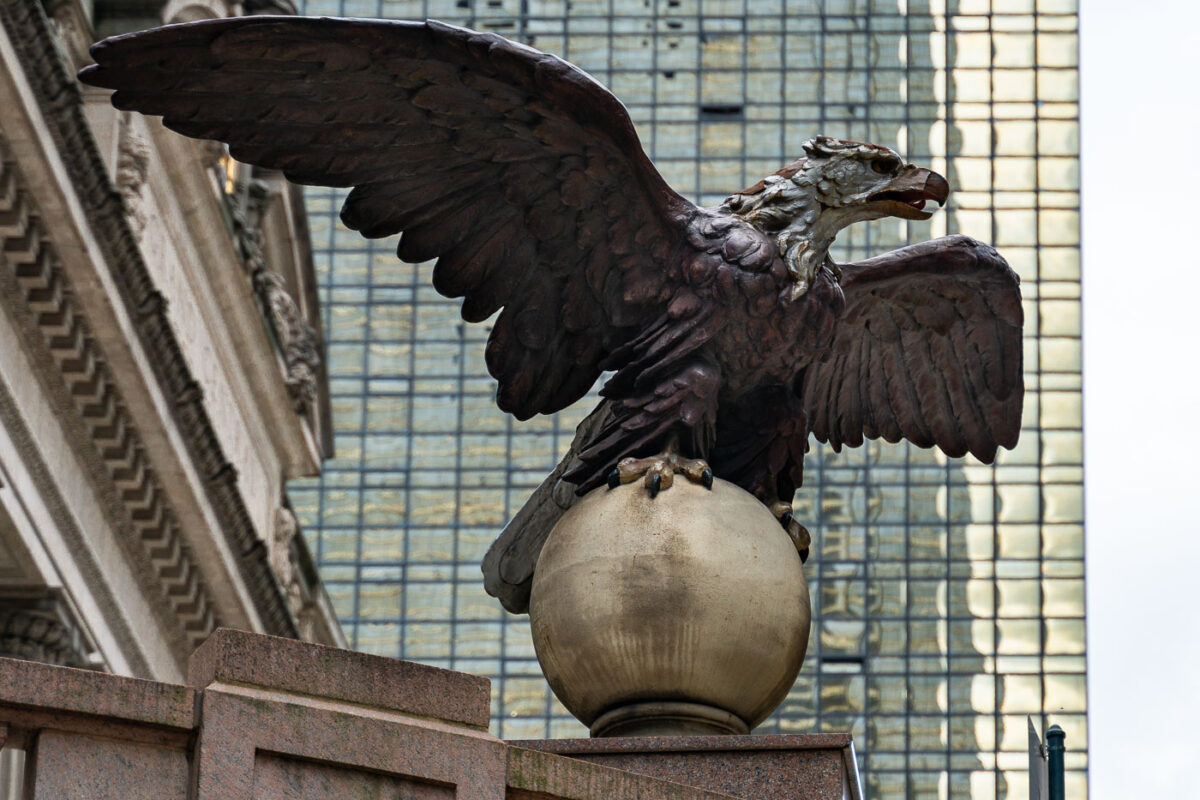
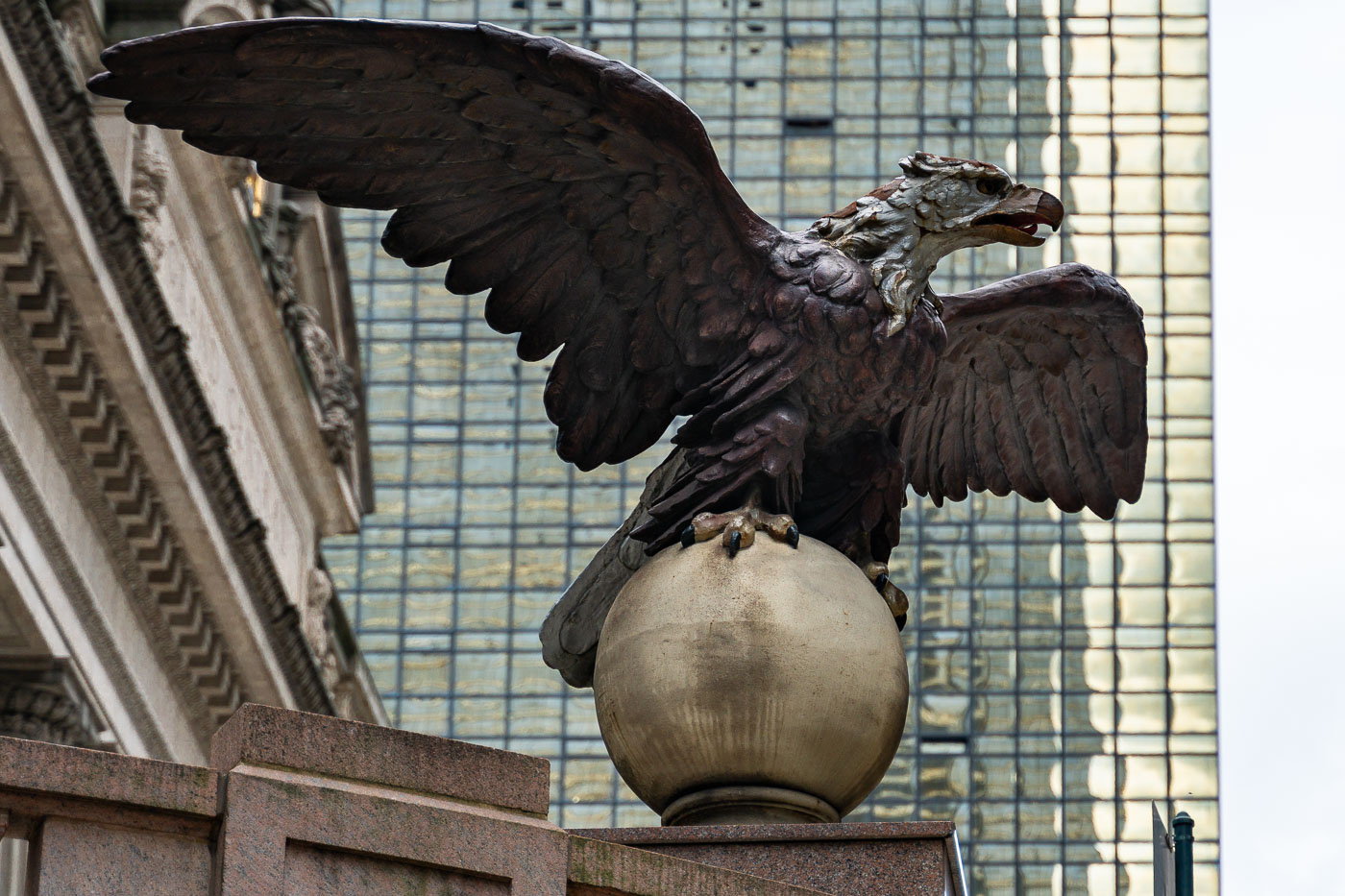
Bronze eagle sculpture perched on a sphere outside Grand Central Terminal in Manhattan.
An eagle statue perched on a globe stands outside Grand Central Terminal in Manhattan. The bronze sculpture, one of several around the historic landmark, looks out over Midtown with the glass facade of the MetLife Building rising in the background.
Eagle Statue Outside Grand Central Terminal
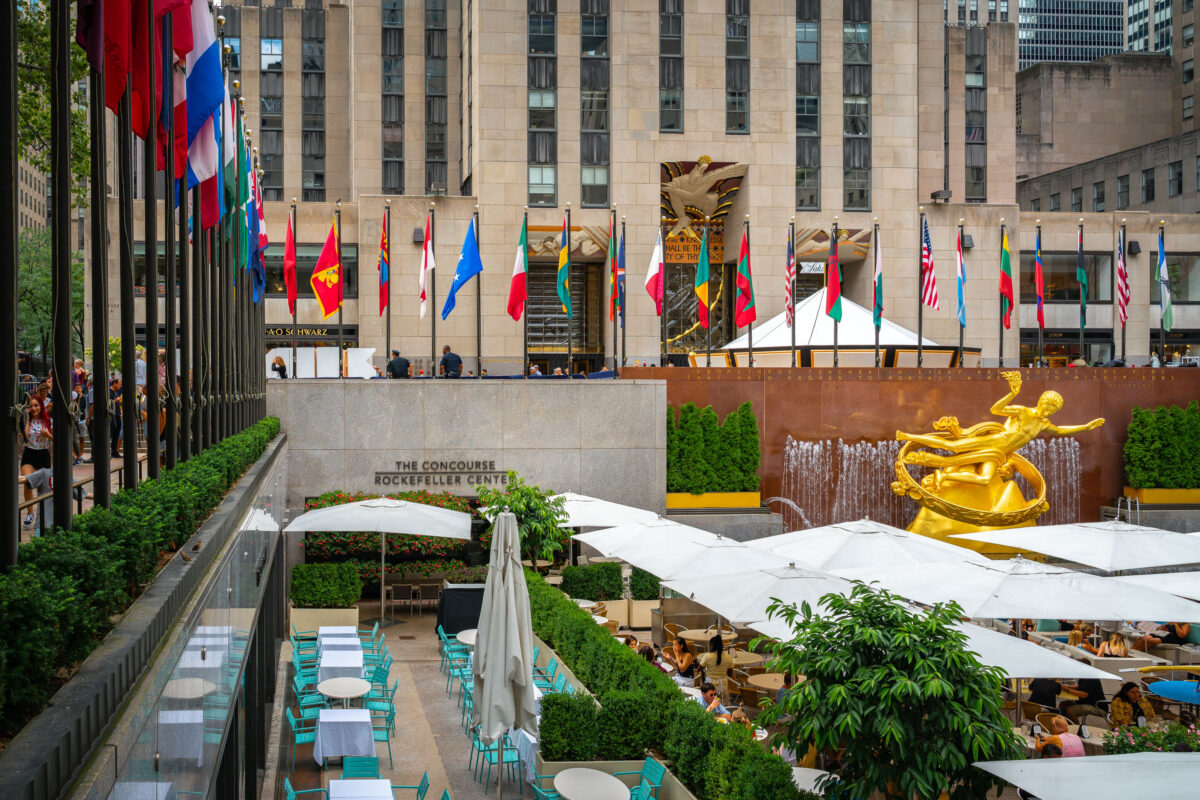
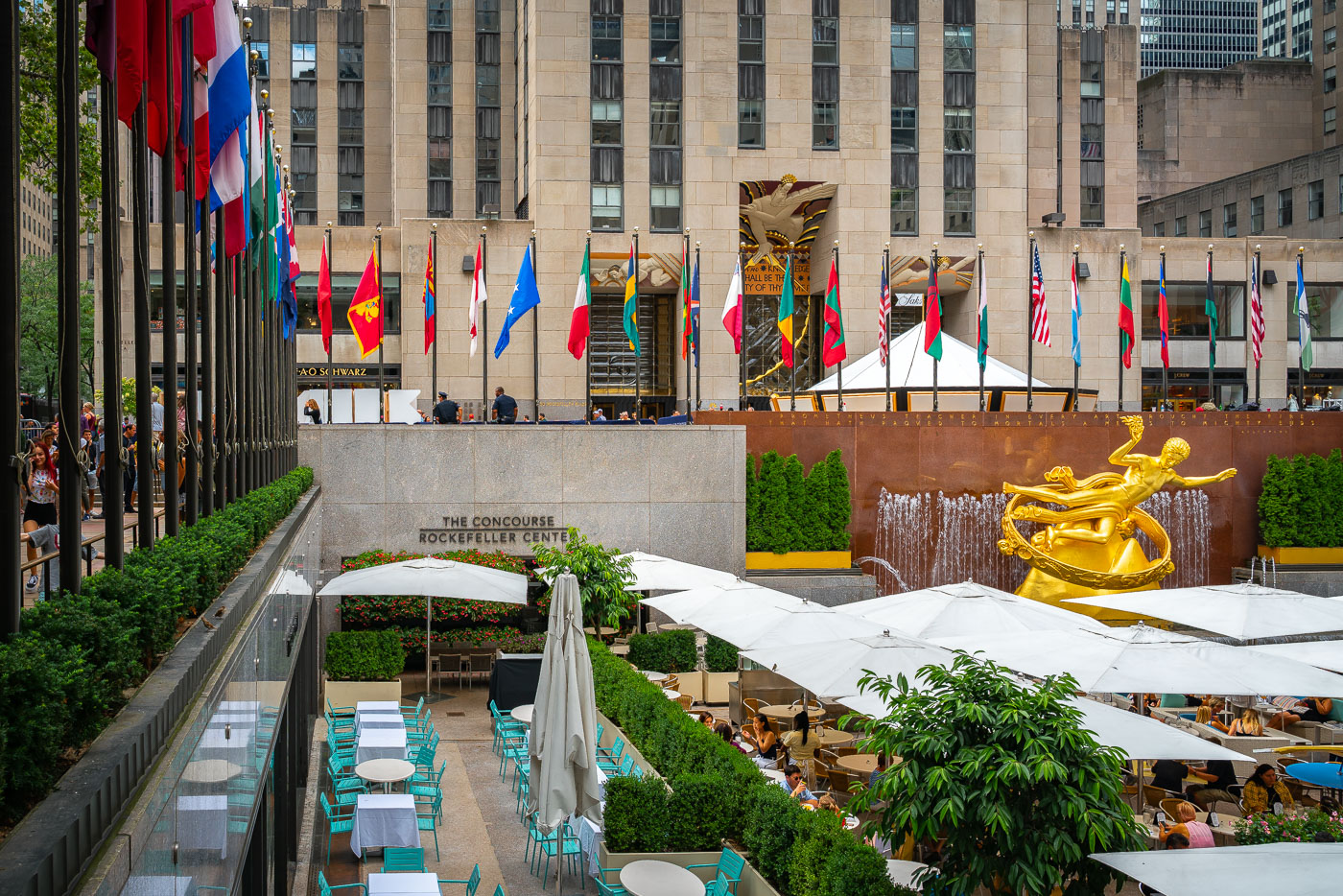
Golden Prometheus statue overlooks the sunken plaza at Rockefeller Center in Manhattan, with international flags displayed above.
Prometheus and the Lower Plaza at Rockefeller Center are in Midtown Manhattan, New York City. The gilded statue overlooks the sunken plaza, which functions as a seasonal public gathering and dining area and becomes the Rockefeller Center ice rink in winter. International flags line the upper concourse above the plaza within the commercial and office complex.

Flags and Outdoor Dining at Rockefeller Center’s Lower Plaza

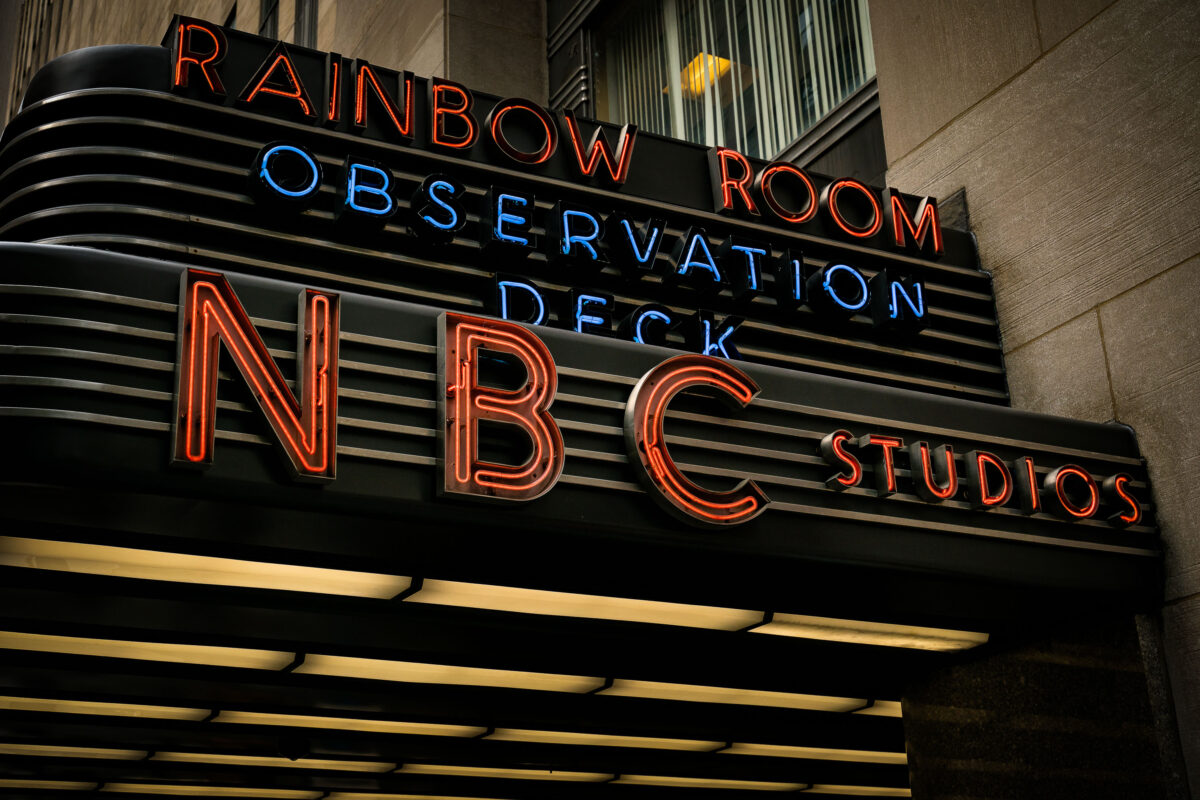
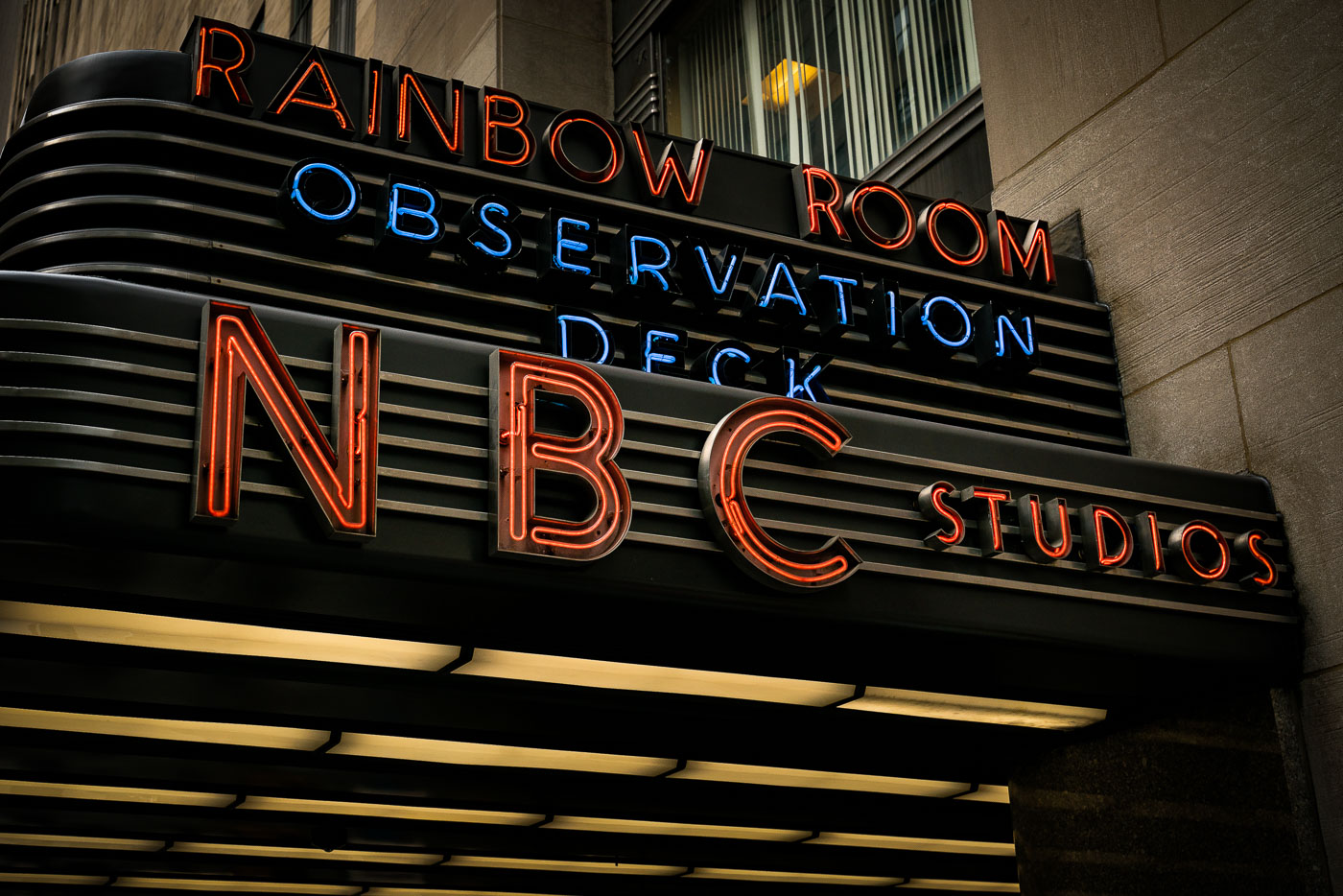
Neon marquee for Rainbow Room, Observation Deck, and NBC Studios at 30 Rockefeller Plaza in Manhattan.
Rainbow Room and NBC Studios marquee at 30 Rockefeller Plaza in Midtown Manhattan. The sign also directs visitors to the Observation Deck at Rockefeller Center. It marks one of the entrance canopies at the NBC facilities in the Art Deco complex.

Rainbow Room and NBC Studios Sign at Rockefeller Center

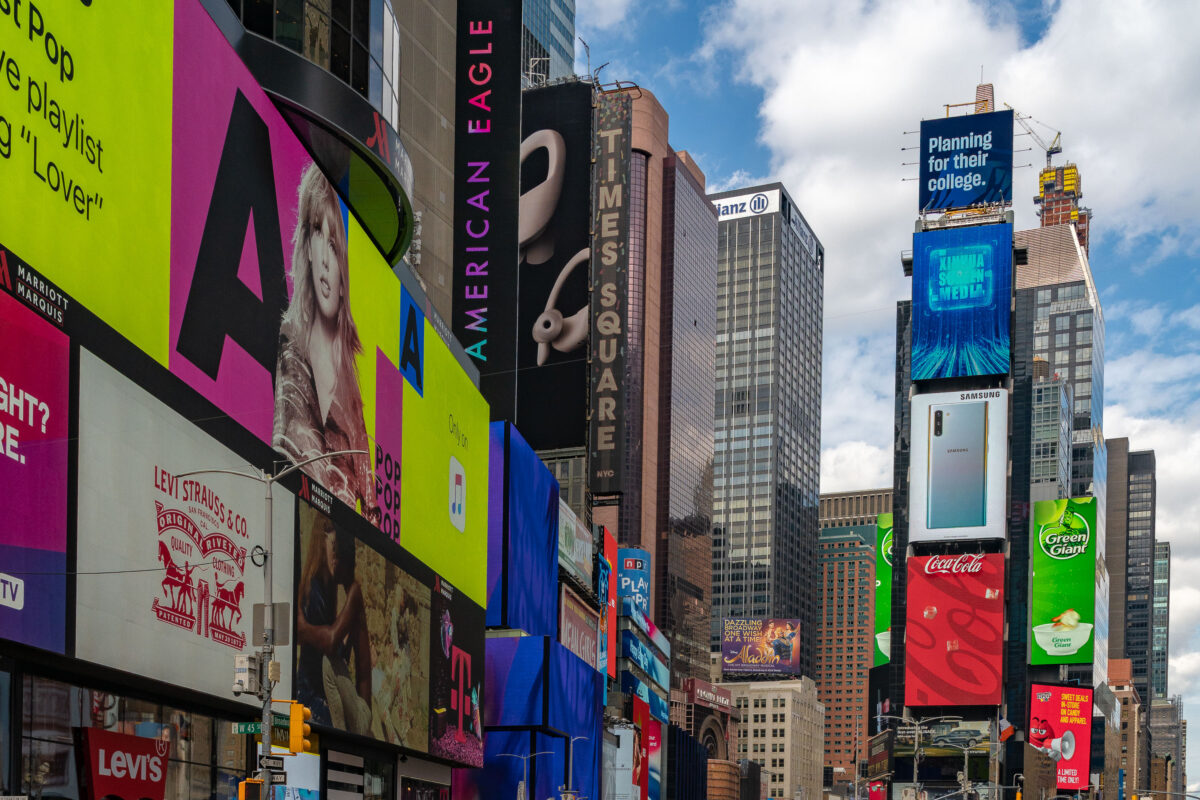
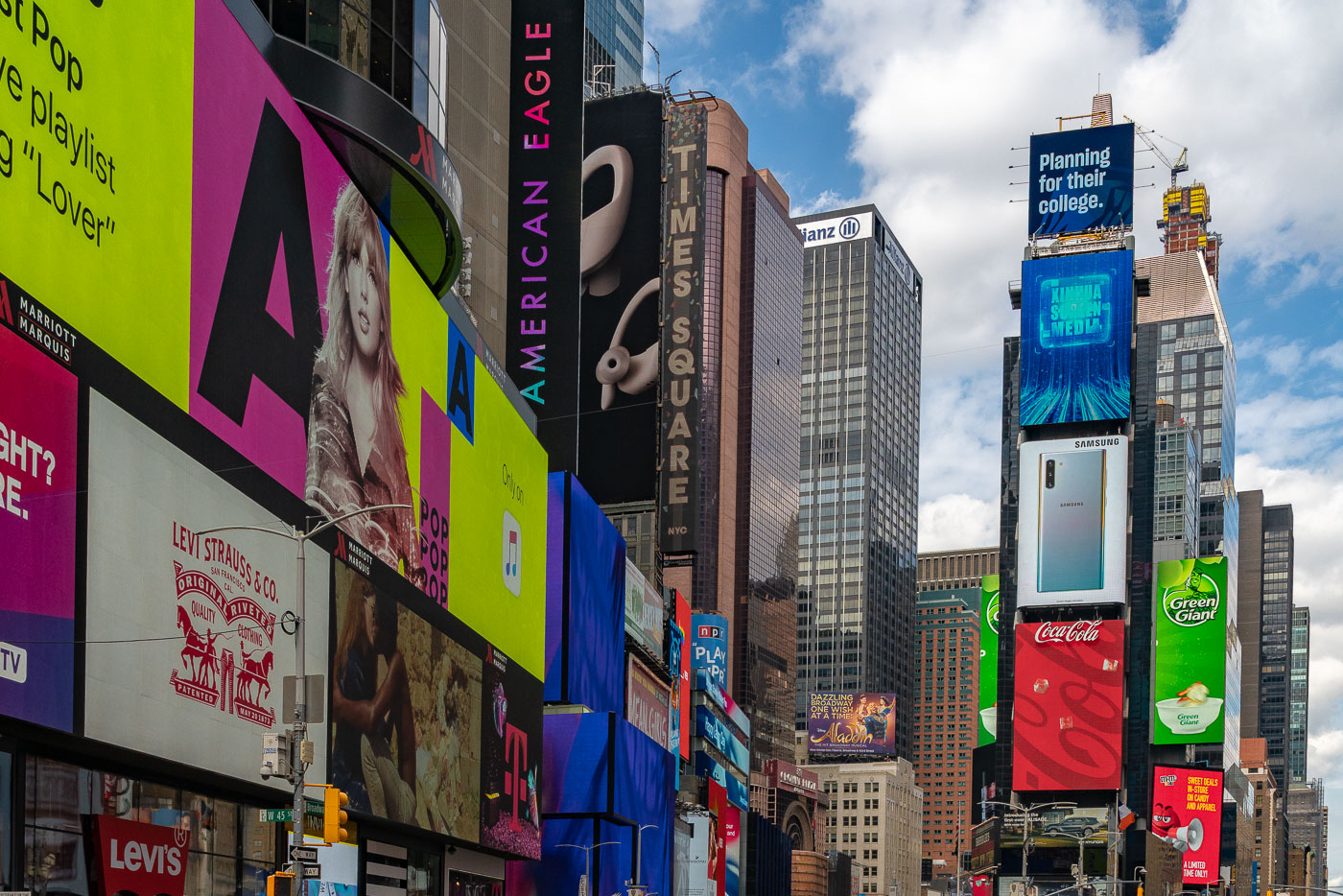
Times Square at Broadway and West 45th Street displays digital billboards and commercial towers in Manhattan.
Times Square at Broadway and West 45th Street in Midtown Manhattan is lined with large-format digital advertising displays and commercial towers. Visible signage includes American Eagle, Samsung, Coca-Cola, Levi Strauss & Co., and the Times Square vertical sign on One Times Square. The district is a concentrated entertainment and advertising corridor centered on the Broadway theater area and one of New York City's most heavily visited commercial intersections.

American Eagle and Samsung Billboards Near Times Square

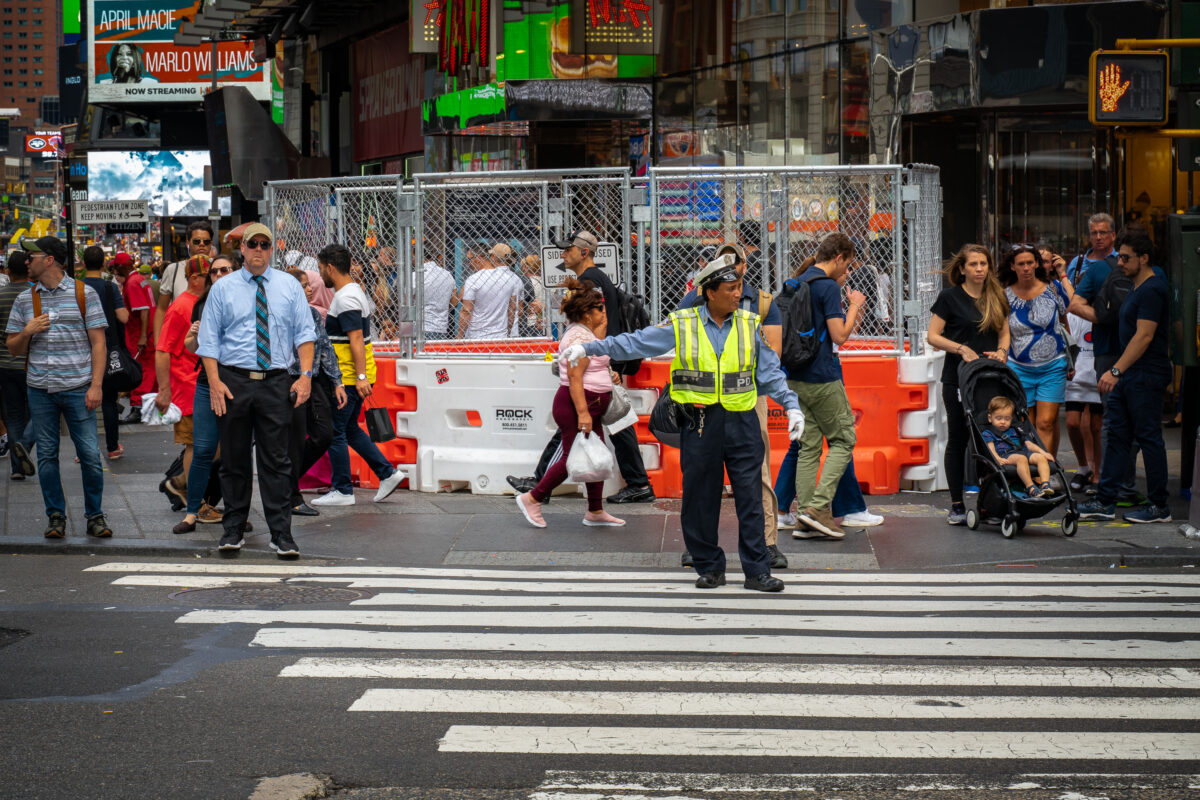
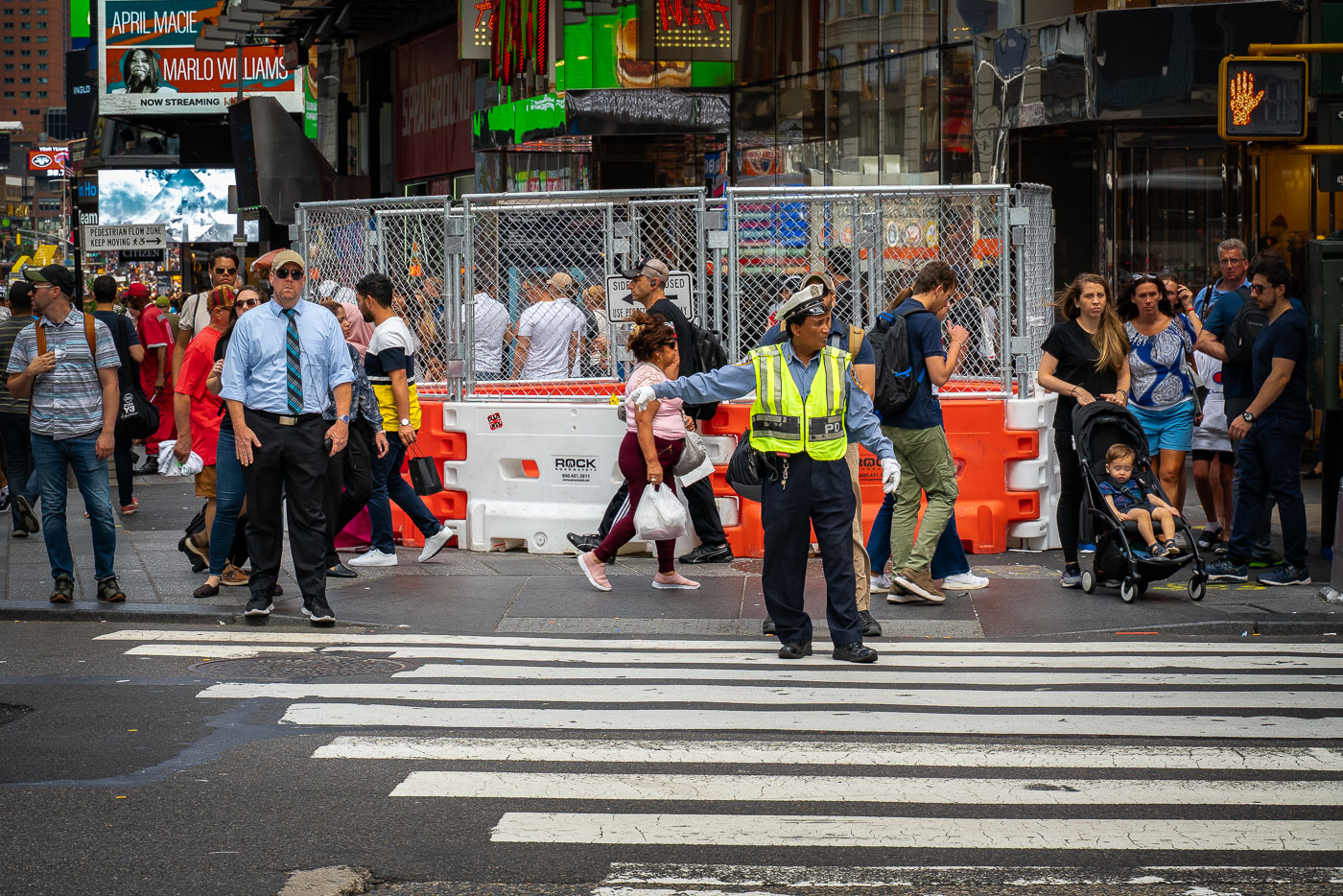
NYPD traffic officer directs pedestrians at a Times Square crosswalk in Manhattan.
NYPD traffic officer at a Times Square crosswalk in Manhattan. The officer manages pedestrian movement at a busy Midtown intersection amid heavy foot traffic and temporary construction barriers. Times Square is one of New York City's highest-volume pedestrian districts, requiring regular traffic control by the New York Police Department.

NYPD Officer Halts Crosswalk Traffic at Times Square

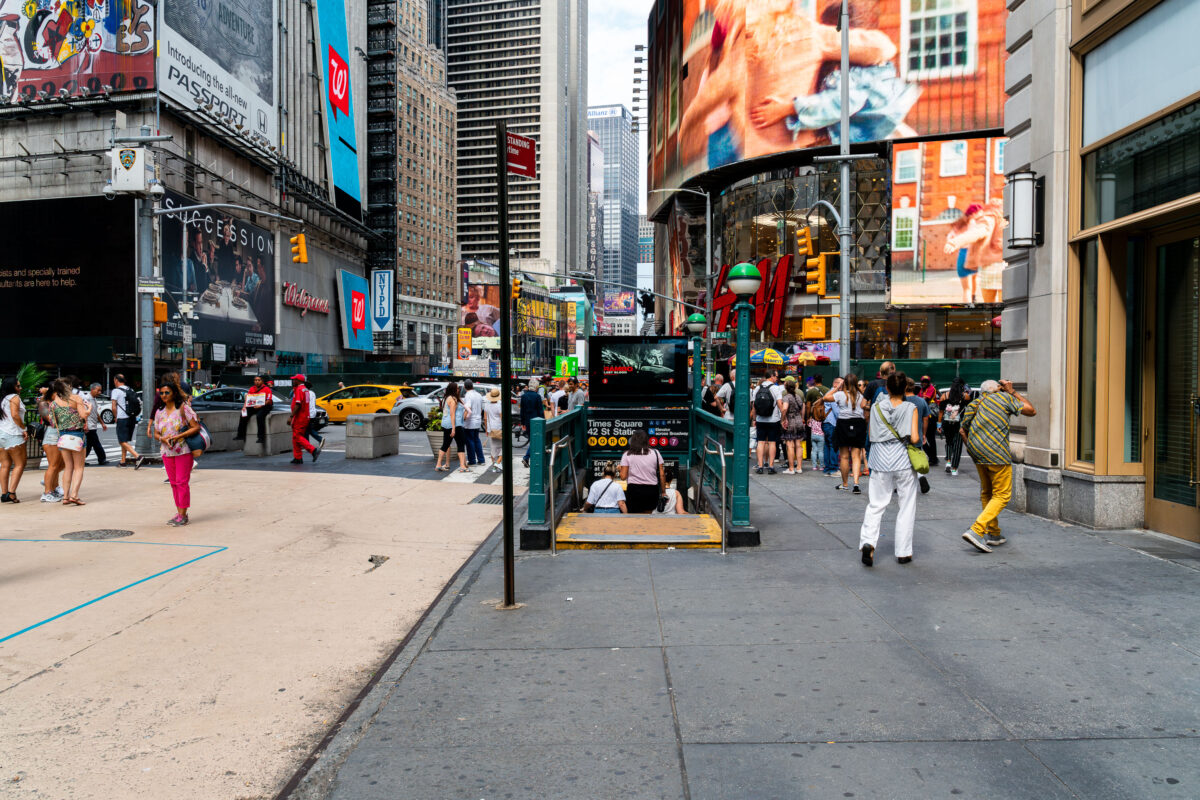
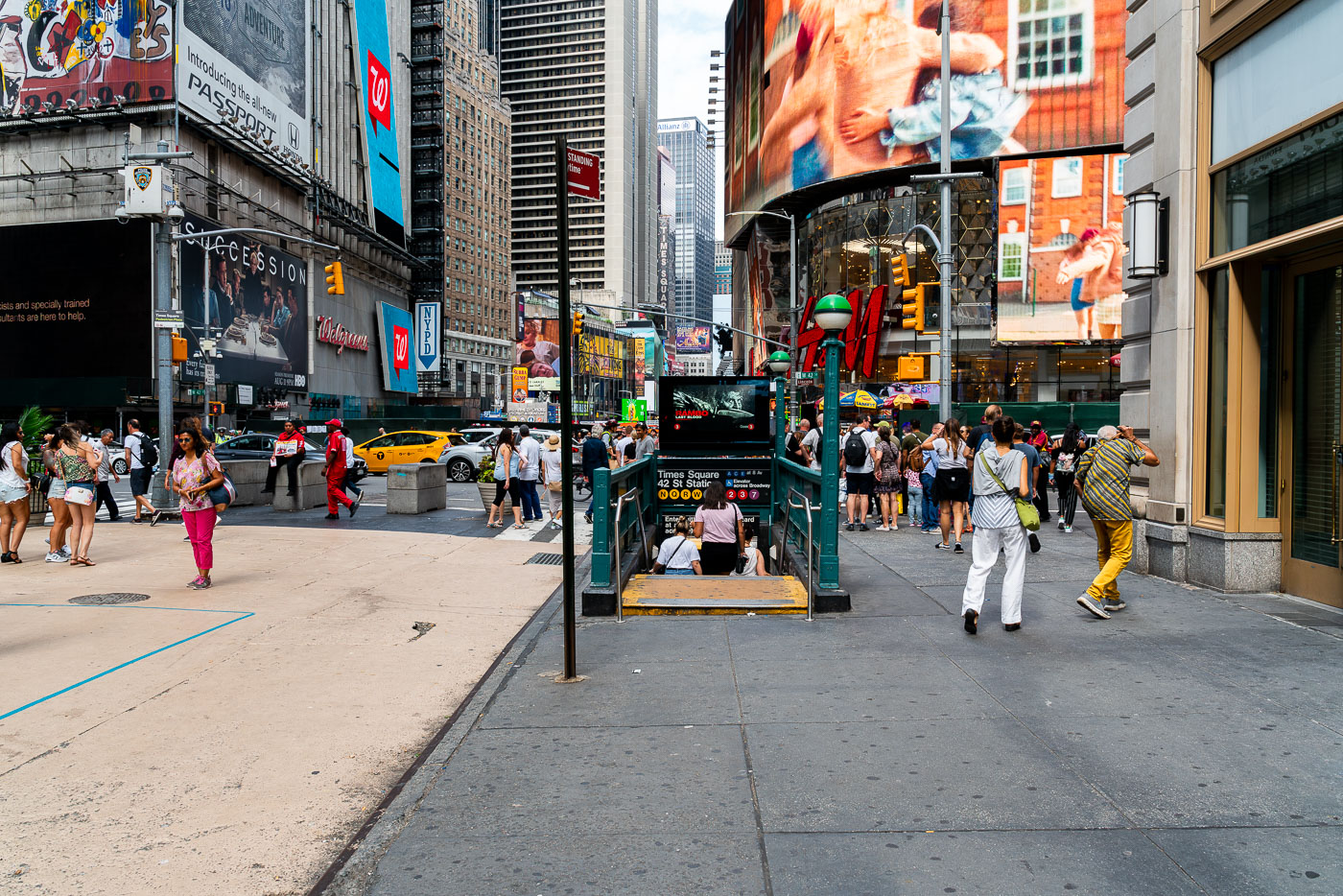
Pedestrians gather around the 42nd Street–Times Square subway station entrance on a busy Manhattan street.
The 42nd Street–Times Square station, a major transit hub in Manhattan, serves as a critical connection point for multiple subway lines. This station, one of the busiest in New York City, is situated beneath the vibrant commercial and entertainment district of Times Square.

Crowds Entering the 42nd St-Times Square Subway Station

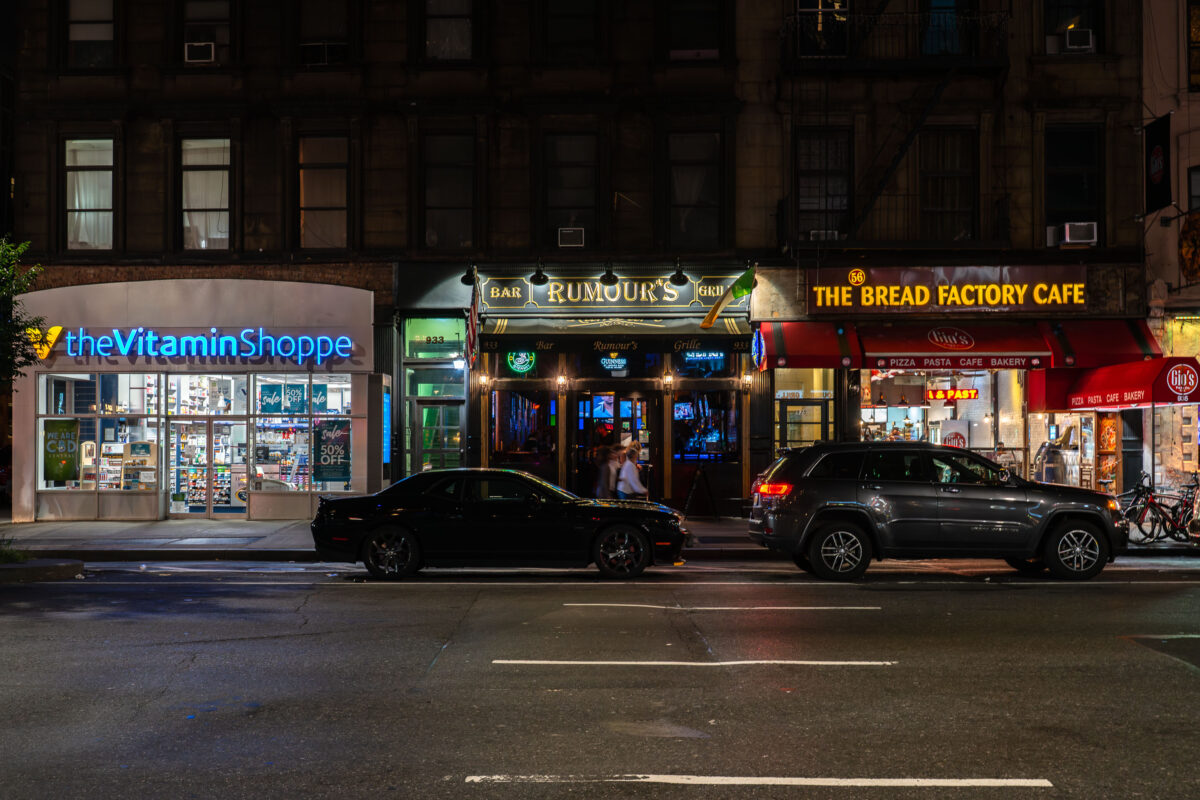
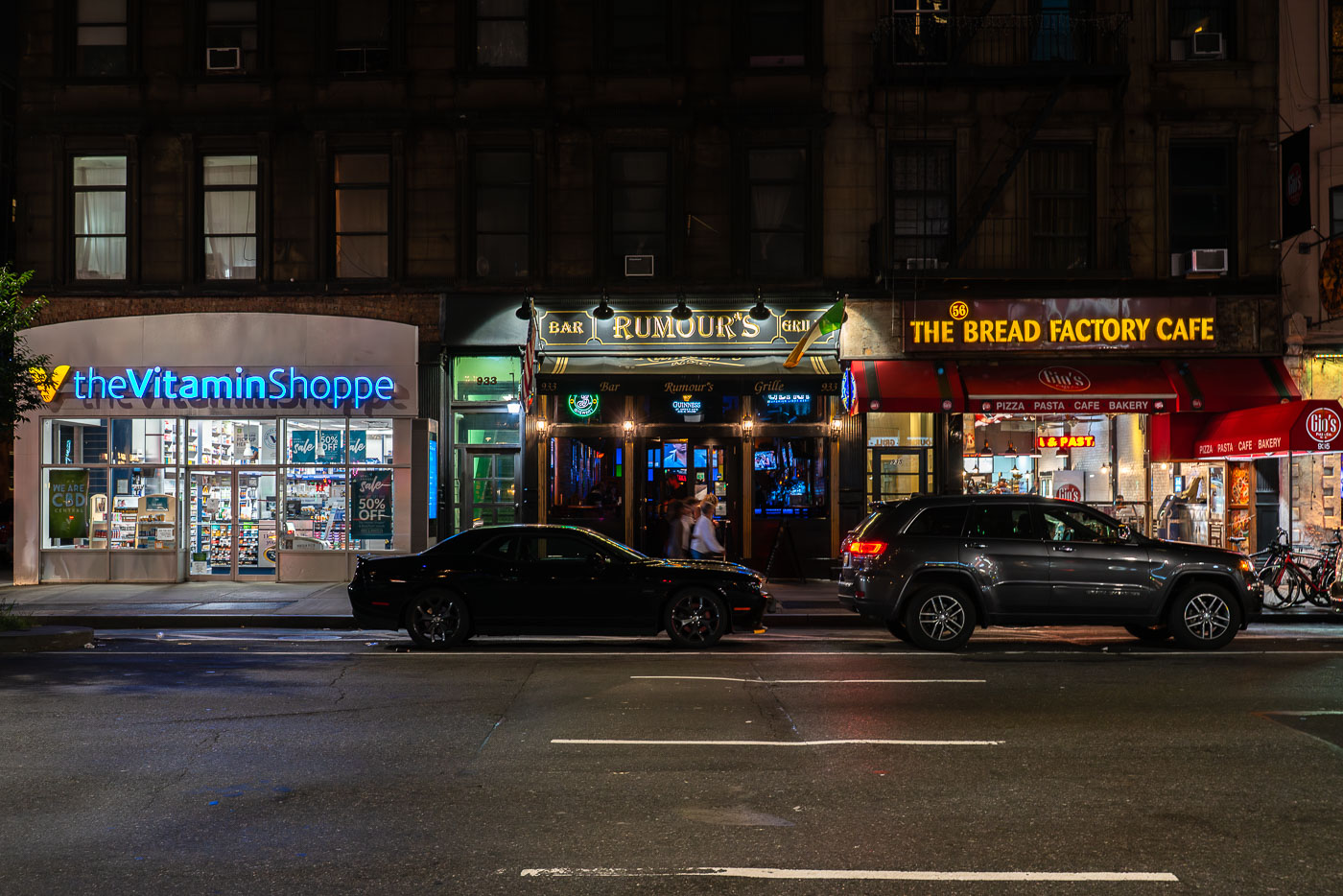
Storefronts including The Vitamin Shoppe, Rumour's Bar, and The Bread Factory Cafe line a Manhattan street at night.
Rumour's Bar and Grille sits between a Vitamin Shoppe and The Bread Factory Cafe on a Midtown Manhattan street.

Rumour’s Bar and Grille on a Midtown Manhattan Street at Night

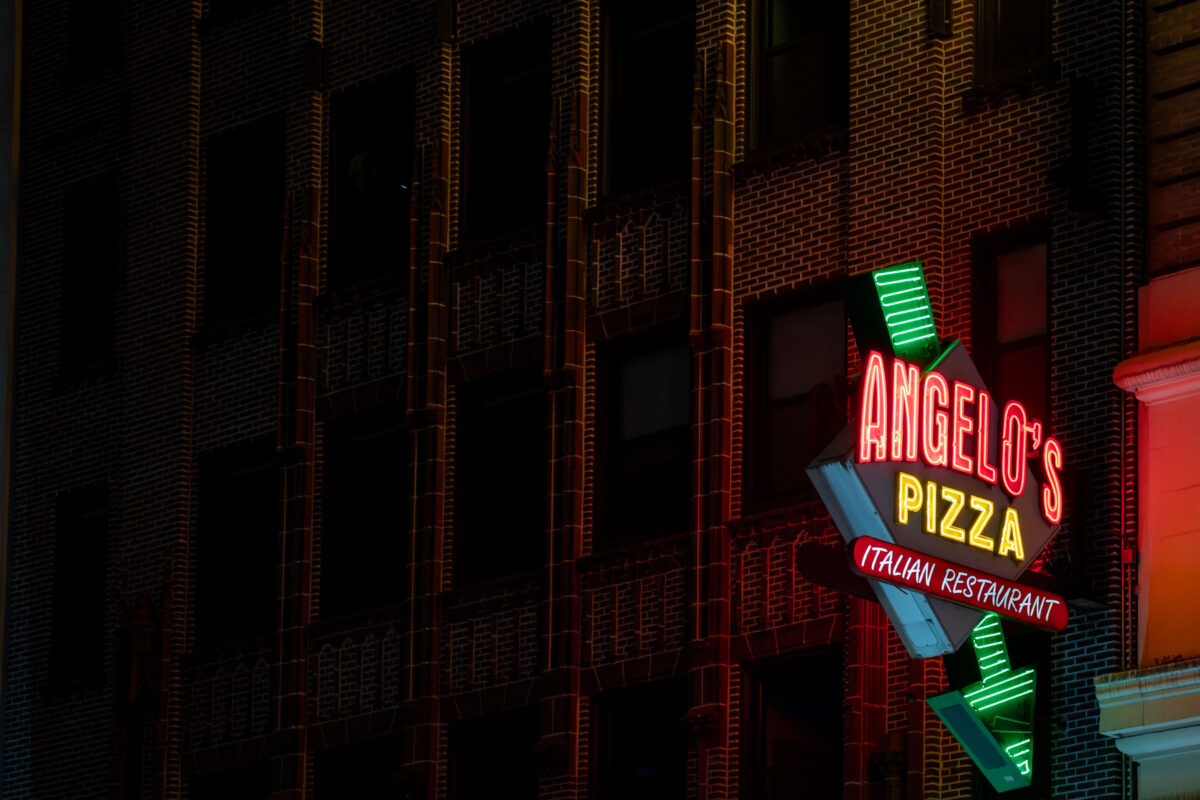
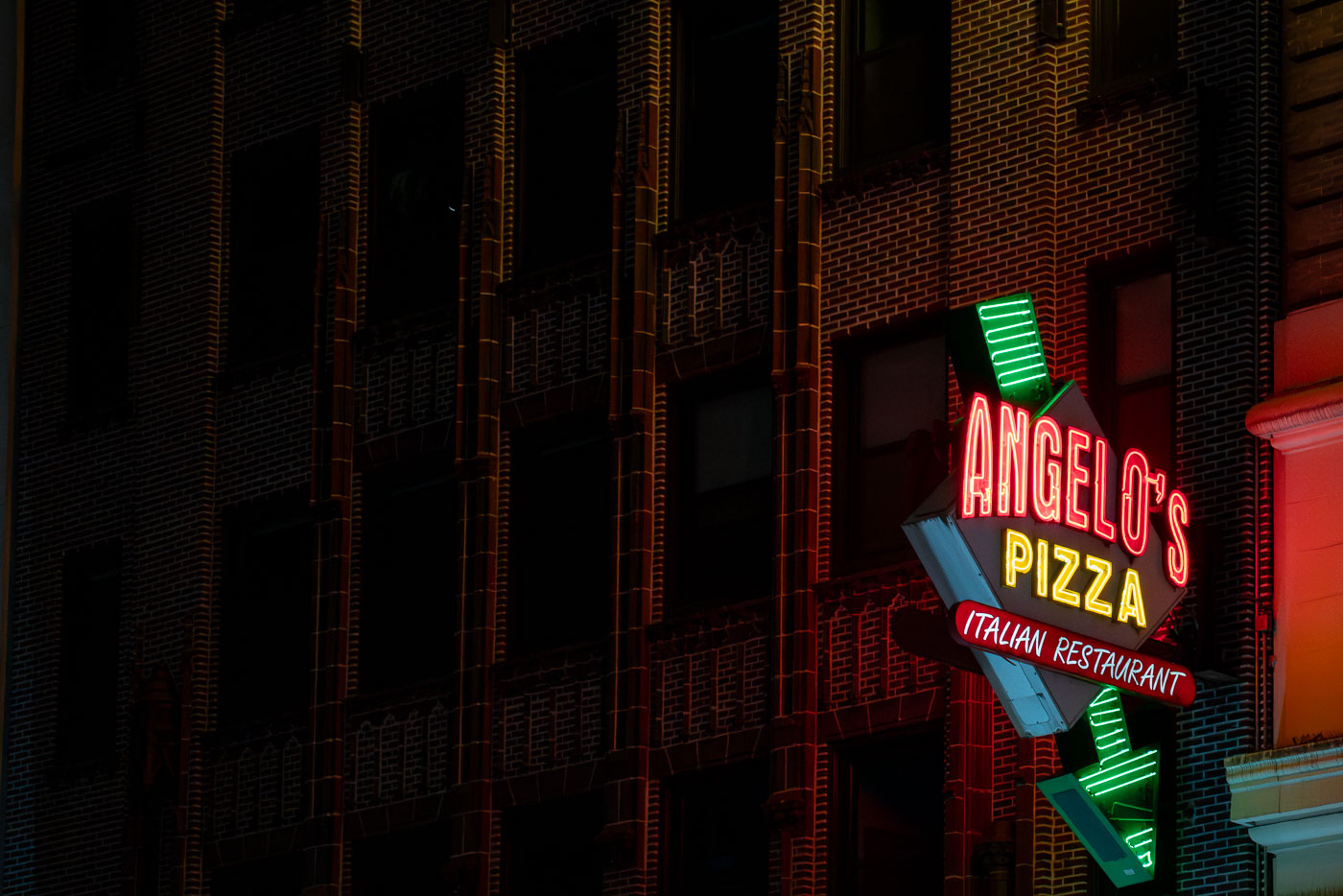
Illuminated neon sign for Angelo's Pizza Italian restaurant on a brick building facade in Midtown Manhattan.
Angelo's Pizza sign in Midtown Manhattan marks an Italian restaurant on a commercial block near the Ed Sullivan Theater. Its illuminated vertical sign projects from the building facade, a common form of streetside identification in New York City's dense entertainment and dining districts.

Angelo’s Pizza Neon Sign Glowing After Dark

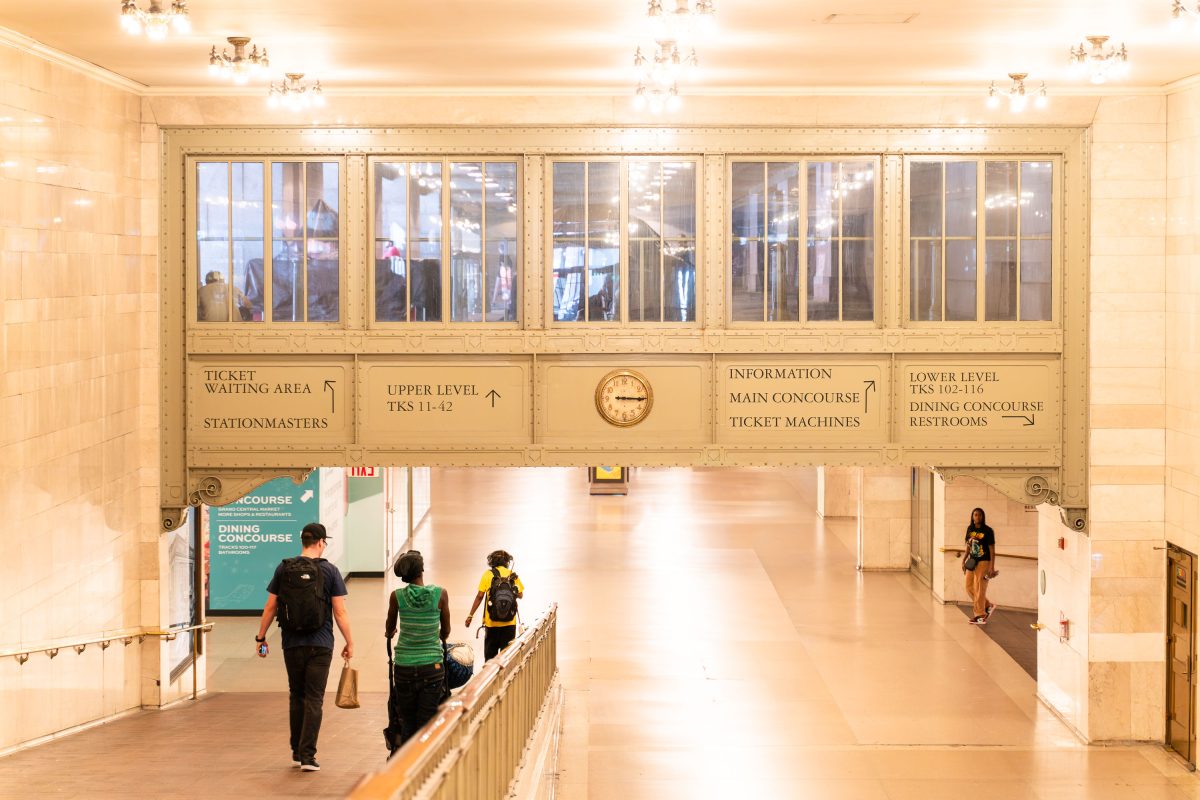
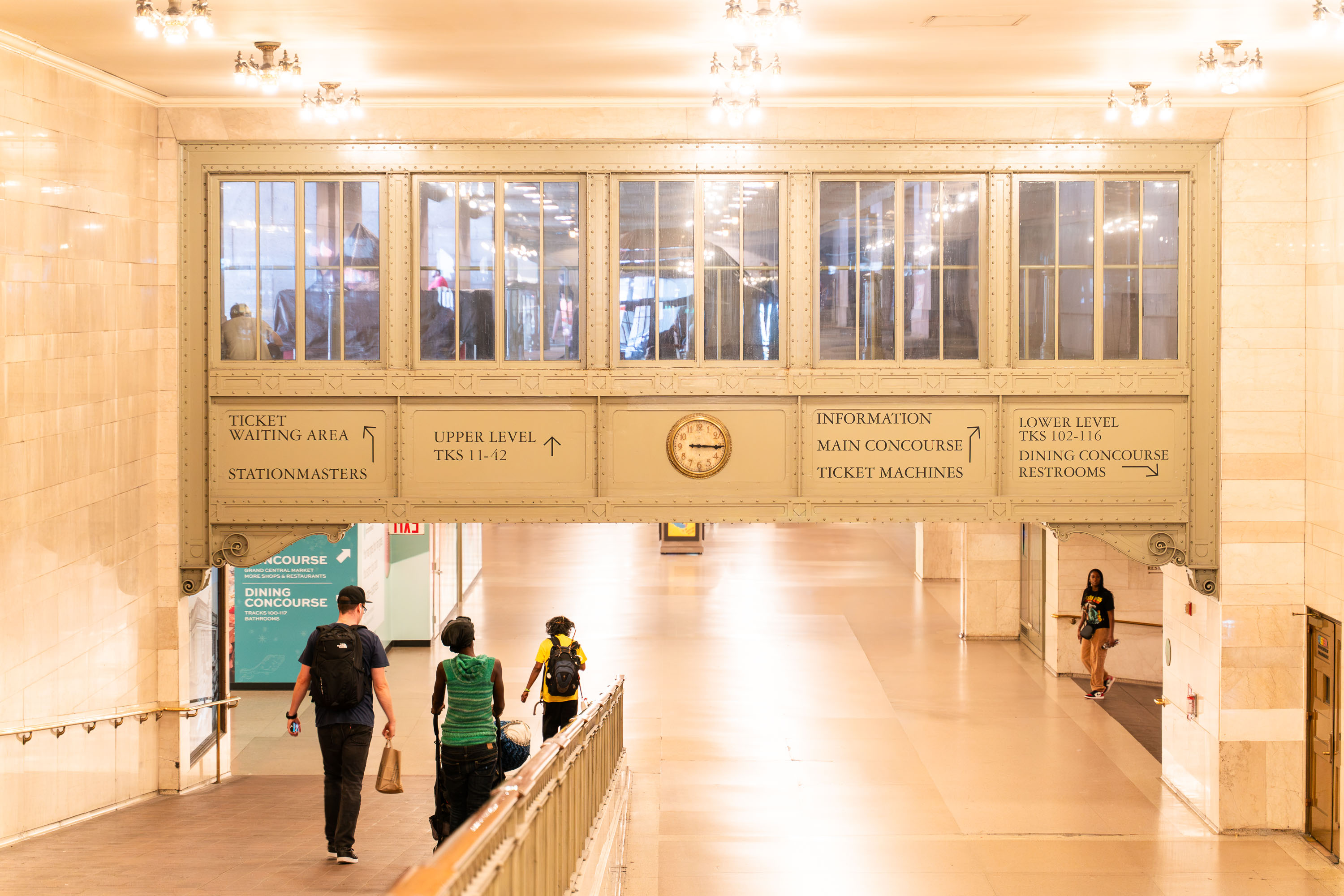
Wayfinding sign and clock above Grand Central Terminal's lower concourse with pedestrians below.
Grand Central Terminal opened in 1913 as the flagship station of the New York Central Railroad, designed by the firms Reed & Stem and Warren & Wetmore. The terminal spans 48 acres and includes 44 platforms serving 67 tracks on two levels, making it the largest train station in the world by platform count. Its lower level connects to the Dining Concourse, a food hall added during the 1990s restoration led by architect Beyer Blinder Belle. The Metropolitan Transportation Authority now owns and operates the building, which serves Metro-North Railroad commuters and hosts roughly 750,000 visitors daily. Grand Central was designated a National Historic Landmark in 1976, a status secured after a 1978 Supreme Court ruling upheld its landmark protection against demolition plans.
Ticket Window Signage Above Grand Central’s Dining Concourse

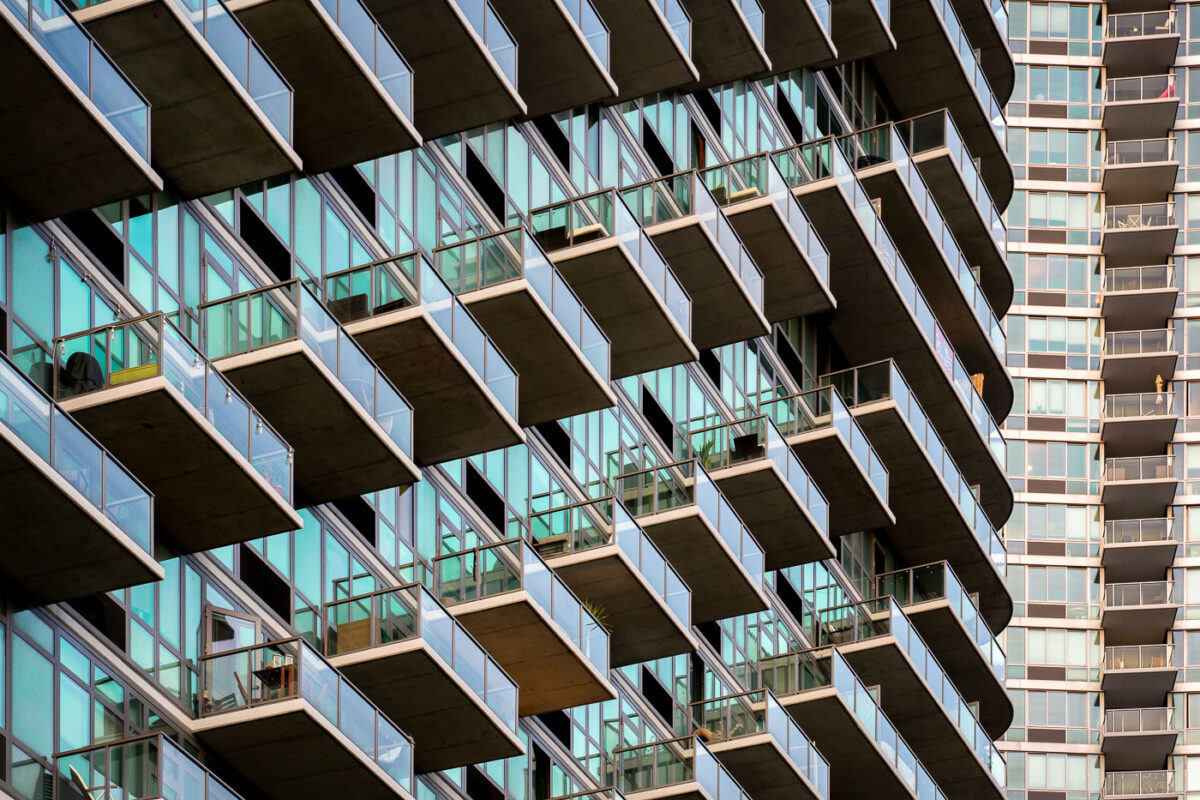
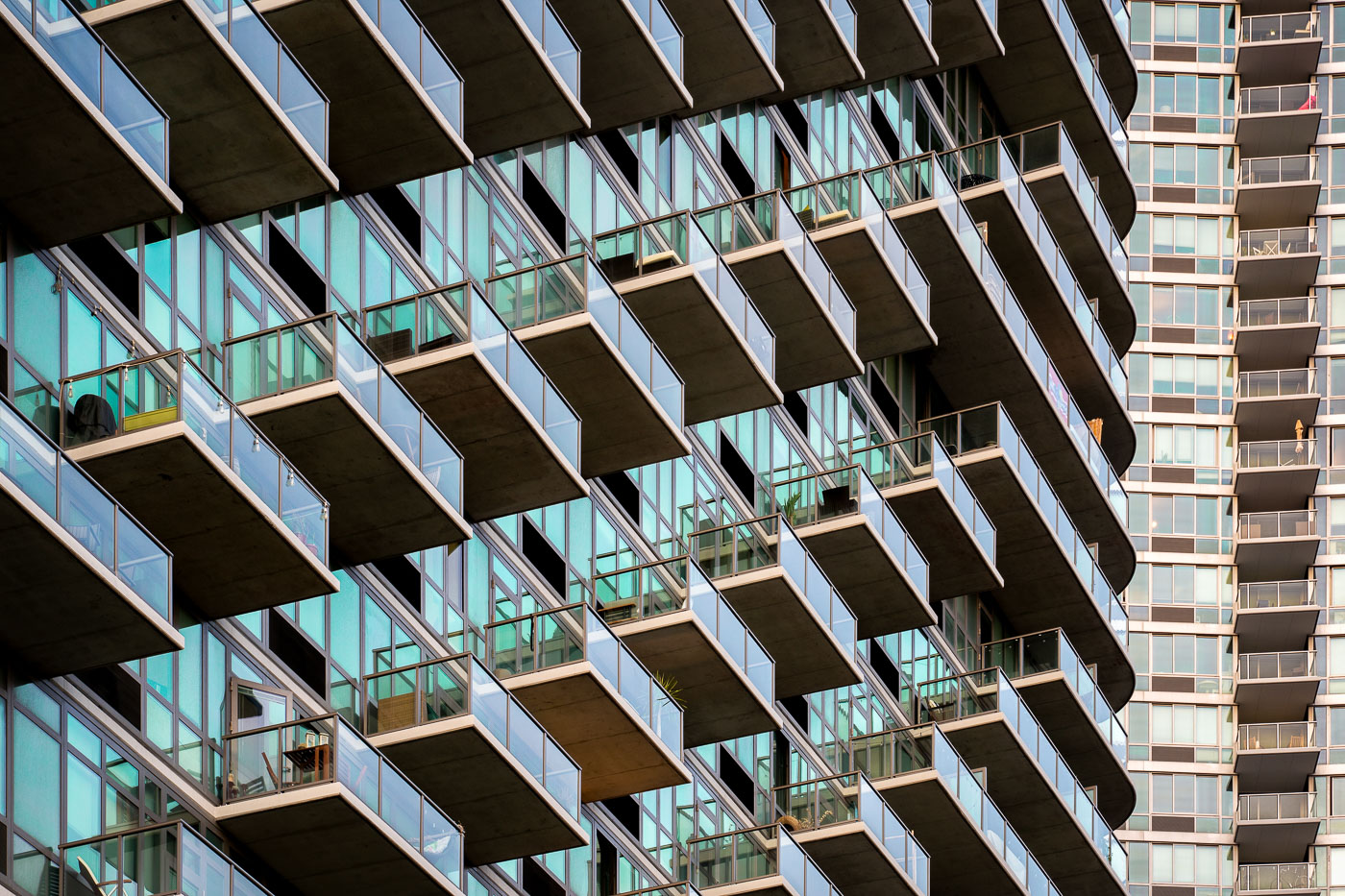
Modern apartment tower in Long Island City featuring stacked balconies with glass railings and curtain wall facade.
Long Island City apartment towers in New York City. The buildings feature stacked balconies and glass curtain walls typical of recent residential development in the neighborhood.

Zigzag Balcony Pattern on a Long Island City High-Rise

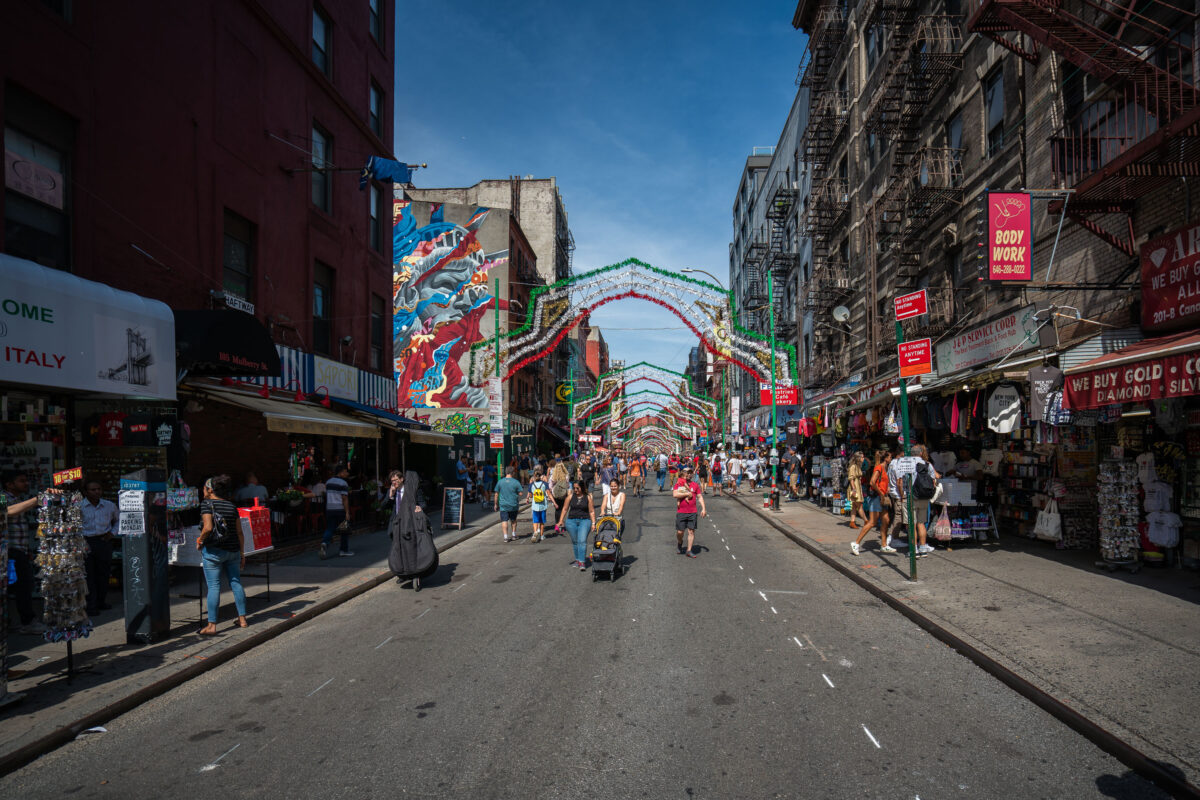
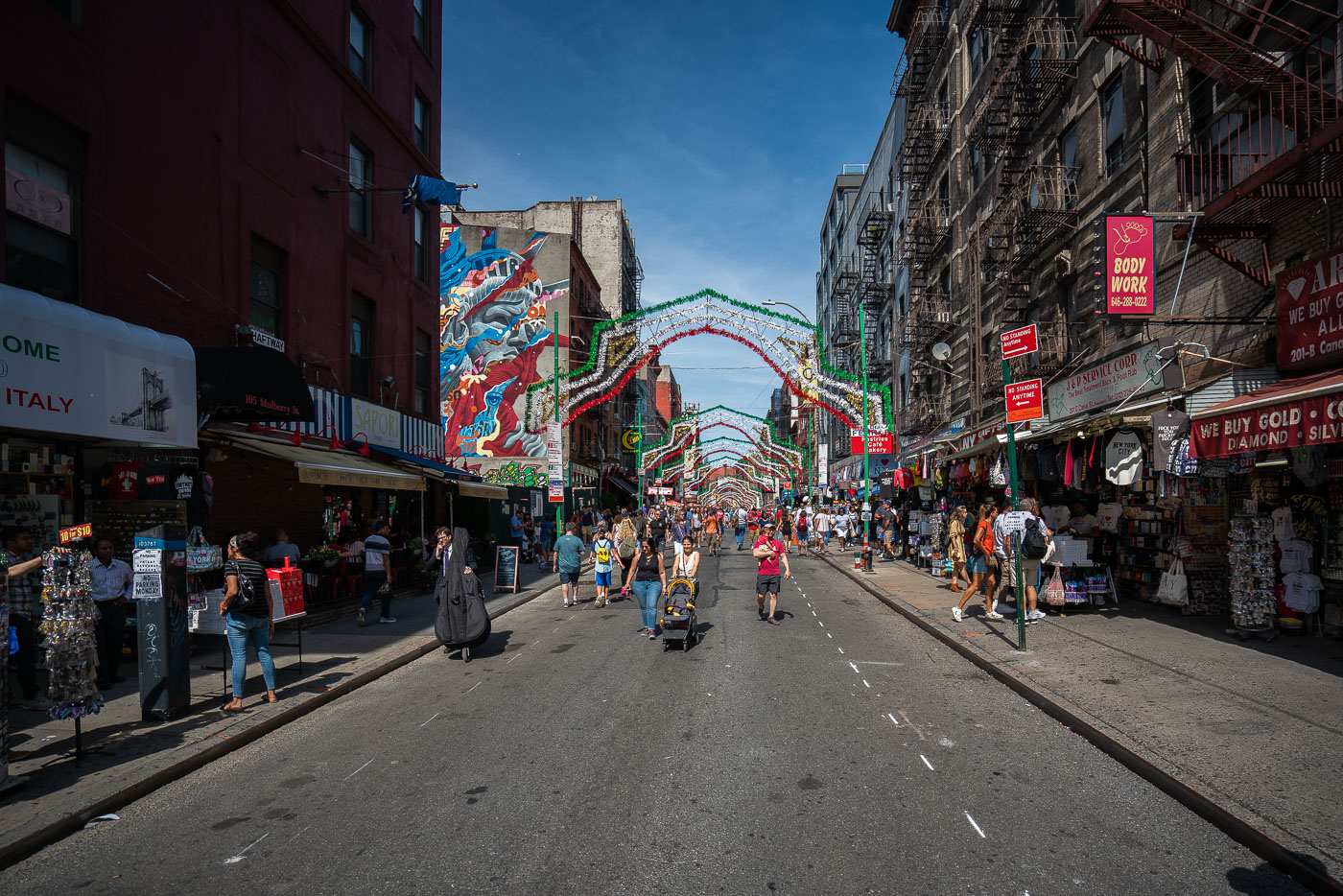
Pedestrians walk along Mulberry Street in Manhattan's Little Italy beneath decorative arches, with shops and vendors lining both
People walk along Mulberry Street in Manhattan’s Little Italy under rows of simple festive arches. Shops and cafés line the street as vendors sell food and souvenirs to passersby.

Festival Arches Over Mulberry Street in Little Italy

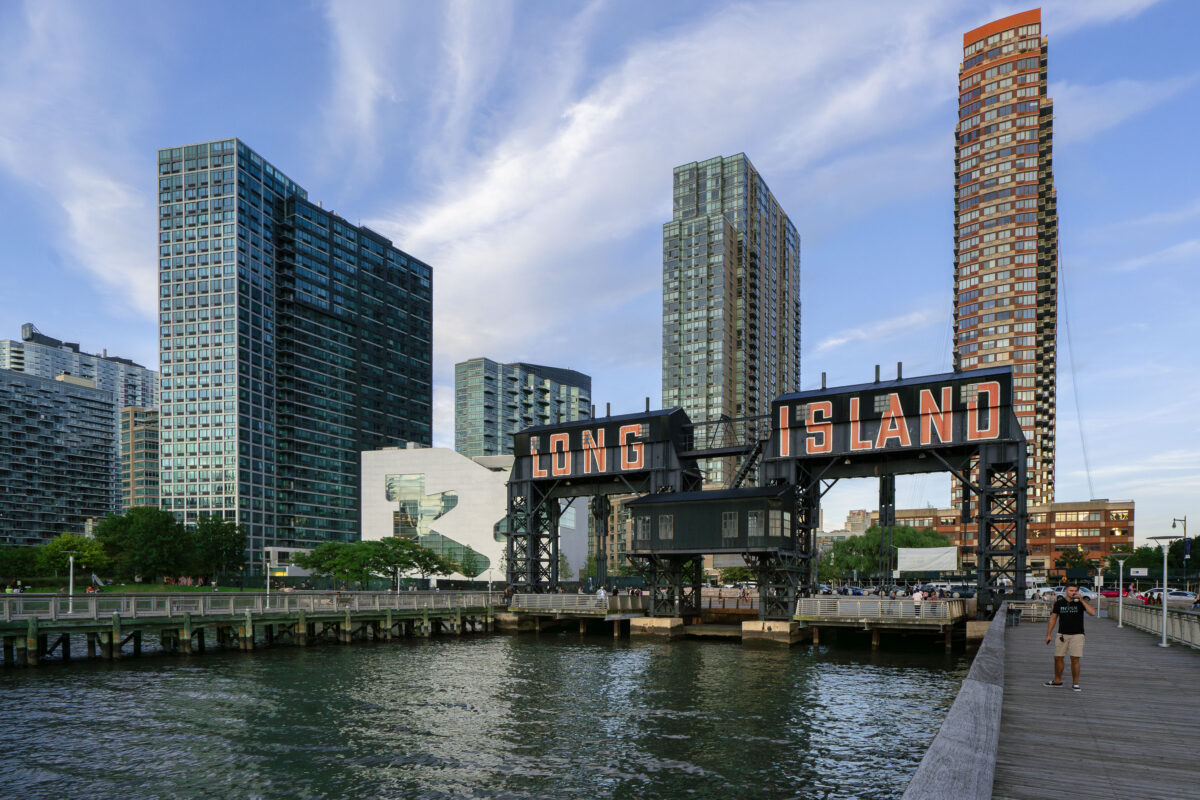
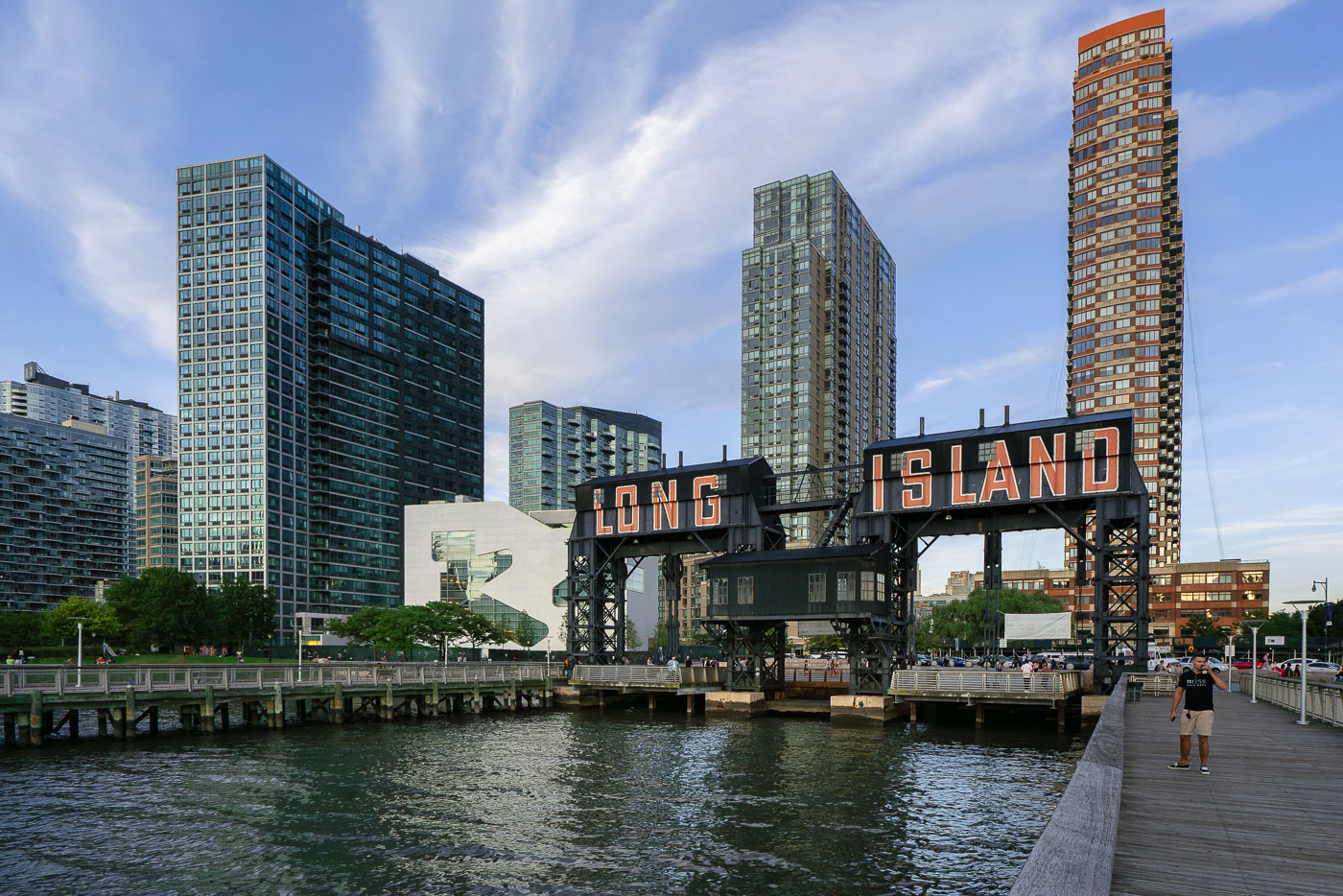
Long Island sign on the East River waterfront with high-rise buildings in Queens, New York.
The iconic Long Island sign towers over the East River waterfront in Queens as evening light reflects off the glassy high-rises of Long Island City. Once a gritty industrial dock, the area has transformed into one of New York City’s fastest-growing neighborhoods.

Gantry Plaza’s Long Island Sign at Dusk

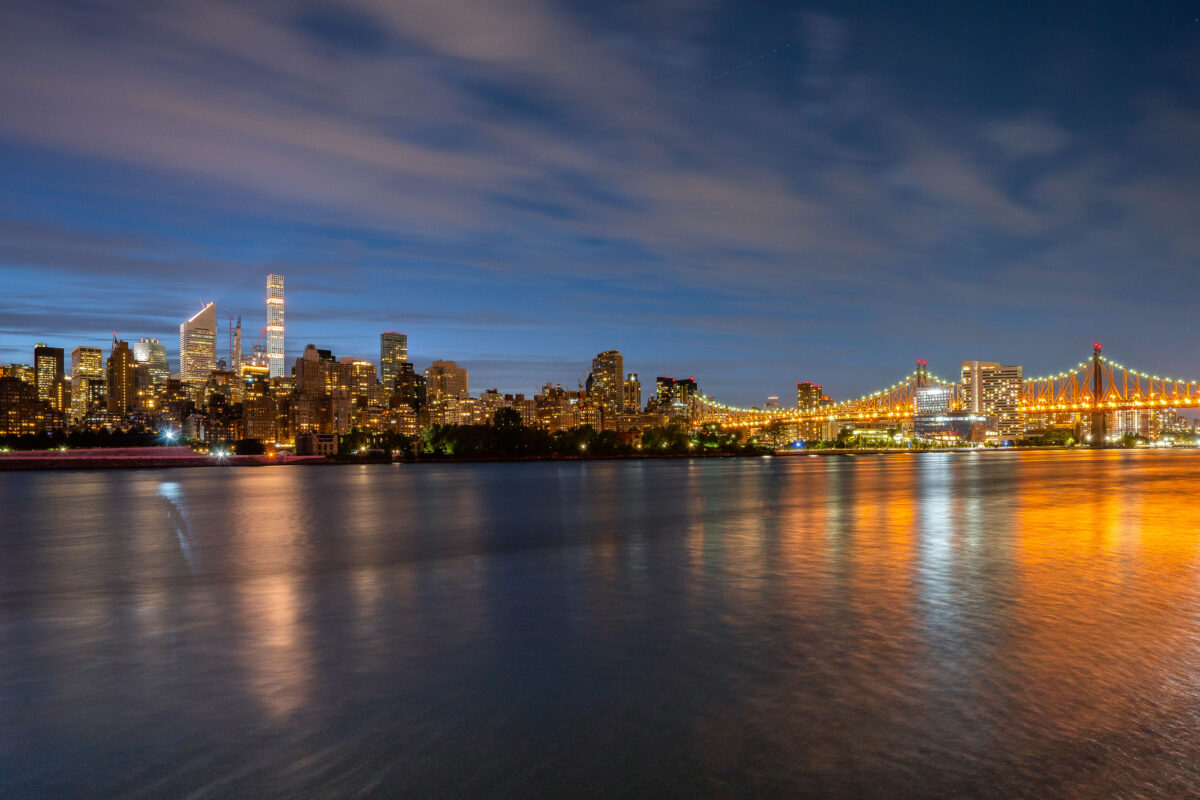
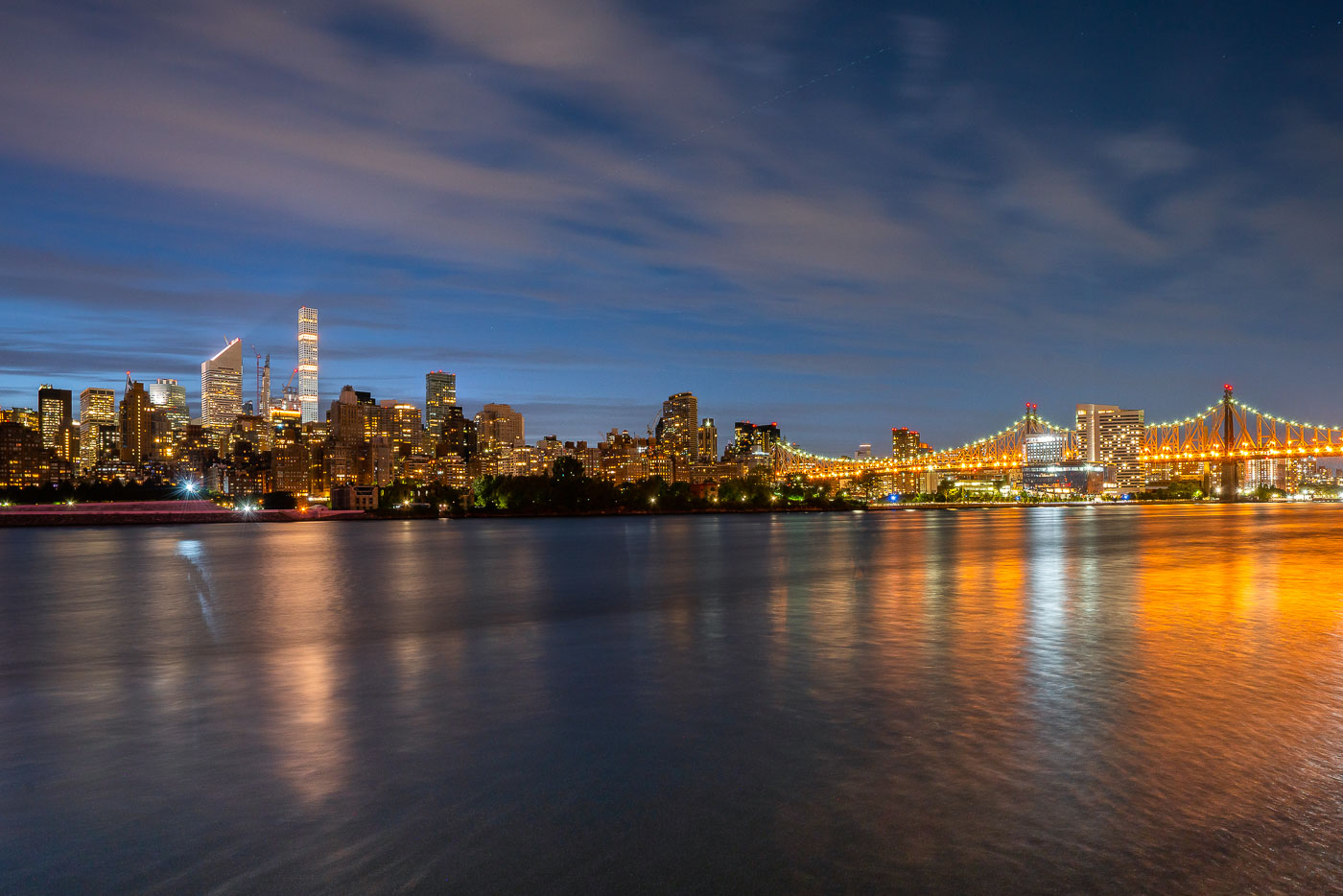
Manhattan skyline and illuminated Queensboro Bridge viewed from Long Island City across the East River.
Manhattan and the Queensboro Bridge in New York City are viewed from Long Island City, Queens. The East River separates the two boroughs along the Midtown waterfront. Night lighting from the bridge and skyline is reflected on the water.

Queensboro Bridge and Midtown Skyline at Twilight

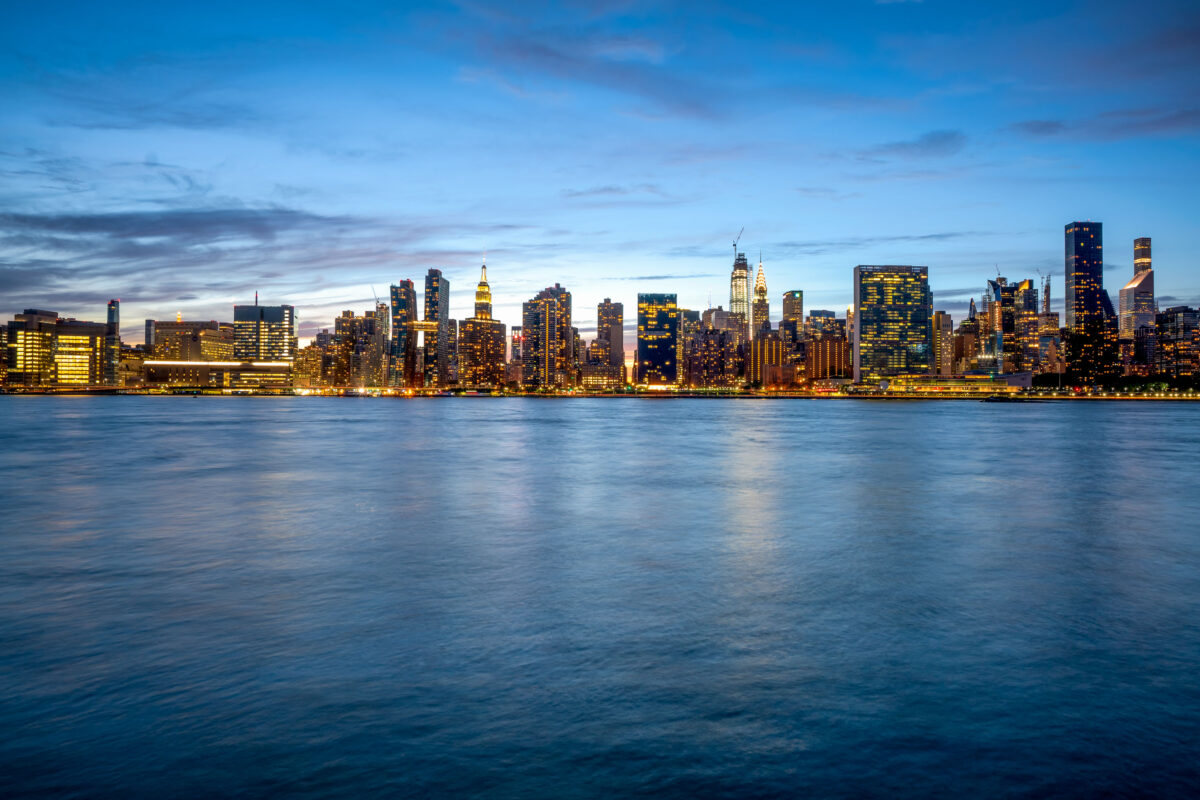
Midtown Manhattan skyline illuminated at dusk across the East River from Long Island City, Queens.
Midtown Manhattan rises across the East River as viewed from Long Island City in Queens. The Empire State Building, completed in 1931 to a height of 1,454 feet with its antenna, remains one of the skyline's most recognizable structures. Nearby, the Chrysler Building, finished in 1930, held the title of world's tallest building for less than a year before losing it to the Empire State Building. The East River separates Manhattan from Queens and Brooklyn, connecting New York Harbor to Long Island Sound as a tidal estuary rather than a true river. Long Island City, once dominated by factories and warehouses, has become one of the fastest-growing residential areas in New York City over the past two decades.

Manhattan Skyline Seen From Long Island City at Dusk

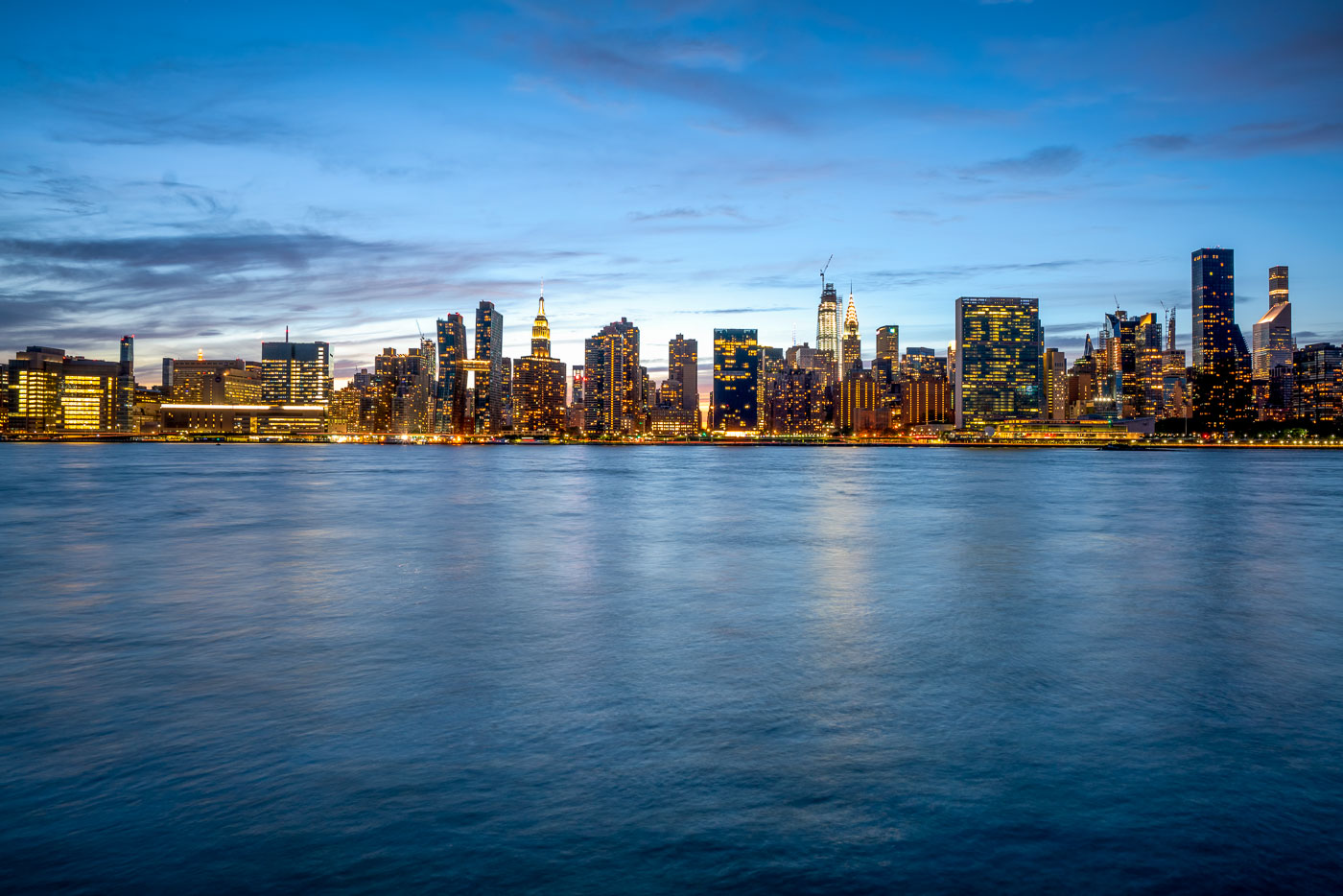
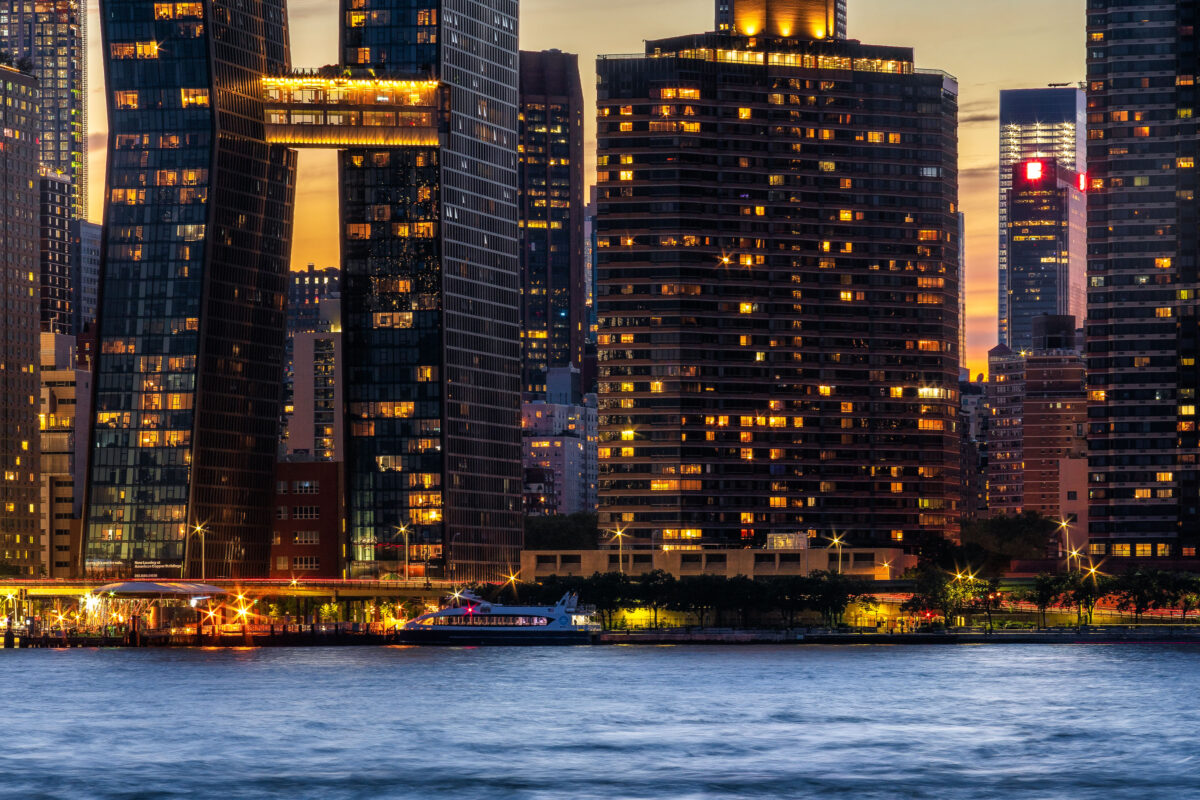
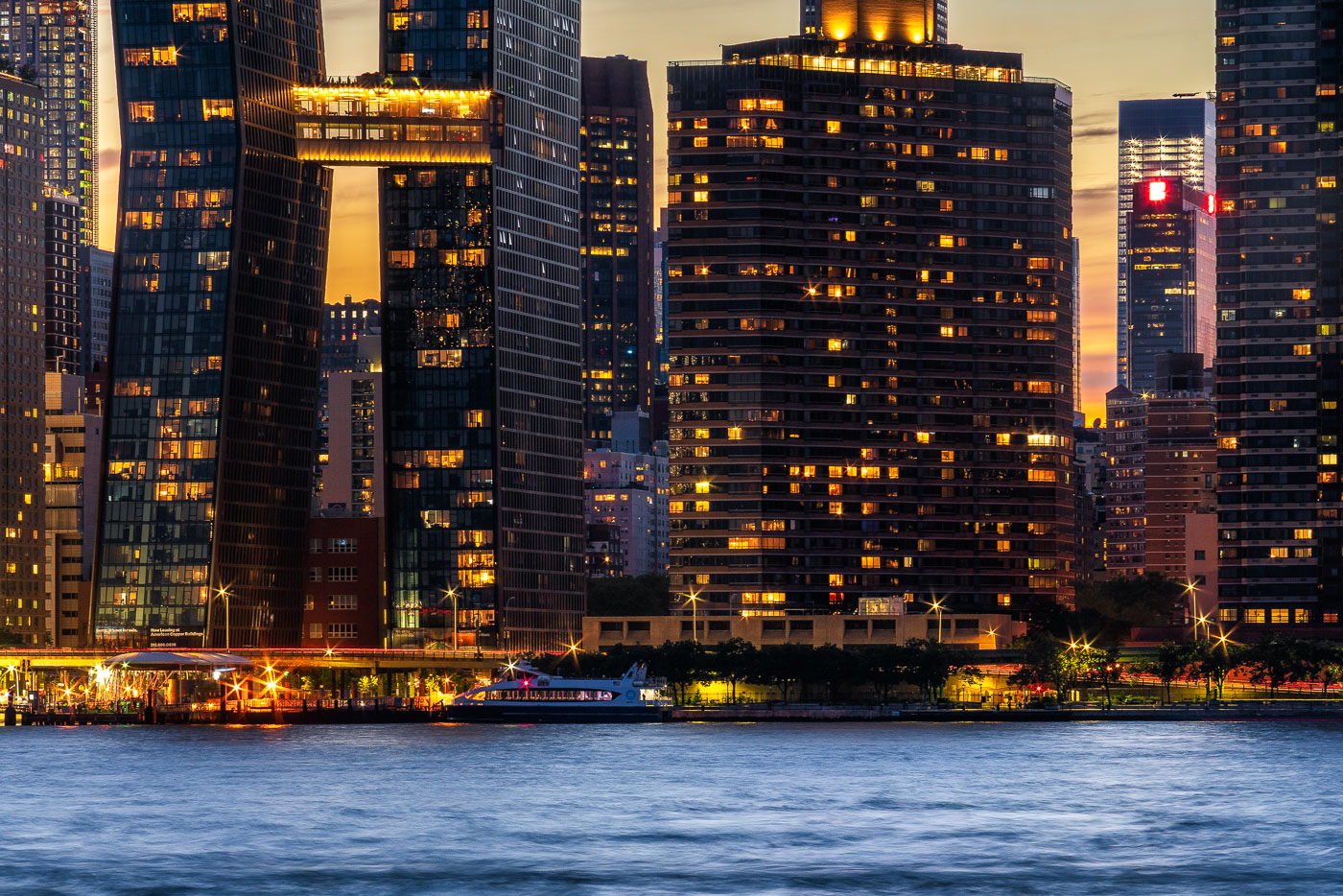
Manhattan's East River waterfront at dusk with illuminated residential and office towers.
Manhattan, New York City, rises along the East River at dusk. The waterfront edge includes the riverfront promenade and nearby residential towers on the Lower East Side and East Midtown.

Manhattan’s East River Skyline at Dusk

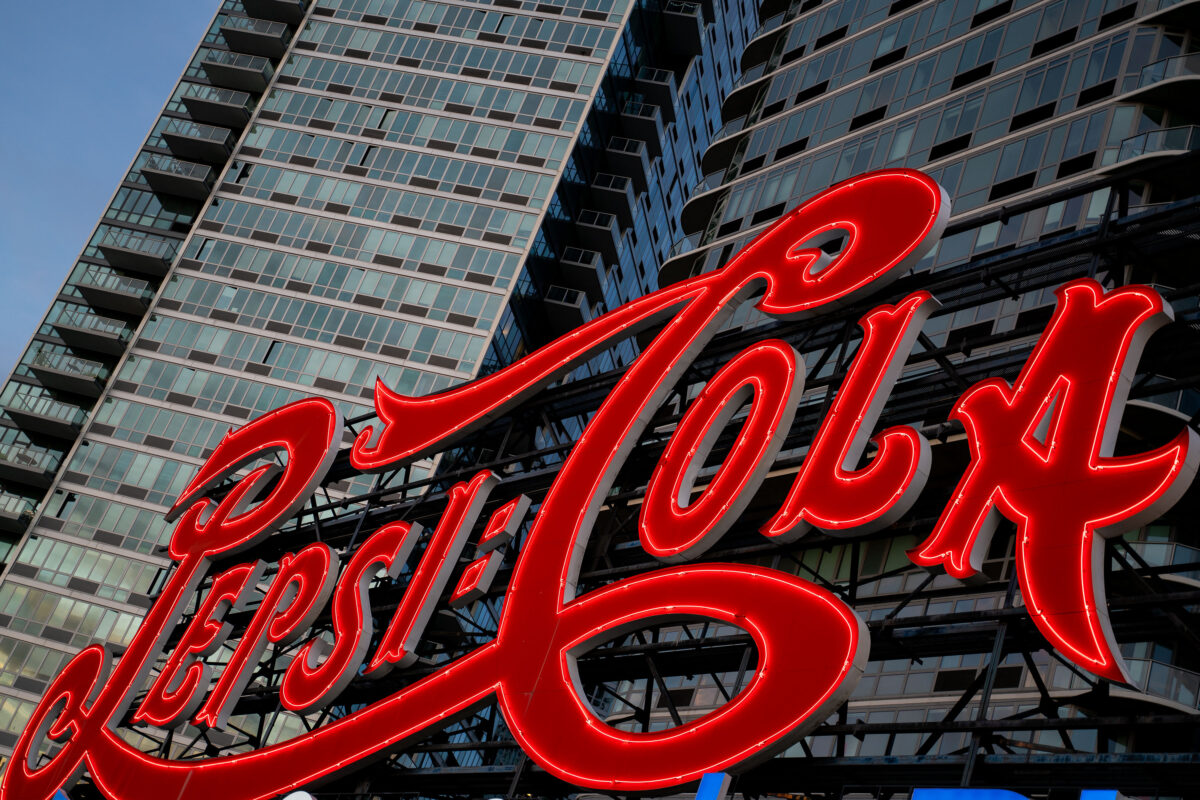
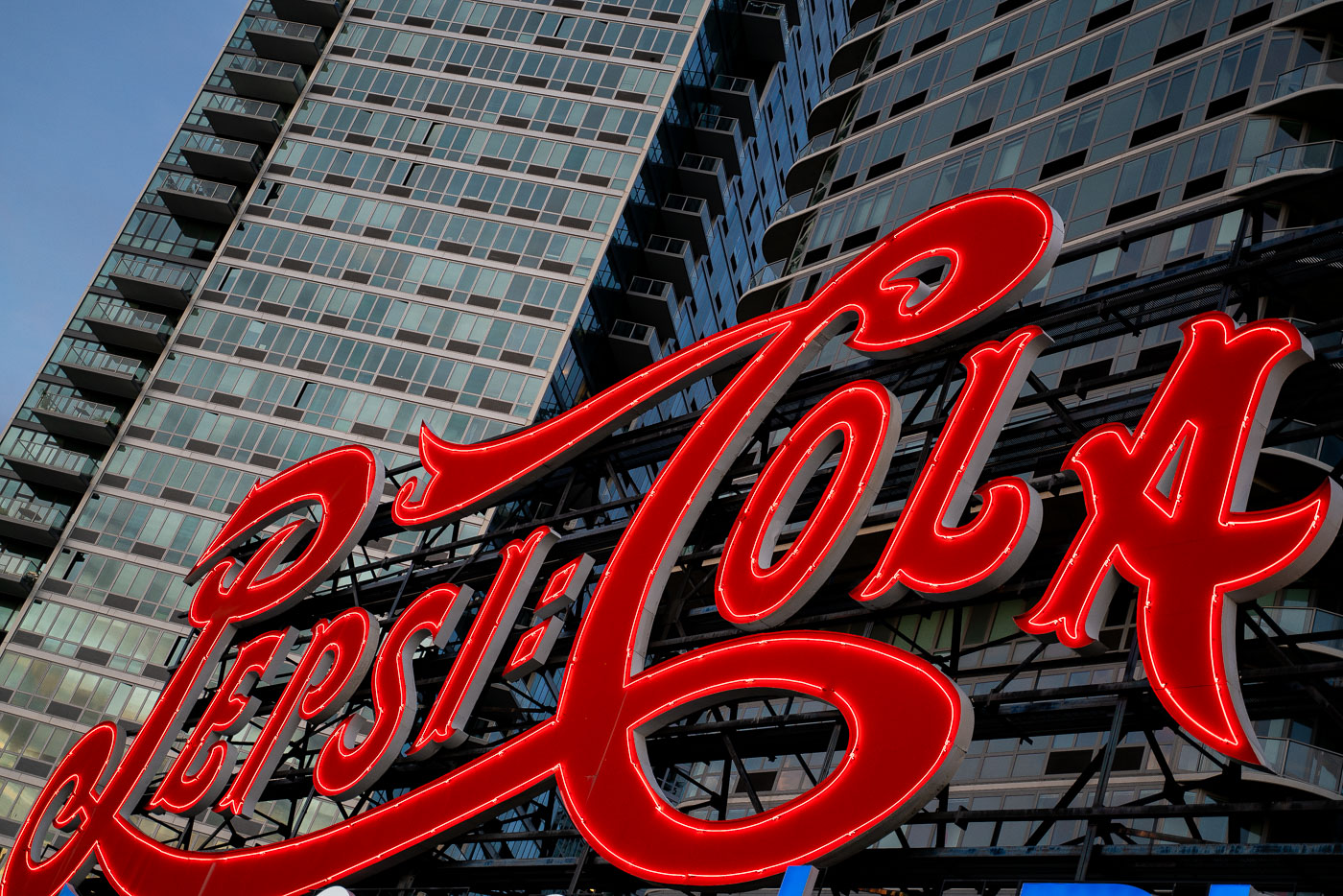
Red neon Pepsi-Cola sign illuminated against modern residential towers in Long Island City, Queens.
The iconic Pepsi-Cola sign glows in red neon along the East River waterfront in Long Island City, Queens. The landmark sign, originally installed in 1936, now stands in front of modern residential towers and remains a prominent feature of the New York City skyline.

Pepsi-Cola Sign Framed by Long Island City Towers

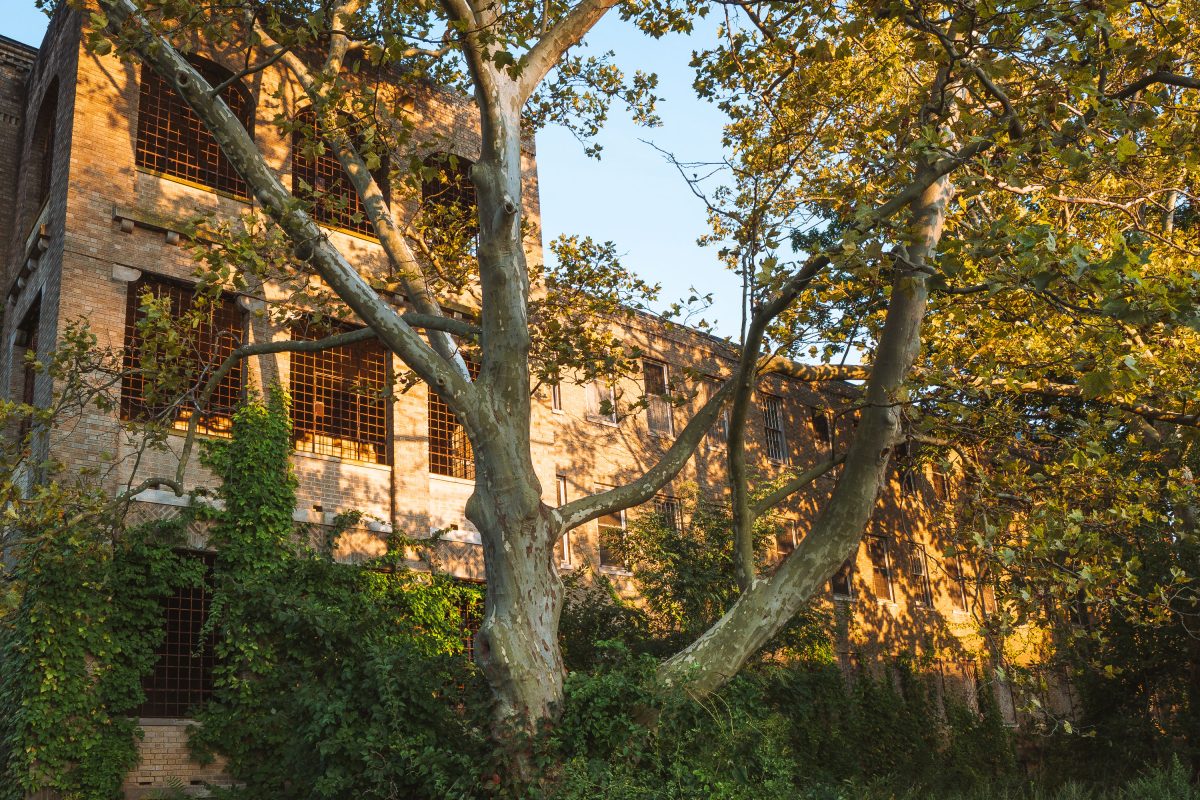
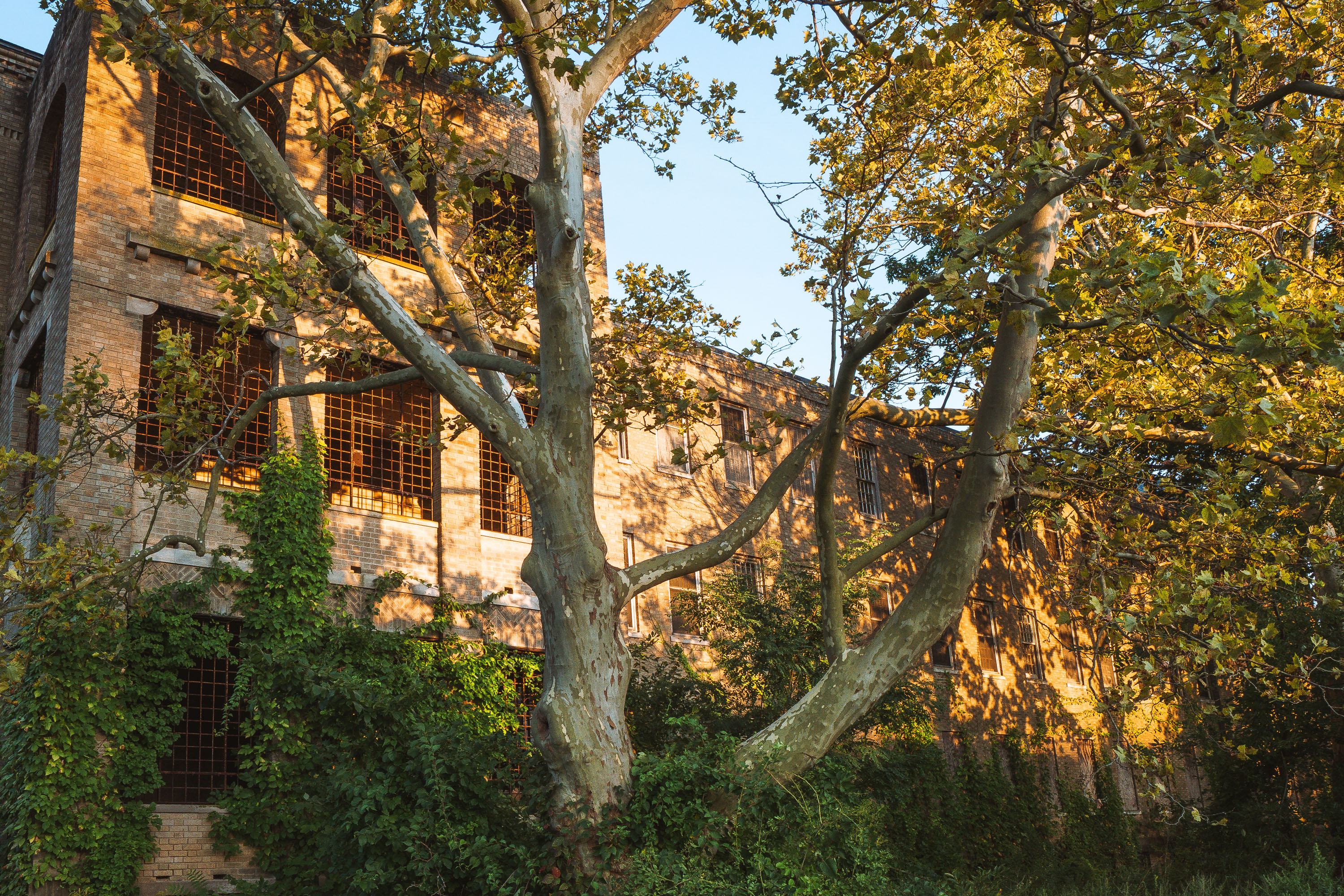
Ivy-covered brick ward building at abandoned Creedmoor Psychiatric Center in Queens, New York.
Creedmoor Psychiatric Center opened in 1912 in Queens Village, Queens, as the Farm Colony of Brooklyn State Hospital, later becoming an independent state psychiatric facility in 1926. At its peak in the 1950s, the campus housed more than 6,000 patients across dozens of buildings on the sprawling grounds. Deinstitutionalization policies and a shift toward outpatient care led the state to close or repurpose much of the original campus starting in the 1980s. Several of the historic brick ward buildings, built in the Collegiate Gothic style common to early-20th-century state hospitals, have sat vacant for decades while a smaller active facility continues to operate elsewhere on the property. Ivy and mature trees have since overtaken many of the abandoned structures, whose barred windows remain a legacy of the site's original psychiatric use.

Barred Windows Behind the Trees at Creedmoor Psychiatric Center

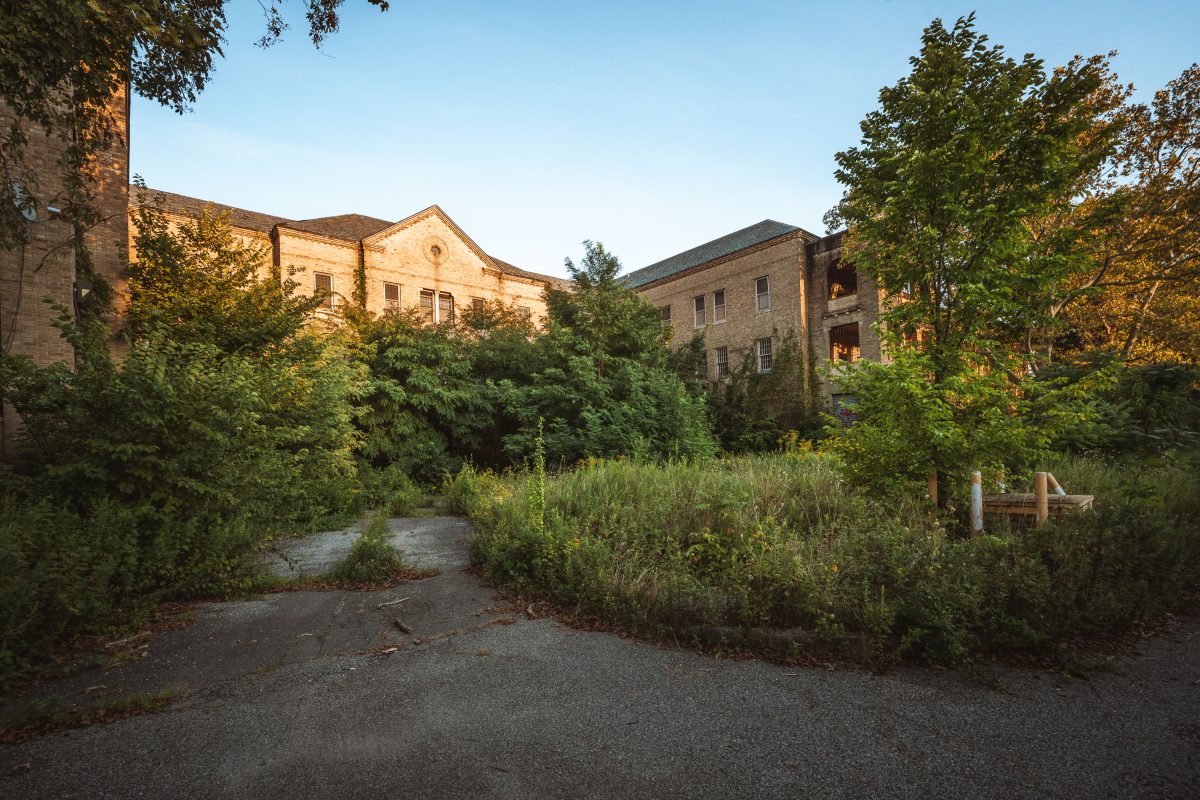
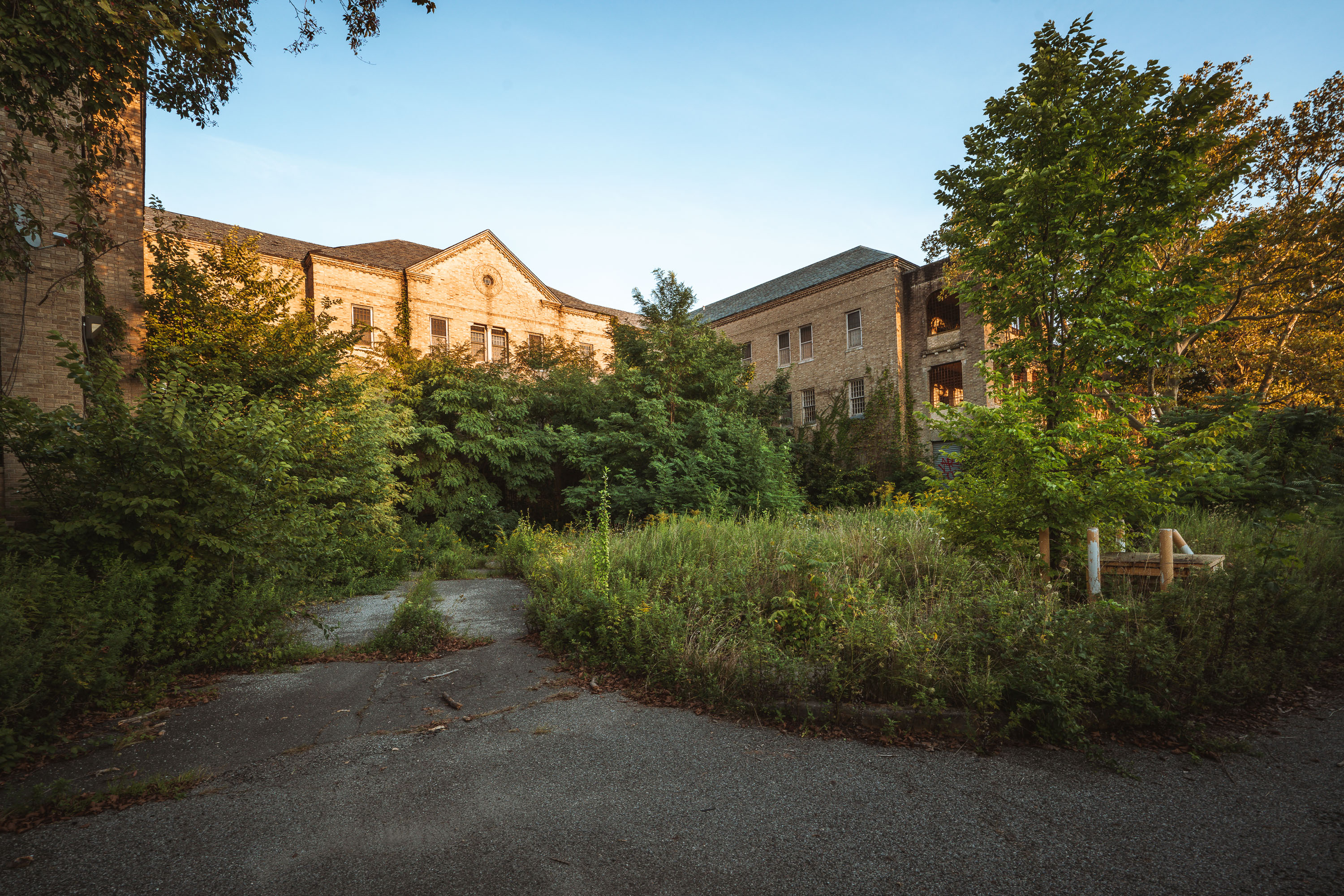
Overgrown grounds surround deteriorating brick buildings at the abandoned Creedmoor Psychiatric Center in Queens, New York.
Creedmoor Psychiatric Center opened in 1912 as the Farm Colony of Brooklyn State Hospital, later becoming an independent state facility in 1926. At its peak in the 1950s, the campus housed more than 6,000 patients across dozens of buildings on a sprawling site in Queens Village. New York State's push toward deinstitutionalization in the following decades led to the closure and abandonment of many of its original structures, some of which still stand vacant today. A portion of the campus remains active, operated by the state Office of Mental Health, while the older brick buildings have been left to decay behind overgrown lawns and self-seeded trees.

Overgrown Courtyard at Creedmoor Psychiatric Center

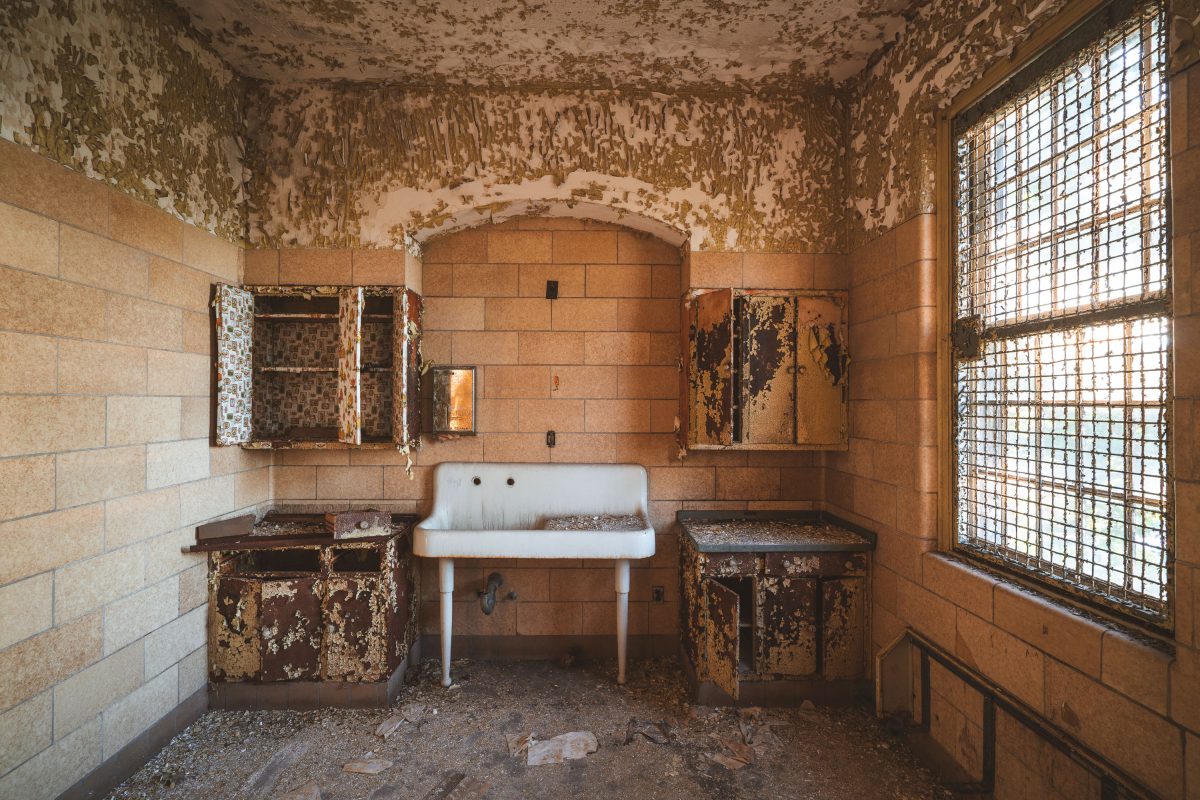
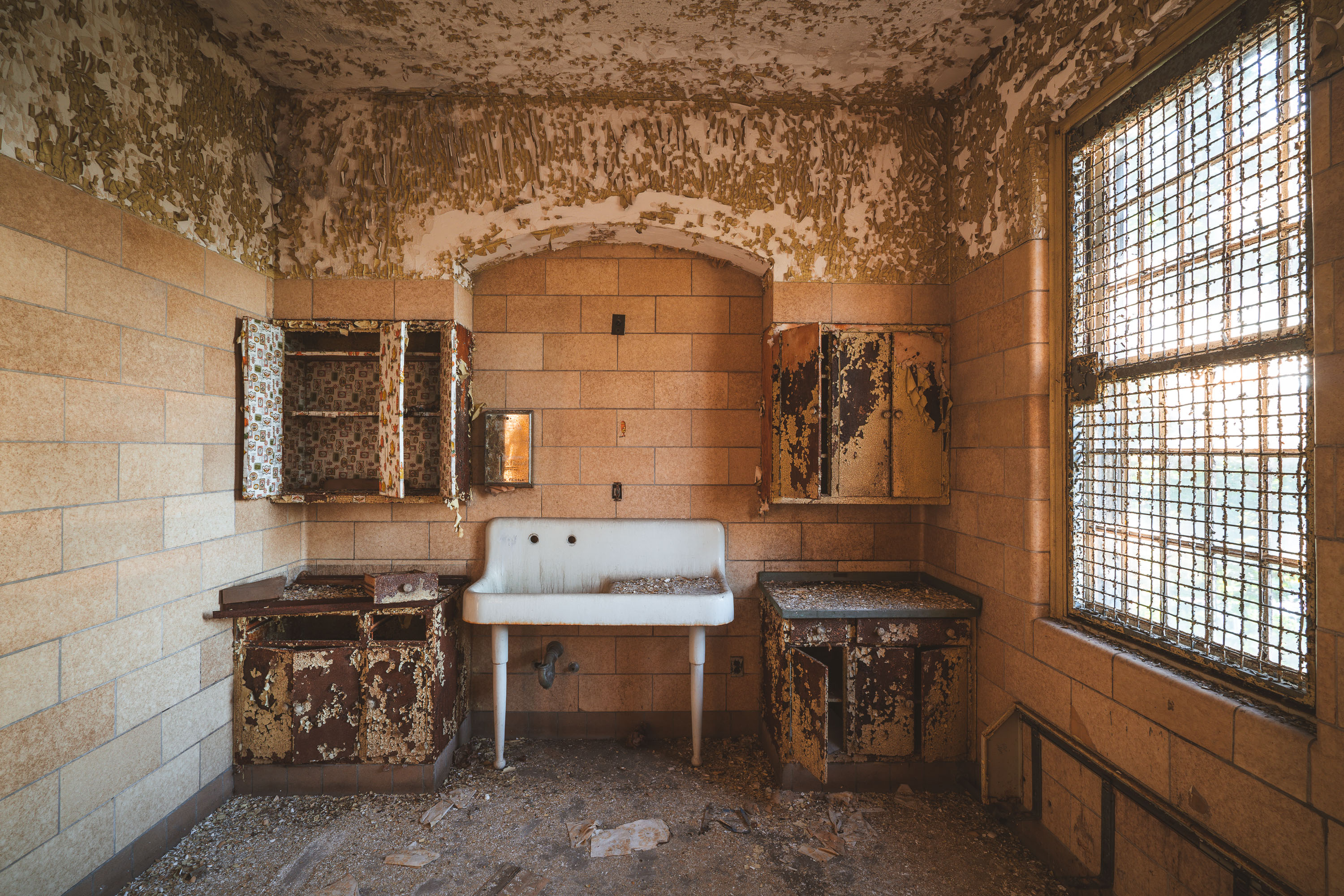
Deteriorated bathroom with porcelain sink, rusted cabinets, and barred window at abandoned Creedmoor Psychiatric Center in Queens.
Creedmoor Psychiatric Center opened in 1912 in Queens Village, New York, established as the Farm Colony of Brooklyn State Hospital before becoming an independent state institution for long-term psychiatric care. Enrollment peaked in the 1950s at more than 7,000 patients, spread across a campus of dozens of buildings built in the institutional brick style typical of New York's state hospital system. Patient wards were fitted with simple fixtures like this porcelain utility sink and built-in wall cabinets, standard equipment for washing and storage in rooms used for daily care. Windows on wards were commonly covered with heavy wire mesh, a security measure meant to prevent escape or self-harm rather than an architectural feature. New York State began reducing Creedmoor's population sharply after the 1960s under statewide deinstitutionalization policies, and many original buildings were vacated by the 1990s. A working psychiatric center still operates on part of the grounds today, while other structures from the original campus remain empty.

Decaying Washroom with Porcelain Sink at Creedmoor Psychiatric Center

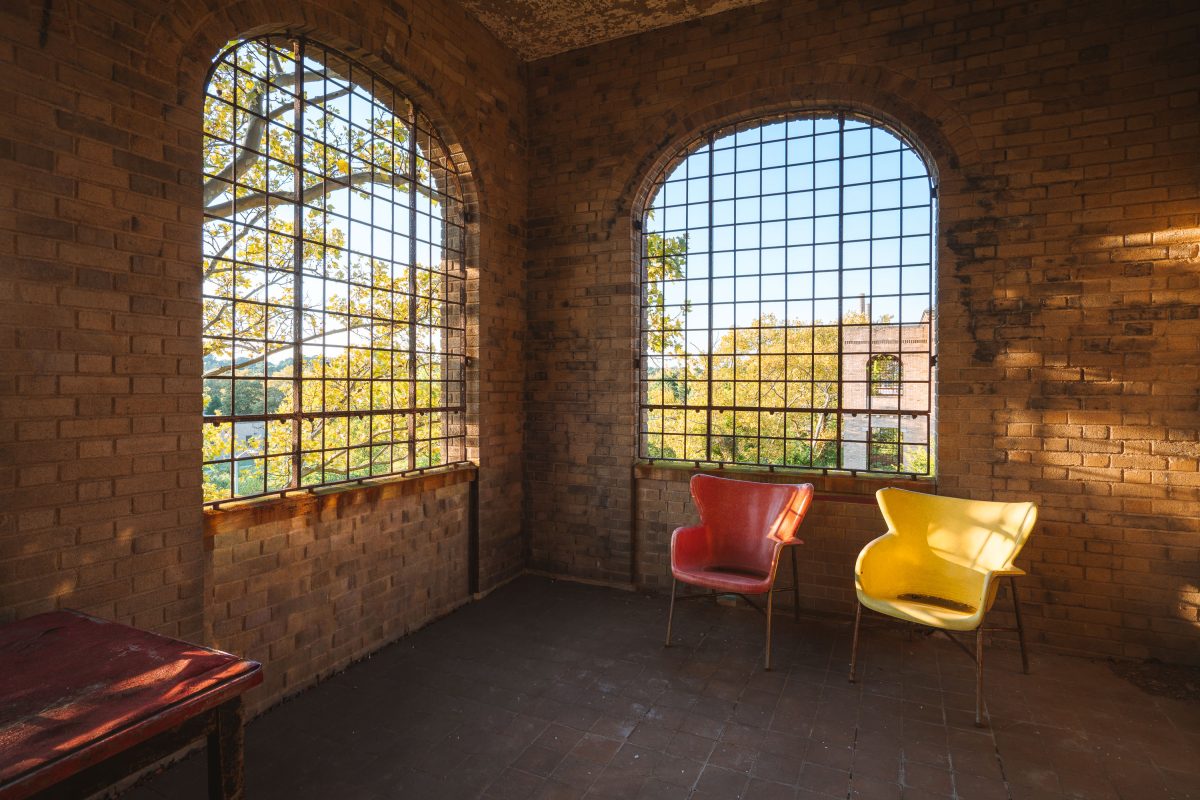
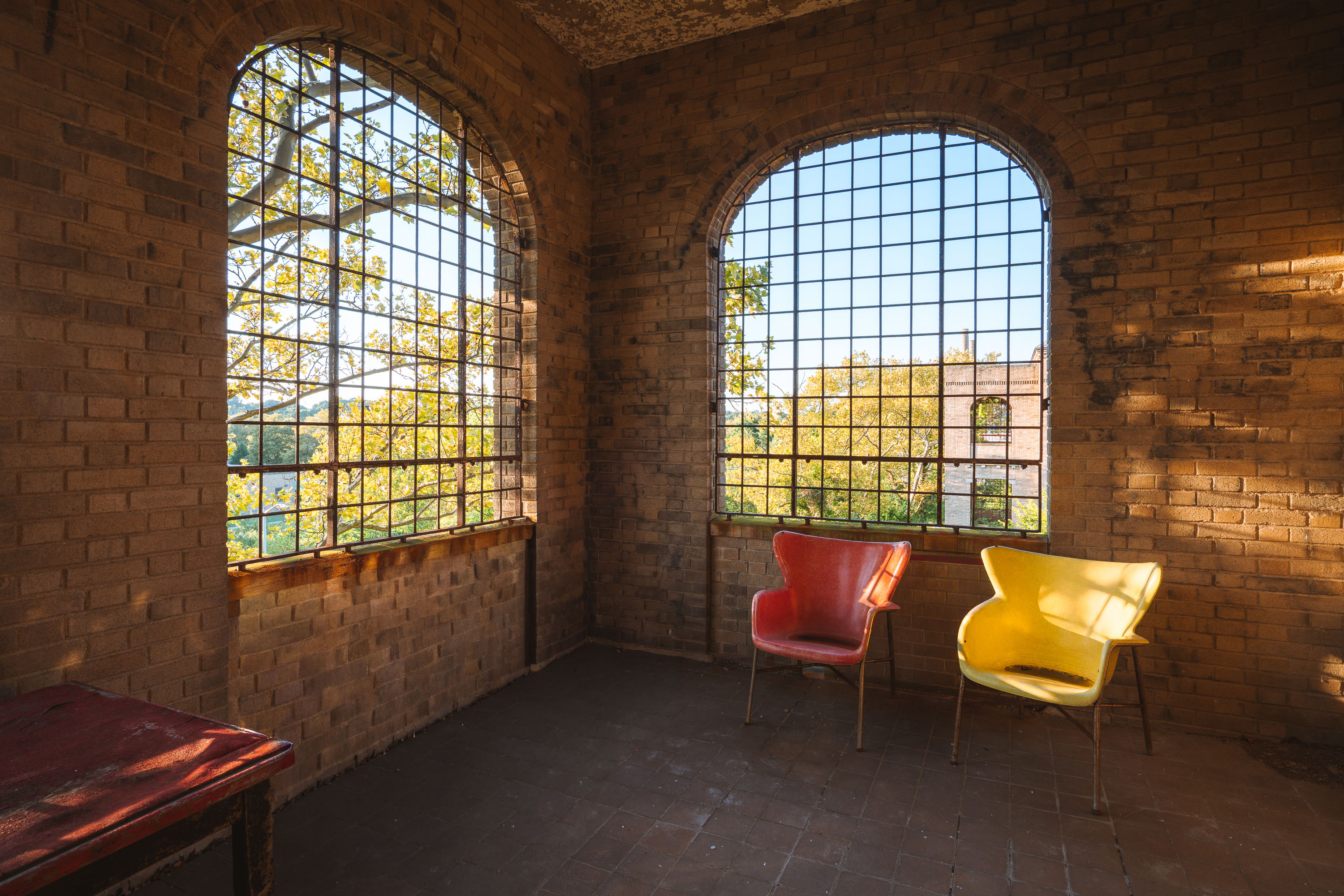
Red and yellow chairs sit in an arched brick room at Creedmoor Psychiatric Center in Queens, New York.
Creedmoor Psychiatric Center sits in Queens Village, New York, part of the state hospital system established in the early 20th century to house patients from Brooklyn's overcrowded asylums. The campus opened in 1912 and grew to include dozens of buildings designed in the Collegiate Gothic style, many built with brick facades and arched window openings typical of institutional architecture from that era. At its peak in the 1950s, the facility housed more than 7,000 patients, making it one of the largest psychiatric institutions in the country. Reforms in mental health care during the latter half of the century led to widespread downsizing, and many of the original structures were vacated as the state shifted toward outpatient treatment models. Some buildings on the grounds remain in limited use by the New York State Office of Mental Health, while others, closed for decades, have drawn ers and preservationists interested in the site's institutional history.

Barred Arched Windows and Mismatched Chairs at Creedmoor Psychiatric Center

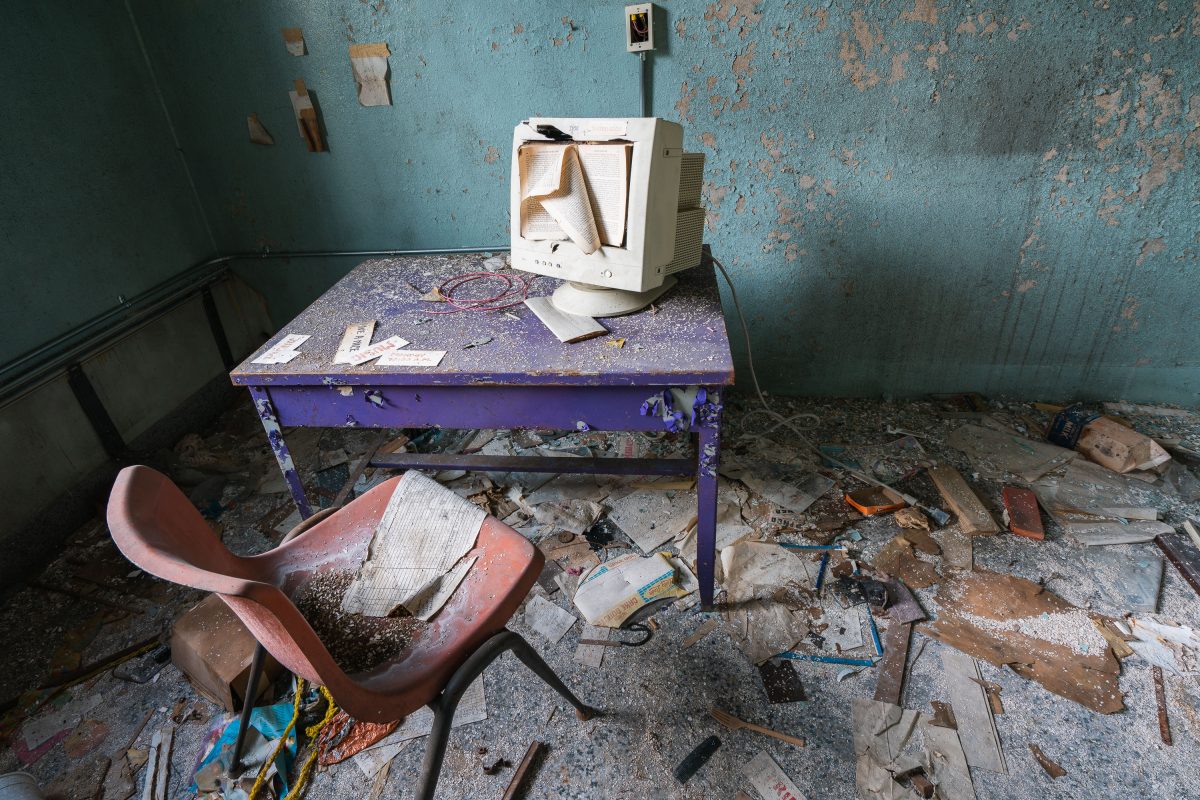
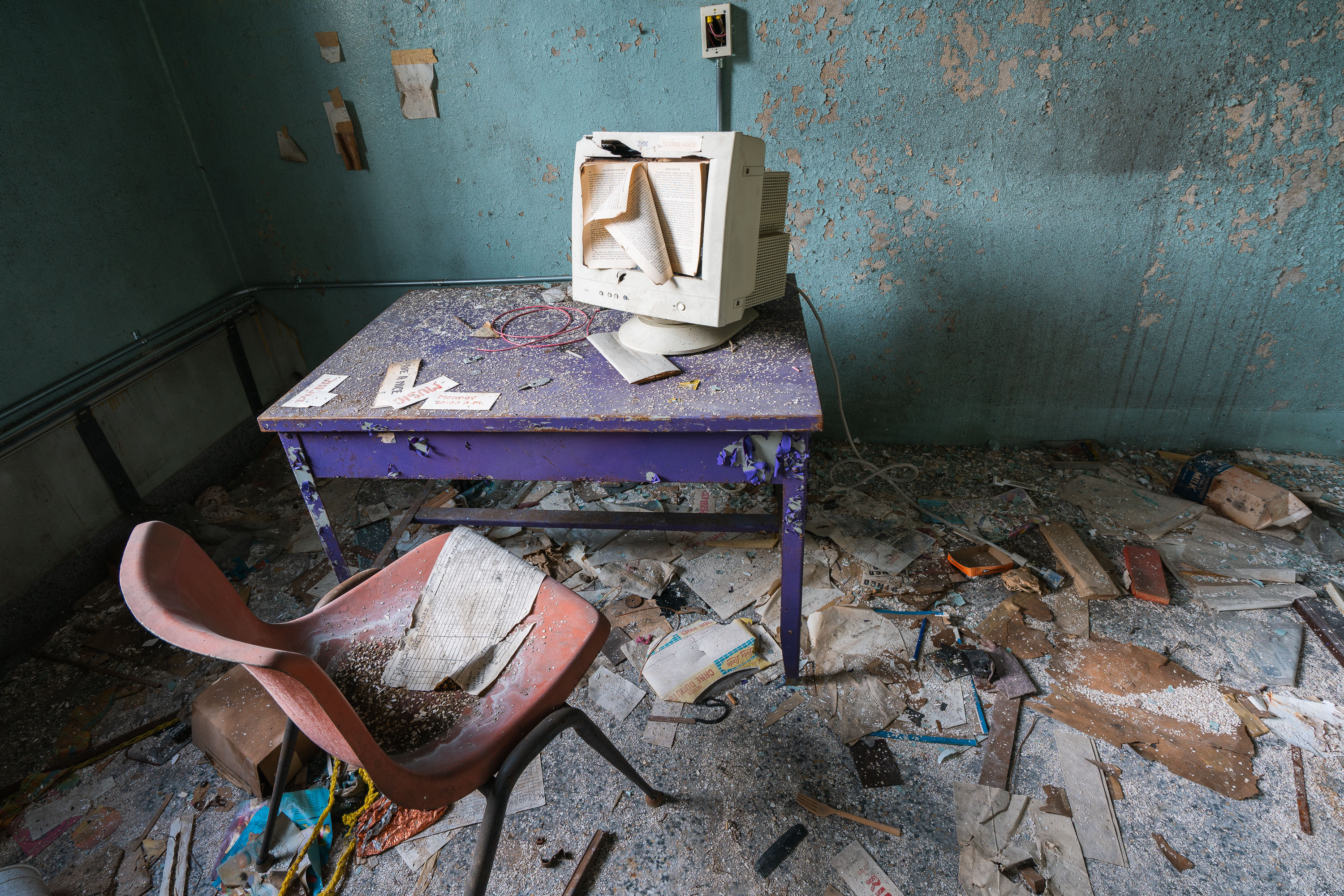
Abandoned classroom at Creedmoor Psychiatric Center in Queens with deteriorated desk, chair, and discarded medical equipment.
Creedmoor Psychiatric Center sits on a sprawling campus in Queens Village, New York, established in 1912 as the Farm Colony of Brooklyn State Hospital before being renamed Creedmoor State Hospital in 1926. At its peak in the 1950s, the facility housed more than 6,000 patients, making it one of the largest psychiatric institutions in the state. Deinstitutionalization policies beginning in the 1970s led to a sharp decline in population, and several original buildings on the campus were vacated by the 1990s while a working psychiatric center continued to operate on adjacent grounds. The abandoned structures, left with classroom furniture, medical equipment, and administrative debris still in place, have since become a well-known subject for urban exploration and preservation y.

Broken CRT Monitor and Desk at Creedmoor Psychiatric Center

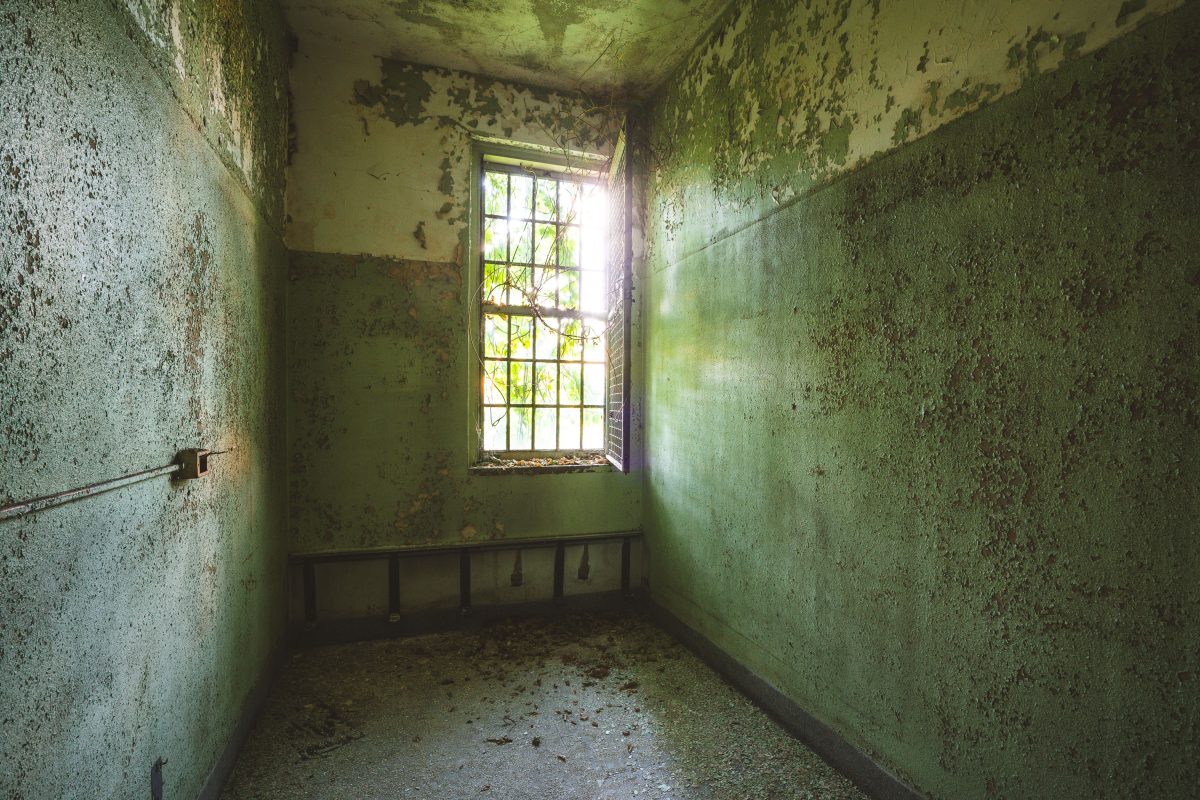
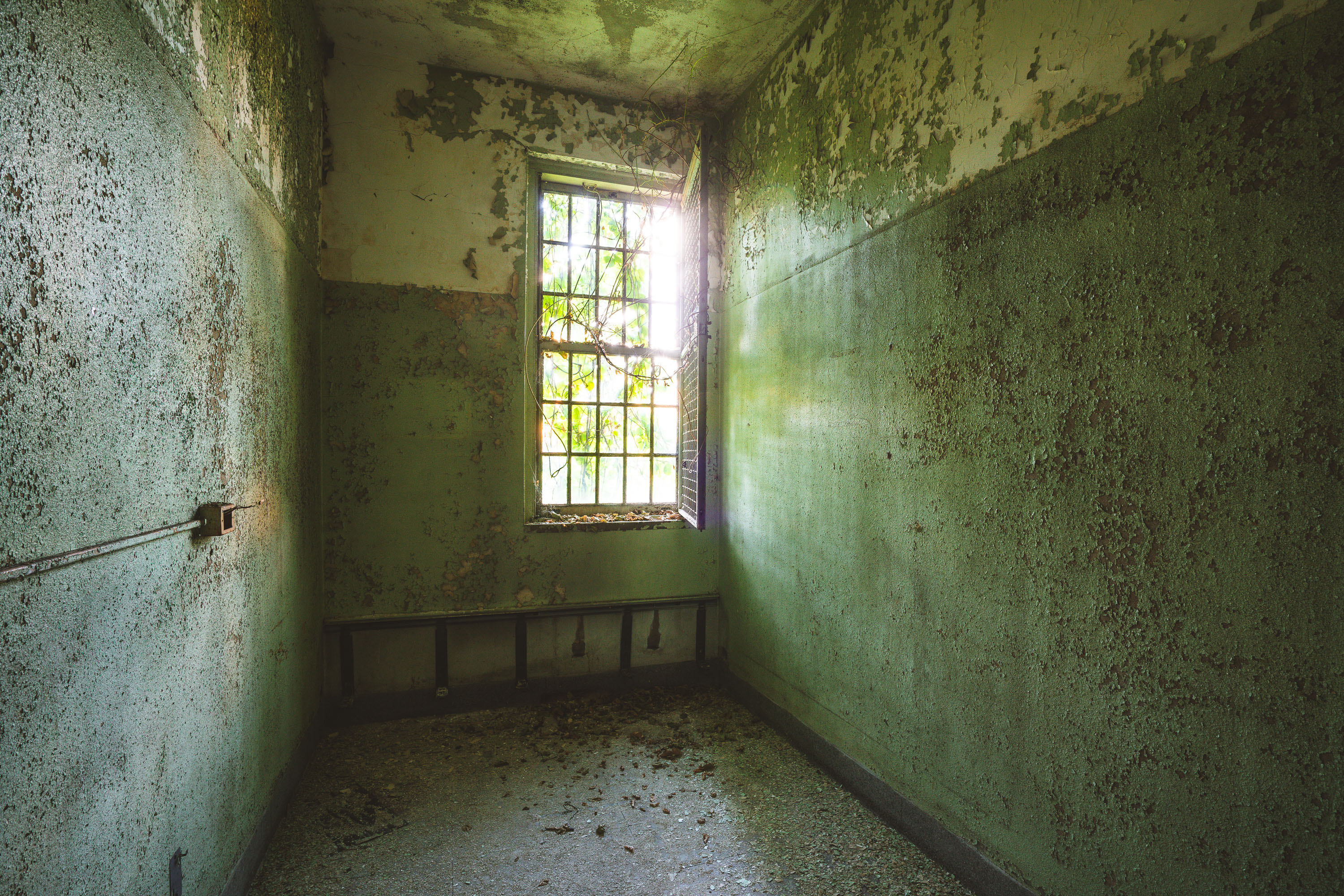
Deteriorated interior room with barred window at abandoned Creedmoor Psychiatric Center, Queens.
Creedmoor Psychiatric Center opened in Queens Village, Queens, in 1912 as the Farm Colony of Brooklyn State Hospital, taking on the Creedmoor name in 1926. Operated by the New York State Office of Mental Health, the campus once housed more than 7,000 patients at its peak in the 1950s. Several of its early 20th-century buildings were decommissioned as psychiatric care shifted toward outpatient treatment, leaving parts of the original complex vacant while the hospital continues to function on a reduced footprint nearby. The grounds also gave rise to the Living Museum, an on-site art studio and gallery founded in 1983 for patients working in the facility's occupational therapy program.

Mossy Barred Room at Creedmoor Psychiatric Center

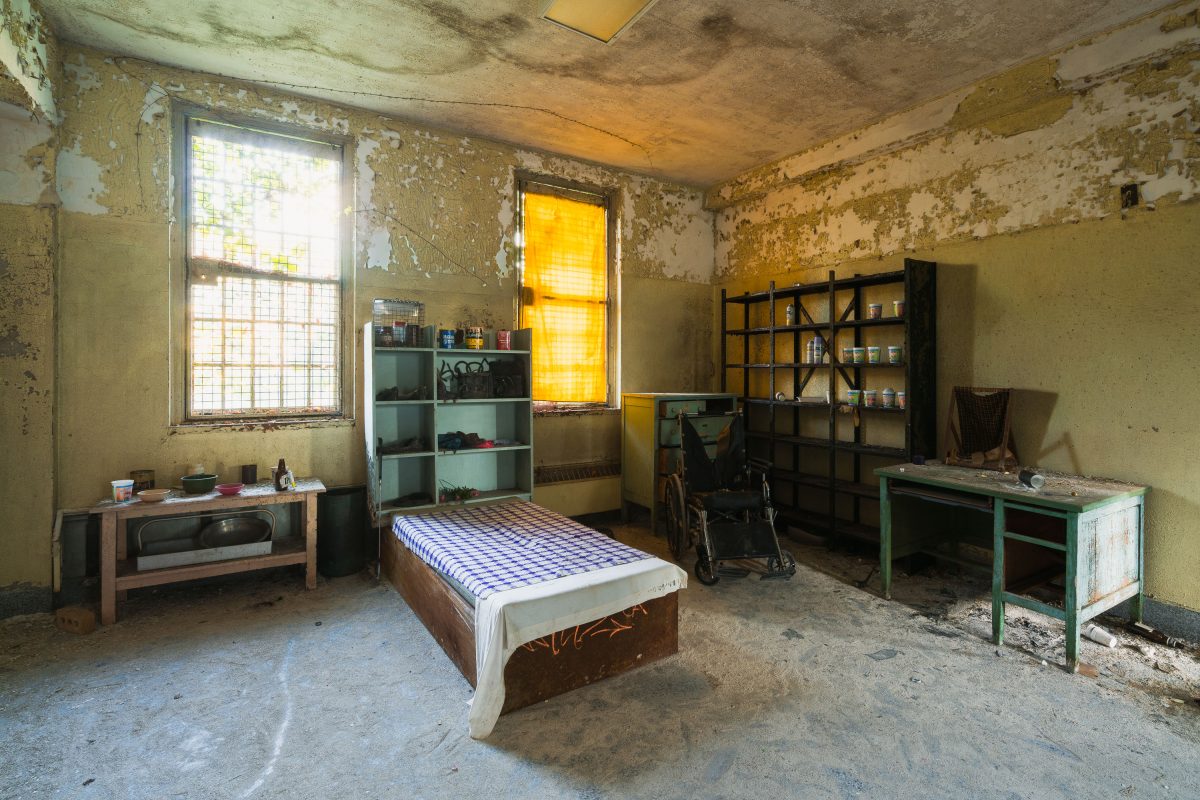
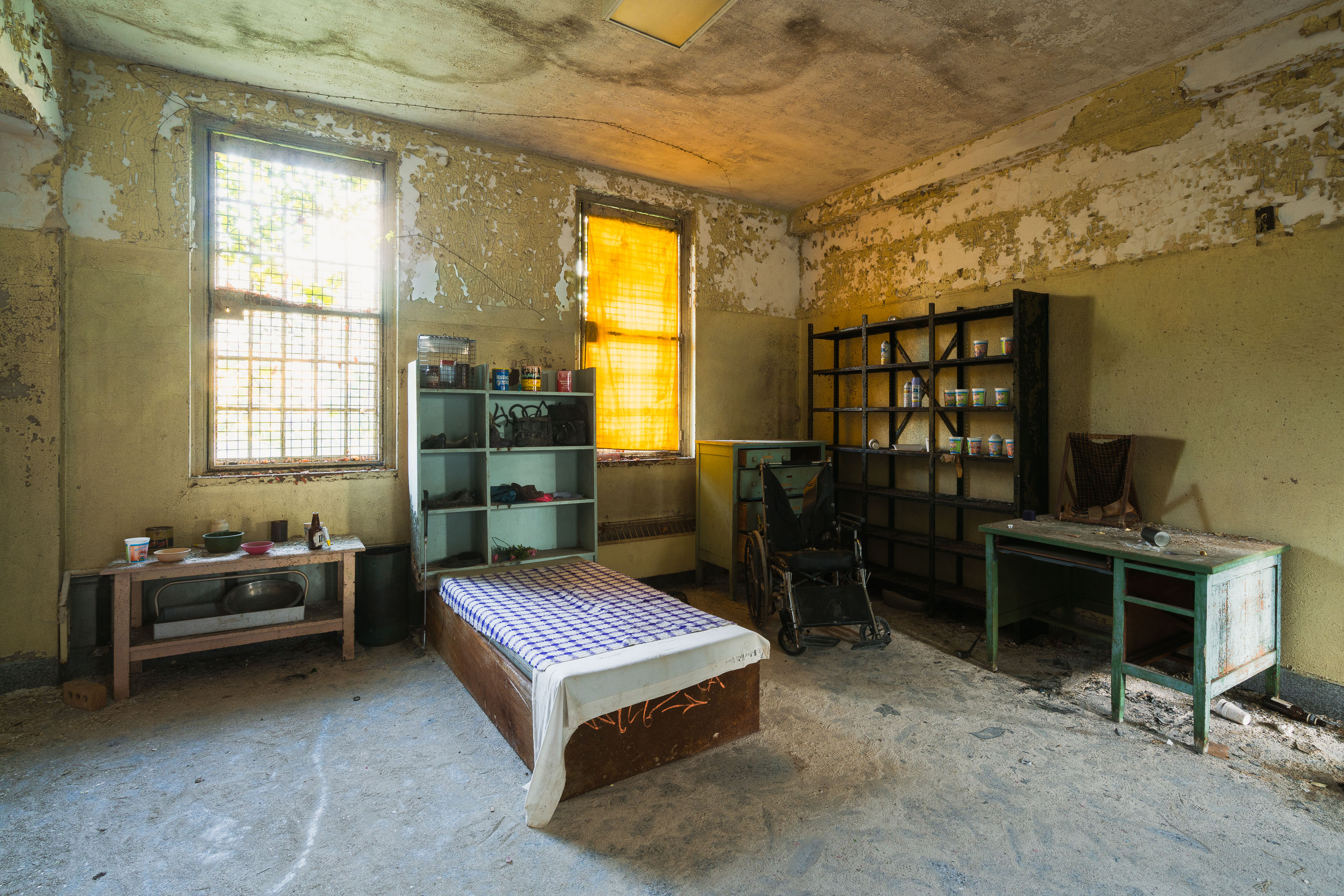
Abandoned patient room at Creedmoor Psychiatric Center in Queens, New York, with deteriorated walls, bed, and storage shelving.
Creedmoor Psychiatric Center opened in 1912 in Queens Village, New York, as the Farm Colony of Brooklyn State Hospital, later becoming an independent state-run psychiatric facility. At its peak in the 1950s, the campus housed more than 6,000 patients across dozens of buildings designed under the "Kirkbride-influenced" campus-style model favored by New York State asylums of the era. Several structures, including patient wards like this one, were vacated as the state shifted toward outpatient and community-based mental health care starting in the 1970s and 1980s. A smaller, active psychiatric center still operates elsewhere on the grounds under the New York State Office of Mental Health, while the abandoned wards have drawn ers and urban explorers for decades. Furnishings left behind, from wheelchairs to storage shelving, reflect the building's last use as a residential care unit before closure.

Wheelchair and Storage Shelves in a Ward Room at Creedmoor Psychiatric Center

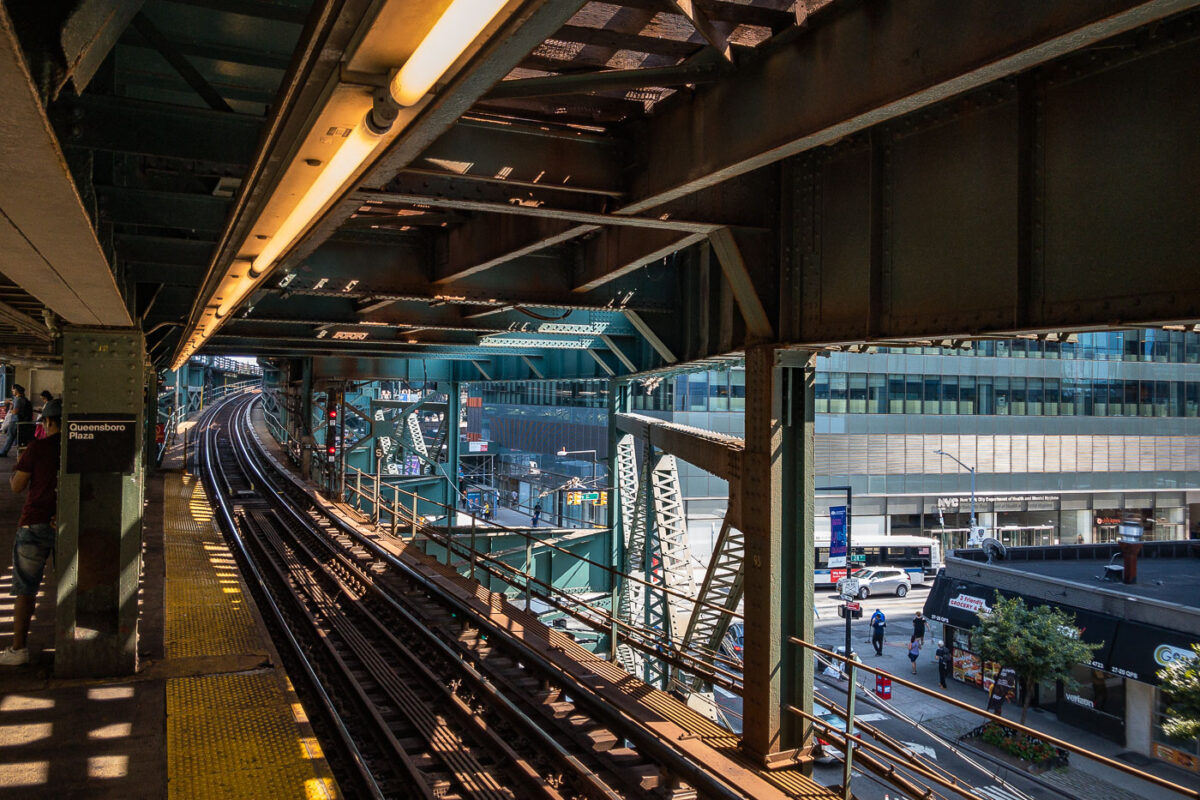
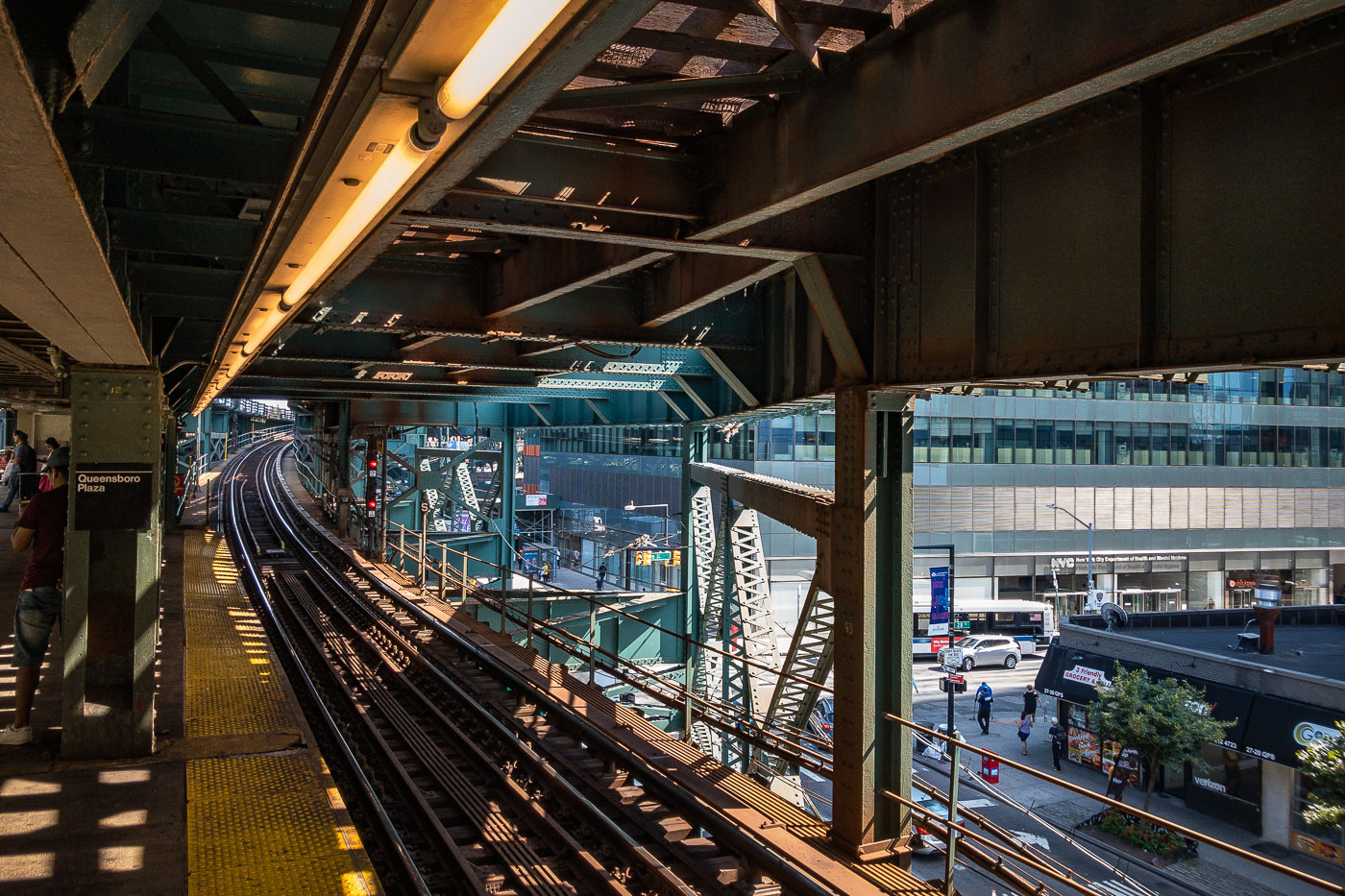
Queensboro Plaza elevated train station platform with steel trusswork, tracks, and Manhattan skyline visible beyond.
Queensboro Plaza elevated train station in Long Island City, Queens, New York City. The station features multiple tracks and platforms, with the distinctive green and steel structure of the elevated railway overhead. This station is a key transit hub, serving as a transfer point for the 7 train and formerly for the Long Island Rail Road. Its construction and ongoing operation are integral to the connectivity of Queens with Manhattan and the rest of the city's transit network.

Elevated Tracks Curve Toward Long Island City at Queensboro Plaza

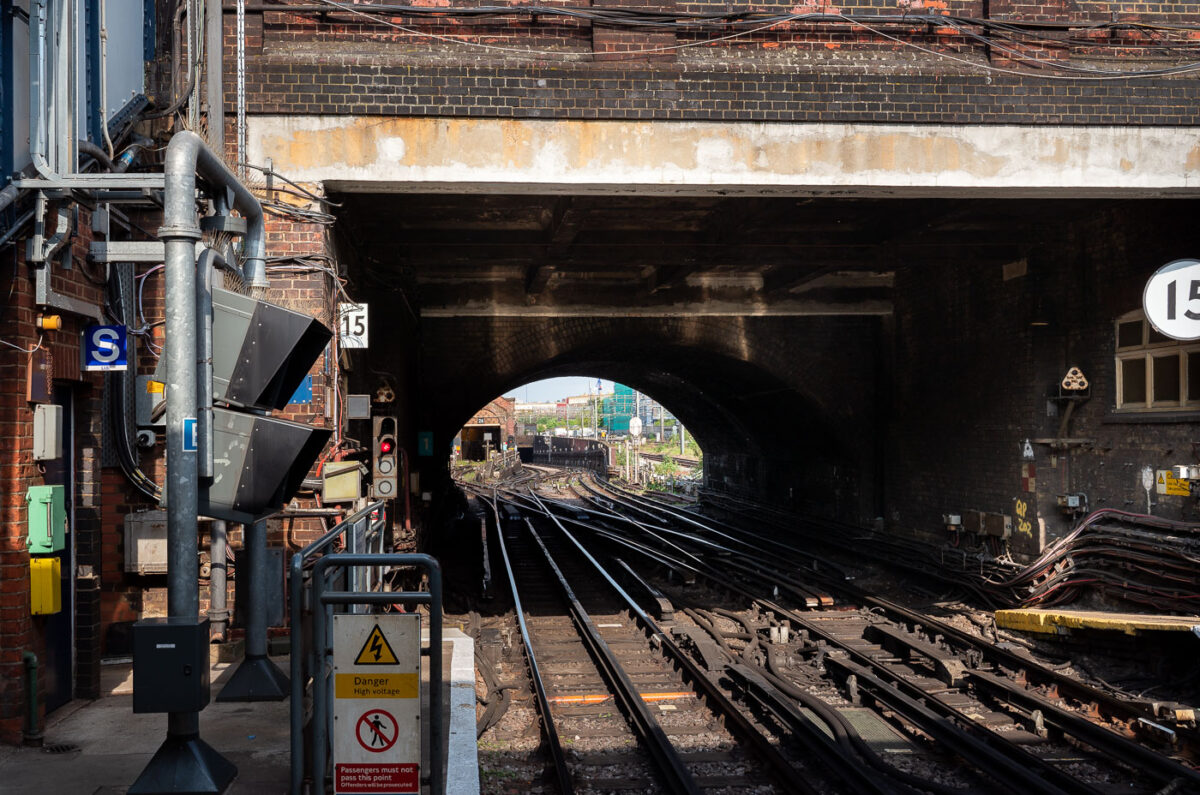
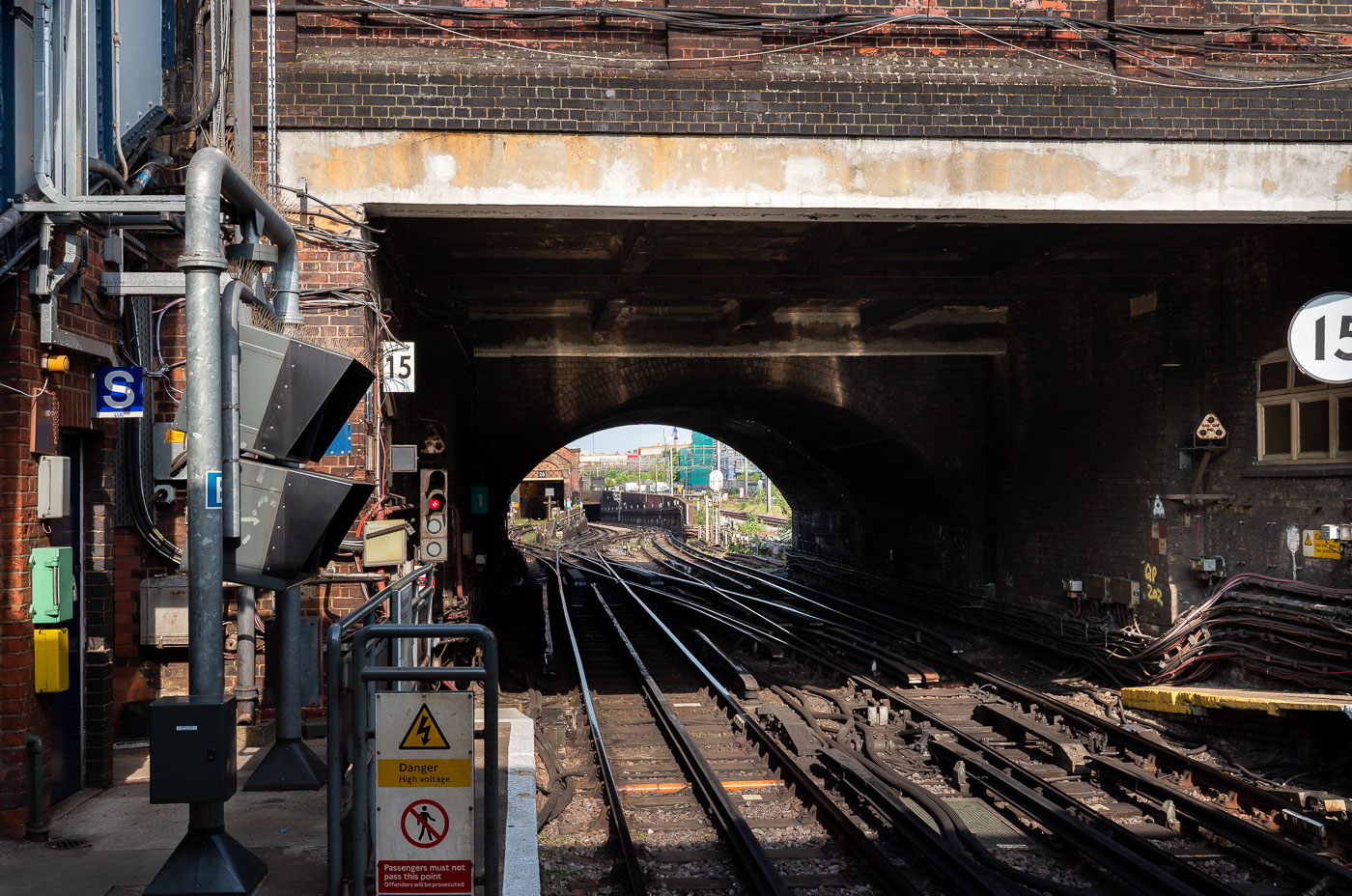
Queen's Park Station rail junction in London where Bakerloo Line tracks converge beneath a brick bridge arch.
Queen's Park Station in northwest London is a junction where the Bakerloo Line meets Network Rail tracks. The station opened in 1915 and marks the western end of the Bakerloo Line's shared section with London Overground and mainline services.

Tracks Curving Into the Tunnel at Queen’s Park Station

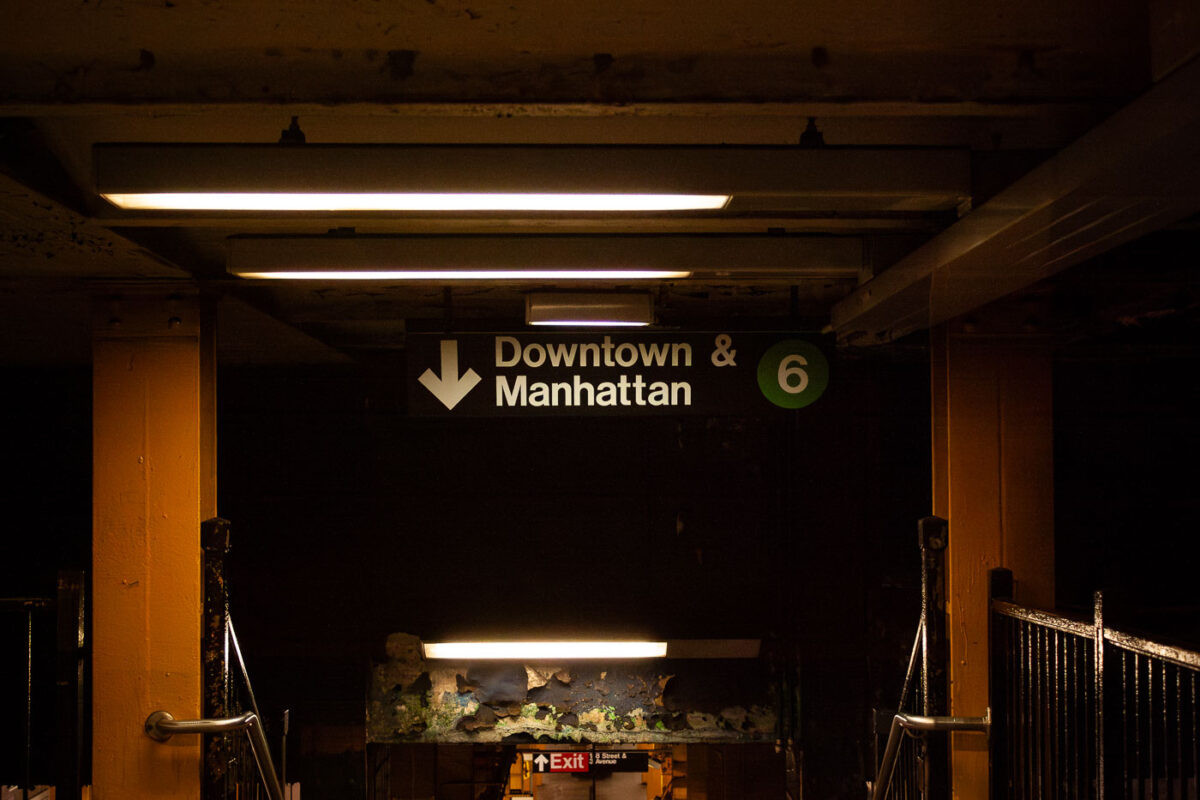
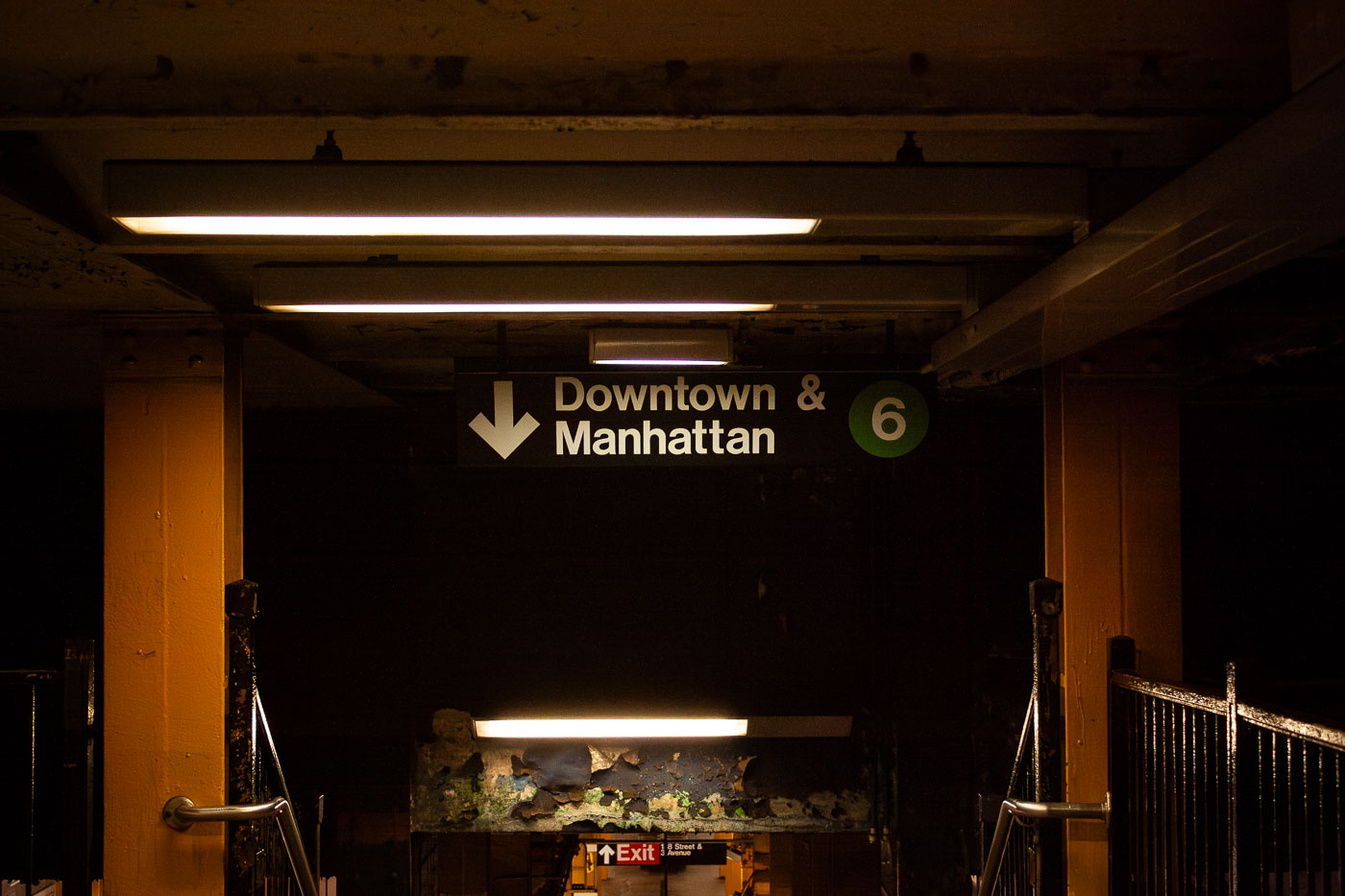
Subway station sign for Downtown & Manhattan 6 train with green route marker and directional arrow.
Downtown & Manhattan 6 train entrance in the New York City Subway. The sign directs riders to the southbound Lexington Avenue Line local service, identified by the green 6 route marker. This entrance leads from the station mezzanine down to the downtown platform.

“Downtown & Manhattan” Sign Above the 6 Train Stairway

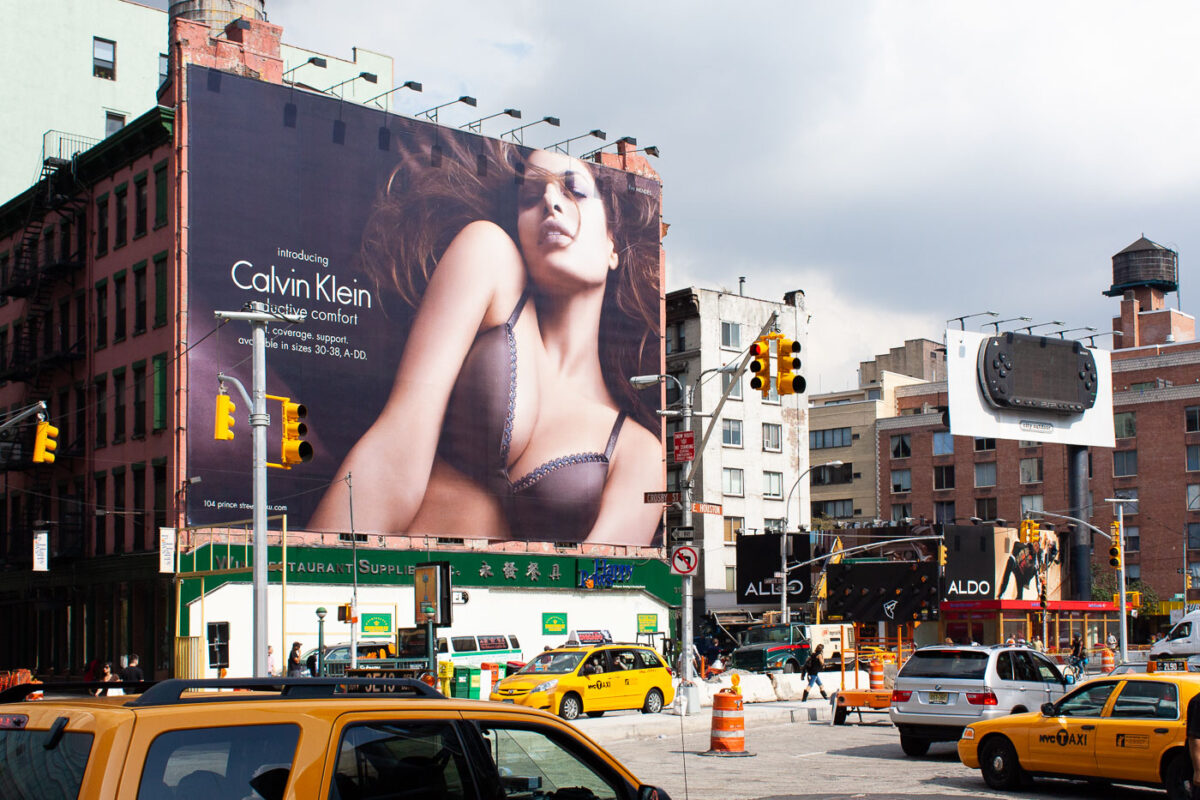
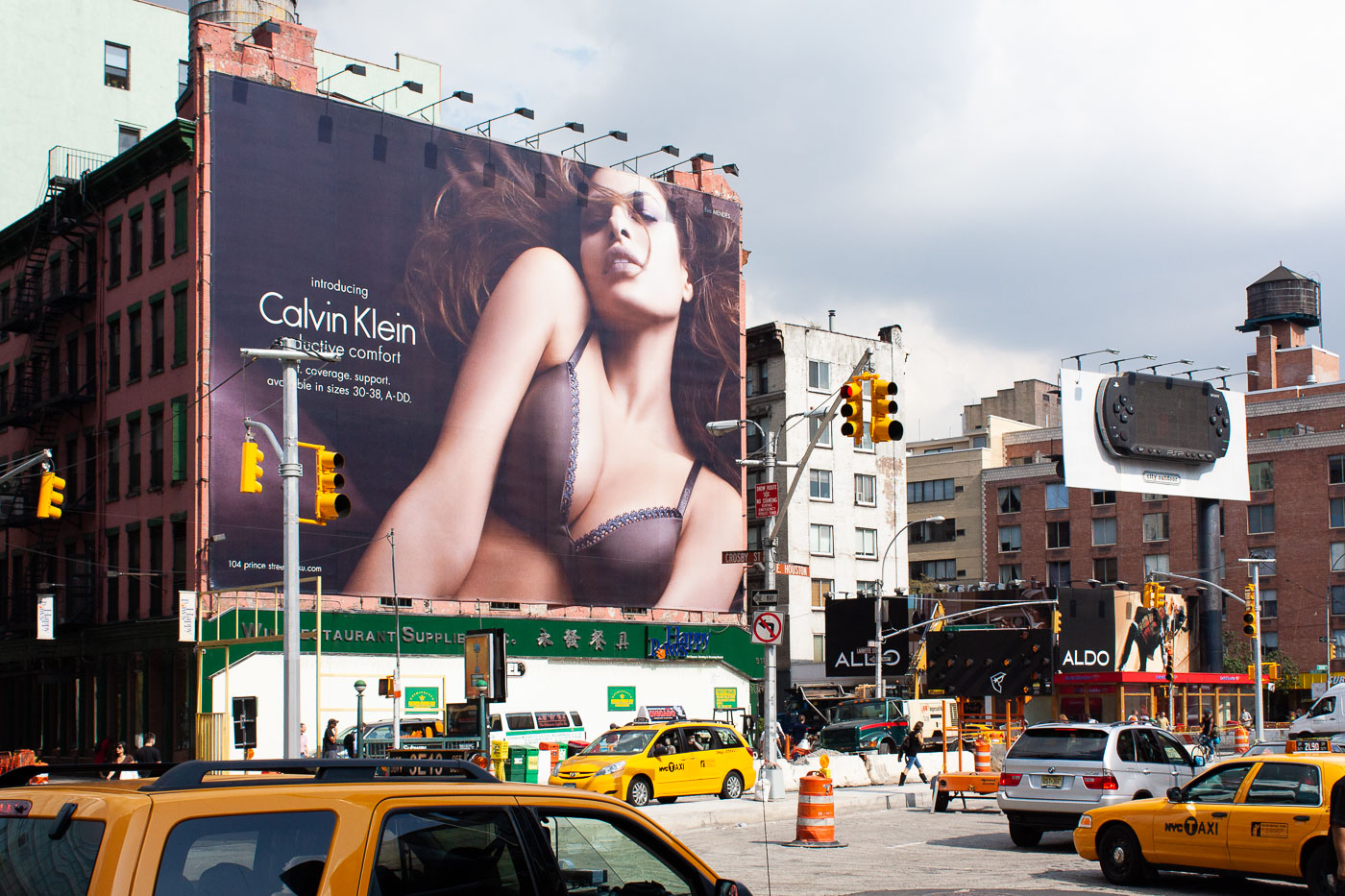
Calvin Klein advertisement billboard dominates corner building at Prince Street and Broadway in SoHo, Manhattan.
Calvin Klein billboard at Prince Street and Broadway in SoHo, Manhattan. The oversized wall advertisement covers the side of a corner loft building at a busy commercial intersection in Lower Manhattan. Surrounding retail storefronts and street traffic place it within SoHo’s fashion and shopping district.

Taxis Pass a Calvin Klein Billboard in SoHo

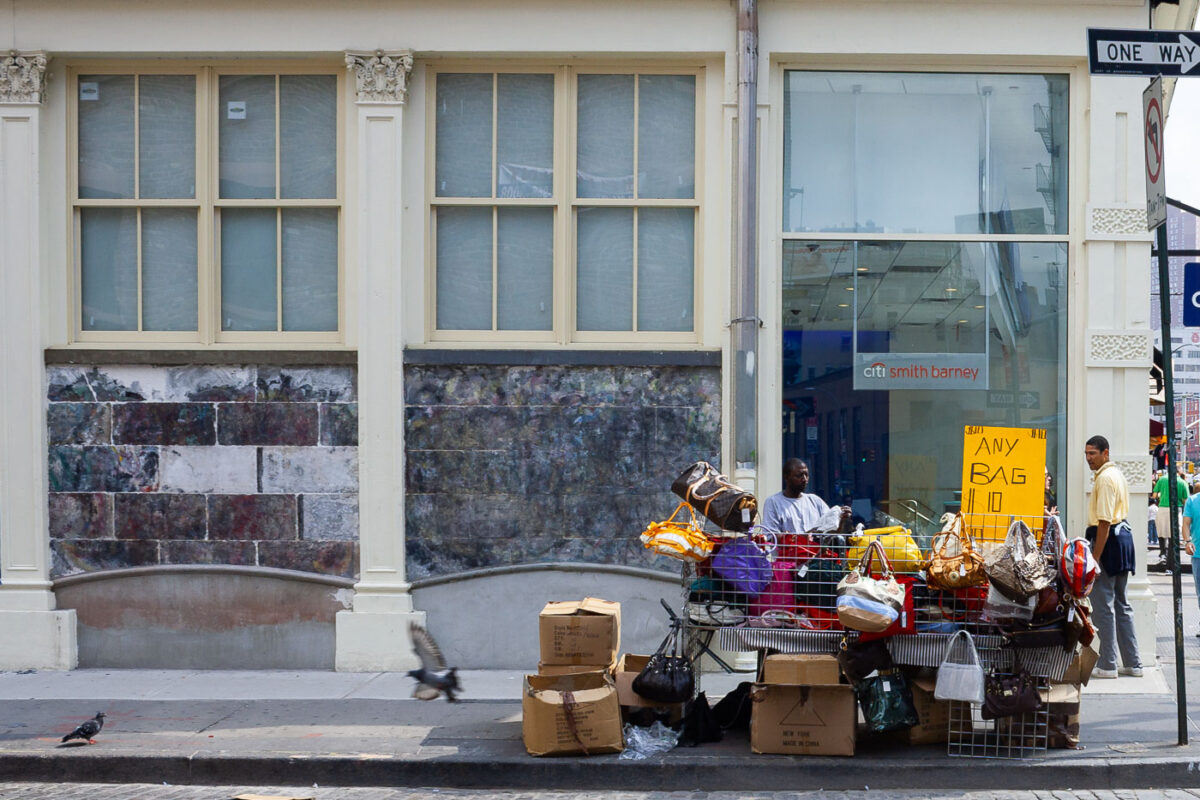
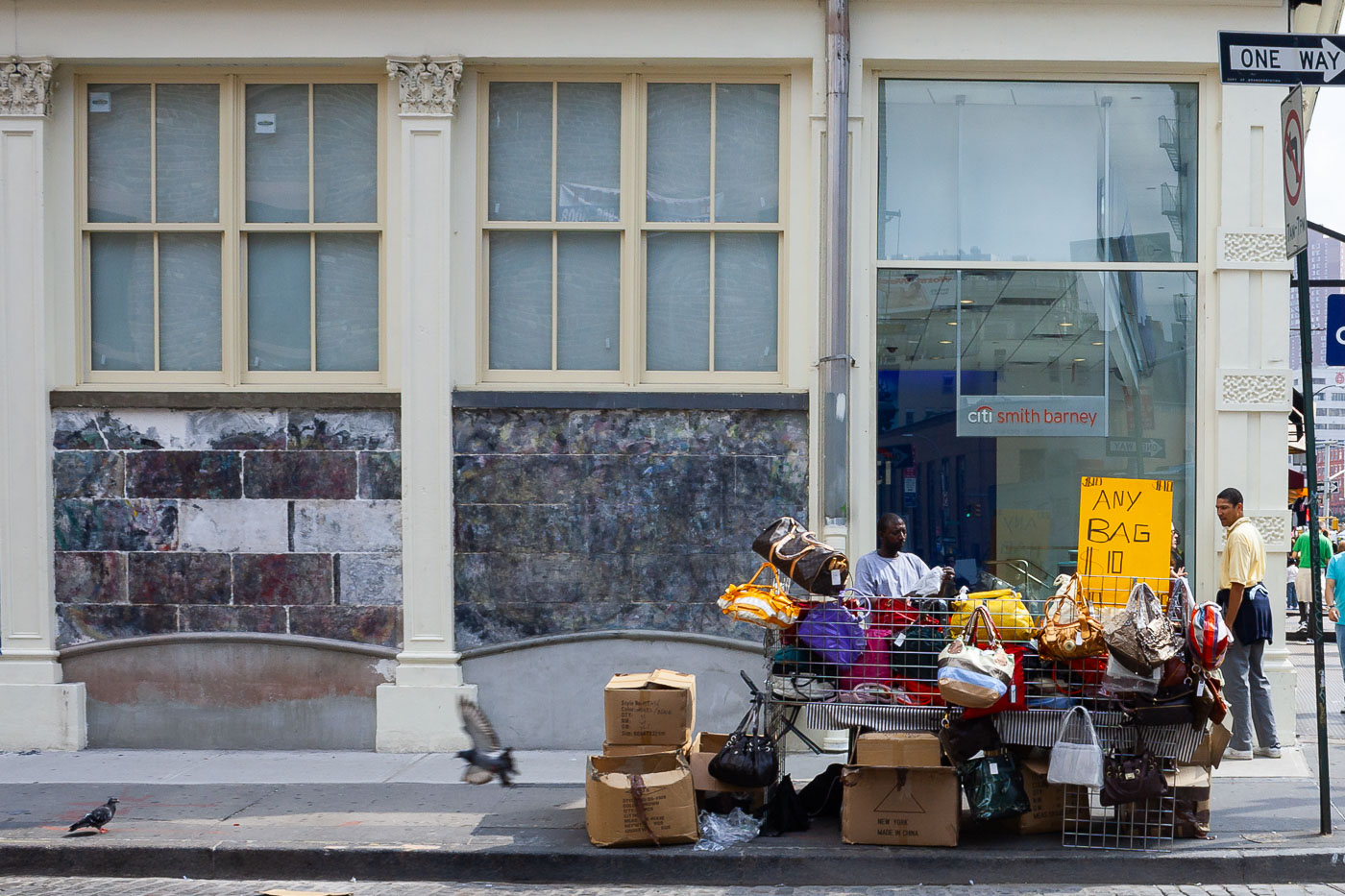
Handbag vendor displays merchandise on wire racks outside Citi Smith Barney on Canal Street, Manhattan.
Handbag vendor outside a Citi Smith Barney branch on Canal Street in Manhattan. Canal Street is known for dense sidewalk retail, including informal stands selling accessories and other goods. The display includes handbags arranged on wire racks and boxes along the curb.

Sidewalk Bag Vendor’s “Any Bag $10” Sign on Canal Street

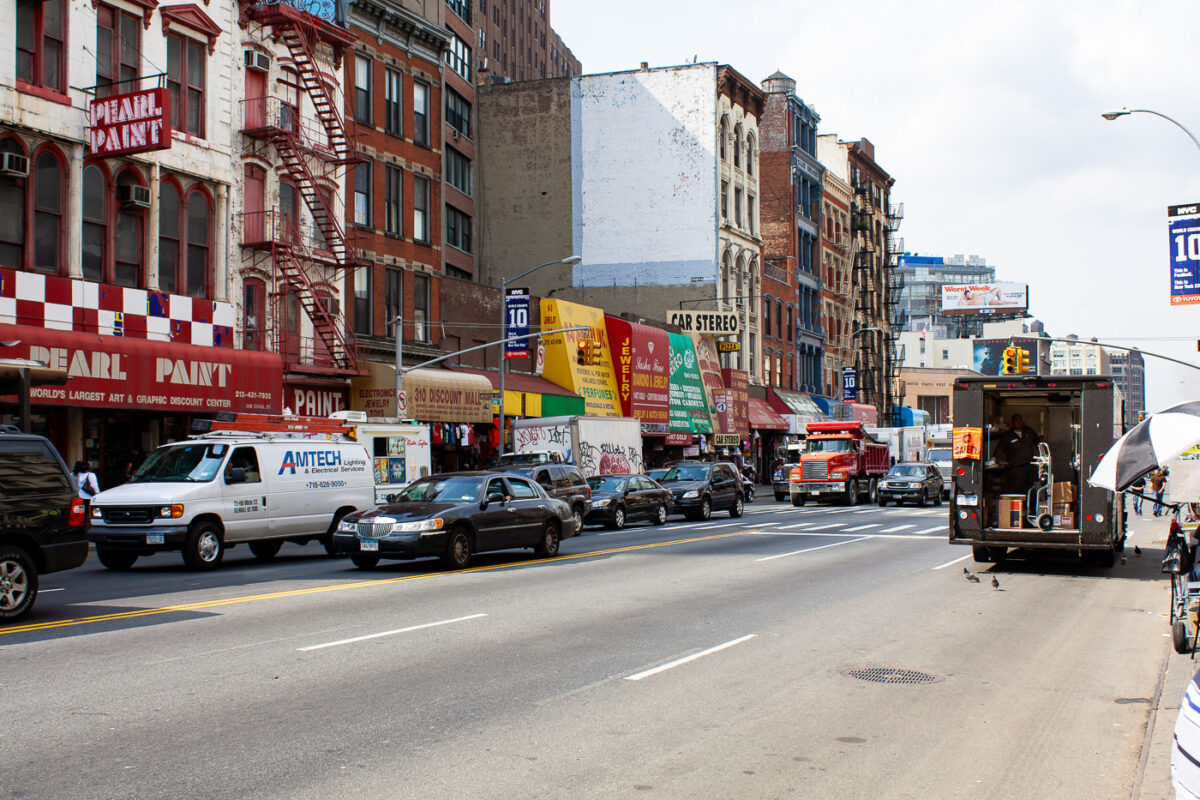
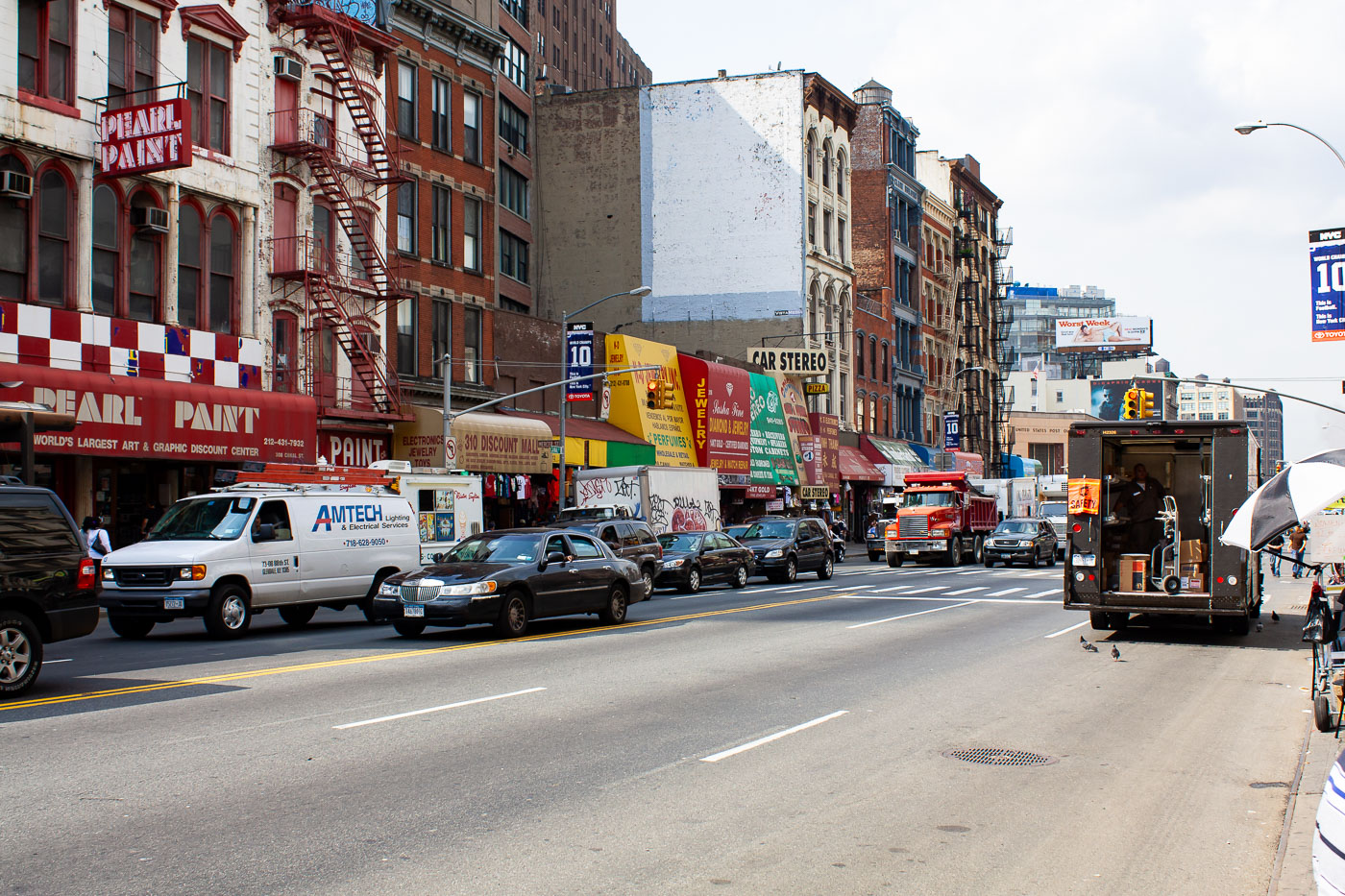
Pearl Paint store and 310 Discount Mall storefronts line Canal Street in Manhattan's Lower Manhattan.
Pearl Paint and the 310 Discount Mall on Canal Street in Manhattan mark a stretch of the street known for discount retail and specialty shops. Pearl Paint was a longtime New York art-supply store whose Canal Street location advertised itself as the “World’s Largest Art & Graphic Discount Center.” Canal Street is a major east-west corridor through Lower Manhattan and a longstanding commercial street bordering Chinatown.

Traffic on Canal Street Near Pearl Paint’s “World’s Largest” Storefront

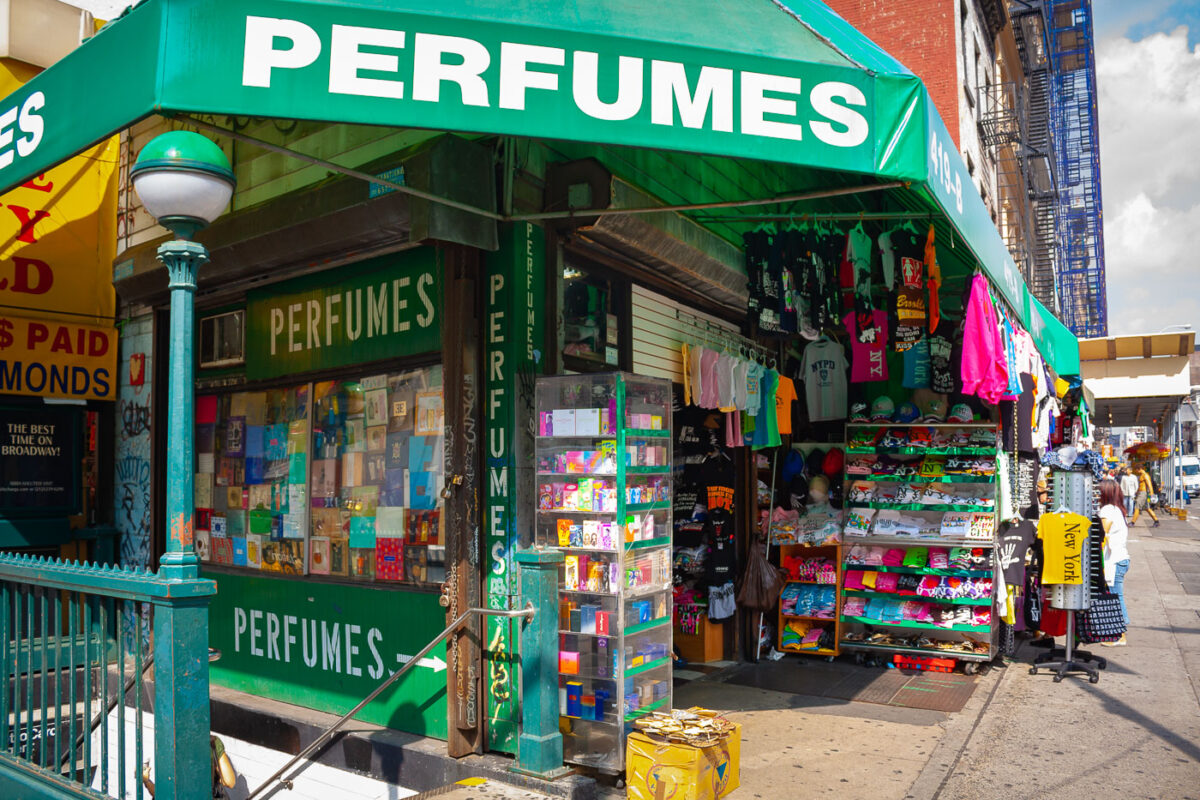
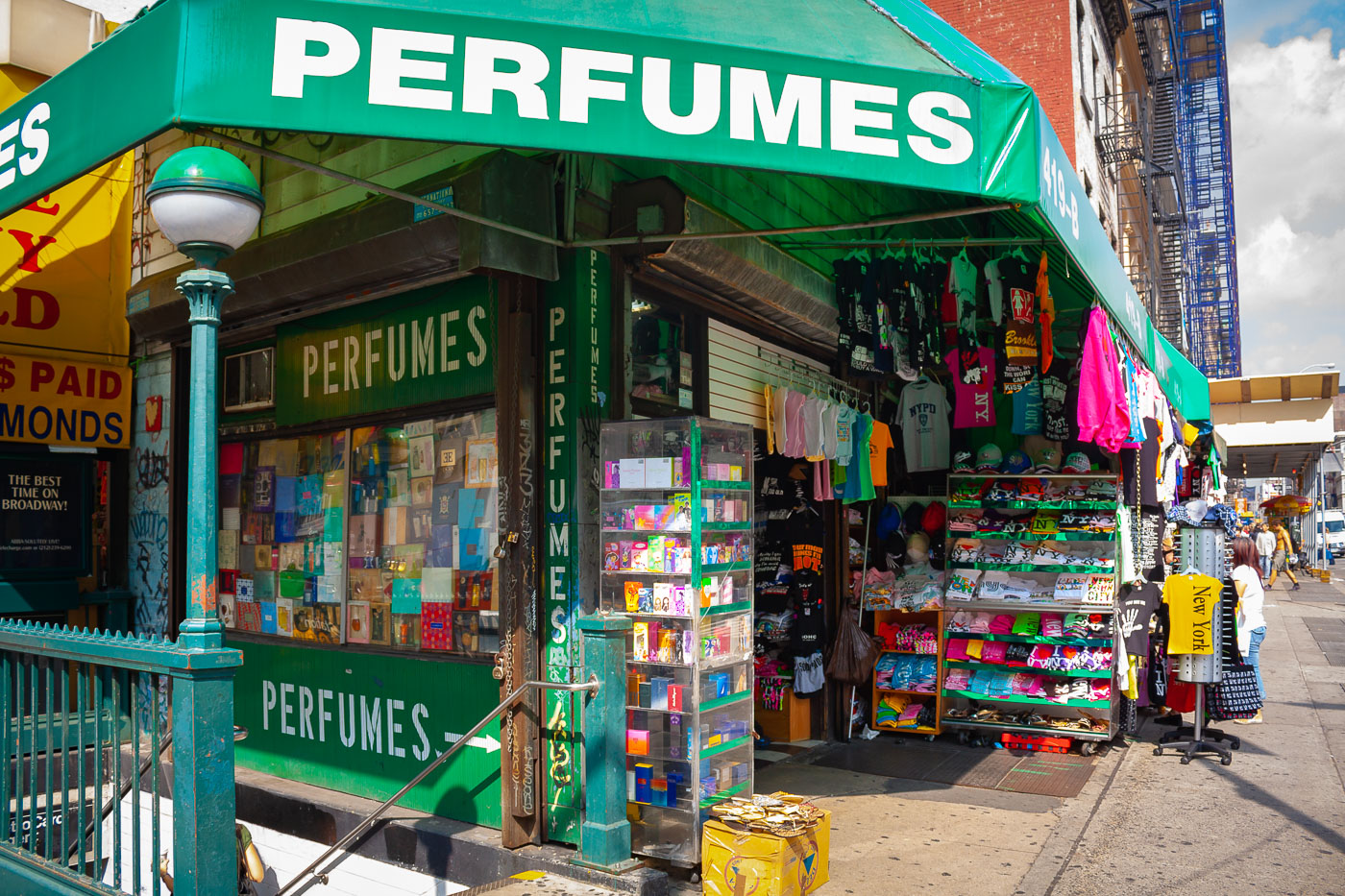
Perfume shop and souvenir stand with green storefront on Canal Street in Manhattan.
A perfume shop and souvenir stand operates on Canal Street in Manhattan, New York City. The storefront combines fragrance sales with New York-themed clothing and gift merchandise, a common retail mix along this corridor. Canal Street is a major commercial street in Lower Manhattan known for small shops selling souvenirs, apparel, and inexpensive consumer goods.

Perfumes and Souvenir T-Shirts on Canal Street

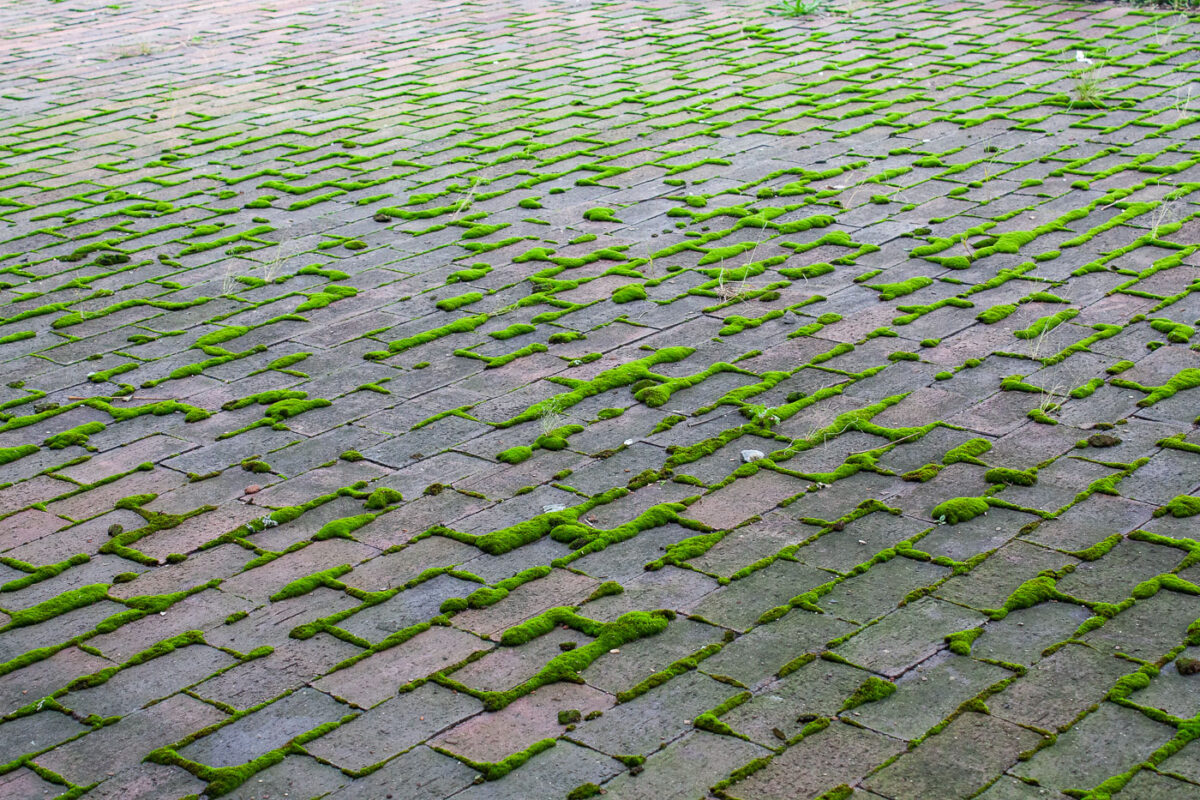
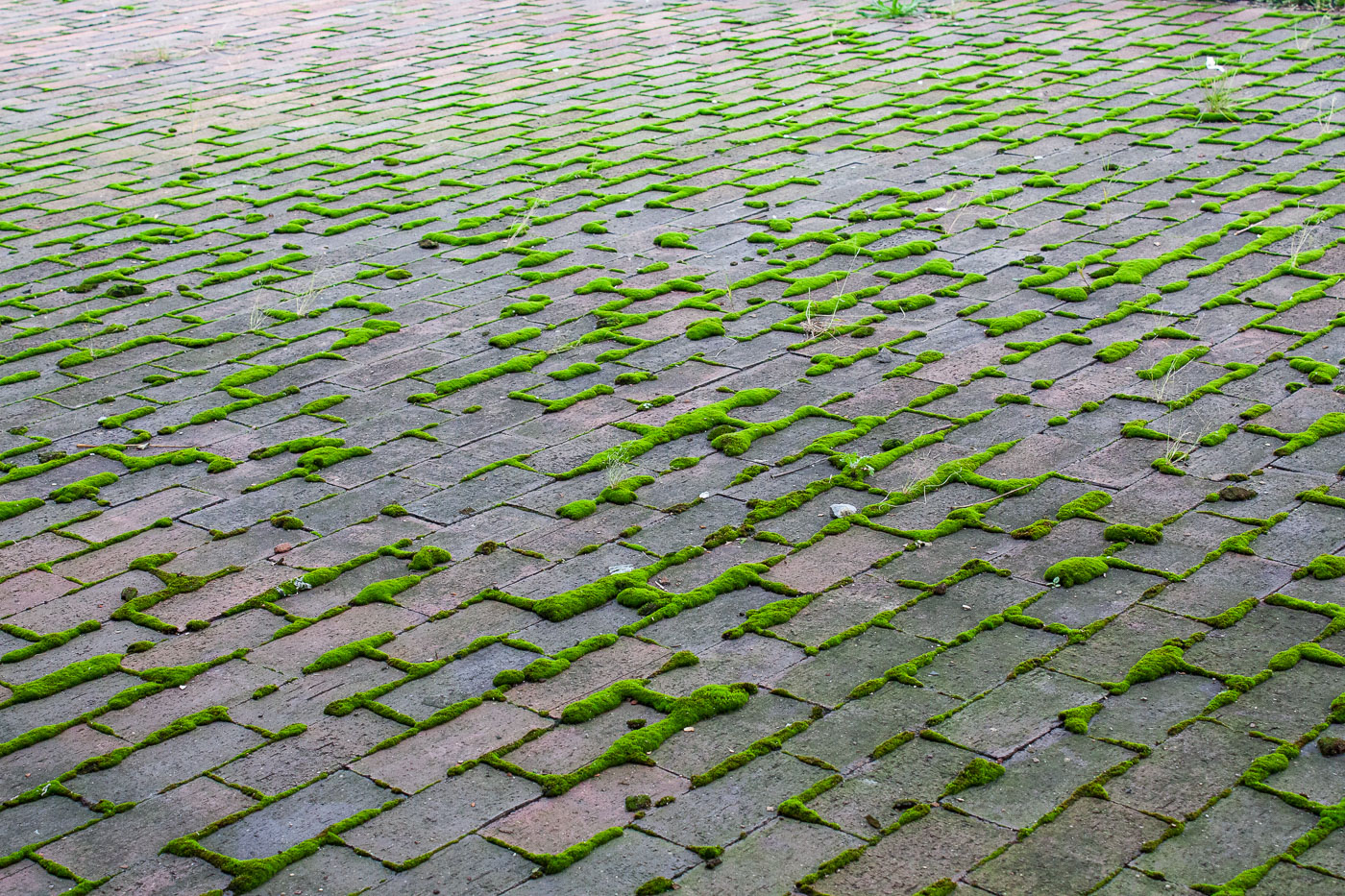
Bright green moss grows between gray brick pavers on a New York City street.
Moss between brick pavers on a New York City street. Brick paving was widely used on older city streets and industrial yards before asphalt became the standard surface. Vegetation commonly takes hold in the joints where moisture and limited foot or vehicle traffic allow growth.

Moss Filling the Joints of an Old Brick Street

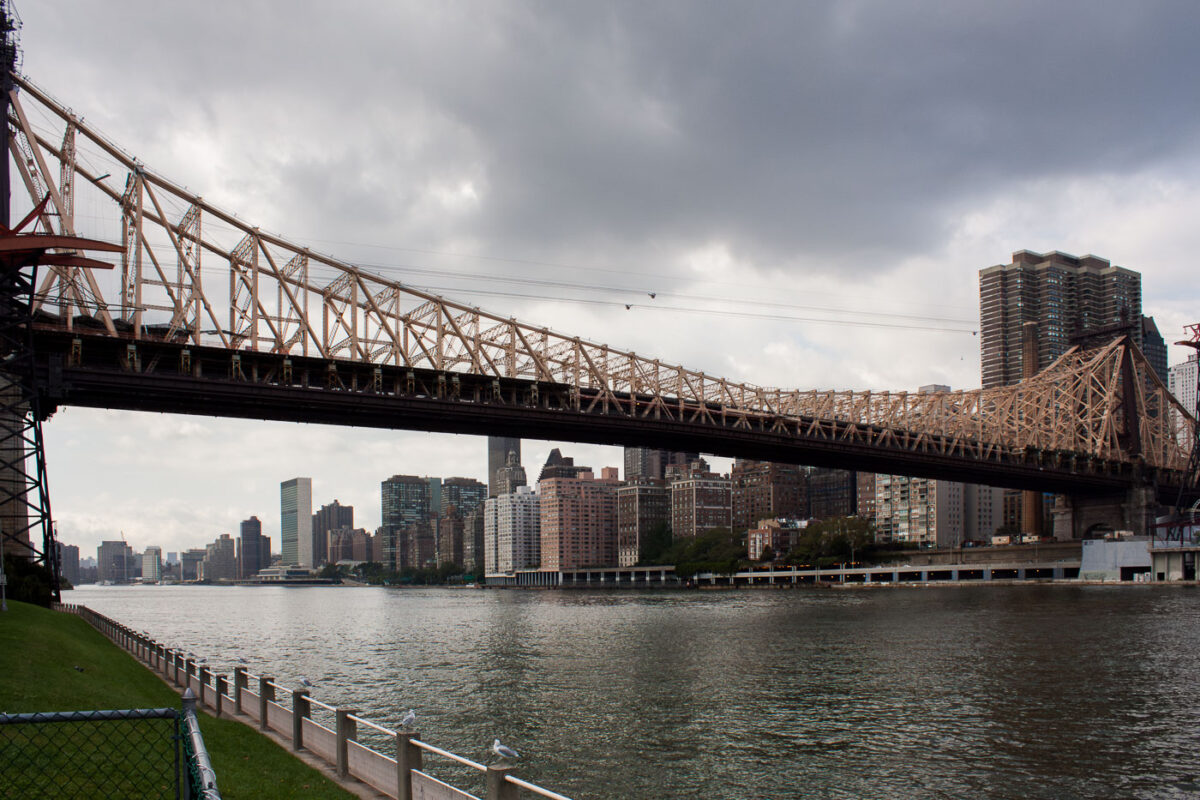
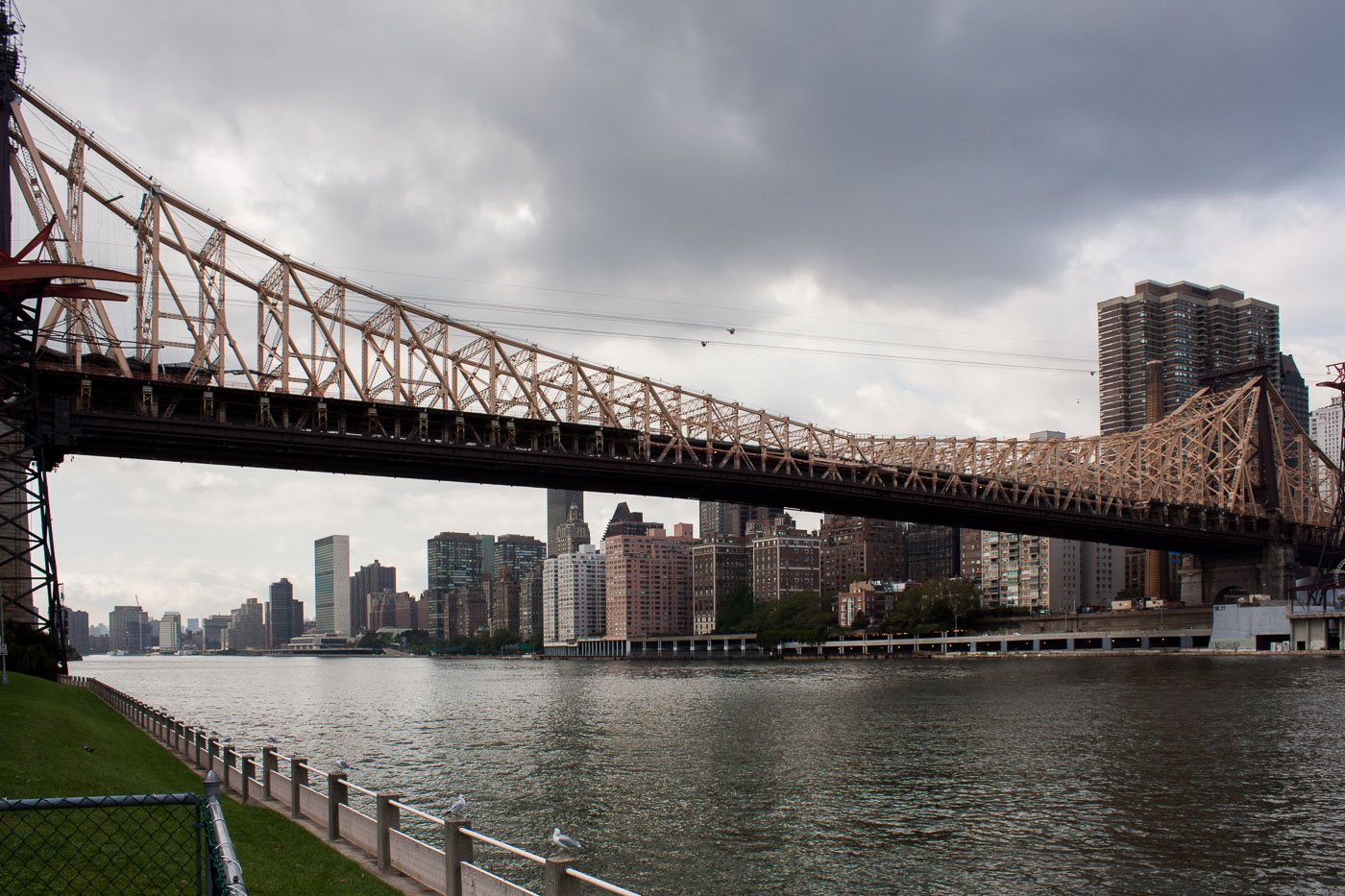
Queensboro Bridge spans the East River between Manhattan and Queens in New York City.
Queensboro Bridge crosses the East River between Manhattan and Queens in New York City. Opened in 1909, the double-deck cantilever bridge carries vehicle traffic on its upper and lower roadways, with a pedestrian path on the north side. The bridge also supports the Roosevelt Island Tramway, which passes just above the upper deck.

Queensboro Bridge Over the East River on an Overcast Day

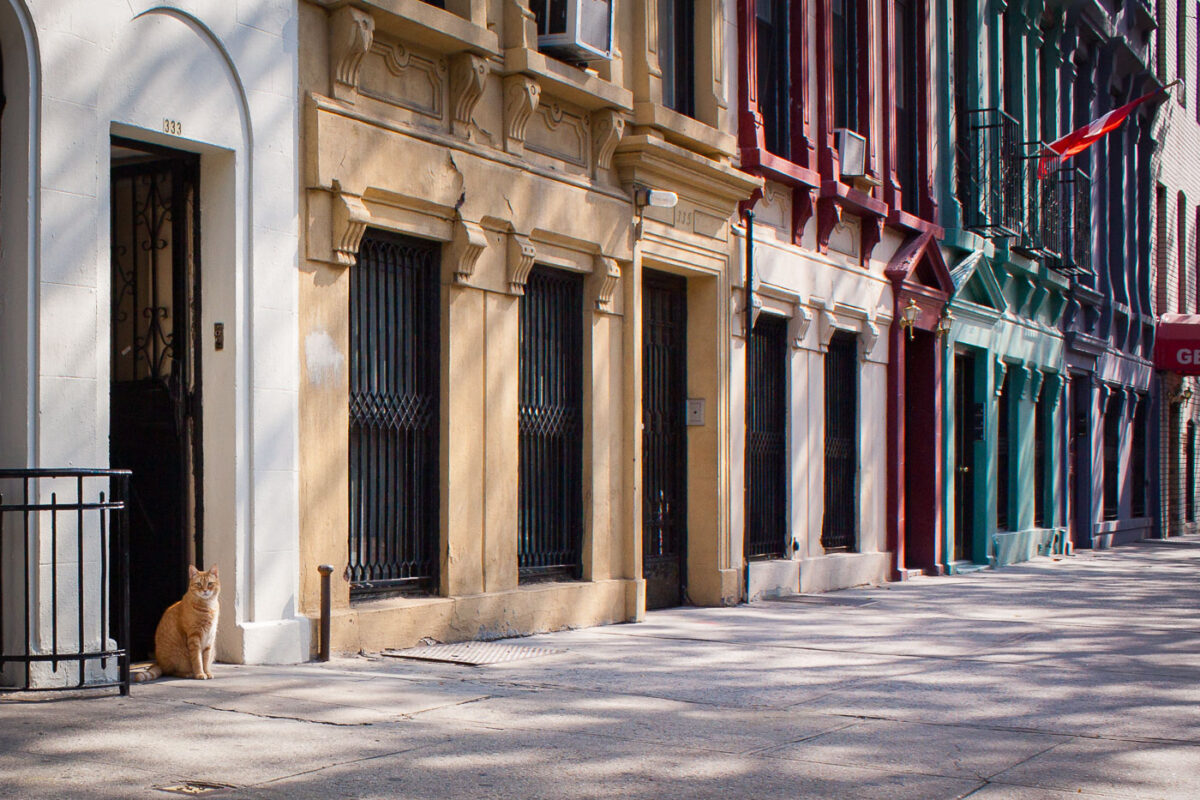
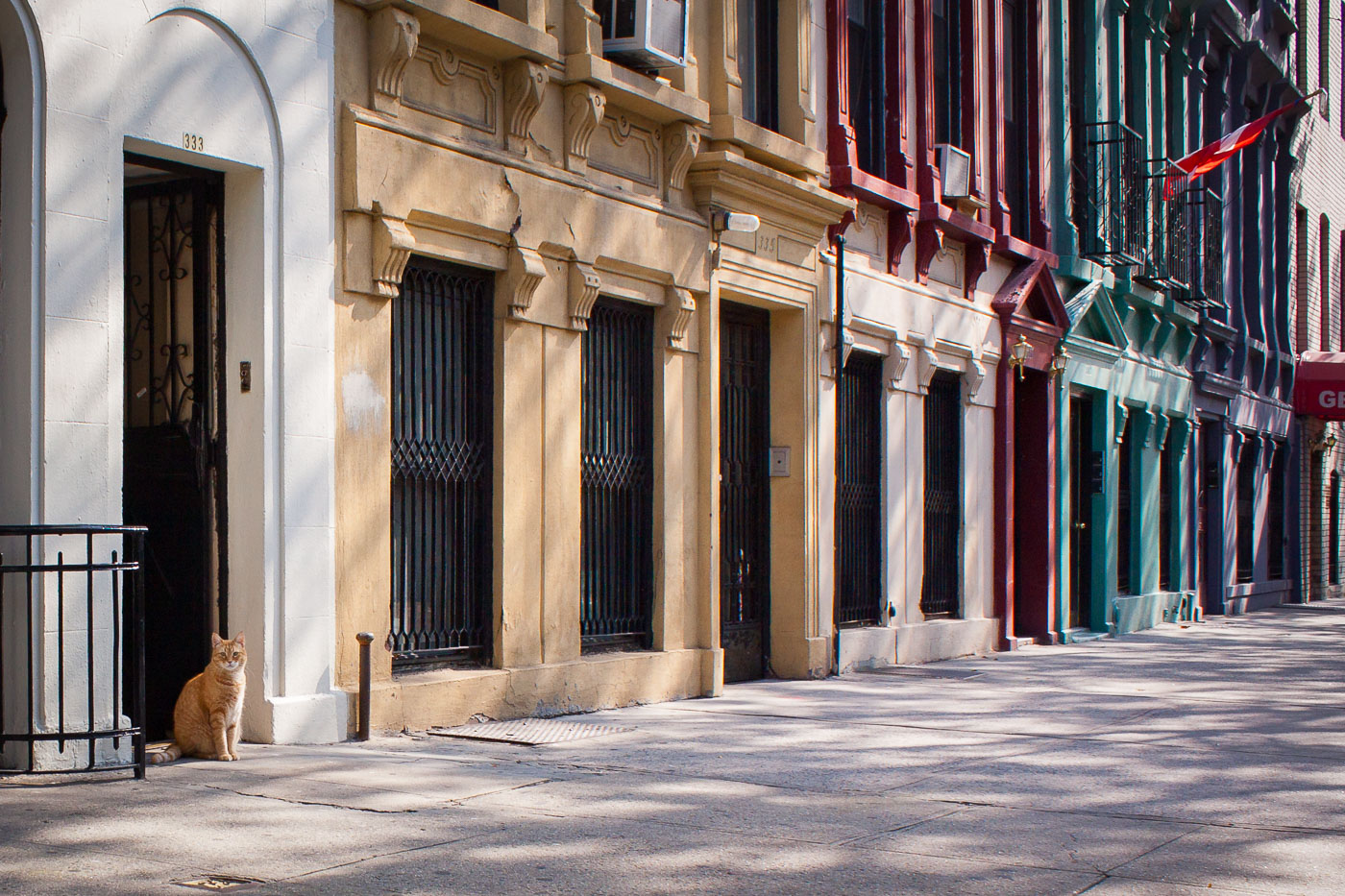
Orange cat sits outside 333 Manhattan Avenue, a row of colorful historic buildings in New York City.
An orange cat sits in the doorway of 333 Manhattan Avenue in New York City. The address is part of a row of attached buildings with varied storefront and residential facades. The cat and the numbered entrance identify the location more specifically than the surrounding block.

Ginger Cat in a Doorway at 333 Manhattan Avenue

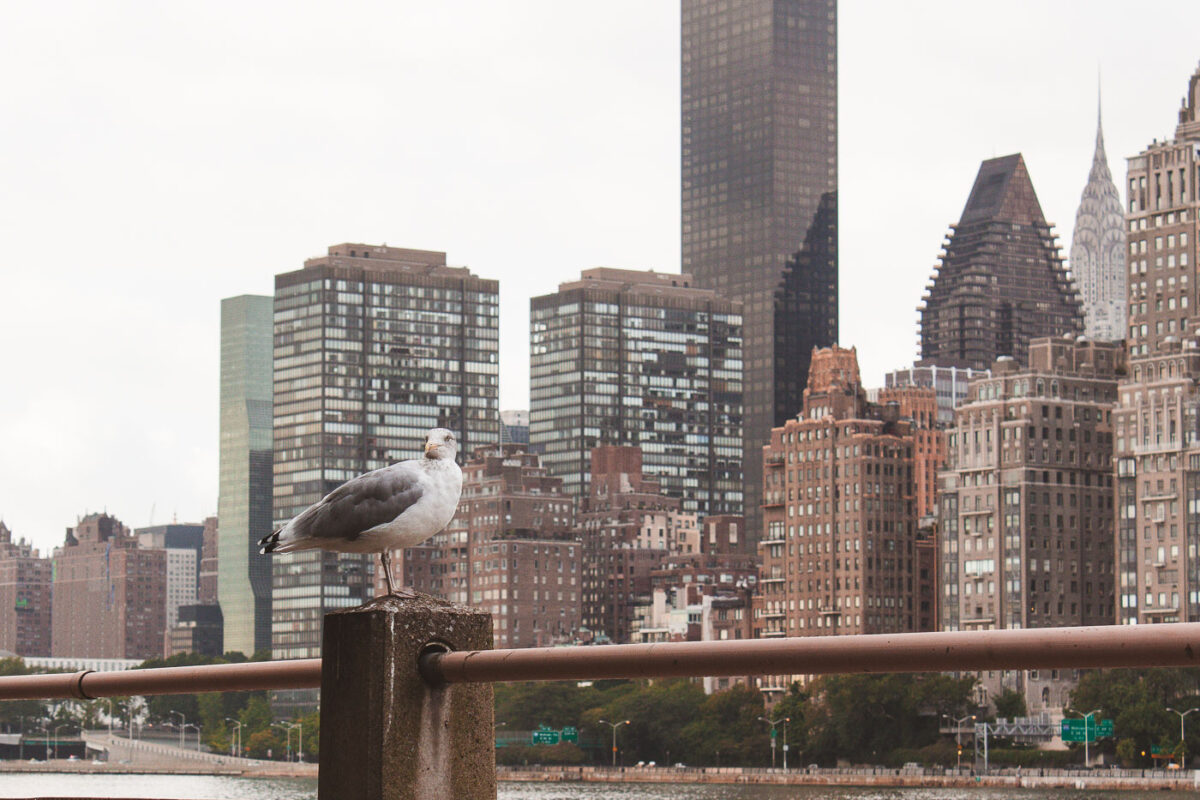
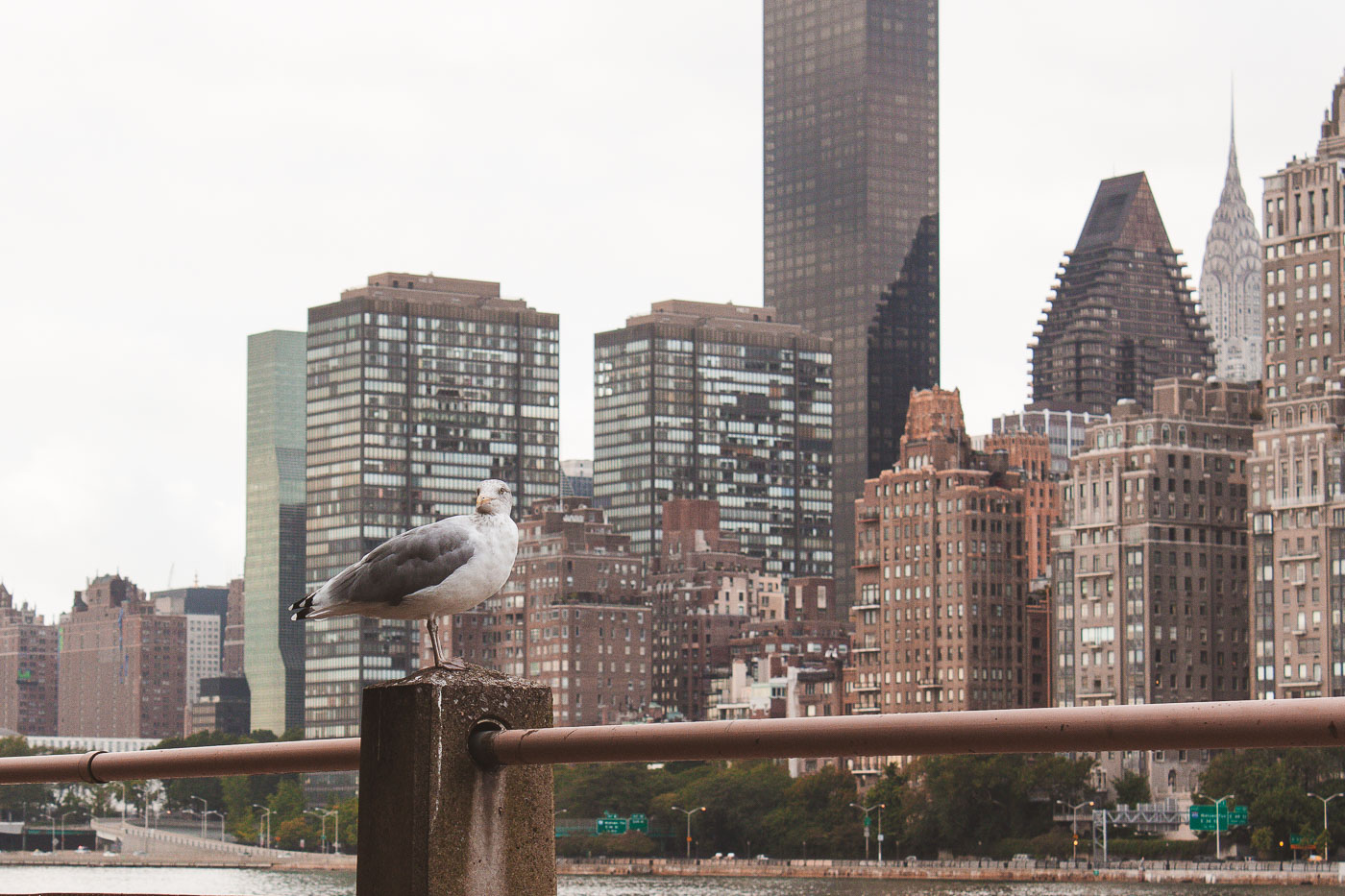
Seagull perched on railing above East River with Manhattan skyline including UN Secretariat and Chrysler Building.
Seagull on the East River waterfront in Midtown Manhattan, with the United Nations Secretariat Building and the Chrysler Building in the background. The green-glass Secretariat, completed in 1952, is the main administrative building of the United Nations headquarters complex. The Chrysler Building, completed in 1930, remains one of New York City's best-known Art Deco skyscrapers.

Gull on a Railing Post With the Chrysler Building Behind It

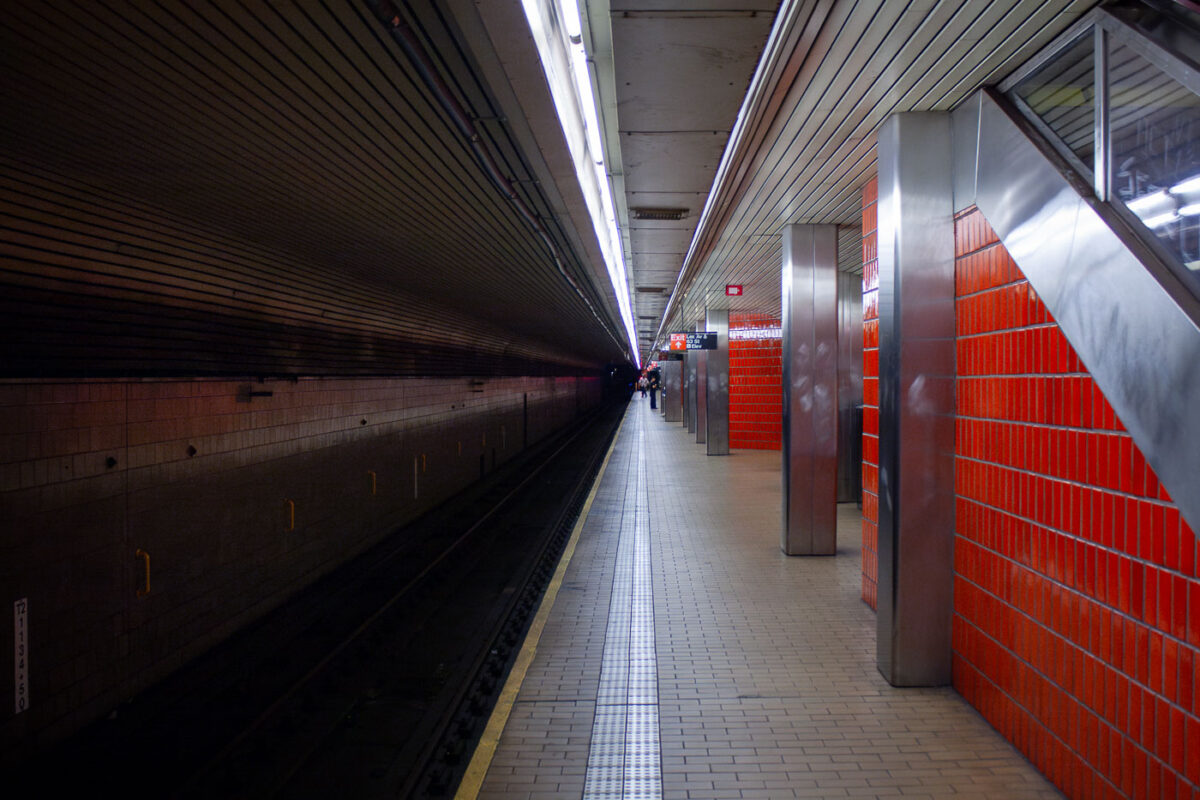
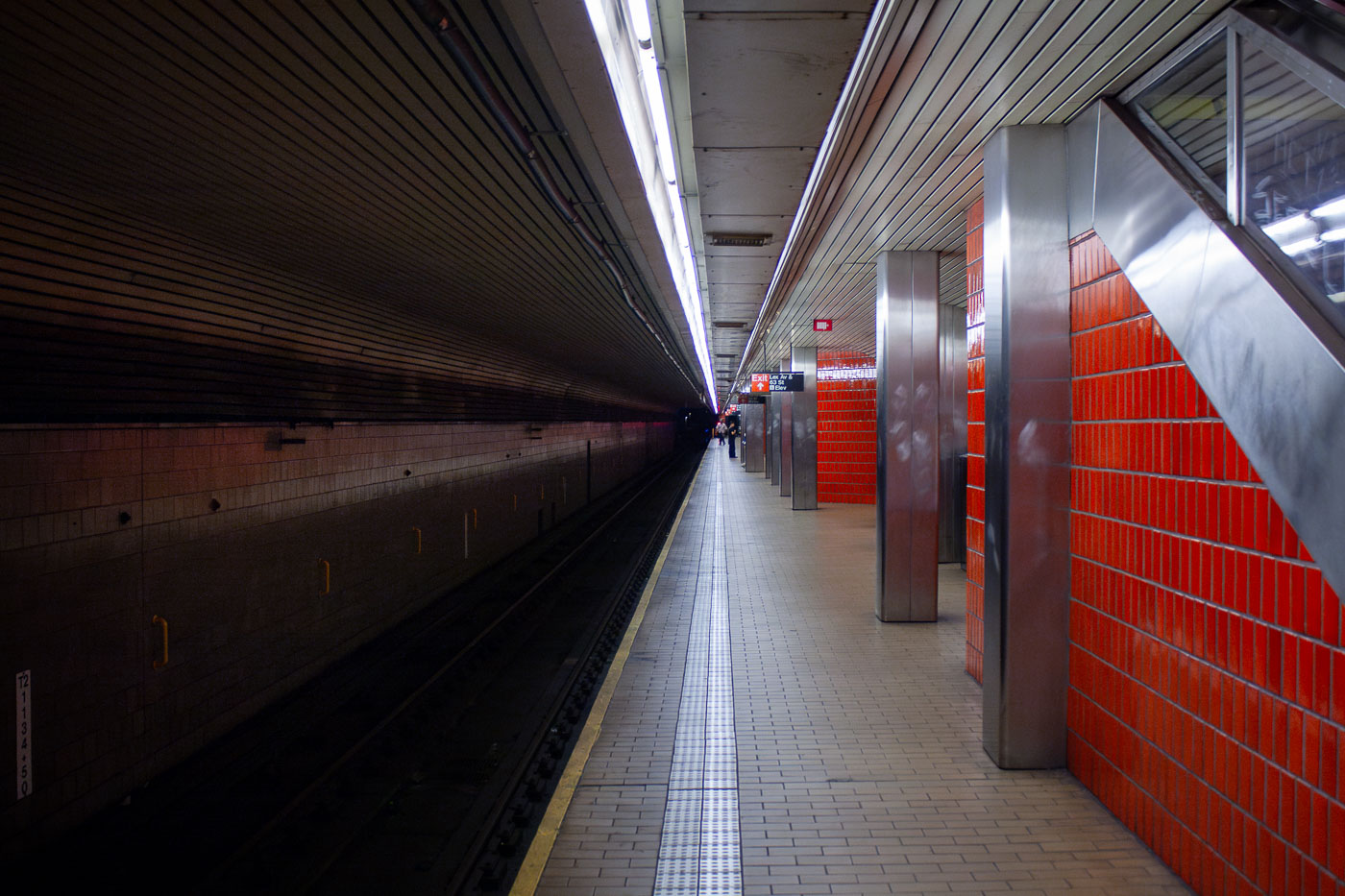
Empty platform at Lexington Avenue–63rd Street subway station in Manhattan with red brick wall and metal support columns.
Lexington Avenue–63rd Street station platform in Manhattan. Opened in 1989 as part of the 63rd Street Tunnel project, the station links the Upper East Side with Queens through the IND 63rd Street Line. It is served by the F train at all times and by the Q train on weekdays.

Red-Tiled Platform at Lexington Avenue–63rd Street Station

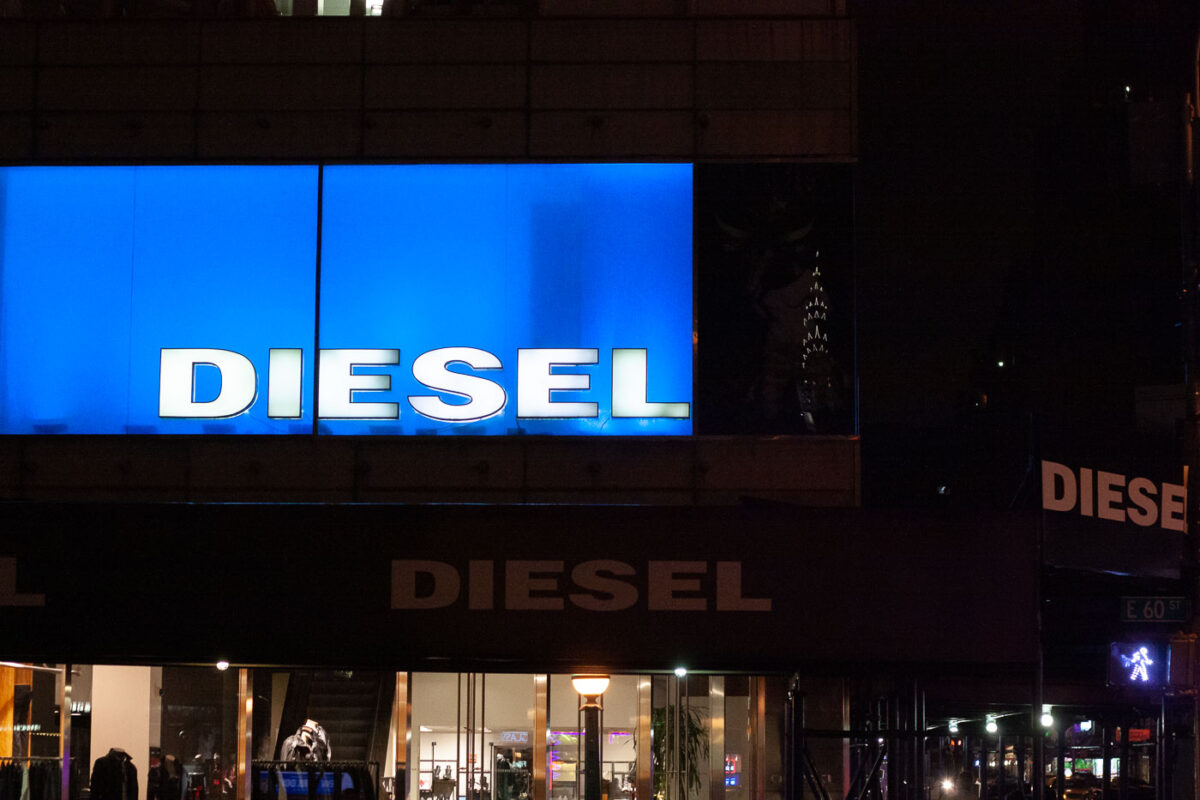
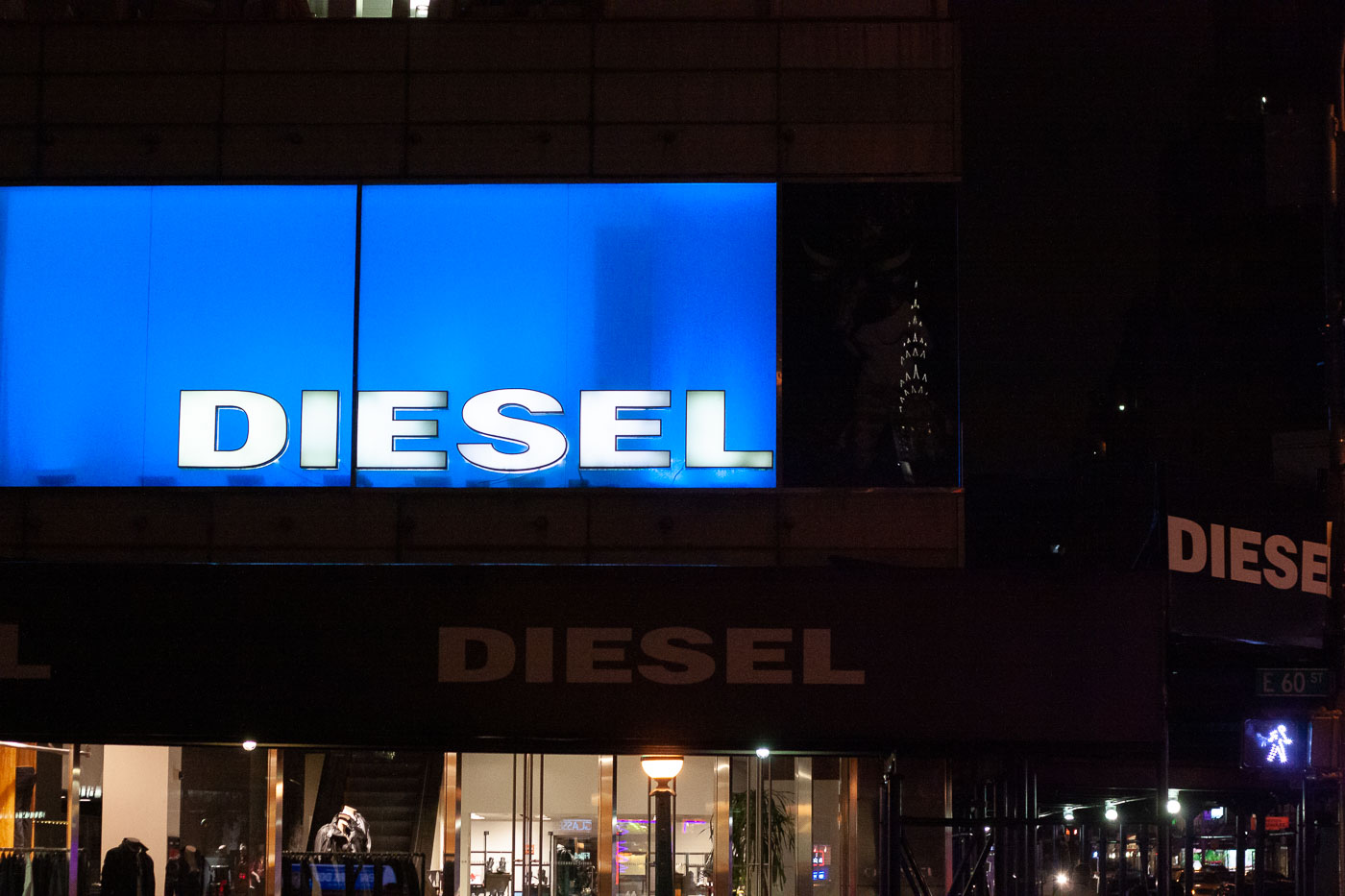
Diesel fashion retailer storefront with illuminated blue sign on East 60th Street in Manhattan.
Diesel storefront on East 60th Street in Manhattan, New York City. The shop is part of the international fashion brand Diesel, known for denim and casual apparel.

Diesel Storefront Lit Up at Night on East 60th Street

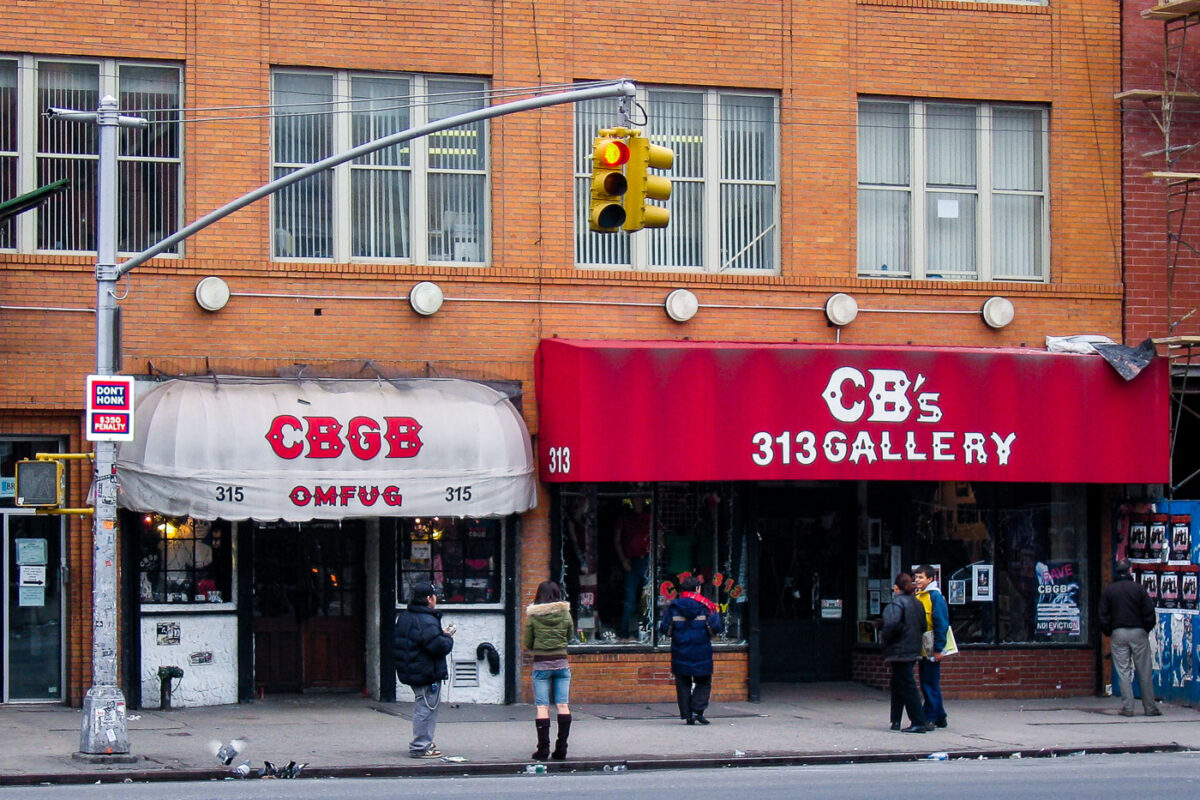
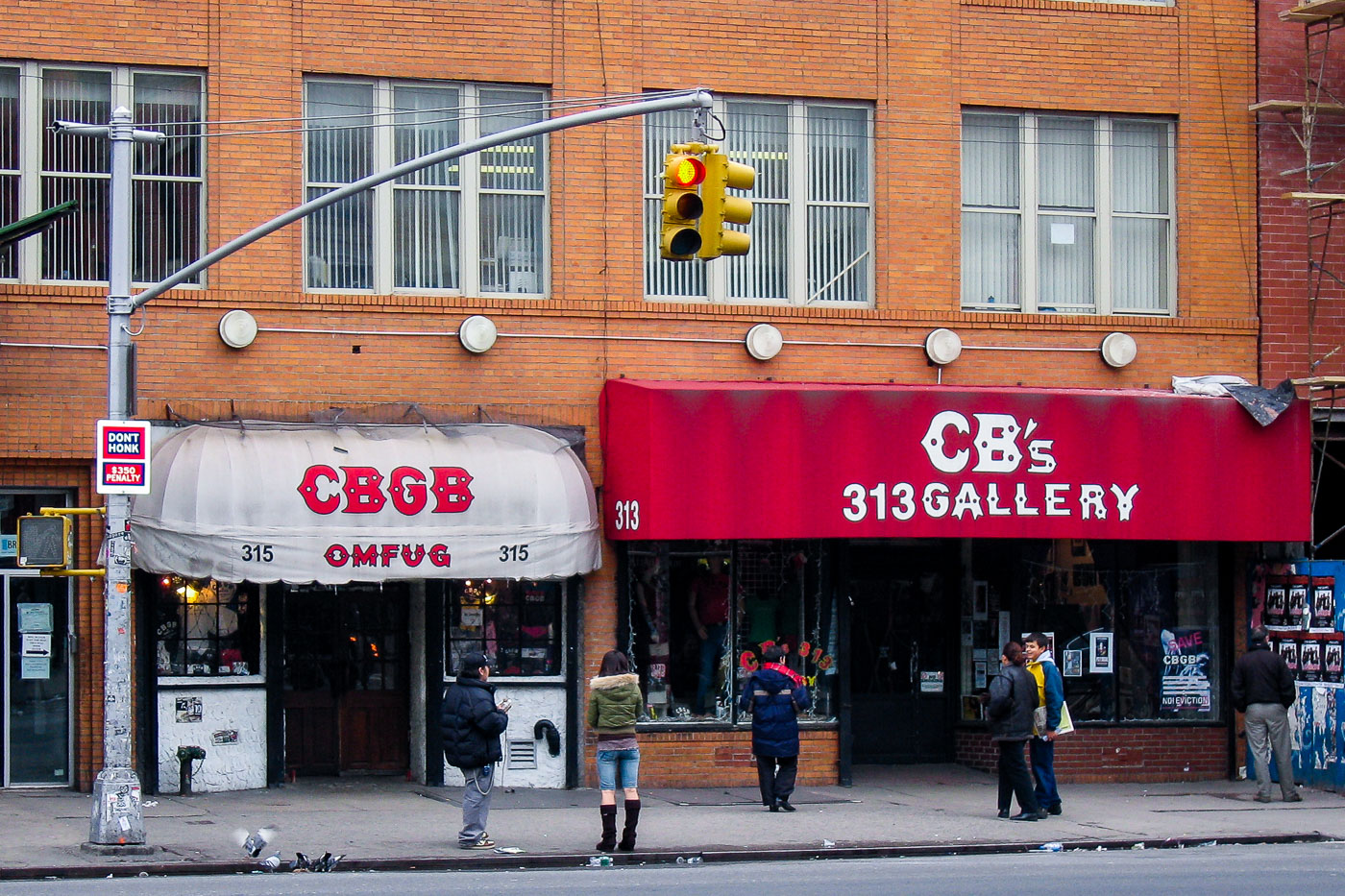
CBGB and CB's 313 Gallery storefronts on the Bowery in Manhattan, January 2006.
CBGB and CB's 313 Gallery at 313-315 Bowery in Manhattan. CBGB was the Bowery club closely associated with the emergence of American punk and new wave, while the adjacent gallery operated as a related performance and exhibition space. This image dates from 2006, the year CBGB closed after a dispute with its landlord.

CBGB’s Storefront on the Bowery Before Its 2006 Closing

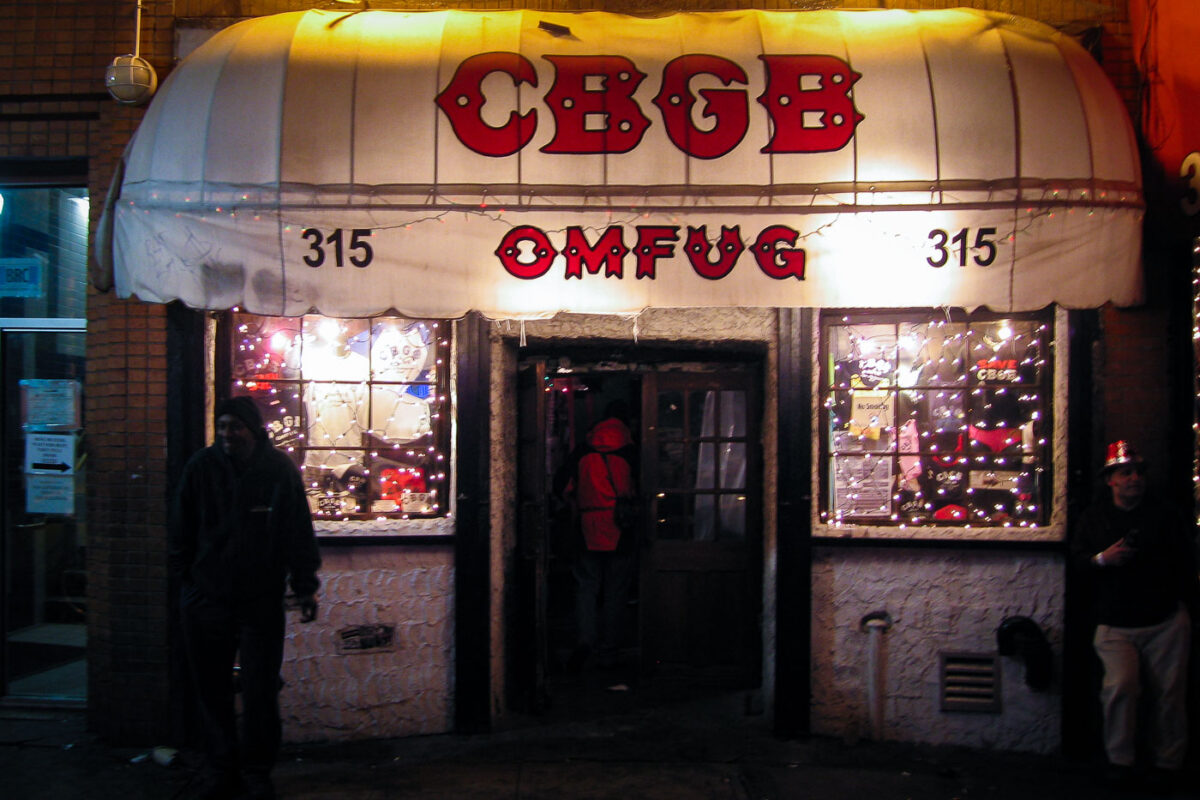
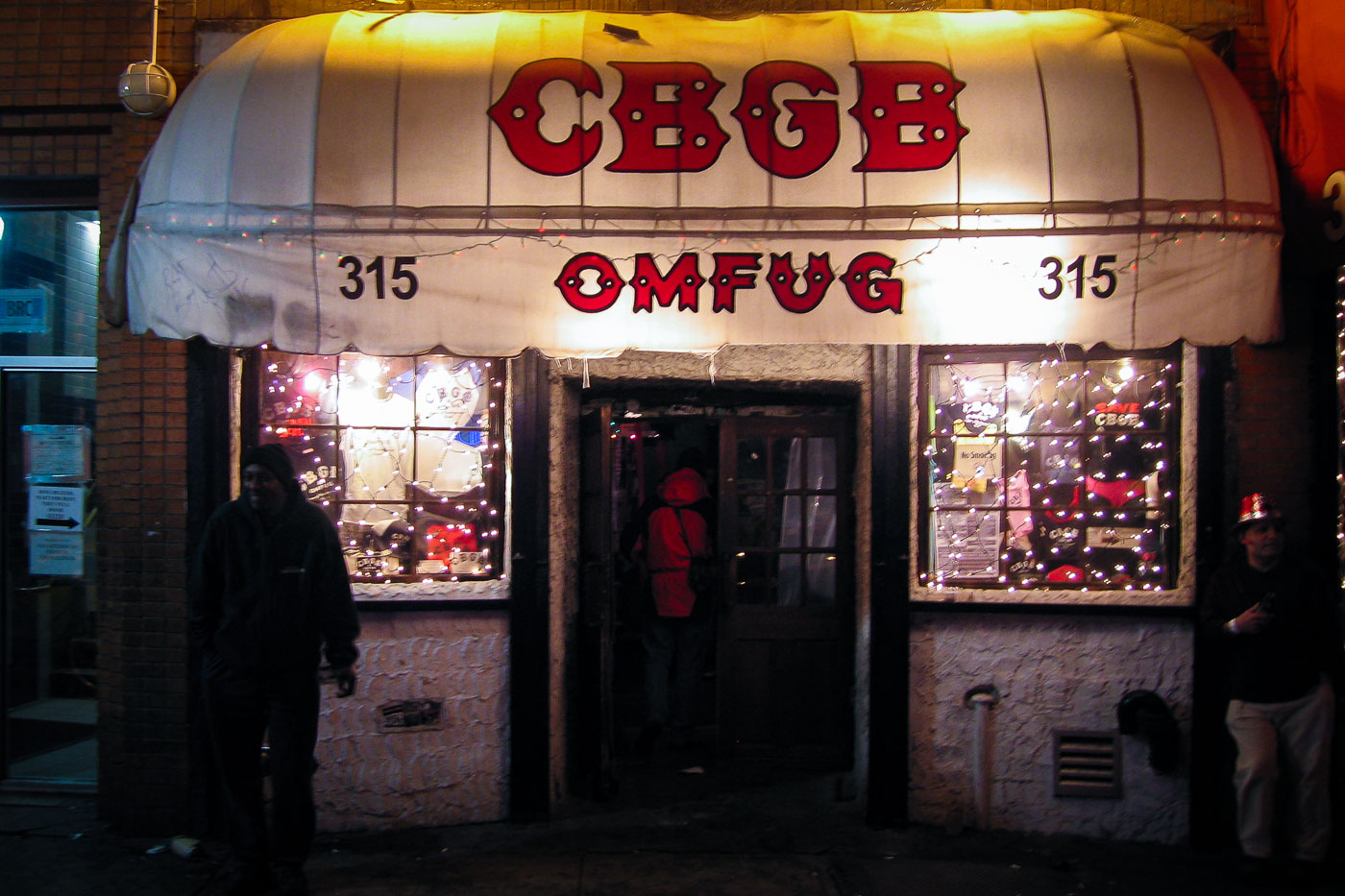
CBGB OMFUG nightclub entrance at 315 Bowery in Manhattan with illuminated storefront windows.
CBGB OMFUG at 315 Bowery in Manhattan was a longtime New York music club closely associated with punk and new wave. Opened in 1973, the venue hosted early performances by bands including the Ramones, Blondie, and Talking Heads. It closed in 2006 after a prolonged rent dispute with its landlord.

CBGB’s Awning at Night on the Bowery

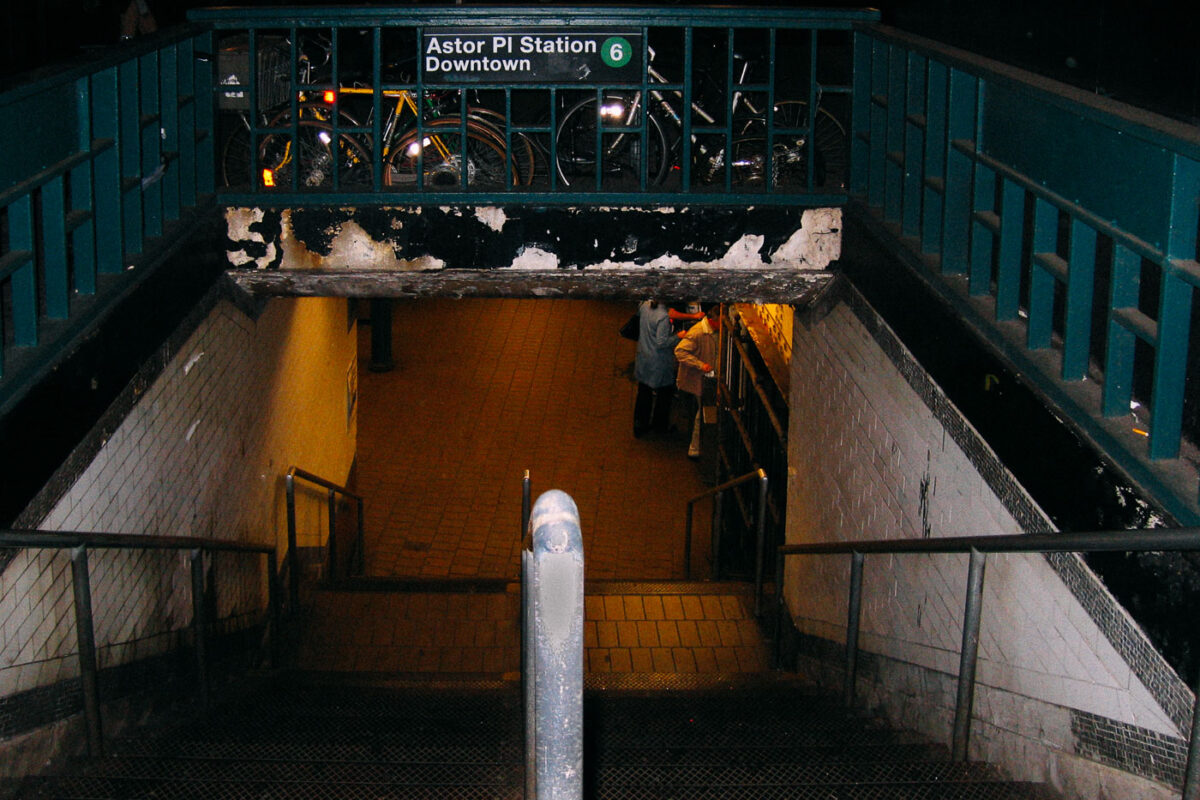
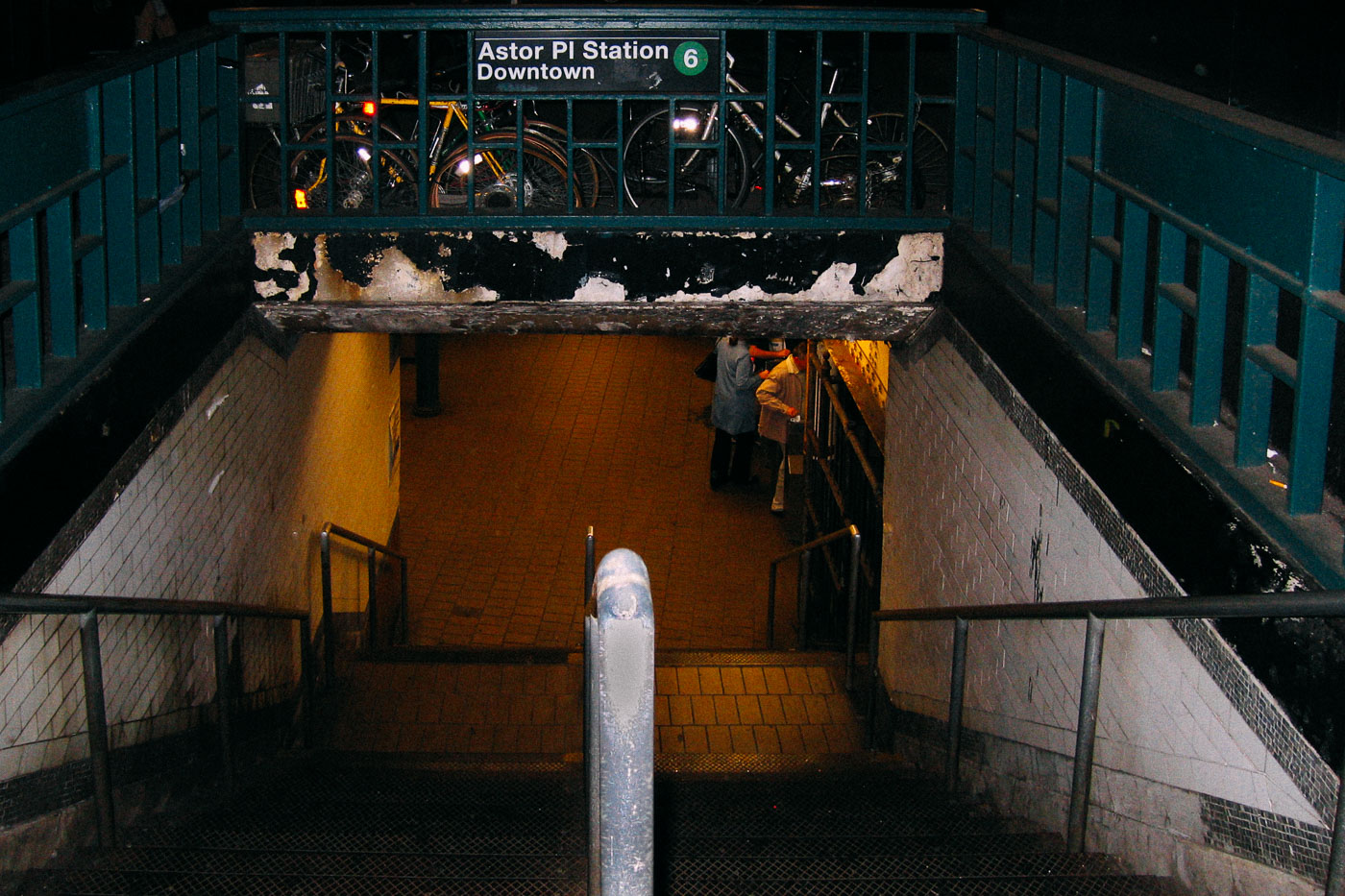
Stairway descending into Astor Place Station's downtown 6 entrance in Manhattan's East Village.
Astor Place Station is a local stop on the IRT Lexington Avenue Line of the New York City Subway, serving the 6 train in Manhattan's East Village. It opened in 1904 as one of the original stations on the city's first subway line. This entrance leads to the downtown platform.

Downtown 6 Entrance at Astor Place Station

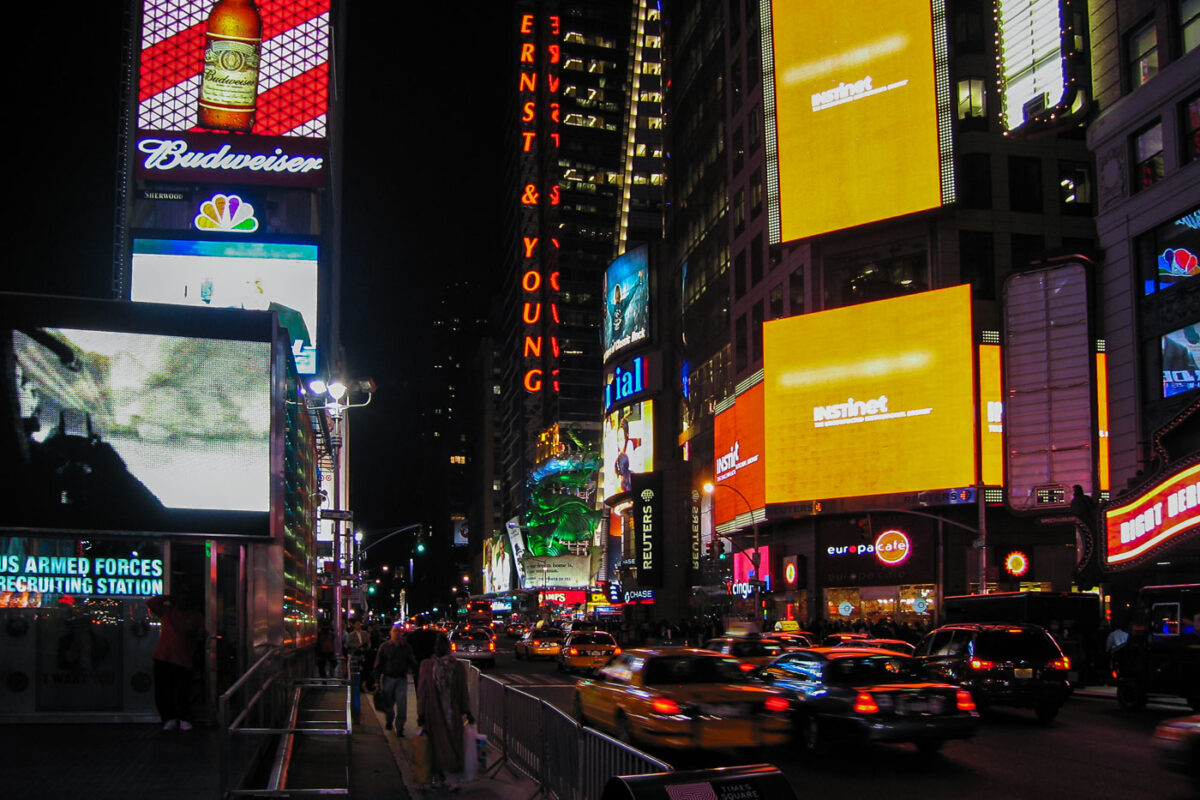
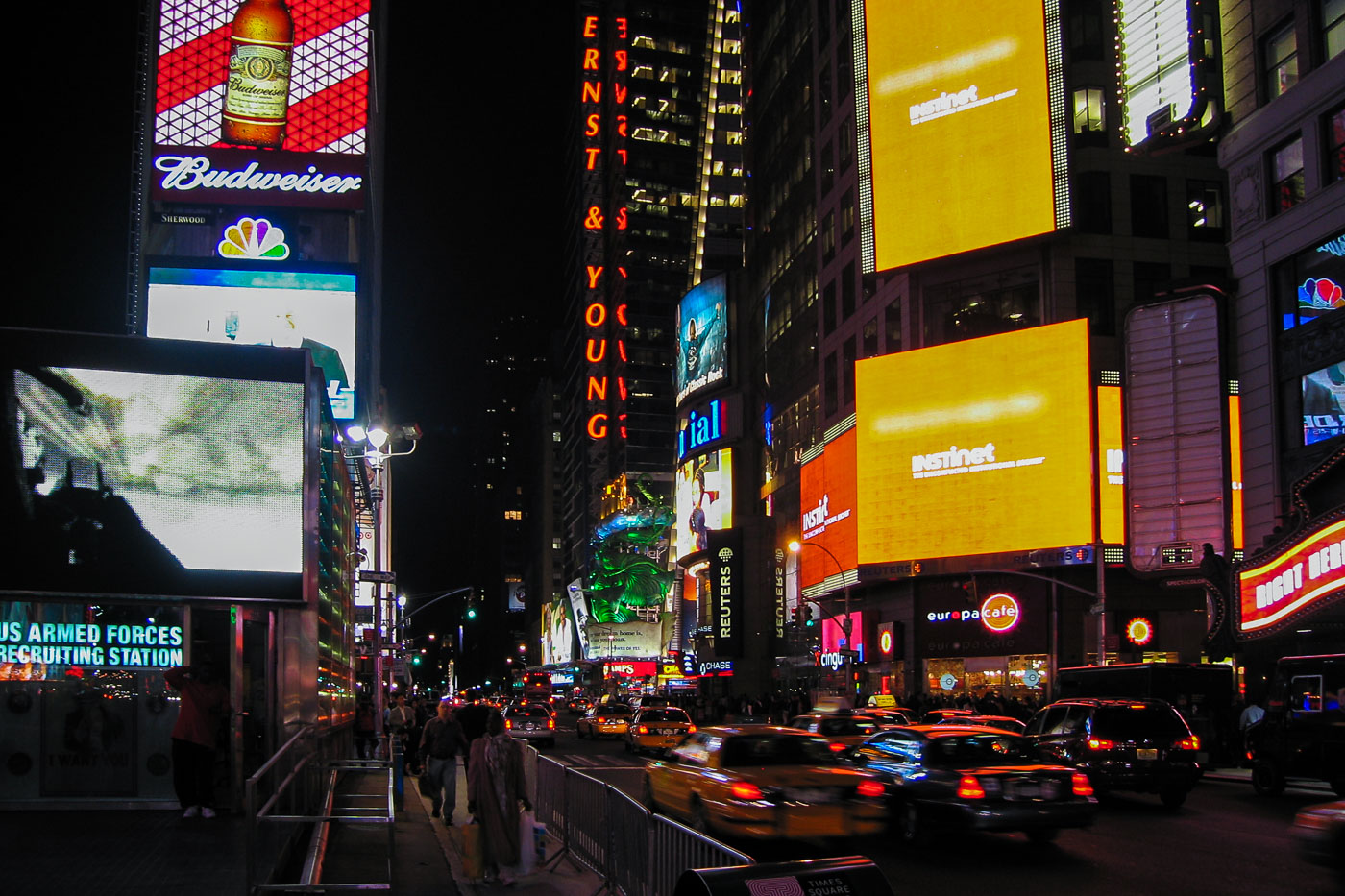
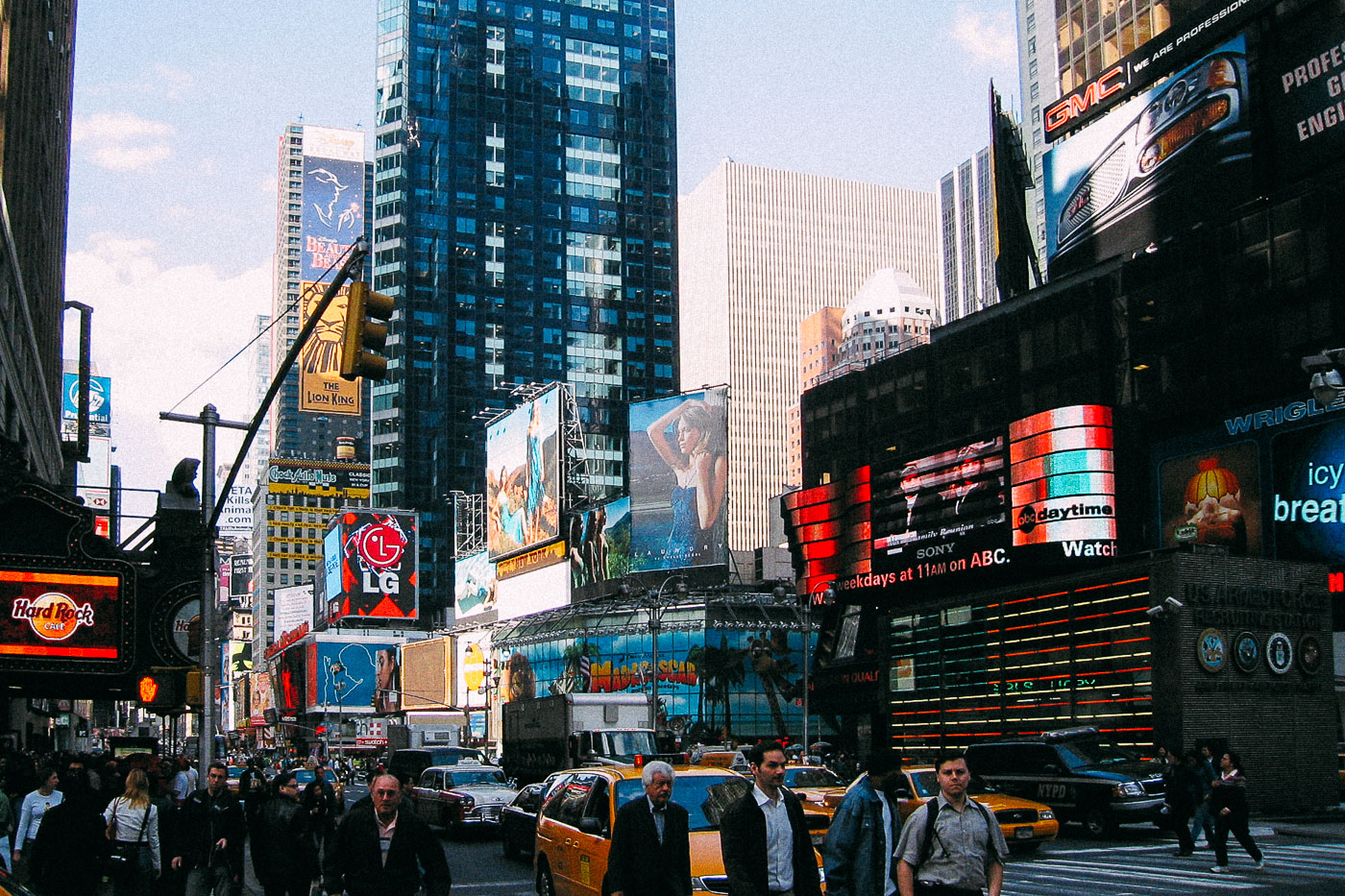
Times Square at night displays illuminated billboards, yellow taxis, and pedestrians on a crowded Manhattan street.
Times Square sits at the junction of Broadway and Seventh Avenue in Manhattan, a plaza known for its large electronic billboards and heavy pedestrian traffic. The US Armed Forces Recruiting Station has stood at the square's south end since 1946. Yellow taxis fill the street past Broadway advertisers including Ernst & Young and Reuters in May 2005.

Taxi Traffic Near the US Armed Forces Recruiting Station in Times Square

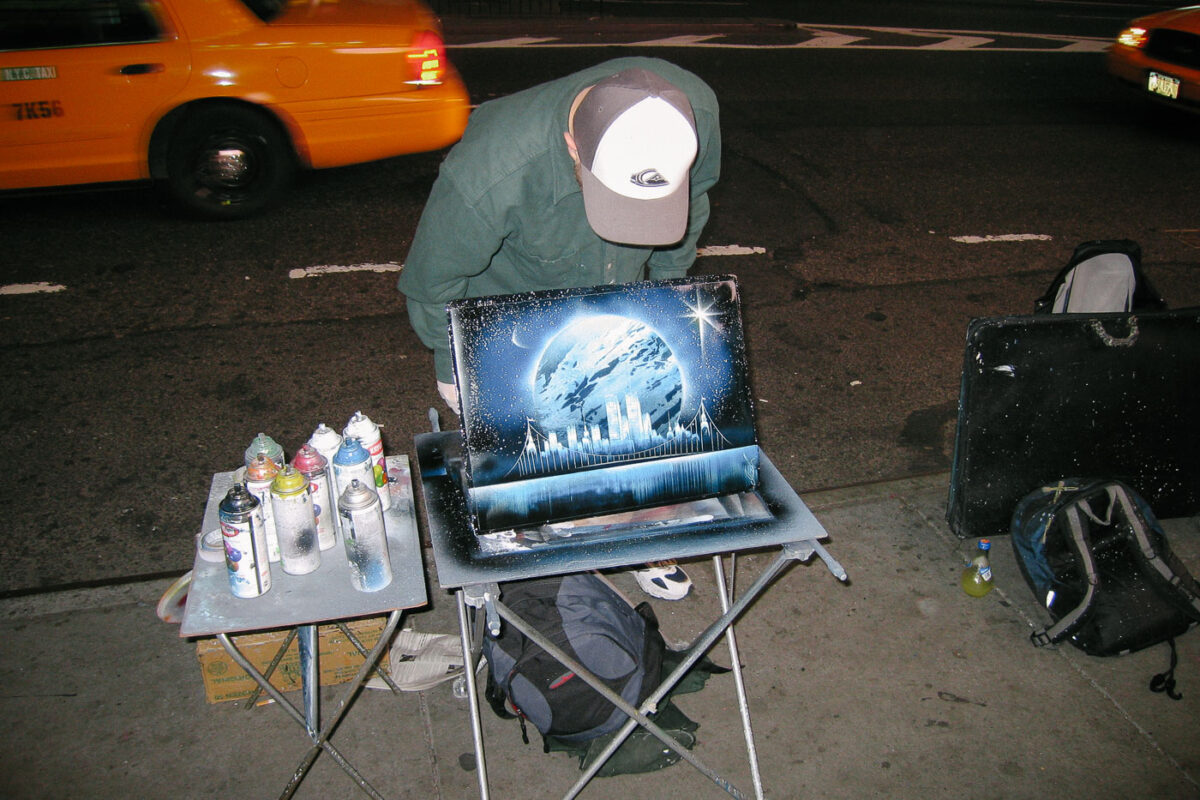
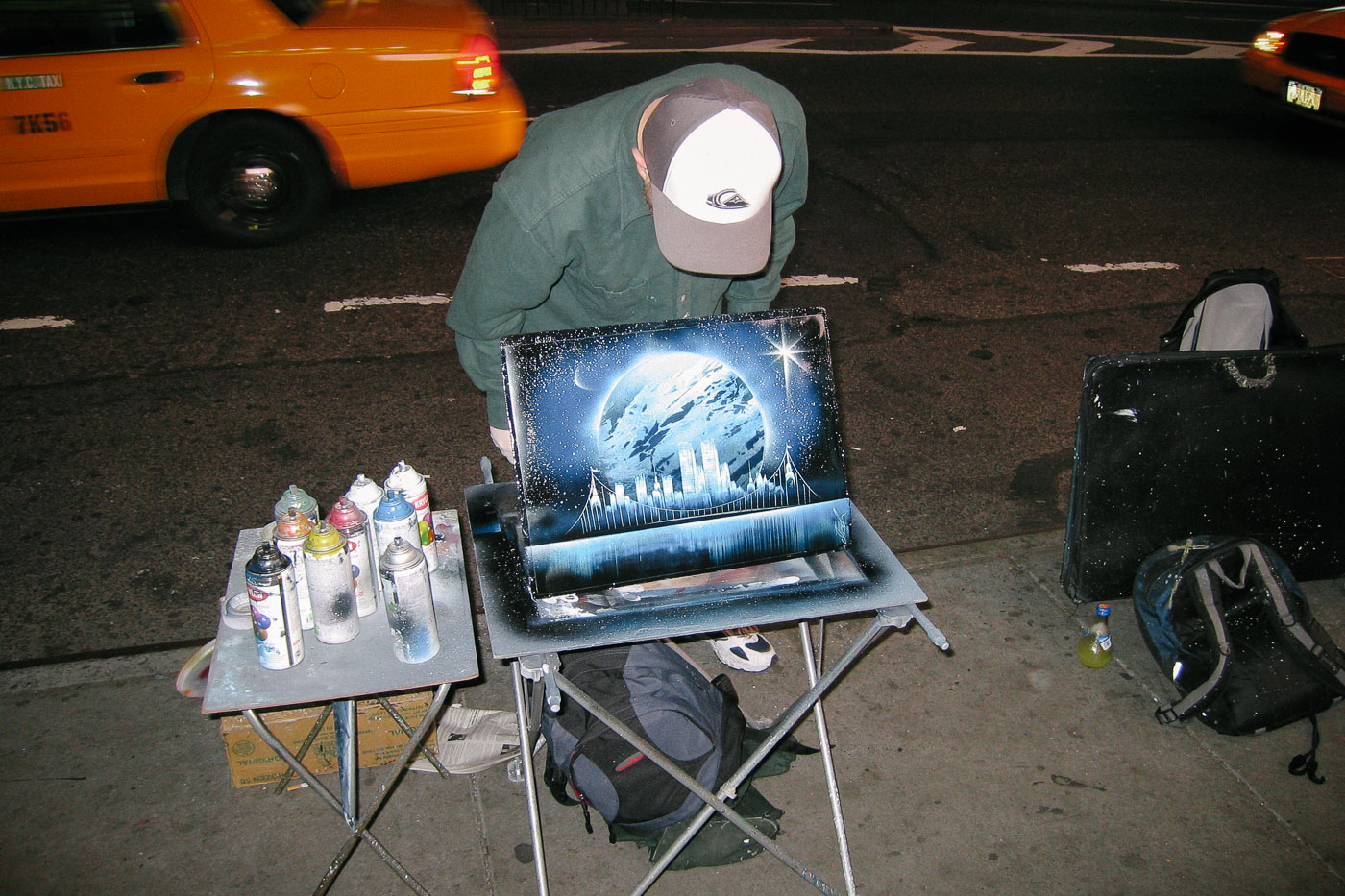
Street artist spray-paints an Earth and cityscape design on canvas in Times Square, Manhattan.
Spray-paint artist at work in Times Square, Manhattan, in May 2005. The vendor is producing an aerosol painting for sale on the sidewalk, a type of quick street art commonly offered to pedestrians in the district. Times Square supported a mix of commercial entertainment, street performers, and informal vendors during this period.

Spray-Paint Artist Creating a Cityscape Near a Times Square Curb

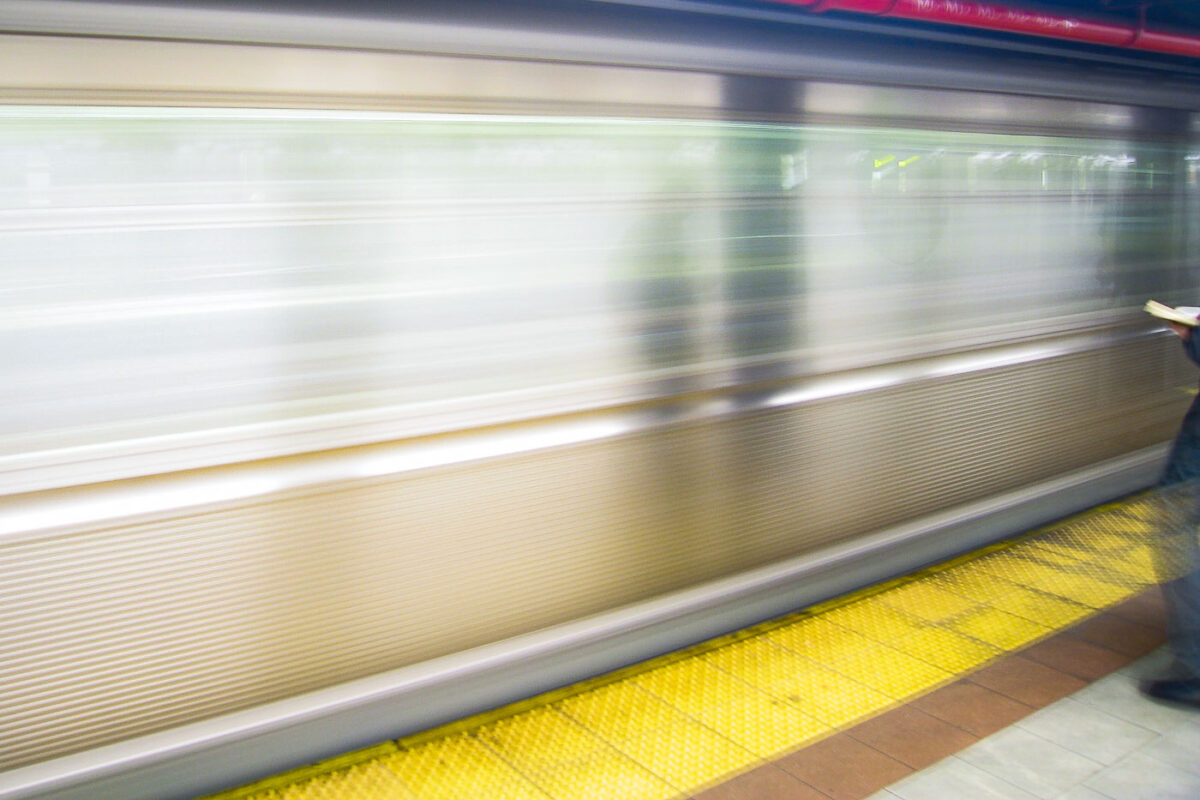
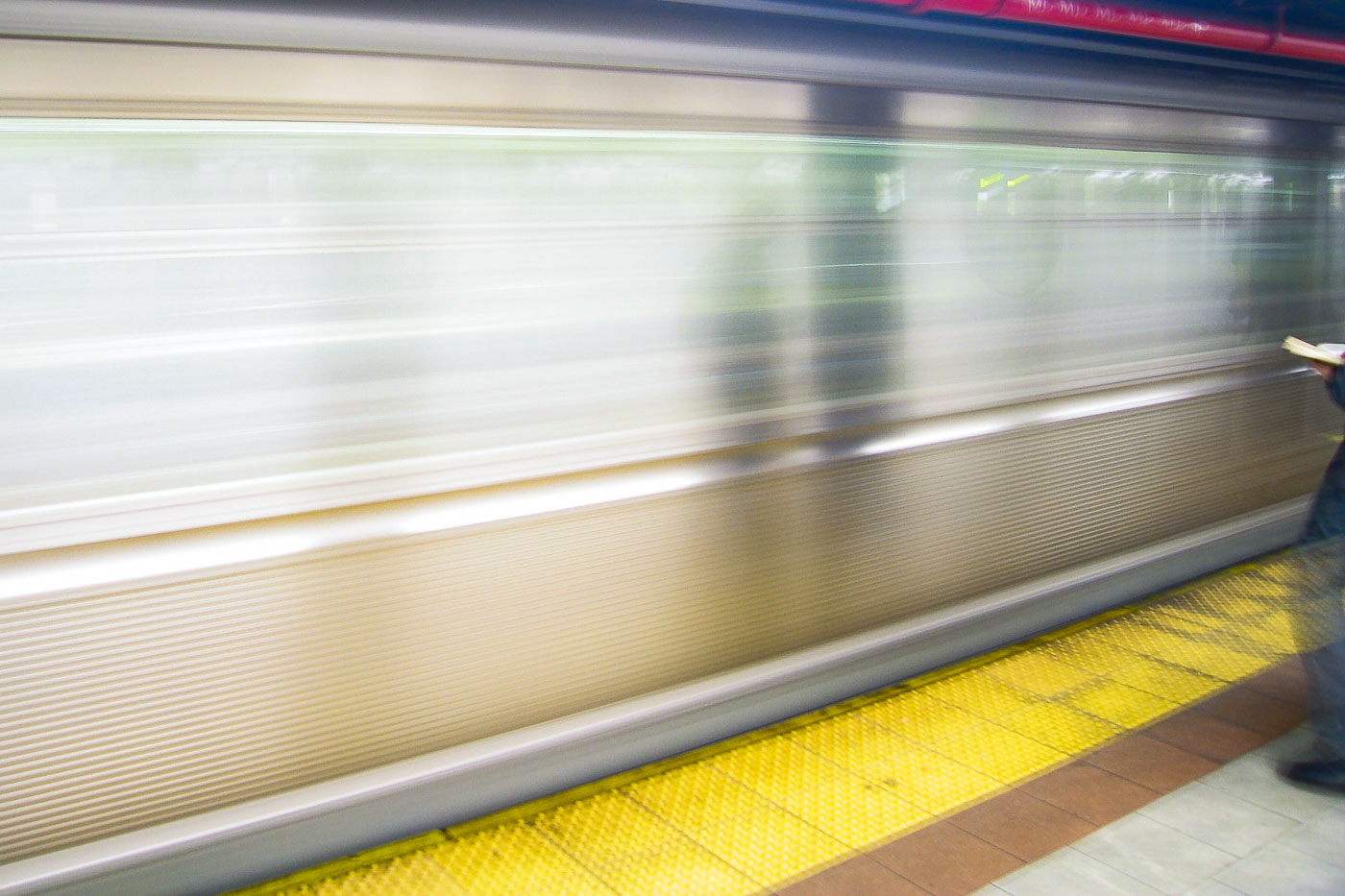
A moving New York City subway train passes a station platform with a yellow tactile warning strip.
A New York City subway train passes through a station platform lined with a yellow tactile warning strip. The platform edge strip, standard across the subway system, warns waiting riders to stay back from the tracks.

A New York City Subway Train Speeds Through a Station

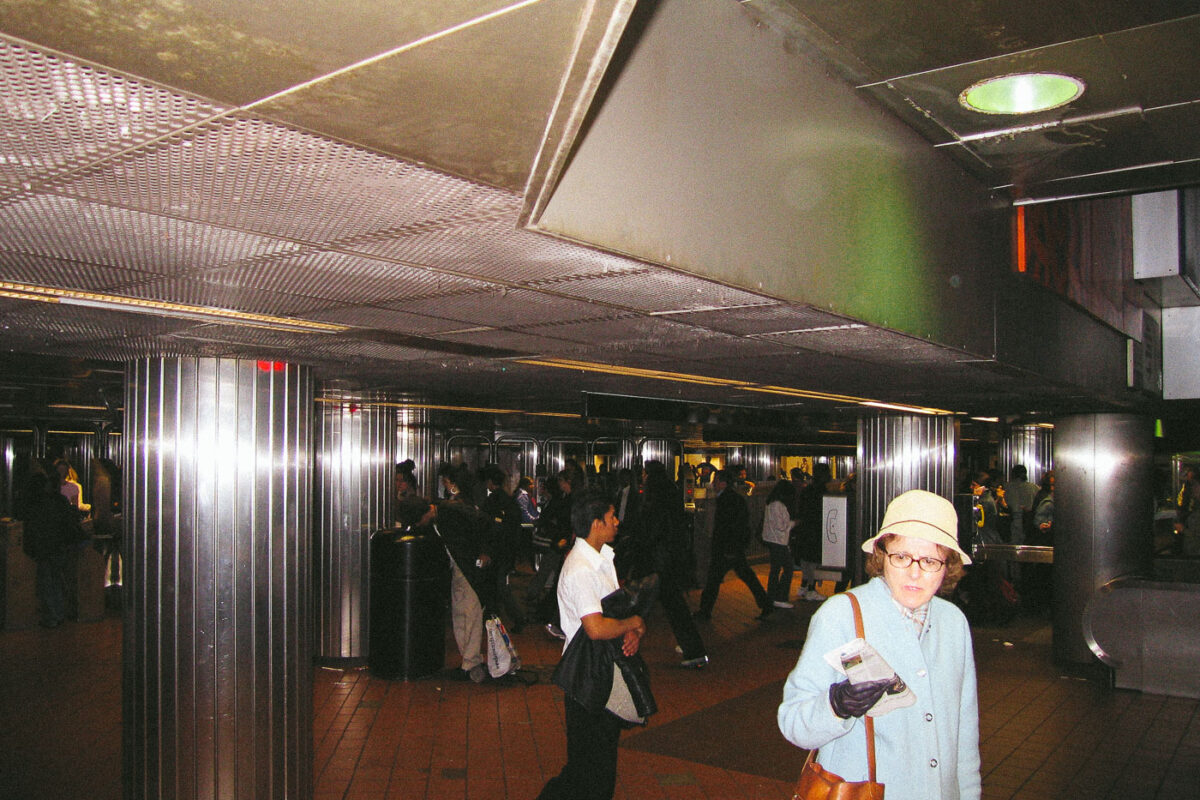
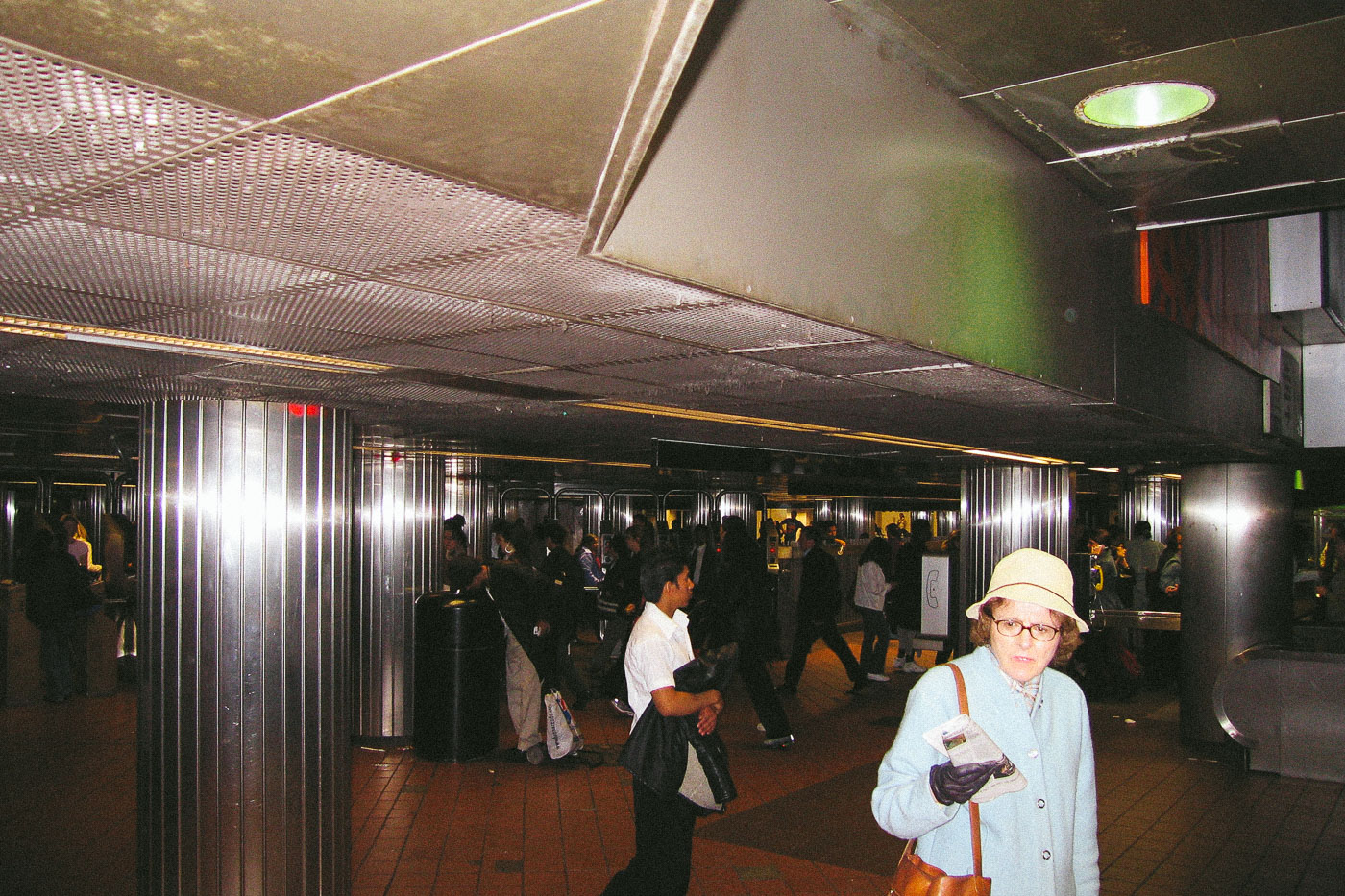
Commuters move through a New York City subway station mezzanine with turnstiles and overhead lighting.
Subway concourse, New York City. Commuters move through a mezzanine area with turnstiles and escalator access in the New York City Subway system.

Woman in a Sun Hat at a Subway Station Mezzanine

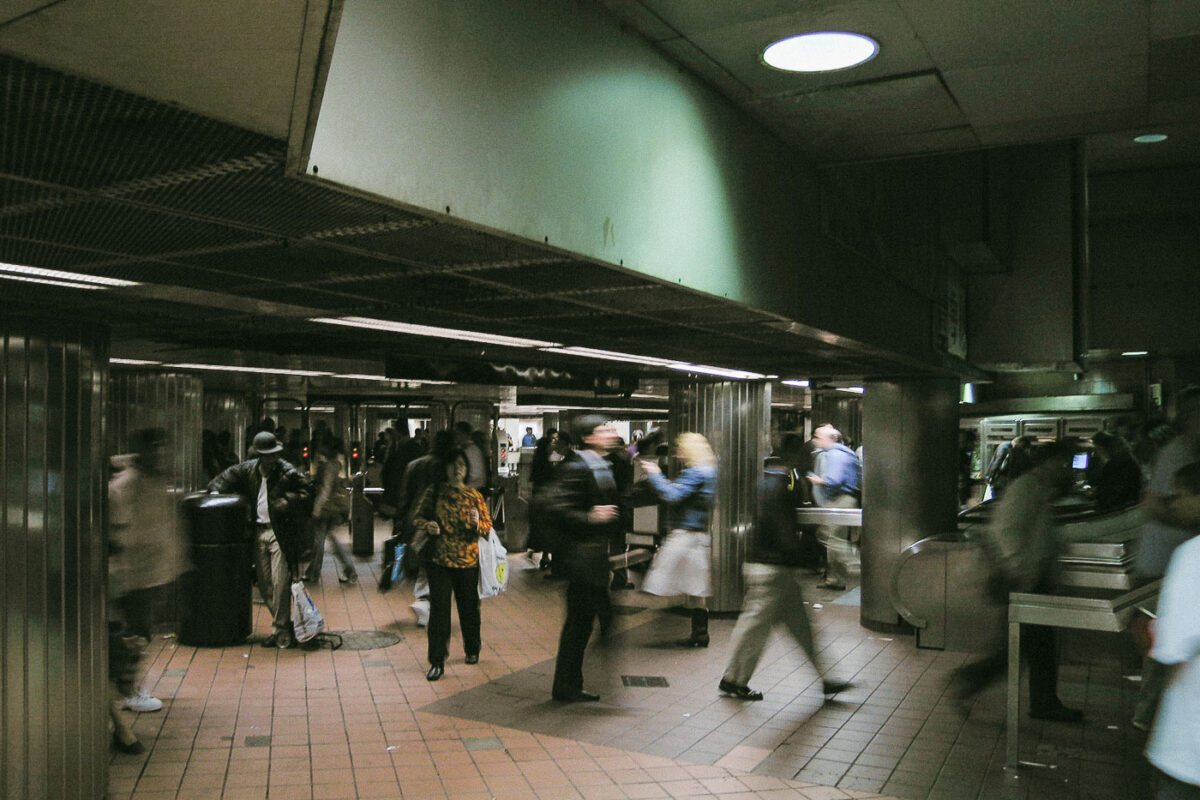
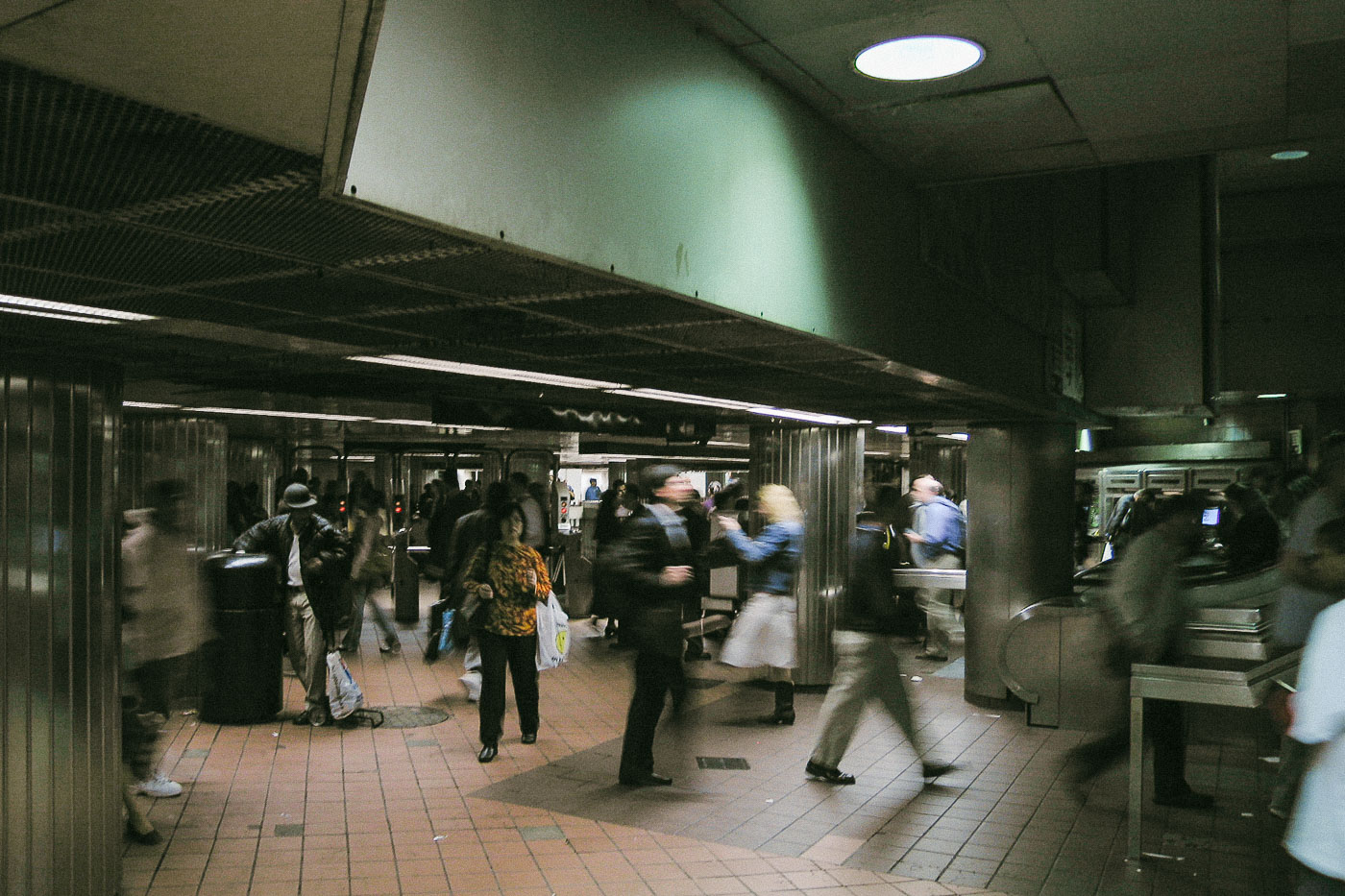
Passengers move through a New York City subway mezzanine with turnstiles and fare control equipment.
Commuters pass through a subway mezzanine in New York City, moving between turnstiles and fare control equipment toward the platforms. The New York City subway opened in 1904 and is one of the largest rapid transit systems in the world by number of stations.

Commuters Cross a New York City Subway Mezzanine

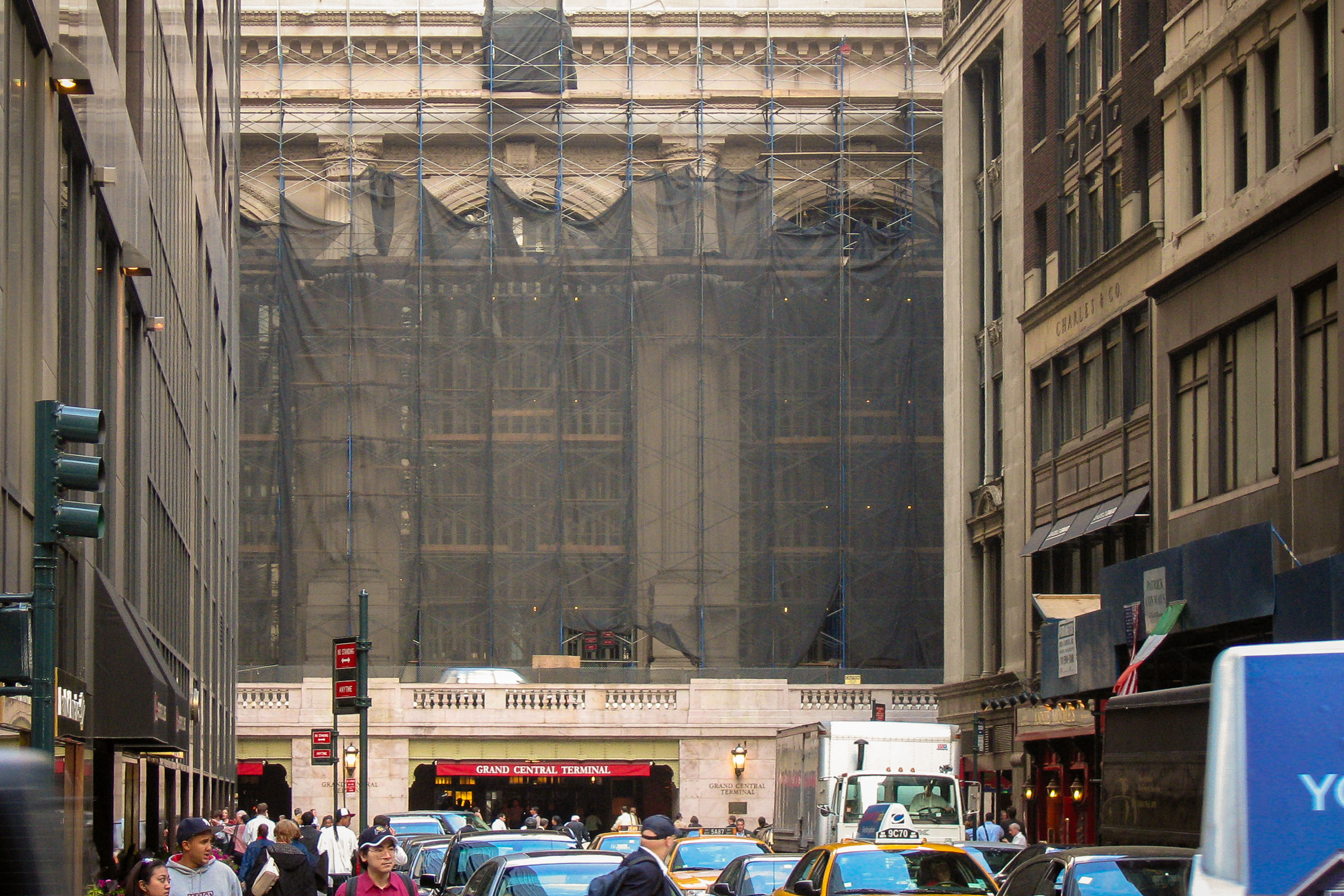
Grand Central Terminal's façade wrapped in construction scaffolding on Vanderbilt Avenue, Manhattan.
Grand Central Terminal opened in 1913 on 42nd Street, designed by the firms Reed & Stem and Warren & Wetmore. The Beaux-Arts building serves Metro-North Railroad commuter lines and sits above 48 tracks on two underground levels. Vanderbilt Avenue runs along the terminal's western side, named for the family whose New York Central Railroad built the original depot on the site in 1871. The terminal underwent a major restoration in the 1990s, and its exterior has periodically required scaffolding for ongoing stone and facade maintenance. It was designated a National Historic Landmark in 1976 after a Supreme Court case preserved it from demolition.
Scaffolding Shrouds Grand Central Terminal on Vanderbilt Avenue
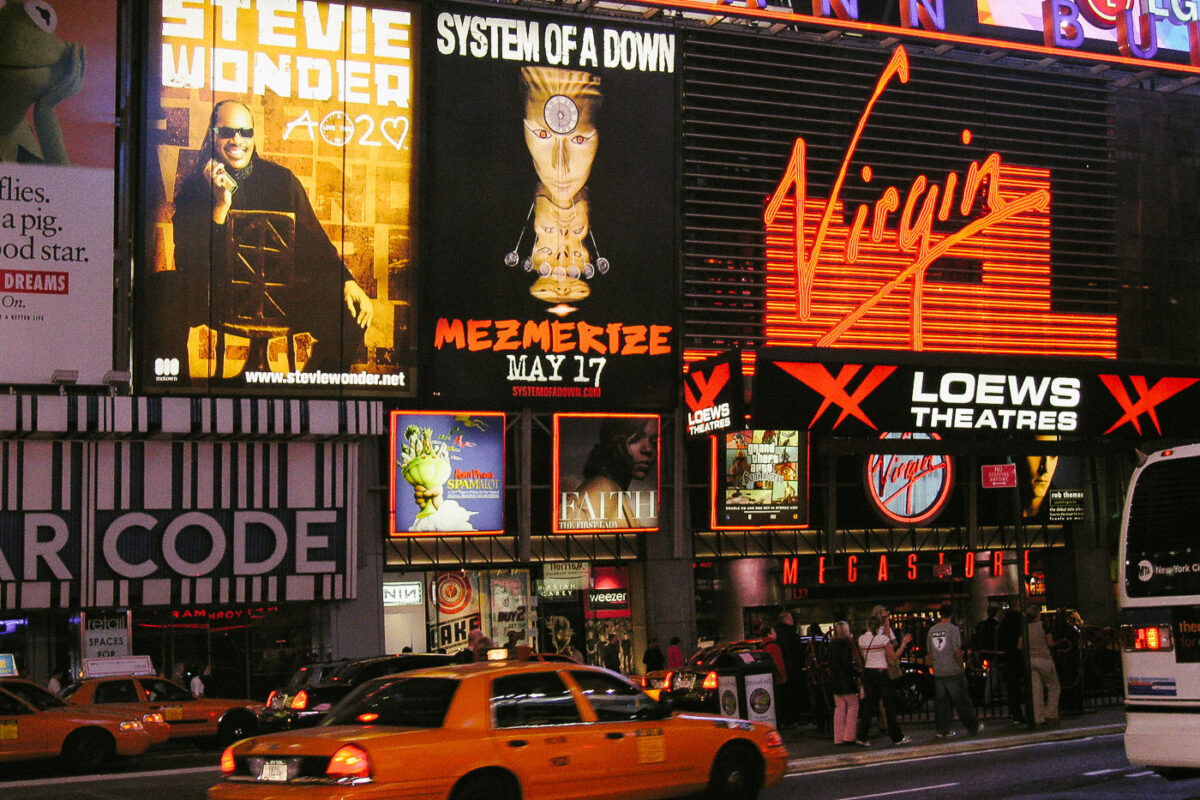
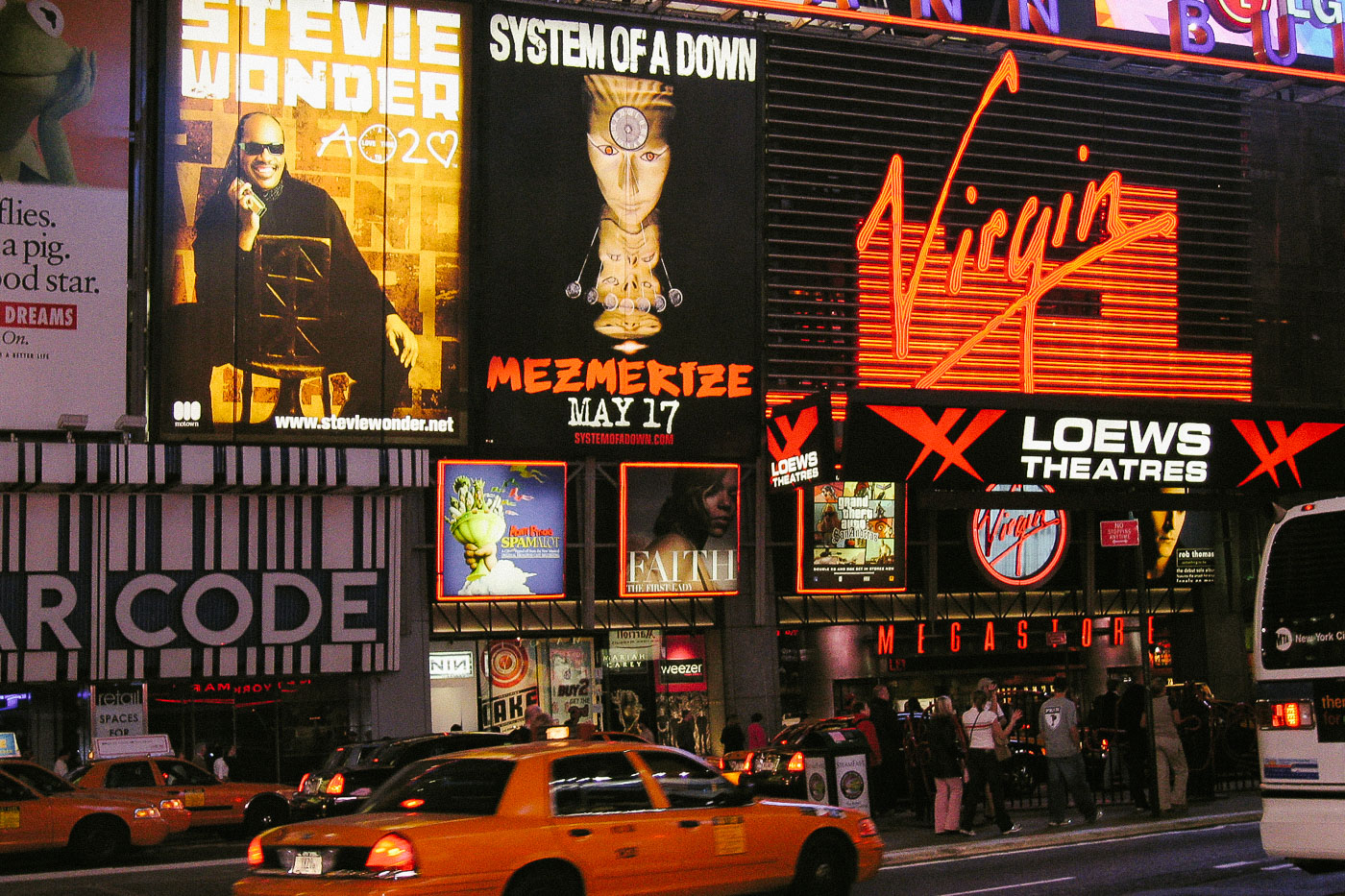
Times Square storefront displaying billboards for Stevie Wonder and System of a Down above Virgin Megastore and Loews Theatres.
The Virgin Megastore and Loews Theatres building stood on Broadway at Times Square in Manhattan, with billboards advertising Stevie Wonder and the System of a Down album "Mezmerize," released May 17, 2005. The Virgin Megastore here was one of the chain's flagship New York stores before Virgin closed its United States locations in 2009.

Stevie Wonder and System of a Down Billboards at Times Square

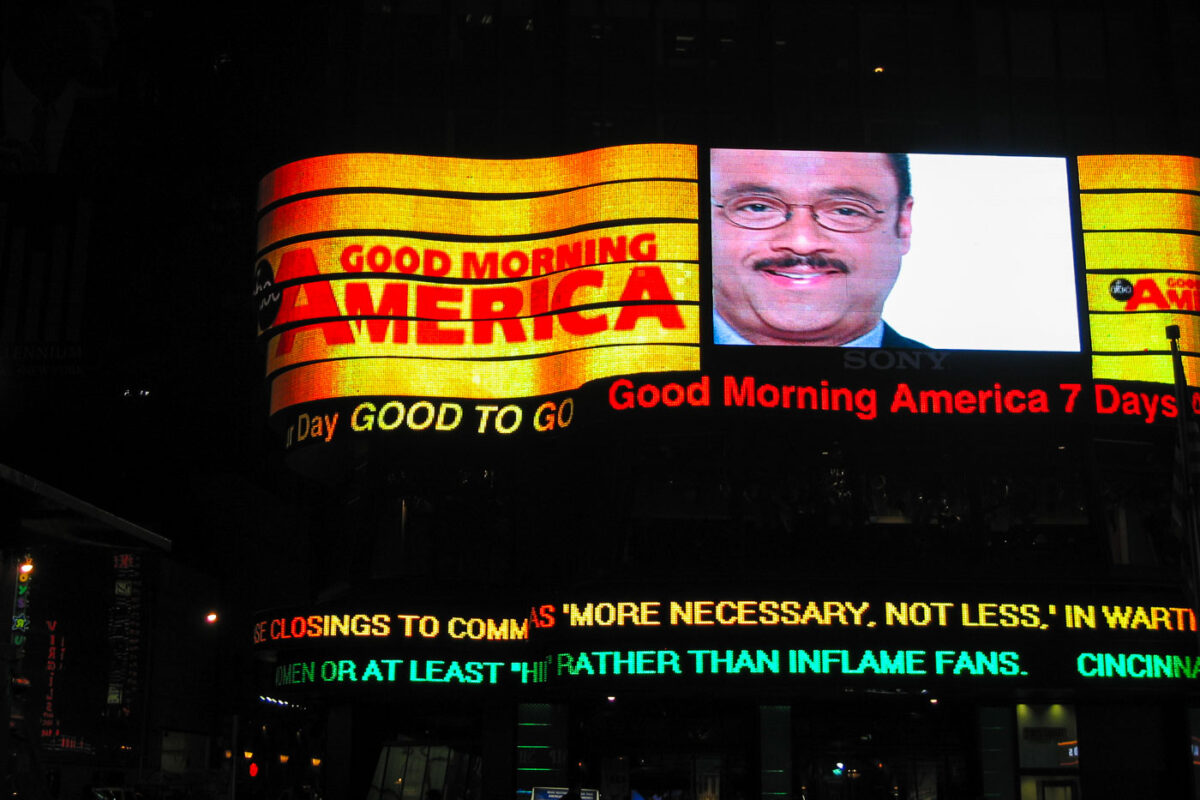
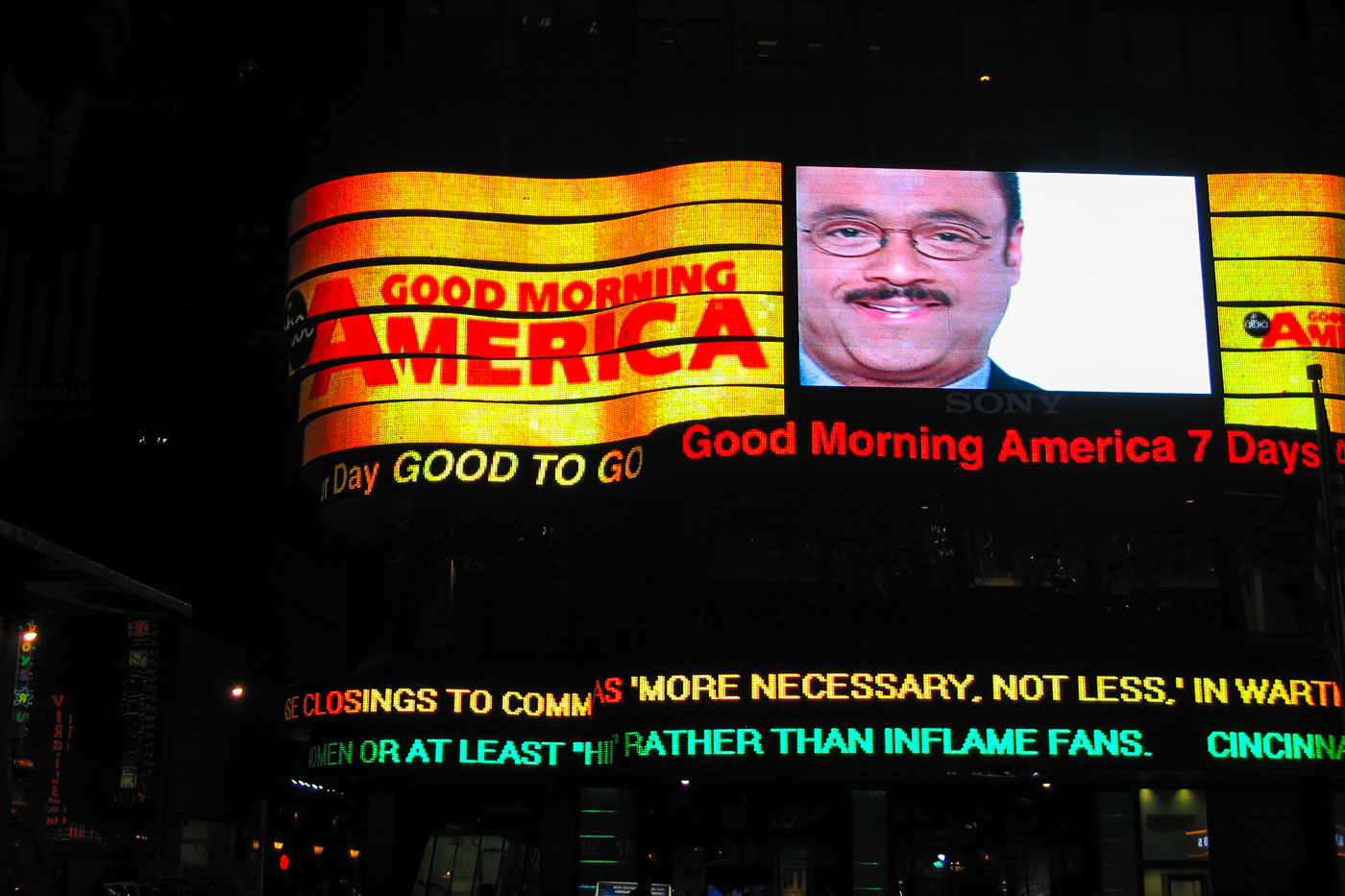
Good Morning America billboard displaying on-air talent on a curved Sony screen in Times Square, Manhattan.
A curved Sony video screen above Times Square in Manhattan displays "Good Morning America," ABC's morning news program. Below it, a ticker of news headlines scrolls across separate electronic signs on the same building.

A “Good Morning America” Sign Above Times Square

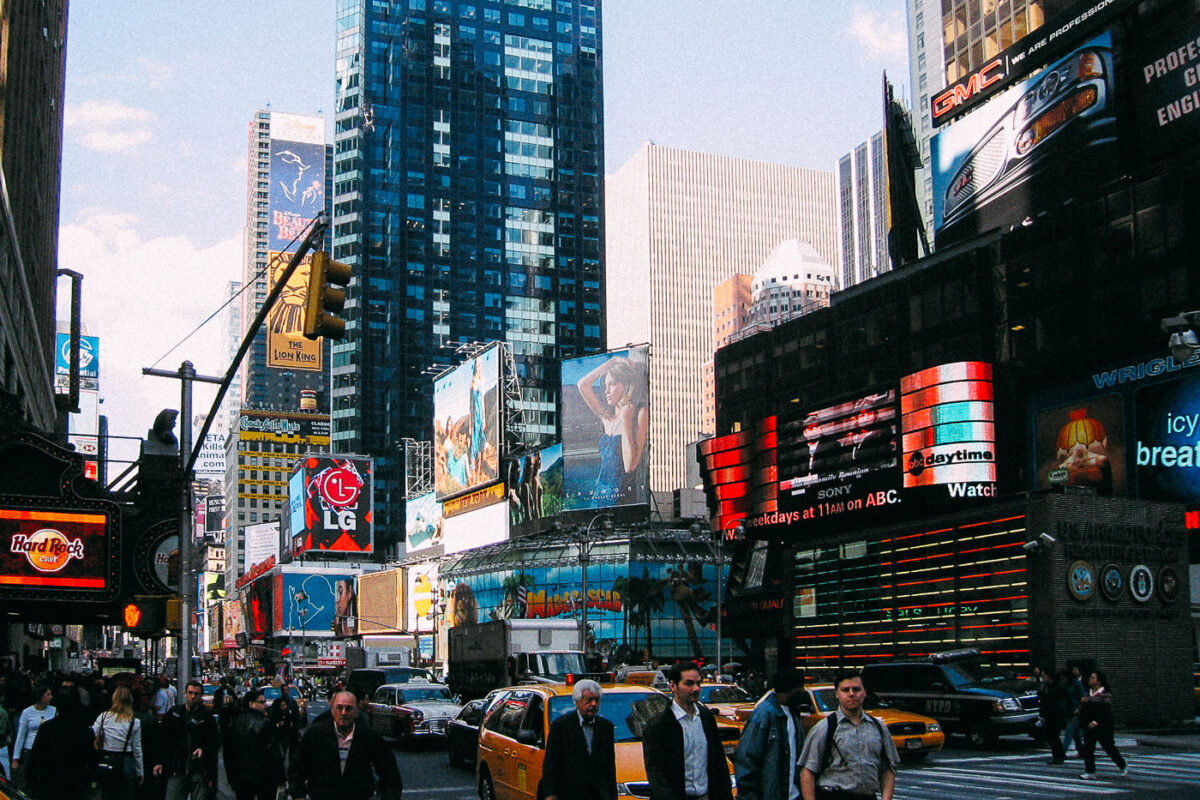
Yellow taxi cabs and pedestrians fill Times Square in Manhattan beneath commercial billboards advertising major brands.
Times Square, Manhattan, with yellow taxi cabs moving through the theater district beneath large commercial billboards.

Midtown Crowds and Taxis Beneath Times Square Billboards
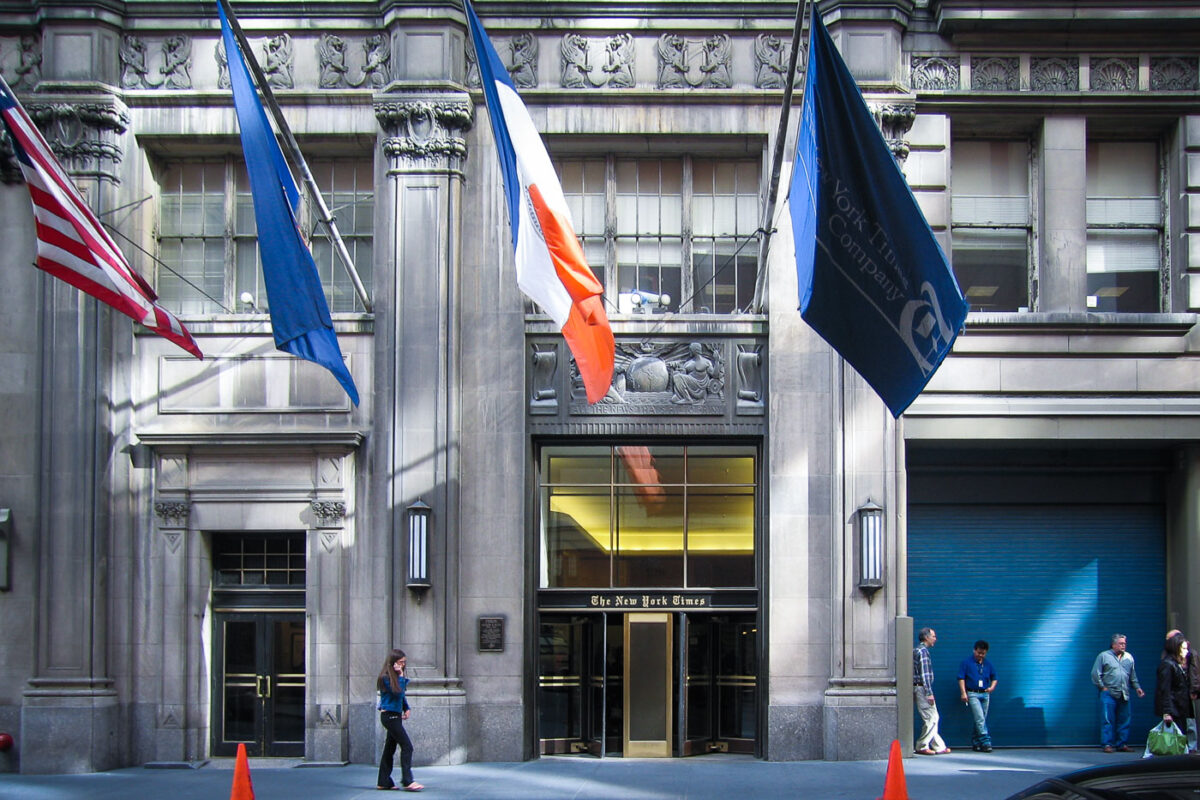
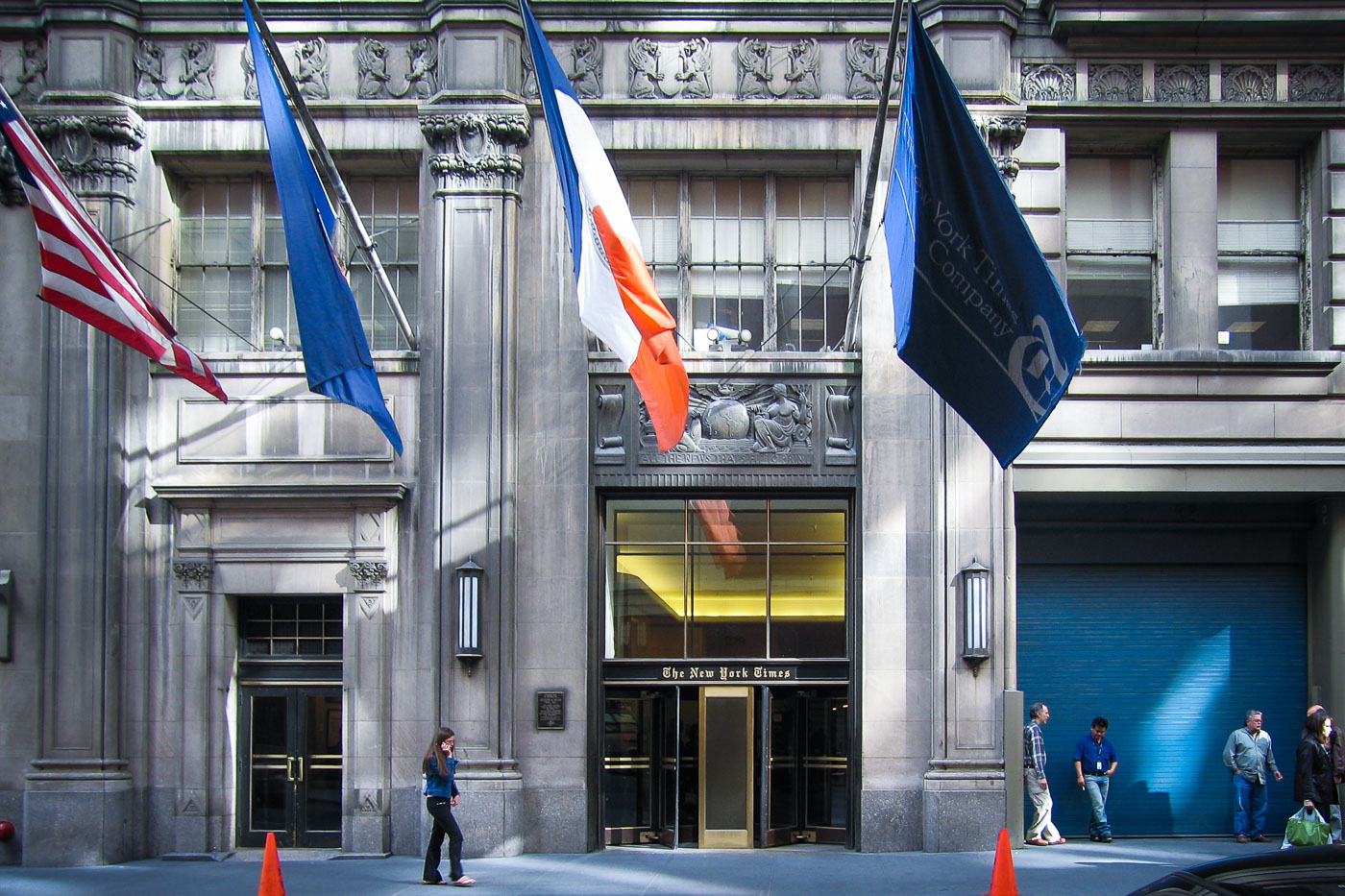
The New York Times headquarters entrance on West 43rd Street displays American, New York City, and company flags.
The New York Times headquarters entrance at 229 West 43rd Street in Manhattan. This building served as the newspaper's headquarters from 1913 to 2007 before the company moved to its new tower on Eighth Avenue.

Flags Flying Outside the Former New York Times Building