MTA

19 photos · 2008–2019

19 photographs tagged MTA, 2008–2019.

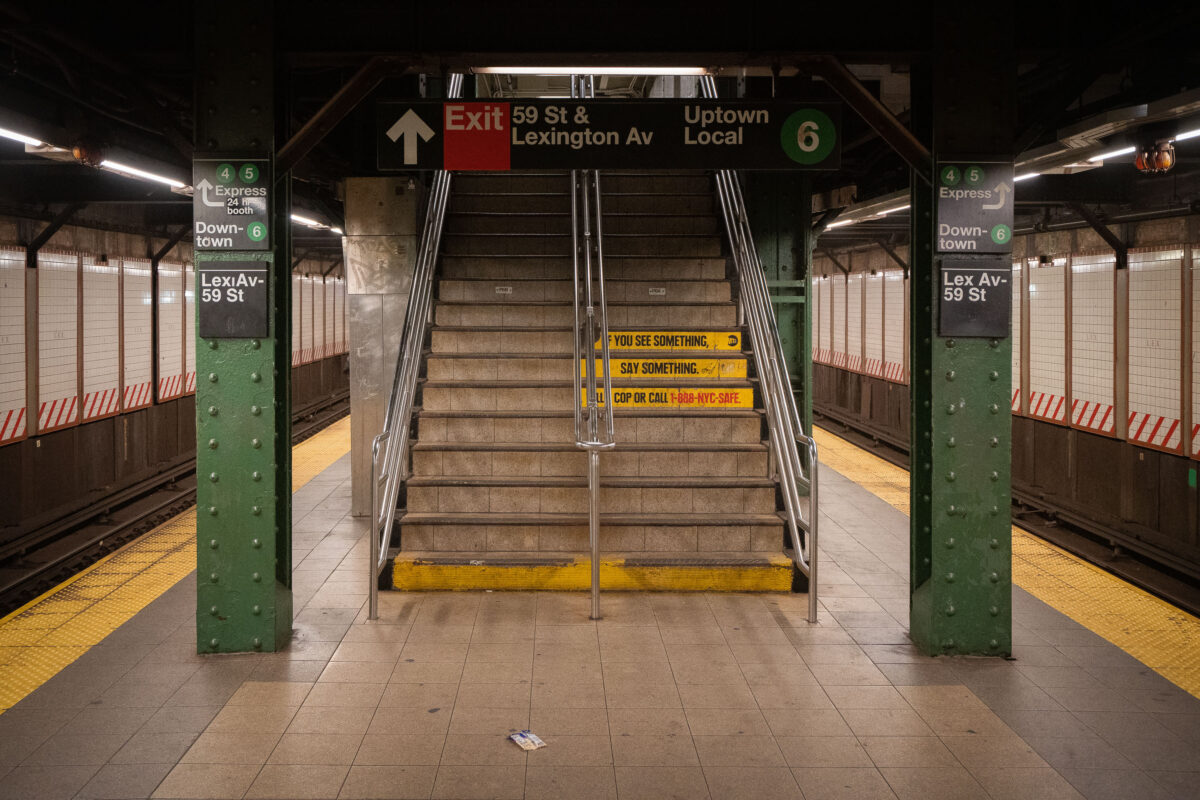
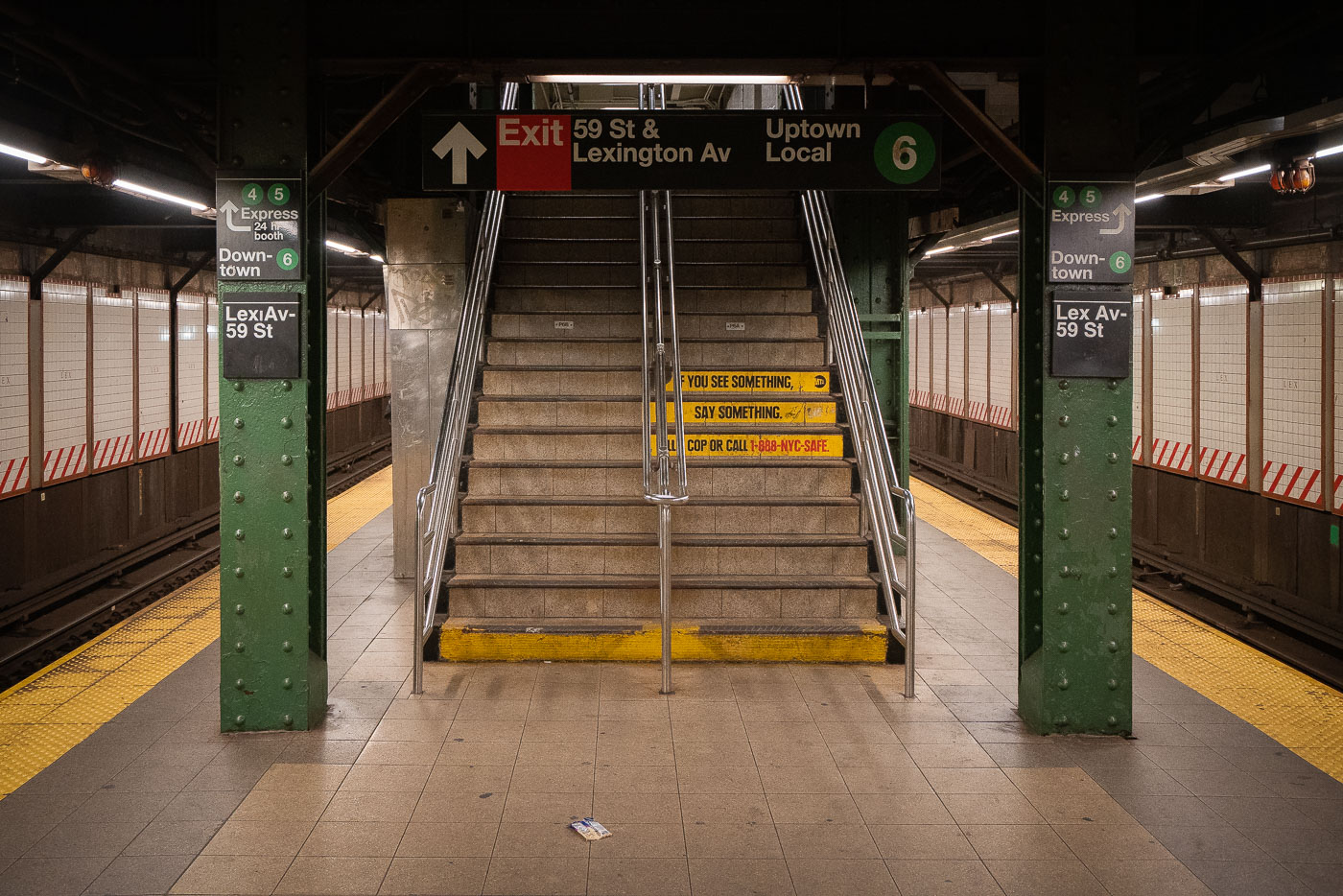
Stairway at Lexington Avenue-59th Street subway station with yellow safety signage and MTA directional signs.
Stairs lead up from the platform of the Lexington Avenue-59th Street subway station in New York City. Signage indicates "Exit 59 St & Lexington Av" and "Uptown Local 6," along with "4 5 Express" and "Downtown-6." The platform features yellow tactile paving and a sign reading "IF YOU SEE SOMETHING, SAY SOMETHING. COP OR CALL 1-888-NYC-SAFE."

Exit Stairs at the Lexington Ave-59 St Subway Station
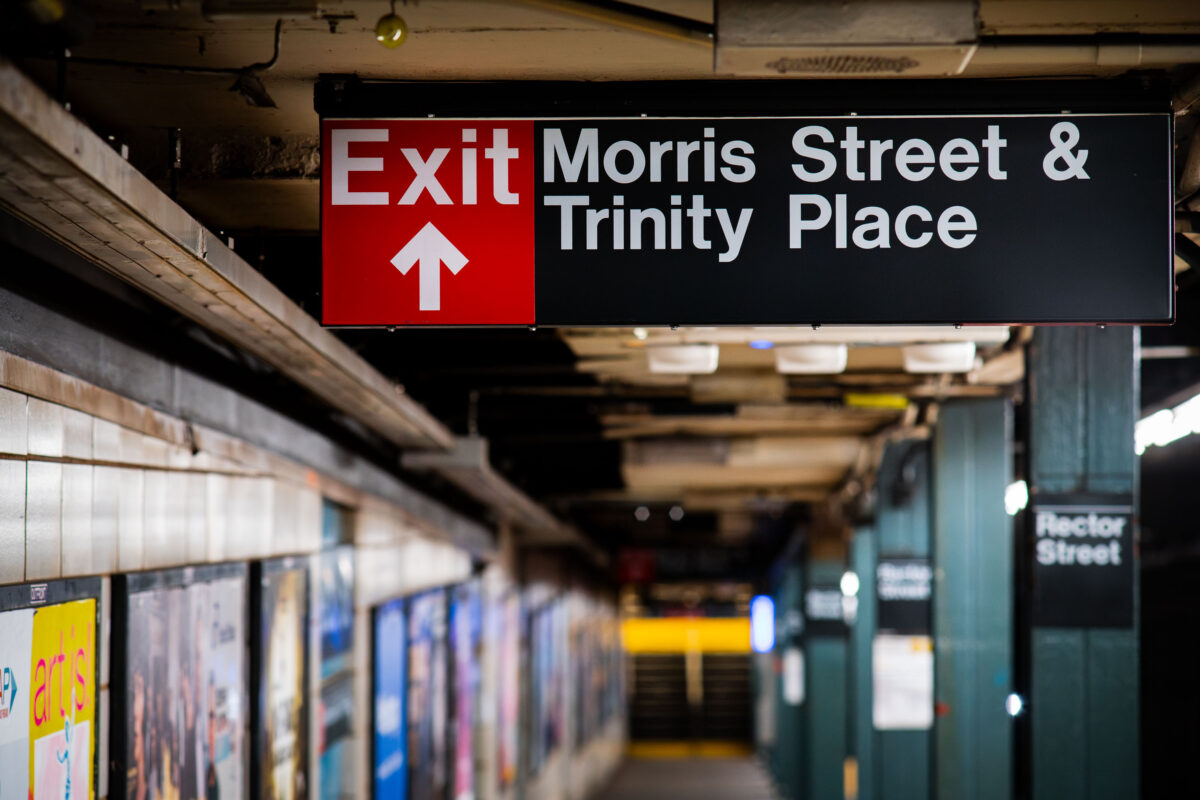
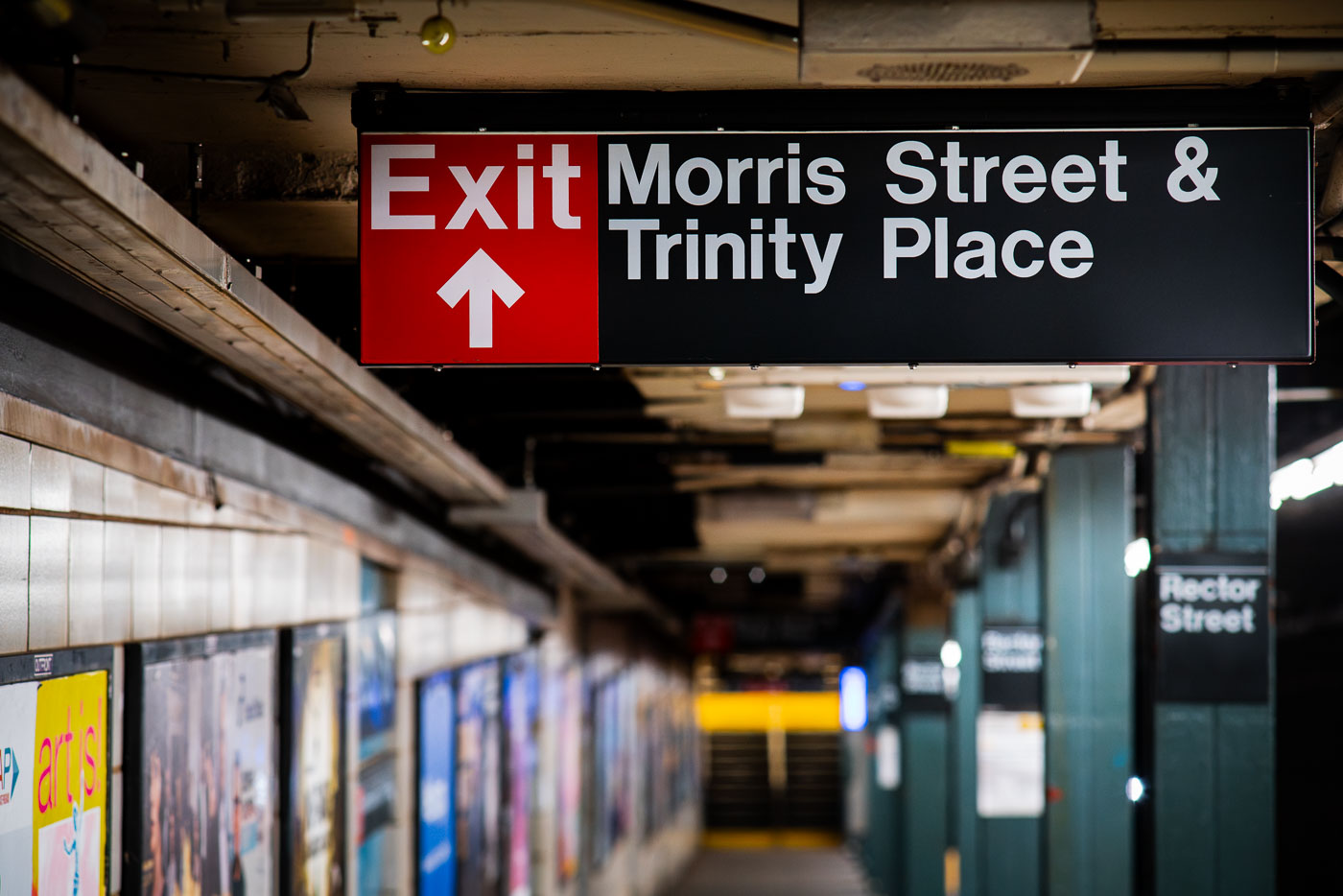
Exit sign at Rector Street subway station directing to Morris Street and Trinity Place in Manhattan.
Rector Street station serves the R train on the Broadway Line, running beneath Broadway in Lower Manhattan. It opened in 1904 as one of the original stations on the city's first subway line, built by the Interborough Rapid Transit Company. The station's exits connect riders to Trinity Place and Morris Street, placing it a short walk from Trinity Church and the New York Stock Exchange. Its platforms and mezzanines still carry much of the original tiling and signage typical of early IRT construction.

Exit Toward Morris Street and Trinity Place at Rector Street Station
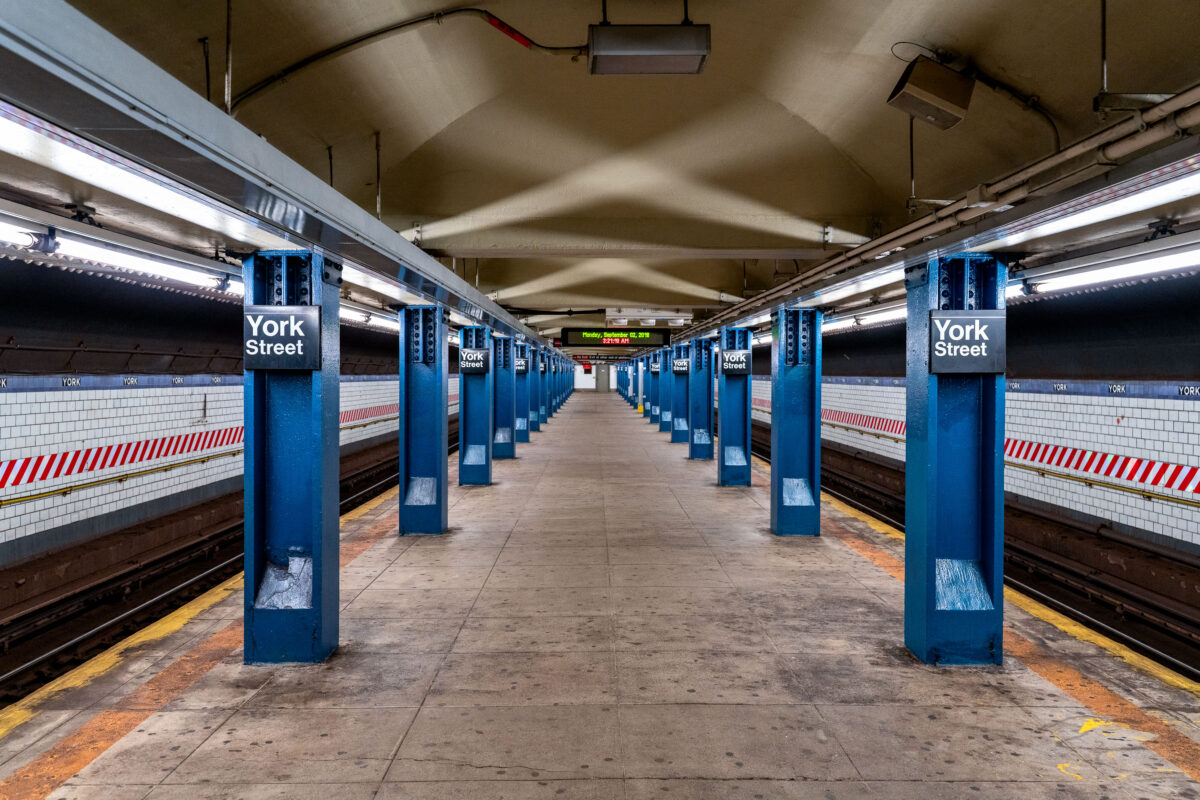
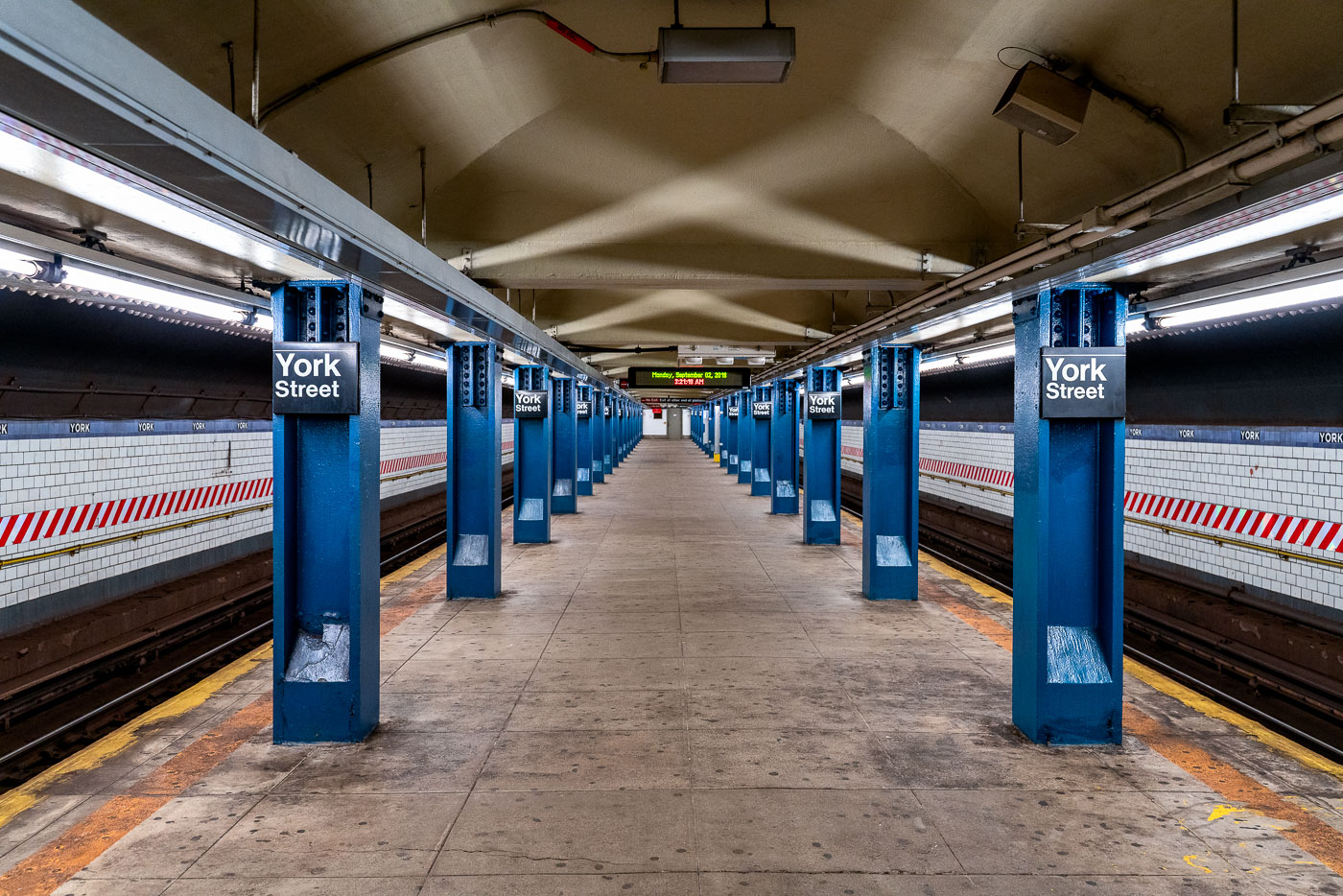
York Street subway station platform in Brooklyn with blue columns and fluorescent lighting.
The York Street subway station, located in the DUMBO neighborhood of Brooklyn, New York, serves the F and M trains. Opened in 1931, it is one of the deepest subway stations in the New York City Subway system.

Repeating Blue Columns Along the Platform at York Street Station
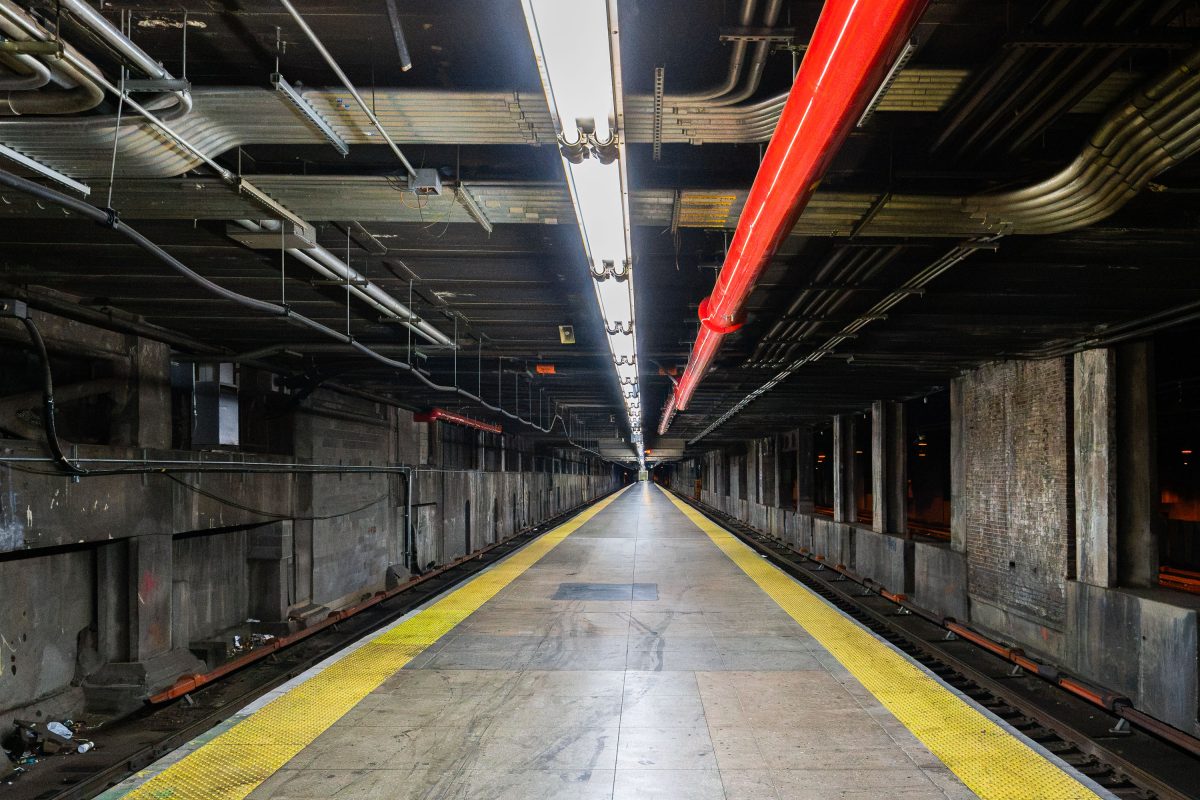
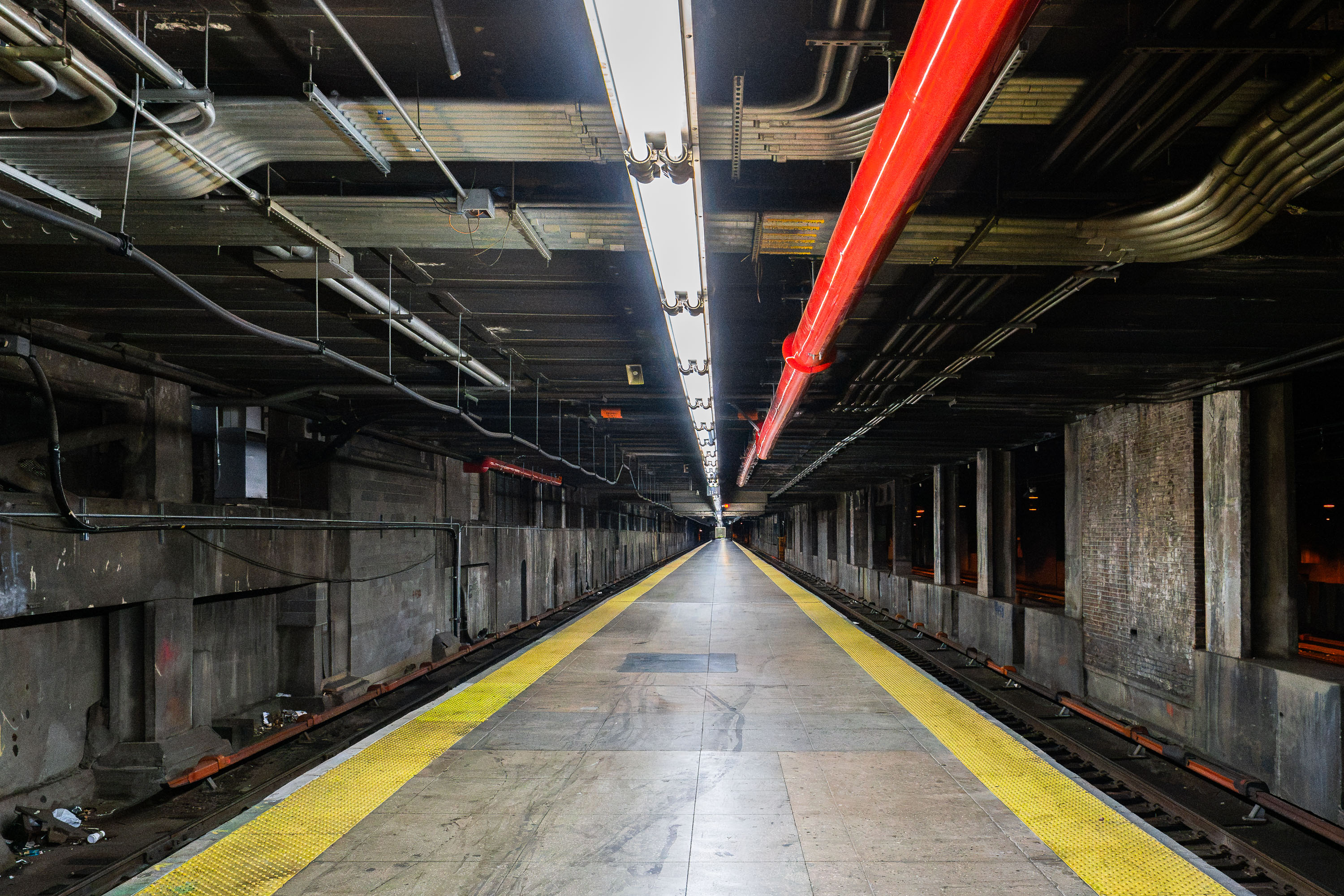
Empty subway platform at Grand Central–42nd Street Station in New York City with yellow safety lines and red overhead lighting.
Grand Central–42nd Street is one of the busiest stations in the New York City Subway system, serving the 4, 5, 6, and 7 trains along with the 42nd Street Shuttle to Times Square. The complex opened in stages beginning in 1904 as part of the original Interborough Rapid Transit Company line, the first subway built in New York City. It sits beneath Park Avenue and 42nd Street, adjacent to the Grand Central Terminal building operated by the Metropolitan Transportation Authority. The station's number 6 line platforms retain much of their early twentieth-century construction, including exposed steel columns and concrete platform edges dating to the original IRT build-out.

Empty Platform at Grand Central–42nd Street Subway Station
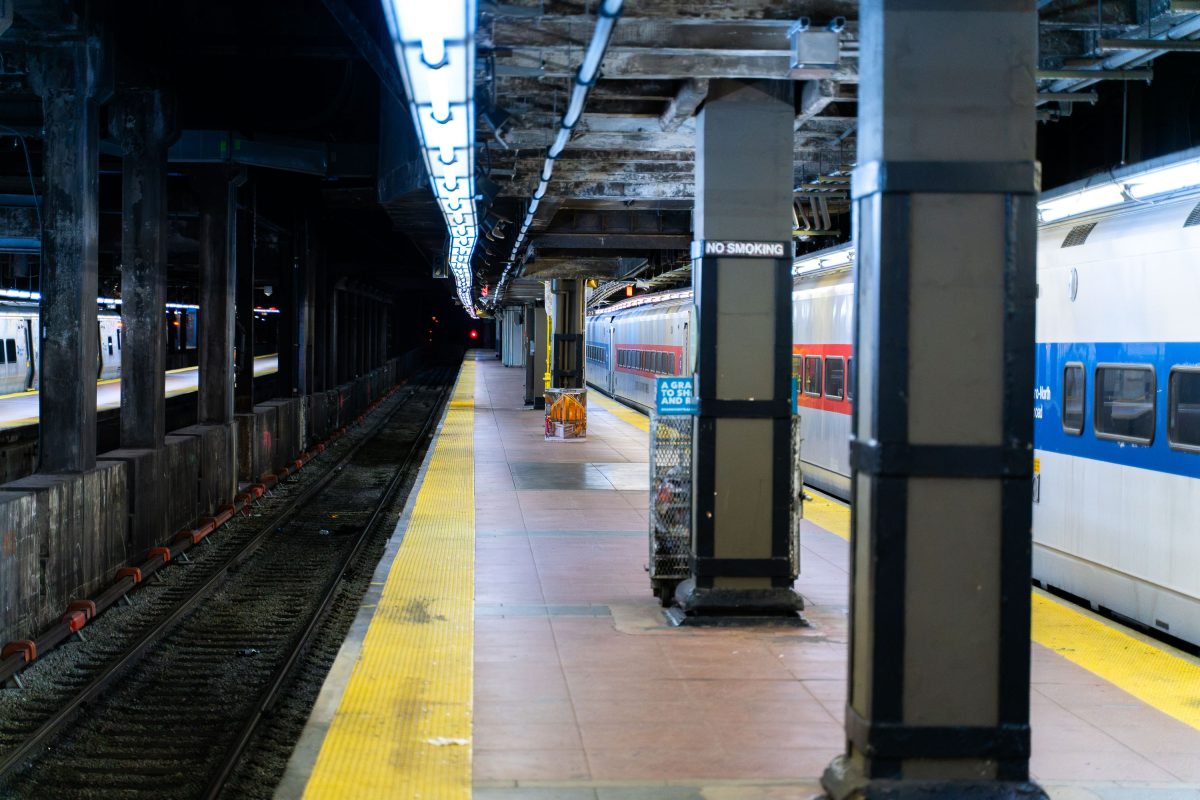
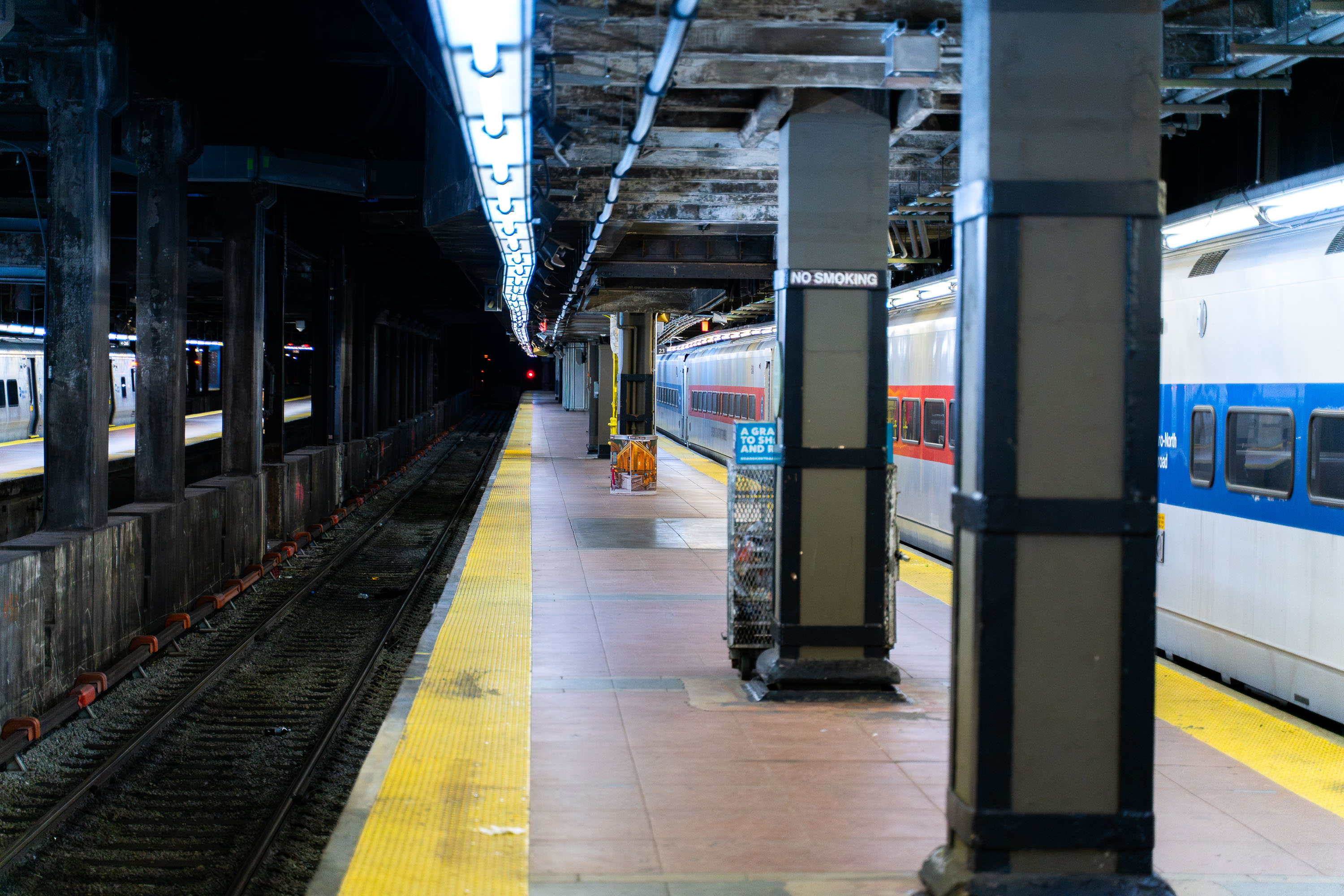
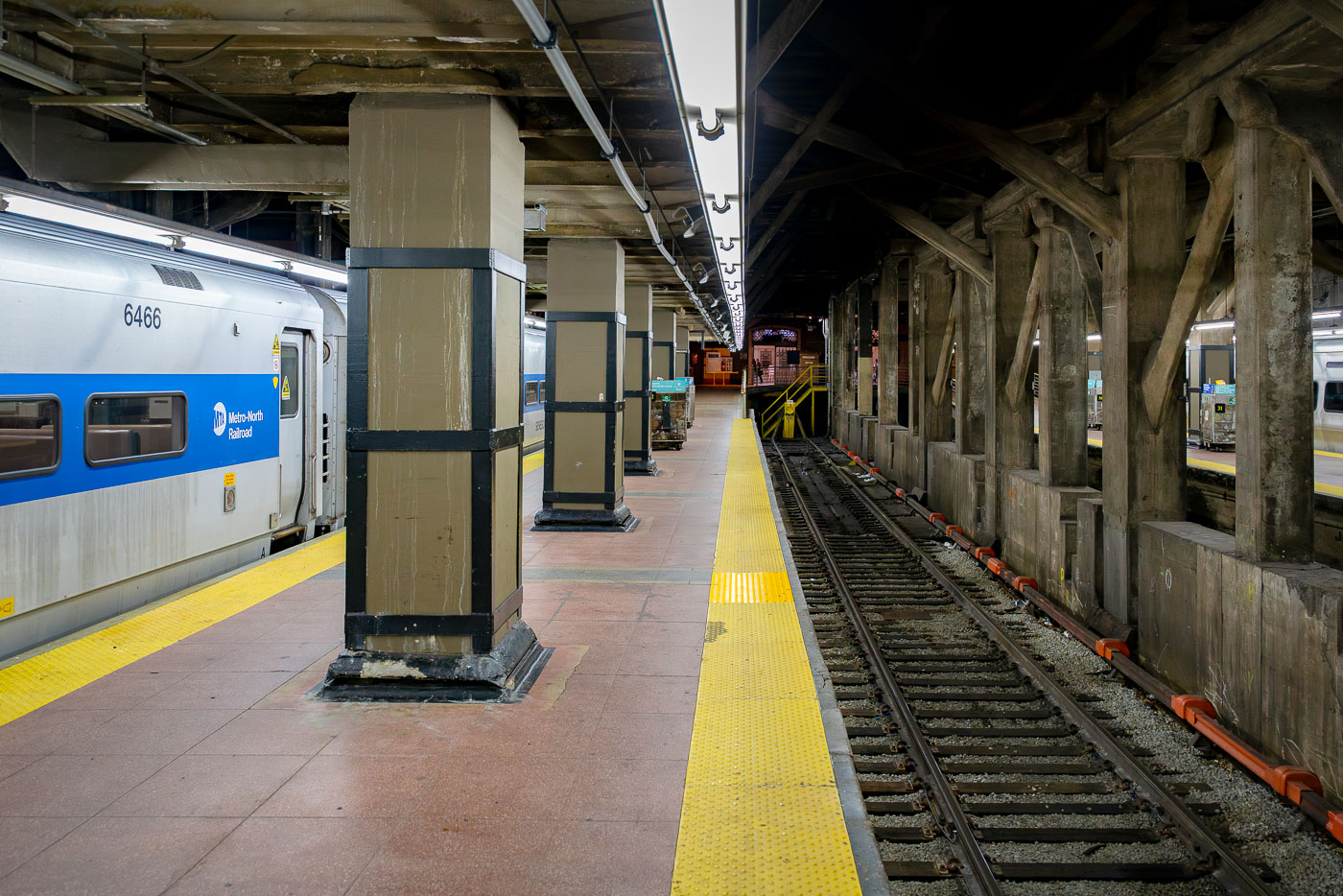
Metro-North Railroad platform at Grand Central Terminal in New York City with commuter trains at the station.
Grand Central Terminal opened in 1913 as the flagship station of the New York Central Railroad, replacing an earlier depot on the same site at 42nd Street and Park Avenue. Today the terminal serves as the southern terminus for the Metro-North Railroad, which operates commuter service on the Hudson, Harlem, and New Haven lines into the northern suburbs and Connecticut. The station's lower level, built to separate suburban and long-distance traffic, houses additional platforms below the main concourse. Metro-North alone carries tens of millions of passengers a year through the terminal, making it one of the busiest rail hubs in the country.

Empty Platform Below Grand Central Terminal’s Lower Level
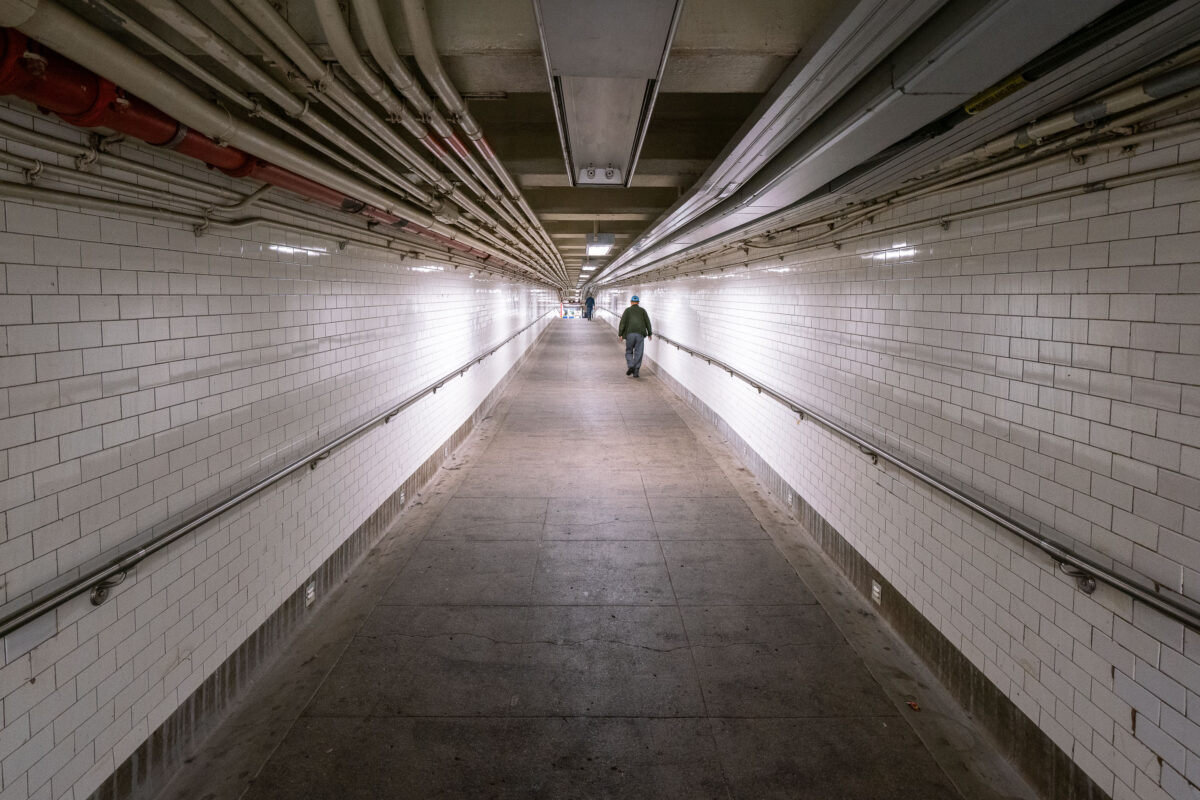
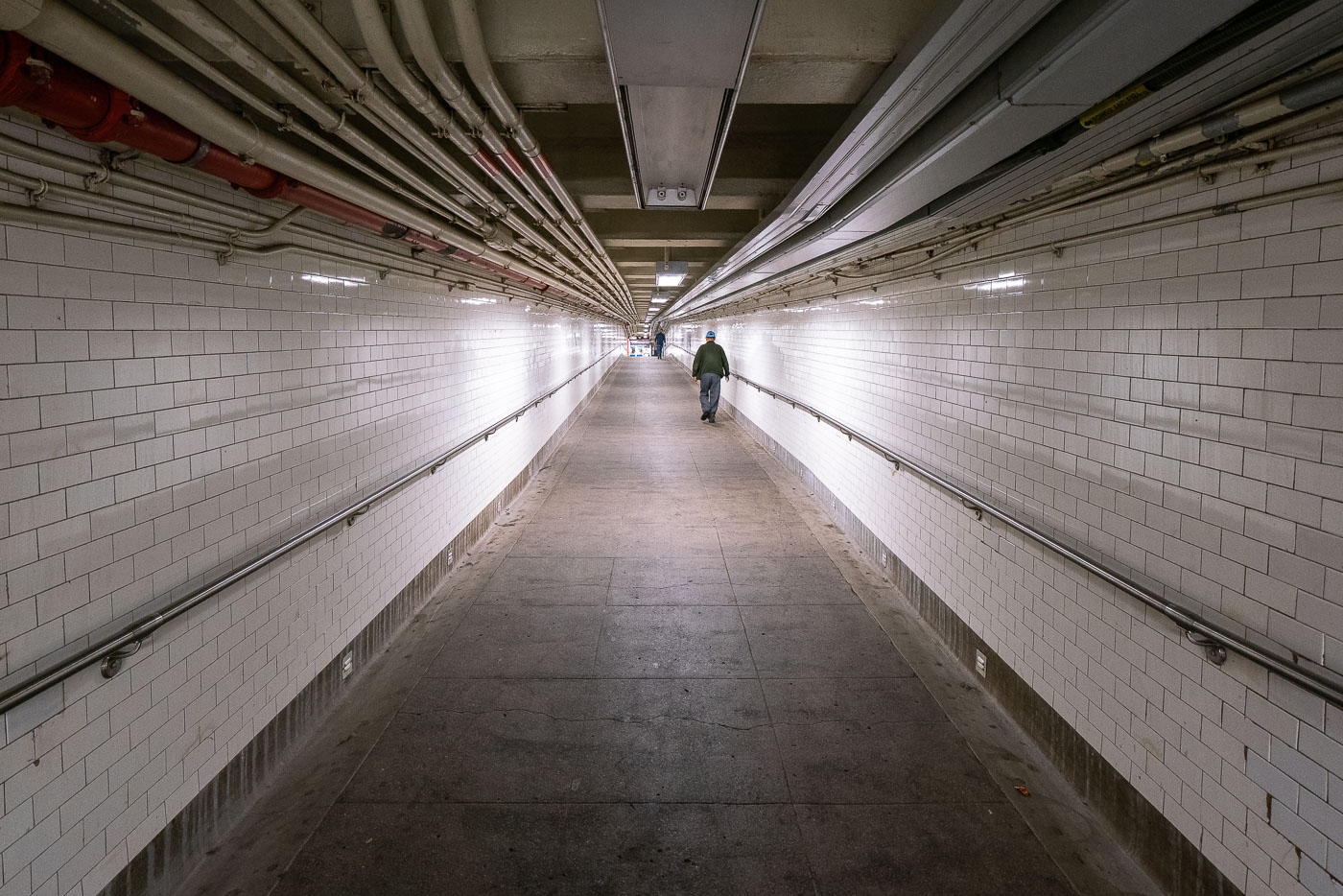
A solitary pedestrian walks through a white-tiled New York City subway tunnel with overhead pipes and conduits.
A lone figure walks through a long, tiled tunnel in the New York City Subway system, with numerous pipes and conduits visible overhead.

Lone Commuter in a Tiled Subway Passageway
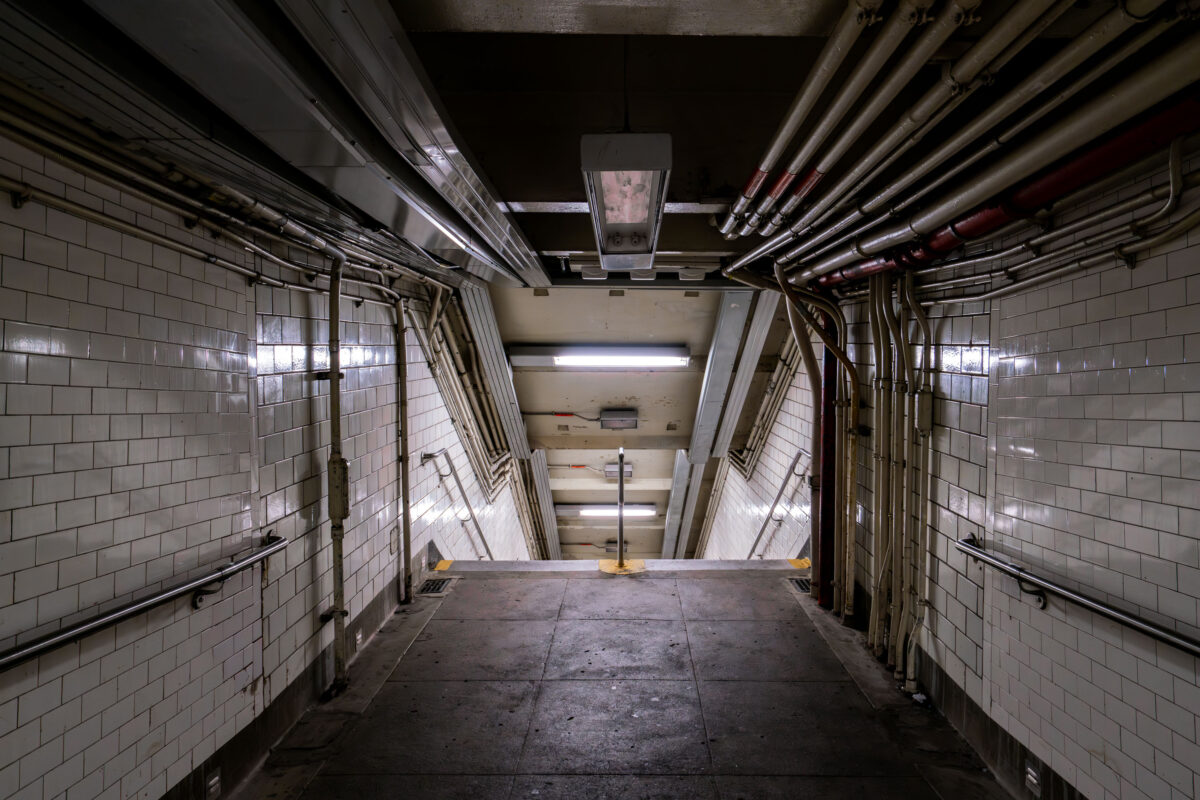
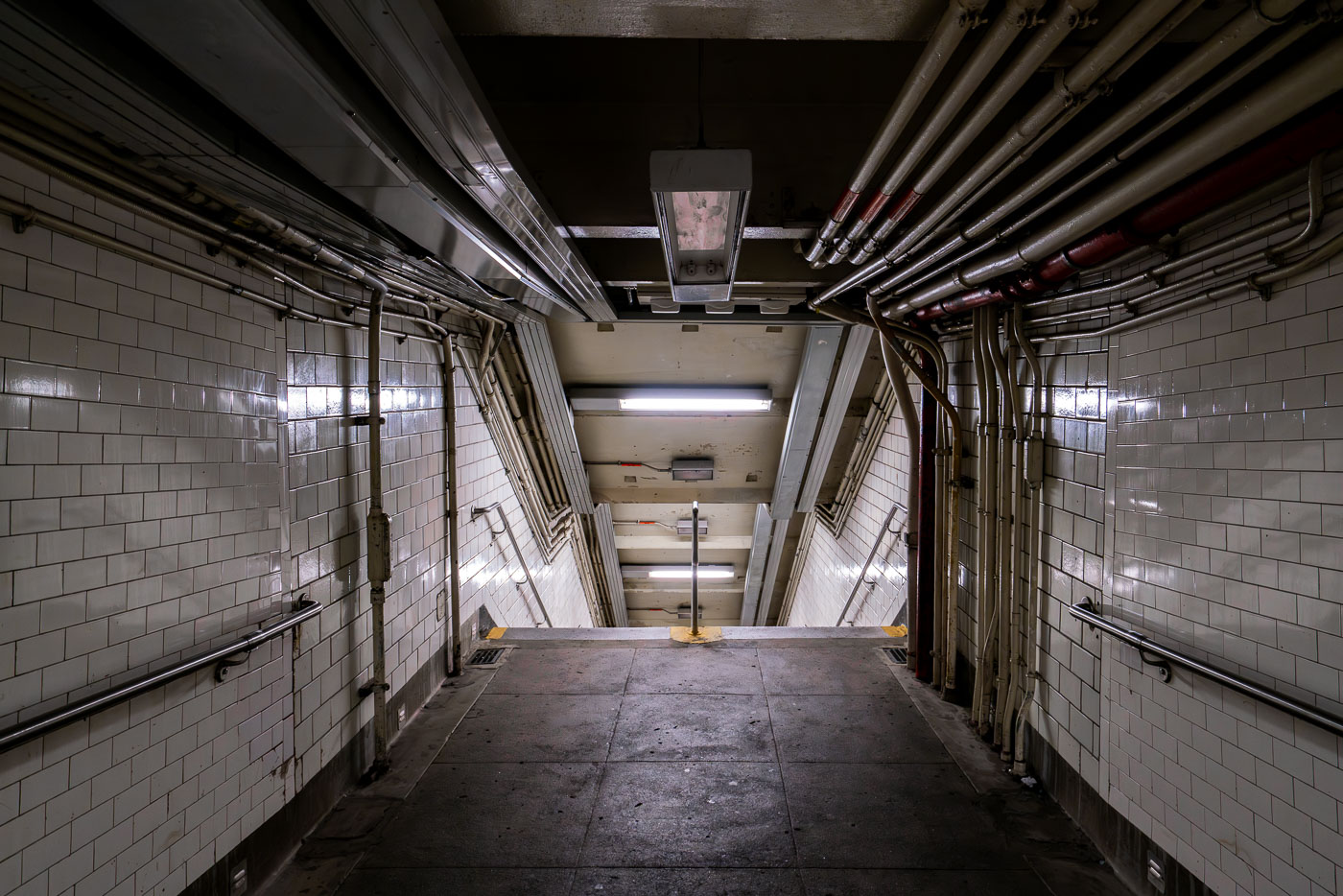
Descending stairway in a New York City subway station with white tile walls and exposed overhead piping.
A dimly lit stairway descends into a New York City subway station, revealing extensive exposed piping and tiled walls characteristic of aging transit infrastructure.

Tiled Stairwell and Overhead Pipes in an NYC Subway Passage
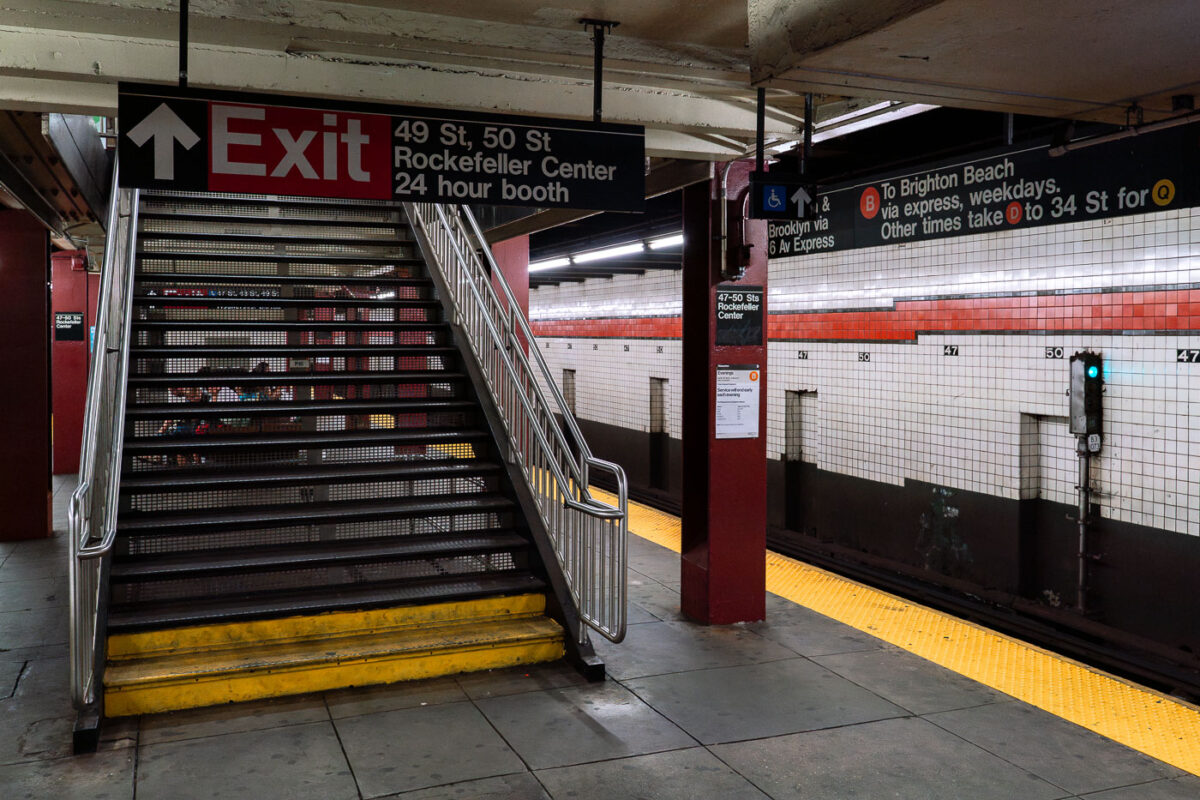
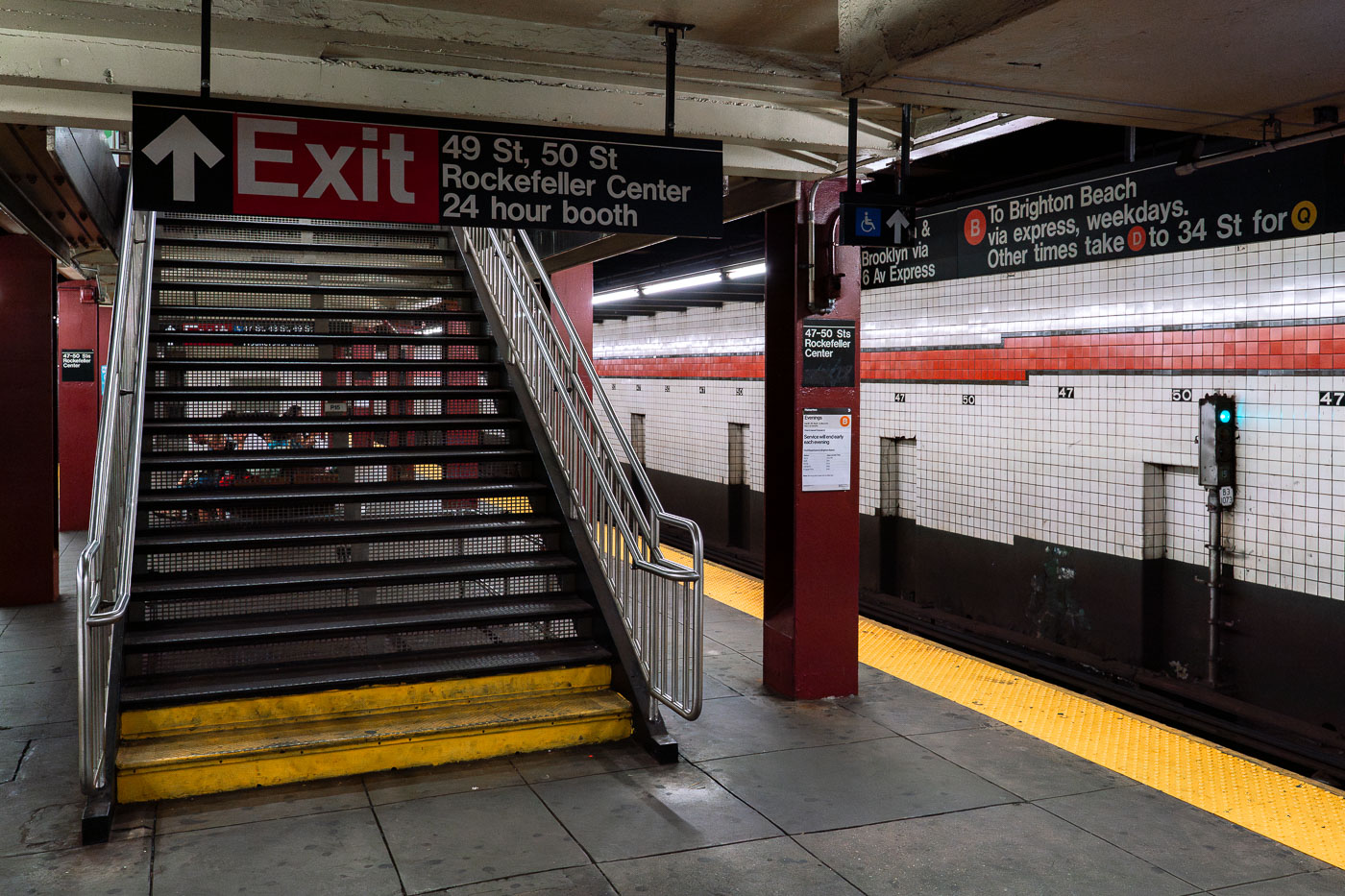
Exit staircase at 49-50 Streets Rockefeller Center subway station in Manhattan.
A staircase with metal railings and yellow-striped steps leads to an "Exit" sign for the 49-50 Streets Rockefeller Center subway station, which includes a 24-hour booth. The station serves the B, D, F, and M lines, with signage indicating routes to Brighton Beach and 34th Street.

Platform View of the 47-50 Sts Rockefeller Center Subway Station
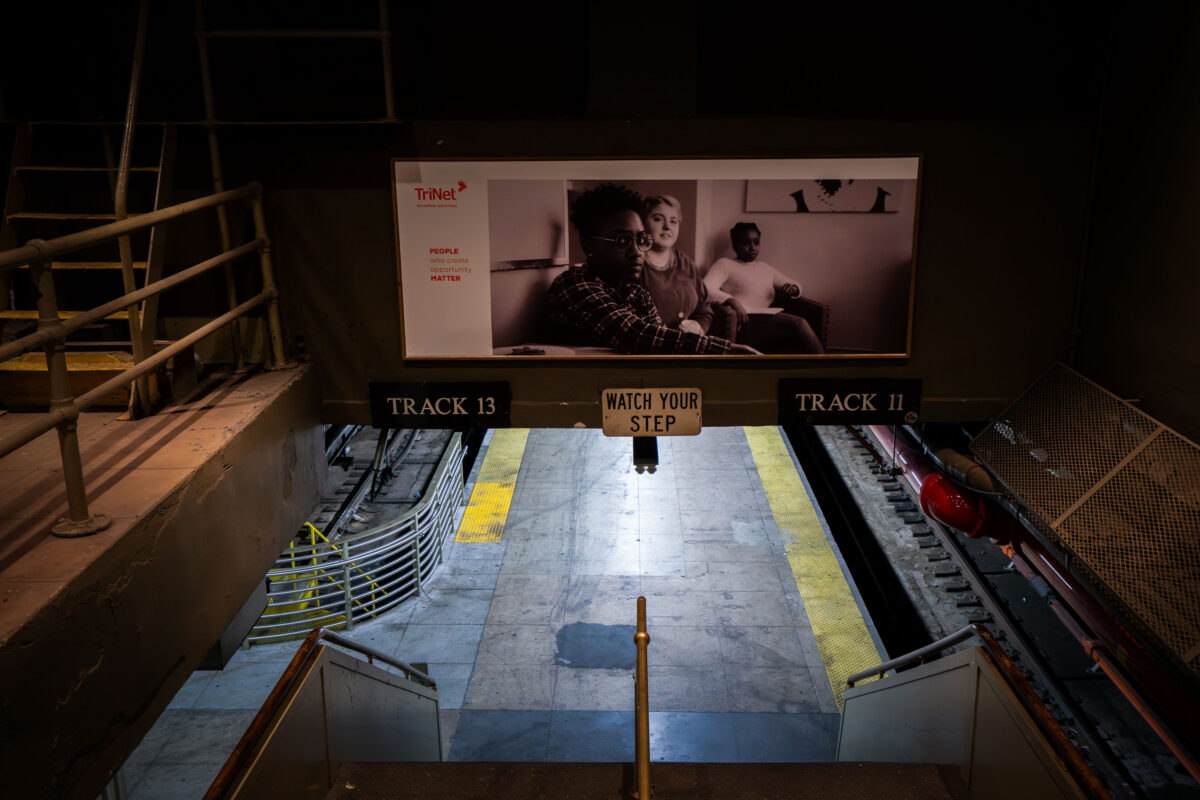
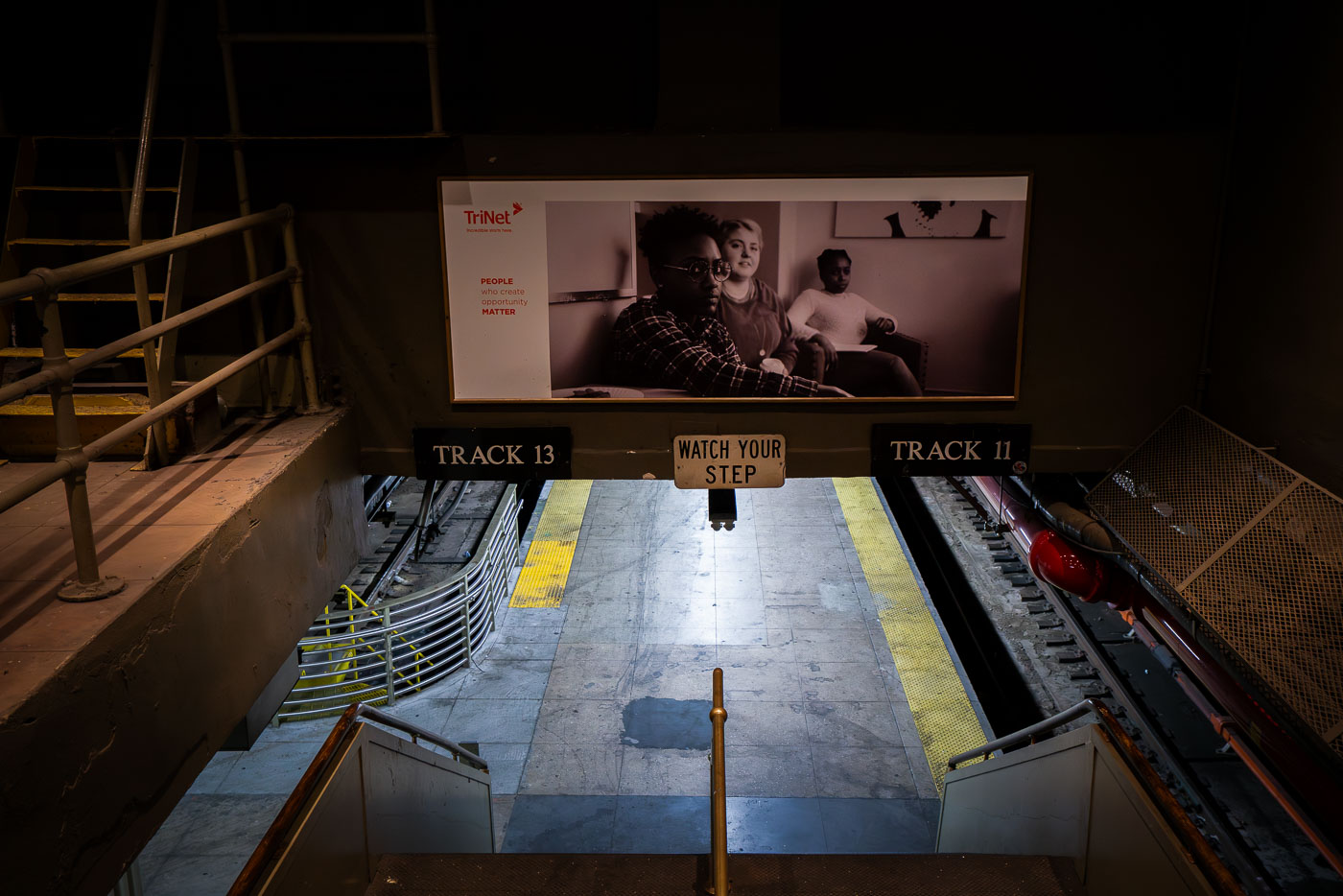
Penn Station platform between Tracks 11 and 13 with TriNet advertisement screen above.
A stairway leads down to the train platforms for Tracks 11 and 13 at Penn Station in Manhattan.

Stairway Down to Tracks 11 and 13 at Penn Station
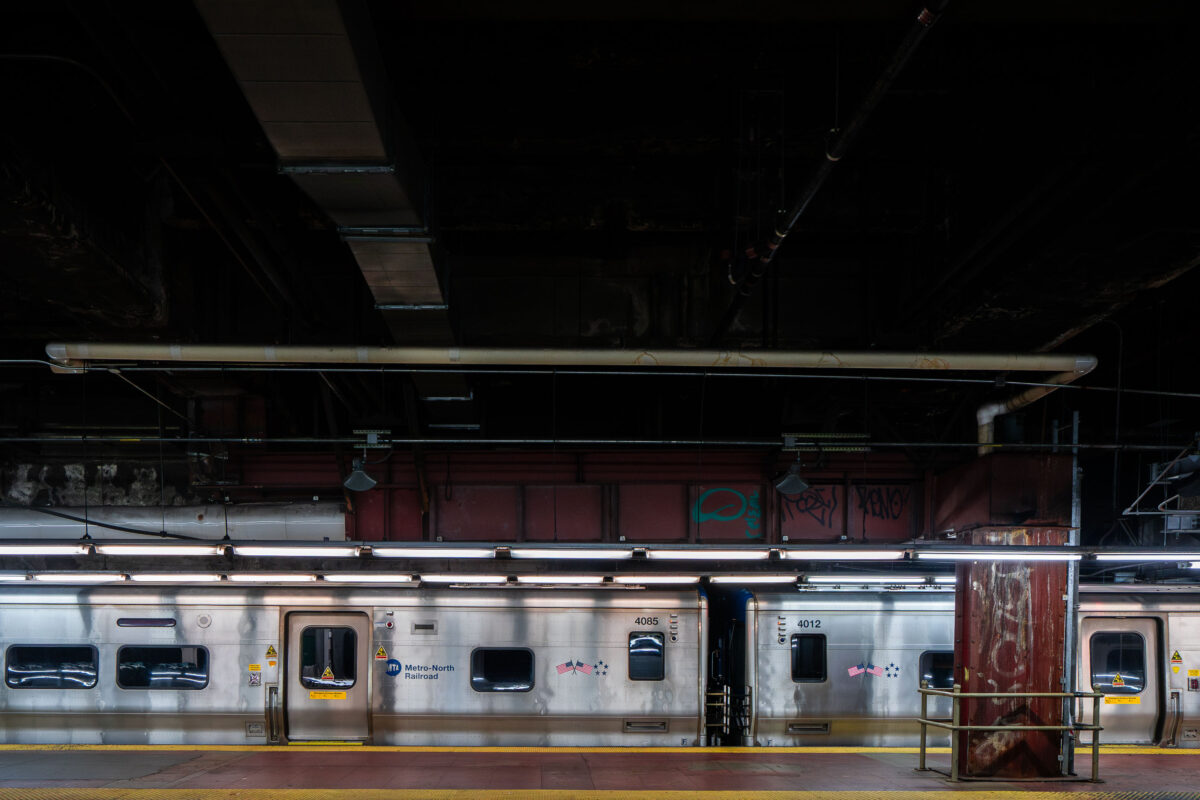
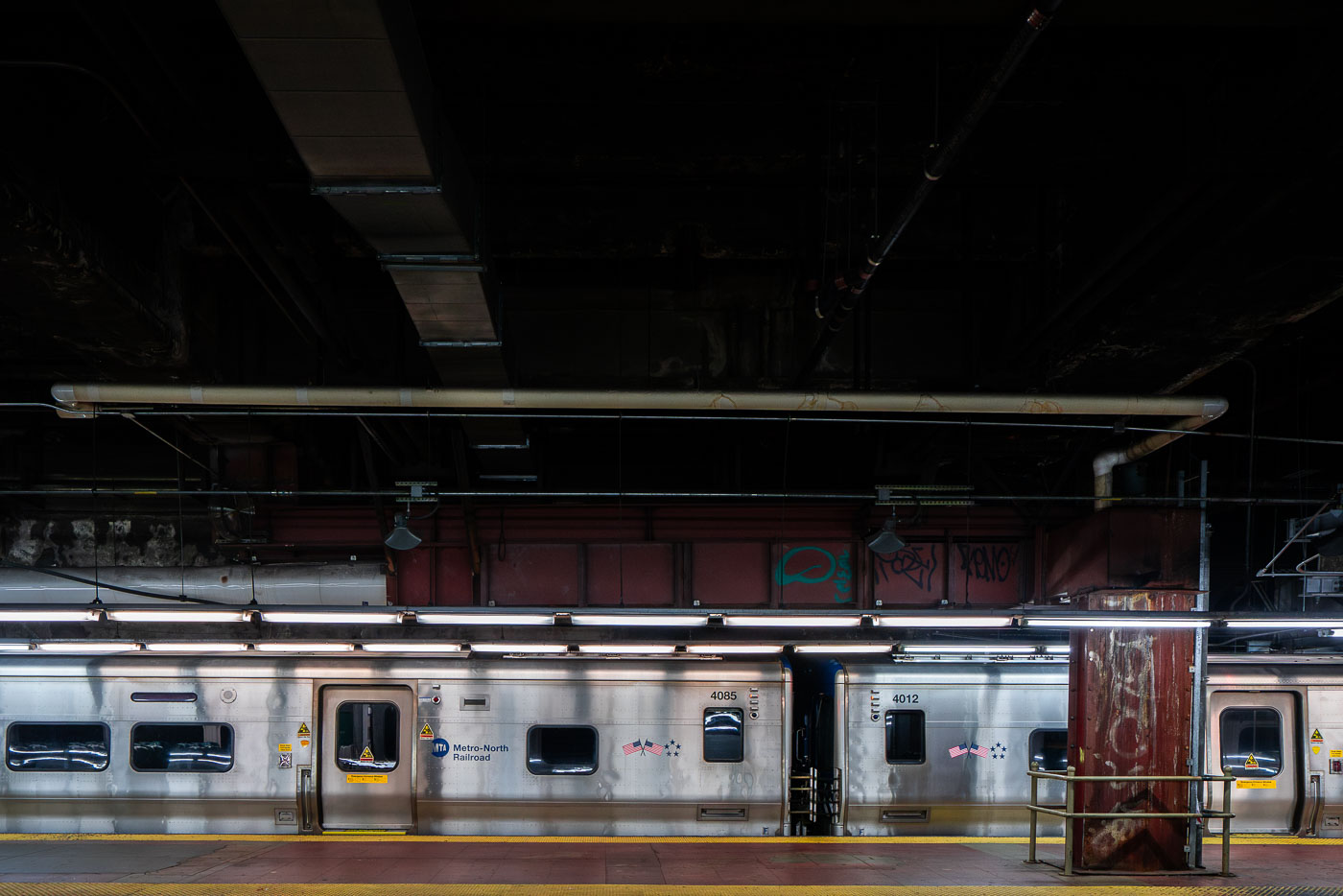
Metro-North Railroad commuter train at Grand Central Terminal platform in Manhattan.
A Metro-North Railroad train sits at a platform inside Grand Central Terminal in Manhattan. The stainless-steel cars reflect the dim lighting of the underground station, where exposed pipes and graffiti-marked beams highlight the aging infrastructure of the busy commuter hub.

Metro-North Railcars on the Platform, Grand Central Terminal
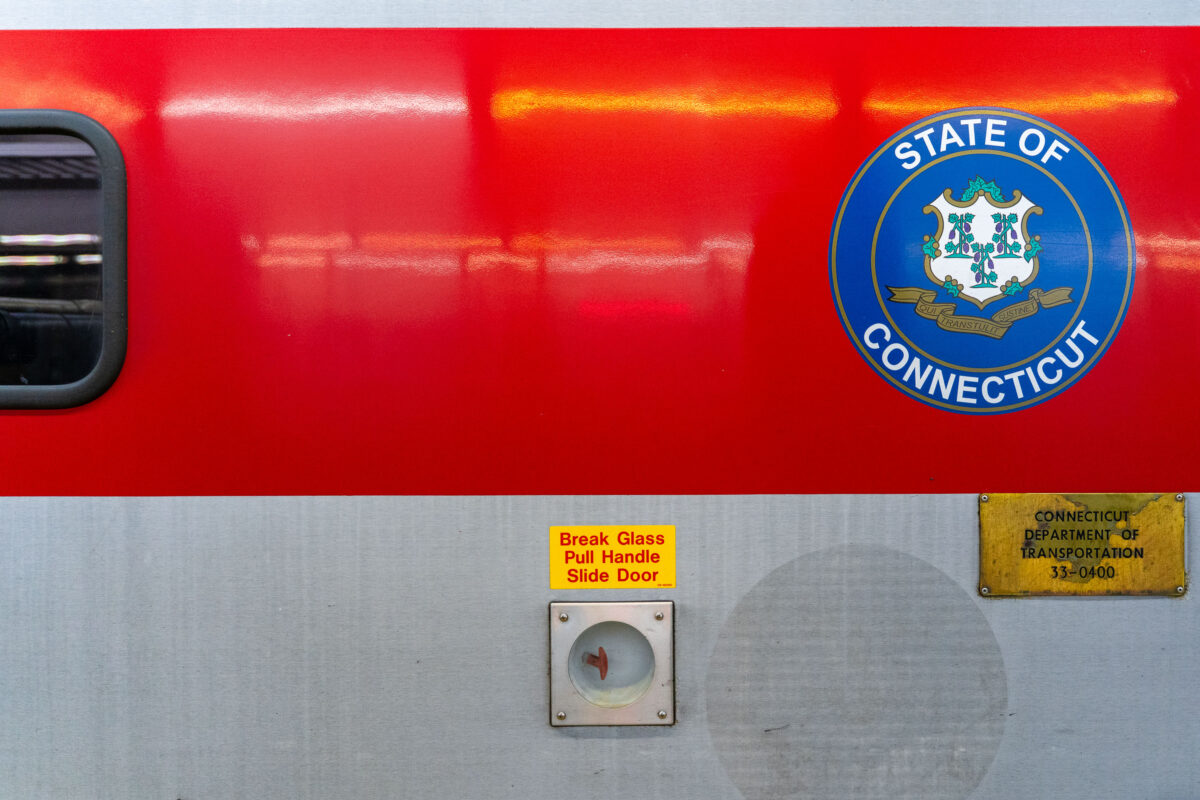
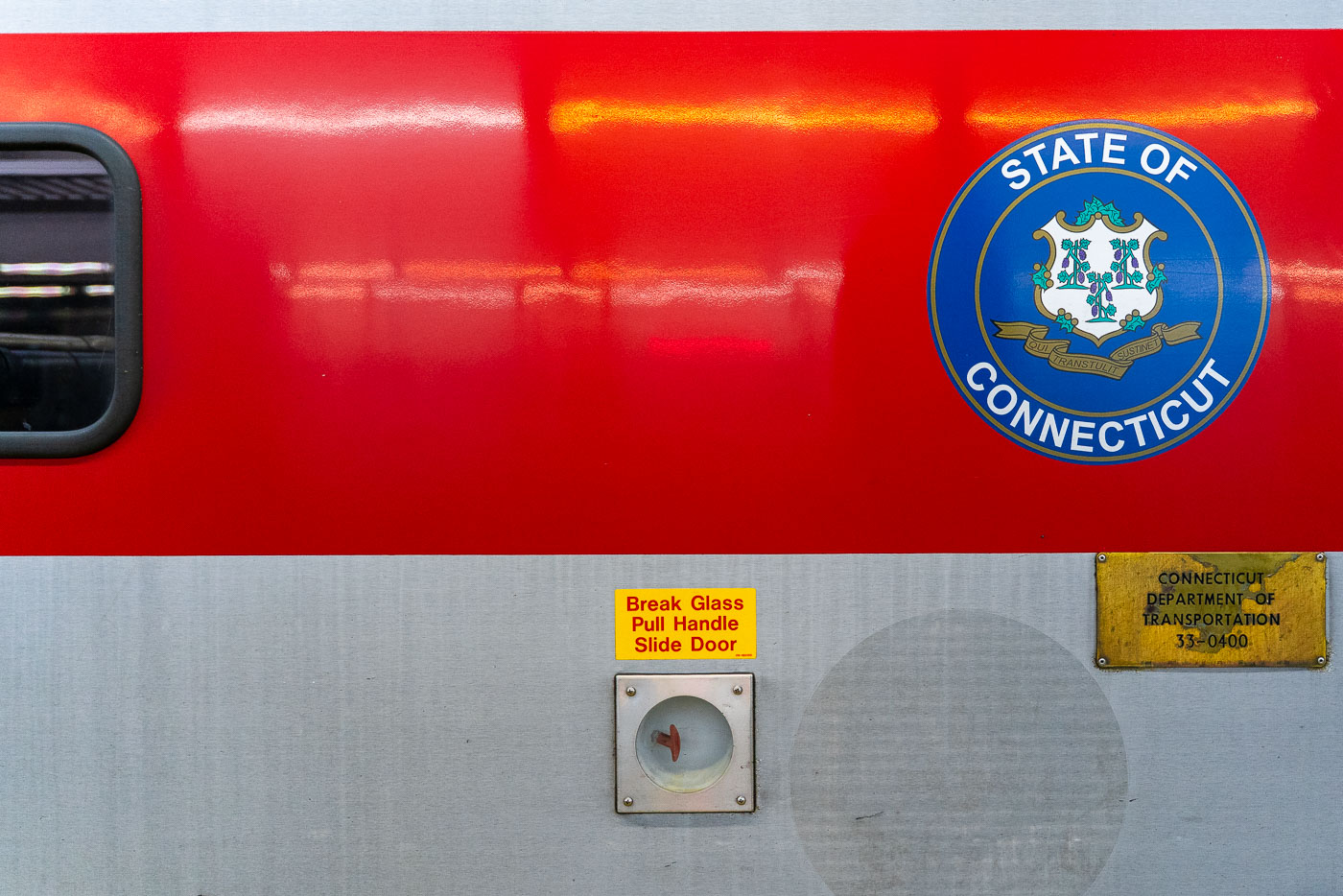
State of Connecticut seal displayed on the side of a red Metro-North Railroad commuter train car.
A Connecticut state seal is displayed on the side of a Metro-North Railroad train car, operated in partnership with the Connecticut Department of Transportation. The red-and-silver exterior includes safety instructions and signage, highlighting the regional rail system that connects commuters between New York and Connecticut.

Connecticut DOT Seal on a Metro-North Railcar
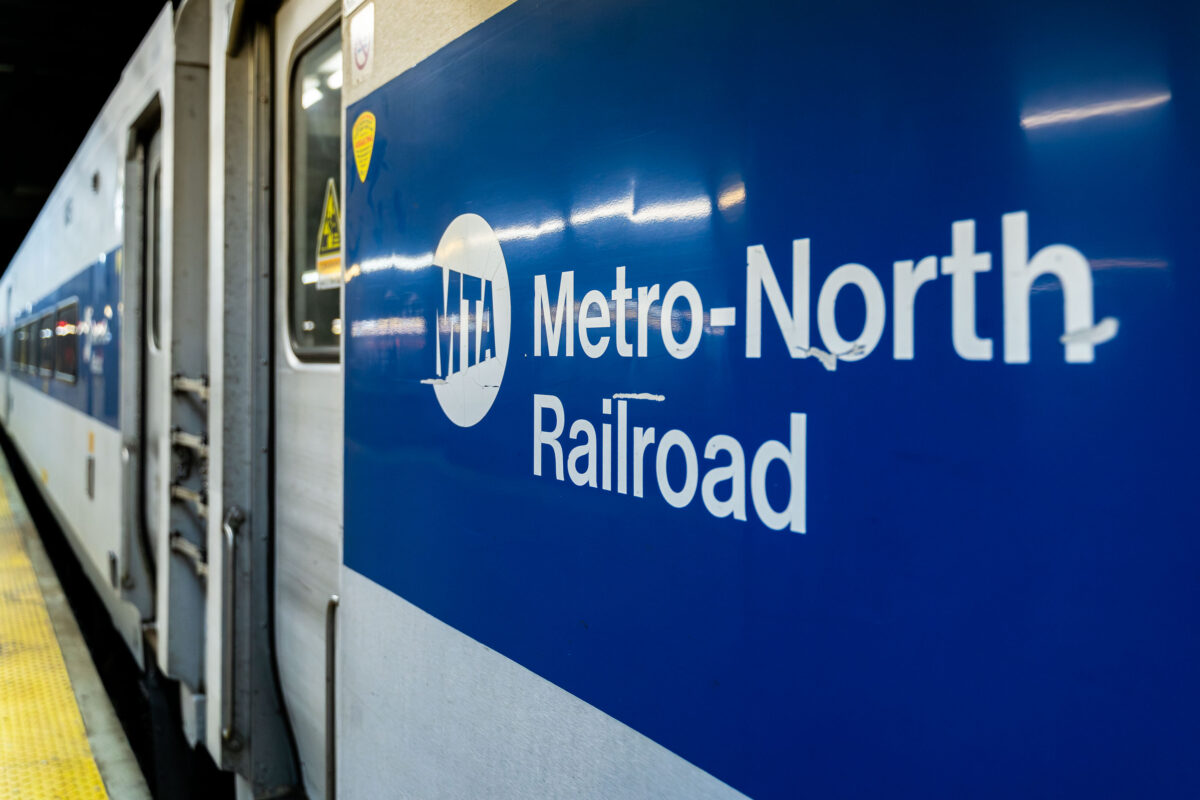
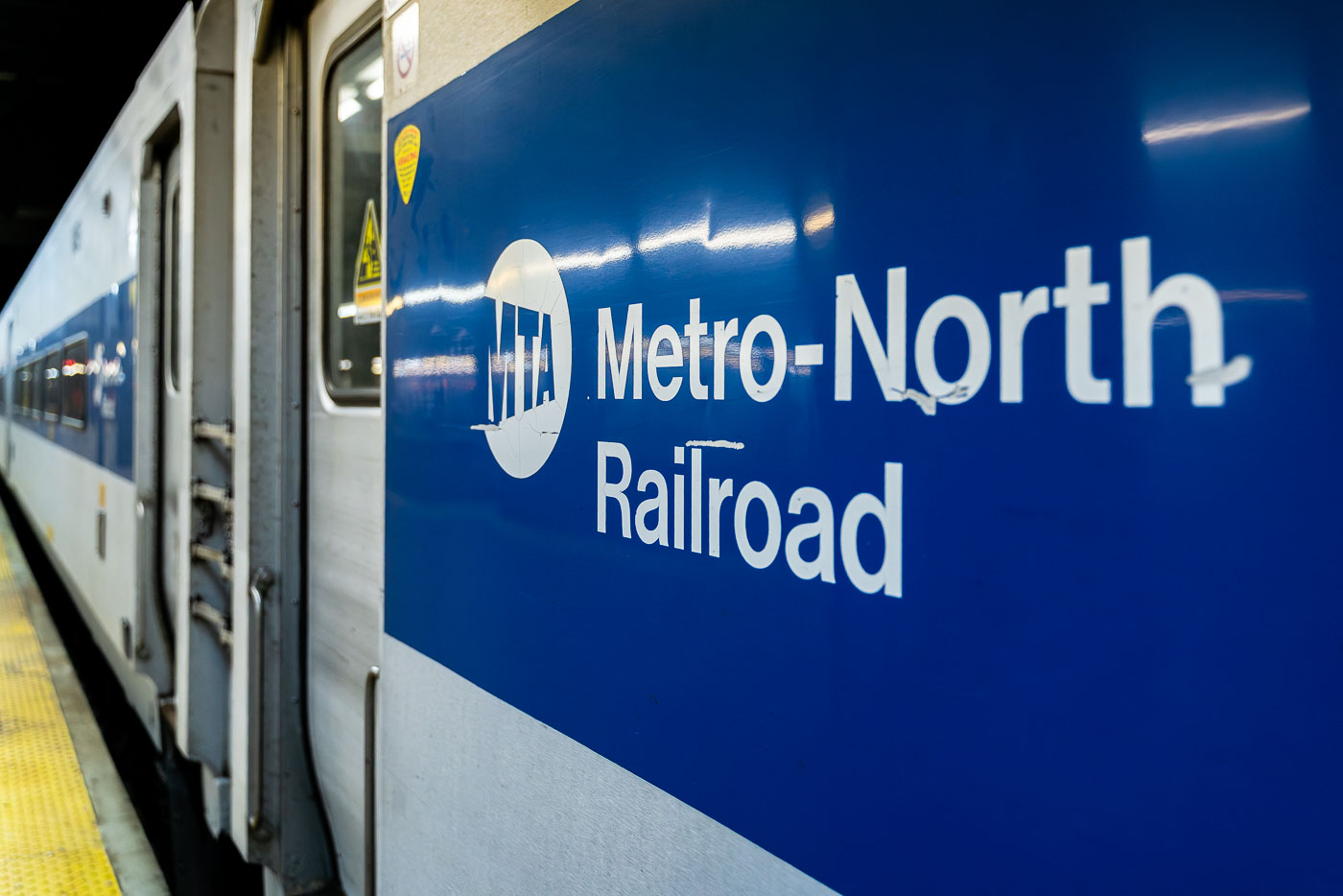
Metro-North Railroad commuter train with blue-and-white livery at a New York station platform.
A Metro-North Railroad train is seen at a station platform, its blue-and-white exterior bearing the MTA logo. The commuter rail line, operated by the Metropolitan Transportation Authority, connects New York City with suburbs across New York State and Connecticut.

Metro-North Railroad Car on the Platform at Grand Central
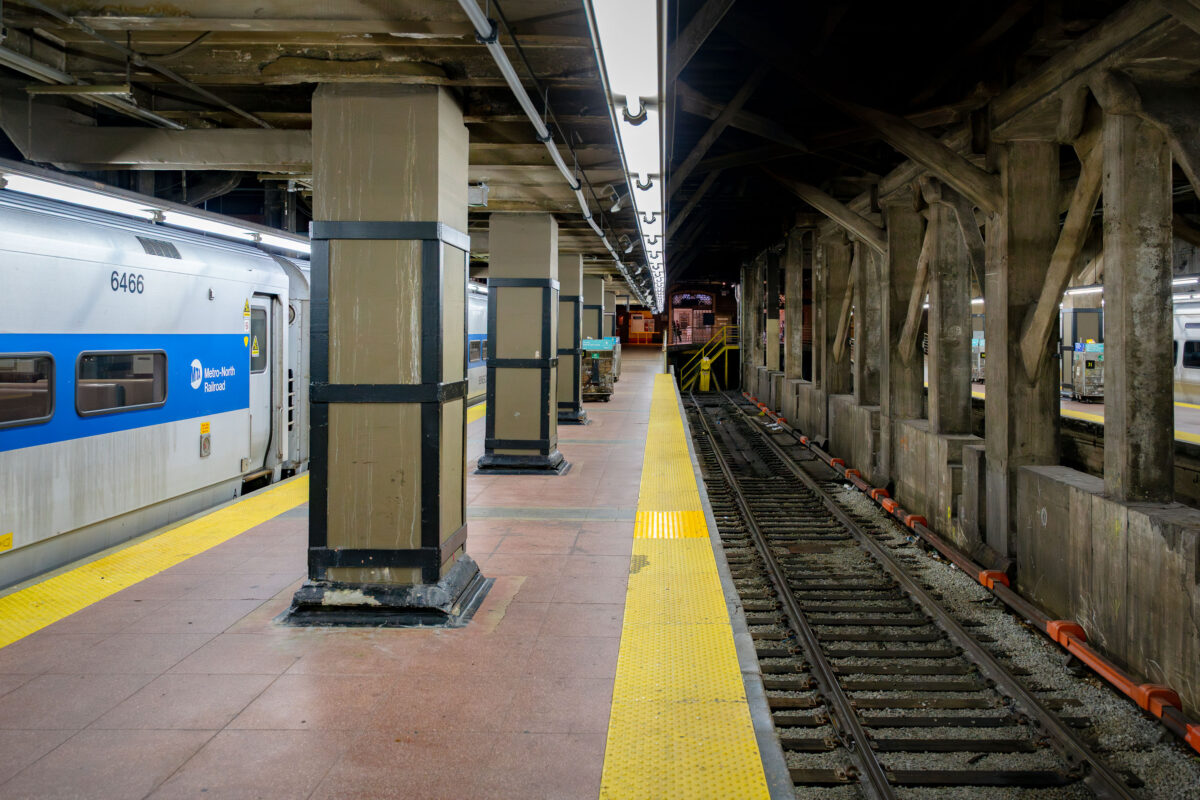
Metro-North Railroad train at platform inside Grand Central Terminal in Manhattan.
A Metro-North Railroad train waits at a platform inside Grand Central Terminal in Manhattan.

Metro-North Train at the Platform in Grand Central Terminal
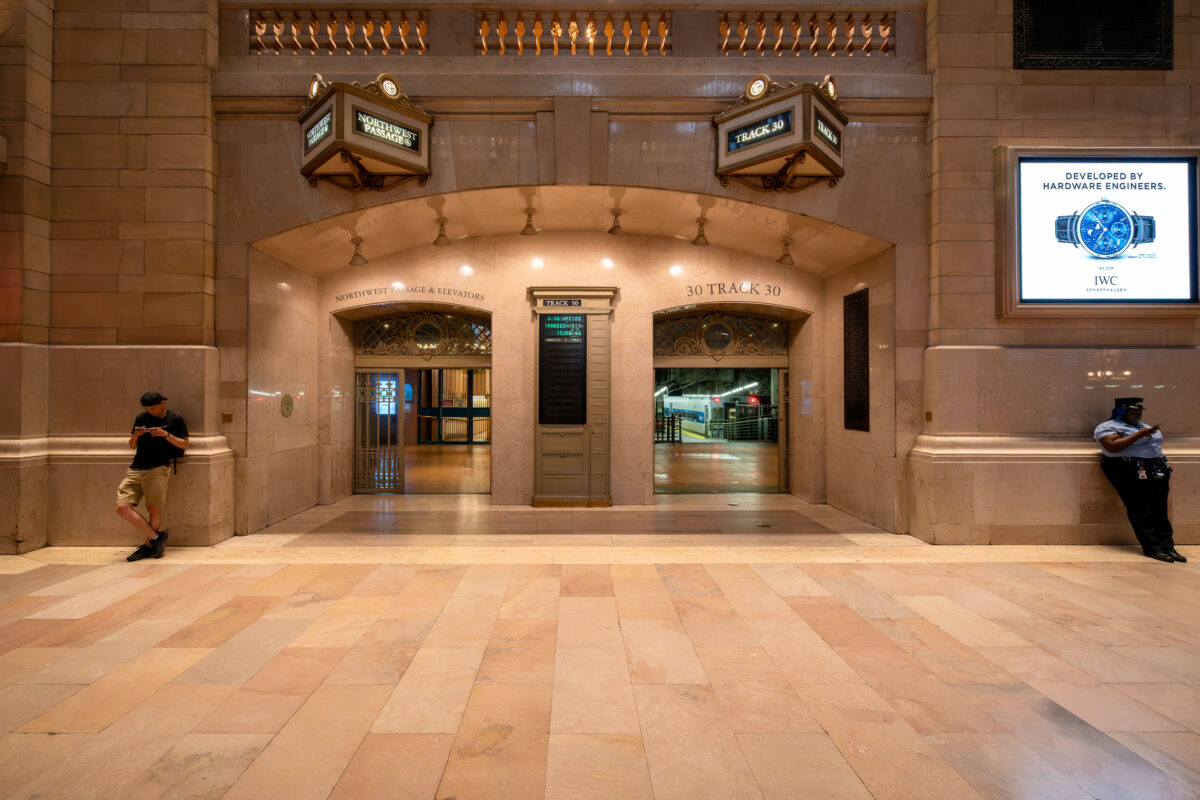
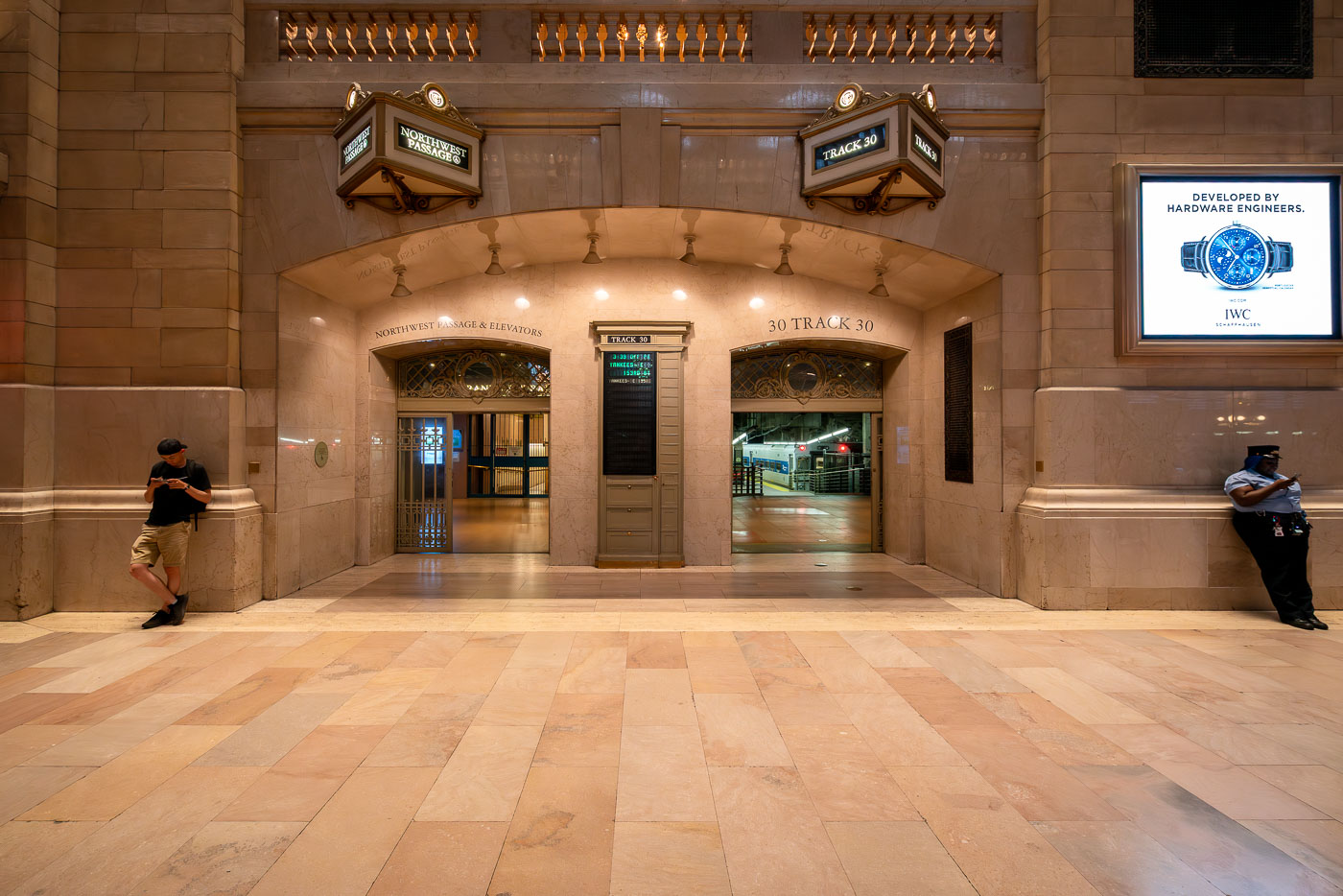
NYPD officer stands in the marble corridor leading to Track 30 at Grand Central Terminal in Manhattan.
The entrance to Track 30 inside Grand Central Terminal in Manhattan is seen at night. The marble hallways of the landmark station lead to the train platforms below, as a commuter and a security officer stand near the archways beneath illuminated signs.

Track 30 Entrance at Grand Central Terminal
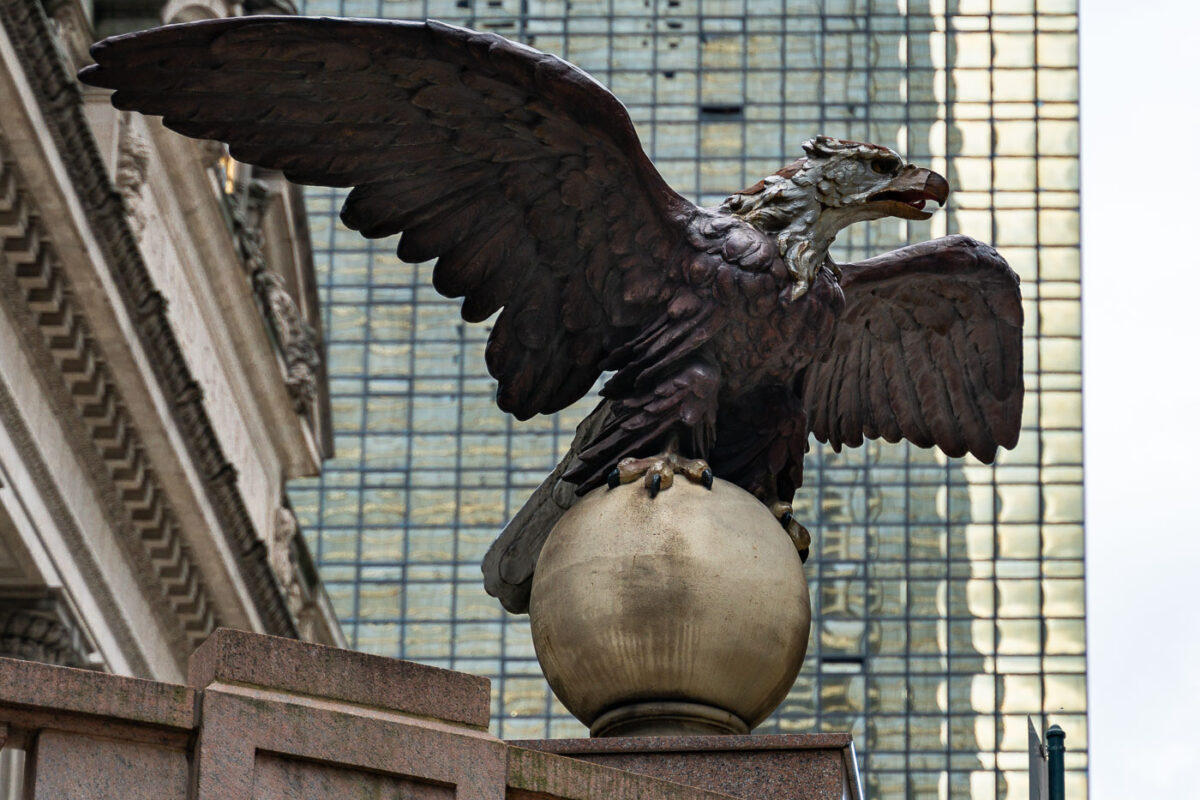
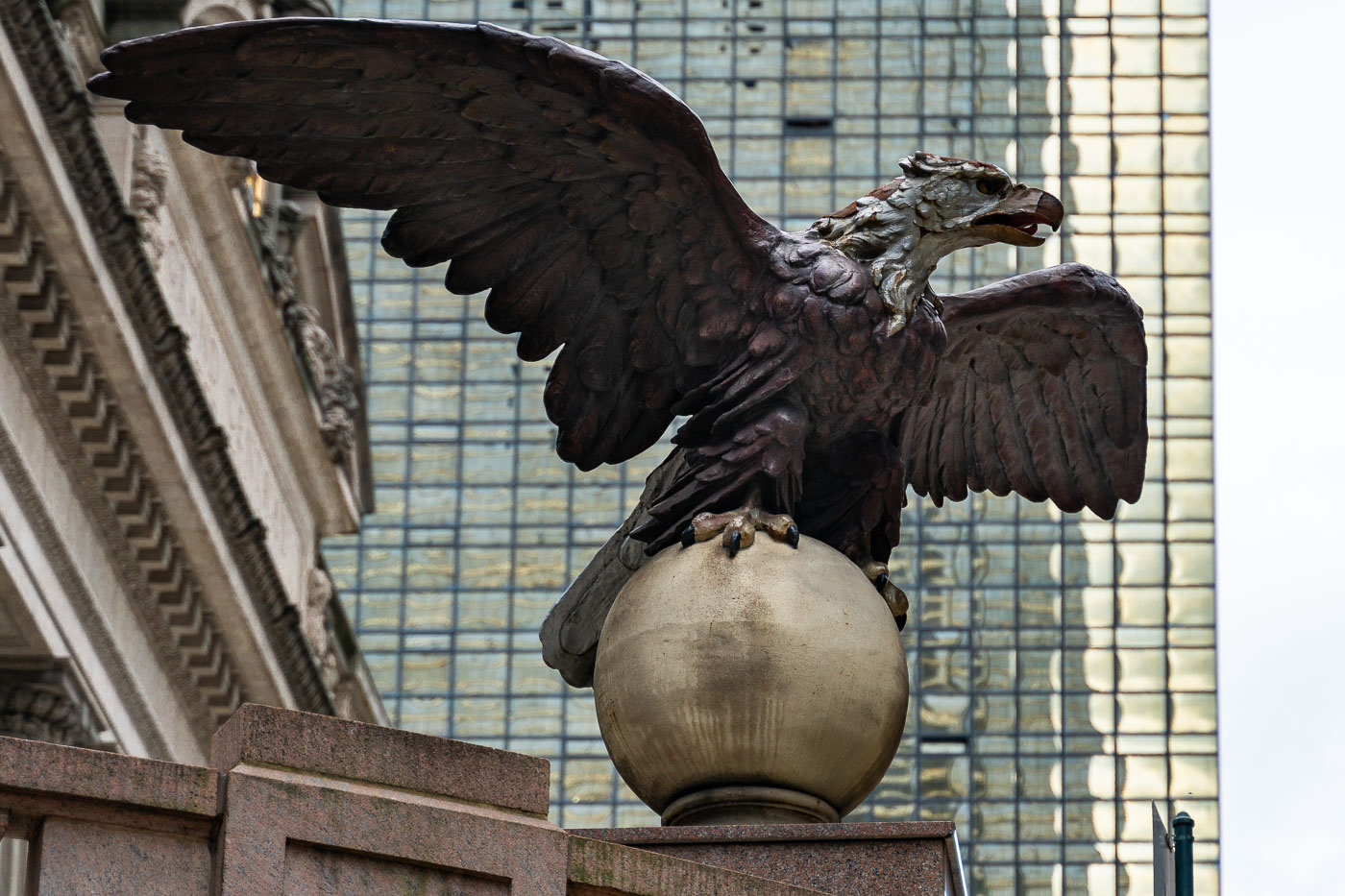
Bronze eagle sculpture perched on a sphere outside Grand Central Terminal in Manhattan.
An eagle statue perched on a globe stands outside Grand Central Terminal in Manhattan. The bronze sculpture, one of several around the historic landmark, looks out over Midtown with the glass facade of the MetLife Building rising in the background.

Eagle Statue Outside Grand Central Terminal
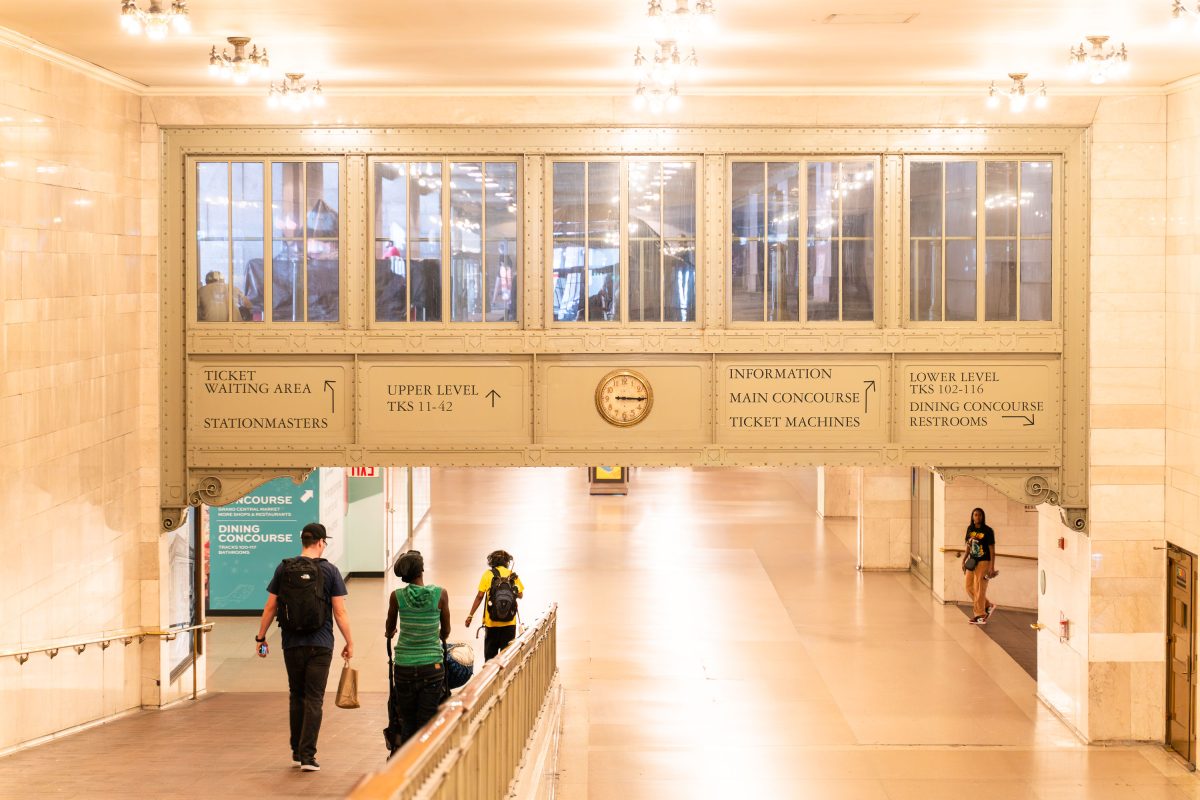
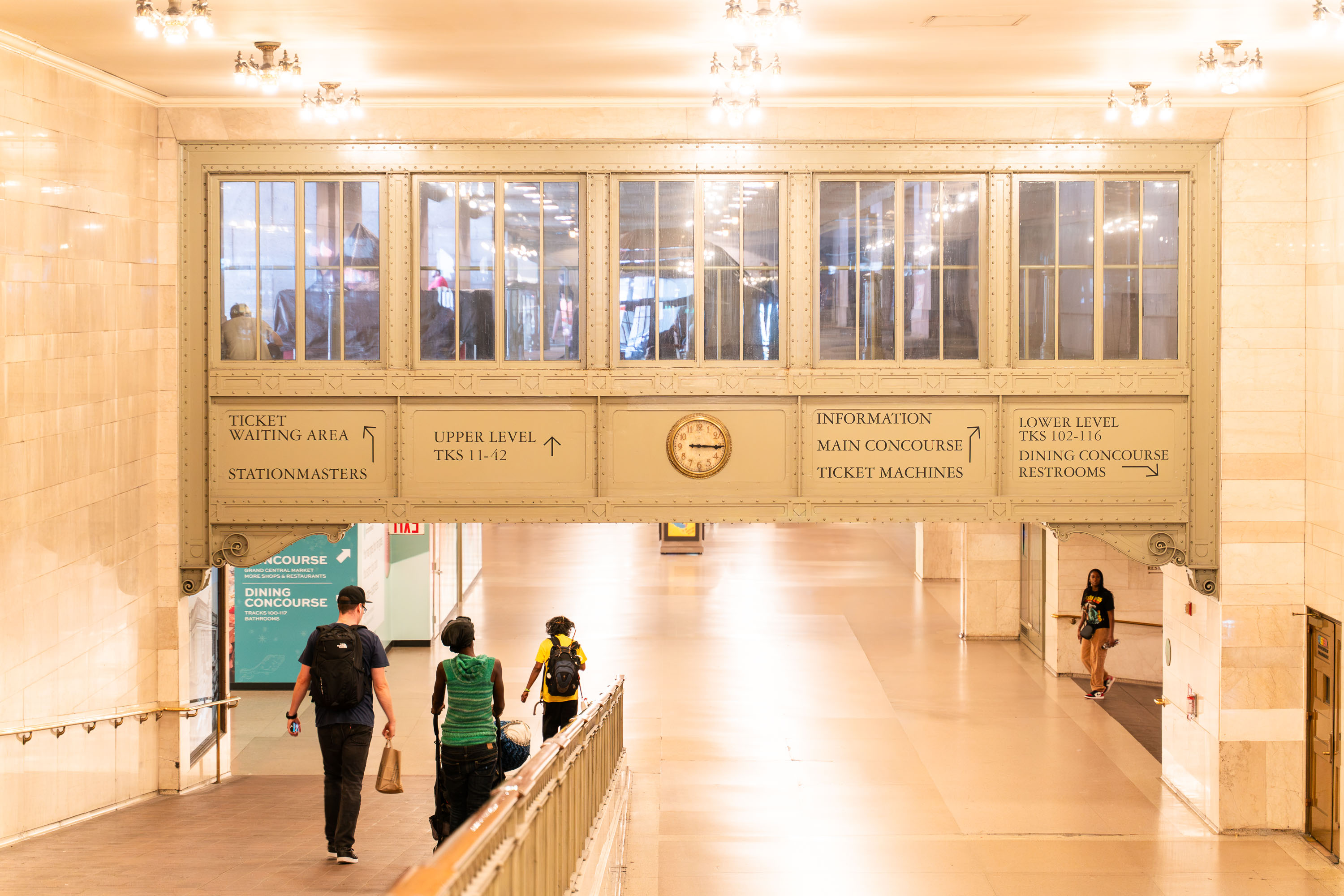
Wayfinding sign and clock above Grand Central Terminal's lower concourse with pedestrians below.
Grand Central Terminal opened in 1913 as the flagship station of the New York Central Railroad, designed by the firms Reed & Stem and Warren & Wetmore. The terminal spans 48 acres and includes 44 platforms serving 67 tracks on two levels, making it the largest train station in the world by platform count. Its lower level connects to the Dining Concourse, a food hall added during the 1990s restoration led by architect Beyer Blinder Belle. The Metropolitan Transportation Authority now owns and operates the building, which serves Metro-North Railroad commuters and hosts roughly 750,000 visitors daily. Grand Central was designated a National Historic Landmark in 1976, a status secured after a 1978 Supreme Court ruling upheld its landmark protection against demolition plans.

Ticket Window Signage Above Grand Central’s Dining Concourse
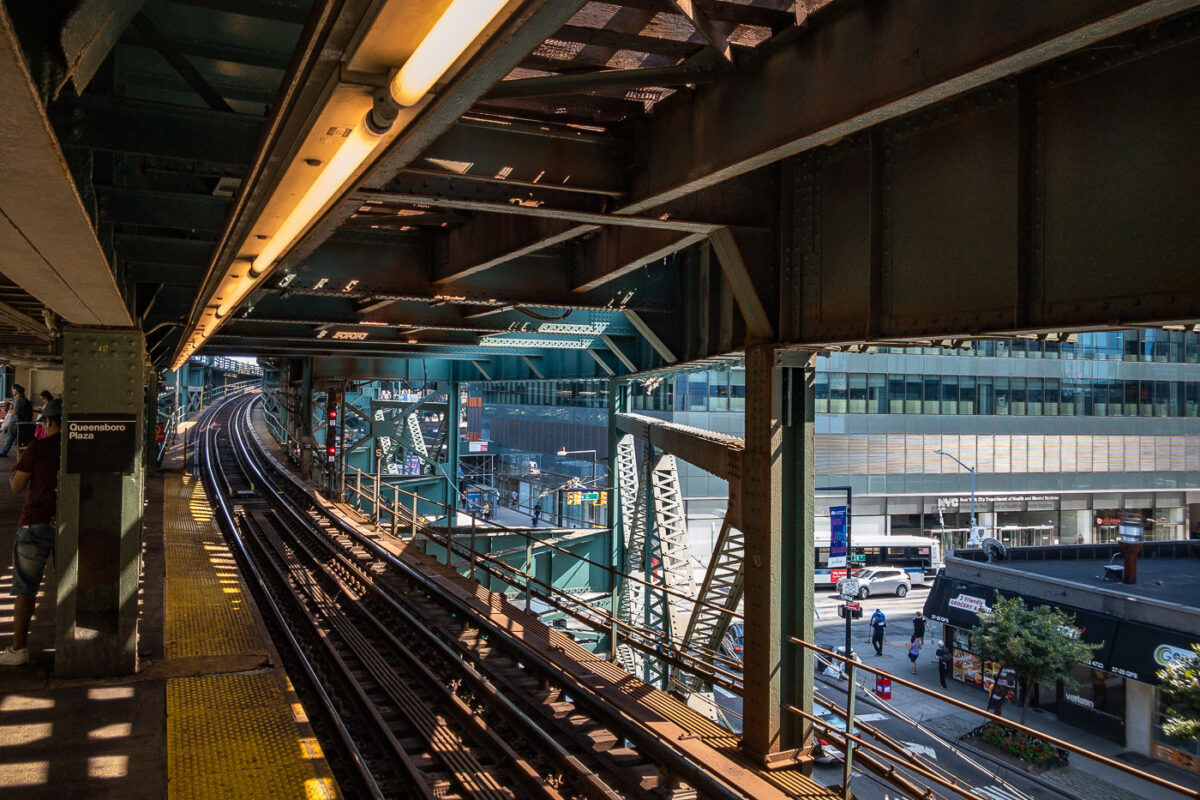
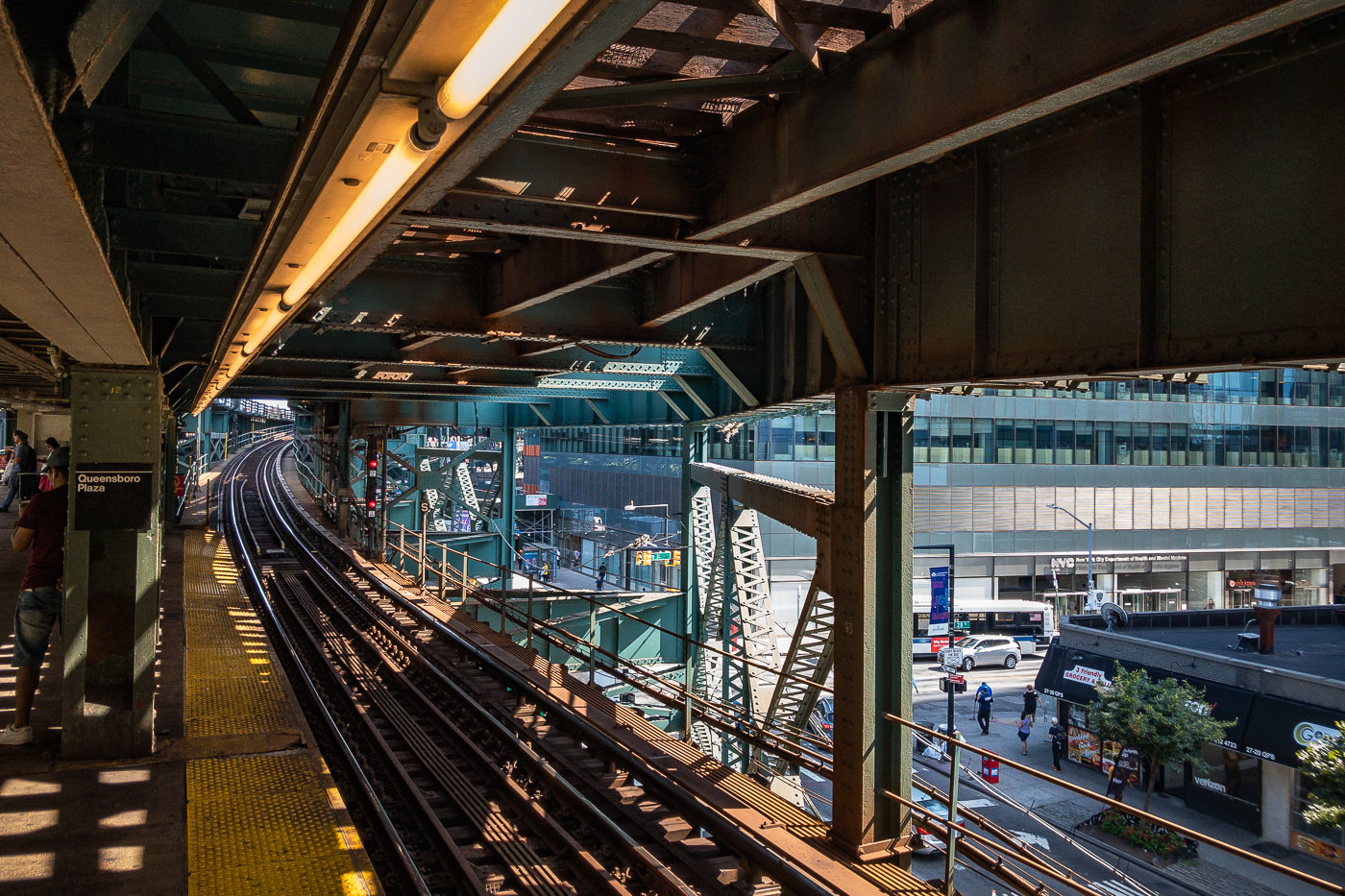
Queensboro Plaza elevated train station platform with steel trusswork, tracks, and Manhattan skyline visible beyond.
Queensboro Plaza elevated train station in Long Island City, Queens, New York City. The station features multiple tracks and platforms, with the distinctive green and steel structure of the elevated railway overhead. This station is a key transit hub, serving as a transfer point for the 7 train and formerly for the Long Island Rail Road. Its construction and ongoing operation are integral to the connectivity of Queens with Manhattan and the rest of the city's transit network.

Elevated Tracks Curve Toward Long Island City at Queensboro Plaza
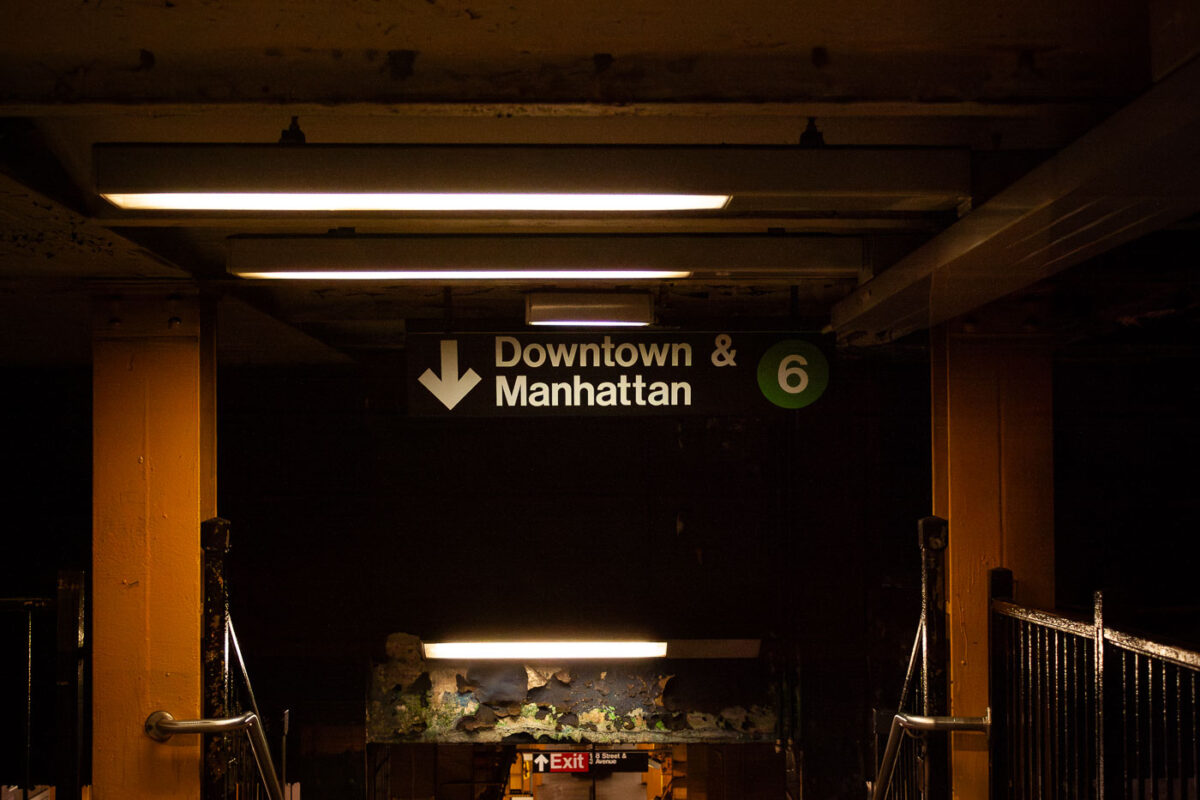
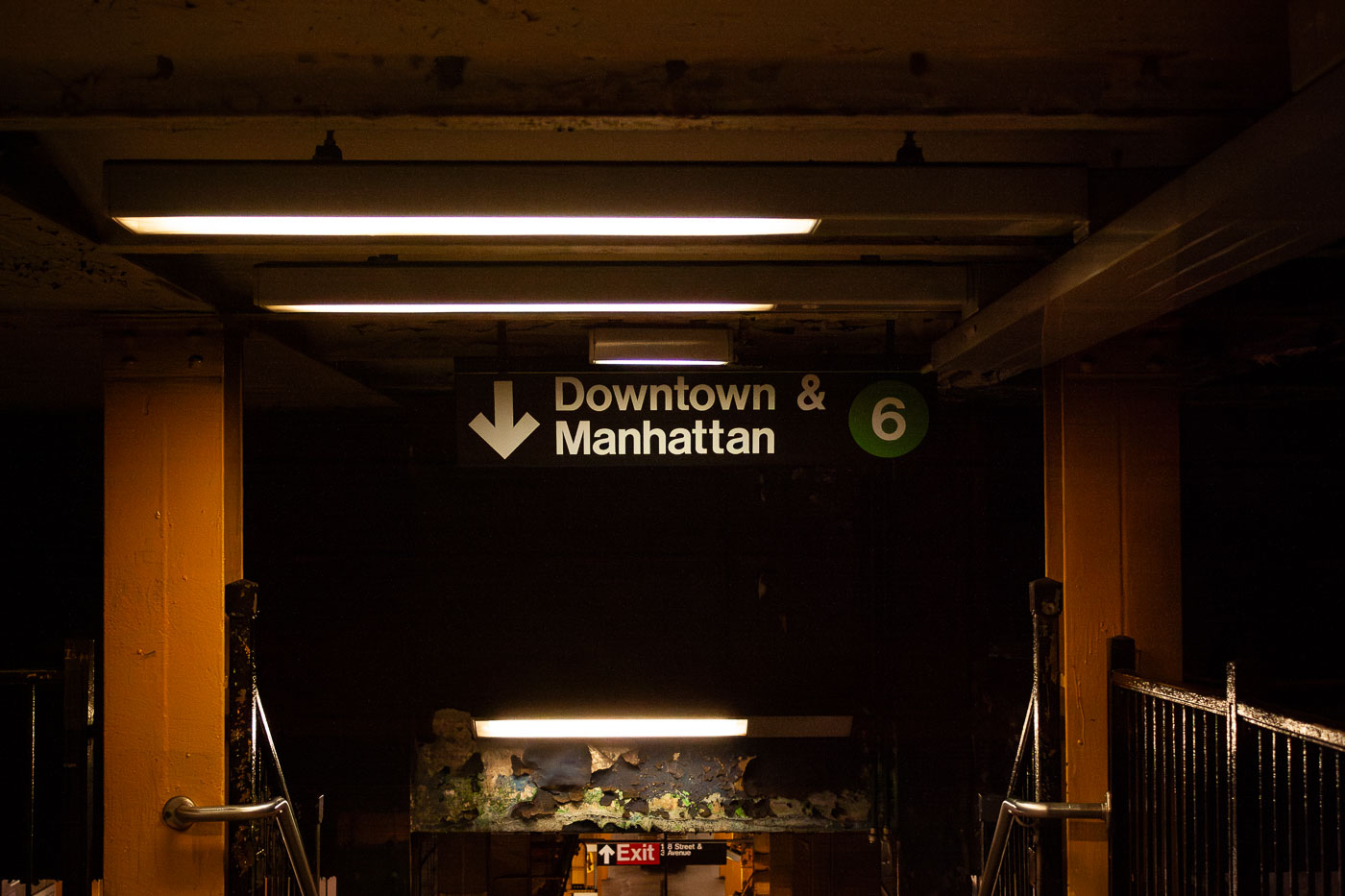
Subway station sign for Downtown & Manhattan 6 train with green route marker and directional arrow.
Downtown & Manhattan 6 train entrance in the New York City Subway. The sign directs riders to the southbound Lexington Avenue Line local service, identified by the green 6 route marker. This entrance leads from the station mezzanine down to the downtown platform.

“Downtown & Manhattan” Sign Above the 6 Train Stairway
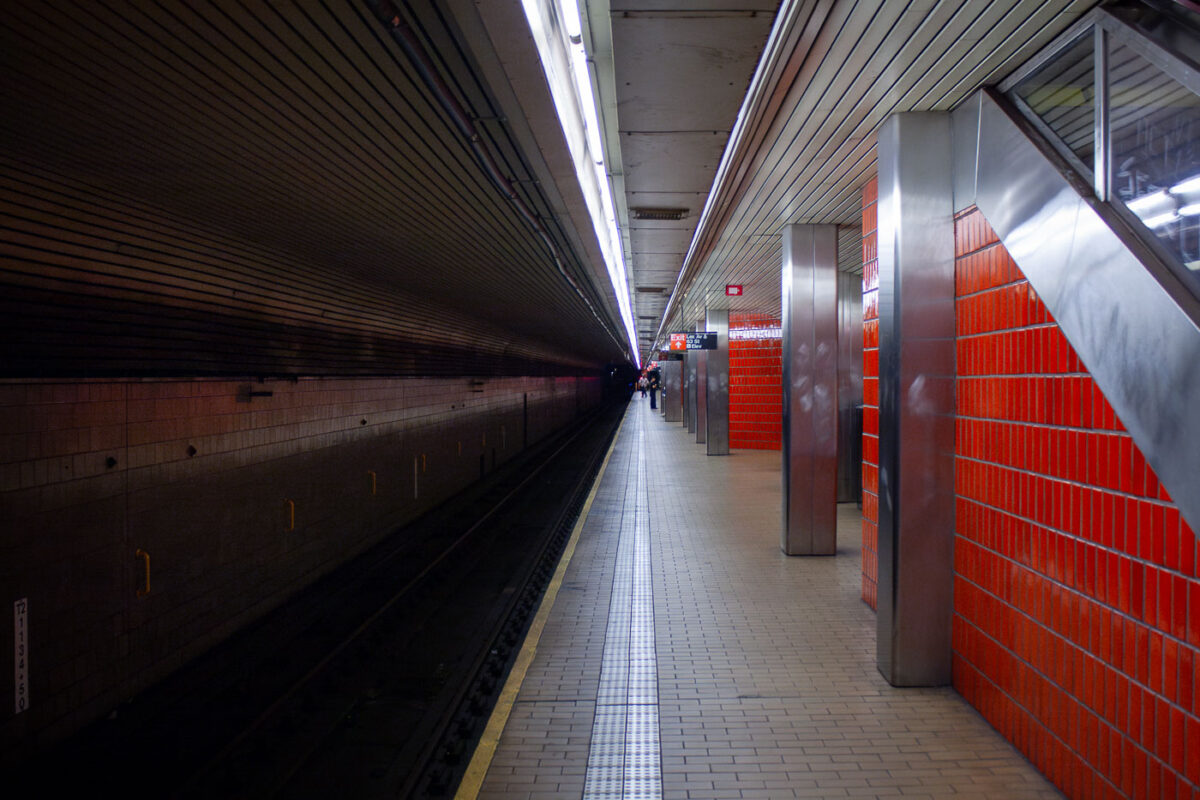
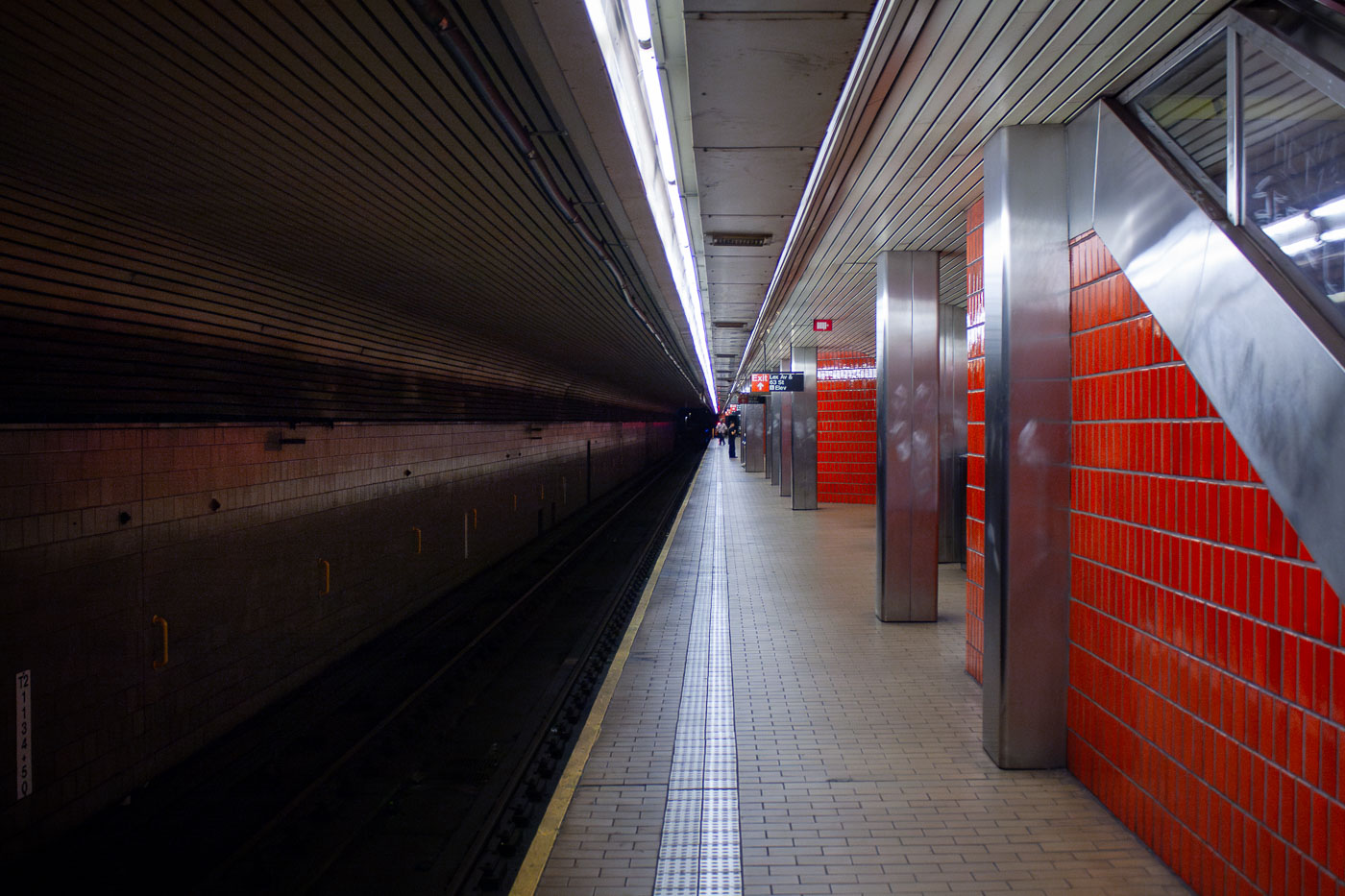
Empty platform at Lexington Avenue–63rd Street subway station in Manhattan with red brick wall and metal support columns.
Lexington Avenue–63rd Street station platform in Manhattan. Opened in 1989 as part of the 63rd Street Tunnel project, the station links the Upper East Side with Queens through the IND 63rd Street Line. It is served by the F train at all times and by the Q train on weekdays.

Red-Tiled Platform at Lexington Avenue–63rd Street Station

Built in Minneapolis

Minneapolis Photographer

Browse by location, move through long-running series, or start with recent work.