Minnesota

5,913 photos · 2008–2026

5,913 photographs tagged Minnesota, 2008–2026.
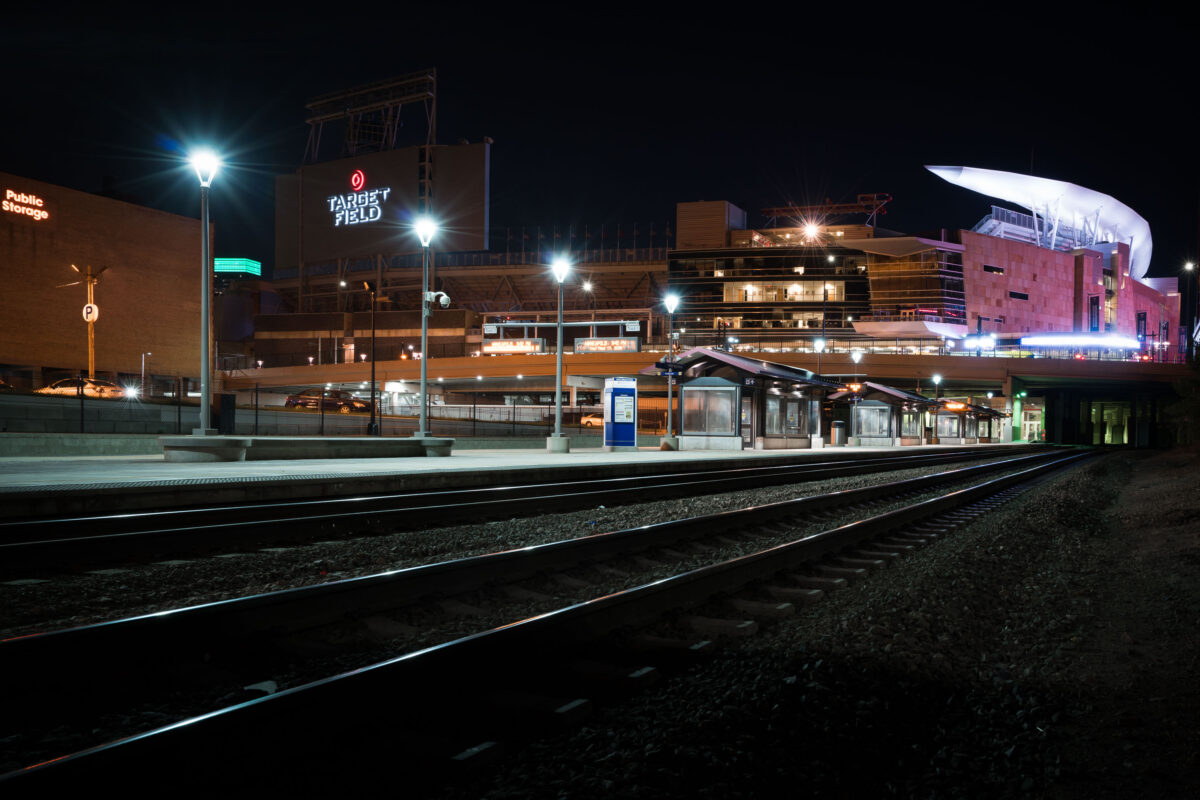
Target Field Northttar Train Station in Minneapolis
Target Field Station and Target Field in Minneapolis are shown at night. The station serves as a transit hub for the Northstar Line and Metro Transit, connecting commuters and fans to downtown Minneapolis.

Target Field Station and Stadium, Minneapolis
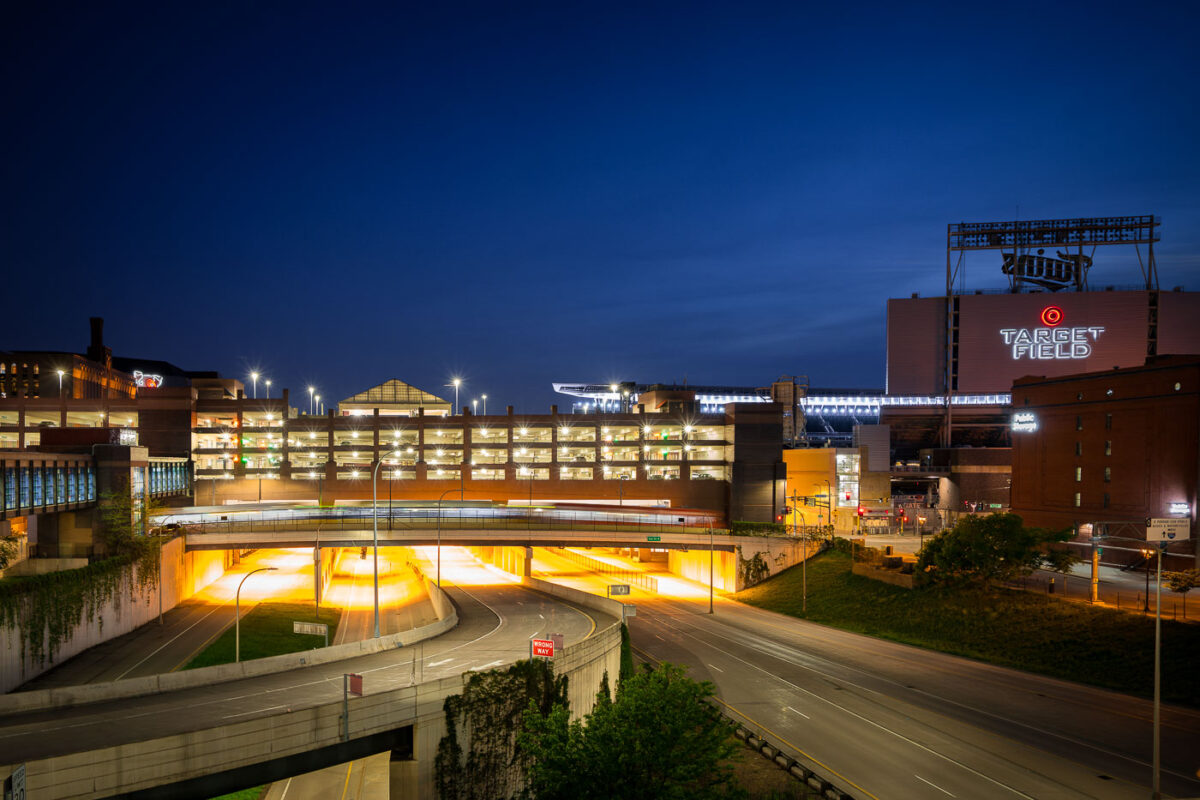
Target Field and Interstate 394 in Minneapolis
Target Field, home of the Minnesota Twins, and Interstate 394 are shown at night in Downtown Minneapolis.

Target Field, Parking Ramp, I-394, Downtown Minneapolis Night

Interior view of the Lowry Hill Tunnel in Minneapolis at night, showing illuminated walls and a curving roadway.
The Lowry Hill Tunnel, located in Minneapolis, is a vital piece of the city's transportation network. Completed in 1971, this tunnel was constructed to alleviate traffic congestion and improve connectivity between neighborhoods. Its design accommodates vehicular traffic, allowing for the smooth flow of cars and trucks beneath the Lowry Hill neighborhood. The tunnel continues to serve as a critical artery for commuters and freight, facilitating daily movement within the Minneapolis North Loop and beyond.

Lowry Hill Tunnel, Minneapolis: Interior View at Night
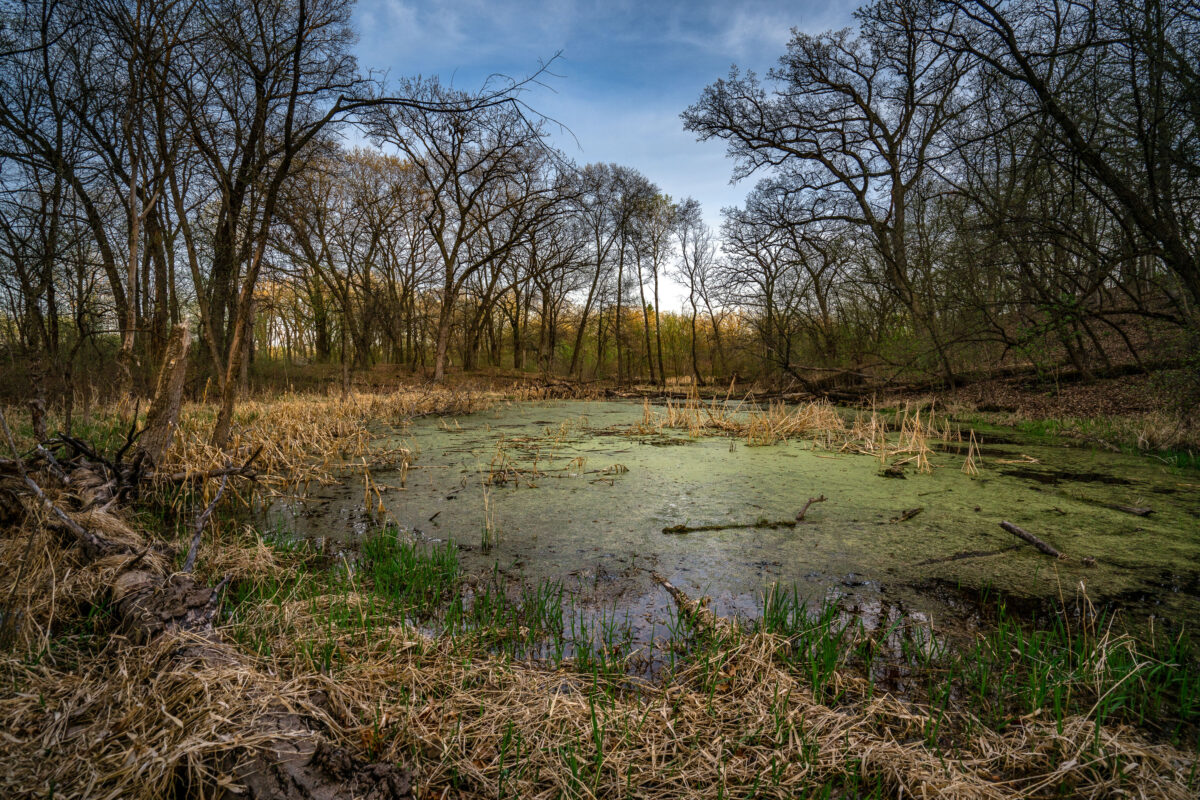
Minnesota marsh with algae bloom and deadwood, showing a typical wetland ecosystem with fallen trees and aquatic vegetation.
This marsh in Minnesota exhibits a significant algae bloom, a common occurrence in late spring and summer that can indicate nutrient enrichment. The presence of deadwood, such as the fallen tree in the foreground, is typical of wetland environments and contributes to the ecosystem's decomposition cycle. Marshes like this are vital habitats for diverse plant and animal life and play a crucial role in water filtration and flood control within the regional landscape.

Minnesota Marsh with Algae Bloom and Deadwood
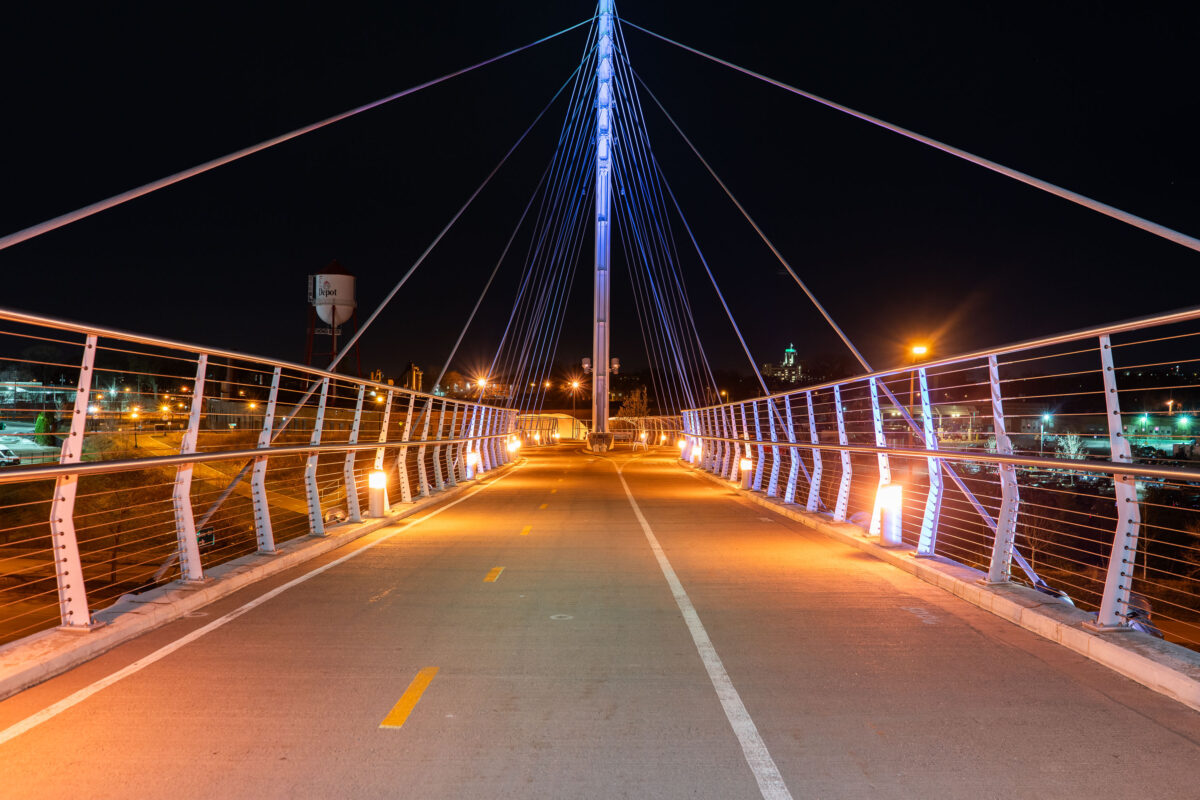
The Martin Olav Sabo Bridge, a pedestrian and bicycle bridge in Minneapolis, illuminated at night
The Martin Olav Sabo Bridge, a pedestrian and bicycle bridge in Minneapolis. Opened in 2000, the bridge connects the Longfellow and Seward neighborhoods, over Haiwatha Ave. The bridge is named in honor of Martin Olav Sabo, a U.S. Representative from Minnesota.

Martin Olav Sabo Bridge at Night, Minneapolis
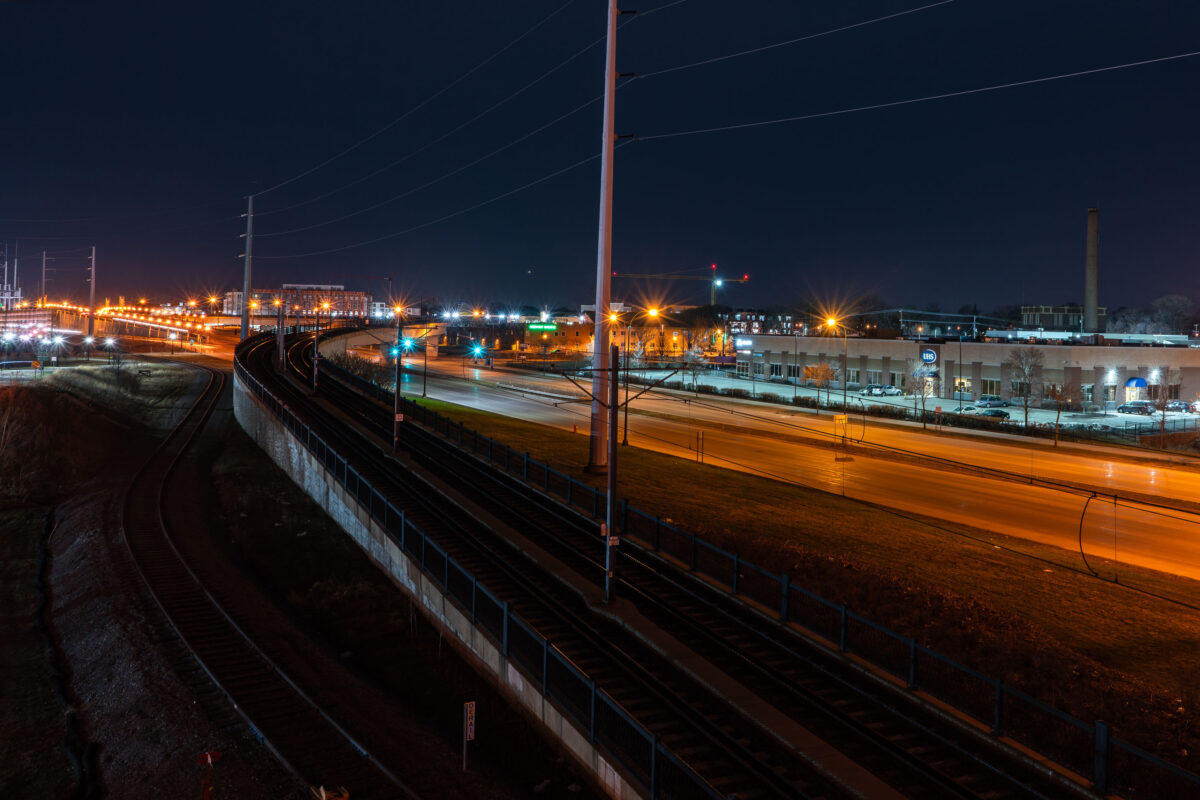
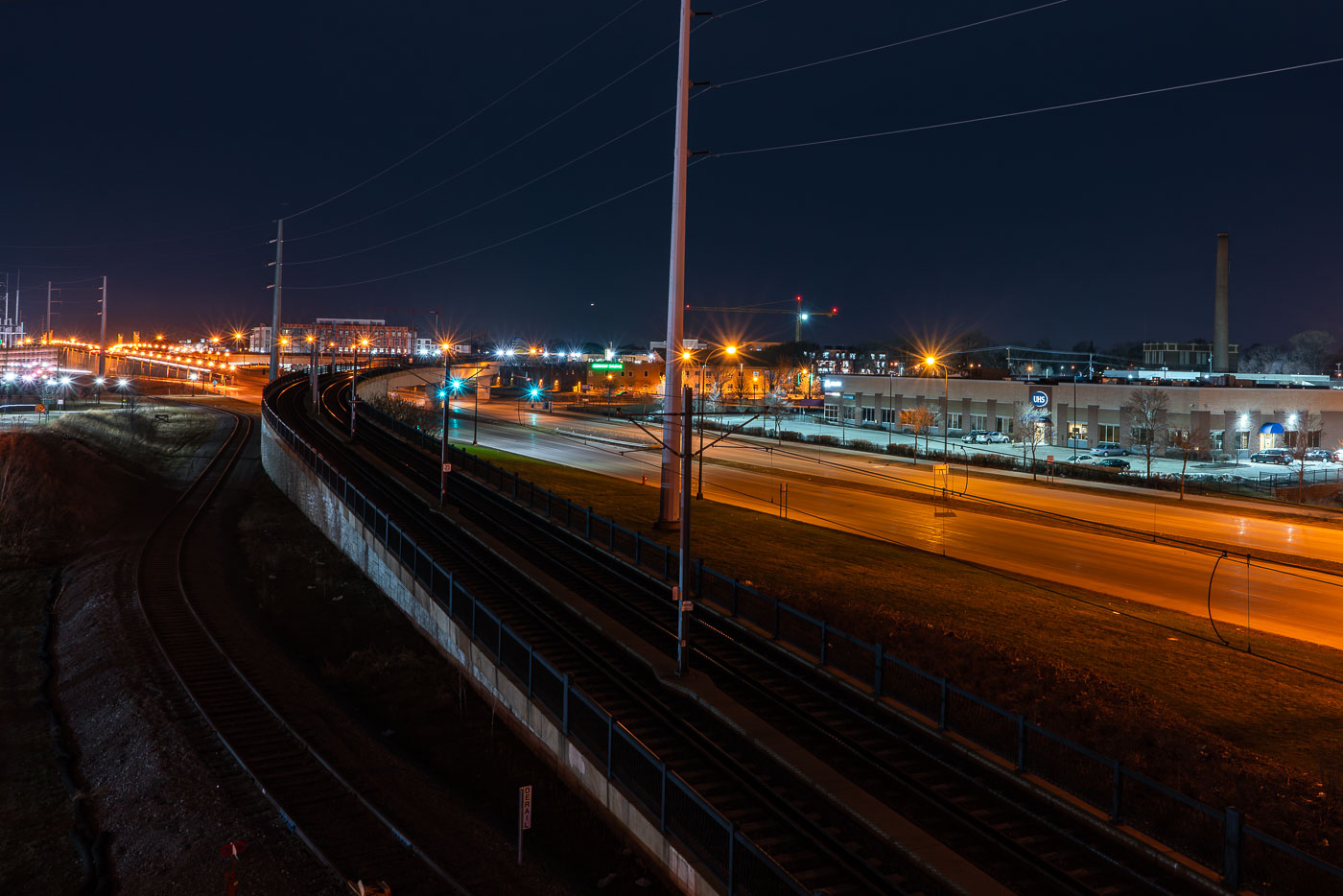
Metro Transit light rail bridge spanning Hiawatha Avenue in South Minneapolis at night.
The Metro Transit light rail bridge spans Hiawatha Avenue in South Minneapolis. Completed in 2018, this structure is part of the Blue Line's expansion.

Light Rail Tracks Curving Above Hiawatha Avenue at Night
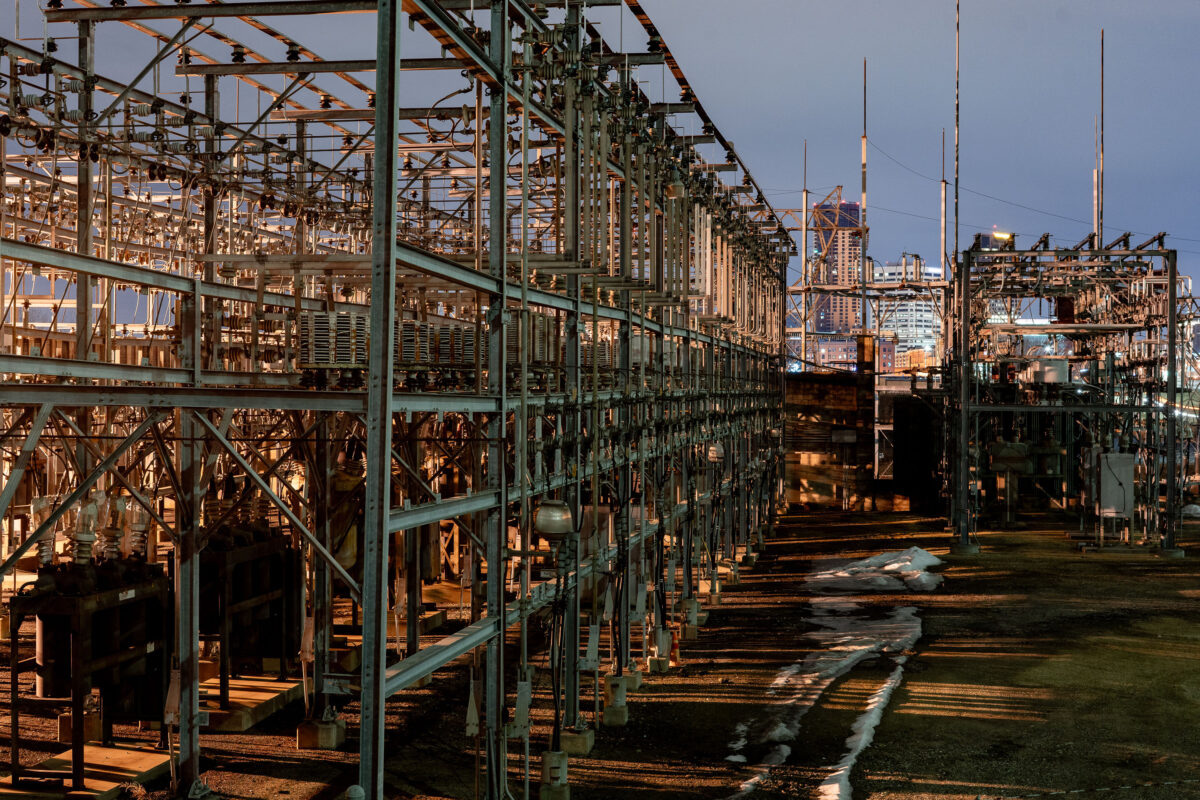
Steel framework structures of an Xcel Energy electrical substation in St. Paul, Minnesota.
An Xcel Energy electrical substation located near downtown St. Paul. The facility contains multiple steel framework structures and transmission equipment used to distribute power throughout the region.

Xcel Energy Substation, St. Paul

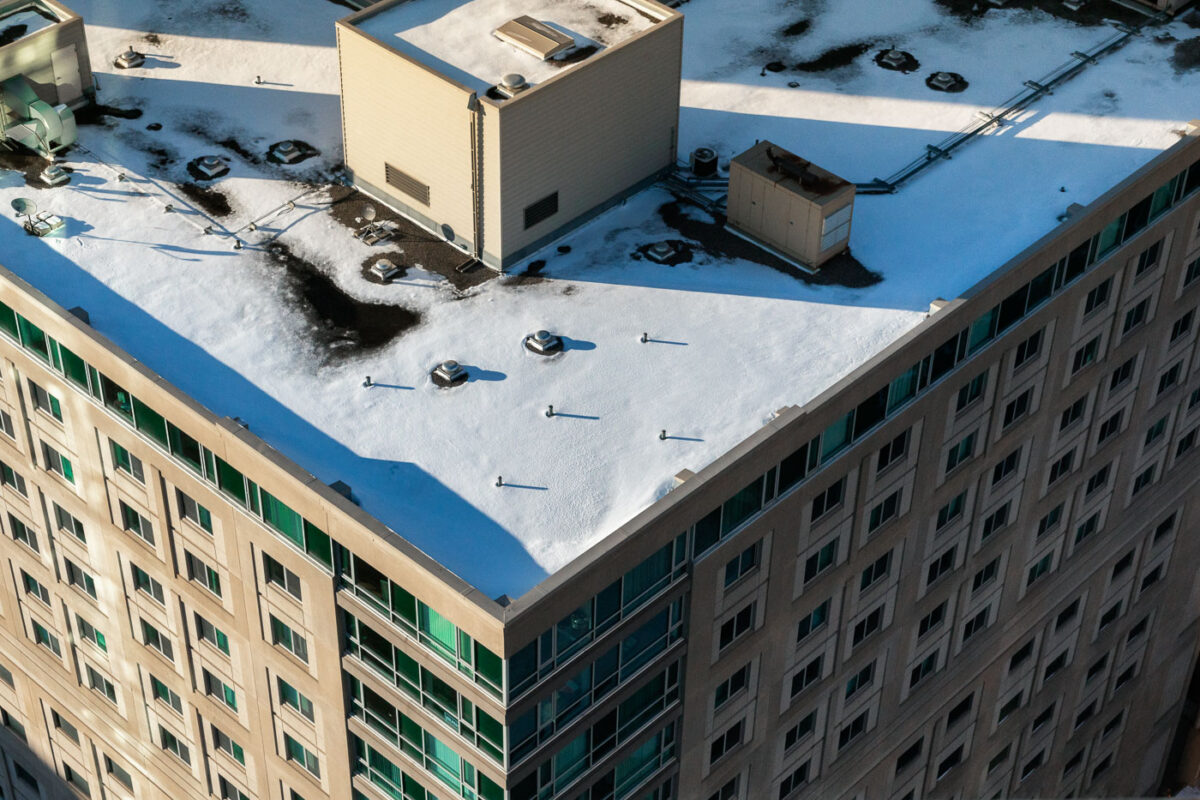
Metro Apartments in Minneapolis 2018
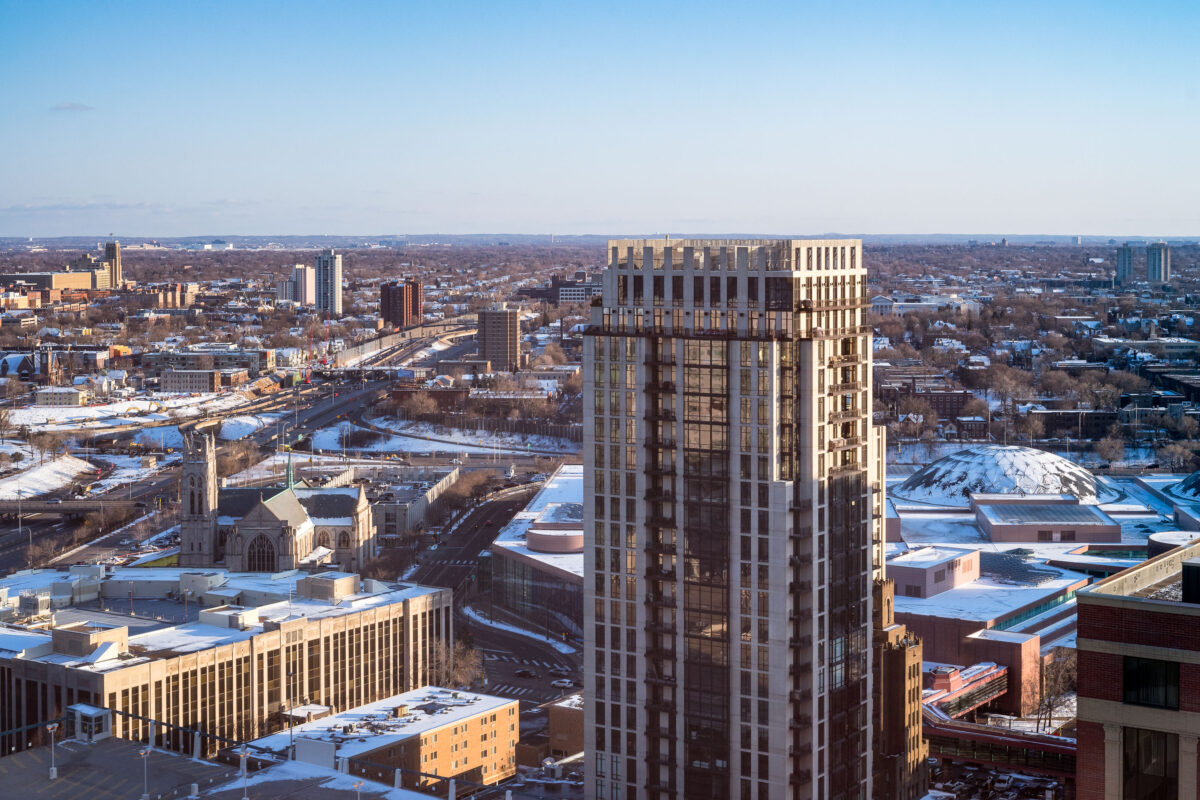
Metro Apartments at Marquette Avenue and South 9th Street in Minneapolis is a multi-story residential building in the city center. The view shows the building’s flat roof under late-season snow, with rooftop mechanical structures and service equipment visible above the upper floors. Built for urban apartment living, the property occupies a block within the downtown street grid near Minneapolis’s office and transit corridors.

Metro Apartments in Minneapolis

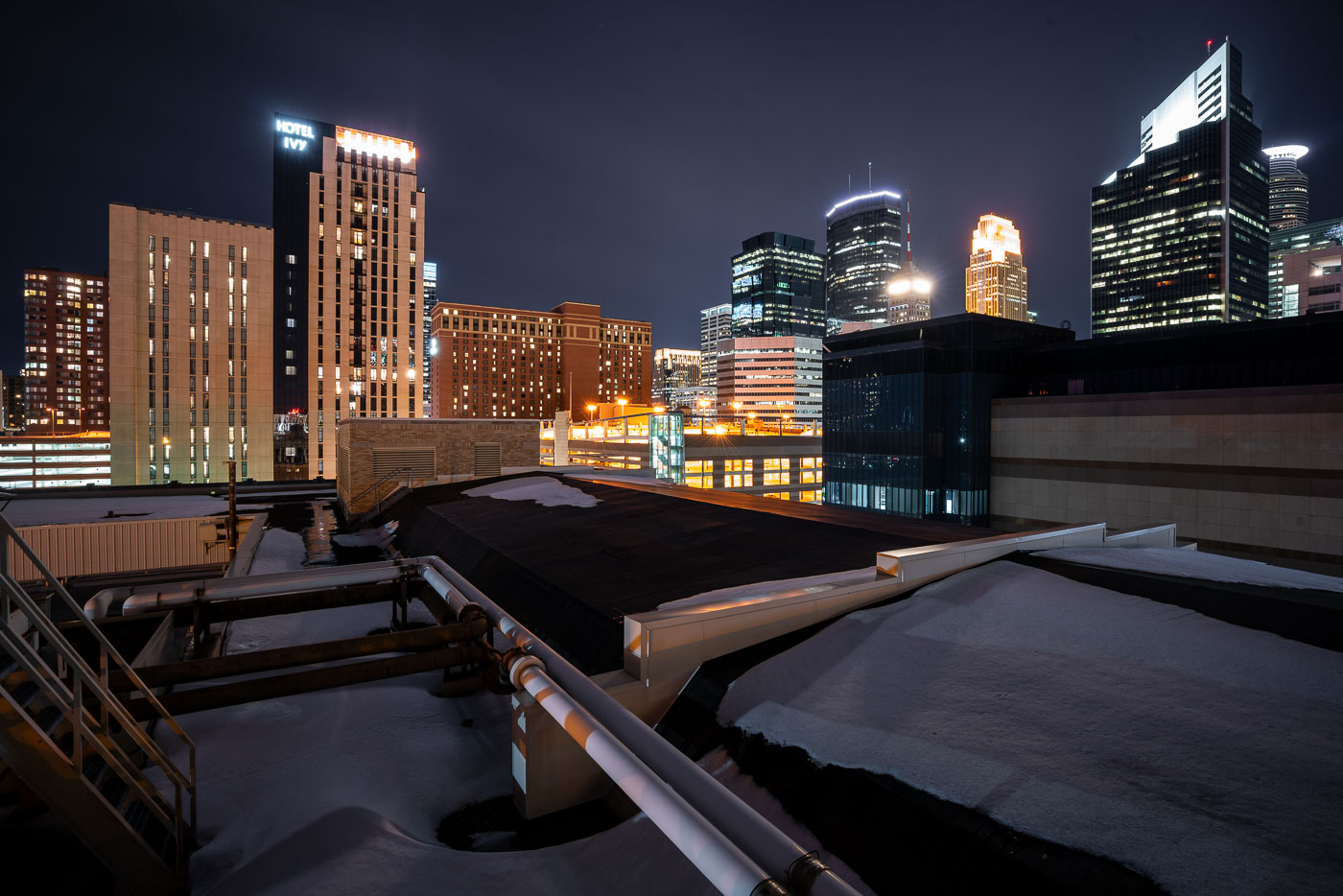
Hotel Ivy and Ivy Residences rise near the snow-covered Minneapolis Convention Center.
Hotel Ivy and Ivy Residences stand in downtown Minneapolis near the Minneapolis Convention Center. The complex is located on South Eleventh Street at the south end of downtown. Snow covers the convention center roofs and surrounding streets during late winter.

Hotel Ivy and Minneapolis Convention Center, Minneapolis
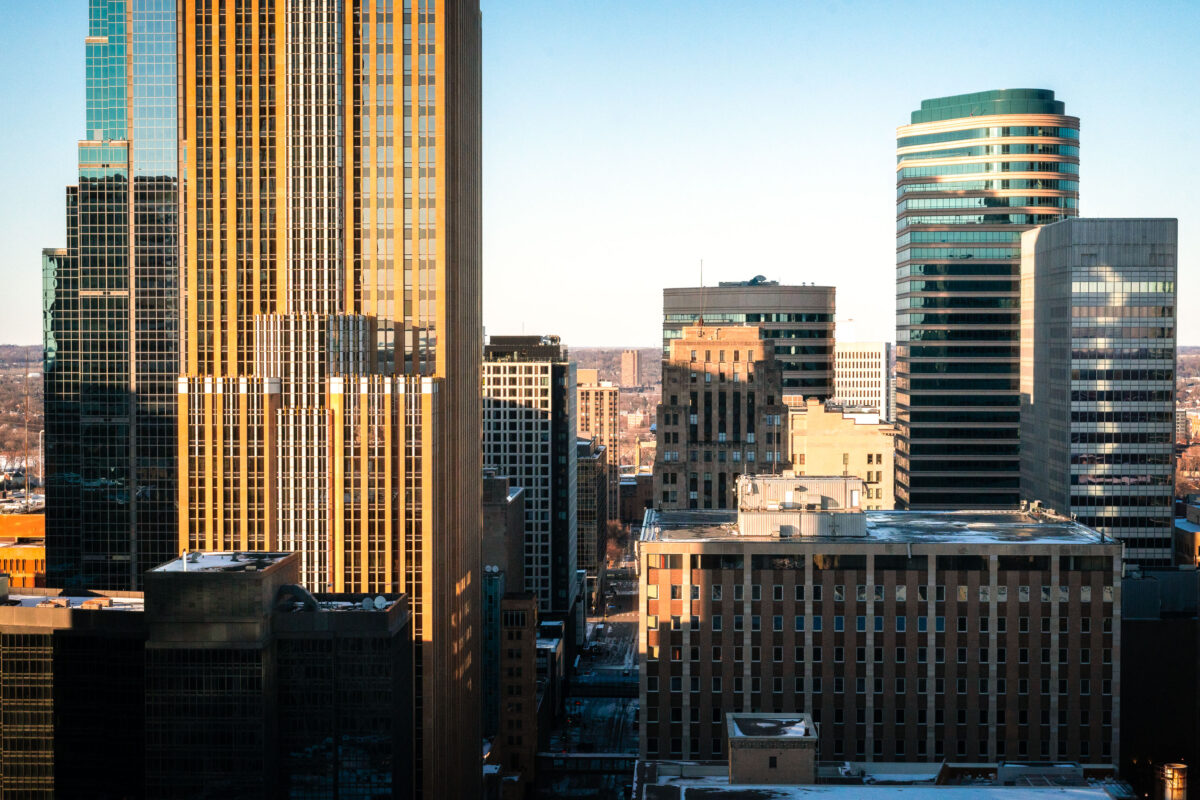
Downtown Minneapolis skyline along Marquette Avenue with mixed architectural styles under clear sky.
Marquette Avenue runs through the core of downtown Minneapolis, lined with several of the city's tallest office towers. The gold-toned tower on the left is Wells Fargo Center, completed in 1988 and designed by Cesar Pelli; at 774 feet and 57 floors, it ranks among Minnesota's tallest buildings. The green-topped tower is Capella Tower, finished in 1992 at 776 feet with 56 floors, built originally as the headquarters for AT&T's regional operations. Both buildings anchor a stretch of Marquette Avenue that has long served as a corridor for banking, law, and corporate offices in the city.

Skyline Along Marquette Avenue, Downtown Minneapolis
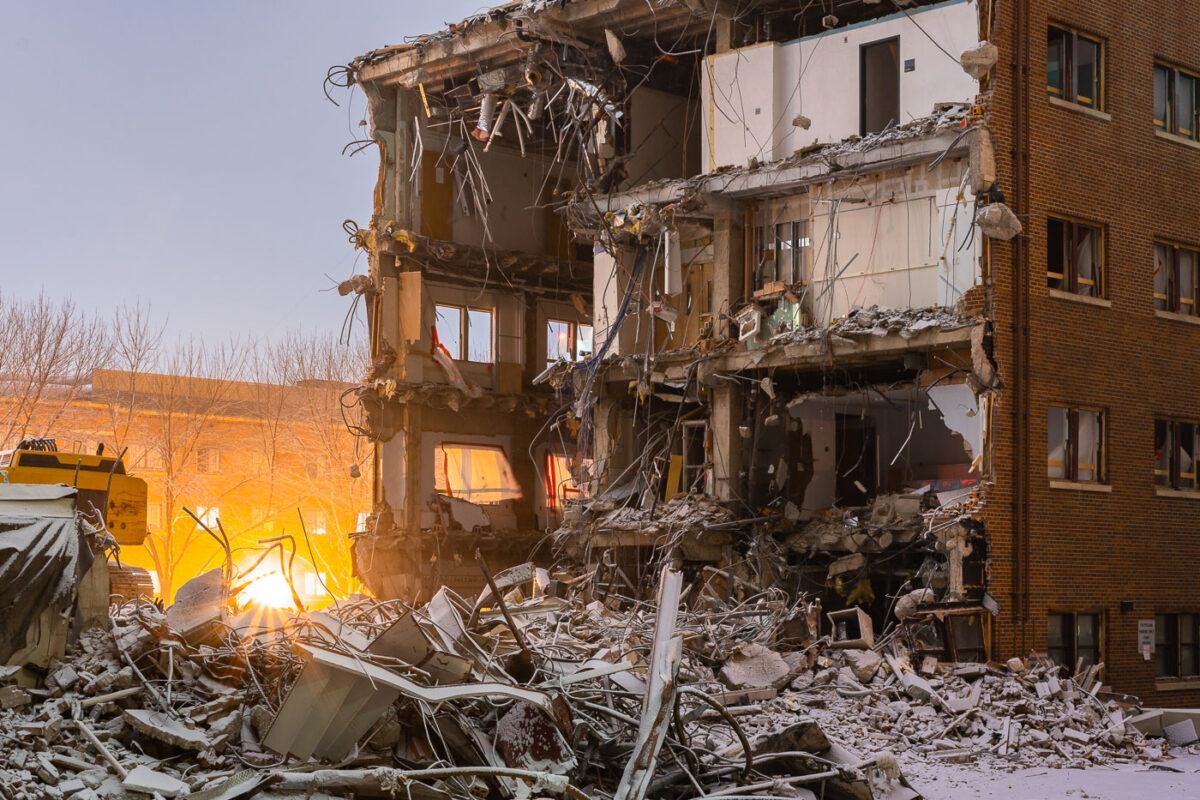
Demolished University of Minnesota building in Dinkytown with excavator and debris pile during March 2018 demolition.
Demolition work on a University of Minnesota campus building in Minneapolis underway in March 2018.

Winter Sunrise Through a Gutted Dinkytown Apartment Building
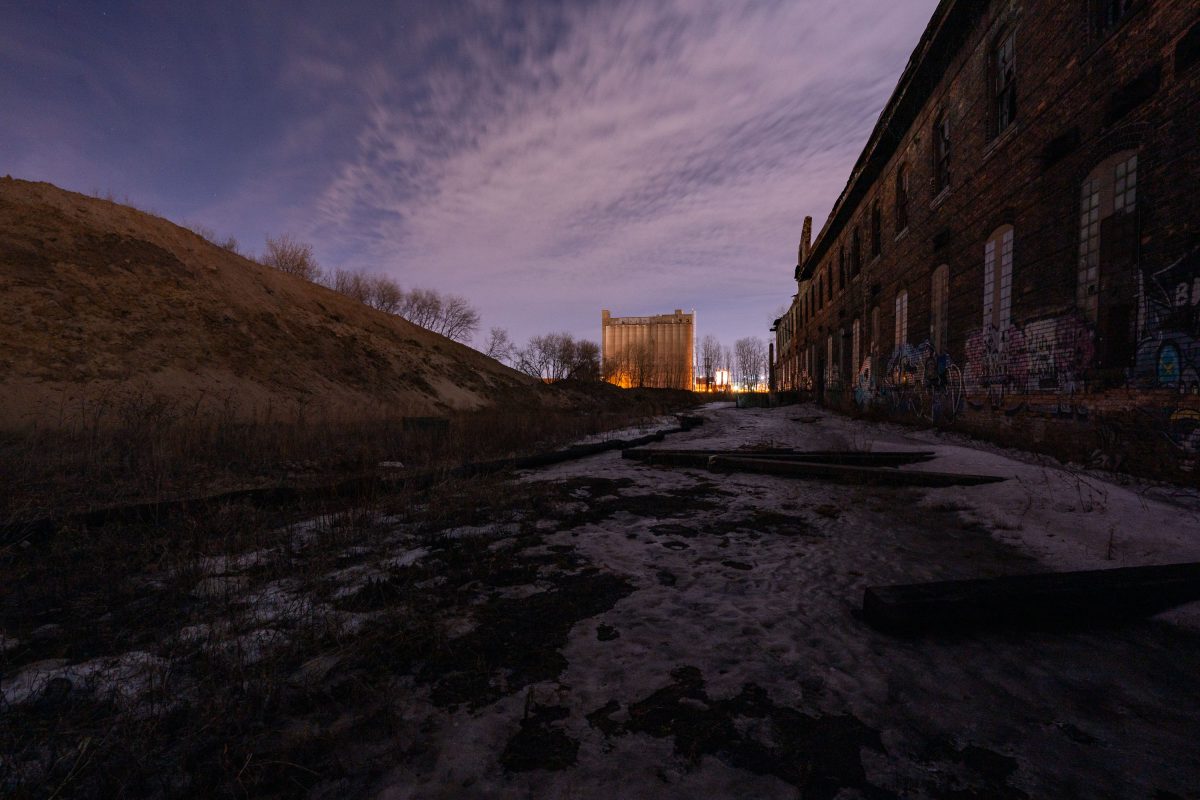
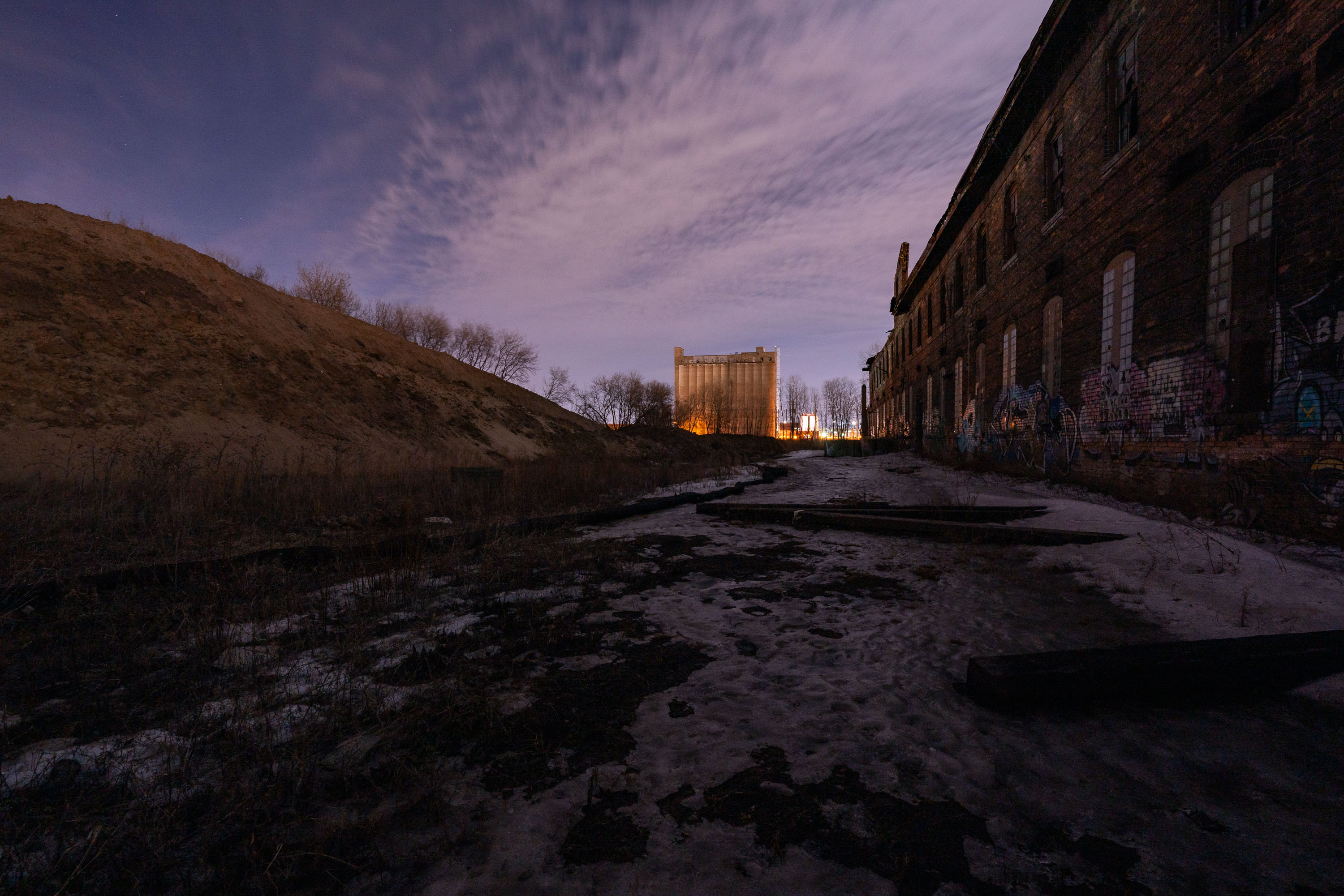
Harris Machinery and Grain Elevator
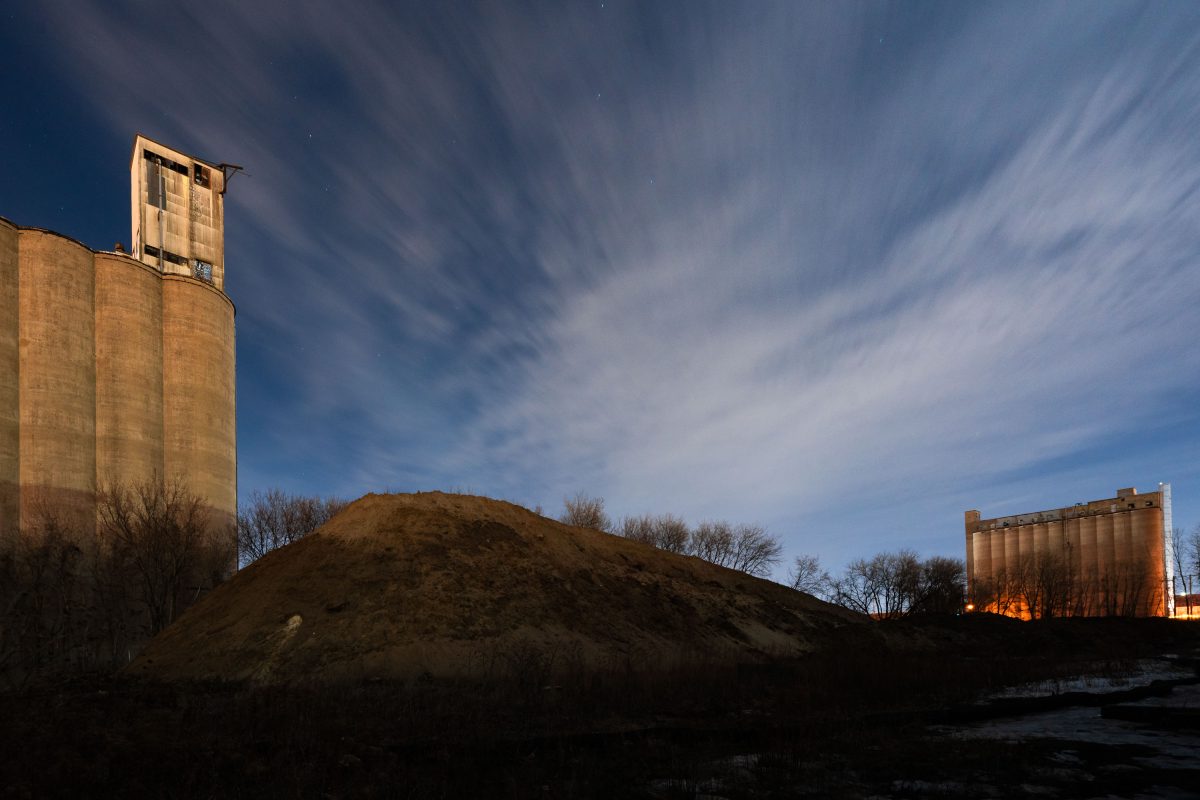
Night photo of the back of Harris Machinery and a grain elevator in the distance.

Harris Machinery and Grain Elevator

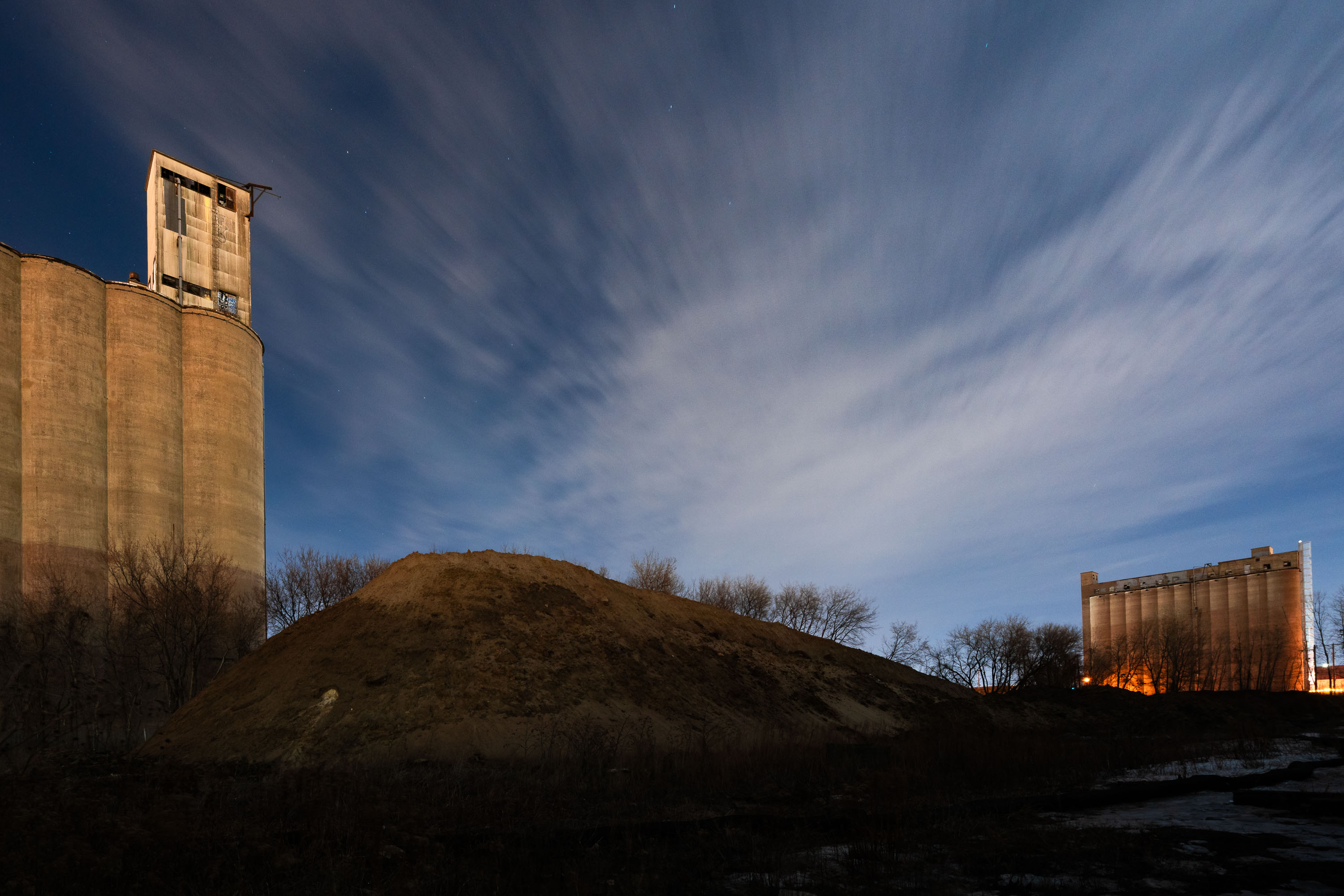
Illuminated concrete grain elevators flank an earthen mound near Dinkytown, Minneapolis.
Abandoned concrete grain elevators in Minneapolis, Minnesota.

Concrete Grain Elevators Near Dinkytown, Minneapolis
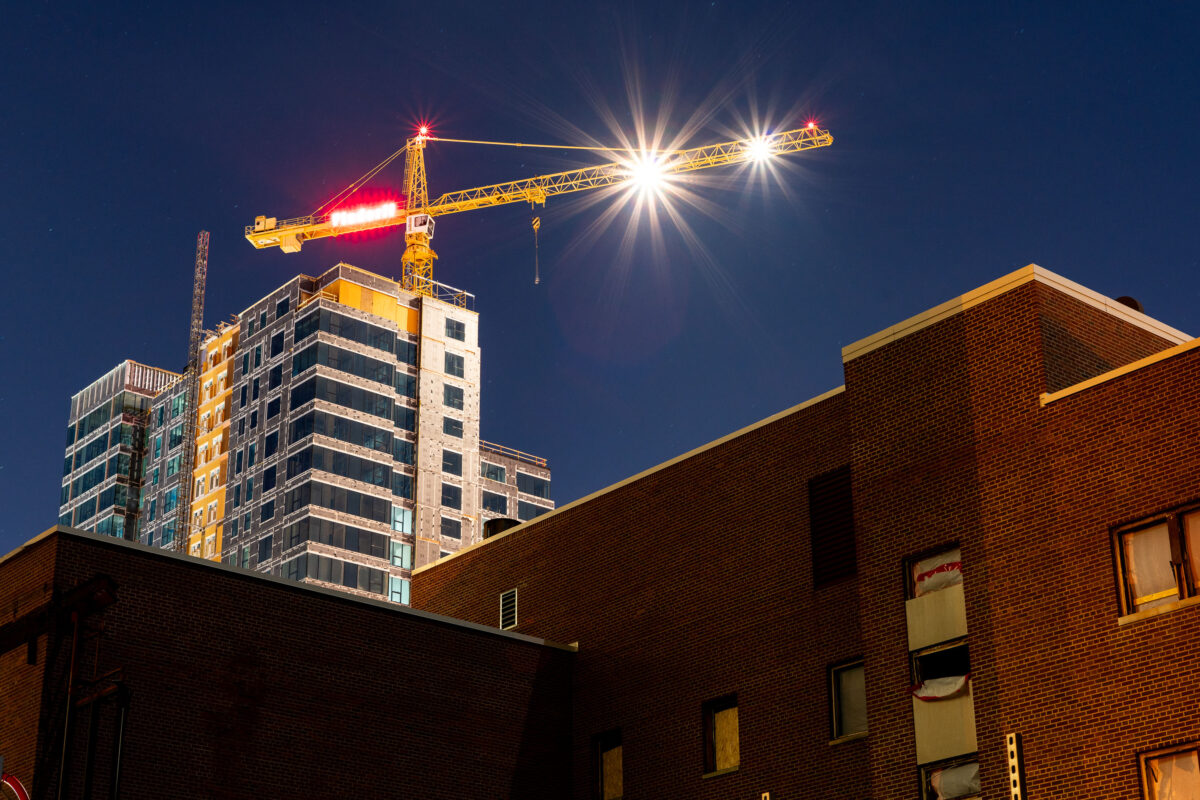
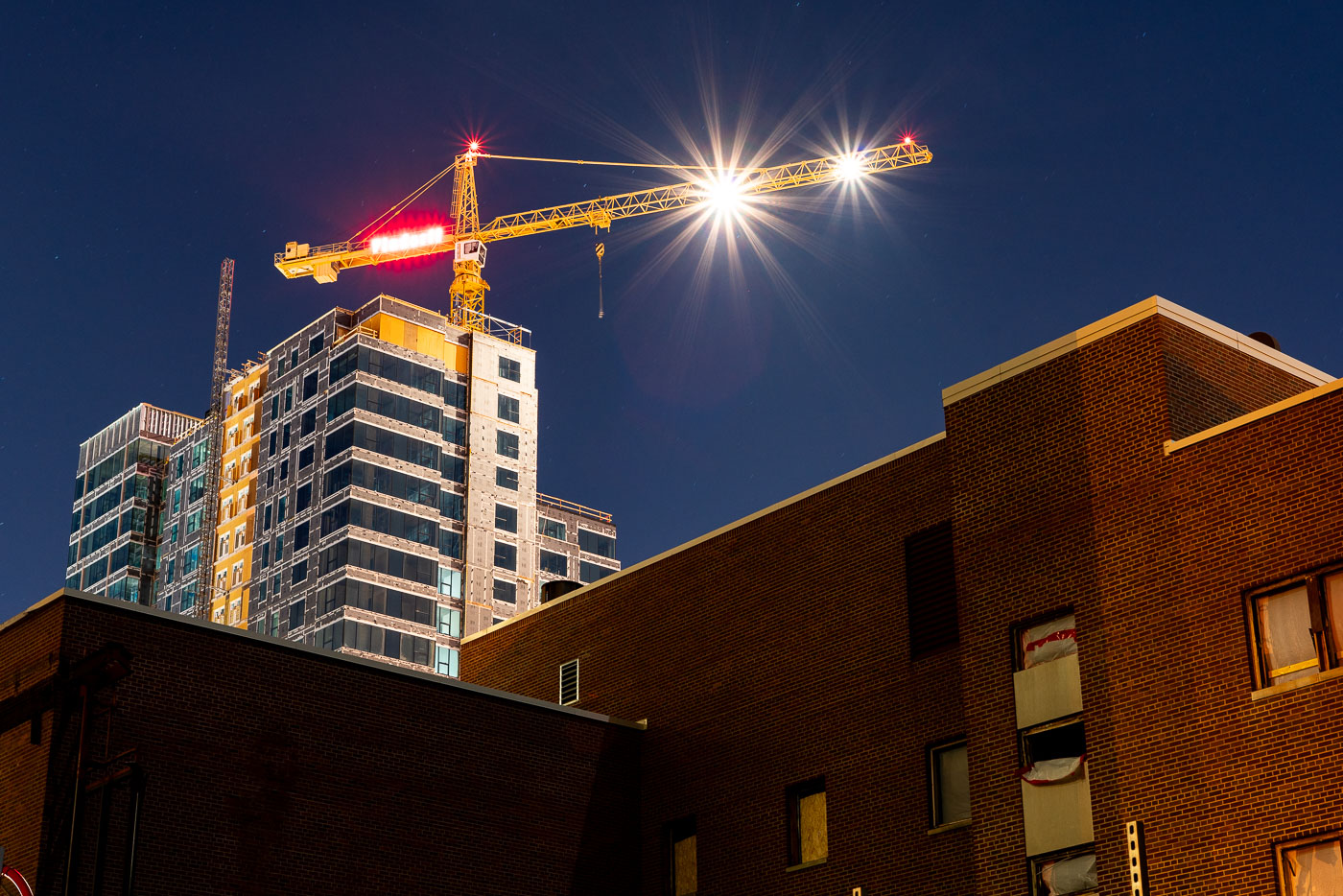
Tower crane over a high-rise construction site in Dinkytown, Minneapolis, near the University of Minnesota.
A tower crane stands over a high-rise construction site in Dinkytown, Minneapolis, near the University of Minnesota. Dinkytown is a commercial district adjacent to the university's Minneapolis campus, with student-oriented housing, shops, and restaurants. J.H. Findorff & Son Inc. was associated with the construction work at the site.

Tower Crane Over Dinkytown Construction, Minneapolis
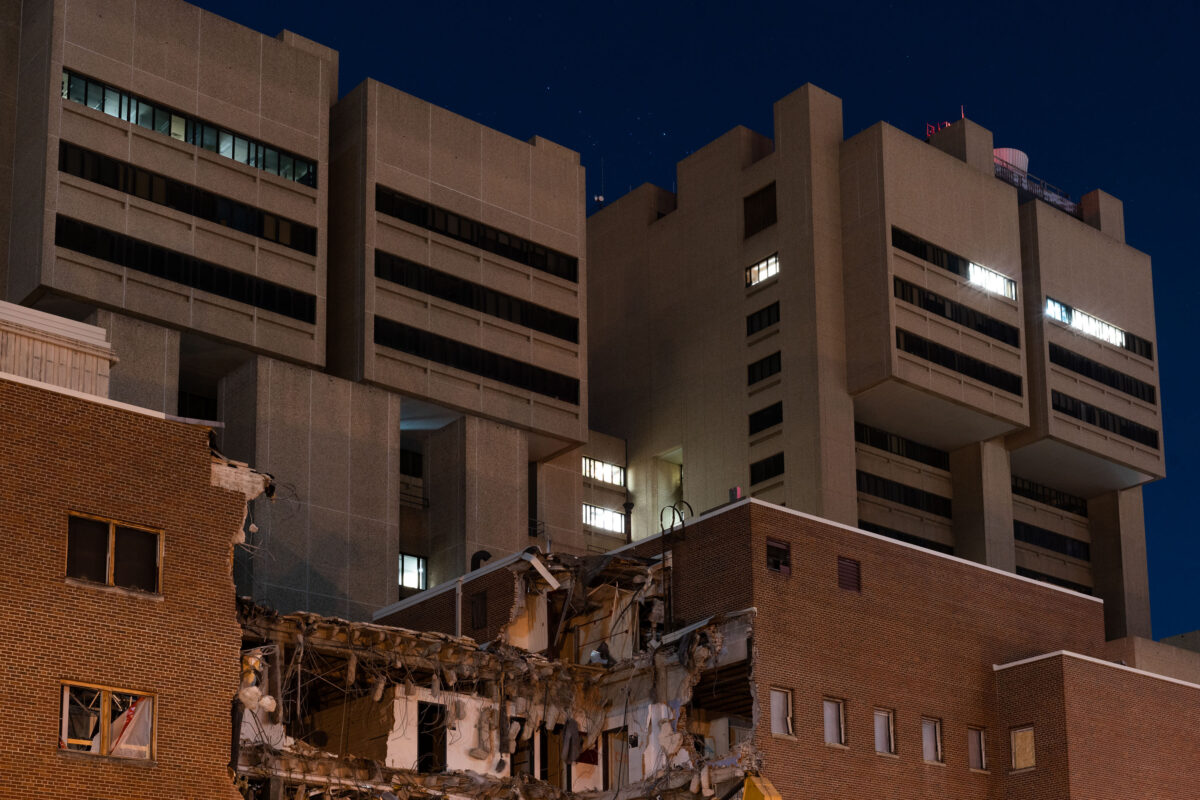
Demolished building with excavator and debris at night beneath University of Minnesota towers in Minneapolis.
Demolition of a building on the University of Minnesota campus in Minneapolis.

Nighttime Demolition Beneath University of Minnesota Dorm Towers
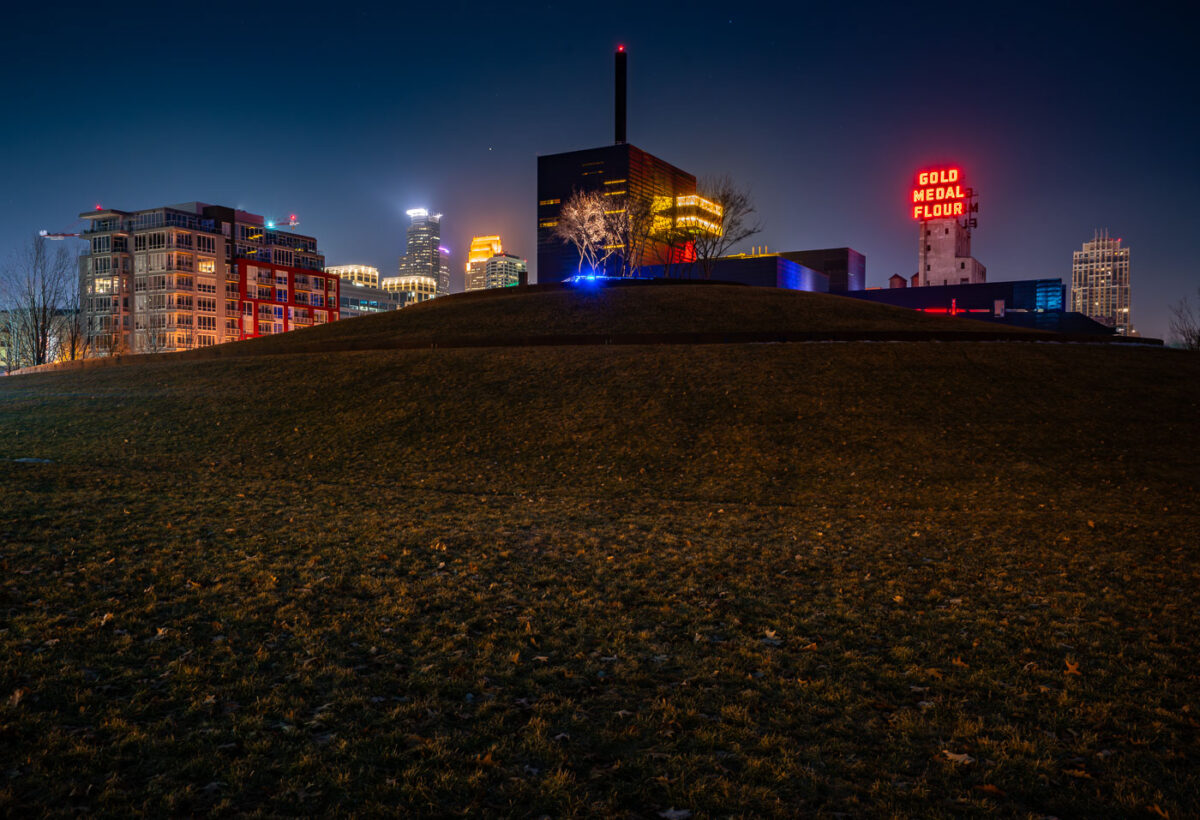
Gold Medal Park in Minneapolis with the Guthrie Theater and Gold Medal Flour sign at night.
Gold Medal Park in Minneapolis's Mill District sits beside the Guthrie Theater near the Mississippi riverfront. The park opened in 2007 on land tied to the area's former flour-milling district. The Gold Medal Flour sign marks the historic Washburn-Crosby milling complex near Mill City Museum.

Gold Medal Park and Guthrie Theater, Minneapolis
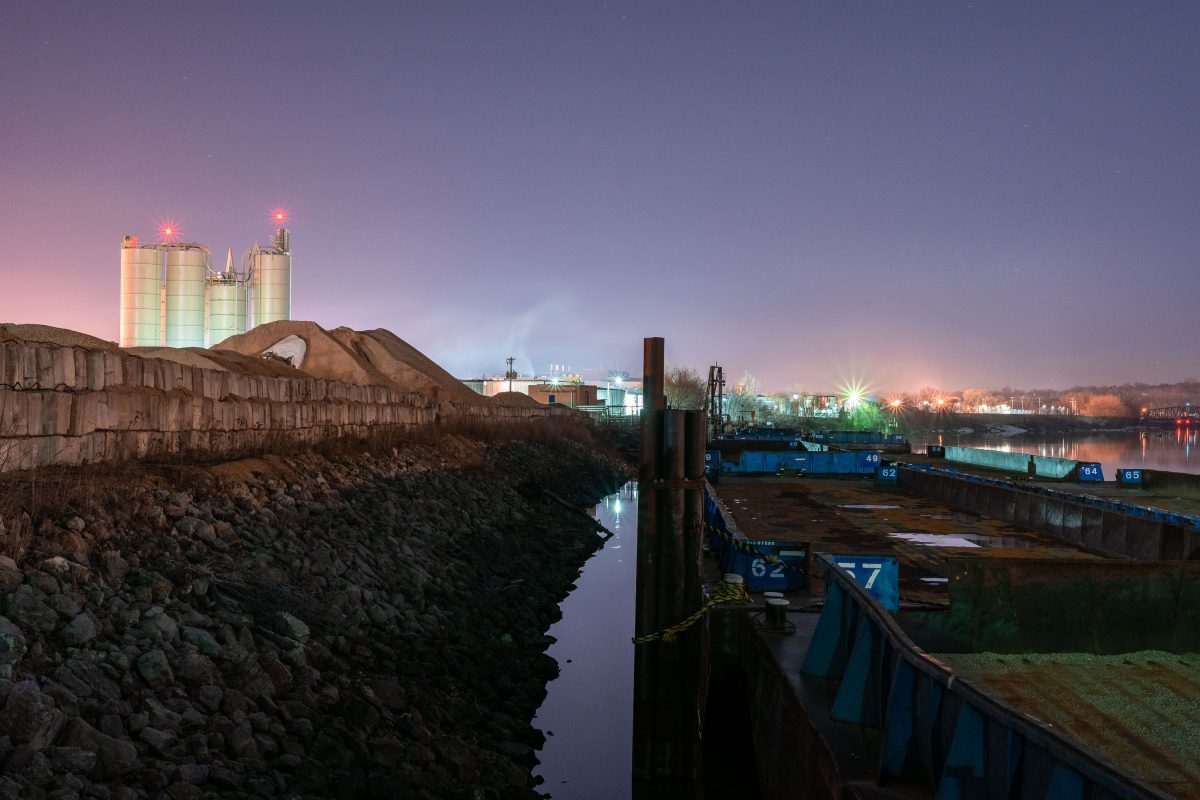
Barge on the Mississippi River in St. Paul
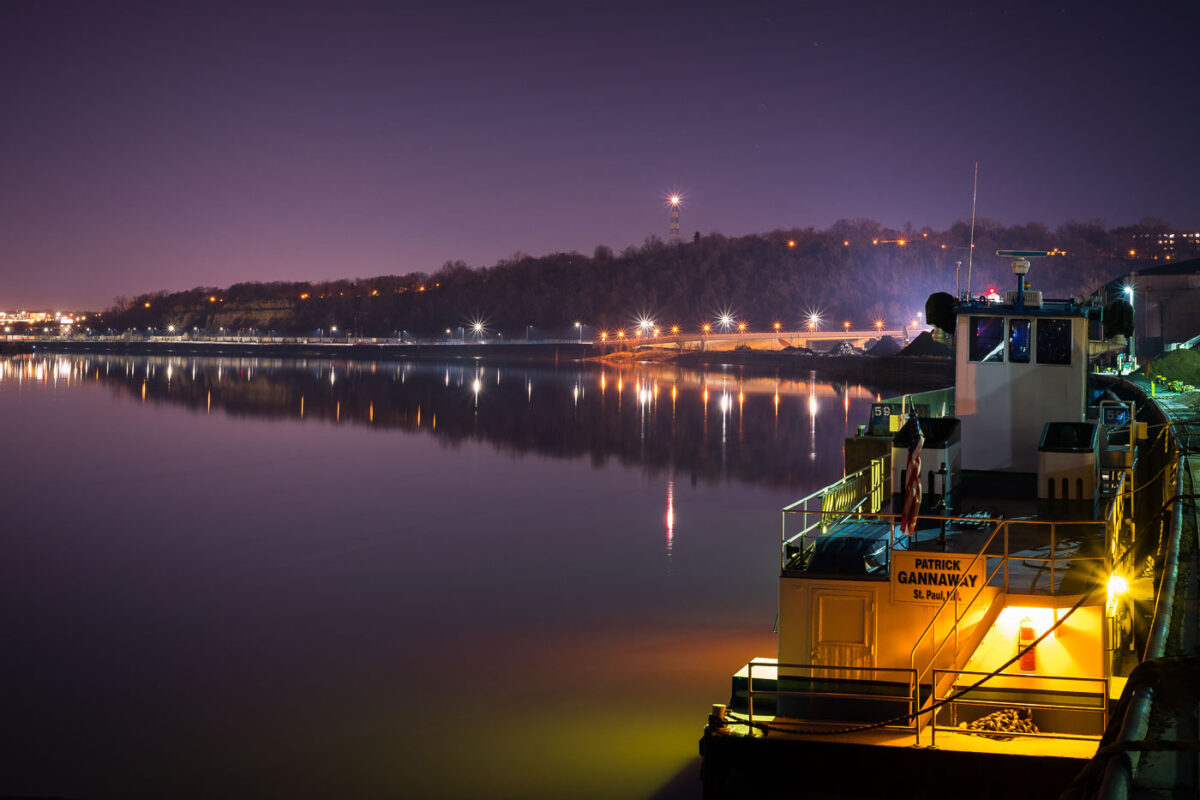
Barge on the Mississippi River in St. Paul Minnesota at night.

Barge on the Mississippi River in St. Paul

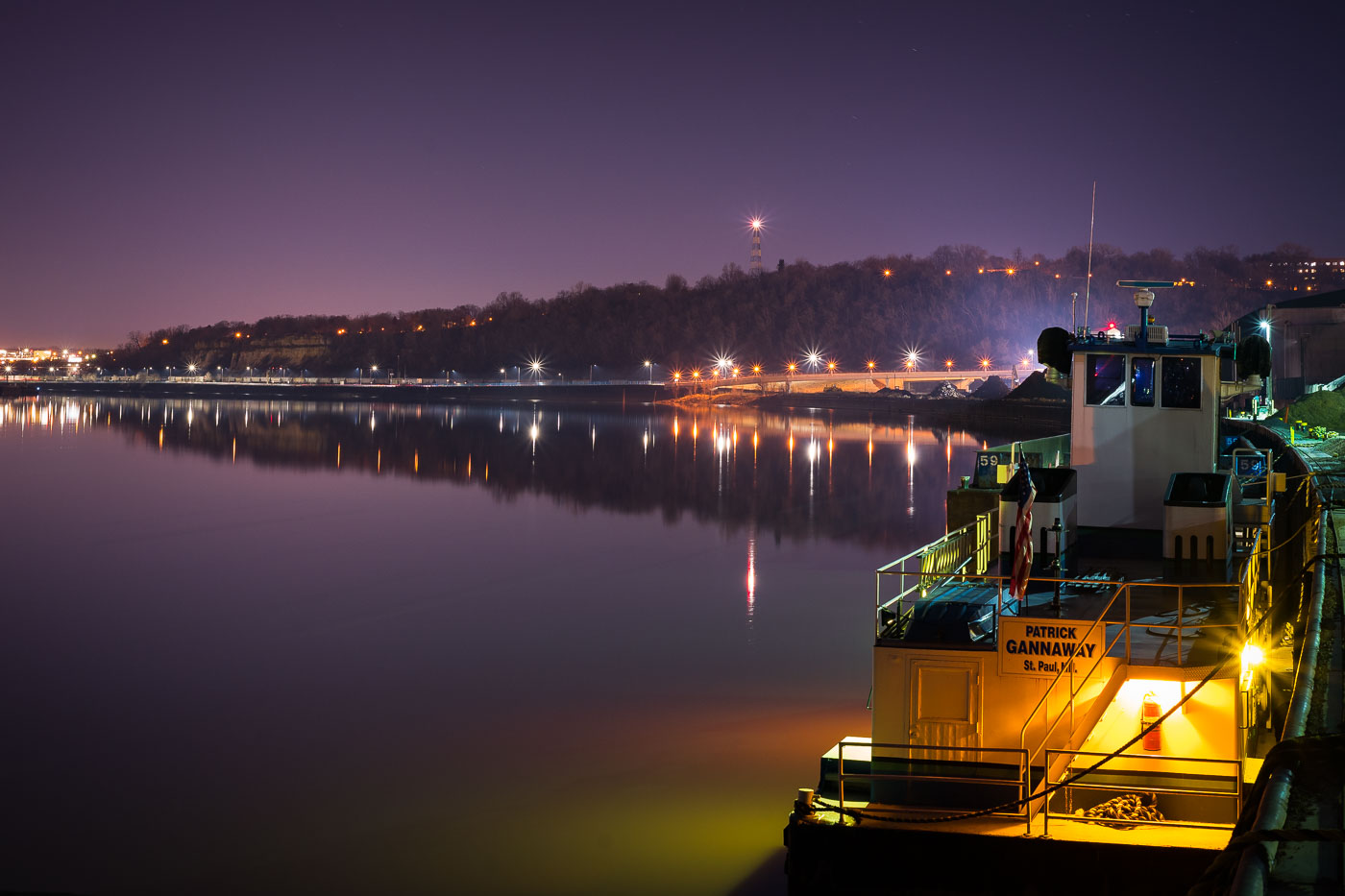
Patrick Gannaway Boat in St Paul
The towboat Patrick Gannaway is moored on the Mississippi River in St. Paul, Minnesota. The vessel is tied along the industrial riverfront below the city’s bluffs, where the Mississippi remains an active commercial navigation corridor for barge traffic and related marine operations. Night lighting along the opposite bank and on nearby riverfront facilities situates the boat within the working infrastructure of the upper Mississippi in March 2018.

Patrick Gannaway Boat in St. Paul

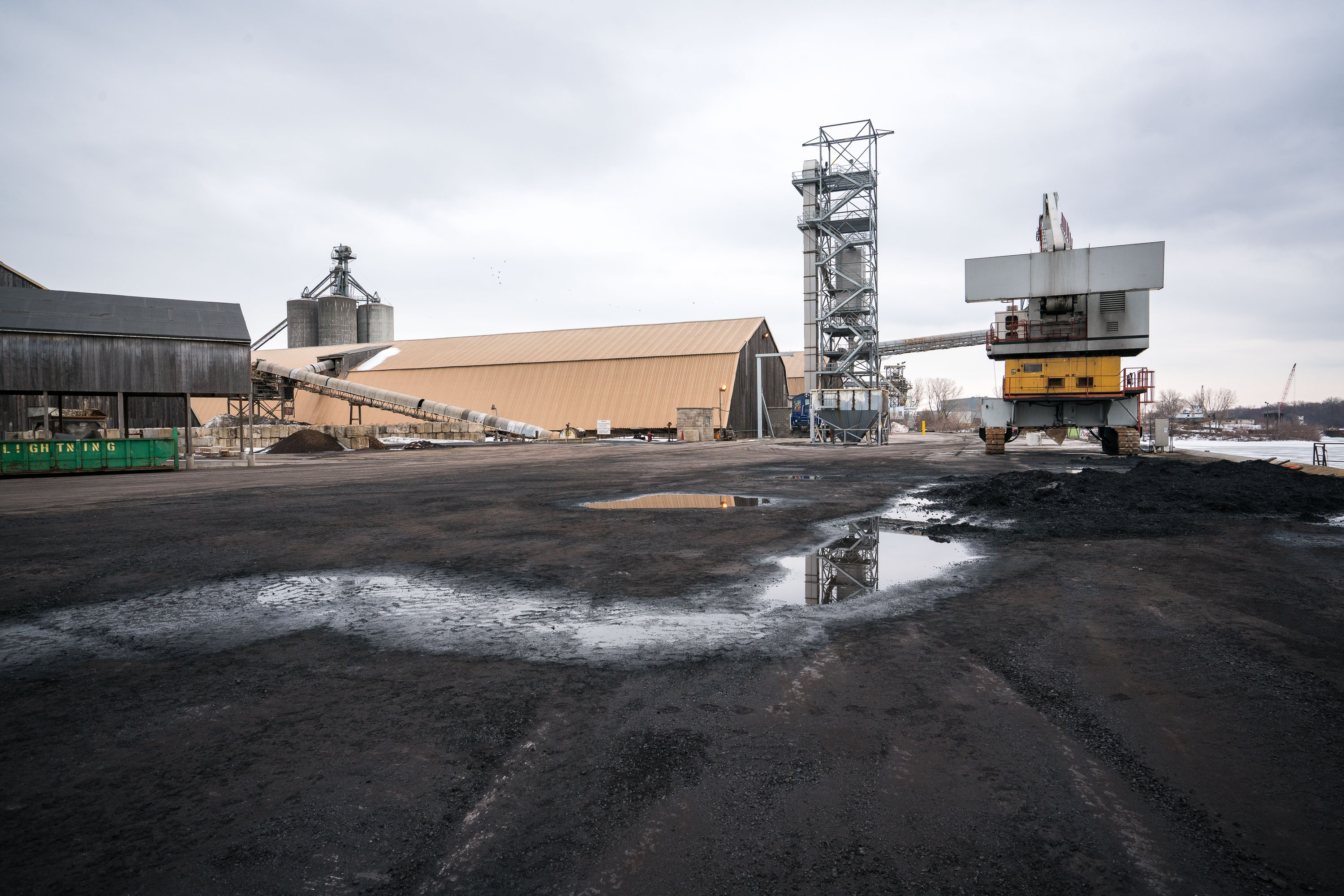
Grain elevator headhouse and conveyor structures at the Gavilon Red Rock Elevator in South St. Paul, Minnesota.
Gavilon Red Rock Elevator is a grain handling facility located in South St. Paul, Minnesota. The site is operated by Gavilon Grain, a commodity trading and grain storage company. The complex includes a headhouse tower, conveyor system, and grain silos used for receiving, storing, and loading grain shipments. Barge and rail access along the Mississippi River allows the facility to transfer grain between transportation modes.

Gavilon Red Rock Elevator, South St. Paul
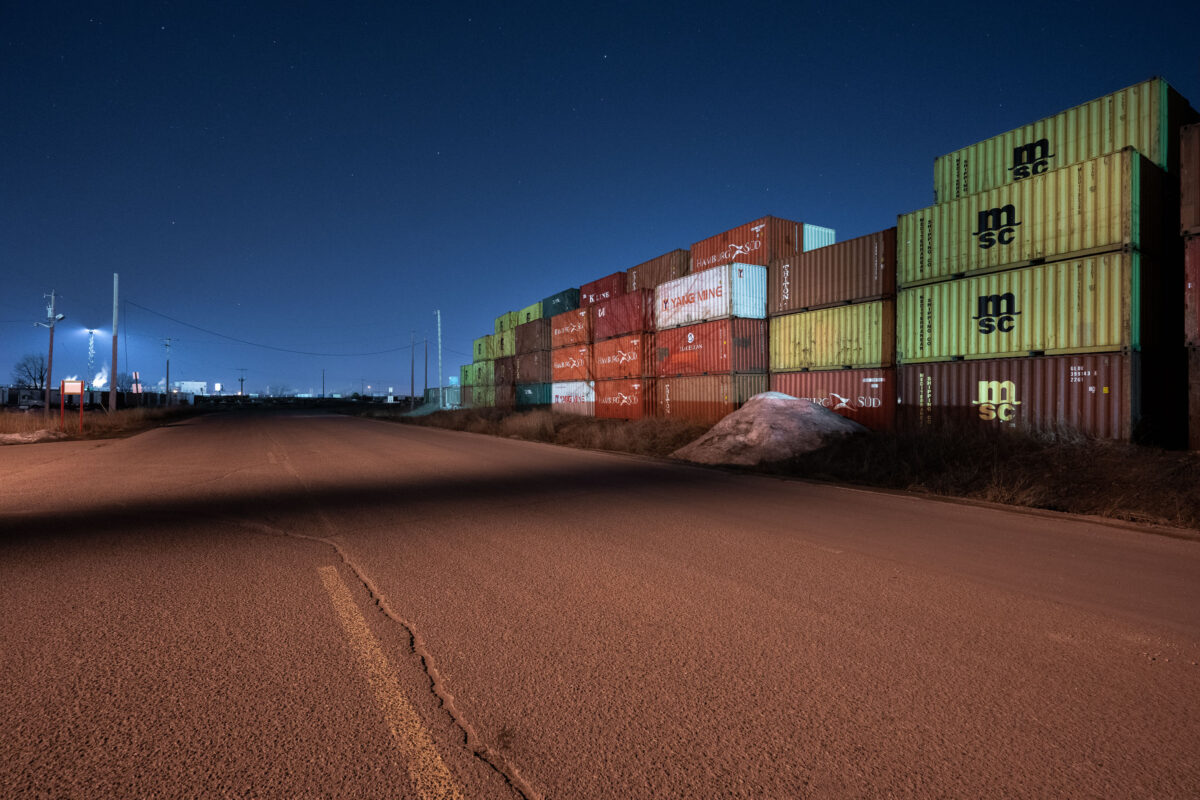
Stacked shipping containers at an intermodal yard in Minneapolis at night.
An intermodal container storage yard in Minneapolis displays stacked shipping containers from major carriers including MSC and Yang Ming. The facility operates as a transshipment and storage point for containerized cargo moving through the region's transportation network. Industrial lighting illuminates the colorful containers during nighttime operations.

Intermodal Container Yard, Minneapolis
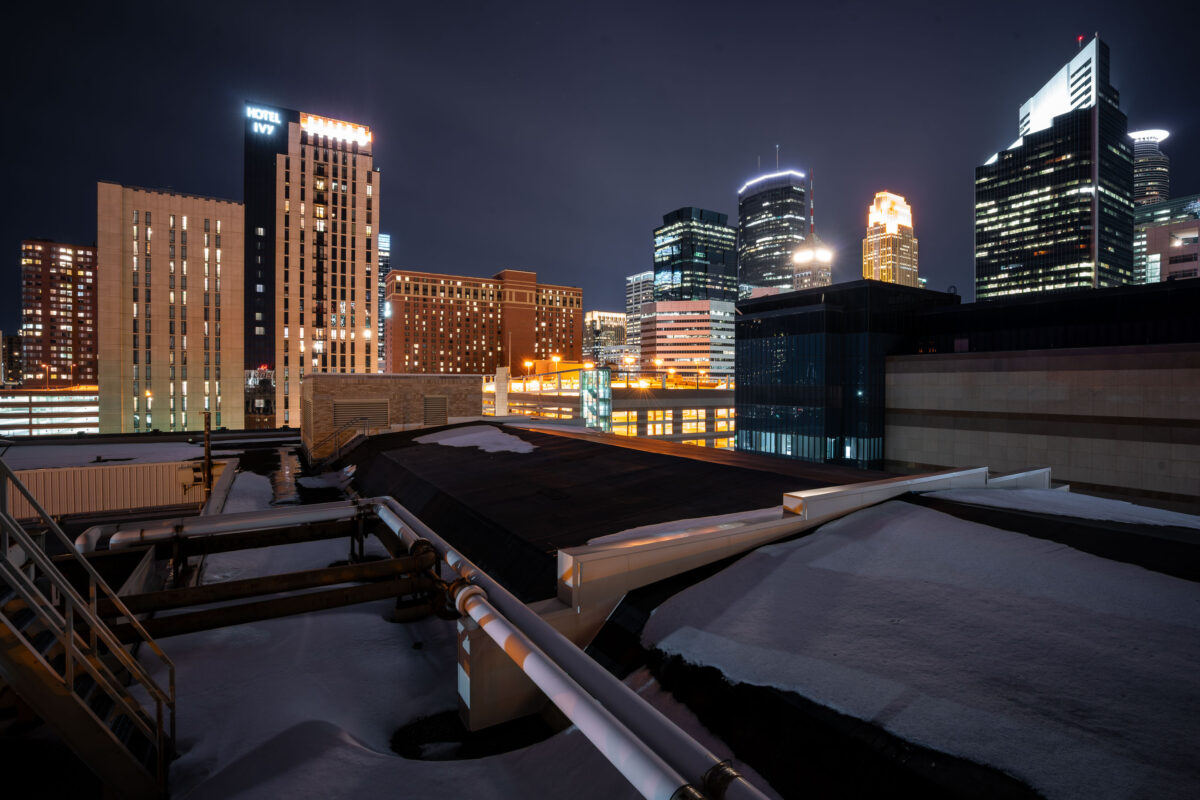
Hotel Ivy and IDS Center rise in the downtown Minneapolis skyline near Century Plaza.
Downtown Minneapolis skyline near Century Plaza includes Hotel Ivy, IDS Center, and Wells Fargo Center. Century Plaza houses the Minneapolis Police Department's 1st Precinct, which covers the downtown area.

Hotel Ivy and IDS Center, Downtown Minneapolis
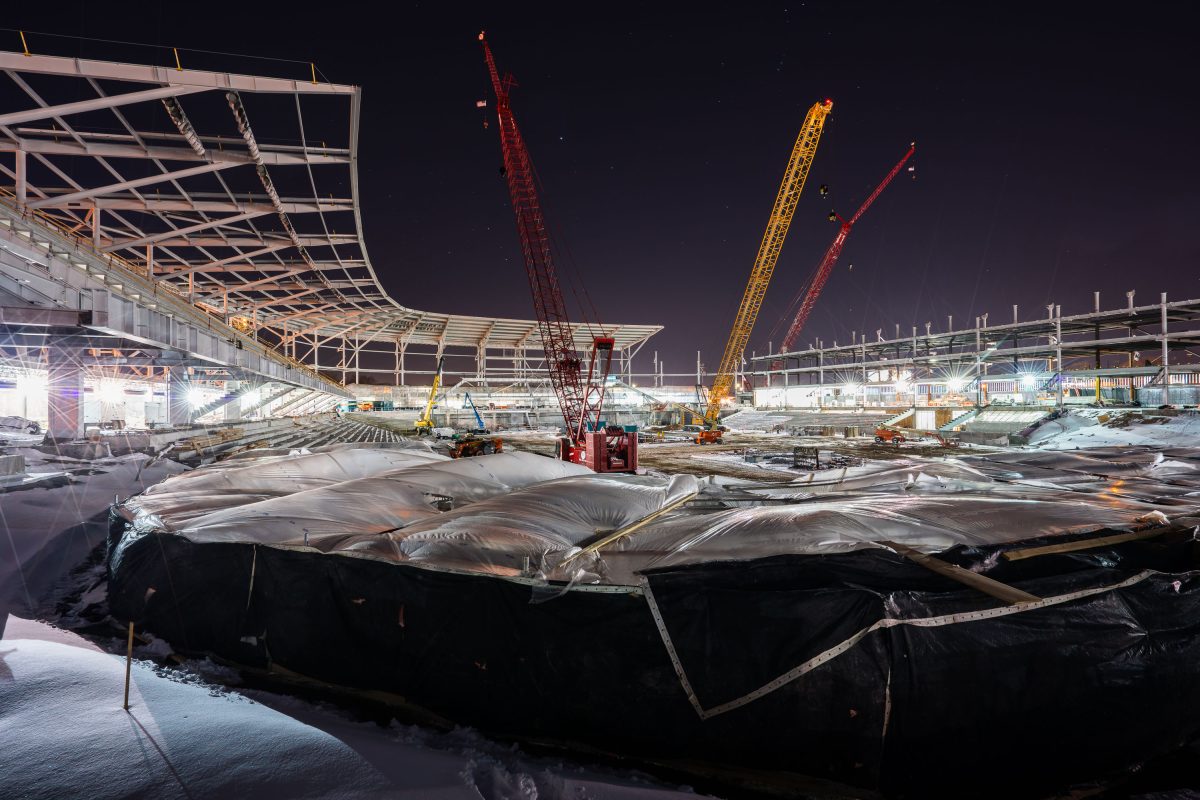
Allianz Field stadium under construction at night in St. Paul with illuminated cranes and steel structural framework.
Allianz Field, home of Minnesota United FC, rose on the former Metro Transit bus barn site at Snelling and St. Anthony Avenues in St. Paul's Midway neighborhood. Construction began in 2017, and the stadium opened in April 2019 with seating for about 19,400 fans. Cranes lift steel beams into place over the unfinished seating bowl.

Cranes Light Up Night Construction at Allianz Field, St. Paul
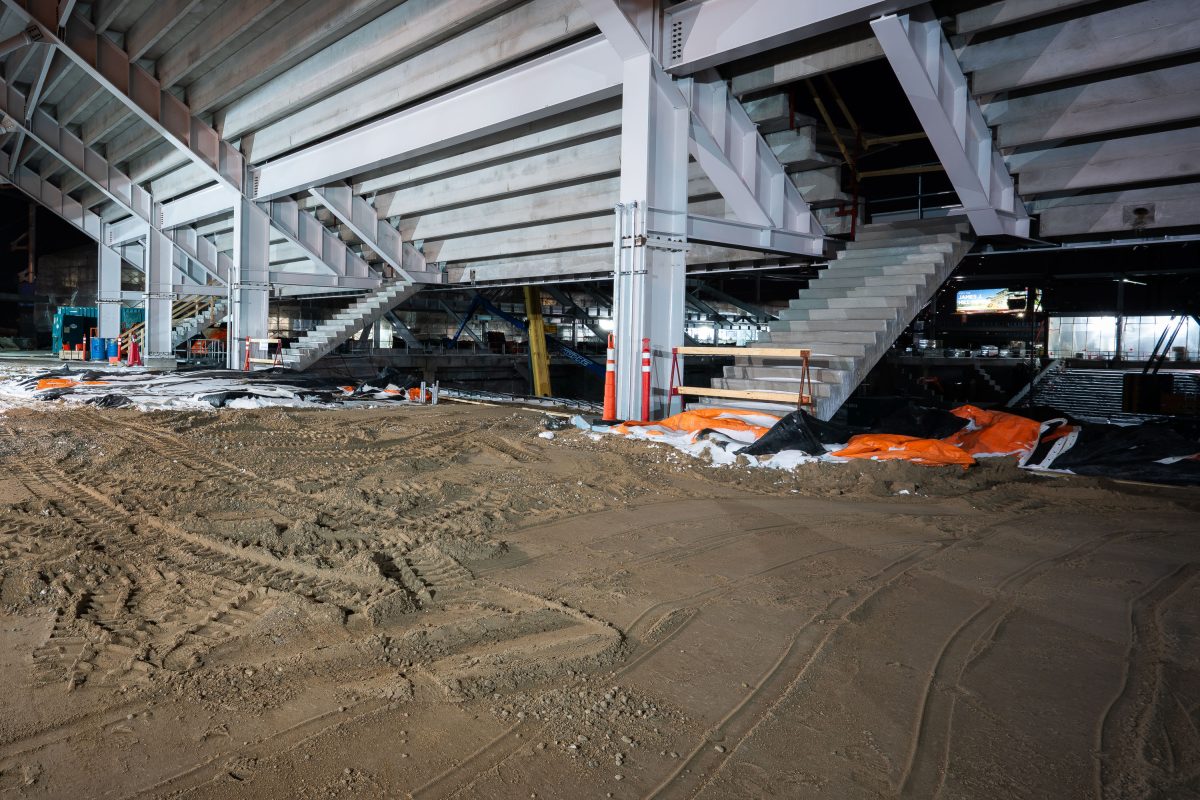
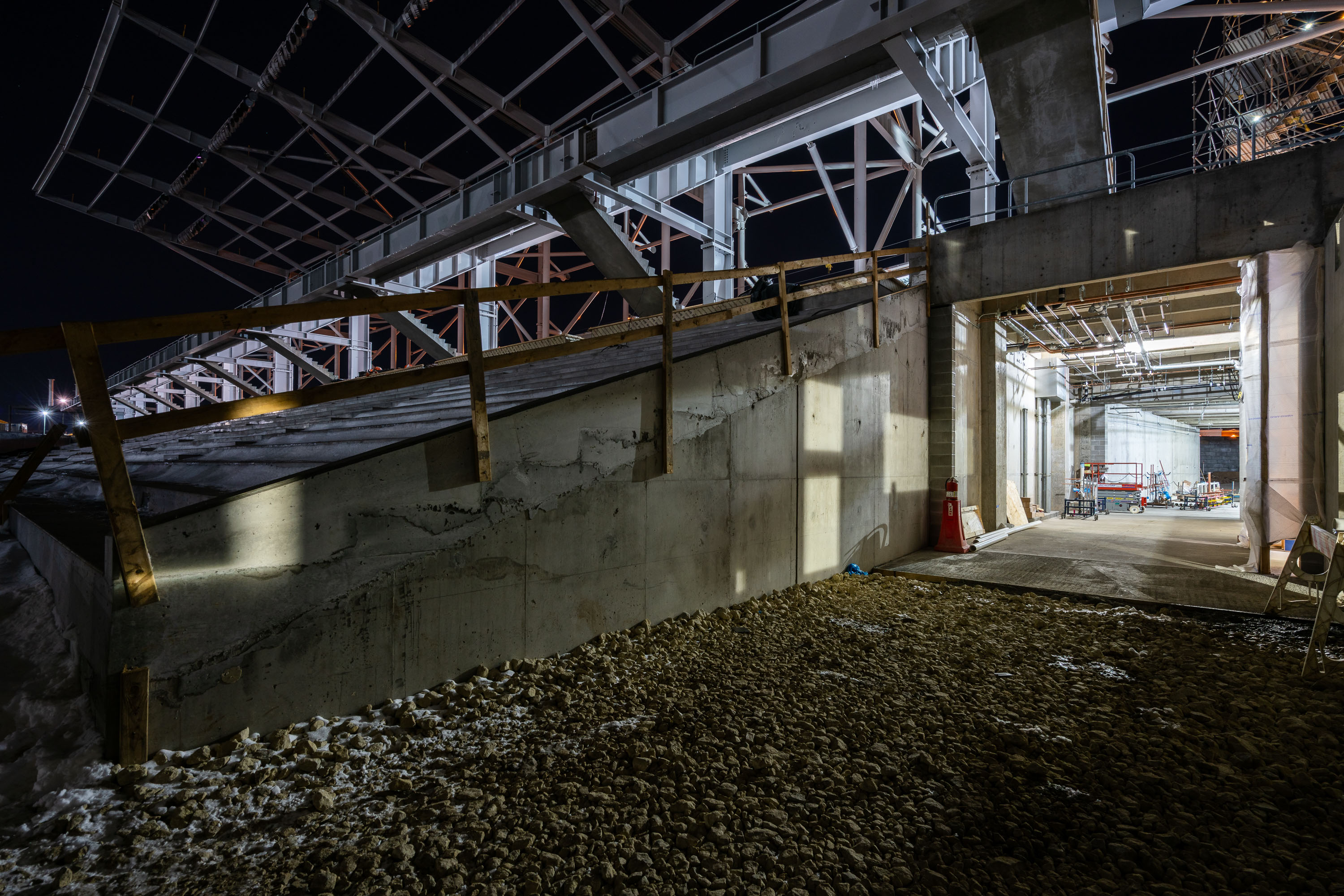
Allianz Field stadium under construction in St. Paul showing excavated dirt floor and white steel framework.
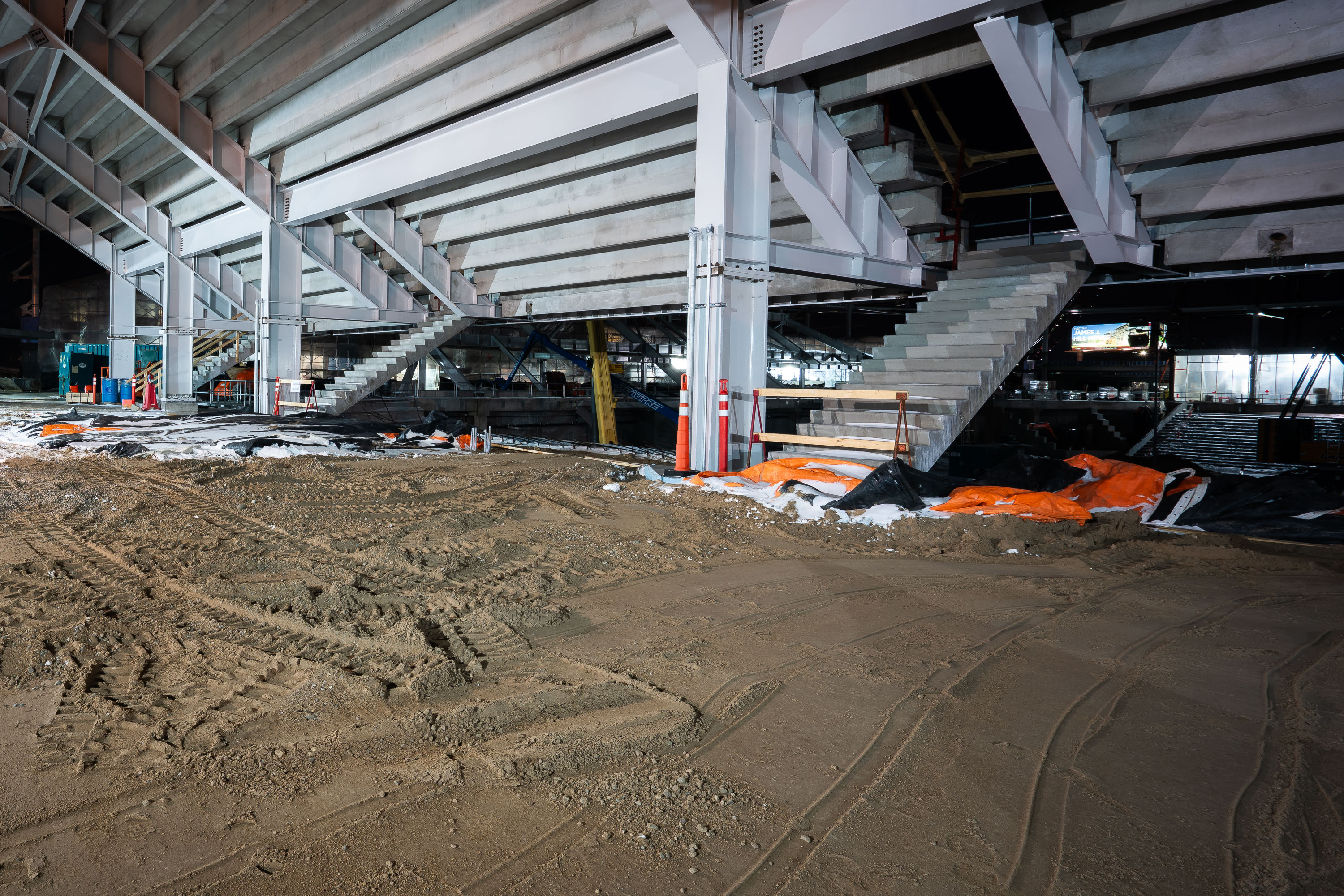
Allianz Field opened in April 2019 as the home of Minnesota United FC in St. Paul's Midway neighborhood, on a 17-acre site that once held a Metro Transit bus barn. The precast concrete stairwells and structural steel supporting the upper concourse went in during the stadium's final construction phase in early 2018, ahead of its first season.

Precast Stairwells and Dirt Floor Below Allianz Field’s Concourse
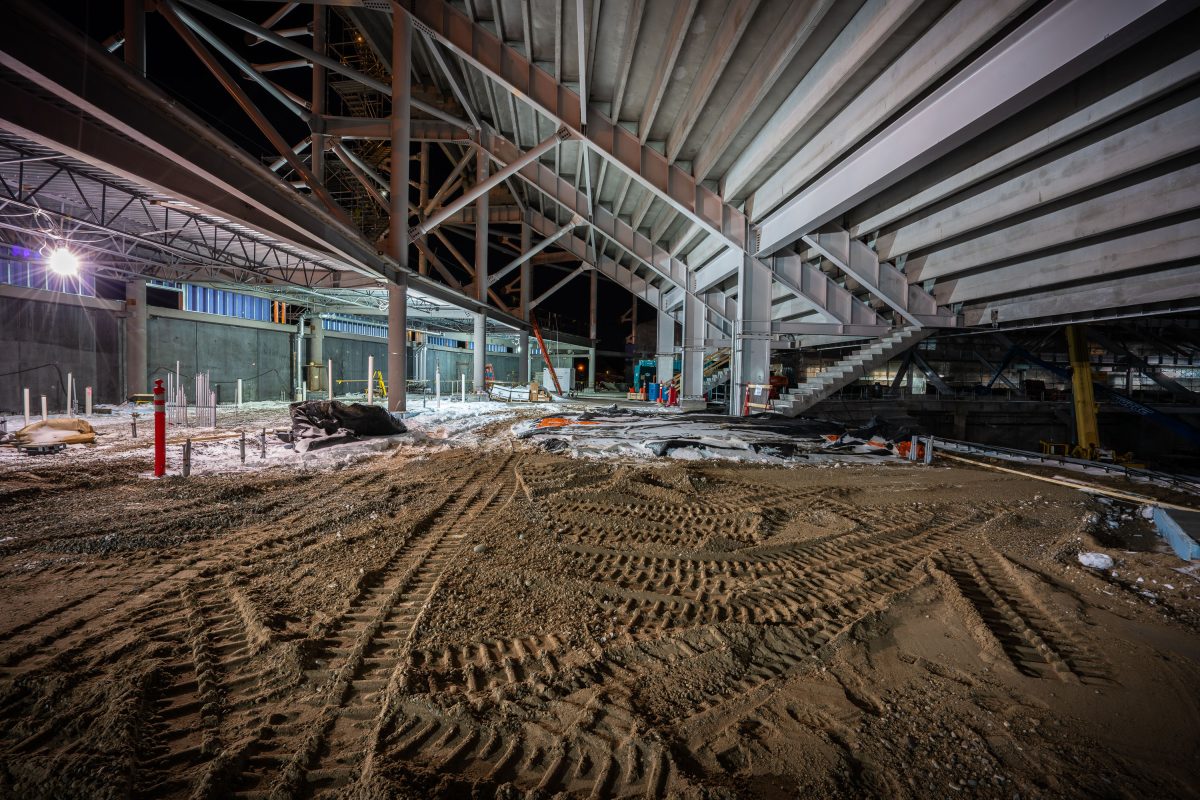
Allianz Field stadium under construction at night in St. Paul, Minnesota, showing excavated ground and steel framework.
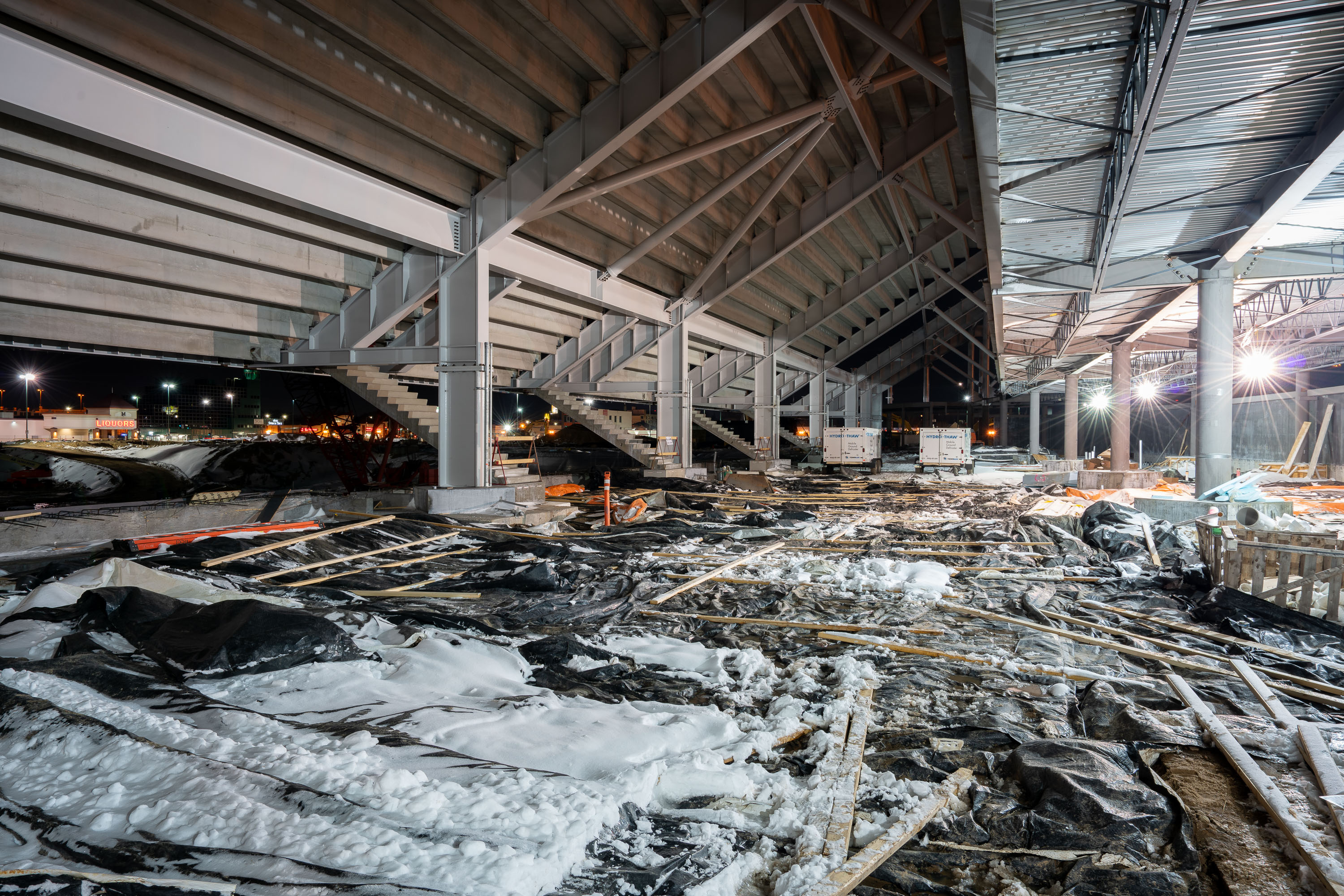
Allianz Field opened in April 2019 in the Midway neighborhood of St. Paul as the home of Minnesota United FC, on the site of the former Metro Transit bus barn. The stadium seats 19,400 and was designed by the architecture firm Populous, with a roof canopy of steel trusses that wraps the seating bowl. The project cost roughly 250 million dollars and was privately financed by an ownership group led by Bill McGuire.

Snow Covers the Future Field at Allianz Field, St. Paul
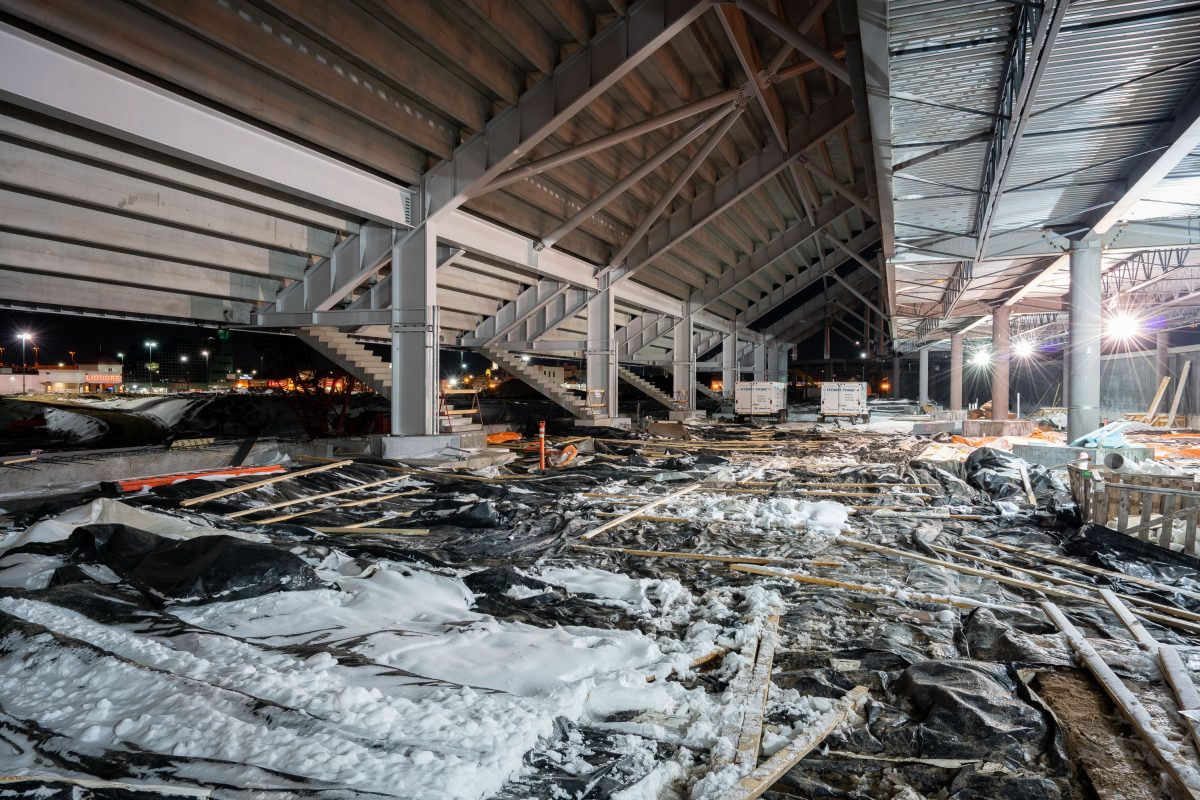
Interior of Allianz Field stadium under construction in St. Paul, Minnesota, showing excavated dirt floor and steel framework.
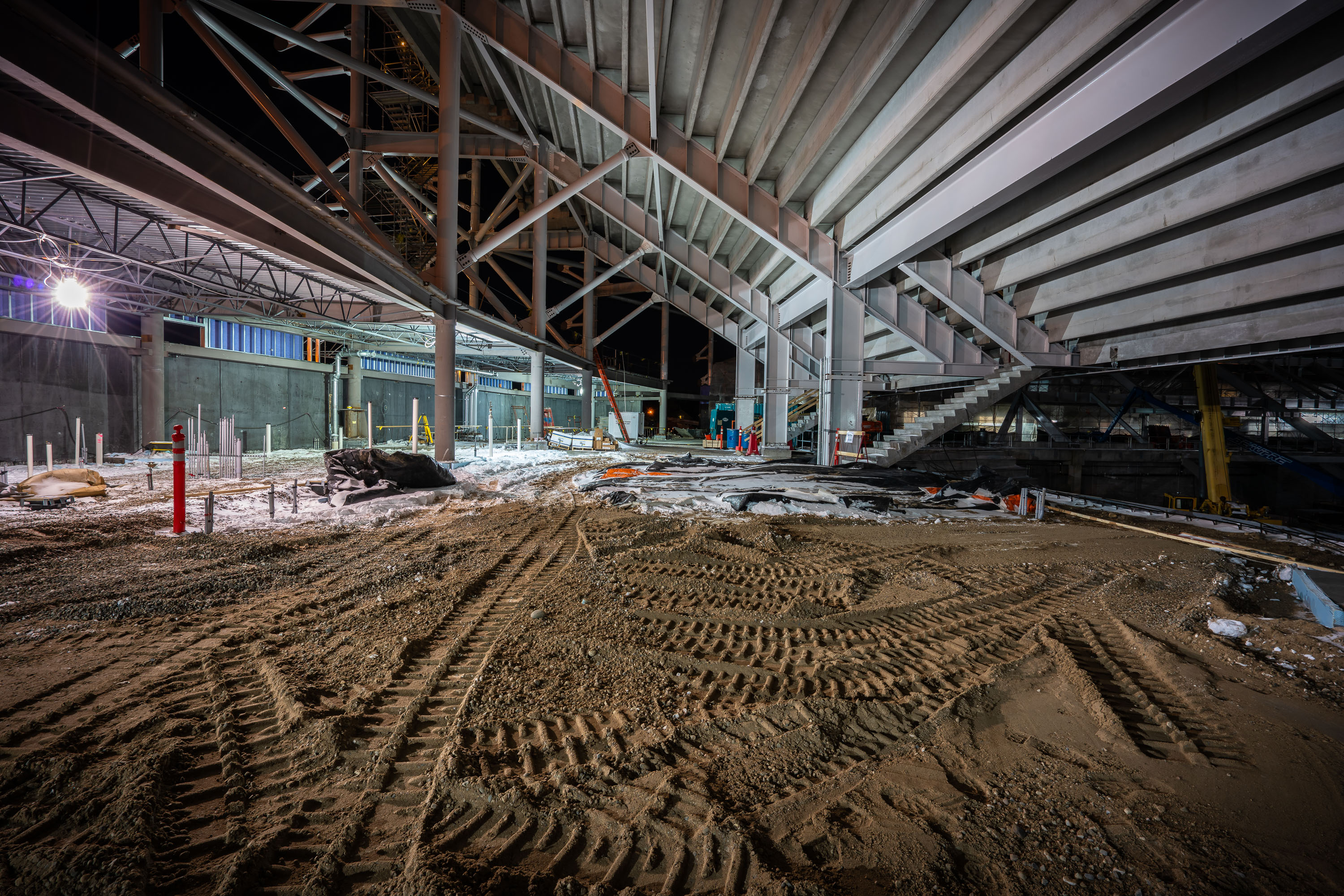
Allianz Field is the home of Minnesota United FC, built on the site of the former Midway Shopping Center in St. Paul's Midway neighborhood. The stadium opened in April 2019 with a seating capacity of 19,400 and a roof canopy supported by a steel truss system. Here the unpoured concourse floor still shows graded dirt and tire tracks beneath the completed truss framework.

Dirt Floor and Steel Trusses at Allianz Field, St. Paul
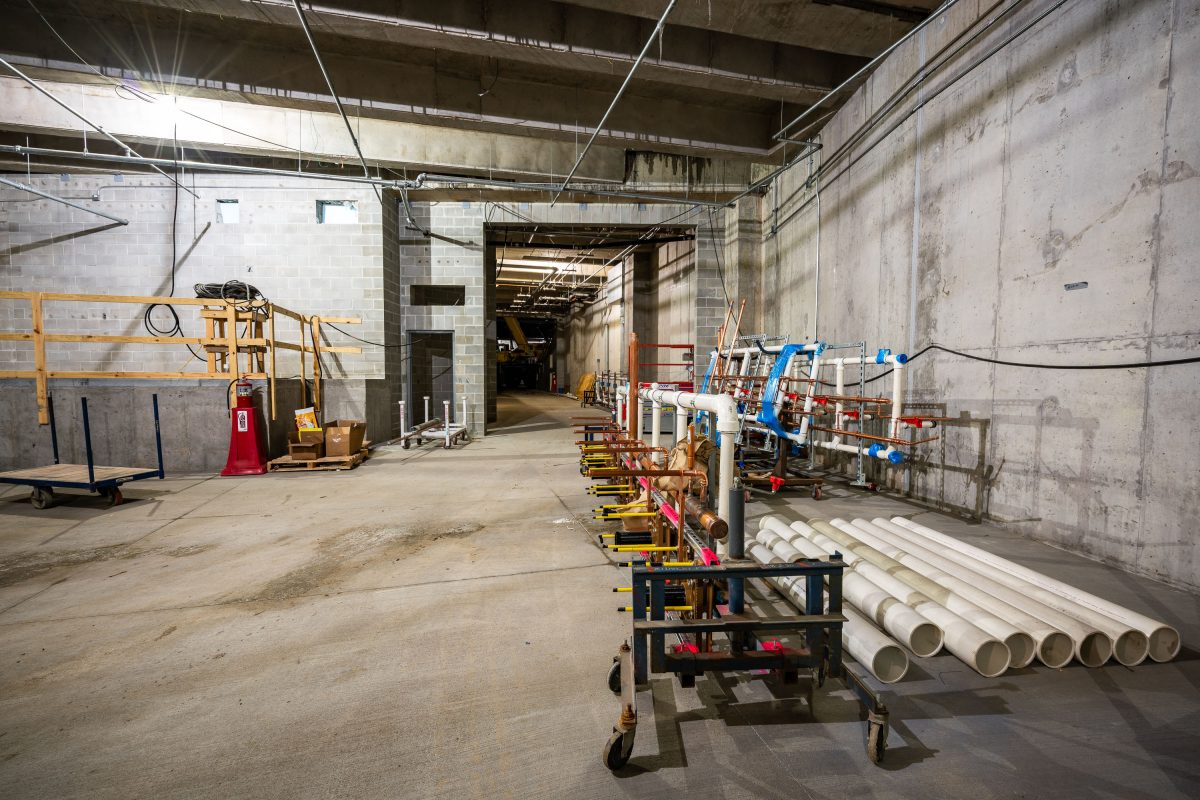
Interior of Allianz Field stadium under construction in St. Paul, Minnesota with equipment and materials.
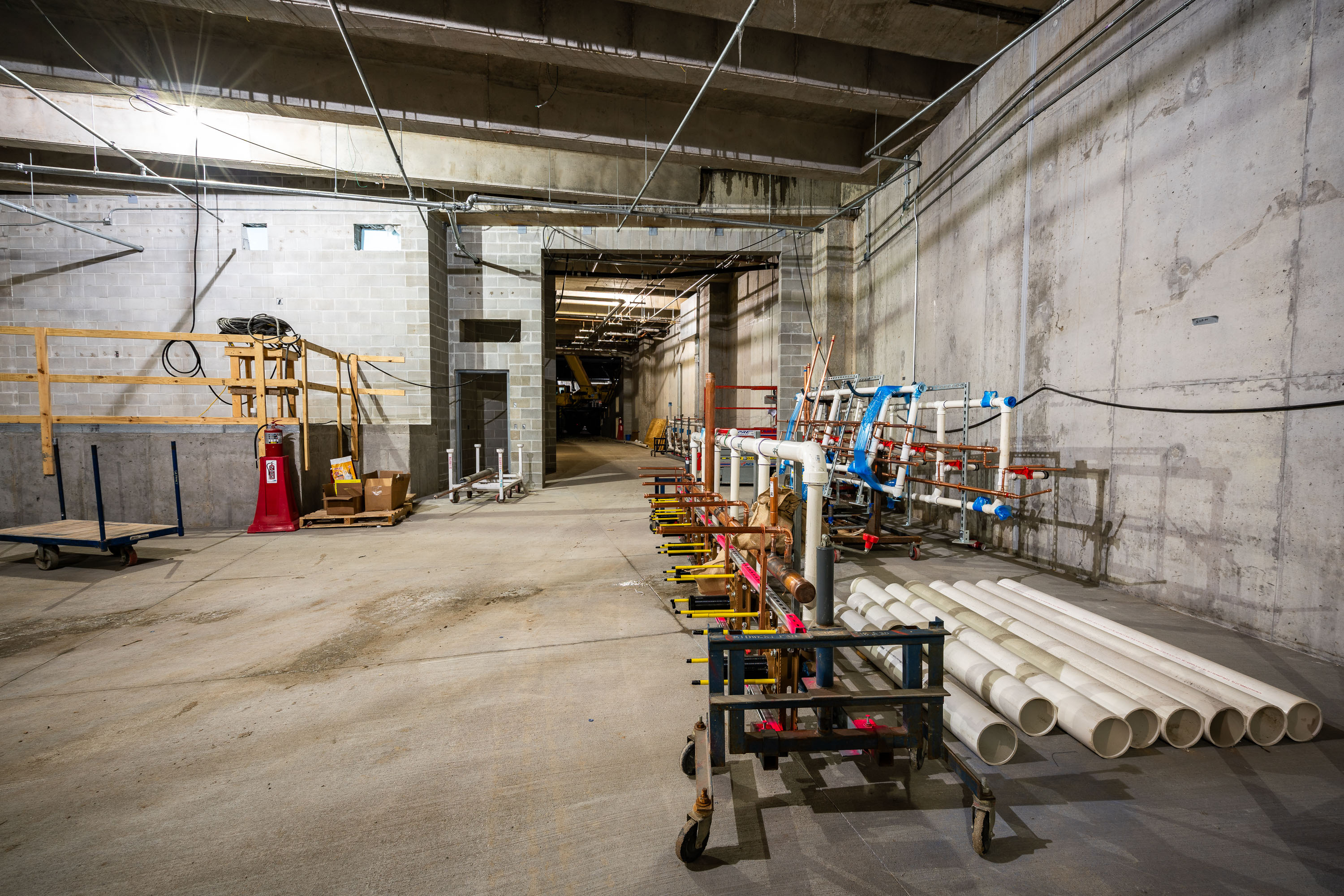
Allianz Field is the home stadium of Minnesota United FC in the Midway neighborhood of St. Paul, built from 2017 to 2019 for about $250 million. Populous designed the 19,400-seat stadium on a 34.8 acre site. Service corridors beneath the seating bowl carry the plumbing, wiring, and ductwork needed to run concessions, restrooms, and locker rooms on game days.

Plumbing Staged in a Service Corridor at Allianz Field, St. Paul
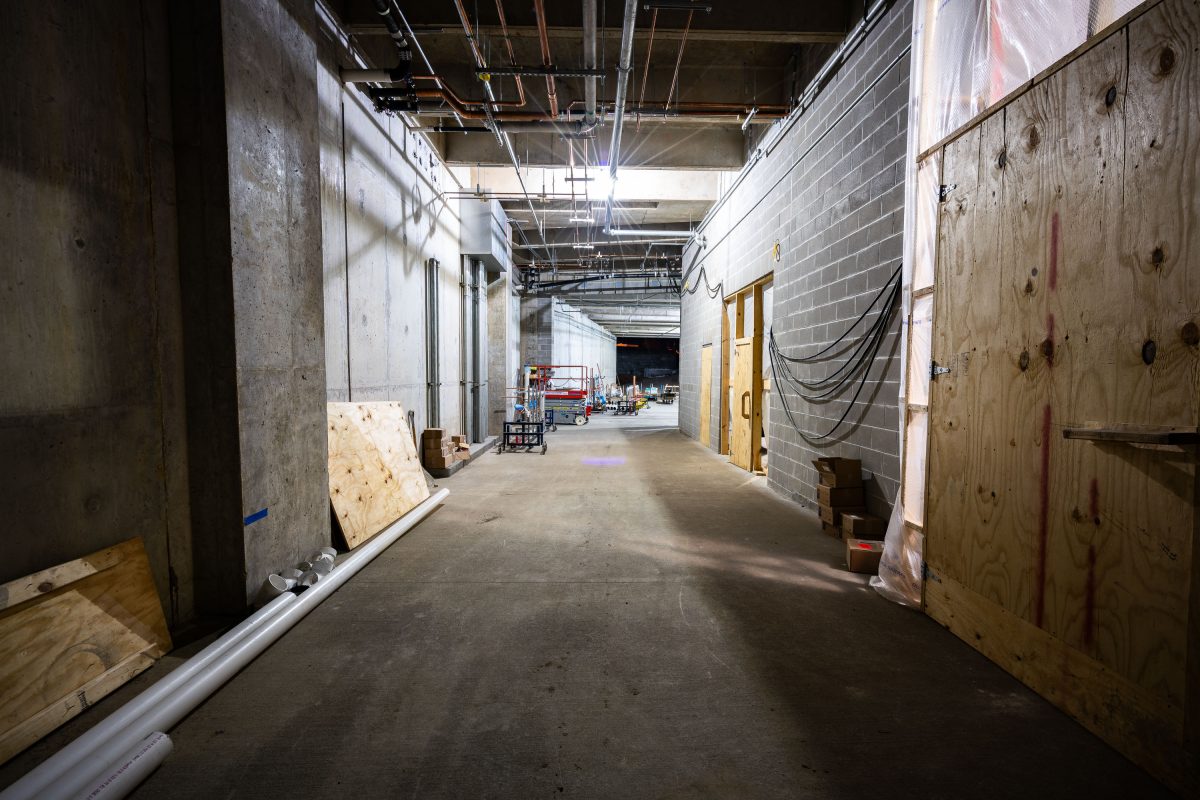
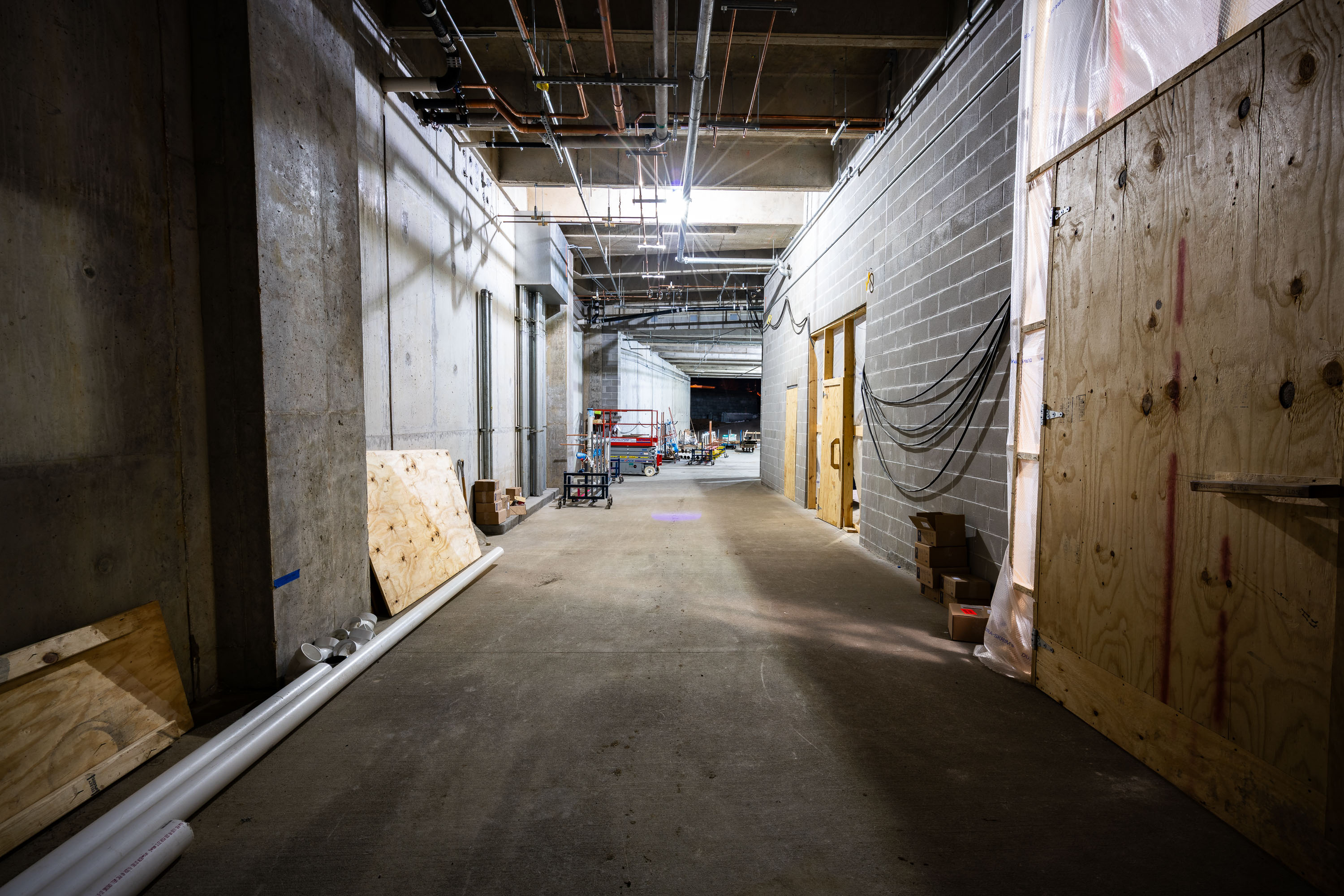
Interior hallway of Allianz Field stadium under construction in St. Paul, Minnesota.
Allianz Field is the Minnesota United FC stadium in the Midway neighborhood of St. Paul, built on a 34.7 acre site once used by Metro Transit for bus storage. Designed by Populous, the stadium opened in April 2019 with about 19,400 seats after roughly two years of construction. This lower-level concourse, cast in concrete and concrete block, carries the mechanical, electrical, and plumbing runs for the seating bowl above.

Unfinished Concourse Hallway at Allianz Field, St. Paul
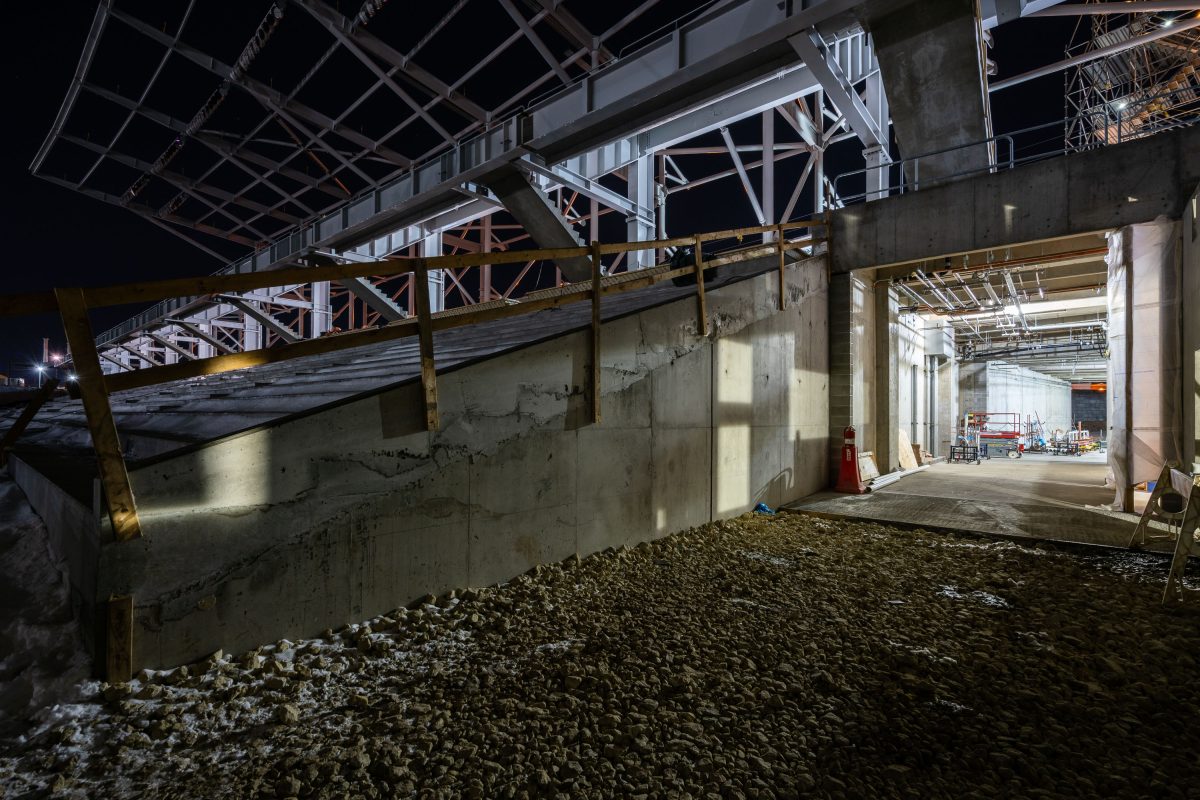
Nighttime construction site of Allianz Field stadium in St. Paul showing concrete foundation, steel framework, and illuminated
Allianz Field is the home of Minnesota United FC at the corner of Snelling and University Avenues in St. Paul, built on the site of a former Metro Transit bus barn. It opened in April 2019 as the first stadium in Minnesota built specifically for professional soccer, with a capacity of about 19,400 and a construction cost of roughly 150 million dollars. The concrete seating bowl and steel roof trusses went up before the stadium's translucent roof panels and exterior mesh were added.

Concrete Seating Bowl Takes Shape at Allianz Field, St. Paul
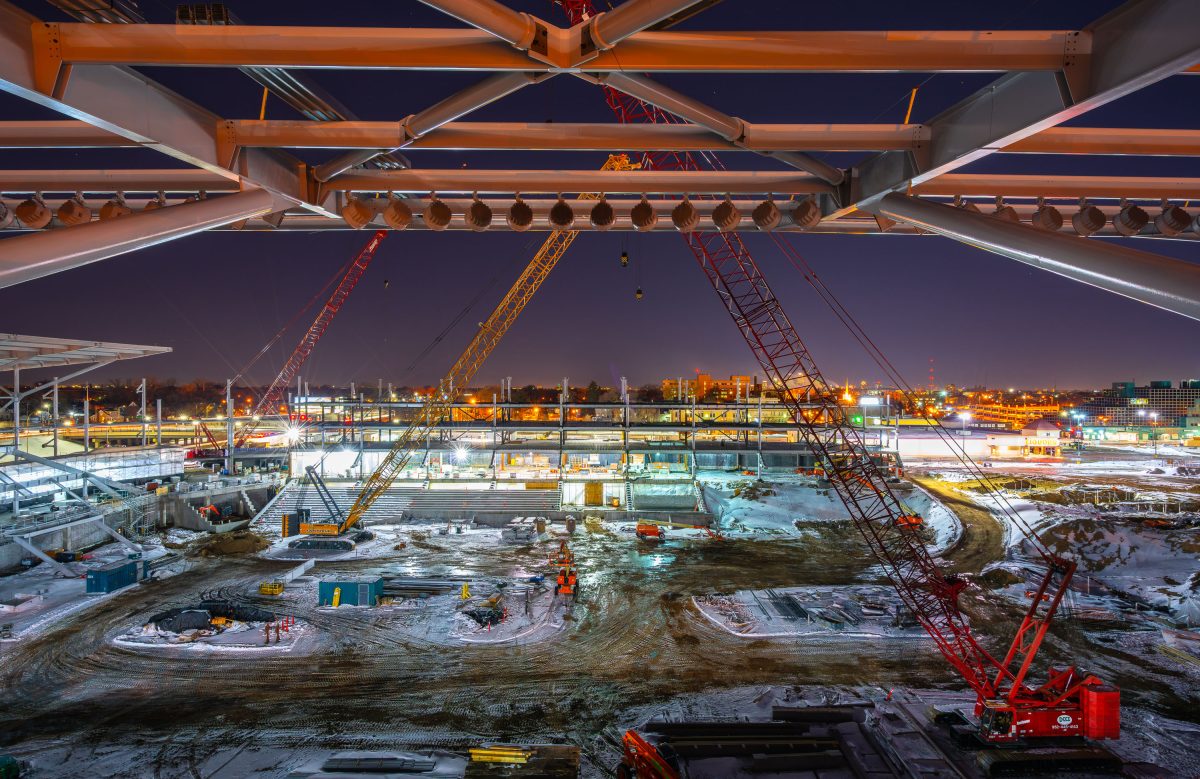
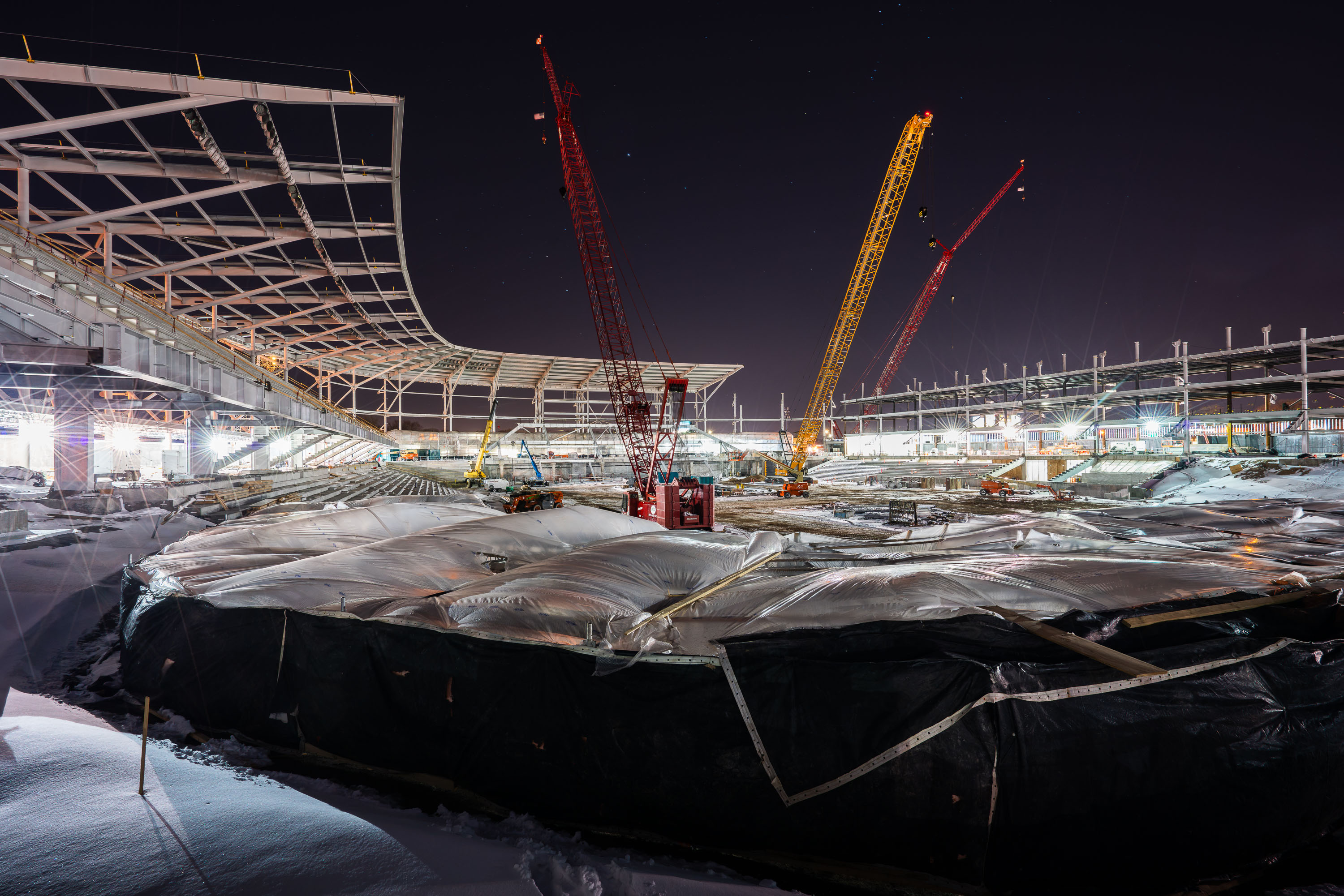
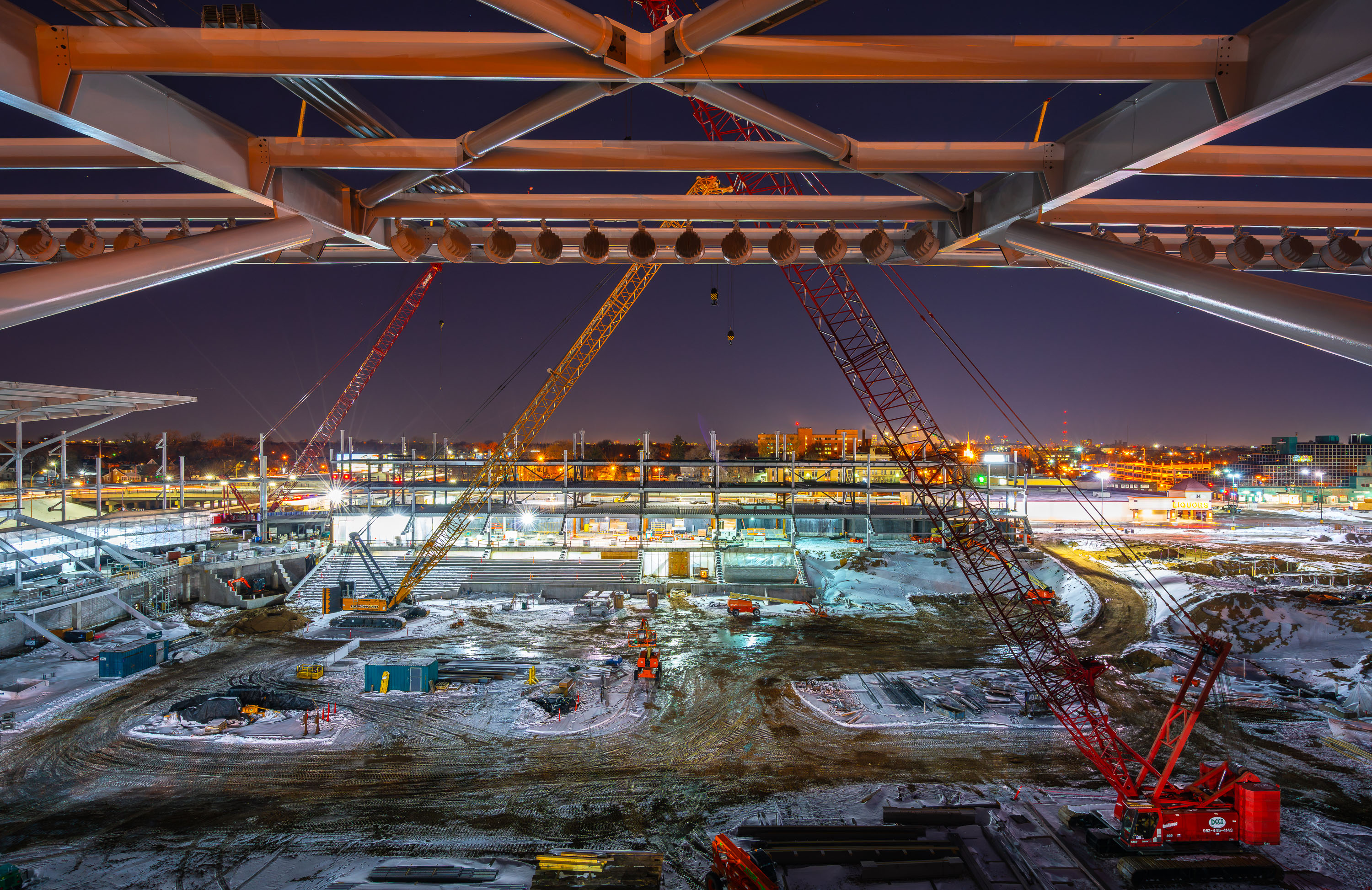
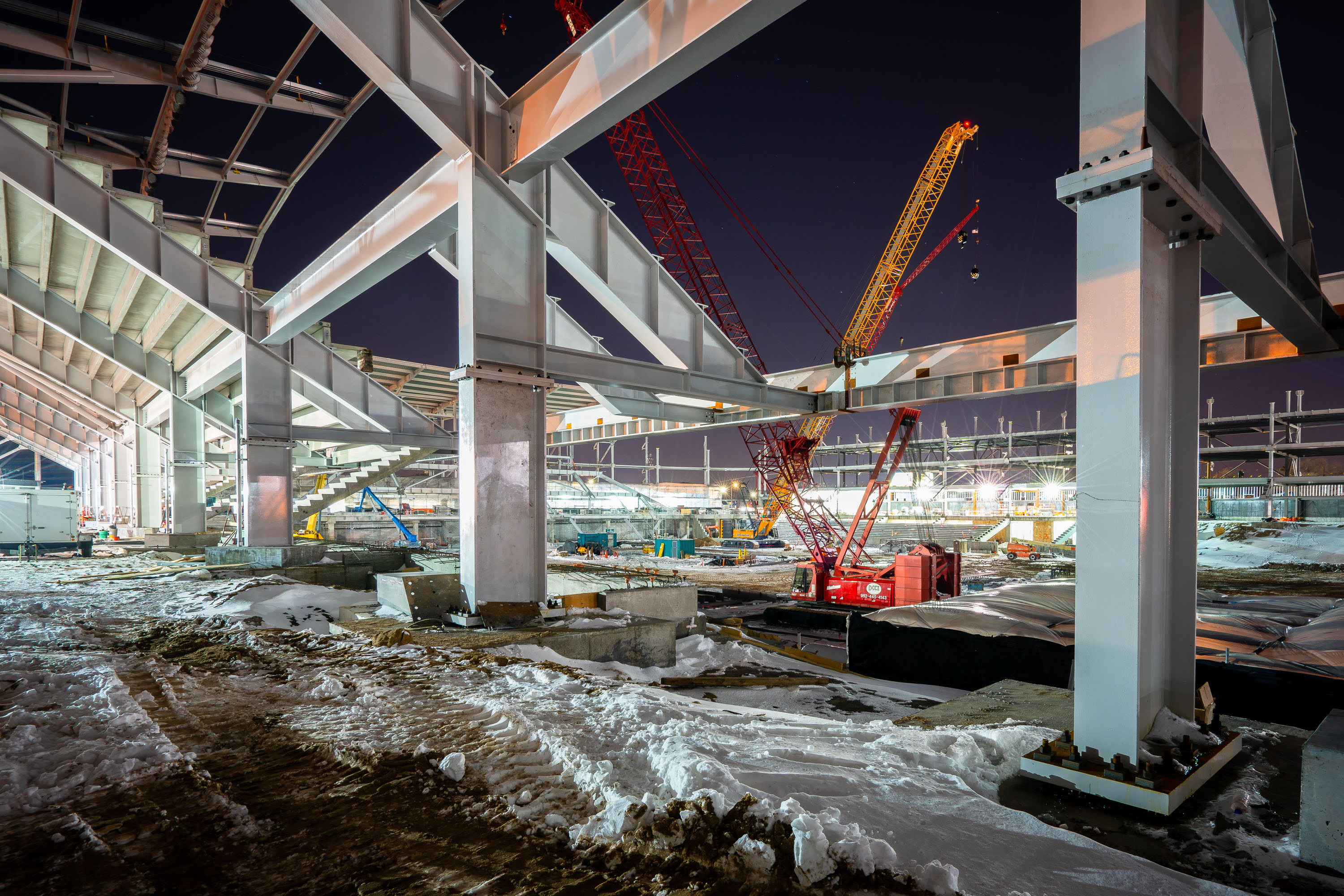
Nighttime construction site of Allianz Field stadium in St. Paul with illuminated steel framework and red cranes.
Allianz Field, home of Minnesota United FC, stands in St. Paul's Midway neighborhood on the former Metro Transit bus barn site along Snelling Avenue. Populous designed the stadium, which Mortenson Construction built for about $250 million and opened in April 2019 with seating for roughly 19,400 fans. Crawler cranes lift steel roof trusses into place over the unfinished seating bowl during construction in the winter of 2018.

Crawler Cranes at Work on Allianz Field’s Steel Roof, St. Paul
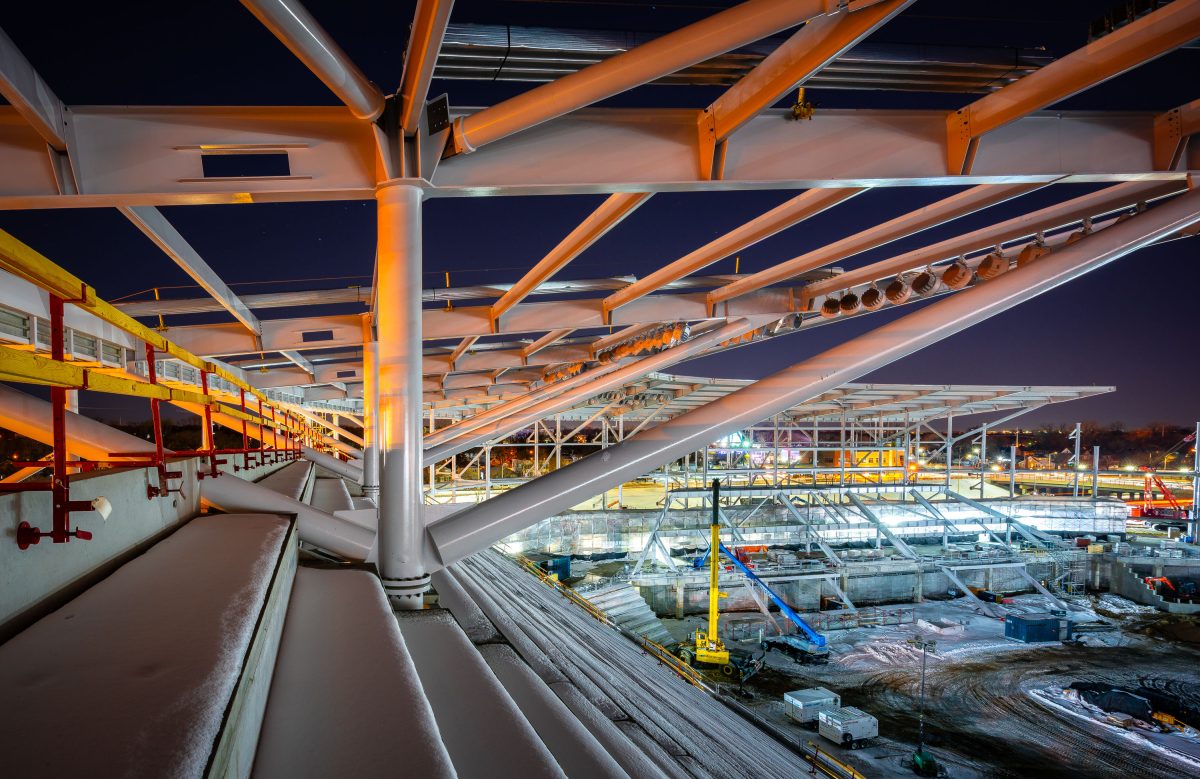
Nighttime construction of Allianz Field stadium in St. Paul showing illuminated steel beams and concrete foundation work.
Allianz Field stands near the Snelling Avenue and Interstate 94 interchange in St. Paul, built as the home of Minnesota United FC. The stadium opened in April 2019 with seating for about 19,400 fans and cost roughly 250 million dollars, financed privately by the team's ownership. Crews raised the steel truss framework that supports its canopy section by section above the concrete seating bowl before the structure was enclosed.

Trusswork Above the Allianz Field Construction Site at Night
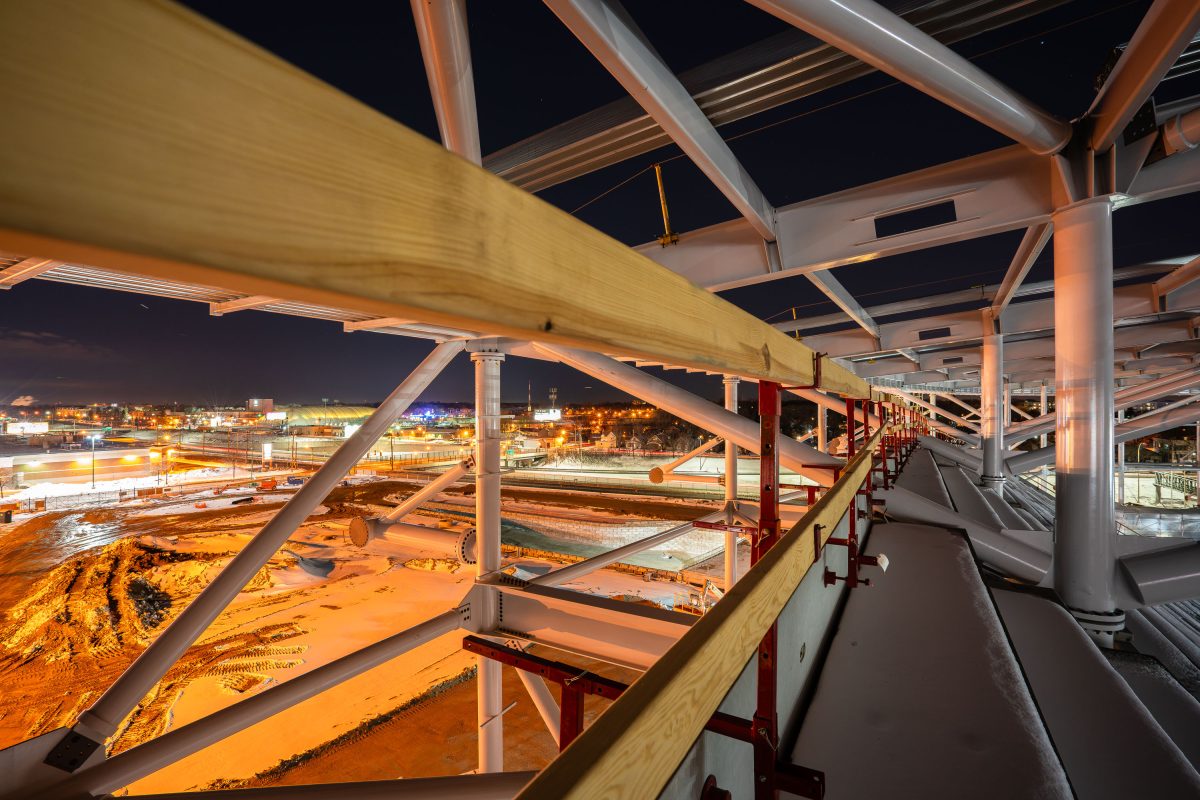
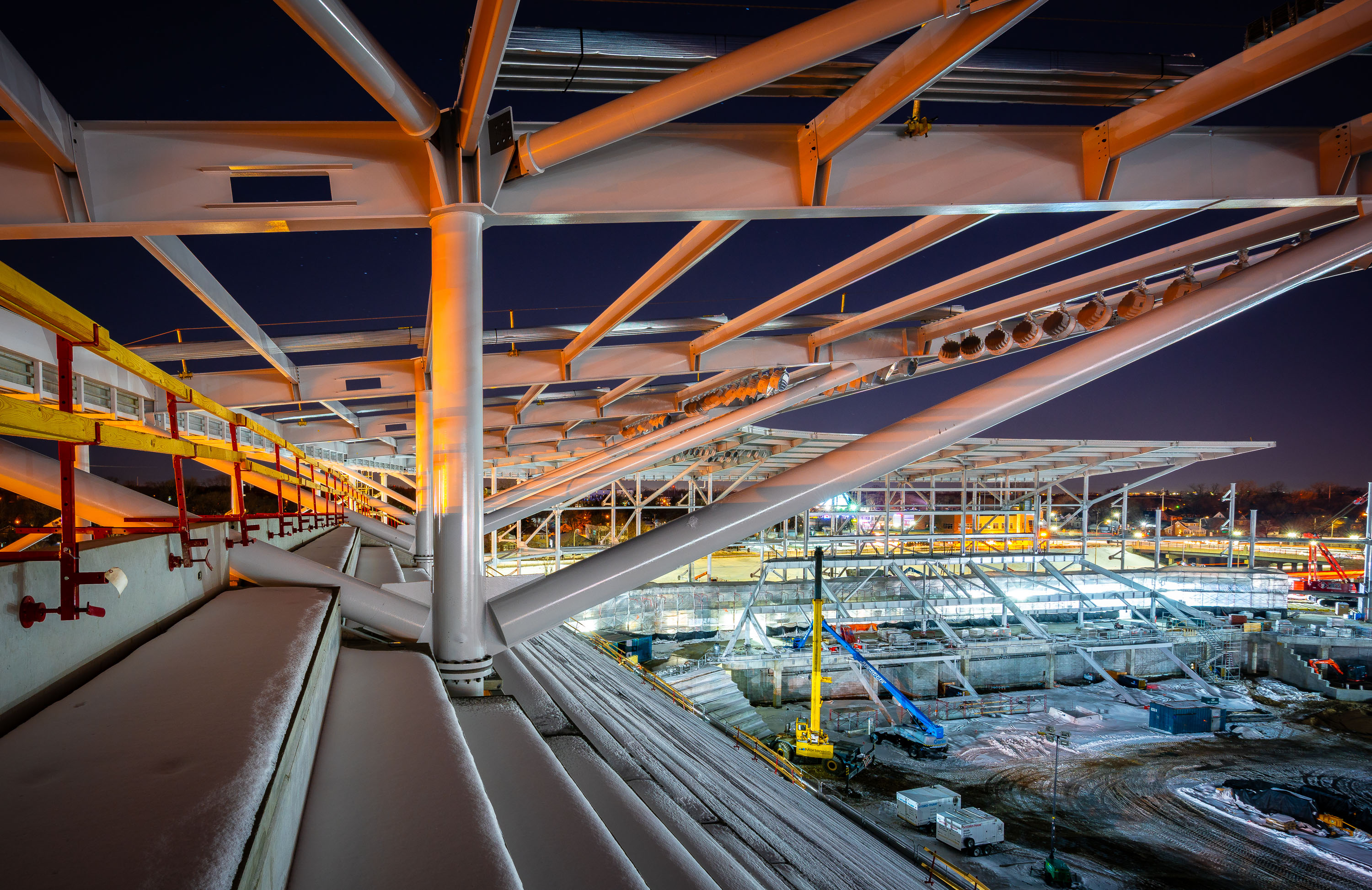
Night photograph of Allianz Field stadium construction in St. Paul showing illuminated steel framework and structural supports.
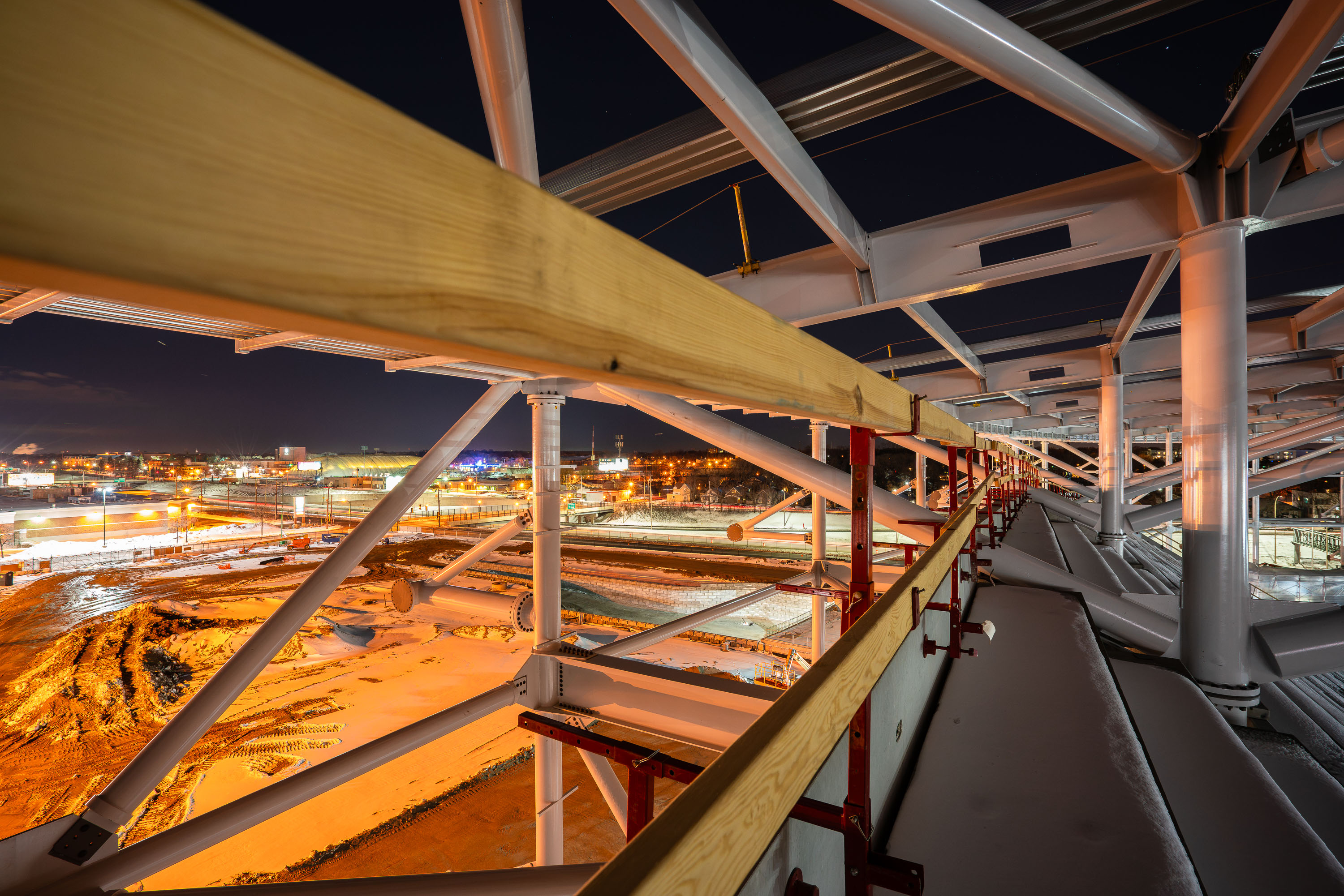
Allianz Field is the home stadium of Minnesota United FC, a Major League Soccer club that began play in 2017. It opened in April 2019 on a 34.4 acre site along Snelling Avenue in St. Paul's Midway neighborhood, formerly home to a Metro Transit bus barn. The stadium seats about 19,400 and is topped by a steel lattice roof structure that encircles the seating bowl.

View From the Canopy Catwalk at Allianz Field, St. Paul
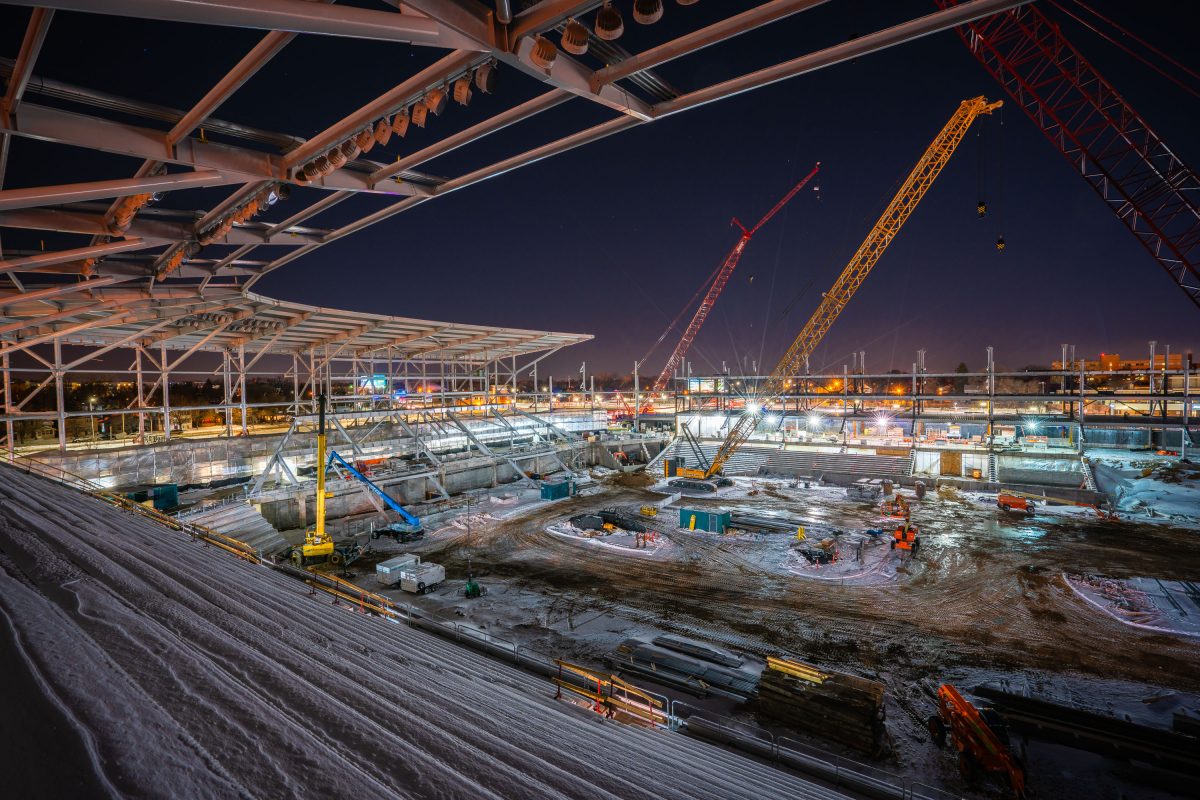
Nighttime construction site of Allianz Field stadium in St. Paul with illuminated steel framework and cranes.
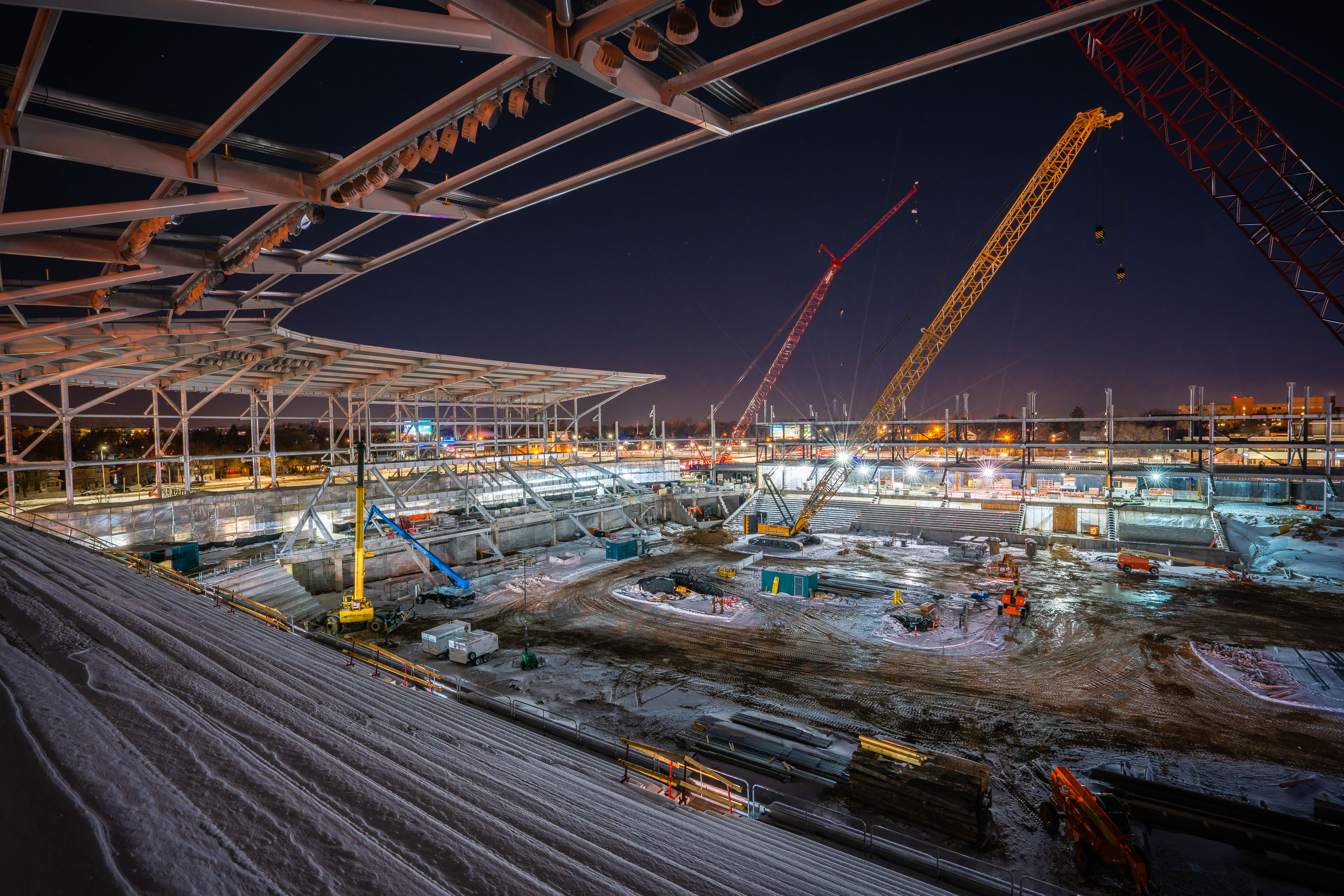
Allianz Field is the home of Minnesota United FC, built on the site of a former Metro Transit bus depot in St. Paul's Midway neighborhood. Designed by Populous, the stadium seats 19,400 and opened in April 2019 after roughly two years of construction. The roof canopy's steel trusses, raised into place by tower cranes, were engineered to shelter most of the seating bowl from Minnesota winters.

Cranes Tower Over Allianz Field’s Unfinished Bowl, St. Paul
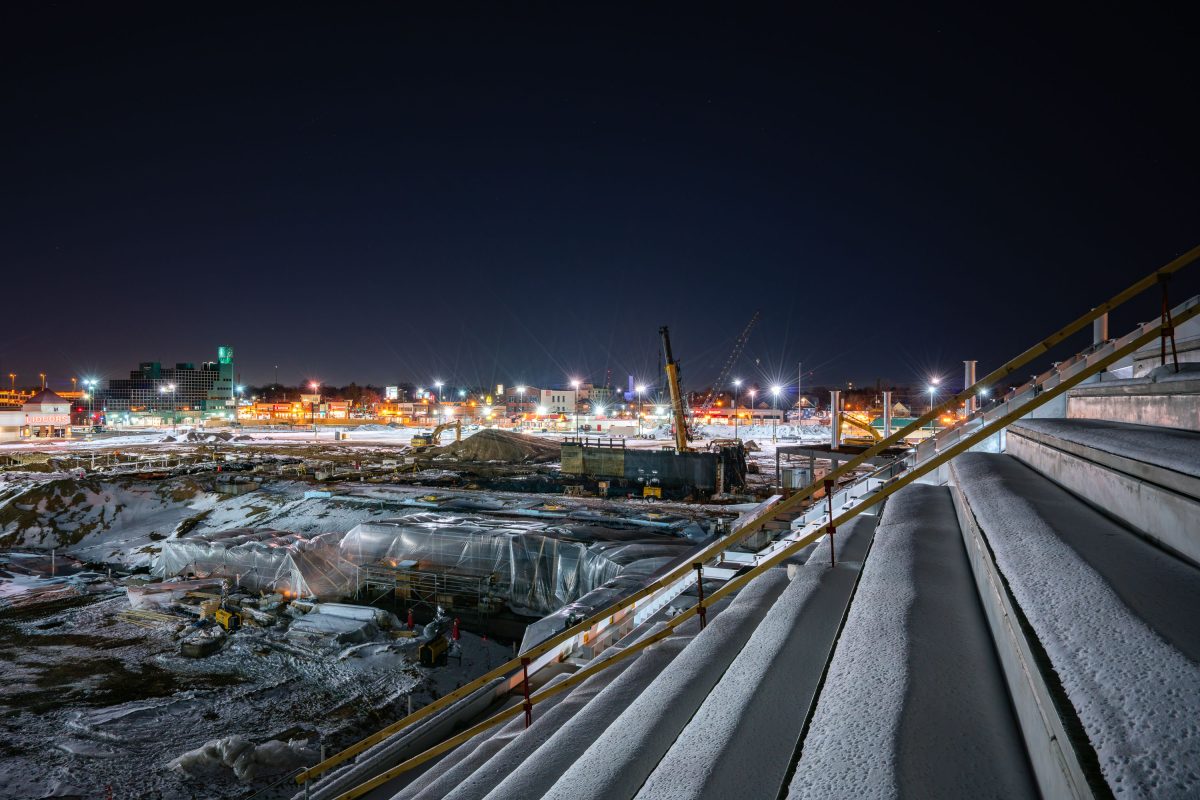
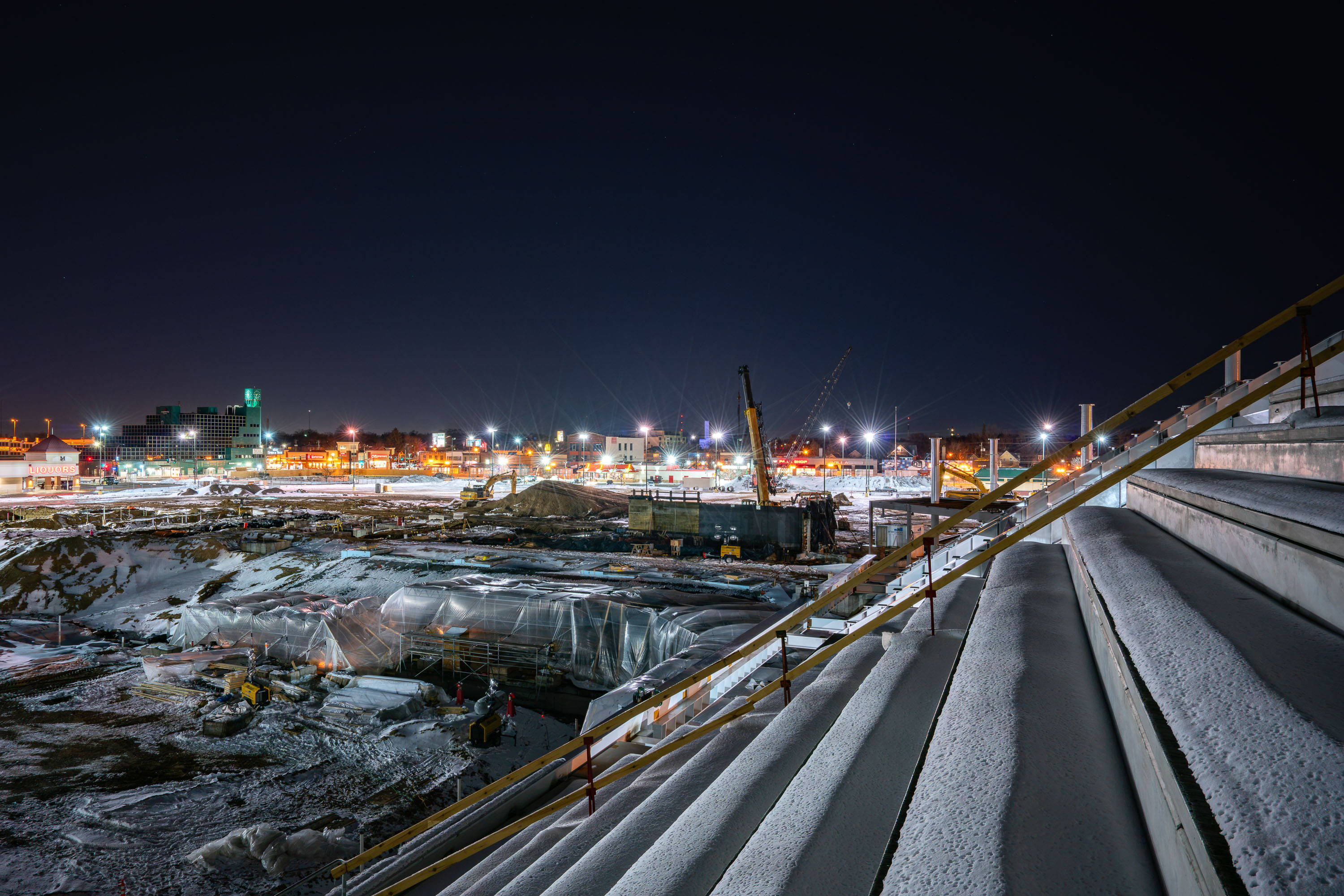
Nighttime construction site for Allianz Field stadium in St. Paul with industrial infrastructure and city lights.
Allianz Field is the home stadium of Minnesota United FC, built on the former Metro Transit bus barn site at Snelling and University avenues in St. Paul's Midway neighborhood. Construction ran from 2017 to 2019, and the finished stadium holds about 19,400 fans under a translucent exterior skin. Populous, the firm behind numerous MLS and NFL stadiums, designed the project for team owner Bill McGuire at a cost of roughly 250 million dollars.

Overlooking the Allianz Field Construction Site in St. Paul’s Midway
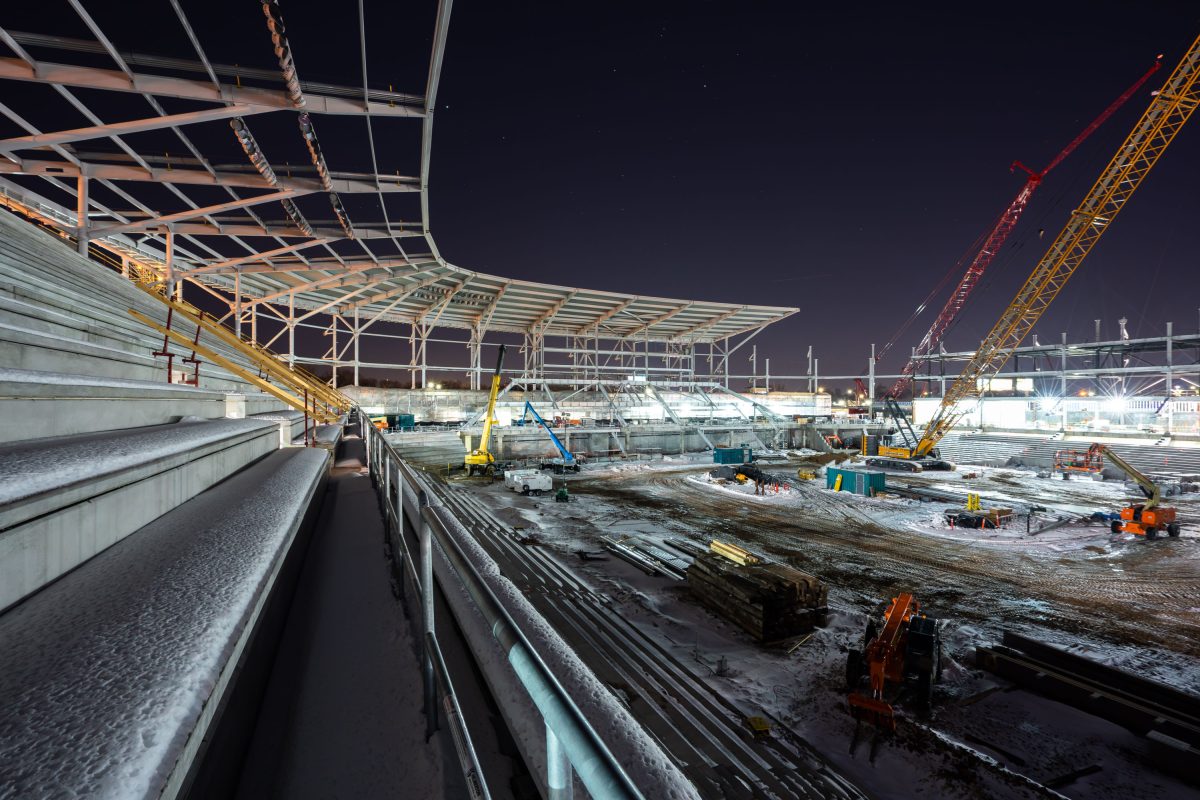
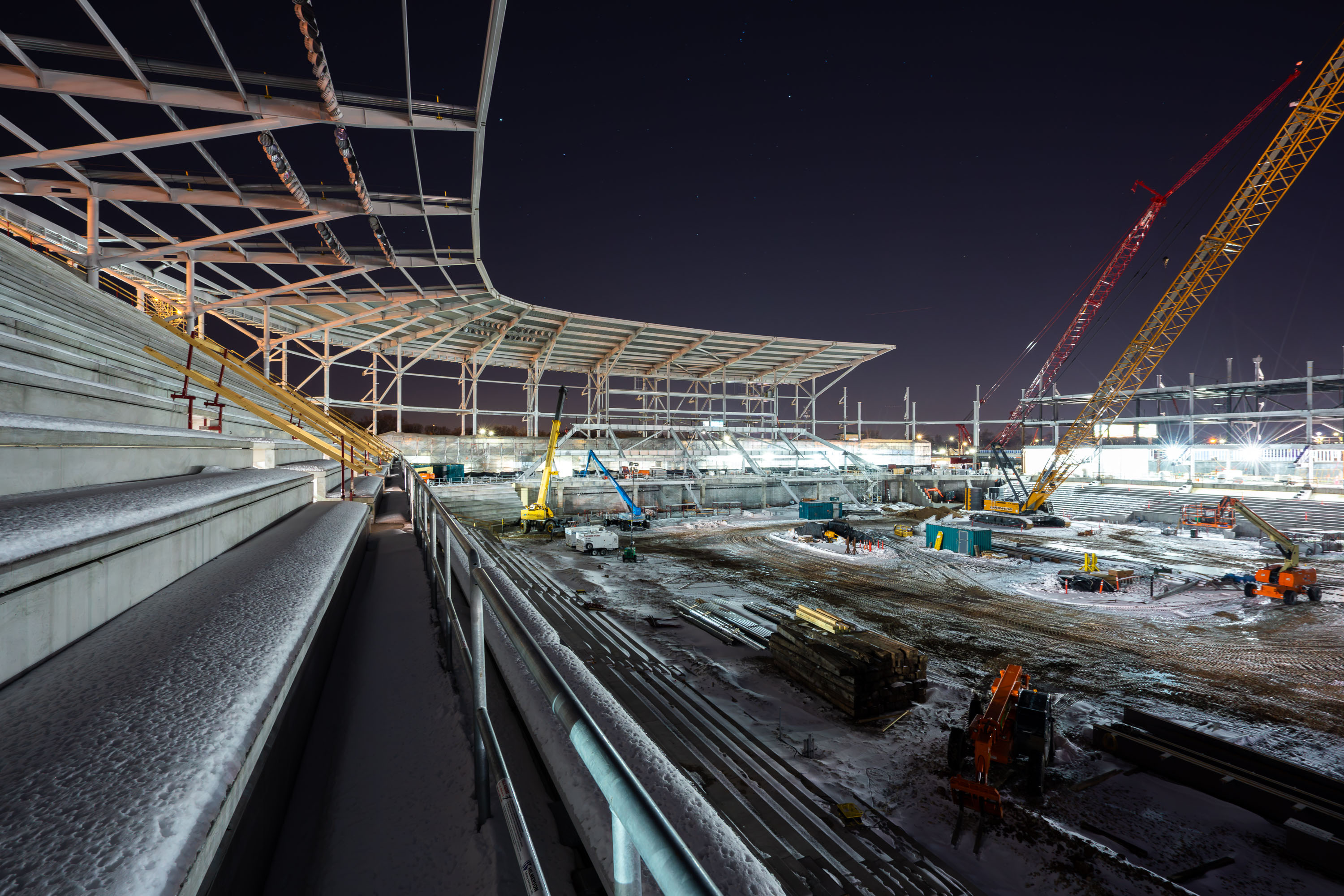
Nighttime construction of Allianz Field stadium in St. Paul with steel framing and cranes.
Allianz Field is the home of Minnesota United FC in St. Paul's Midway neighborhood, built on the site of a former bus barn along Snelling Avenue. The stadium opened in April 2019 with seating for about 19,400 fans and cost roughly 250 million dollars to build. Cranes work beside the unfinished roof canopy and concrete seating bowl during construction.

Cranes and Steel Framing at Allianz Field, St. Paul
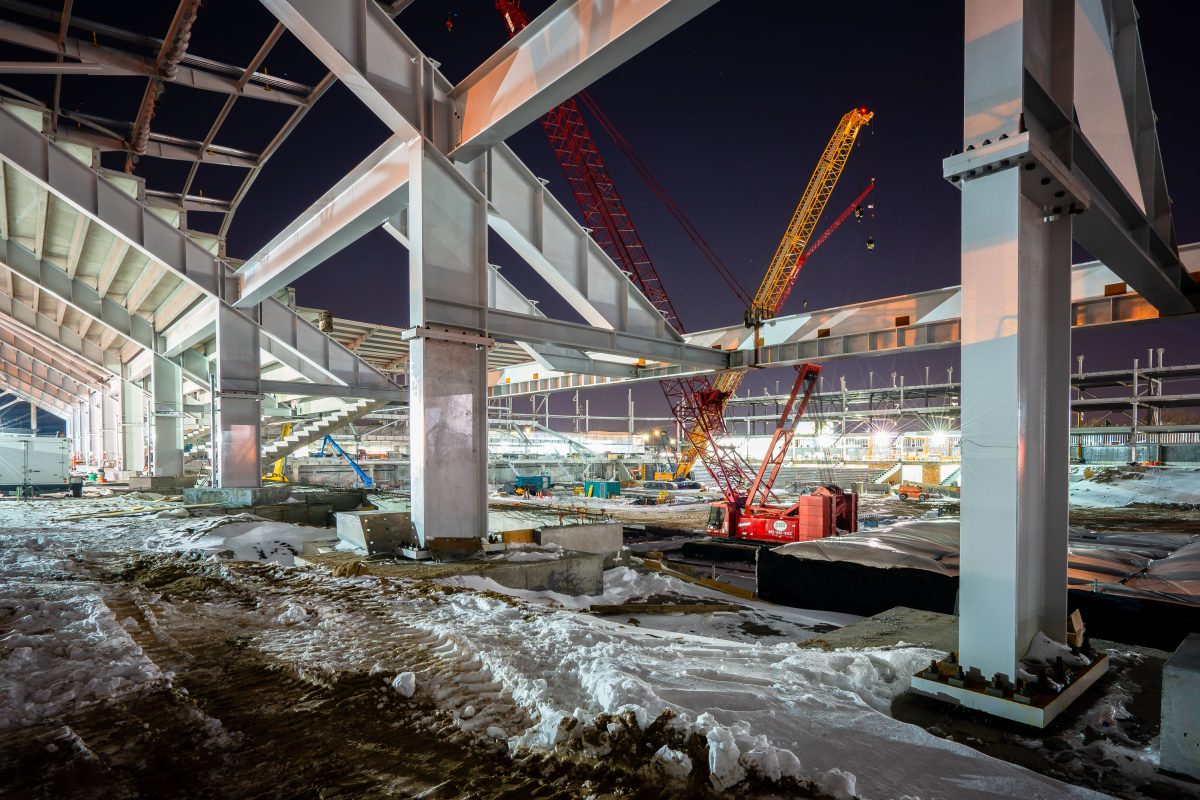
Nighttime construction of Allianz Field stadium in St. Paul with illuminated cranes and concrete structural supports.
Allianz Field is the home stadium of Minnesota United FC, Minnesota's Major League Soccer team, in St. Paul's Midway neighborhood. The 19,400 seat venue, designed by Populous, went up between 2017 and 2019 at a cost of about 250 million dollars. A crawler crane lifts steel beams into place over the stadium's unfinished seating bowl during construction in March 2018.

Crawler Crane Lifts Steel Beams at Allianz Field, St. Paul
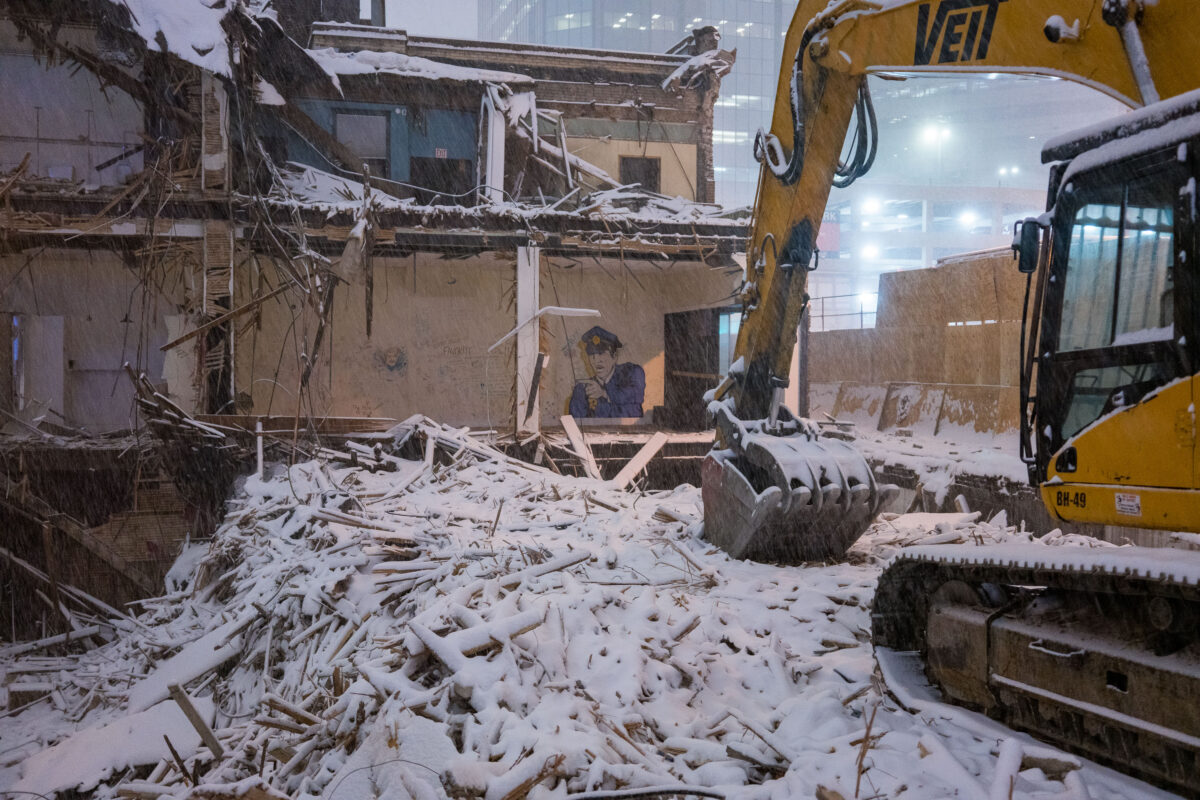
Excavator demolishes snowy building on Marquette Avenue in downtown Minneapolis, revealing police officer mural on adjacent wall.
Demolition work on Marquette Avenue in downtown Minneapolis clears a low-rise commercial building for the City Club Apartments redevelopment in February 2018.

Police Officer Mural Revealed in Snowy Marquette Avenue Demolition
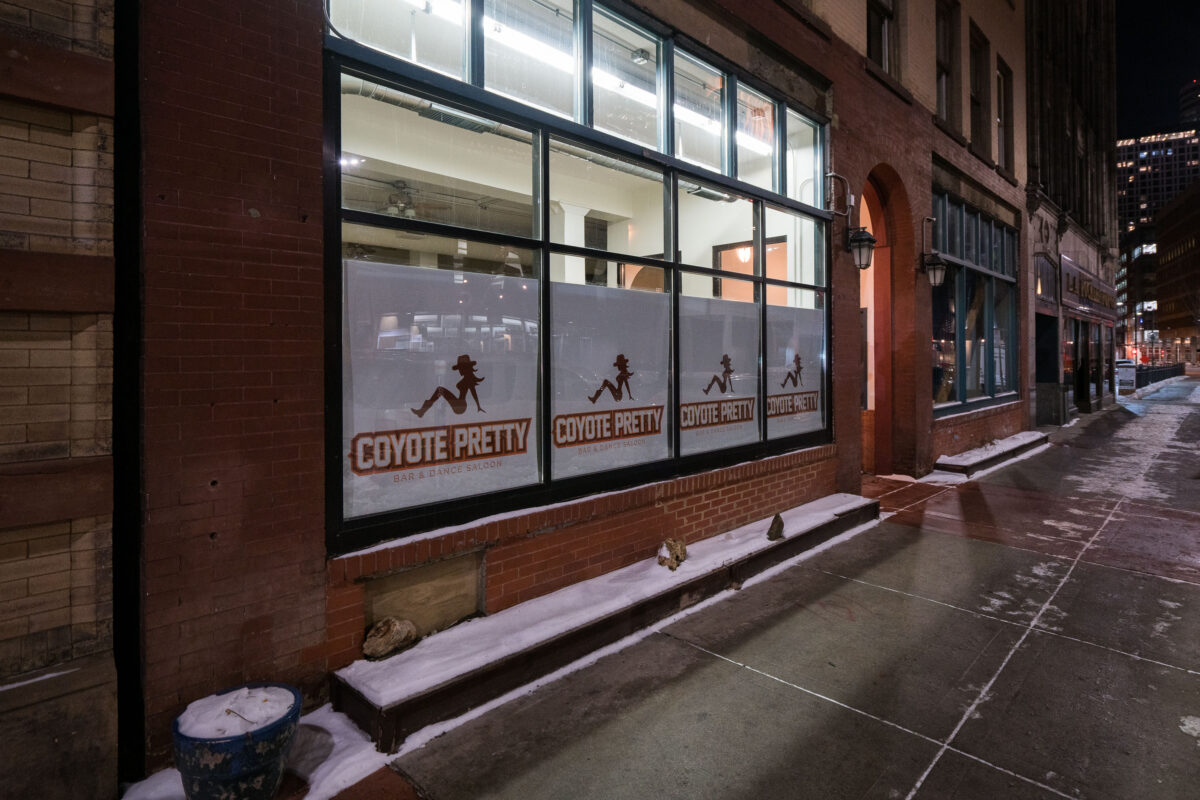
Coyote Pretty pop-up club in downtown Minneapolis during preparations for Super Bowl LII.
Coyote Pretty pop-up club in downtown Minneapolis was installed ahead of Super Bowl LII, played at U.S. Bank Stadium on February 4, 2018. The temporary bar and dance saloon used Coyote Pretty branding during the city’s Super Bowl preparations.

Coyote Pretty Pop-Up Club, Downtown Minneapolis
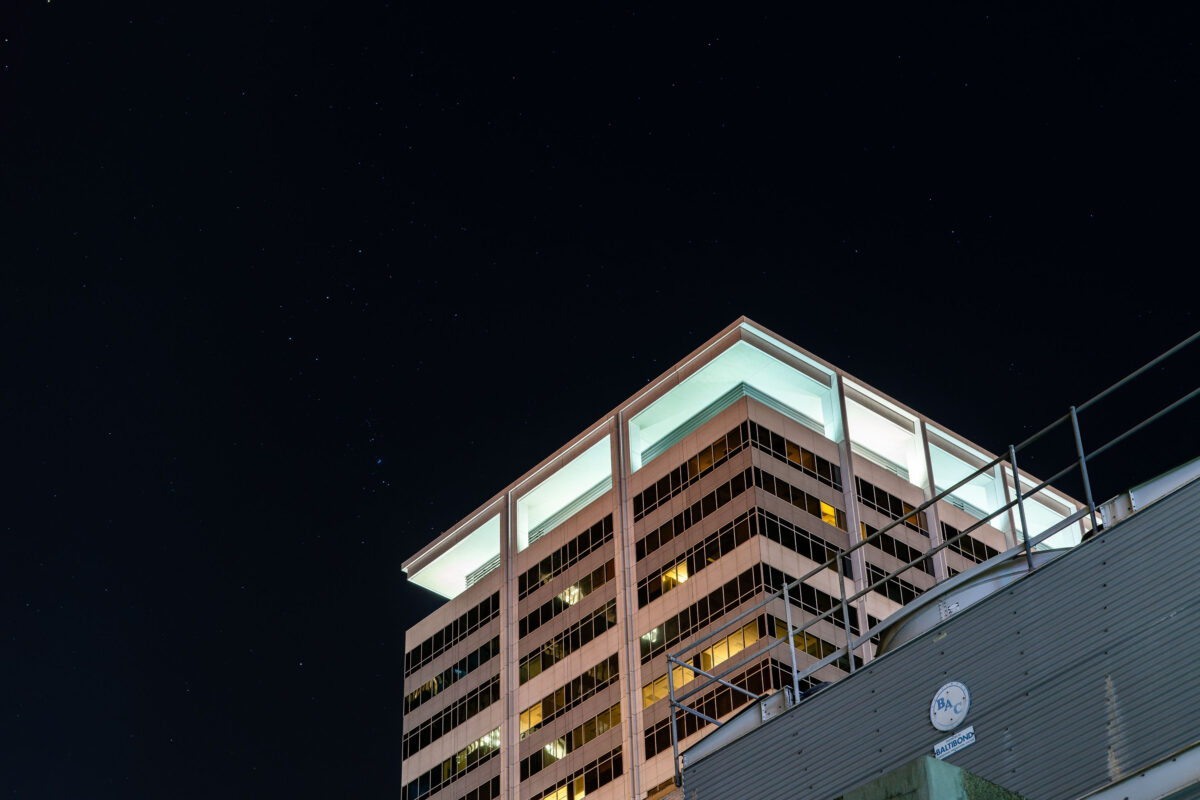
US Bank Corporate Headquarters in Downtown Minneapolis
The U.S. Bancorp Center in Downtown Minneapolis seen in January 2018. The building serves as the headquarters for US Bank.

US Bank Corporate Headquarters in Downtown Minneapolis

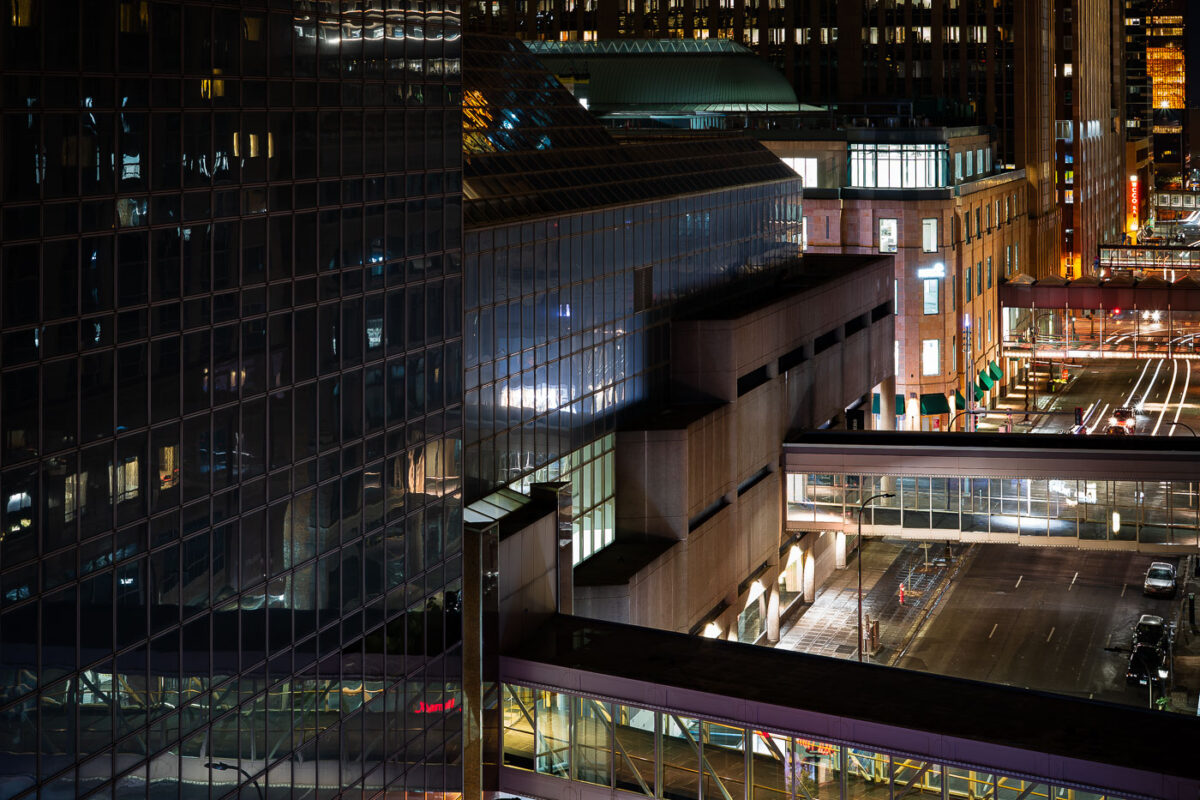
Minneapolis Skyway over Nicollet Mall in downtown Minneapolis, linking office towers across the street.
Minneapolis Skyway over Nicollet Mall in downtown Minneapolis. The enclosed pedestrian network connects office towers, hotels, parking ramps, and retail spaces across the city center. It allows indoor pedestrian crossings above street level.

Minneapolis Skyway over Nicollet Mall

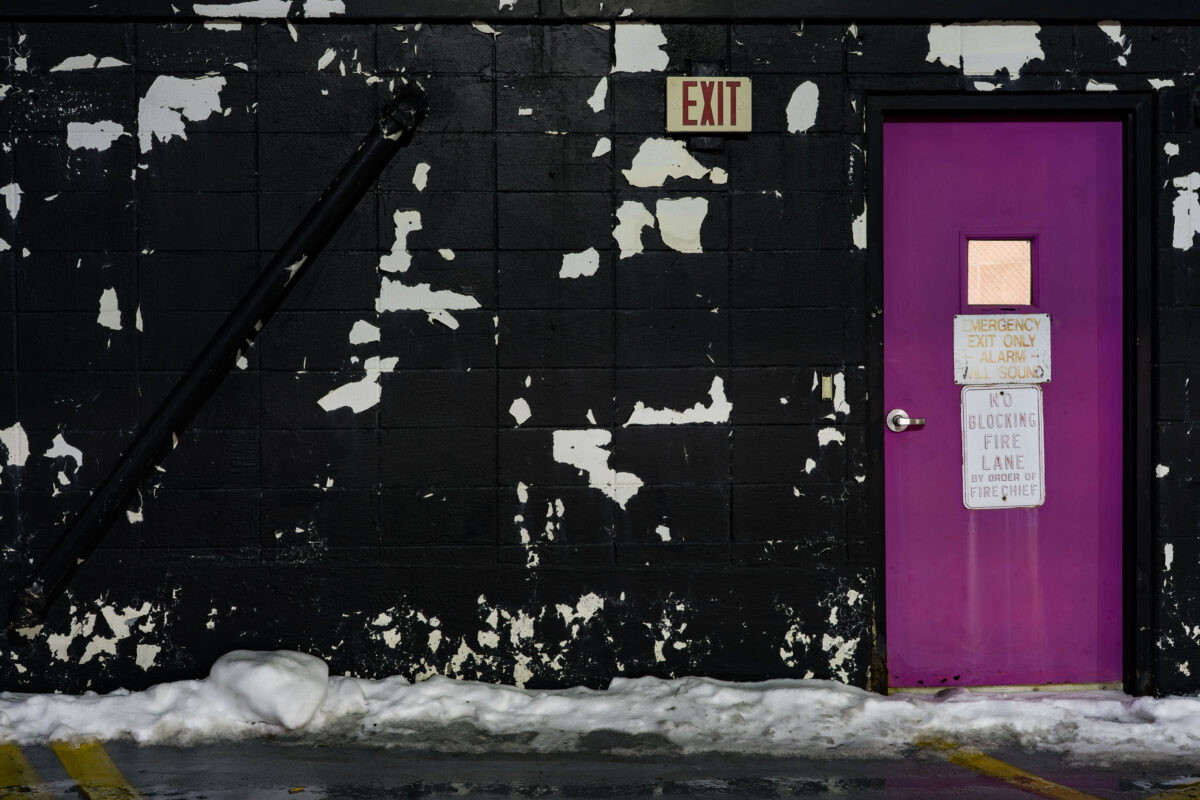
Purple emergency exit door in a downtown Minneapolis parking ramp beside a peeling black masonry wall.
A purple emergency exit door marks a fire exit in a downtown Minneapolis parking ramp. Door signage warns that the alarm will sound and that blocking the fire lane is prohibited by order of the fire chief. Snow along the wall and worn masonry finishes mark winter conditions and maintenance wear in the ramp.

Purple Emergency Exit Door, Minneapolis Parking Ramp
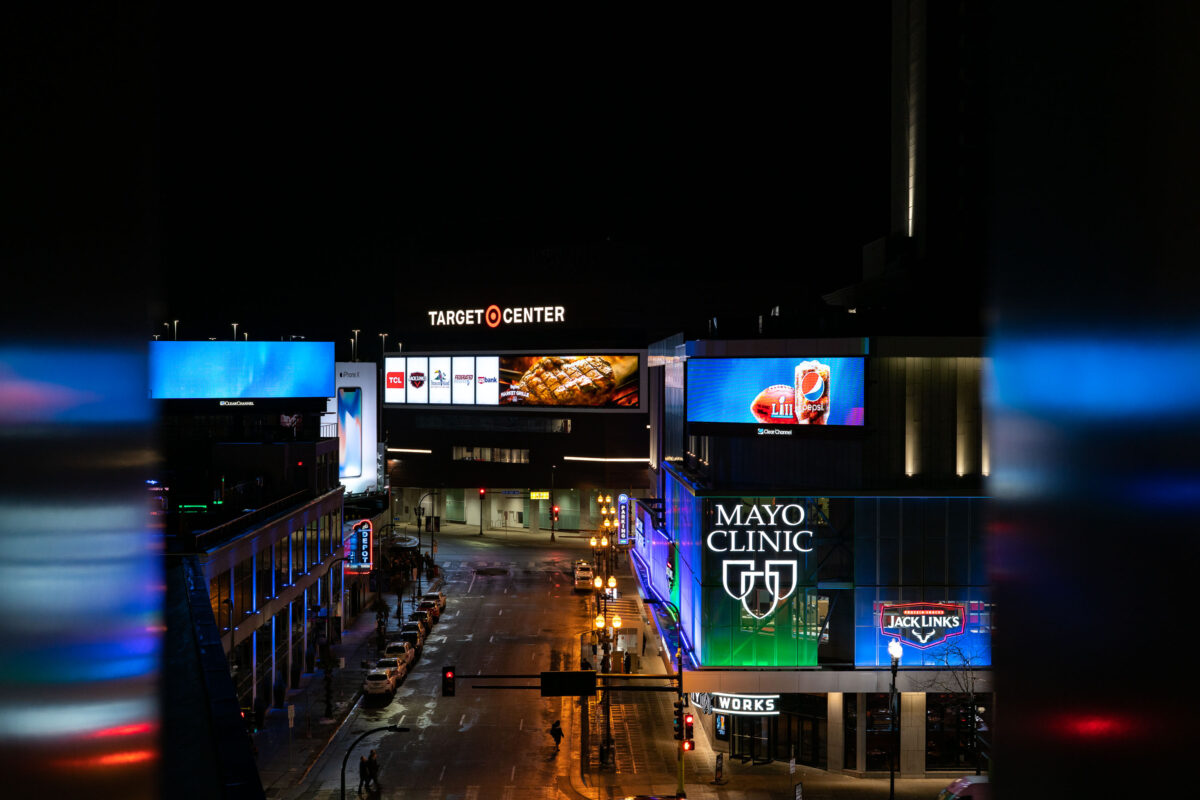
Target Center and Mayo Clinic Square in downtown Minneapolis at night.
Target Center and Mayo Clinic Square are in downtown Minneapolis near the Warehouse District. Target Center is the arena used by the Minnesota Timberwolves and Minnesota Lynx. Mayo Clinic Square includes sports medicine, office, restaurant, and retail space adjacent to the arena.

Target Center and Mayo Clinic Square, Downtown Minneapolis
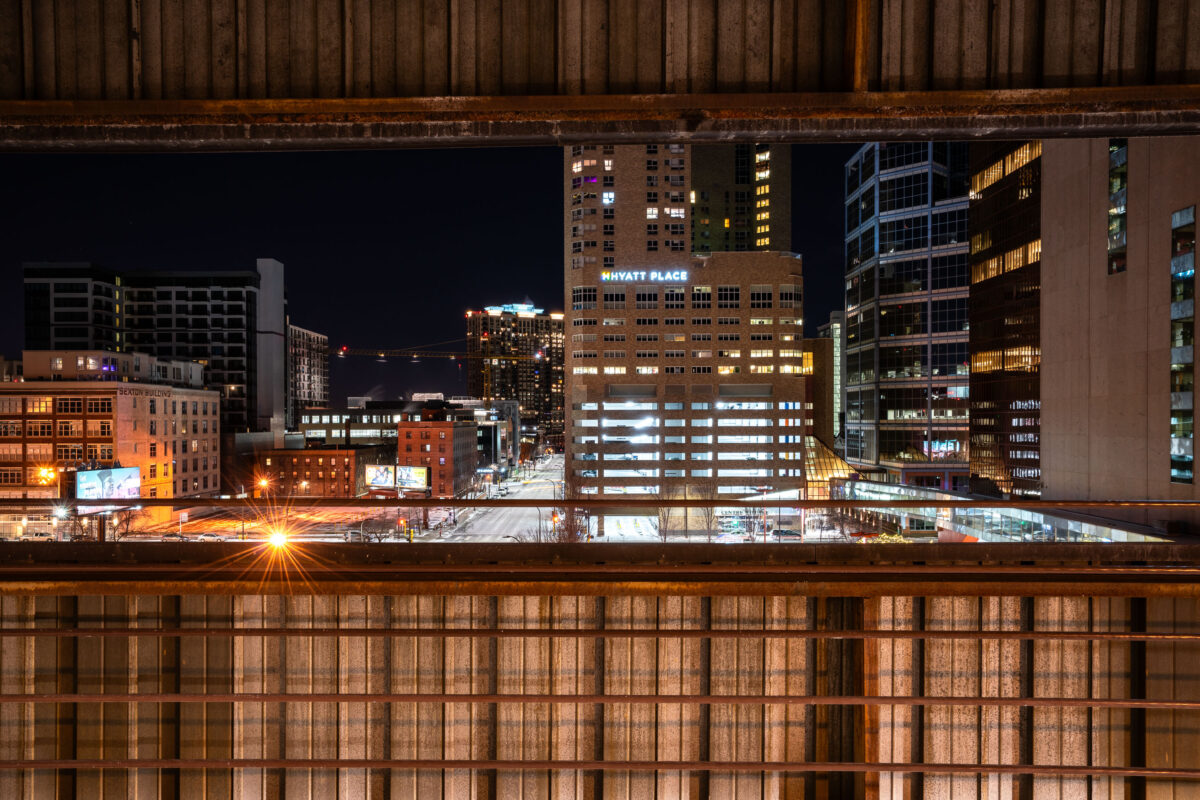
Hyatt Place seen from the parking garage on 5th and 5th.
Hyatt Place seen from the parking ramp at 5th and 5th in Downtown Minneapolis.

Hyatt Place seen from Parking Ramp

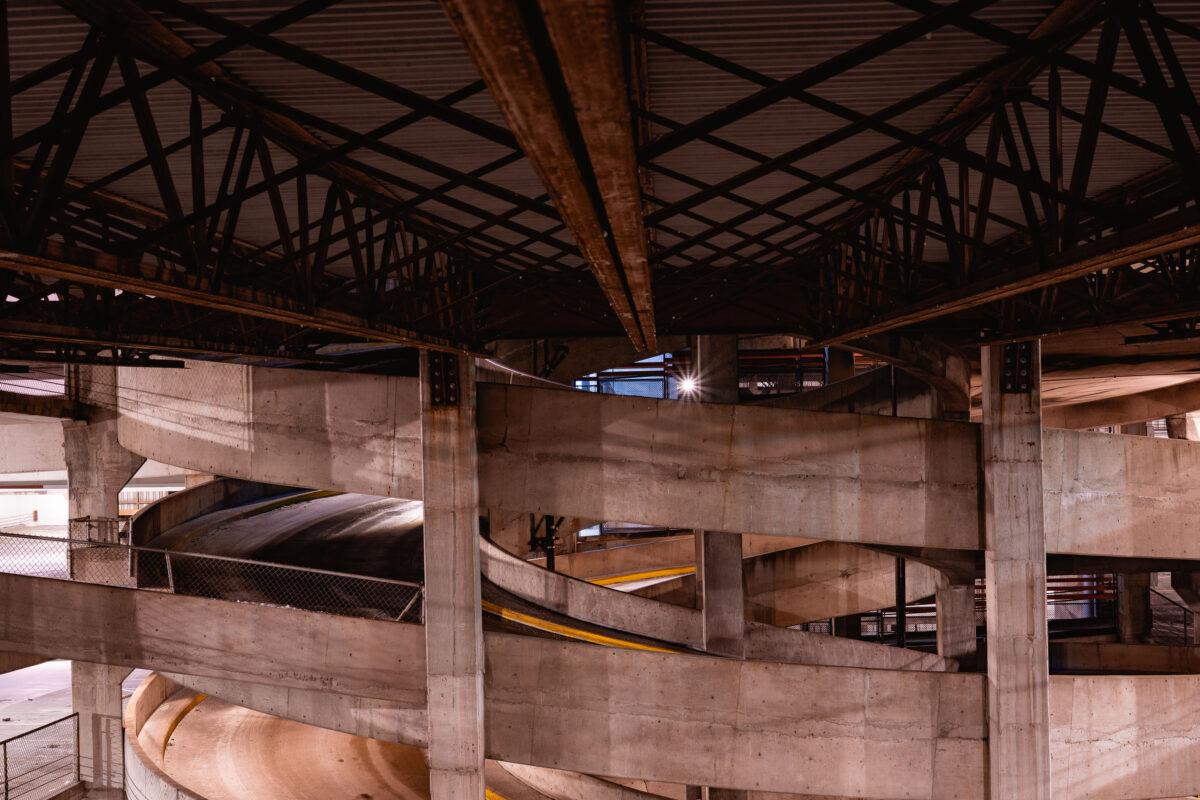
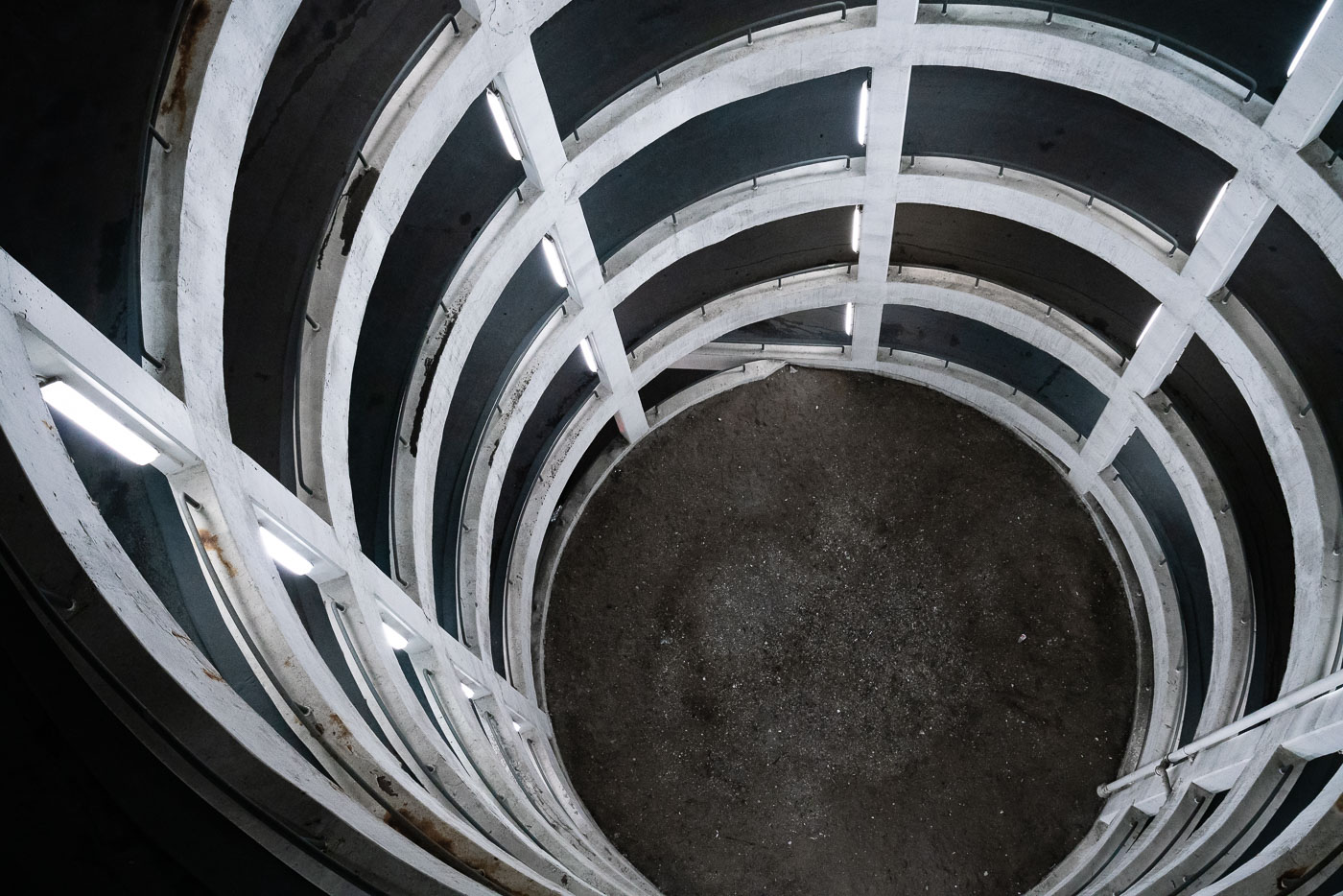
Interior view of a spiral parking ramp with concrete levels and steel support beams in downtown Minneapolis.
A multi-level parking ramp in downtown Minneapolis features concrete construction with spiral design elements. The structure's repetitive ramps and support columns create geometric patterns visible from interior vantage points. Steel beams support the upper levels, characteristic of mid-century parking garage construction in urban centers.

Spiral Parking Ramp, Downtown Minneapolis
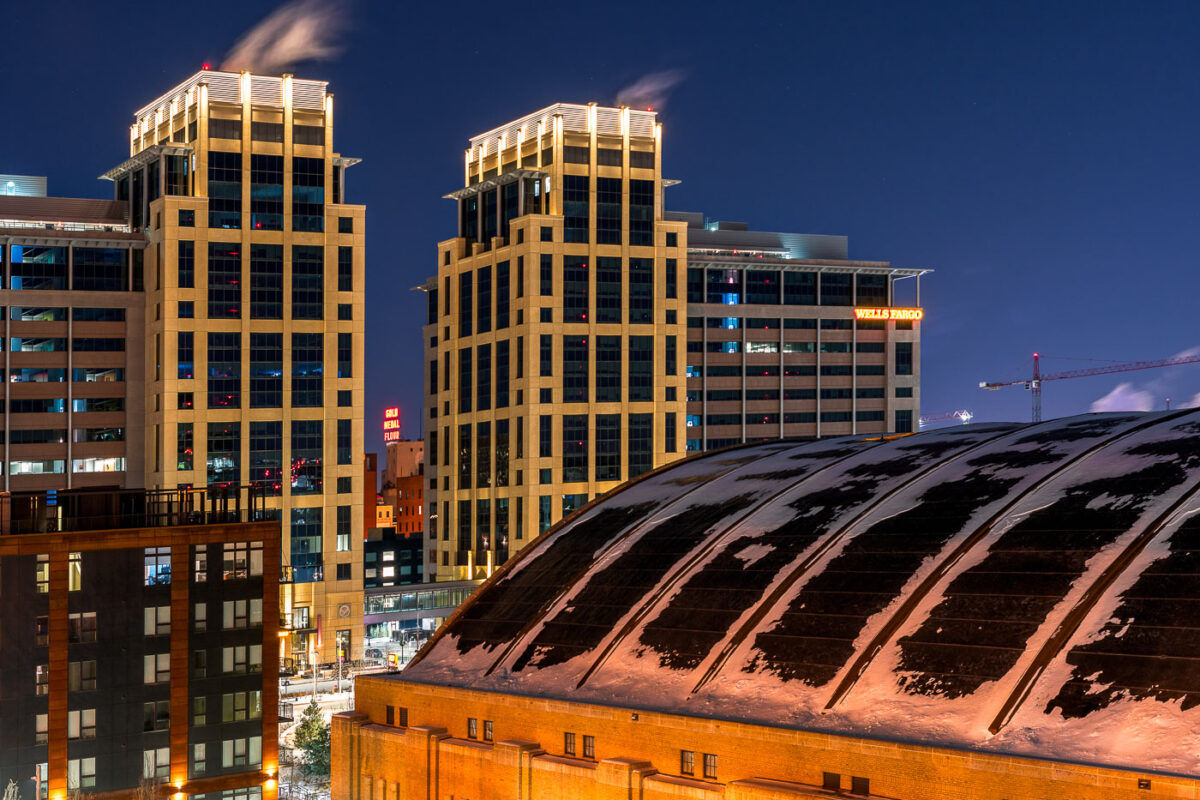
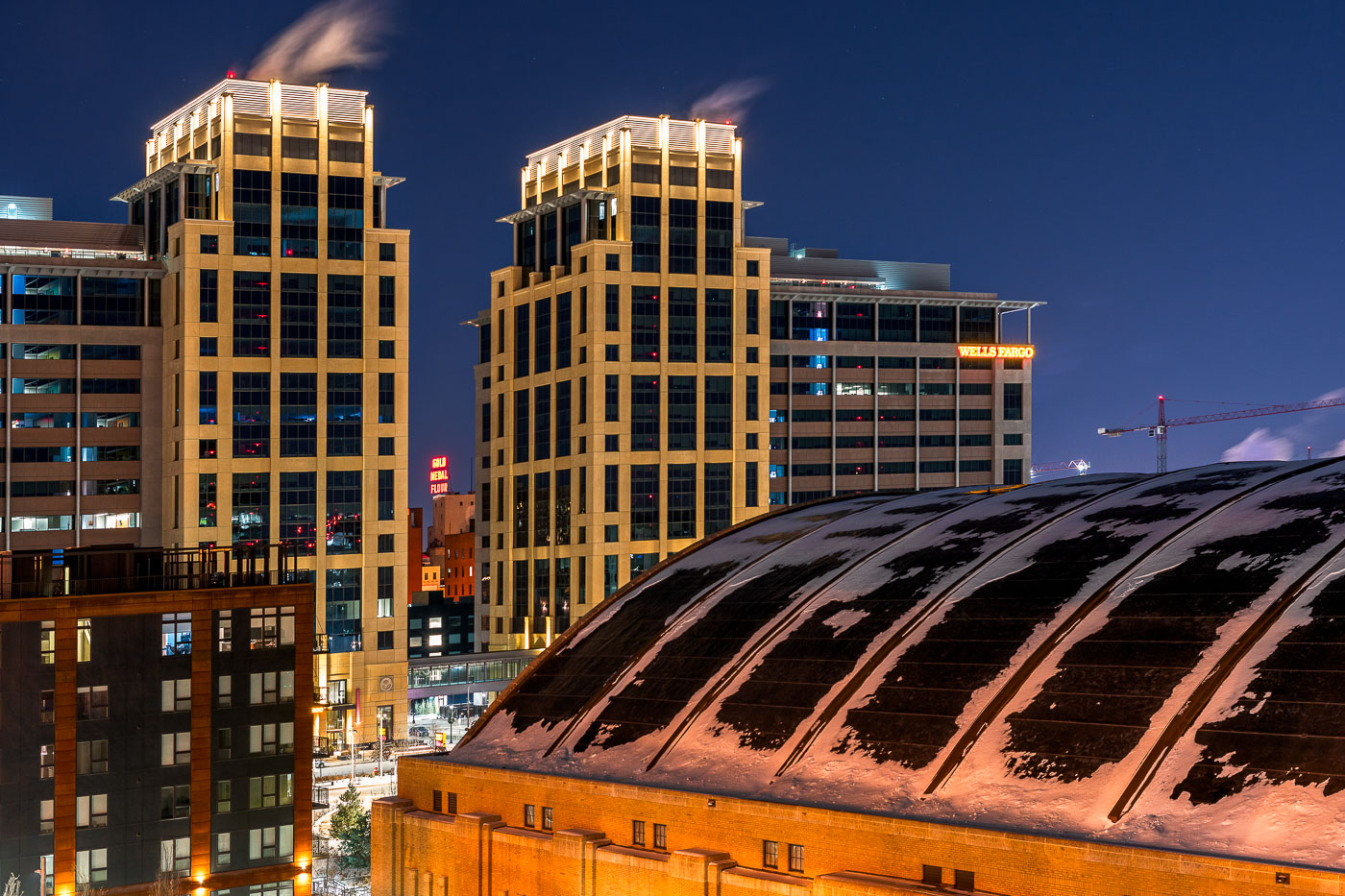
The Armory building and illuminated Wells Fargo office towers stand in downtown Minneapolis at night.
The Armory and the new Wells Fargo Towers in Downtown East, Minneapolis.

Snow-Dusted Armory Roof Beneath the Wells Fargo Towers at Night
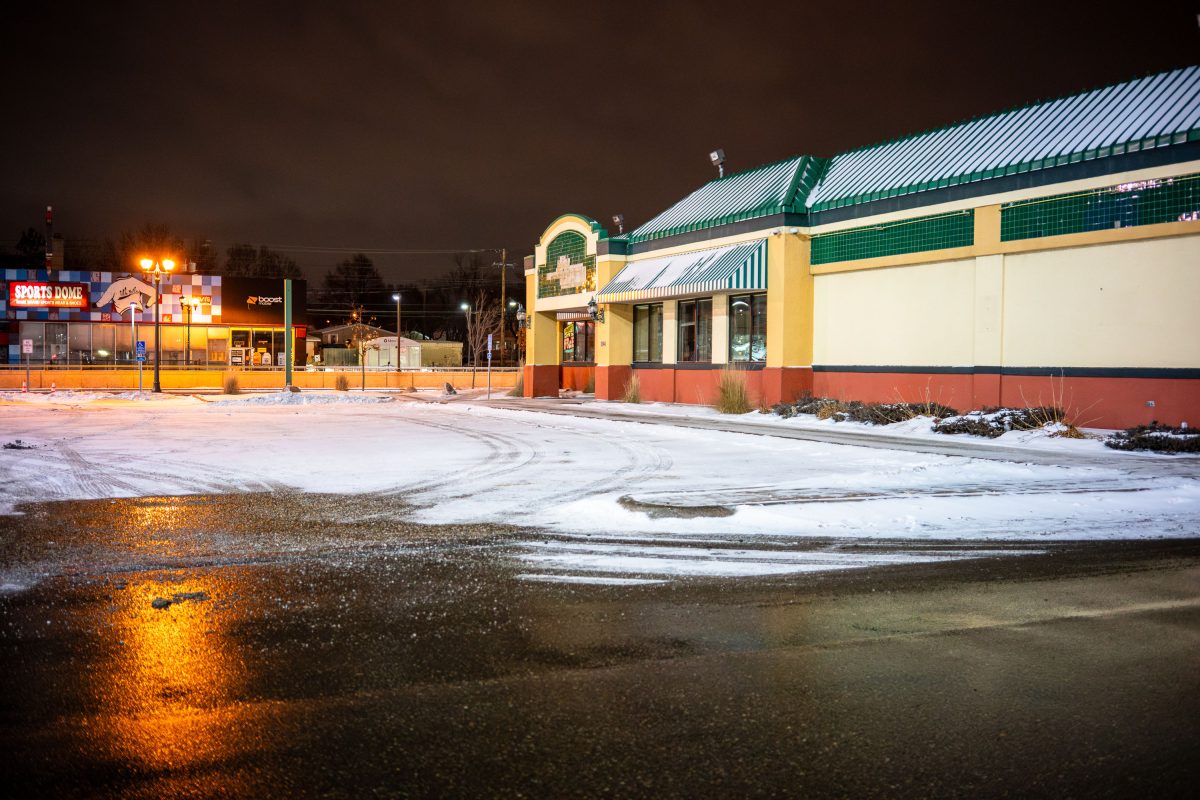
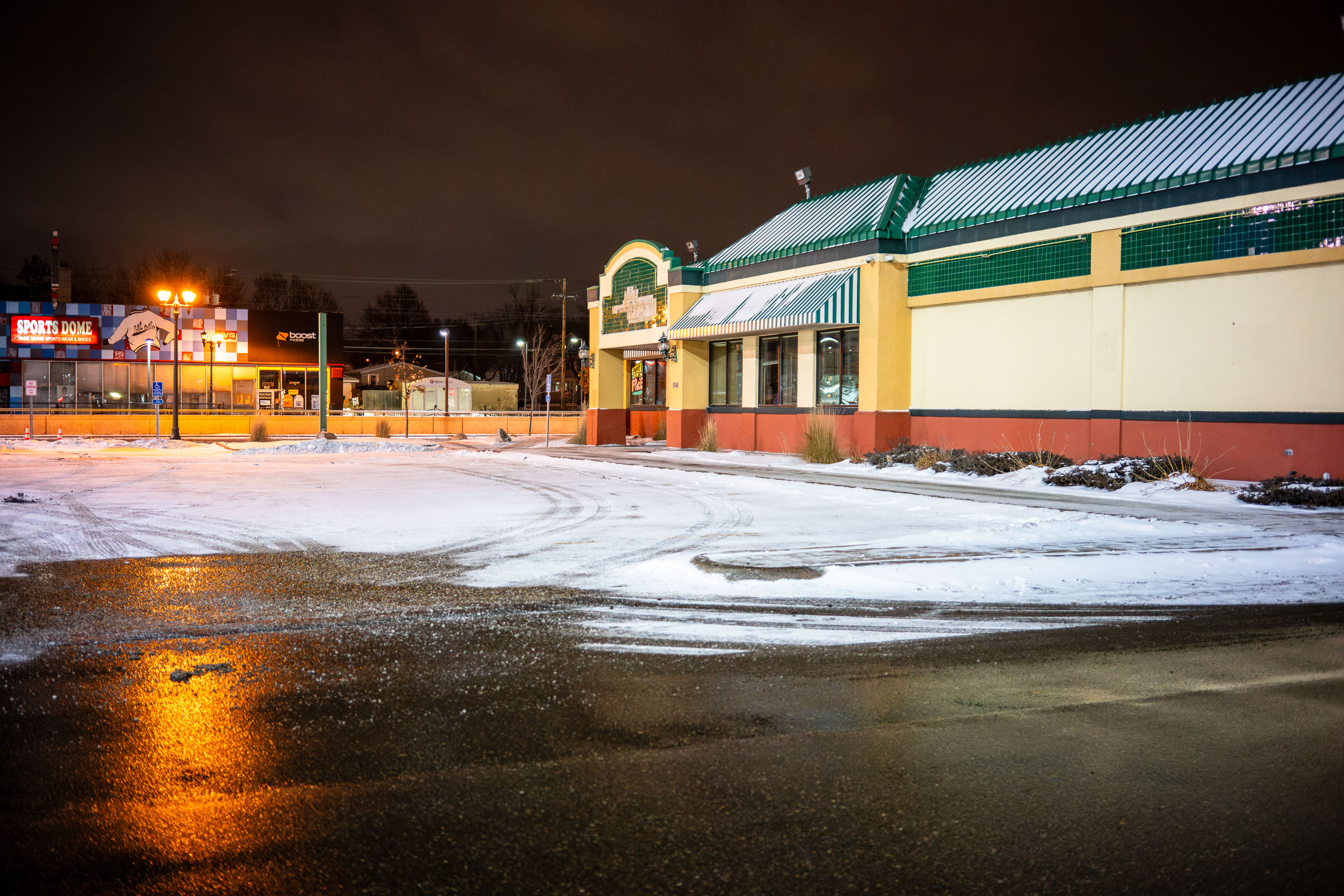
Sports Dome and Perkins, Snelling Avenue
The former Perkins restaurant and Sports Dome on Snelling Avenue in St. Paul across from Allianz Field construction.

Sports Dome and Perkins, Snelling Avenue

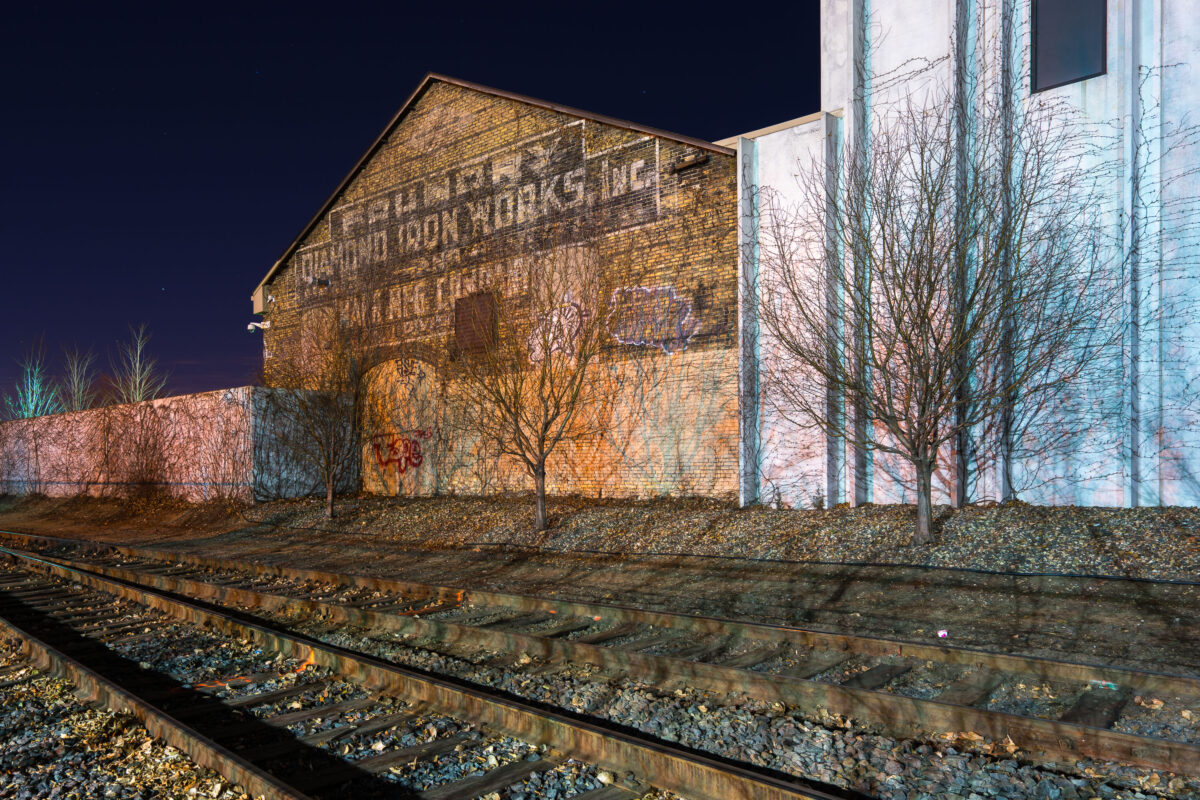
Faded "Diamond Iron Works, Inc." foundry signage on a brick building beside railroad tracks in North Minneapolis.
Diamond Iron Works, Inc. operated as a foundry in North Minneapolis, producing iron castings for the region's railroad and manufacturing trades. The faded lettering on the building's brick exterior still reads "Diamond Iron Works, Inc." and "Foundry," remnants of painted signage common to early 20th-century industrial buildings. The site sits near active railroad tracks, reflecting the historic ties between Minneapolis foundries and rail-based shipping and supply lines.

Old Diamond Iron Works Foundry Building, North Minneapolis
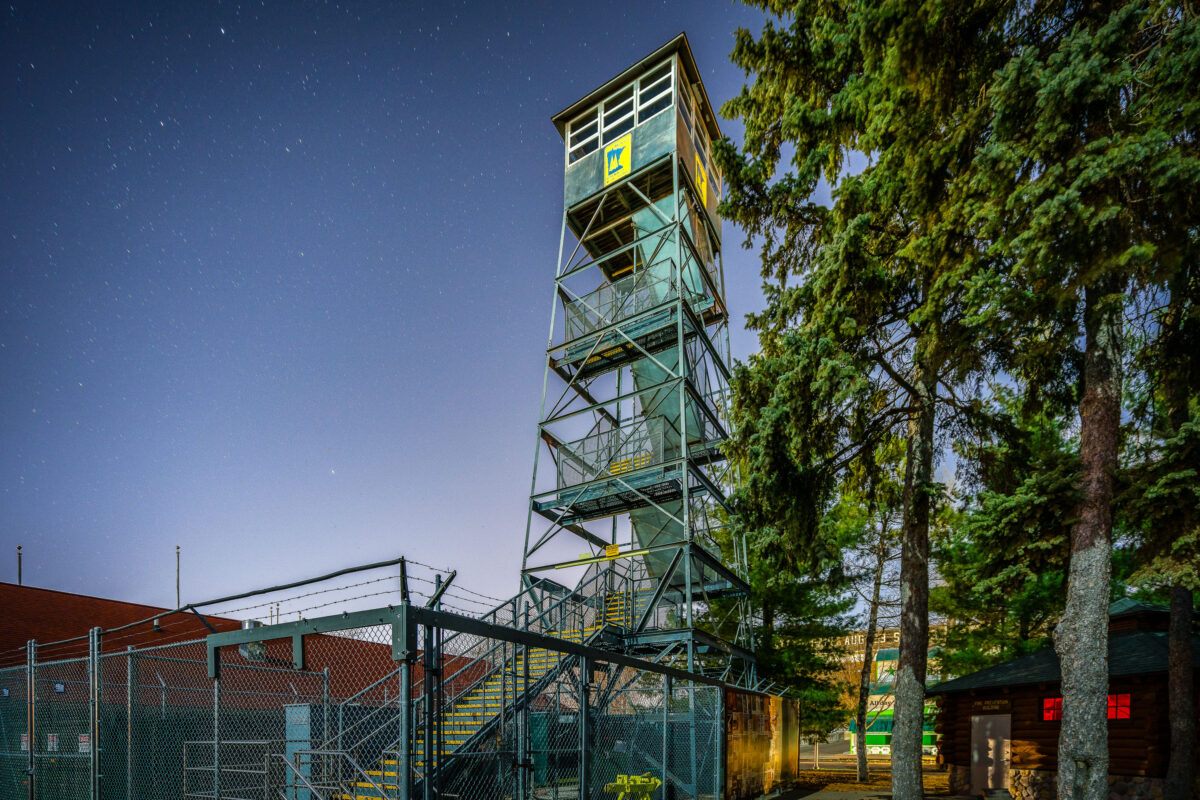
DNR fire tower with metal staircase at the Minnesota State Fairgrounds in Falcon Heights.
The fire tower stands on the Minnesota State Fairgrounds in Falcon Heights, built to represent the fire lookout towers once used by the Minnesota Department of Natural Resources across the state's forested regions. The DNR maintains the structure as an exhibit tied to its ongoing wildfire prevention and forestry education programs. Visitors can climb its stairways to an observation deck, a feature standard to fire towers historically staffed by lookouts watching for smoke during dry seasons. Fire towers like this one were largely phased out of active use once aerial patrols and satellite monitoring took over detection duties.

DNR Fire Tower, Minnesota State Fairgrounds
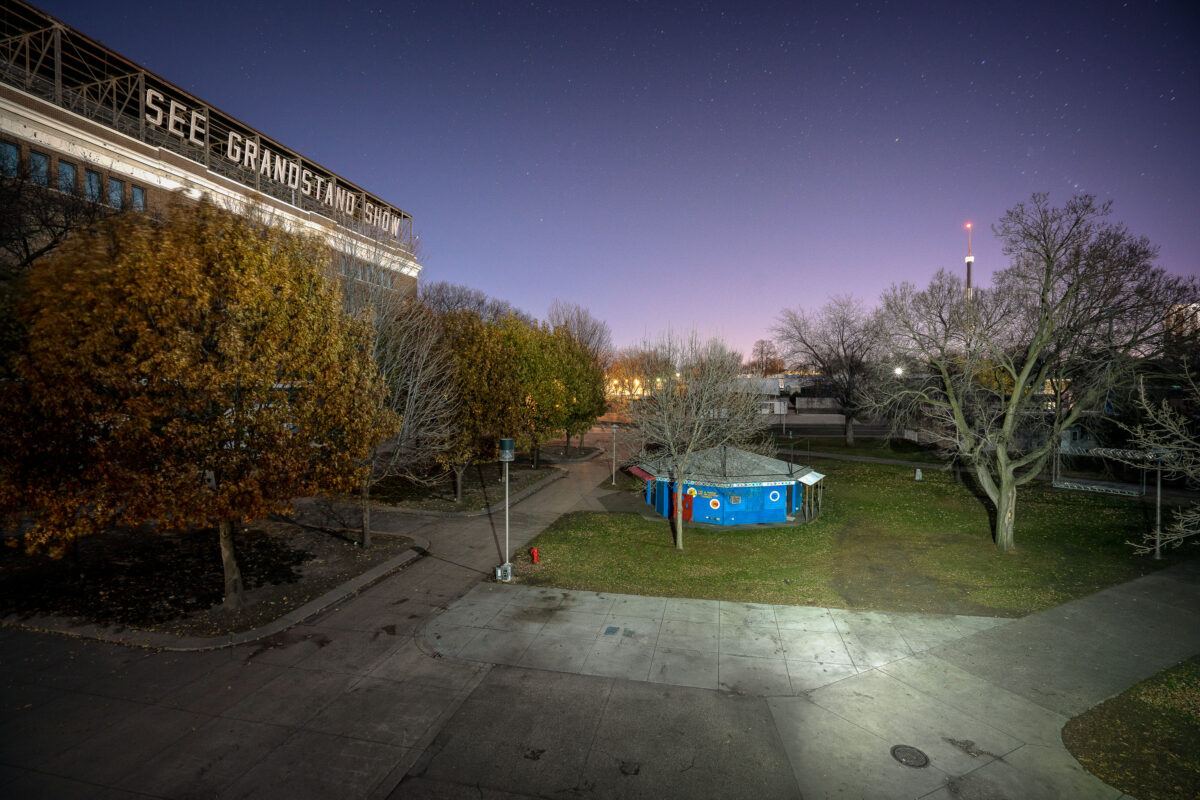
The Grandstand at the Minnesota State Fairgrounds in St. Paul, Minnesota, is illuminated at night, serving as a venue for concerts and the annual state fair.
The Grandstand at the Minnesota State Fairgrounds in St. Paul, Minnesota, is illuminated at night. This structure has served as the primary venue for concerts, events, and the annual Minnesota State Fair since its construction. The fair itself is one of the largest and oldest state fairs in the United States, dating back to 1854. The Grandstand hosts a variety of performances and is a central gathering point for fairgoers.

Minnesota State Fairgrounds Grandstand at Night
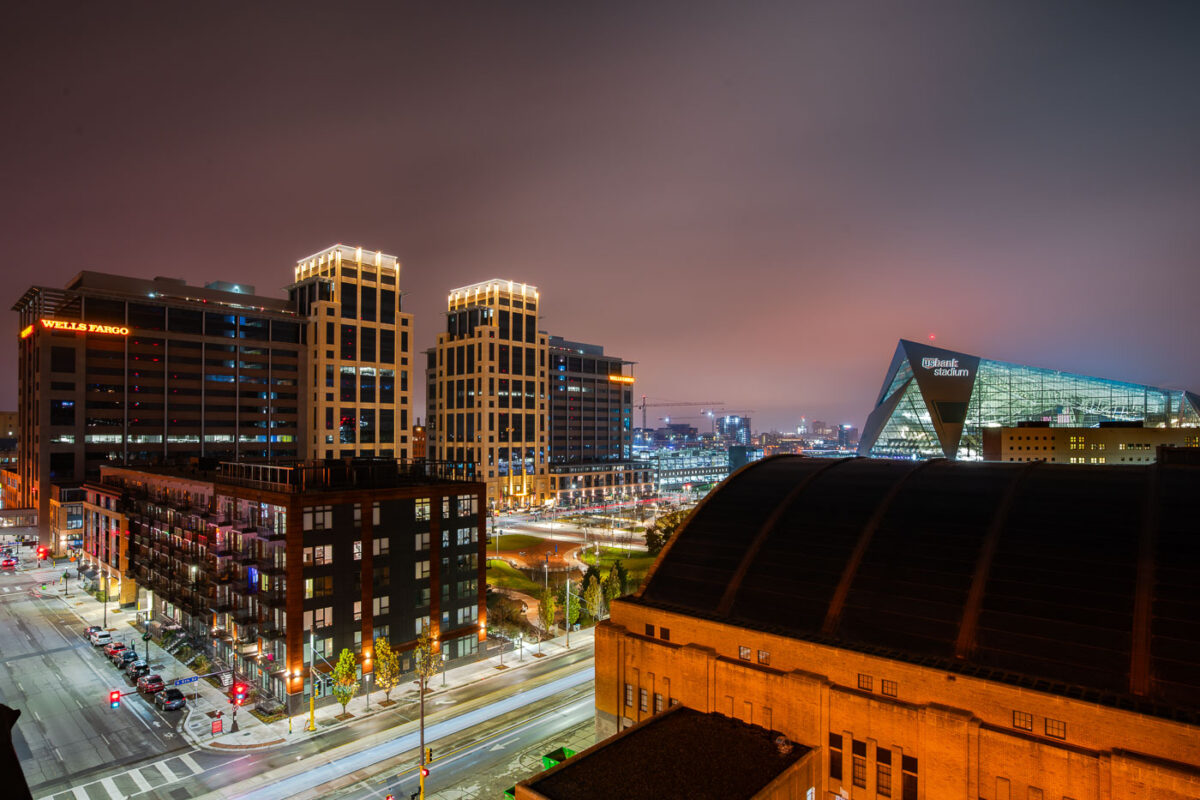
Wells Fargo Towers Armory and US Bank Stadium
The Downtown East neighborhood of Minneapolis is represented by its modern architectural landmarks. The Wells Fargo Towers, completed in 2017, serve as a significant corporate presence in the city's business district. Adjacent to them stands the historic Minneapolis Armory, originally built in 1935 as a venue for military drills and public events, which has since been redeveloped. Dominating the background is U.S. Bank Stadium, a state-of-the-art facility that opened in 2016, hosting professional football games and other large-scale events.

Downtown East Minneapolis: Wells Fargo, Armory, US Bank Stadium
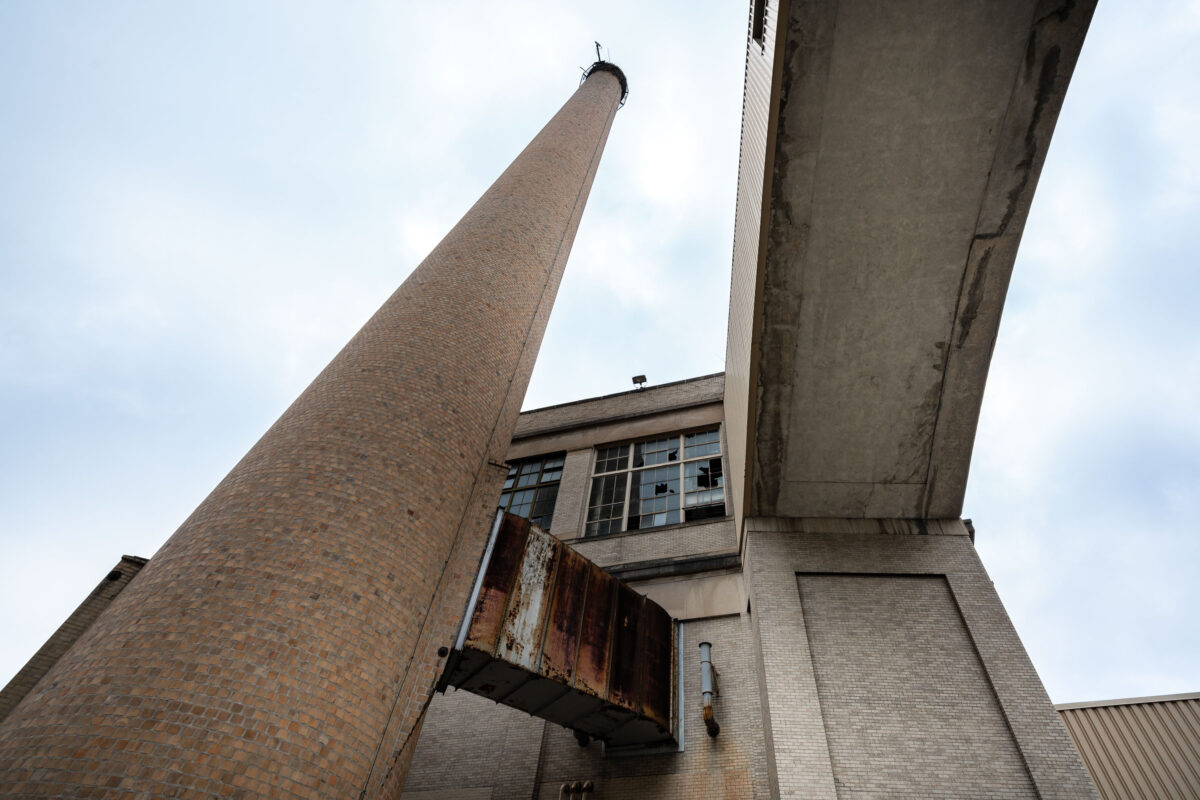
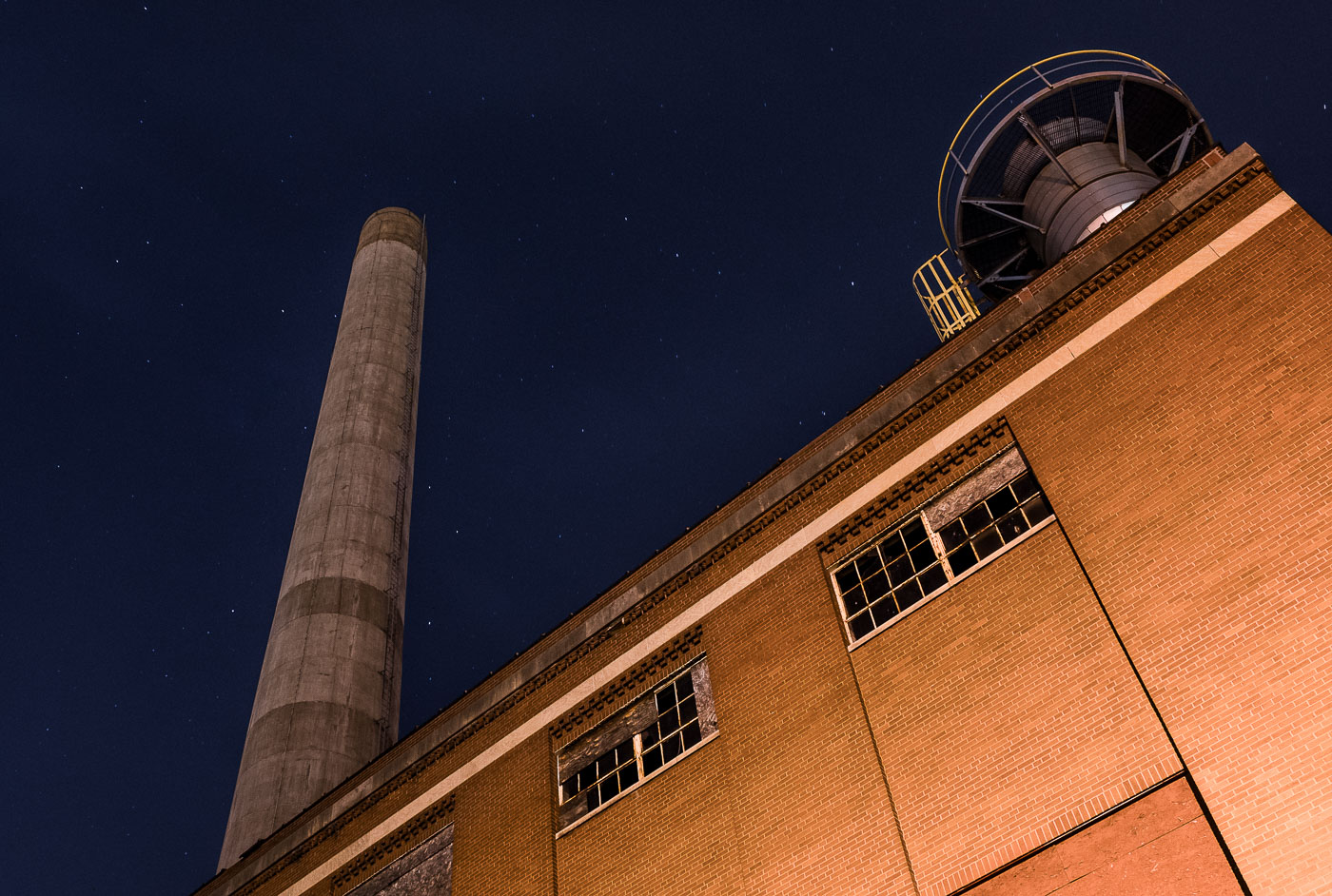
Ford Motors Steam Plant in St. Paul
The abandoned decaying Ford Motors steam plant on the banks of the Mississippi River. The plant has sat vacant since the 2011 closure of the Twin Cities Assembly Plant.

Ford Steam Plant in St. Paul, Minnesota
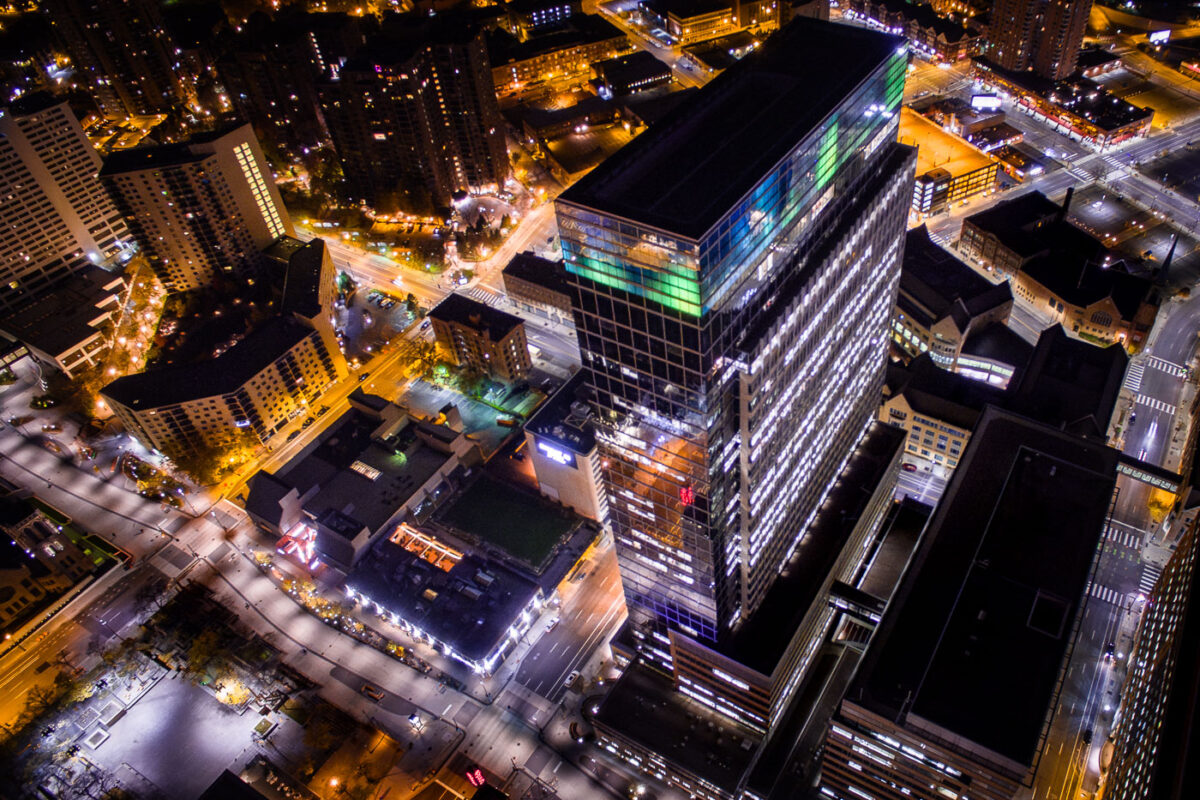
Target Plaza South on Nicollet Mall in downtown Minneapolis at night.
Target Plaza South in downtown Minneapolis is part of Target Corporation's headquarters complex on Nicollet Mall. Completed in 2001, the office tower is located near 10th Street in the southern part of the central business district.

Target Plaza South, Downtown Minneapolis
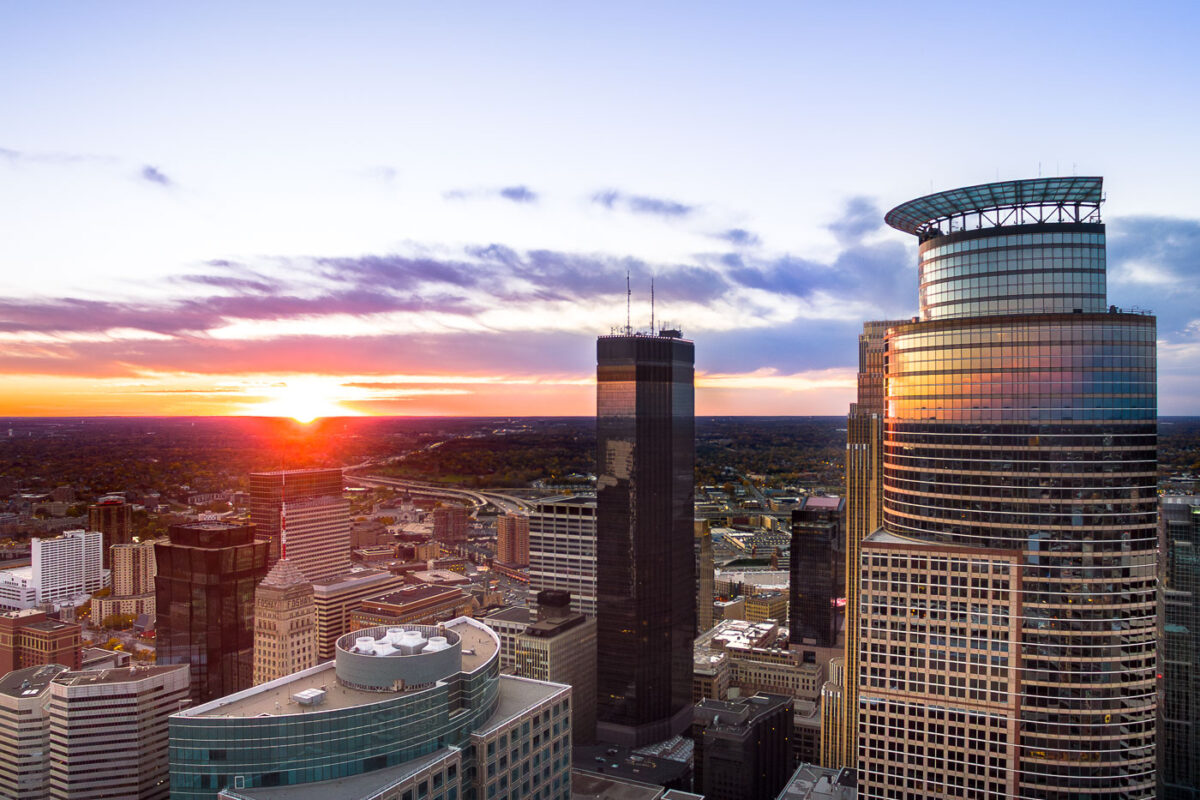
Minneapolis skyline at sunset, featuring Capella Tower, IDS Center, and Foshay Tower. The IDS Center (1972) and Foshay Tower (1929) represent modernist and early skyscraper architecture.
The Minneapolis skyline is illuminated by sunset, with the Capella Tower, IDS Center, and Foshay Tower prominently featured.

Minneapolis: Capella Tower, IDS Center, Foshay Tower at Sunset
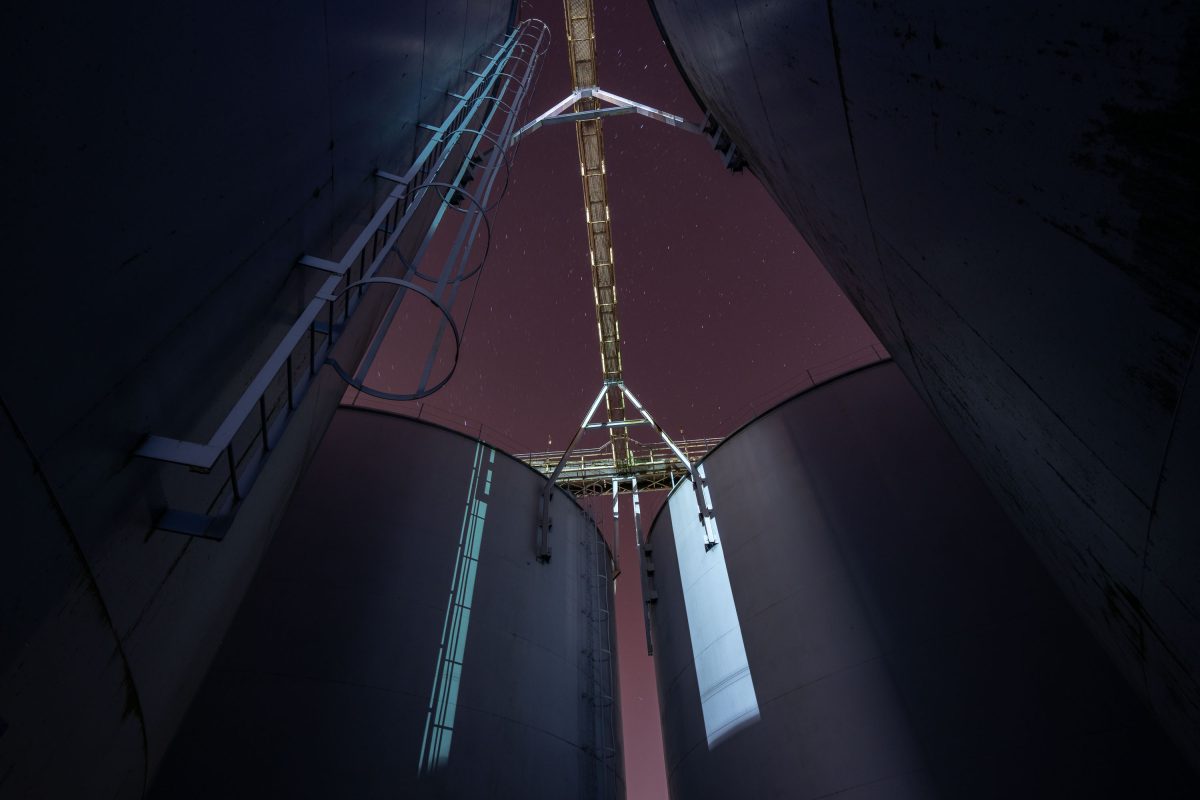
Concrete grain elevators of the Peavey terminal rise against the night sky in Superior, Wisconsin.
The Peavey Company, founded by Frank H. Peavey in the late 1800s, grew into one of the largest grain trading and storage operations in the United States. Superior, Wisconsin, sits at the westernmost point of Lake Superior and developed into a major grain-shipping port in the early 20th century, linking Midwest wheat farms to Great Lakes freighter traffic. Concrete elevators like this one were built to store grain in bulk before loading onto ships bound for mills and markets farther east. The Twin Ports of Superior and Duluth once ranked among the busiest grain-handling centers on the Great Lakes.

Peavey Grain Terminal, Superior, Wisconsin
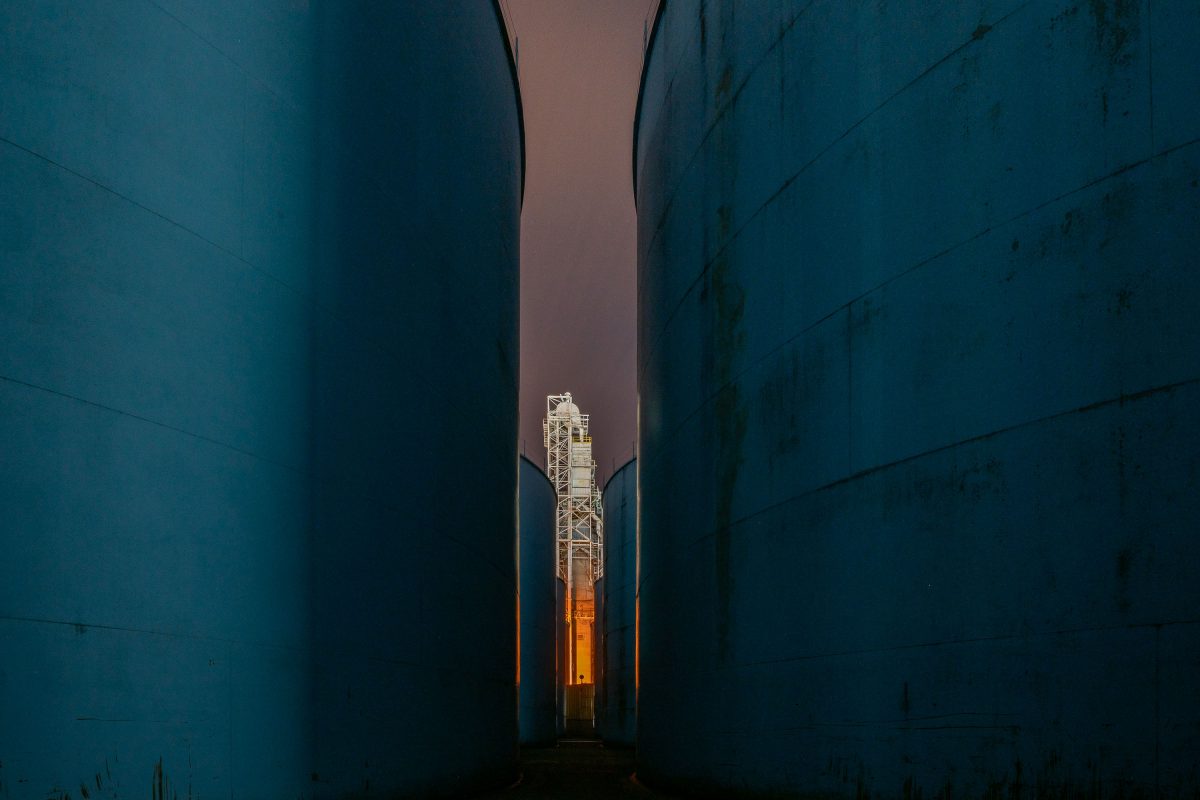
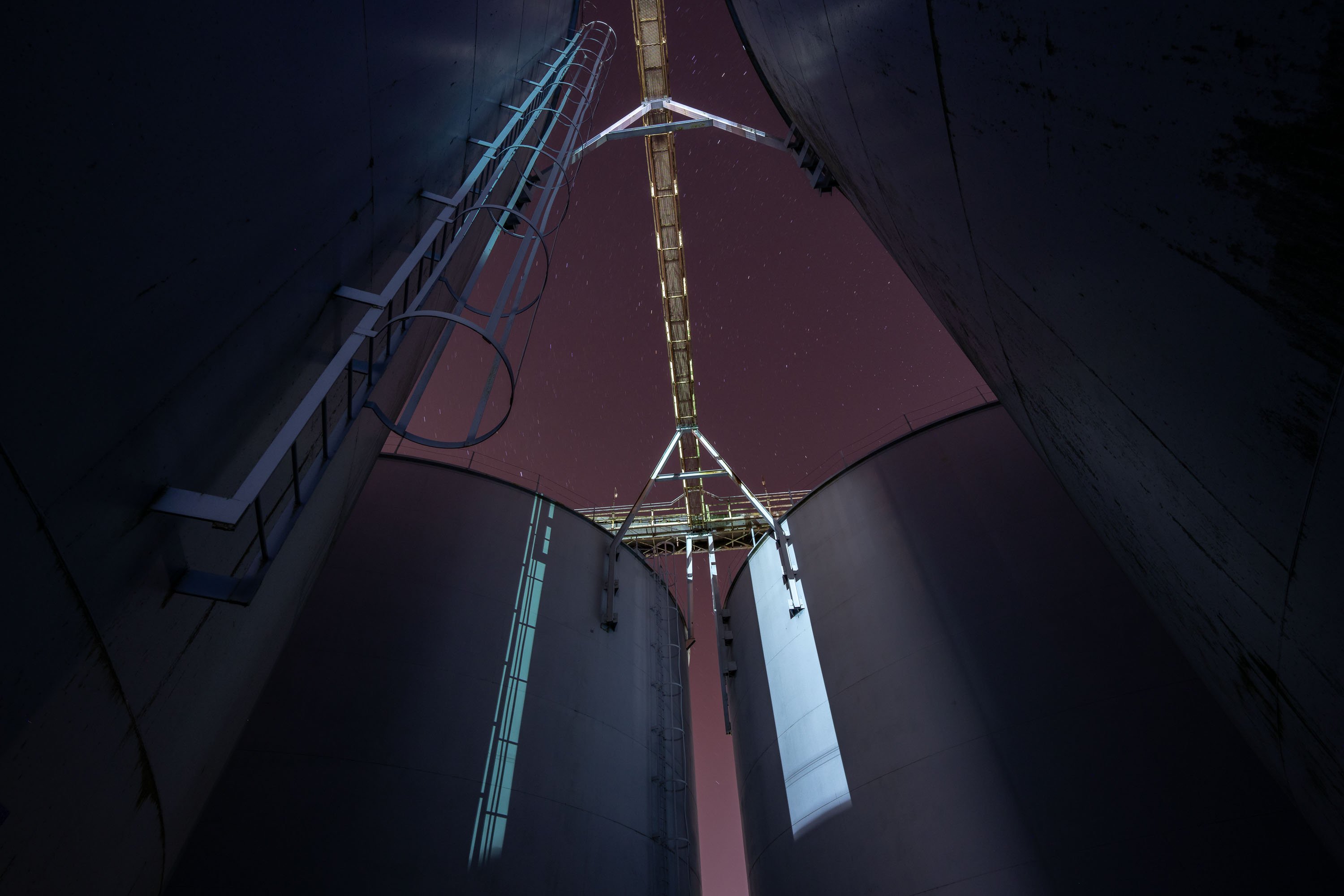
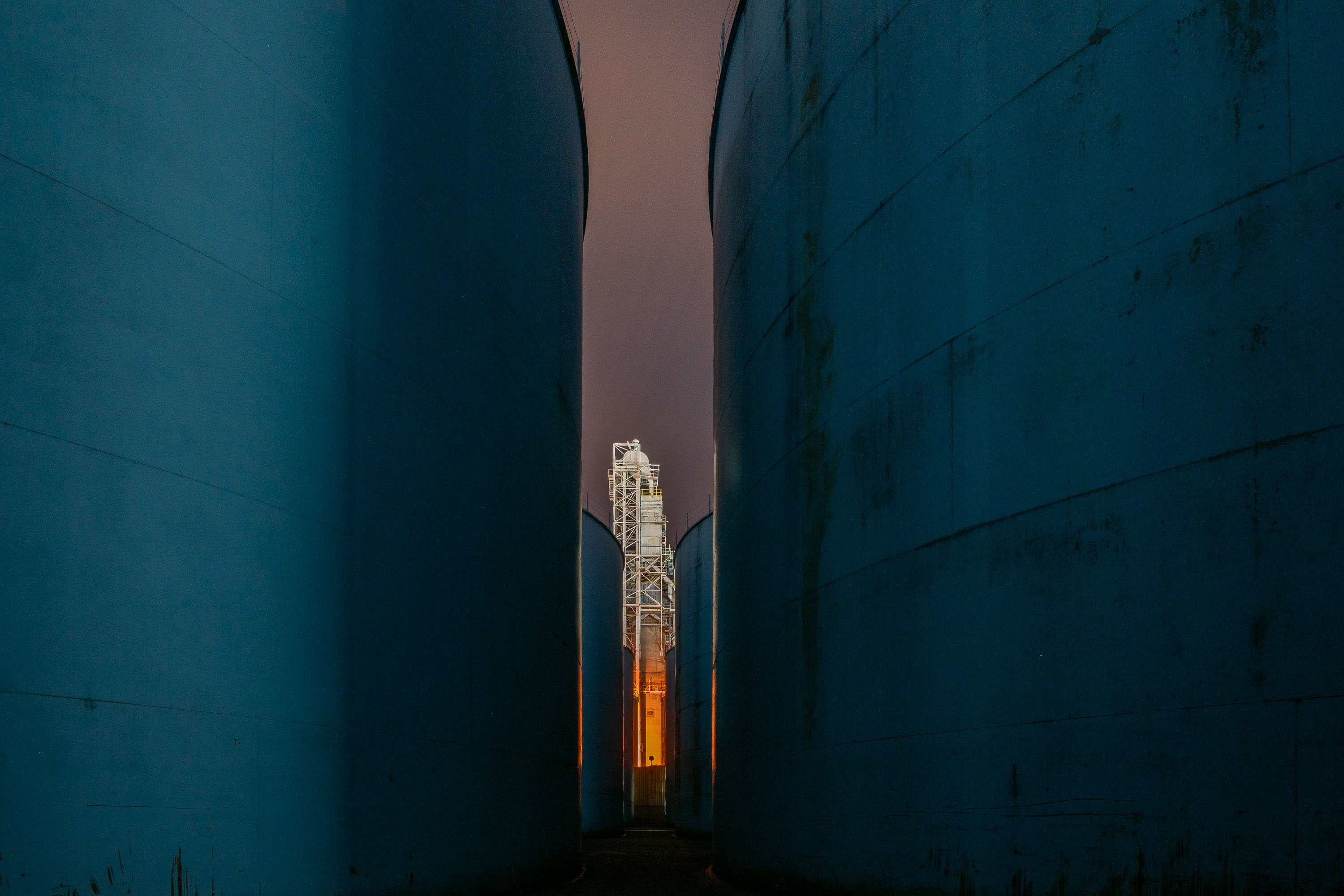
Steel grain storage tanks at a Peavey elevator complex in Superior, Wisconsin, with an industrial structure visible between them.
This grain storage complex sits along the Superior, Wisconsin waterfront on Lake Superior's Twin Ports. The Peavey Company operated grain elevators here to store wheat and other grain shipped by rail from the northern plains for transfer onto lake freighters.

Grain Elevator Storage Tanks at Peavey, Superior, Wisconsin
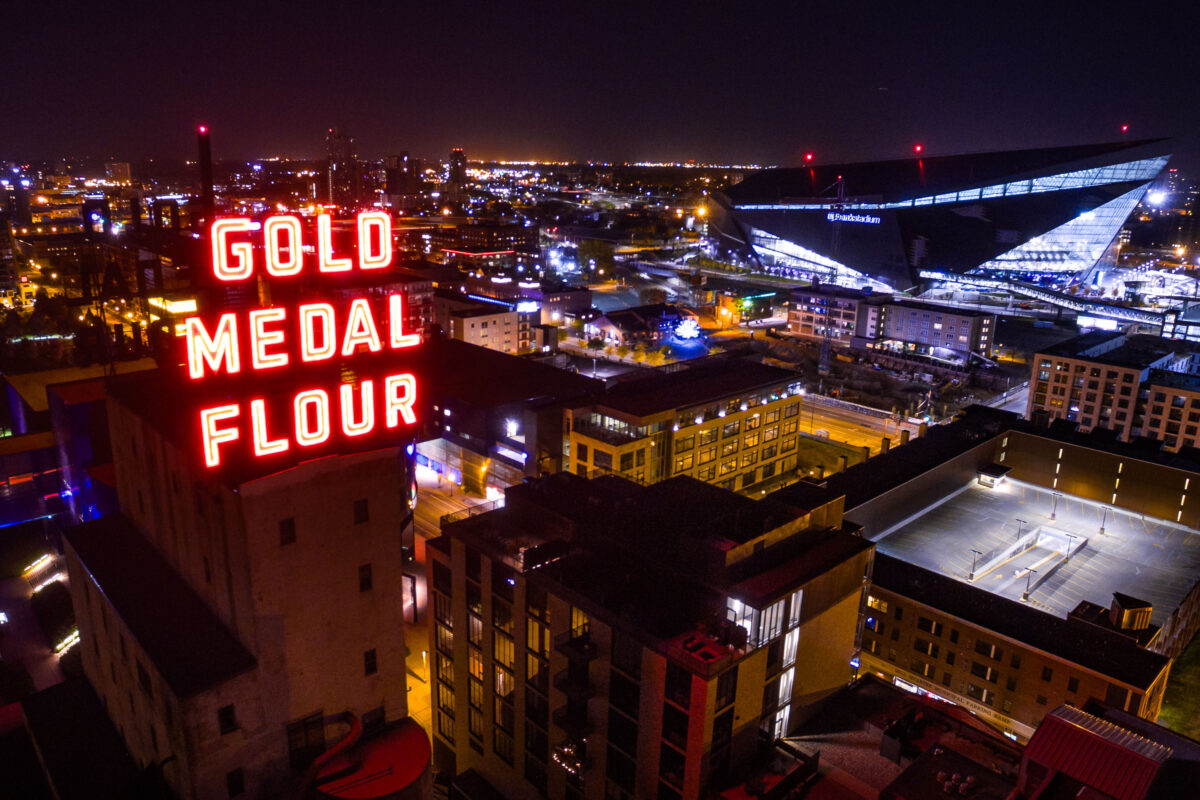
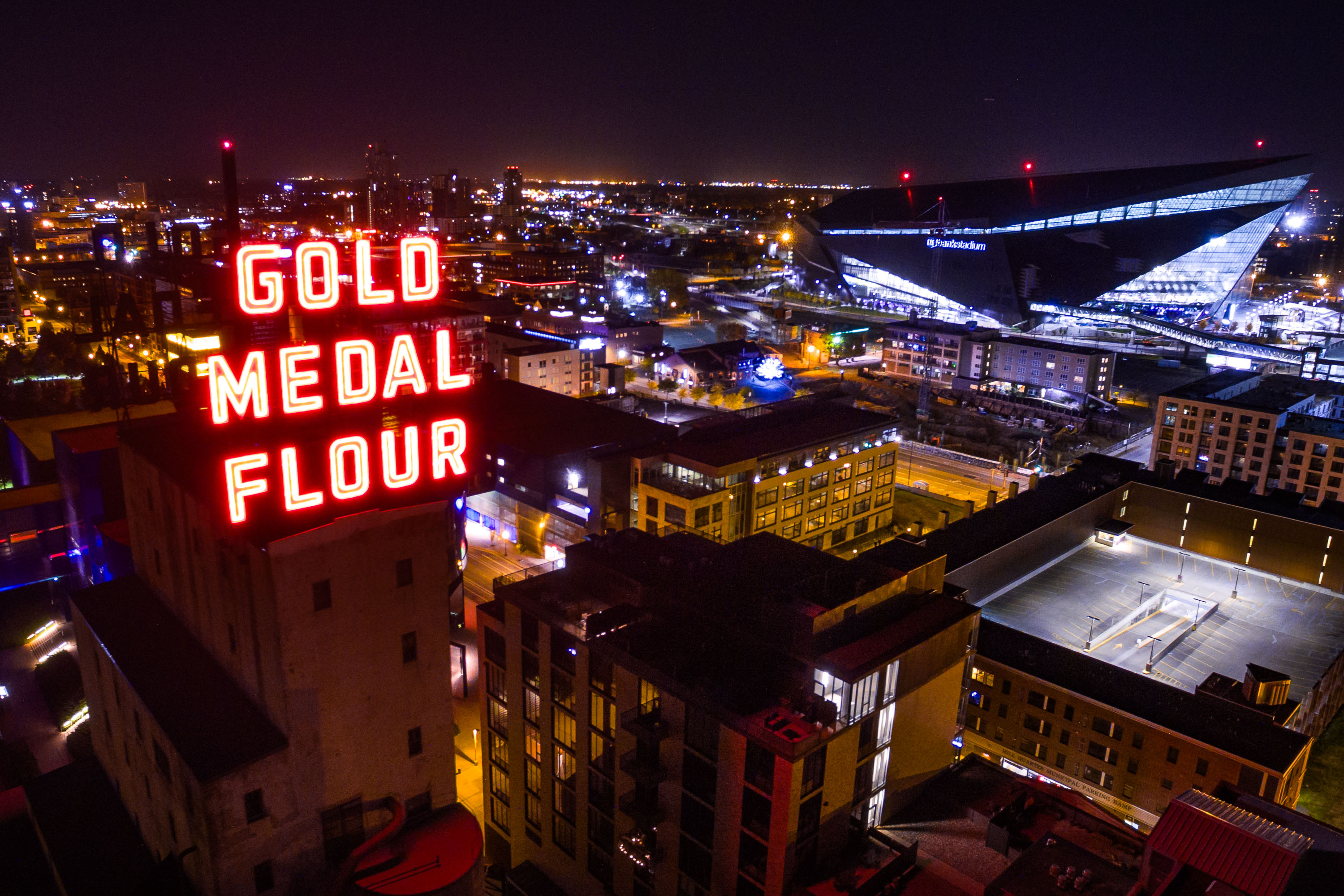
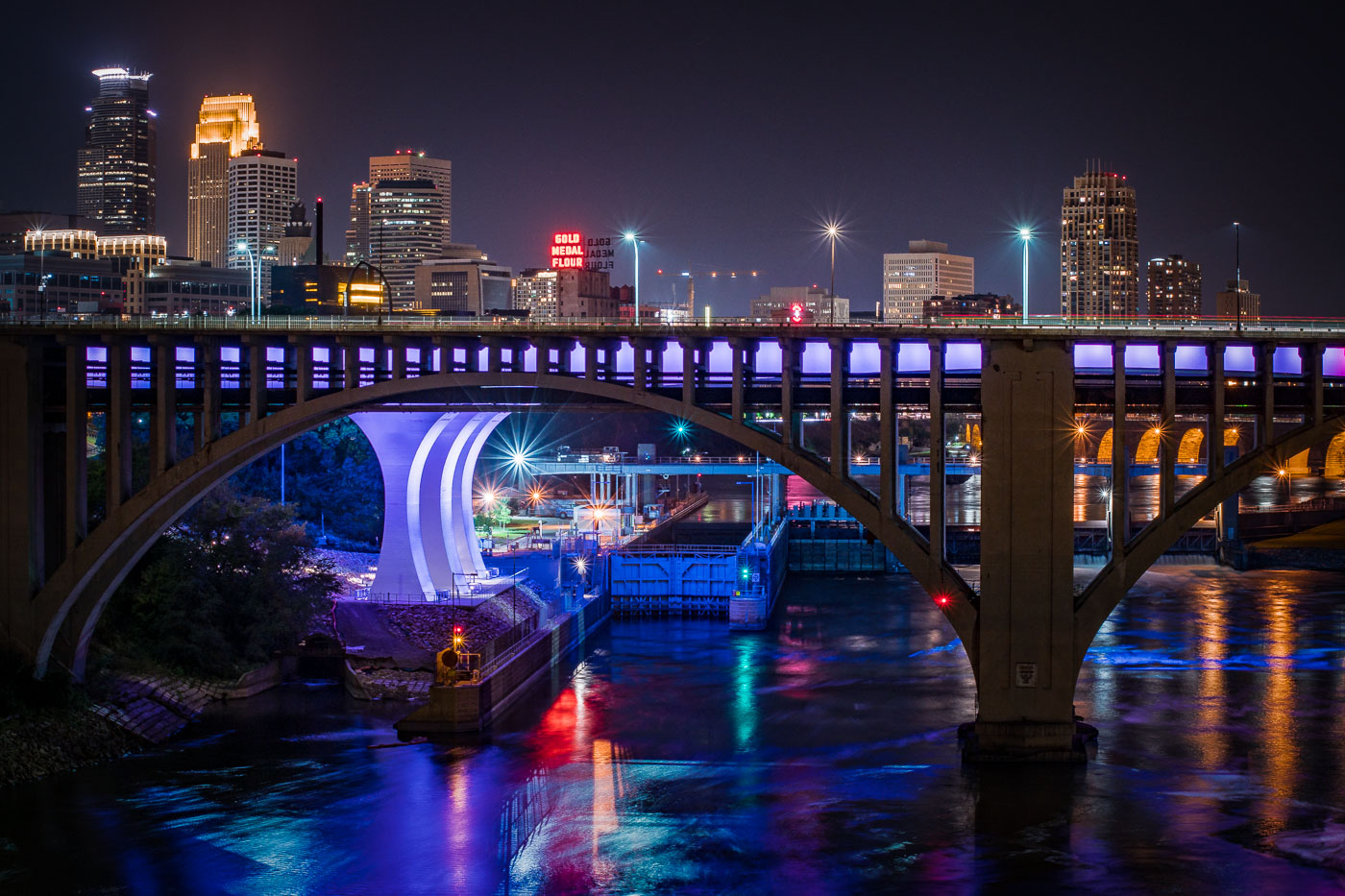
Lit up neon sign reading Gold Medal Flour, Minneapolis
Gold Medal Flour and US Bank Stadium in downtown Minneapolis.

Gold Medal Flour and US Bank Stadium, Minneapolis
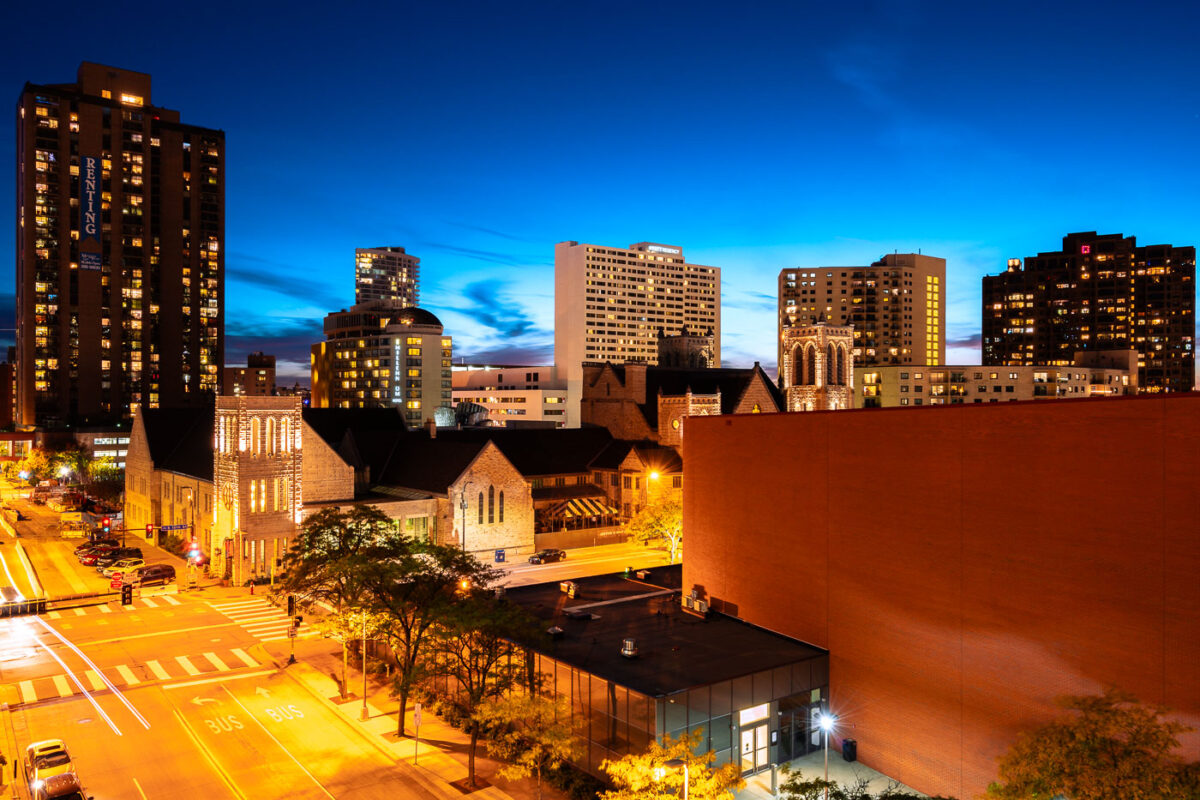
Hilton Minneapolis and Marquette Avenue in downtown Minneapolis at dusk.
Hilton Minneapolis and Marquette Avenue are in downtown Minneapolis, near the Minneapolis Convention Center. The hotel at 1001 Marquette Avenue South is one of the major lodging properties in the city’s convention district. Marquette Avenue is part of the downtown street network used by local bus routes and southbound traffic.

Hilton Minneapolis and Marquette Avenue, Downtown Minneapolis
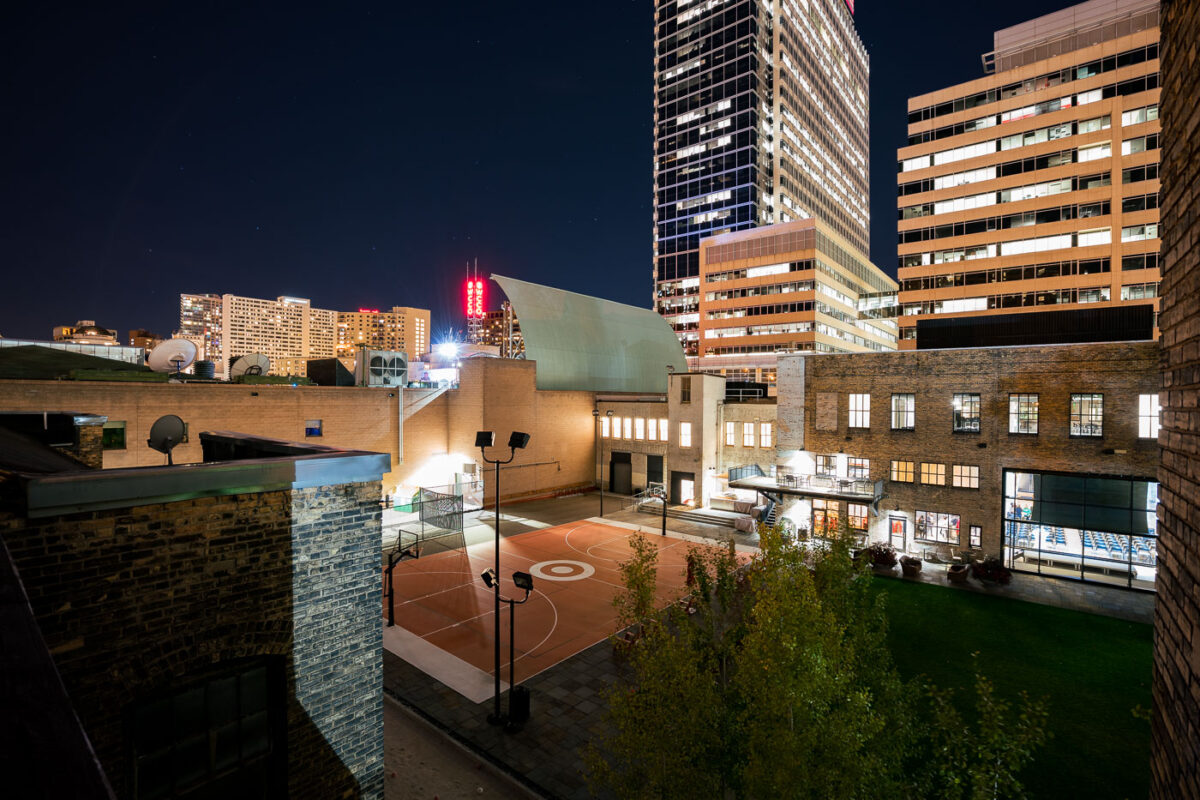
A Target-branded basketball court is illuminated at night in downtown Minneapolis, near the Target Corporation's headquarters.
A Target-branded basketball court is illuminated at night in downtown Minneapolis. This court is located near the Target Corporation's headquarters, reflecting the company's presence in the city's business district. The surrounding buildings showcase the urban environment of Minneapolis, with the court serving as a recreational amenity within the downtown area. Its presence highlights the integration of corporate branding with public spaces in contemporary urban development.

Target Basketball Court at Night, Downtown Minneapolis
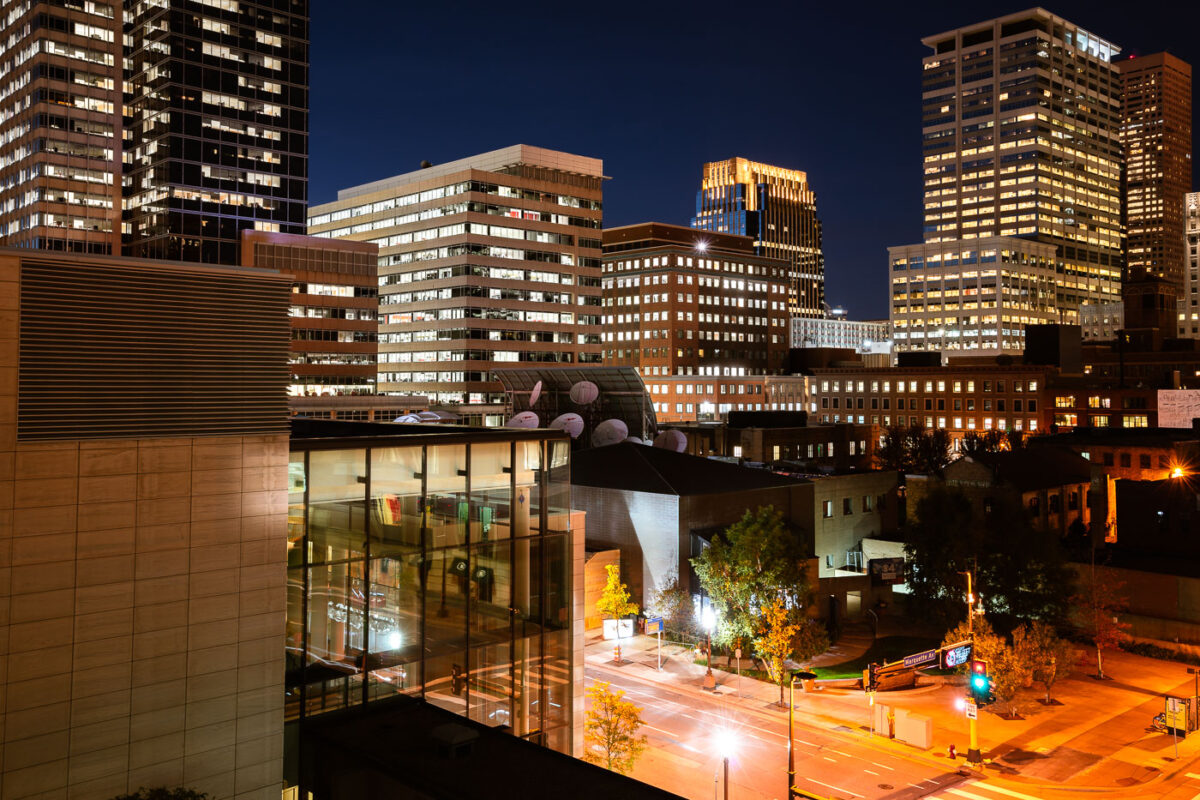
Marquette Avenue in Downtown Minneapolis at night, showing illuminated office buildings in the city's central business district.
Marquette Avenue in Downtown Minneapolis is a central artery for the city's business district. The street is lined with numerous office buildings, reflecting the area's role as a hub for commerce and finance. Many of these structures are illuminated at night, showcasing the active professional environment that continues after business hours. The architecture visible represents a range of modern and mid-century design, contributing to the city's distinct urban character.

Marquette Avenue, Downtown Minneapolis at Night
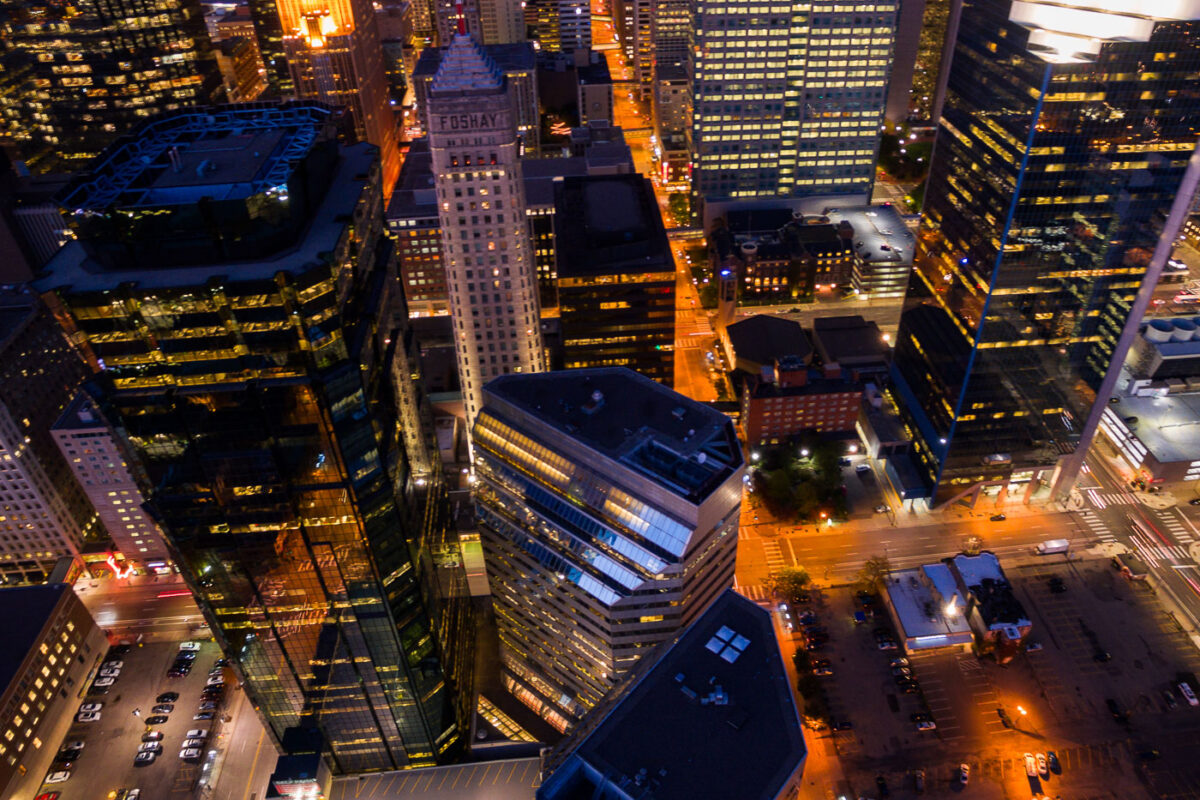
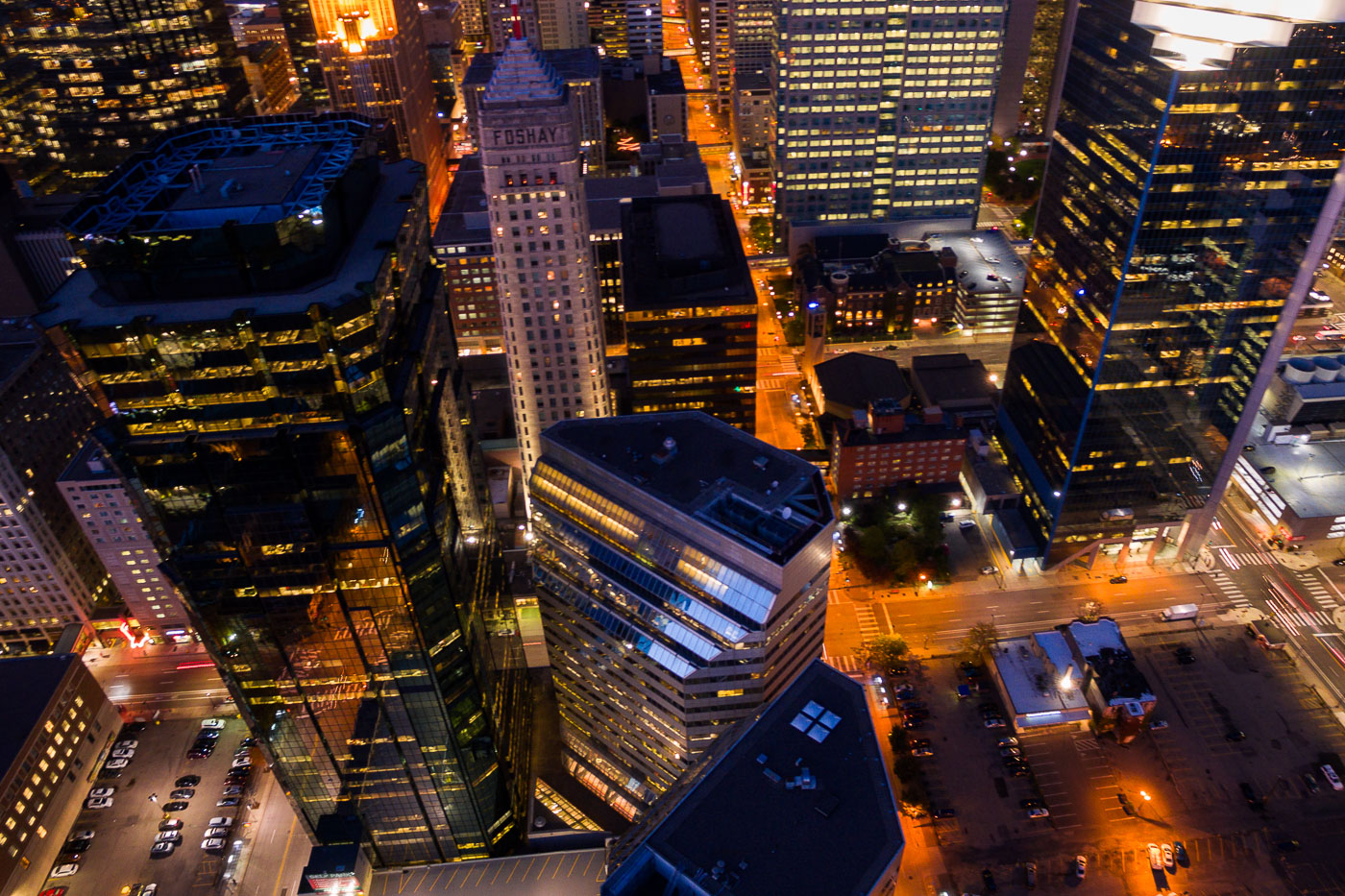
Aerial view of the Foshay Tower and AT&T Tower at night in Downtown Minneapolis, highlighting illuminated windows and ongoing development.
The Foshay Tower, completed in 1929, was Minneapolis's first skyscraper and served as a symbol of the city's burgeoning prosperity. Adjacent to it is the AT&T Tower.

Downtown Minneapolis: Foshay and AT&T Towers at Night
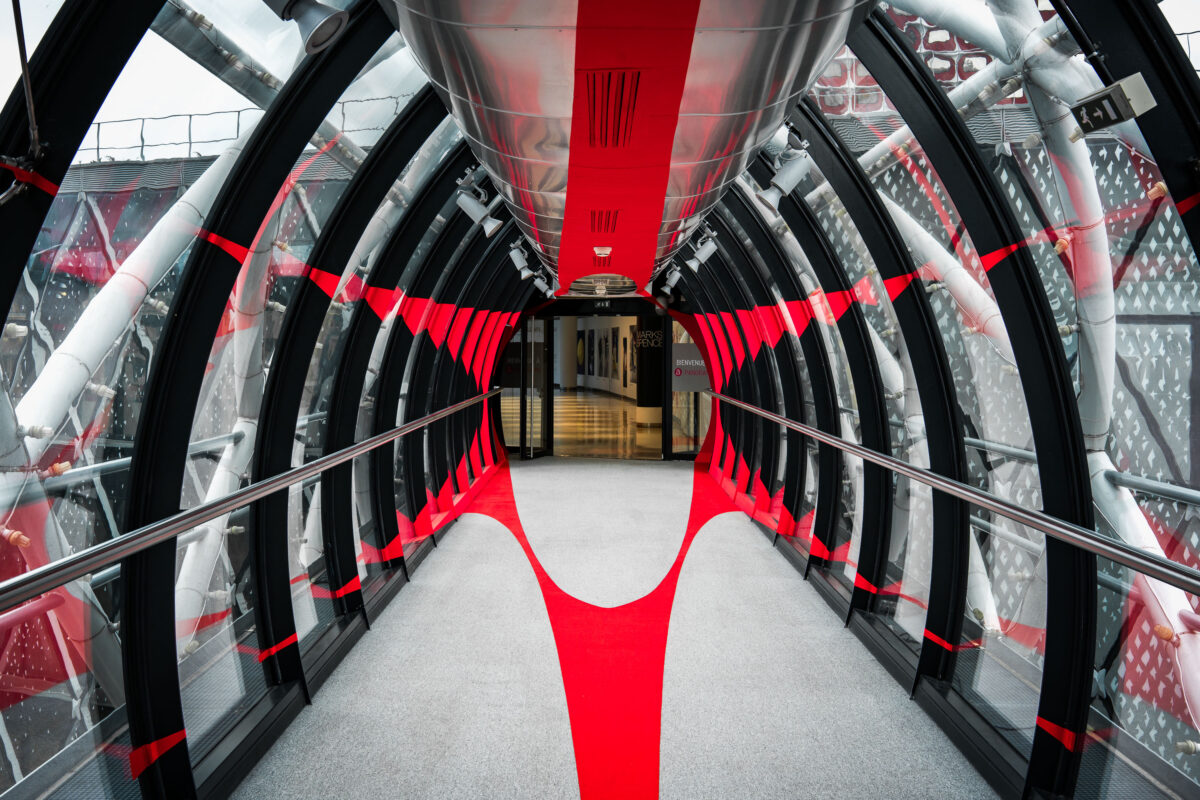
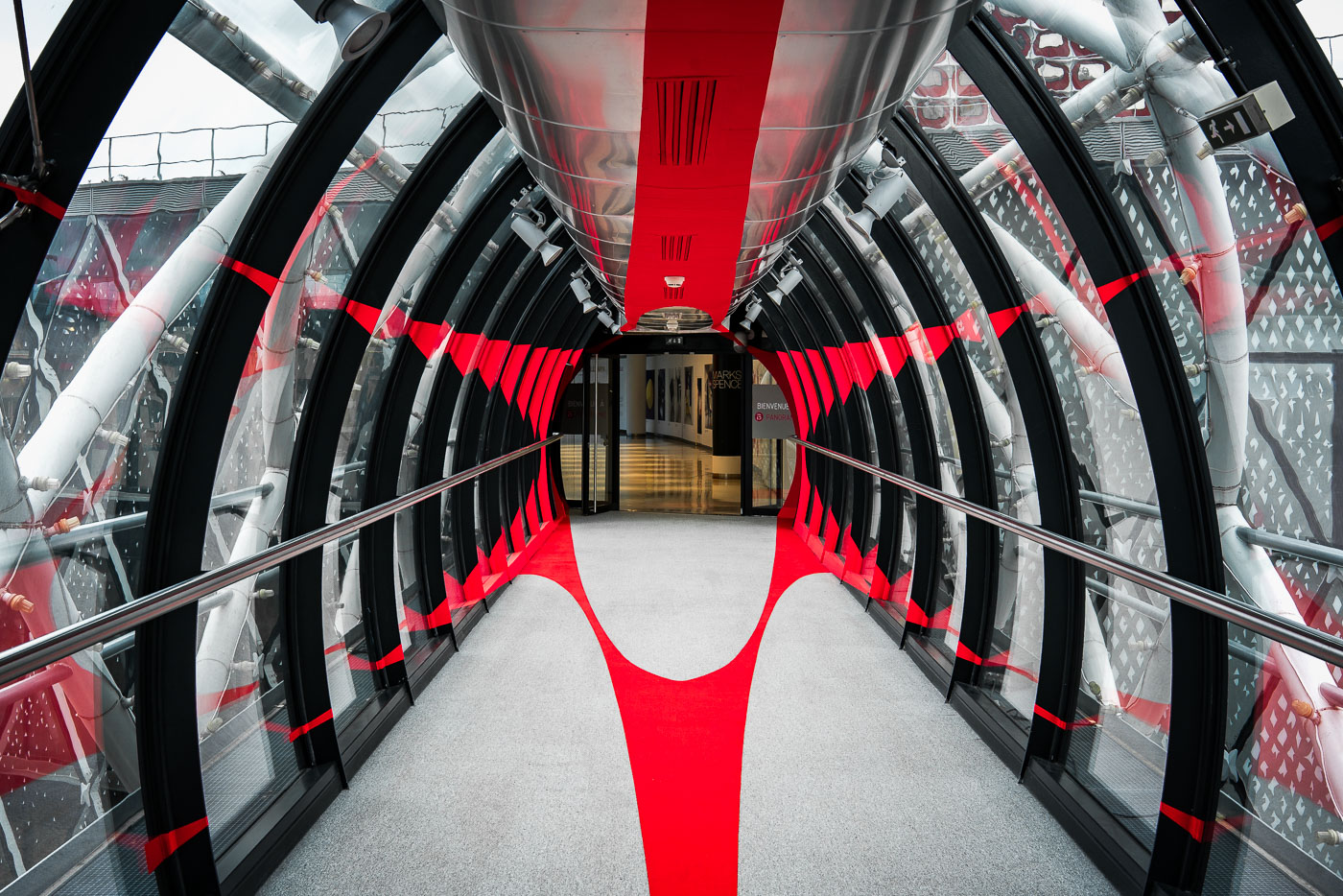
Paris shopping mall skyway interior with glass walls and red accents
An enclosed pedestrian skyway inside a shopping mall in Paris, France, connects retail units on either side. The tubular glass-and-steel passage has black framing, exposed structural members, and bold red interior accents.

Paris Shopping Mall Skyway Interior

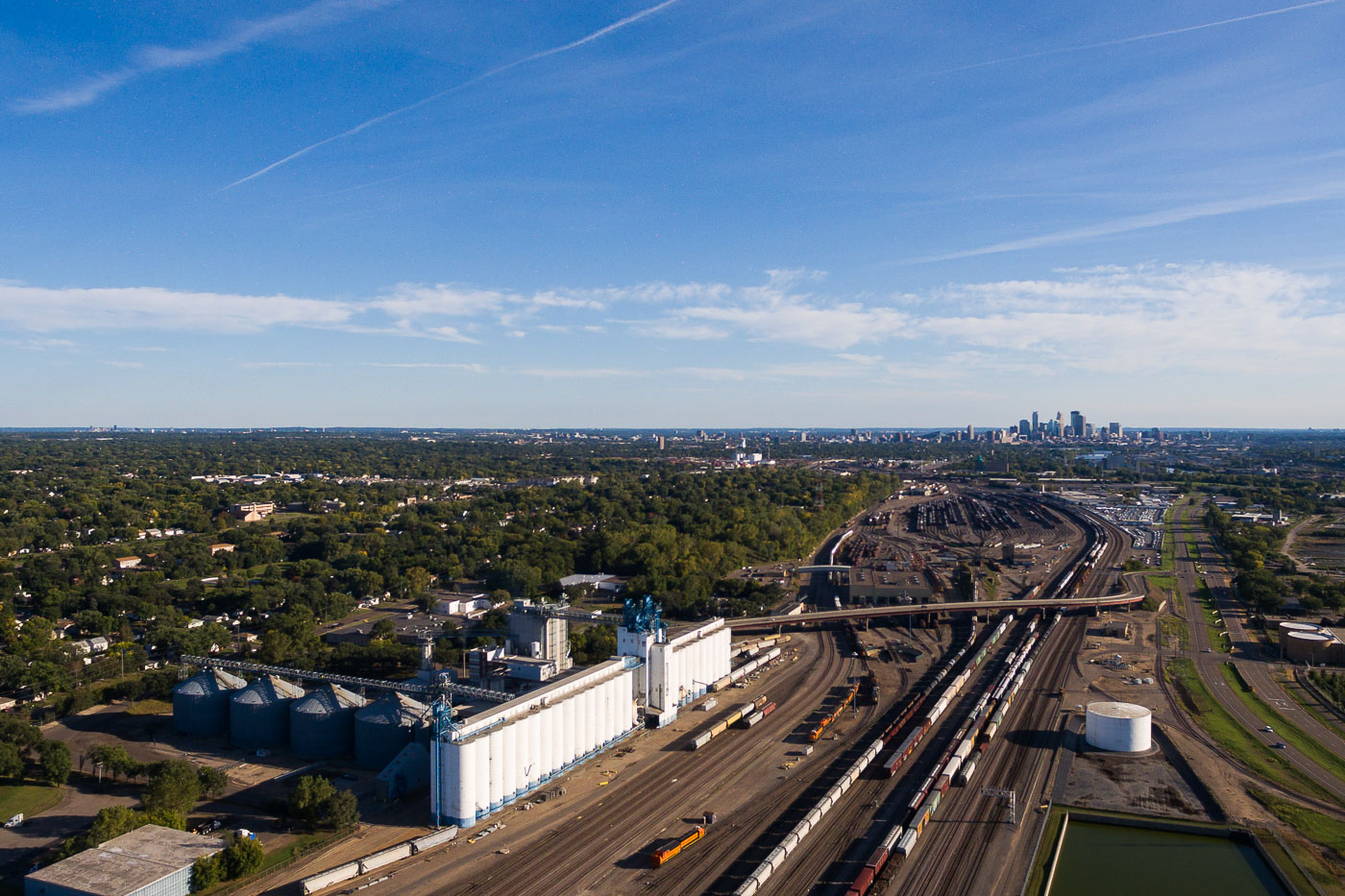
General Mills Grain Elevator and Rail Yard in Northeast Minneapolis, a key industrial facility for grain storage and transportation connecting to national markets.
The General Mills Grain Elevator and Rail Yard in Northeast Minneapolis is a critical component of the region's agricultural and industrial infrastructure. This facility, designed for the storage and transportation of grain, plays a vital role in the food processing industry, particularly for a company with deep roots in Minneapolis's milling history. The extensive rail yard adjacent to the elevators facilitates the efficient movement of commodities, connecting local production to national and international markets. Its presence underscores the historical importance of grain processing and transportation to the economic development of Minneapolis.

General Mills Grain Elevator and Rail Yard, Northeast Minneapolis
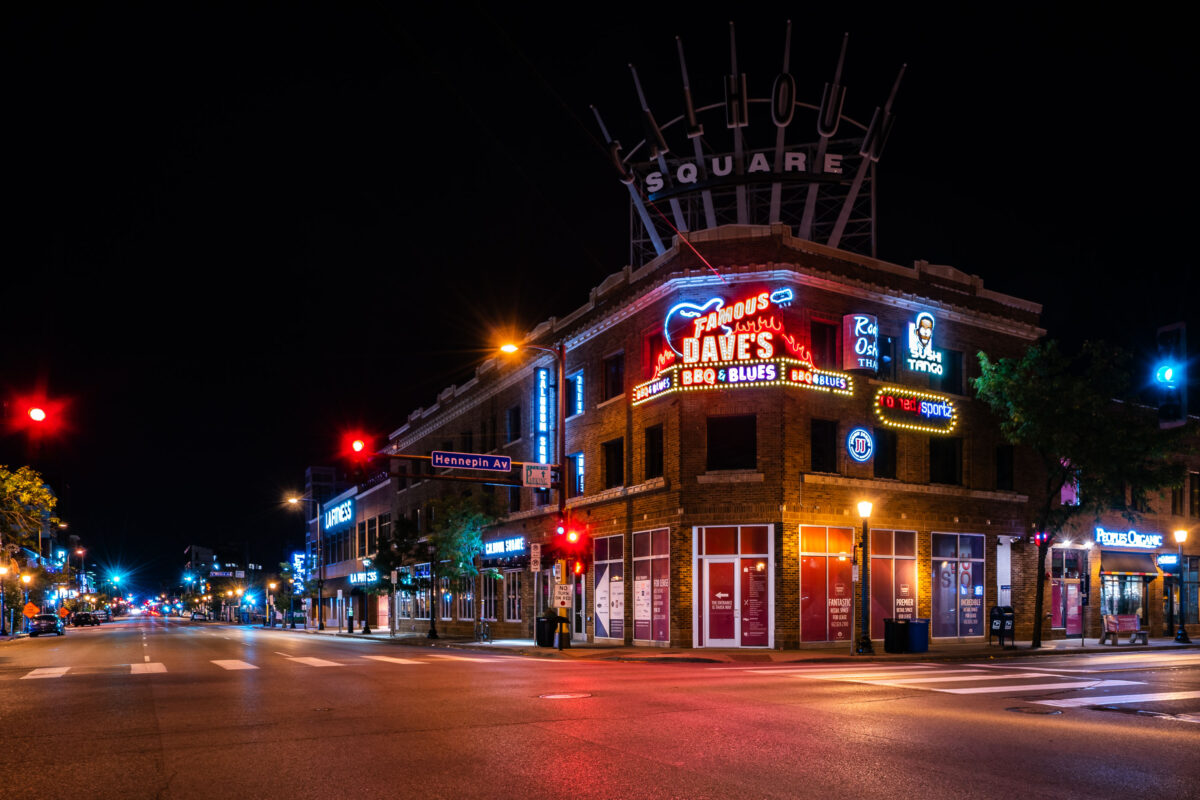
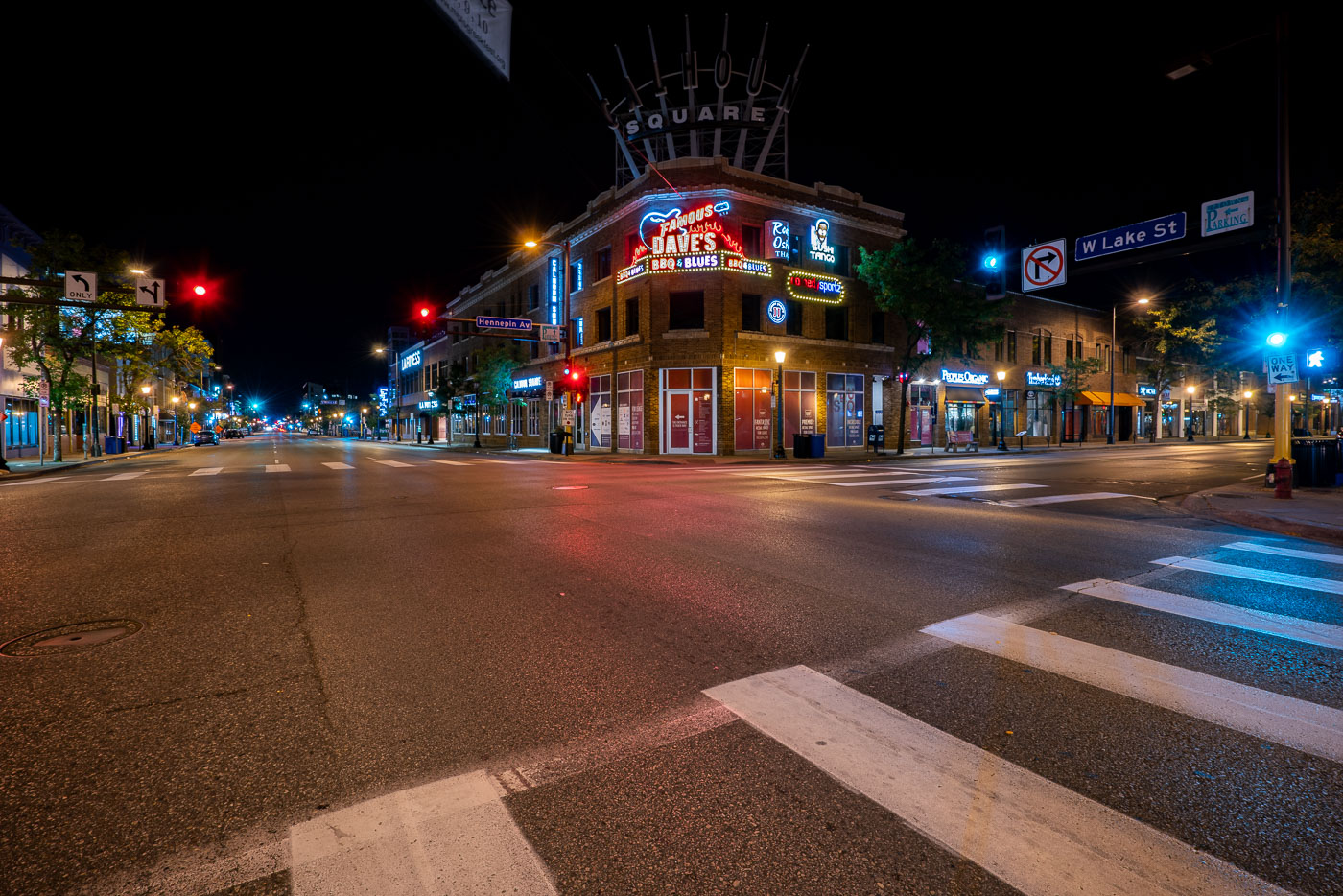
Calhoun Square, a brick corner building with neon signs for Famous Dave's and other businesses, illuminated at night at Hennepin Avenue and Lake Street in Minneapolis's Uptown neighborhood.
Calhoun Square mall located at the intersection of Hennepin Avenue and Lake Street in Minneapolis's Uptown neighborhood.

Famous Dave’s Sign at Hennepin Avenue and Lake Street
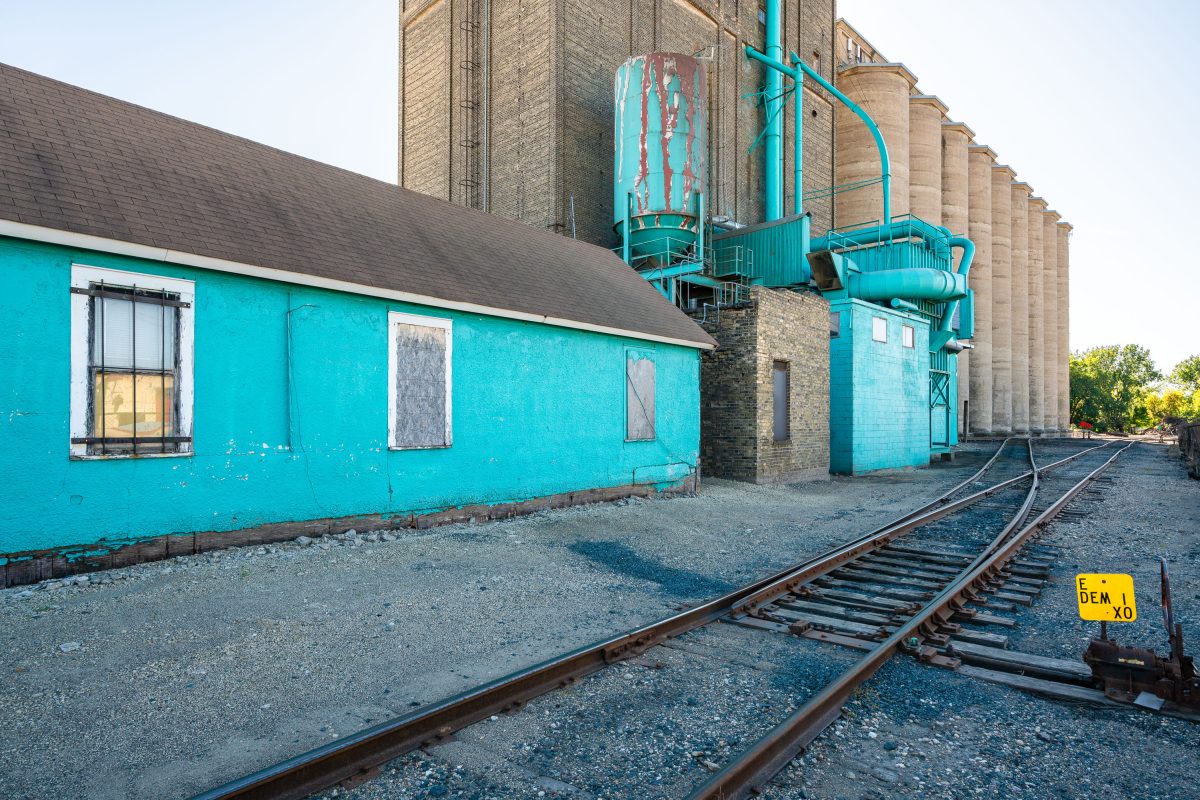
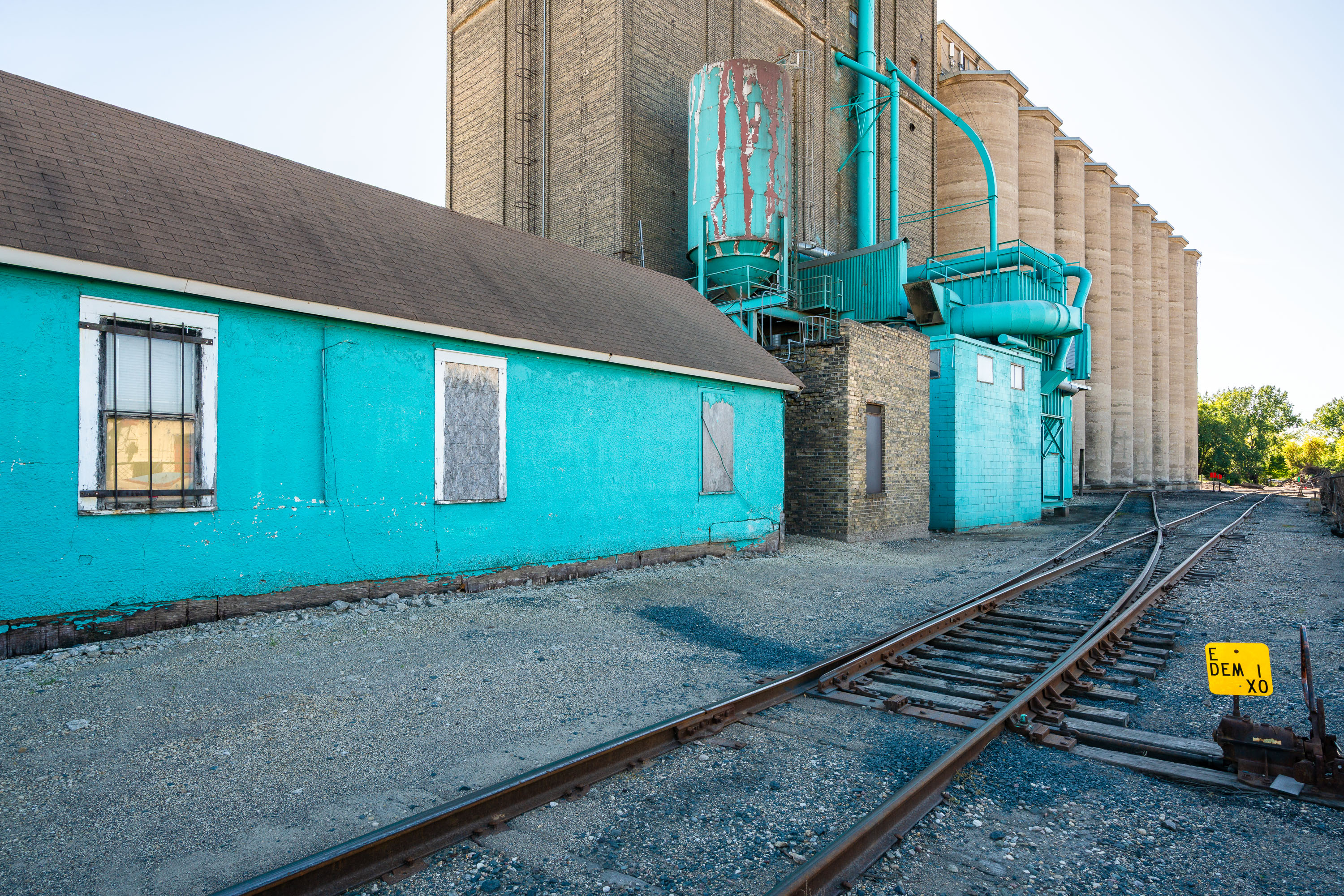
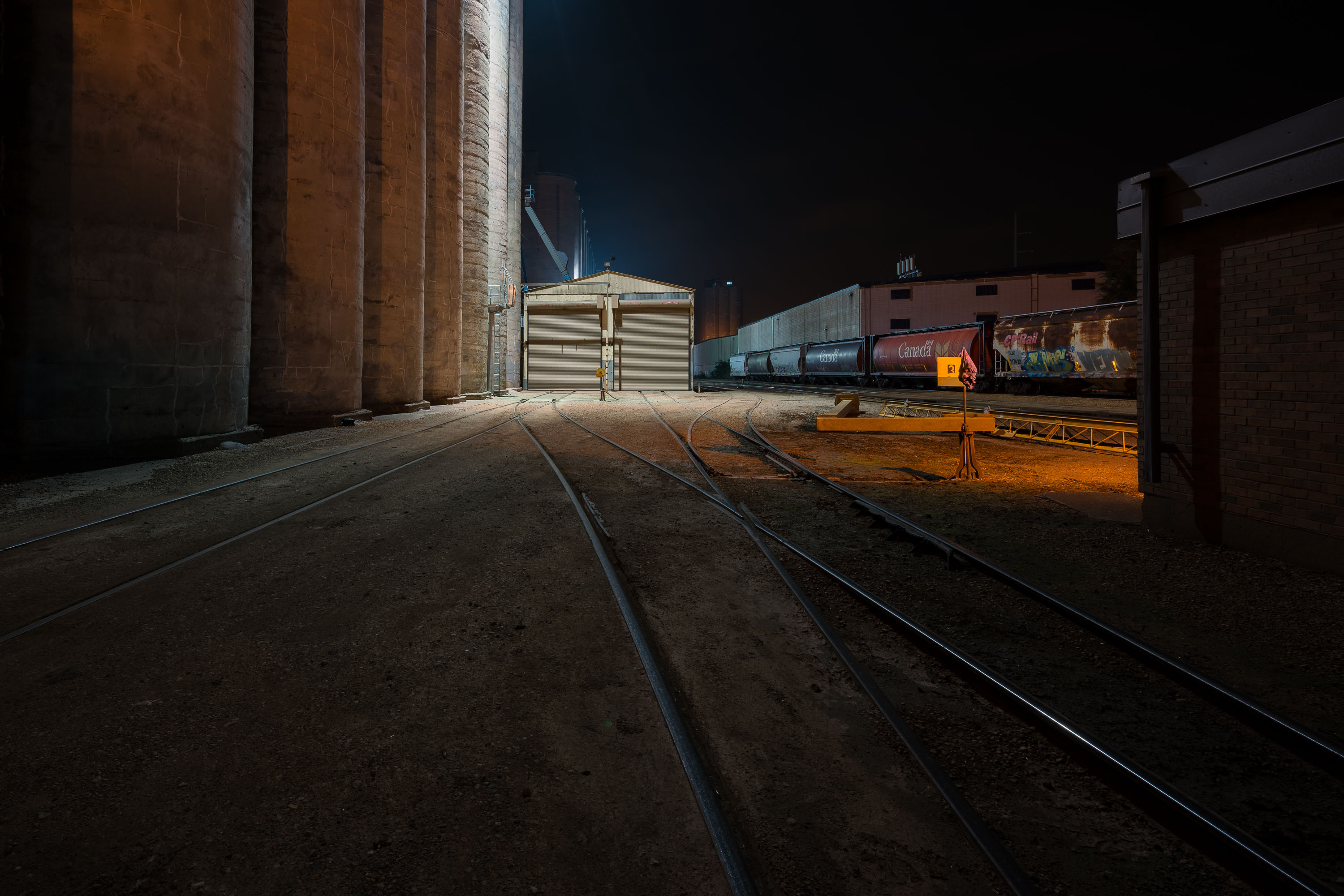
Viterra grain elevator complex with turquoise outbuilding and railroad tracks leading to concrete storage silos.
Viterra's grain elevator sits along a rail spur in Minneapolis, part of a concrete silo complex built for bulk grain storage. A turquoise annex with a loading structure stands beside the row of silos, with tracks running up to the building for loading and unloading rail cars.

Rail Tracks Curve Past the Viterra Grain Elevator’s Turquoise Annex
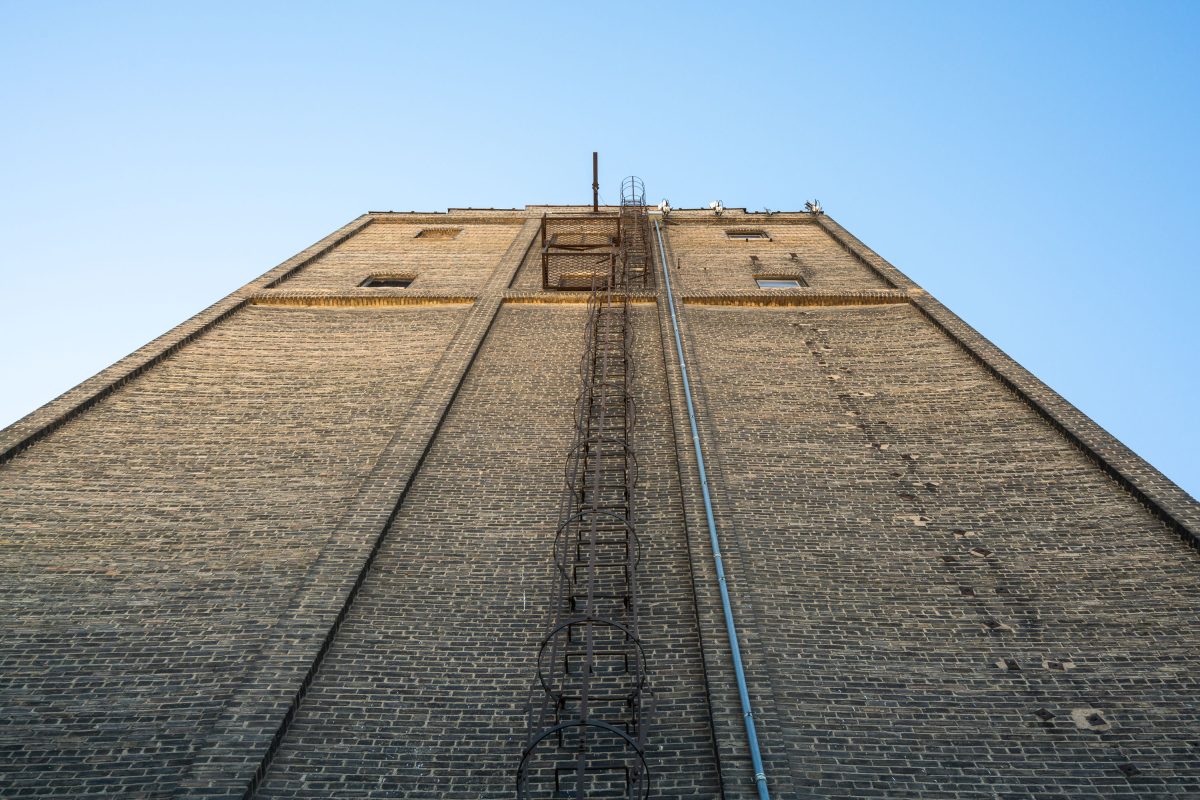
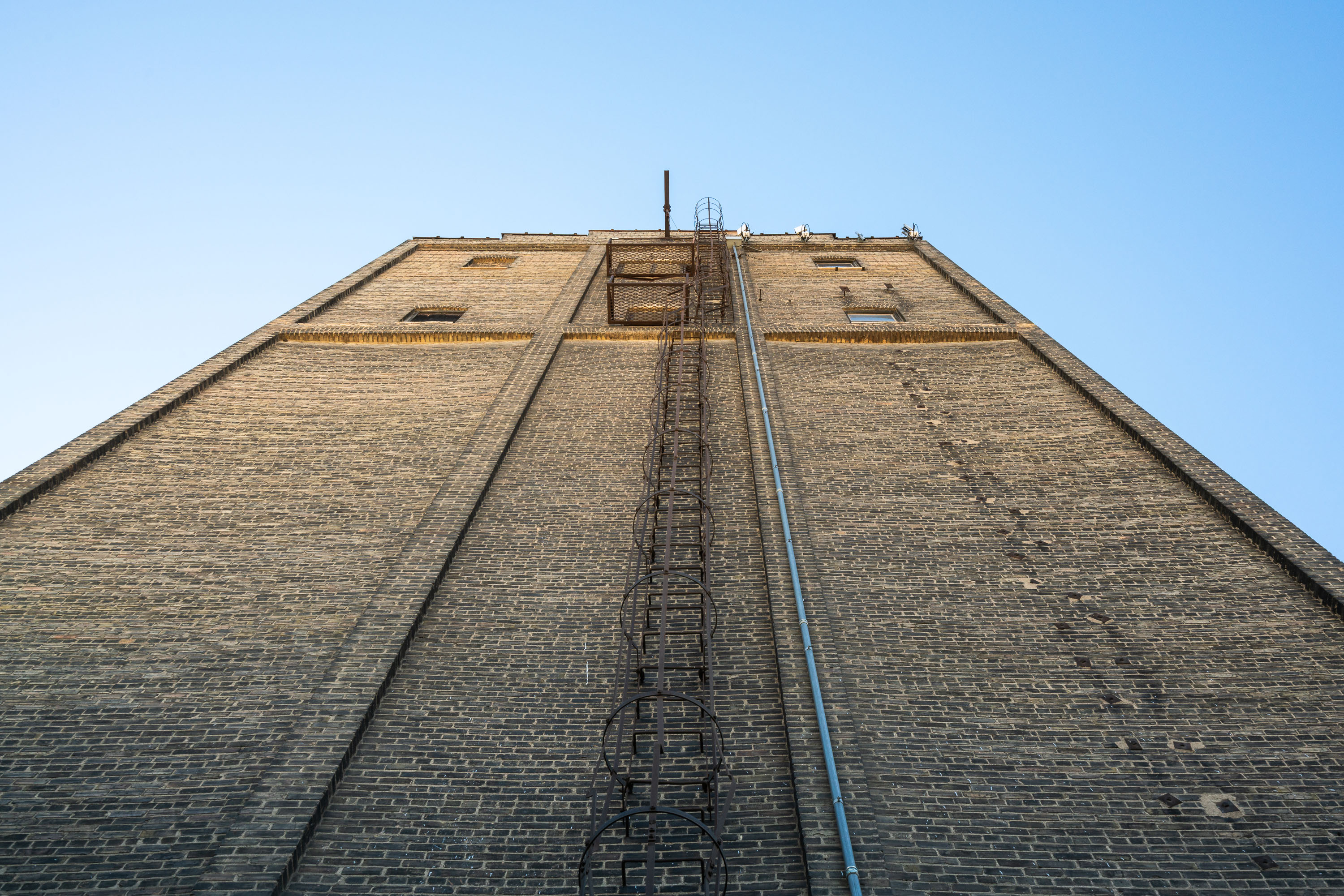
Tall brick grain elevator with metal fire escape and blue utility pipe against clear sky in Minneapolis.
Viterra operates this grain elevator in Minneapolis, a concrete and brick structure used to store grain before it moves out by rail. A caged metal ladder and a utility pipe run the full height of the wall, servicing the tower's upper equipment.

Straight Up the Brick Face of Viterra’s Grain Elevator
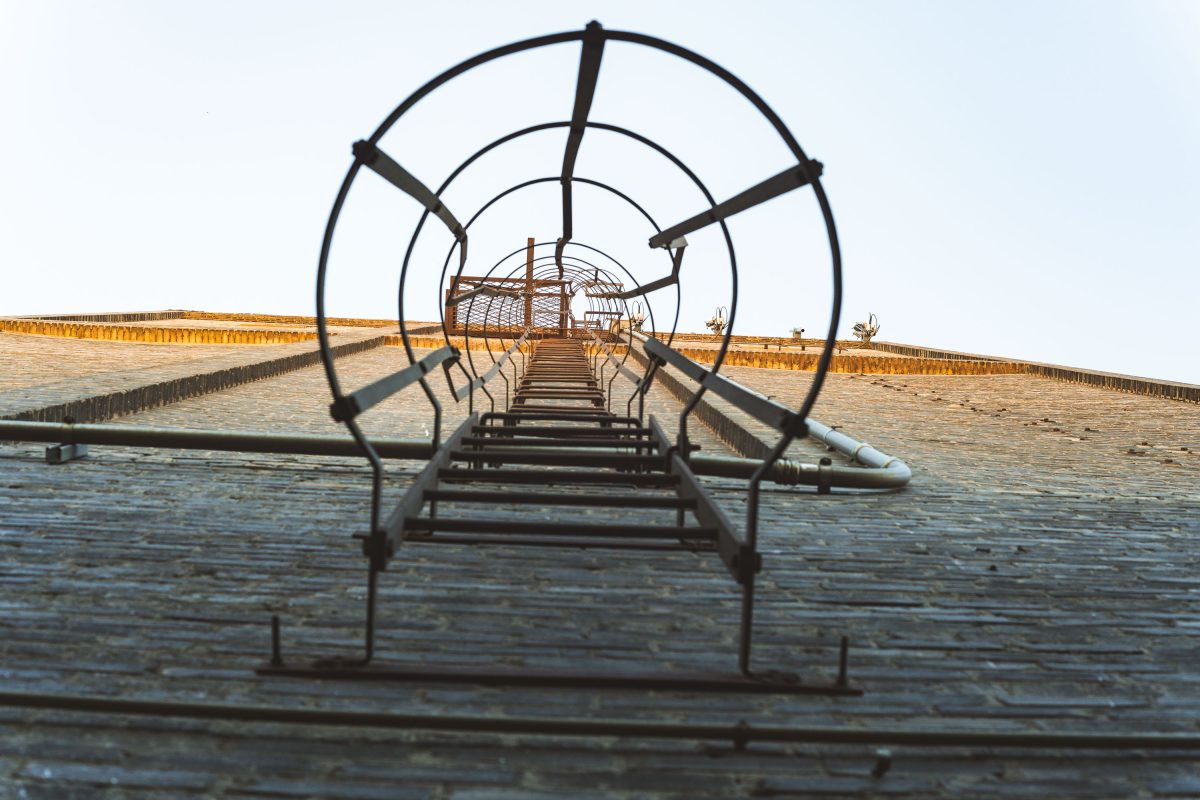
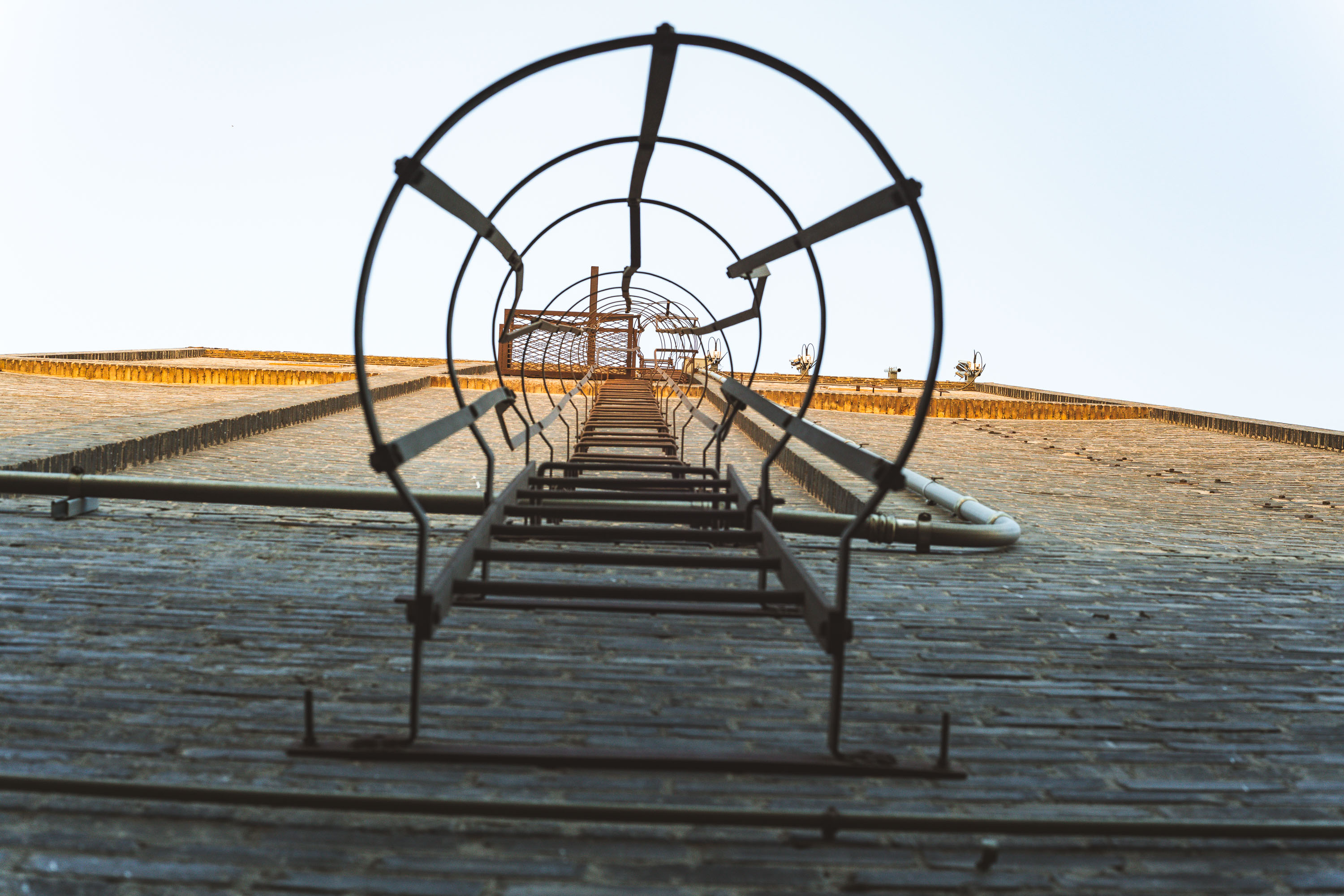
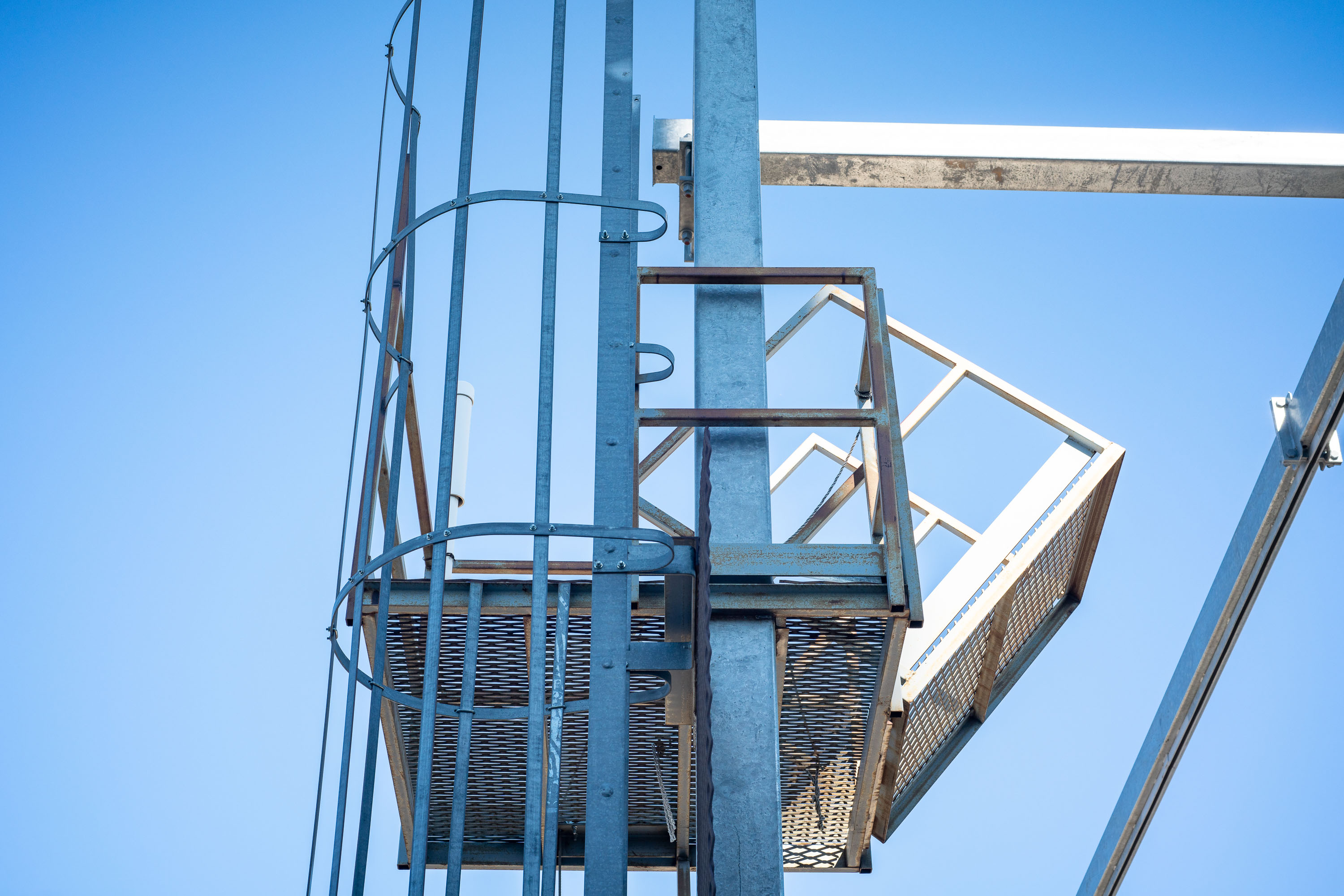
Caged metal ladder and walkway system on the exterior of a Viterra grain elevator in Minneapolis.
A caged ladder climbs the exterior wall of the Viterra grain elevator in Minneapolis, rising toward a platform near the roofline. The circular hoops around the rungs are a standard safety guard meant to keep a climber from falling backward on the long vertical run.

A Caged Exterior Ladder on Viterra’s Grain Elevator
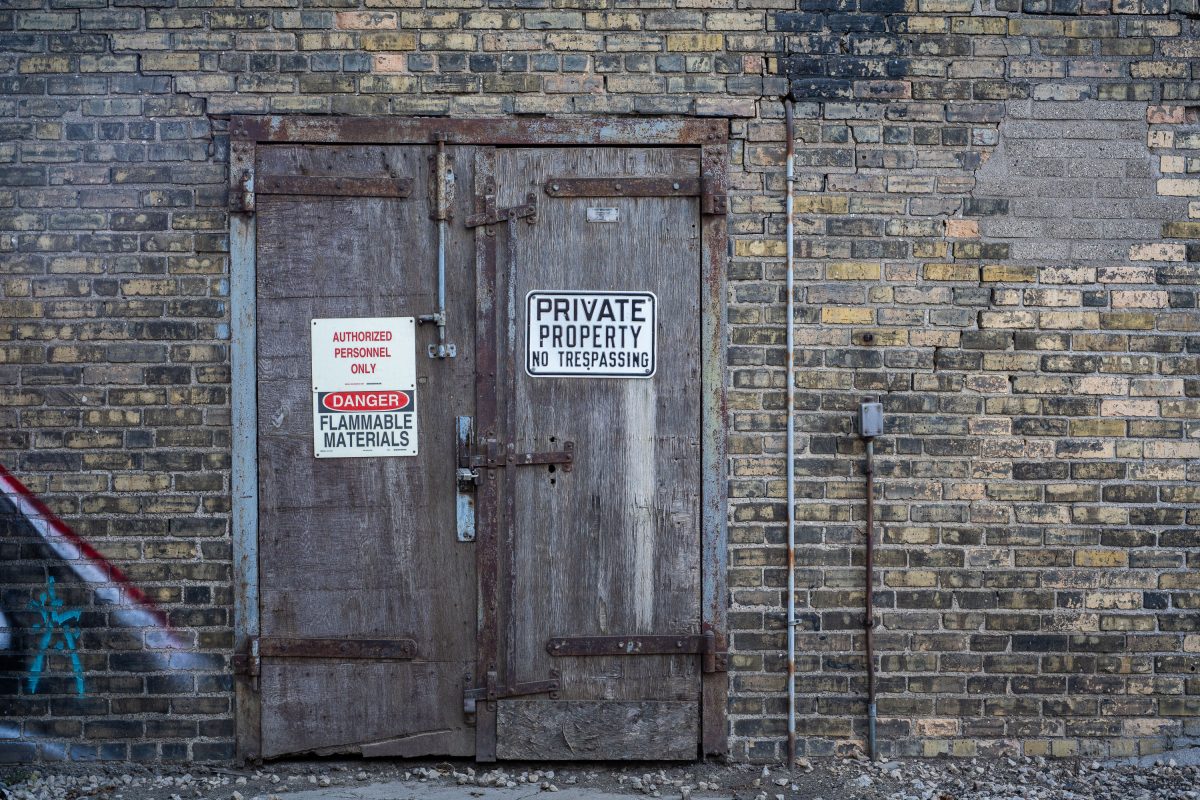
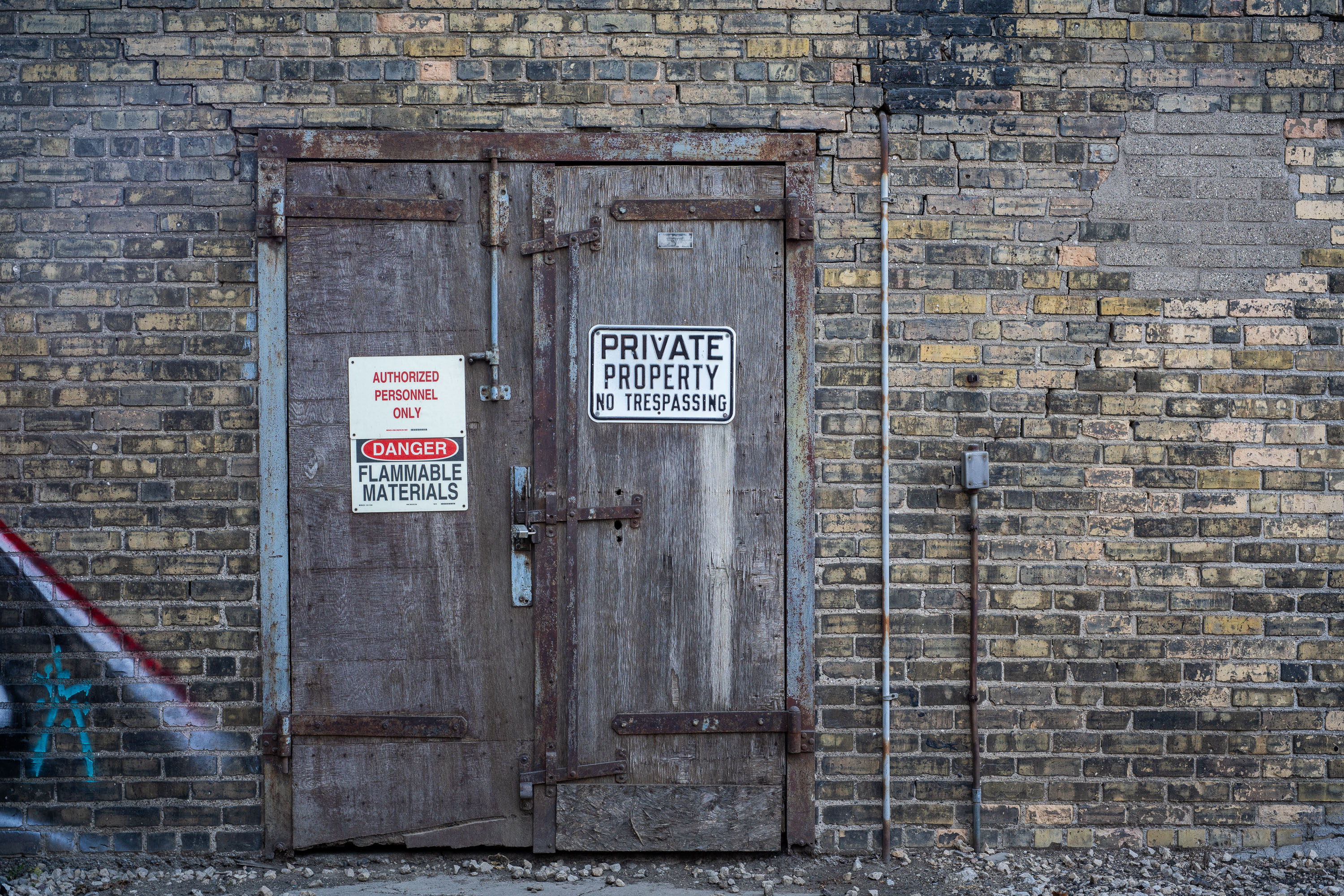
Loading dock door at Viterra grain elevator in Minneapolis displaying "Private Property" and "Flammable Materials" warning signs.
This locked double door sits on a loading dock at a grain elevator Viterra operates in Minneapolis. Viterra is a global grain handling company that stores, processes, and ships grain for export.

Warning Signs on a Loading Dock Door at Viterra’s Grain Elevator
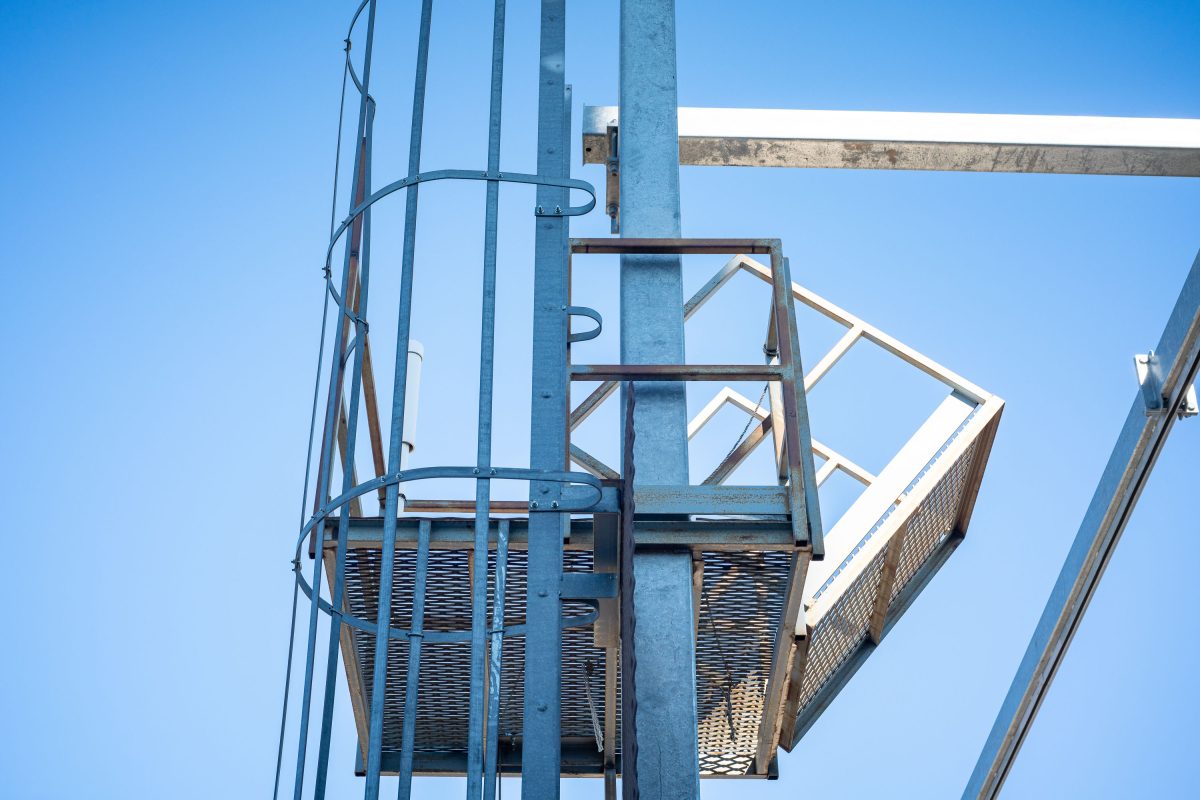
Viterra grain elevator safety cage and platform with blue metal framework and ladder against clear sky in Minneapolis.
This safety cage and landing are part of the Viterra grain elevator in Minneapolis, a facility along the Mississippi River used for storing and loading grain. The caged ladder gives workers a protected climb between platforms on the structure's exterior.

Safety Cage and Landing on the Viterra Grain Elevator

Barred window with white trim set in bright turquoise wall of Viterra grain elevator in Northeast Minneapolis.
Viterra runs a grain elevator complex in Northeast Minneapolis, part of the storage terminals that grew up near the city's old flour milling district. The window's iron security bars and worn wood frame point to the building's industrial age.

A Barred Window in the Turquoise Wall at Viterra
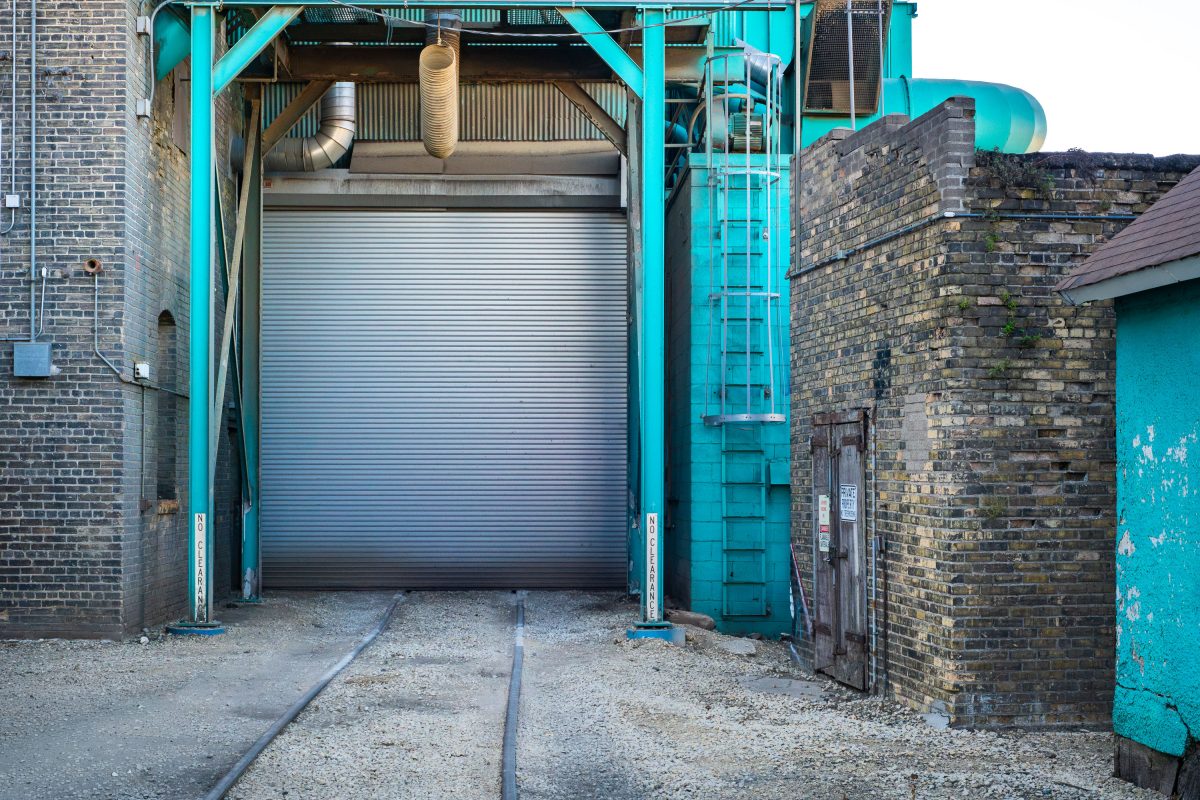
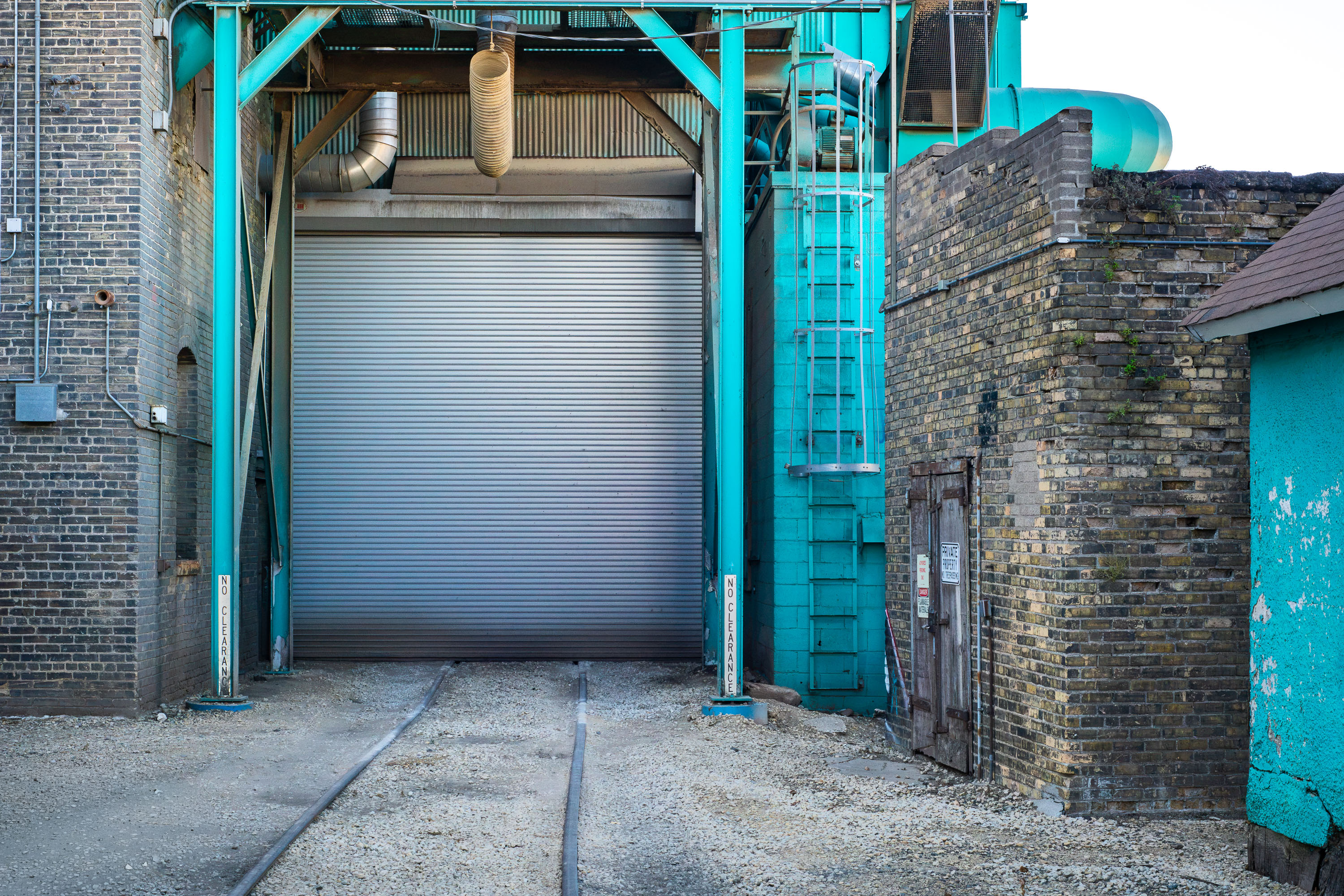
Turquoise steel loading frame and metal roll-up door at Viterra's grain elevator rail dock in Minneapolis.
Viterra operates this grain elevator and rail dock in Minneapolis. A narrow gauge rail spur runs beneath the turquoise steel loading frame, where hopper cars once positioned themselves under the elevator for grain transfer through the now closed roll up door.

Rail Tracks Leading to a Closed Loading Bay at Viterra’s Elevator

Window 16 on the Viterra grain elevator in Minneapolis features a barred window with white frame and number 16 graffiti on turquoise wall.
Viterra operates a grain elevator in Minneapolis, part of a global agribusiness network handling grain storage and shipping.

Window No. 16 on the Viterra Grain Elevator’s Turquoise Wall
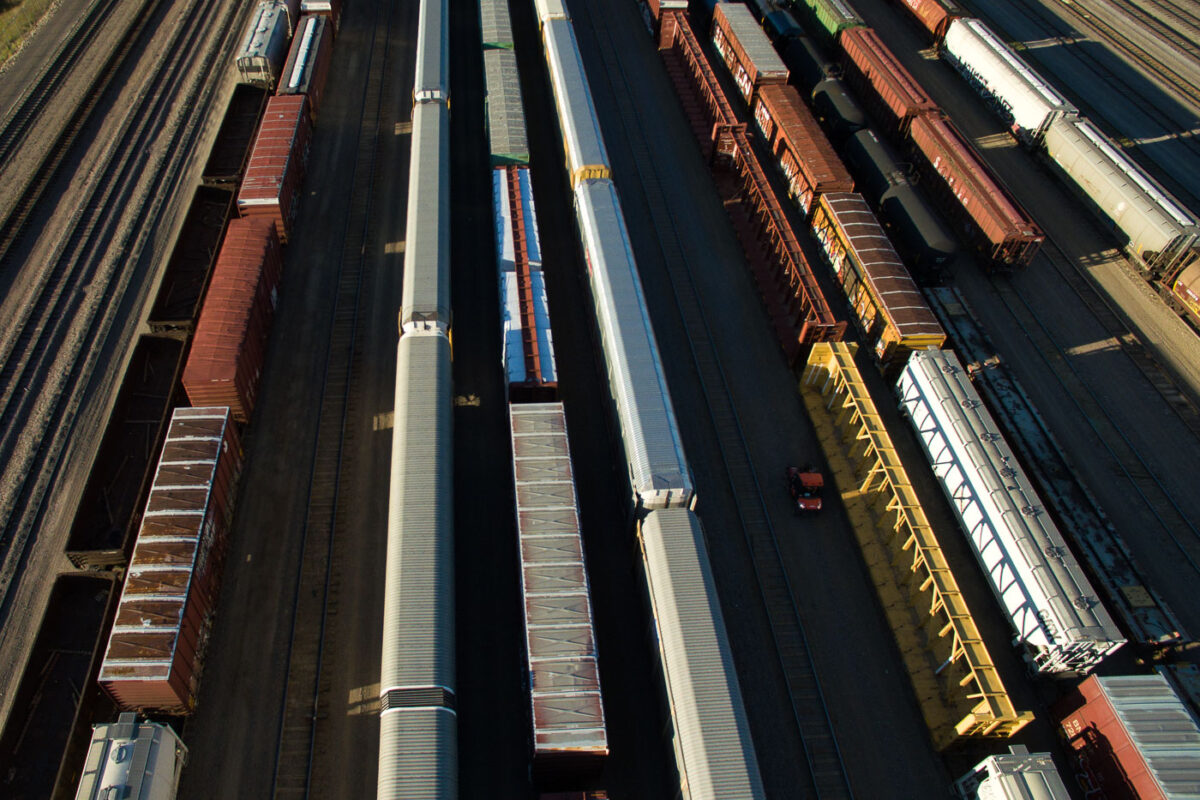
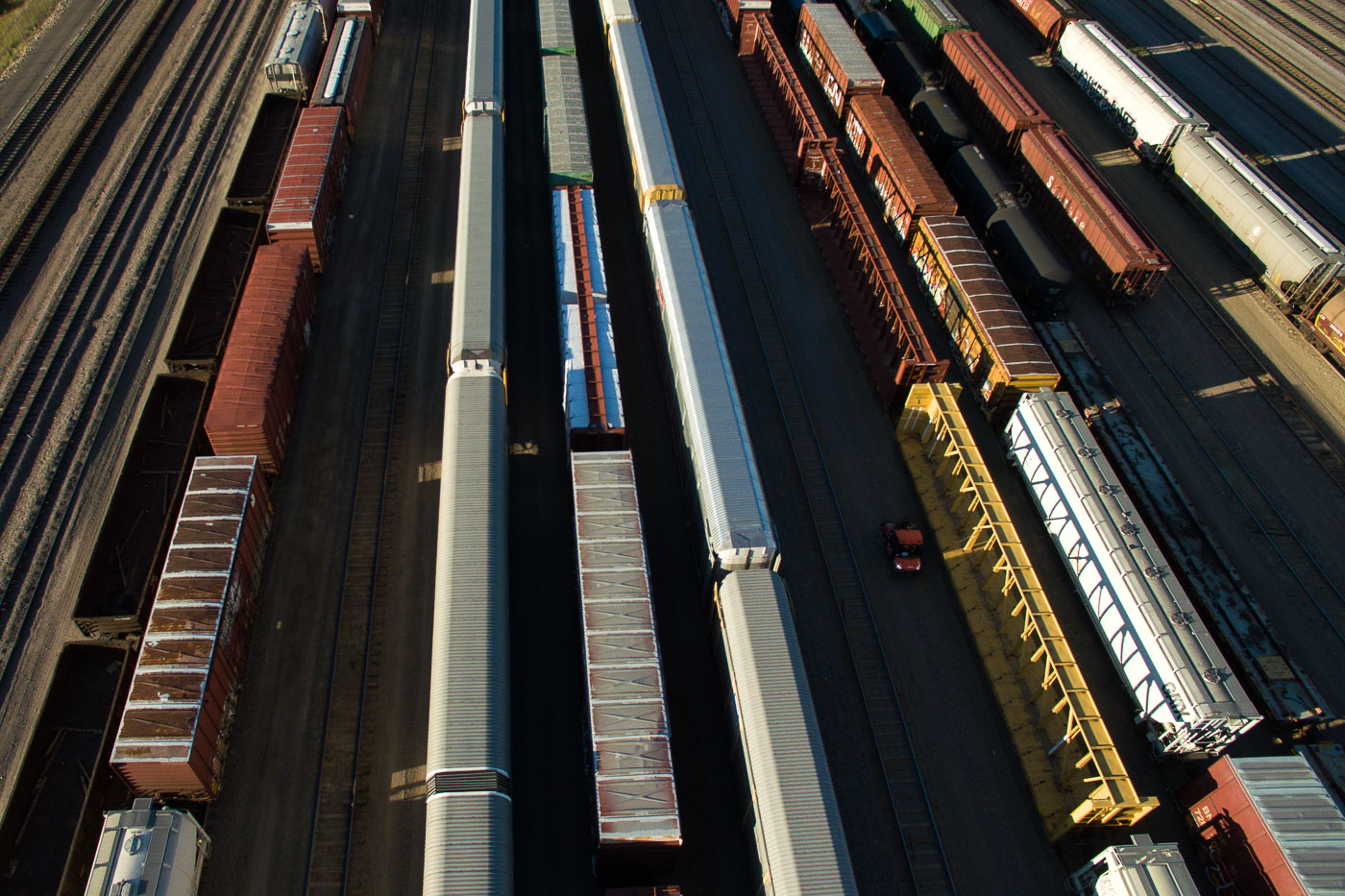
Multiple freight trains lined up in parallel tracks at Northtown Yard rail facility in North Minneapolis.
Northtown Yard, a major rail freight hub in North Minneapolis, is seen here with numerous freight cars.

Aerial View of Freight Cars at Northtown Yard
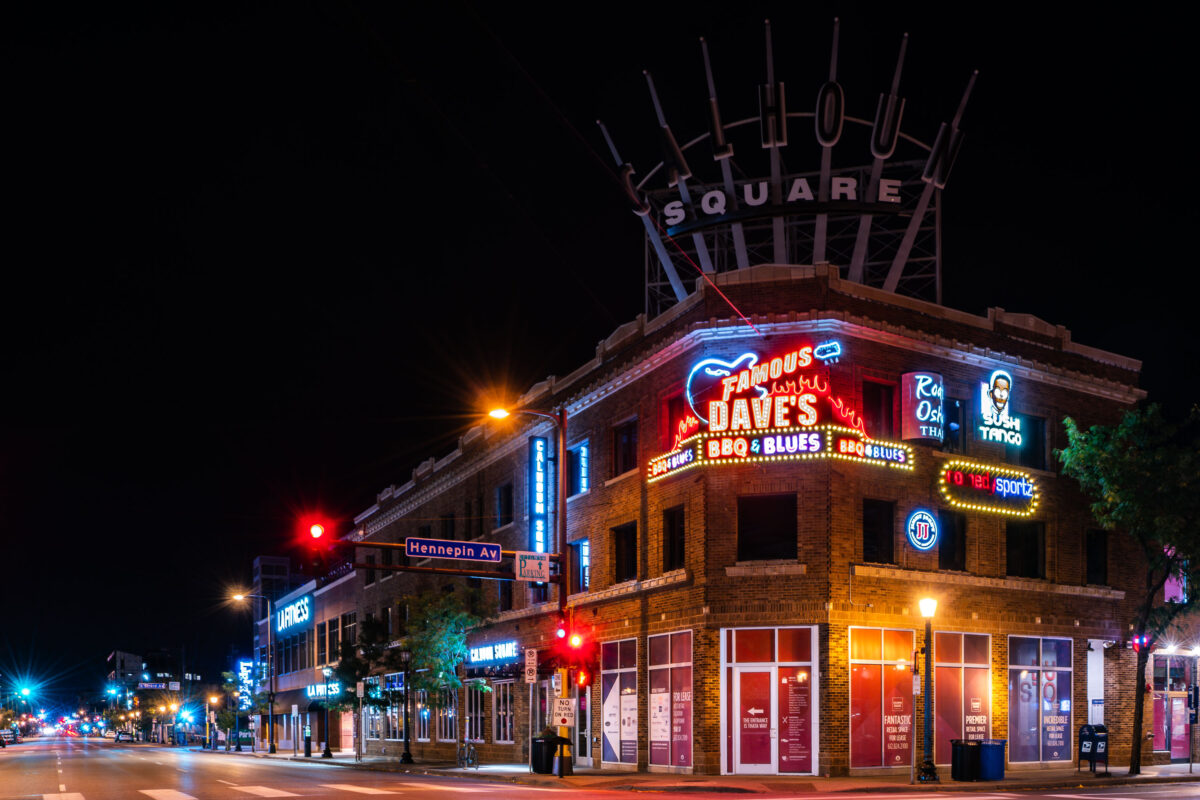
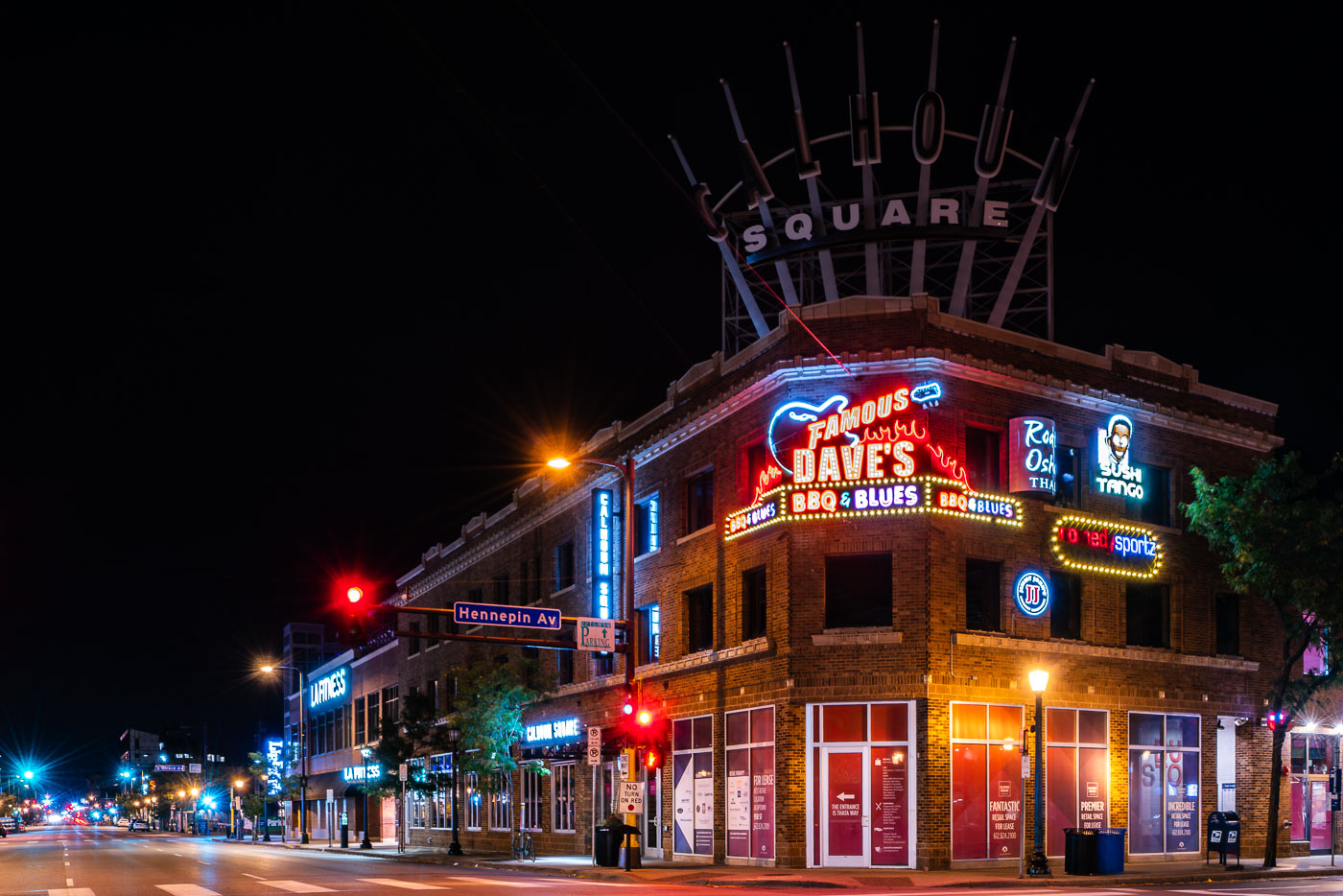
Calhoun Square in Minneapolis lit by neon signs at Hennepin Avenue and Lake Street.
Calhoun Square, a mall located at the intersection of Hennepin Avenue and Lake Street in Minneapolis's Uptown neighborhood, is illuminated at night. The building features a large neon sign for "Famous Dave's BBQ & Blues," alongside other businesses like "Sushi Tango" and "Roti Osha Thai."

Calhoun Square, Famous Dave’s, Hennepin Ave & Lake St, Minneapolis
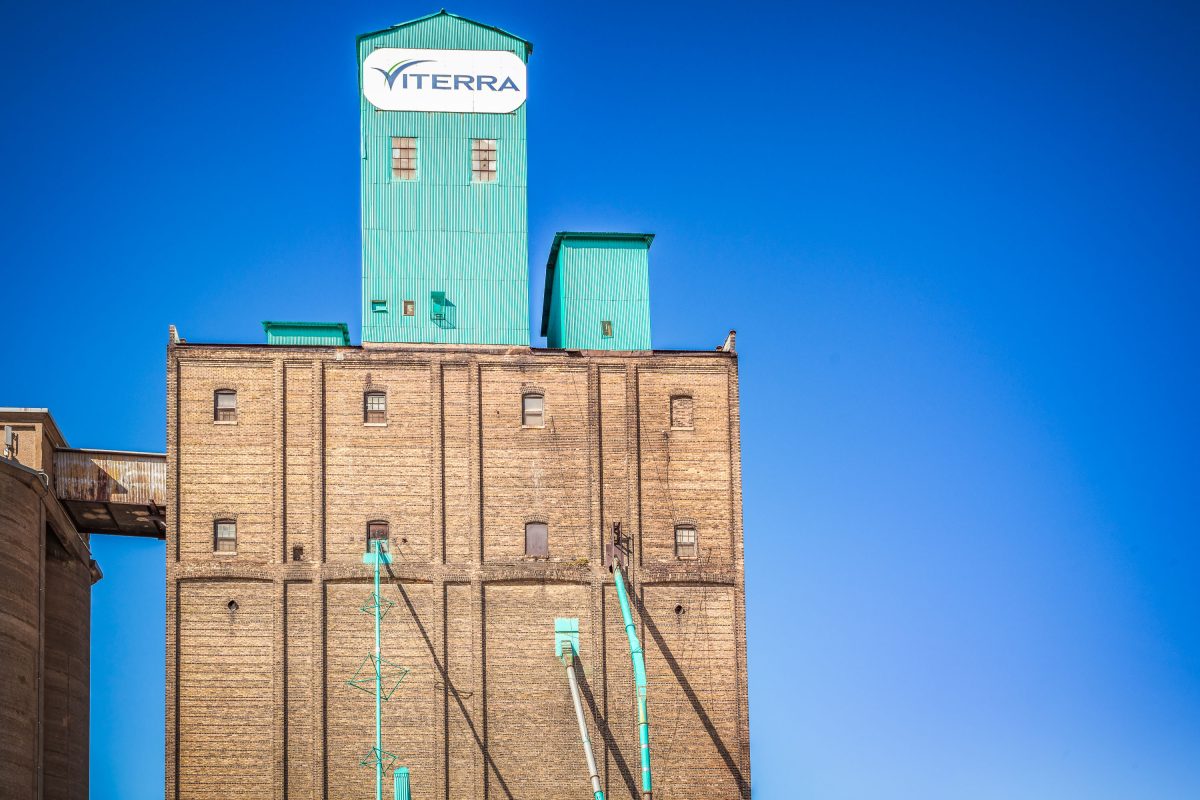
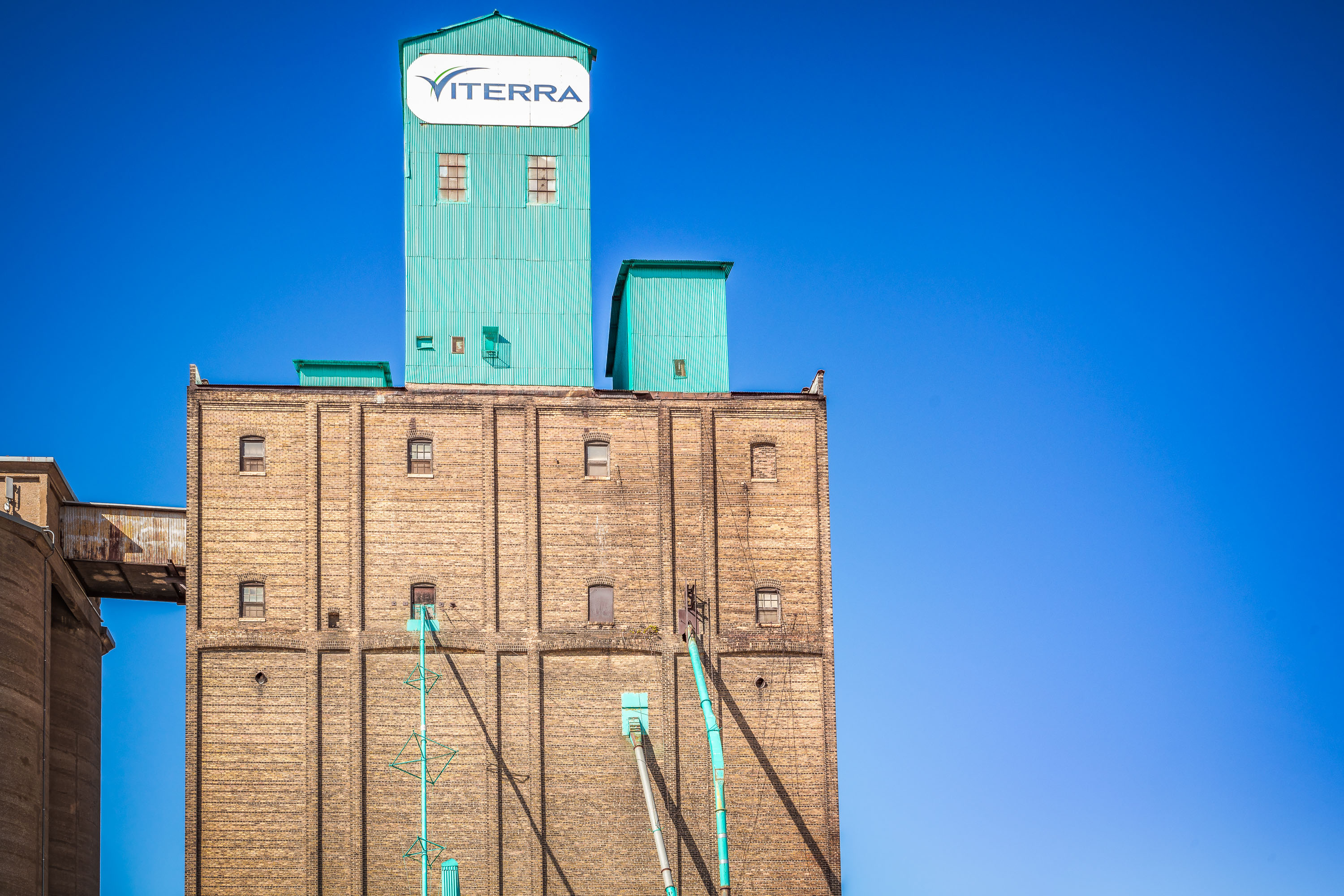
Viterra grain elevator with turquoise metal tower and mustard seed storage facility in Northeast Minneapolis.
Viterra facility in Northeast Minneapolis. The elevator stores mustard seed and has been operating since the 1920s.

Viterra Sign Atop the Grain Elevator Tower
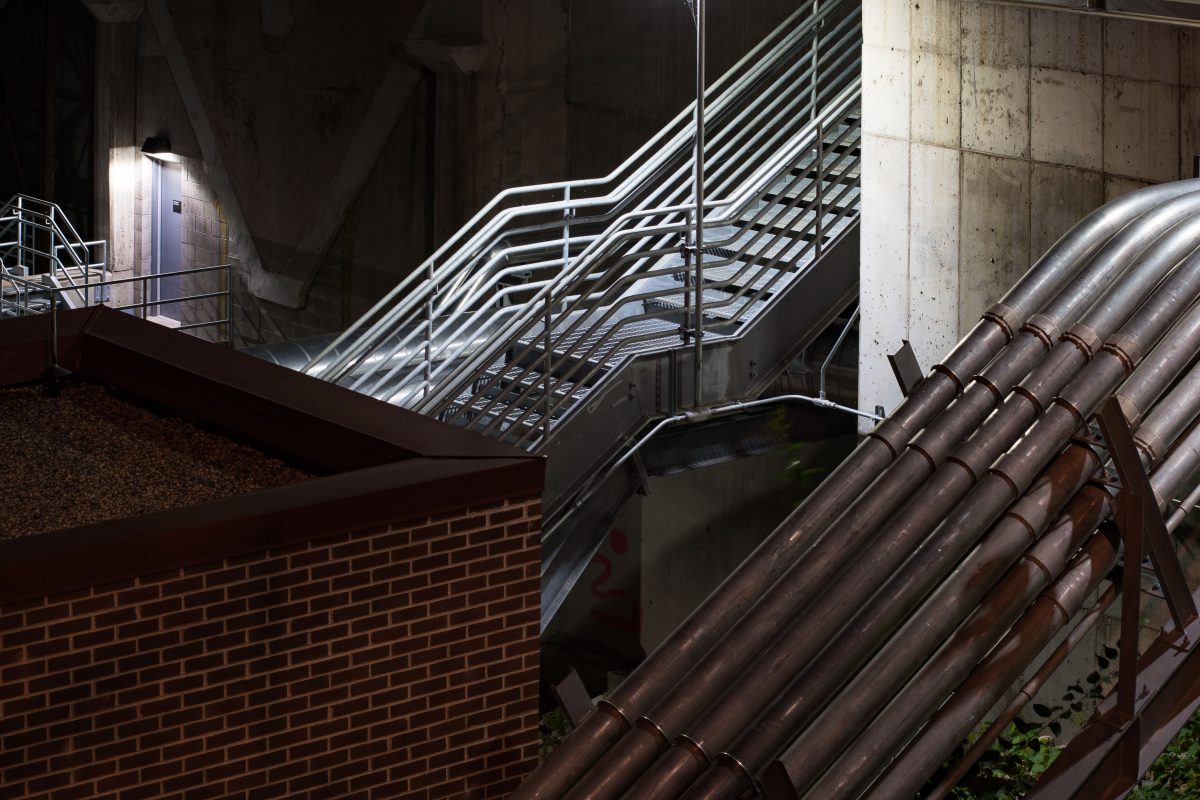
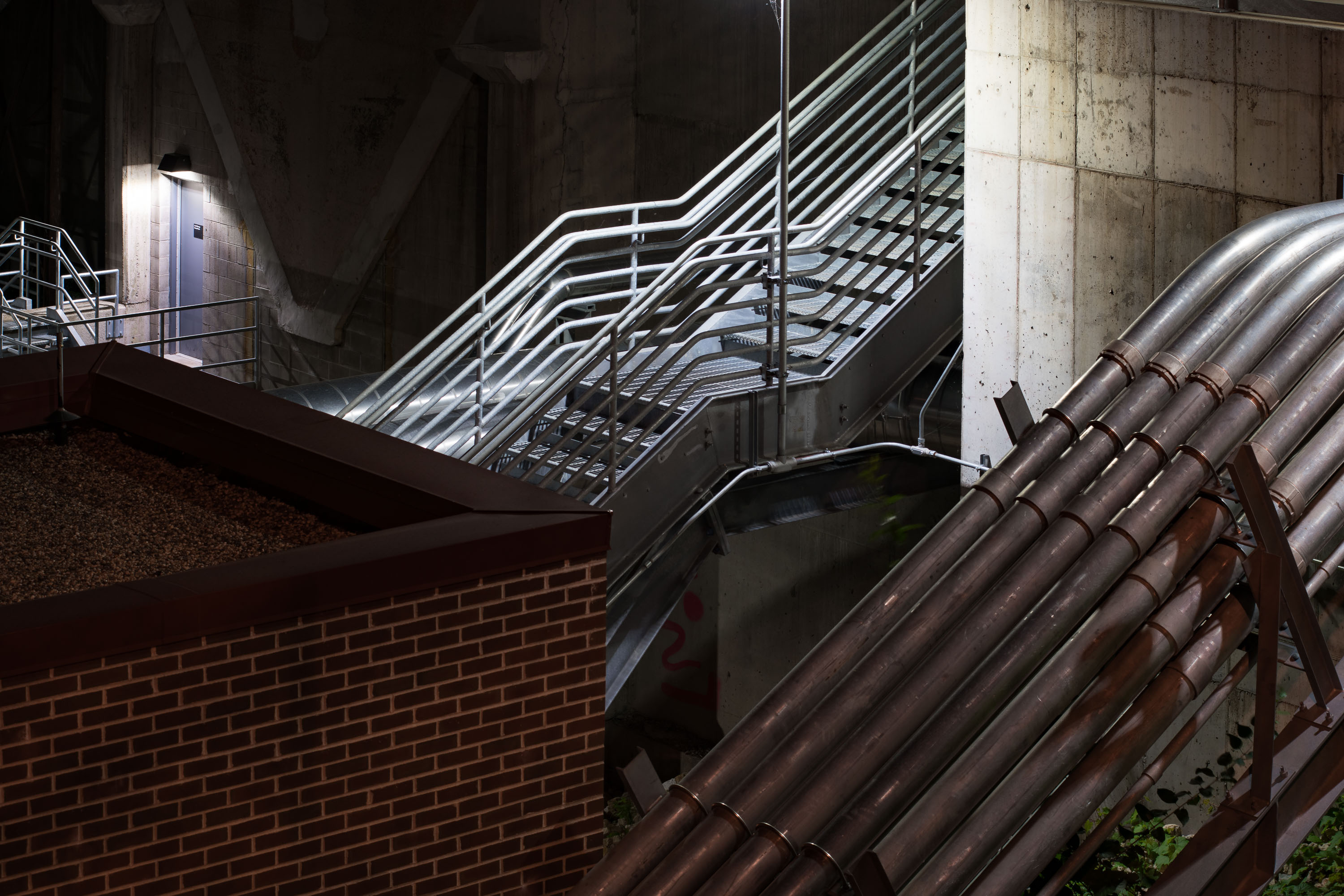
Industrial pipes and metal staircase at University of Minnesota's Main Energy Plant facility.
The Main Energy Plant, on the University of Minnesota's Minneapolis campus along the Mississippi River, generates steam and electricity for the Twin Cities campus through a combined heat and power system.

Steam Pipes and Stairwell, Main Energy Plant, University of Minnesota
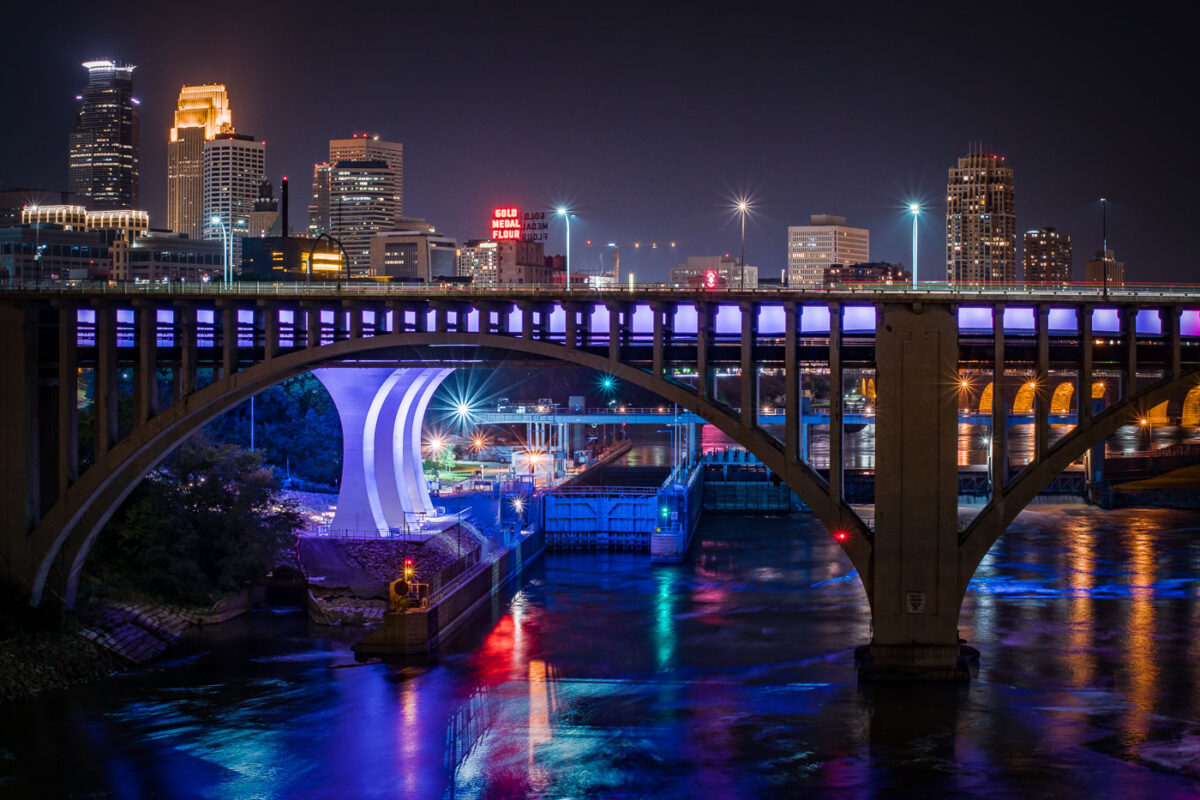
The I-35W Mississippi River Bridge at night, with the Minneapolis skyline in the background.
The I-35W Mississippi River Bridge over the Mississippi River in downtown Minneapolis. The bridge collapsed in 2007 and was replaced in 2008.

Minneapolis I-35W Bridge and Downtown Skyline at Night
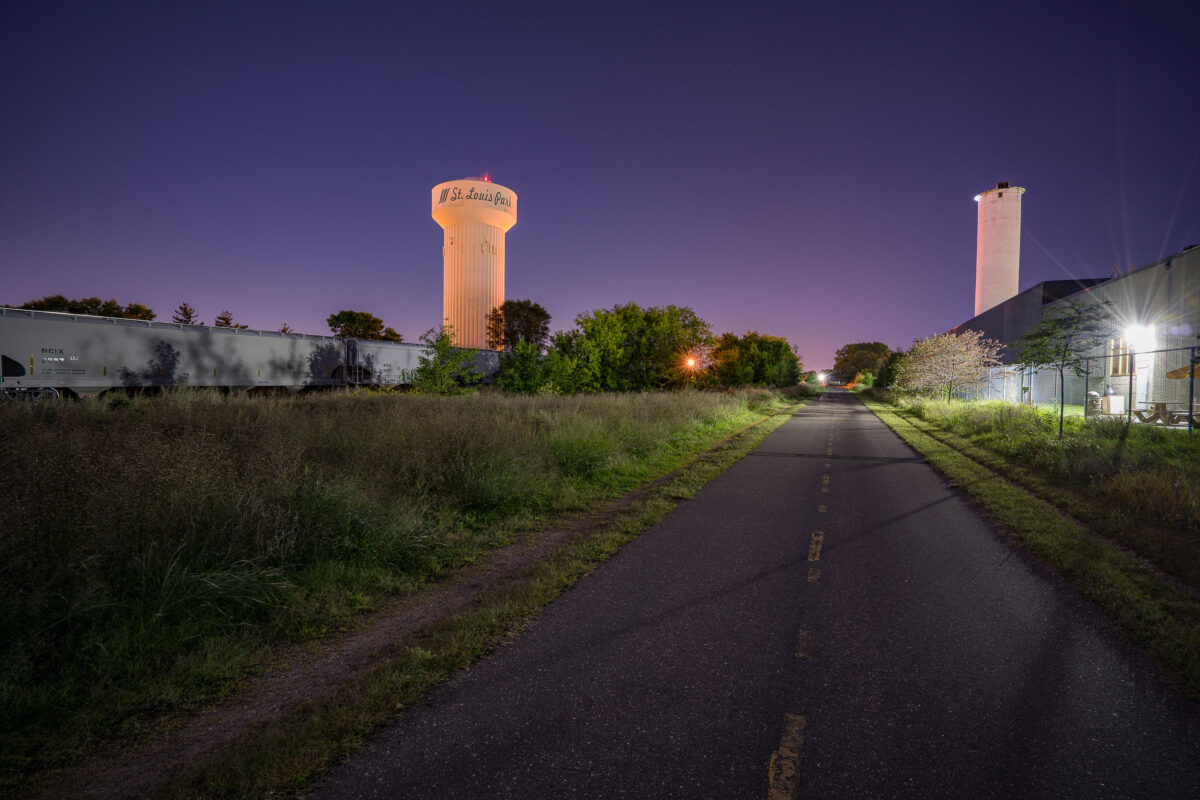
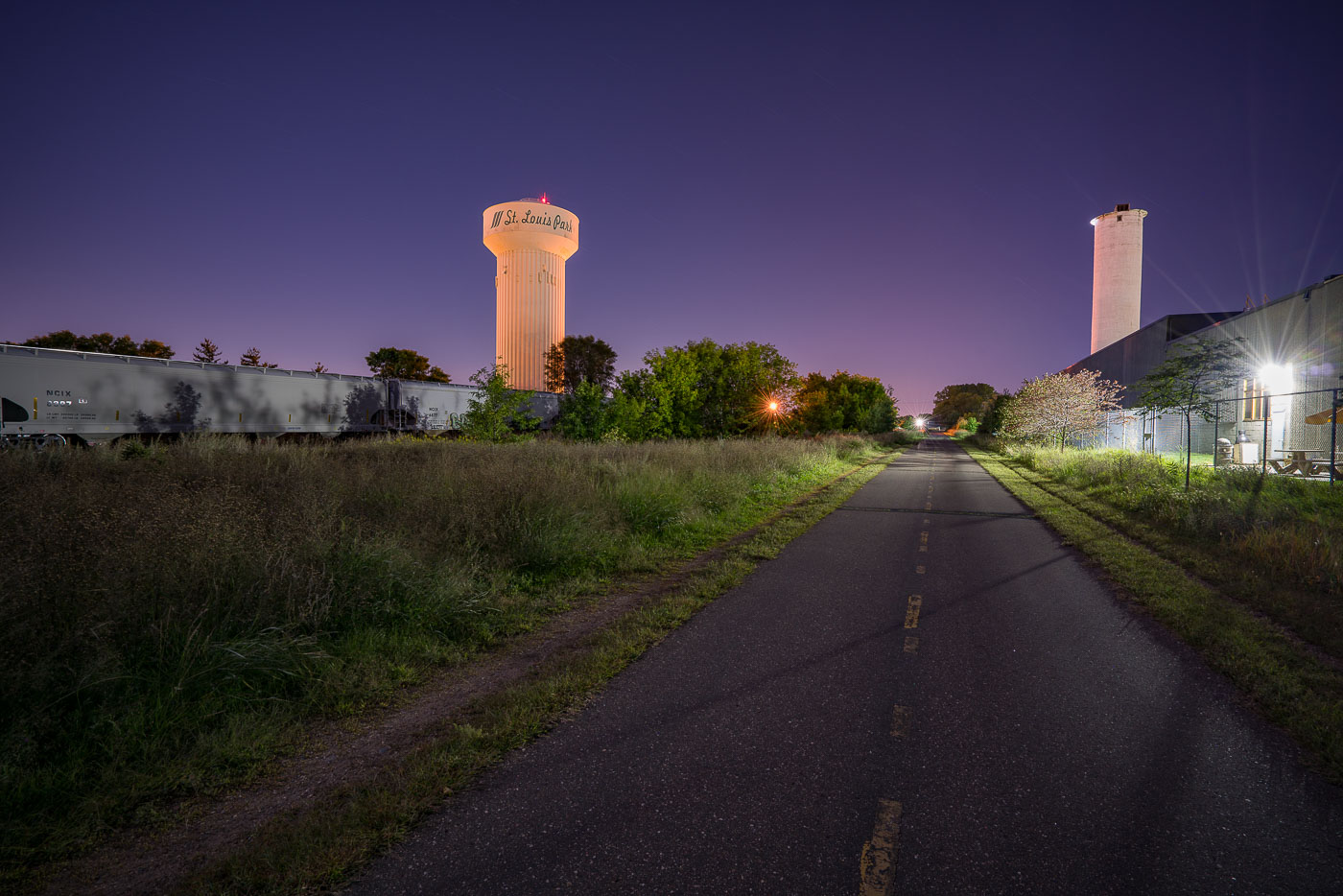
St. Louis Park water tower and grain elevator illuminated at dusk above the Cedar Lake Trail paved path.
The Cedar Lake LRT Regional Trail in St. Louis Park, Minnesota. This paved trail follows a former railroad corridor, originally part of the Minneapolis & St. Louis Railway.

Night photo of Cedar Lake LRT Regional Trail Near the St. Louis Park Water Tower
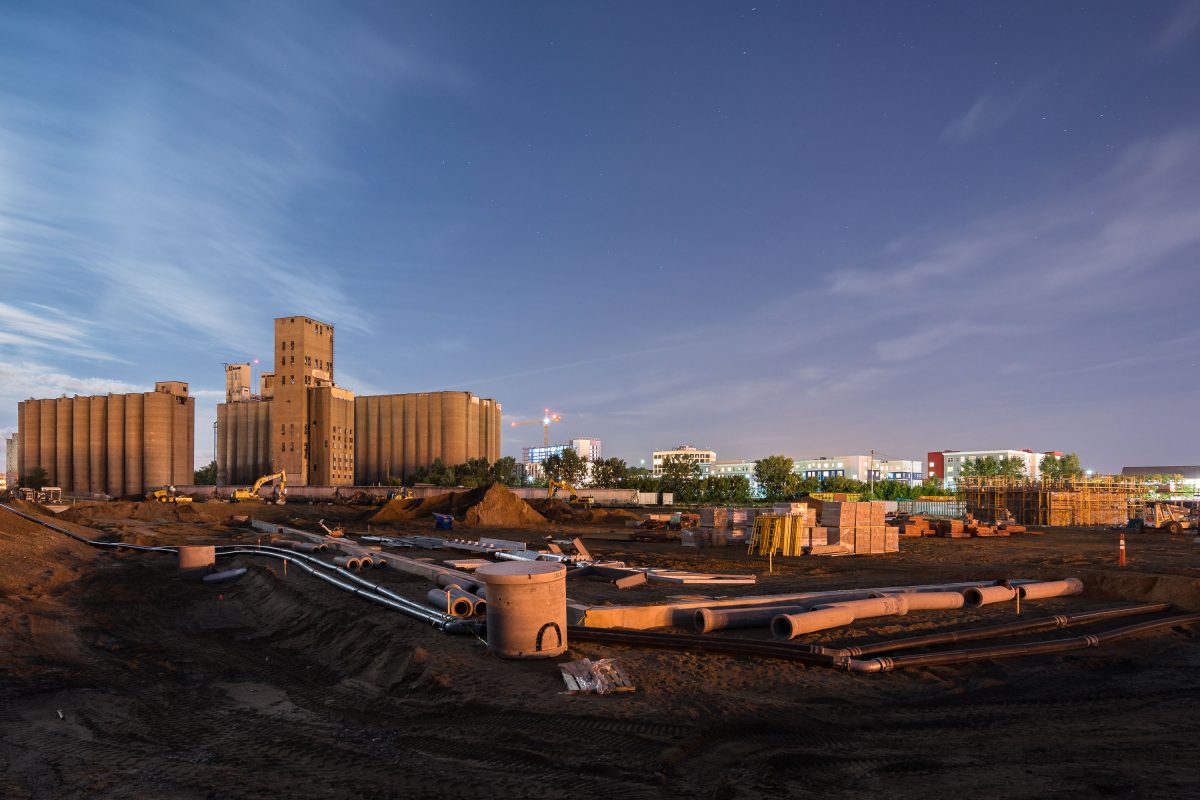
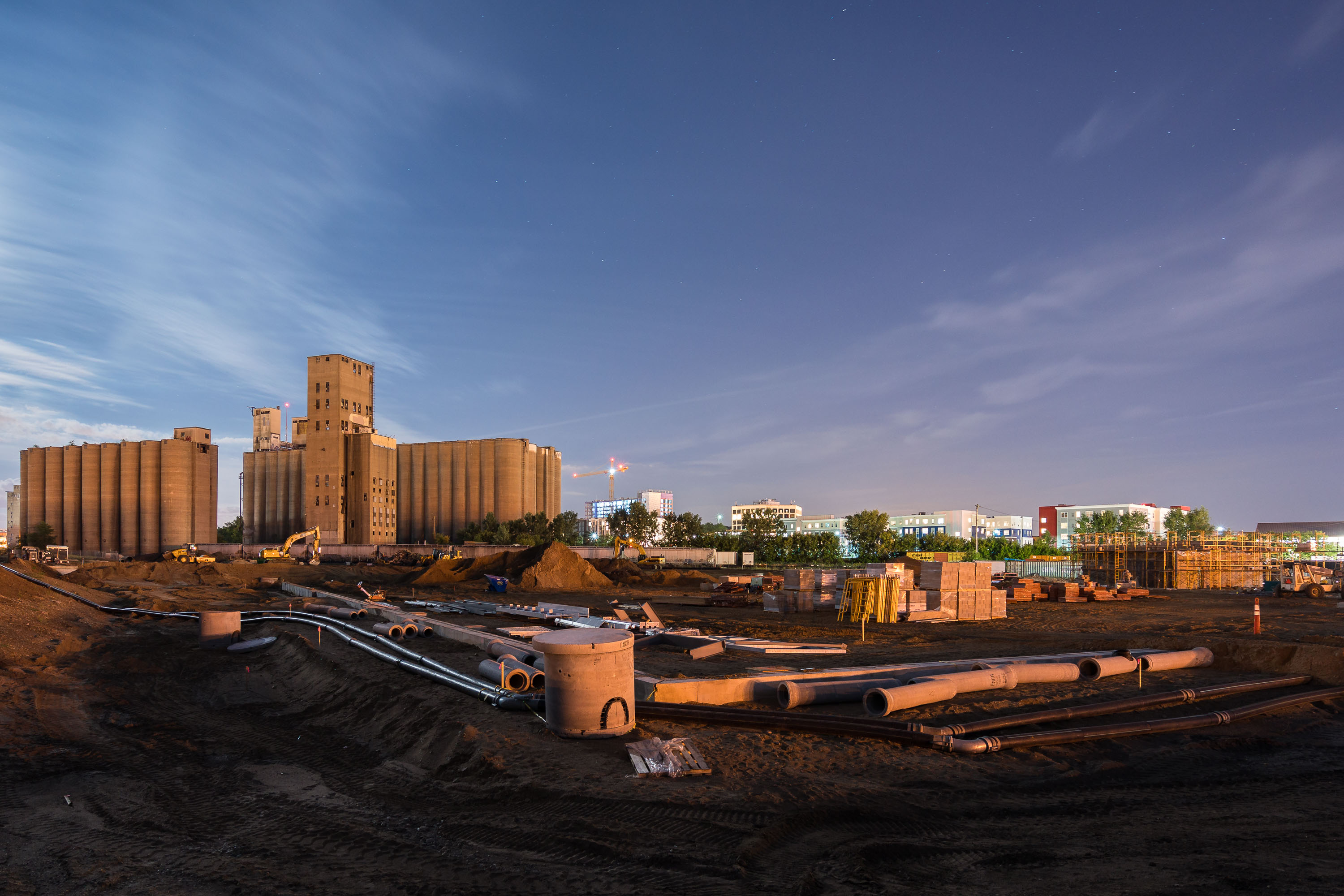
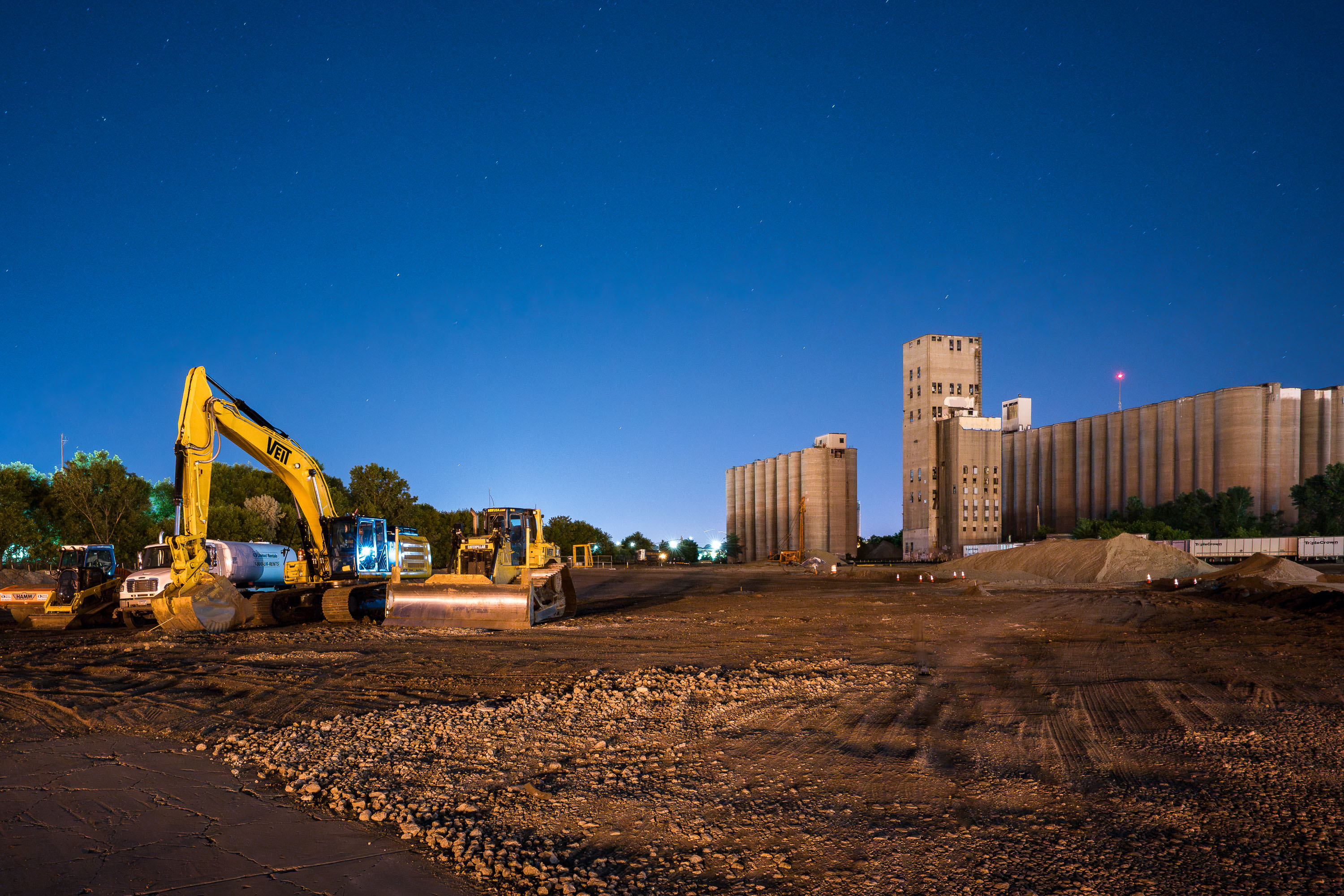
Construction site at night on the former Kurth Malting grain elevator grounds in Dinkytown, Minneapolis.
This construction site in Dinkytown, Minneapolis, sits on the former grounds of the Kurth Malting Company grain elevator. The elevator complex was demolished to clear land for a University of Minnesota athletic facility. Concrete silos from the adjacent Archer Daniels Midland elevator remain standing near the cleared parcel.

Kurth Malting Site Redevelopment, Dinkytown Minneapolis
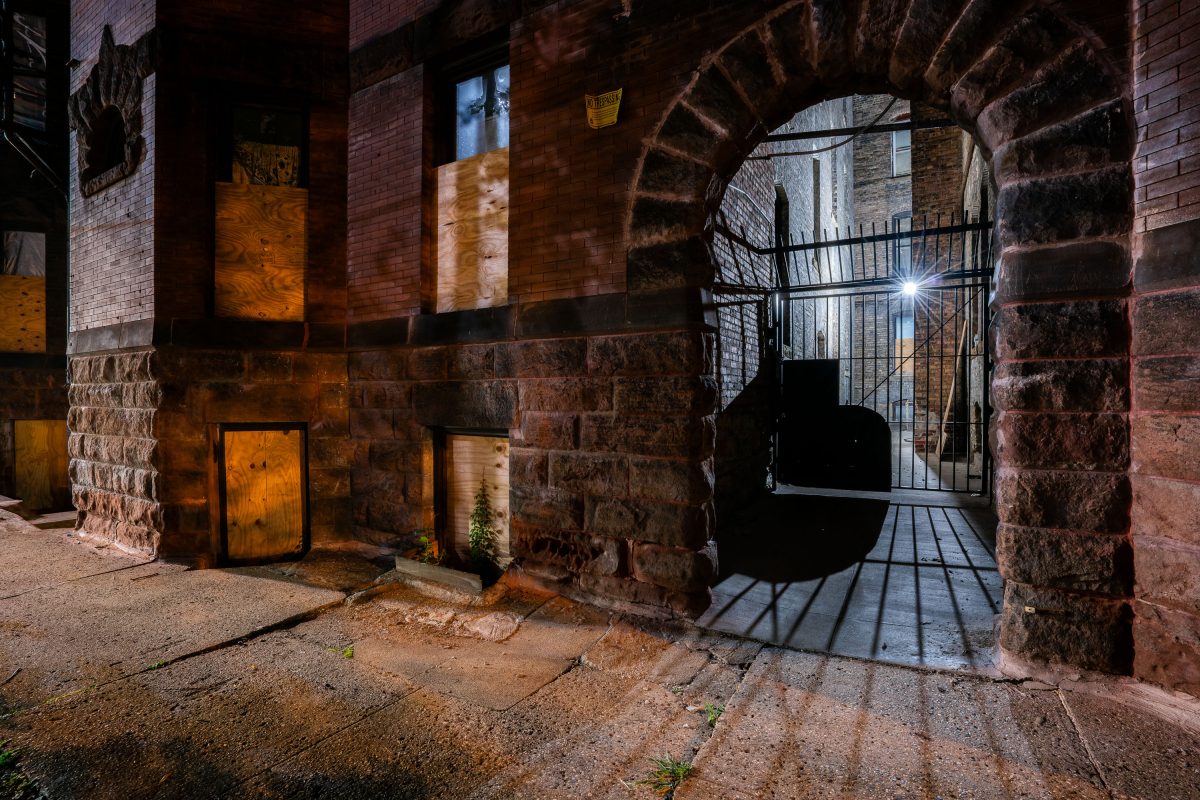
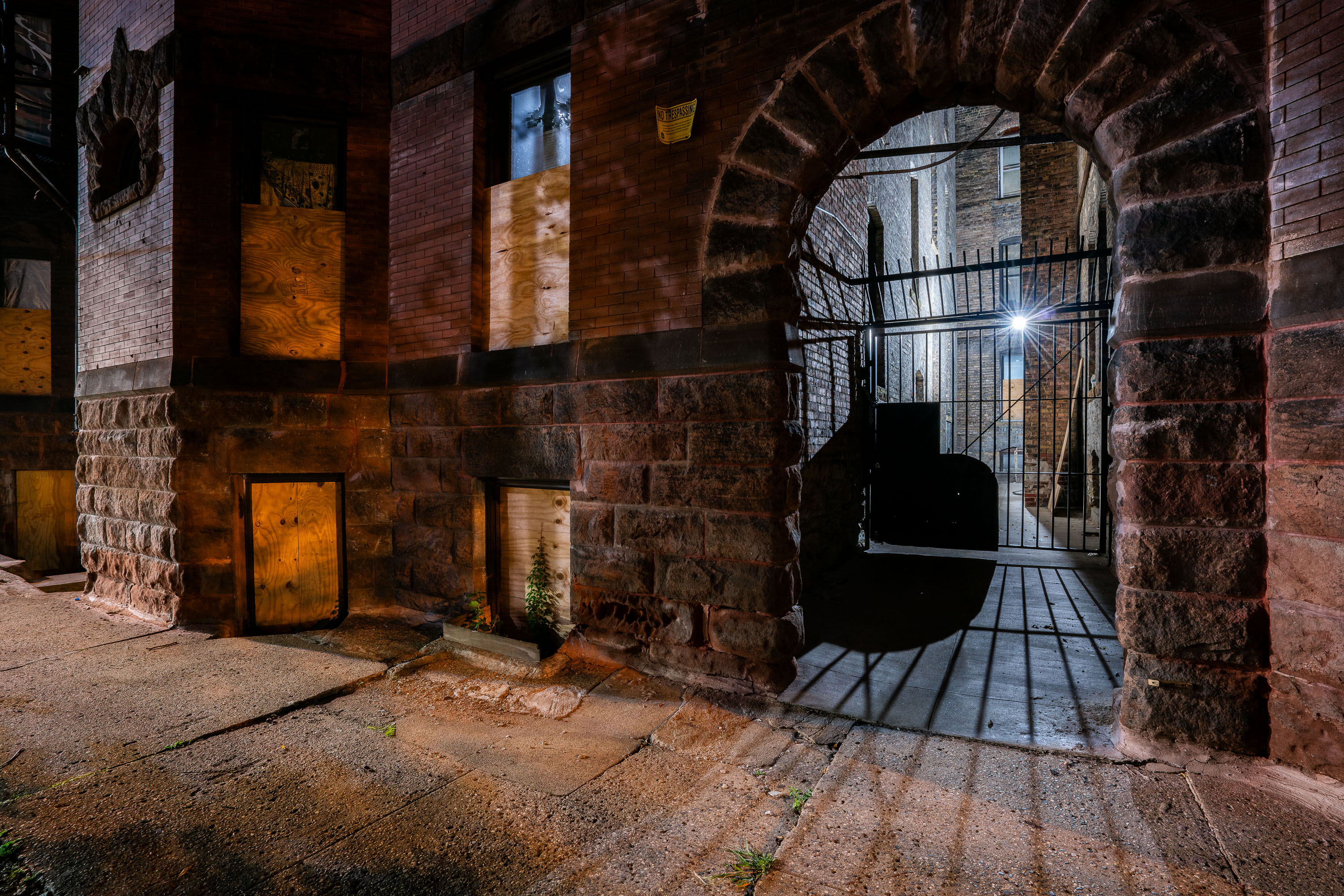
Boarded windows on a brick apartment building alley in downtown Minneapolis at night.
The Laurel Apartments building sits near downtown Minneapolis, constructed with the rusticated stone base and brick upper walls common to the city's late-19th and early-20th century multifamily housing stock.

Boarded Windows and Gated Archway, Laurel Apartments, Minneapolis
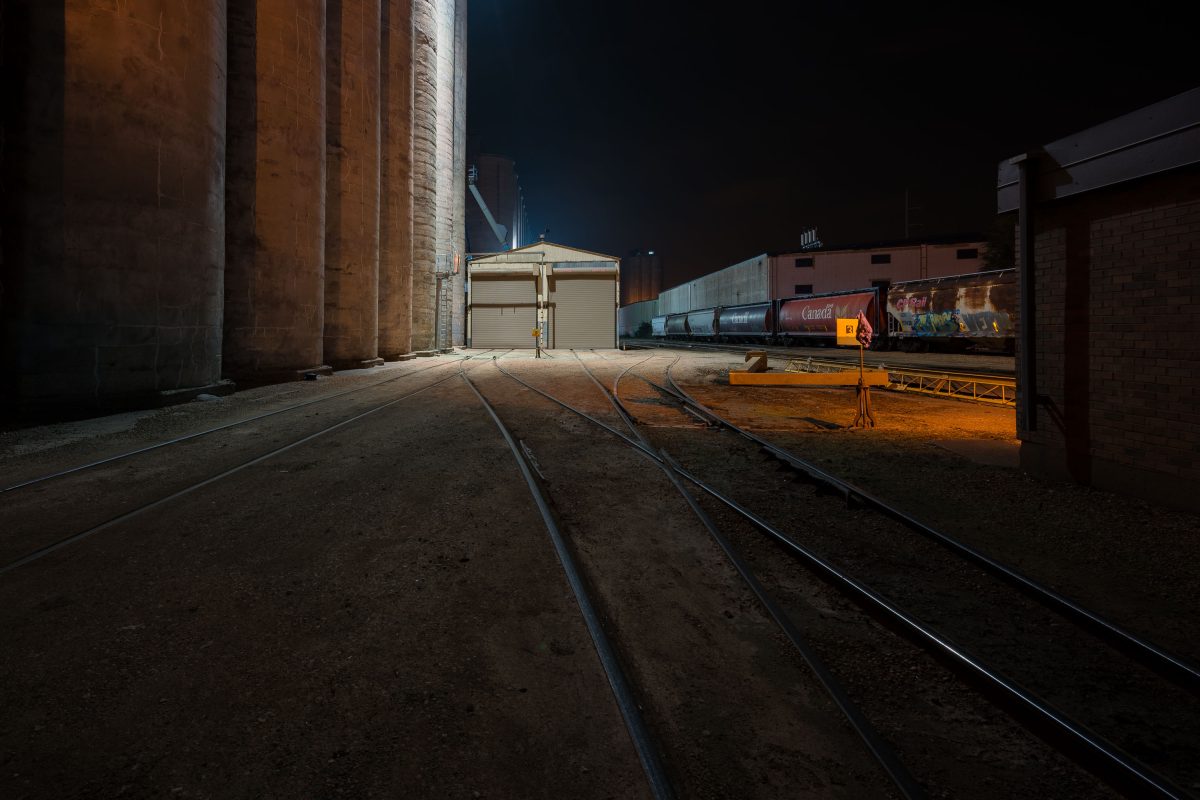
Railroad tracks lead to a General Mills grain elevator and freight train at night in Minneapolis.
A General Mills grain elevator complex sits along active rail lines in Minneapolis. General Mills, headquartered in Golden Valley, Minnesota, operates grain milling and food production facilities across the Minneapolis area. Rail spurs connect the elevator to the wider freight network, including Canadian National and other North American carriers, for shipping grain and finished products.

Rail Tracks at General Mills Grain Elevator, Minneapolis
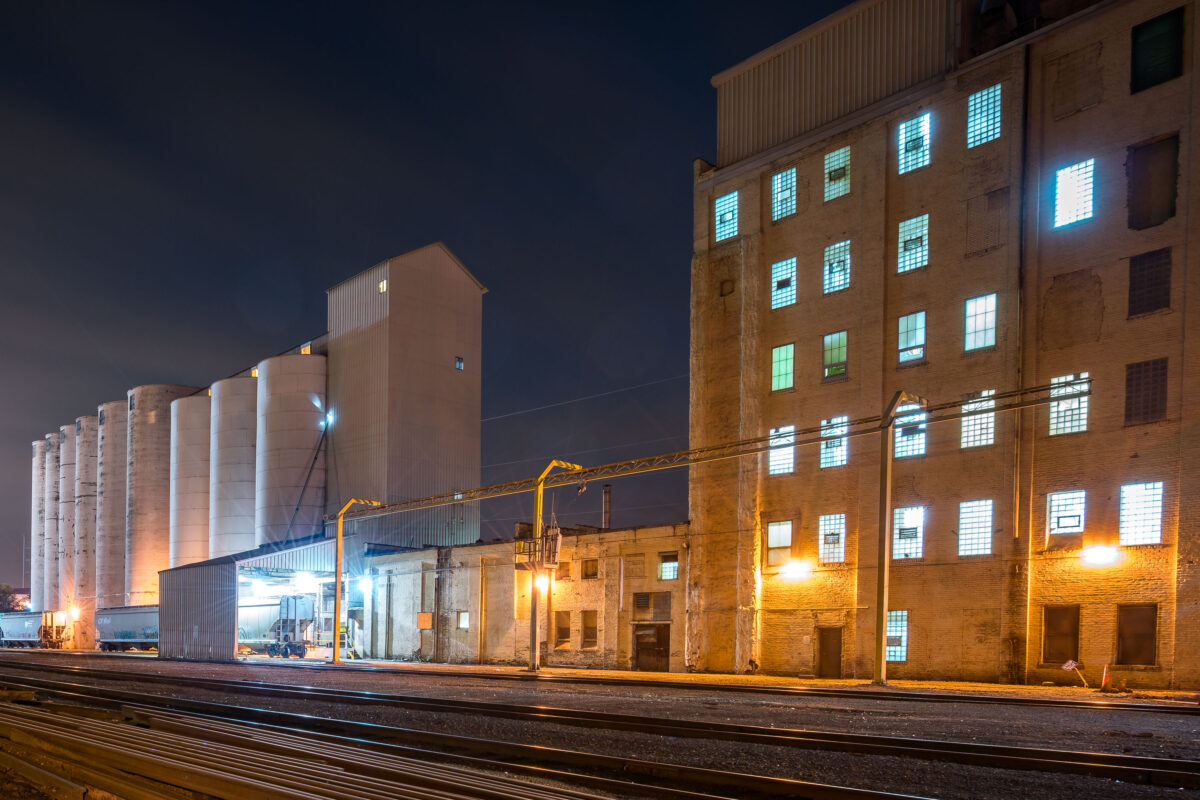
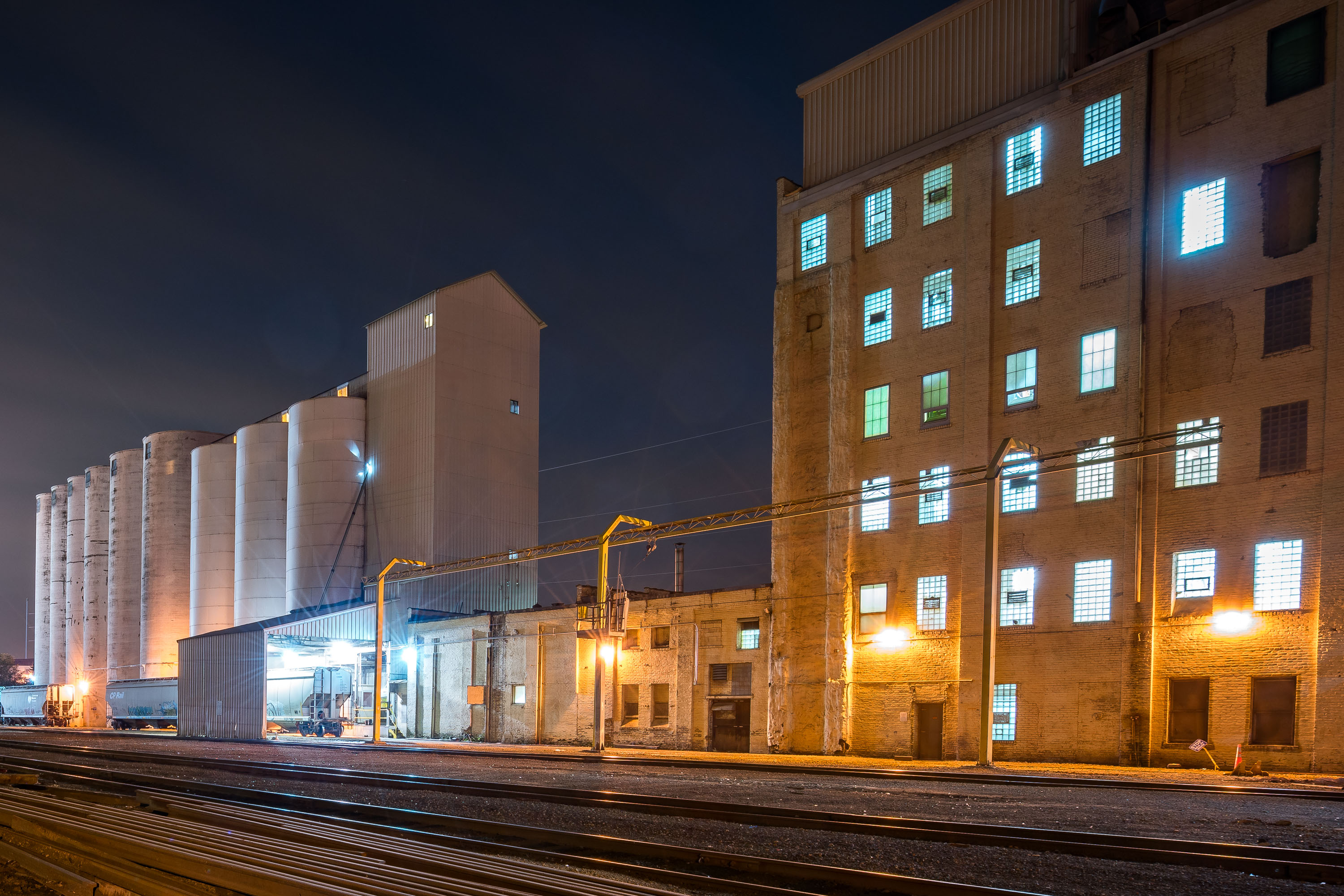
ADM Nokomis Flour Mill complex in South Minneapolis at night, featuring illuminated grain silos and brick mill buildings adjacent to railroad tracks.
ADM Nokomis Flour Mill in South Minneapolis was an Archer Daniels Midland grain-processing facility. The complex includes mill buildings, grain silos, and rail access for moving grain and flour. The mill closed in mid-2019.

ADM Nokomis Mill Silos at Night Along the Rail Line
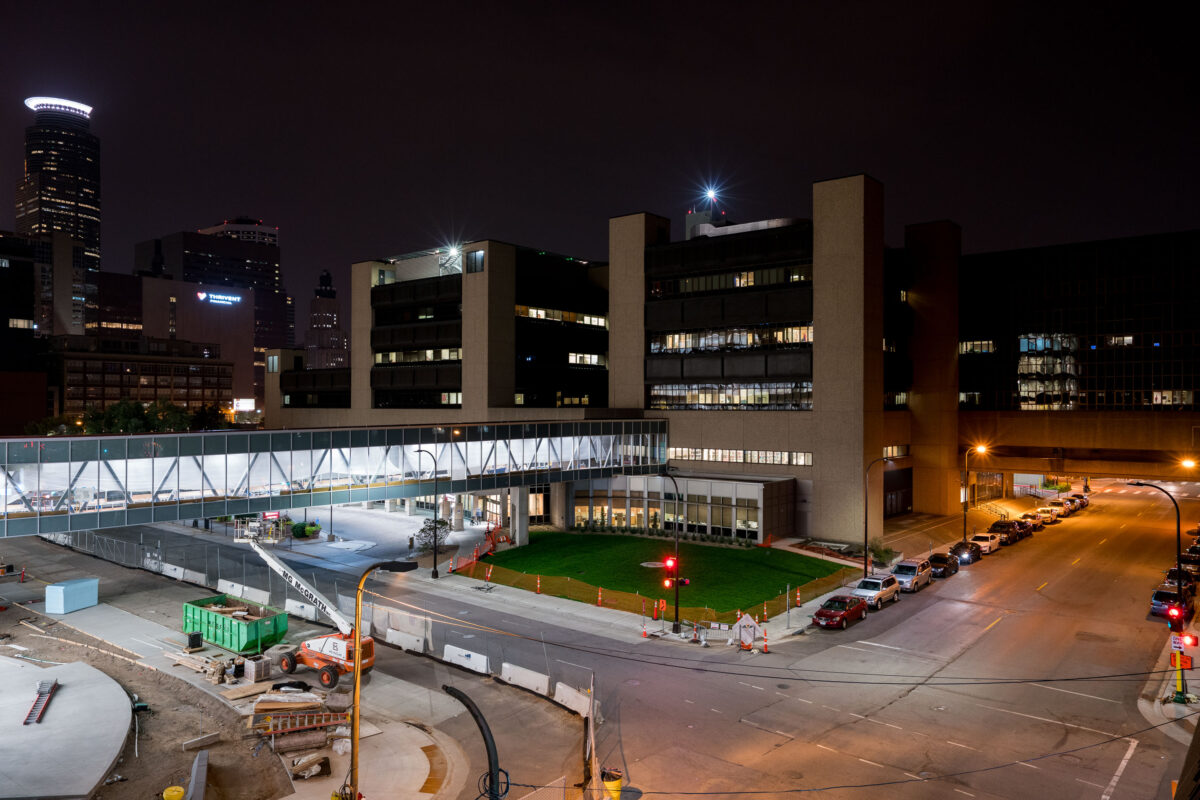
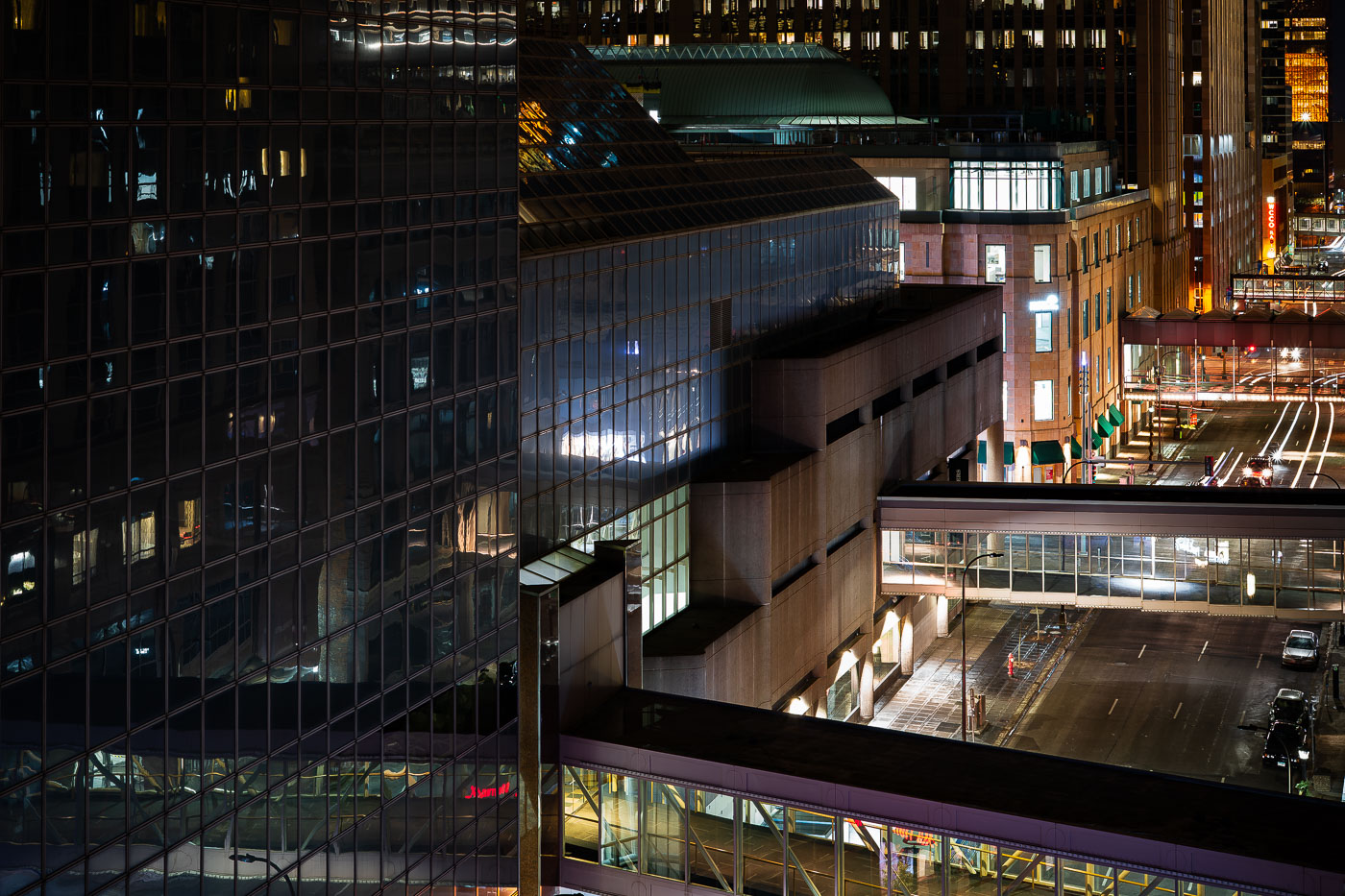
The Hennepin County Medical Center skyway connects buildings in downtown Minneapolis, providing a weather-protected passage for patients and staff.
The Hennepin County Medical Center (HCMC) skyway connects buildings within the Hennepin Healthcare complex in downtown Minneapolis. This elevated walkway provides a weather-protected passage for patients, staff, and visitors between medical facilities. HCMC, established in 1972, is a major public hospital serving the Twin Cities metropolitan area and is a key component of the city's downtown infrastructure.

Hennepin County Medical Center Skyway, Minneapolis at Night
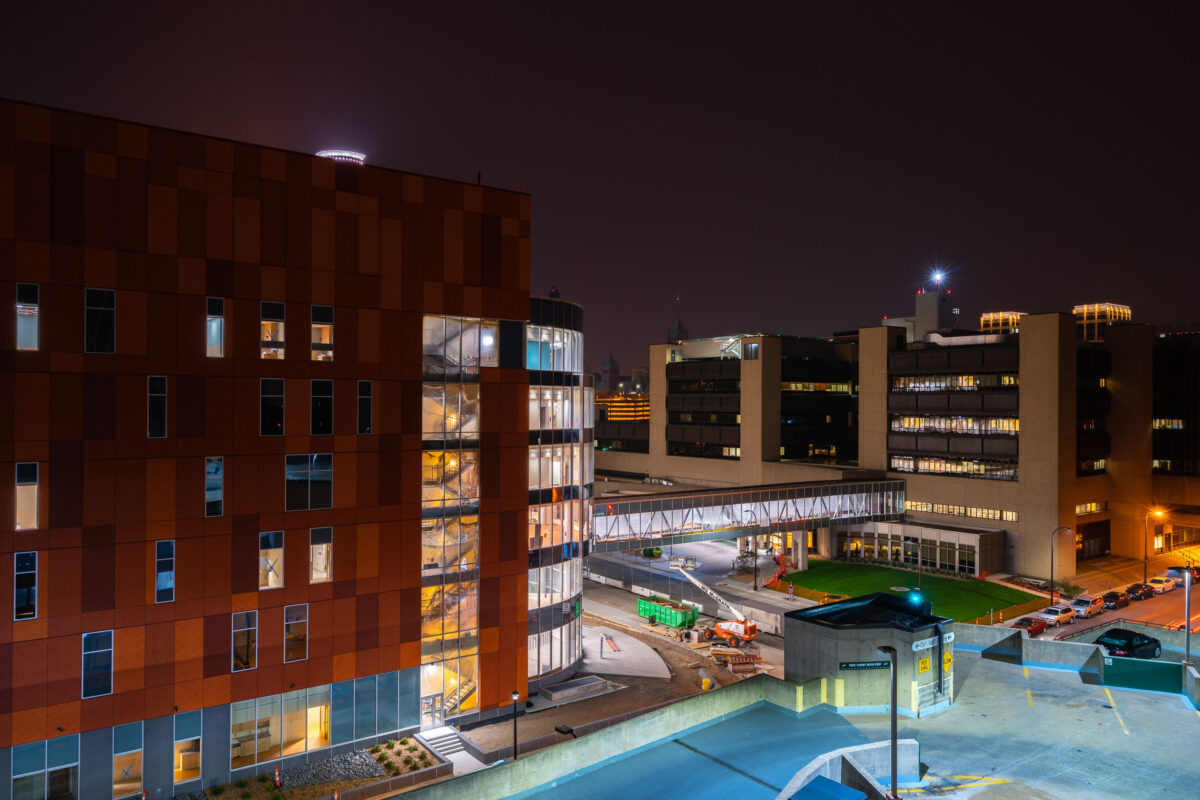
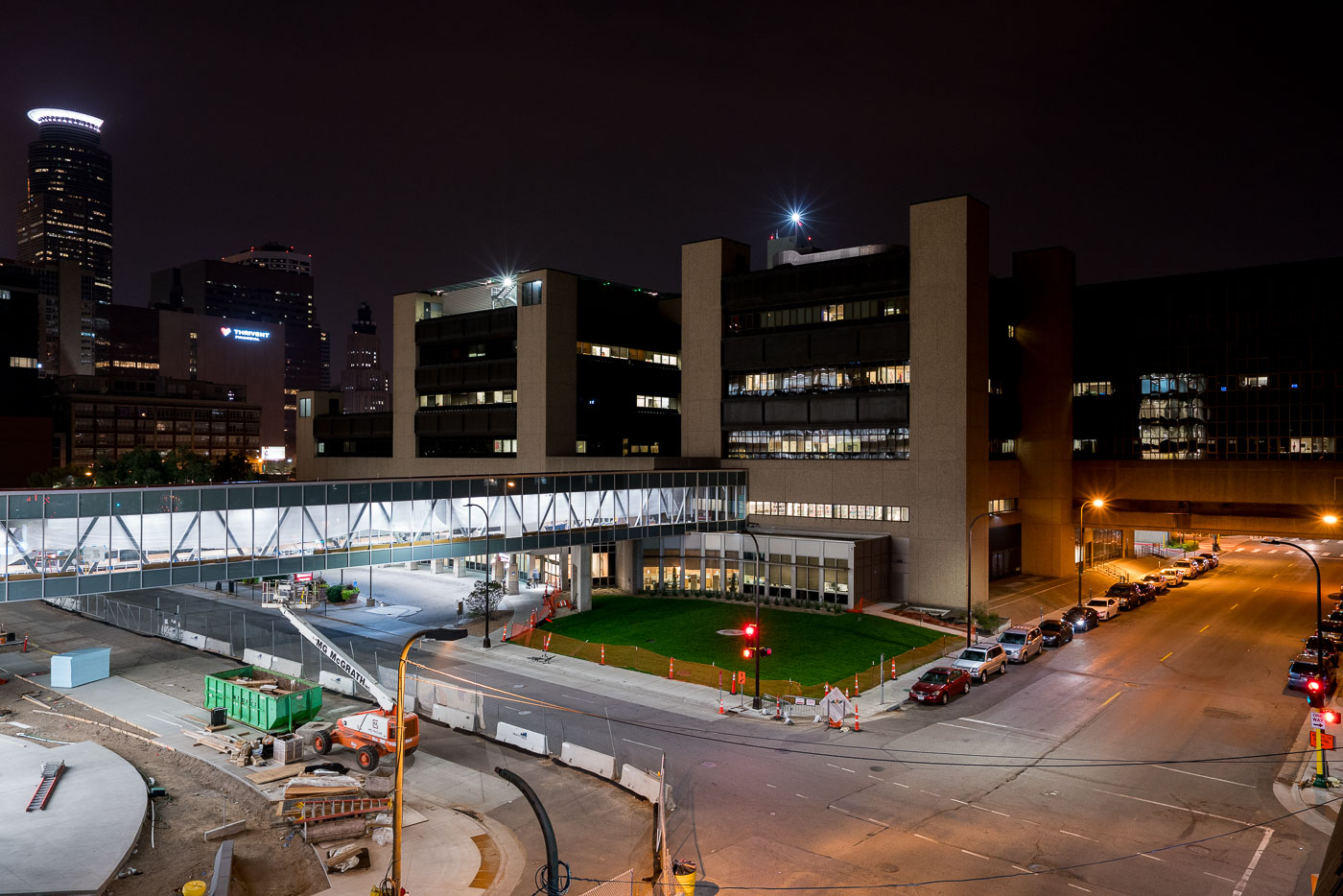
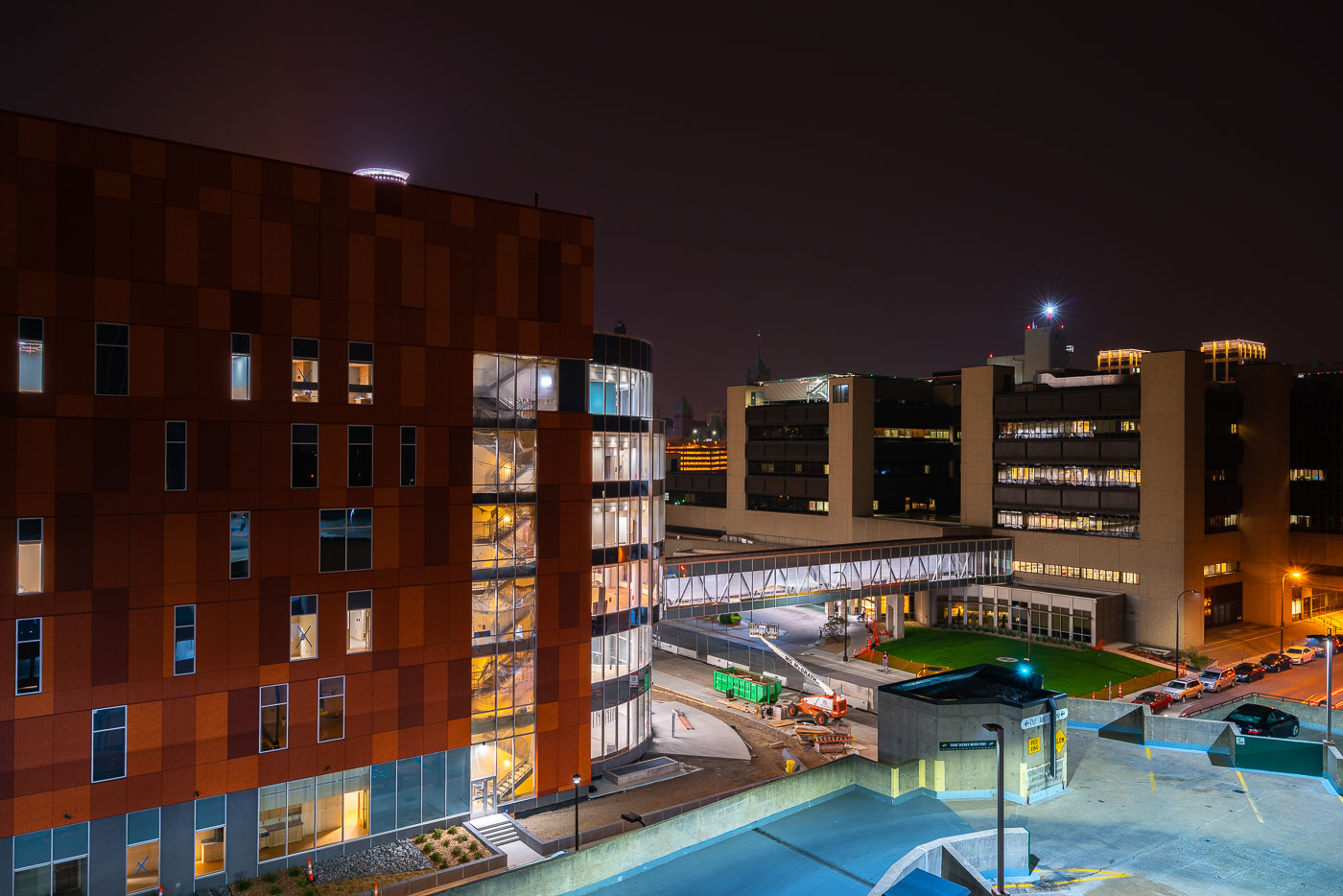
Hennepin Healthcare's Minneapolis campus on Chicago Avenue at night, featuring modern additions and construction.
Hennepin Healthcare's downtown Minneapolis campus at night. The medical center, located on Chicago Avenue, has served the community since its founding in 1969. The photograph captures the hospital complex, including a modern addition with a distinctive copper-colored facade and a skybridge connecting different structures.

Hennepin Healthcare Minneapolis at Night
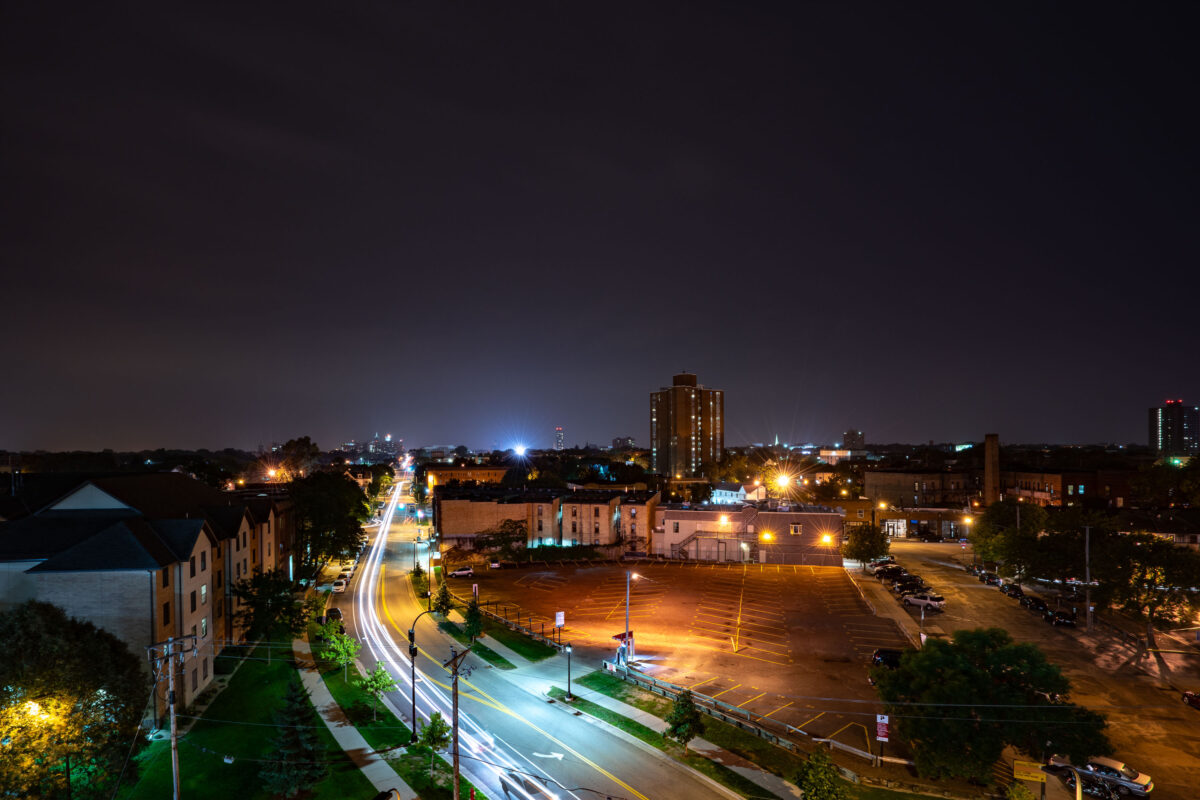
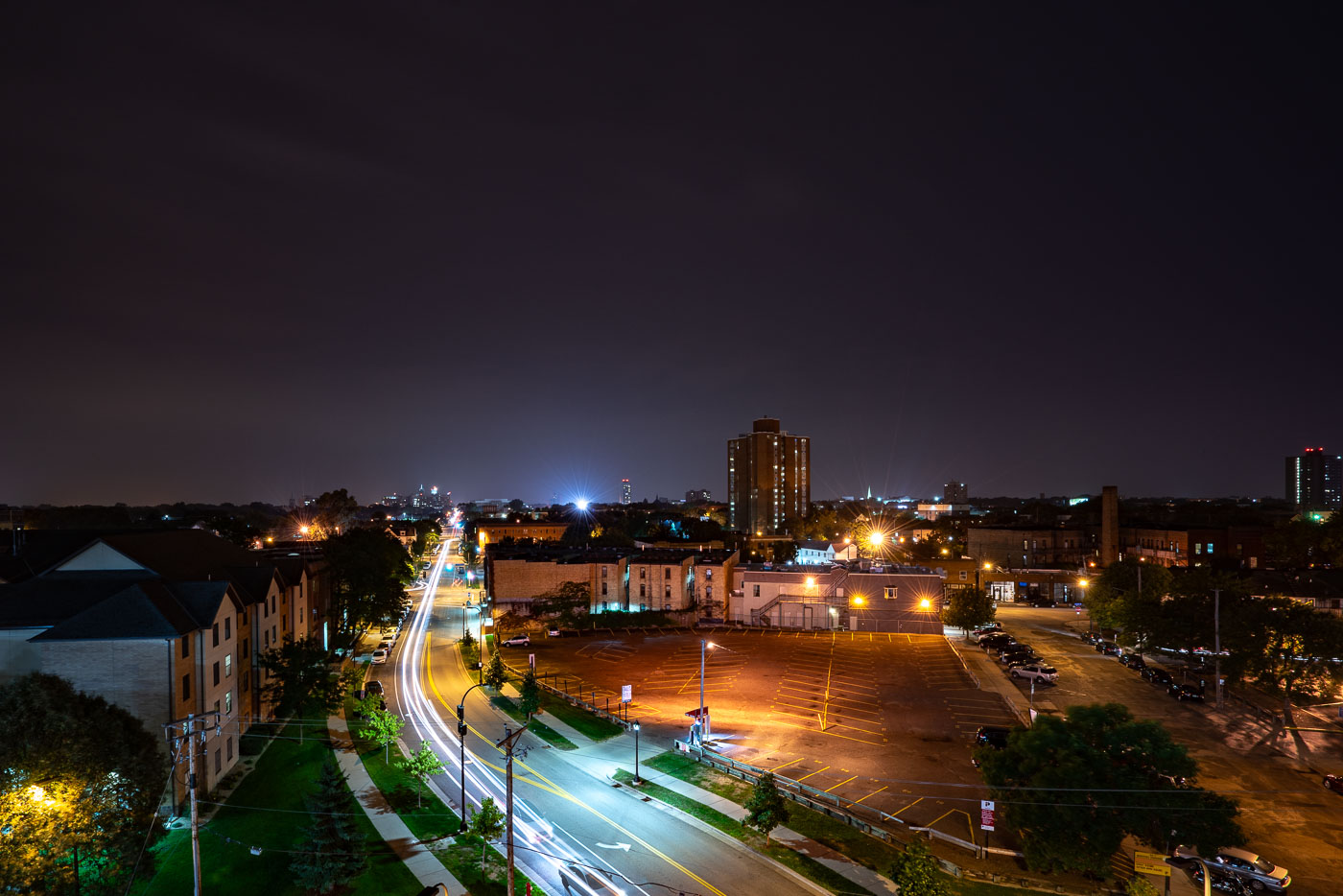
Chicago Avenue in Downtown Minneapolis at night, 2017. Long exposure shows vehicle light trails on the street, a vital transportation artery.
Chicago Avenue in Downtown Minneapolis, as seen on September 1, 2017, is a vital artery for the city's transportation network. The long exposure captures the movement of vehicles, illustrating the street's function as a thoroughfare connecting various neighborhoods and commercial districts. The surrounding architecture, including residential buildings and commercial establishments, reflects the mixed-use nature of this urban environment. This view highlights the continuous activity and infrastructure that supports daily life and commerce in Minneapolis.

Chicago Avenue, Downtown Minneapolis at Night, 2017
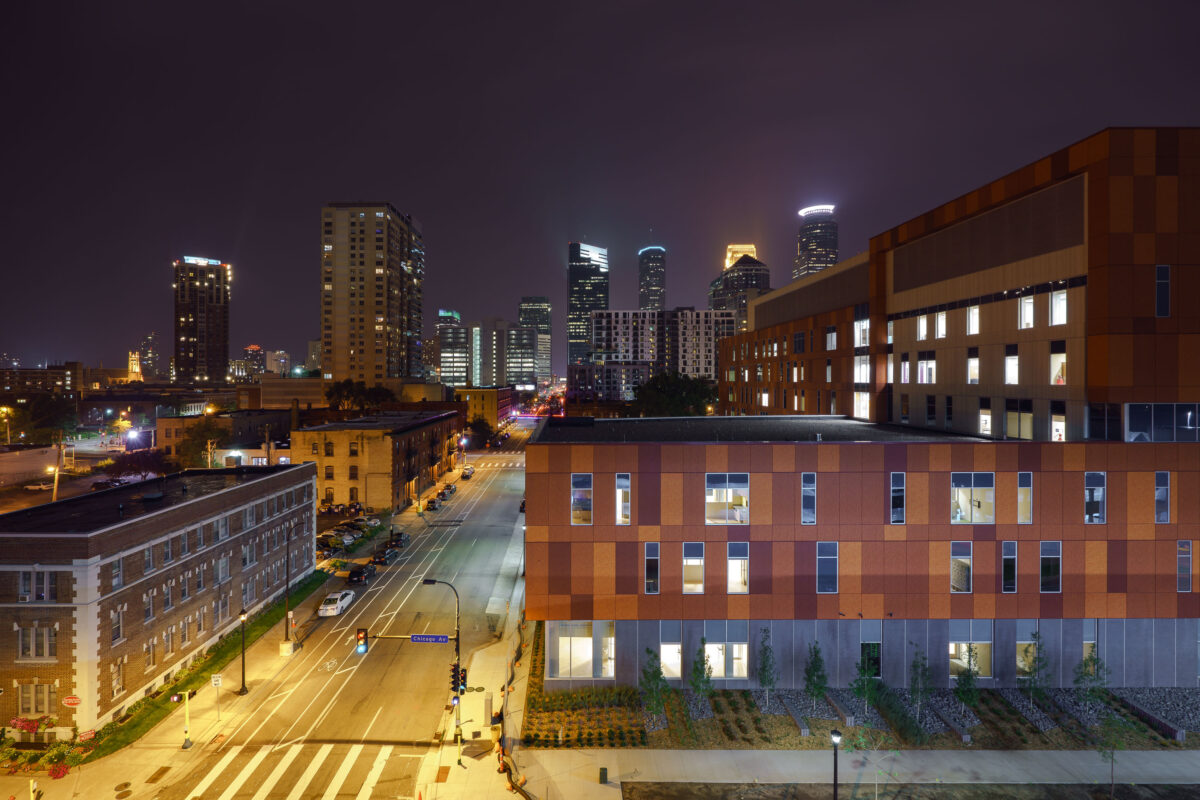
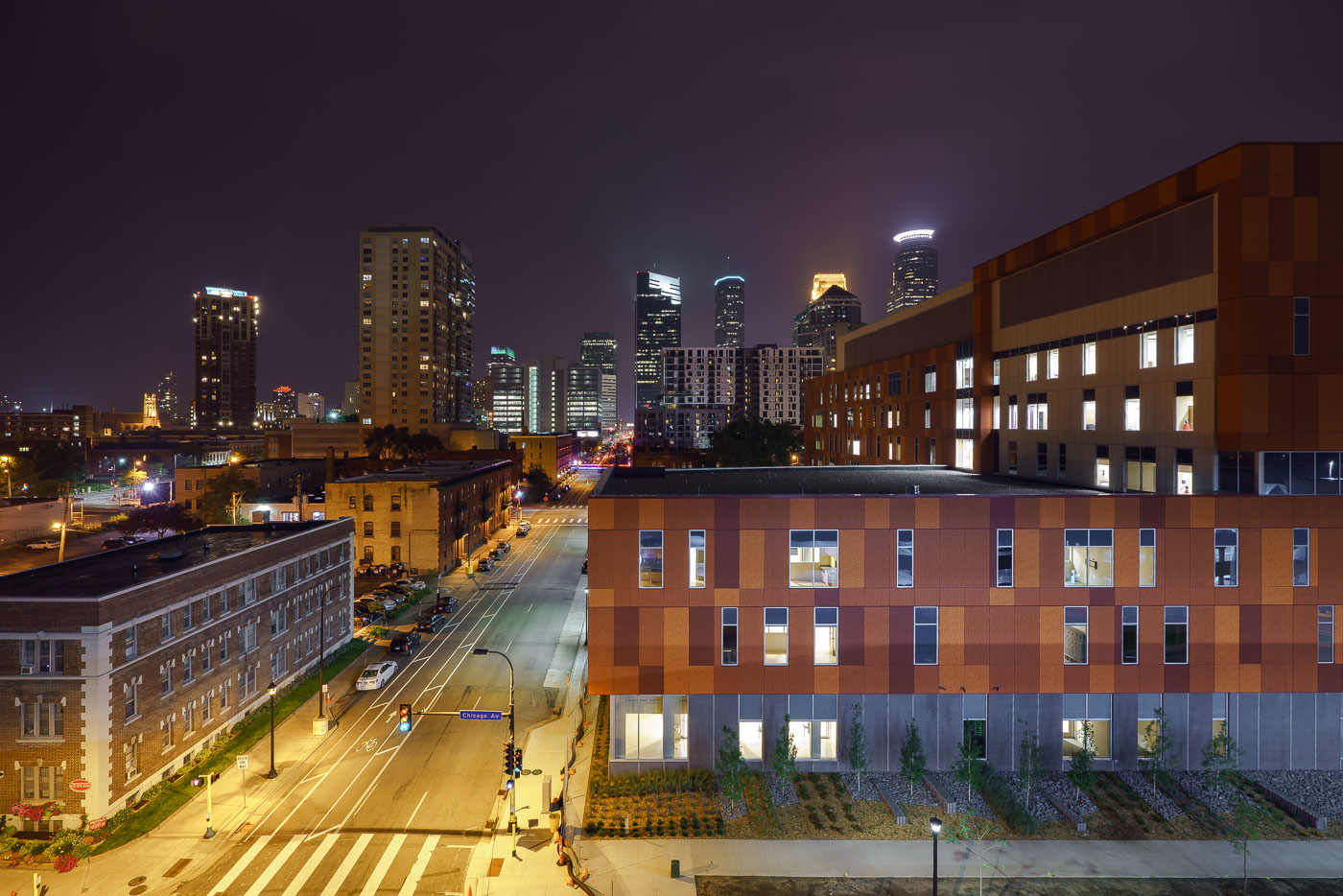
Hennepin Healthcare on Chicago Avenue in downtown Minneapolis at night.
Hennepin Healthcare's new clinic and specialty center, located on Chicago Avenue in downtown Minneapolis, is illuminated at night. This facility, part of the larger Hennepin County Medical Center (HCMC) system, provides essential healthcare services to the community. The building's modern design contrasts with the historic architecture visible in the background, representing the ongoing development of the urban environment.

Hennepin Healthcare, Chicago Ave, Downtown Minneapolis at Night
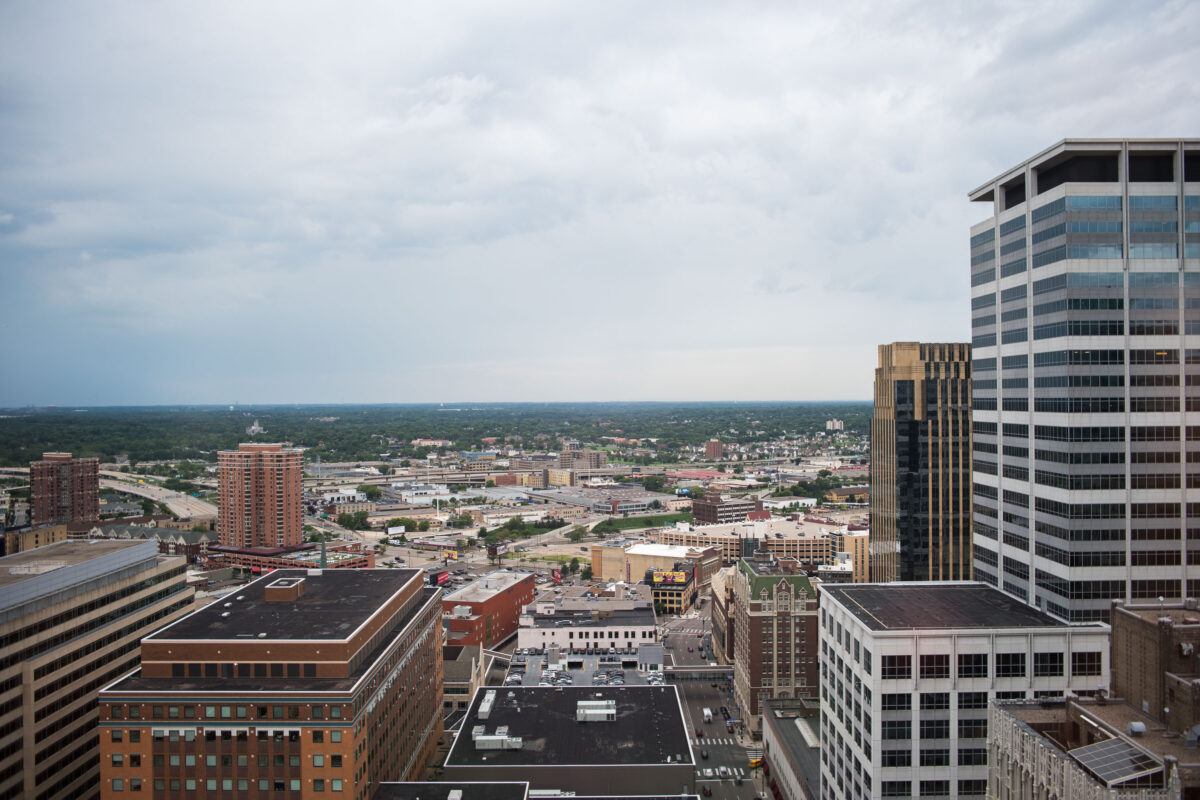
Downtown Minneapolis north of the AT&T Tower with office towers and commercial blocks.
Downtown Minneapolis, Minnesota, north of the AT&T Tower includes the central business district and adjoining blocks toward the city’s north side. The area combines office towers, hotels, parking structures, commercial streets, and transportation corridors within the downtown core.

Downtown Minneapolis North of AT&T Tower
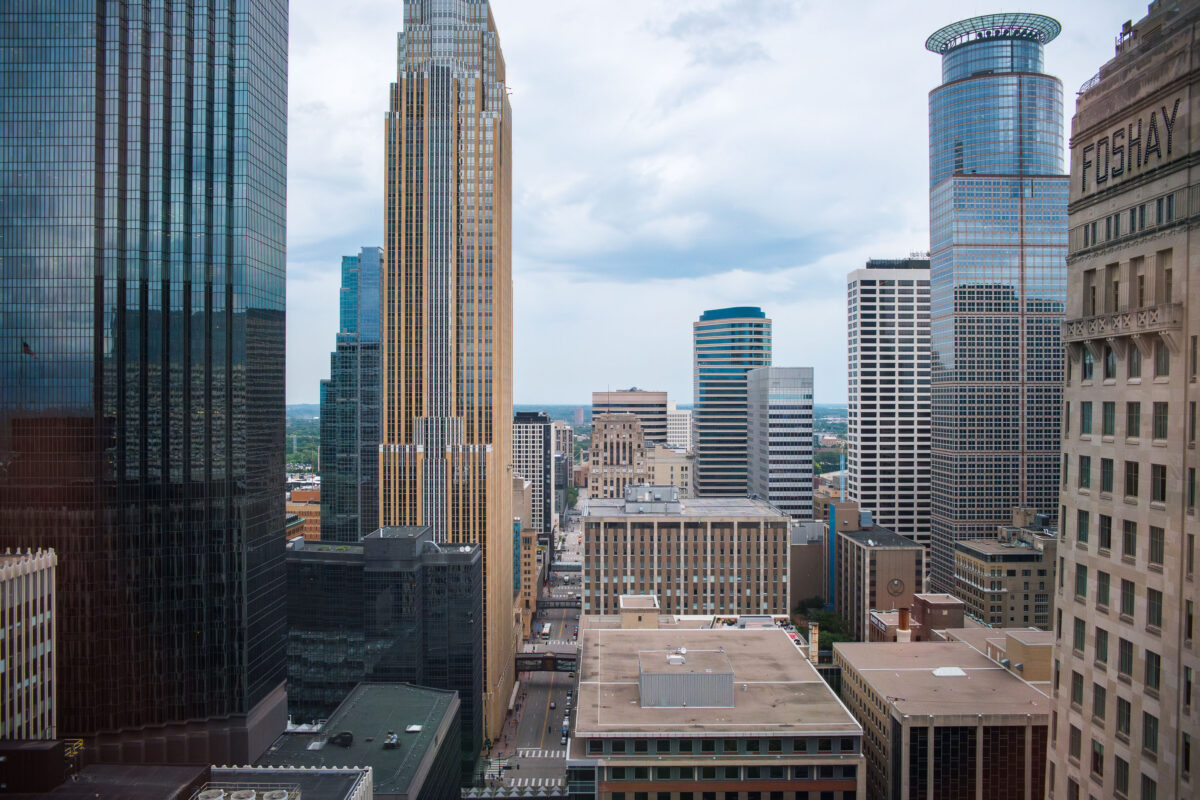
Downtown Minneapolis cityscape featuring Capella Tower, Wells Fargo Center, and Foshay Tower, representing key architectural developments.
This photograph looks out from the AT&T Tower, showcasing the downtown Minneapolis cityscape. Prominently featured are the Capella Tower, completed in 1992, and the Wells Fargo Center, which was the city's tallest building upon its completion in 1989. The image also includes the historic Foshay Tower, a landmark built in 1929 that was once the tallest building in Minneapolis. These structures represent significant periods of architectural development and economic growth in the city's central business district.

Downtown Minneapolis: Capella Tower and Wells Fargo Center
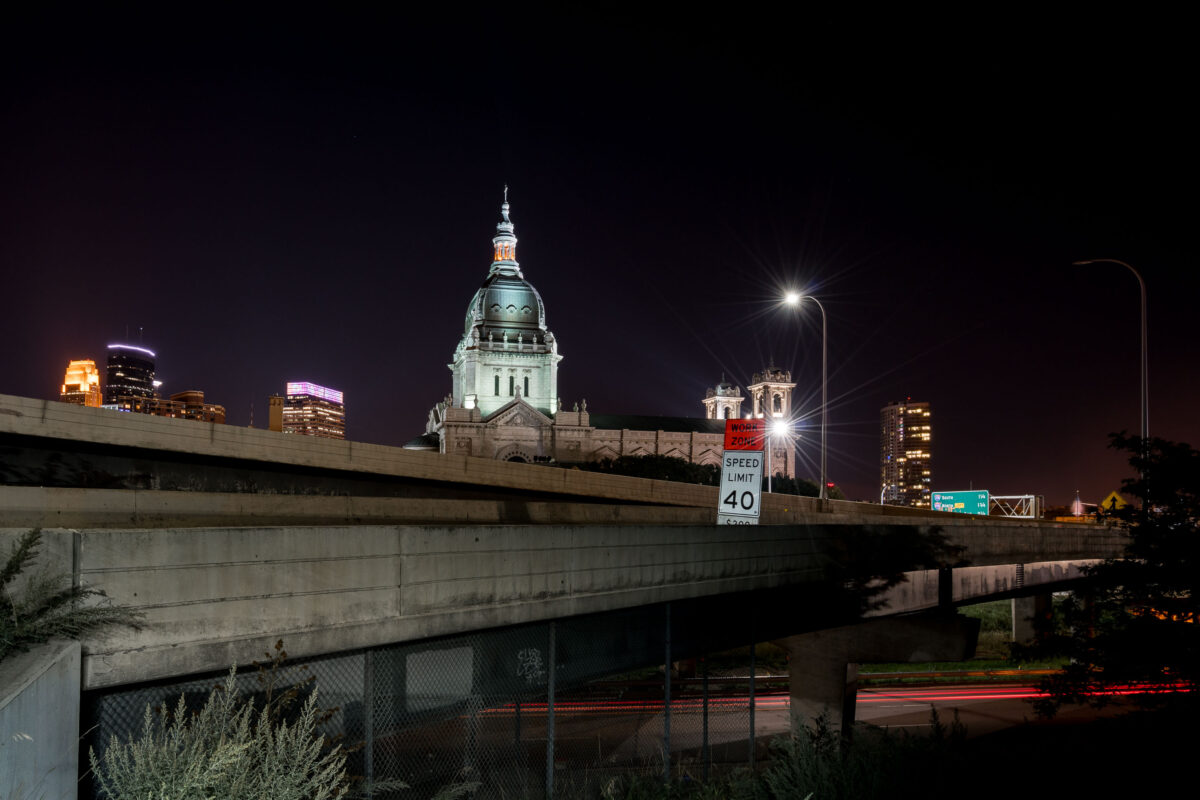
The Basilica of Saint Mary in Minneapolis is illuminated at night, with Interstate 94 passing beneath an overpass in the foreground.
The Basilica of Saint Mary, a prominent Roman Catholic church in Minneapolis, is illuminated at night, with Interstate 94 visible in the foreground. Construction of the basilica began in 1907 and it was consecrated in 1914, designed by architect Edward L. Masqueray in a French Renaissance style. It served as the seat of the Archdiocese of Saint Paul and Minneapolis until 2008. The interstate highway, completed in the 1960s, represents a significant piece of mid-20th century urban infrastructure that reshaped the city's landscape and transportation networks.

Basilica of Saint Mary and I-94 at Night, Minneapolis
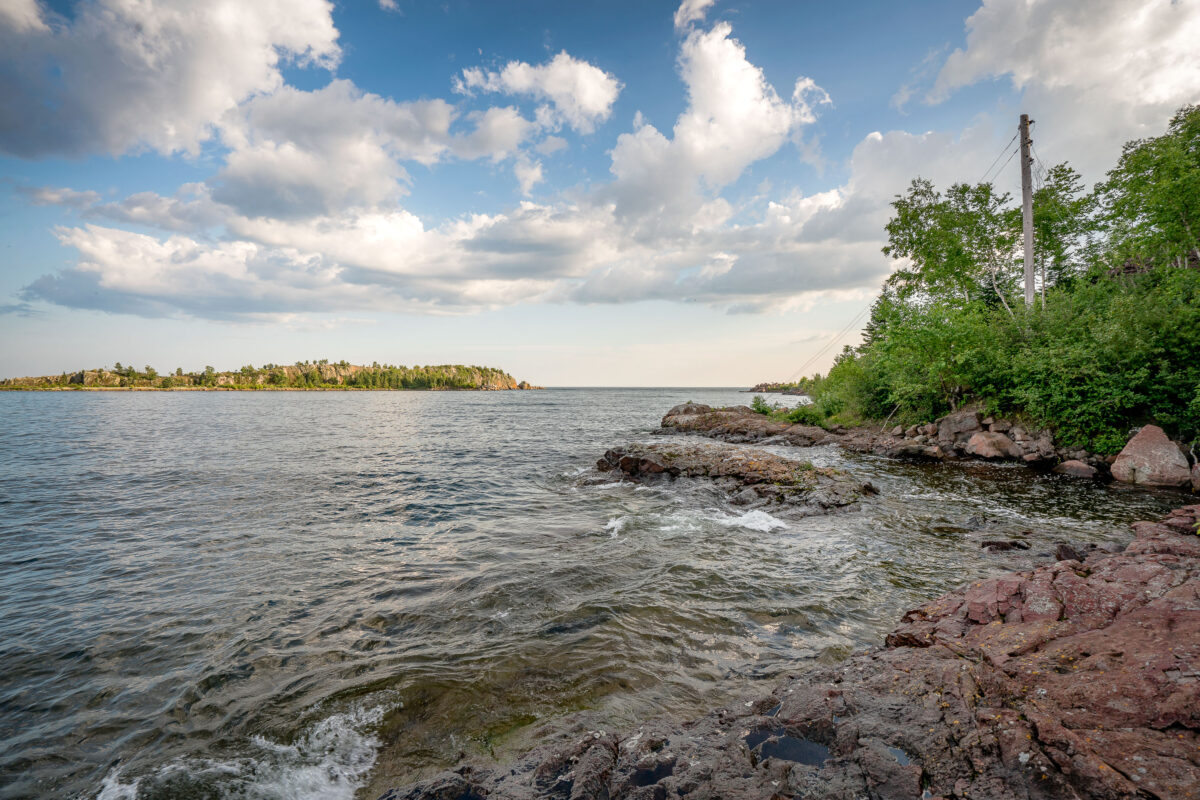
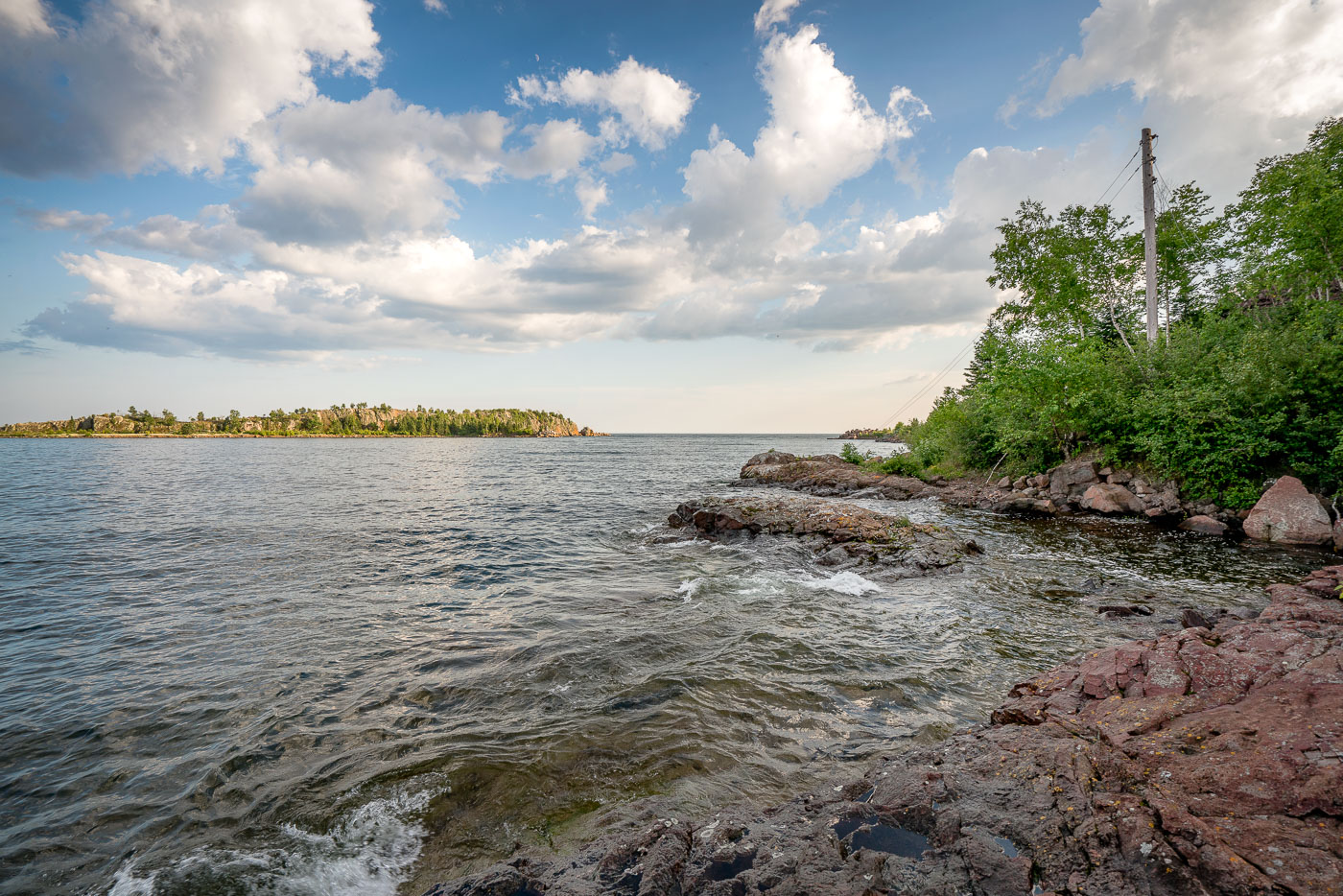
The rocky shoreline of Taconite Harbor, Lake Superior, Minnesota, a former industrial port constructed in the 1950s for taconite export.
The rocky shoreline of Taconite Harbor on Lake Superior, Minnesota, was constructed in the early 1950s by the Erie Mining Company to facilitate the export of taconite pellets from the Mesabi Iron Range. This industrial harbor, connected by a private rail line, served as a critical hub for Minnesota's iron mining industry throughout the latter half of the 20th century. Although operations ceased in the early 2000s due to global market shifts, the remaining infrastructure and the rugged natural landscape serve as a testament to the region's historical reliance on heavy industry.

Taconite Harbor Shoreline, Lake Superior, Minnesota

Moonrise over Lake Superior, Silver Creek Township, MN. The undeveloped North Shore features ancient basaltic rock formations and forests meeting the calm freshwater lake.
Moonrise over Lake Superior, Silver Creek Township, MN. The North Shore of Lake Superior, north of Two Harbors, is characterized by its ancient basaltic rock formations, remnants of lava flows from nearly a billion years ago. This undeveloped stretch of coastline in Silver Creek Township, Minnesota, is geologically significant and features forests of spruce and pine meeting the vast freshwater lake. The calm waters reflect the twilight sky as the moon ascends, marking the transition from day to night along this rugged shore.

Moonrise over Lake Superior, Silver Creek Township, MN
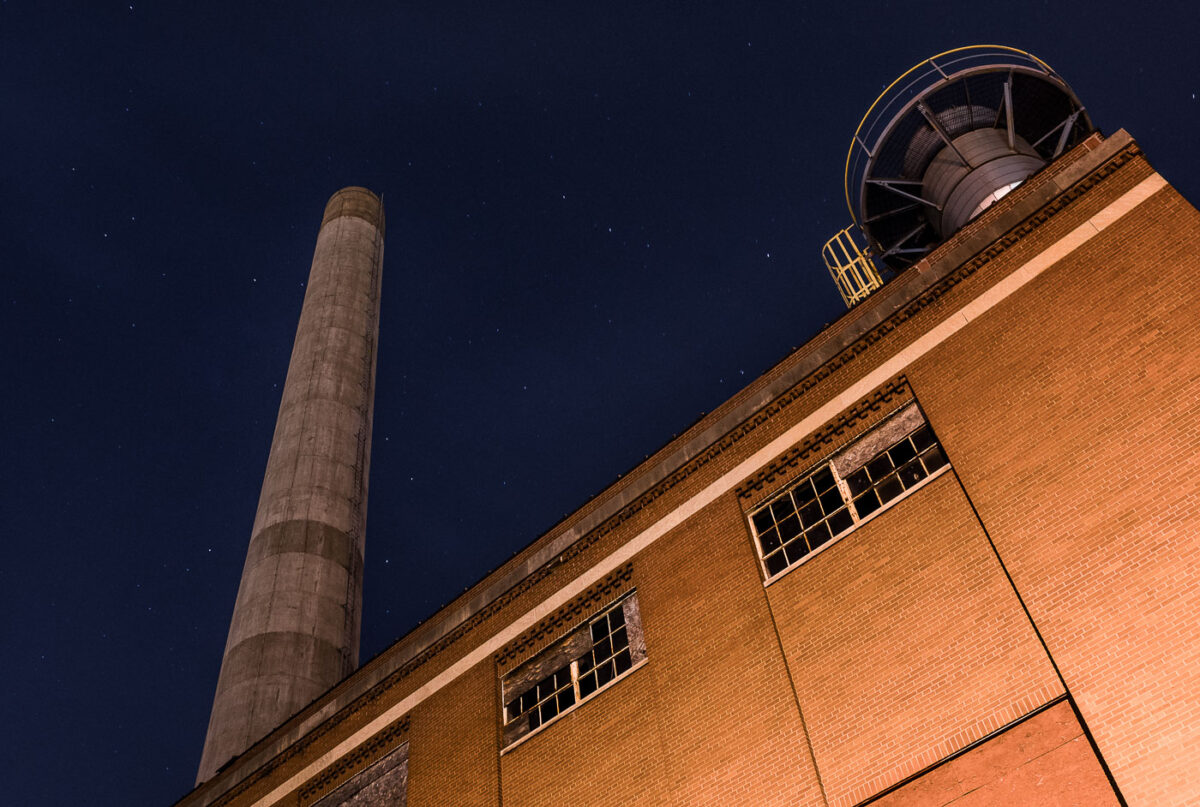
The Hamm's Brewery Power Plant in St. Paul, MN, provided energy for brewing operations and remains a testament to the city's industrial history.
The Hamm's Brewery Power Plant in St. Paul, Minnesota, was constructed to support the brewing operations of the Theodore Hamm's Brewing Company, founded in 1865.

Hamm’s Brewery Power Plant, St. Paul, MN
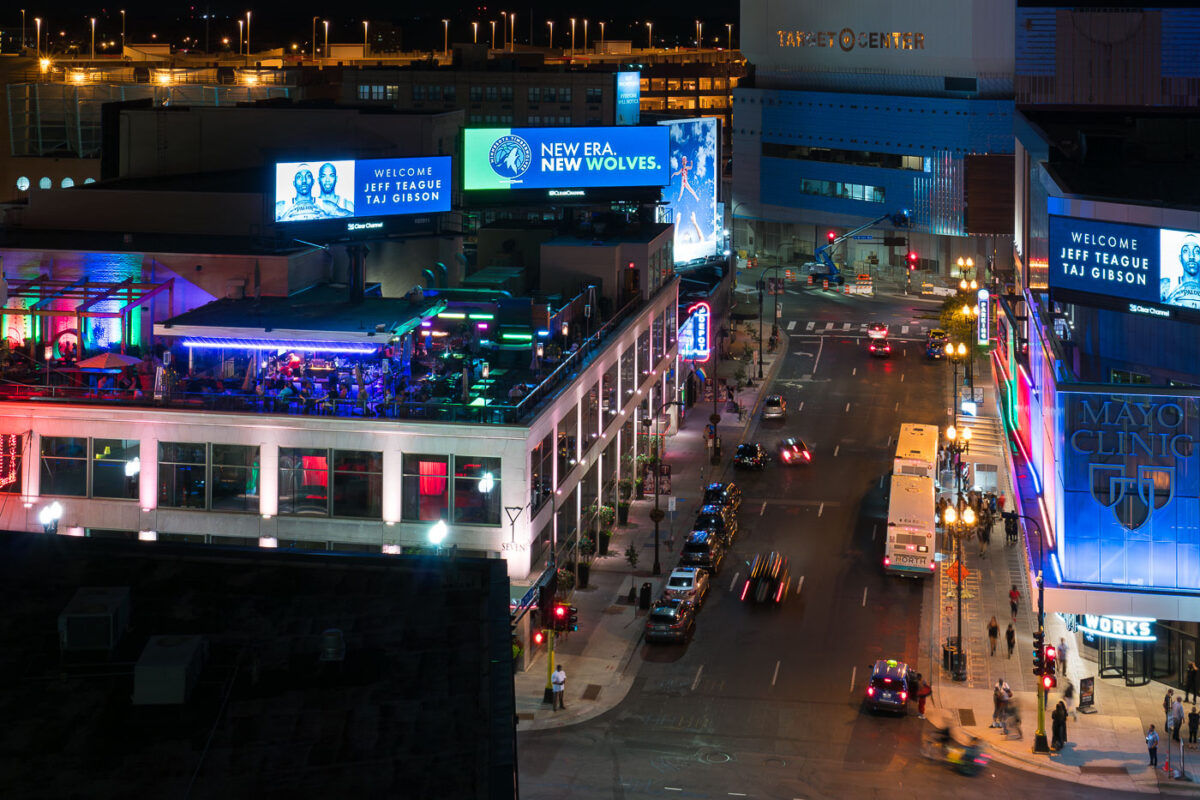
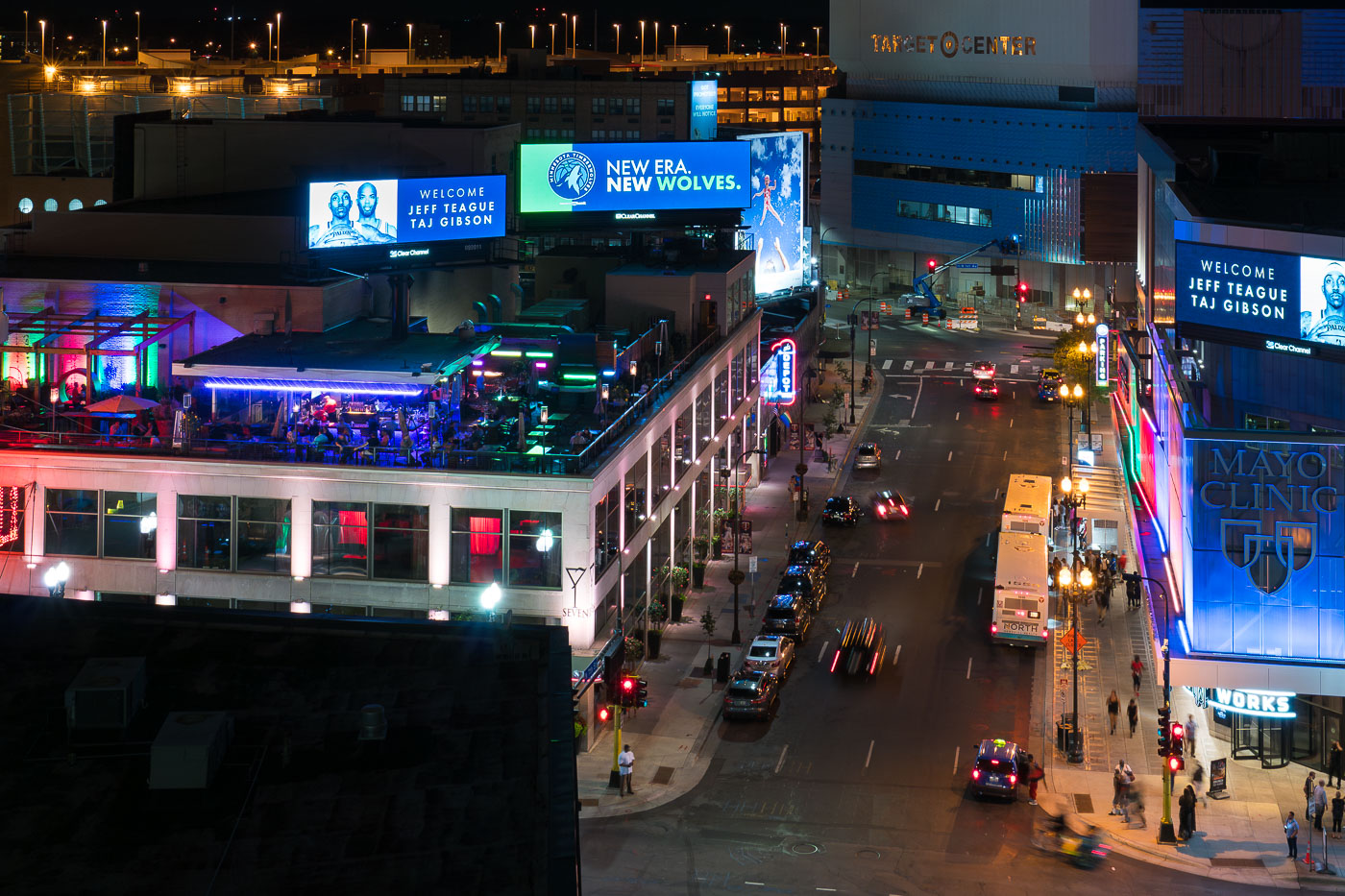
Night view of Target Center and Mayo Clinic Square in downtown Minneapolis with Seven Steakhouse rooftop bars and billboards.
Seven Steakhouse Sushi & Rooftop, located in downtown Minneapolis, operated from 2017 until its closure in the winter of 2022. The establishment was situated near prominent landmarks including the Target Center and the Mayo Clinic. This image, taken in June 2017, captures the vibrant atmosphere of the rooftop dining area and the surrounding urban environment, including advertisements for the Minnesota Timberwolves.

Seven Steakhouse Sushi & Rooftop in Downtown Minneapolis
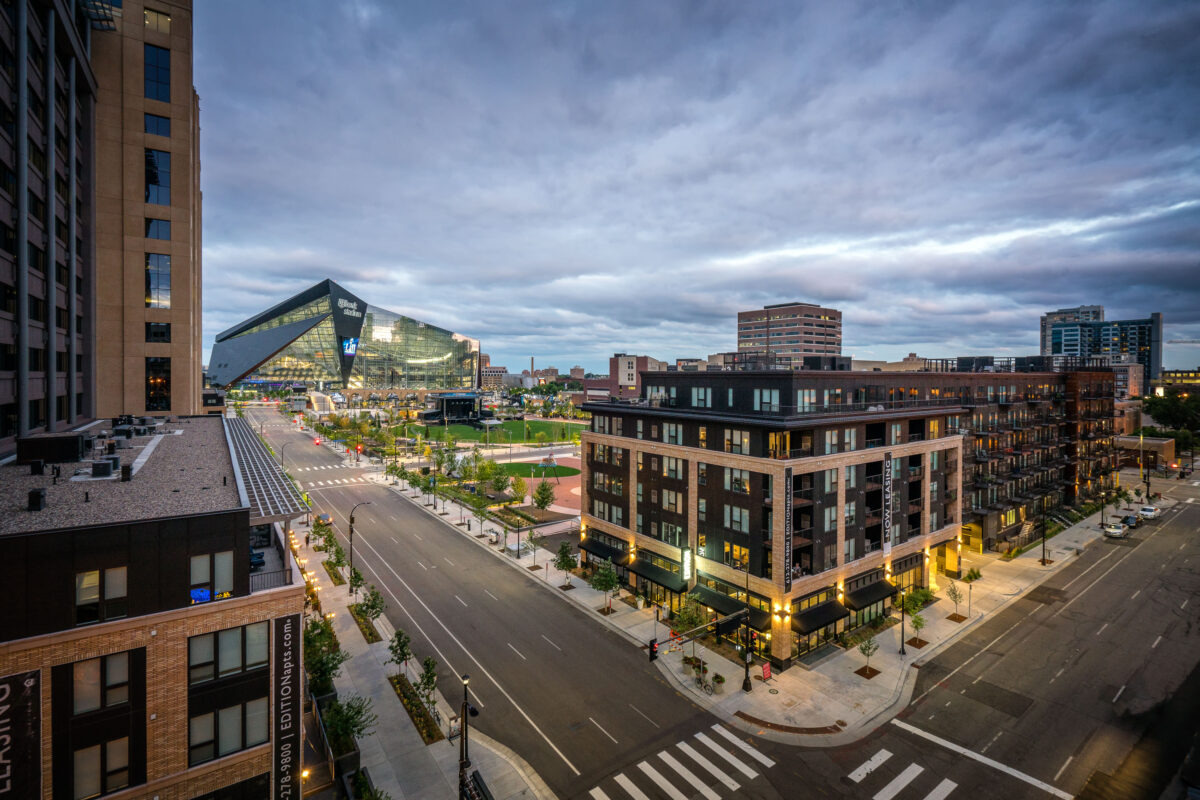
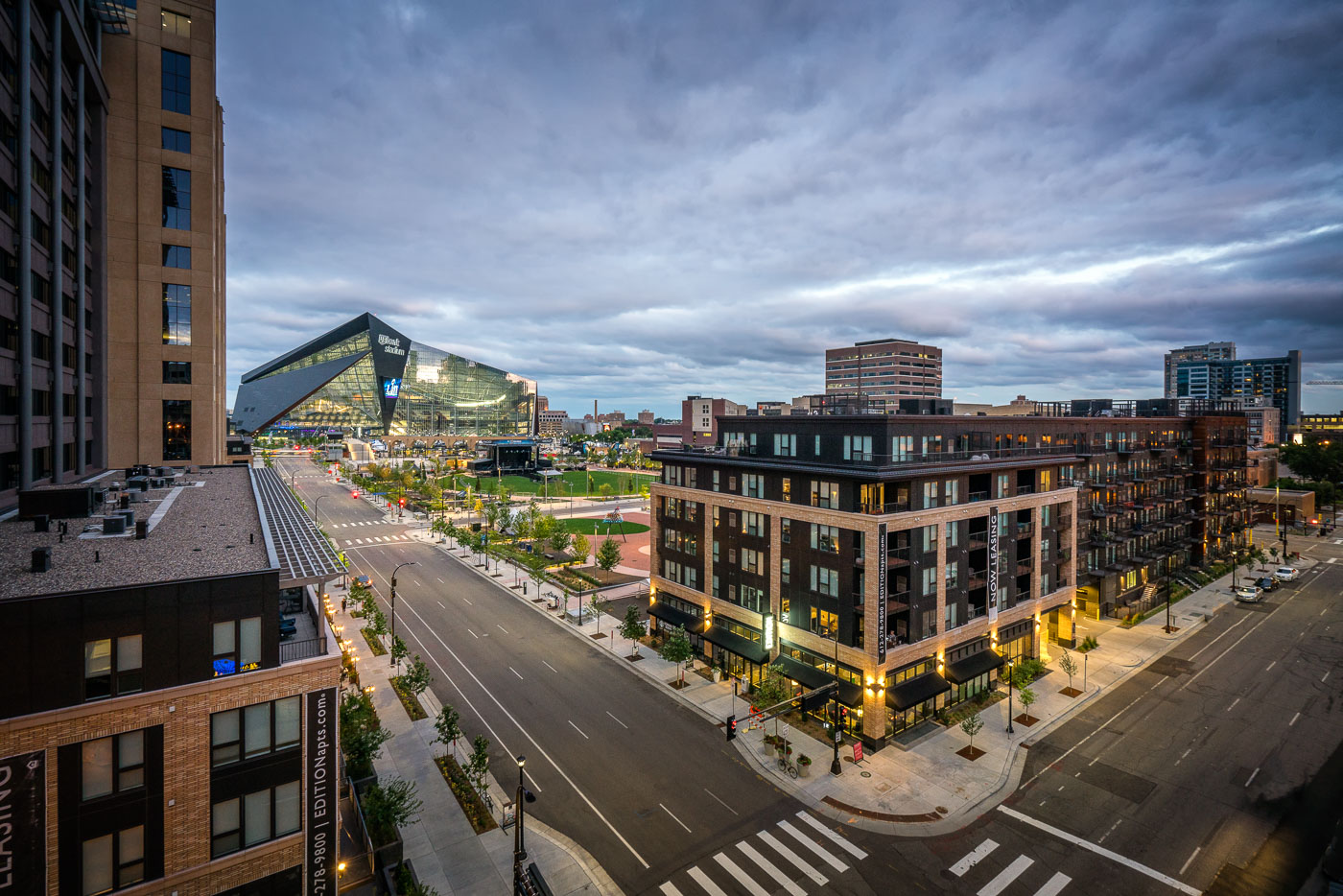
Edition Apartments and US Bank Stadium anchor the Downtown East neighborhood of Minneapolis at dusk.
US Bank Stadium, a multi-purpose venue completed in 2016, anchors the Downtown East neighborhood of Minneapolis. Adjacent to the stadium is the Edition Apartments.

Dusk Over Park Avenue Near US Bank Stadium and Edition Apartments
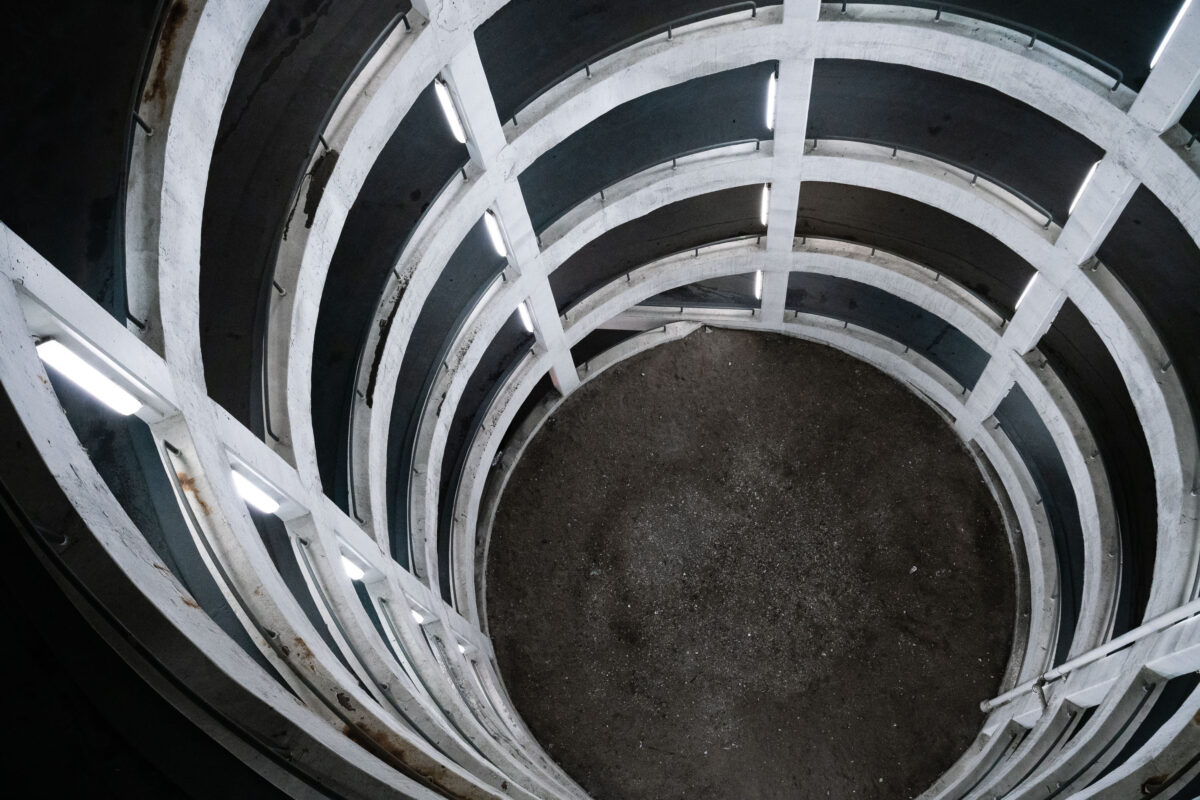
Spiral ramp inside Minneapolis Downtown Spiral Parking Garage in Minneapolis.
The Minneapolis Downtown Spiral Parking Garage, located in downtown Minneapolis, is a multi-level concrete structure designed to accommodate vehicles. Its distinctive spiral ramp design is a common architectural solution for maximizing parking capacity within a limited urban footprint. Such garages are essential components of urban infrastructure, facilitating access to commercial and residential areas by providing necessary parking facilities. This particular structure serves the needs of the downtown business and entertainment district.

Minneapolis Downtown Spiral Parking Garage

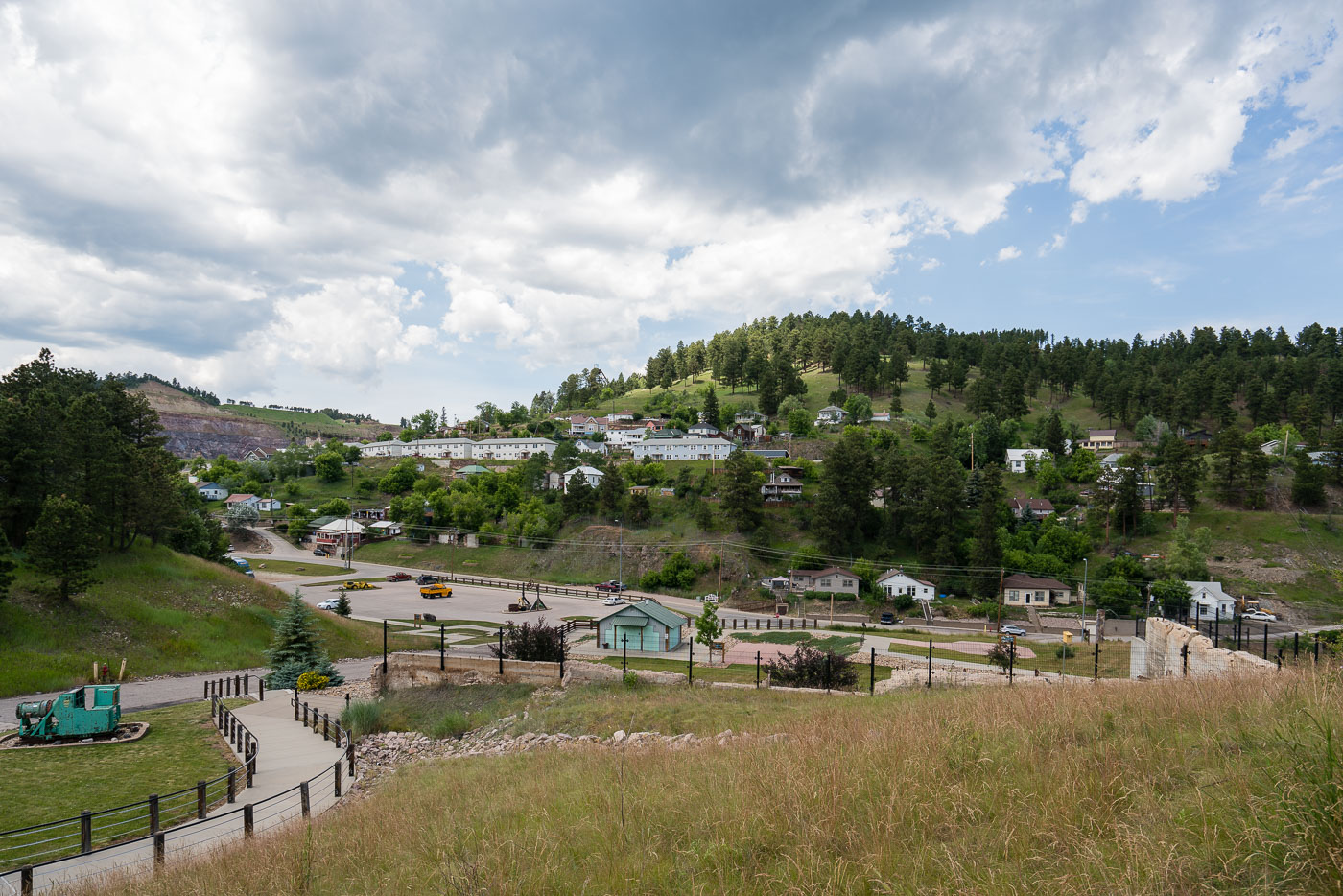
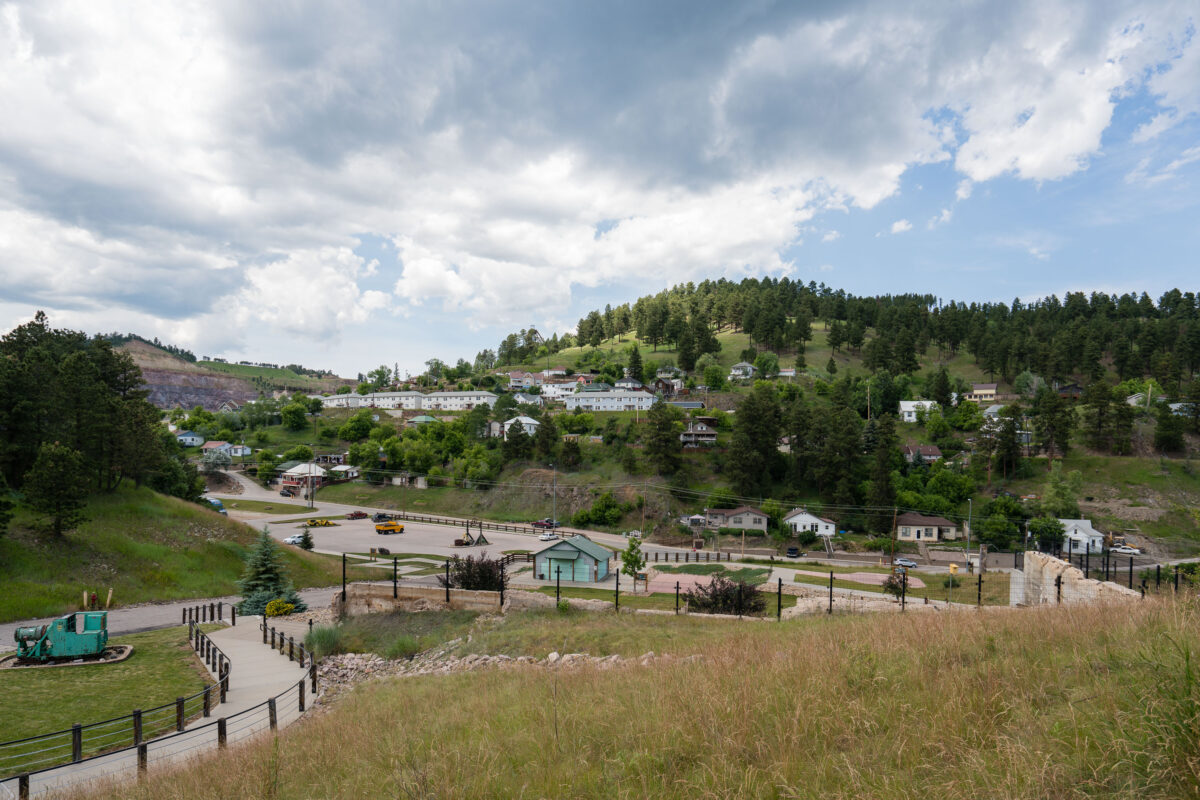
Gold Run Park in Lead, South Dakota, lies below hillside homes and pine-covered slopes.
Gold Run Park in Lead, South Dakota, occupies a hillside site below homes and pine-covered slopes in the Black Hills. The park includes paved paths, open lawn, preserved stone walls, and mining equipment connected with the area’s gold-mining history. Lead developed around the Homestake Mine, and Gold Run Park incorporates features tied to that local mining landscape.

Gold Run Park Below Lead Hillside, South Dakota
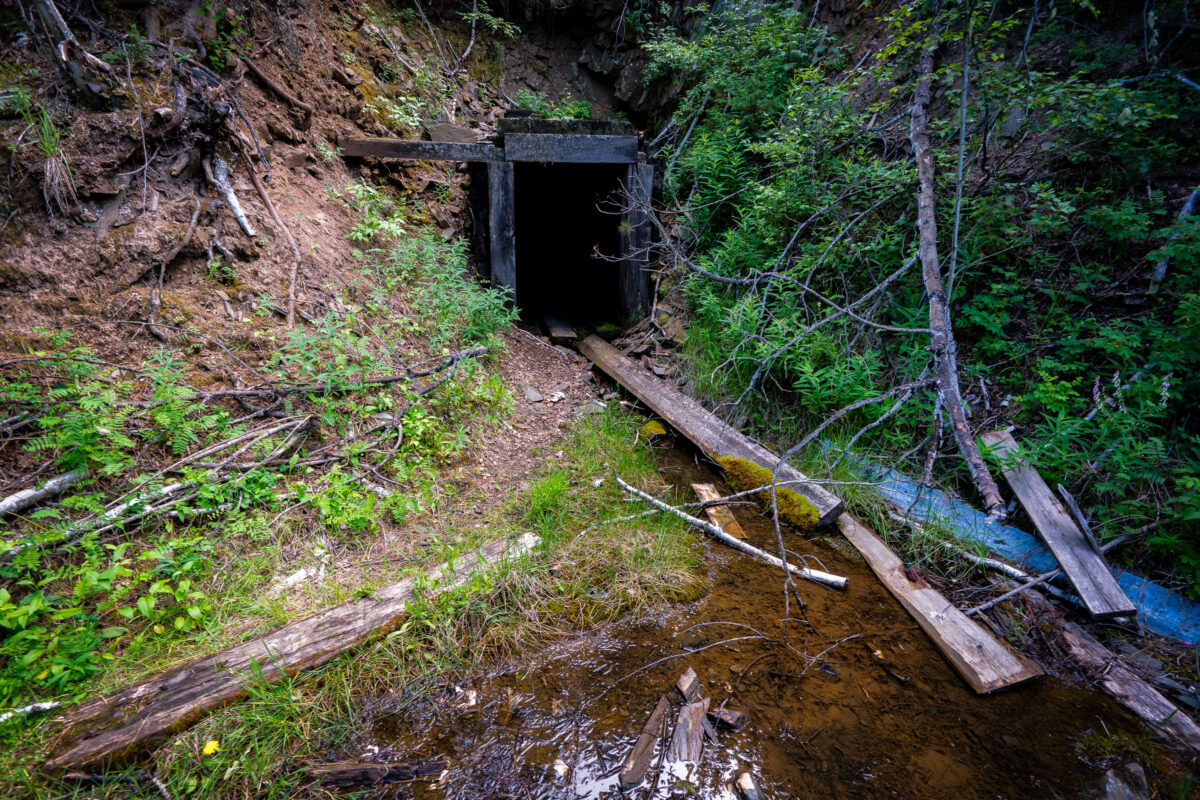
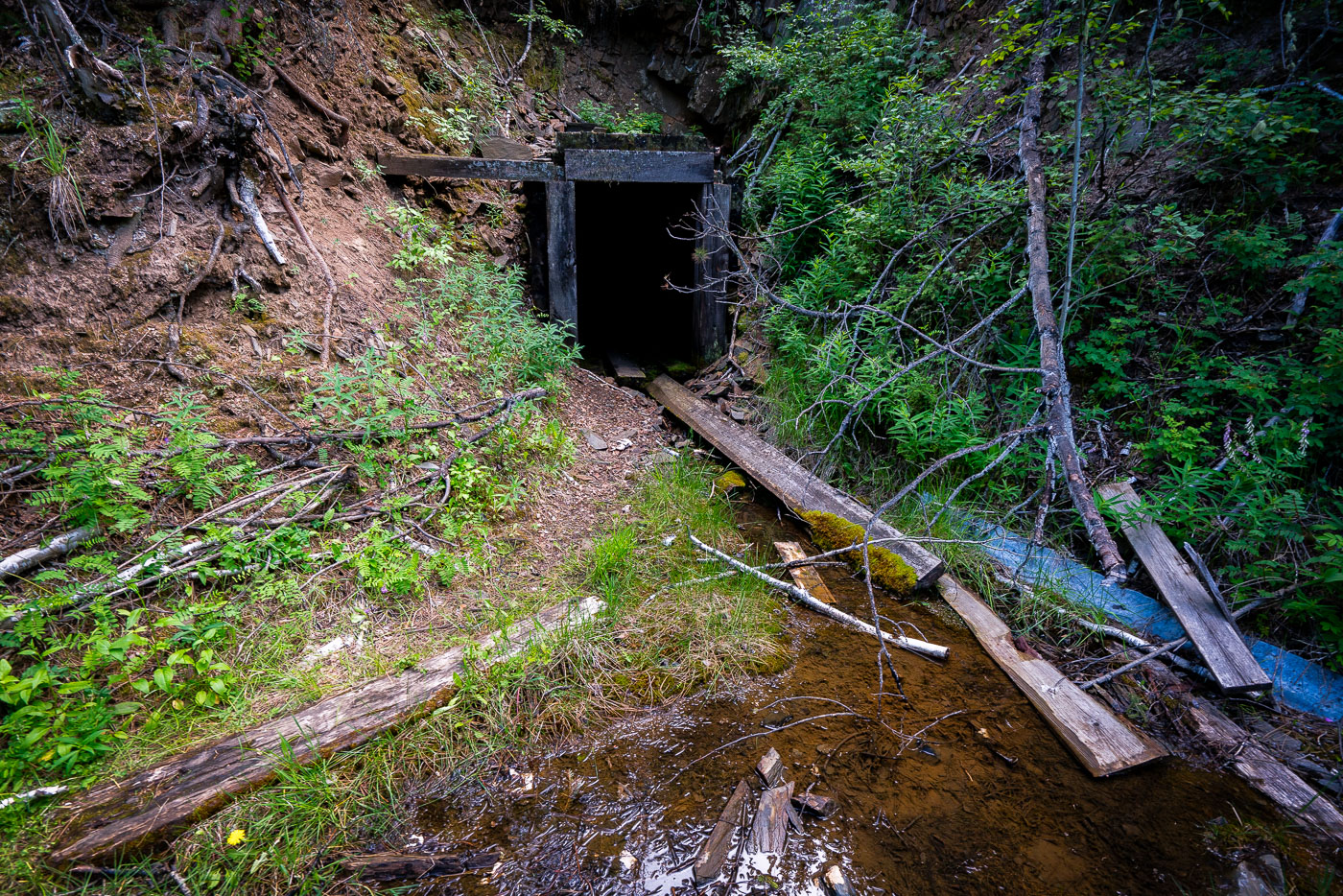
Abandoned mine adit in the Black Hills near Lead, South Dakota, with a timber-framed portal and drainage channel
An abandoned mine adit in the Black Hills near Lead, South Dakota, opens into a steep hillside. A timber-framed portal and narrow drainage channel remain in place at the entrance, with weathered boards and debris scattered along the runoff path.

Abandoned Mine Adit, Black Hills near Lead, South Dakota
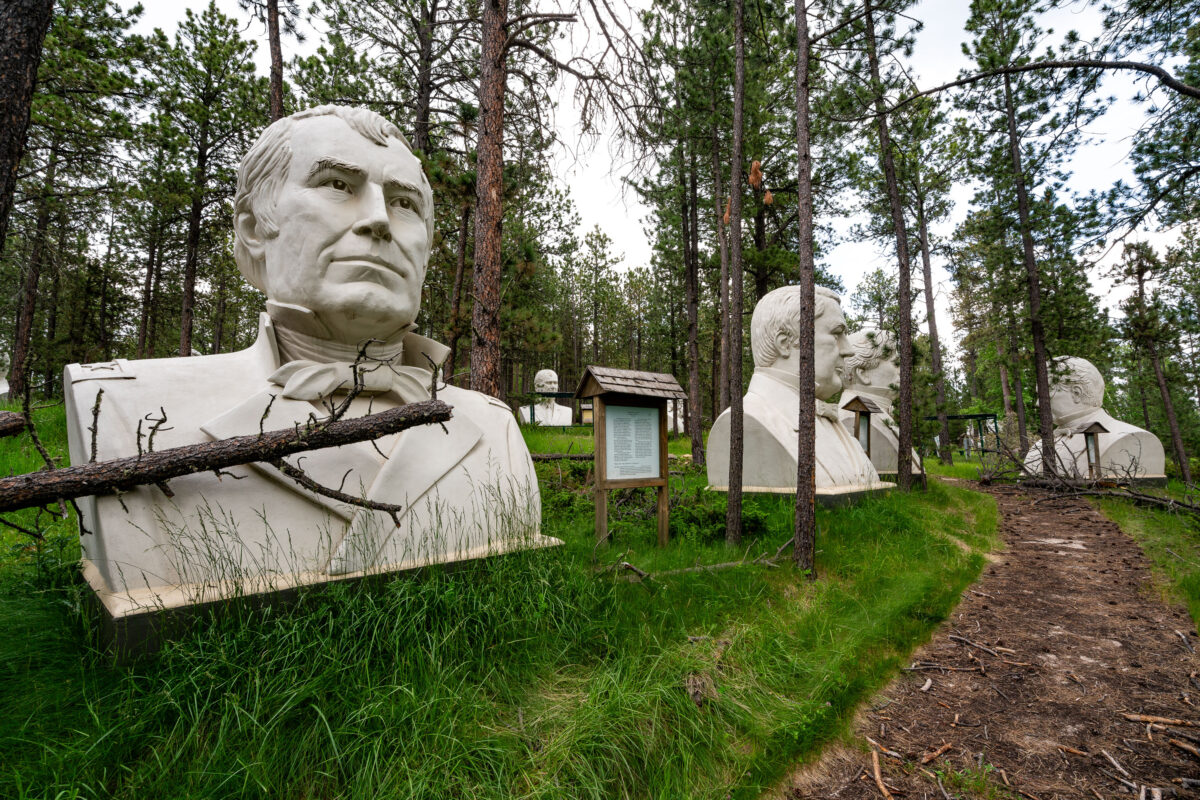
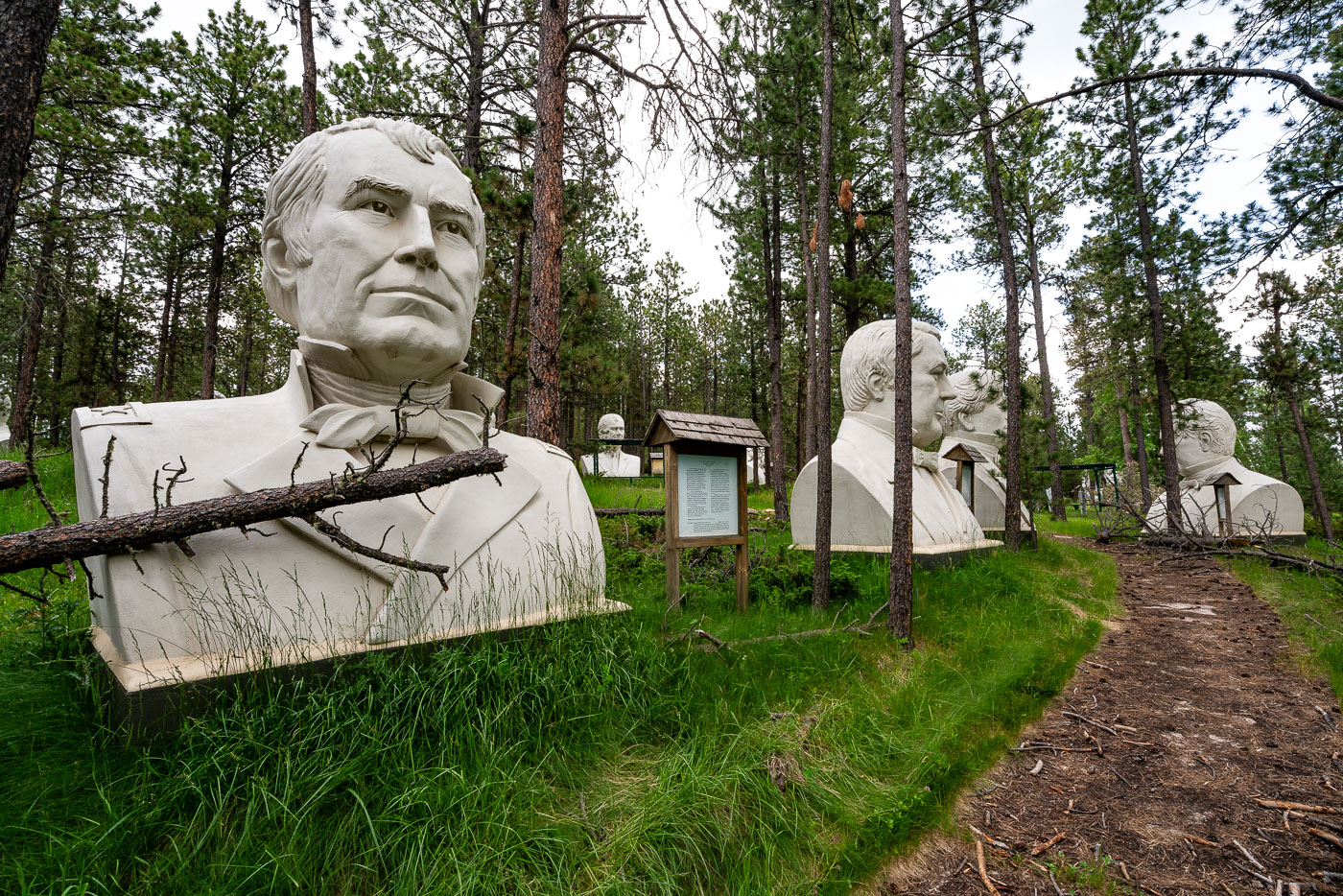
Abandoned presidential busts from Presidents Park are seen in the Black Hills Forest, South Dakota. The park featured 20-foot-tall concrete sculptures of U.S. presidents.
Abandoned presidential busts from the former Presidents Park attraction are seen in the Black Hills Forest near Lead, South Dakota. Opened in 2003 by artist David Adickes, the park featured forty-three 20-foot-tall concrete sculptures of U.S. presidents. The attraction closed by 2010 due to low visitor numbers, leaving the statues to be reclaimed by nature. These weathered relics now stand as a testament to ambitious, yet ultimately unsuccessful, private ventures in roadside Americana.

Abandoned Presidents Park Statues in Black Hills Forest, South Dakota
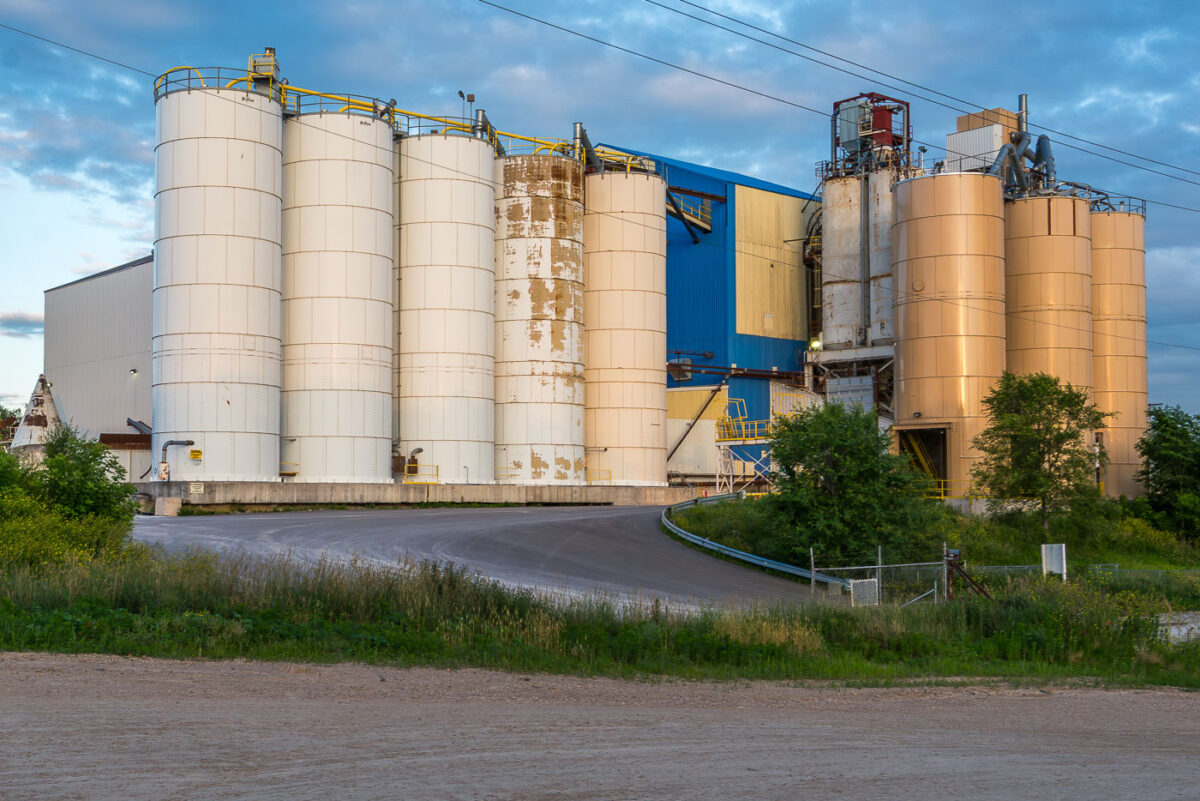
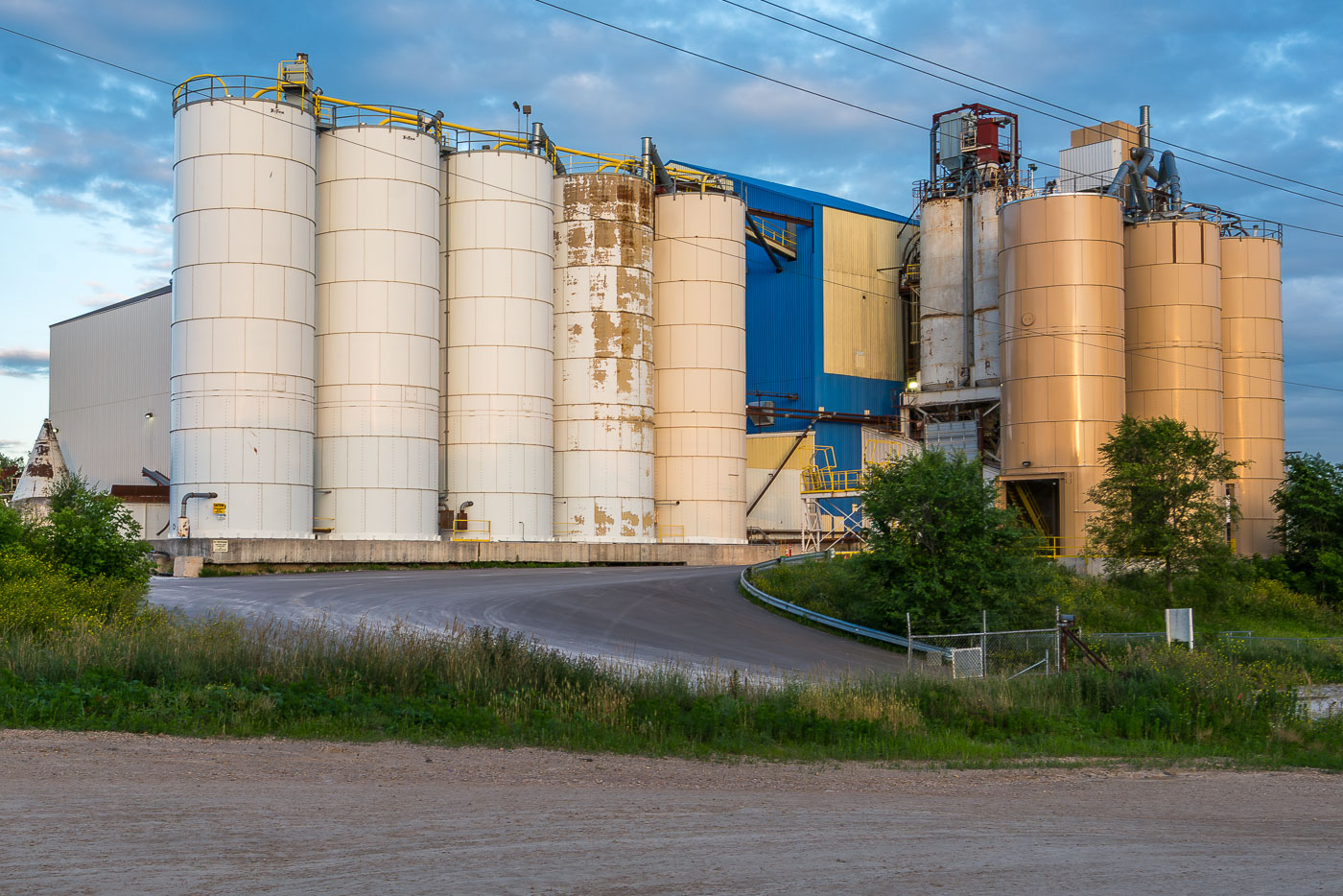
Grain elevator with multiple storage silos in Savage, Minnesota.
This grain elevator and storage facility in Savage, Minnesota includes multiple cylindrical silos for bulk storage and processing. The complex combines cream-colored concrete storage structures with a blue-framed processing building and additional tan silos for handling and distribution. The facility represents the type of agricultural infrastructure common to Minnesota's grain handling and milling operations.

Grain elevator and storage silos in Savage, Minnesota

Barge moored on the Minnesota River near Savage, Minnesota, with grain elevator in distance.
A barge is moored along the Minnesota River near Savage, Minnesota, with a grain elevator visible in the distance. The river serves as a transportation corridor for barge traffic carrying agricultural and industrial goods throughout the region.

Barge and Grain Elevator, Minnesota River at Savage
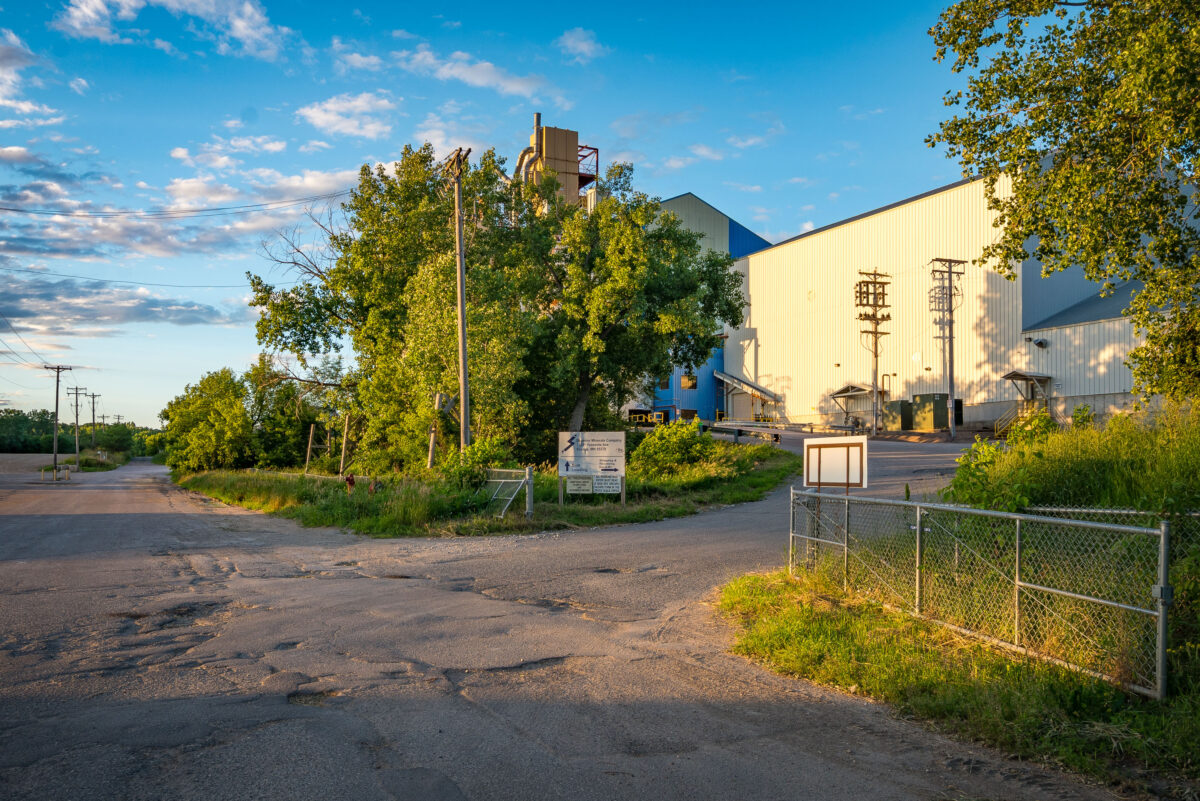
Superior Minerals Company plant in Savage, Minnesota, beside an industrial road and trees.
Superior Minerals Company plant in Savage, Minnesota. The site is an industrial processing and storage facility. It's located along a lightly developed industrial road on the edge of a wooded area.

Superior Minerals Company plant, Savage, Minnesota

Riverland AG Terminal in Savage, Minnesota, with grain silos and rail tracks in the Riverport area.
Riverland AG Terminal, Savage, Minnesota. The facility includes large grain storage silos connected by conveyor structures and rail service within the Riverport industrial area. It functions as an agricultural bulk storage and transfer site linked to regional freight transportation.

Riverland AG Terminal, Savage, Minnesota

Waste Management dumpsters at a waste handling yard in Savage, Minnesota.
Waste Management dumpsters at a waste handling facility in Savage, Minnesota. The site includes a truck scale and industrial tanks associated with commercial waste collection and transfer operations. Stacked roll-off containers and front-load dumpsters equipment storage and staging within the yard.

Waste Management Dumpsters, Savage, Minnesota
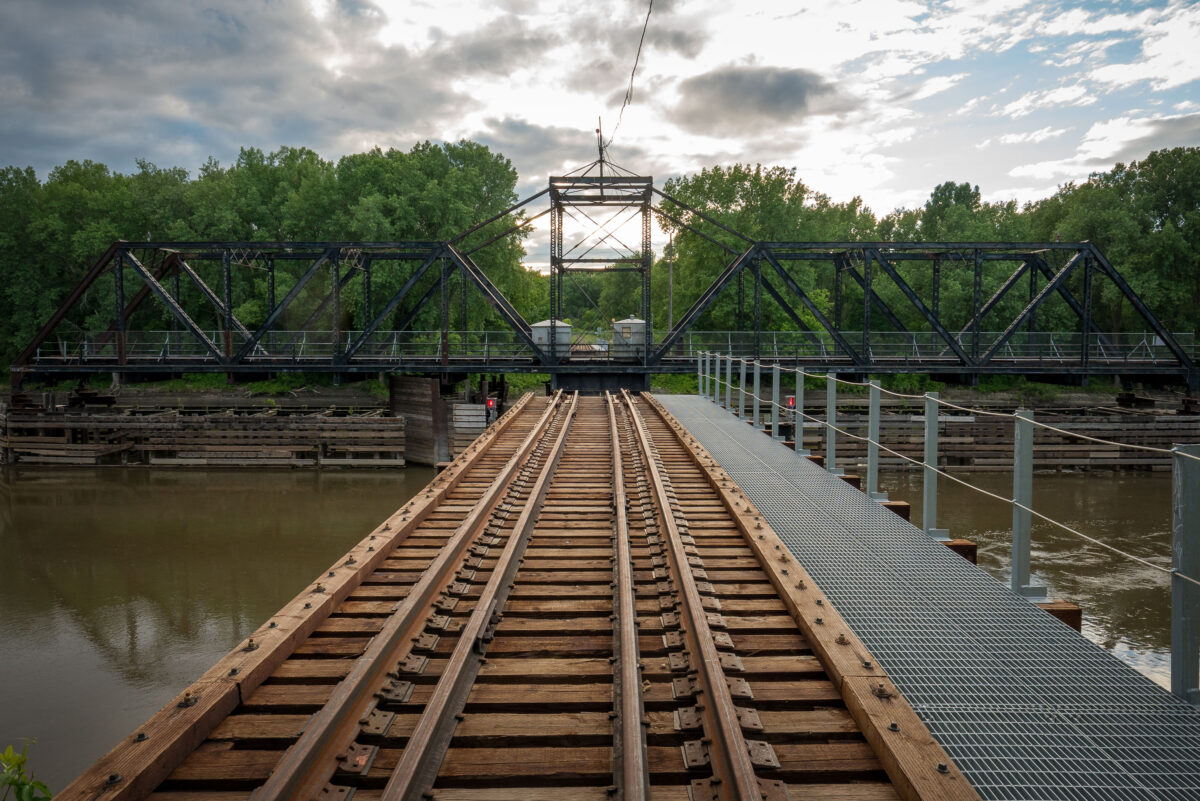
Dan Patch Line Bridge over the Minnesota River between Bloomington and Savage.
Dan Patch Line Bridge, Bloomington and Savage, is a railroad swing bridge spanning the Minnesota River. Built for the Dan Patch Line, it carries the rail corridor between the two cities and remains a notable crossing in the Twin Cities south metro.

Dan Patch Line Bridge, Bloomington and Savage
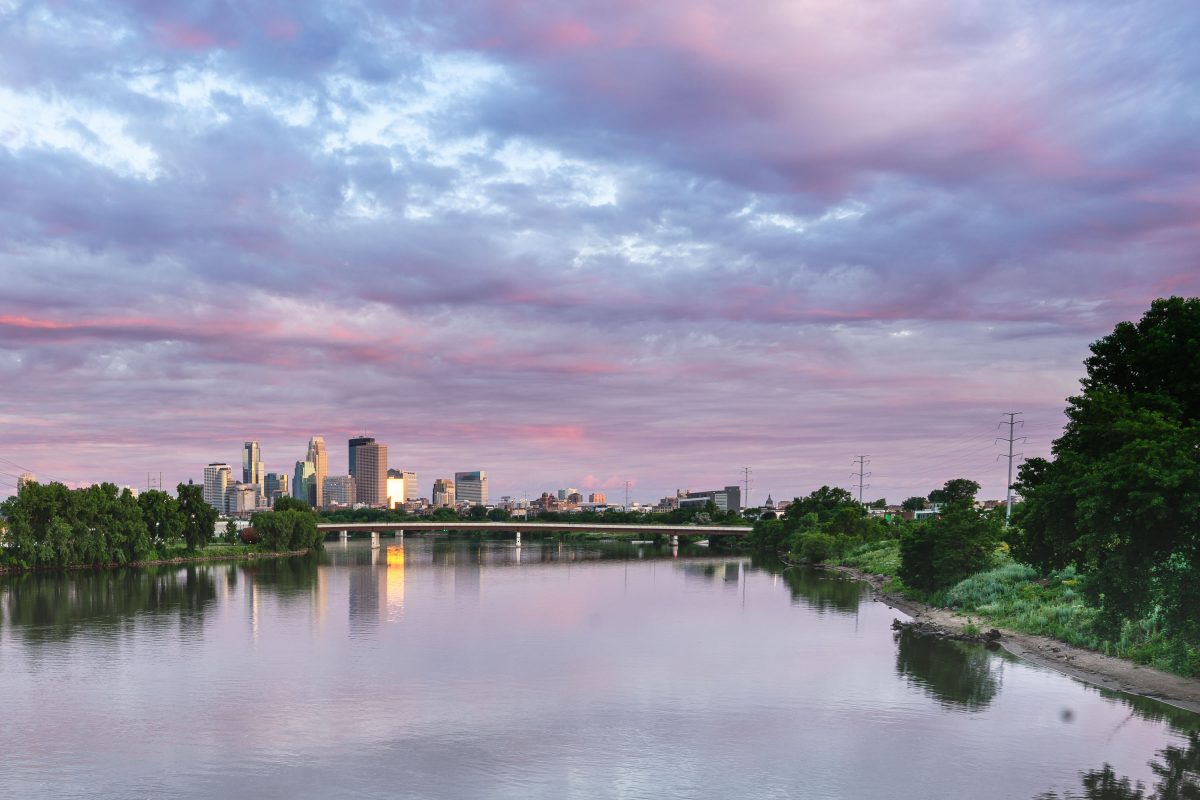
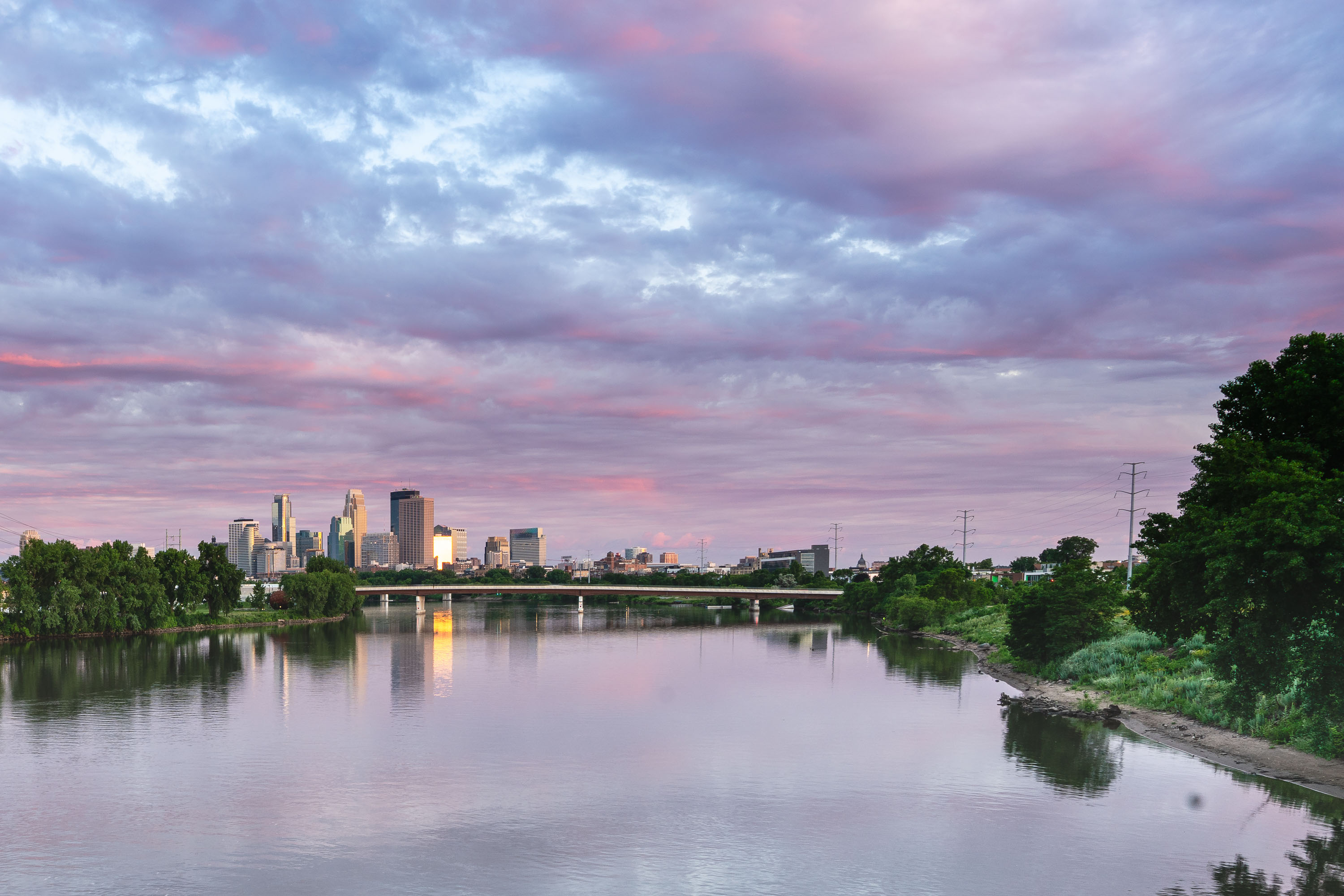
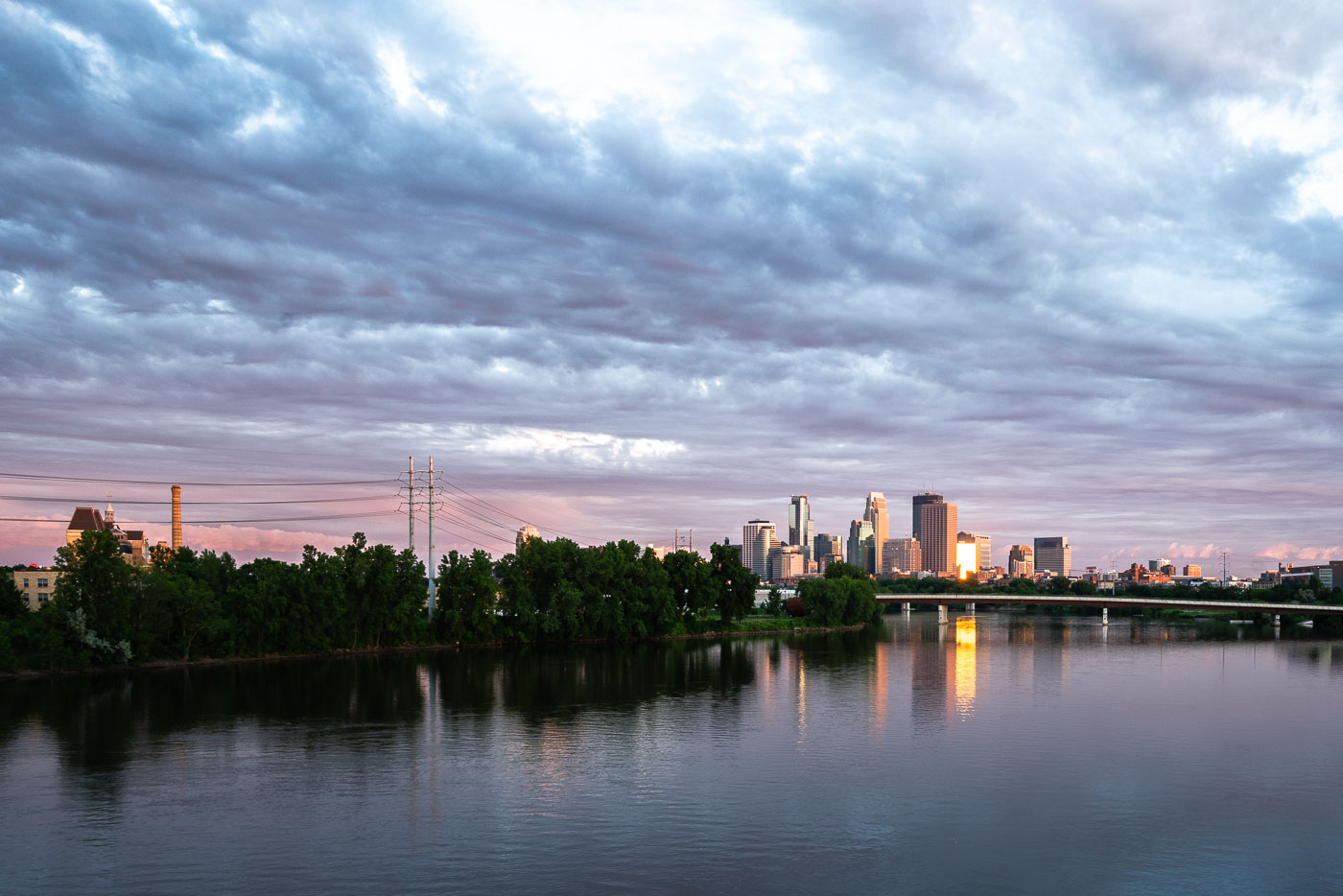
Minneapolis skyline beyond the Mississippi River under evening clouds.
The Minneapolis skyline rises beyond the Mississippi River in Minneapolis, Minnesota.

View of Minneapolis Skyline from the north side

Minneapolis downtown skyline and Mississippi River at dusk with suspension bridge visible across the water.
Downtown Minneapolis along the Mississippi River, with the Third Avenue Bridge crossing toward downtown. The river marks the site of St. Anthony Falls, the only major waterfall on the Mississippi, which drew the flour mills that built the city's early economy.
Downtown Minneapolis Skyline Along the Mississippi River
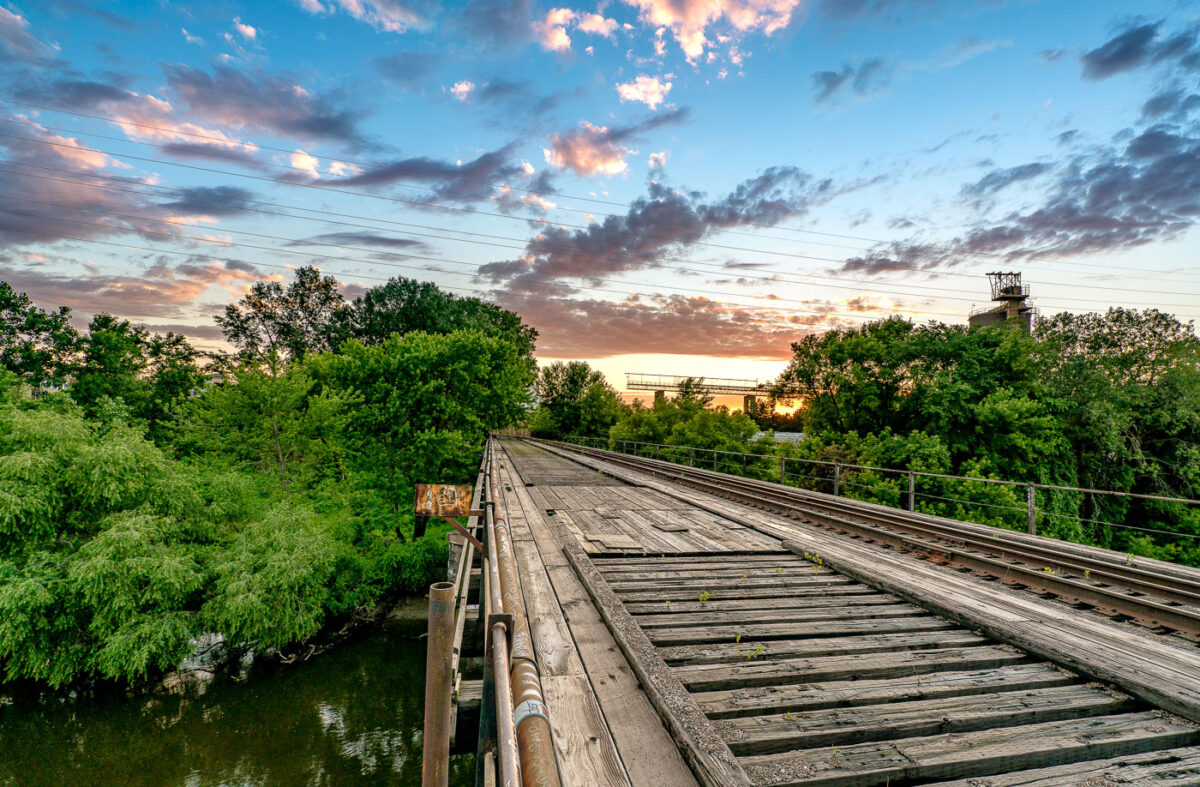
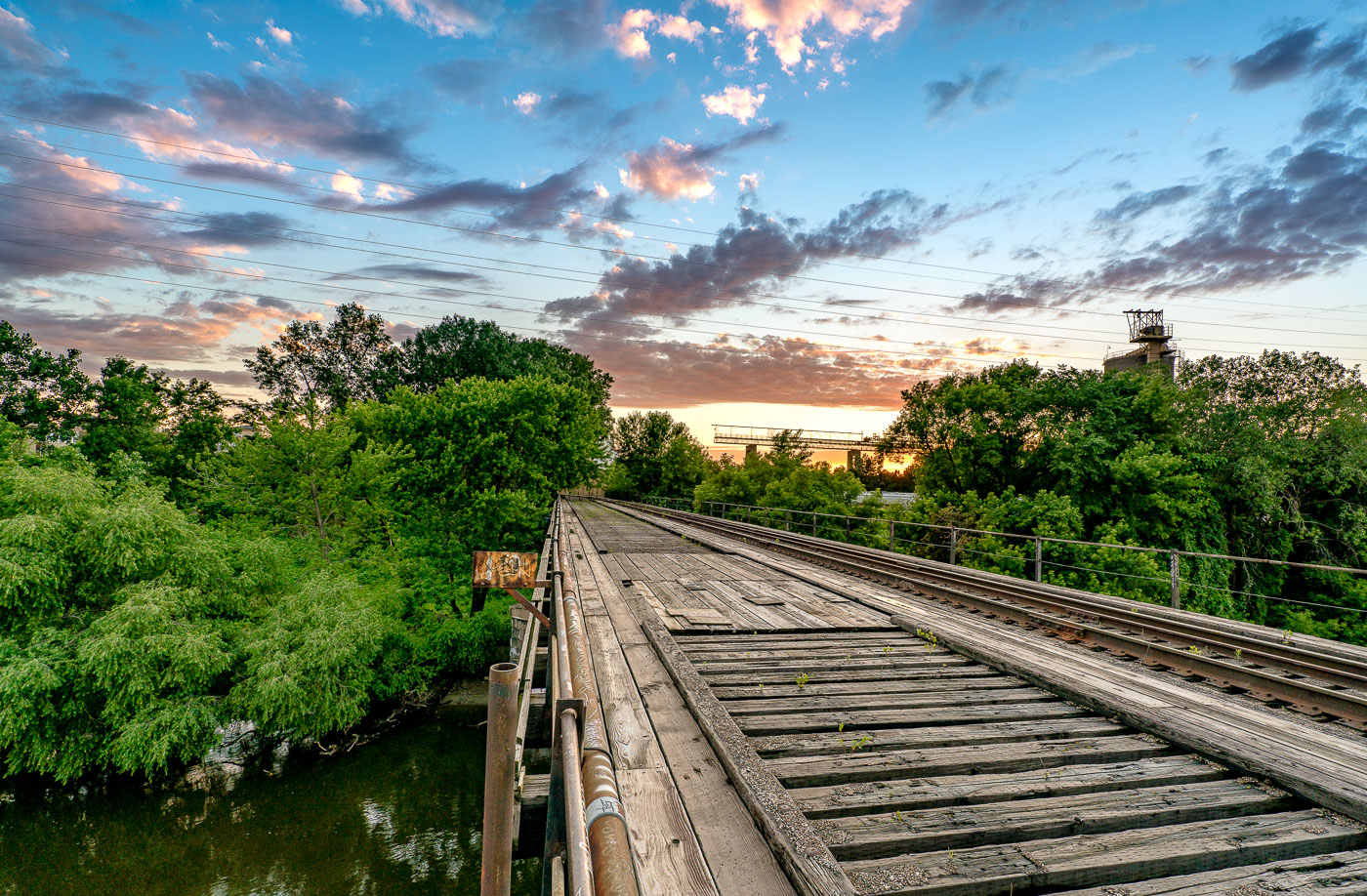
A wooden train bridge spans the Mississippi River in Minneapolis, Minnesota, at sunset, highlighting the historical importance of rail infrastructure.
A wooden train bridge spans the Mississippi River in Minneapolis, Minnesota. This structure, likely built to facilitate freight transport, highlights the historical importance of rail infrastructure in the region's development. The weathered timbers and visible tracks suggest a long operational history, while the surrounding greenery and sunset clouds offer a contrast between industrial utility and natural beauty. Such bridges were vital arteries for commerce and industry, connecting communities and enabling the movement of goods.

Wooden Train Bridge Over Mississippi River, Minneapolis
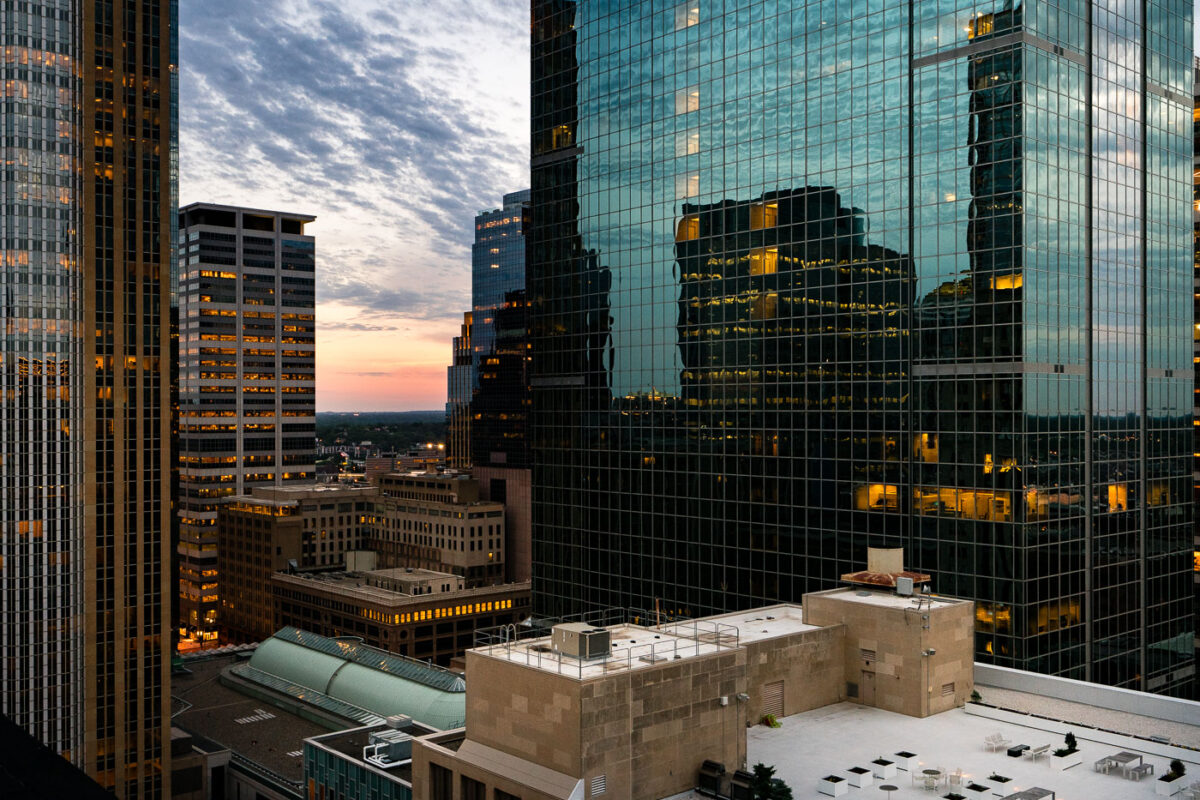
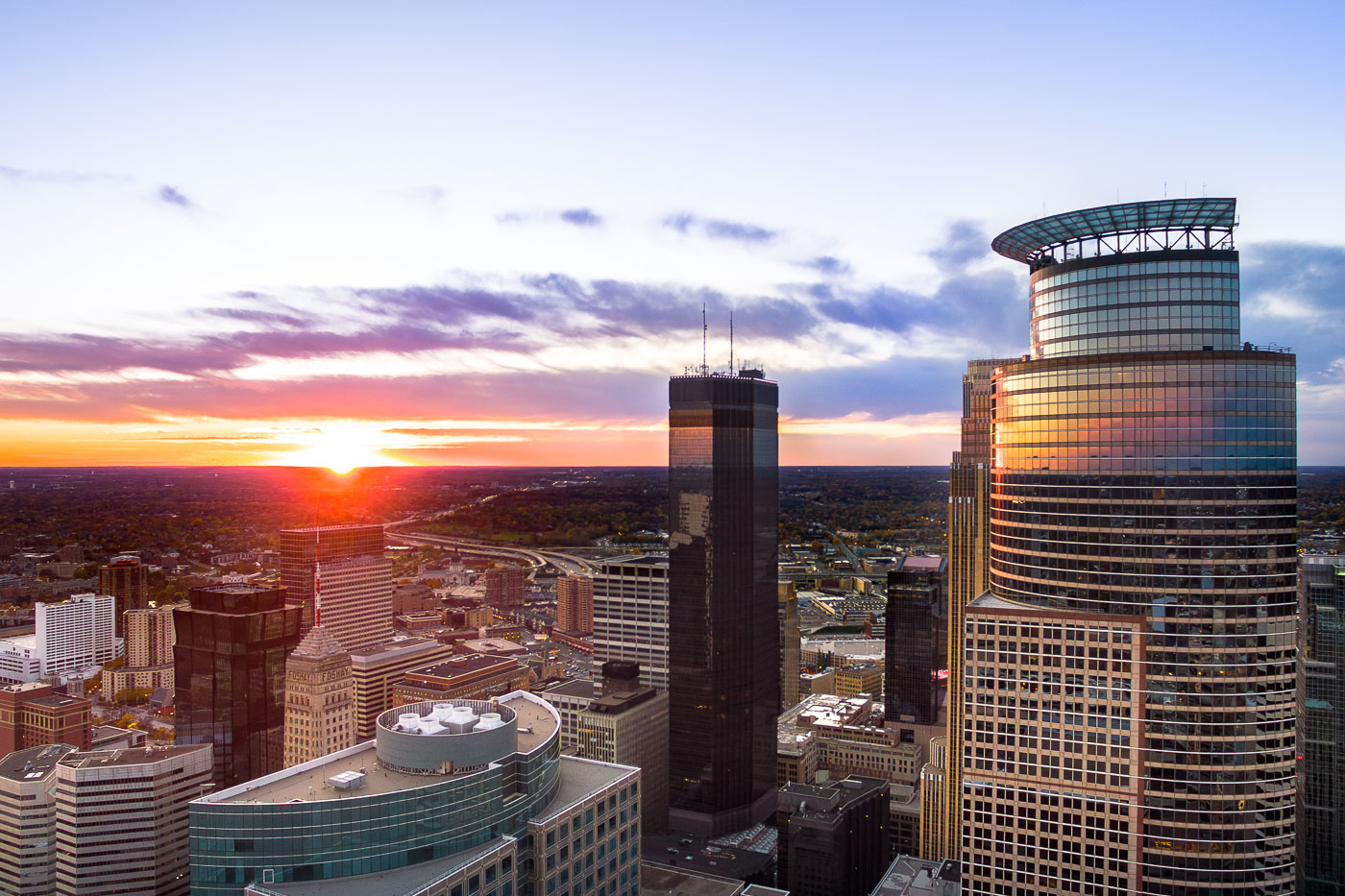
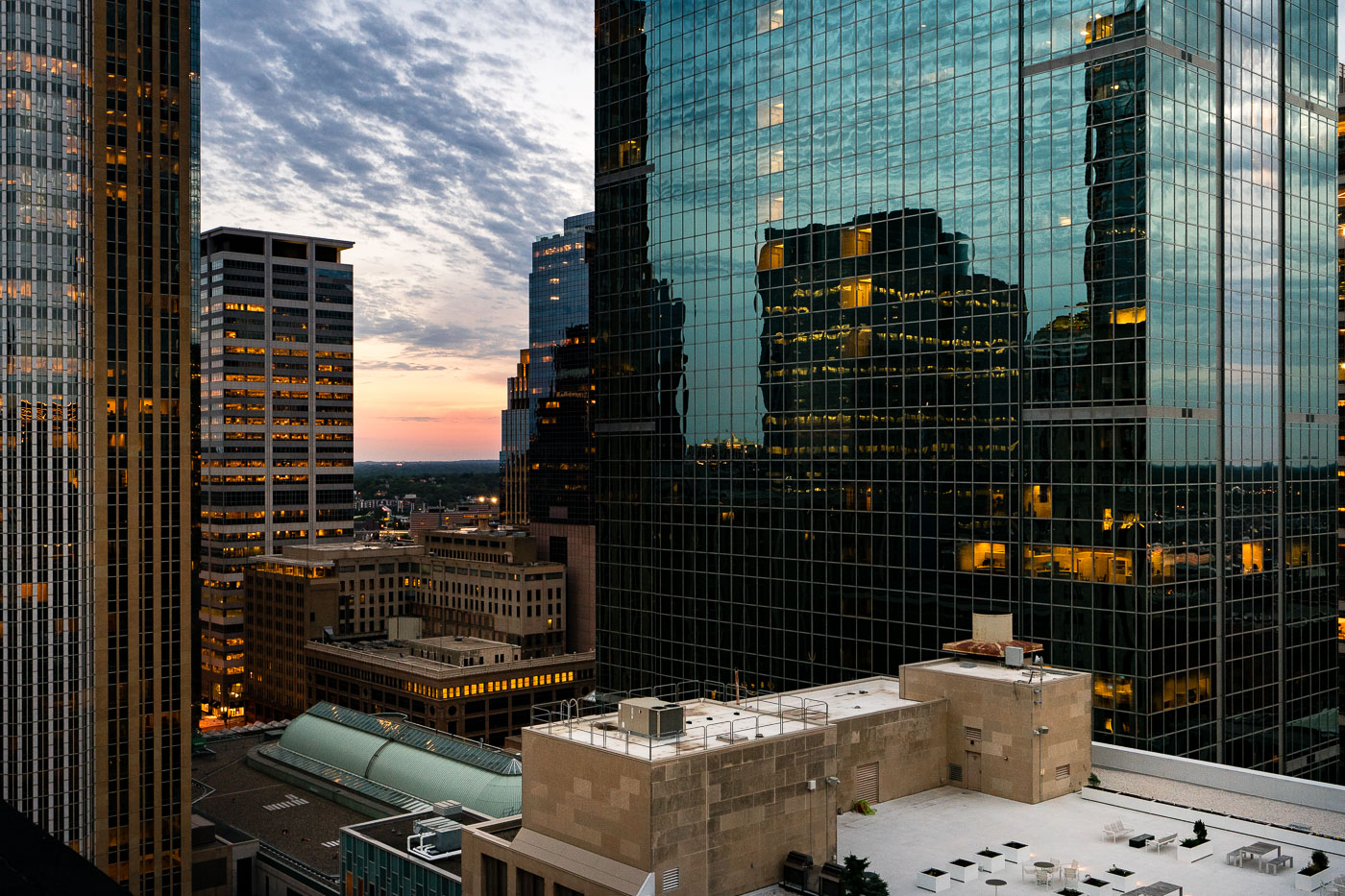
Downtown Minneapolis skyscrapers at sunset.
The setting sun casts a warm glow over Downtown Minneapolis, illuminating the windows of its modern skyscrapers. These buildings represent the city's economic and commercial core, housing numerous businesses and corporate offices. The architecture reflects a blend of contemporary design, with glass facades mirroring the sky and surrounding structures. As evening approaches, the lights within the offices signify the ongoing activity and the city's role as a hub for commerce and industry.

June sunset in Downtown Minneapolis
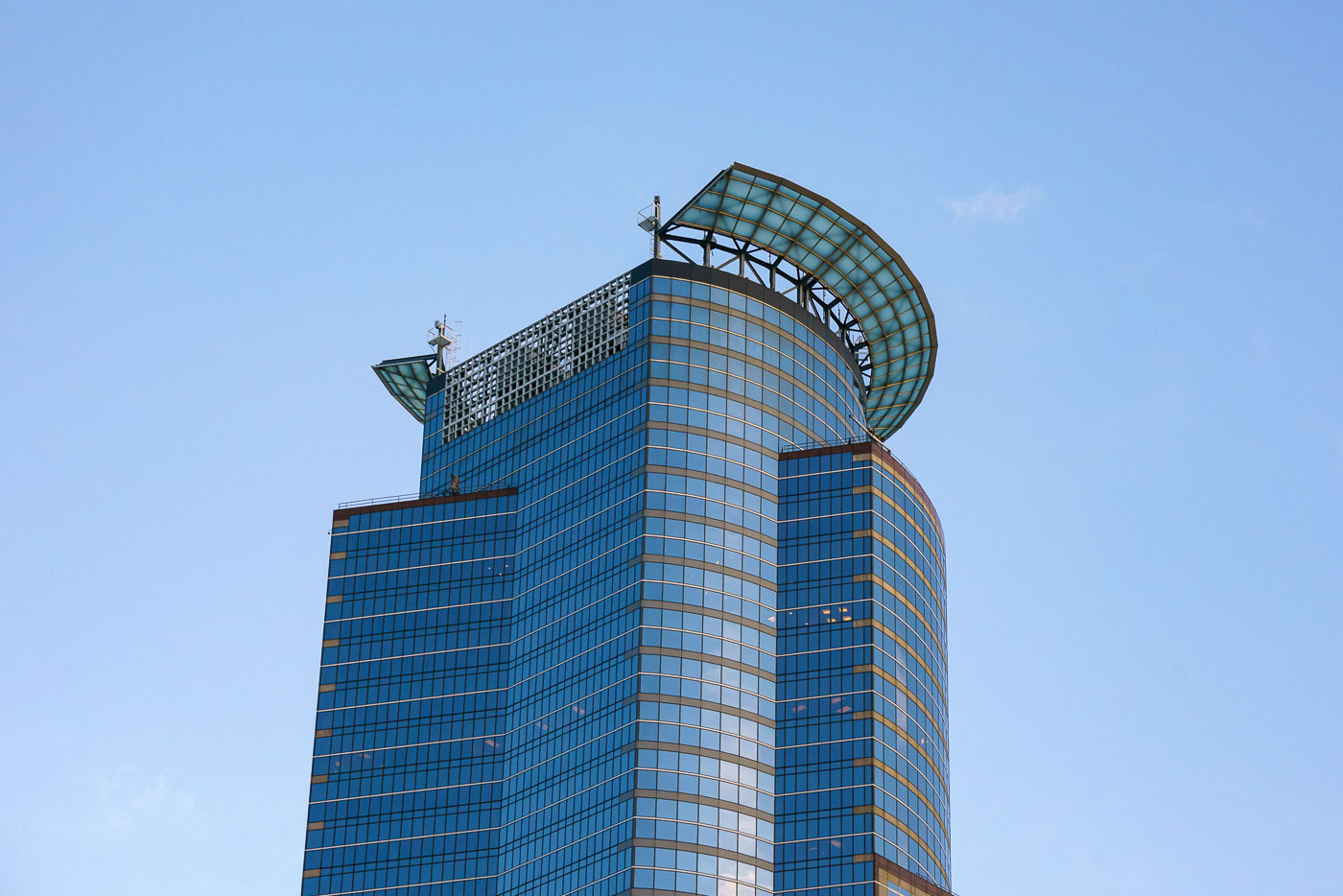
Capella Tower in downtown Minneapolis against a clear sky.
The Capella Tower, a prominent skyscraper in downtown Minneapolis, is topped by a distinctive crown structure. This crown was recently retrofitted with energy-efficient LED lighting, enhancing its visibility and reducing its energy consumption. Completed in 1992, the tower stands as a significant piece of the city's architectural landscape and continues to serve as a key commercial and office space.

Capella Tower Crown with LED Lighting, Downtown Minneapolis
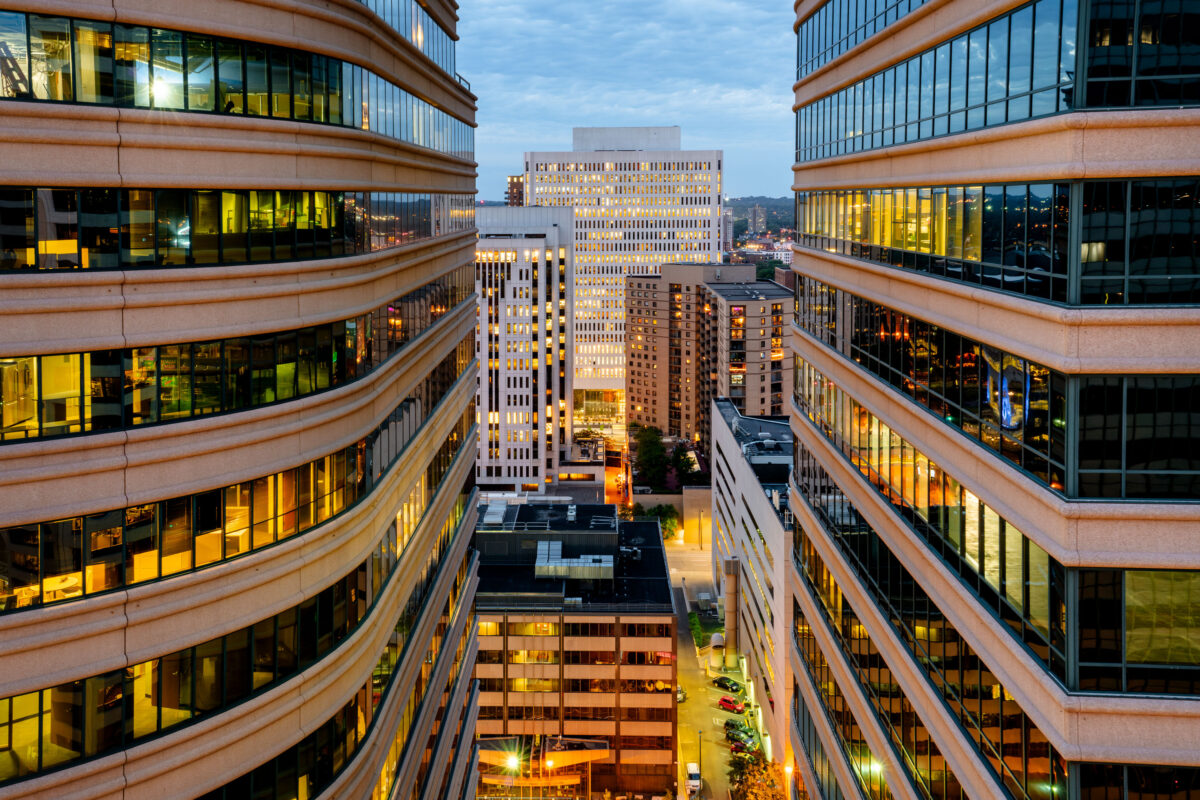
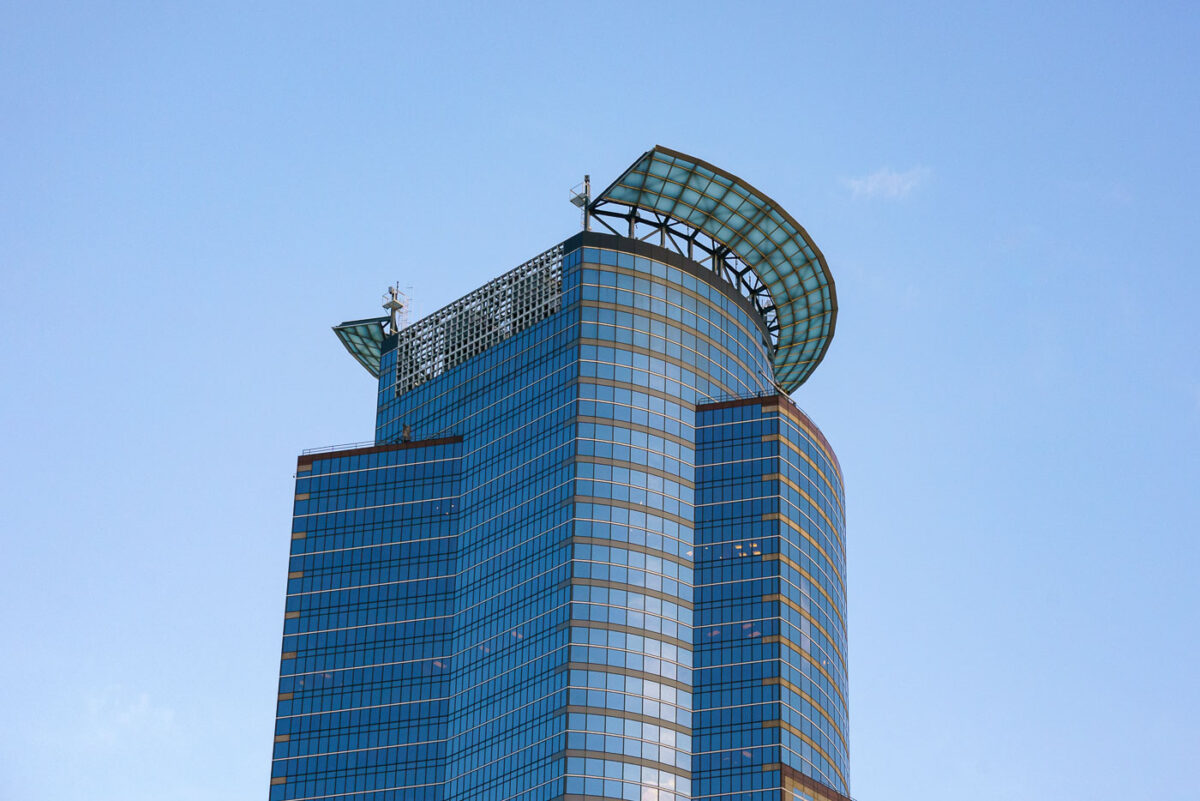
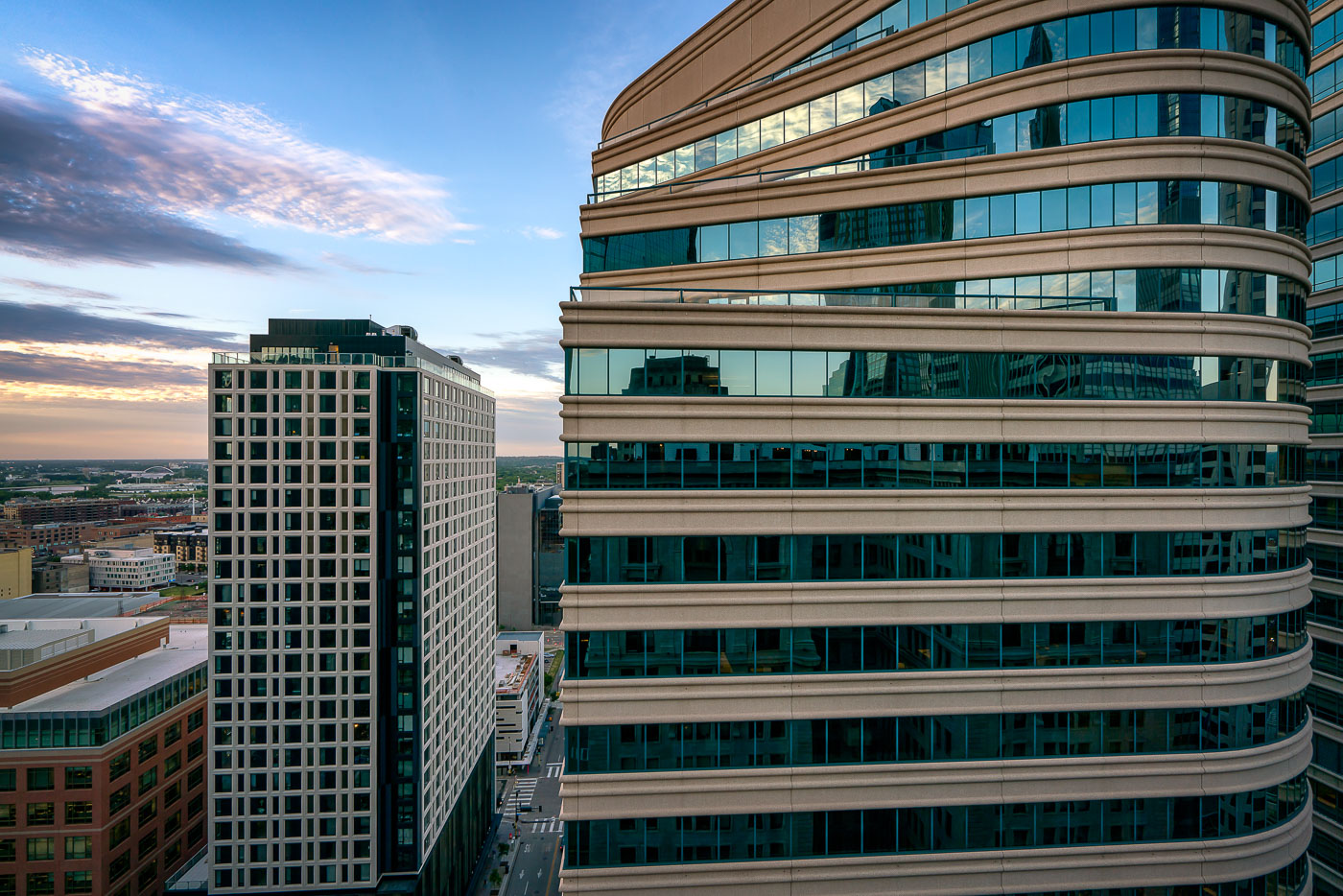
Fifth Street Towers in downtown Minneapolis at dusk.
The Fifth Street Towers, located in Downtown Minneapolis, are a pair of modern office buildings that contribute to the city's commercial core. Completed in the late 20th century, these structures feature distinctive curved facades and extensive glass exteriors, reflecting the surrounding urban environment. The towers house various businesses and professional services, serving as a key component of Minneapolis's business district. Their design and placement highlight the ongoing development and density of the downtown area.

Fifth Street Towers, Downtown Minneapolis
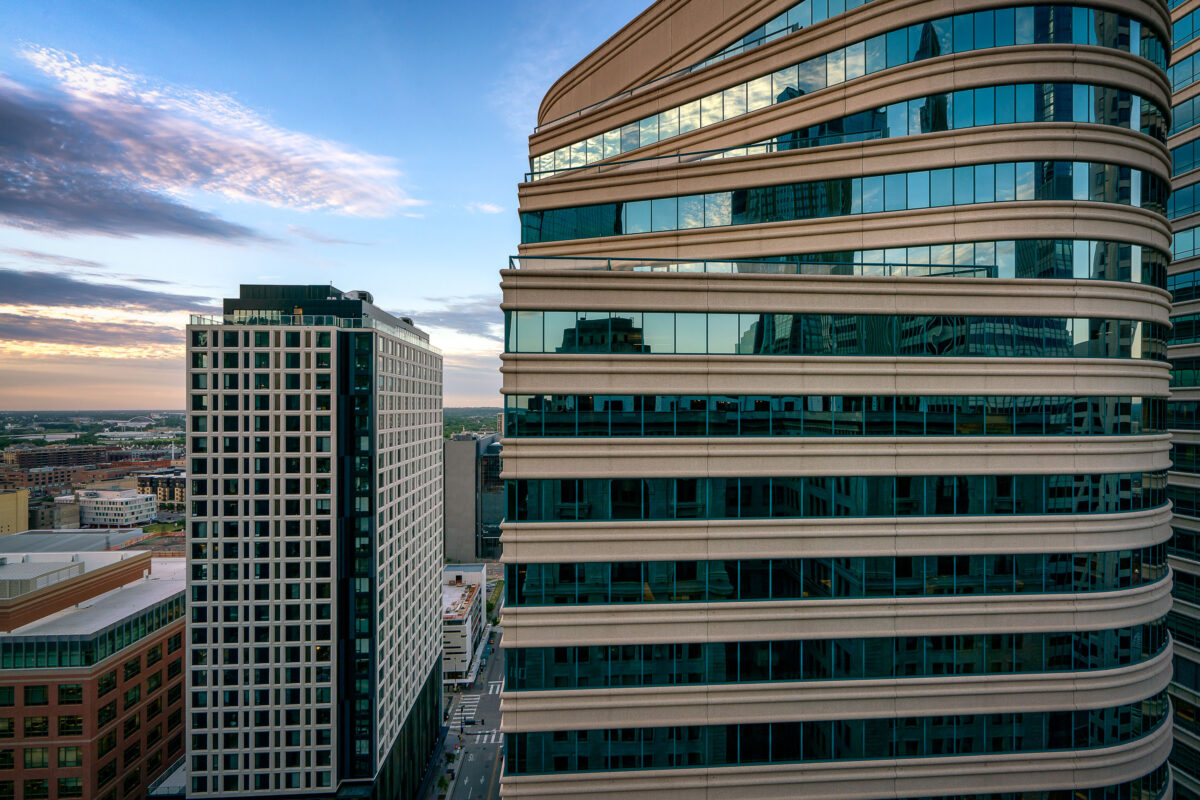
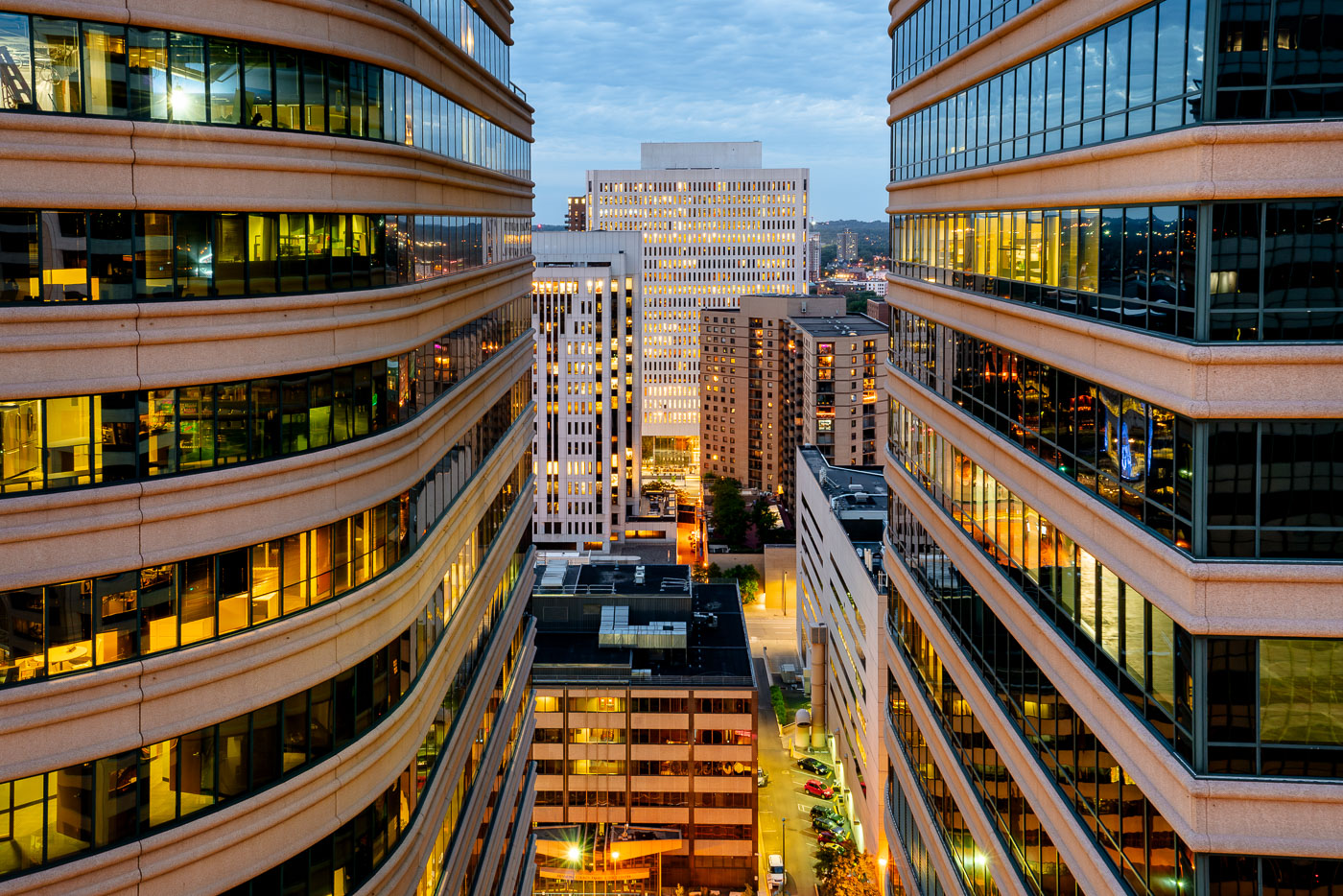
Fifth Street Towers in downtown Minneapolis at sunset
The Fifth Street Towers, a pair of modern office buildings in Downtown Minneapolis, are seen at sunset. The building on the right features a distinctive curved facade with horizontal bands of beige stone and blue-tinted glass, reflecting the sky and surrounding architecture. Its counterpart on the left is a more rectilinear structure with a grid of windows. These buildings are part of the central business district, housing various commercial enterprises and contributing to the city's economic activity.

Fifth Street Towers, Downtown Minneapolis at Sunset
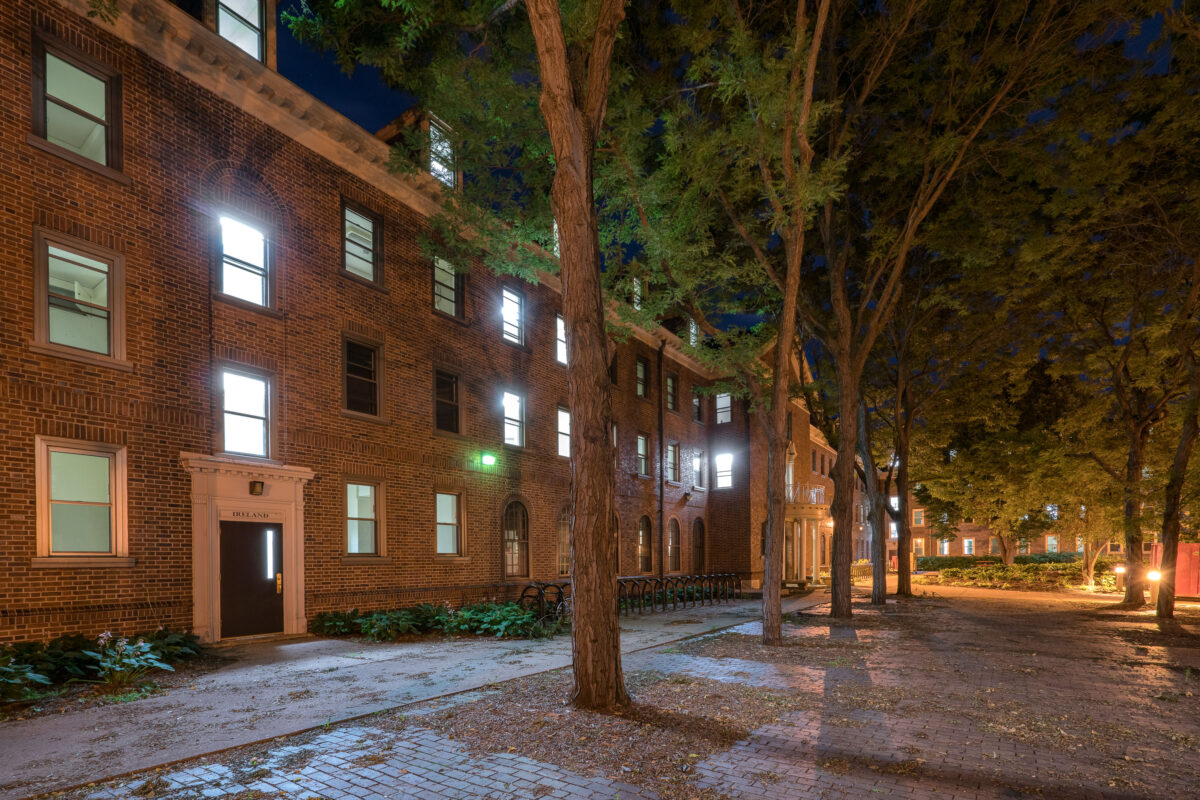
Pioneer Hall, University of Minnesota, 2017
Pioneer Hall at the University of Minnesota in Minneapolis is shown in 2017, before the residence hall’s 2018 renovation. The brick dormitory is part of the university’s historic East Bank housing complex, where several adjoining halls were built to accommodate undergraduate students. The renovation updated student rooms and common facilities while retaining the building’s historic exterior character.

Pioneer Hall, University of Minnesota, 2017
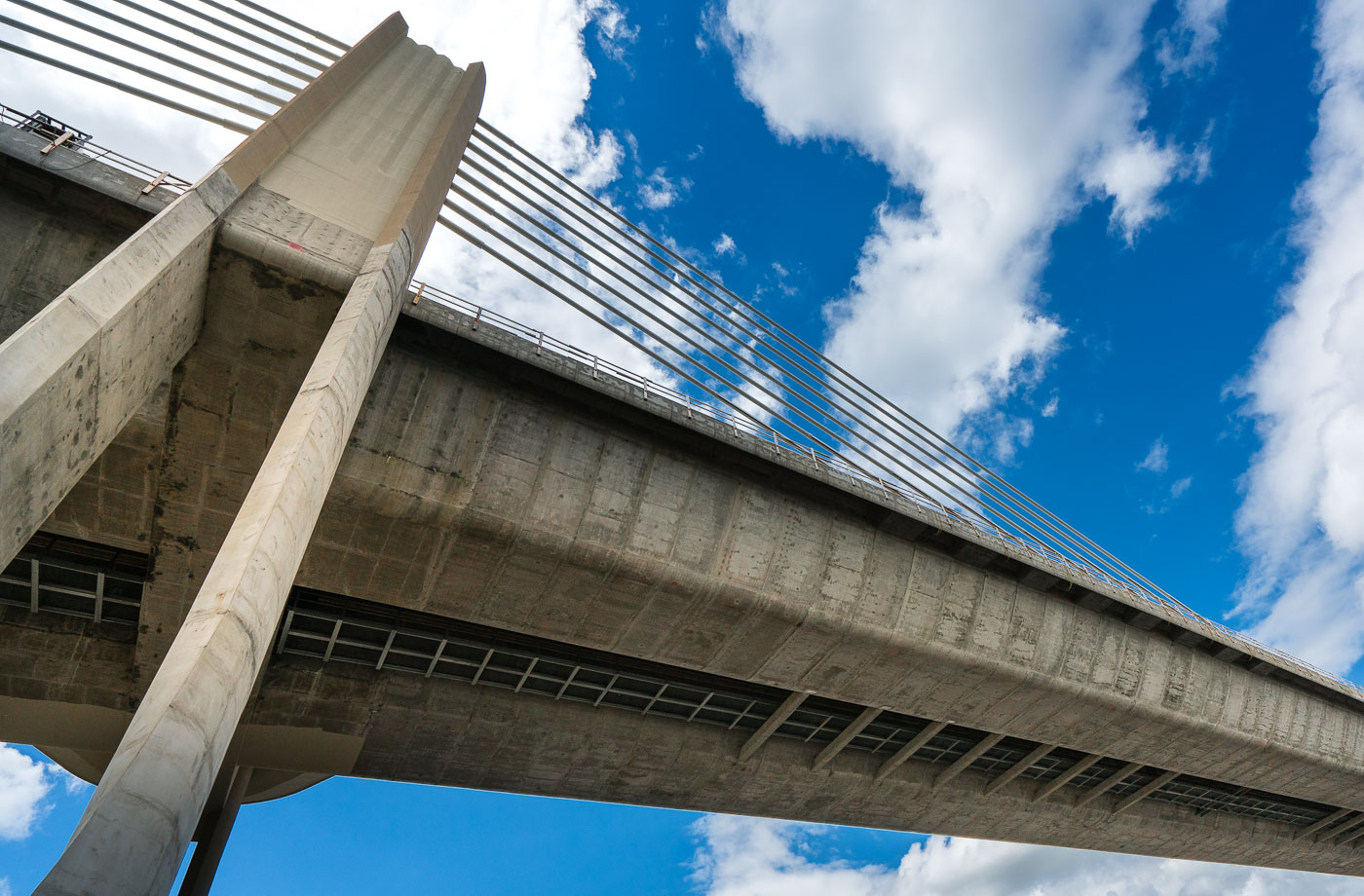
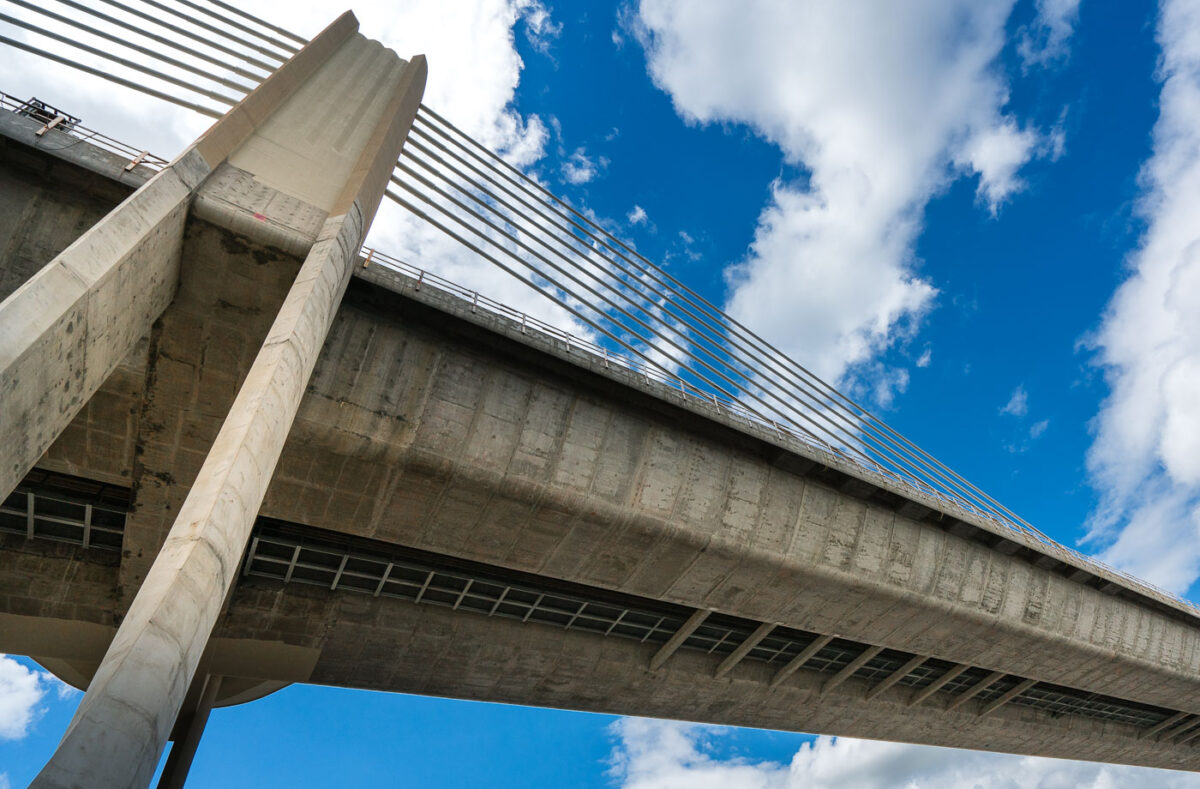
St. Croix Crossing Bridge over the St. Croix River between Oak Park Heights, Minnesota, and St. Joseph, Wisconsin
The St. Croix Crossing, an extradosed bridge, connects Oak Park Heights, Minnesota, and St. Joseph, Wisconsin, across the St. Croix River. Completed in 2017, it replaced an aging bridge and significantly improved traffic flow by carrying Minnesota State Highway 36 and Wisconsin State Highway 64. The structure features four lanes of traffic and a dedicated bike and pedestrian path on its north side, enhancing connectivity and accessibility between the two states.

St. Croix Crossing Bridge: Minnesota-Wisconsin Connection
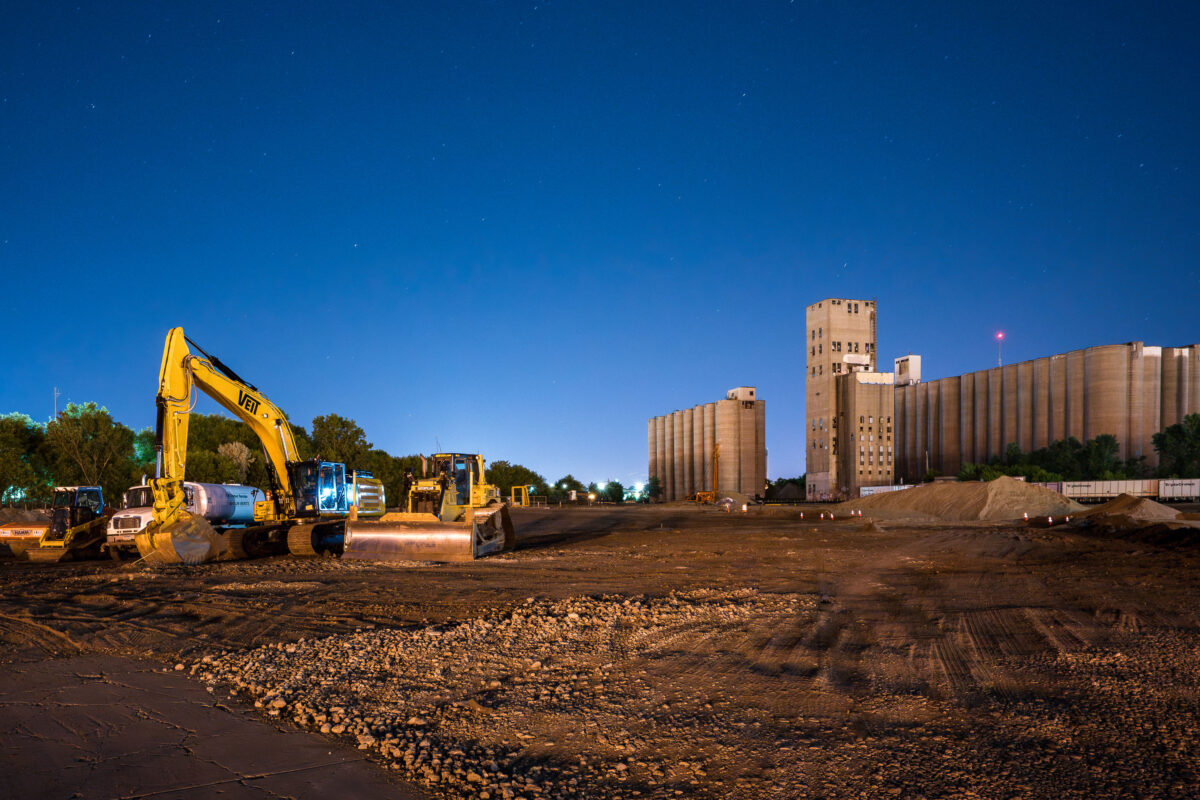
Demolition equipment at the Electric Steel and Kurth Malting grain elevator complex in Minneapolis's Dinkytown area.
The Electric Steel and Kurth Malting grain elevator complex in Minneapolis's Dinkytown area being demolished in June 2017.

Electric Steel and Kurth Grain Elevators Demolition, Minneapolis
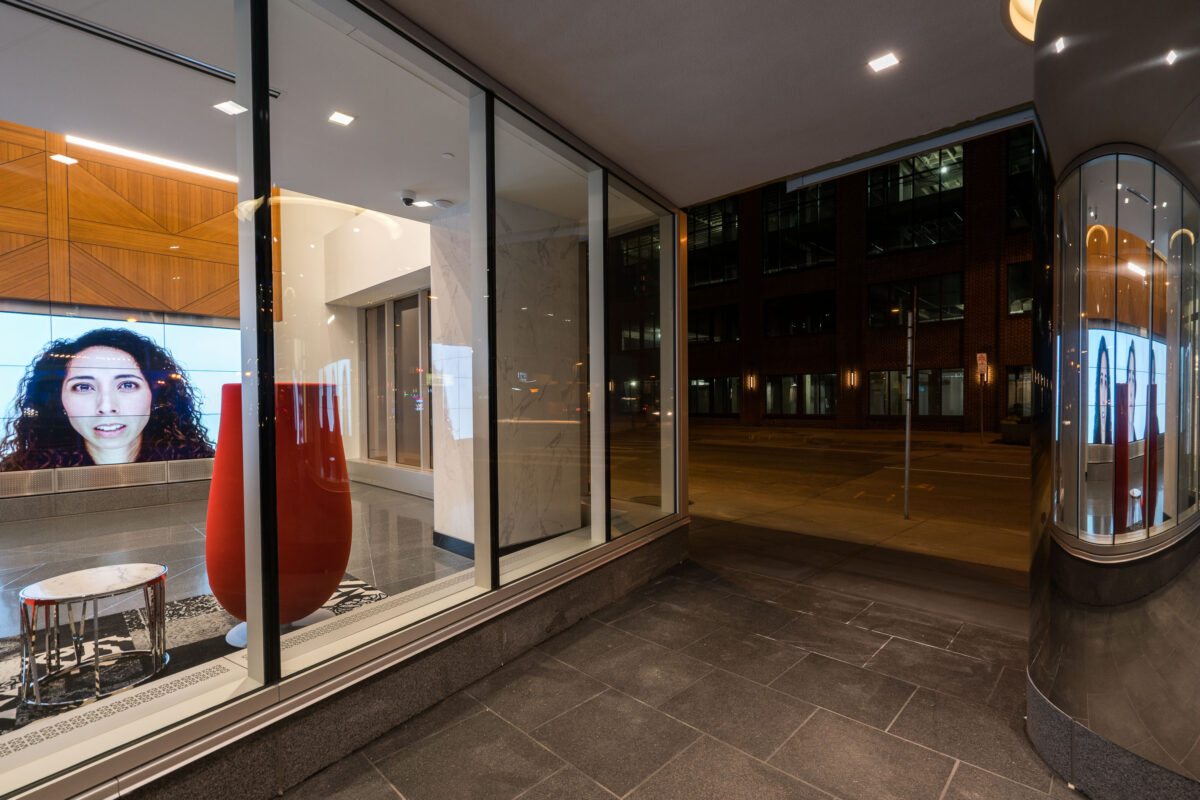
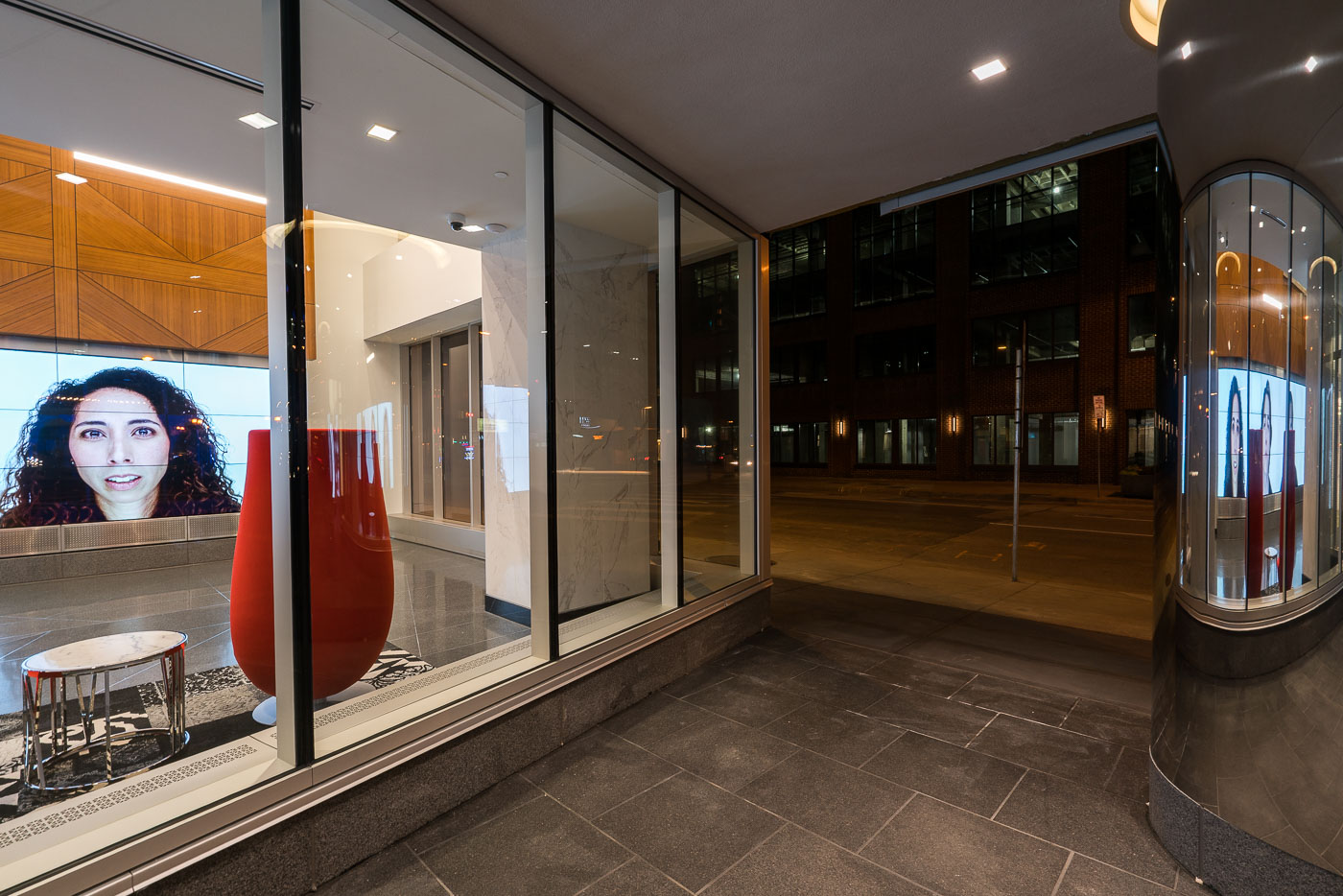
Baker Center lobby windows face a downtown Minneapolis street at night.
Baker Center in downtown Minneapolis is a mixed-use complex with office and retail space. Its street-level lobby fronts the sidewalk and connects the building’s interior tenant areas with the surrounding downtown street grid. The lobby includes digital display panels and seating for visitors and building users.

Baker Center Lobby Windows, Downtown Minneapolis
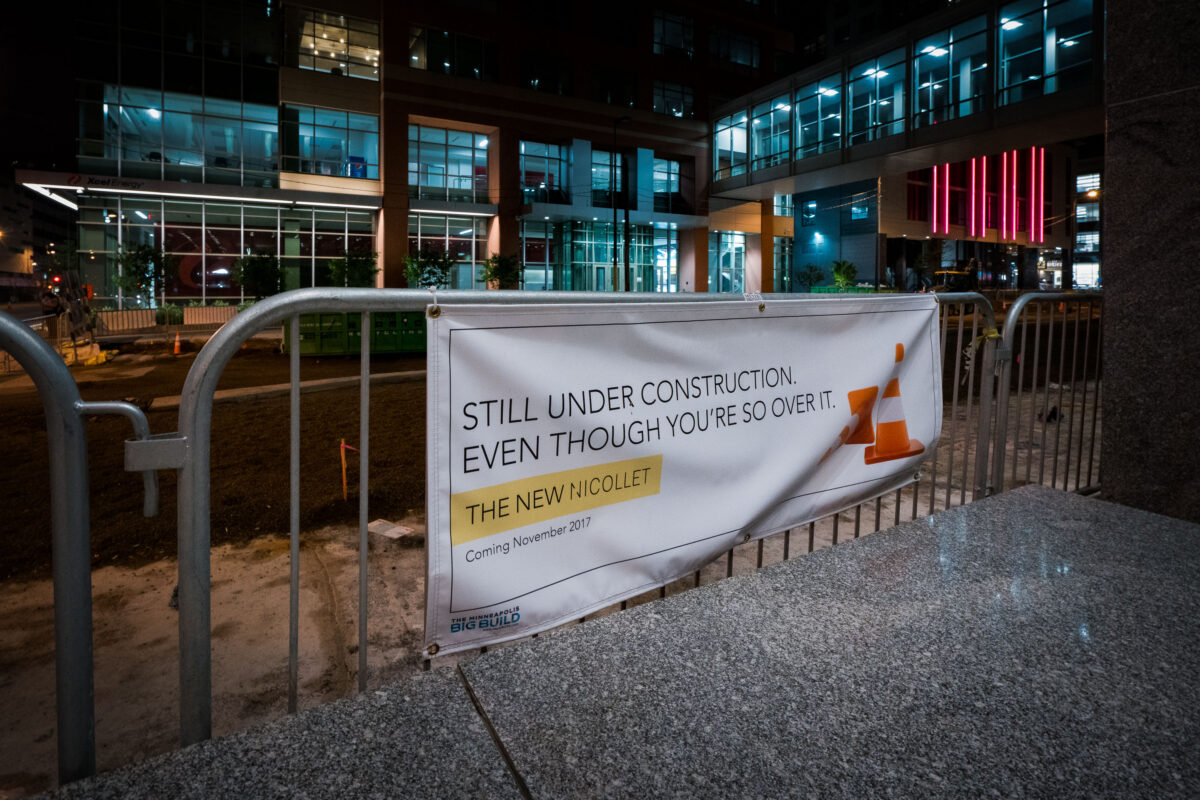
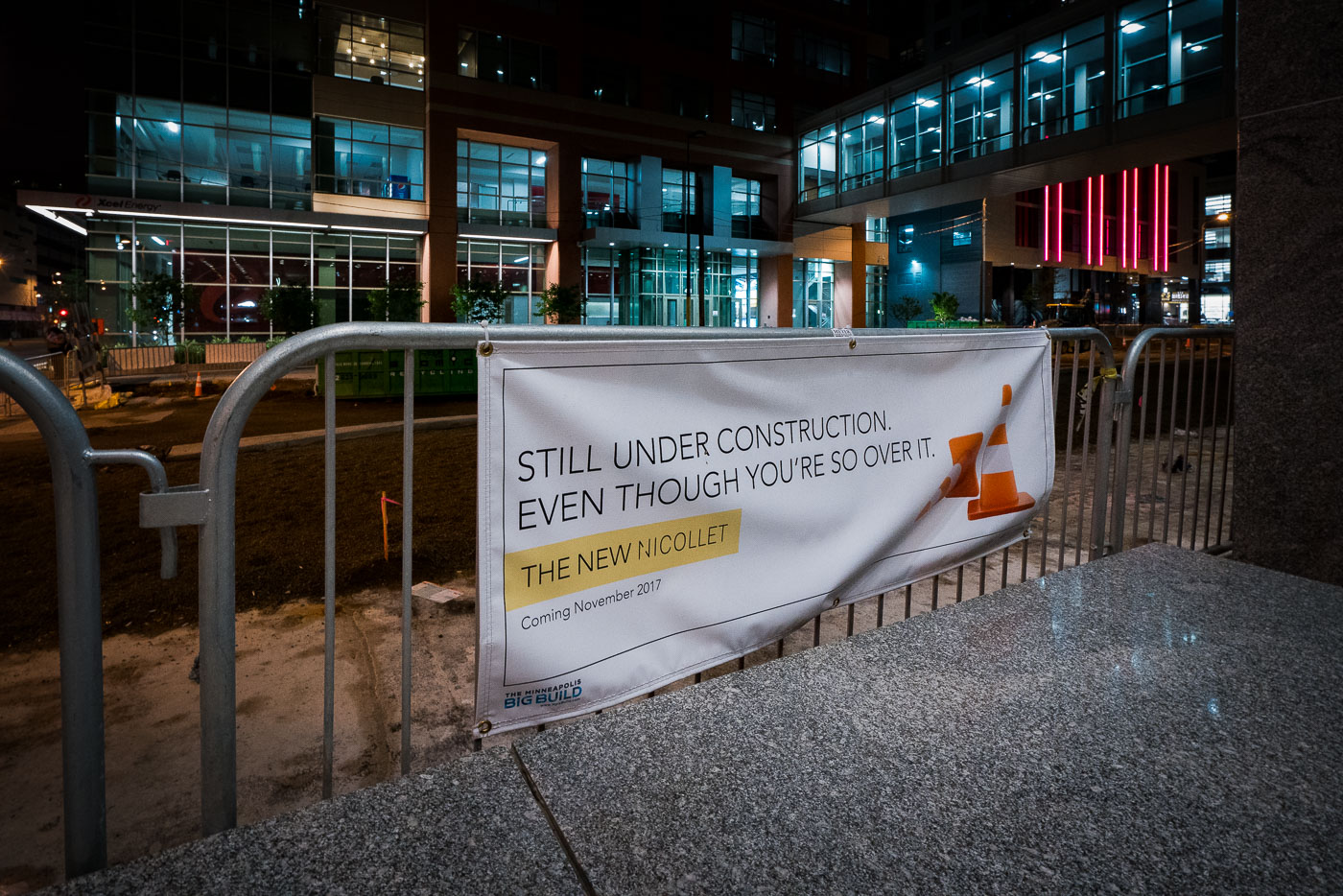
A construction barrier banner on downtown Minneapolis's Nicollet Mall announces "The New Nicollet" redevelopment project opening November 2017.
Nicollet Mall is downtown Minneapolis's main street, rebuilt between 2015 and 2017. A banner on the construction fencing promised the finished project, called "The New Nicollet," would be done by November 2017.

“The New Nicollet” Construction Banner at Night
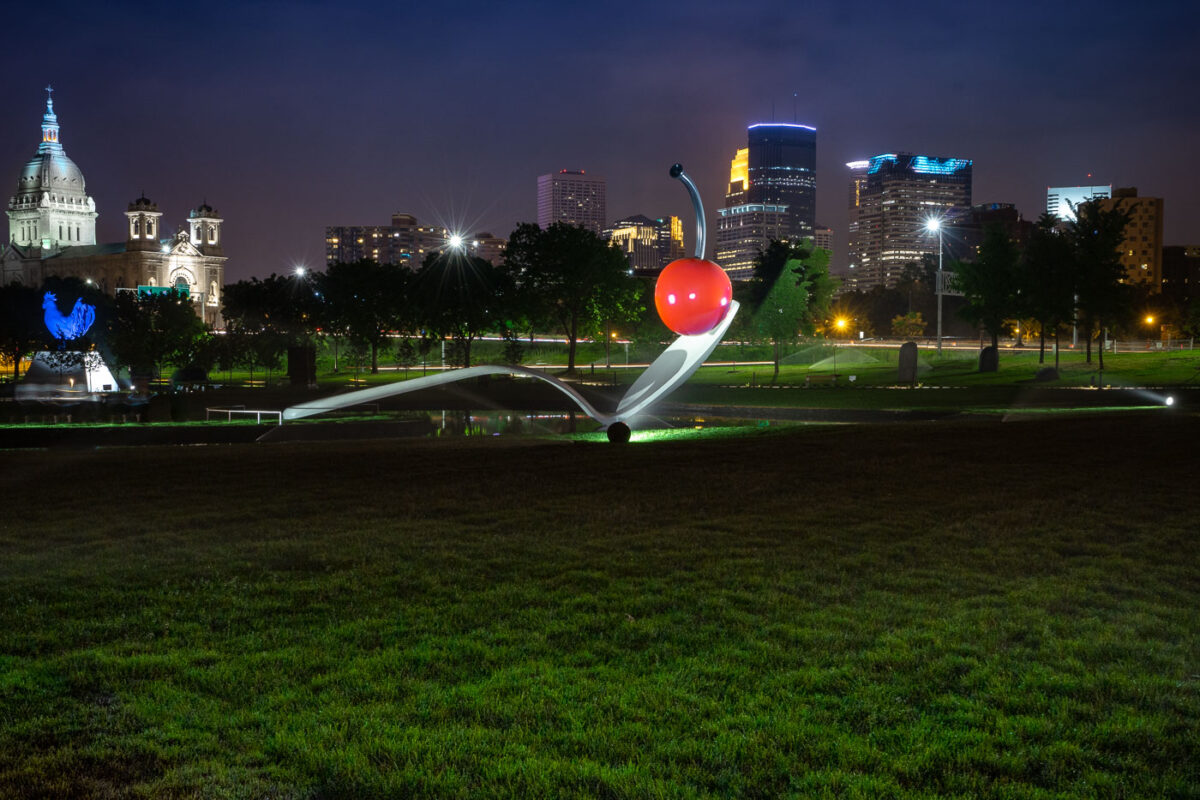
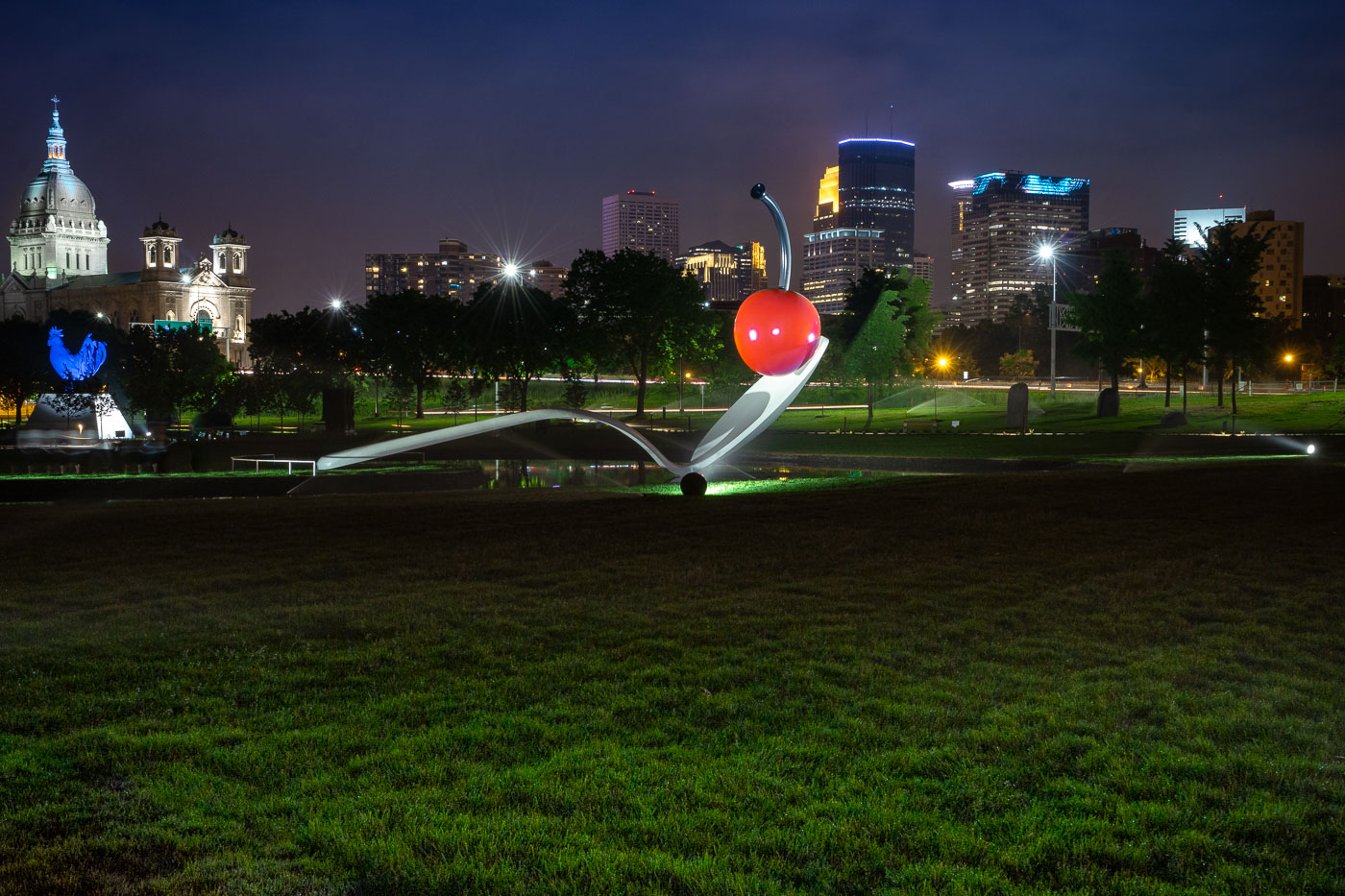
Spoonbridge and Cherry in the Minneapolis Sculpture Garden with the downtown skyline behind it.
Spoonbridge and Cherry is located in the Minneapolis Sculpture Garden near the Walker Art Center in Minneapolis. Designed by Claes Oldenburg and Coosje van Bruggen, the sculpture was installed in 1988 as part of the garden’s opening.

Spoonbridge and Cherry with Minneapolis Skyline
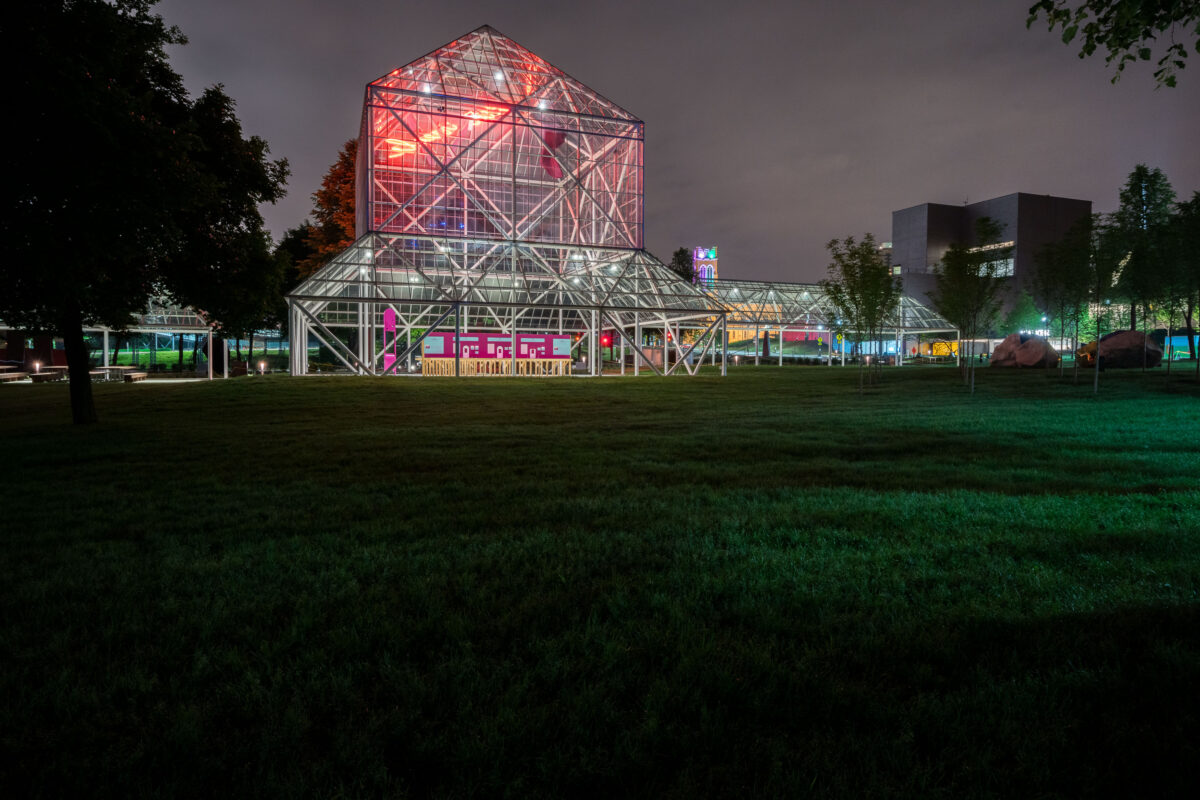
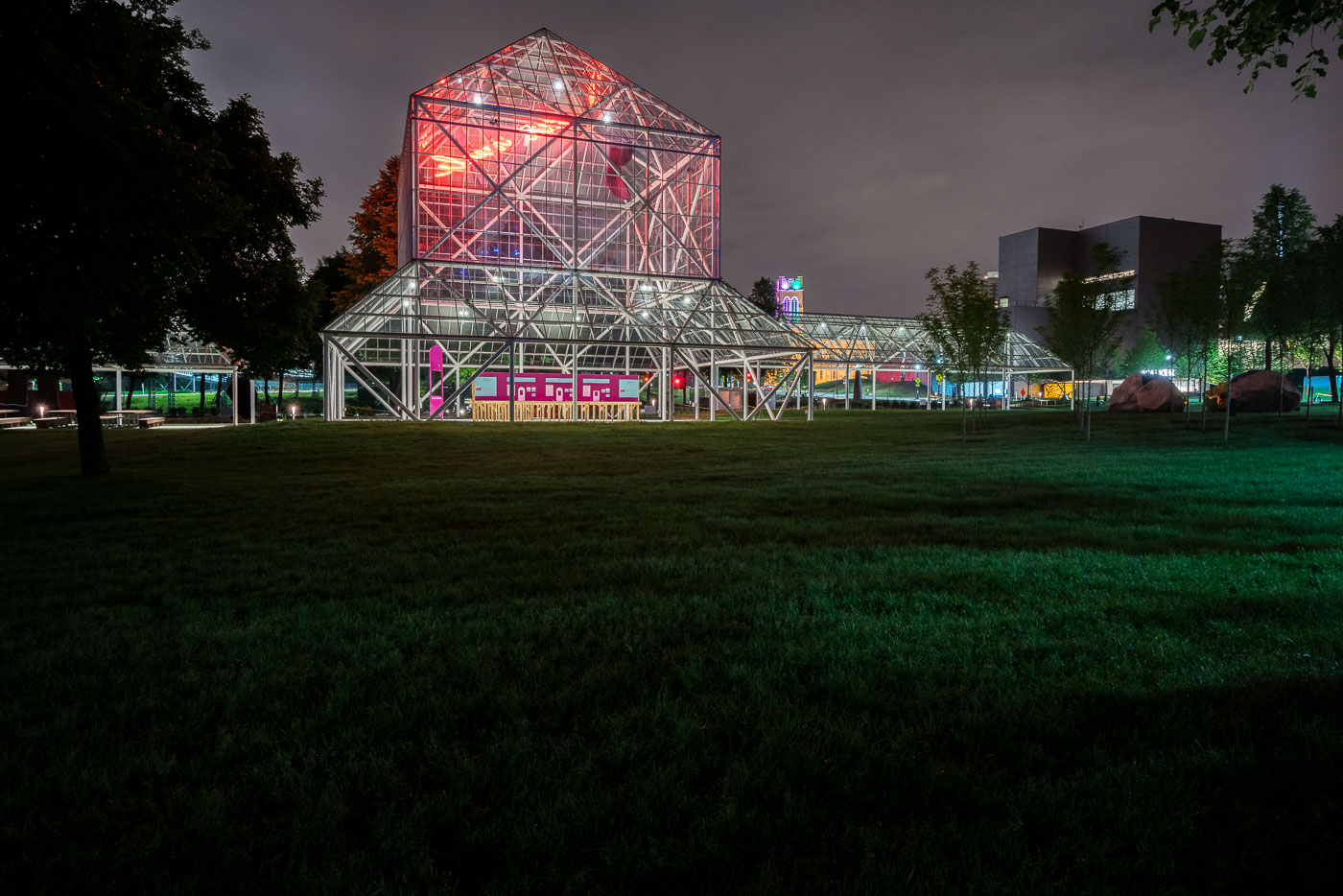
Walker Art Center Glass House in Minneapolis lit at night
The Walker Art Center Glass House stands in the Sculpture Garden in Minneapolis. The glass-and-steel structure is lit from within at night and serves as an entrance and exhibition space for the museum. Its geometric design and transparent facade are visible against the dark sky.

Walker Art Center Glass House, Minneapolis
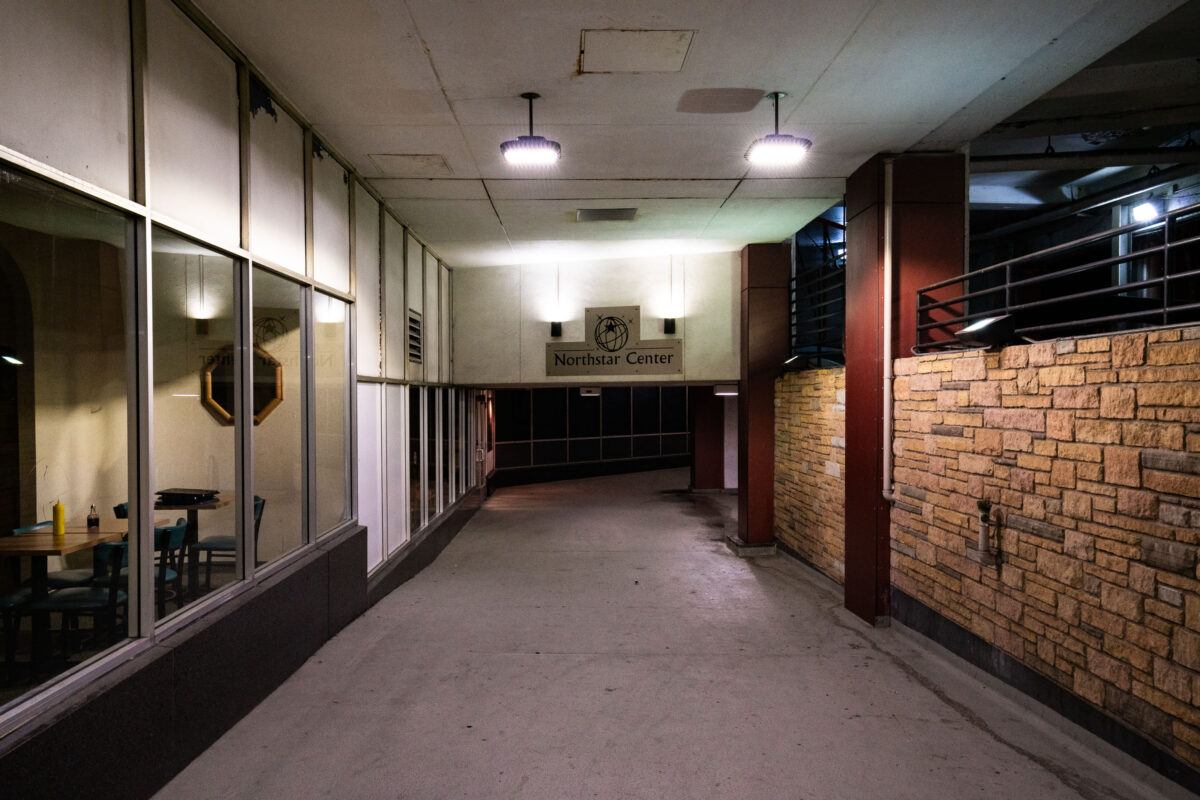
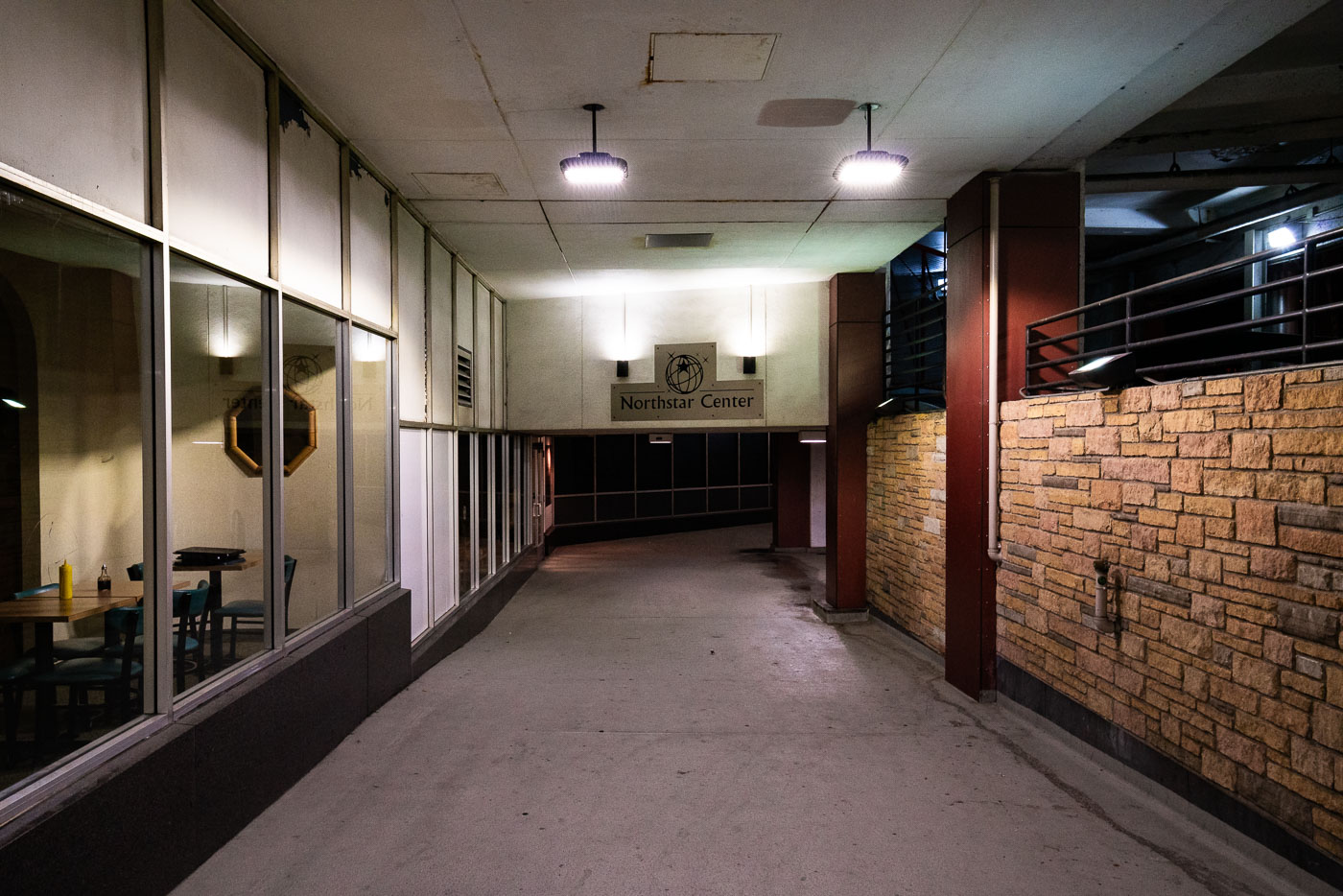
Northstar Center walkway in downtown Minneapolis, lit interior corridor with glass walls.
The Northstar Center, located in downtown Minneapolis, features this exterior walkway. The building, completed in 1960, was designed by architect Minoru Yamasaki, who also designed the World Trade Center towers. The Northstar Center was one of the first mixed-use developments in Minneapolis, intended to revitalize the city's central business district. The walkway connects various parts of the complex and provides pedestrian access, reflecting the mid-century modern architectural style prevalent at the time of its construction.

Northstar Center Exterior Walkway, Downtown Minneapolis
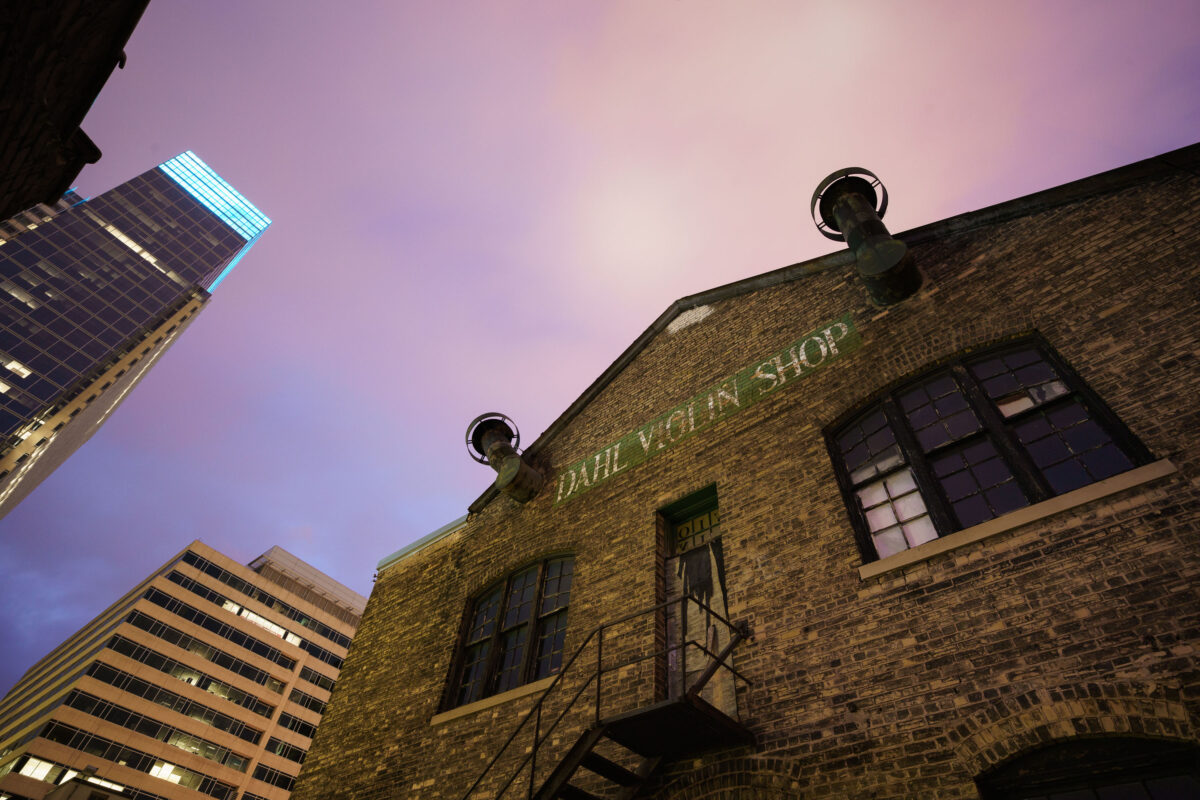
The Dahl Violin Shop building in downtown Minneapolis at night
The Dahl Violin Shop building, located in downtown Minneapolis, was a historic establishment dedicated to the sale and repair of stringed instruments. It's since been demolished.

Dahl Violin Shop, Downtown Minneapolis
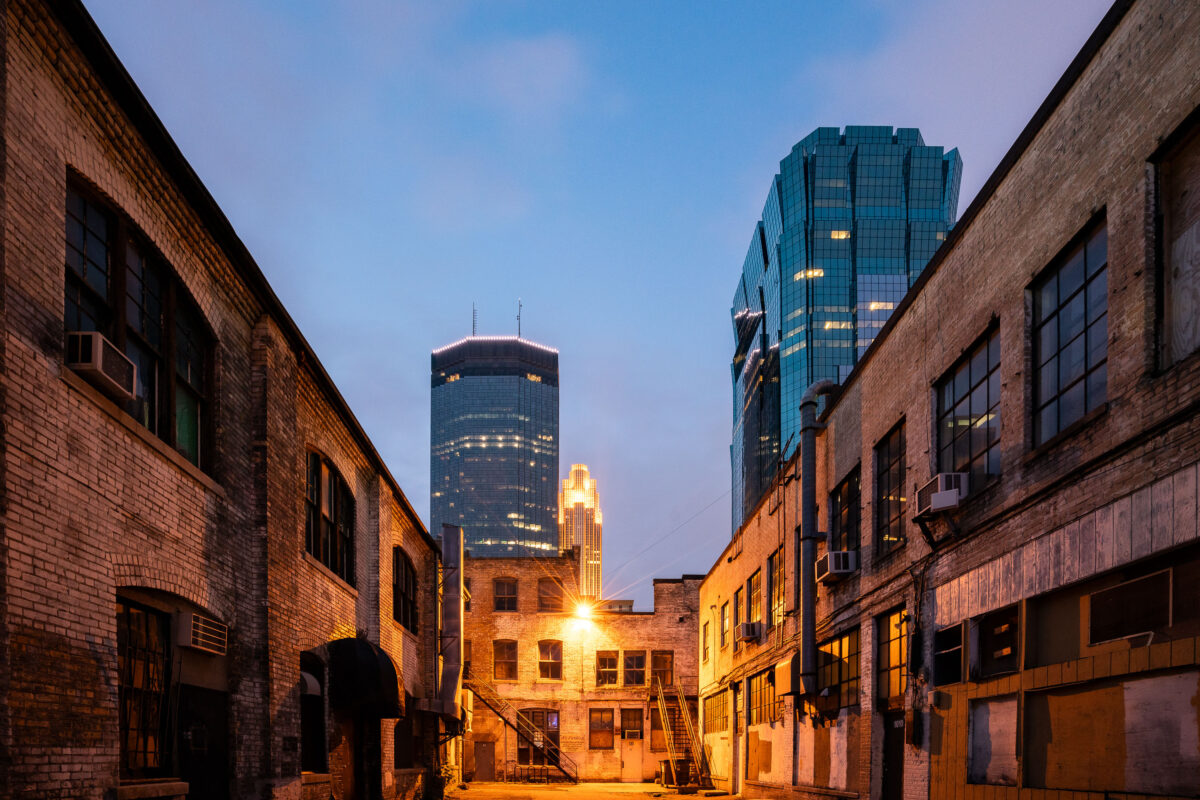
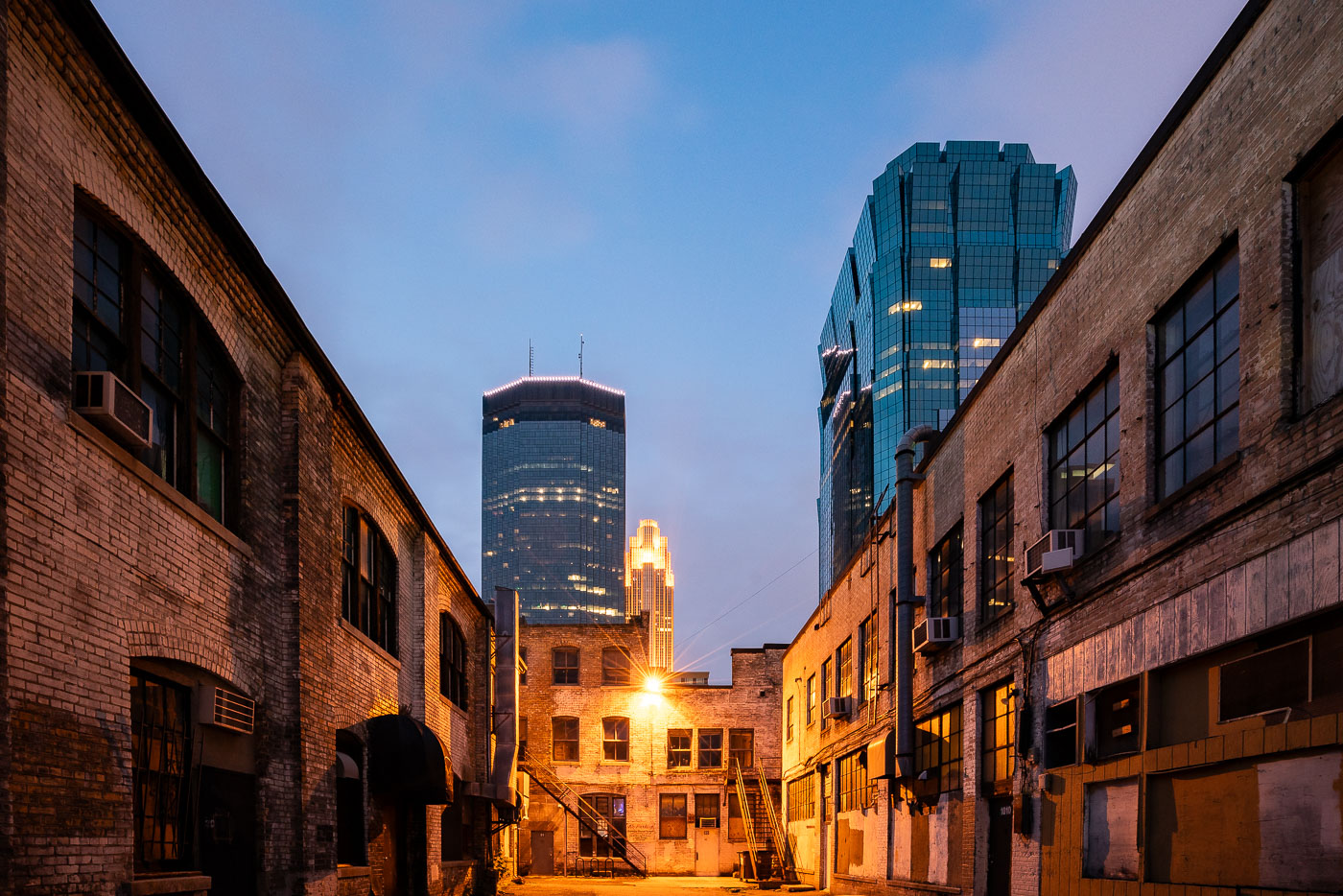
Alleyway in downtown Minneapolis framed by the IDS Center and AT&T Tower at dusk
An alleyway in downtown Minneapolis frames the IDS Center and the AT&T Tower. The older brick buildings lining the alleyway, likely dating from the early to mid-20th century, contrast with the modern skyscrapers. The IDS Center, completed in 1972, was Minneapolis's tallest building for many years and a significant example of modernist architecture. The AT&T Tower, also known as the Marquette Building, was completed in 1983. This view highlights the juxtaposition of older industrial or commercial structures with contemporary high-rise development in the city's central business district.

Alleyway with IDS Center, Minneapolis
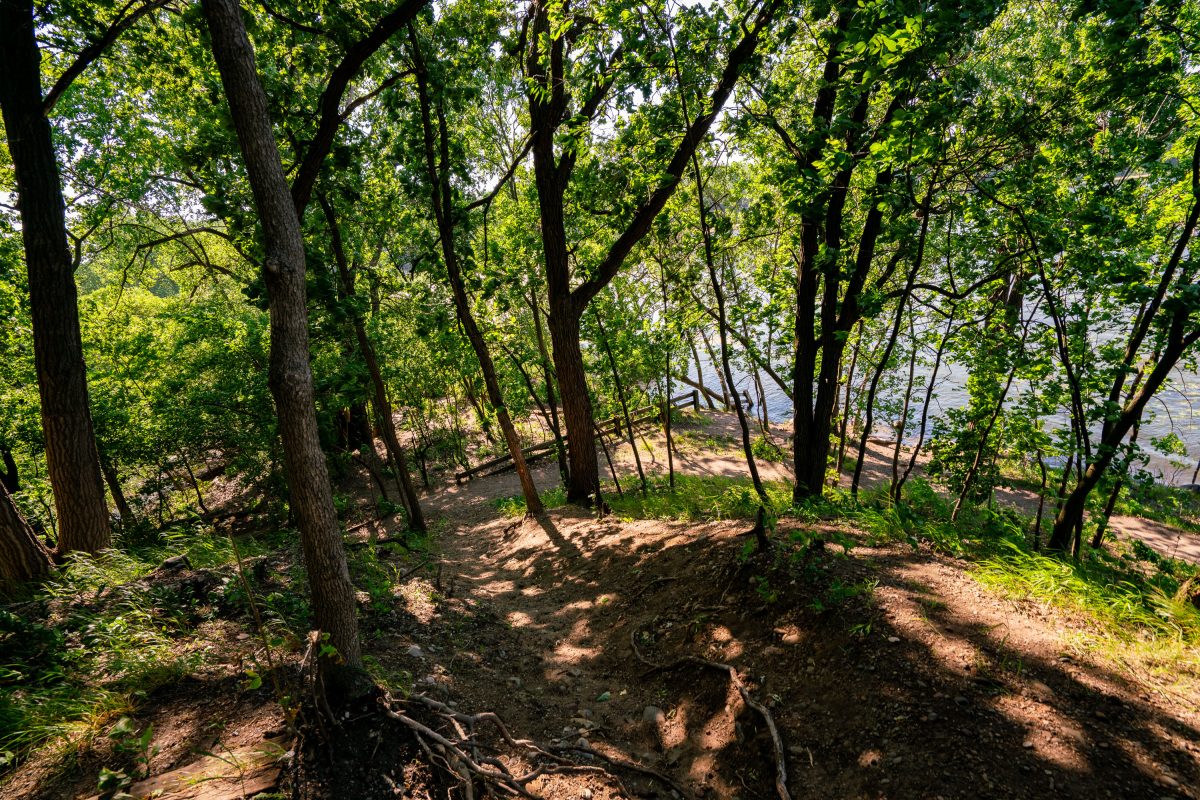
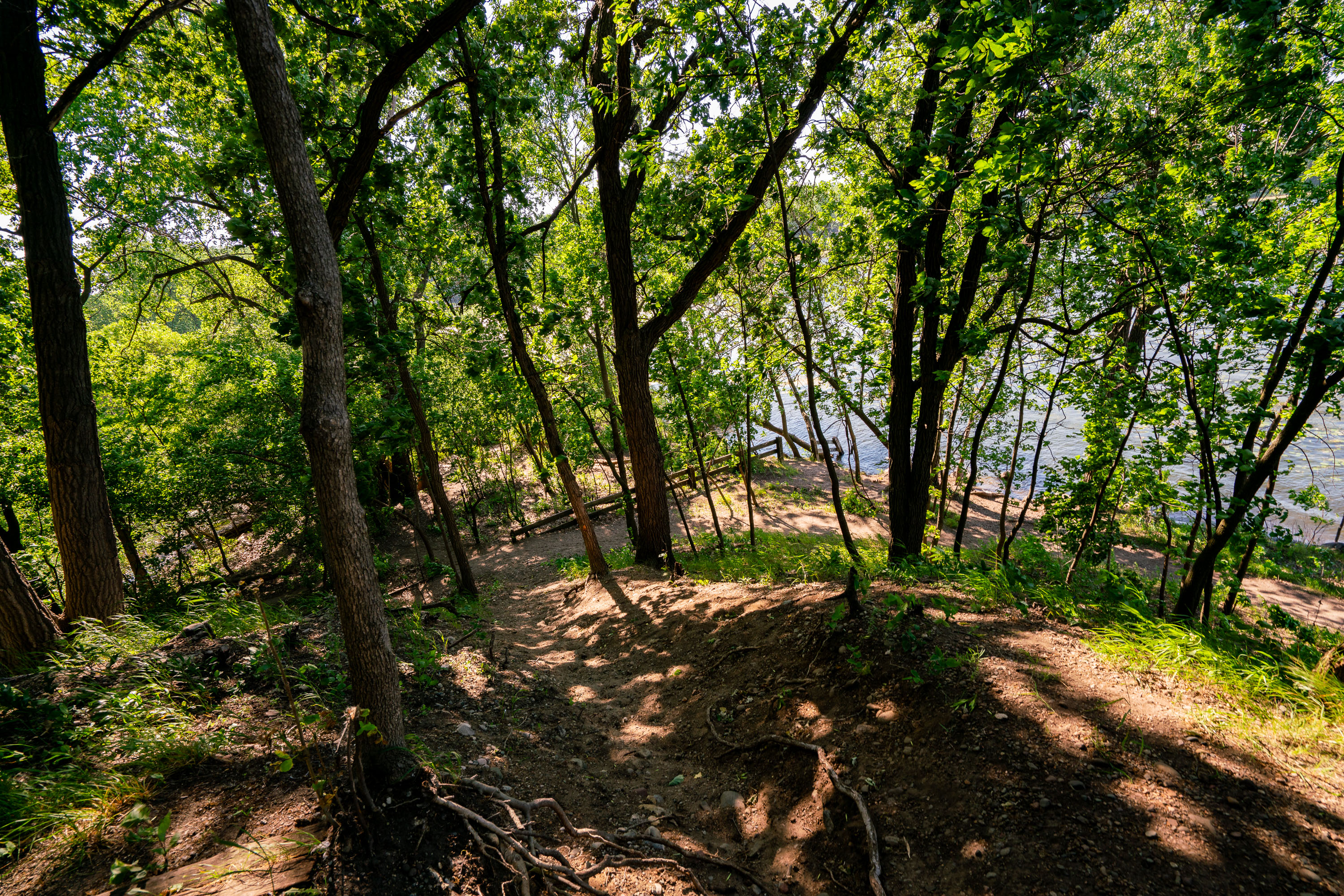
Wooded trail along the north shore of Cedar Lake in Minneapolis with sandy path and lake visible through trees.
Cedar Lake is one of the Minneapolis Chain of Lakes, tucked between the Kenilworth corridor and the Bryn Mawr neighborhood west of downtown. It covers about 170 acres and reaches roughly 51 feet at its deepest point, with a dirt path cutting down through the wooded shoreline to the water.

Wooded Trail Down to Cedar Lake’s North Shore

© 1996–2026 Chad Davis