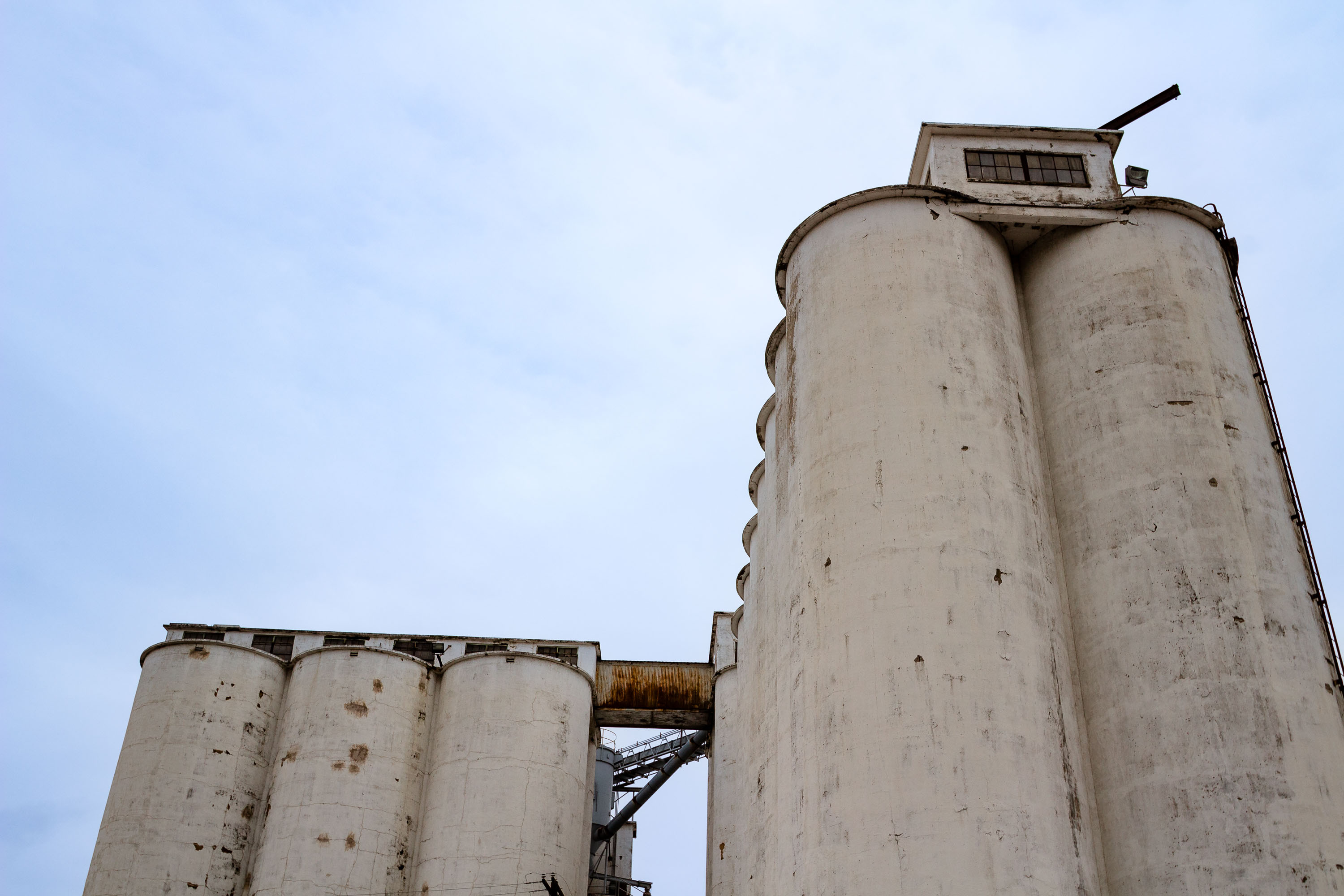
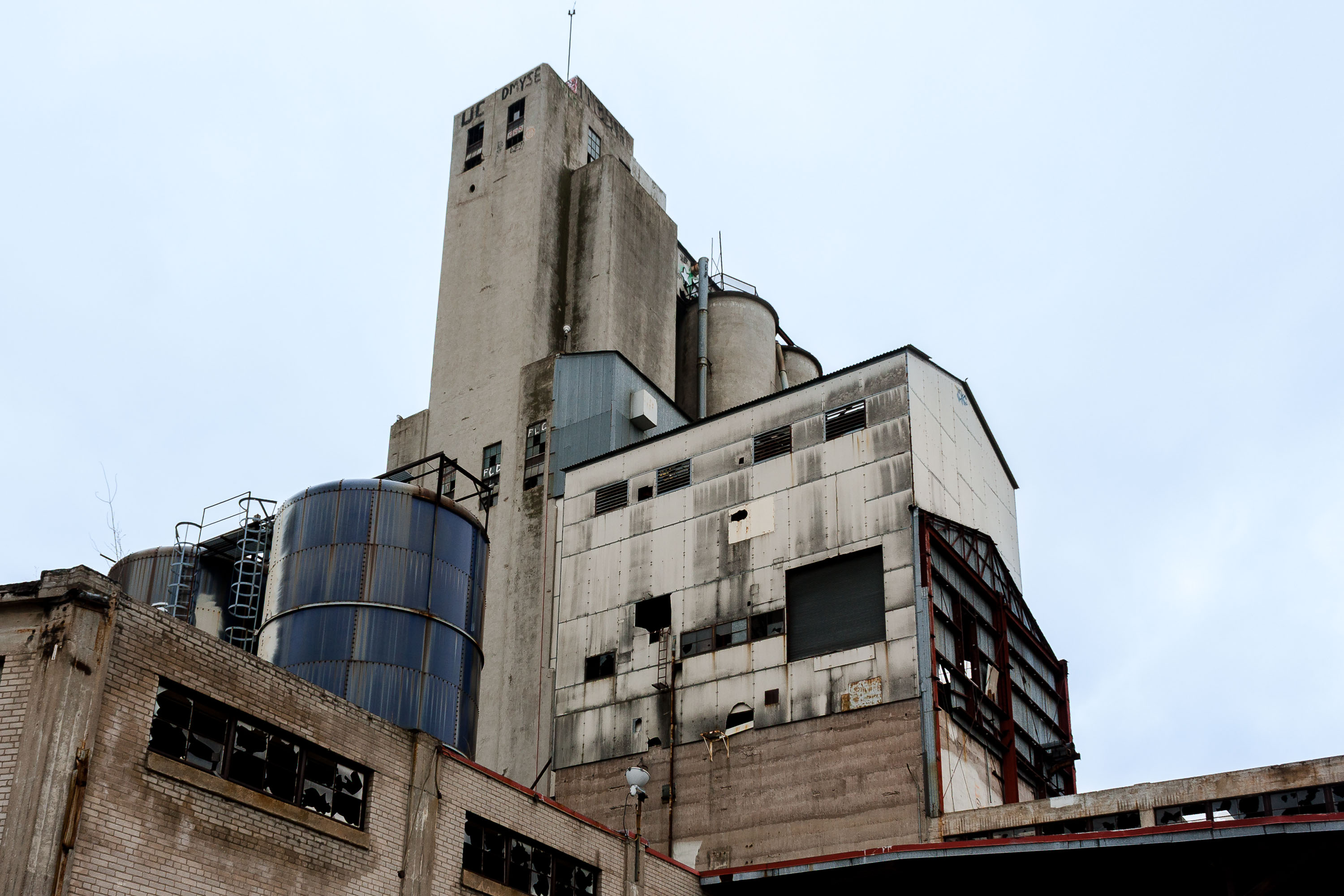
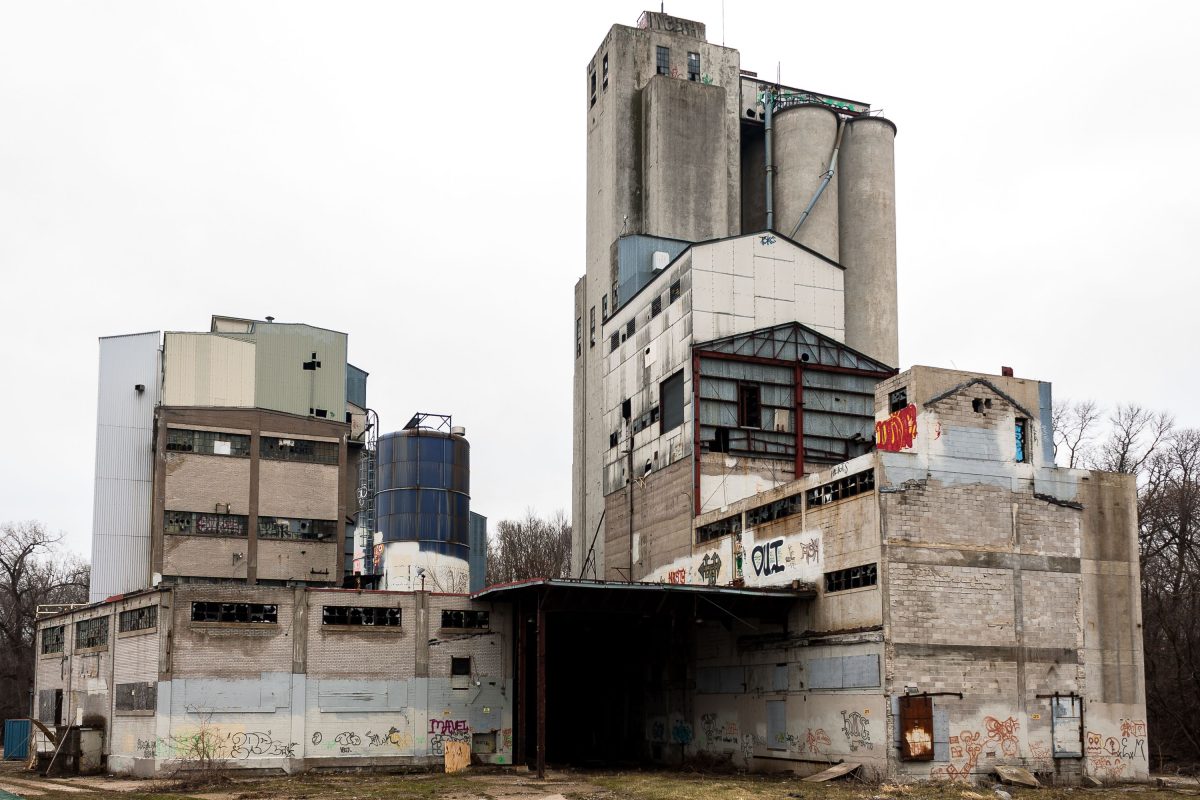
Grain Elevator

83 photos · 2008–2022

83 photographs tagged Grain Elevator, 2008–2022.
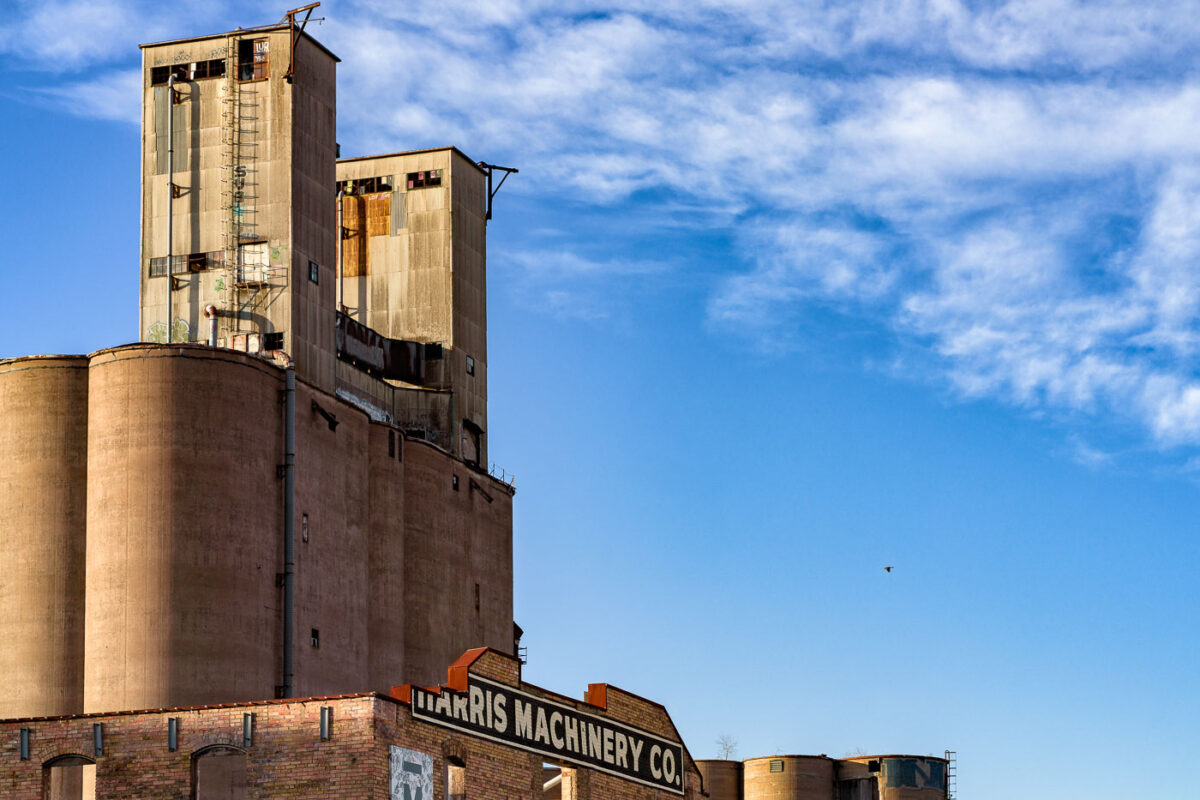
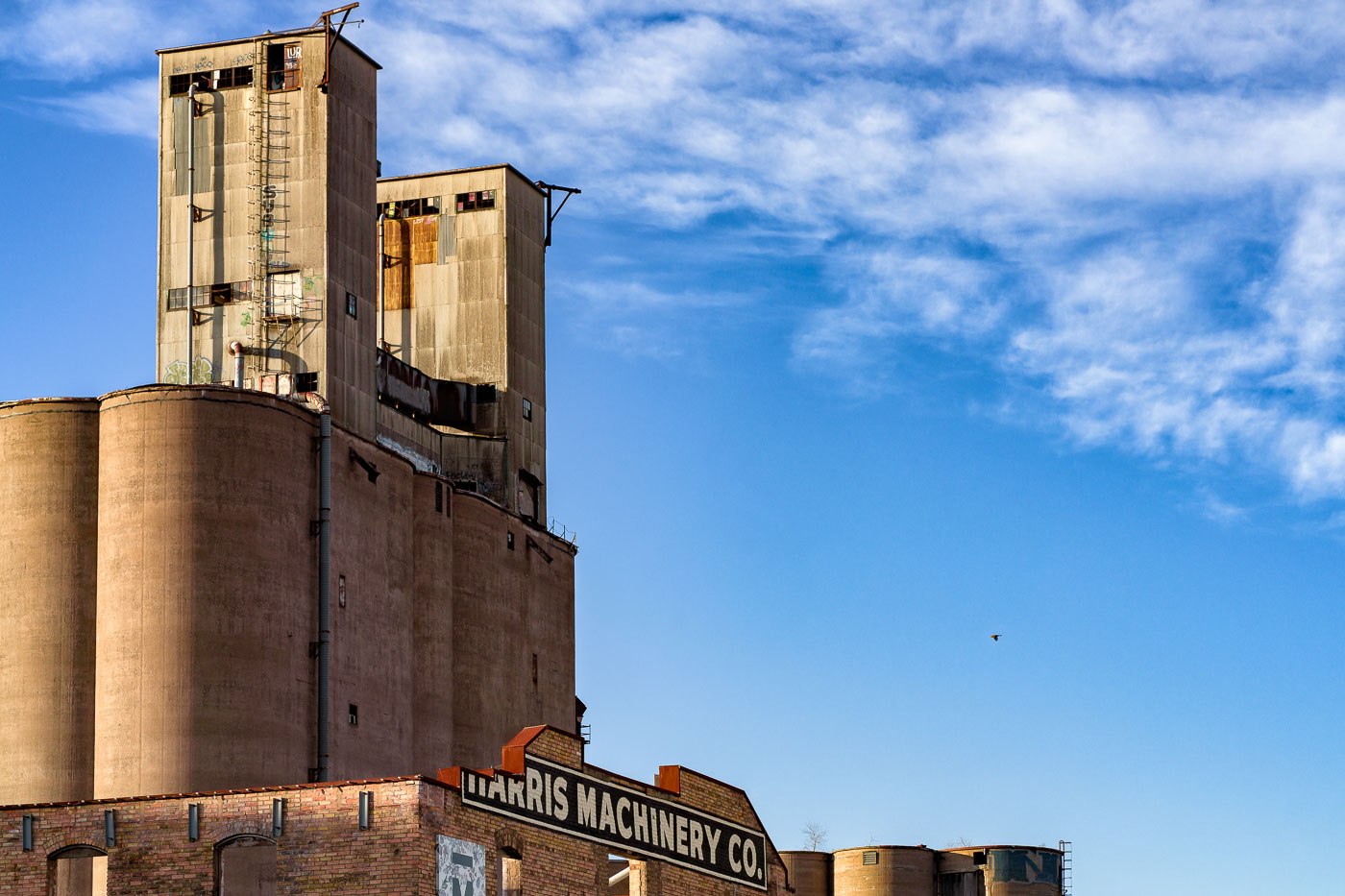
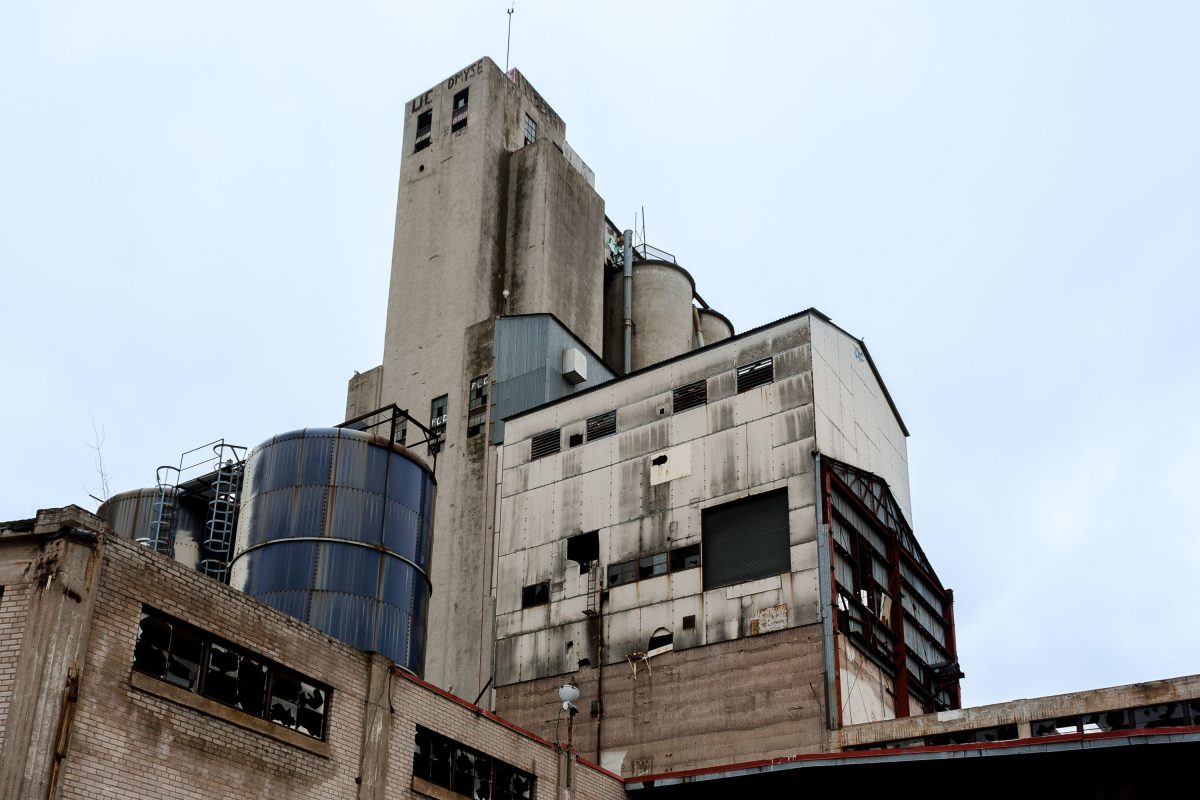
ADM Grain Elevator and Harris Machinery Co., Minneapolis

The aging ADM grain elevator rises over the Harris Machinery Co. building in Minneapolis, a reminder of the city’s long industrial relationship with grain milling and riverfront commerce. These concrete storage silos and metal-clad headhouses were once central to moving Midwestern grain through the milling district, part of an infrastructure network that fueled Minneapolis’s identity as the “Flour Milling Capital of the World.” Harris Machinery Co., a longtime supplier of industrial equipment, occupies the foreground, its brick façade contrasting with the weathered surfaces of the towering elevator. The structures together illustrate the layered industrial history of the city’s working riverfront.

ADM Grain Elevator and Harris Machinery Co., Minneapolis

Gold Medal Flour neon sign atop a grain elevator in downtown Minneapolis.
The Gold Medal Flour sign marks the former Washburn-Crosby Company mill complex along the Mississippi River in Minneapolis. Washburn-Crosby, a predecessor of General Mills, adopted the Gold Medal name in 1880 after its flour won top honors at a Millers' International Exhibition in Cincinnati. The rooftop sign has stood above the mill district since the early 20th century, a period when Minneapolis produced more flour than any other city in the world. The surrounding complex, including the Washburn A Mill, is now preserved as part of the Mill City Museum and the St. Anthony Falls Historic District.

Gold Medal Flour Sign, Mississippi Riverfront, Minneapolis

Highlight Center, a repurposed General Mills grain elevator facility in Northeast Minneapolis.
The Highlight Center occupies a former grain elevator complex in Northeast Minneapolis, built to store and process grain for regional milling operations. General Mills once operated the facility as part of its industrial network before the property fell out of use for agricultural processing. Developers later converted the concrete silos and headhouse into commercial office and creative space, retaining the original structure's tanks and tower as the building's defining architecture.

Highlight Center Grain Elevator, Northeast Minneapolis
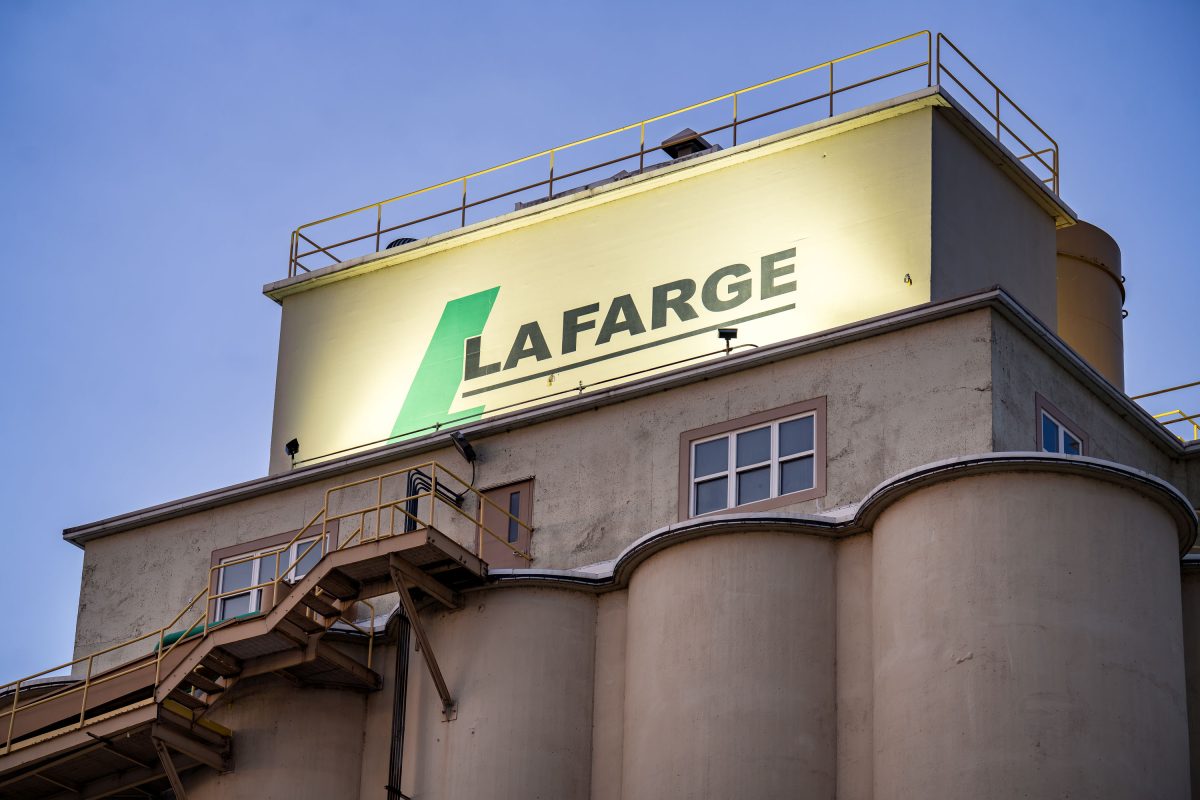
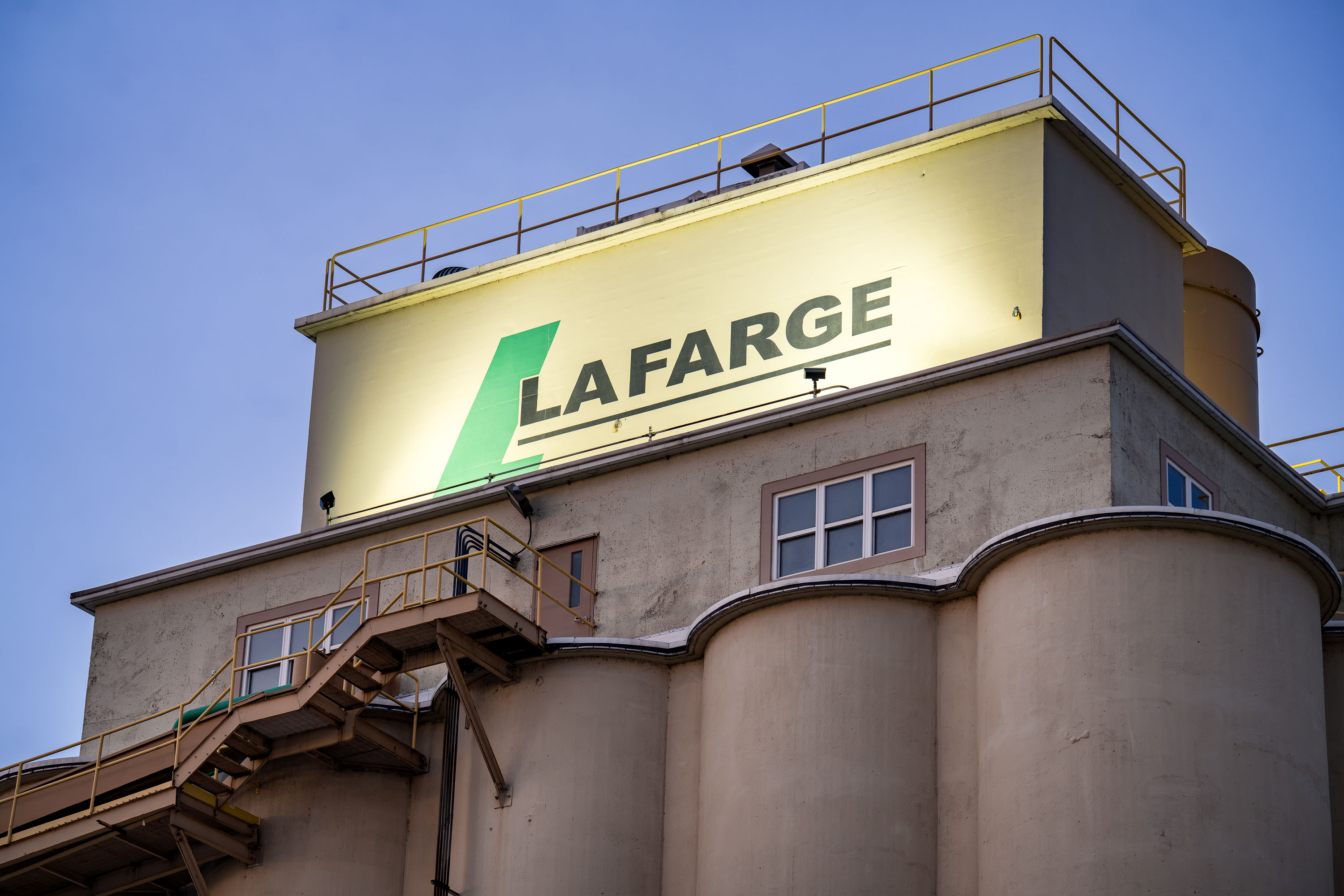
Lafarge cement facility with storage silos and rooftop sign in Green Bay, Wisconsin.
Lafarge operates a cement facility in Green Bay, Wisconsin, part of the company's network of production and distribution sites along the Great Lakes. The site includes storage silos used to hold cement and related materials before shipment. Lafarge, now part of Holcim following a 2015 merger, is one of the largest building materials producers in the world.

Lafarge Cement Facility, Green Bay

Abandoned Fruen Mill grain elevator in Minneapolis shows deteriorated wooden floors and graffitied concrete structures from above.
Fruen Mill sits along Bassett Creek near Van White Memorial Boulevard in Minneapolis, built in the 1870s by William Fruen to grind flour and later feed. The mill operated for roughly a century before closing, and the property has stood vacant for decades since. Fire has since gutted sections of the structure, leaving charred timbers and collapsed decking exposed to the elements. Over the years the abandoned mill has drawn graffiti artists and urban explorers, its concrete surfaces layered with tags and murals. The site remains privately owned and undeveloped, a holdover industrial ruin within the city's Bassett Creek corridor.

Burned Rooftop, Fruen Mill, Minneapolis
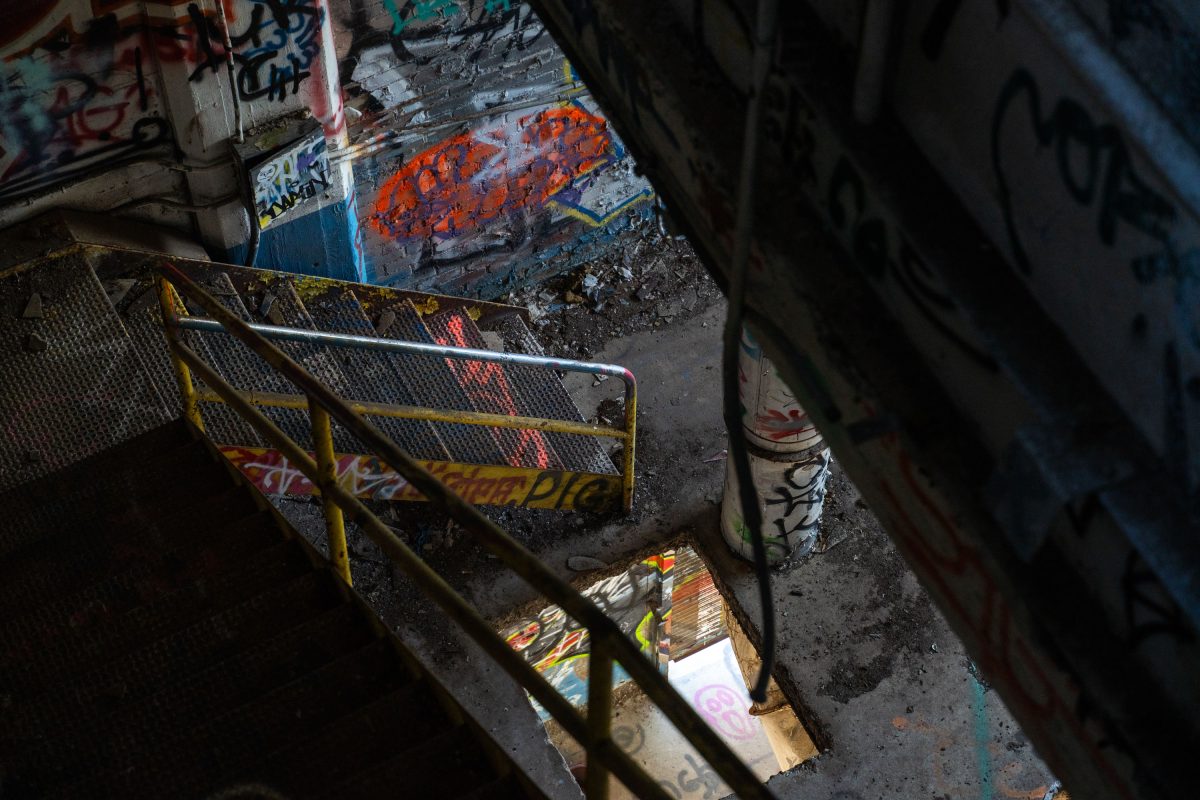
Graffitied metal staircase inside the abandoned Fruen Mill grain elevator in Minneapolis.
Fruen Mill sits along Bassett's Creek in the Bryn Mawr neighborhood of Minneapolis, one of the city's earlier flour-milling operations before larger mills along the Mississippi took over the industry. The building has stood vacant for decades and has become a well-known spot for graffiti writers and urban explorers, its interior stairwells and landings layered with decades of paint.

Graffiti-Covered Stairwell, Fruen Mill, Minneapolis
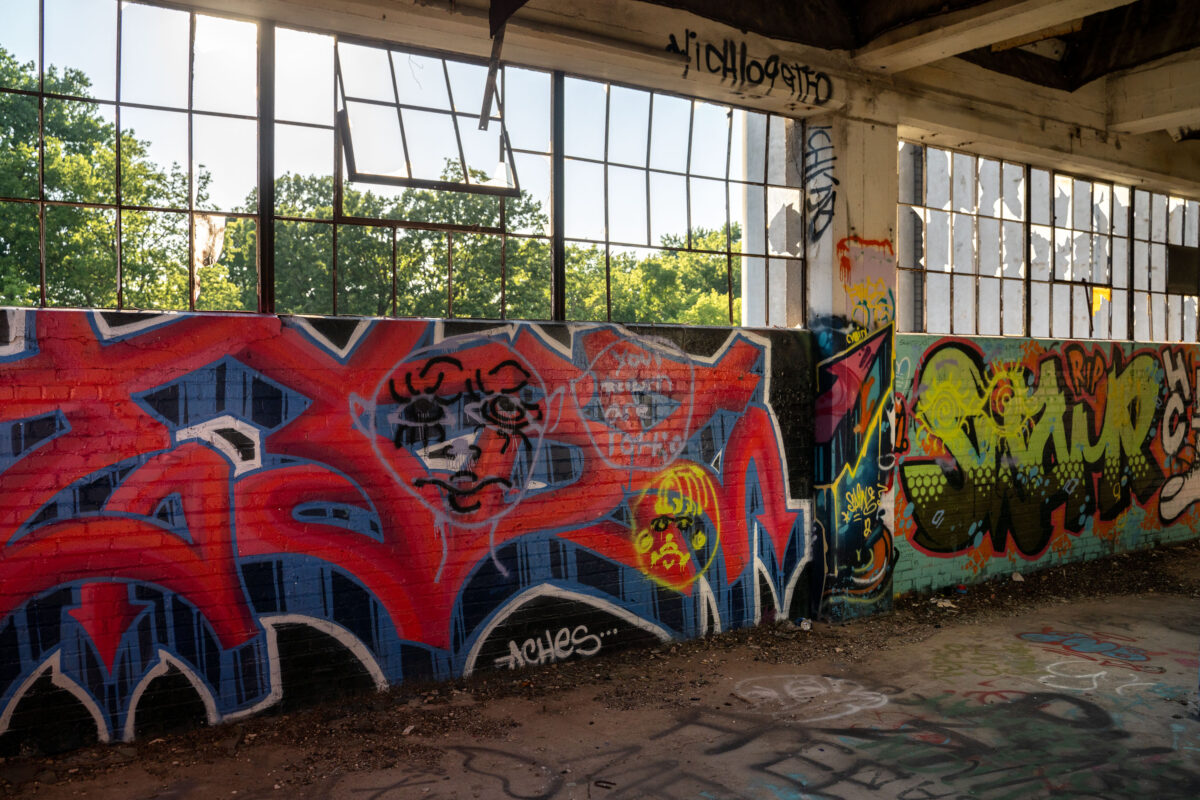
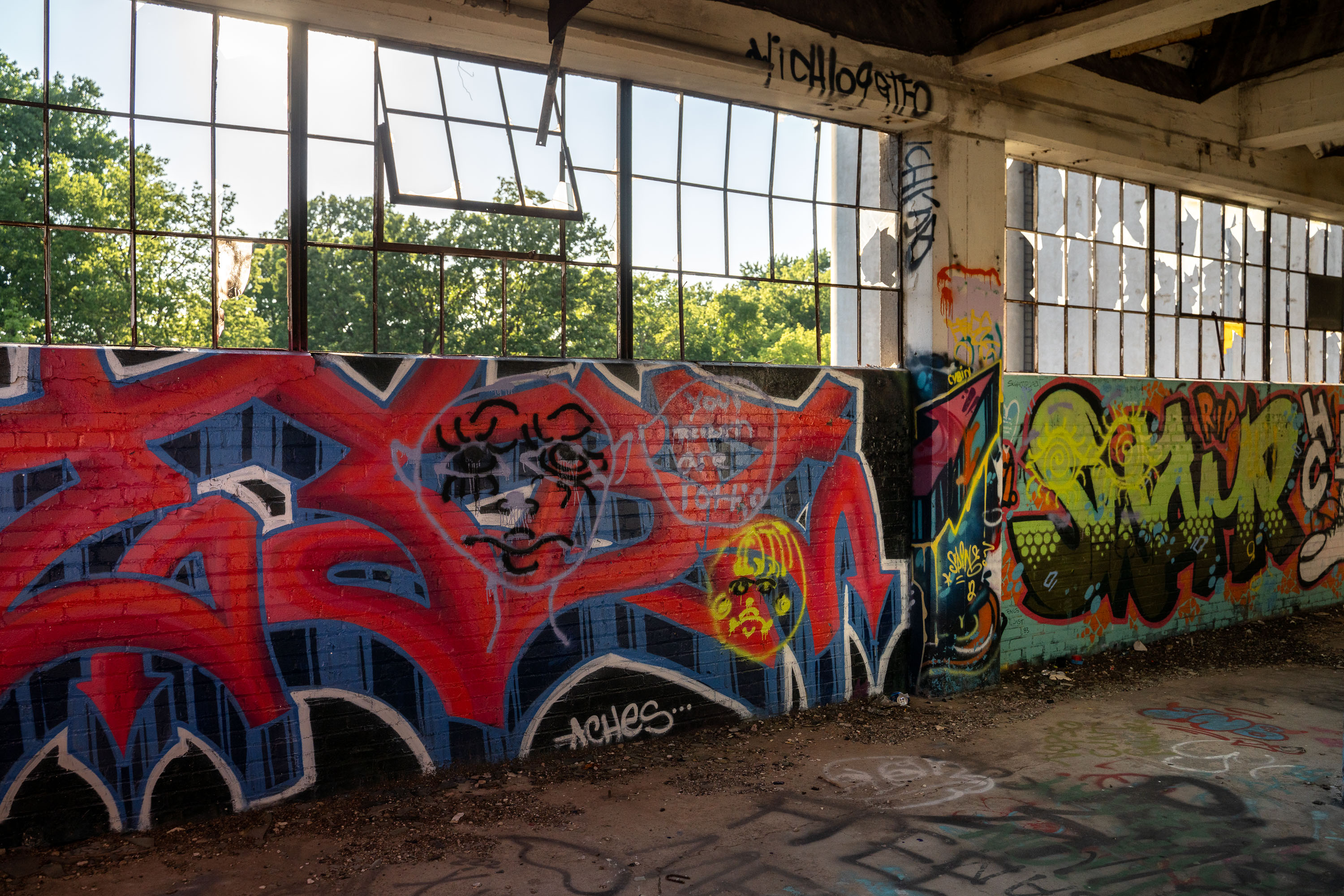
Colorful graffiti murals cover brick walls inside the abandoned Fruen Mill in Minneapolis.
Inside the long abandoned Fruen Mill in Minneapolis, Minnesota. The Fruen Mill is a historic industrial complex along Bassett Creek in Minneapolis. William H. Fruen established a workshop at the site in 1872, manufacturing screws and waterwheel governors, and began milling grain using water power in 1894. The business grew into a major cereal producer and was among the earliest manufacturers of breakfast cereals in Minneapolis. A fire destroyed the original mill and workshop in 1920, and much of the surviving complex dates from the rebuilding that followed. The mill was eventually sold to ConAgra in 1971 and ceased operations, leaving the complex as one of the remaining landmarks of the industrial history of Bassett Creek. (

Graffiti-Covered Silo Tower Overlooking Downtown Minneapolis, Fruen Mill
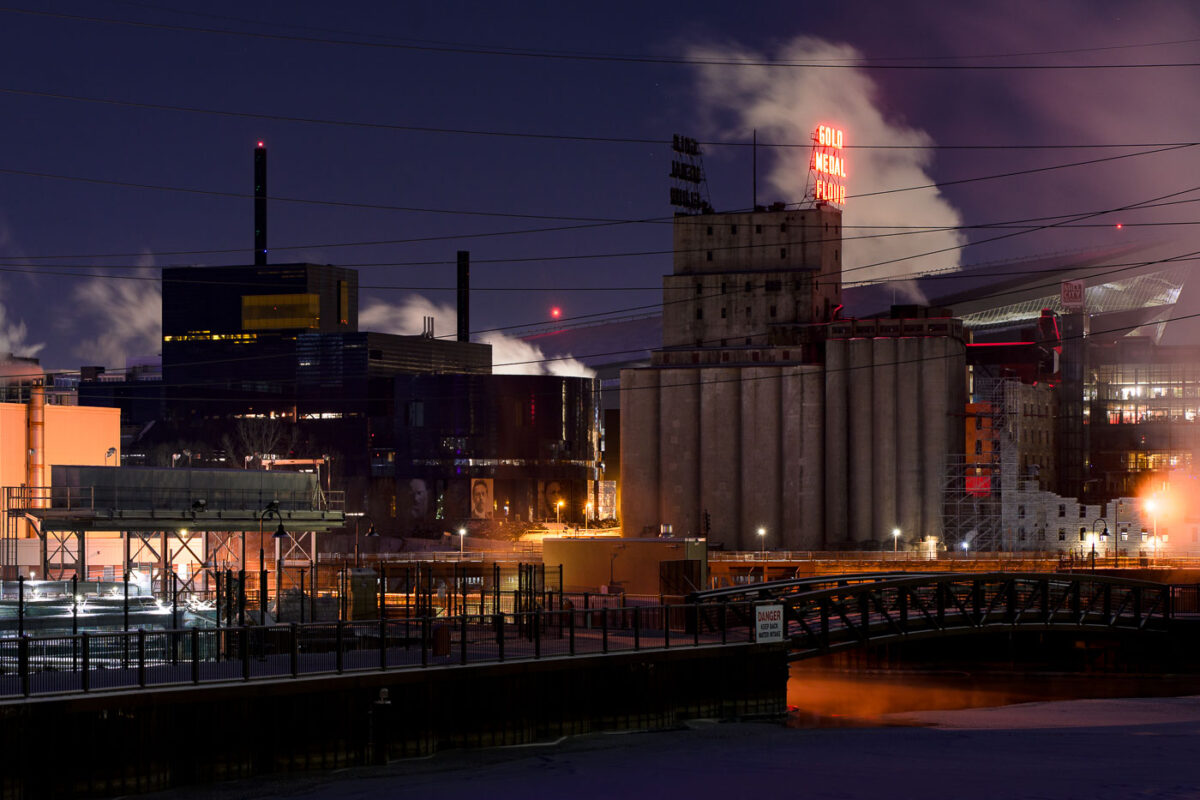
Steam from double digit below zero in Minneapolis
The Gold Medal Flour sign sits atop the old Washburn A Mill on the Mississippi River in downtown Minneapolis. Built in 1874 and rebuilt in 1880 after an explosion destroyed the original structure, the mill produced flour for the Washburn Crosby Company, later absorbed into General Mills in 1928. It closed in 1965 and reopened in 2003 as the Mill City Museum.

The Gold Medal Flour Sign Above the Mississippi River in Minneapolis

Bebe Zito Ice Cream and Hum's Liquors storefronts at 22nd Street and Lyndale Avenue in Minneapolis during winter.
Bebe Zito is an ice cream shop at West 22nd Street and Lyndale Avenue in Minneapolis, next to Hum's Liquors. A painted Grain Belt Beer sign remains on the building's side wall, a leftover ad for the beer first brewed in Minneapolis in 1893.

Snowy Patio at Bebe Zito on Lyndale Avenue
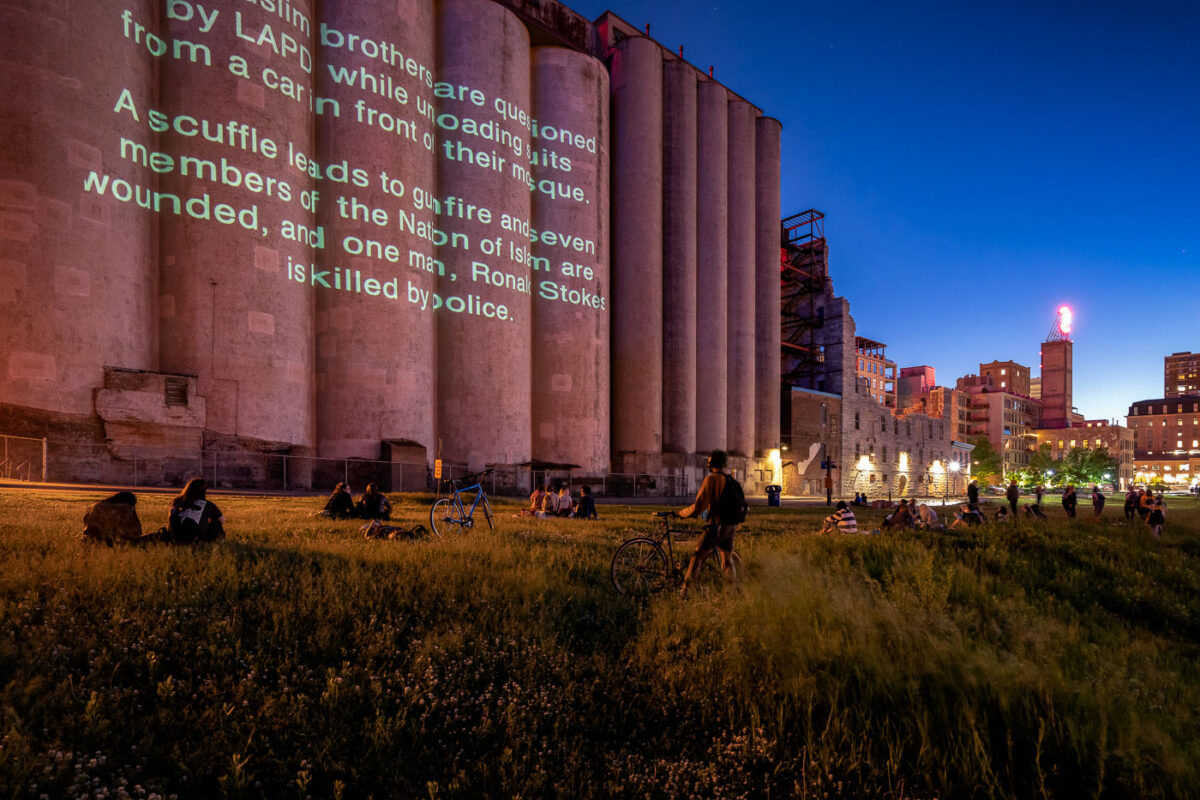
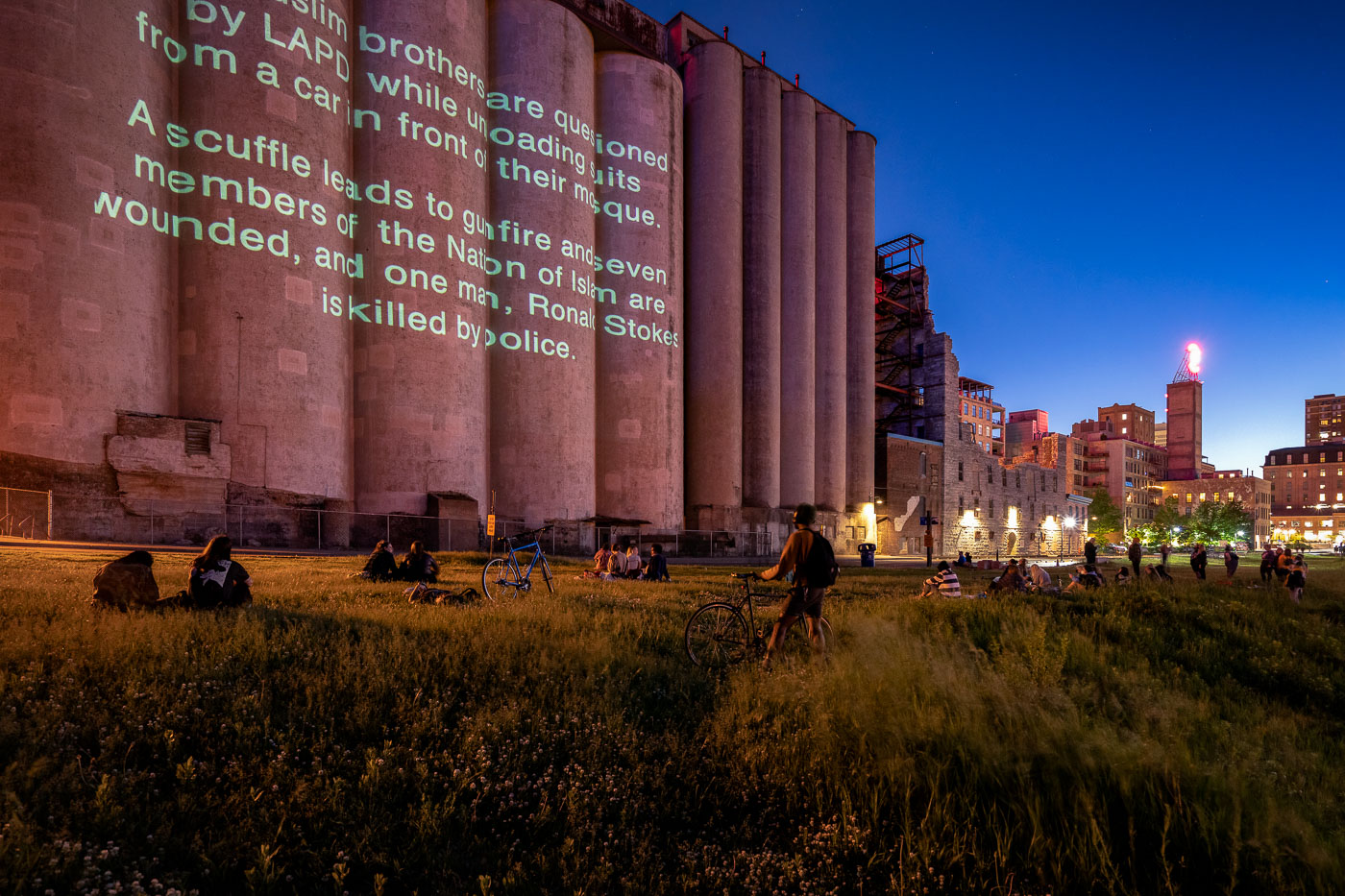
Projection on Gold Medal Flour elevators in Minneapolis, with people gathered in Gold Medal Park.
A projection titled "Revolution Will Be Televised" illuminates the historic Gold Medal Flour grain elevators in downtown Minneapolis. The art installation, displayed on the concrete silos, features text recounting historical events related to police actions and social justice, resonating with themes from the Minneapolis Uprising. Viewers gather in Gold Medal Park, a public green space adjacent to the former industrial complex, to observe the temporary display. The Gold Medal Flour complex, once a major industrial site, represents Minneapolis's milling history and now stands as a prominent landmark in the city's riverfront district.

“Revolution Will Be Televised” Projection on Gold Medal Flour Elevators
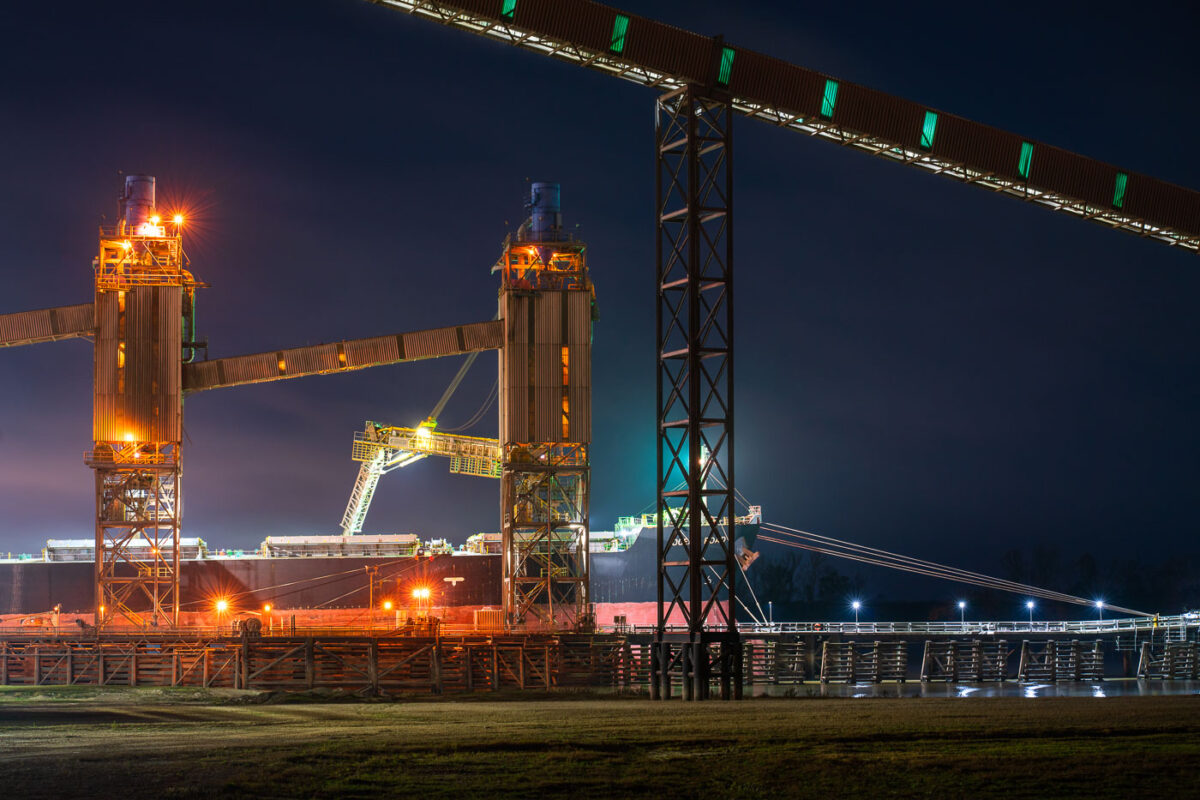
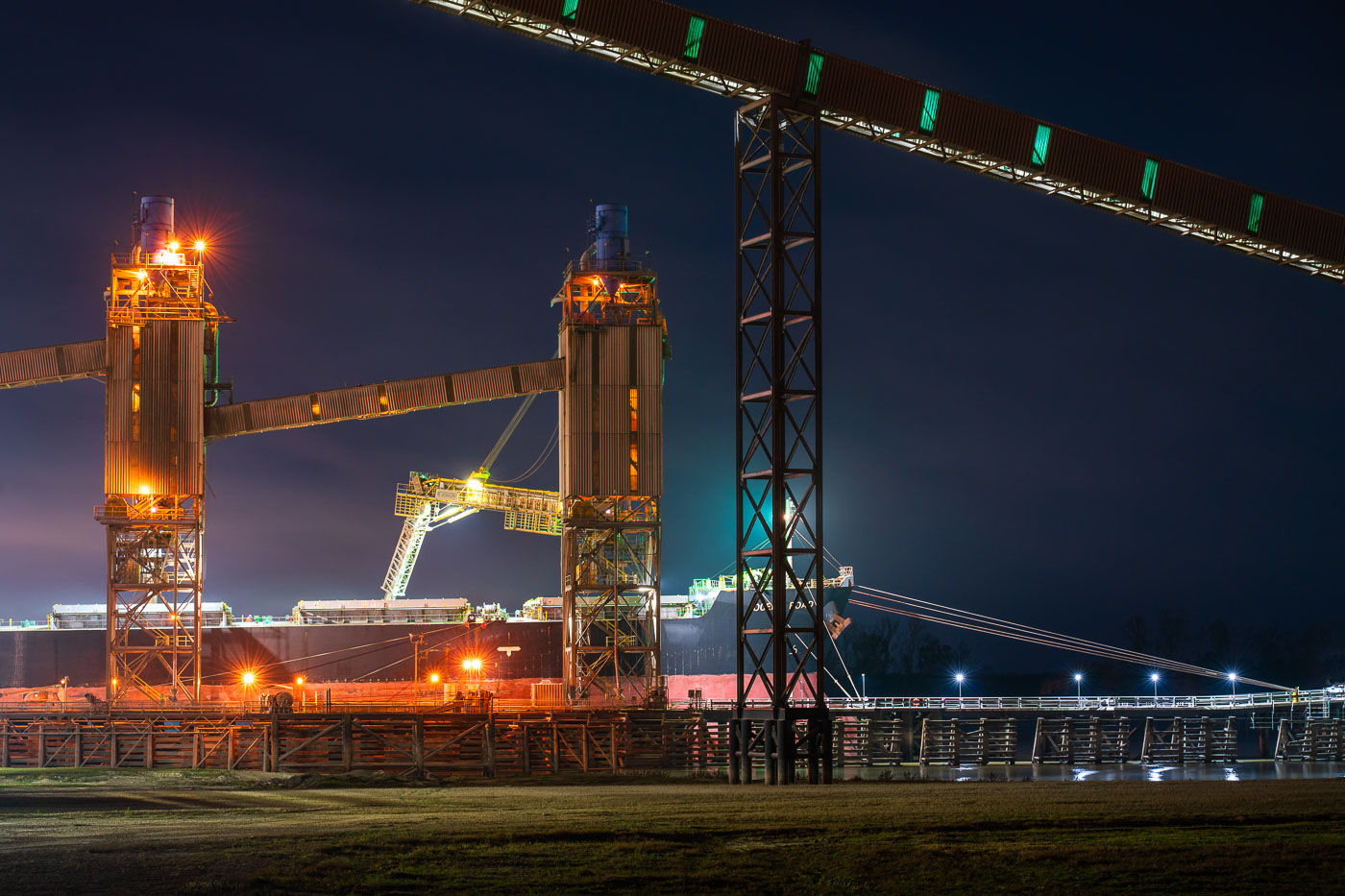
Zen-Noh Grain export facility in Convent, Louisiana, with illuminated grain-loading towers at night.
Zen-Noh Grain Corporation’s export facility in Convent, Louisiana, operates along the Mississippi River as a major grain terminal. The complex loads corn, soybeans, and other bulk commodities for transfer from inland transport to ocean-going vessels.

Zen-Noh Grain Export Facility, Convent, Louisiana
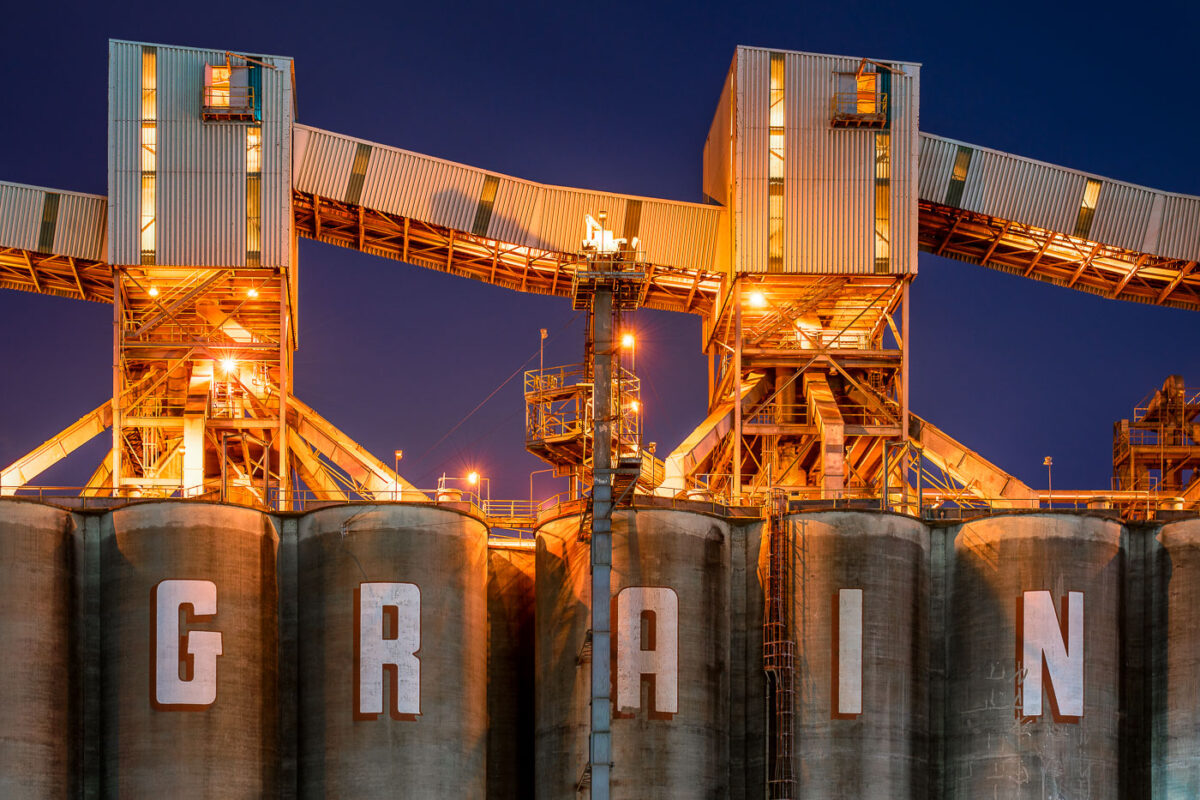
Zen-Noh Grain Corporation terminal in Convent, Louisiana, with illuminated grain silos at night.
Zen-Noh Grain Corporation terminal in Convent, Louisiana. The Mississippi River facility stores and transfers grain for export through the Gulf Coast, handling agricultural commodities from the U.S. interior.

Zen-Noh Grain Terminal at Convent, Louisiana
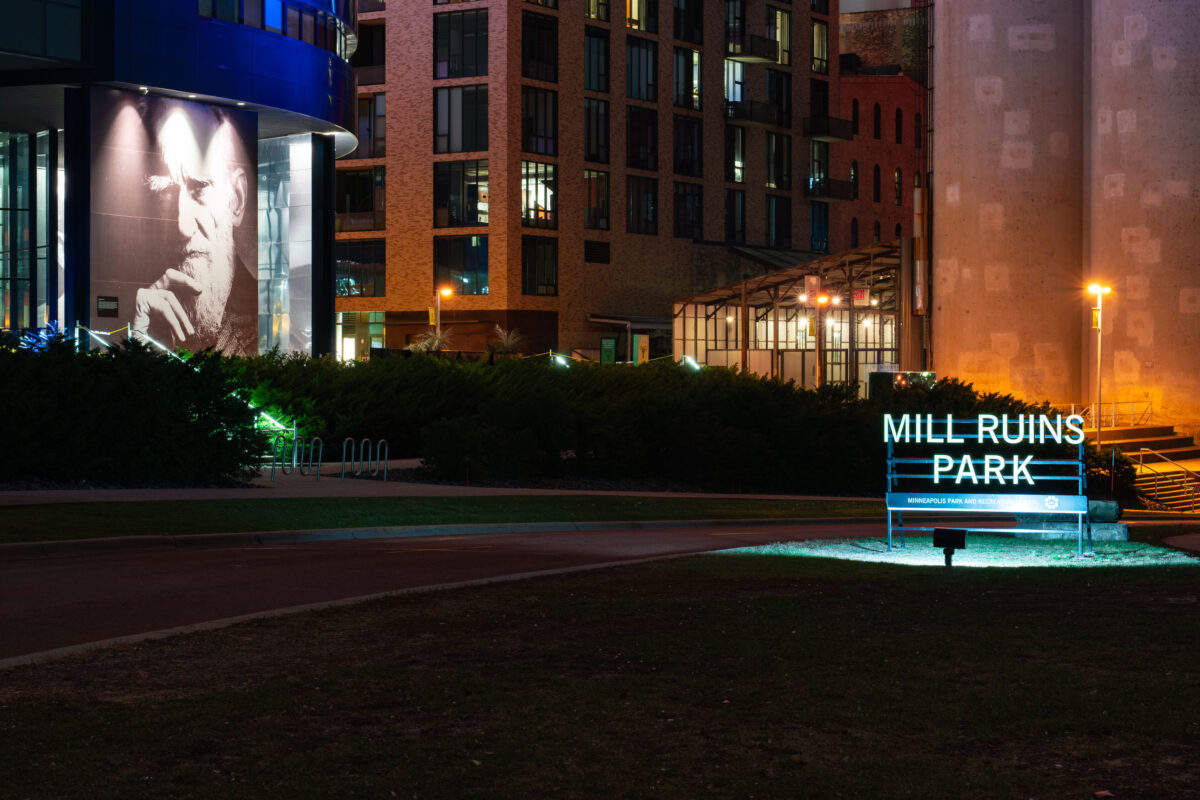
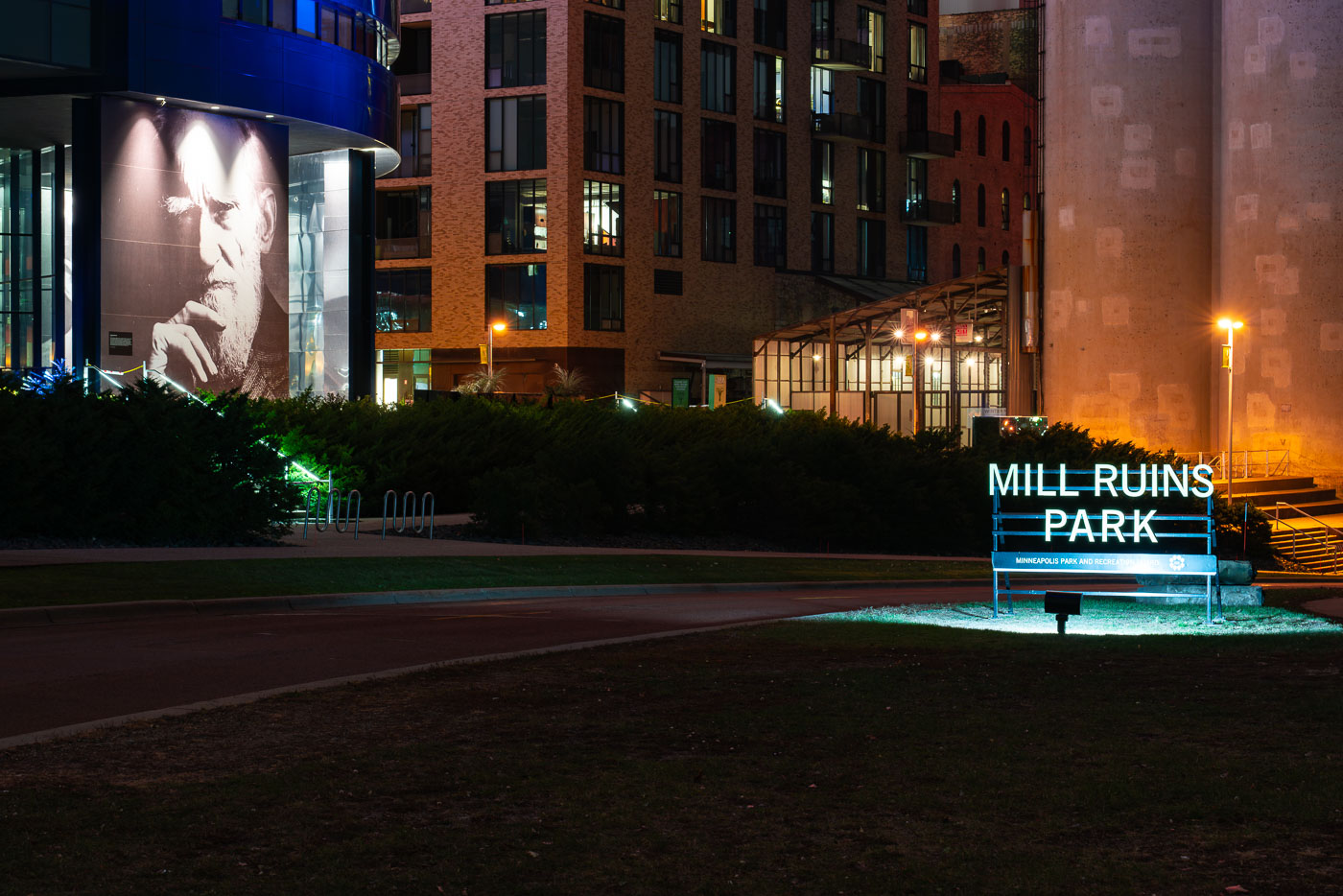
Mill Ruins Park sign in Minneapolis near the Guthrie Theater at night.
Mill Ruins Park in Minneapolis preserves the foundations of the city’s historic flour mills along the Mississippi riverfront. The park sits near the Guthrie Theater and modern residential development in the Mill District.

Mill Ruins Park Sign, Minneapolis

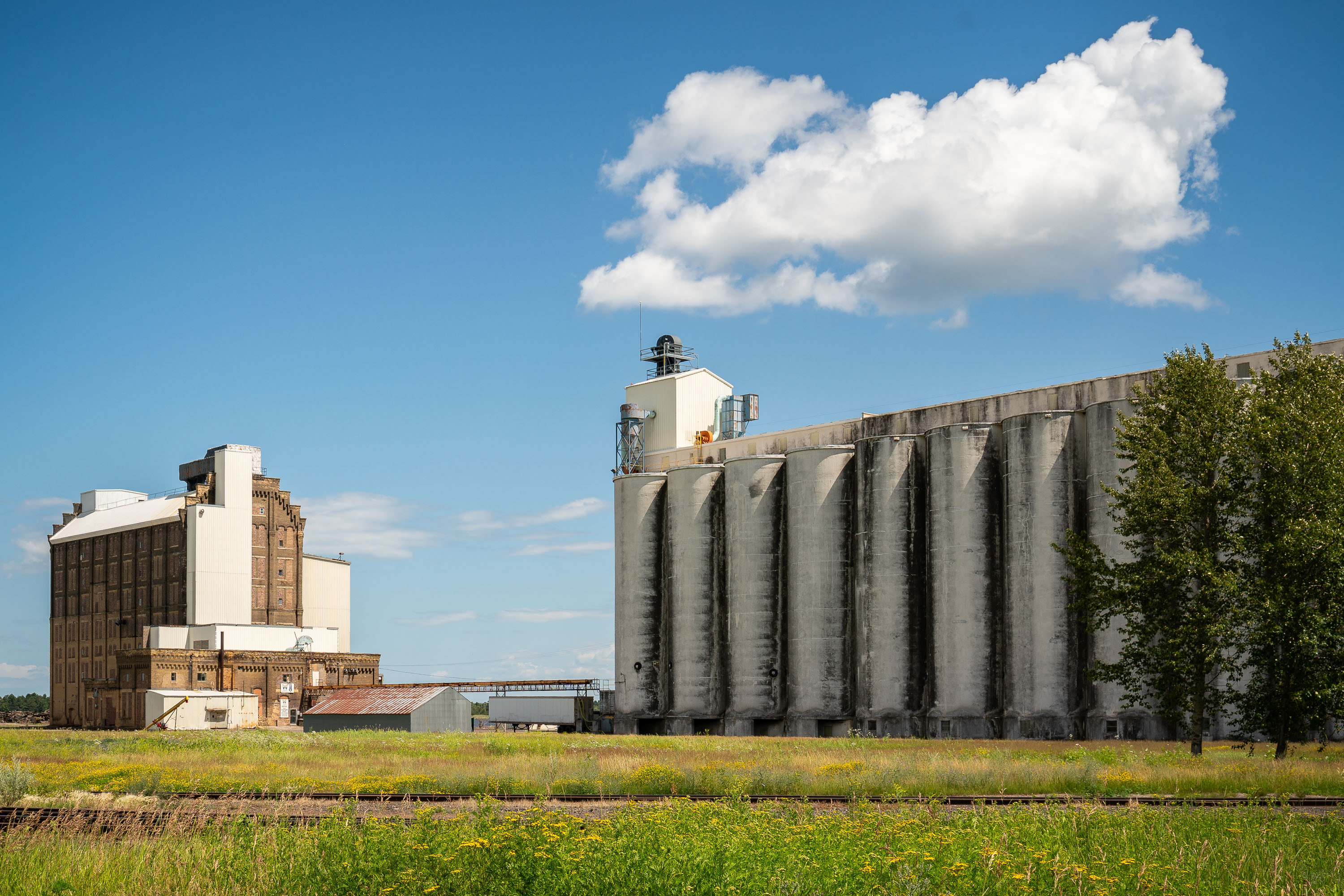
Hansen-Mueller grain elevator complex in Superior, Wisconsin, with concrete silos and historic brick structures beside railroad
Hansen-Mueller Co., a grain merchandiser headquartered in Omaha, Nebraska, operates this elevator complex along the Superior, Wisconsin waterfront. The facility stores wheat, corn, soybeans, and other grain shipped in by rail from farms across the upper Midwest before it's loaded onto lake freighters bound for ports on the Great Lakes and beyond. Superior's deepwater harbor, connected to the Atlantic via the St. Lawrence Seaway, has made it a key transfer point for agricultural exports since the early 20th century.

Hansen-Mueller Grain Elevator Complex, Superior, Wisconsin
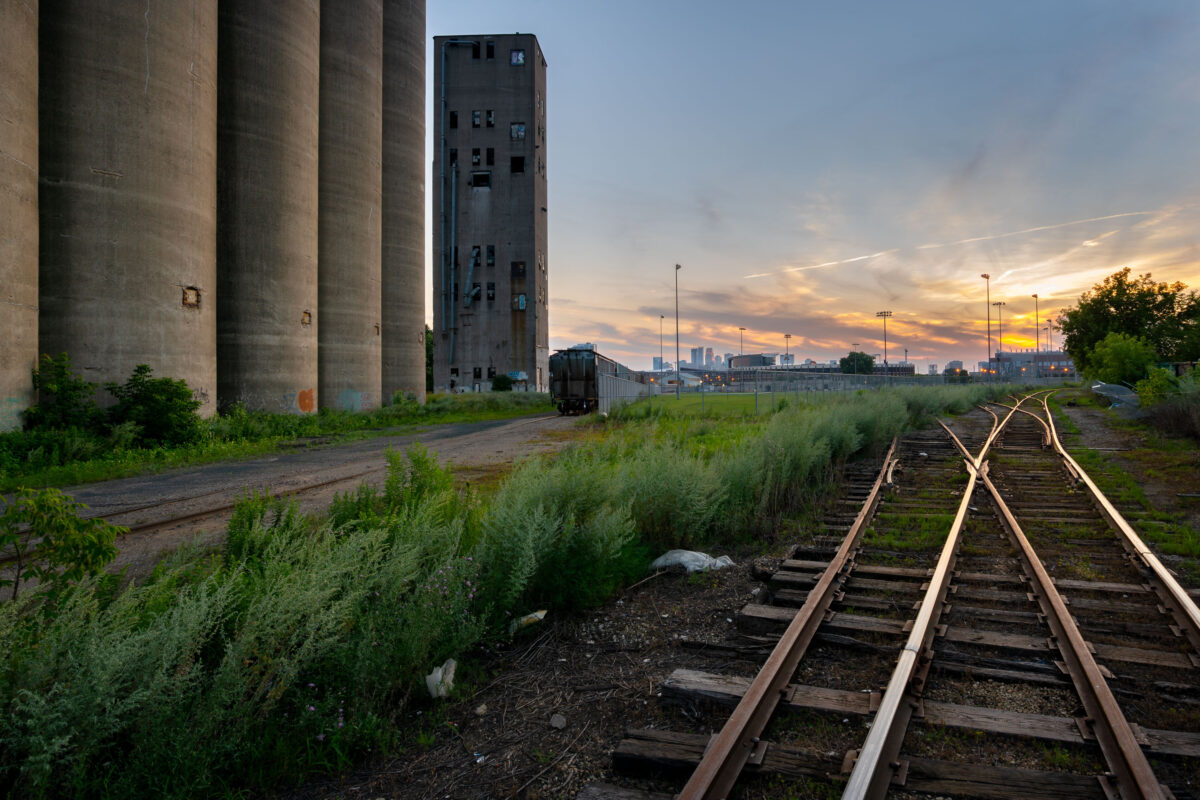
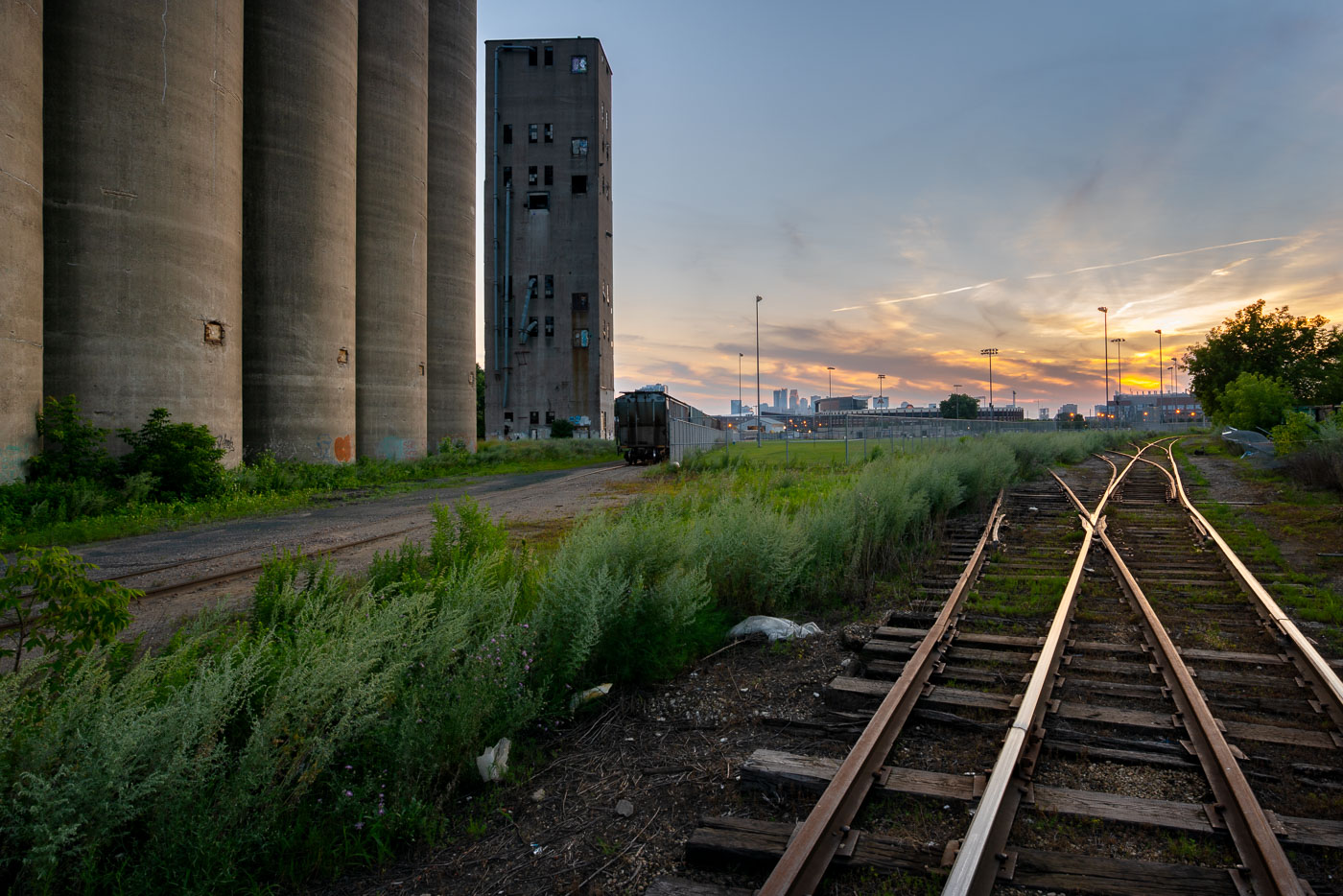
Tracks at Archer Daniels Midland Elevator
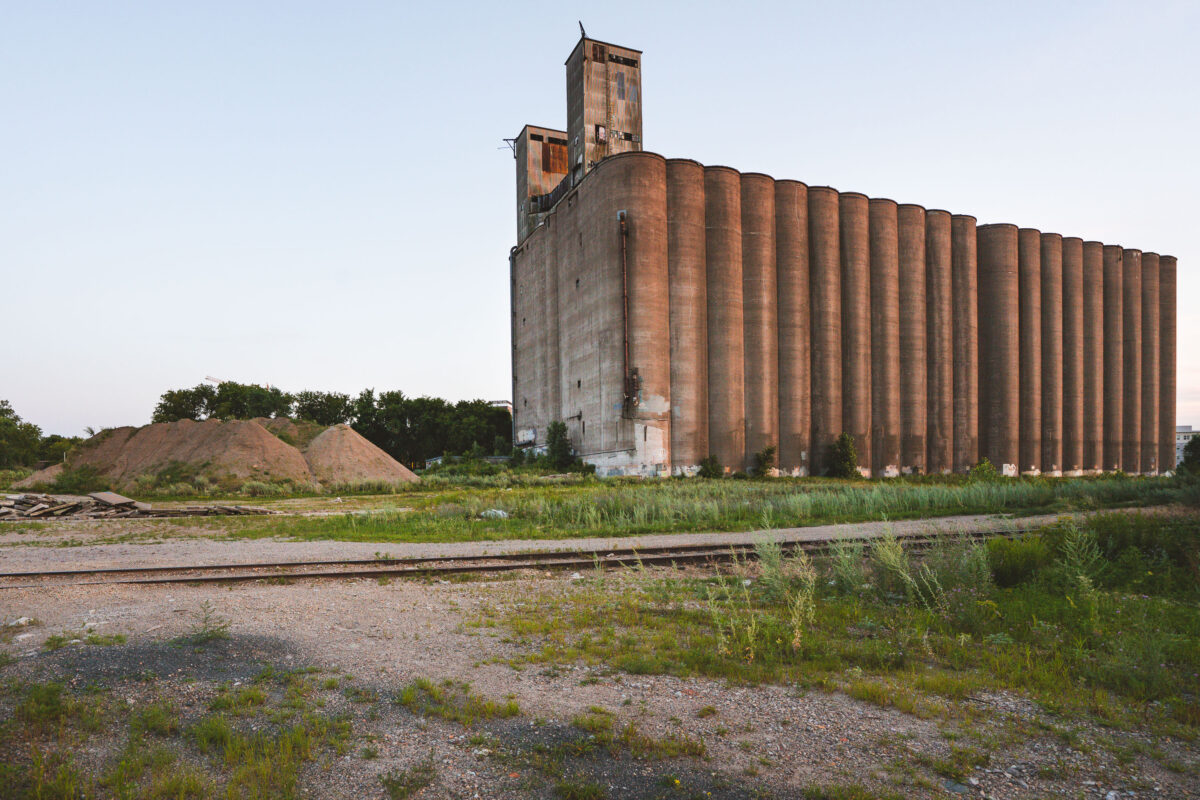
Train tracks outside the long abandoned massive concrete Archer-Daniels-Midland Delmar Elevator No. 7 in Minneapolis. Known locally as the "United Crushers" mill after the large tag visible from miles away.

Tracks at Archer Daniels Midland Elevator

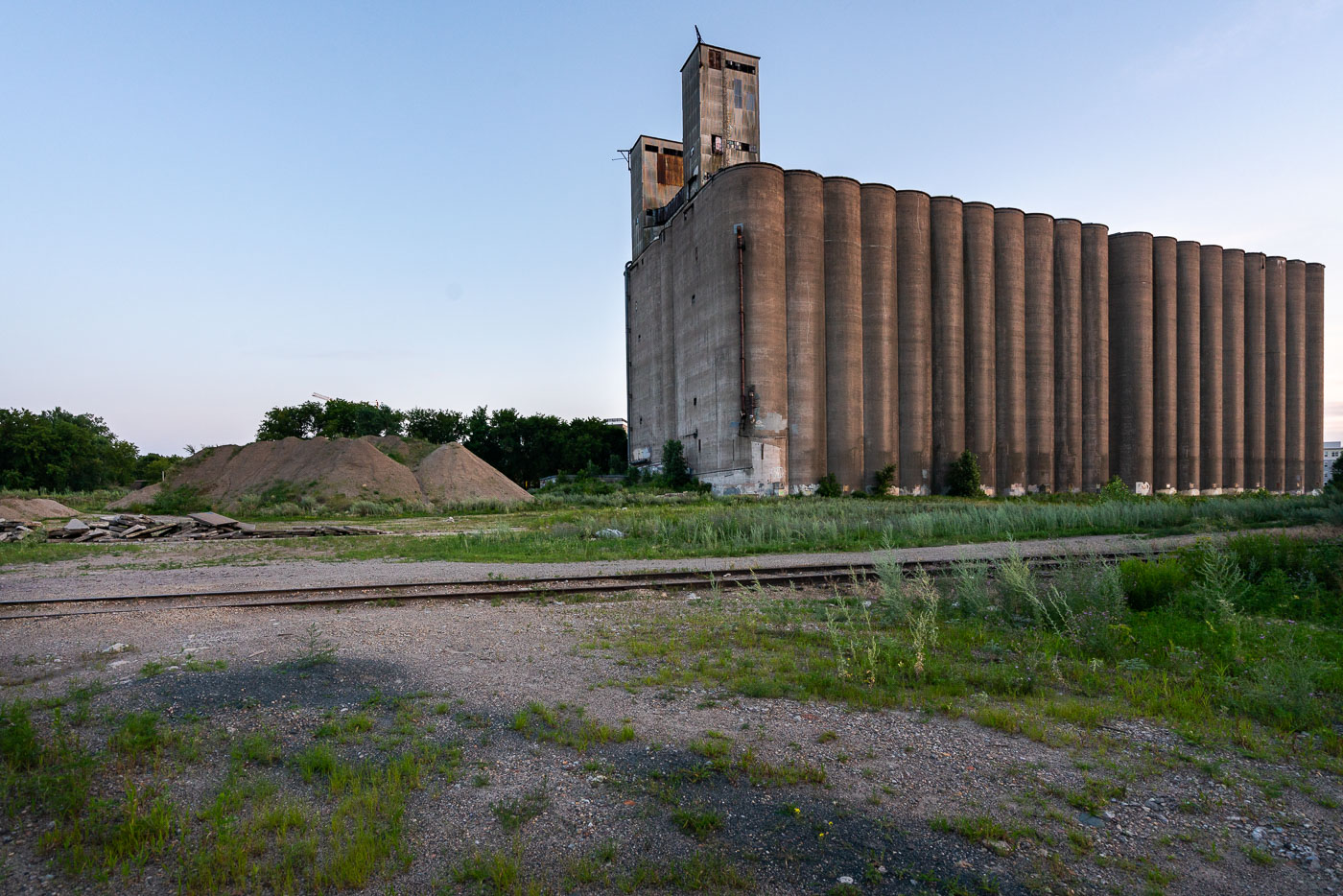
Archer Daniels Midland Delmar Elevator No 7
The long abandoned massive concrete Archer-Daniels-Midland Delmar Elevator No. 7 in Minneapolis. Known locally as the "United Crushers" mill after the large tag visible from miles away.

Archer Daniels-Midland Delmar Elevator No 7
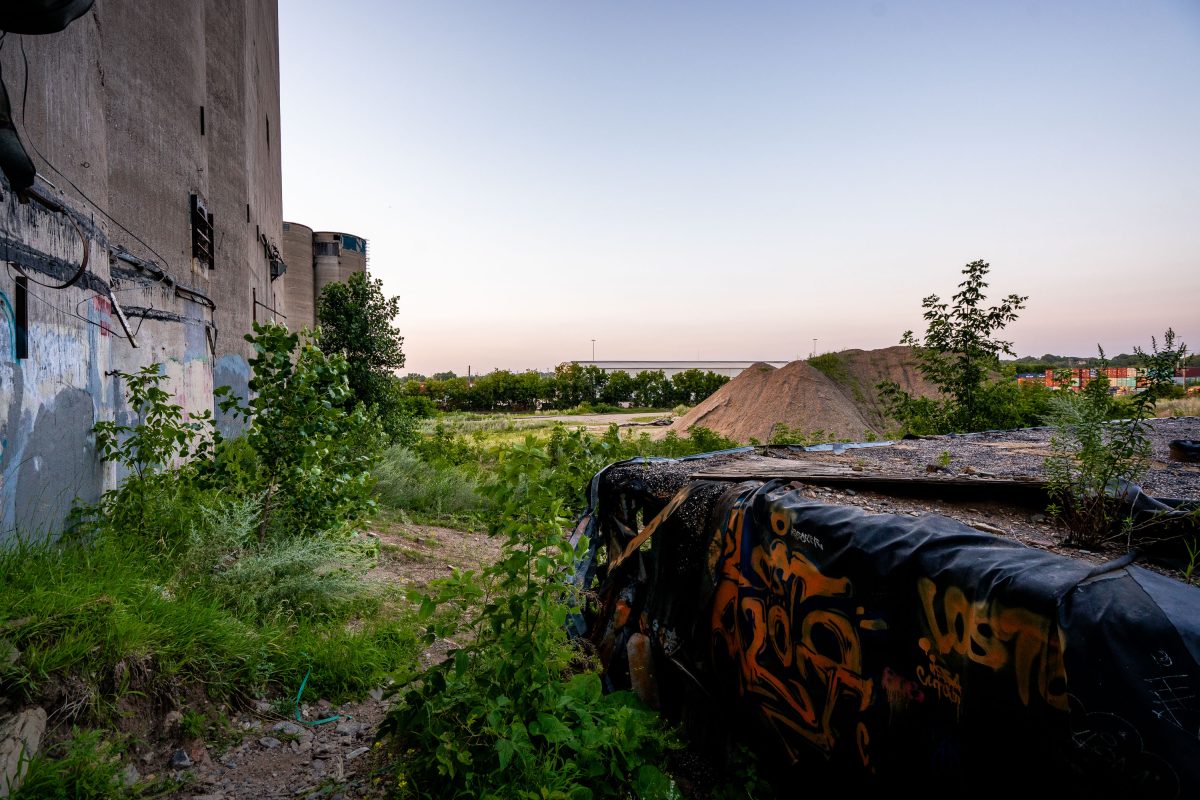
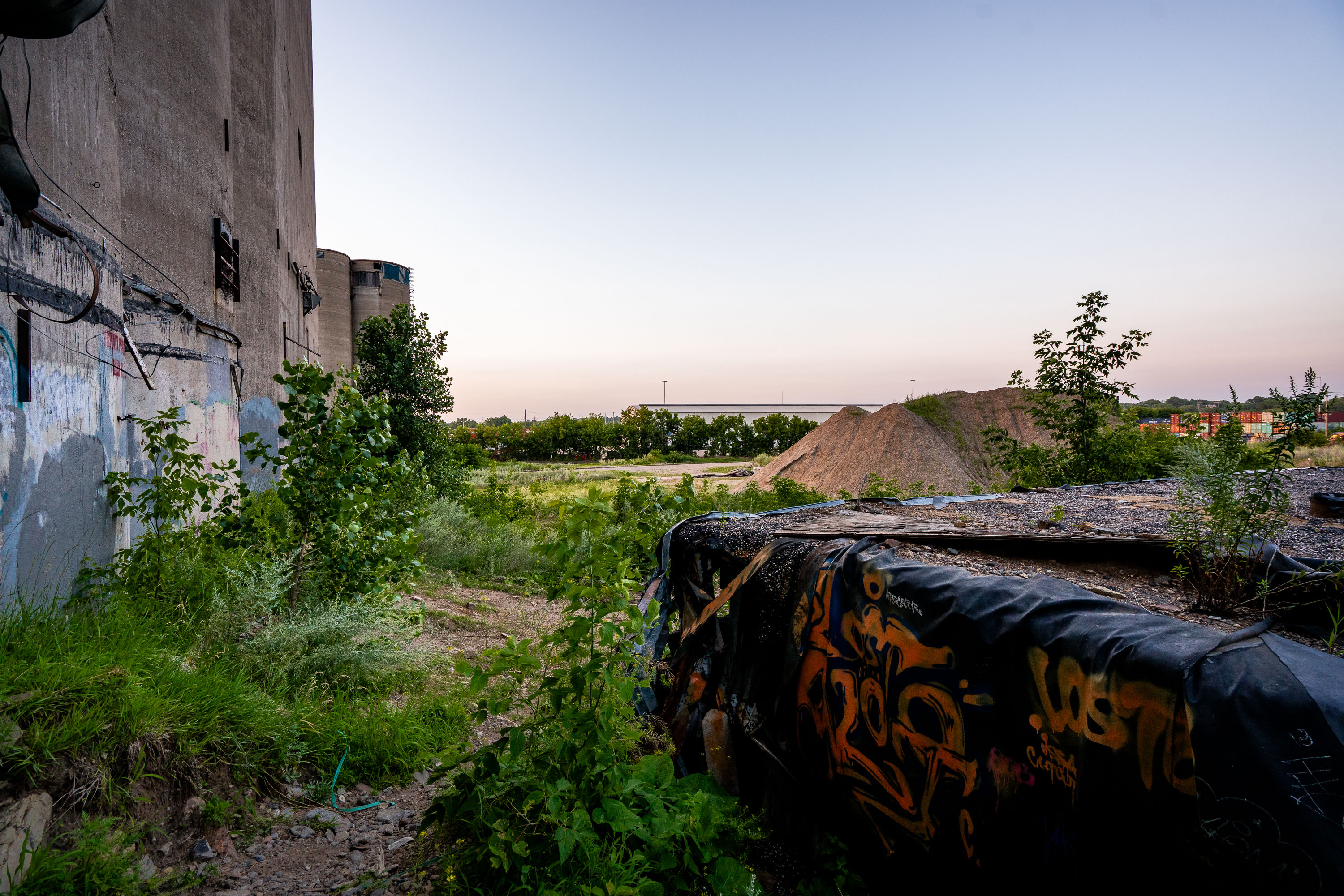
Overgrown lot with graffiti-covered container beside concrete grain silos at the former ADM elevator in Minneapolis
This site is part of the former Archer Daniels Midland grain elevator complex in the Prospect Park area near Dinkytown, Minneapolis. The concrete silo structures visible here were used for grain storage before the facility was decommissioned. Vegetation has grown into the surrounding lot, and a graffiti-covered shipping container and stockpiled fill material now occupy the adjacent grounds.

Overgrown Lot Beside ADM Grain Elevator, Minneapolis
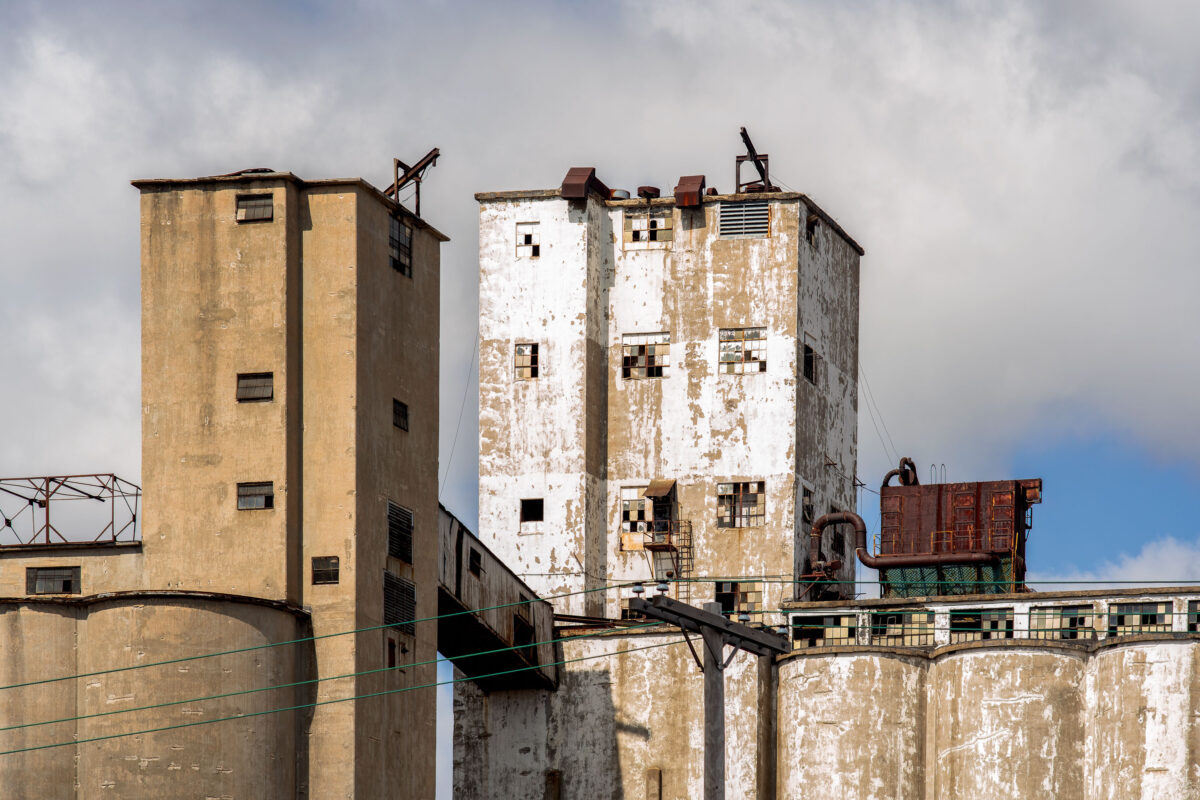
Abandoned grain elevator complex with weathered concrete silos and machinery in Kansas City, Missouri.
Kansas City's riverfront grain elevators grew up alongside the Missouri River and the rail lines that once made the city one of the country's busiest grain markets, second only to Chicago by the early 20th century.

Weathered Grain Elevators Along Kansas City’s Riverfront

The Mill City Museum, housed in the former Washburn "A" Grain Elevator in Minneapolis, preserves the history of the city's flour milling industry.
The Mill City Museum in Minneapolis is housed in the former Washburn "A" Grain Elevator, a structure that was once the largest flour mill in the world. The museum preserves and interprets the history of the mill and the city's flour milling industry, which was central to Minneapolis's development. The grain elevator, built in 1880, is a prominent example of industrial architecture from the era. Today, the museum offers exhibits on the milling process, the lives of mill workers, and the impact of the industry on the city's growth and identity.

Gold Medal Flour Grain Elevator, Mill City Museum, Minneapolis

The Gold Medal Flour neon sign illuminates a historic grain elevator in downtown Minneapolis, a reminder of the city's industrial past.
The "Gold Medal Flour" neon sign stands atop a historic grain elevator in downtown Minneapolis.

Gold Medal Flour Neon Sign, Downtown Minneapolis
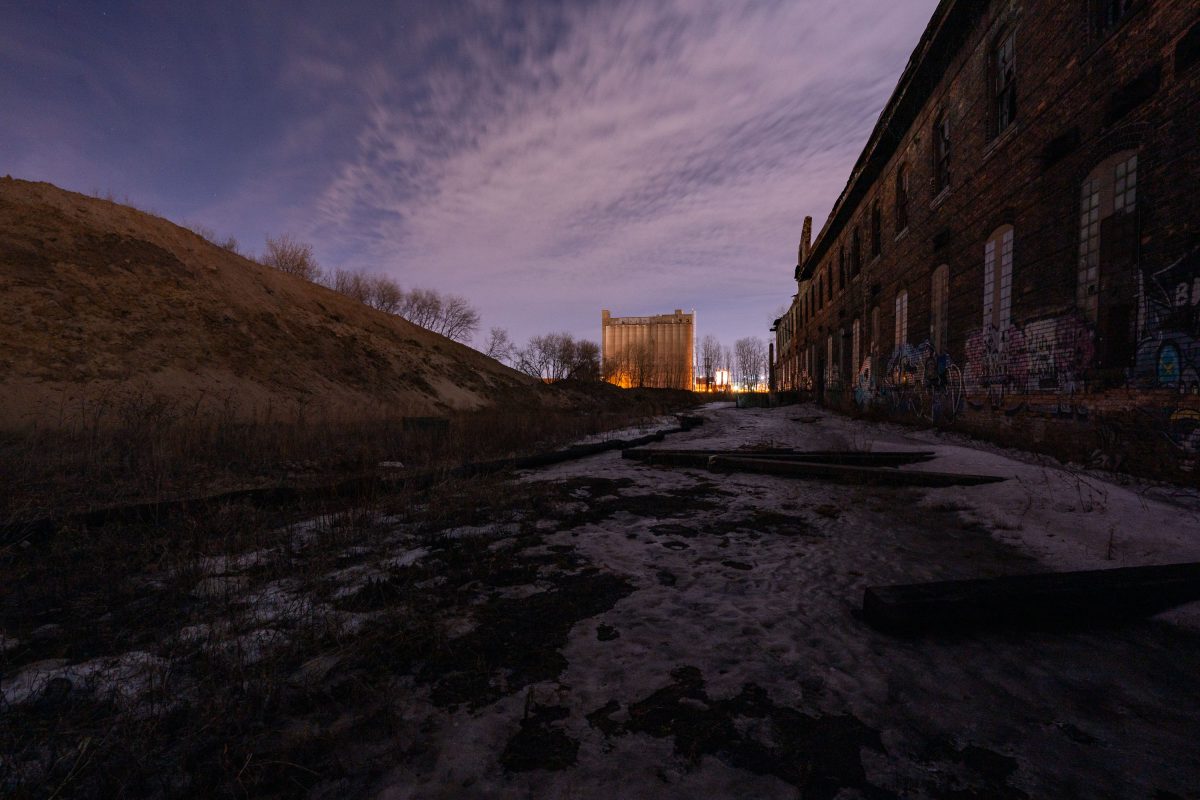
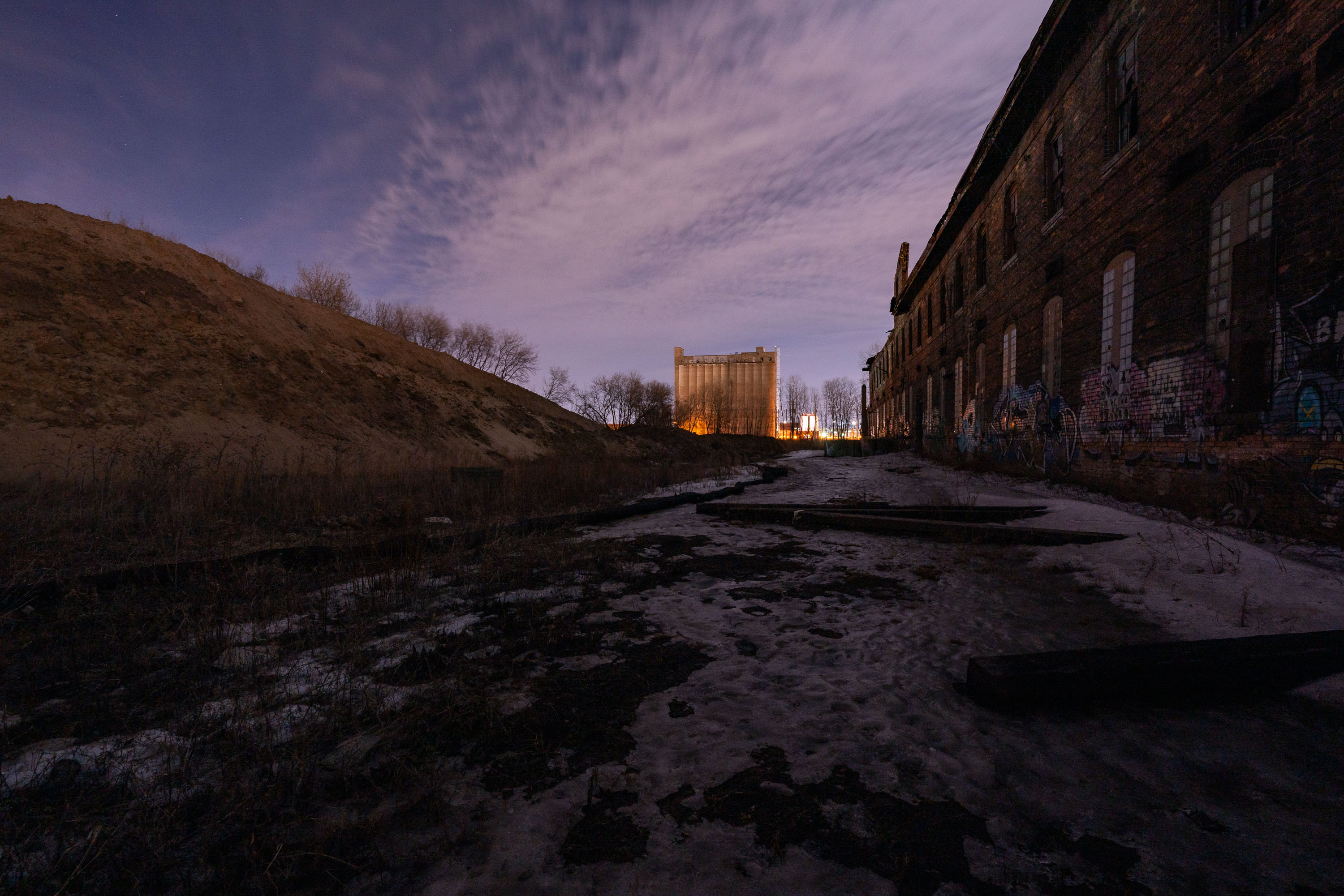
Harris Machinery and Grain Elevator
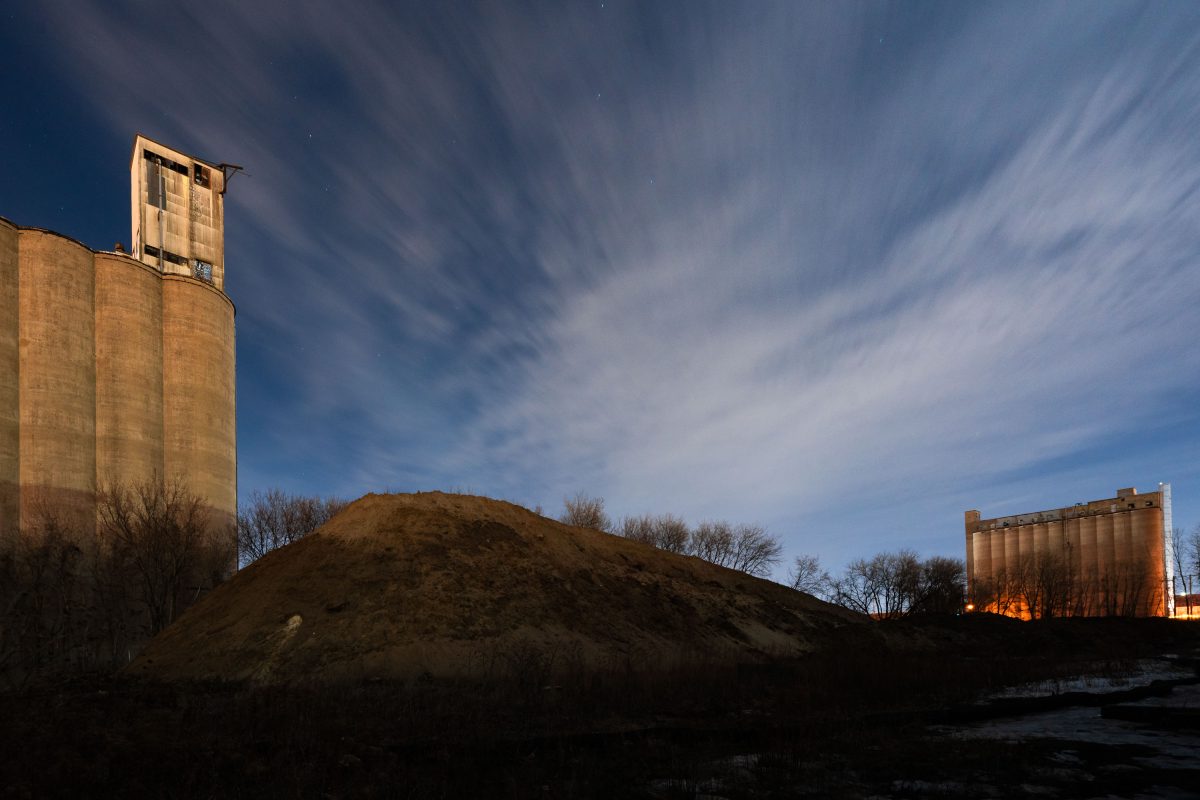
Night photo of the back of Harris Machinery and a grain elevator in the distance.

Harris Machinery and Grain Elevator

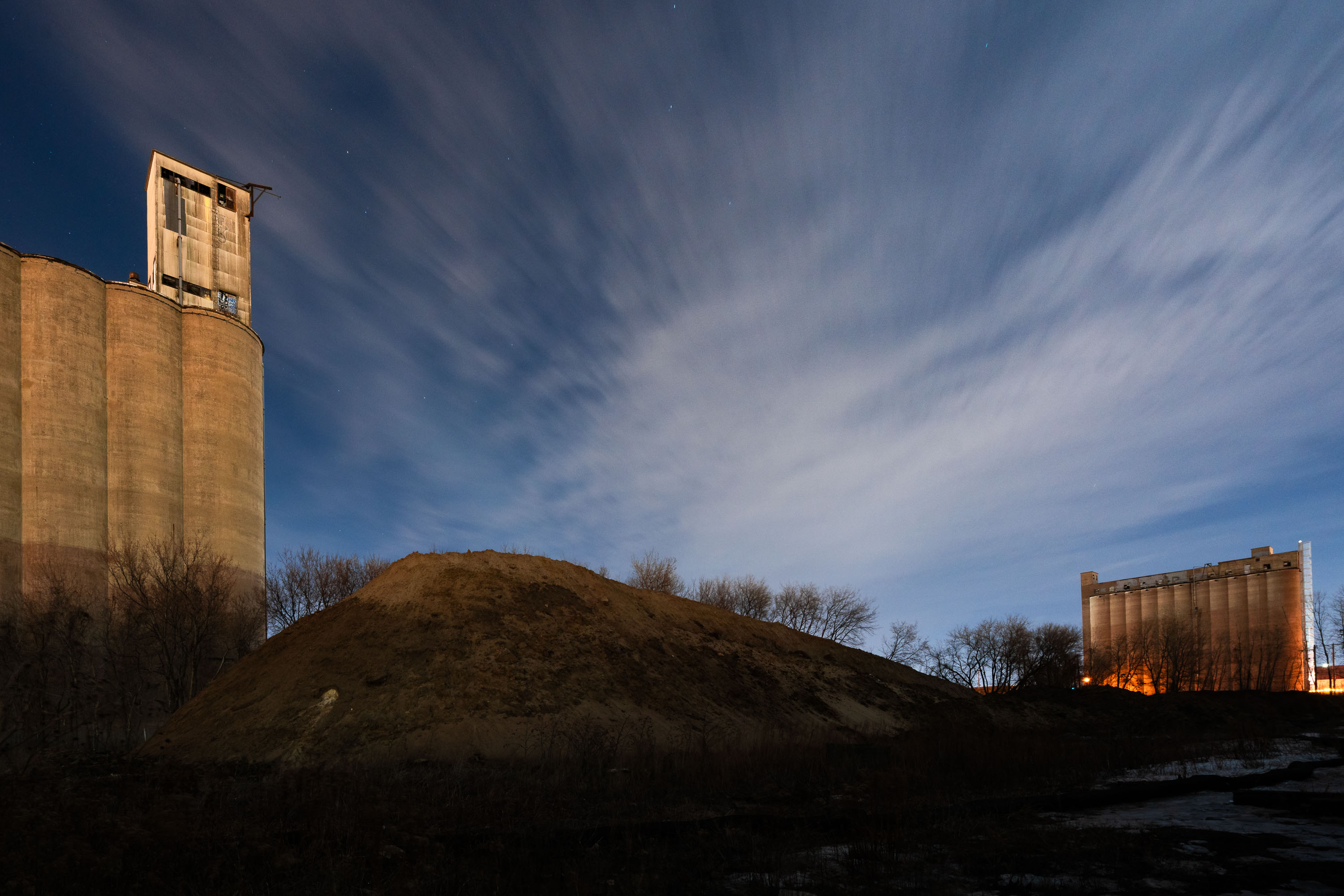
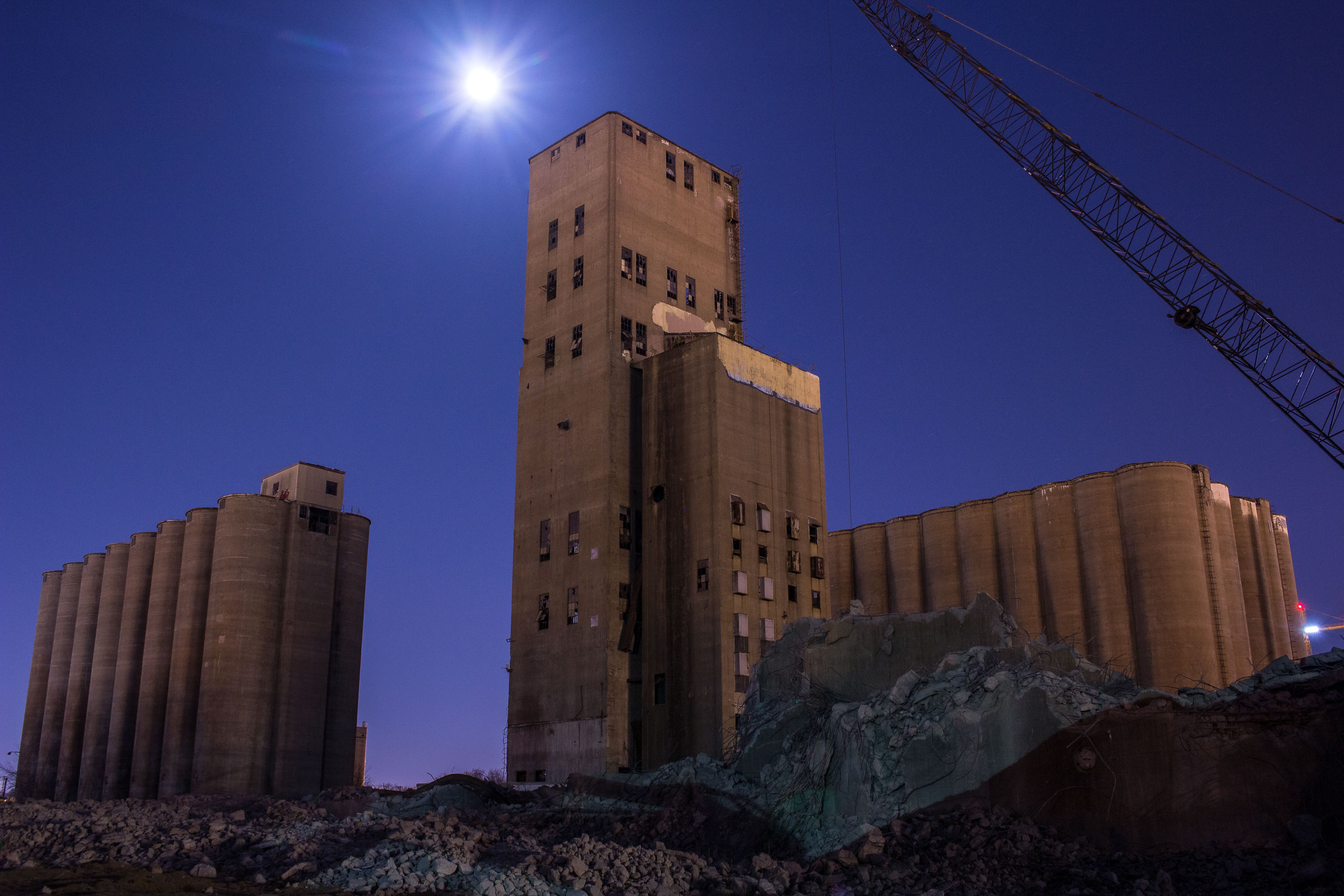
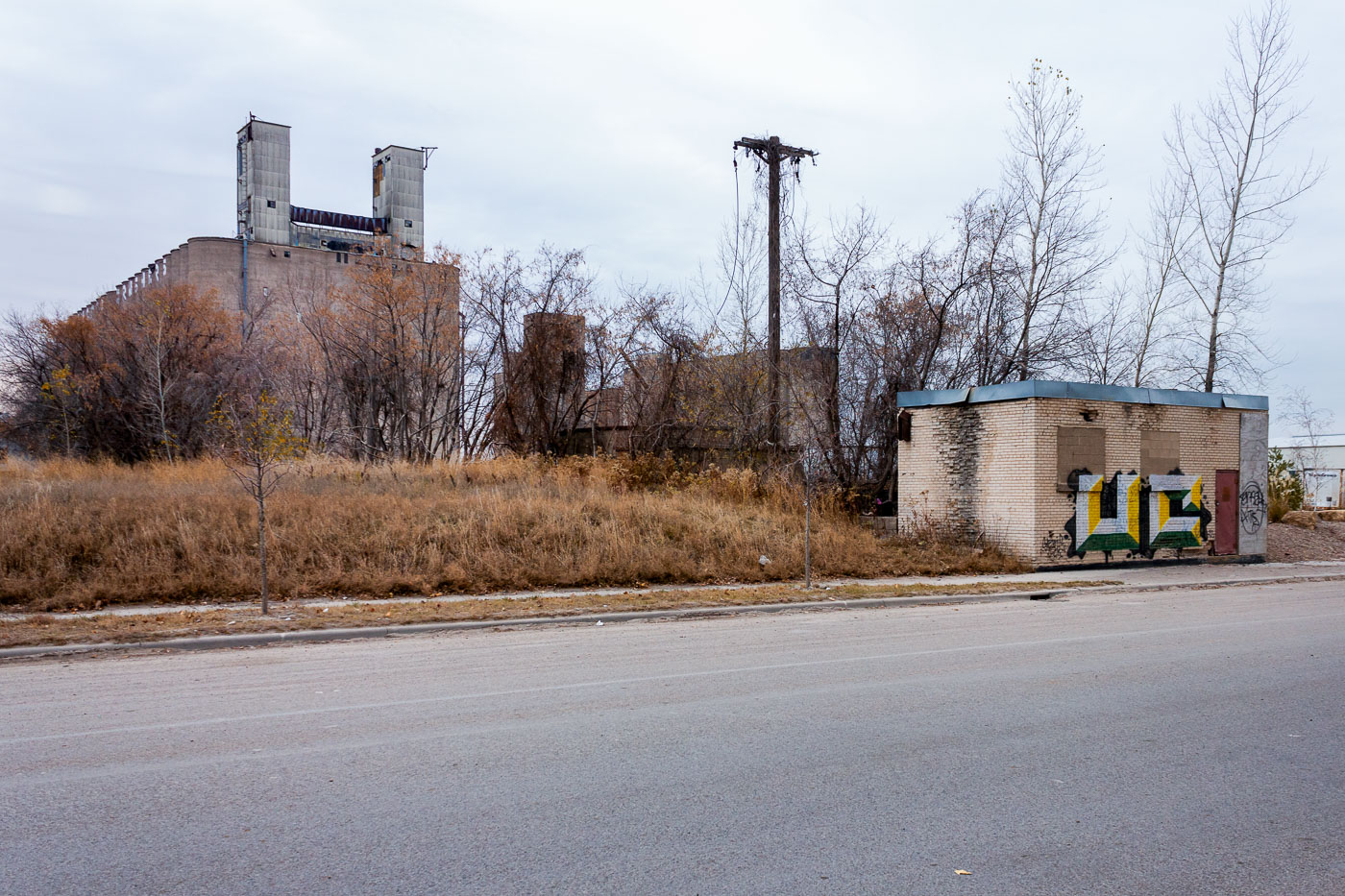
Illuminated concrete grain elevators flank an earthen mound near Dinkytown, Minneapolis.
Abandoned concrete grain elevators in Minneapolis, Minnesota.

Concrete Grain Elevators Near Dinkytown, Minneapolis
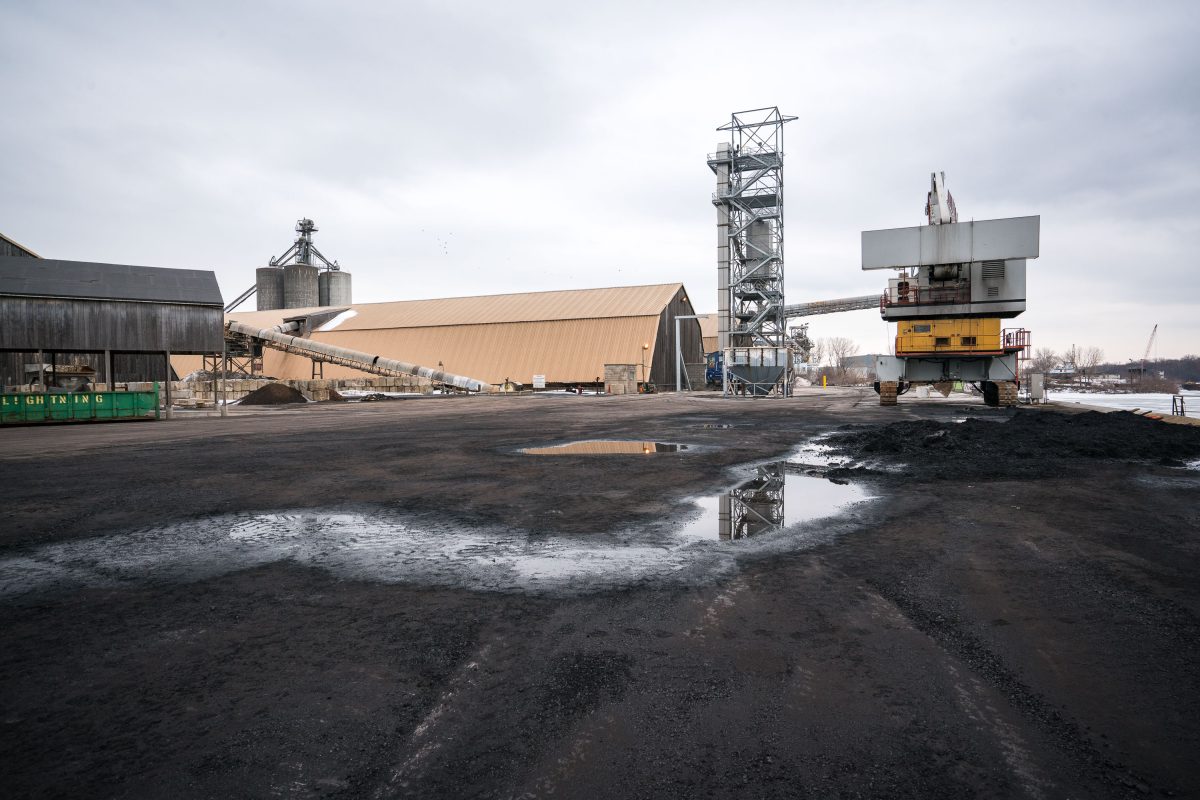
Grain elevator headhouse and conveyor structures at the Gavilon Red Rock Elevator in South St. Paul, Minnesota.
Gavilon Red Rock Elevator is a grain handling facility located in South St. Paul, Minnesota. The site is operated by Gavilon Grain, a commodity trading and grain storage company. The complex includes a headhouse tower, conveyor system, and grain silos used for receiving, storing, and loading grain shipments. Barge and rail access along the Mississippi River allows the facility to transfer grain between transportation modes.

Gavilon Red Rock Elevator, South St. Paul
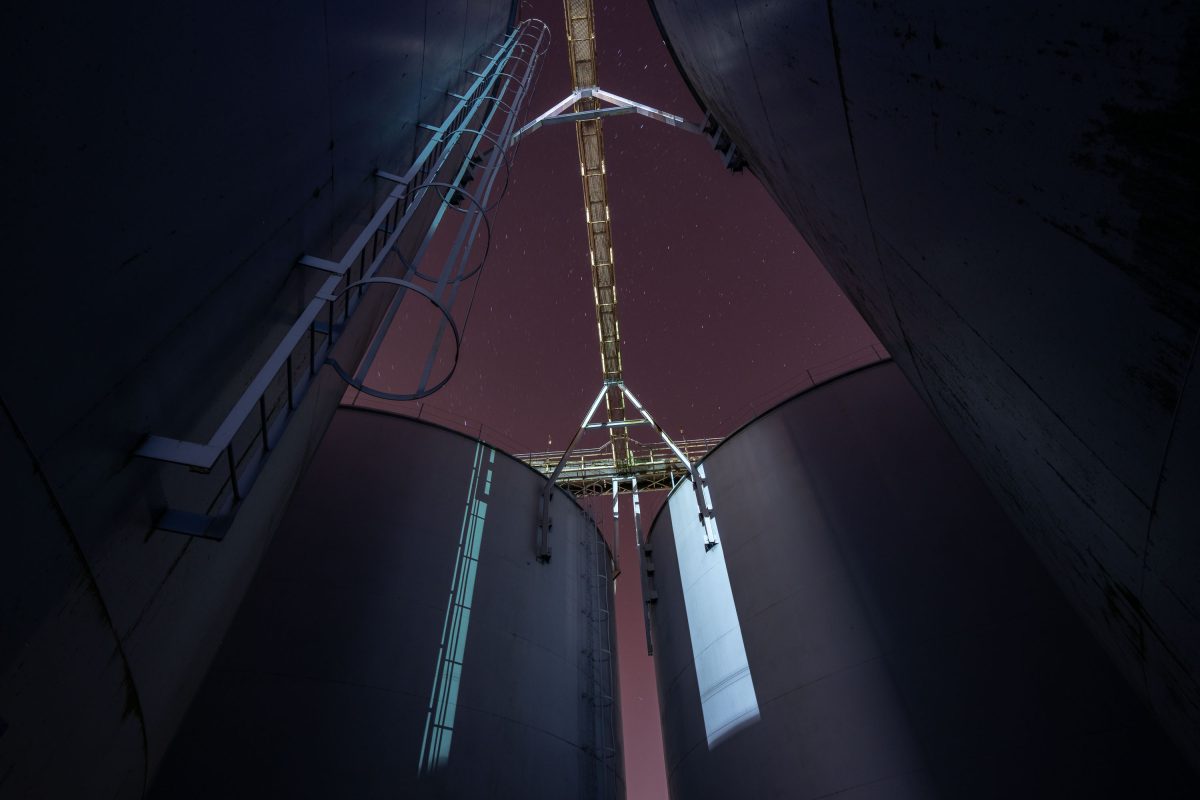
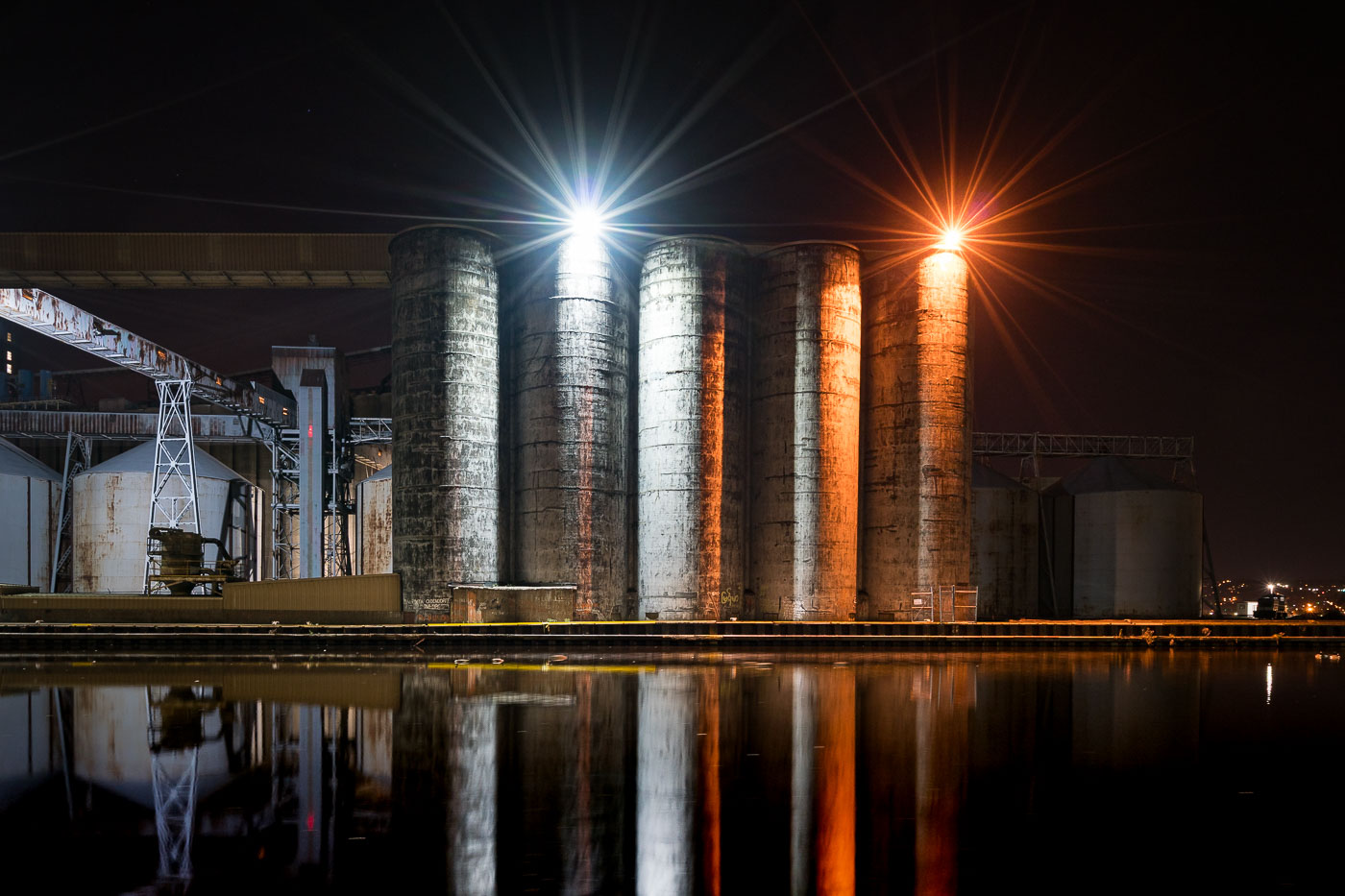
Concrete grain elevators of the Peavey terminal rise against the night sky in Superior, Wisconsin.
The Peavey Company, founded by Frank H. Peavey in the late 1800s, grew into one of the largest grain trading and storage operations in the United States. Superior, Wisconsin, sits at the westernmost point of Lake Superior and developed into a major grain-shipping port in the early 20th century, linking Midwest wheat farms to Great Lakes freighter traffic. Concrete elevators like this one were built to store grain in bulk before loading onto ships bound for mills and markets farther east. The Twin Ports of Superior and Duluth once ranked among the busiest grain-handling centers on the Great Lakes.

Peavey Grain Terminal, Superior, Wisconsin
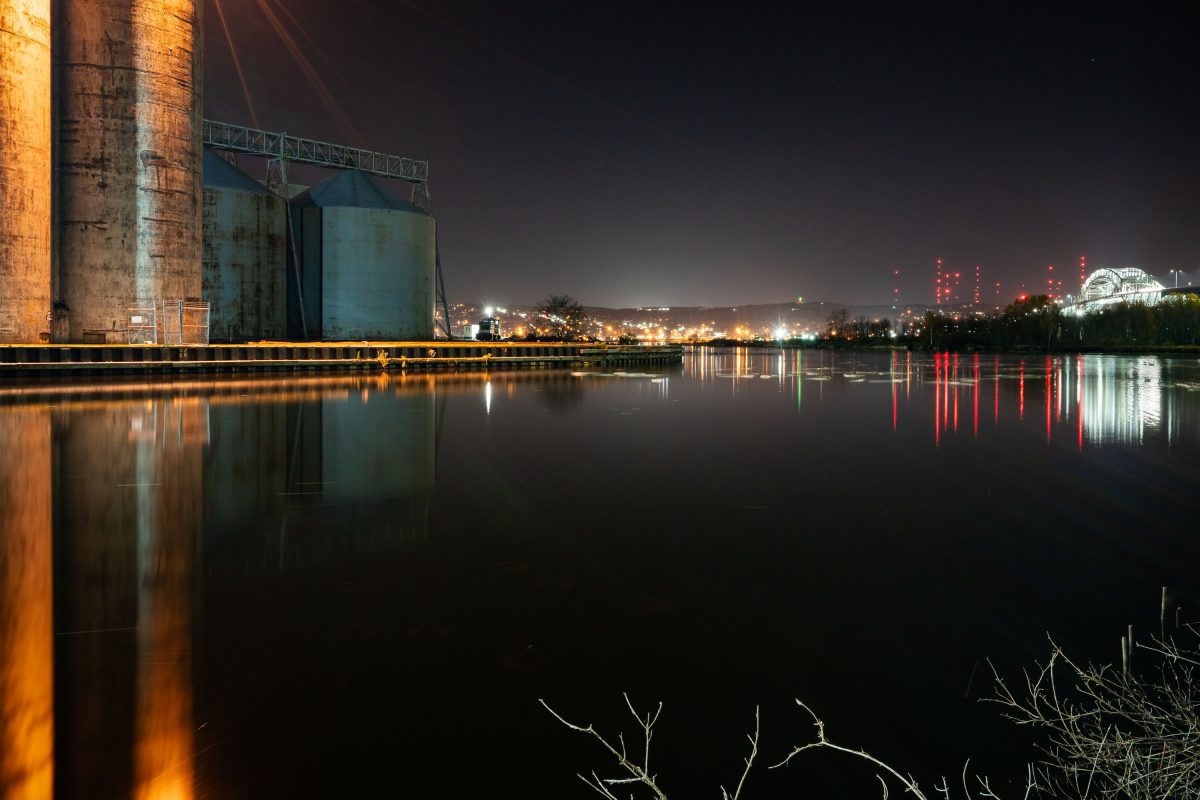
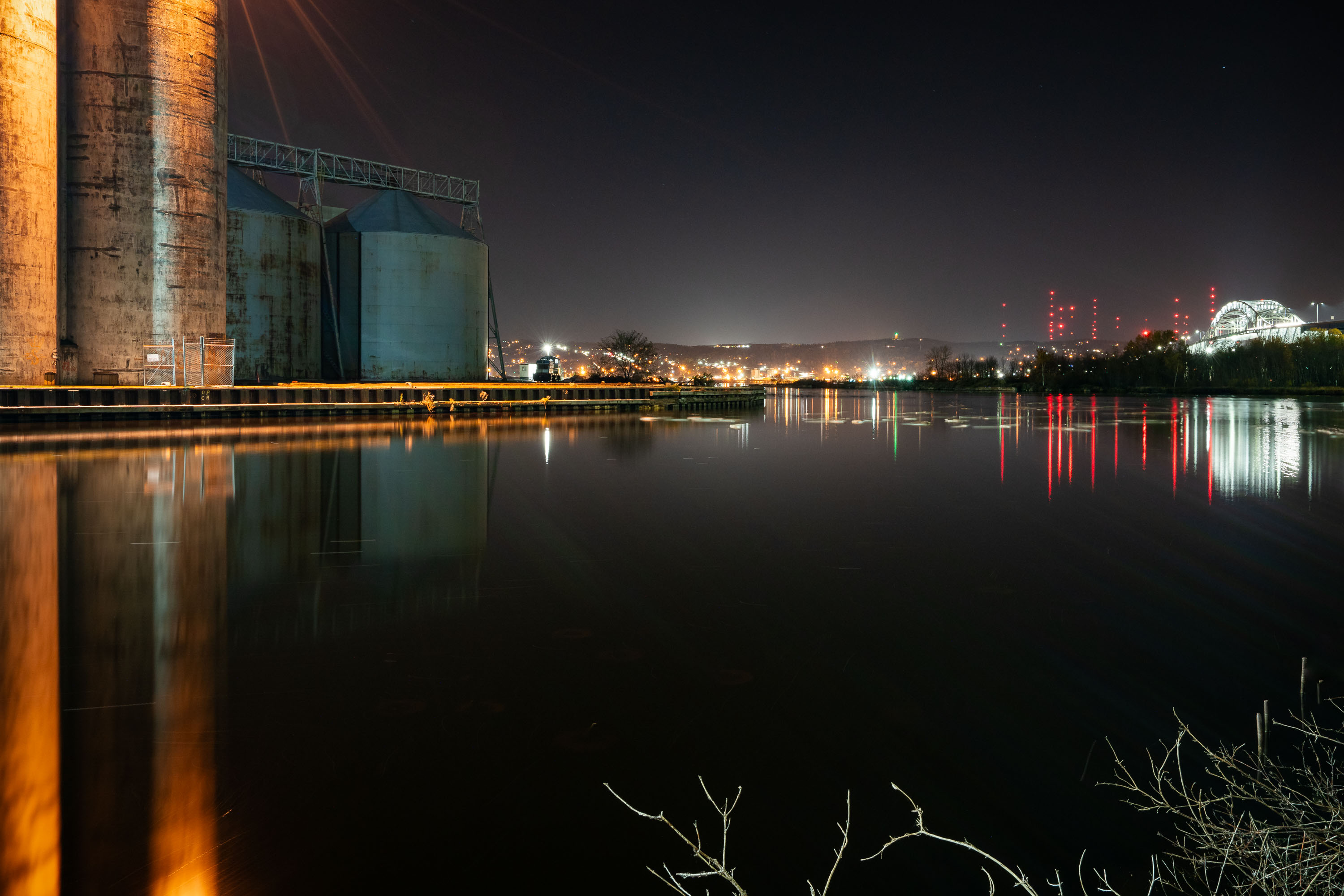
CHS Grain Elevators, Superior, Wisconsin
CHS grain elevators in Superior, Wisconsin, stand along a waterway in the Port of Duluth-Superior. The facility is part of the harbor's grain-handling and bulk shipping infrastructure on the western end of Lake Superior.

CHS Grain Elevators in Superior, Wisconsin
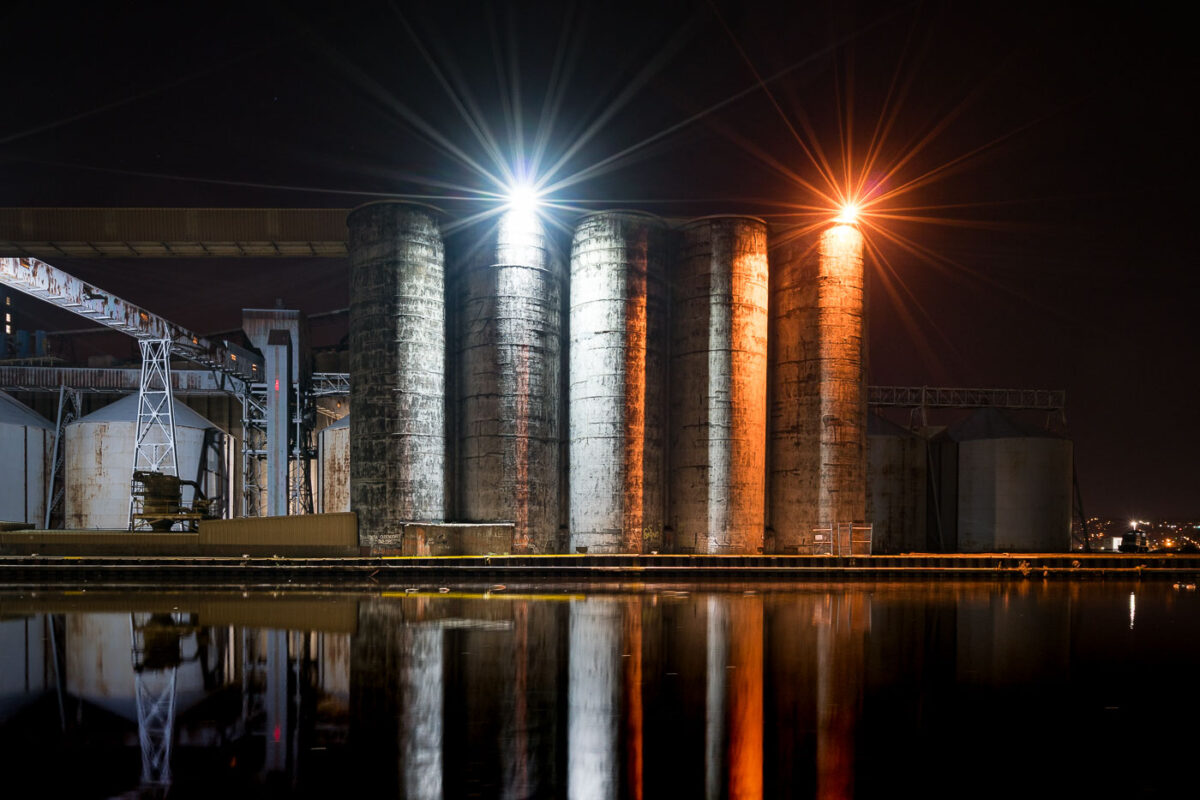
CHS grain elevators illuminated at night along Lake Superior's western shore in Superior, Wisconsin.
CHS Grain Elevators in Superior, Wisconsin, are part of the Port of Superior’s grain-handling facilities. The complex stores and transfers grain for shipment by rail and vessel on the western shore of Lake Superior.

CHS Grain Elevators at Night in Superior
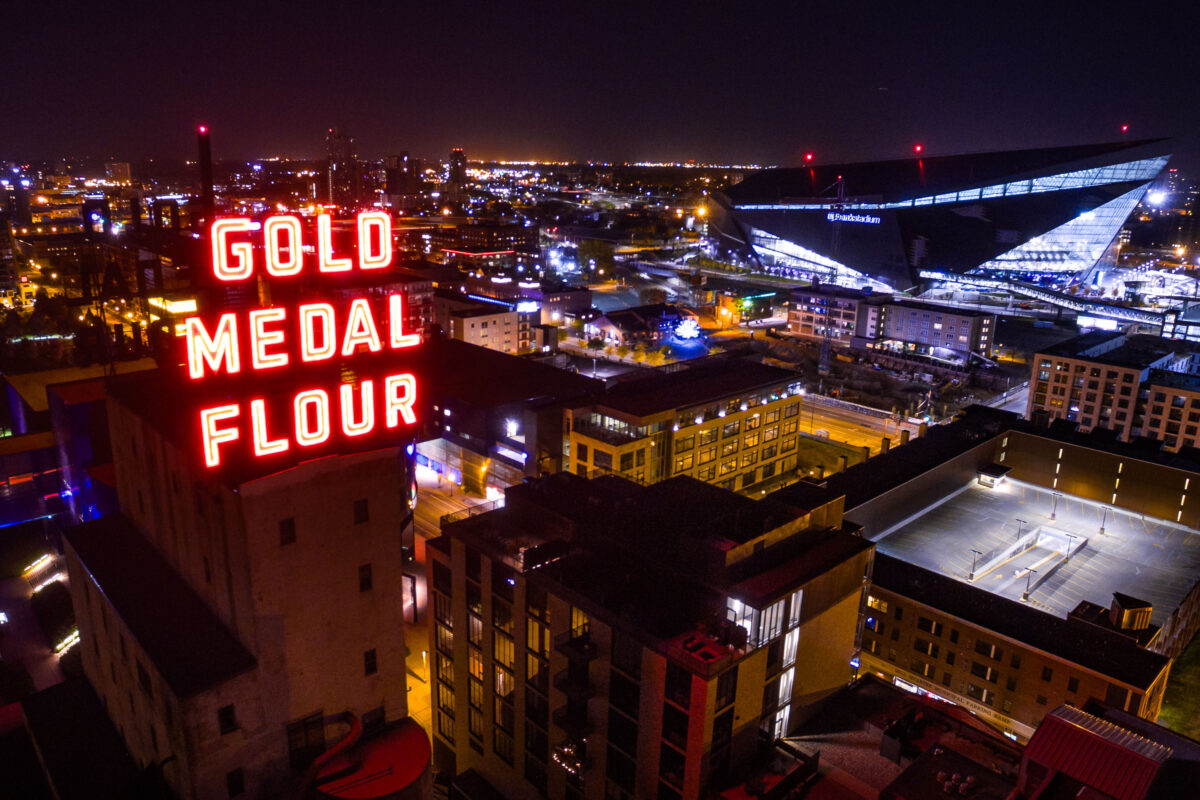
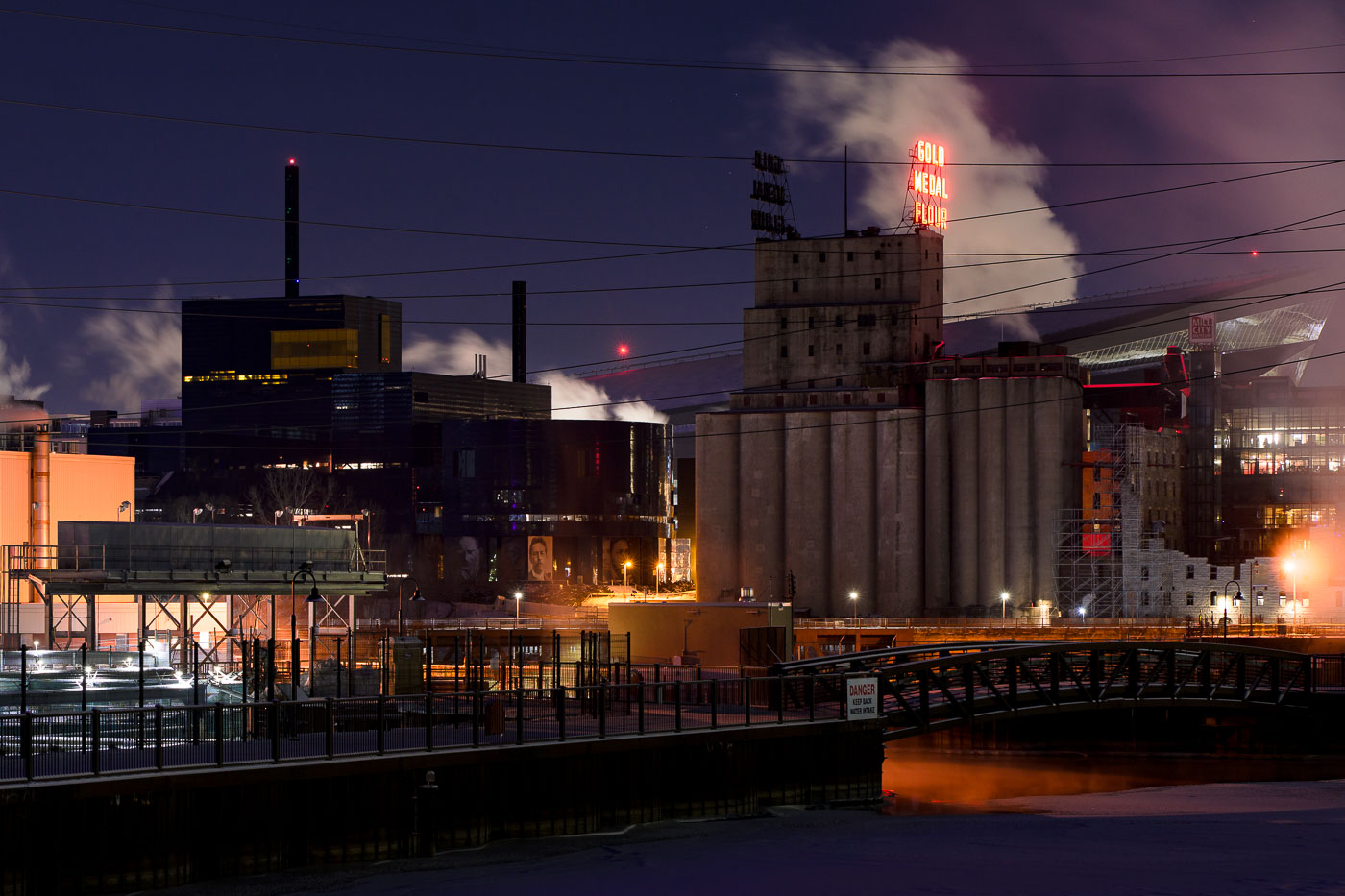
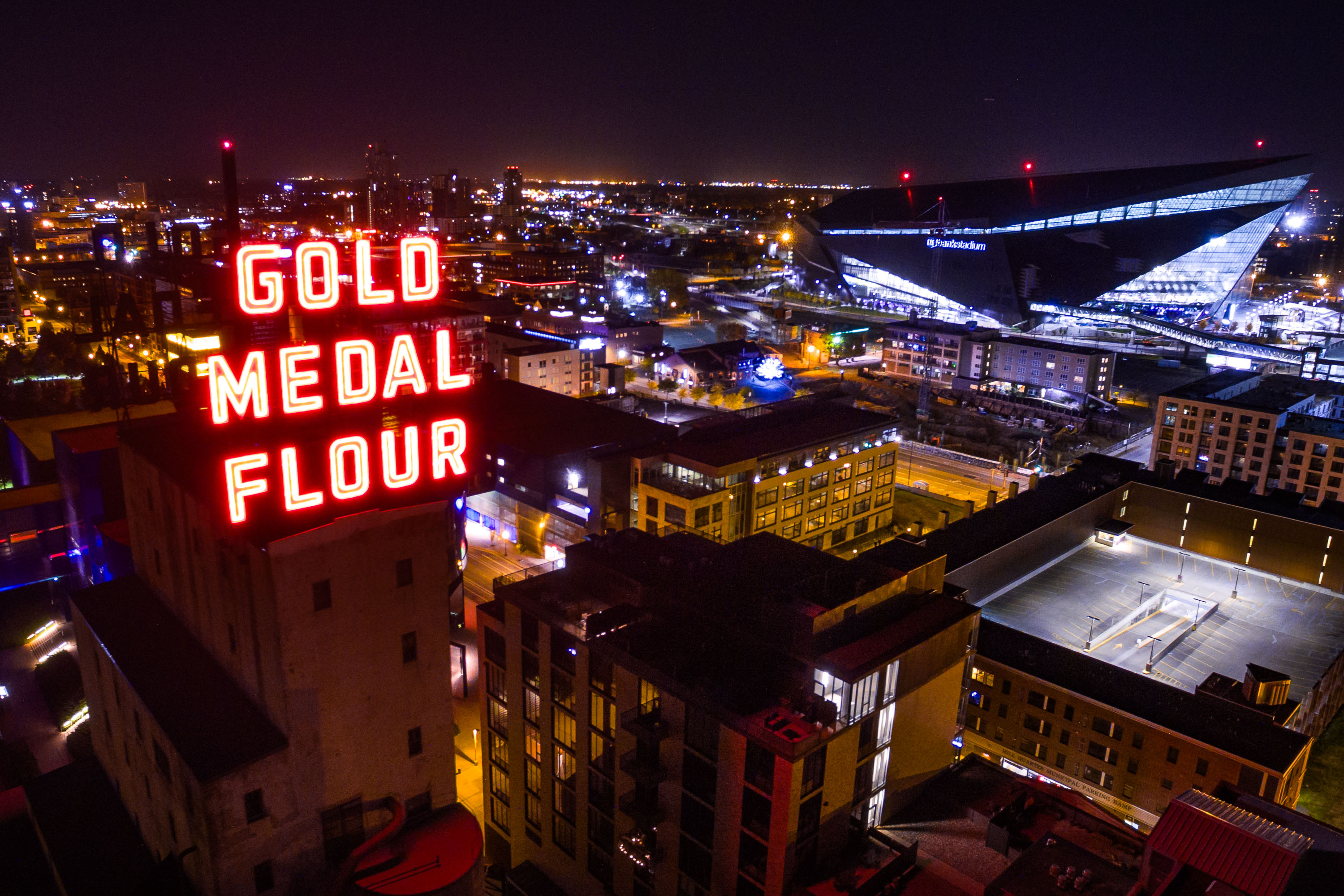
Lit up neon sign reading Gold Medal Flour, Minneapolis
Gold Medal Flour and US Bank Stadium in downtown Minneapolis.

Gold Medal Flour and US Bank Stadium, Minneapolis
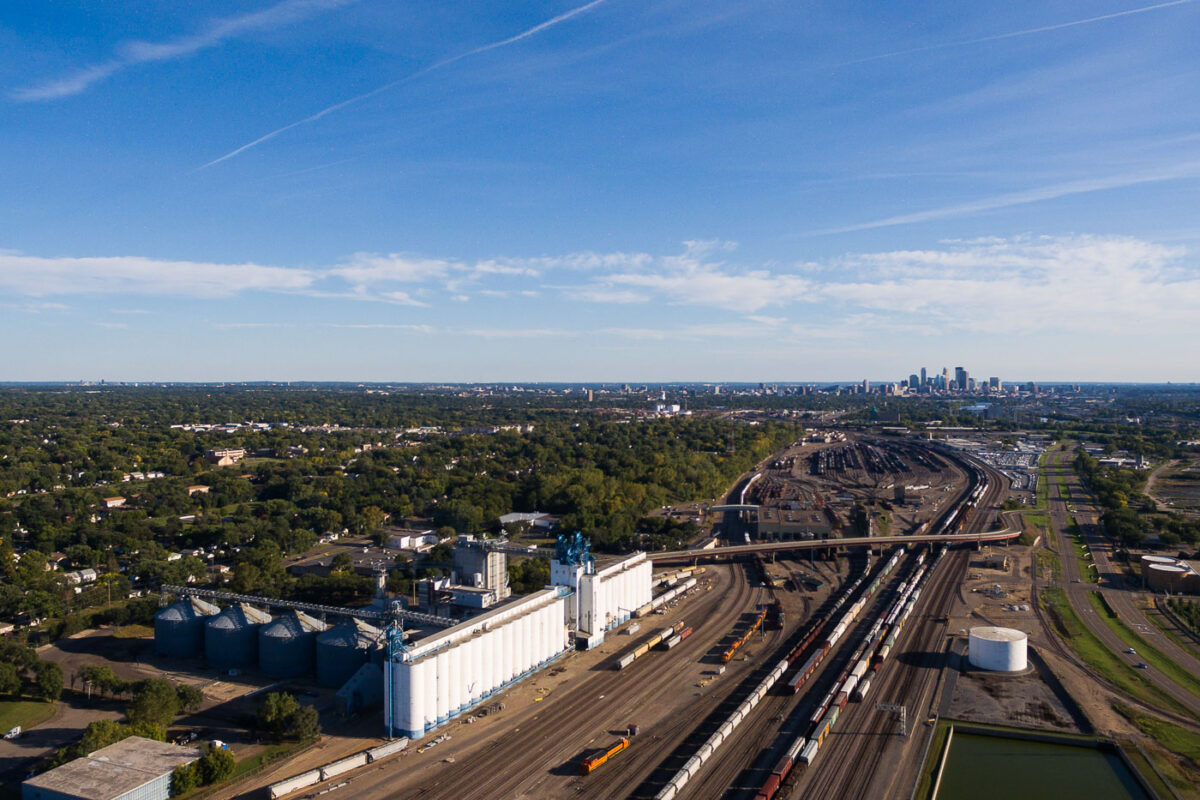
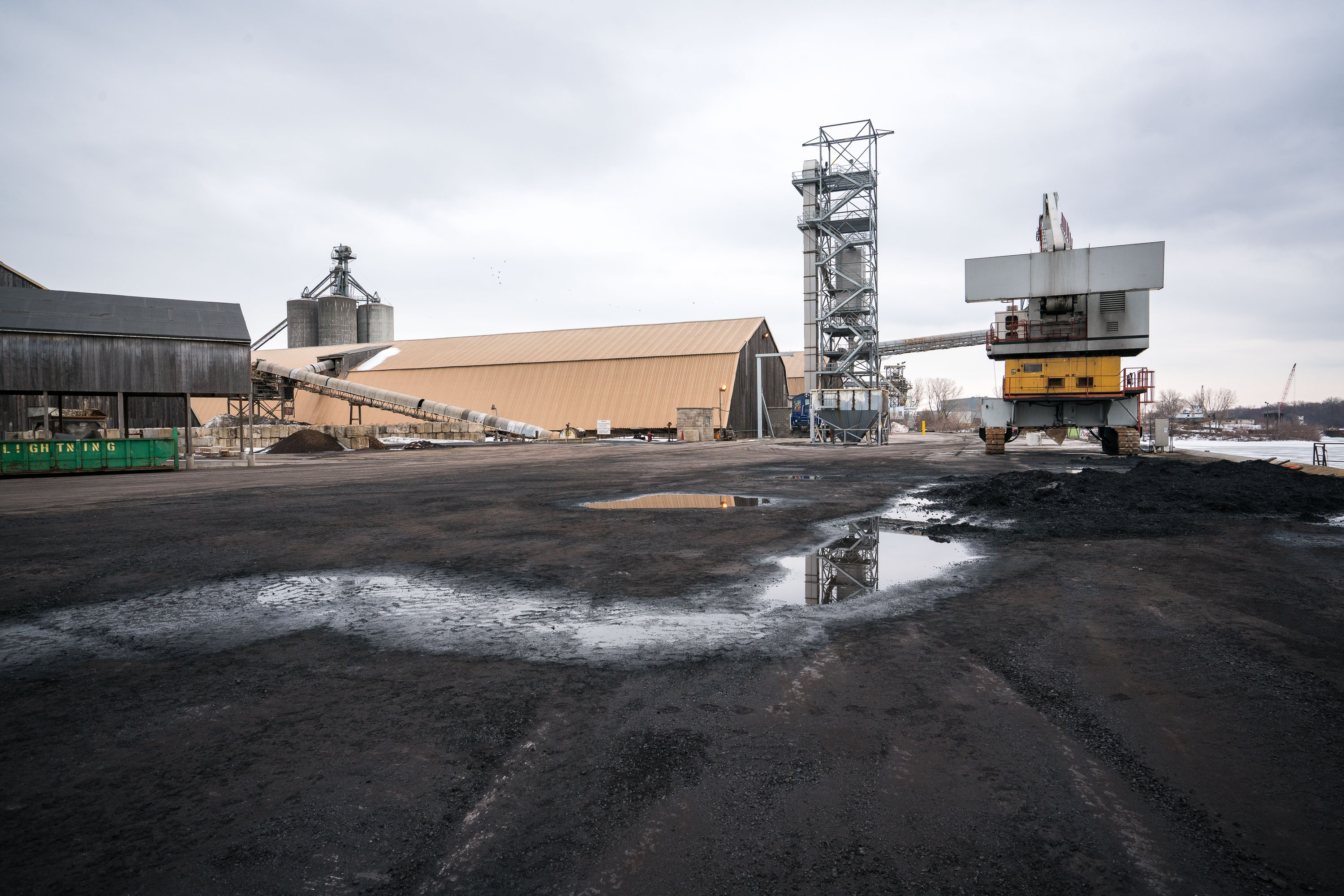
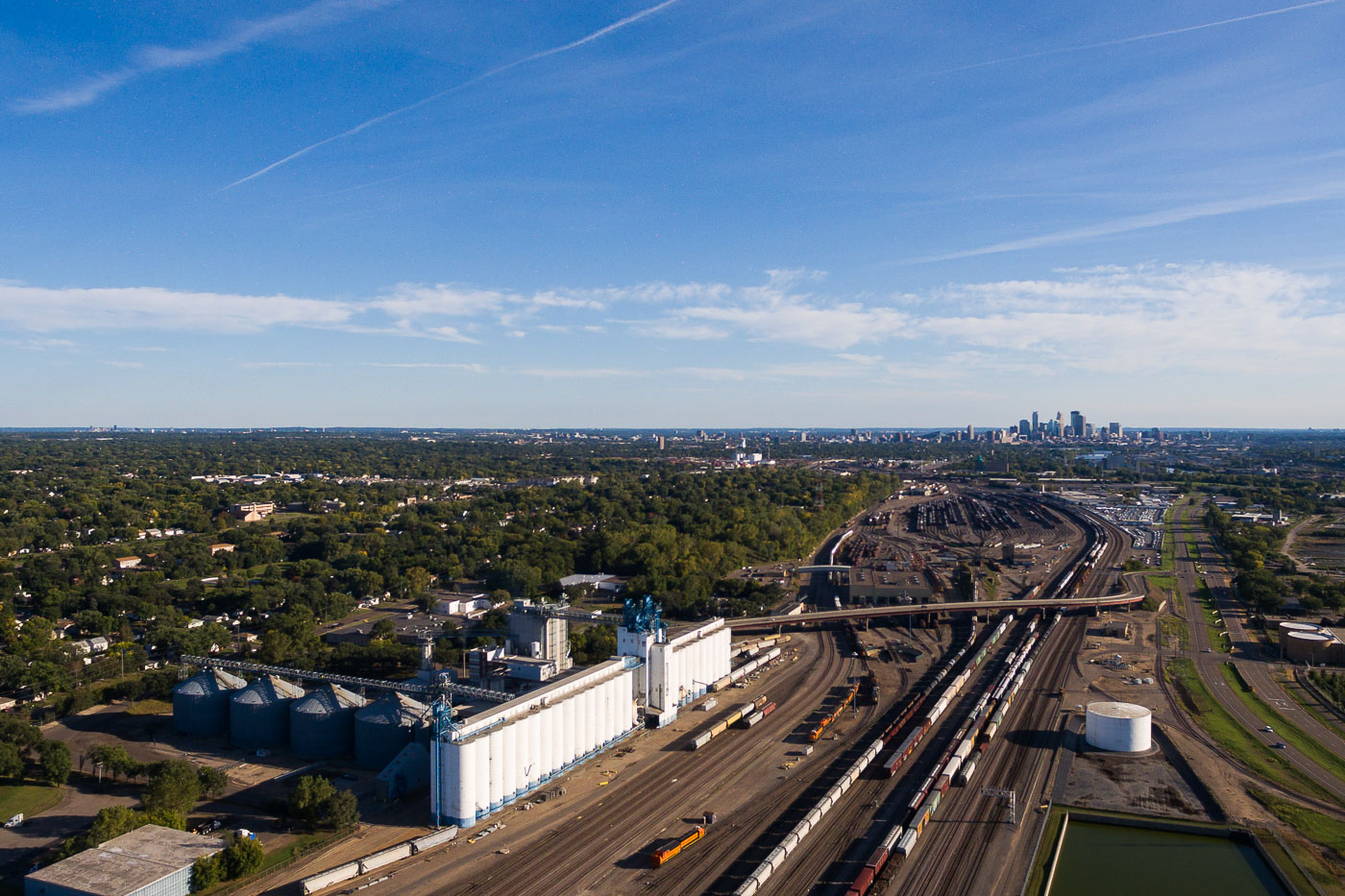
General Mills Grain Elevator and Rail Yard in Northeast Minneapolis, a key industrial facility for grain storage and transportation connecting to national markets.
The General Mills Grain Elevator and Rail Yard in Northeast Minneapolis is a critical component of the region's agricultural and industrial infrastructure. This facility, designed for the storage and transportation of grain, plays a vital role in the food processing industry, particularly for a company with deep roots in Minneapolis's milling history. The extensive rail yard adjacent to the elevators facilitates the efficient movement of commodities, connecting local production to national and international markets. Its presence underscores the historical importance of grain processing and transportation to the economic development of Minneapolis.

General Mills Grain Elevator and Rail Yard, Northeast Minneapolis
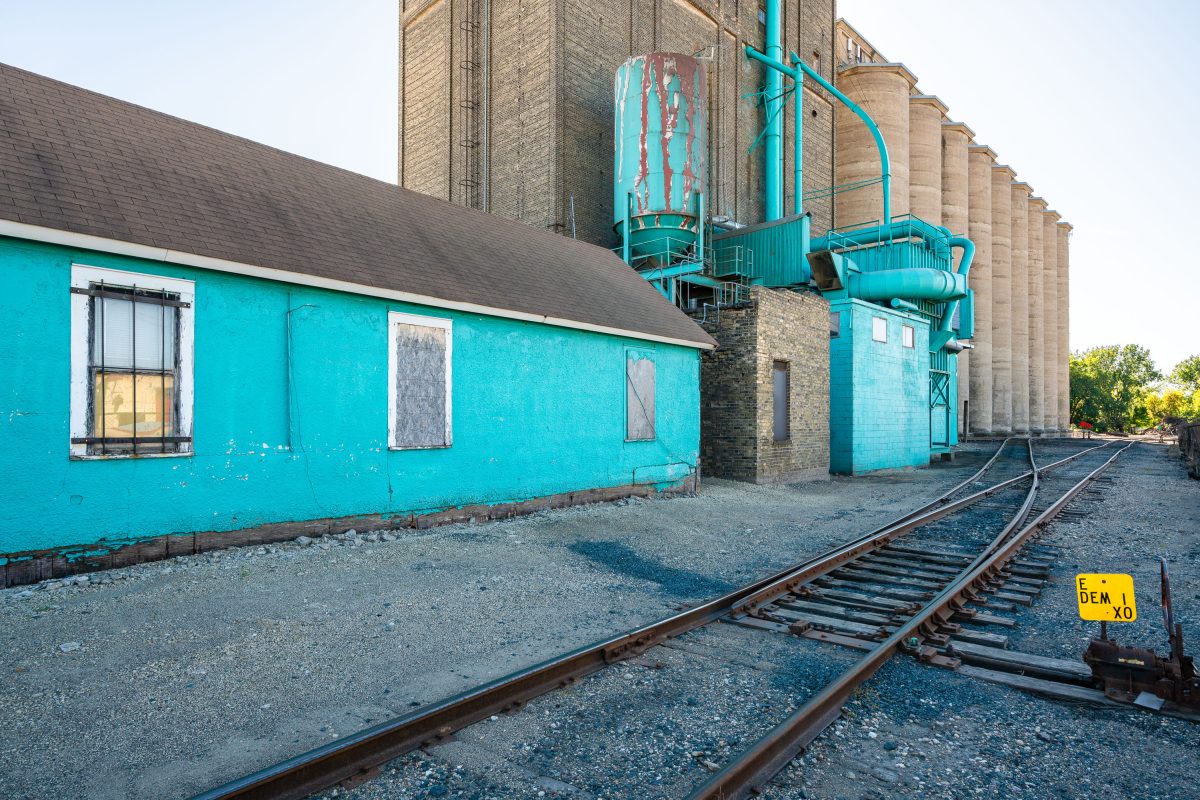
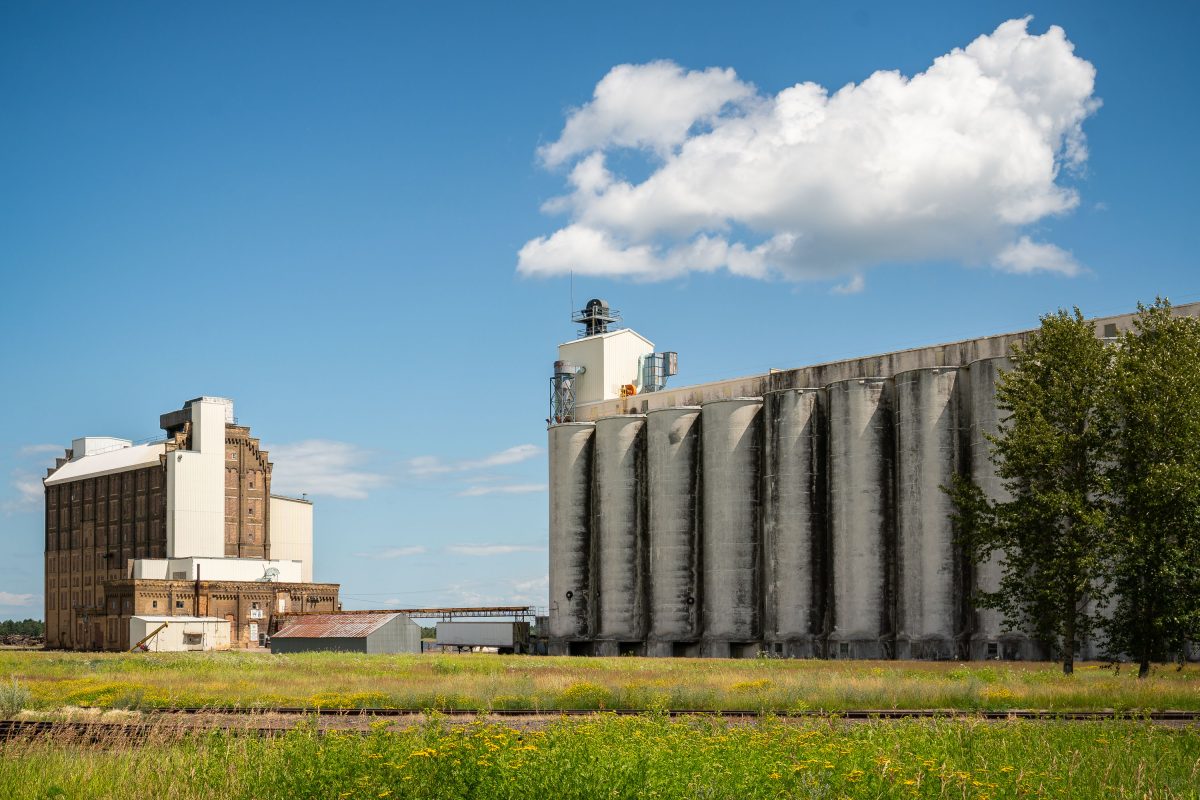
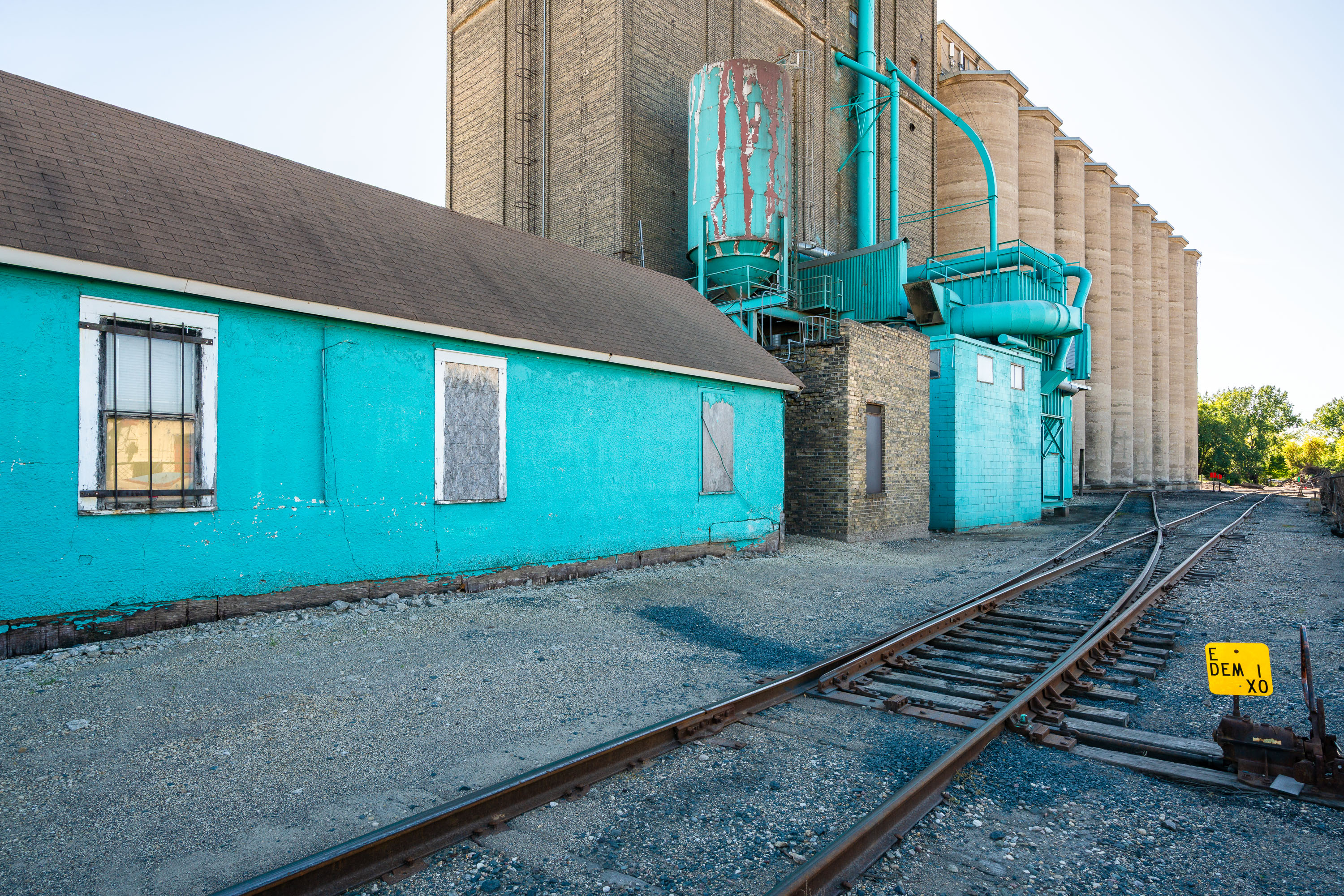
Viterra grain elevator complex with turquoise outbuilding and railroad tracks leading to concrete storage silos.
Viterra's grain elevator sits along a rail spur in Minneapolis, part of a concrete silo complex built for bulk grain storage. A turquoise annex with a loading structure stands beside the row of silos, with tracks running up to the building for loading and unloading rail cars.

Rail Tracks Curve Past the Viterra Grain Elevator’s Turquoise Annex
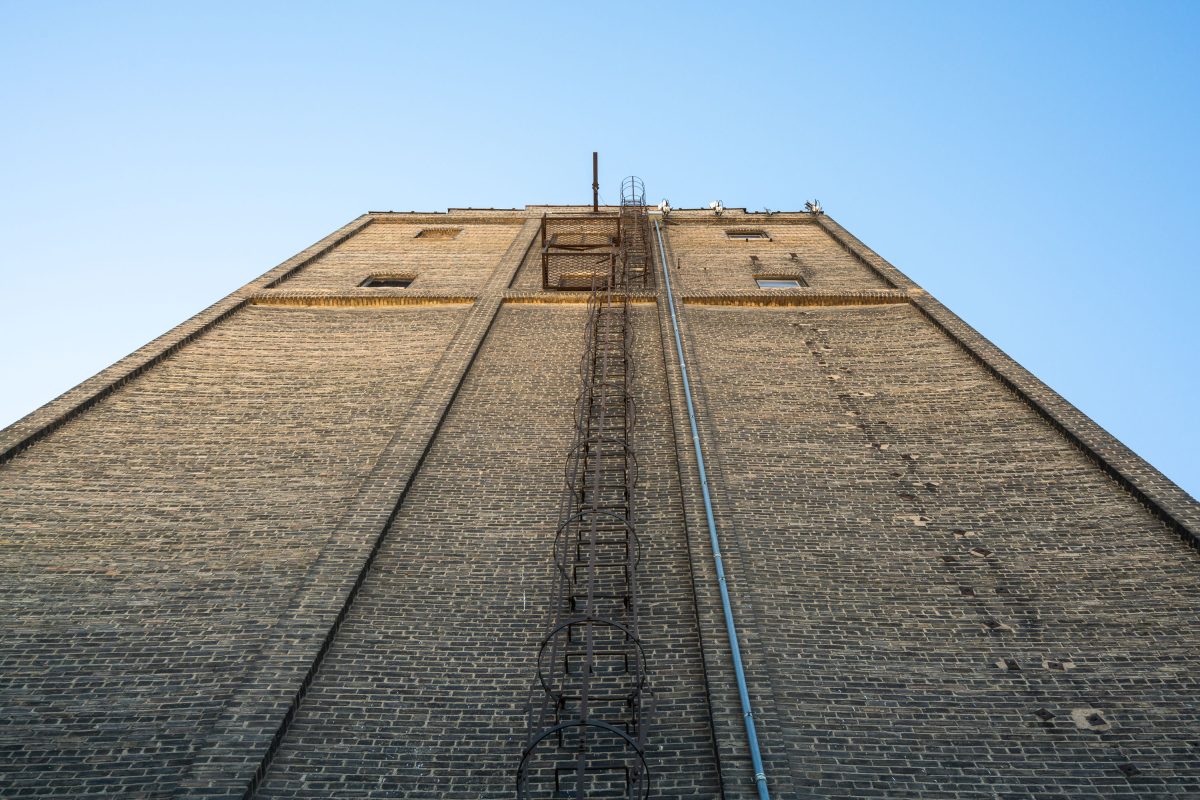
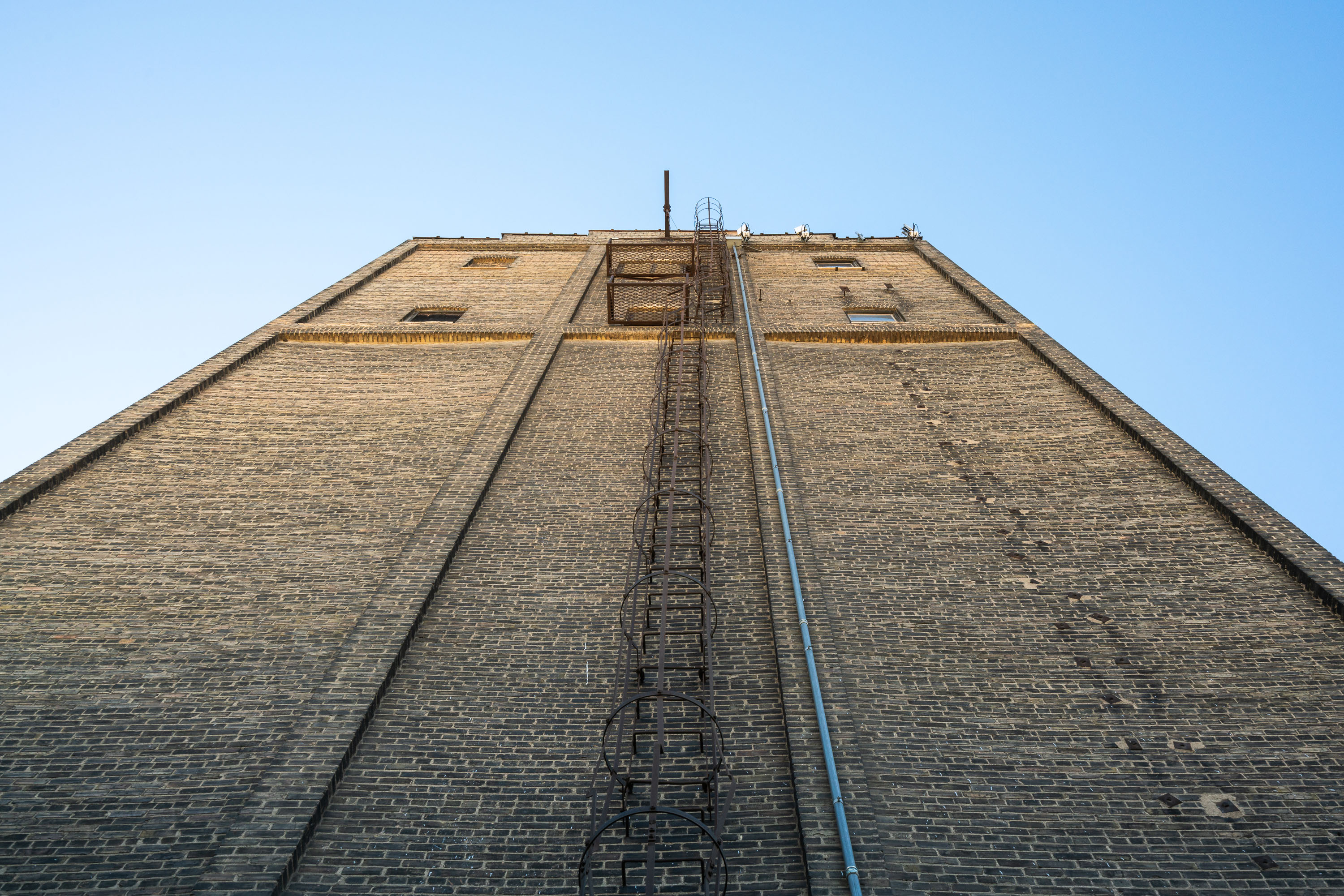
Tall brick grain elevator with metal fire escape and blue utility pipe against clear sky in Minneapolis.
Viterra operates this grain elevator in Minneapolis, a concrete and brick structure used to store grain before it moves out by rail. A caged metal ladder and a utility pipe run the full height of the wall, servicing the tower's upper equipment.

Straight Up the Brick Face of Viterra’s Grain Elevator
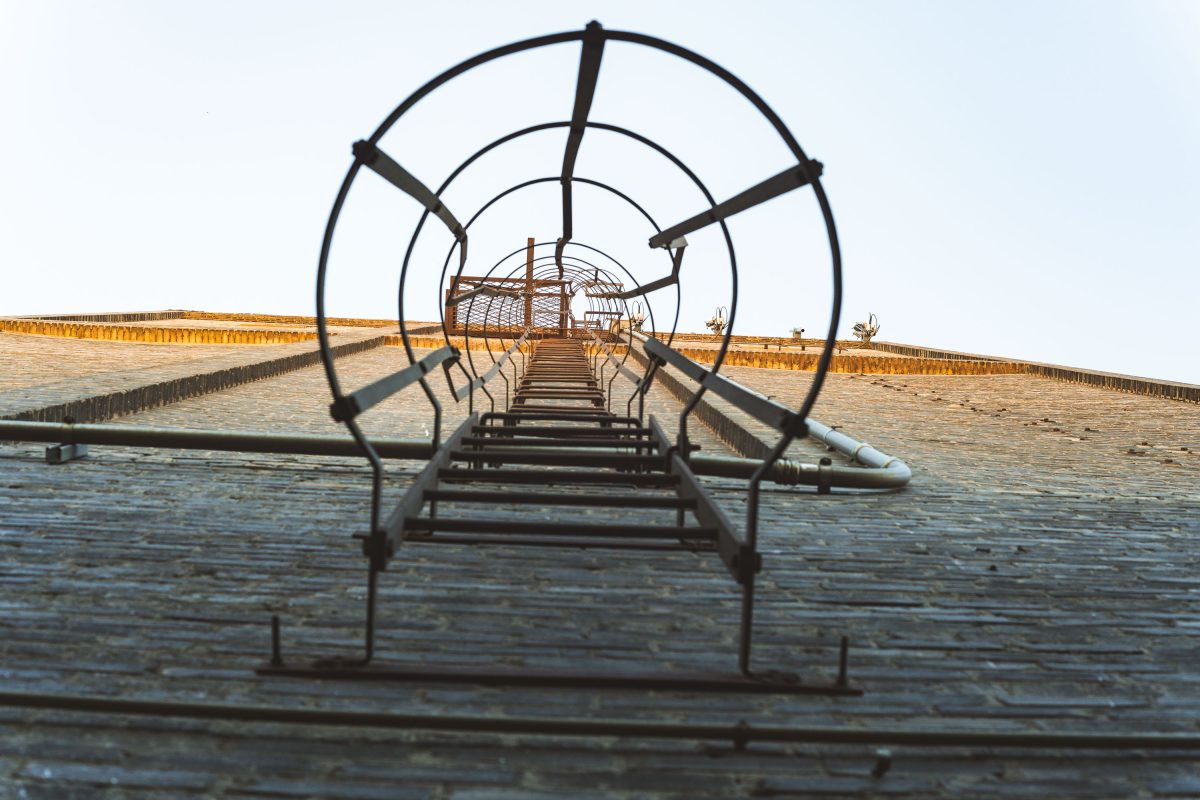
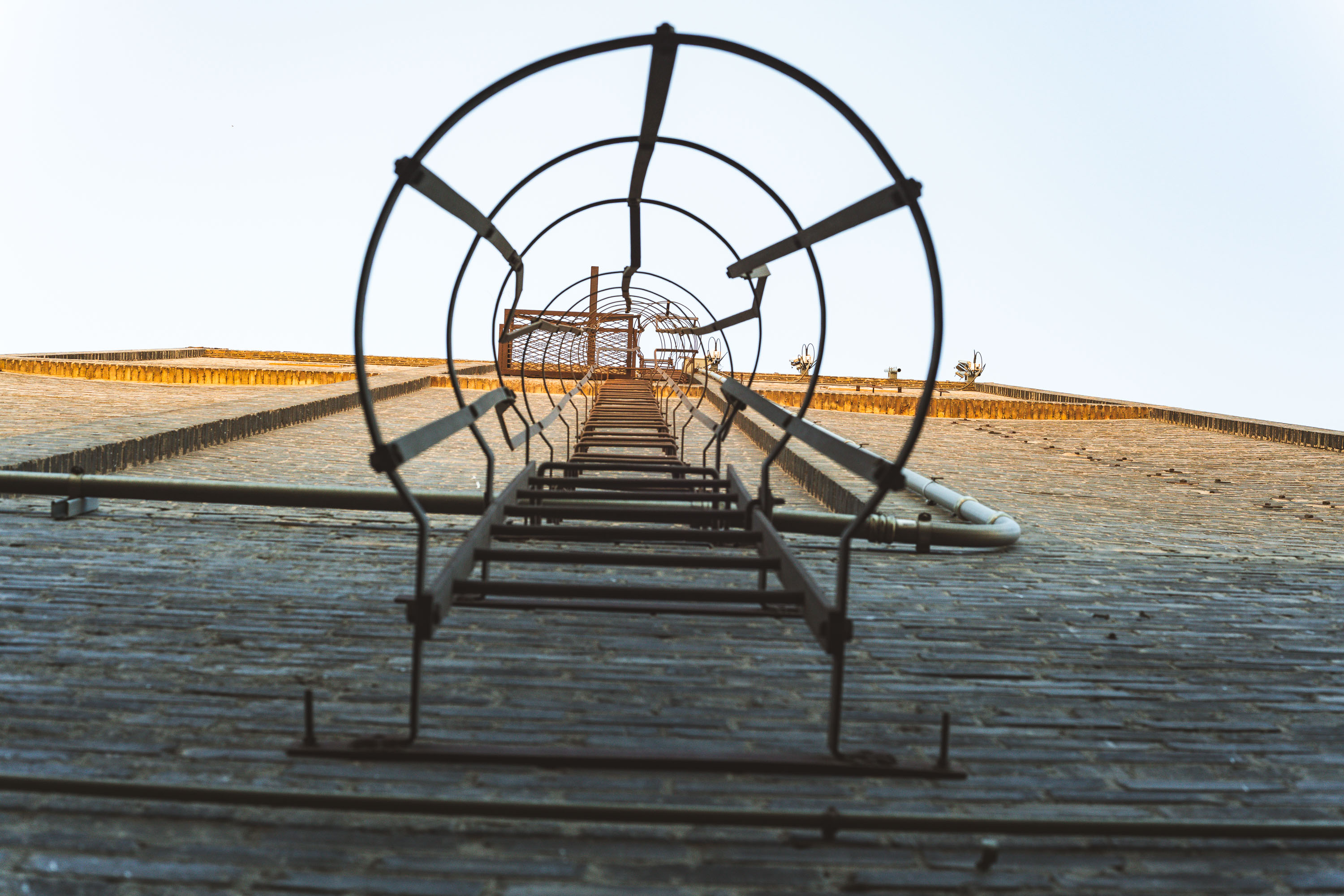
Caged metal ladder and walkway system on the exterior of a Viterra grain elevator in Minneapolis.
A caged ladder climbs the exterior wall of the Viterra grain elevator in Minneapolis, rising toward a platform near the roofline. The circular hoops around the rungs are a standard safety guard meant to keep a climber from falling backward on the long vertical run.

A Caged Exterior Ladder on Viterra’s Grain Elevator
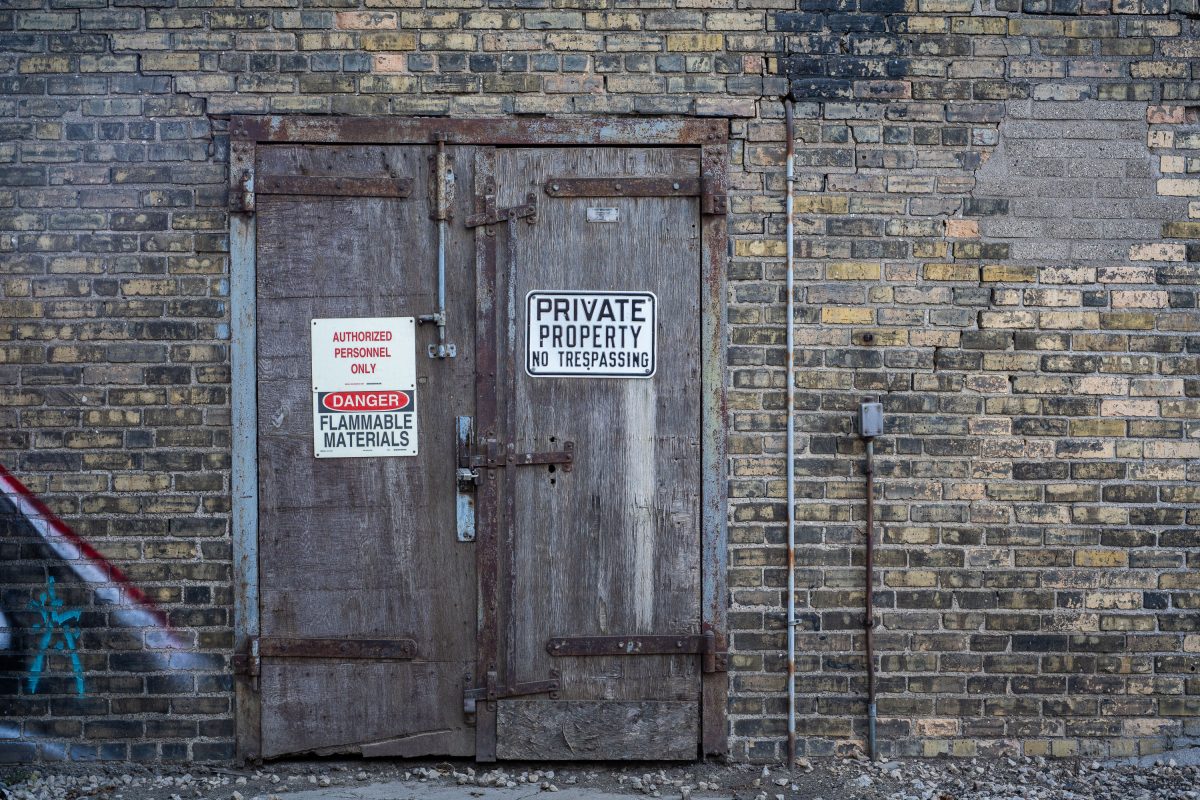
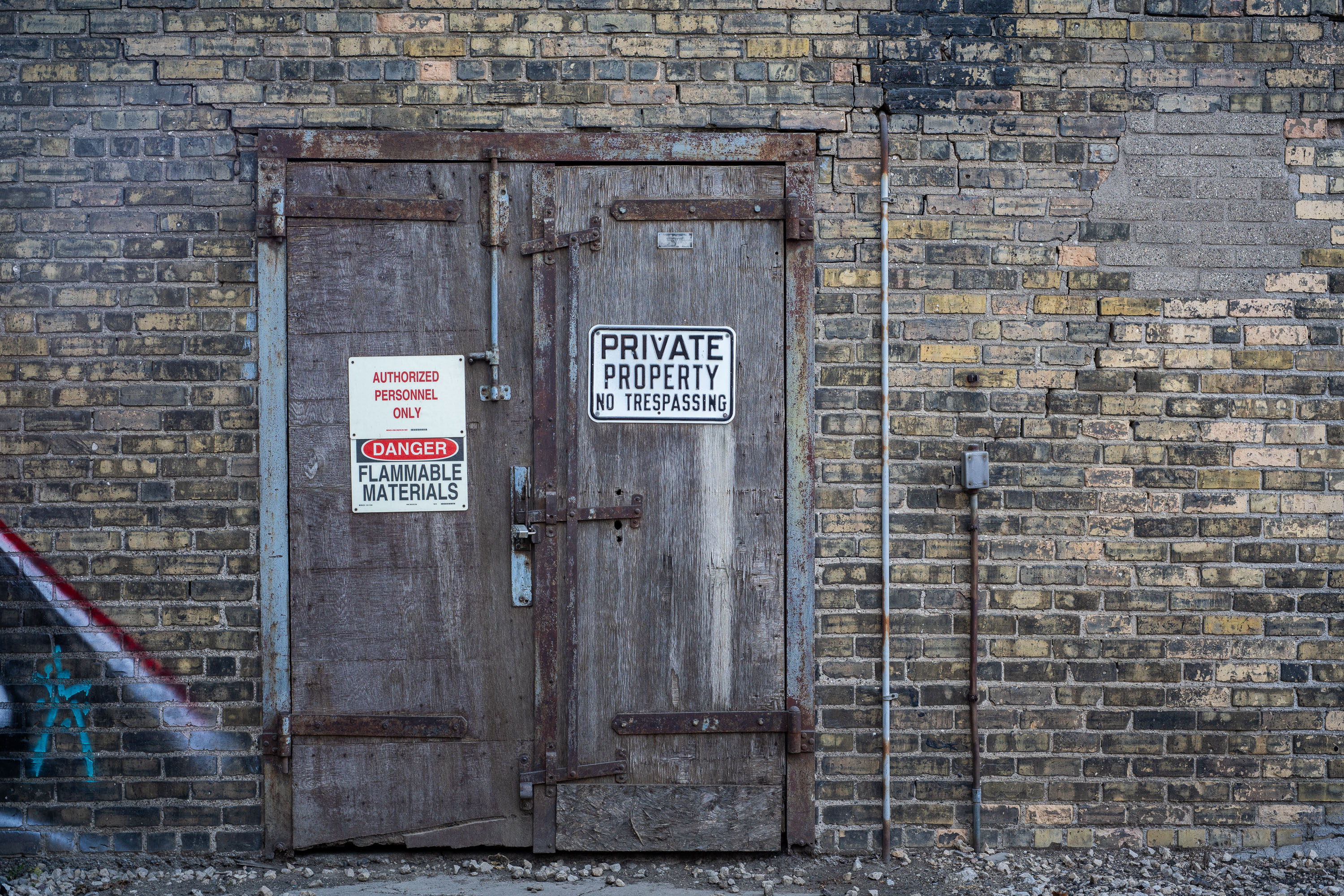
Loading dock door at Viterra grain elevator in Minneapolis displaying "Private Property" and "Flammable Materials" warning signs.
This locked double door sits on a loading dock at a grain elevator Viterra operates in Minneapolis. Viterra is a global grain handling company that stores, processes, and ships grain for export.

Warning Signs on a Loading Dock Door at Viterra’s Grain Elevator
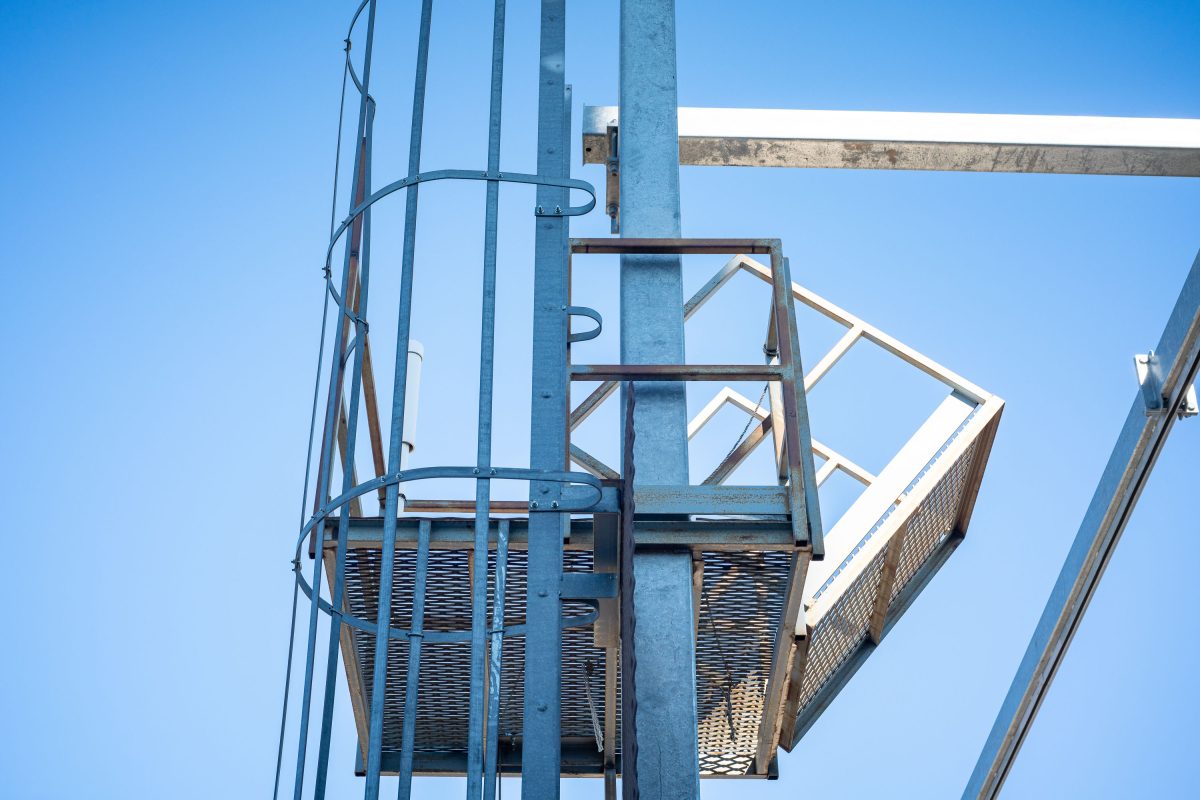
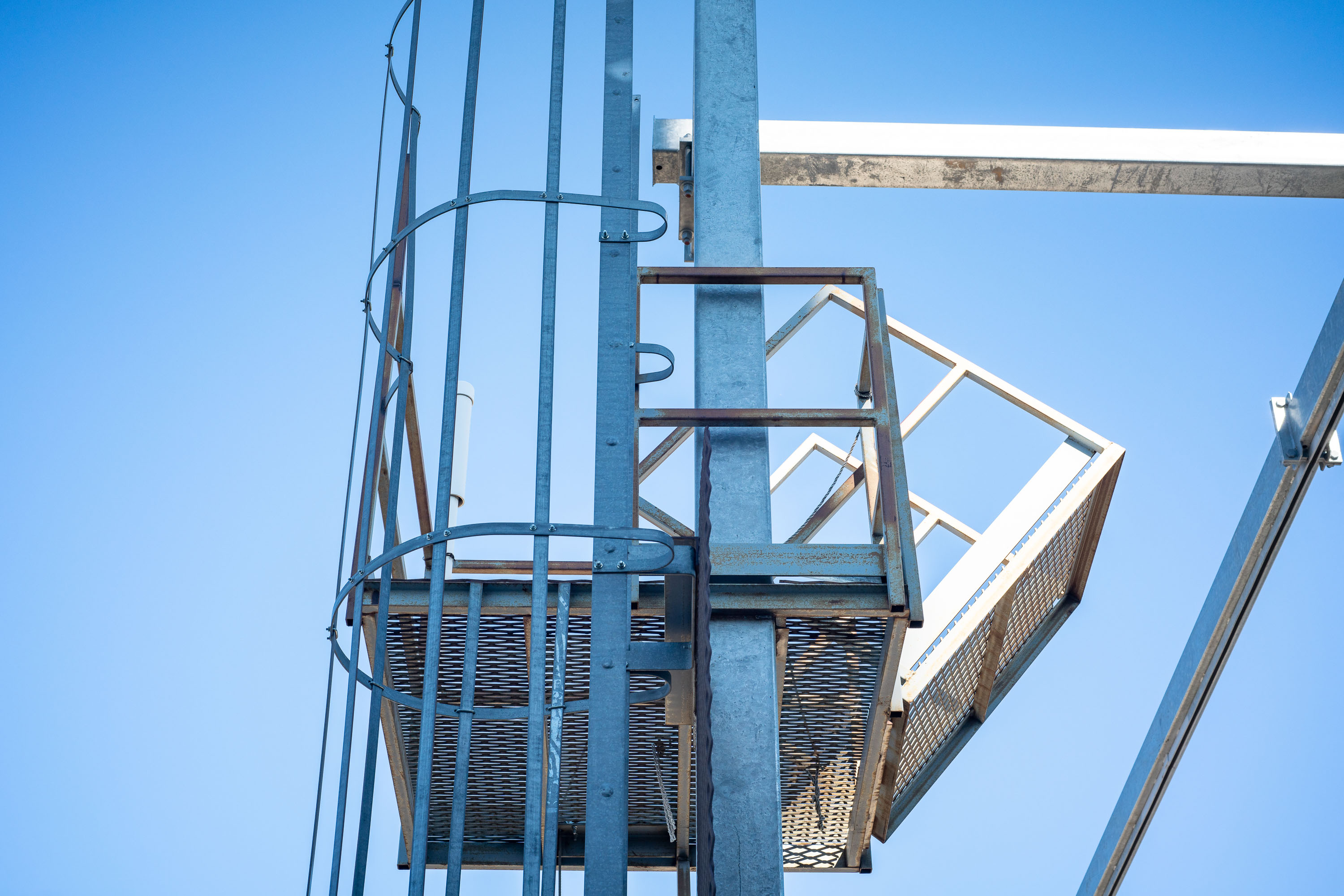
Viterra grain elevator safety cage and platform with blue metal framework and ladder against clear sky in Minneapolis.
This safety cage and landing are part of the Viterra grain elevator in Minneapolis, a facility along the Mississippi River used for storing and loading grain. The caged ladder gives workers a protected climb between platforms on the structure's exterior.

Safety Cage and Landing on the Viterra Grain Elevator

Barred window with white trim set in bright turquoise wall of Viterra grain elevator in Northeast Minneapolis.
Viterra runs a grain elevator complex in Northeast Minneapolis, part of the storage terminals that grew up near the city's old flour milling district. The window's iron security bars and worn wood frame point to the building's industrial age.

A Barred Window in the Turquoise Wall at Viterra
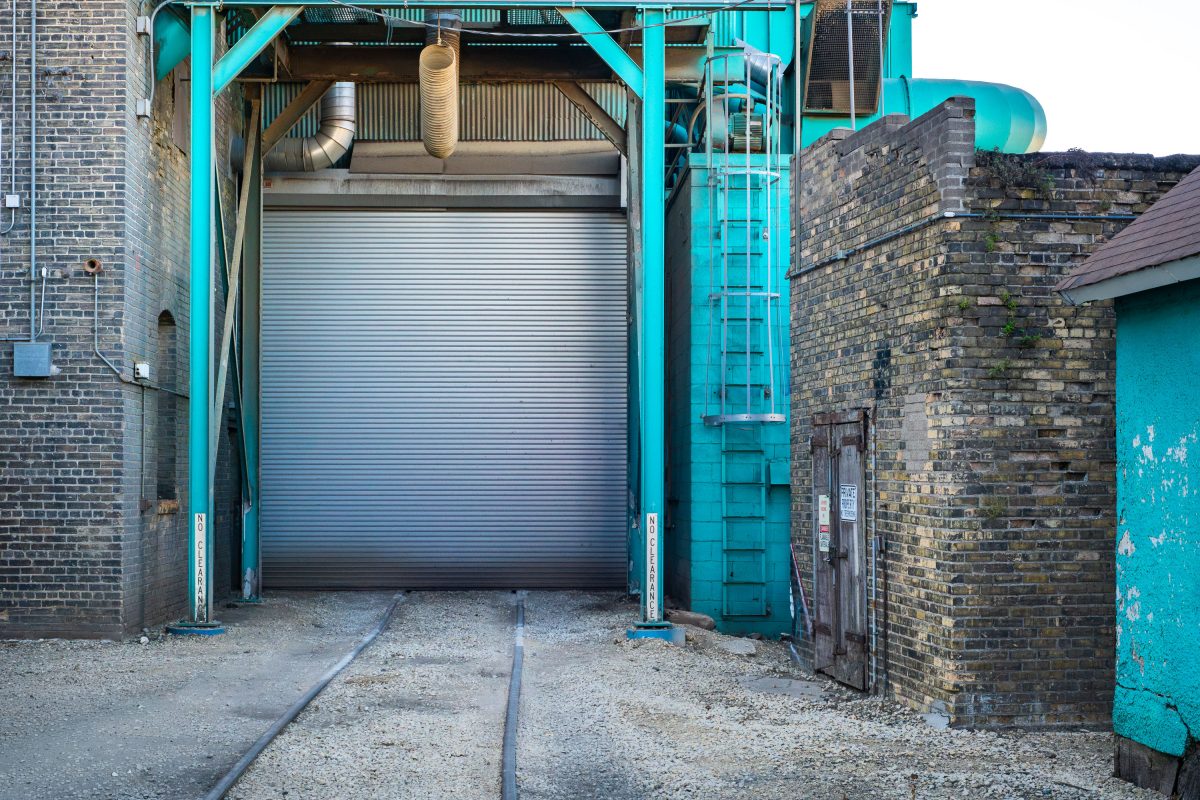
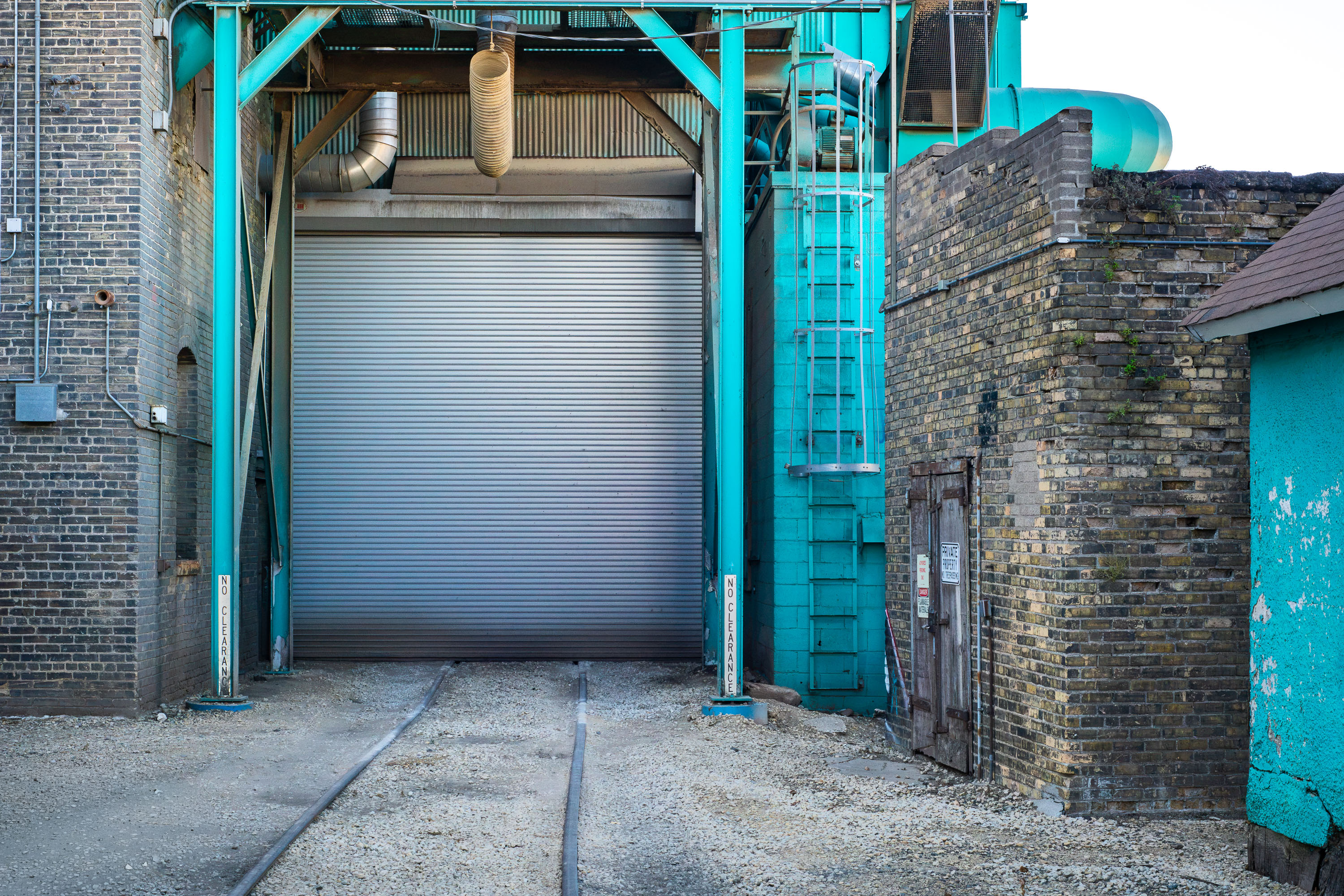
Turquoise steel loading frame and metal roll-up door at Viterra's grain elevator rail dock in Minneapolis.
Viterra operates this grain elevator and rail dock in Minneapolis. A narrow gauge rail spur runs beneath the turquoise steel loading frame, where hopper cars once positioned themselves under the elevator for grain transfer through the now closed roll up door.

Rail Tracks Leading to a Closed Loading Bay at Viterra’s Elevator

Window 16 on the Viterra grain elevator in Minneapolis features a barred window with white frame and number 16 graffiti on turquoise wall.
Viterra operates a grain elevator in Minneapolis, part of a global agribusiness network handling grain storage and shipping.

Window No. 16 on the Viterra Grain Elevator’s Turquoise Wall
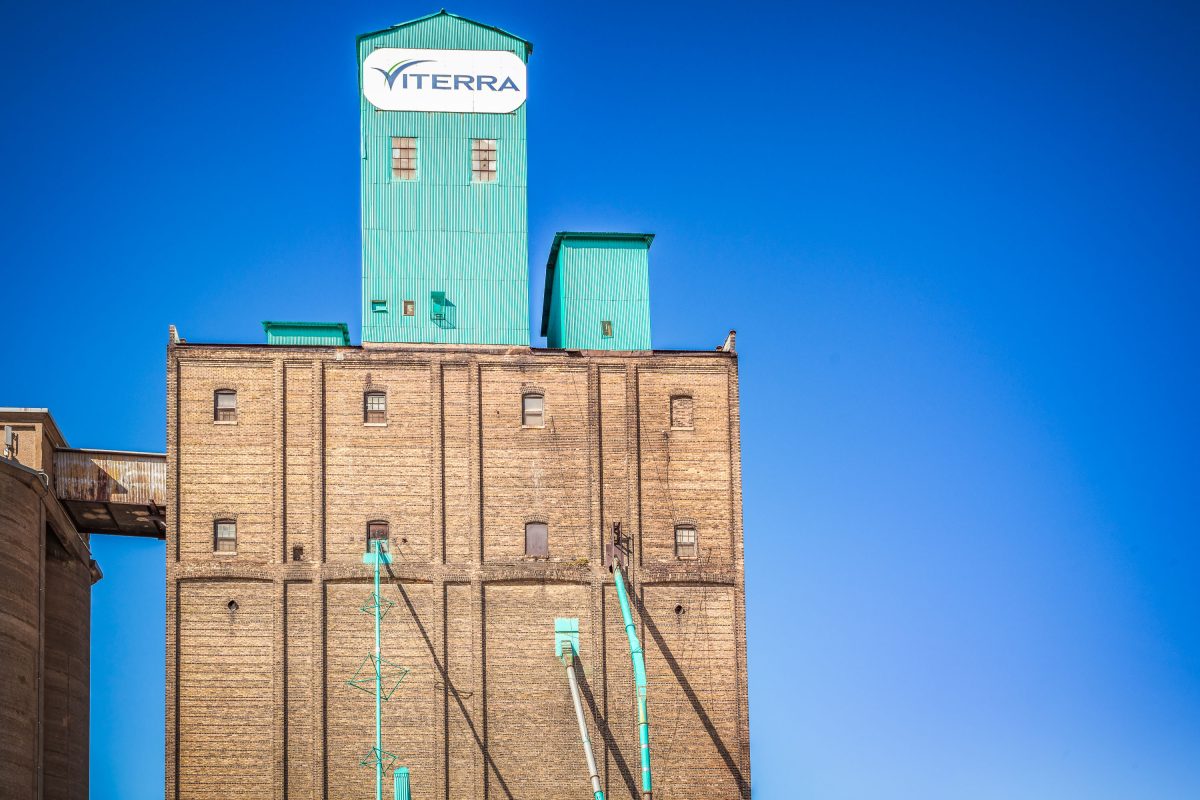
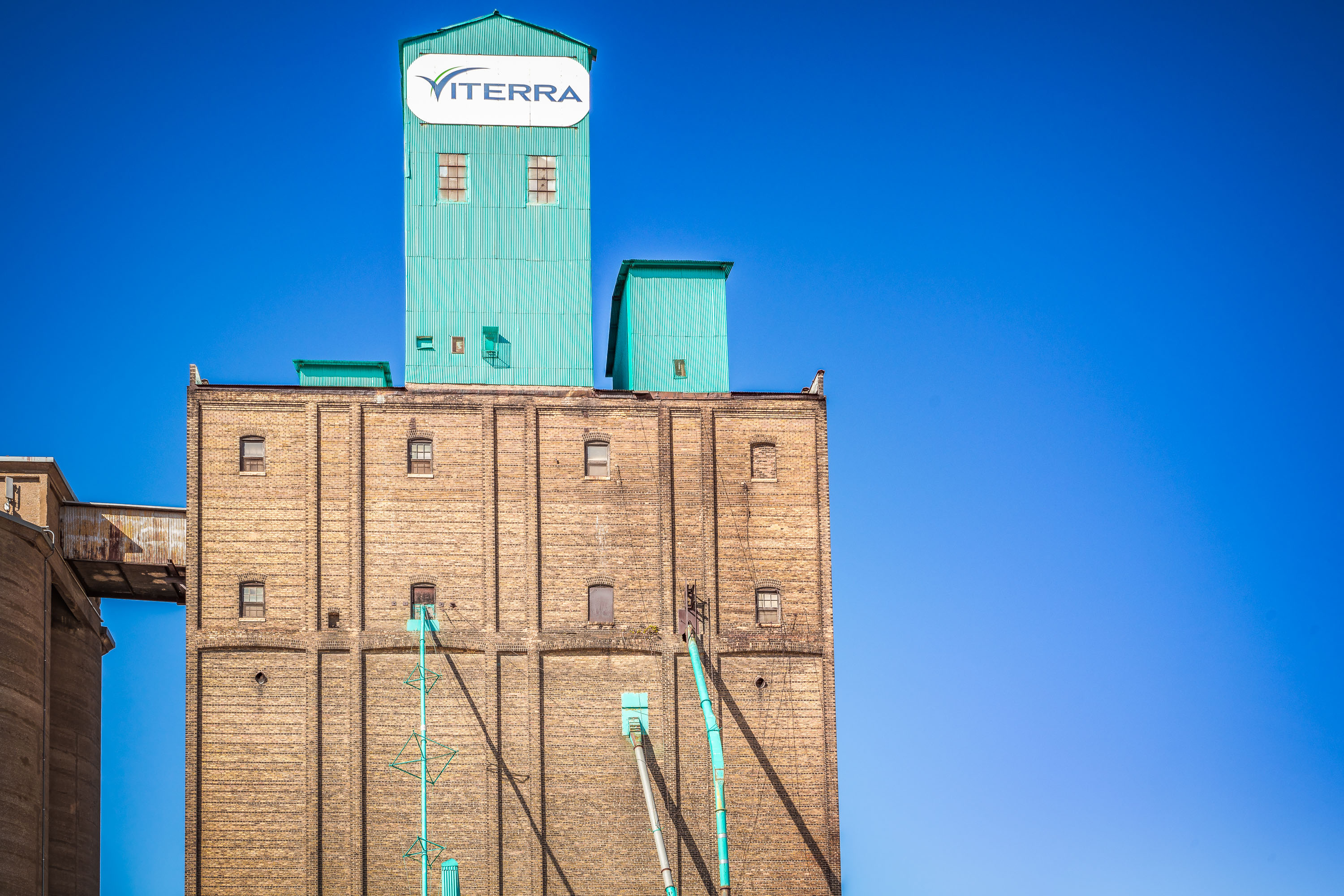
Viterra grain elevator with turquoise metal tower and mustard seed storage facility in Northeast Minneapolis.
Viterra facility in Northeast Minneapolis. The elevator stores mustard seed and has been operating since the 1920s.

Viterra Sign Atop the Grain Elevator Tower
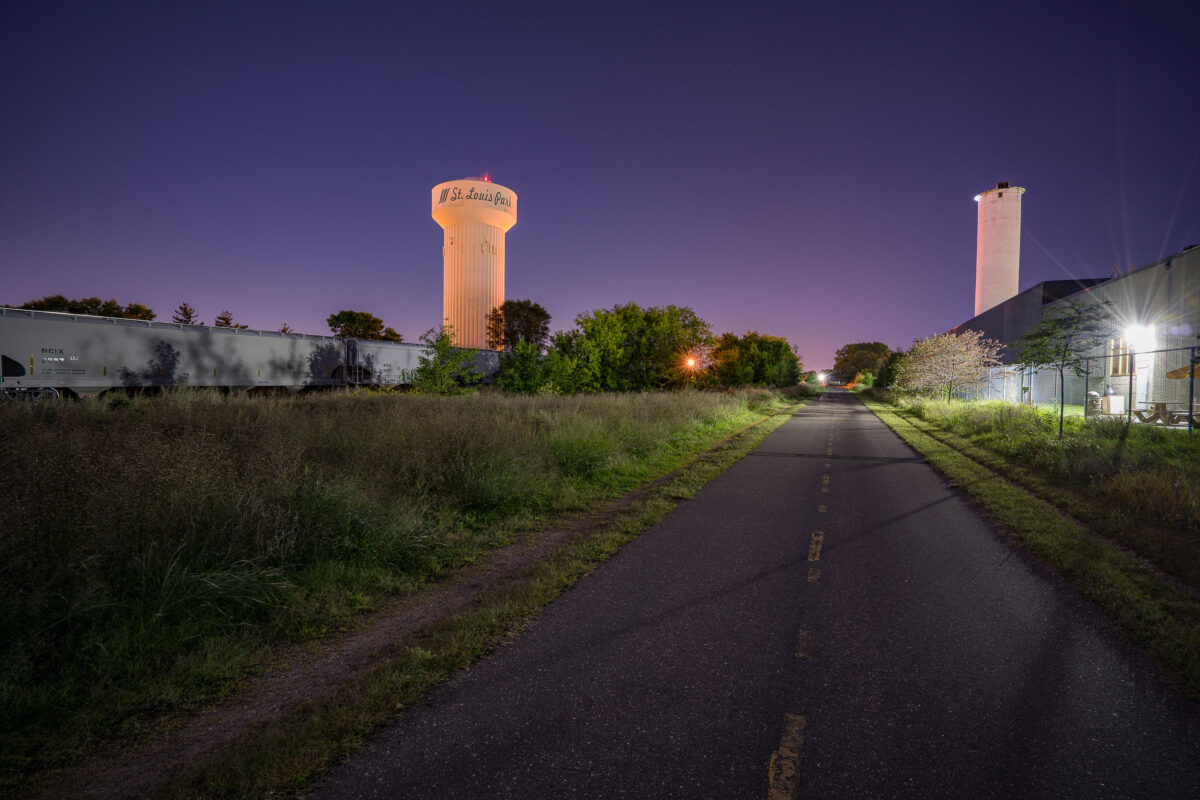
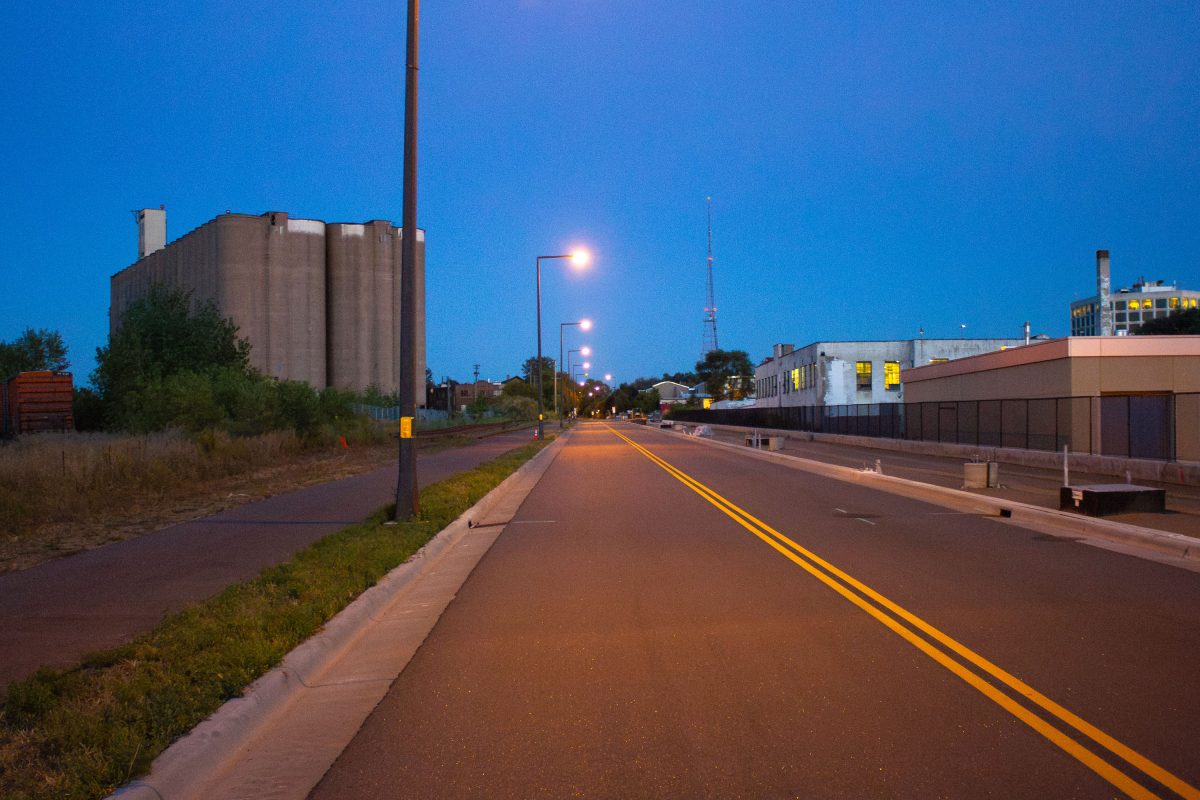
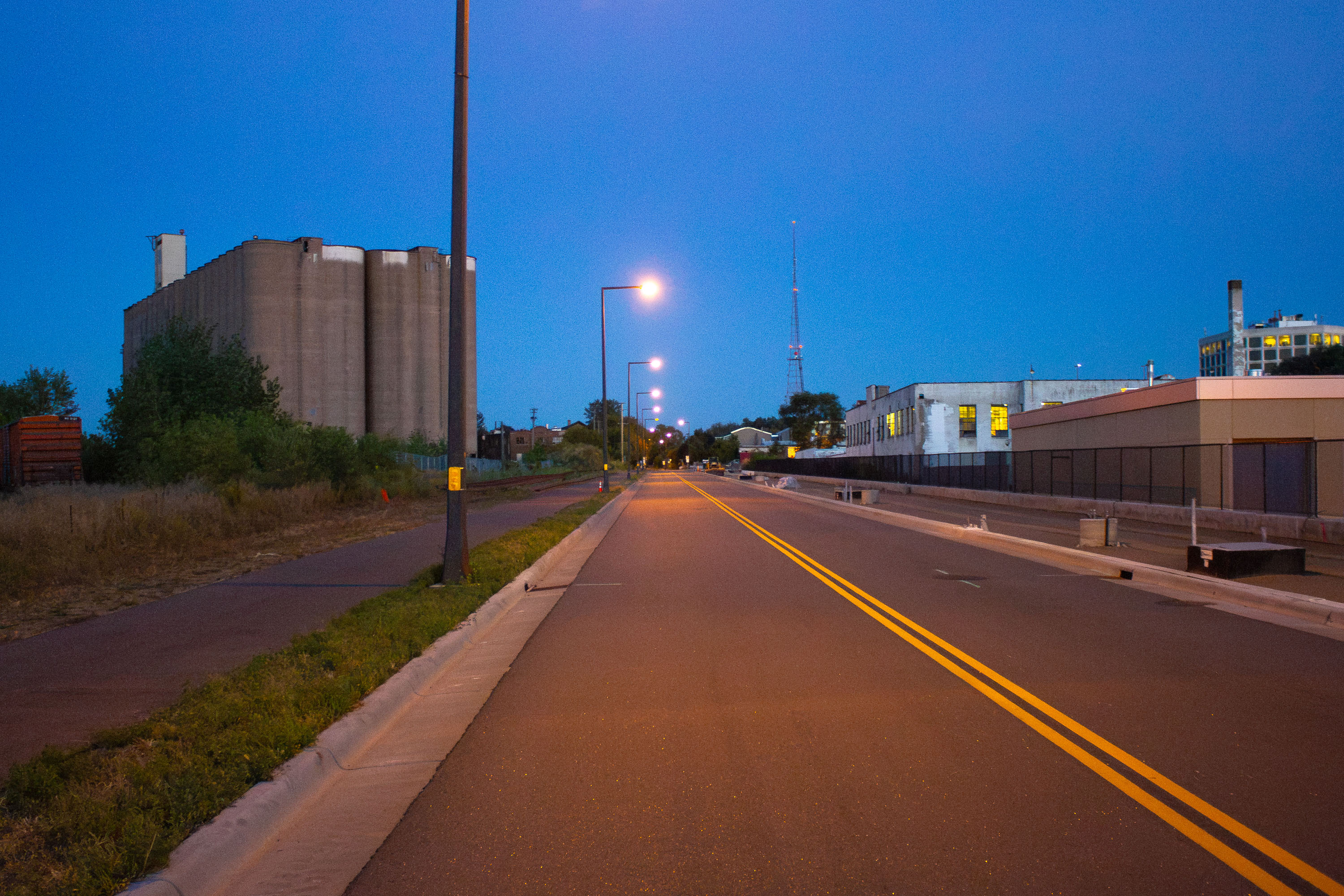
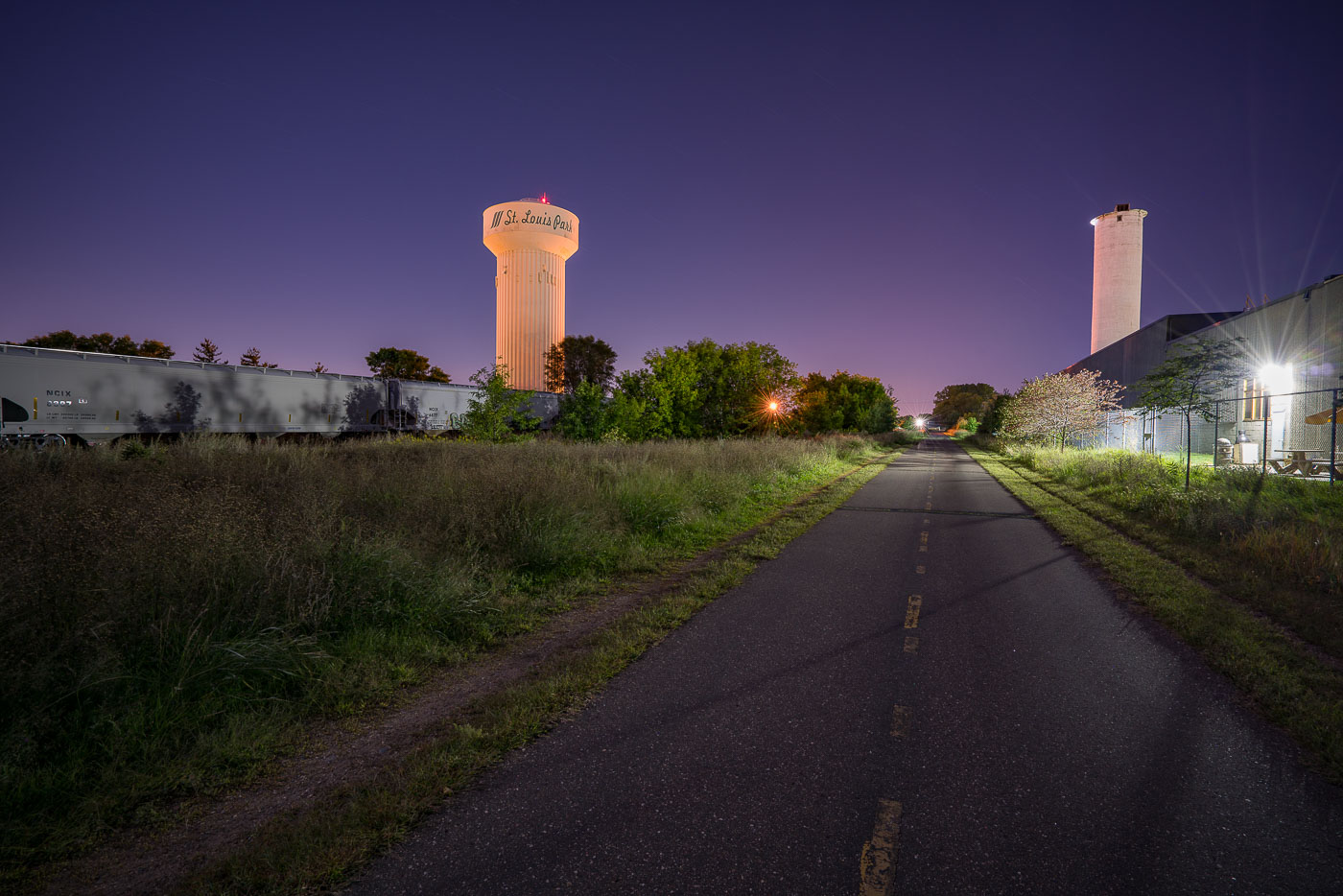
St. Louis Park water tower and grain elevator illuminated at dusk above the Cedar Lake Trail paved path.
The Cedar Lake LRT Regional Trail in St. Louis Park, Minnesota. This paved trail follows a former railroad corridor, originally part of the Minneapolis & St. Louis Railway.

Night photo of Cedar Lake LRT Regional Trail Near the St. Louis Park Water Tower
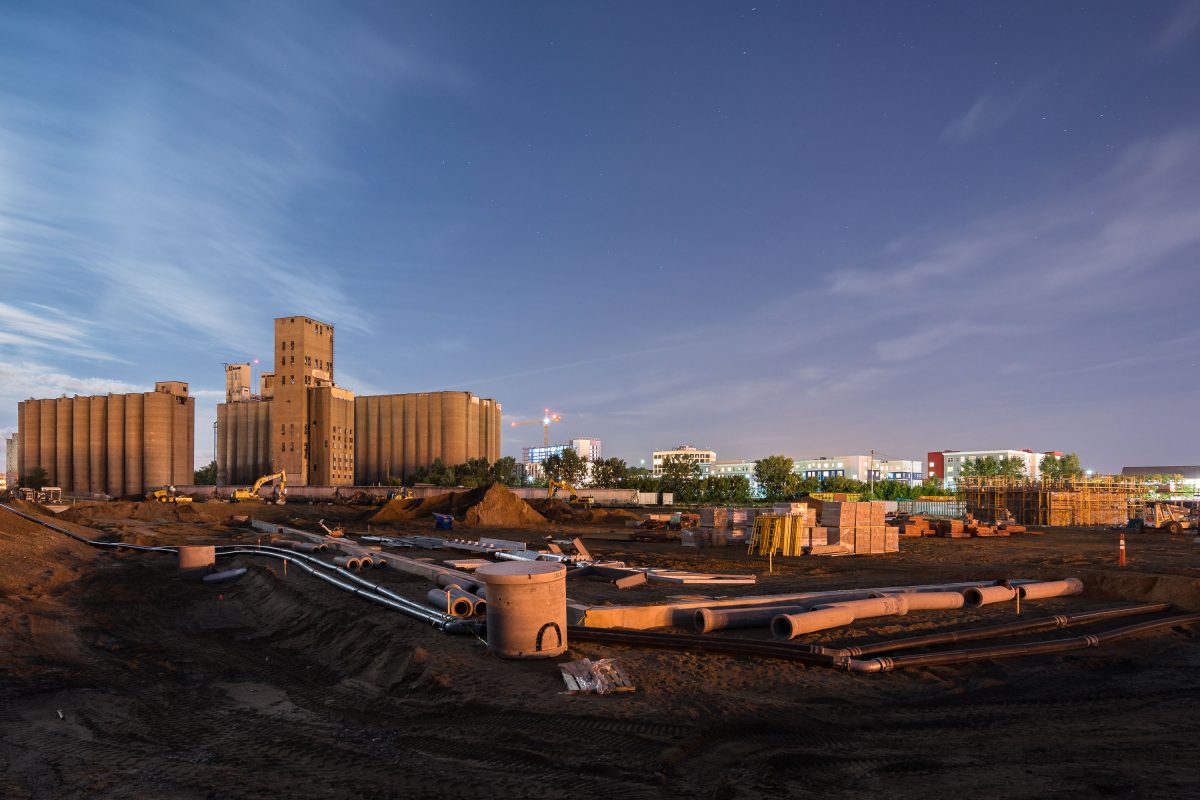
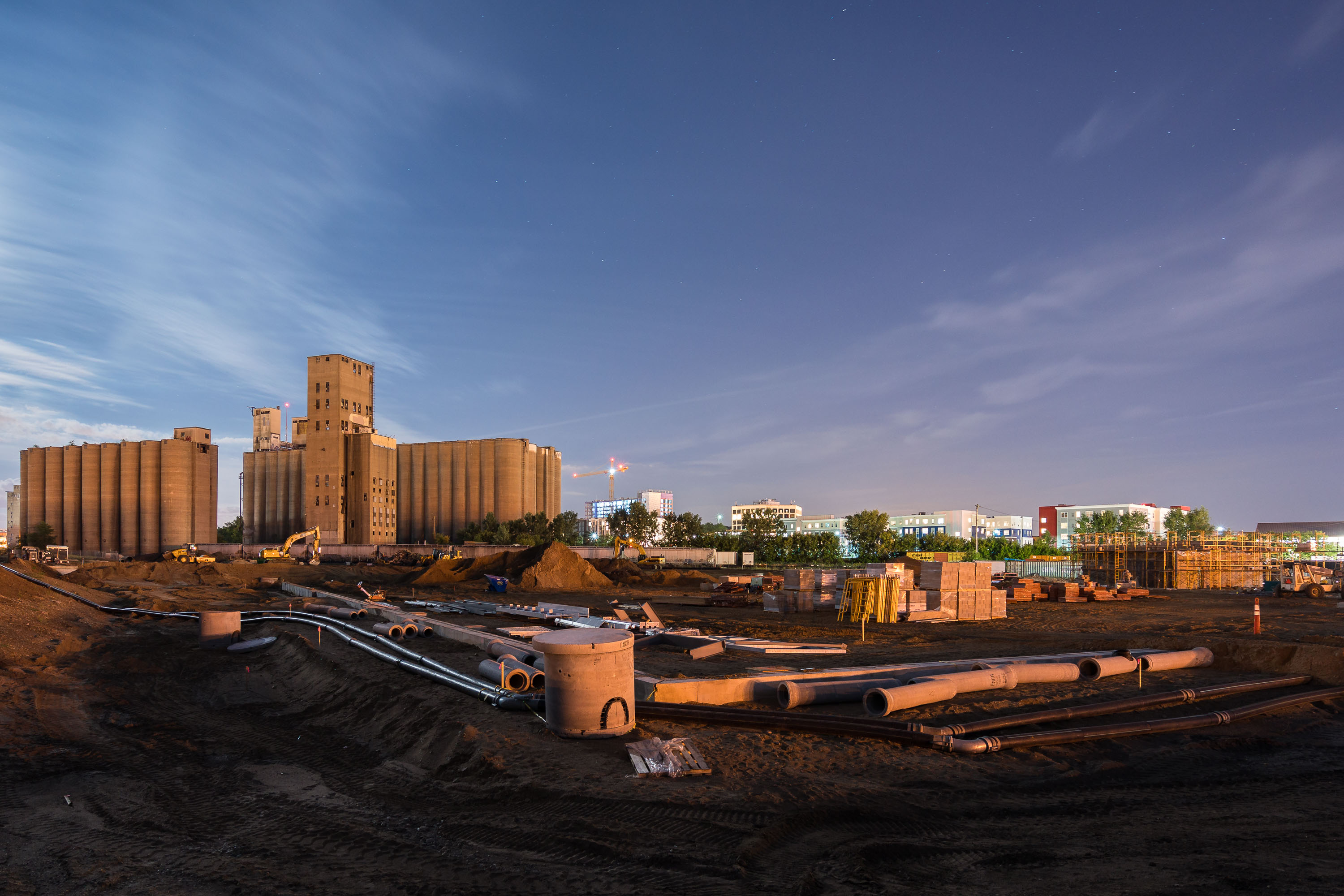
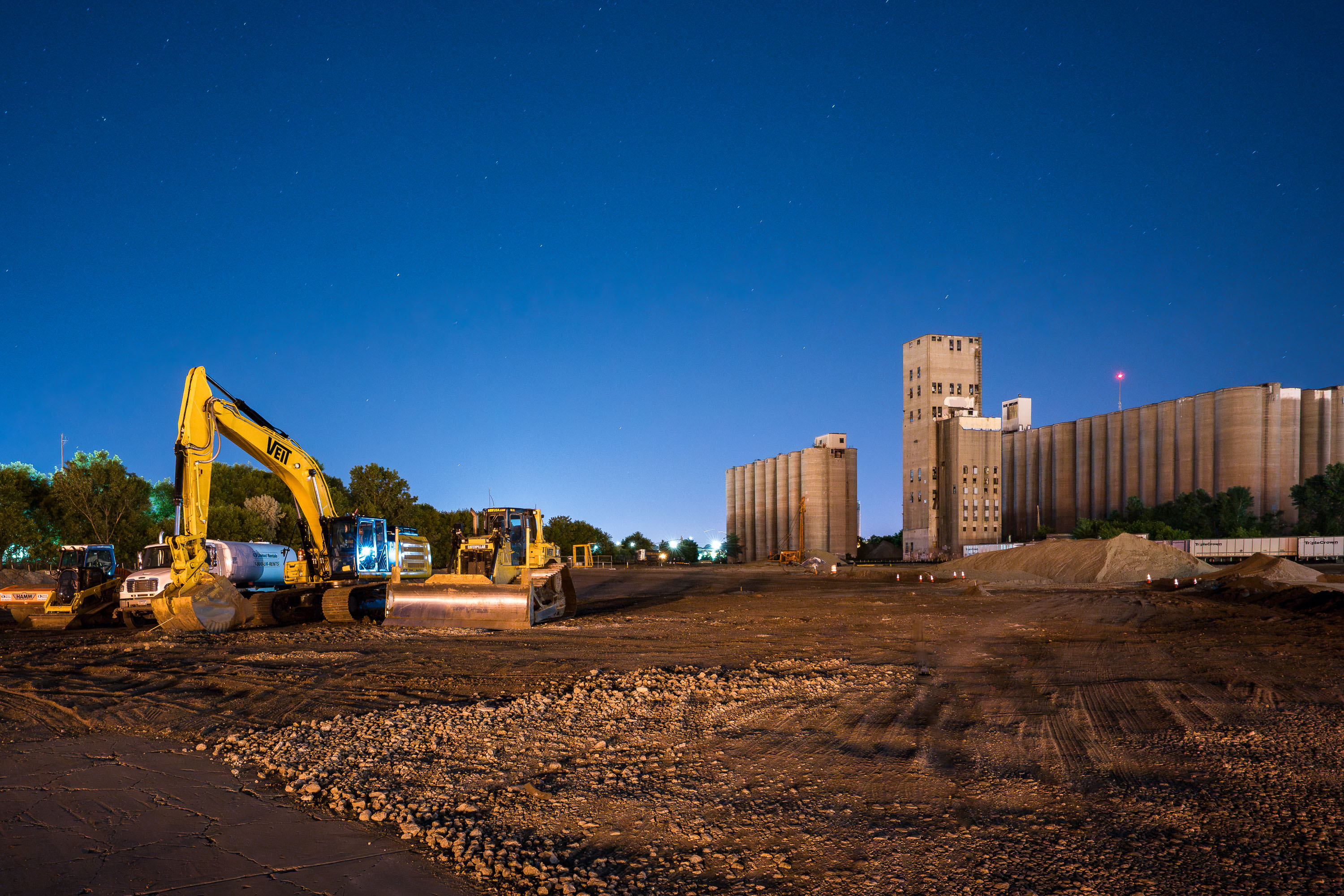
Construction site at night on the former Kurth Malting grain elevator grounds in Dinkytown, Minneapolis.
This construction site in Dinkytown, Minneapolis, sits on the former grounds of the Kurth Malting Company grain elevator. The elevator complex was demolished to clear land for a University of Minnesota athletic facility. Concrete silos from the adjacent Archer Daniels Midland elevator remain standing near the cleared parcel.

Kurth Malting Site Redevelopment, Dinkytown Minneapolis
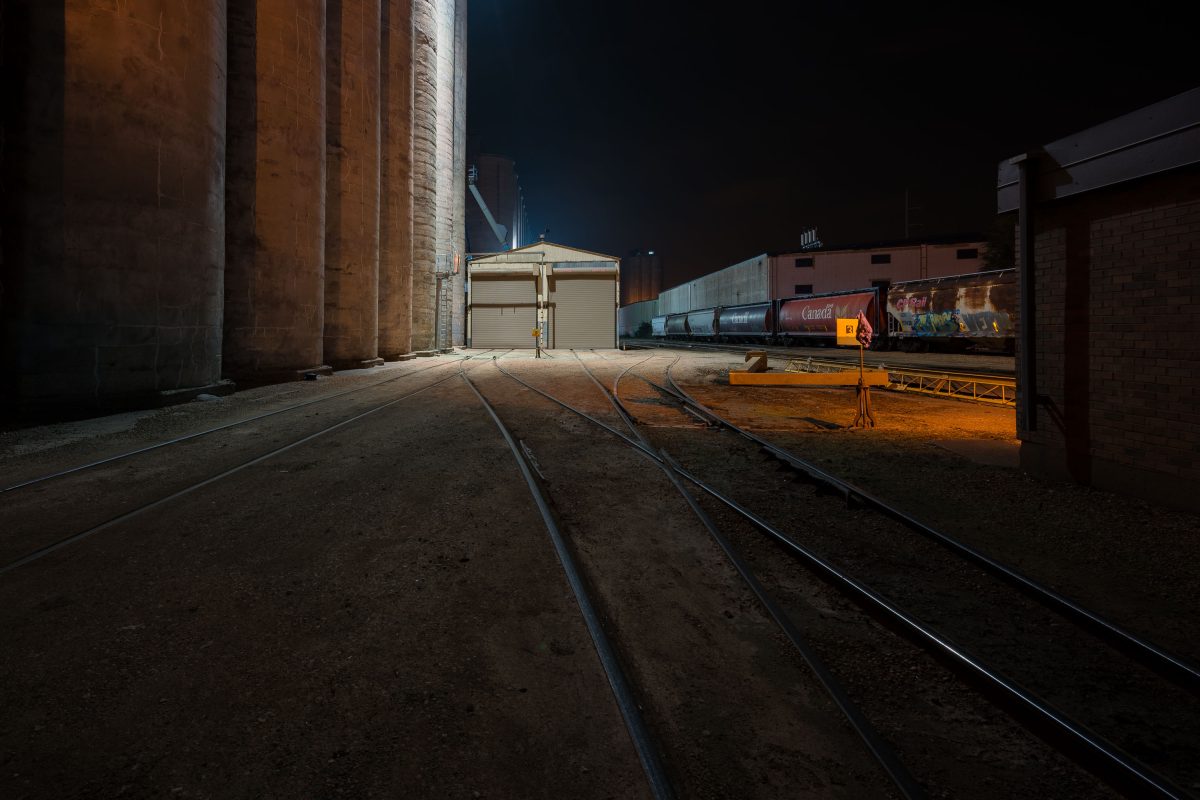
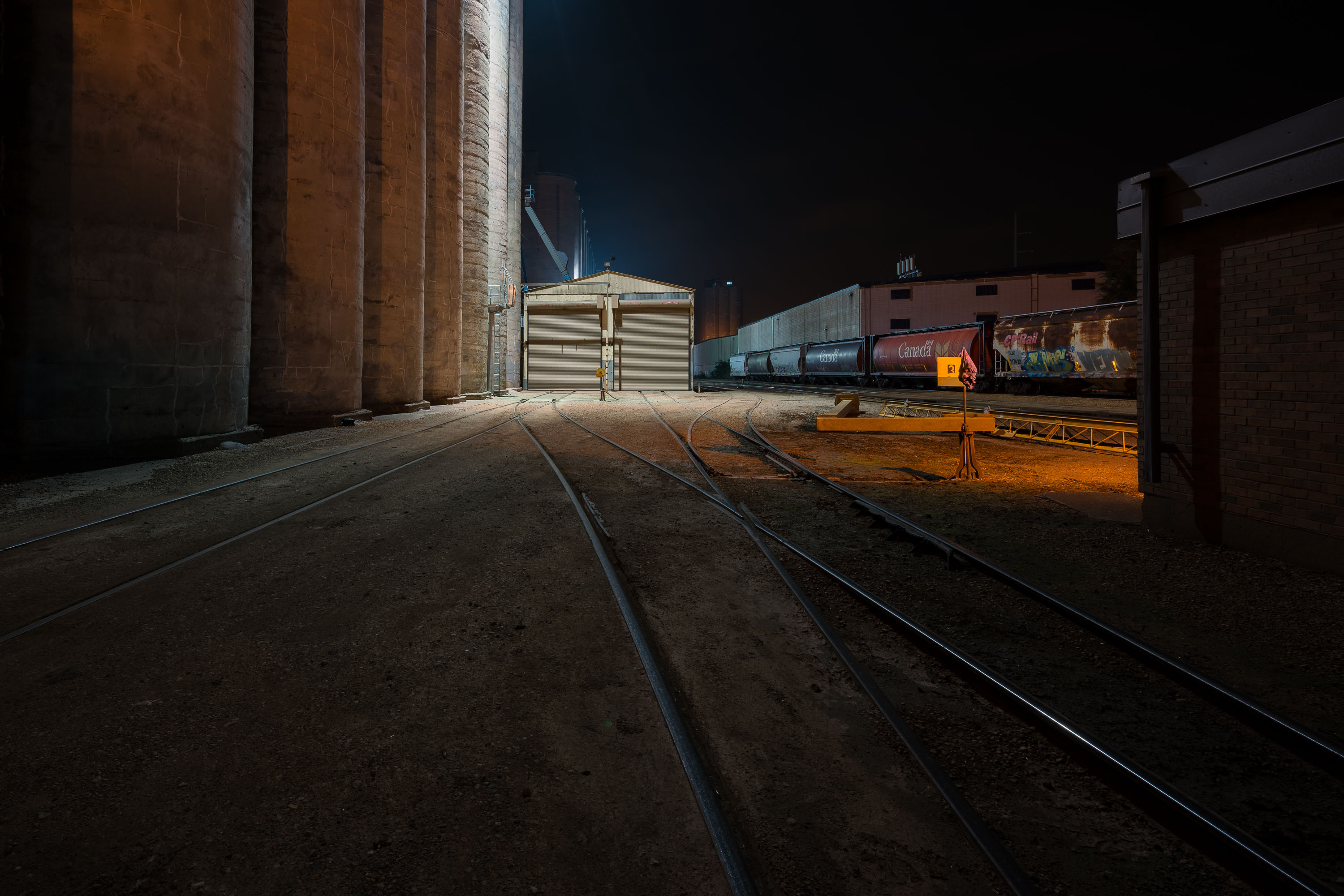
Railroad tracks lead to a General Mills grain elevator and freight train at night in Minneapolis.
A General Mills grain elevator complex sits along active rail lines in Minneapolis. General Mills, headquartered in Golden Valley, Minnesota, operates grain milling and food production facilities across the Minneapolis area. Rail spurs connect the elevator to the wider freight network, including Canadian National and other North American carriers, for shipping grain and finished products.

Rail Tracks at General Mills Grain Elevator, Minneapolis
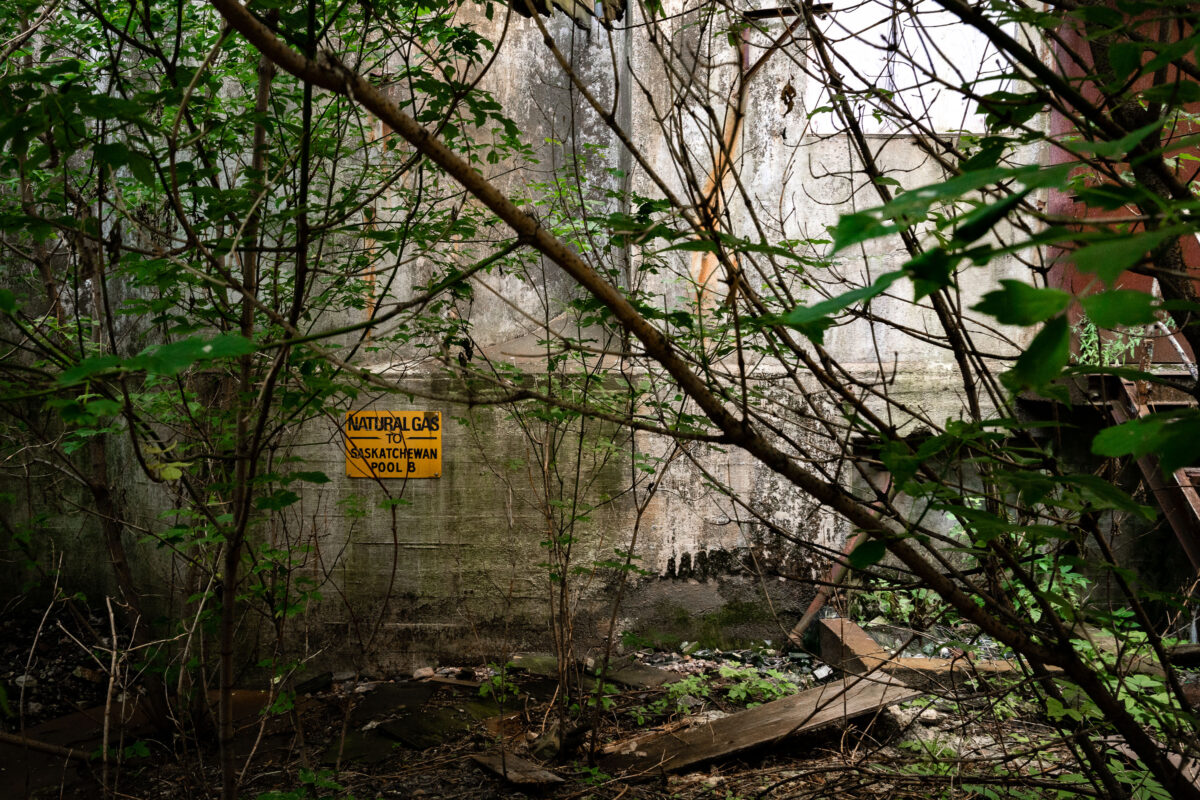
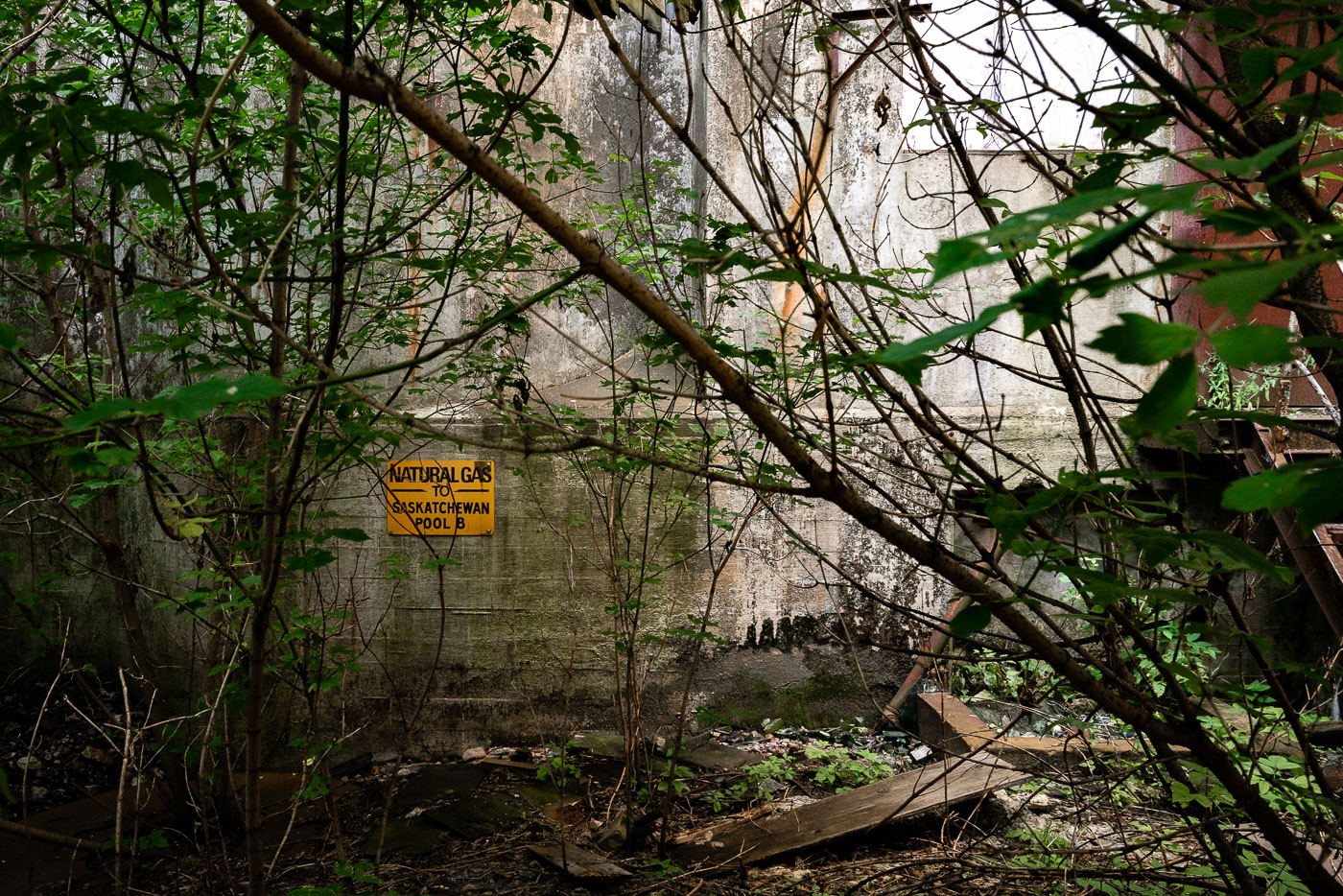
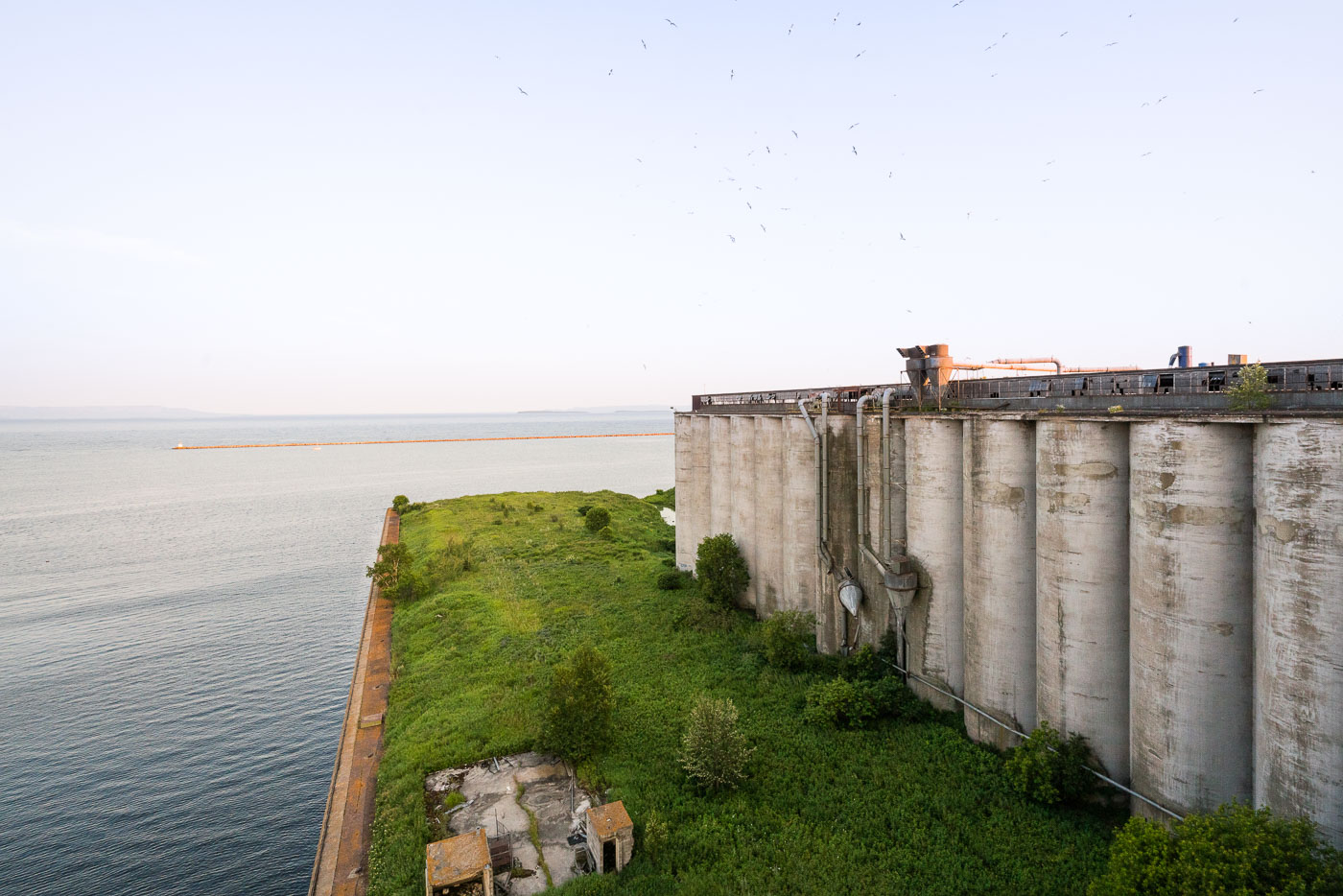
Saskatchewan Pool B grain elevator ruins in Thunder Bay, Ontario, with overgrown concrete walls and a yellow gas sign.
The Saskatchewan Pool B grain elevator ruins in Thunder Bay, Ontario, are partially obscured by vegetation. A yellow sign marked “Natural Gas to Saskatchewan Pool B” remains on the weathered concrete structure, which was built in 1928 as part of the city’s grain-handling and shipping facilities.

Saskatchewan Pool B Elevator Ruins, Thunder Bay

Rusted stairs and a doorway at the Saskatchewan Pool B grain elevator in Thunder Bay, Ontario, amid dense vegetation.
A rusted metal staircase leads to a doorway at the Saskatchewan Pool B grain elevator in Thunder Bay, Ontario. Built in 1928, the concrete elevator was among the largest cooperative grain terminals on Lake Superior and handled prairie grain exports. It ceased operations after deregulation of Canada’s grain-handling system and now stands abandoned amid dense vegetation.

Saskatchewan Pool B Elevator Doorway, Thunder Bay
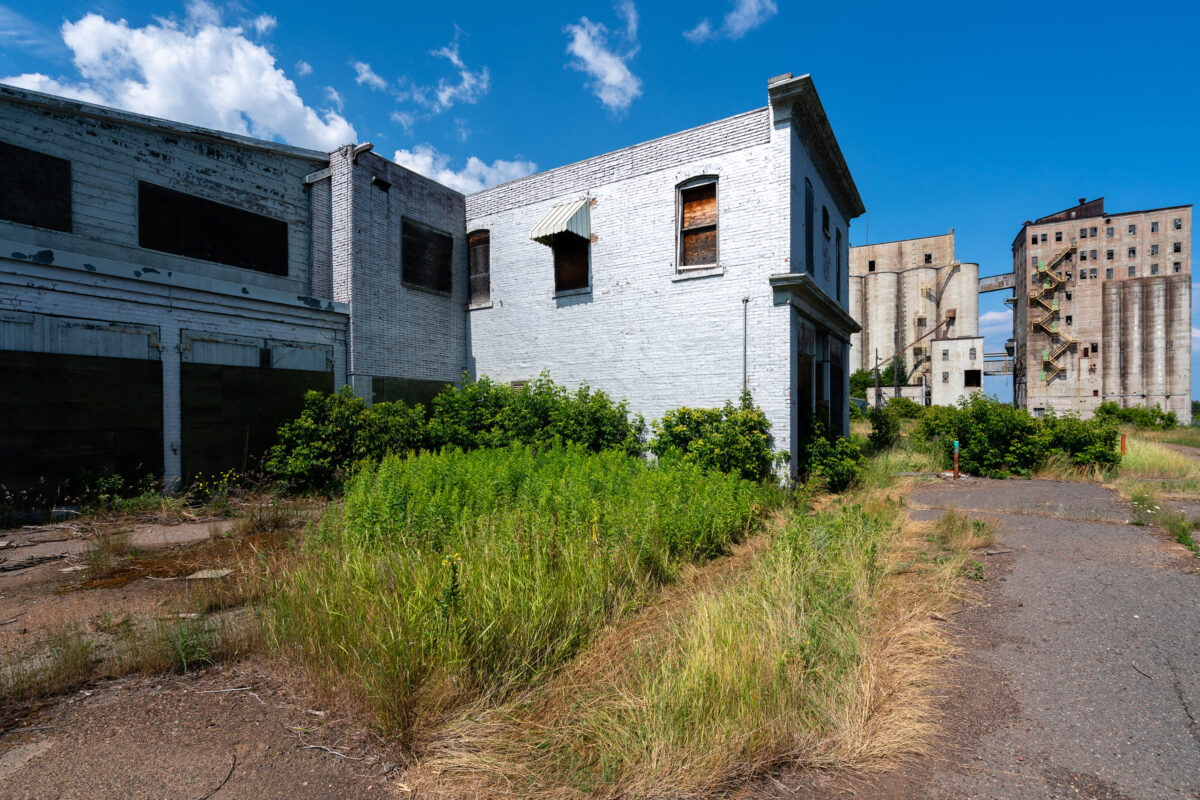
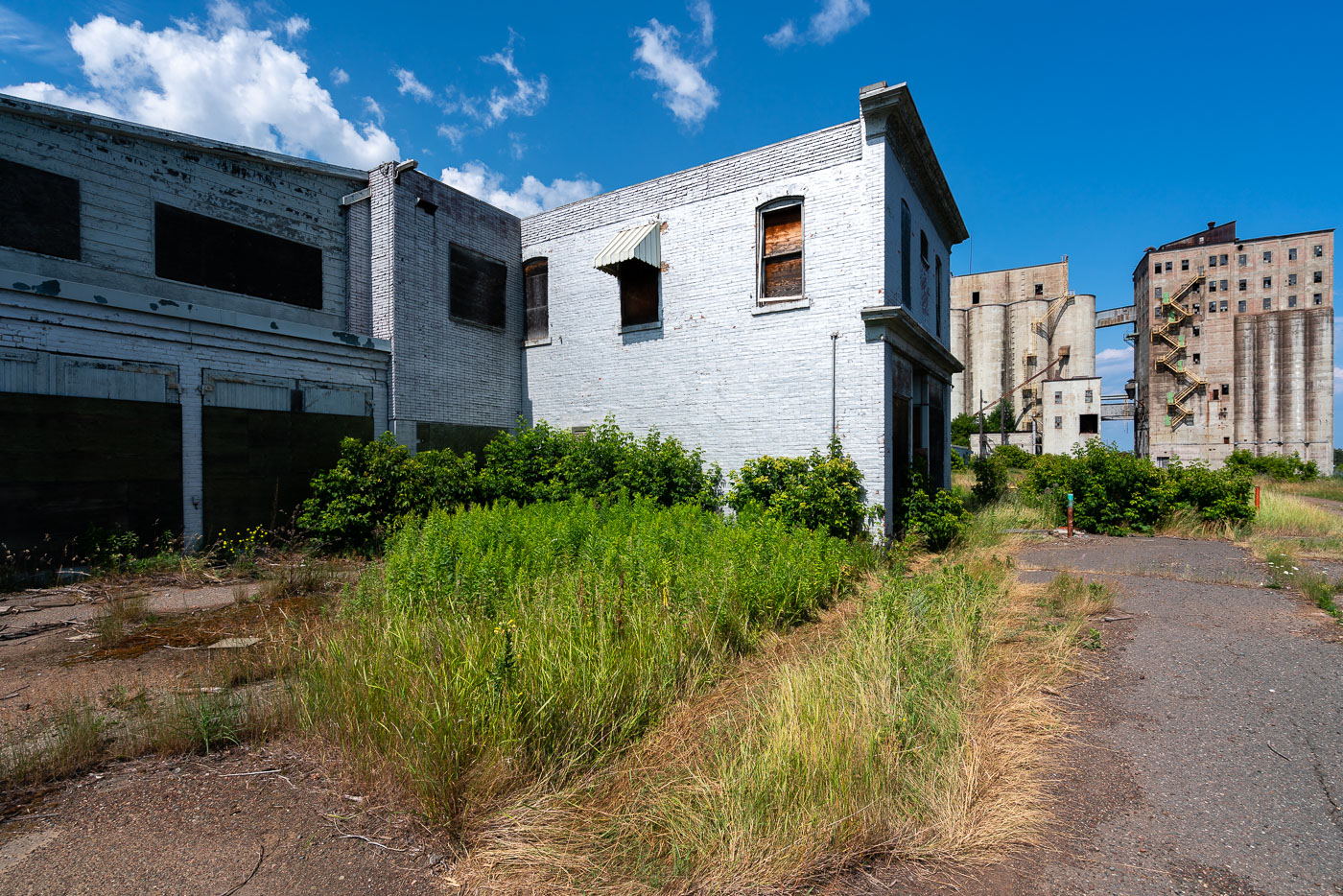
Abandoned Saskatchewan Pool B grain elevators in Thunder Bay, Ontario, with overgrown access roads.
The abandoned Saskatchewan Pool B grain elevator complex stands in Thunder Bay, Ontario. The former grain handling and storage facility was part of the city’s lakefront elevator district, which linked Prairie grain shipments to Great Lakes transport.

Saskatchewan Pool B Grain Elevators, Thunder Bay
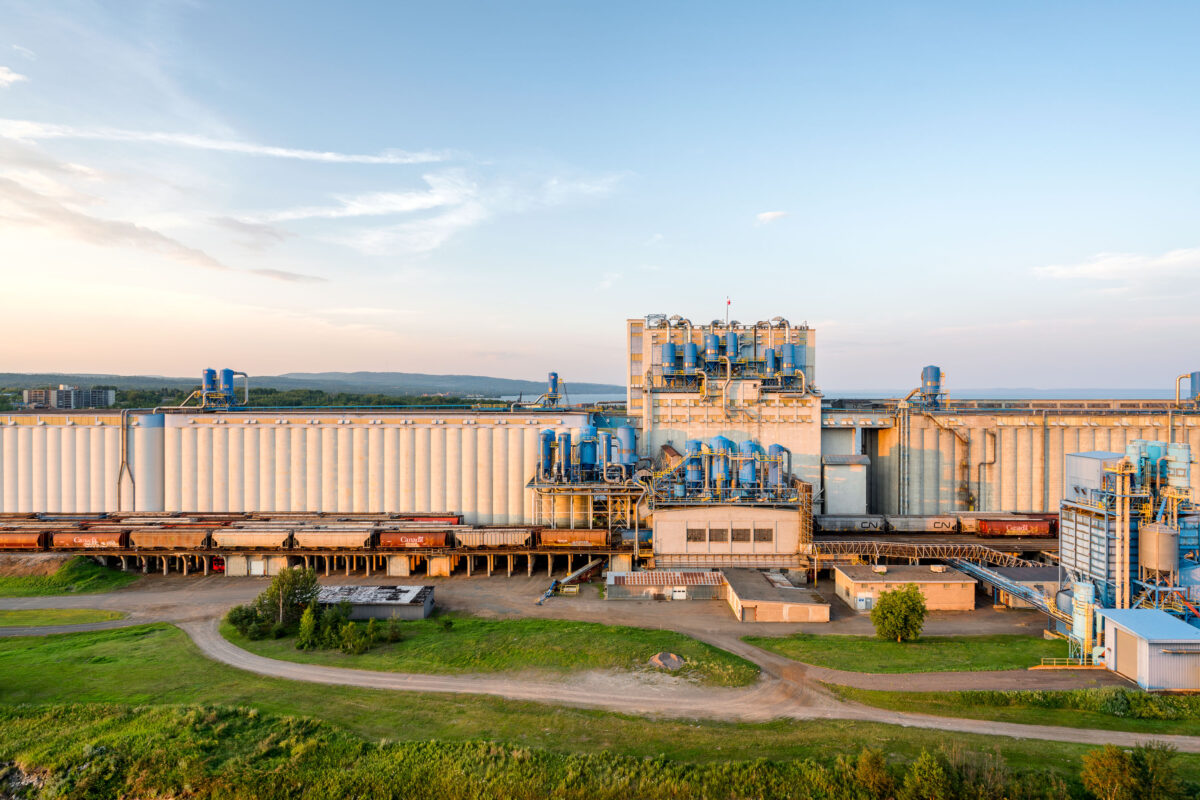
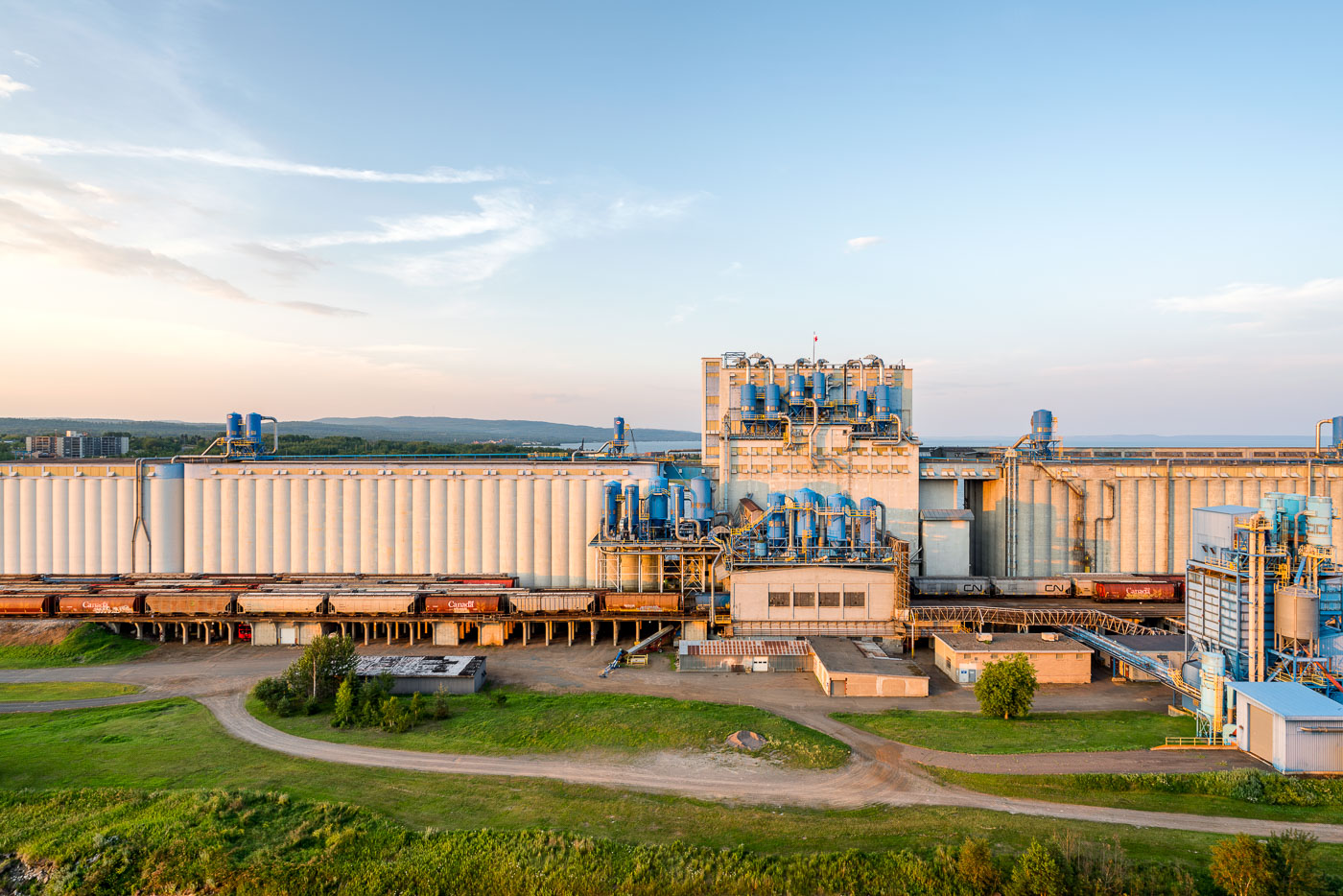
Thunder Bay grain elevators in Ontario beside CN freight cars on the port rail line.
The Thunder Bay grain elevators in Thunder Bay, Ontario, stand beside CN freight cars along the port rail line on Lake Superior. The complex stores and transfers grain for shipment by rail and vessel, with the main elevator structures and conveyor systems visible above the tracks.

Thunder Bay Grain Elevators and CN Rail Cars
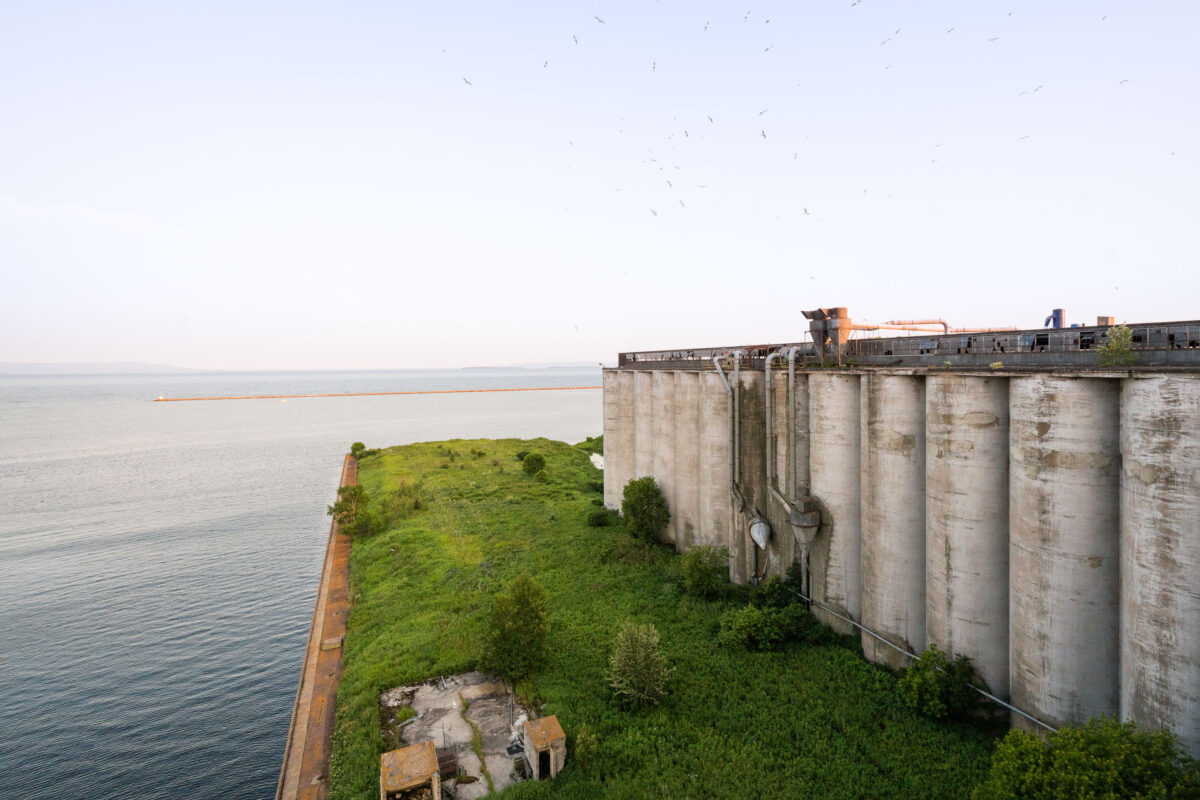
Abandoned concrete grain elevators in Thunder Bay, Ontario, beside Lake Superior.
Abandoned concrete grain elevators in Thunder Bay, Ontario, stand along the shoreline of Lake Superior. The cylindrical silos and conveyor structures are part of a former bulk grain-handling complex built for storage and shipping.

Abandoned Grain Elevator, Thunder Bay
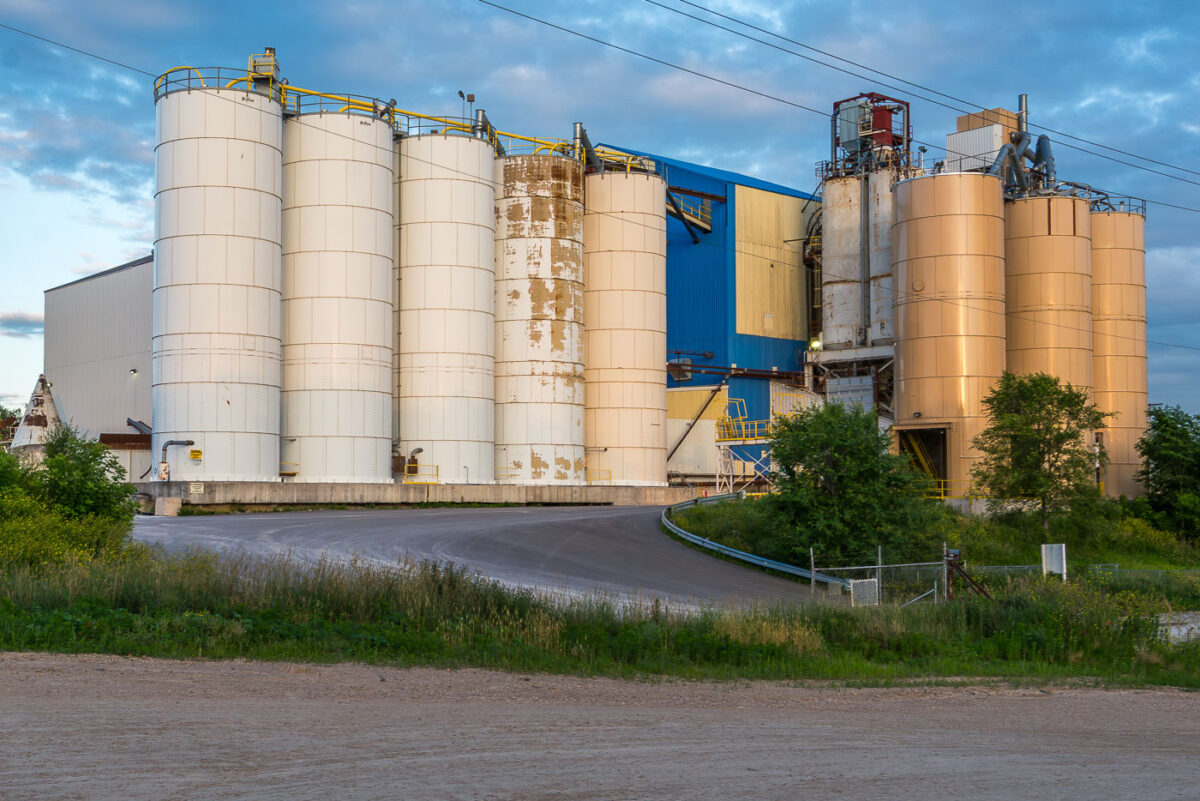
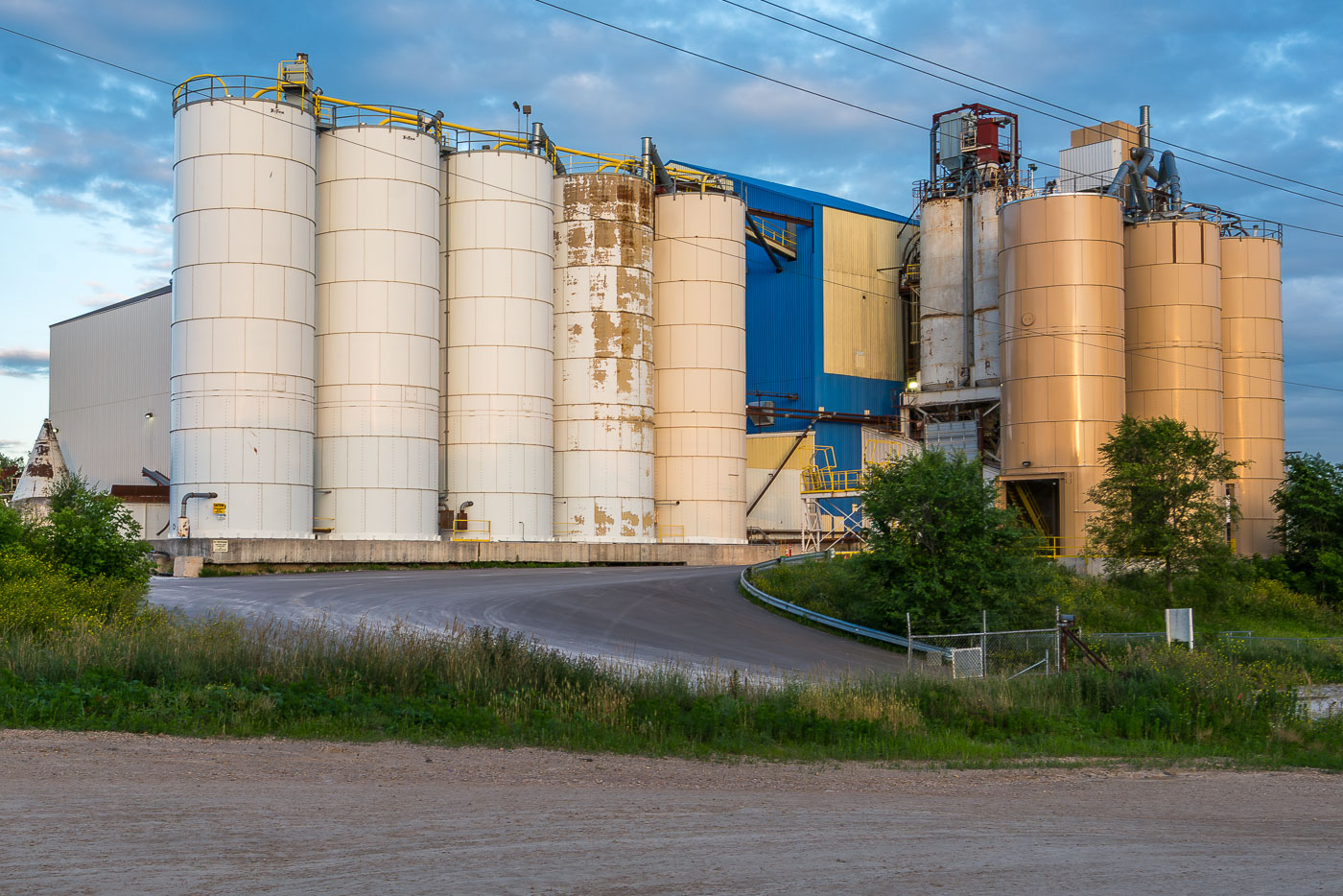
Grain elevator with multiple storage silos in Savage, Minnesota.
This grain elevator and storage facility in Savage, Minnesota includes multiple cylindrical silos for bulk storage and processing. The complex combines cream-colored concrete storage structures with a blue-framed processing building and additional tan silos for handling and distribution. The facility represents the type of agricultural infrastructure common to Minnesota's grain handling and milling operations.

Grain elevator and storage silos in Savage, Minnesota

Barge moored on the Minnesota River near Savage, Minnesota, with grain elevator in distance.
A barge is moored along the Minnesota River near Savage, Minnesota, with a grain elevator visible in the distance. The river serves as a transportation corridor for barge traffic carrying agricultural and industrial goods throughout the region.

Barge and Grain Elevator, Minnesota River at Savage
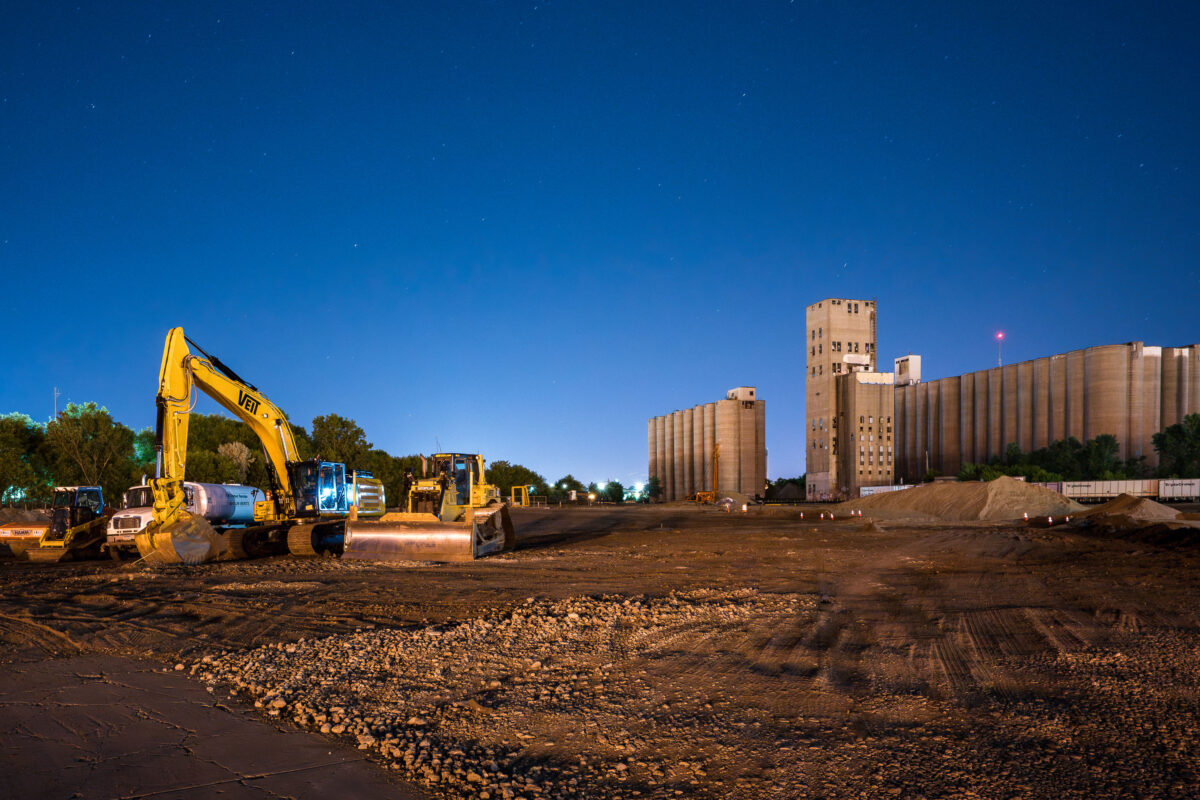
Demolition equipment at the Electric Steel and Kurth Malting grain elevator complex in Minneapolis's Dinkytown area.
The Electric Steel and Kurth Malting grain elevator complex in Minneapolis's Dinkytown area being demolished in June 2017.

Electric Steel and Kurth Grain Elevators Demolition, Minneapolis
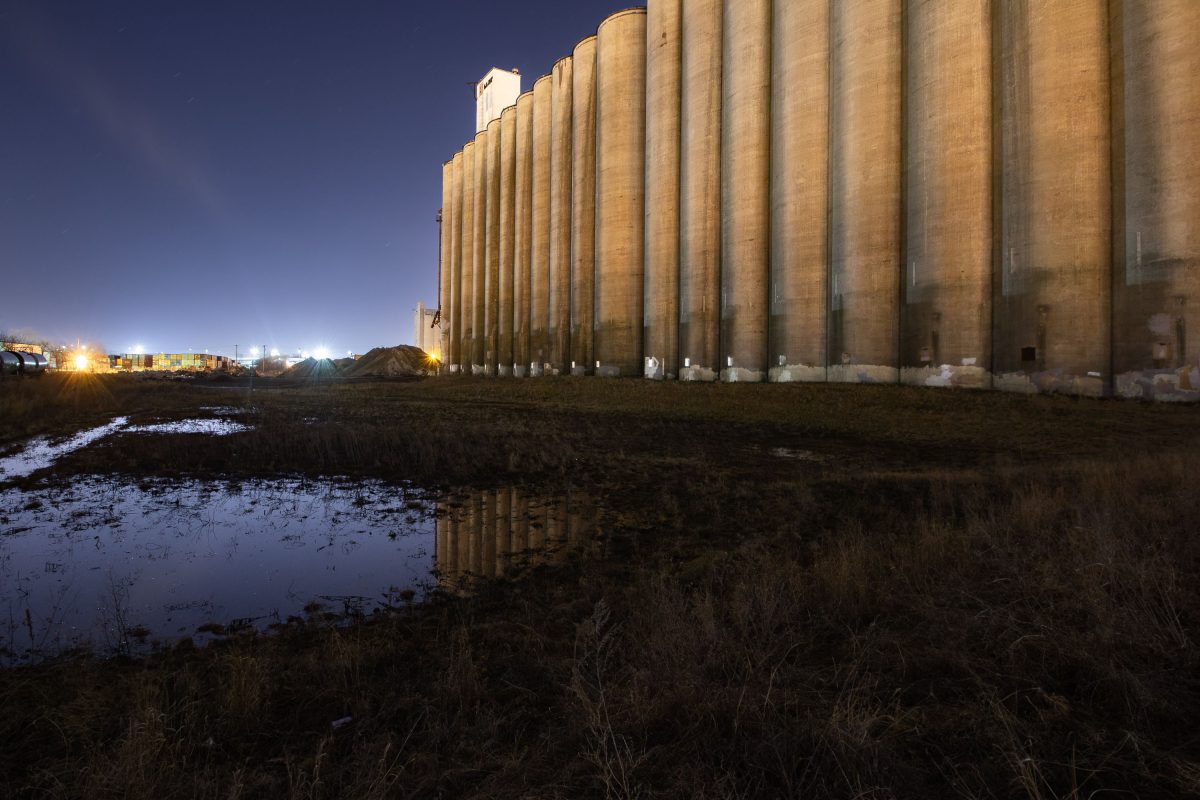
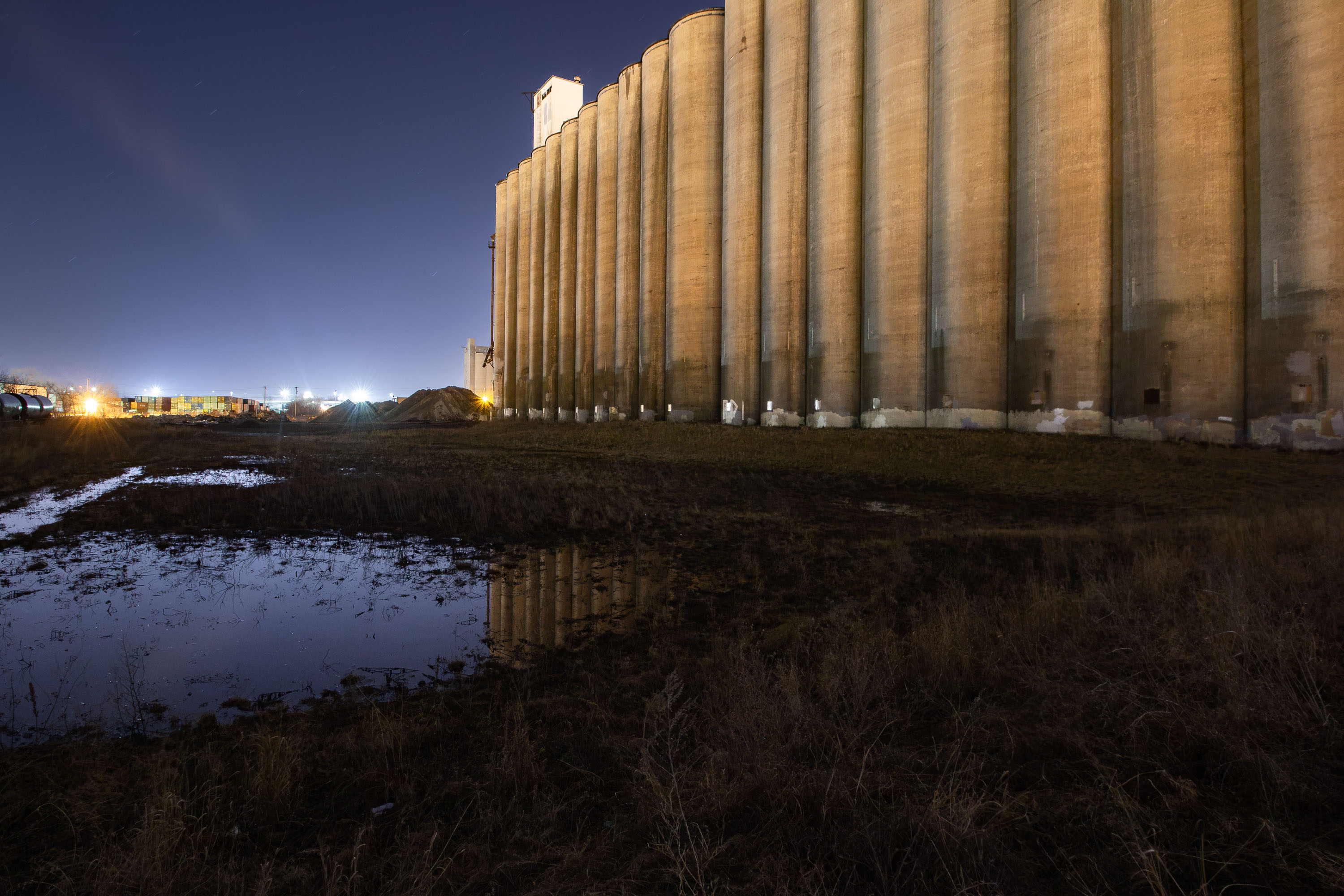
Concrete grain silos of the Archer Daniels Midland elevator in Southeast Minneapolis at night.
The Archer Daniels Midland grain elevator stands in Southeast Minneapolis near the Mississippi River. Its concrete silos are built in a cylindrical design common to grain elevators raised in the mid twentieth century to hold large volumes of grain for milling and export.

The ADM Grain Elevator in Southeast Minneapolis
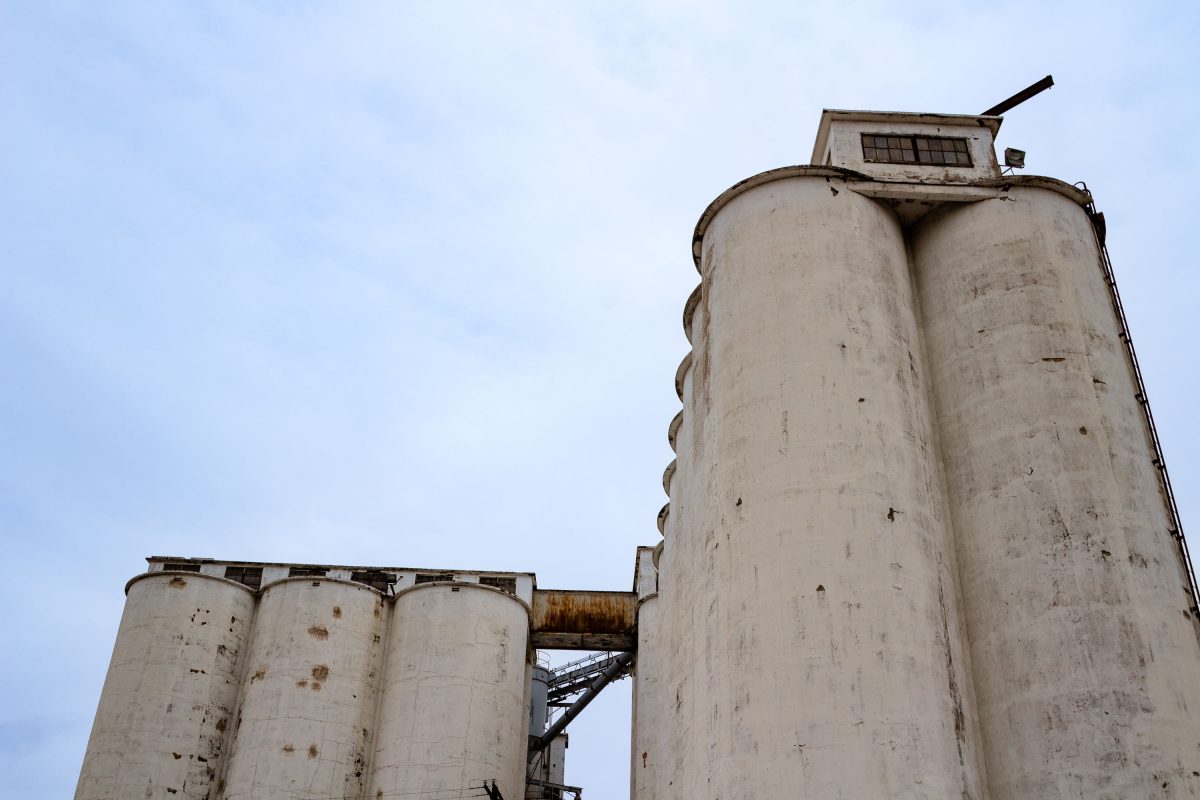
Weathered concrete grain elevator silos with operational headhouse and connecting conveyor system in Omaha, Nebraska.
This is a concrete grain elevator complex in Omaha, built with the cylindrical silo design common to grain terminals of the early to mid twentieth century. A headhouse tops the tallest silo, where conveyors once moved grain between storage bins before loading it onto rail cars. The complex no longer operates, but the silos still stand along the rail line that once served it.

Weathered Silos at an Omaha Grain Elevator Complex
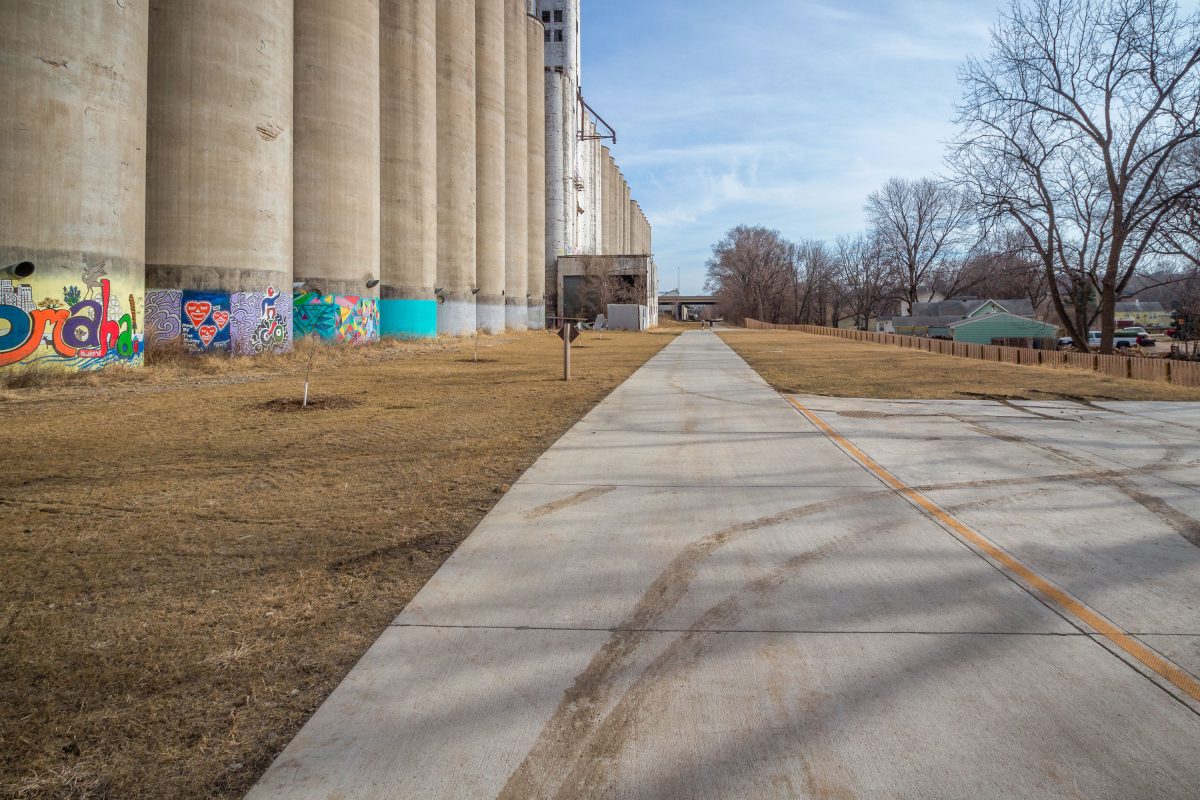
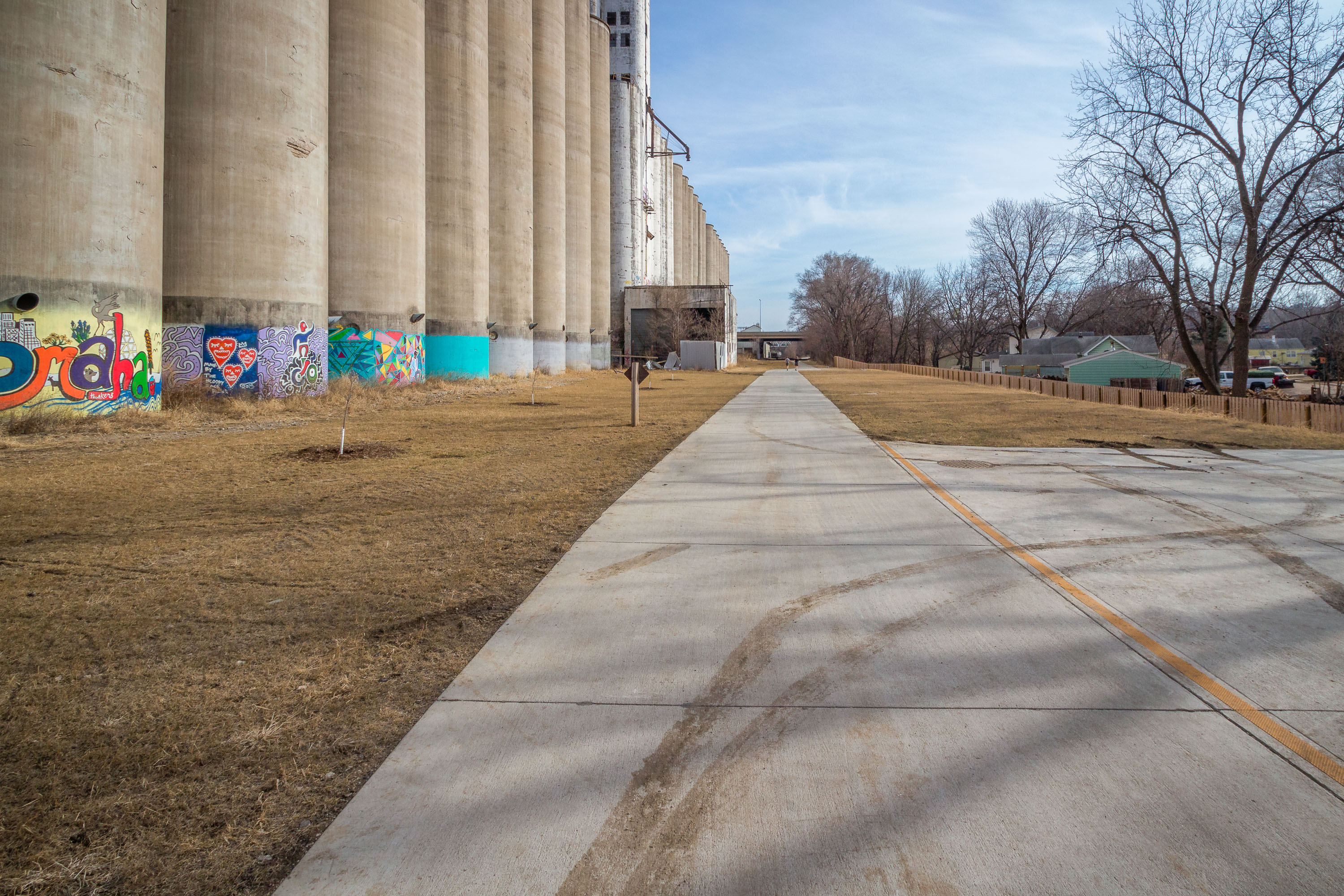
Paved South Omaha Trail runs past concrete grain silos with colorful graffiti murals at their base in Omaha, Nebraska.
Grain elevator silos like these once stored corn and soybeans shipped through Omaha's rail and river networks, a trade that shaped the city's South Omaha industrial corridor through much of the 20th century.

Painted Silo Murals Along the South Omaha Trail
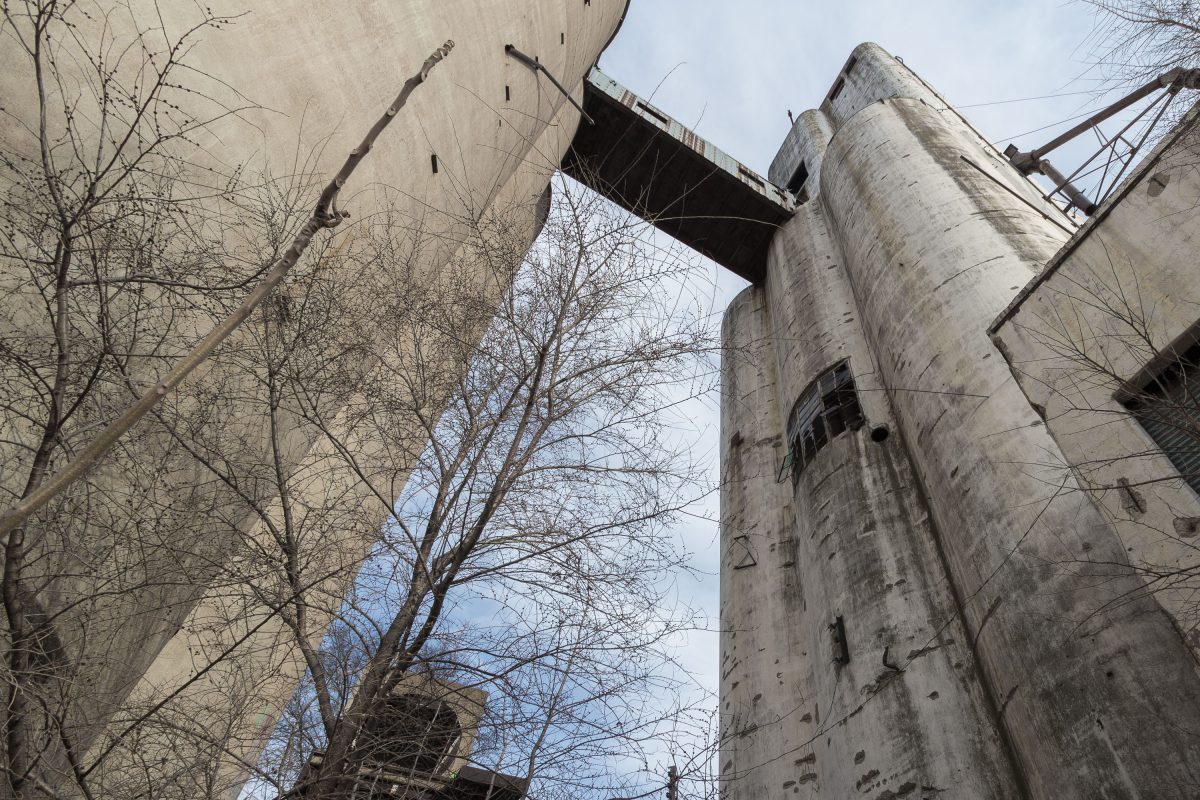
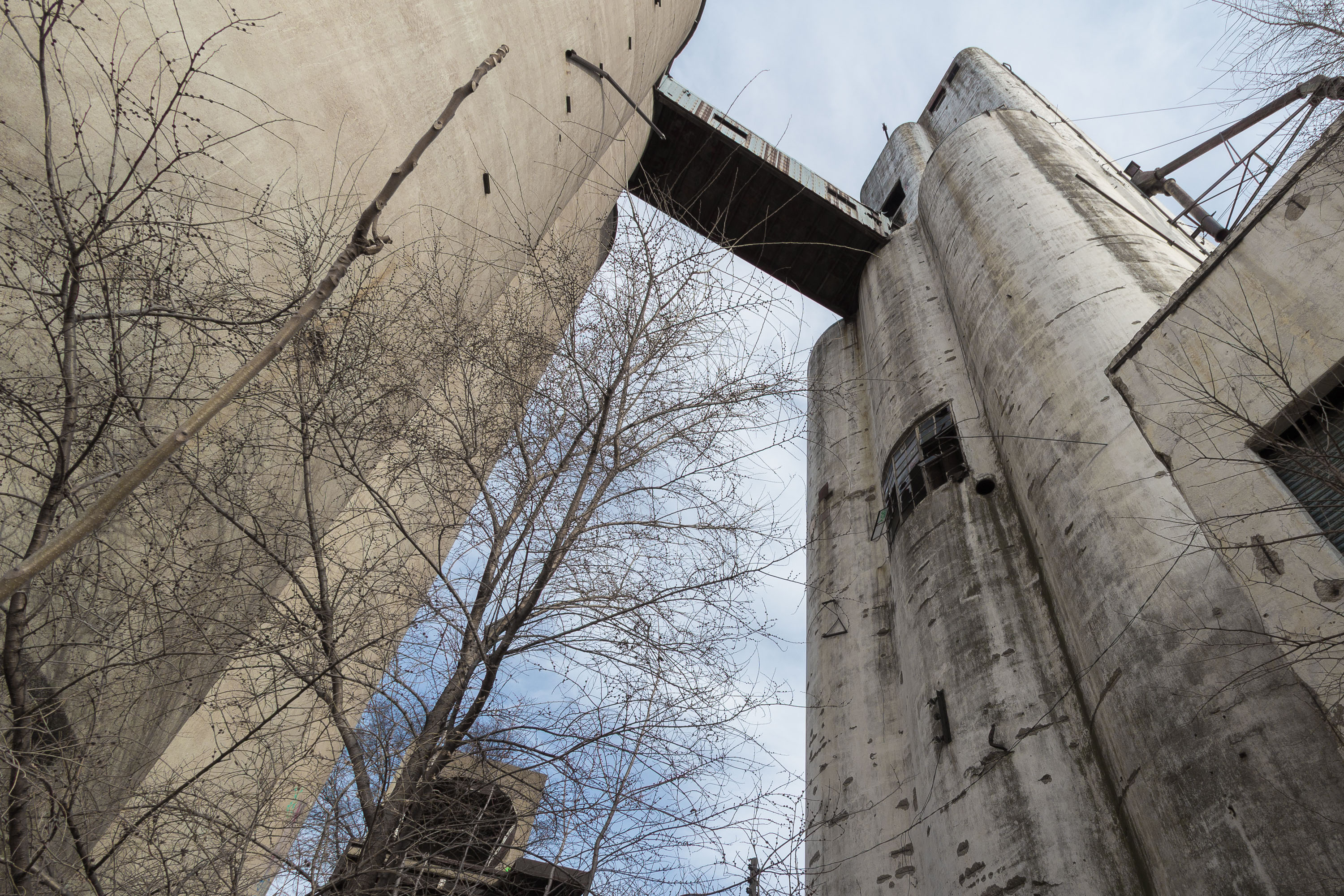
Concrete grain silos connected by an elevated enclosed walkway at a grain elevator complex in Omaha, Nebraska.
This grain elevator complex is located in Omaha, Nebraska. The structure consists of multiple reinforced concrete silos connected by an elevated enclosed walkway.

Concrete Grain Silos and Elevated Walkway, Omaha, Nebraska
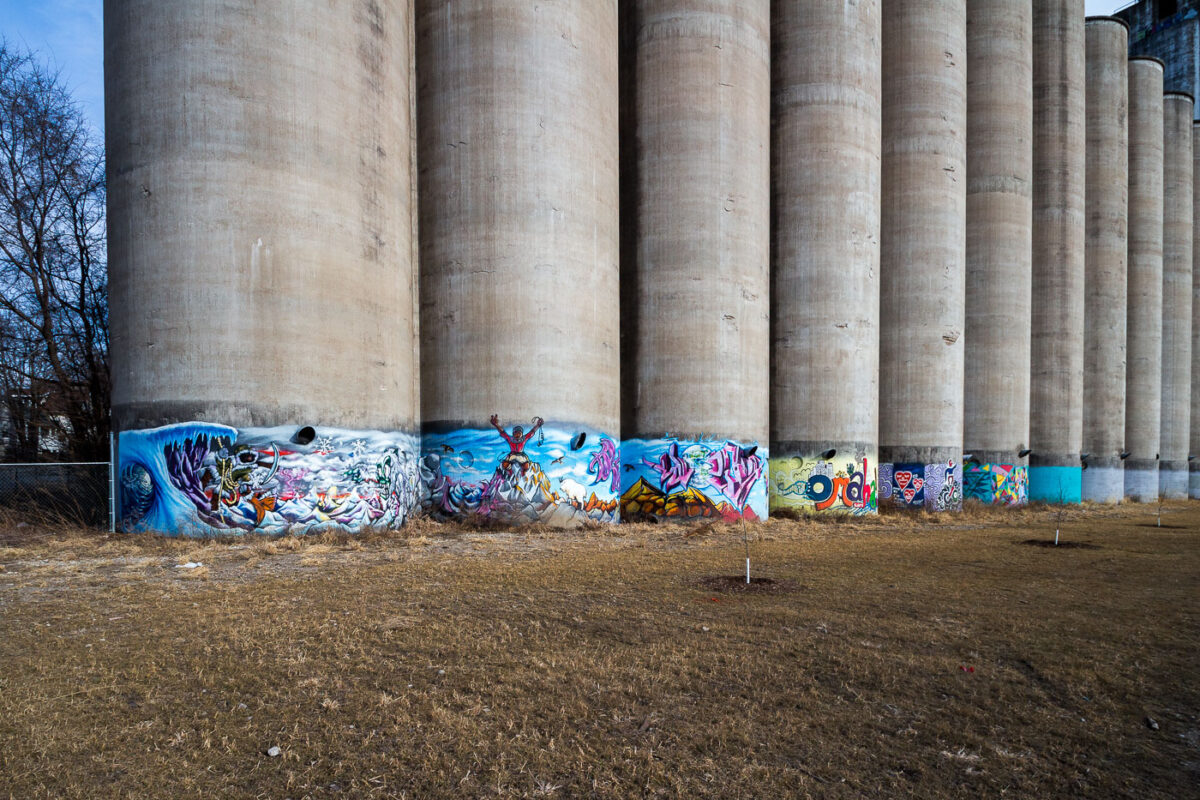
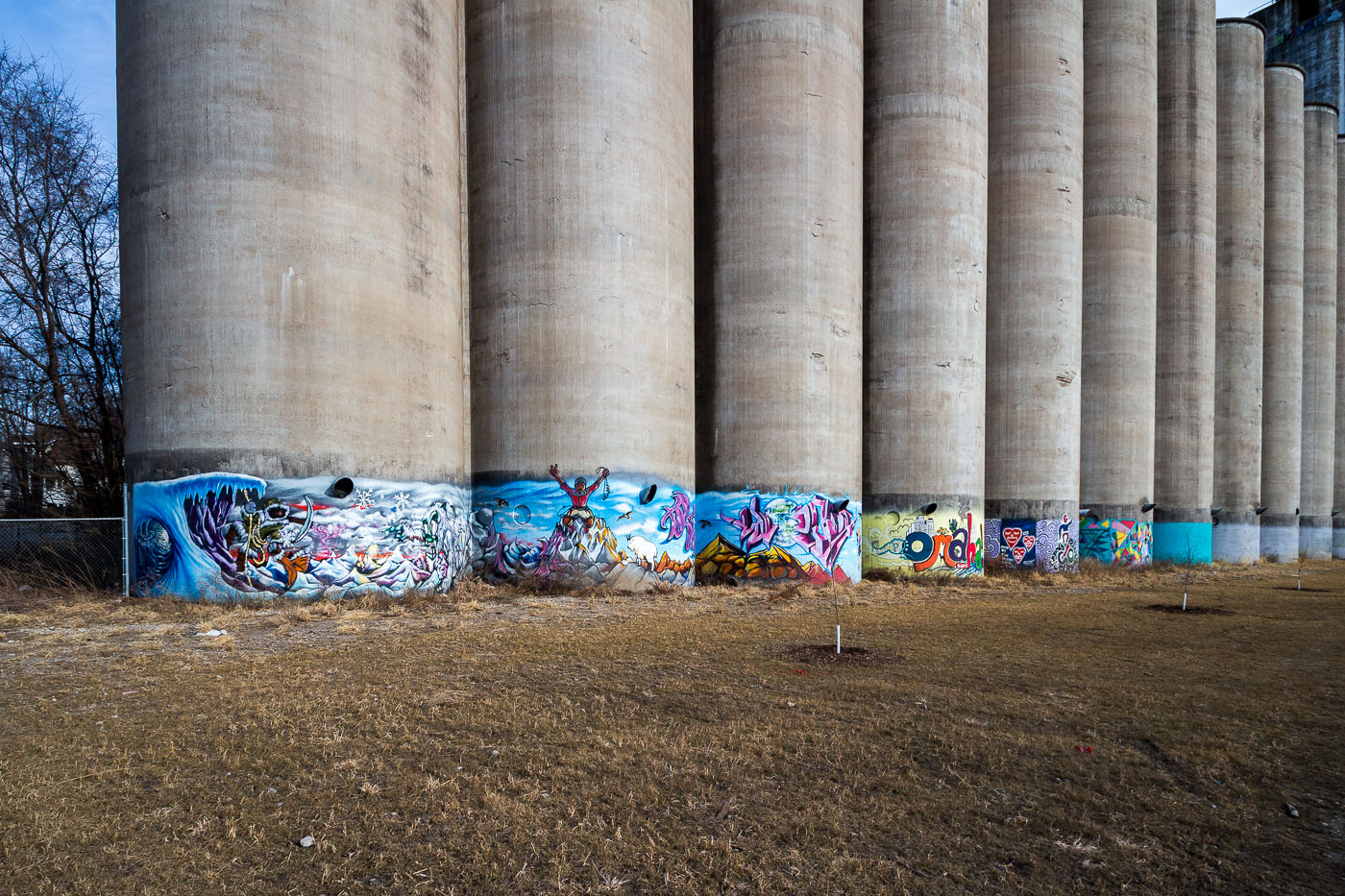
Colorful graffiti murals cover the base of concrete grain silos in Omaha, Nebraska.
Grain silos like these once stored the harvests that made Omaha a major hub of the Midwest grain trade, their concrete columns built tall and round to resist the outward pressure of stored grain.

Mural-Covered Grain Silo Bases in Omaha
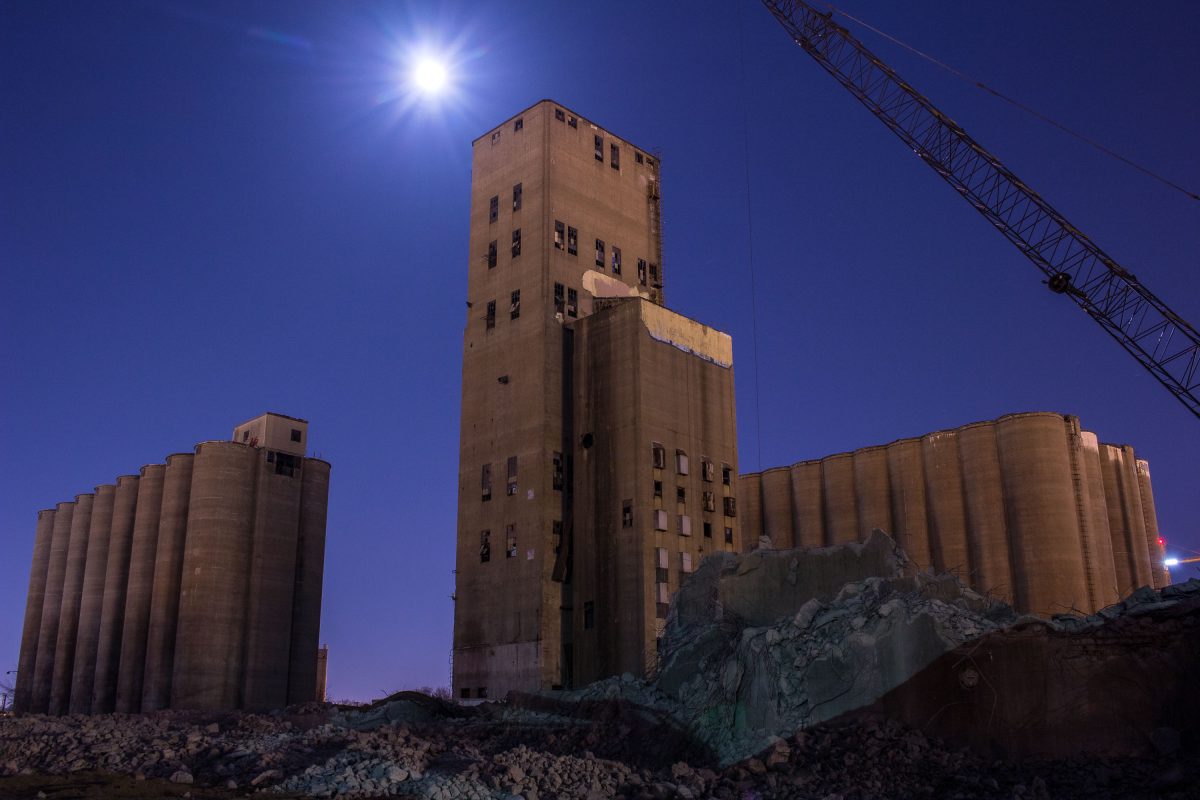
Concrete grain elevator complex with silos and headhouse during demolition in Dinkytown, Minneapolis.
Demolition of grain elevators in Minneapolis taking place in February 2017.

Dinkytown Grain Elevator Complex Under Demolition, Minneapolis
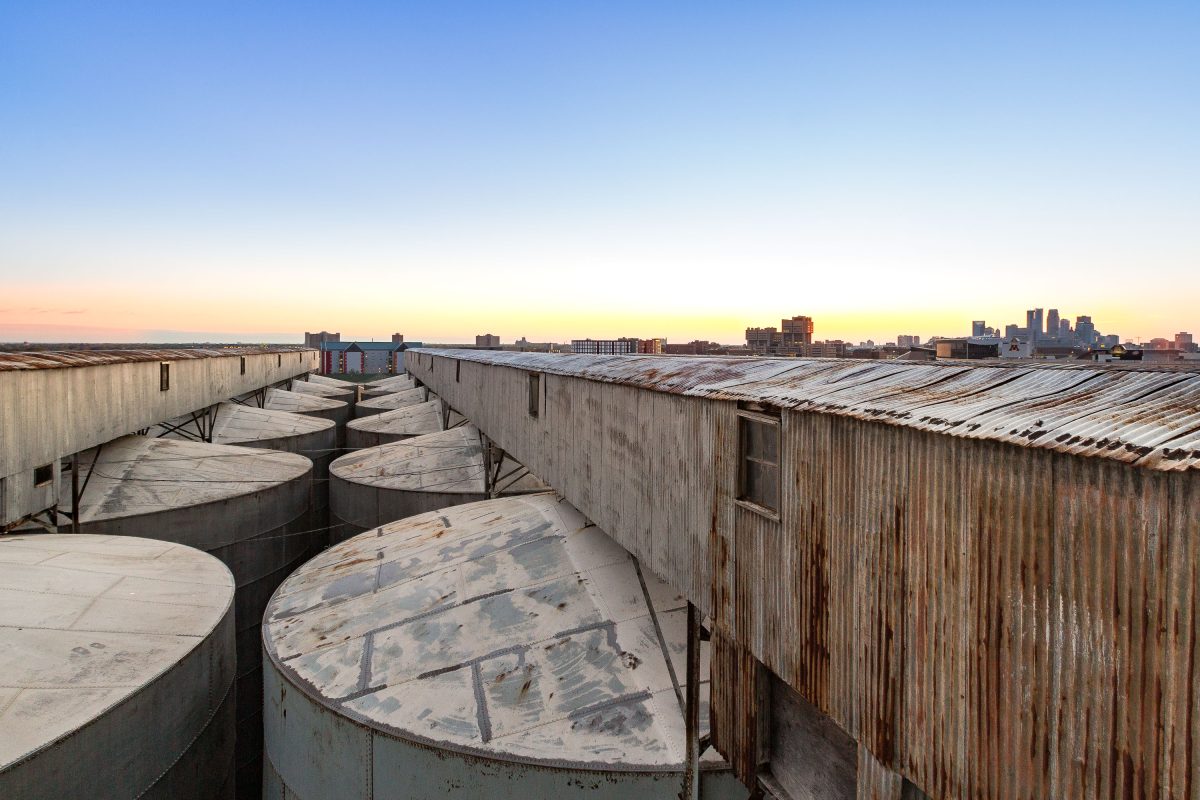
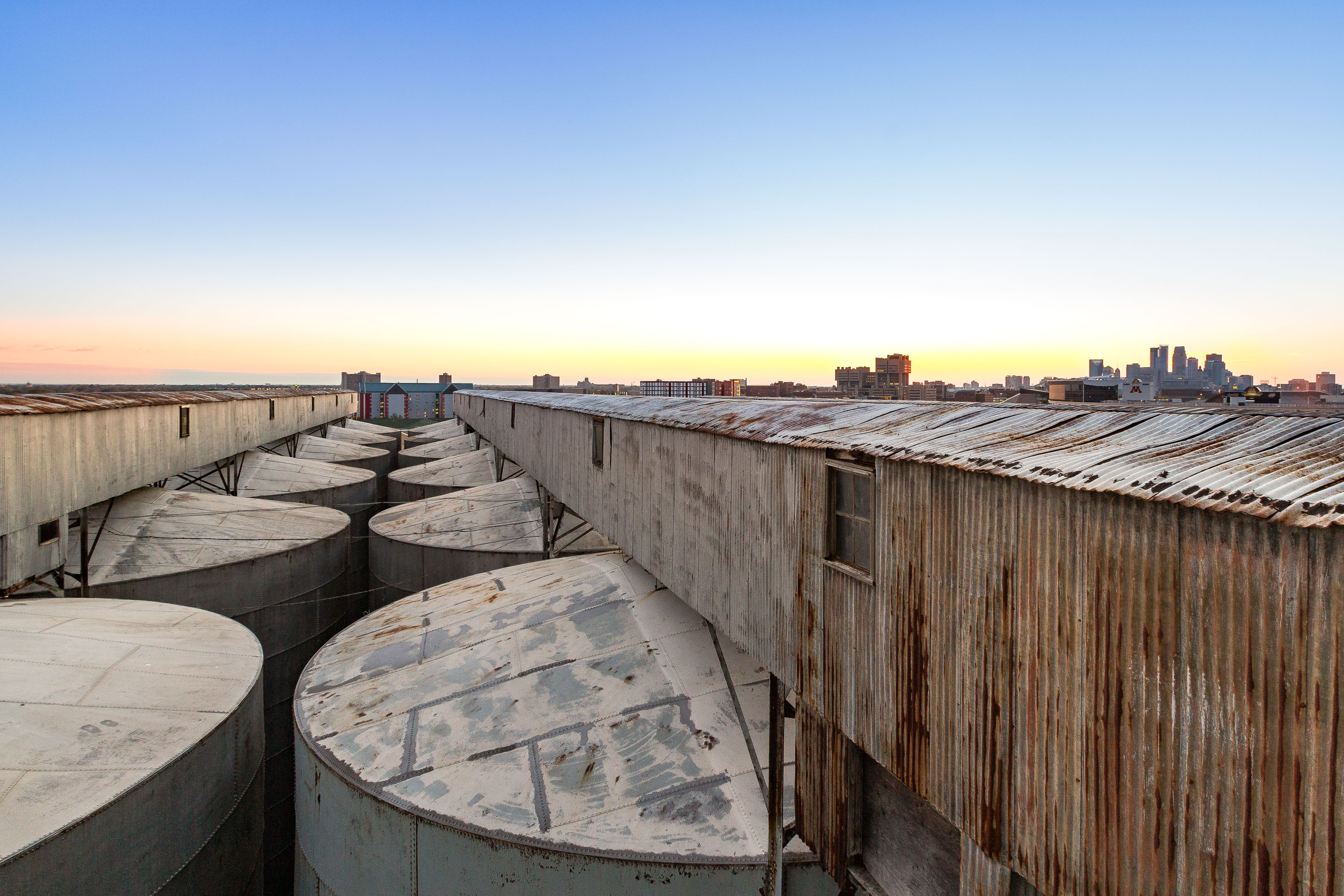
Abandoned Electric Steel grain elevator rooftop in Minneapolis with large storage tanks and downtown skyline at sunset.
The Electric Steel Elevator is a grain storage complex in Minneapolis, with rows of round steel bins topped by a corrugated metal shed.

Grain Bins at the Electric Steel Elevator With Downtown Minneapolis Beyond
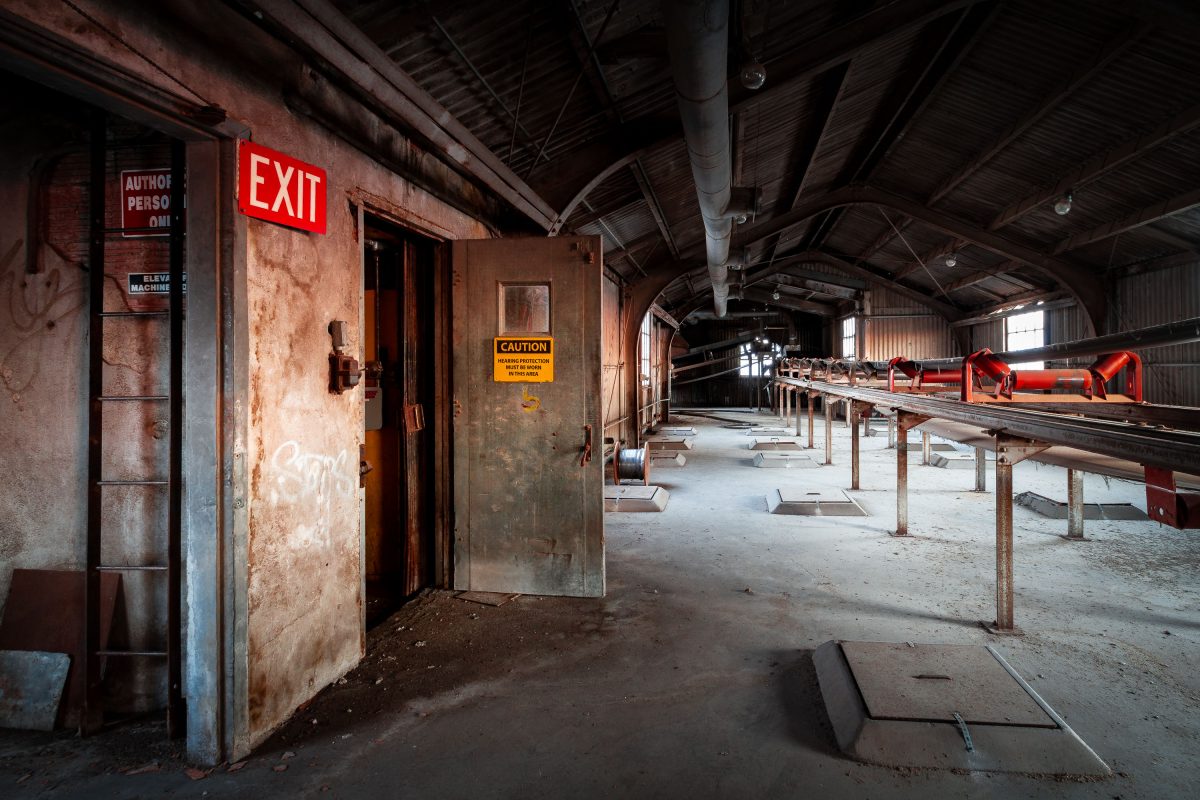
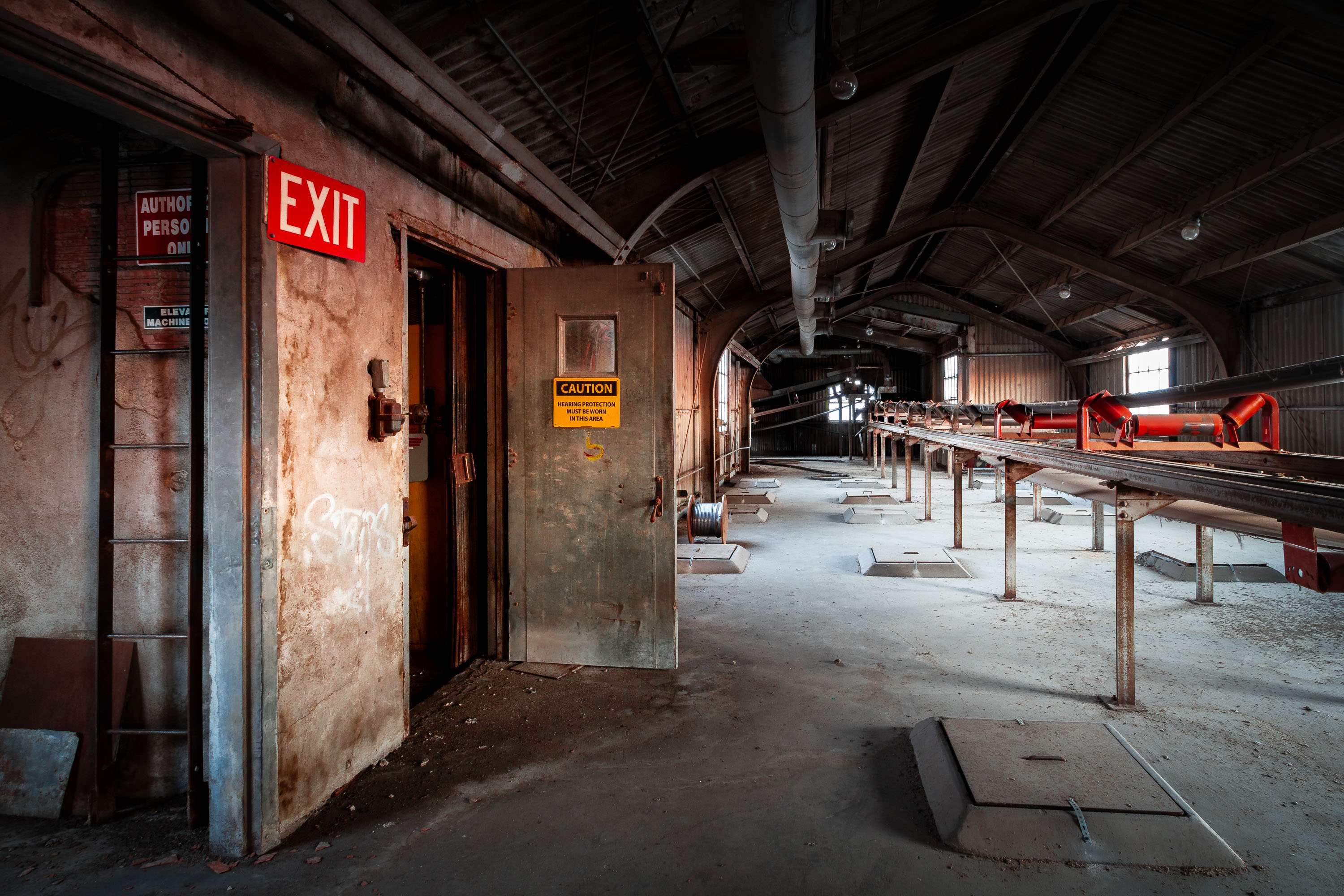
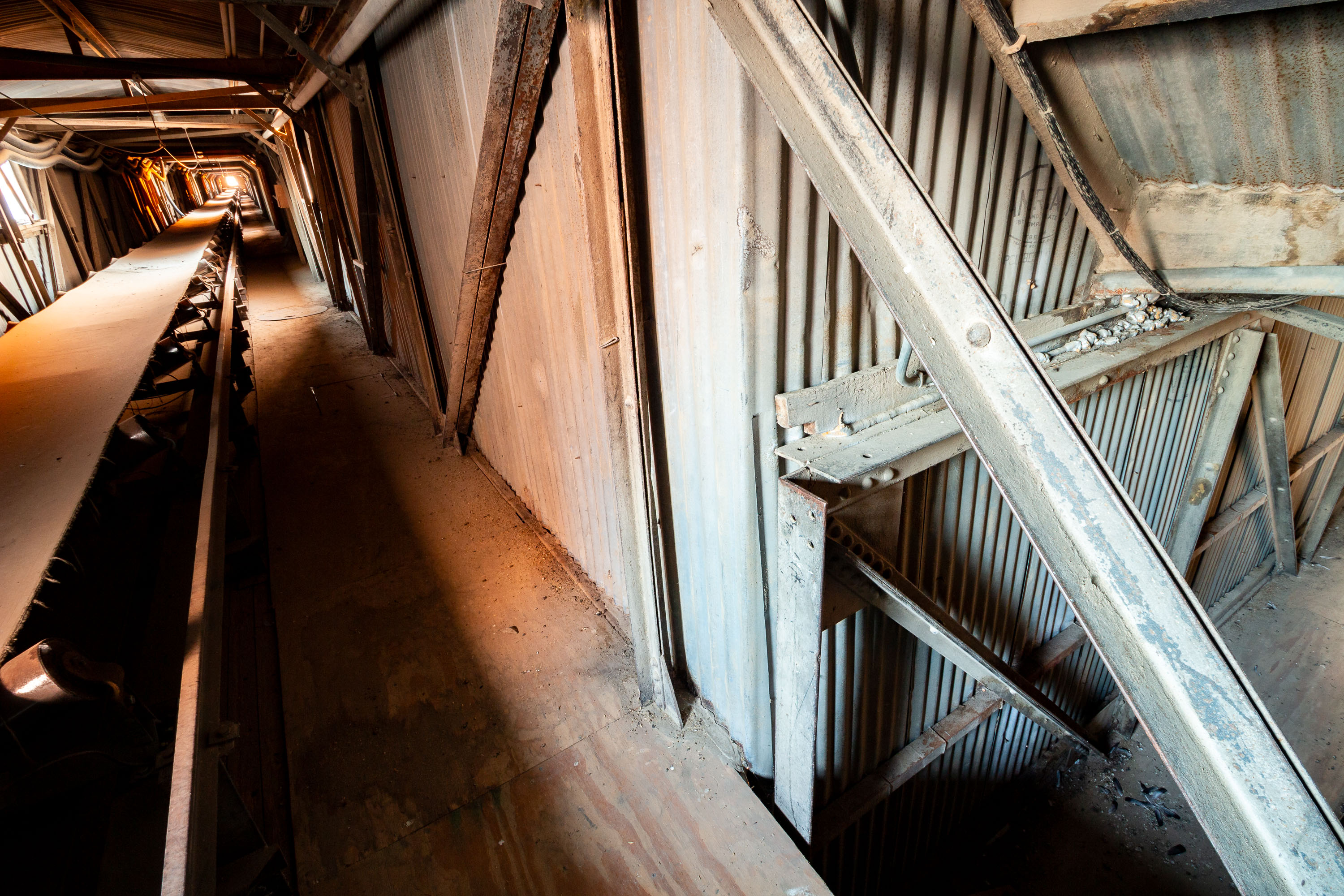
Abandoned Electric Steel grain elevator interior in Minneapolis with rusted machinery, conveyor systems, and red exit sign.
The Electric Steel Elevator is a grain elevator complex in Minneapolis, with a long conveyor gallery once used to move grain between storage and processing points. Steel doors, ladders, and warning signs like "Hearing Protection Must Be Worn in This Area" remain from its working days along the elevator's interior walkways.

Exit Door and Conveyor Gallery at Electric Steel Elevator
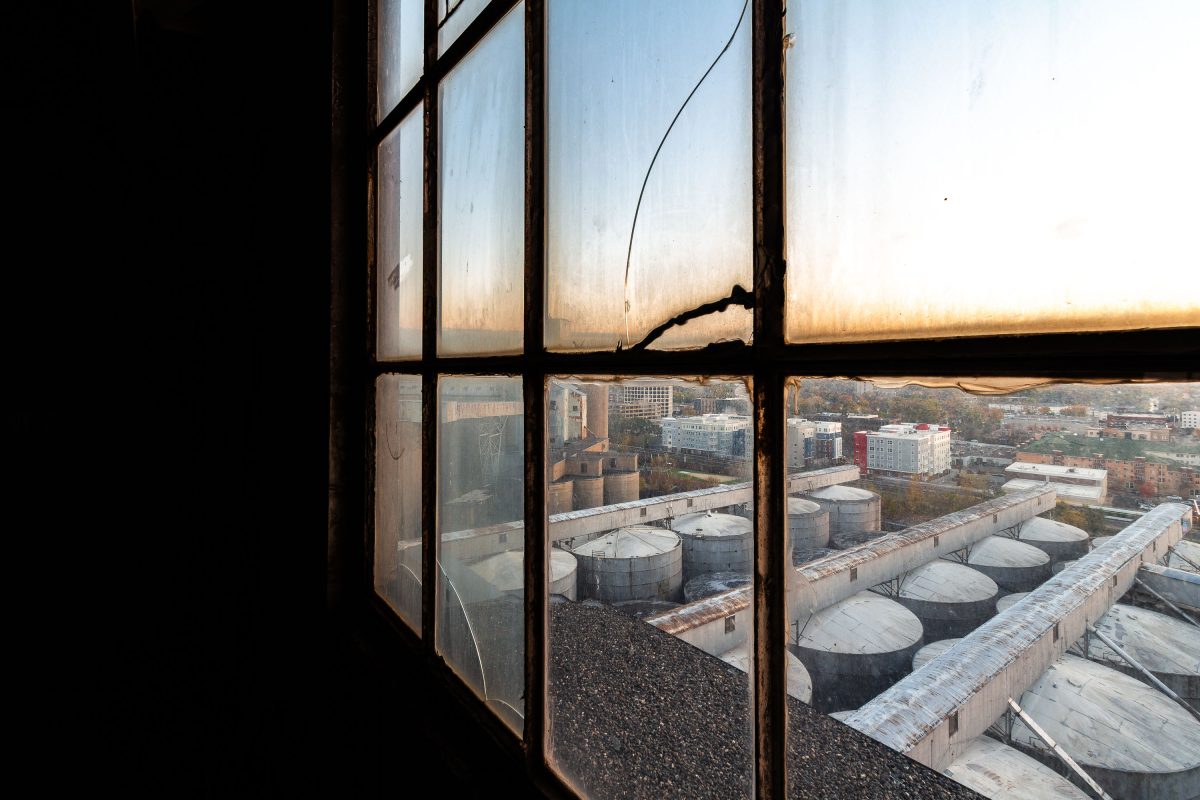
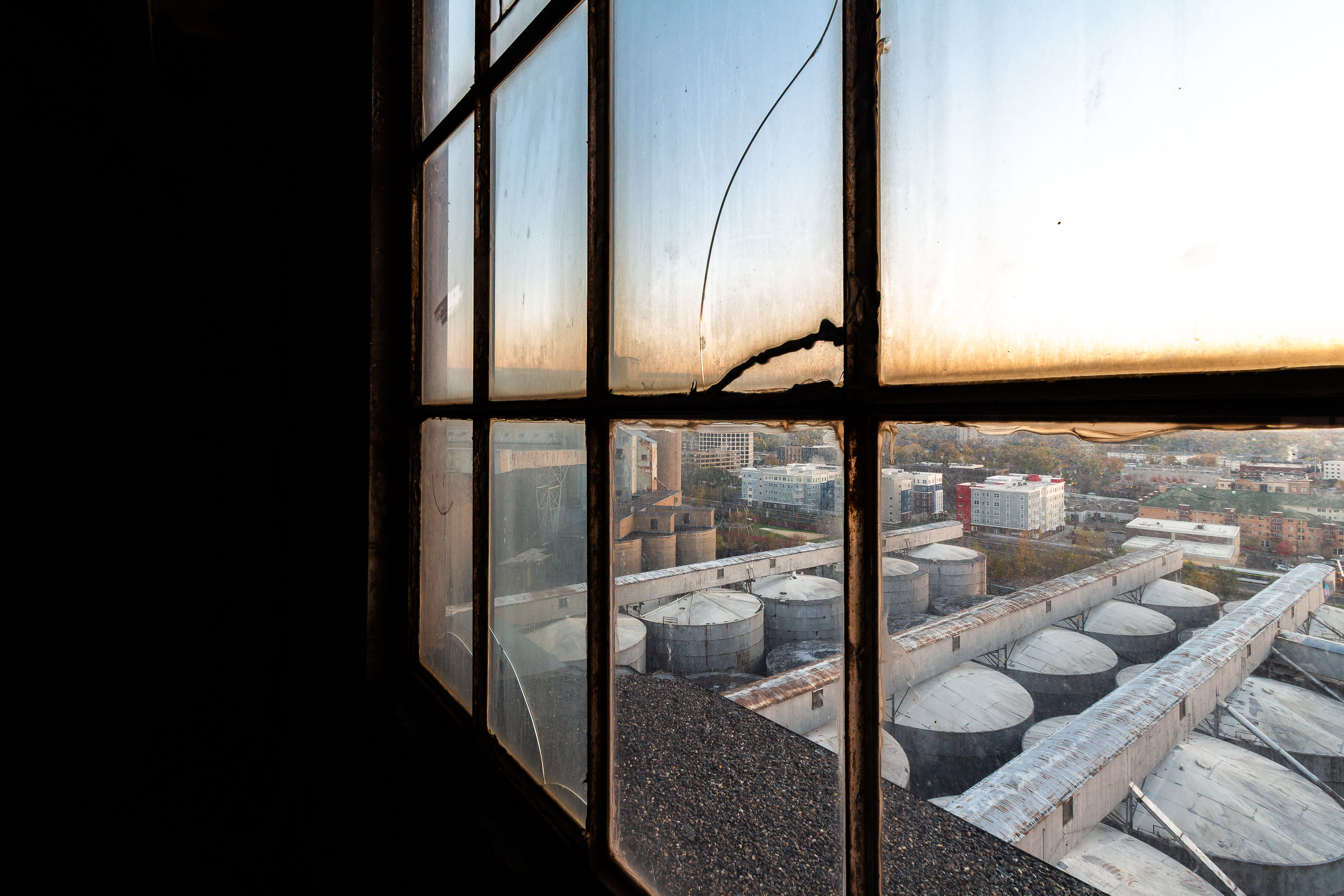
View from inside an abandoned Minneapolis grain elevator looking out at storage tanks and the city skyline at sunset.
The downtown Minneapolis skyline and surrounding neighborhoods lie beyond the tanks.

View of Grain Tanks Through a Broken Window at Electric Steel Elevator
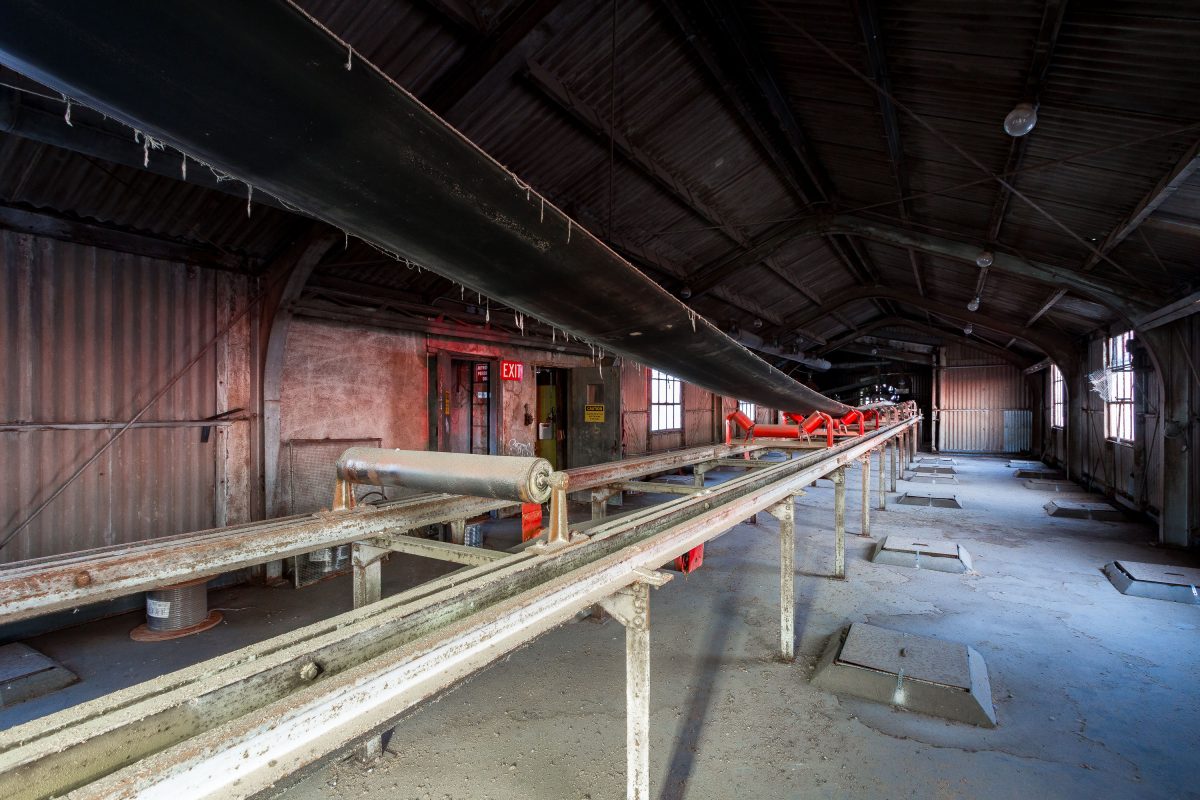
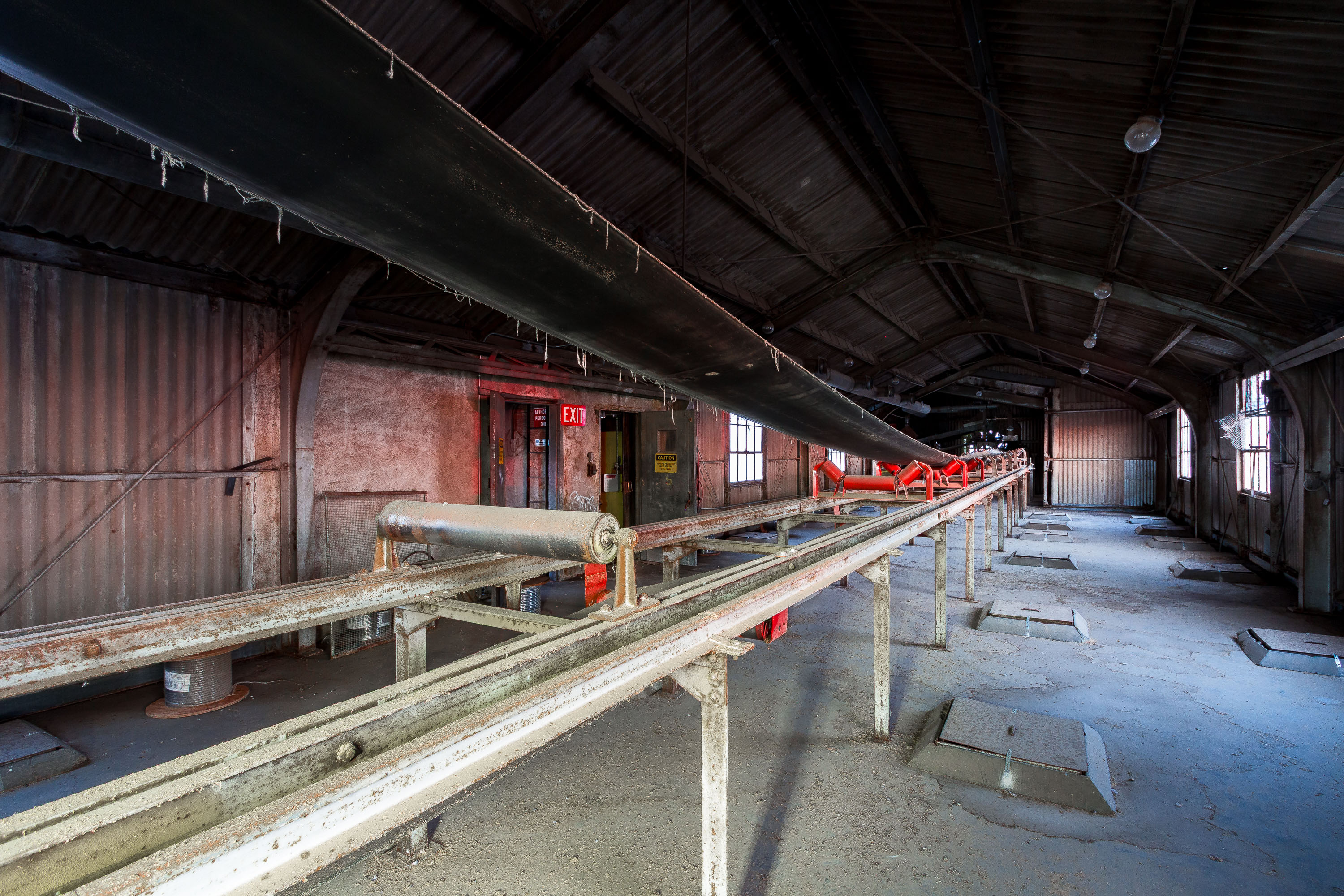
Interior of the Electric Steel Grain Elevator in Minneapolis showing weathered conveyor systems and industrial machinery beneath a metal-beam ceiling.
The Electric Steel Elevator is a former grain elevator in Minneapolis, built to store and load grain for shipment by rail. Inside, a long conveyor belt runs above a line of steel rollers that once moved grain through the building to waiting railcars.

Conveyor Belt and Rollers Inside Electric Steel Elevator in Minneapolis

Minneapolis skyline at sunset viewed through an abandoned industrial building's window frame.
The downtown Minneapolis skyline from the Electric Steel Elevator, a decommissioned grain elevator in the Prospect Park neighborhood near the University of Minnesota. TCF Bank Stadium, home to University of Minnesota football since 2009, sits between the elevator and downtown.

Downtown Minneapolis Skyline at Sunset from the Electric Steel Elevator
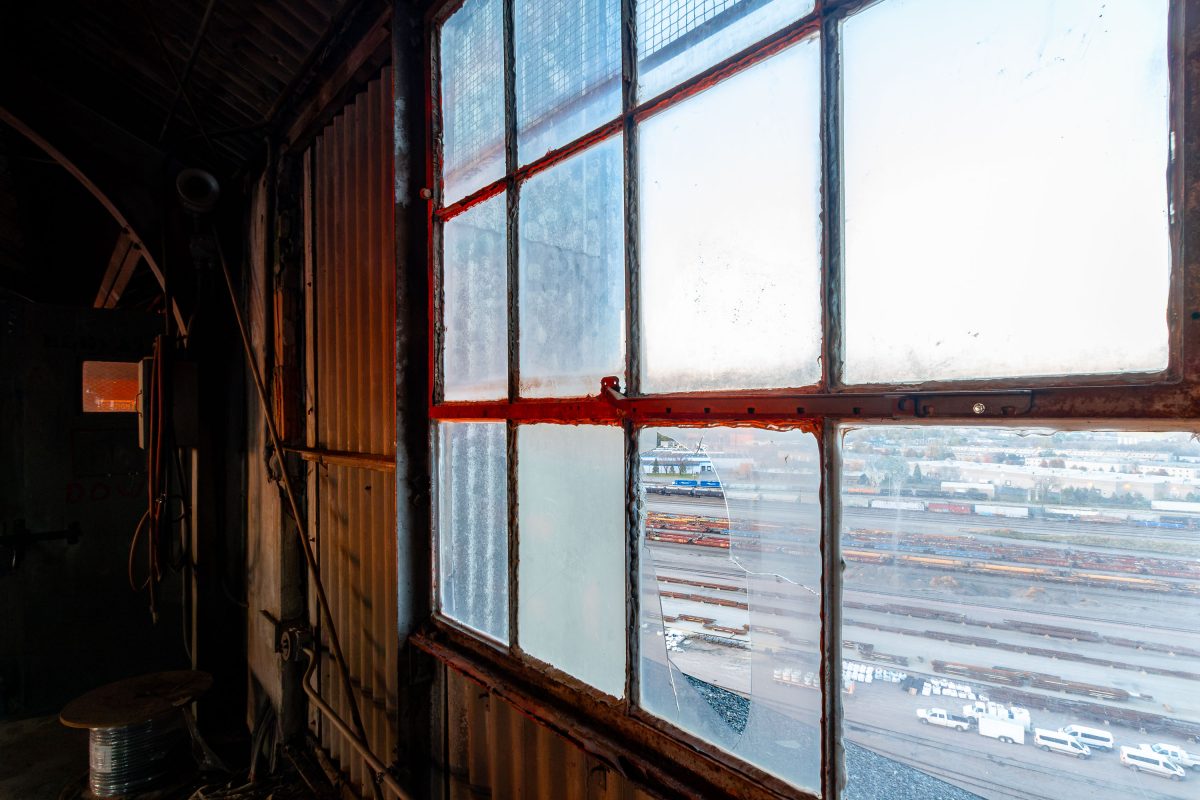
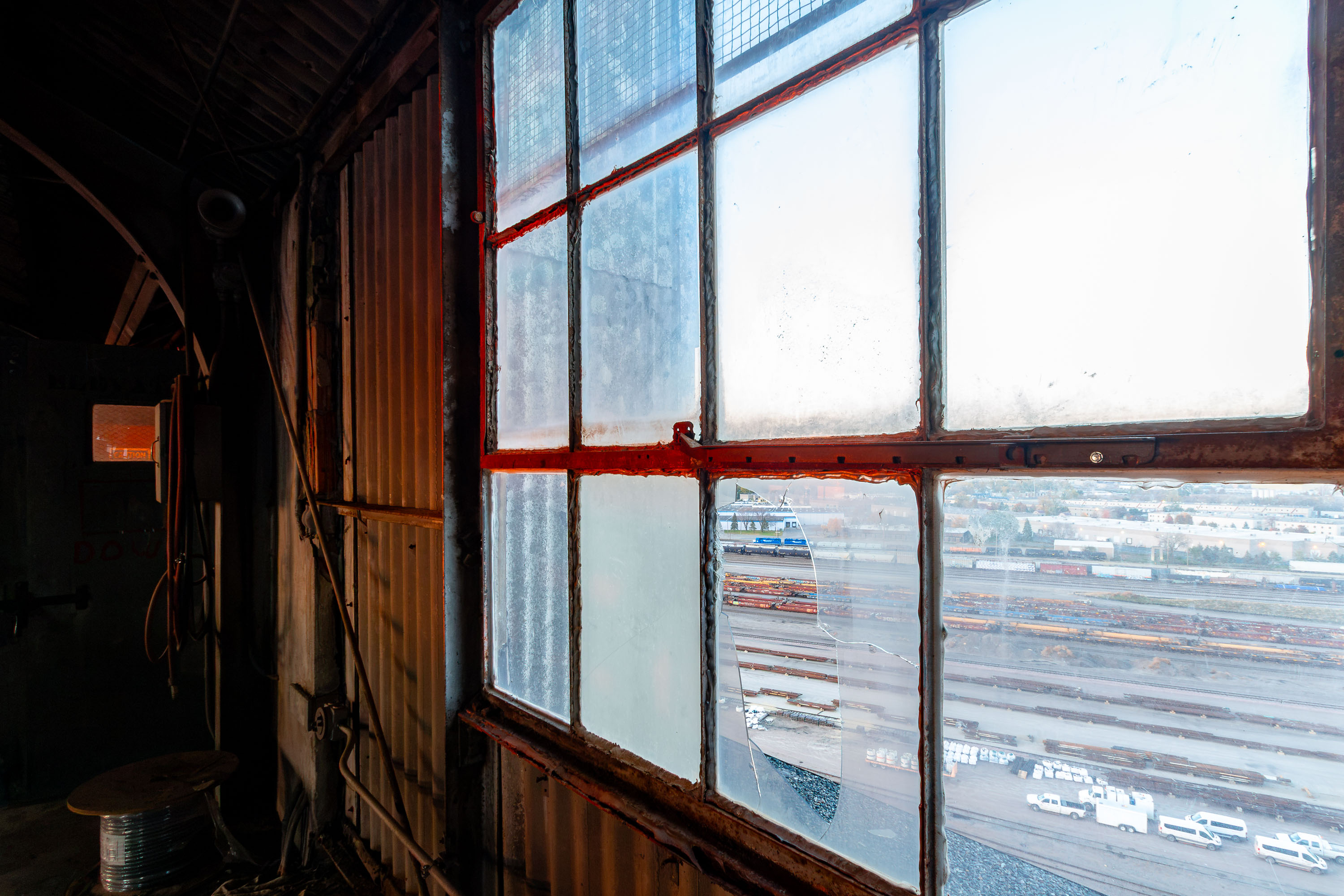
View from inside the abandoned Electric Steel Grain Elevator in Minneapolis looking out over railroad yards.
The Electric Steel Elevator is a former grain elevator in Minneapolis, built for storing and loading grain before shipment by rail.

Rail Yard View Through a Window at Electric Steel Elevator
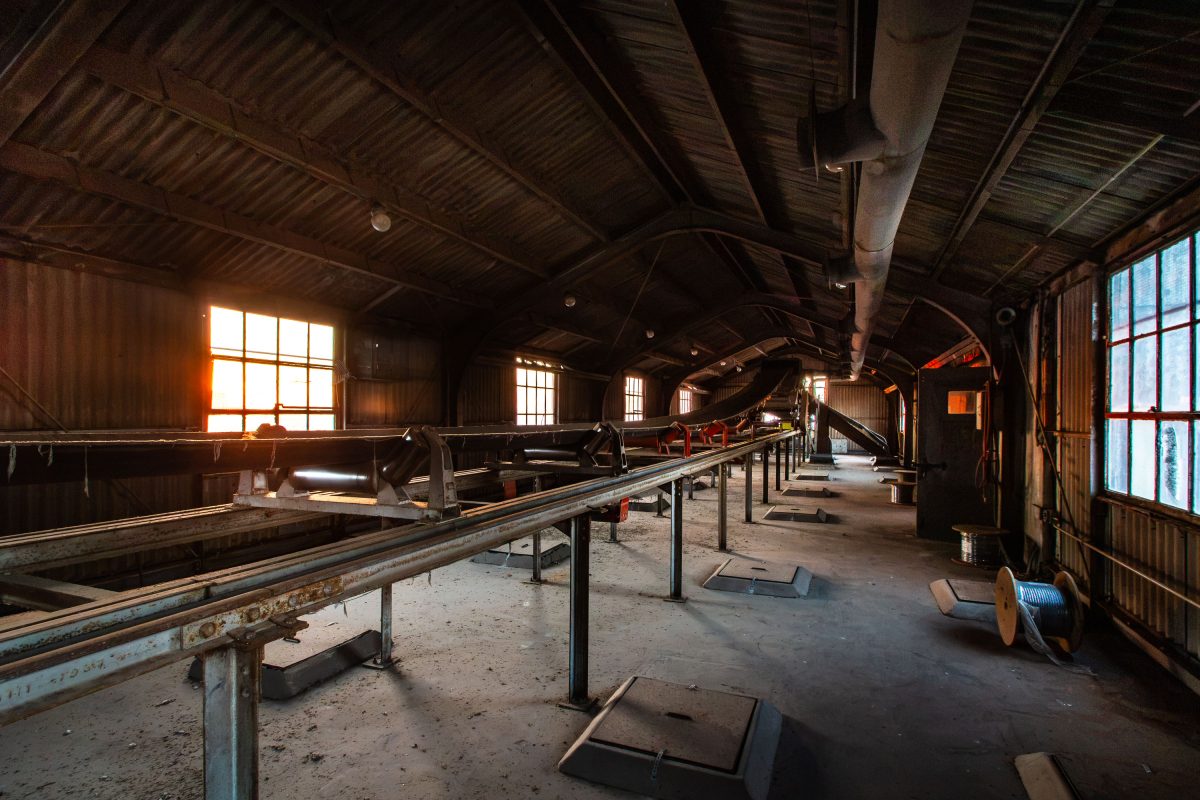
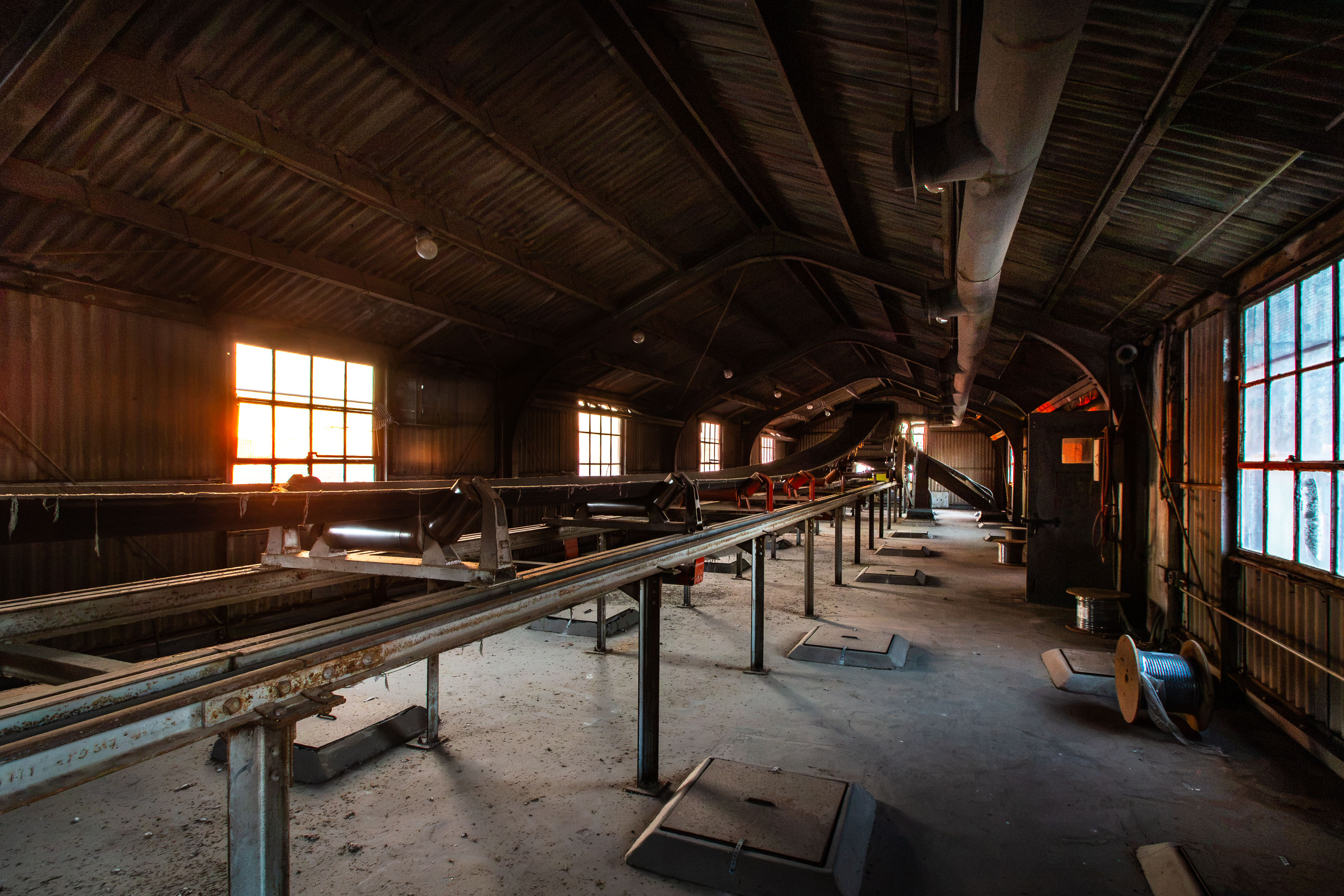
Abandoned warehouse interior with steel conveyor systems and industrial machinery lit by windows.
The Electric Steel Elevator is a grain elevator in Minneapolis along the Mississippi River. A long conveyor runs the length of the interior on a steel frame, once used to move grain through the structure.

Conveyor Belt Inside the Electric Steel Elevator in Minneapolis
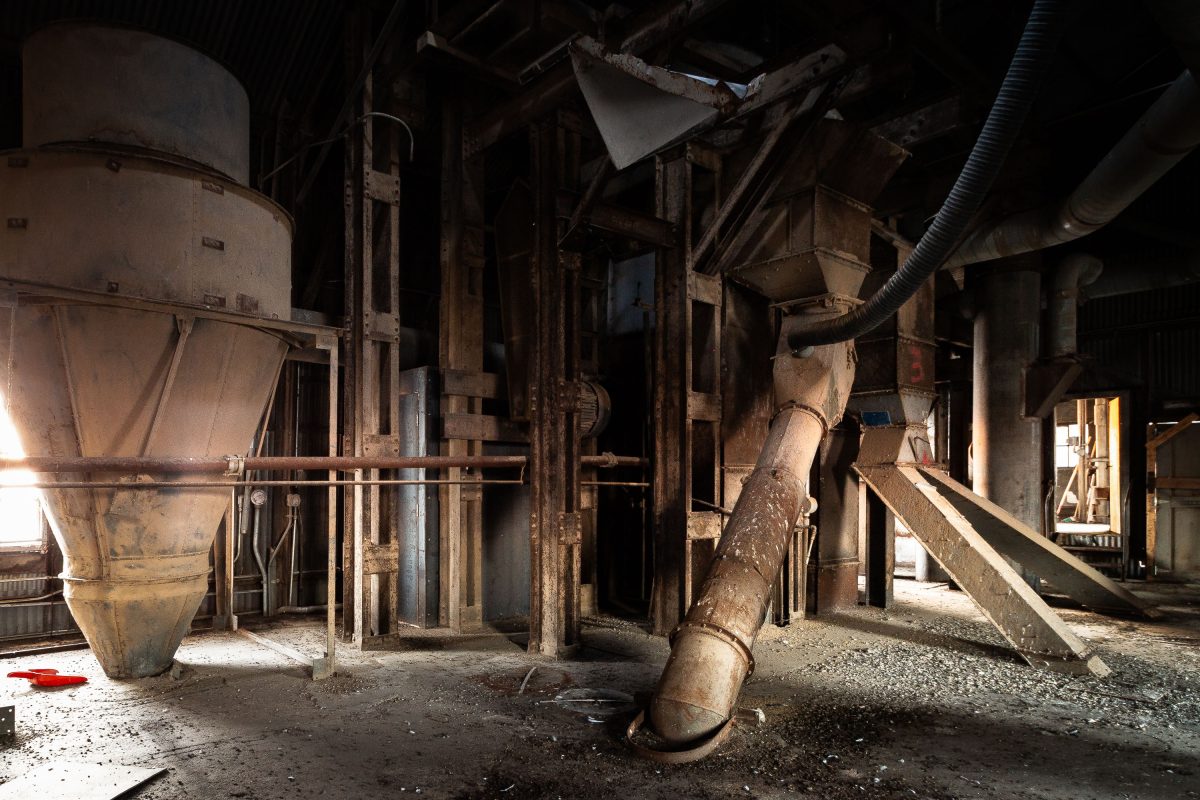
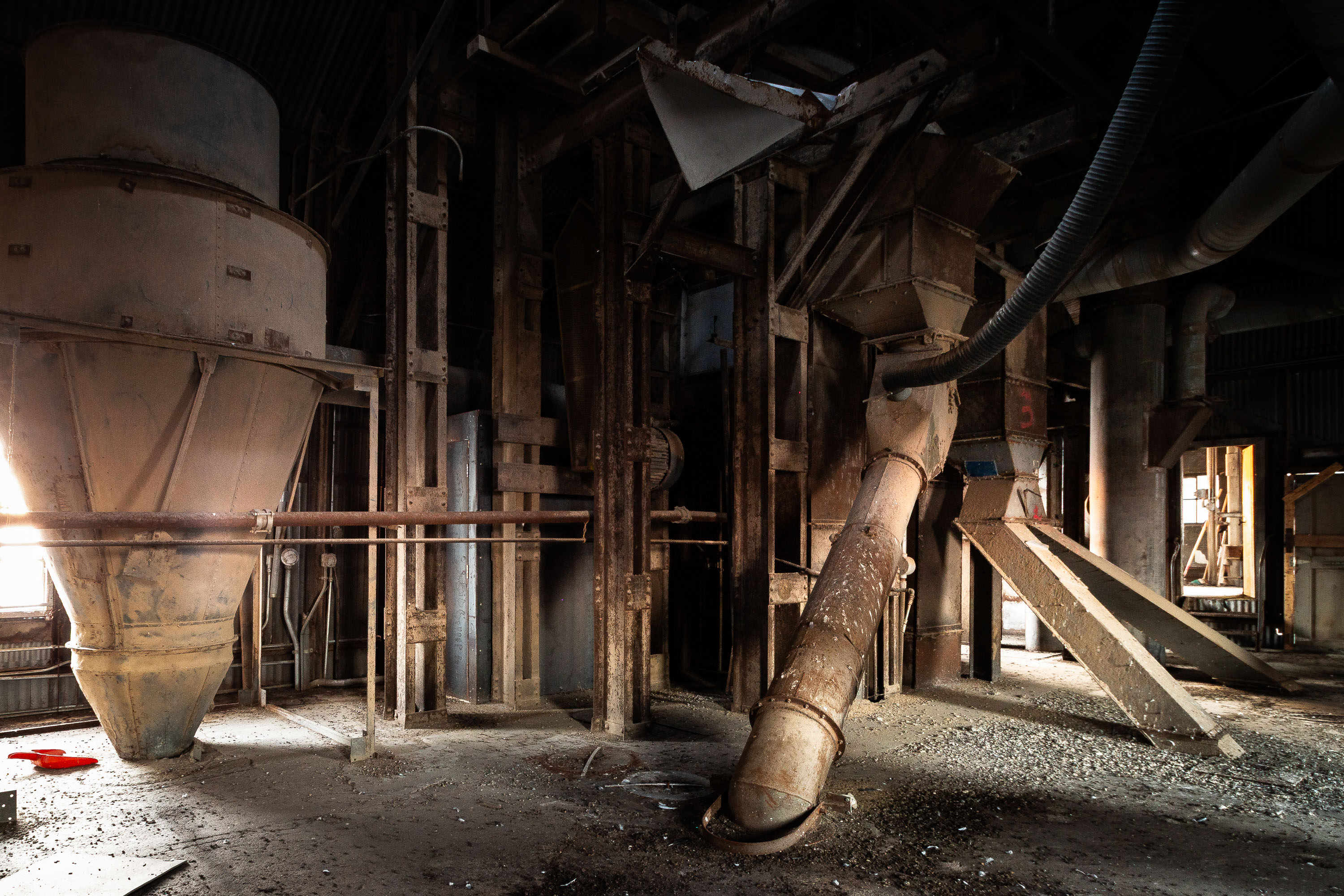
Interior of the abandoned Electric Steel grain elevator in Minneapolis, showing rusted industrial machinery and equipment.
The Electric Steel Elevator is a disused grain elevator in Minneapolis. Inside, rusted steel framing supports hoppers, chutes, and ductwork once used to move and clean grain before storage.

Inside the Electric Steel Elevator in Minneapolis
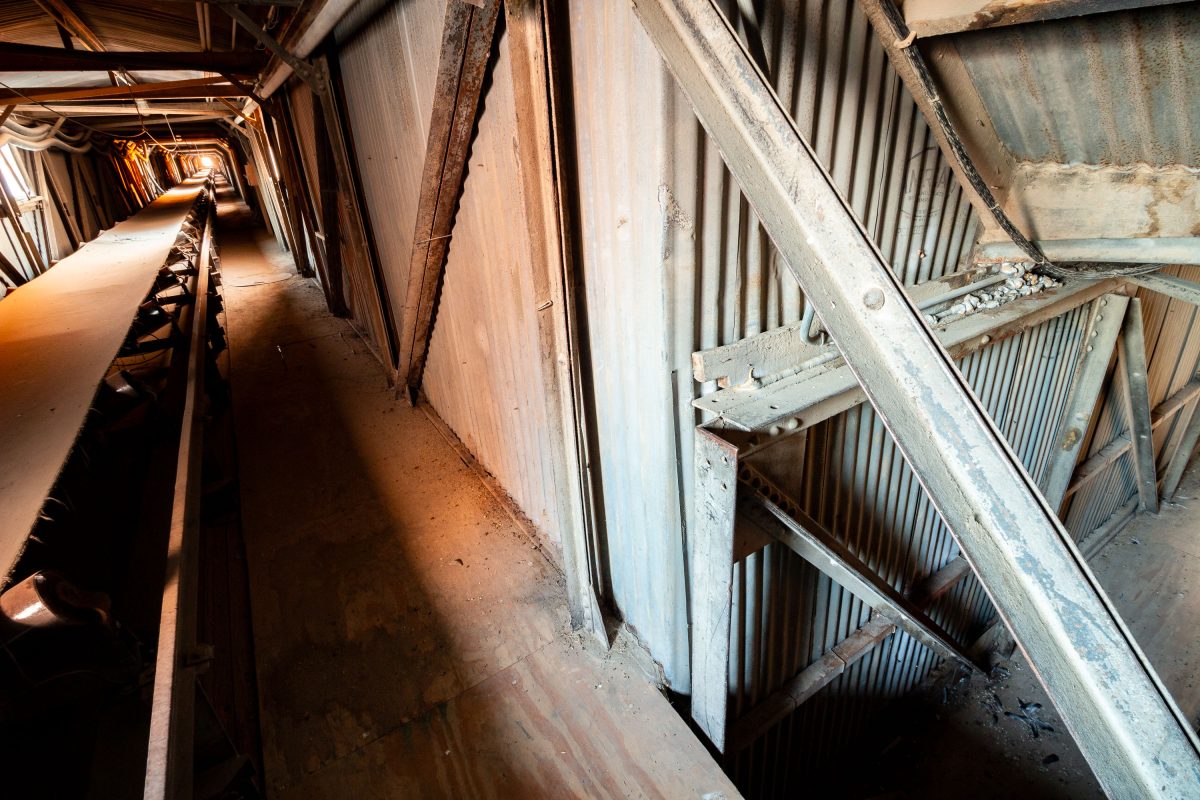
Interior of the Electric Steel grain elevator in Minneapolis showing a rusted conveyor belt and corrugated metal structural framework.
The Electric Steel Elevator is a grain elevator complex in Minneapolis. This enclosed gallery carries a conveyor belt between sections of the structure.

Conveyor Gallery Inside the Electric Steel Elevator in Minneapolis
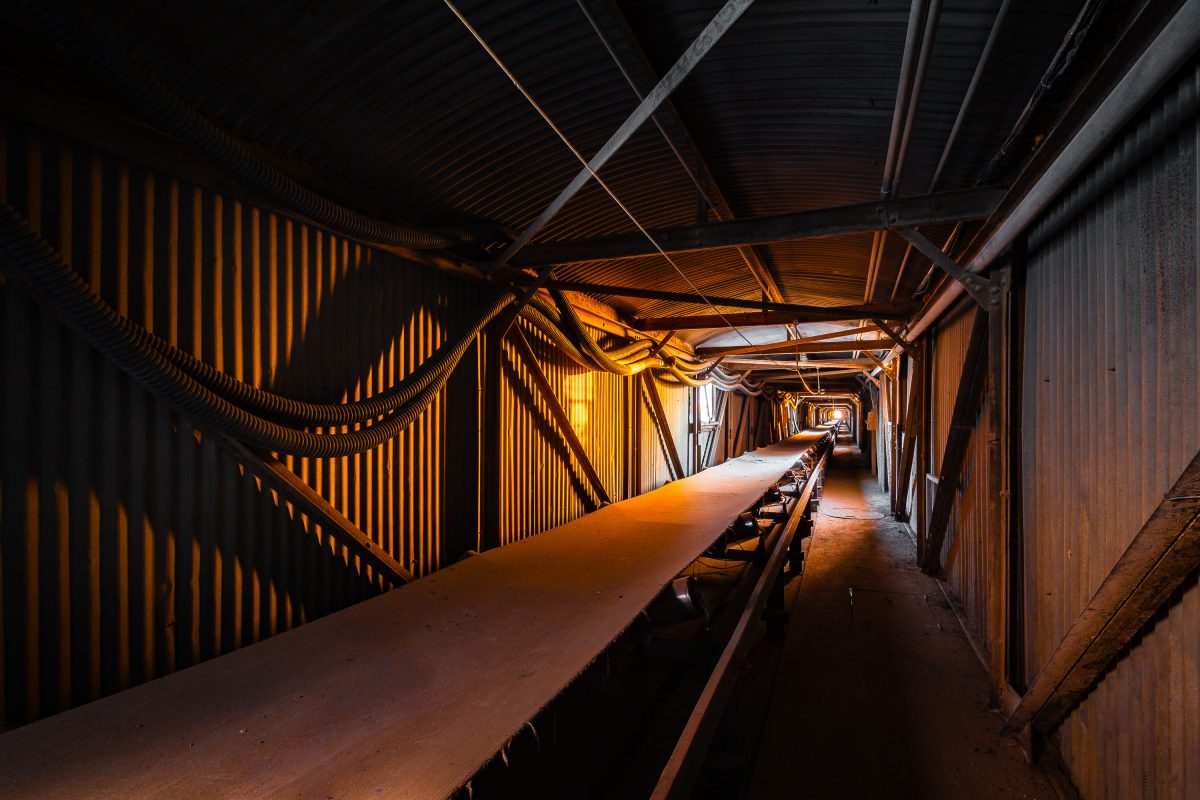
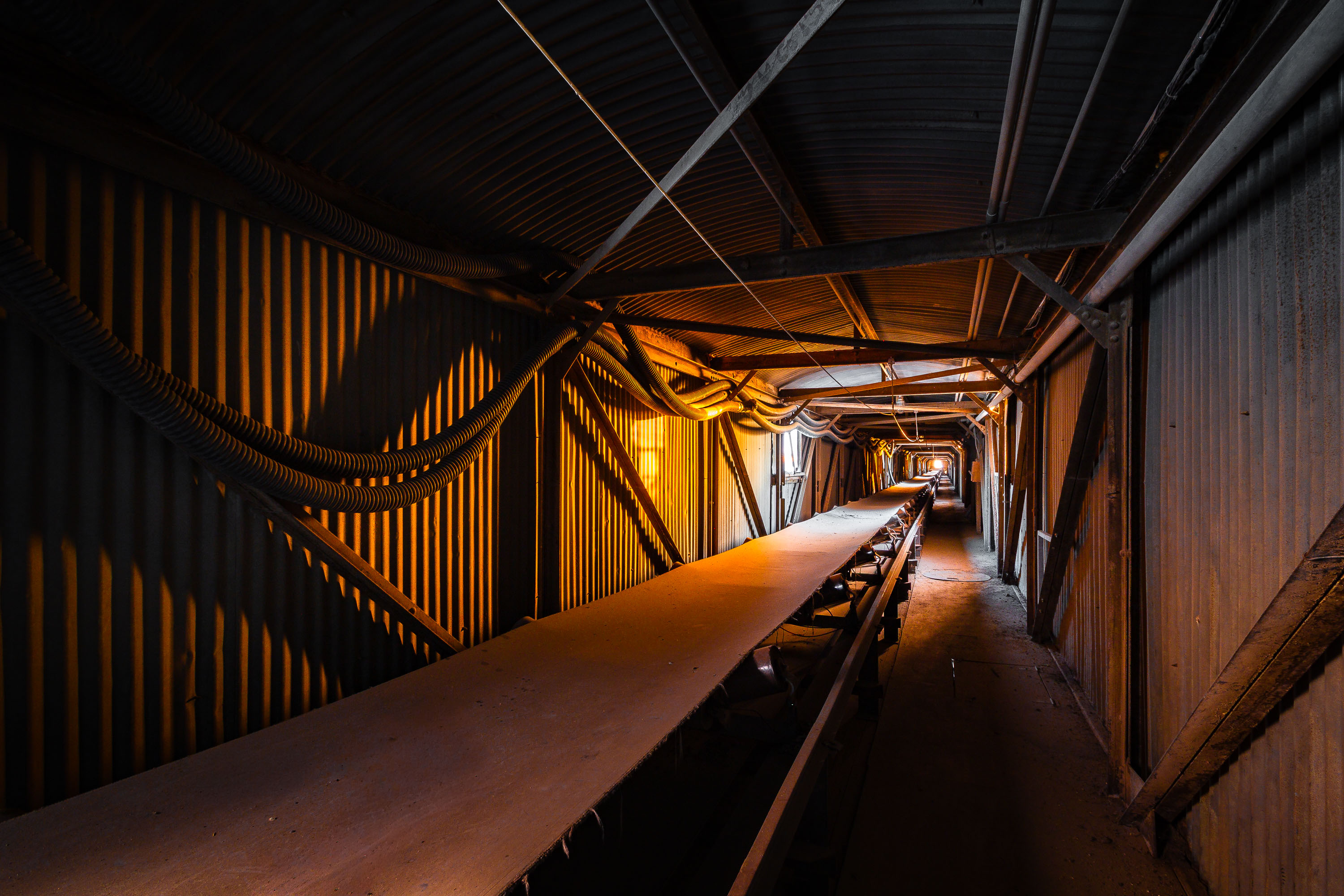
Interior of Electric Steel grain elevator in Minneapolis showing a long conveyor belt beneath industrial metal framework and corrugated walls.
The Electric Steel Elevator is a grain elevator in Minneapolis. A conveyor belt runs through an enclosed tunnel that carries grain between the storage bins and the head house.

Conveyor Tunnel Inside the Electric Steel Elevator in Minneapolis
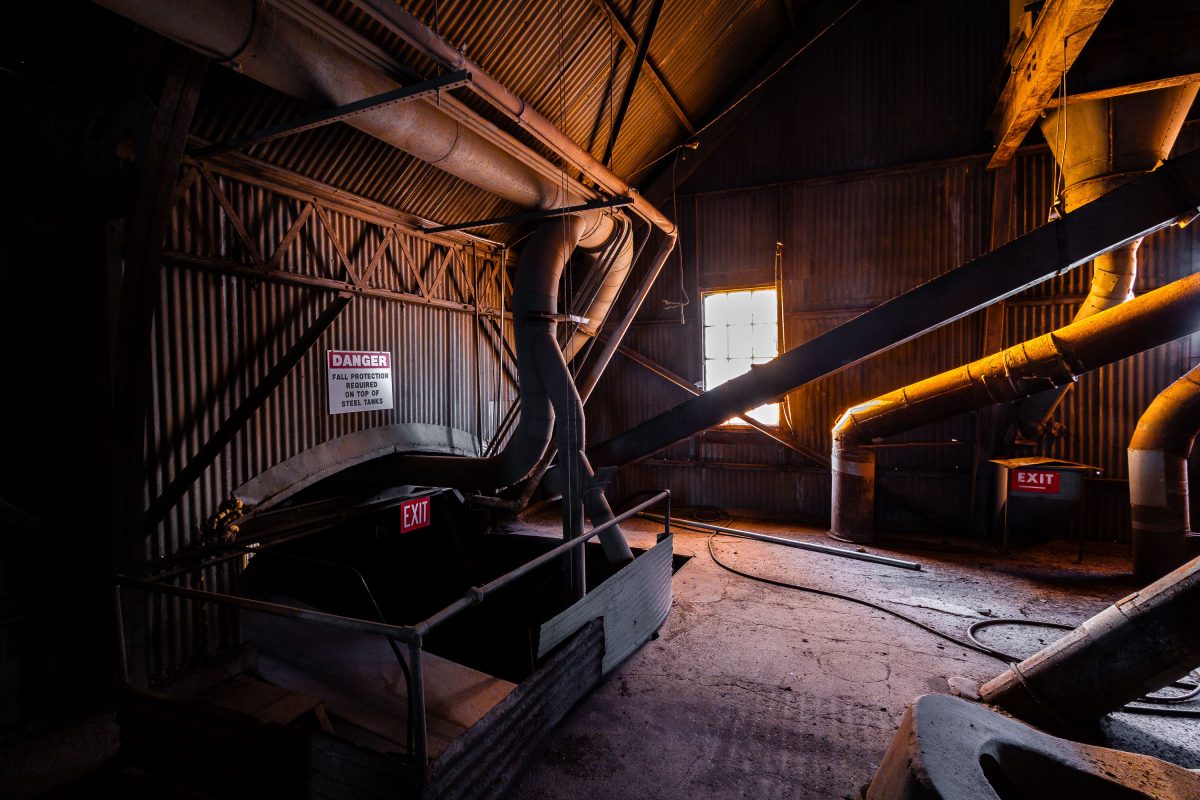
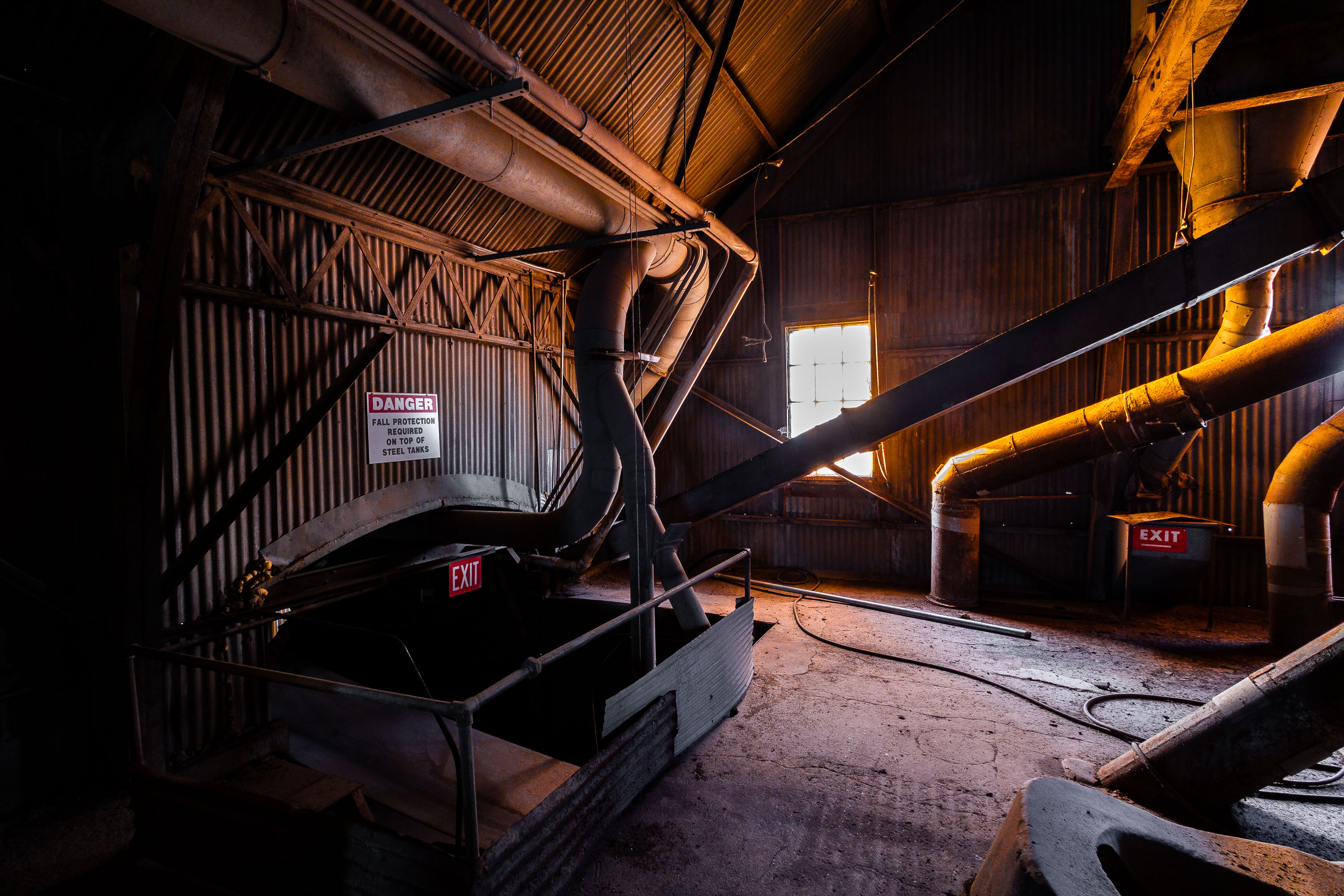
Interior of Electric Steel grain elevator in Minneapolis showing industrial pipes, metal infrastructure, and exit signage.
The Electric Steel Elevator is a former grain elevator complex in Minneapolis, built along the rail lines that once served the city's milling district. Inside, steel storage tanks connect to a network of conveyor pipes and chutes that moved grain between the bins and the head house.

Danger Sign Near the Steel Tanks at Electric Steel Elevator
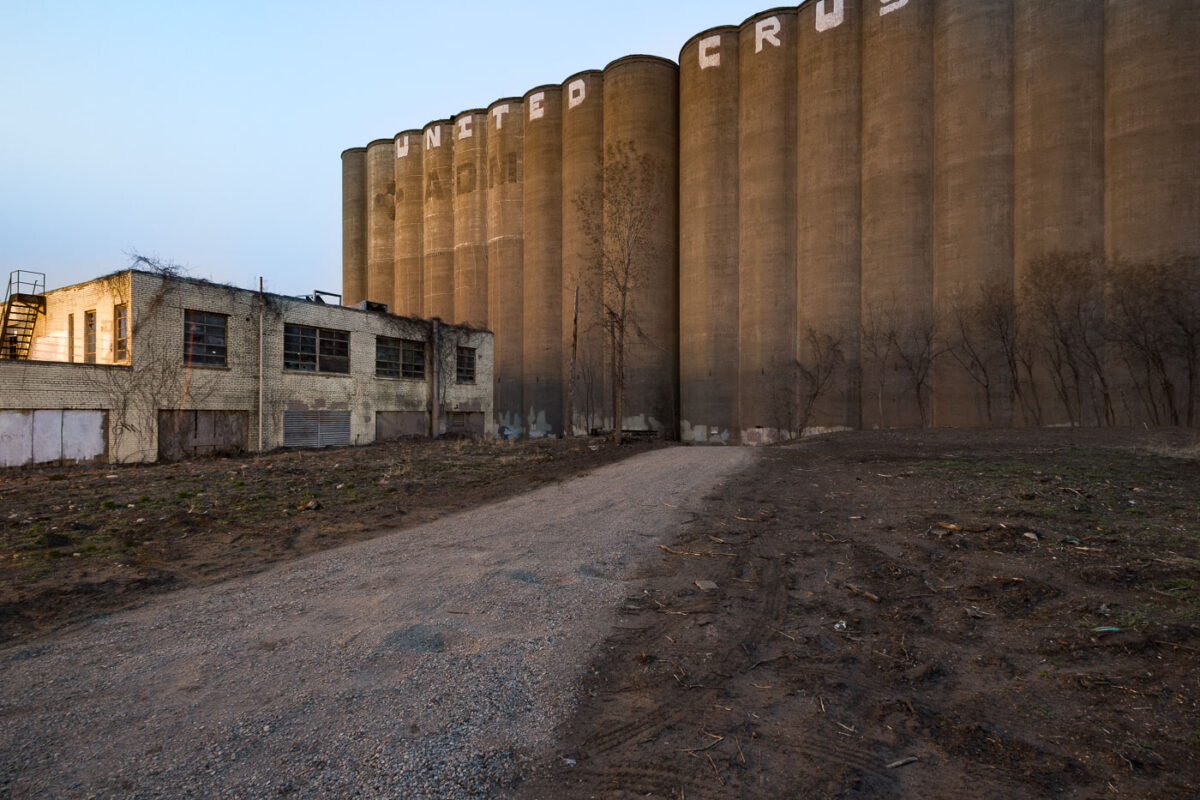
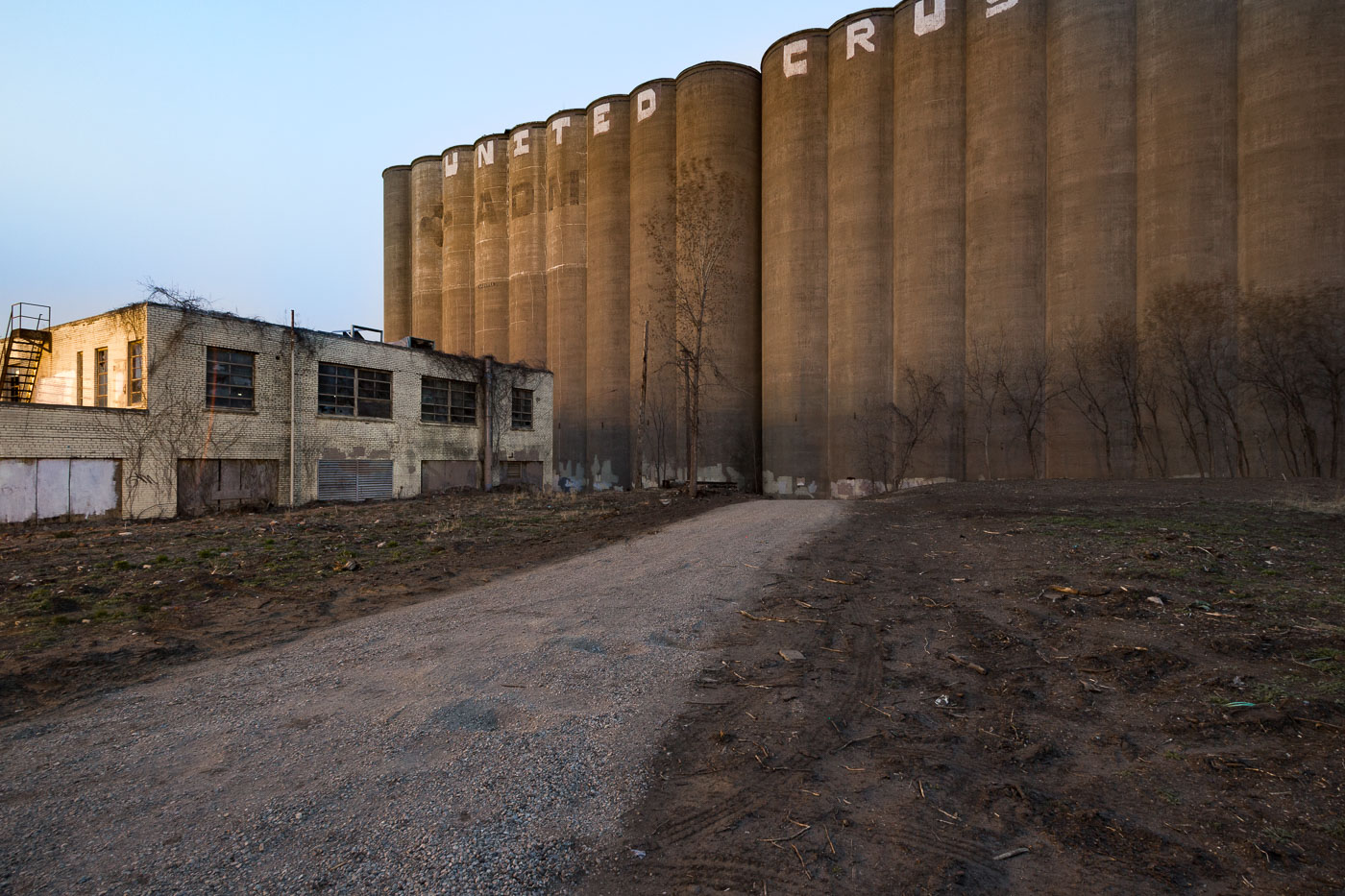
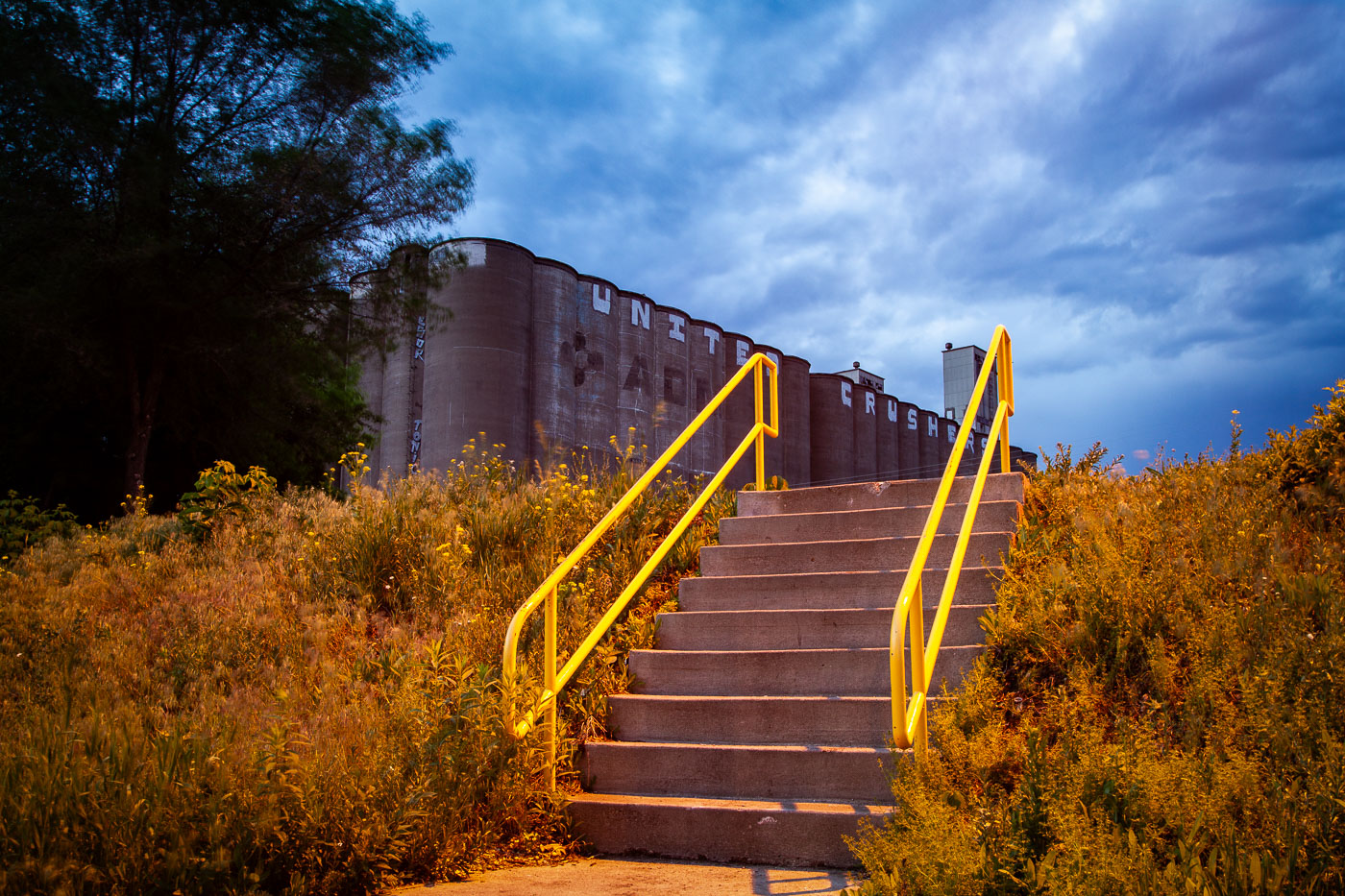
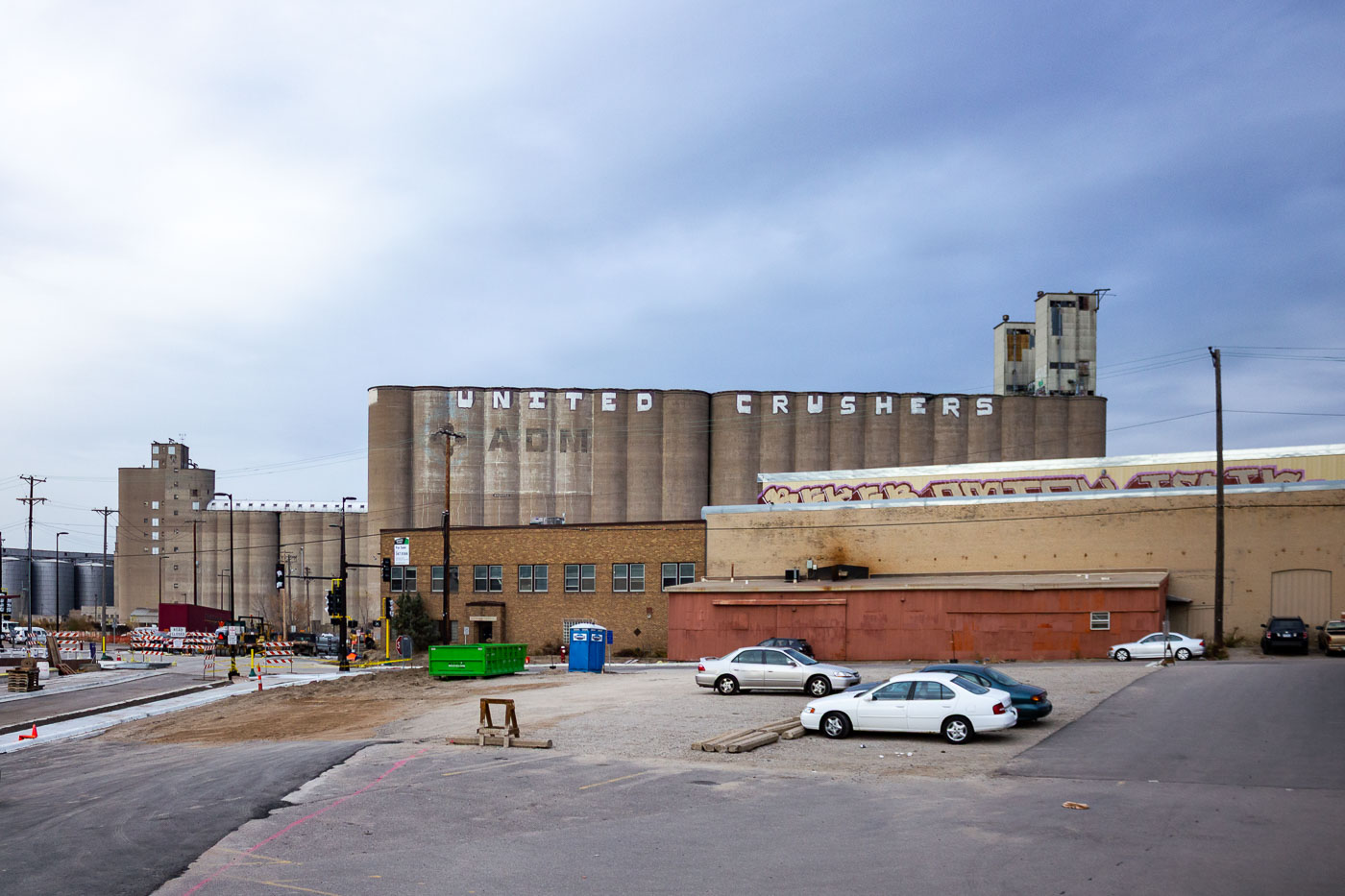
Abandoned ADM grain elevator complex in Dinkytown, Minneapolis, with "UNITED CRUSHERS" branding on silos.
The abandoned ADM grain elevator complex in Dinkytown, Minneapolis, stands as a relic of the city's industrial past. Originally part of the Pillsbury Company's operations, these concrete silos were constructed to store and process grain.

Abandoned ADM Grain Elevator, Dinkytown, Minneapolis

The ADM Grain Elevator and Harris Machinery buildings in Minneapolis's Prospect Park show fire damage and ice accumulation. The ADM silos are marked "CRUSHERS".
The ADM Grain Elevator and Harris Machinery buildings in Prospect Park, Minneapolis, show extensive ice and snow accumulation following a significant fire. The fire gutted the interior of the Harris Machinery structure, leaving its exterior heavily damaged and encased in ice.

ADM Grain Elevator and Harris Machinery Fire Damage, Prospect Park, Minneapolis
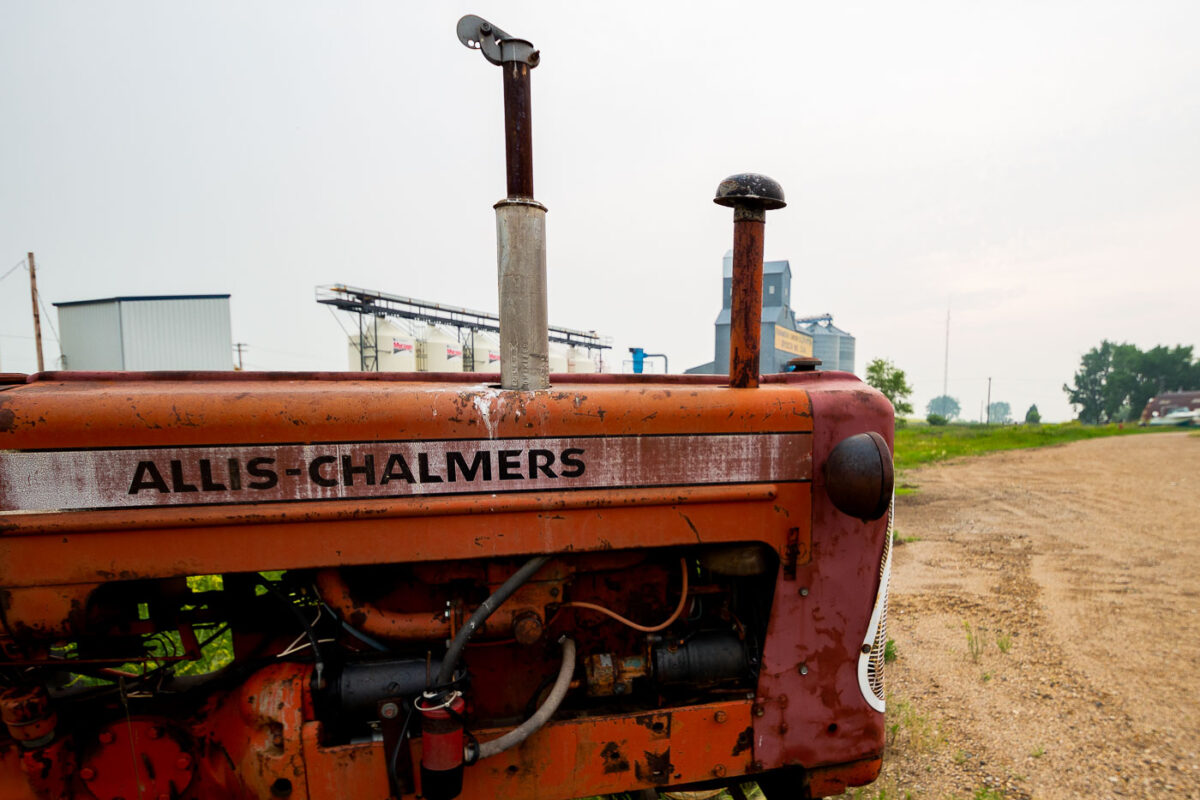
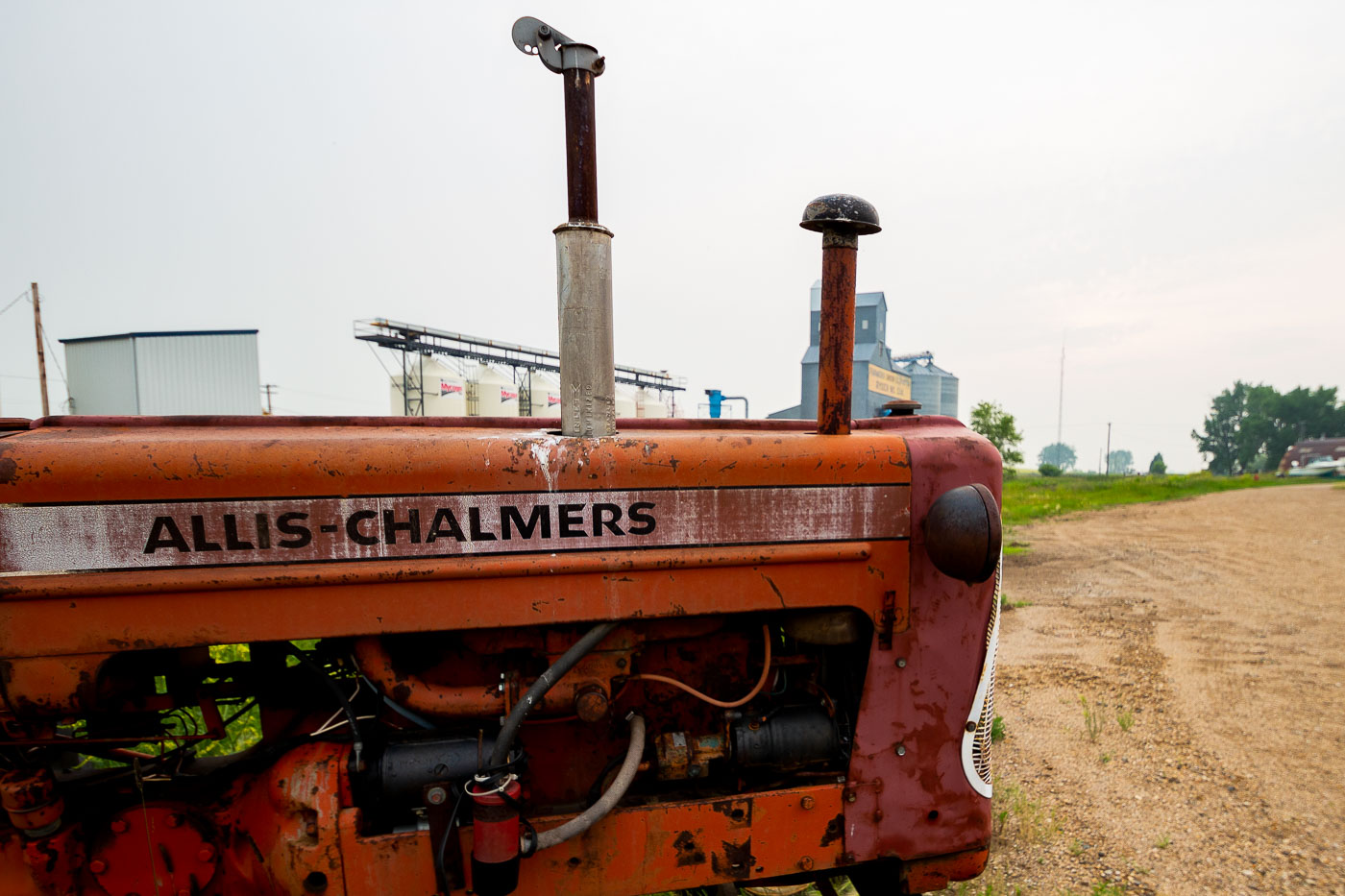
Vintage Allis-Chalmers tractor parked near a grain elevator in Ryder, North Dakota.
Allis-Chalmers built tractors and farm equipment in Milwaukee from 1914 until the company's agricultural division was sold off in the 1980s, and its orange paint and badge lettering became a familiar sight across the Midwest. This model, with its exposed engine block and twin exhaust-style stacks, the mid-20th-century design common to the company's small grain-farm tractors. Ryder, North Dakota, sits in Ward County, an area built around grain farming since the early homestead era, and elevators like the one behind the tractor remain the local points where area farmers deliver wheat, barley, and canola for storage and rail shipment.

Old Allis-Chalmers Tractor Near the Grain Elevator in Ryder
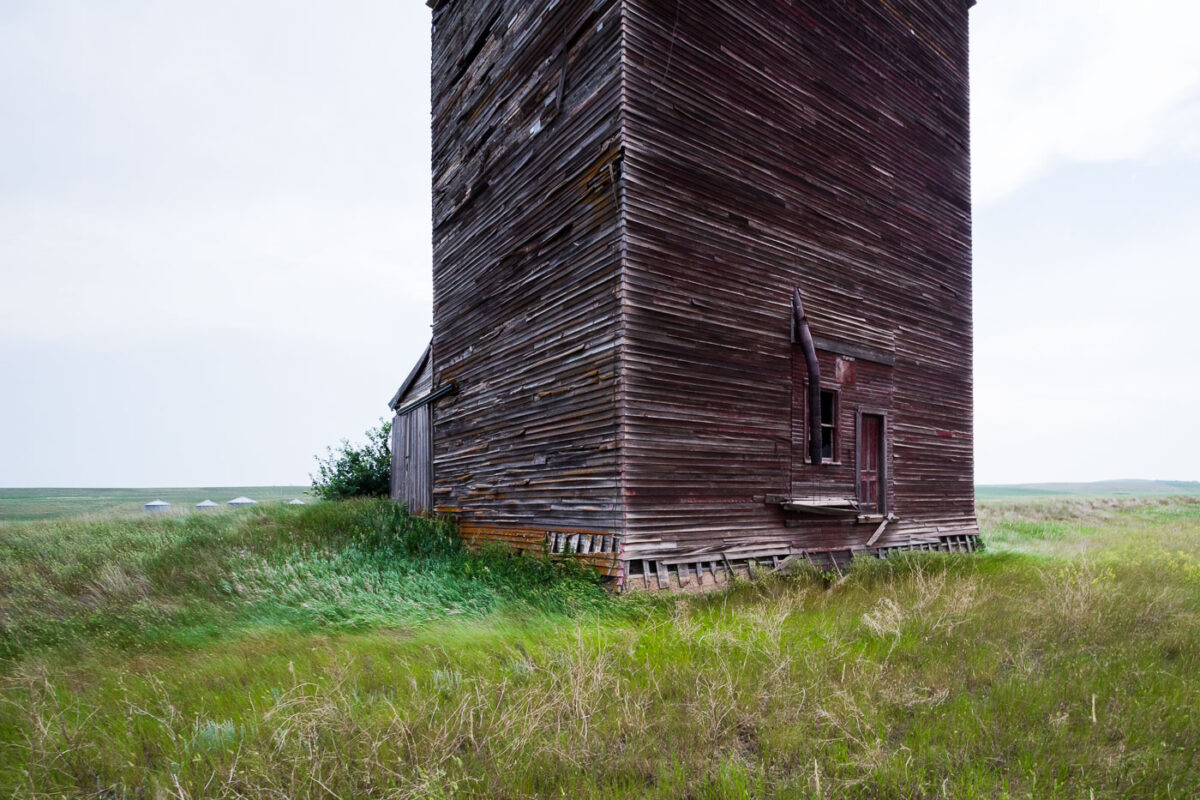
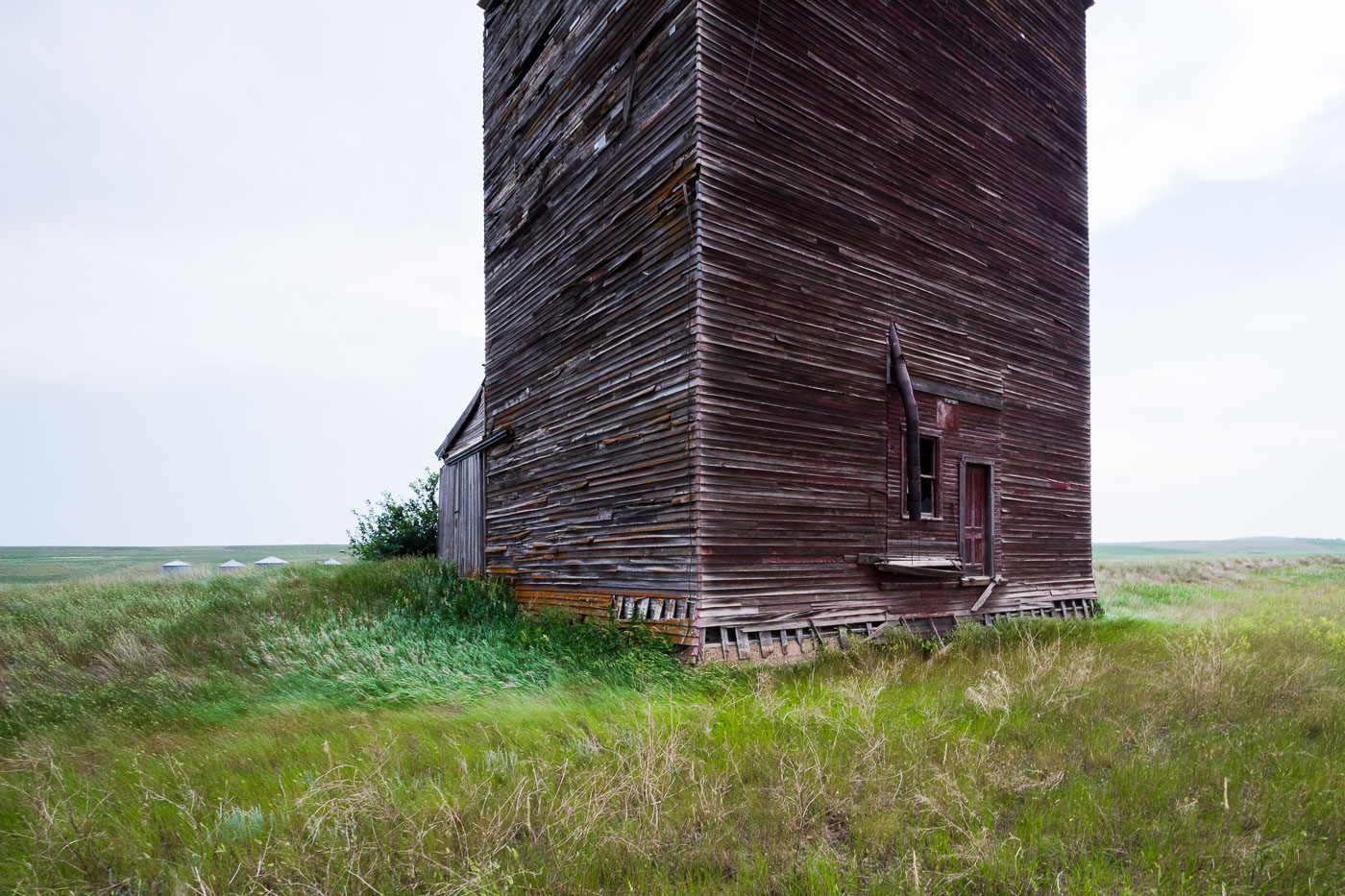
Abandoned wooden grain elevator stands in overgrown grassland near Charbonneau, North Dakota.
Wood-crib grain elevators like this one were built by farm cooperatives and independent grain companies across North Dakota from the early 1900s through the mid-20th century. Grain cribbing construction stacked dimensional lumber horizontally, plank by plank, to form the walls, a method chosen for its strength in holding the outward pressure of stored grain. Elevators of this type typically stood two to three stories tall with a peaked cupola or headhouse above for the conveying machinery, though many, including this one, have lost those upper features over time. Small-town elevators like this served as the local collection point where farmers hauled wheat and other grain to be weighed, stored, and loaded onto rail cars. Rail line closures and the consolidation of grain handling into larger regional facilities left many of these small-town elevators obsolete by the late 20th century.

Weathered Wood-Crib Grain Elevator Near Charbonneau

Wooden grain elevator and outbuilding stand in abandoned Charbonneau, North Dakota farmland.
Charbonneau is one of the many small farming communities scattered across western North Dakota that lost its population base as agriculture consolidated through the 20th century. The wooden grain elevator here follows a crib-style design common to the region before concrete slip-form elevators became standard, with vertical boards stacked to form bins that held wheat and other crops until rail cars arrived for loading. Elevators like this one were typically built alongside branch rail lines, and their closure often followed the abandonment of those lines as larger, centralized terminals took over grain handling. The adjacent outbuilding would have served as a scale house or office for weighing and recording incoming loads from local farms.

Abandoned Grain Elevator in Charbonneau, North Dakota
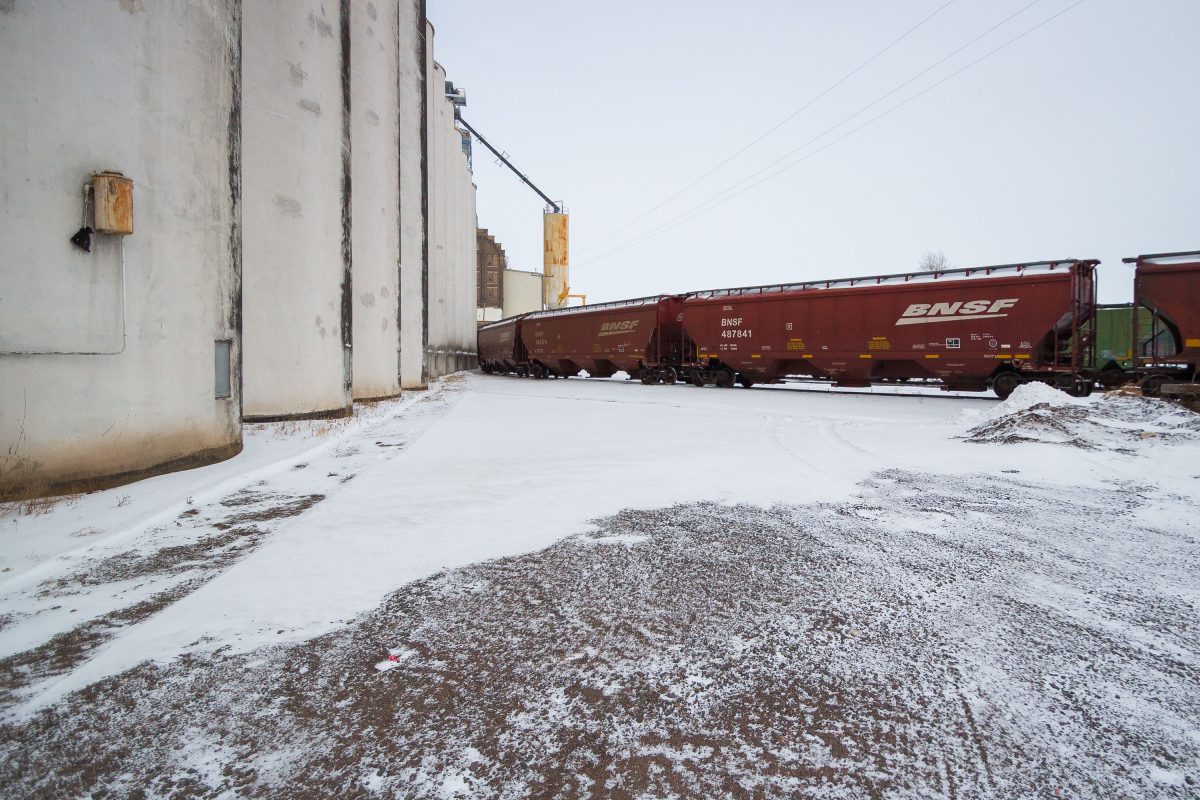
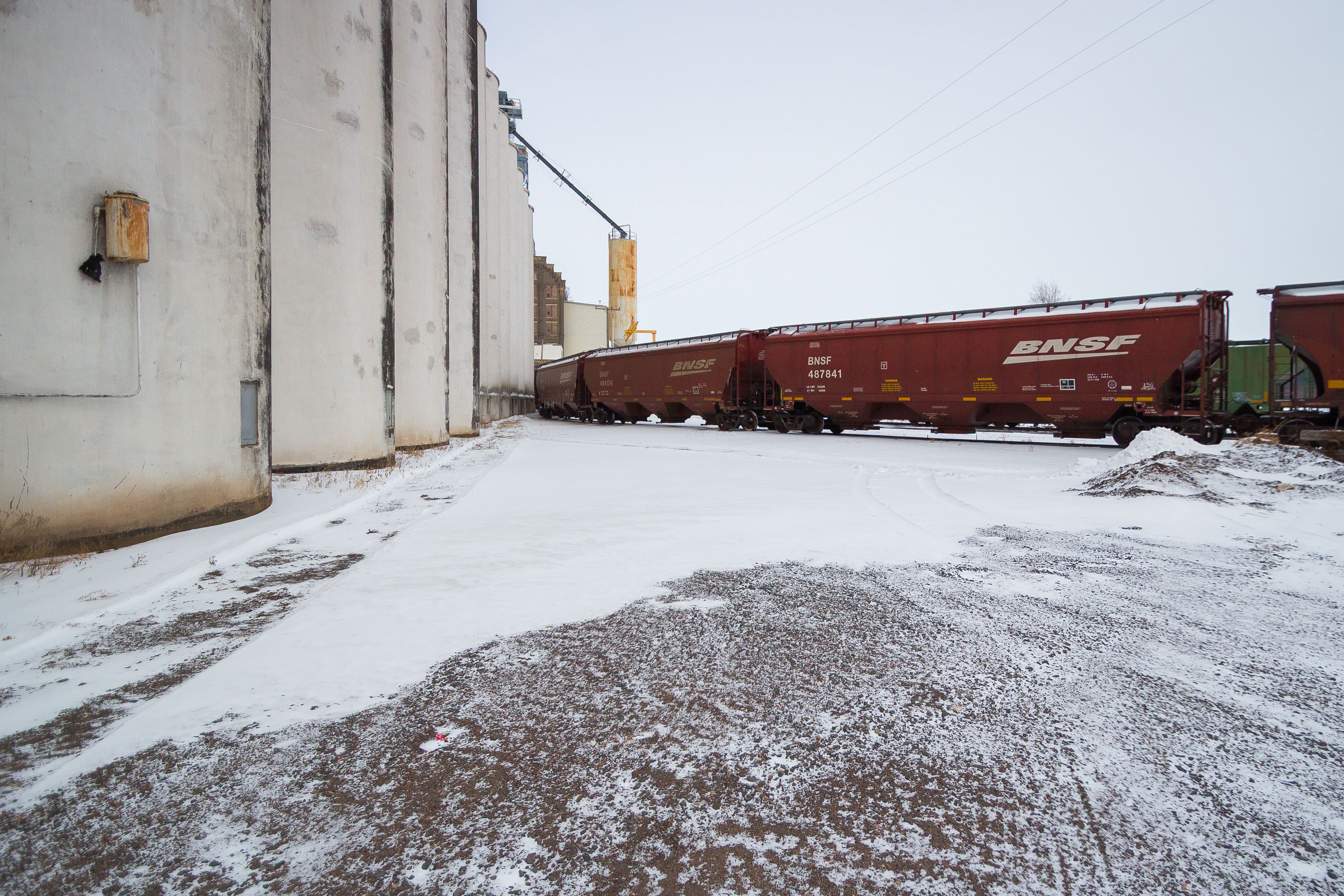
BNSF freight cars parked beside Hansen-Mueller Grain Elevator in snow-covered Superior, Wisconsin.
Hansen-Mueller Grain Elevator in Superior, Wisconsin, is a grain storage and transfer facility on Superior Bay. BNSF freight cars move commodities through the complex by rail for shipment to regional and export markets.

BNSF Hopper Cars at the Hansen-Mueller Grain Elevator in Superior
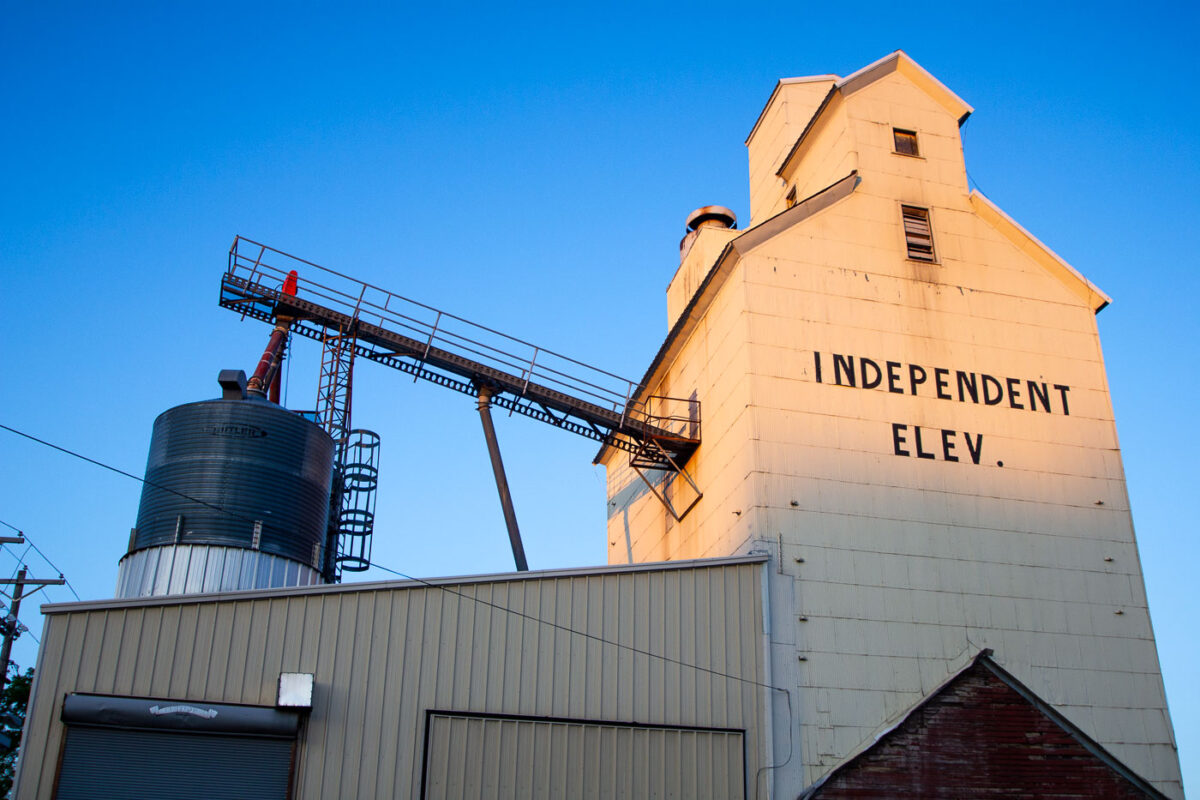
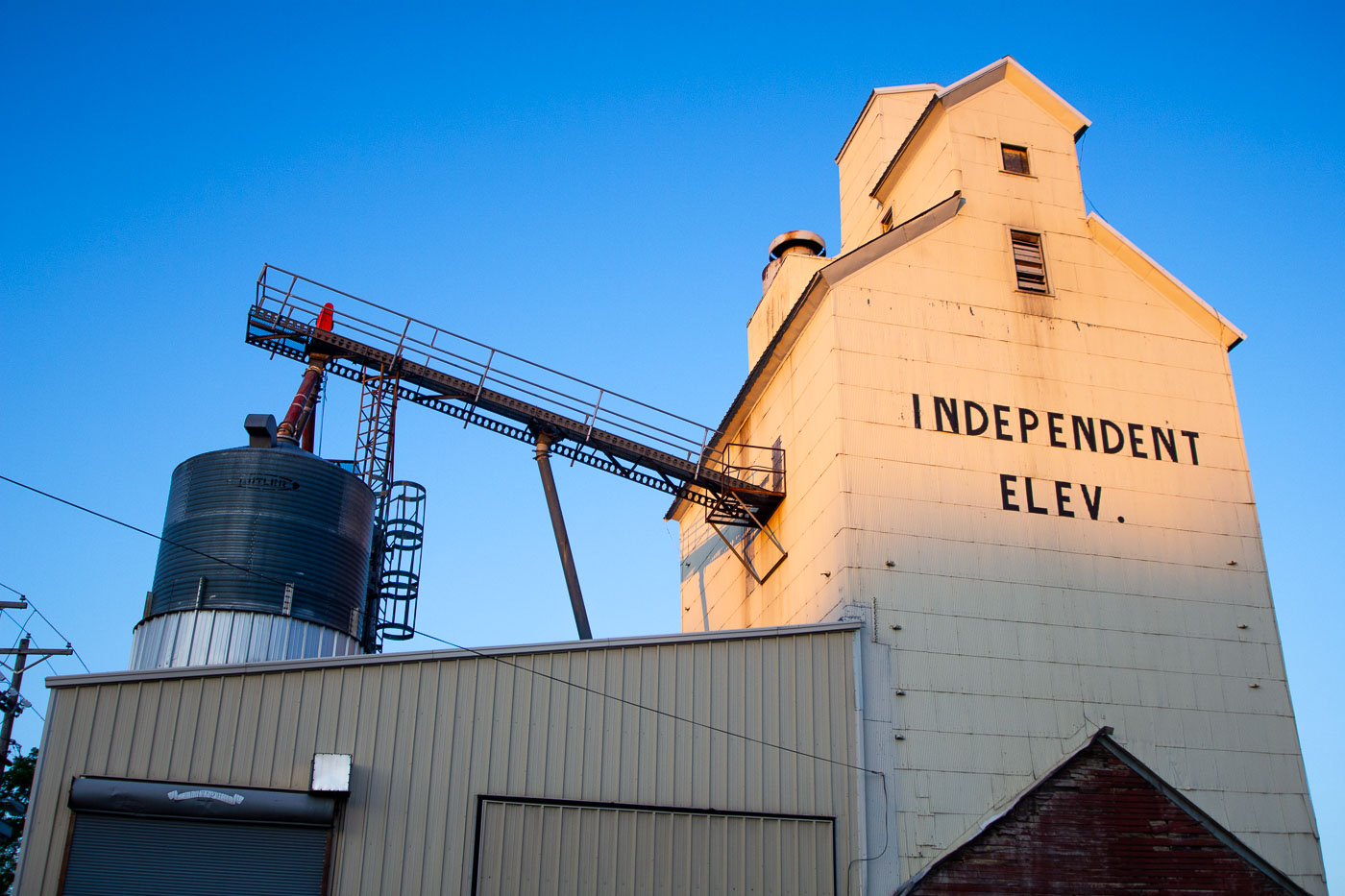
The Independent Elevator, a grain storage facility, stands in Glencoe, Minnesota
The Independent Elevator, located in Glencoe, Minnesota, stands as a testament to the region's agricultural heritage.

Independent Elevator in Glencoe, Minnesota
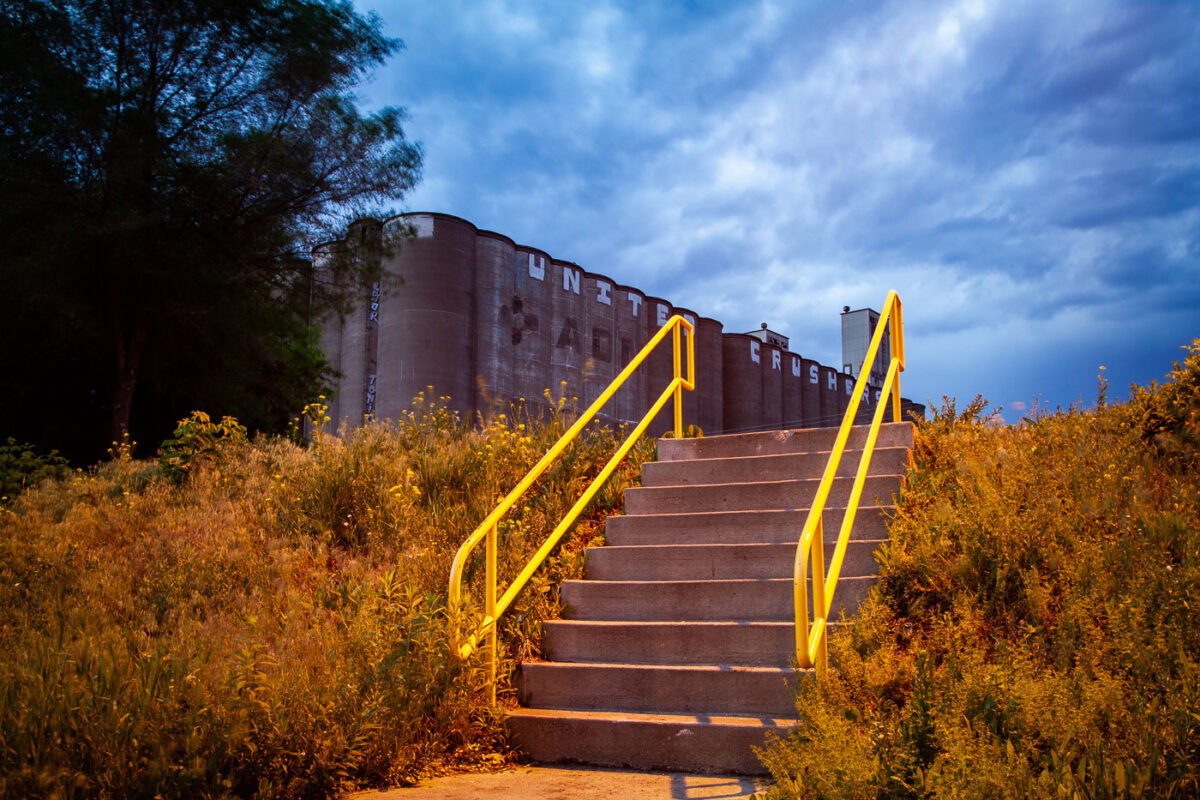
The ADM Grain Elevator in Dinkytown, Minneapolis, is marked with United Crushers graffiti. Grain elevators were vital to the Midwest's agricultural economy and industrial past.
The ADM Grain Elevator in Minneapolis's Dinkytown neighborhood is marked with graffiti by the United Crushers art collective. Grain elevators were essential to the agricultural economy of the Midwest, serving as vital storage and distribution points for harvested crops. This structure, like many others, represents a significant piece of the region's industrial past.

ADM Grain Elevator with United Crushers Graffiti, Dinkytown Minneapolis
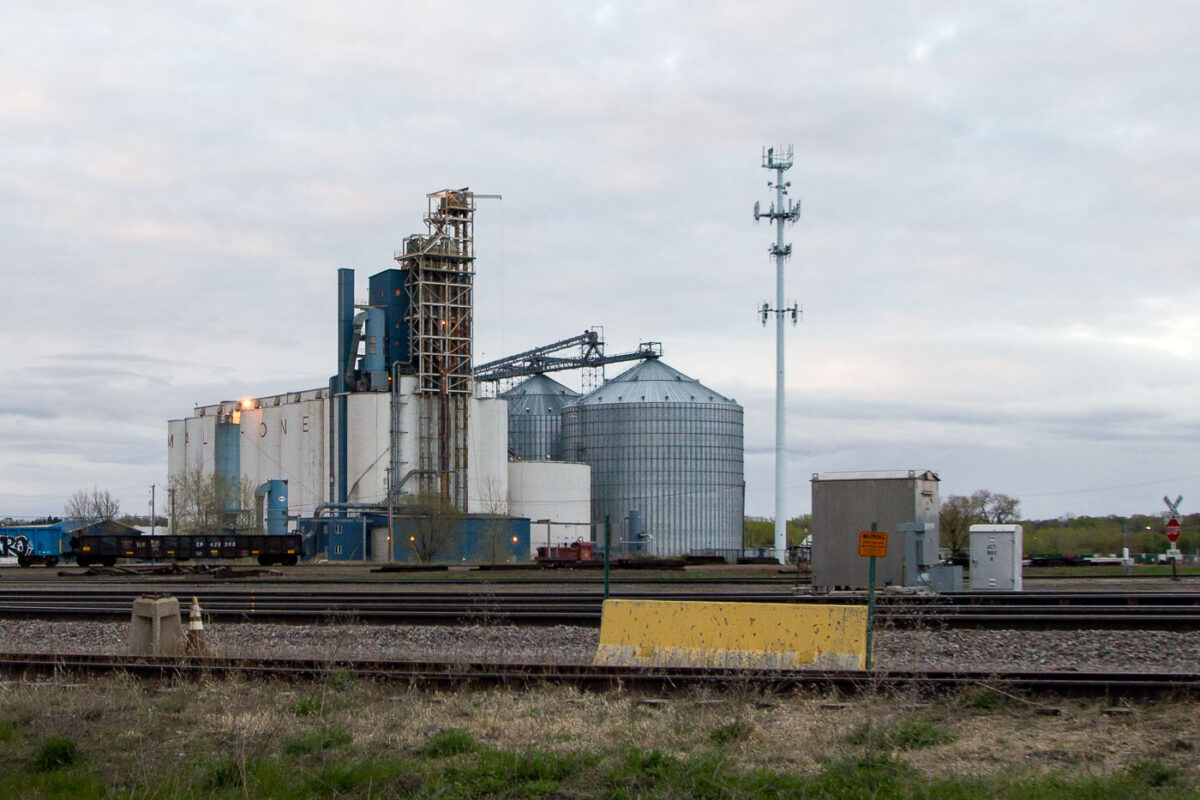
MaltOne Grain Elevator and Rail Yard in Minneapolis with grain bins and rail tracks.
MaltOne Grain Elevator and Rail Yard in Minneapolis stores and transfers bulk grain by rail. The facility includes grain bins, processing structures, and track connections used for loading agricultural commodities.

MaltOne Grain Elevator and Rail Yard, Minneapolis
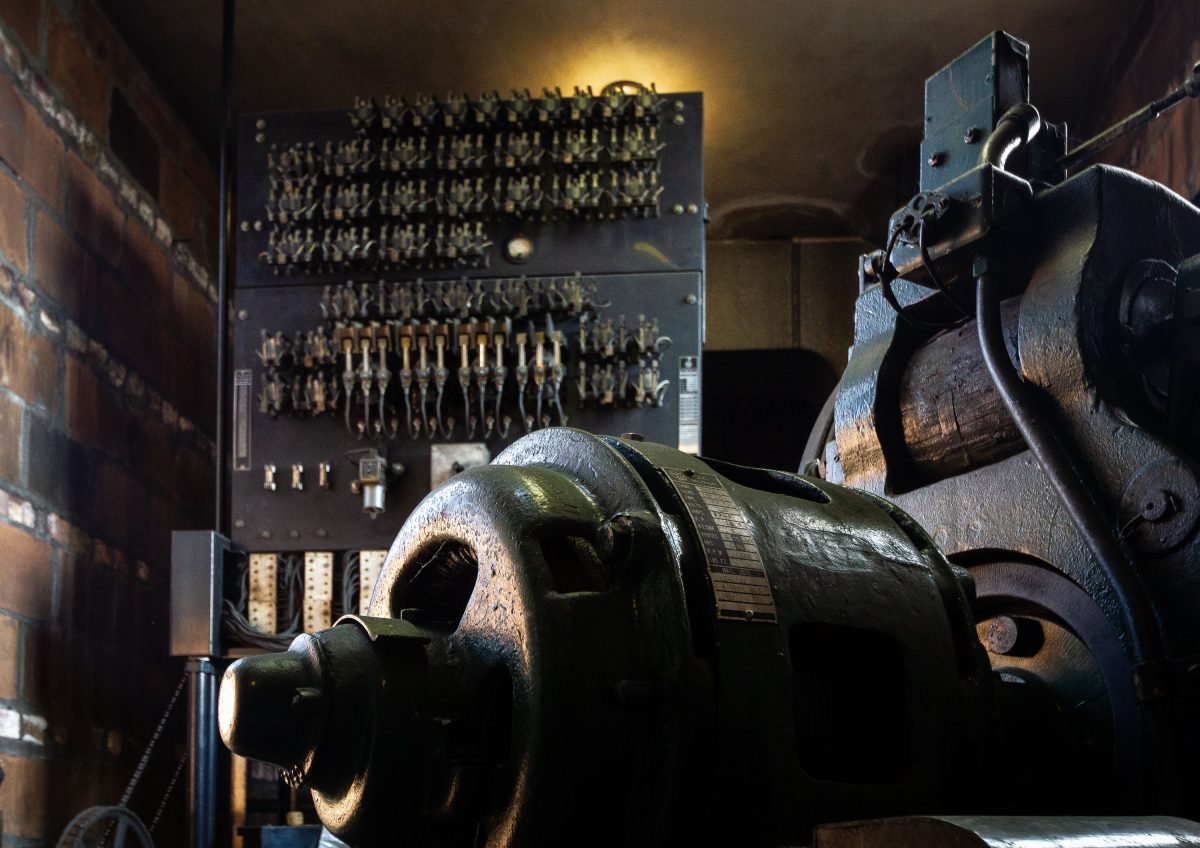
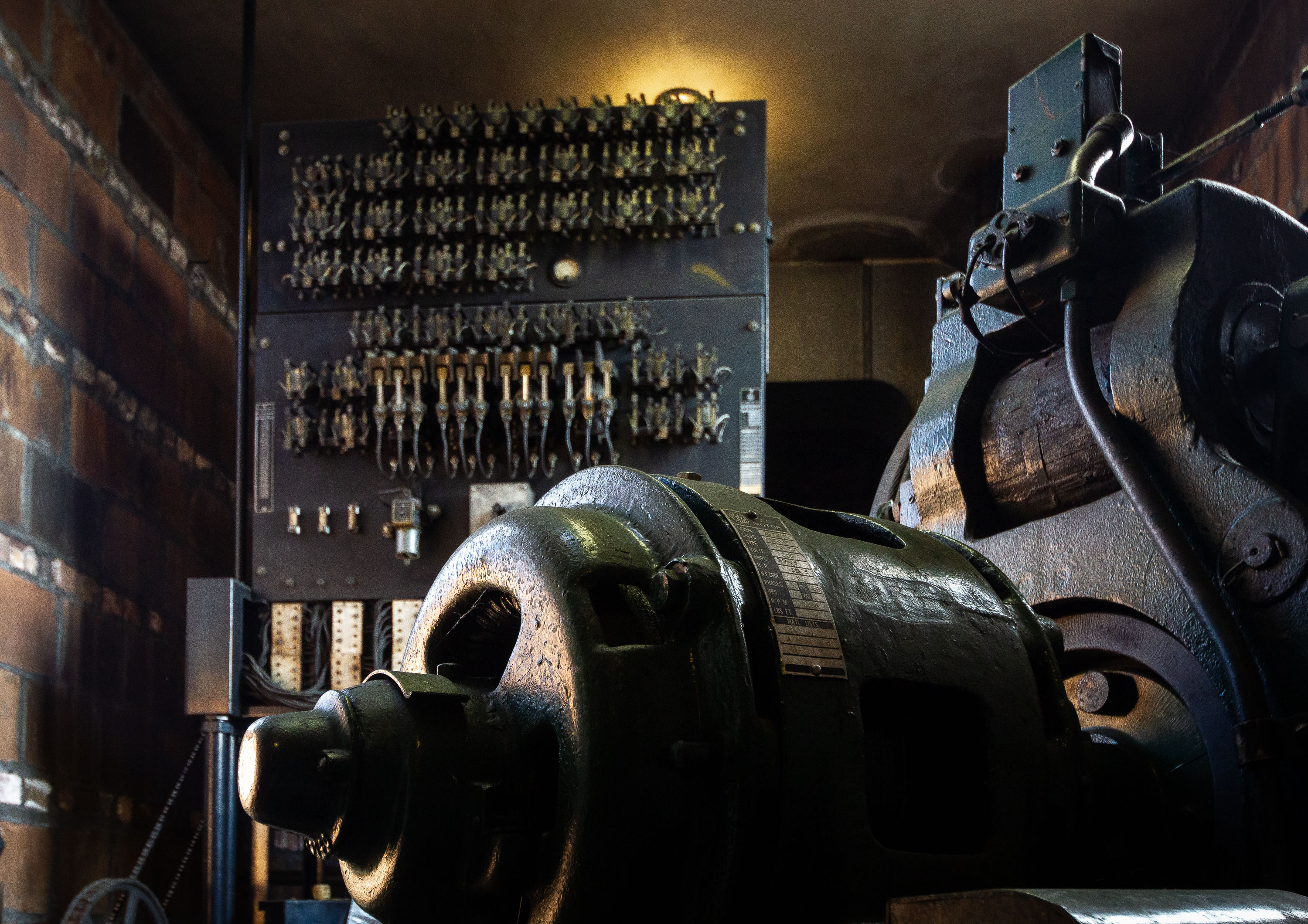
Industrial motor and gear housing beside a wall-mounted electrical relay panel inside a grain elevator.
This room houses an electric drive motor connected to industrial gearing inside a grain elevator. A relay panel with rows of terminal blocks and wiring mounts on the wall beside the motor. The motor's large cylindrical housing and exposed shaft couple to heavy gear casings used to power elevator machinery. Equipment of this type typically drives leg belts, conveyors, or bucket elevators that move grain within the facility.

Motor Control Room, Grain Elevator

The ADM Grain Elevator complex, also known as United Crushers, in Minneapolis, Minnesota, is a large industrial facility for grain storage and processing.
The ADM United Crushers grain elevator complex in Minneapolis. The "United Crushers" tag at this point has become a historical tag in Minneapolis.

ADM United Crushers Grain Elevator, Minneapolis

The ADM Grain Elevator in Minneapolis, a concrete structure from mid-20th century industrial architecture, stands amidst overgrown vegetation and graffiti-adorned outbuildings.
The ADM Grain Elevator in Minneapolis. Constructed to facilitate the storage and handling of grain, such facilities were crucial for the region's economy, supporting farming communities and the food industry.

ADM Grain Elevator, Minneapolis
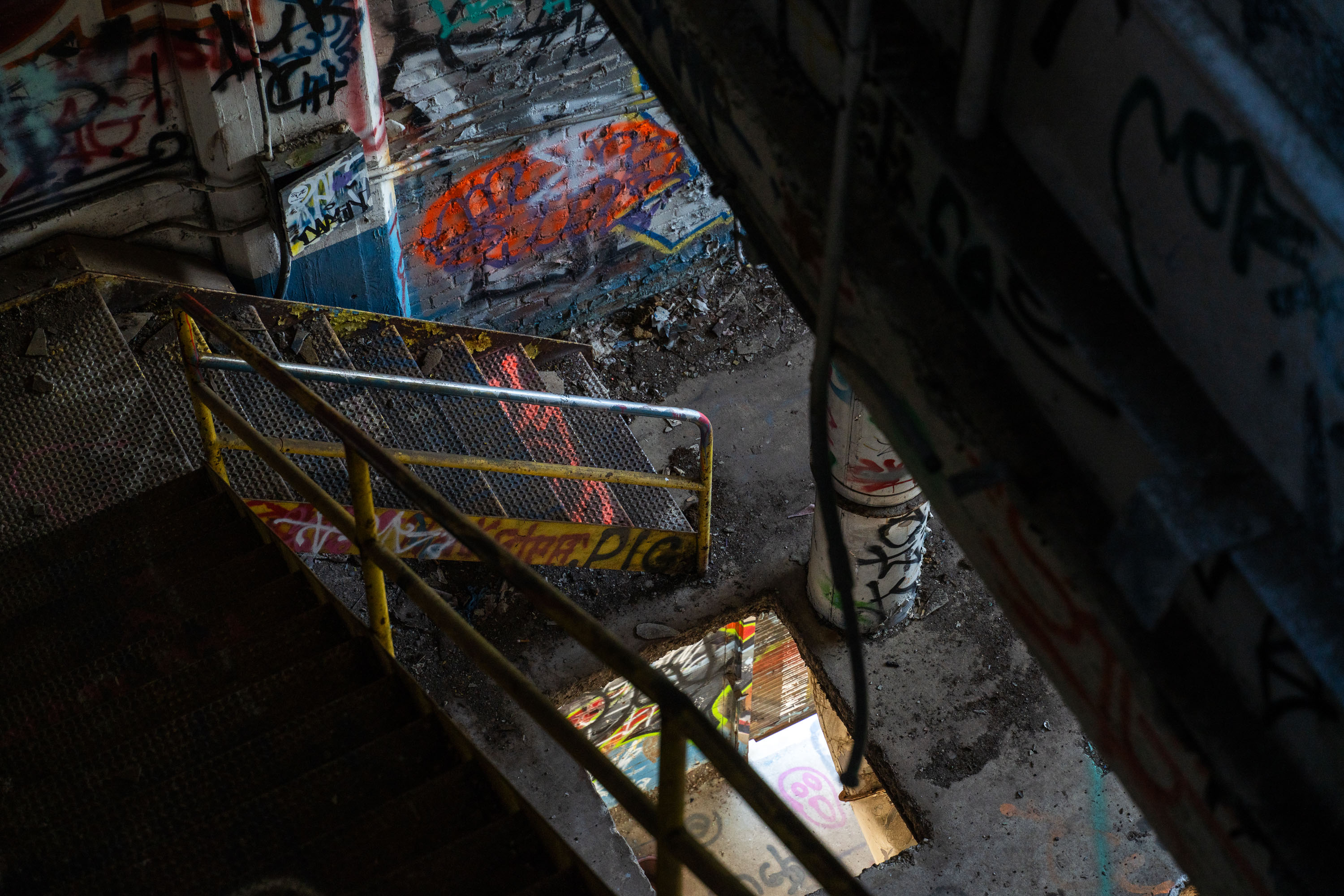
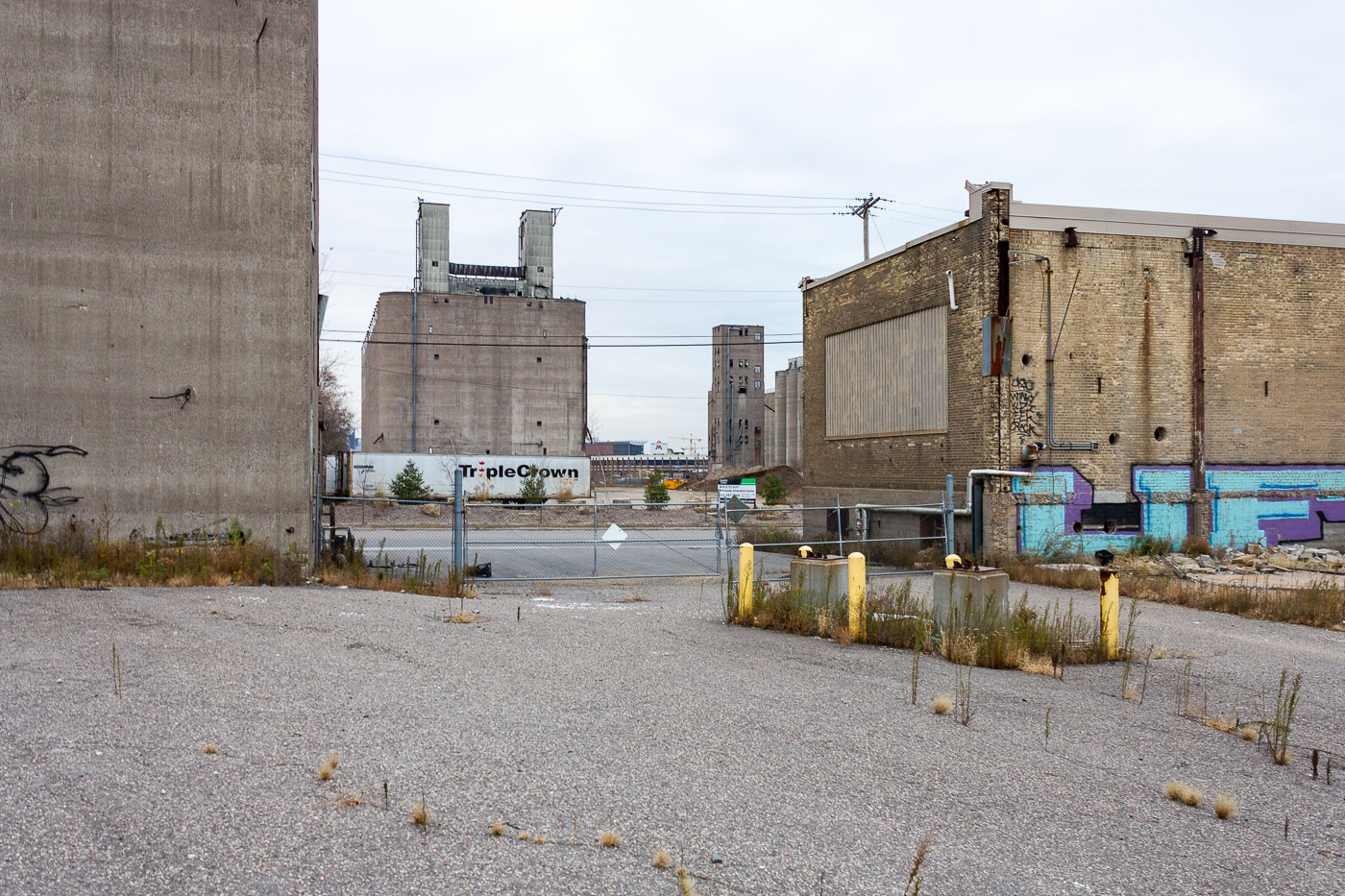
Abandoned grain elevators in Minneapolis, Minnesota, are covered in graffiti. A Triple Crown trailer is parked nearby, indicating ongoing activity at the derelict industrial site.
Abandoned grain elevators in Minneapolis.

Abandoned Grain Elevators and Graffiti, Minneapolis
United Crushers grain elevator stands beside the University of Minnesota Transitway in the Dinkytown area of Minneapolis.
The University of Minnesota Transitway runs along the East Bank corridor in Minneapolis, carrying university and Metro Transit buses between the Twin Cities campuses.

United Crushers Elevator Along the Transitway, Minneapolis
Farmers Elevator grain handling complex in Wisconsin with a tall elevator tower and attached sheds.
Farmers Elevator in Wisconsin is a grain storage and handling complex with a tall elevator house and attached metal-sided sheds. The facility was used to receive grain from nearby farms, store it in bins, and transfer it for shipment. The rooftop sign identifies the complex as Farmers Elevator.

Farmers Elevator Grain Handling Complex, Wisconsin

Weathered wooden Farmers Elevator grain tower with rooftop sign in rural Wisconsin.
Farmers Elevator grain towers like this one once anchored small farming communities across the rural Midwest, providing local growers a place to weigh, store, and sell their harvest. Built mostly of wood with corrugated metal siding, these structures used a system of buckets and chutes to lift grain into tall storage bins before rail or truck shipment. Many operated as farmer-owned cooperatives, giving members a stake in local grain pricing rather than relying solely on distant markets. Though modern steel and concrete elevators have replaced most of them, a number of these wooden towers still stand across Wisconsin's countryside, often abandoned or repurposed.

Farmers Elevator Grain Tower, Rural Wisconsin

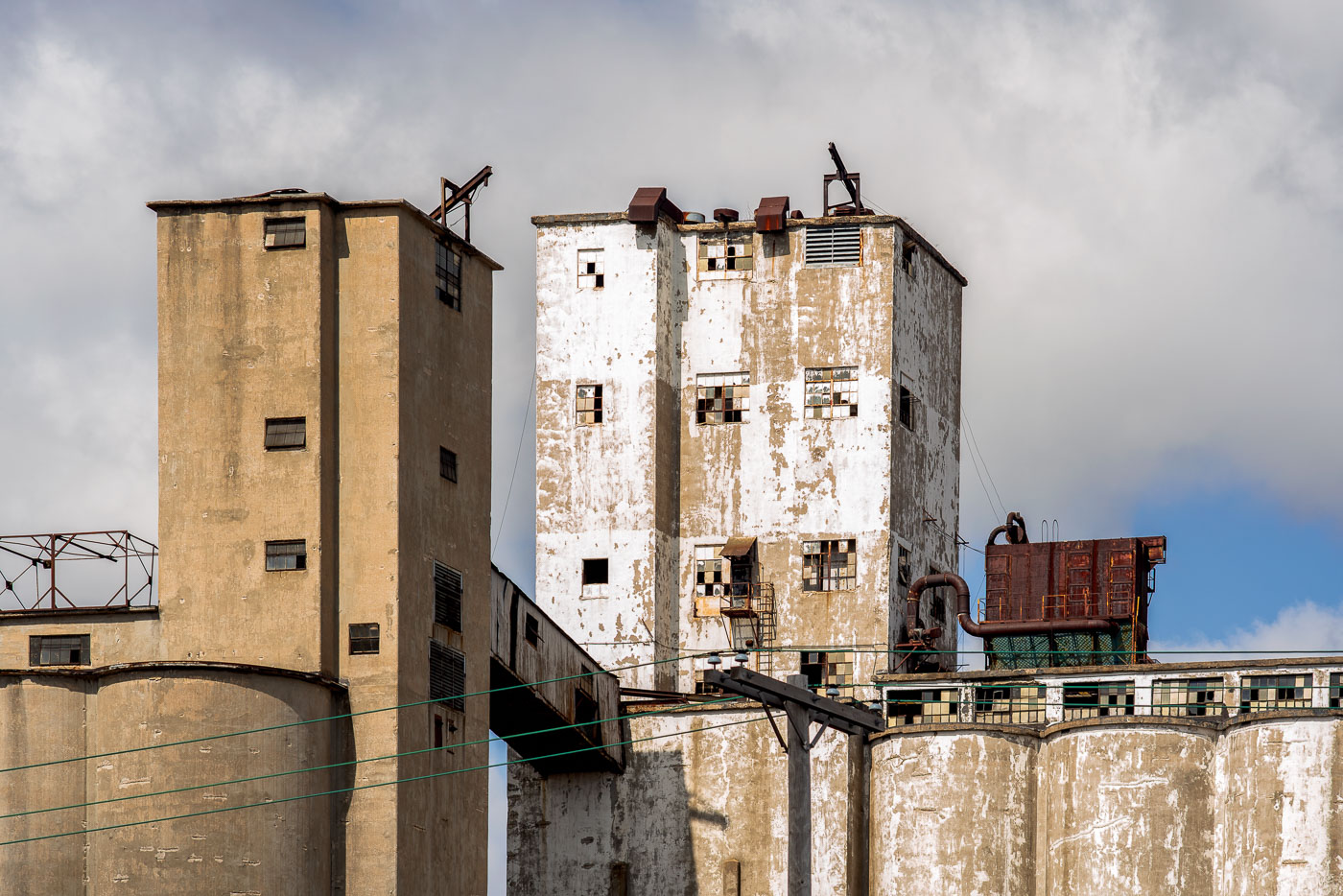
Fruen Mill, an abandoned grain processing facility in Minneapolis with deteriorating concrete silos and industrial structures.
Fruen Mill sits along the Bassett Creek corridor near the Bryn Mawr neighborhood of Minneapolis, where it once processed grain using water power drawn from the creek. The mill complex grew over decades into a cluster of concrete and steel structures, including a grain elevator tower and attached storage silos typical of early 20th-century milling operations. Milling in this stretch of the city dates back to the 1870s, tied to the industrial development that spread along Bassett Creek west of downtown. The property has stood vacant for years, its structures left to weather while the surrounding area redeveloped around it.

Grain Elevator Tower at Fruen Mill, Minneapolis
Abandoned Fruen Mill grain elevator complex with concrete towers and silos in Minneapolis.
Fruen Mill sits along Bassett Creek near Van White Memorial Boulevard in Minneapolis, on land tied to one of the city's earliest water-powered milling operations, dating back to the 1870s. The concrete grain elevator and adjoining steel-and-brick structures were built to store and process grain for regional distribution, part of the industrial corridor that once lined the creek west of downtown. The mill ceased operations decades ago, and the property has since sat vacant, drawing graffiti artists and urban explorers to its empty floors and silos. Bassett Creek itself was rerouted underground through much of Minneapolis in the 20th century as part of flood-control efforts, leaving this stretch as one of the few visible remnants of the waterway's industrial past.
Fruen Mill Grain Elevator, Minneapolis