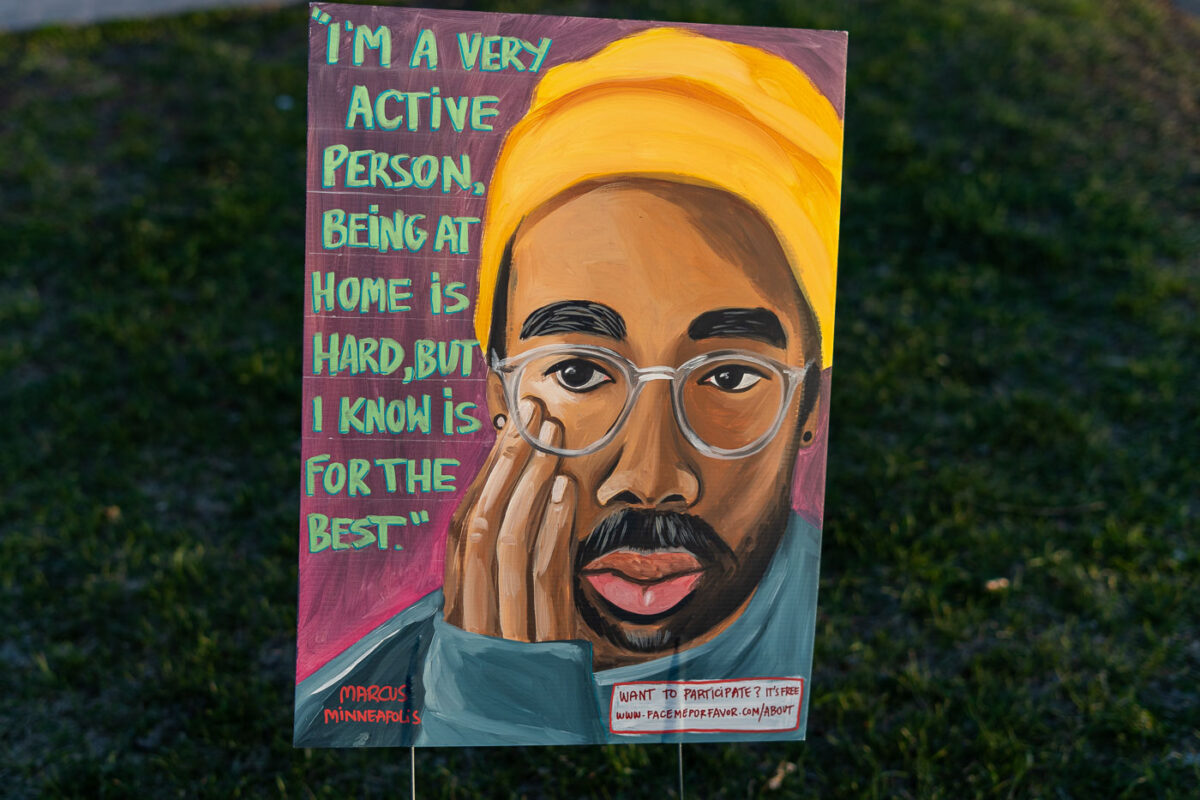
Marcus Minneapolis COVID-19 Portrait, Powderhorn Park
April 2020 — Art at Powderhorn park in South Minneapolis during COVID-19 shutdowns.
Explore photos tagged Minneapolis.
April 2020 — Art at Powderhorn park in South Minneapolis during COVID-19 shutdowns.
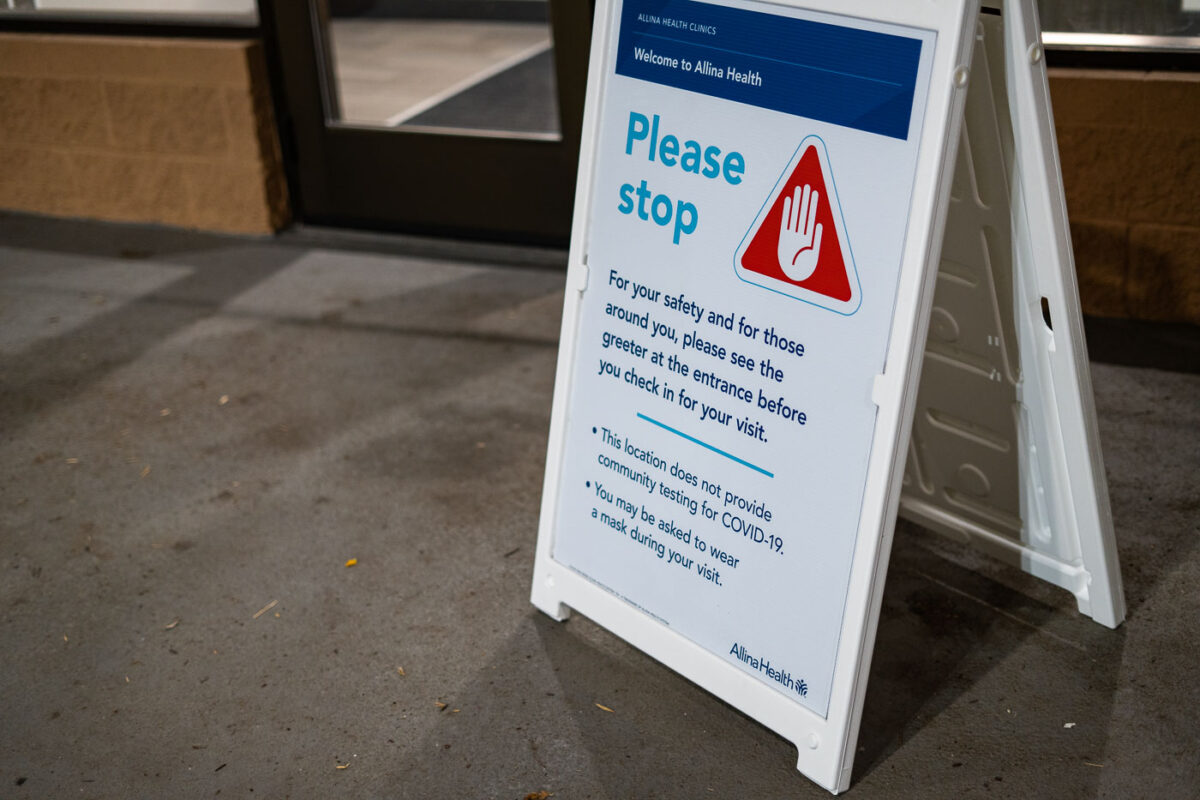
April 2020 — At the entrance of an Allina Health clinic, a temporary sign reminds visitors of heightened safety measures during the COVID-19 pandemic. The notice instructs patients to stop and first meet with a greeter before checking in, emphasizing that the location does not provide community COVID-19 testing and that masks may be required during the visit. These portable A-frame signs became common across medical facilities in 2020–2021, helping manage visitor flow, screen for symptoms, and reinforce evolving public health protocols at clinics and hospitals throughout Minnesota.
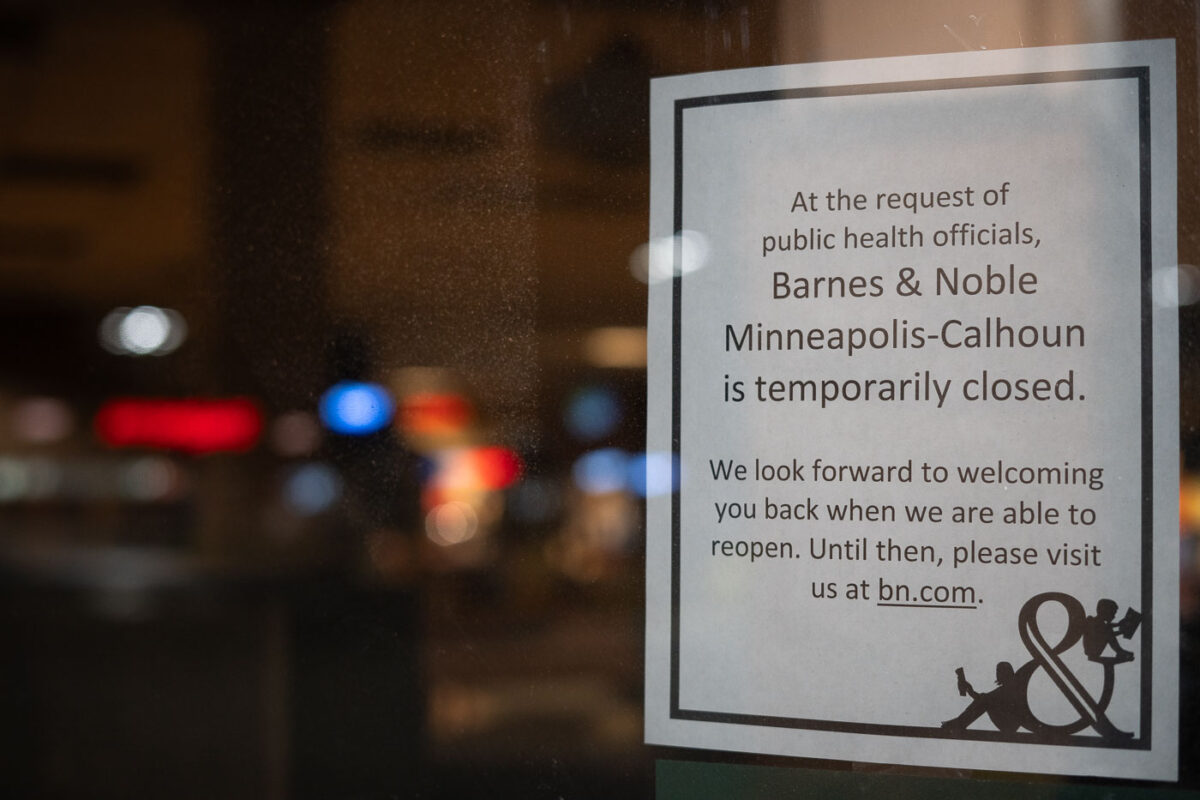
April 2020 — Barnes & Noble in Minneapolis closed due to the coronavirus outbreak.
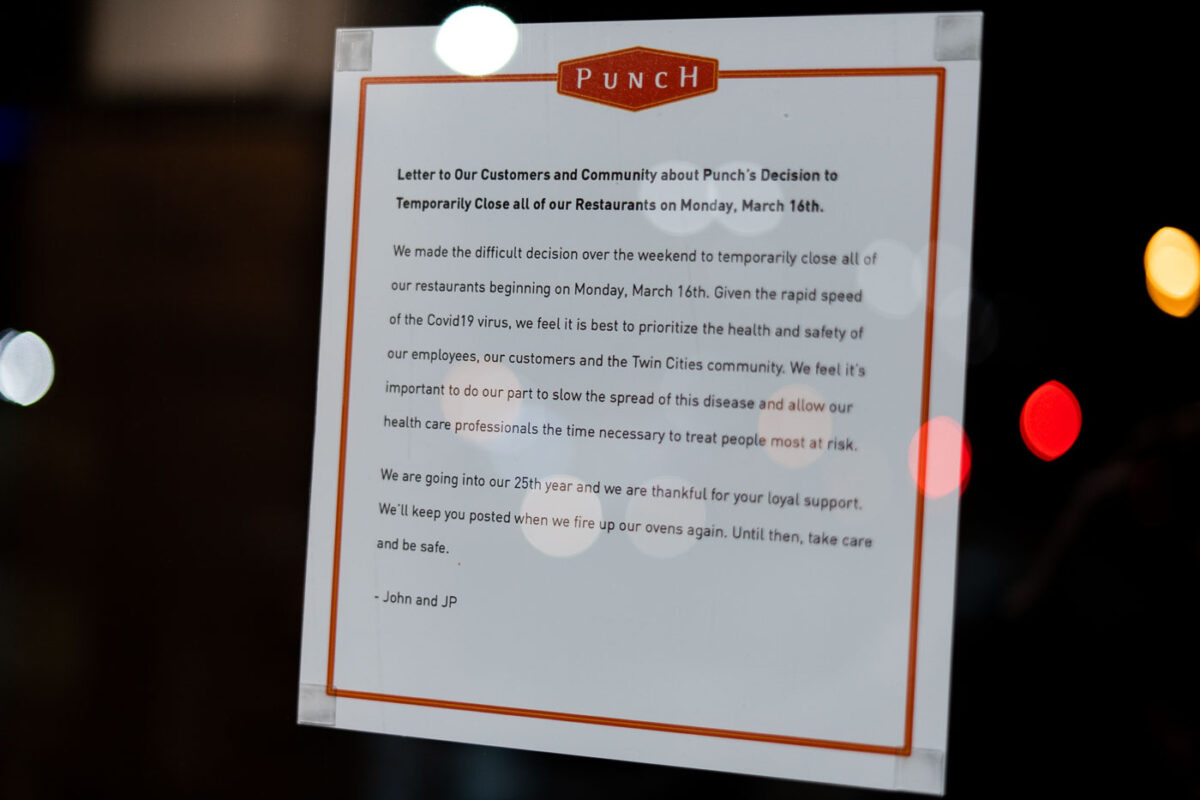
April 2020 — A letter posted in the window of Punch Pizza announces the temporary closure of all locations beginning Monday, March 16, 2020, citing the rapid spread of COVID-19.
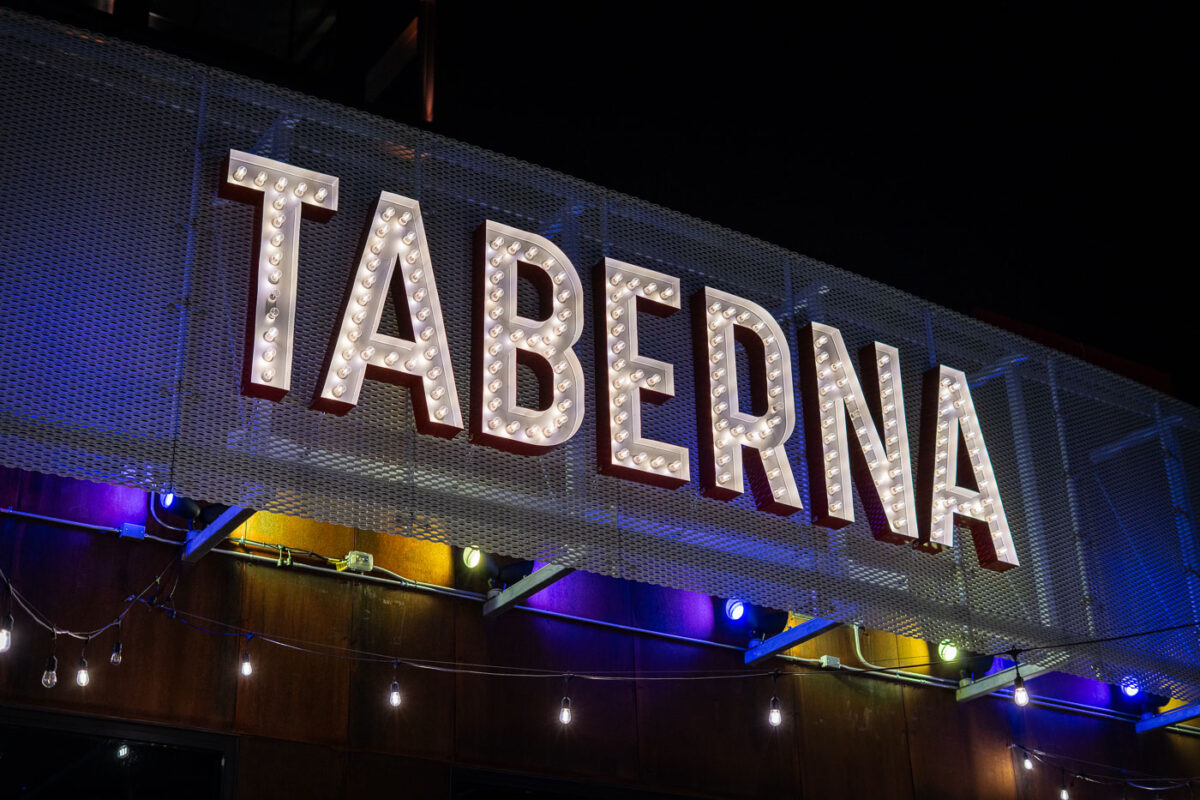
April 2020 — Taberna restaurant near Bde Maka Ska in Minneapolis.
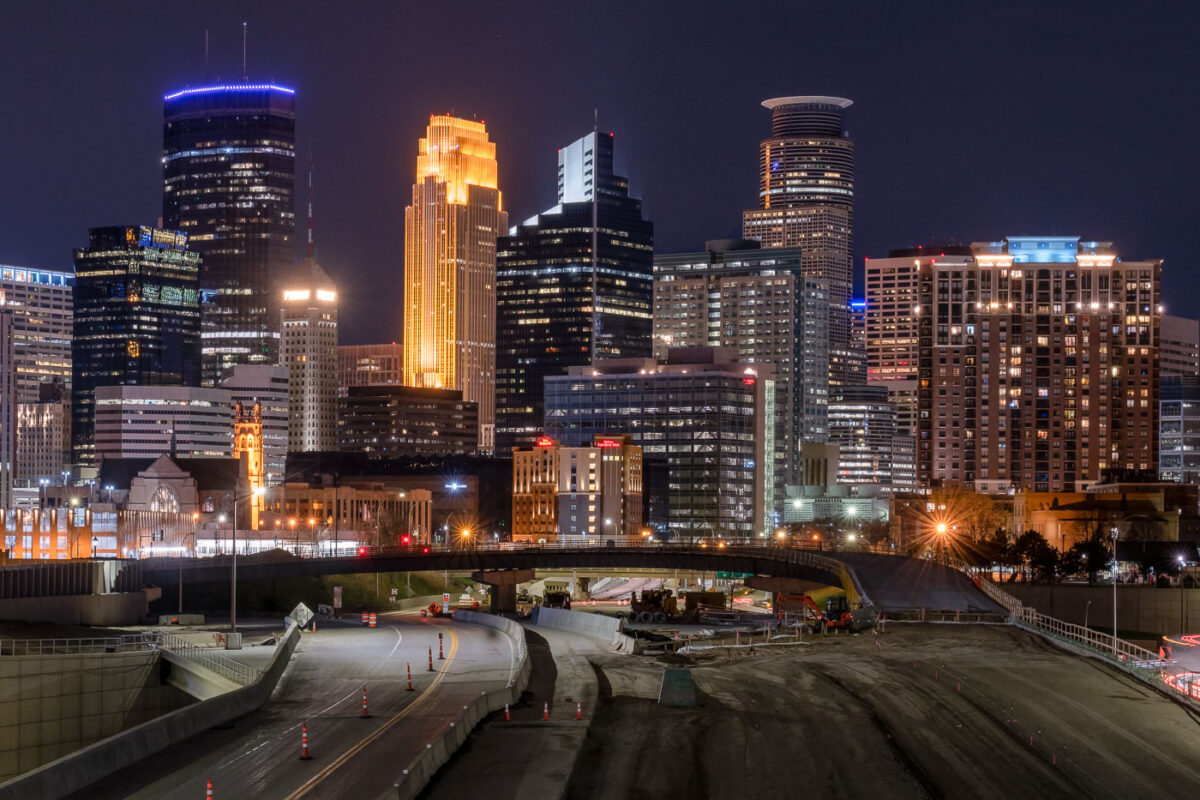
April 2020 — Downtown Minneapolis and construction on I-35W.
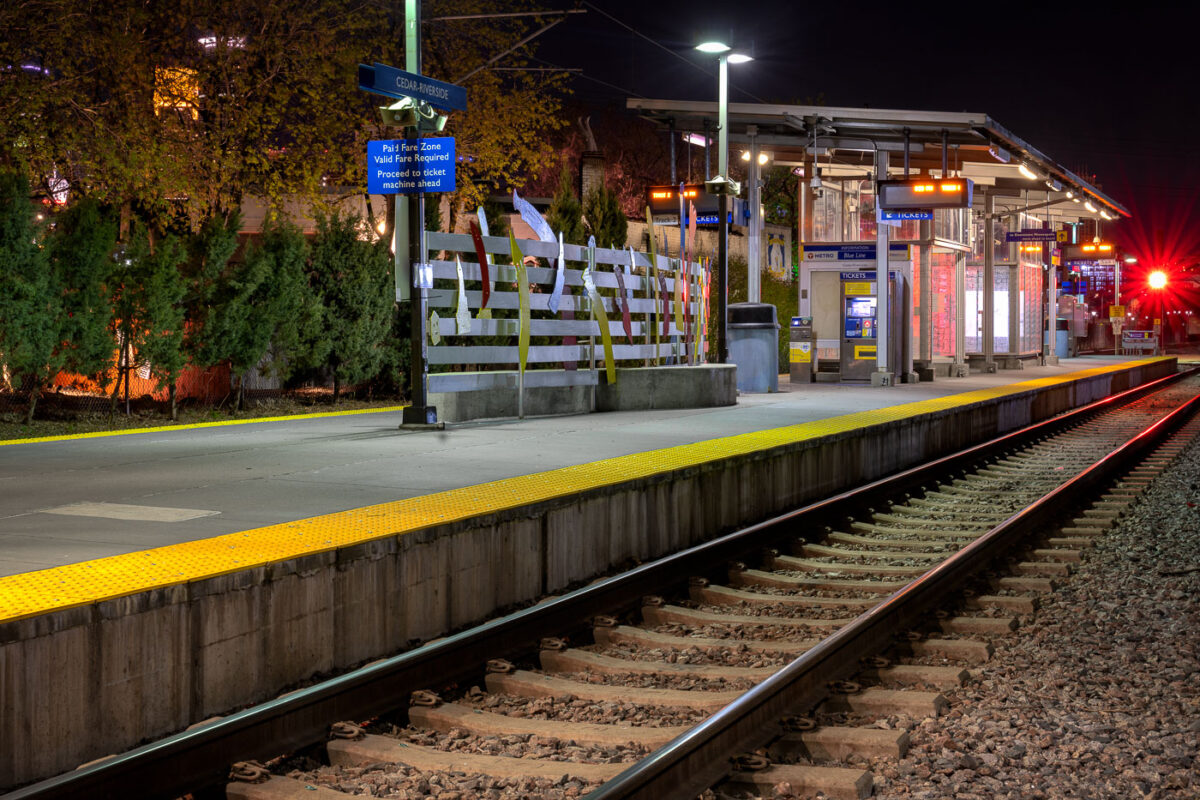
April 2020 — Cedar-Riverside LRT trains station in Minneapolis, Minnesota.
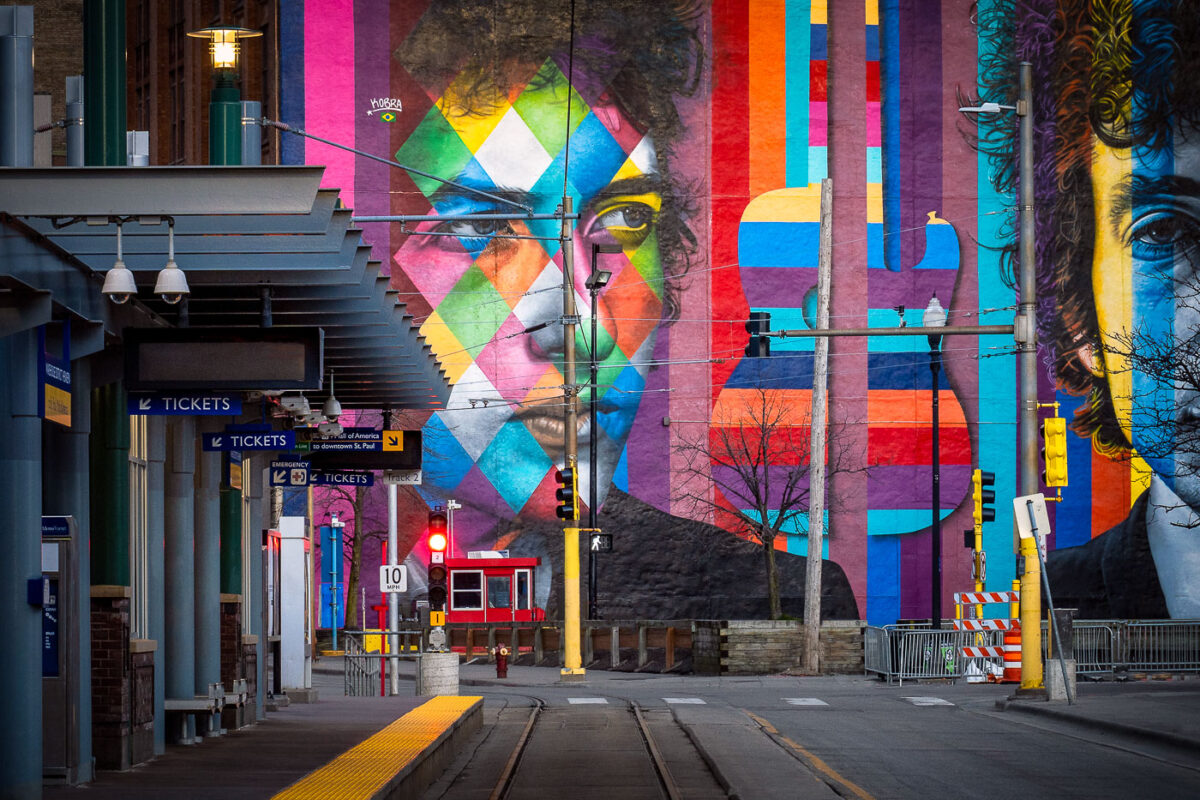
April 2020 — Bob Dylan Mural in downtown Minneapolis by Kobra during COVID-19 shutdown.
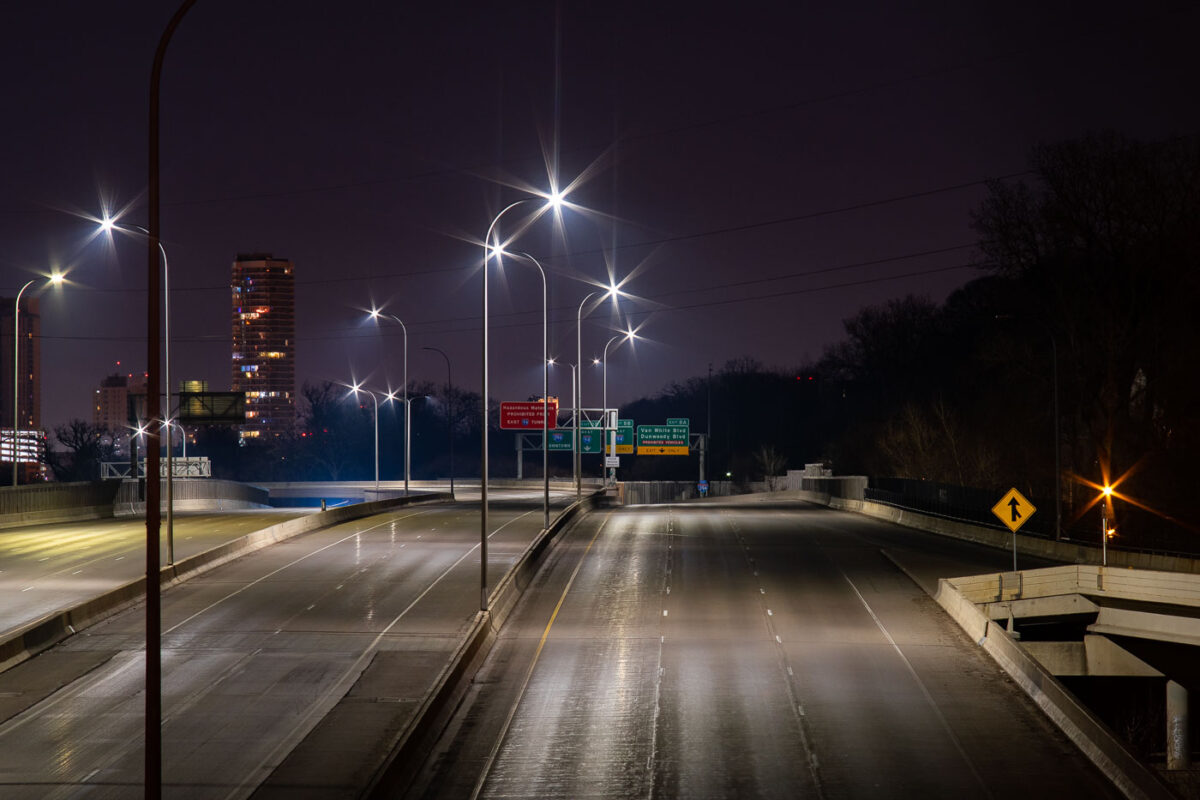
April 2020 — An empty Interstate 394 in Minneapolis seen on April 25, 2020 during COVID-19 closures.
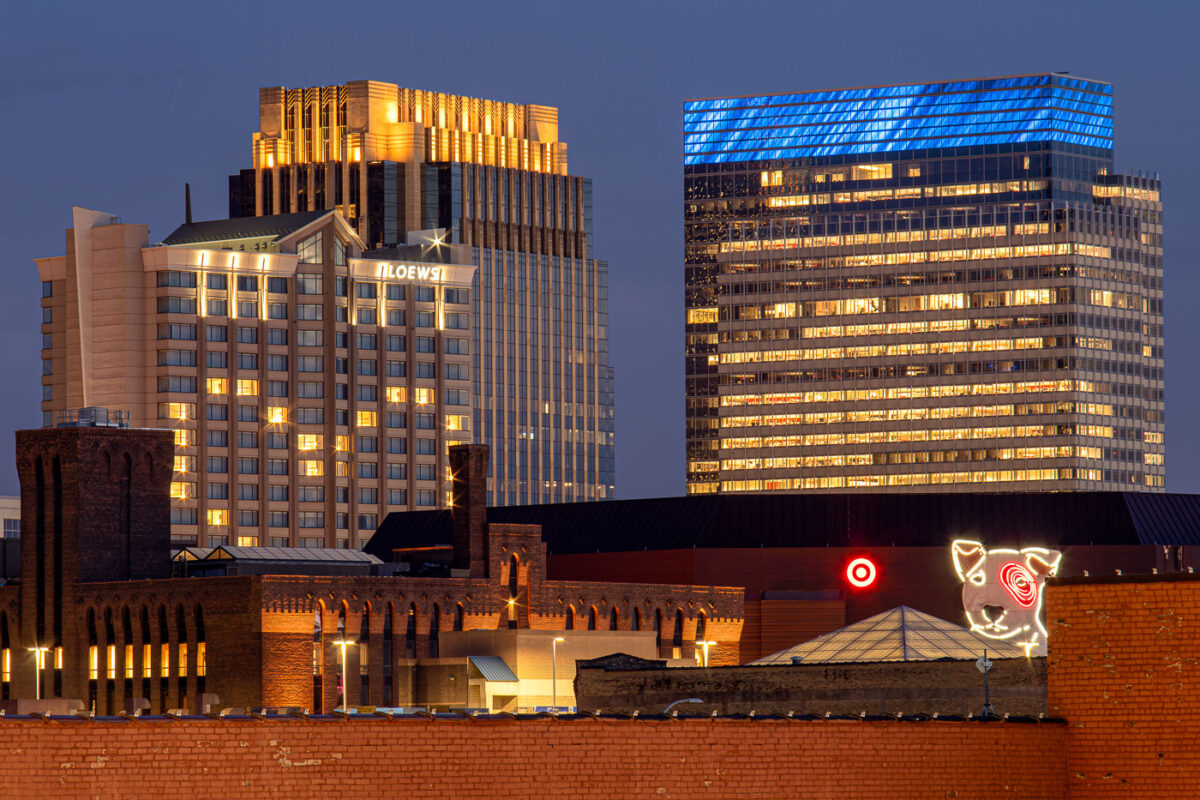
April 2020 — Loews Hotel, LaSalle Plaza, Target Headquarters and the Target Center in downtown Minneapolis, MN.
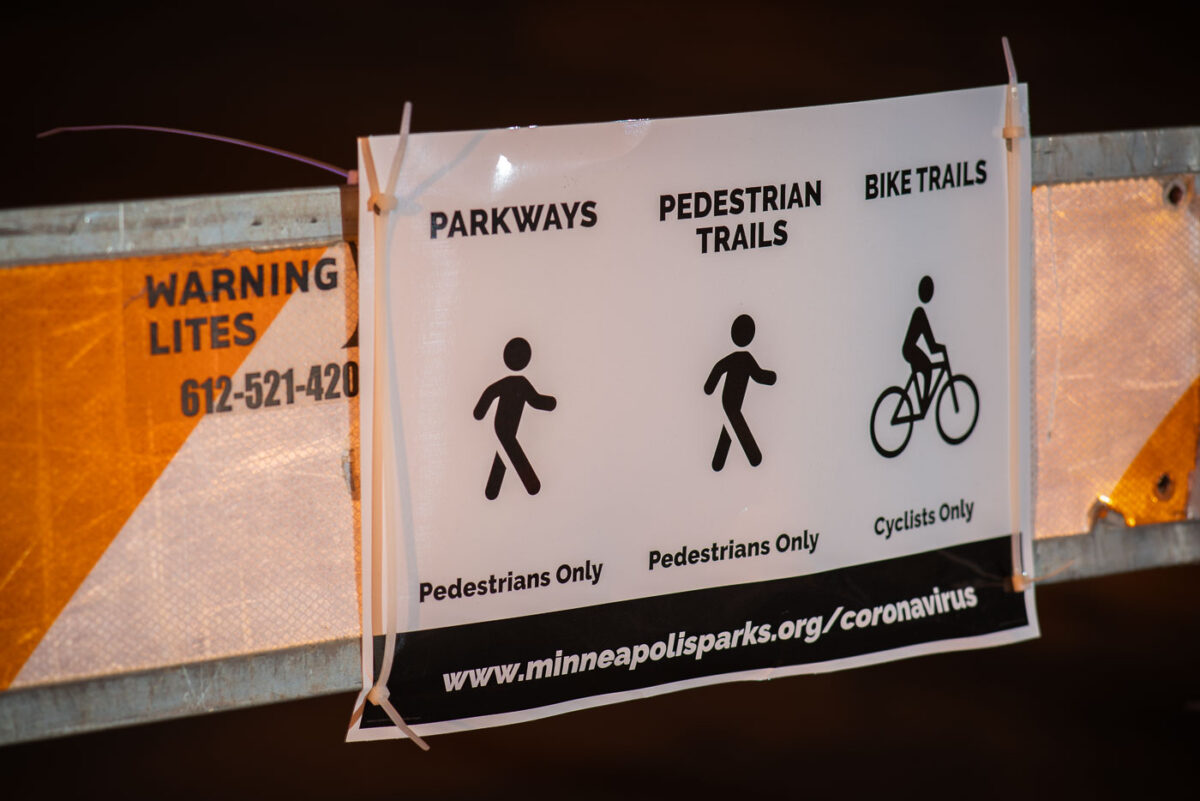
April 2020 — Minneapolis parks coronavirus signage on closed streets during COVID-19.
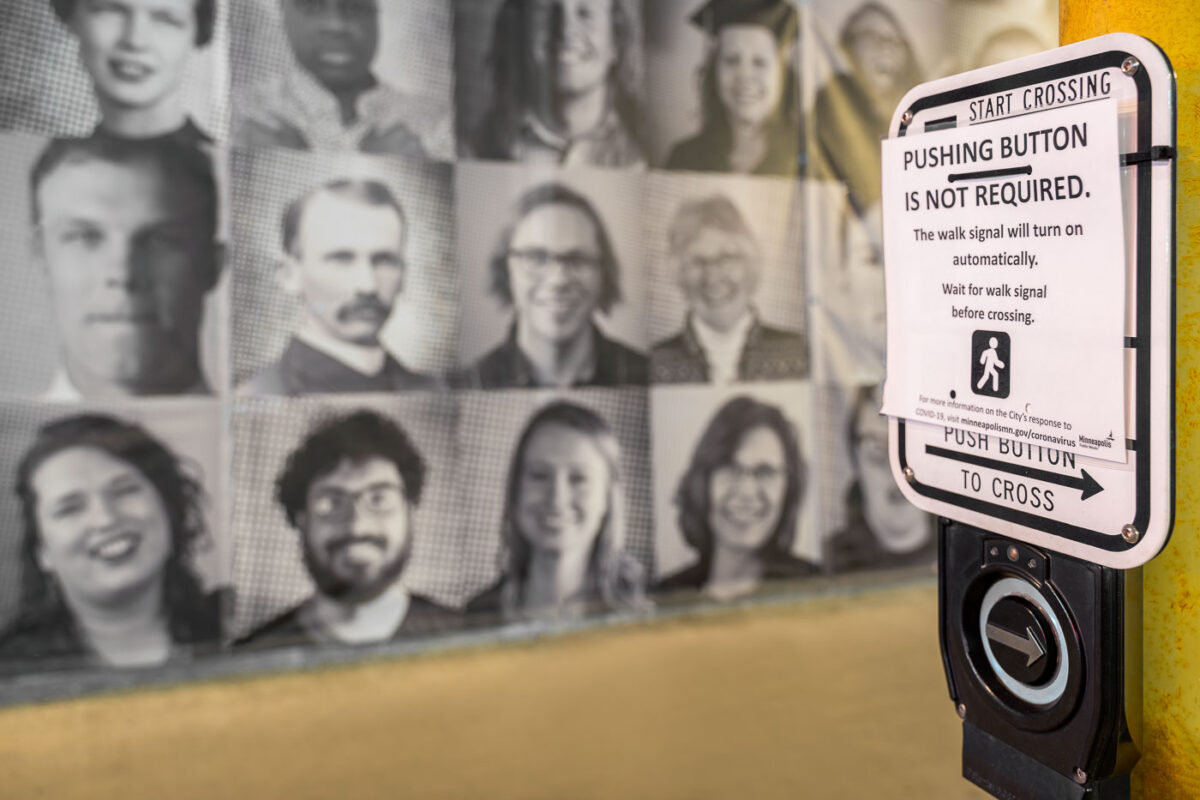
April 2020 — A crosswalk button in Minneapolis after the city disabled 450 walk buttons in late April 2020. Sign reads "Pushing button is not required. The walk signal will turn on automatically. Wait for walk signal before crossing."
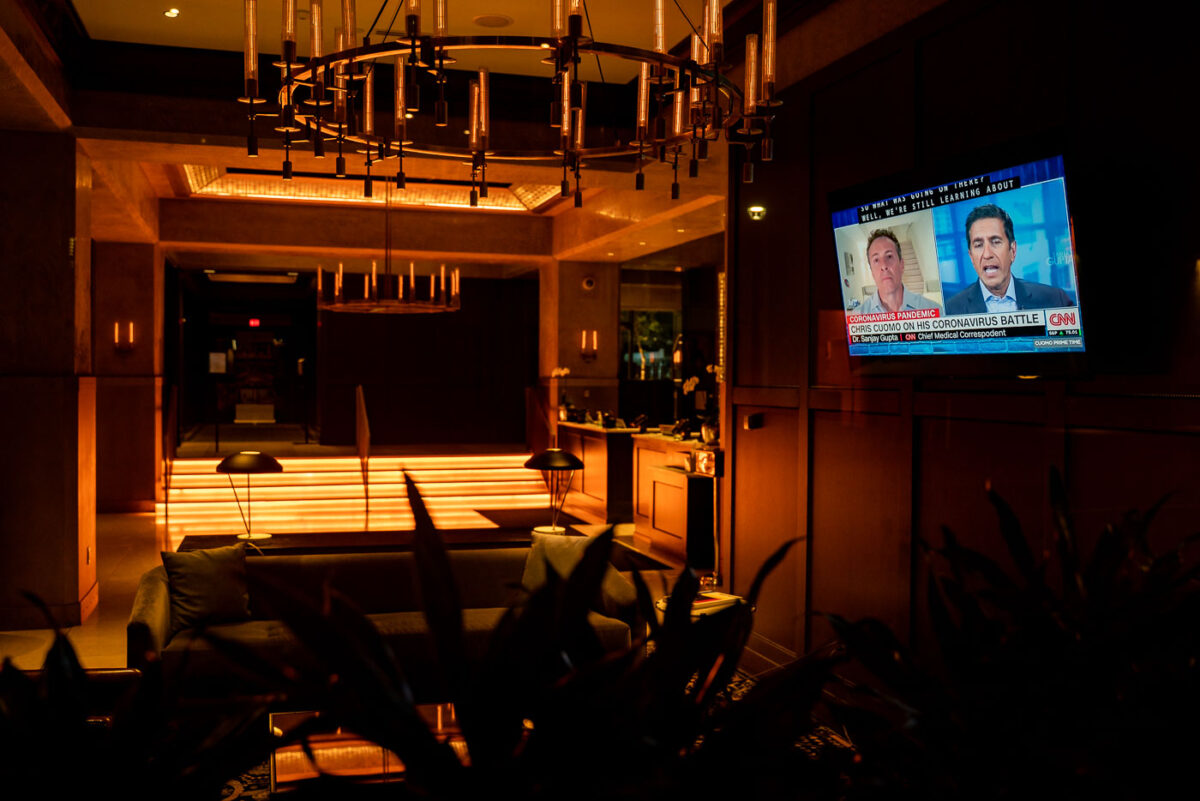
April 2020 — CNN on a tv inside a hotel in downtown Minneapolis.
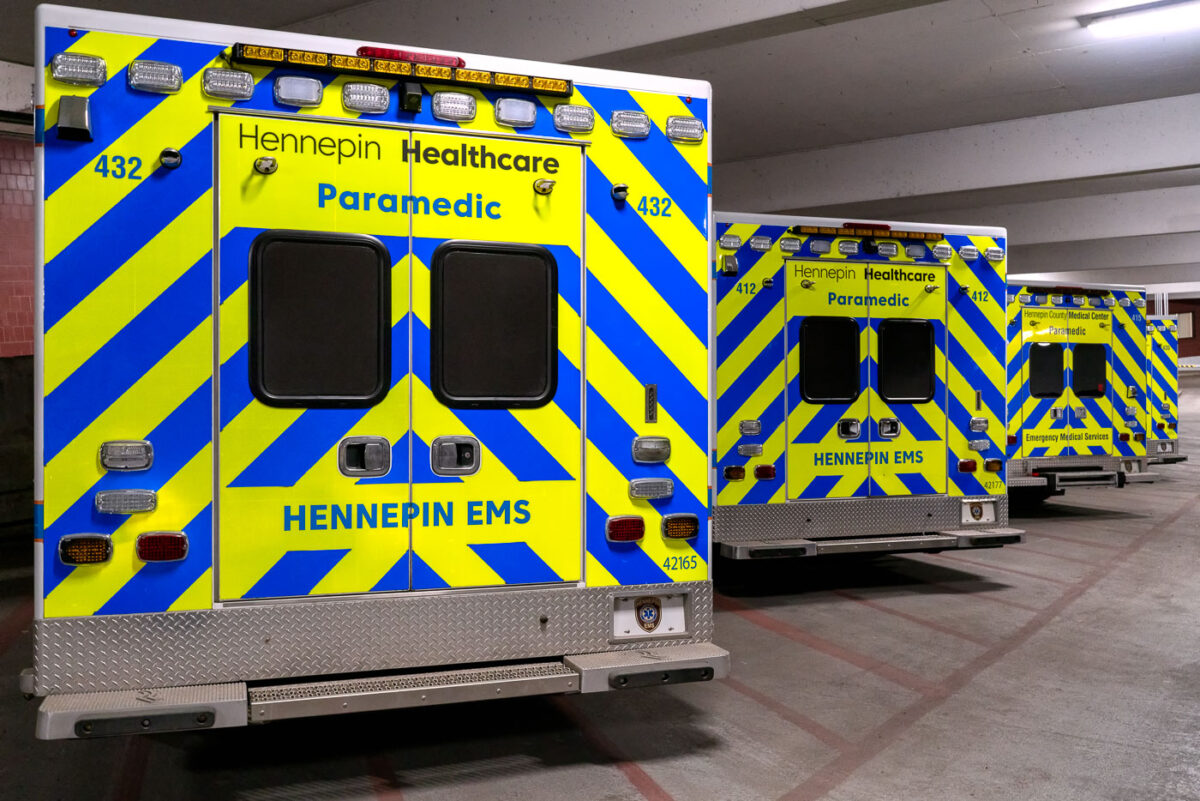
April 2020 — Hennepin Healthcare ambulances in Downtown Minneapolis.
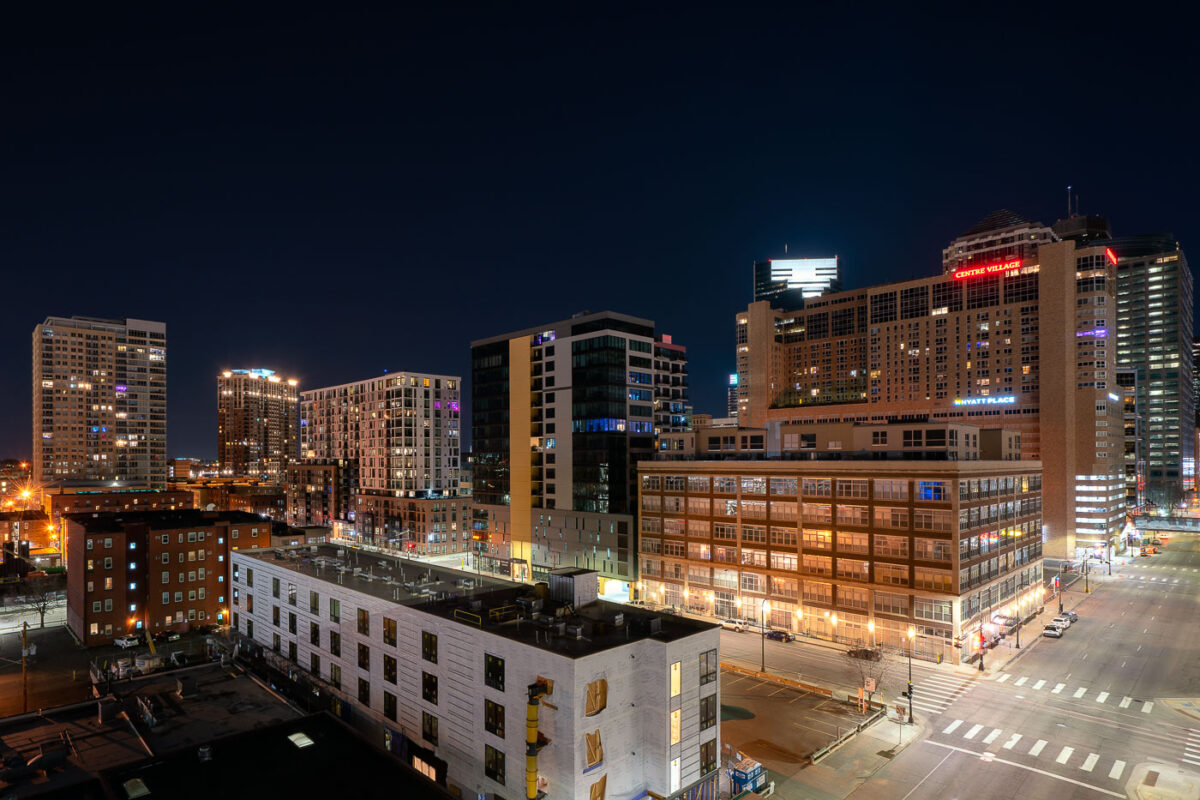
April 2020 — Downtown Minneapolis with Hyatt Place and Centre Village signs.
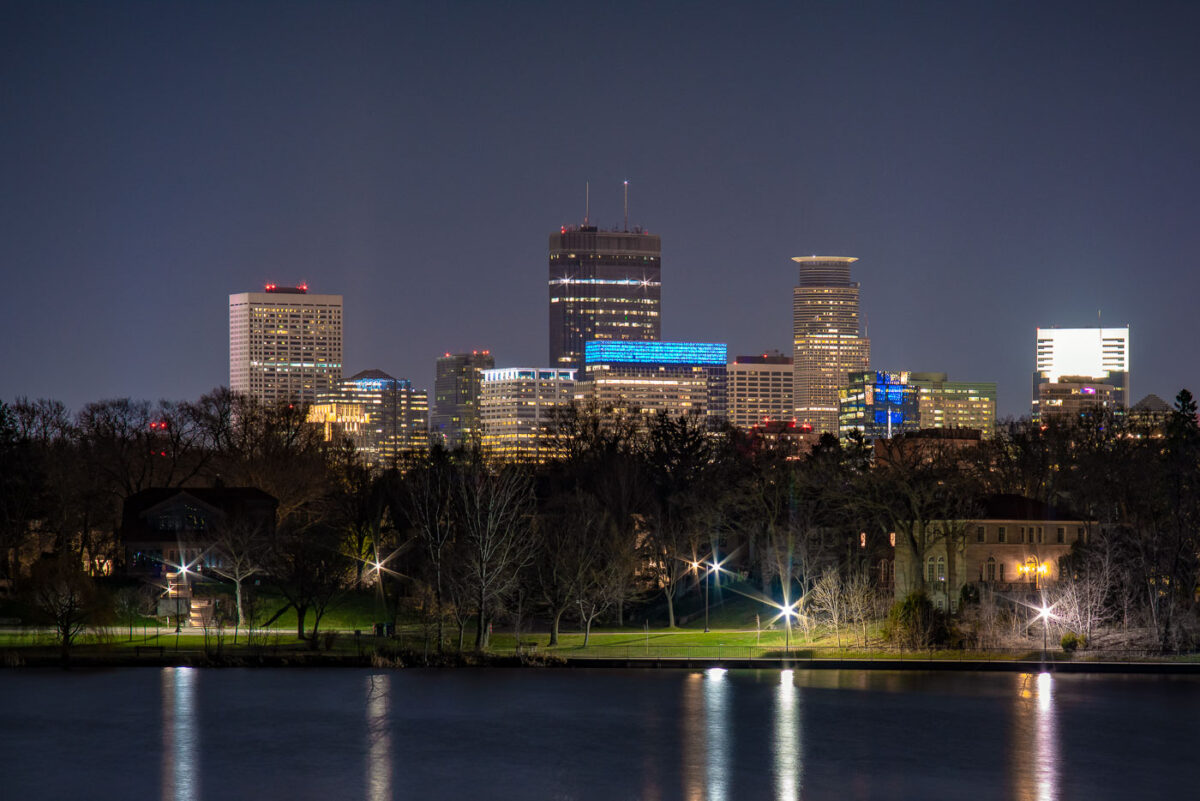
April 2020 — Downtown Minneapolis skyline as seen from Lake of the Isles.
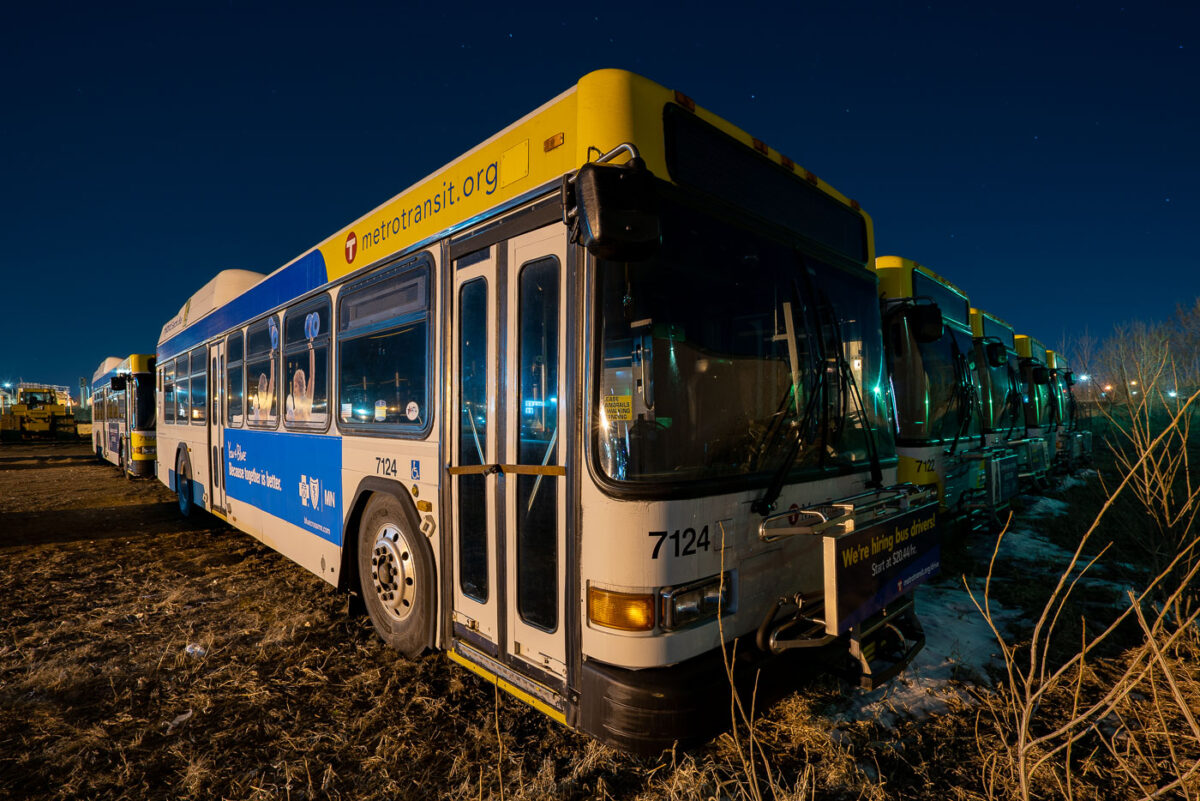
April 2020 — Unused locked Metro Transit buses parked in a grassy lot in North Minneapolis.
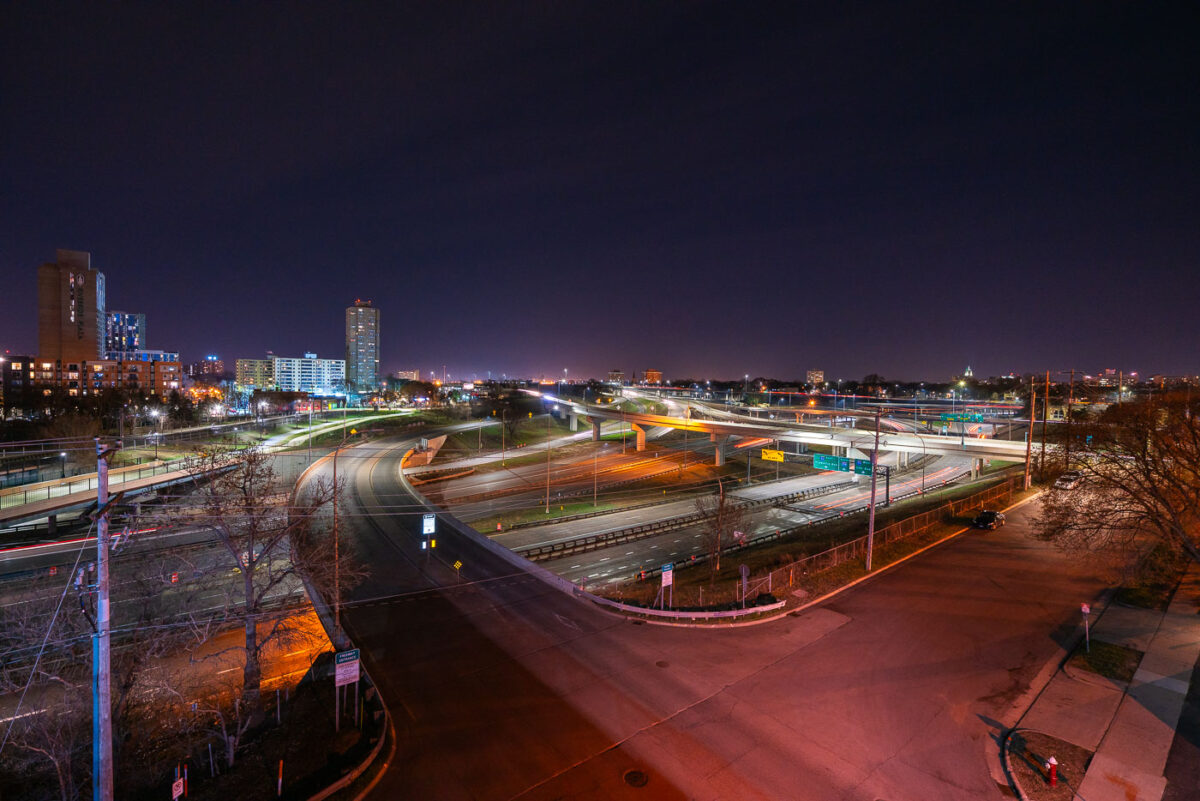
April 2020 — Very little traffic on Interstate 35W. Cedar Riverside in the background.
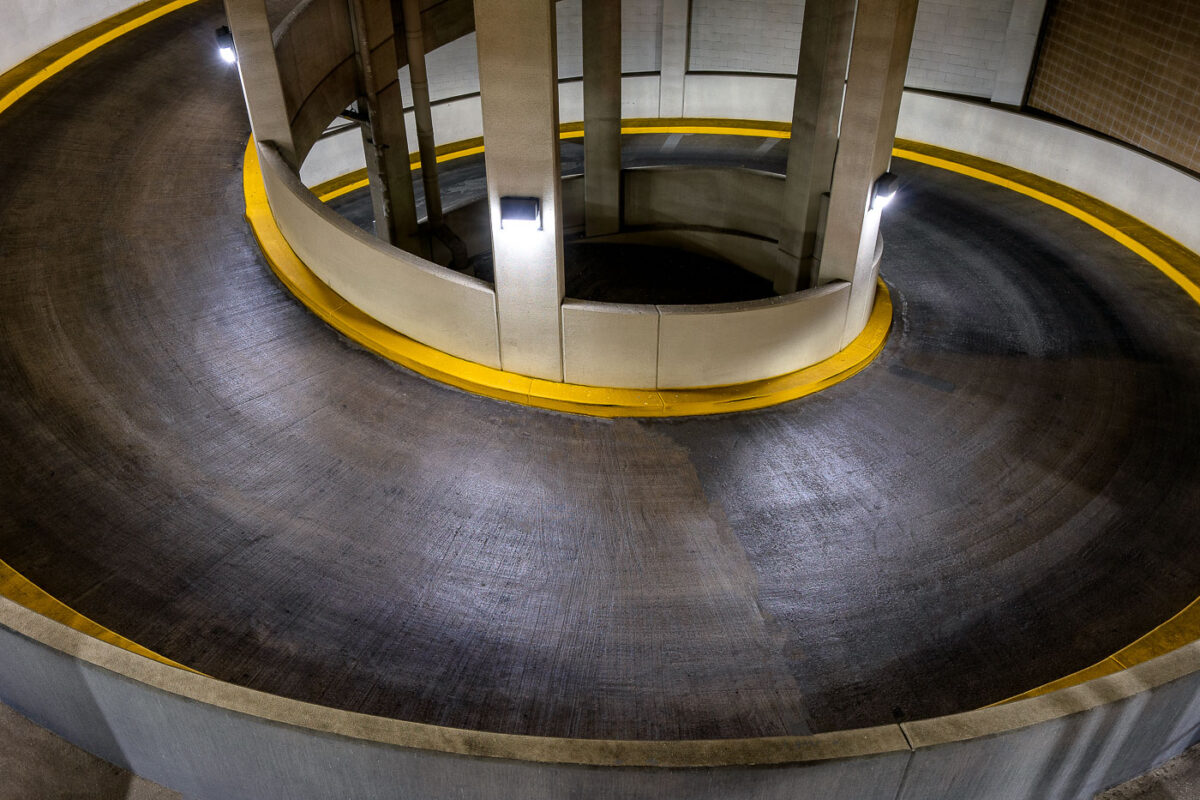
April 2020 — Ramp C parking garage in downtown Minneapolis, Minnesota.
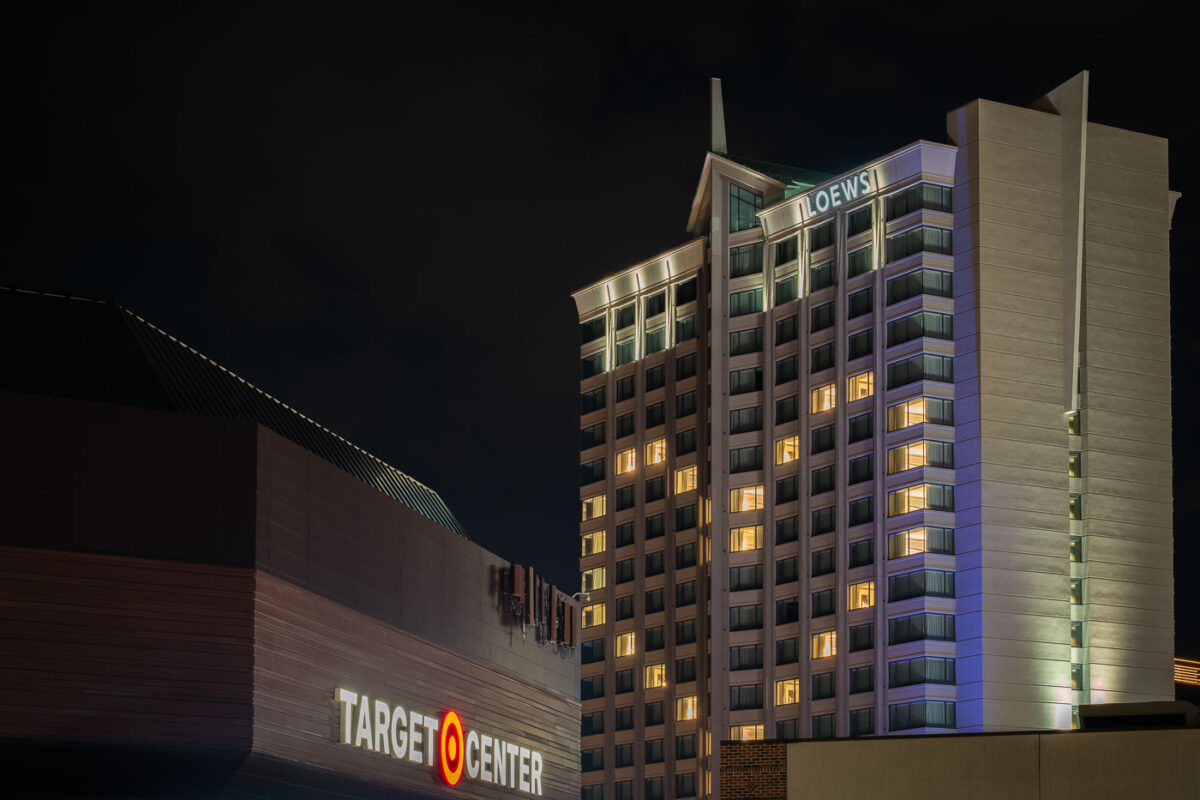
April 2020 — Loews Hotel with a heart on it in solidarity with others hotels during covid-19 shutdowns.
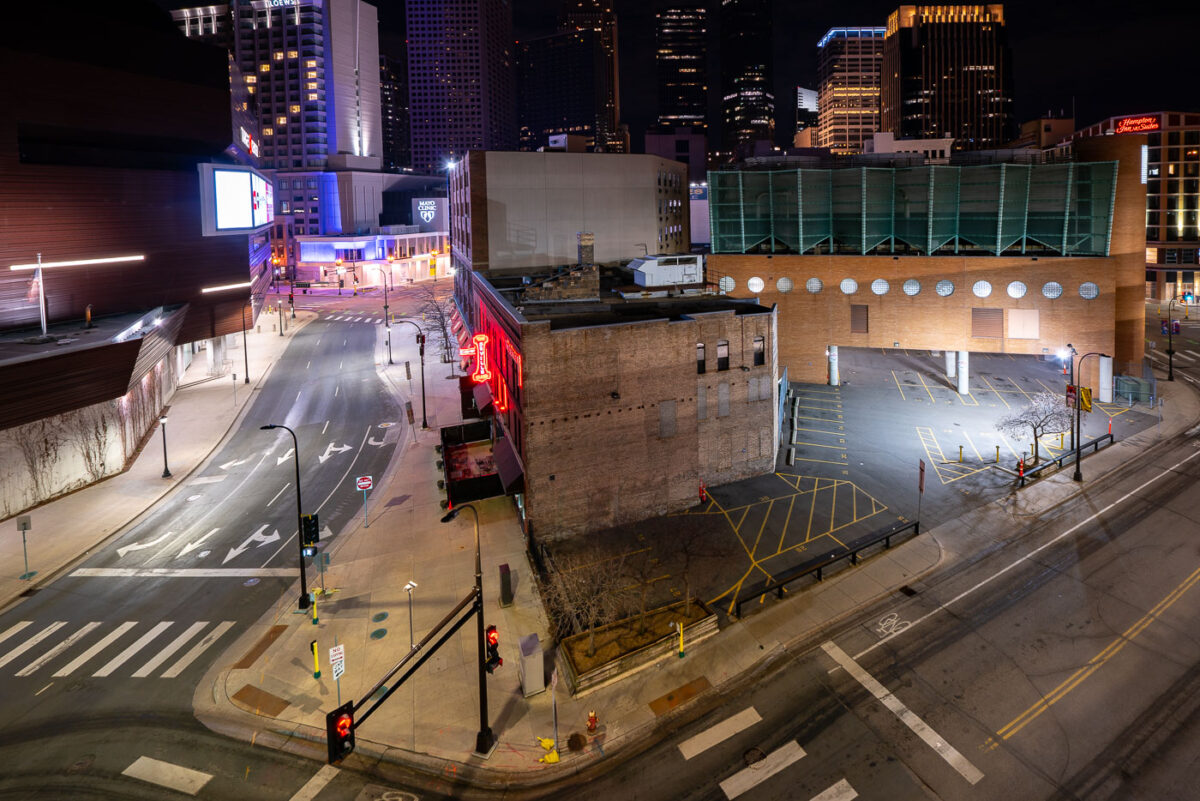
April 2020 — An empty 9th Street, 1st Avenue and Hawthorne Avenue in Downtown Minneapolis during COVID-19 shutdowns. The Target Center on the left and The Seville dance club in the middle.
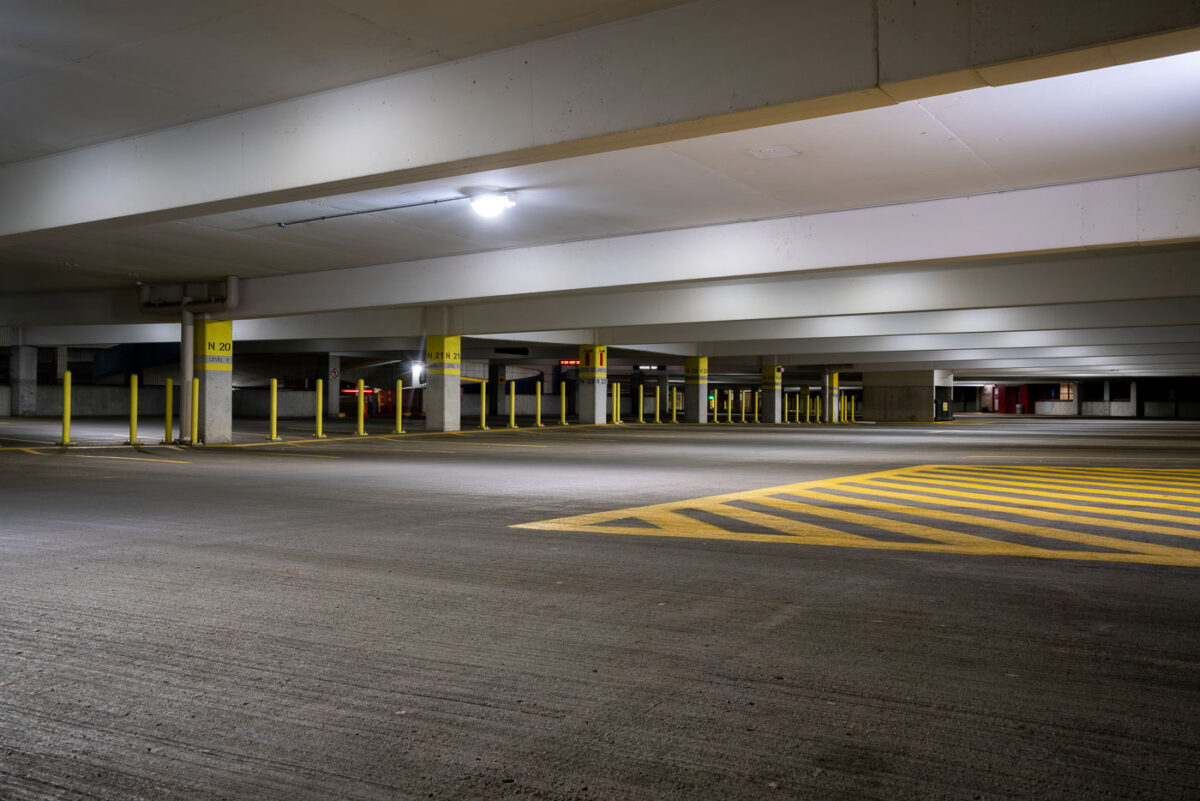
April 2020 — Ramp A parking garage in Downtown Minneapolis.
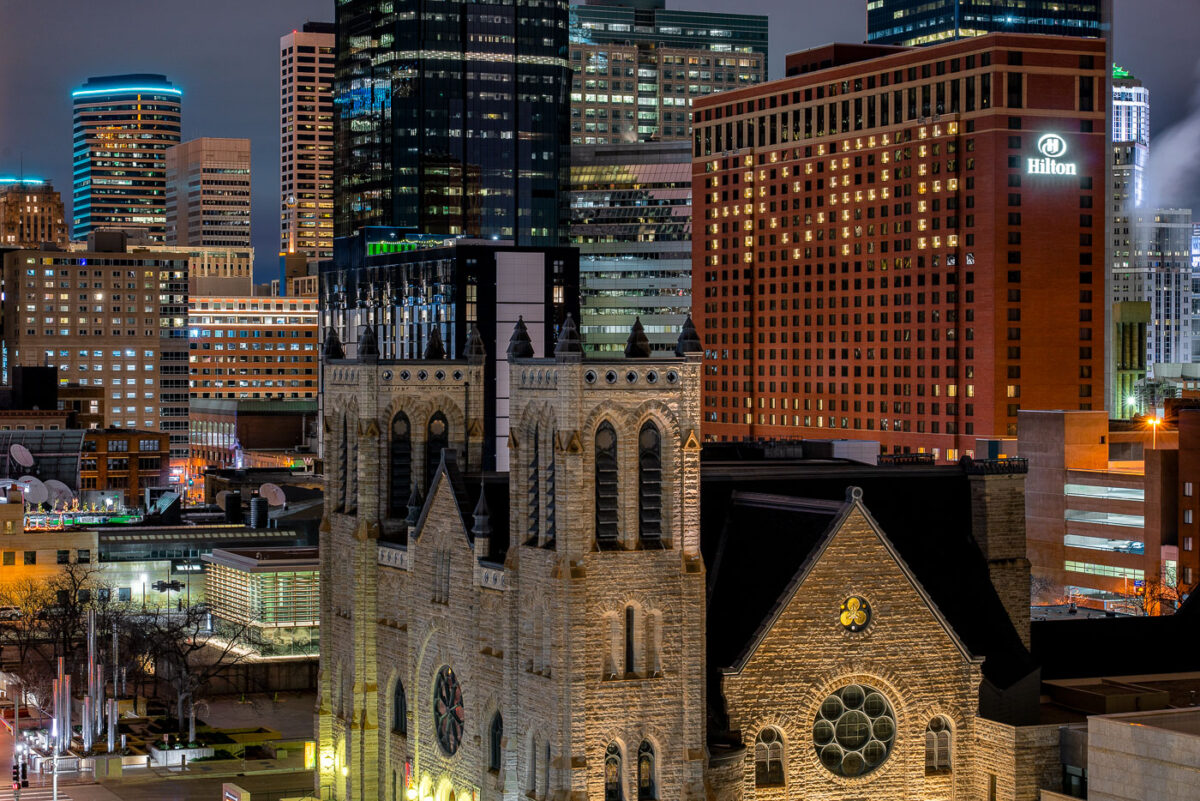
April 2020 — Hilton Hotel in Downtown Minneapolis lit up with a HOPE heart. Seen during the coronavirus (COVID-19) outbreak shutdowns.
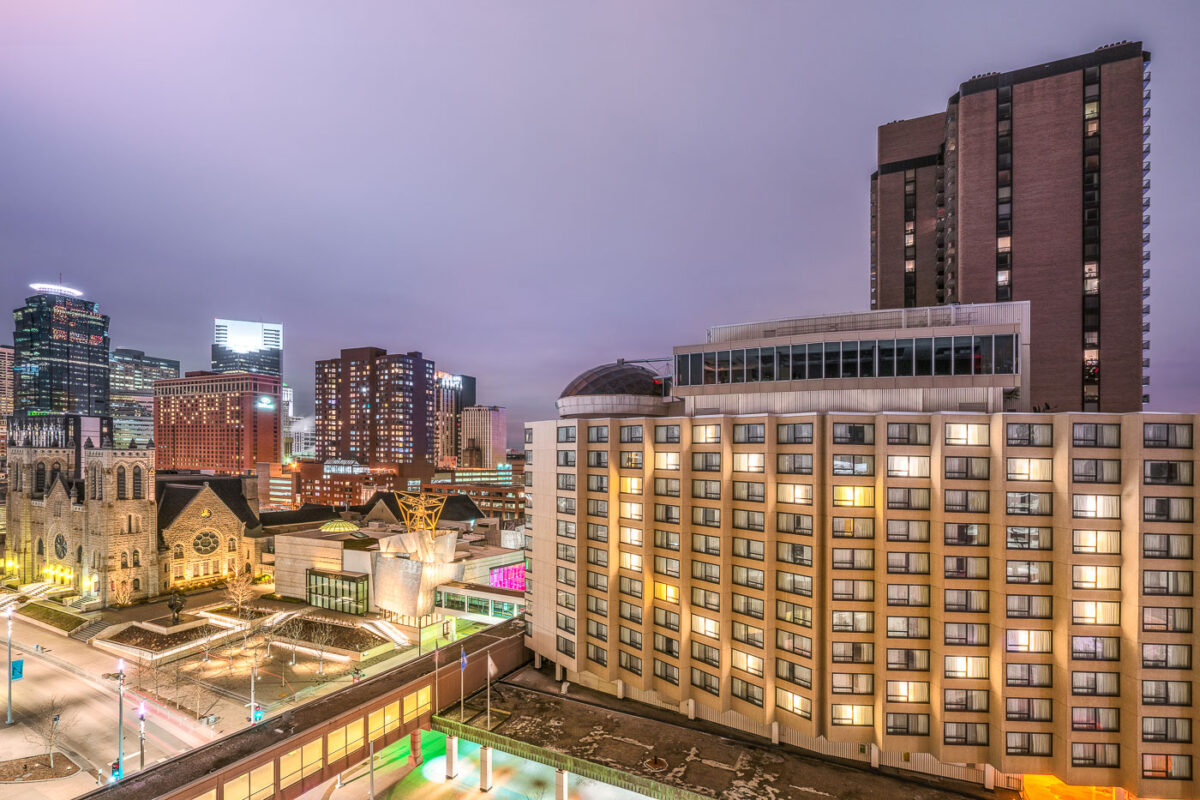
April 2020 — Hotels in downtown Minneapolis with rooms lit up during the coronavirus (COVID-19) outbreak.
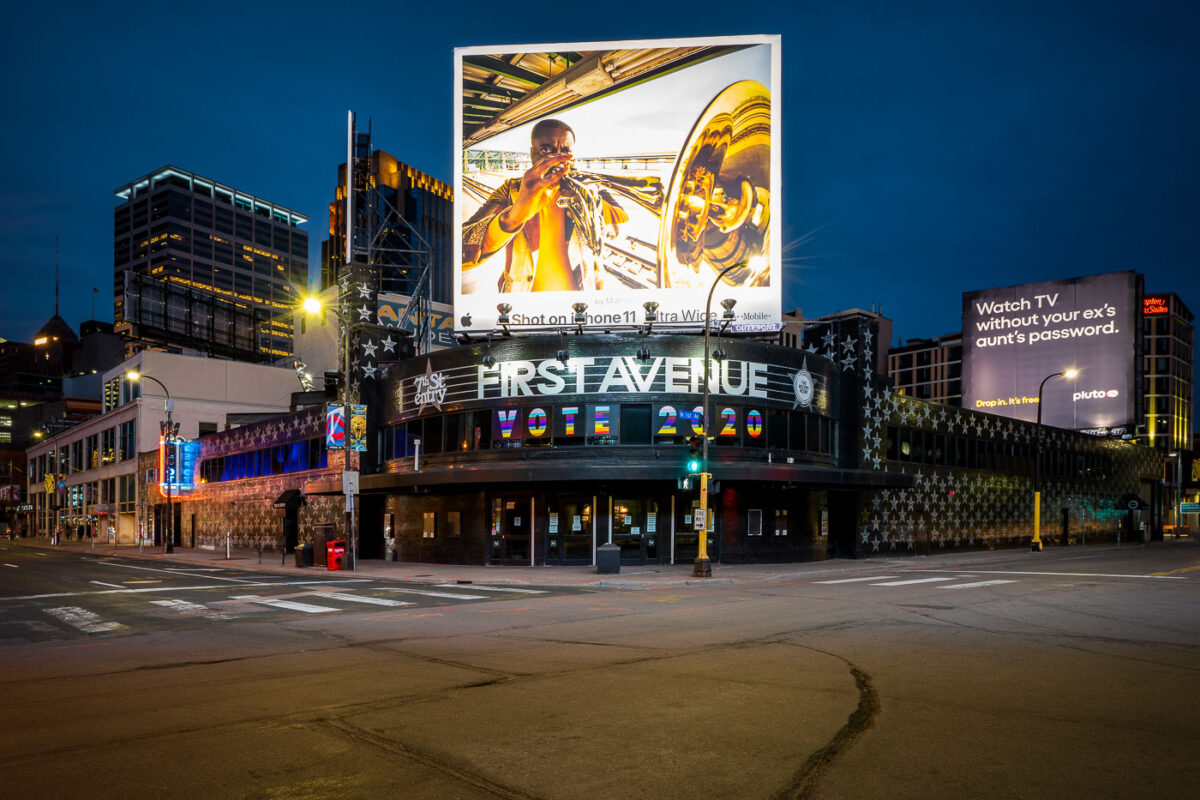
April 2020 — First Avenue and 7th St Entry concert venues in downtown Minneapolis on April 2, 2020 during the COVID-19 shutdowns. VOTE2020 seen in the windows.
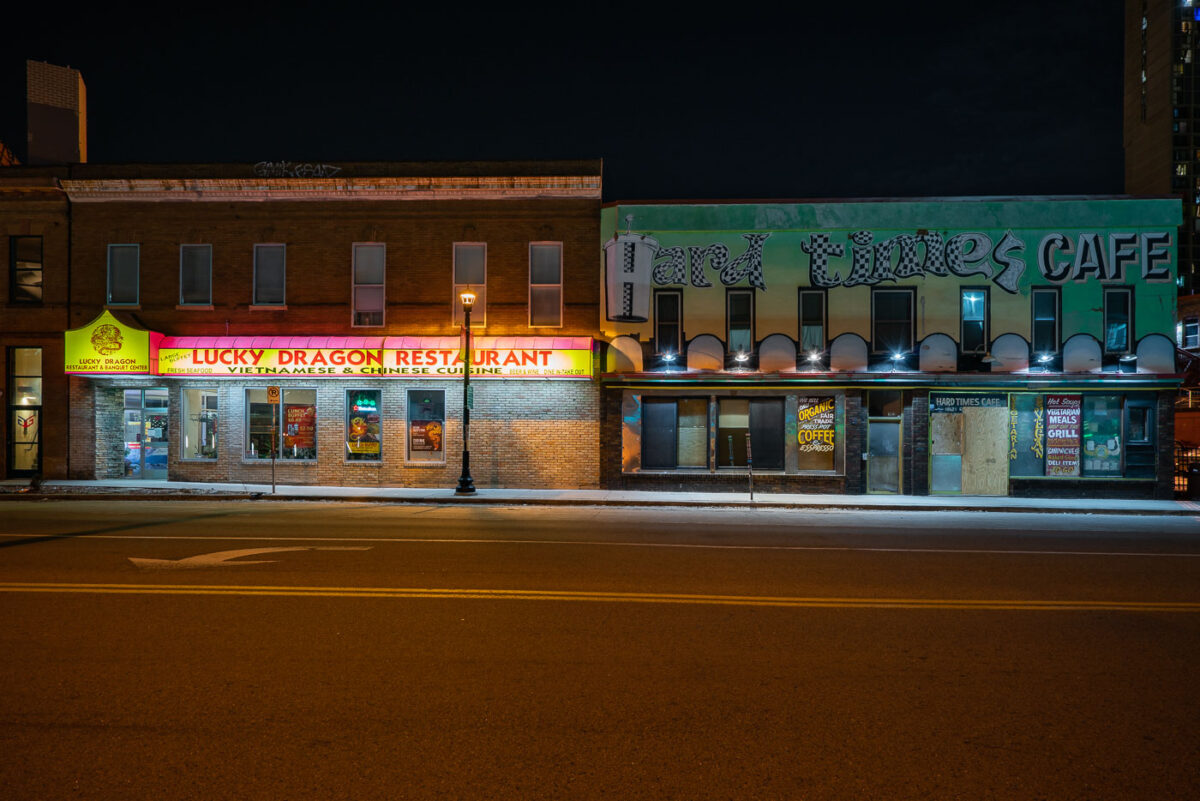
April 2020 — The Lucky Dragon Restaurant and Hard Times Cafe on Riverside Avenue in Minneapolis.
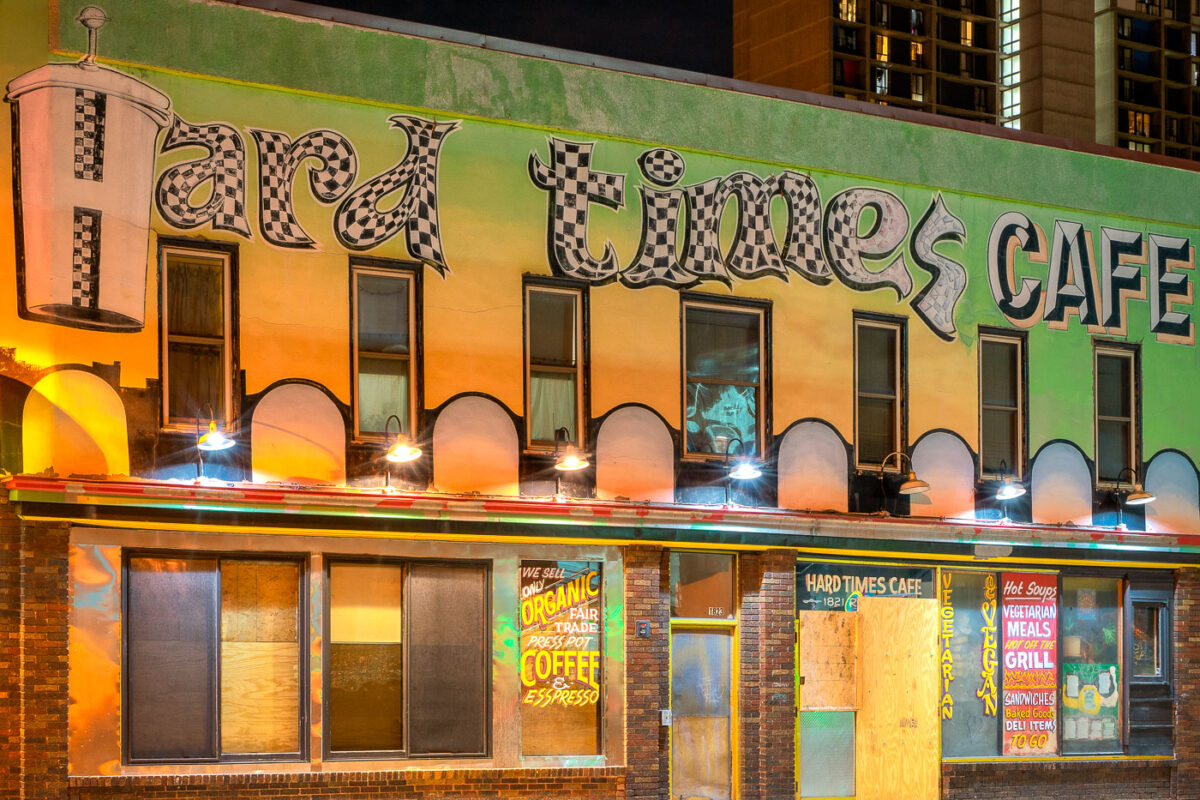
April 2020 — Hard Times Cafe on Riverside Drive in Minneapolis during COVID-19 closures.
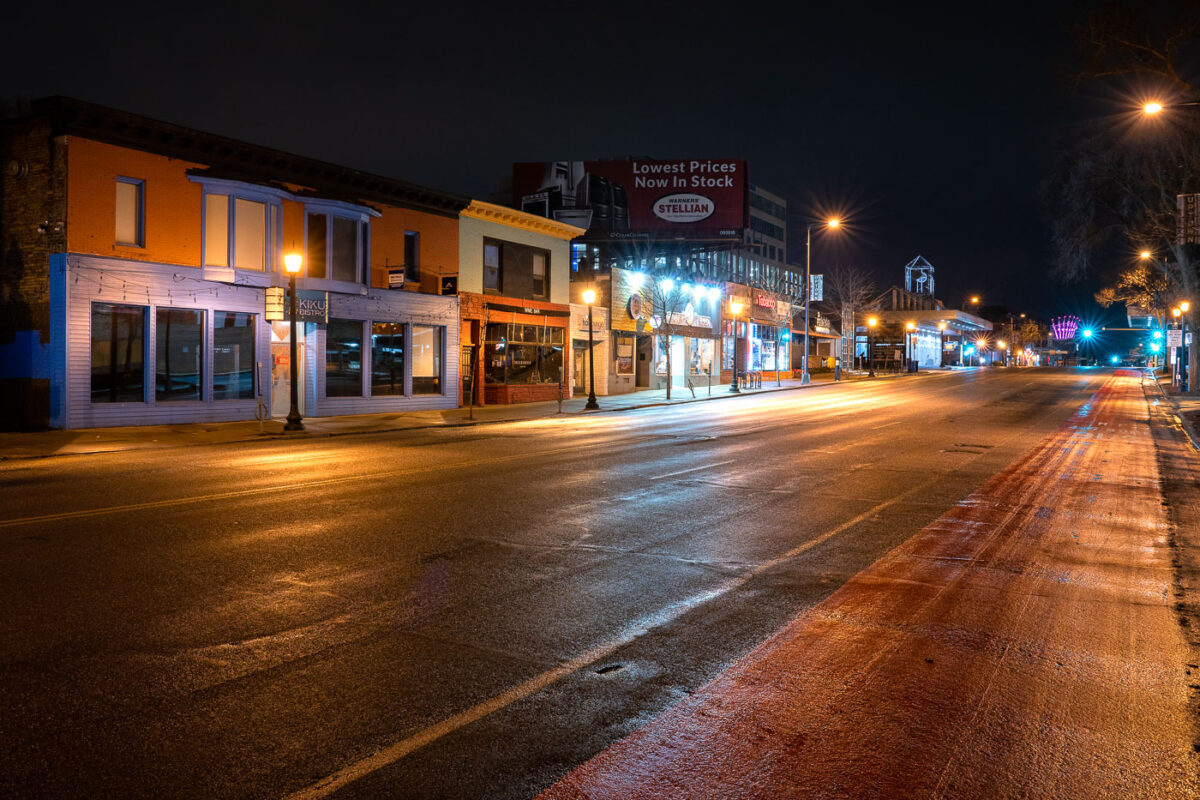
March 2020 — Hennepin Avenue in Uptown Minneapolis during the first night of Minnesota’s stay at home orders.
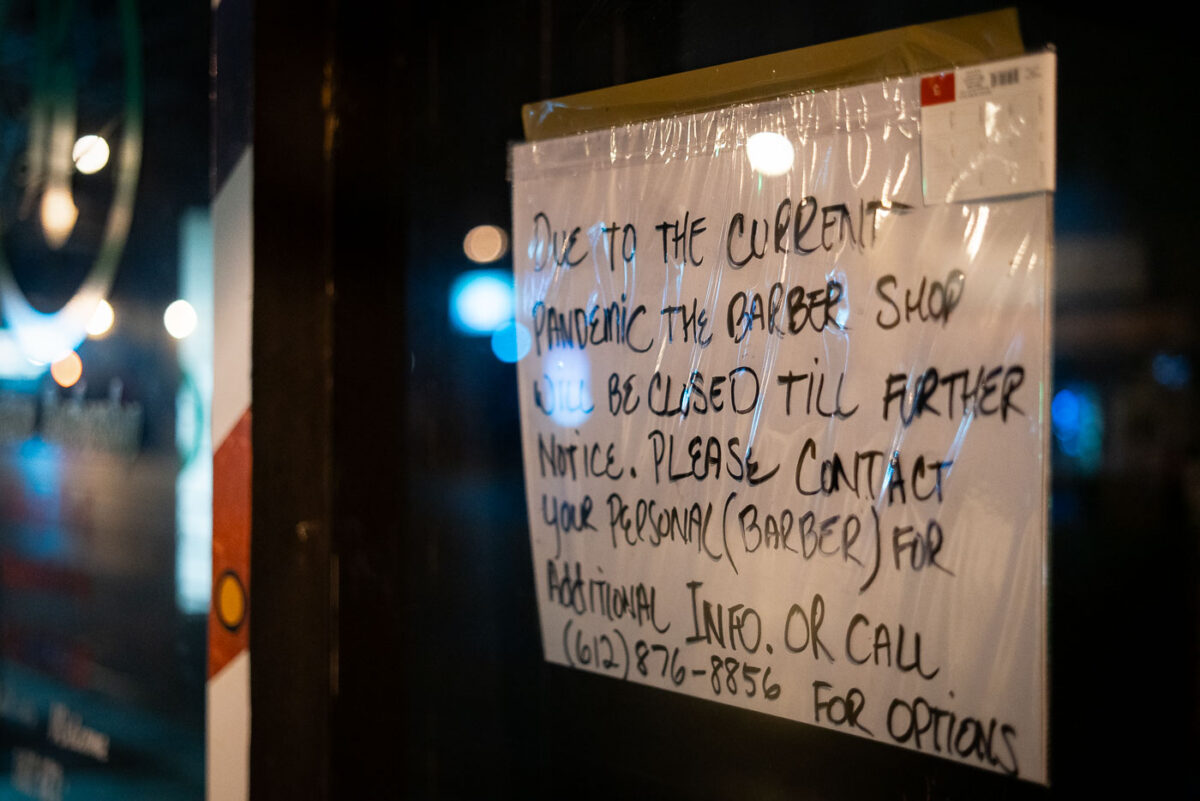
March 2020 — A pandemic closure sign on a barber shop in Minneapolis
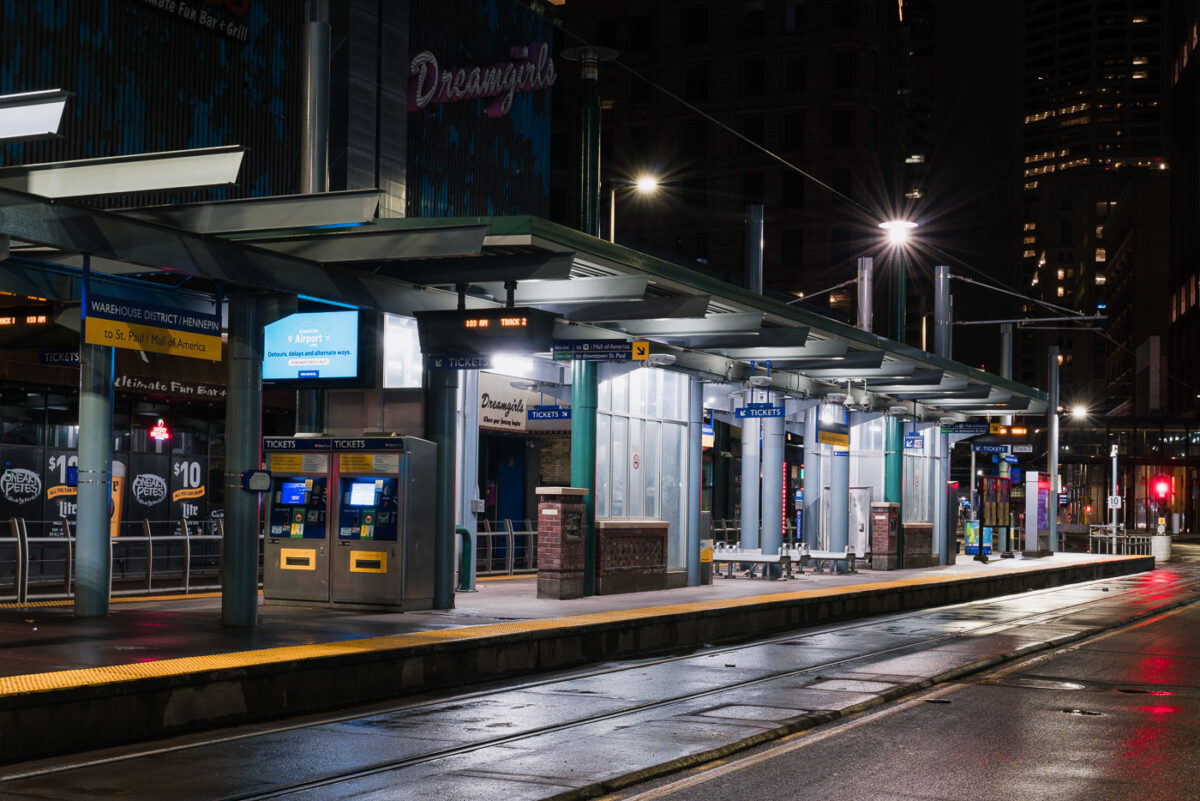
March 2020 — Warehouse District/Hennepin light rail station in Downtown Minneapolis in the hours after the Minnesota Stay At Home order went into effect.
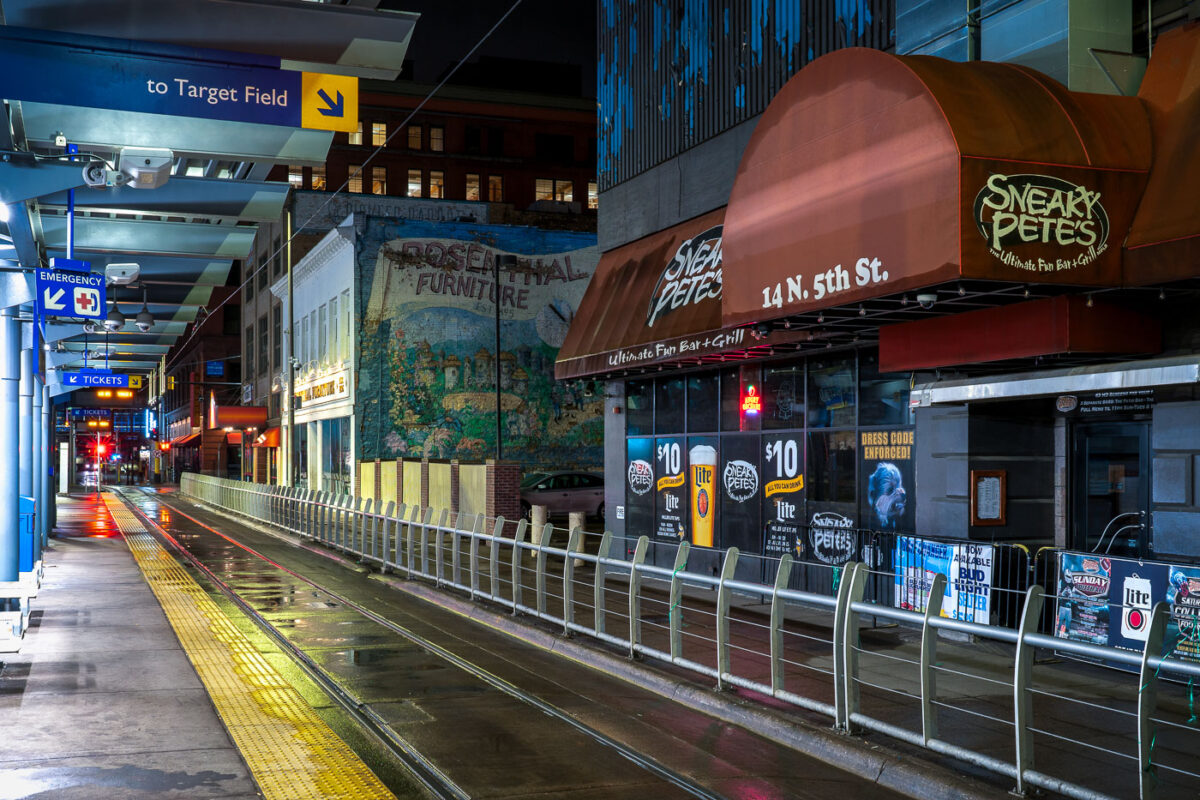
March 2020 — Sneaky Pete’s bar during the first night of Minnesota’s Stay At Home Order on 03/28/20.
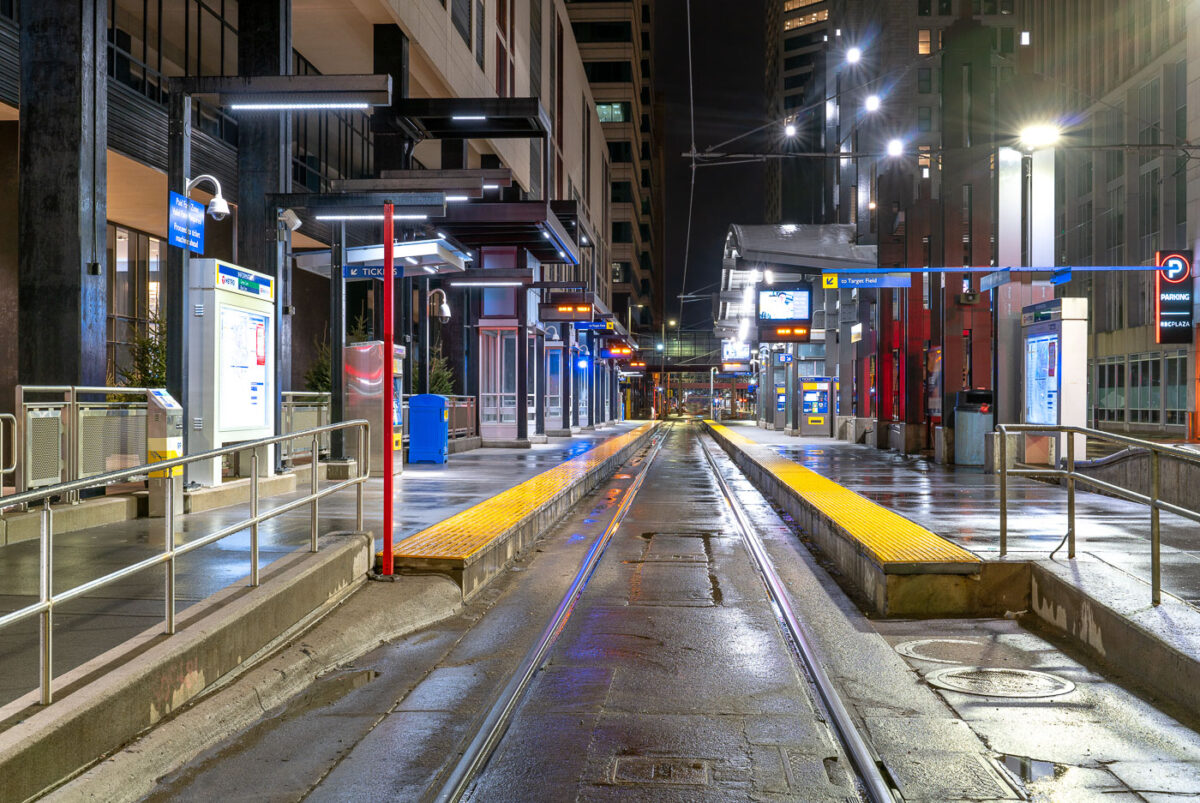
March 2020 — Nicollet Mall Light Rail Station on a rainy night in Downtown Minneapolis during Minnesota’s Stay At Home orders.
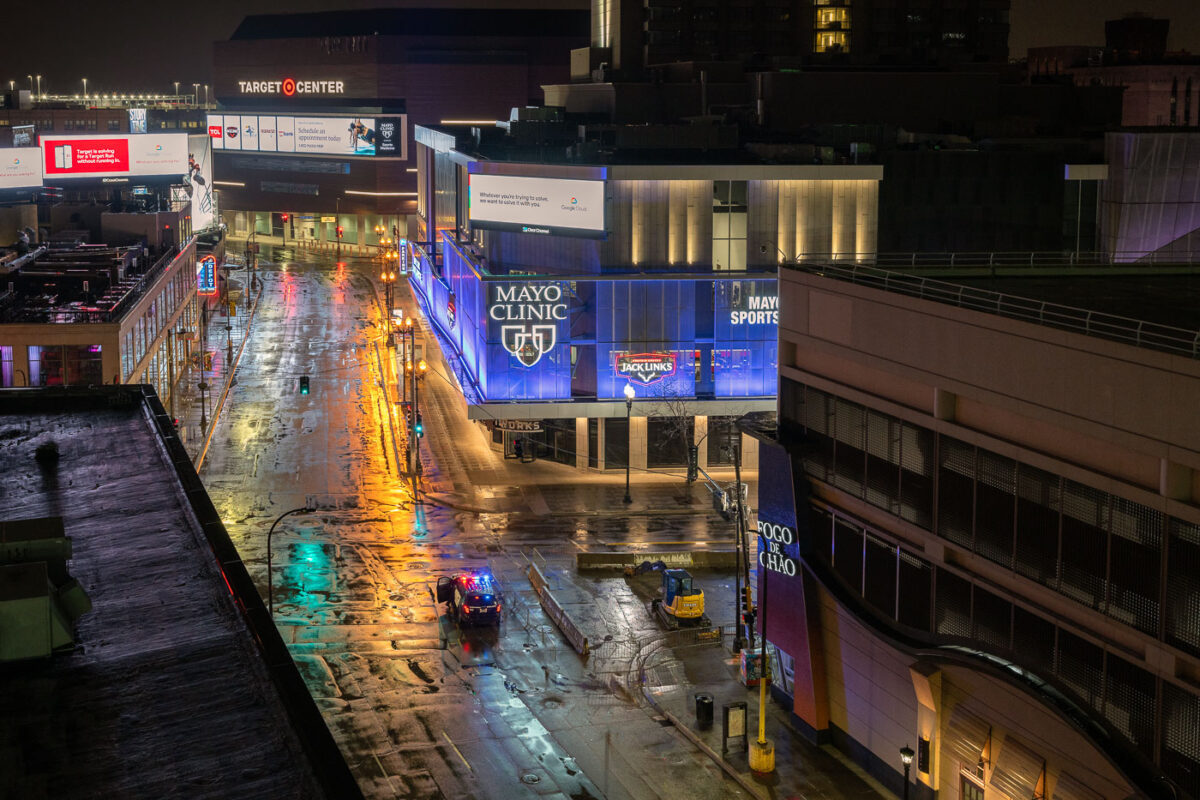
March 2020 — A police officer at Hennepin Avenue after Stay at Home order.
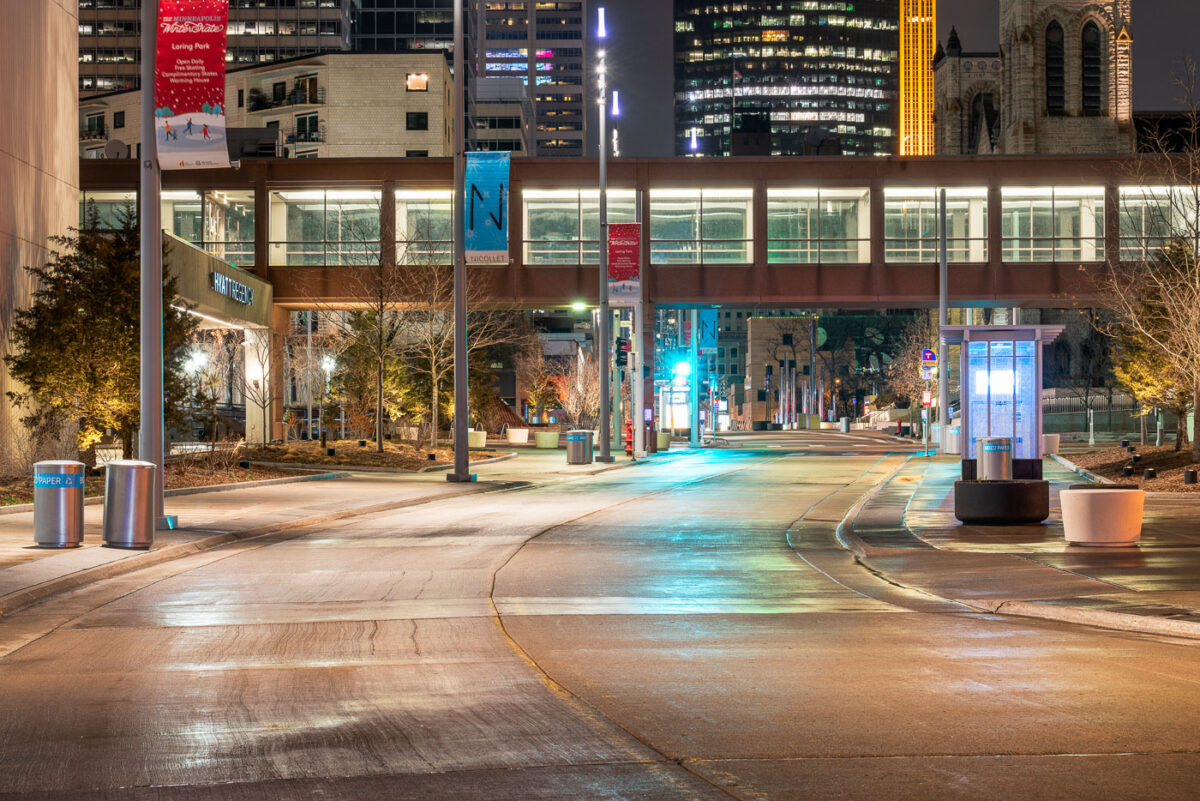
March 2020 — Nicollet Mall in Downtown Minneapolis during Minnesota’s COVID-19 Stay At Home orders.
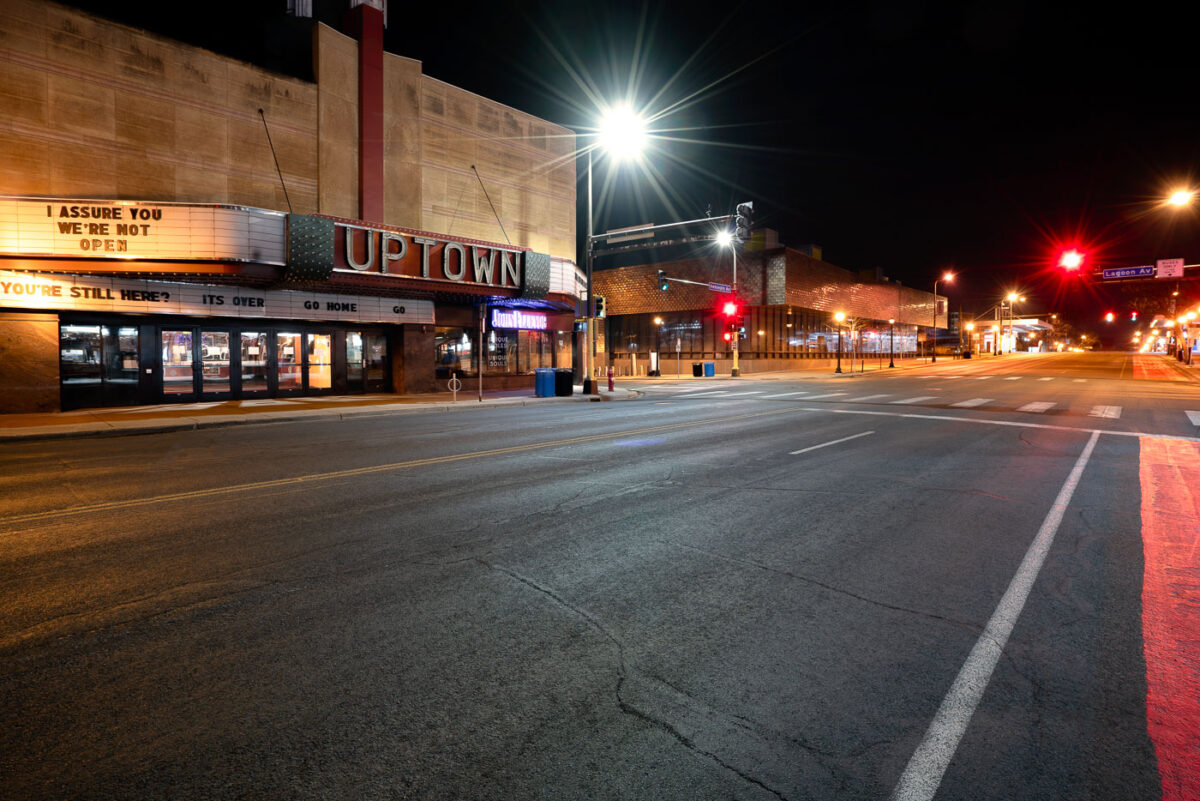
March 2020 — Uptown Theatre on Hennepin Ave and Lagoon Ave in Minneapolis during the Coronavirus (COVID-19) outbreak.
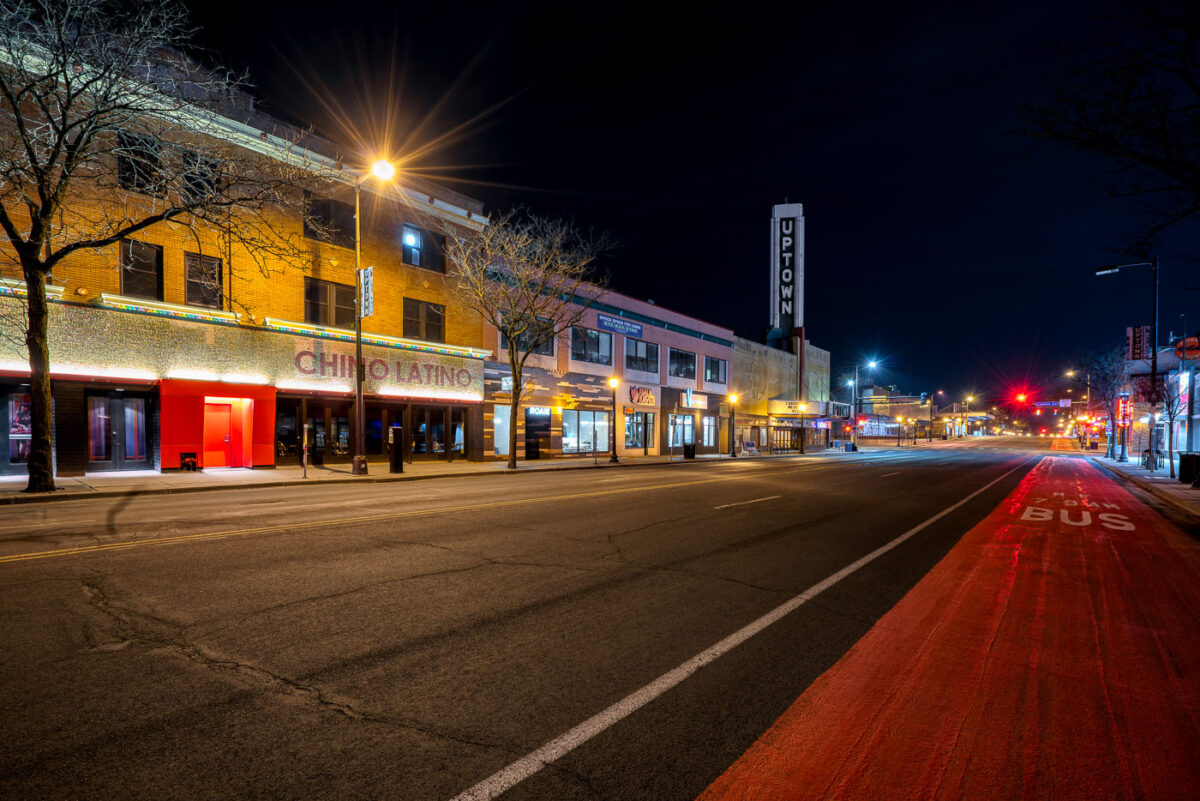
March 2020 — Hennepin Avenue in Uptown Minneapolis, Minnesota during the coronavirus (COVID-19) outbreak.
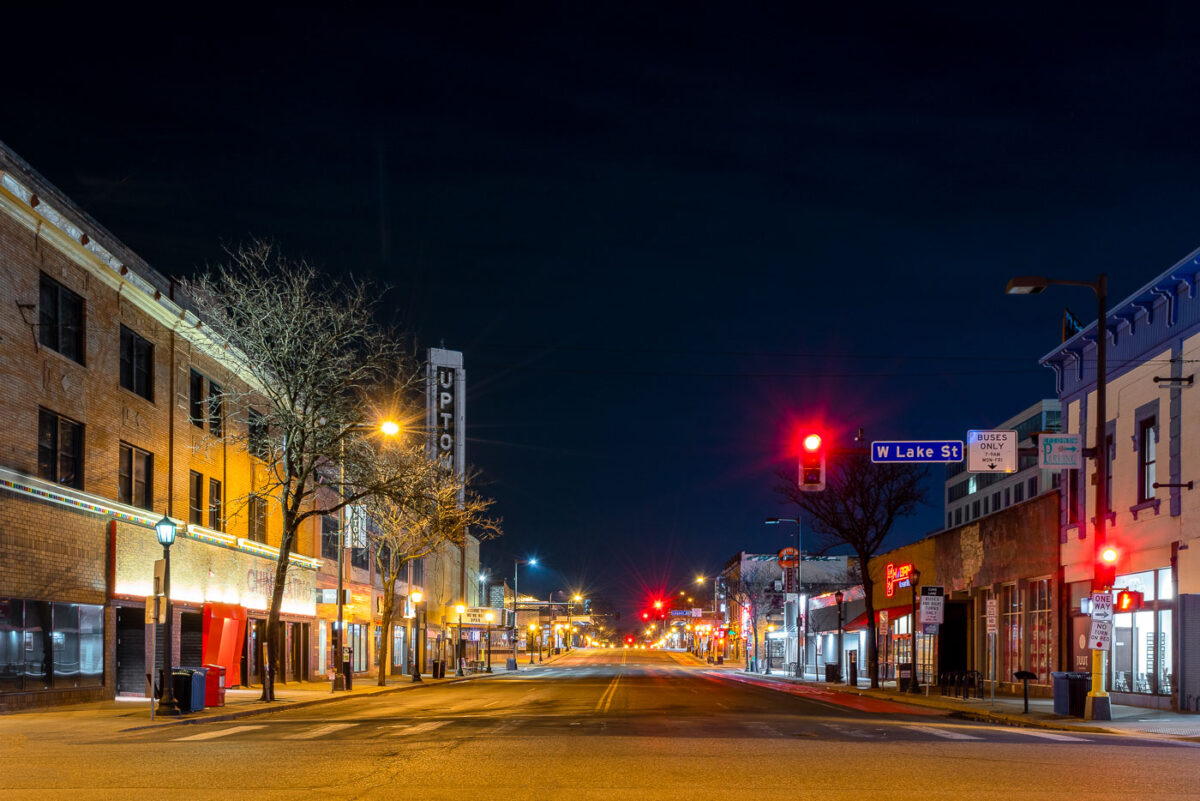
March 2020 — Hennepin Ave and Lake St in Minneapolis during the covid-19 shutdown.
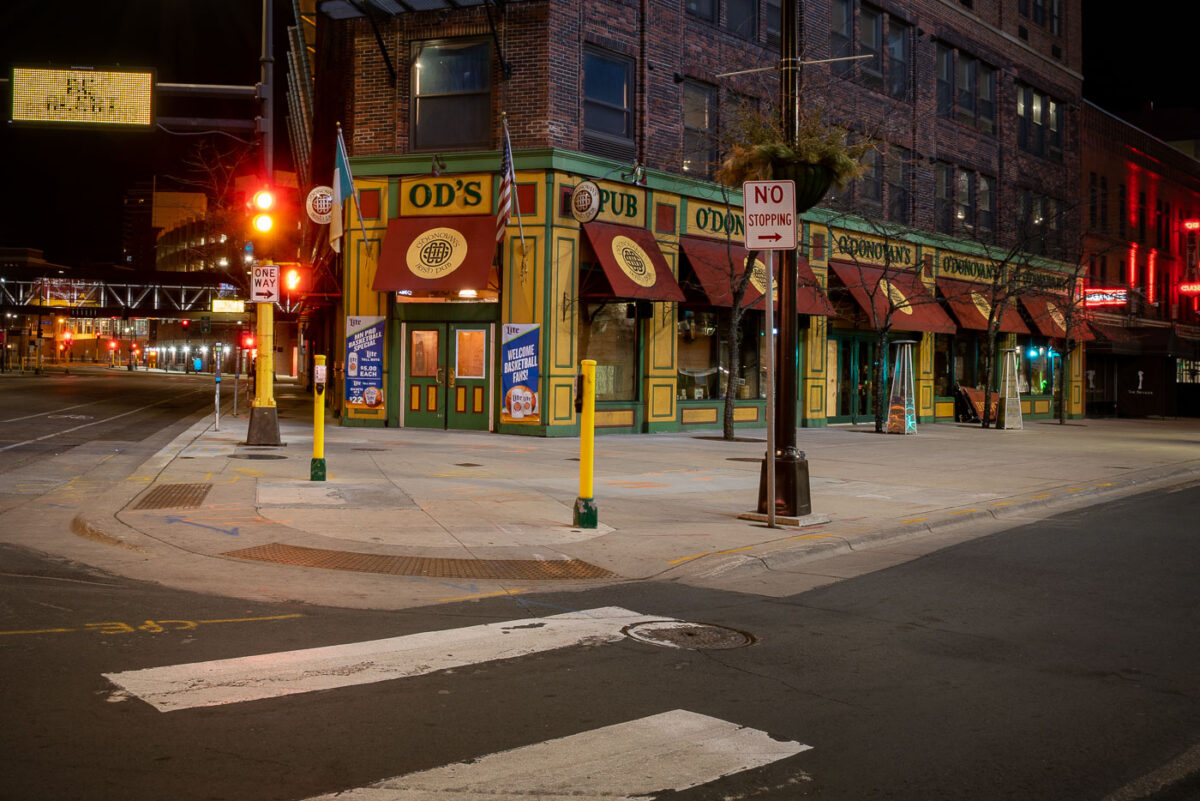
March 2020 — O'Donovan's Pub in downtown Minneapolis across from First Avenue music hall.
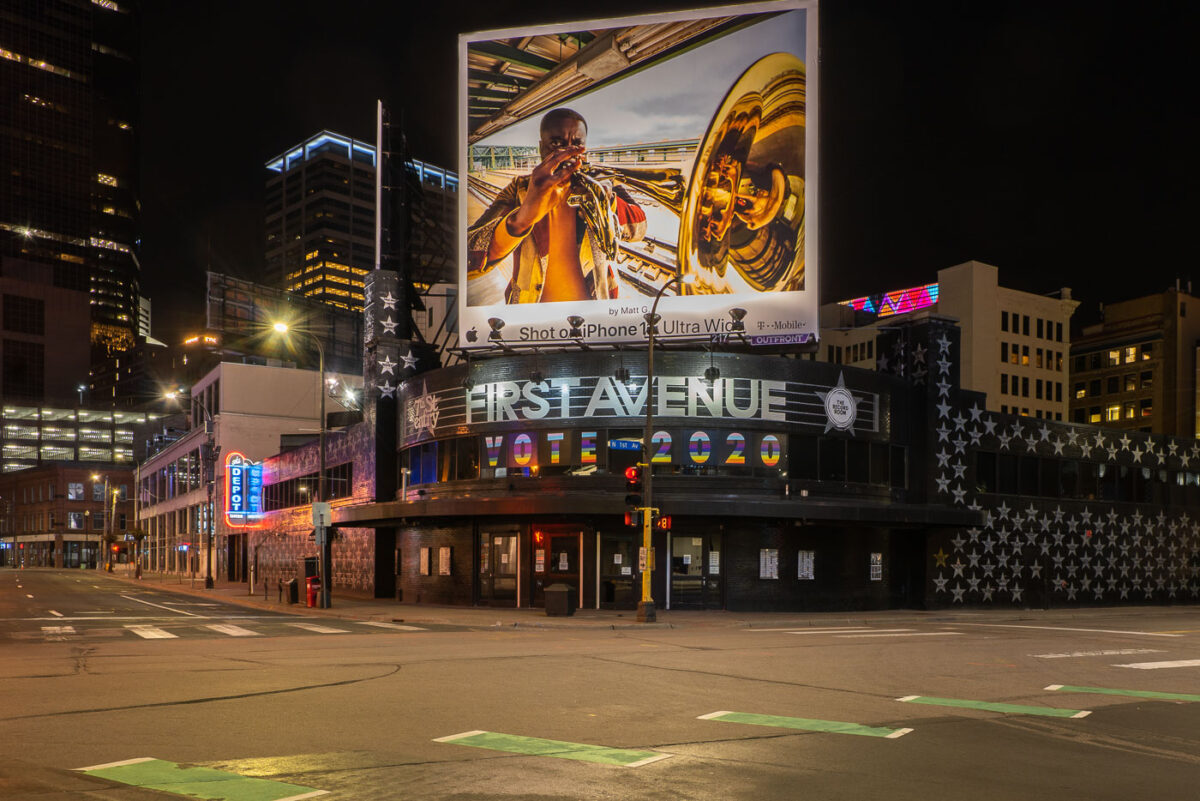
March 2020 — First Avenue concert venue in downtown Minneapolis with "VOTE 2020" in the windows.
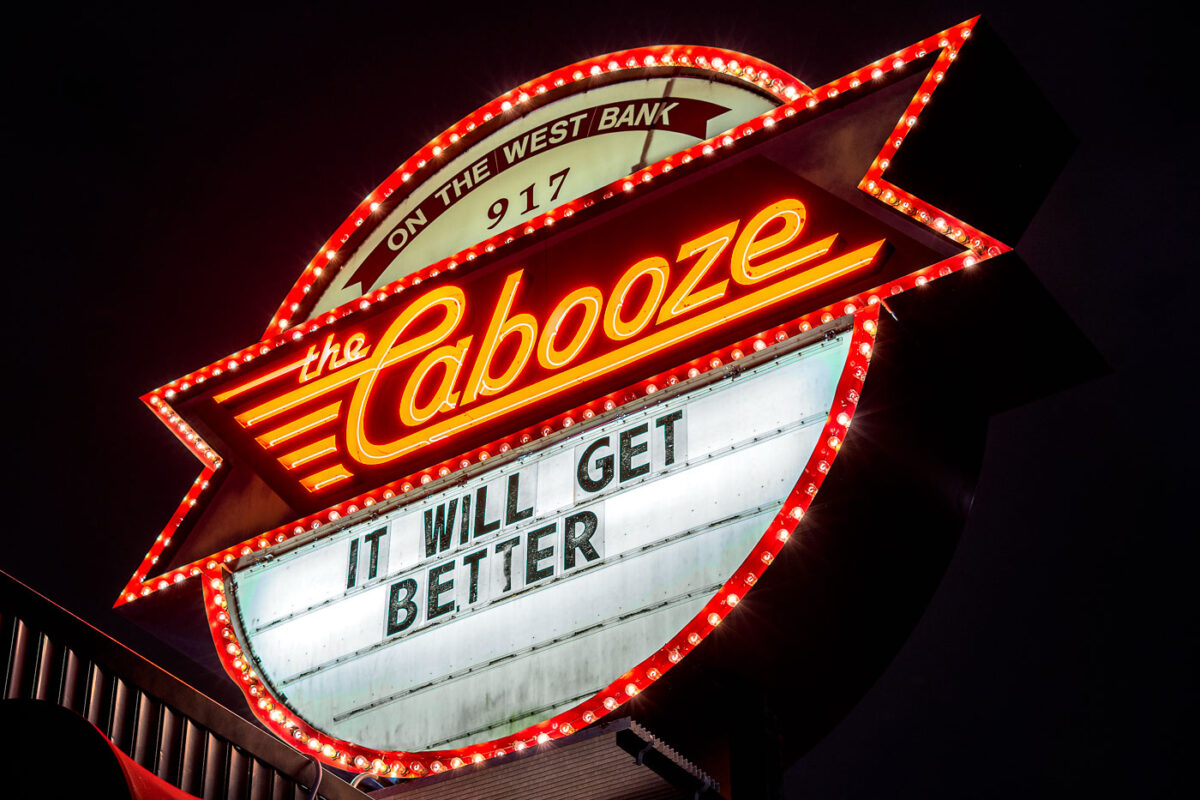
March 2020 — The Caboose on Cedar Ave in Minneapolis during Minnesota’s Stay At Home orders. Their marquee reading “It will get better”.
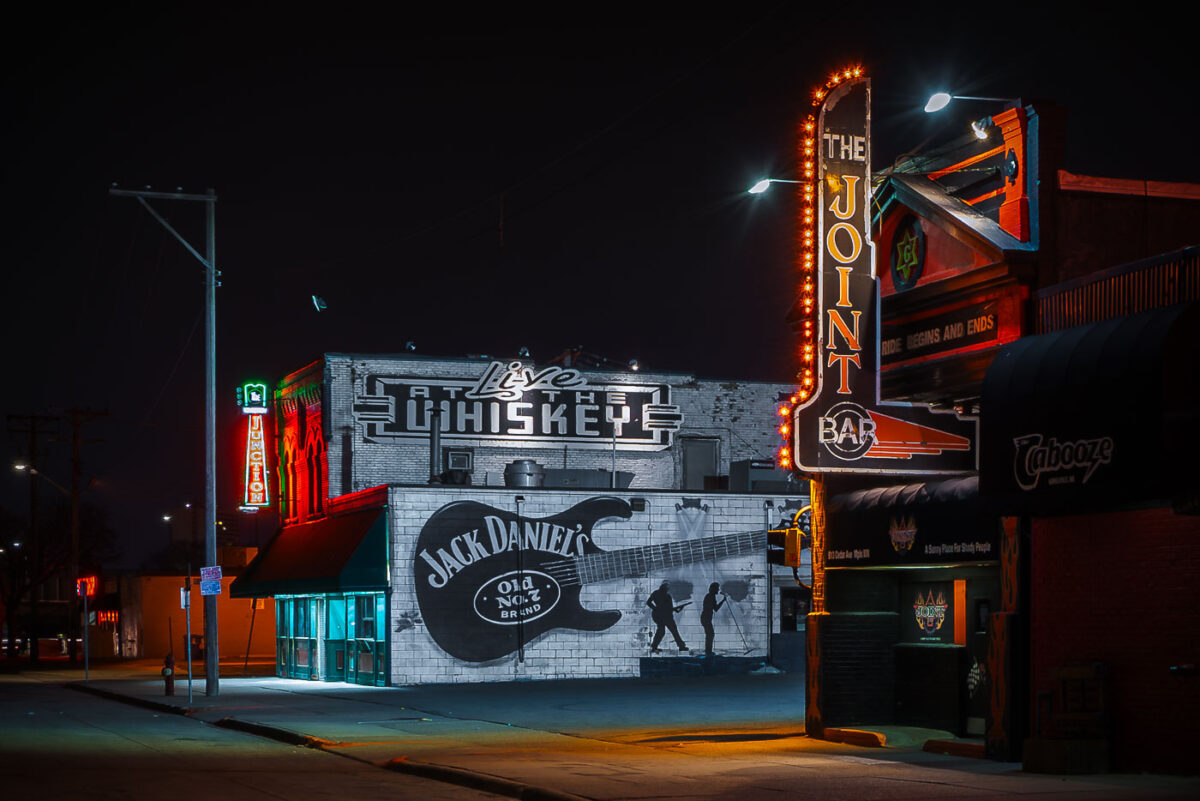
March 2020 — A large Jack Daniels mural on the Whiskey Junction building on Cedar Avenue in Minneapolis. The bar has been closed since at least 2020
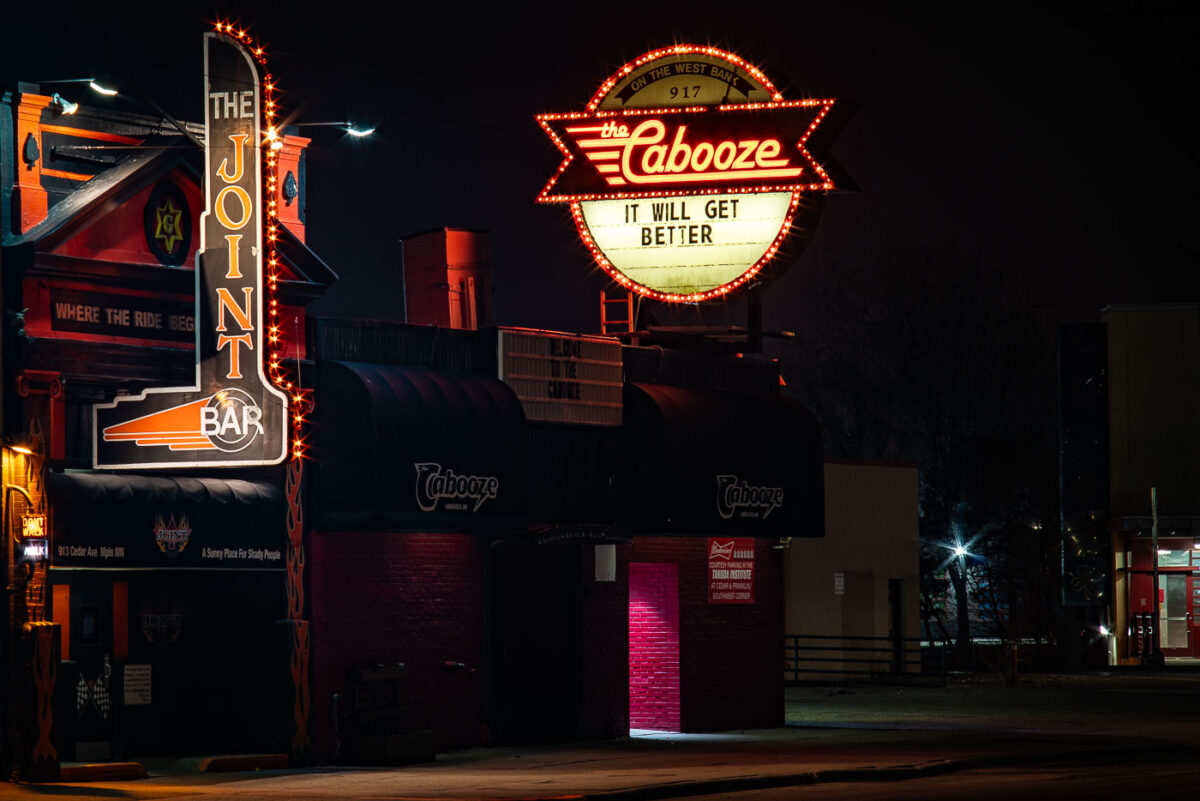
March 2020 — The Joint and Cabooze Bars in March 2020 during pandemic closures in Minneapolis. Marquee reads "It will get better"
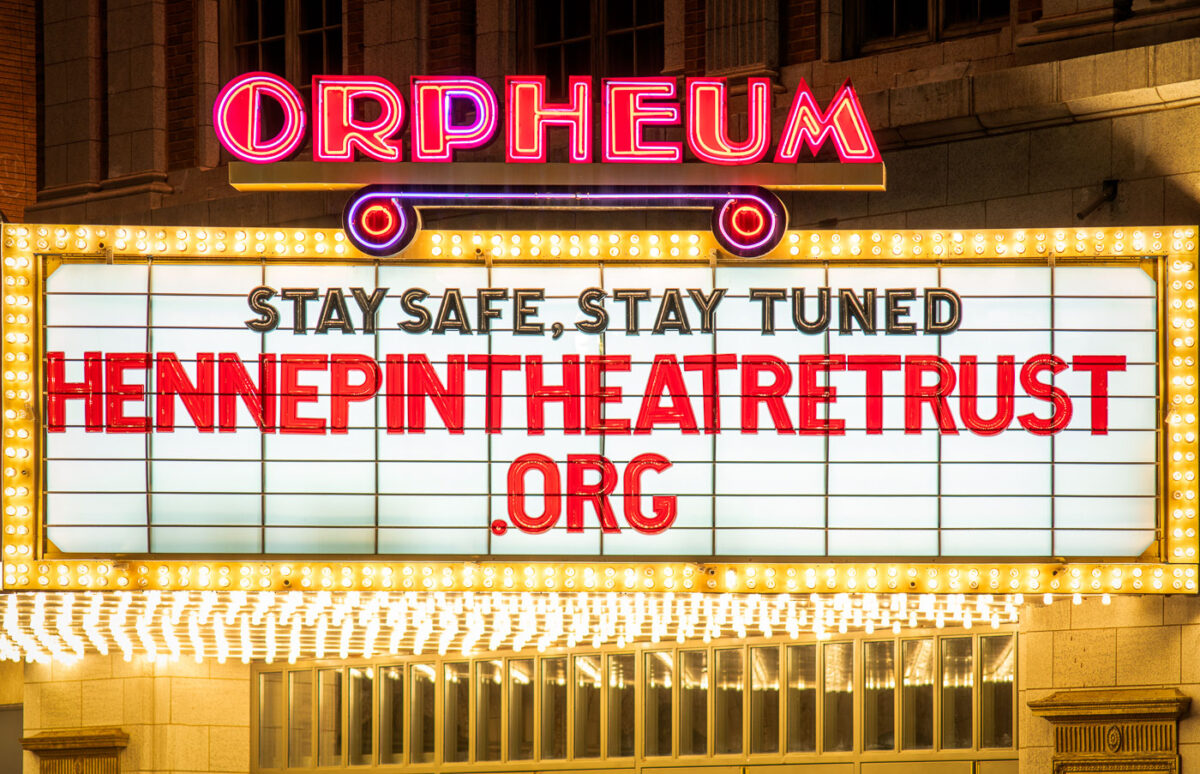
March 2020 — Orpheum Theatre on Hennepin Ave in Downtown Minneapolis during Minnesota’s Stay At Home order. Marquee reading “Stay Safe. Stay Tuned”.
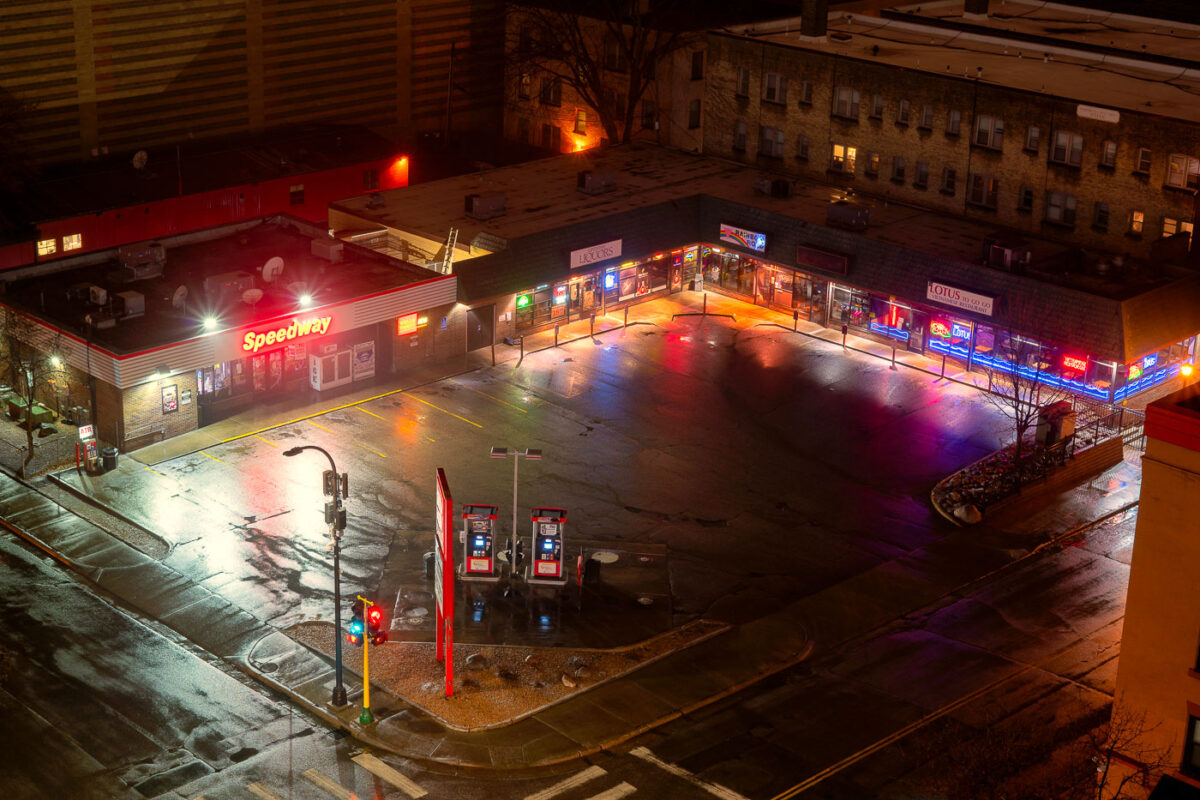
March 2020 — An empty Speedway gas station and strip mall in Loring Park during COVID-19 outbreak.
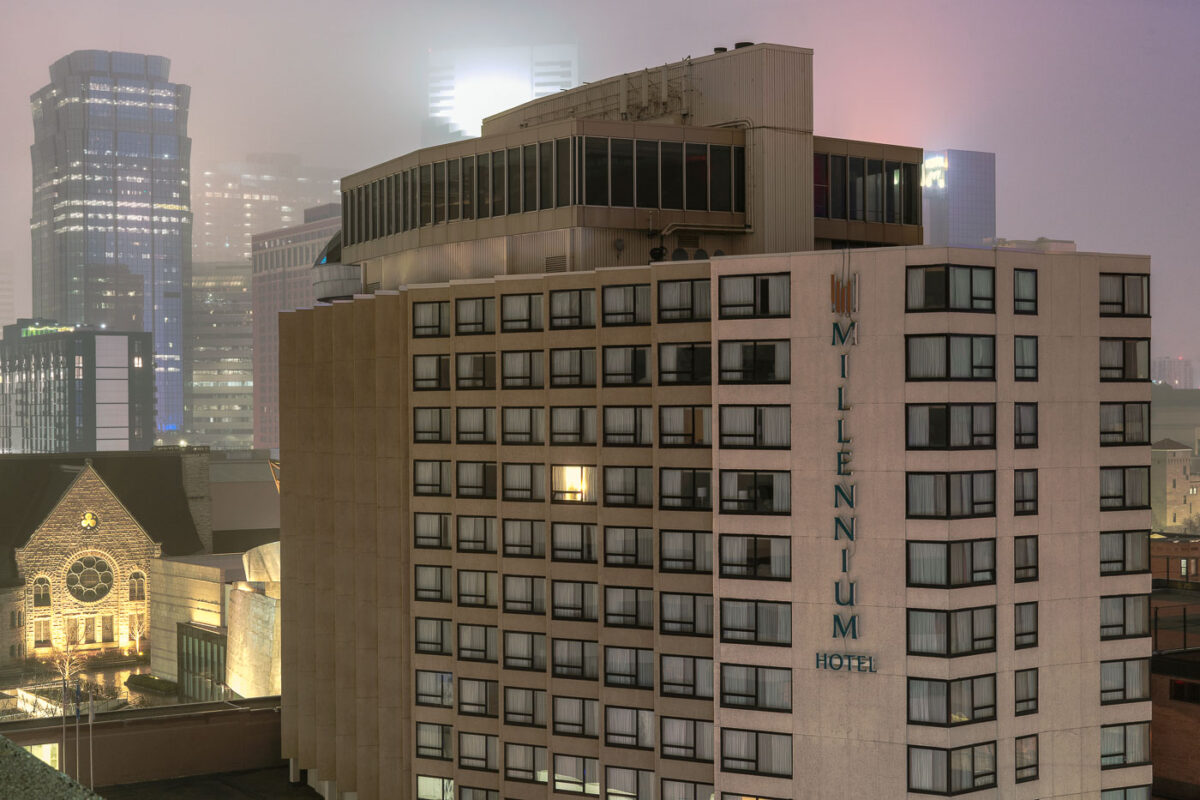
March 2020 — Millennium Hotel in downtown Minneapolis during the coronavirus outbreak. One room light in.
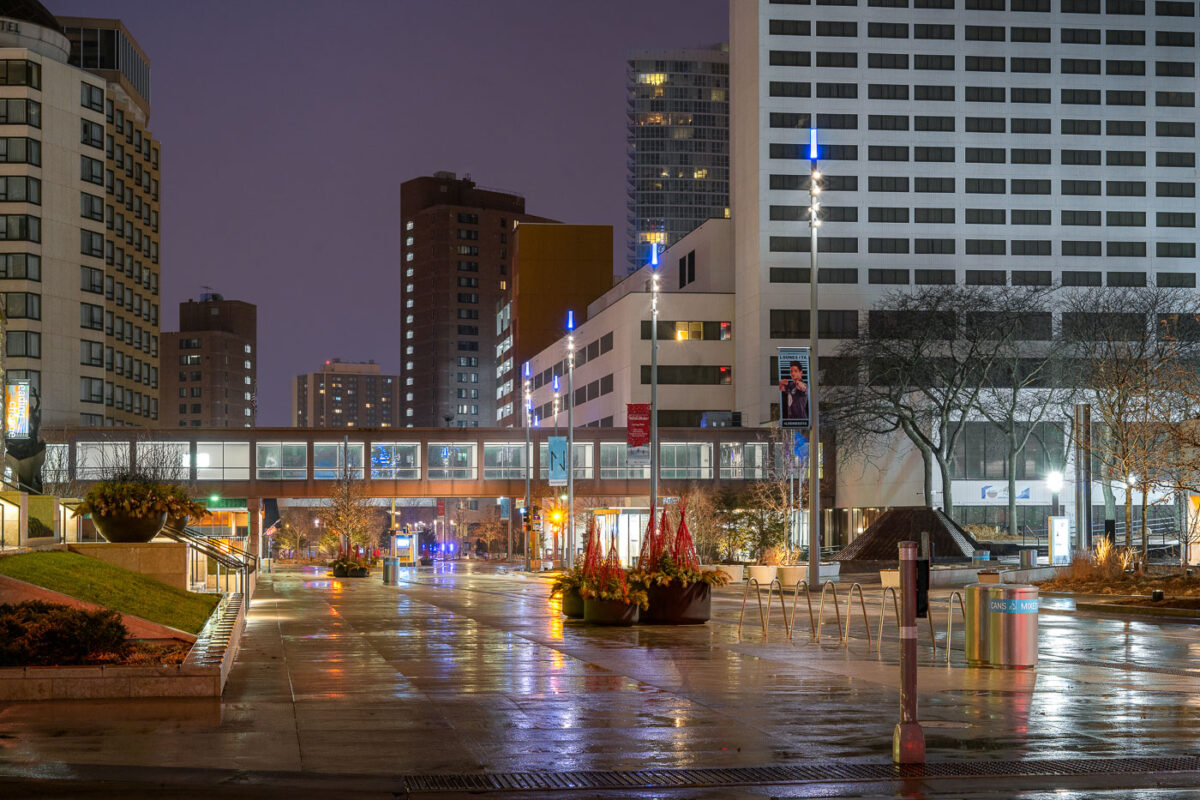
March 2020 — Nicollet Mall in Downtown Minneapolis on a rainy night during early days of COVID-19 outbreak.
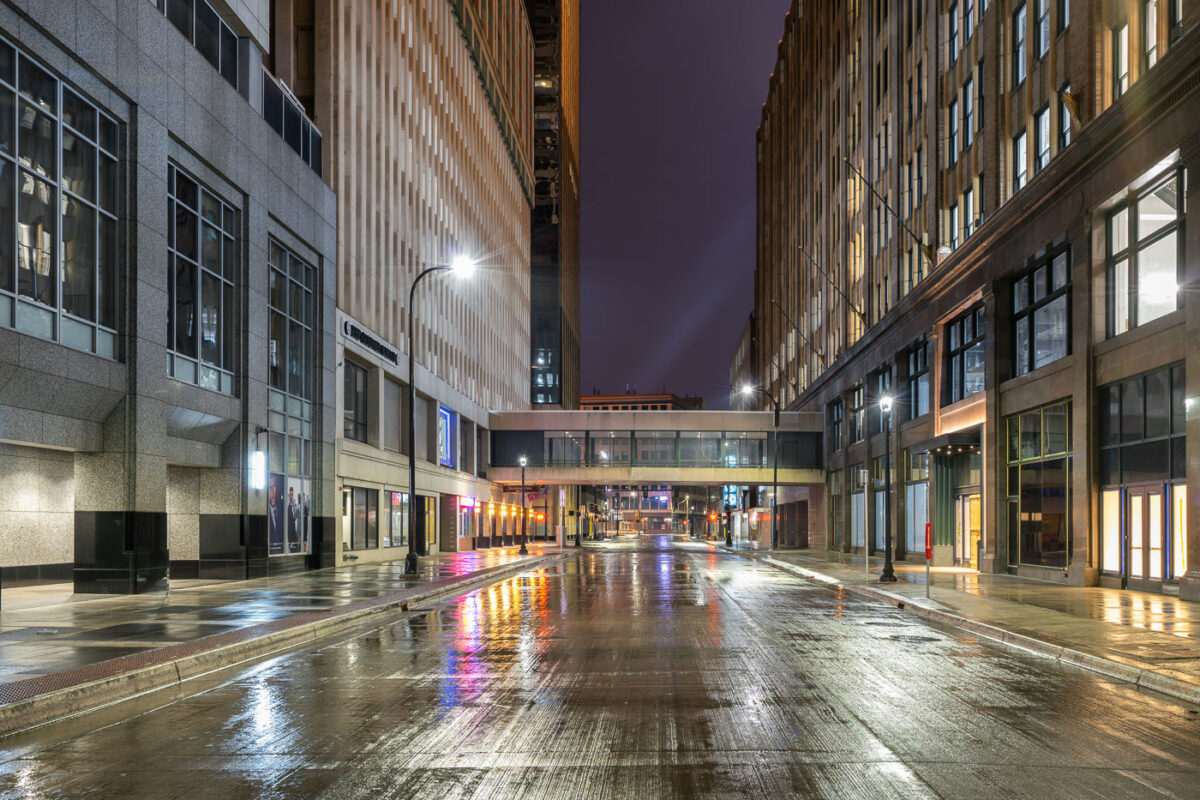
March 2020 — Looking down S 8th St in Downtown Minneapolis on 03/22/20 during COVID-19.
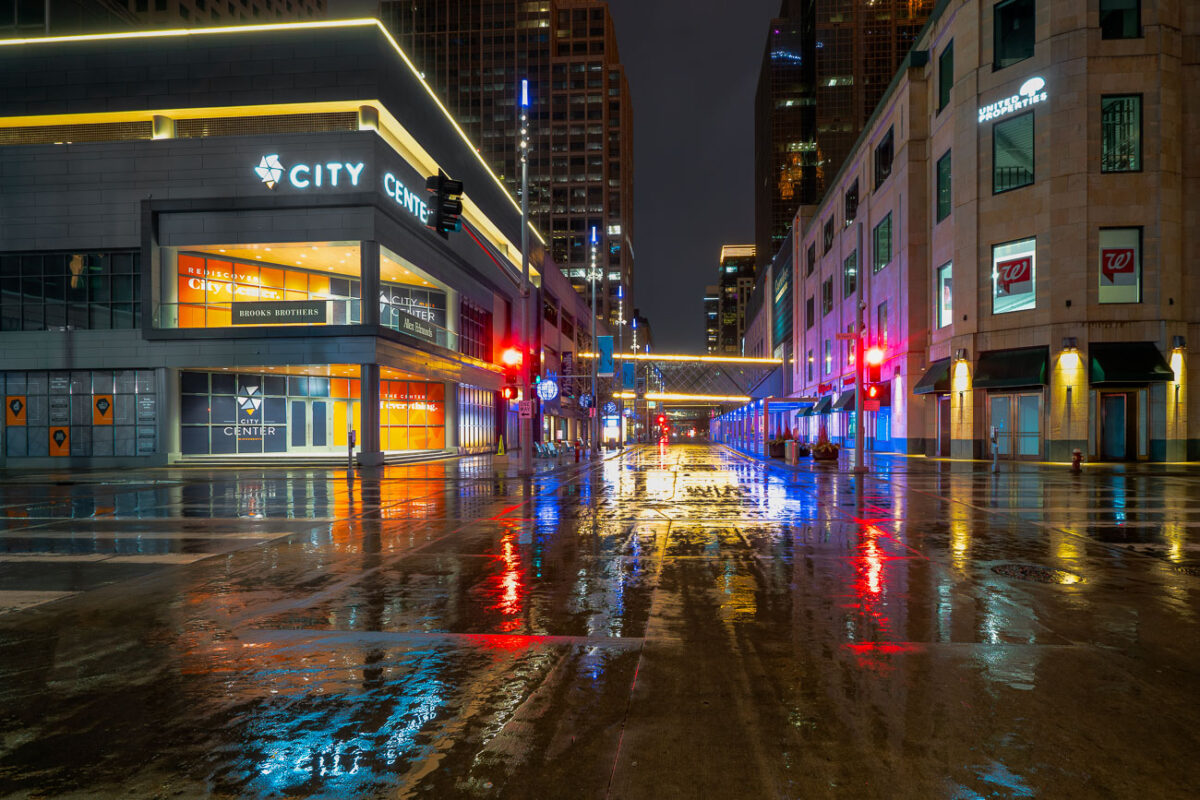
March 2020 — A rainy night in Downtown Minneapolis outside City Center during the early days of COVID-19.
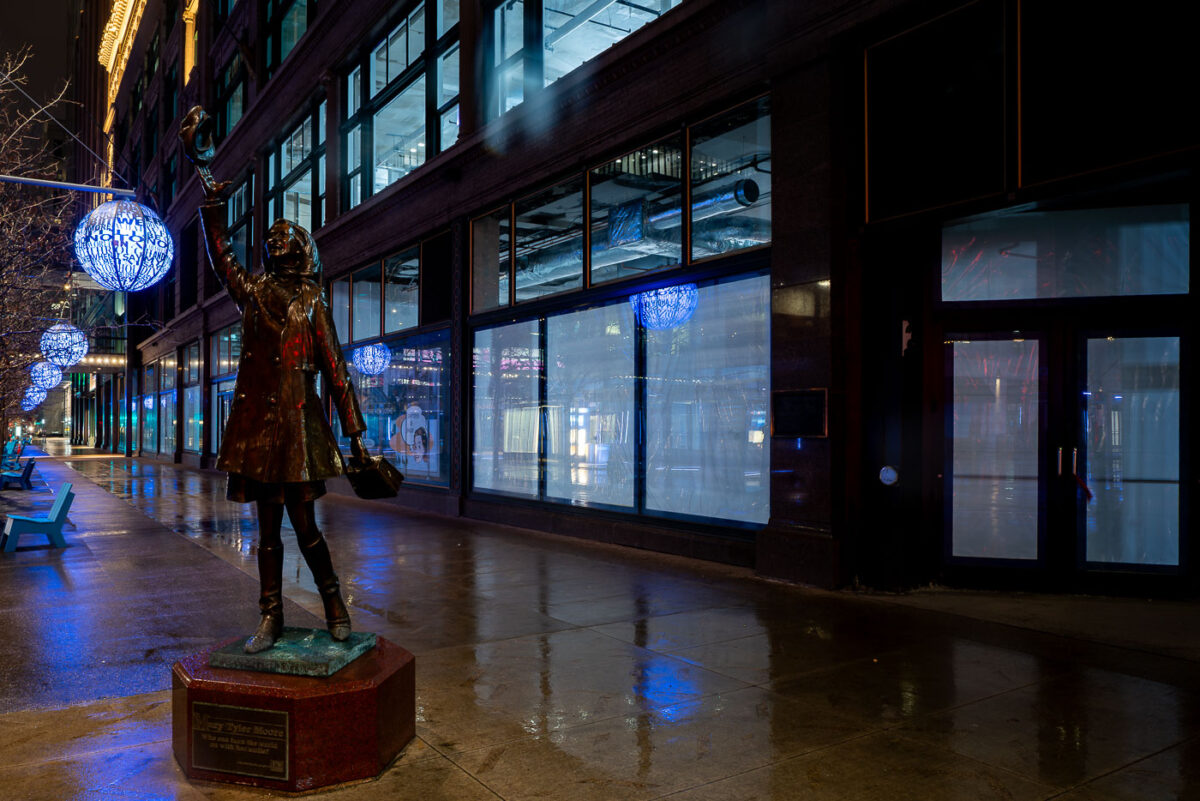
March 2020 — The iconic bronze statue of Mary Tyler Moore along Nicollet Mall in downtown Minneapolis, depicting the memorable hat-tossing moment from the opening of The Mary Tyler Moore Show, which first aired in 1970 and helped cement Minneapolis in television history. Installed in 2002, the statue symbolizes the city’s cultural association with the show’s themes of independence and optimism. At the time of this photograph, Nicollet Mall—normally a busy pedestrian and transit corridor—appears unusually empty, reflecting the early days of COVID-19 shutdowns that drastically reduced public presence in city centers. Blue public art lanterns, added during street improvements completed in 2017, line the renovated streetscape, emphasizing Nicollet Mall’s evolution as both a commercial and cultural landmark.
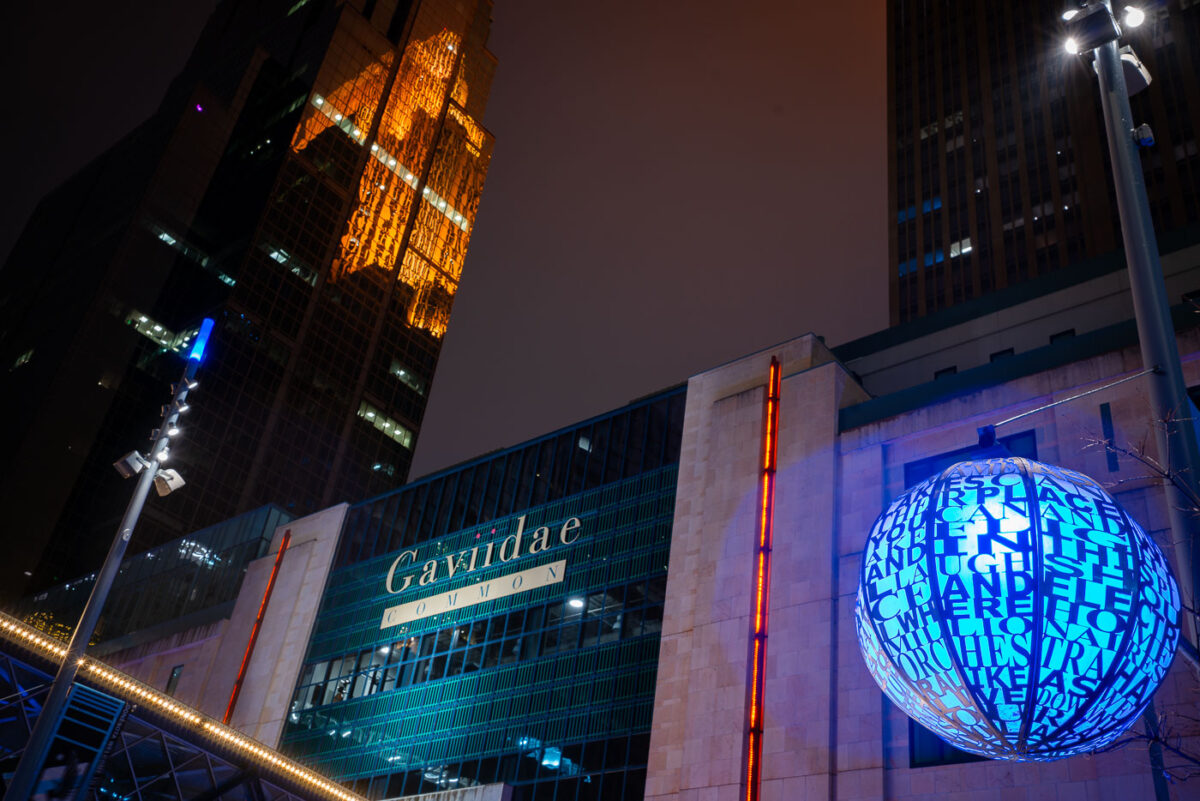
March 2020 — Downtown Minneapolis after dark, with the Gaviidae Common retail and office complex illuminated along Nicollet Mall. The metallic blue spherical public art installation in the foreground—inscribed with words referencing music, light, and community—adds a cultural element to the urban corridor. Reflected dramatically in the golden glass façade of the Westin building behind it is the historic Foshay Tower, one of Minneapolis’s earliest skyscrapers dating back to 1929. Today, Nicollet Mall serves as the city’s primary pedestrian and transit thoroughfare, blending modern commercial redevelopment, historic preservation, and public art into a central civic space.
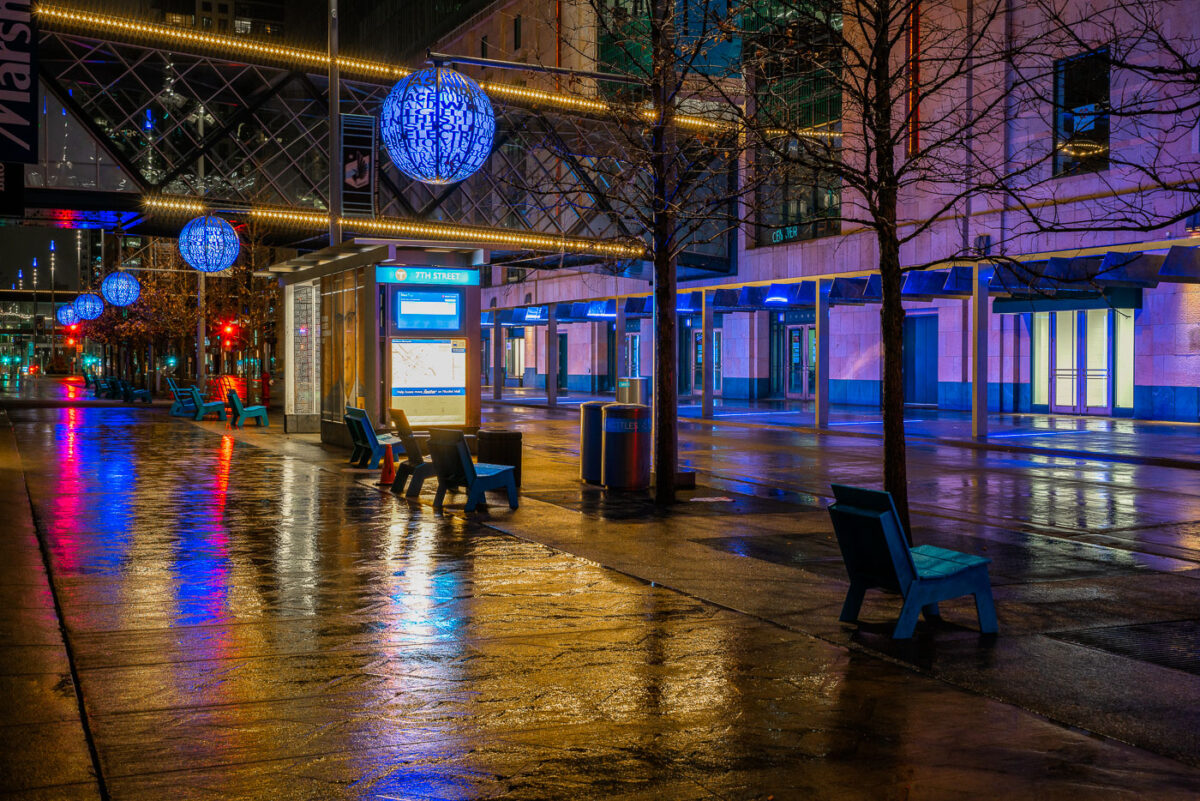
March 2020 — Rainy night on Nicollet Mall during early days of COVID-19 outbreak.
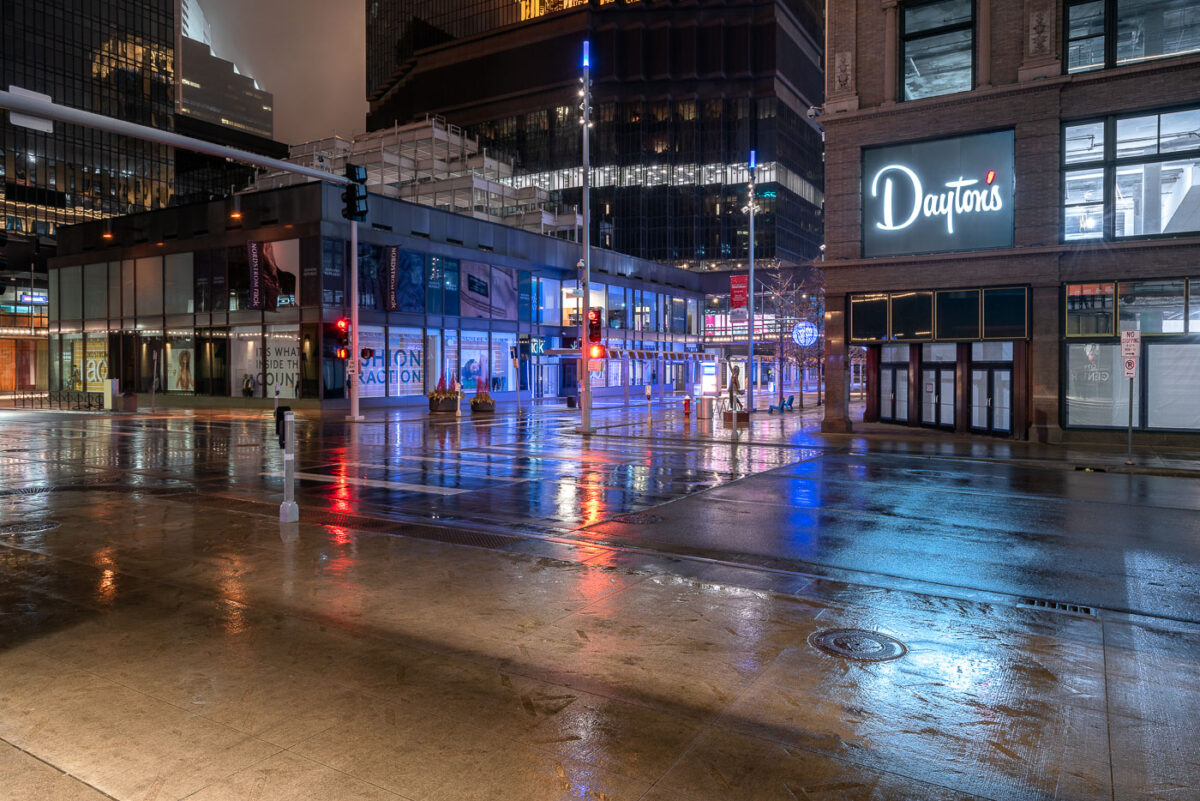
March 2020 — Dayton’s and the IDS Center on Nicollet Mall in the early days of COVID-19 in Downtown Minneapolis.
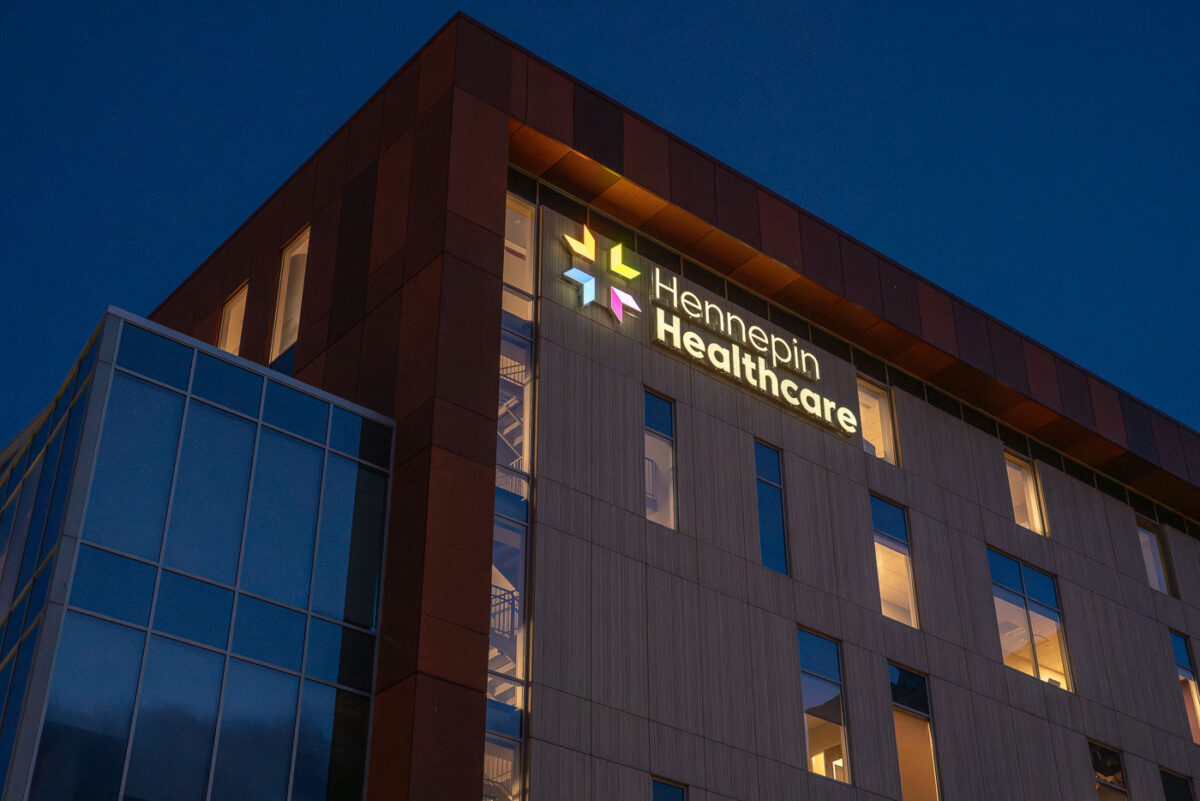
March 2020 — Formerly branded as HCMC, this Hennepin Healthcare building in Minneapolis opened in 2018 for outpatient services.
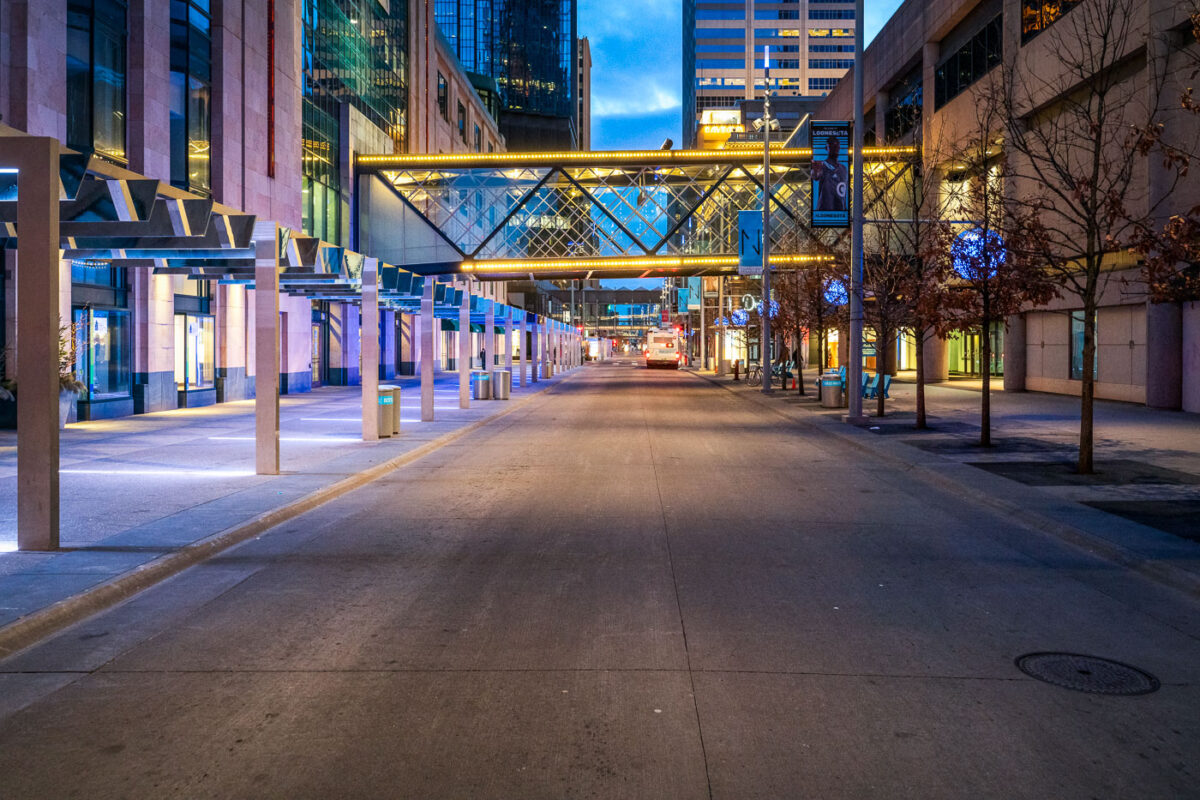
March 2020 — Nicollet Mall in Downtown Minneapolis during the coronavirus (COVID-19) outbreak. Normally busy with pedestrians and buses, only one Metro Transit Bus and bicycle is found in view.
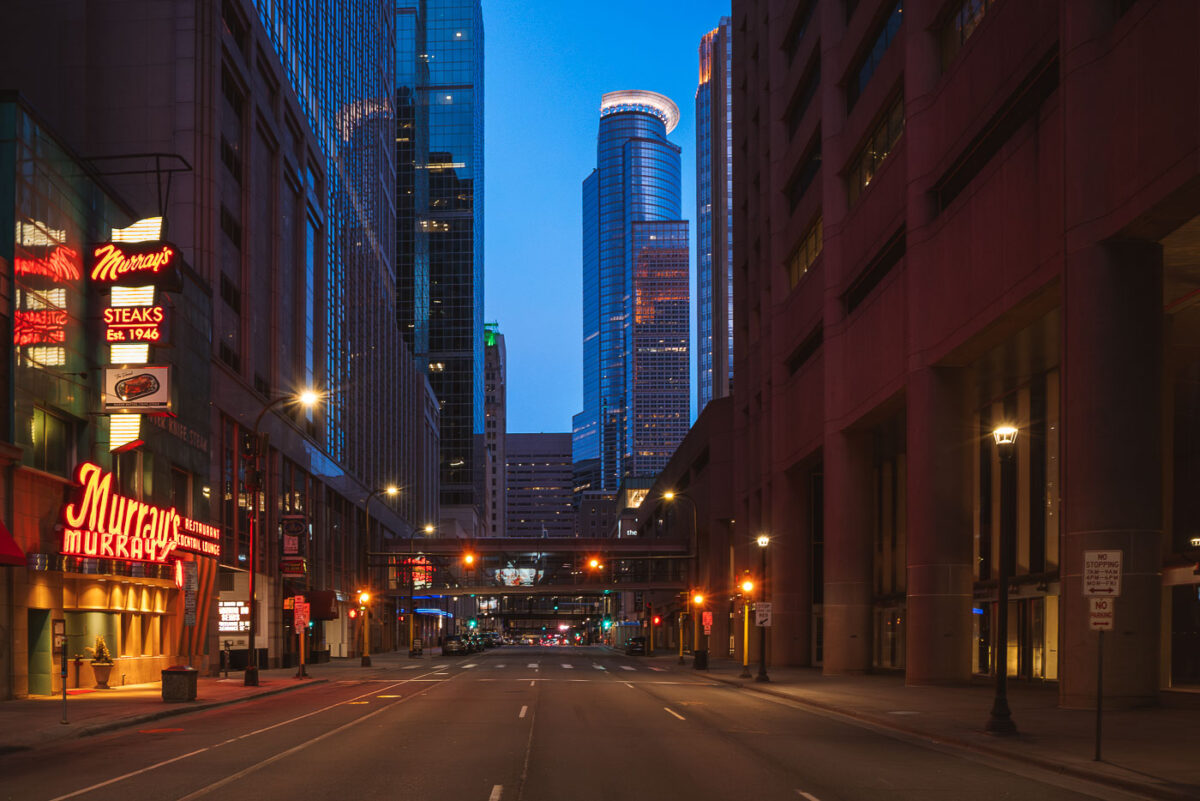
March 2020 — A north–south view through downtown Minneapolis during early evening, with illuminated office towers forming a dense street corridor and minimal traffic on the roadway below. The cylindrical crown of the IDS Center, completed in 1973, anchors the skyline in the distance as the city’s tallest building and a defining element of its modern profile. In the foreground, the neon signage of Murray’s, a Minneapolis institution since 1946, adds a warm counterpoint to the cooler glass-and-steel architecture surrounding Nicollet Mall.
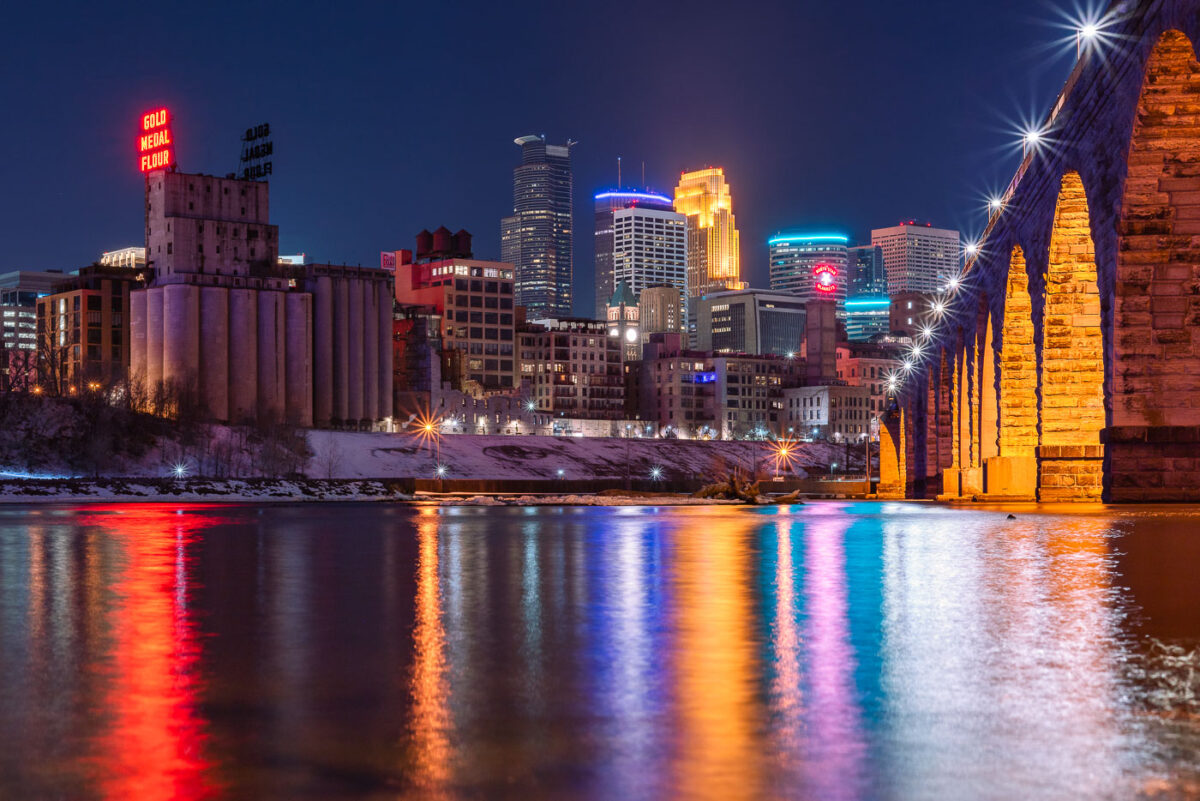
March 2020 — Downtown Minneapolis as seen from below the Stone Arch Bridge.
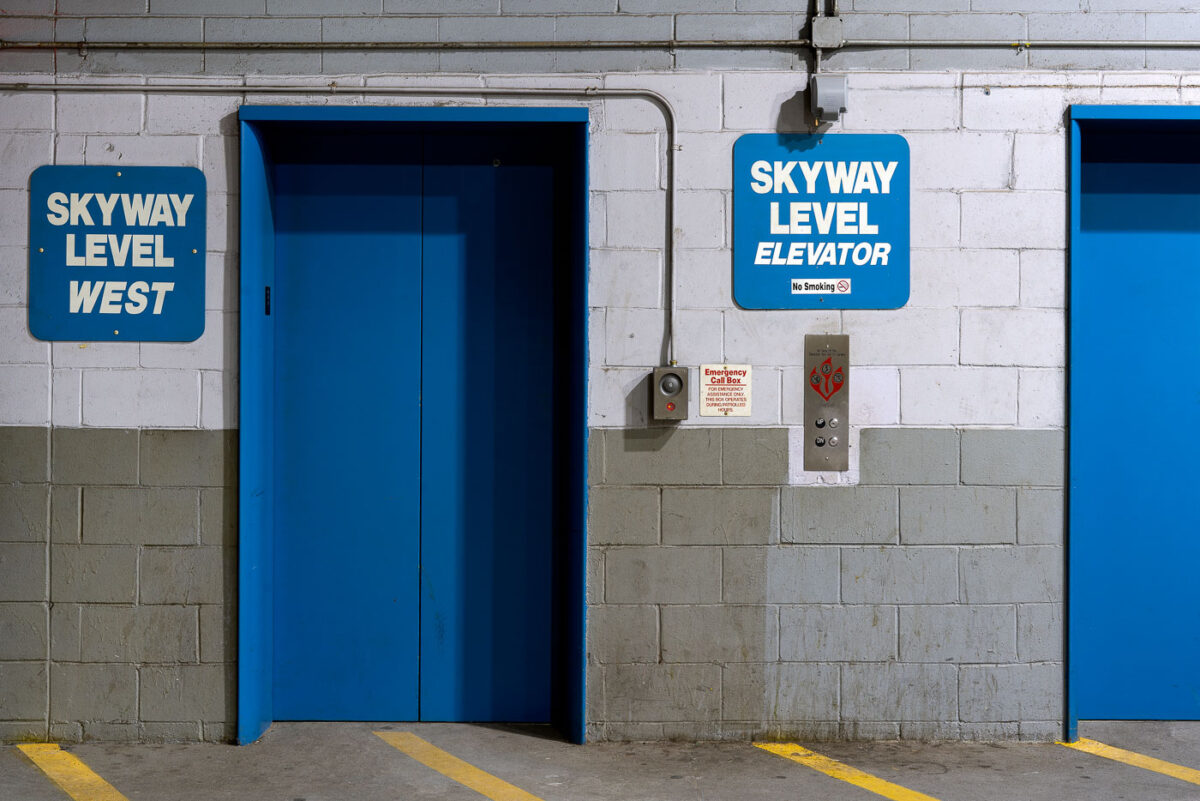
February 2020 — Skyway elevators in a parking ramp in downtown Minneapolis.
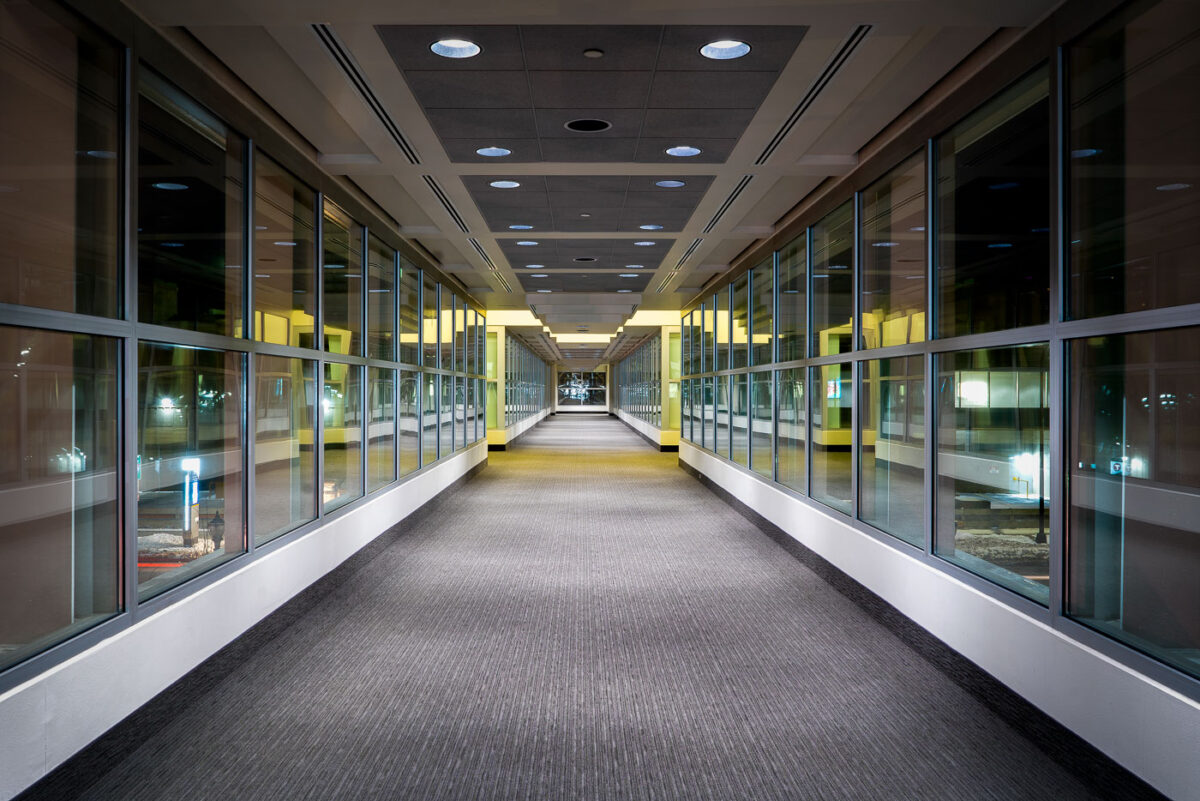
February 2020 — Skyway in downtown Minneapolis near SPS Tower.
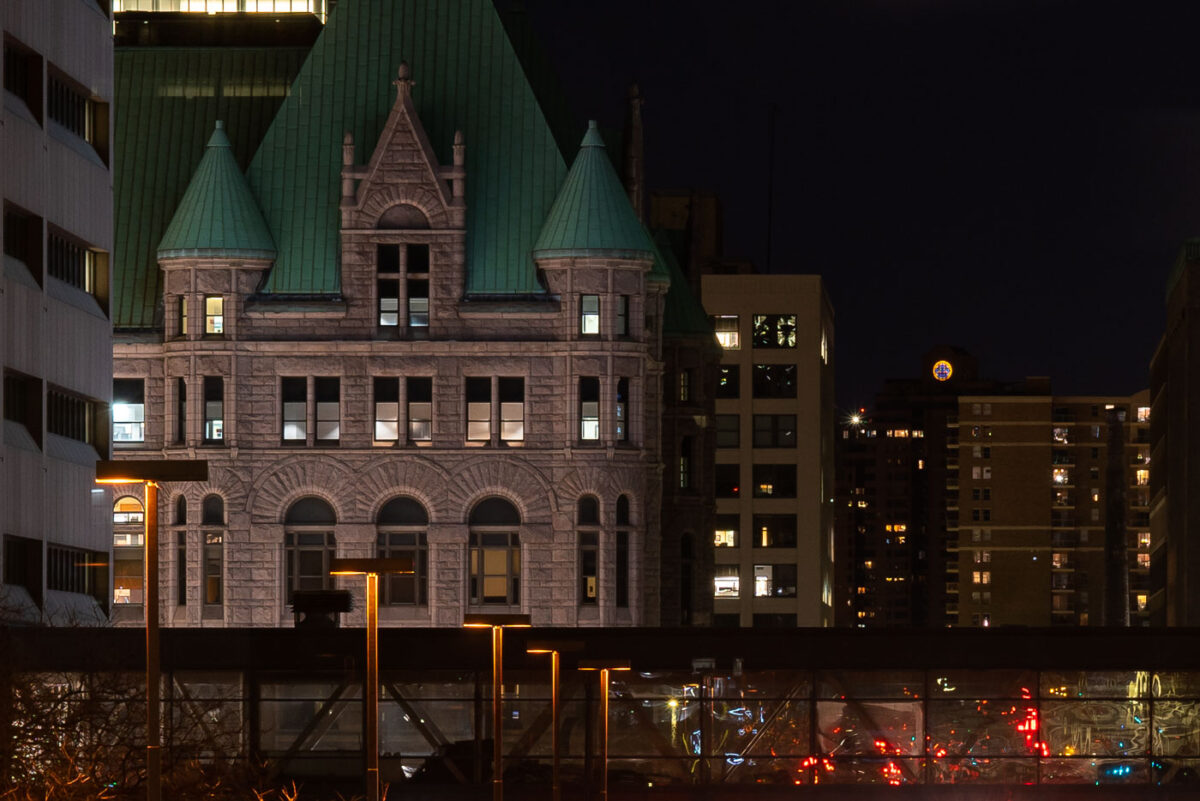
February 2020 — Minneapolis City Hall and a skyway on a February evening.
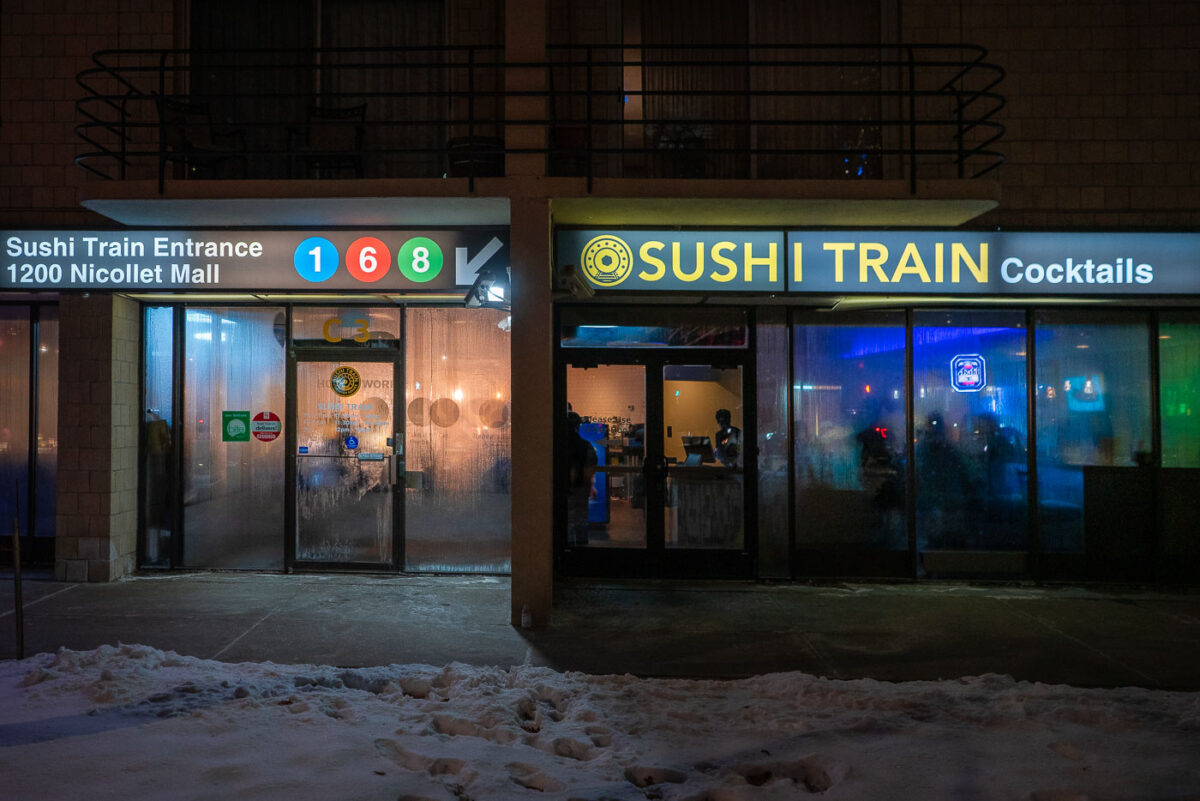
February 2020 — The Sushi Train Restaurant at 1200 Nicollet Mall in downtown Minneapolis.
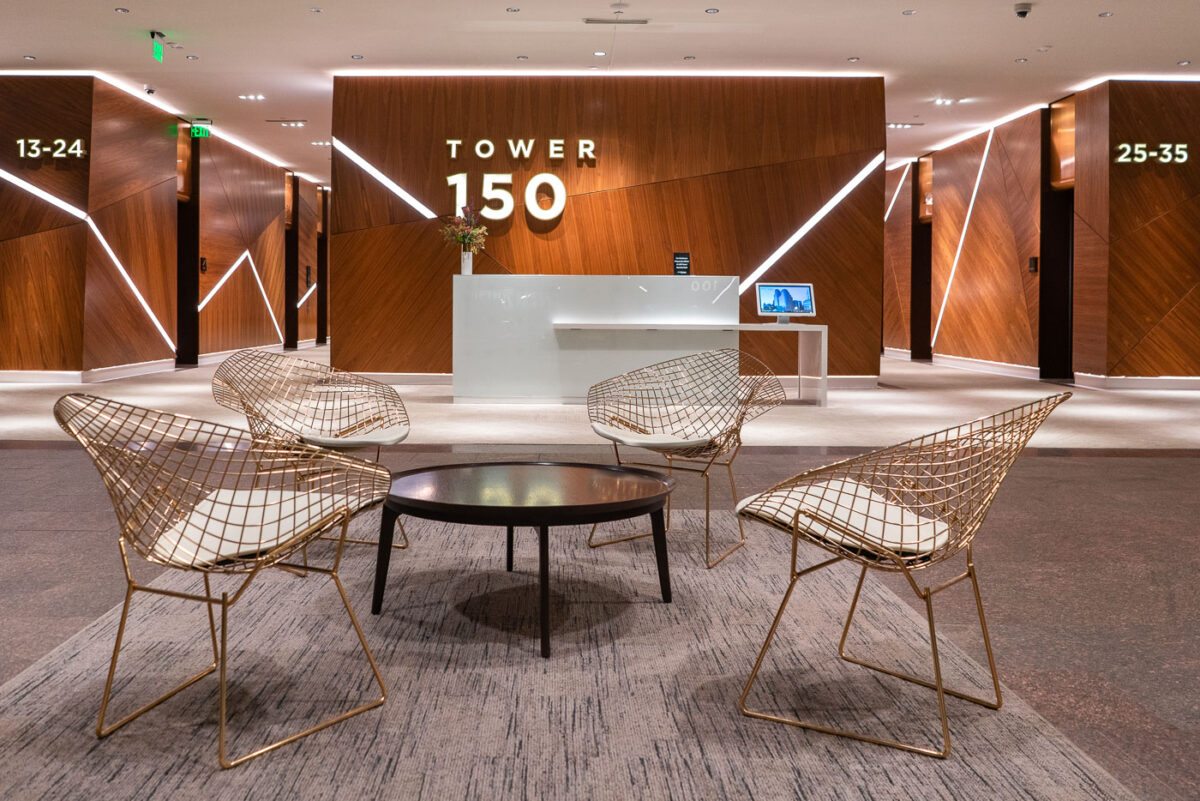
February 2020 — Tower 150 of Fifth Street Towers in downtown Minneapolis.
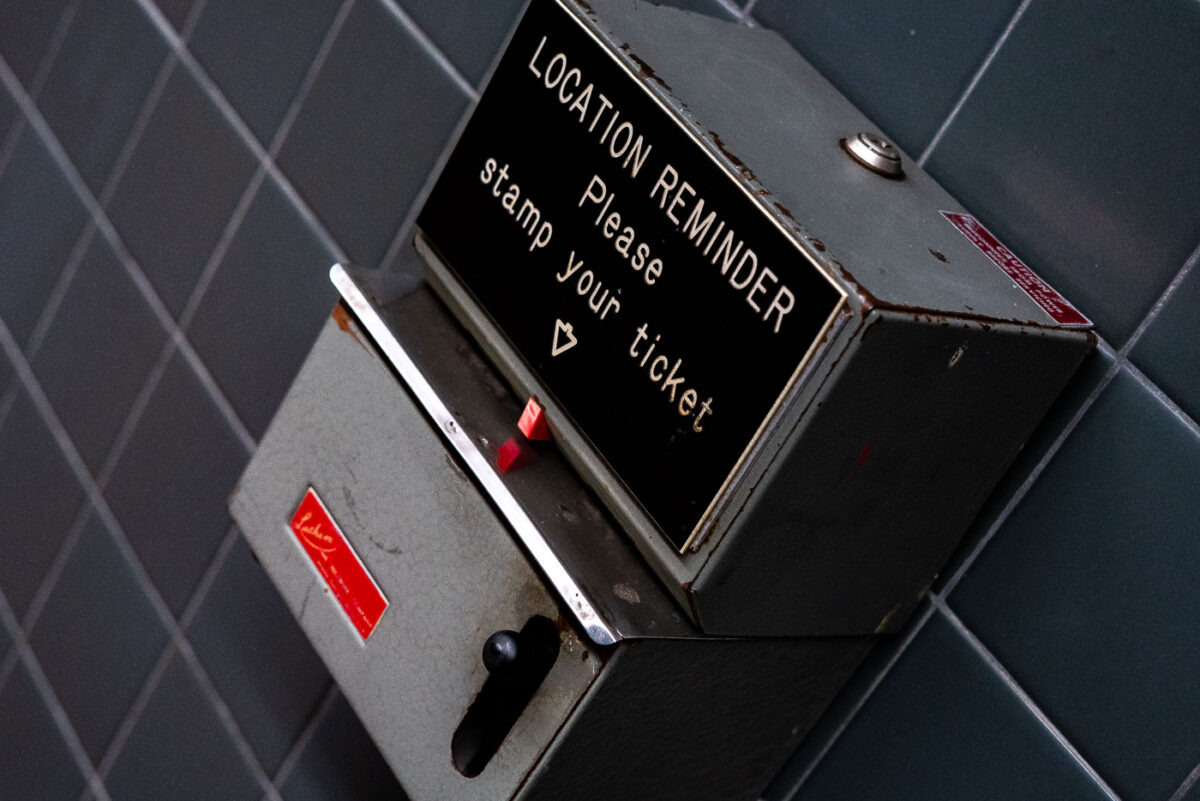
February 2020 — “Location Reminder” ticket stamping machine, once used in transit stations to help passengers remember where they parked or to mark their travel tickets with time and place. The metal box features a lever-operated stamping mechanism, a faded instructional label, and worn edges that show decades of use. Devices like this were common in train station parking facilities and older public transit hubs before digital systems replaced manual timestamping. The angled mounting on tiled wall, along with the utilitarian industrial design, reflects mid-20th-century station infrastructure, where functional machines like this played a part in daily commuter routines.
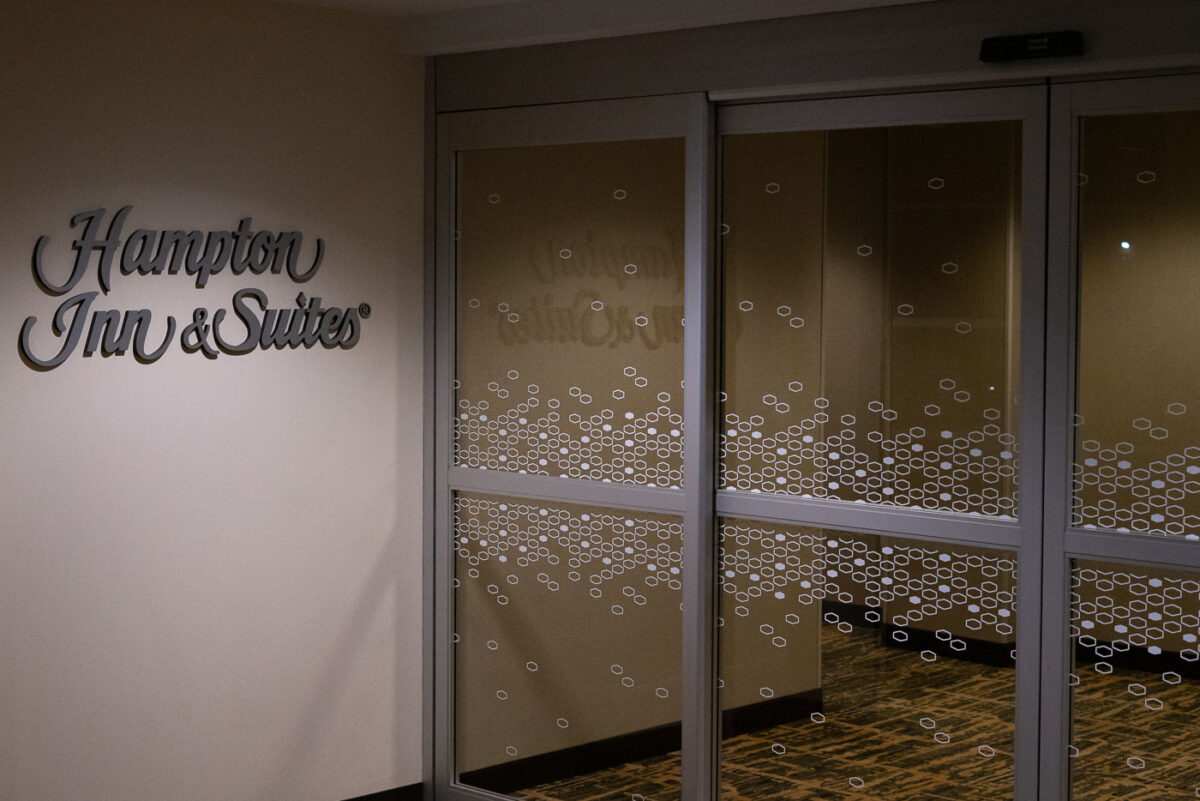
January 2020 — Hampton Inn & Suites in Downtown Minneapolis.
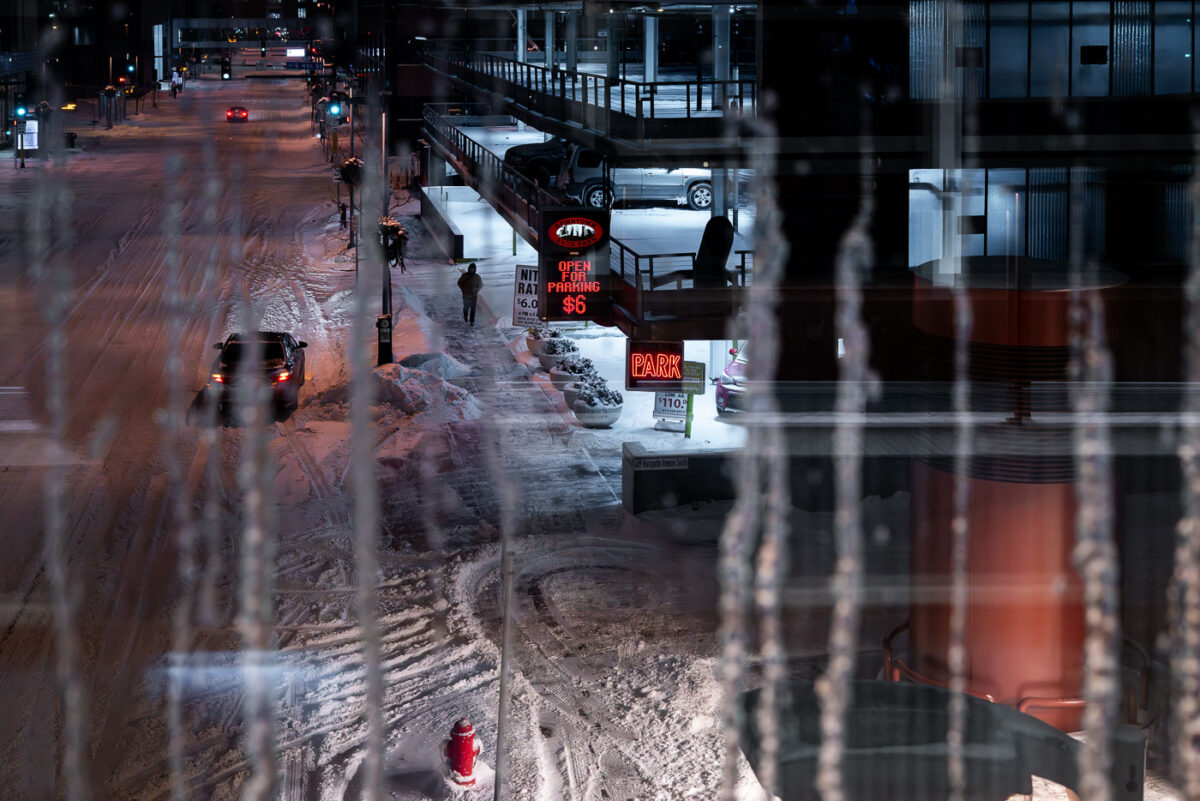
January 2020 — Ice covered skyway windows in downtown Minneapolis.
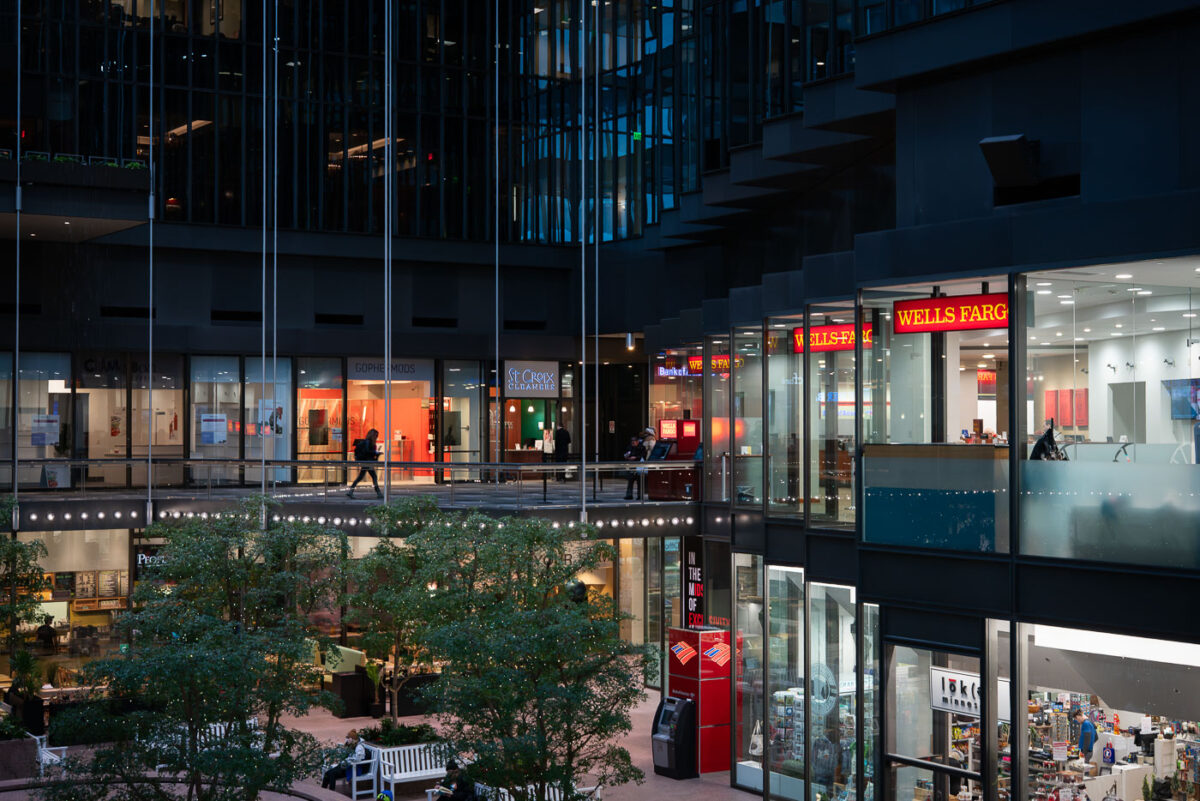
January 2020 — The IDS Center in downtown Minneapolis.
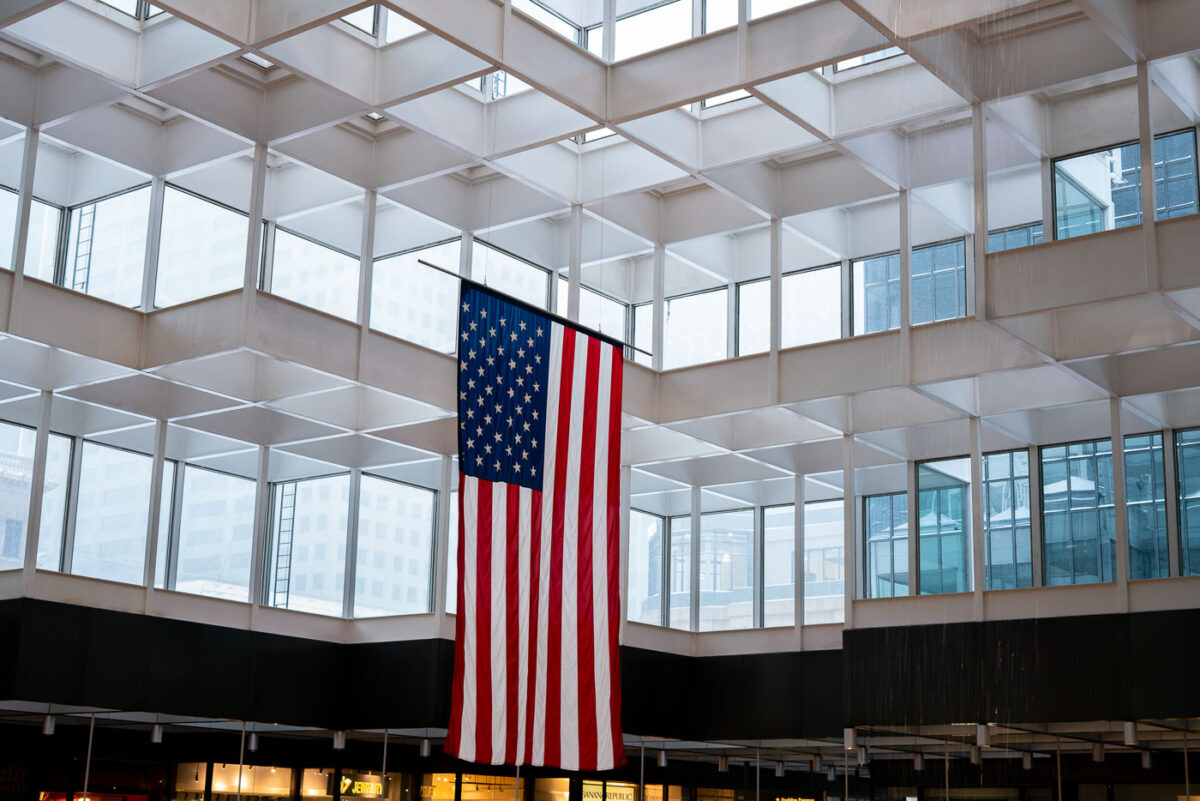
January 2020 — American flag hangs in the IDS center in downtown Minneapolis.
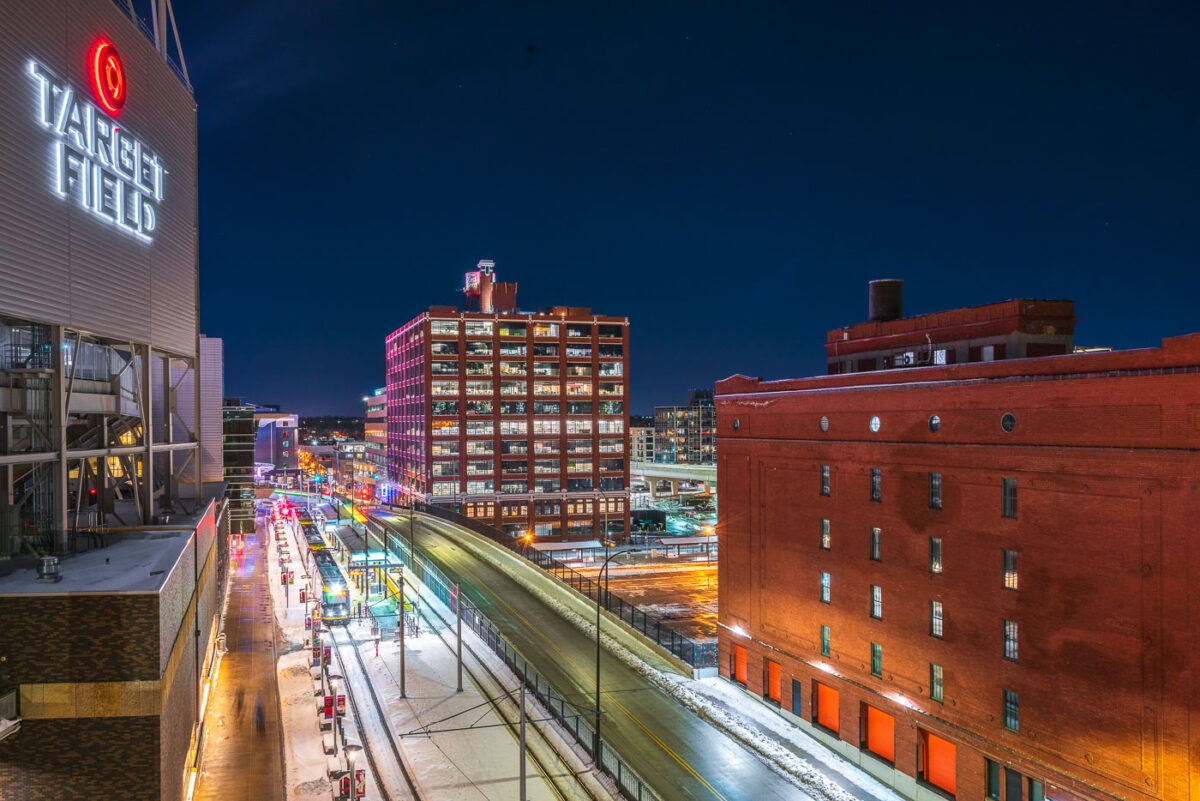
December 2019 — The illuminated Target Field sign overlooks the Warehouse District in downtown Minneapolis, where the city’s historic brick warehouses meet modern transit and redevelopment. Below, the Metro Green and Blue Line trains stop at Target Field Station, a multimodal hub linking light rail, commuter rail, and bike paths. The brightly lit Ford Center and preserved brick structures along 5th Street North illustrate the district’s mix of 20th-century industrial architecture and contemporary urban life, framed against the cold clarity of a Minnesota winter night.
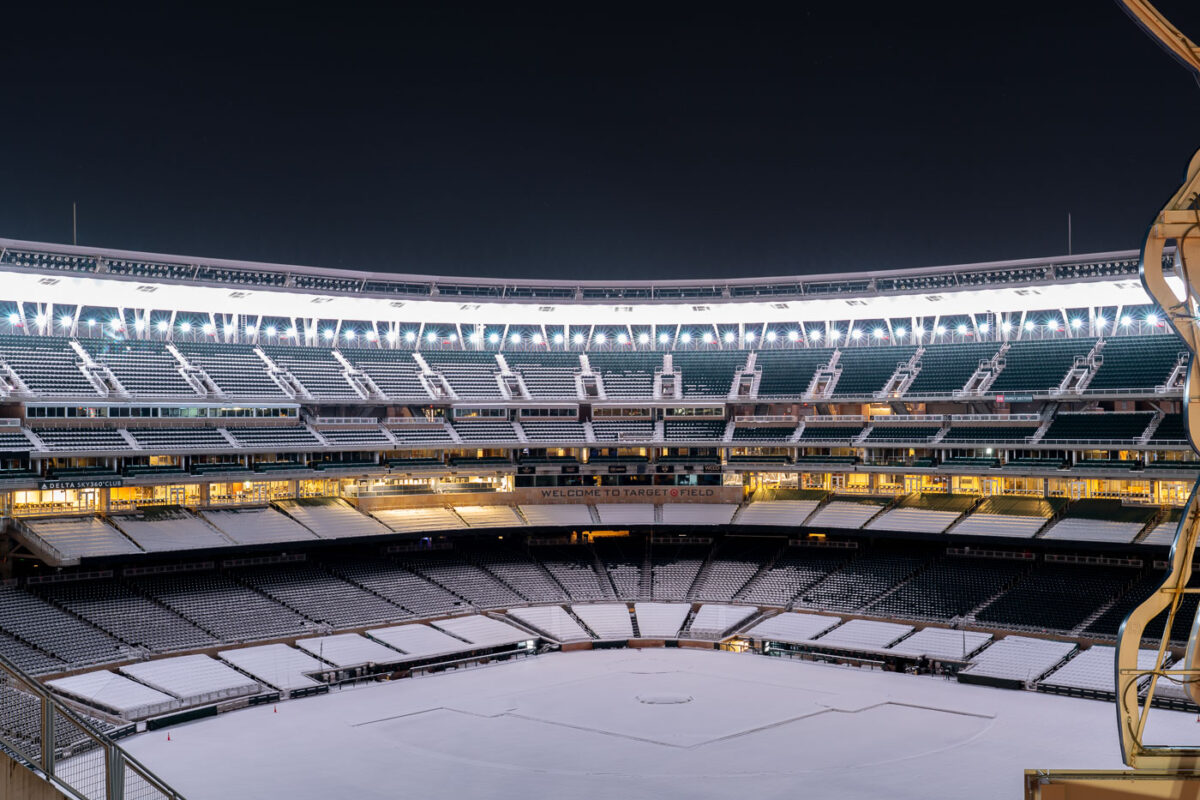
December 2019 — Snow covered Target Field, home of the Minnesota Twins MLB team.
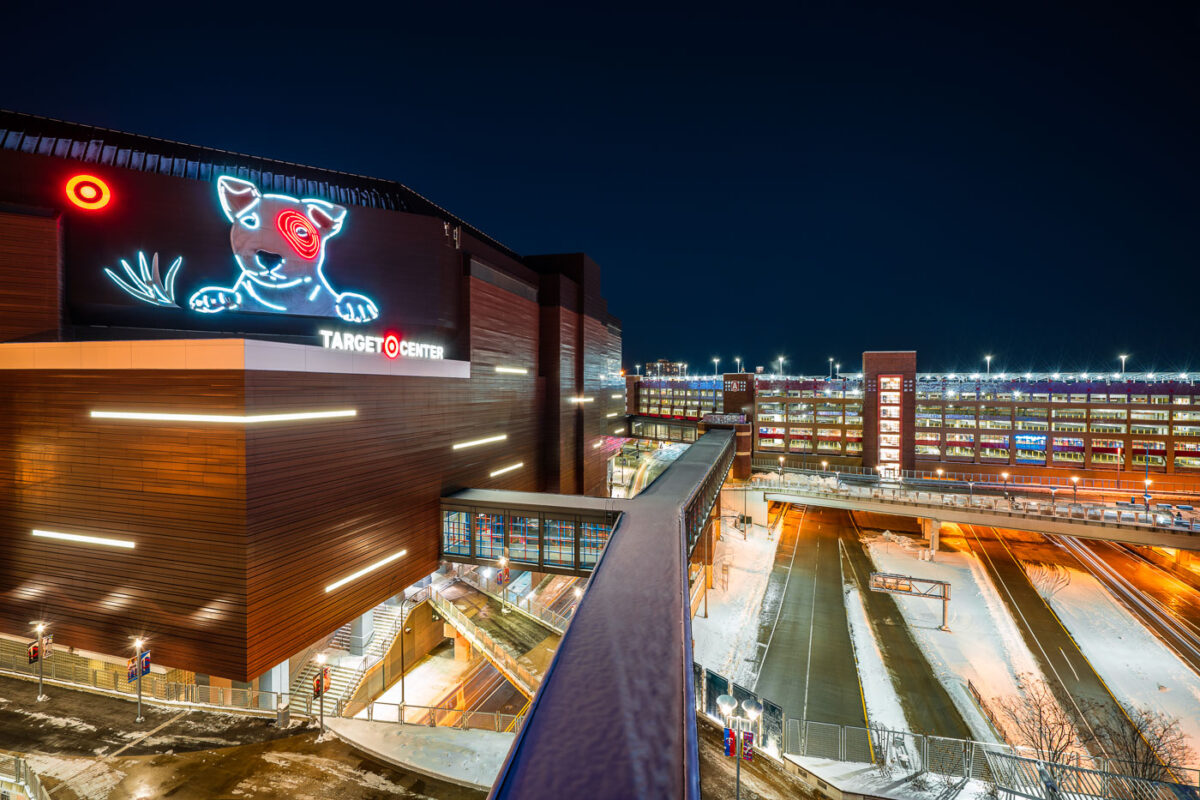
December 2019 — The Target Center’s neon Bullseye dog glows above 1st Avenue North, marking one of Minneapolis’ most recognizable downtown landmarks. Opened in 1990 and renovated in 2017 with a modern metal facade, the arena is home to the Minnesota Timberwolves and a hub for concerts and civic events. In the foreground, the enclosed skyway leads to Ramp A — part of the city’s expansive elevated walkway network that connects much of downtown. Snow-lined streets and the layered lighting of the ramps emphasize Minneapolis’ engineered adaptation to both density and winter.
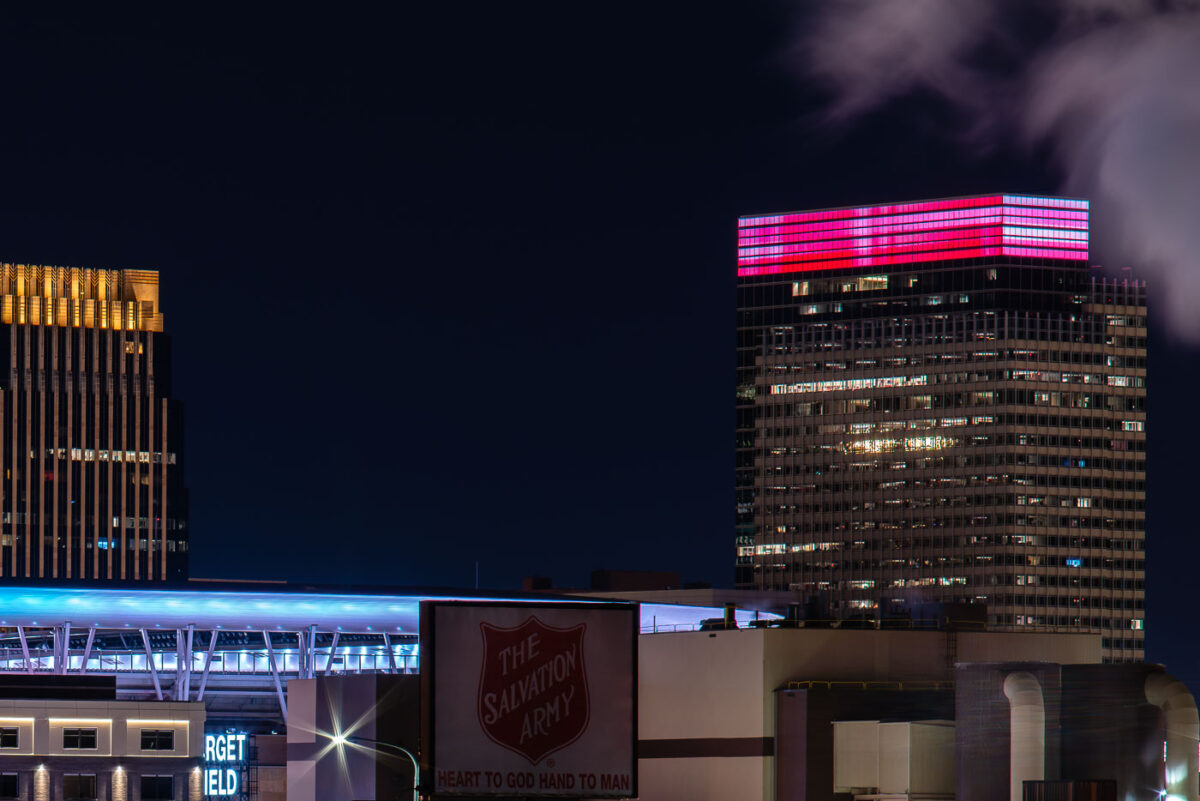
December 2019 — The Salvation Army sign with Target Field and Target Plaza South, Target World Headquarters, in the North Loop in Minneapolis.
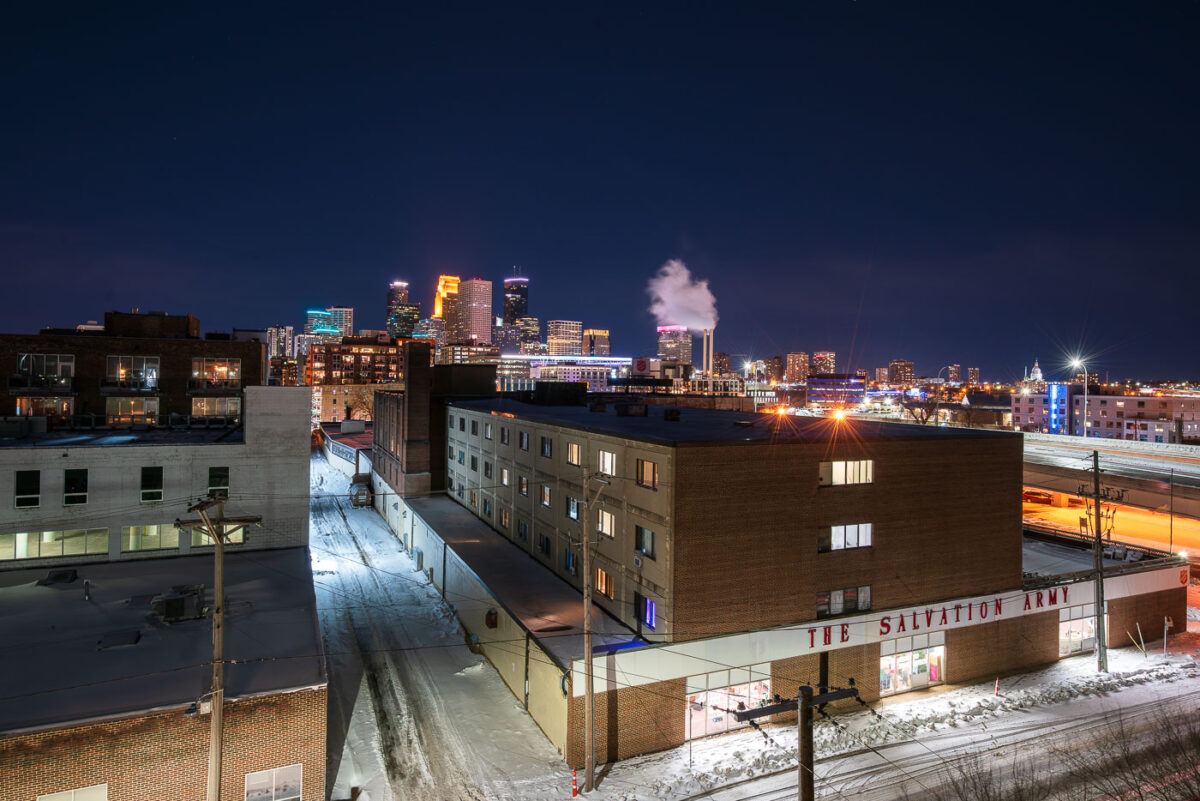
December 2019 — On a cold winter night in Minneapolis, the Salvation Army’s brick building stands in the foreground, a reminder of the nonprofit’s long presence serving those in need near the city’s downtown core. Beyond it, steam rises from the nearby power plant while the illuminated skyline glows with high-rise towers, blending industrial grit with modern glass. The juxtaposition of snowy side streets, mid-century warehouses, and gleaming skyscrapers reflects the city’s layered history — from its working-class roots to its contemporary role as a regional hub of commerce and culture.
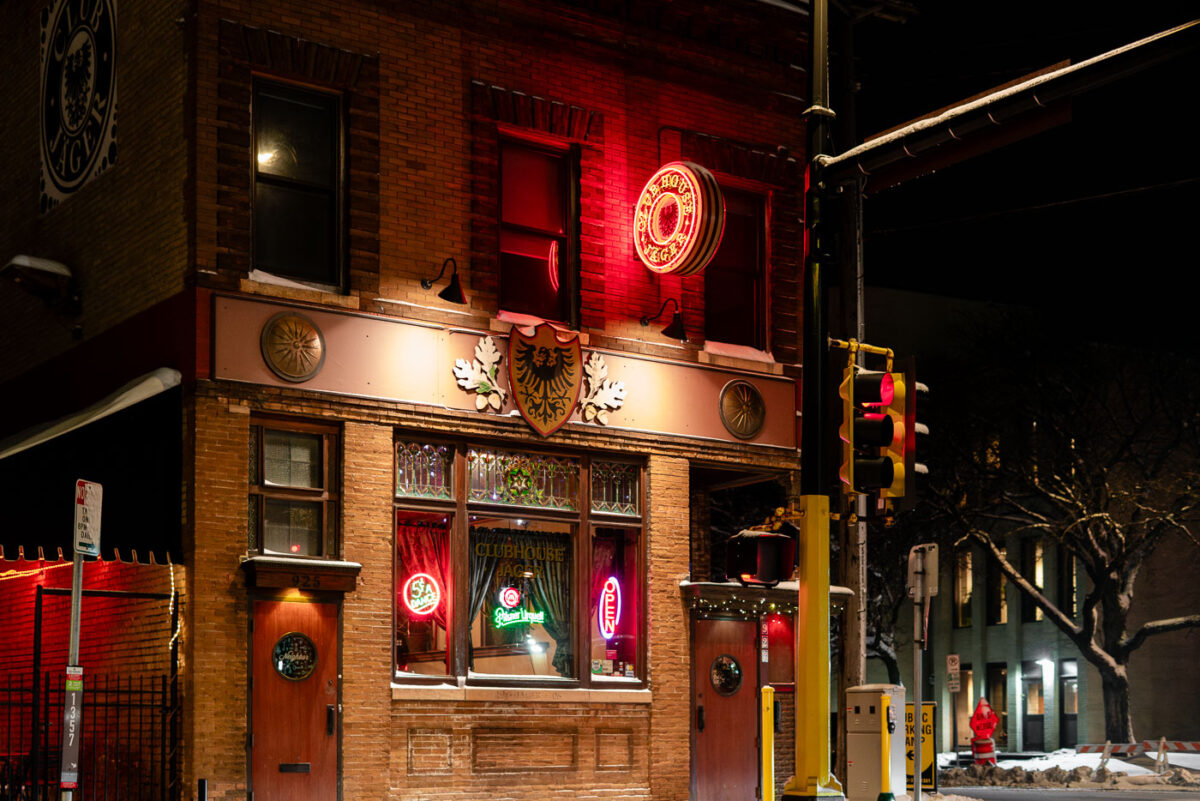
December 2019 — The now closed Clubhouse Jager bar in the North Loop Minneapolis.
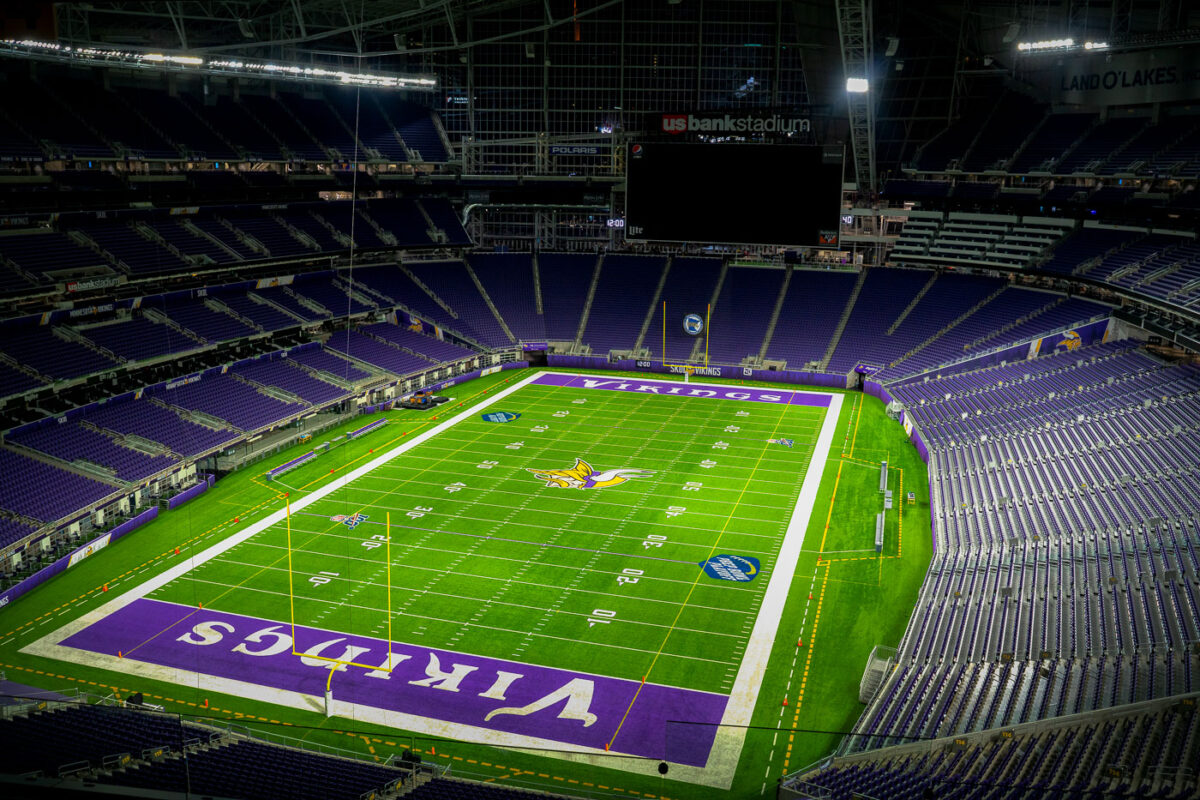
November 2019 — US Bank Stadium in Downtown Minneapolis. Home of the NFL's Minnesota Vikings.
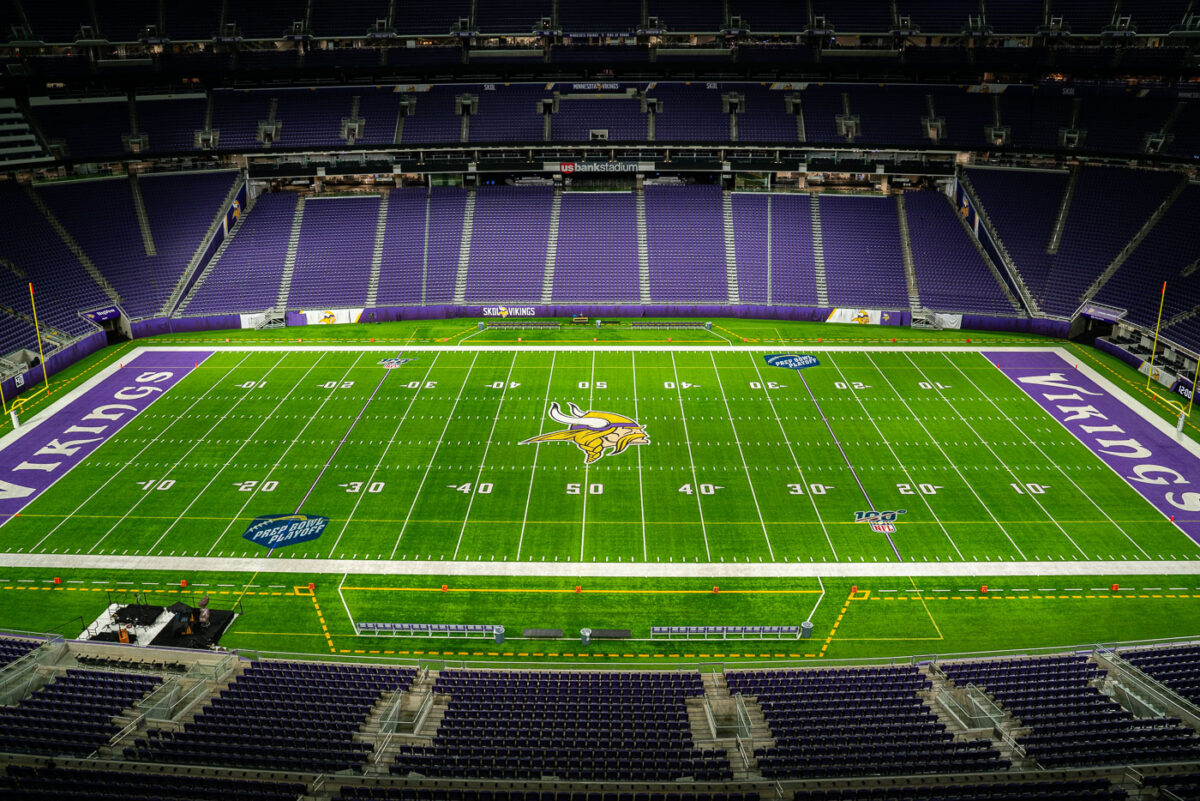
November 2019 — The interior of U.S. Bank Stadium in Minneapolis, home of the NFL’s Minnesota Vikings, shown from a high vantage point with an unobstructed view of the field. Completed in 2016 on the former site of the Metrodome, the $1.1 billion stadium features a fixed, translucent ETFE roof and steeply angled seating designed to evoke Nordic longhouses. The field displays the Vikings’ horned helmet logo at midfield, surrounded by vibrant purple end zones and the signature “SKOL” rally cry—a modern landmark of downtown Minneapolis and a hub for major sporting and entertainment events.
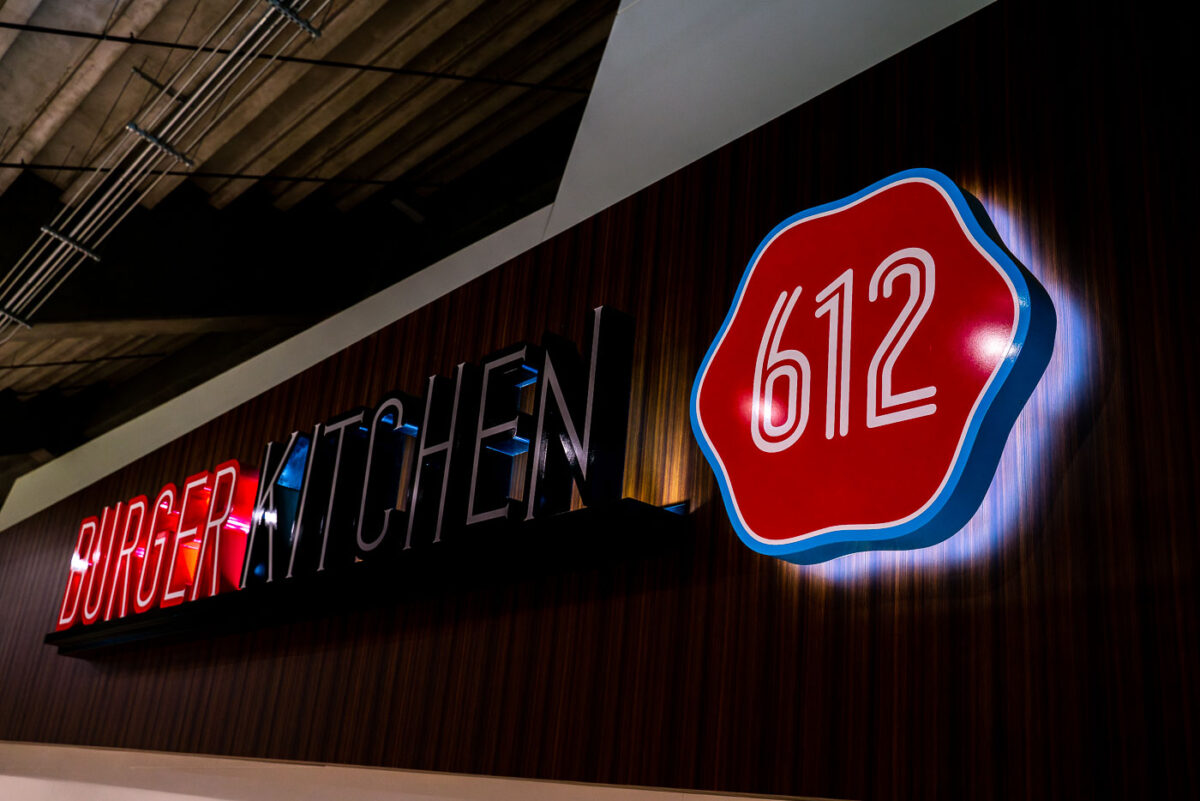
November 2019 — An illuminated “612 Burger Kitchen” sign inside U.S. Bank Stadium in Minneapolis, named after the city’s area code. The bold red-and-black typography and retro badge design reflect a blend of local identity and modern stadium branding. Located among the venue’s food and beverage concessions, 612 Burger Kitchen is part of the stadium’s effort to feature Minneapolis-based culinary offerings for fans attending Minnesota Vikings games and large-scale events.
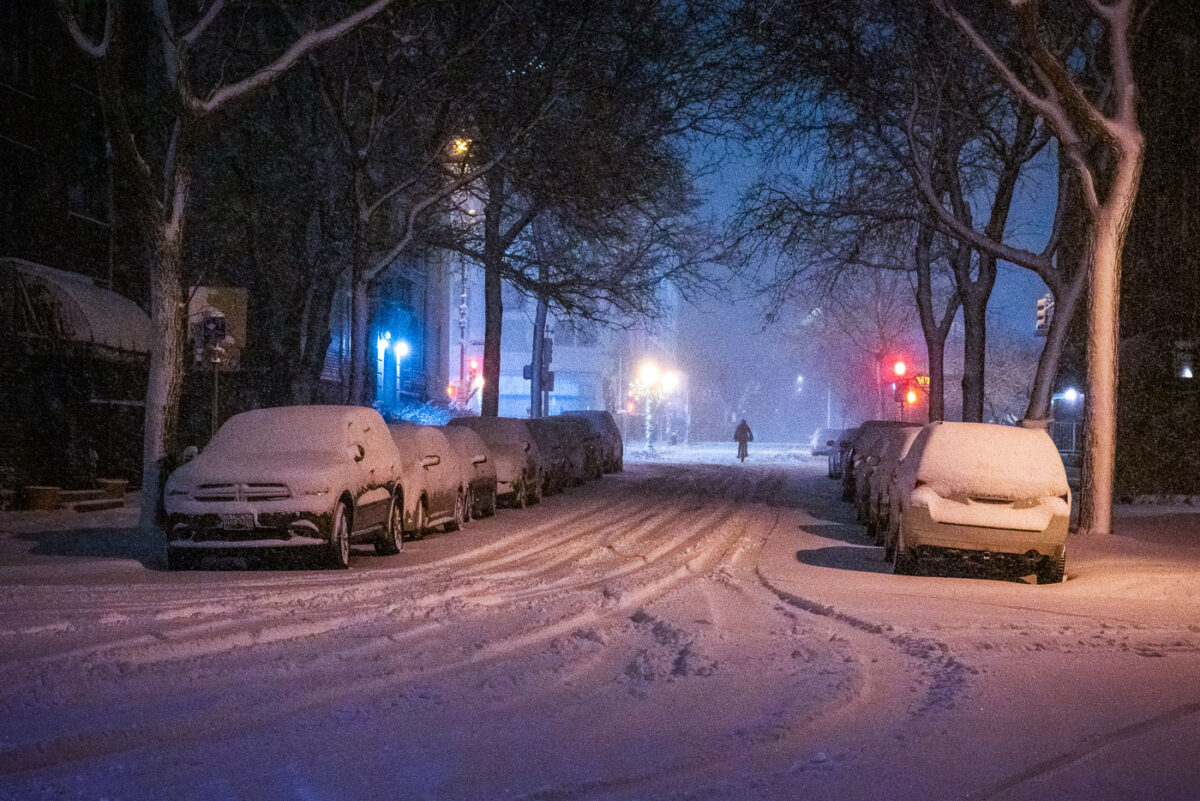
November 2019 — A lone cyclist rides through a snow-covered street in Minneapolis on November 26, 2019, as a major winter storm blankets the city. Streetlights and passing car headlights glow against the falling snow, illuminating parked cars buried in accumulation. The quiet, blue-tinged scene reflects the city’s resilience and rhythm during early-season blizzards that frequently test commuters across the Twin Cities.
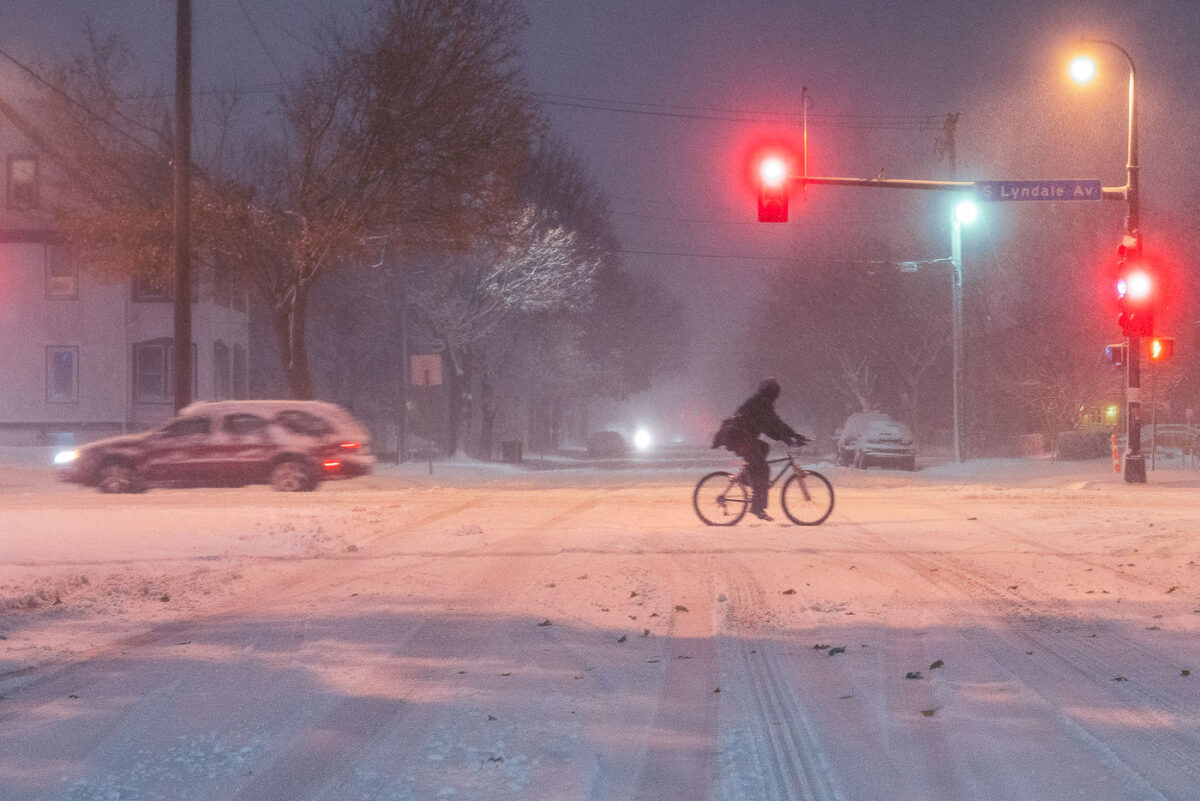
November 2019 — A cyclist crosses Lyndale Avenue South during the heavy November 26, 2019 snowstorm in Minneapolis. Despite low visibility and slick streets, a few commuters still braved the conditions, illuminated by red traffic lights and snow-diffused streetlamps. The image captures the perseverance of winter cycling culture in the Twin Cities, where even severe weather rarely stops movement through the urban grid.
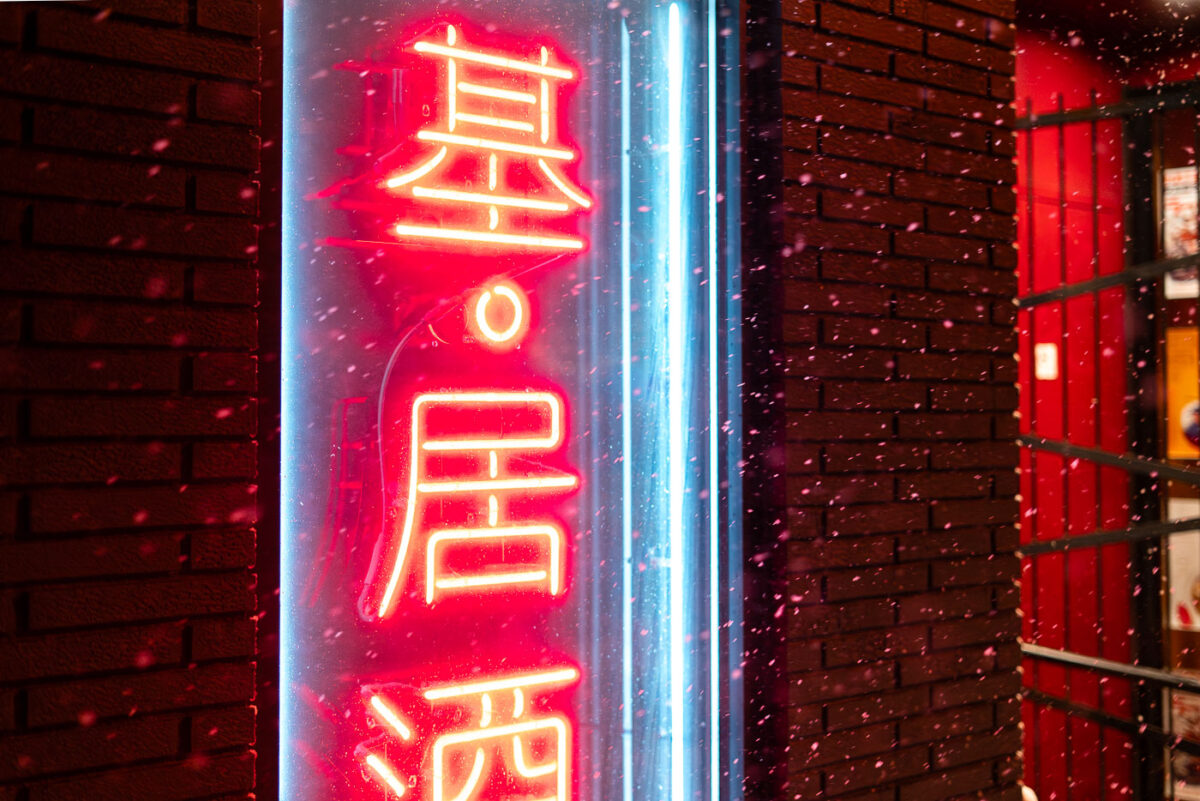
November 2019 — Moto-i on Lyndale in Uptown Minneapolis during the November 26th 2019 snowstorm.
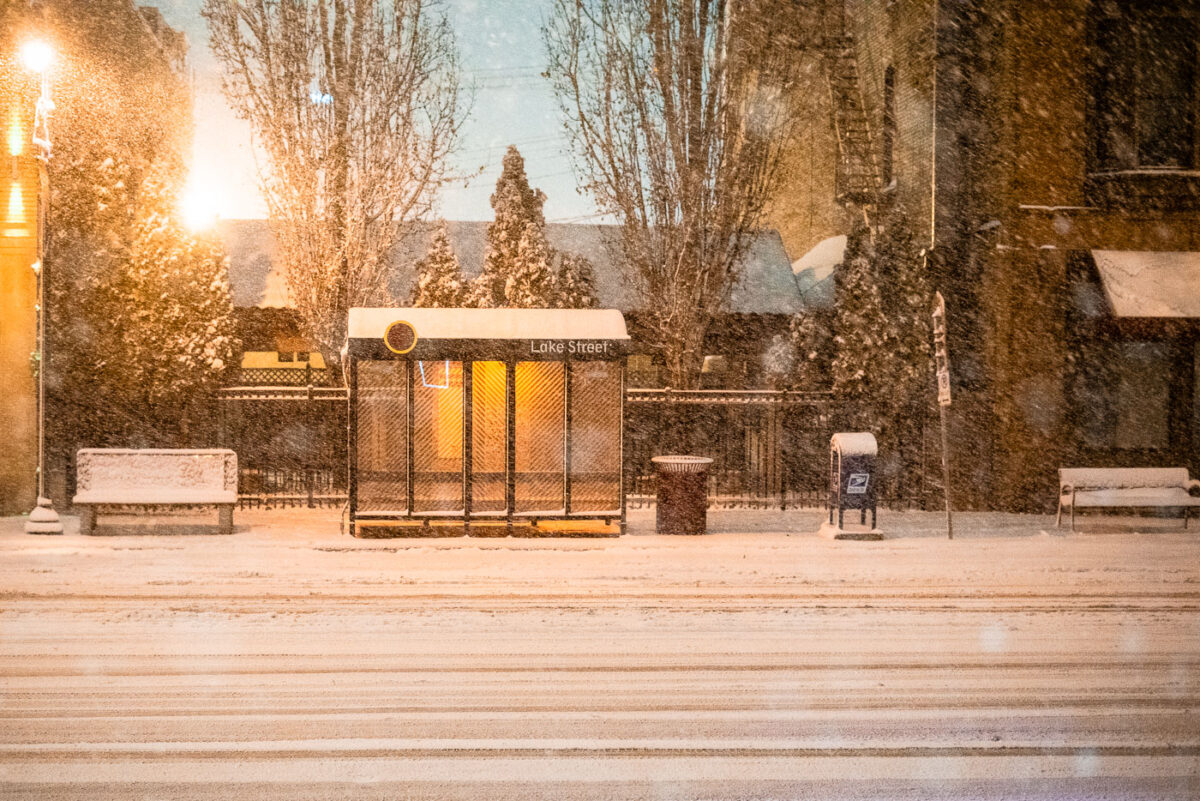
November 2019 — Lake Street in Minneapolis during a late November snowstorm in 2019.
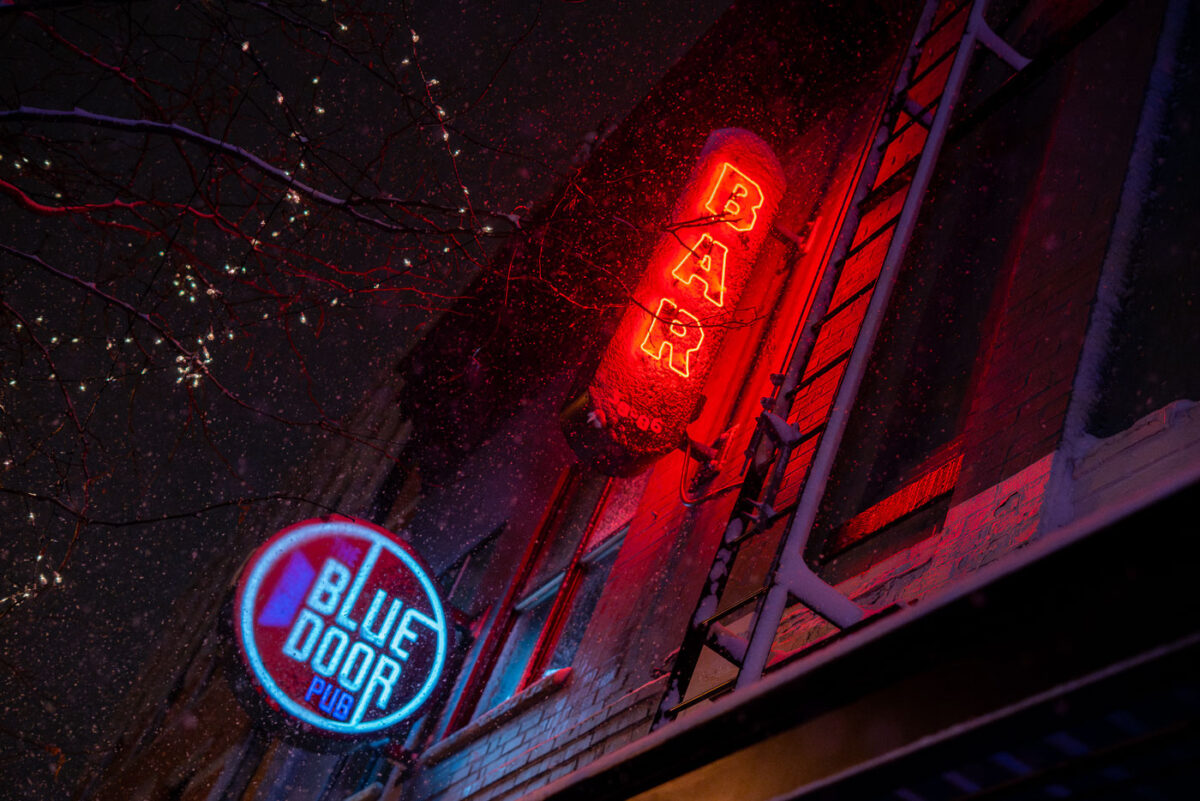
November 2019 — Blue Door Pub in Uptown Minneapolis during the November 26th, 2019 snowstorm.
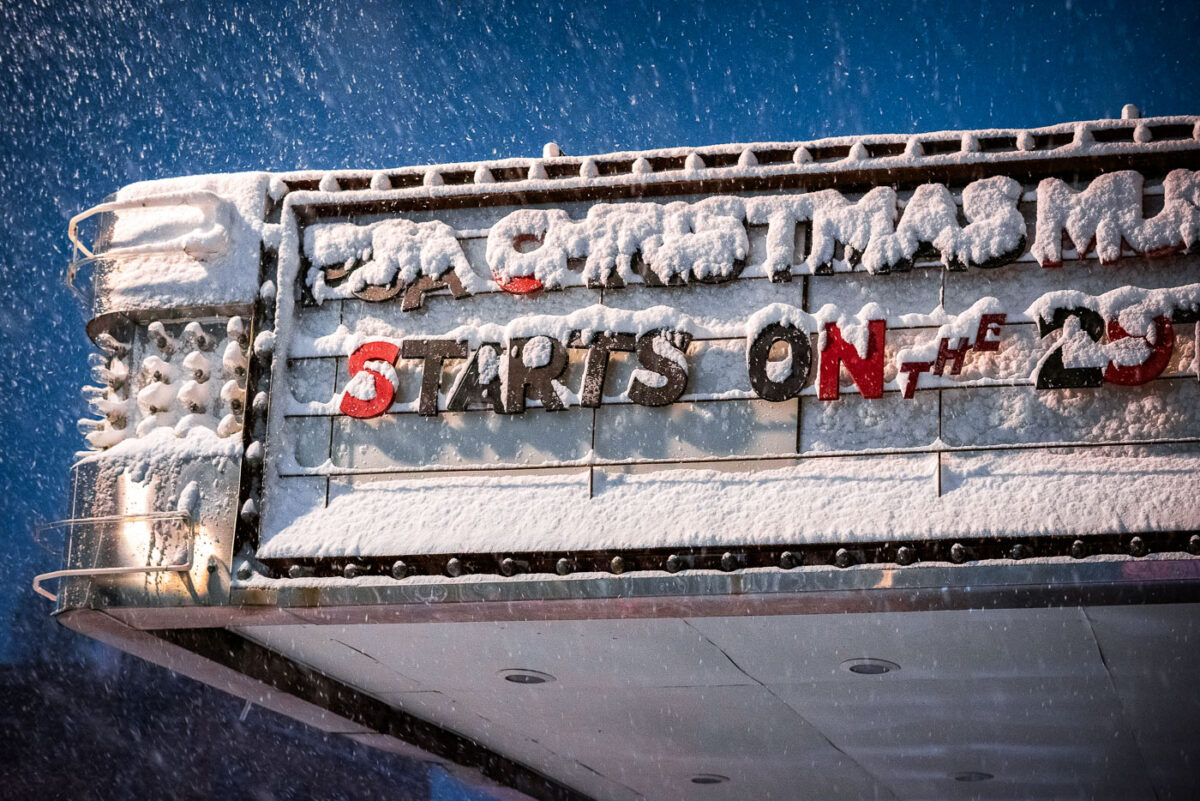
November 2019 — Lynlake Brewery in Uptown Minneapoilis during a November snowstorm.
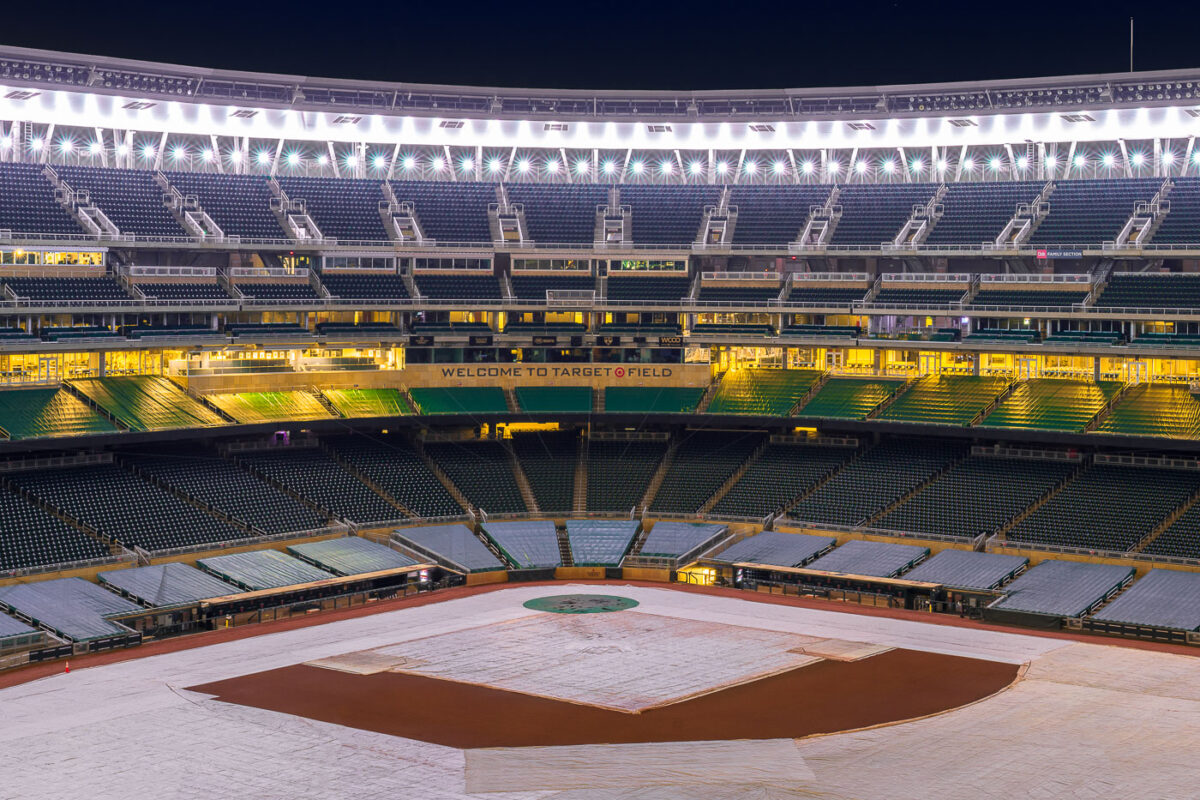
November 2019 —
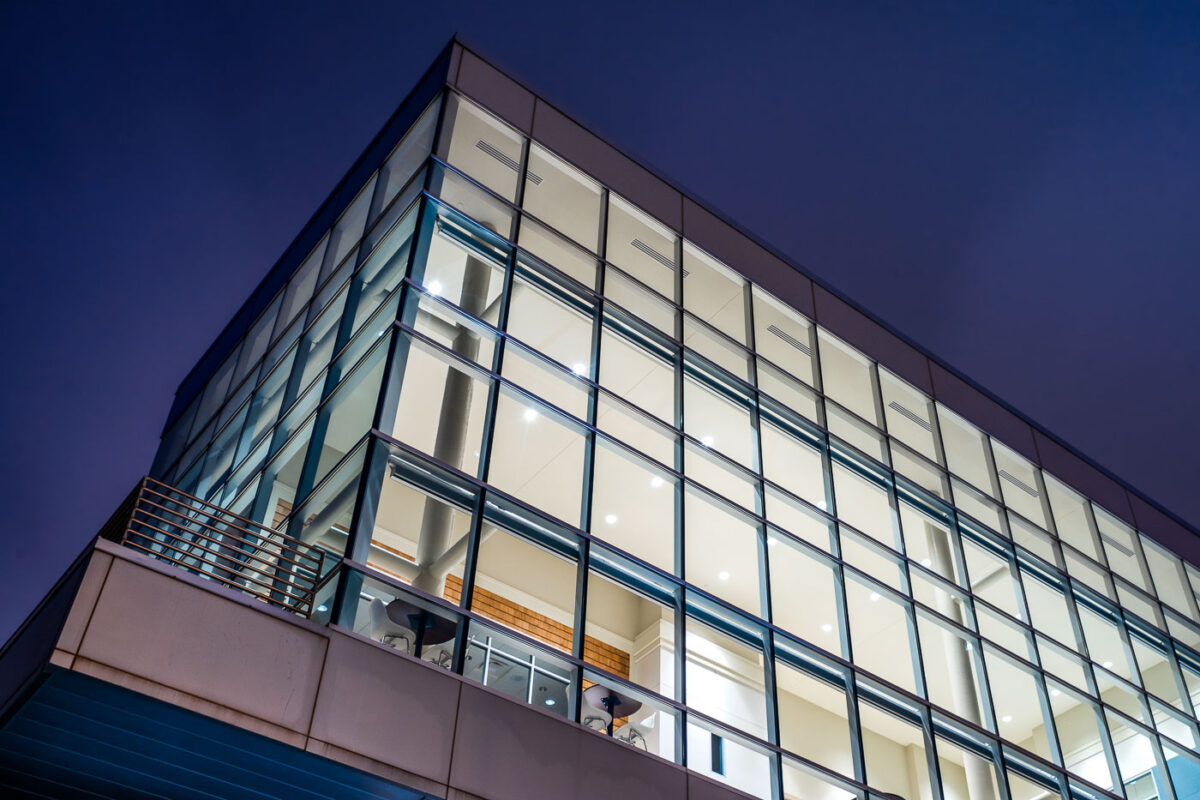
November 2019 — Located at 1101 West River Parkway. River Parkway Place sits right next to what will be the 48 story Eleven Condos.

November 2019 — The illuminated sign for Mill Ruins Park glows at night along the Minneapolis riverfront, where historic flour mill foundations meet modern development. Behind it, a portrait mural and new residential buildings rise near the preserved remnants of the city’s milling heyday.
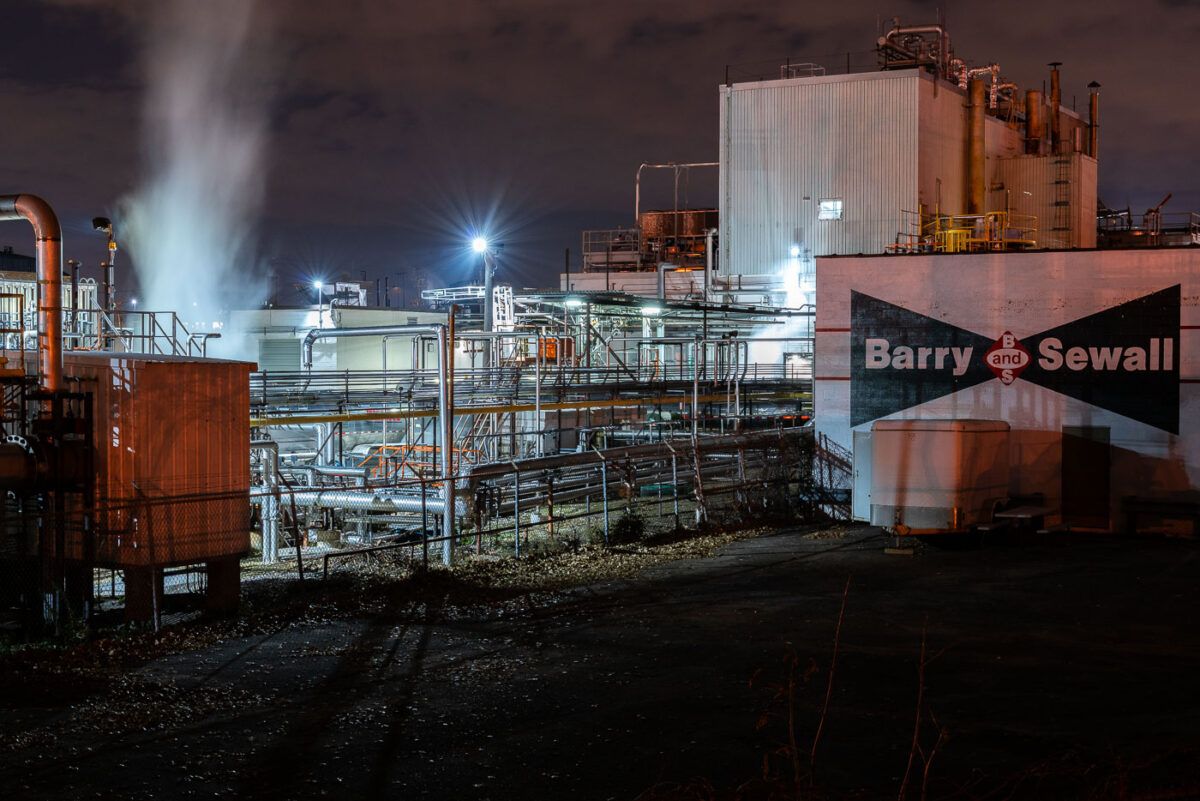
November 2019 — Steam rises from the Barry & Sewall Chemical Company complex in Northeast Minneapolis, a facility known for producing adhesives, coatings, and specialty chemicals for over a century. Illuminated by floodlights and framed by dense pipe networks, the site reflects the city’s enduring industrial infrastructure along the rail and river corridors. The hand-painted logo on the wall remains a remnant of mid-20th-century branding still visible across many older manufacturing sites in the Twin Cities.
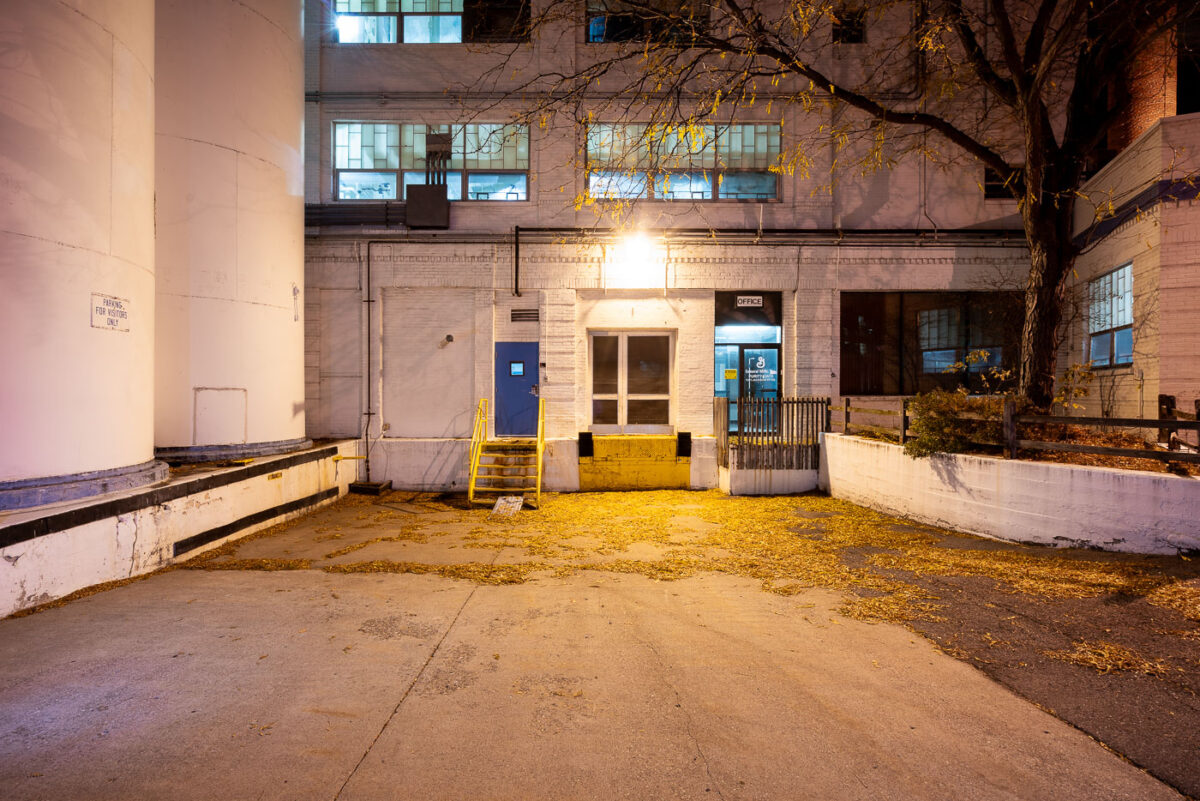
November 2019 — This view shows the rear loading and office entrance of the former General Mills Purity Oats facility in Northeast Minneapolis. Built during the city’s industrial boom, the complex once handled oat processing and packaging for one of the nation’s largest cereal producers. The structure’s painted brick walls, grain silos, and utilitarian layout are characteristic of mid-20th-century food-processing plants that supported the city’s reputation as the “Flour Milling Capital of the World.”
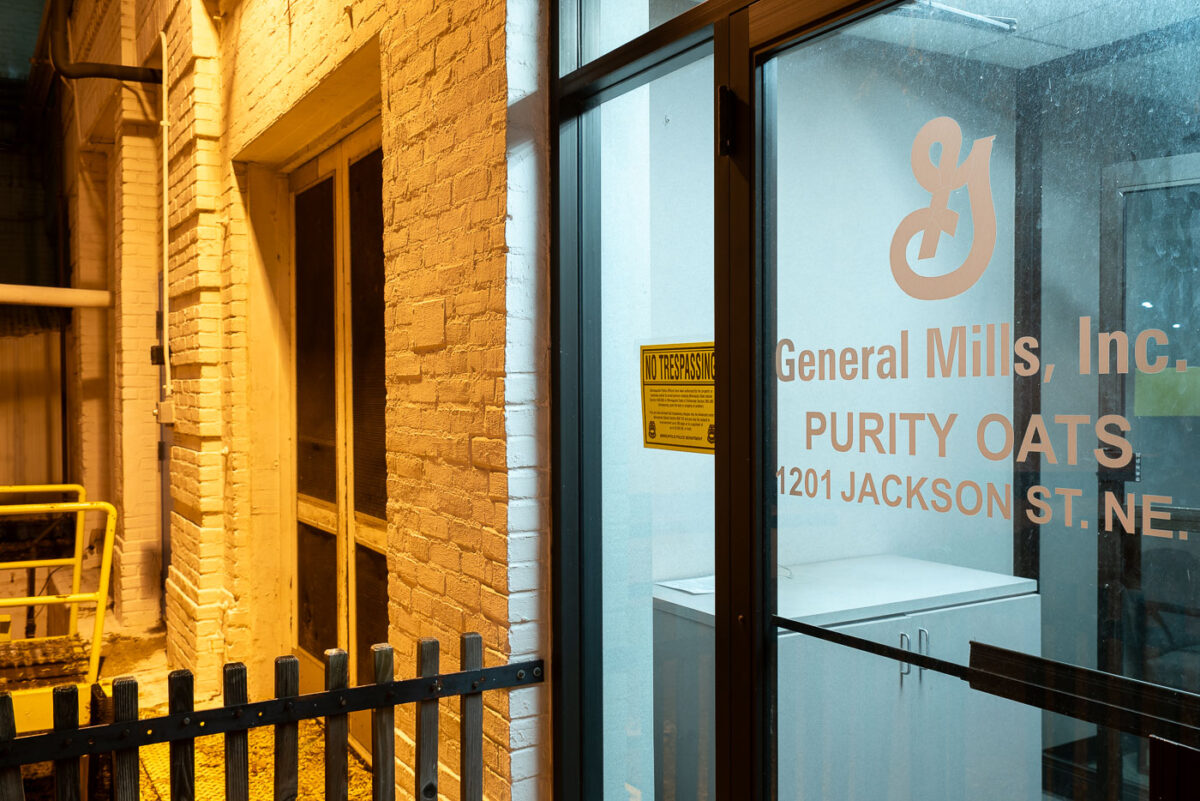
November 2019 — Once part of the vast milling network that shaped Minneapolis’s industrial identity, this now-closed General Mills Purity Oats plant at 1201 Jackson Street NE reflects the city’s transition from global grain hub to post-industrial reuse. The modest brick complex, still bearing its original signage, served as a specialized processing site within the company’s broader cereal operations before its eventual closure. Its preservation offers a glimpse into the city’s enduring ties to the flour and oat industries that once defined the Mississippi River corridor.
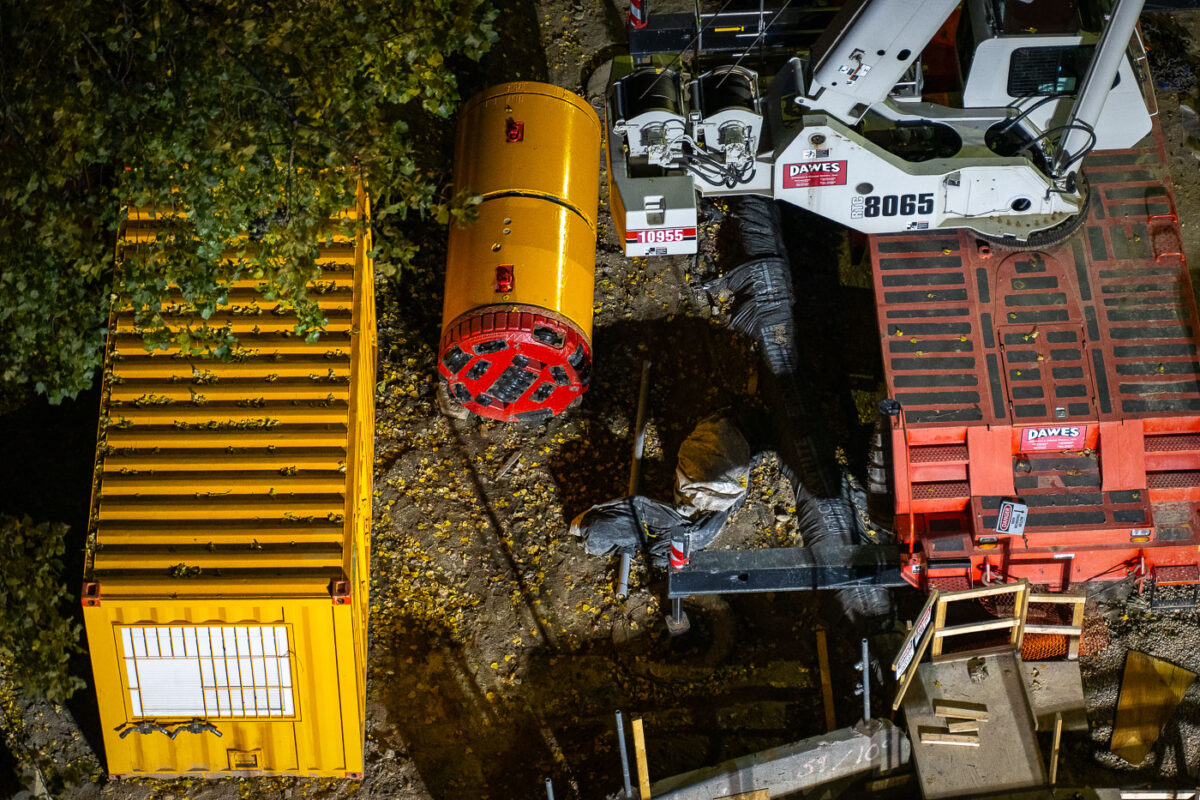
October 2019 — A tunnel boring machine (TBM) rests near the banks of the Mississippi River, staged for the start of a subsurface water main tunnel project. The machine’s circular cutting head and support equipment are visible beside heavy lifting cranes, part of a major infrastructure effort to modernize the city’s underground water distribution system
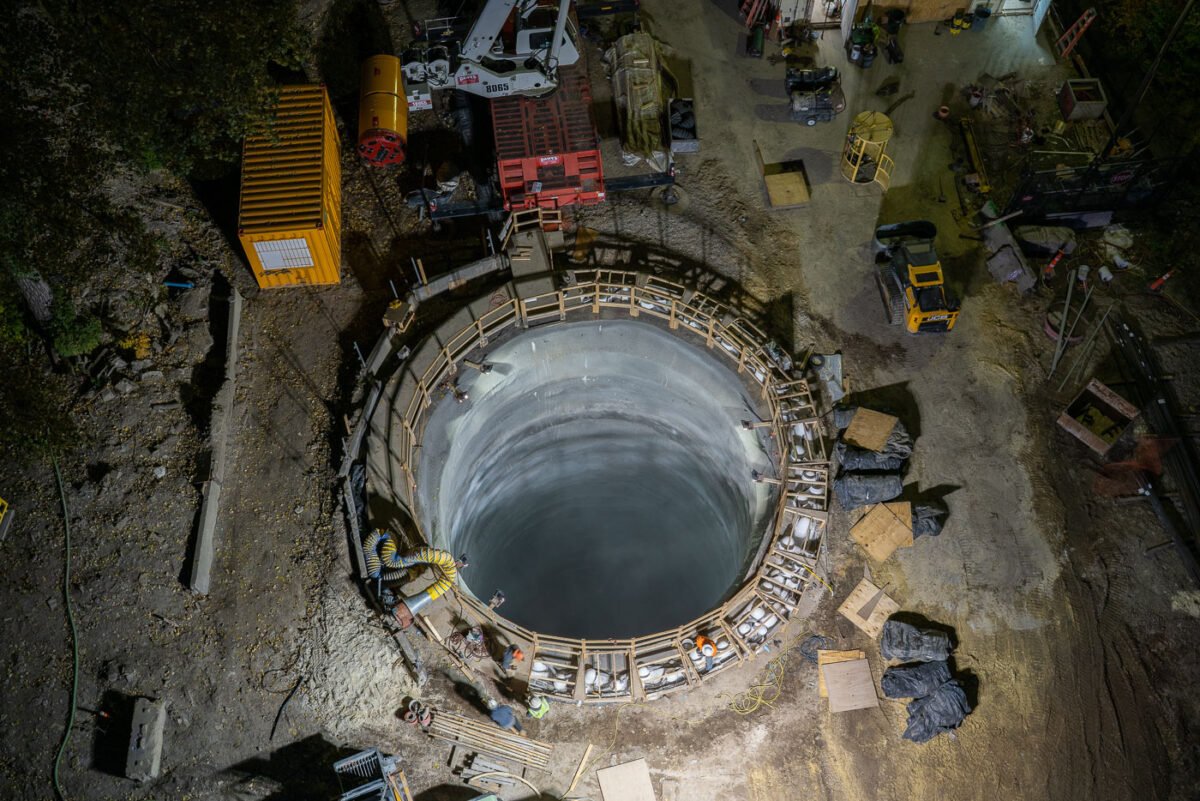
October 2019 — An aerial view captures the excavation shaft for a massive water main tunnel beneath the Mississippi River. The reinforced concrete cylinder serves as the launch point for a tunnel boring machine, visible nearby, which will cut through layers of limestone and shale to create a new conduit linking the city’s water systems. The project represents a critical upgrade to regional infrastructure, designed to improve reliability and resilience while accommodating future demand across Minneapolis and St. Paul.
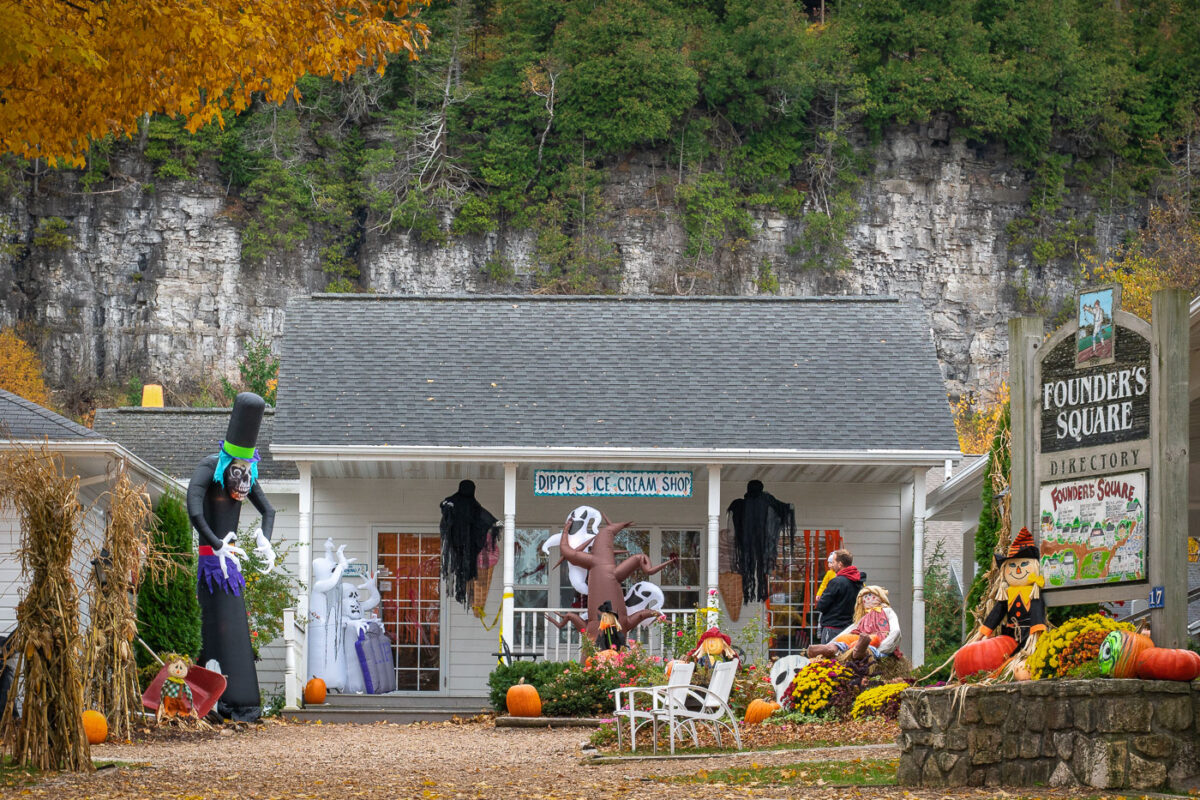
October 2019 — Dippy's Ice Cream in Fish Creek during Halloween in Door County, WI.
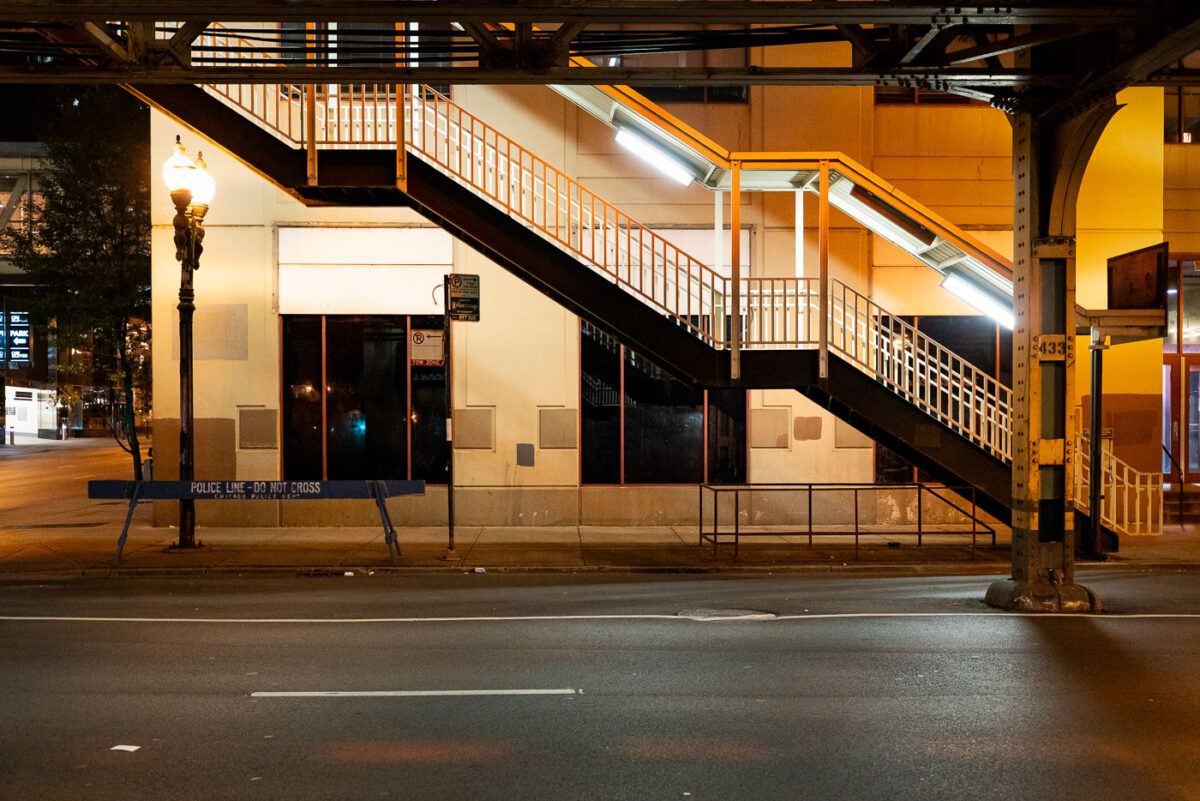
October 2019 — An illuminated stairway leads up to one of Chicago’s iconic “L” (elevated) train platforms in the Loop at night. The steel structure, marked with the system’s signature riveted beams, is part of the century-old elevated rail network that defines the city’s core transit identity. Below, a “Police Line – Do Not Cross” barricade and the quiet, empty street evoke a rare moment of stillness in an area usually dominated by the hum of trains and late-night traffic. This view highlights the utilitarian geometry and enduring presence of the Chicago Transit Authority’s elevated system, still serving as the backbone of the city’s rapid transit since the late 19th century.
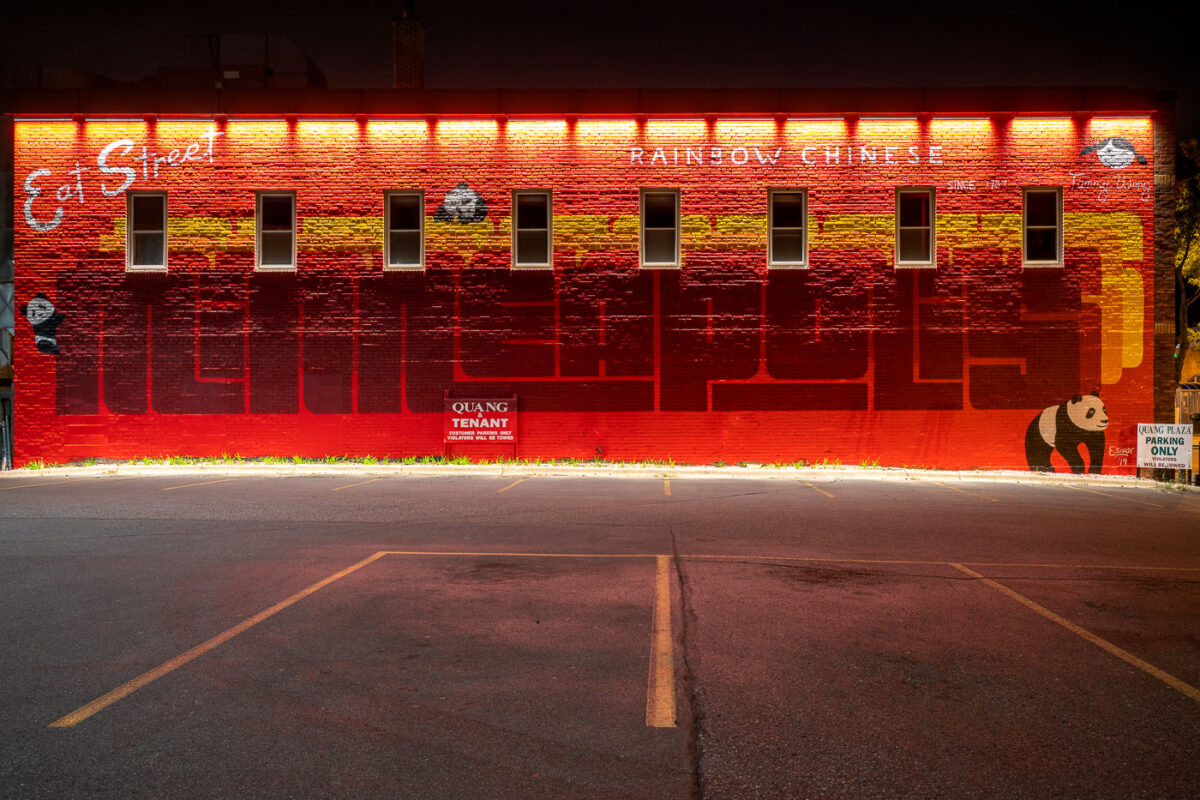
October 2019 — The bright red mural on the side of Rainbow Chinese Restaurant at 2739 Nicollet Avenue anchors Minneapolis’s iconic “Eat Street” corridor. Painted in bold geometric letters spelling “Minneapolis,” the work was designed to celebrate the neighborhood’s cultural diversity and long history as a hub for immigrant-owned restaurants. The panda motif and stylized lettering nod to the restaurant’s founder, Tammy Wong, whose establishment has been a local fixture since 1987. The mural, illuminated at night by warm overhead lighting, has become a recognizable landmark symbolizing the creative and culinary energy of Eat Street in the Whittier neighborhood.
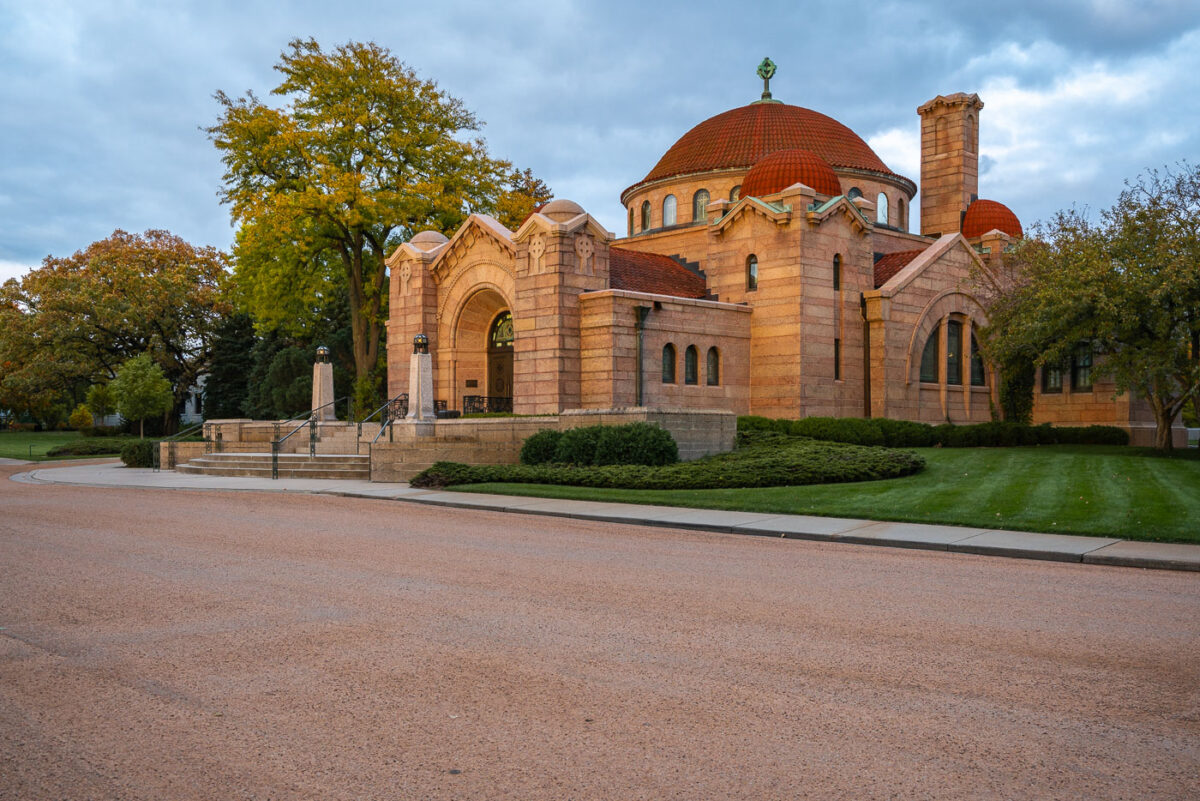
October 2019 — The Lakewood Cemetery Memorial Chapel in Minneapolis, completed in 1910 and inspired by Byzantine architecture, stands as one of Minnesota’s most significant funerary landmarks. Its interior mosaics—crafted with over ten million pieces of Venetian glass—were modeled after the Hagia Sophia in Istanbul. The surrounding landscape, designed in the late 19th century, reflects the “garden cemetery” movement that emphasized serenity and park-like beauty. Today, Lakewood remains both an active cemetery and a public green space, connecting generations through its art, architecture, and memorial traditions.
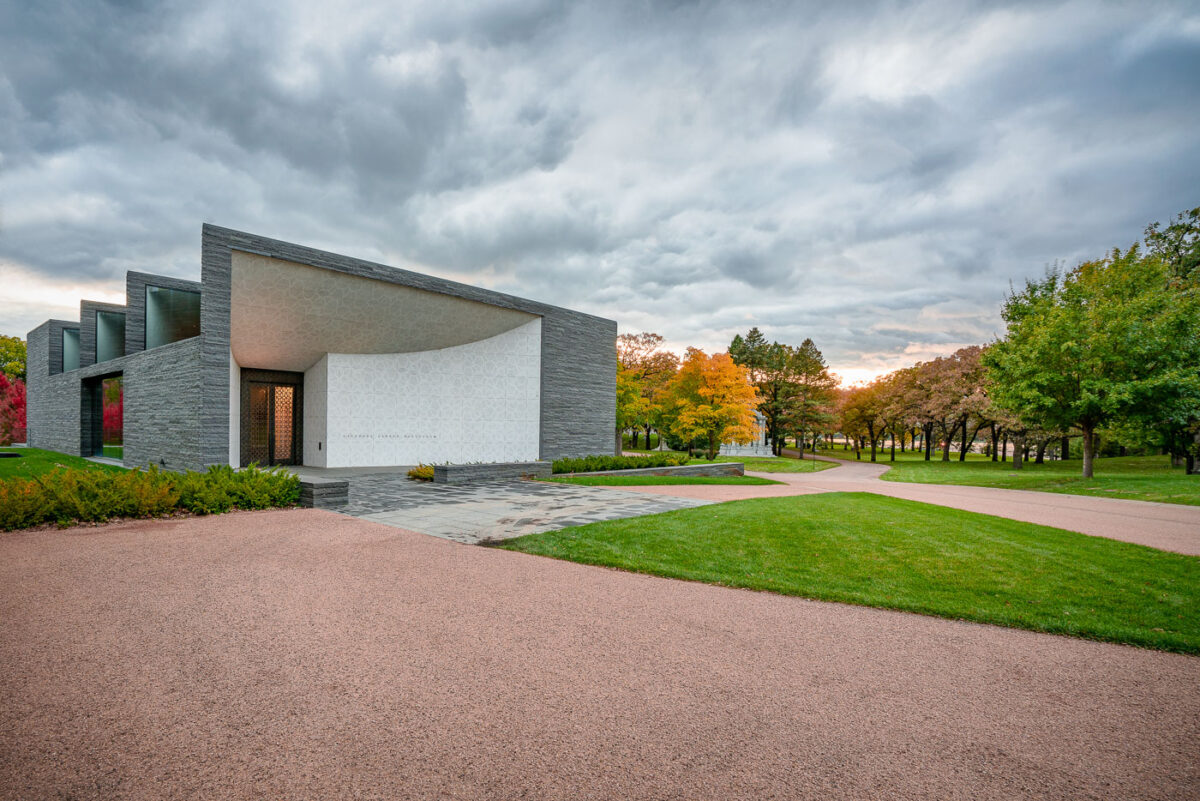
October 2019 — The Lakewood Cemetery Garden Mausoleum, completed in 2012 and designed by Joan Soranno and John Cook of HGA Architects, represents a modern counterpart to Lakewood’s historic chapel. Built into the natural slope of the cemetery grounds, the structure uses gray granite and white mosaic marble to evoke quiet reflection and permanence. Its minimalist form and interplay of light were conceived to harmonize with the surrounding landscape of Lake Calhoun (Bde Maka Ska). The mausoleum extends Lakewood’s 150-year tradition of blending architecture, art, and remembrance within a park-like setting in south Minneapolis.
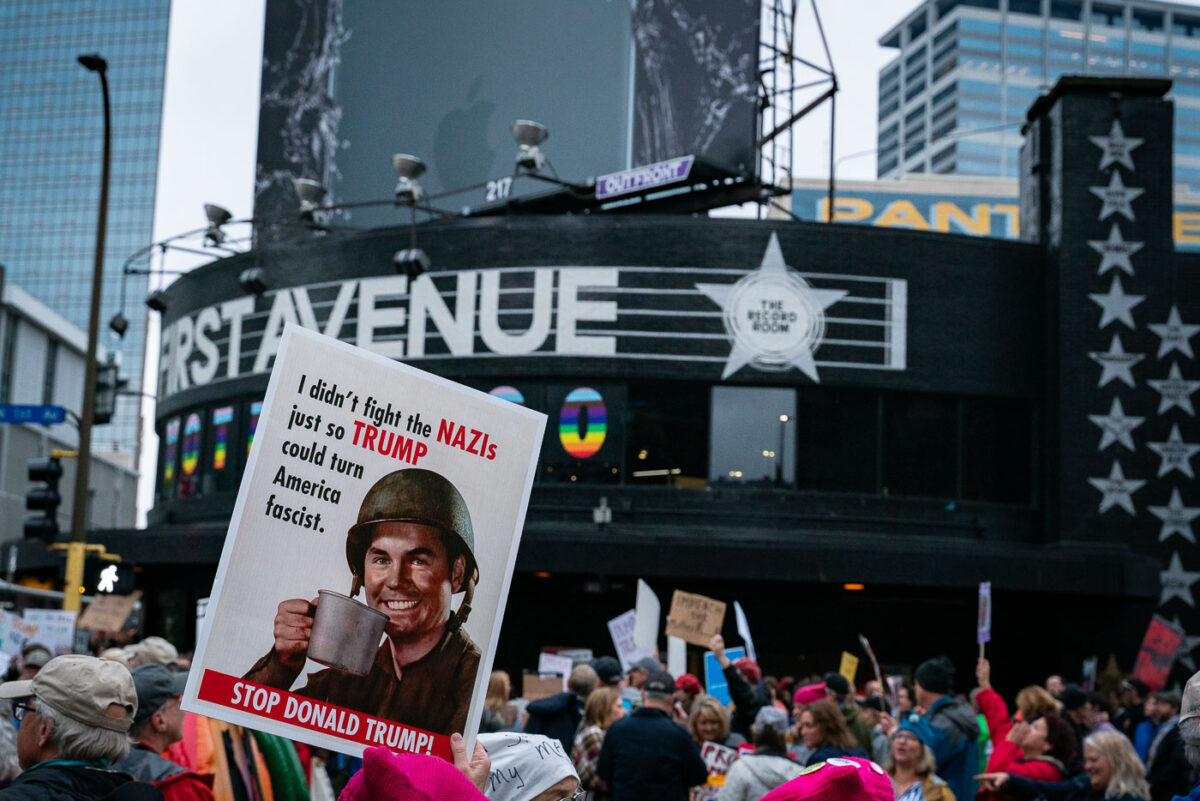
October 2019 — Sign reading "I didn't fight the nazi's just so Trump could turn America fascist" being held up outside First Avenue during a Trump protest in Minneapolis on October 10, 2019.
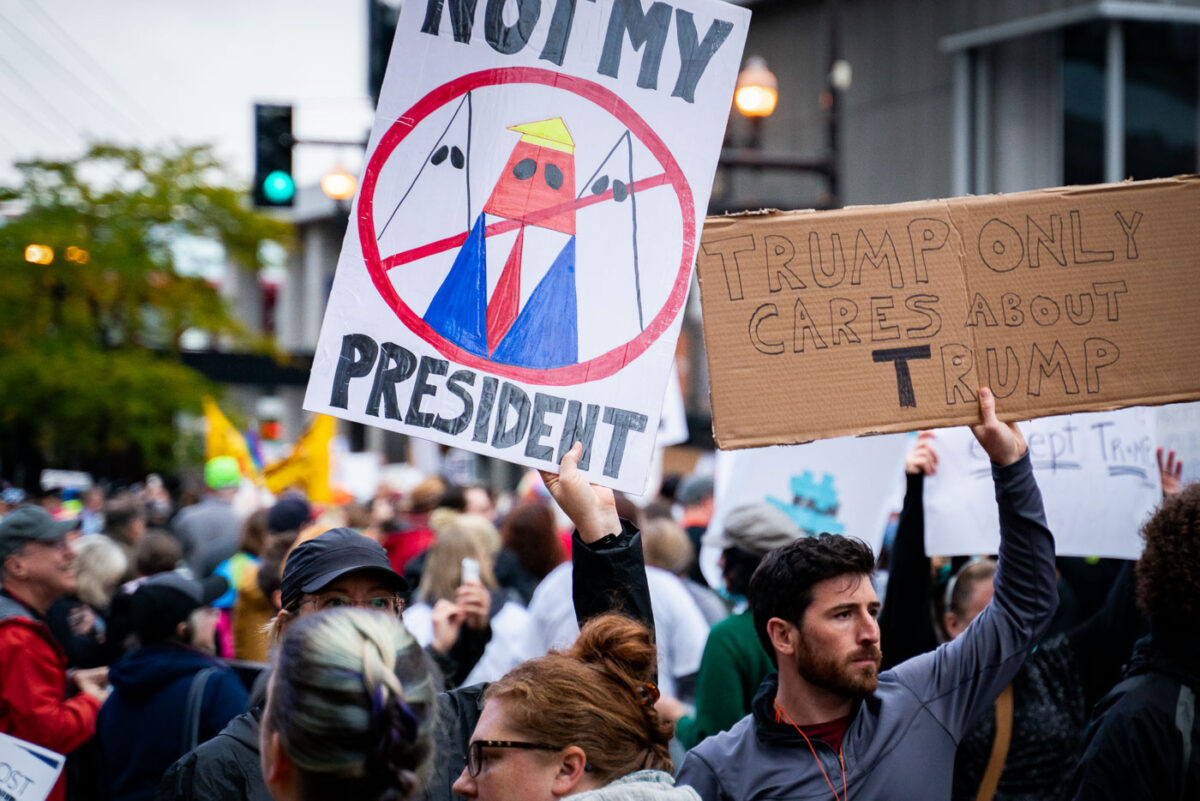
October 2019 — Protesers hold up signs outside the Target Center in Minneapolis on October 10, 2019.
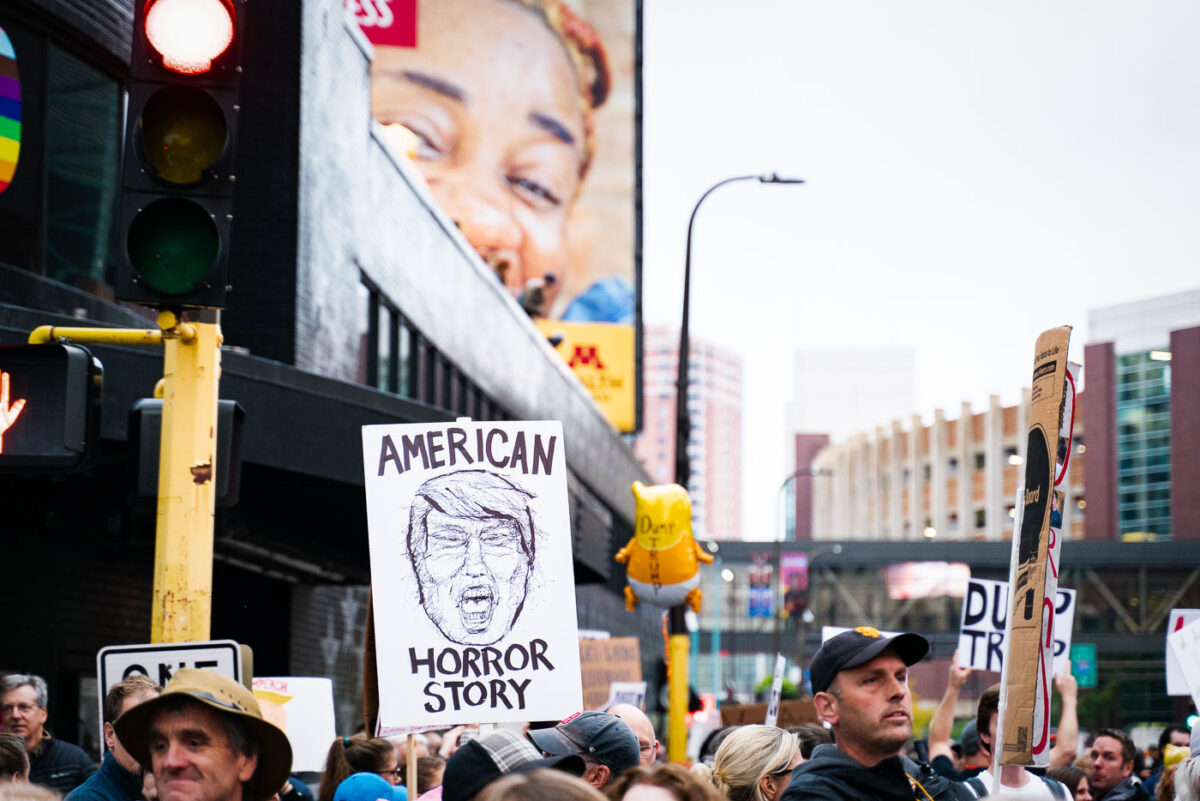
October 2019 — "American Horror Story" protest sign in Minneapolis on October 10, 2019.
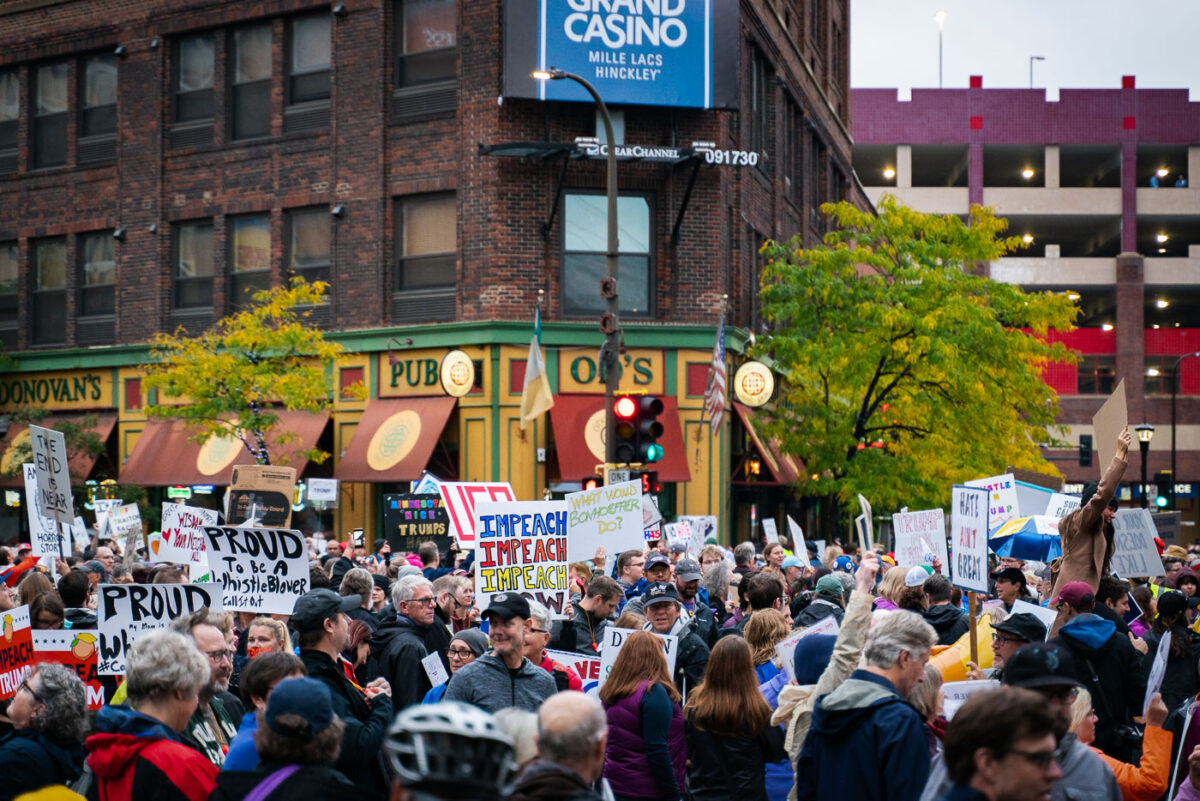
October 2019 — Protesters hold up signs outside the Target Center during a Trump protest in Minneapolis on October 10, 2019.
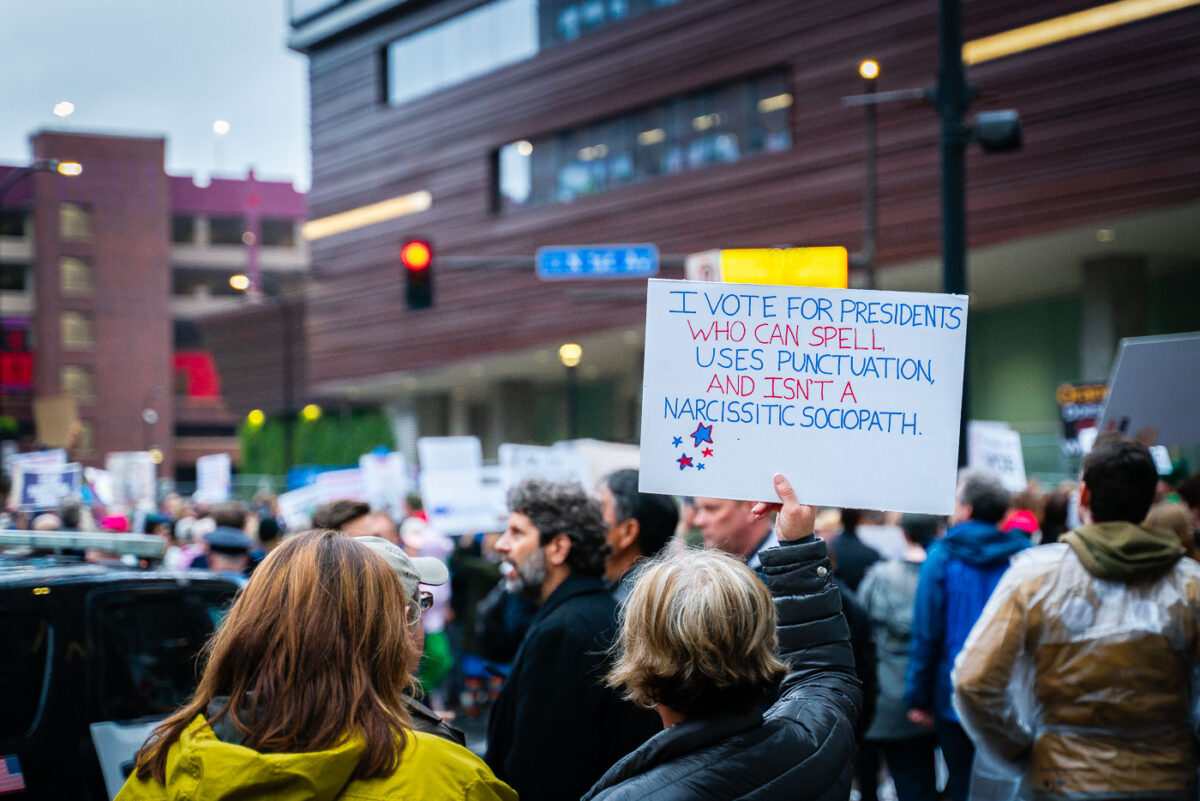
October 2019 — Man holds up a sign that reads "I vote for presidents who can spell, uses punctuation and isn't a narcissistic sociopath." outside the Target Center during a Trump protest on October 10, 2019.
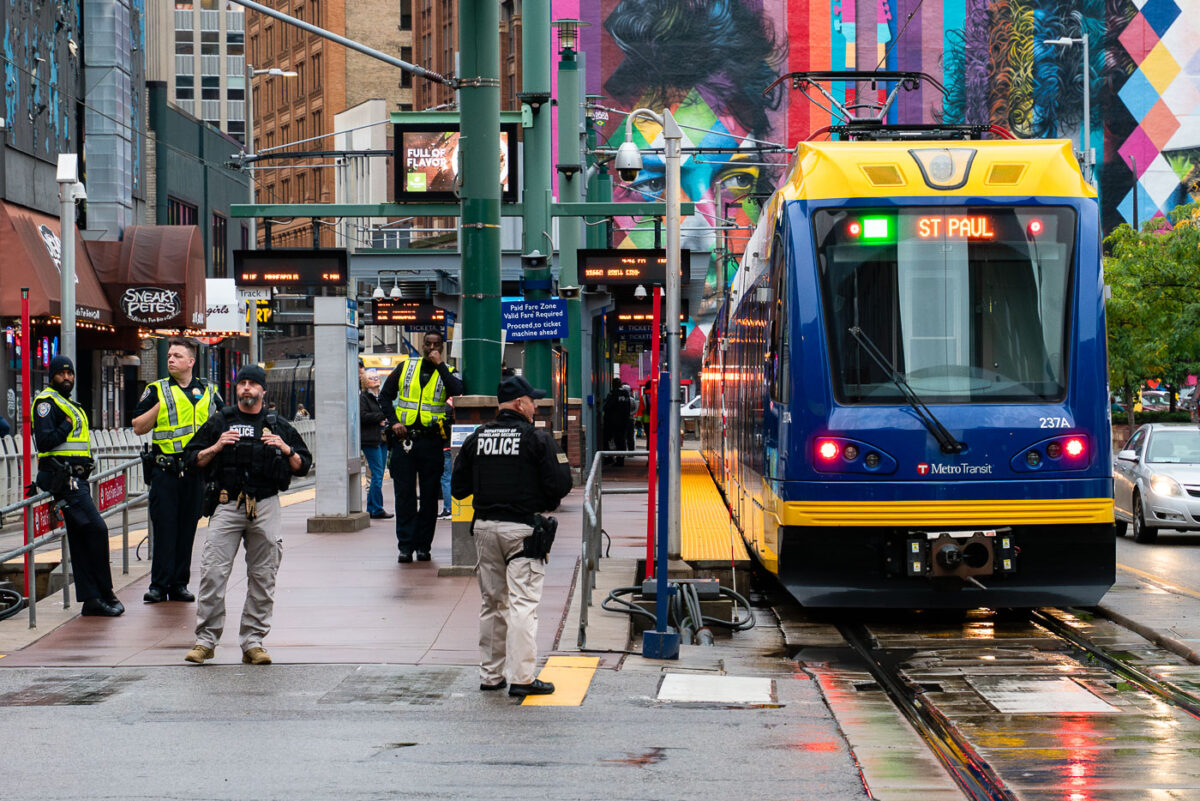
October 2019 — Department of Homeland Security at the Warehouse District LRT station on October 10, 2019 during a Donald Trump rally at the Target Center.
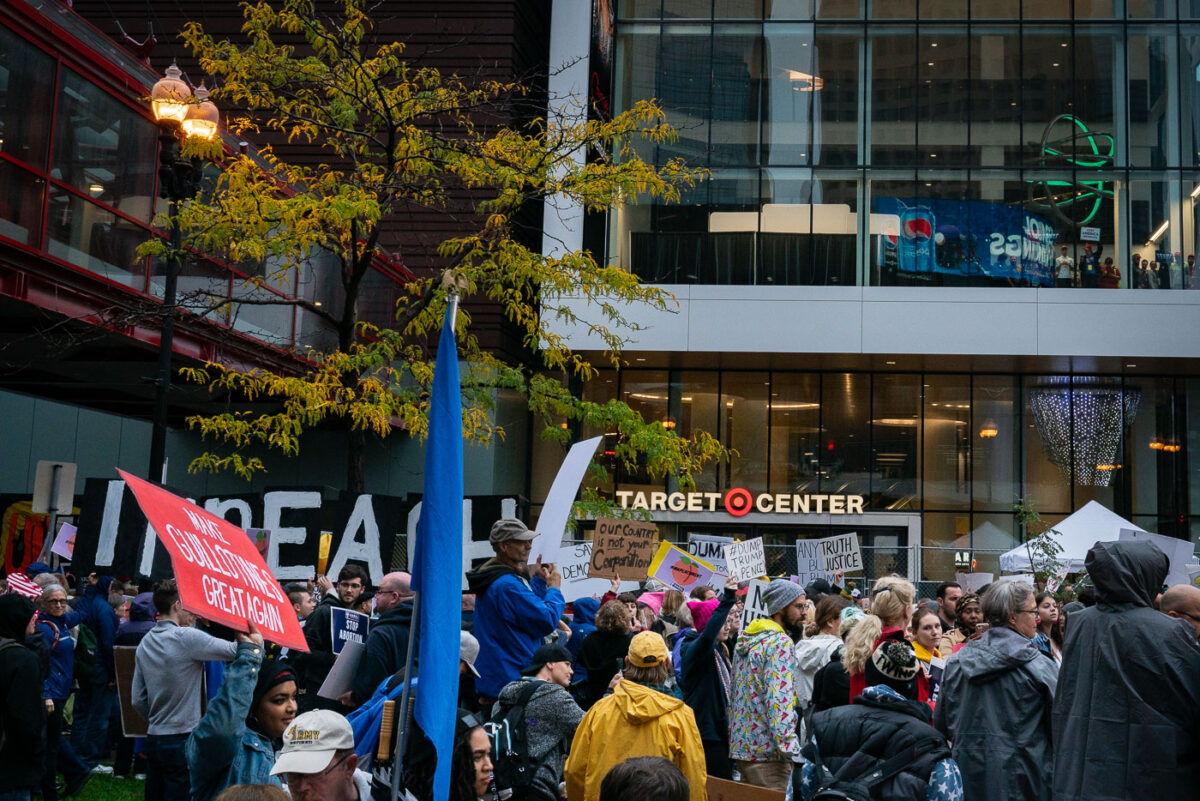
October 2019 — Protesters outside the Target Center in downtown Minneapolis. Trump supporters behind the glass. Campaign event October 10, 2019
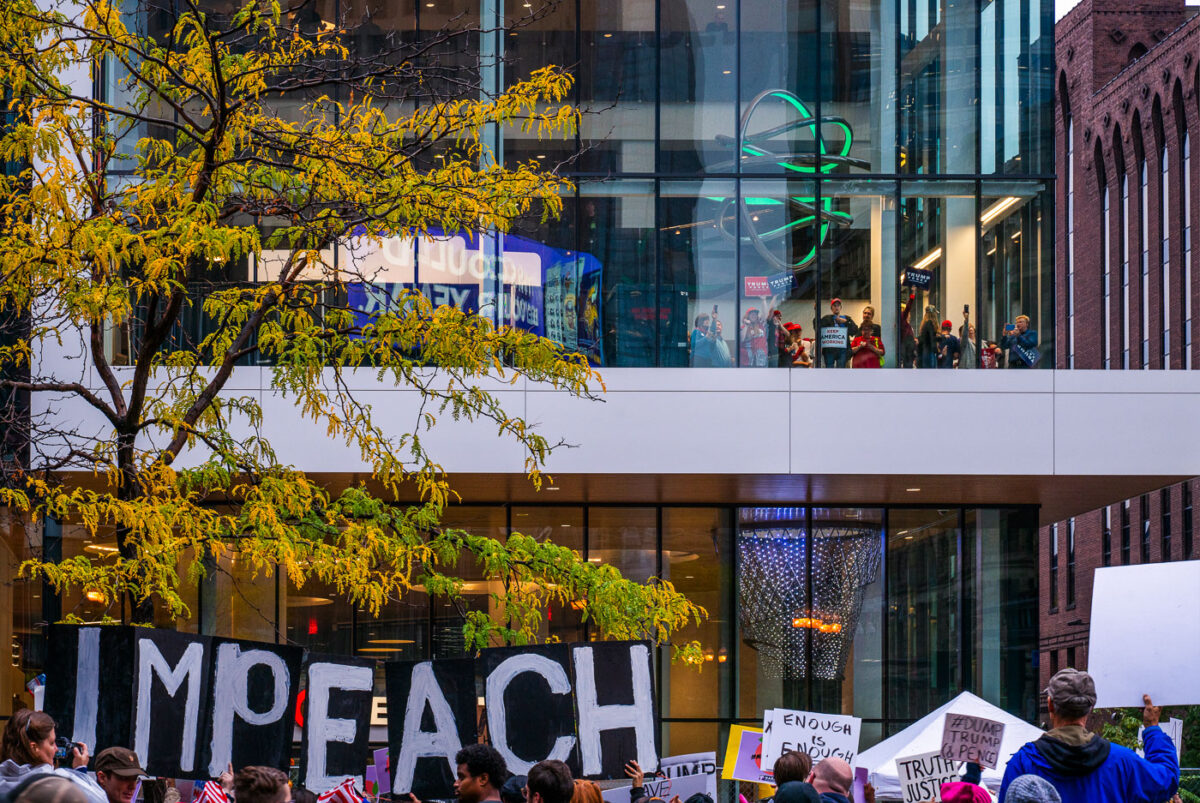
October 2019 — Protesters outside the Target Center in downtown Minneapolis. Trump supporters behind the glass. Campaign event October 10, 2019
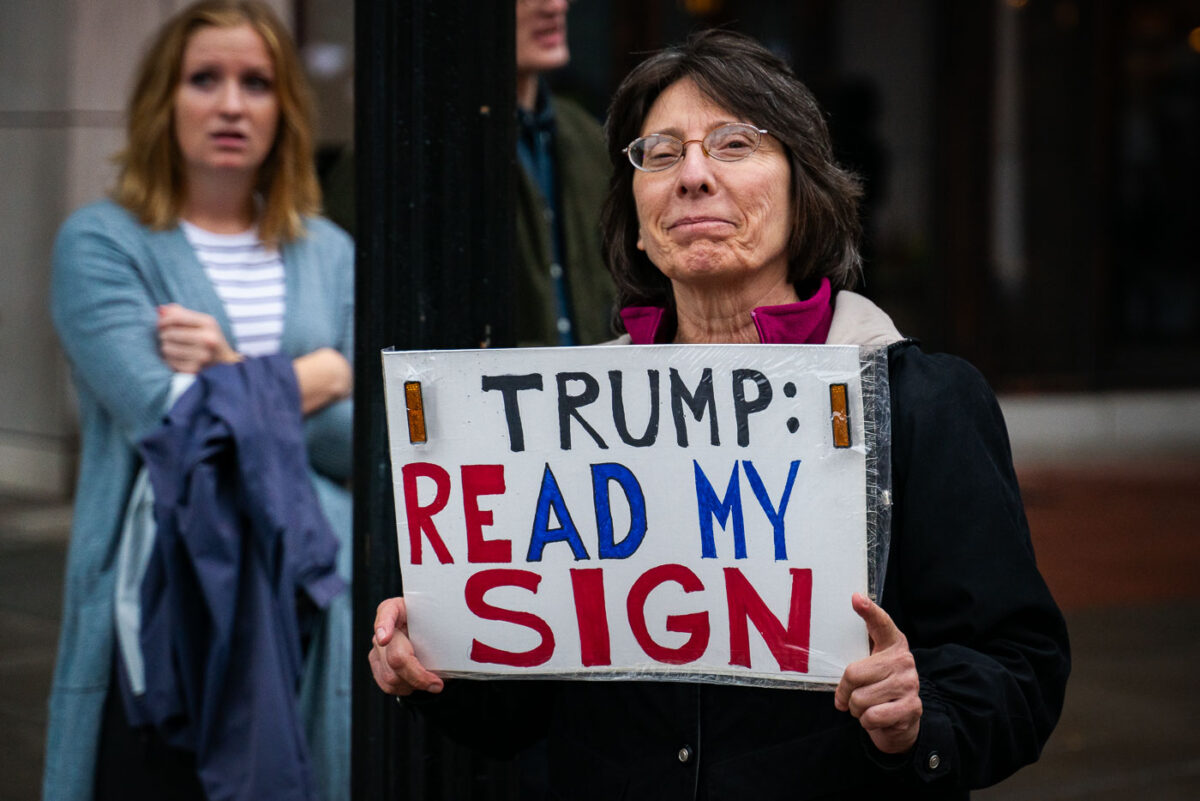
October 2019 — Woman holds up a sign that reads "Trump read my sign" in Minneapolis on October 10, 2019.
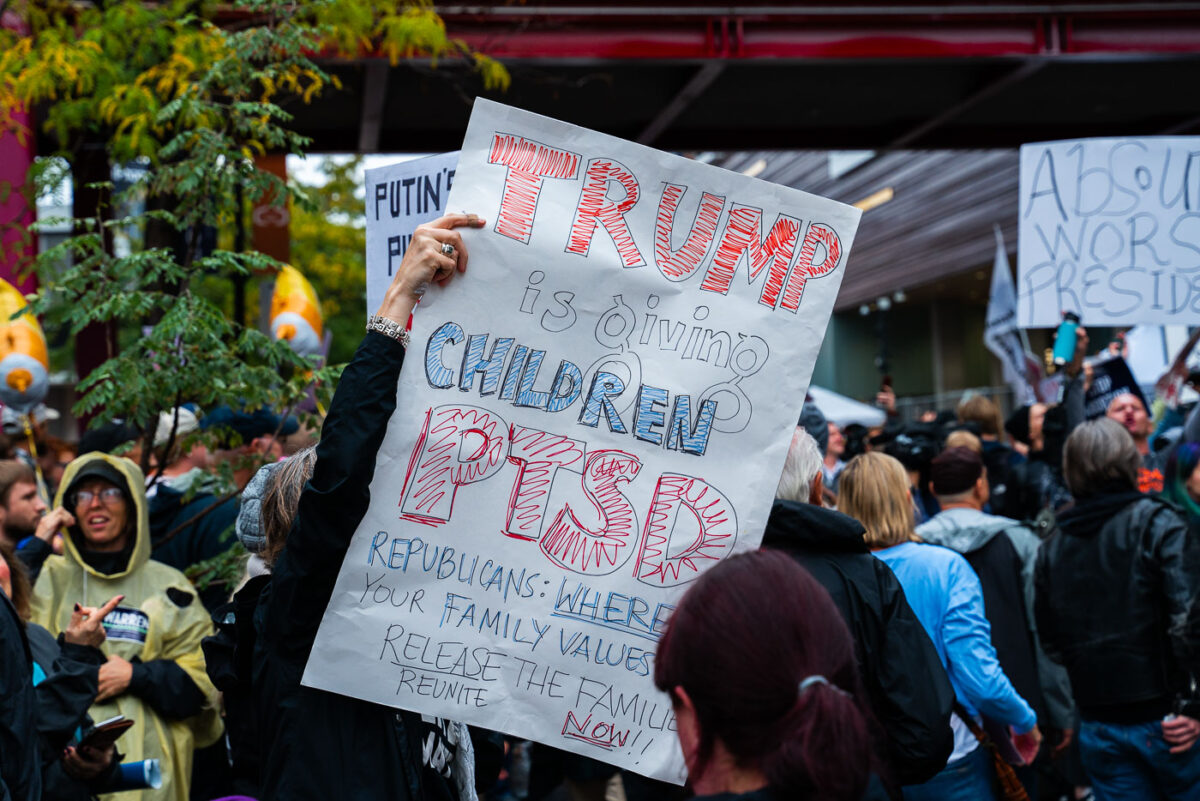
October 2019 — A protester holds up protest sign outside the Target Center in Downtown Minneapolis where Trump was to speak in October 2019.
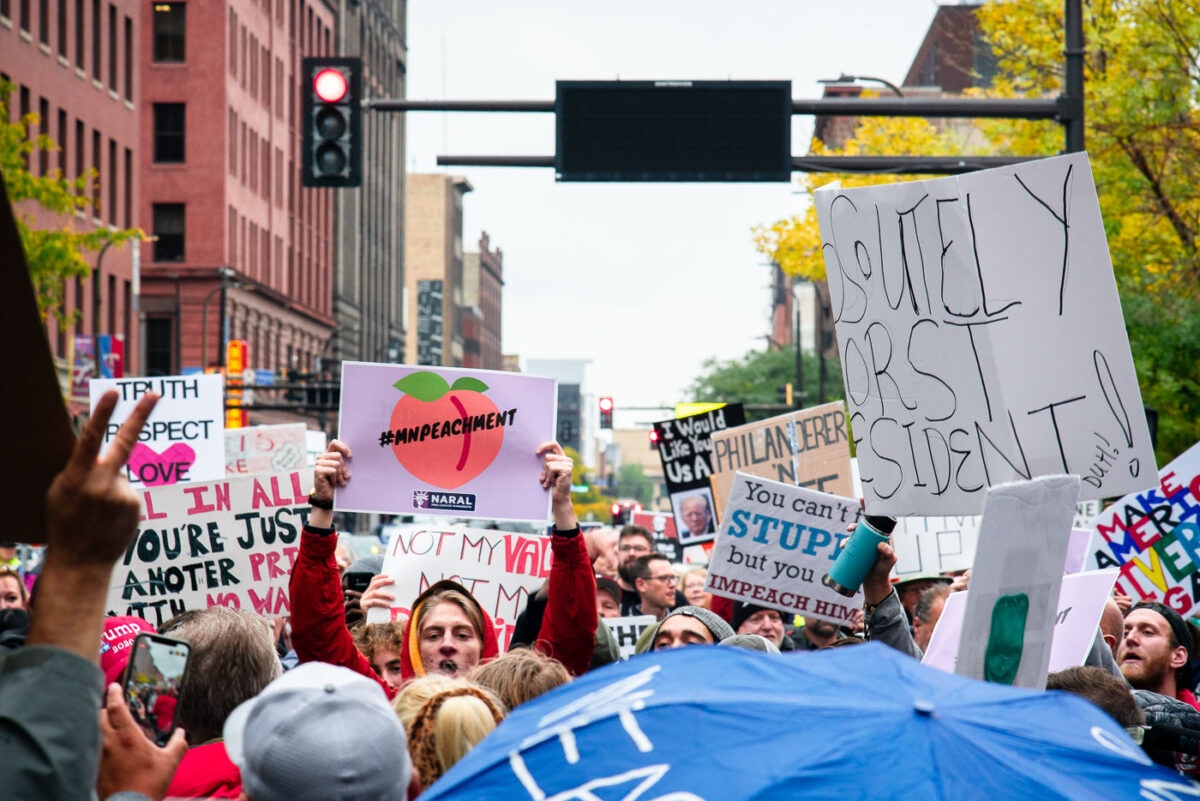
October 2019 — Protesters crowd Nicollet Mall in downtown Minneapolis carrying handmade signs during a demonstration against then-President Donald Trump on October 10, 2019. The rally, tagged online as #MNPEACHMENT, drew thousands of Minnesotans expressing opposition to Trump’s policies and calling for impeachment. The march began near the Target Center, where Trump was holding a campaign rally, and stretched across downtown under a heavy police presence.
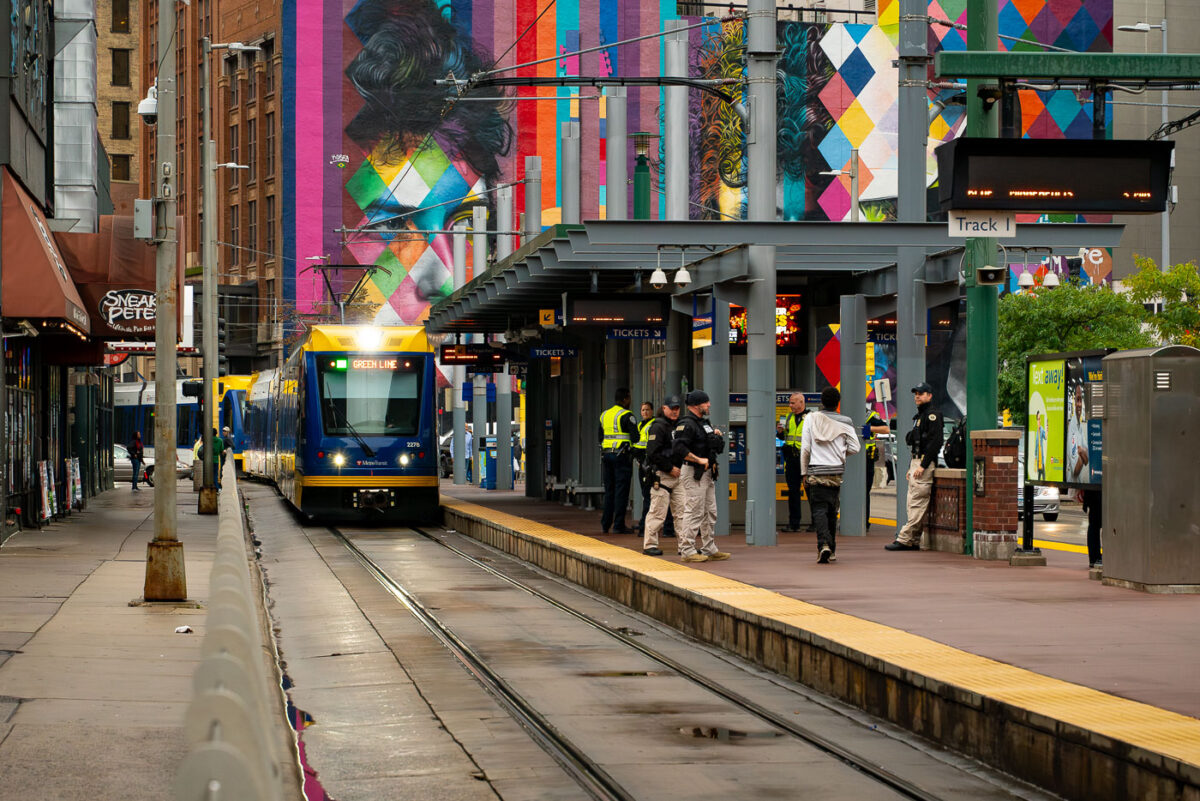
October 2019 — Located near the Target Center in downtown Minneapolis, the Target Field light rail station was patrolled by Homeland Security officers on October 10, 2019. The increased presence coincided with a major political rally at the nearby arena, leading to heightened security across the surrounding Warehouse District transit corridor.
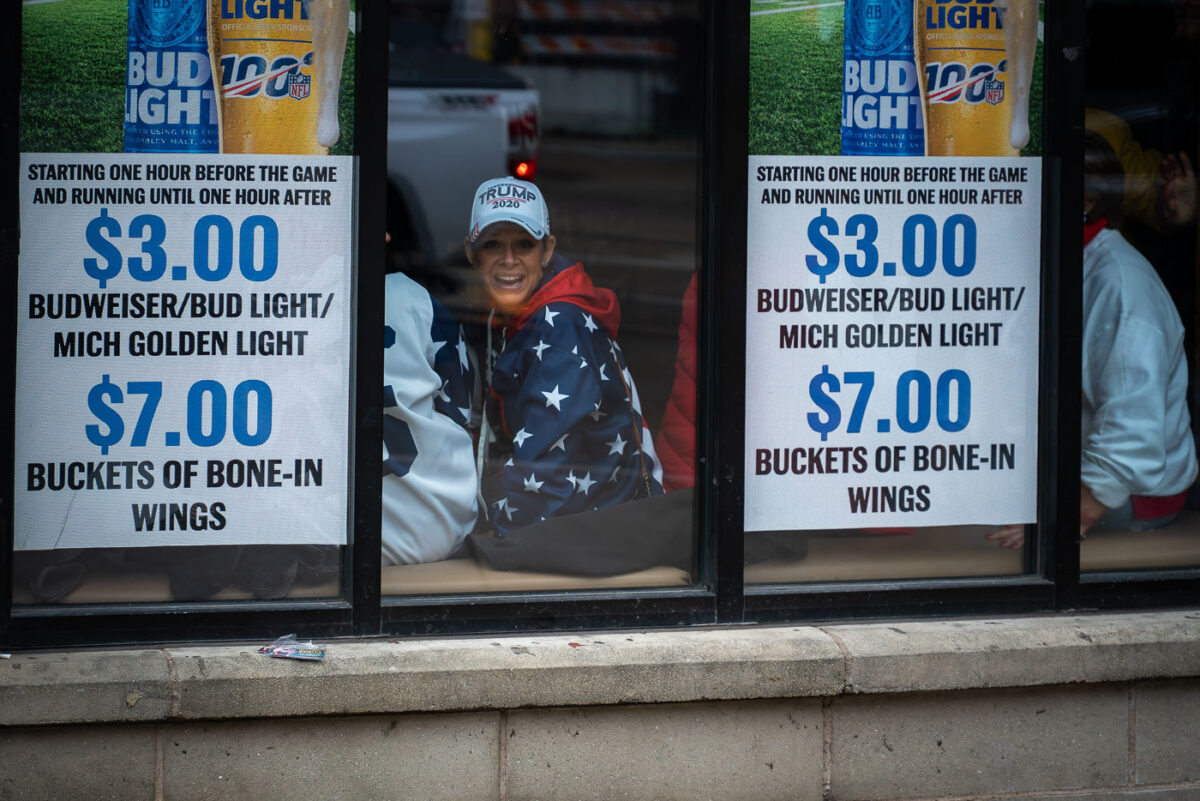
October 2019 — A woman wearing a “Trump 2020” hat smiles from inside a downtown Minneapolis bar near the Target Center on October 10, 2019. The establishment, decorated with promotional posters for discounted beer and wings, became a temporary gathering spot for attendees arriving early to the president’s evening campaign rally. The 2019 visit marked a rare appearance by a sitting U.S. president in Minneapolis and drew both supporters and demonstrators into the city’s entertainment district, where security and anticipation heightened throughout the afternoon.
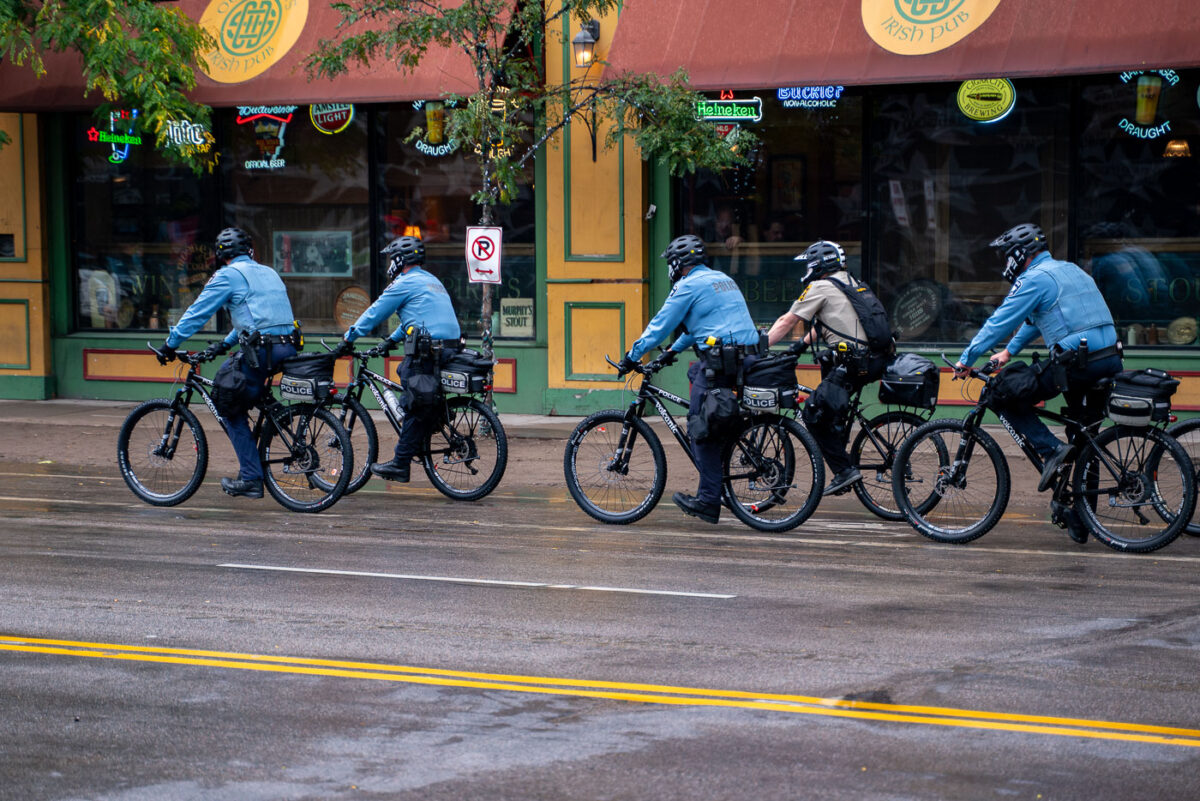
October 2019 — Police on bicycles patrol downtown Minneapolis outside the Target Center while protesters and rally-goers gather ahead of a 2019 Trump campaign event.
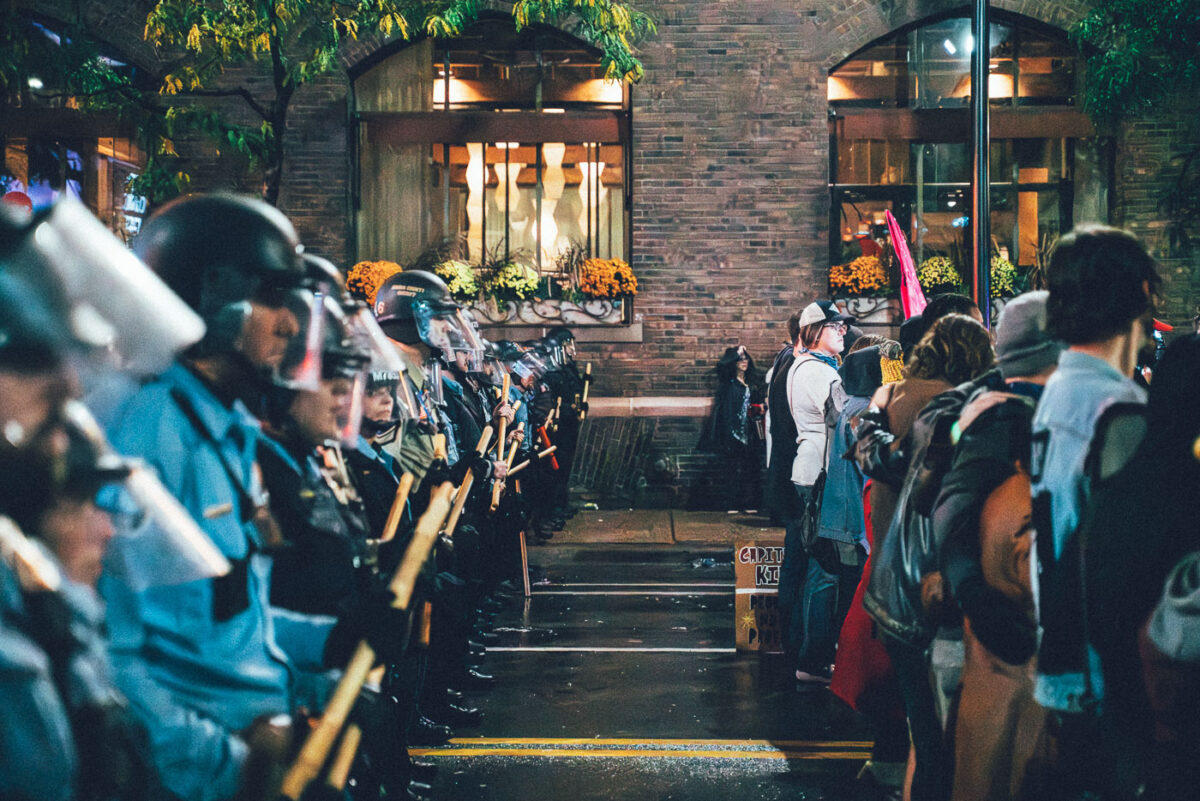
October 2019 — Minneapolis police officers in riot gear form a barricade opposite protesters outside the Target Center on October 10, 2019, during then-President Donald Trump’s campaign rally. The tightly organized police line extended along First Avenue, separating demonstrators from event attendees as tensions rose late into the evening. The rally drew thousands of protesters and supporters to downtown Minneapolis, prompting one of the largest coordinated law enforcement deployments in the city that year.
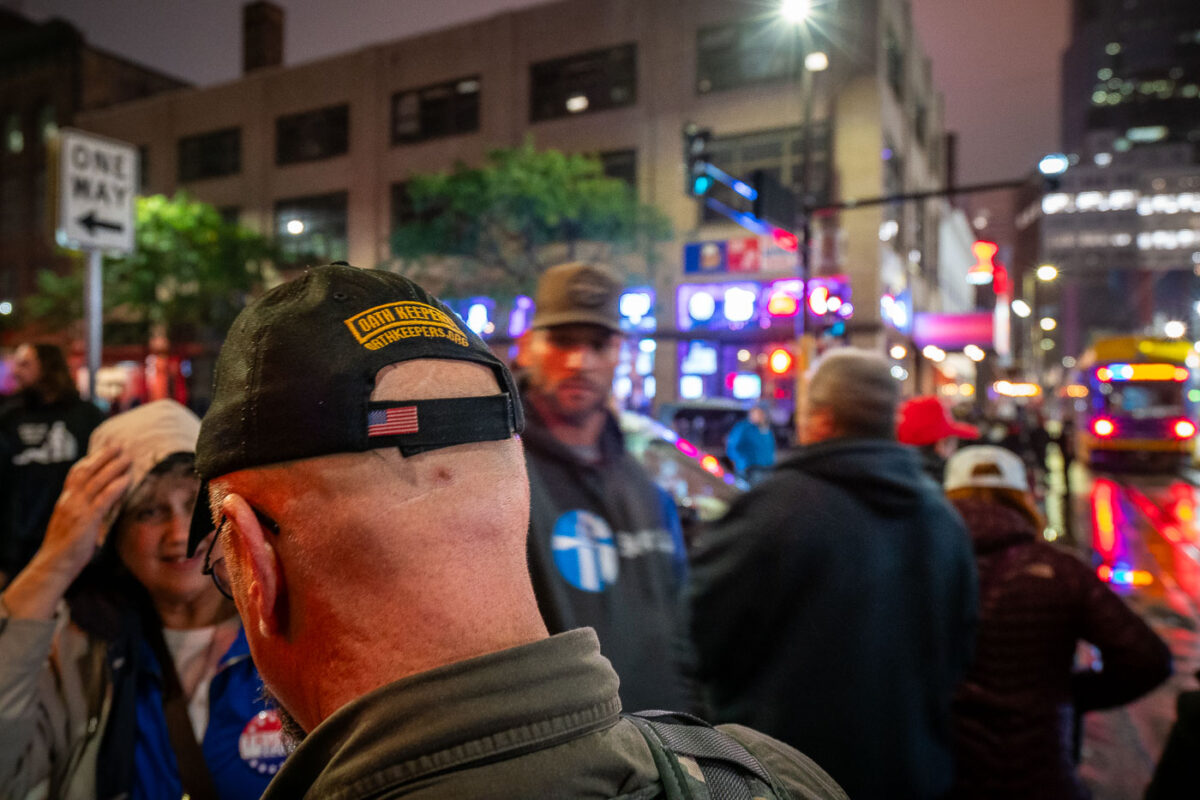
October 2019 — During demonstrations outside President Donald Trump’s campaign rally at the Target Center in downtown Minneapolis on October 10, 2019, a man wearing a hat bearing the Oath Keepers insignia asked for directions near the crowd. The rally drew both Trump supporters and counter-protesters, filling Hennepin Avenue with thousands of people and heavy police presence. The Oath Keepers, founded in 2009, is a far-right, anti-government militia organization whose members have been linked to armed protests and later to the January 6, 2021, U.S. Capitol attack.
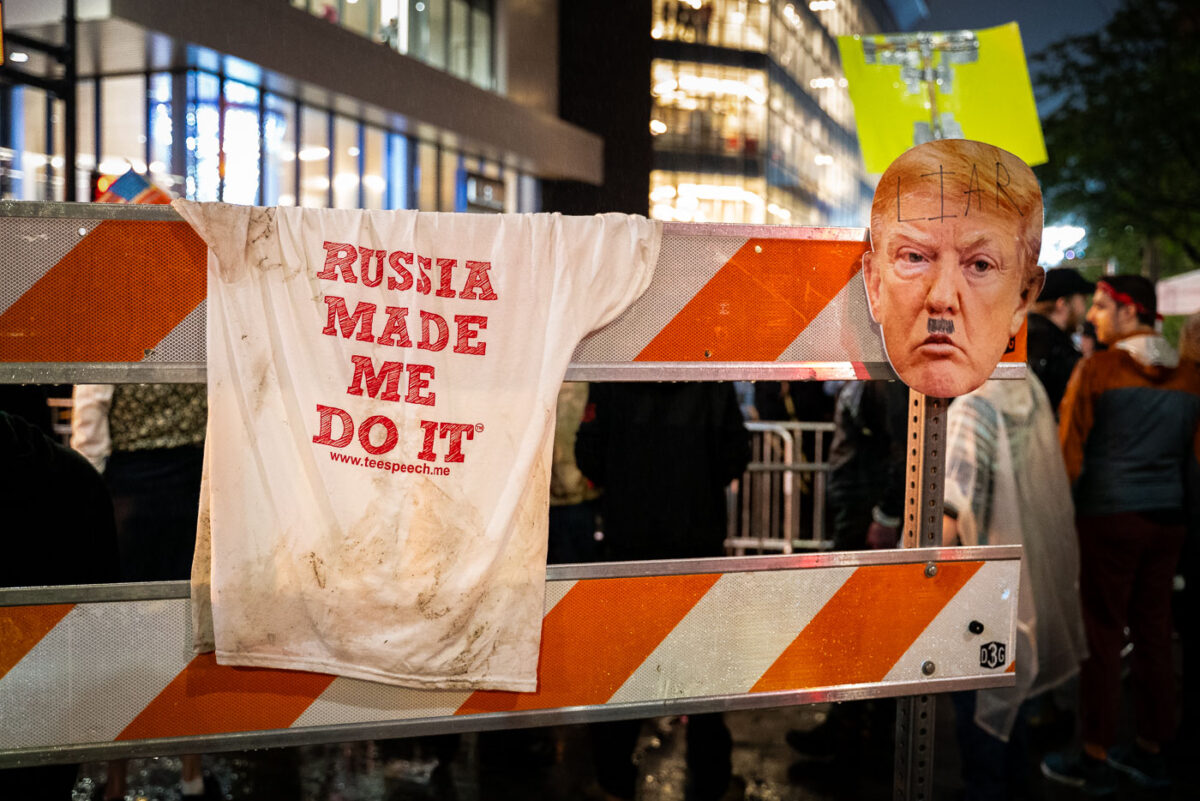
October 2019 — A barricade outside the Target Center in downtown Minneapolis displays a T-shirt reading “Russia Made Me Do It” and a defaced cutout of Donald Trump’s face during protests on October 10, 2019. The demonstration coincided with Trump’s campaign rally at the arena, his first visit to Minnesota since the release of the Mueller report. Thousands of protesters gathered in the streets of the Warehouse District, voicing opposition to the president’s rhetoric and policies amid a heavy police presence and national media attention.
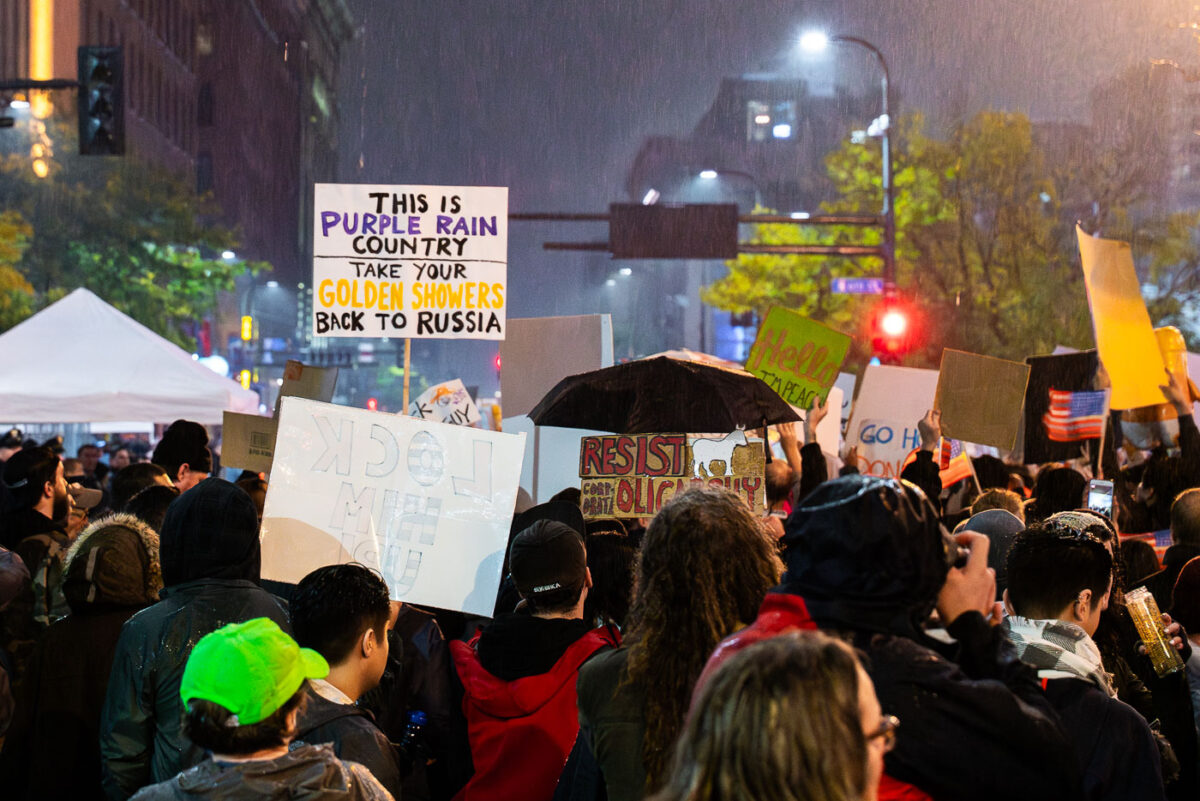
October 2019 — Protesters fill the intersection near the Target Center in downtown Minneapolis during Donald Trump’s campaign rally on October 10, 2019. Demonstrators carried homemade signs, including one reading “This is Purple Rain Country—Take Your Golden Showers Back to Russia,” referencing Minnesota’s musical icon Prince and the controversies surrounding Trump’s presidency. The rally drew thousands of protesters and supporters alike, marking one of the city’s largest political demonstrations since the 2016 election.
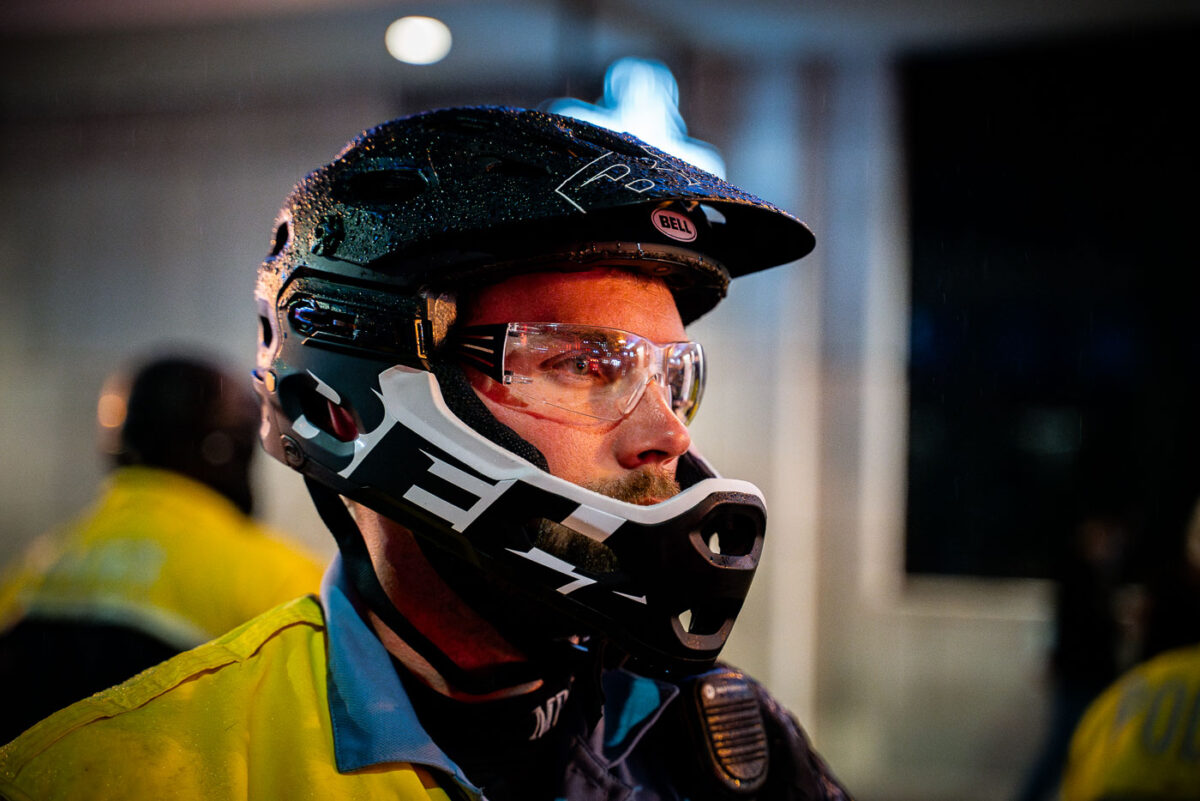
October 2019 — A Minneapolis Police officer wearing a helmet at a Donald Trump rally in Minneapolis on October 10, 2019.
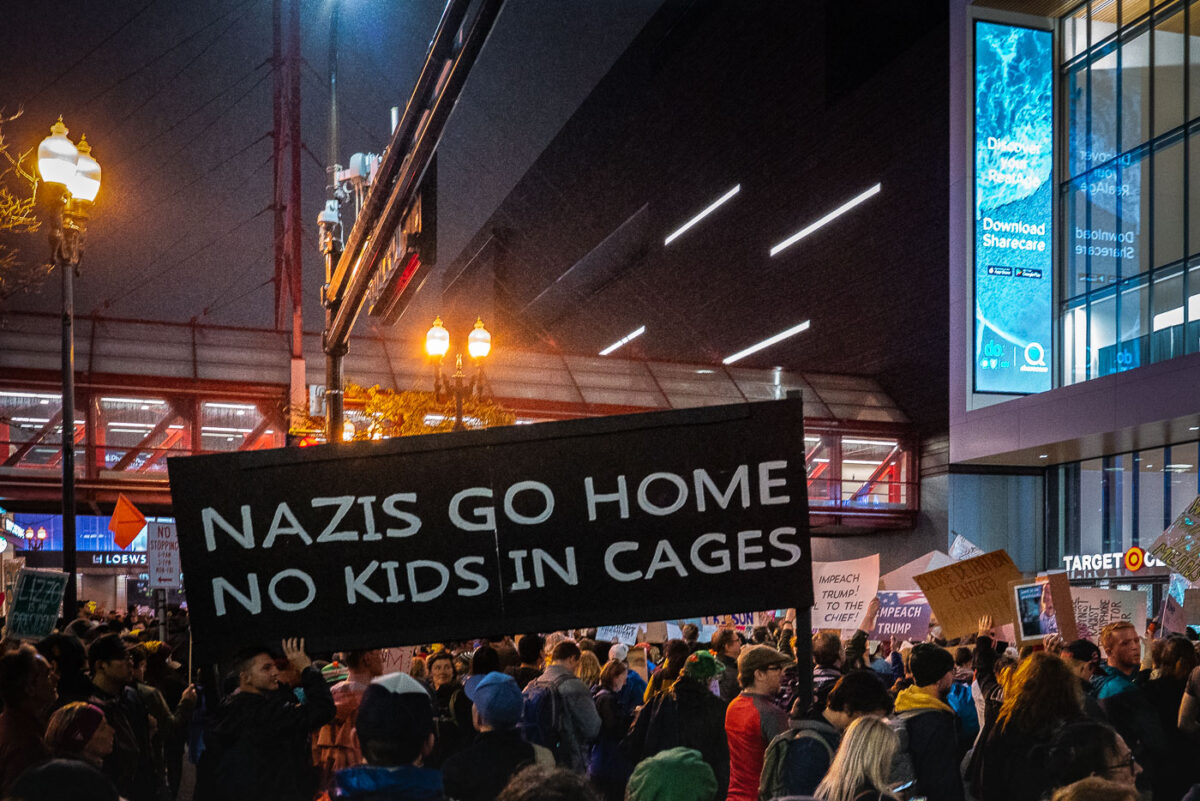
October 2019 — Crowds gathered outside the Target Center in downtown Minneapolis on October 10, 2019, during a Donald Trump campaign rally. Protesters held signs denouncing the administration’s immigration policies and far-right extremism, including one reading “Nazis Go Home – No Kids in Cages.” The event drew thousands of demonstrators and marked one of the city’s largest public displays of opposition during Trump’s presidency.
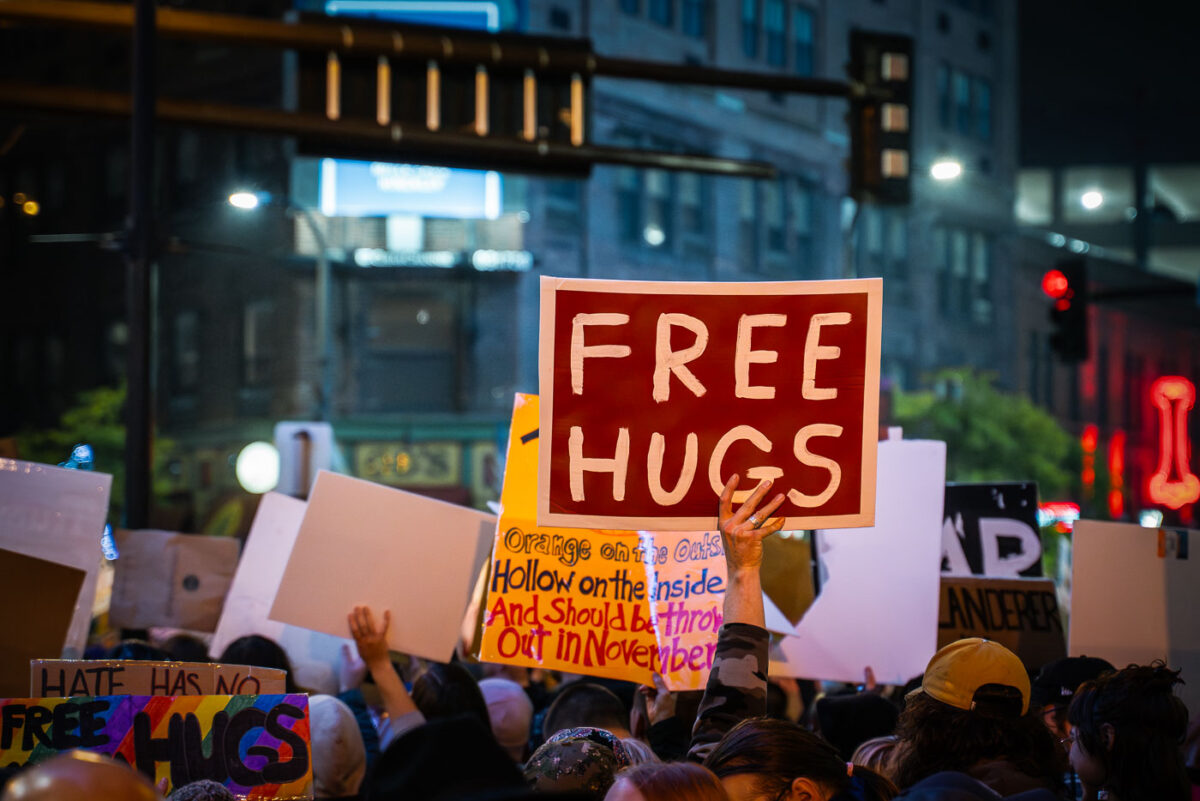
October 2019 — A protester holds a “Free Hugs” sign amid a large demonstration outside the Target Center in Minneapolis on October 10, 2019. The event coincided with Donald Trump’s campaign rally, drawing thousands who gathered in the rain to voice opposition to his administration’s rhetoric and policies. Despite the tense political atmosphere, moments of solidarity and humor emerged throughout the crowd.
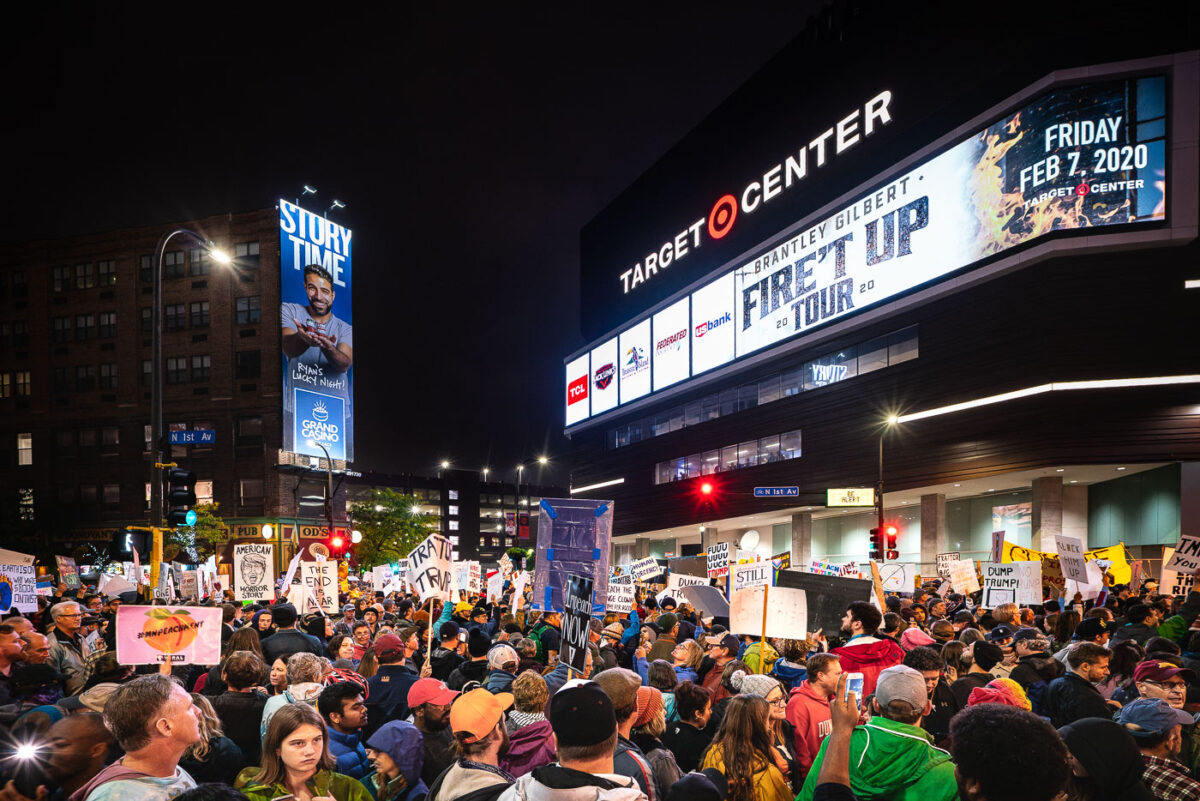
October 2019 — Protesters hold up signs outside the Target Center in downtown Minneapolis. The site of a Trump campaign rally on October 10, 2019.
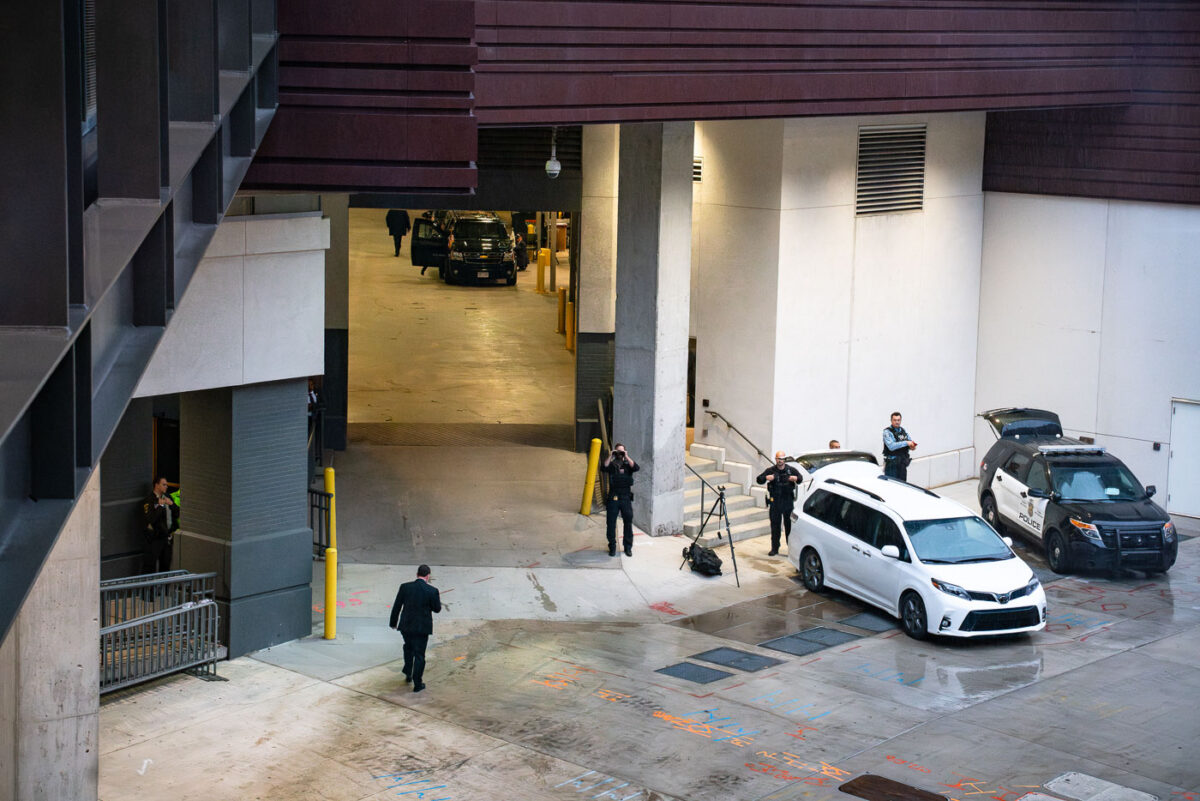
October 2019 — Secret Service looking through binoculars outside the Target Center in Minneapolis on October 10, 2019. He awaits the Presidential motorcade.
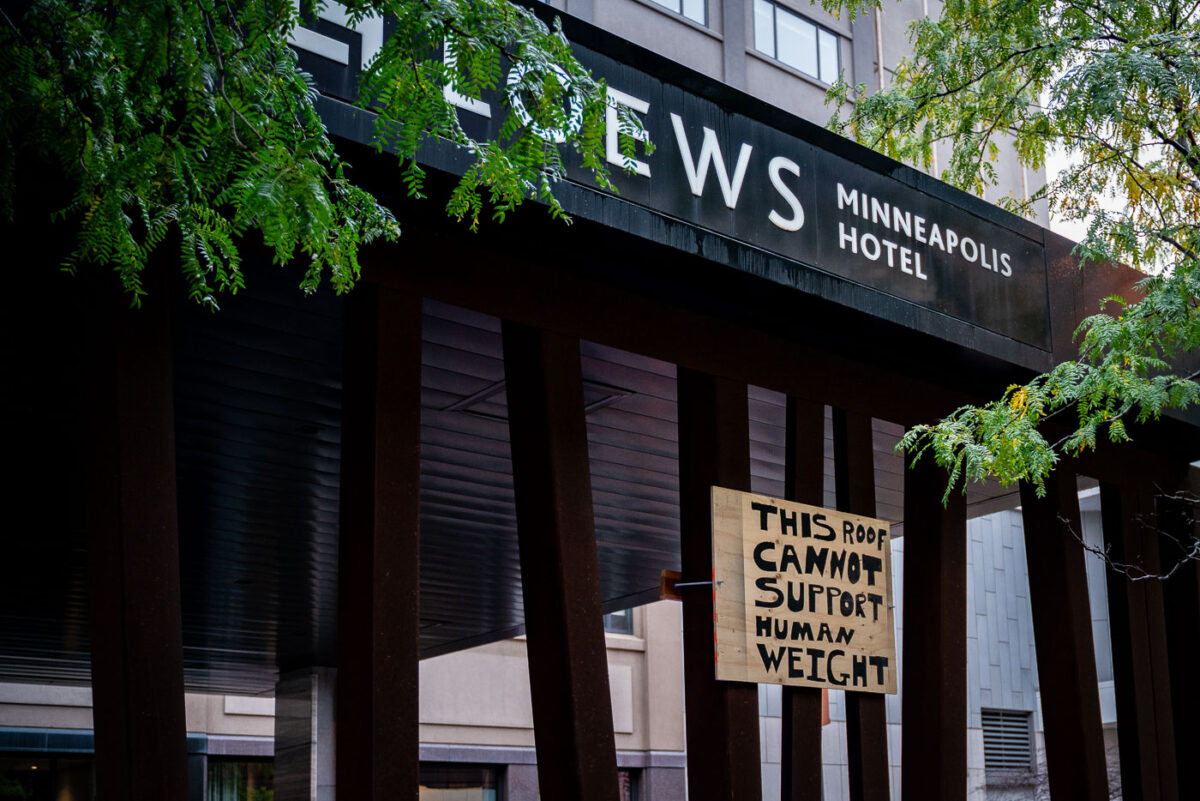
October 2019 —
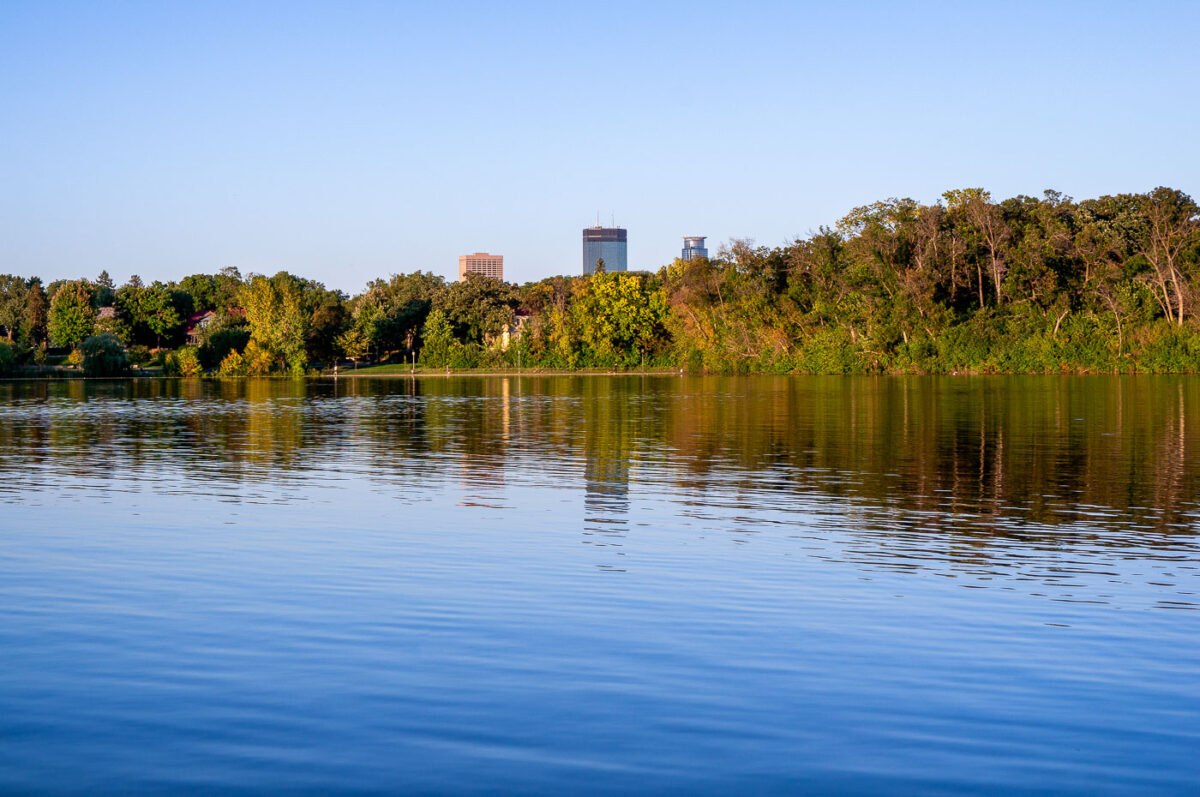
September 2019 — IDS Center in Downtown Minneapolis visible from Lake of the Isles.
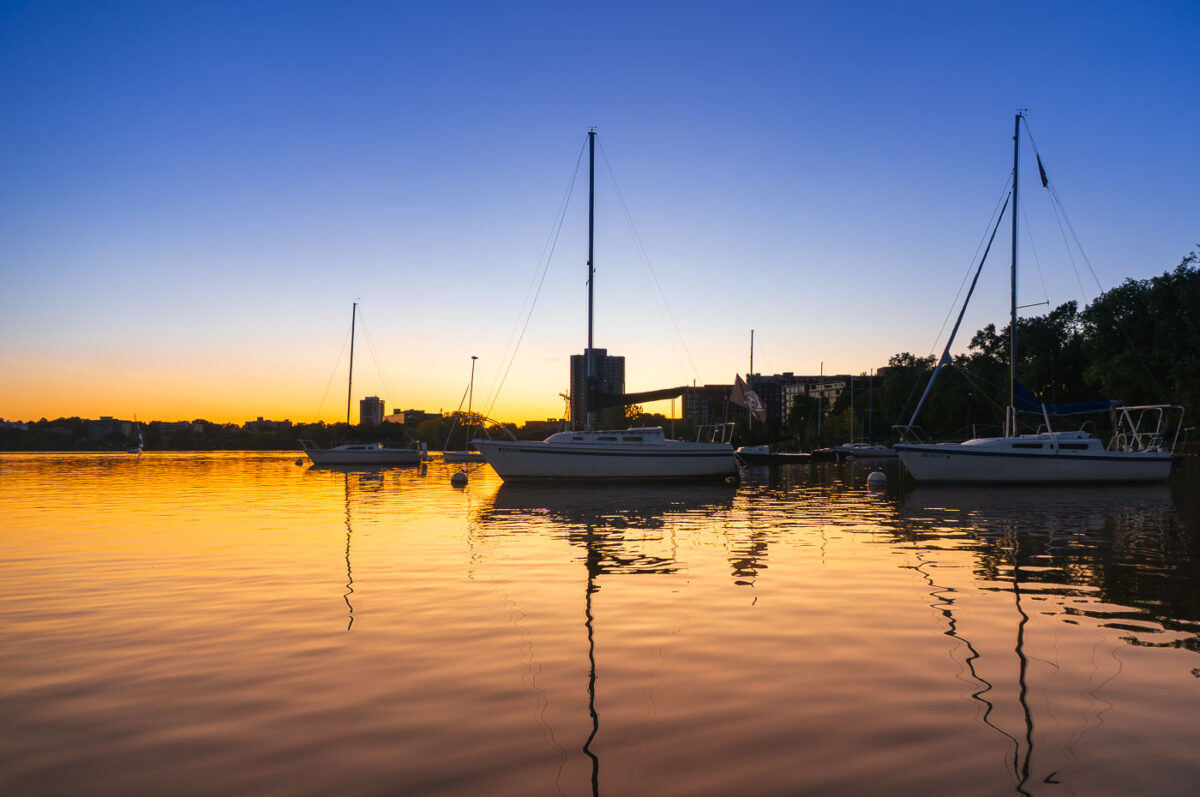
September 2019 — Sunset over Bde Maka Ska in Minneapolis, MN. Formerly named Lake Calhoun.