Art

258 photos · 2012–2026

258 photographs tagged Art, 2012–2026.

Peterson’s House of Balls in Minneapolis, Minnesota, filled with sculptures, masks, and found objects.
Peterson’s House of Balls in Minneapolis, Minnesota, is an art installation created by Lee “Peterson” House. The private space combines found objects, sculptures, masks, and memorabilia in an eccentric indoor assemblage. It has long been known as one of Minneapolis’s most unusual artist-built interiors.

Peterson’s House of Balls, Minneapolis

HOTTEA yarn installation on a chain-link fence in Minneapolis.
HOTTEA yarn installation in Minneapolis. The temporary site-specific work uses stretched yarn on a chain-link fence near downtown, where the artist regularly creates ephemeral public art in unexpected places.

HOTTEA yarn installation, Minneapolis
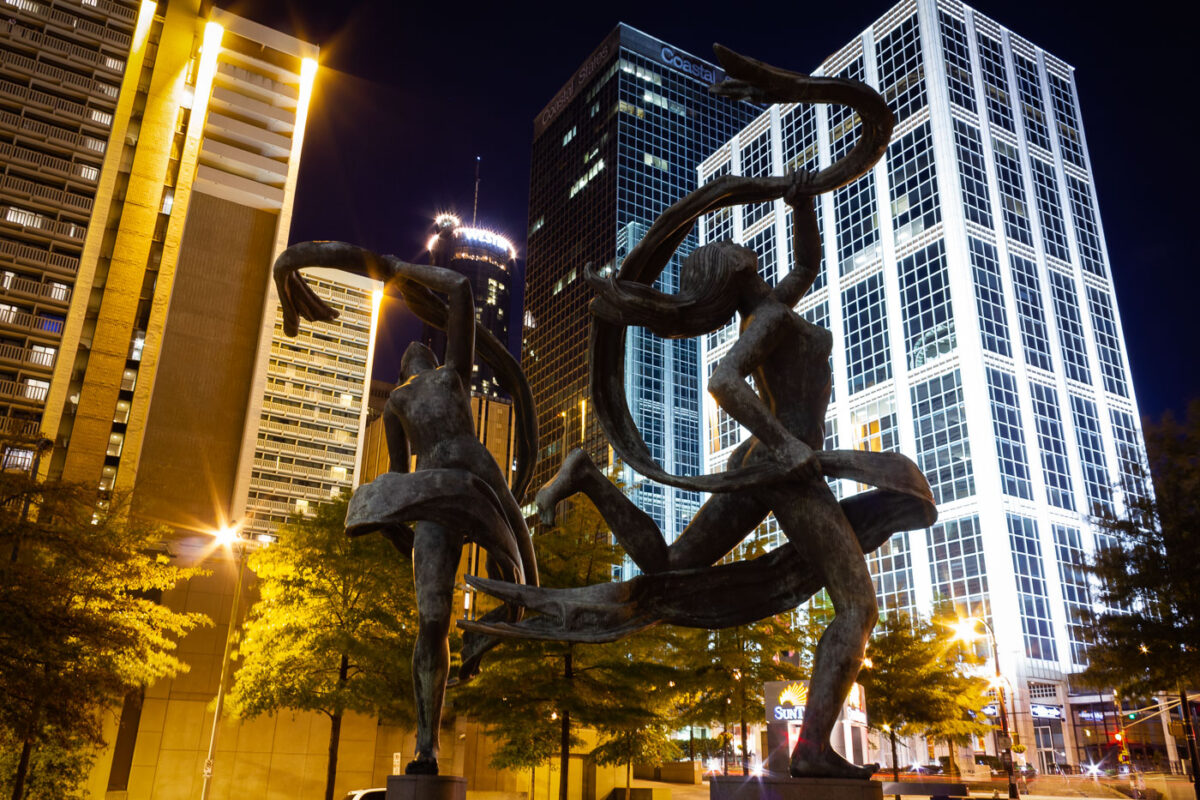
Bronze Dance sculpture by John Seward Johnson II in Centennial Olympic Park, Atlanta, at night.
The bronze "Dance" sculpture, by J. Seward Johnson II, stands in Centennial Olympic Park in downtown Atlanta. The park opened in 1996 as the gathering place for that year's Summer Olympics and spans 21 acres. The Bank of America Plaza tower, at 1,023 feet the tallest building in the Southeast, stands nearby.

“Dance” Sculpture Against the Atlanta Skyline
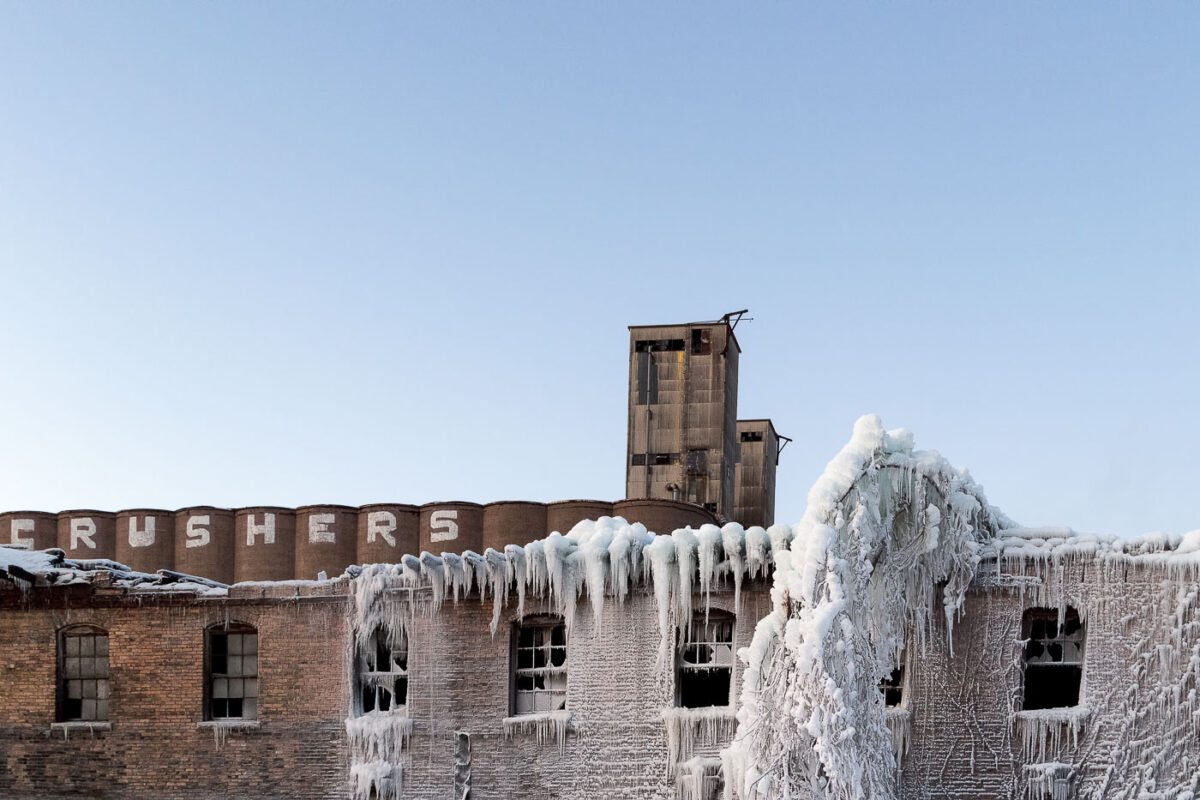
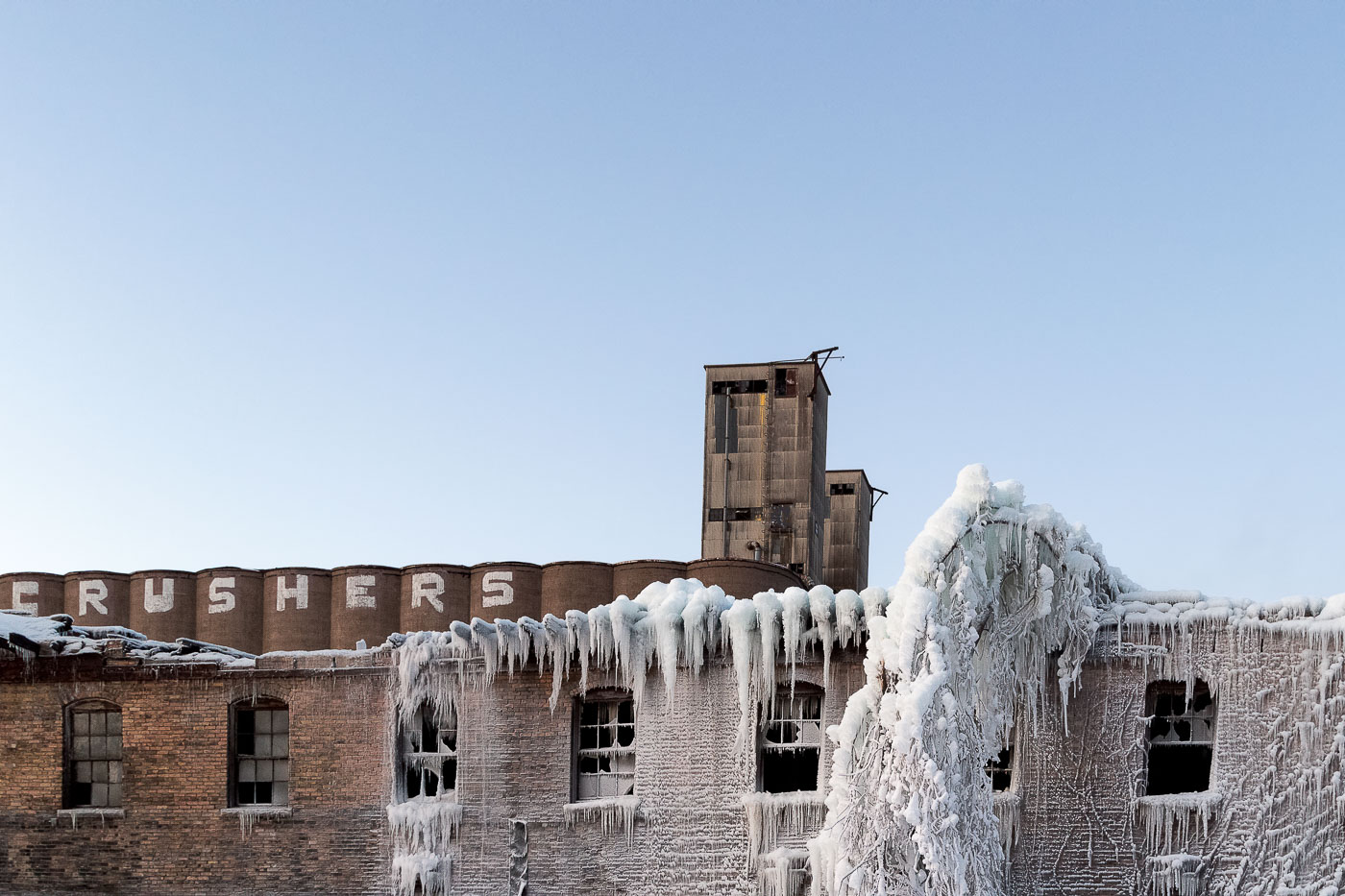
The ADM Grain Elevator and Harris Machinery buildings in Minneapolis's Prospect Park show fire damage and ice accumulation. The ADM silos are marked "CRUSHERS".
The ADM Grain Elevator and Harris Machinery buildings in Prospect Park, Minneapolis, show extensive ice and snow accumulation following a significant fire. The fire gutted the interior of the Harris Machinery structure, leaving its exterior heavily damaged and encased in ice.

ADM Grain Elevator and Harris Machinery Fire Damage, Prospect Park, Minneapolis
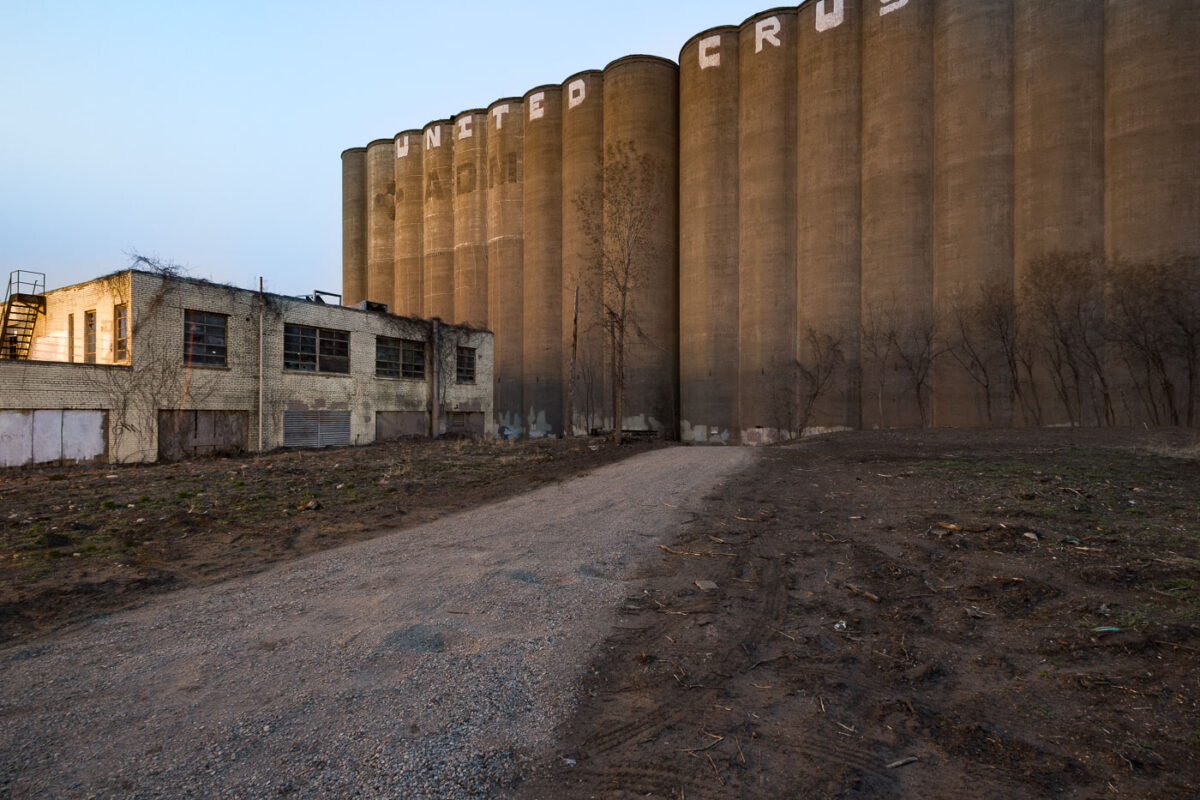
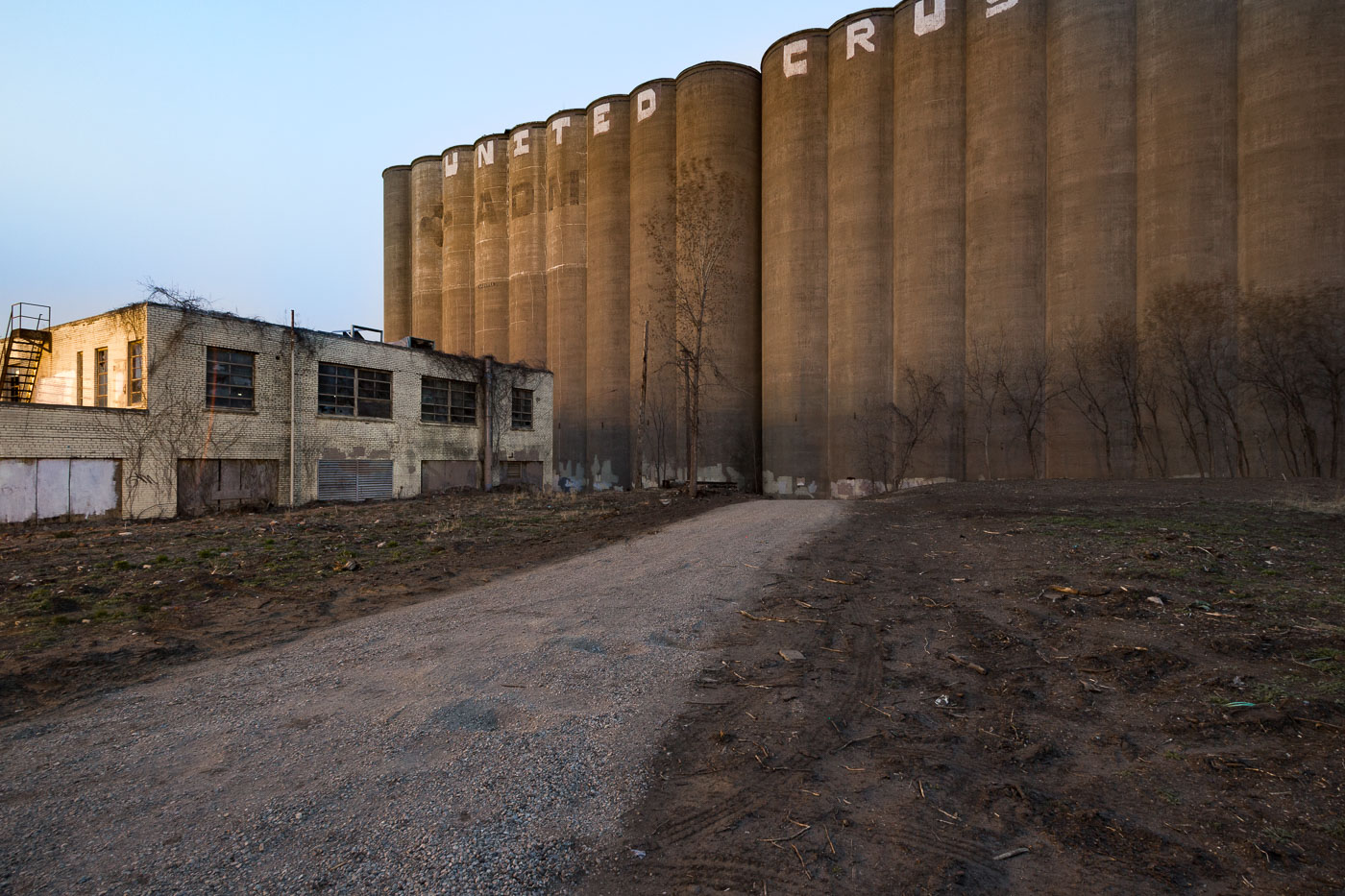
Abandoned ADM grain elevator complex in Dinkytown, Minneapolis, with "UNITED CRUSHERS" branding on silos.
The abandoned ADM grain elevator complex in Dinkytown, Minneapolis, stands as a relic of the city's industrial past. Originally part of the Pillsbury Company's operations, these concrete silos were constructed to store and process grain.

Abandoned ADM Grain Elevator, Dinkytown, Minneapolis
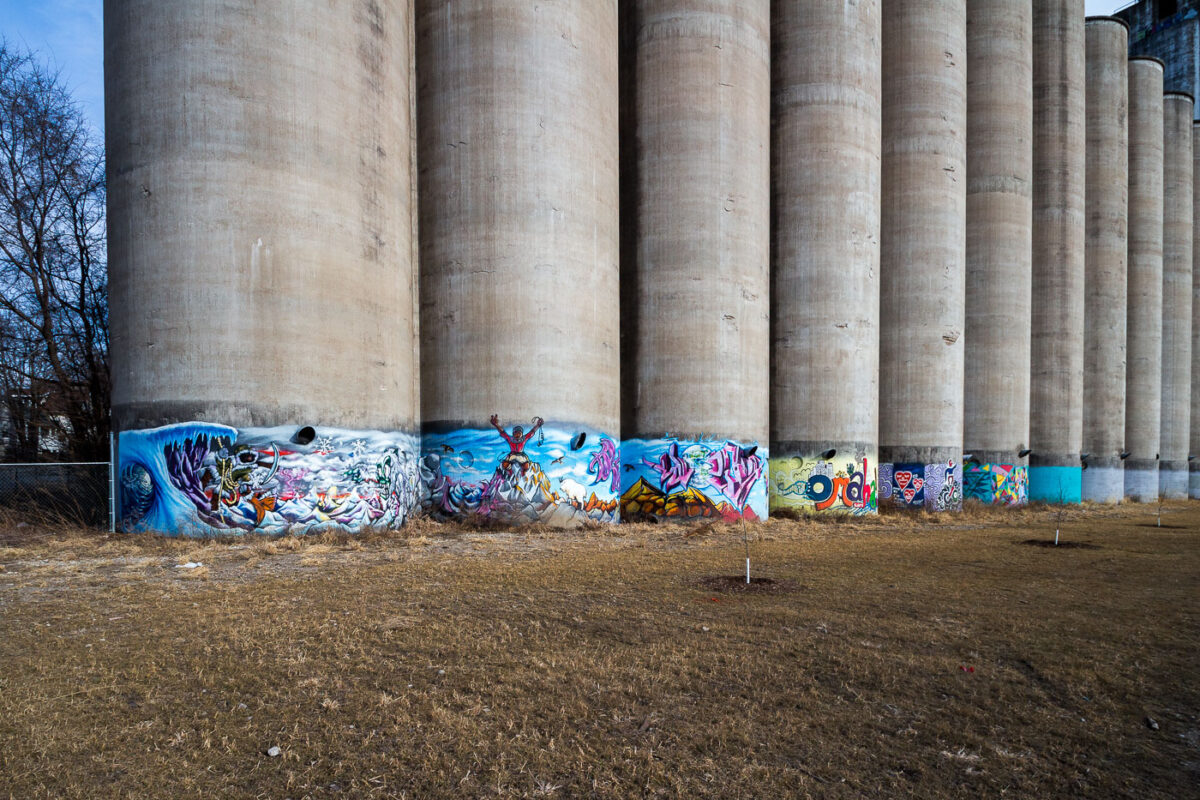
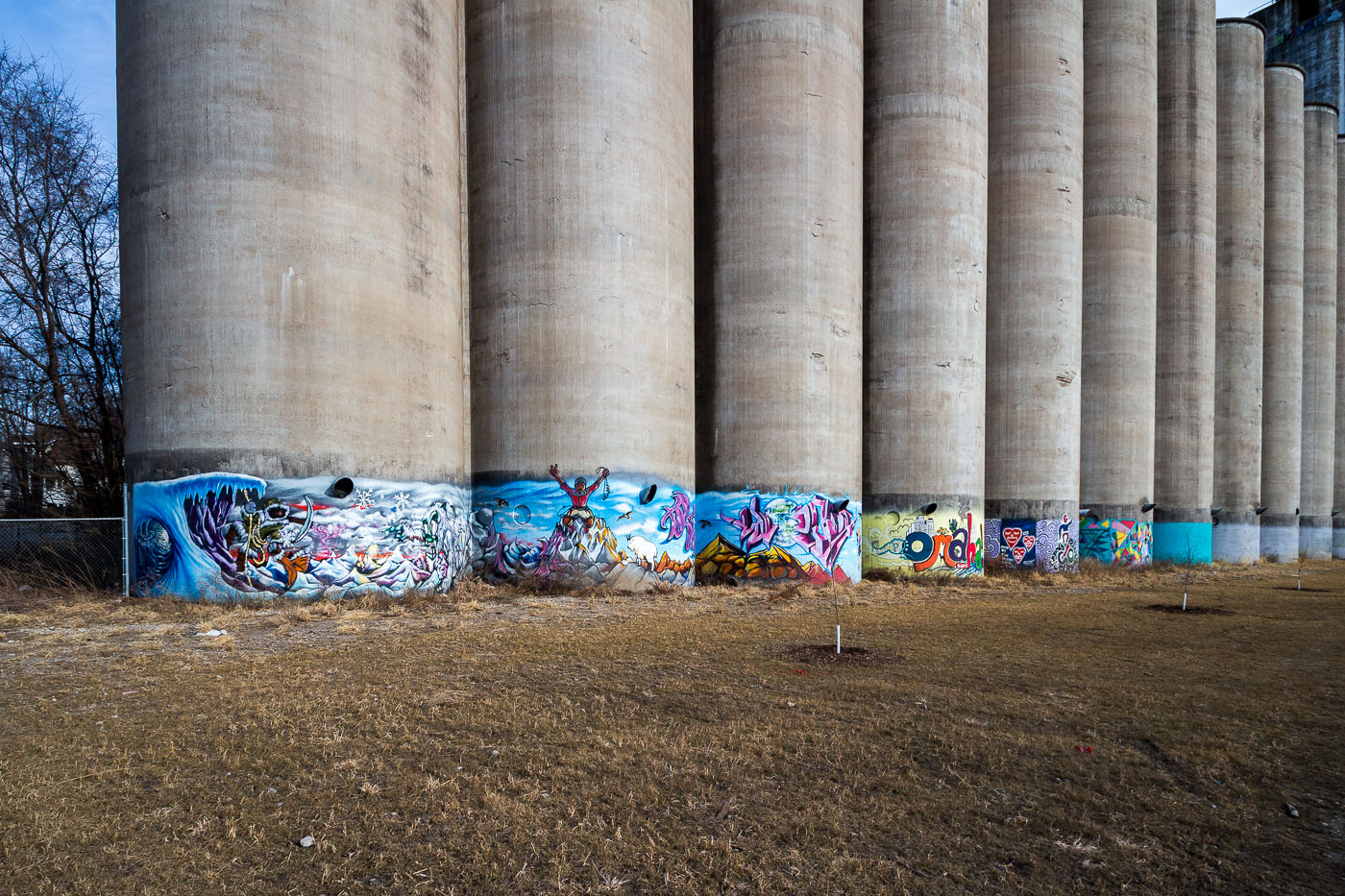
Colorful graffiti murals cover the base of concrete grain silos in Omaha, Nebraska.
Grain silos like these once stored the harvests that made Omaha a major hub of the Midwest grain trade, their concrete columns built tall and round to resist the outward pressure of stored grain.

Mural-Covered Grain Silo Bases in Omaha
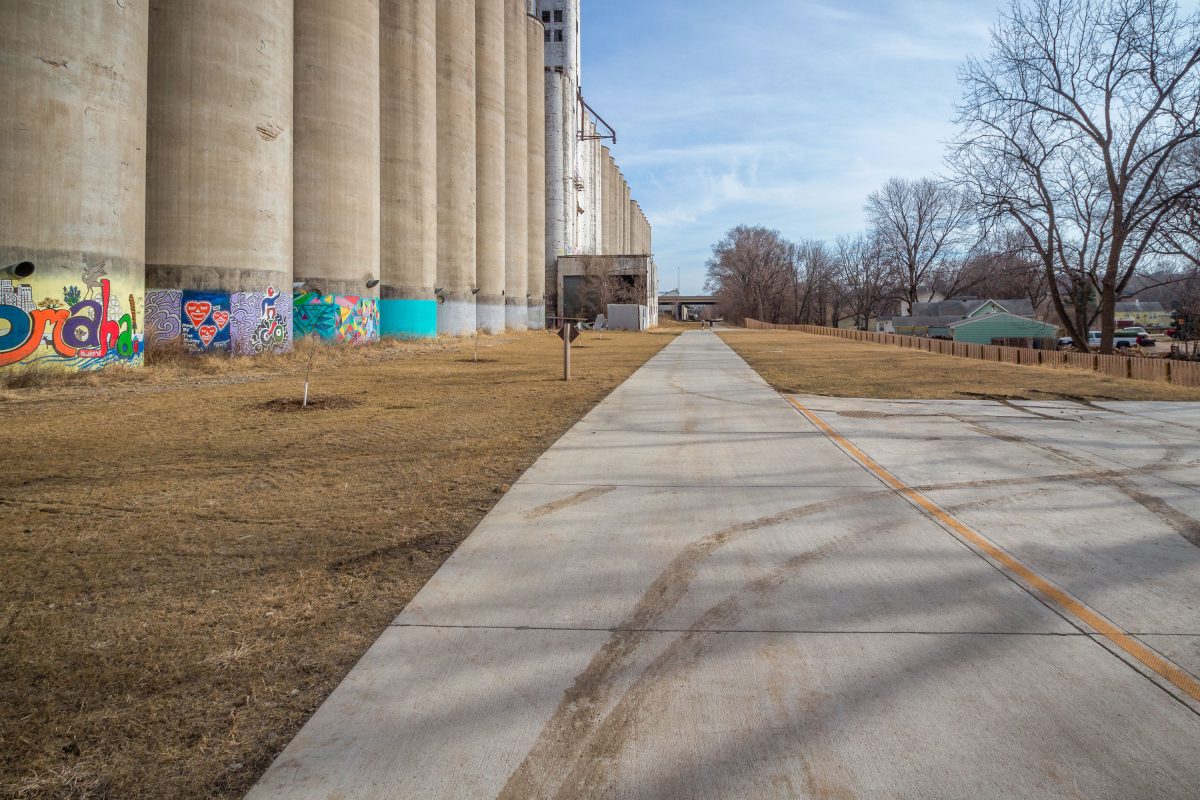
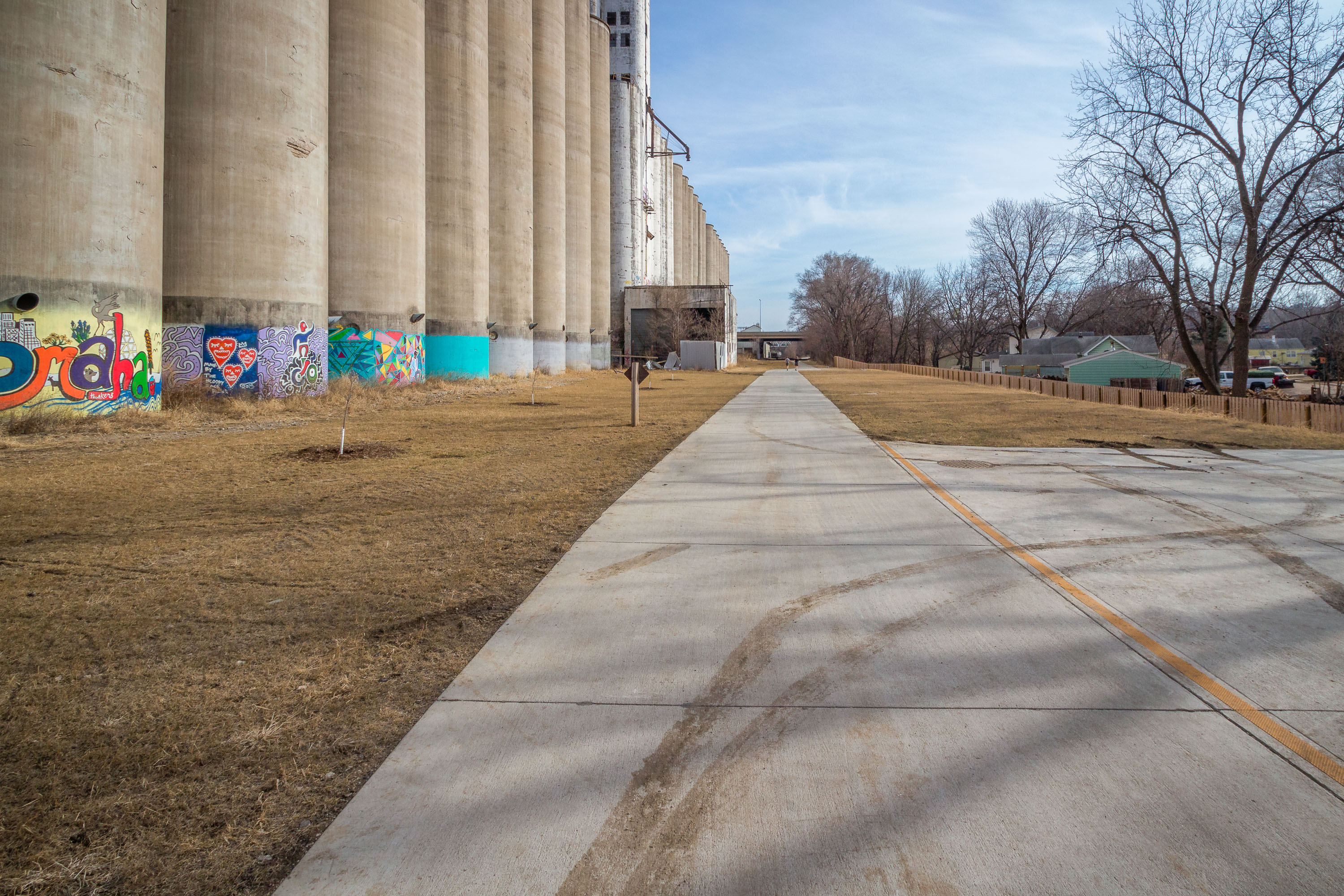
Paved South Omaha Trail runs past concrete grain silos with colorful graffiti murals at their base in Omaha, Nebraska.
Grain elevator silos like these once stored corn and soybeans shipped through Omaha's rail and river networks, a trade that shaped the city's South Omaha industrial corridor through much of the 20th century.

Painted Silo Murals Along the South Omaha Trail
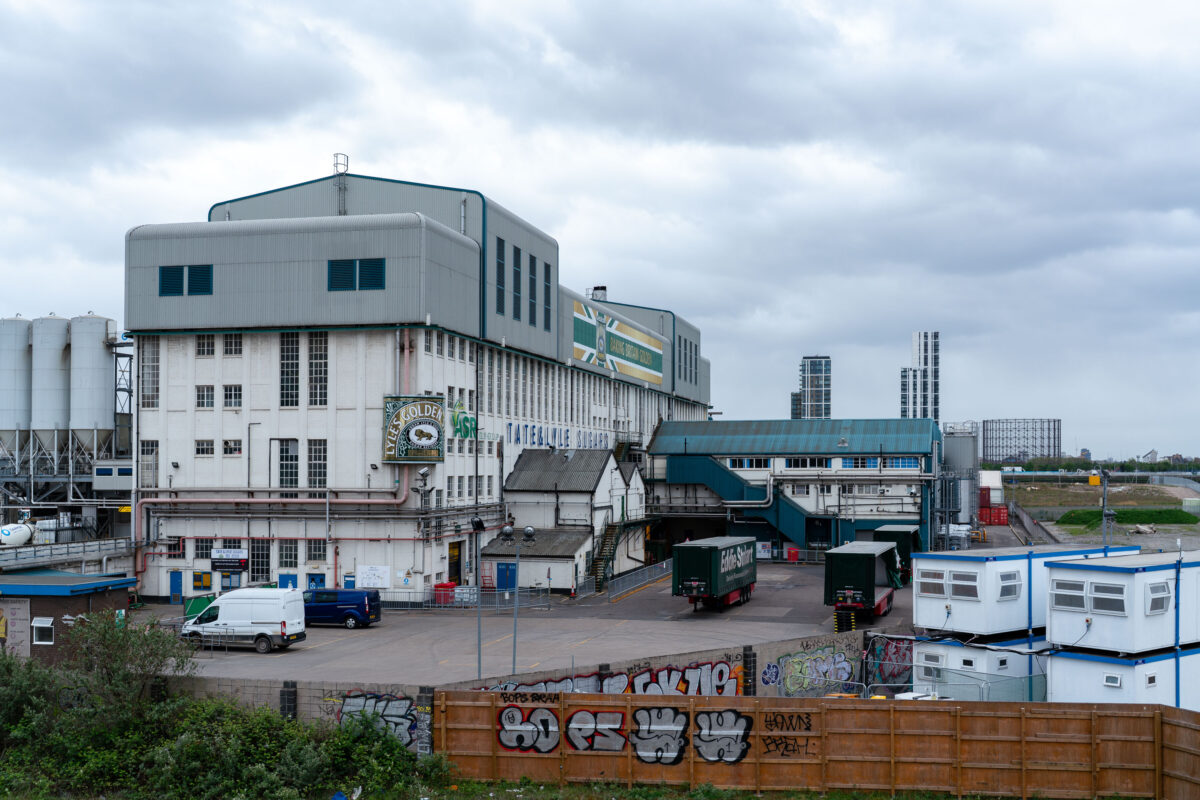
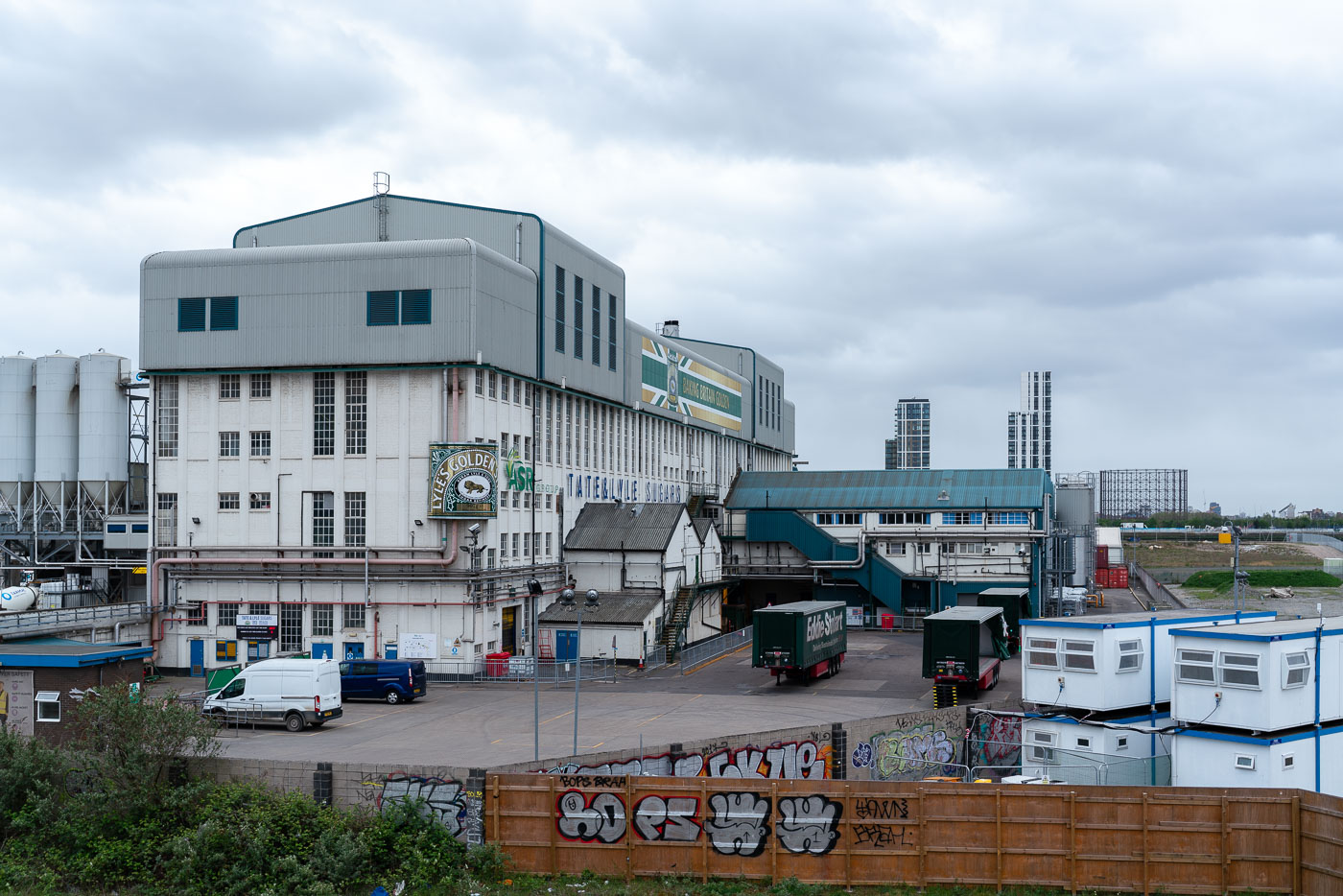
Tate & Lyle sugar refinery in Silvertown, London, with trucks and industrial buildings.
Tate & Lyle’s sugar refinery in Silvertown, east London, operates on the Royal Docks waterfront. The complex processes sugar and is associated with Lyle’s Golden Syrup, a product long linked to the site and its branding.

Tate & Lyle Sugar Refinery, Silvertown, London
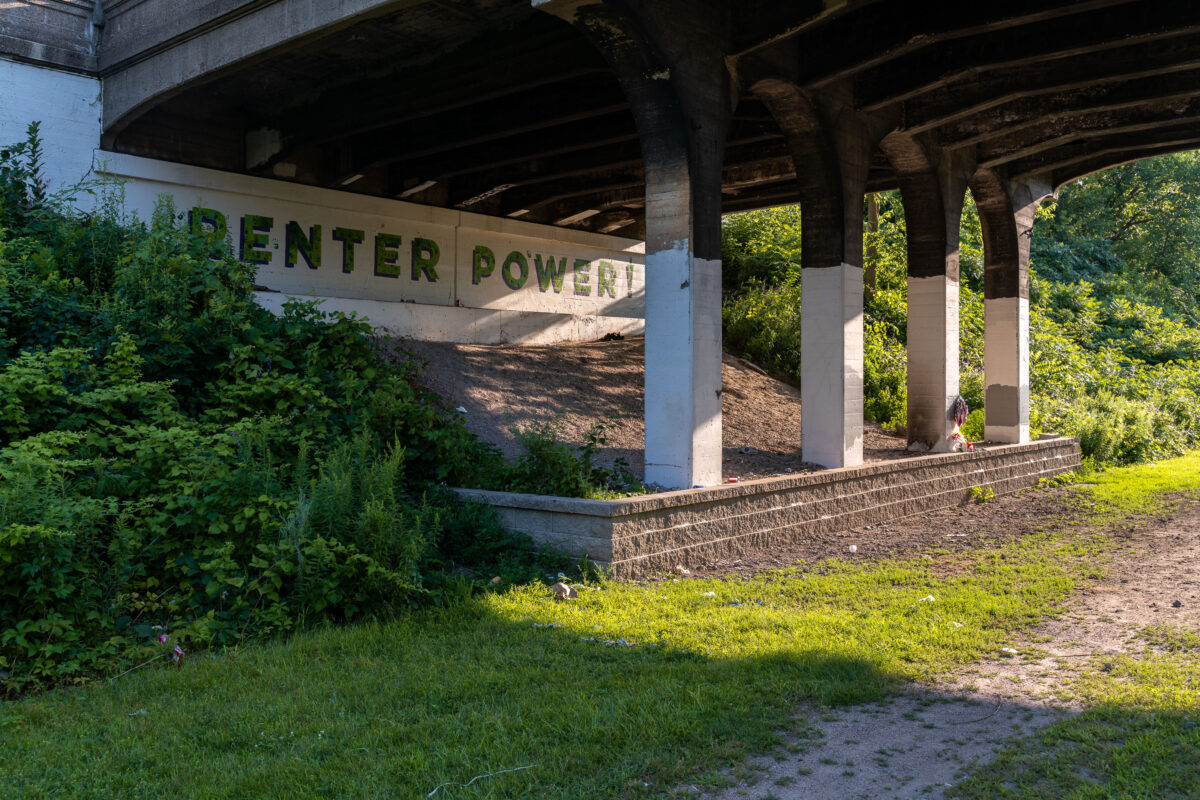
"Renter Power!" mural on a concrete retaining wall beneath the Midtown Greenway bridge in Minneapolis.
A mural proclaiming "Renter Power!" is visible on a concrete retaining wall beneath a bridge along the Midtown Greenway in Minneapolis. The Midtown Greenway is a 5.7-mile-long multi-use trail built on a former railroad corridor, popular with cyclists and pedestrians. The mural's message reflects advocacy for tenant rights and affordable housing.

“Renter Power” Mural Under a Bridge on the Midtown Greenway
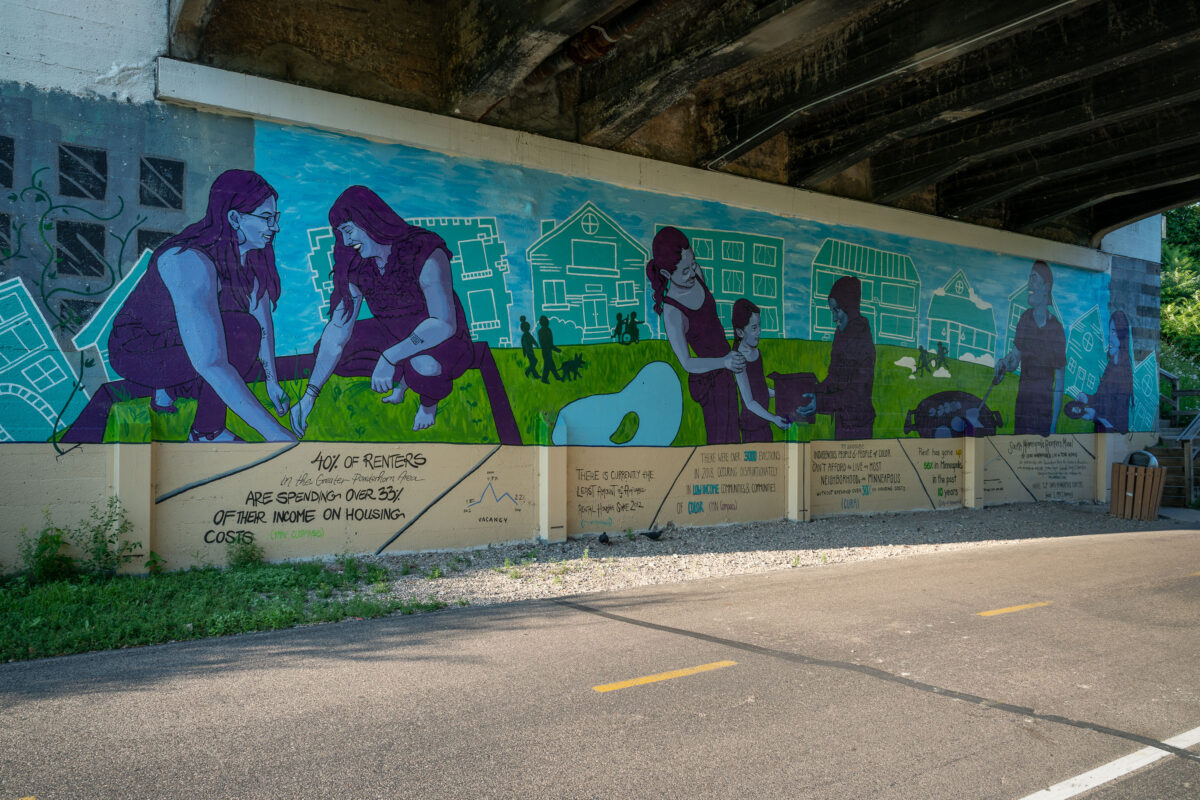
Mural by Cori Nakamura Lin and Tori Hong on Minneapolis's Midtown Greenway addressing housing affordability and renter statistics.
This mural, created by Cori Nakamura Lin and Tori Hong, is located on the Midtown Greenway in Minneapolis. The artwork addresses the issue of housing affordability, highlighting statistics about renters spending a significant portion of their income on housing and the disproportionate impact of evictions on low-income communities and communities of color. The Midtown Greenway is a 5.7-mile paved rail trail that runs through the city, serving as a vital corridor for cyclists and pedestrians.

Cori Nakamura Lin & Tori Hong Mural on Midtown Greenway, Minneapolis
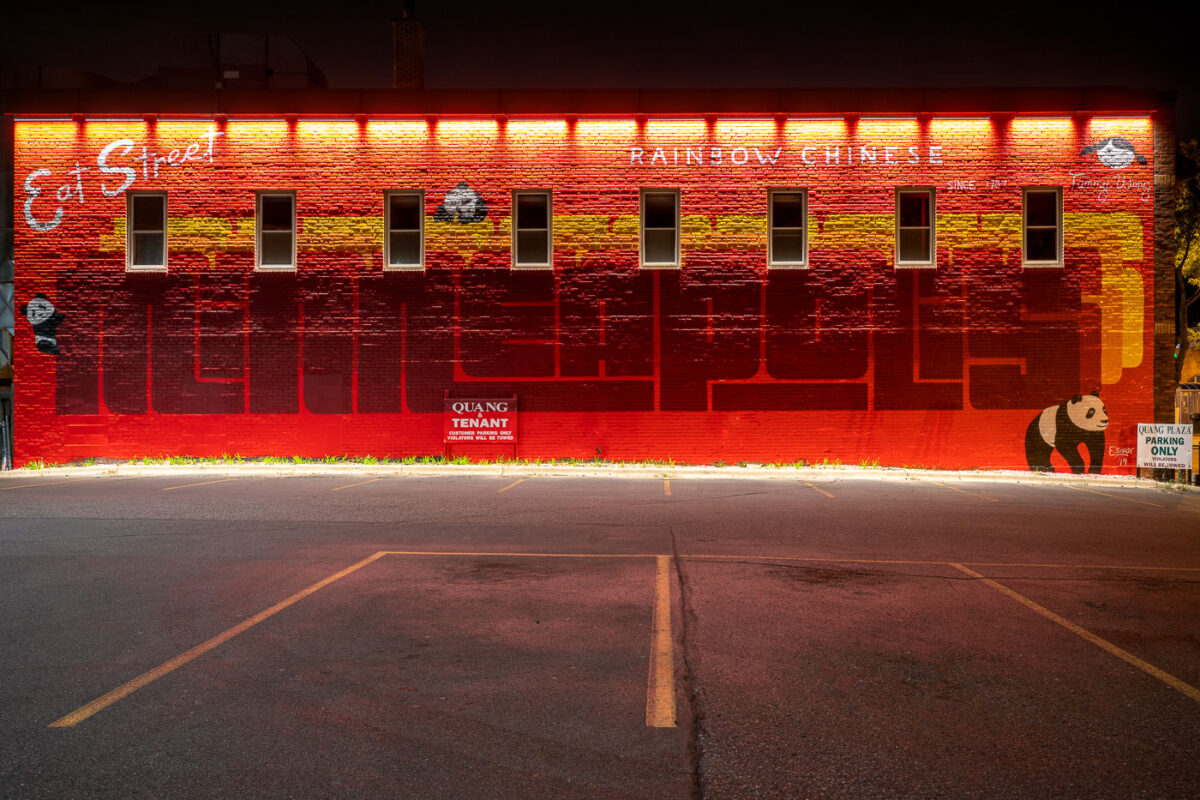
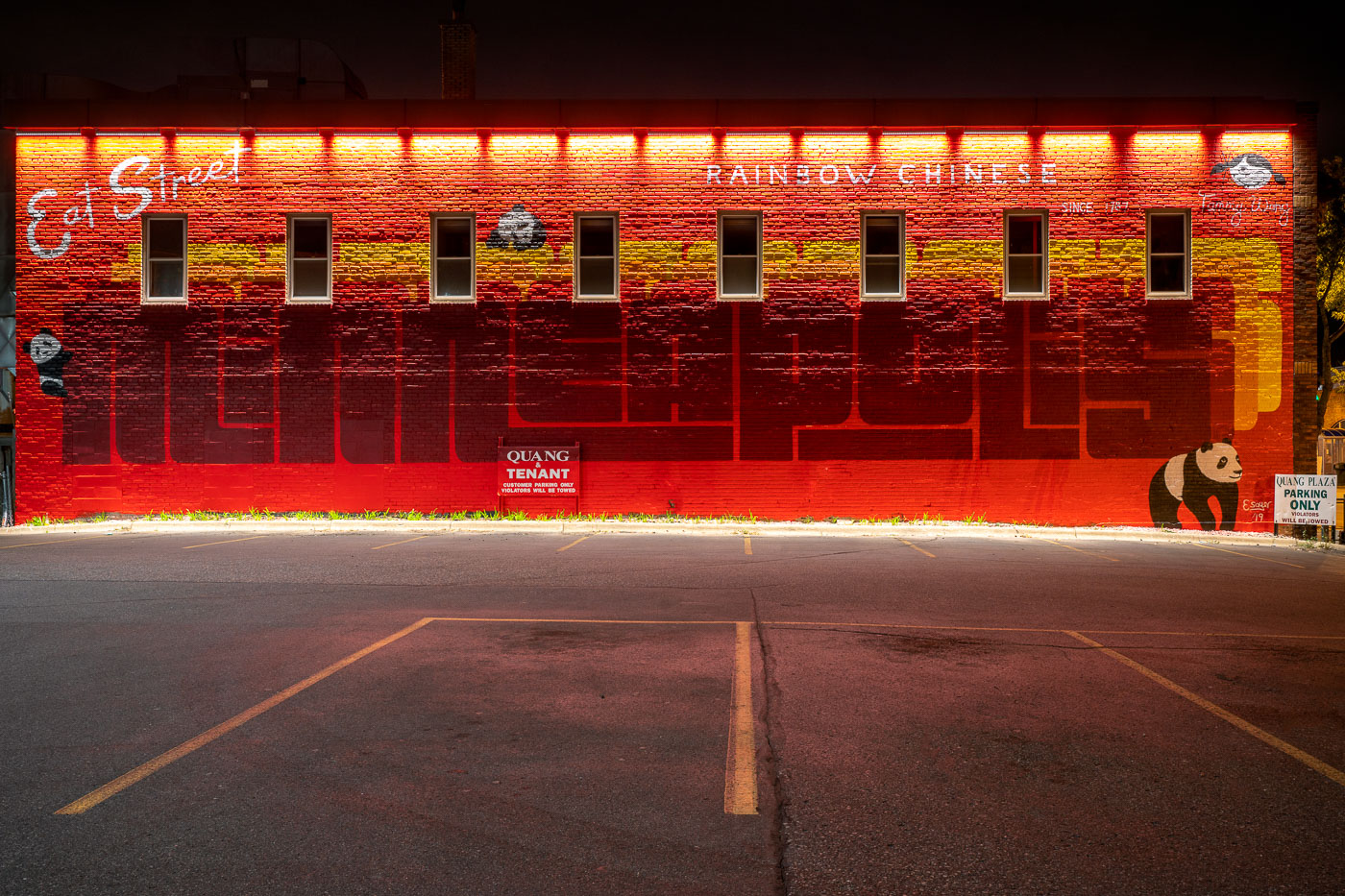
Rainbow Chinese Mural on Eat Street Minneapolis
The bright red mural on the side of Rainbow Chinese Restaurant at 2739 Nicollet Avenue anchors Minneapolis’s iconic “Eat Street” corridor. Painted in bold geometric letters spelling “Minneapolis,” the work was designed to celebrate the neighborhood’s cultural diversity and long history as a hub for immigrant-owned restaurants. The panda motif and stylized lettering nod to the restaurant’s founder, Tammy Wong, whose establishment has been a local fixture since 1987.

Rainbow Chinese Mural on Eat Street, Minneapolis
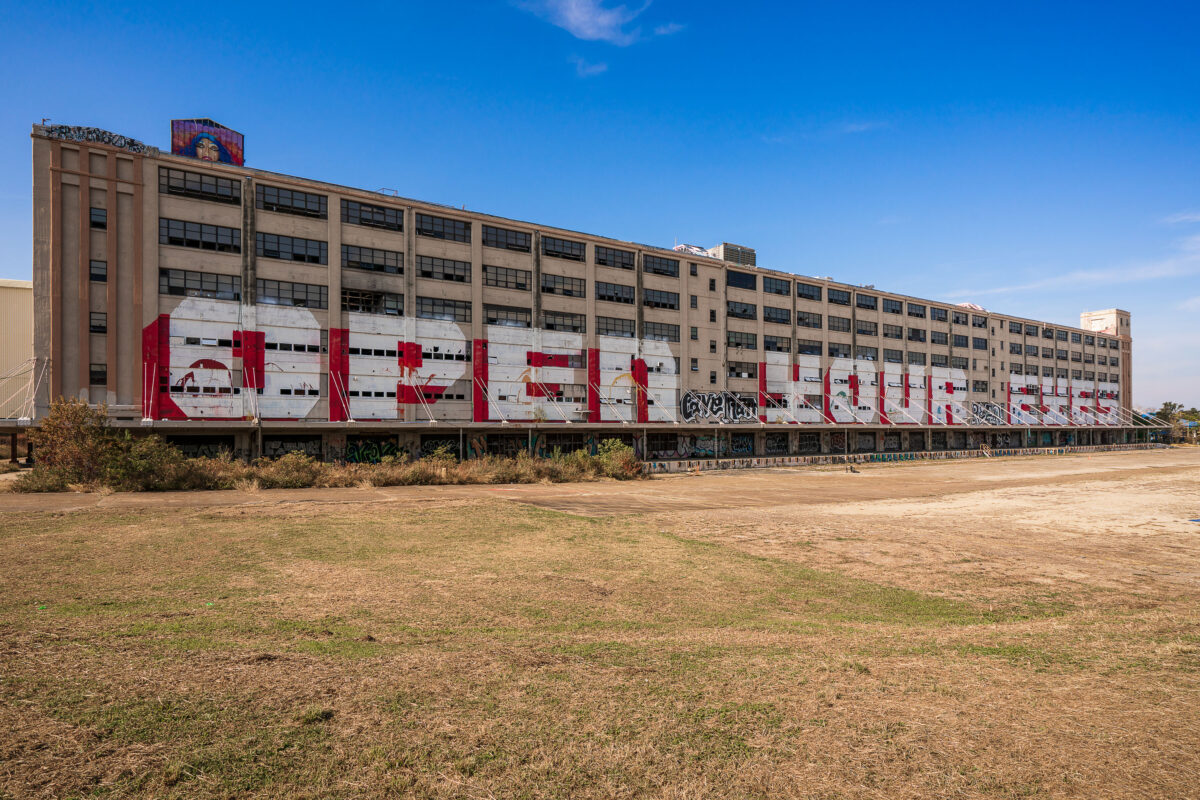
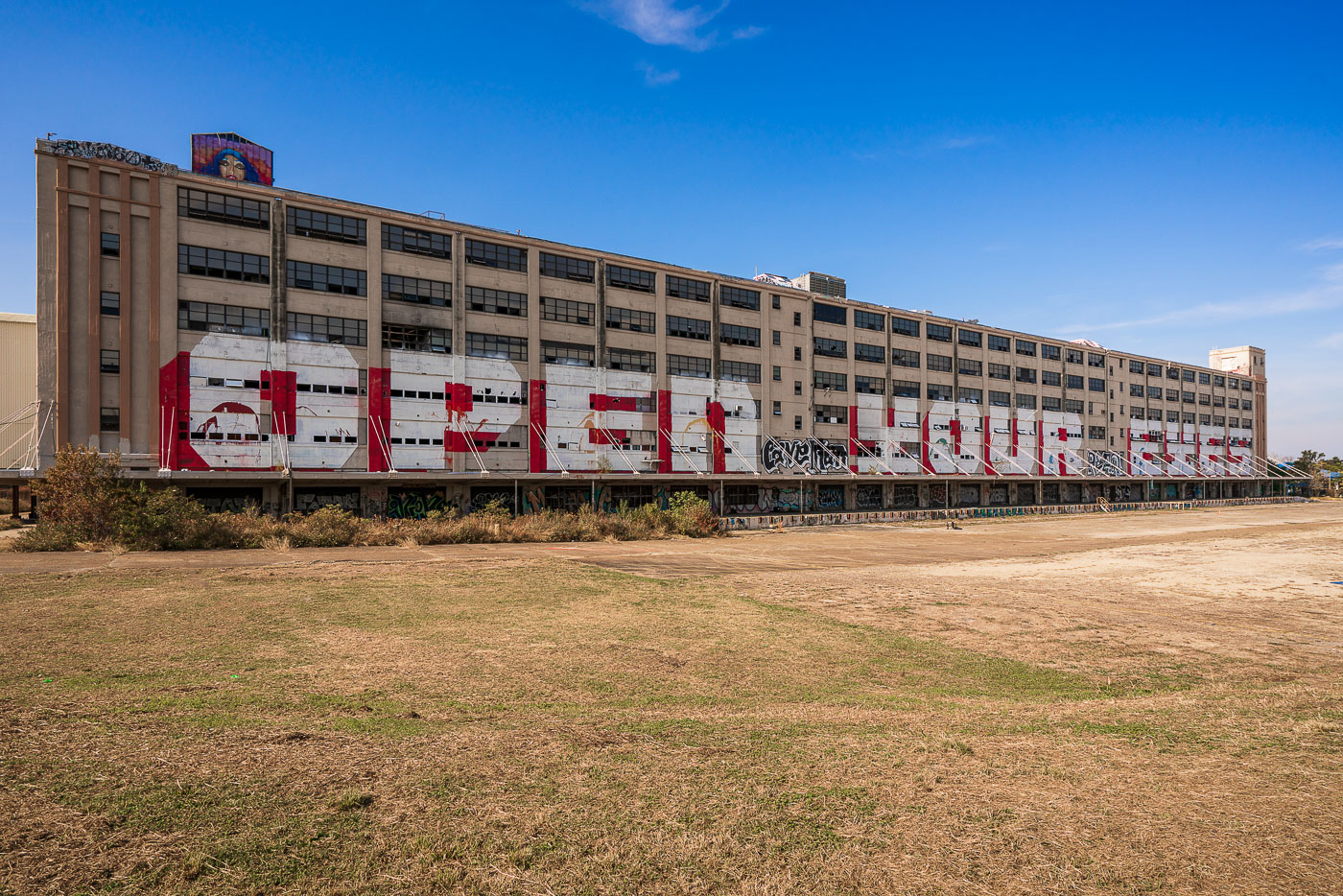
Large-scale red and white graffiti mural covers the facade of an abandoned Naval Support Activity warehouse in New Orleans.
Naval Support Activity New Orleans warehouse, New Orleans. The former military logistics building on the Mississippi River front has been covered with large-scale graffiti murals and tags. The base was decommissioned and has been awaiting redevelopment.

Large-Scale Graffiti Murals on the Naval Support Activity Warehouse
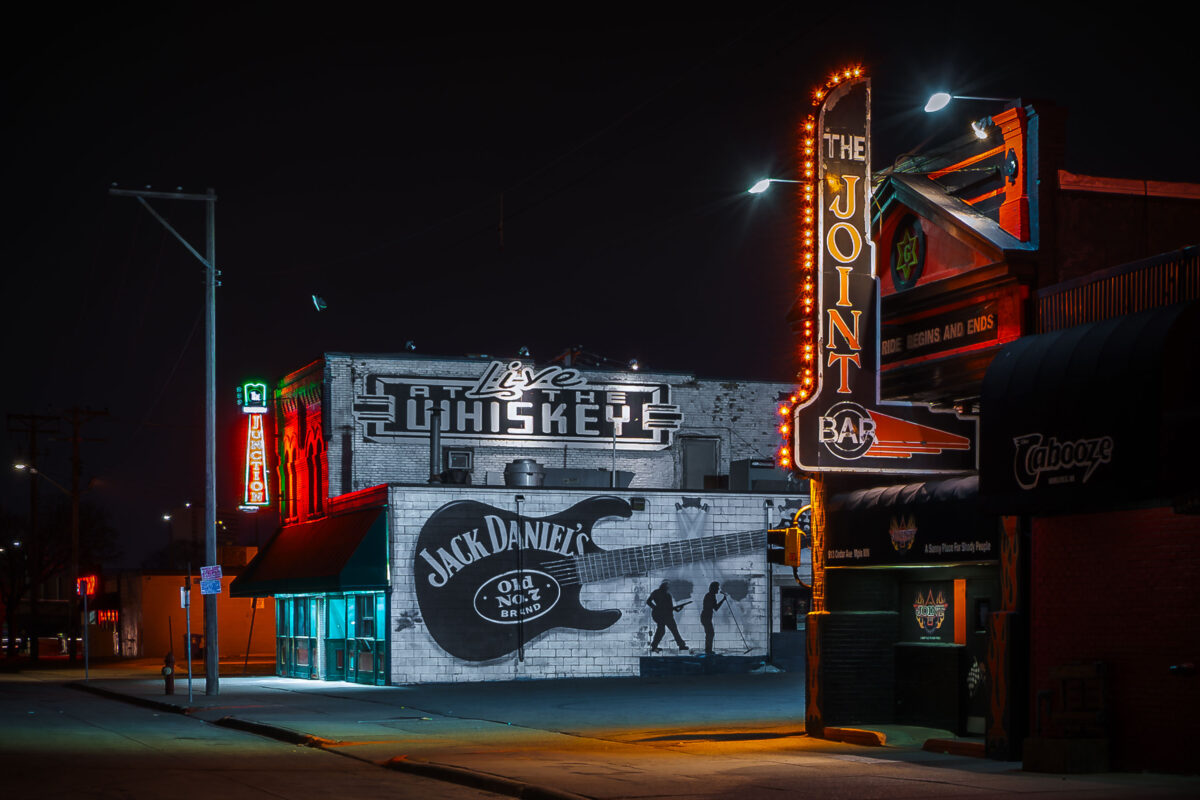
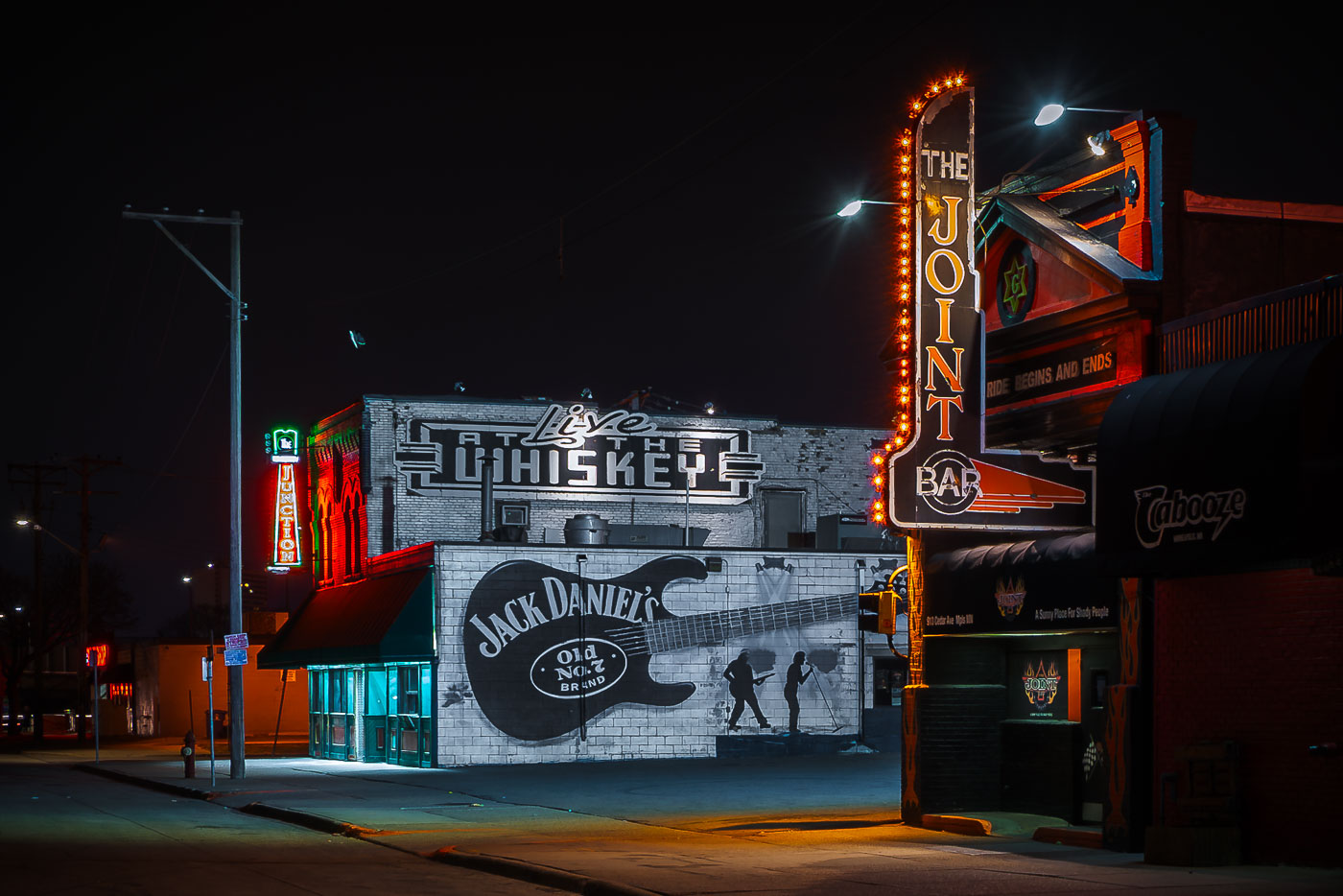
Jack Daniels guitar mural and neon signs illuminate Whiskey Junction nightclub on Cedar Avenue in Minneapolis.
Whiskey Junction sits on Cedar Avenue in the Cedar-Riverside neighborhood, a stretch long associated with live music venues near the University of Minnesota's West Bank. The building's side wall carries a large hand-painted mural advertising Jack Daniel's Old No. 7, styled around an electric guitar, alongside signage for "Live at the Whiskey." Next door, The Joint Bar and The Cabooze occupy the same block, part of a cluster of music clubs that has defined this stretch of Cedar Avenue for decades.

Whiskey Junction’s Jack Daniel’s Mural on Cedar Avenue
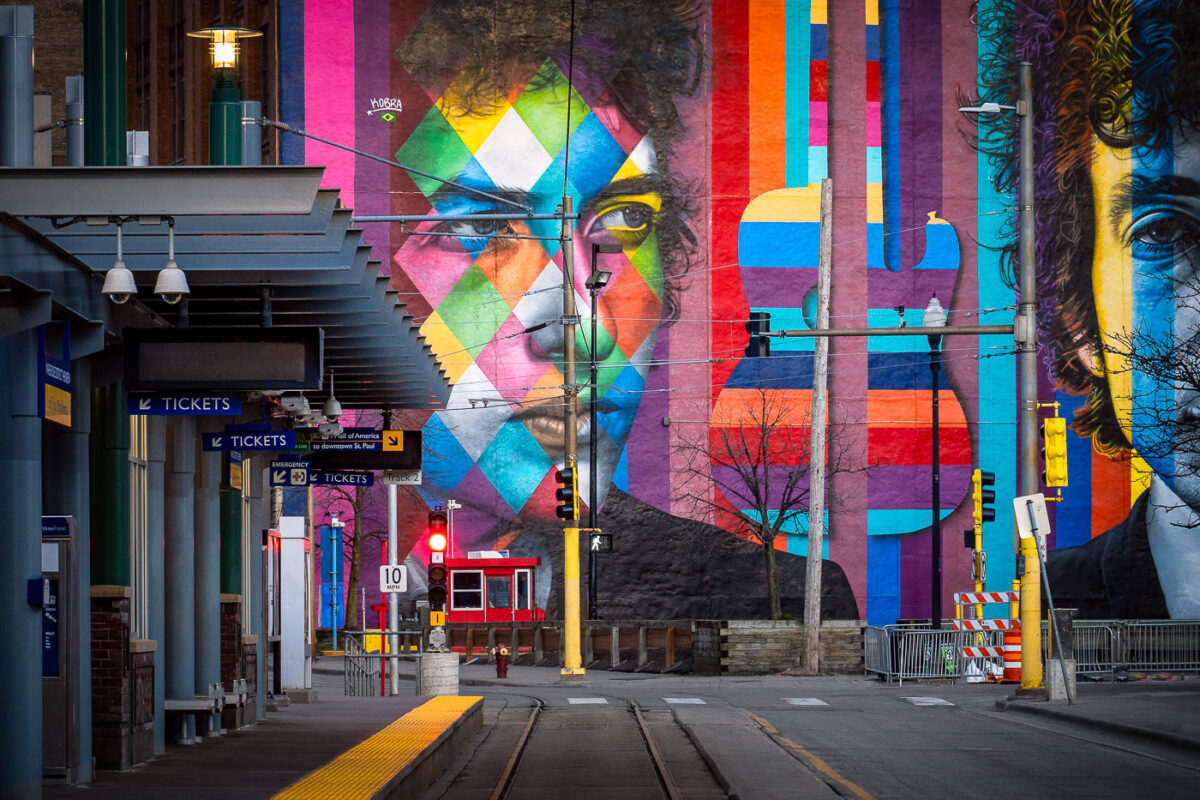
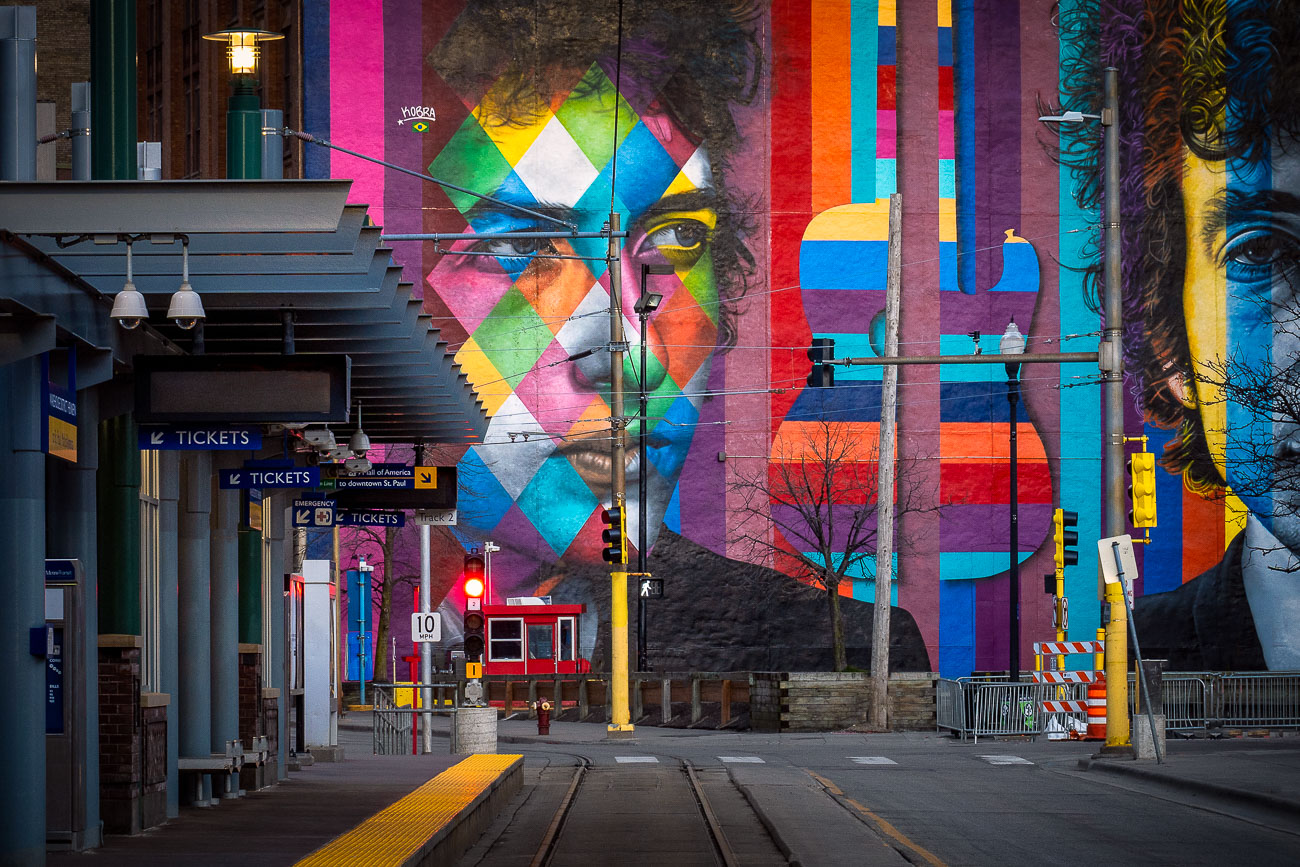
Eduardo Kobra's colorful Bob Dylan mural at Nicollet Mall station in downtown Minneapolis.
Eduardo Kobra painted this mural of Bob Dylan, titled "Face of Music," in 2015 for the Downtown Improvement District's Betsy-Ann Kane public art initiative. Brazilian street artist Kobra is known for his geometric, kaleidoscope-patterned portraits, which he has installed in cities worldwide. The mural covers roughly 90 feet of wall along the light rail corridor near Nicollet Mall Station, close to Hennepin Avenue in downtown Minneapolis. Dylan grew up in Hibbing, Minnesota, and began his music career in Dinkytown near the University of Minnesota before moving to New York in 1961.

Eduardo Kobra’s “Face of Music” Mural on Hennepin Avenue

Street artist painting a George Floyd portrait on boarded storefronts on Hennepin Avenue in Minneapolis.
A street artist paints a portrait of George Floyd on plywood boarding along Hennepin Avenue in Minneapolis on May 31, 2020. The temporary panels were installed over storefront windows after unrest and property damage following Floyd’s death in Minneapolis on May 25. Murals and memorial art appeared across the city during this period, using boarded facades as improvised public canvases.

Street Artist Painting George Floyd Portrait on Hennepin Ave

Woman painting "Black Lives" on the street at George Floyd Square in Minneapolis.
A woman paints the words “Black Lives” on the pavement at George Floyd Square in Minneapolis on May 31, 2020. The site, at the intersection of East 38th Street and Chicago Avenue, became a gathering place for memorials and protest activity after the killing of George Floyd. Flowers and chalk markings visible around her reflect the informal tributes that covered the street during the early days of the memorial.

Woman Paints Black Lives Matter at George Floyd Square
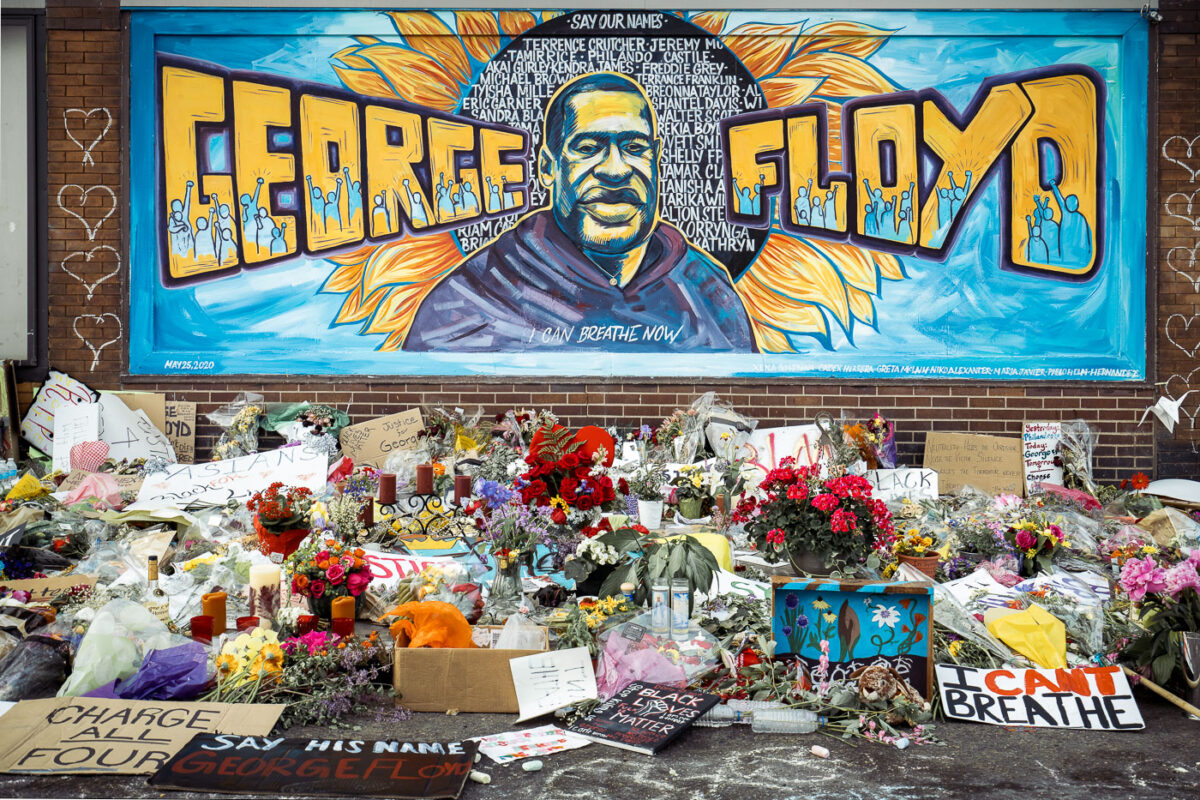
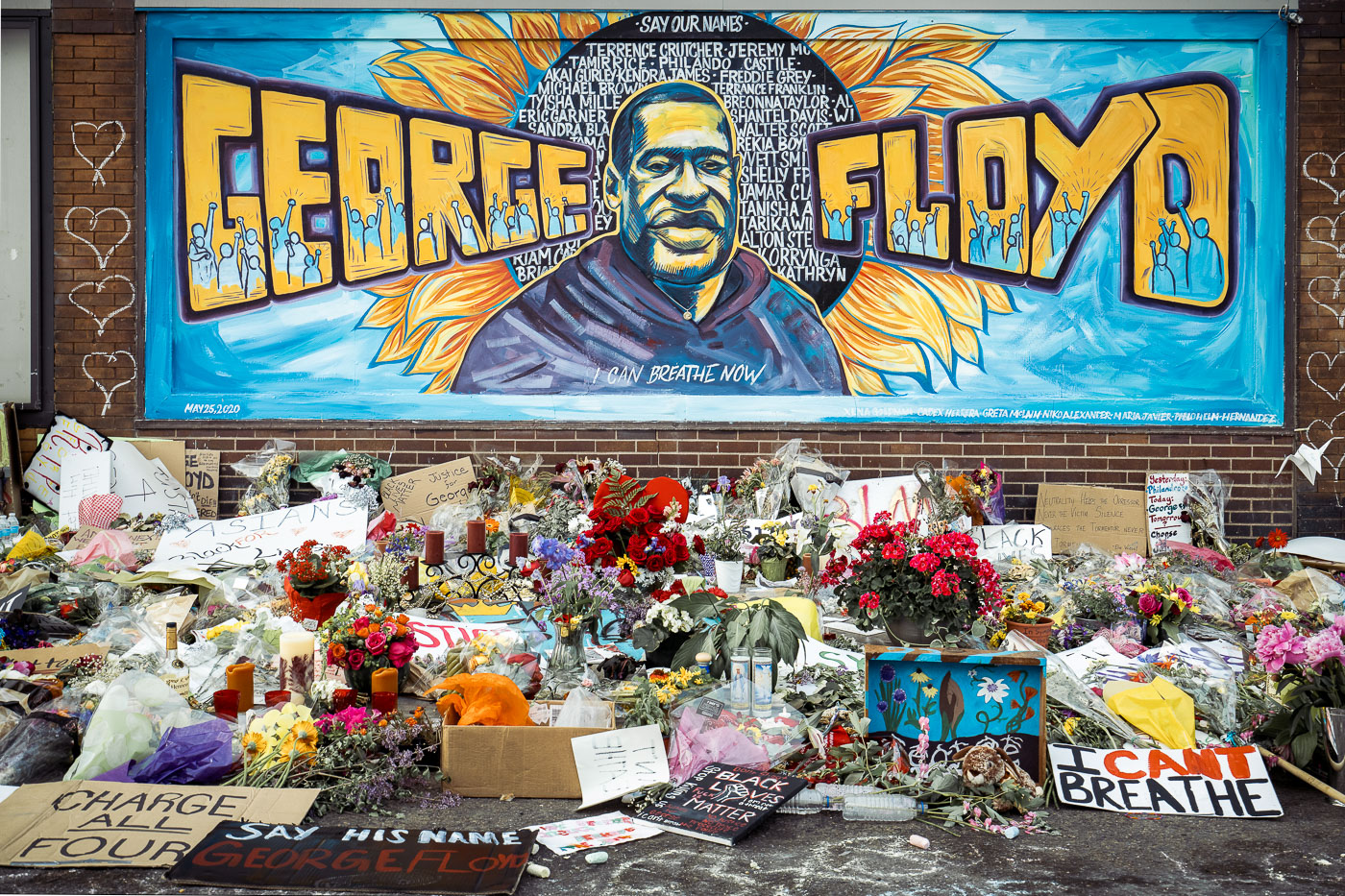
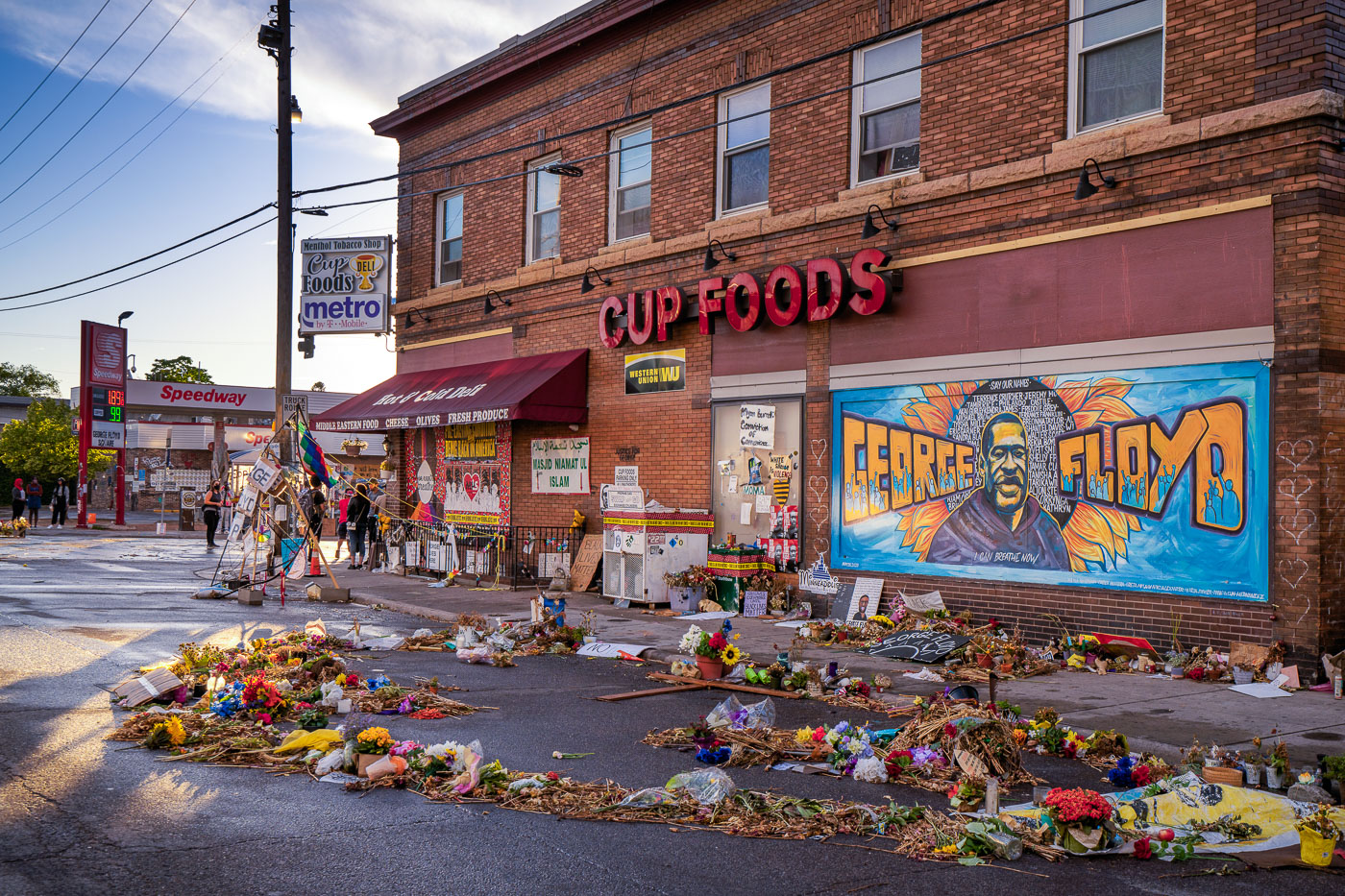
George Floyd mural and memorial at George Floyd Square in Minneapolis with flowers and protest signs.
The George Floyd mural and memorial at George Floyd Square in South Minneapolis cover the side of the Cup Foods building where Floyd was killed on May 25, 2020. The painted tribute shows his portrait framed by the words “George Floyd” and “I Can Breathe Now,” with the names of other people killed by police written behind him. Flowers, candles, signs, and handwritten messages left at the base of the wall document the site’s role as a public place of mourning and protest in the days after his death.

George Floyd Mural & Memorial, Minneapolis
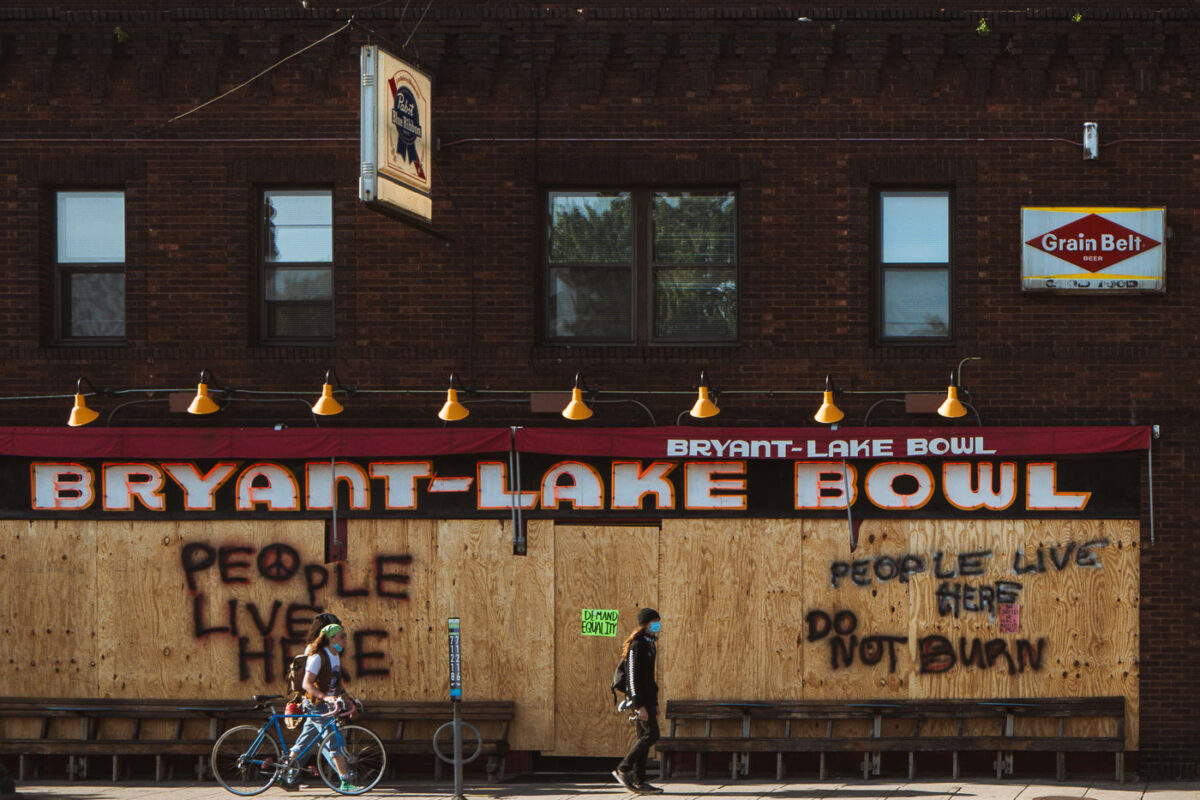
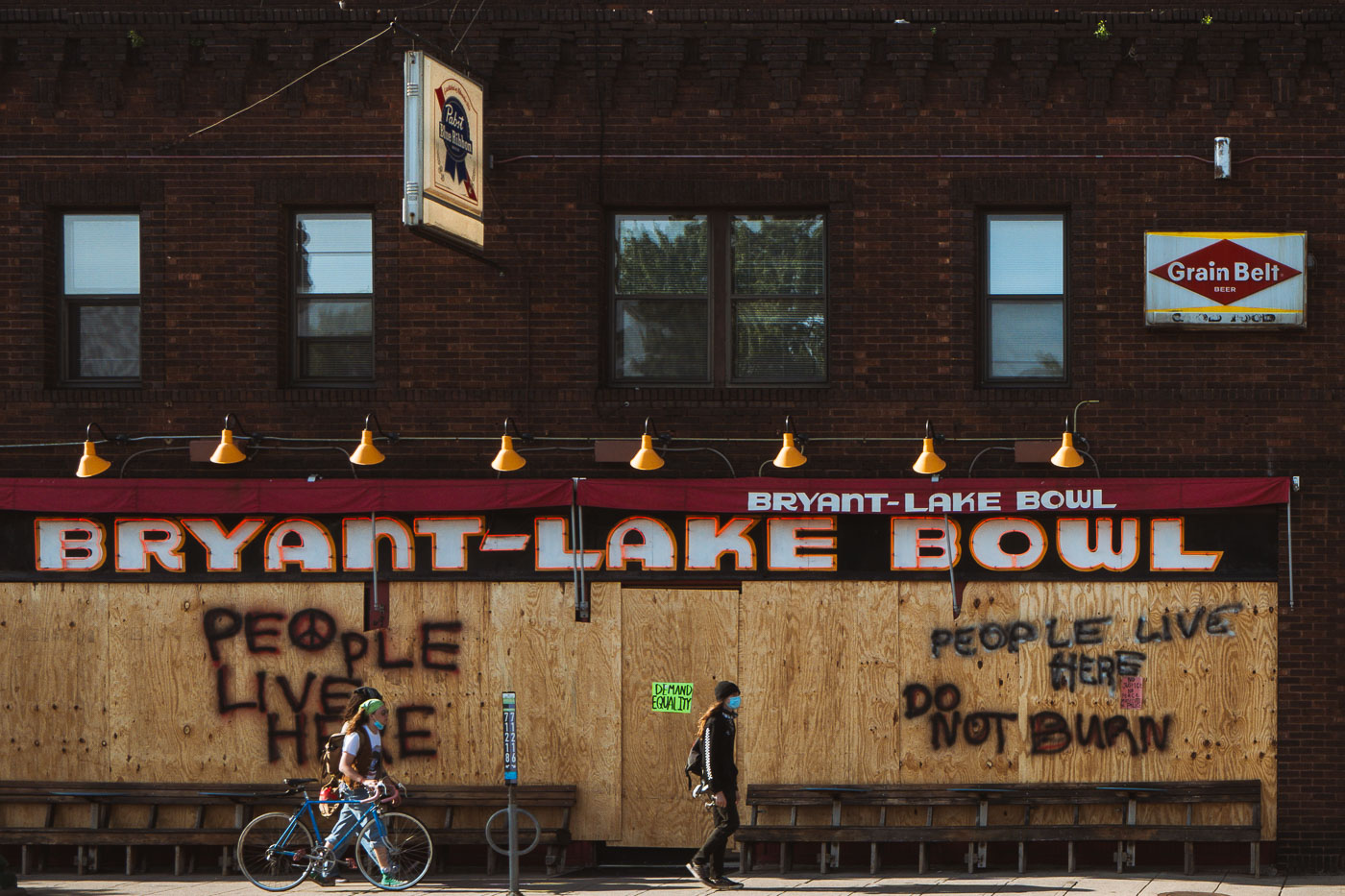
Bryant-Lake Bowl on Lake Street in Minneapolis is boarded with plywood bearing spray-painted messages including "PEOPLE LIVE HERE."
Bryant-Lake Bowl is a bowling alley, theater, and restaurant on Lake Street in Uptown Minneapolis. Plywood covers its ground-floor windows, spray-painted with "PEOPLE LIVE HERE" and "DO NOT BURN." The boards went up after unrest broke out along Lake Street following the killing of George Floyd in May 2020.

“People Live Here” Spray-Painted on Bryant-Lake Bowl’s Boards
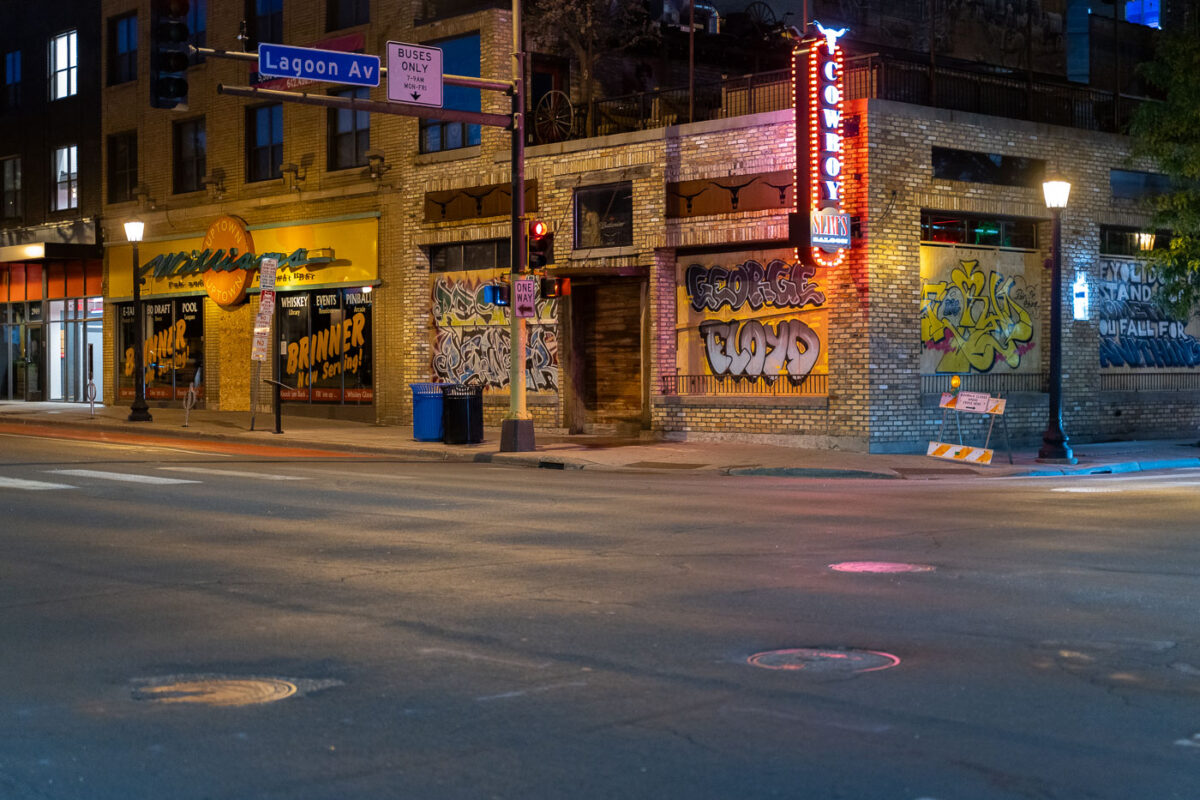
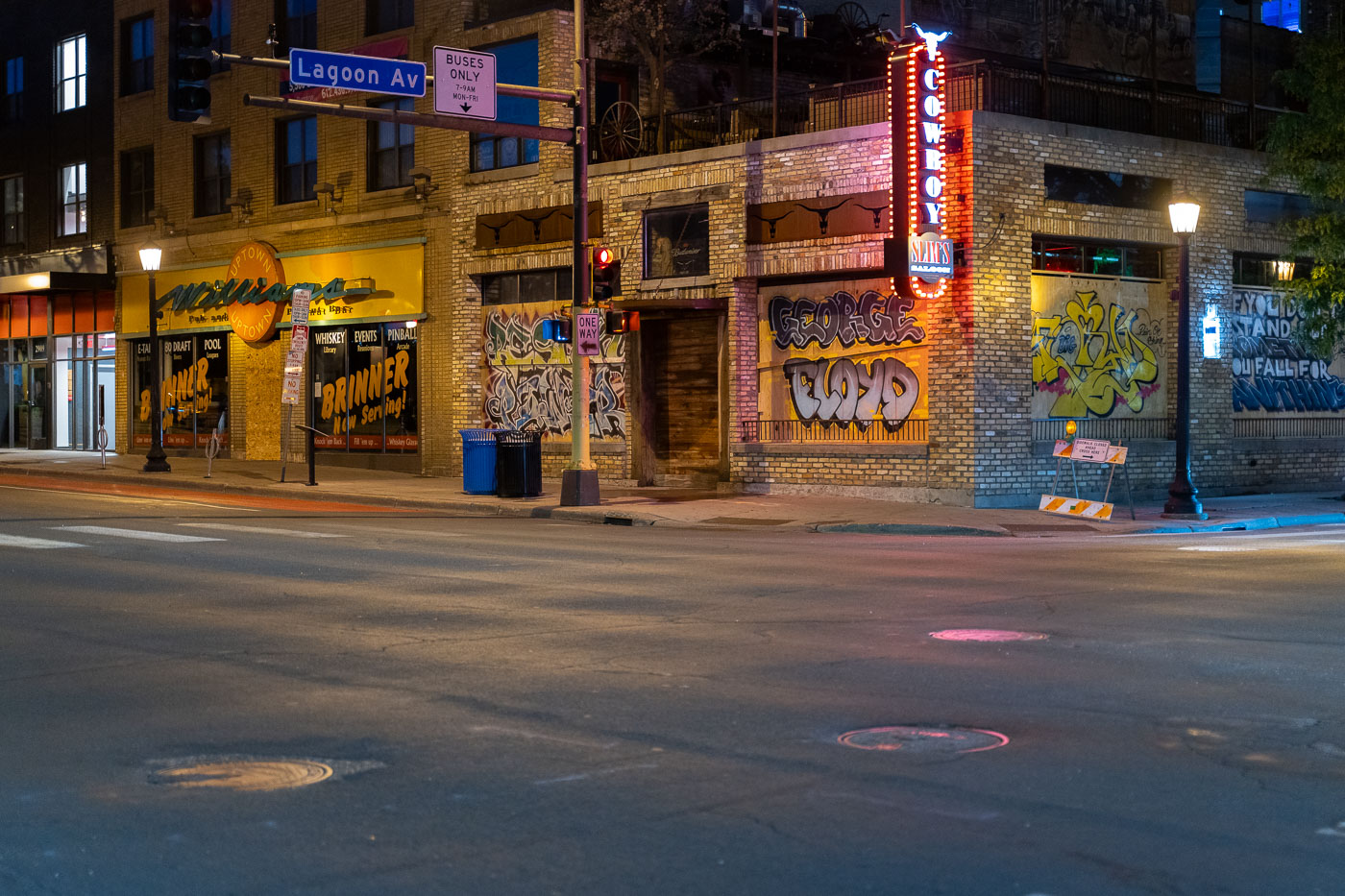
Cowboy Slim’s at Hennepin and Lagoon in Uptown Minneapolis, boarded and covered in George Floyd graffiti.
Cowboy Slim’s Saloon at Hennepin Avenue and Lagoon Avenue in Uptown Minneapolis is boarded up and covered in graffiti, including the words “GEORGE” and “FLOYD,” in a photograph made on June 2, 2020. The temporary plywood barriers and street barricade place the image in the period of protests and unrest following the May 25, 2020 killing of George Floyd. Neon signage remains lit above the boarded windows, contrasting the nightlife business’s normal appearance with the conditions in the neighborhood at that time.

Cowboy Slims, Hennepin & Lagoon, Minneapolis, George Floyd Graffiti
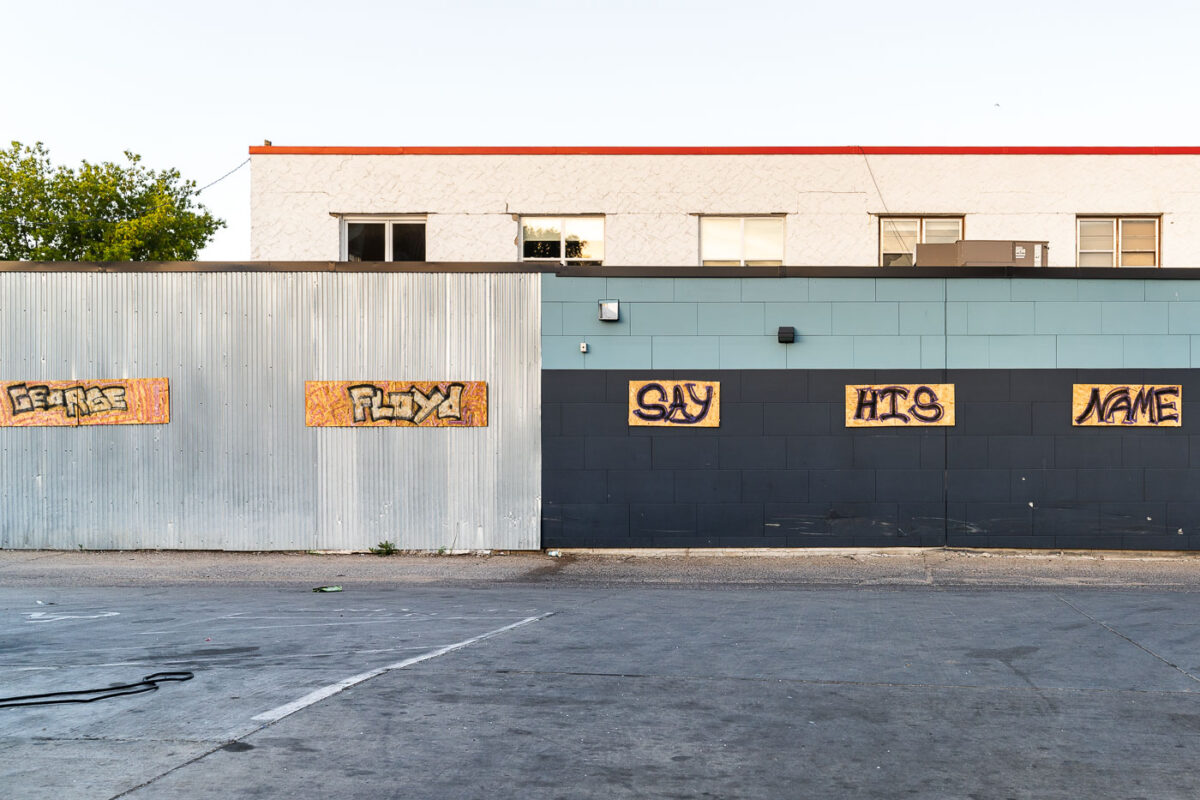
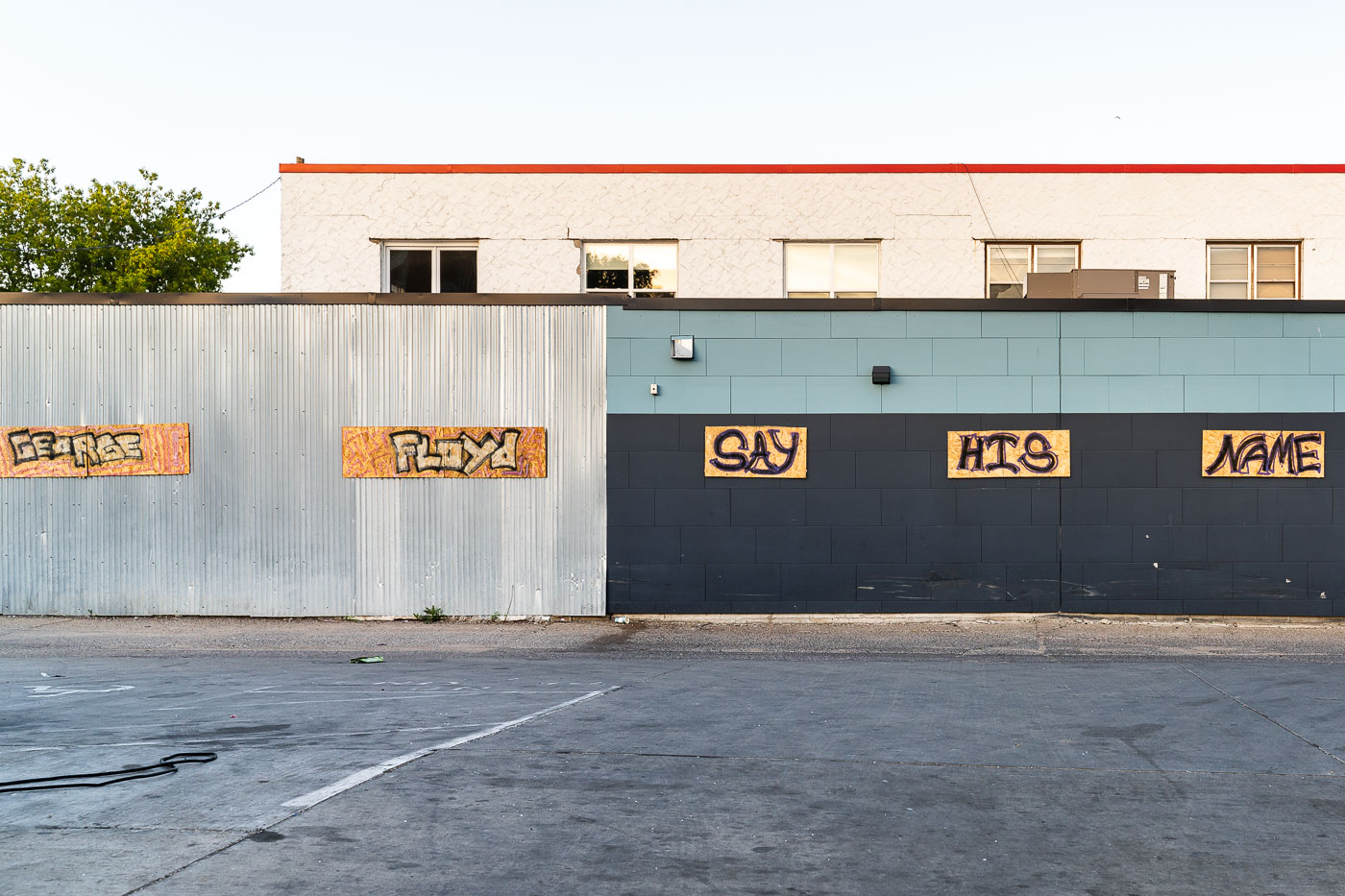
Wooden boards with yellow letters reading "Say His Name" and artist tags cover building facades in North Minneapolis.
Boards bearing the message "George Floyd Say His Name" are displayed on a building facade in North Minneapolis in June 2020.

“George Floyd Say His Name” Boards in North Minneapolis
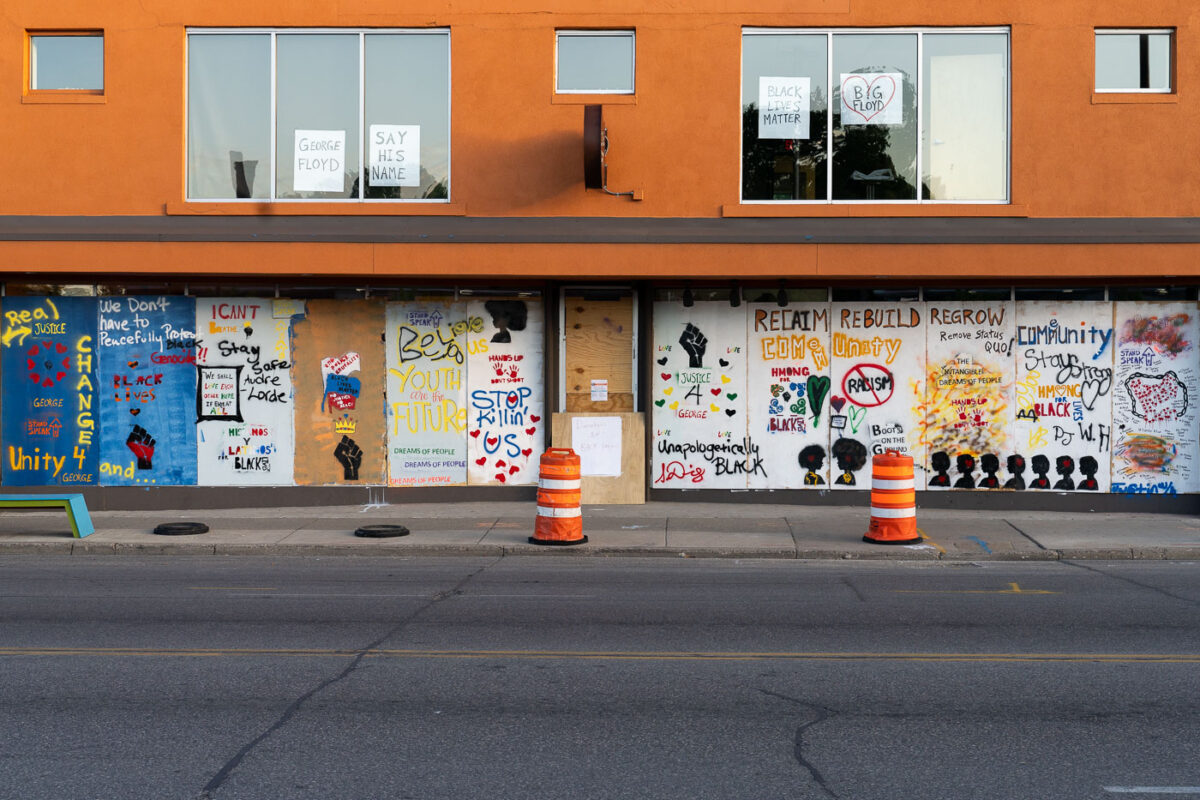
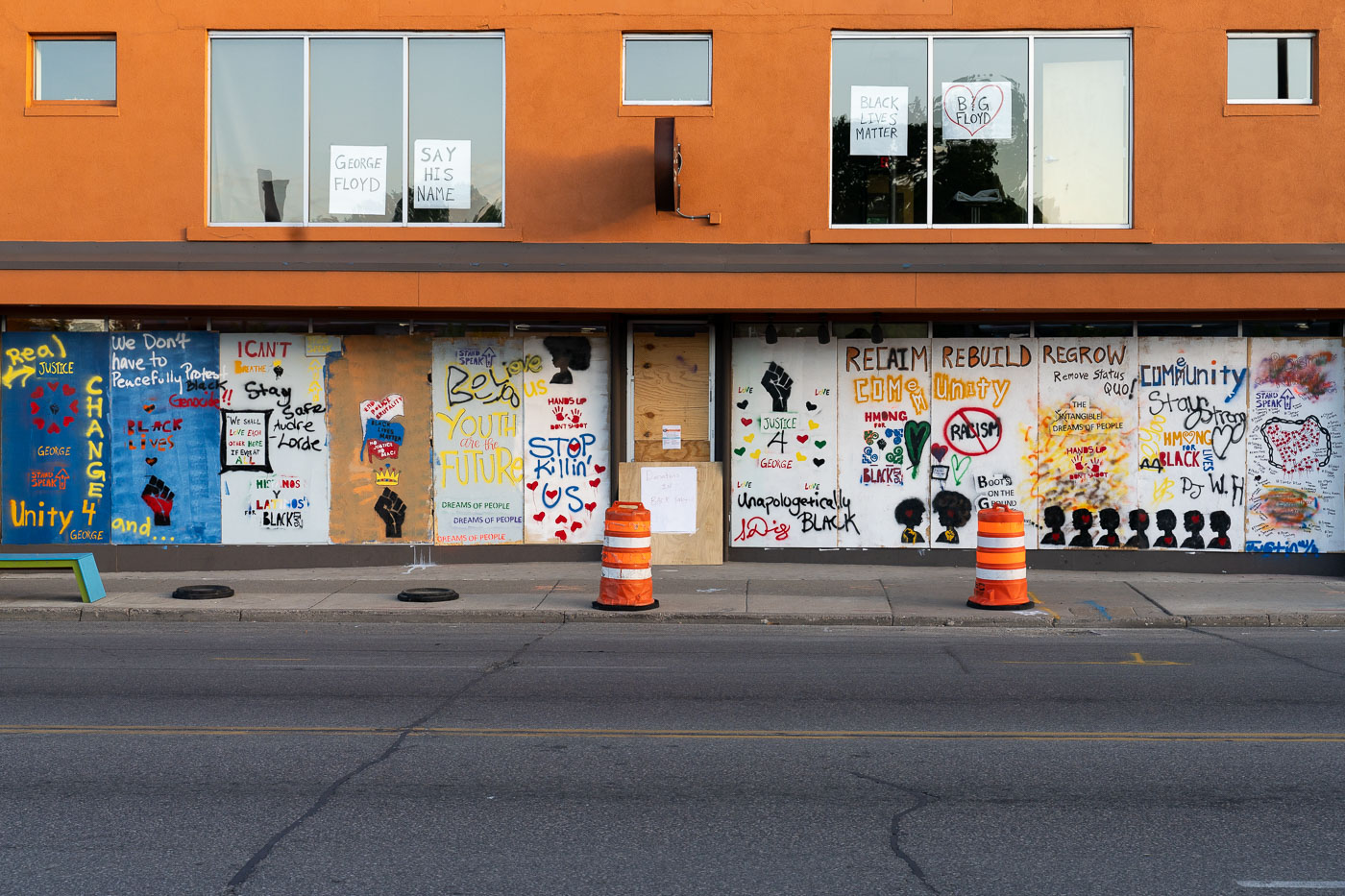
Protest murals on boarded storefronts on Broadway Avenue in North Minneapolis after George Floyd's killing.
Protest murals and handwritten signs cover the boarded storefronts of a commercial building on Broadway Avenue in North Minneapolis. Photographed on June 4, 2020, the messages reference George Floyd, Black Lives Matter, and demands for racial justice in the days after Floyd was killed by Minneapolis police on May 25. The temporary artwork turned plywood coverings on closed businesses into a public memorial and message wall, with calls to “say his name,” “stop killing us,” and “rebuild community” visible across the block.

George Floyd Protest Murals, Broadway, North Minneapolis
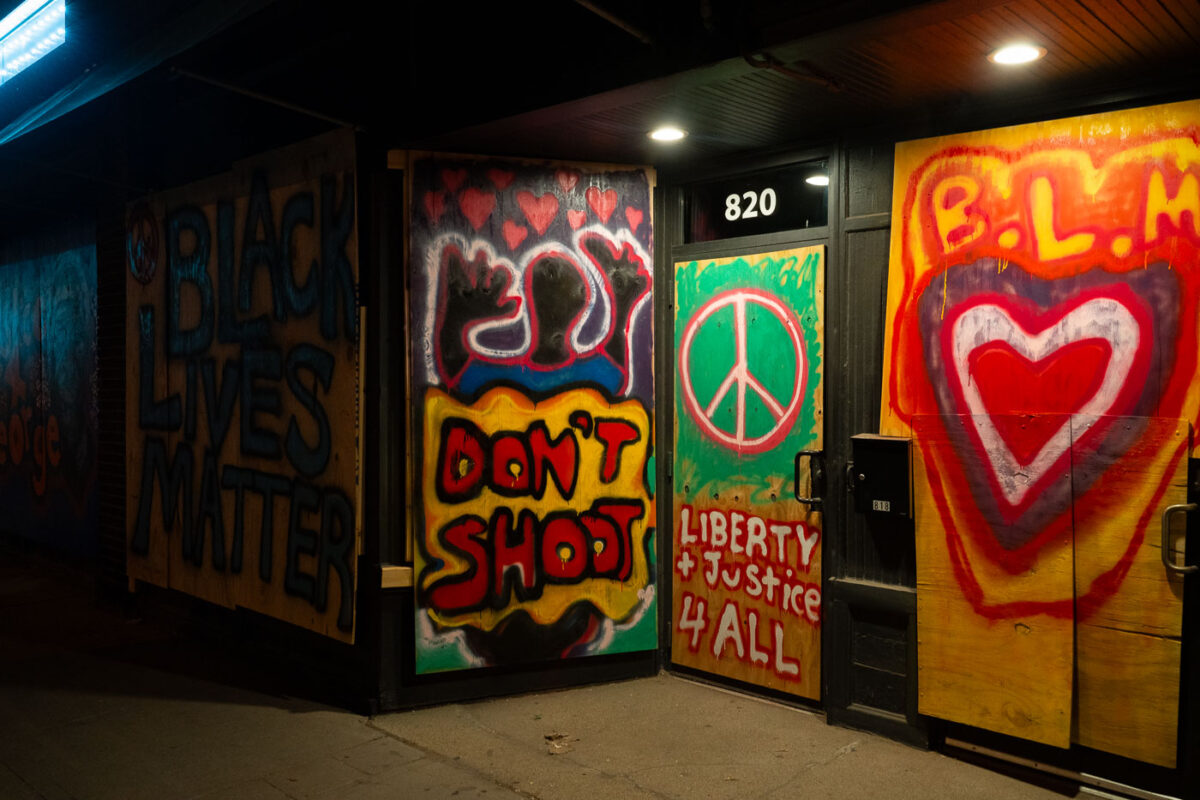
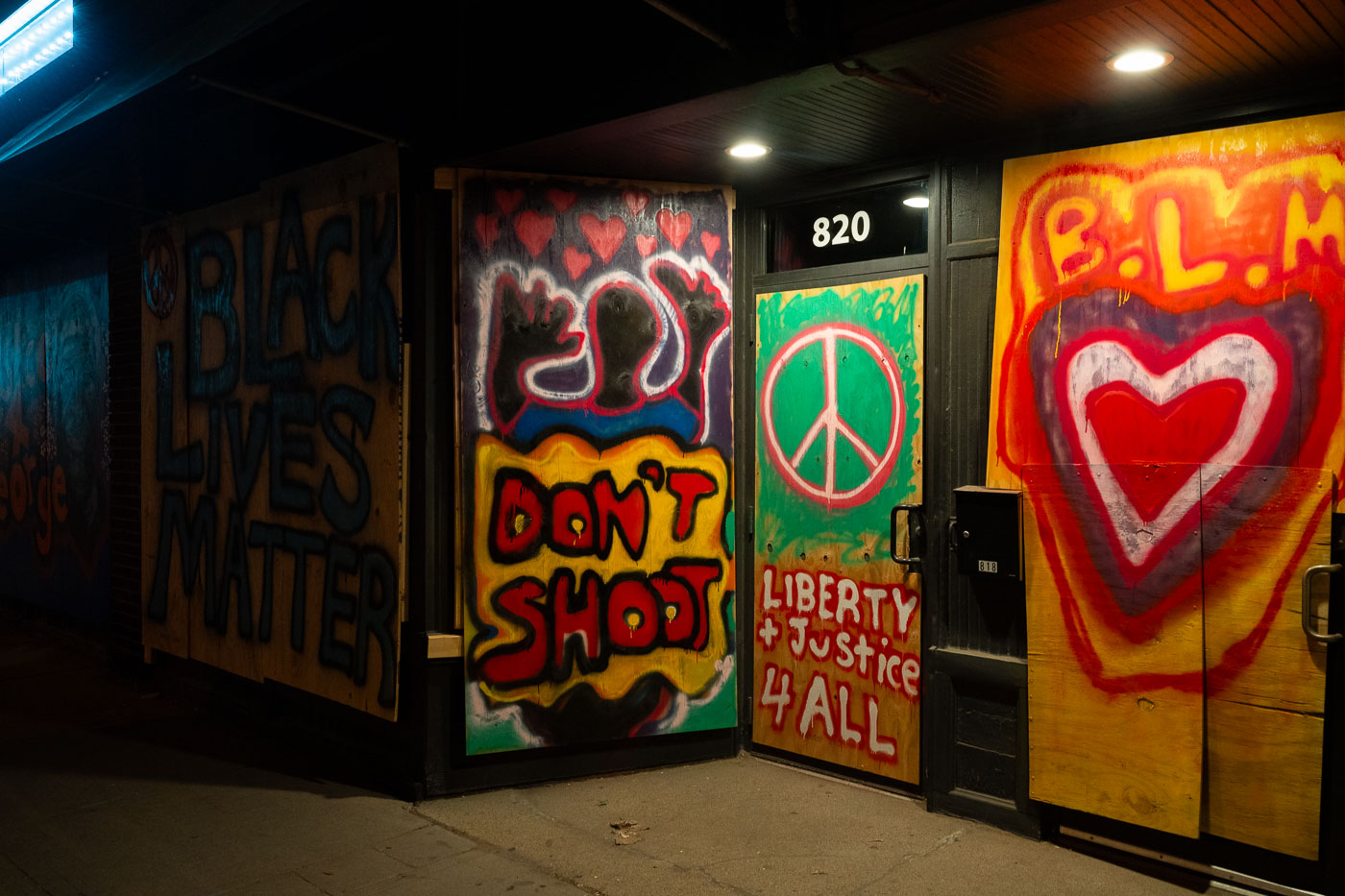
Boarded businesses on Lake Street in Minneapolis painted with Black Lives Matter and protest messages in June 2020.
Boarded storefronts on Lake Street in Minneapolis are covered with protest art and messages in early June 2020. Visible text and symbols include “Black Lives Matter,” “Don’t Shoot,” a peace sign, and “Liberty + Justice 4 All” painted across plywood panels protecting business entrances. The boards were installed after the murder of George Floyd and became surfaces for memorials, political messages, and neighborhood response along one of the city’s main commercial corridors.

BLM graffiti on boarded businesses, Lake Street, Minneapolis
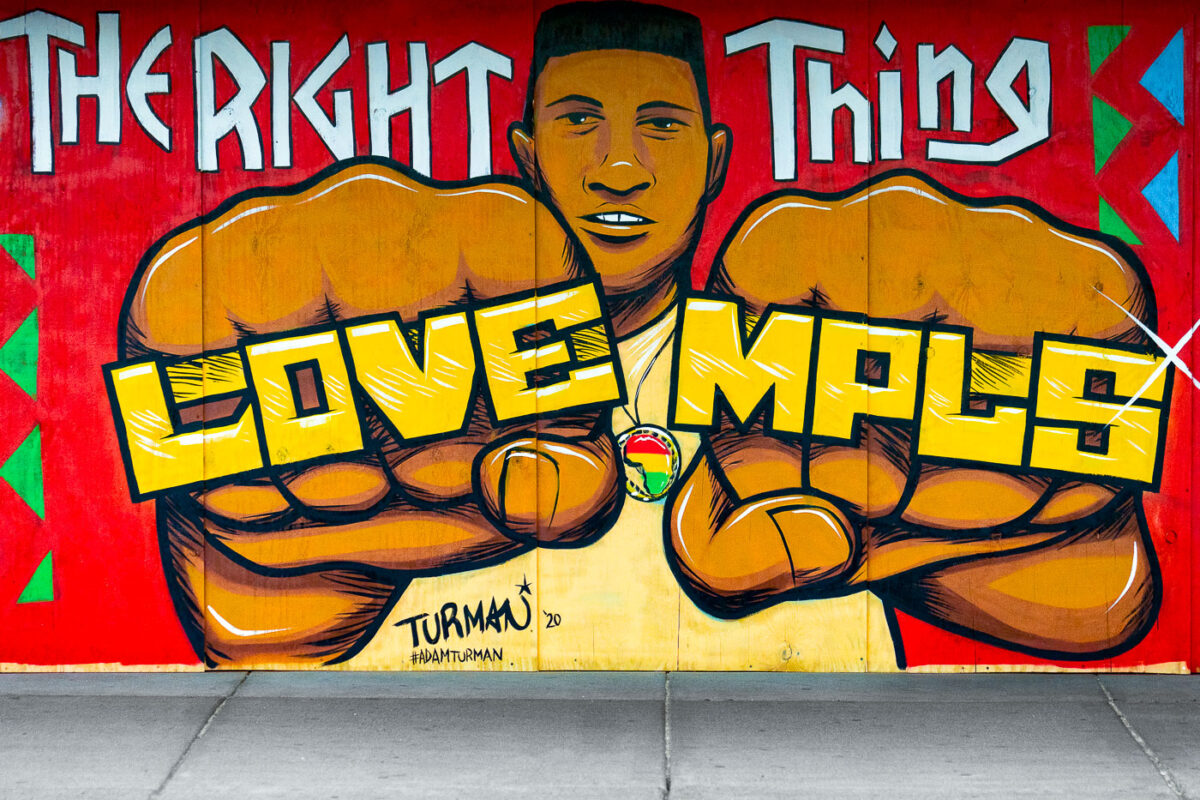
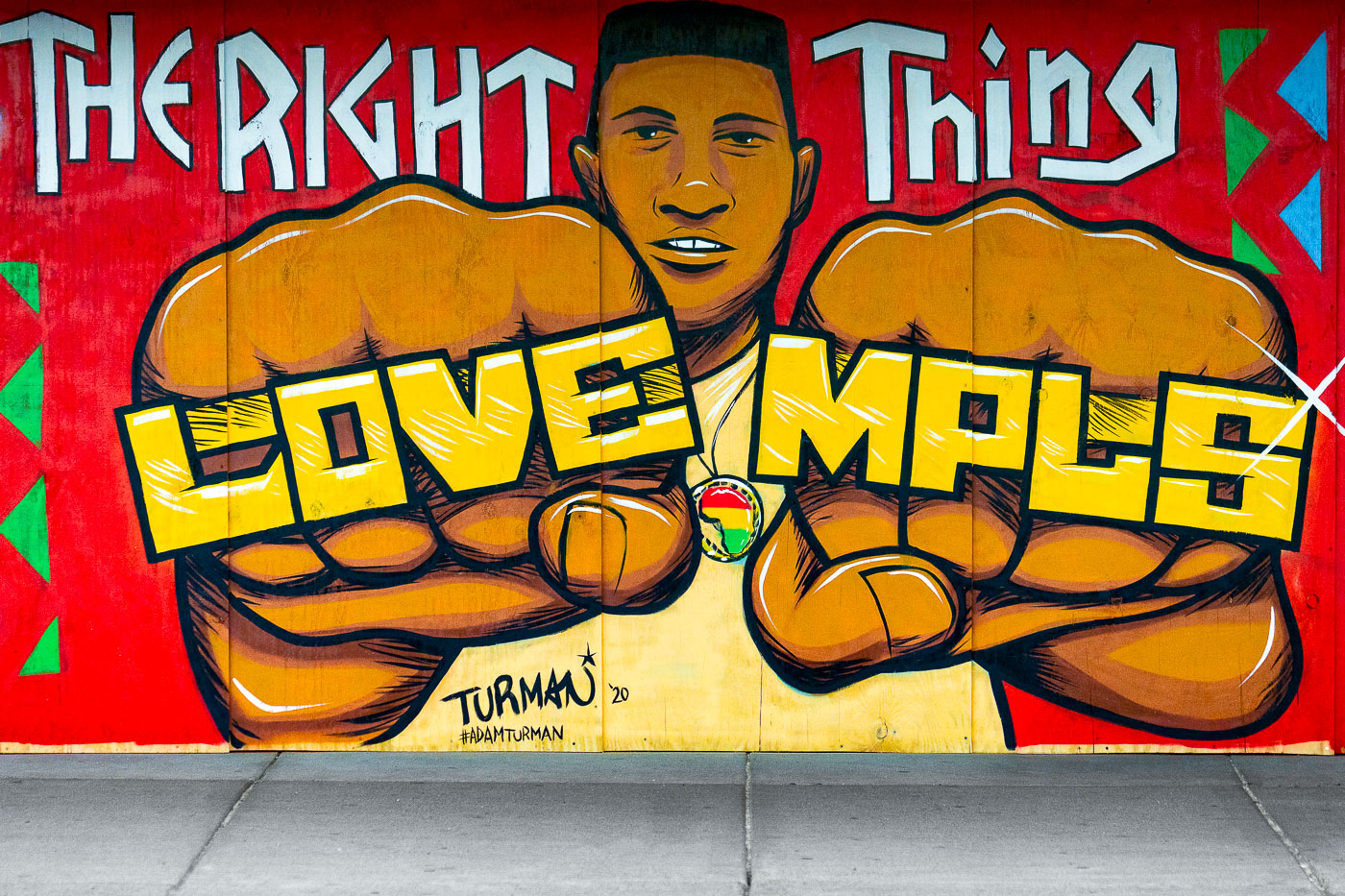
Adam Turman mural on plywood at Uptown Theatre in Minneapolis reading “The Right Thing” and “Love Mpls.”
Adam Turman’s 2020 mural on the boarded-up Uptown Theatre on Hennepin Avenue in Uptown Minneapolis fills the facade with the words “THE RIGHT THING” above a figure presenting “LOVE MPLS” in outstretched fists. Created in the days after the murder of George Floyd, the work uses bold lettering and a medallion in Pan-African colors to reference solidarity, Black liberation, and calls for justice. Painted on temporary plywood covering the theater, the mural reflects how storefront barriers across Minneapolis became surfaces for public art and messages during that period.

Adam Turman George Floyd Mural, Uptown Minneapolis
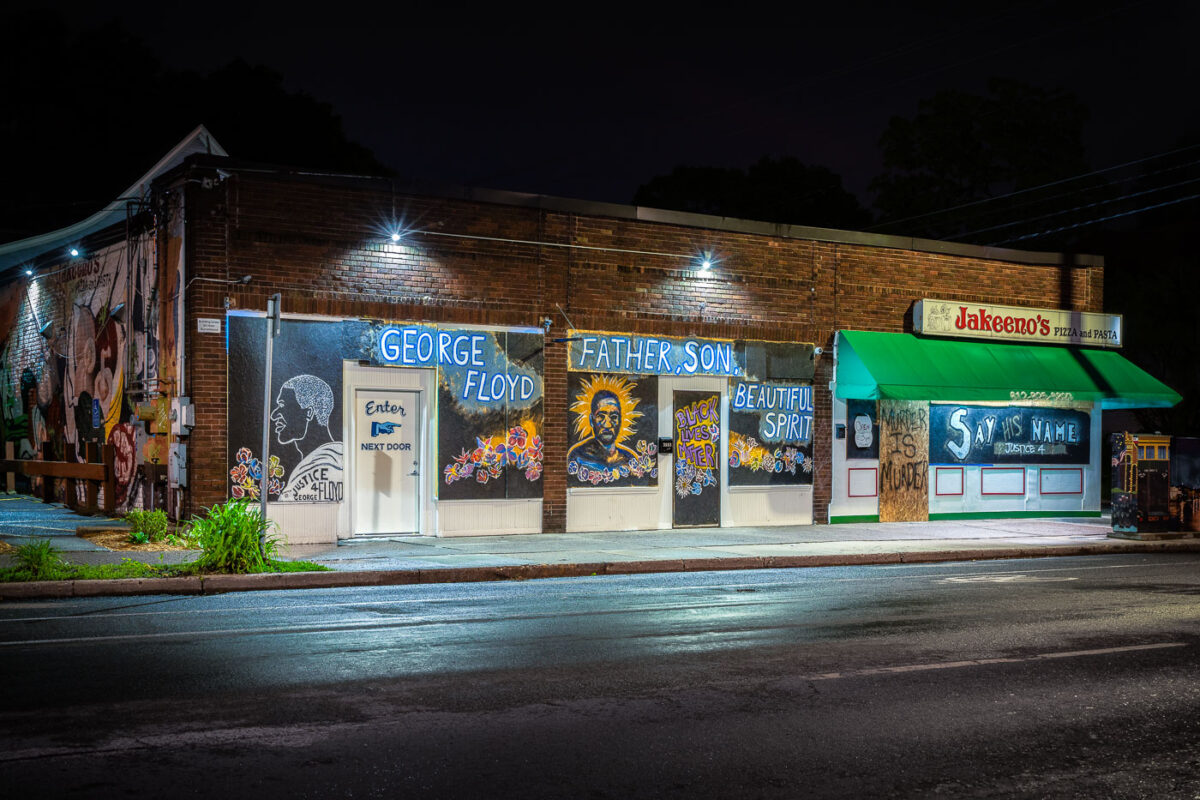
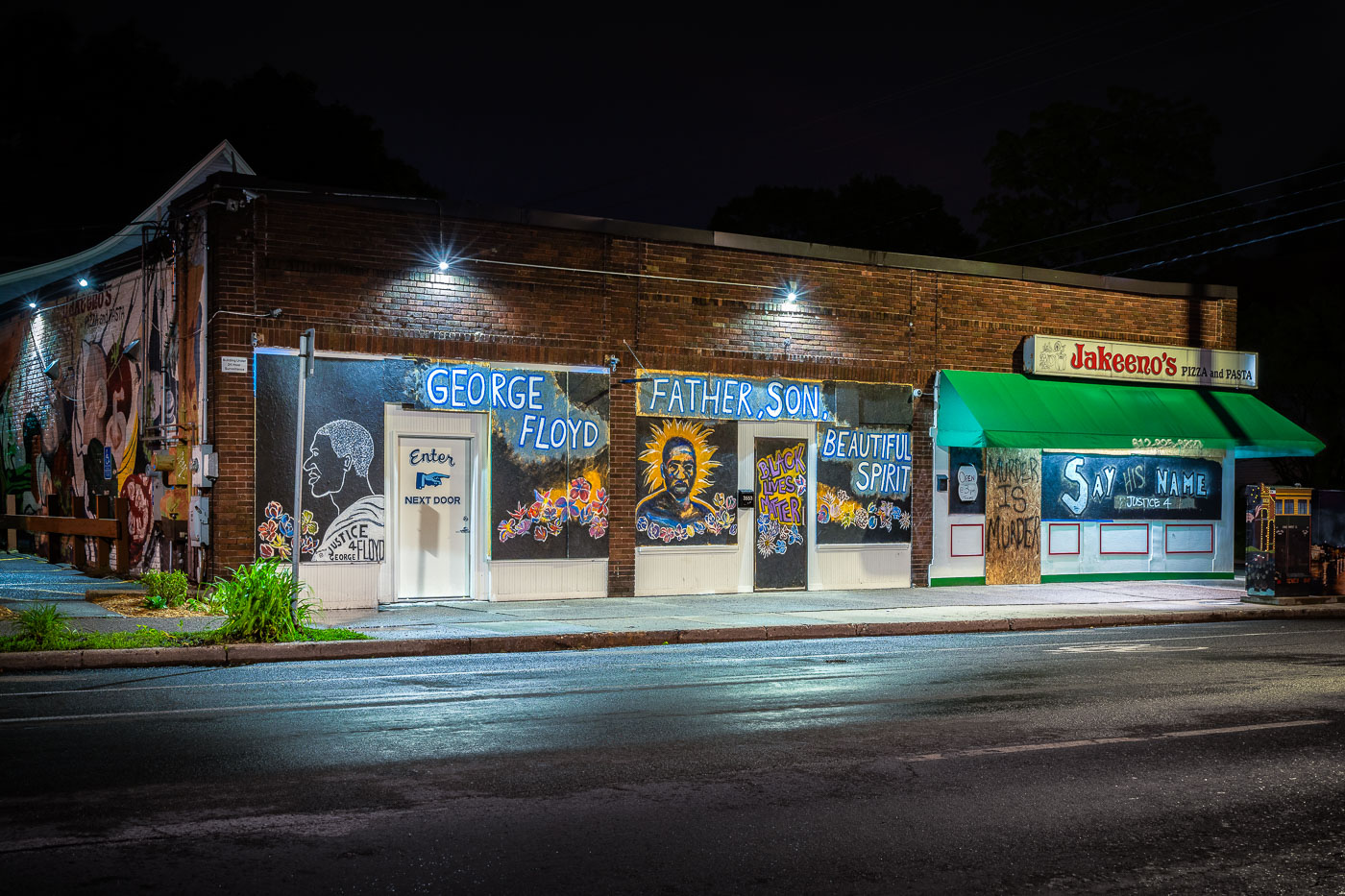
George Floyd murals on boarded windows at Jakeeno’s Pizza on Chicago Avenue in Minneapolis, June 2020.
George Floyd memorial murals cover the boarded windows of Jakeeno’s Pizza on Chicago Avenue in Minneapolis. Photographed in early June 2020, the storefront displays hand-painted portraits, flowers, and messages including “Black Lives Matter” and “Say His Name” that were created after Floyd was killed by Minneapolis police on May 25, 2020, a short distance away. The boards turned the restaurant’s facade into a temporary memorial and a marker of the protests for racial justice that spread across the city.

Jakeeno’s Pizza George Floyd Murals, Chicago Ave
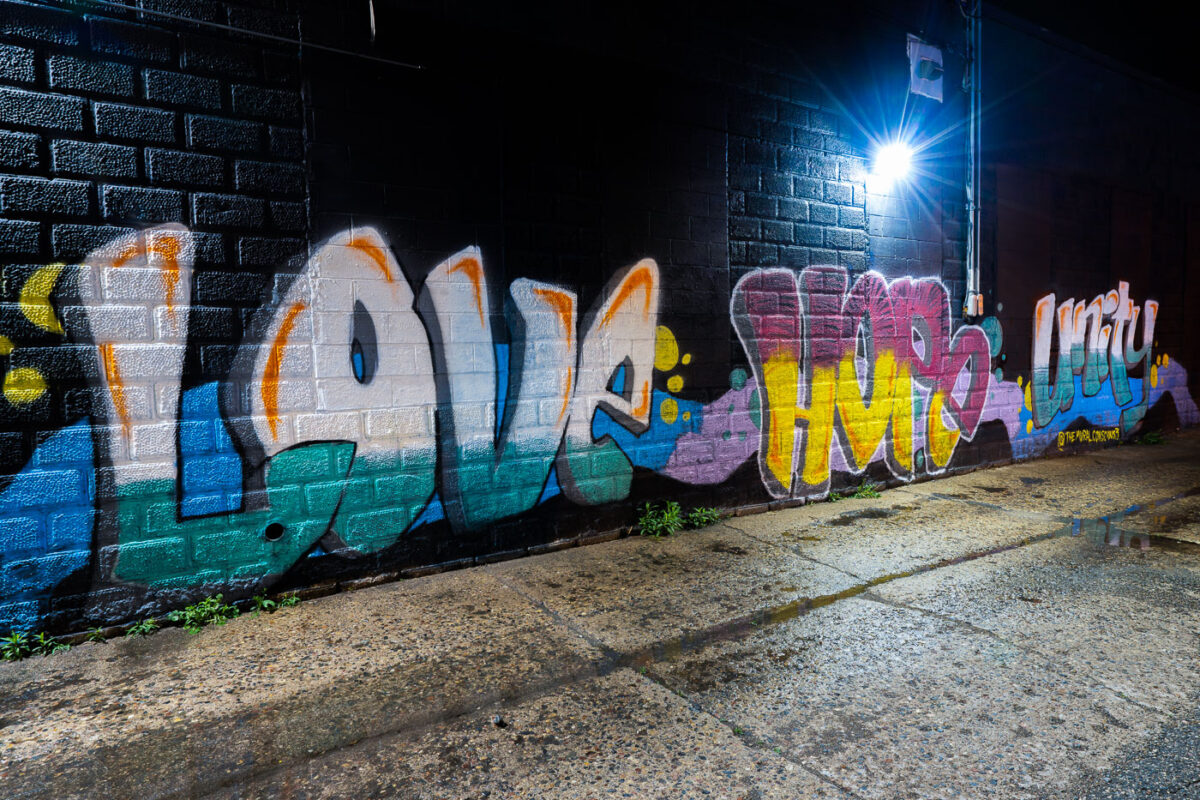
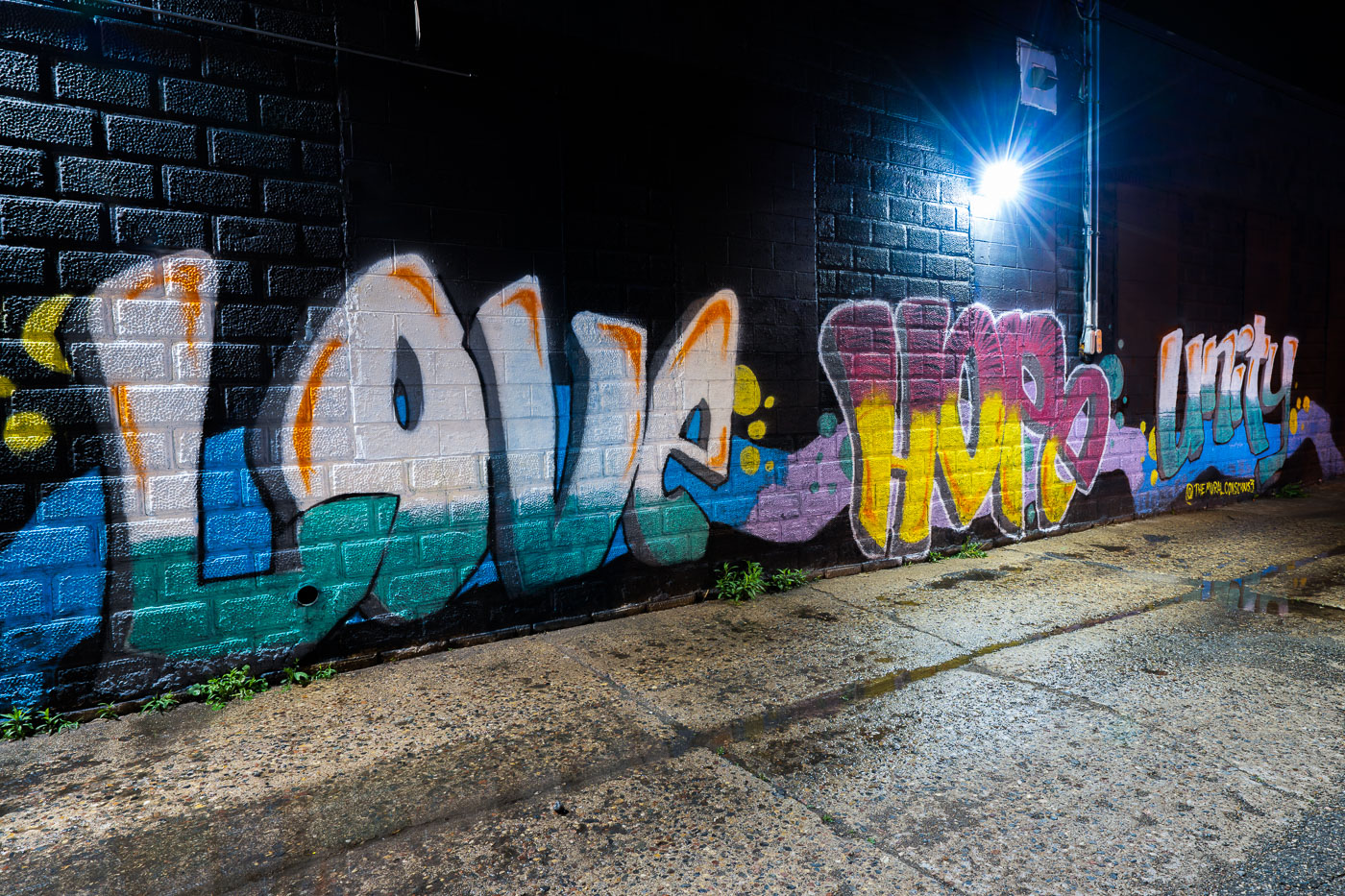
“Love Hope Unity” mural on an alley wall in Uptown Minneapolis, June 2020.
The “Love Hope Unity” mural in an alley in Minneapolis’s Uptown neighborhood covers a long black-painted brick wall with large multicolored graffiti-style lettering. Photographed in June 2020, the work is part of the wave of public art created across Minneapolis after the murder of George Floyd and the protests that followed. Its message of love, hope, and unity places the alley within the city’s wider landscape of memorial and response murals from that period.

Love Hope Unity Graffiti, Minneapolis Uptown Alley
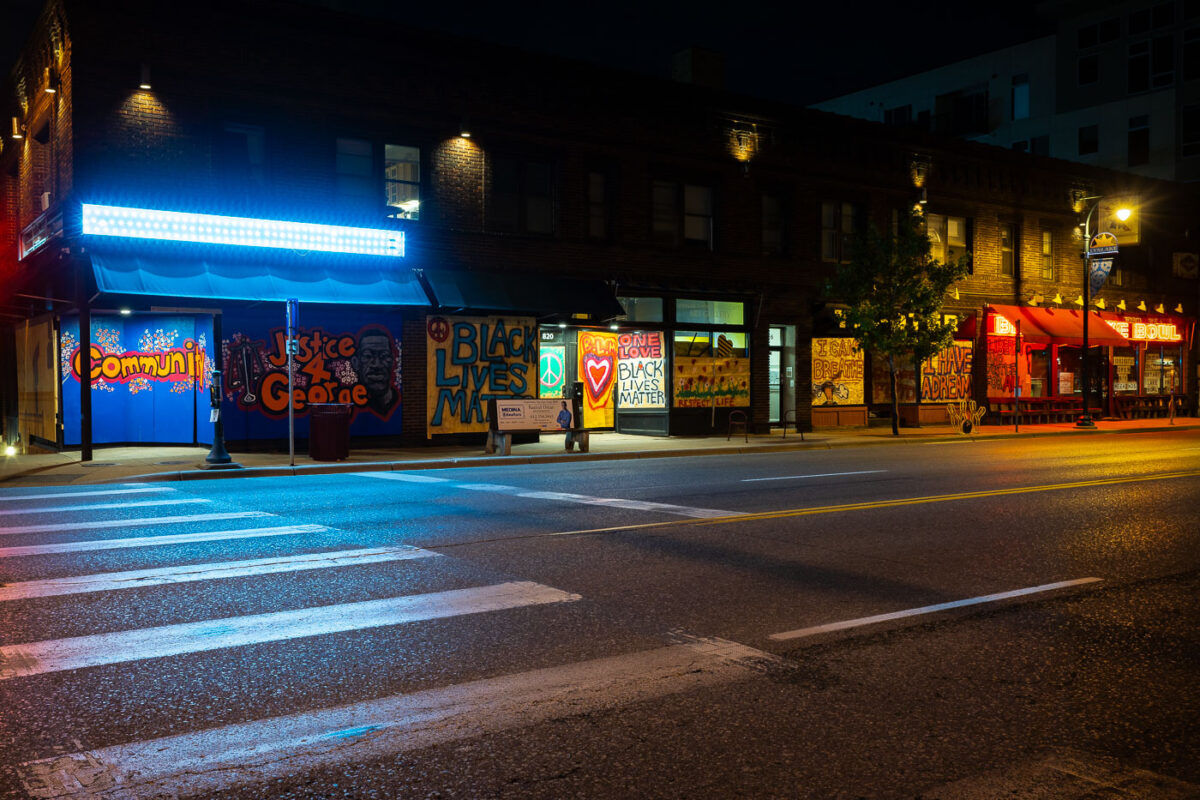
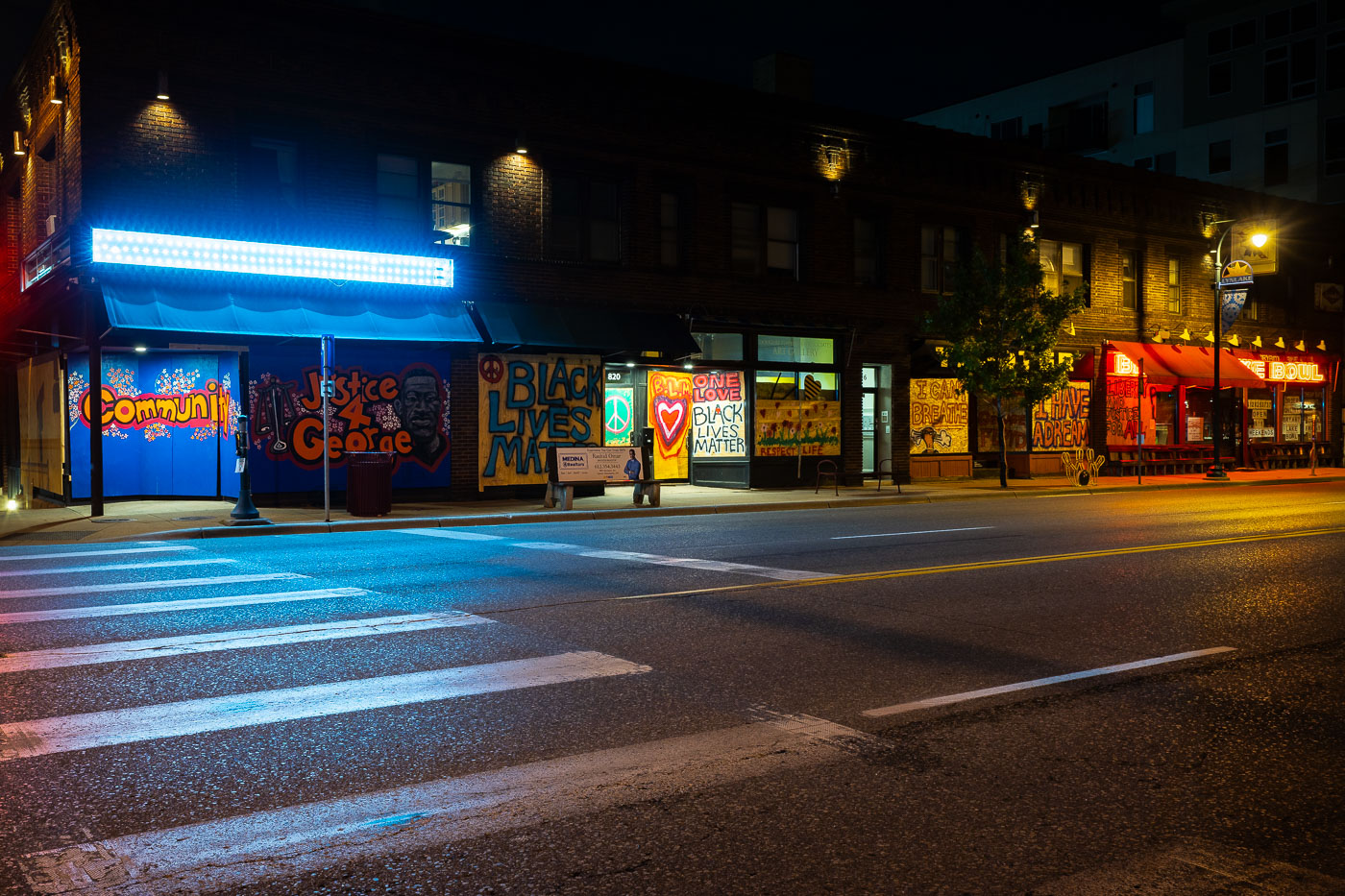
Boarded storefront murals on West Lake Street in Minneapolis with George Floyd and Black Lives Matter messages.
Boarded storefronts covered with murals line West Lake Street in Minneapolis in the early hours of June 7, 2020. The painted plywood panels include messages such as “Justice 4 George,” “Black Lives Matter,” “I Can’t Breathe,” and “I Have a Dream,” displayed across retail spaces protected after damage and unrest following the police killing of George Floyd in late May 2020. The murals turned the temporary barriers into a highly visible corridor of memorial and protest art along one of the city’s main commercial streets.

West Lake Street Murals on Boarded Stores, Minneapolis
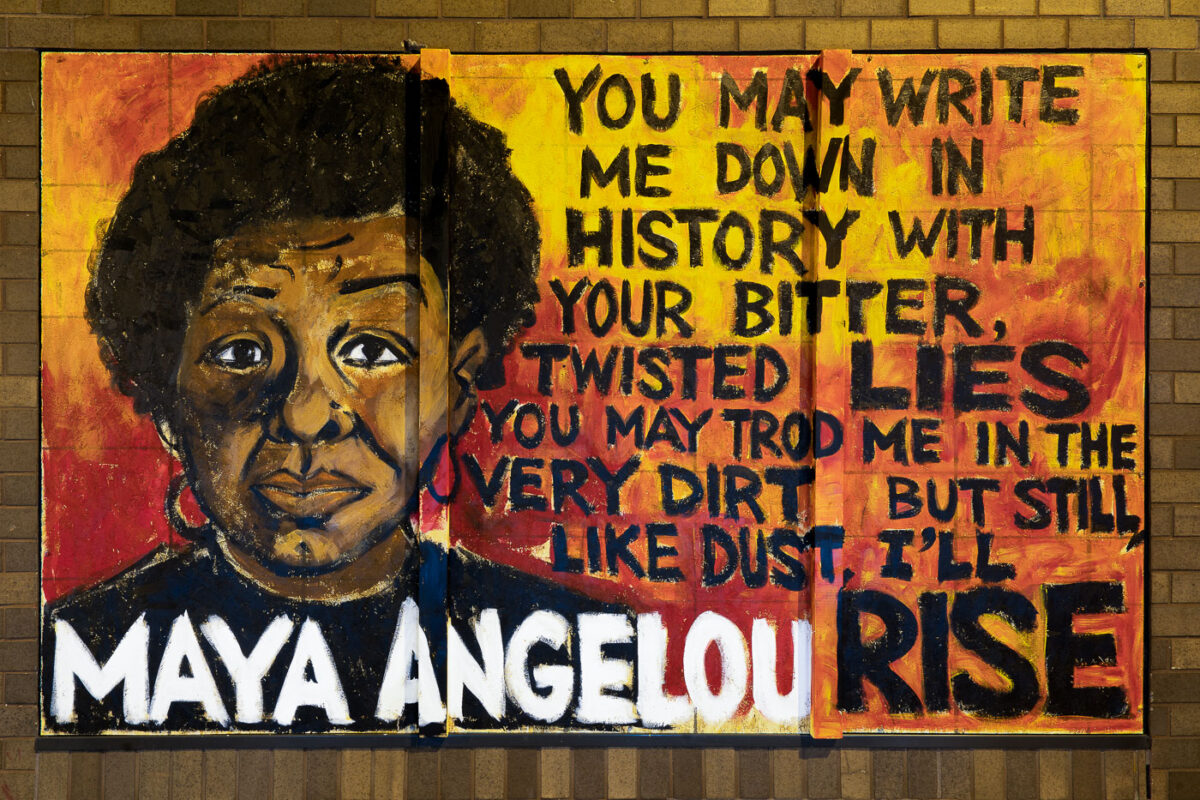
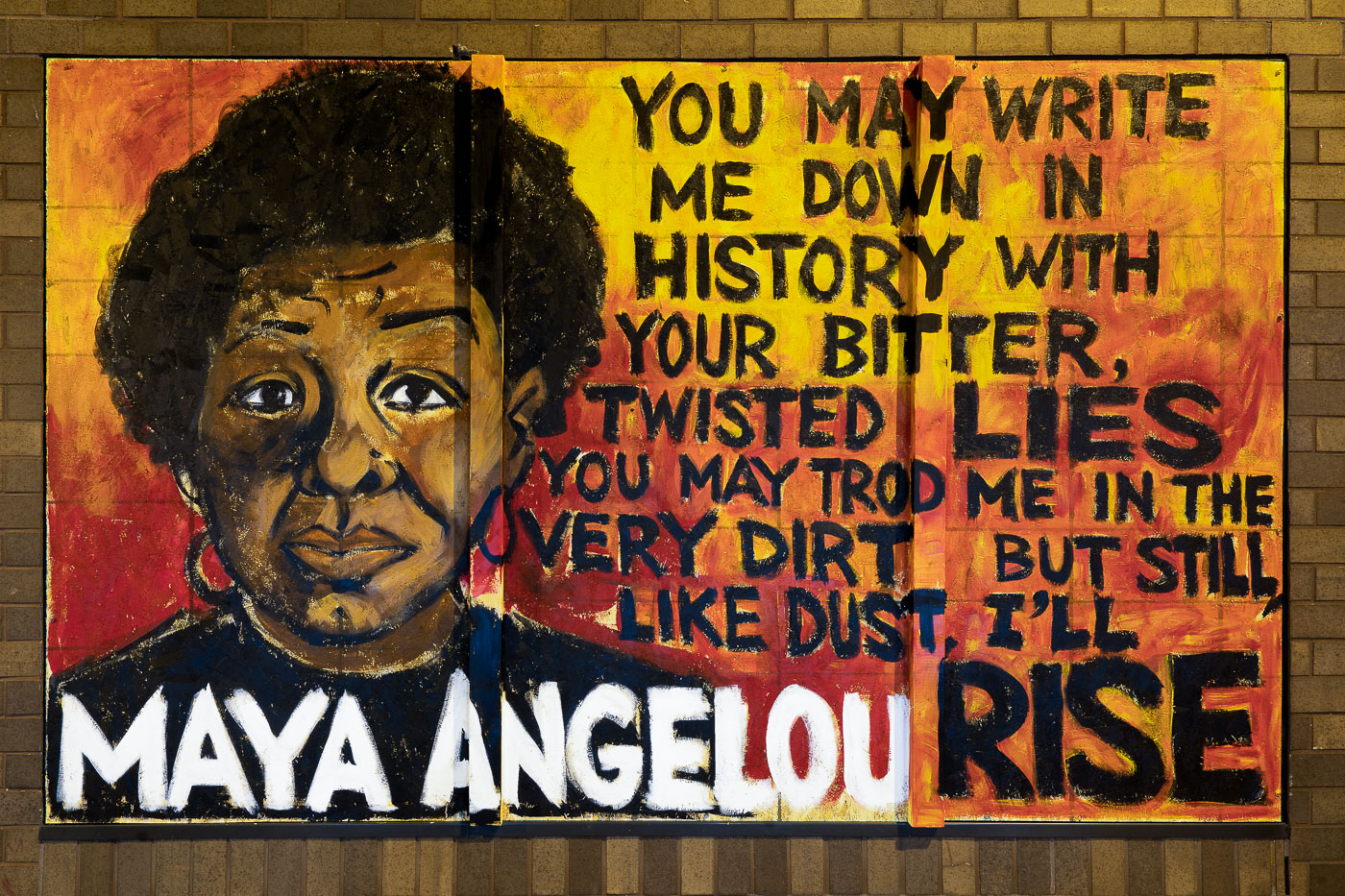
Maya Angelou mural on boarded windows at Calhoun Square in Minneapolis with a quote from “Still I Rise.”
A mural of Maya Angelou mounted on boarded storefront windows at Calhoun Square in Minneapolis features a passage from her poem “Still I Rise.” Installed along Hennepin Avenue in June 2020, the temporary artwork was part of the wave of protest murals and memorial art that appeared across the city after the murder of George Floyd. The painted boards combine Angelou’s portrait with the lines, “You may write me down in history with your bitter, twisted lies … but still, like dust, I’ll rise.”

Maya Angelou Mural at Calhoun Square, Minneapolis
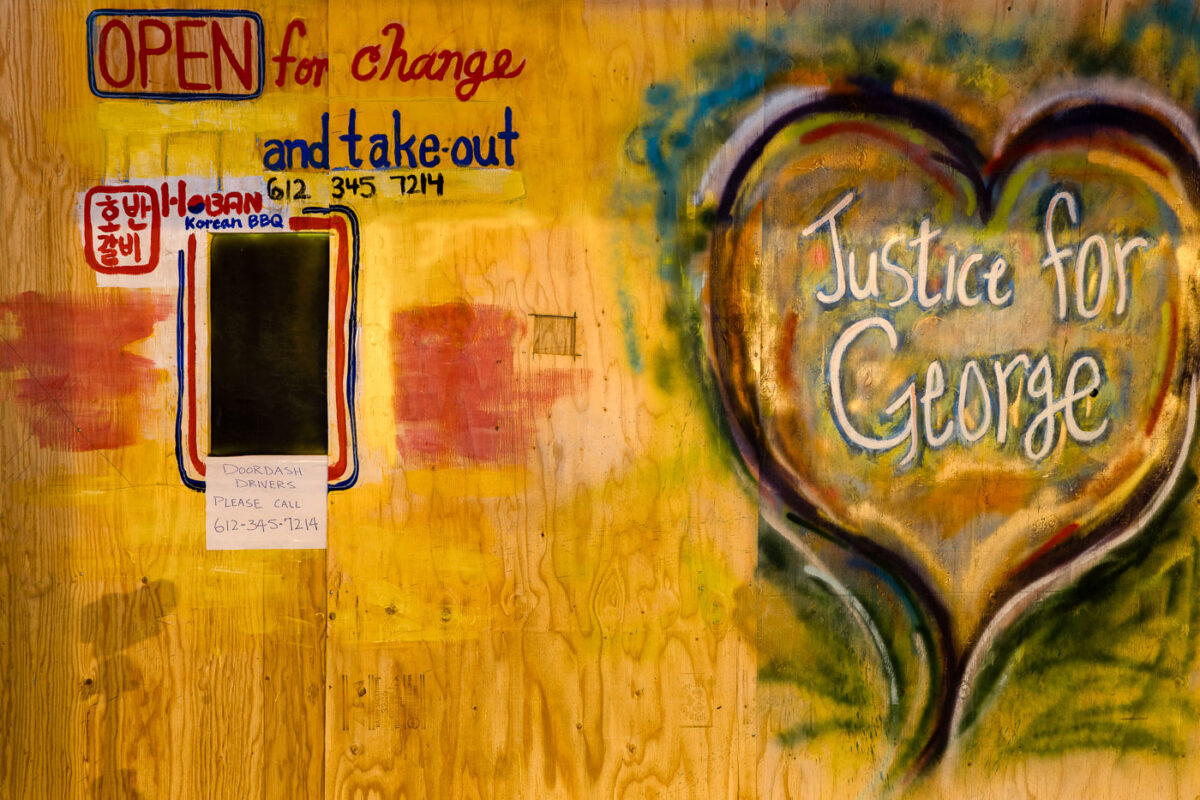
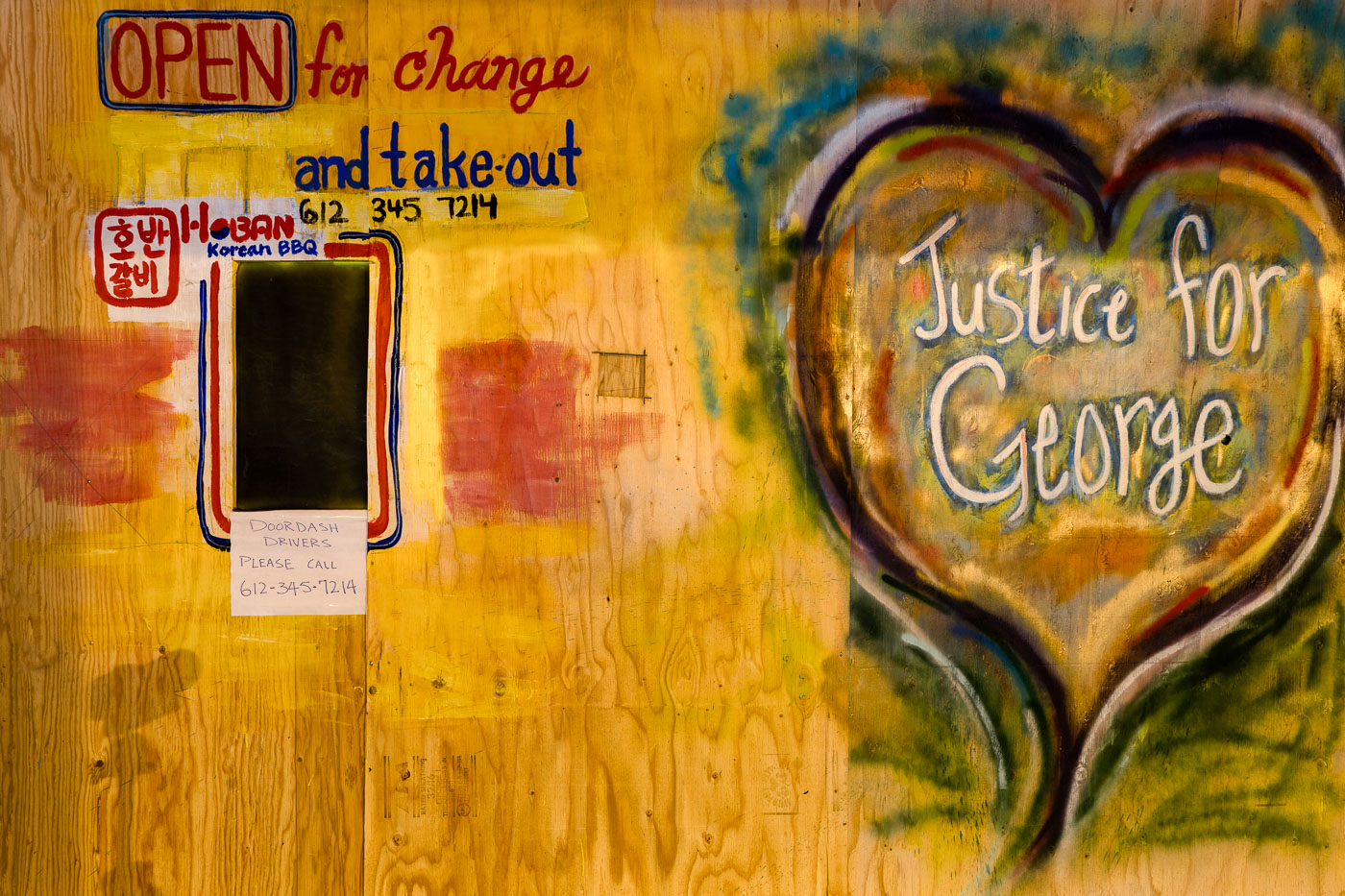
Boarded Hoban Korean BBQ in Minneapolis with “Justice for George” mural and takeout signs.
The boarded storefront of Hoban Korean BBQ on Hennepin Avenue South in Minneapolis is covered with plywood painted with business information and a large heart-shaped “Justice for George” mural. The boards include the messages “OPEN for change and take-out” and a phone number, along with a note for DoorDash drivers. The storefront was photographed in June 2020, when many Minneapolis businesses were boarded following unrest after the May 25, 2020, killing of George Floyd.

Hoban Korean BBQ, Minneapolis: Justice for George Mural
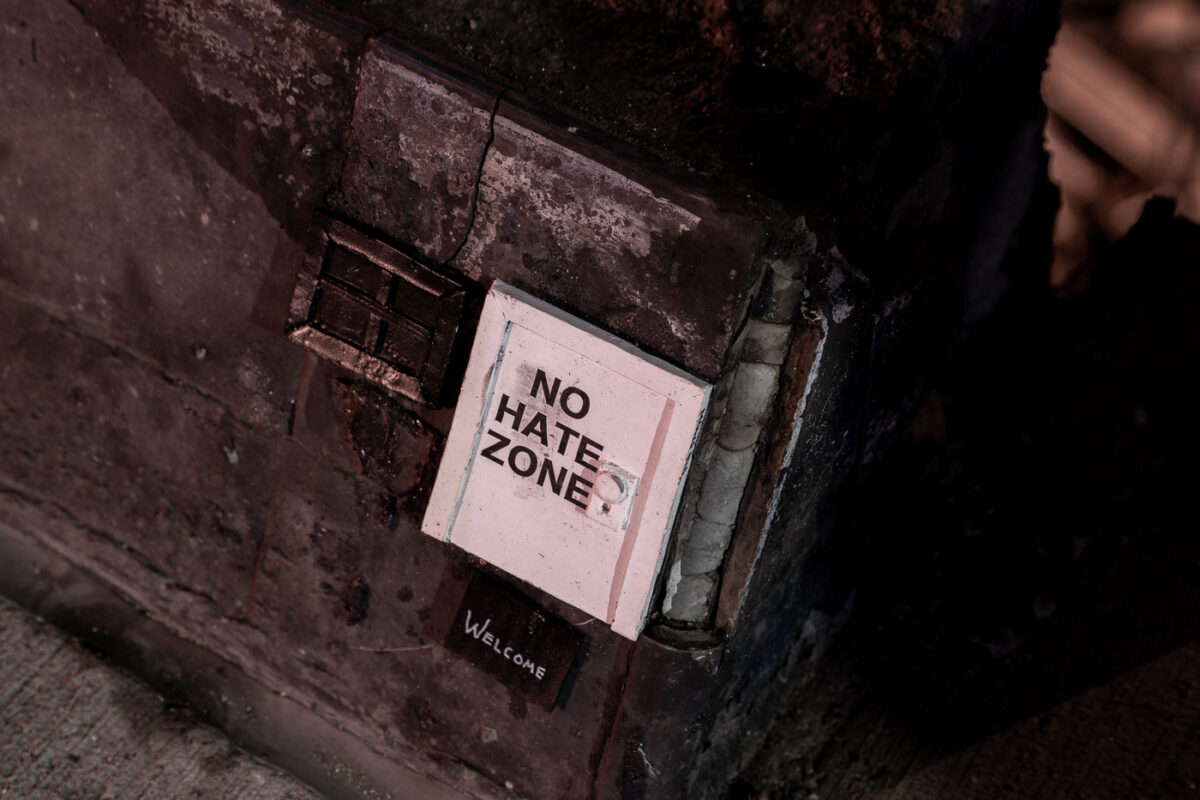
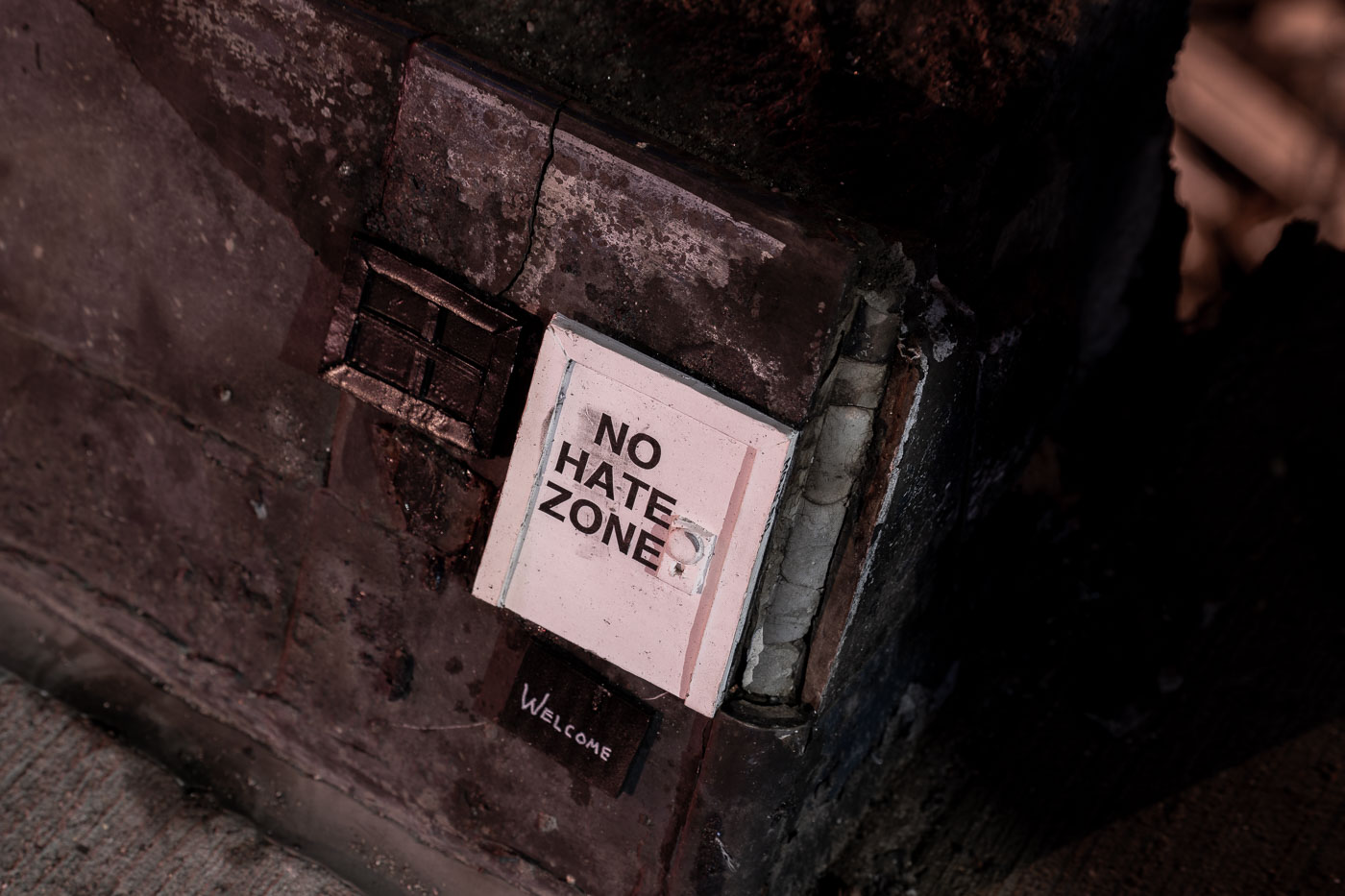
“No Hate Zone” sign on the burned former Minneapolis Police 3rd Precinct on Lake Street in Minneapolis.
A “No Hate Zone” sign and a small “Welcome” mat are attached to the fire-damaged exterior of the former Minneapolis Police 3rd Precinct on Lake Street in Minneapolis. The building was heavily burned during protests that followed the killing of George Floyd on May 25, 2020. The improvised installation marks the site in the weeks after the precinct was abandoned and damaged.

No Hate Zone Art at Burned Minneapolis Police 3rd Precinct
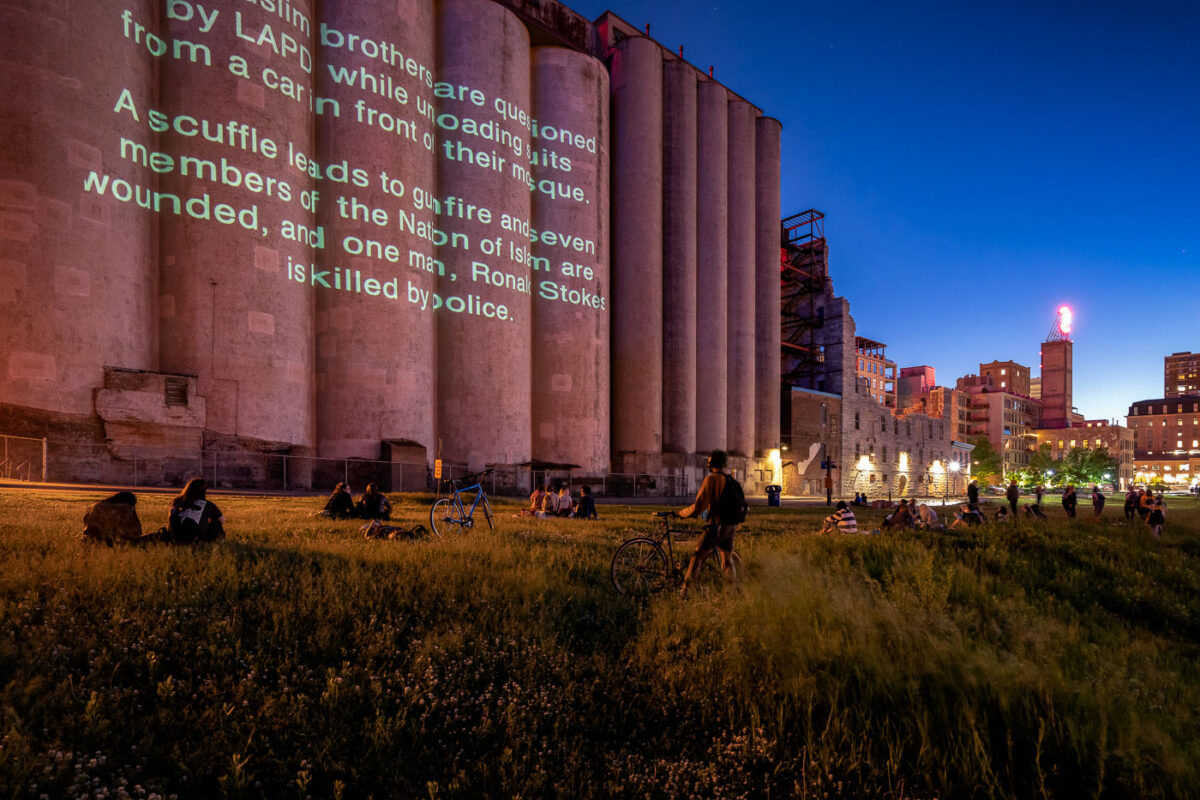
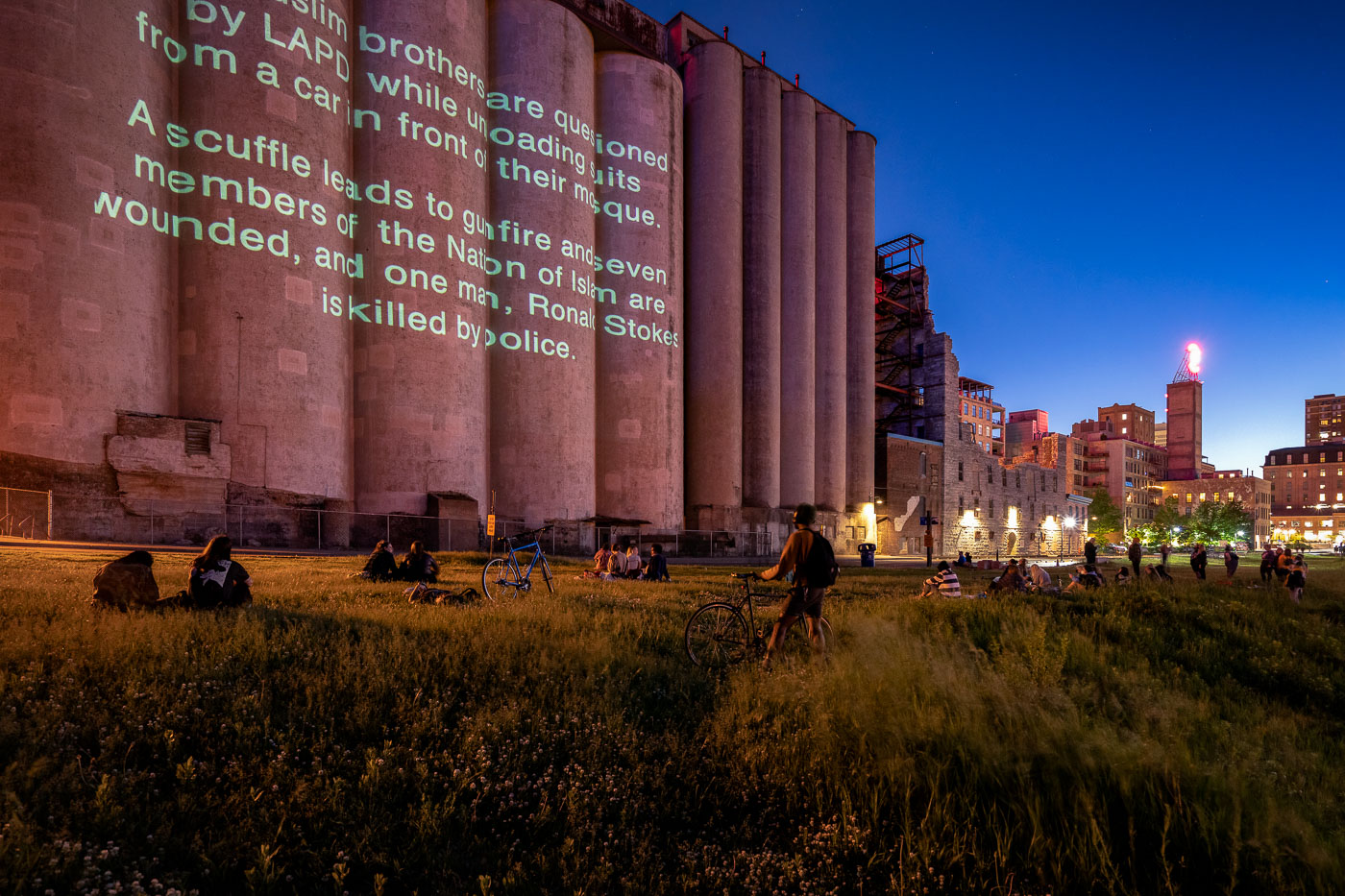
Projection on Gold Medal Flour elevators in Minneapolis, with people gathered in Gold Medal Park.
A projection titled "Revolution Will Be Televised" illuminates the historic Gold Medal Flour grain elevators in downtown Minneapolis. The art installation, displayed on the concrete silos, features text recounting historical events related to police actions and social justice, resonating with themes from the Minneapolis Uprising. Viewers gather in Gold Medal Park, a public green space adjacent to the former industrial complex, to observe the temporary display. The Gold Medal Flour complex, once a major industrial site, represents Minneapolis's milling history and now stands as a prominent landmark in the city's riverfront district.

“Revolution Will Be Televised” Projection on Gold Medal Flour Elevators
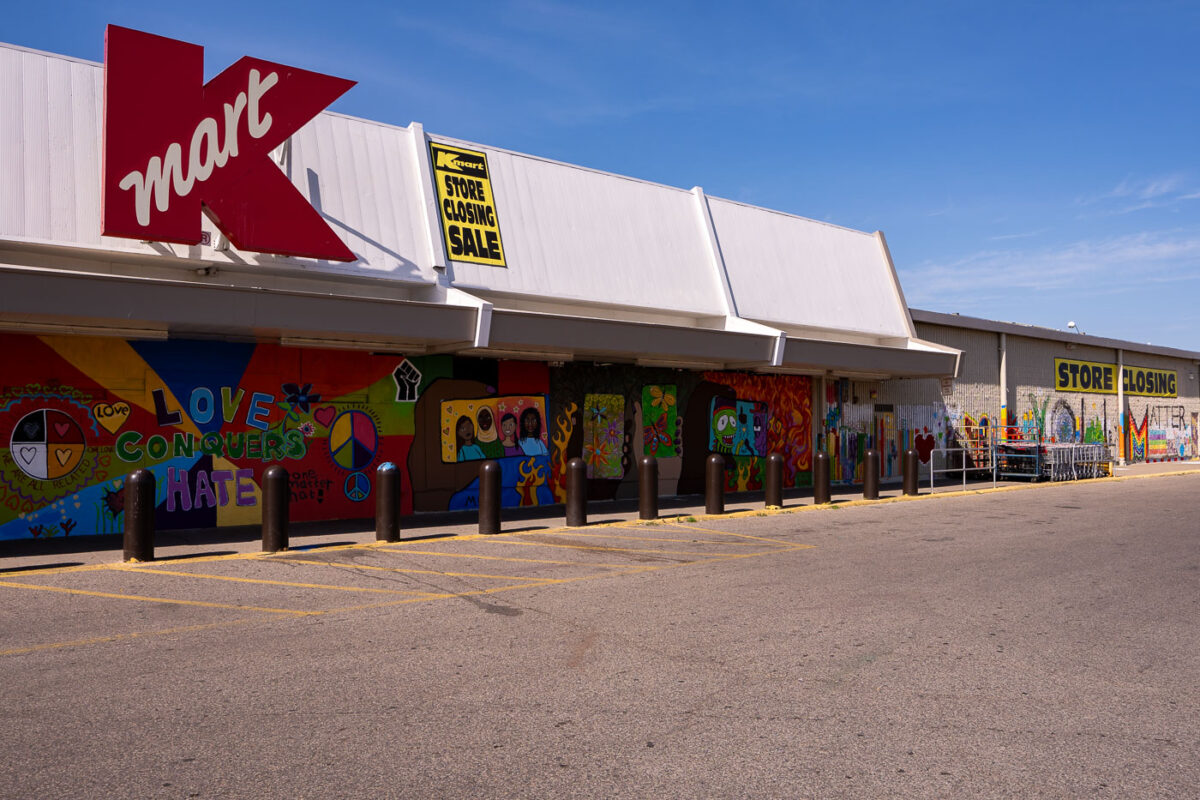
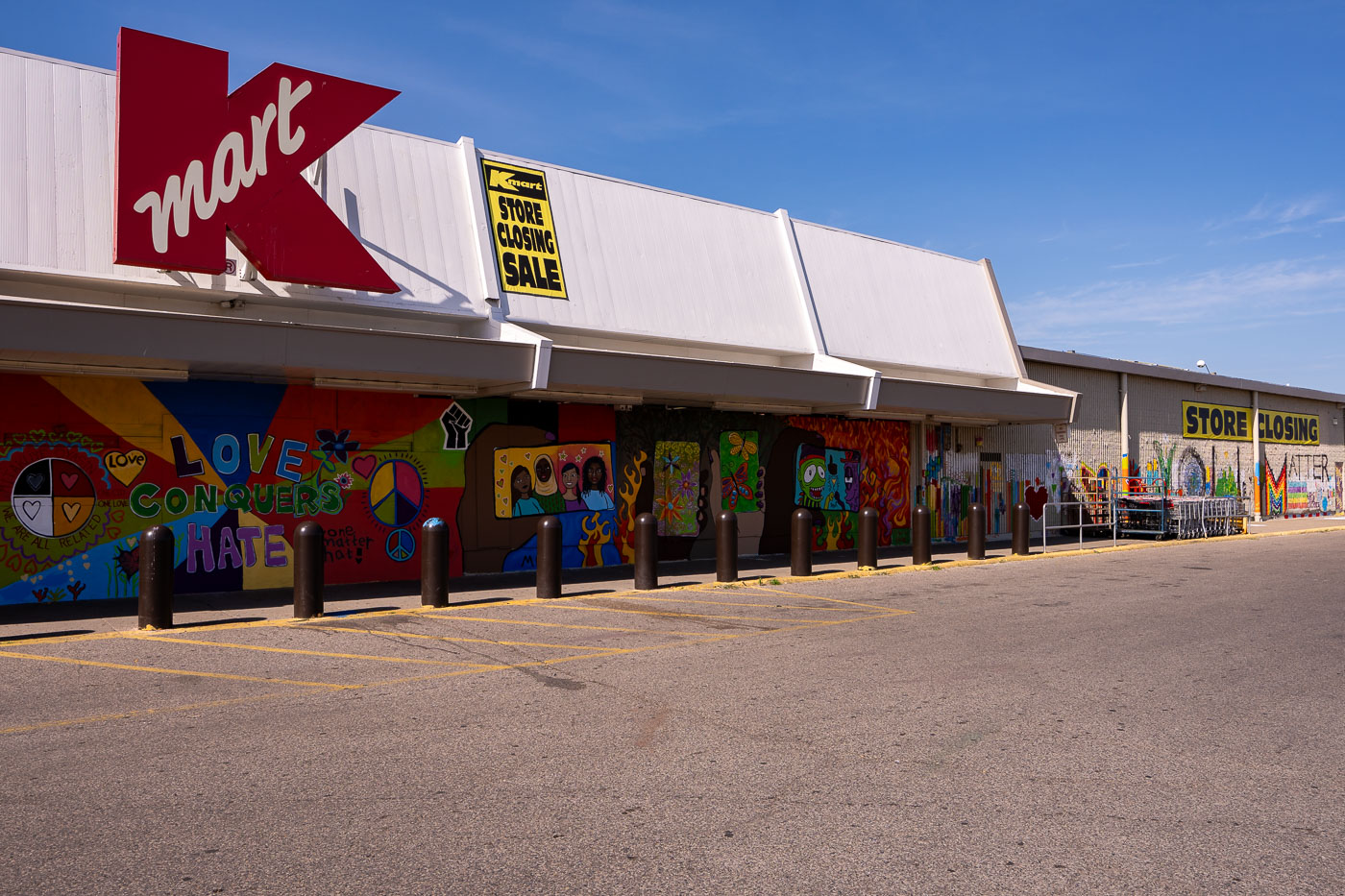
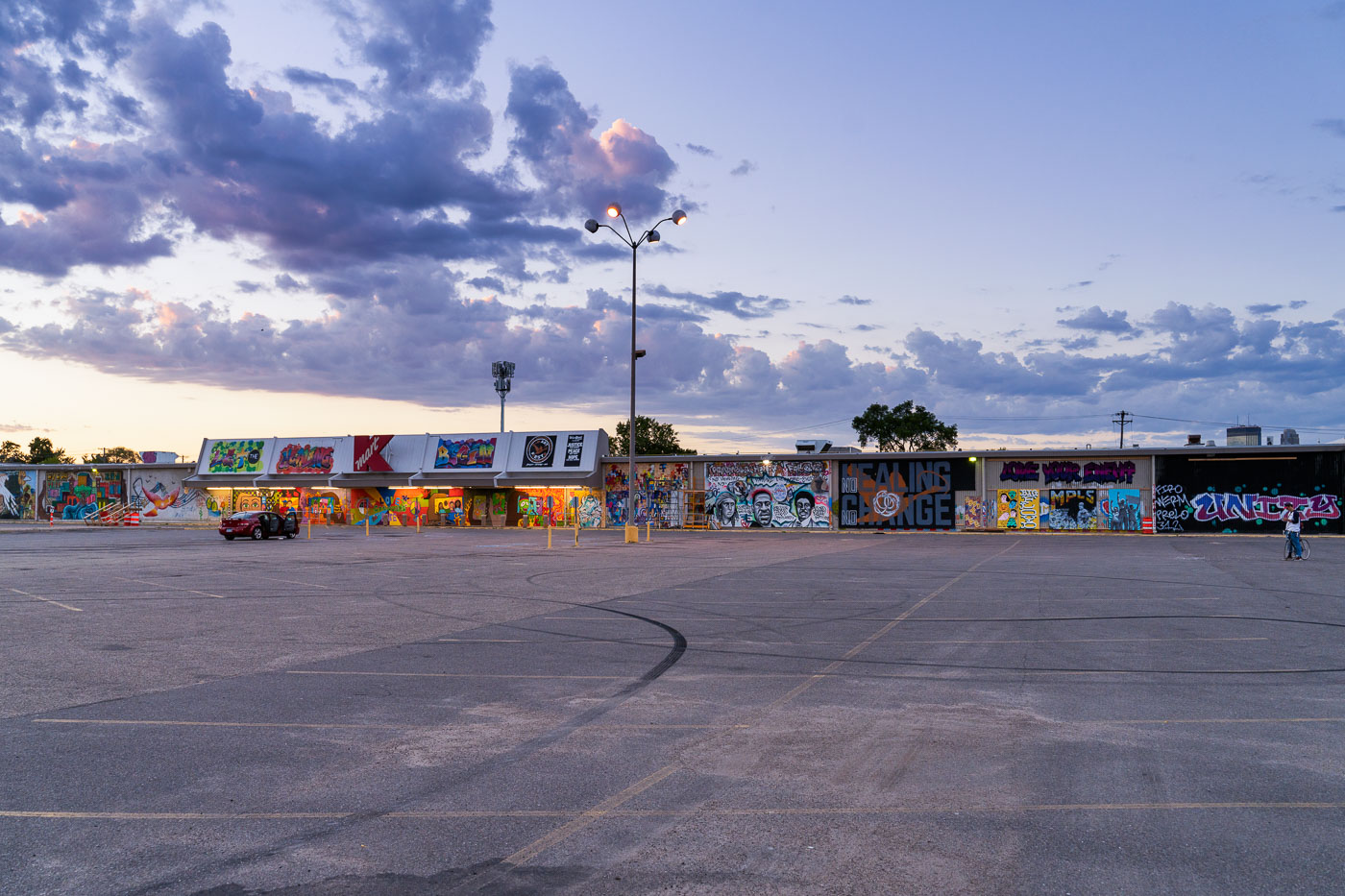
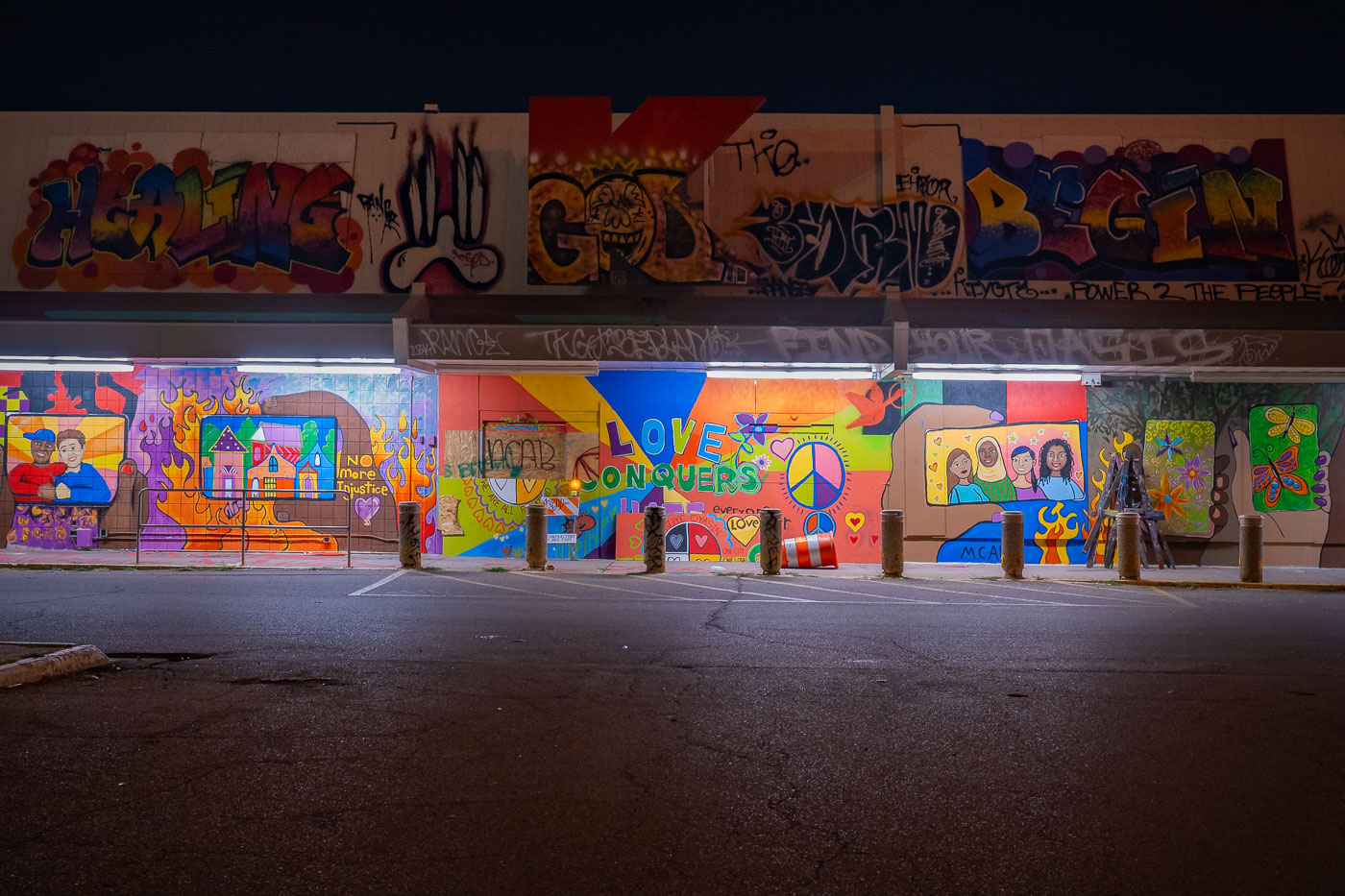
Kmart on Lake Street in Minneapolis with store-closing signs and murals on boarded windows, June 2020.
The Kmart store on Lake Street in Minneapolis is shown on June 14, 2020, with large “Store Closing Sale” banners and boarded storefront windows covered in murals and graffiti. Messages and images painted across the boards include “Love Conquers Hate,” peace symbols, and portraits, turning the facade into a temporary public art surface in the weeks after the murder of George Floyd. Shopping carts remain stacked near the entrance as the store stands closed behind the painted boards.

K-Mart Store Closing, Murals on Boards, Lake Street, Minneapolis
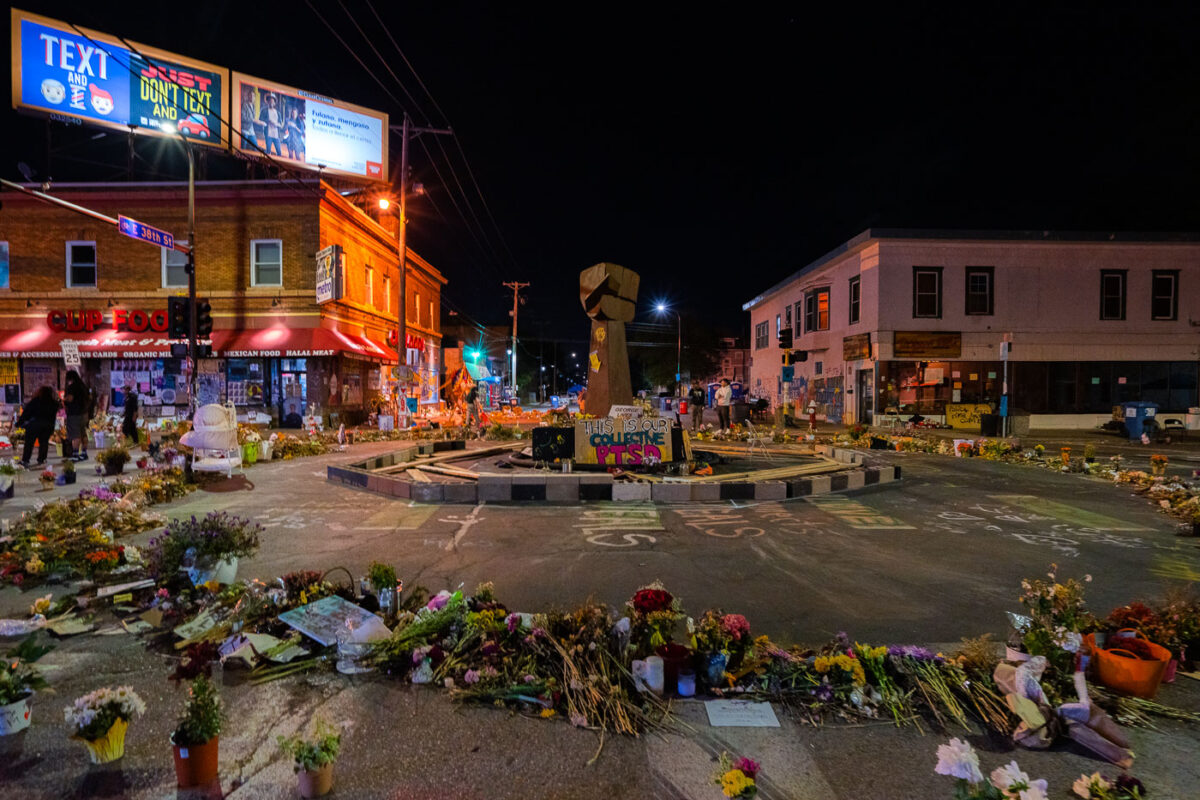
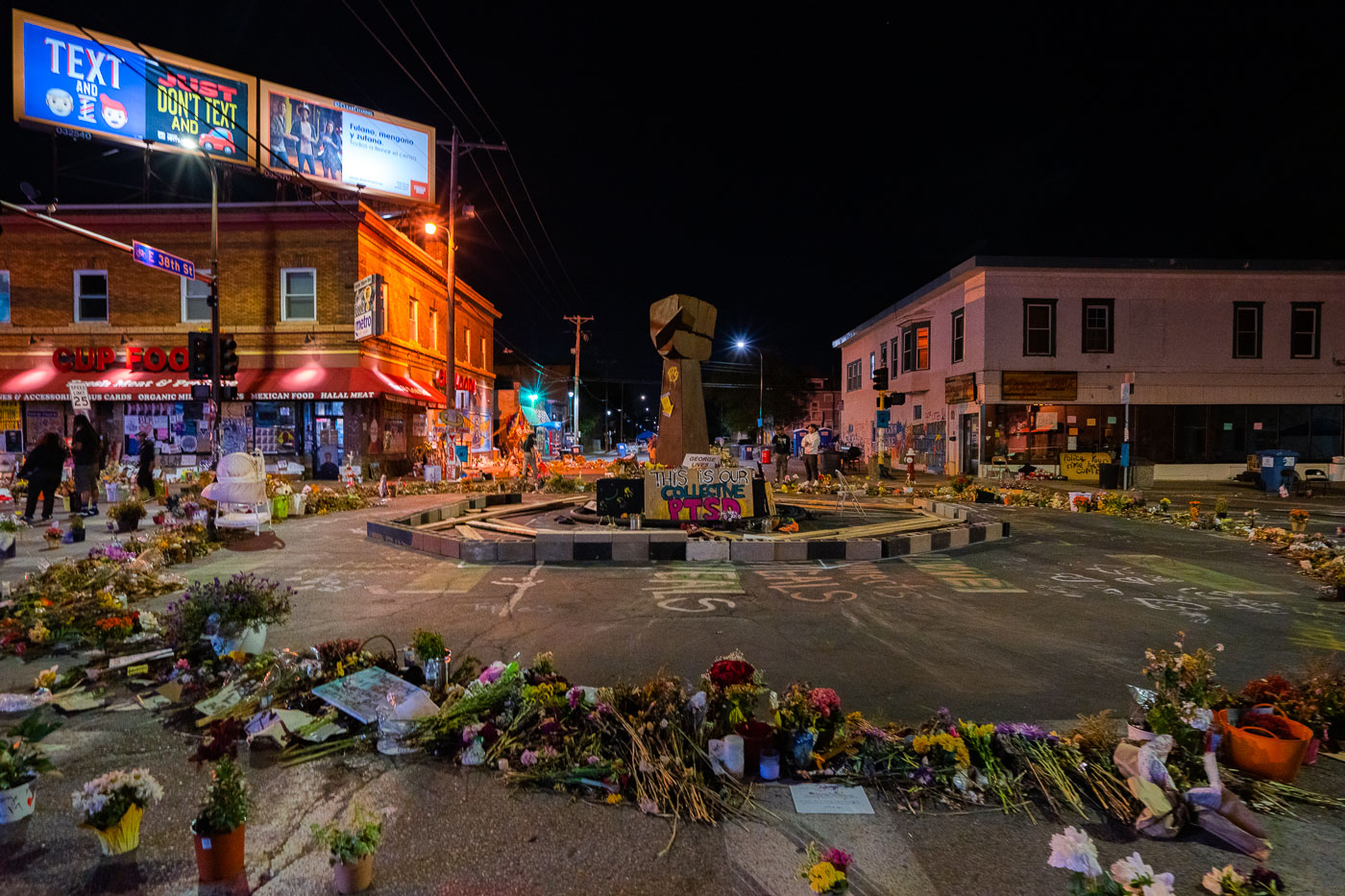
Raised Fist Memorial at George Floyd Square in Minneapolis, surrounded by flowers and tributes in June 2020.
The Raised Fist Memorial at George Floyd Square in Minneapolis stands at the junction of Chicago Avenue and East 38th Street, surrounded by flowers, candles, signs, and other tributes in June 2020. The memorial was established after George Floyd was killed by a Minneapolis police officer on May 25, 2020, and the intersection became a community-maintained protest and remembrance site. At the center of the square, the large clenched-fist sculpture anchors a traffic circle filled with offerings and messages left during the first weeks of protests over Floyd’s death.

George Floyd Square Raised Fist Memorial, June 2020
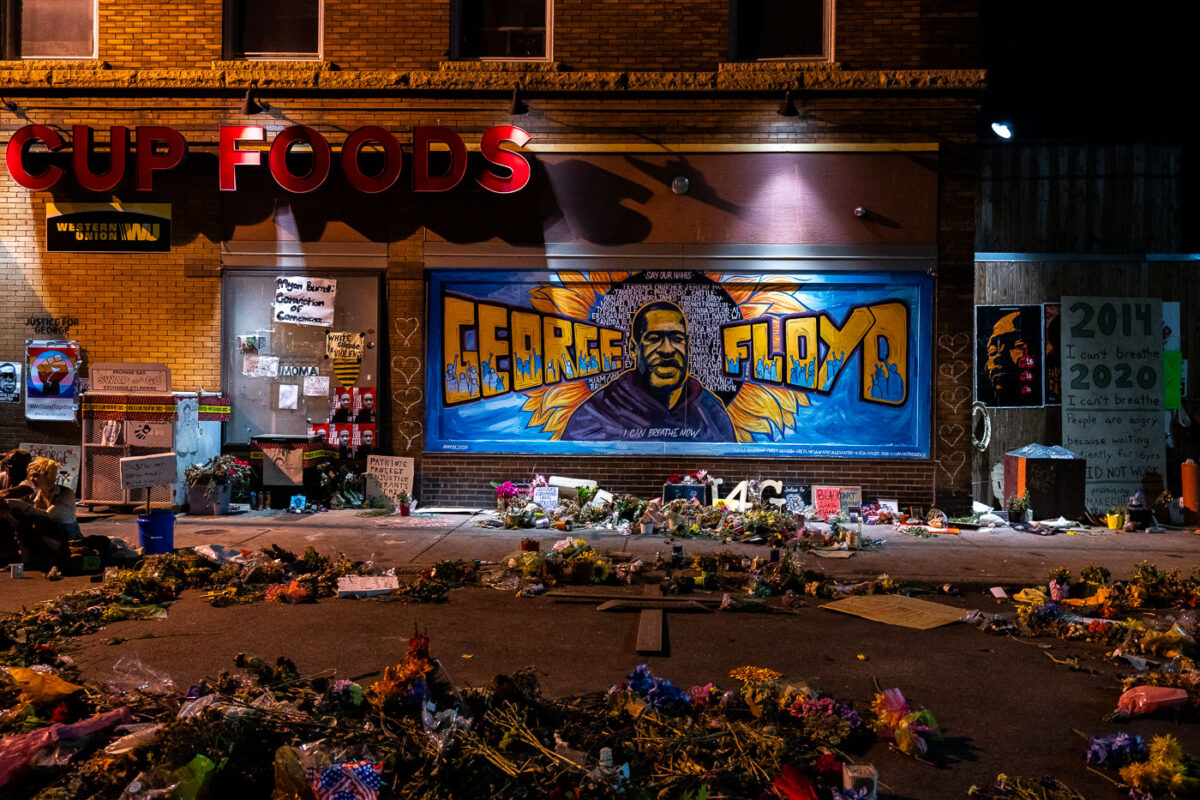
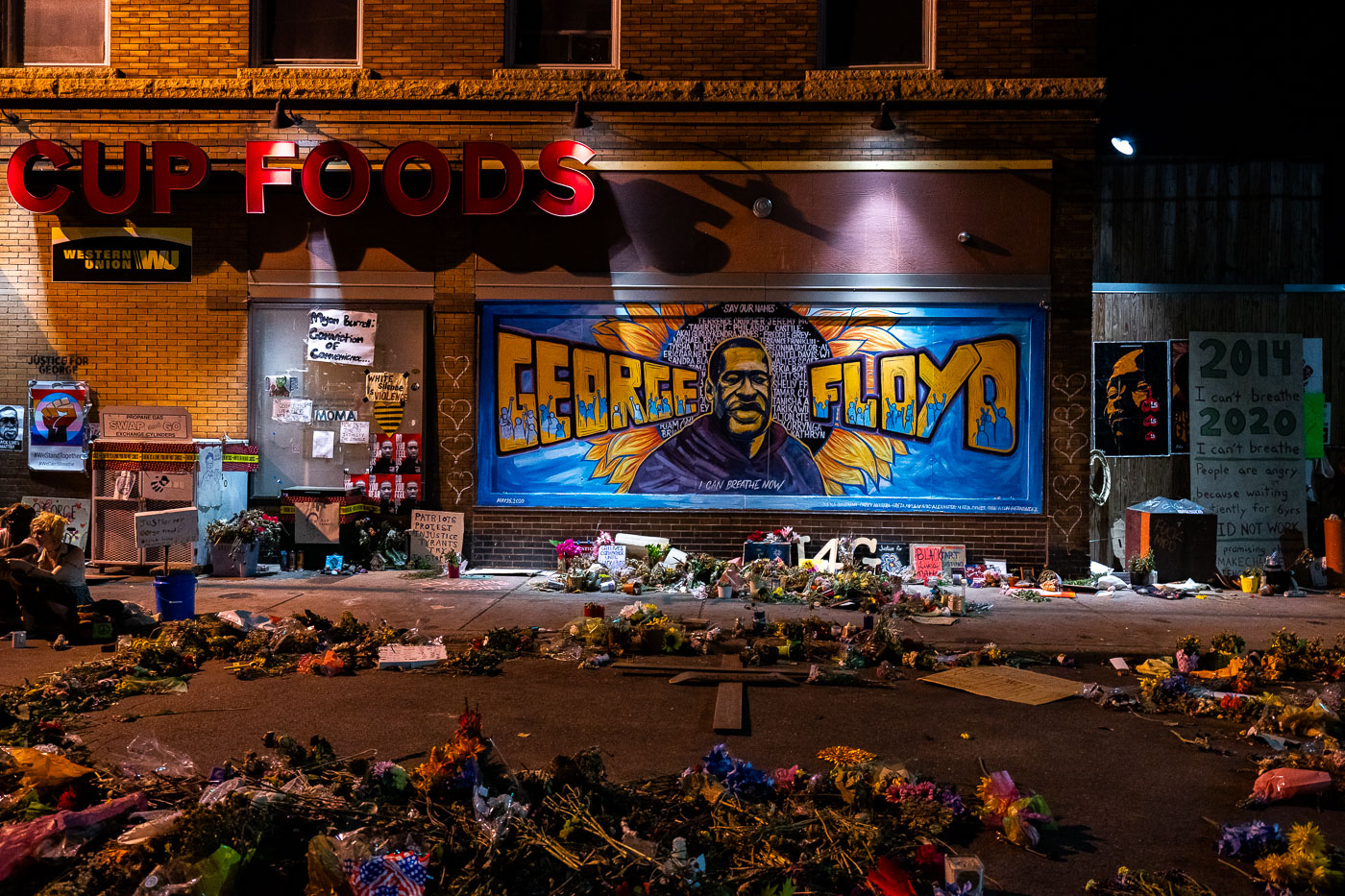
George Floyd mural and memorial flowers at Cup Foods in Minneapolis, June 2020.
Cup Foods at East 38th Street and Chicago Avenue in Minneapolis is covered with memorial tributes beneath a mural of George Floyd. Photographed at night in June 2020, the storefront at what became known as George Floyd Square is lined with flowers, signs, candles, and other offerings left after Floyd was killed by Minneapolis police on May 25, 2020.

George Floyd Mural, Flowers, Cup Foods, George Floyd Square
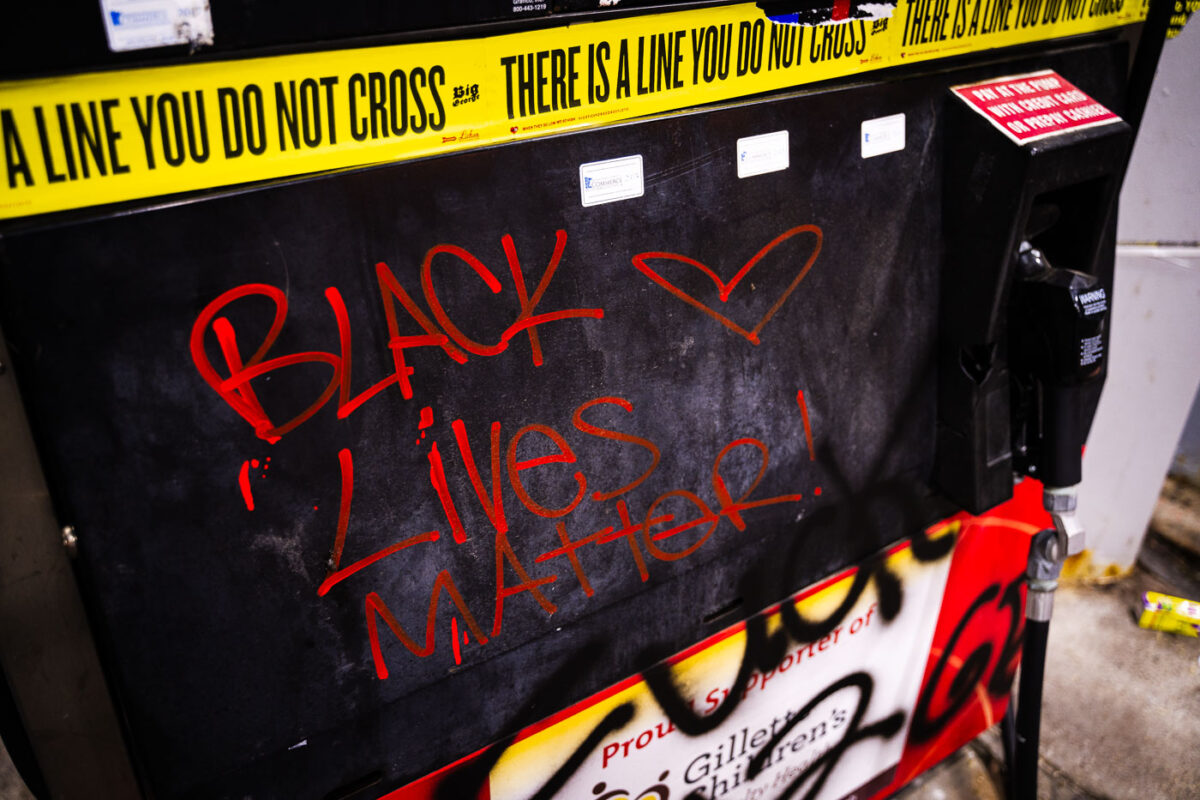
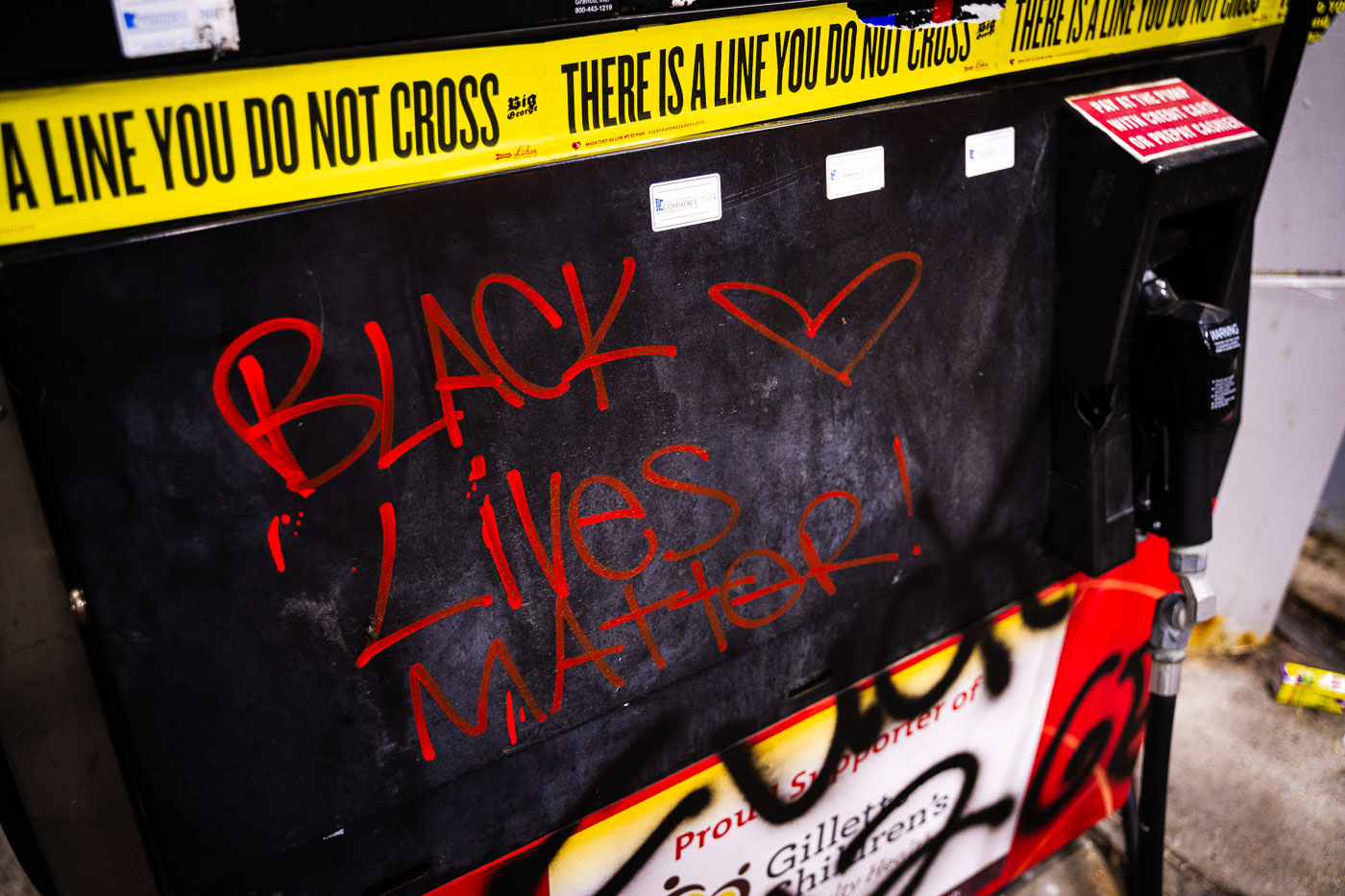
Black Lives Matter graffiti on a Speedway gas pump at George Floyd Square in Minneapolis.
A gas pump at the Speedway station in George Floyd Square, Minneapolis, is marked with red “Black Lives Matter” graffiti. The station stands across from the intersection where George Floyd was killed by Minneapolis police on May 25, 2020.

“Black Lives Matter” on Gas Pump, George Floyd Square, Minneapolis
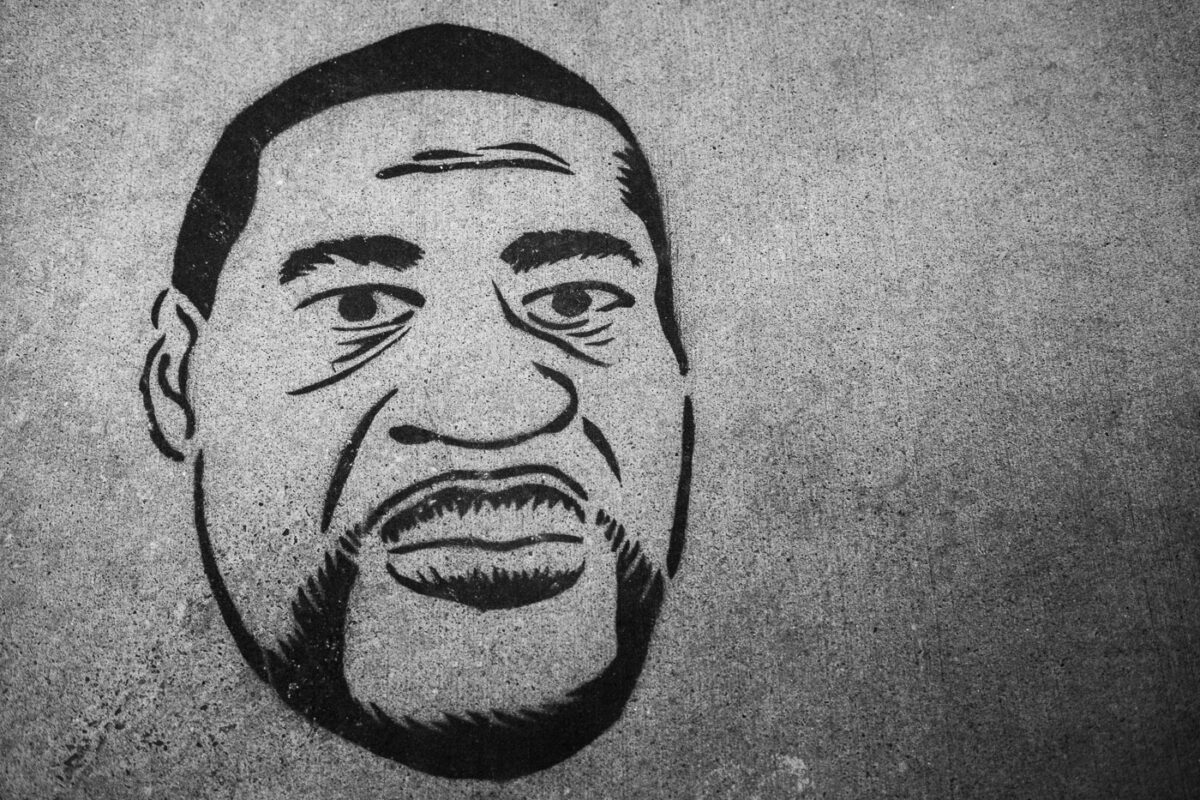
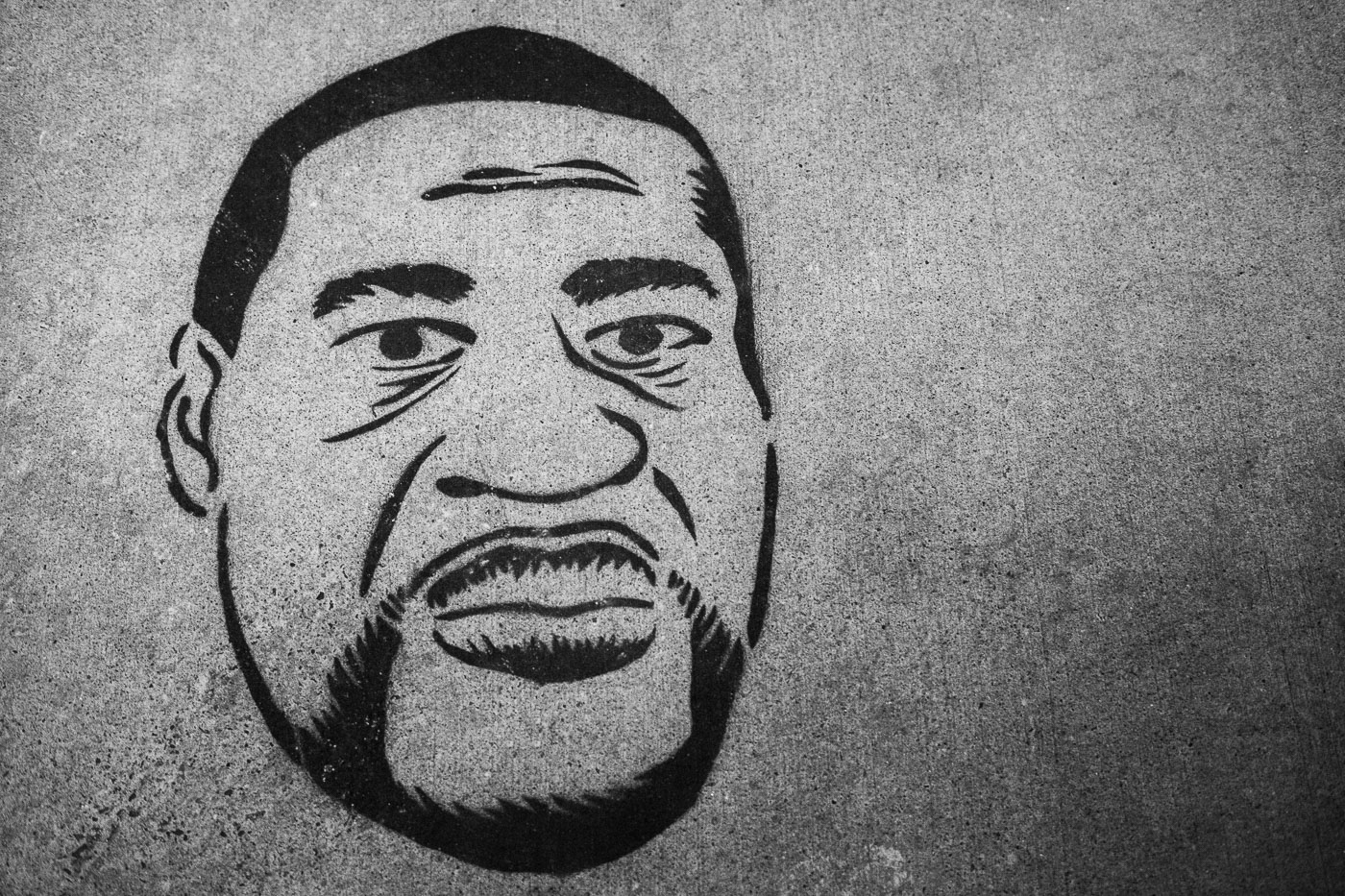
George Floyd stencil portrait on a Chicago Avenue sidewalk in Minneapolis.
A stencil portrait of George Floyd on a sidewalk along Chicago Avenue in Minneapolis is shown in close view. The work appeared in the area after Floyd was killed by Minneapolis police in May 2020, when streets around the corridor filled with memorials, murals, and protest art. Painted directly on the pavement, the portrait reflects how public space was used for remembrance and demands for racial justice during that period.

George Floyd stencil art, Chicago Avenue, Minneapolis
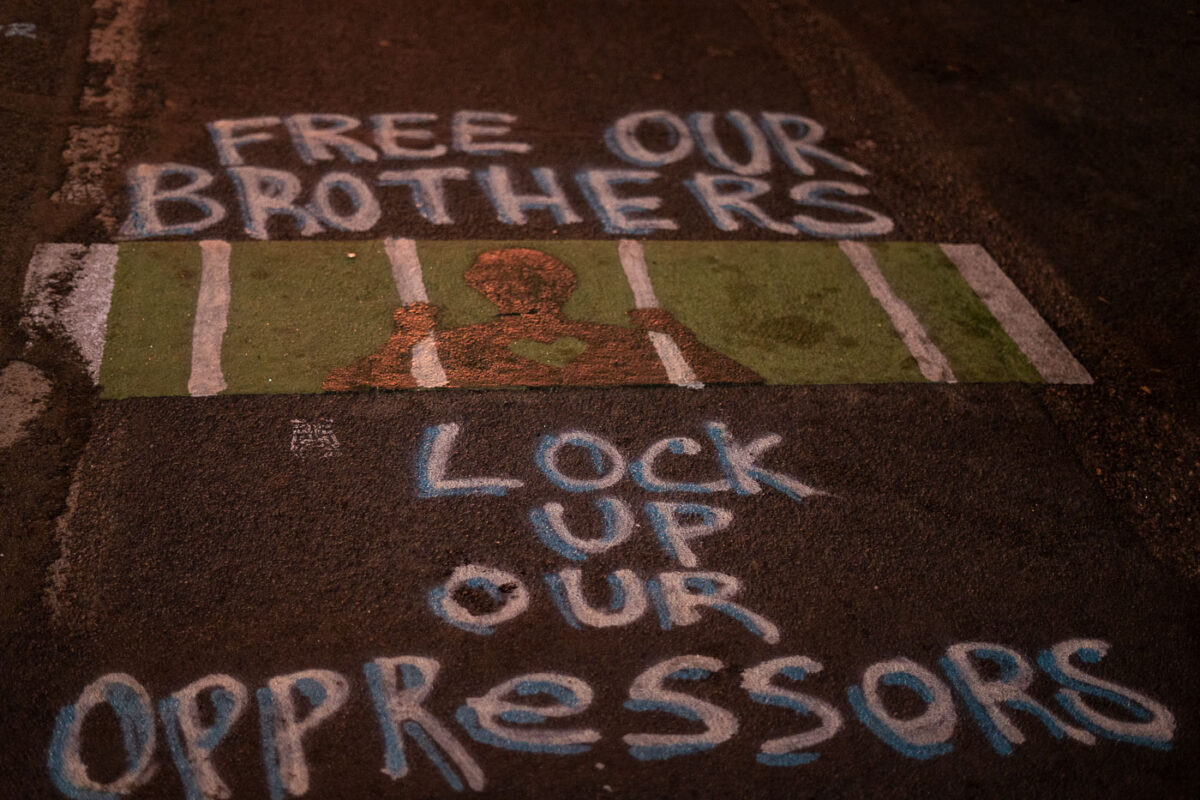
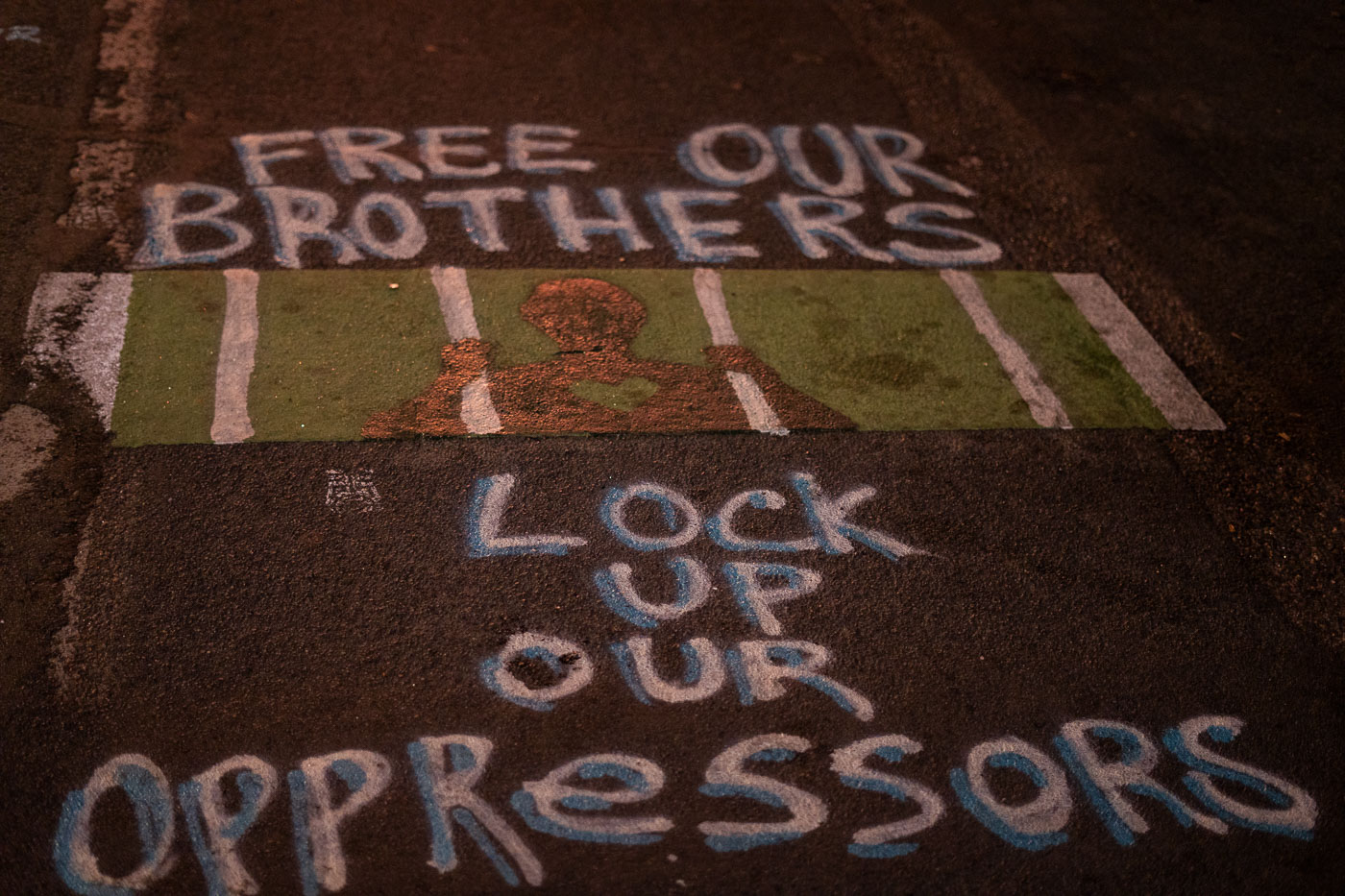
Chalk art on Chicago Avenue at George Floyd Square in Minneapolis reads “Free Our Brothers” and “Lock Up Our Oppressors.”
Chalk art on Chicago Avenue at George Floyd Square in Minneapolis reads “Free Our Brothers” and “Lock Up Our Oppressors.” Painted across the street with the image of a figure behind bars, the message was part of the protest memorials and street art that appeared at the site in June 2020 after the murder of George Floyd. George Floyd Square became a focal point for mourning, calls for police accountability, and community-led occupation of the intersection.

George Floyd Square Chalk Art: Free Our Brothers, Lock Up Our Oppressors
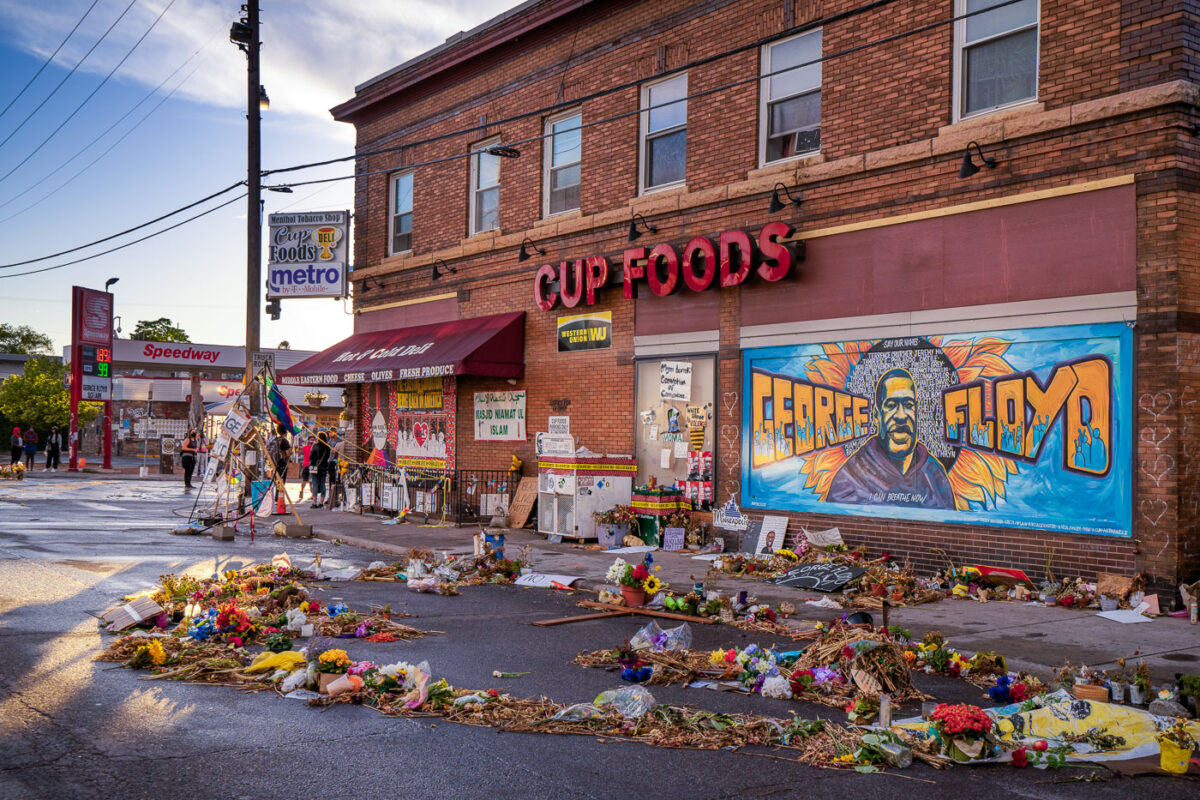
Flowers and George Floyd memorial outside Cup Foods at George Floyd Square in Minneapolis after rain.
George Floyd Square at Chicago Avenue and East 38th Street in Minneapolis is pictured outside Cup Foods on June 23, 2020. Flowers and memorial offerings cover the wet street after rain near the storefront where George Floyd was killed by Minneapolis police a month earlier. A large mural on the building and handwritten signs mark the site as a place of mourning, remembrance, and protest.

George Floyd Square, Cup Foods, Flowers after Summer Rain
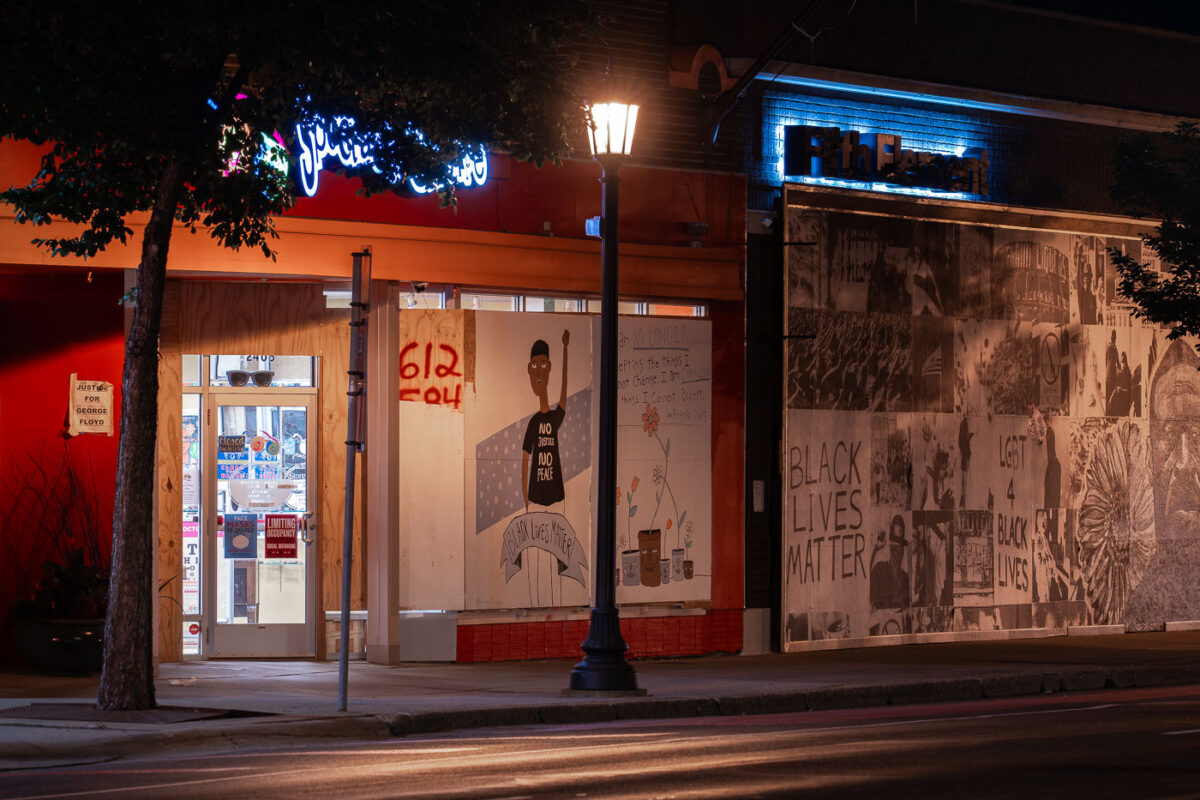
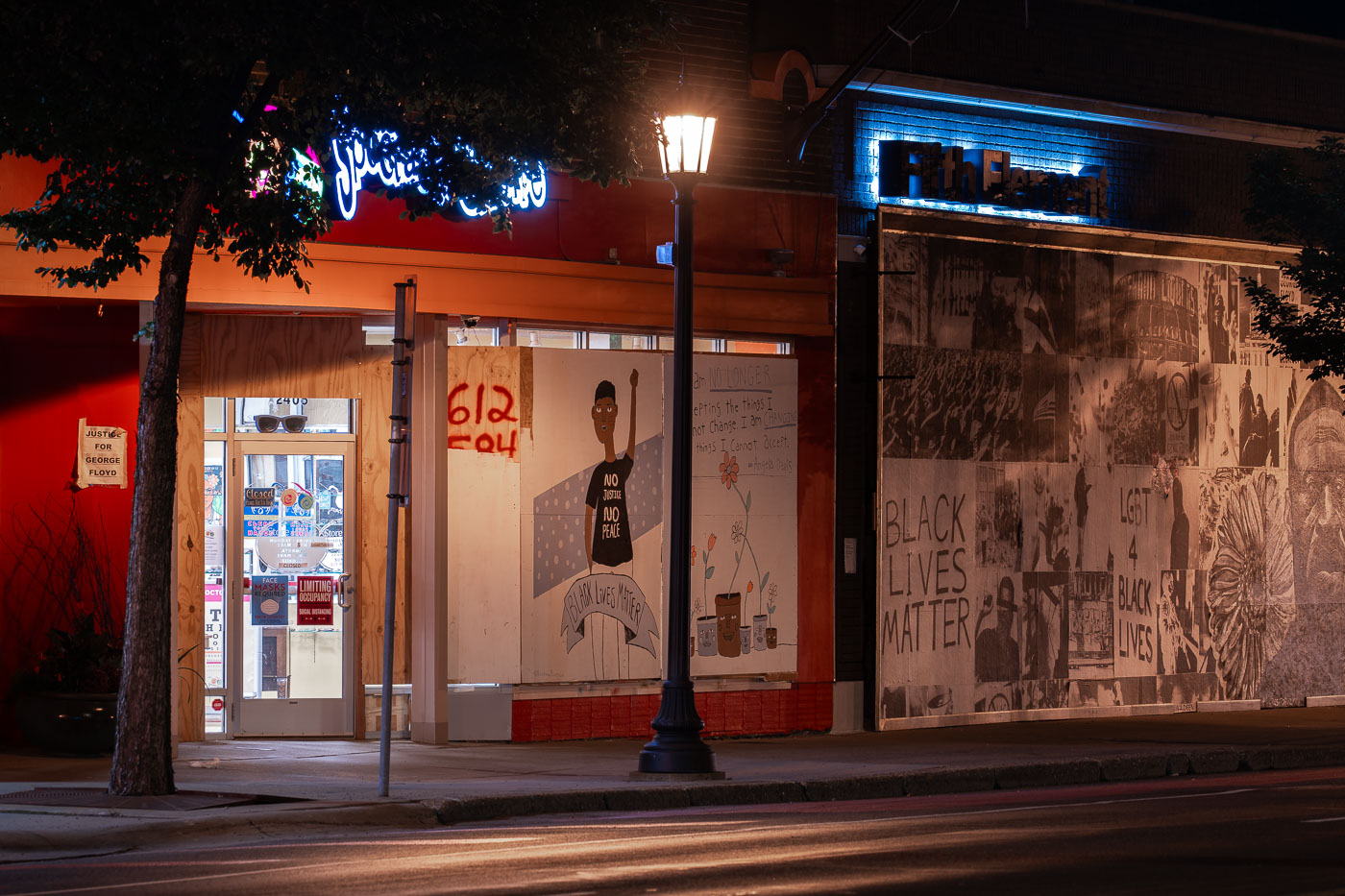
Boarded storefront murals at Fifth Element on Hennepin Avenue in Uptown Minneapolis, June 2020.
Boarded storefronts at Fifth Element on Hennepin Avenue in Uptown Minneapolis are covered with murals and protest messages in June 2020. The plywood panels include hand-painted portraits, “Black Lives Matter” text, and a memorial sign for George Floyd, whose killing on May 25, 2020, led many businesses across Minneapolis to install protective boarding.

Fifth Element Murals, Hennepin Ave, Minneapolis Uprising
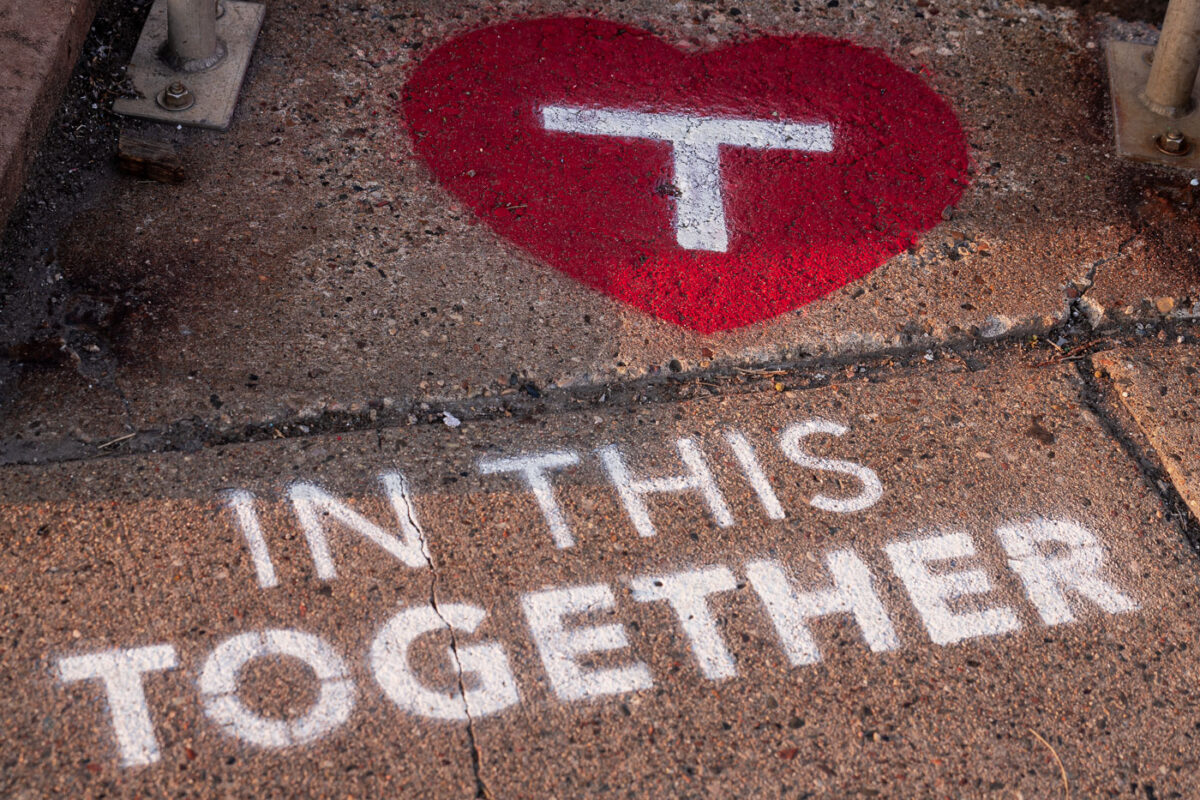
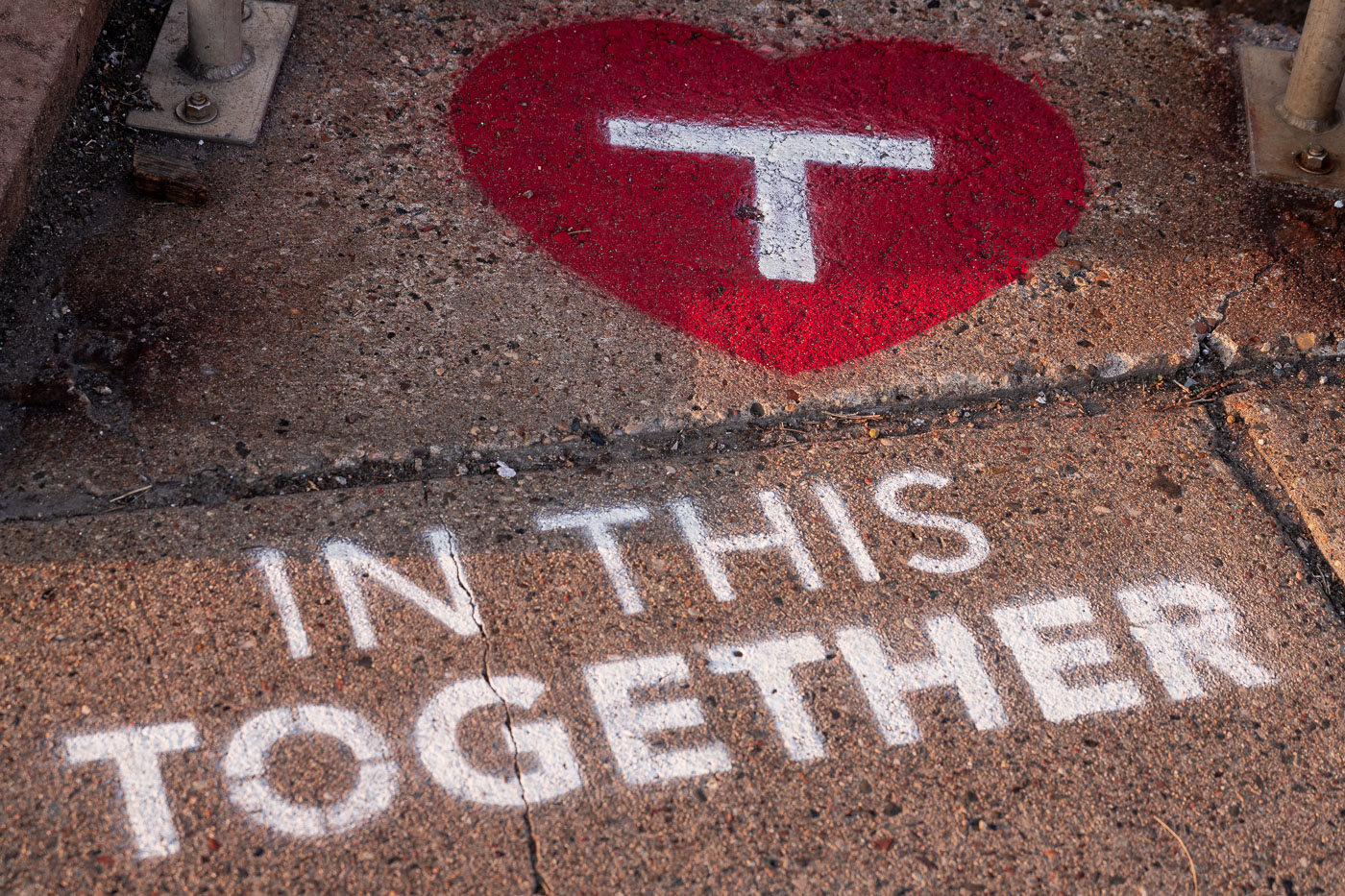
Metro Transit heart stencil and “IN THIS TOGETHER” message on a Minneapolis sidewalk.
Metro Transit stencil art on a sidewalk in Minneapolis’s North Loop neighborhood features the agency’s white “T” inside a red heart above the words “IN THIS TOGETHER.” The marking appears outside a Metro Transit facility and references the Twin Cities regional transit operator.

North Loop Metro Transit Stencil Art: In This Together
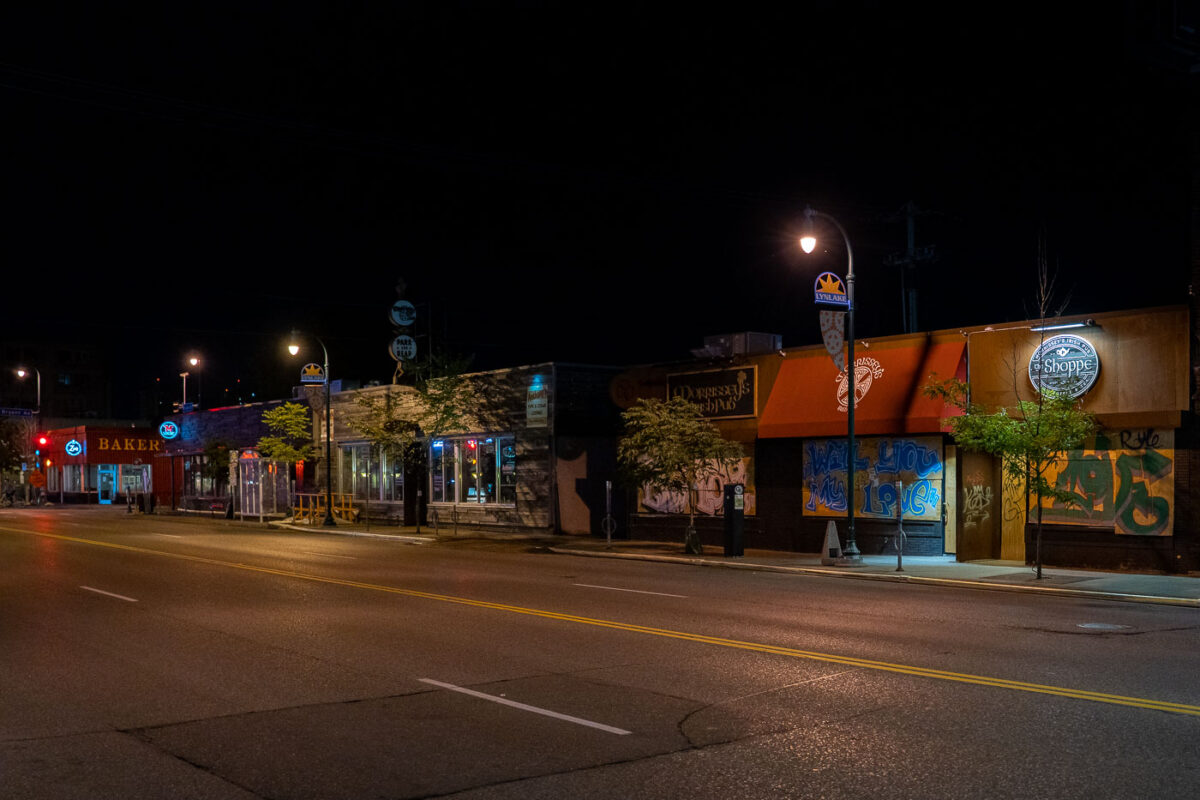
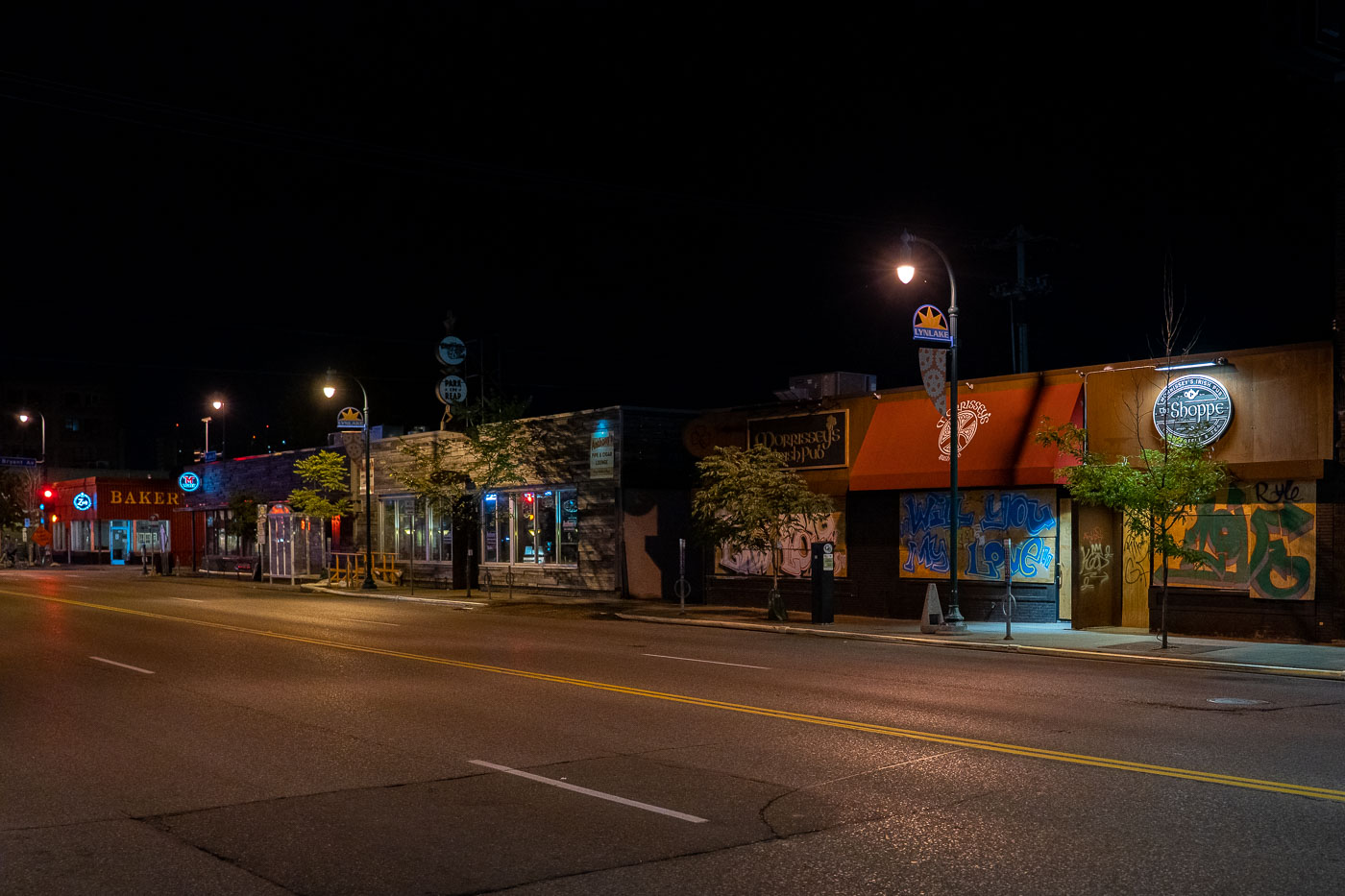
West Lake Street boarded up businesses
Murals adorn boarded-up storefronts along West Lake Street in Minneapolis's Lyn-Lake neighborhood. These boards were installed on businesses in July 2020 as a protective measure following civil unrest that occurred after the May 25, 2020 murder of George Floyd by Minneapolis police officer Derek Chauvin. Many of these temporary barriers were subsequently transformed into public art by various artists. The murals became a significant visual record of the period, contributing to the cultural landscape of Uptown Minneapolis.

West Lake Street Murals, Minneapolis, July 2020
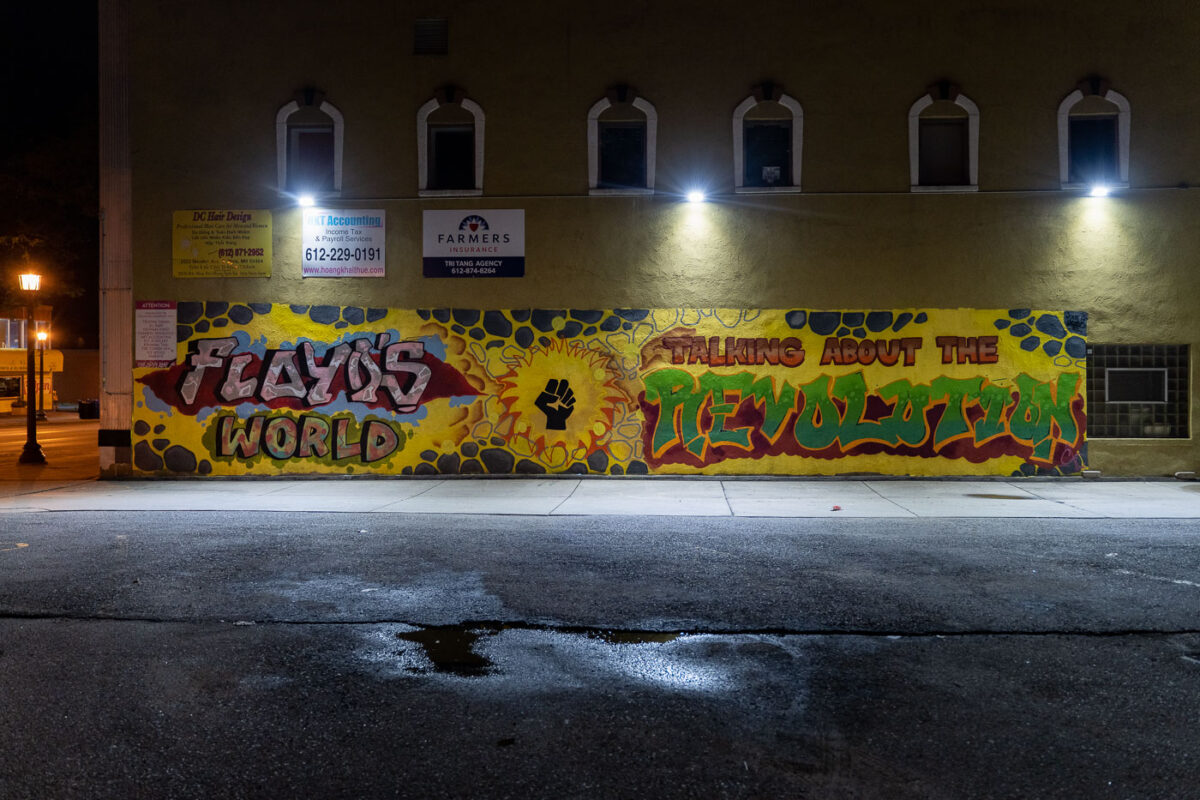
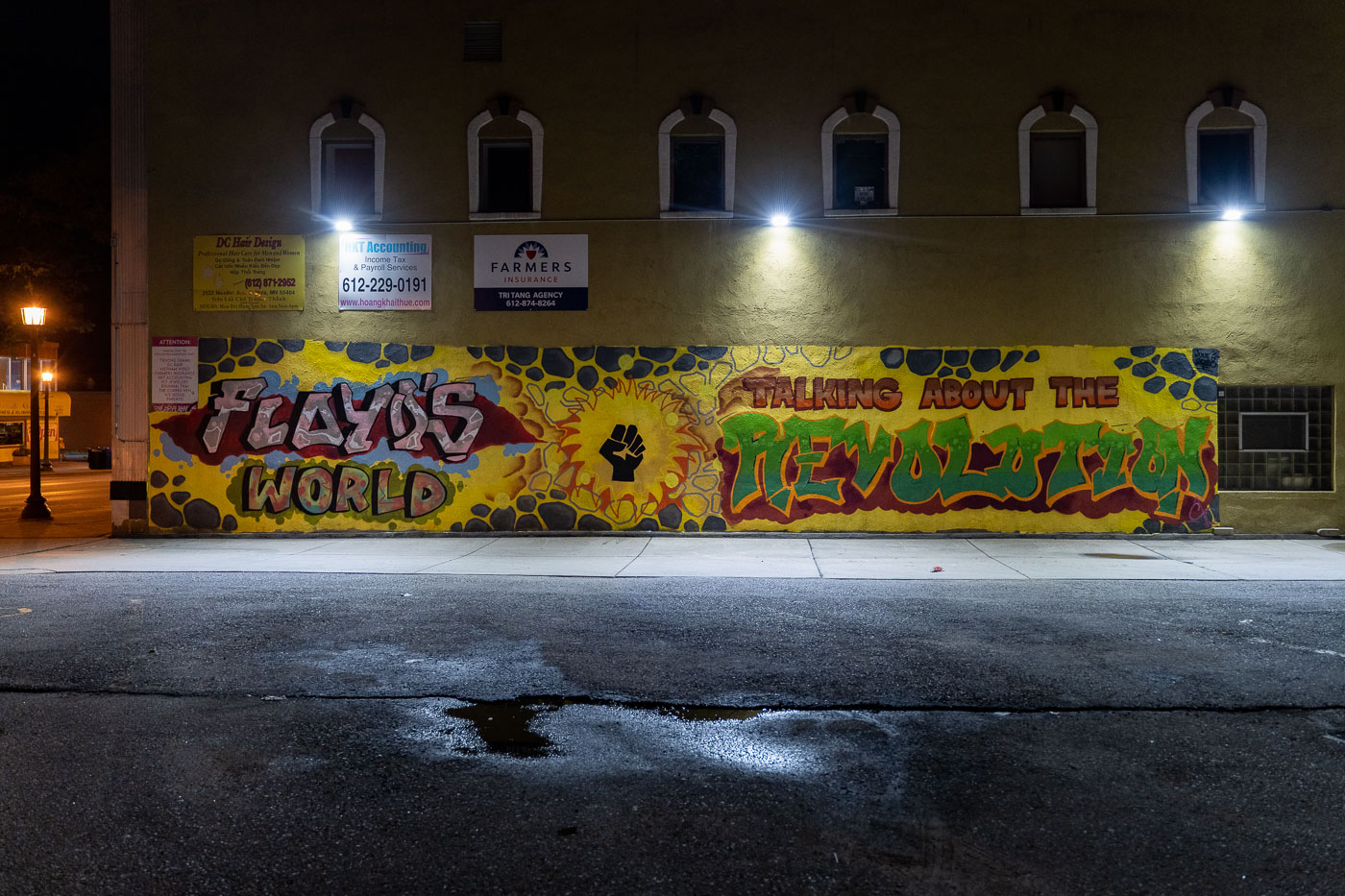
Large mural on the side of a building on Nicollet Ave
The "Floyd's World" mural, located on Nicollet Avenue in Minneapolis, was created on June 5, 2020, in the aftermath of George Floyd's murder and the Minneapolis Uprising. This large-scale graffiti art, painted on the side of a commercial building, features the phrases "Floyd's World" and "Talking about the Revolution," accompanied by a raised fist symbol. The mural serves as a public expression of grief, protest, and a call for social change, reflecting the community's response to the events of that period. It remains a significant piece of public art documenting a critical moment in Minneapolis history.

“Floyd’s World” Mural, Nicollet Avenue, Minneapolis
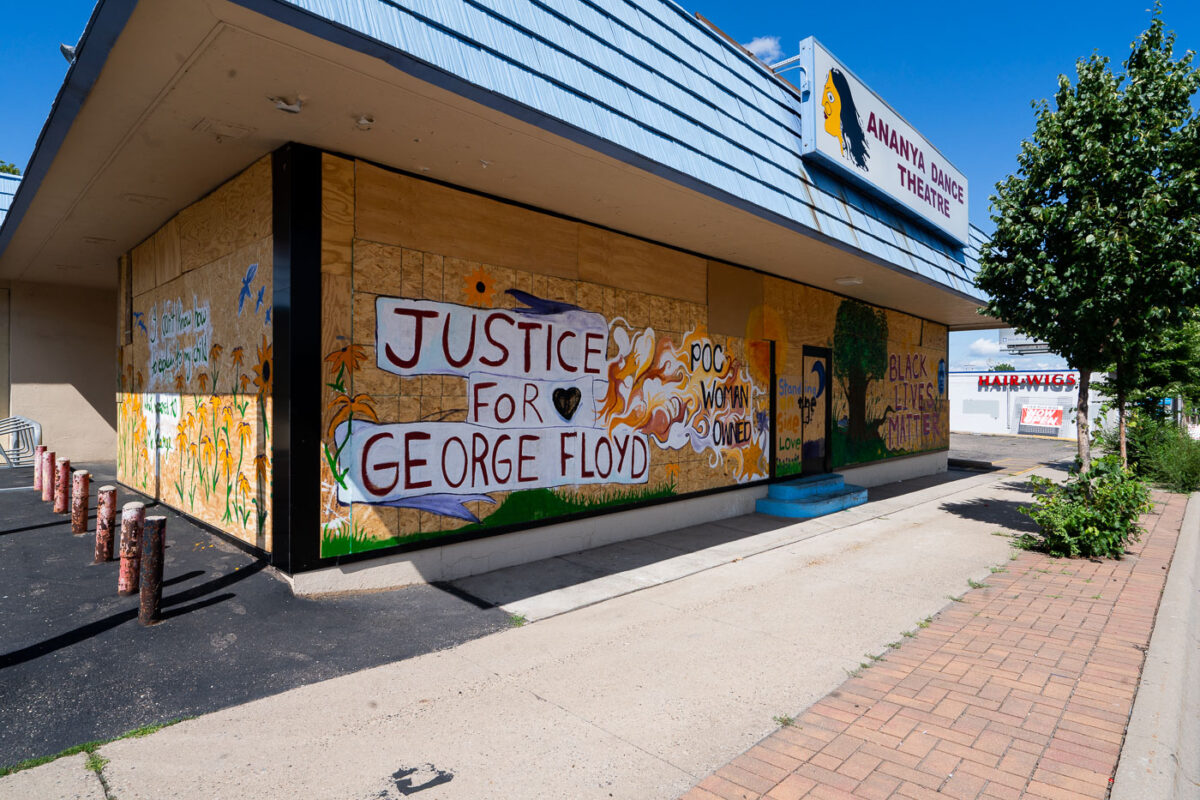
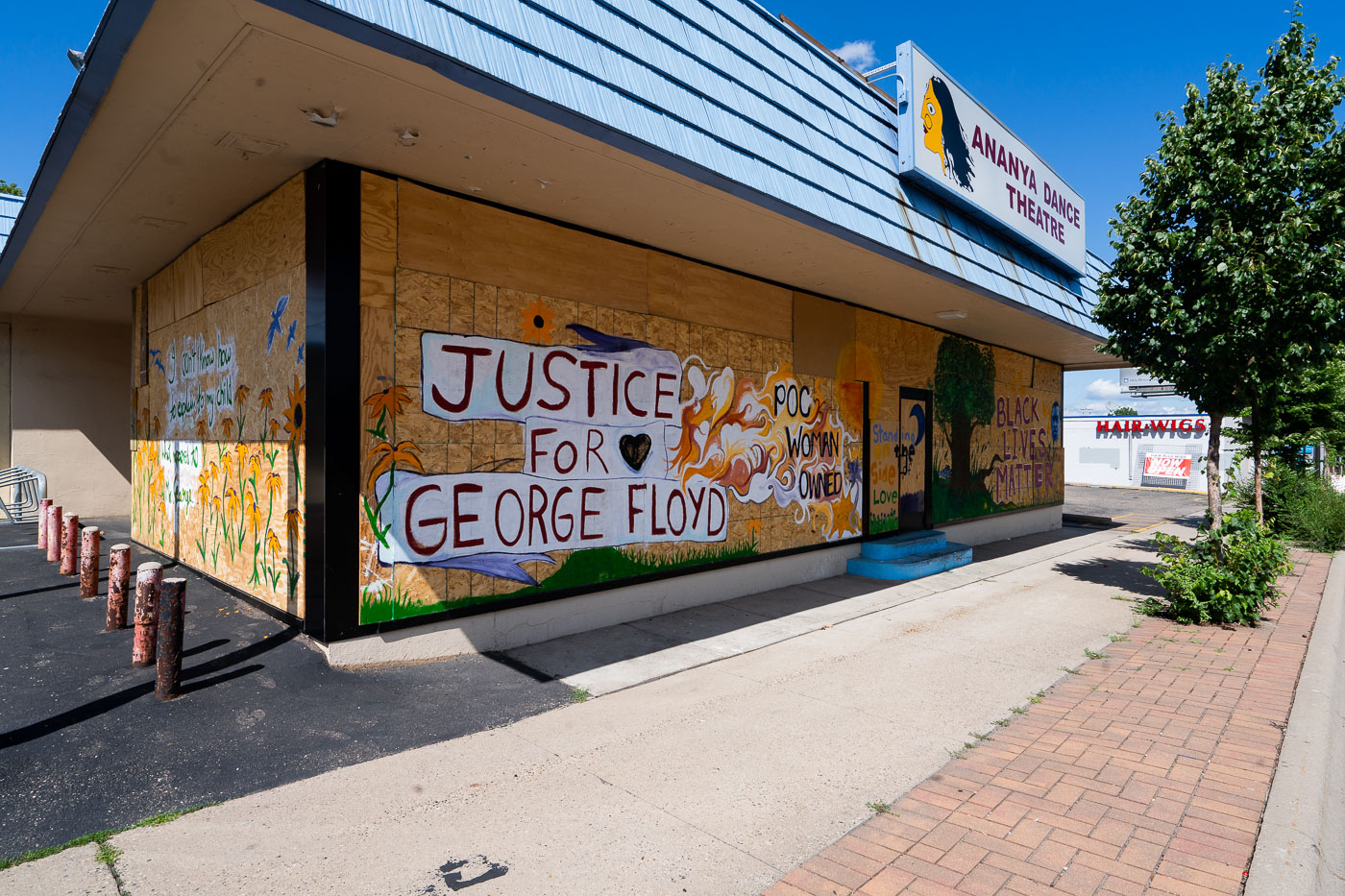
Boards on the Ananya Dance Theatre in St Paul
The Ananya Dance Theatre in St. Paul features murals painted on its boarded-up exterior. These artworks emerged in the aftermath of the 2020 protests following the murder of George Floyd, transforming the protective boards into a public expression of grief and calls for justice. The murals include messages such as "JUSTICE FOR GEORGE FLOYD" and "BLACK LIVES MATTER," alongside affirmations like "POC WOMAN OWNED," reflecting the theatre's identity and community solidarity. Ananya Dance Theatre, a professional dance company, uses performance to address social justice issues, making its building a fitting canvas for these protest art expressions.

Ananya Dance Theatre, St. Paul: George Floyd Mural
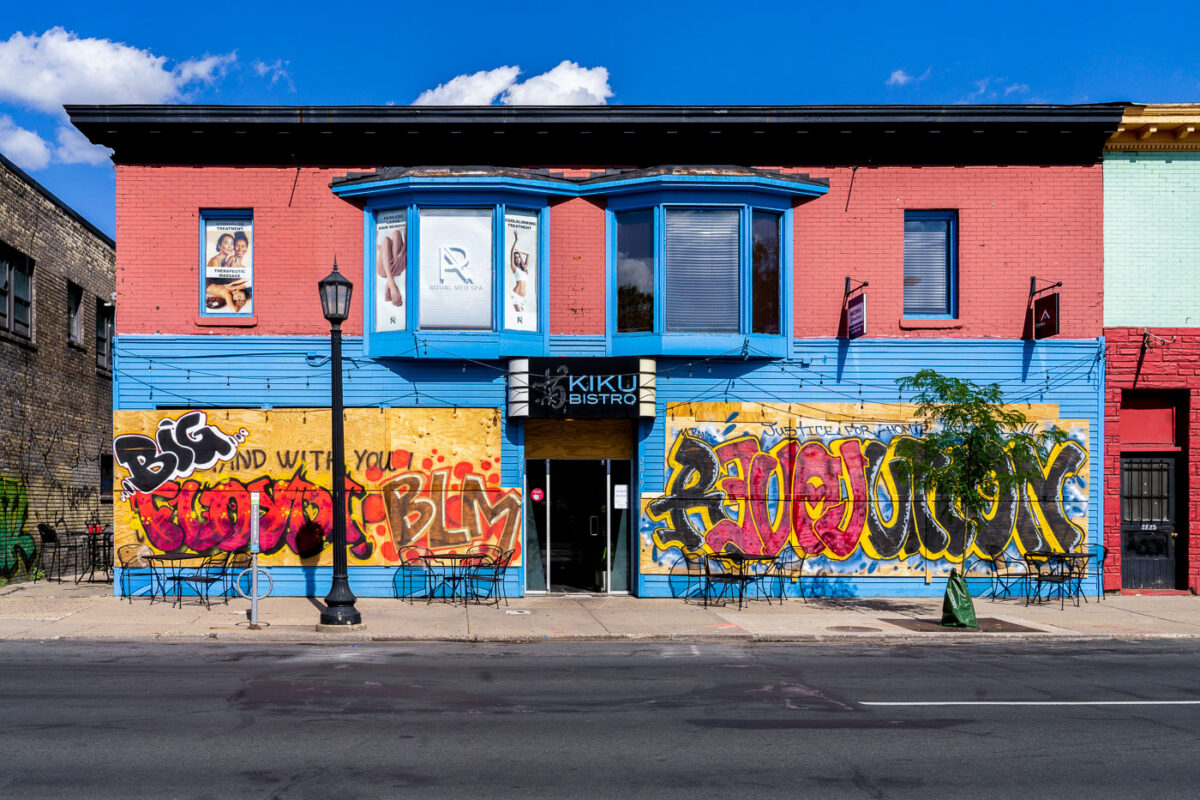
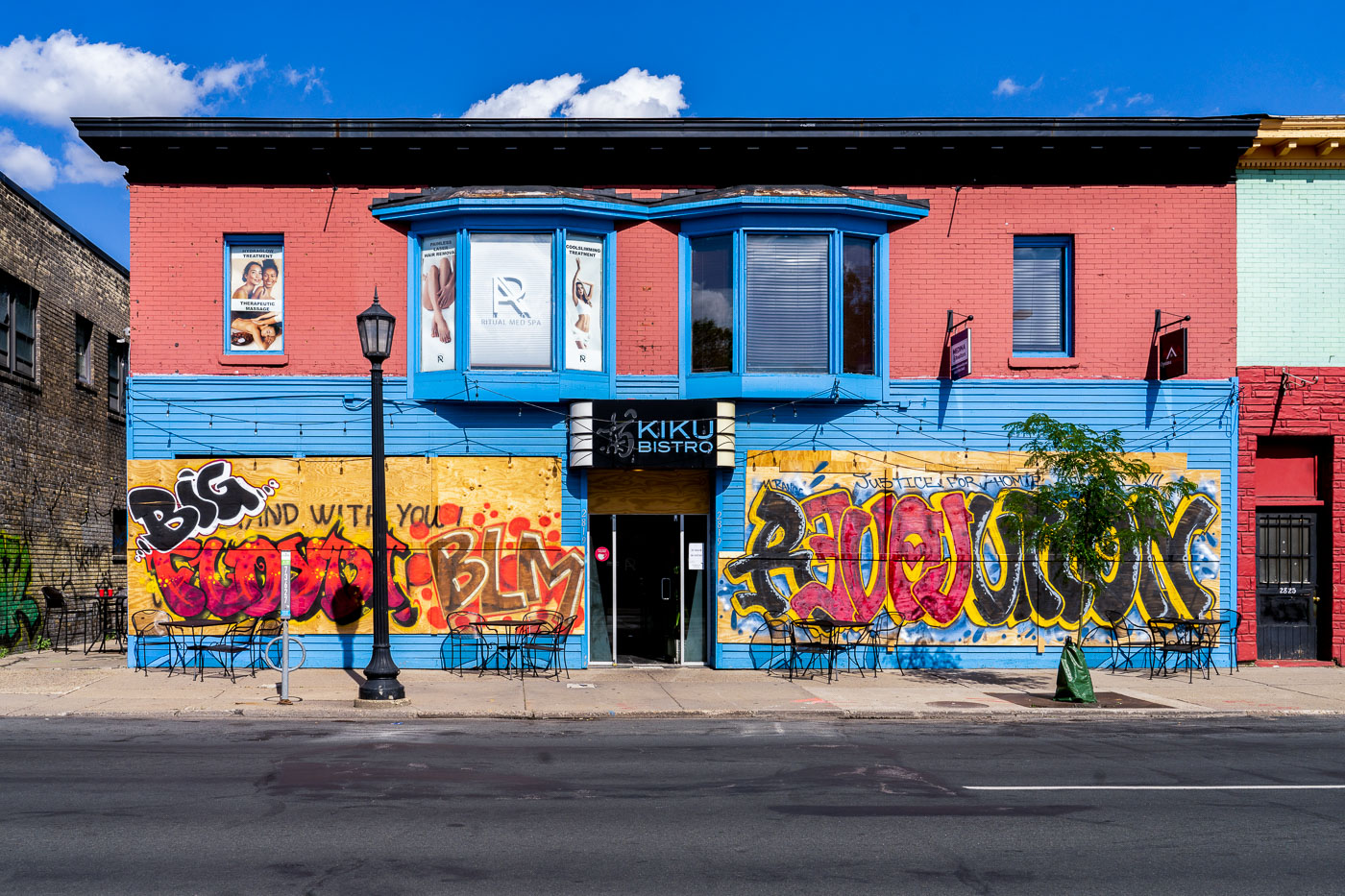
Art boards on Kiku Bistro on Hennepin Ave
Kiku Bistro on Hennepin Avenue displays protest graffiti from 2020. This restaurant, located in Uptown Minneapolis, boarded its windows with plywood panels following the May 25, 2020 death of George Floyd and the subsequent civil unrest. These protective boards became canvases for public expression, featuring graffiti and murals related to the widespread protests. The artwork includes "BLM" (Black Lives Matter) and other messages reflecting the community's response. This imagery documents a specific period of public commentary and artistic engagement within the city's commercial districts.

Kiku Bistro, Hennepin Ave, 2020 Uprising Graffiti
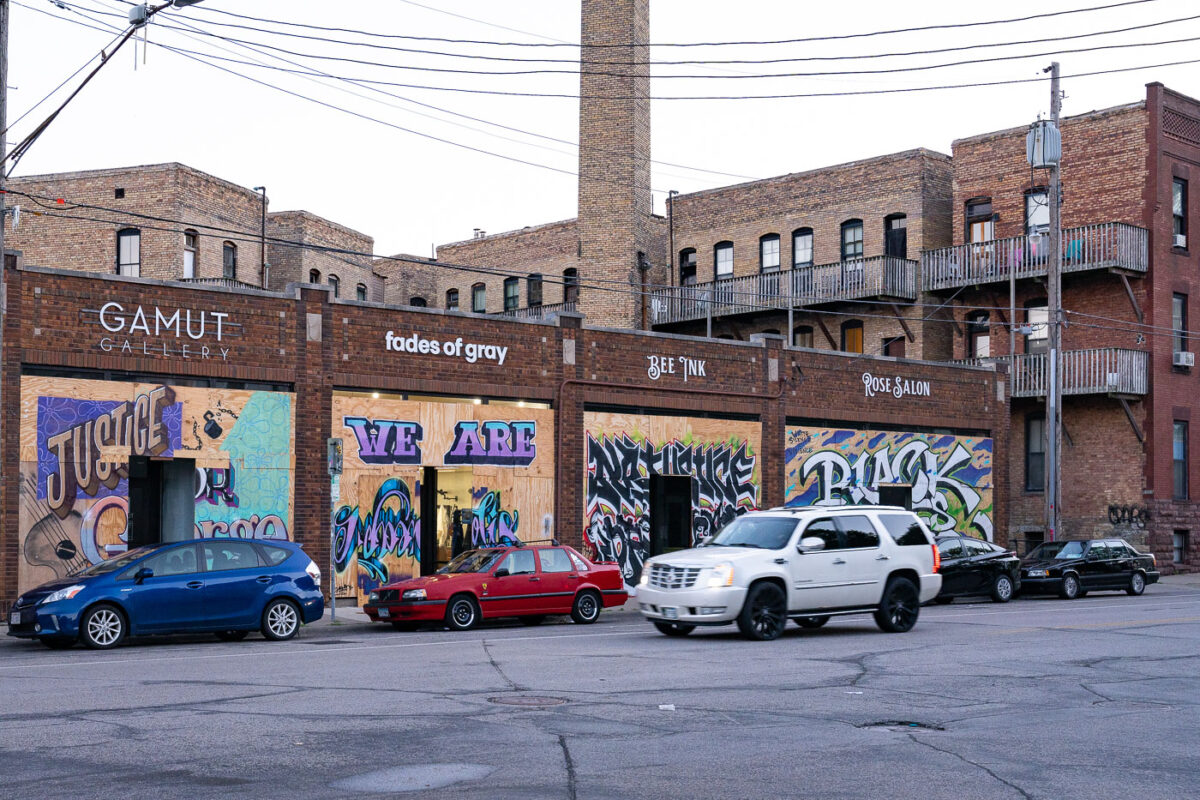
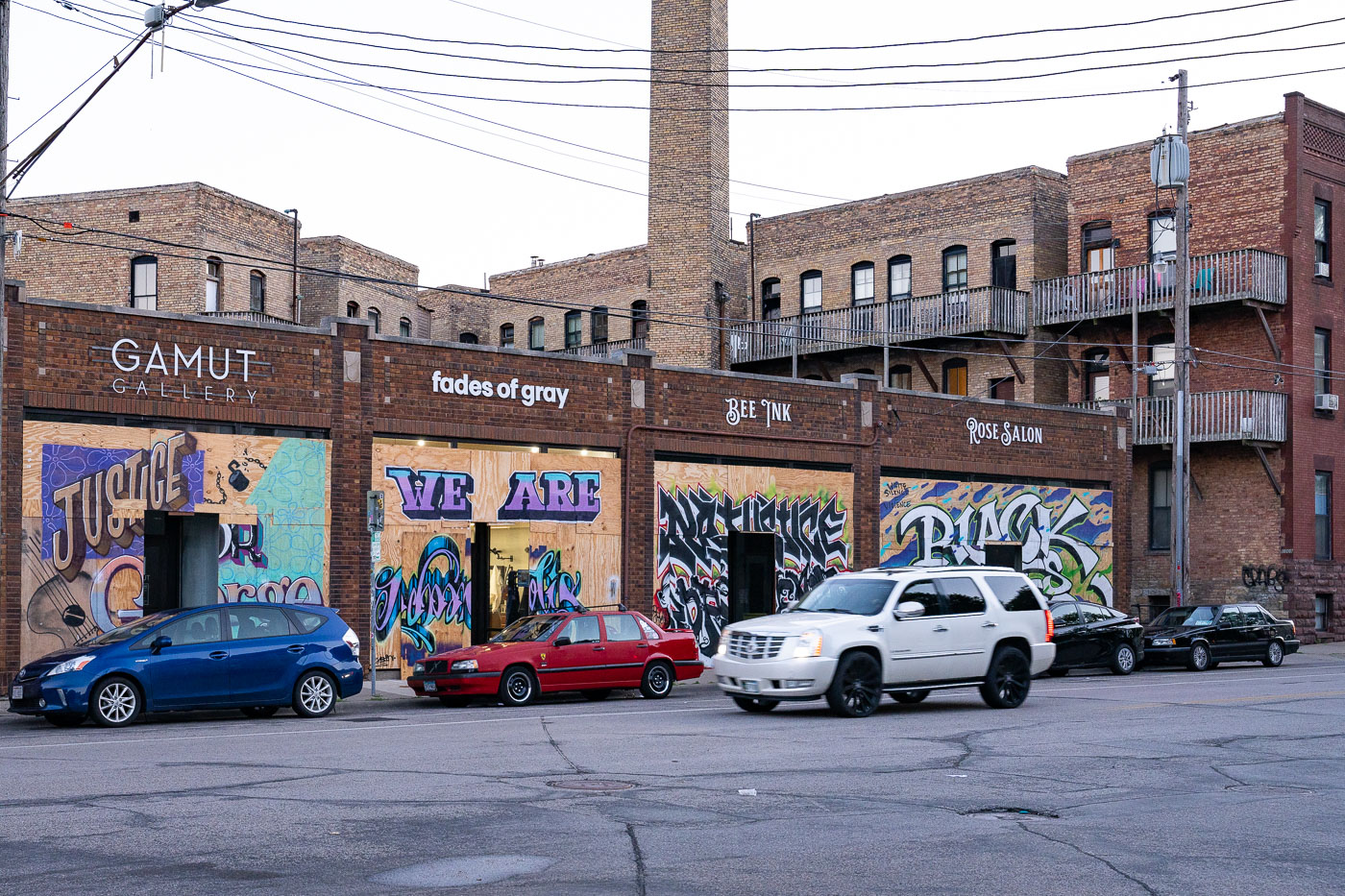
Gamut Galley art boards
Storefronts along a street in Minneapolis, including Gamut Gallery, are boarded with plywood. These boards were installed to protect businesses during the civil unrest and protests that followed the murder of George Floyd in May 2020. Many of the plywood panels were subsequently transformed into murals and public art, reflecting themes of justice and community. Businesses like Gamut Gallery, 'fades of gray,' 'BEE INK,' and 'ROSE SALON' participated in this widespread practice across the city.

Gamut Gallery boarded storefronts with murals, Minneapolis
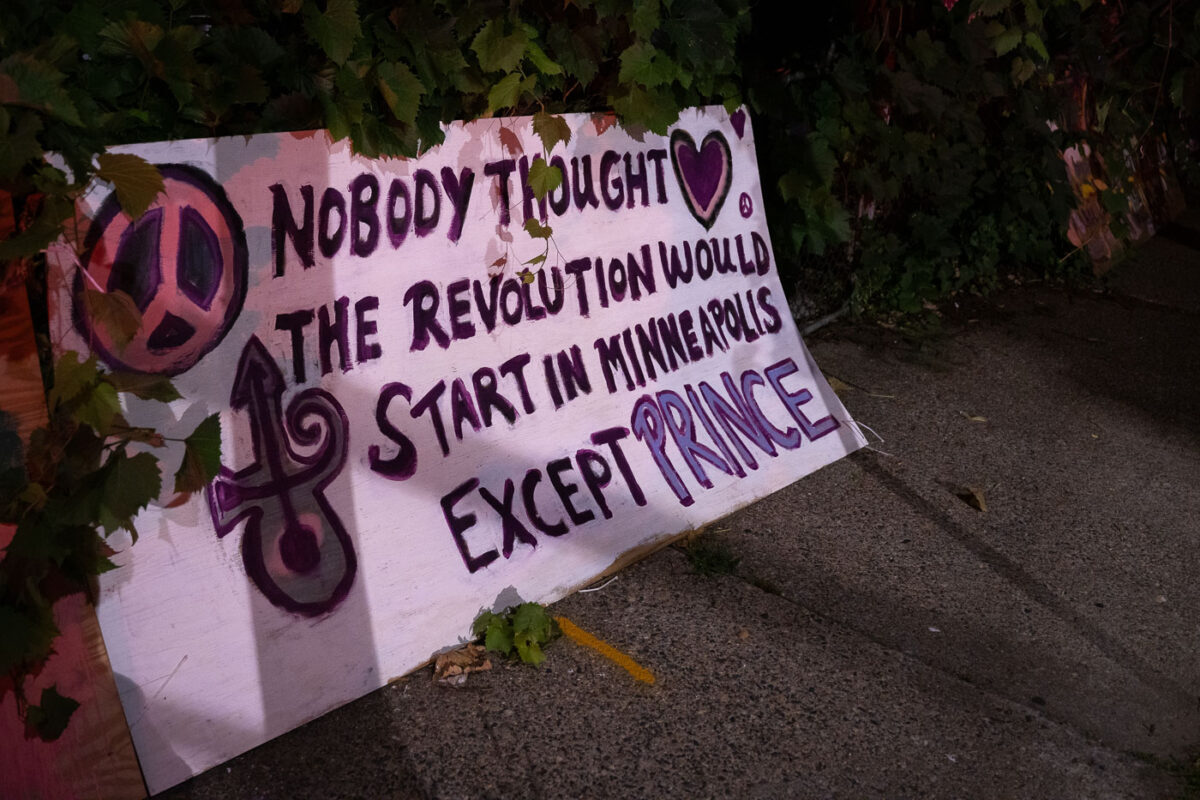
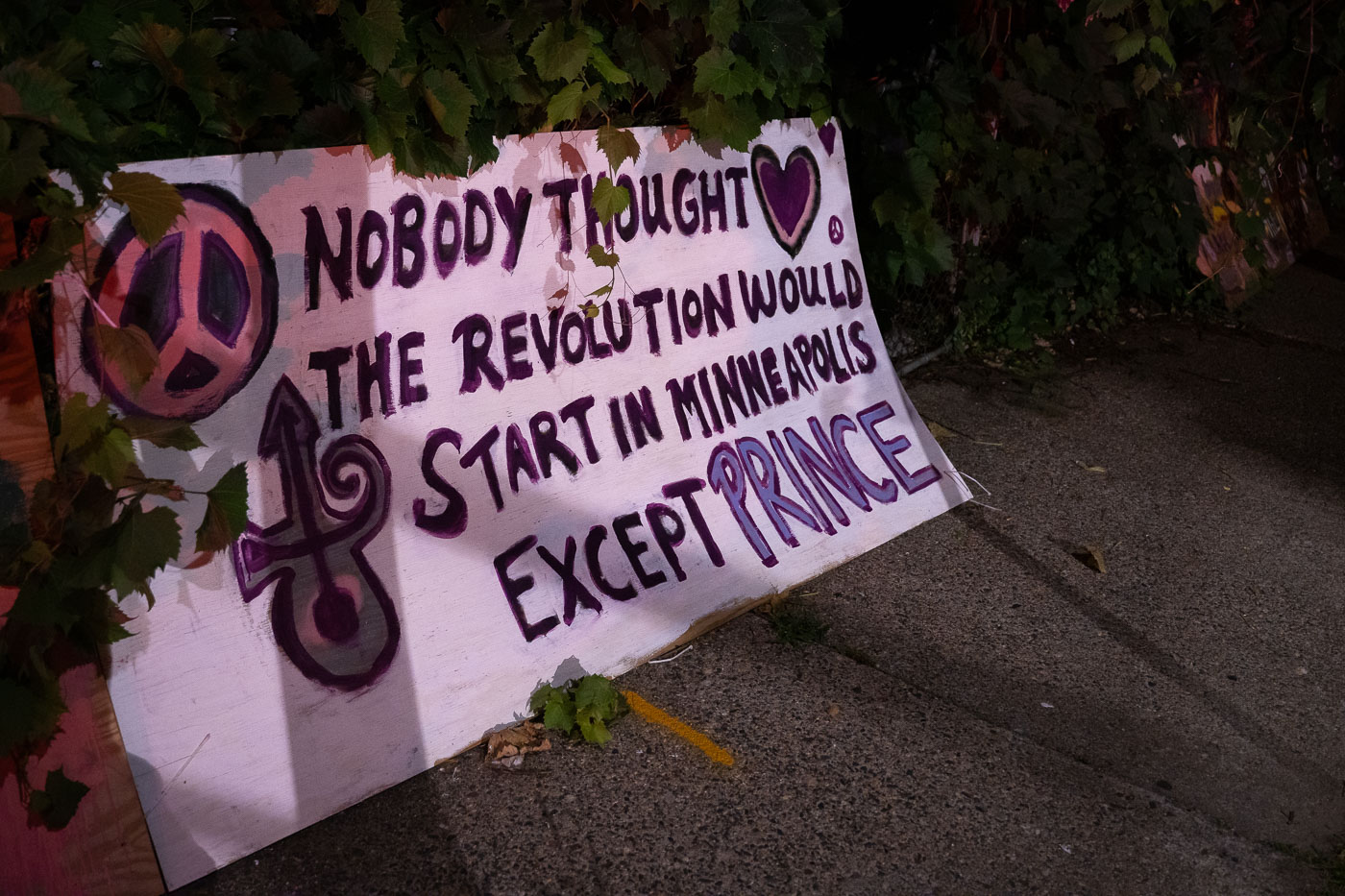
Hand-painted protest sign with Prince quote and peace symbol displayed on ivy-covered fence in South Minneapolis.
This protest sign, displayed in South Minneapolis, features a quote attributed to Prince: "Nobody thought the revolution would start in Minneapolis except Prince." The sign was out during the widespread protests and civil unrest that followed the killing of George Floyd in May 2020.

“Except Prince” Sign Among South Minneapolis Protest Boards
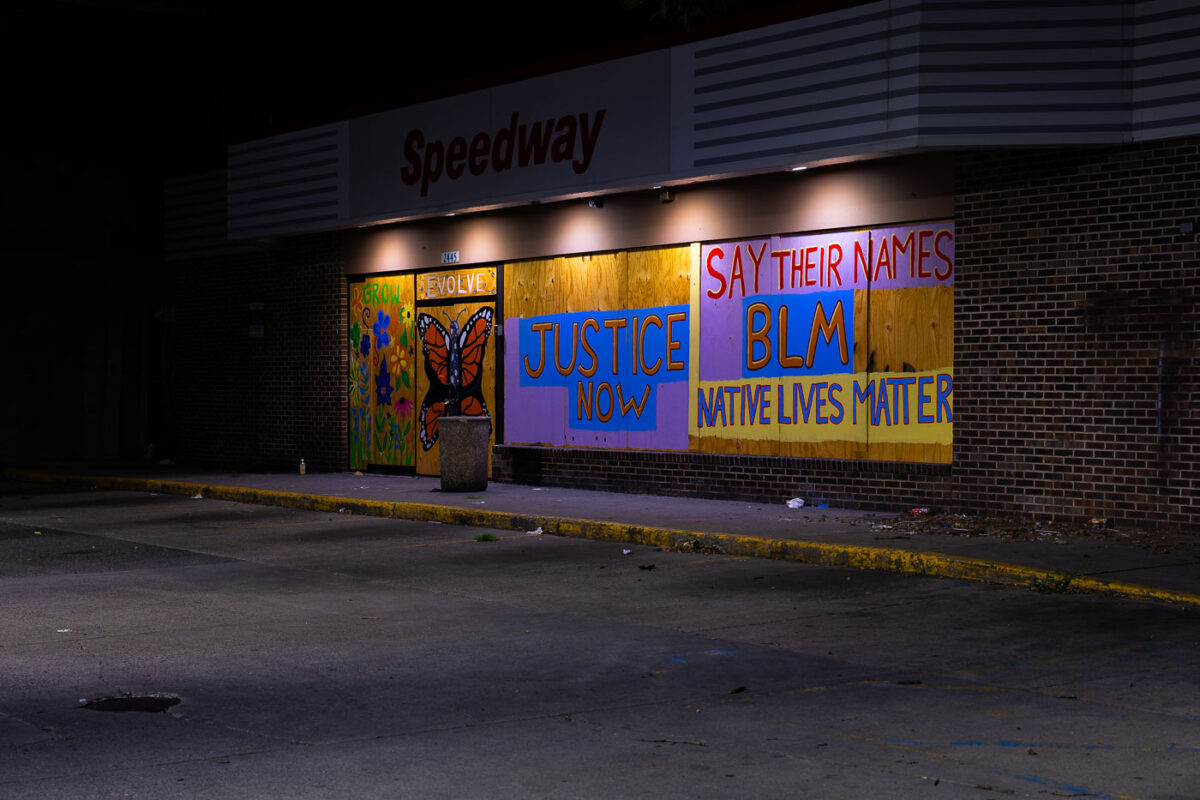
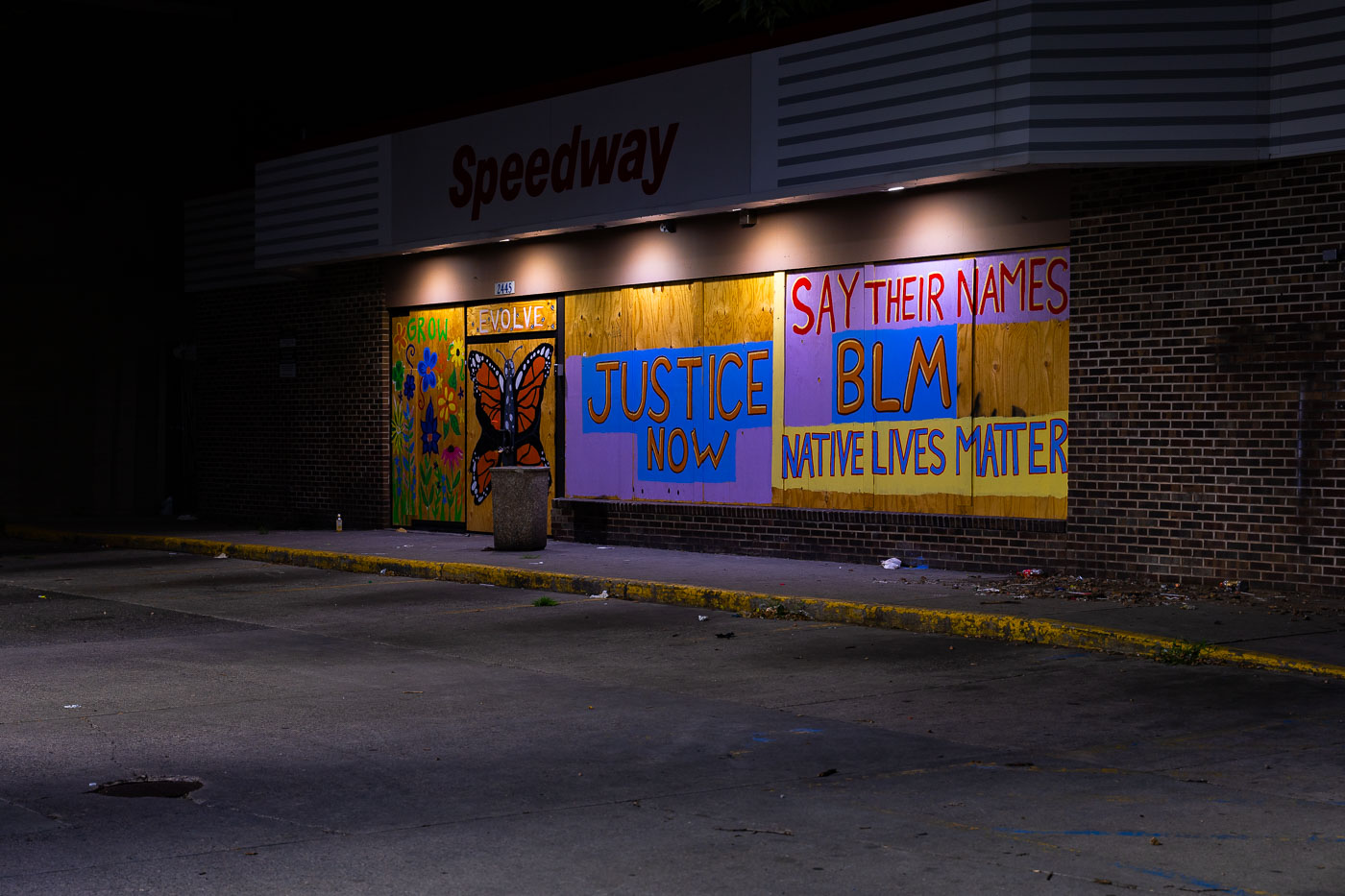
Say their names BLM Native Lives Matter boards
A Speedway gas station in South Minneapolis displays painted art boards covering its windows. These murals emerged during the Minneapolis Uprising, a period of widespread protest and unrest following the murder of George Floyd in May 2020. The plywood boards, initially installed for protection, became a public canvas for messages such as "Justice Now," "Say Their Names," "BLM," and "Native Lives Matter." This form of public art provided a means of community expression and remembrance, reflecting the social and political climate of the time.

Speedway Gas Station Murals, South Minneapolis
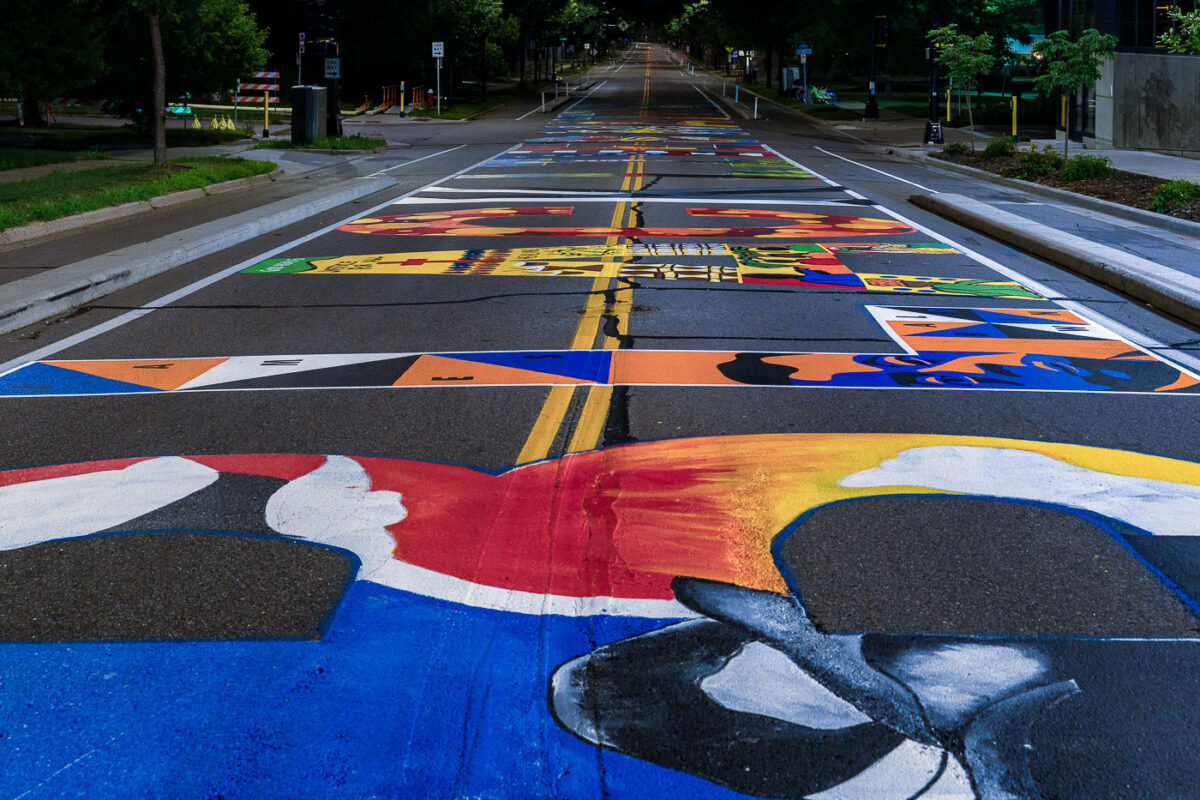
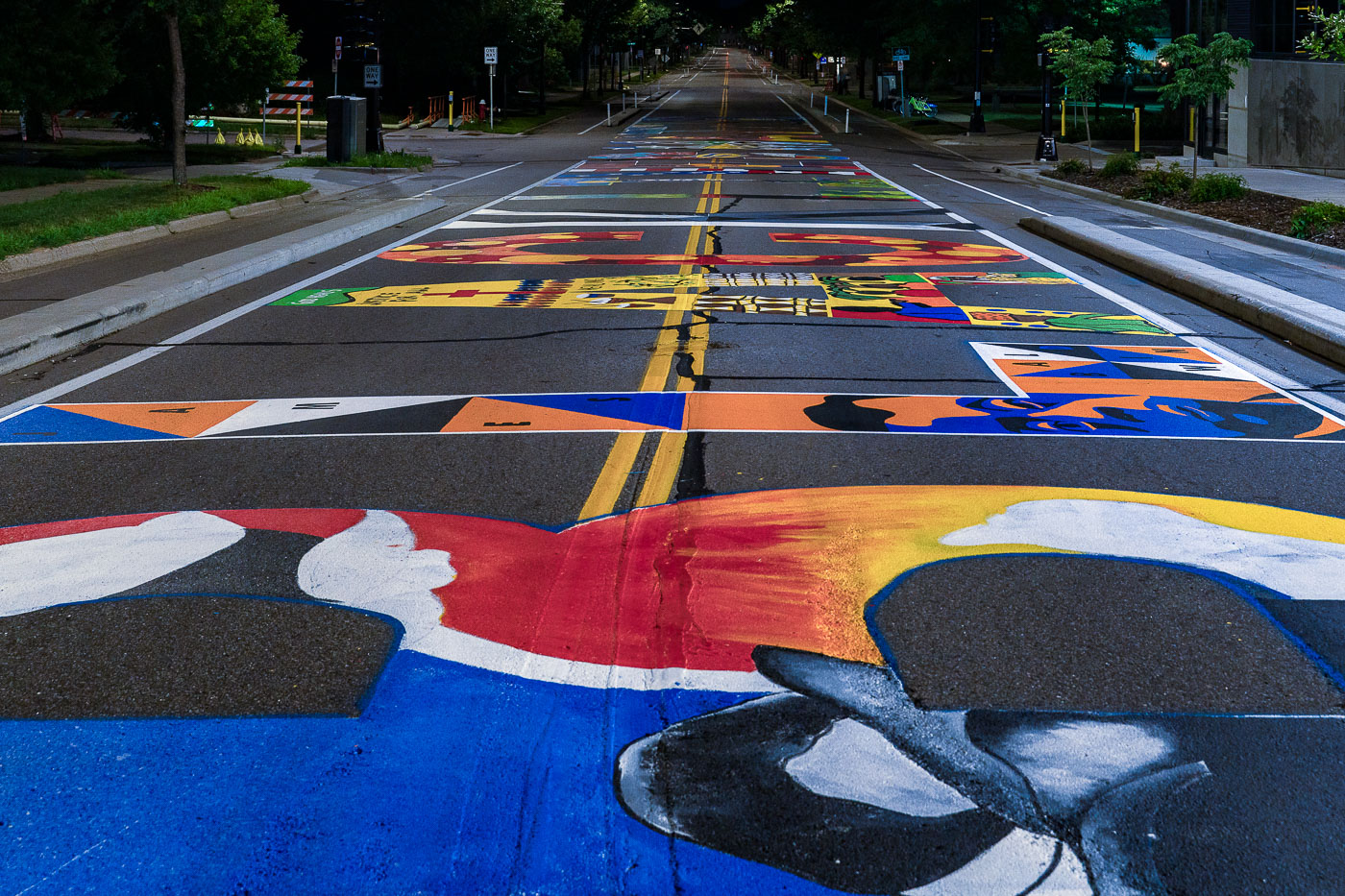
Black Lives Matter mural on Plymouth Ave at night
The Black Lives Matter street mural on Plymouth Avenue in North Minneapolis is a significant public art installation. Completed on July 18, 2020, this collaborative artwork was created in the aftermath of the Minneapolis Uprising and widespread protests against racial injustice. Each letter of "Black Lives Matter" was designed by different artists, transforming the street into a collective statement. The mural serves as a prominent cultural landmark in North Minneapolis, reflecting the community's ongoing commitment to racial equity and remembrance.

Plymouth Avenue Black Lives Matter Mural, North Minneapolis
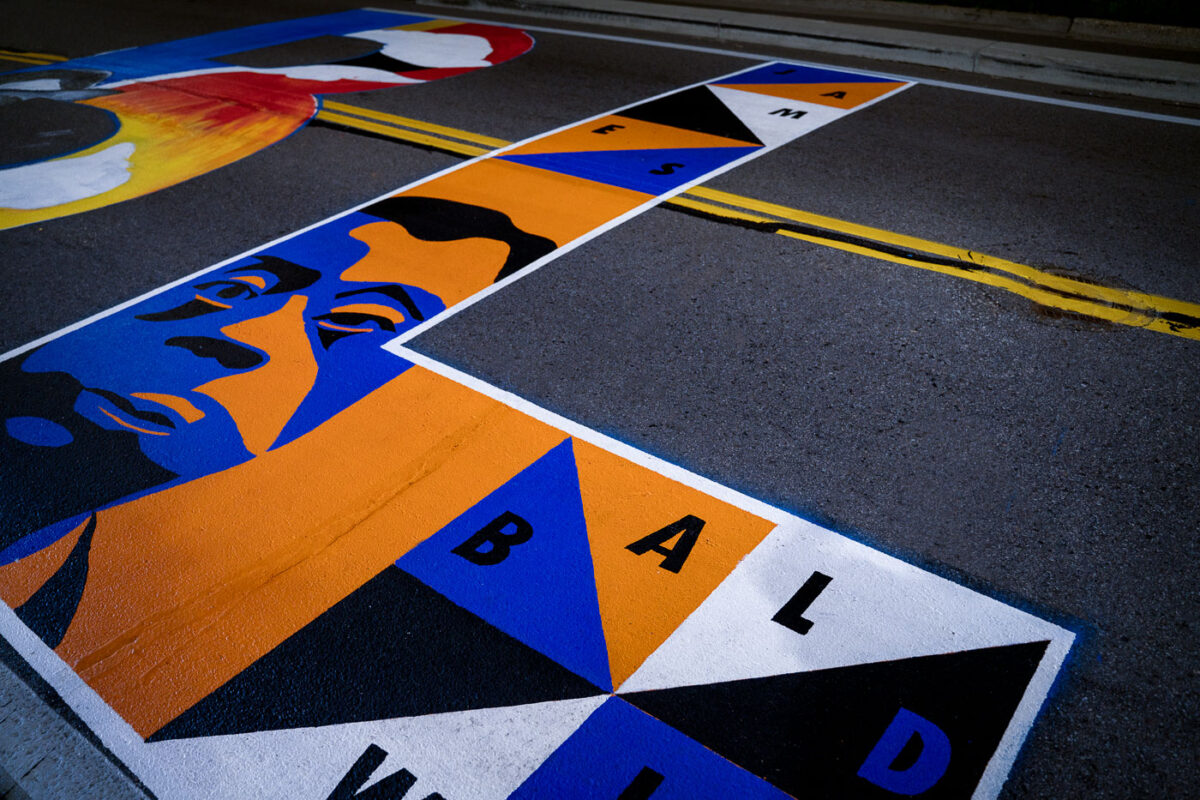
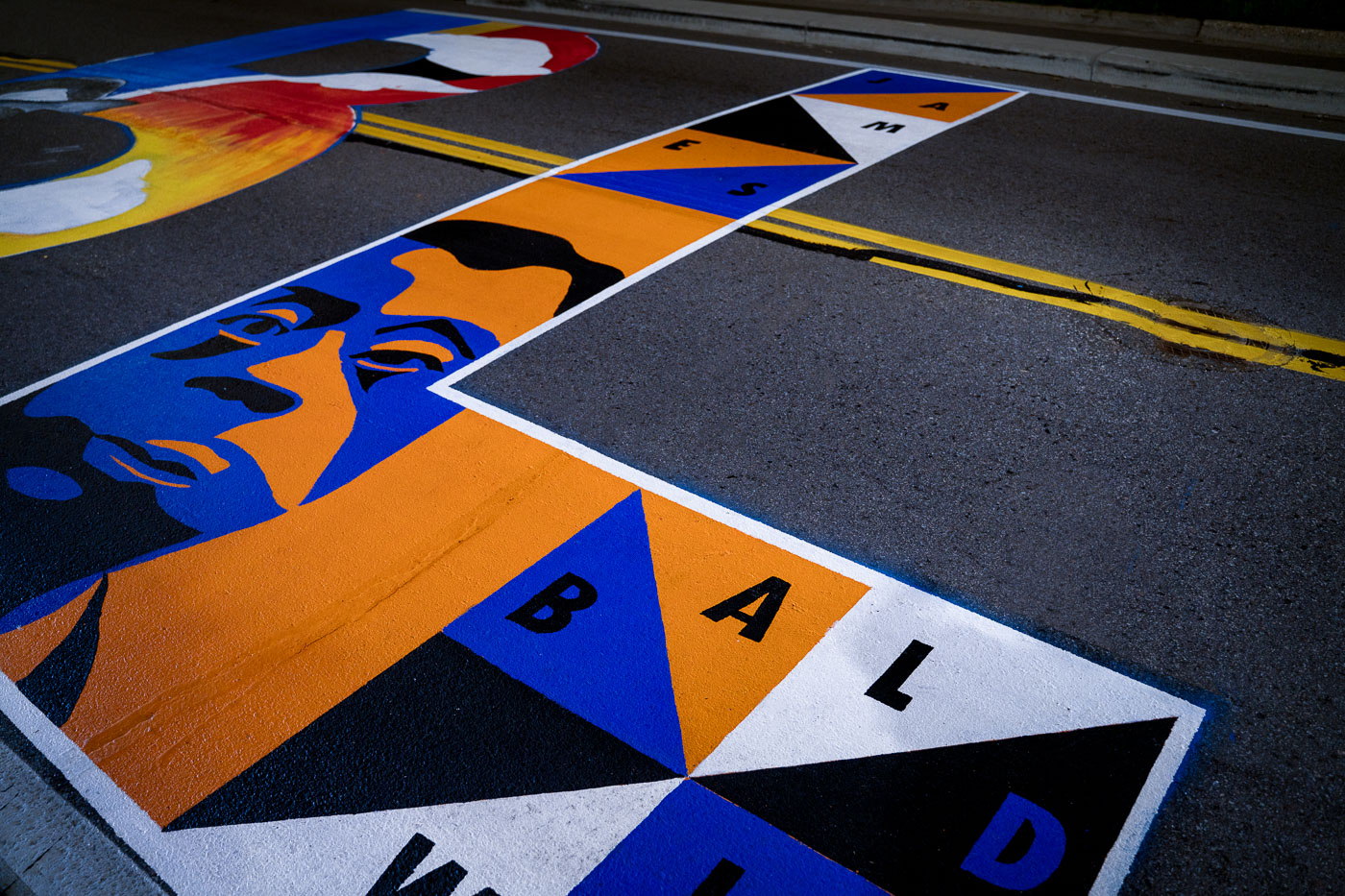
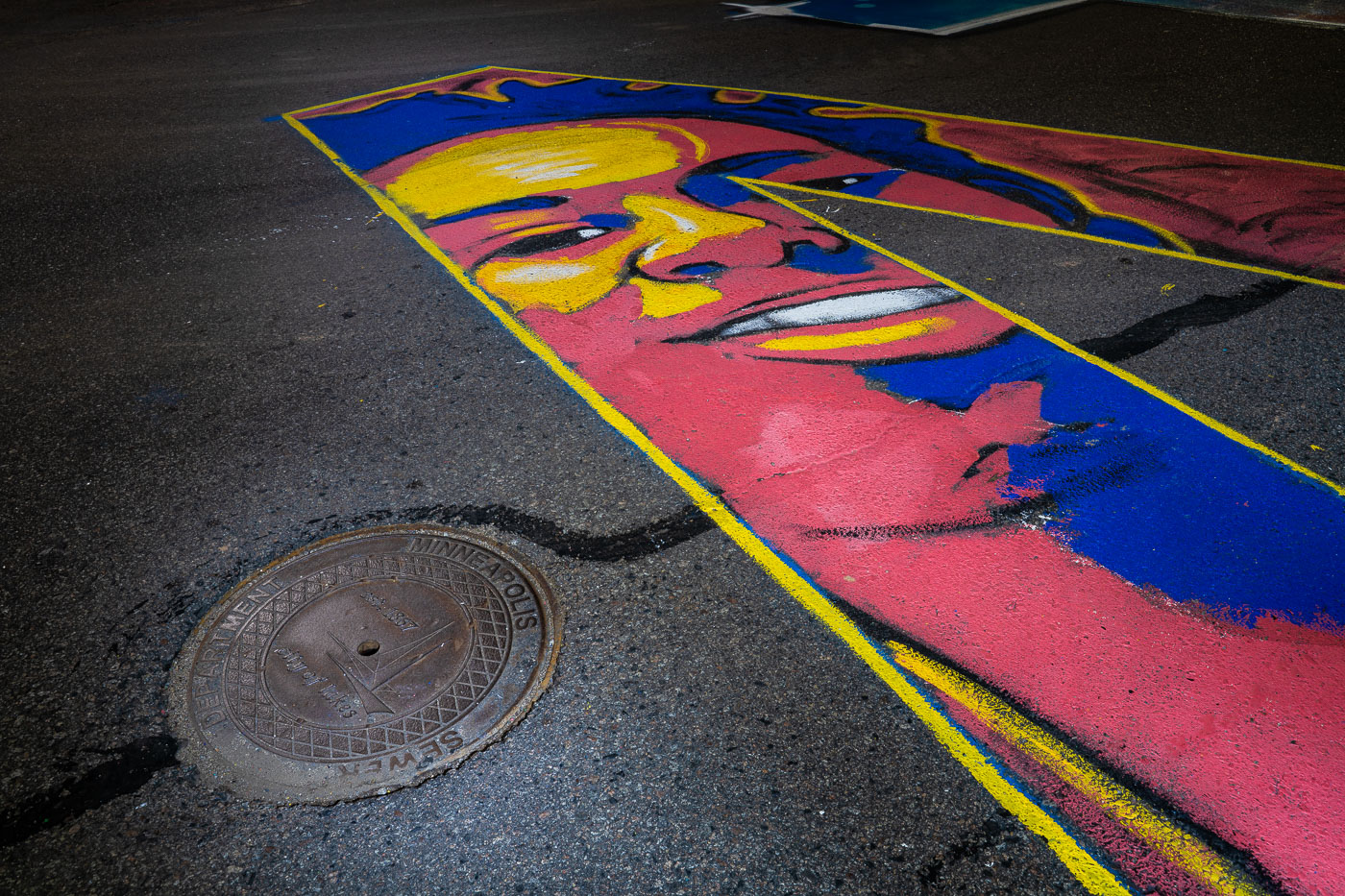
Close up of a Plymouth Ave street mural
A segment of the Black Lives Matter street mural on Plymouth Avenue in North Minneapolis features a portrait of writer and activist James Baldwin. This public art installation was completed on July 18, 2020, following the widespread protests for racial justice in Minneapolis and across the nation. The mural serves as a powerful statement of solidarity and a memorial, transforming the urban environment into a canvas for social commentary. It stands as a lasting symbol of the Minneapolis Uprising and the ongoing movement for Black liberation, reflecting the community's commitment to justice and equality.

James Baldwin Portrait, Black Lives Matter Mural, Plymouth Avenue
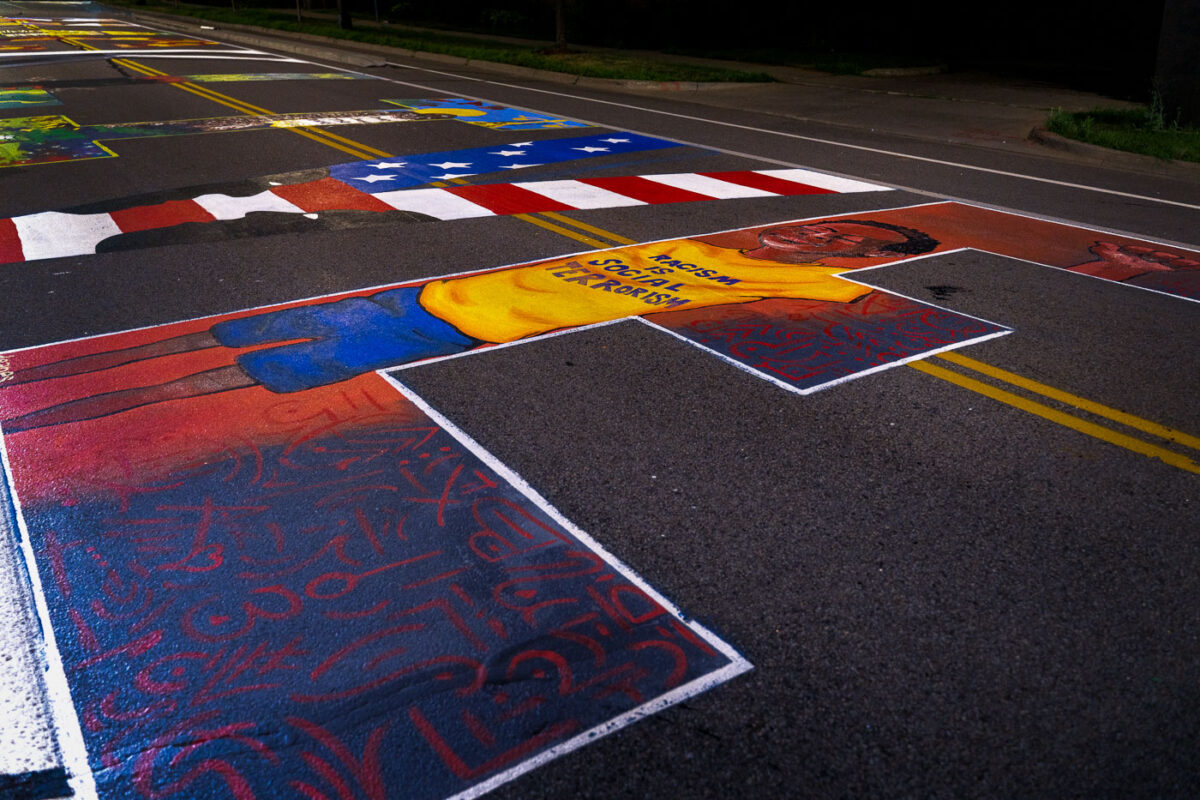
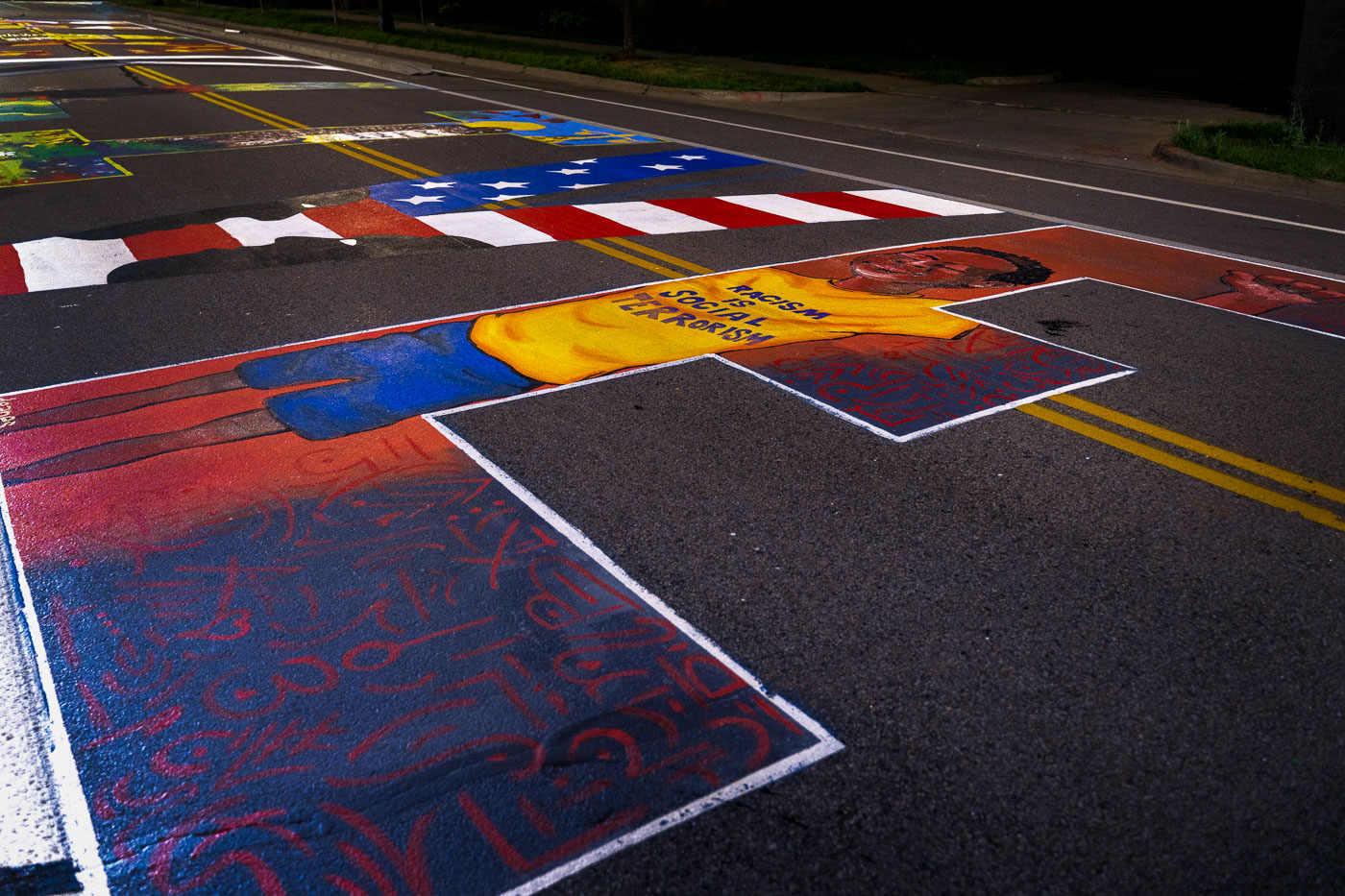
Racism is social terrorism on a street mural
The Black Lives Matter mural on Plymouth Avenue in North Minneapolis serves as a powerful public art installation. Created in the aftermath of the 2020 protests, this street art piece became a significant symbol during the Minneapolis Uprising. The mural incorporates diverse artistic expressions, including a figure wearing a shirt that reads "Racism is social terrorism." This artwork highlights the community's demand for racial justice and systemic change, transforming a public thoroughfare into a canvas for social commentary.

Black Lives Matter Mural on Plymouth Ave, North Minneapolis
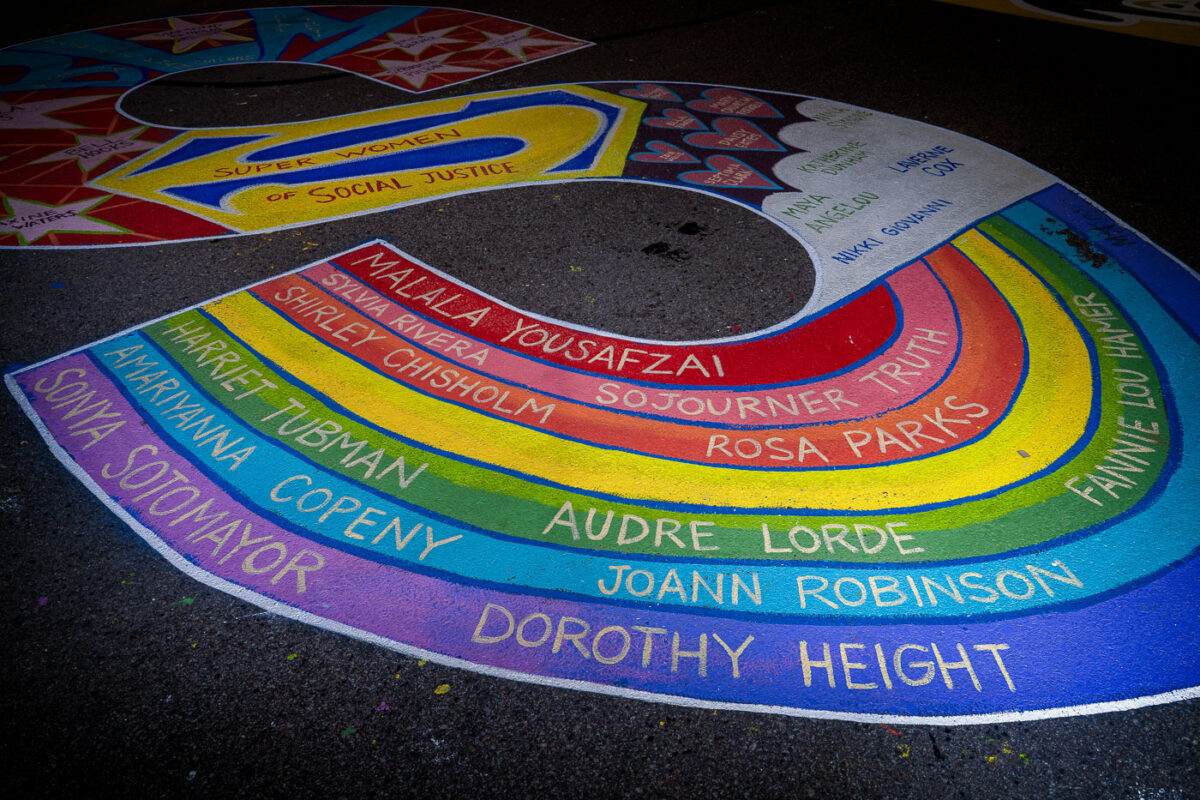
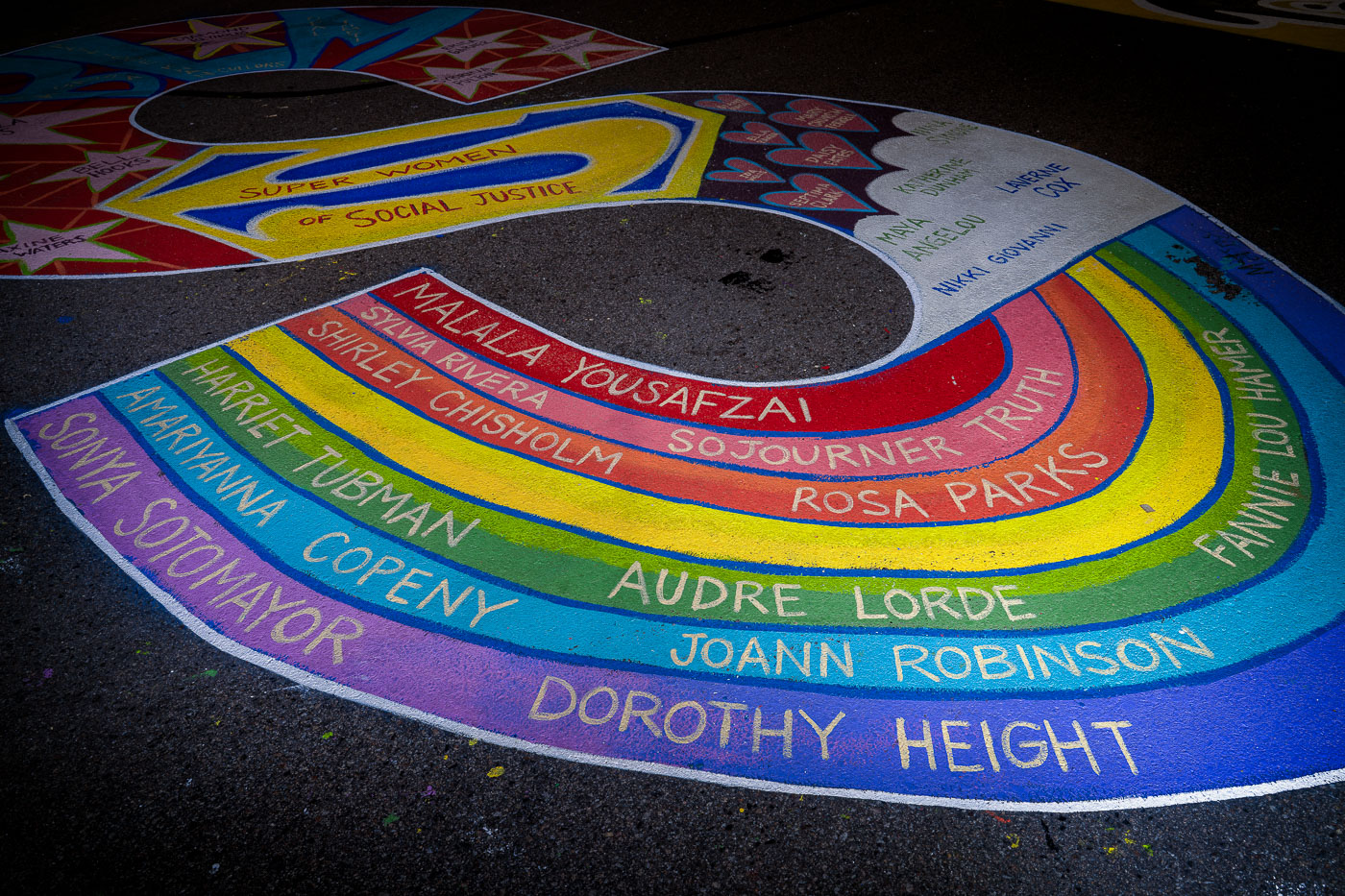
Close up of a Black Lives Matter street mural
The Black Lives Matter Mural on Plymouth Avenue in North Minneapolis features this segment dedicated to 'Super Women of Social Justice.' Completed on July 18th, 2020, the vibrant street art displays names of influential figures including Rosa Parks, Harriet Tubman, and Malala Yousafzai. This public art piece emerged in the wake of the Minneapolis Uprising, transforming the street into a site of remembrance and advocacy. It serves as a significant cultural marker, commemorating the ongoing movement for racial justice and equality within the urban environment.

Black Lives Matter Mural, Plymouth Ave, North Minneapolis
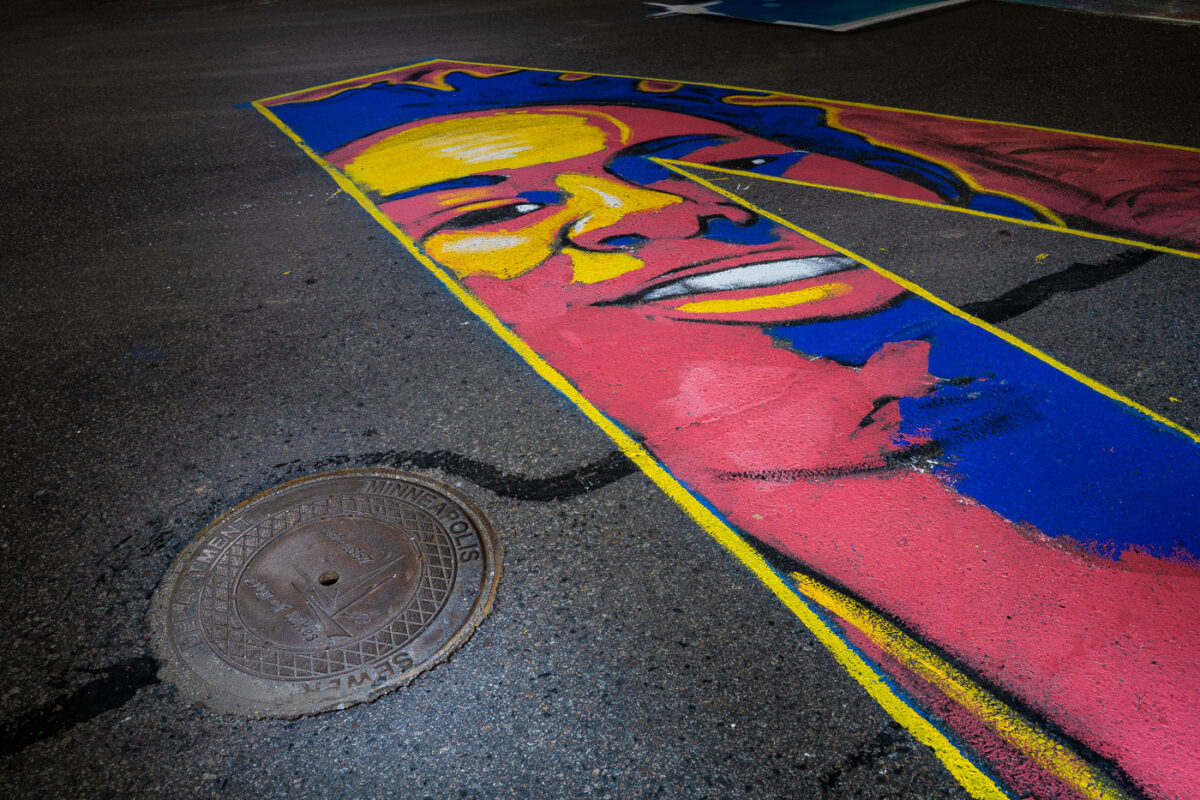
Community painted mural in Minneapolis
A community-painted mural on Plymouth Avenue in Minneapolis, created in July 2020, features a prominent stylized portrait. This public artwork emerged in the aftermath of the Minneapolis Uprising, reflecting collective expression and resilience within the community. Such street art served as a significant visual response to the social and political events of the period, transforming urban spaces into sites of public dialogue and remembrance. The mural's presence on Plymouth Avenue underscores its role in documenting a specific historical moment in Minneapolis.

Community street mural on Plymouth Avenue, Minneapolis 2020
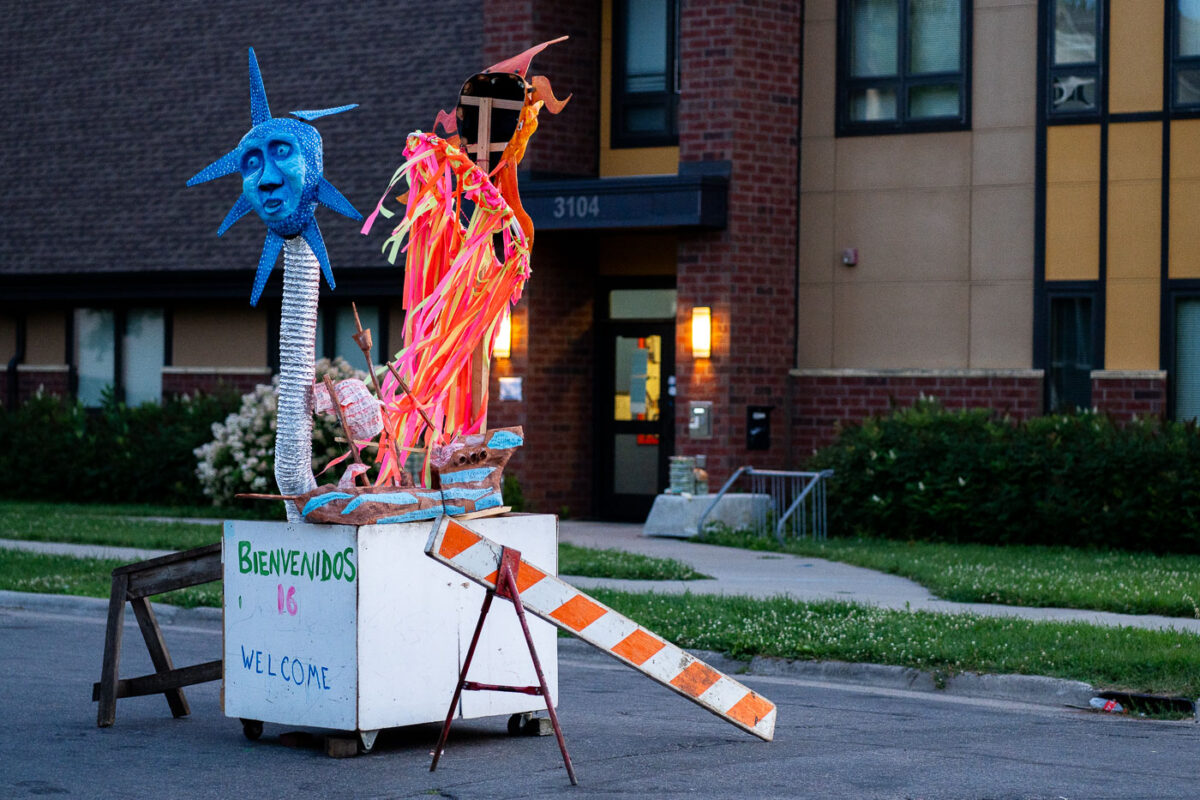
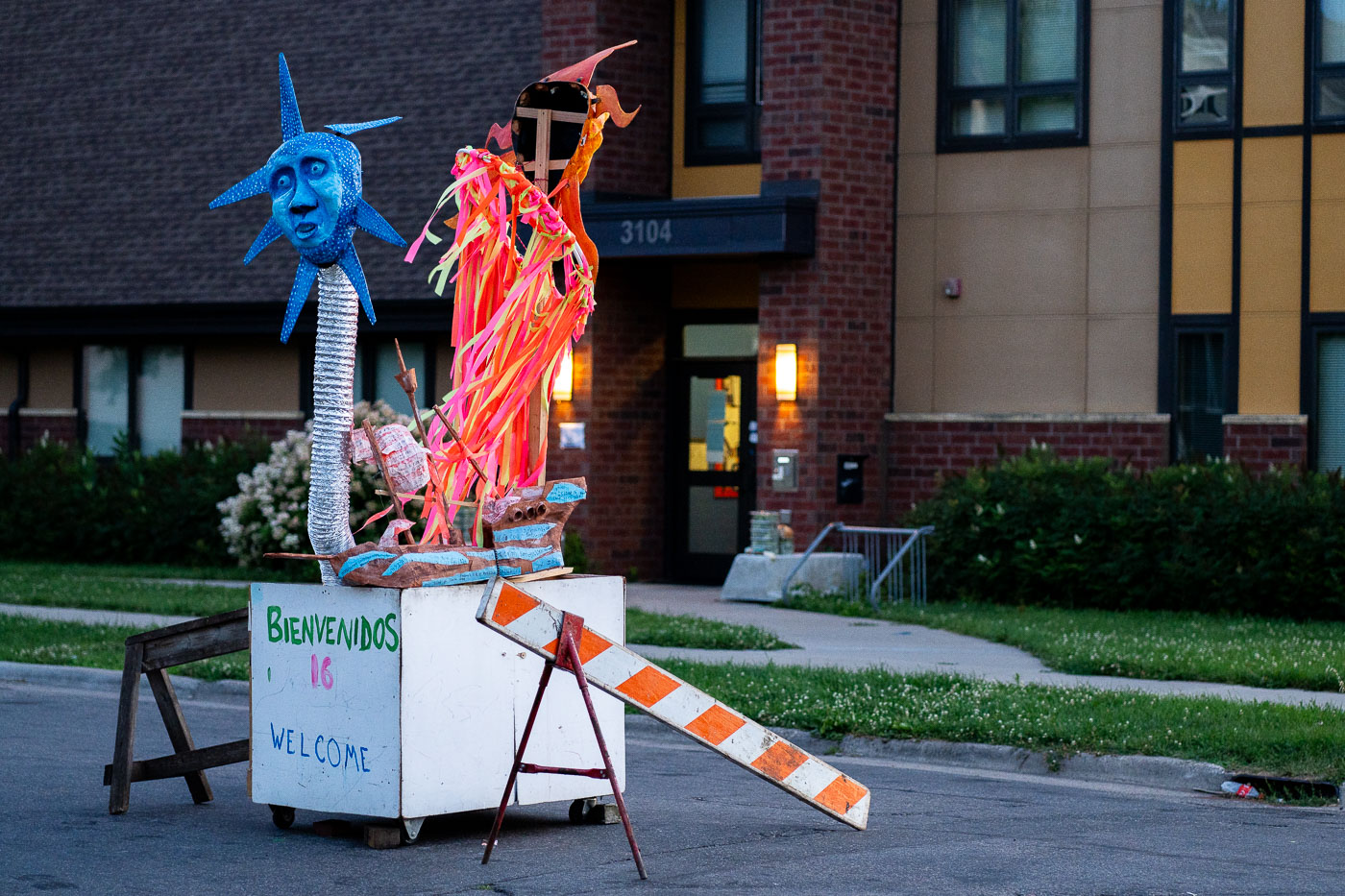
A traffic calming device in South Minneapolis
Community-created art installations function as traffic calming measures on 16th Avenue South and East 31st Street in South Minneapolis. These artistic barriers are part of local efforts to manage vehicle speed and enhance pedestrian safety in residential areas. Following the 2020 Minneapolis Uprising, many neighborhoods implemented community-led initiatives to reclaim public spaces and address local concerns, including traffic safety. The installations, featuring figures and a sign reading 'BIENVENIDOS / WELCOME,' reflect community engagement and a desire for safer, more welcoming streets.

Community Art Traffic Calming, 16th Ave S, Minneapolis
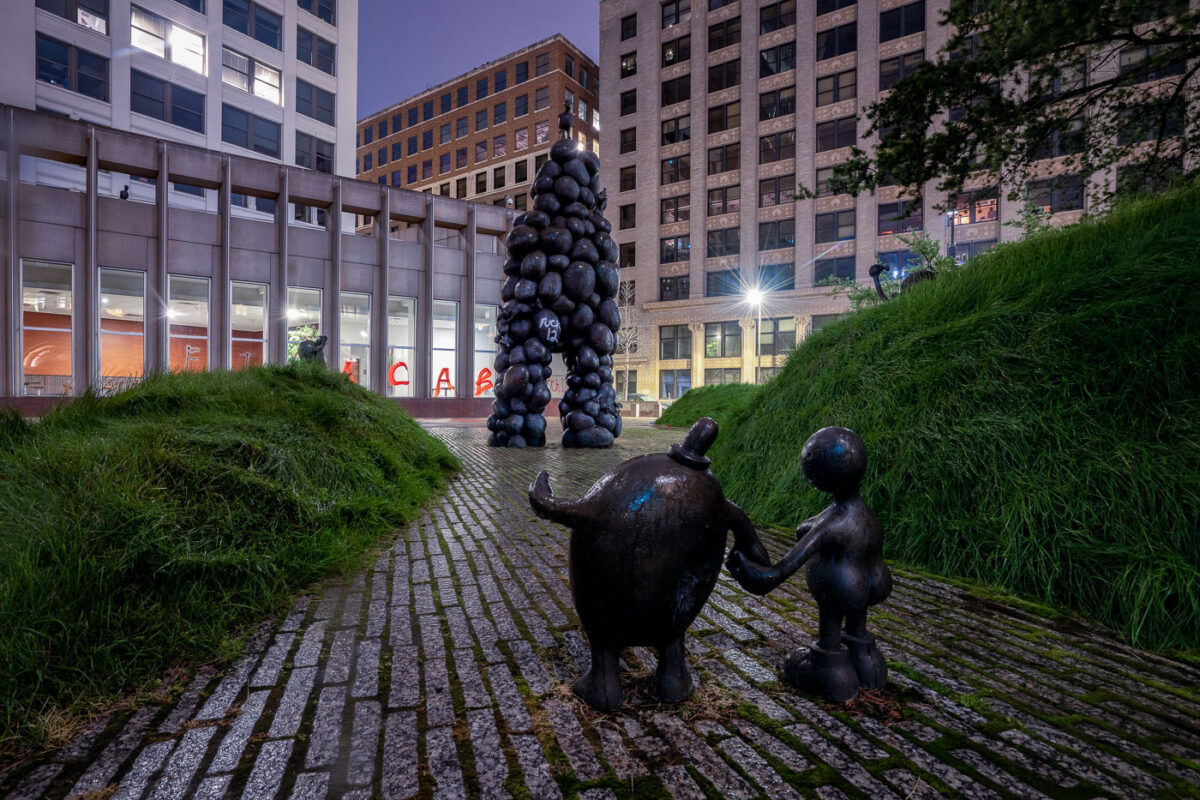
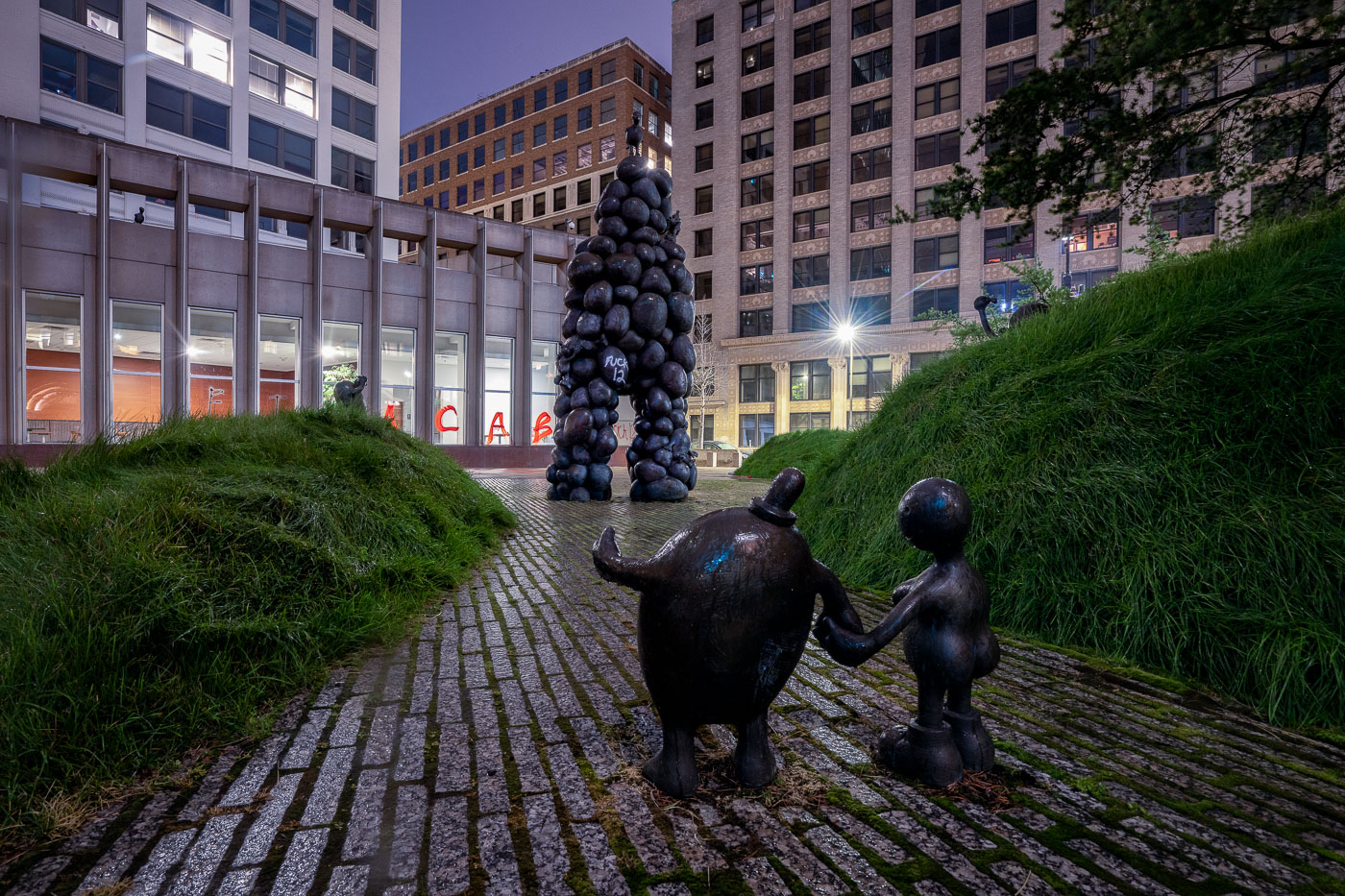
ACAB graffiti on Federal Courthouse at night
The Federal Courthouse in downtown Minneapolis, a key site for federal judicial proceedings, displays "ACAB" graffiti through its windows. This public expression emerged during the widespread protests and civil unrest that occurred in Minneapolis following the murder of George Floyd in May 2020. The building's prominent location made it a focal point for public sentiment during this period of social upheaval. In the foreground, sculptures from Tom Otterness's "The Goose Lake Cycle" series, installed on the courthouse grounds, also bear protest-related markings, reflecting the broader impact of the Minneapolis Uprising on the urban environment.

ACAB Graffiti, Minneapolis Federal Courthouse & Sculpture
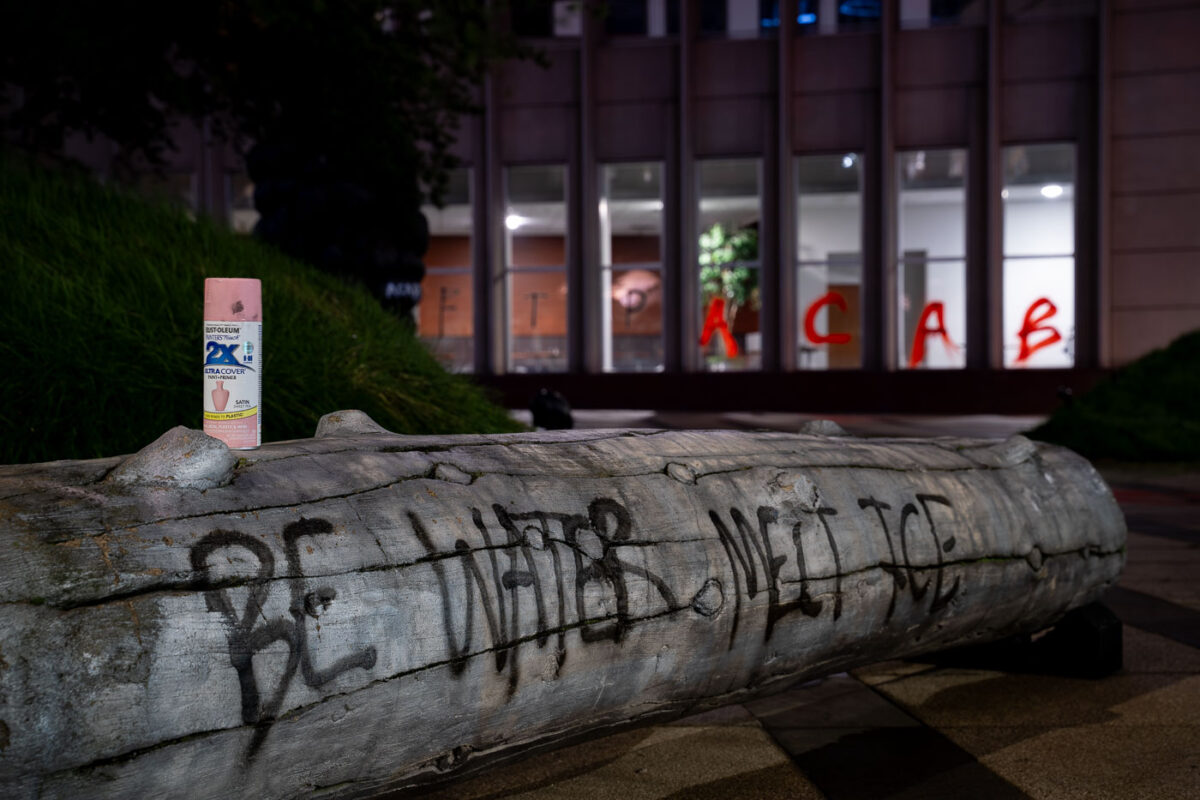
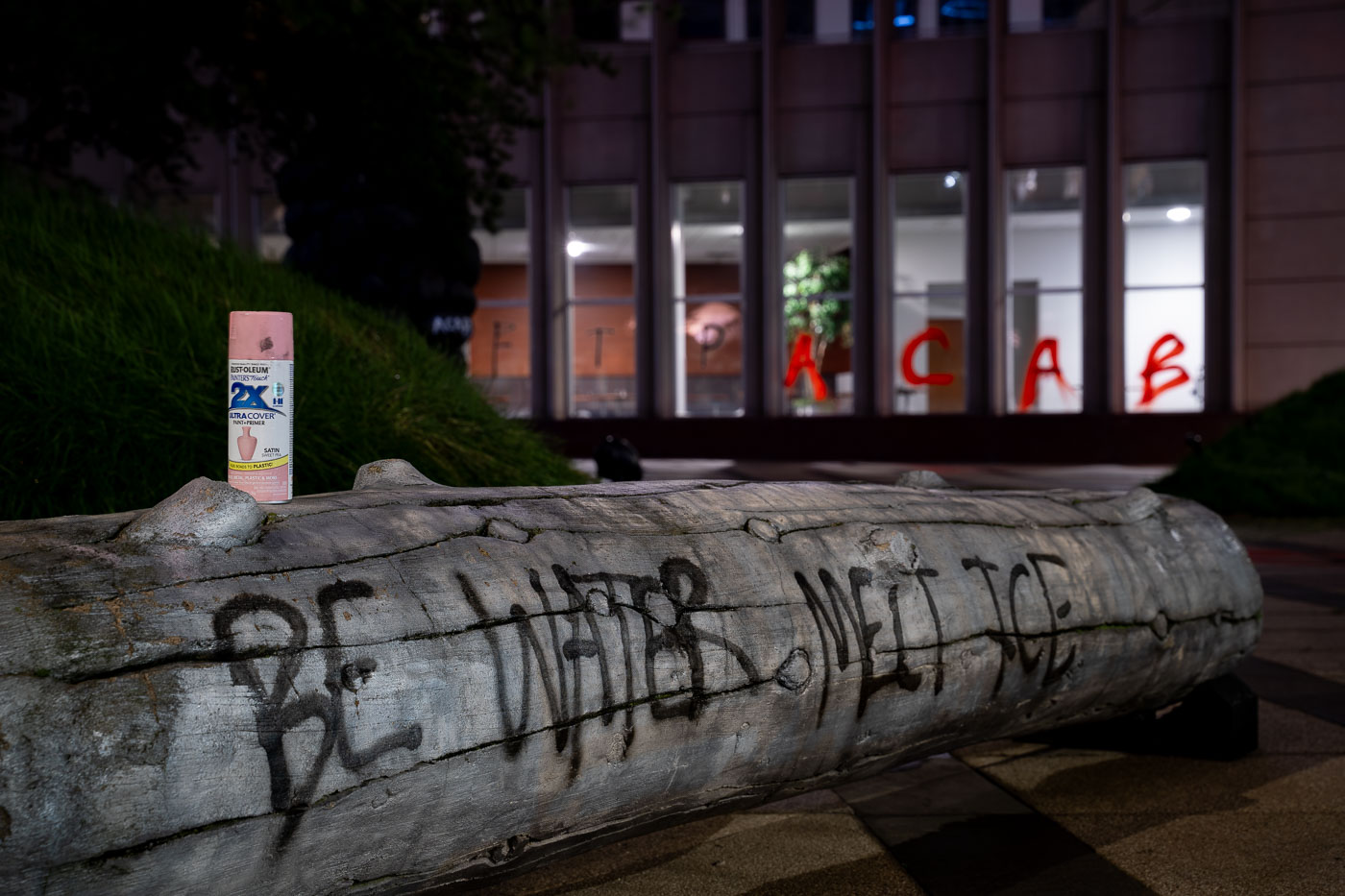
Be Water Melt Ice
Graffiti covers a large log and the windows of the Warren E. Burger Federal Building and U.S. Courthouse in downtown Minneapolis. The messages, including 'ACAB' on the courthouse windows and 'BE WATER MY FRIEND' on the log, emerged as expressions of dissent during the Minneapolis Uprising. This federal judicial center, completed in 1966, became a significant site for public protest in May and June 2020. The spray paint can resting on the log further highlights the direct and immediate nature of these statements made within the urban environment.

Graffiti on Log and Courthouse Windows, Minneapolis
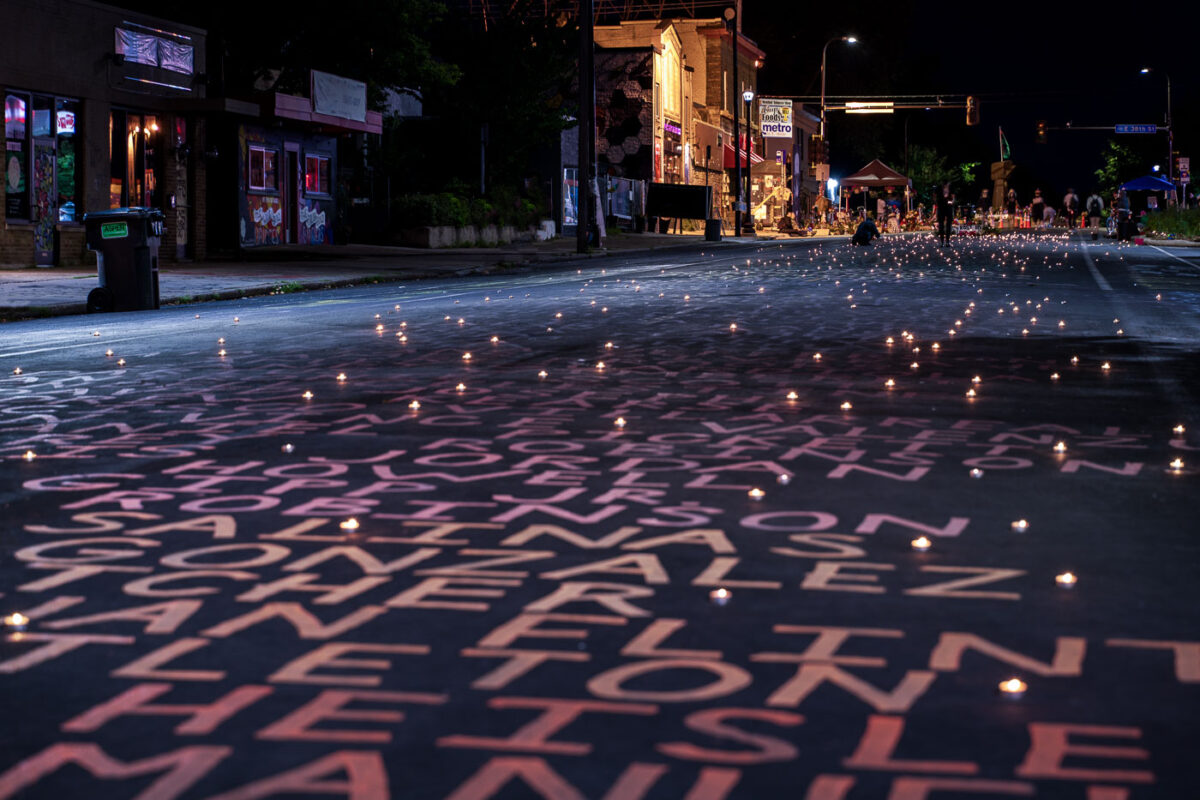
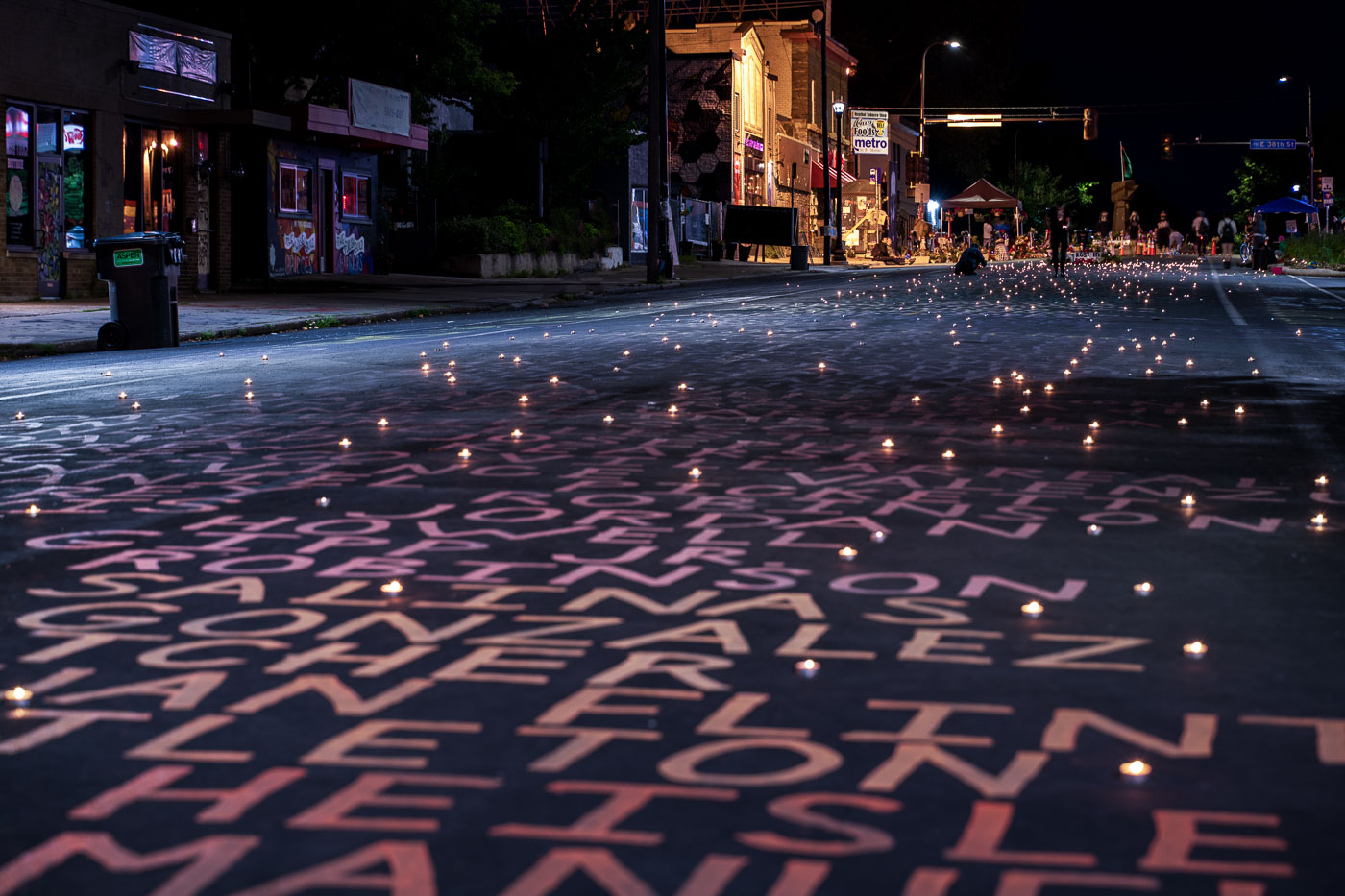
Candles illuminating names of police violence victims painted on the street at George Floyd Square in Minneapolis.
George Floyd Square sits at the intersection of Chicago Avenue and East 38th Street, the site where George Floyd was killed by Minneapolis police on May 25, 2020. In the weeks and months that followed, the intersection was closed to traffic and taken over by residents and organizers, who filled it with memorials, artwork, and a list of names of other people killed by police around the country. The names painted across the pavement became one of the square's recurring memorial elements, repainted and added to as the site evolved from protest ground into a semi-permanent gathering place. The city did not fully reopen the intersection to vehicle traffic until June 2021.

Names of Police Violence Victims Painted on Chicago Avenue
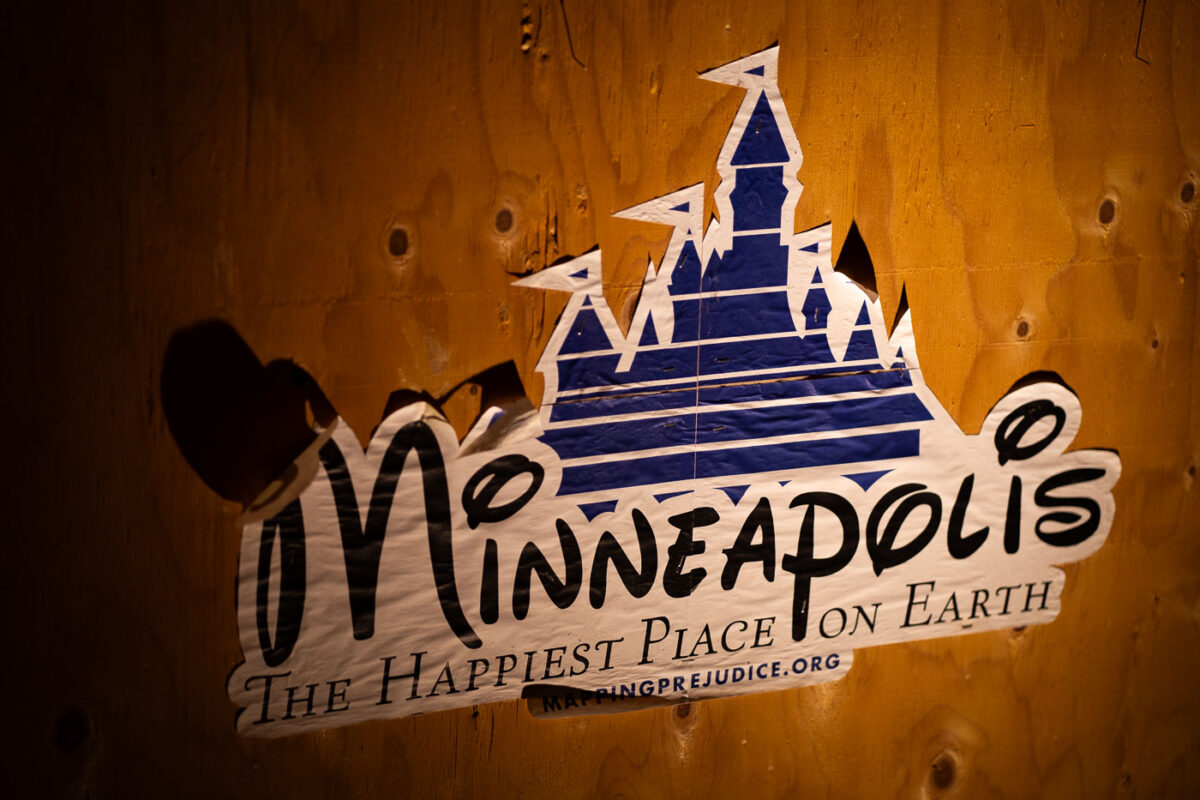
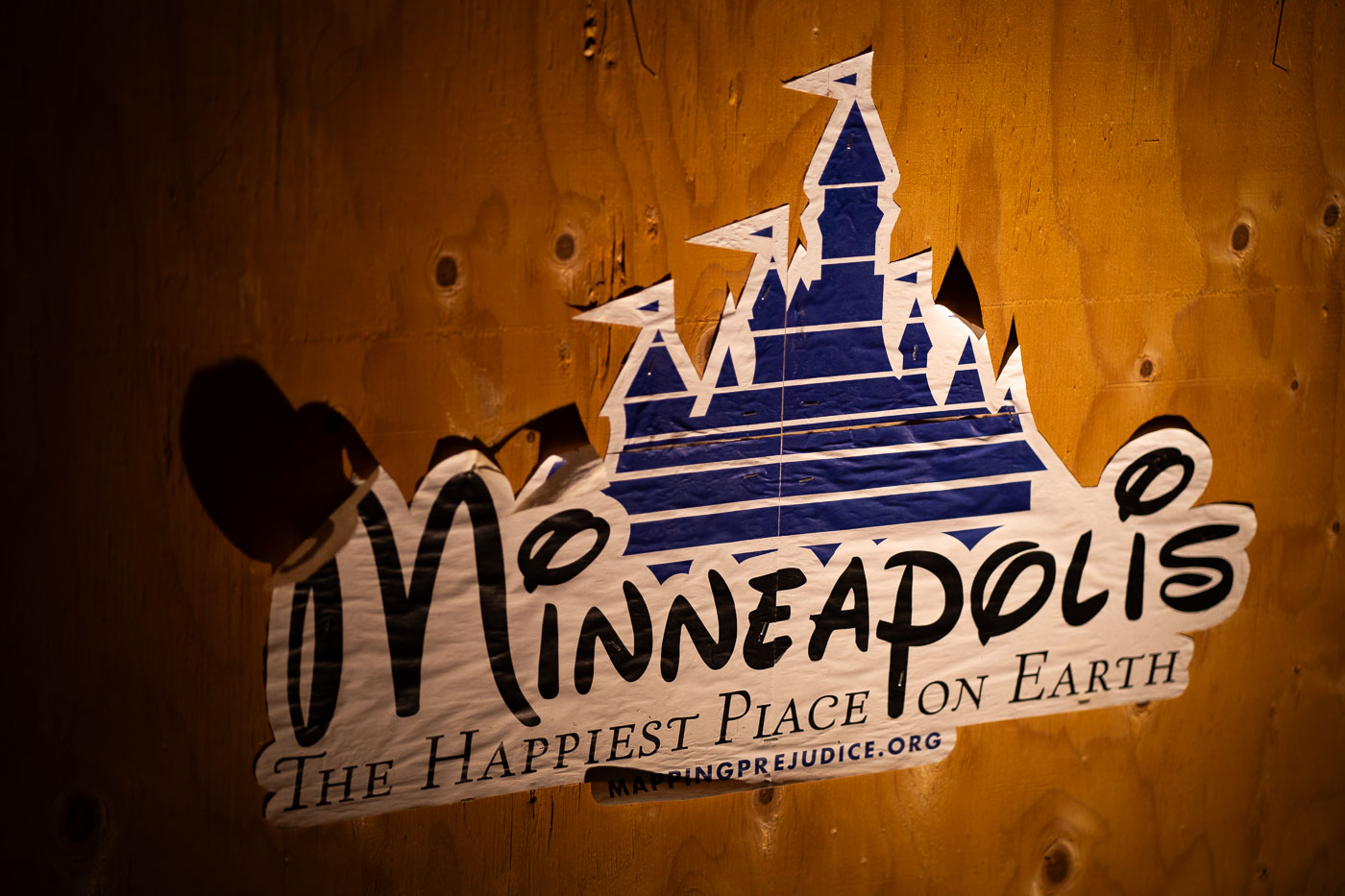
"Mapping Prejudice" sticker on wood board in Uptown Minneapolis featuring castle silhouette and "The Happiest Place on Earth
Mapping Prejudice is a University of Minnesota research project that maps racial covenants — clauses once written into property deeds barring non-white residents from owning or occupying homes — across Hennepin County. The project has identified thousands of these covenants, many dating to the early 20th century, and made its findings public through an online map at mappingprejudice.org. This sticker, styled after the Disney castle logo and reading "Minneapolis: The Happiest Place on Earth," uses that branding to point to the gap between the city's reputation and its documented history of housing discrimination.

‘The Happiest Place on Earth’ Sticker on Plywood in Uptown
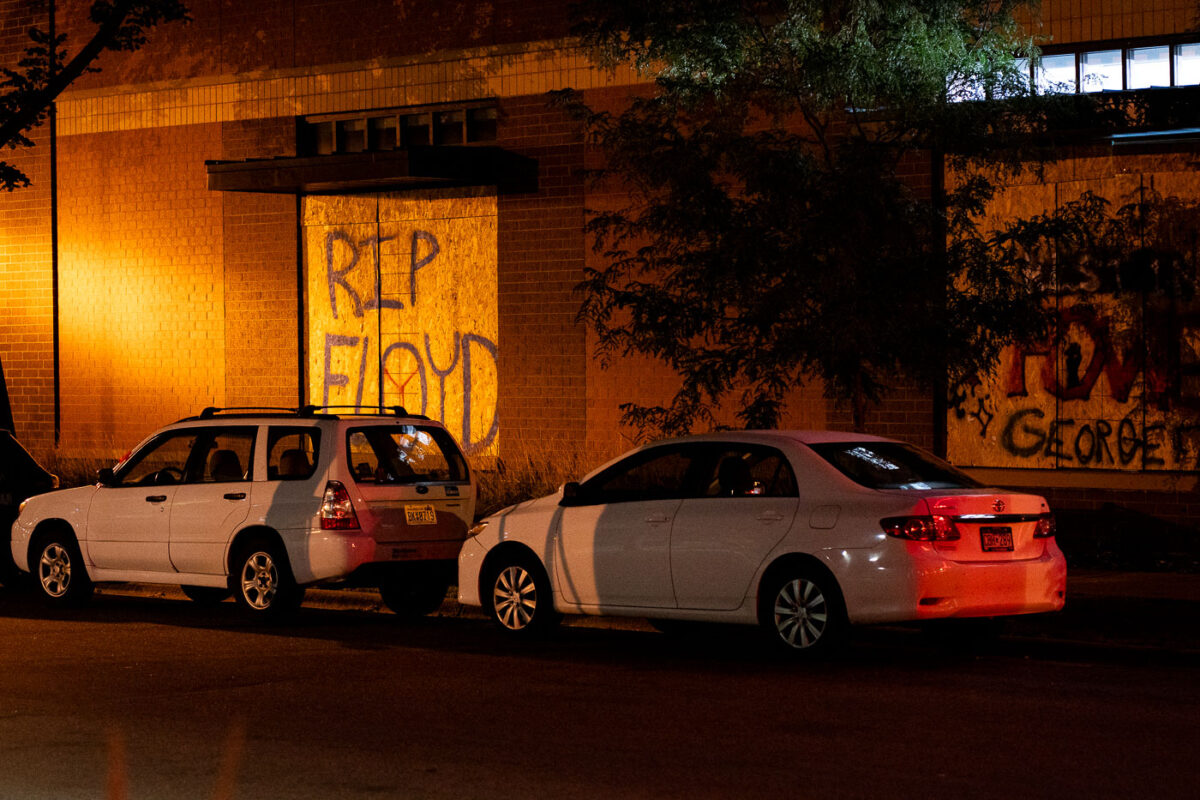
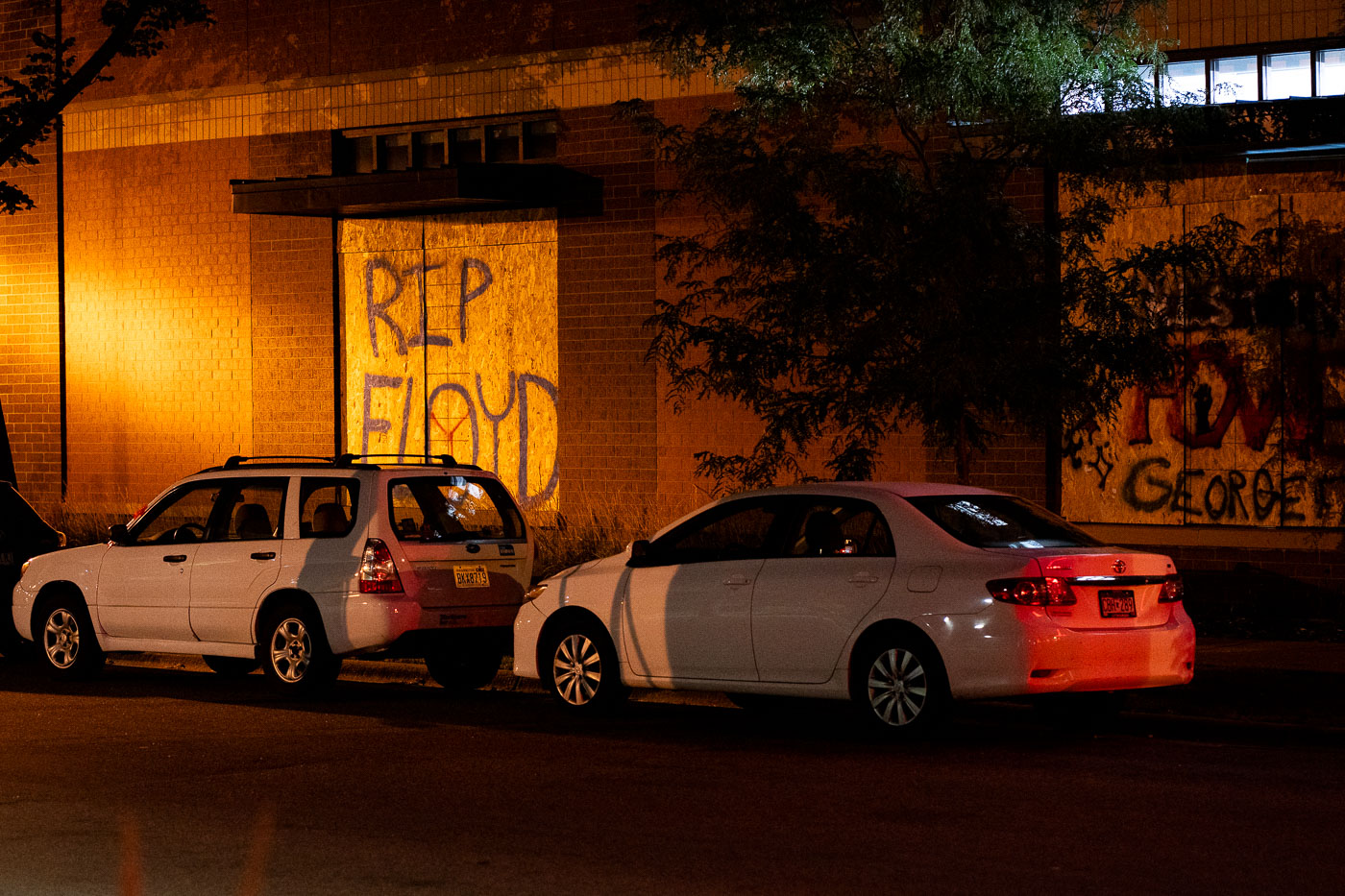
Graffiti reading "RIP FLOYD" and "LOVE GEORGE" on boarded Walgreens storefront, Hennepin Avenue, Minneapolis, August 2020.
Plywood covered this Walgreens on Hennepin Avenue after windows were broken during the unrest following George Floyd's death in police custody on May 25, 2020. Business owners across Minneapolis boarded up storefronts in the days that followed, and many of those panels turned into makeshift memorials and message boards. Here, someone spray-painted "RIP FLOYD" alongside a raised fist and the words "LOVE GEORGE," part of a wave of street tributes that spread through the city's commercial corridors that summer.

‘RIP Floyd’ Graffiti on a Boarded-Up Hennepin Avenue Walgreens
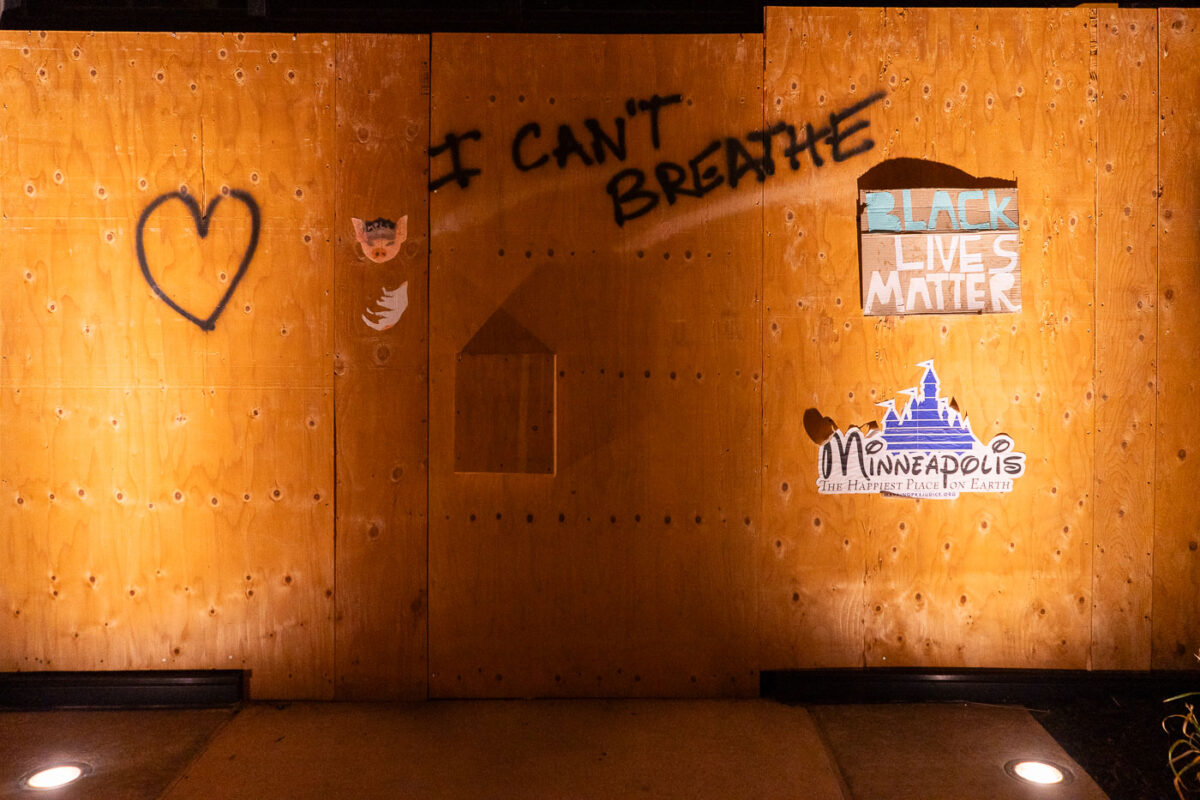
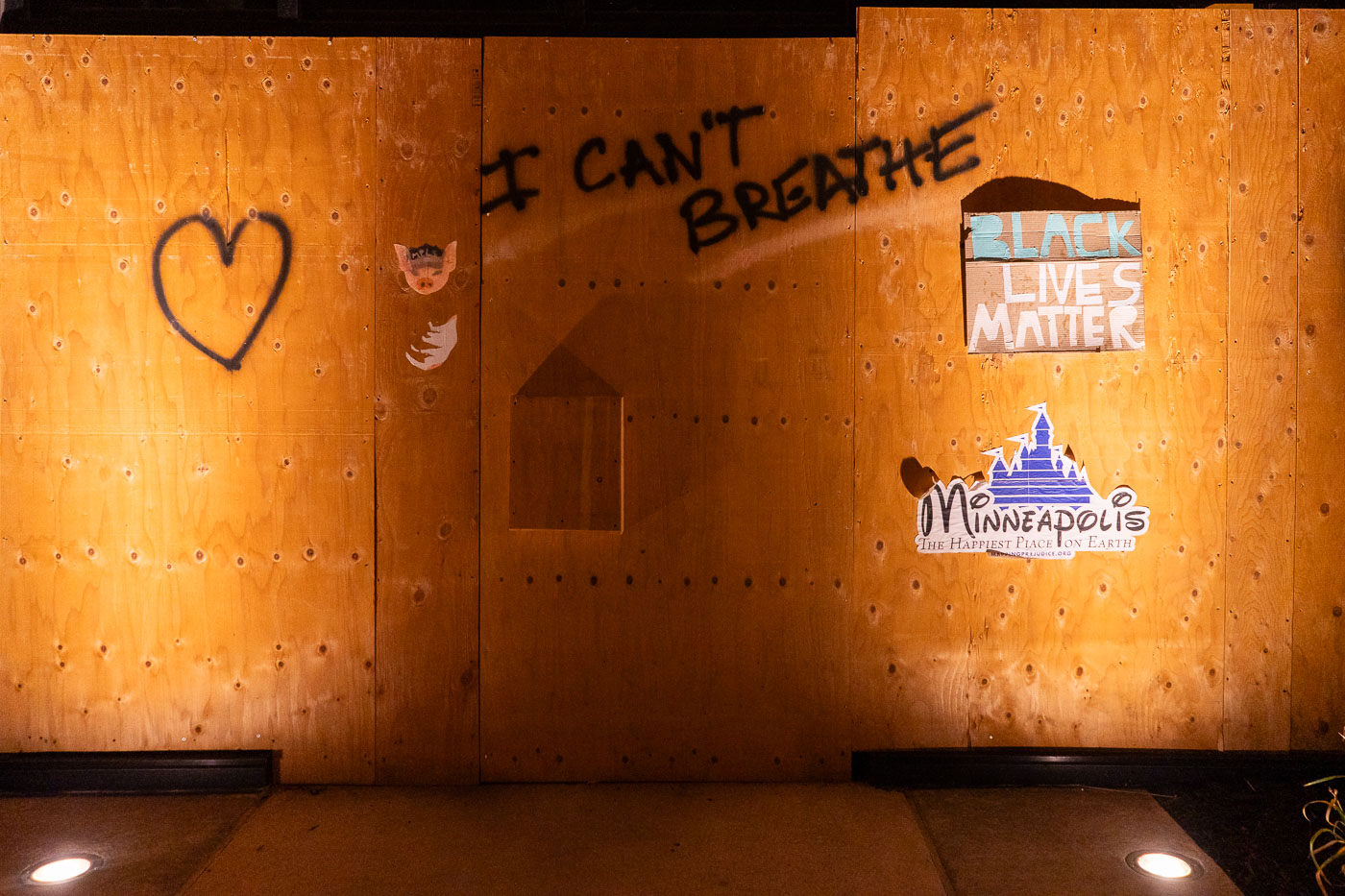
Plywood-boarded storefront on Hennepin Avenue displays "I CAN'T BREATHE," Black Lives Matter, and Minneapolis stickers.
"I Can't Breathe" became a rallying cry after Eric Garner's 2014 death in police custody and resurfaced nationally following George Floyd's killing in Minneapolis in May 2020. Business owners along Hennepin Avenue boarded up storefronts during the unrest that followed, and many of those panels became surfaces for spray-painted messages and stickers. Black Lives Matter, founded in 2013 by Alicia Garza, Patrisse Cullors, and Opal Tometi, is referenced directly on one board. The "Minneapolis: The Happiest Place on Earth" sticker ties to the Mapping Prejudice project at the University of Minnesota, which maps historic racial covenants that once barred Black residents from owning property in parts of the city.

“I Can’t Breathe” and BLM Messages on Hennepin Avenue Plywood
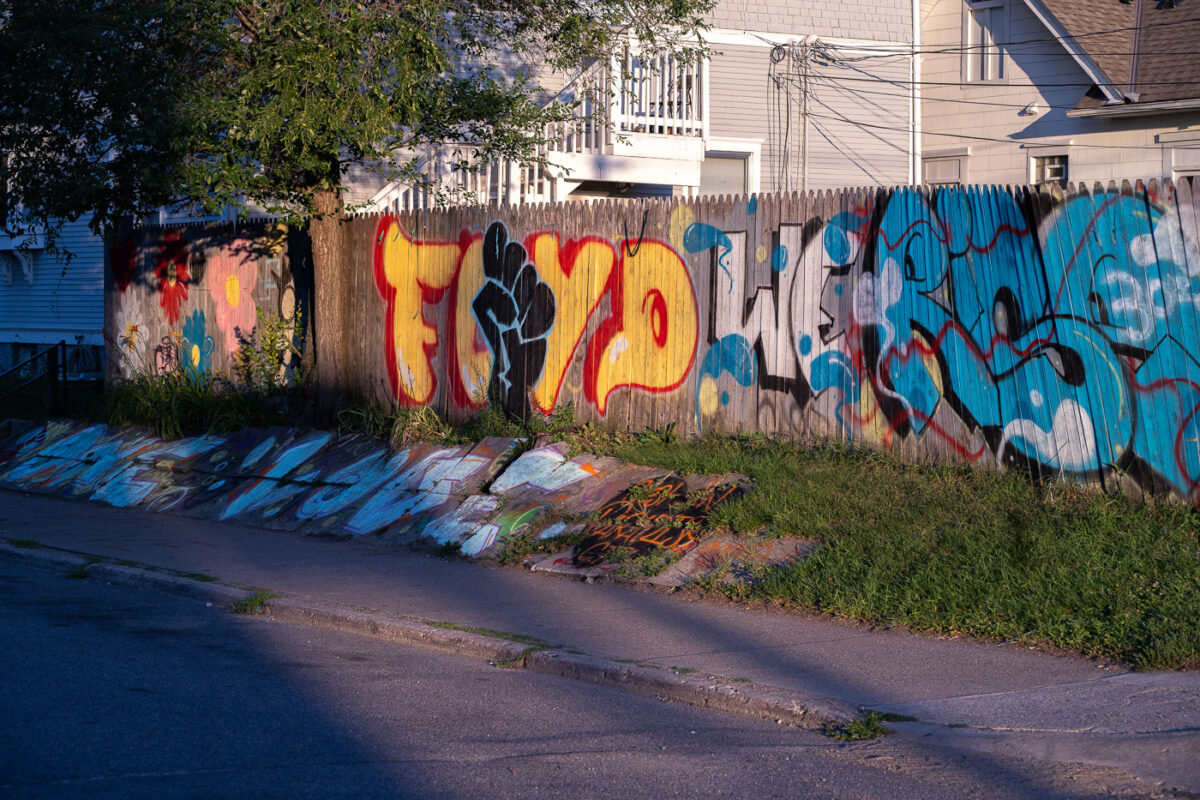
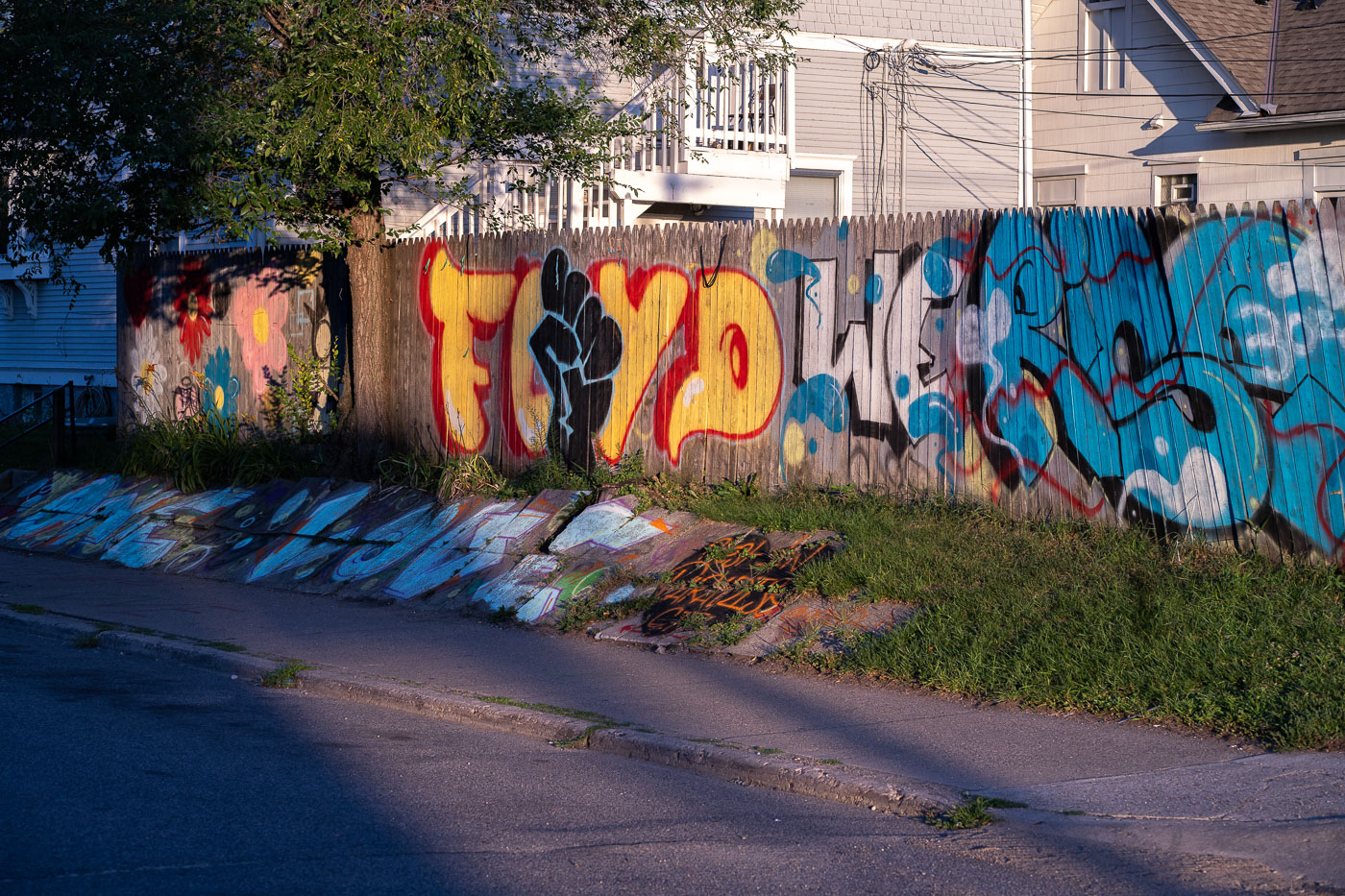
Graffiti mural with "FLOYD" text and raised fist on wooden fence at George Floyd Square, Minneapolis.
A George Floyd mural on a fence near near George Floyd Square. "ONE LOVE" written in the grass.

“FLOYD” Fence Mural Near George Floyd Square
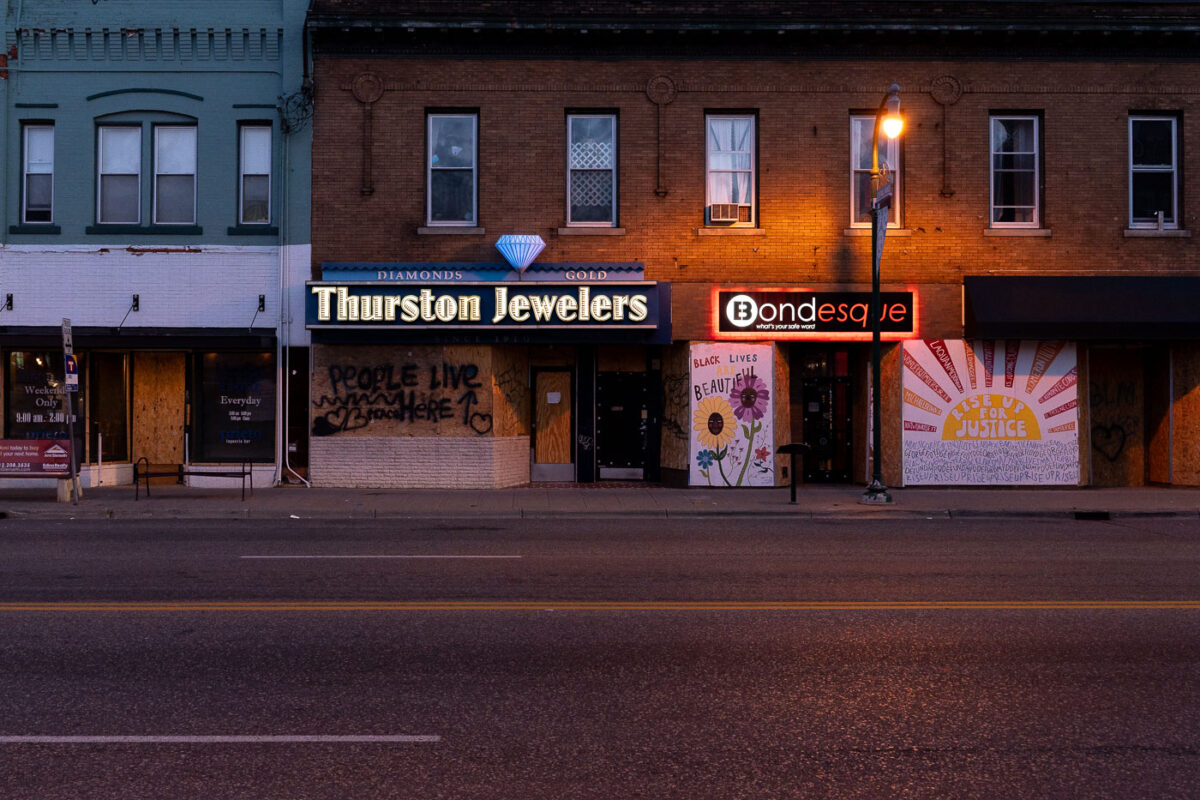
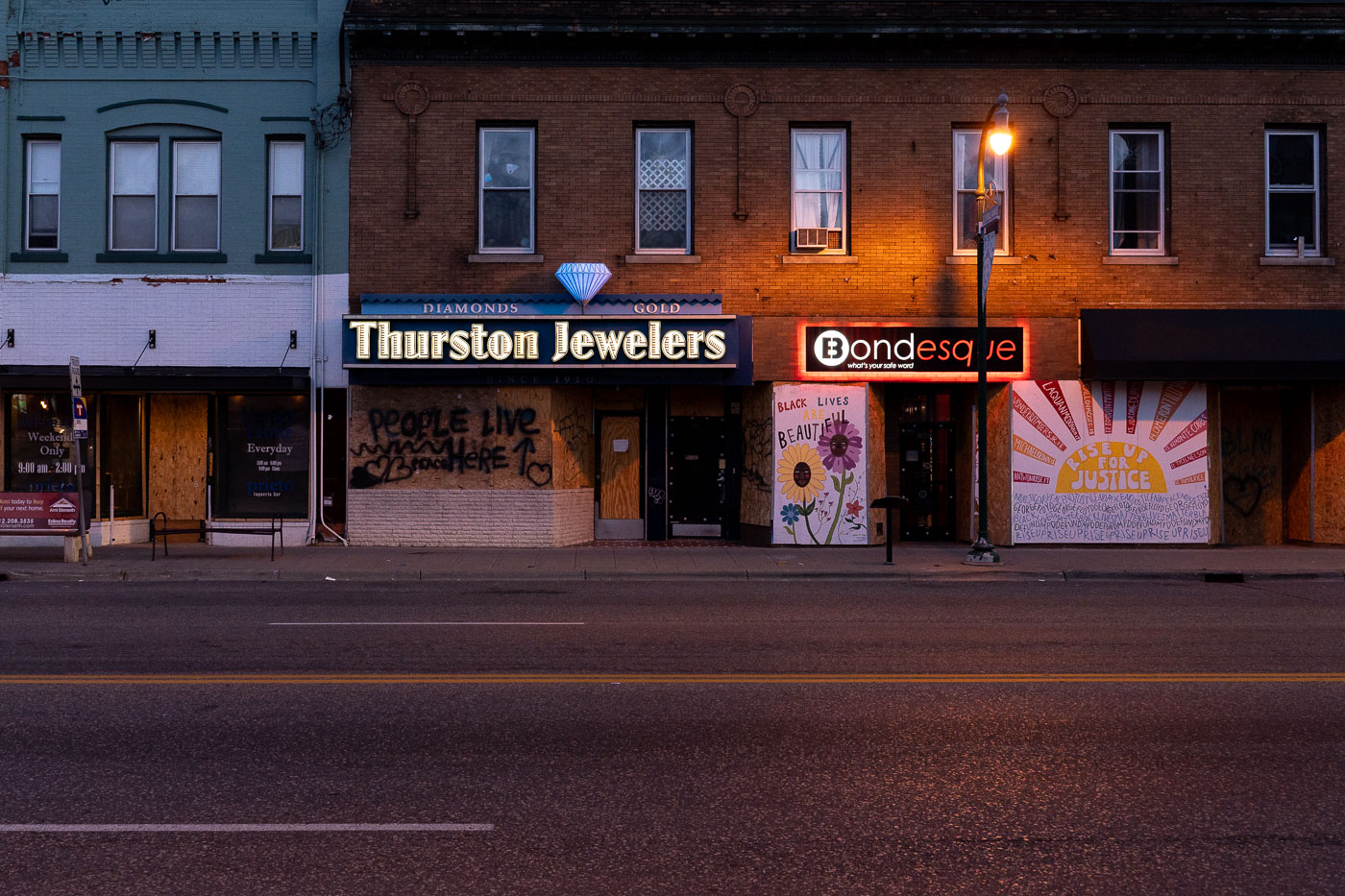
Thurston Jewelers and Bondesque in Uptown Minneapolis
Thurston Jewelers and Bondesque, located on Lake Street in Uptown Minneapolis, are depicted with their storefronts boarded. These boards feature various protest art and messages, including calls for justice and affirmations like 'Black Lives Are Beautiful'. The boarding and artwork emerged during the 2020 protests in Minneapolis, following the murder of George Floyd, which led to widespread civil unrest and calls for systemic change.

Thurston Jewelers & Bondesque, Lake St, Minneapolis, boarded with protest art
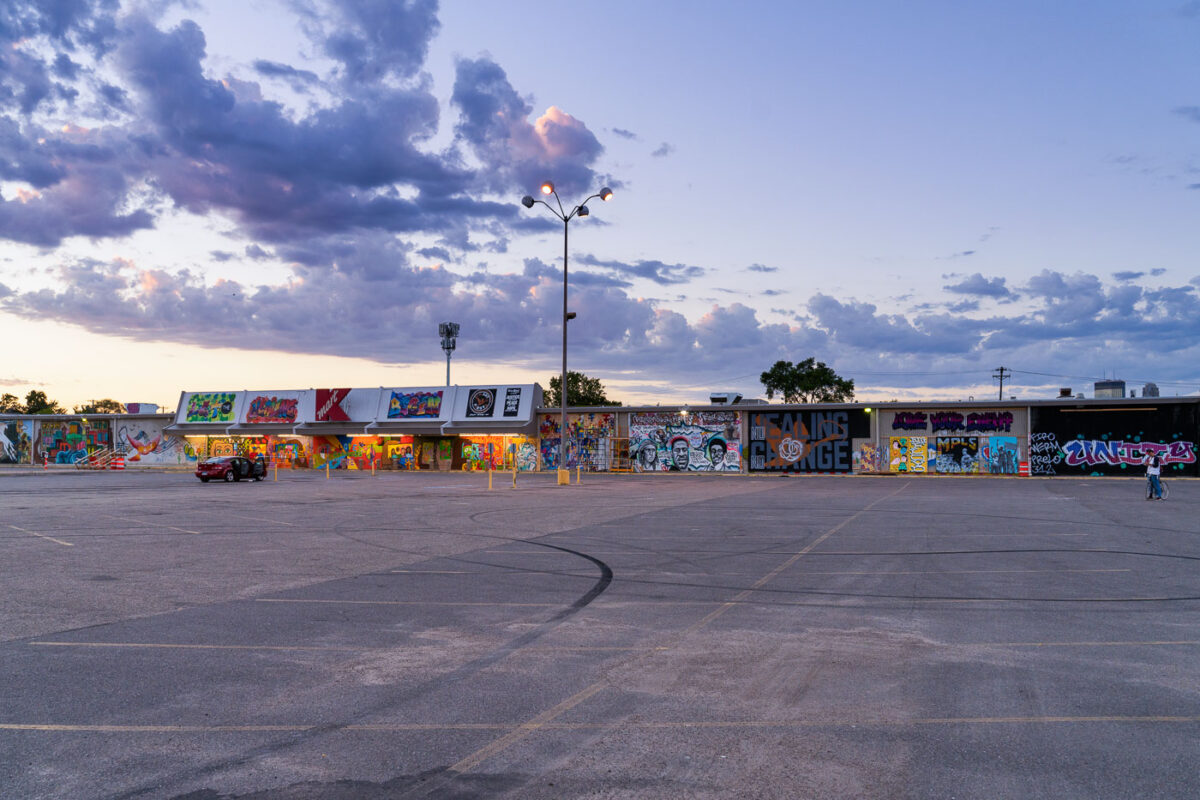
Kmart covered in art boards in August 2020
The former K-Mart store on West Lake Street in Minneapolis displays extensive murals created in the aftermath of the 2020 protests. These artworks, some depicting portraits and messages related to the Minneapolis Uprising, transformed the building's exterior into a public canvas. The retail store has since been repurposed as a United States Post Office, providing essential services after two local post offices were destroyed by fire during the protests.

Former K-Mart Murals, West Lake Street, Minneapolis
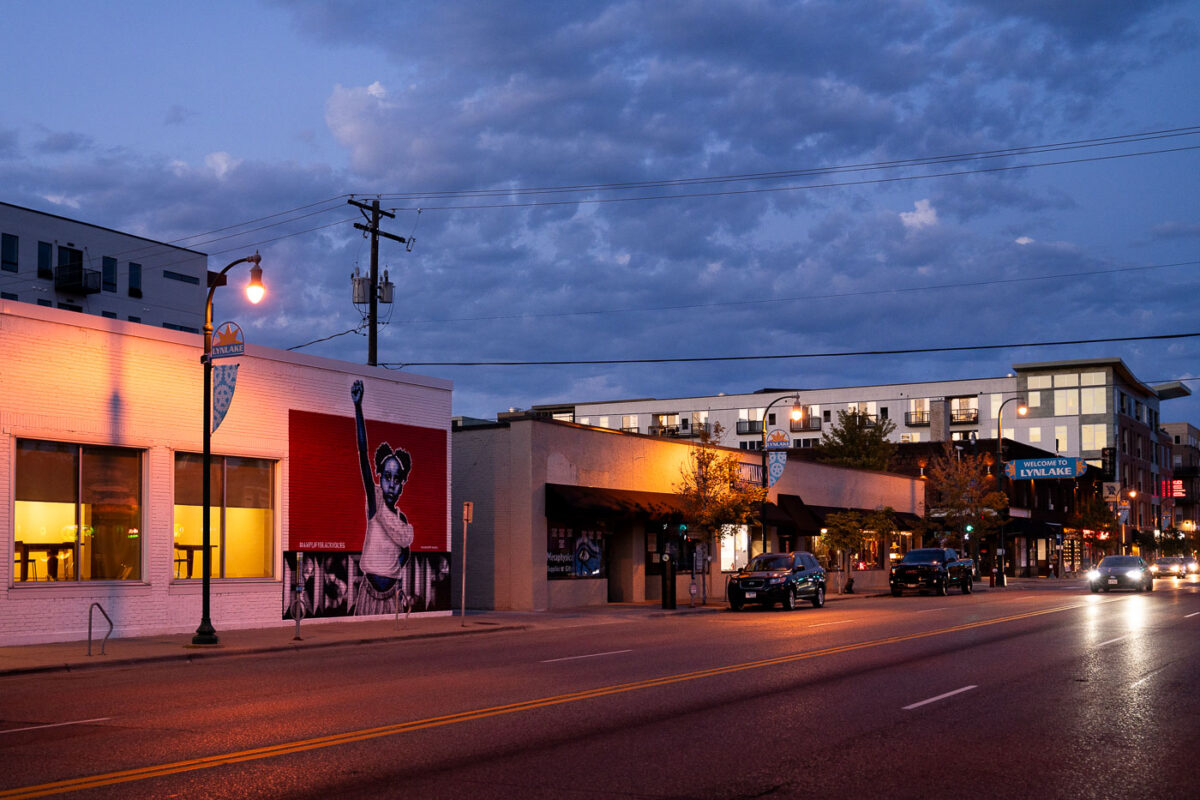
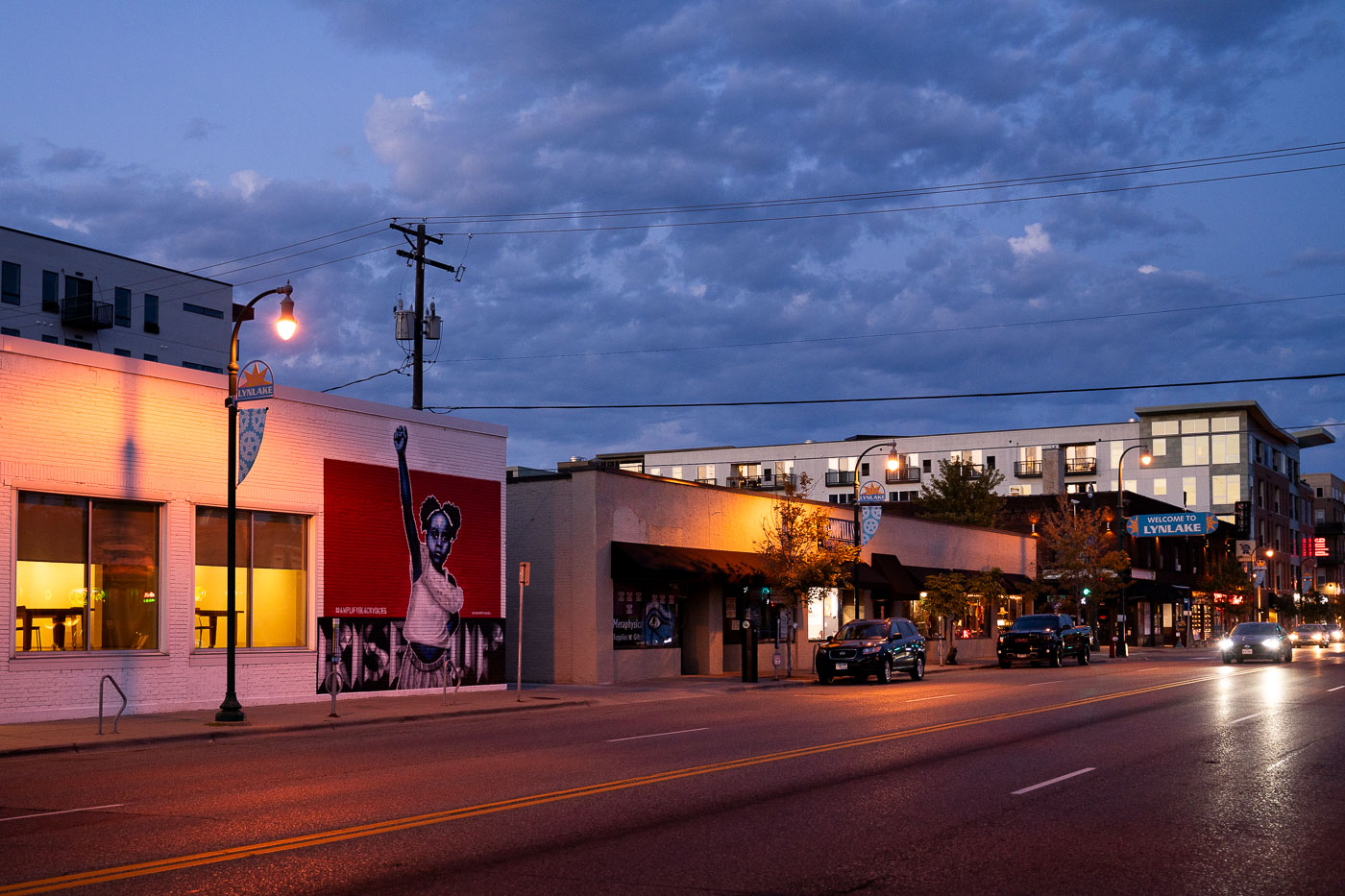
A mural on Lake Street in August 2020
A mural depicting a young Black girl with a raised fist is prominently displayed on West Lake Street in Uptown Minneapolis. This artwork, seen on August 19, 2020, emerged as part of the widespread artistic responses following the murder of George Floyd in May 2020. The mural includes the hashtag #AMPLIFYBLACKVOICES.

George Floyd Protest Mural, West Lake Street, Minneapolis
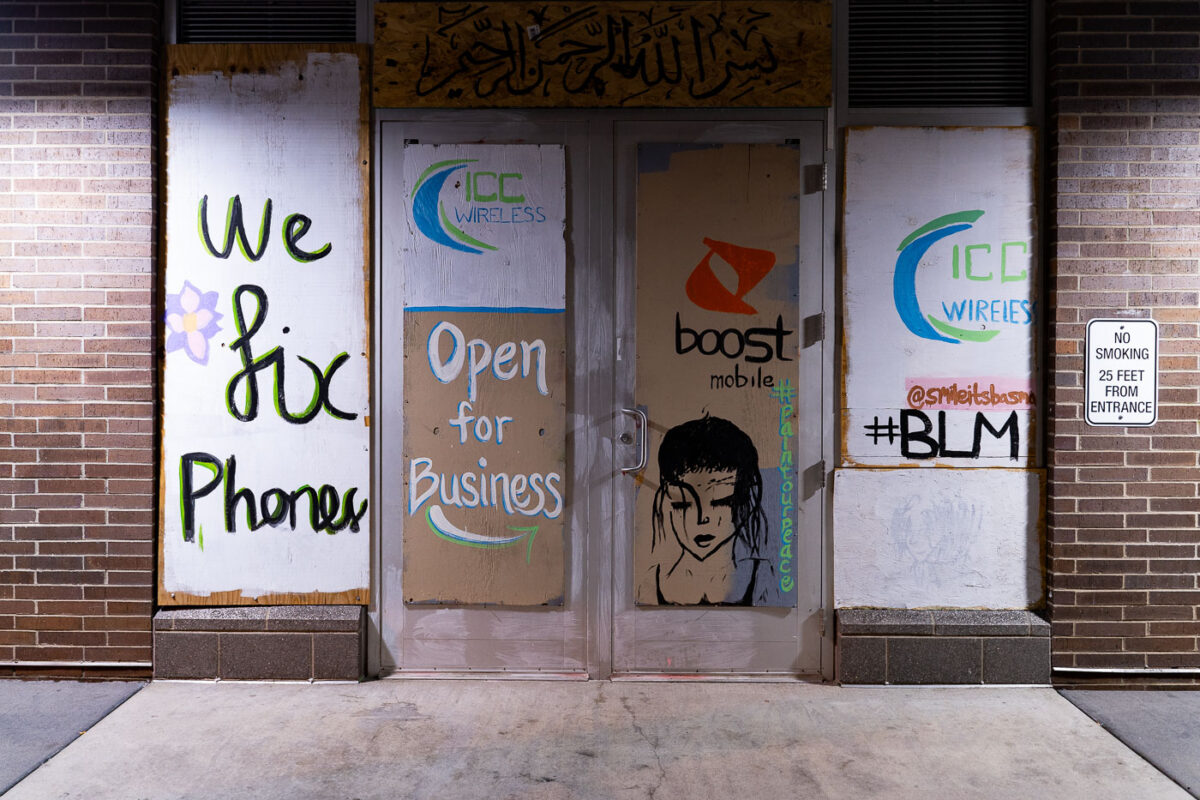
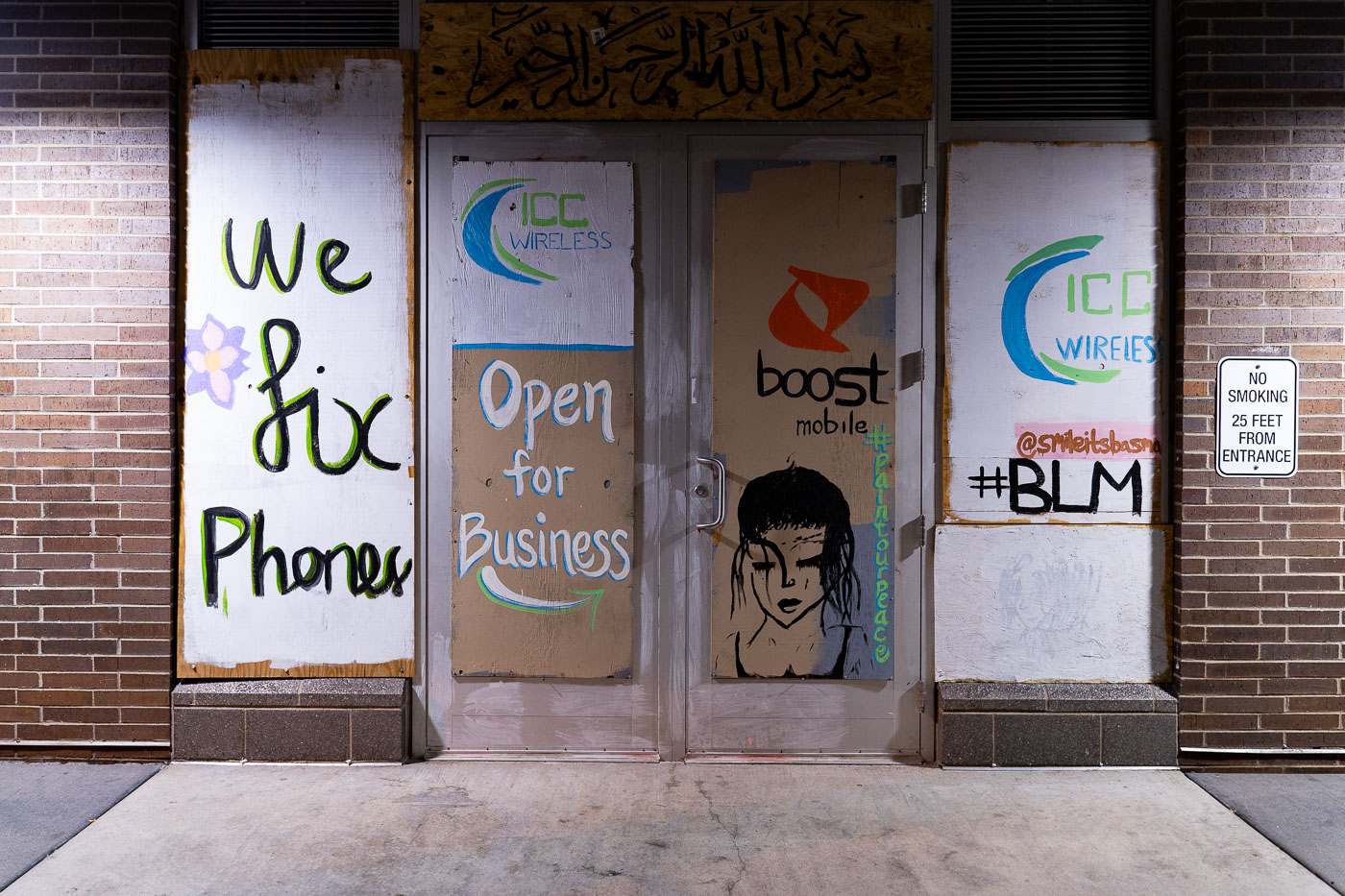
ICC Wireless open for business
The storefront of ICC Wireless Boost Mobile on Lake Street in Minneapolis is covered with plywood boards. These boards were installed for protection during the Minneapolis Uprising, a period of civil unrest following the murder of George Floyd in May 2020. Despite the protective barriers, the store declared itself "Open for Business" with painted signs, alongside other messages like "We fix Phones," and the company logos.

ICC Wireless Boost Mobile boarded storefront, Lake Street, Minneapolis
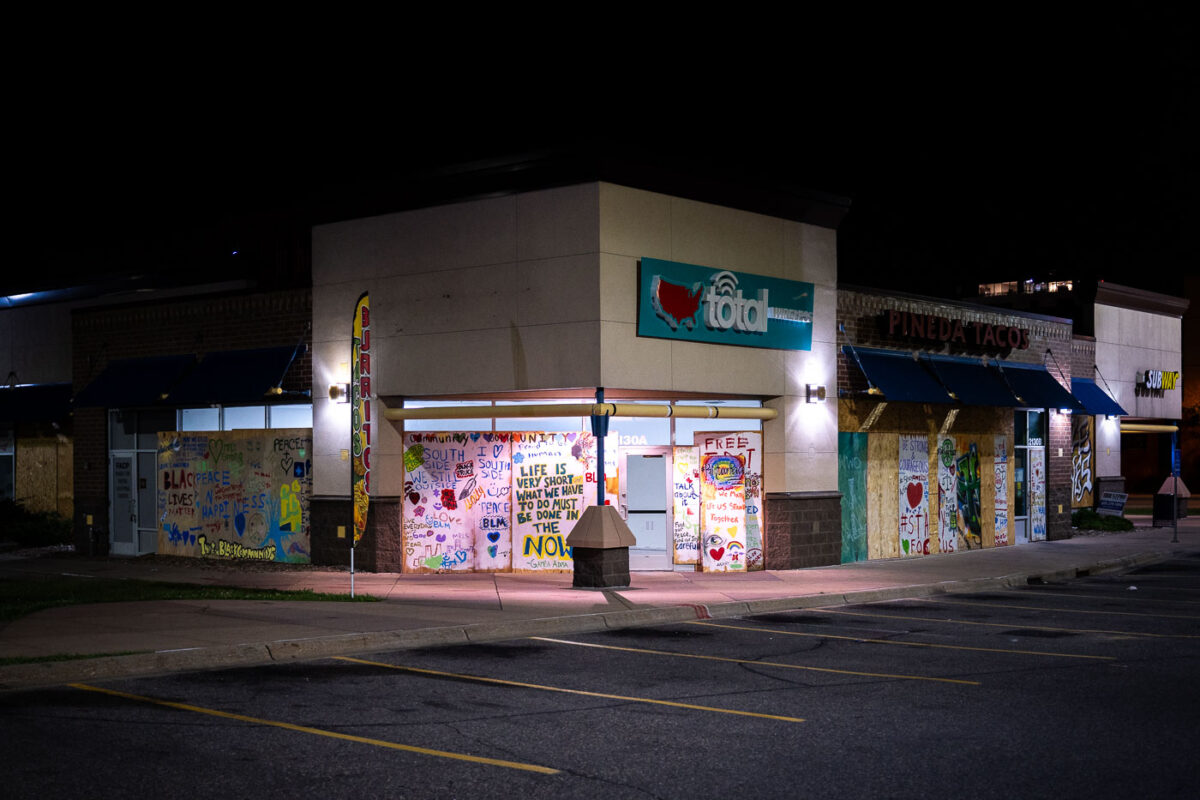
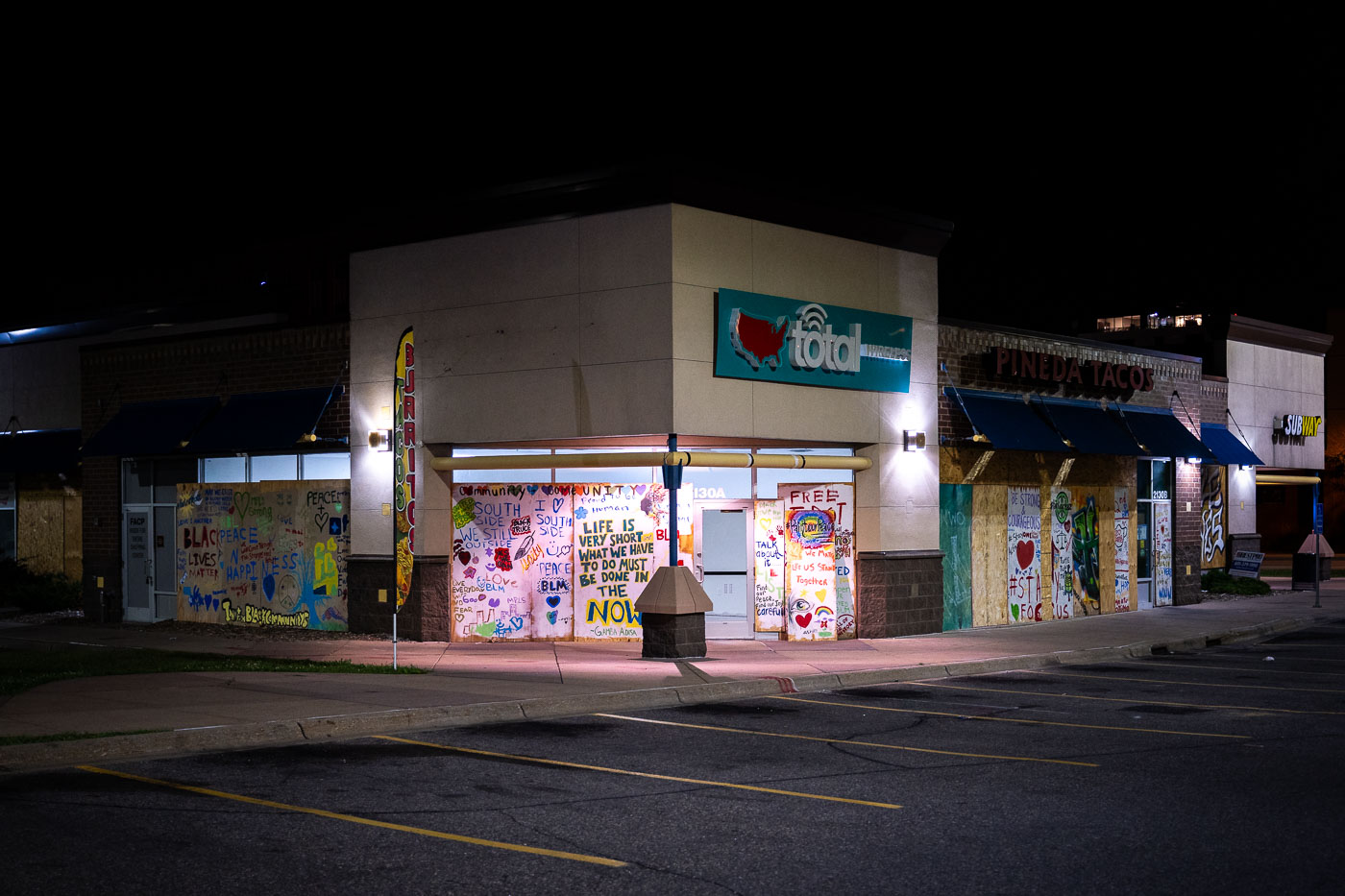
Boards on Total Wireless in South Minneapolis
Storefronts along Lake Street in Minneapolis display murals painted on protective boards. These boards were installed on businesses in August 2020, following widespread protests in Minneapolis after the May 25, 2020 death of George Floyd. The murals, created by community members and artists, transformed the temporary barriers into public canvases for messages of hope, unity, and social justice. Messages such as 'Black Lives Matter' and calls for community solidarity are visible on the boards covering businesses like Total Wireless, Pineda Tacos, and Subway.

Lake Street Storefront Murals, Minneapolis, August 2020
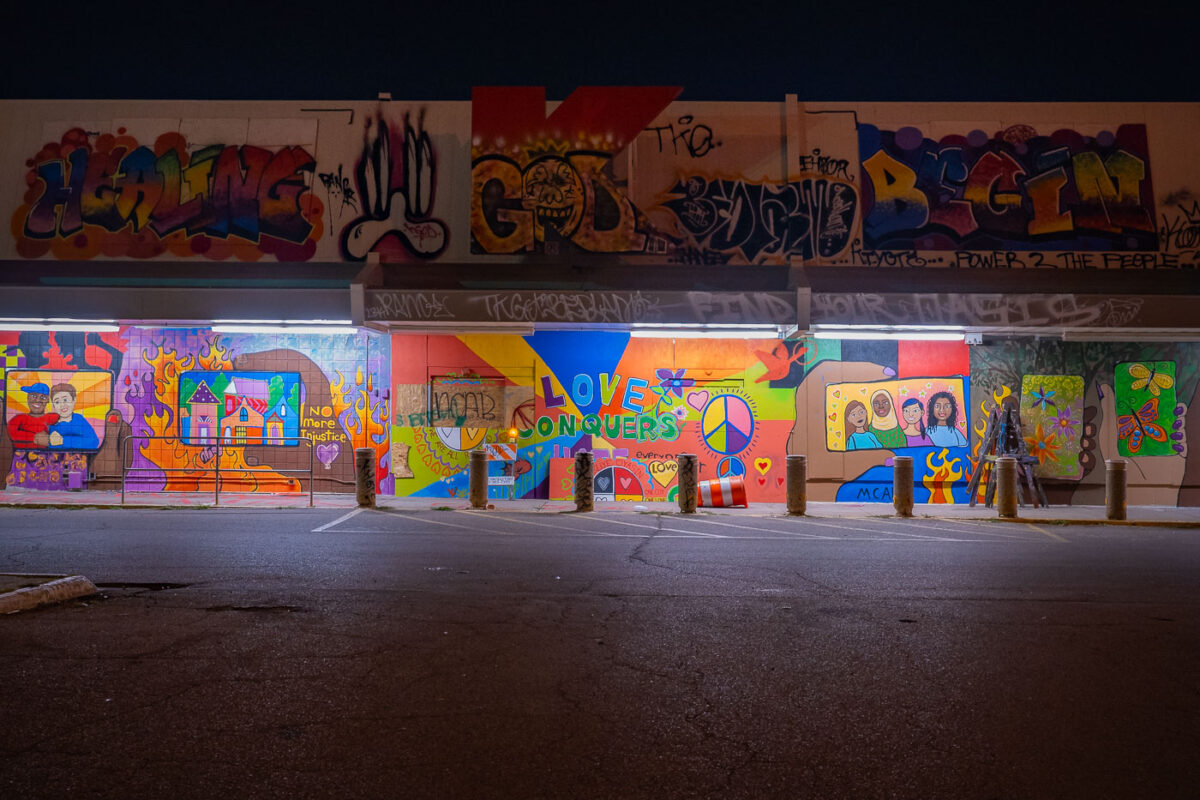
Former kmart store covered in graffiti
The former K-Mart building on Lake Street in Minneapolis was transformed into a public art installation following the murder of George Floyd in May 2020. Its boarded-up facade became a canvas for large-scale murals and graffiti. These artworks emerged during a period of widespread protest and rebuilding in the city. Subsequently, the building was repurposed to house a temporary Post Office, providing essential services after two nearby postal facilities were damaged.

K-Mart Murals & Graffiti, Lake Street, Minneapolis
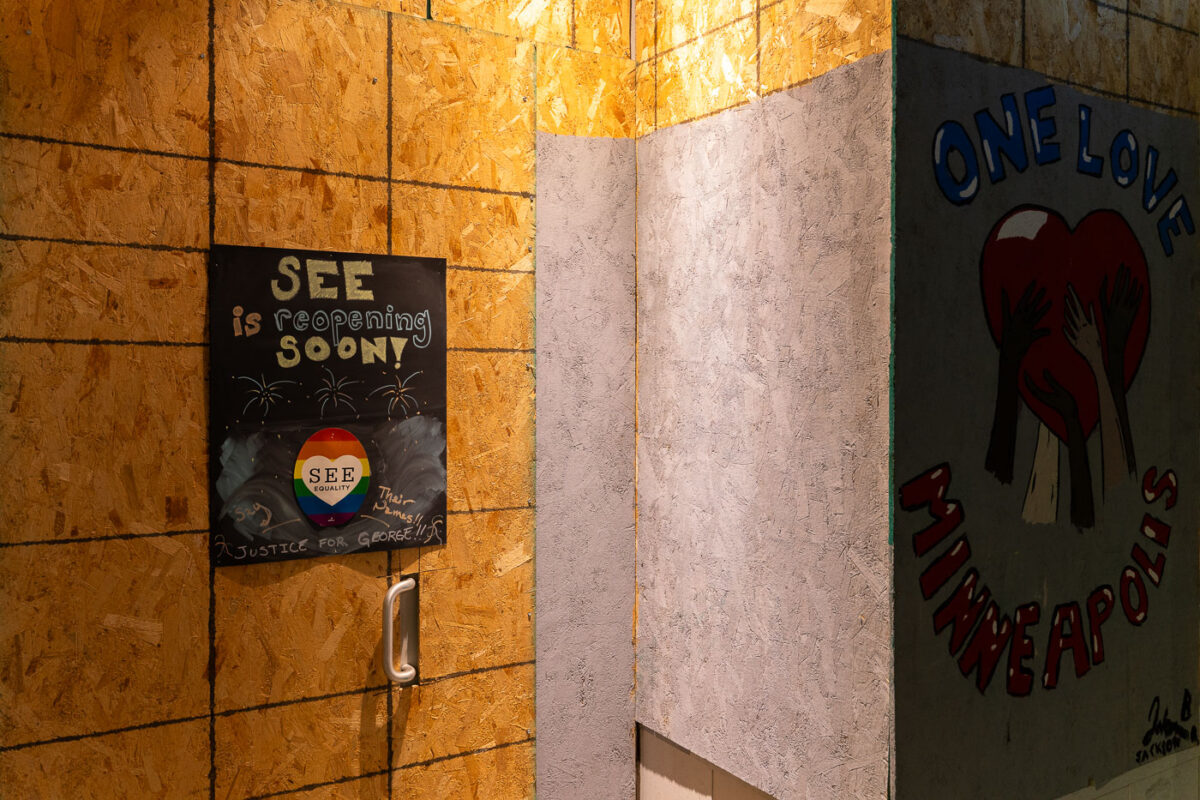
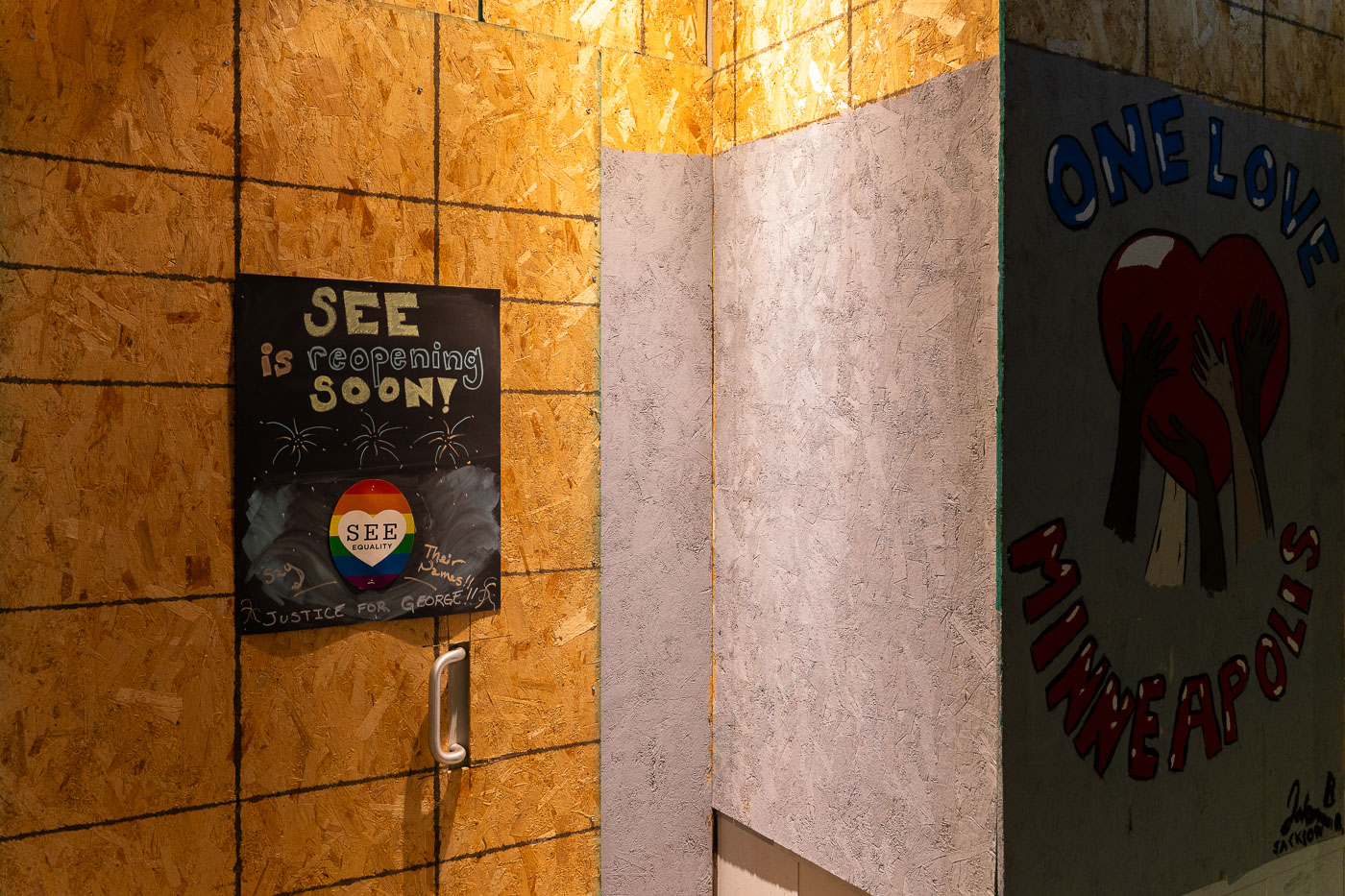
SEE is reopening soon sign
The SEE retail store on Hennepin Avenue in Uptown Minneapolis displays a reopening sign and a mural on its boarded-up facade. The boarding and artwork reflect the aftermath of the Minneapolis Uprising in May 2020, which led many businesses to secure their premises. A sign announces the store's reopening on August 24, 2020, alongside a message for "JUSTICE FOR GEORGE!!" and a "SEE EQUALITY" logo, indicating solidarity with social justice movements. Adjacent to the reopening notice, a mural featuring the phrase "ONE LOVE MINNEAPOLIS" and hands reaching for a heart conveys a message of community and resilience.

SEE Retail Store Reopening, August 24, 2020, Minneapolis
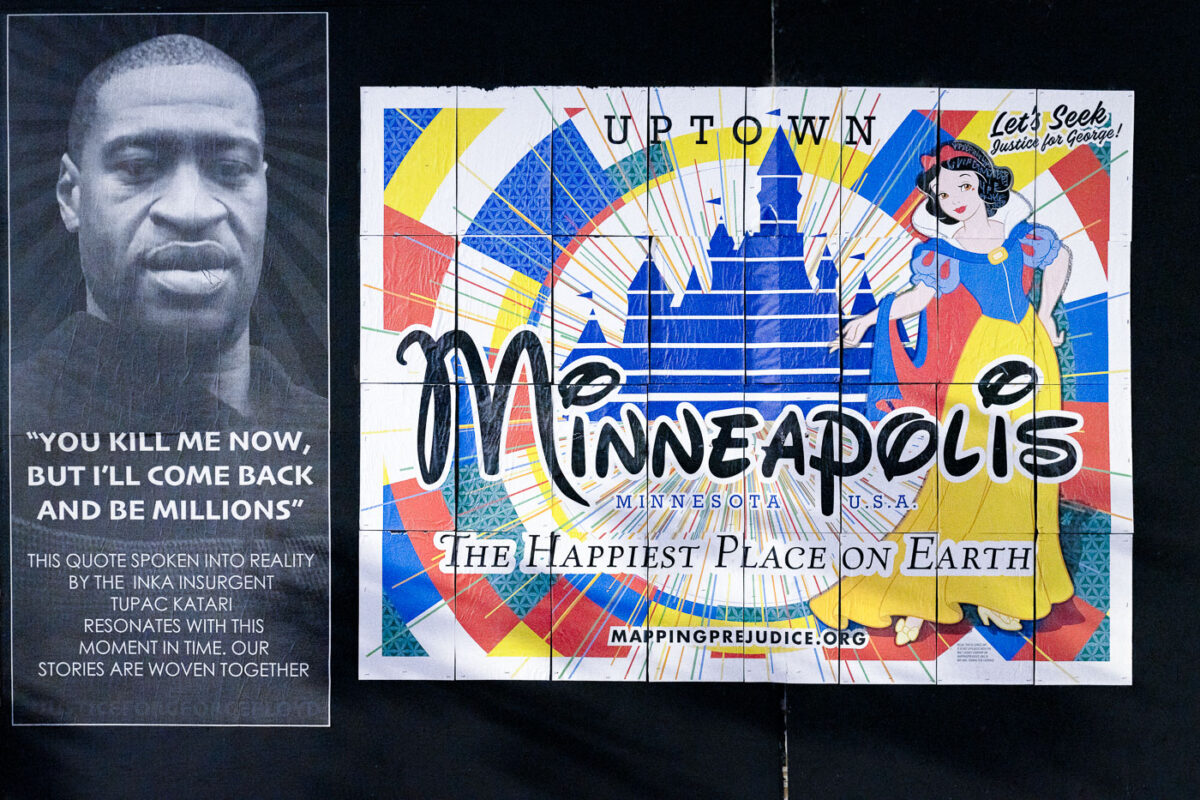
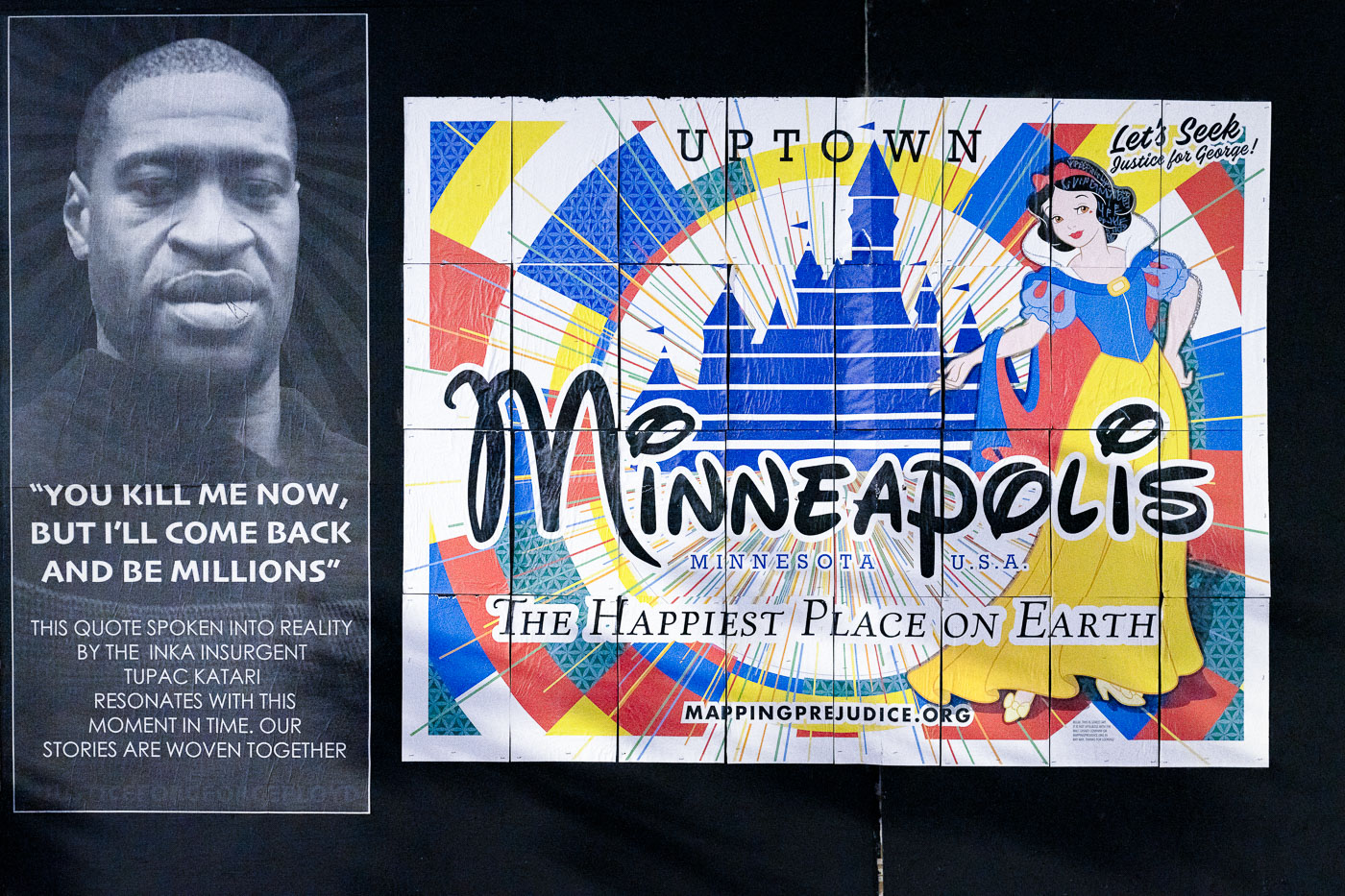
Mapping Prejudice Happiest Place on Earth Mural
Wheat paste art featuring George Floyd and a poster from Mapping Prejudice is displayed on Hennepin Avenue in Uptown Minneapolis. The colorful poster, designed by Mapping Prejudice, subverts the phrase "Minneapolis The Happiest Place on Earth" with a character resembling Snow White stating "Let's Seek Justice for George!", drawing attention to the city's history of racial covenants. These public art installations emerged during the Minneapolis Uprising, serving as a visual protest against racial injustice and a call for accountability following George Floyd's murder.

George Floyd & Mapping Prejudice Wheat Paste, Uptown Mpls

Pain is purification graffiti on North Minneaopolis bridge
The phrase "Pain is Purification" is inscribed on a train bridge in North Minneapolis.

“Pain is Purification” Graffiti on North Minneapolis Train Bridge
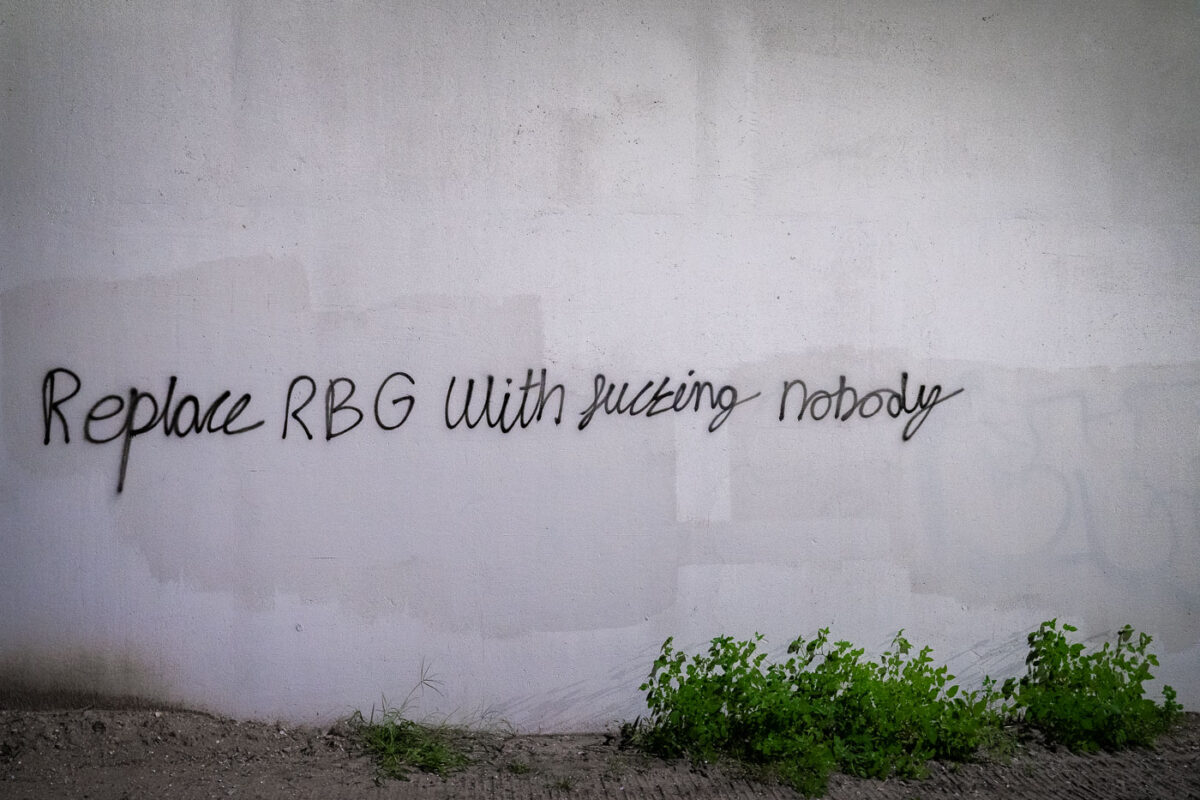
Graffiti message on a wall along the Midtown Greenway in Minneapolis referencing the Supreme Court vacancy.
Graffiti reading “Replace RBG With fucking nobody” is painted on a wall along the Midtown Greenway in Minneapolis. The message refers to the vacancy on the U.S. Supreme Court following the death of Justice Ruth Bader Ginsburg in September 2020.

“Replace RBG With Nobody” Graffiti Along the Midtown Greenway

Boarded storefronts on Lake Street in Minneapolis display spray-painted messages "Do Not Burn" and "People Live Here" at night.
Boarded storefronts on Lake Street in Minneapolis are marked with spray-painted messages reading “Do Not Burn” and “People Live Here” in this nighttime view from September 2020. The plywood covers retail windows and doors along a commercial corridor that was heavily damaged after protests following the killing of George Floyd in May 2020.

“Do Not Burn, People Live Here” Spray-Painted on Lake Street Plywood

Boarded storefront on Lake Street in Minneapolis displays murals including "Love Your Enemy" and "Justice for Floyd" messaging.
Murals and graffiti cover the exterior wall of the former K-Mart building on Lake Street in South Minneapolis. The painted boards include the large phrase “LOVE YOUR ENEMY,” an “MPLS” mural with the words “JUSTICE FOR FLOYD NOW,” and other artist panels installed across the boarded facade.

“Love Your Enemy” Mural on Former K-Mart on Lake Street

A mural on the side of the former Kmart
A mural featuring a Native American chief and the quote "Let us put our minds together and see what life we can make for our children" is displayed on the side of a former K-Mart building on Nicollet Avenue in South Minneapolis.

Mural on Former K-Mart, Nicollet Ave, Minneapolis

Panda ACAB Evict The Cops
A building wall in South Minneapolis displays both a community mural and protest graffiti. The mural, featuring a panda holding a "HOPE" balloon and Chinese characters for "hope", is painted on a brick section. Adjacent to it, graffiti on a painted concrete block wall reads "ACAB" and "EVICT THE COPS".

South Minneapolis Mural & ACAB Graffiti on Building Wall

Live Laugh Loot
The phrase "Live Laugh Loot" is spray-painted on the sidewalk in front of a damaged US Bank branch located on Lake Street in Midtown Minneapolis.

“Live Laugh Loot” Graffiti on Damaged US Bank, Lake Street

The time is always right to do what is right
The State Theatre, a historic performing arts venue on Hennepin Avenue in downtown Minneapolis, features a marquee displaying a quote from Martin Luther King Jr. The message, "The time is always right to do what is right".

State Theatre Marquee, MLK Quote & Murals, Minneapolis

Defaced George Floyd mural
The George Floyd mural is prominently displayed on the exterior wall of Cup Foods, located on East 38th Street within George Floyd Square in Minneapolis. This site holds profound historical significance as the location where George Floyd was murdered on May 25, 2020, an event that catalyzed global protests against racial injustice and police brutality.

George Floyd mural with graffiti at Cup Foods, Minneapolis

Murals on boards of the former k-mart
Murals adorn the boarded-up exterior of the former K-Mart building on Nicollet Avenue in South Minneapolis.

Murals on former K-Mart, Nicollet Ave, South Minneapolis

Chalk on the sidewalk outside the mayors home
Chalk art on the street outside Minneapolis Mayor Jacob Frey's home in Northeast Minneapolis, The protest addressed the city's policies regarding homeless encampment evictions. The message, 'Jacob + Police = ", reflects public sentiment and criticism directed at the mayor and law enforcement.

Chalk Message at Minneapolis Mayor Frey’s Home Protest

Graffiti art covers protective boards on the John Fluevog store at Hennepin and Lagoon Avenues in Uptown Minneapolis.
The plywood covering John Fluevog's storefront on Hennepin Avenue became a canvas for hand-lettered messages and drawings, including references to James Baldwin, Grace Jones, and the phrase "Love Is Not Dead." The shoe retailer, known for its avant-garde designs since founding in Vancouver in 1970, operates a location here in Uptown Minneapolis near the corner of Lagoon Avenue. Business owners across the city boarded up storefronts for protection following the unrest that spread after George Floyd's killing in May 2020, and many of those boards were later turned into sites for murals and text-based artwork by local artists.

“Love Is Not Dead” Mural on the John Fluevog Storefront
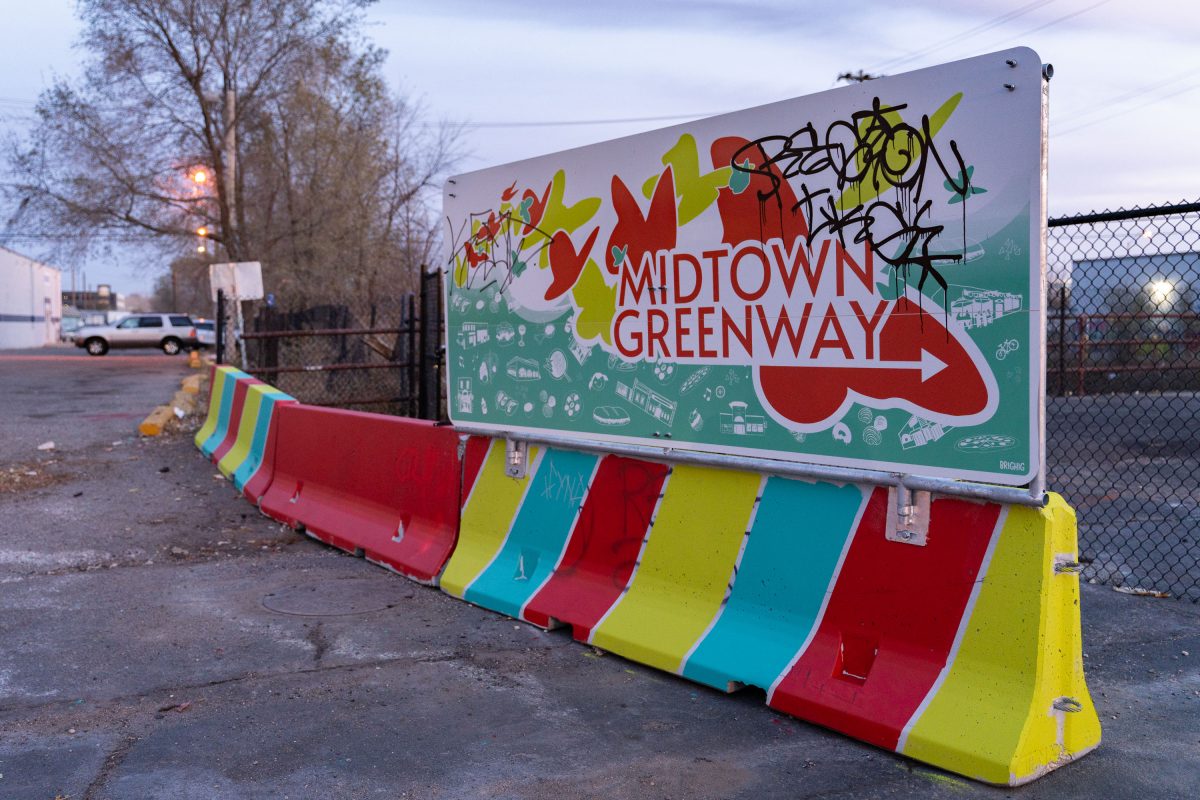
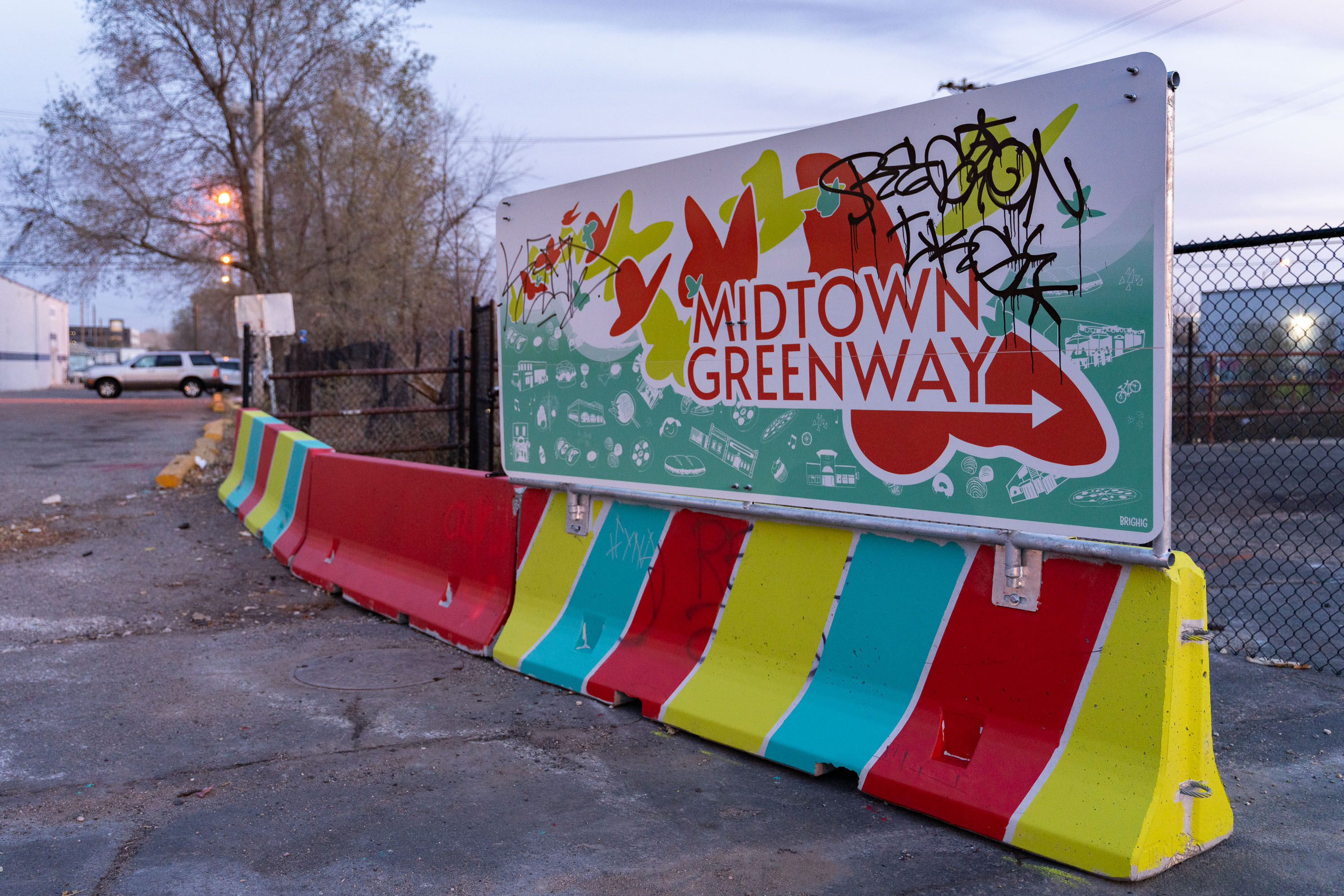
A Midtown Greenway sign with colorful striped barriers blocks vehicle access at Nicollet Avenue in South Minneapolis.
Painted concrete barricades and a Midtown Greenway sign at Nicollet Avenue in Minneapolis.

Midtown Greenway Trail Marker on Nicollet Avenue

"Abolish The Police" mural on boarded windows of Hook and Ladder Theater on Minnehaha Avenue in Minneapolis with pedestrians
The Hook and Ladder Theater & Lounge sits on Minnehaha Avenue in Minneapolis's Longfellow neighborhood, a live-music venue that had its plywood window coverings turned into protest art after the killing of George Floyd in 2020. The "Abolish the Police" mural, along with the "Justice" and "Love" lettering beside it, remained on the boards well after the unrest that summer, turning the building into an ongoing outdoor gallery. People gathered outside the venue in November 2020, in the days following the announcement of the presidential election results, as debates over policing and public safety continued in the city.

“Abolish The Police” Mural on the Hook and Ladder in Minneapolis

Crowd of protesters with signs and flags marches past colorful mural on Lake Street in Minneapolis.
The mural above the marchers depicts a farmworker and desert plants, one of many large-scale works commissioned along Lake Street after the corridor sustained heavy damage following George Floyd's killing in May 2020. Lake Street is a major east-west commercial corridor through South Minneapolis and has long served as a hub for the city's Latino and immigrant-owned businesses. The march passing beneath it took place on November 7, 2020, the day media outlets projected Joe Biden as the winner of the presidential race. Demonstrators carried signs addressing policing and housing as they moved along the street.

Post-Election March Passes a Mural on Lake Street

Artist paints Black Lives Matter mural on boarded storefront along Lyndale Avenue in Uptown Minneapolis.
The mural reading "Black Lives Matter, All Year Round" covers boarded-up storefronts on Lyndale Avenue in Uptown Minneapolis. Plywood panels like these went up over windows and doors across the city after unrest broke out in the wake of George Floyd's killing in May 2020, and many were later painted by local artists rather than removed. Months after the initial unrest, murals such as this one remained in place, turning storm boards into lasting public artwork.

“Black Lives Matter, All Year Round” Mural on Lyndale Avenue

Boarded Tires Plus storefront on Lake Street, Minneapolis, with graffiti including "Stop Line 3" and "No More Prez" messages
Tires Plus operates a tire and auto repair shop on Lake Street in Minneapolis's Uptown neighborhood. Plywood covering its windows carries the message "Stop Line 3," a reference to opposition against Enbridge's Line 3 oil pipeline expansion through northern Minnesota. Other markings reading "No More Prez" and "Riots 2020" were added amid the unrest that followed George Floyd's death in 2020.

Boarded-Up Tires Plus on Lake Street After 2020 Unrest

Uptown Smoke Shop storefront on Lake Street with boarded windows displaying colorful "Help + Love each other" graffiti mural.
The mural reading "Help + Love Each Other" covers boarded-up windows at Uptown Smoke Shop, an e-cigarette retailer at 1408 Lake Street in Minneapolis's Uptown neighborhood. Plywood went up over storefronts along Lake Street after the unrest that followed George Floyd's killing in May 2020, and many of those boards became canvases for community-painted messages rather than being removed once repairs were made.

‘Help + Love Each Other’ Mural at Uptown Smoke Shop on Lake Street

Boarded storefront on Lake Street in Minneapolis displays "George Floyd" text during snowfall.
Plywood covering a storefront on Lake Street carries the hand-painted name "George Floyd," one of many boarded windows along the corridor turned into memorials after his killing in police custody in May 2020. Businesses along Lake Street boarded their windows that spring after nights of fires and looting during the unrest that followed Floyd's death. Rather than being removed once the immediate unrest subsided, many of these boards remained in place for months, repainted by artists and volunteers with murals, names, and messages tied to the Black Lives Matter movement.

“George Floyd” Mural on Boarded Storefront, Lake Street Snowfall

Black Lives Matter mural on Lyndale Avenue in Minneapolis displays "All Year Round" message during snowfall.
The mural reads "Black Lives Matter All Year Round," painted across plywood boards on a building along Lyndale Avenue in Minneapolis's Uptown neighborhood. The piece is one of many murals painted on boarded storefronts across Minneapolis following the unrest that followed George Floyd's killing in May 2020, when businesses across the city covered their windows and local artists turned the boards into canvases. Many of these murals remained in place for months afterward, becoming a lasting public record of that period even as boards came down elsewhere.

“Black Lives Matter All Year Round” Mural on Lyndale Avenue

Colorful murals reading "LET THE HEALING" adorn the facade of a temporary post office housed in a former K-Mart on Lake Street in
This building on Lake Street once housed a K-Mart before becoming the Lake-Street Minnehaha Temporary Station, a USPS facility set up after the neighborhood's original postal buildings were damaged during the unrest that followed George Floyd's death in May 2020. The station has continued to handle mail and package service for the surrounding Minneapolis community. Painted across the storefront, a mural reading "LET THE HEALING" was added afterward as part of a wave of public art that appeared on boarded and repurposed buildings along the corridor.

“Let the Healing” Mural at the Lake Street Minnehaha Postal Station

Boarded storefront at Fifth Element on Hennepin Avenue in Uptown Minneapolis with George Floyd portrait mural and "Black Lives
Fifth Element is a hip-hop and skateboard shop on Hennepin Avenue in Uptown Minneapolis, known for its role in the city's skate and street culture . After the store's windows were boarded up during the unrest following George Floyd's death in police custody in May 2020, local artists painted the plywood with a portrait of Floyd alongside the phrases "Black Lives Matter" and "Black Is Beautiful." The mural was one of hundreds that appeared on boarded storefronts throughout Minneapolis that year, part of a broader effort by artists to turn plywood barricades into public memorials and protest art.

George Floyd Mural on Fifth Element’s Boarded Windows, Uptown Minneapolis

Boarded storefront at 2741 Hennepin Avenue in Uptown Minneapolis with "Justice 4 George Floyd" painted on plywood, May 2020.
Plywood covering the storefront at 2741 Hennepin Avenue reads "Justice 4 George Floyd," painted with a red heart on either side of the word "4." The building sits in Uptown Minneapolis, a commercial stretch of Hennepin Avenue lined with retail shops and restaurants. Following George Floyd's death in police custody in May 2020, many Minneapolis businesses boarded their windows against anticipated damage, and those plywood panels became surfaces for murals, memorials, and protest messages across the city.

“Justice 4 George Floyd” Boards on Hennepin Avenue
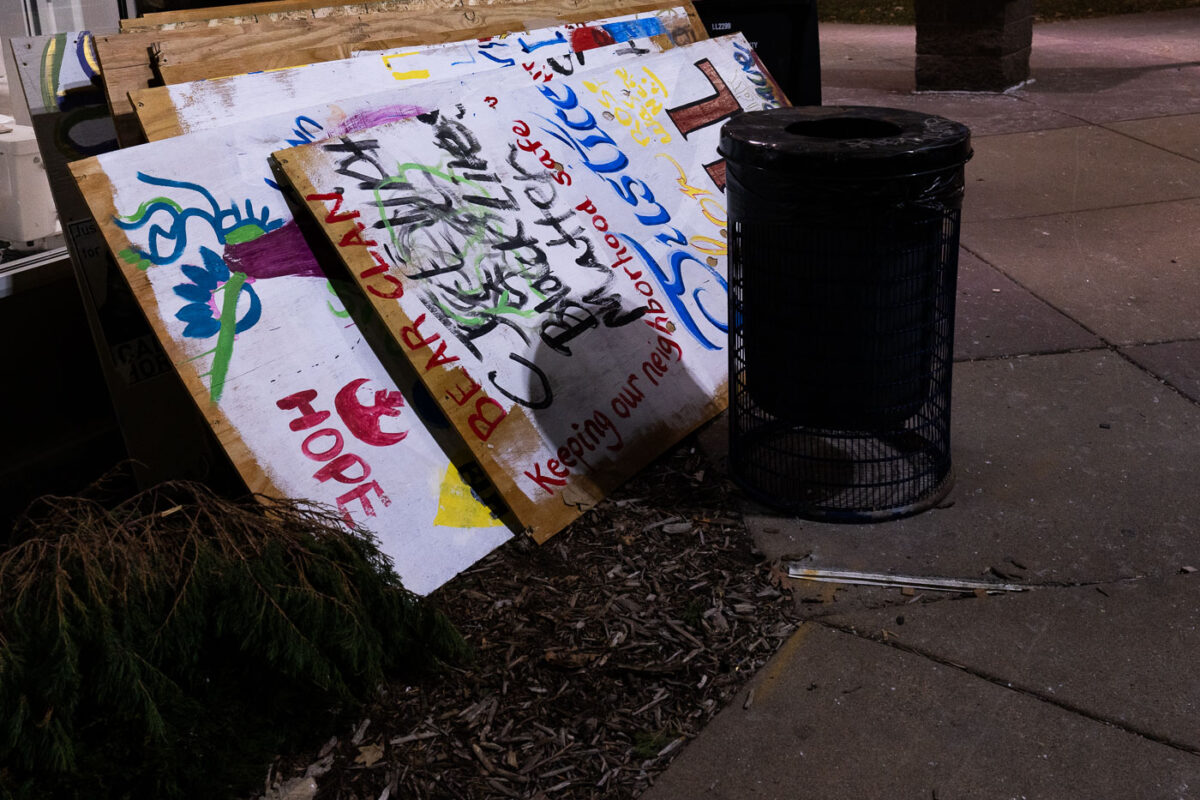
Protest boards coming off windows
Boards bearing protest art are being systematically removed from storefronts along Lake Street in South Minneapolis. These temporary installations emerged following the widespread protests and civil unrest in late May 2020, sparked by the murder of George Floyd. A dedicated commission is actively collecting and preserving this art, which served as a powerful visual record of community sentiment and resilience during that summer.

Protest art boards from Lake Street, Minneapolis
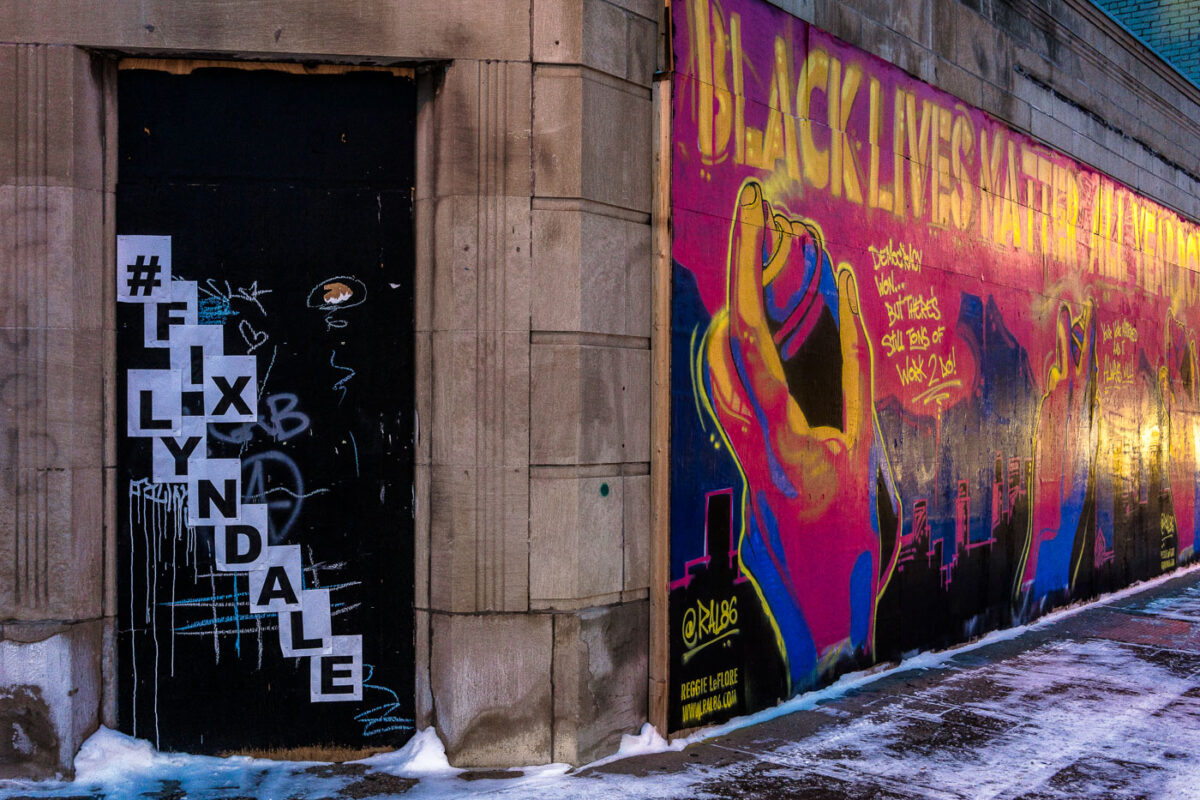
Fix Lyndale on a door on Lyndale Ave
A Black Lives Matter mural by Reggie LeFlore adorns boarded-up storefronts at the corner of Lyndale Avenue and Lake Street in Uptown Minneapolis. This artwork emerged in the aftermath of the 2020 Minneapolis Uprising, transforming damaged properties into public expressions of protest and solidarity. Adjacent to the mural, the #FixLyndale message advocates for the long-standing community effort to reconfigure Lyndale Avenue, a corridor known for high rates of vehicle and pedestrian accidents.

Fix Lyndale & Black Lives Matter Mural, Lyndale & Lake St
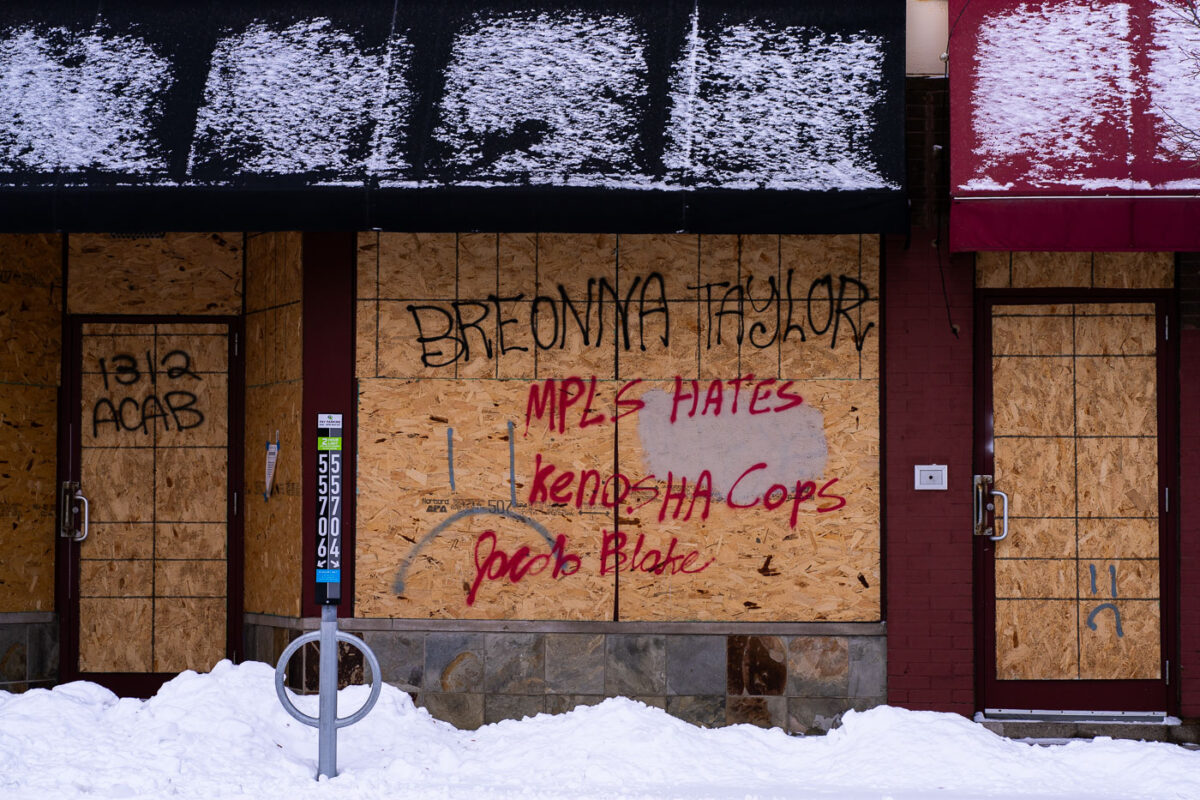
Kenoshi graffiti on buiolding boards
A boarded-up building stands in Minneapolis, near the site of the former Third Precinct of the Minneapolis Police Department. The plywood boards, installed as a protective measure during periods of civil unrest, are covered with protest messages. Graffiti includes names like "Breonna Taylor" and "Jacob Blake," alongside phrases such as "Mpls Hates Kenosha Cops," "1312," and "ACAB."

Minneapolis Boarded Building: ‘Mpls Hates Kenosha Cops’
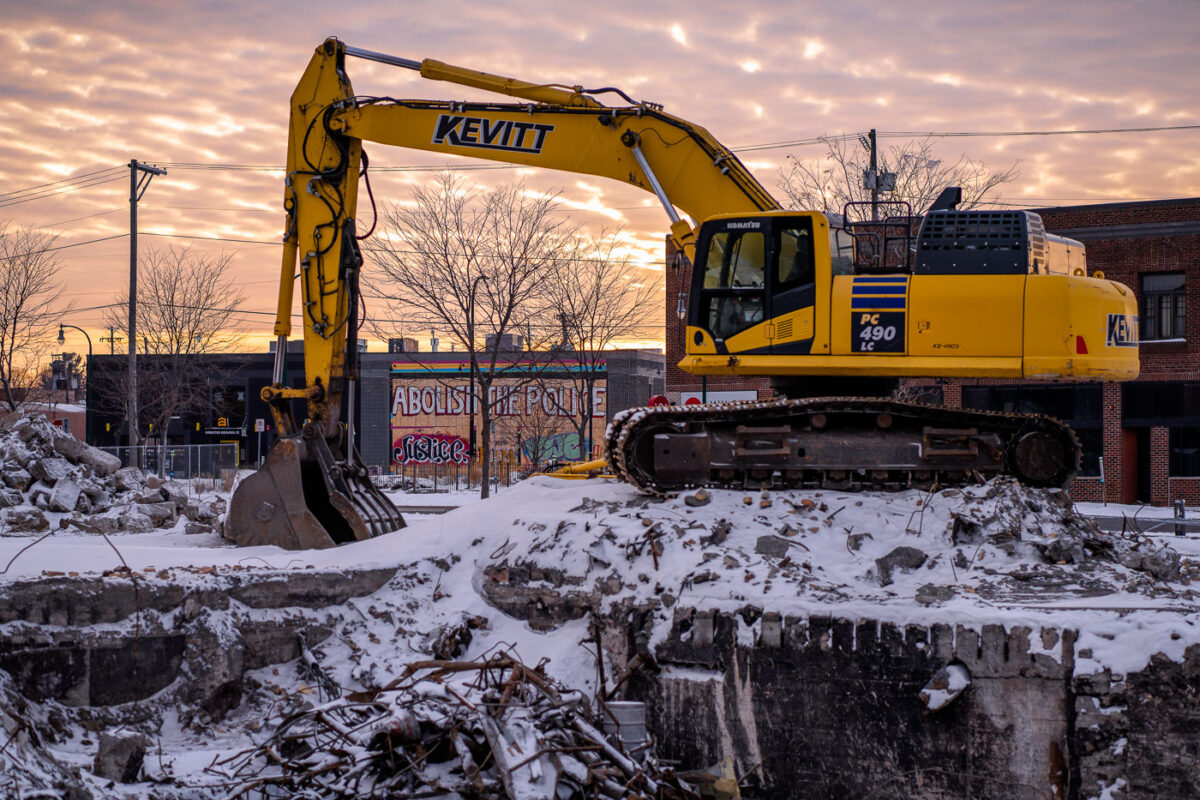
Demolition of a building in the snow
An excavator operates amidst snow-covered rubble at the demolition site of former businesses on Lake Street in Minneapolis. These structures, which included Minnehaha Liquors, a chiropractor’s office, and GM Tobacco, were destroyed during the widespread protests and civil unrest that followed the May 25, 2020 death of George Floyd.

Excavator at Minnehaha Liquors Demolition, Minneapolis
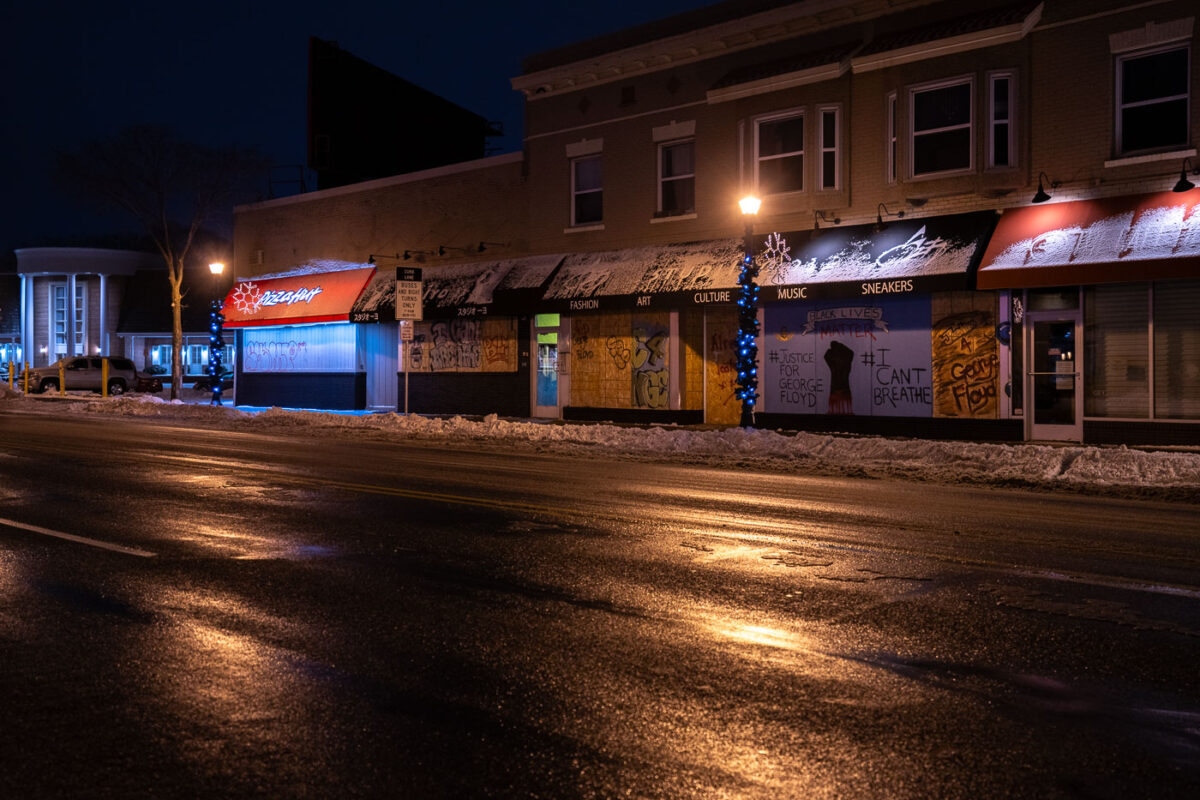
Hennepin Ave protest boards in December 2020
Protest murals adorn boarded-up storefronts along Hennepin Avenue in Uptown Minneapolis. These artworks emerged in the aftermath of the Minneapolis Uprising in May 2020, which followed the murder of George Floyd.

Hennepin Ave Protest Murals, Uptown Minneapolis, Dec 2020
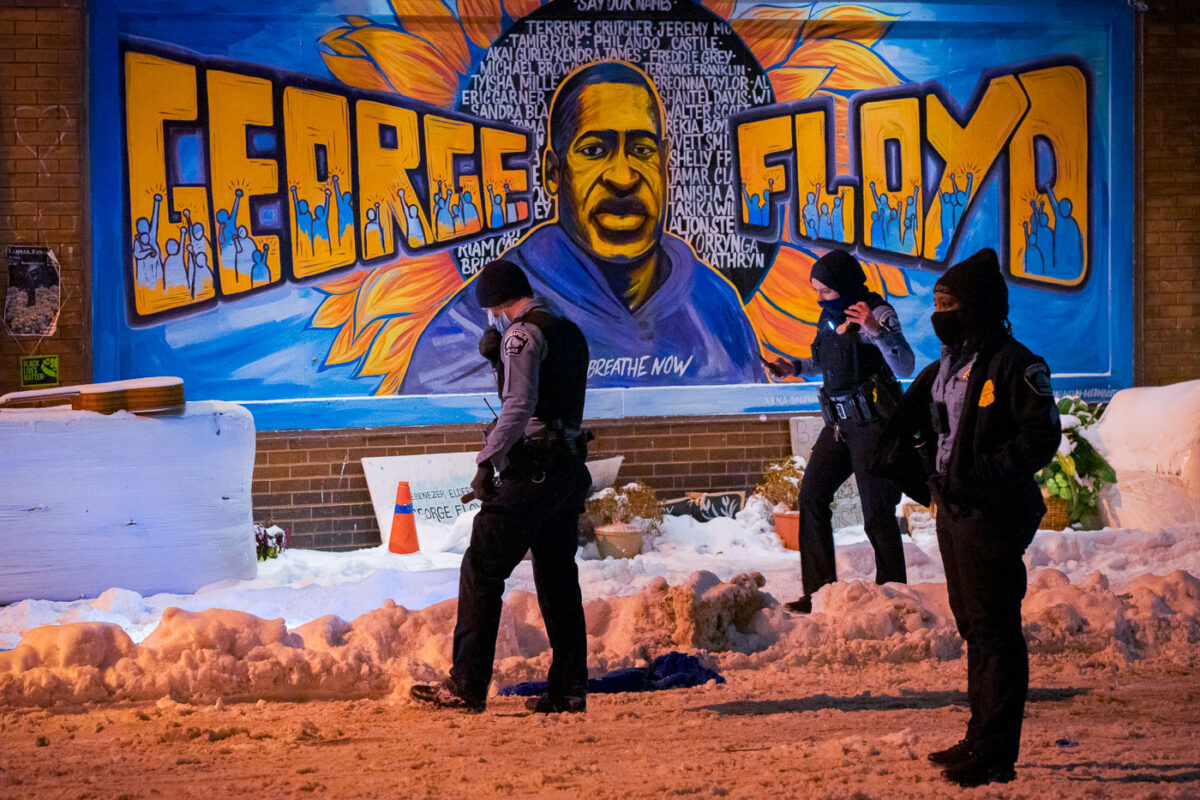
Police in front of George Floyd mural
Minneapolis Police officers investigate a shooting at George Floyd Square in South Minneapolis on December 27, 2020. This site, located at the intersection of E 38th Street and Chicago Avenue, transformed into a significant memorial and protest space following the murder of George Floyd in May 2020.

Minneapolis Police Investigate Shooting at George Floyd Square
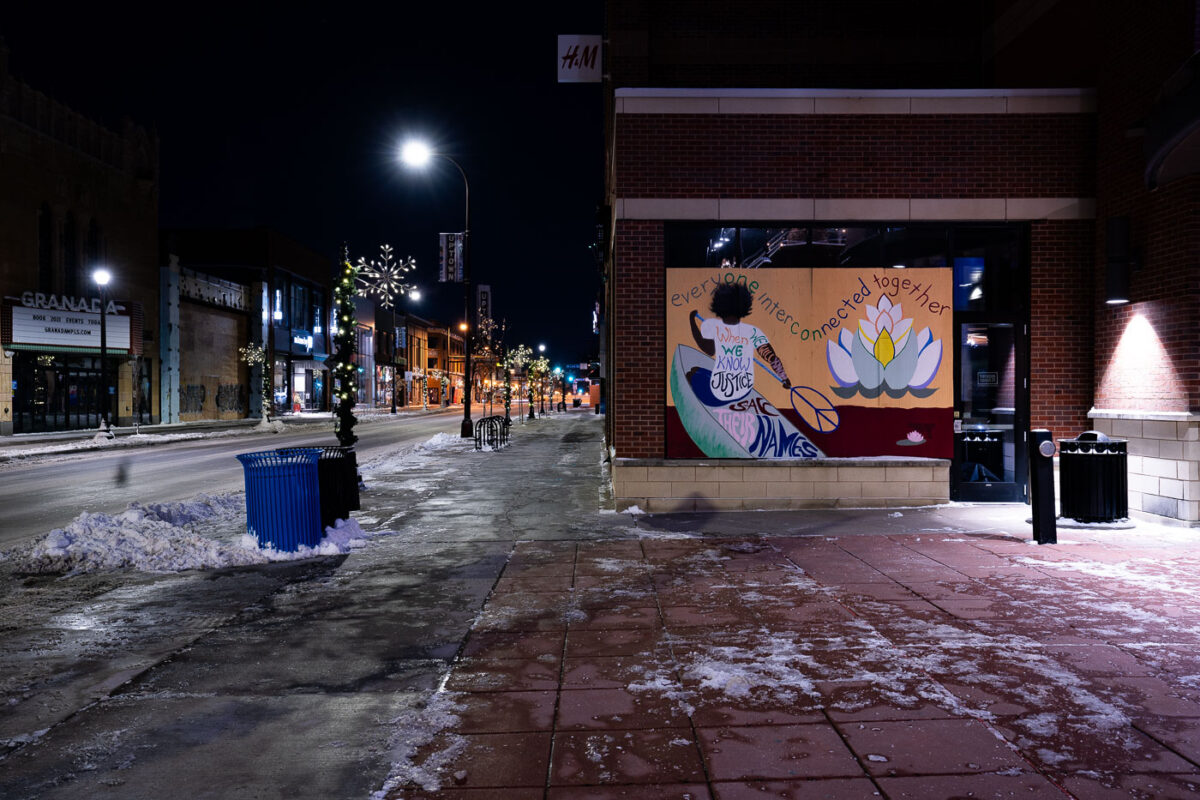
Everyone interconnected together mural on storefront
A mural adorns protective boards on an H&M retail store located on Hennepin Avenue in Uptown Minneapolis. This artwork emerged during the Minneapolis Uprising following the murder of George Floyd in May 2020, when many businesses boarded their windows for protection. The mural, featuring a figure in a canoe and a lotus flower, carries messages such as "When we know justice say their names" and "everyone interconnected together," reflecting themes of community and calls for justice.

Mural on H&M Boards, Hennepin Ave, Minneapolis Uprising
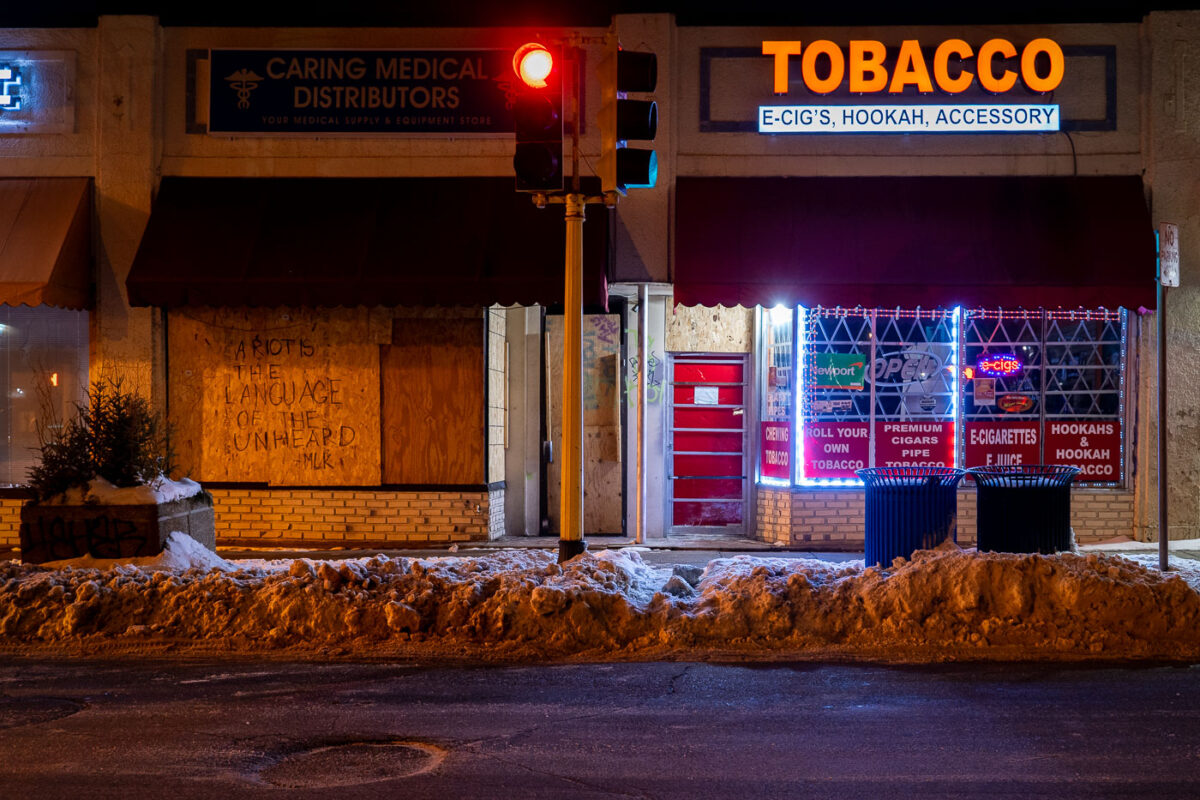
A riot is the language of the unheard on Nicollet Mall
Boarded storefronts on Nicollet Mall in Minneapolis, with graffiti reading "A riot is the language of the unheard" attributed to MLK. The image captures the aftermath of civil unrest, likely related to the Minneapolis Uprising of 2020, which followed the murder of George Floyd. Nicollet Mall, a prominent pedestrian mall in downtown Minneapolis, experienced significant damage and looting during this period. The plywood coverings and graffiti serve as a visual testament to the events and the community's response.

Nicollet Mall boarded storefront with graffiti, Minneapolis

Cars drive through George Floyd Square in January 2021
George Floyd Square, located at the intersection of East 38th Street and Chicago Avenue in Minneapolis, Minnesota, became a focal point for protests following the murder of George Floyd in May 2020. The site, including the Cup Foods store where Floyd was apprehended, was transformed into a memorial and autonomous zone. This image shows the memorial on Martin Luther King Day, featuring a metal fist sculpture that replaced earlier iterations, symbolizing community strength and resilience. The memorial continues to serve as a space for remembrance and activism.

George Floyd Square Memorial at 38th and Chicago, Minneapolis

George Floyd Square during a snowstorm
The George Floyd Square Memorial, located at the intersection of Chicago Avenue and East 38th Street in Minneapolis, Minnesota, stands as a testament to the protests and uprisings that followed the murder of George Floyd in May 2020. This site, which was occupied by protesters for over a year, has become a permanent memorial and a gathering place for community remembrance and activism. The memorial features various tributes, including flowers, candles, and artwork, arranged around a central monument. Despite the winter snow, the site remains a significant location for reflecting on racial justice and police brutality.

George Floyd Square Memorial in Snow, Minneapolis

I Cant Breathe George Floyd Memorial during ice storm
The George Floyd Memorial, located at the intersection of Chicago Avenue and 38th Street in Minneapolis, is a site of remembrance and protest. Following George Floyd's murder by police in May 2020, this area became a focal point for demonstrations against racial injustice and police brutality. The memorial features art, tributes, and the prominent phrase "I Can't Breathe," a reference to Floyd's final words.

George Floyd Memorial Ice and Snow, Minneapolis

Ice and snow at George Floyd Square
A large mural of George Floyd's face is displayed at George Floyd Square in South Minneapolis during the winter of 2021. The square, located at the intersection of Chicago Avenue and 38th Street, became a focal point for protests and activism following Floyd's murder by police in May 2020. The area has since been transformed into a memorial and community space, marked by various artworks, signs, and tributes, including this mural. On May 25, 2020, Minneapolis police officer Derek Chauvin murdered 46-year-old George Floyd during an arrest outside Cup Foods at the intersection of 38th Street and Chicago Avenue in south Minneapolis. Video recorded by bystanders showed Chauvin kneeling on Floyd’s neck for more than nine minutes while Floyd repeatedly said he could not breathe. Three other Minneapolis police officers - J. Alexander Kueng, Thomas Lane, and Tou Thao — were also present during the arrest and later faced criminal charges for their roles in Floyd’s death. Floyd’s murder sparked protests and civil unrest across Minneapolis and around the world, leading to widespread demonstrations against police violence, major policy debates on policing, and the conviction of Chauvin on murder and manslaughter charges in 2021.

George Floyd Square Mural in Winter, Minneapolis

Roses in blood art installation at Chauvin trial
Roses, some appearing to be stained with red paint to resemble blood, were placed in a puddle outside the Hennepin County Government Center in Minneapolis. This installation occurred during the trial of Derek Chauvin, a former Minneapolis police officer charged with the murder of George Floyd. The trial, held in April 2021, drew significant national attention to issues of police brutality and racial justice.

Roses in paint outside Hennepin County Government Center during Chauvin trial
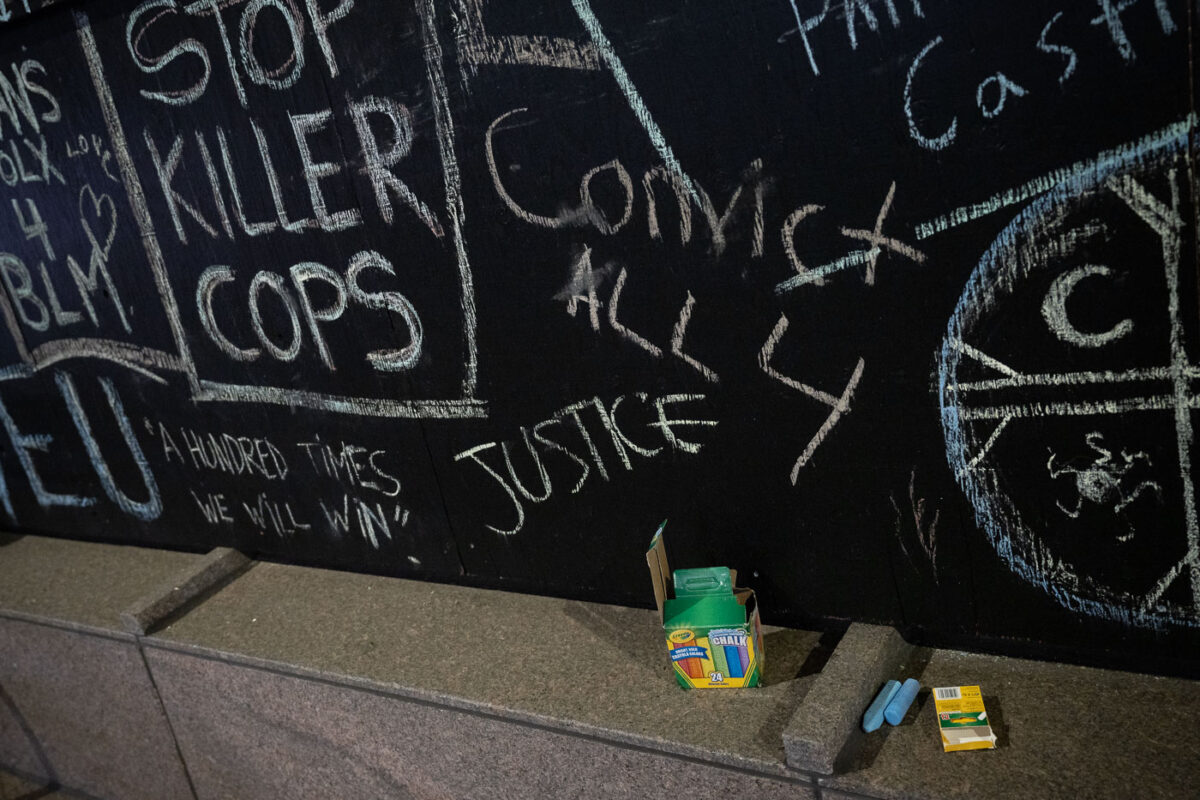
Chalk outside US Bank Plaza boards
Chalk messages, including "Stop Killer Cops" and "Justice," were written on a wall outside the Hennepin County Government Center in Minneapolis during the trial of Derek Chauvin. The trial, which began in March 2021, stemmed from the May 25, 2020 murder of George Floyd. The messages reflect the public sentiment and activism surrounding the case, which gained national and international attention.

Chalk messages outside Minneapolis courthouse during Chauvin trial
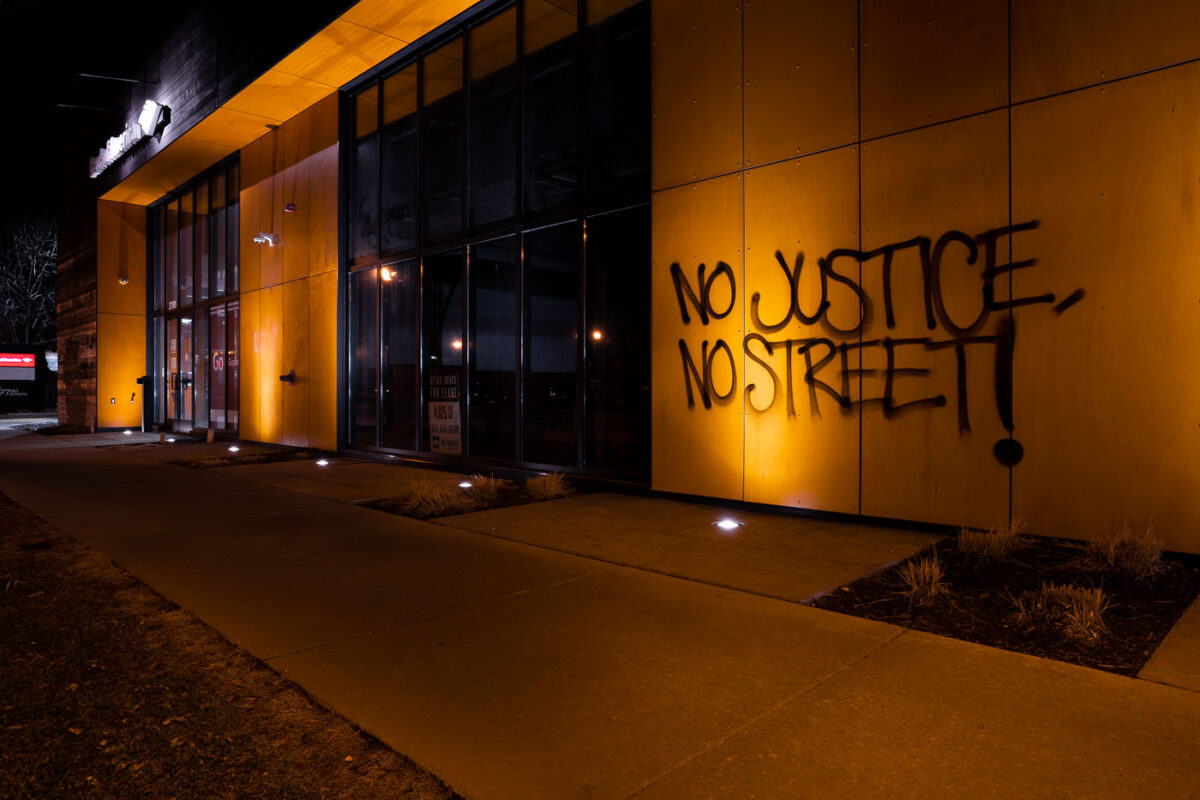
No Justice No Streets graffiti
Graffiti reading "No Justice, No Streets" is spray-painted on the exterior of a building at George Floyd Square in Minneapolis. This message reflects the community's sentiment during the prolonged closure of the intersection following the death of George Floyd on May 25, 2020. The square, which became a site of protest and remembrance, was the subject of city discussions regarding its reopening to vehicular traffic.

Graffiti “No Justice No Streets” at George Floyd Square, Minneapolis
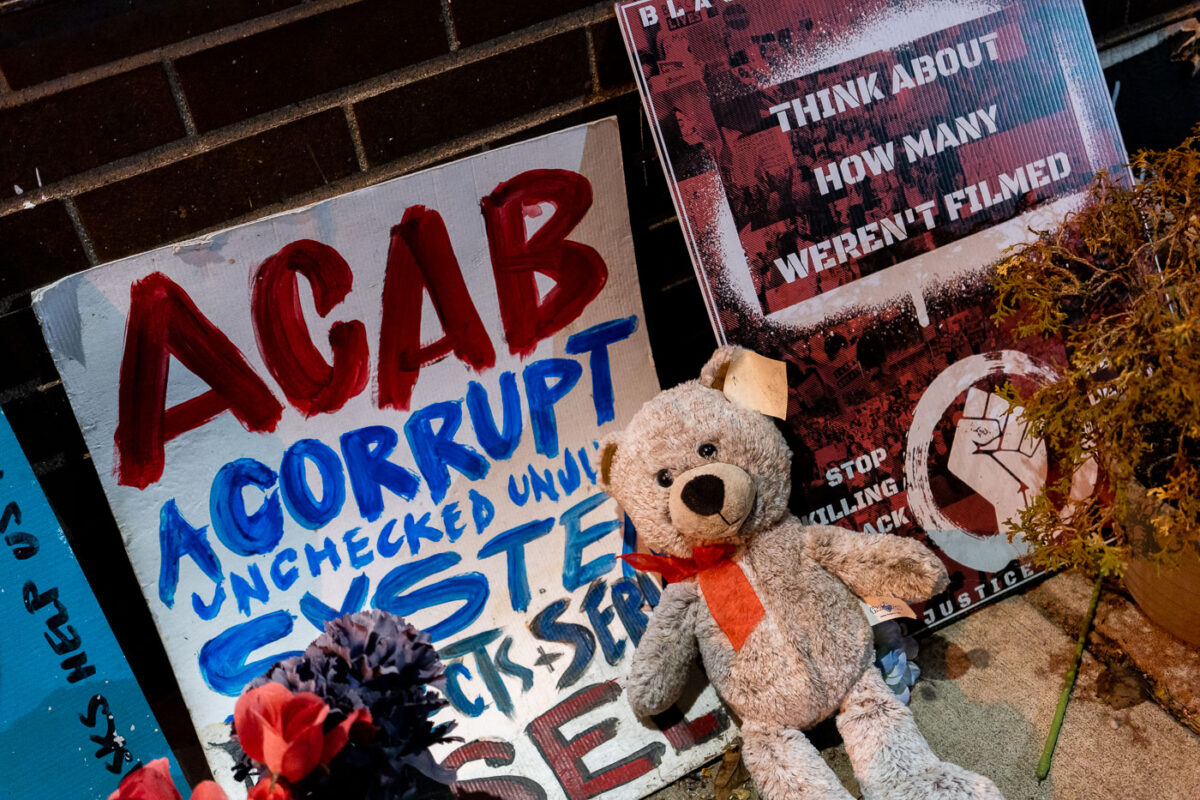
Think about how many werent filmed at George Floyd Square
Protest signs, including one reading "ACAB" (All Cops Are Bastards) and another with the slogan "THINK ABOUT HOW MANY WEREN'T FILMED," are displayed near Cup Foods in George Floyd Square, Minneapolis. A teddy bear and flowers are placed as tributes. This area became a focal point for protests following the murder of George Floyd in May 2020, and has since been a site of ongoing activism and community organizing. The signs reflect sentiments expressed during the Minneapolis Uprising and subsequent movements advocating for police reform and racial justice.

George Floyd Square: ACAB protest signs and teddy bear
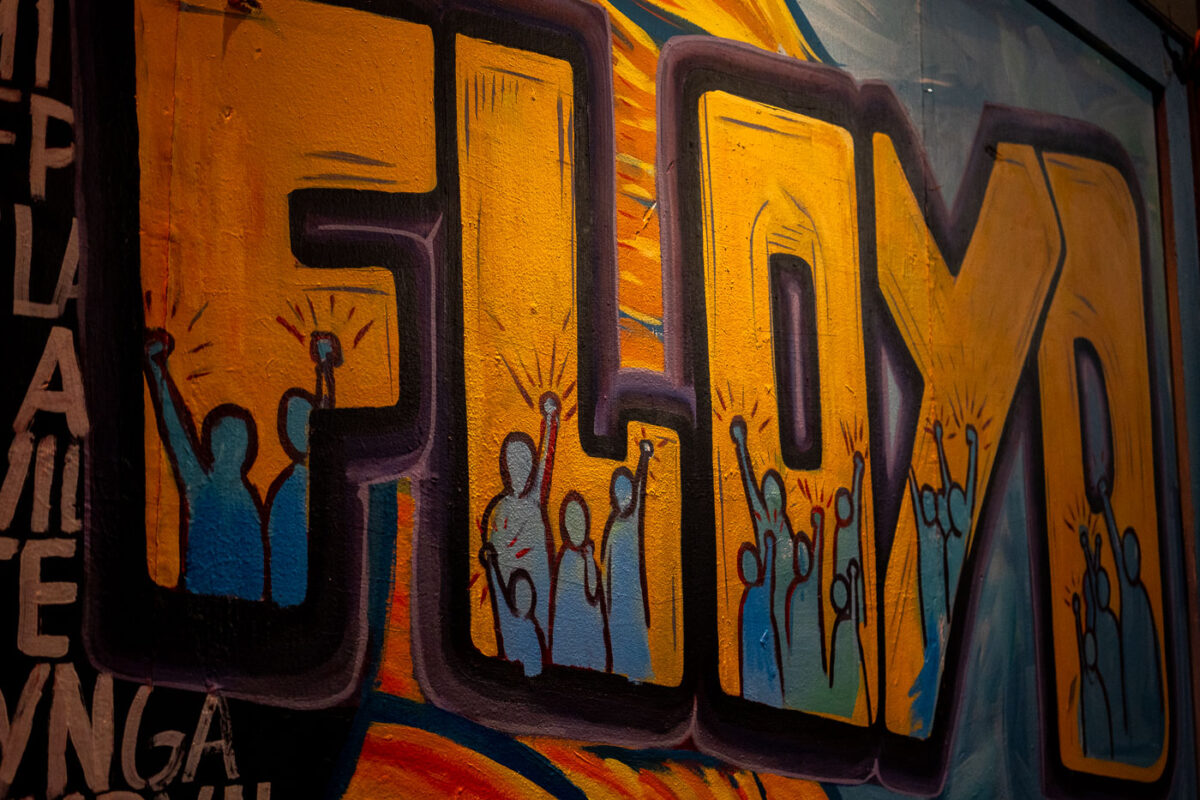
George Floyd mural in Minneapolis March 2021
This mural, located at George Floyd Square in South Minneapolis, commemorates George Floyd. The square became a focal point for protests and activism following Floyd's murder in May 2020. The artwork serves as a memorial and a symbol of the ongoing movement for racial justice and police reform.

George Floyd Mural, George Floyd Square, Minneapolis, March 2021
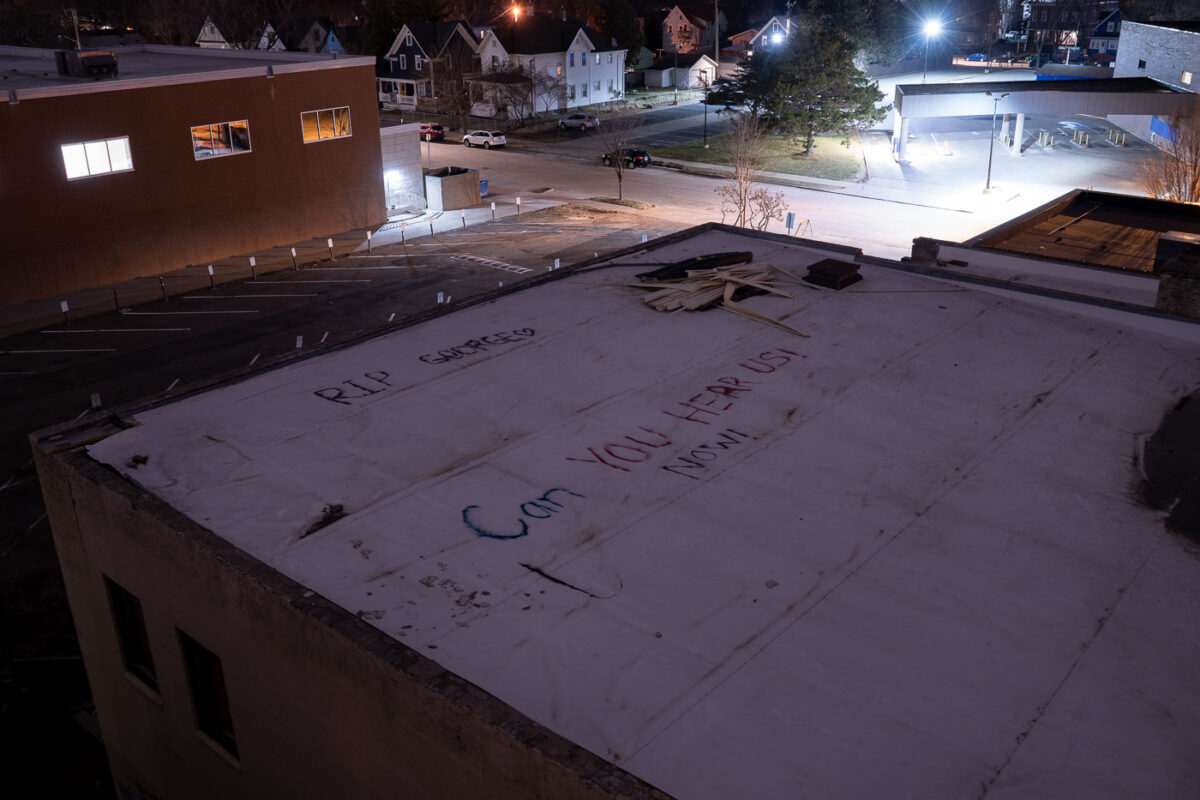
Can you hear us now written on roof
Messages reading "RIP George" and "Can you hear us now!" are spray-painted on the rooftop of a building across from the Minneapolis Police Third Precinct. The precinct building was set ablaze during civil unrest that followed the murder of George Floyd on May 25, 2020. The messages serve as a stark reminder of the public outcry and demands for accountability that characterized the Minneapolis Uprising.

Minneapolis Police Third Precinct Rooftop Message
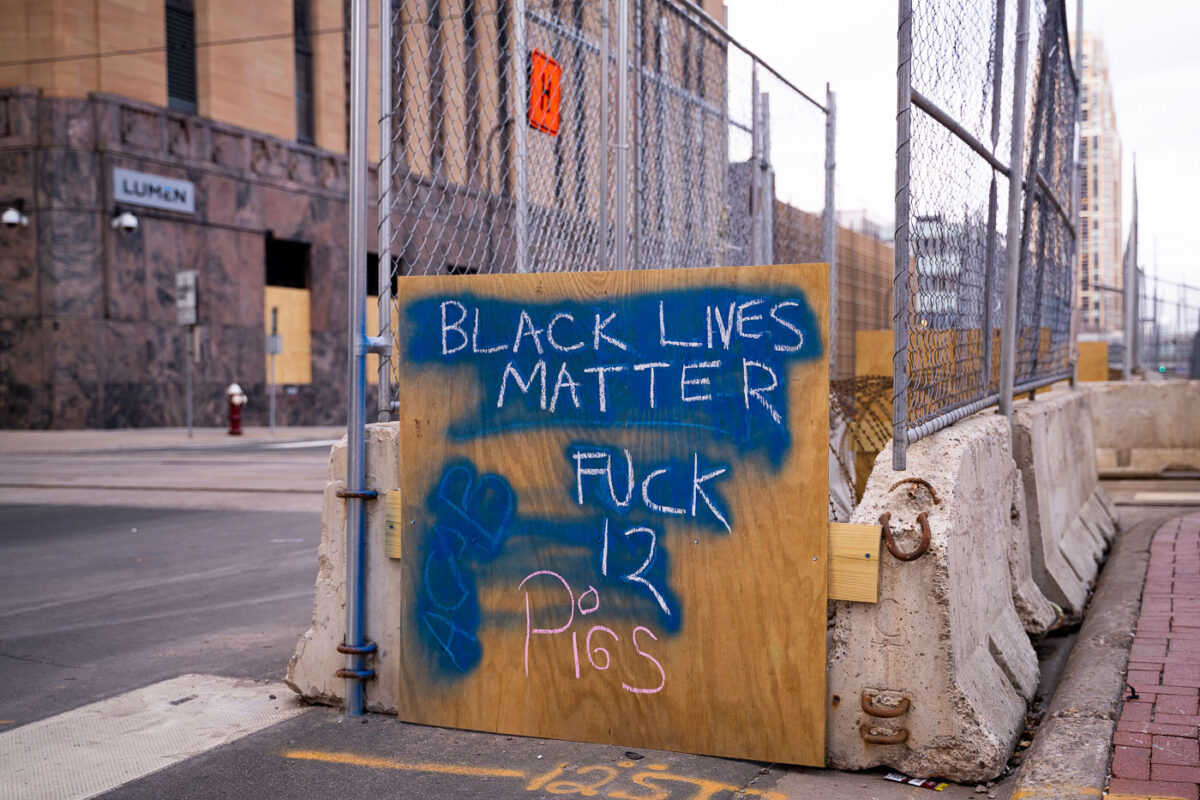
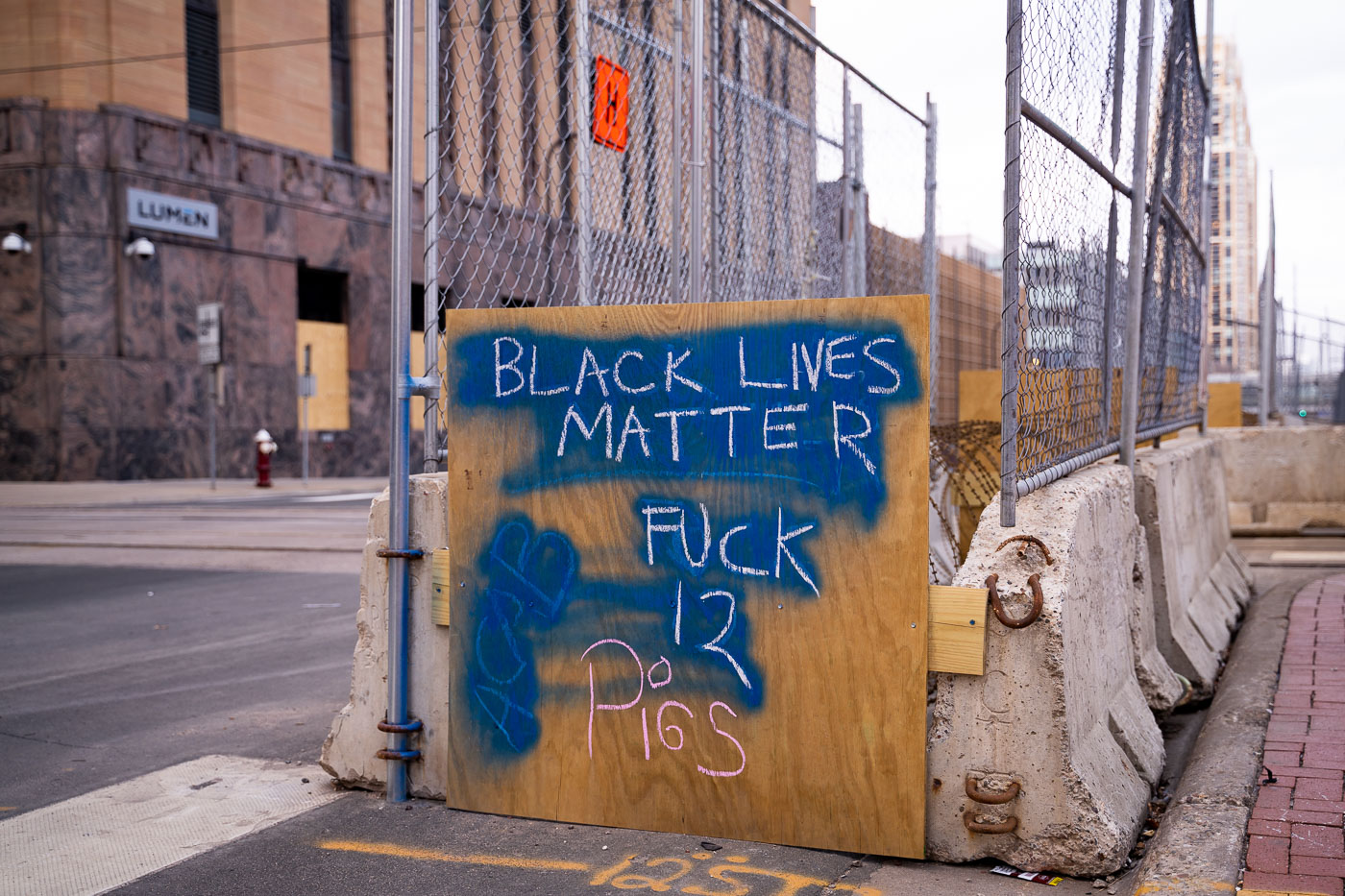
Black Lives Matter ACAB Fuck 12 Pigs
Security fencing and concrete barriers surround the Hennepin County Government Center in Minneapolis, a measure taken during the trial of Derek Chauvin for the murder of George Floyd. The plywood barrier displays protest art, including "Black Lives Matter" and "Fuck 12 Pigs," reflecting the sentiments of demonstrators. This fencing was erected to secure the courthouse and maintain order amidst significant public attention and potential unrest surrounding the trial.

Minneapolis Government Center Fencing with Protest Art
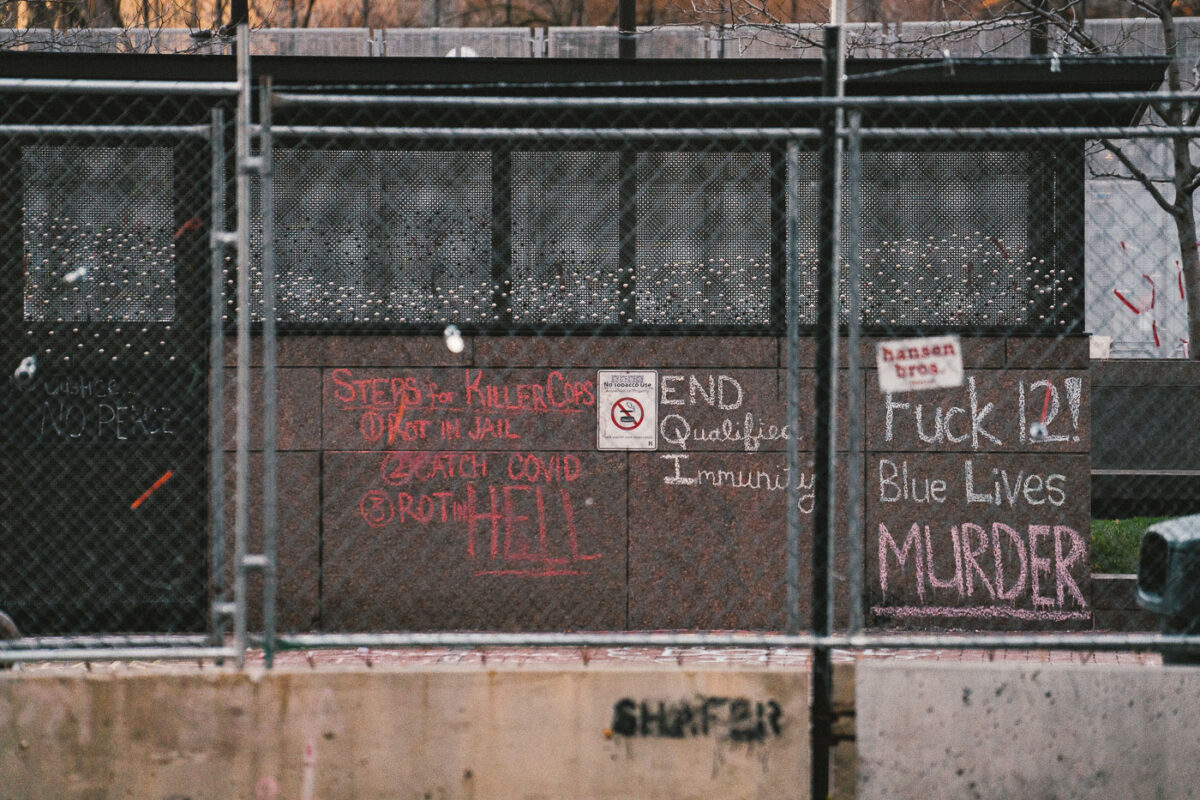
Chalk protest graffiti at Hennepin County Government Center in Minneapolis behind security fencing.
Chalk graffiti adorns the exterior of the Hennepin County Government Center in Minneapolis, a site that became a focal point during the protests following the murder of George Floyd on May 25, 2020. The messages, including "Steps for Killer Cops," "End Qualified Immunity," and "Fuck 12! Blue Lives MURDER," reflect the public outcry and demands for justice and accountability. The trial of Derek Chauvin, the officer accused of Floyd's murder, took place in Minneapolis, amplifying the significance of these messages as expressions of dissent and calls for systemic change.

Chalk Graffiti at Hennepin County Government Center, Minneapolis
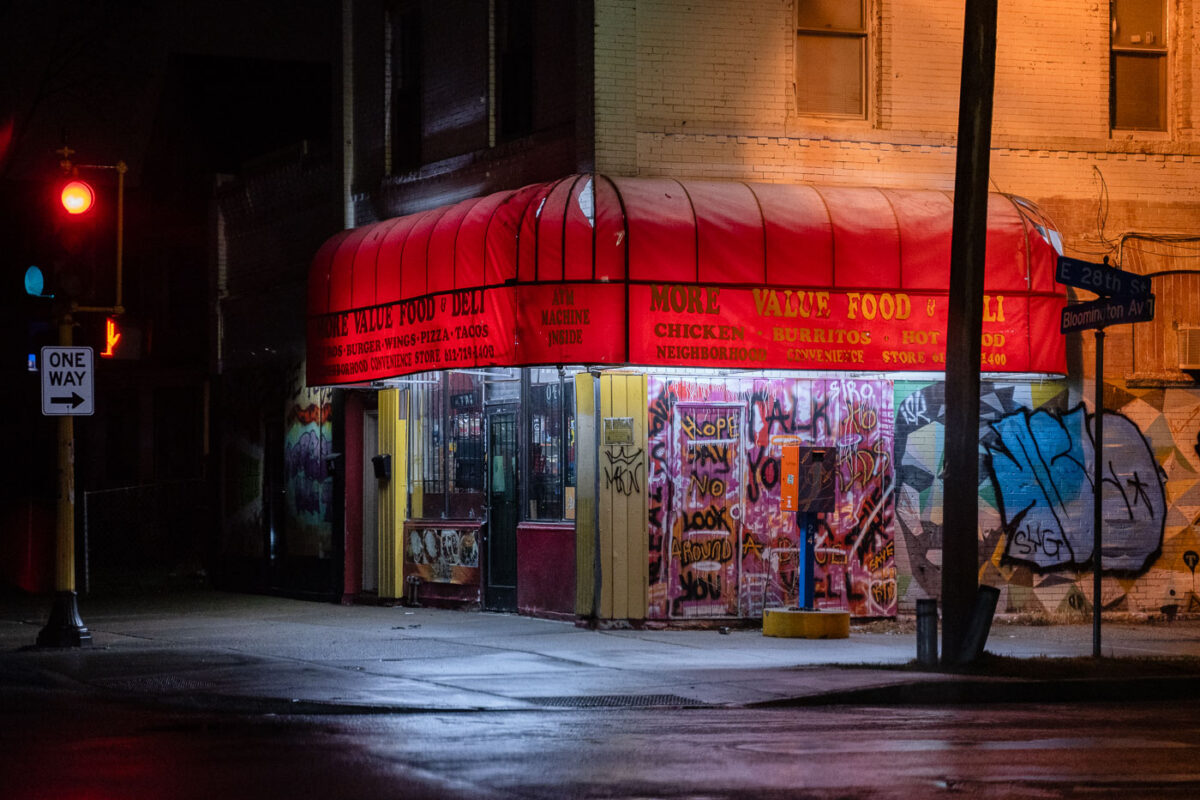
More Value Food & Deli at E 28th St and Bloomington Ave in Minneapolis, with graffiti-covered walls at night.
More Value Food & Deli, a neighborhood convenience store, is located at the corner of East 28th Street and Bloomington Avenue in Minneapolis. The store offers a variety of food items including chicken, burritos, and pizza, and also has an ATM inside. The surrounding brick building is covered in graffiti, a visual element that became more prominent in the area following the Minneapolis Uprising in 2020, which was sparked by the murder of George Floyd nearby. The store's location at this prominent intersection places it within a neighborhood that has experienced significant social and cultural shifts.

More Value Food & Deli at E 28th St and Bloomington Ave, Minneapolis
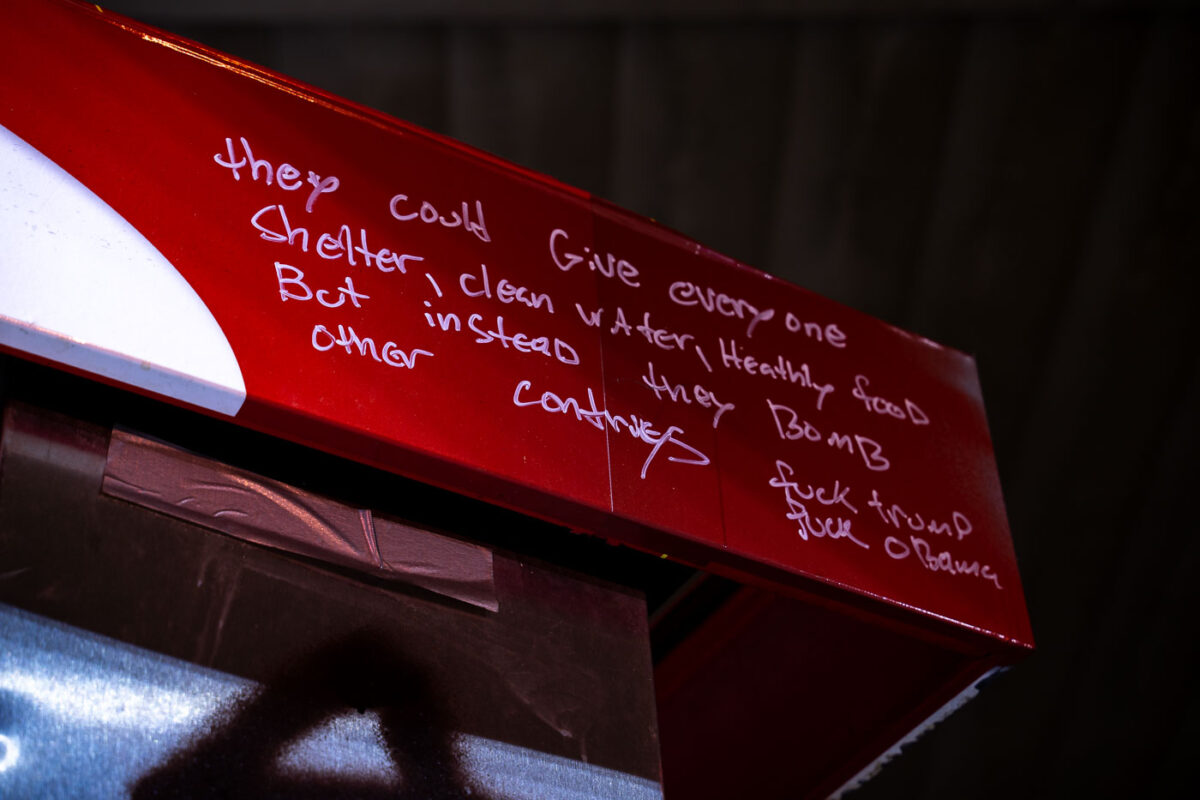
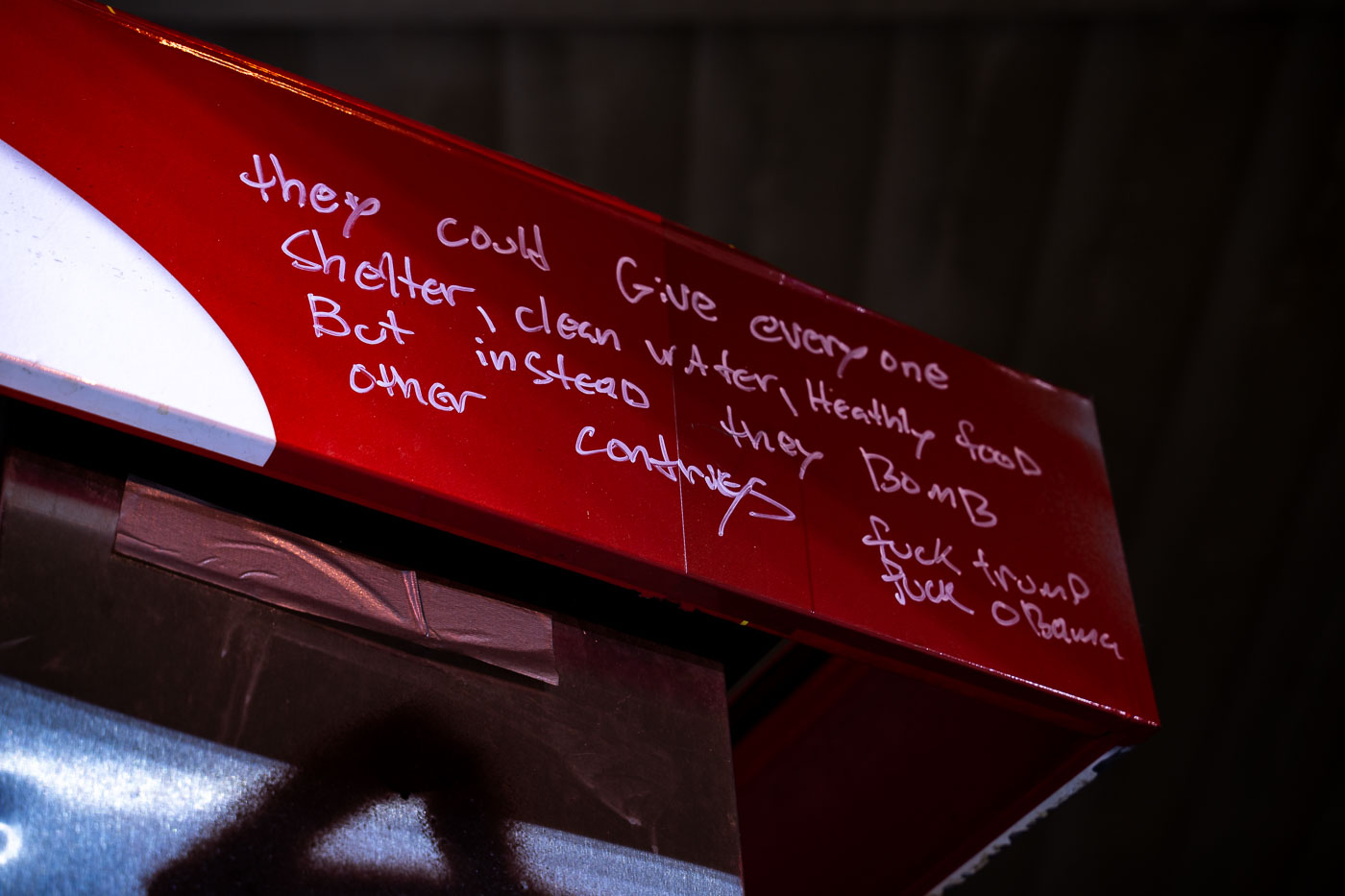
Graffiti on the former Speedway gas station at George Floyd Square in Minneapolis.
Graffiti on the former Speedway gas station at George Floyd Square in Minneapolis reads, "they could give everyone shelter, clean water, healthy food, but instead they bomb other countries. fuck trump fuck obama." This message reflects sentiments expressed during the period of unrest following the murder of George Floyd in May 2020, when the intersection was occupied and renamed by protesters. The Speedway station became a focal point within the autonomous zone, serving as a site for community gathering and artistic expression. The graffiti critiques perceived government priorities and foreign policy.

George Floyd Square Gas Station: “Fuck Trump Fuck Obama” Graffiti

Daunte Wright mural on West Lake Street
A mural honoring Daunte Wright adorns the exterior of Minnesota Food Grocery on West Lake Street in Minneapolis. The mural appeared following the killing of Daunte Wright by police in nearby Brooklyn Center in April 2021, an event that sparked protests and unrest in the Twin Cities.

Daunte Wright Mural at Minnesota Food Grocery, West Lake Street
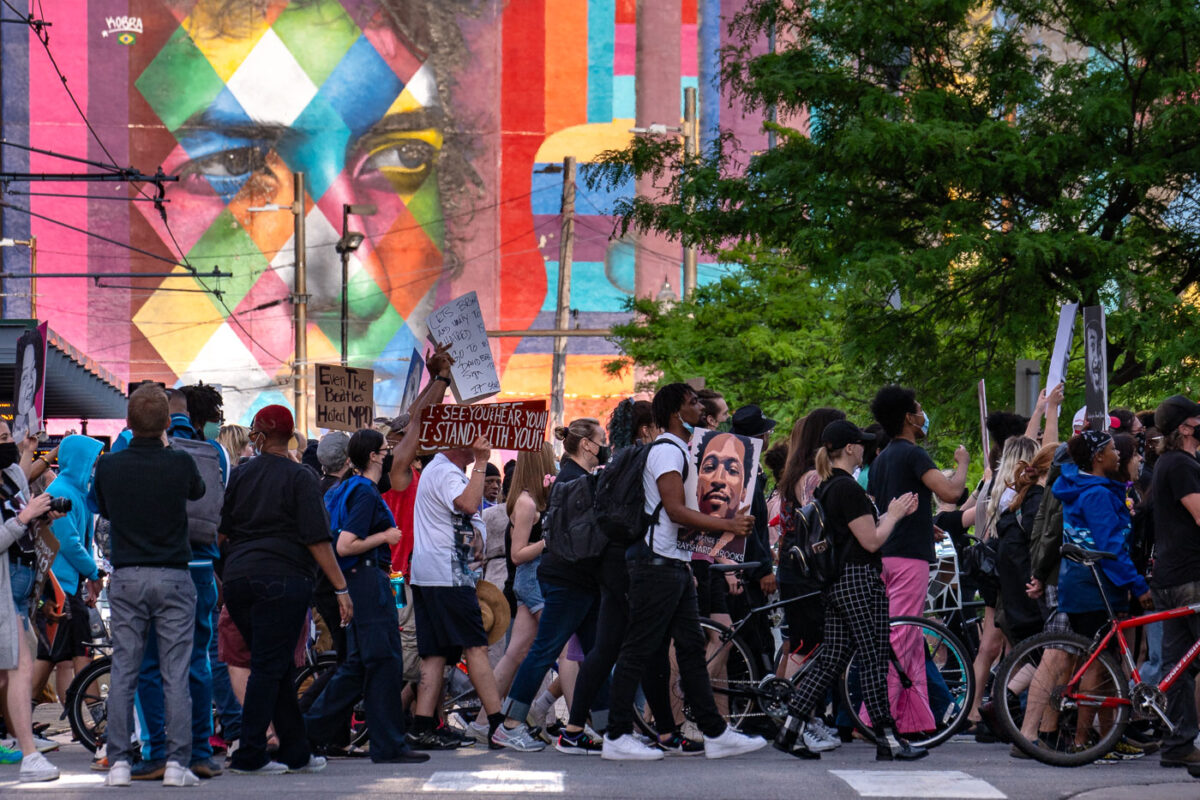
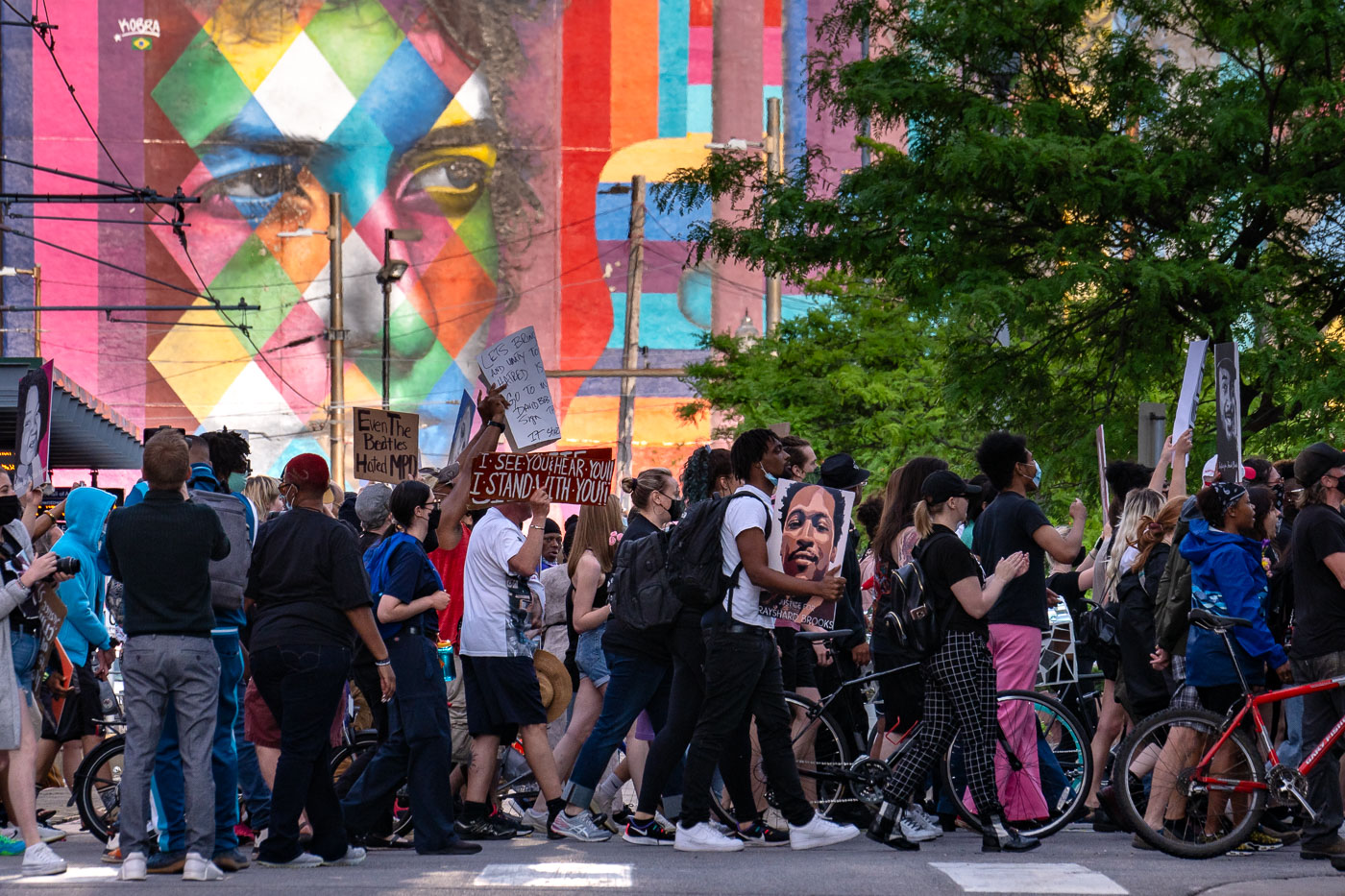
Protesters walk past Bob Dylan mural by Kobra in Minneapolis
Protesters march through downtown Minneapolis, passing by Eduardo Kobra's "Bob Dylan" mural. This march occurred following a George Floyd Remembrance rally at the Hennepin County Courthouse.

Minneapolis Protest March Past Kobra Bob Dylan Mural
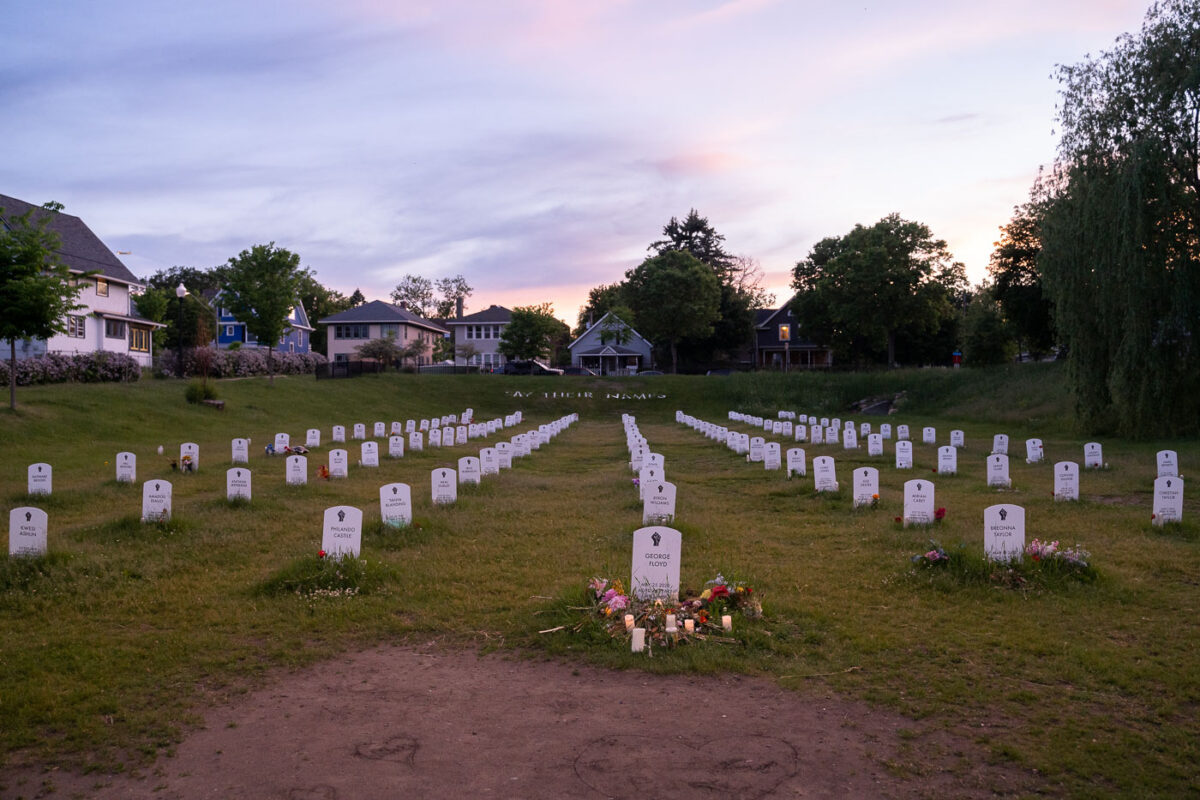
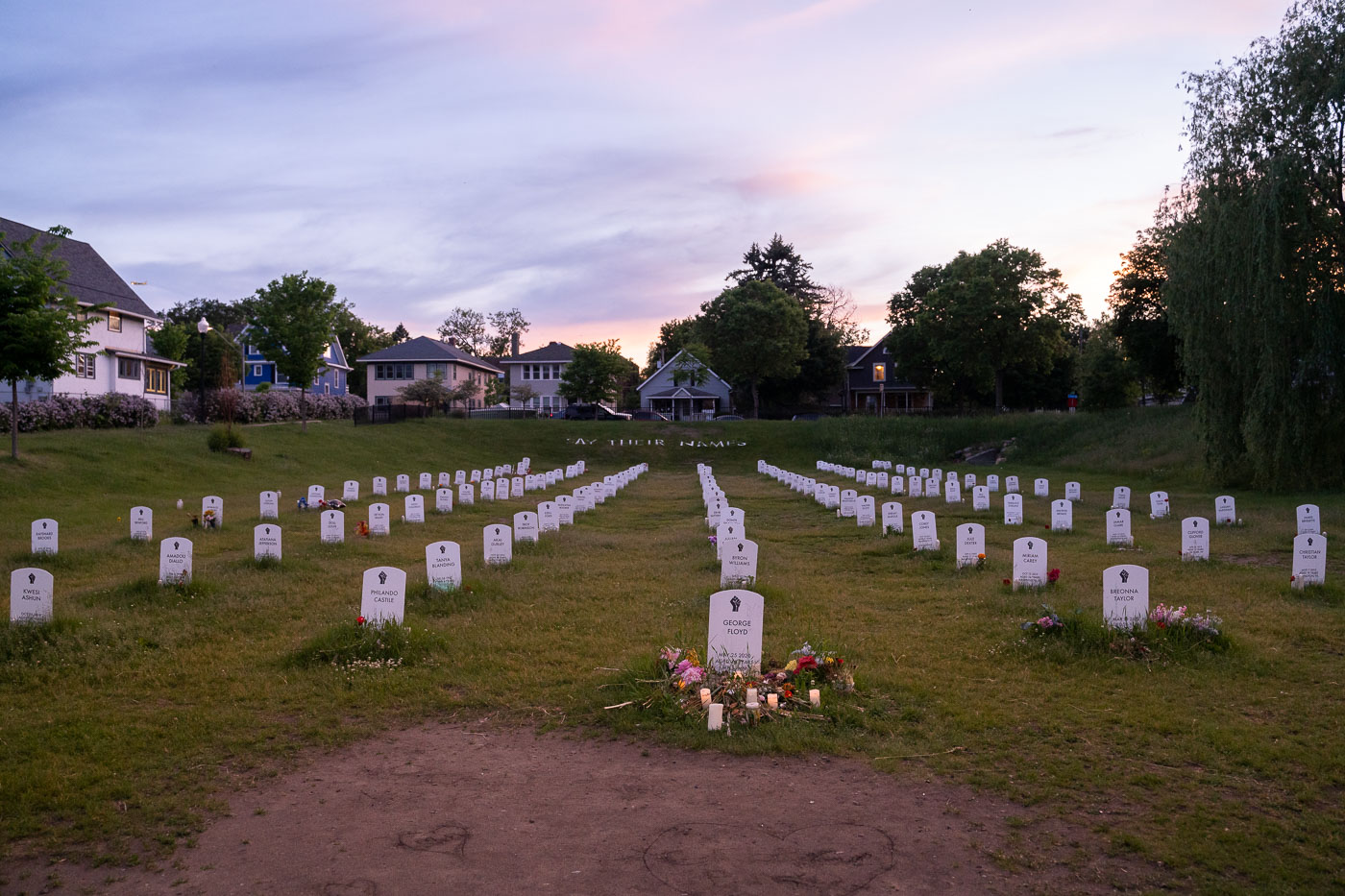
Say Their Names Cemetery memorial in Minneapolis at dusk with rows of headstones for victims of police violence.
The "Say Their Names Cemetery" is an outdoor memorial located in South Minneapolis, near George Floyd Square. Established in the wake of the murder of George Floyd and subsequent protests, the cemetery serves as a tribute to victims of police violence. Each headstone bears the name of an individual who died as a result of police brutality, with the central marker dedicated to George Floyd himself. The memorial aims to honor these lives and raise awareness about systemic injustice. On May 25, 2020, Minneapolis police officer Derek Chauvin murdered 46-year-old George Floyd during an arrest outside Cup Foods at the intersection of 38th Street and Chicago Avenue in south Minneapolis. Video recorded by bystanders showed Chauvin kneeling on Floyd’s neck for more than nine minutes while Floyd repeatedly said he could not breathe. Three other Minneapolis police officers - J. Alexander Kueng, Thomas Lane, and Tou Thao — were also present during the arrest and later faced criminal charges for their roles in Floyd’s death. Floyd’s murder sparked protests and civil unrest across Minneapolis and around the world, leading to widespread demonstrations against police violence, major policy debates on policing, and the conviction of Chauvin on murder and manslaughter charges in 2021.

Say Their Names Cemetery, Minneapolis
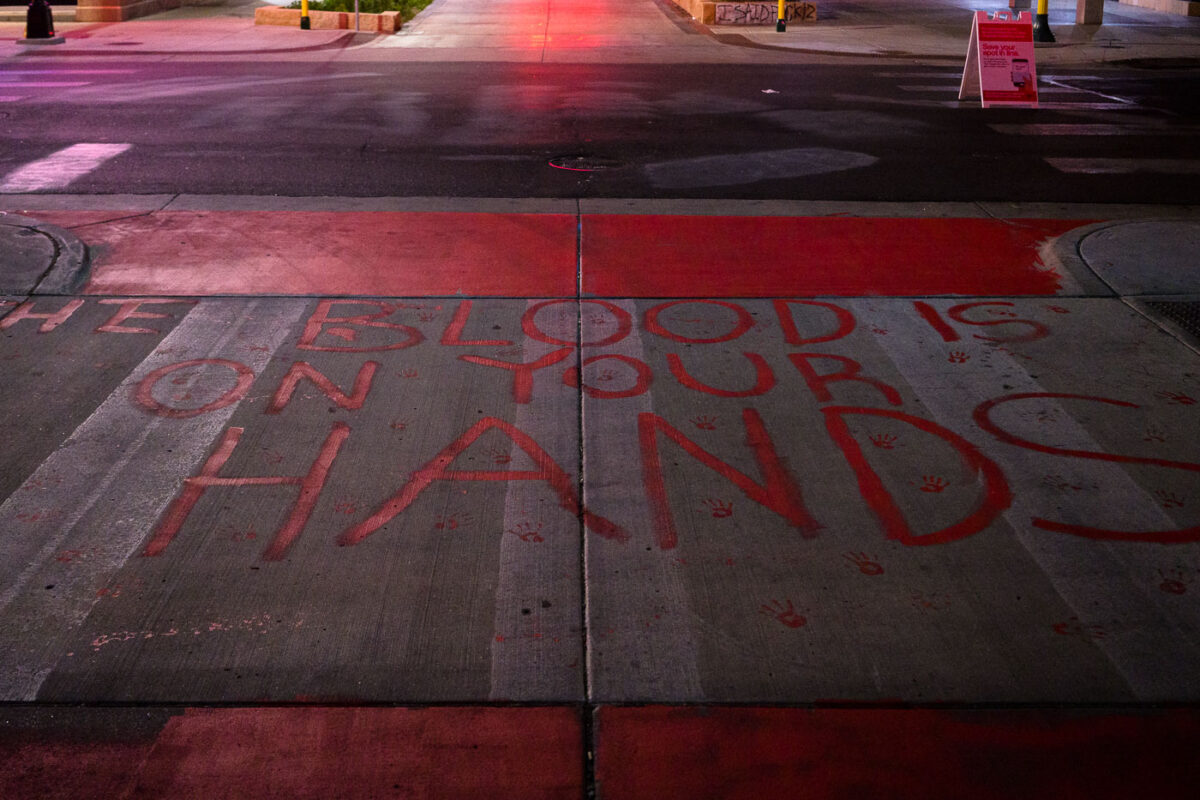
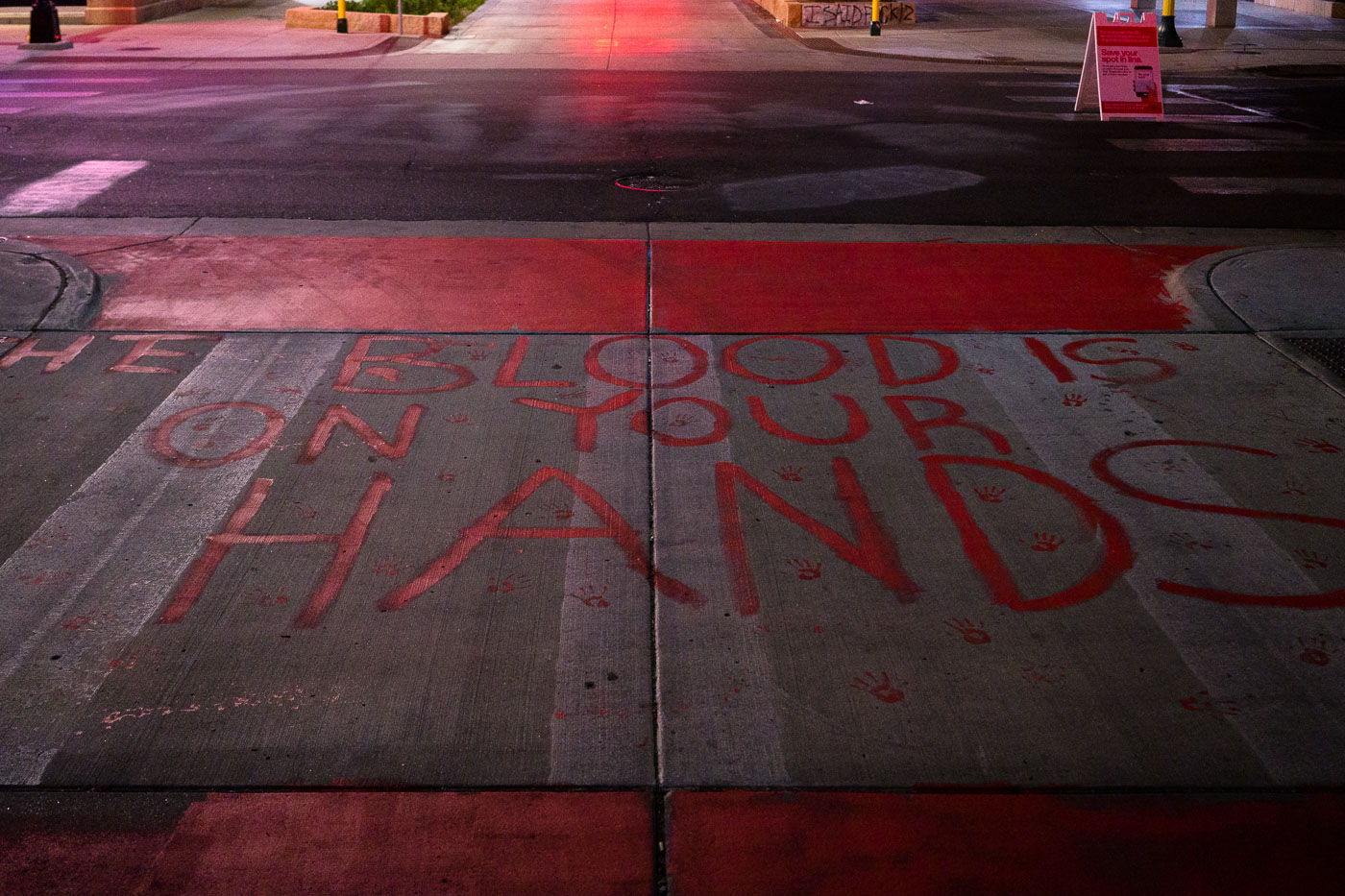
Graffiti reading “The blood is on your hands” on a sidewalk in Uptown Minneapolis.
Graffiti reading "The Blood Is On Your Hands" with red handprints is spray-painted on the pavement outside the parking ramp where Winston Smith died after being shot by law enforcement on June 3, 2021. This location is in Uptown Minneapolis, a neighborhood that experienced significant unrest following Smith's death. The message serves as a protest against police brutality and the actions of law enforcement. On June 3, 2021, members of a U.S. Marshals Service fugitive task force fatally shot 32-year-old Winston “Boogie” Smith Jr. on the top level of a parking ramp in Minneapolis’ Uptown neighborhood while attempting to arrest him on a felony warrant. Authorities said Smith fired a handgun from inside his vehicle during the encounter, while family members and activists questioned the official account and demanded the release of additional evidence. The killing led to weeks of protests, street occupations, and confrontations with police in Uptown, becoming another major flashpoint in Minneapolis during the period following the murder of George Floyd. Earlier in the day Minneapolis city officials along with The Agape Movement coordinated to open the streets that had been closed at George Floyd Square since his murder.

Graffiti: “The Blood Is On Your Hands” in Uptown Minneapolis
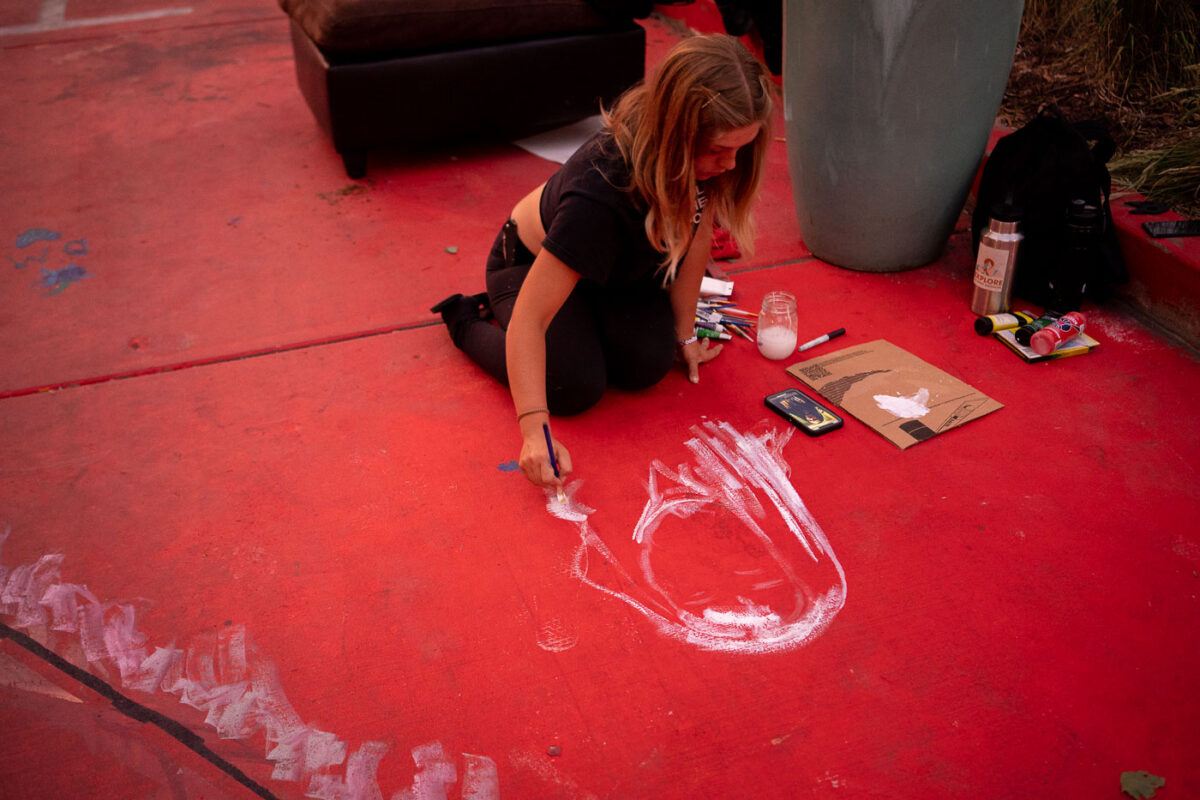
Artist draws a memorial on red pavement in Minneapolis.
An artist creates a memorial drawing on the pavement outside the parking garage where Winston Smith died on June 3rd. The drawing is a tribute to Smith, who was killed by law enforcement officers. On June 13, 2021, 31-year-old Deona Marie Knajdek was killed when a driver accelerated into a group of demonstrators gathered in Minneapolis’ Uptown neighborhood during ongoing protests over the killing of Winston “Boogie” Smith Jr. Protesters had blocked the intersection of West Lake Street and Girard Avenue with vehicles and barricades when Nicholas Kraus drove a Jeep Cherokee into the crowd at high speed, killing Knajdek and injuring several others. Kraus was later charged with second-degree murder, two counts of second-degree assault with a dangerous weapon, and criminal vehicular operation. In 2023, he pleaded guilty to murder and assault charges and was sentenced to more than 20 years in prison for the attack. On June 3, 2021, members of a U.S. Marshals Service fugitive task force fatally shot 32-year-old Winston “Boogie” Smith Jr. on the top level of a parking ramp in Minneapolis’ Uptown neighborhood while attempting to arrest him on a felony warrant. Authorities said Smith fired a handgun from inside his vehicle during the encounter, while family members and activists questioned the official account and demanded the release of additional evidence. The killing led to weeks of protests, street occupations, and confrontations with police in Uptown, becoming another major flashpoint in Minneapolis during the period following the murder of George Floyd. Earlier in the day Minneapolis city officials along with The Agape Movement coordinated to open the streets that had been closed at George Floyd Square since his murder.

Artist draws Winston Smith memorial on Minneapolis pavement
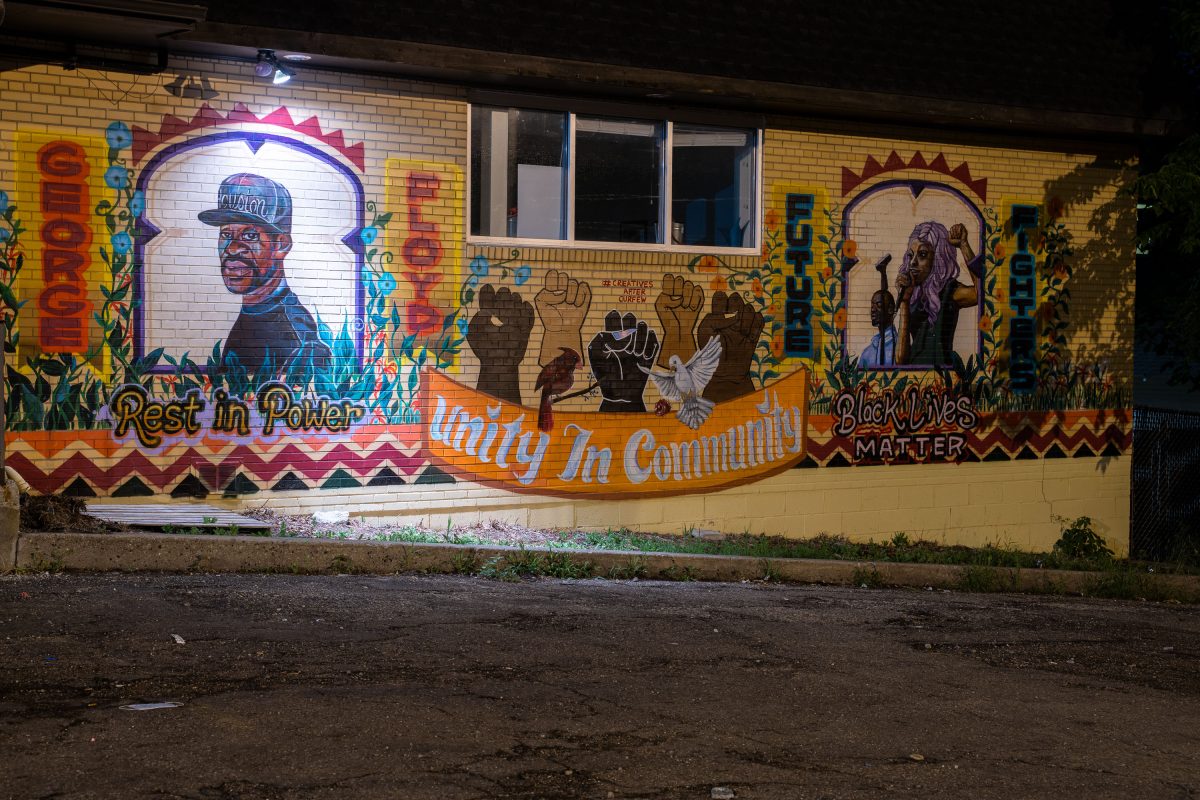
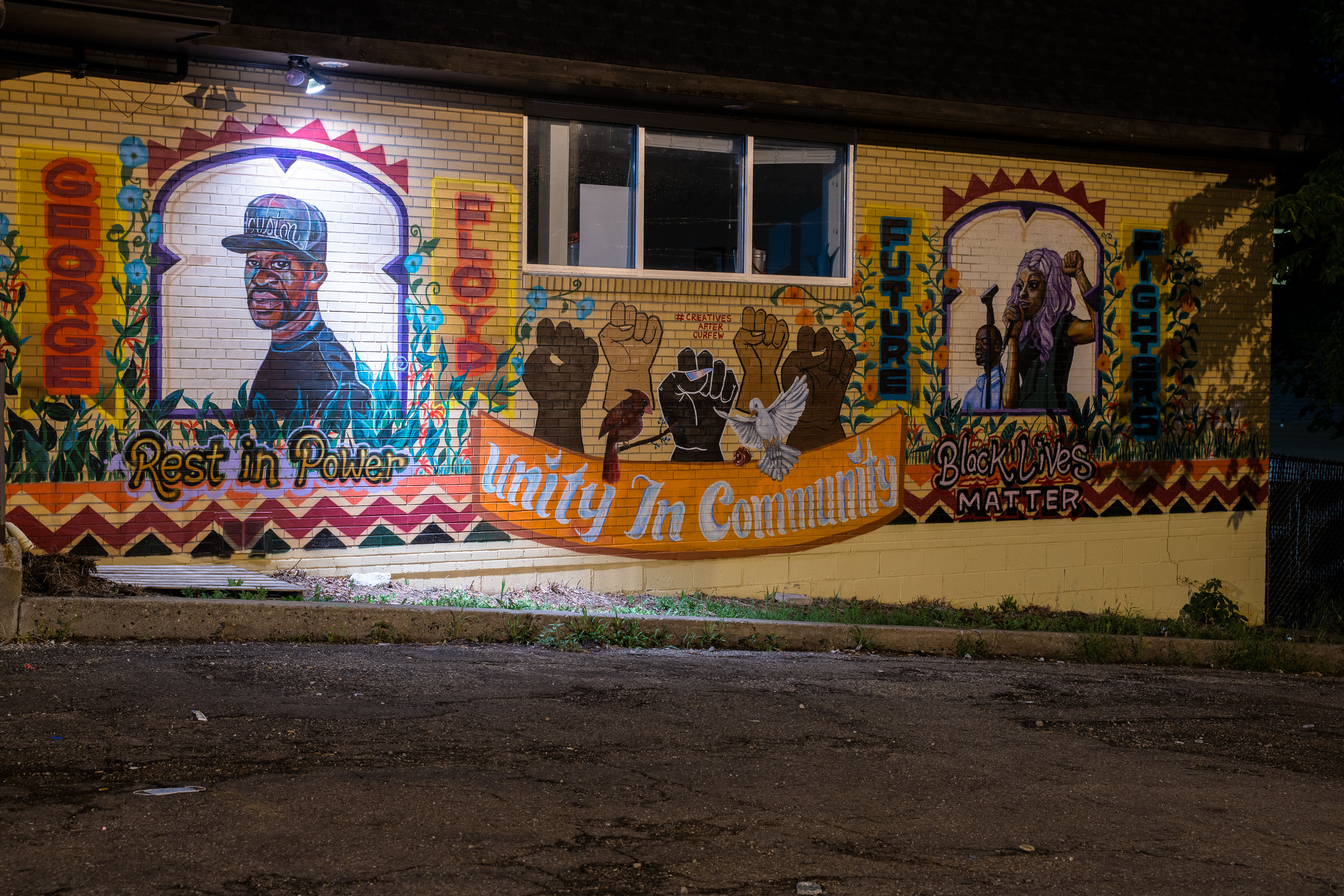
Unity In Community Mural at George Floyd Square
A mural at George Floyd Square on Chicago Avenue in Minneapolis.

Unity In Community Mural at George Floyd Square

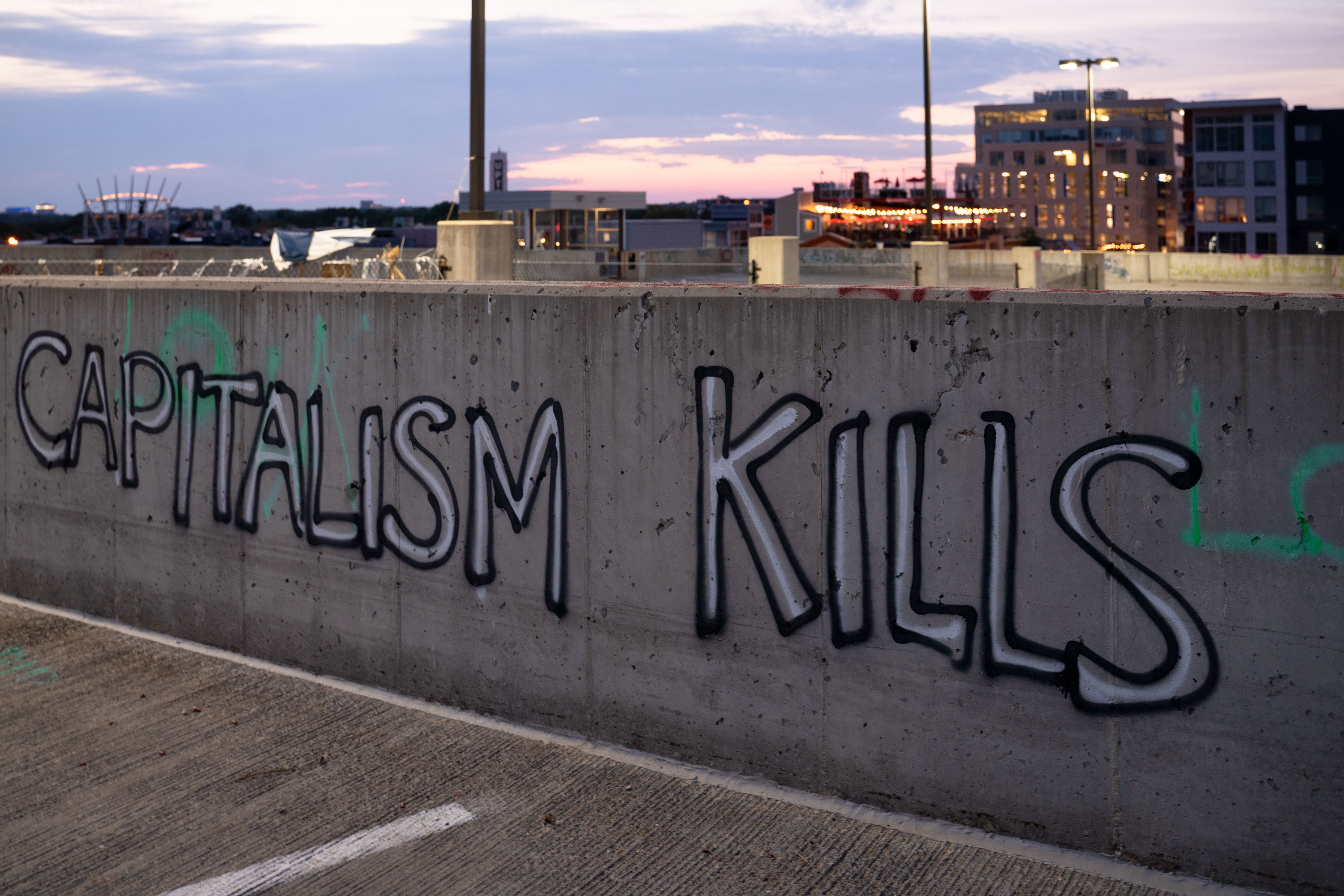
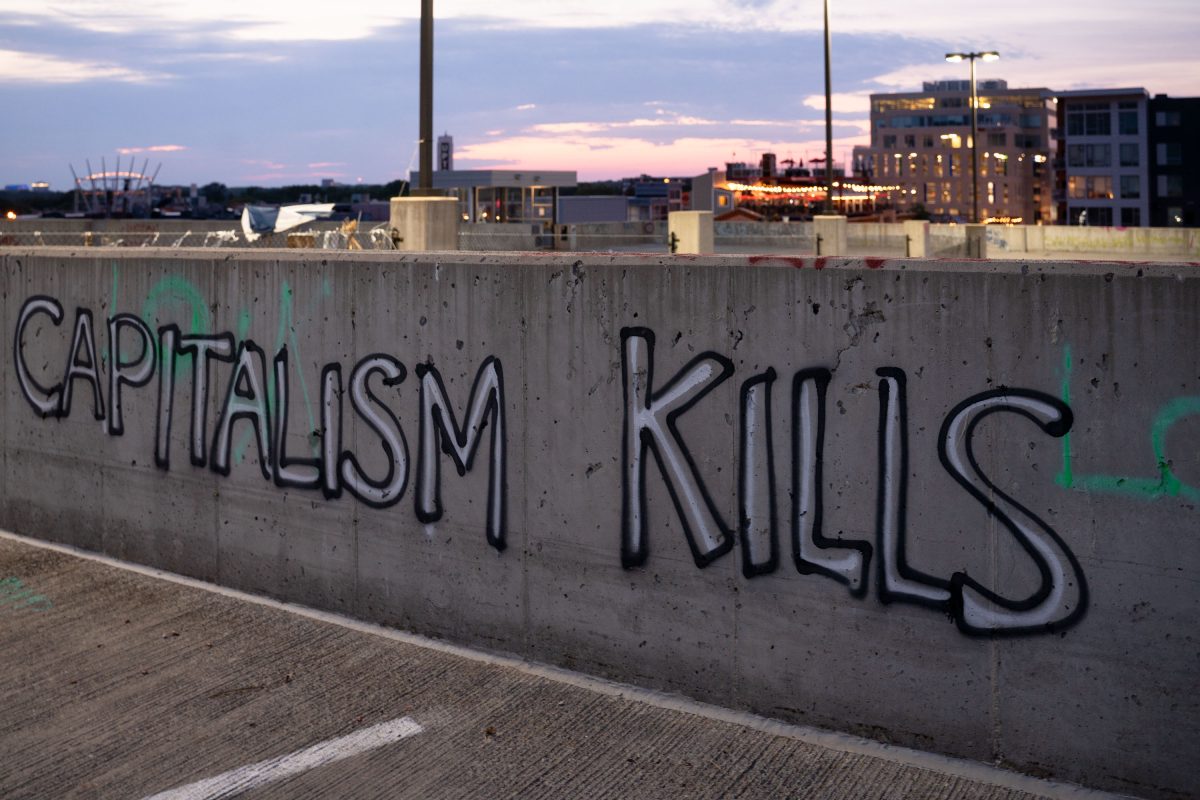
Capitalism Kills Graffiti in Uptown Minneapolis
Graffiti on top of the parking ramp that Winston Smith was killed at on June 3rd, 2020.
Capitalism Kills Graffiti in Uptown Minneapolis
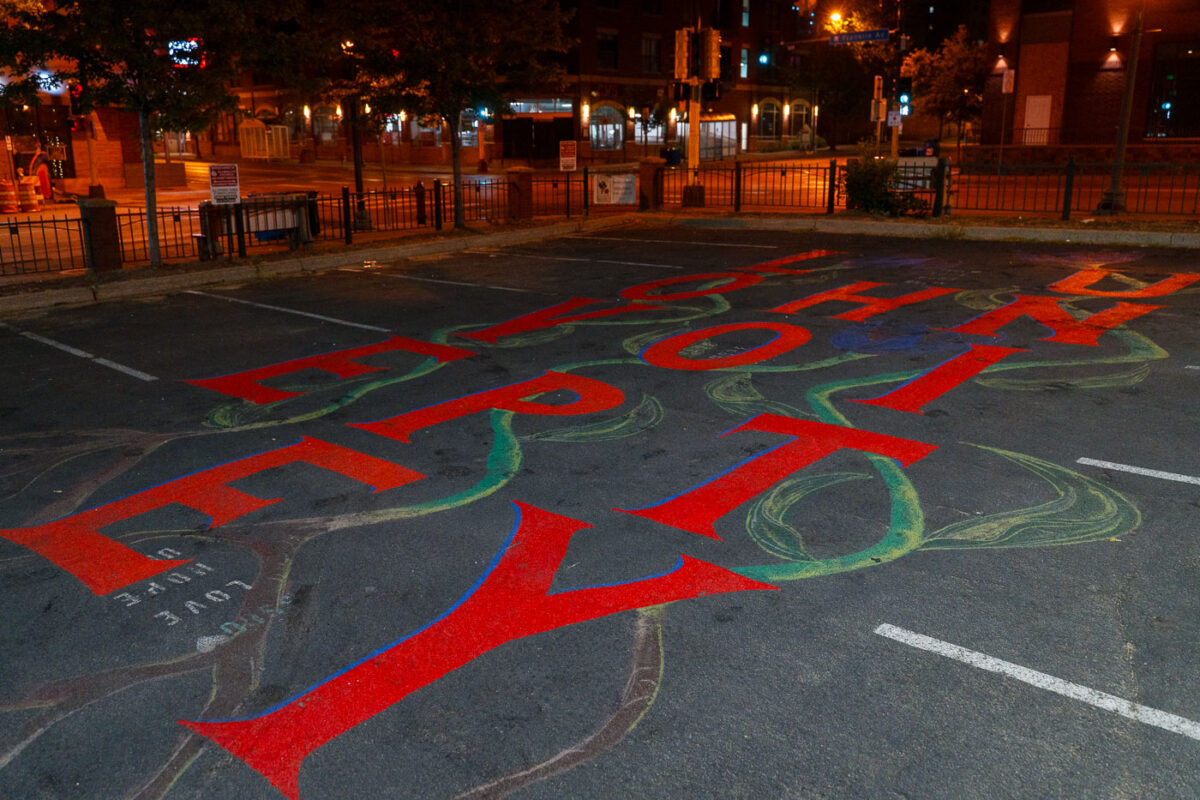
Love Hope Unity mural art
The "Love Hope Unity" mural, painted in bold red lettering on the asphalt of a parking lot at the intersection of Franklin and Nicollet Avenues in Minneapolis, serves as a visual testament to community resilience.

Love Hope Unity Mural on Franklin and Nicollet Avenues, Minneapolis