Animal

44 photos · 2008–2025

44 photographs tagged Animal, 2008–2025.

Calico cat on a front walkway in South Minneapolis beside house steps and potted plants.
A calico cat sits on a front walkway in South Minneapolis. The cat is beside a large shrub and house steps with potted plants.

Cat in South Minneapolis front yard

A colorful building with rainbow-painted window panels in Uptown Minneapolis with birds flying in formation overhead.
The Rainbow Building stands on Lake Street in the Uptown neighborhood of Minneapolis, its corner painted in a bright color block pattern. A flock of geese flies past the building in formation.

Geese Fly Past the Rainbow Building in Uptown Minneapolis

AT&T and Ragstock storefronts line Lake Street in Uptown Minneapolis beside a Metro Transit bus and parked vehicles.
Ragstock and AT&T on Lake Street in Uptown Minneapolis. A Metro Transit bus on the 21E route runs along Lake Street, which connects Uptown to the Chain of Lakes and downtown Minneapolis.

Ragstock and AT&T Storefronts on Lake Street in Uptown
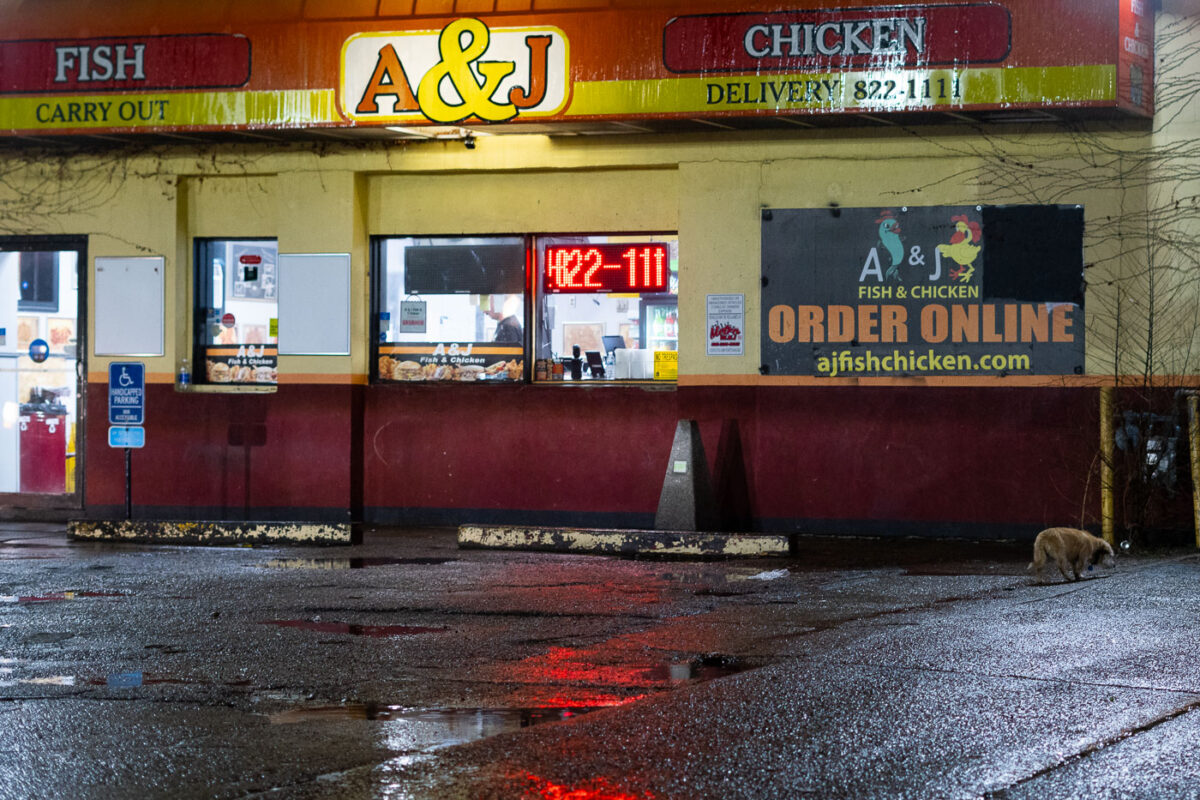
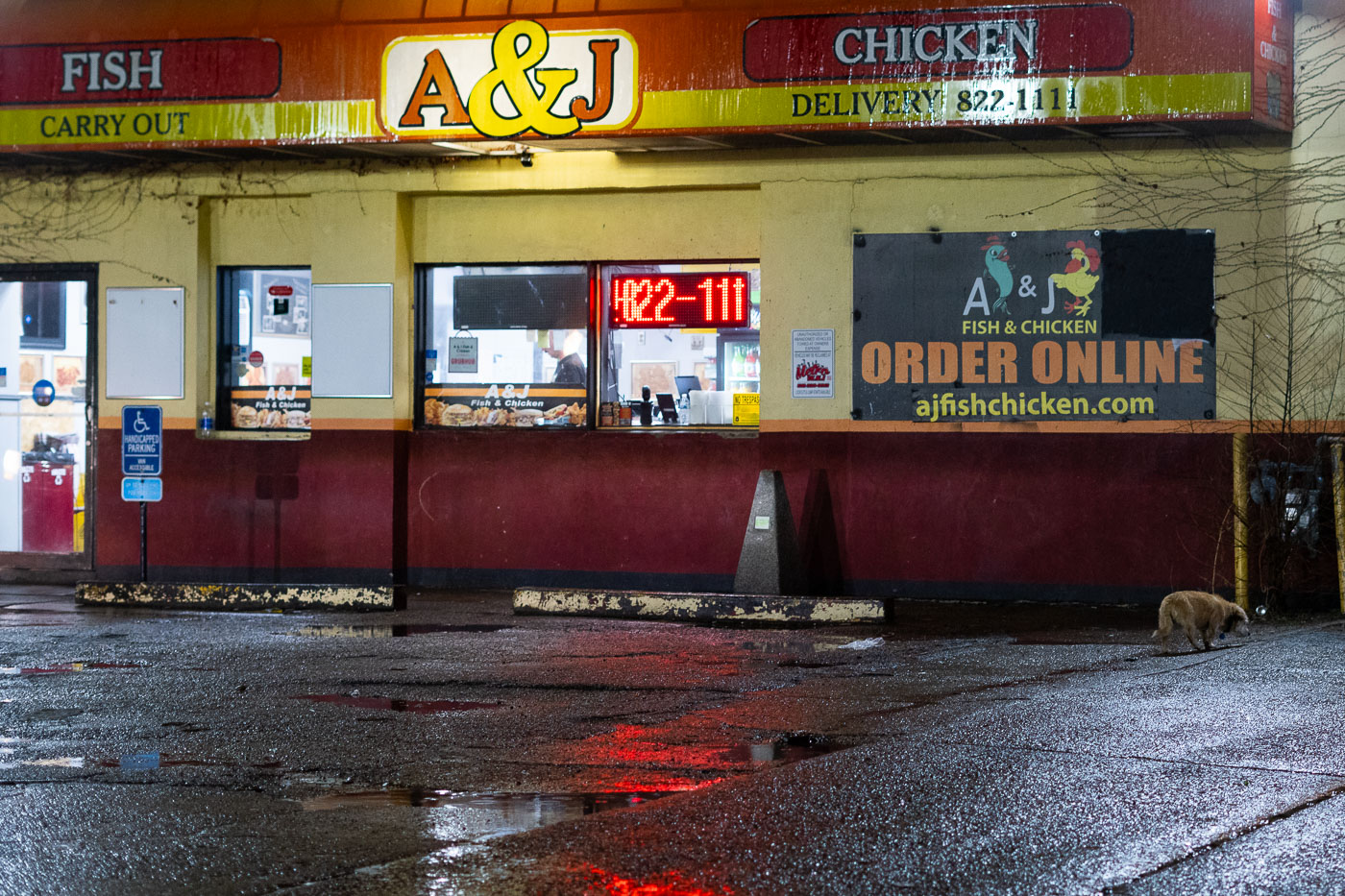
AJ Fish and Chicken Restaurant at night
A&J Fish and Chicken, a restaurant located on Lake Street in South Minneapolis. The establishment offers carry-out and delivery services, with its phone number and website prominently displayed.

A&J Fish and Chicken, Lake Street, South Minneapolis

The Belikin K-Mart and Supermarket complex in San Pedro, Belize, at night, featuring a fountain and a stray dog.
Belikin K-Mart and Supermarket in San Pedro, Ambergris Caye, Belize, is shown at night with its adjacent plaza and fountain in the foreground. The retail complex includes a supermarket entrance, a hot dog cart, and a statue at the center of the paved square.

Belikin K-Mart and Supermarket, San Pedro

A dog rests on a concrete dock with a rusted metal structure on Ambergris Caye, Belize, by the Caribbean Sea.
A dog lies on a concrete dock on Ambergris Caye, Belize, beside the Caribbean Sea. A rusted metal remnant rises from the dock, suggesting the structure was once part of a pier or loading facility exposed to prolonged saltwater damage.

Dog on Dock, Ambergris Caye, Belize

A stray dog rests on a concrete dock on Ambergris Caye, Belize, with the ocean in the background.
A stray dog rests on a concrete dock on Ambergris Caye, Belize. The dock overlooks the Caribbean Sea off the island’s coast, near the Belize Barrier Reef.

Stray Dog on Dock, Ambergris Caye, Belize

Black and tan Cavalier King Charles Spaniel puppy resting on a cushioned surface indoors.
The Cavalier King Charles Spaniel is a toy breed developed in England and named for King Charles II, who kept the breed's ancestors as constant companions in the royal court. The American Kennel Club recognizes four color patterns, including black and tan, which pairs a jet-black coat with rust-colored markings above the eyes, on the cheeks, and inside the ears. Adults typically stand 12 to 13 inches at the shoulder and weigh between 13 and 18 pounds. The breed ranks among the most popular toy breeds in the United States, prized for its gentle temperament and adaptability as a companion animal.

Cavalier King Charles Spaniel Puppy on a Cushion
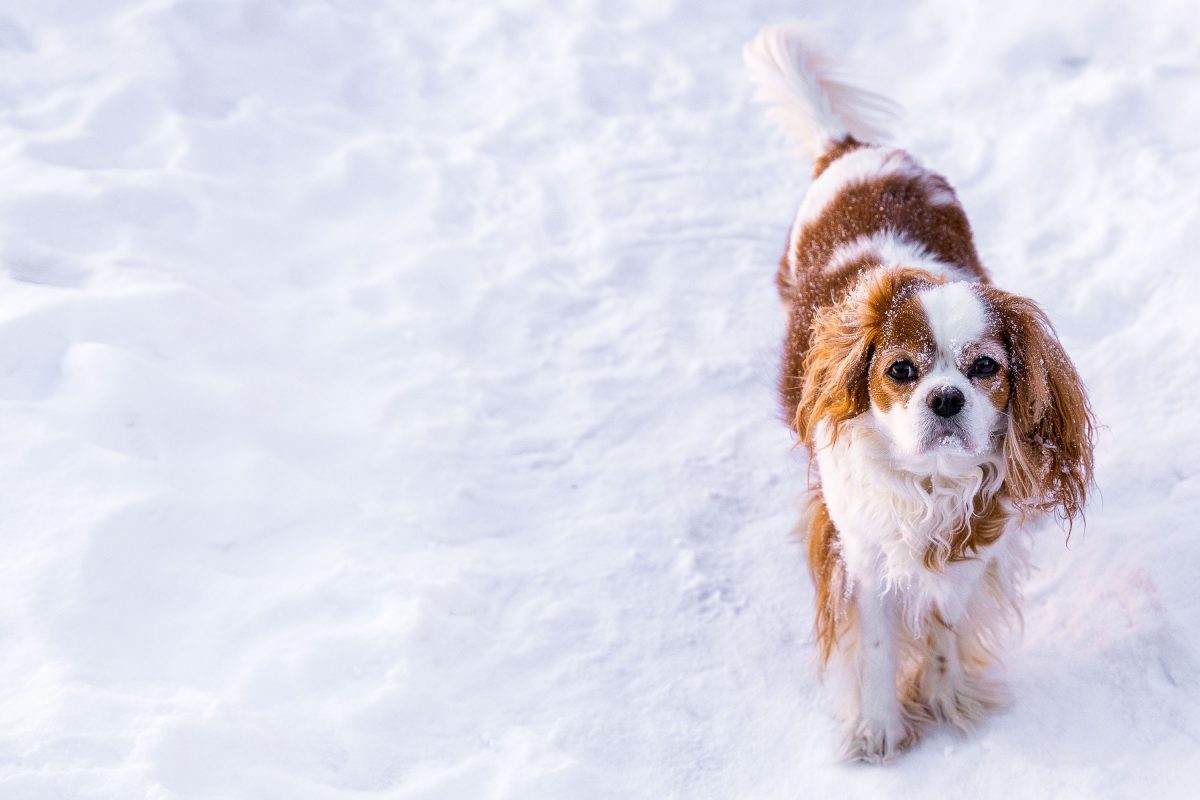
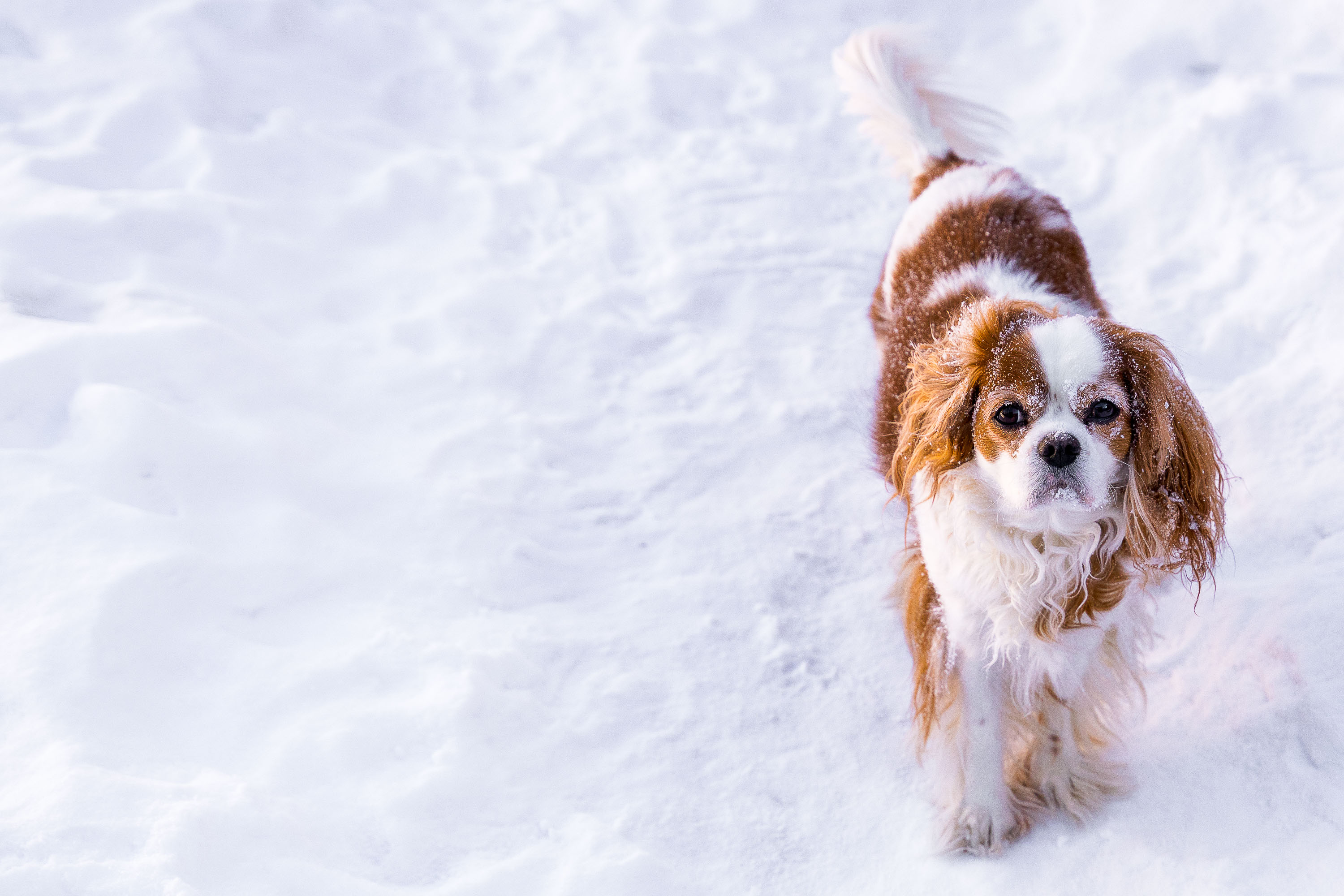
Brown and white Cavalier King Charles Spaniel standing in snow.
The Cavalier King Charles Spaniel is a toy breed developed in England and named for King Charles II, whose fondness for small spaniels shaped the breed's early history. Bred primarily as a companion dog, it typically stands 12 to 13 inches tall and weighs between 13 and 18 pounds. The breed is recognized in four color patterns, including the red-and-white Blenheim seen here, named after the Duke of Marlborough's estate where the coloring first became popular. Long, feathered ears and a silky coat are hallmarks of the breed, traits inherited from its spaniel ancestors bred for flushing game.

Cavalier King Charles Spaniel Walking Through Snow
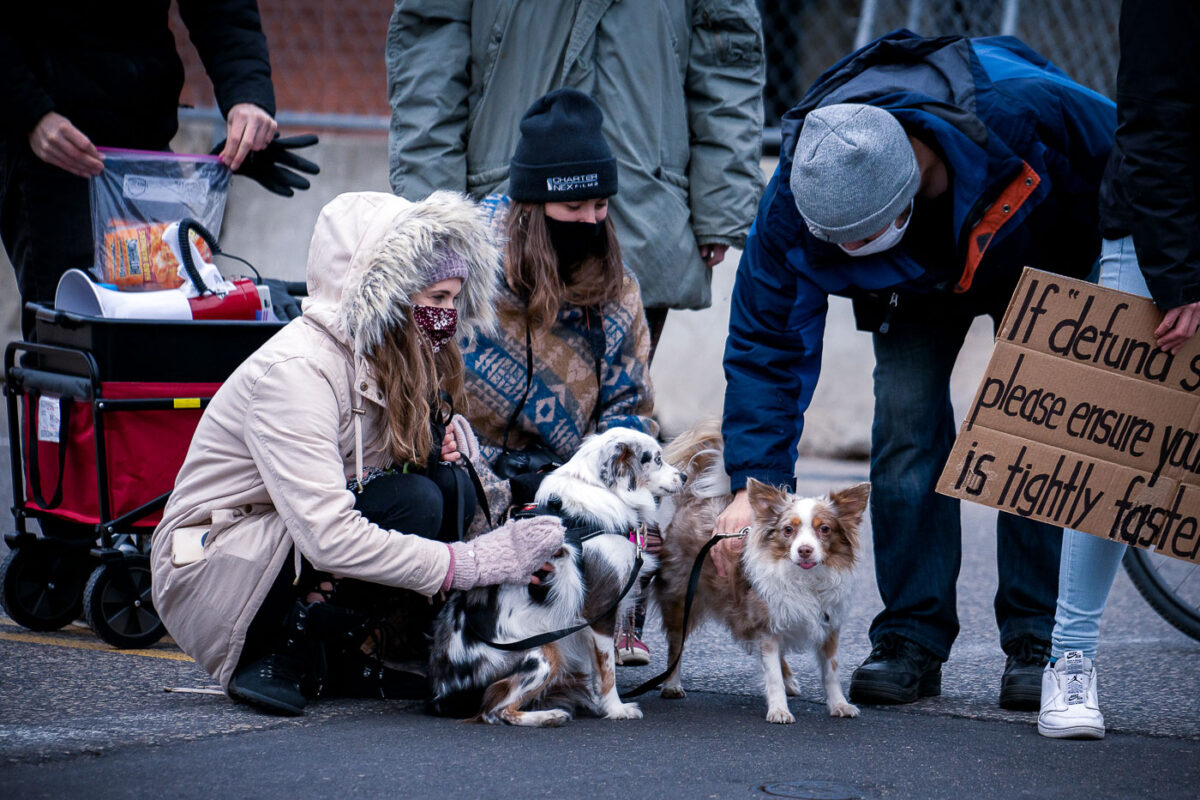
Dogs at a protest outside the St Paul police department
Protesters gathered in St. Paul during the Minneapolis Uprising, marching from Wilder Playground to the St. Paul Police station at Minnehaha Avenue and Payne Avenue. The march aimed to raise awareness about racial inequality and advocate for the defunding or abolition of the police, a central demand of the broader movement.

Dogs at St. Paul Police Protest during Minneapolis Uprising
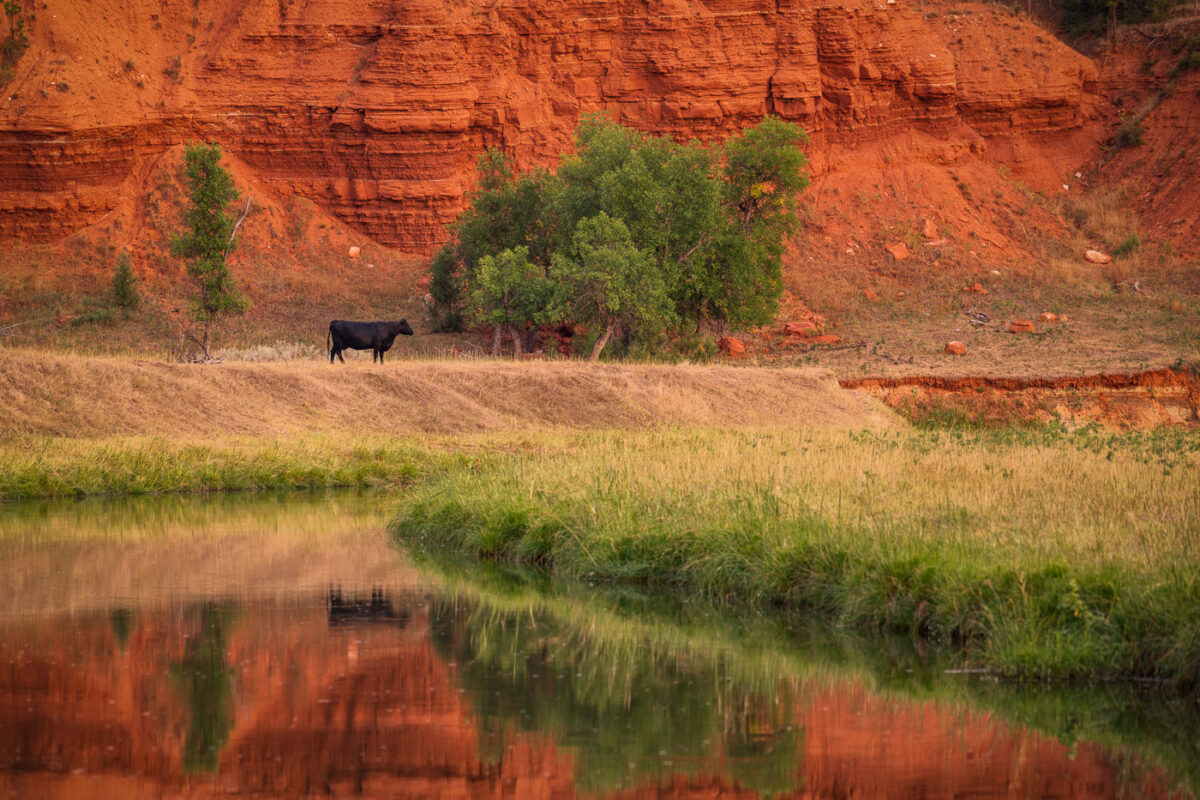
Black cow grazing beside Belle Fourche River with red rock formations of Devil's Tower National Monument behind.
A lone cow grazes near the Belle Fourche River, with the distinctive red rock formations of Devil's Tower National Monument in the background. The Belle Fourche River, the longest river in South Dakota, flows through Wyoming and is a vital water source for the region's agriculture and wildlife. Devil's Tower, a laccolithic butte composed of igneous rock, was designated the first national monument in the United States in 1906. Cattle ranching has been a significant part of the economic and cultural landscape of this area for over a century, with the river providing essential grazing land.

Grazing Cow Beside Red Rock Bluffs Near Devil’s Tower

Loews Hotel and Target headquarters illuminated at night in downtown Minneapolis with Target Dog neon sign in foreground.
Target's corporate headquarters tower rises at 1000 Nicollet Mall, its glass exterior wrapped in a blue-lit crown near the top floors. The company has been based in downtown Minneapolis since its founding as a Dayton's discount offshoot in 1962, and its headquarters campus remains one of the largest employers in the city's core. The neon Bullseye dog sign near the building's base is a longstanding piece of Target's branding, drawn from the company's mascot, Bullseye. To the left, the Loews Minneapolis Hotel occupies part of the LaSalle Plaza complex, a mixed-use development completed in 1991 that also includes office space and street-level retail along Nicollet Mall.

Target’s Bullseye Dog Sign Beneath Its Minneapolis Headquarters

Ornate white and gold facade of the Cathedral of Saint James the Apostle in Parque Central, Antigua Guatemala, beneath clear blue sky.
The Cathedral of Saint James the Apostle anchors the east side of Parque Central in Antigua Guatemala, seat of the Archdiocese of Santiago de Guatemala. Spanish colonial authorities first consecrated a church on this site in 1545, with later rebuilding producing the baroque facade seen today after earlier structures were destroyed by earthquakes in 1717 and 1773. Only the front portion was restored for regular use following the 1773 damage, while the rest of the original cathedral remains in ruins behind it. Antigua's historic center, including the cathedral, was designated a UNESCO World Heritage Site in 1979.

Baroque Facade of the Cathedral of Saint James, Antigua

Cavalier King Charles Spaniel on a couch indoors.
A Cavalier King Charles Spaniel sits on a couch indoors. The breed originated in the United Kingdom and is known for its expressive eyes and affectionate temperament.

Cavalier King Charles Spaniel on a Couch

Chestnut and white Cavalier King Charles Spaniel resting its head on a couch cushion indoors.
The Cavalier King Charles Spaniel is a toy breed developed in England, named for King Charles II, whose fondness for the small spaniels made them fixtures of the royal court in the 17th century. The breed carries blenheim, tricolor, black-and-tan, and ruby coat variations, with the chestnut-and-white pattern shown here classified as blenheim. Adults typically weigh between 13 and 18 pounds, making them one of the larger toy breeds recognized by the American Kennel Club. Bred originally as lap companions rather than working dogs, they remain popular household pets valued for their affectionate temperament.

Cavalier King Charles Spaniel Resting on a Couch
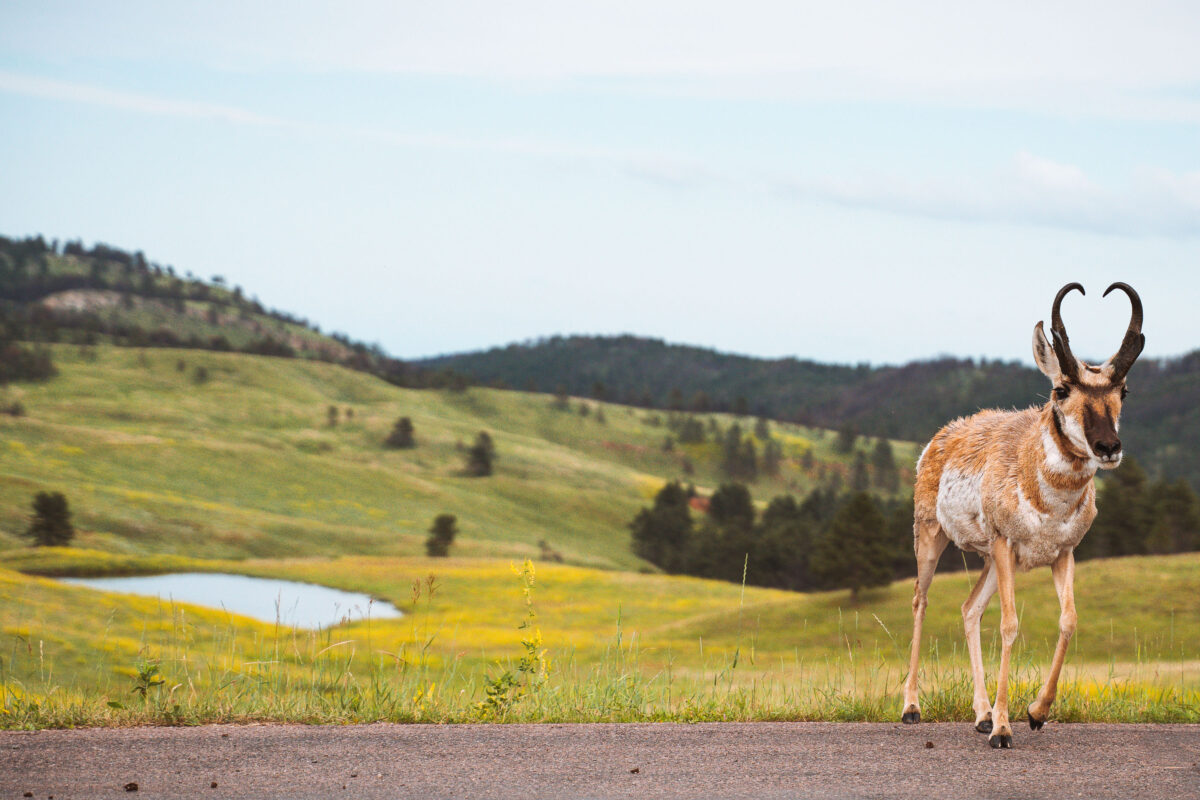
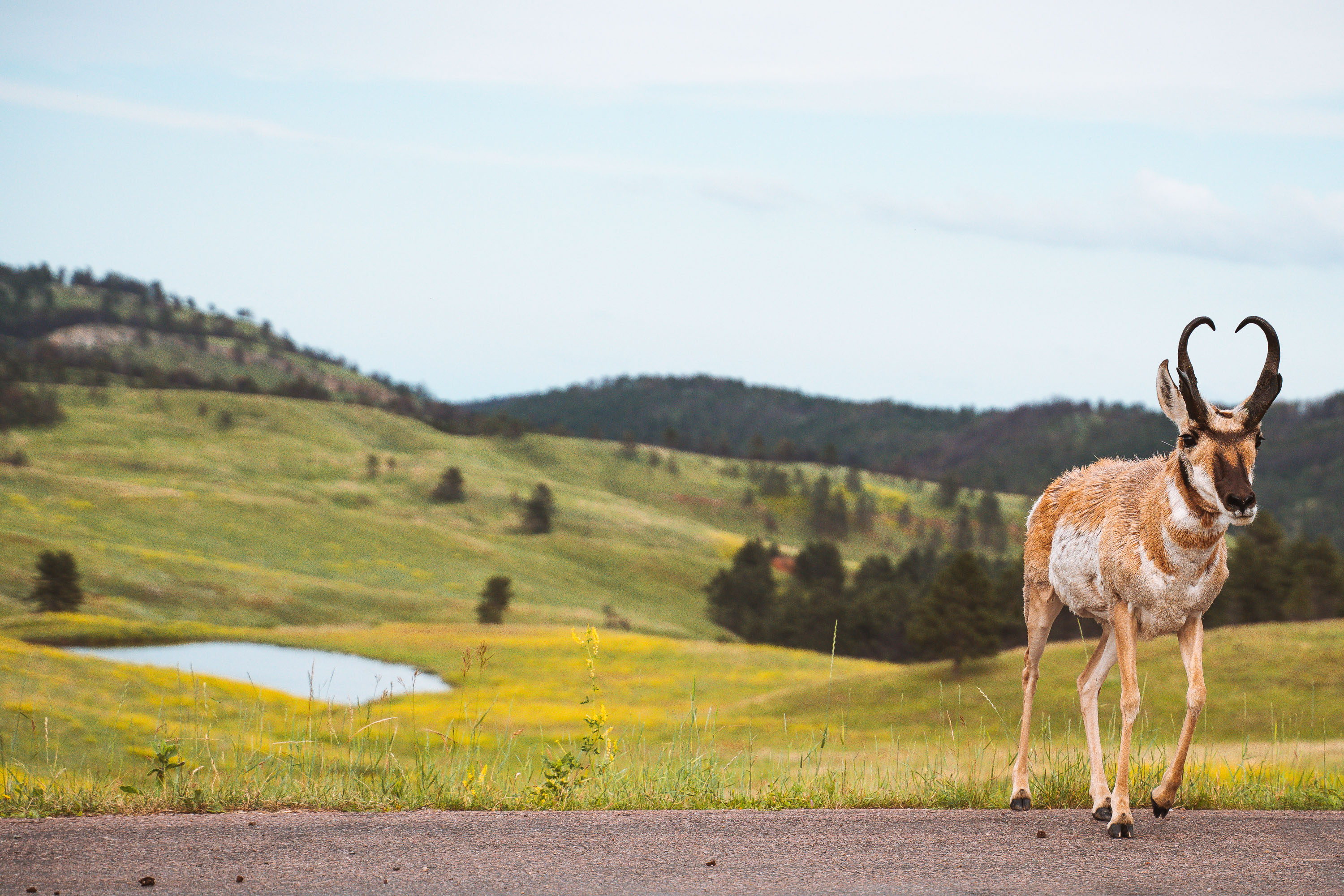
A pronghorn antelope walks along Wildlife Loop Road in Custer State Park, South Dakota.
The pronghorn is North America's fastest land mammal, capable of sustained speeds near 55 miles per hour, an adaptation from Pleistocene-era predators long since extinct. Custer State Park, established in 1919 in the Black Hills of South Dakota, maintains a resident pronghorn herd alongside its bison, elk, and mule deer populations. The park's 18-mile Wildlife Loop Road was built specifically to let visitors drive through open grassland habitat where these animals roam freely. Unlike true antelope, pronghorn are the sole surviving member of the family Antilocapridae, and both sexes can grow horns, though the male's are larger and hooked.

Pronghorn Antelope on Wildlife Loop Road, Custer State Park
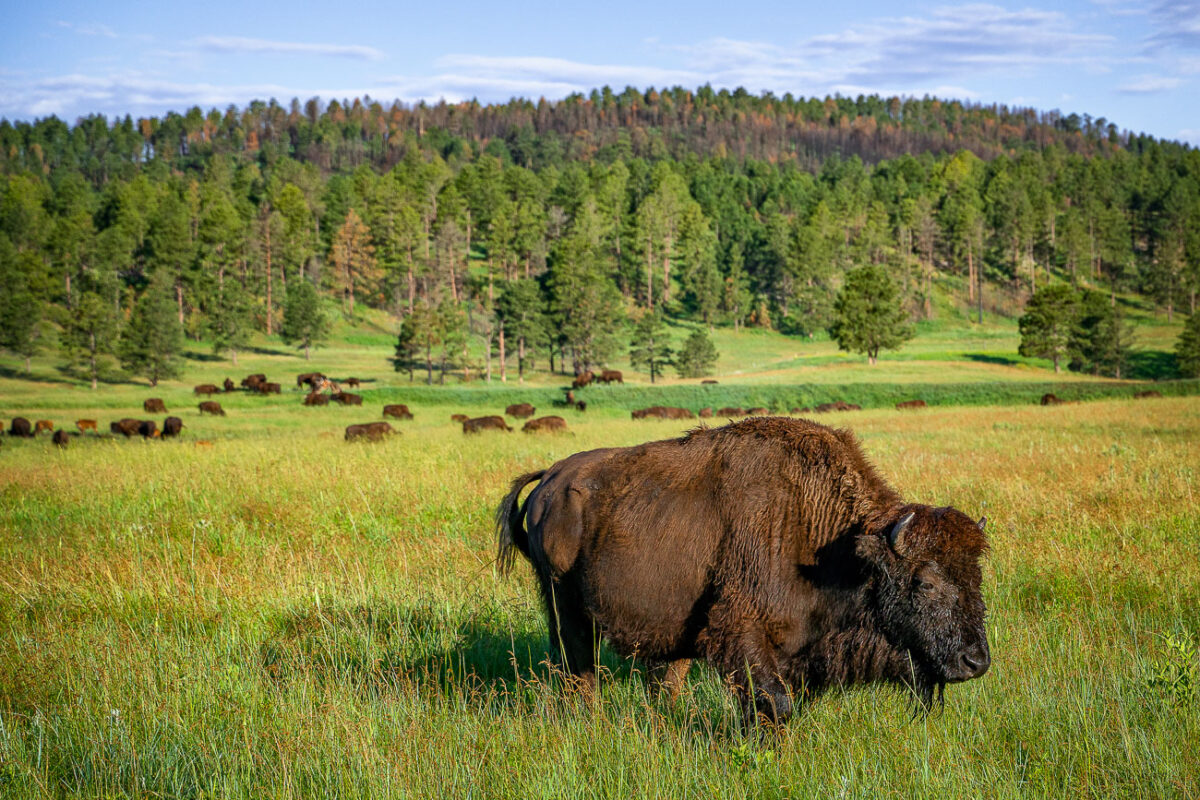
Large bison grazing in the grass
A herd of bison grazes in Custer State Park, South Dakota. Established in 1913, the park is home to one of the largest bison herds in the world, a testament to conservation efforts. The park's landscape, characterized by rolling hills and ponderosa pine forests, provides essential habitat for these American icons. Bison were reintroduced to the park in the early 20th century, helping to restore a species that had been nearly eradicated.

Bison Herd in Custer State Park, South Dakota

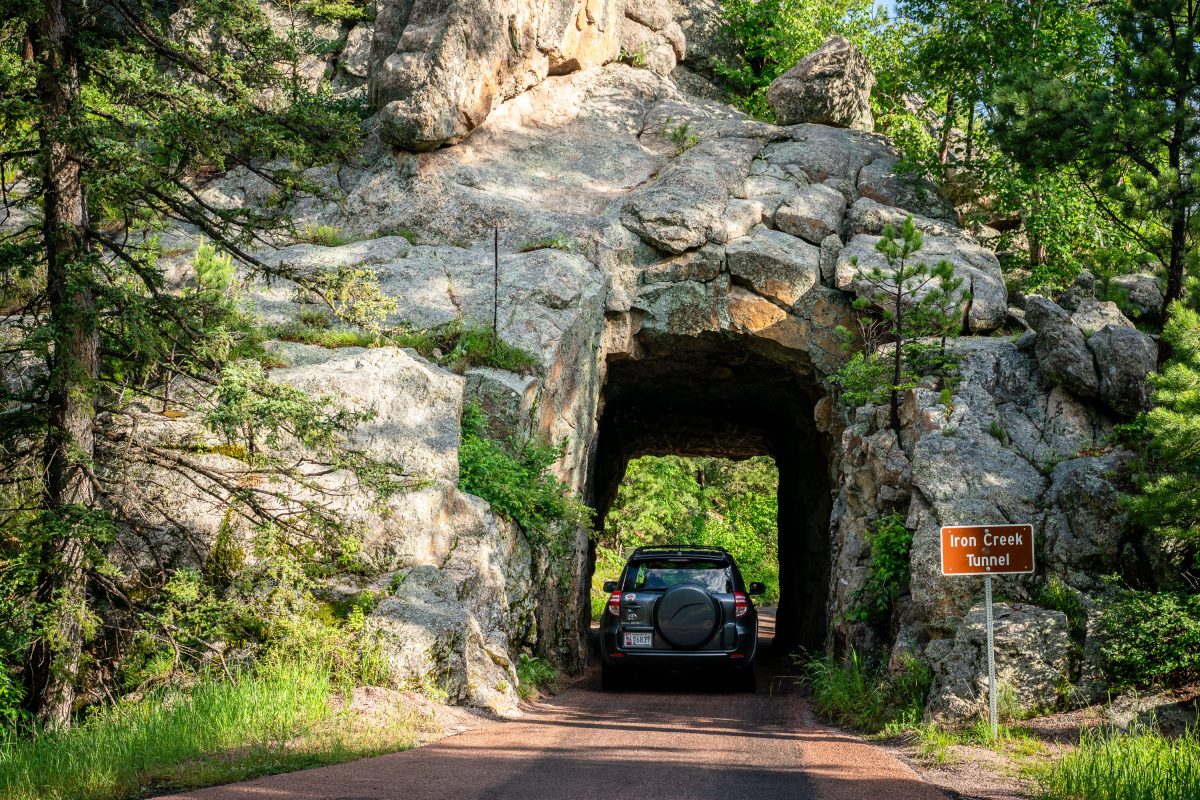
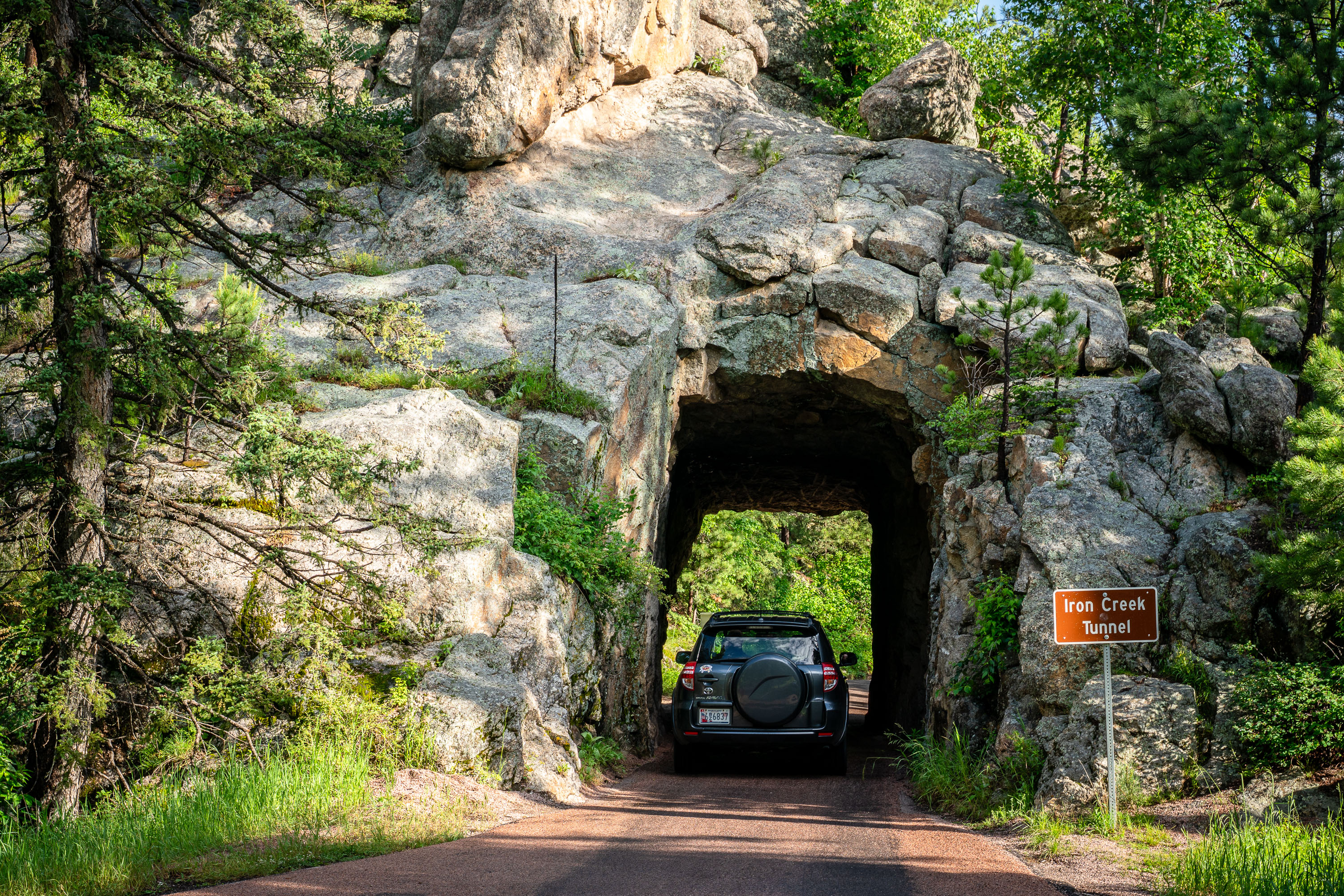
Vehicle passing through Iron Creek Tunnel, a rock passage in Custer State Park, South Dakota.
Iron Creek Tunnel carries the Needles Highway through a granite outcrop in Custer State Park, South Dakota. The highway was built in the 1920s under the direction of Governor Peter Norbeck, who helped design the route himself to showcase the park's granite spires. Its narrow, low clearance tunnels, blasted by hand rather than heavy machinery, were intentionally sized to slow traffic and frame views of the surrounding rock formations. Custer State Park, established in 1919, spans more than 71,000 acres and is one of the largest state parks in the country.

Car Enters Iron Creek Tunnel, Custer State Park

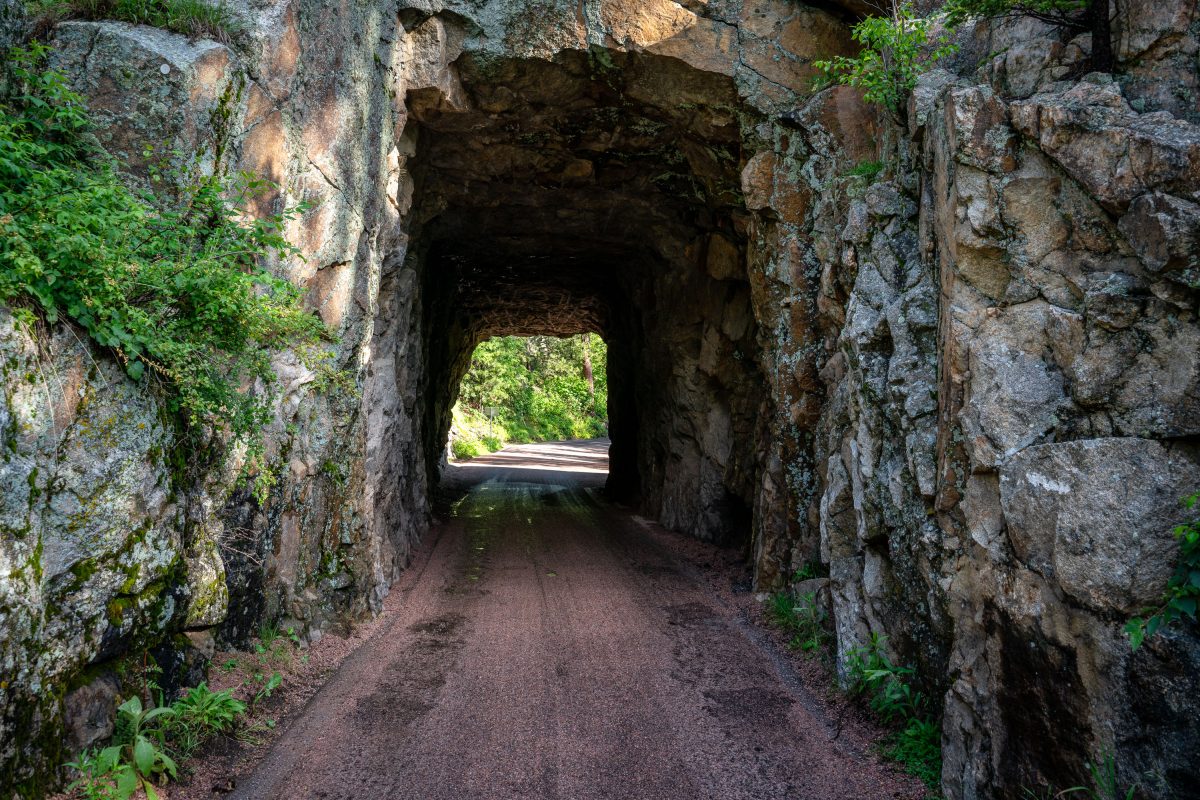
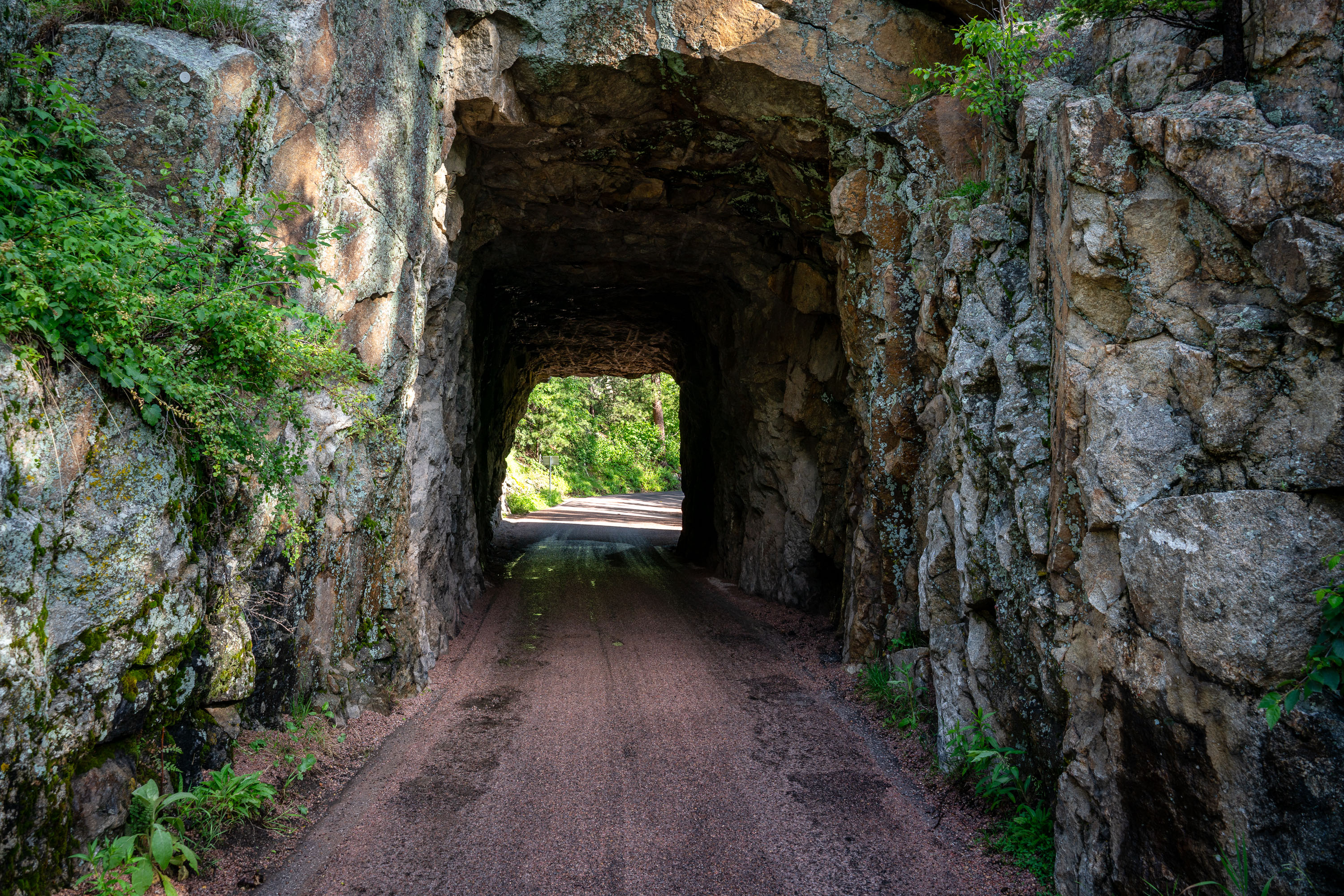
Stone tunnel with moss-covered walls along Iron Creek in Custer State Park, South Dakota.
Iron Creek Tunnel carries Needles Highway through a granite outcrop in Custer State Park. The road was built in the 1920s under the direction of South Dakota Governor Peter Norbeck, who laid out the route on foot and horseback to highlight the Black Hills' granite spires. Norbeck designed several tunnels along the highway to frame views of Mount Rushmore and the surrounding needle rock formations, and Iron Creek Tunnel remains one of the narrower passages on the route, cut directly through native granite rather than lined with concrete. The highway connects to the Peter Norbeck Scenic Byway, a National Scenic Byway that also links to Custer State Park's Wildlife Loop Road.

Inside Iron Creek Tunnel, Custer State Park, South Dakota

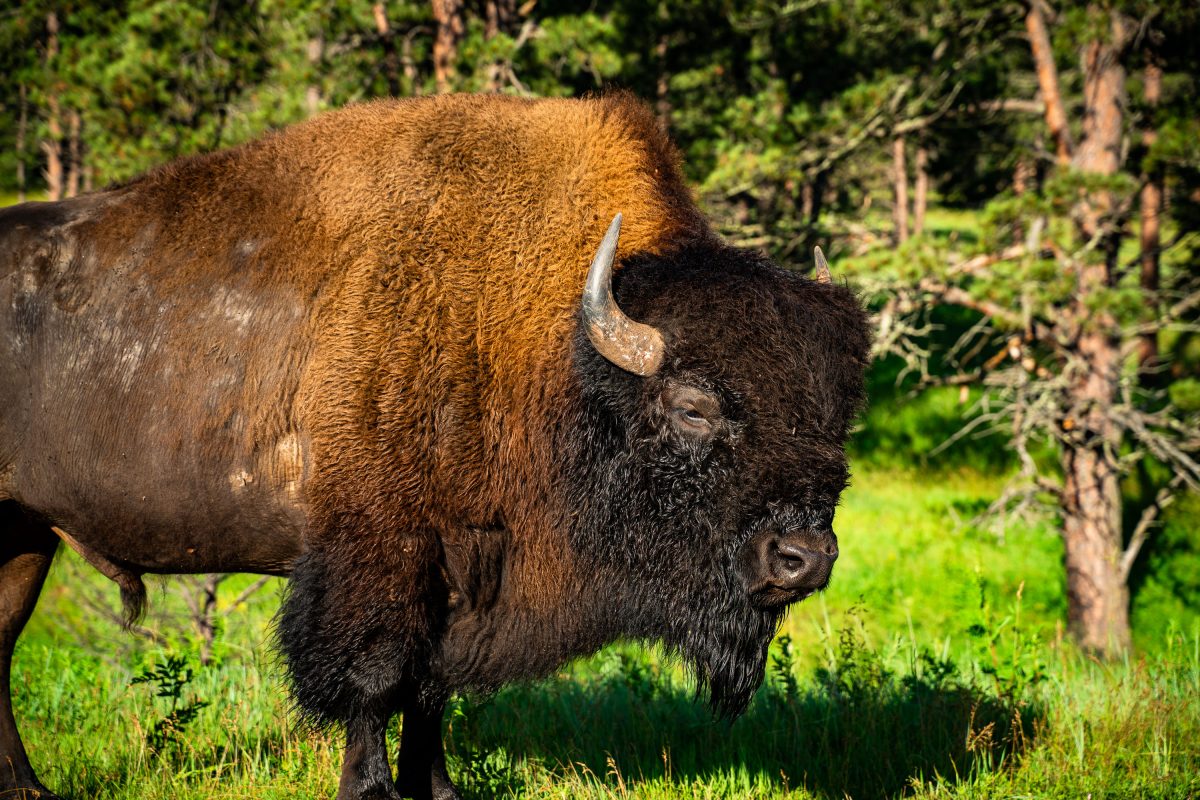
American bison with brown and black fur stands in grassland near coniferous forest.
The American bison grazing along Wildlife Loop Road belongs to one of the largest publicly held herds in the country, numbering around 1,300 animals within Custer State Park's 71,000 acres. Custer State Park holds an annual Buffalo Roundup each fall, drawing thousands of spectators to watch riders and volunteers herd the animals for vaccination and population management. Bulls in the herd can weigh up to 2,000 pounds, and both sexes carry curved horns that grow throughout their lives. The park's herd descends from bison reintroduced in the 1900s after the species was nearly wiped out across the Great Plains in the previous century.

American Bison Along Wildlife Loop Road, Custer State Park
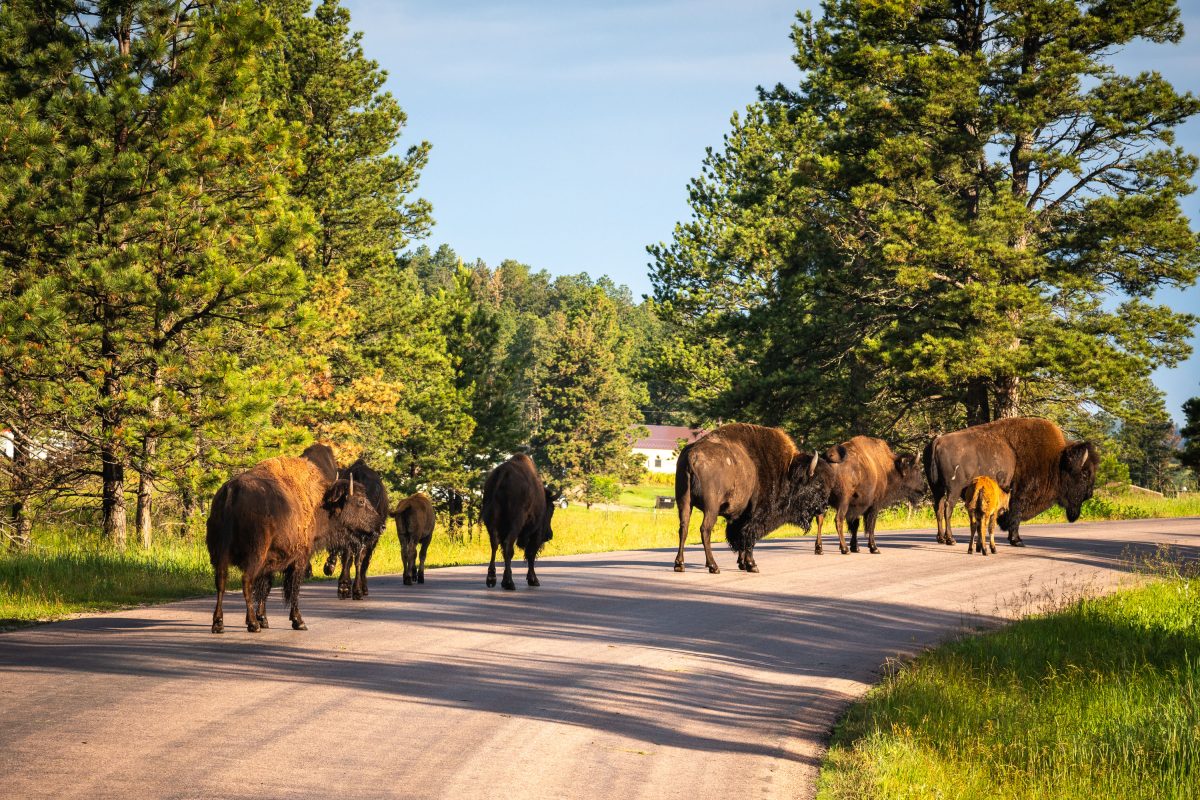
Herd of bison crossing Wildlife Loop Road through ponderosa pine forest and grassland.
Wildlife Loop Road is an 18-mile paved route through Custer State Park in the Black Hills of South Dakota, built in the 1930s to give visitors close access to the park's free-roaming animals. Custer State Park maintains one of the largest publicly held bison herds in the world, numbering around 1,300 animals, descended in part from stock reintroduced to the region in the early 20th century after the species was nearly wiped out. Park rangers conduct an annual roundup each fall to manage herd size and monitor health, a tradition that draws thousands of spectators. Bison here regularly move across the roadway between grazing areas, and park rules require drivers to stay in their vehicles and keep a safe distance during these crossings.

Bison Herd Crossing Wildlife Loop Road, Custer State Park
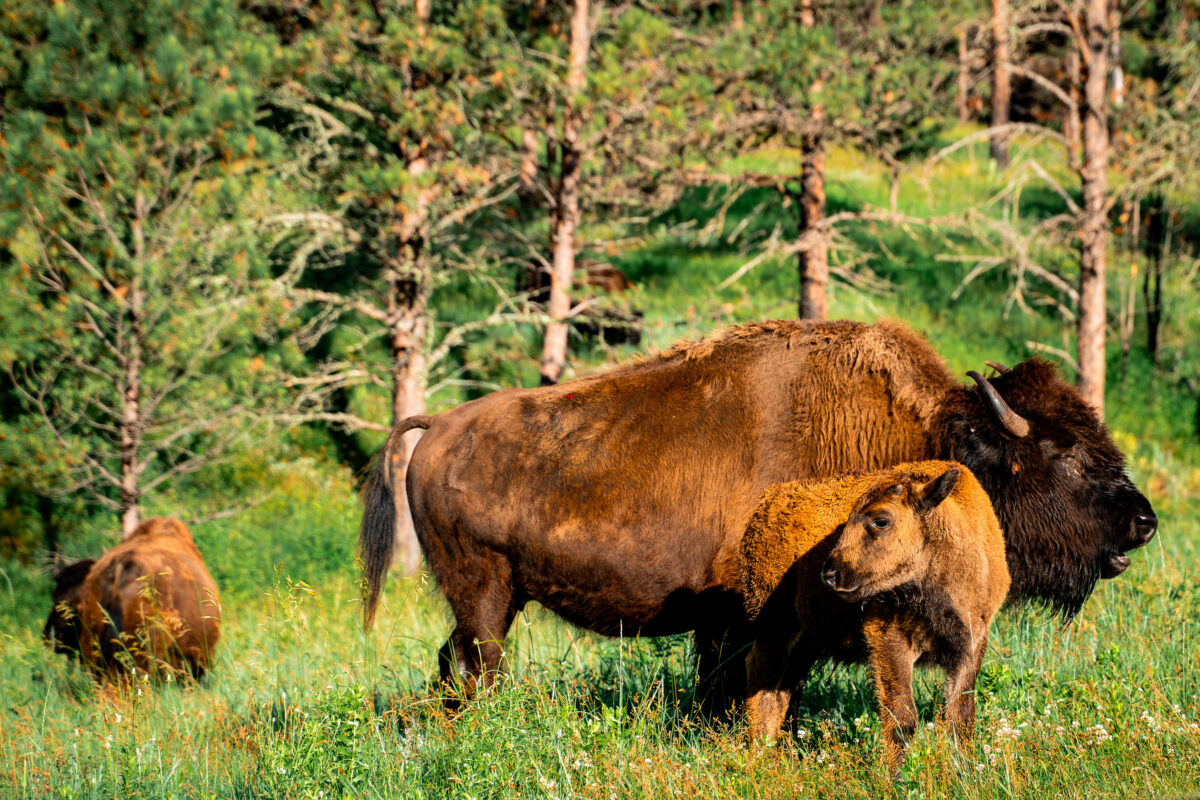
Bison cow and calf grazing in grassland at Custer State Park, South Dakota.
Custer State Park's bison herd numbers around 1,300 animals, one of the largest publicly held herds in the world. Wildlife Loop Road, an 18-mile stretch through the park's mixed-grass prairie and ponderosa pine forest, is where visitors most often encounter the herd grazing or crossing the pavement. Calves are born in the spring, typically April through June, and stay close to their mothers through the summer months. Each September the park rounds up the herd on horseback, a practice started in 1965 to manage the population and check the animals' health.

American Bison Cow and Calf, Wildlife Loop Road, Custer State Park
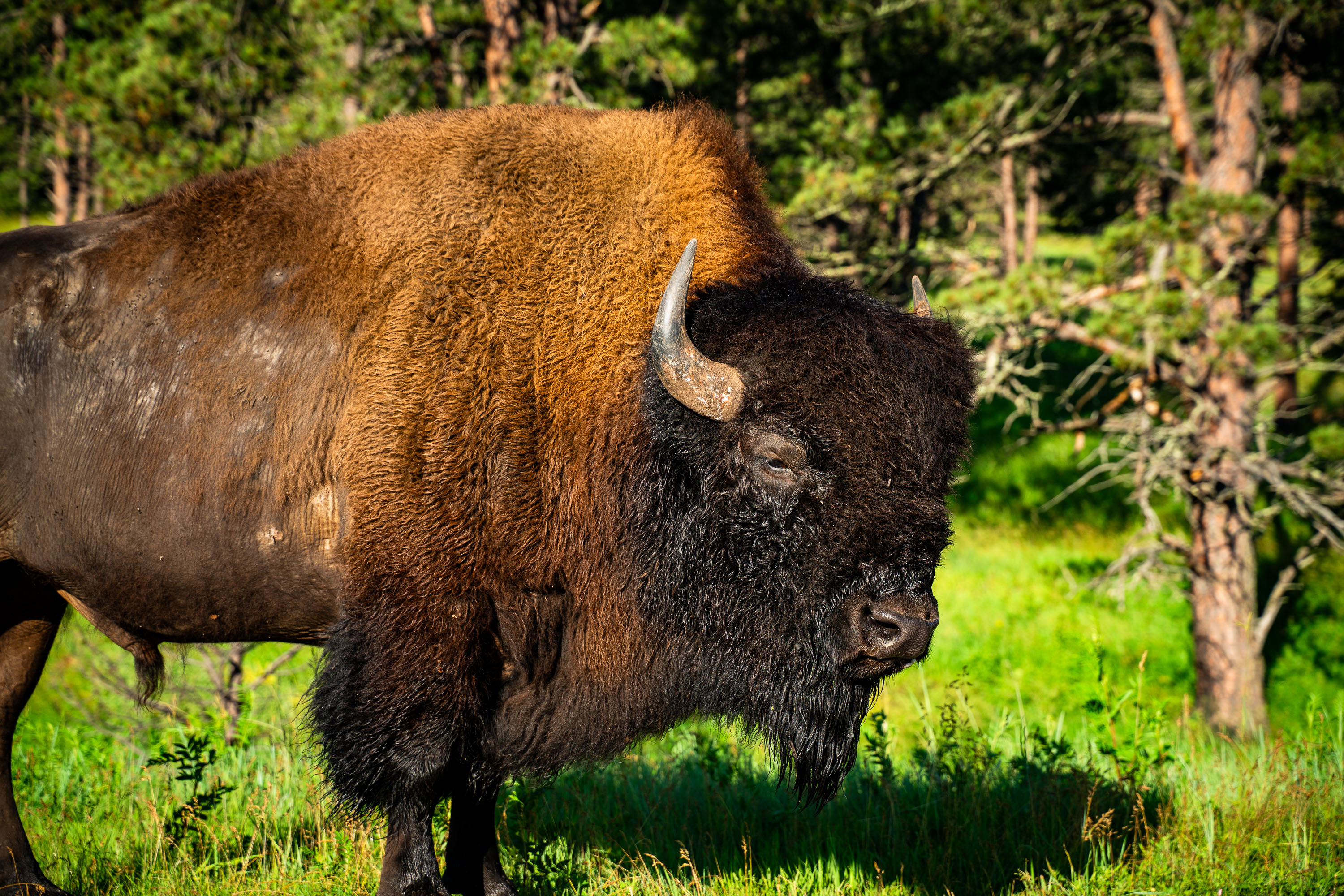
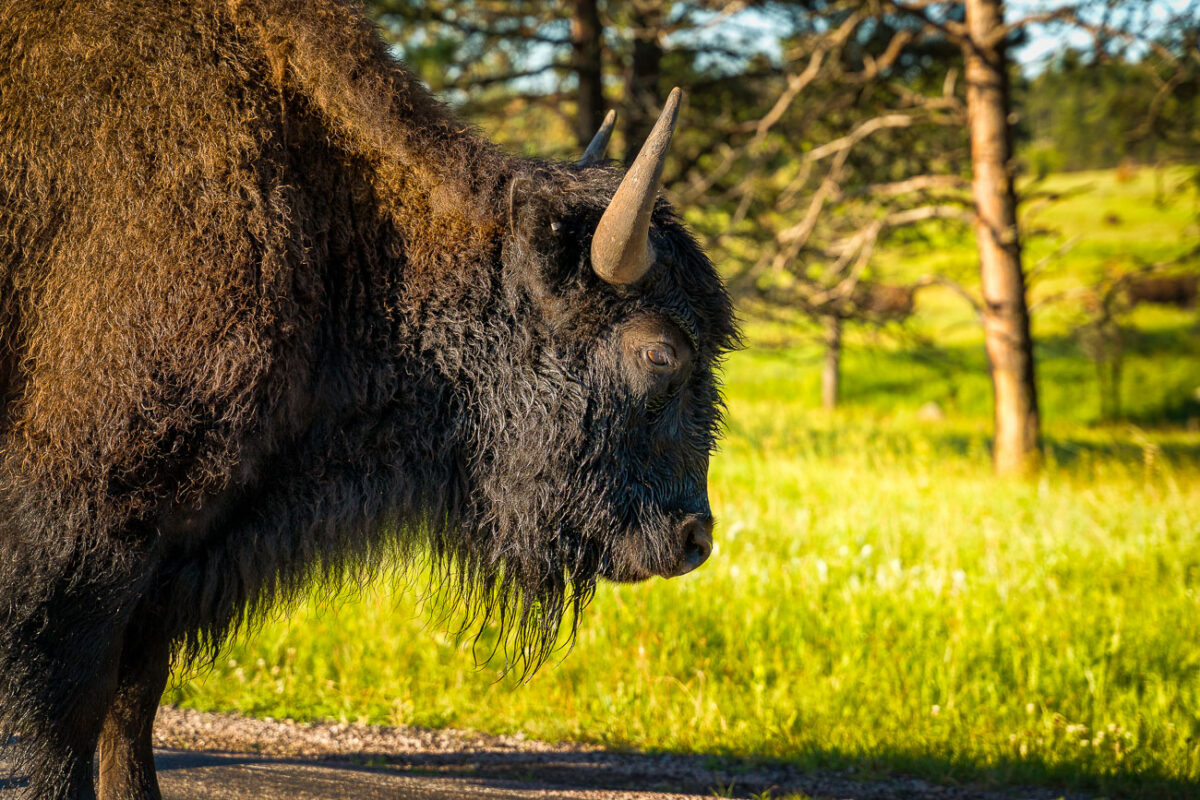
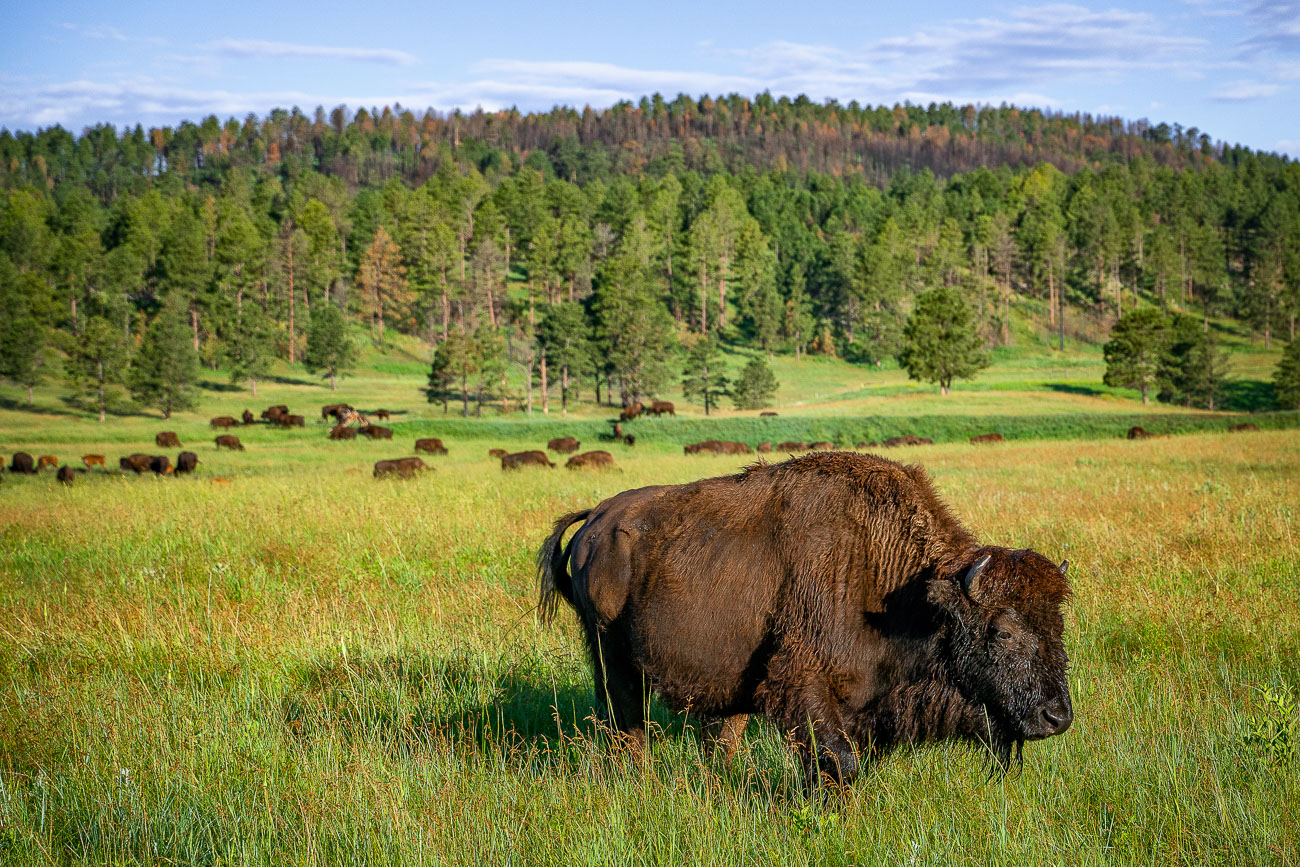
Mature American bison standing in grassland at Custer State Park, South Dakota.
Custer State Park's bison herd grazes across 71,000 acres of mixed-grass prairie and ponderosa pine forest in the Black Hills, much of it visible from the 18-mile Wildlife Loop Road. The park was established in 1913, and its bison population traces back to 1914, when 36 animals were introduced after the species had been hunted to near extinction across the continent. The herd now numbers around 1,300, making it one of the largest publicly owned bison herds in the world. Each fall, Custer State Park holds an annual roundup to manage herd size and monitor health, a practice that's been carried out since 1965.

Bison Bull Along Wildlife Loop Road, Custer State Park
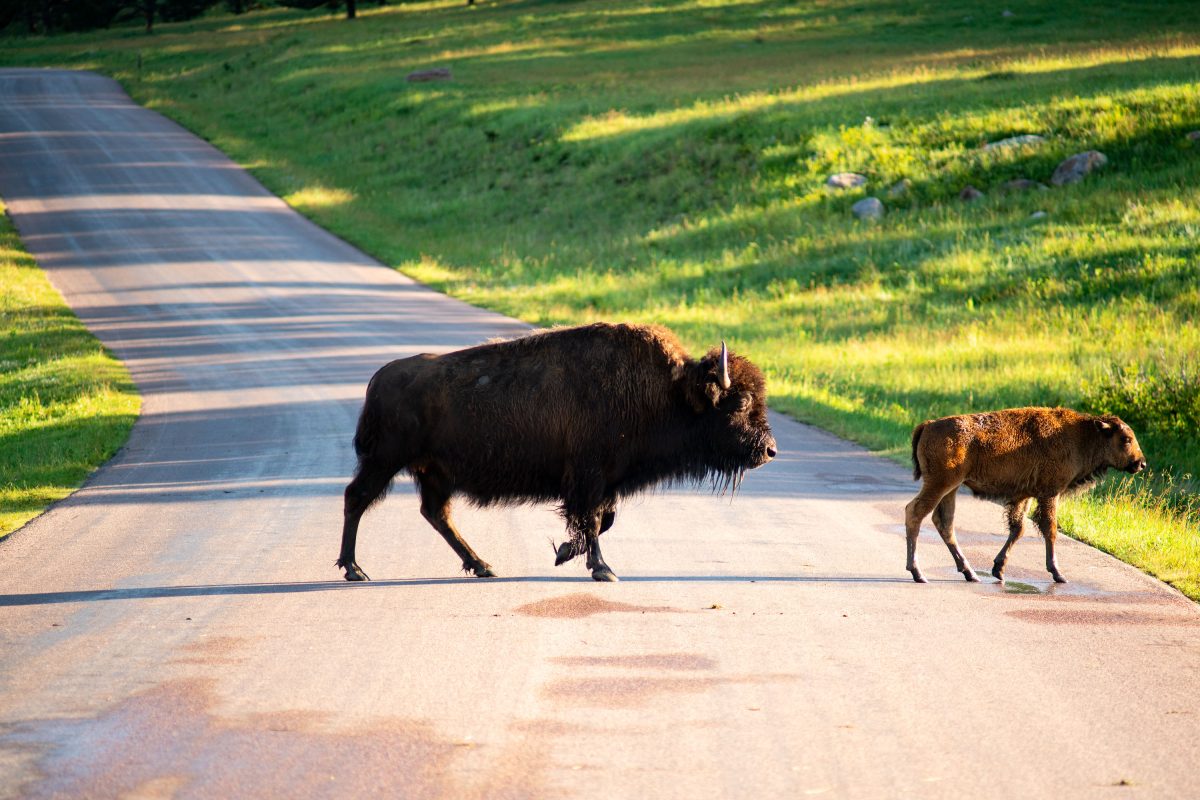
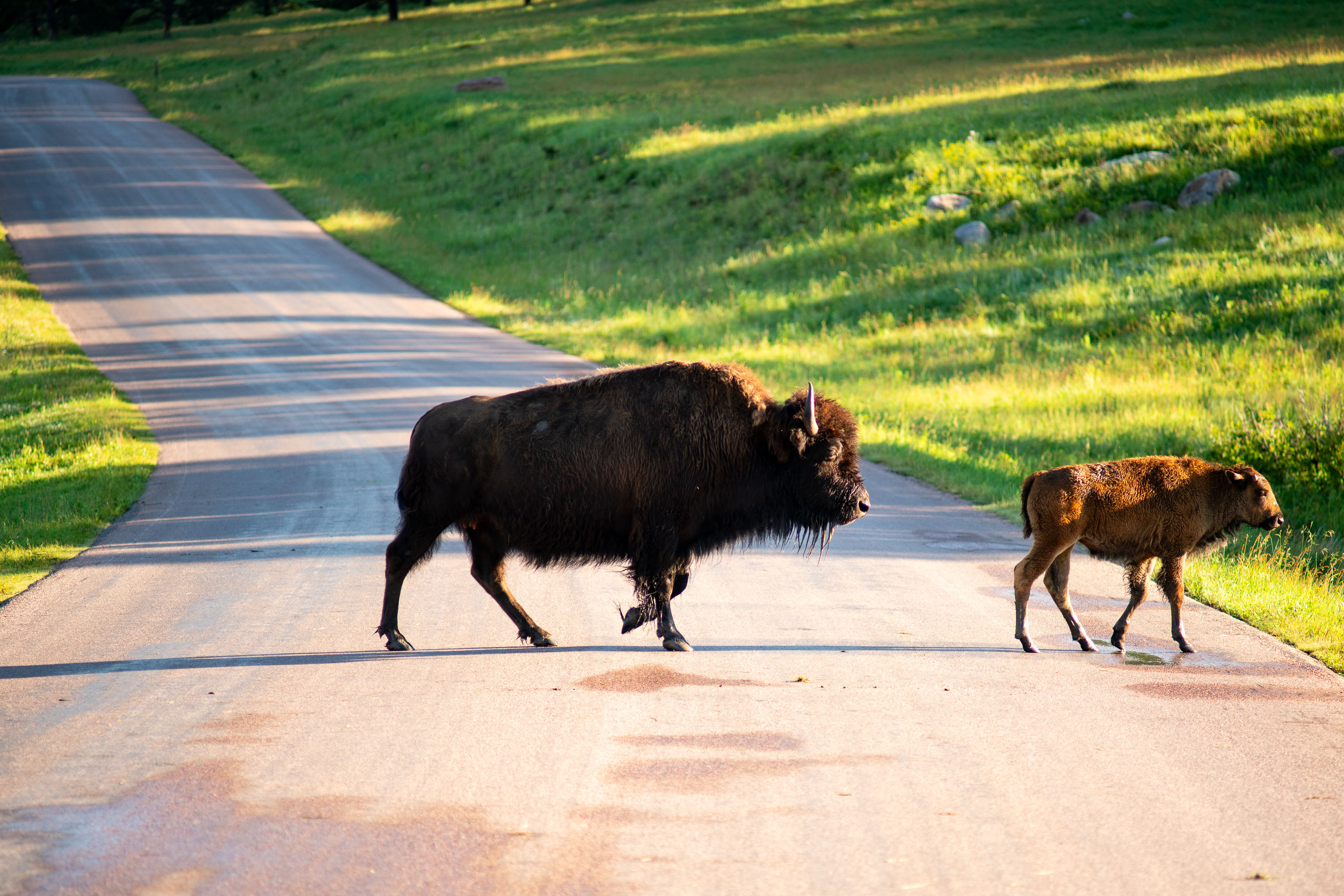
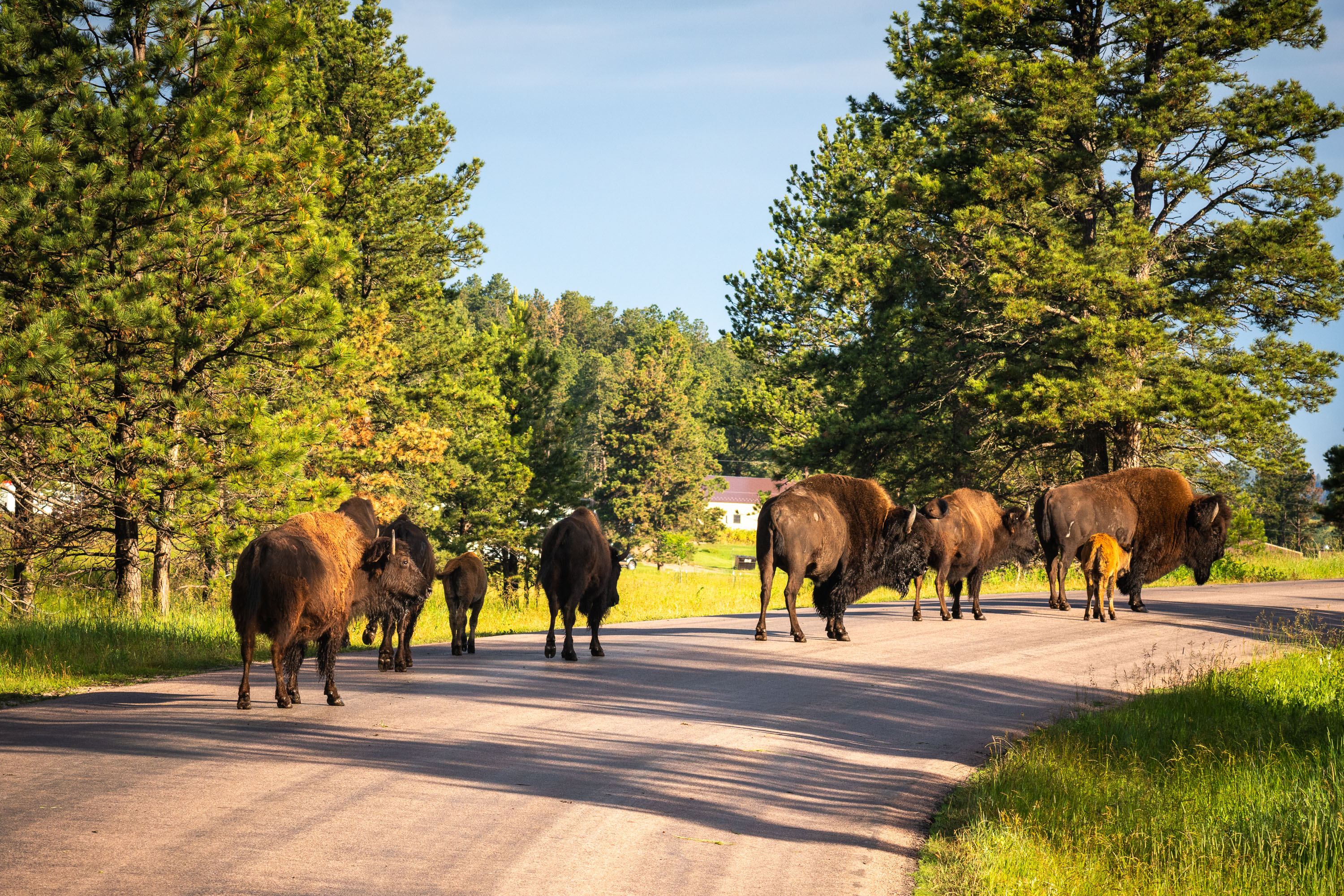
American bison cow and calf crossing a paved park road through grassland.
Custer State Park's Wildlife Loop Road runs 18 miles through the southern Black Hills of South Dakota, cutting straight through open range where the park's bison herd roams freely. That herd numbers around 1,300 animals, one of the largest publicly held bison herds in the world, and sightings along this stretch of pavement are common enough that rangers post warning signs for drivers. Calves are born in the spring, arriving a reddish-brown color that darkens to the adult's blackish-brown coat within a few months. Each fall the park holds its Buffalo Roundup, a decades-old tradition where riders drive the herd together for health checks and population management, drawing thousands of spectators to watch cowboys work cattle that can weigh up to 2,000 pounds.

Bison Cow and Calf Crossing Wildlife Loop Road, Custer State Park
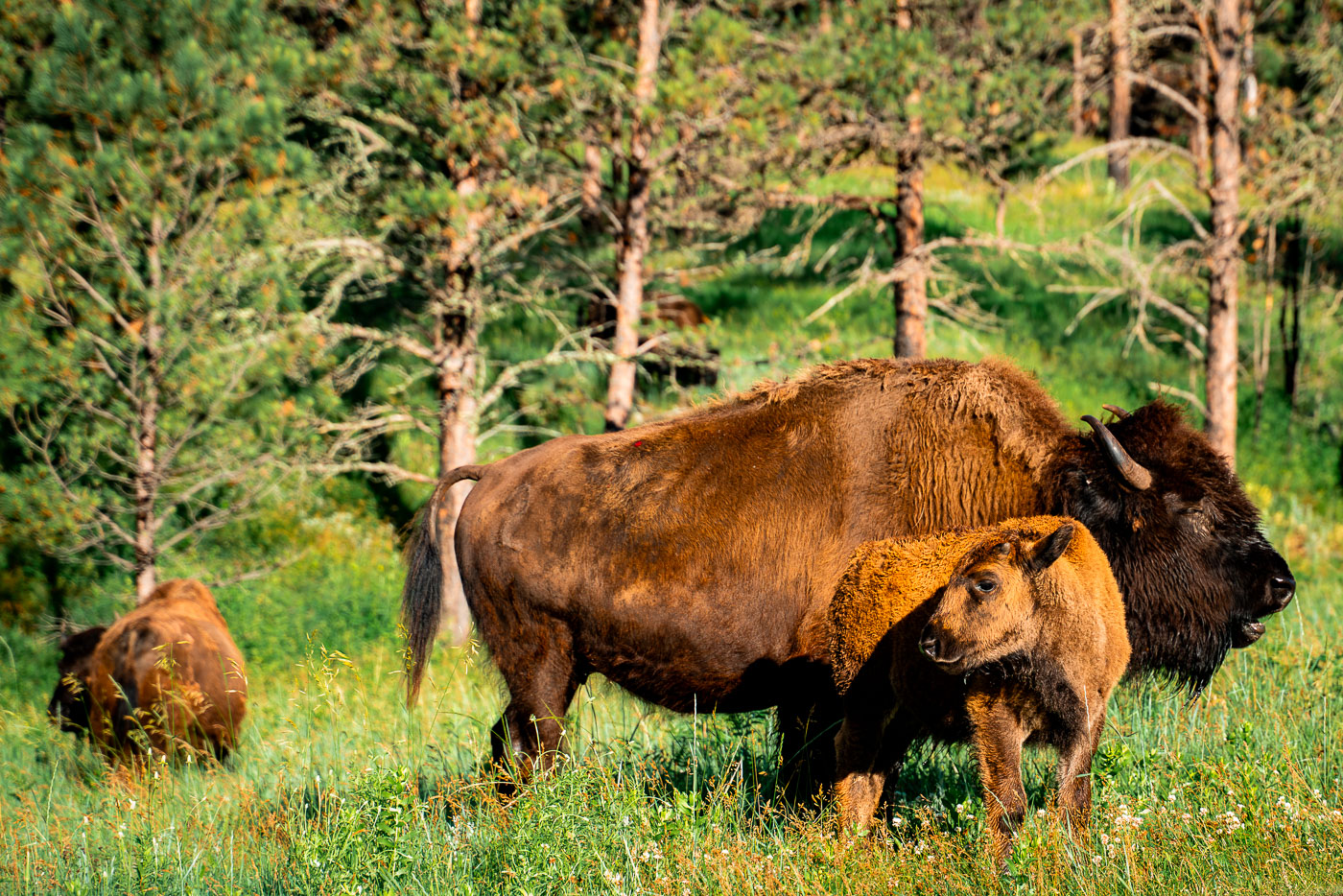
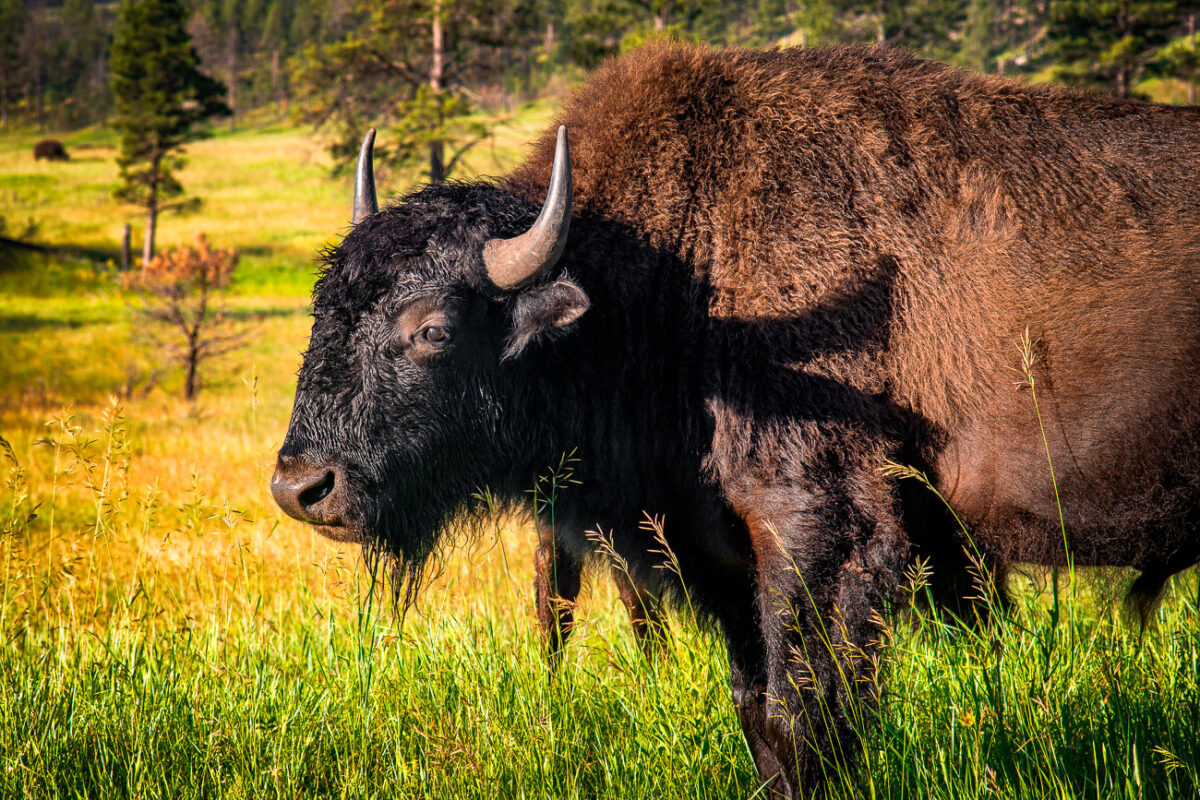
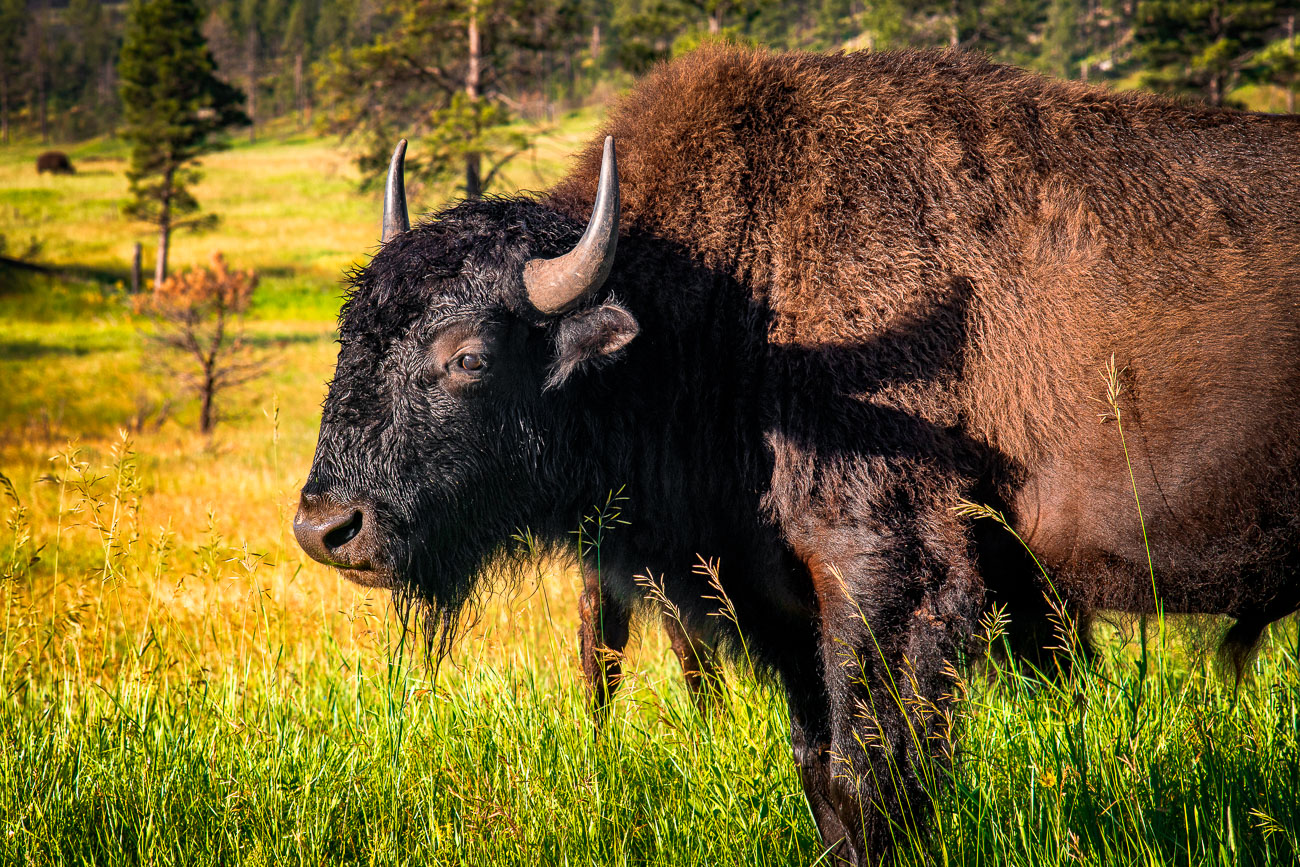
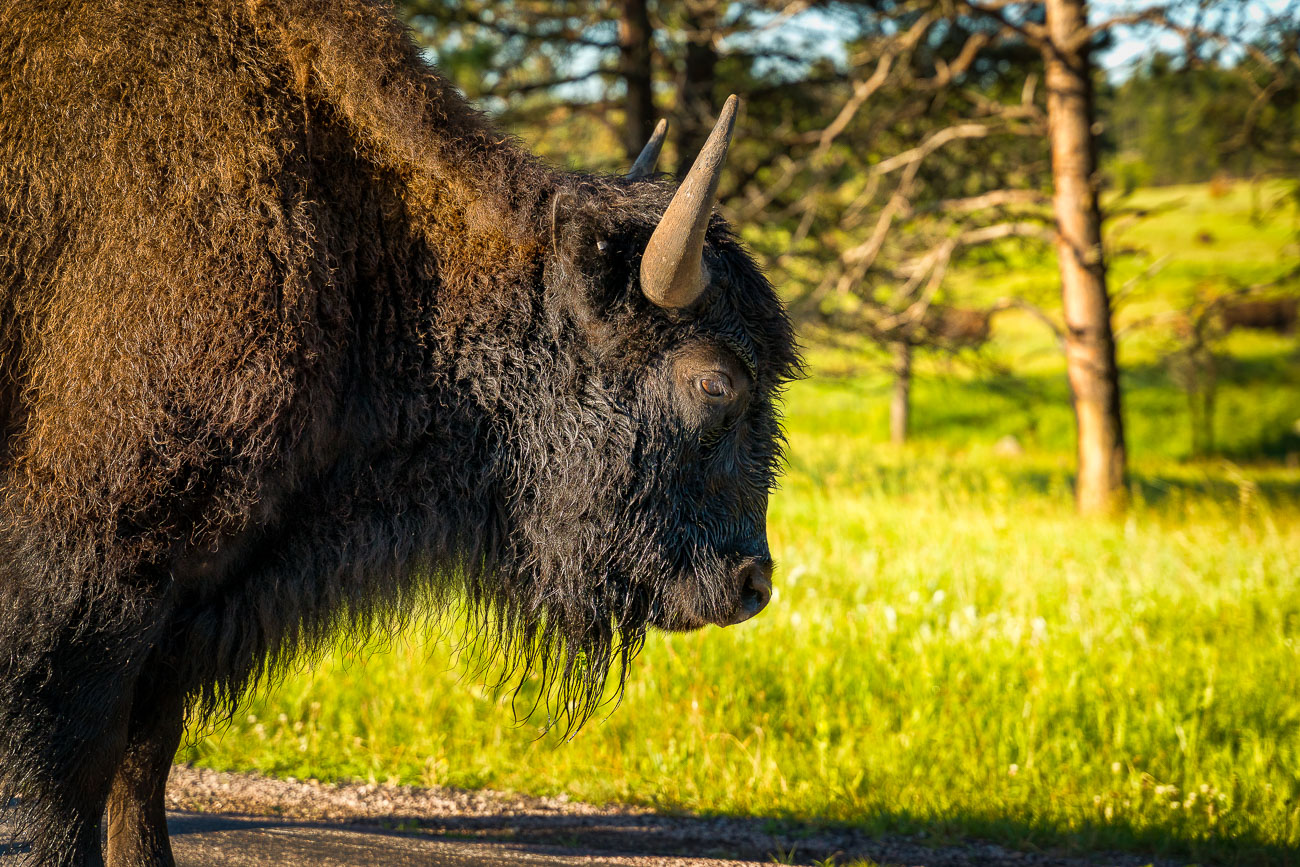
American bison stands on Wildlife Loop Road in Custer State Park, South Dakota.
American bison graze along Wildlife Loop Road, an 18-mile route through Custer State Park in the Black Hills of South Dakota. The park maintains a herd of roughly 1,300 bison, one of the largest publicly held herds in the world, descended from animals reintroduced in 1914 after the species neared extinction on the Great Plains. Each September, the park holds its annual Buffalo Roundup, drawing thousands of spectators to watch cowboys and volunteers drive the herd across the prairie for health checks and population management. Bison bulls can weigh up to 2,000 pounds, and their grazing patterns help sustain the mixed-grass prairie that defines much of the park's 71,000 acres.

American Bison on Wildlife Loop Road in Custer State Park
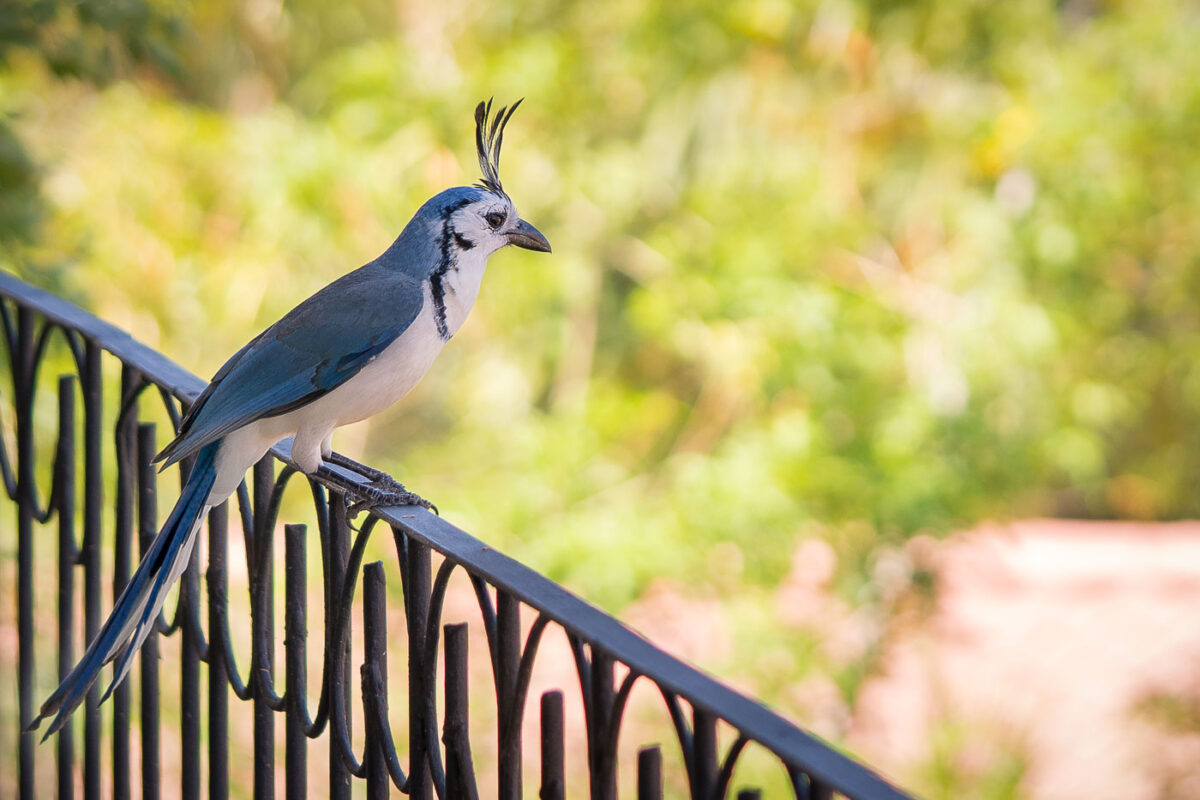
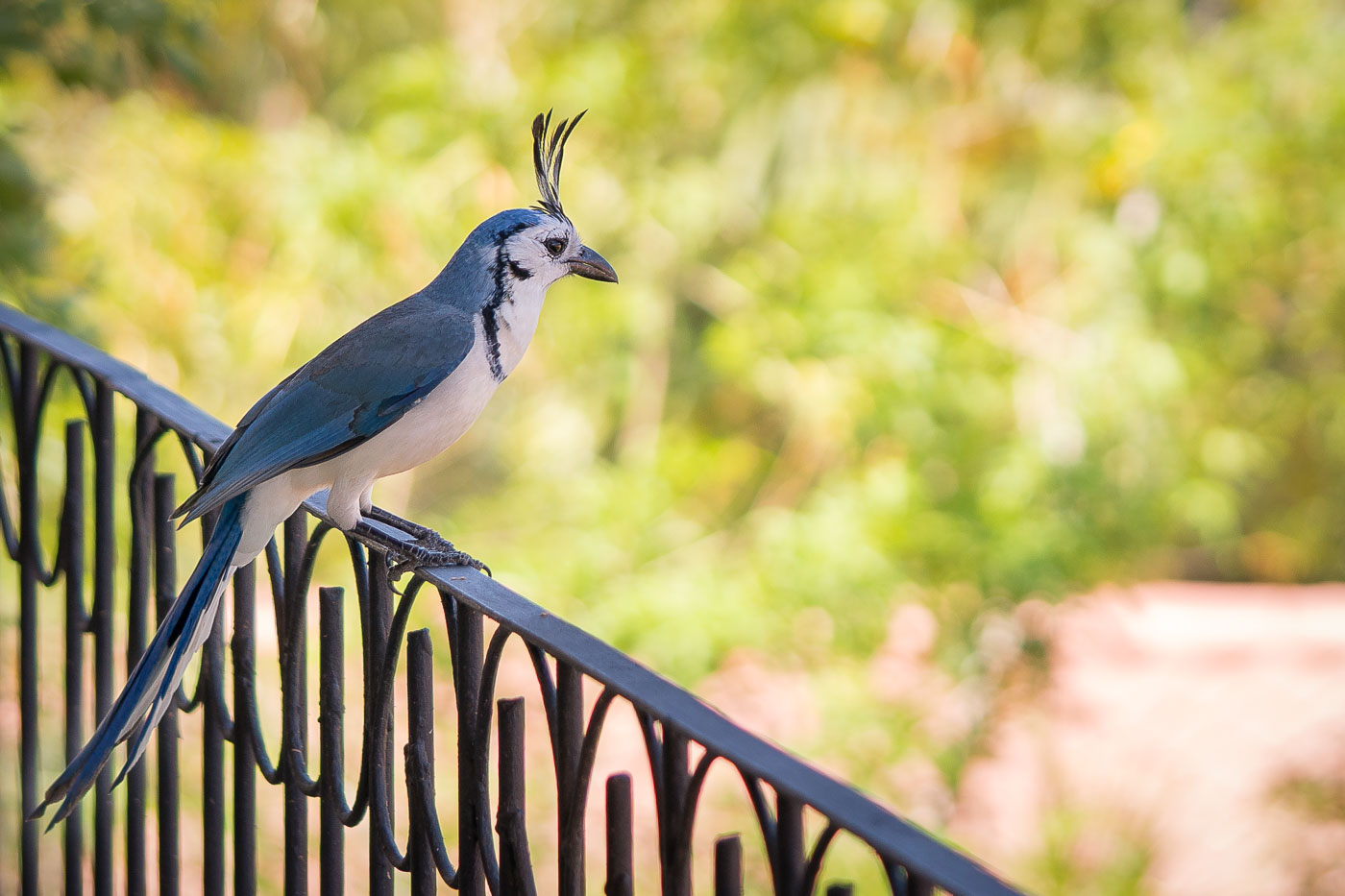
White-throated Magpie-Jay with distinctive crest perched on wrought-iron fence in Costa Rica.
The white-throated magpie-jay is a large jay native to the Pacific slope of Central America, ranging from southern Mexico into northwestern Costa Rica. It's easily identified by its long, graduated tail, curled forward-facing crest feathers, and the blue-and-white plumage with a dark necklace marking across the chest. The species favors dry forest and scrubland, and it has adapted readily to gardens, farms, and developed areas within its range. Magpie-jays are highly social, often traveling and foraging in small family groups that cooperate in raising young from previous broods.

White-throated Magpie-Jay on an Iron Railing in Guanacaste
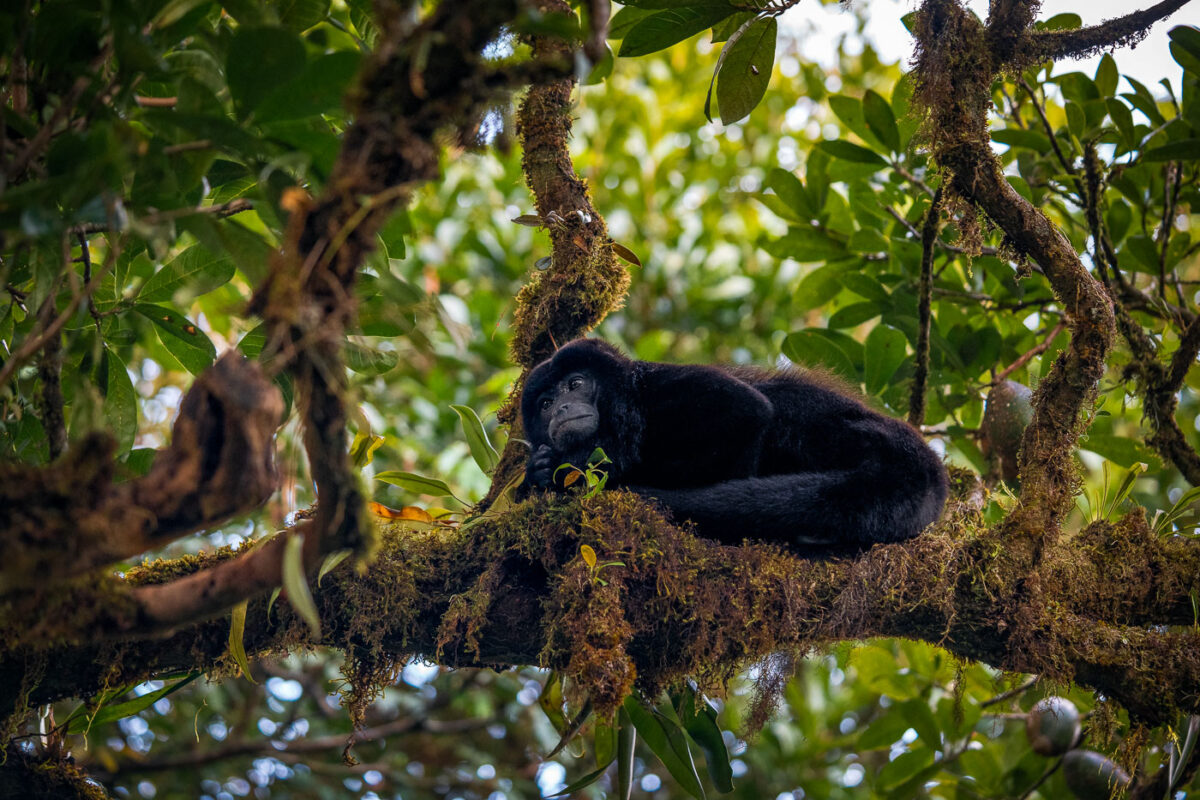
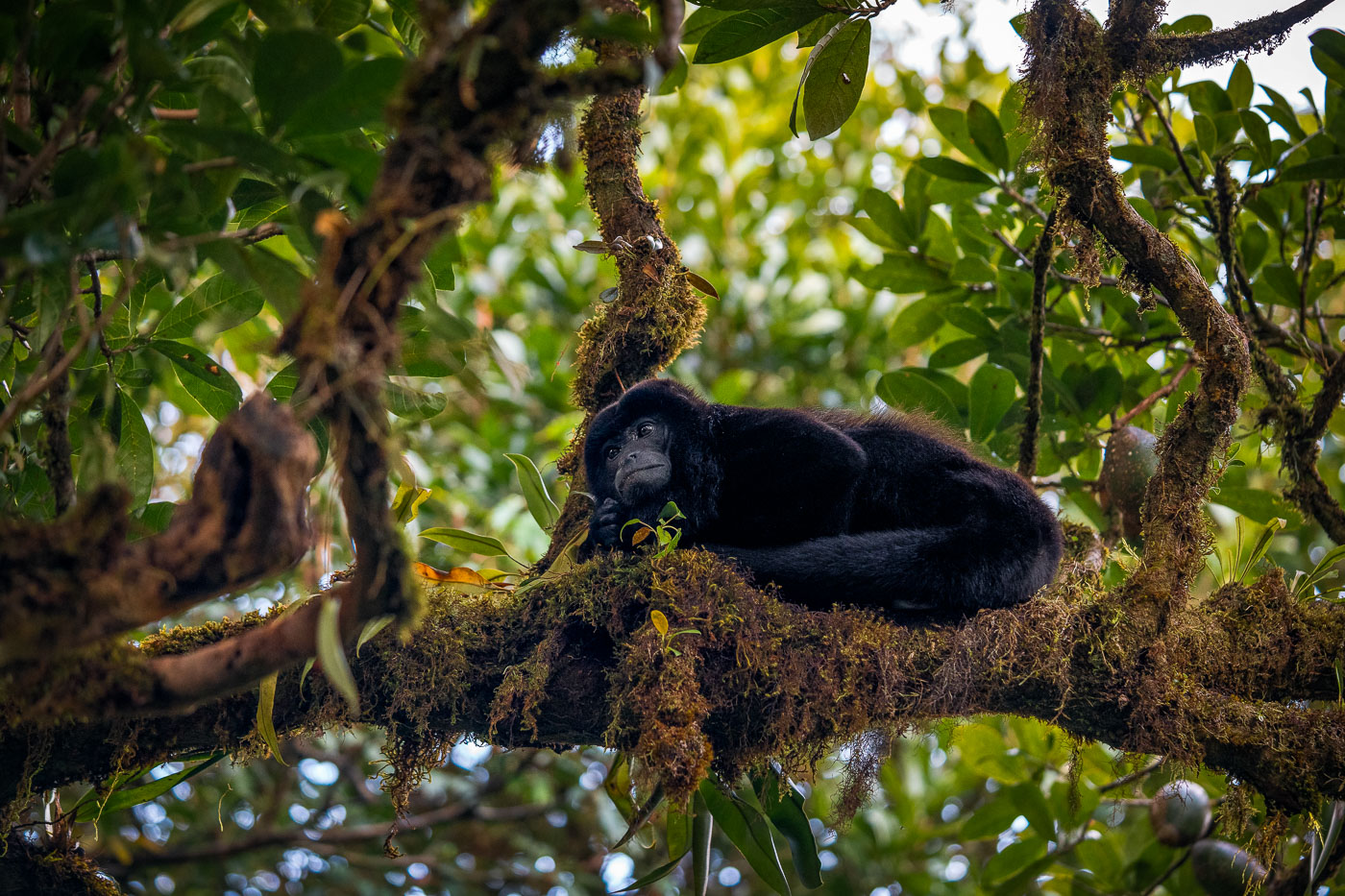
A black howler monkey rests on moss-covered branches in the canopy of a Costa Rican cloud forest.
This is a mantled howler monkey, Alouatta palliata, the species found in Costa Rica's cloud forests rather than the black howler, which ranges farther south. Adult males can weigh up to 9 kilograms and are among the loudest land animals, with calls audible up to five kilometers through dense canopy via an enlarged hyoid bone that amplifies sound. Mantled howlers spend most of their lives in the forest canopy, rarely descending to the ground, and rely on a prehensile tail that can support their full body weight on branches. Their diet is mostly leaves supplemented with fruit and flowers, an adaptation that requires long rest periods to digest tough, low-calorie foliage. The species is listed as vulnerable by the IUCN, with habitat fragmentation from deforestation posing its main threat across Central America.

Howler Monkey Curled on a Mossy Limb in Monteverde
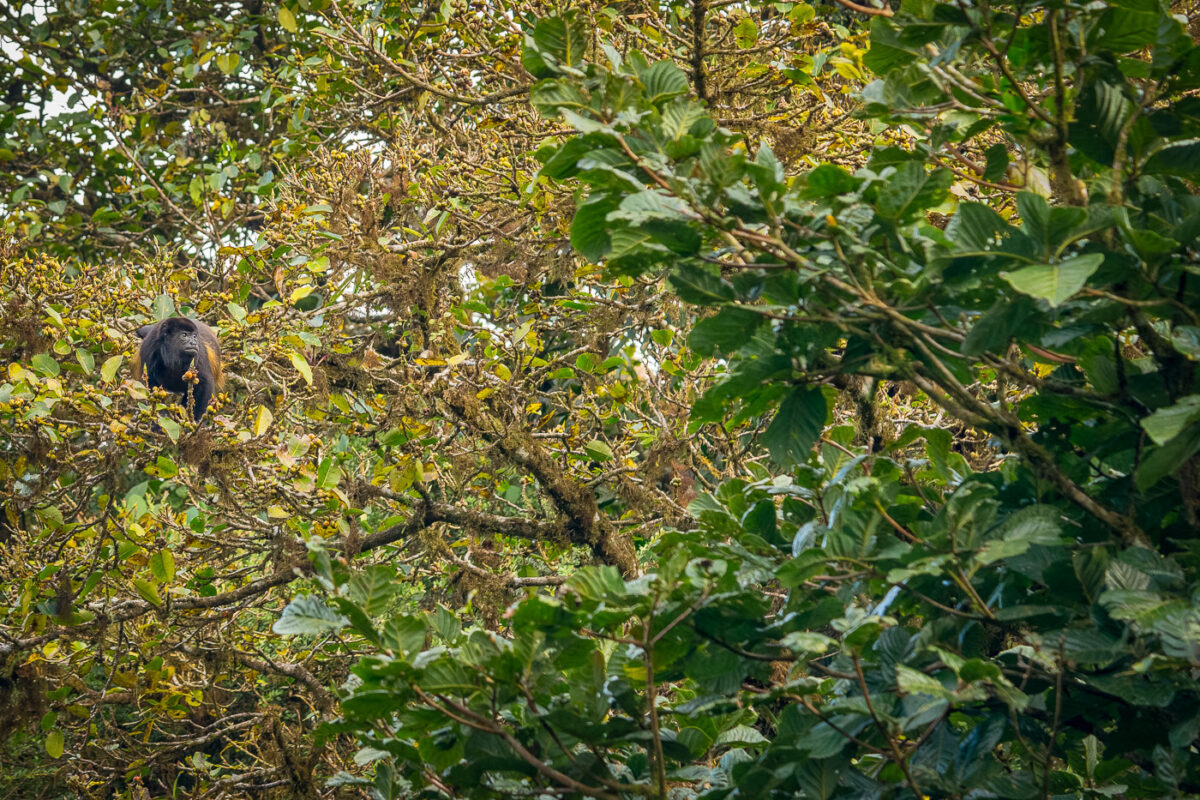
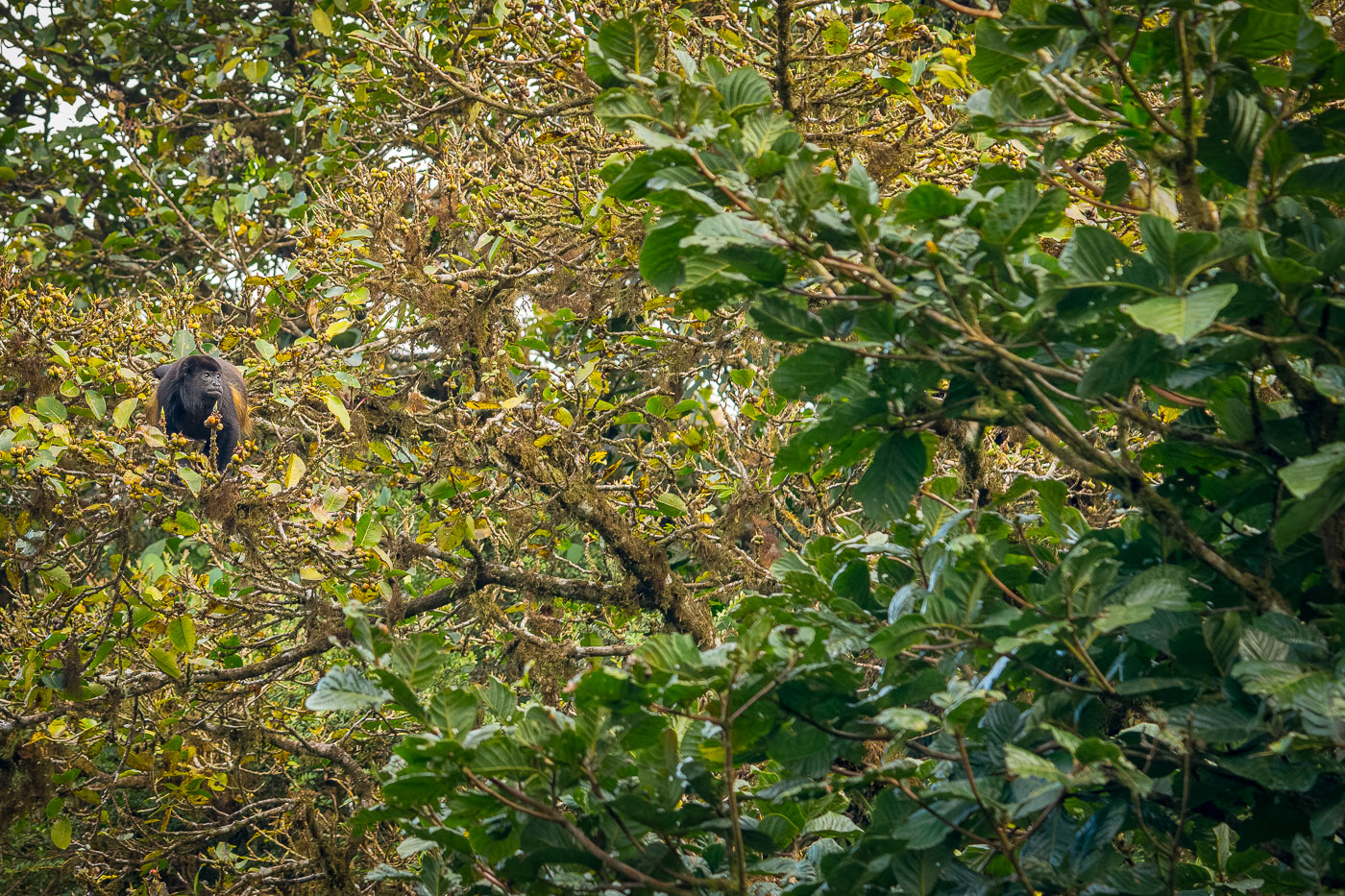
A howler monkey perches in dense canopy branches and foliage in Costa Rica's rainforest.
The mantled howler (Alouatta palliata) is among the loudest land animals on Earth, with males producing calls audible up to three miles away through a specialized, enlarged hyoid bone in the throat. Troops in Costa Rica's cloud forests typically number between six and fifteen and rarely descend to the ground, spending nearly their entire lives in the upper canopy. Their diet consists mainly of leaves supplemented with fruit and flowers, and slow, deliberate movement helps them conserve energy from this low-calorie food source. The species is listed as Vulnerable by the IUCN, with habitat fragmentation posing the primary threat to populations in Costa Rica's forest reserves.

Howler Monkey Feeding in Monteverde’s Canopy
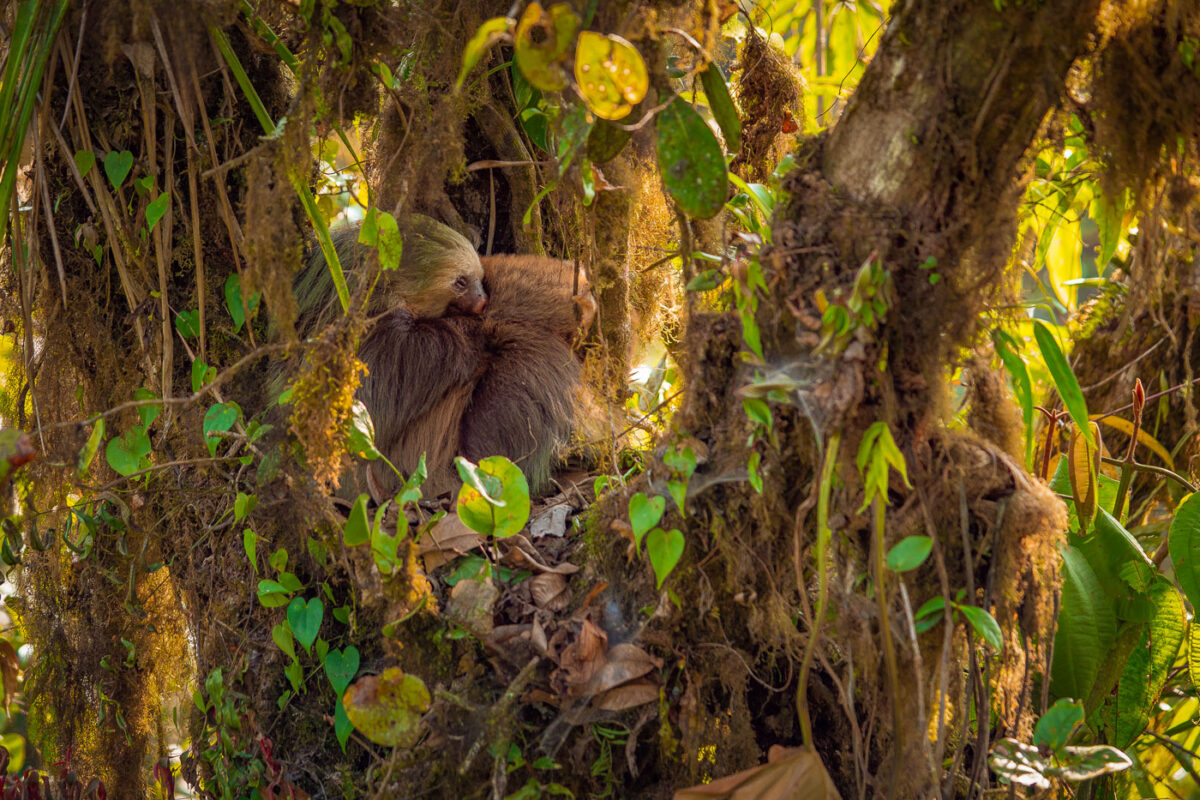
Two sloths rest in moss-covered tree branches surrounded by dense vegetation in Monteverde Cloud Forest, Costa Rica.
Hoffmann's two-toed sloths are among the mammals found in the Monteverde Cloud Forest Reserve, a protected area that spans roughly 10,500 hectares across Costa Rica's Tilarán mountain range. Unlike Costa Rica's other common sloth species, the brown-throated three-toed sloth, Hoffmann's two-toed sloths are primarily nocturnal and spend much of the day curled into dense foliage or epiphyte clusters high in the canopy. Females often carry and nurse a single offspring for up to a year, with young sloths clinging to the mother's fur until they're large enough to forage independently. The reserve's constant moisture and cloud cover support the thick moss and epiphyte growth that gives sloths cover and camouflage from predators like harpy eagles.

Two-Toed Sloths Nestled in Monteverde’s Mossy Canopy
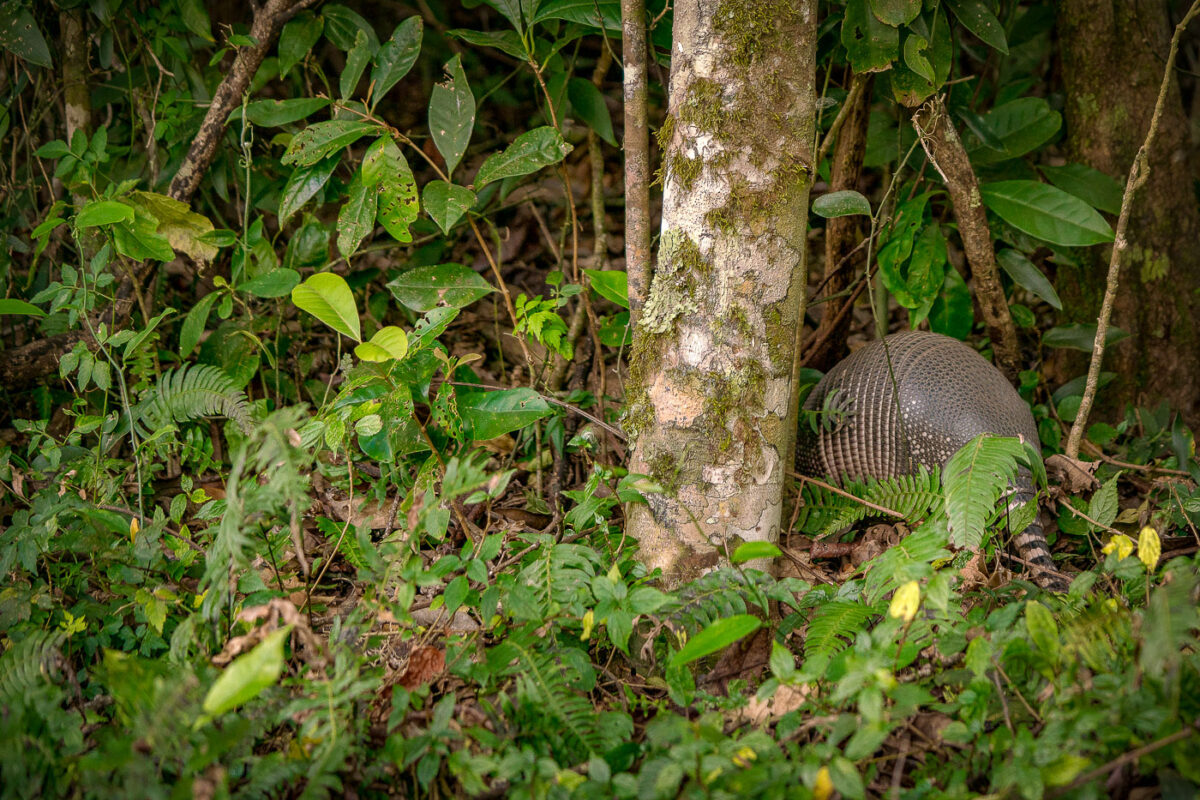
An armadillo forages through dense undergrowth in the Monteverde Cloud Forest Biological Preserve, Costa Rica.
The nine-banded armadillo is the species most likely to turn up along the forest floor at Monteverde, foraging through leaf litter for insects, grubs, and small invertebrates. It's the only armadillo species found as far north as the United States, but in Costa Rica it ranges through both lowland and highland forest, including the cloud forest habitat around Monteverde. The animal's banded armor is made of bony plates called osteoderms, covered in keratin, which allow it to flex while it digs and burrows. Mostly nocturnal or active at dawn and dusk, it relies on a strong sense of smell rather than eyesight to locate food, since armadillos see poorly.

Nine-Banded Armadillo Foraging Near Monteverde, Costa Rica
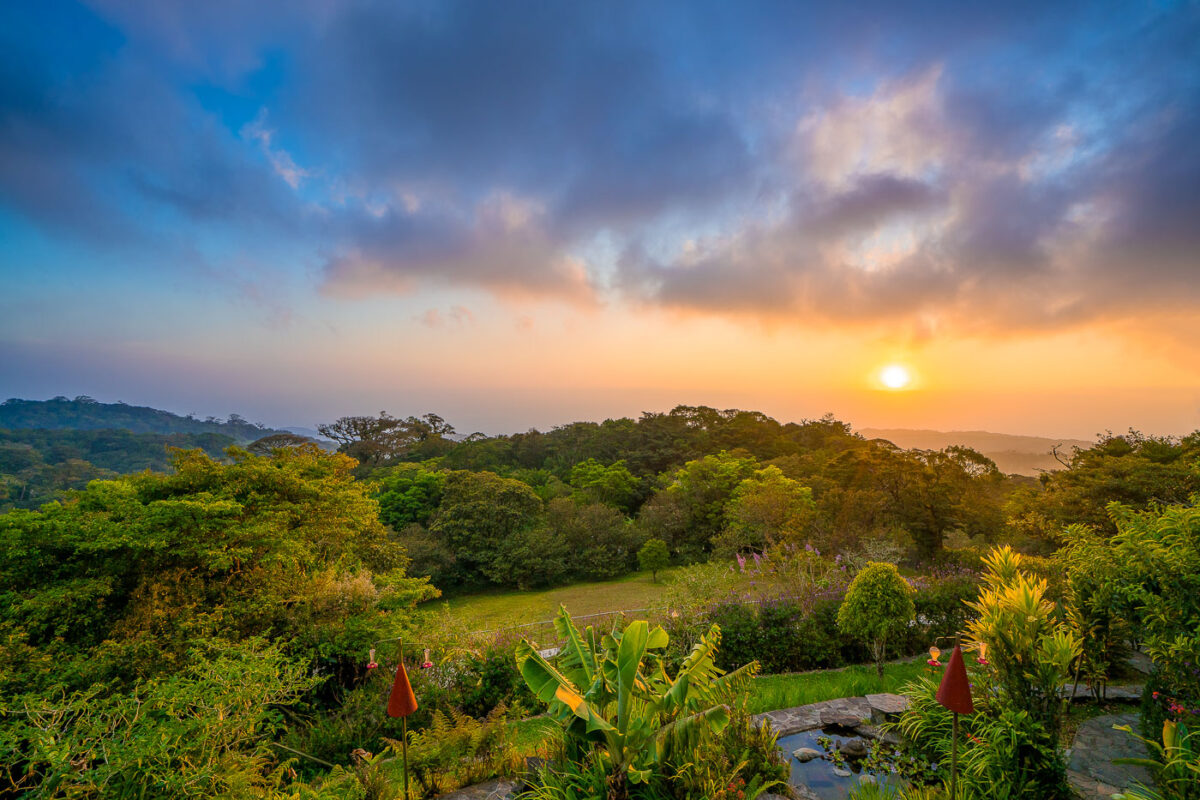
Monteverde Cloud Forest in Costa Rica at sunset, with flowering plants in foreground and forested hills beneath golden sky.
Monteverde sits along Costa Rica's Tilarán Cordillera, where trade winds off the Caribbean push moisture up the slopes and condense into the near-constant mist that gives the cloud forest its name. The Monteverde Cloud Forest Reserve, established in 1972, protects roughly 10,500 hectares and spans six distinct ecological zones across an elevation range of about 1,440 to 1,800 meters. That shift in elevation and moisture supports more than 2,500 plant species, including over 400 types of orchids, along with some 100 mammal species and 400 bird species, among them the resplendent quetzal. Quaker settlers and conservationists who arrived in the 1950s helped set aside the original forest tract, a decision credited with starting the region's long-running ecotourism economy.

Sunset Over the Treetops at Monteverde
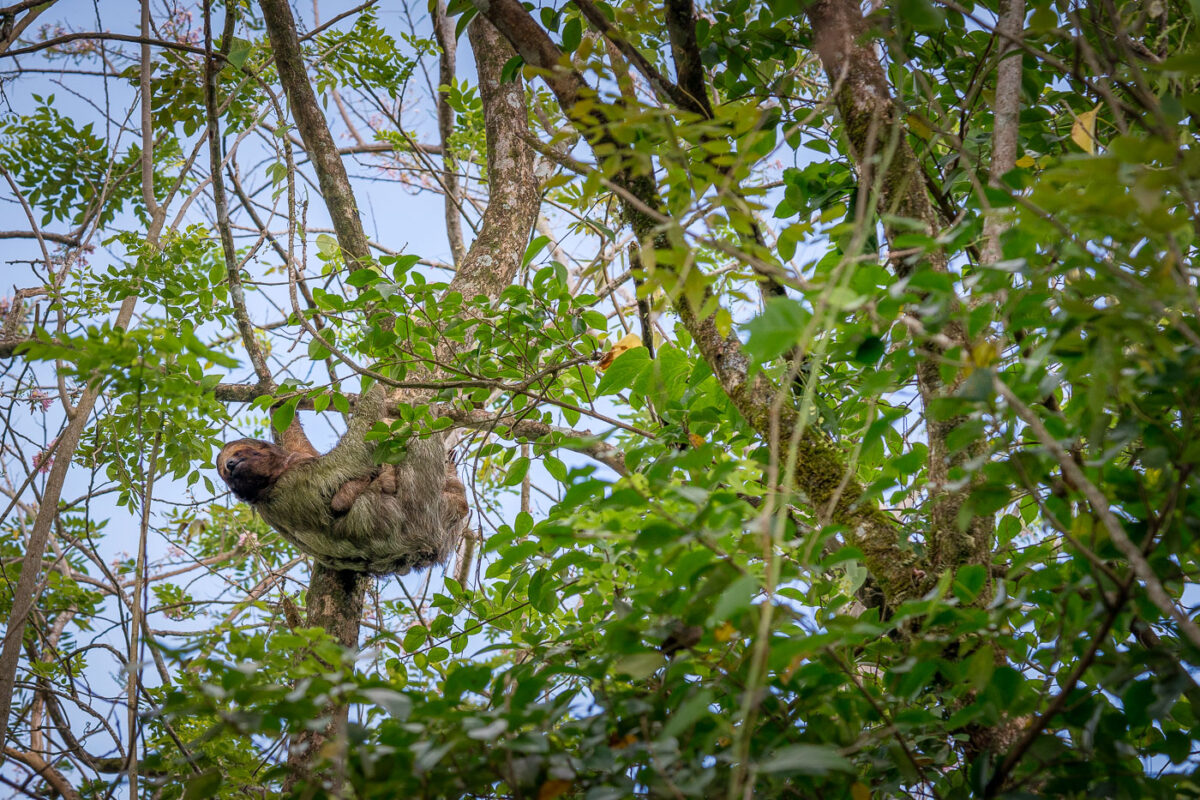
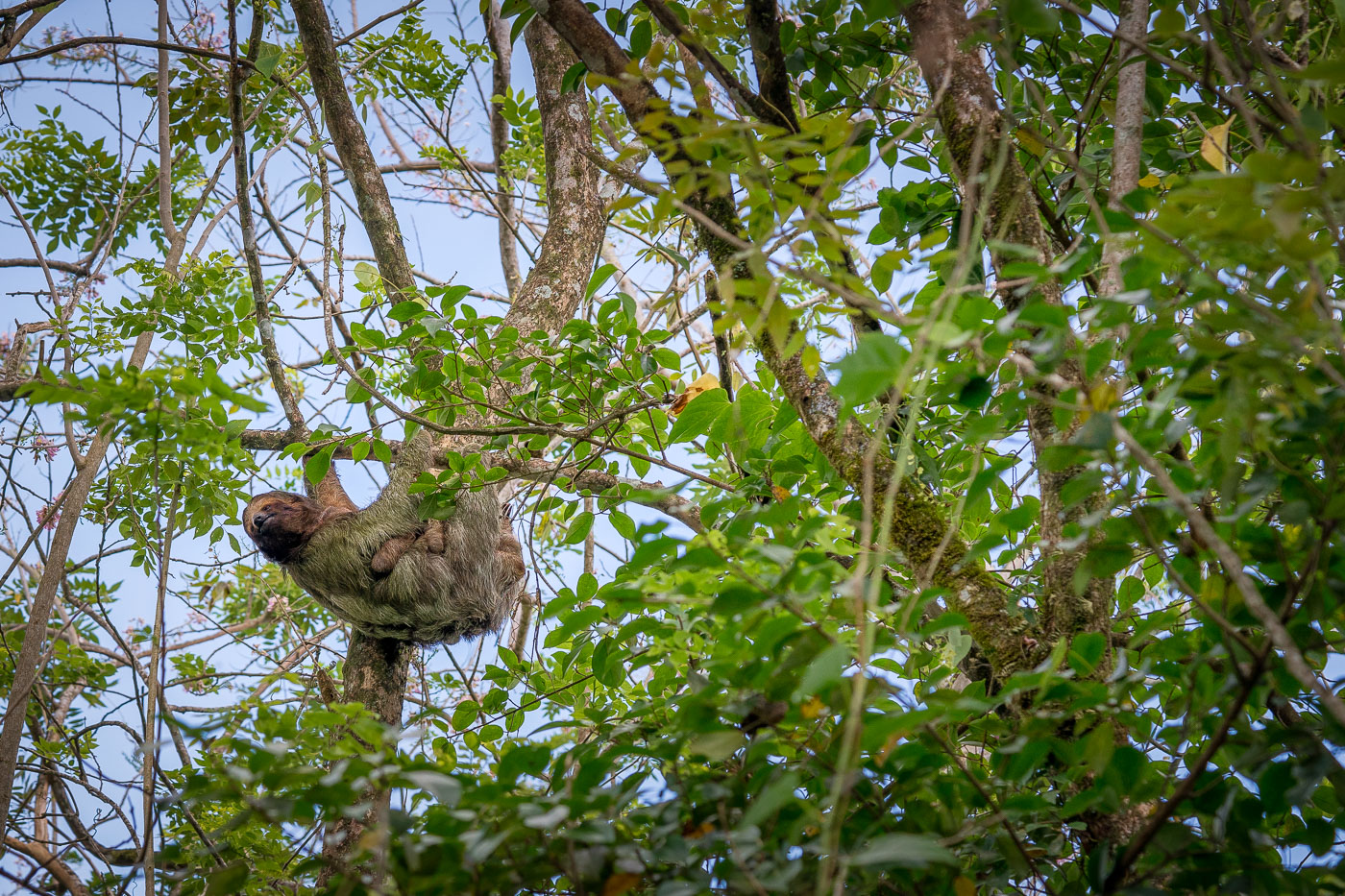
A three-toed sloth with its infant hangs from tree branches in Costa Rica's rainforest canopy.
Costa Rica is home to two sloth species: the brown-throated three-toed sloth (Bradypus variegatus) and Hoffmann's two-toed sloth (Choloepus hoffmanni). Females carry their young on their belly for several months after birth, as the infant lacks the strength to move independently through the canopy. Sloths spend nearly all their lives in trees, descending to the ground only about once a week to defecate. Algae growing in their fur gives many a greenish tint that helps camouflage them from predators like harpy eagles and jaguars.

Mother Sloth with Baby Clinging to a Costa Rican Treetop
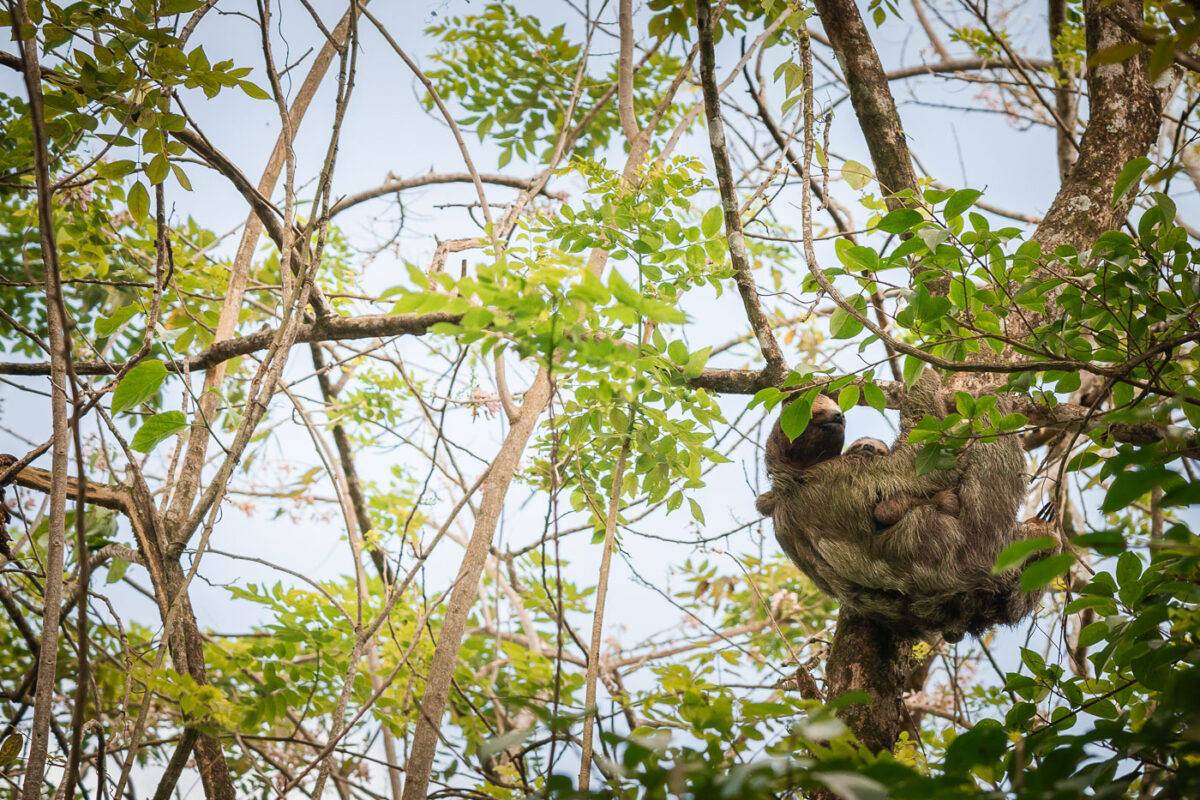
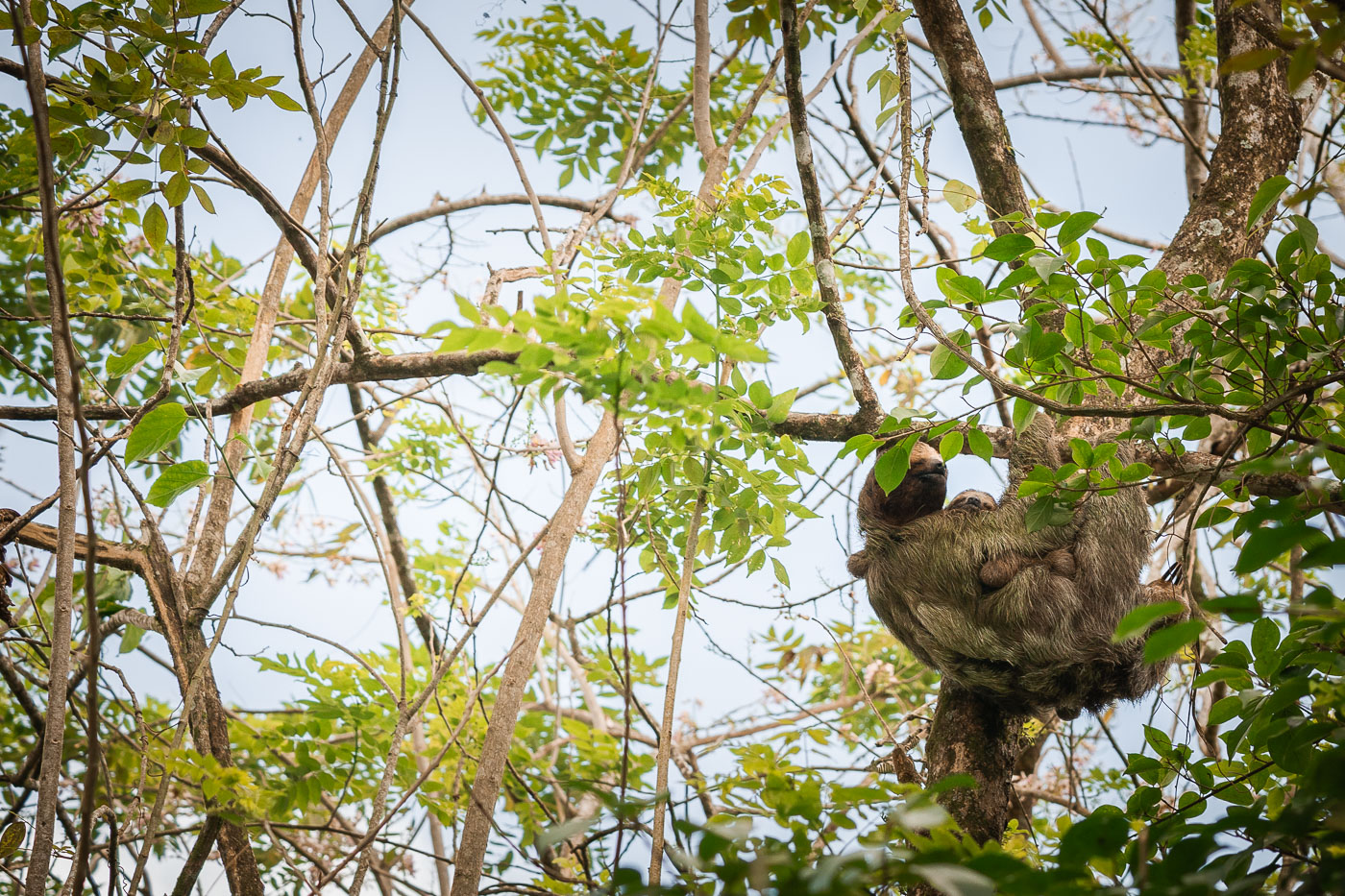
A mother sloth and her baby cling to a tree branch in Costa Rica's tropical forest canopy.
Costa Rica is home to two sloth species: the brown-throated three-fingered sloth and Hoffmann's two-fingered sloth. Both are arboreal and spend the majority of their lives in tree canopies, descending to the ground only about once a week to defecate. Females carry their young continuously for the first several months, with the infant clinging to the mother's belly as she moves slowly through the branches. Sloths have an exceptionally slow metabolism tied to a leaf-based diet, which is low in calories and difficult to digest, and this pace allows them to conserve energy while avoiding the attention of predators like harpy eagles.

Mother Sloth and Baby High in a Costa Rican Tree

A brown cow faces the camera in a pasture in Alajuela Province, Costa Rica.
Alajuela Province sits in Costa Rica's Central Valley and northern lowlands, an area long given over to coffee farms, sugarcane, and cattle ranching. Brahman and Brahman-cross cattle, recognizable by their drooping ears and loose dewlap, are common on small Costa Rican farms because the breed tolerates heat and humidity better than European cattle. Barbed-wire fencing of the kind used here is the standard method for dividing pasture land on family-run fincas throughout the region.

Young Cow at a Farm Fence in Alajuela Province

Cavalier King Charles Spaniel resting on a couch.
A Cavalier King Charles Spaniel rests on a couch. The breed originated in England and was developed as a companion dog, favored by King Charles II and other members of the aristocracy.

Cavalier King Charles Spaniel on a couch

Cavalier King Charles Spaniel portrait with large eyes and long ears.
Cavalier King Charles Spaniel portrait with a close view of the dog’s face and long ears. The breed is known for its large eyes and compact build.

Cavalier King Charles Spaniel Portrait
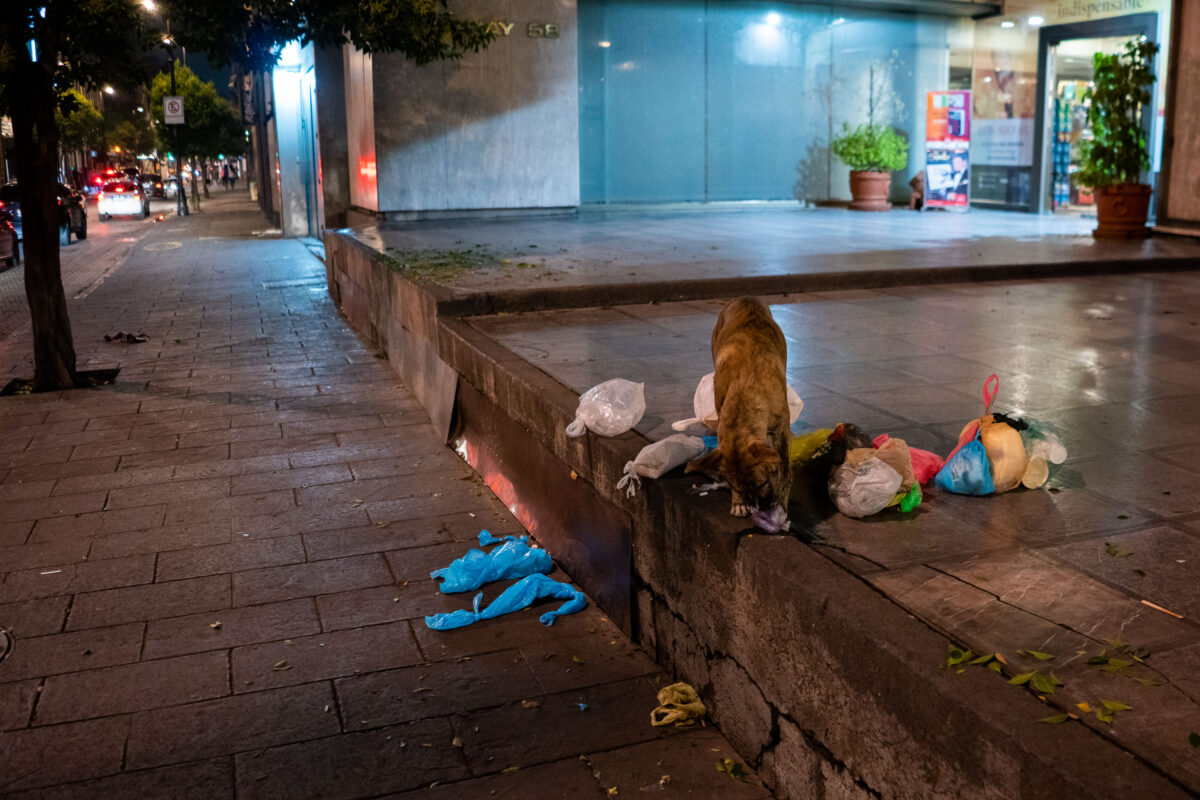
A brown stray dog scavenges through discarded plastic bags and trash on a nighttime Mexico City street.
Stray dogs are a common sight on the streets of Mexico City, where an estimated population in the millions lives without owners, according to city animal welfare estimates. Many survive by scavenging food waste left outside restaurants, storefronts, and market stalls. Mexico City's government has run sterilization and adoption campaigns for decades to manage the street dog population, though enforcement and resources vary by neighborhood. Discarded plastic bags and food scraps left curbside overnight remain a primary food source for animals living outside the formal shelter system.

Stray Dog Scavenging Trash on a Mexico City Sidewalk
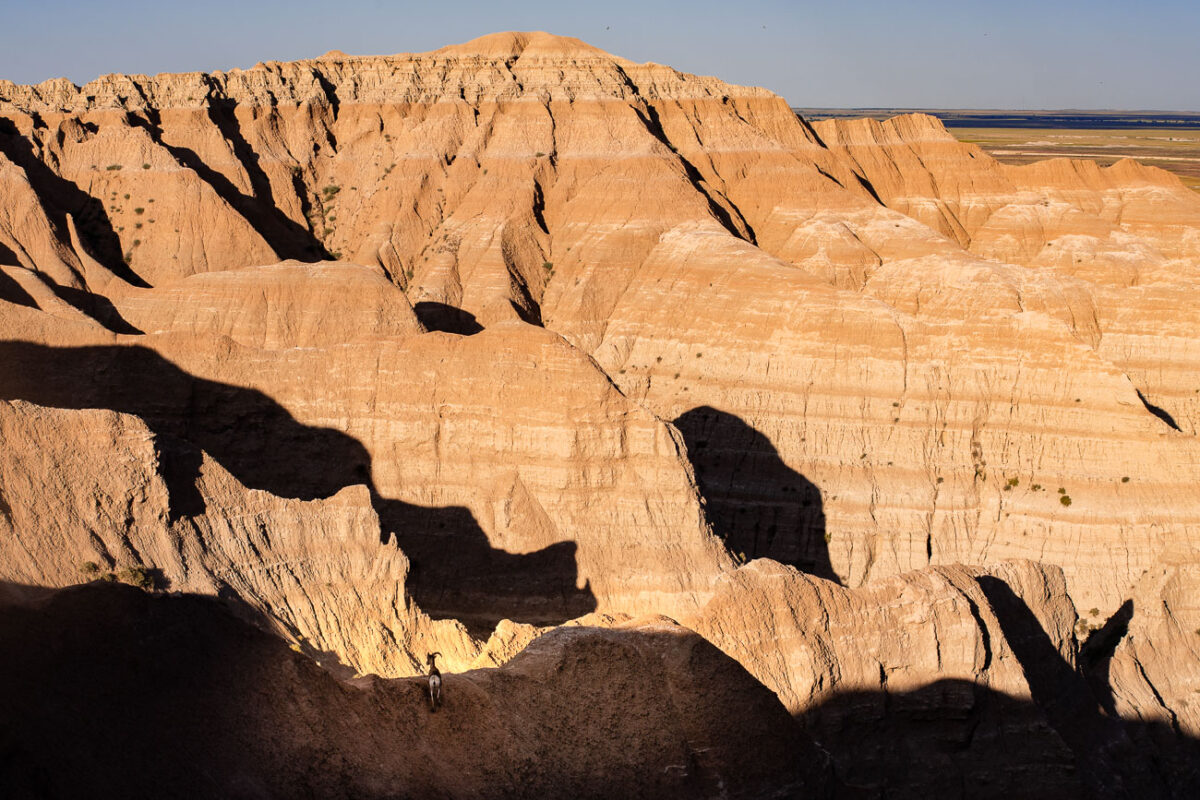
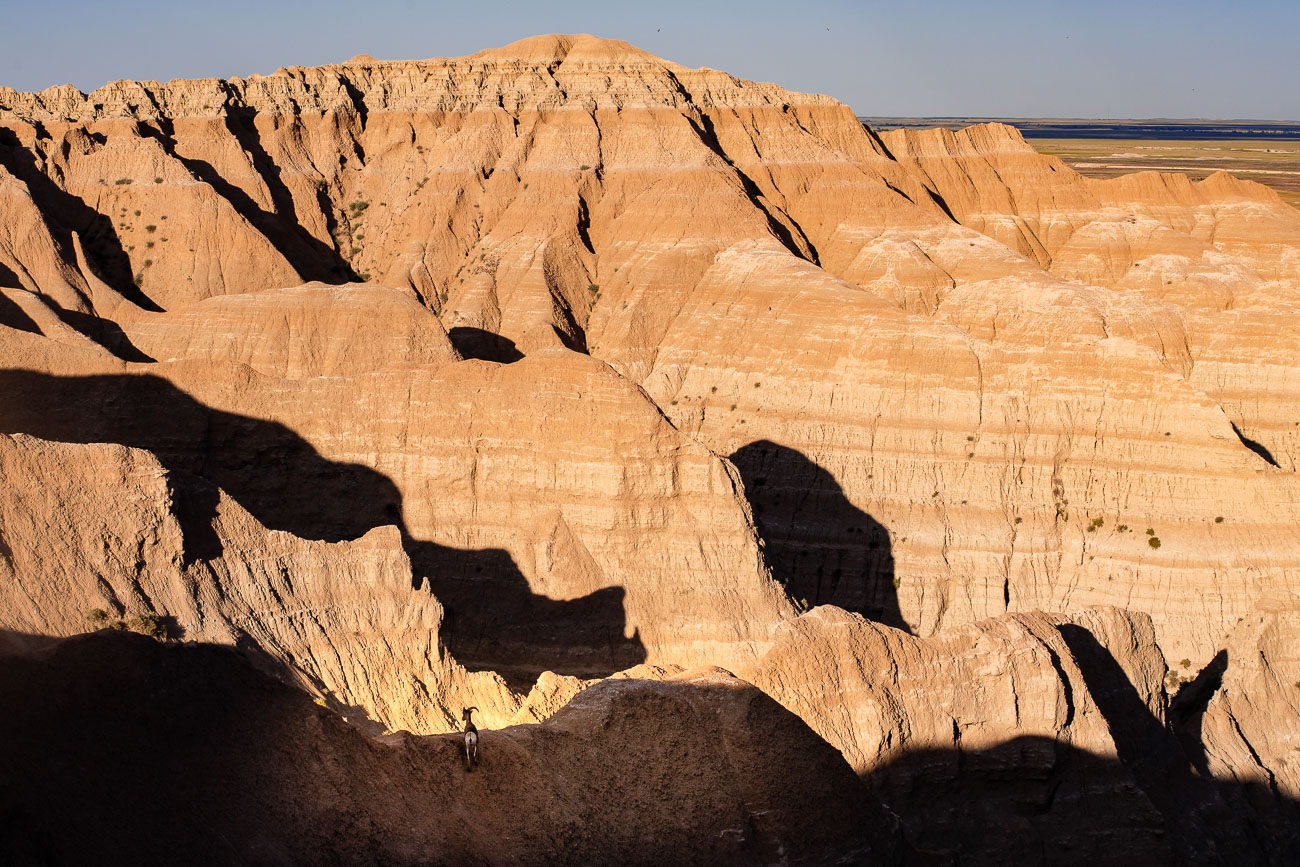
A bighorn sheep stands on a ridge below towering tan badlands formations in South Dakota.
Bighorn sheep inhabit the eroded cliffs and buttes of Buffalo Gap National Grassland in South Dakota. The grassland surrounds much of Badlands National Park and provides habitat for wildlife adapted to the rugged terrain.

A Lone Bighorn Sheep Among Badlands Shadows
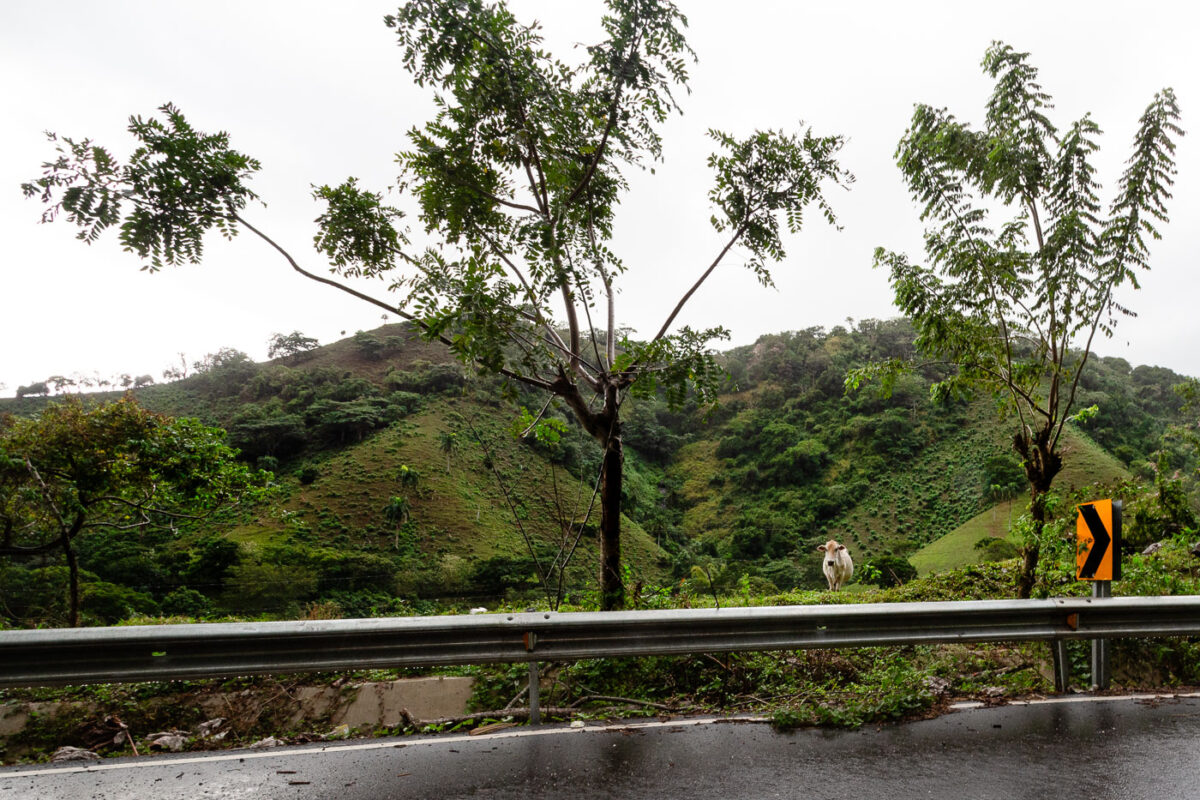
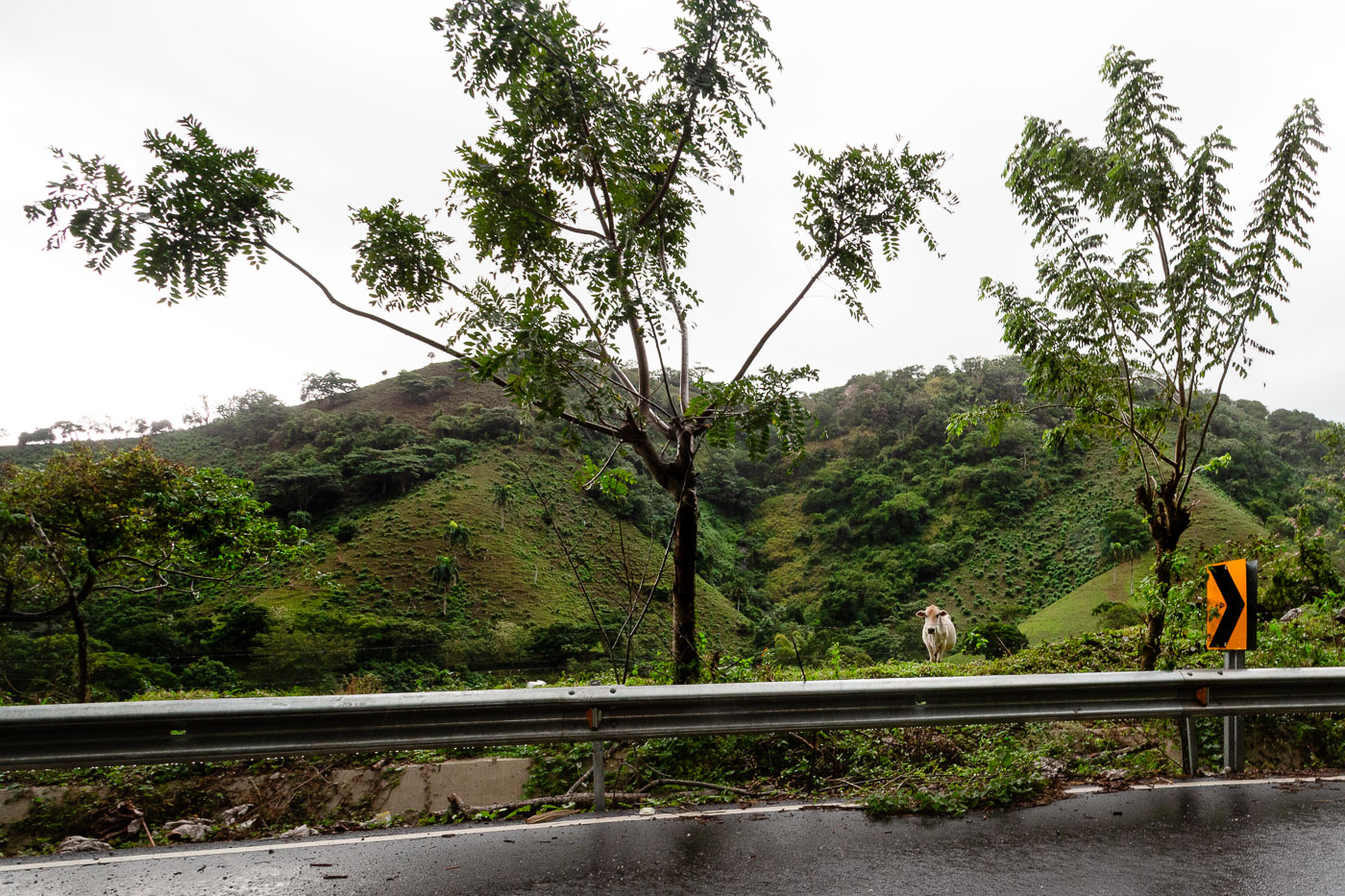
Cow grazing on hillside beside Highway 107 in El Seibo Province, Dominican Republic.
A cow stands on a hillside beside Highway 107 in El Seibo Province, Dominican Republic, near Los Brazos. A guardrail and chevron curve sign mark the road’s edge in steep terrain where pasture and forested slopes meet along the route.

Cow on a Hillside Near Los Brazos, El Seibo Province
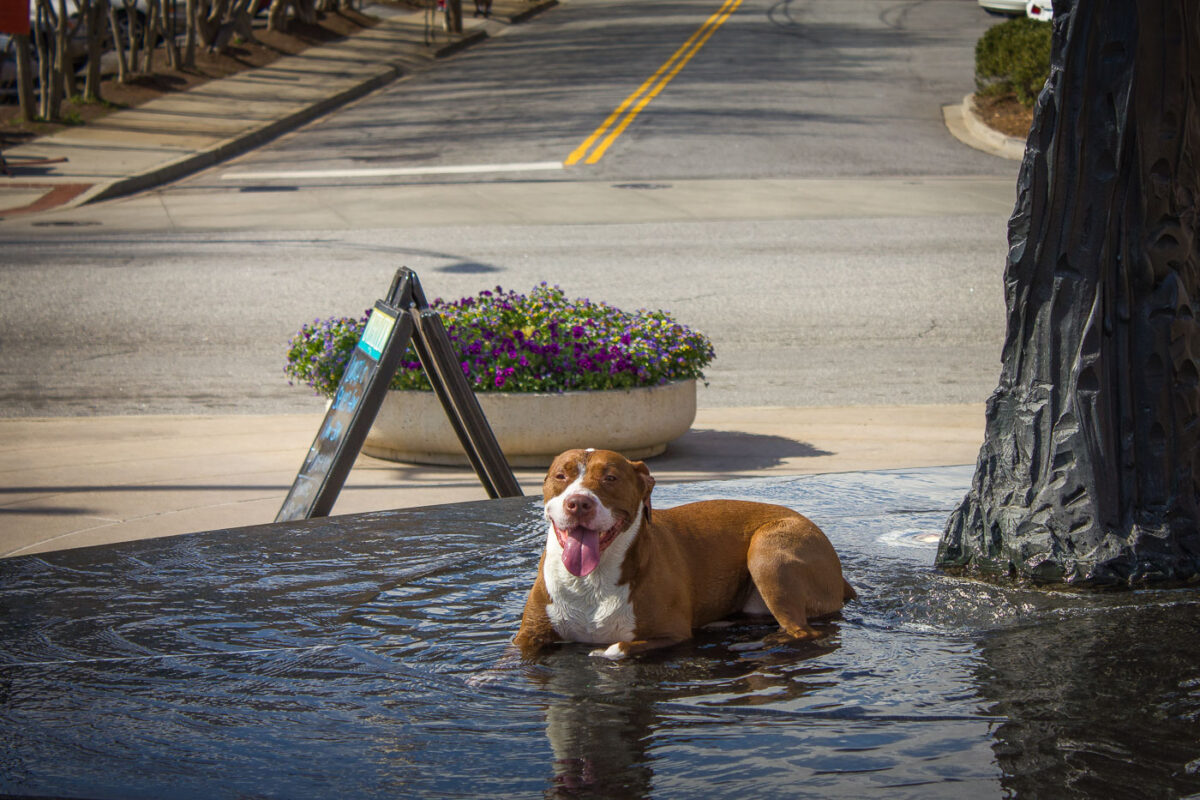
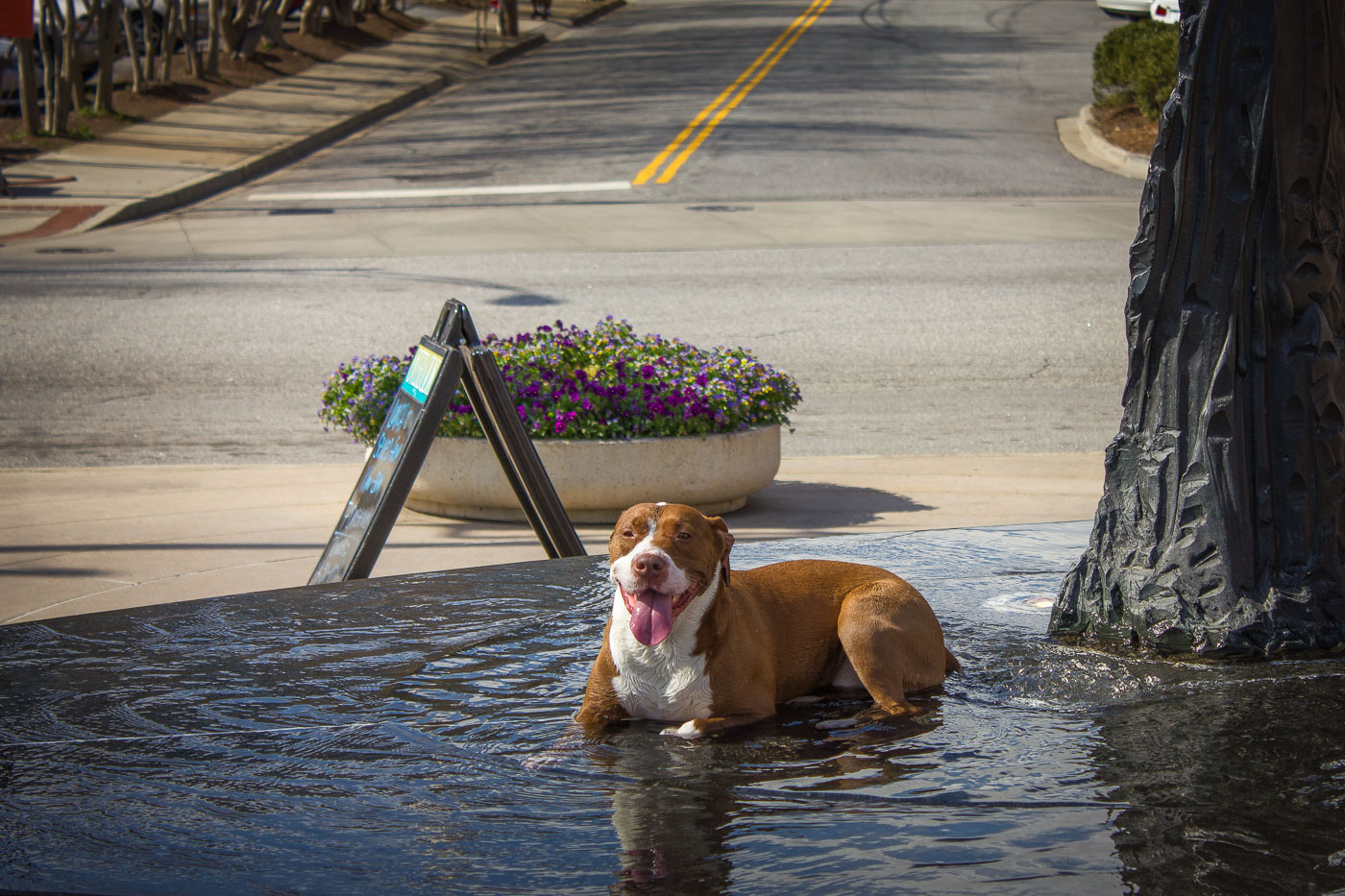
Brown and white dog cooling off in a water fountain in Greensboro, North Carolina.
A pit bull mix wades into a public fountain along a downtown Greensboro street, tongue out and soaking in the water. Downtown fountains like this one typically double as public art and informal cooling spots during warmer months, drawing both people and pets. The surrounding sidewalk planters and street furniture suggest a pedestrian-oriented commercial district designed for foot traffic.

Pit Bull Takes a Dip in a Downtown Greensboro Fountain
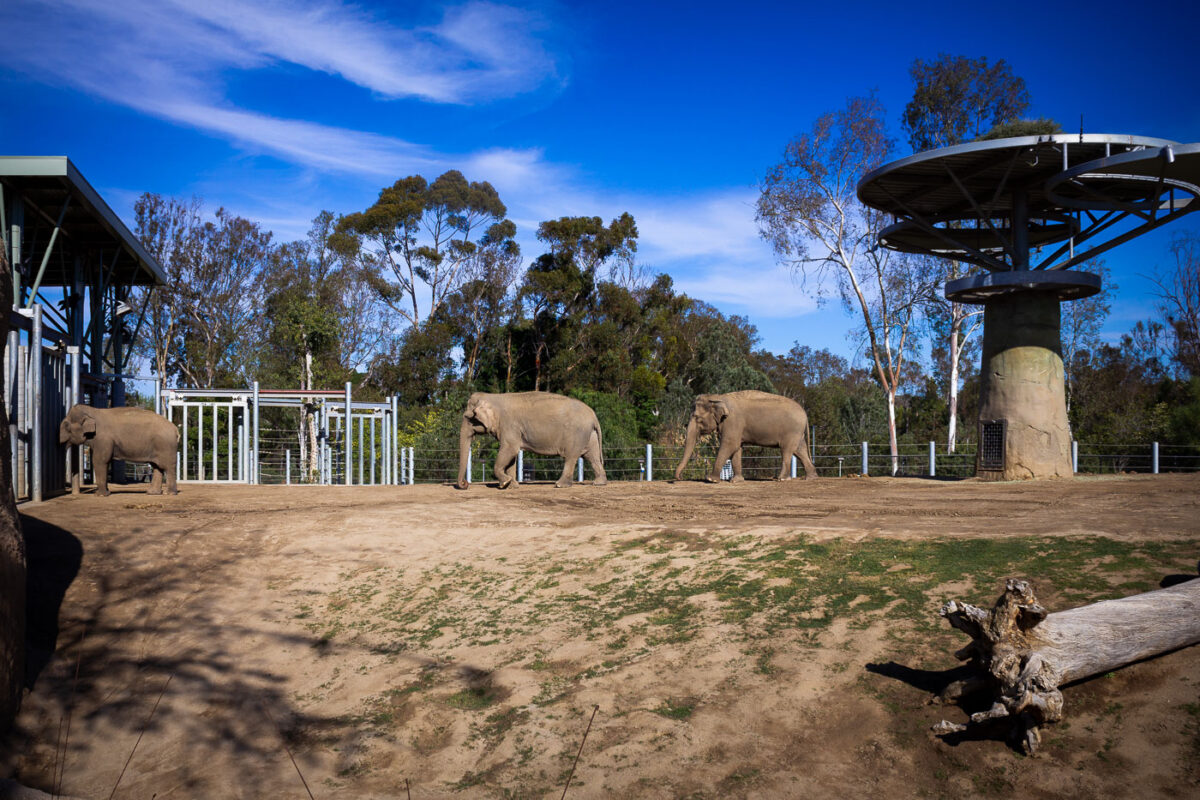
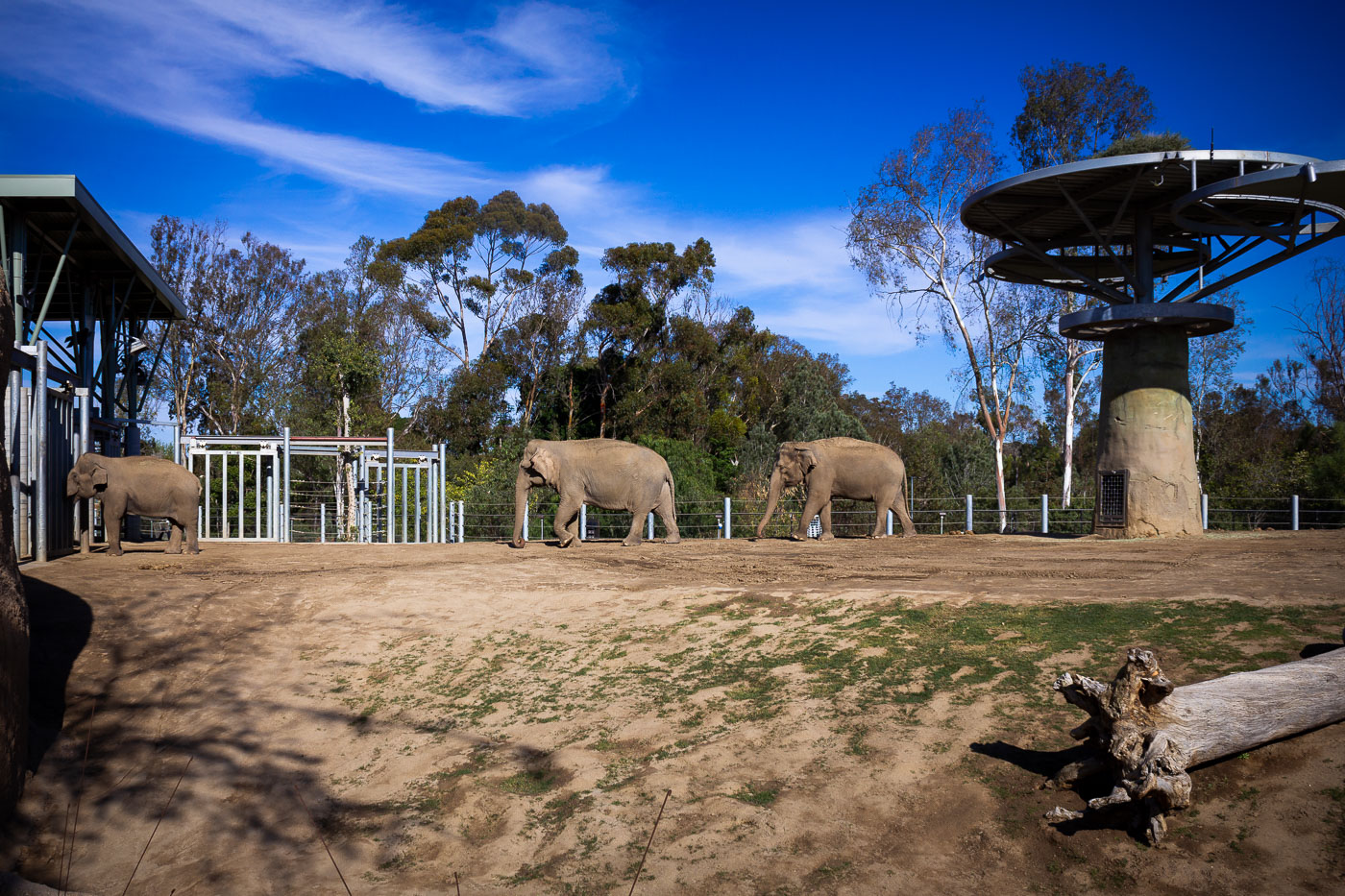
Four Asian elephants walk across a sandy enclosure at San Diego Zoo in California.
Elephant Odyssey is an eight acre exhibit at the San Diego Zoo in Balboa Park, built in 2009 to house the zoo's herd of Asian elephants. The habitat was designed with pools, mud wallows, and varied terrain to encourage the walking and foraging elephants do across large home ranges in the wild. Three elephants walk single file along the fence line while a younger one stays near the building behind them.

Elephant Odyssey Herd Walks Their Enclosure at the San Diego Zoo

Reddish-brown dachshund wearing a collar with bell sits on hardwood floor.
A dachshund wears a decorative collar with a bell attached. Dachshunds were originally bred in Germany for hunting badgers, their long bodies and short legs developed to navigate underground burrows. Today they are popular companion animals worldwide.

Dachshund with Bell Collar on Hardwood Floor
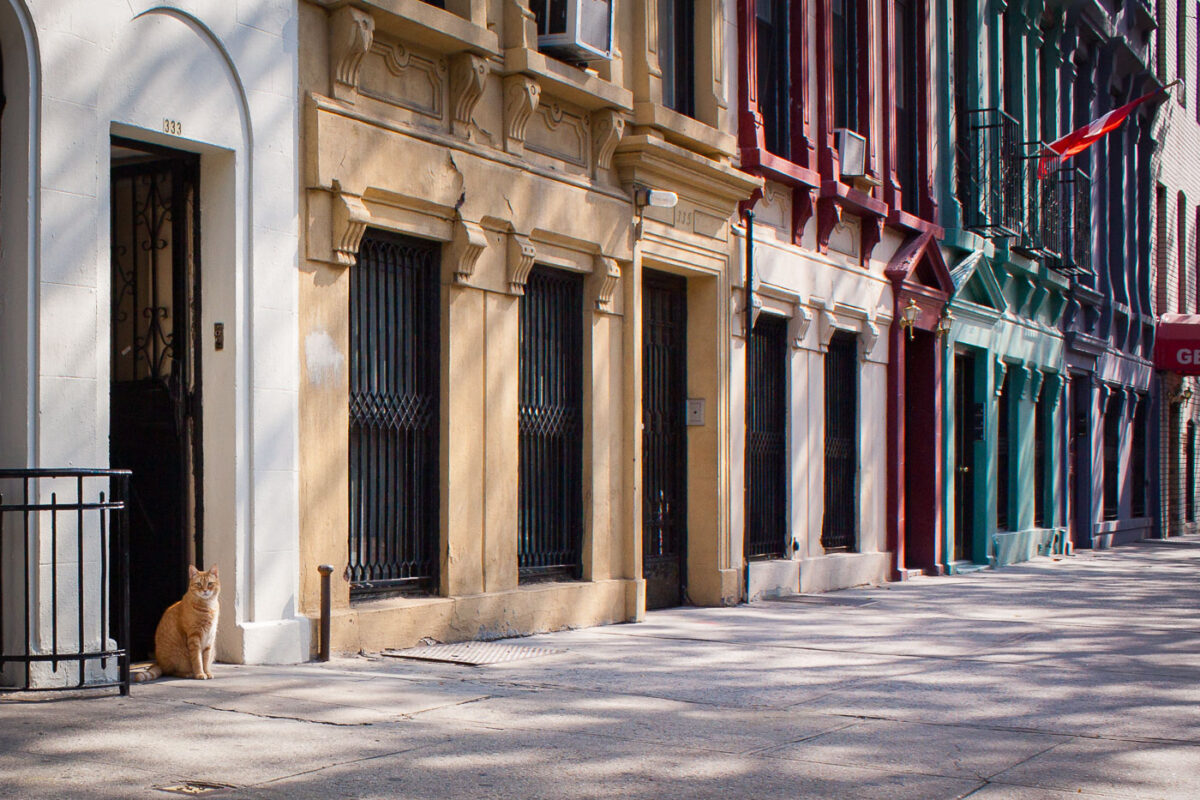
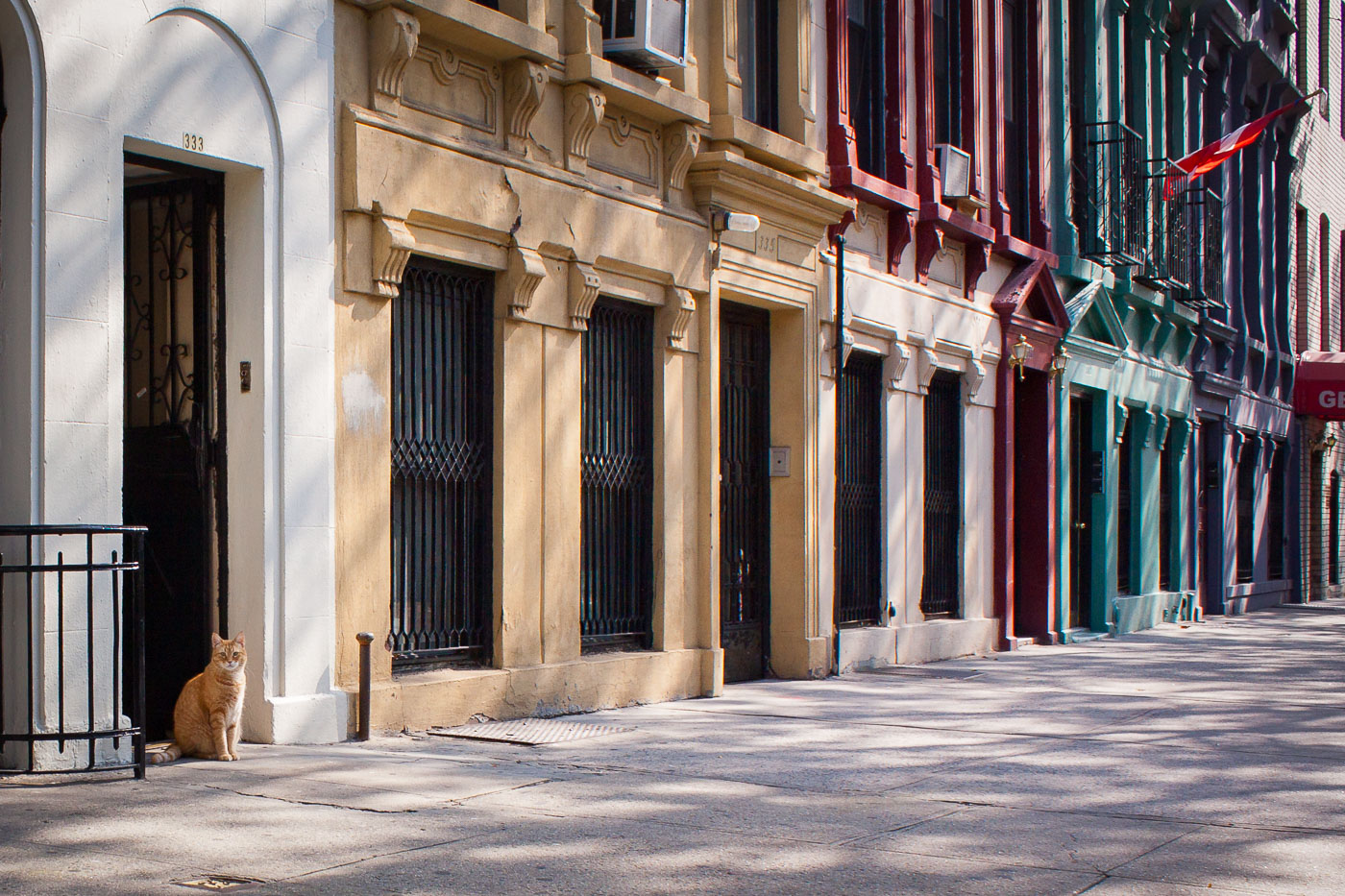
Orange cat sits outside 333 Manhattan Avenue, a row of colorful historic buildings in New York City.
An orange cat sits in the doorway of 333 Manhattan Avenue in New York City. The address is part of a row of attached buildings with varied storefront and residential facades. The cat and the numbered entrance identify the location more specifically than the surrounding block.

Ginger Cat in a Doorway at 333 Manhattan Avenue
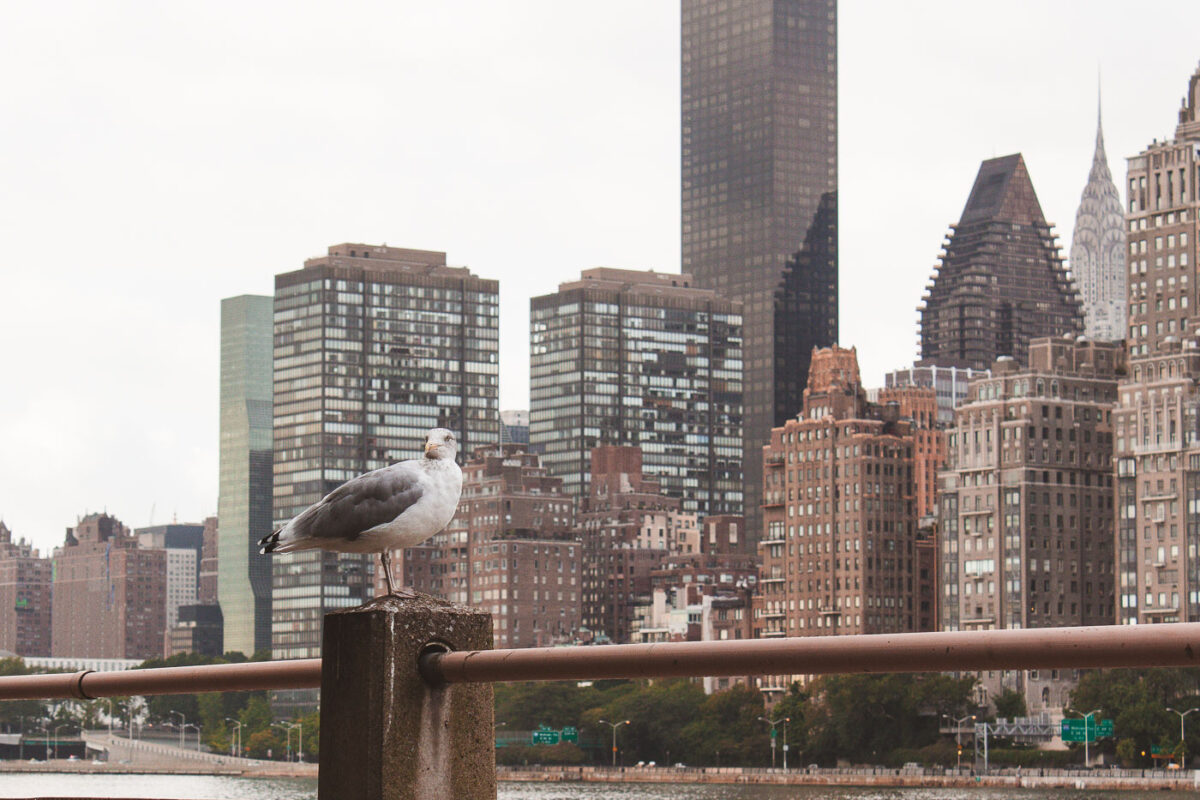
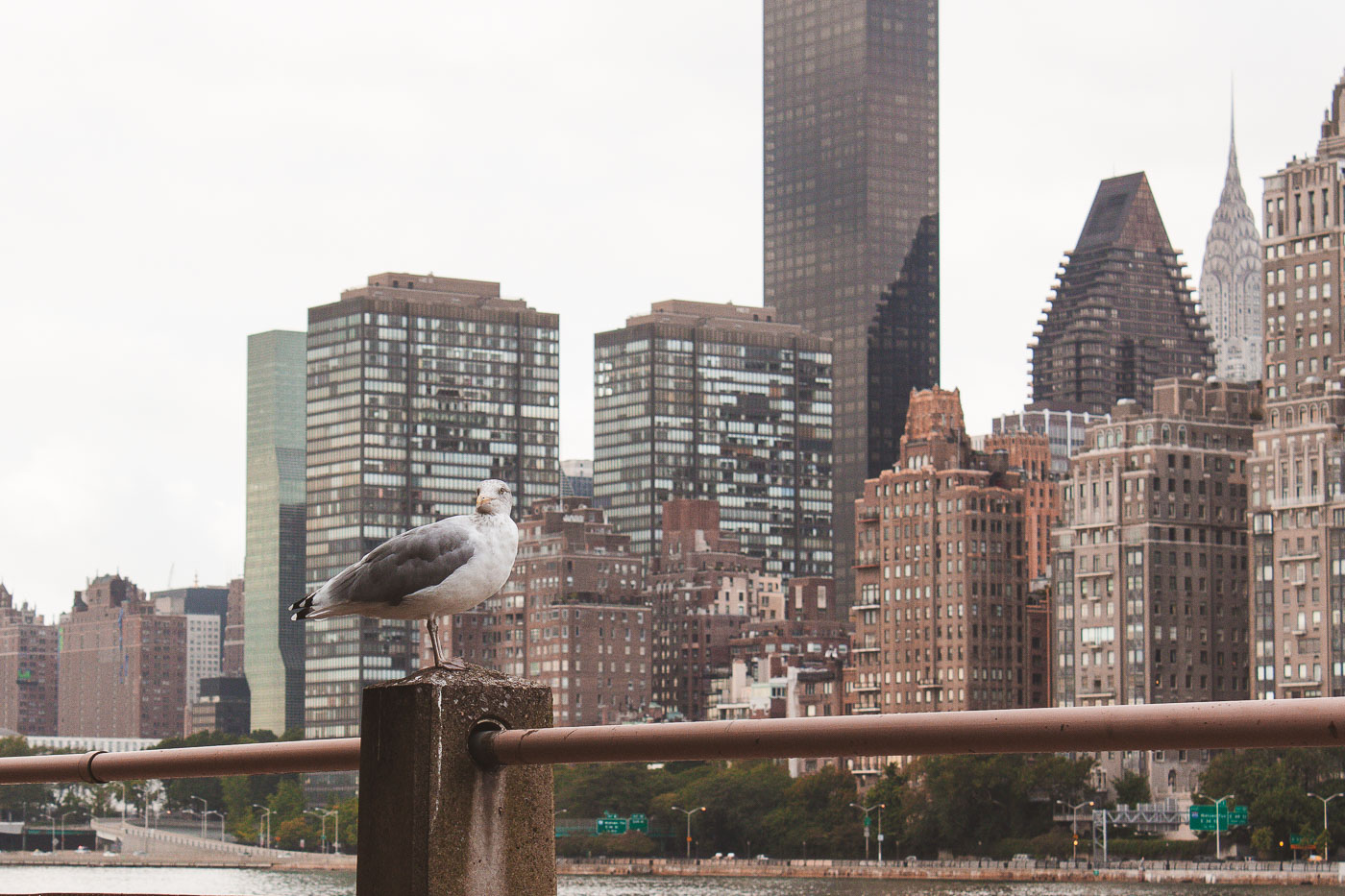
Seagull perched on railing above East River with Manhattan skyline including UN Secretariat and Chrysler Building.
Seagull on the East River waterfront in Midtown Manhattan, with the United Nations Secretariat Building and the Chrysler Building in the background. The green-glass Secretariat, completed in 1952, is the main administrative building of the United Nations headquarters complex. The Chrysler Building, completed in 1930, remains one of New York City's best-known Art Deco skyscrapers.

Gull on a Railing Post With the Chrysler Building Behind It