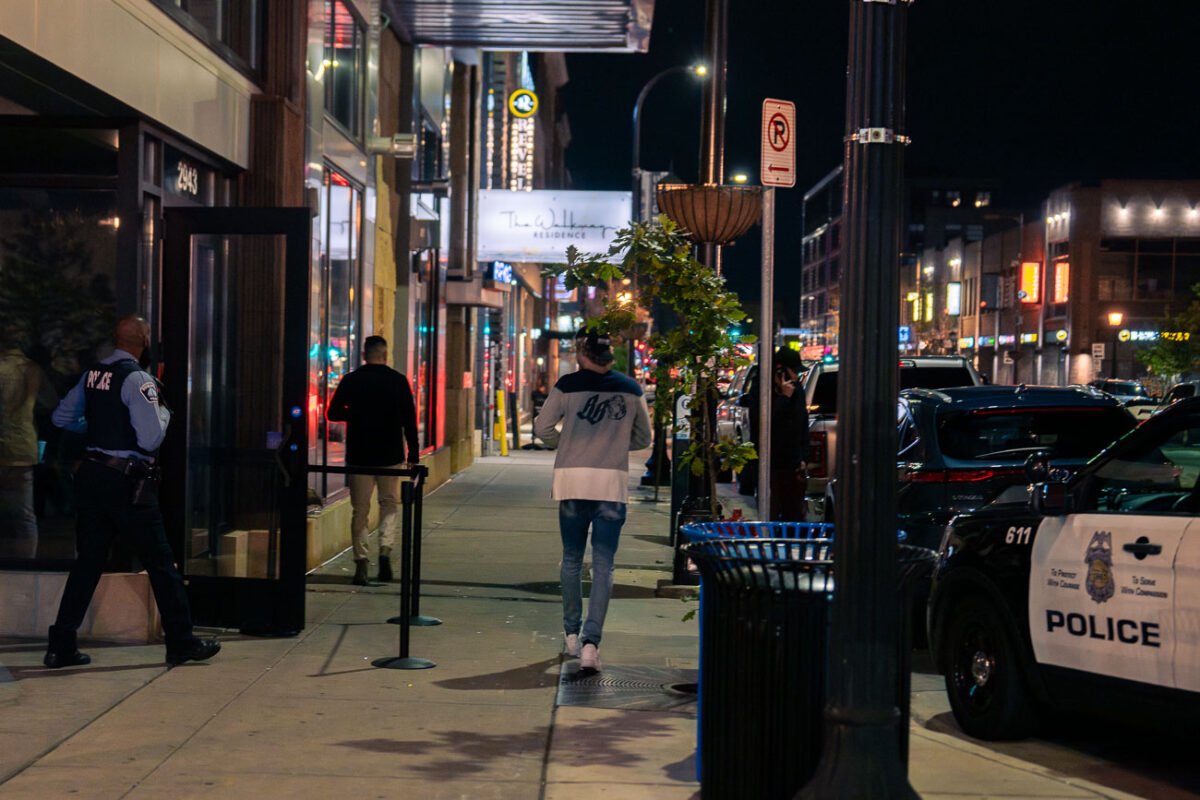
Metro Transit Police at I-35W & Lake St Station, Minneapolis
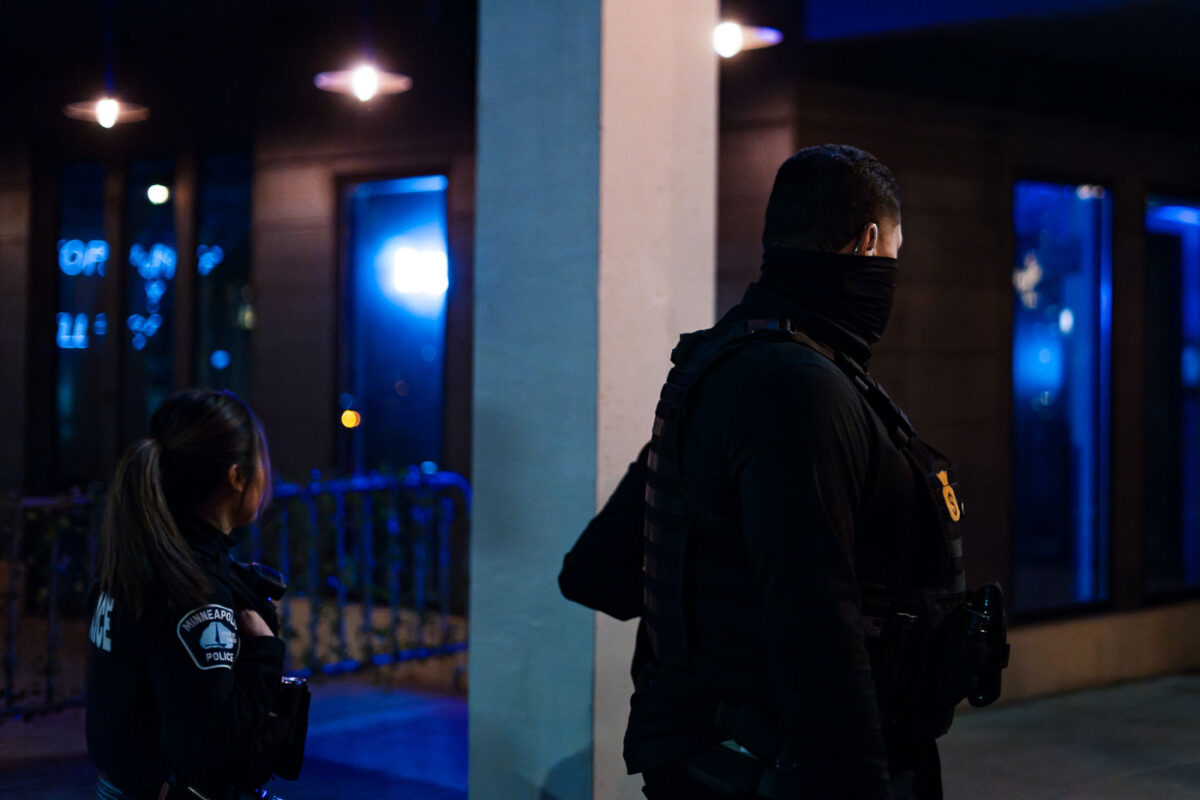
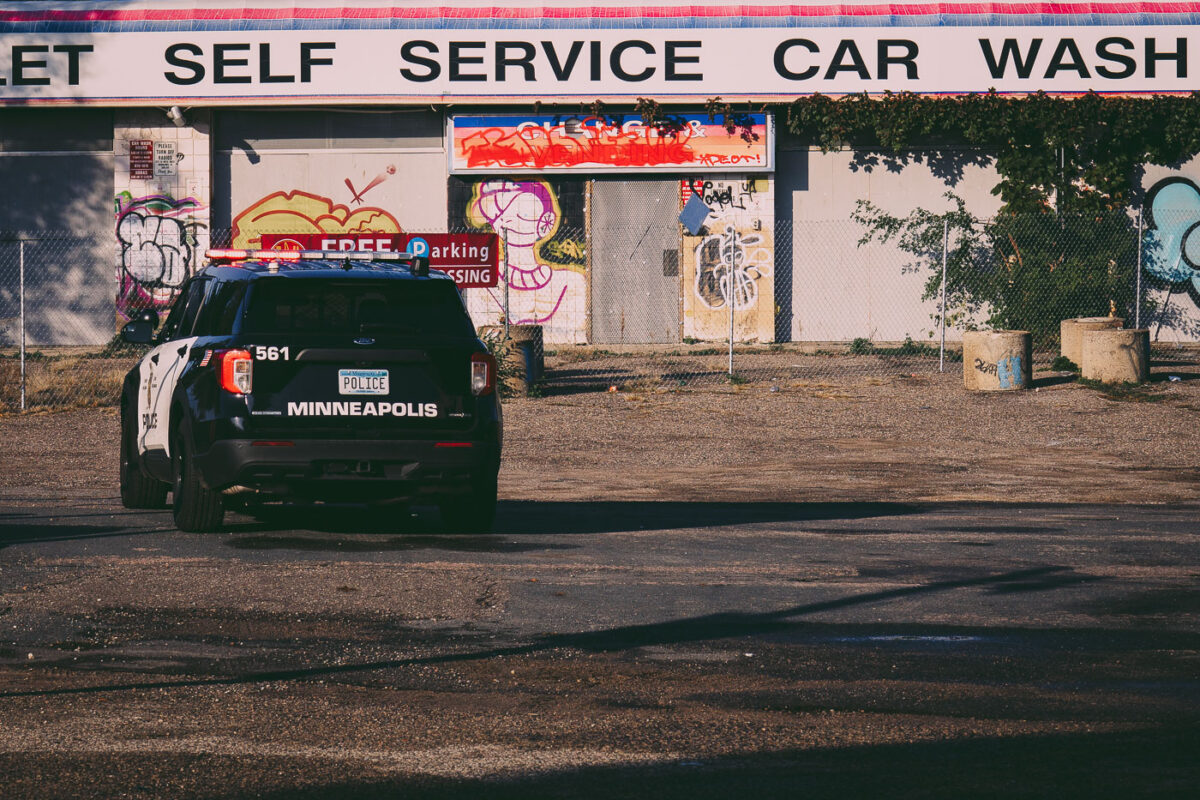
May 2023 — Metro Transit Police at the I-35W & Lake Street Station in Minneapolis in May 2023.
Explore photos in Uncategorized.
May 2023 — Metro Transit Police at the I-35W & Lake Street Station in Minneapolis in May 2023.
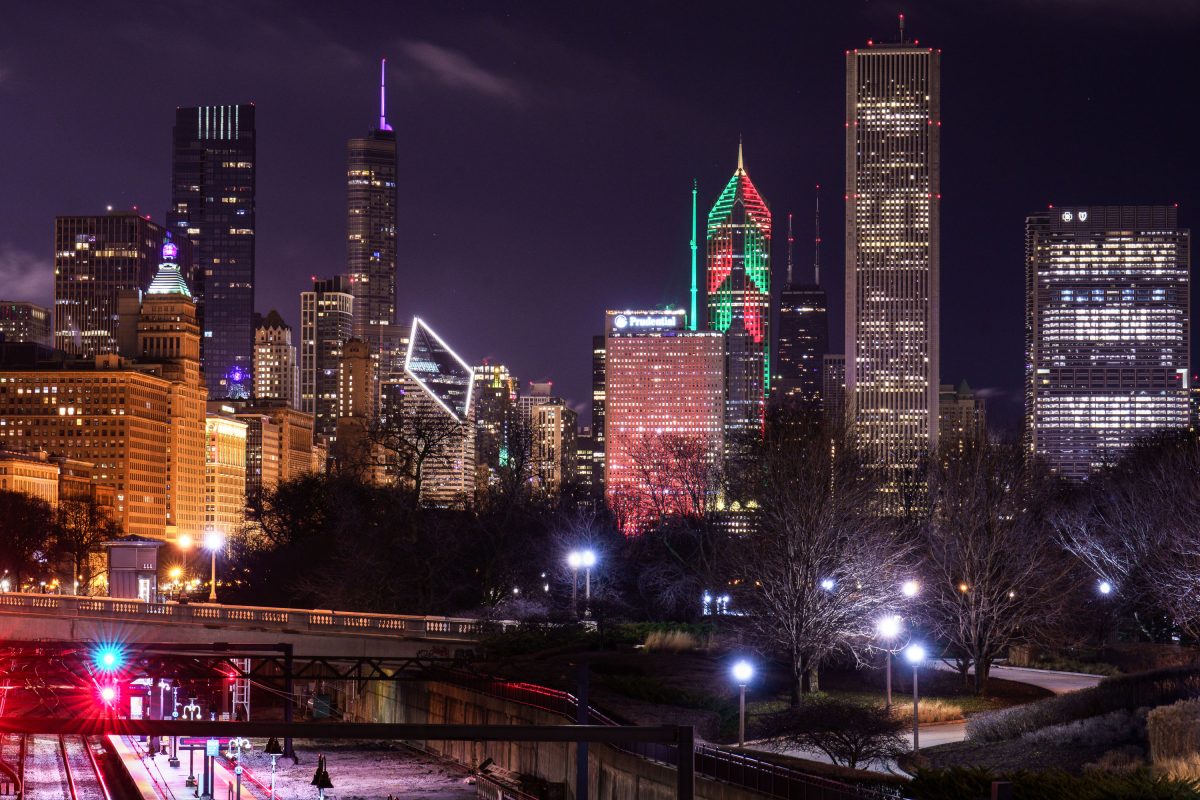
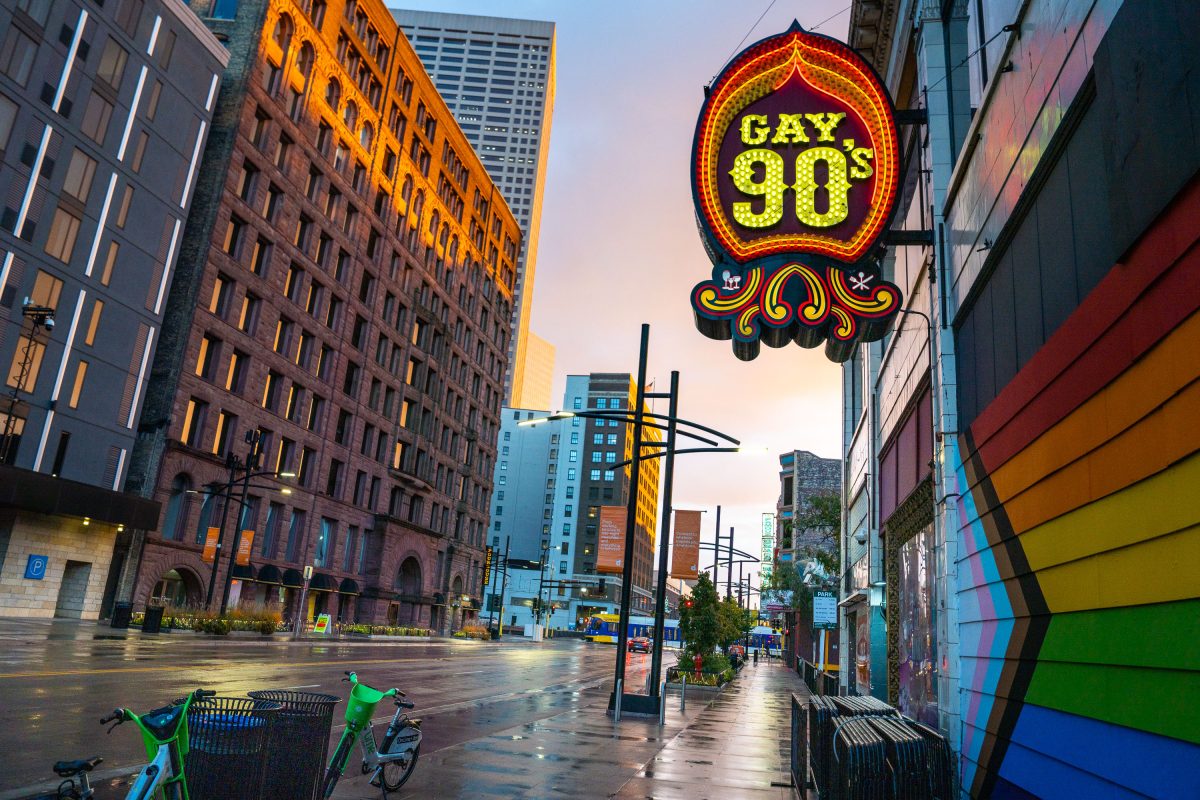
May 2023 — Downtown Minneapolis as seen from Uptown.
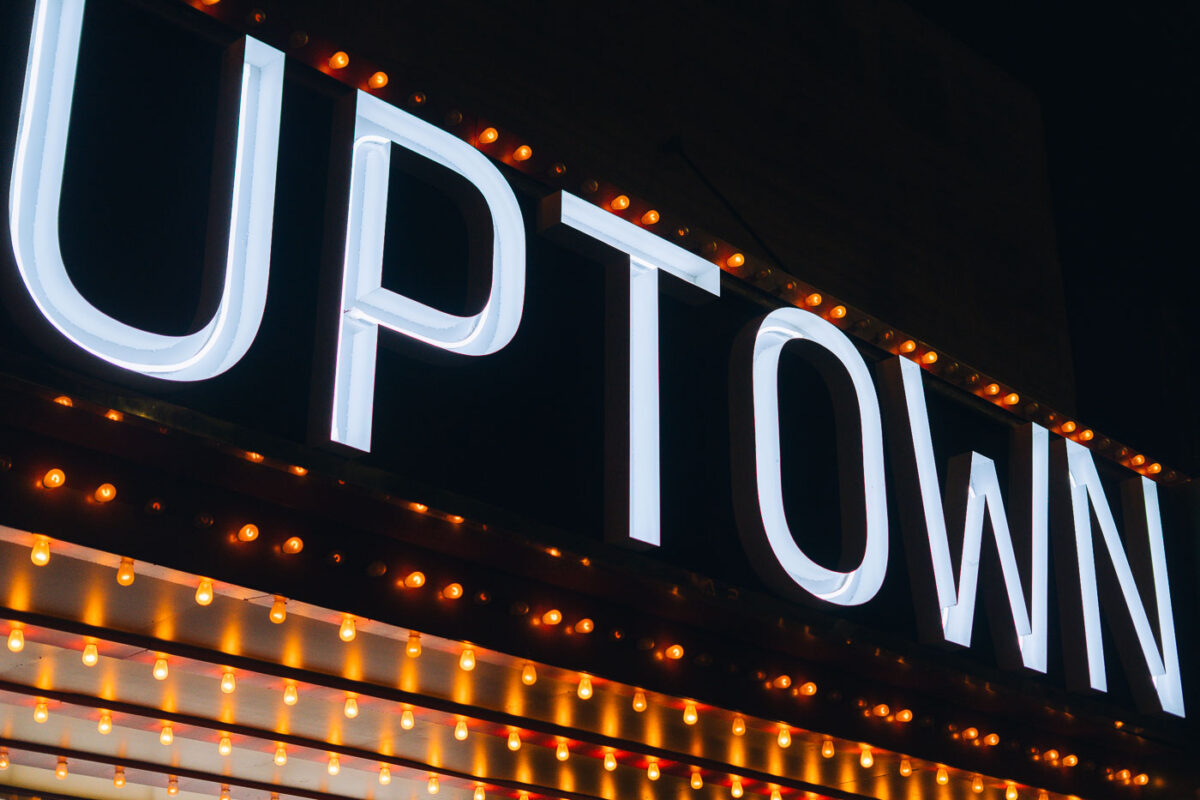
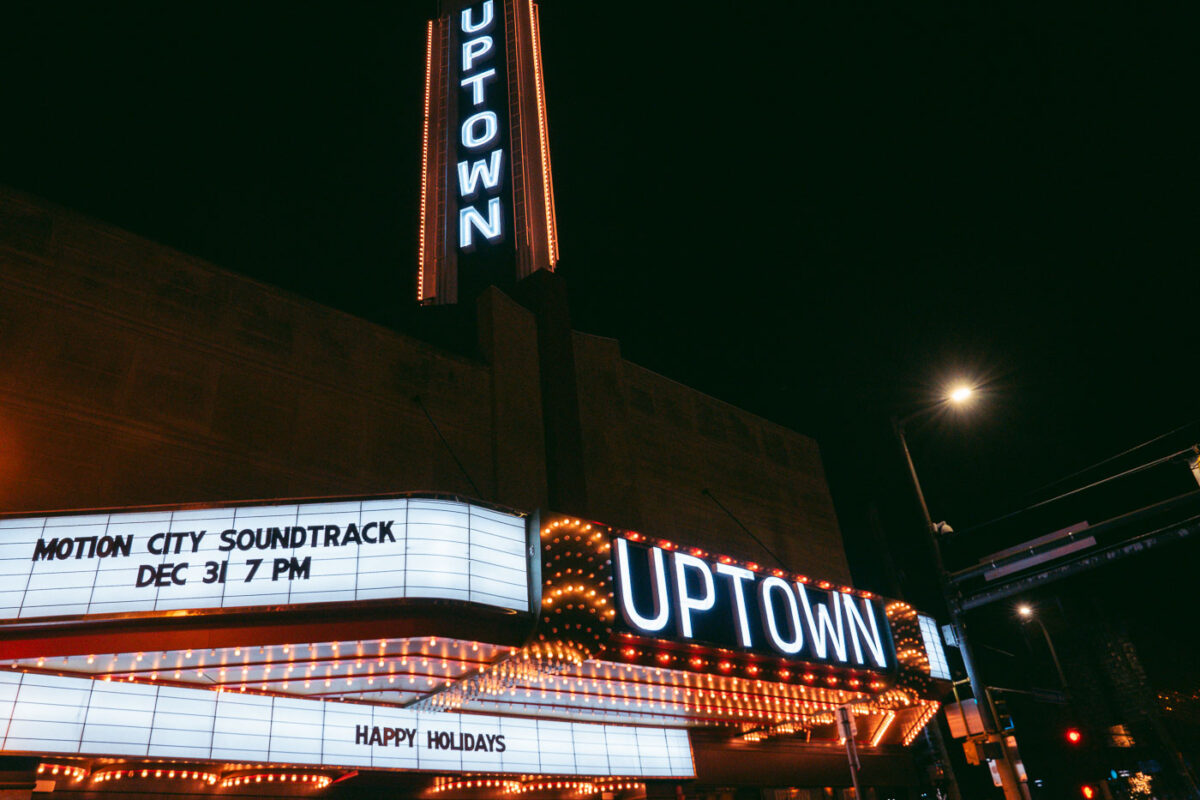
May 2023 — The Uptown Theater during renovation. It's set to open next month as one of the largest music venues in Minneapolis.
May 2023 — The newly opened Green Room music venue in Uptown.
May 2023 — MinneapolUS TOUCH Violence Prevention
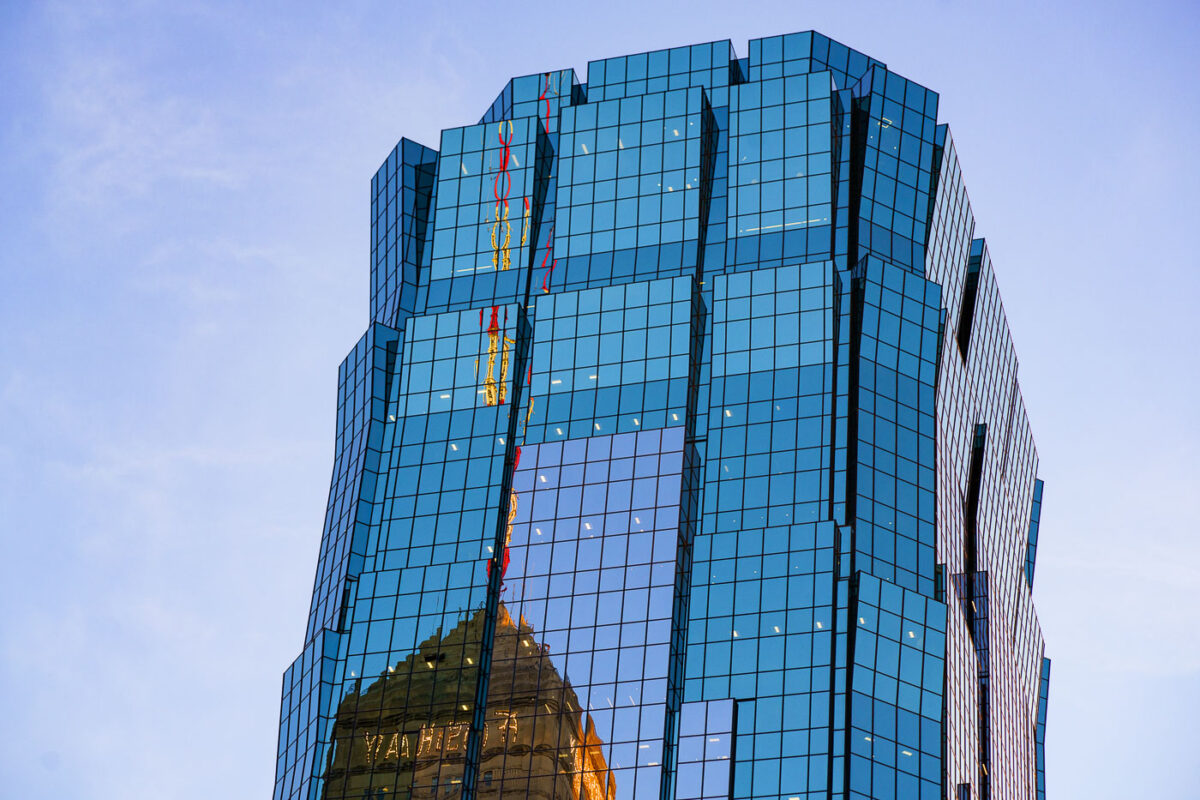
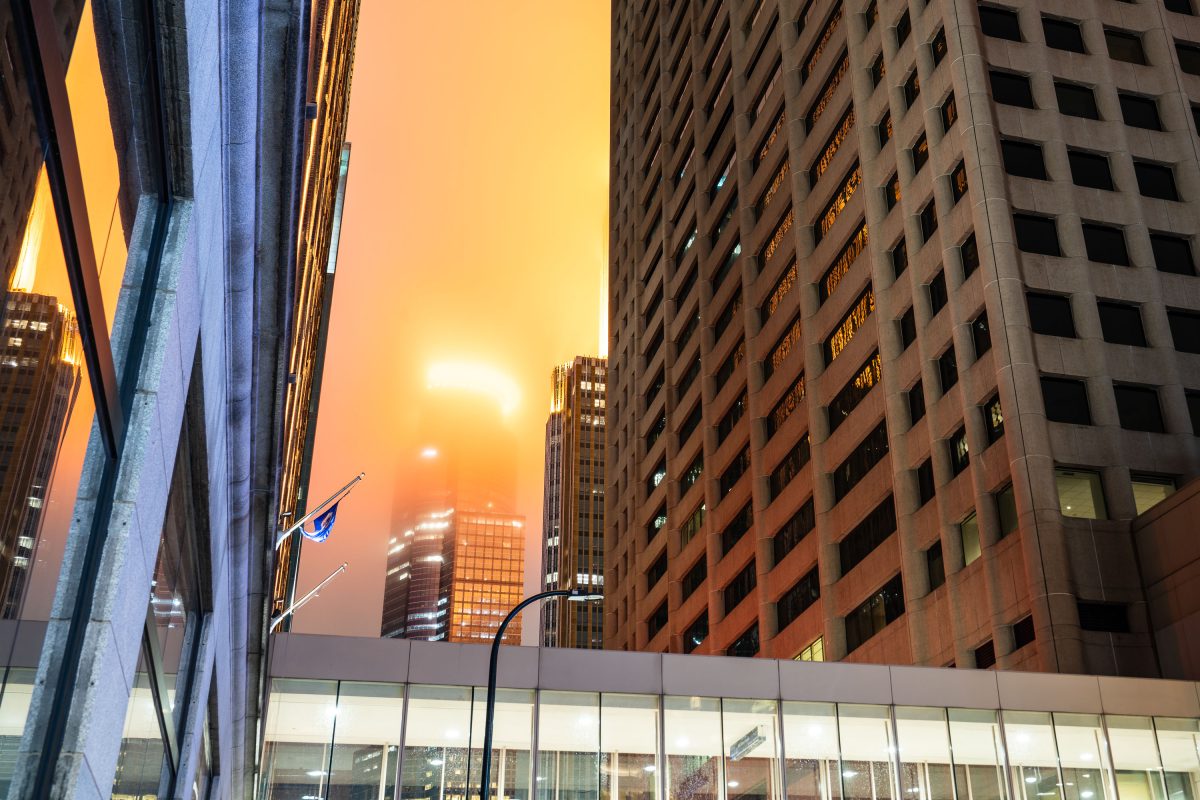
May 2023 — Closeup of the top of the IDS Center in downtown Minneapolis.
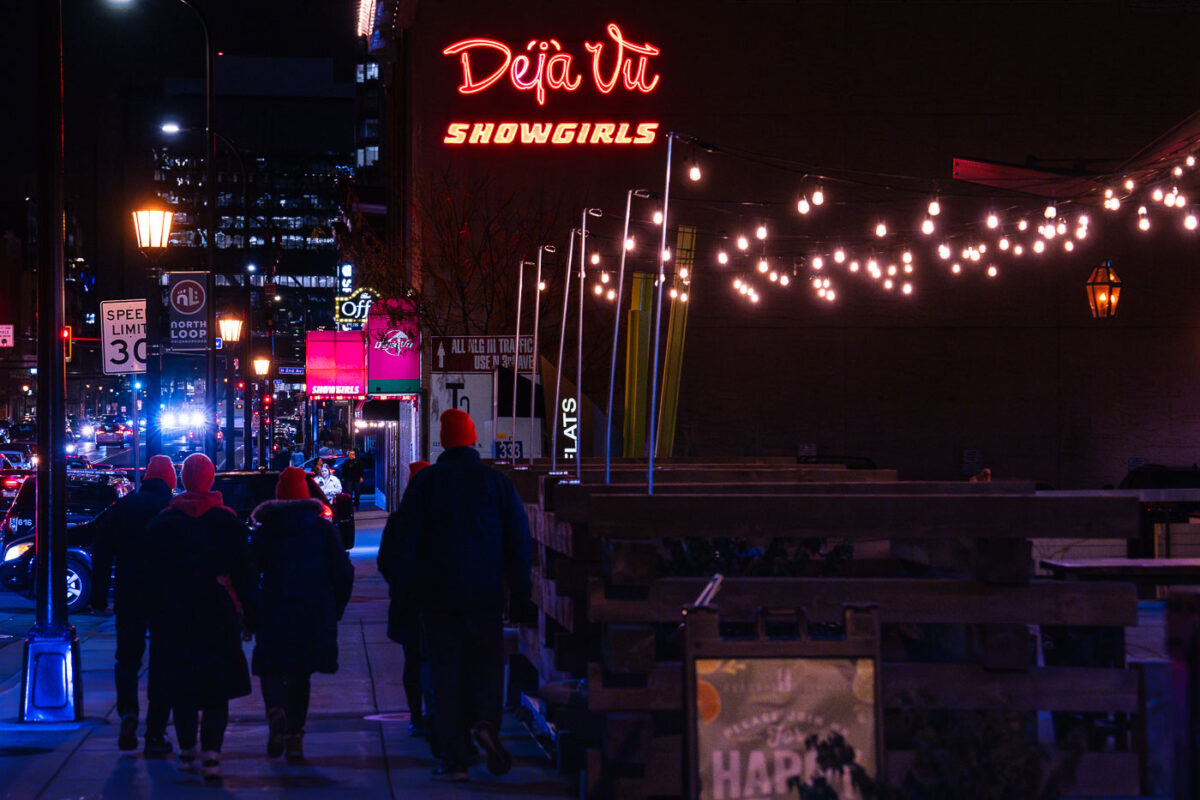
May 2023 — Restaurant patios on Nicollet Mall in downtown Minneapolis.
May 2023 — Sailboats on Bde Maka Ska in South Minneapolis in May 2023.
May 2023 — A street vendor selling plush toys on Lake Street. Park & Lake Car Wash in the background.
May 2023 — Lake Street and Portland Avenue in South Minneapolis.
May 2023 — The architecture in the warehouse district in downtown Minneapolis.
May 2023 — Twins Fest signage as seen through new construction tower going up in the North Loop.
May 2023 — A building in the Minneapolis Warehouse District.
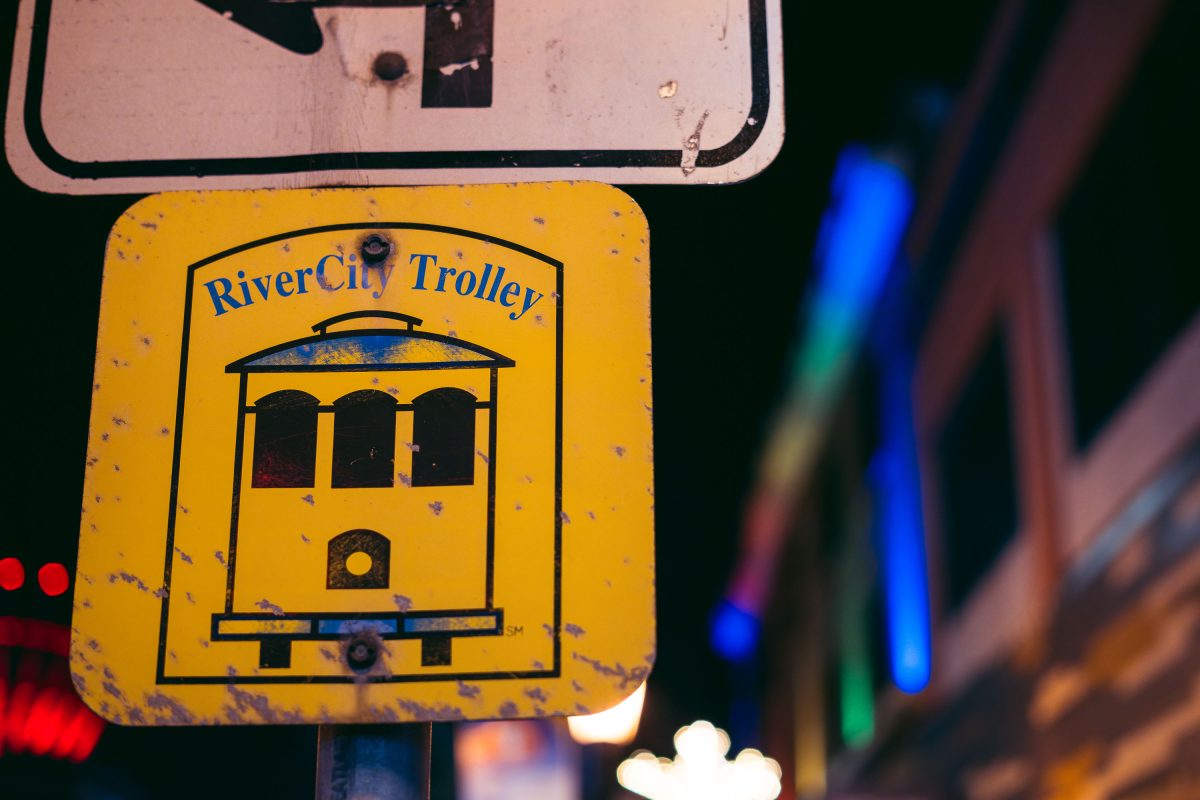
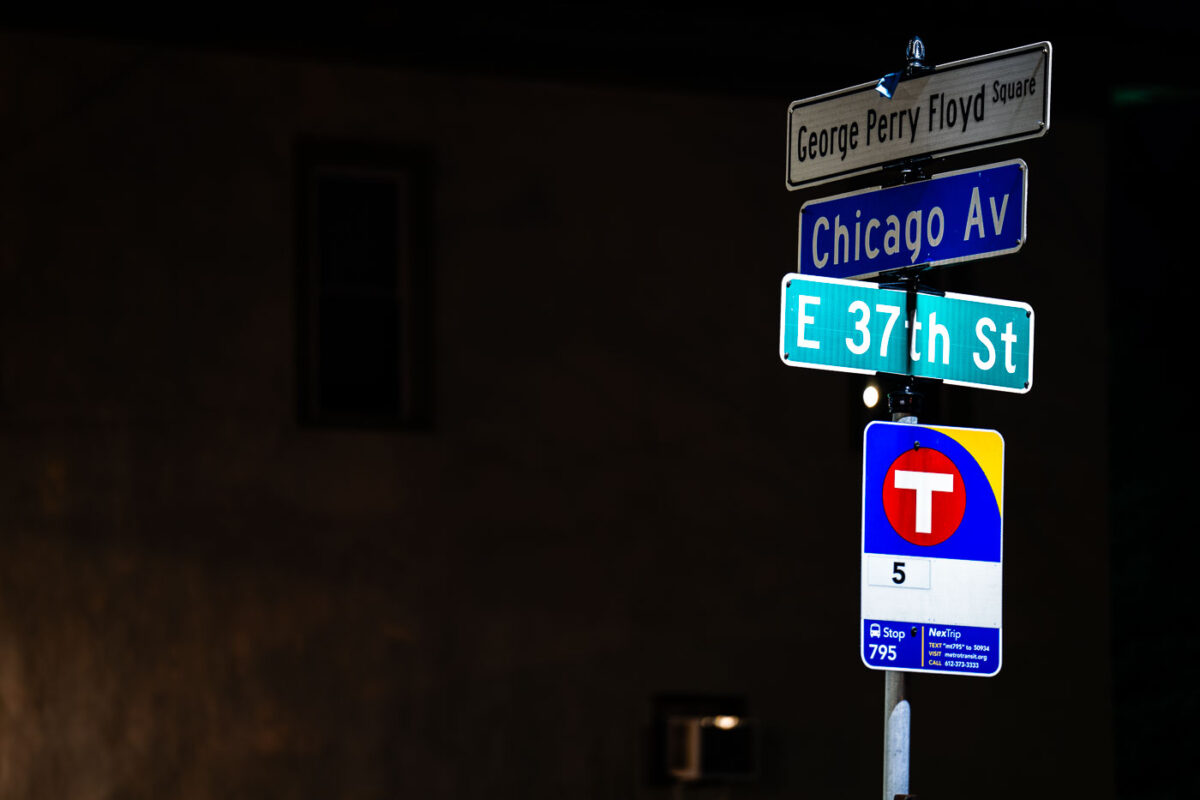
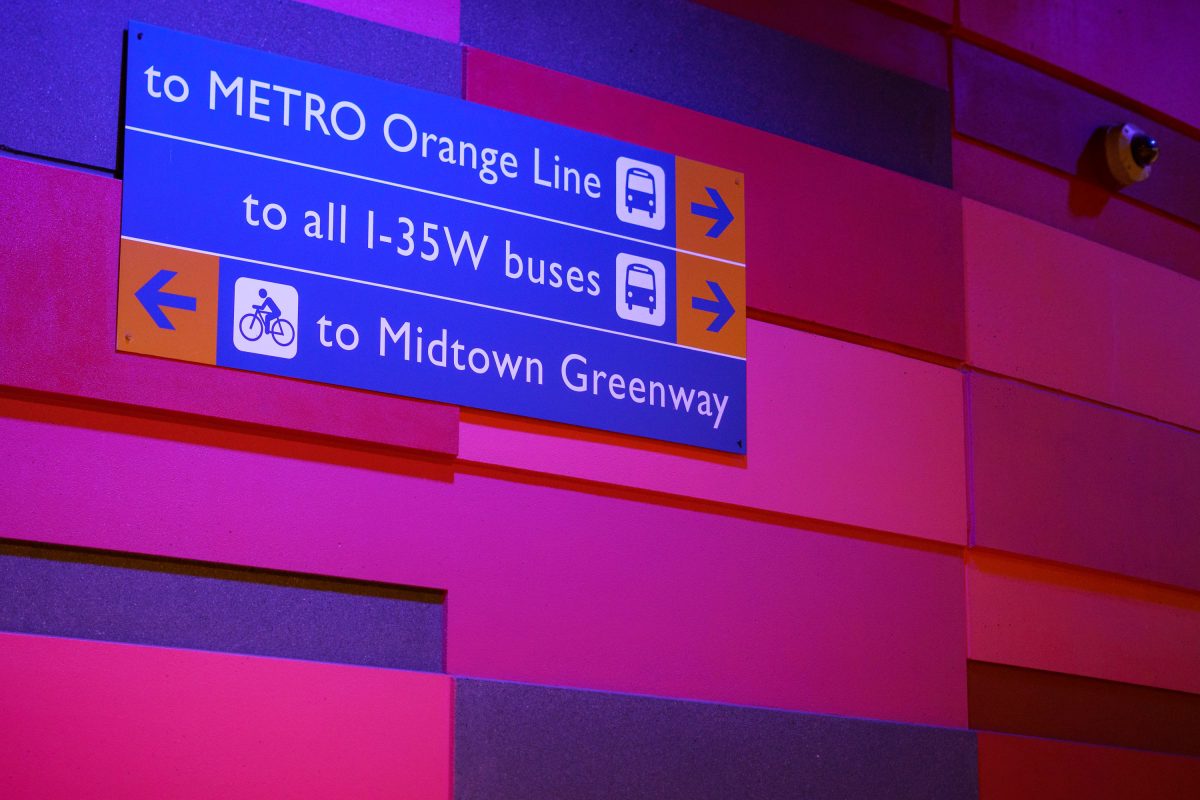
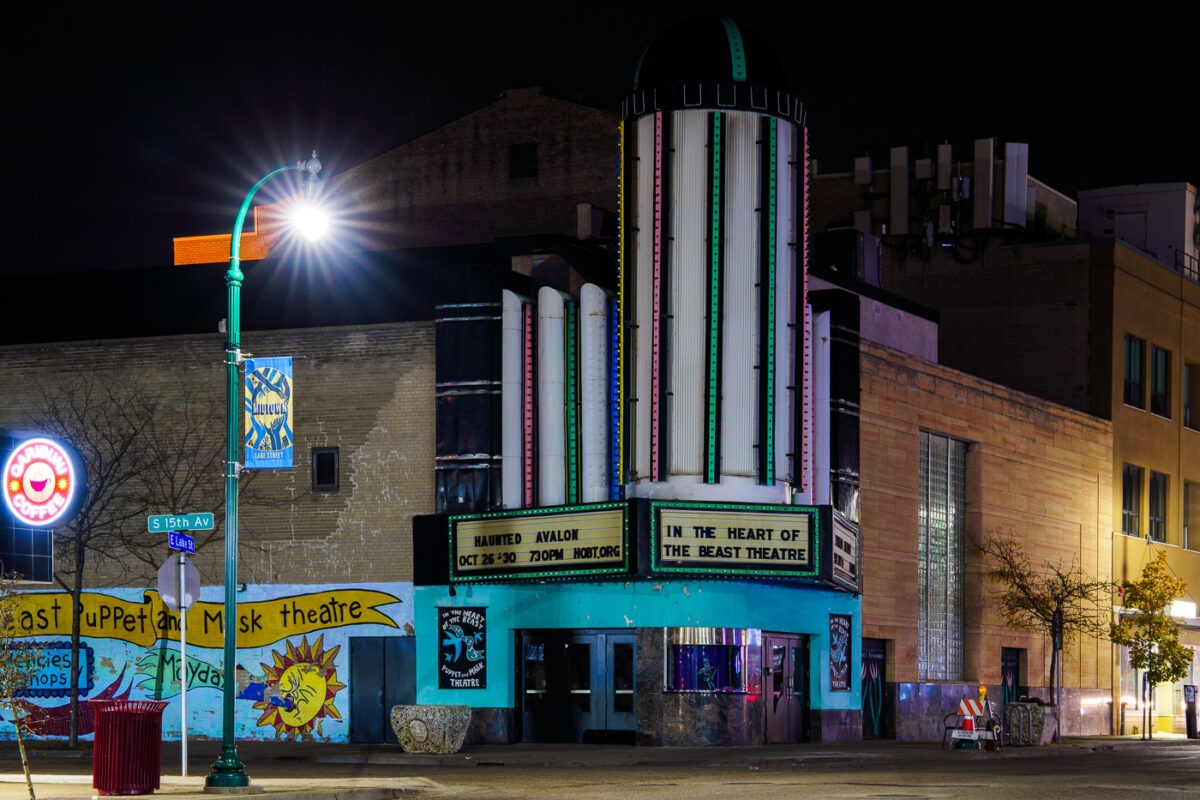
May 2023 — Street signs in Minneapolis.
May 2023 — A prefab modular apartment building being built in North Minneapolis.
May 2023 — Metro Transit Stay off The Tracks signage on Hennepin Avenue.
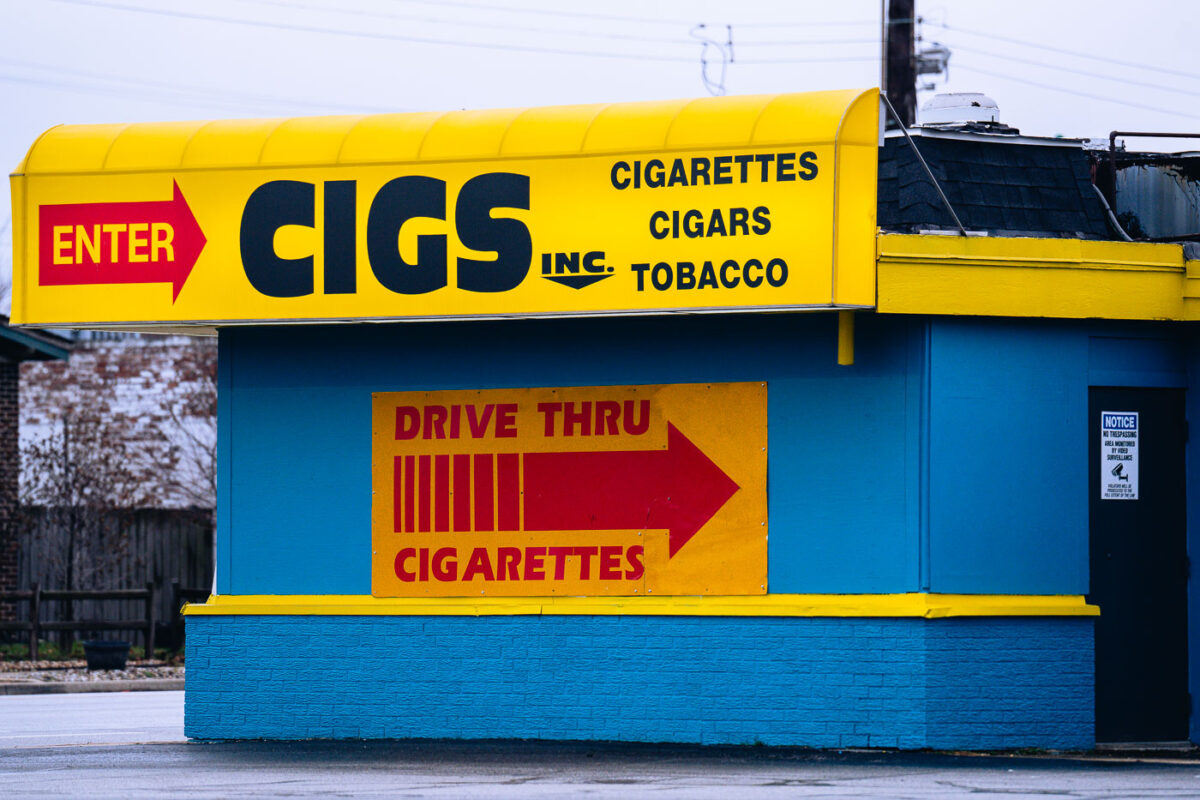
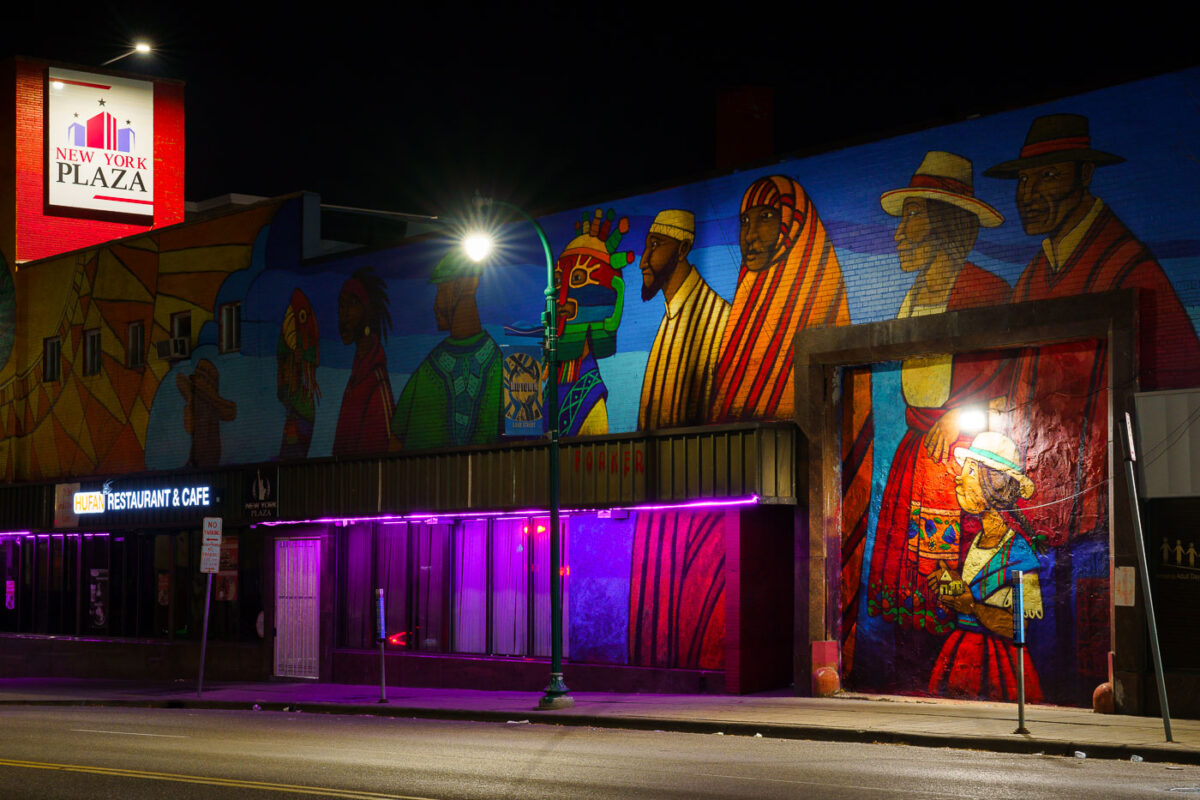
May 2023 — The colors of Lake Street in South Minneapolis.
May 2023 — Downtown Minneapolis as seen from Woodale Avenue in St. Louis Park. Highway 100 in the foreground.
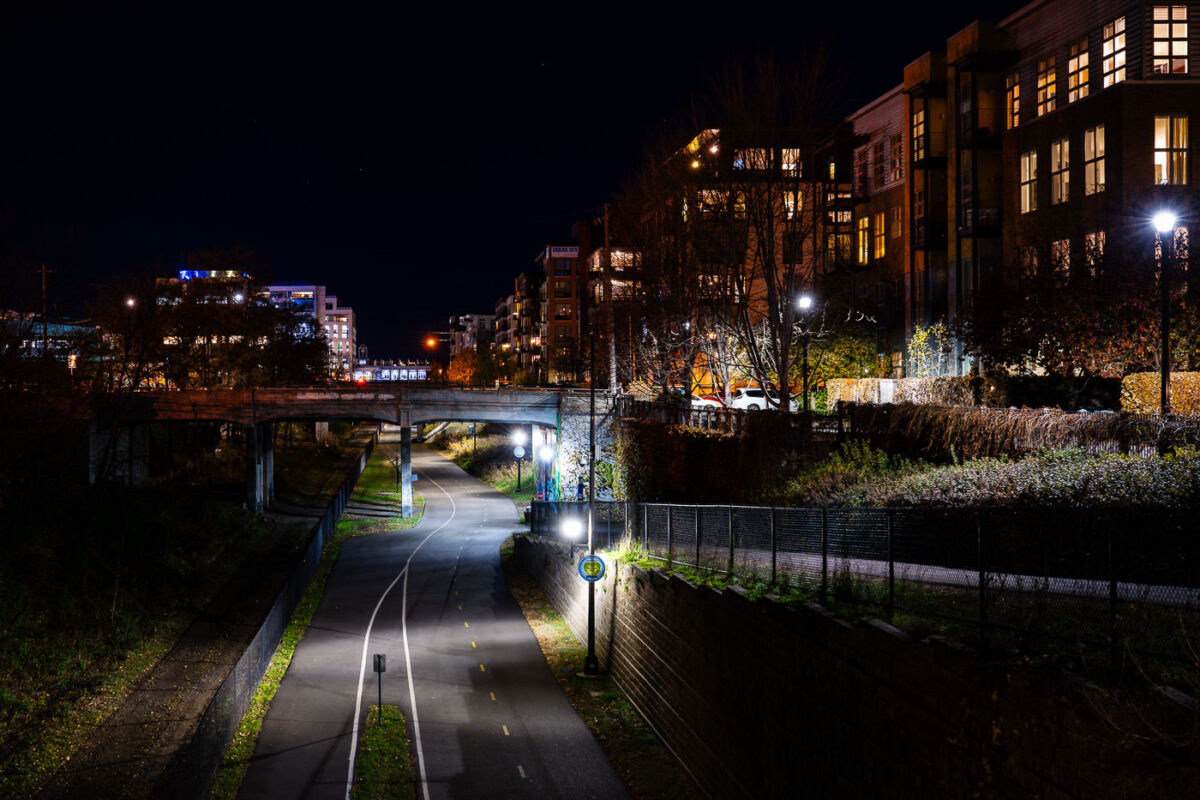
May 2023 — A bend in the Midtown Greenway trail in South Minneapolis.
April 2023 — A "third precinct survey" sign on a pole in South Minneapolis. The city has been holding community meetings regarding the future of the burned out Minneapolis police third precinct.
April 2023 — The Stone Arch Bridge oer the Mississippi River.
April 2023 — A Cop City flyer seen on the Midtown Greenway in Minneapolis.
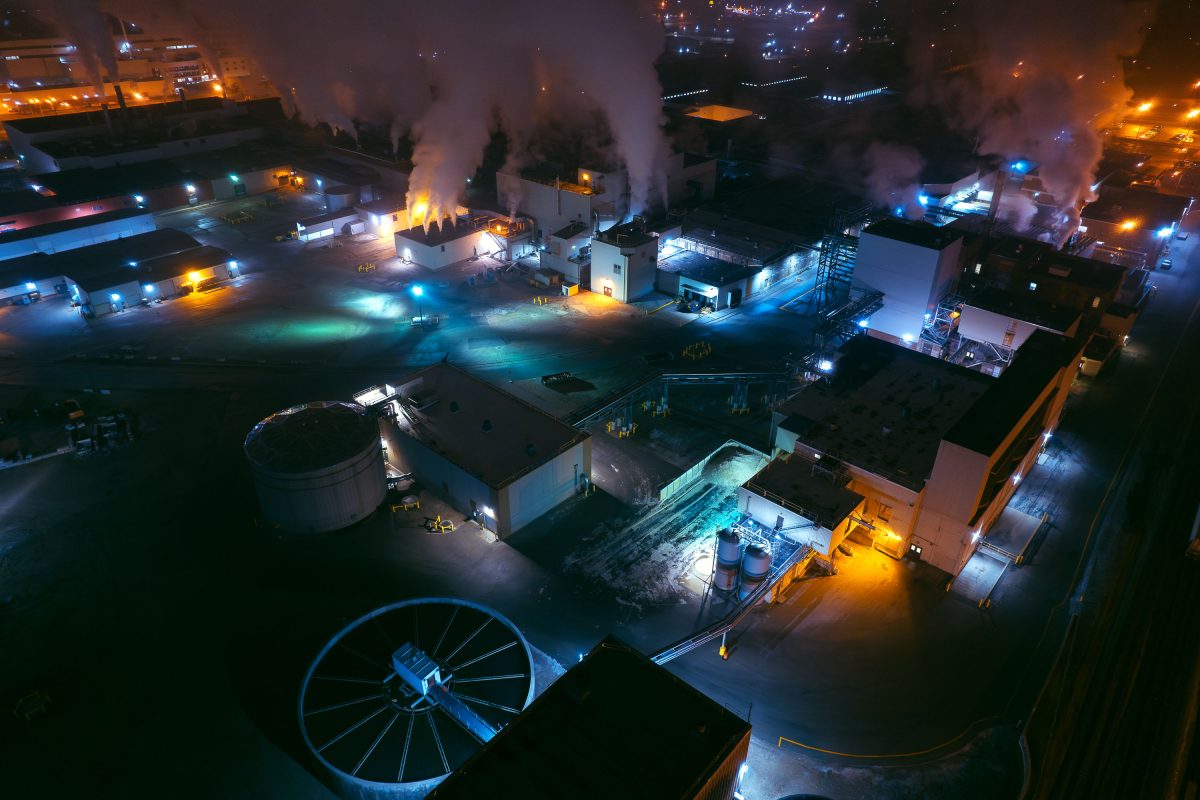
April 2023 — A flyer on the Midtown Greenway regarding the Hennepin Energy Recovery Center.
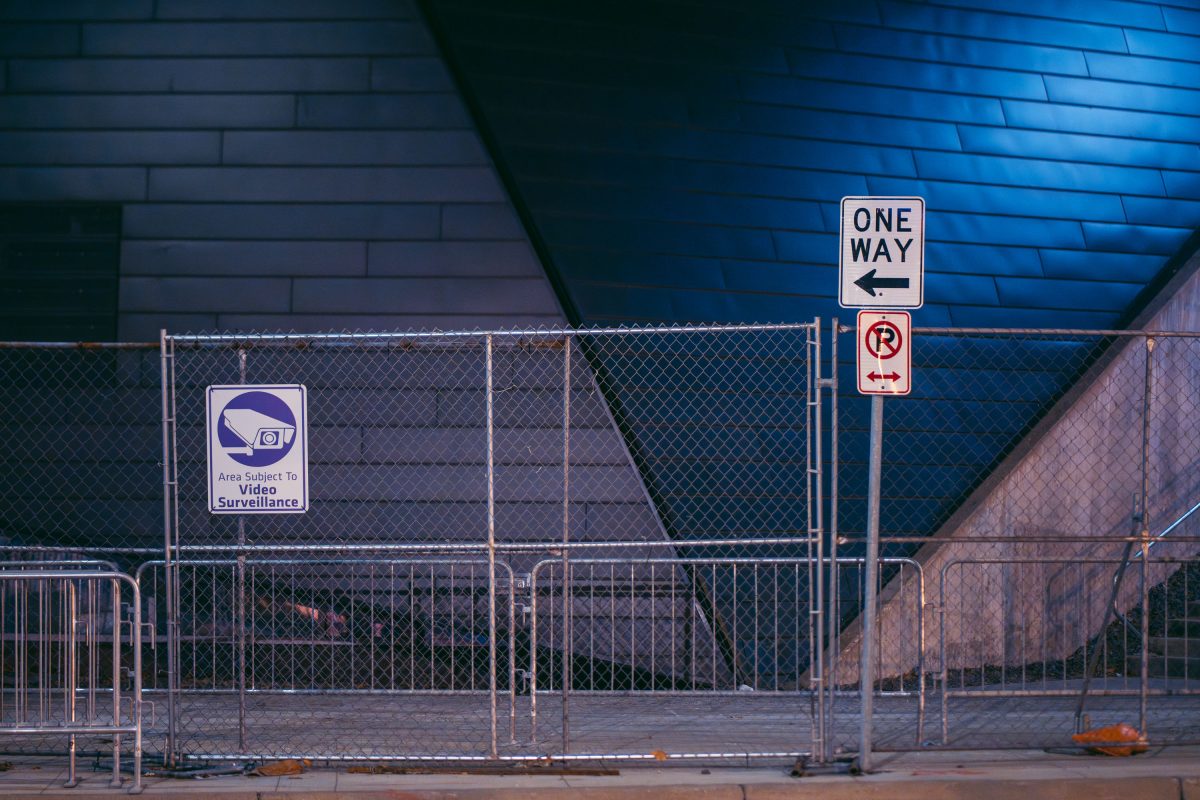
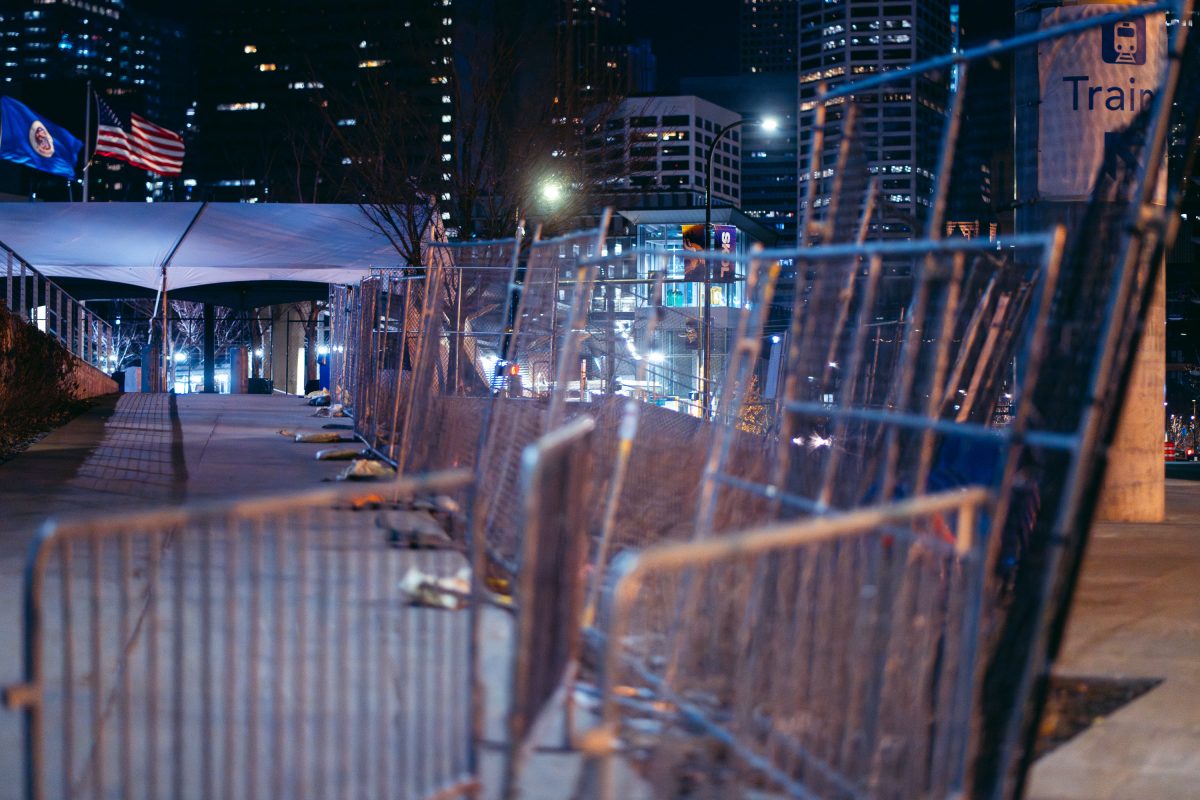
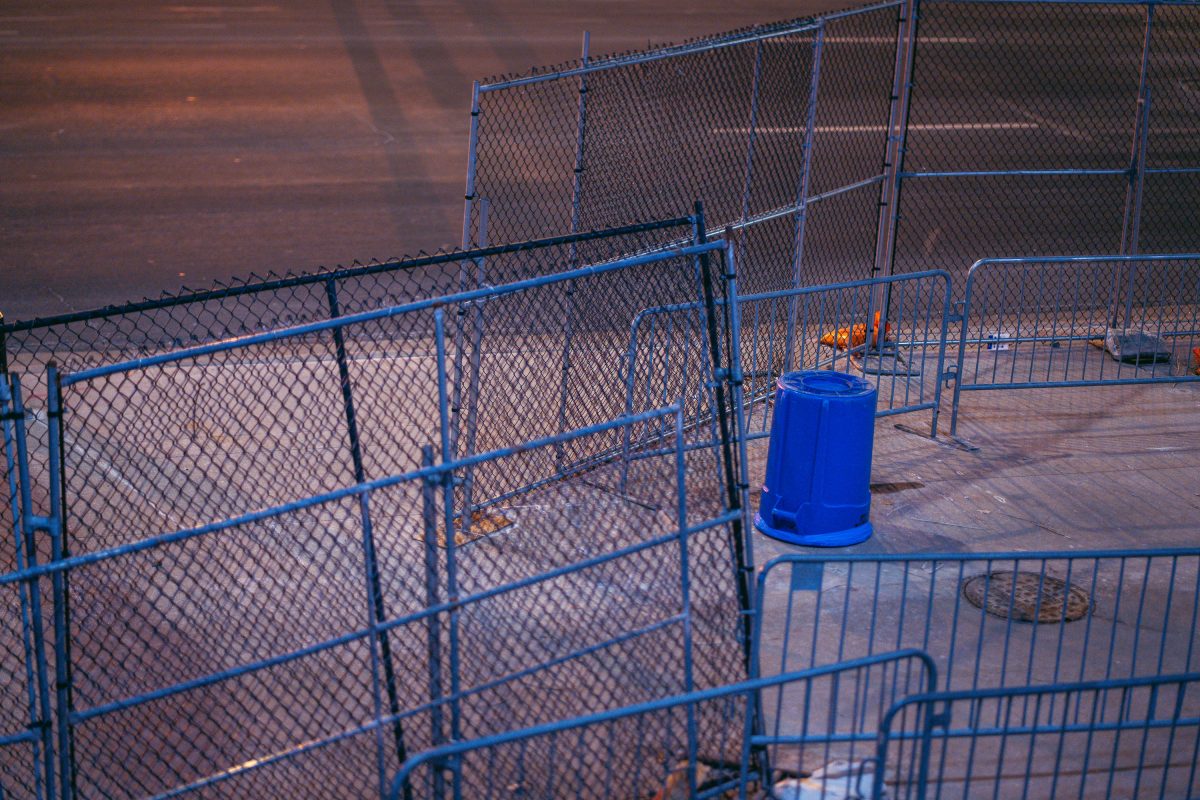
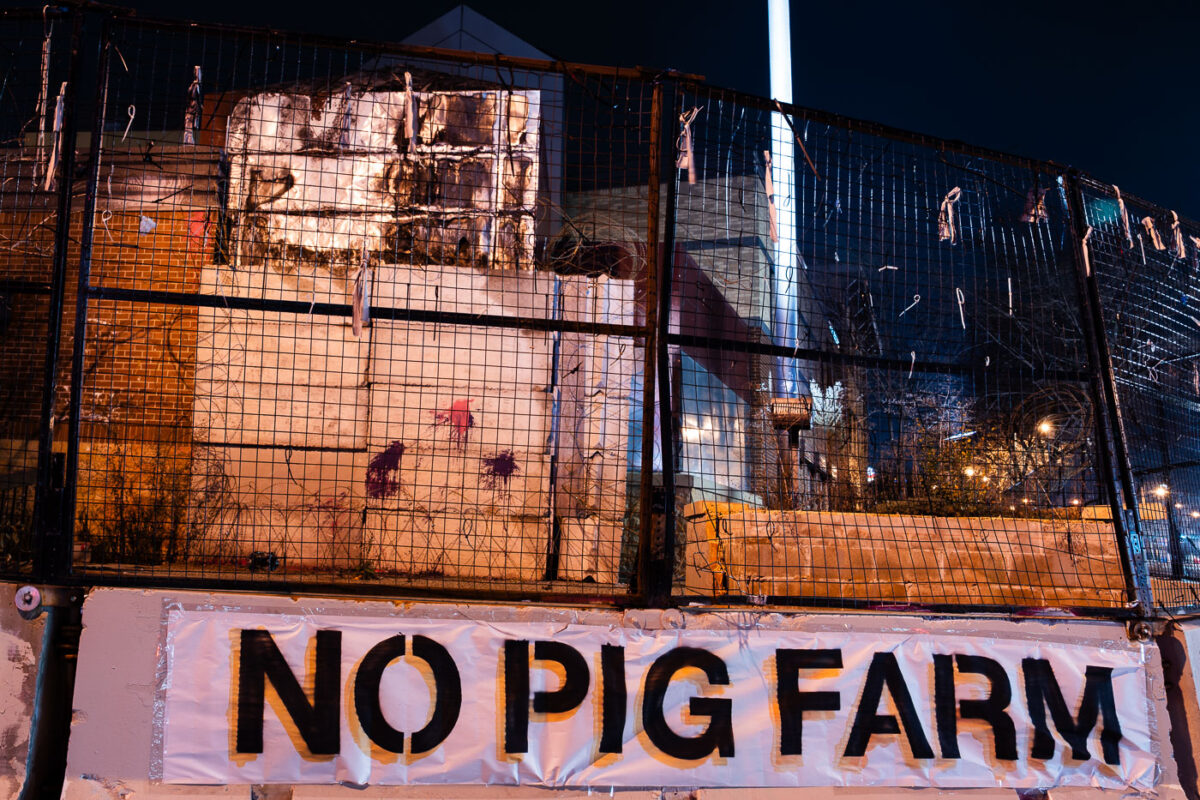
April 2023 — The Hennepin County Public Safety Facility in Downtown Minneapolis behind security fencing.
April 2023 — Tom's Watch Bar in downtown Minneapolis.
April 2023 — Flyers reading "WE REMEMBER GEORGE FLOYD. WE DEMAND ABOLITION." hang on the former burned Minneapolis police 3rd precinct after a week of what is being called "community conversations". City is asking for input on if a precinct should be rebuilt at same location or down the road.
April 2023 — Light Rail trains in Downtown Minneapolis.
April 2023 — Wine & Spirit store at 1010 Washington Avenue.
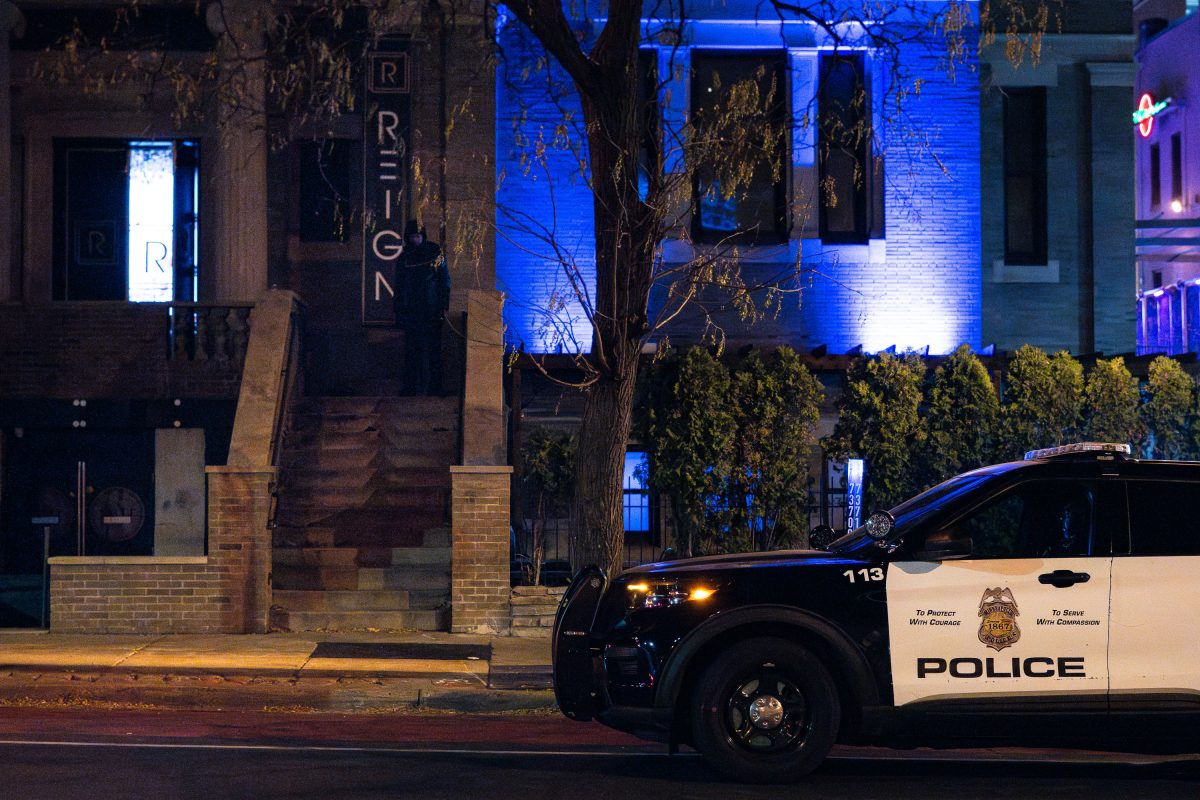
April 2023 — Minneapolis Police squad cars parked outside the Target Store on Nicollet Mall in downtown Minneapolis in April 2023.
April 2023 —
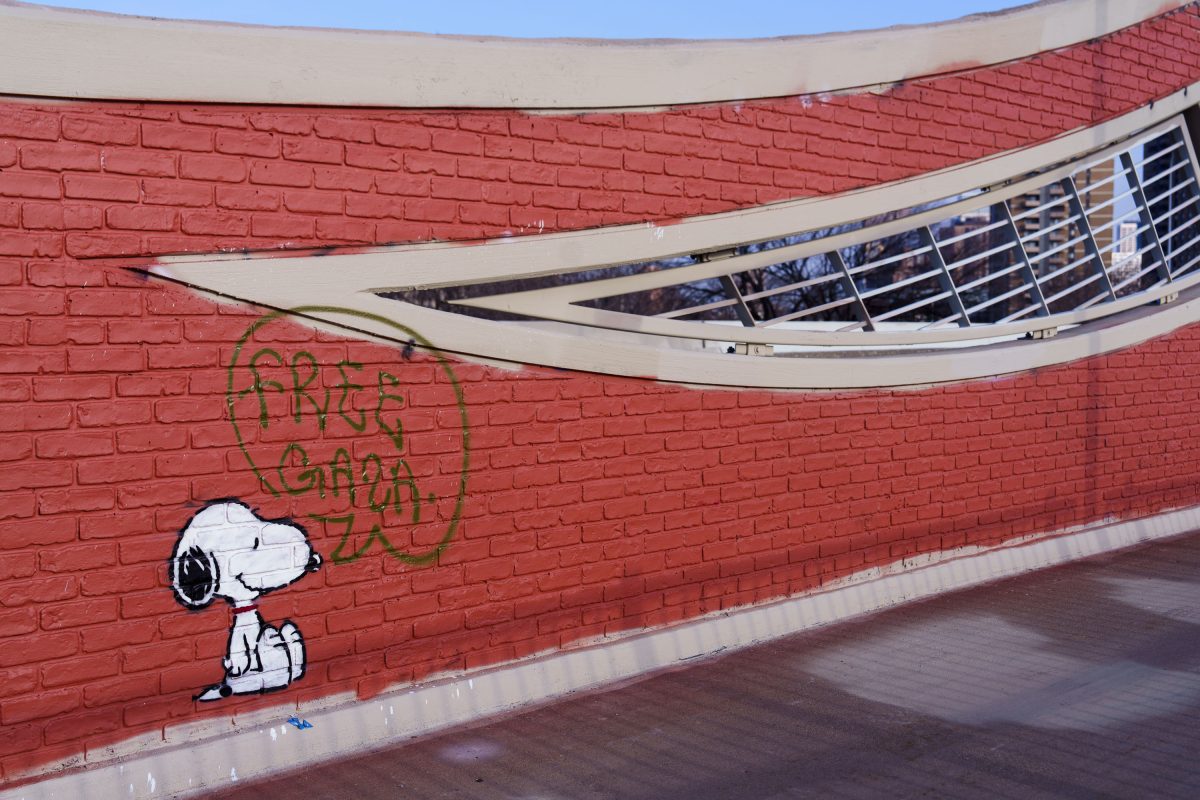
April 2023 — Graffiti reading "Winston Smith was assassinated by the MPD on the Cedar Lake Trail in April 2023.
April 2023 — A Northstar Train in downtown Minneapolis.
April 2023 — "Don't tell me this town ain't got no heart." "You just gotta walk around."
April 2023 — In the 1st public meeting geared towards non-business owners, the city along with a 3rd party is seeking feedback on which of 2 locations a 3rd precinct should be built. Prior to breaking out into groups, a few questions were taken from those in opposition to any new precinct.
April 2023 — Minneapolis police homicide detective Richard Zimmerman, who testified in the Chauvin trial, expressing his feelings on rebuilding a new third precinct.
April 2023 — In the 1st public meeting geared towards non-business owners, the city along with a 3rd party is seeking feedback on which of 2 locations a 3rd precinct should be built. Prior to breaking out into groups, a few questions were taken from those in opposition to any new precinct.
April 2023 —
April 2023 — Tonight was the first of 5 public meetings regarding a new 3rd precinct. Stories surrounding the distrust of MPD and the history of this particular precinct seemed to outweigh talk on which of the 2 locations anyone preferred. Many I listened to preferred no new precinct at all.
April 2023 — Tonight was the first of 5 public meetings regarding a new 3rd precinct. Stories surrounding the distrust of MPD and the history of this particular precinct seemed to outweigh talk on which of the 2 locations anyone preferred. Many I listened to preferred no new precinct at all. City Council Member Wonsley speaking to those in attendance.
April 2023 — Tonight was the first of 5 public meetings regarding a new 3rd precinct. Stories surrounding the distrust of MPD and the history of this particular precinct seemed to outweigh talk on which of the 2 locations anyone preferred. Many I listened to preferred no new precinct at all.
April 2023 — City of Minneapolis provided renderings of a potential new third precinct building.
April 2023 — Minneapolis Police at the University of Minnesota after loosing the national championship in hockey.
April 2023 — University of Minnesota after loosing the national championship in hockey.
April 2023 —
April 2023 —
April 2023 —
April 2023 — Benches outside Bryant Lake Bowl on Lake Street.
April 2023 — Green Room music venue in Uptown Minneapolis. Opening in January 2023, it replaced The Pourhouse on the corner of Lagoon/Girard.
April 2023 —
April 2023 —
April 2023 —
April 2023 — A snow covered Minneapolis police third precinct. The precinct has been vacant since it was burned during May 2020 riots over the murder of George Floyd.
April 2023 — Dark powerless streets. Lake Street and Lyndale Avenue during a heavy snowstorm.
March 2023 — A CPAC flyer on a street pole in South Minneapolis.
March 2023 — A mural on the side of a bike shop on Minnehaha Ave in Minneapolis. It reads "A Budget is a moral document".
March 2023 — Discarded needles and trash line the tracks at the Cedar-Riverside LRT station.
March 2023 — Leaning Tower of Pizza Restaurant on Lyndale Avenue in South Minneapolis.
March 2023 — A flyer in Minneapolis that leads people to call a phone line with a recorded message regarding the demolition of the Roof Depot building.
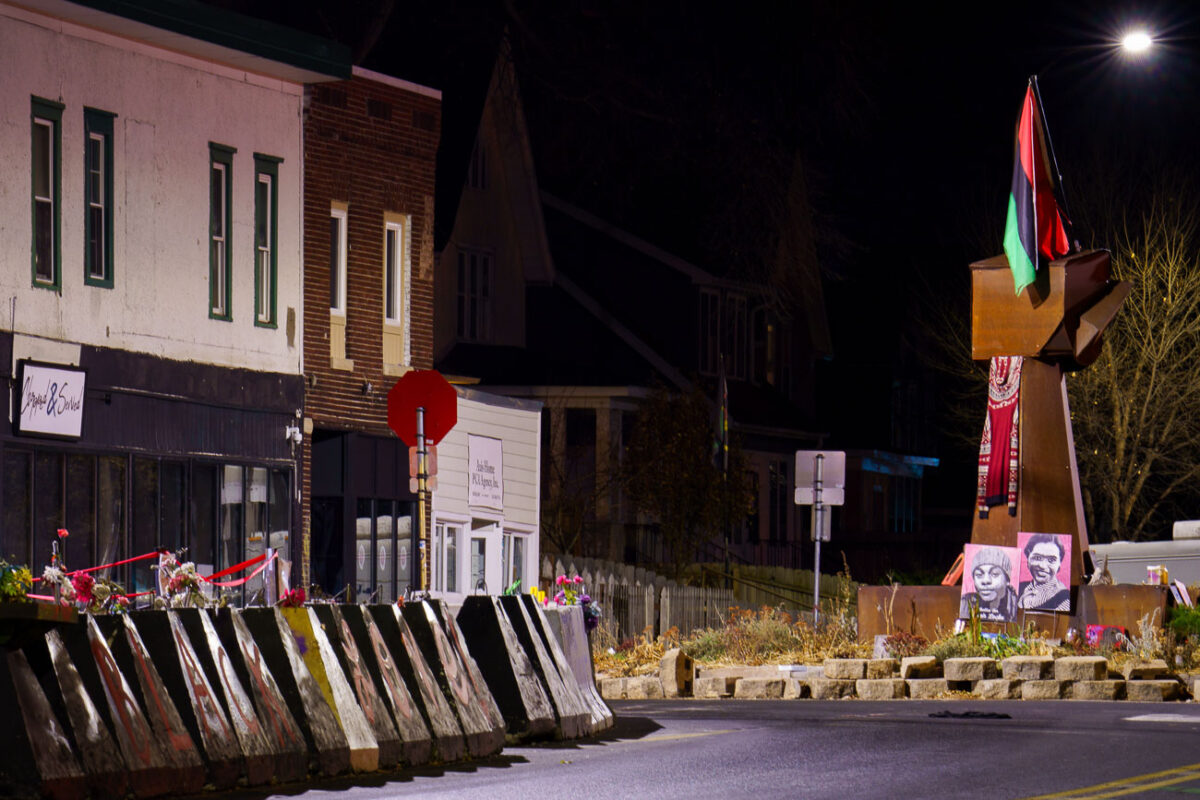
March 2023 — The George Floyd Memorial inside George Floyd Square on Chicago Avenue in South Minneapolis.
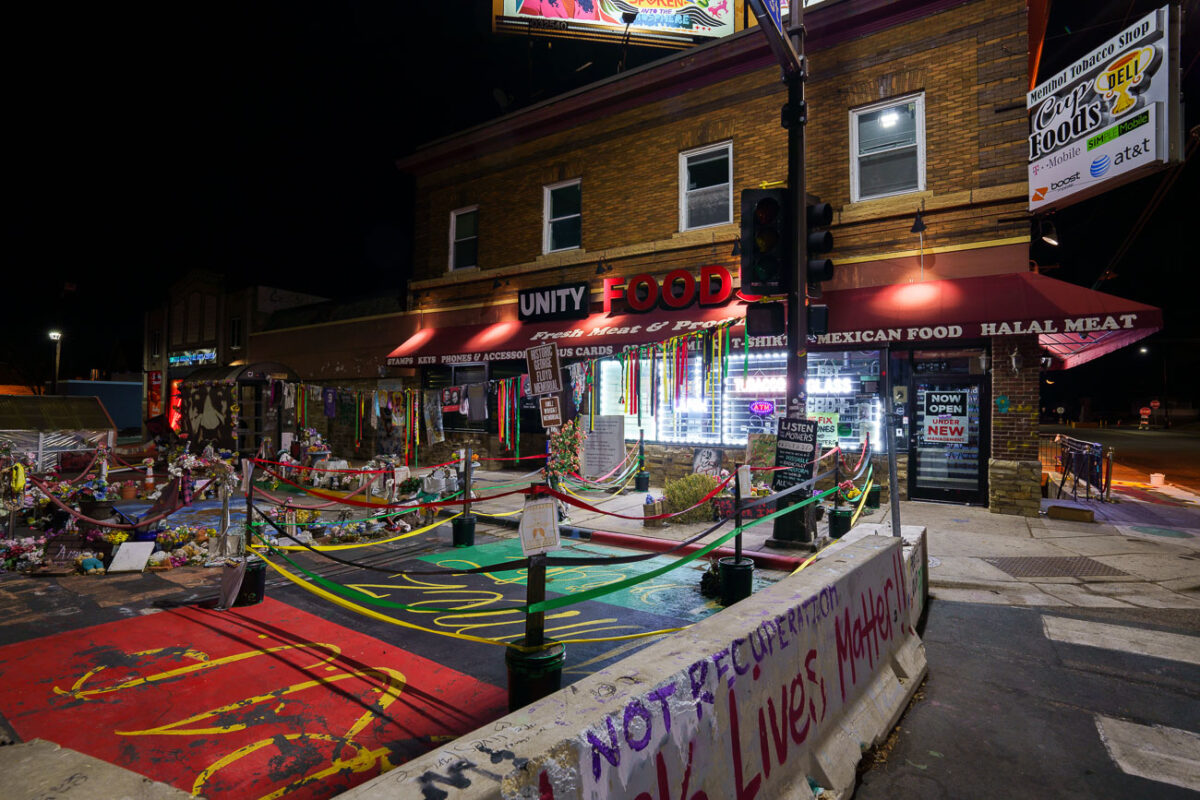
March 2023 — A man walks in front of the George Floyd mural on the side of "Unity Foods". Unity Foods was formerly named Cup Foods.
March 2023 — A painting on a garage door in George Floyd Square.
March 2023 — A security guard on East Lake Street in South Minneapolis.
March 2023 — A "Defend East Phillips" sticker on a box in South Minneapolis on March 2023.
March 2023 — Fenced off Roof Depot building in South Minneapolis as seen from the Midtown Greenway.
March 2023 — Midtown Greenway and 11th Ave in Minneapolis on March 19, 2023.
March 2023 — A train mural by Reggie LeFlore on the Midtown Greenway in South Minneapolis.
March 2023 — As dusk settles over Shibuya, the illuminated sign of Yoyogi Station (代々木駅) glows against a deep indigo sky, marking one of Tokyo’s key JR East commuter hubs. Opened in 1906, Yoyogi serves both the Yamanote and Chuo-Sobu lines, connecting thousands of travelers daily between Shinjuku and Harajuku. The cool blue hour lighting highlights the crisp white façade and the green JR branding, captured here with a balanced exposure to preserve both architectural detail and ambient light reflections. Taken in early evening with a 35mm f/1.8 lens, this frame emphasizes the quiet rhythm of Tokyo’s rush hour just before nightfall.
March 2023 —
March 2023 — Passengers move through the North Gate of JR Nippori Station, a key interchange for the Yamanote, Keihin-Tohoku, and Joban lines as well as the Nippori–Toneri Liner. Prominent yellow JR East signage directs travelers toward the West Exit for Yanaka and the East Exit for Ueno. The open, modern concourse design reflects Nippori’s role as both a commuter hub and gateway to nearby traditional neighborhoods.
March 2023 — A sign for the JR Yamanote Line displays the inner loop direction toward Tabata, Ikebukuro, Shinjuku, and Shibuya. The familiar green design and “JY” line code mark one of Tokyo’s busiest and most important rail routes, which circles the city’s central districts. The bilingual signage reflects Japan Rail’s standardized system for navigation across Tokyo’s dense network of stations.
March 2023 — Owls seen at an Owl Cafe in Tokyo, Japan.
March 2023 —
March 2023 —
March 2023 — Multiple sets of railway tracks converge toward the distance beneath a grid of steel catenary supports. A man in a dark suit walks along the yellow tactile line on Platform 4, while another commuter waits across the tracks. Overhead signs mark platform numbers, and signal lights display red and amber. The station canopy and surrounding buildings form an industrial backdrop, with a faint view of hills beyond the city.
March 2023 —
March 2023 —
March 2023 — A classic green Japanese commuter train sits at a station platform, its utilitarian design and weathered paint evoking an earlier era of rail travel. These older local-line cars, once common throughout regional Japan, continue to serve smaller routes with reliability and simplicity. The muted tones of the train and station canopy, along with a uniformed conductor preparing for departure, create a nostalgic glimpse into the everyday rhythm of Japan’s vast and enduring railway network.
March 2023 —
March 2023 —
March 2023 —
March 2023 —
March 2023 —
March 2023 —
March 2023 —
March 2023 —
March 2023 —
March 2023 — A narrow side alley branching off Hanamikoji-dori in Kyoto’s Gion district, photographed in March 2023. This historic area is known for its preserved machiya townhouses—traditional wooden buildings that date back to the Edo and Meiji periods and once served as both residences and storefronts for merchants and artisans. Many of the structures visible here retain their classic features, including wooden latticework (koshi), earthy plaster walls, deep-eaved roofs, and lanterns marking the entrances of small eateries and teahouses. Hanamikoji-dori remains closely associated with Kyoto’s hanamachi culture, where geiko and maiko still work in nearby teahouses. While the main street draws steady foot traffic, the smaller lanes behind it—like the one pictured—capture the quieter, more atmospheric side of Gion, where the scale of the architecture narrows and the district’s centuries-old urban fabric becomes especially clear.
March 2023 — A cylindrical orange post box on a street in Kyoto, photographed in March 2023. This style of mailbox—introduced in the early 1900s during Japan’s push to modernize its postal infrastructure—became a familiar feature across the country through the mid-20th century. Its rounded form and front mail slot were designed to be durable, weather-resistant, and easy to recognize even in densely built neighborhoods. Although newer rectangular mailboxes are now common in urban areas, many historic districts in Kyoto retain these older designs to preserve the traditional streetscape. Today, they continue to function as part of Japan Post’s network, blending everyday utility with a tangible link to the city’s architectural and civic history.
March 2023 — A well-stocked aisle inside a convenience store in Tokyo, photographed in March 2023. Japan’s major chains—such as Lawson, FamilyMart, and 7-Eleven—are known for their dense product layouts, where shelves are filled with everything from health supplements and over-the-counter medicines to snacks, instant meals, and travel essentials. Convenience stores, or konbini, have played an important role in daily urban life since rapid expansion in the 1980s, providing reliable 24-hour access to food, bill-paying services, parcel pickup, and seasonal goods. Their efficient layouts and constant product rotation reflect Japan’s retail culture, where limited-edition items, regional flavors, and promotional displays are updated weekly to match demand and maximize shelf use.
March 2023 — A display of shokuhin sampuru—hyper-realistic plastic food models—outside a café in Osaka. These handcrafted replicas have been a fixture of Japanese dining culture since the early 20th century, originally created to help restaurants communicate menu items to customers at a time when Western dishes were still unfamiliar to many diners. The models shown here include classic café desserts such as pancakes, pudding, and parfait toppings, each sealed in protective cases to preserve their lacquered shine. Osaka remains one of the country’s major production centers for sampuru, where artisans still sculpt and paint many pieces by hand to ensure the lifelike detail that continues to define this uniquely Japanese craft.
March 2023 — A view along the Shirakawa Stream from the Tatsumibashi Bridge in Kyoto’s Gion district, photographed in March 2023. This narrow waterway flows parallel to Shijo-dori and is lined with traditional wooden machiya, many of which date back to the early 20th century and once housed teahouses and restaurants serving the geiko and maiko communities. The Shirakawa area has long been considered one of Kyoto’s most atmospheric neighborhoods, with stone embankments, bamboo fencing, and low bridges that reflect centuries of urban design shaped around natural waterways. Although the cherry trees here remain bare in early spring, this stretch becomes one of Kyoto’s most visited spots during sakura season, when blossoms arch over the stream and lantern-lit evenings draw crowds from around the world.
March 2023 — A shelf lined with matcha-flavored KitKats in a Tokyo convenience store — a distinctly Japanese twist on a global snack. The bold green packaging, accented by the signature red logo, promotes Nestlé’s “Otona no Amasa” (Adult Sweetness) series, a richer, less sugary variant aimed at mature tastes. Japan’s endless flavor variations, from wasabi to sake, have turned KitKats into a collector’s item for travelers and locals alike. The display, organized yet bursting with color, captures the vibrant consumer culture of Japan’s konbini — where even a quick snack reflects national creativity and curiosity.
March 2023 — A quiet moment inside the Kyoto City Subway at Shiyakusho-mae Station, where the red-lined doors and bright vending machines reflect the city’s clean, orderly transit design. The tiled floors, yellow tactile paving, and minimalist signage embody the practical beauty of Japanese public infrastructure. Empty corridors like this highlight the calm rhythm of off-peak urban life in Kyoto.
March 2023 — A quiet moment on the platform at Karasuma Oike Station, one of the key interchange points within the Kyoto Municipal Subway system. Opened in 1981 as part of the Karasuma Line, the station later became a transfer hub when the Tōzai Line opened in 1997, creating a central east–west and north–south connection beneath Kyoto’s urban core. The platform features platform-edge doors—introduced across Kyoto’s subway network to improve safety and accessibility—along with digital signage that displays through-service connections toward the northern suburbs and toward the International Conference Center. Located beneath the intersection of Karasuma-dōri and Oike-dōri, the station plays an important role in linking government offices, business districts, and cultural areas throughout central Kyoto.
March 2023 — An N700A-series Shinkansen arrives at Kyoto Station, one of the busiest hubs on the Tōkaidō and San’yō Shinkansen network. Introduced by JR Central as an upgraded variant of the earlier N700 design, the N700A incorporated improved braking, enhanced bogies, and automatic train control refinements, supporting smoother high-speed operation along Japan’s primary intercity corridor. Kyoto Station has served Shinkansen services since 1964, when the original Tōkaidō Line opened for the Tokyo–Osaka route ahead of the Tokyo Olympics. Today it remains a major interchange for regional and long-distance rail, handling millions of passengers annually traveling between Kansai, Tokyo, and the Chūgoku region.
March 2023 — A JR West track maintenance vehicle stands on an elevated railway in Kyoto, painted in bright yellow and blue. These machines are vital to Japan’s rail network, used for track inspection, alignment, and upkeep during off-peak hours. The geometric design and industrial strength of the vehicle contrast with the dense urban surroundings, illustrating Japan’s precision engineering and efficiency in rail transport.
March 2023 — Inside the multi-floor Gigo arcade complex in Akihabara, photographed in March 2023, rows of brightly lit crane and prize machines fill an entire level dedicated to character-themed merchandise and limited-run collectibles. Facilities like this became a defining part of Akihabara’s post-2000s shift from an electronics-focused district to a broader entertainment hub centered around gaming, anime culture, and specialty retail. Originally operated under the SEGA brand until a 2022 rebranding, Gigo retained the large-scale arcade format that has long been a staple of Tokyo’s urban leisure landscape. The popularity of crane games—often refreshed with seasonal or collaboration prizes—continues to draw both local players and visitors exploring the district’s modern pop-culture identity.
March 2023 — Yodobashi-Akiba, photographed in March 2023, is one of Tokyo’s largest electronics retail complexes and a major landmark in the Akihabara district. Opened in 2005 as part of a wider redevelopment effort around JR Akihabara Station, the multi-story store consolidated several specialty floors—computers, cameras, gaming, home appliances, musical instruments—into a single destination that helped redefine the area’s retail identity in the 2000s. Its brightly illuminated entrance, typically covered in seasonal and promotional signage, reflects the competitive electronics market that shaped modern Akihabara. The building also connects directly to the Tsukuba Express line and sits beside the redevelopment zone that transformed the district from its postwar reputation as “Electric Town” into a mix of technology retail, office towers, and entertainment venues.
March 2023 — Marathon runners outside the Gucci flagship store in Tokyo’s Ginza district, their reflections merging with the pale blue marble of the storefront’s curved glass façade. The mirrored surface creates a layered composition — a city within a window — blending luxury retail architecture with the urban motion of shoppers and commuters. Behind the glass, soft interior lighting contrasts with the bustle outside, capturing a quiet tension between aspiration and reality. The scene evokes Ginza’s dual identity as both a symbol of global consumer culture and a distinctly Japanese streetscape, where design, commerce, and reflection coexist seamlessly.
March 2023 — A Tokyo Metro Marunouchi Line train approaches its terminal platforms during a March 2023 visit. The Marunouchi Line, one of Tokyo’s earliest postwar subway routes, opened in 1954 and played a key role in connecting the expanding Yamanote district centers with government and commercial areas in central Tokyo. Its distinctive red livery has remained a defining visual identity for decades, even as the rolling stock has undergone multiple modernizations. Ikebukuro, the northern terminus of the line, is one of Tokyo’s busiest rail hubs, jointly served by JR East, the Seibu and Tobu railway networks, and several Metro lines. The station complex was heavily rebuilt throughout the late 20th century to handle increasing commuter volumes, resulting in the multi-level platform and passageway layout still in use today.
March 2023 — Tohoku Gyozabou, located just east of Shinjuku Gyoen National Garden, is one of many small neighborhood restaurants that serve the area’s mix of office workers, residents, and visitors. Spots like this are common throughout Shinjuku’s quieter side streets, offering regional Chinese-style dishes and set meals late into the evening, contrasting with the larger entertainment corridors to the west around Shinjuku Station and Kabukichō. The surrounding district developed after World War II as Shinjuku expanded outward from the rail hub, creating a network of narrow commercial blocks filled with independent eateries. Many of these restaurants continue to display brightly illuminated exterior menus and lantern signage, part of the city’s longstanding street-level food culture that encourages casual walk-in dining.
March 2023 — Sanbangai Street sits just west of Shinjuku Station and is part of the dense network of narrow commercial lanes that define this section of the city. The area developed rapidly after the mid-20th-century reconstruction of Shinjuku and is now lined with small restaurants, curry shops, bars, and specialty eateries catering to commuters and office workers moving through the station district each day. The nearby Shinjuku Post Office has long served as a recognizable landmark on the north side of the station, anchoring a neighborhood known for its mix of long-established storefronts and constantly rotating food businesses.
March 2023 — Pachinko parlors remain a defining part of Japan’s postwar entertainment landscape, evolving from small mechanical game halls into large, brightly lit venues that line the streets of major cities. This Shinjuku location reflects the modern industry’s mix of gambling-adjacent gaming, animated advertising, and elaborate storefront displays designed to attract commuters and tourists. Although pachinko operates in a legal gray zone—winnings are exchanged off-site to comply with gambling regulations—it has grown into a multibillion-yen sector with deep cultural roots, from the machines’ lineage in early 20th-century children’s games to their present role as a staple of urban nightlife.
March 2023 — A cluster of restaurants along a narrow Shinjuku street glows with layered signage in both Japanese and Chinese scripts. The red and gold lettering of a Sichuan-style noodle house stands out beneath the muted tones of surrounding izakayas, each sign competing for attention with subtle variations in type and light. Red paper lanterns hang just above the entrance, signaling warmth and spice within, while the larger illuminated kanji above advertise dishes like “tan-tan men” and “mapo rice.” The mix of fonts, textures, and light reflects Tokyo’s dynamic blend of regional cuisines and visual clutter—a dense, living typography of urban appetite and identity.
March 2023 — The iconic neon sign of Yodobashi Camera’s head store in Shinjuku is seen from street level, with its mix of Japanese and English lettering. The large retro-style signage, lined with anti-bird spikes, reflects the store’s long-standing presence as one of Tokyo’s biggest electronics retailers. Yodobashi Camera’s Shinjuku West Exit location serves as the flagship branch, anchoring the city’s vast camera and tech shopping district.
March 2023 — Shinjuku Gyoen National Garden has long served as one of Tokyo’s largest and most historically layered urban parks, transitioning from an Edo-period feudal estate to an Imperial garden before opening to the public after World War II. This March 2023 view reflects the quiet season just before cherry blossoms begin to emerge, when the garden’s network of footpaths, streams, and wooded slopes show more of their underlying structure. Morning light filters through leafless trees onto a narrow waterway lined with timber edging—an example of the garden’s blend of traditional Japanese landscape elements and early modern design introduced during its redevelopment in the early 20th century. In the distance, visitors walk among early-blooming shrubs with Shinjuku’s skyline rising beyond the treetops, underscoring the park’s role as a transitional space between dense city life and calm, curated nature.
March 2023 — Shinjuku Gyoen National Garden offers a calm, expansive contrast to the dense urban core that surrounds it. Originally part of a feudal estate in the Edo period and later a botanical garden under the Imperial Household Agency, Shinjuku Gyoen opened to the public in 1949 and remains one of Tokyo’s most significant landscaped parks. In this March 2023 photograph, the garden’s central pond reflects late-winter trees and early seasonal light, while the tiered silhouette of the NTT Docomo Yoyogi Building rises prominently in the background. The juxtaposition underscores how Shinjuku Gyoen functions as a large green refuge within one of the busiest districts in Tokyo, blending historical landscape design with the city’s modern skyline.
March 2023 — A delivery scooter moves through the large scramble crossing on Central Road in Kabukichō, one of Shinjuku’s busiest commercial corridors. This stretch of the district, located just north of Yasukuni-dōri, has been a dense entertainment zone since the postwar reconstruction era, eventually becoming known for its mix of cinemas, restaurants, arcades, karaoke towers, and neon advertising stacked across narrow mid-rise buildings. The tall signs and narrow storefronts reflect the vertical commercial pattern typical of Shinjuku’s nightlife blocks, where multiple businesses occupy each floor and compete for visibility at street level. In the distance, the Godzilla head mounted atop the Hotel Gracery Shinjuku—installed in 2015 as part of the Toho Cinemas complex—has become one of the district’s most recognizable landmarks, connecting the area’s contemporary tourism appeal with Japan’s long-running film history.
March 2023 — A Tokyo taxi waits at a crossing in Kabukichō, the entertainment district of Shinjuku known for its dense concentration of restaurants, bars, and late-night businesses. The area around Yasukuni-dōri and Shinjuku Station’s east side has long been one of Tokyo’s busiest pedestrian zones, with a mix of small eateries, electronics resellers, and long-established cafés occupying the mid-rise commercial blocks. The green-and-yellow taxi livery seen here is one of Tokyo’s standard color schemes, used by several of the city’s major cab companies since the late twentieth century. The surrounding storefronts reflect Kabukichō’s layered commercial history, where postwar restaurants, national chains, and contemporary pop-culture signage coexist within the same streetscape.
March 2023 — The Godzilla Head overlooking Kabukichō is one of Shinjuku’s most recognizable modern landmarks. Installed in 2015 to mark the opening of the Toho Cinemas Shinjuku complex—the studio responsible for the original 1954 Godzilla film—the sculpture rises above the building’s eighth floor, facing the main entertainment district. The installation recreates Godzilla’s appearance from the 1990s Heisei-era films, and several times a day it emits sound, smoke, and light effects that mimic the creature’s trademark atomic breath. Positioned above the Kabukichō streetscape, the figure is intended as both a tribute to Japan’s most famous movie monster and a visual anchor for this entertainment-heavy part of Shinjuku.
March 2023 — The historic Marunouchi side of Tokyo Station glows warmly at dusk, its red-brick exterior and copper domes standing in contrast to the modern skyscrapers of the surrounding Marunouchi business district. Opened in 1914 and designed by architect Tatsuno Kingo, the station served as the central gateway for Japan’s expanding rail network during the early 20th century. The dramatic juxtaposition in this March 2023 photograph highlights more than a century of architectural evolution: the restored station building—meticulously reconstructed after wartime damage—foregrounds the sleek high-rise towers that define contemporary central Tokyo. Together, they illustrate how Tokyo layers historic preservation and modern development within one of the busiest transport hubs in the world.
March 2023 — Intercity buses line up outside Shinjuku Station in Tokyo, one of the busiest rail hubs in the world and a major transfer point for long-distance coach services. The station’s west side is home to a dense cluster of express bus platforms that connect Tokyo with destinations across Honshu, Hokkaido, and Kyushu. Captured in March 2023, the photo shows the steady flow of evening commuters moving between the station concourse and the bus loading area, illuminated by the station’s modern façade lighting. The scene reflects Shinjuku’s role not only as a metropolitan transit hub but also as a key gateway for regional travel throughout Japan.
March 2023 — A cascade of red and white paper lanterns illuminates the facade of an izakaya in Shinjuku, Tokyo, casting a warm glow against the cool blue tones of the evening. Each lantern is hand-painted with calligraphy, evoking a blend of tradition and nightlife energy that defines Tokyo’s dense entertainment districts. The upper awnings—lined with blue bulbs and framed by wooden beams—hint at the layered complexity of urban Japan, where old-world craftsmanship meets electric color and constant reinvention. The faint reflections of neon and interior lighting merge through the windows, creating a luminous dialogue between the street and the world within.
March 2023 — In Tokyo’s Shinjuku district, the saturated glow of neon signage spills across the streets, advertising one of the countless 24-hour DVD and manga shops that once defined the city’s late-night entertainment culture. Massive orange and yellow panels compete for attention, illuminated by LED frames and plastered with bold pricing for hourly booths and media rentals. These storefronts — dense with color, typography, and nostalgia — reflect the enduring presence of Japan’s analog media scene even as digital streaming dominates elsewhere. The atmosphere captures Tokyo’s constant dialogue between old and new, where high-tech convenience meets the tactile energy of Showa-era retail culture under an endless canopy of light.
March 2023 — The iconic illuminated gate marking Kabukichō Ichiban-gai, photographed in Shinjuku, Tokyo. Installed in the late 1960s and redesigned several times since, the red archway has become one of the most recognizable entrances to Tokyo’s largest entertainment district. Kabukichō developed after World War II as a planned theater district—its name comes from a never-built kabuki theater—before evolving into a dense zone of restaurants, bars, cinemas, and nightlife venues. The gate’s bright bulbs and bold lettering serve as a symbolic threshold into the neighborhood’s tightly packed streets, which remain active late into the night.
March 2023 — A safety poster inside a Tokyo Metro station warns passengers not to rush onto closing trains—a longstanding focus of the network’s passenger-safety campaigns. Tokyo’s subway operators, including Tokyo Metro and Toei, use a mix of mascots and bold graphic styles to discourage last-second boarding, which remains one of the most common causes of platform accidents and door malfunctions. These posters are typically placed on or near platform screen doors, which have been installed progressively across the network since the early 2000s to reduce injuries and improve train-dwell consistency. The messaging reflects Japan’s broader public-transportation safety culture: preventing delays, protecting passengers, and maintaining precise headways in some of the most heavily used rail corridors in the world. This particular design features a cartoon warning style common in Metro stations along lines such as the Marunouchi, Yamanote interchanges, and the Keisei connection points at Ueno and Nippori.
March 2023 — An older enamel “Community Road” sign in Shinjuku, Tokyo, photographed in March 2023. These signs—marked with コミュニティ道路 (“community road”) and a stylized map of the ward—were installed beginning in the late 1970s and 1980s as part of a municipal effort to identify quieter local streets prioritized for pedestrians, schools, and neighborhood traffic rather than through-traffic. Although many have faded or disappeared as Shinjuku redeveloped, surviving signs like this one remain a small reminder of earlier phases of the ward’s streetscape planning. The hand-drawn lettering, green stripes, and simplified ward outline reflect the graphic design style common in Tokyo’s municipal signage of that era.