Train

Explore photos tagged Train.

Narrow by tag:
Showing 48 of 48 photos on this page.
167 photos 2005–2025
Mexico City Metro Line — Iconic Orange Train on the Viaducto

Mexico City Metro Line — Iconic Orange Train on the Viaducto

May 2018 — A bright orange Mexico City Metro train runs alongside the Viaducto highway, partially framed by trees and fencing that separate it from the busy traffic corridor. The train’s distinctive color has become a visual emblem of the city’s vast and aging transit network, originally launched in 1969. These rubber-tired trains serve millions of riders daily, threading through tunnels and elevated sections across the capital. Here, the contrast between greenery, concrete, and the orange carriages underscores the Metro’s integration into the urban landscape—an ever-moving artery of one of the world’s largest cities.

BNSF at Harrison Street Crossing

BNSF at Harrison Street Crossing

April 2019 — BNSF train goes through intersection at Harrison Sreet in Northeast Minneapolis during sunset.

Light Rail Curve at Cedar–Riverside

Light Rail Curve at Cedar–Riverside

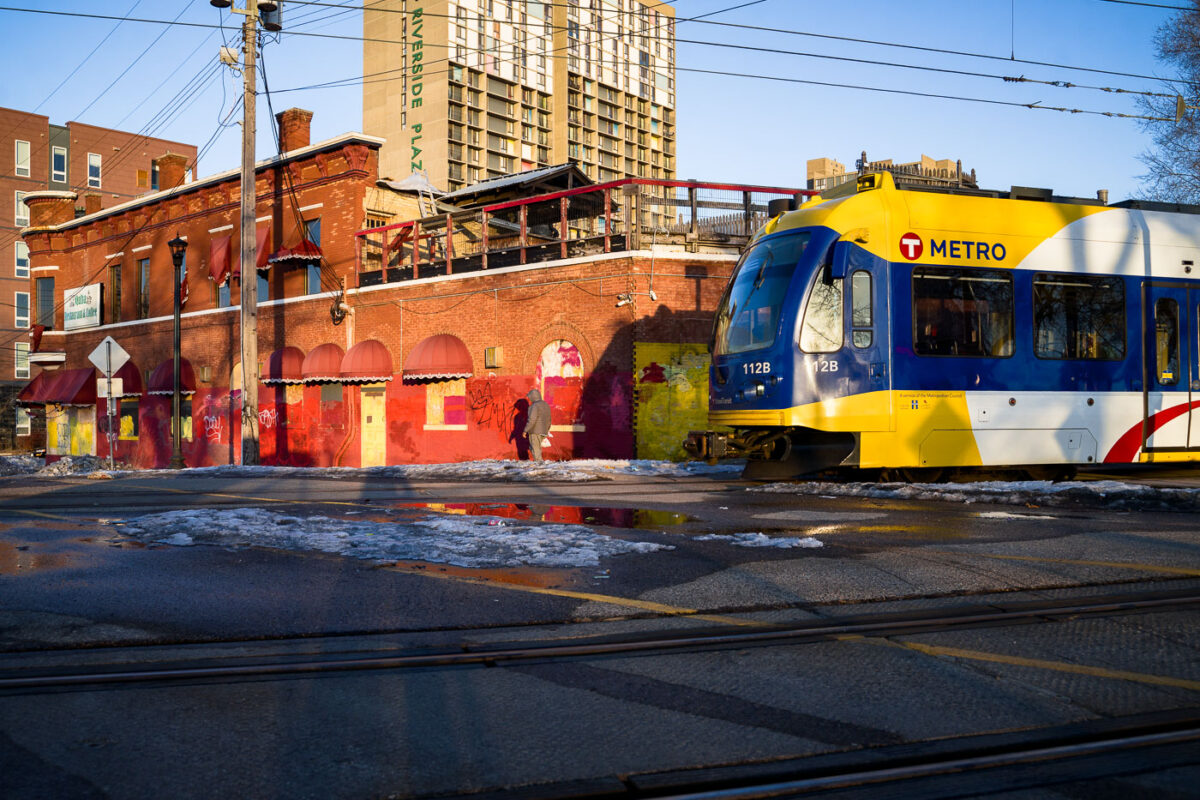
April 2019 — The METRO Blue Line curves toward downtown Minneapolis near the Cedar–Riverside neighborhood, passing below the colorful concrete towers of Riverside Plaza at sunset. The complex, designed by architect Ralph Rapson and completed in 1973, is one of the city’s most distinctive examples of Brutalist modernism. This area, once part of the immigrant gateway to Minneapolis, now blends historic structures like the Mixed Blood Theatre with the transit corridor connecting neighborhoods across the city.

Riverside Plaza from the Light Rail Overpass

Riverside Plaza from the Light Rail Overpass

April 2019 — Riverside Plaza stands tall beyond the METRO Blue Line overpass in the Cedar–Riverside district of Minneapolis. The colorful panels of the 1970s residential towers contrast with the new mid-rise apartments and light rail infrastructure built decades later. This view captures the merging of eras—modern rail transit, Brutalist architecture, and the continuing evolution of one of Minneapolis’s most historically diverse neighborhoods.

Thameslink Platforms at London Bridge Station

Thameslink Platforms at London Bridge Station

April 2019 — London Bridge Station’s Thameslink platforms represent one of the most advanced pieces of commuter rail infrastructure in the UK, rebuilt as part of the £1 billion redevelopment completed in 2018. The redesign introduced a vast concourse beneath the platforms, new canopies, and digital passenger systems to accommodate over 50 million travelers annually. Visible here is a Class 700 Thameslink train, part of Siemens’ Desiro City fleet, which operates high-frequency services linking Bedford, Brighton, and Cambridge through central London via the core Thameslink route. The streamlined architecture and wide canopies were engineered to handle both heavy peak-hour volumes and seamless integration between National Rail and the London Underground’s Jubilee and Northern Lines, establishing London Bridge as a key interchange in Britain’s modern rail network.

Bermondsey Station Roundel, London Underground

Bermondsey Station Roundel, London Underground

April 2019 — The distinctive red-and-blue roundel of Bermondsey Station marks one of the Jubilee Line’s most modern stops in southeast London. Opened in 1999 as part of the Jubilee Line Extension, the station features stainless steel panels, subdued lighting, and a minimalist aesthetic typical of late-20th-century London Transport design. The bold signage, designed to the original Transport for London typographic standards, stands out against the brushed metal backdrop—an enduring emblem of the Underground’s fusion of history and modern engineering.

Tower Hill Underground Eastbound Platform

Tower Hill Underground Eastbound Platform

April 2019 — The eastbound platform at Tower Hill Underground Station, serving the District and Circle lines, curves gently beneath the City of London’s historic core. The tiled walls, layered advertising panels, and utilitarian ceiling panels reflect the practical design language of the post-war London Underground system. Located adjacent to Tower Gateway DLR and just steps from the Tower of London, this interchange is one of the busiest tourist-access stations in central London. Its narrow curvature and close tunnel clearances are characteristic of legacy sub-surface lines built in the 19th century—still forming the backbone of the modern network more than 150 years later.

Tower Hill Station – District Line S7 Stock

Tower Hill Station – District Line S7 Stock

April 2019 — An S7 Stock train stands at Tower Hill Station on the District and Circle lines, its doors open beneath the curved tunnel roof. These Bombardier-built trains, introduced between 2010 and 2017, form part of London Underground’s Sub-Surface Railway modernization program—featuring wider gangways, air conditioning, and regenerative braking. The tiled walls and bright signage retain the visual identity of the Underground, while the yellow safety line and tactile paving mark the boundary of one of London’s busiest commuter platforms. Tower Hill’s proximity to the Tower of London and the Thames makes it both a vital interchange for daily travelers and a gateway for millions of visitors exploring the city’s historic core.

Southern Class 455 at London Victoria

Southern Class 455 at London Victoria

April 2019 — A Southern Railway Class 455 electric multiple unit prepares to depart from London Victoria station on a suburban service bound for Sutton. These 1980s-era trains, built by British Rail Engineering Limited, have long served the dense commuter corridors of South London and Surrey. The terminal’s subterranean platforms, seen here beneath the main concourse, handle both Gatwick Express and local Southern services, linking central London with its southern suburbs through one of the busiest rail hubs in Britain.

Southern Class 377 at London Station

Southern Class 377 at London Station

April 2019 — A close-up view of a Southern Railway Class 377 Electrostar unit, part of the modern suburban fleet serving routes across South London and the southern counties. The green and yellow livery, with sliding central doors and Wi-Fi signage visible through the window, reflects the operator’s current design standard for high-frequency commuter service. These electric multiple units, built by Bombardier, form the backbone of Southern’s network—efficiently linking London with Brighton, Gatwick, and the South Coast. The clean, modular profile emphasizes function and accessibility typical of post-2000 British rolling stock.

Southern Railway Train at London Victoria Station

Southern Railway Train at London Victoria Station

April 2019 — A Southern Railway Class 377 electric multiple unit pauses at one of the below-ground platforms of London Victoria, one of the busiest rail termini in the United Kingdom. Victoria Station serves as a major gateway for commuters and regional travelers across southern England, hosting both suburban services and longer-distance connections toward Sussex, Surrey, and the south coast. The station, originally opened in 1860, has undergone numerous renovations to accommodate modern passenger capacity, yet retains its functional layout with wide concourses, numbered platforms, overhead signage, and the familiar “Mind the Gap” platform warning. The photo highlights the integration of historic rail infrastructure with contemporary rolling stock, reflecting the continuing importance of national rail in London’s transit network.

Piccadilly Circus Underground Passageway, London

Piccadilly Circus Underground Passageway, London

April 2019 — An underground corridor at London’s Piccadilly Circus Station connects the Bakerloo and Piccadilly line platforms deep beneath central London. Opened in 1906, the station sits directly under the city’s busiest intersection and handles tens of millions of passengers each year. The tunnels were rebuilt in the 1920s to improve crowd circulation, creating a complex network of escalators and passages like this one that channel travelers toward exits under Shaftesbury Avenue and Regent Street. Despite its age, the station remains one of the Underground’s most recognizable and heavily trafficked transport hubs in the West End.

Train at Piccadilly Circus Underground Station

Train at Piccadilly Circus Underground Station

April 2019 — A pair of London Underground trains pass through Piccadilly Circus Station, one of the most recognizable stops in the network’s deep-level system. The curved platforms and distinctive cream-colored tilework reflect the 1920s modernization that gave the station its Art Deco influence, while the red, white, and blue train livery remains a symbol of the city’s transport identity. The platform’s polished floor and yellow safety line guide passengers along the busy interchange, located beneath the heart of London’s West End.

Platforms Beneath Glass and Steel, Victoria Station

Platforms Beneath Glass and Steel, Victoria Station

April 2019 — The platforms of London Victoria Station stretch beneath an ornate iron-and-glass roof, a hallmark of late 19th-century railway engineering. The intricate red and black trusses, designed for both strength and elegance, frame the soft natural light filtering through the skylights above. Commuters move toward the waiting trains of the Southern and Southeastern networks, a daily rhythm set against one of London’s most architecturally distinctive termini, where Victorian design continues to serve the modern rail era.

Underground Passageway at Charing Cross Station

Underground Passageway at Charing Cross Station

April 2019 — Descending into the tiled corridors of Charing Cross Station, this curved passageway reflects the classic utilitarian design of the London Underground’s mid-20th-century refurbishments. The white-tiled walls, stainless-steel handrails, and fluorescent lighting form a distinctly familiar aesthetic across the network, guiding travelers toward the Northern and Bakerloo lines. Once part of the original terminus for trains entering central London, Charing Cross remains a vital interchange linking rail and Tube services near Trafalgar Square—its passages echoing the constant rhythm of London commuters.

Charing Cross Escalator in London

Charing Cross Escalator in London

April 2019 — Commuters ride the long escalators inside Charing Cross Underground Station in central London. The station, a busy interchange on the Northern and Bakerloo lines, is known for its deep tunnels, heavy foot traffic, and role as a gateway to Trafalgar Square and the West End. Rows of posters line the walls, while bright fluorescent lighting and metallic finishes highlight the stark, utilitarian design typical of the London Tube.

Charing Cross Underground — Bakerloo Line Platform

Charing Cross Underground — Bakerloo Line Platform

April 2019 — A Bakerloo Line train pauses at Charing Cross Underground Station, one of the most historically layered stations in central London. Opened in 1906, Charing Cross became a key interchange point connecting the Bakerloo and Northern lines beneath the Strand. The photograph captures the distinctive orange-tiled tunnel portal and overhead “Way Out” signage leading toward the mainline station above. Once part of the Jubilee Line until 1999, this section now serves as a terminus for Bakerloo trains, blending Edwardian design elements with the operational systems of a 21st-century network.

Charing Cross Underground Station — Bakerloo Line Terminus

Charing Cross Underground Station — Bakerloo Line Terminus

April 2019 — A Bakerloo Line train rests at Charing Cross Underground Station, beneath the heart of central London. Once a junction for both the Bakerloo and Jubilee lines, Charing Cross now functions as the southern terminus for Bakerloo services, connecting to the mainline station above. The photograph highlights the tunnel portal with its characteristic red tiles and the clean signage pointing toward the Northern line and the National Rail concourse. Opened in 1906 and expanded through the 1970s, the station remains an emblem of the Underground’s architectural layering—where Edwardian infrastructure meets modern transit demands.

Bakerloo Line Southbound Tunnel at Charing Cross Station

Bakerloo Line Southbound Tunnel at Charing Cross Station

April 2019 — The southbound Bakerloo line platform at Charing Cross Underground Station in central London, showing the distinctive narrow tube tunnel built in the early 1900s. The red-edged lining around the tunnel mouth and the tiled passageway reflect classic London Transport design standards. Opened in 1906, the Bakerloo line was one of the early deep-level “tube” lines, and this station once served as its southern terminus before extensions carried it to Elephant & Castle. The signage and steep staircases illustrate the compact engineering that defined London’s early subterranean railways.

London Paddington Station in London

London Paddington Station in London

April 2019 — Modern high-speed trains wait beneath the soaring glass arches of Paddington Station in London, one of the capital’s busiest rail hubs. Designed in the mid-19th century by engineer Isambard Kingdom Brunel, the station blends historic architecture with the bustle of contemporary travel, serving as the terminus for Great Western Railway routes to Wales and the West Country. Around the concourse, new developments and construction highlight the area’s transformation, with Paddington’s mix of heritage and modernity on full display.

Rail Junction at Queen’s Park Station, London

Rail Junction at Queen’s Park Station, London

April 2019 — The intricate trackwork and tunnel entrance at Queen’s Park Station in northwest London reveal the dual identity of this site as both a passenger stop and a key depot for the Bakerloo Line. Opened in 1915, Queen’s Park serves as the operational transition point where London Underground trains share Network Rail tracks toward Harrow & Wealdstone. The junction’s dense web of points, signals, and electrified rails embodies over a century of continuous modernization—bridging early 20th-century tube engineering with today’s integrated mainline-underground operations.

Paddington Train Station in London

Paddington Train Station in London

April 2019 — Victoria station, also known as London Victoria, is a central London railway terminus and connected London Underground station in Victoria, in the City of Westminster, managed by Network Rail. Named after the nearby Victoria Street (not the Queen), the main line station is a terminus of the Brighton main line to Gatwick Airport and Brighton and the Chatham main line to Ramsgate and Dover via Chatham. From the main lines, trains can connect to the Catford Loop Line, Dartford Loop Line, and the Oxted line to East Grinstead and Uckfield. Southern operates most commuter and regional services to south London, Sussex and parts of east Surrey, while Southeastern operates trains to south east London and Kent. Gatwick Express trains run direct to Gatwick. The Underground station is on the Circle and District lines between Sloane Square and St. James's Park, and the Victoria line between Pimlico and Green Park. The area around the station is an important interchange for other forms of transport: a local bus station is in the forecourt and Victoria Coach Station is nearby.
King's Cross St Pancras Station

King's Cross St Pancras Station

May 2019 — King's Cross St. Pancras (formerly King's Cross) is a London Underground station on Euston Road in the Borough of Camden, Central London. It serves King's Cross and St Pancras main line stations in fare zone 1, and is an interchange between six Underground lines. The station was one of the first to open on the network; as of 2017, it is the most used station on the network for passenger entrances and exits combined.

Baker Street Station – Metropolitan Line Terminus Platform

Baker Street Station – Metropolitan Line Terminus Platform

May 2019 — Baker Street Station’s Metropolitan Line platforms represent one of the oldest sections of the London Underground, opened in 1863 as part of the world’s first subterranean railway. The terminus platforms, seen here, retain their cut-and-cover Victorian brickwork paired with modern safety updates and striking red-painted steel reinforcements added during later refurbishments. The station originally served the Metropolitan Railway’s steam-hauled trains running between Paddington and Farringdon before electrification in the early 20th century transformed the network. Period signage advertising “Chiltern Court” and the original Metropolitan Railway branding pay homage to its heritage, contrasting with the exposed wiring, signal lights, and tiling that reveal more than 160 years of evolving underground infrastructure. Today, Baker Street remains a key interchange, connecting five Underground lines while preserving much of the industrial atmosphere that defined London’s pioneering approach to mass transit.

Baker Street Station – Subsurface Track and Signal Infrastruct

Baker Street Station – Subsurface Track and Signal Infrastruct

May 2019 — Deep beneath central London, Baker Street’s Metropolitan Line platforms reveal the layered engineering of one of the oldest functioning railway systems in the world. The exposed brick tunnel and steel framing date back to the Victorian “cut-and-cover” era of the 1860s, when steam locomotives first ran through these very corridors. The heavy red girders seen above were reinforced during modern refurbishments, supporting the city streets above while housing utilities and cable conduits that power today’s Underground network. The train at the far end belongs to the S8 Stock series, introduced in 2010 by Bombardier for the Metropolitan Line, equipped with air conditioning and regenerative braking. The dense web of cables and control boxes along the wall carries signal, communication, and traction power circuits, all vital to the line’s safe operation. Baker Street’s infrastructure embodies London Transport’s continual evolution—from soot-covered tunnels to precision-controlled, electrically powered systems still running along the same 19th-century alignments.

Westminster Underground Station – Jubilee Line Platform

Westminster Underground Station – Jubilee Line Platform

May 2019 — The Jubilee Line platforms at Westminster Underground Station represent the deep-level engineering and modernist design of London’s late-20th-century transit expansion. Constructed as part of the 1999 Jubilee Line Extension, these platforms sit approximately 30 meters below ground, directly beneath the District and Circle line tunnels. Designed by Foster + Partners, the station features full-height platform screen doors — a safety innovation uncommon on most of the Underground — and a sleek system of acoustic panels and perforated aluminum cladding that enhance both sound control and visual uniformity. Every structural and material detail reflects the project’s dual purpose: to manage immense passenger flow serving Parliament and Whitehall above, while preserving architectural clarity within a highly constrained urban site. The smooth curvature of the platform walls, precision lighting, and isolation of mechanical systems behind layered steel panels highlight the station’s integration of industrial functionality with the aesthetics of modern infrastructure.

Futuristic Architecture of Westminster Underground Station

Futuristic Architecture of Westminster Underground Station

May 2019 — The angular steel and concrete design of Westminster Underground Station represents one of the most ambitious architectural undertakings of London’s Jubilee Line Extension, opened in 1999. Designed by Foster + Partners, the station descends more than 30 meters below ground beside the Houses of Parliament, requiring deep excavation and advanced structural engineering to stabilize the surrounding historic area. The stairwell seen here showcases the station’s signature industrial aesthetic — exposed concrete ribs, perforated metal panels, and massive supporting beams that evoke the look of a subterranean cathedral of infrastructure. Built within a massive box excavated beneath Bridge Street, Westminster’s layout integrates vertical circulation through lifts, escalators, and these steep stairways connecting the ticket hall to multiple underground levels. The design not only accommodates heavy passenger volumes but celebrates the raw mechanics of public transit, merging utility with architectural expression.

Architecture of the Westminster Train Station

Architecture of the Westminster Train Station

May 2019 — Westminster is a London Underground station in the City of Westminster. It is served by the Circle, District and Jubilee lines. On the Circle and District lines, the station is between St. James's Park and Embankment, and on the Jubilee line it is between Green Park and Waterloo. It is in Travelcard Zone 1. The station is located at the corner of Bridge Street and Victoria Embankment and is close to the Houses of Parliament, Westminster Abbey, Parliament Square, Whitehall, Westminster Bridge, and the London Eye. Also close by are Downing Street, the Cenotaph, Westminster Millennium Pier, the Treasury, the Foreign and Commonwealth Office, and the Supreme Court.

Times Square, 42nd St Station

Times Square, 42nd St Station

September 2019 — Pedestrians crowd the sidewalks around a subway entrance in Times Square, Manhattan. The 42nd Street–Times Square station, one of the busiest in New York City, connects multiple subway lines beneath the bright billboards, storefronts, and heavy traffic of the theater district.

Vanderbilt Eagle – Grand Central Station

Vanderbilt Eagle – Grand Central Station

September 2019 — An eagle statue perched on a globe stands outside Grand Central Terminal in Manhattan. The bronze sculpture, one of several around the historic landmark, looks out over Midtown with the glass facade of the MetLife Building rising in the background.

Train platform at Grand Central Station Metro North

Train platform at Grand Central Station Metro North

September 2019 — A Metro-North Railroad train waits at a platform inside Grand Central Terminal in Manhattan. The concrete pillars and exposed beams of the underground station frame the tracks, where the yellow warning strip lines the edge of the platform.

Metro-North Railroad car in NYC

Metro-North Railroad car in NYC

September 2019 — A Metro-North Railroad train is seen at a station platform, its blue-and-white exterior bearing the MTA logo. The commuter rail line, operated by the Metropolitan Transportation Authority, connects New York City with suburbs across New York State and Connecticut.

State of Connecticut seal on a train

State of Connecticut seal on a train

September 2019 — A Connecticut state seal is displayed on the side of a Metro-North Railroad train car, operated in partnership with the Connecticut Department of Transportation. The red-and-silver exterior includes safety instructions and signage, highlighting the regional rail system that connects commuters between New York and Connecticut.

Subway Rails at Grand Central Station

Subway Rails at Grand Central Station

September 2019 — A stairway leads down to the train platforms for Tracks 11 and 13 at Penn Station in Manhattan. A sign reading “Watch Your Step” hangs above the stairs, while a black-and-white advertisement looms over the tracks in the busy transit hub.

New York City Subway Stairs to station

New York City Subway Stairs to station

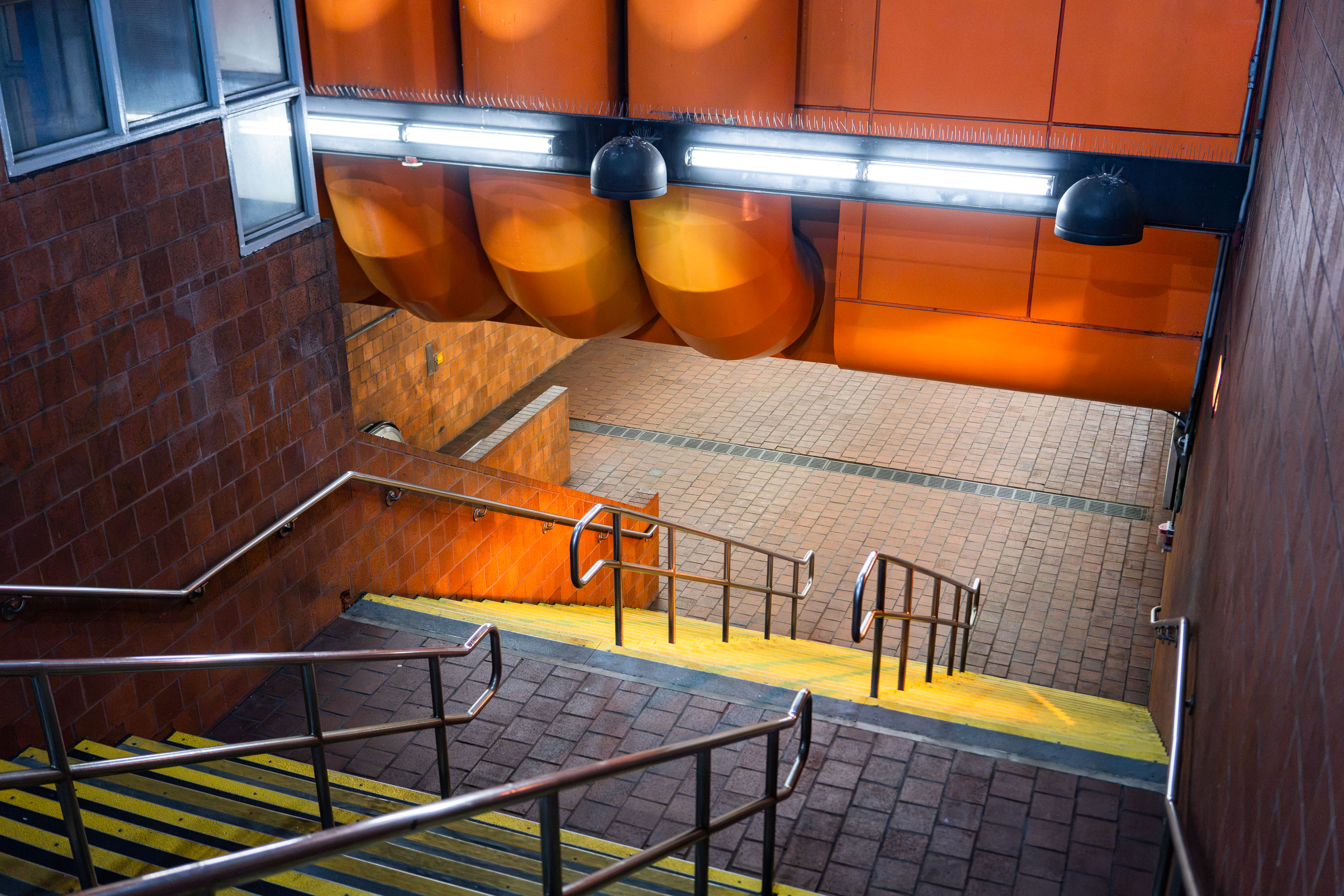
September 2019 — A dimly lit stairway leads down into a New York City subway station on Sunday, Sept. 14, 2025. Aging infrastructure and exposed piping are visible along the tiled walls.

York Street Station in NYC

York Street Station in NYC

September 2019 — The York Street Station in Brooklyn, New York.

MTA Rector Street Signage

MTA Rector Street Signage

September 2019 — Rector Street subway station in Manhattan New York City.

Exit sign at Rector Street Station

Exit sign at Rector Street Station

September 2019 — Exit signage at the Rector Street subway station in Manhattan New York City.

Freight trains and University Southeast Steam Plant

Freight trains and University Southeast Steam Plant

September 2019 — Freight cars sit on rail tracks near the Mississippi River in Minneapolis, with the University of Minnesota campus in the background. The Southeast Steam Plant and its red exhaust stacks rise behind the trains, and the Washington Avenue Bridge crosses the river farther upstream. The scene highlights the mix of industry, infrastructure, and campus development along the riverfront.

Target Field Light Rail Station and Prince Mural Minneapolis

Target Field Light Rail Station and Prince Mural Minneapolis

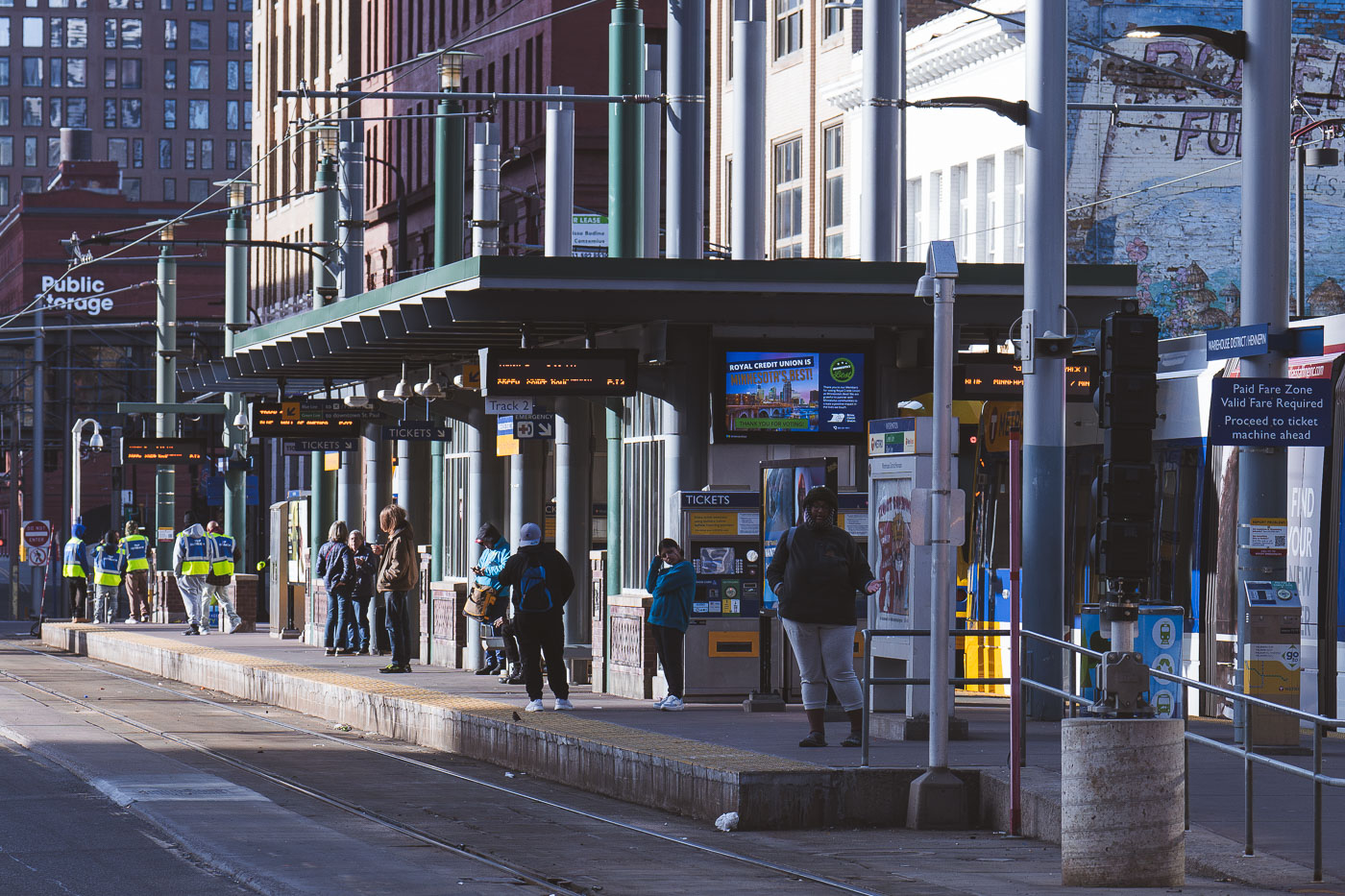
October 2019 — Located near the Target Center in downtown Minneapolis, the Target Field light rail station was patrolled by Homeland Security officers on October 10, 2019. The increased presence coincided with a major political rally at the nearby arena, leading to heightened security across the surrounding Warehouse District transit corridor.

Chicago ‘L’ Structure and CTA Sign in the Loop

Chicago ‘L’ Structure and CTA Sign in the Loop

October 2019 — The Chicago Transit Authority (CTA) logo is displayed beneath the steel elevated tracks that define the Loop, the city’s central business district. The structure, part of the “L” system first built in the late 19th century, remains one of Chicago’s most enduring symbols of urban mobility. Overhead girders and riveted beams—many still original to the early 1900s—carry trains above streets lined with early skyscrapers and historic facades. The CTA continues to operate one of the largest and oldest public transit networks in the United States, moving more than a million riders daily through Chicago’s interconnected system of rail and bus lines.

Blue Line Subway Tunnel, Chicago

Blue Line Subway Tunnel, Chicago

October 2019 — The curved platform of a Chicago Transit Authority Blue Line station reveals the utilitarian design of the city’s subway infrastructure, part of the Milwaukee–Dearborn subway opened in 1951. The tunnel’s tiled blue panels and low arched ceiling reflect the postwar engineering era that brought rapid transit beneath the Loop and the West Side, connecting O’Hare International Airport to downtown. Despite its age, this corridor remains a vital artery in Chicago’s daily commuter network, a symbol of mid-century urban mobility still in constant motion beneath the city streets.

Grand Station Red Line Stairway, Chicago CTA

Grand Station Red Line Stairway, Chicago CTA

October 2019 — A stairway leads down to the platform at the Chicago Transit Authority’s Grand Station on the Red Line. The tiled corridor—lined with blue ceramic panels and stainless-steel railings—reflects the late-20th-century design style common to CTA subway renovations, emphasizing functionality and durable materials. The bright fluorescent lighting and tiled curvature guide commuters from street level into the subterranean rail network that connects Chicago’s North Side, Loop, and South Side neighborhoods. The subtle skyline motif on the tiles pays homage to the city’s architectural identity while marking one of the Red Line’s busiest downtown access points.

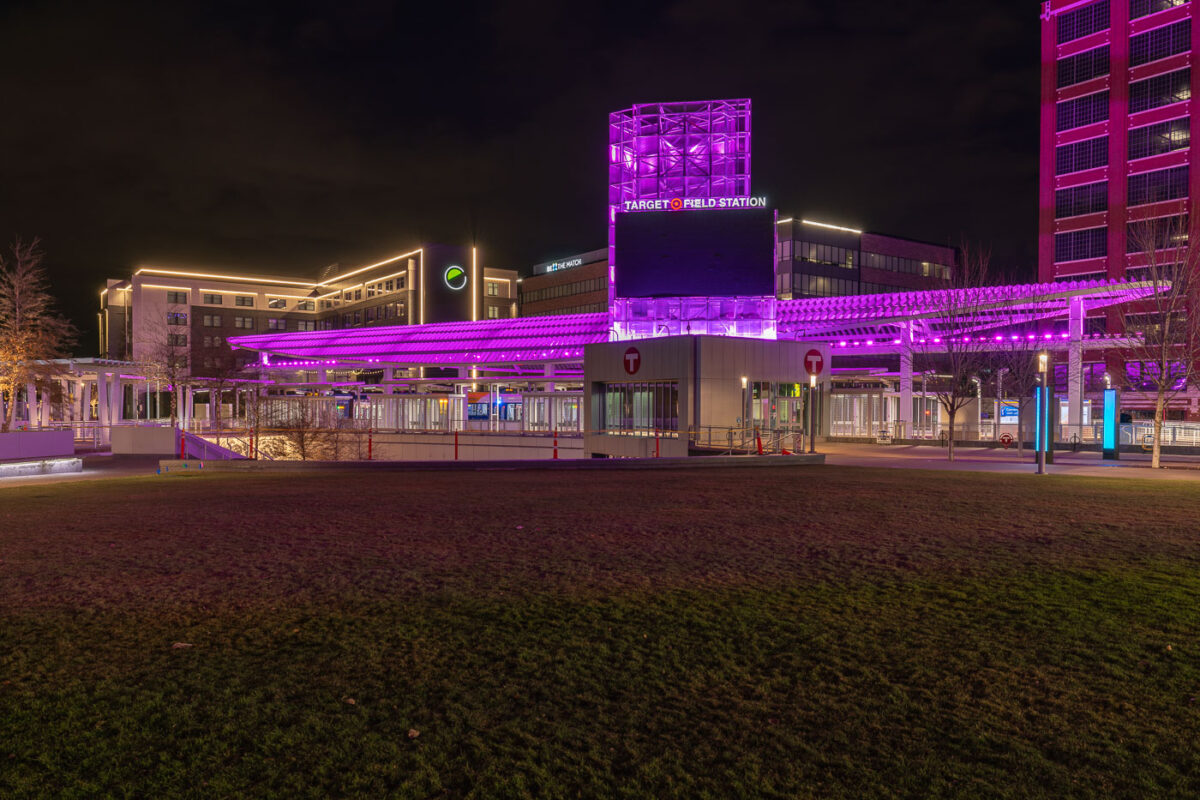
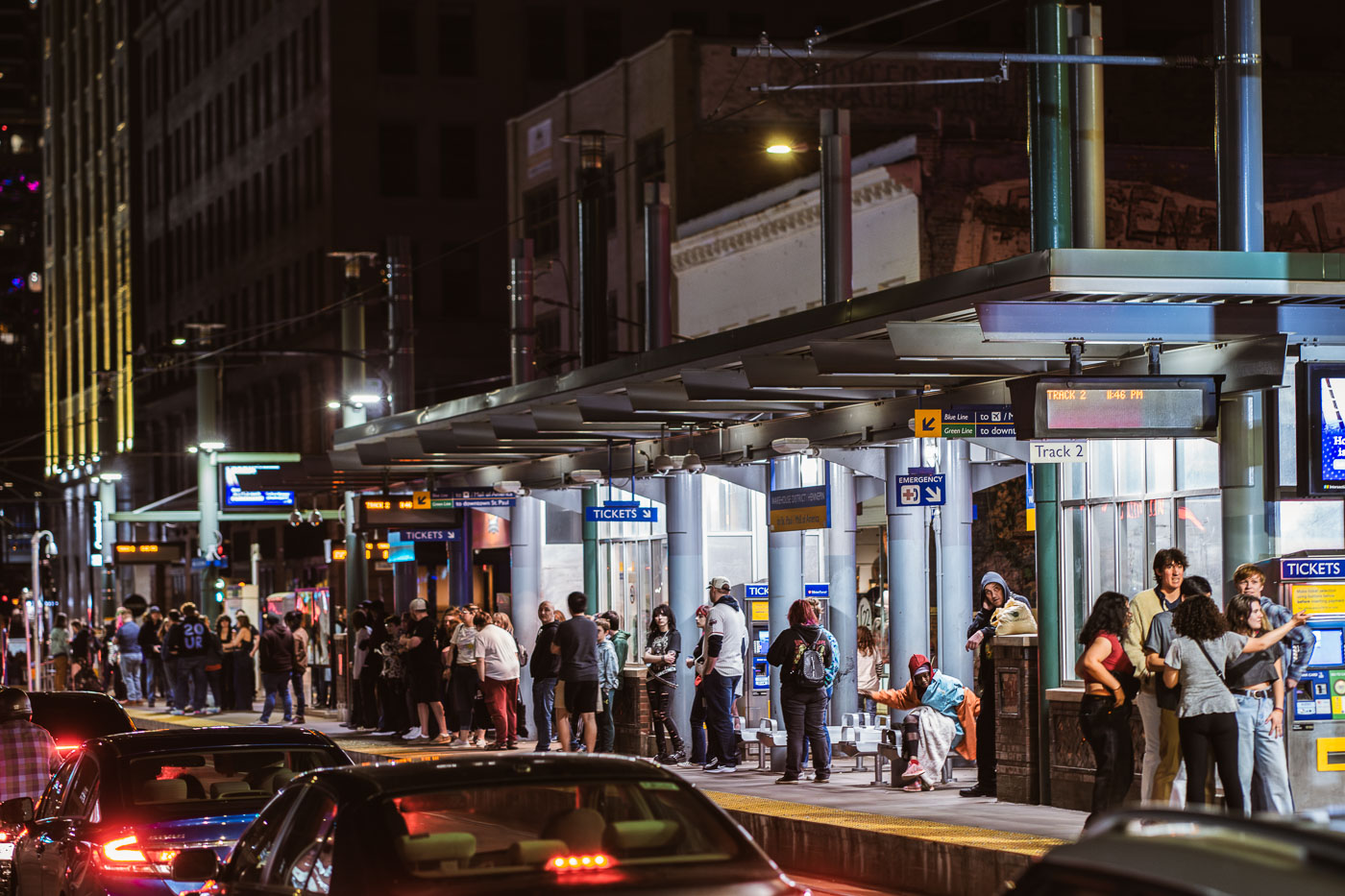
Target Field Station and Warehouse District at Night

Target Field Station and Warehouse District at Night

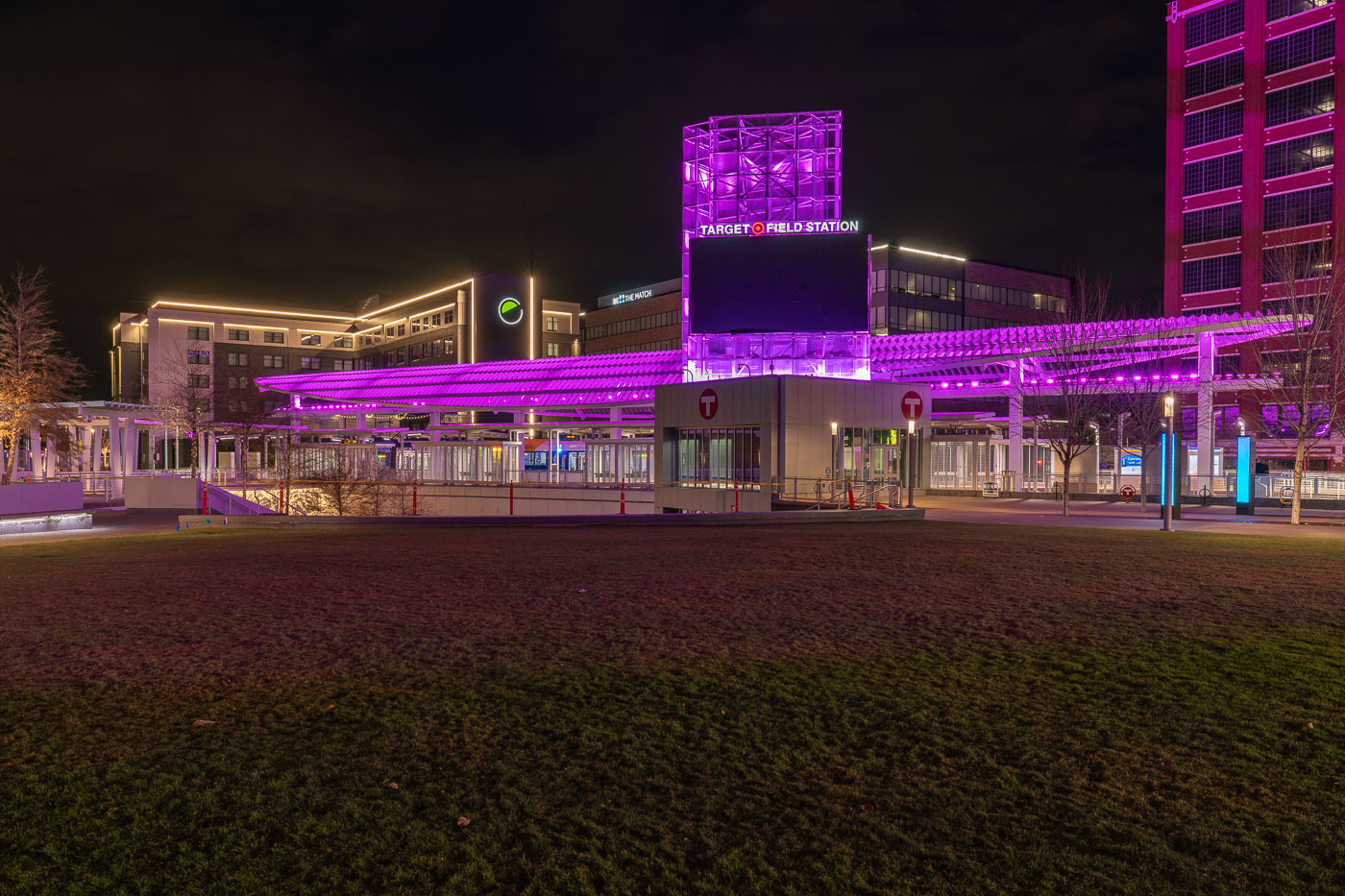
December 2019 — The illuminated Target Field sign overlooks the Warehouse District in downtown Minneapolis, where the city’s historic brick warehouses meet modern transit and redevelopment. Below, the Metro Green and Blue Line trains stop at Target Field Station, a multimodal hub linking light rail, commuter rail, and bike paths. The brightly lit Ford Center and preserved brick structures along 5th Street North illustrate the district’s mix of 20th-century industrial architecture and contemporary urban life, framed against the cold clarity of a Minnesota winter night.

SkyConnect at Tampa International Airport

SkyConnect at Tampa International Airport

December 2019 — SkyConnect tram that connects the airport to the parking garage and rental car center.

Roadroad Drumhead Signs in Museum

Roadroad Drumhead Signs in Museum

December 2019 — Seen inside the Green Bay Railroad Museum, an exhibit of historic railroad drumhead signs, once mounted on the observation cars of famous American passenger trains. These illuminated signs served both as branding and a wayfinding tool for travelers during the golden age of rail. • 20th Century Limited – The legendary New York Central luxury express between New York and Chicago, famous for its red carpet treatment. • Broadway Limited – The Pennsylvania Railroad’s flagship train, symbolized by its keystone-shaped sign. •The Cardinal – Still in operation today as an Amtrak route between New York and Chicago via Washington, D.C. and Cincinnati. •The Abraham Lincoln – Operated by the Alton Railroad between Chicago and St. Louis. •The Blue Bird – Another Alton Railroad streamliner that connected Chicago and St. Louis. •Erie Limited – A long-distance train operated by the Erie Railroad. •Night Diamond (Illinois Central) – A named overnight passenger service. •Merchants Limited – A New Haven Railroad luxury train between Boston and New York, a favorite among business travelers. •20th Century Limited – The legendary New York Central luxury express between New York and Chicago, famous for its red carpet treatment. •Broadway Limited – The Pennsylvania Railroad’s flagship train, symbolized by its keystone-shaped sign. •The Cardinal – Still in operation today as an Amtrak route between New York and Chicago via Washington, D.C. and Cincinnati. •The Abraham Lincoln – Operated by the Alton Railroad between Chicago and St. Louis. •The Blue Bird – Another Alton Railroad streamliner that connected Chicago and St. Louis. •Erie Limited – A long-distance train operated by the Erie Railroad. •Night Diamond (Illinois Central) – A named overnight passenger service. •Merchants Limited – A New Haven Railroad luxury train between Boston and New York, a favorite among business travelers.

Nicollet Mall LRT Station during Stay At Home Orders

Nicollet Mall LRT Station during Stay At Home Orders

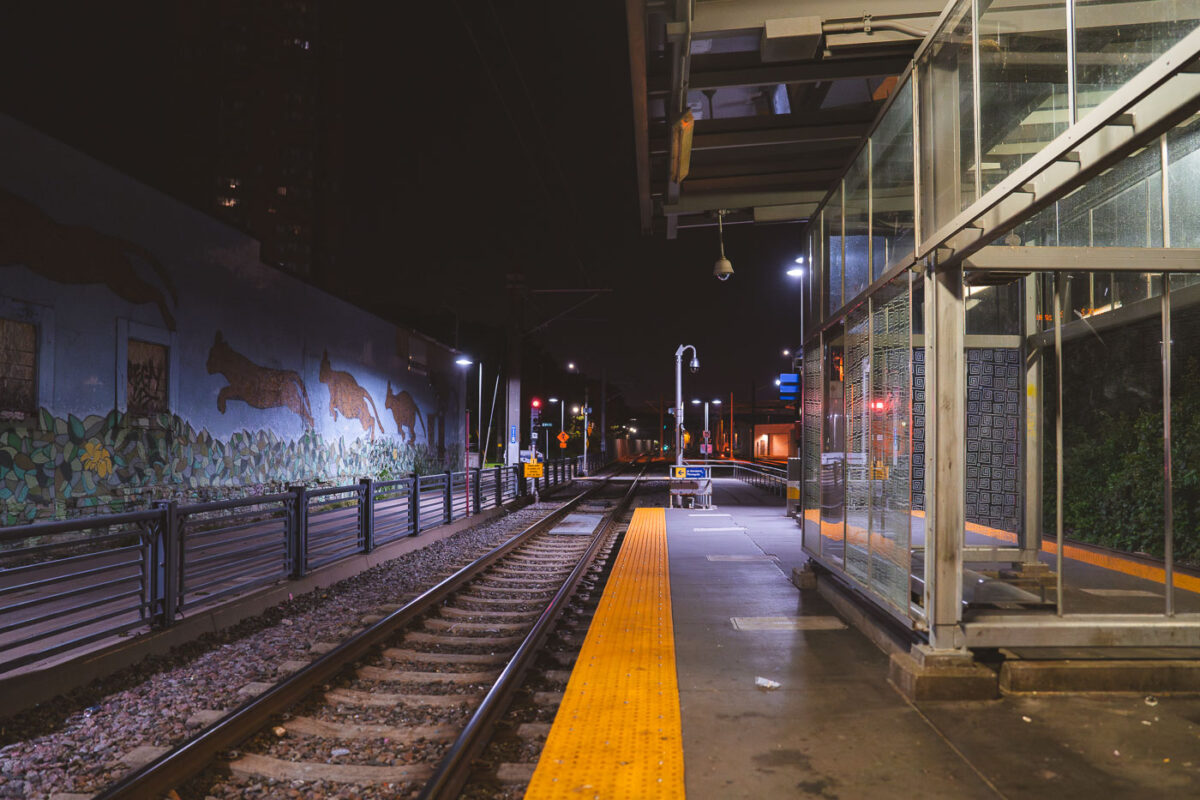
March 2020 — Nicollet Mall Light Rail Station on a rainy night in Downtown Minneapolis during Minnesota’s Stay At Home orders.

Sneaky Pete’s in Downtown Minneapolis during COVID-19

Sneaky Pete’s in Downtown Minneapolis during COVID-19

March 2020 — Sneaky Pete’s bar during the first night of Minnesota’s Stay At Home Order on 03/28/20.