Santuario San Francisco el Grande

8 photos · 2020

8 photographs tagged Santuario San Francisco el Grande, 2020.
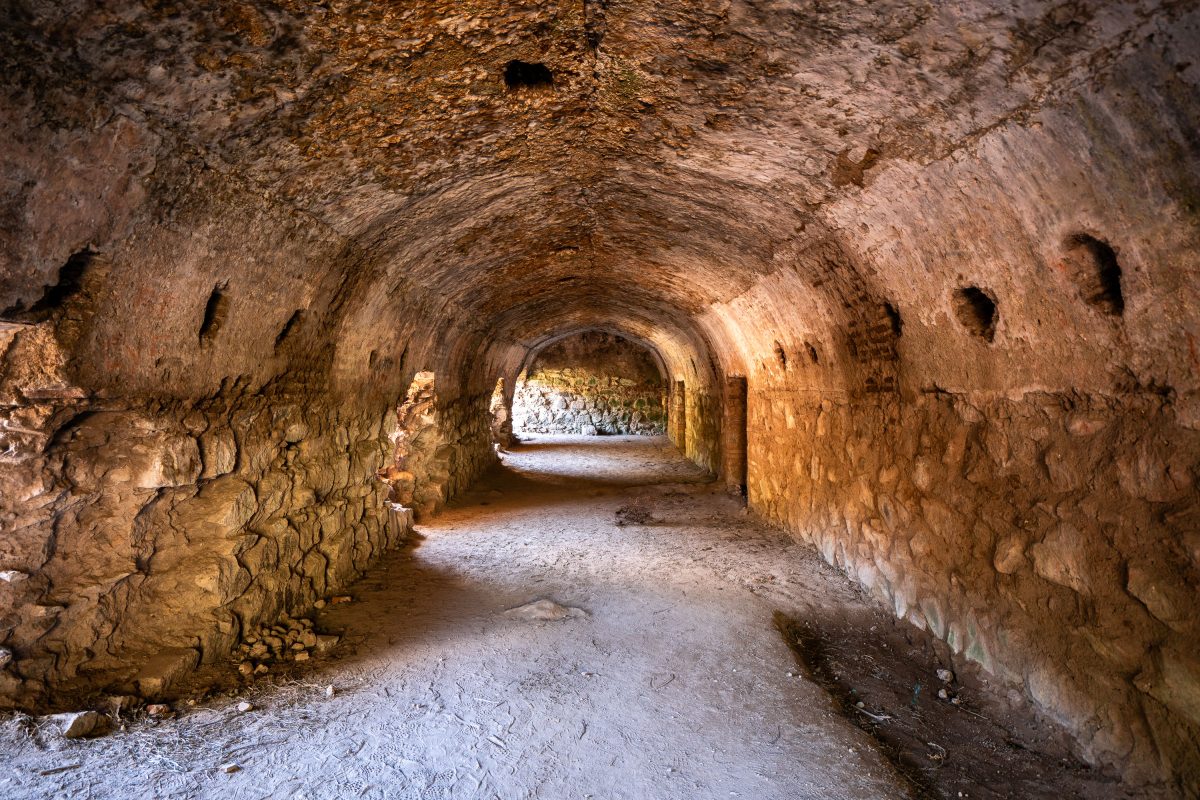
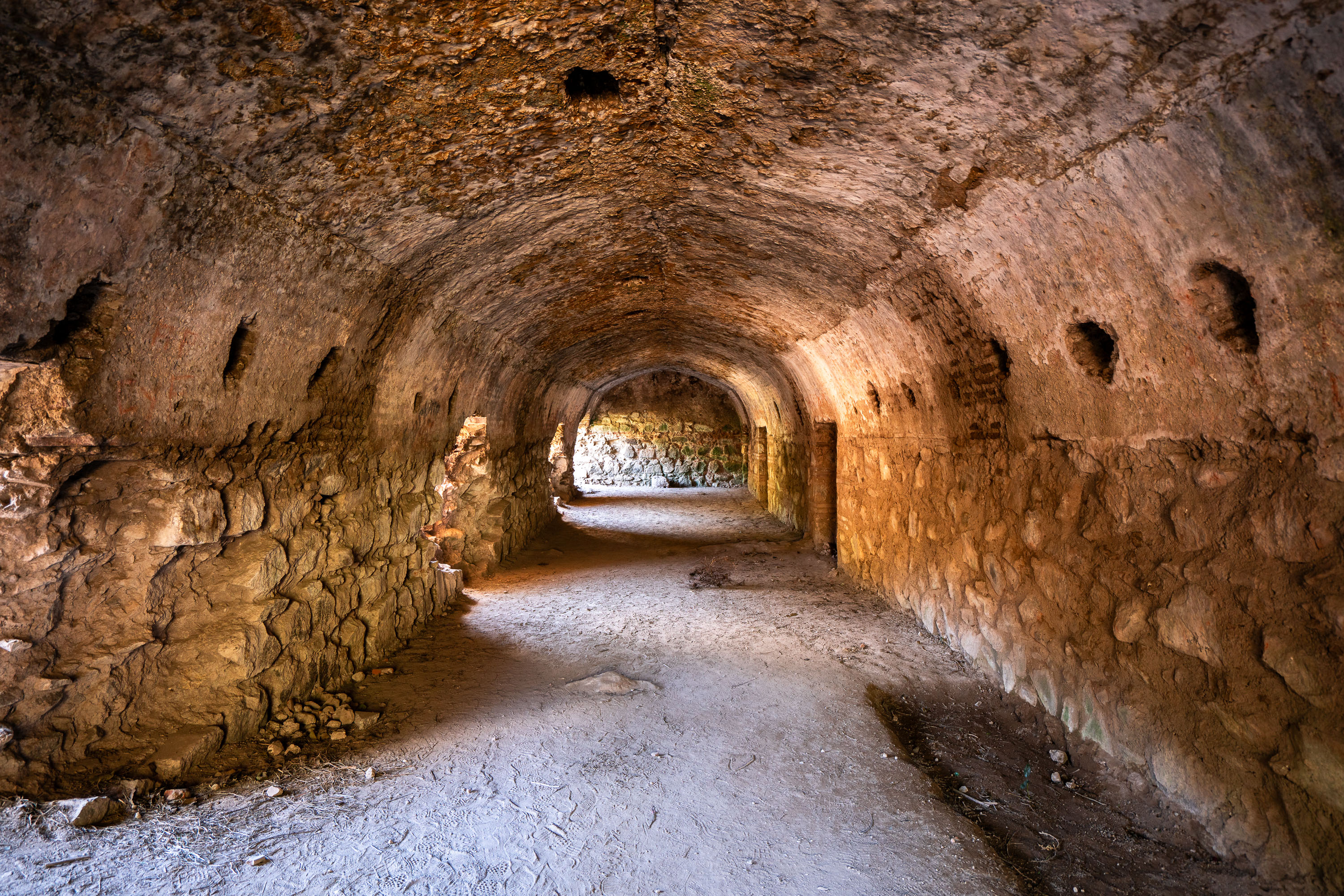
Vaulted stone corridor in the San Francisco el Grande convent ruins in Antigua Guatemala, a 16th-century Franciscan complex damaged by earthquakes.
San Francisco el Grande was founded by Franciscan friars in 1579 as one of colonial Antigua's largest church and convent complexes. The 1773 Santa Marta earthquake collapsed much of the convent, contributing to the Spanish crown's decision to relocate the capital to present-day Guatemala City. Hermano Pedro de Betancourt, later canonized as Guatemala's first saint, ran a hospital and hospice from this site before his death in 1667. The barrel-vaulted corridors that remain were once service passages and storage rooms connecting the convent's cloisters, left roofless and exposed after the colonial-era collapse.

Stone Corridor in the San Francisco el Grande Ruins, Antigua
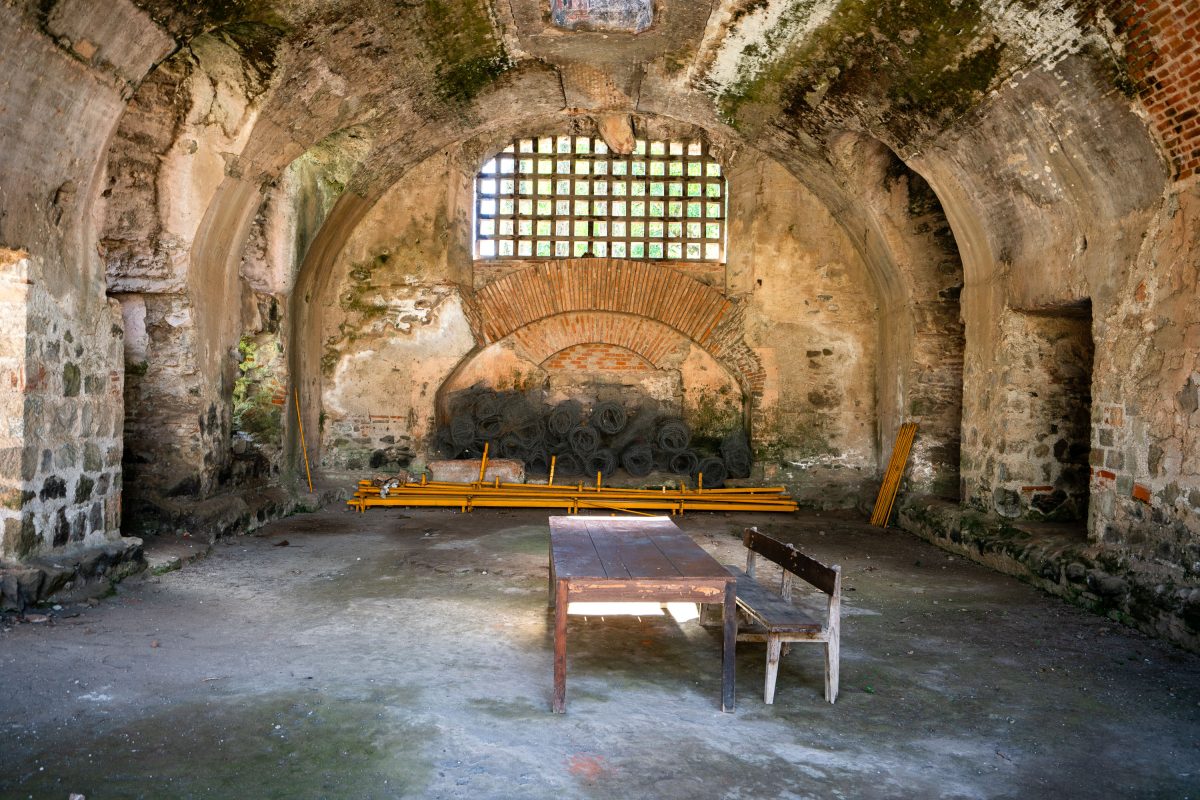
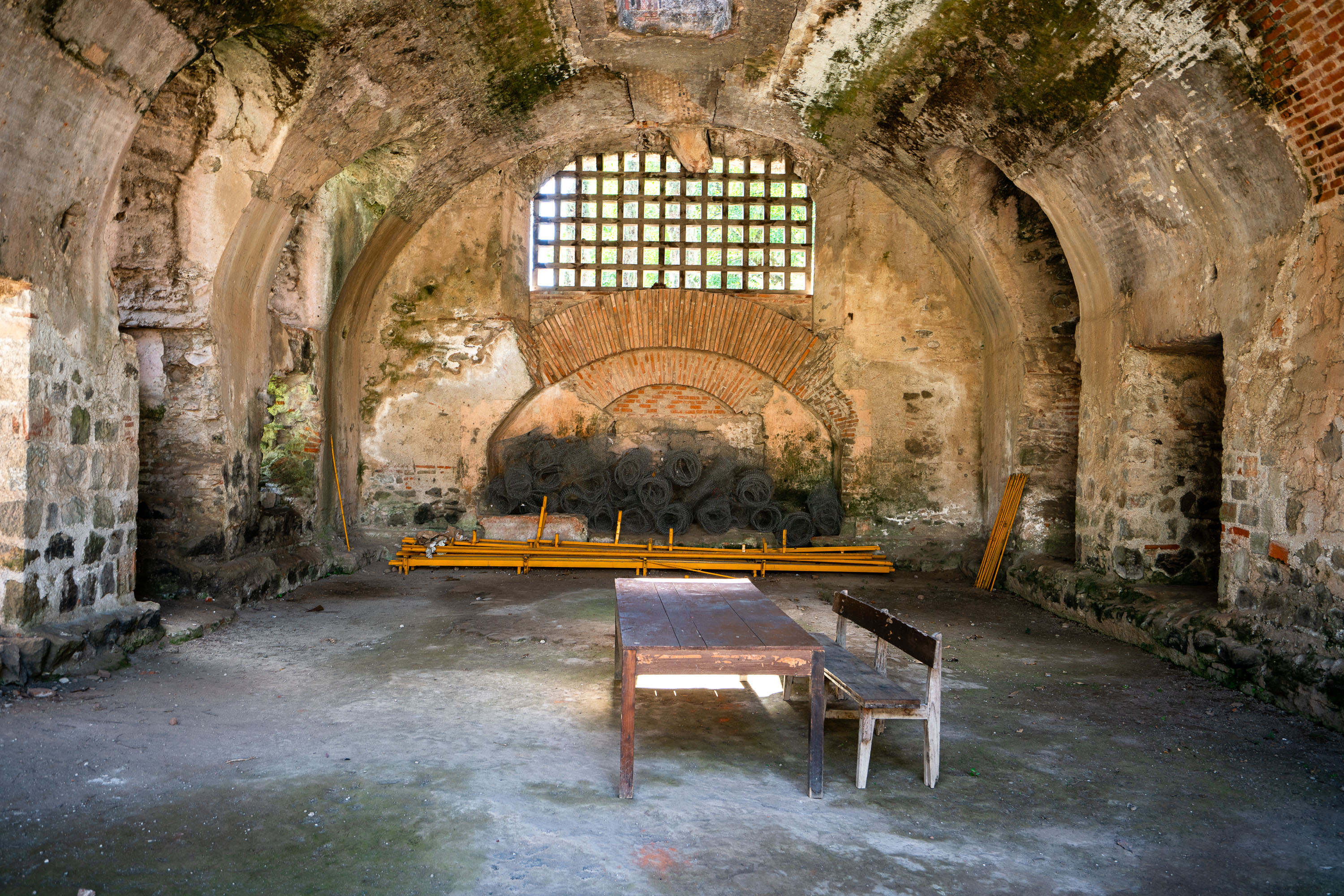
Vaulted stone and brick chambers with arched ceilings in the ruins of San Francisco el Grande Convent, Antigua Guatemala.
San Francisco el Grande was founded by Franciscan friars in the 16th century and grew into one of the largest religious complexes in colonial Antigua Guatemala. The 1773 Santa Marta earthquake badly damaged the convent along with much of the city, and the complex was never fully rebuilt. The surviving chambers, with their thick masonry arches, formed part of the friars' living and working quarters, constructed to support the weight of upper floors that no longer stand. The adjoining church was later restored and today holds the tomb of Hermano Pedro de San José Betancur, a Franciscan lay brother canonized in 2002 as Guatemala's first saint.

Friars’ Quarters at San Francisco el Grande, Antigua
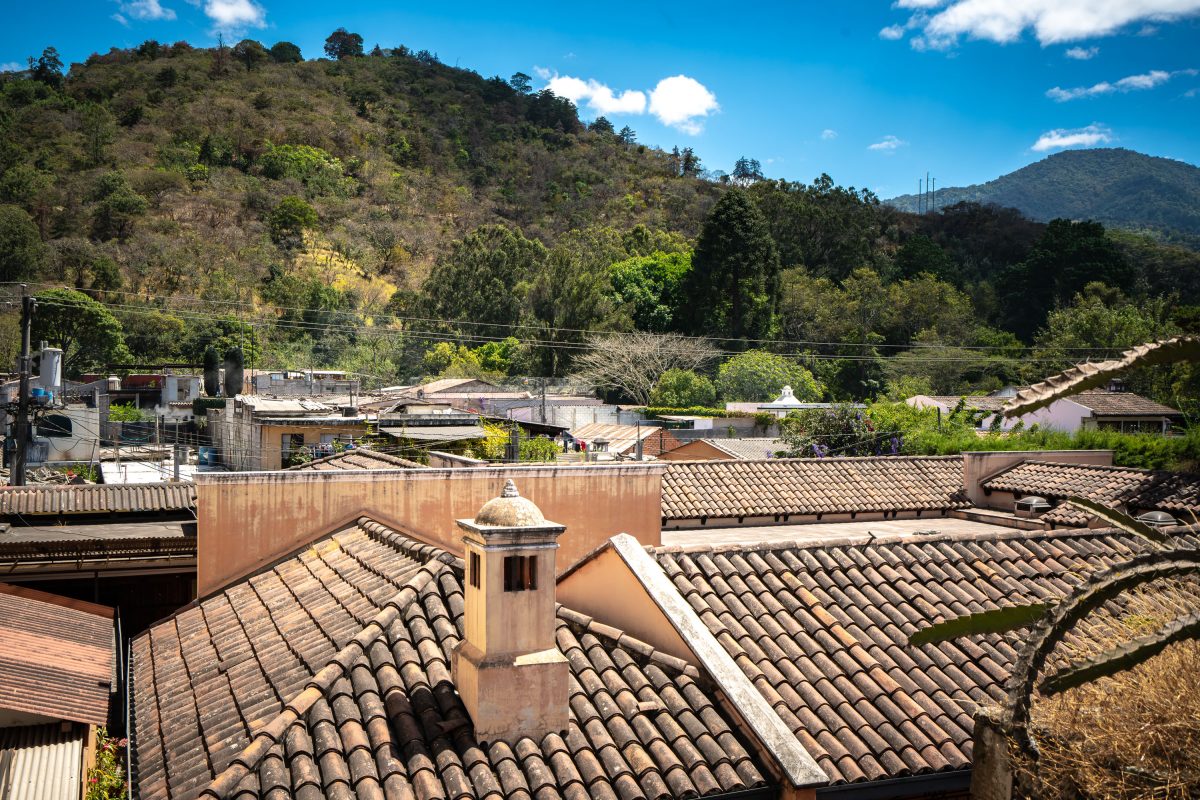
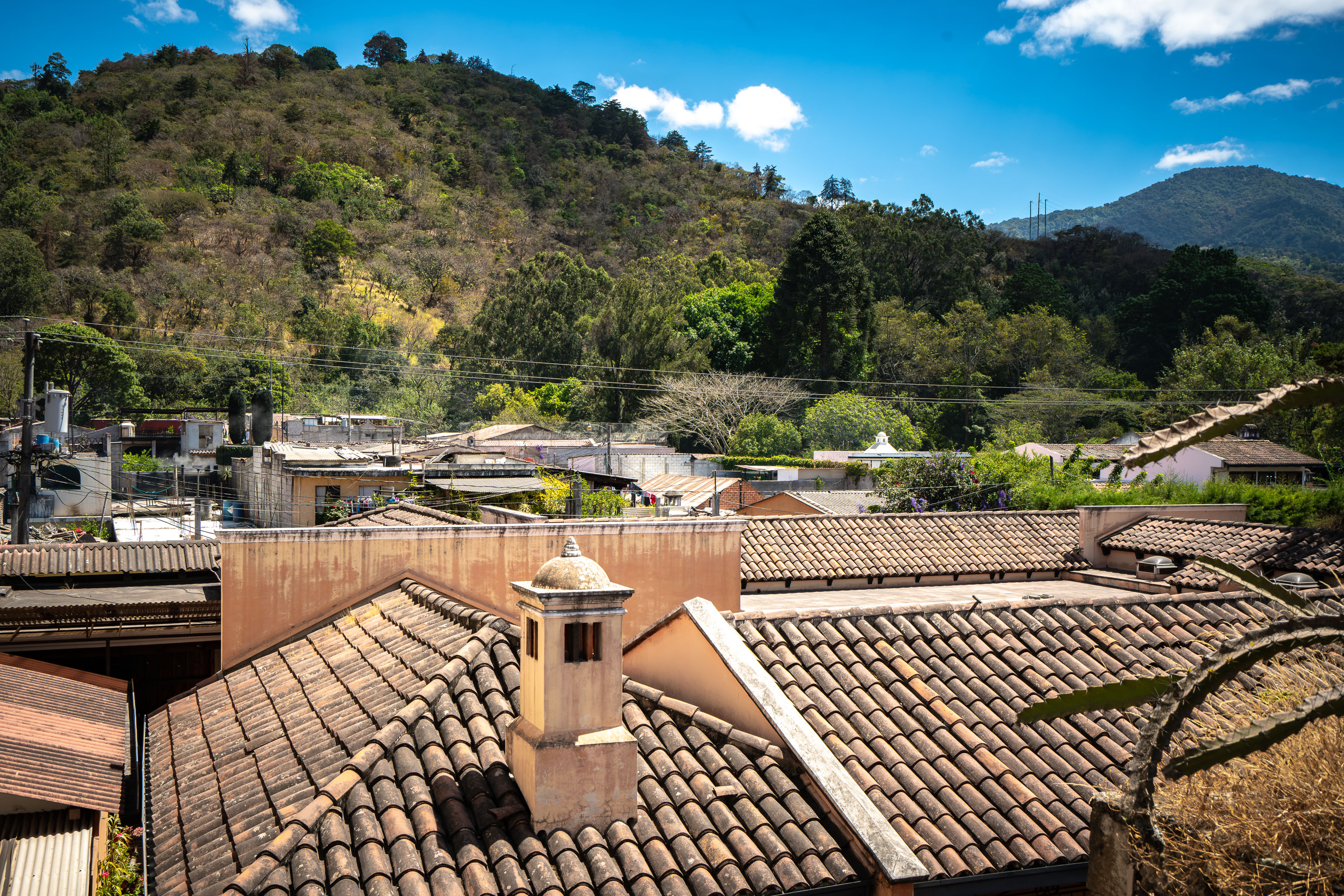
Terracotta clay tile roofs with a white cupola overlook the colonial city of Antigua Guatemala, with forested volcanic hills in the background.
Antigua Guatemala sits in the Panchoy Valley, ringed by the volcanoes Agua, Fuego and Acatenango, whose forested slopes form the backdrop to the city's historic center. Clay tile roofing has been required across Antigua since UNESCO designated it a World Heritage Site in 1979, a building code meant to preserve the colonial-era character the city held as capital of the Captaincy General of Guatemala. Nearby, the Iglesia de San Francisco el Grande, founded by Franciscan friars in 1579, has been rebuilt multiple times after earthquakes, including the 1773 Santa Marta quake that prompted colonial authorities to relocate the capital to present-day Guatemala City. Hermano Pedro de San José Betancourt, a Franciscan missionary canonized in 2002, is entombed inside the church, which continues to draw pilgrims today.

Clay Tile Rooftops Beneath the Hills of Antigua Guatemala
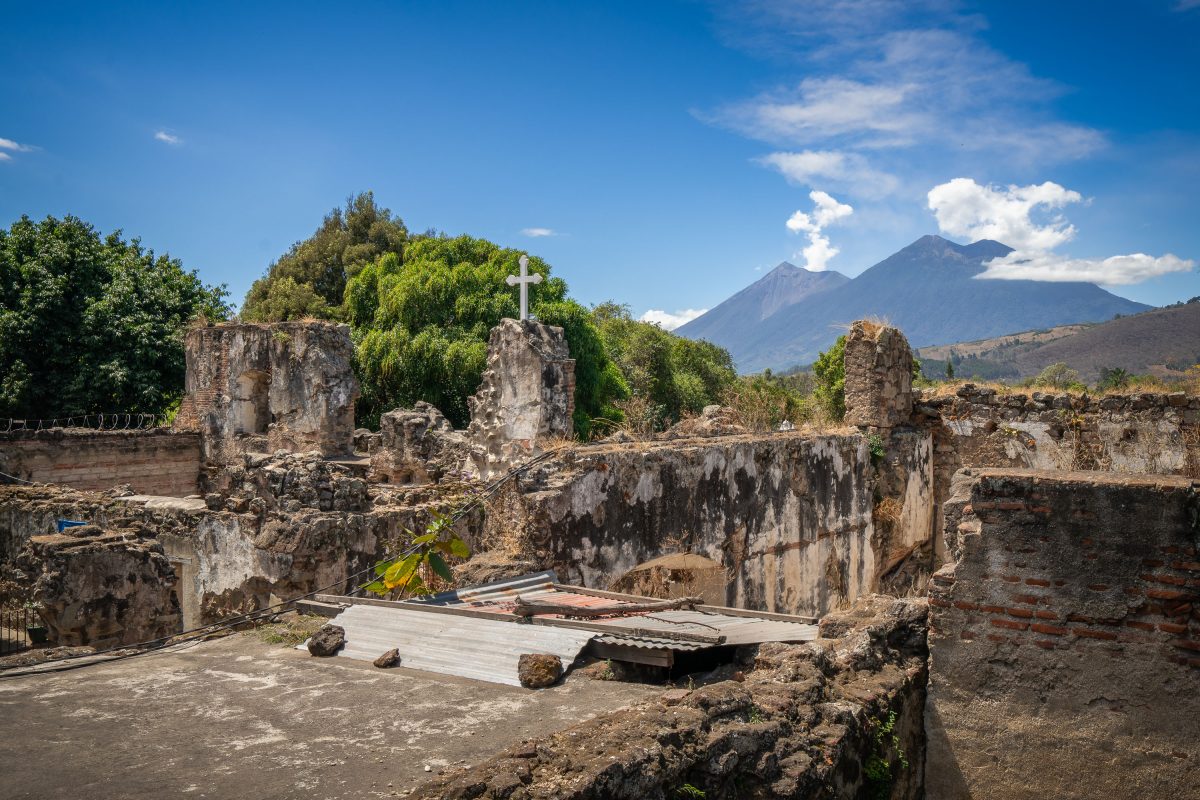
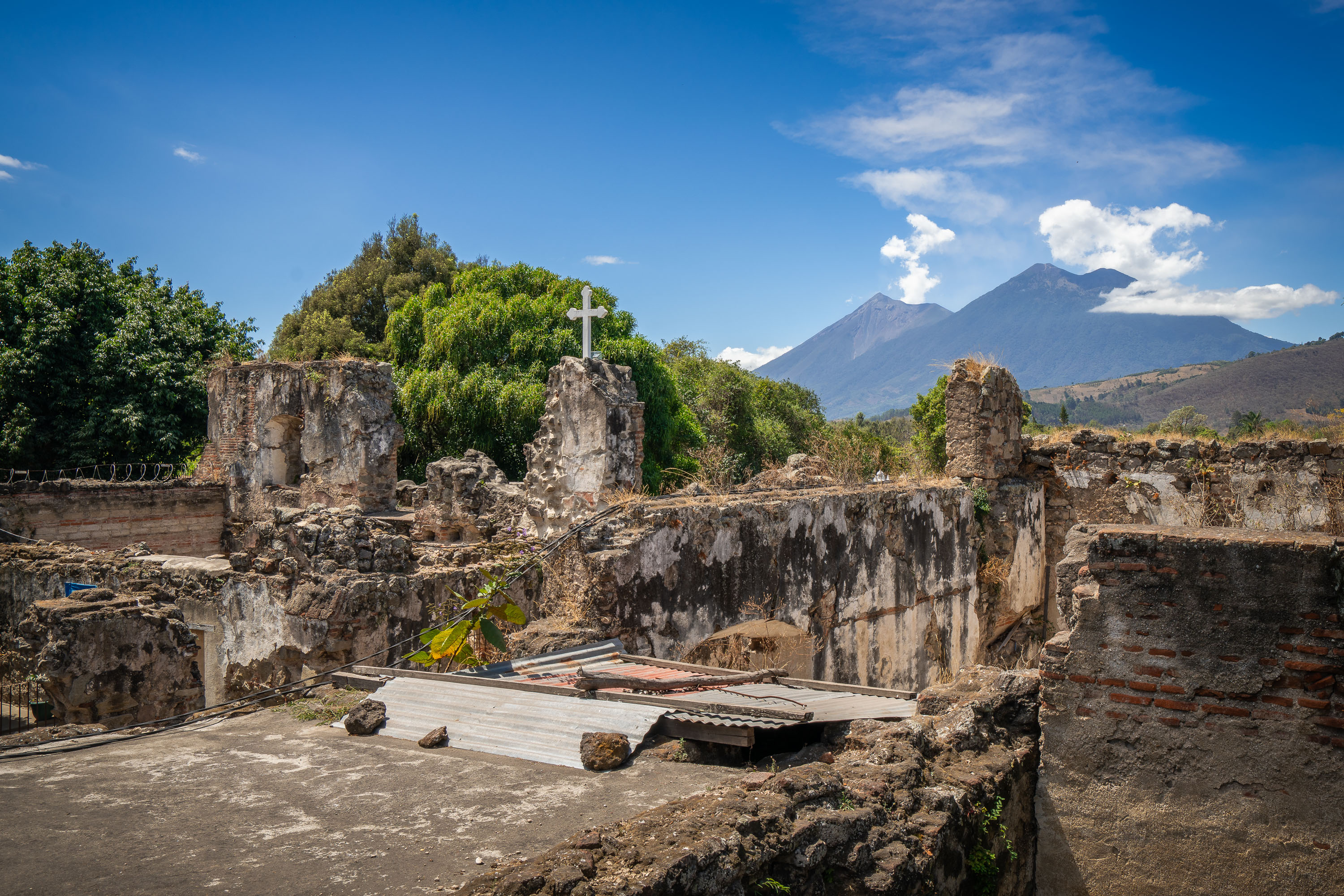
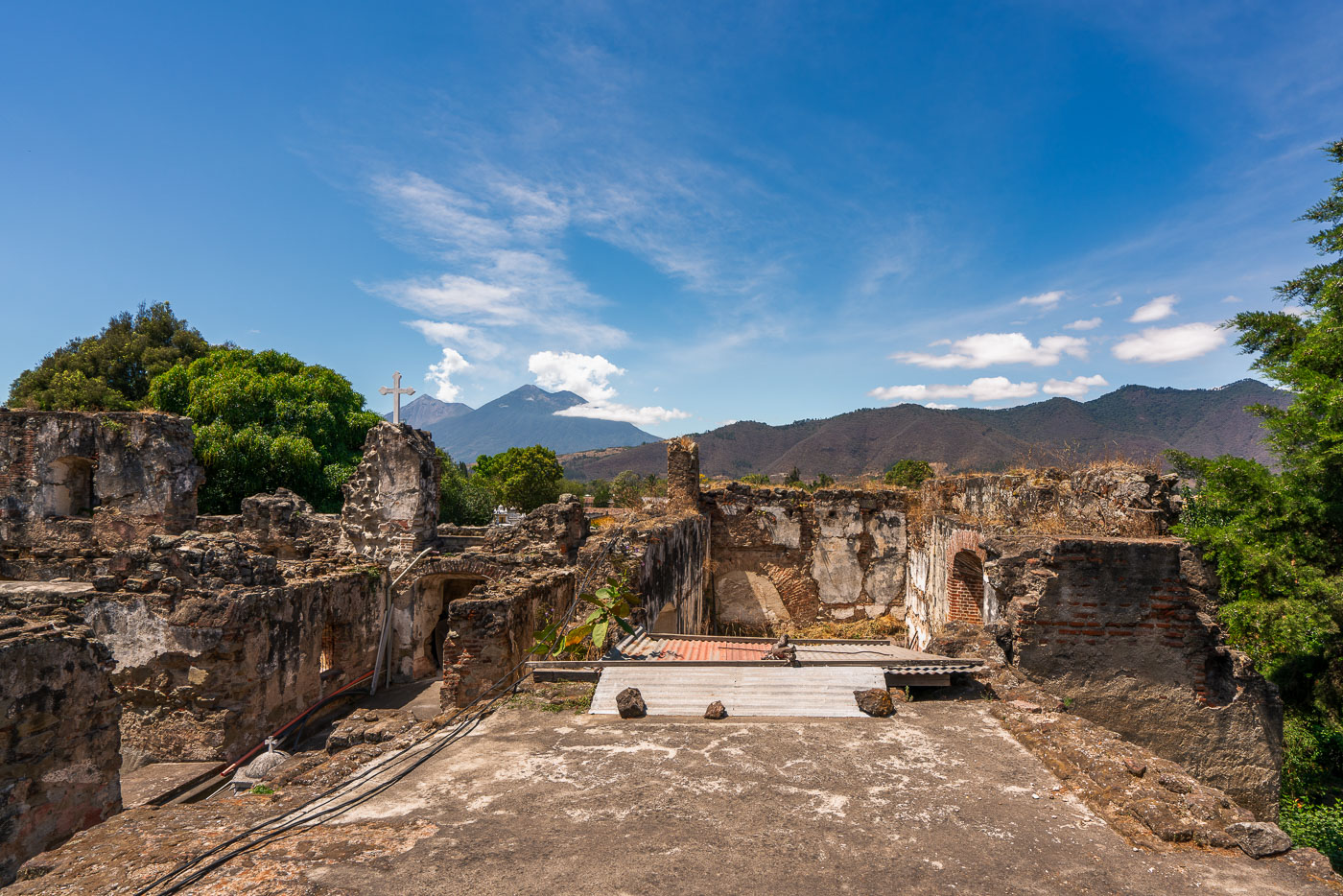
Roofless stone walls and cross at the San Francisco Convent ruins in Antigua Guatemala with volcanoes in the background.
The San Francisco Convent in Antigua Guatemala was founded by Franciscan friars in 1579 and grew into one of the largest religious complexes in colonial Central America, with a church, cloisters, a school, and an infirmary. Earthquakes repeatedly damaged the structure, most severely in 1773, when the destruction led Spanish authorities to relocate Guatemala's capital to what is now Guatemala City. Much of the convent was never rebuilt, leaving the roofless walls and archways that remain part of a protected site within Antigua's UNESCO World Heritage zone. The adjoining church, rebuilt in the 20th century, holds the tomb of Hermano Pedro de San José Betancourt, a Franciscan friar canonized in 2002 and venerated throughout Guatemala. Volcán de Fuego and Volcán Acatenango rise beyond the ruins, part of the volcanic chain that borders the Panchoy Valley where Antigua sits.

San Francisco Convent Ruins Below Volcán de Fuego and Acatenango
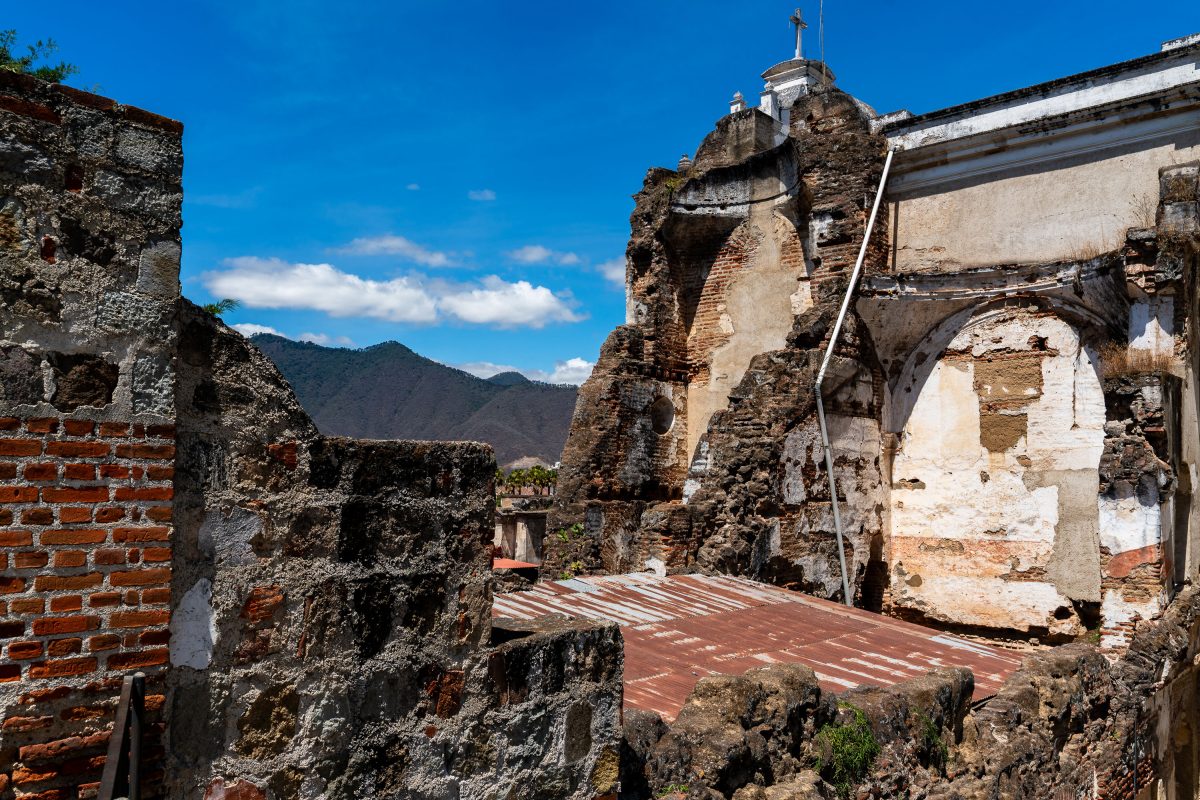
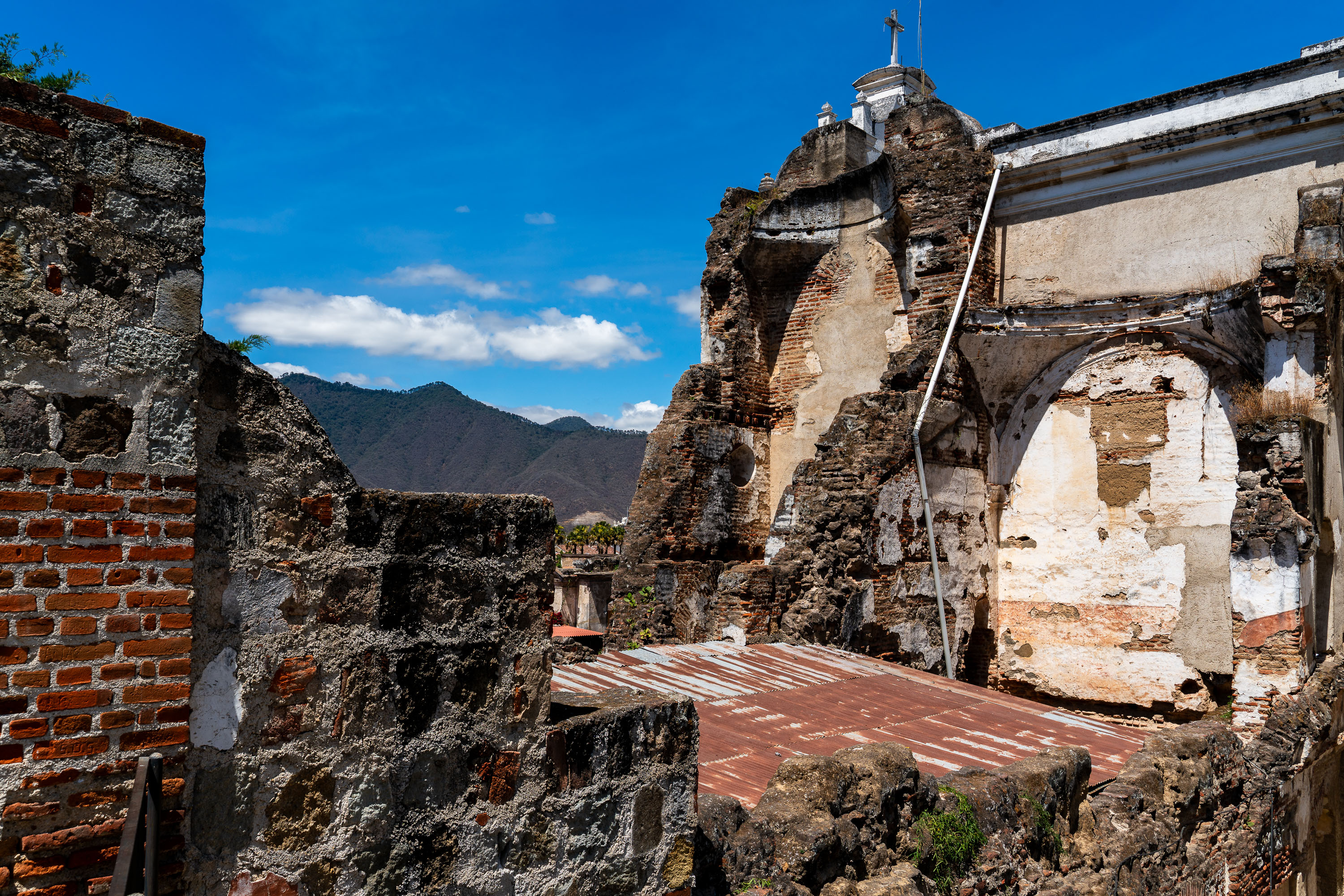
Ruined stone walls and arches of the San Francisco el Grande church and convent in Antigua Guatemala, with mountains visible beyond the colonial structure.
San Francisco el Grande's bell tower and adjoining walls still bear the damage from the 1773 Santa Marta earthquake, the disaster that drove Spanish colonial authorities to abandon Antigua as the capital of the Kingdom of Guatemala. Franciscan friars had built the original complex starting in 1579, eventually expanding it to include a school, printing press, and infirmary alongside the church. Rather than fully rebuild after the quake, the friars left much of the structure as rubble, and later repairs focused only on portions needed for active worship. A restored section of the church today holds the tomb of Hermano Pedro de San José Betancur, a Franciscan lay brother canonized in 2002. The surrounding ruins, along with the rest of Antigua's colonial center, were named a UNESCO World Heritage Site in 1979.

Crumbling Bell Tower of San Francisco el Grande, Antigua
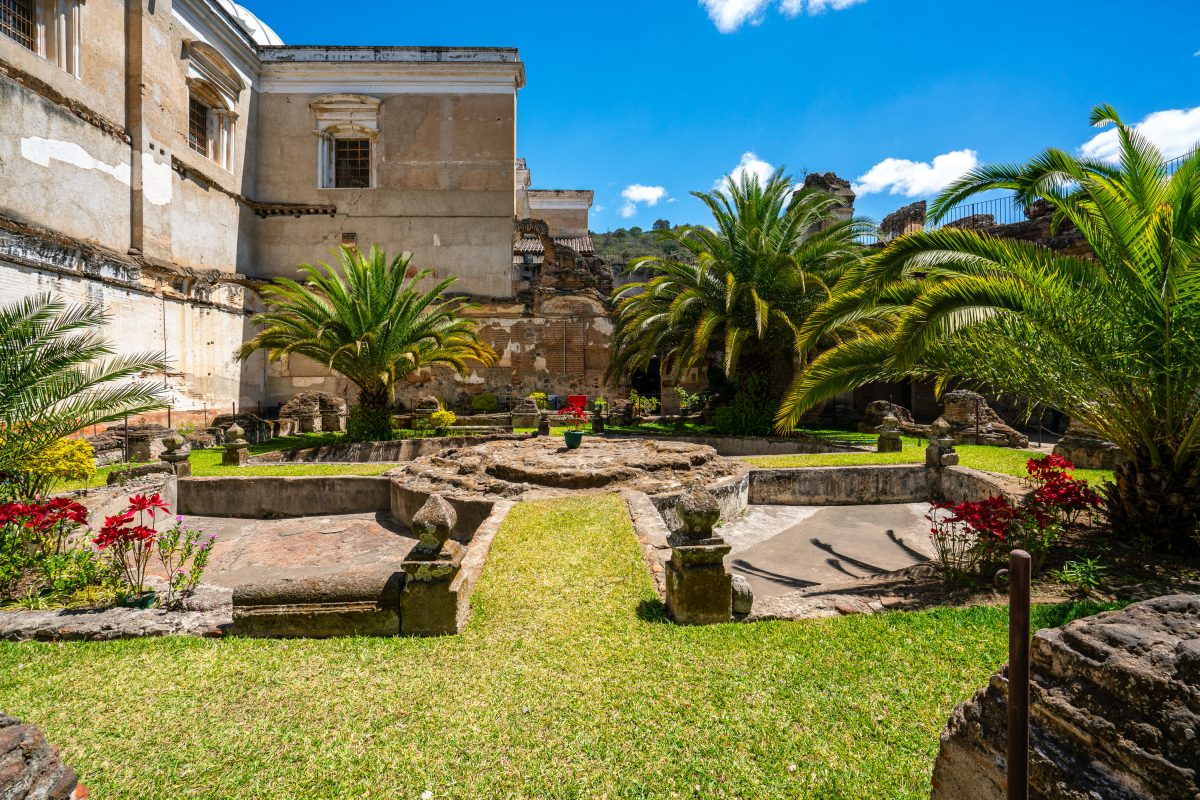
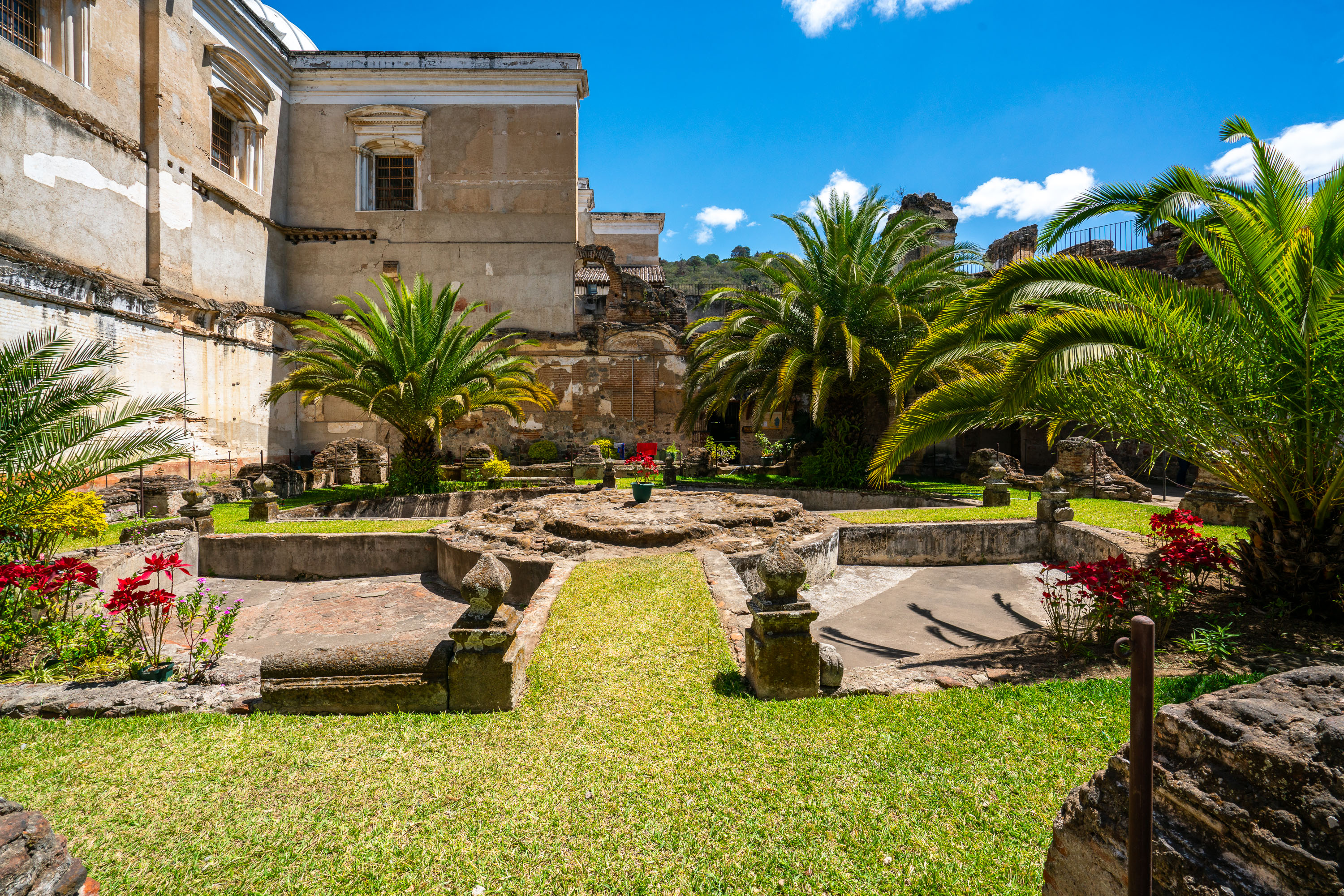
Restored courtyard garden at the San Francisco Convent ruins in Antigua Guatemala with colonial stone structures and tropical palms.
The Convento de San Francisco el Grande was established by Franciscan friars in 1579 and became one of the largest monastic complexes in colonial Central America, housing a church, cloisters, and schools around a series of courtyard gardens. The 1773 earthquake that leveled much of Antigua left the convent in ruins, and the site saw little restoration after the colonial capital relocated to present-day Guatemala City. Hermano Pedro de Betancourt, canonized in 2002 as Guatemala's first saint, served at the convent and is entombed in its adjoining church, drawing pilgrims to the grounds to this day. Conservation efforts in recent decades have stabilized portions of the stonework and reopened the gardens to visitors.

Garden Courtyard at San Francisco El Grande, Antigua Guatemala
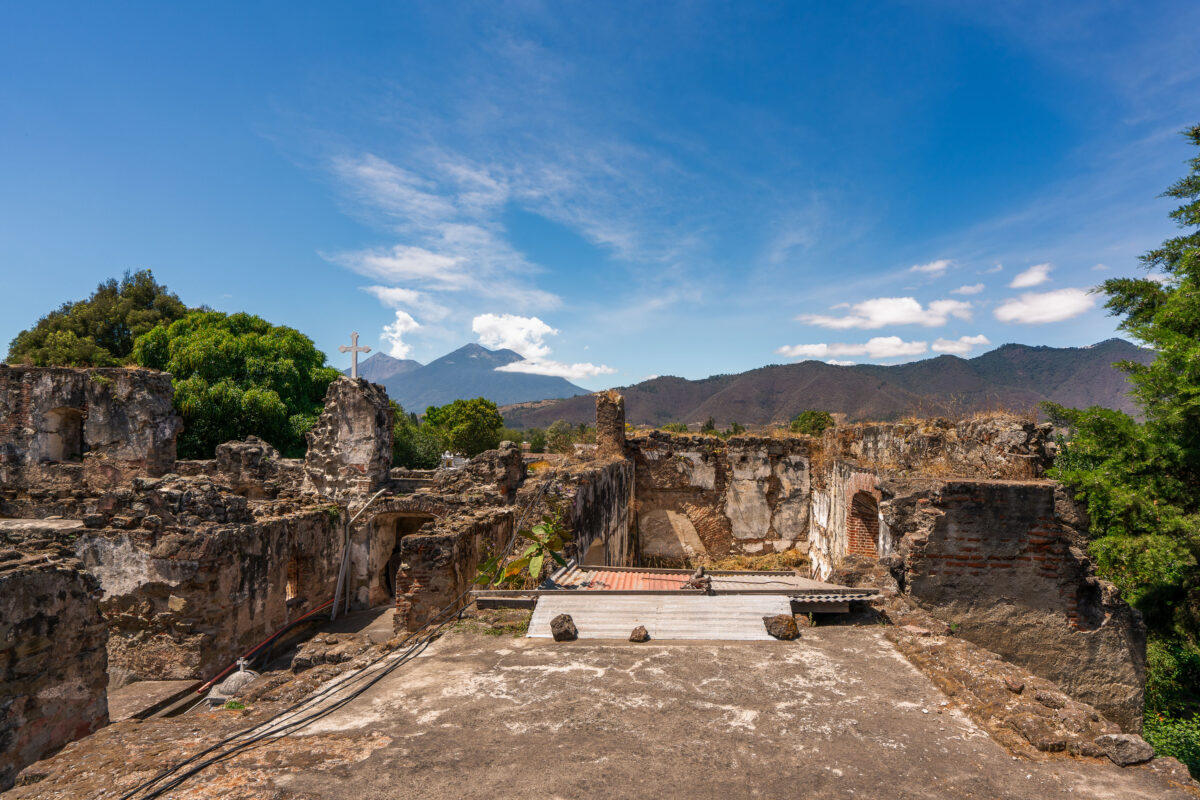
Stone ruins of the San Francisco el Grande colonial church and convent in Antigua, Guatemala, with Agua Volcano visible in the distance.
San Francisco el Grande began as a Franciscan church and convent built in Antigua in 1579. Earthquakes, most severely the 1773 Santa Marta tremors, left much of the original structure in ruins, and the complex stood largely abandoned until restoration efforts took hold in the 20th century. A newer sanctuary adjoining the ruins now holds the tomb of Hermano Pedro de San José Betancur, canonized in 2002 as Guatemala's first saint, drawing pilgrims from across Central America. Volcán de Agua, a 3,760-meter stratovolcano southeast of the city, has long served as a landmark for travelers approaching Antigua.

A Stone Cross Among the Ruins of San Francisco el Grande
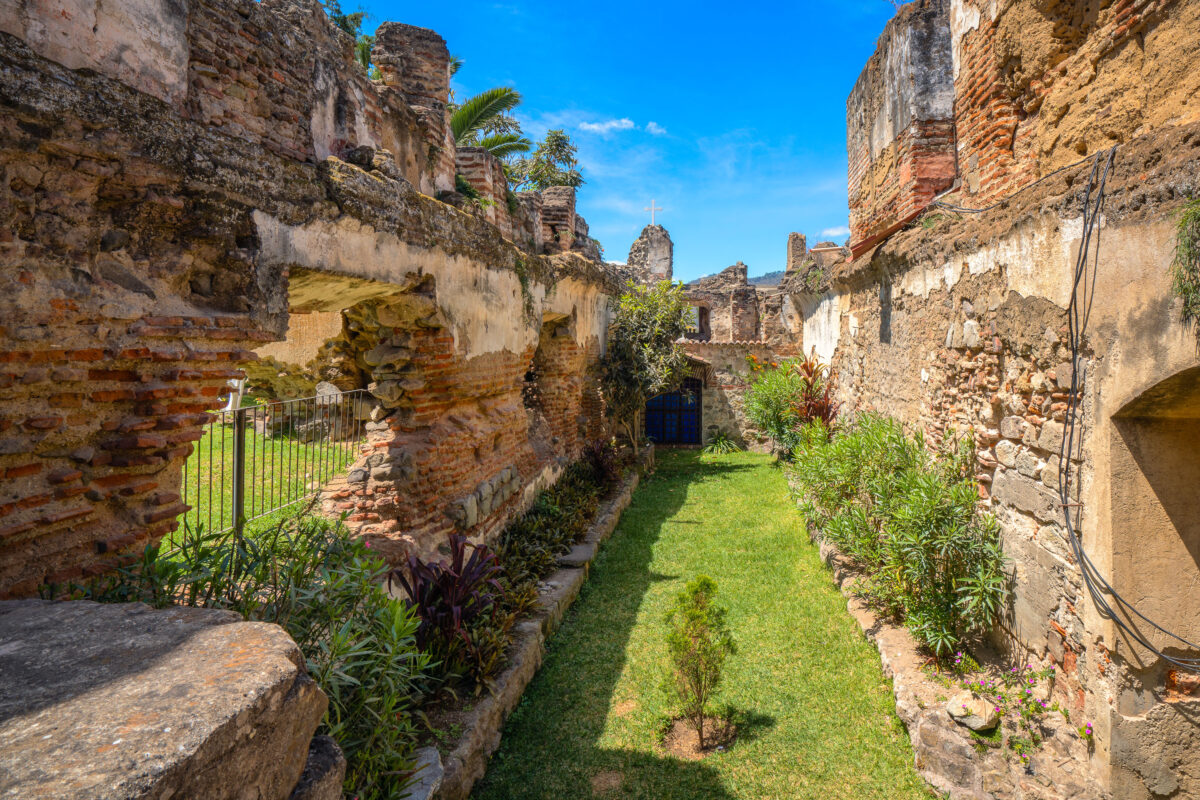
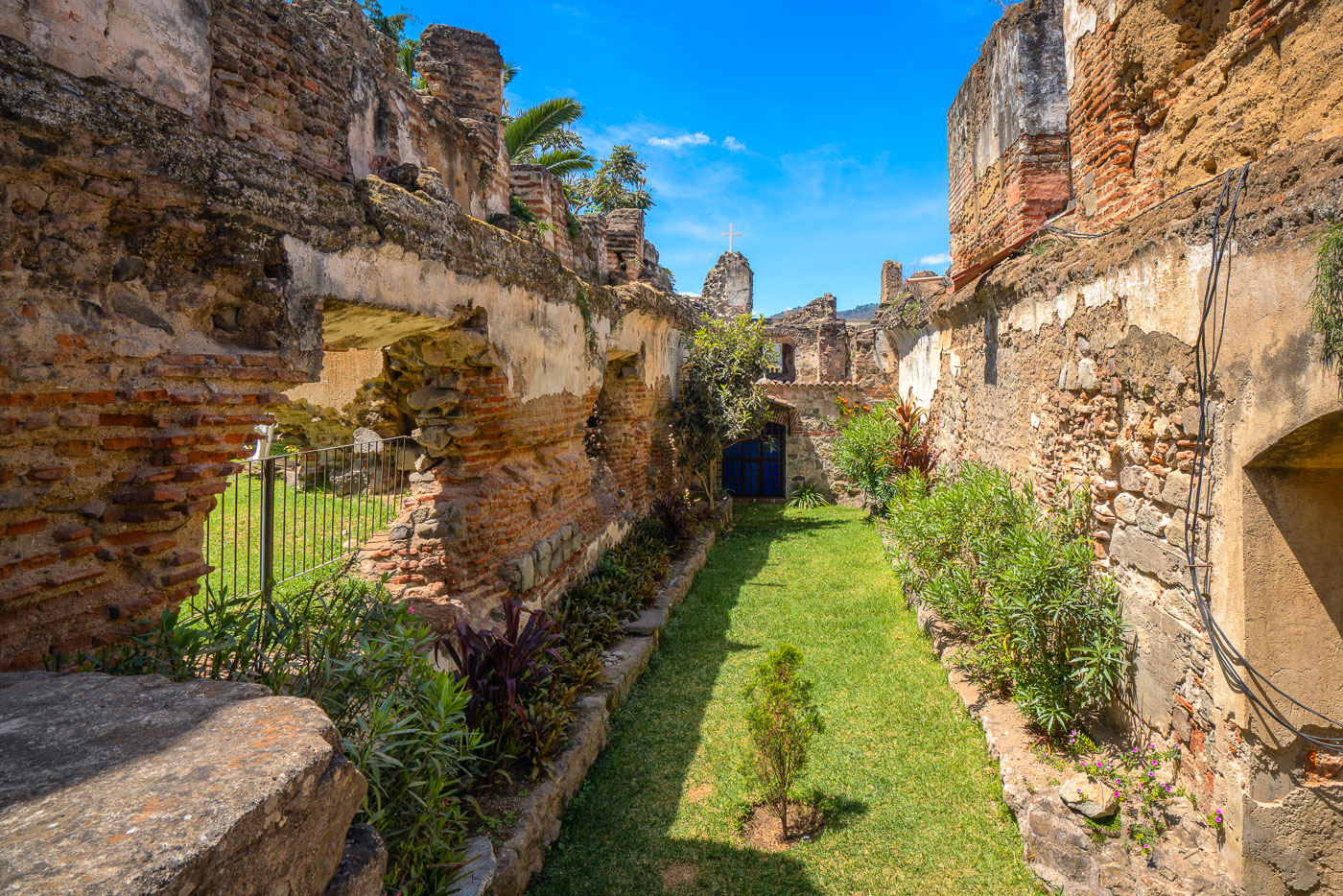
Ruins of Santuario San Francisco el Grande, a colonial-era church complex in Antigua, Guatemala, with stone walls and overgrown garden.
San Francisco el Grande, founded by Franciscan friars in the 16th century, once ranked among the largest religious complexes in colonial Antigua. Earthquakes in 1773 left much of the church and adjoining cloister in ruins, prompting the capital to relocate to present-day Guatemala City. The brick and masonry walls that remain standing today were never fully restored, leaving exposed arches and crumbling vaults alongside the original convent gardens. Franciscan friar Hermano Pedro de Betancourt, later canonized as Guatemala's first saint, lived and worked at this site, and his tomb draws pilgrims to the adjacent working church.

Garden Passage Through the Ruins of San Francisco el Grande