Indiana Harbor

38 photos · 2016–2024

38 photographs tagged Indiana Harbor, 2016–2024.
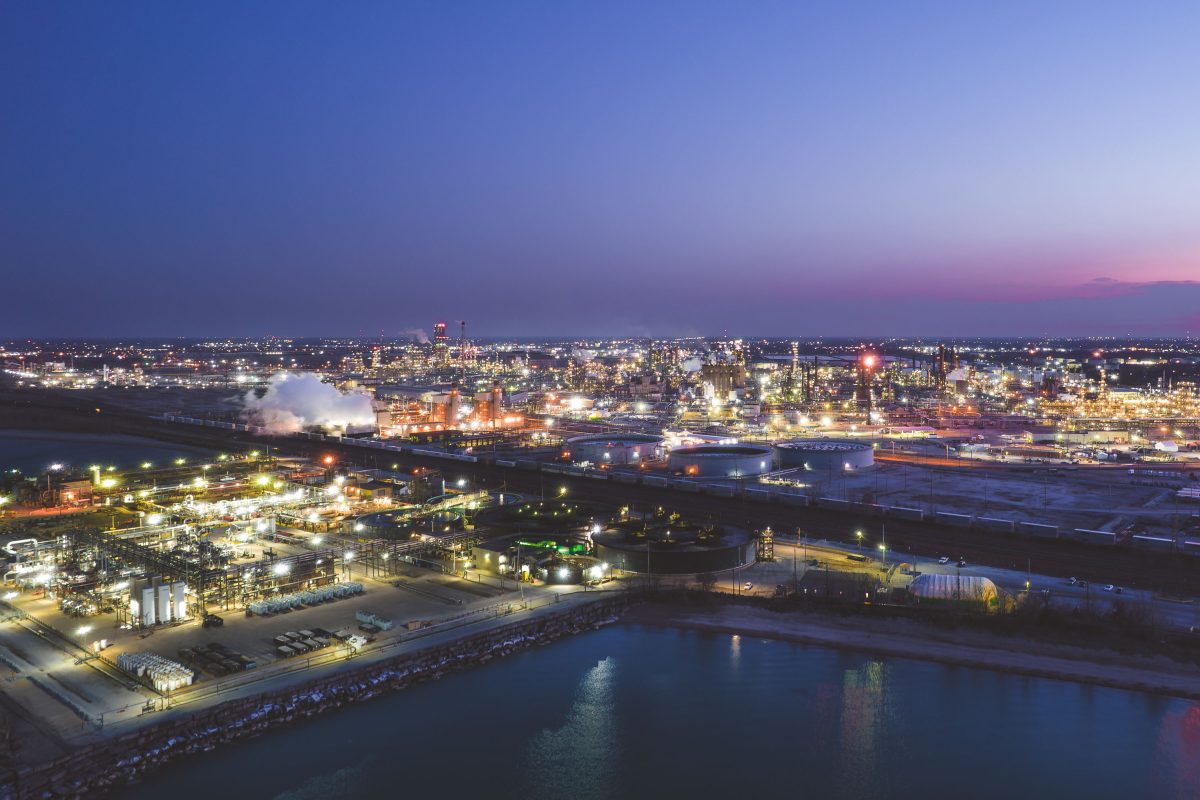
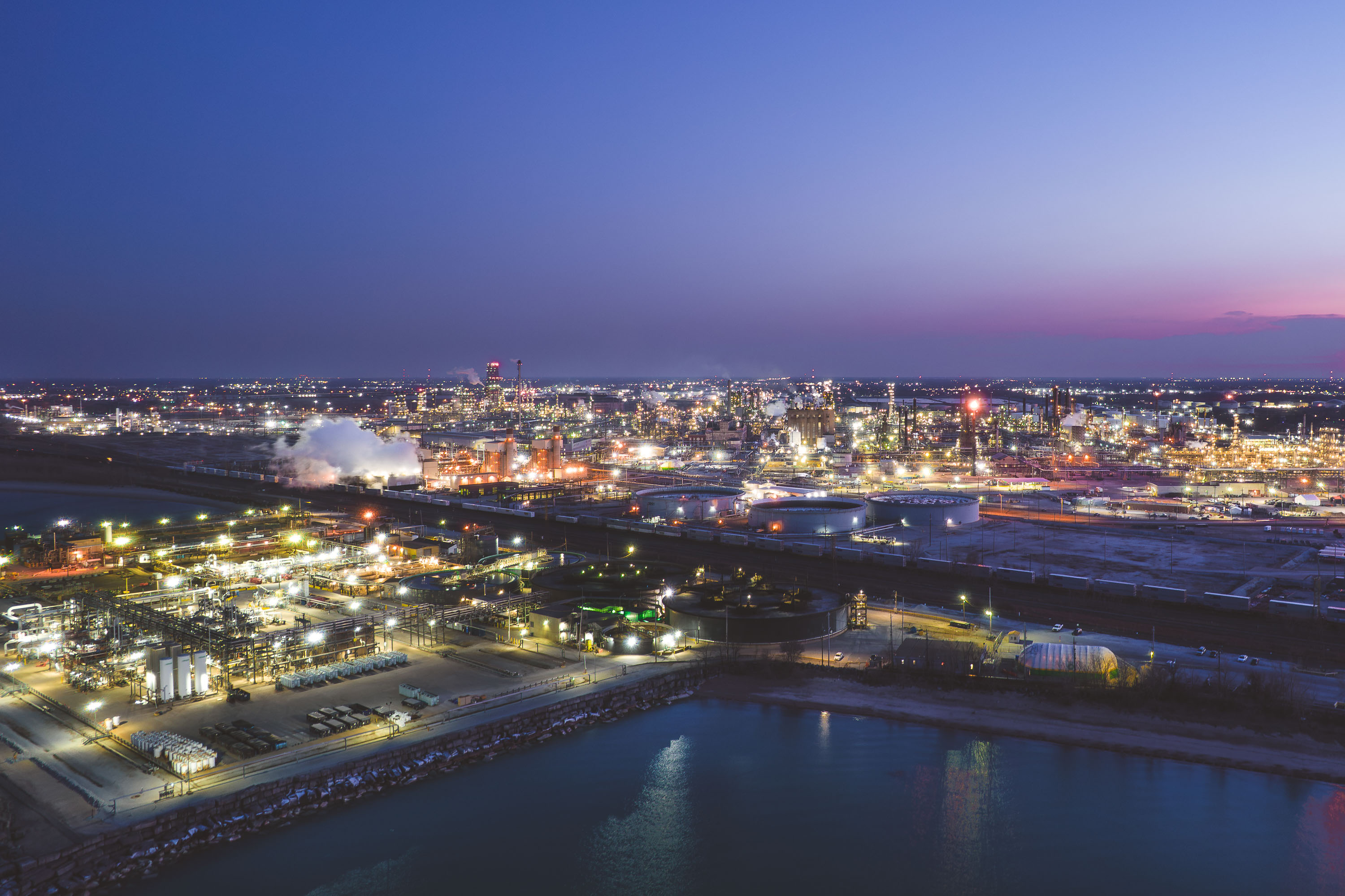
BP Whiting Refinery illuminated at twilight along Lake Michigan in Whiting, Indiana, with industrial structures and storage tanks lit against a purple dusk sky.
The BP Whiting Refinery sits along Lake Michigan in Whiting, Indiana, roughly 15 miles southeast of downtown Chicago. Standard Oil built the plant in 1889, and it remains the largest refinery in the Midwest, with a crude processing capacity of about 435,000 barrels per day. The facility runs heavily on Canadian crude oil, converting it into gasoline, diesel, and asphalt for distribution across the region. BP has operated the refinery since its 1998 merger with Amoco, which had controlled the site following Standard Oil's court-ordered breakup in 1911.

BP Whiting Refinery at Dusk in Whiting, Indiana
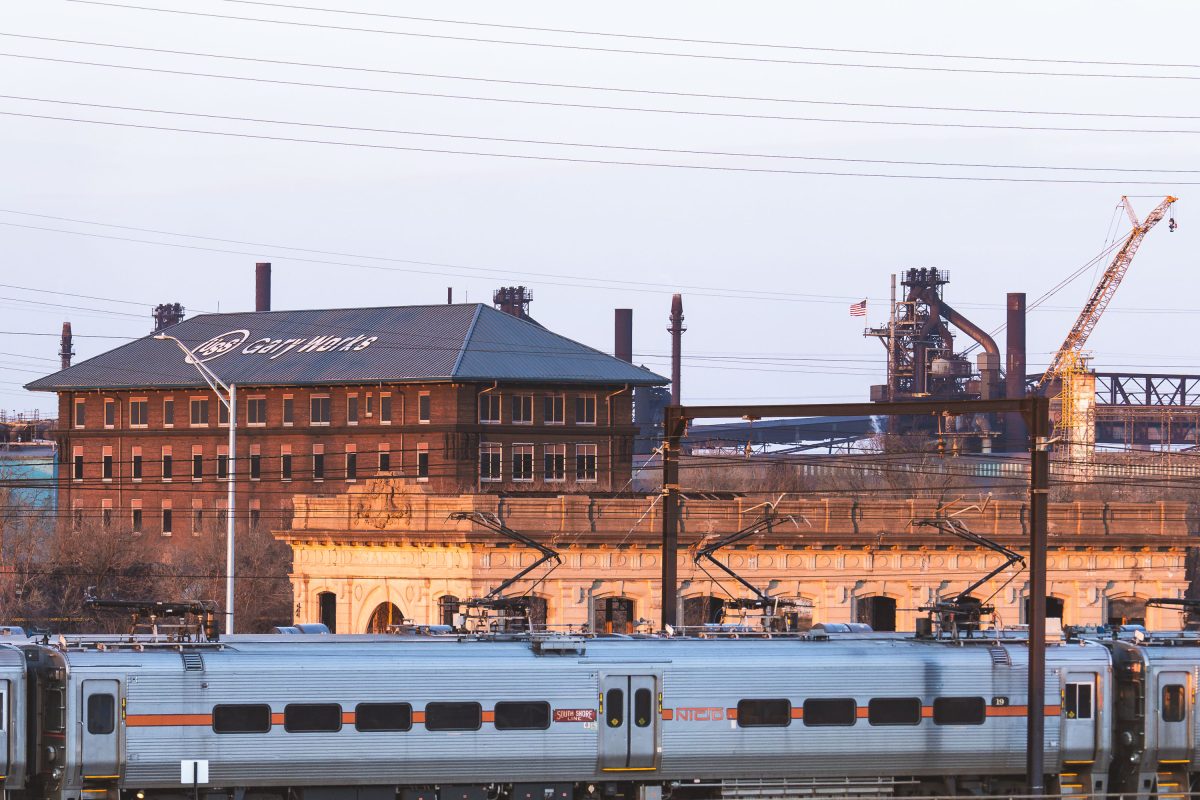
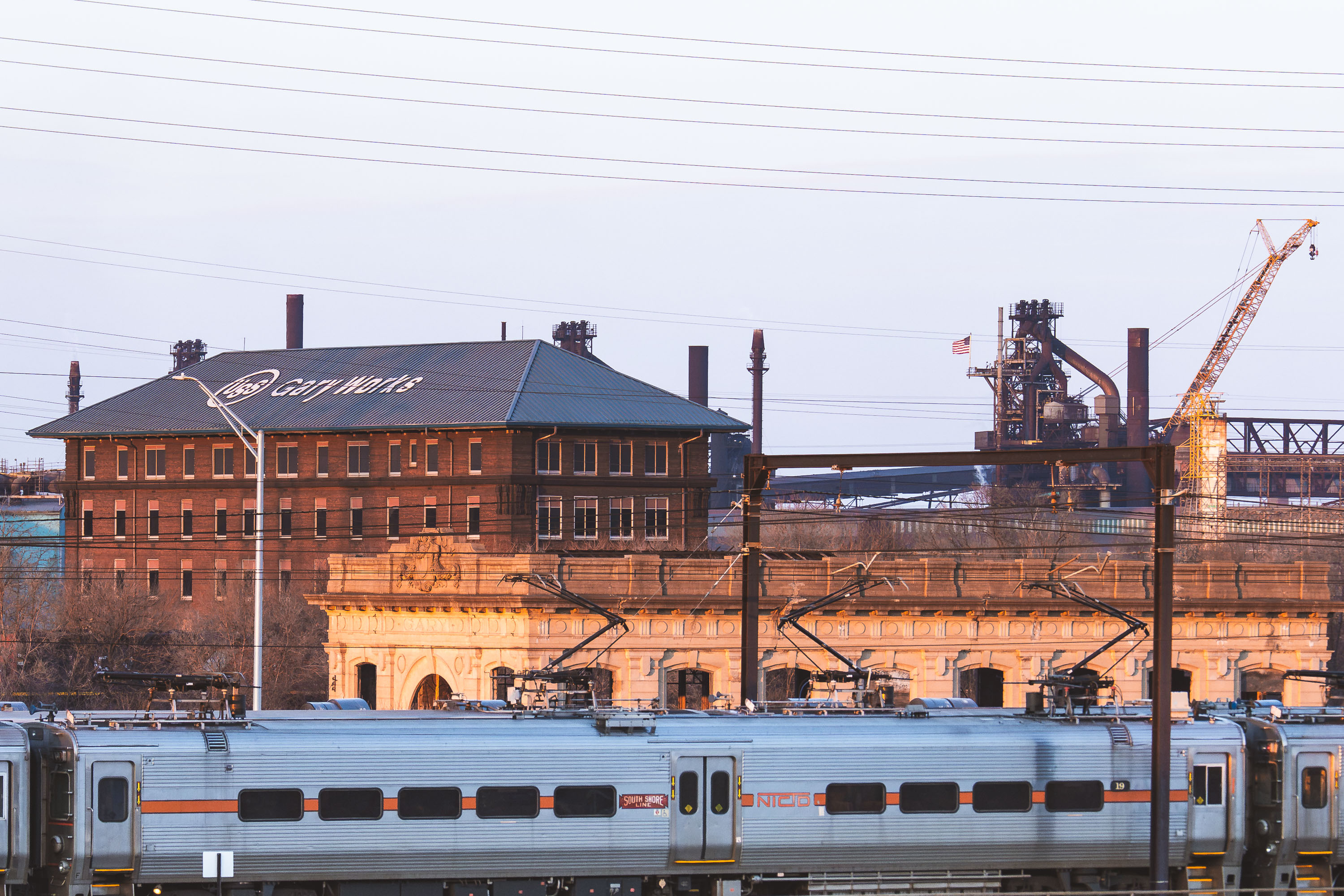
South Shore Line commuter train passing U.S. Steel's Gary Works mill complex in Gary, Indiana.
U.S. Steel's Gary Works sits along Lake Michigan's southern shore in Gary, Indiana, and remains one of the largest integrated steel mills in North America. The company built the plant starting in 1906, laying out the city of Gary alongside it to house workers for the new operation. The brick administration building dates to that early construction period and once served as the mill's main office complex. South Shore Line commuter trains, operated by the Northern Indiana Commuter Transportation District, run on the electrified line fronting the plant, connecting Gary to Chicago's Millennium Station. Passenger service on this corridor dates to 1908, making it one of the oldest continuously operated interurban lines in the country.

South Shore Line Commuter Train at Gary Works Administration Building
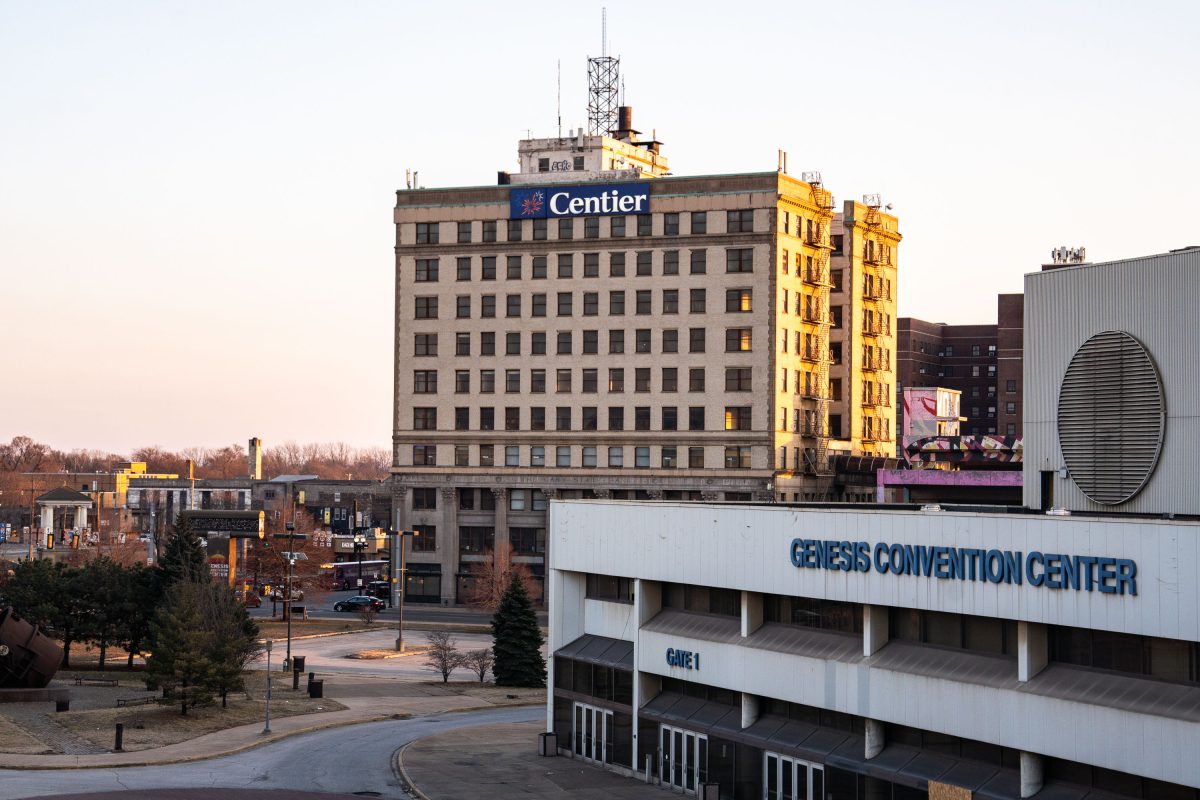
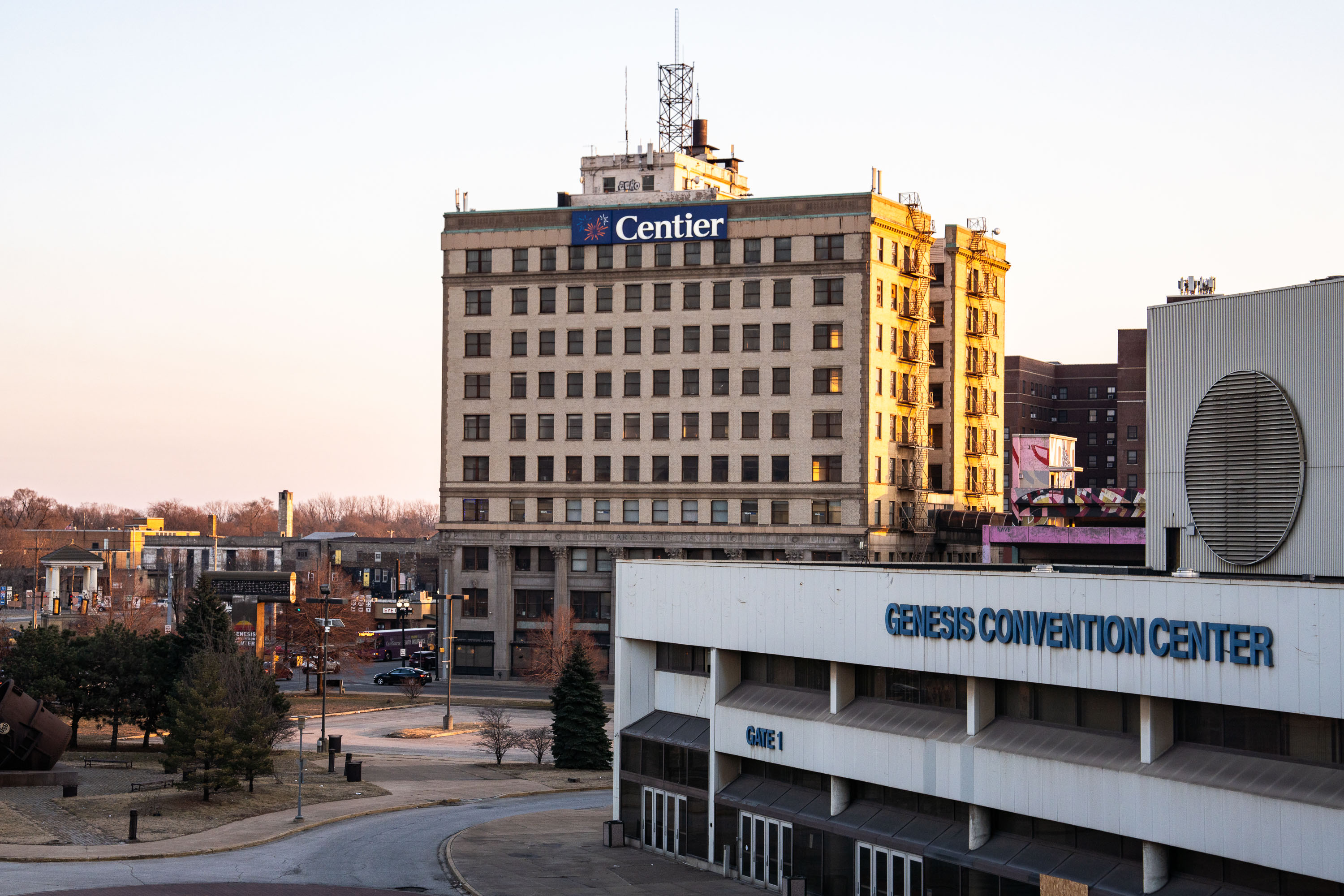
Centier Bank Building and Genesis Convention Center in downtown Gary, Indiana.
The Centier Bank Building stands at the corner of Broadway and 5th Avenue in downtown Gary, Indiana. Built in 1925 as the Gary National Bank Building, it was among the city's tallest structures for decades and anchored the region's banking business during Gary's steel-boom years. Centier Bank, founded in 1895, later took over the building and placed its name atop the upper floors. The Genesis Convention Center sits just south of it, opened in 1981 as part of a downtown redevelopment plan and still used for concerts, trade shows, and civic events in Gary.

Centier Bank Building Above the Genesis Convention Center in Gary
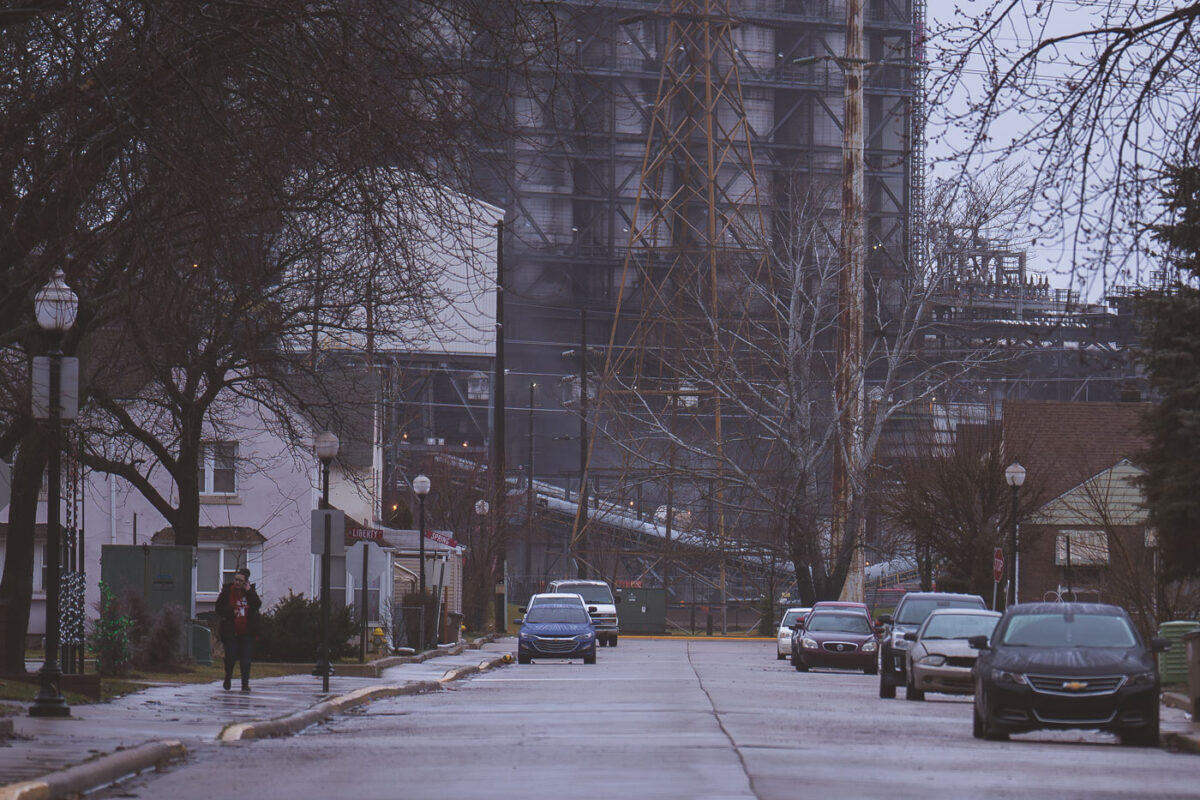
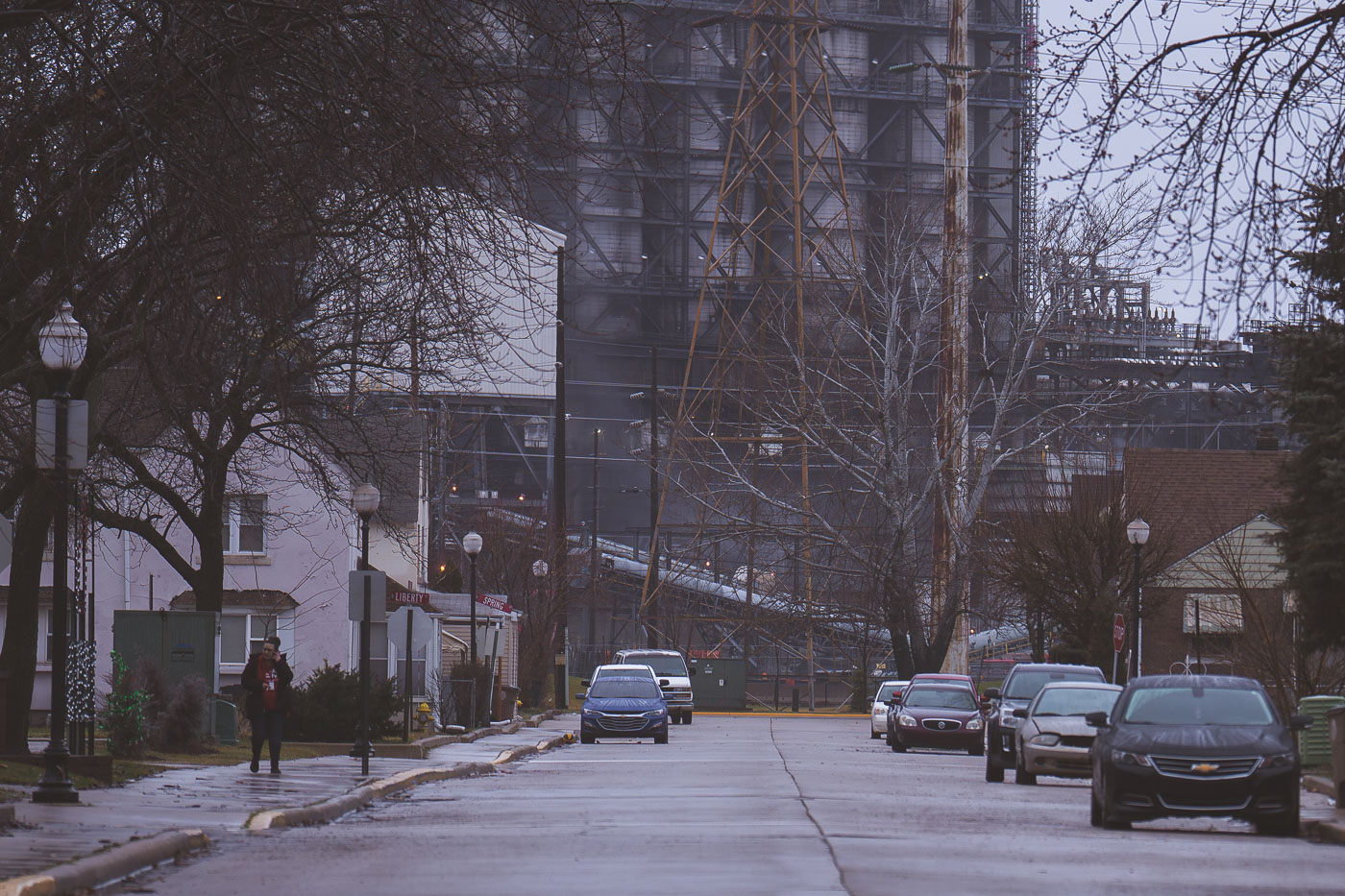
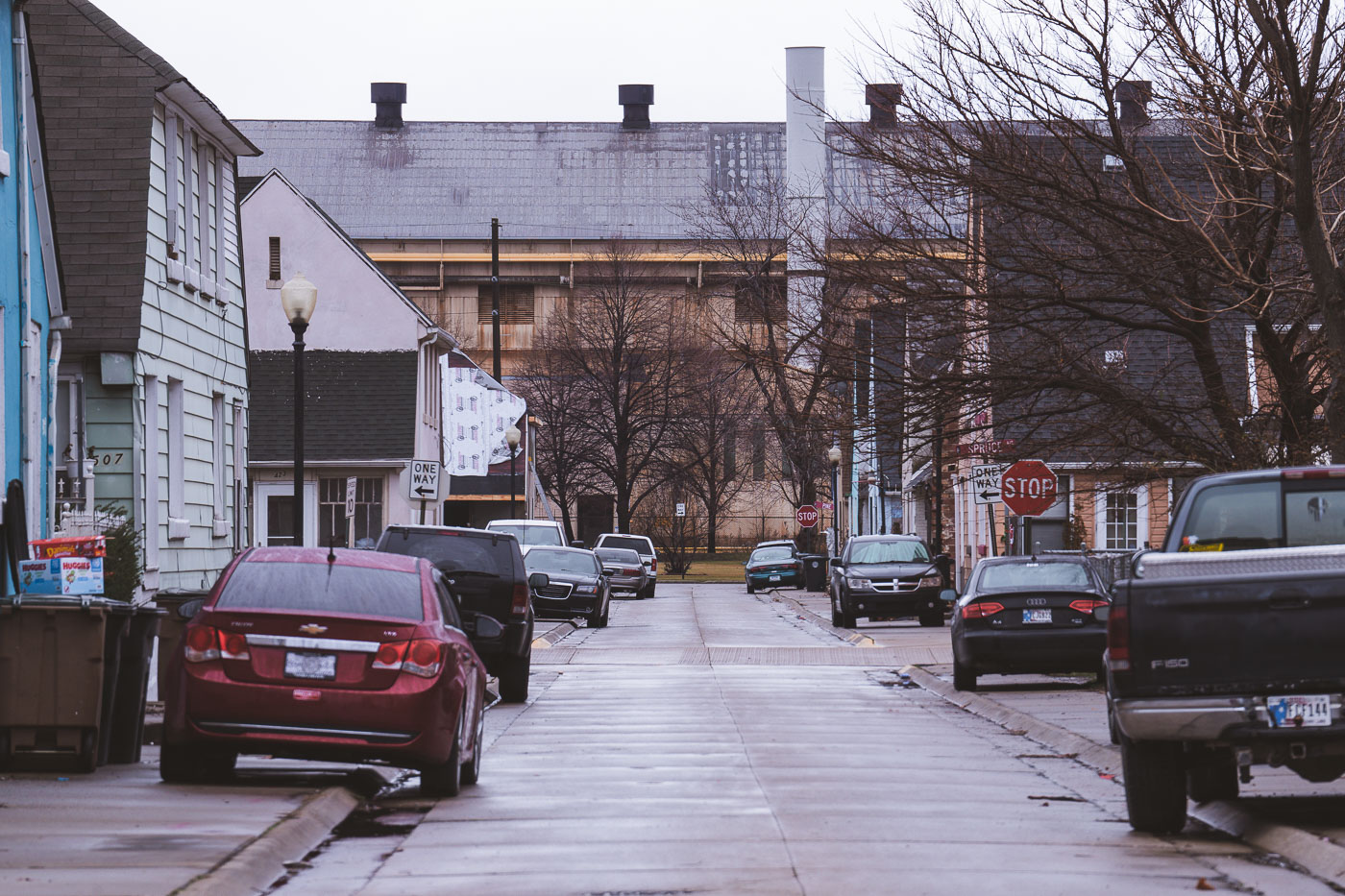
Marktown residential neighborhood in East Chicago, Indiana, with BP refinery industrial complex visible behind bare trees.
Marktown in East Chicago, Indiana, is shown at the intersection of Liberty and Spring streets, where houses stand immediately beside the BP refinery complex in the Indiana Harbor industrial corridor. Marktown was developed in the early 20th century as a planned company town for industrial workers, and it remains a residential neighborhood closely bordered by heavy industry. The refinery is one of the major petroleum-processing facilities in northwest Indiana, part of the broader concentration of steelmaking, refining, and petrochemical operations along the Lake Michigan shoreline.

Liberty Street in Marktown, Dwarfed by the BP Refinery

Marktown residential neighborhood in East Chicago, Indiana, with BP refinery industrial complex visible behind bare trees.
Marktown in East Chicago, Indiana, is shown at the intersection of Liberty and Spring streets, where houses stand immediately beside the BP refinery complex in the Indiana Harbor industrial corridor. Marktown was developed in the early 20th century as a planned company town for industrial workers, and it remains a residential neighborhood closely bordered by heavy industry. The refinery is one of the major petroleum-processing facilities in northwest Indiana, part of the broader concentration of steelmaking, refining, and petrochemical operations along the Lake Michigan shoreline.

Marktown Street View with BP Refinery in East Chicago, Indiana
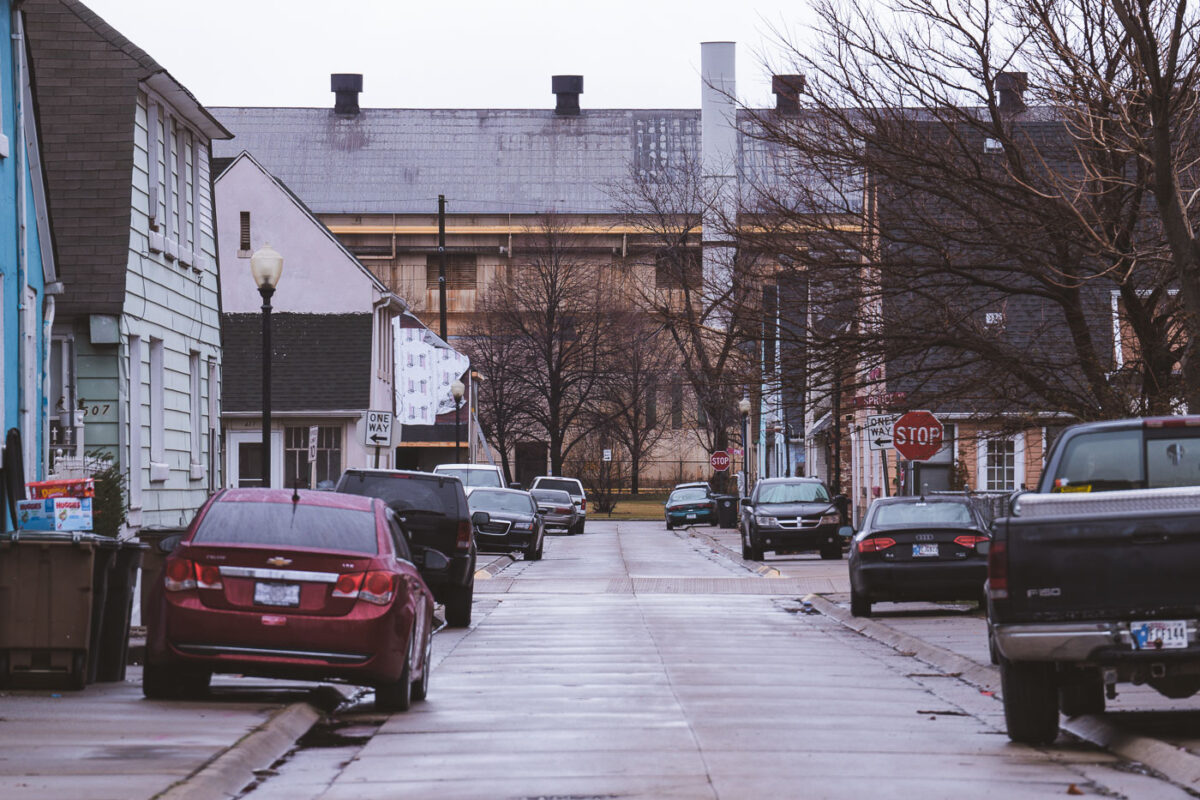
A residential street in Marktown, East Chicago, Indiana, lined with parked cars and early twentieth-century worker housing, with industrial buildings visible in the distance.
A residential street in Marktown, East Chicago, Indiana, runs toward large industrial buildings at the edge of the neighborhood. Marktown was developed beginning in 1917 as a planned company town by the Mark Manufacturing Company, with compact worker housing built next to the industrial corridor of Indiana Harbor. The neighborhood is listed on the National Register of Historic Places and remains one of the most intact examples of early 20th-century industrial worker housing in northwest Indiana.

Parked Cars Line a Marktown Street Near the BP Refinery
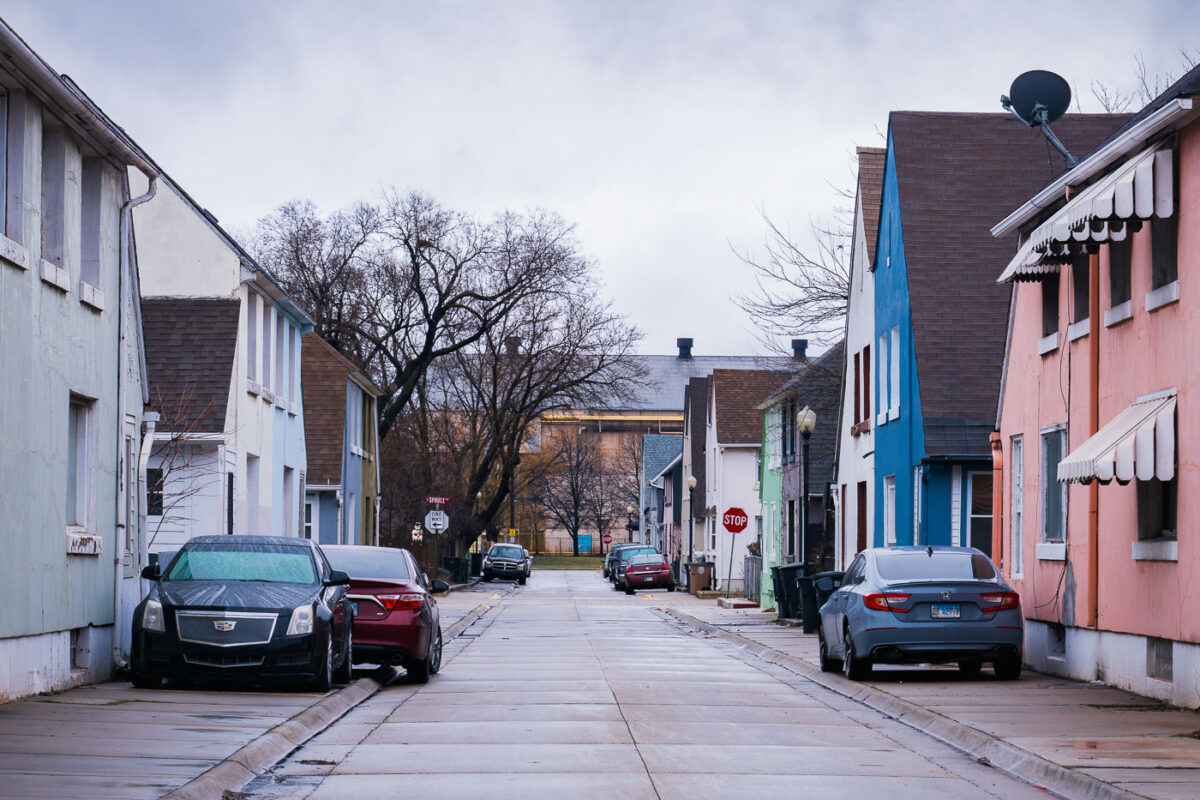
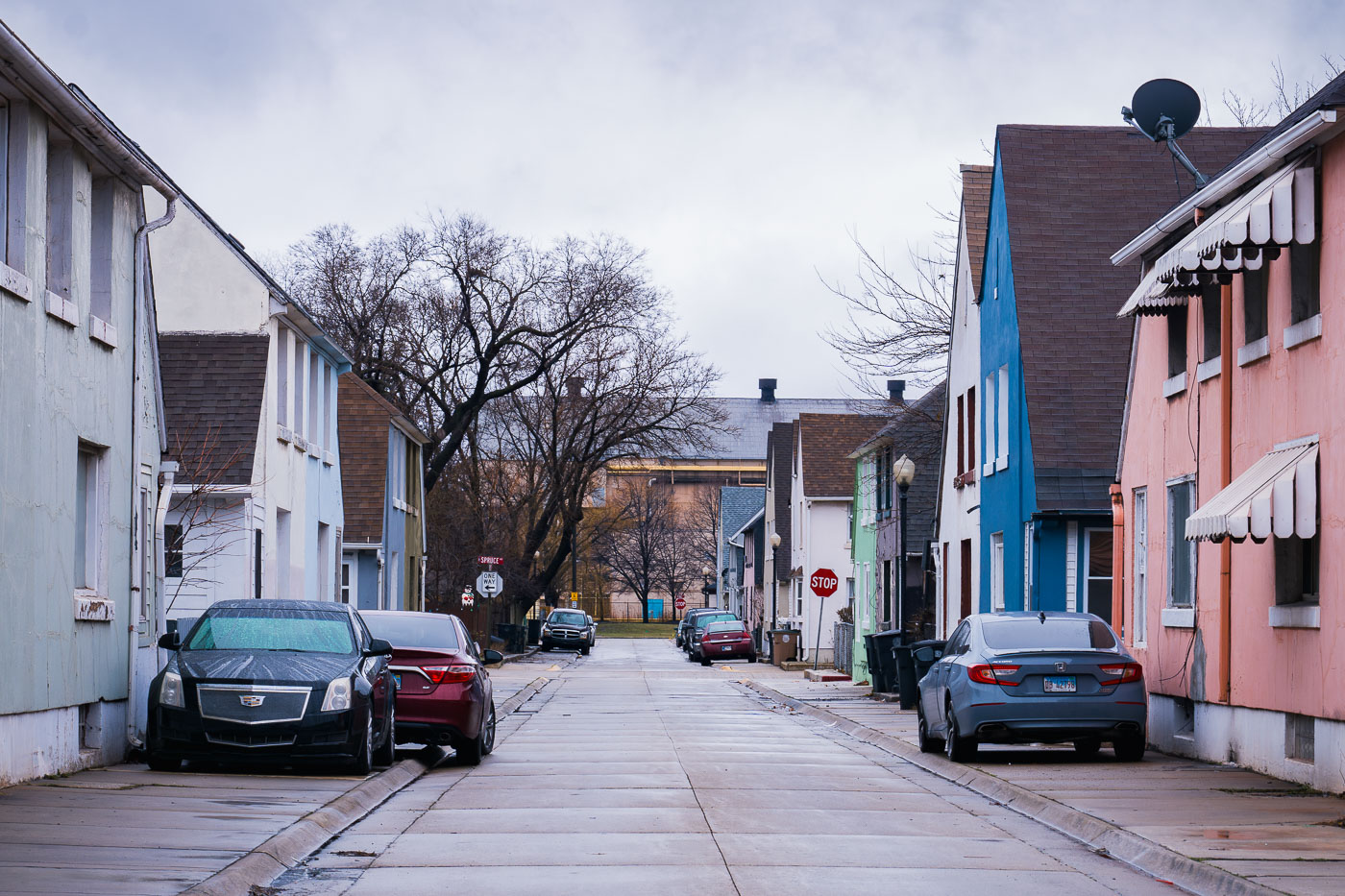
Liberty Street in Marktown, East Chicago, Indiana, lined with workers' homes and parked cars in a planned company town.
Liberty Street in Marktown, East Chicago, Indiana, is lined with tightly spaced workers' houses in the planned company town developed by industrialist Clayton Mark for employees of his steel pipe works. Established in the early 20th century, Marktown was designed as a compact residential enclave near the Indiana Harbor industrial corridor, with U.S. Steel and the BP Whiting refinery in the surrounding area. The neighborhood is noted for its unusual layout, including raised sidewalks and narrow roadway dimensions that distinguish it from conventional street plans in Northwest Indiana.

Spruce Street Row Houses in Marktown, Indiana
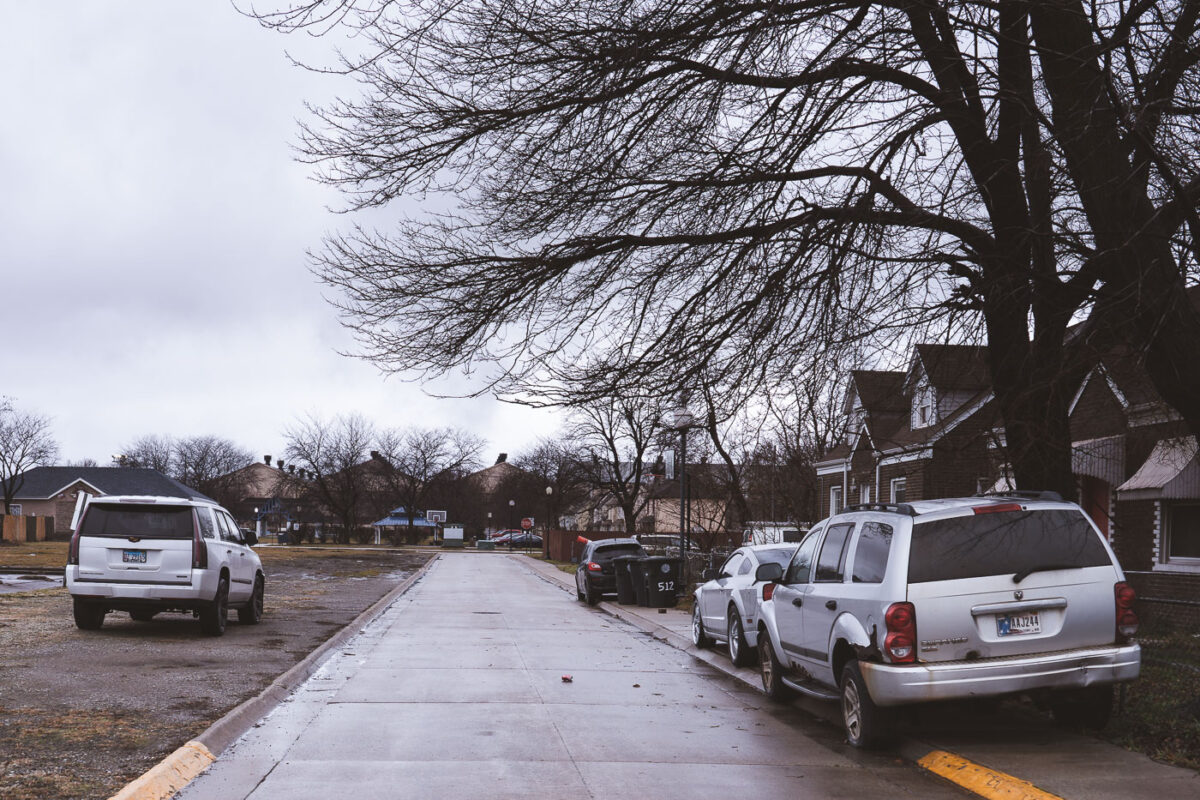
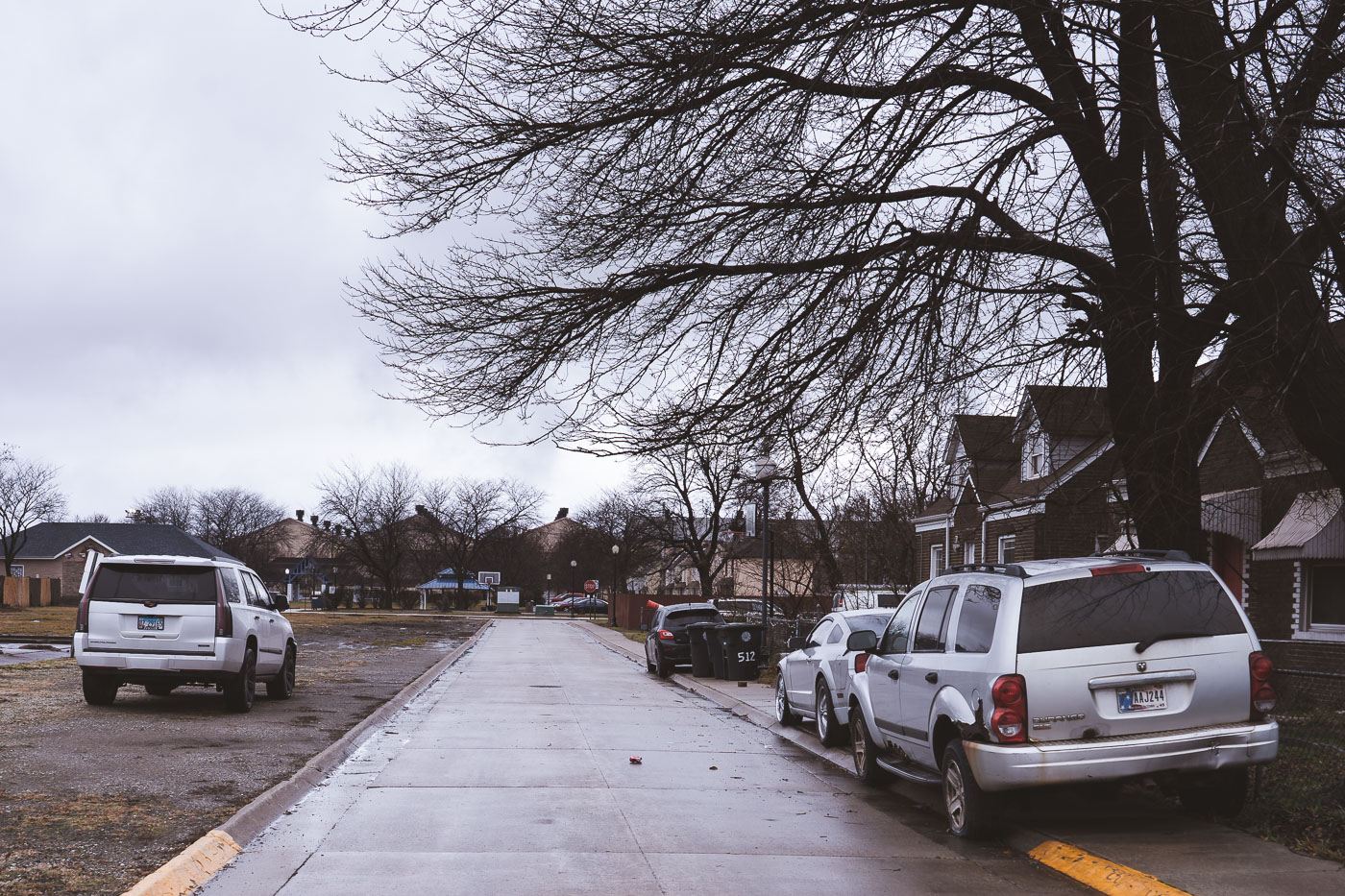
Park Street in Marktown, East Chicago, Indiana, a historic early twentieth-century planned residential community surrounded by bare trees and industrial infrastructure.
Park Street in Marktown, East Chicago, Indiana, runs through the historic company town developed in the early 20th century by industrialist Clayton Mark for workers at his steel pipe manufacturing business. Marktown is listed on the National Register of Historic Places and is known for its planned residential layout of compact houses, narrow streets, and shared open spaces. The neighborhood sits within the heavy industrial landscape of Indiana Harbor, between major steelmaking facilities and the BP Whiting Refinery.

Parked Cars Along Park Street in Marktown, Indiana

Spruce Avenue stop sign and numbered trash bins on a residential street in East Chicago, Indiana.
Spruce Avenue in the Indiana Harbor section of East Chicago, Indiana, is shown as a residential block with curbside parking, a stop sign at the corner, and two trash bins marked “508” and “School.” Indiana Harbor developed as a working-class neighborhood alongside East Chicago’s steel mills and refinery complexes, and its street grid remains closely tied to that industrial landscape.

Trash Bins Marked “508 School” on Spruce Avenue, East Chicago
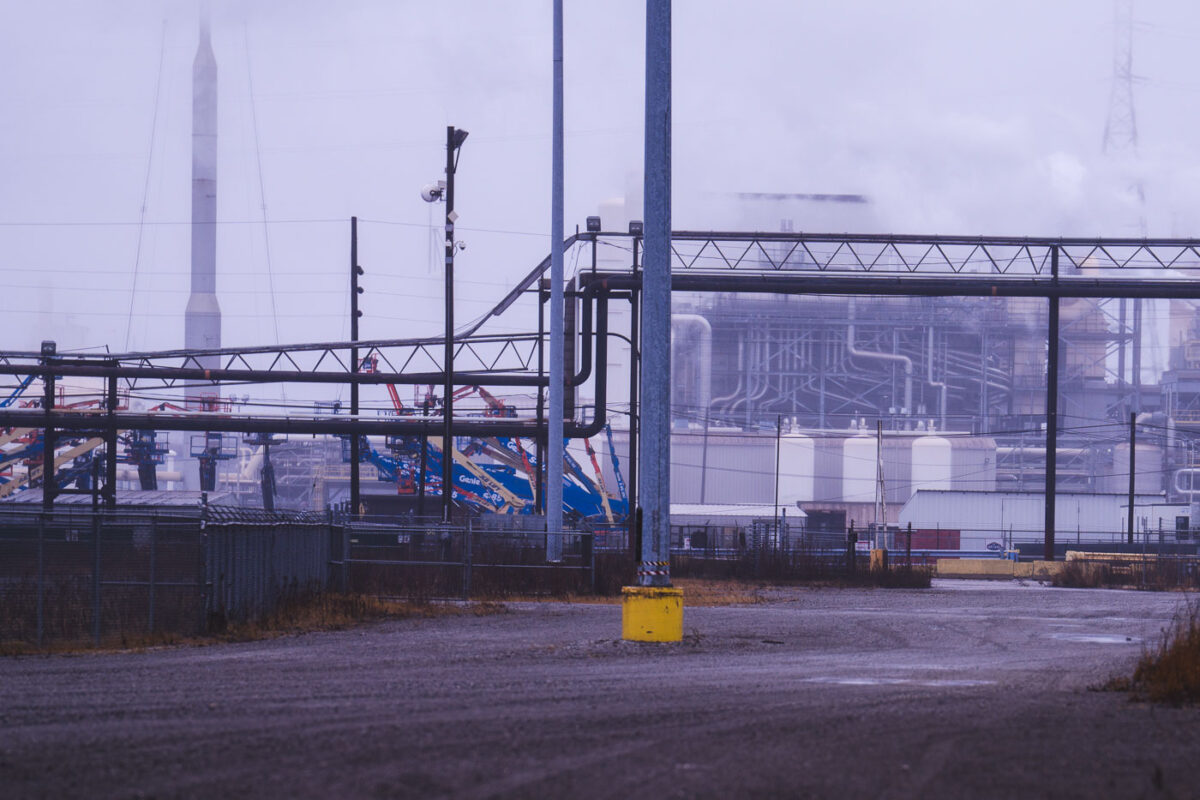
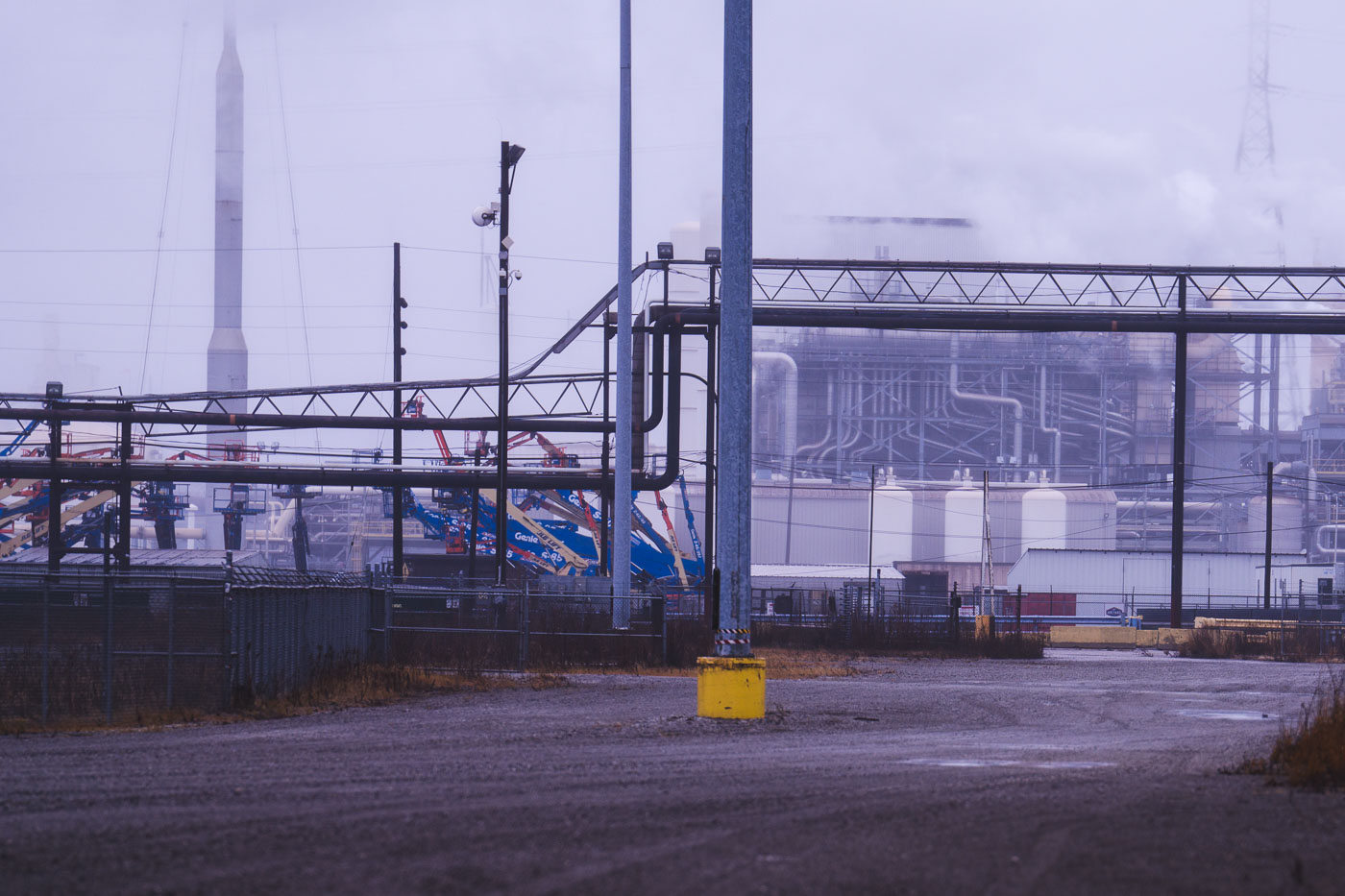
BP Indiana Harbor Refinery in East Chicago, Indiana, with steel framework, distillation towers, and industrial infrastructure visible through mist at dusk.
The BP Indiana Harbor Refinery in East Chicago, Indiana, is seen shrouded in mist, with industrial piping, smokestacks, and various structures characteristic of a large-scale petrochemical facility. Several boom lifts are visible, suggesting ongoing maintenance or construction work within the complex. This refinery, located in the industrial heart of Northwest Indiana, has been a significant contributor to the region's economy and a source of environmental concern for decades. Its operations are integral to the supply chain for fuels and other petroleum-based products, impacting the local community and the broader energy landscape.

Boom Lifts and Pipework at BP Whiting Refinery in Fog
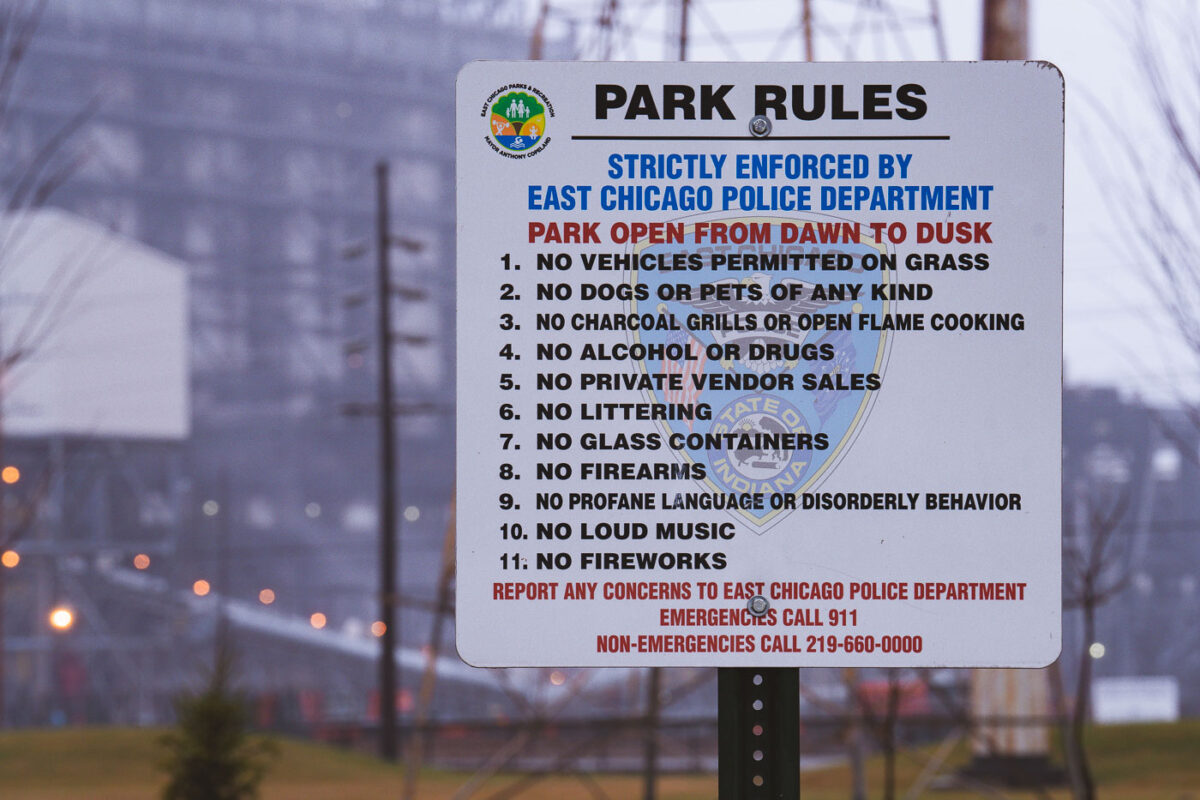
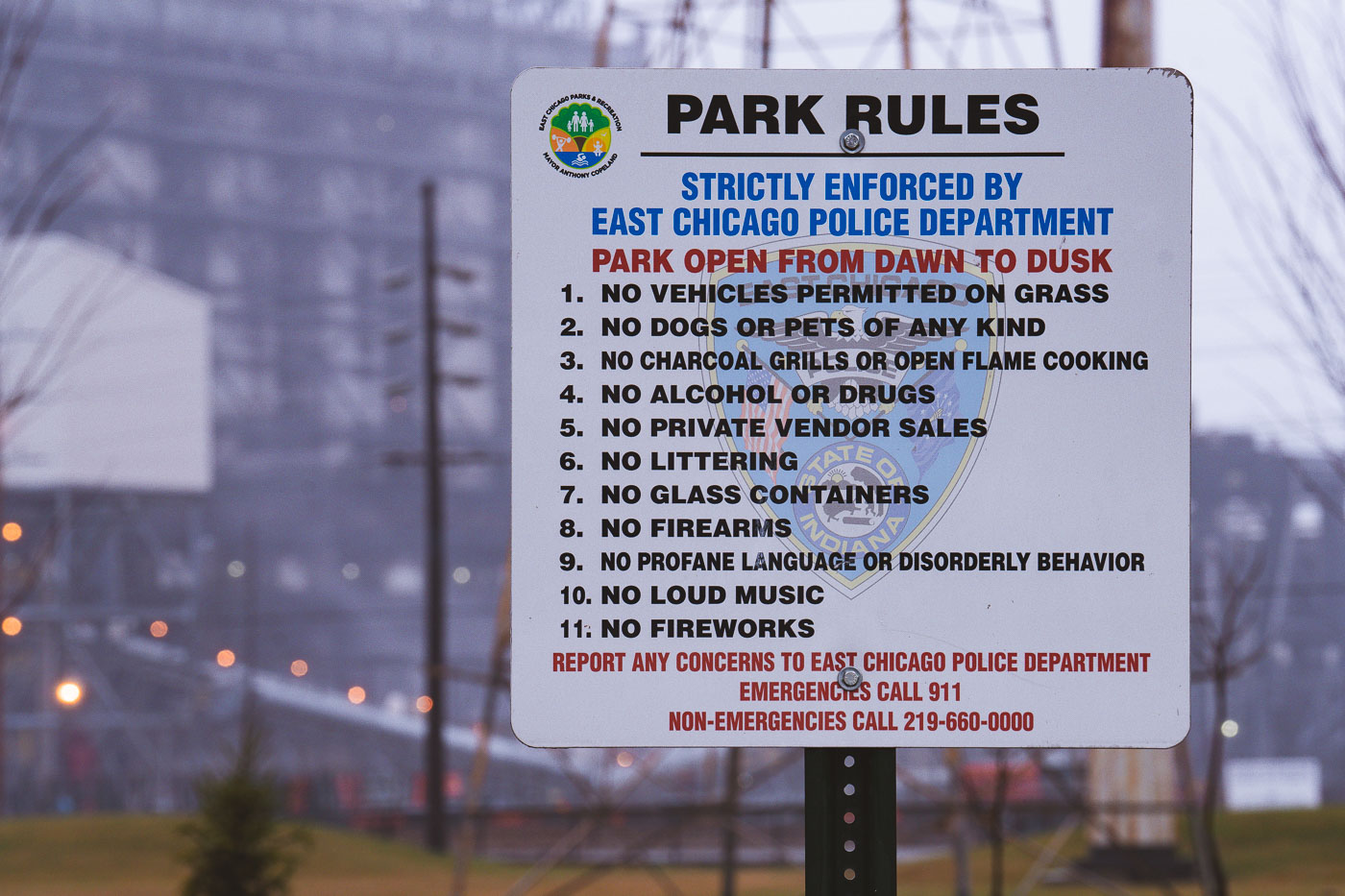
Park rules sign in Marktown, East Chicago, Indiana, listing regulations enforced by the East Chicago Police Department.
A park rules sign in Marktown, East Chicago, Indiana, sets regulations for a neighborhood public space within the city’s historic planned worker community. The sign states that the park is open from dawn to dusk and lists prohibited activities including vehicles on grass, pets, open-flame cooking, alcohol or drugs, littering, glass containers, firearms, profane language, loud music, and fireworks. It bears the East Chicago Parks & Recreation seal and states that the rules are strictly enforced by the East Chicago Police Department, with emergency and non-emergency contact numbers posted.

Park Rules Posted by East Chicago Police Near Marktown
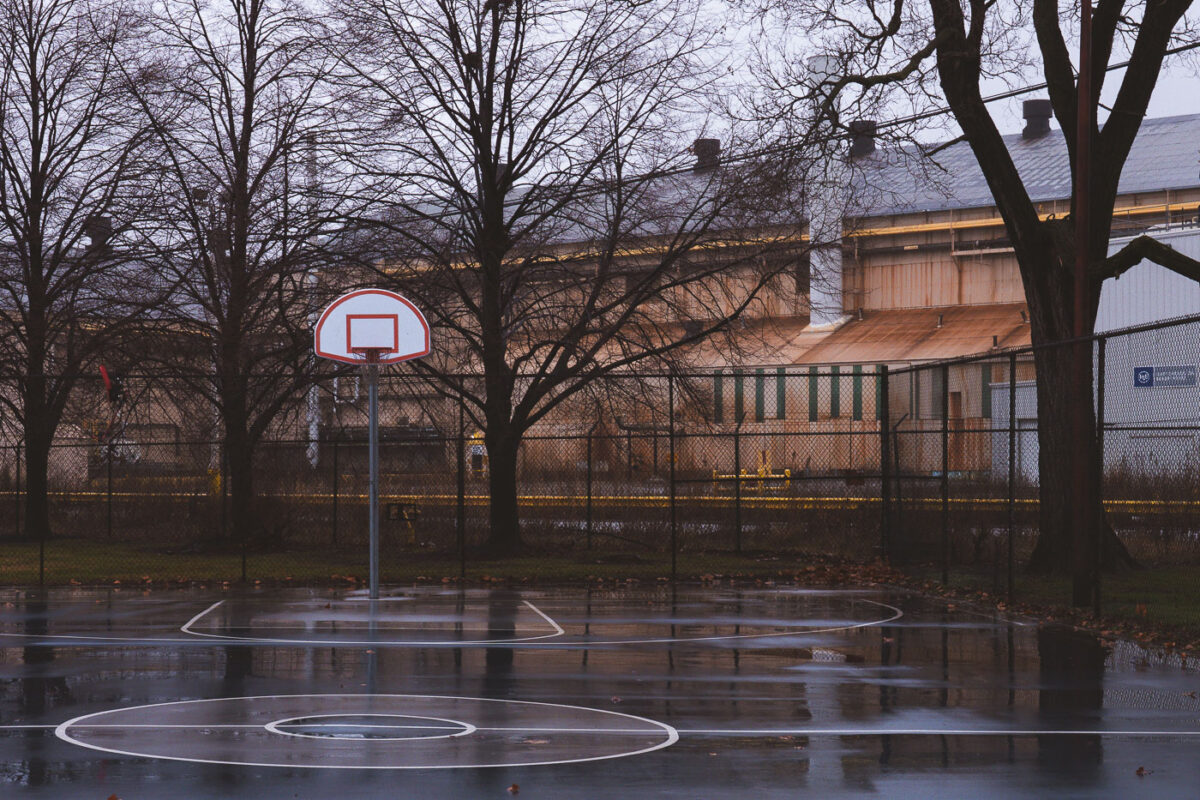
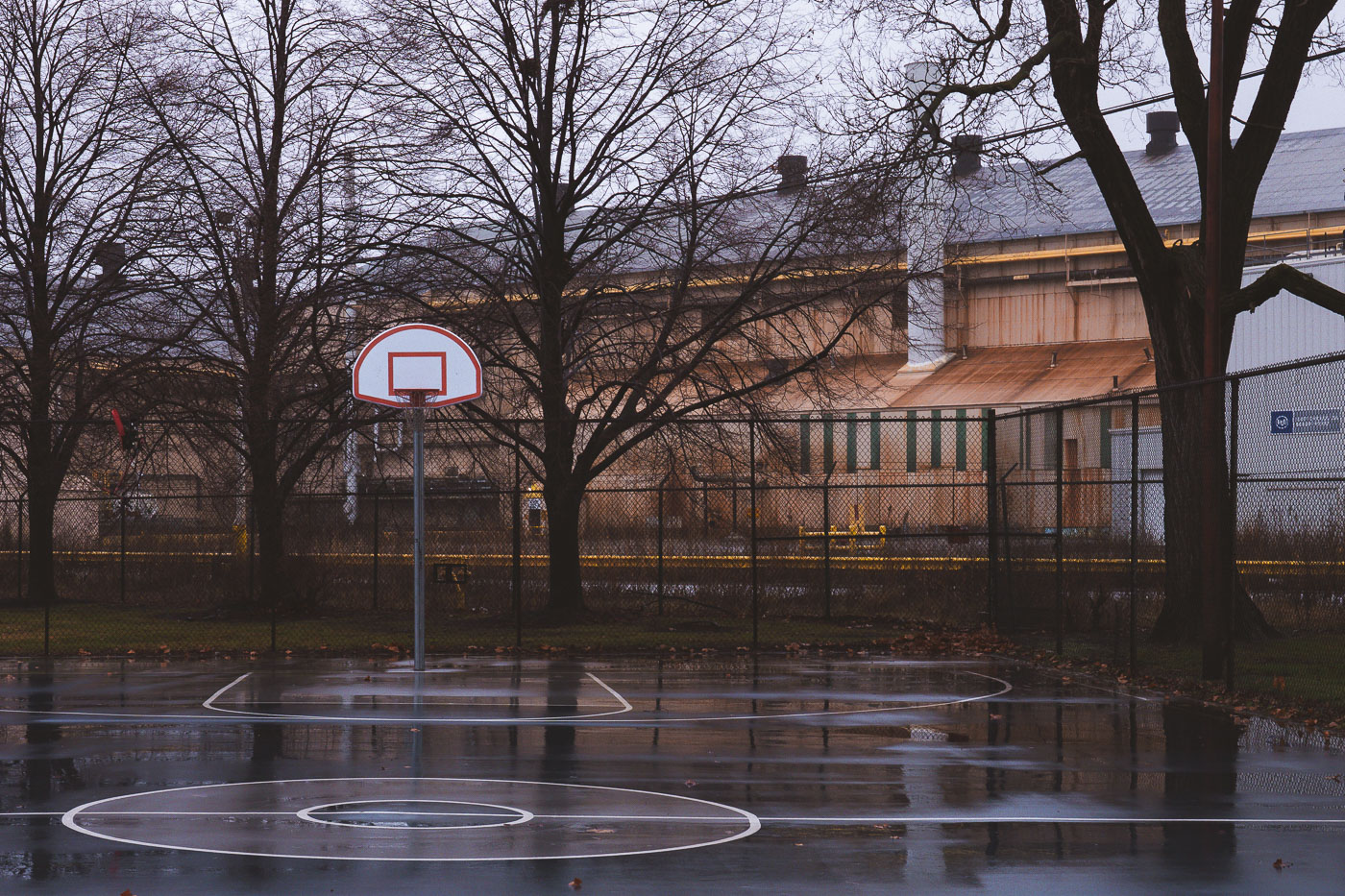
A wet basketball court with red hoop stands in Marktown, East Chicago, Indiana, with industrial buildings and bare trees visible behind a chain-link fence.
A basketball court in Marktown, East Chicago, Indiana, stands directly beside large industrial buildings in the Indiana Harbor area. Marktown was developed in the early 20th century by industrialist Clayton Mark as a planned company town for employees of his steel pipe works and is listed on the National Register of Historic Places. The neighborhood sits amid one of northwest Indiana’s heaviest industrial corridors, near major steel and petroleum facilities, placing residential and recreational spaces in close proximity to active industry.

Rain-Soaked Basketball Court in Marktown
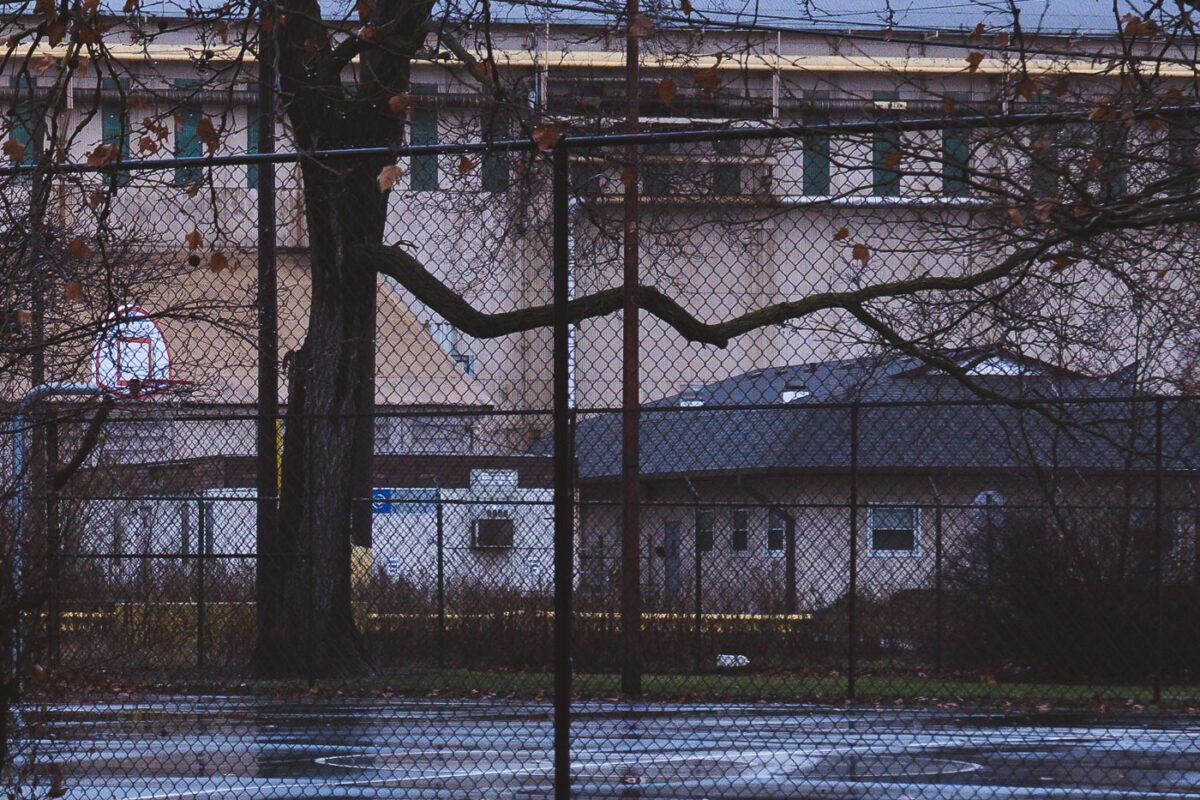
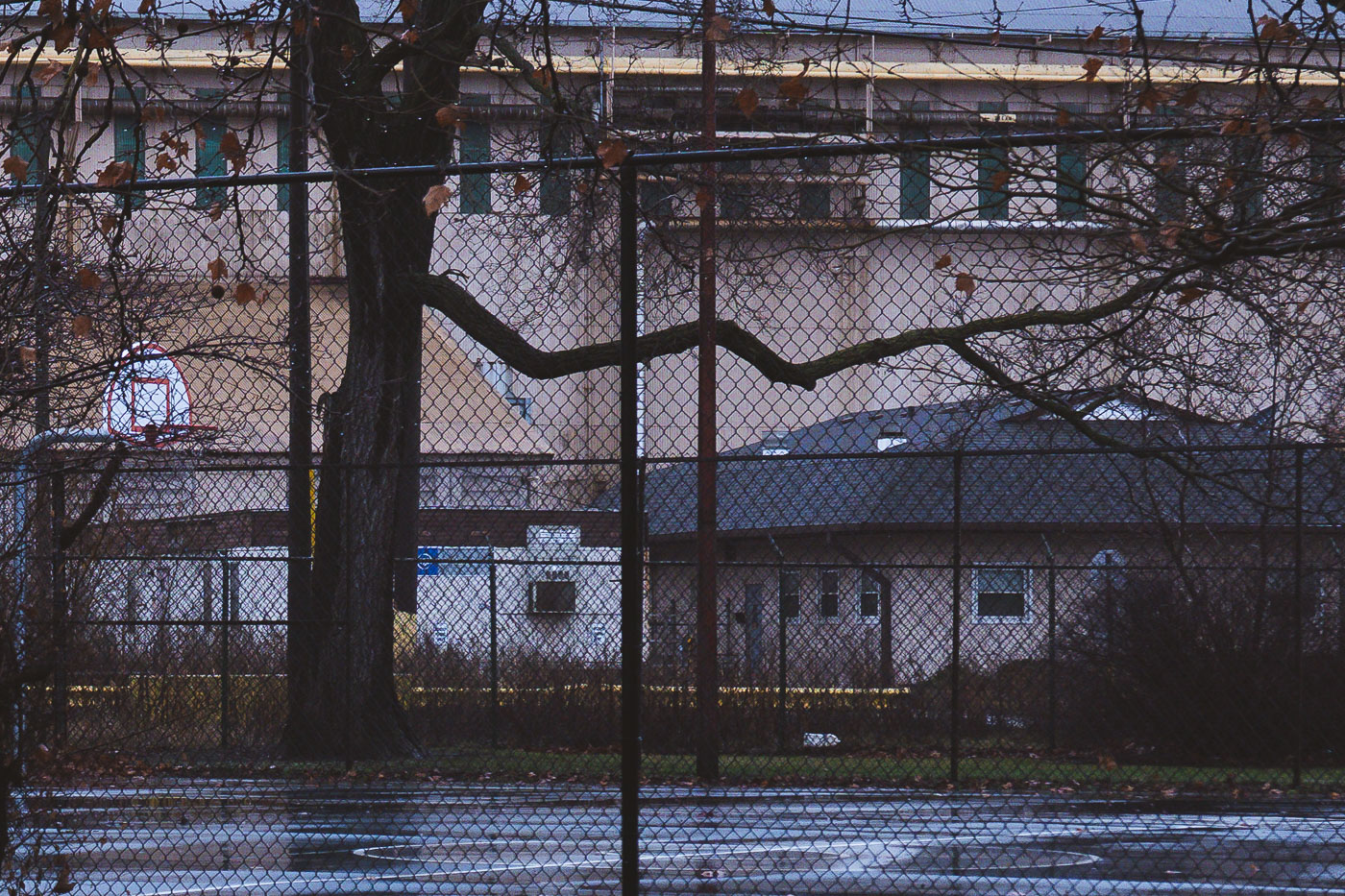
A basketball court with chain-link fencing in Marktown, East Chicago, Indiana, with industrial buildings and bare trees beyond.
A fenced basketball court in Marktown, East Chicago, Indiana, stands beside industrial buildings near the Indiana Harbor corridor. Marktown was developed in the early 20th century as a planned workers' community for nearby steel industry employees, and its residential blocks remain closely bordered by heavy industry. The court and surrounding utility and plant structures show the proximity between neighborhood recreation space and the industrial landscape along this section of East Chicago.

Basketball Hoop Behind a Chain-Link Fence in Marktown
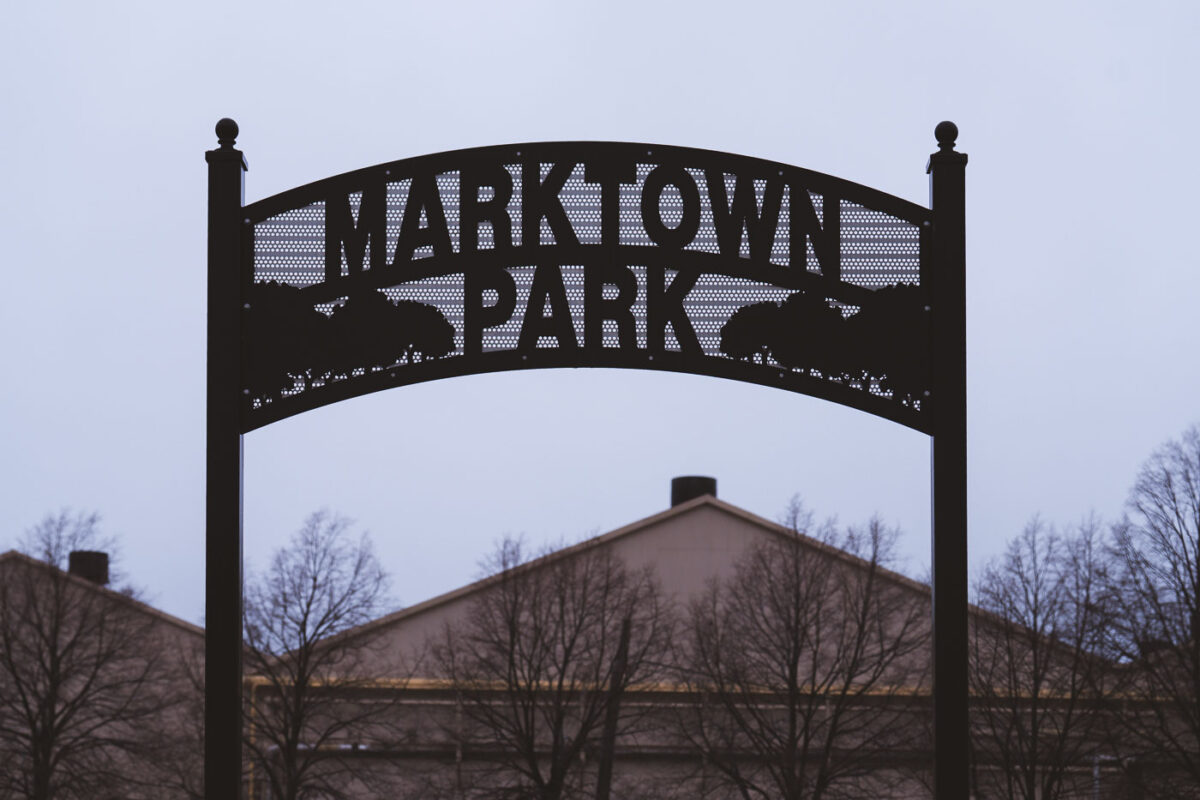
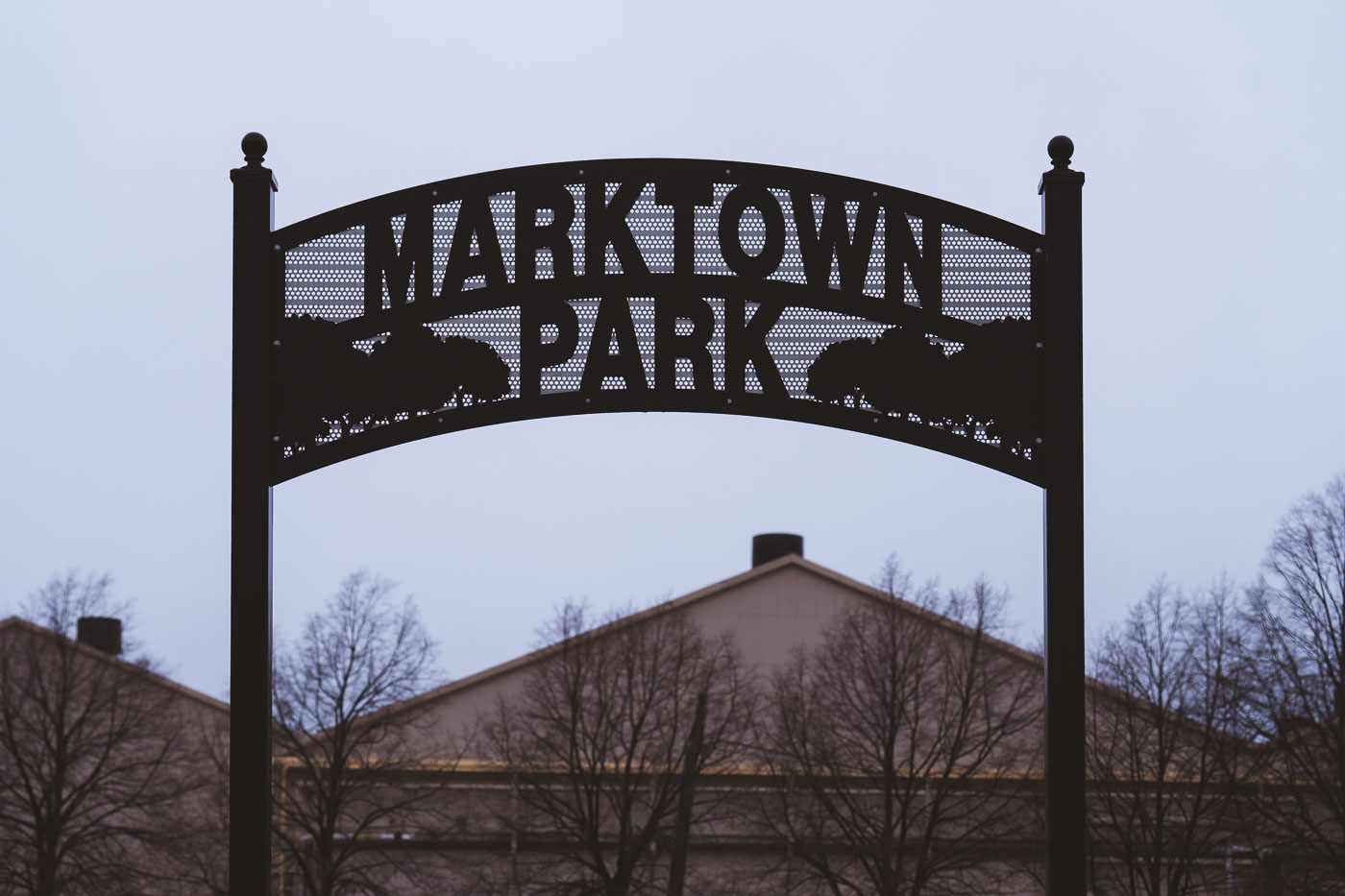
Marktown Park entrance sign with perforated lettering stands in East Chicago, Indiana's historic planned community.
The Marktown Park entrance sign stands in the Marktown neighborhood of East Chicago, Indiana. Marktown was developed in the early 20th century as a planned industrial community for employees of the Mark Manufacturing Company, and the neighborhood is listed on the National Register of Historic Places. The park is one of the public spaces within this company-town development near Indiana Harbor, where housing and community amenities were built in close proximity to the region’s industrial corridor.

Marktown Park Sign Against Overcast Skies in East Chicago
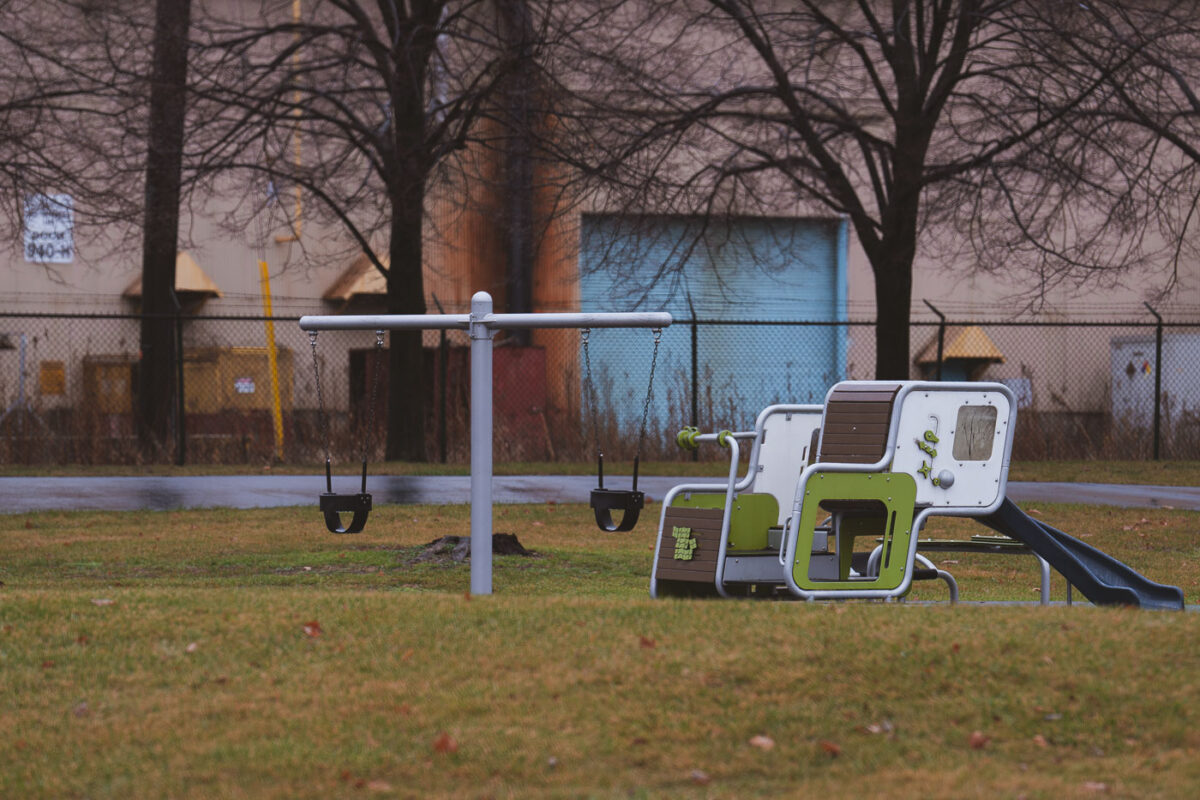
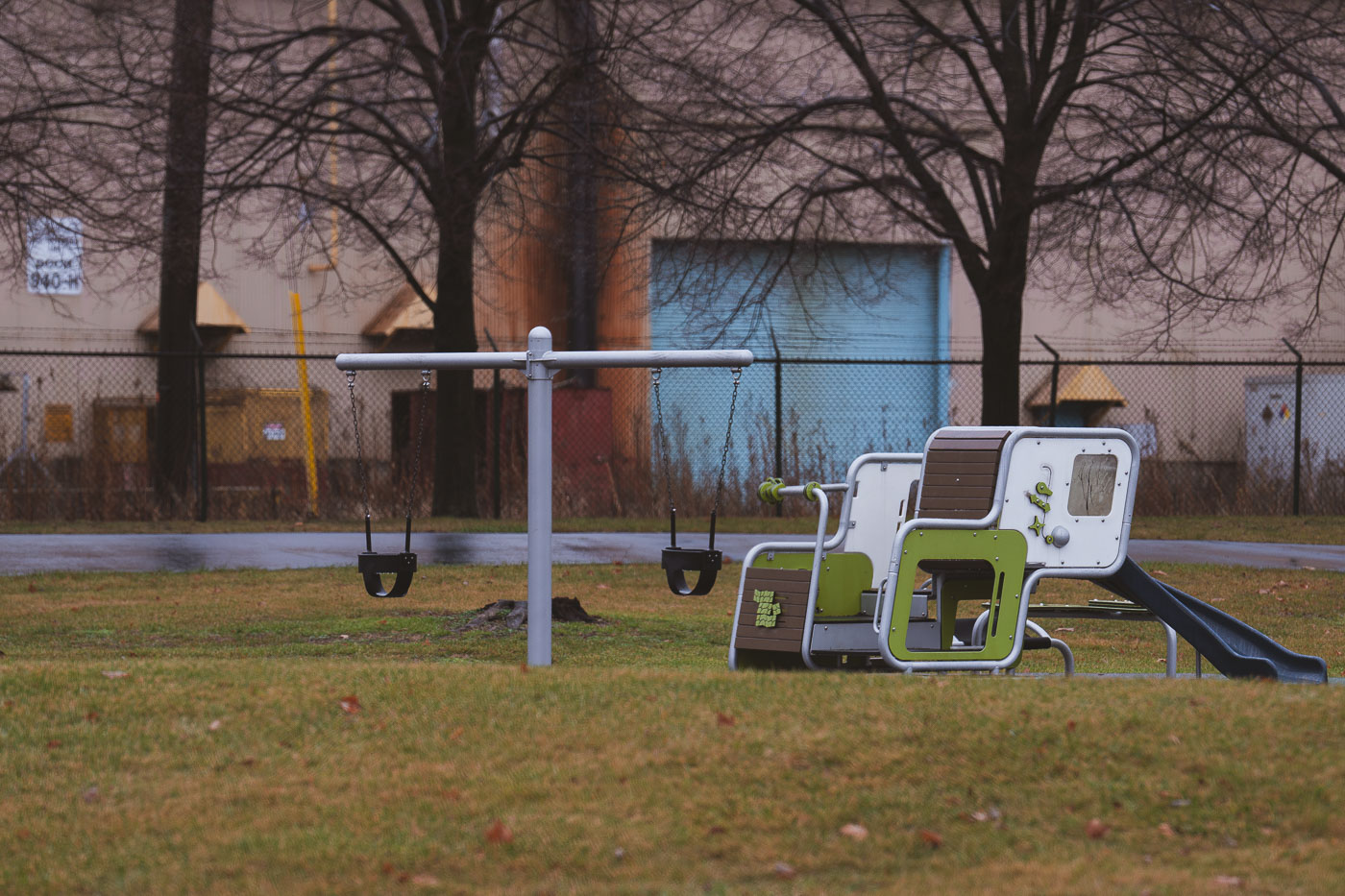
Playground equipment including swings and a play structure stands in Marktown, East Chicago, Indiana, with industrial buildings visible behind a chain-link fence.
Playground equipment in Marktown, East Chicago, Indiana, stands beside a chain-link fence with Indiana Harbor industrial buildings in the background. Marktown was built in the early 20th century as housing for workers employed by nearby steel mills and related industries. The juxtaposition of the playground and the adjacent industrial complex shows the close proximity of residential space and heavy industry that has long defined this neighborhood.

Empty Swing Set Near Marktown’s Industrial Fence Line
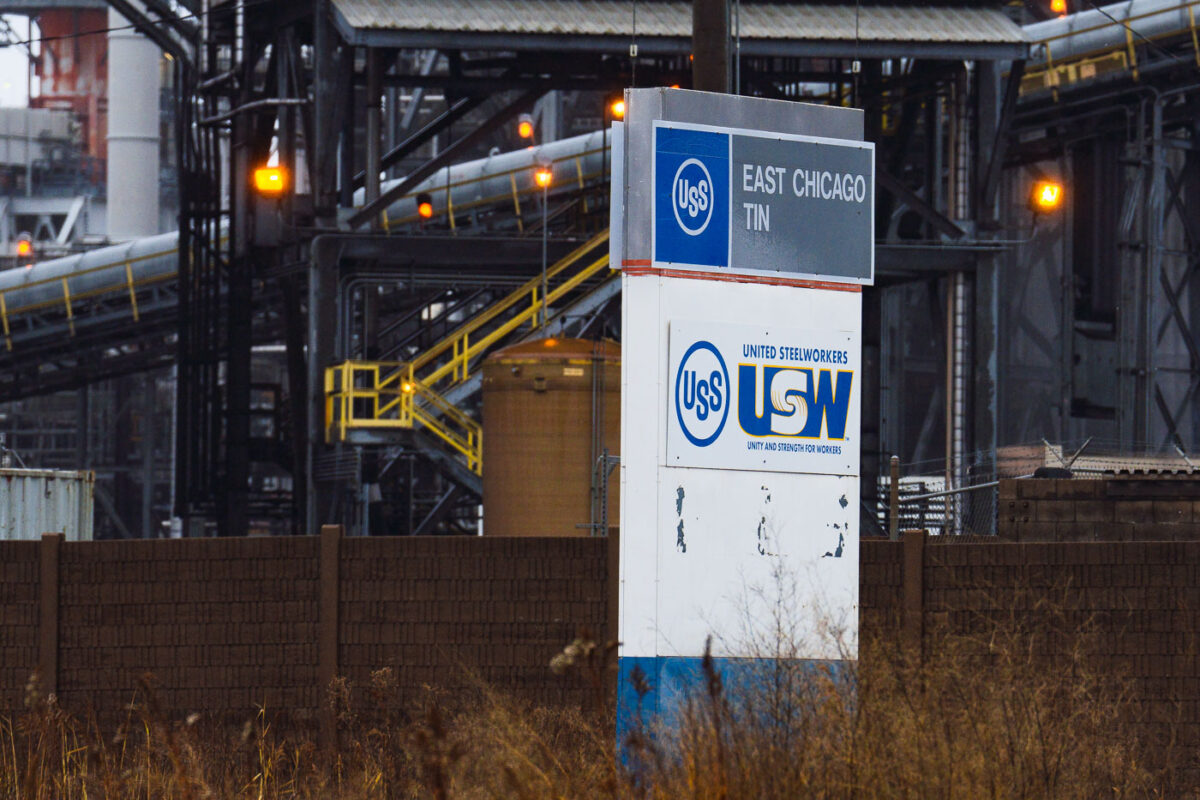
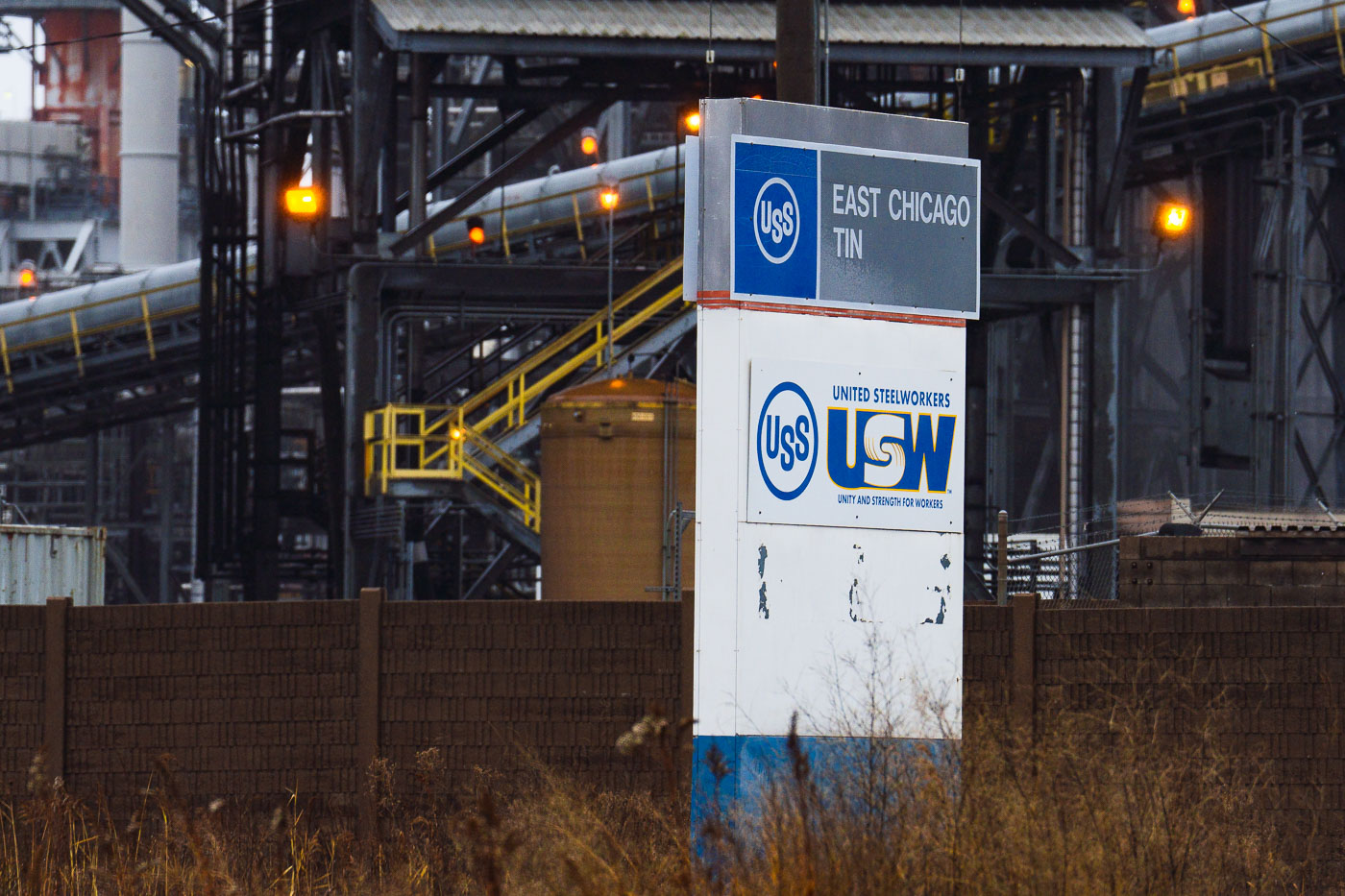
US Steel East Chicago Tin Plant signage with United Steelworkers union logo and industrial steel mill infrastructure in background.
The U.S. Steel East Chicago Tin plant stands in the Indiana Harbor section of East Chicago, Indiana. The facility processed steel for tin mill products used in packaging and other industrial applications, and U.S. Steel ended operations at the plant in 2015. Signage at the site includes the United Steelworkers union, reflecting the plant’s long association with organized steel labor in the Calumet industrial corridor.

USS East Chicago Tin Sign and Steelworkers Union Logo
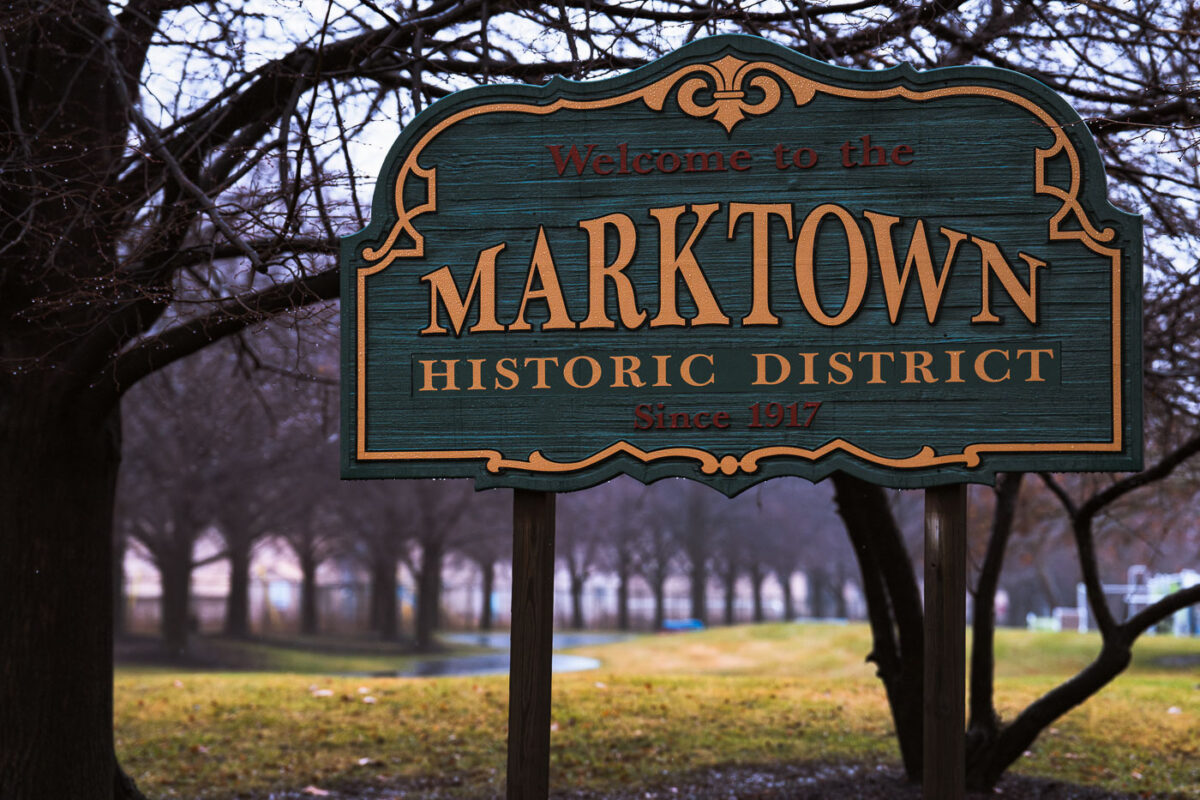
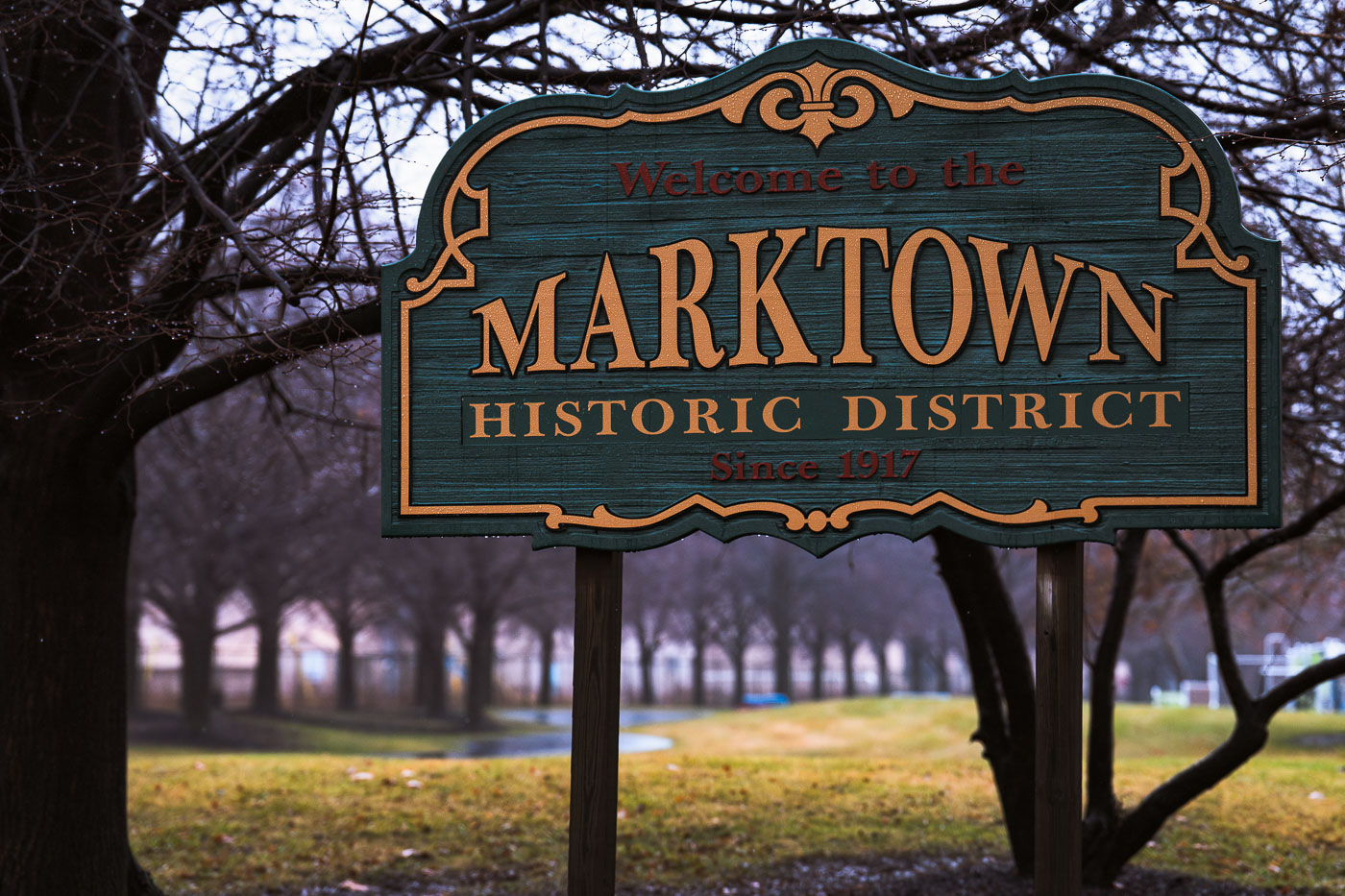
Marktown Historic District sign in East Chicago, Indiana, established in 1917 as a planned industrial community.
The Marktown Historic District sign stands in East Chicago, Indiana, marking a planned industrial community established in 1917 by manufacturer Clayton Mark for employees of the Mark Manufacturing Company. Marktown was designed as a company town near the Indiana Harbor industrial corridor and is noted for its early-20th-century planning and distinctive worker housing. The neighborhood was later recognized for its historic significance as one of northwest Indiana’s surviving planned steel-era communities.

“Welcome to Marktown” Sign Since 1917, East Chicago
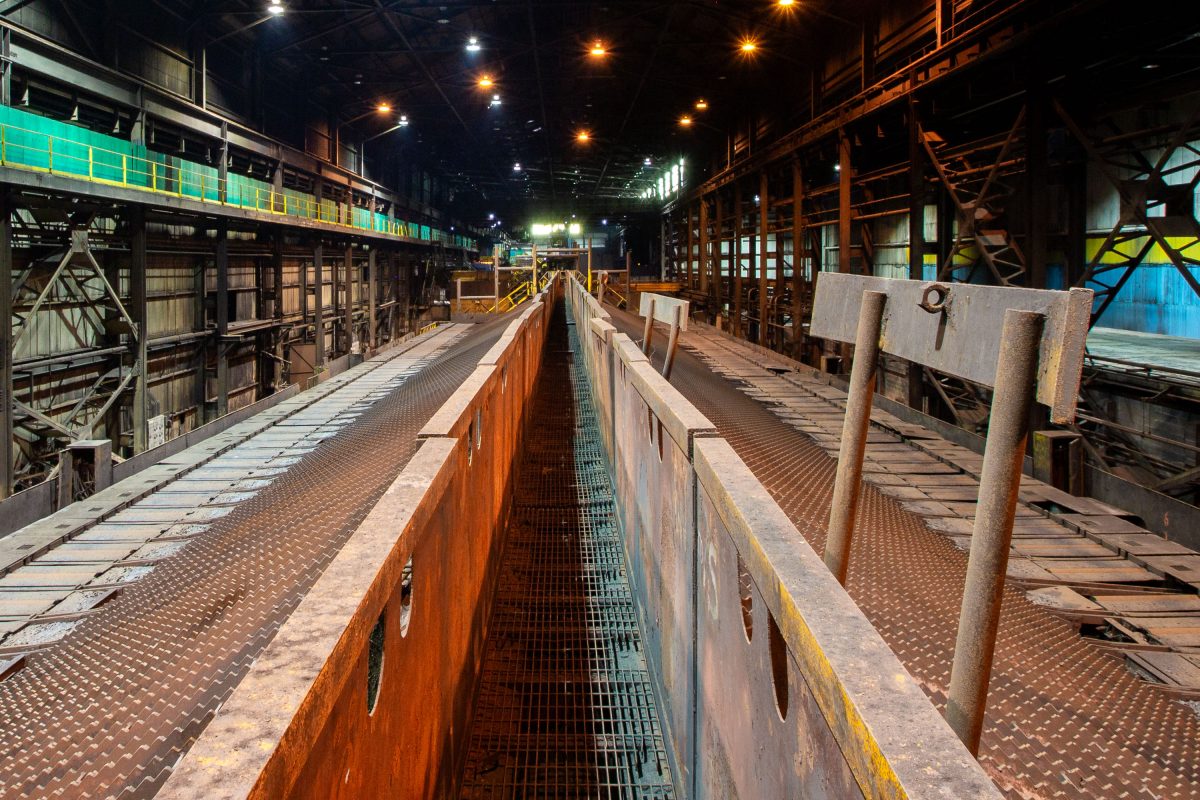
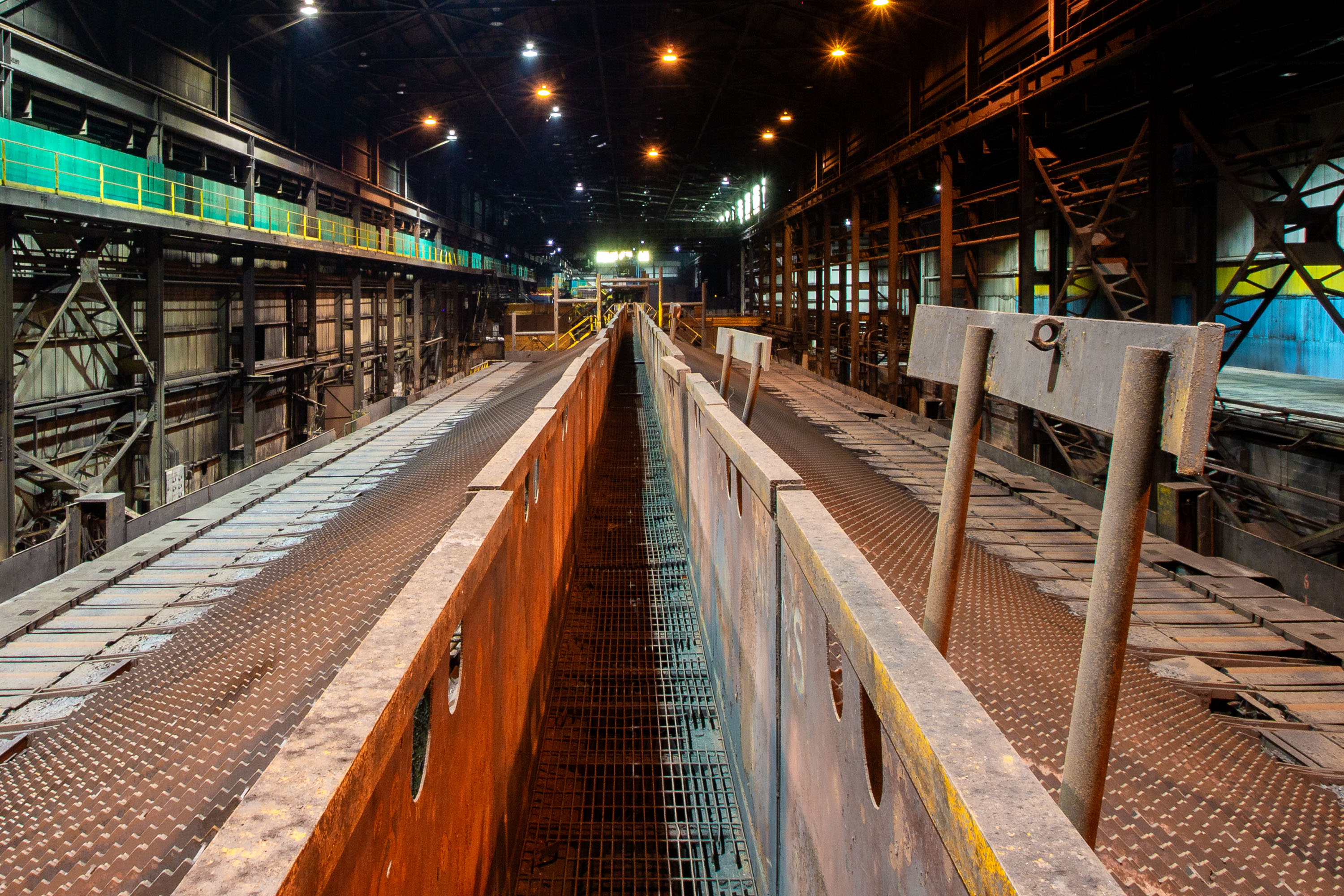
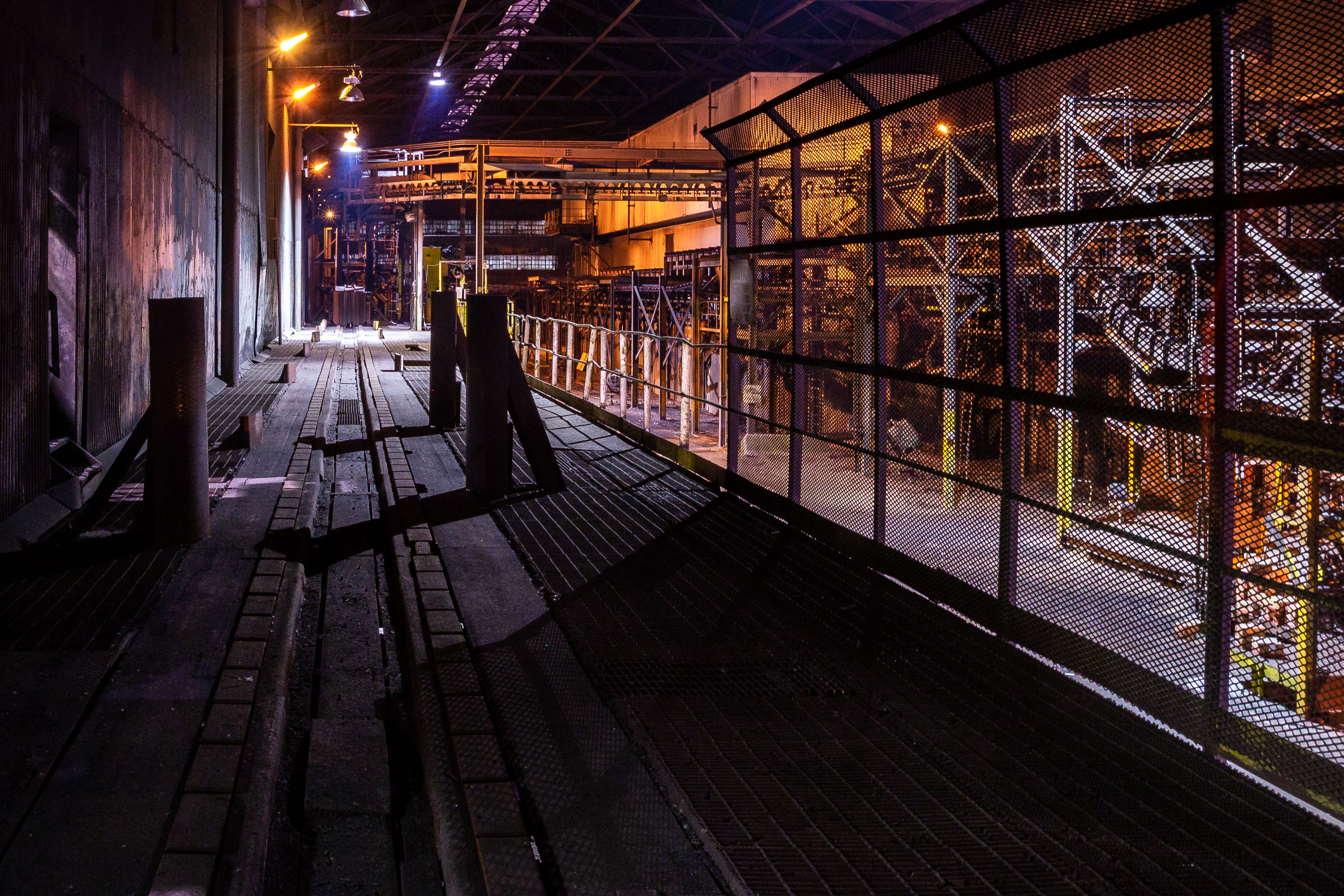
Nighttime view of an industrial steel mill facility with an orange operator's walkway, metal railings, and overhead industrial infrastructure.
ArcelorMittal's East Chicago Works sits along the Indiana Harbor Ship Canal on Lake Michigan, part of the Indiana Harbor complex formed from the former Inland Steel and LTV Steel operations. The elevated steel walkway and grated catwalks seen here run parallel to the mill's rolling line, allowing workers to move safely above the production equipment while staying clear of hot steel and moving machinery. Overhead crane rails and support columns line both sides of the bay, carrying the traveling cranes used to move coils and rolled sections through the mill. The facility remains one of the largest integrated steel plants in North America, producing flat-rolled steel for the automotive, appliance, and construction industries.

Walkway Along the Rolling Mill at ArcelorMittal in East Chicago
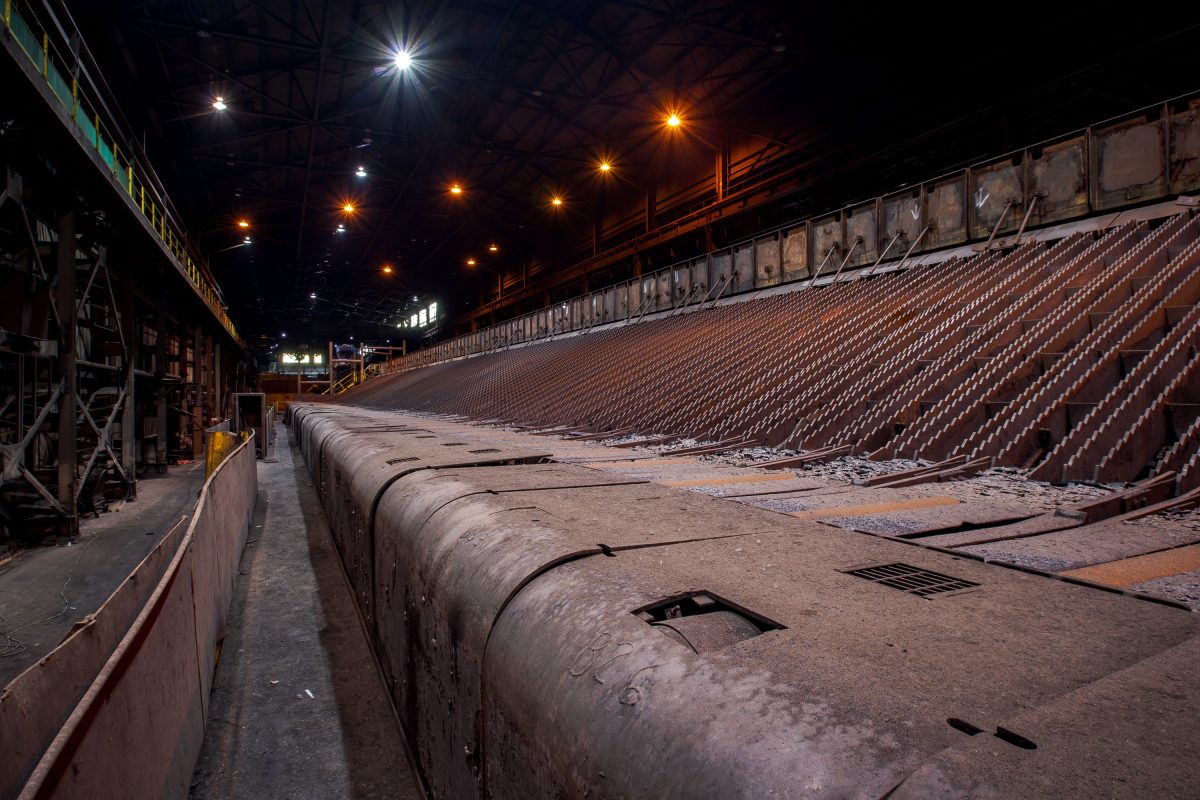
Abandoned steel mill floor at ArcelorMittal in East Chicago with industrial pipes, seating, and overhead lighting.
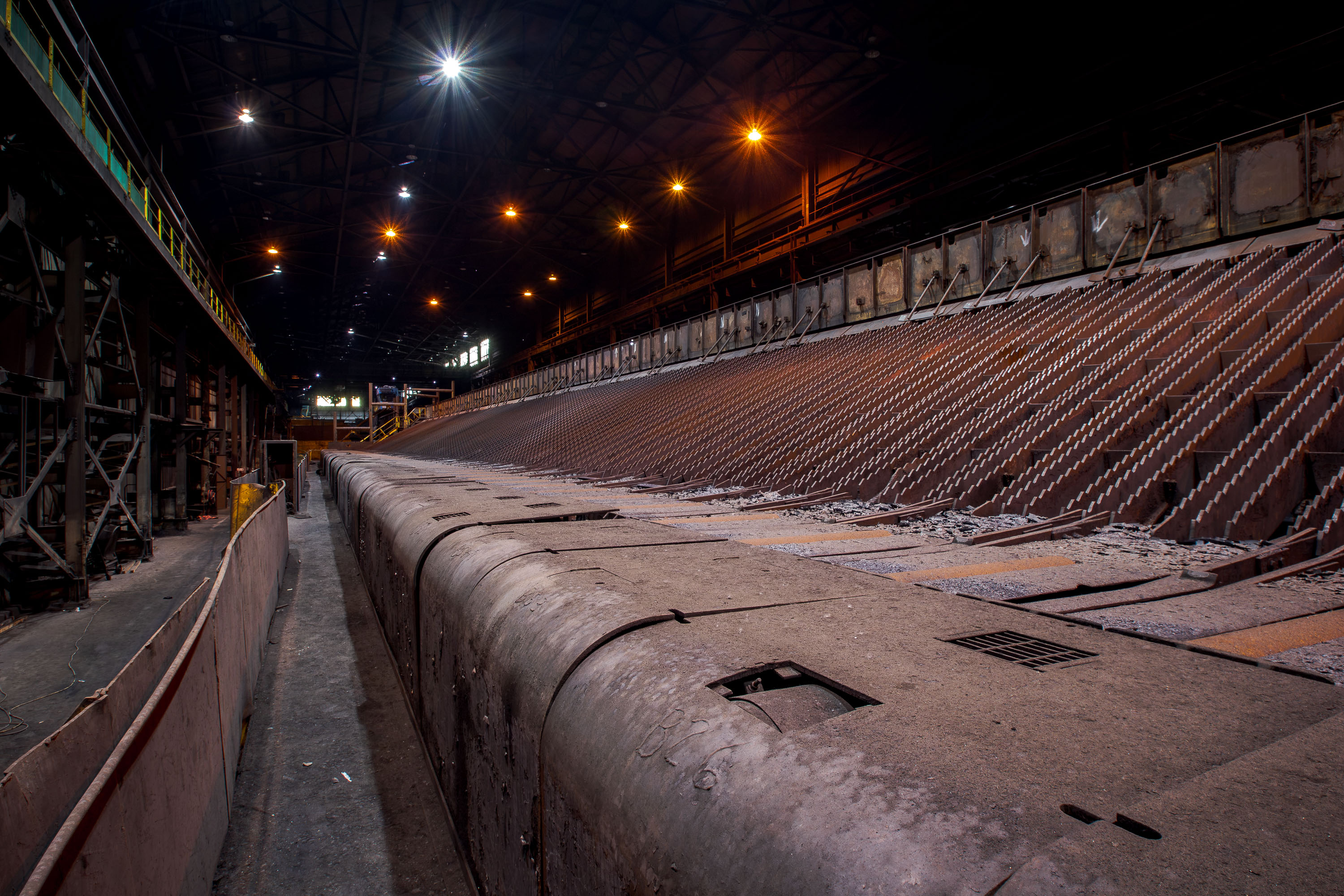
This cooling bed sits inside the rolling mill at ArcelorMittal's Indiana Harbor Works in East Chicago, Indiana. Hot-rolled steel bars travel across the ribbed, inclined surface after leaving the rolling stands, losing heat as they move toward the far end for straightening and cutting. The long rows of angled teeth are designed to carry bar stock evenly while allowing it to air-cool without warping. Indiana Harbor Works is one of the largest integrated steel mills in North America, a product of the 2006 merger that formed ArcelorMittal from predecessor companies including Inland Steel, which built much of this facility in the early 20th century.

Cooling Beds at ArcelorMittal’s East Chicago Works
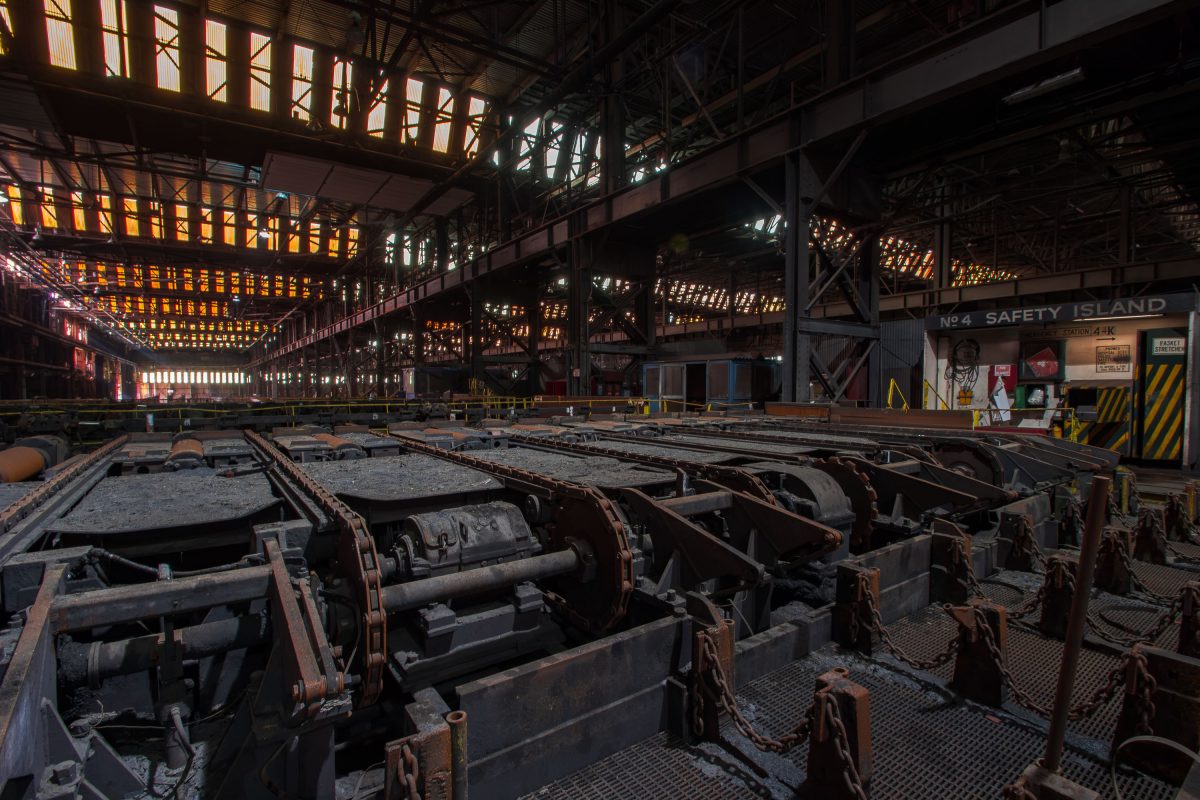
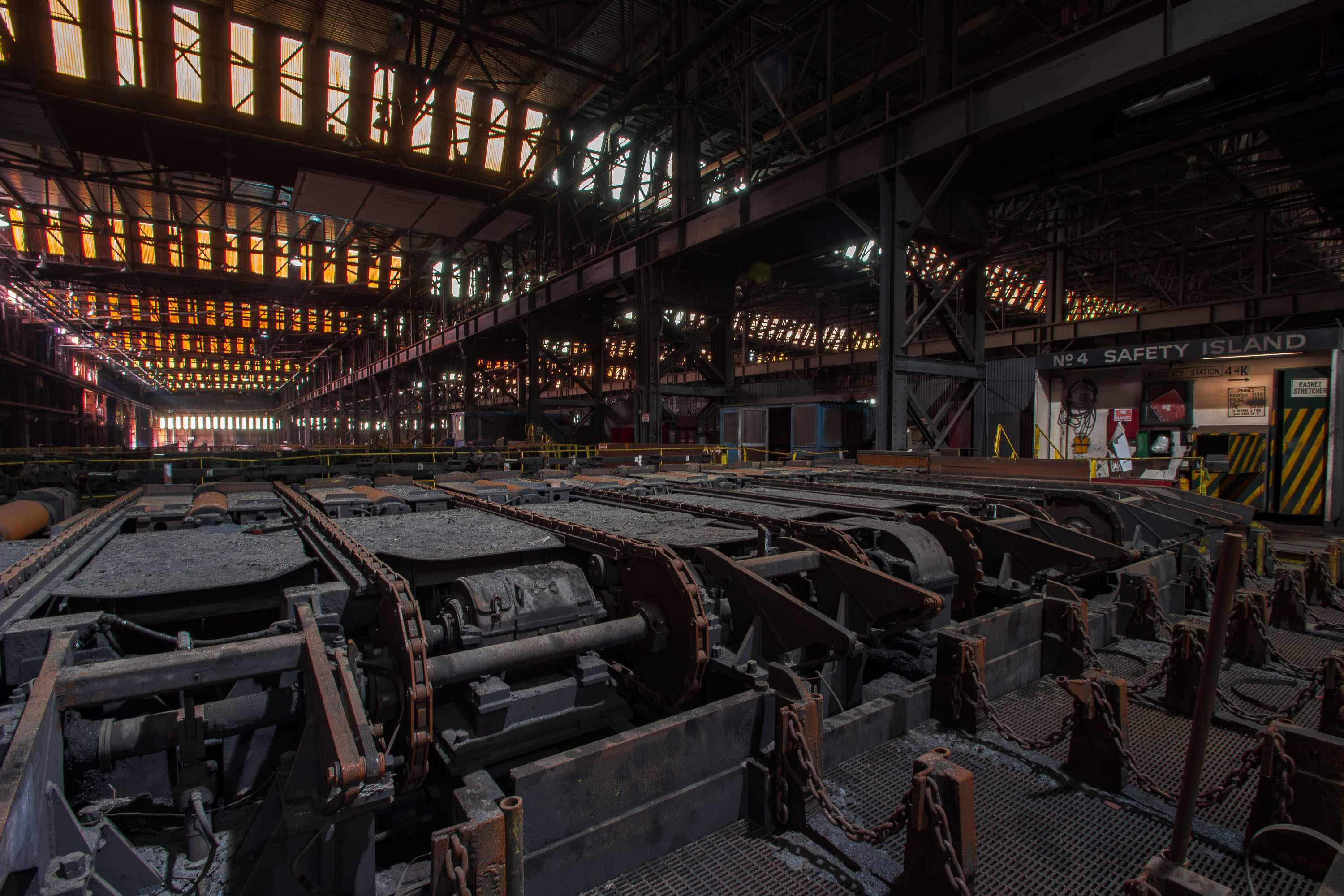
Abandoned steel mill foundry floor with rusted machinery, metal framework, and overhead industrial lighting at ArcelorMittal in East Chicago.
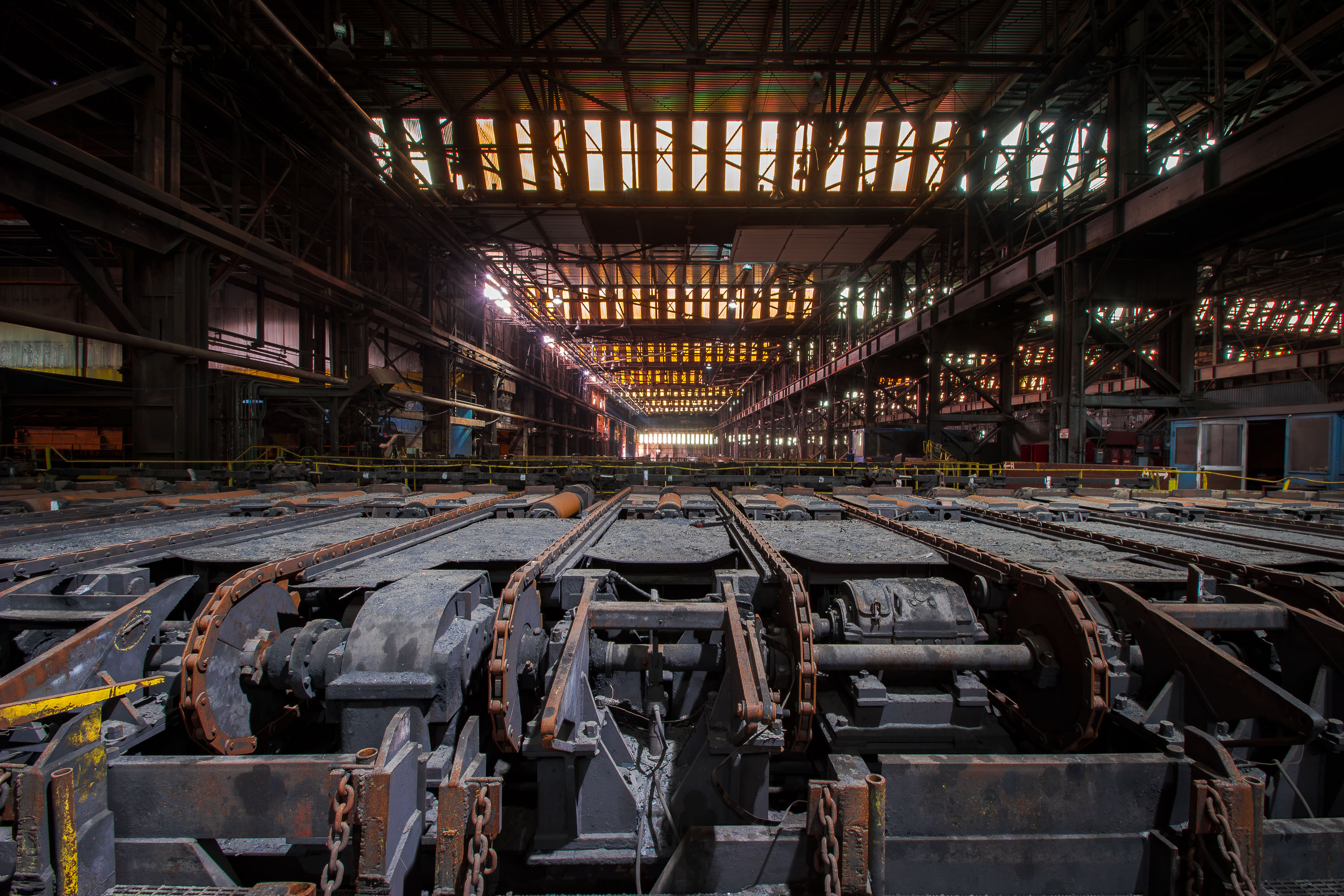
Roller tables like these move red-hot steel slabs and bars through the mill between processing stages, using motor-driven rollers set into the floor. The No. 4 Safety Island visible nearby marks a designated refuge point where workers can step clear of moving equipment and overhead crane traffic. ArcelorMittal's East Chicago facility, known as Indiana Harbor Works, sits along Lake Michigan and traces its roots to Inland Steel, which began operations at the site in 1902. The mill's scale required extensive overhead crane systems and catwalks, visible in the structural framework spanning the production floor.

Roller Tables Near No. 4 Safety Island at ArcelorMittal East Chicago

Abandoned steel mill interior with rusted industrial machinery and overhead lighting at ArcelorMittal in East Chicago.
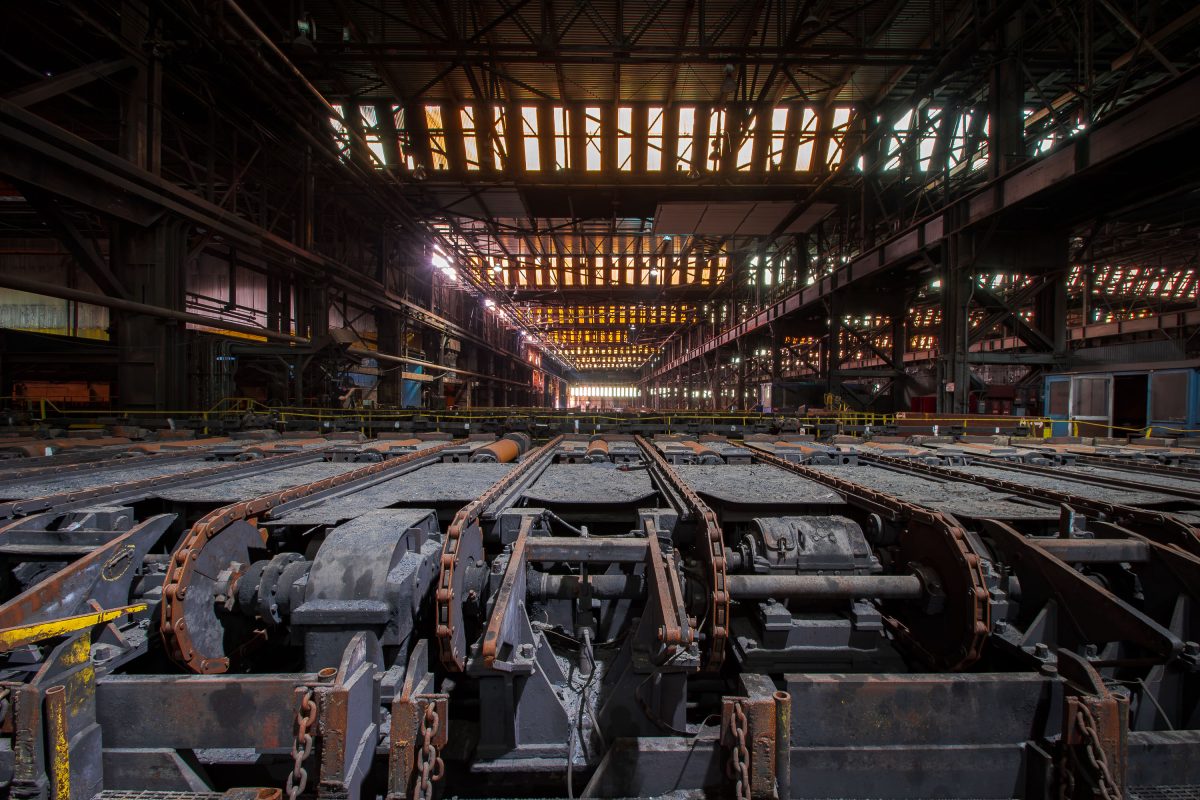
ArcelorMittal's Indiana Harbor Works in East Chicago, Indiana, sits along Lake Michigan and ranks among the largest integrated steel mills in North America. The facility traces its roots to Inland Steel, which built the plant starting in 1901 and operated it for most of the 20th century before a series of mergers led to ArcelorMittal's ownership in 2006. Roller tables like these move slabs and billets between processing stages, using motor-driven rollers and chain drives to carry red-hot steel through the mill without manual handling. The long production bays, built with overhead monitor roofs to vent heat and admit daylight, are typical of early 20th-century steel mill construction and remain a defining feature of the Indiana Harbor complex.

Roller Tables Inside ArcelorMittal’s Indiana Harbor Works

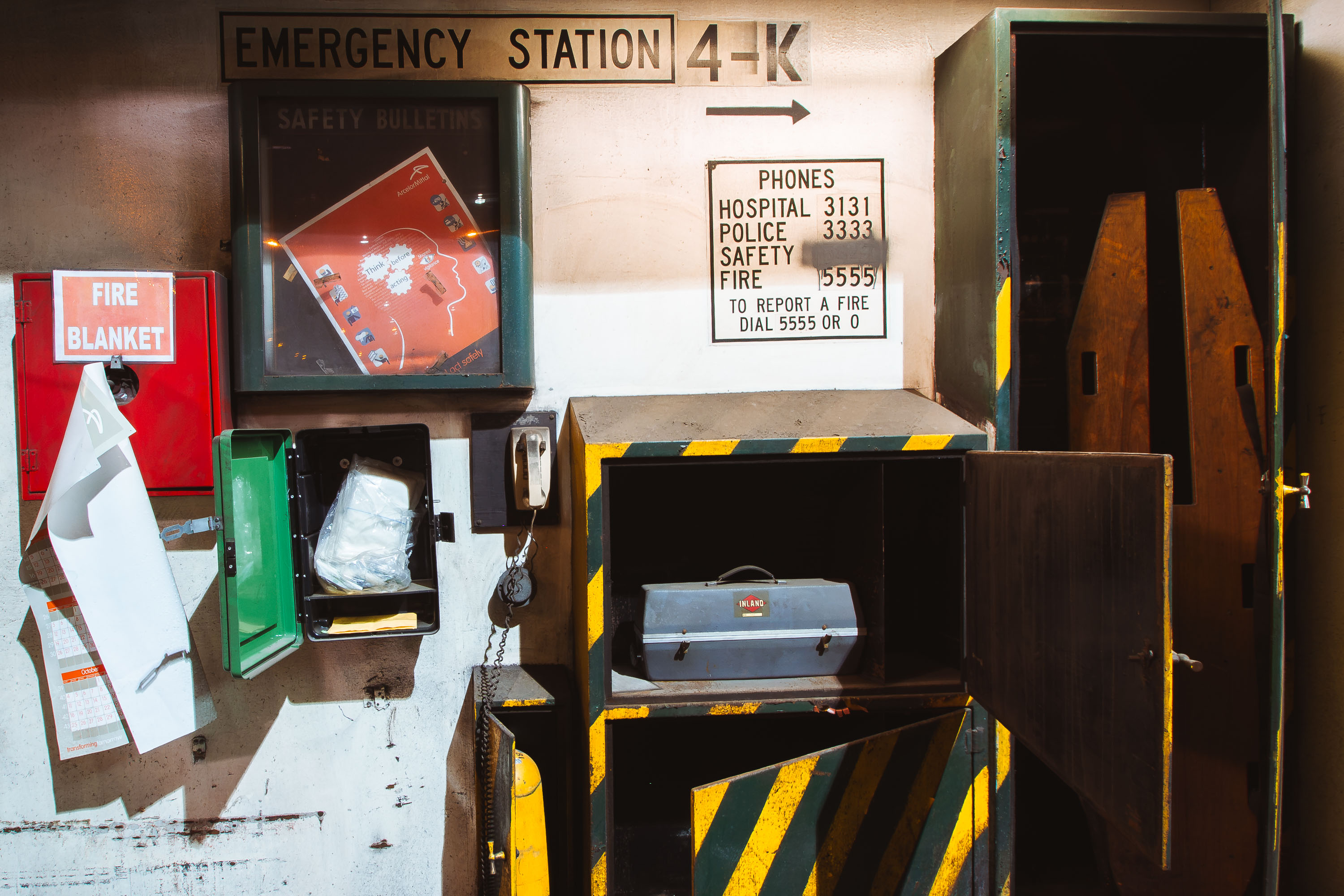
Emergency Station 4-K displays fire safety equipment including a blanket, first aid kit, and emergency contact numbers.
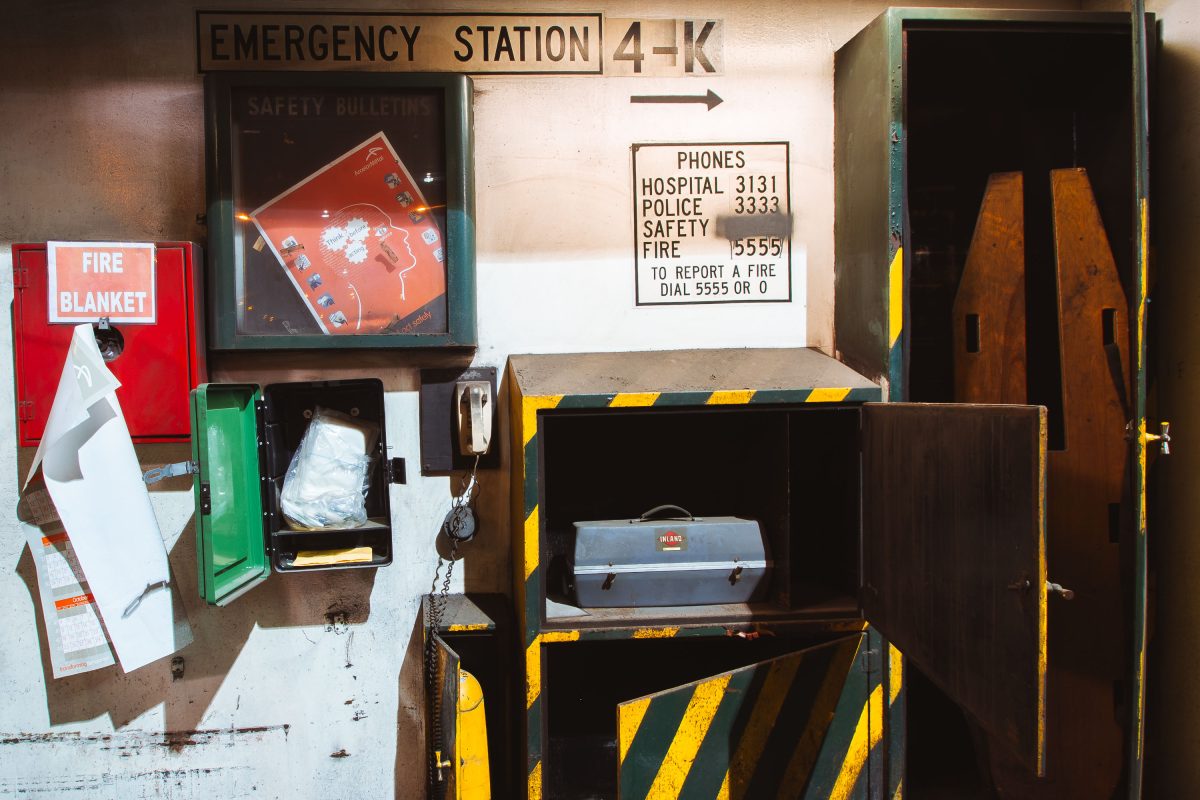
Emergency Station 4-K sits along a mill floor inside ArcelorMittal's Indiana Harbor Works in East Chicago, Indiana. The posted phone list — hospital, police, safety, and fire lines, along with instructions to dial 5555 or 0 to report a fire — standard mill-wide emergency protocol for a plant of this scale. A fire blanket box, stretcher, and tool case are staged nearby, equipment kept on hand for immediate response given the hazards of steel production, including molten metal handling and heavy machinery.

Emergency Station 4-K at ArcelorMittal’s East Chicago Works
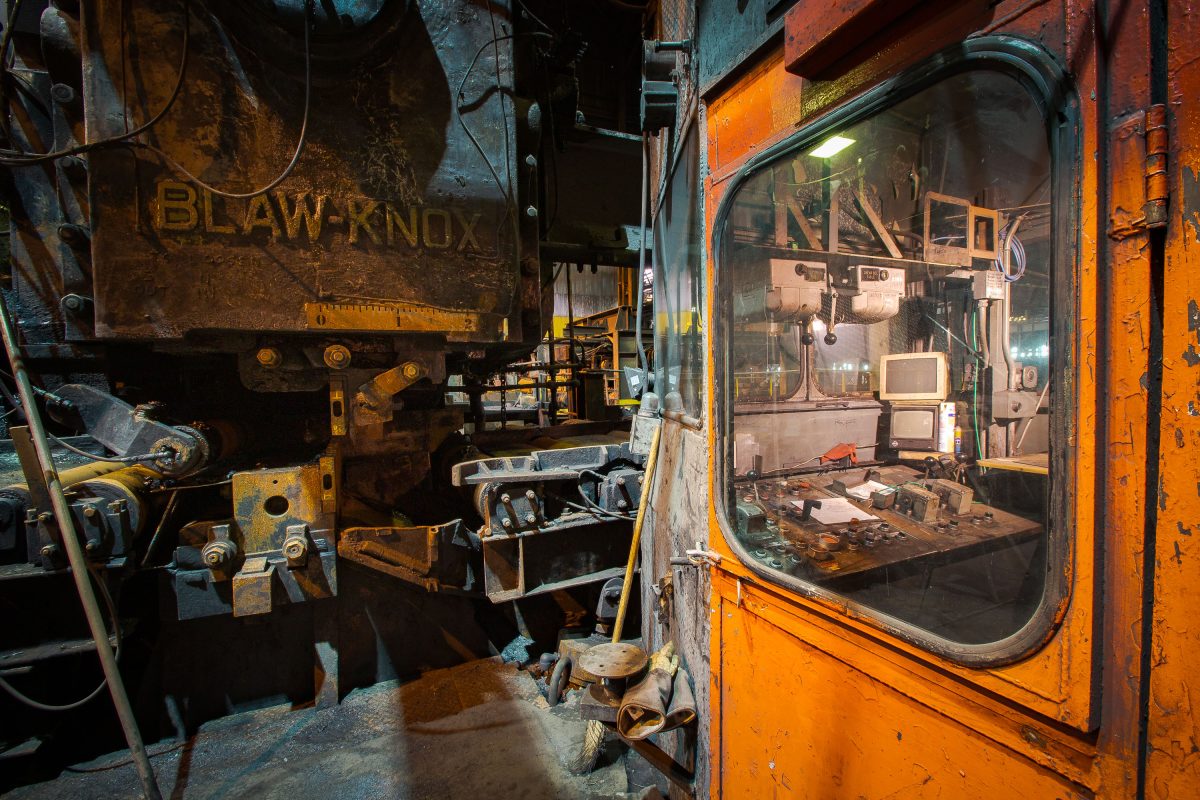
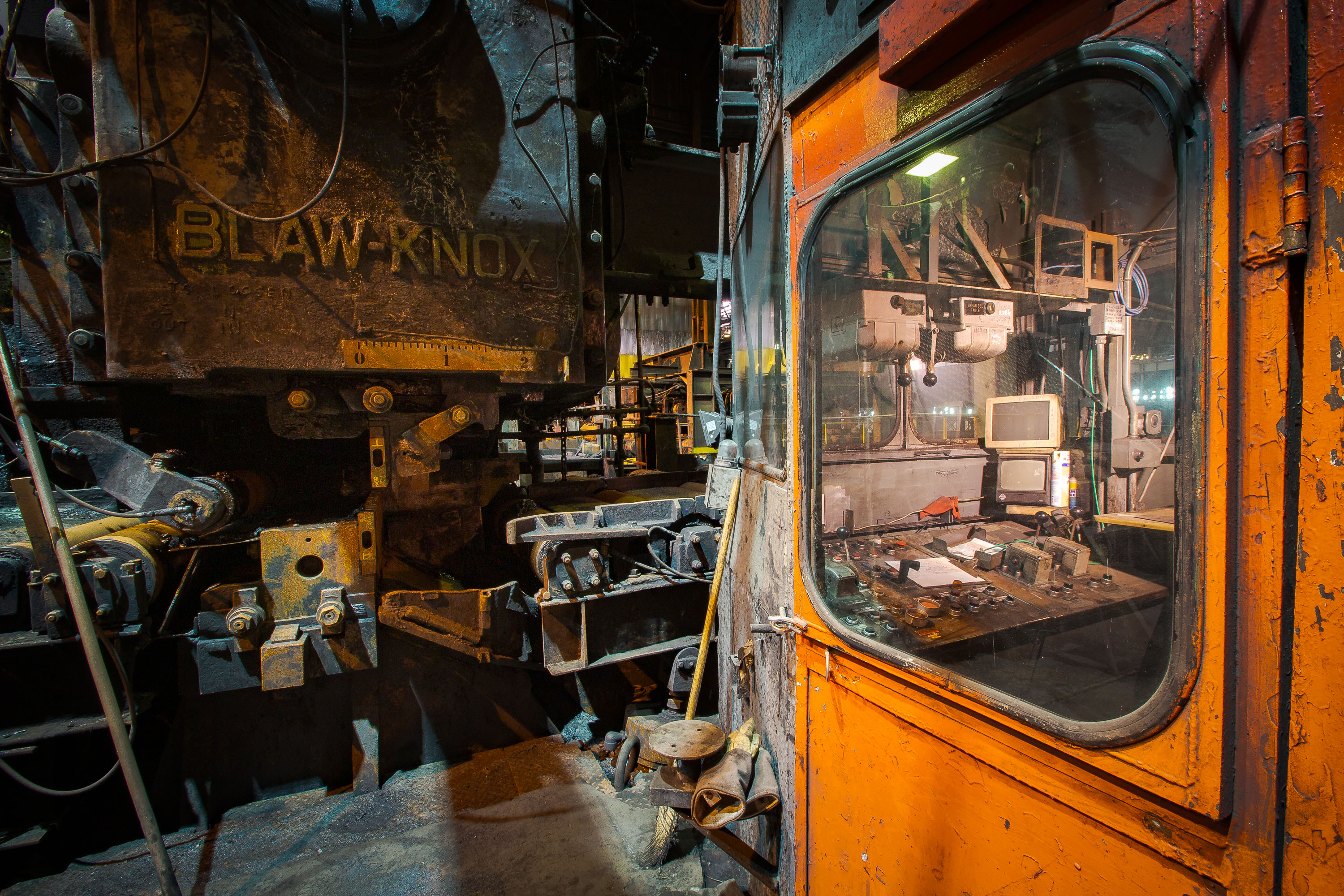
Interior of an orange operator's cab with control panels and windows overlooking a steel mill facility with industrial machinery and equipment.
Blaw-Knox built heavy industrial presses and rolling equipment for steel mills throughout much of the 20th century, operating out of Pittsburgh before expanding into construction machinery and other heavy manufacturing lines. Equipment bearing the company's name remained in service at American steel plants for decades after Blaw-Knox itself exited the industrial press business. This control cab sits at ArcelorMittal's Indiana Harbor facility in East Chicago, one of the largest integrated steel mills in North America. The plant traces its operations back to Inland Steel, which built the complex along Lake Michigan in the early 20th century before later ownership changes brought it under the ArcelorMittal name.

Blaw-Knox Press at ArcelorMittal’s East Chicago Works
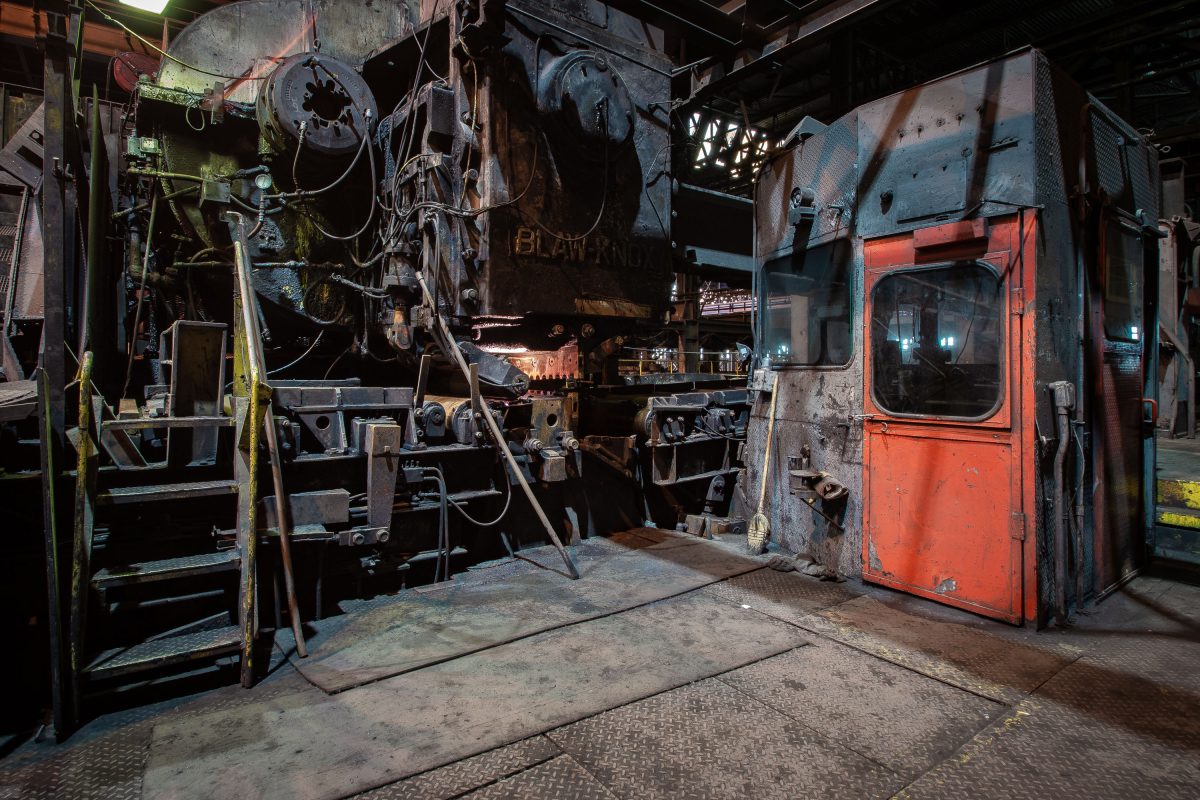
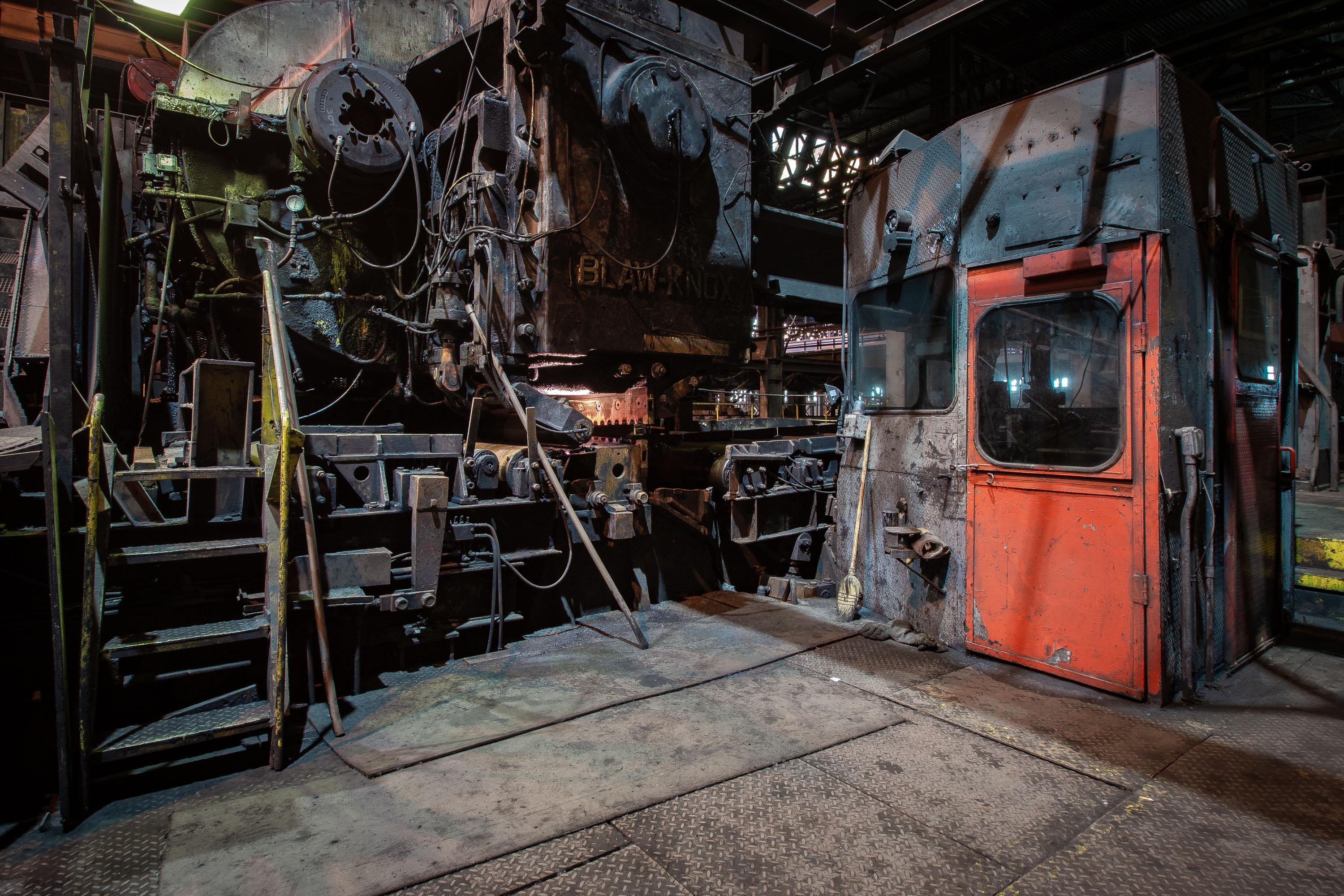
Rusted industrial equipment and red operator's cabin inside an abandoned steel mill facility.
Blaw-Knox Company, founded in Pittsburgh in 1917 through the merger of Blaw Steel and Knox Pressed and Welded Steel, built heavy equipment for the steel and construction industries, including rolling mill machinery like the stand pictured here. ArcelorMittal's East Chicago, Indiana works traces its roots to Inland Steel, which built its first furnace on the site in 1902 along Lake Michigan. The plant became part of ArcelorMittal in 2006 following the merger of Arcelor and Mittal Steel. Rolling mills like this one shape heated steel slabs into flat or structural forms by passing them between powered rolls under extreme pressure.

Blaw-Knox Rolling Mill Equipment at ArcelorMittal in East Chicago
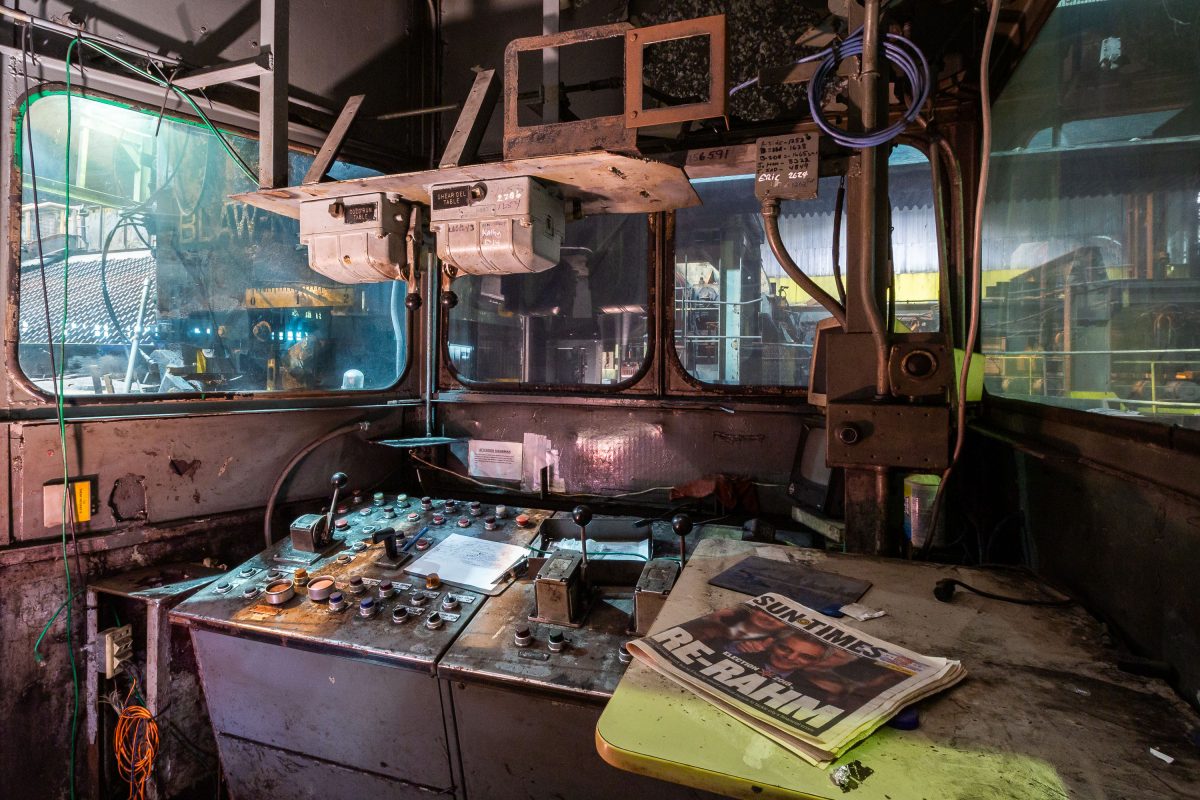
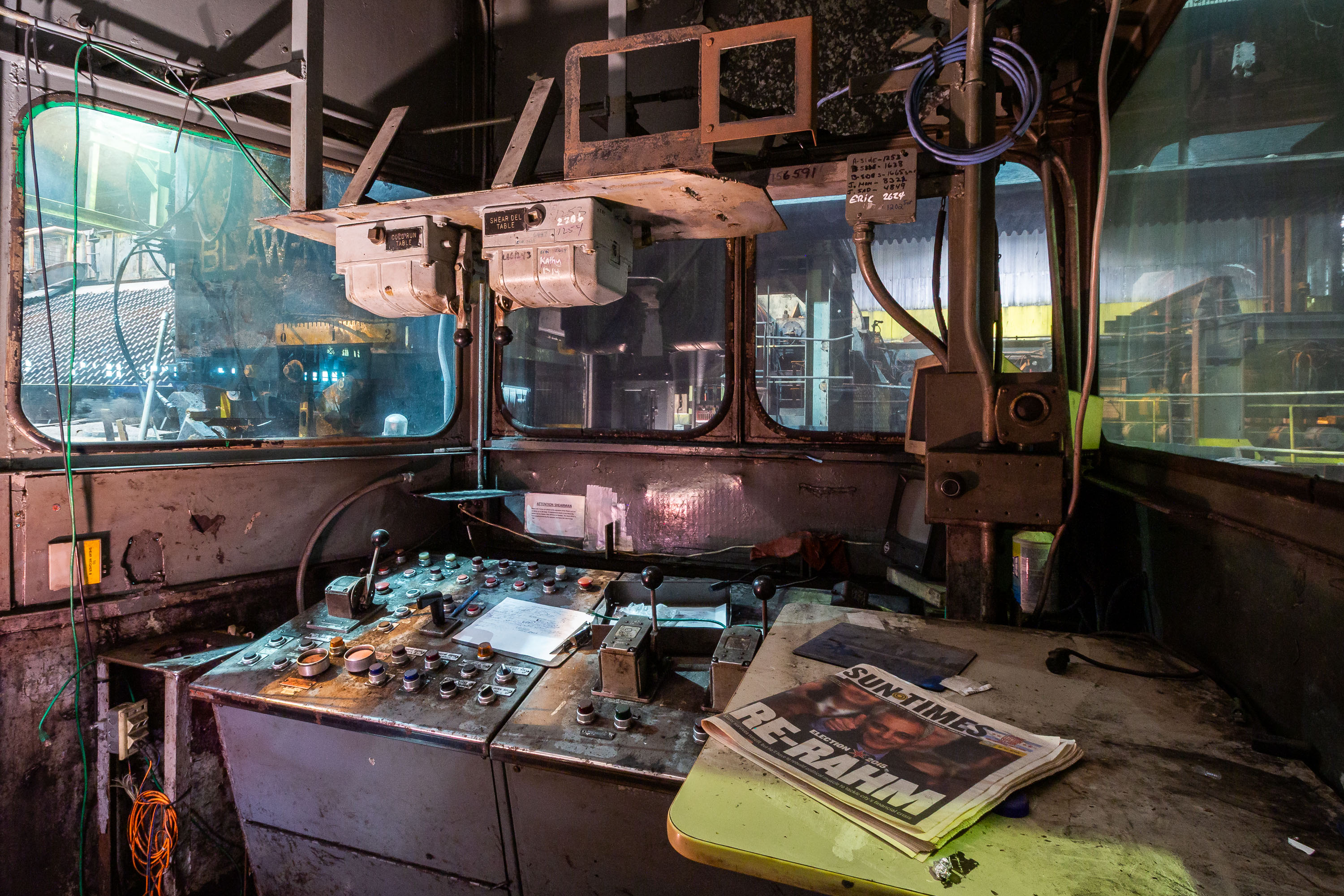
Interior of an abandoned steel mill control cab showing rusted equipment, control panels, and industrial machinery at ArcelorMittal in East Chicago.
ArcelorMittal's East Chicago works sits on the site of the former Inland Steel Company, founded in 1893 along the Indiana Harbor Ship Canal. The Indiana Harbor plant remains one of the largest integrated steelmaking complexes in North America, producing flat-rolled steel for the automotive and appliance industries. Overhead cranes like the one controlled from this booth move molten metal, coils, and heavy equipment throughout the mill's production bays. A discarded Chicago Sun-Times section referencing Rahm Emanuel's 2015 mayoral runoff places this control station's abandonment sometime after that election.

Crane Operator’s Booth at ArcelorMittal East Chicago
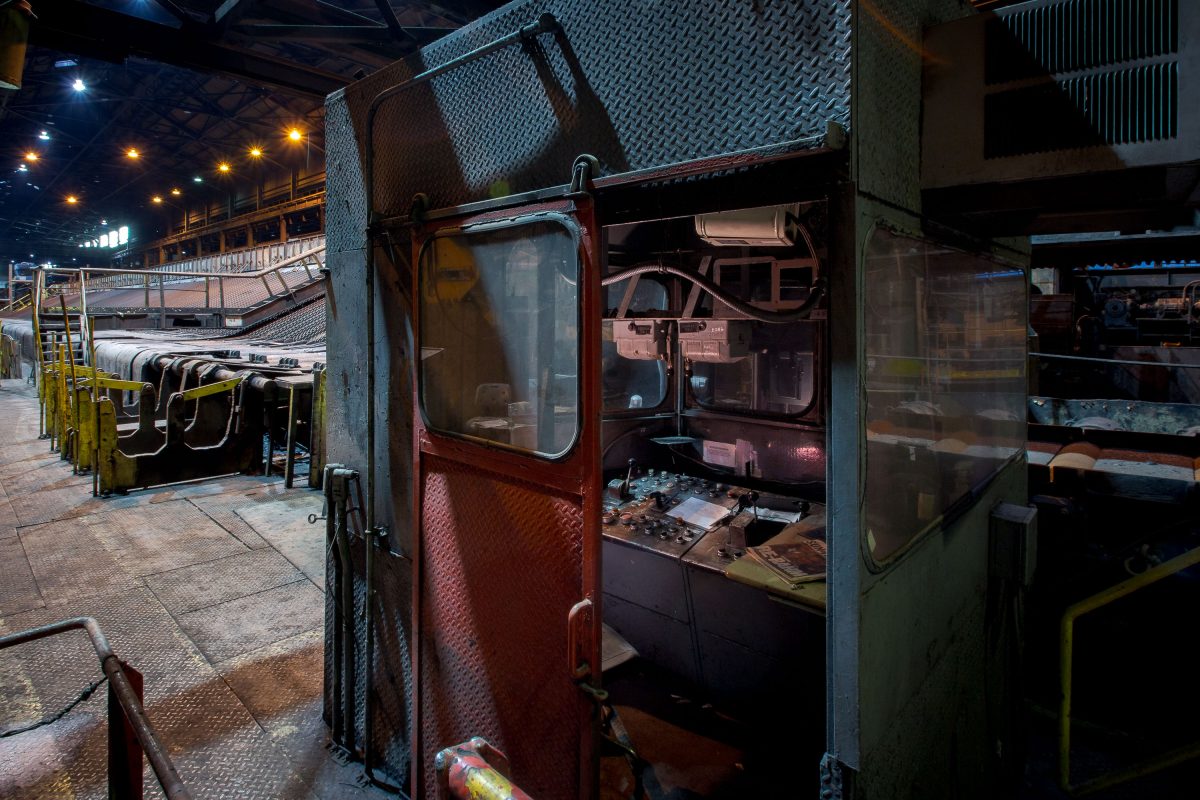
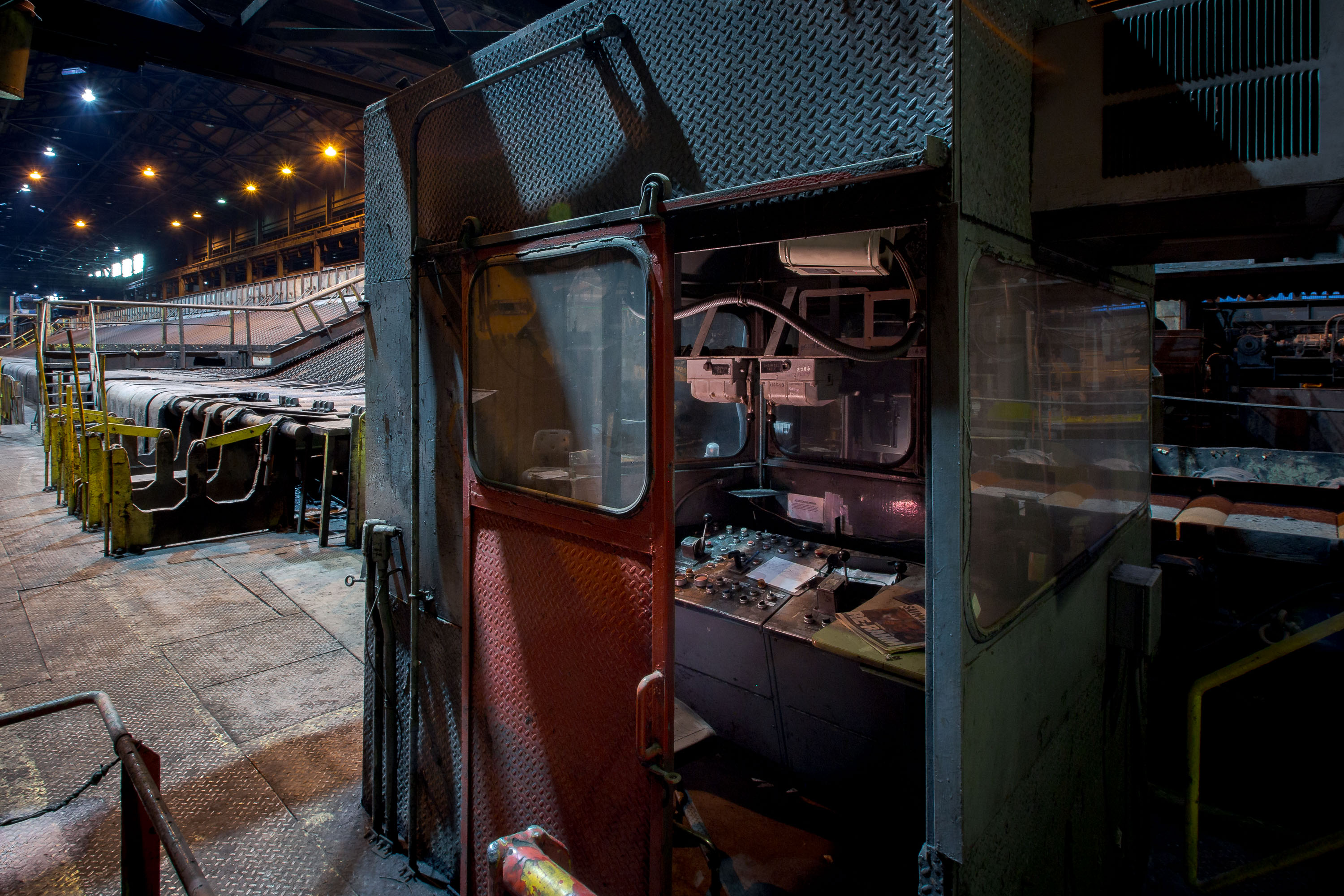
Vintage red operator's cabin and industrial equipment inside an ArcelorMittal steel mill facility in East Chicago.
This control cab sits above the production floor at the ArcelorMittal steel mill in East Chicago, Indiana, giving an operator a direct line of sight to the rollers and conveyors below. Cabs like this house the switches, dials, and levers used to run mill equipment such as rolling stands or overhead cranes, letting a single worker control heavy machinery from a protected, elevated position. East Chicago's steel industry dates to the early 20th century, when mills along the Lake Michigan shoreline supplied steel for the region's rail, auto, and construction industries. ArcelorMittal, formed through a 2006 merger of Arcelor and Mittal Steel, now operates integrated steelmaking facilities here that include blast furnaces, casters, and finishing lines like the one this cab oversees.

Control Cab at ArcelorMittal Steel Mill in East Chicago
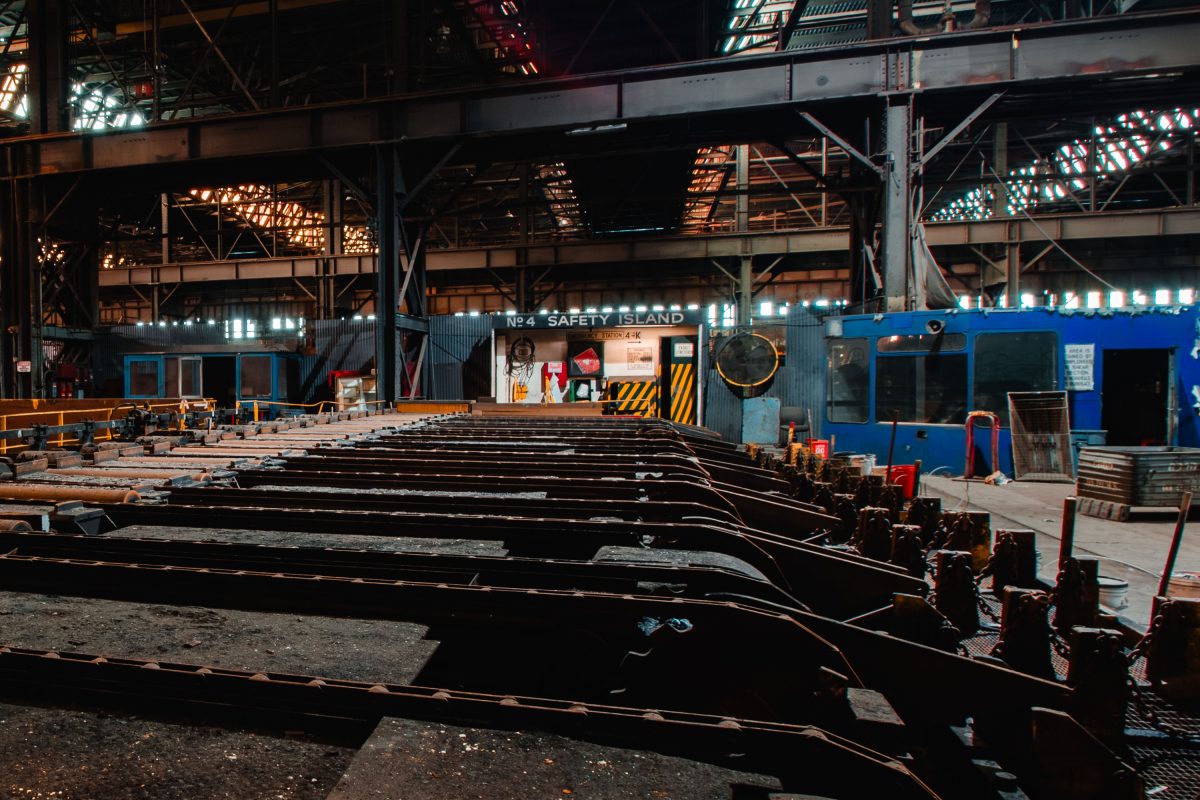
Industrial steel mill floor at ArcelorMittal East Chicago facility with metal beams, safety equipment, and overhead lighting at night.
The No. 4 Safety Island sits inside ArcelorMittal's Indiana Harbor works in East Chicago, Indiana, one of the largest integrated steel-making complexes in North America. Safety islands like this one mark fixed refuge points within a mill's production bays, giving workers a designated space clear of overhead cranes, moving rail cars, and hot steel stock. Emergency stations such as this are equipped with alarm pulls, first-aid supplies, and fire equipment required under mill safety protocols. The surrounding rail lines and steel beams are part of the plant's rolling operations, where semi-finished steel is moved and shaped along fixed tracks within the mill building.

No. 4 Safety Island Inside the ArcelorMittal Steel Mill in East Chicago
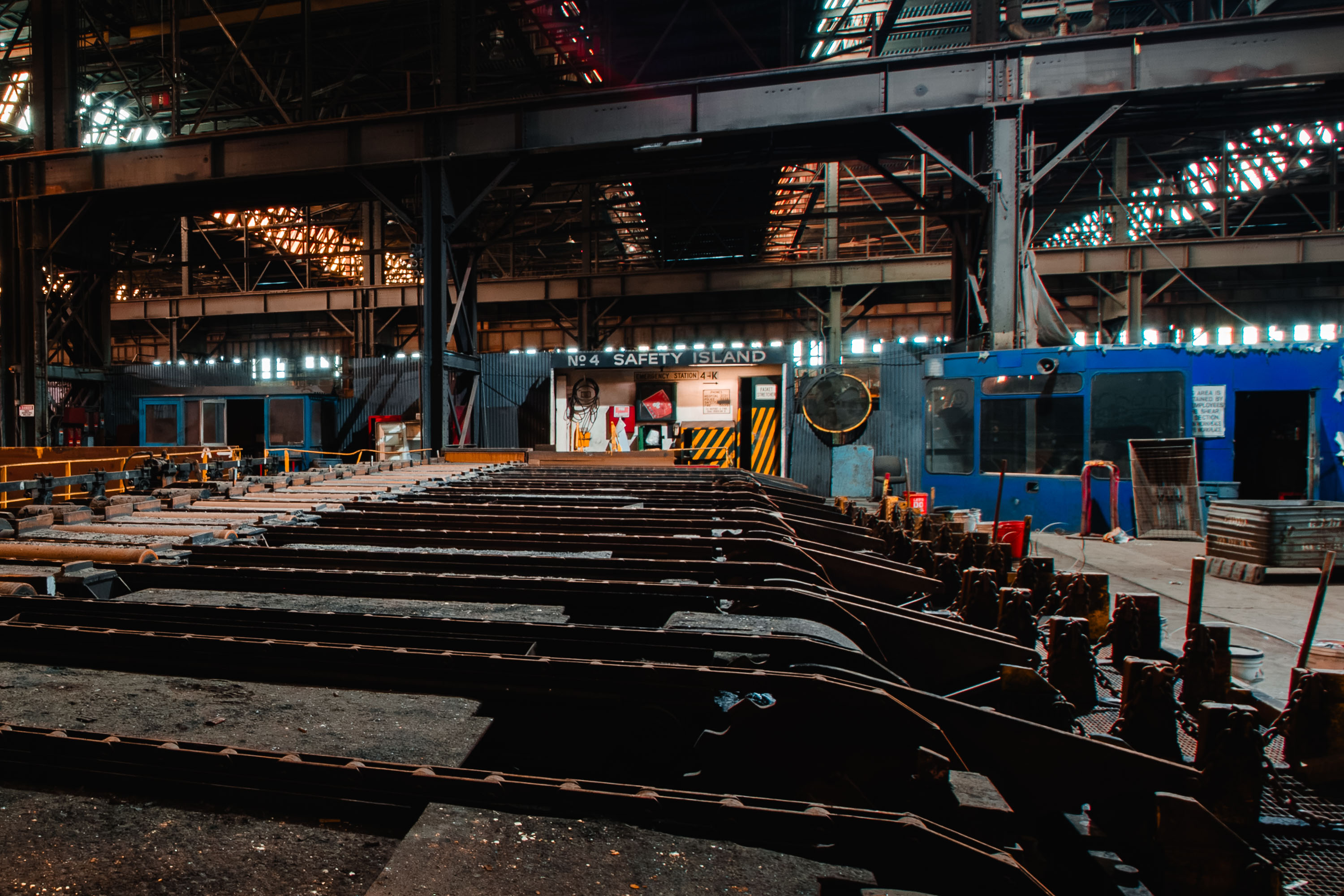
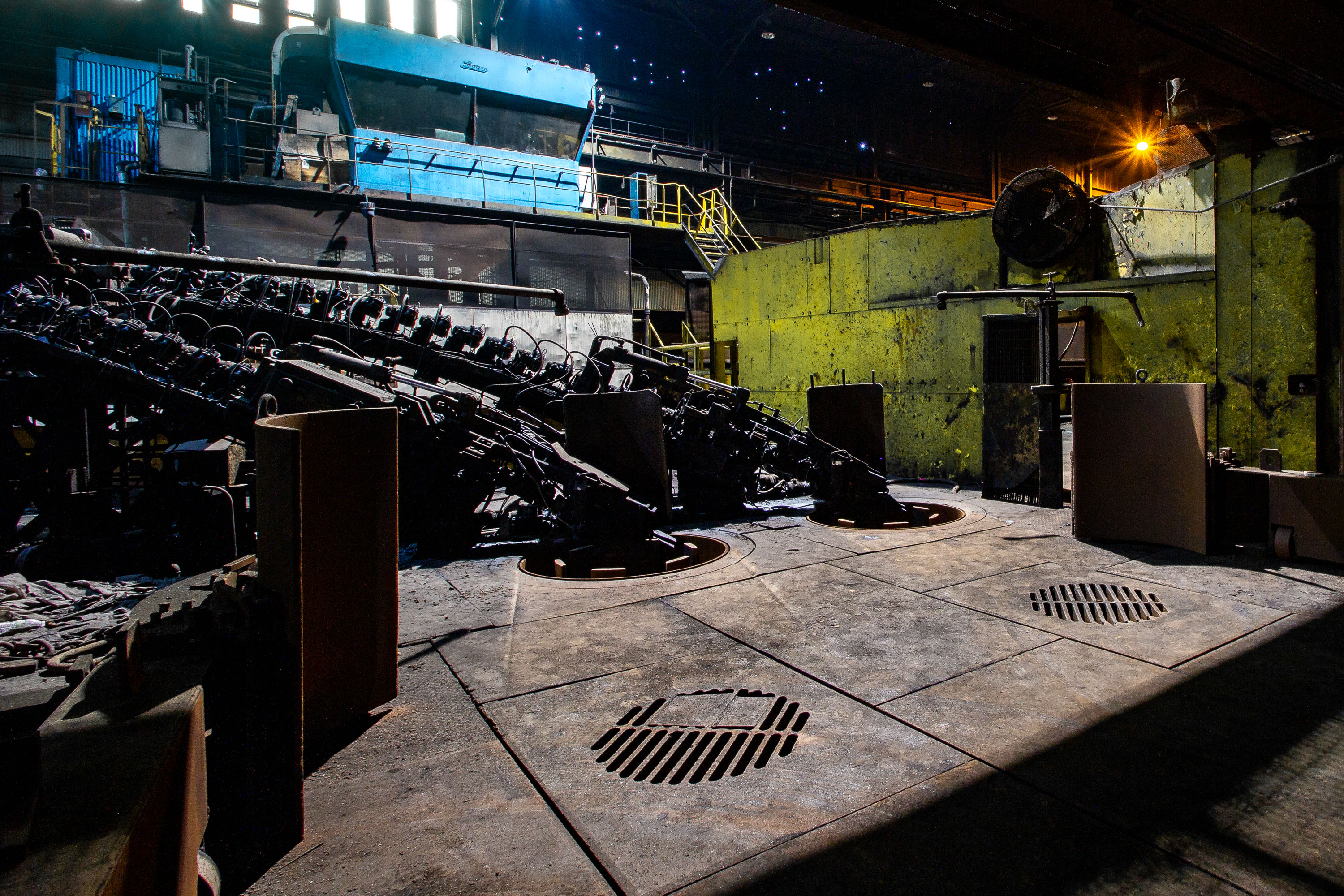
Industrial steel mill facility with dismantled machinery, scrap metal, and overhead processing equipment at ArcelorMittal in East Chicago.
ArcelorMittal's Indiana Harbor Works in East Chicago, Indiana, traces its roots to Inland Steel, which opened the plant in 1901 along Lake Michigan's southern shore. Ispat International bought the mill in 1998, followed by Mittal Steel in 2005 and the ArcelorMittal merger in 2006. The complex is one of the largest integrated steel mills in North America, with a raw steelmaking capacity of roughly 6 million tons a year. It remains one of the largest employers in East Chicago, with a workforce numbering in the thousands.

Rolling Mill Floor at ArcelorMittal’s Indiana Harbor Works
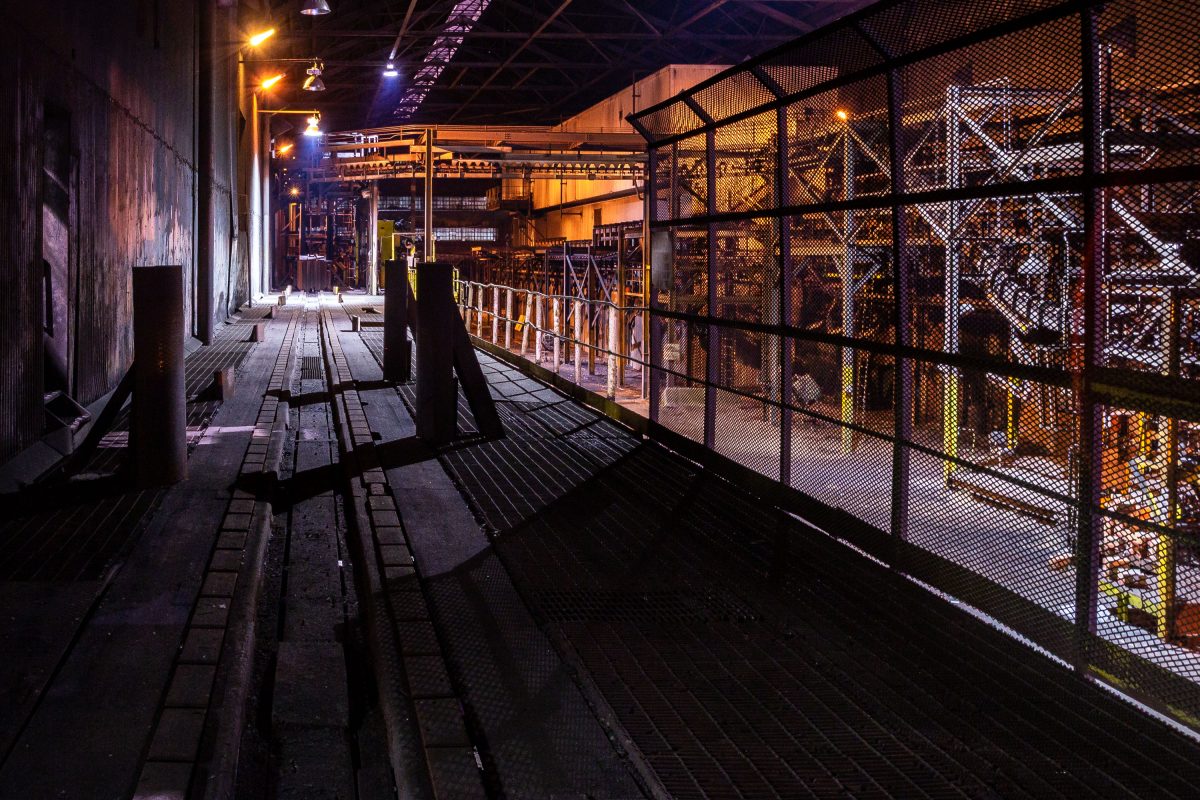
A person stands on an illuminated industrial walkway inside ArcelorMittal's Indiana Harbor steel mill facility at night.
ArcelorMittal's Indiana Harbor works in East Chicago sits along Lake Michigan and ranks among the largest integrated steel mills in North America. The complex traces its roots to Inland Steel, which began operations at the site in 1902 before a series of mergers brought it under the ArcelorMittal name in 2006. Steel mills of this scale rely on overhead crane systems and raised walkways like this one to move workers safely above active production lines. Caged mesh barriers separate personnel pathways from heavy machinery and material handling equipment operating below.

Catwalk Along the Mill Floor at ArcelorMittal Indiana Harbor
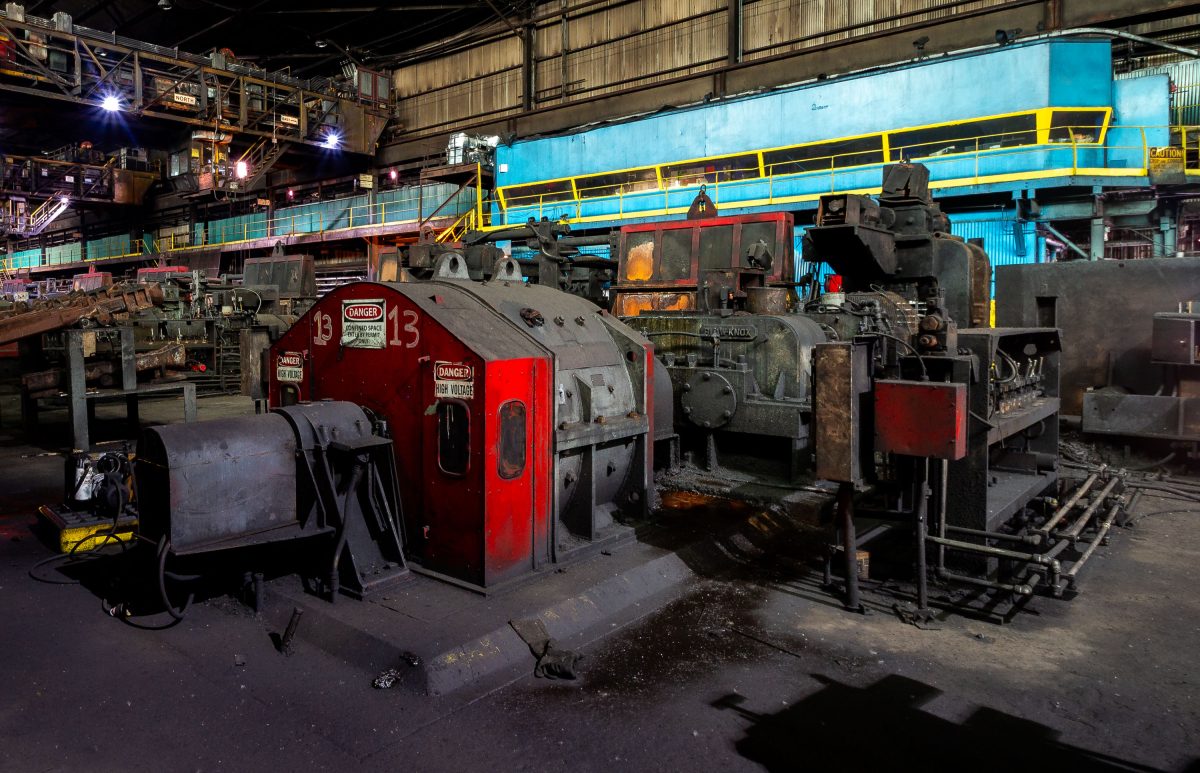
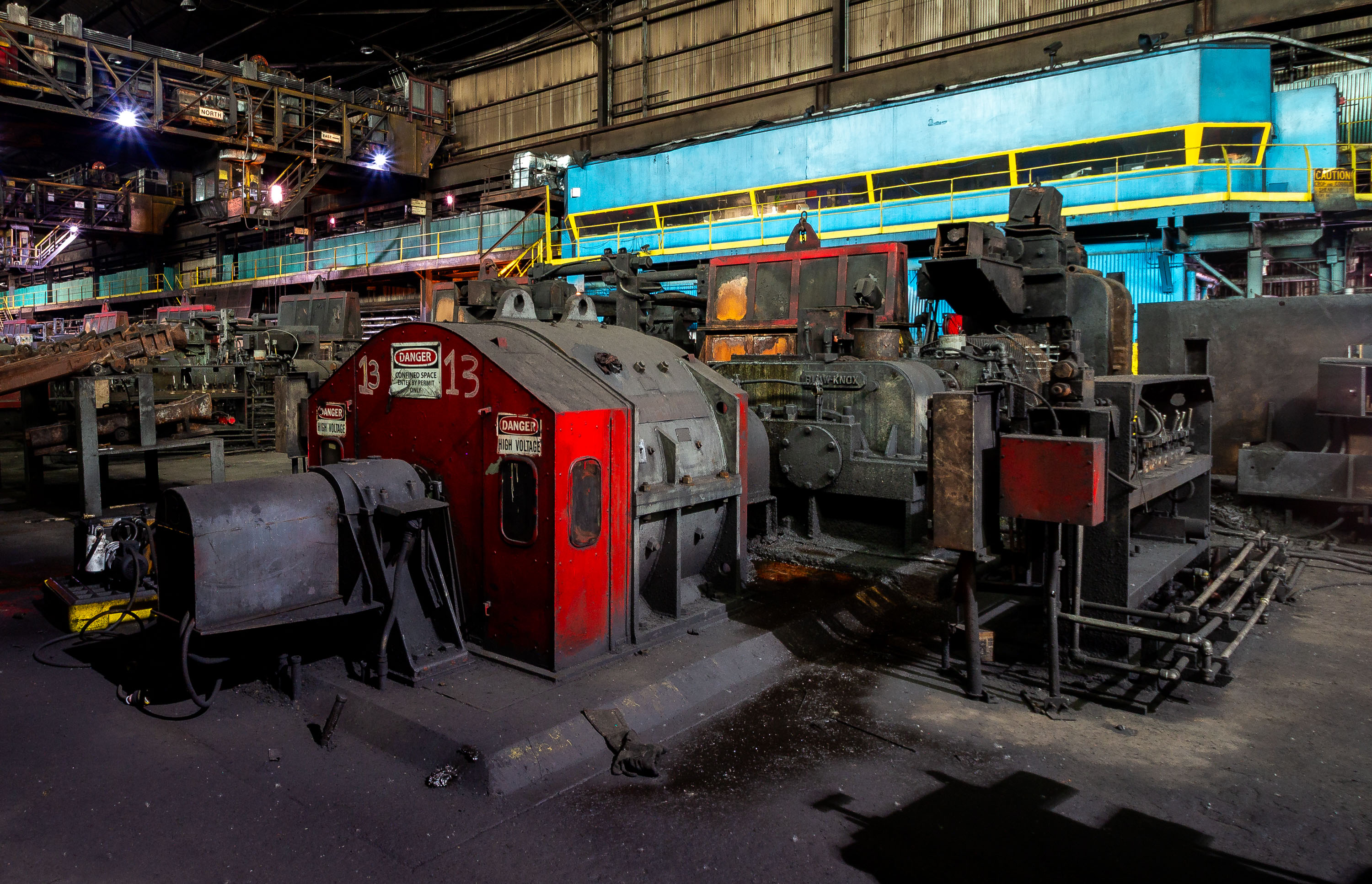
Vintage industrial locomotives and steam engines displayed inside an ArcelorMittal steel mill facility in East Chicago.
This mill stand, marked with the number 13 and posted with high-voltage and confined-space warnings, is part of the rolling equipment at ArcelorMittal's Indiana Harbor works in East Chicago, Indiana. Indiana Harbor is one of the largest integrated steelmaking complexes in North America, producing flat-rolled steel for the automotive and appliance industries. Equipment like this drives the rolls that reduce heated steel slabs or billets into thinner, longer sections during the rolling process. The overhead crane bay and electrified rail system visible around the stand supply the heavy lifting and power needed to move steel through successive rolling stages.

Mill Stand Number 13 at ArcelorMittal Indiana Harbor
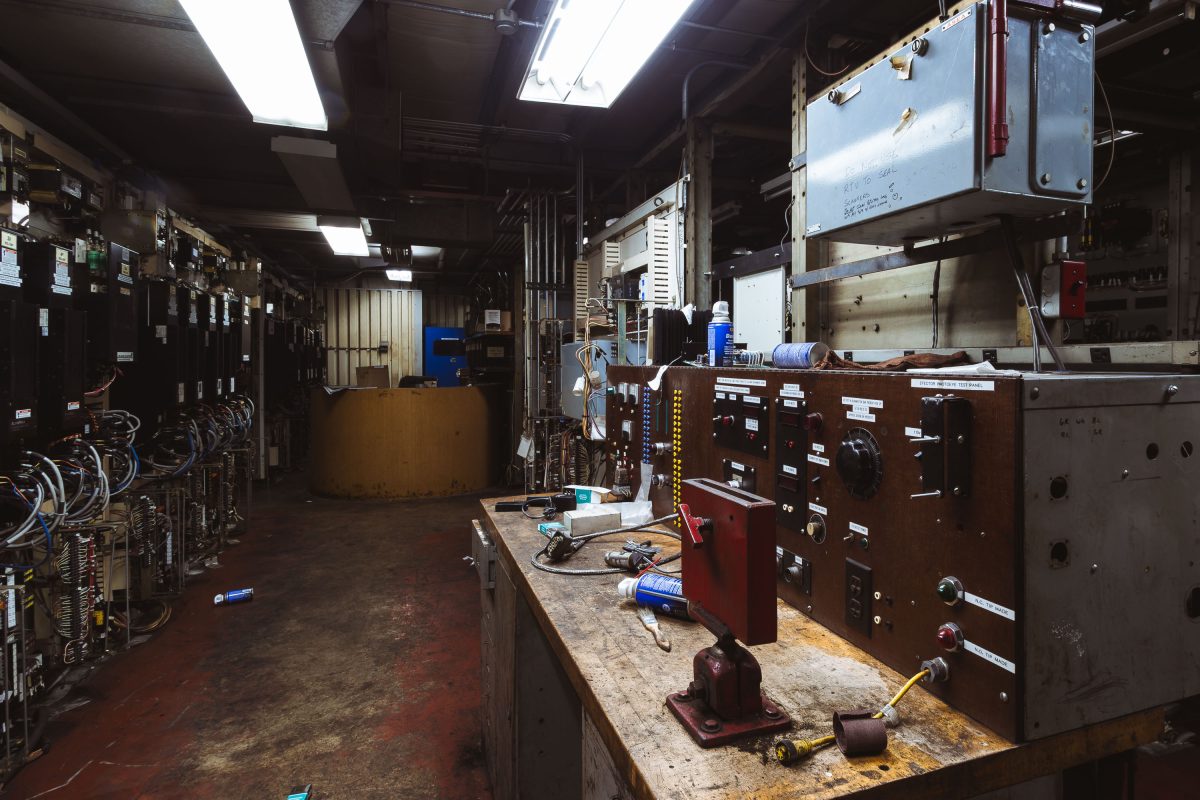
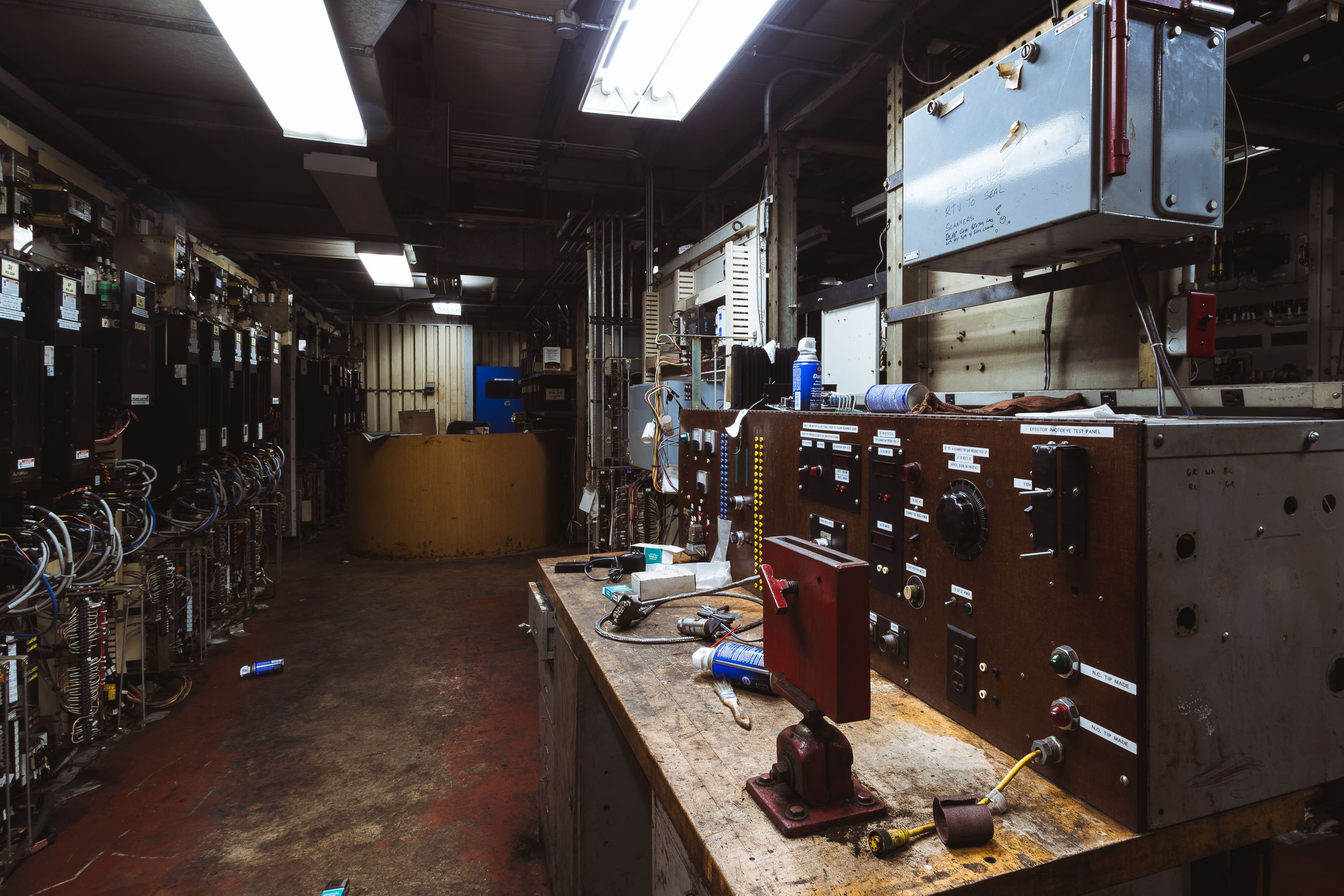
Industrial electrical control room at ArcelorMittal Indiana Harbor steel mill with brown panel cabinets and monitoring equipment.
This control room sits inside ArcelorMittal's Indiana Harbor works in East Chicago, Indiana, one of the largest integrated steel mills in North America. Banks of relay cabinets and wiring line the space alongside a worn test bench fitted with switches, gauges, and indicator lights used to check electrical components pulled from the mill floor. Indiana Harbor traces its roots to Inland Steel, which opened the plant in 1902 before it became part of ArcelorMittal following the 2006 merger of Mittal Steel and Arcelor. Rooms like this one supported the maintenance of motors, switchgear, and control systems that kept rolling and finishing lines running across the sprawling complex.

A Control Room Test Bench at ArcelorMittal Indiana Harbor
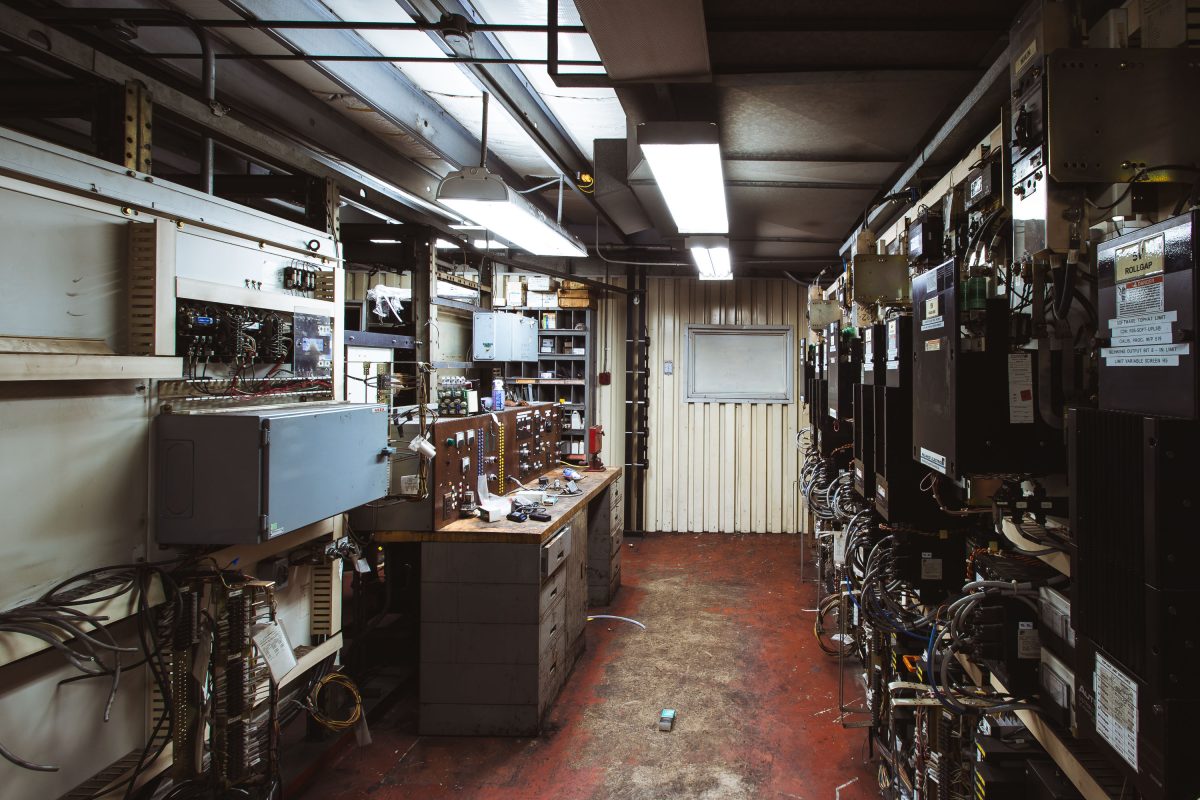
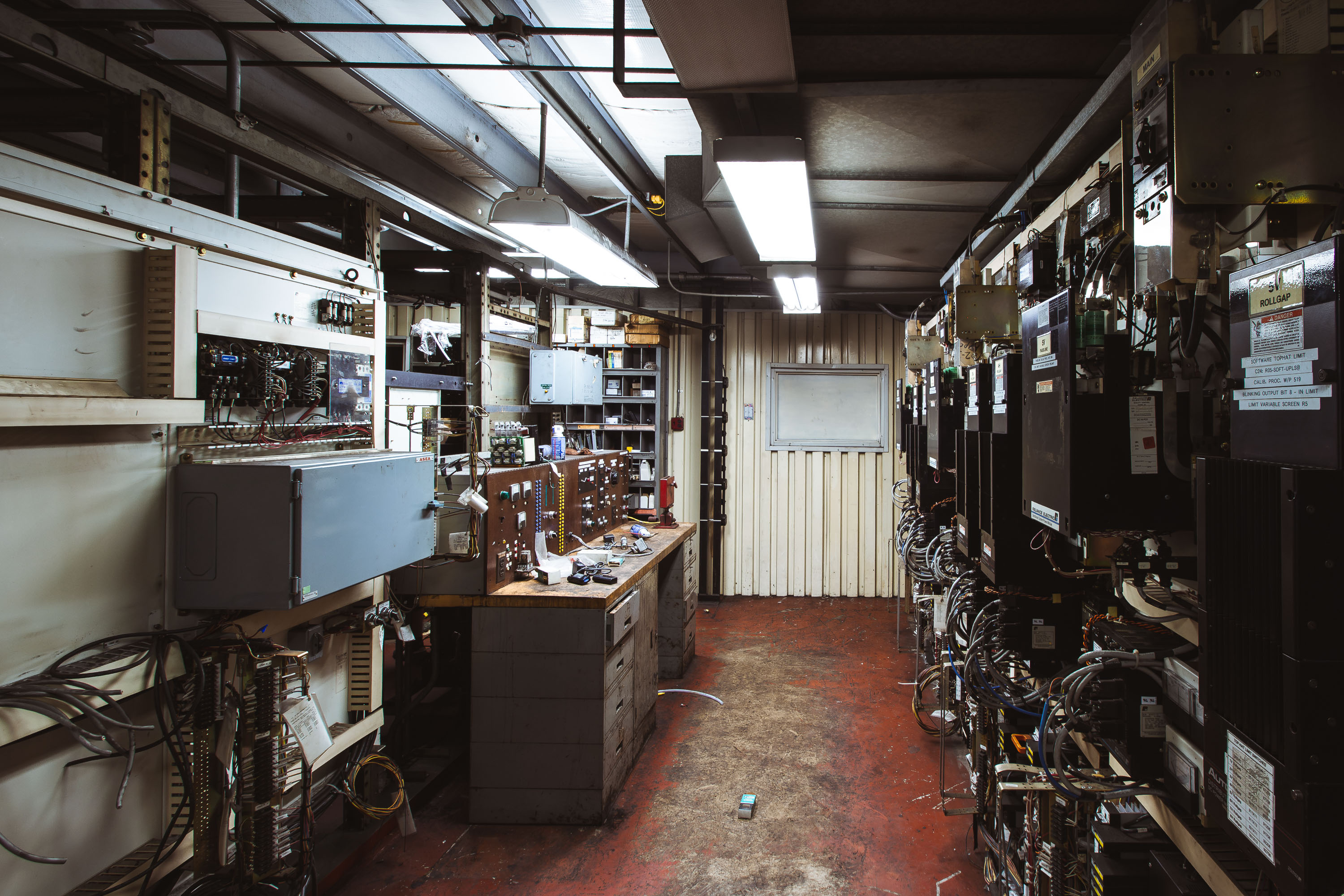
Interior of ArcelorMittal steel mill in East Chicago displaying electrical equipment, control panels, and industrial machinery along work stations.
This control room houses the rollgap drive cabinets used to regulate roll positioning during steel processing at ArcelorMittal's Indiana Harbor works. The equipment racks hold variable-frequency drives and programmable logic controllers that manage motor output for the mill's rolling stands. A technician's workbench along the wall holds test meters and manual override switches used for troubleshooting drive faults. Indiana Harbor, formed from the 1998 merger of Inland Steel's and LTV's Indiana Harbor operations, remains one of the largest integrated steelmaking complexes on the Great Lakes.

Rollgap Control Room at ArcelorMittal Indiana Harbor
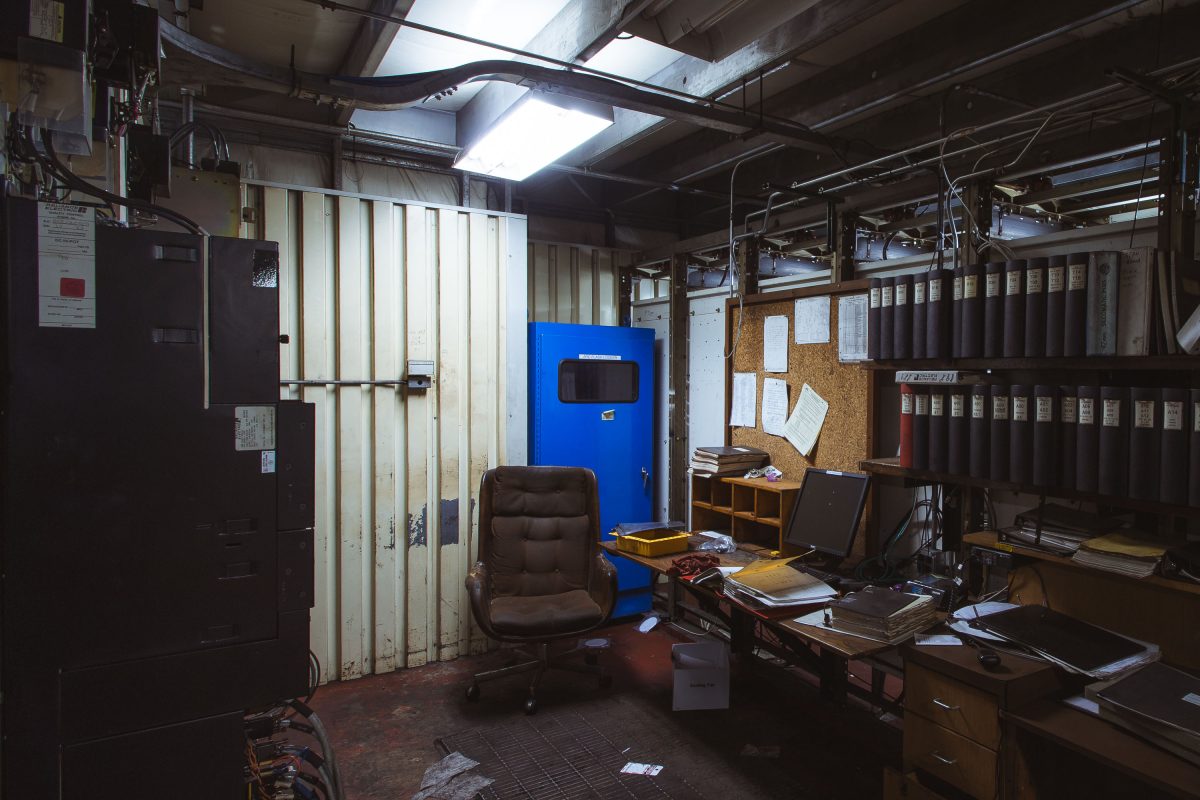
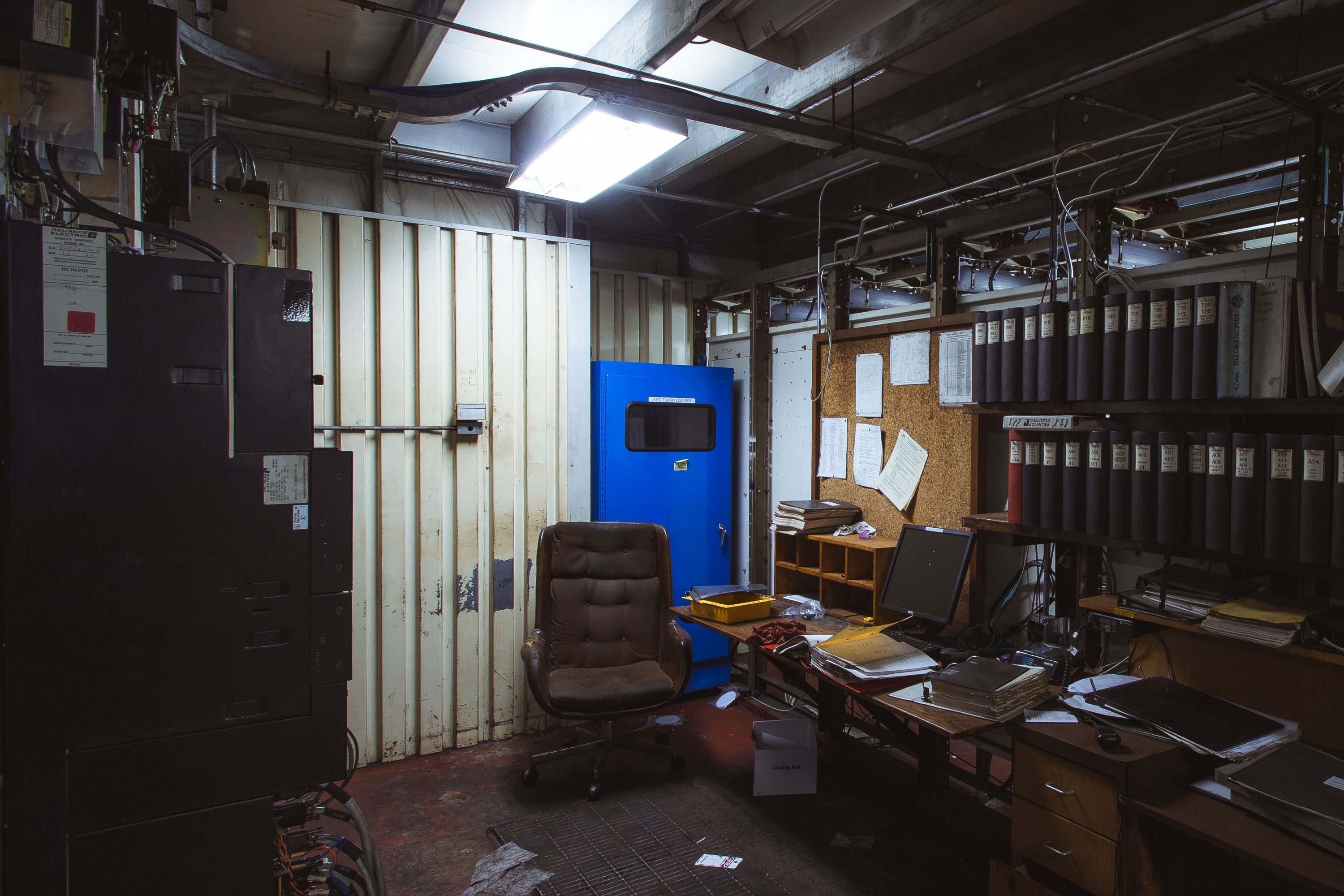
Cluttered industrial office space inside a steel mill with a blue door, desk, and filing cabinets.
This cluttered office sits inside the ArcelorMittal Indiana Harbor complex in East Chicago, Indiana, one of the largest integrated steel mills in North America. The site traces its origins to Inland Steel, which built the plant along Lake Michigan in the early 20th century before a series of mergers brought it under the ArcelorMittal name in 2006. Rooms like this one once supported the daily recordkeeping and operations of a facility that, at its peak, employed thousands of workers across blast furnaces, rolling mills, and finishing lines. Rolled logs of and binders still line the shelves, remnants of the paperwork that once tracked production across the sprawling industrial campus.

Abandoned Office Inside the ArcelorMittal Mill at Indiana Harbor
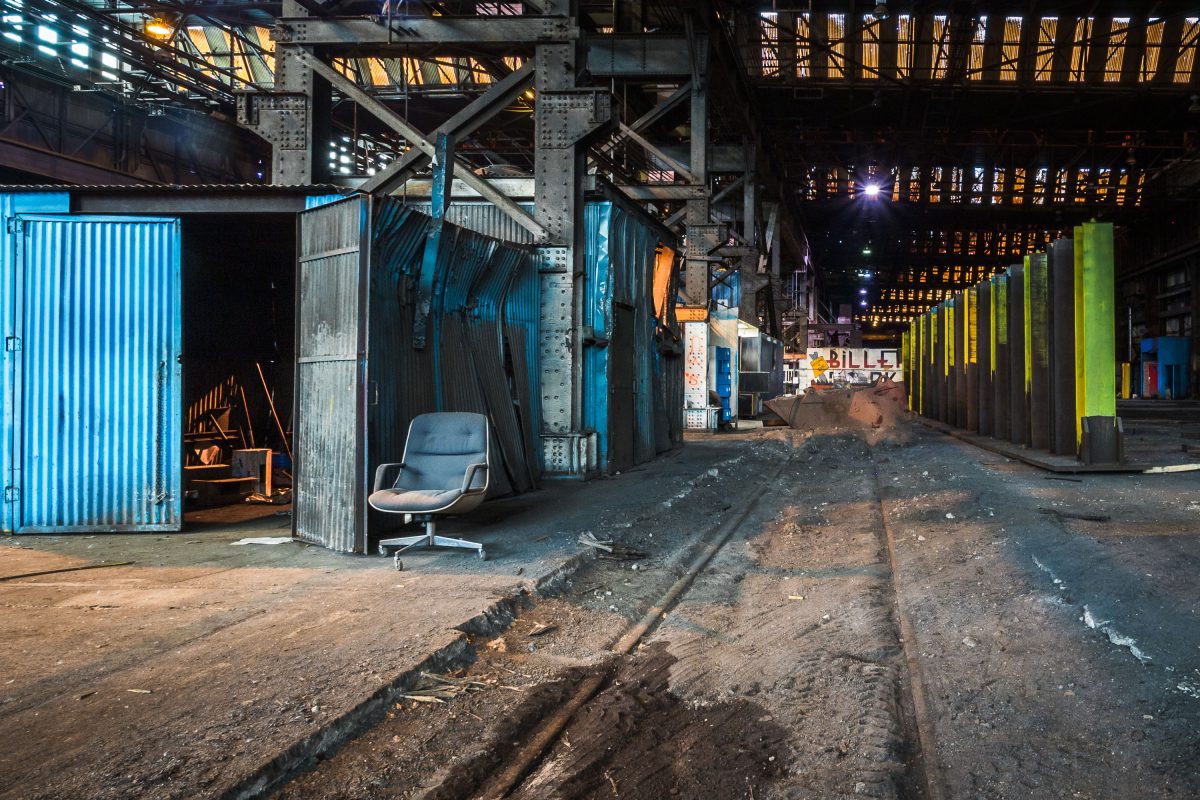
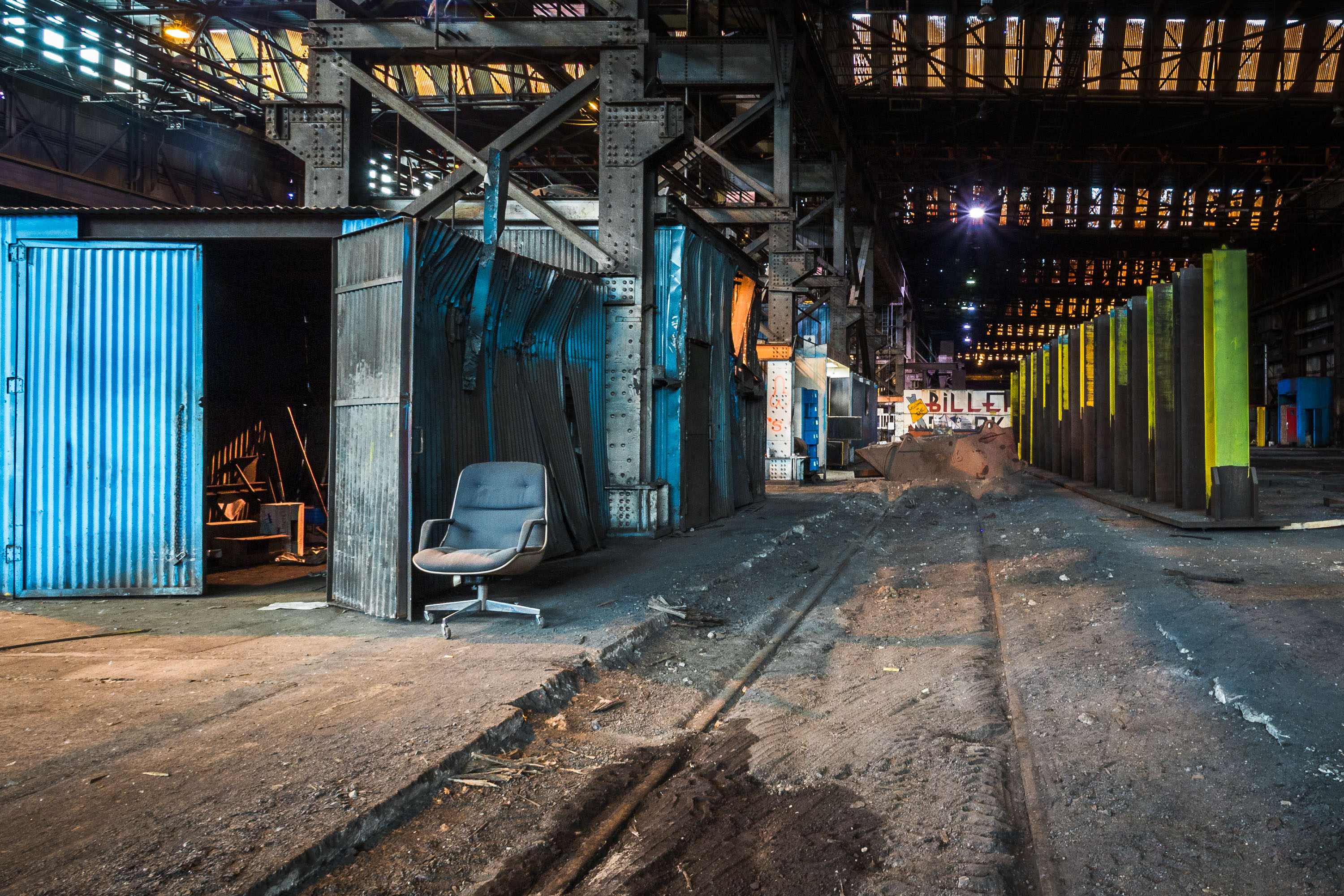
Industrial warehouse space beneath steel mill overhead infrastructure with blue corrugated metal structures and colored lighting.
ArcelorMittal's Indiana Harbor works sits along Lake Michigan in East Chicago, Indiana, formed from the 1998 merger of Inland Steel's facilities with other integrated mill operations. The complex ranks among the largest integrated steelmaking sites in North America, producing long carbon products including bar and rod used in construction and manufacturing. Rail spurs like this one move billets and semi-finished steel between furnaces, rolling mills, and storage yards across the sprawling plant grounds. ArcelorMittal, the world's largest steelmaker by output, has operated the Indiana Harbor site since acquiring it in 2006.

An Office Chair Among Rail Spurs at ArcelorMittal Indiana Harbor
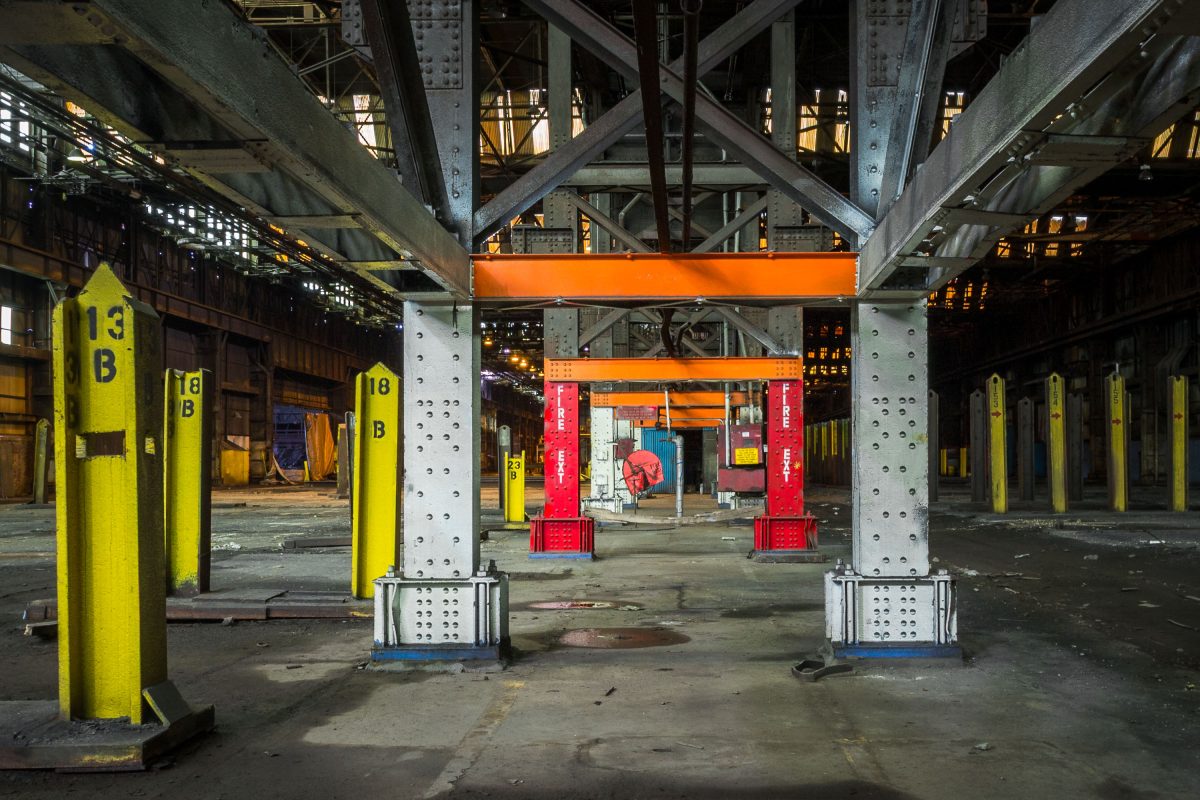
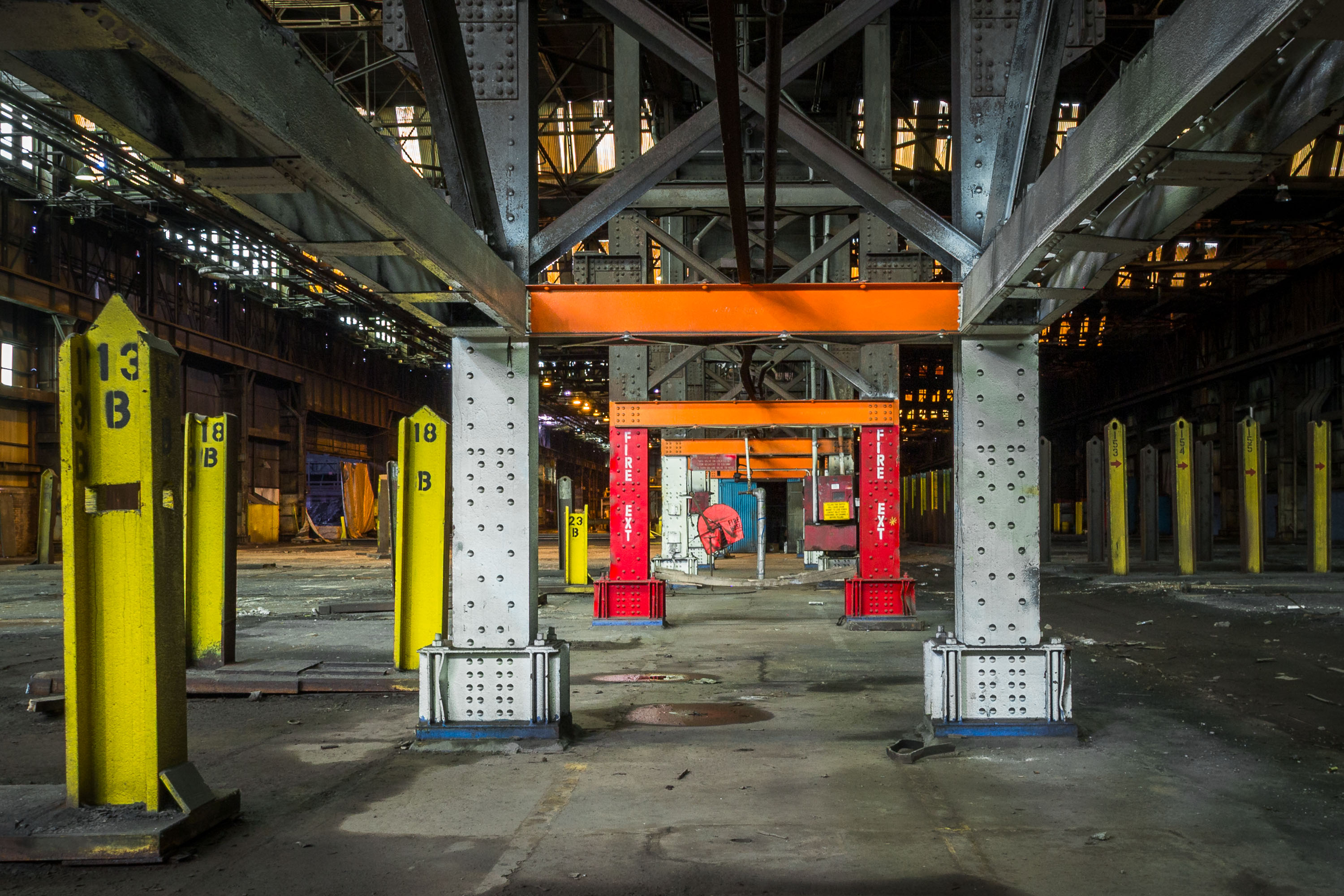
Yellow-numbered steel columns and industrial equipment inside an ArcelorMittal steel mill production bay.
ArcelorMittal's Indiana Harbor works in East Chicago, Indiana, is the largest integrated steel mill in North America, spanning several miles along Lake Michigan. The site traces its origins to Inland Steel, which opened the plant in 1902 before it became part of ArcelorMittal following the company's 2006 merger. Mill bays like this one house the heavy structural framing and overhead crane systems used to move steel billets and bar products through the production process. Numbered concrete-clad columns and marked fire extinguisher stations are standard safety features required throughout the plant's vast industrial floor space.

Fire Extinguisher Stations Inside an ArcelorMittal Mill Bay
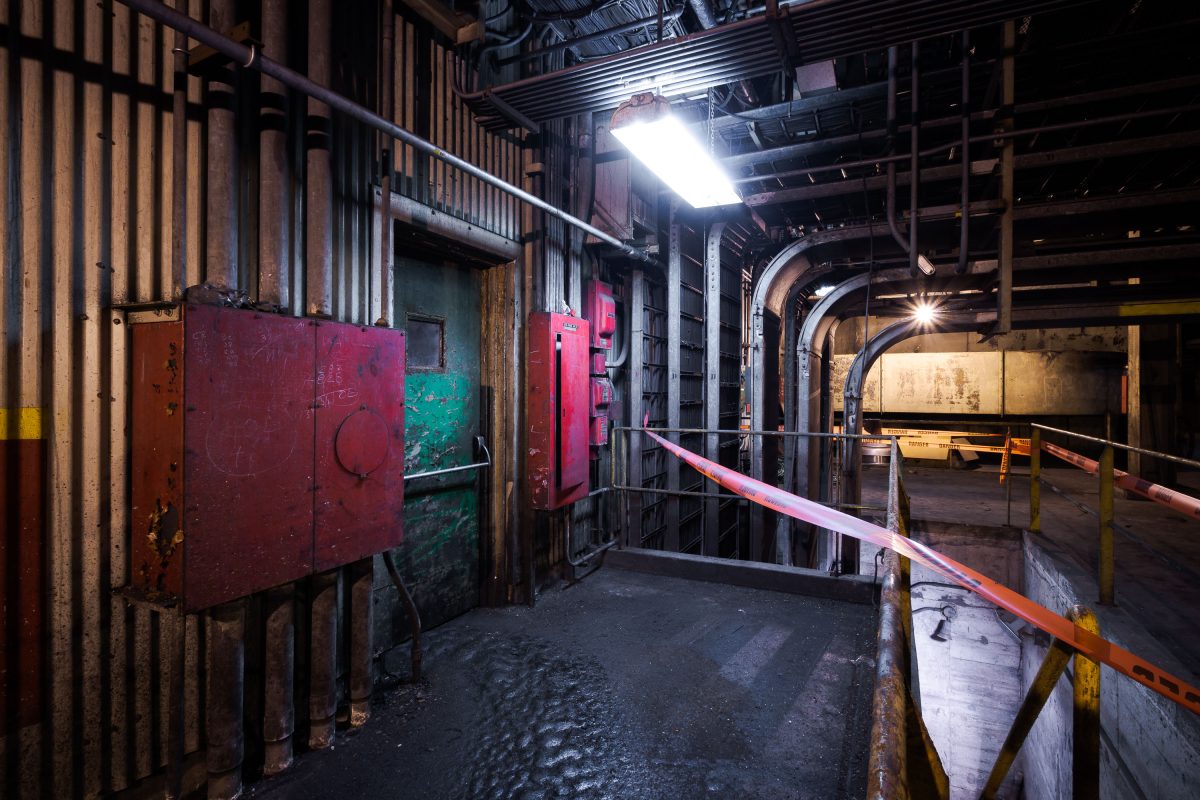
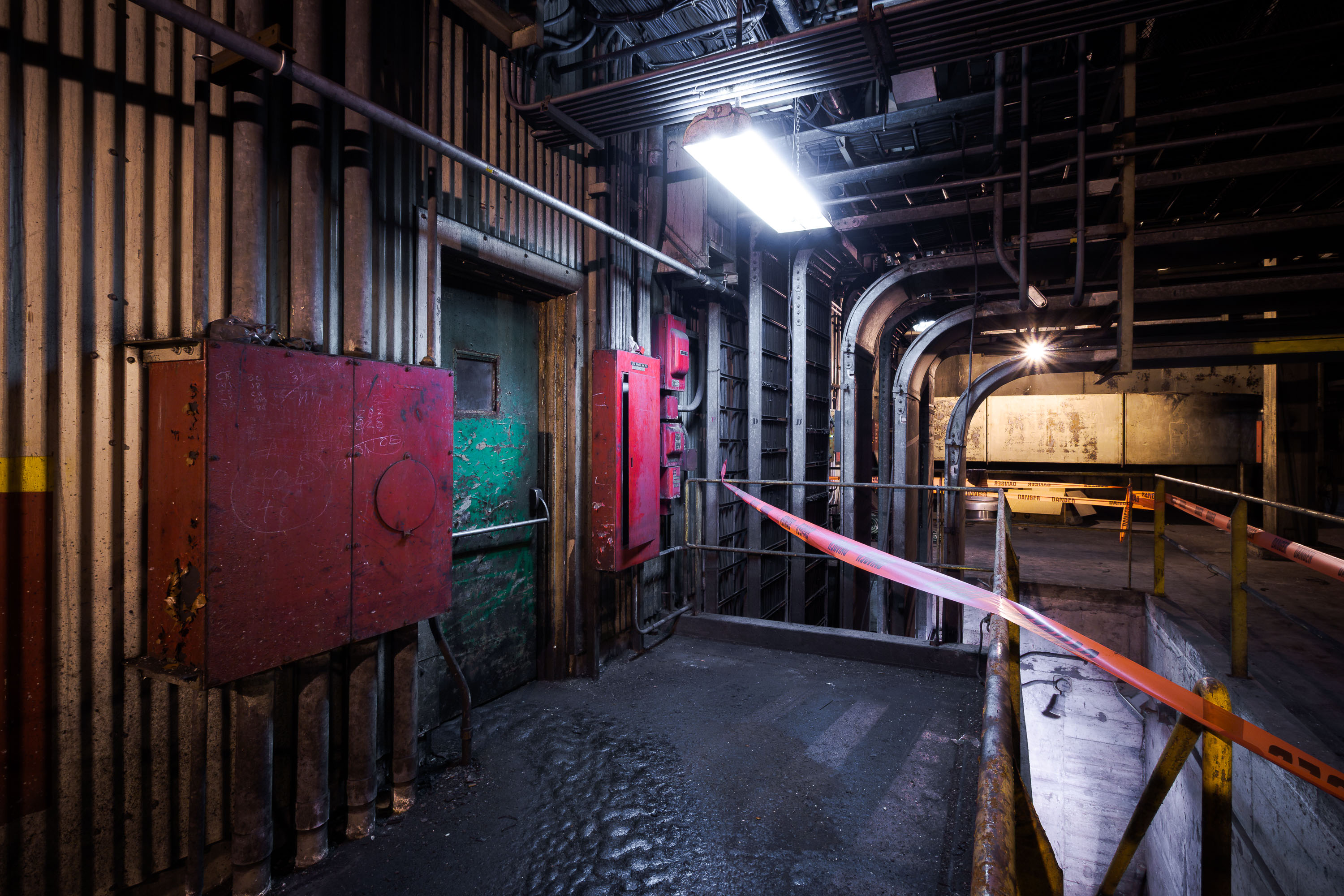
Industrial corridor inside ArcelorMittal steel plant with red metal doors, metal railings, and overhead lighting.
ArcelorMittal's Indiana Harbor plant in East Chicago sits along Lake Michigan and is the largest integrated steel mill in North America. The complex spans several miles of lakefront and includes blast furnaces, rolling mills, and the long carbon bar operations that supply wire rod and bar products to manufacturers. Service corridors like this one carry electrical conduit and piping between production areas, feeding power and controls to equipment throughout the mill. Indiana Harbor traces its origins to Inland Steel, which began operations at the site in the early 20th century before later consolidations brought it under the ArcelorMittal name.

Electrical Cabinets Along a Walkway at ArcelorMittal Indiana Harbor
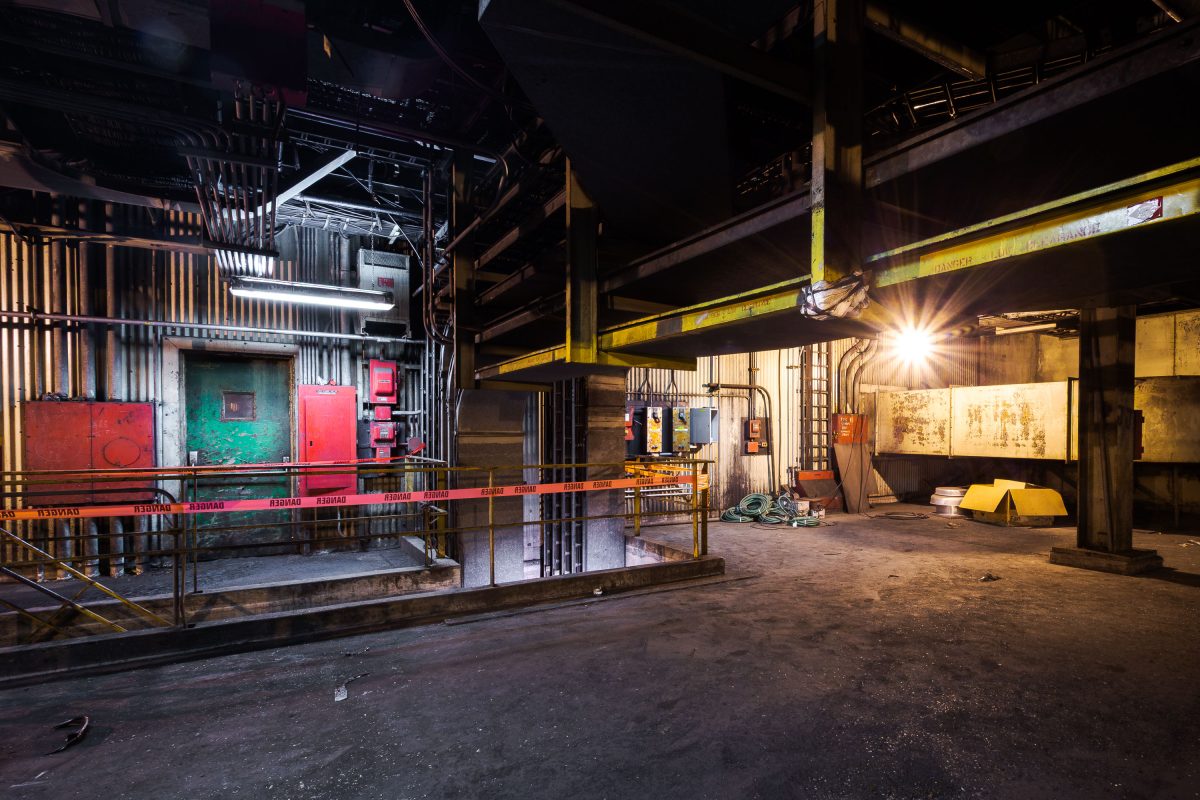
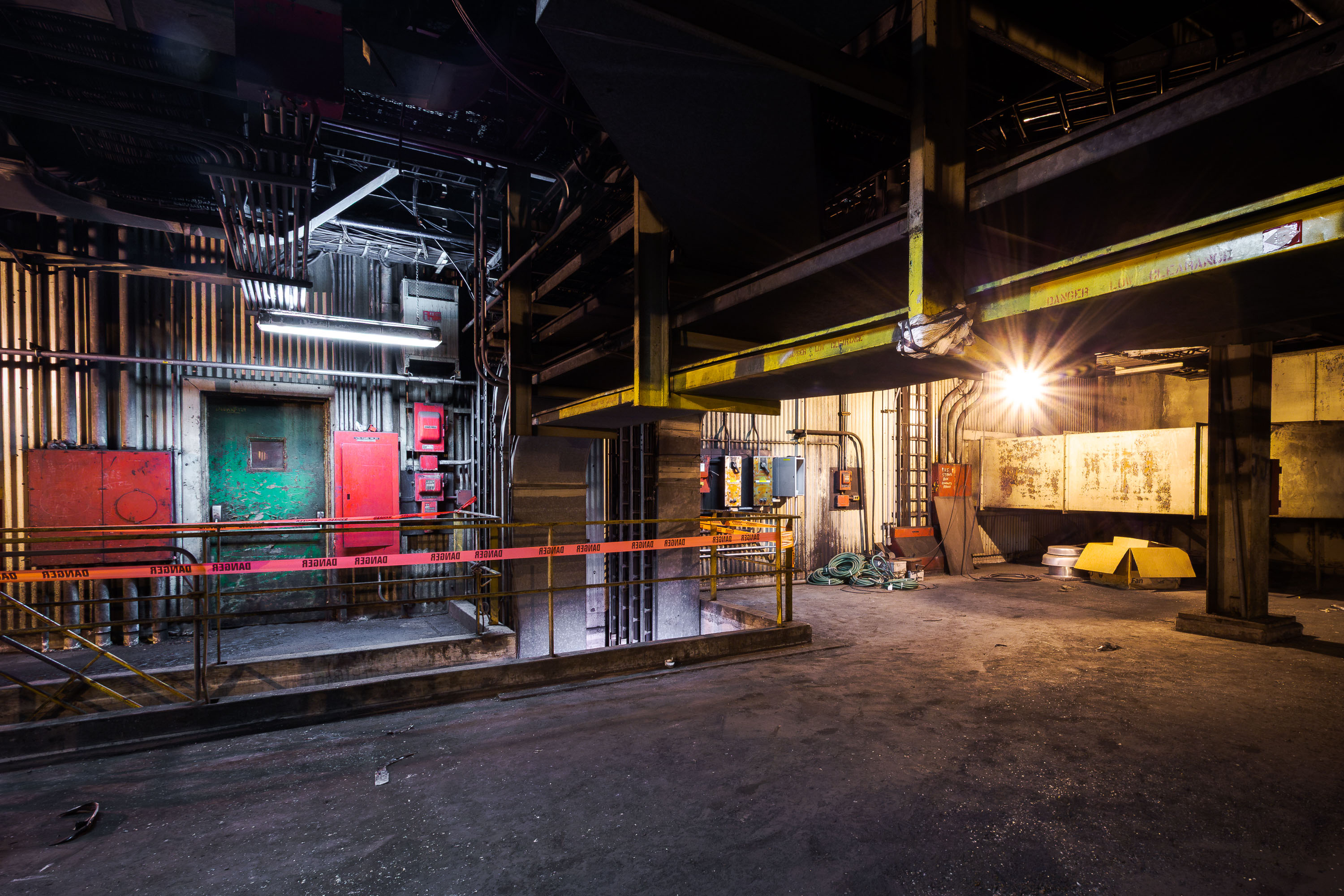
Caution tape cordons off a walkway inside ArcelorMittal's Indiana Harbor steel mill facility.
ArcelorMittal Indiana Harbor sits along Lake Michigan in East Chicago, Indiana, and ranks among the largest integrated steel mills in North America. The facility's Long Carbon division rolls bar products used in construction and manufacturing. Indiana Harbor traces its origins to Inland Steel, which built the plant in the early 20th century before ArcelorMittal took over operations in 2006.

Danger Tape Blocks a Doorway at ArcelorMittal Indiana Harbor
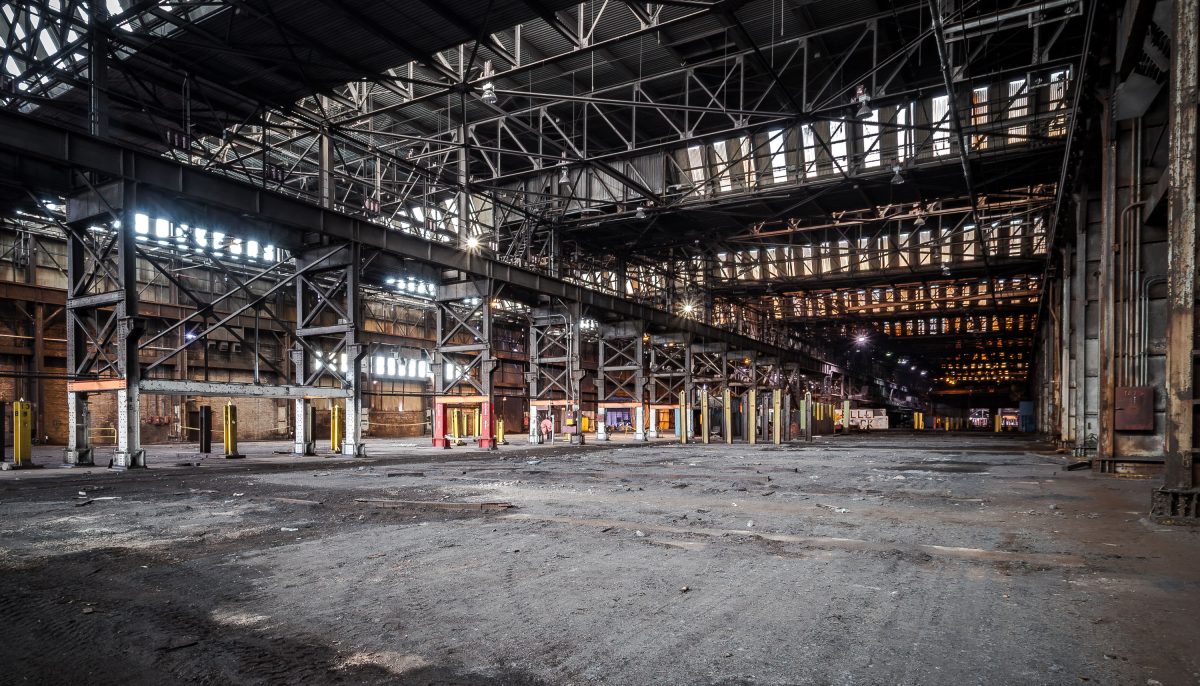
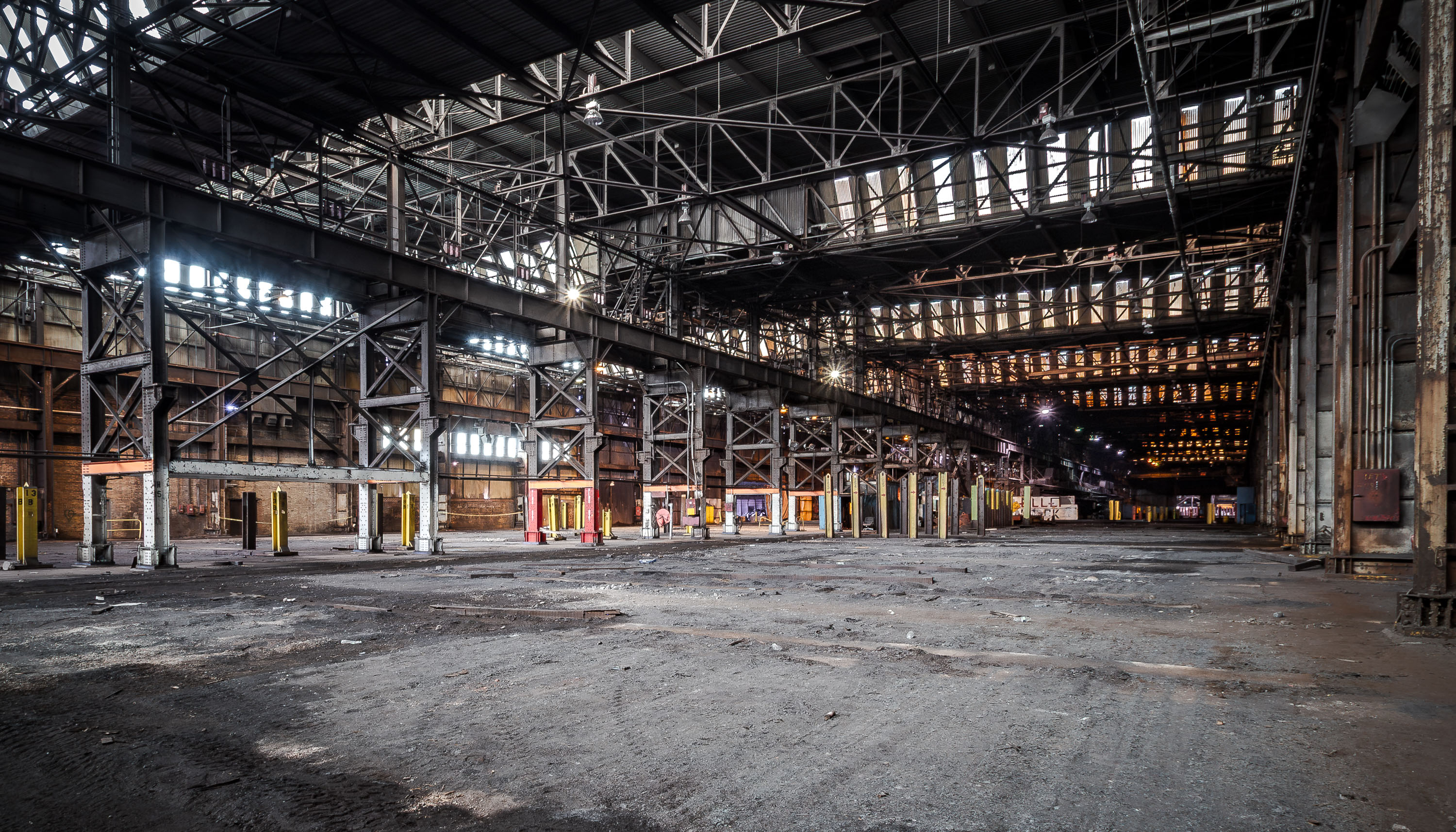
Interior of ArcelorMittal Indiana Harbor steel mill in East Chicago showing industrial overhead crane rails and steel support columns.
ArcelorMittal Indiana Harbor traces its roots to Inland Steel, which began operations at this East Chicago, Indiana site in 1901. The plant sits along Lake Michigan and today ranks among the largest integrated steel mills in North America, with the Long Carbon division rolling bar and rod products from steel made on-site. The overhead crane rails and support columns that run the length of buildings like this one were engineered to move raw materials and finished product between processing stages. Inland Steel merged into Ispat International in 1998, and subsequent corporate consolidations brought the Indiana Harbor works under the ArcelorMittal name in 2006.

Crane Bays and Steel Columns at ArcelorMittal Indiana Harbor

Built in Minneapolis

Minneapolis Photographer

Browse by location, move through long-running series, or start with recent work.