Homelessness

38 photos · 2020–2026

38 photographs tagged Homelessness, 2020–2026.

Homeless and Hungry sign
A left behind sign on a street in Minneapolis that reads "Hope you have a wonderful day! Homeless, hungry, anything helps. Thank you".

Homeless and Hungry sign

MnDOT concrete barriers line S 9th Street in Minneapolis beside a freeway sound wall.
MnDOT concrete barriers line the grassy edge of S 9th Street in Minneapolis. The barriers are intended to discourage camping along the corridor.

MNDOT Concrete Barriers on S 9th Street, Minneapolis

A temporary sidewalk closure sign directs pedestrians to use Lake Street in Minneapolis.
Temporary fencing has been erected to close the sidewalk on E 31st Street in Minneapolis, directing pedestrians to use Lake Street. This closure followed the pitching of tents under a nearby bridge.

Sidewalk Closed Under I-35W Overpass, Detour to Lake Street

Concrete barricades block access to a vacant lot on a residential street in South Minneapolis.
Concrete barricades are placed on a lot in South Minneapolis, a tactic employed by the city following the dismantling of encampments.

Concrete Barricades on a Vacant South Minneapolis Lot

Light poles laying in an empty lot
Discarded utility poles and other materials fill a vacant lot on 14th Avenue South in Minneapolis. This site was previously occupied by Camp Nenookaasi, a significant homeless encampment, during the summer of 2022. In recent months, the City of Minneapolis Public Works has strategically placed these materials in vacant lots across the city. This measure is intended to prevent the formation of new encampments.

Utility Pipes Stored in Former Camp Nenookaasi Lot on 14th Ave South

Salvation Army Harbor Light exterior photo
The Salvation Army, Harbor Light Multi-Service Center in downtown Minneapolis. The center provides hundreds of meals each day and housing for those in need.

The Salvation Army Harbor Light in Minneapolis
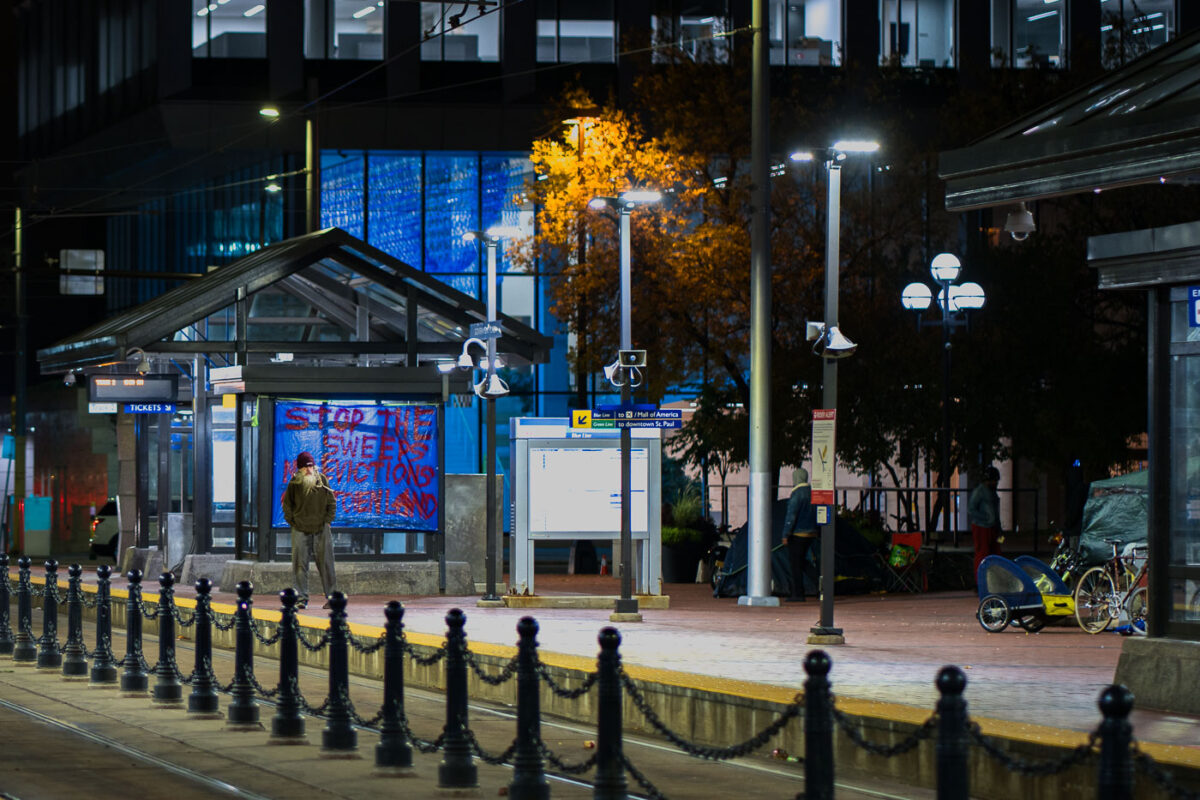
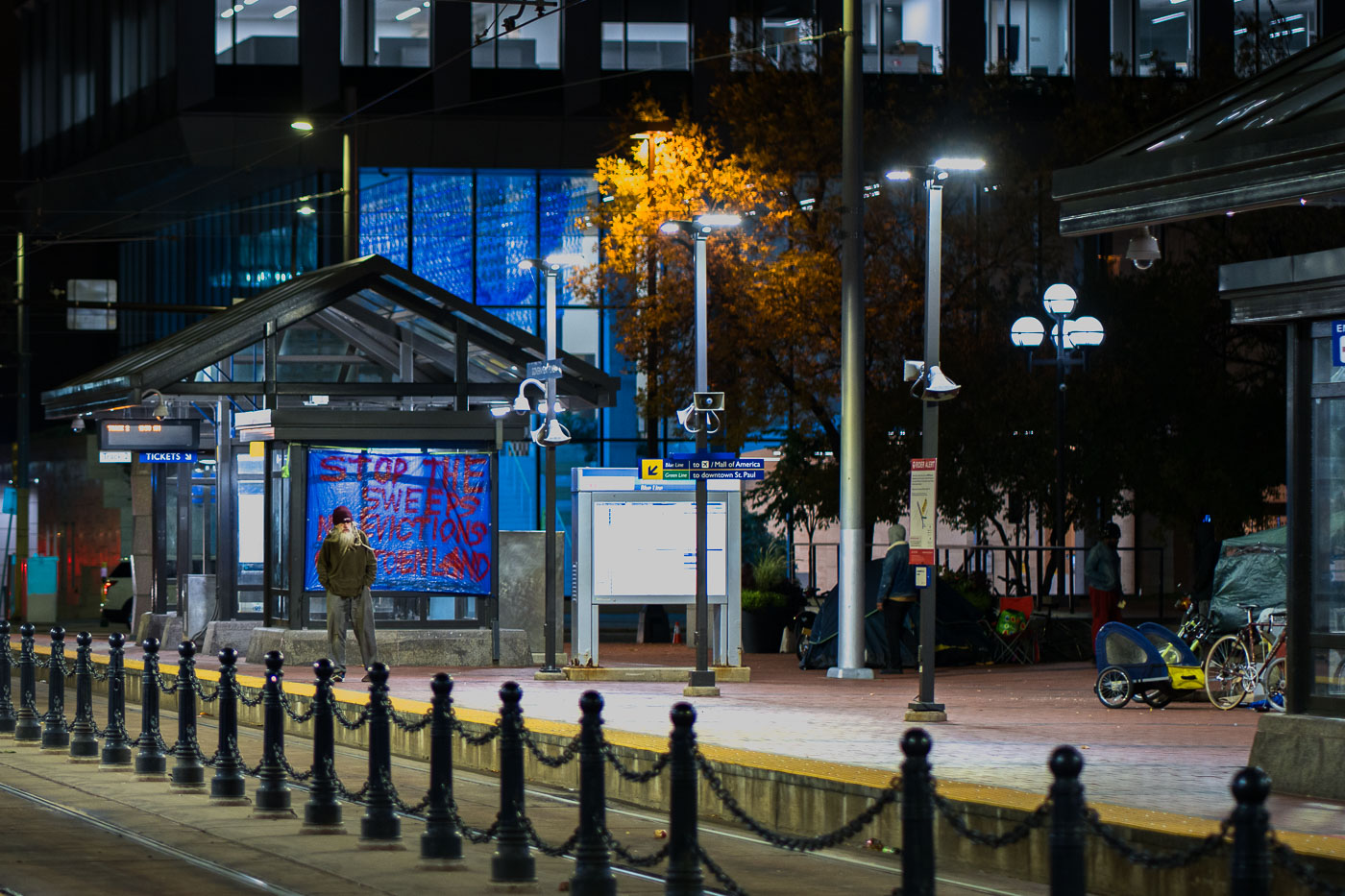
Homelessness protest at Minneapolis City Hall
A protestor stands before a banner at Minneapolis City Hall, demanding a moratorium on encampment clearings. The banner reads "STOP THE SWEEP" and lists demands for clear guidelines and proof of funding for housing solutions for unhoused residents. This protest highlights ongoing concerns about homelessness and housing security in Minneapolis, particularly in relation to public spaces and city governance.

Minneapolis City Hall Protest: Moratorium on Encampment Clearings
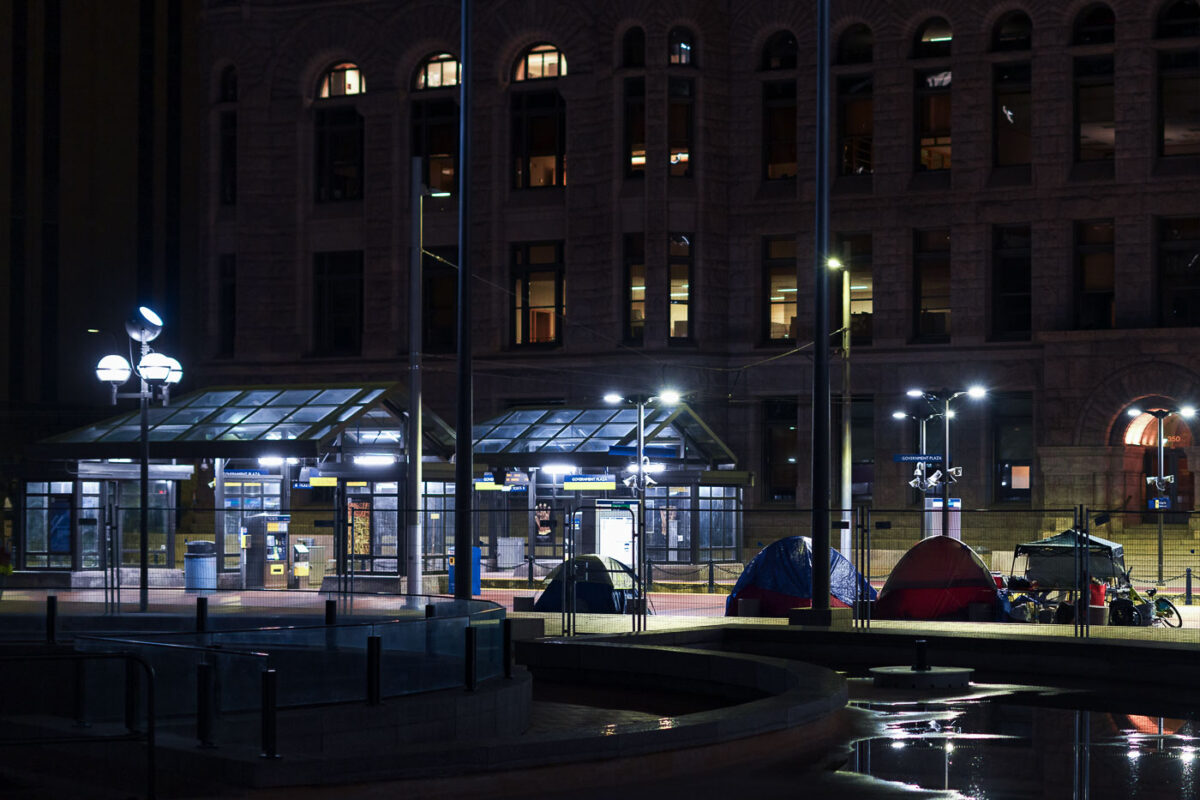
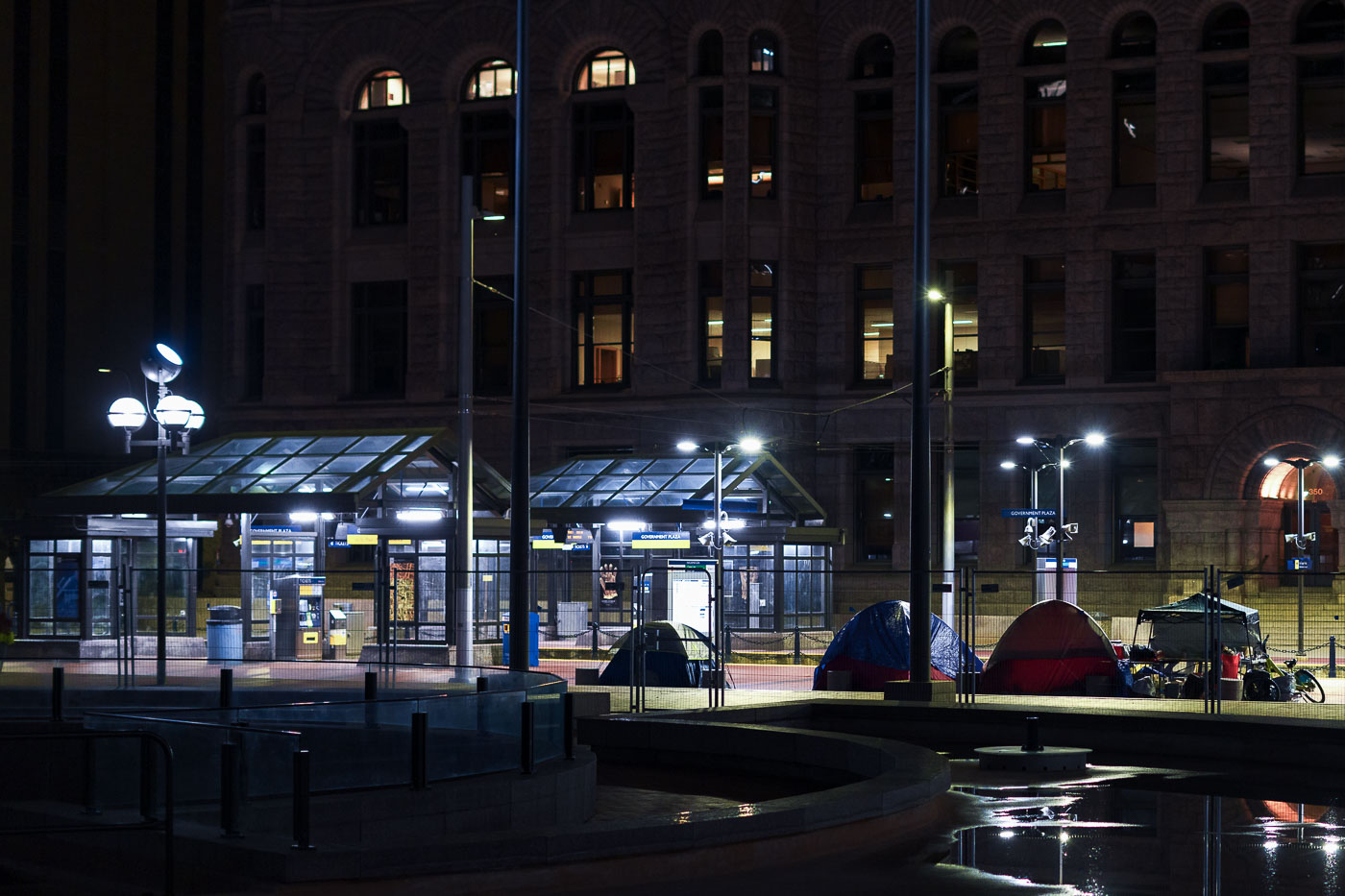
Protest Encampment at Minneapolis City Hall
Tents are set up outside Minneapolis City Hall at night, where protesters have been holding space. The protesters' demands include a moratorium on encampment clearings, clear guidelines for encampments, and proof of funding for permanent housing solutions for unhoused residents.

Minneapolis City Hall Protest Encampment at Night
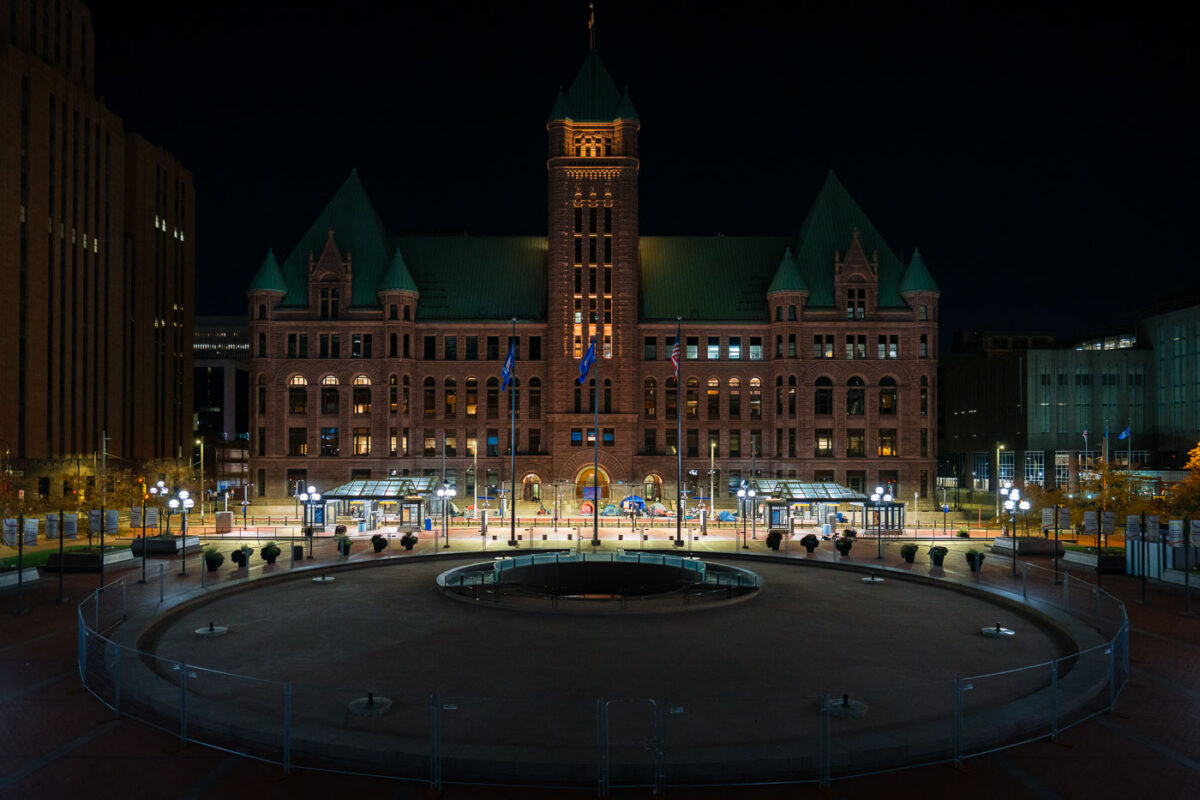
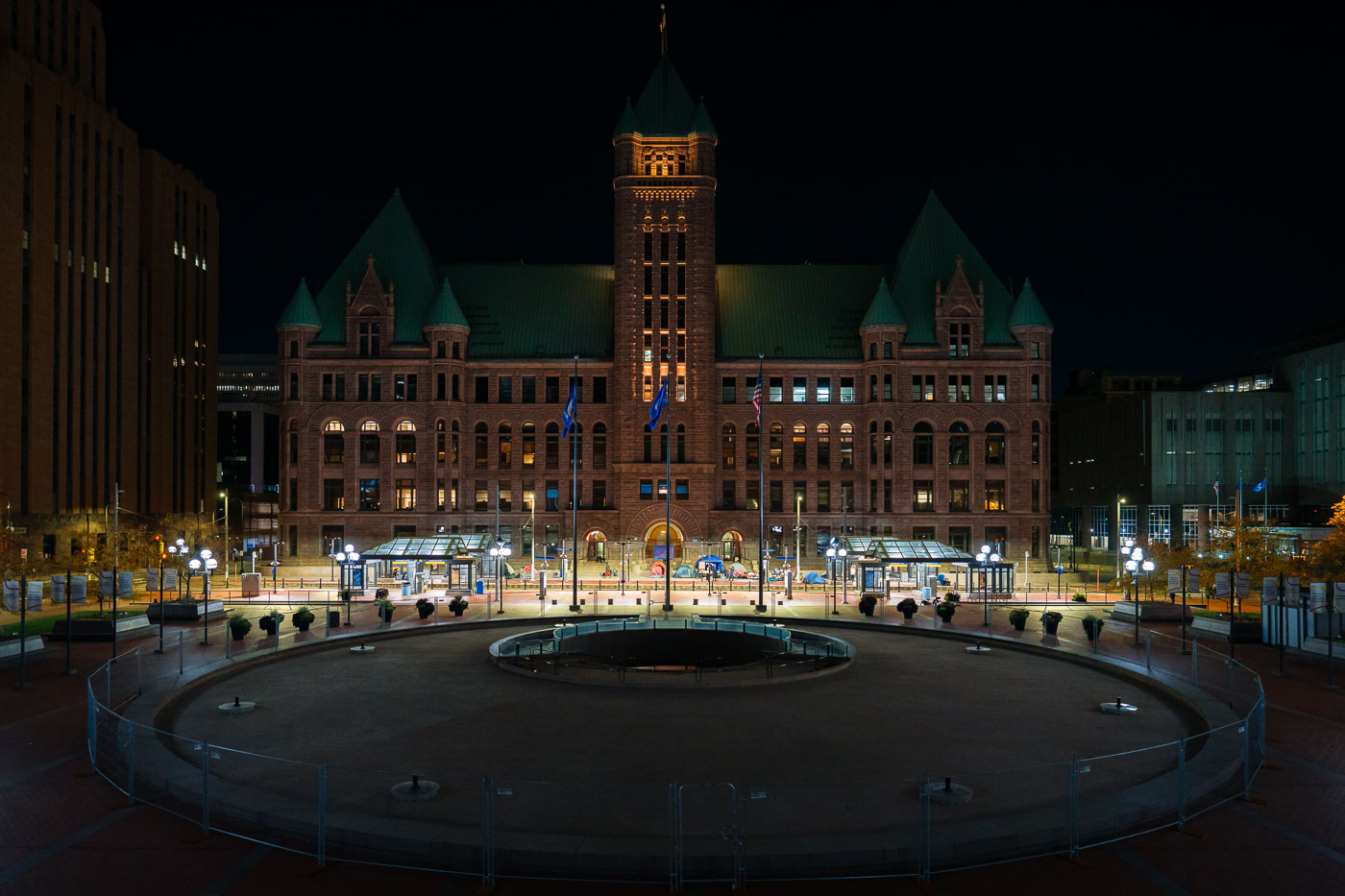
Encampment protest at Minneapolis CIty Hall
Minneapolis City Hall, a Beaux-Arts building completed in 1909, serves as the seat of government for the city. In this nighttime photograph, tents are visible on the plaza in front of the building, indicating an encampment. Protesters associated with this encampment have stated demands for a moratorium on encampment clearings, clear guidelines for encampments, and proof of funding for permanent housing solutions for unhoused individuals. The presence of the encampment highlights ongoing issues of homelessness in Minneapolis.

Minneapolis City Hall Encampment at Night
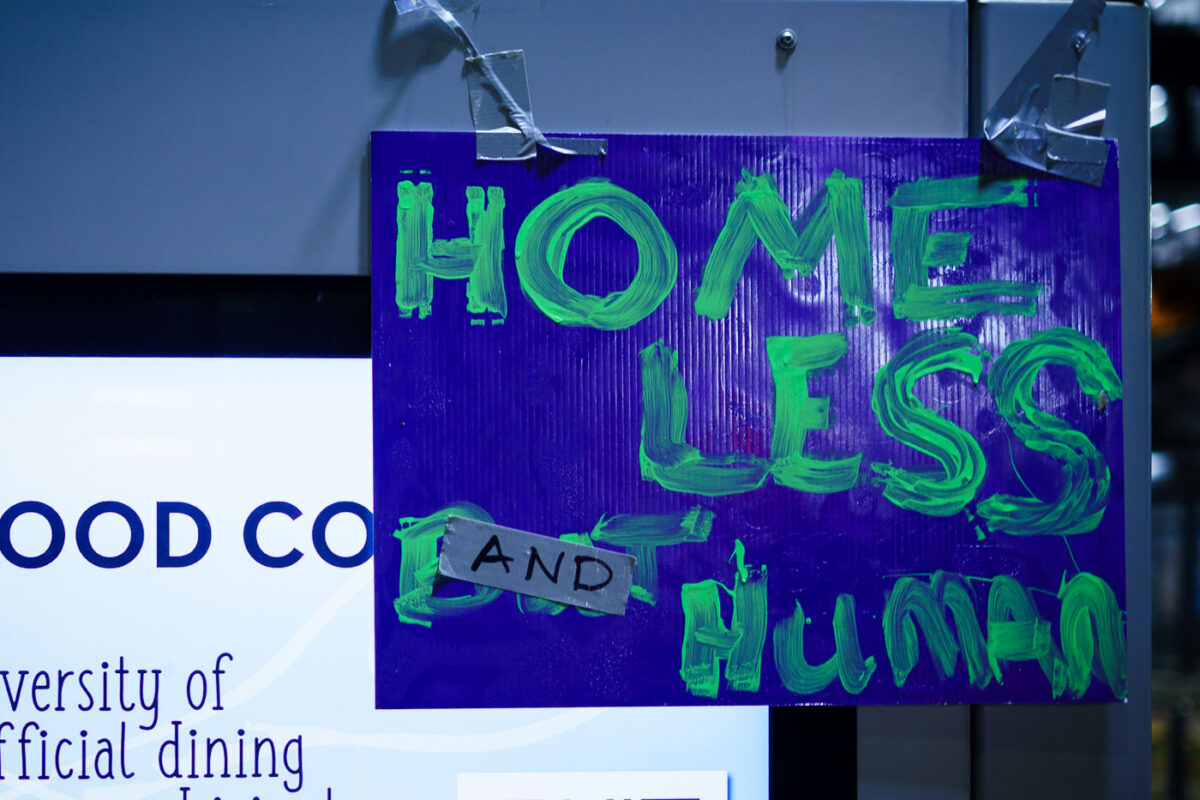
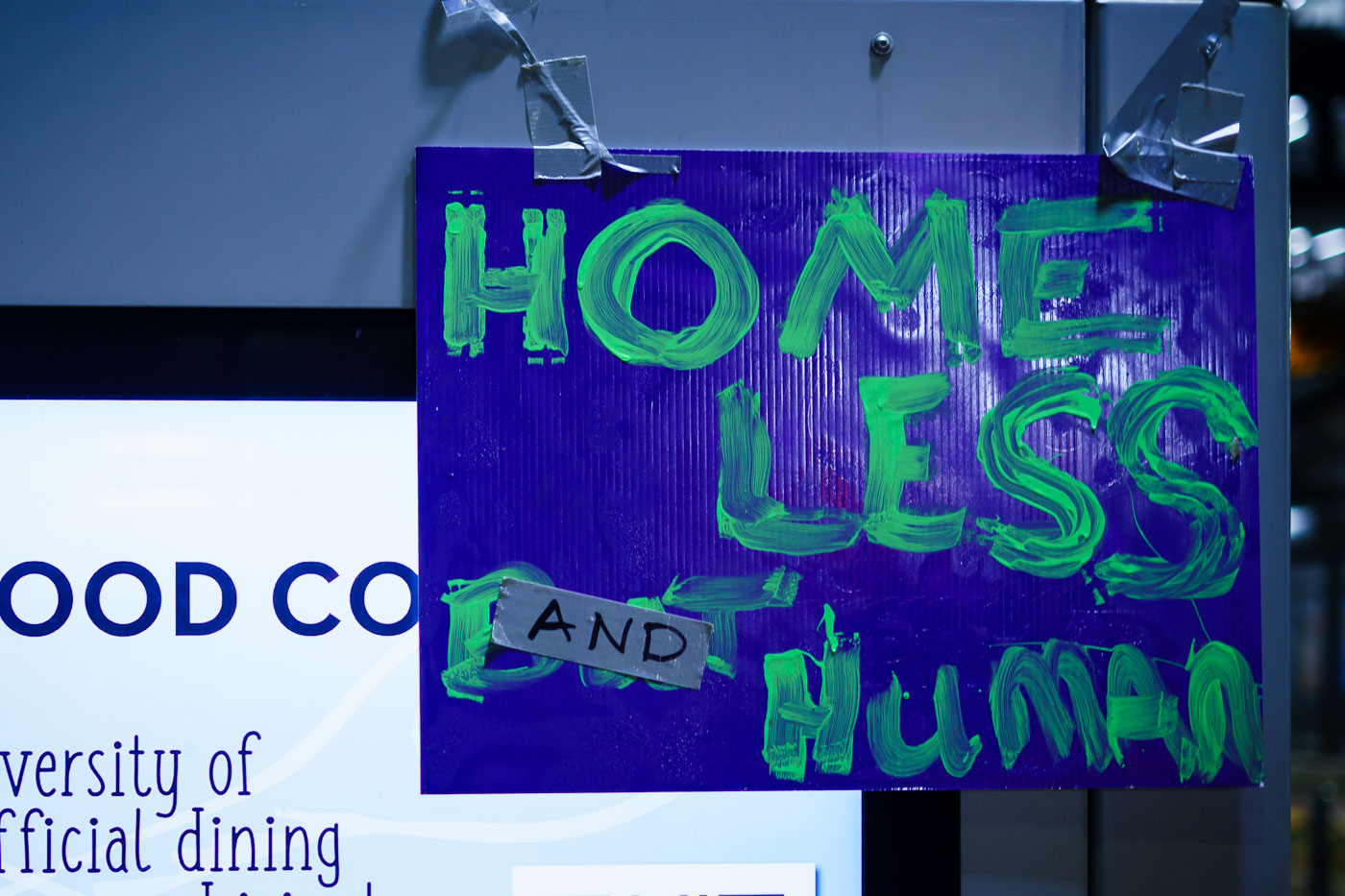
Homeless and Human protest sign at Minneapolis City Hall
Protesters gathered at Minneapolis City Hall to advocate for unhoused residents. The sign reads "HOMELESS AND HUMAN," emphasizing the humanity of those experiencing homelessness. The protest demanded a moratorium on encampment clearings, clear guidelines for encampments, and proof of funding for permanent housing solutions.

Minneapolis City Hall Protest: Homeless and Human Sign
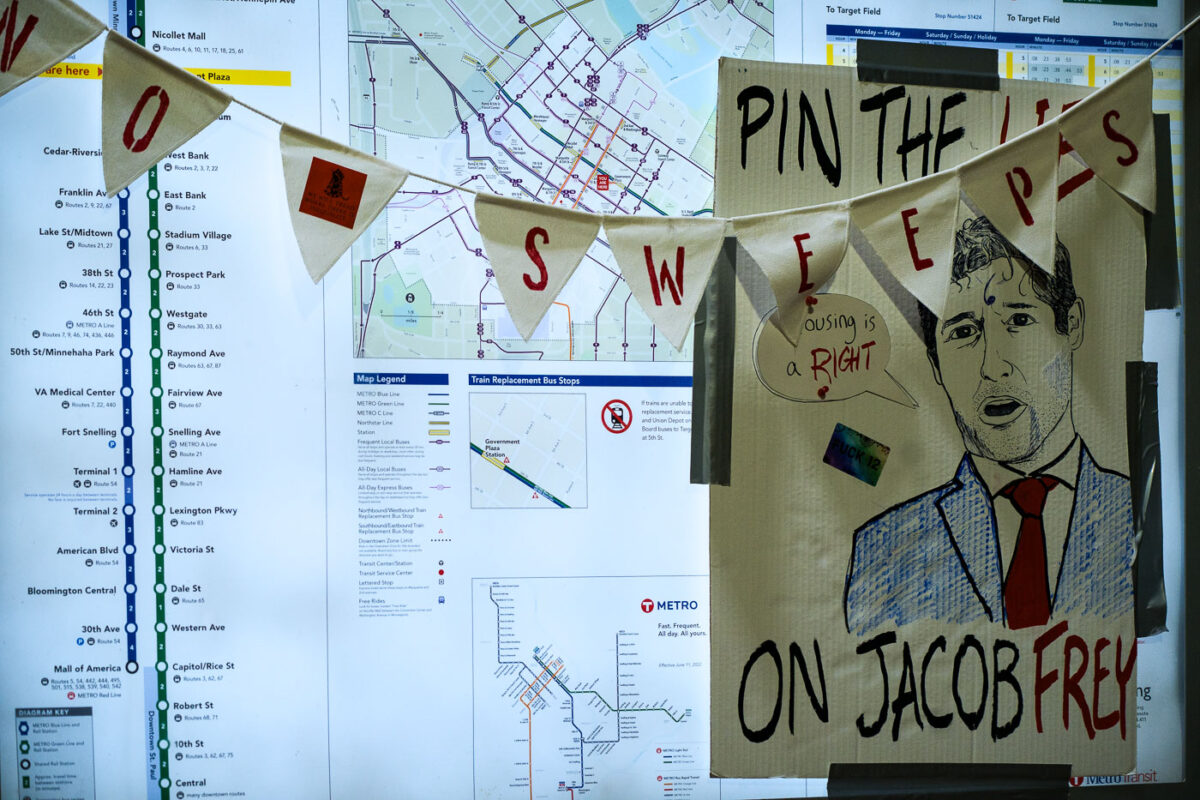
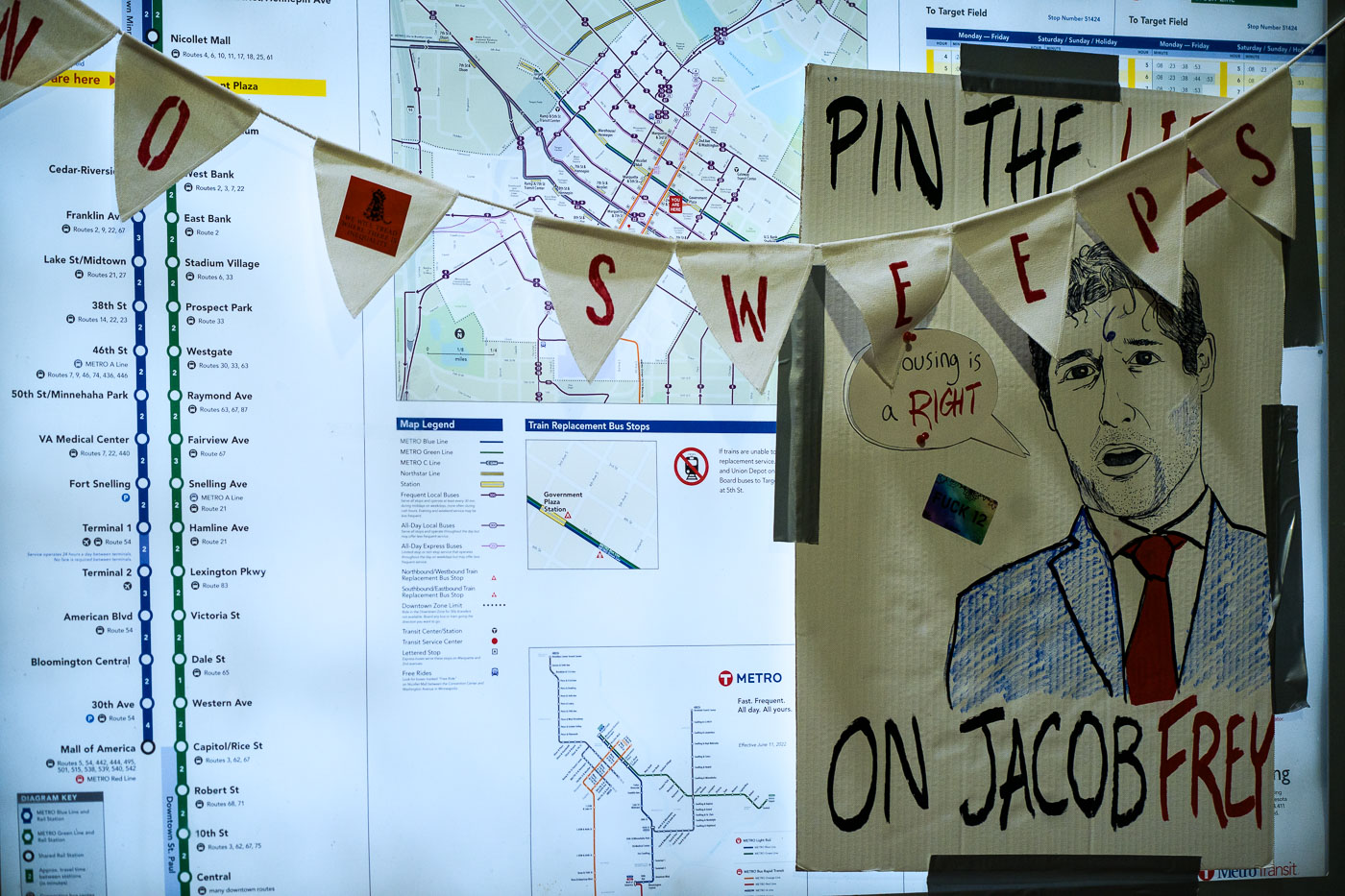
Pin the lies on Jacob Frey poster at city hall protest
Protesters gathered at Minneapolis City Hall to oppose the clearing of encampments. The "Pin the Sweeps on Jacob Frey" banner, featuring a caricature of the mayor, reflects the protesters' demands for a moratorium on encampment sweeps, clear guidelines, and proof of funding for permanent housing solutions.

Minneapolis City Hall Protest Against Sweeps of Encampments
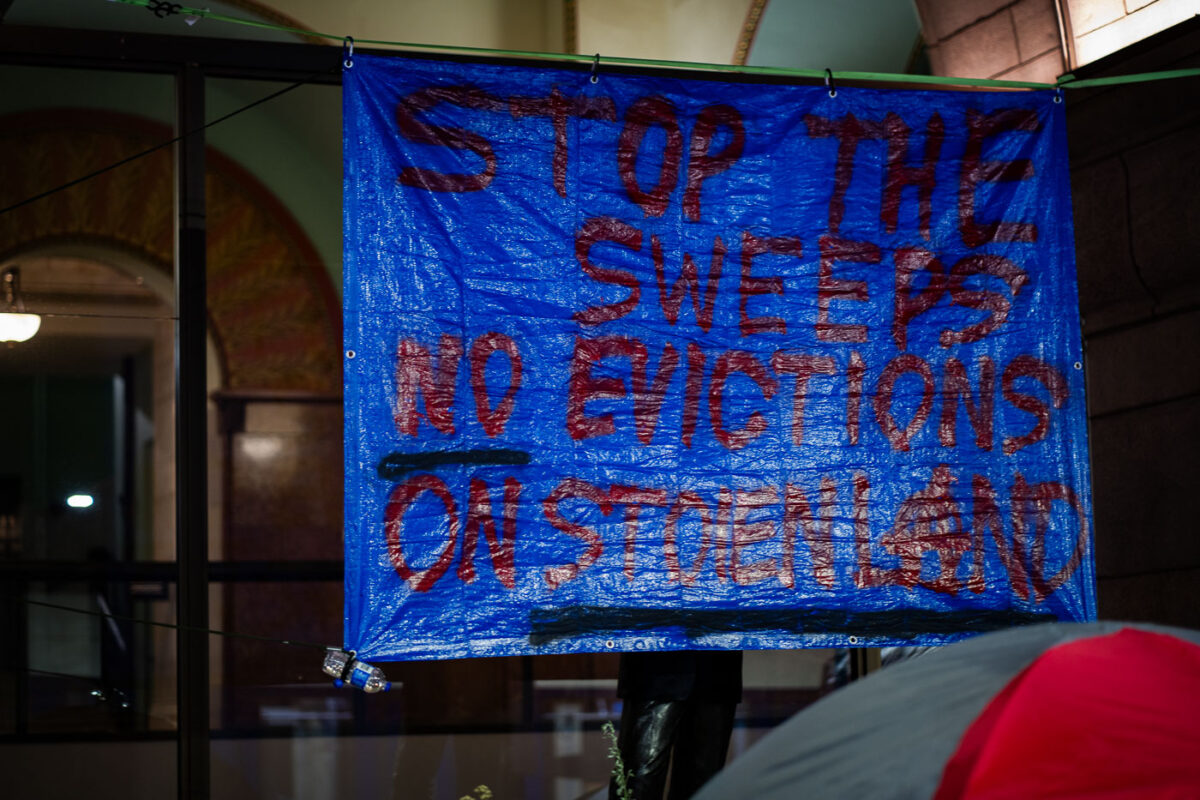
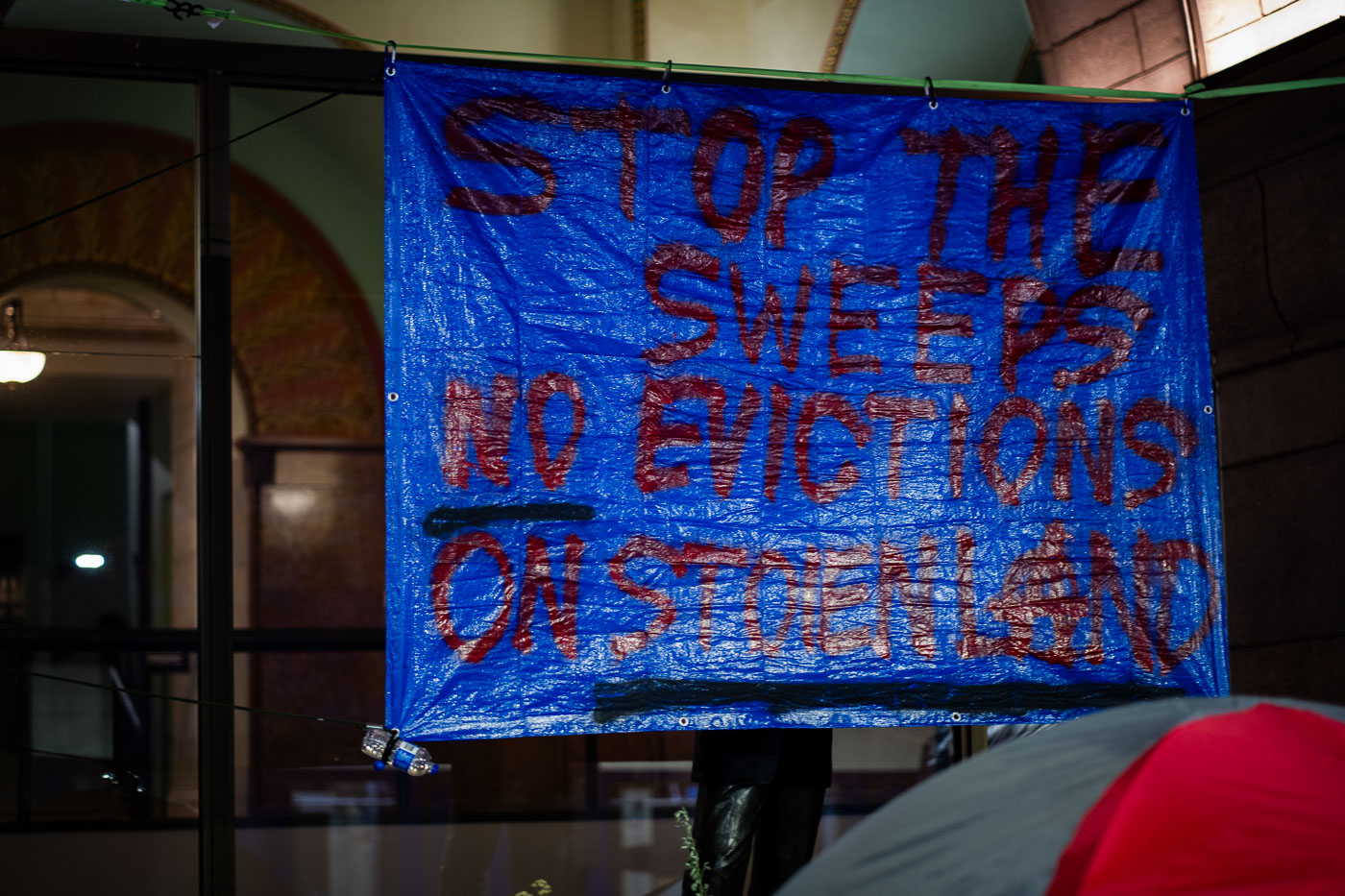
Stop The Sweeps No Evictions on Stolen Land
Protesters gathered at Minneapolis City Hall to advocate for unhoused residents. The banner reads "STOP THE SWEEPS, NO EVICTIONS ON STENCILAND," indicating a demand for a moratorium on encampment clearings and evictions. This protest highlights ongoing concerns about housing insecurity and the treatment of homeless populations in Minneapolis.

Minneapolis City Hall Protest: Stop Sweeps, No Evictions
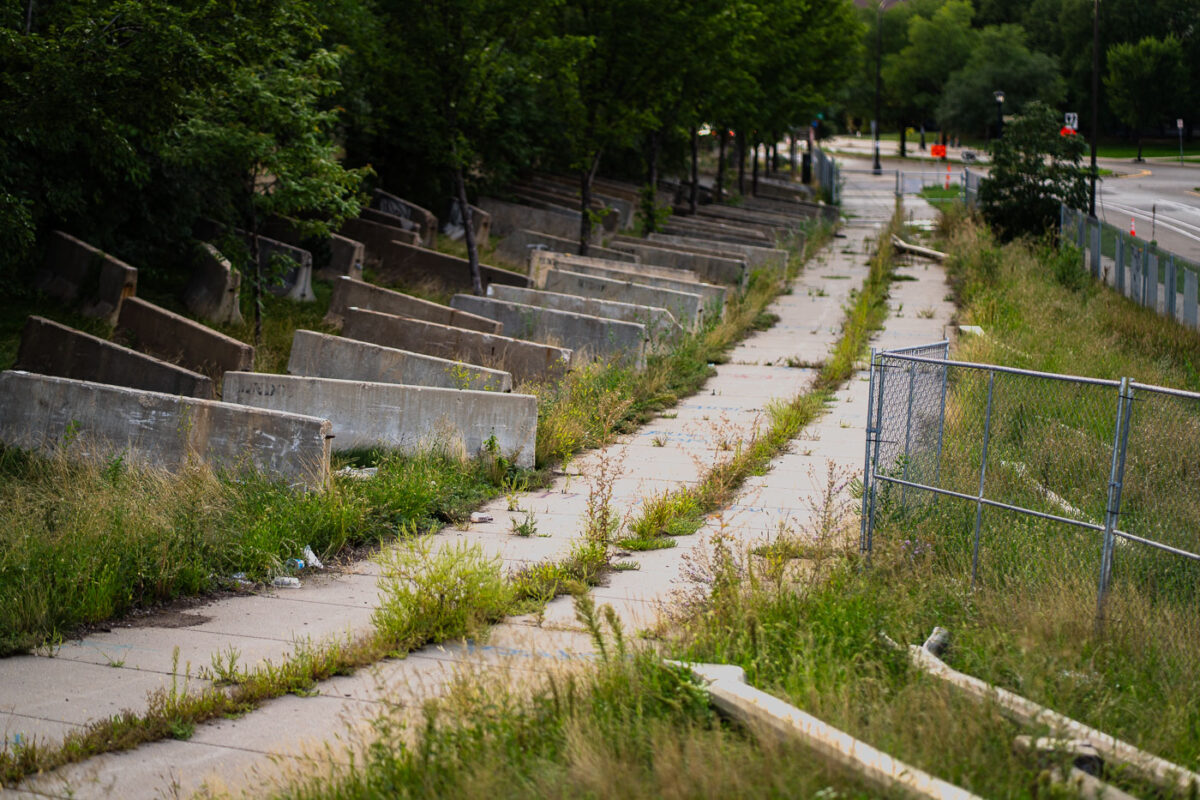
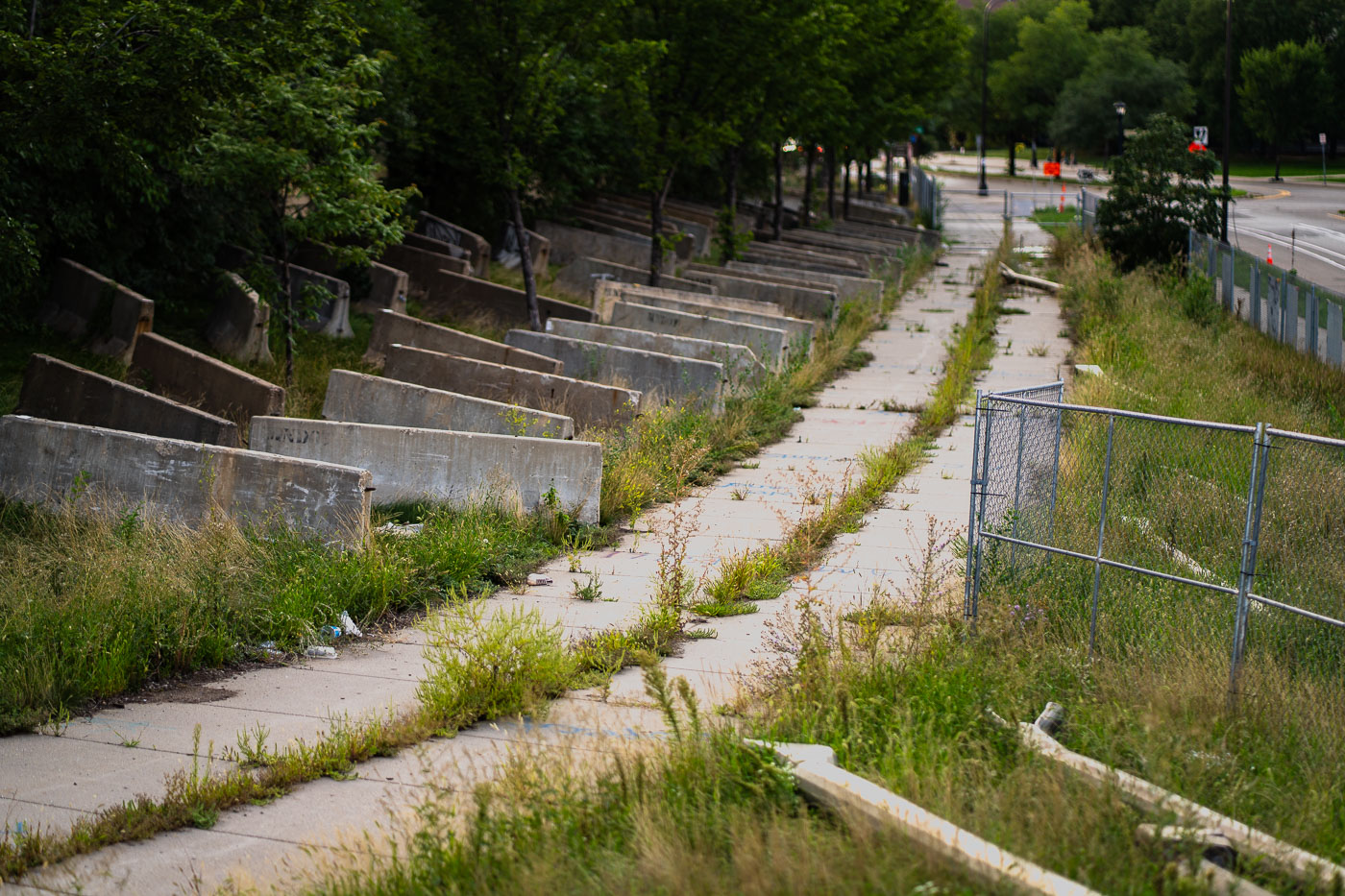
Closed Little Earth Trail in Minneapolis
The Little Earth Trail in Minneapolis remains closed, marked by concrete barriers and fencing. This closure followed the return of encampments to the "Wall of Forgotten Natives" area, a site where individuals experiencing homelessness had gathered since 2018. The city's action in 2020, which included erecting fencing and barriers, also resulted in the accumulation of discarded street poles and concrete barricades, leaving the trail inaccessible.

Minneapolis: Little Earth Trail closed with concrete barriers

Boulders outside Supervalu store in South Minneapolis
Large concrete debris has been placed in front of a vacant Supervalu store on Lake Street in South Minneapolis. This measure was implemented to deter individuals experiencing homelessness from sheltering at the site.

Boulders Block Vacant Supervalu in South Minneapolis

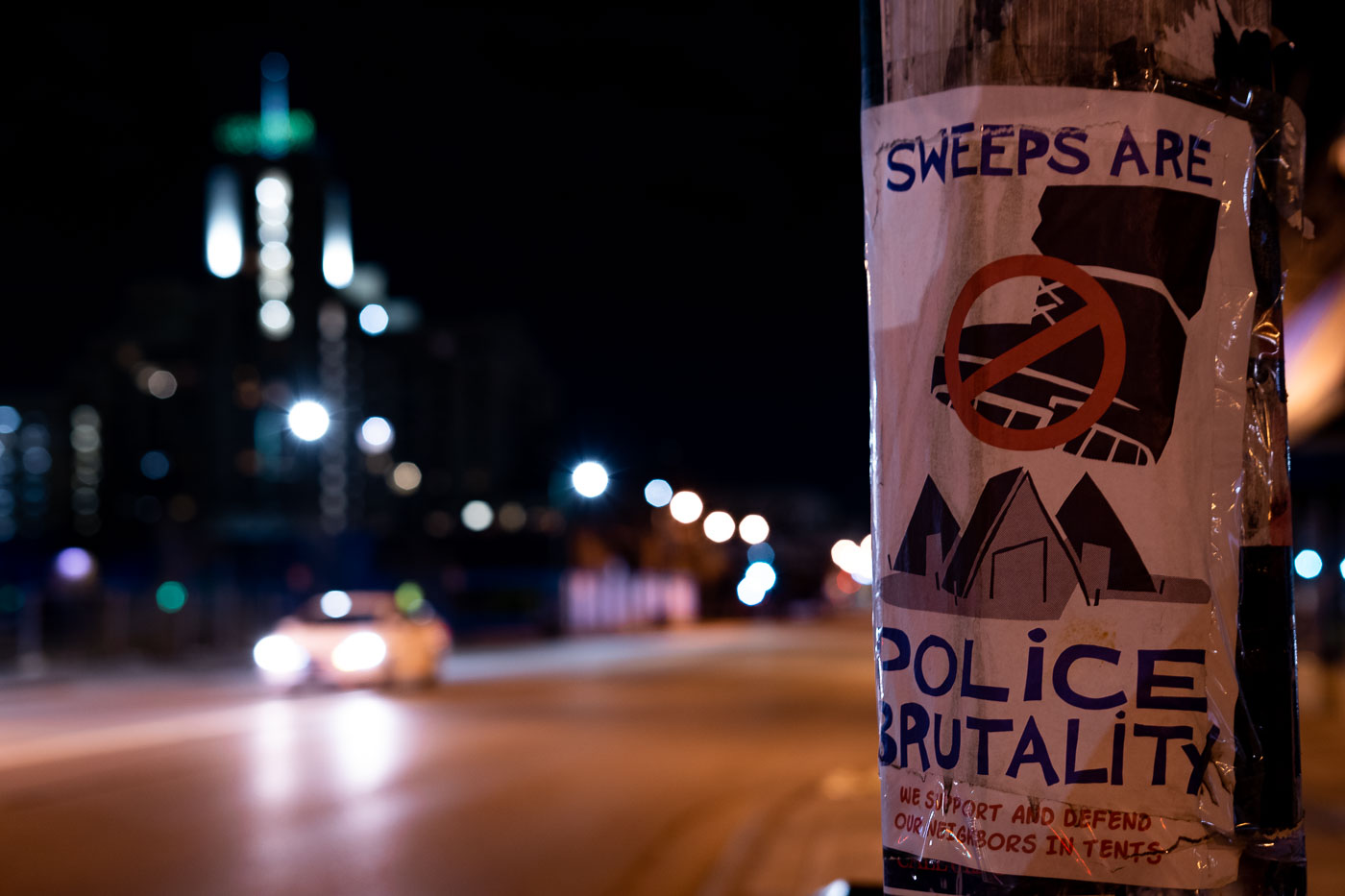
Sweeps Are Police Brutality sign
A flyer posted on a pole in South Minneapolis reads "Sweeps are police brutality" and "We support and defend our neighbors in tents." The flyer's imagery includes a "no" symbol over a boot, and stylized tents. This message protests the practice of "sweeps," which often involve the removal of encampments of unhoused individuals by authorities.

Minneapolis Flyer: Sweeps Are Police Brutality

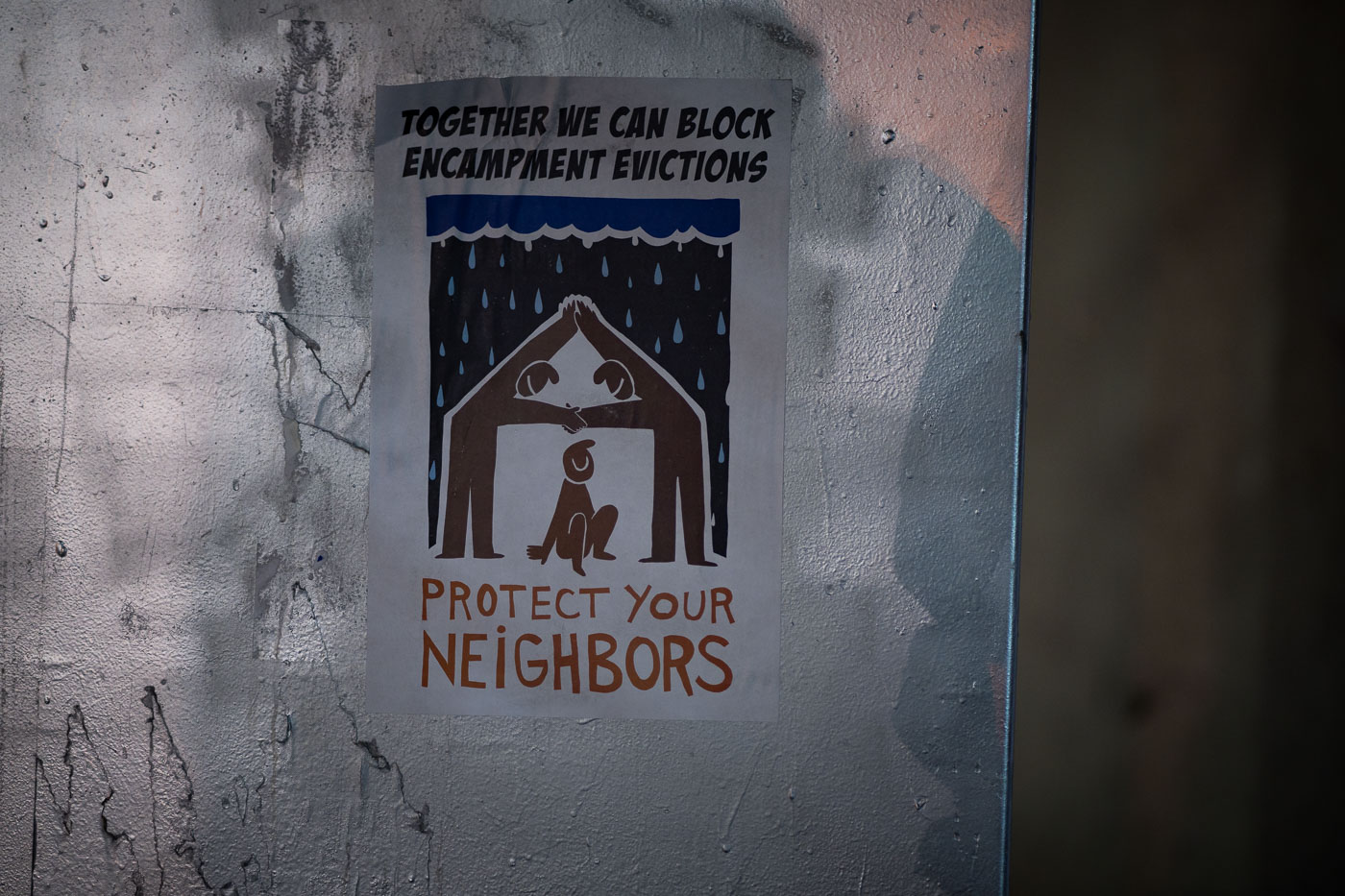
Protest your neigbors sign
A protest flyer advocating against the eviction of encampments is displayed on a street sign in Minneapolis. The flyer reads, "Together we can block encampment evictions" and "Protect your neighbors," featuring an illustration of two figures forming a protective shelter over a third figure under falling rain. This message reflects ongoing community concerns and activism surrounding homelessness and housing security in urban environments.

Minneapolis: Protest Flyer Against Encampment Evictions

No Encampment Evictions Yard Sign in Minneapolis
A yard sign reading "I SUPPORT MY NEIGHBORS IN TENTS, NO ENCAMPMENT EVICTIONS" is displayed on Minnehaha Avenue in Minneapolis. The sign reflects community sentiment regarding homelessness and housing insecurity, particularly in the context of encampment evictions. The presence of such signs indicates local activism and advocacy for unhoused individuals. The bicycle racks in the foreground, also bearing "Minnehaha Avenue" inscriptions, suggest this is a public space within the neighborhood.

Minneapolis Yard Sign: Support Neighbors in Tents, No Evictions
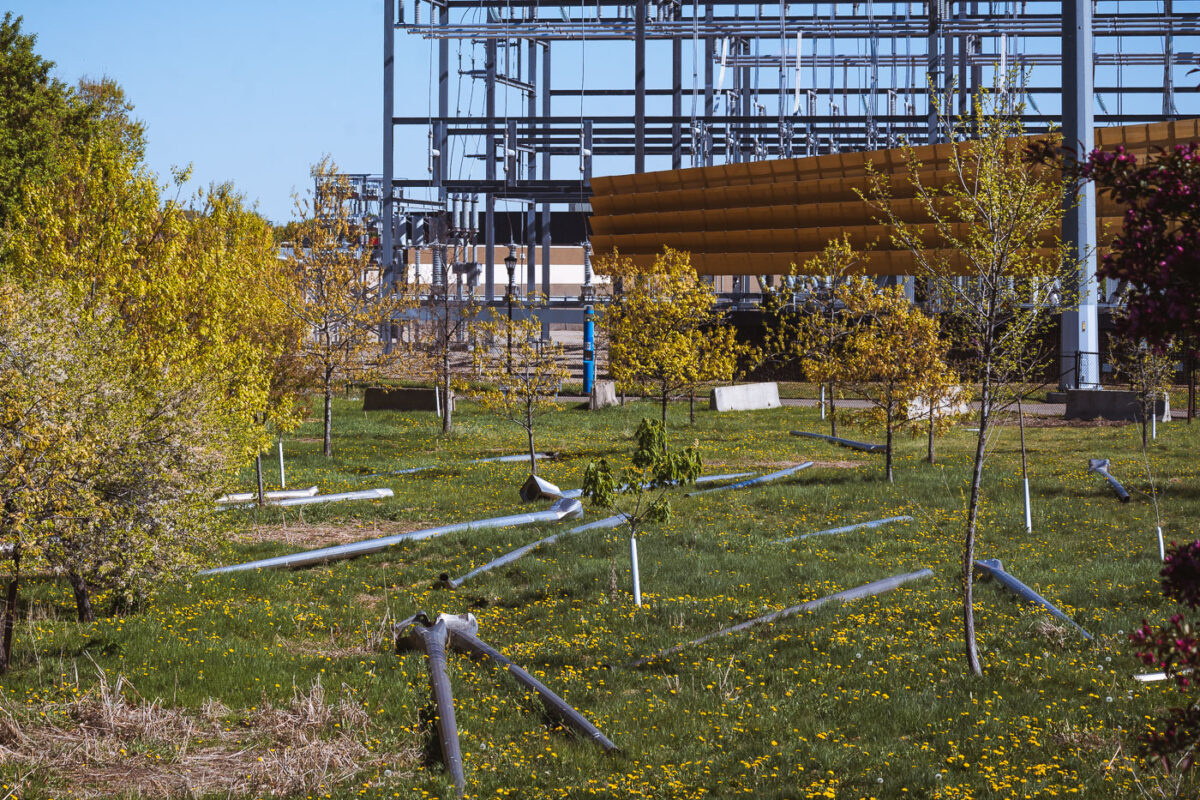
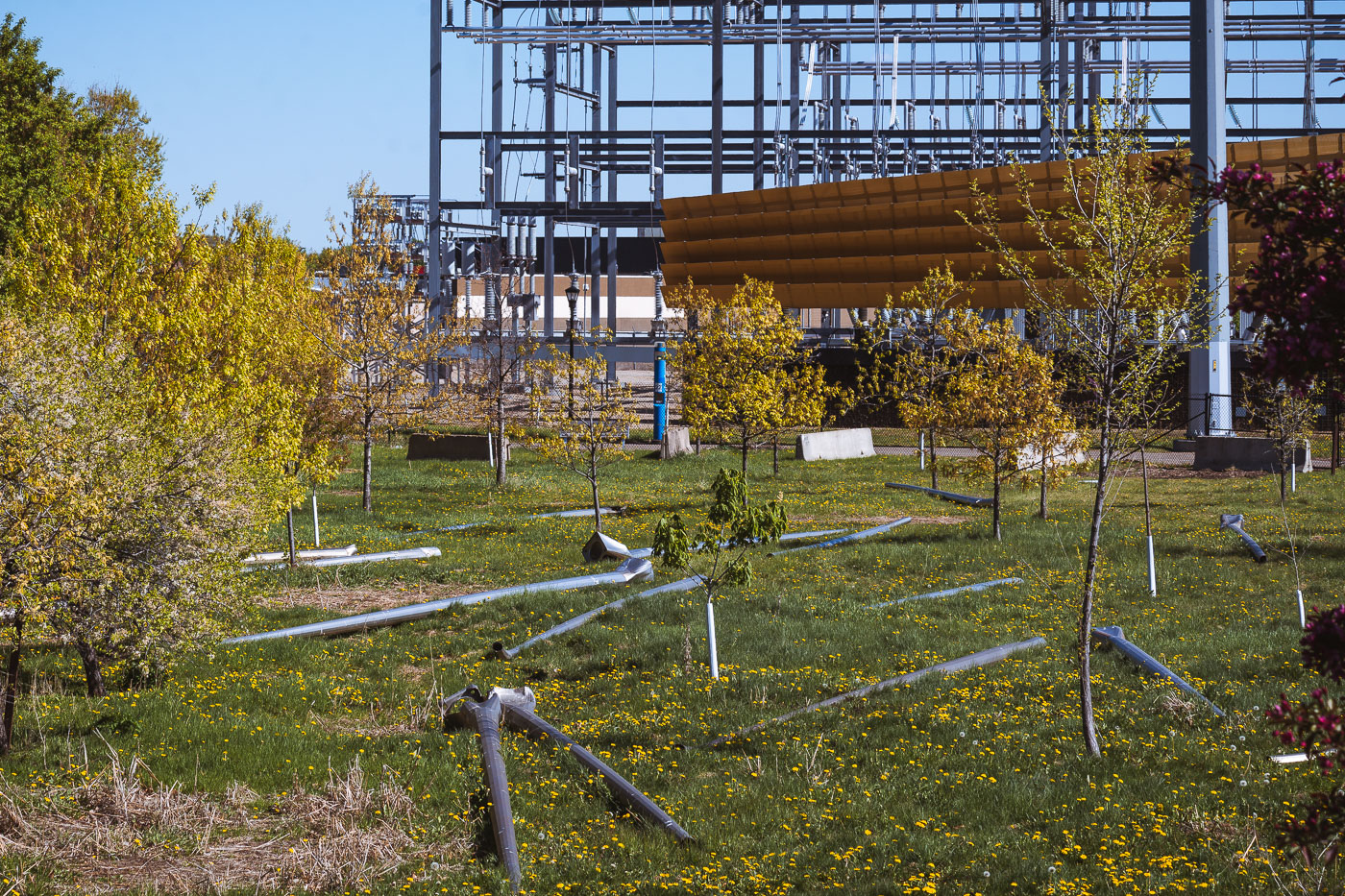
Former homeless encampment site in Minneapolis with street poles installed in the grass.
Former homeless encampment site in Minneapolis with street poles installed in the grass. The area is adjacent to a large steel-framed structure under construction. Metro Transit Police signage is visible on the site.

Street poles at former encampment site, Minneapolis
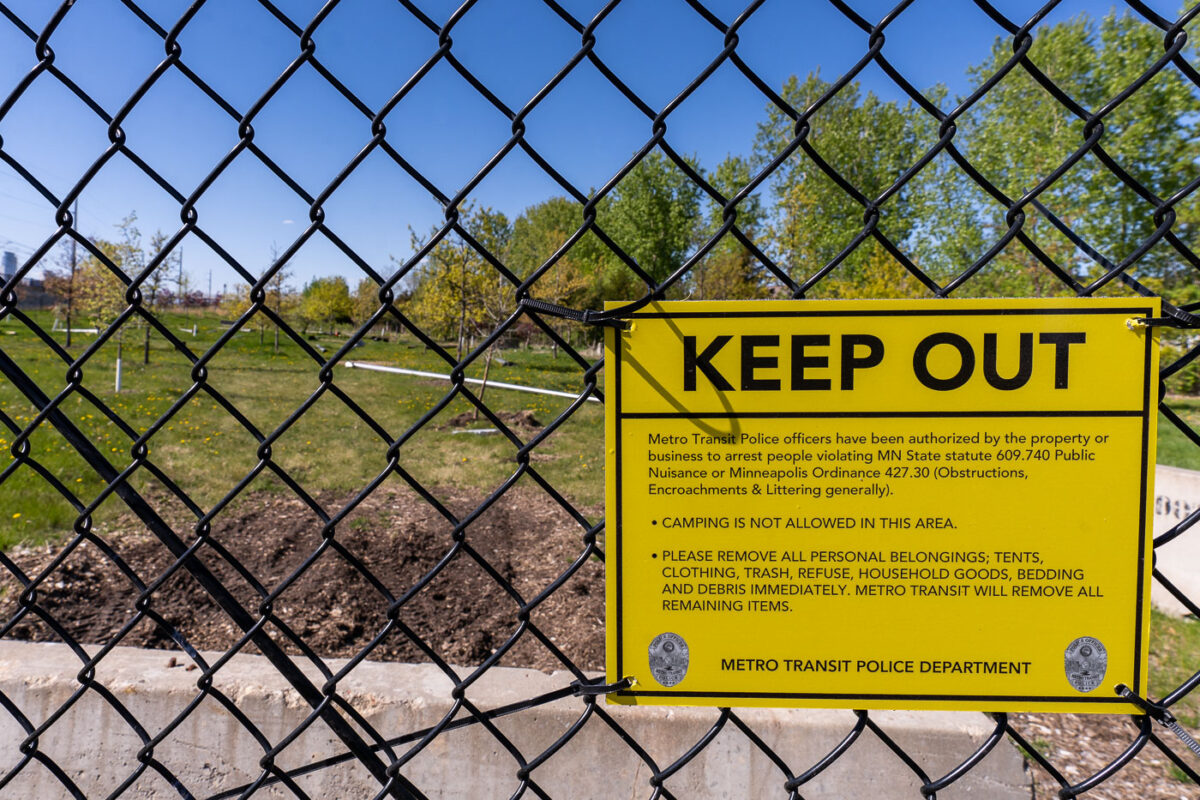
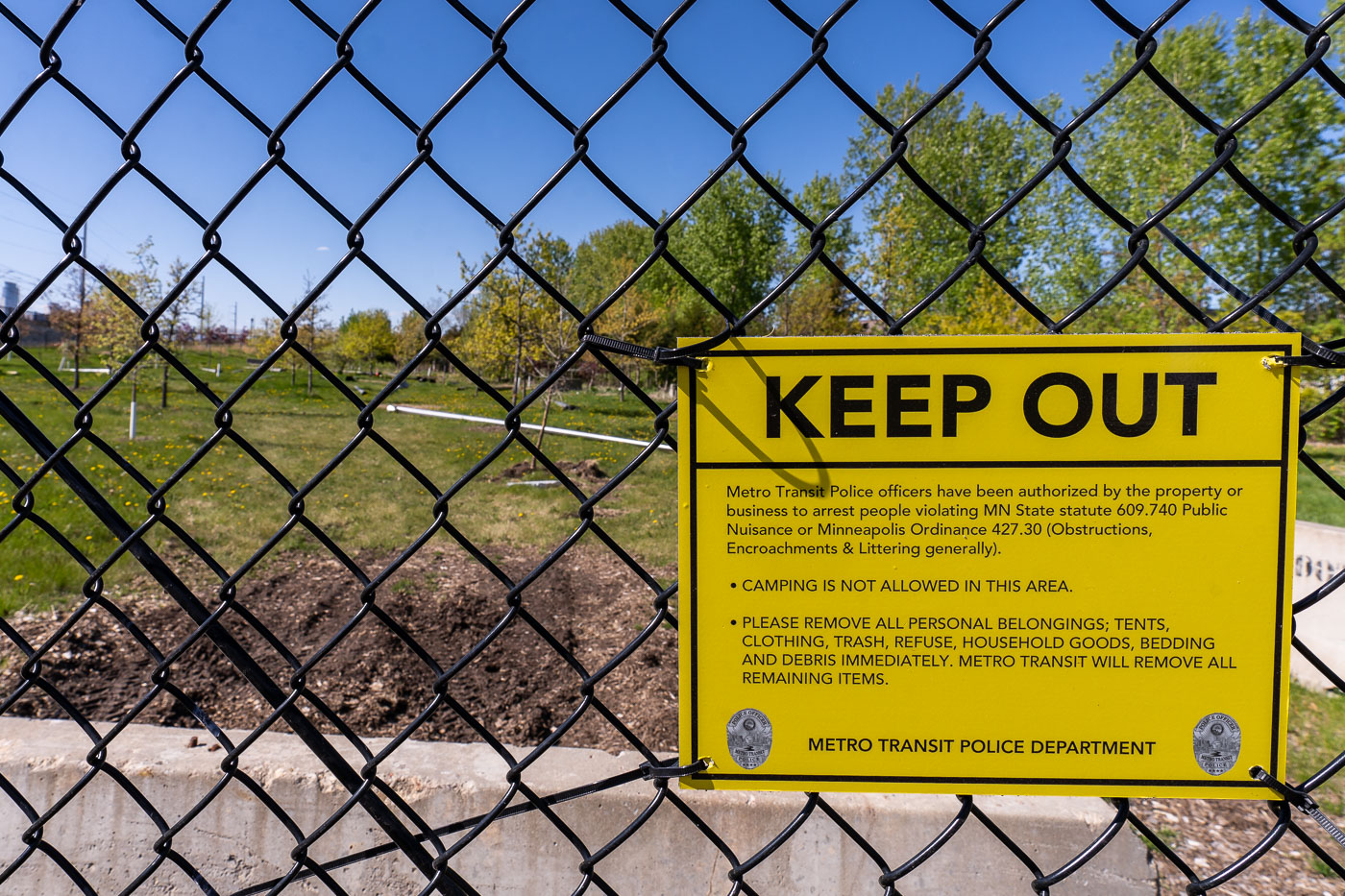
Metro Transit Police keep out sign on a fenced lot in Minneapolis.
Metro Transit Police in Minneapolis posted a notice prohibiting camping and requiring removal of personal belongings from the fenced area. The sign states that remaining items will be removed by Metro Transit and cites Minnesota public nuisance and Minneapolis obstruction ordinances.

Metro Transit Police keep out sign, Minneapolis
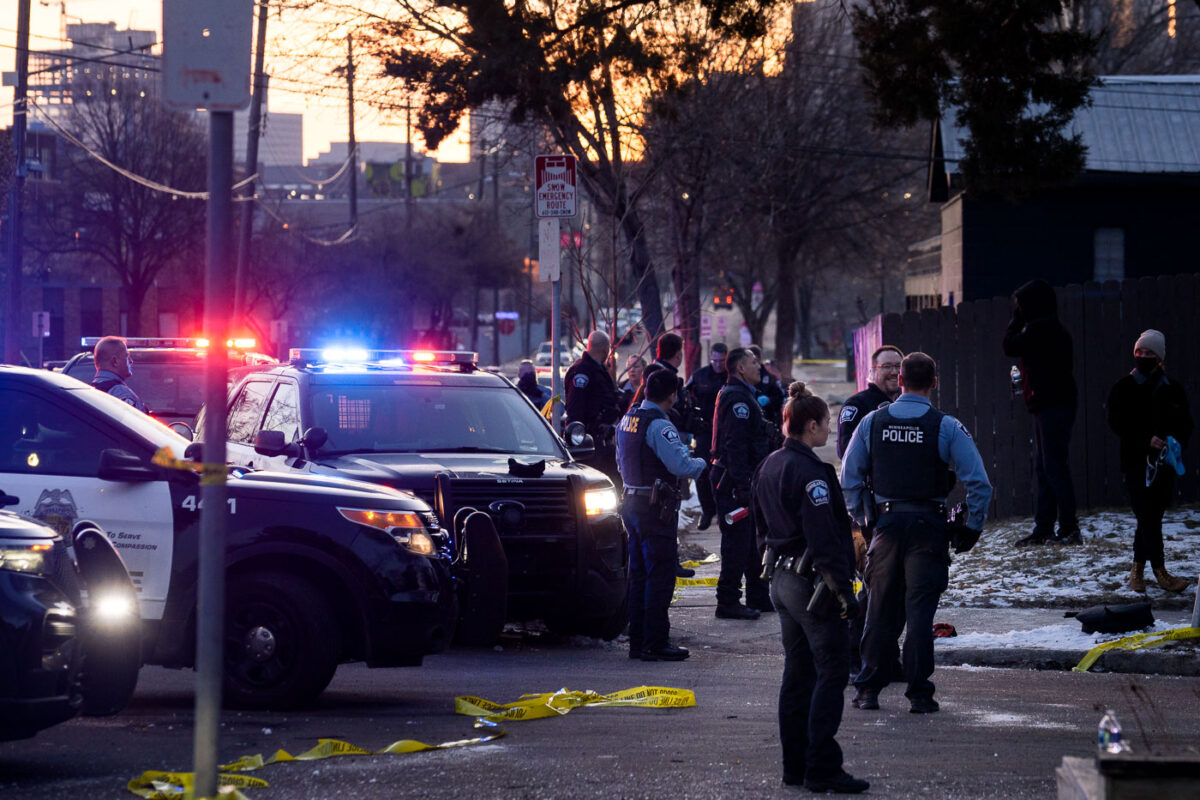
Police at Near North encampment clearing in Minneapolis
Minneapolis Police officers responded to a homeless encampment on the Near North side of the city. The presence of law enforcement indicates a planned clearing of the encampment, which had been established by individuals experiencing homelessness. Camp protectors were present, suggesting a confrontation or protest against the city's action. This event highlights the ongoing challenges of homelessness and the city's approach to managing encampments.

Minneapolis Police at Near North encampment clearing

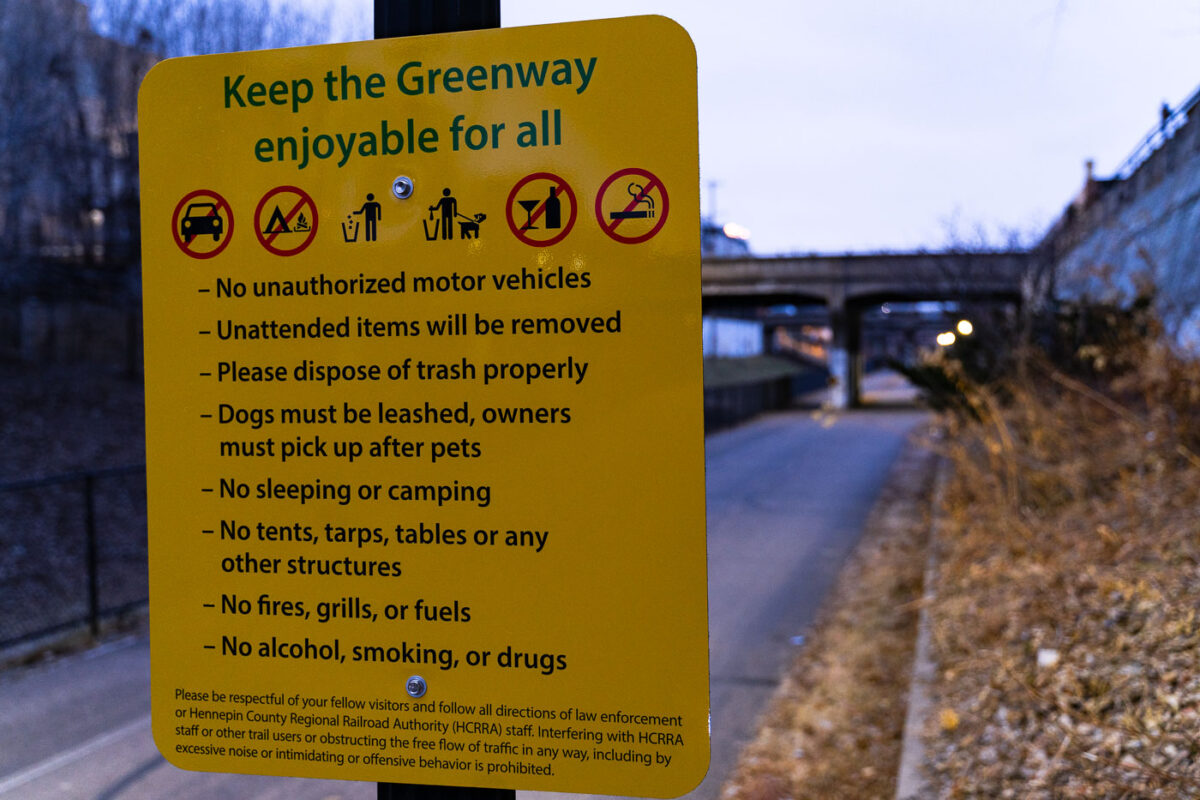
Keep the greenway enjoyable for all sign
A new regulatory sign stands on the Minneapolis Midtown Greenway, a 5.5-mile-long rail-to-trail urban corridor in Minneapolis, Minnesota, dedicated to pedestrians and cyclists. The sign lists rules including prohibitions against sleeping, camping, and erecting structures like tents or tarps. Its installation followed the eviction of a large homeless encampment from the greenway on December 17th and 18th.

Minneapolis Midtown Greenway Rules Sign After Eviction
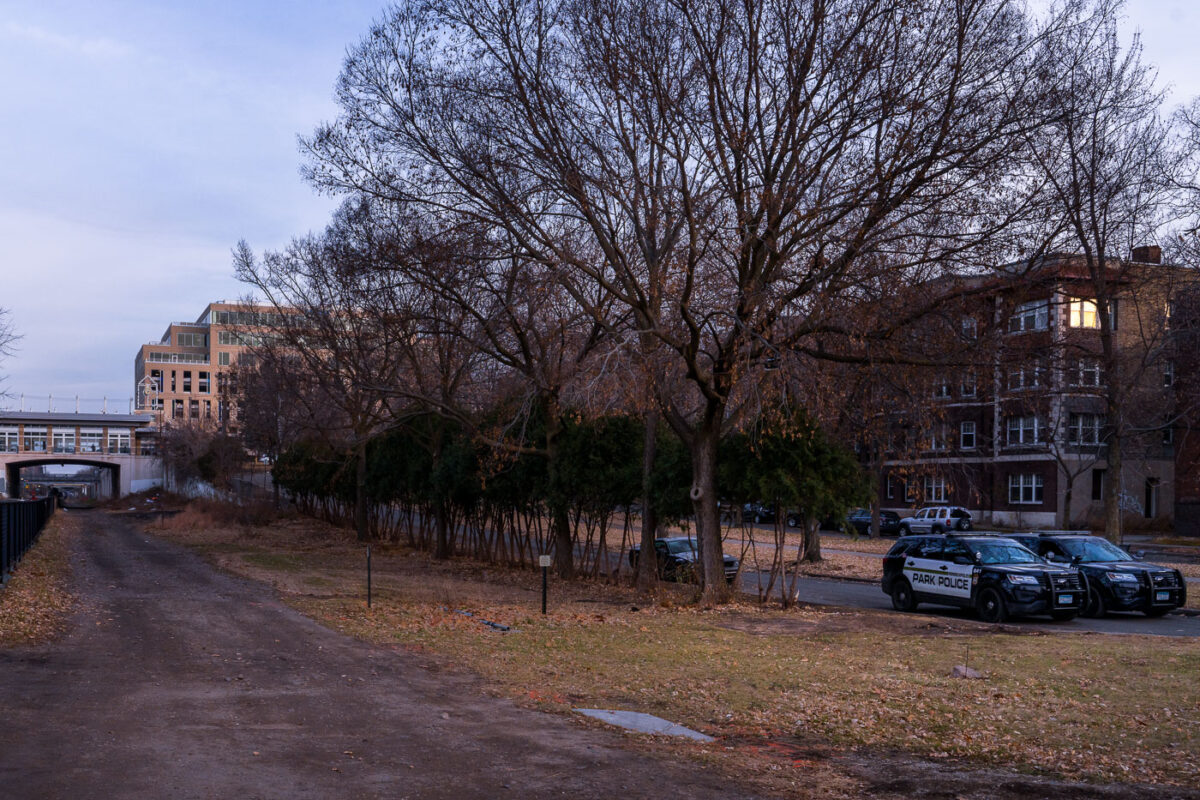
Minneapolis Park Police on The Mall in Uptown
Minneapolis Park Police vehicles are stationed in Uptown Minneapolis, adjacent to The Mall Park.

Minneapolis Park Police Squad Cars, Cleared Encampment Site, Uptown

Protest sign reading "Bye Bye Mayor Frey Evicted" held outside Minneapolis Mayor Jacob Frey's residence.
Jacob Frey has served as mayor of Minneapolis since 2018, following an earlier term on the city council representing the city's Third Ward. His administration drew sustained criticism over its handling of homelessness and encampment closures, as well as its response to policing after the killing of George Floyd in 2020. Protesters gathered outside his residence to demand his resignation, part of a wider pattern of demonstrations that targeted his home throughout that period. The sign's reference to "BLM, NLM, ULM, Justice" points to overlapping coalitions — Black Lives Matter, Native Lives Matter, and allied justice groups — that organized jointly in Minneapolis during 2020.

“Bye, Bye Mayor Frey” Sign at Northeast Minneapolis Protest

Housing protest outside Minneapolis Mayor Jacob Frey's home disrupted by men carrying American and Thin Blue Line flags.
A housing protest outside Mayor Jacob Frey's home in Northeast Minneapolis drew a confrontation with counter-demonstrators. Two men wearing "Make America Great Again" caps carried an American flag alongside a Thin Blue Line flag, a symbol associated with pro-police messaging that has become common at counter-protests since 2014. The exchange took place amid a broader wave of demonstrations demanding action on homelessness and housing policy in Minneapolis following the unrest of 2020.

Confrontation Between Protesters and MAGA Counter-Protesters in Northeast Minneapolis

Protester holding sign reading "PUBLIC SAFETY SHOULD BE PROACTIVE NOT REACTIVE" during Minneapolis march at Mayor Frey's
A hand-lettered sign reading "PUBLIC SAFETY SHOULD BE PROACTIVE NOT REACTIVE" appears during a march through Northeast Minneapolis on November 2, 2020. Demonstrators walked from Holmes Park to Mayor Jacob Frey's residence, calling on the city to address rising homelessness rather than respond only after problems escalate. The route passed Old Town Saloon on Hennepin Avenue, a longtime bar in the Marcy-Holmes neighborhood.

‘Public Safety Should Be Proactive’ Sign Near Old Town Saloon

Pedestrians and diners gather on a Northeast Minneapolis street during a housing protest on Hennepin Avenue.
This demonstration over housing and homelessness passed along Hennepin Avenue near Bishops Barbershop, a stretch of Northeast Minneapolis lined with restaurants and retail storefronts. The march took place on November 2, 2020, the night before the U.S. presidential election, as organizers pressed Mayor Jacob Frey's administration on the city's rising number of unsheltered residents. Patio heaters and outdoor seating along the block reflect Minneapolis restaurants' pandemic-era shift to expanded outdoor dining, a practice the city fast-tracked through temporary permitting that year.

Housing Protest Passes Bishops Barbershop on Hennepin Avenue

Protesters gather around a large banner reading "EVICTION NOTICE JACOB FREY SIGNED BY THE PEOPLE" during a housing demonstration
A banner reading "EVICTION NOTICE JACOB FREY SIGNED BY THE PEOPLE" was laid on the sidewalk outside Minneapolis Mayor Jacob Frey's home in Northeast Minneapolis. The demonstration called attention to the city's handling of homelessness and encampment policy under Frey's administration. One protester carried a sign reading "NO EVICTIONS ON STOLEN LAND," tying the housing dispute to broader arguments about Indigenous land rights.

“Eviction Notice” Banner Outside Mayor Jacob Frey’s Home

Graffiti reading "Do Good Guys Use Emergency Prep Bulldozers?" on concrete barricades outside downtown Minneapolis jail.
Concrete barricades, chain-link fencing, and metal crowd-control barriers stand outside the downtown Minneapolis jail in September 2020. Graffiti on the barriers includes the message “DO GOOD GUYS EMERGENCY PREP. USE BULLDOZERS?”.

“Do Good Guys Use Bulldozers?” Graffiti on Jail Barricades in Minneapolis
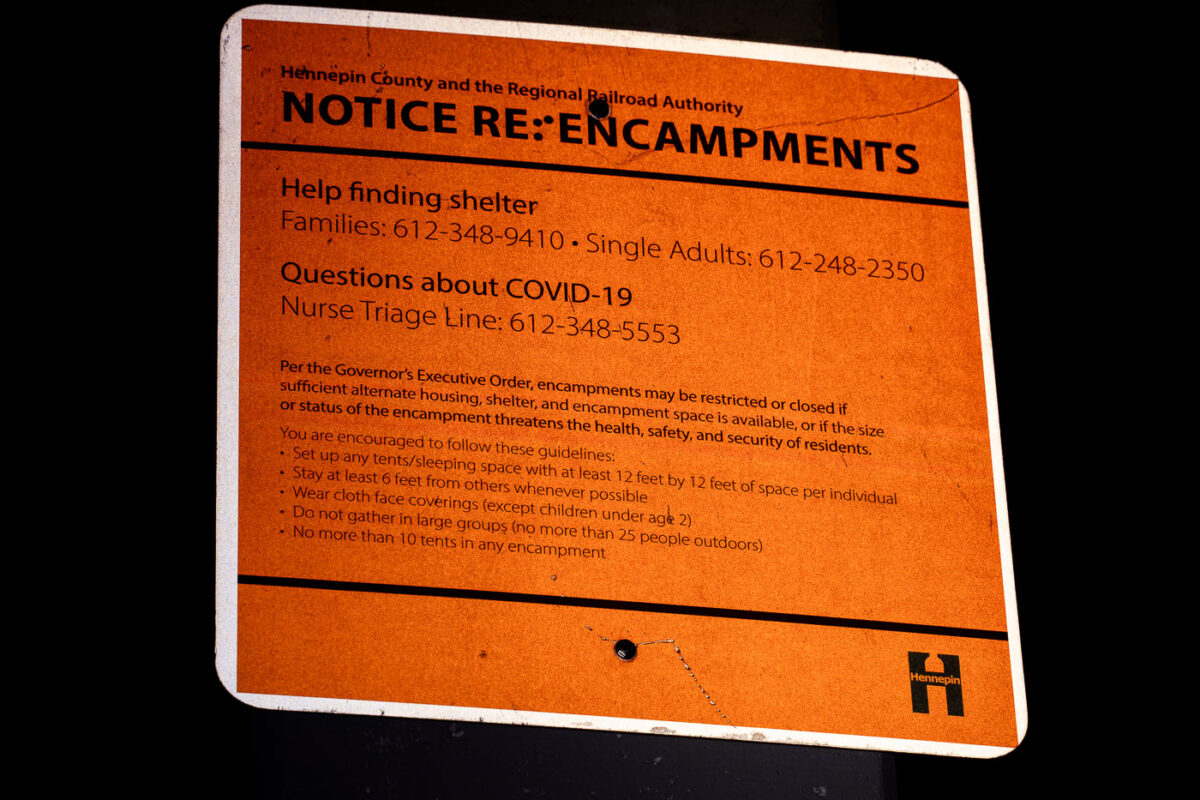
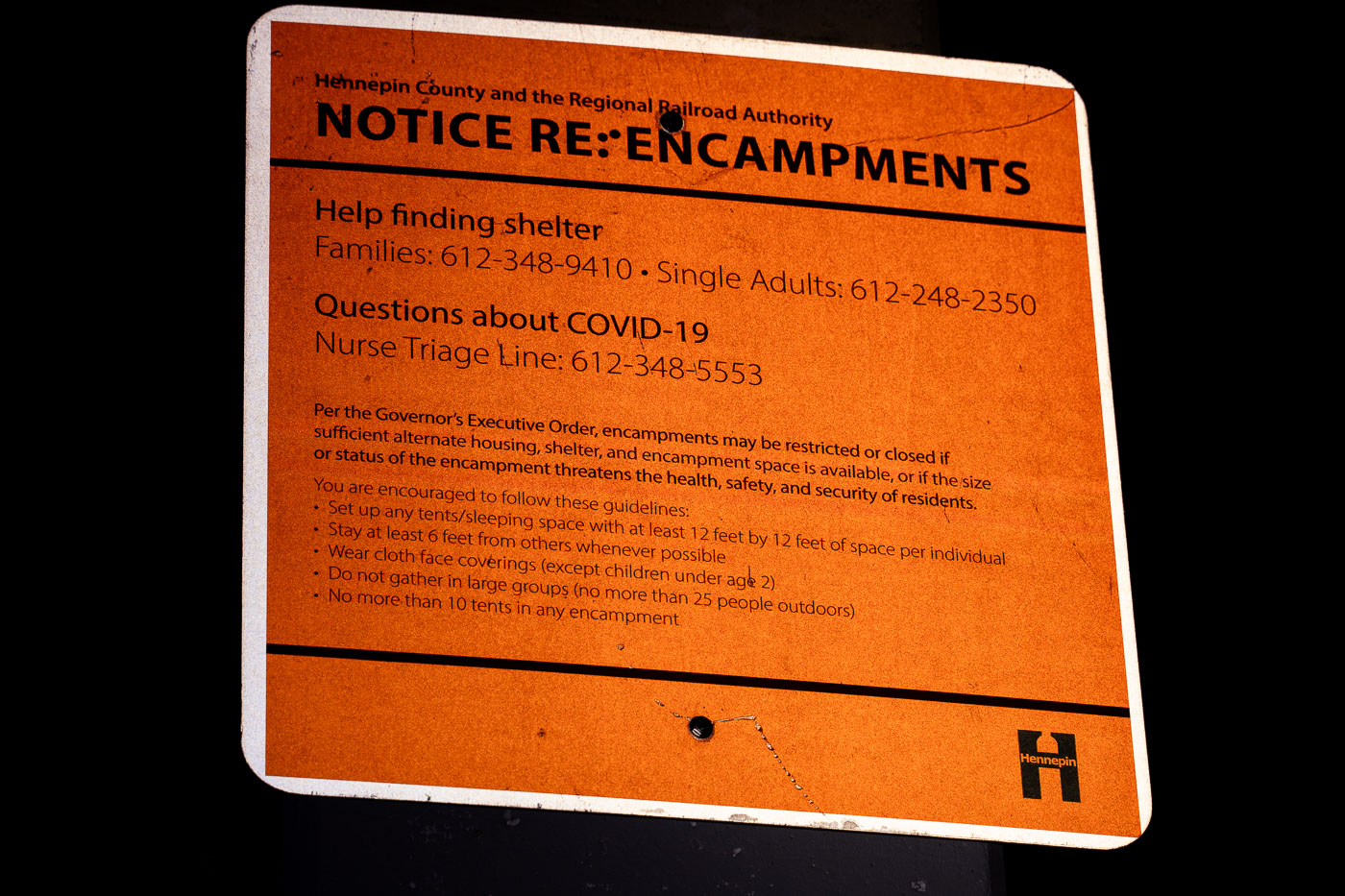
Orange notice from Hennepin County regarding encampment restrictions and COVID-19 resources posted on the Midtown Greenway in
Hennepin County and the Metropolitan Council's Regional Railroad Authority posted this notice along the Midtown Greenway during the summer of 2020, directing people living in encampments to shelter hotlines — 612-348-9410 for families, 612-248-2350 for single adults — and a COVID-19 nurse triage line at 612-348-5553. The notice cited Governor Tim Walz's executive order allowing counties to restrict or close encampments if adequate housing or shelter space became available, or if an encampment's size threatened residents' health and safety. It also listed pandemic guidelines: tents spaced at least 12 by 12 feet apart, six feet of distance between people, cloth face coverings for anyone over age two, outdoor gatherings capped at 25 people, and no more than 10 tents per encampment. The Midtown Greenway runs roughly five and a half miles through south Minneapolis along a former Milwaukee Road rail corridor, now used as a bicycle and pedestrian trail beneath street level.

Hennepin County Notice on Encampments Along the Midtown Greenway

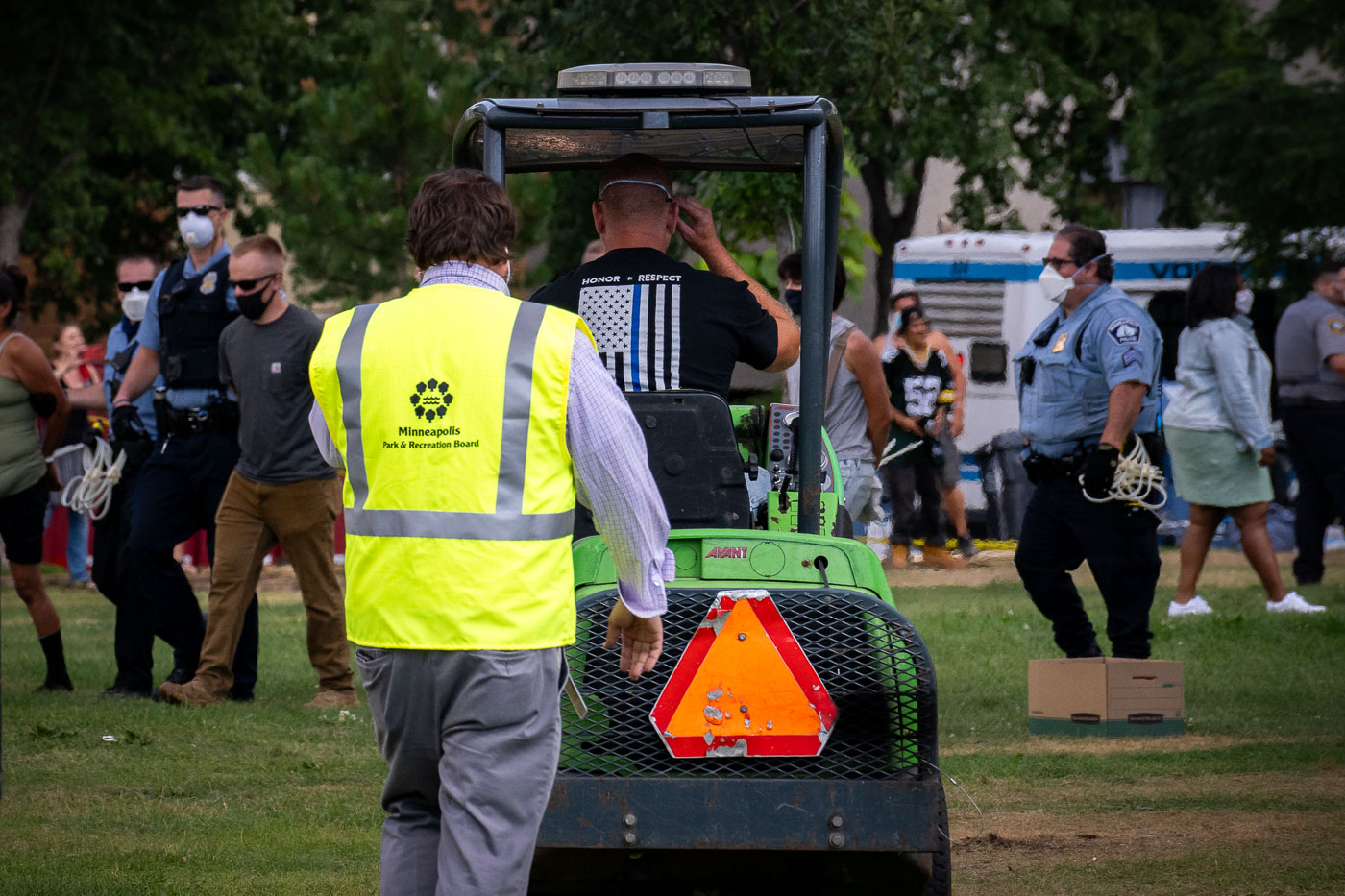
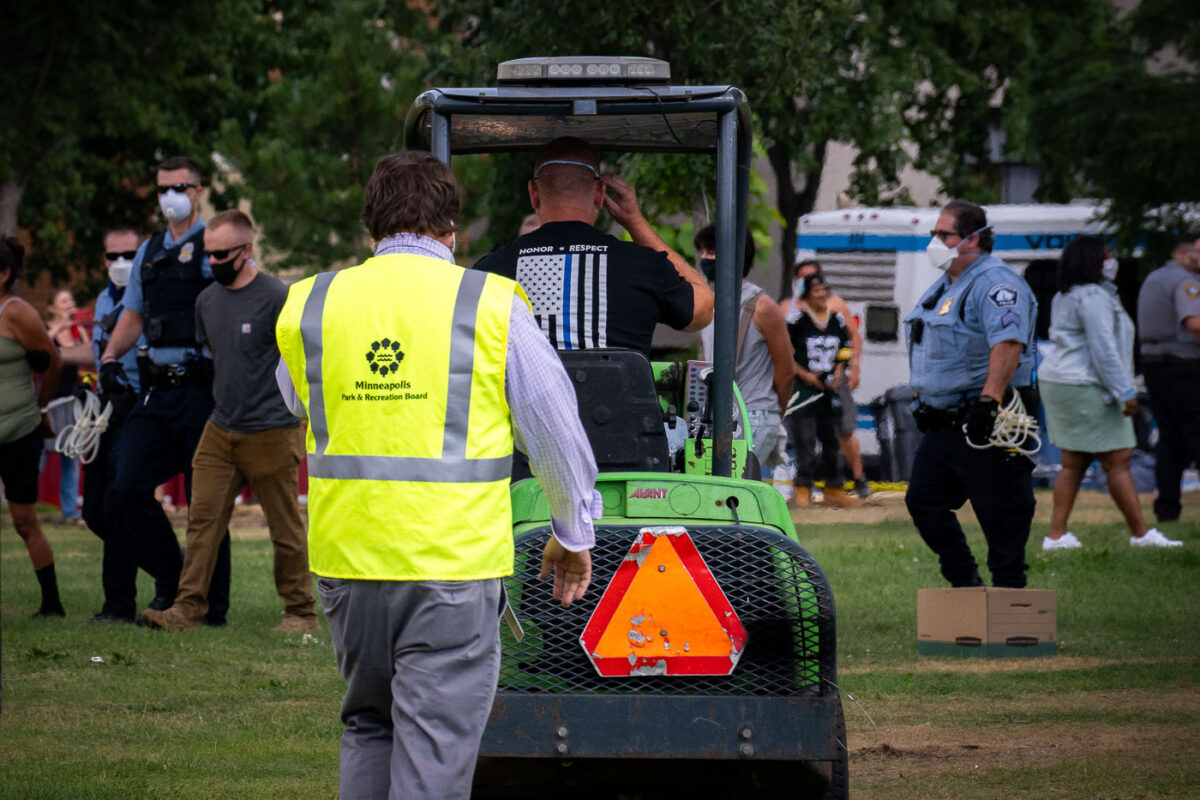
Police bulldoze over tents left behind in Minneapolis park
Minneapolis Park Police personnel clear tents and belongings from an encampment at Powderhorn Park in July 2020. This action followed the establishment of a large homeless encampment in the park, which grew significantly in the wake of the Minneapolis Uprising and broader discussions around housing insecurity. Powderhorn Park, a prominent urban green space in South Minneapolis, is historically designated for public recreation and community events. The clearing operation underscored the complex challenges of homelessness and the management of public spaces within the city.

Minneapolis Park Police bulldoze tents, Powderhorn Park
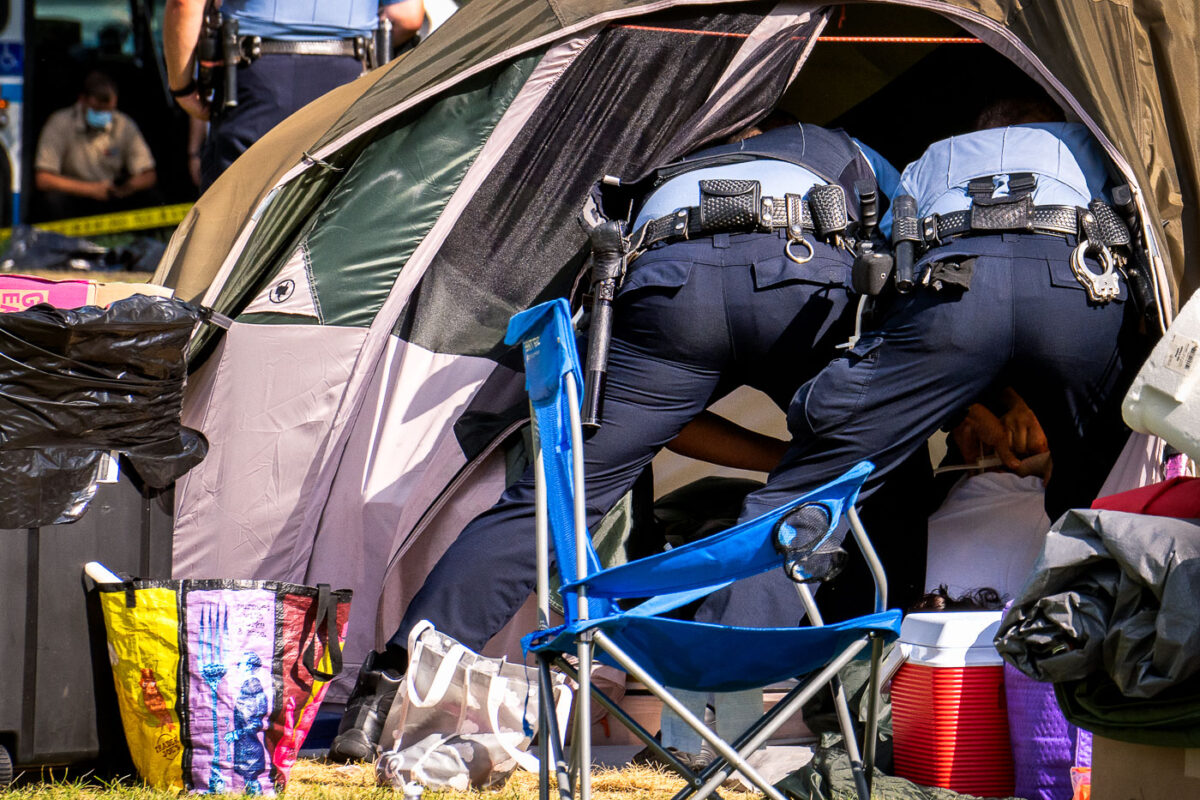
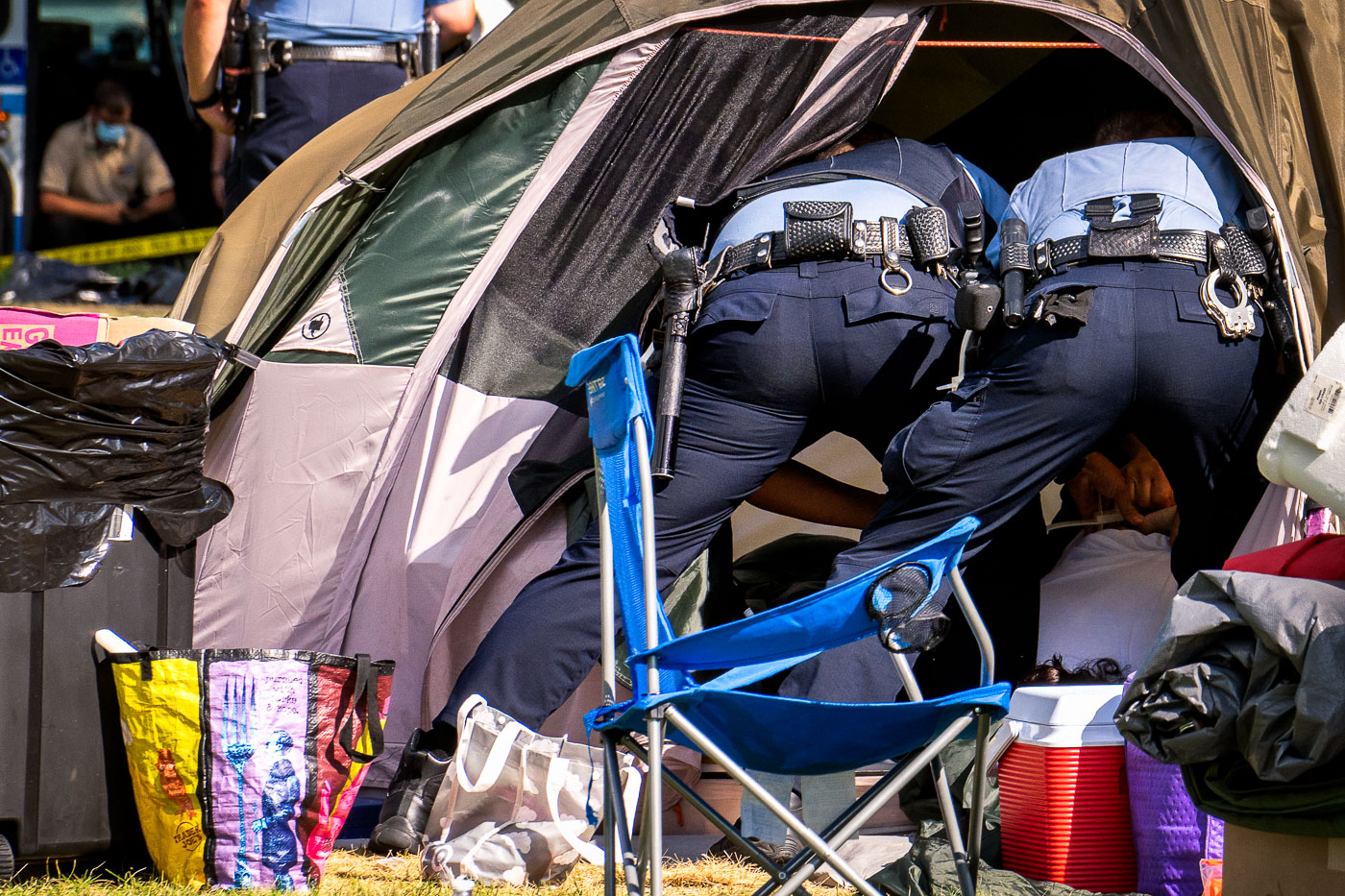
Police officers handcuffing people living in tents in Minneapolis
Minneapolis Park Police officers clear a homeless encampment at Powderhorn Park in South Minneapolis on July 20, 2020. This action addressed the growing number of unsheltered individuals residing in public parks, a situation exacerbated by the social and economic disruptions experienced in Minneapolis during that year. Powderhorn Park, a significant green space in South Minneapolis, became one of several locations where temporary shelters emerged, highlighting the city's challenges with housing insecurity. The clearing operations by park authorities aimed to manage these encampments and public health concerns.

Minneapolis Park Police clear homeless encampment, Powderhorn Park
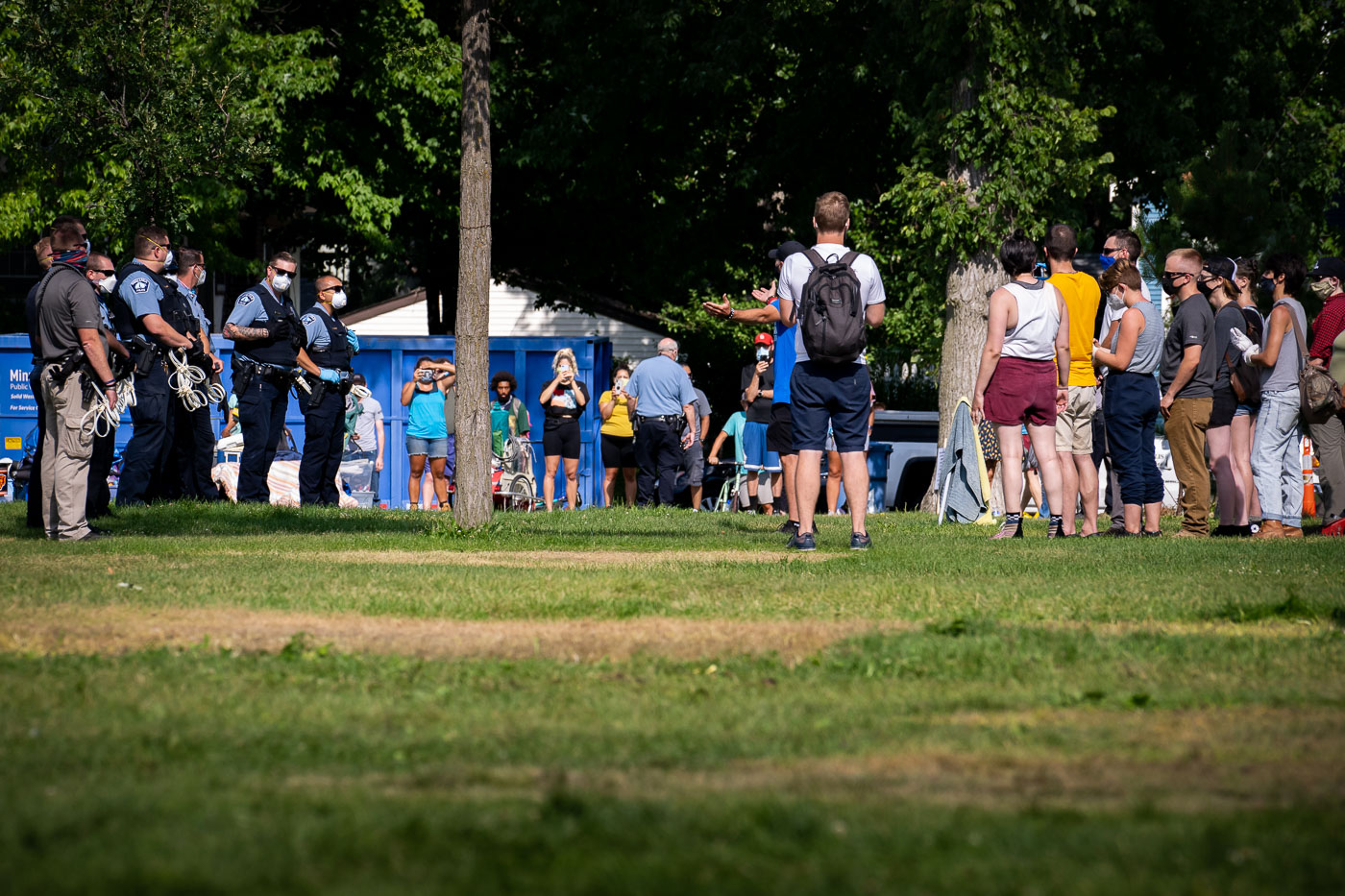
Minneapolis Park Police make arrests at Powderhorn Park
Minneapolis Park Police and Minneapolis Park & Recreation Board staff oversaw the clearing of a homeless encampment at Powderhorn Park in South Minneapolis on July 20, 2020. This operation addressed the significant growth of unhoused individuals residing in the park following the social unrest and economic disruptions experienced in the city during early 2020. Powderhorn Park, a historic green space established in the late 19th century, functions as a vital community and recreational area. The clearing aimed to remove temporary shelters and relocate residents, underscoring the complex challenges of homelessness and the management of public spaces in urban environments.

Powderhorn Park Homeless Encampment Clearing, July 2020
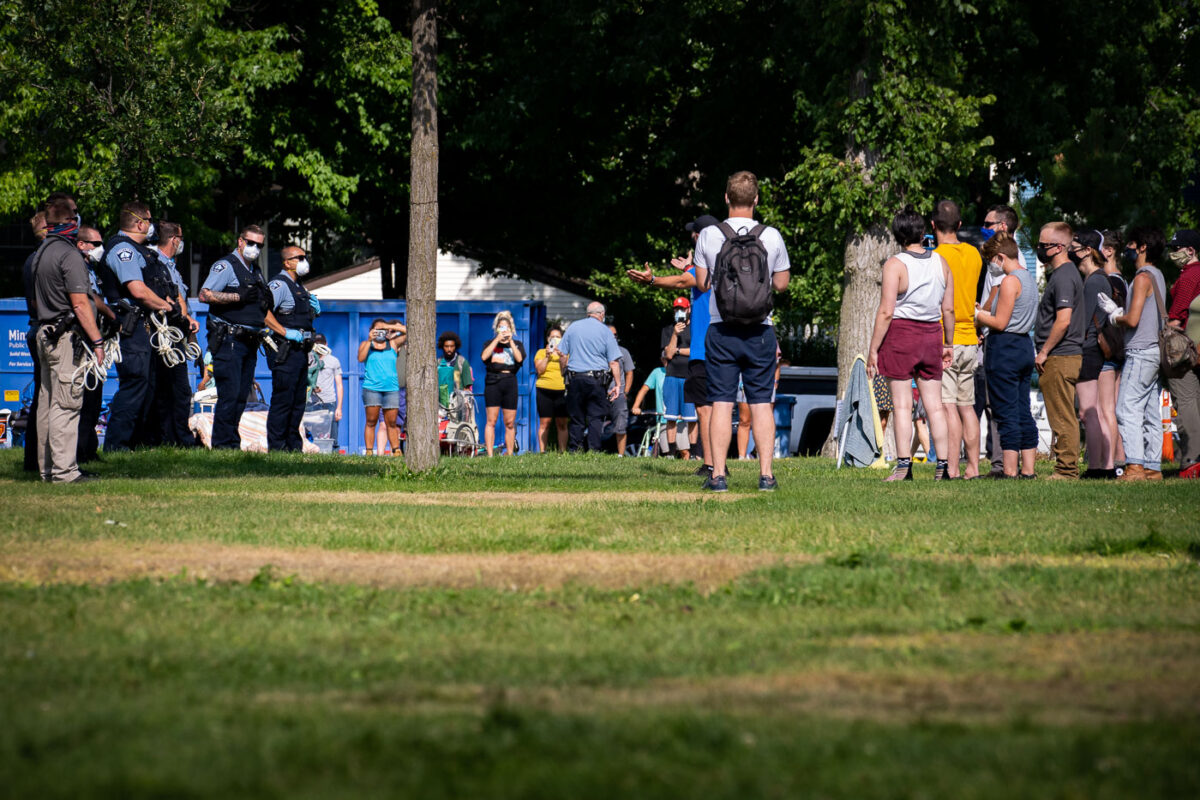
Minneapolis Park police at Powderhorn Park
Minneapolis Park Police officers conducted an eviction of a homeless encampment at Powderhorn Park in South Minneapolis on July 20, 2020. This action occurred during a period of heightened public attention to homelessness and social justice issues in the city, following the civil unrest of the Minneapolis Uprising. Powderhorn Park, a prominent public green space, had become a temporary shelter for many individuals experiencing homelessness throughout the summer. The police operation to remove tents and temporary structures highlighted the ongoing challenges faced by urban communities in addressing housing insecurity and providing adequate support for vulnerable populations.

Minneapolis Park Police Eviction at Powderhorn Park
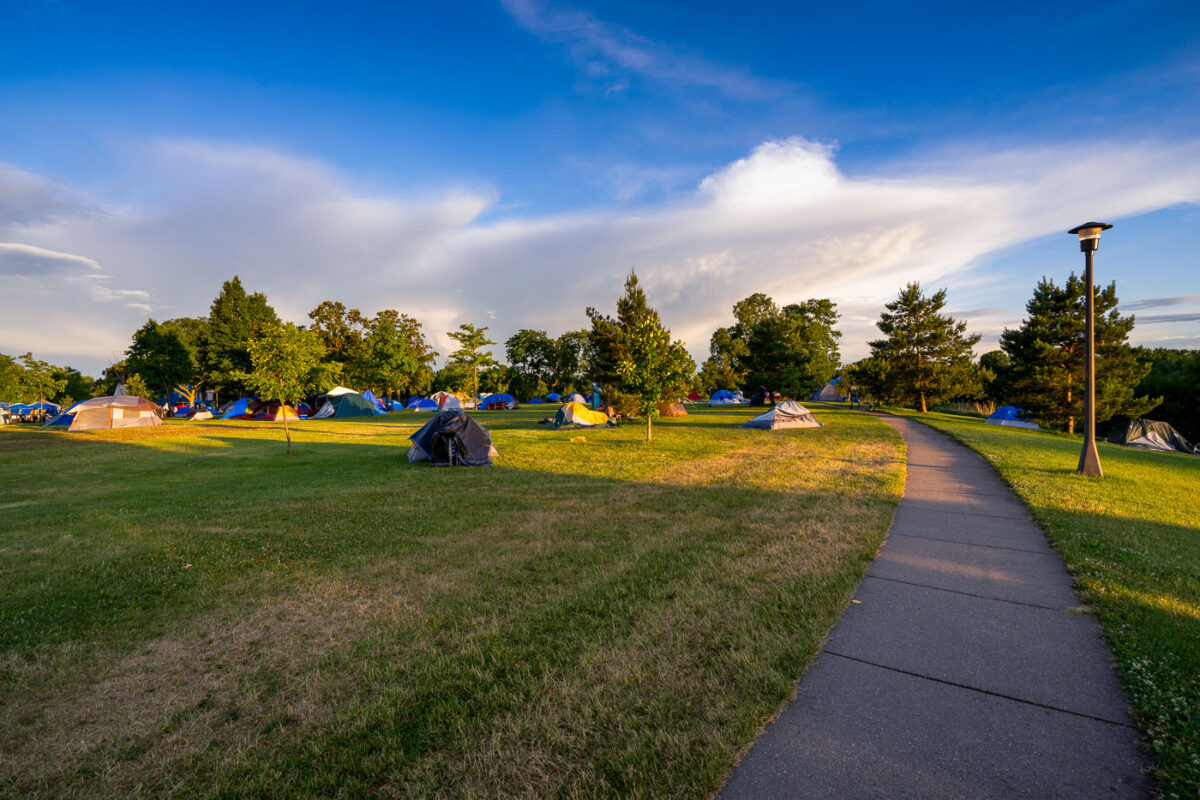
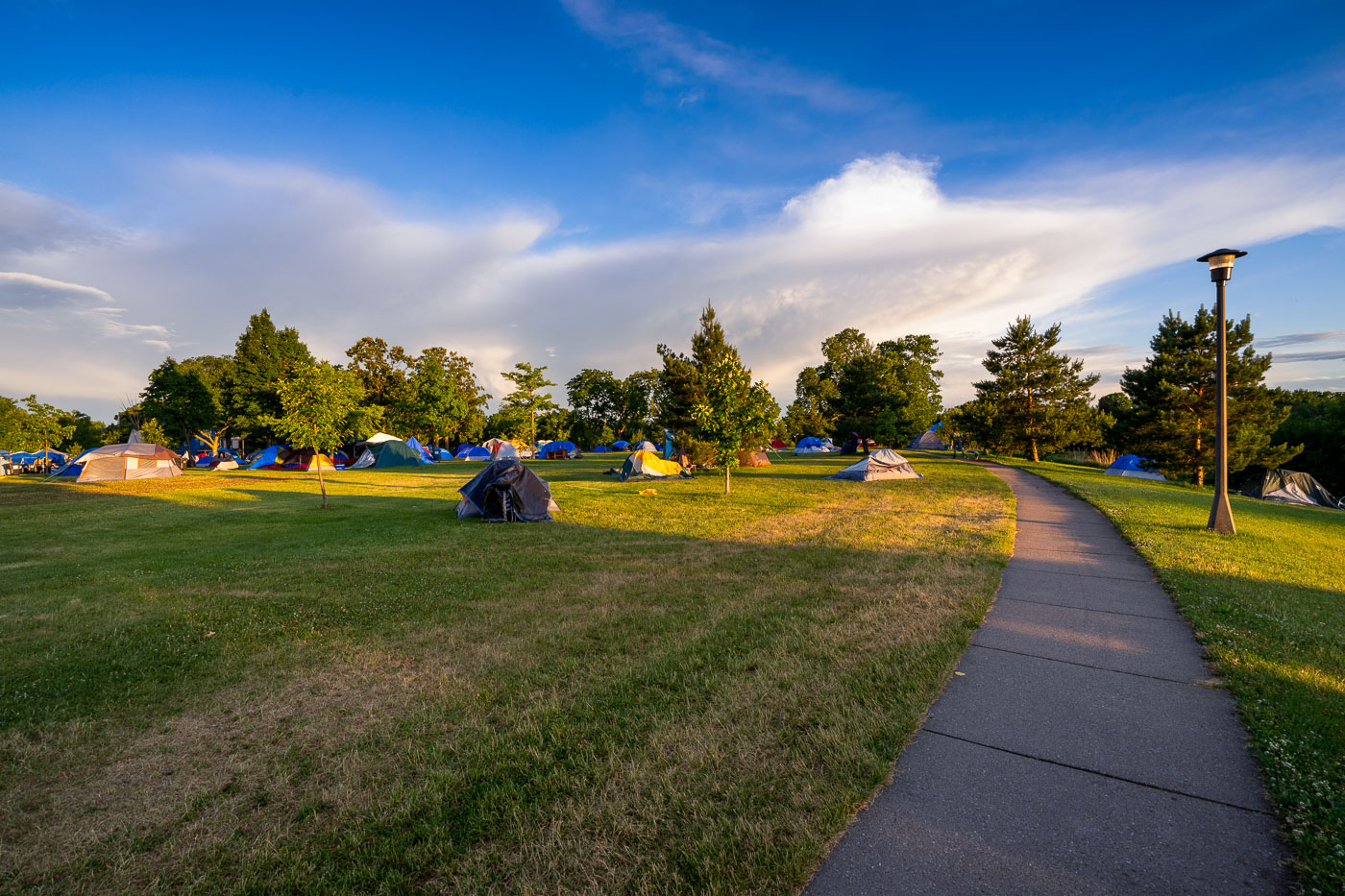
Tent encampment at Powderhorn Park in Minneapolis after residents were displaced from the Sheraton shelter.
A large tent encampment covers part of Powderhorn Park in Minneapolis in June 2020. The camp formed after many unhoused residents were displaced from “The Sanctuary” at the Sheraton Minneapolis Midtown Hotel and moved to the park.

Powderhorn Park Eviction Encampment, Minneapolis
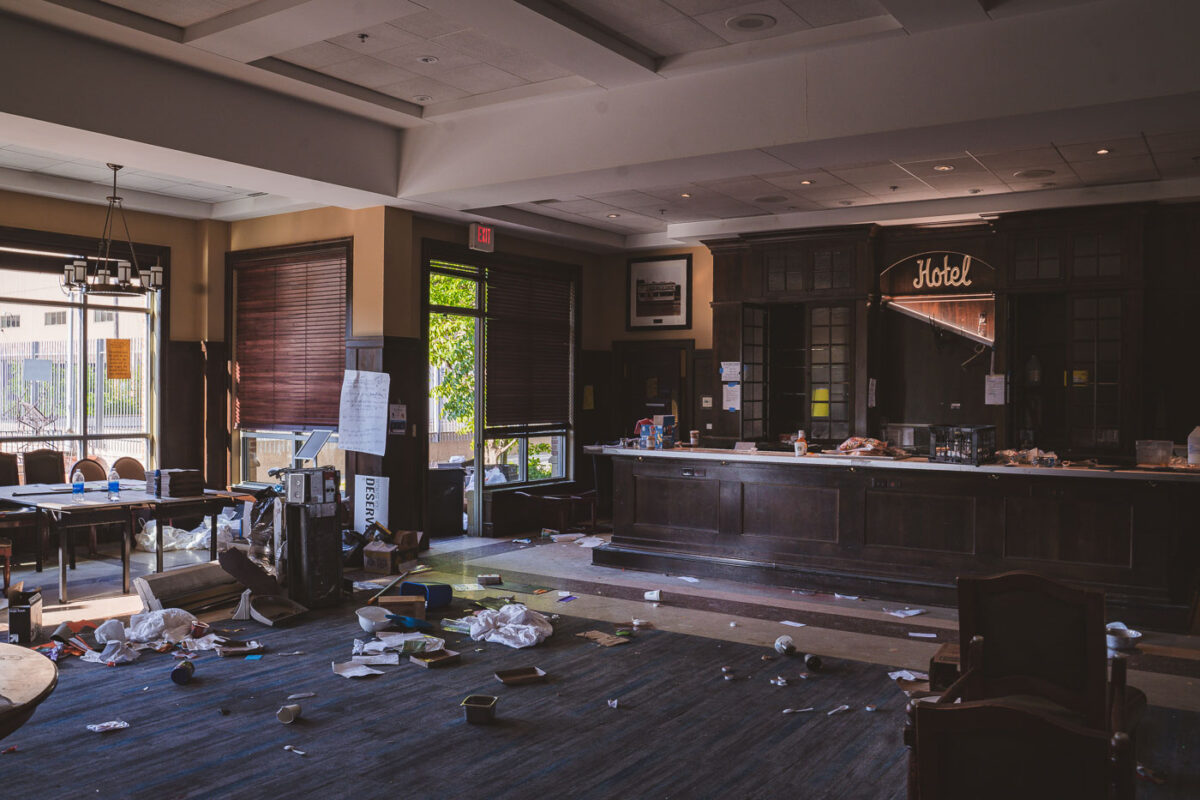
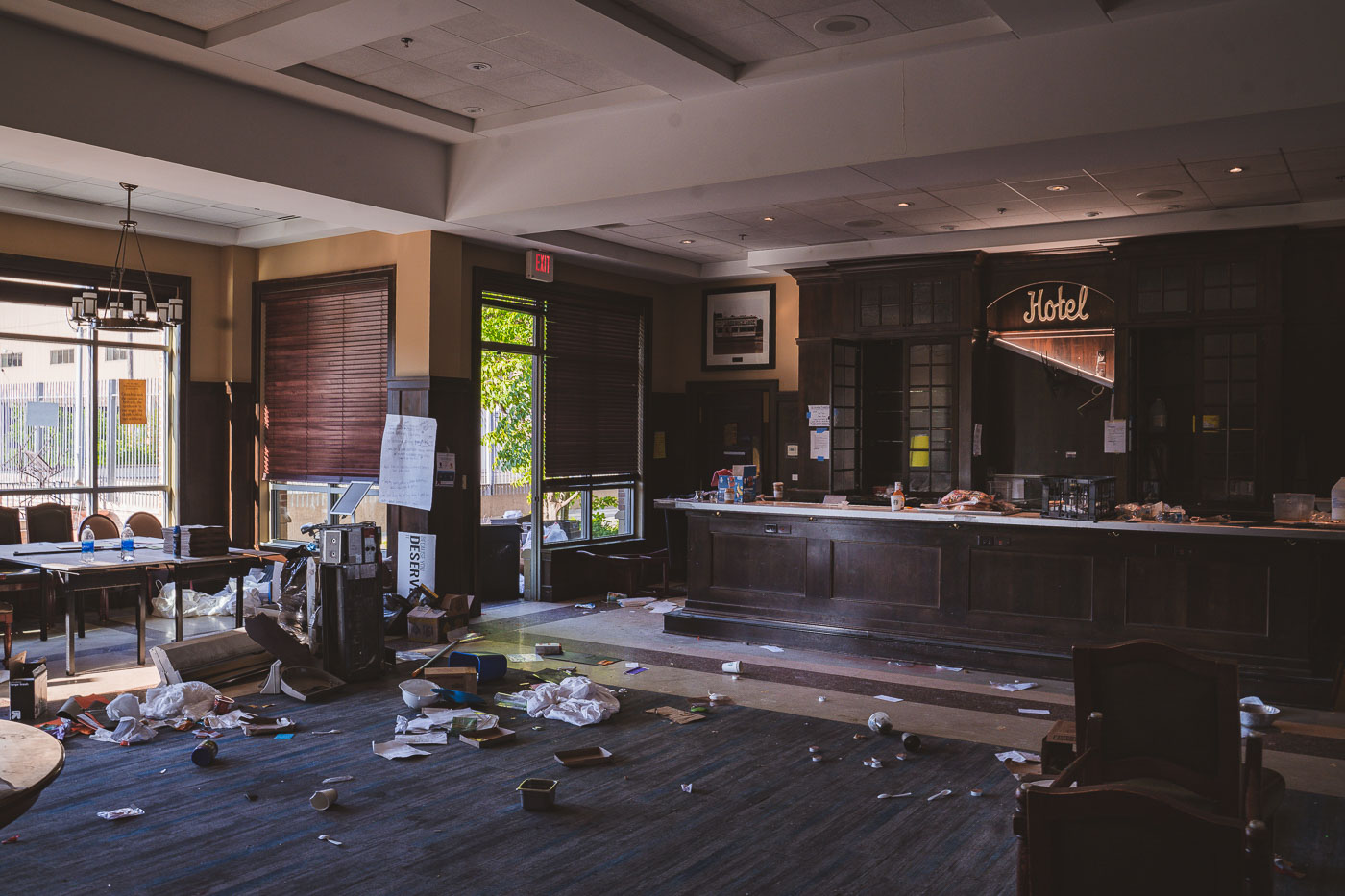
Damaged lobby of the Midtown Sheraton on Lake Street in Minneapolis, with debris scattered across the floor.
The lobby of the Midtown Sheraton on Lake Street in Minneapolis sits in disarray, with scattered trash, overturned items, and a damaged front desk visible in the hotel interior. The property was used during the COVID-19 pandemic to house people experiencing homelessness. By June 2020, after those residents had left, the building bore damage associated with unrest that followed the murder of George Floyd.

Midtown Sheraton Lobby Damage, Minneapolis Uprising
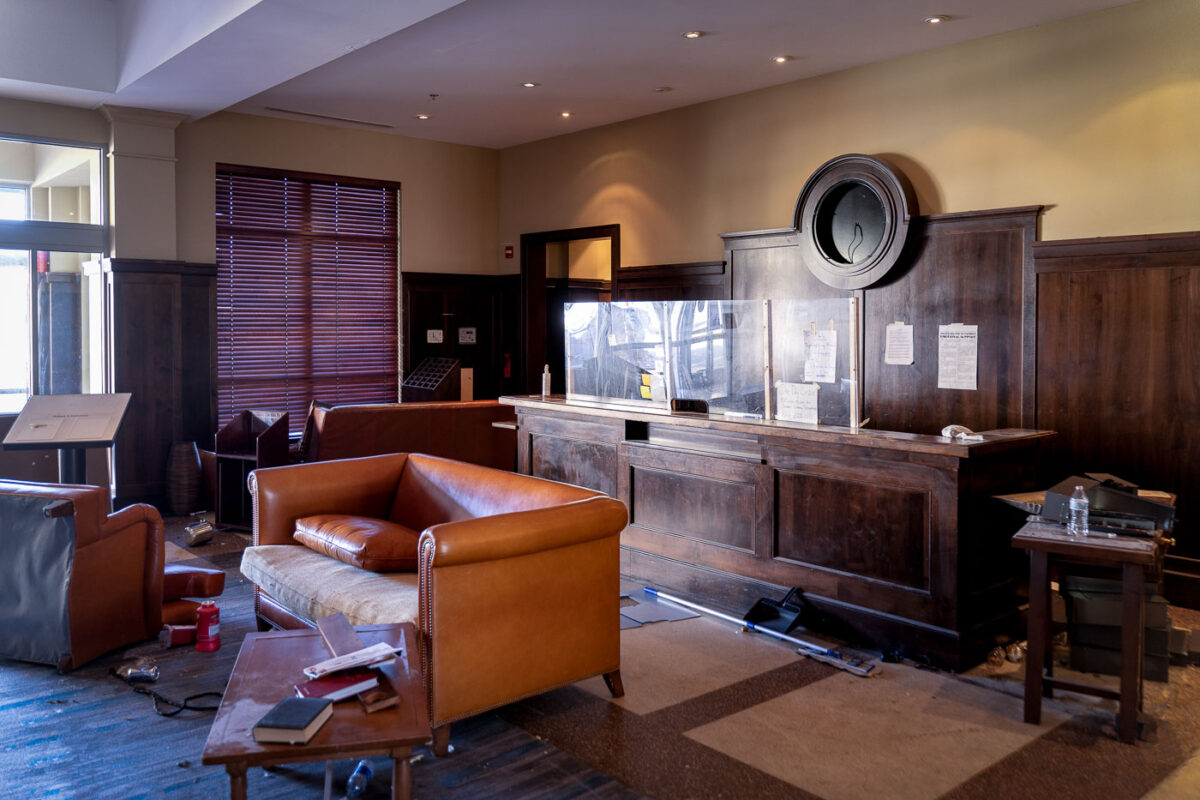
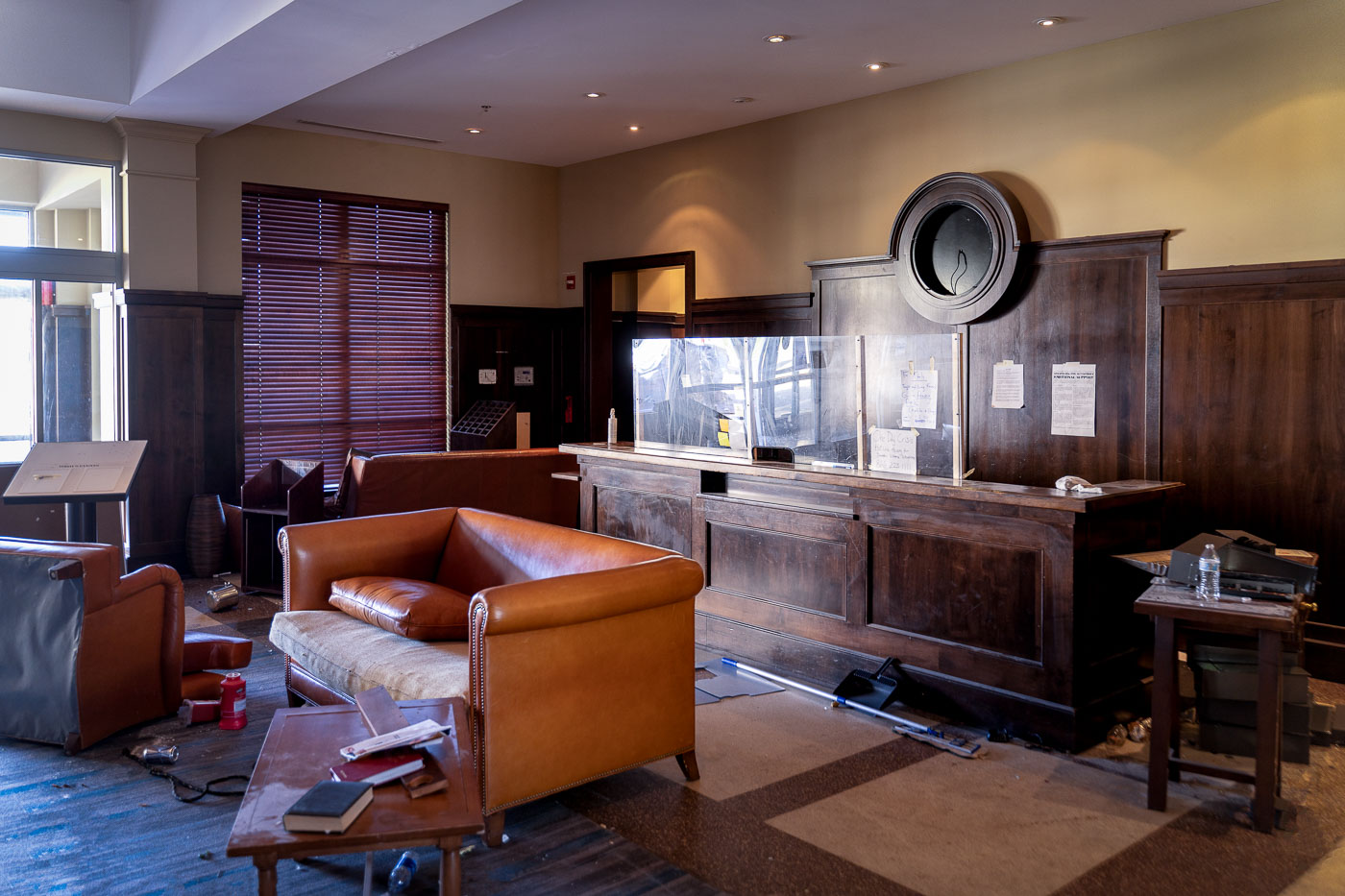
Sheraton Hotel lobby on Lake Street in Minneapolis with debris, scattered furniture, and notices on the front desk.
The Sheraton Hotel lobby on Lake Street in Minneapolis is shown in disarray on June 12, 2020. During the unrest that followed the murder of George Floyd, the hotel was temporarily used as shelter for people experiencing homelessness. The reception desk is covered by a clear barrier and posted notices, while overturned furniture, scattered belongings, and debris remain across the lobby floor.

Sheraton Hotel Lobby Takeover, Minneapolis 2020
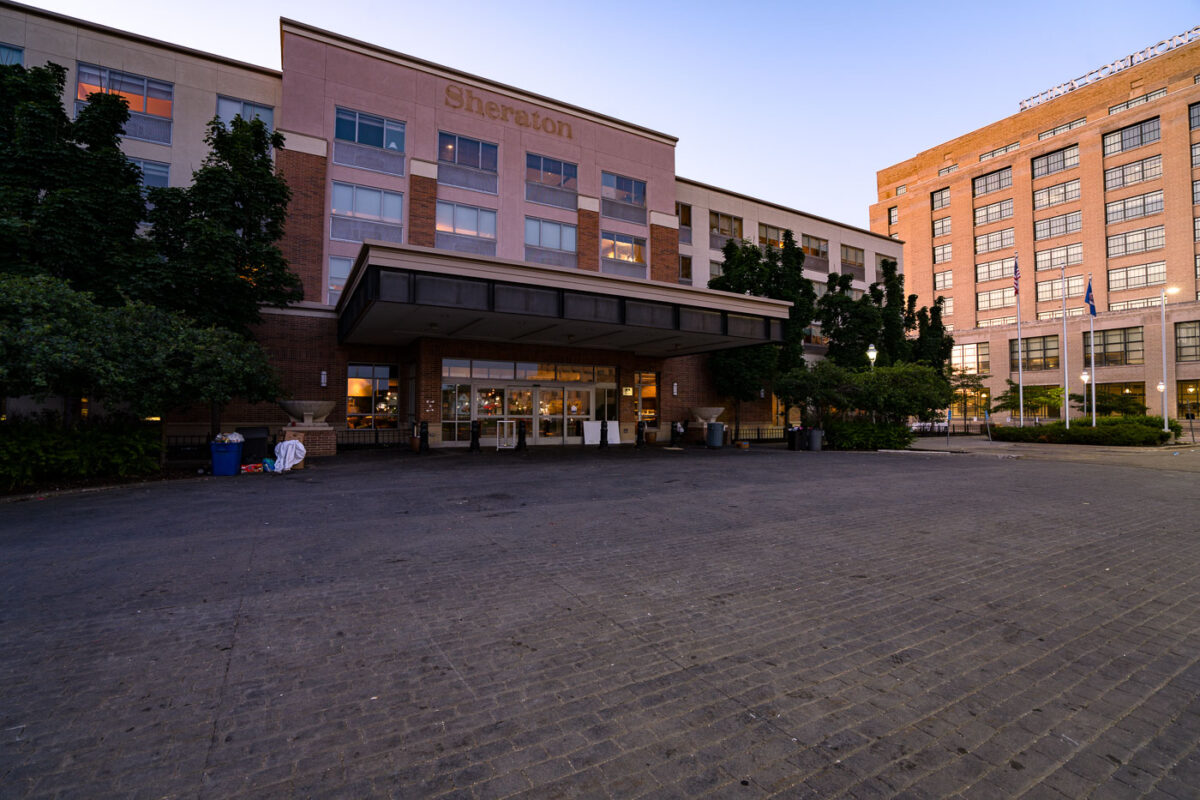
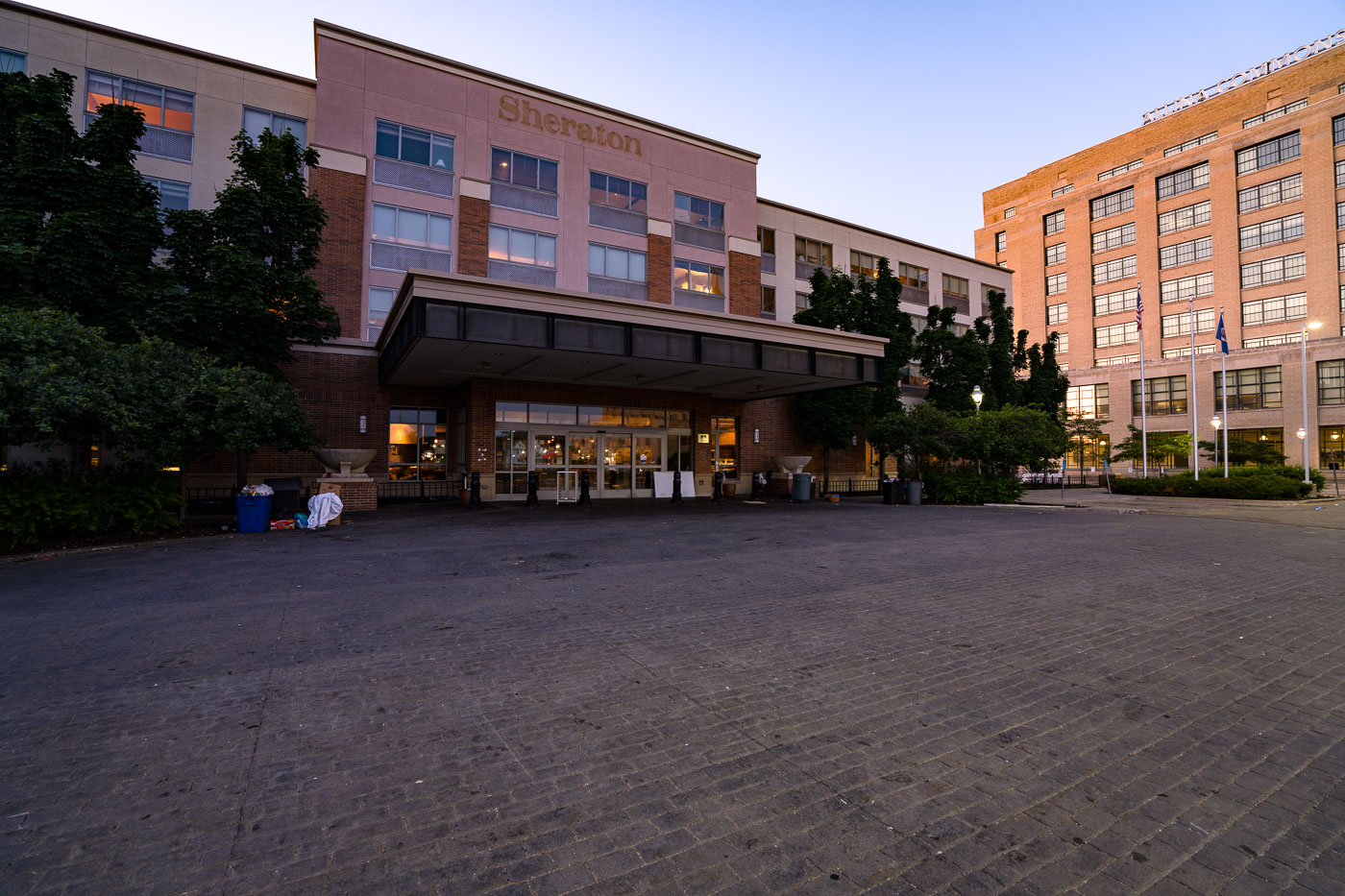
Former Sheraton Hotel in Minneapolis, used as a temporary shelter in June 2020.
The former Sheraton Hotel in Minneapolis is shown at dusk, with the neighboring Allina Commons building visible at right. In June 2020, after the killing of George Floyd and the unrest that followed in the city, the hotel was repurposed as a temporary shelter for people experiencing homelessness. The building’s use during that period reflected an emergency response to immediate housing and safety needs near the Lake Street corridor.

Former Sheraton Hotel, Minneapolis, Post-Uprising Shelter
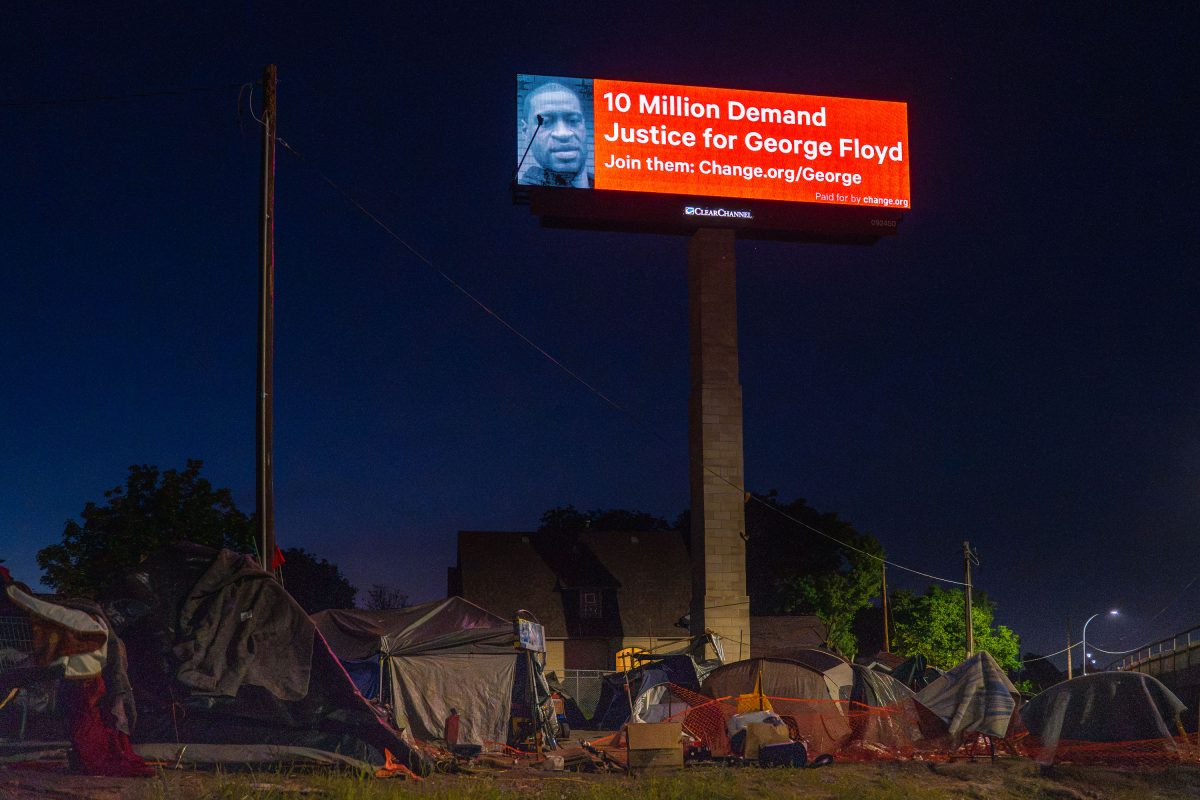
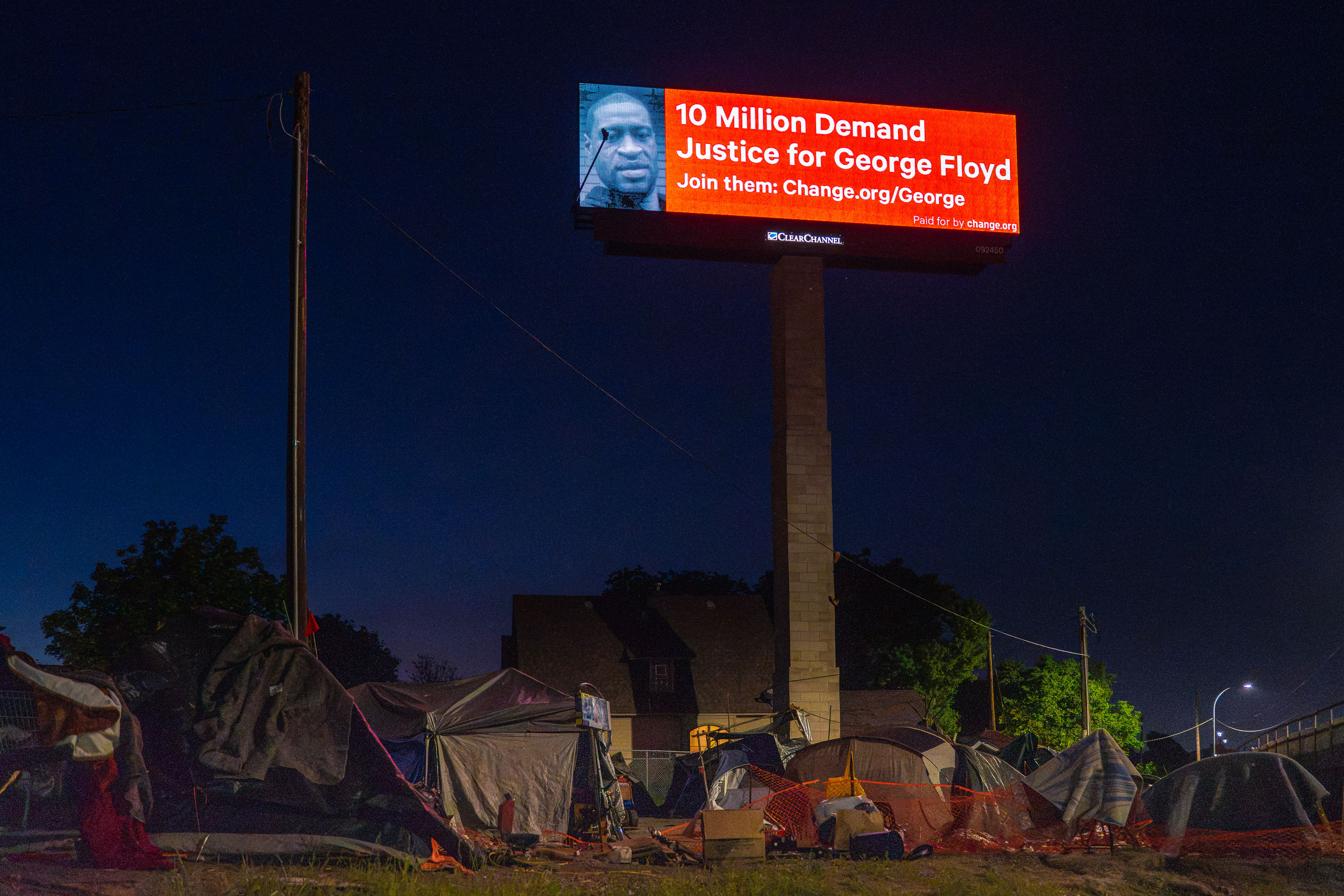
George Floyd billboard above an encampment in June 2020.
A Justice for George Floyd billboard seen above an encampment in Minneapolis 3 days after his murder.

Justice For George Floyd billboard in Minneapolis

Built in Minneapolis

Minneapolis Photographer

Browse by location, move through long-running series, or start with recent work.