Evening at Yoyogi Station
As dusk settles over Shibuya, the illuminated sign of Yoyogi Station (代々木駅) glows against a deep indigo sky, marking one…
Explore photos in Asia.
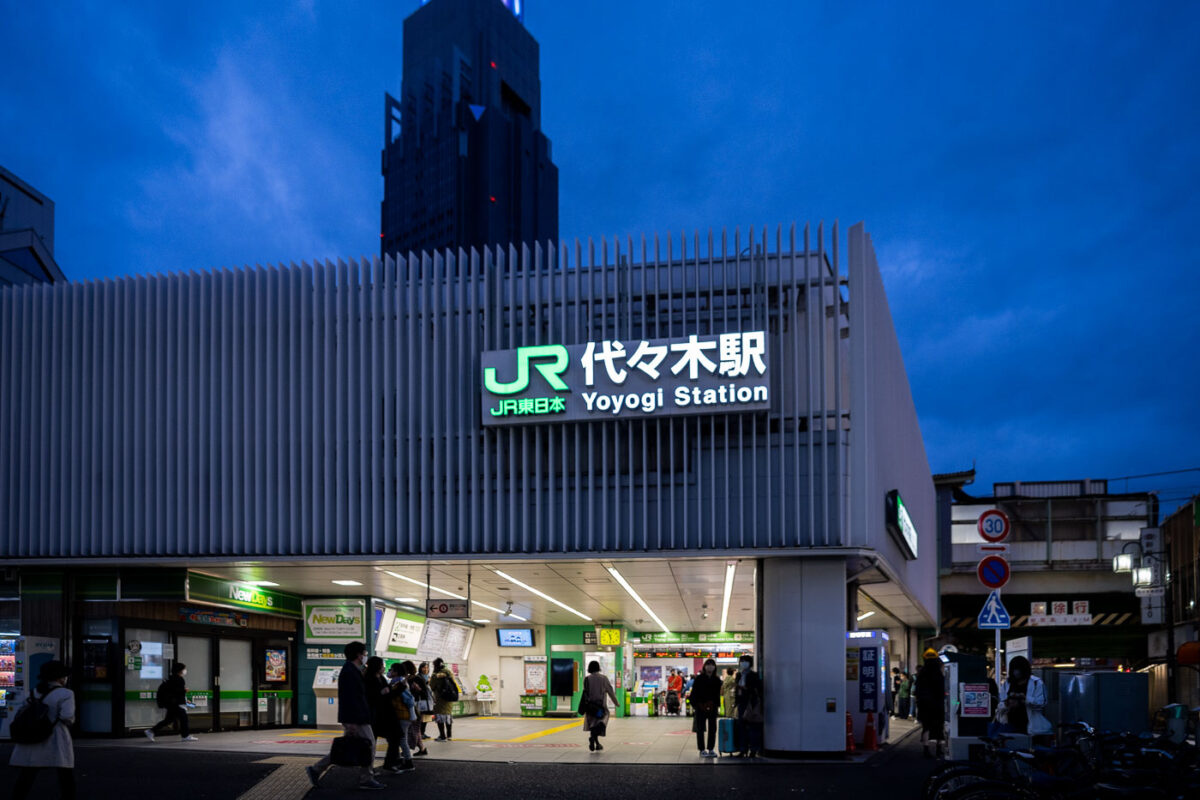
March 2023 — As dusk settles over Shibuya, the illuminated sign of Yoyogi Station (代々木駅) glows against a deep indigo sky, marking one of Tokyo’s key JR East commuter hubs. Opened in 1906, Yoyogi serves both the Yamanote and Chuo-Sobu lines, connecting thousands of travelers daily between Shinjuku and Harajuku. The cool blue hour lighting highlights the crisp white façade and the green JR branding, captured here with a balanced exposure to preserve both architectural detail and ambient light reflections. Taken in early evening with a 35mm f/1.8 lens, this frame emphasizes the quiet rhythm of Tokyo’s rush hour just before nightfall.
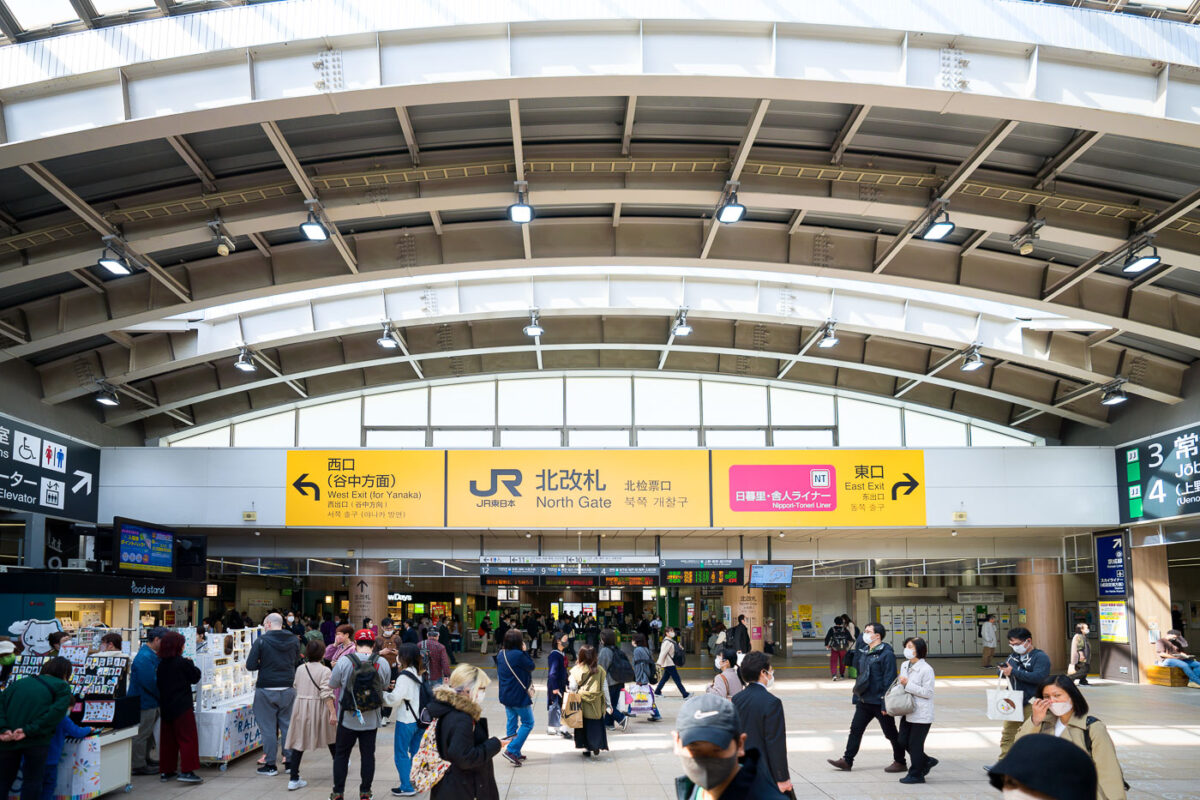
March 2023 — Passengers move through the North Gate of JR Nippori Station, a key interchange for the Yamanote, Keihin-Tohoku, and Joban lines as well as the Nippori–Toneri Liner. Prominent yellow JR East signage directs travelers toward the West Exit for Yanaka and the East Exit for Ueno. The open, modern concourse design reflects Nippori’s role as both a commuter hub and gateway to nearby traditional neighborhoods.
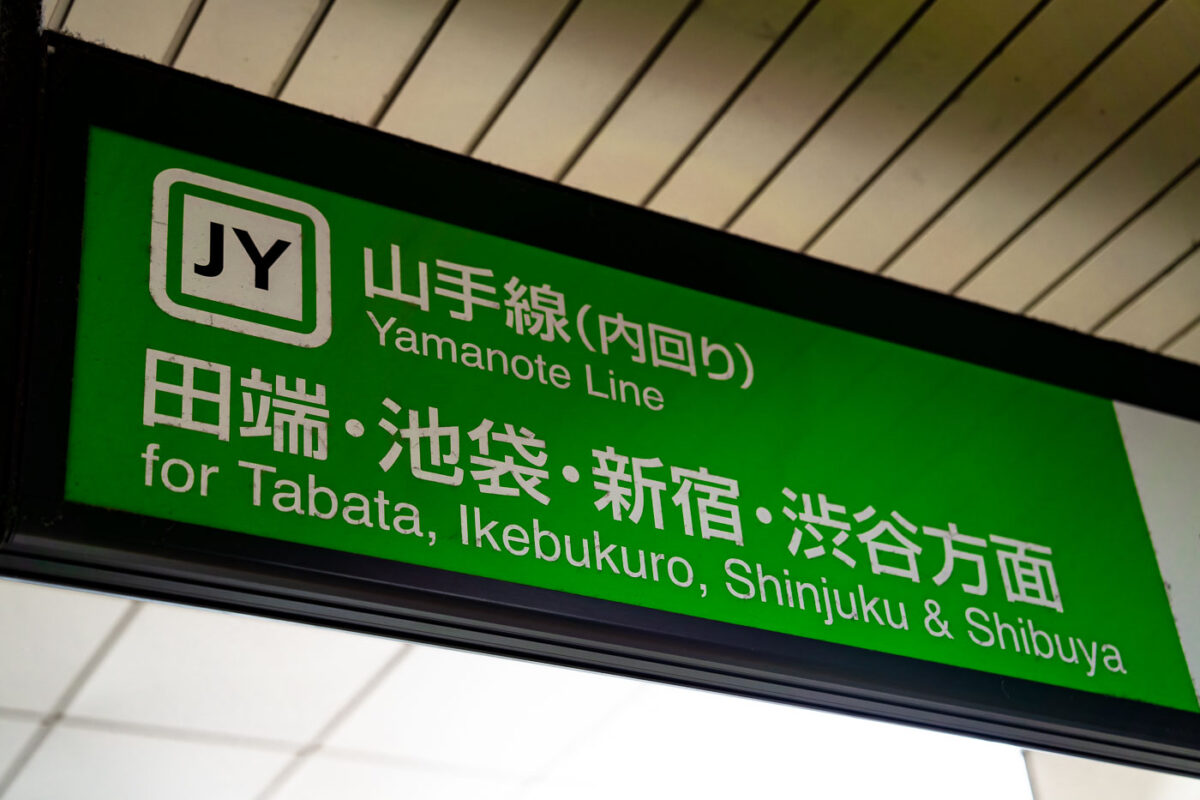
March 2023 — A sign for the JR Yamanote Line displays the inner loop direction toward Tabata, Ikebukuro, Shinjuku, and Shibuya. The familiar green design and “JY” line code mark one of Tokyo’s busiest and most important rail routes, which circles the city’s central districts. The bilingual signage reflects Japan Rail’s standardized system for navigation across Tokyo’s dense network of stations.
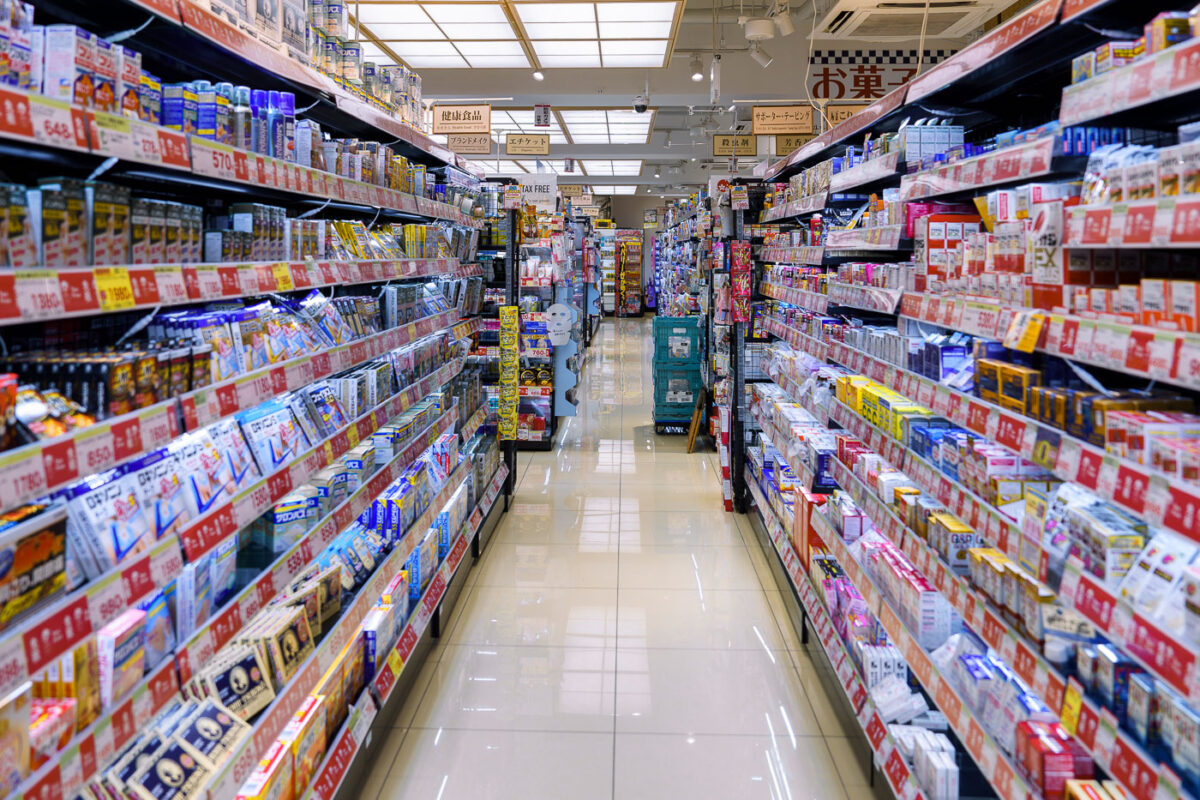
March 2023 — A well-stocked aisle inside a convenience store in Tokyo, photographed in March 2023. Japan’s major chains—such as Lawson, FamilyMart, and 7-Eleven—are known for their dense product layouts, where shelves are filled with everything from health supplements and over-the-counter medicines to snacks, instant meals, and travel essentials. Convenience stores, or konbini, have played an important role in daily urban life since rapid expansion in the 1980s, providing reliable 24-hour access to food, bill-paying services, parcel pickup, and seasonal goods. Their efficient layouts and constant product rotation reflect Japan’s retail culture, where limited-edition items, regional flavors, and promotional displays are updated weekly to match demand and maximize shelf use.
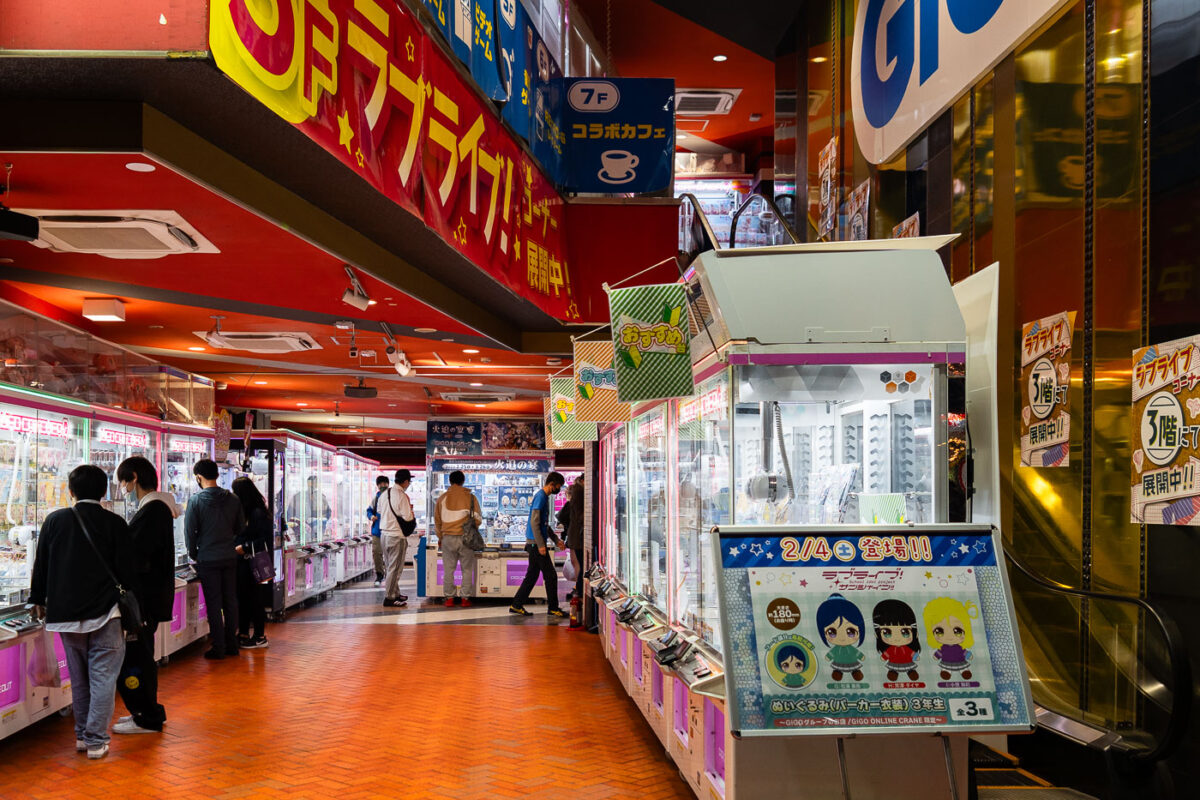
March 2023 — Inside the multi-floor Gigo arcade complex in Akihabara, photographed in March 2023, rows of brightly lit crane and prize machines fill an entire level dedicated to character-themed merchandise and limited-run collectibles. Facilities like this became a defining part of Akihabara’s post-2000s shift from an electronics-focused district to a broader entertainment hub centered around gaming, anime culture, and specialty retail. Originally operated under the SEGA brand until a 2022 rebranding, Gigo retained the large-scale arcade format that has long been a staple of Tokyo’s urban leisure landscape. The popularity of crane games—often refreshed with seasonal or collaboration prizes—continues to draw both local players and visitors exploring the district’s modern pop-culture identity.
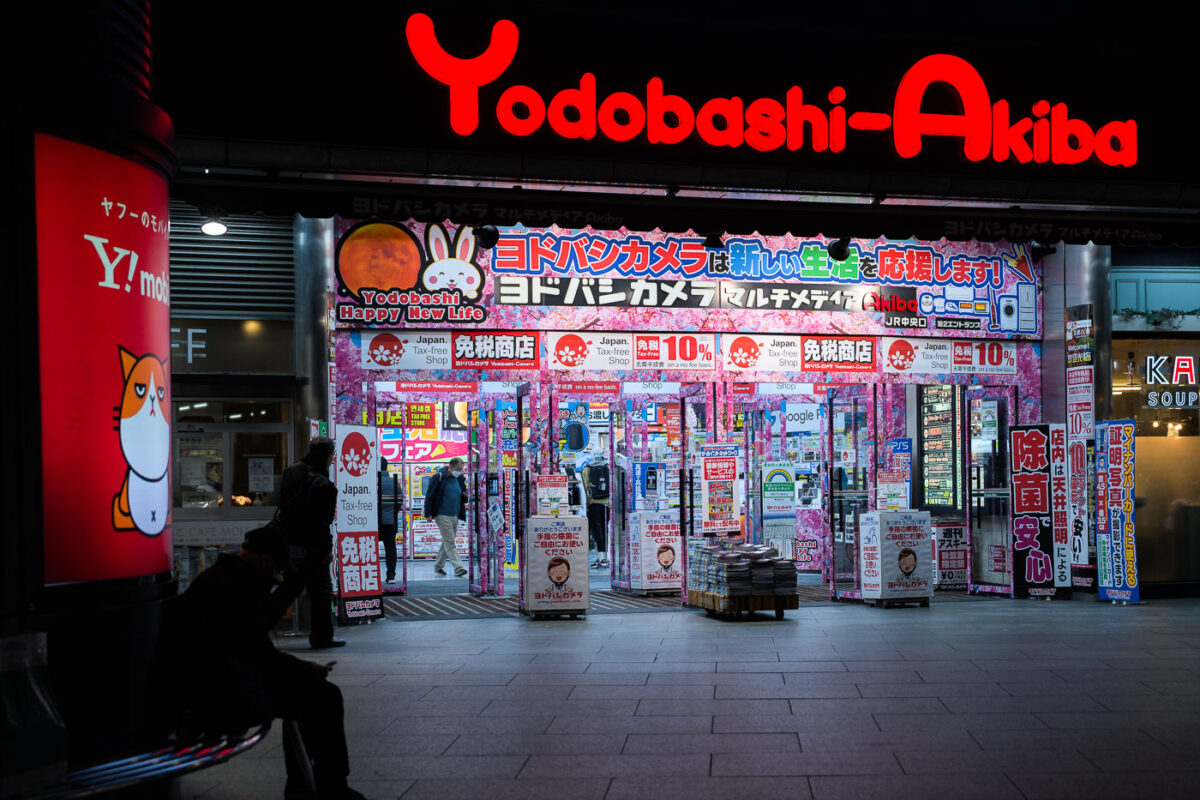
March 2023 — Yodobashi-Akiba, photographed in March 2023, is one of Tokyo’s largest electronics retail complexes and a major landmark in the Akihabara district. Opened in 2005 as part of a wider redevelopment effort around JR Akihabara Station, the multi-story store consolidated several specialty floors—computers, cameras, gaming, home appliances, musical instruments—into a single destination that helped redefine the area’s retail identity in the 2000s. Its brightly illuminated entrance, typically covered in seasonal and promotional signage, reflects the competitive electronics market that shaped modern Akihabara. The building also connects directly to the Tsukuba Express line and sits beside the redevelopment zone that transformed the district from its postwar reputation as “Electric Town” into a mix of technology retail, office towers, and entertainment venues.
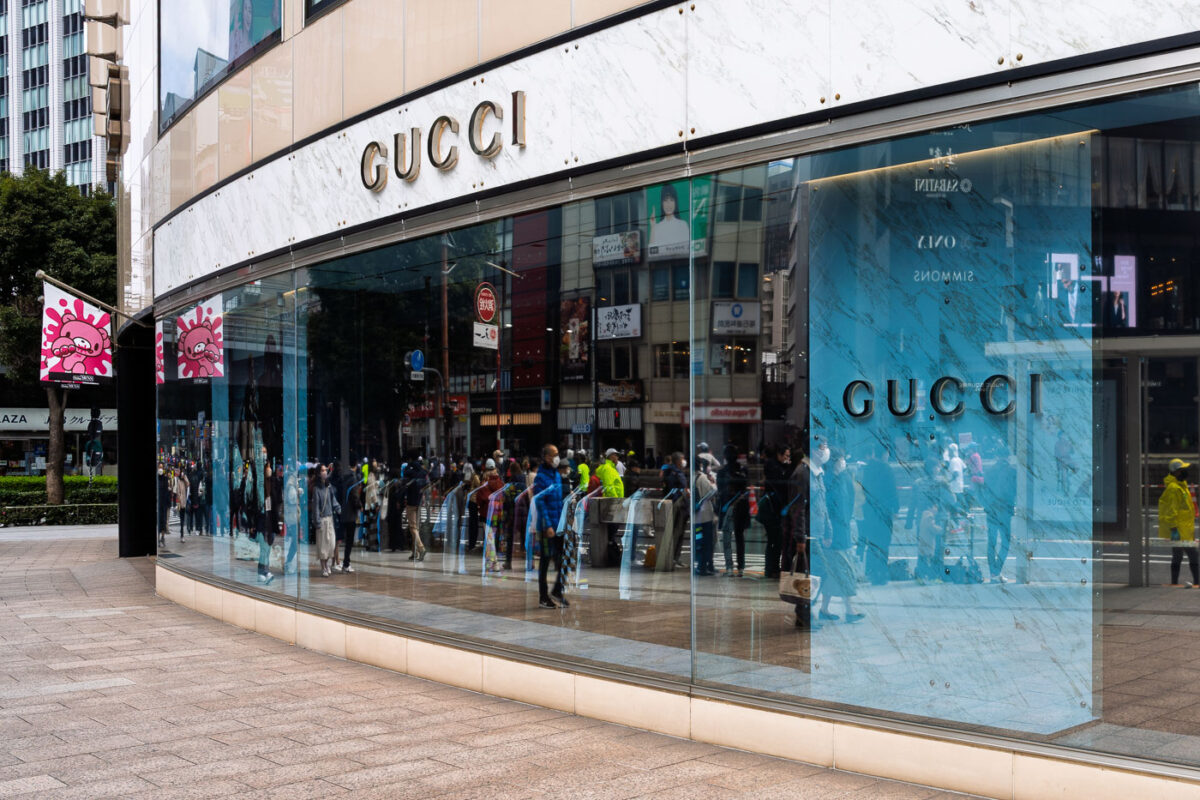
March 2023 — Marathon runners outside the Gucci flagship store in Tokyo’s Ginza district, their reflections merging with the pale blue marble of the storefront’s curved glass façade. The mirrored surface creates a layered composition — a city within a window — blending luxury retail architecture with the urban motion of shoppers and commuters. Behind the glass, soft interior lighting contrasts with the bustle outside, capturing a quiet tension between aspiration and reality. The scene evokes Ginza’s dual identity as both a symbol of global consumer culture and a distinctly Japanese streetscape, where design, commerce, and reflection coexist seamlessly.
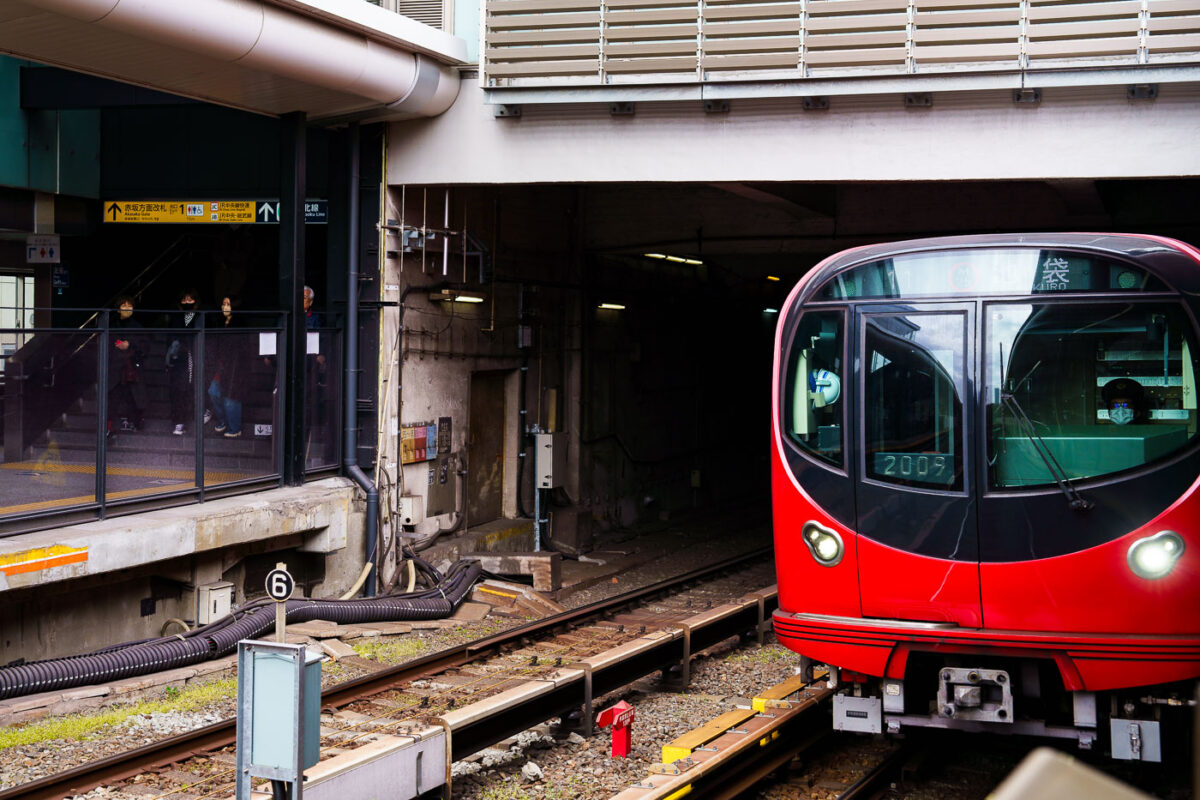
March 2023 — A Tokyo Metro Marunouchi Line train approaches its terminal platforms during a March 2023 visit. The Marunouchi Line, one of Tokyo’s earliest postwar subway routes, opened in 1954 and played a key role in connecting the expanding Yamanote district centers with government and commercial areas in central Tokyo. Its distinctive red livery has remained a defining visual identity for decades, even as the rolling stock has undergone multiple modernizations. Ikebukuro, the northern terminus of the line, is one of Tokyo’s busiest rail hubs, jointly served by JR East, the Seibu and Tobu railway networks, and several Metro lines. The station complex was heavily rebuilt throughout the late 20th century to handle increasing commuter volumes, resulting in the multi-level platform and passageway layout still in use today.
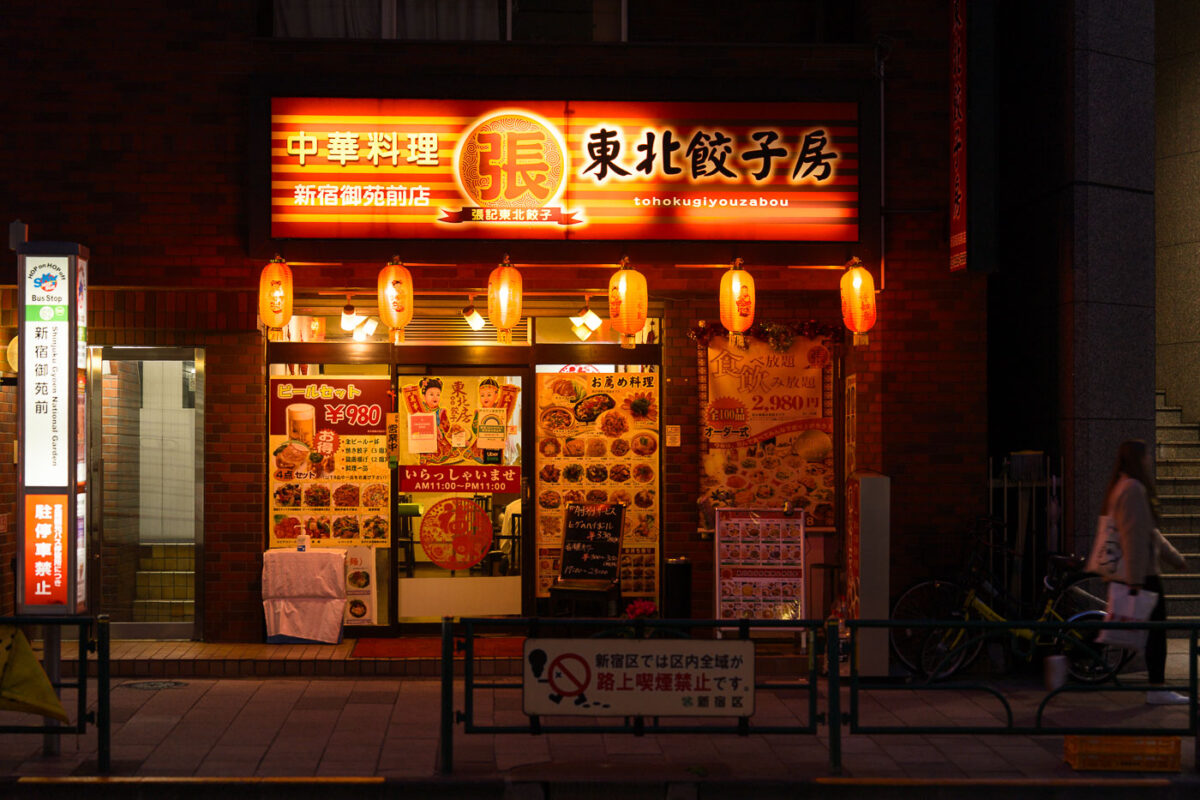
March 2023 — Tohoku Gyozabou, located just east of Shinjuku Gyoen National Garden, is one of many small neighborhood restaurants that serve the area’s mix of office workers, residents, and visitors. Spots like this are common throughout Shinjuku’s quieter side streets, offering regional Chinese-style dishes and set meals late into the evening, contrasting with the larger entertainment corridors to the west around Shinjuku Station and Kabukichō. The surrounding district developed after World War II as Shinjuku expanded outward from the rail hub, creating a network of narrow commercial blocks filled with independent eateries. Many of these restaurants continue to display brightly illuminated exterior menus and lantern signage, part of the city’s longstanding street-level food culture that encourages casual walk-in dining.
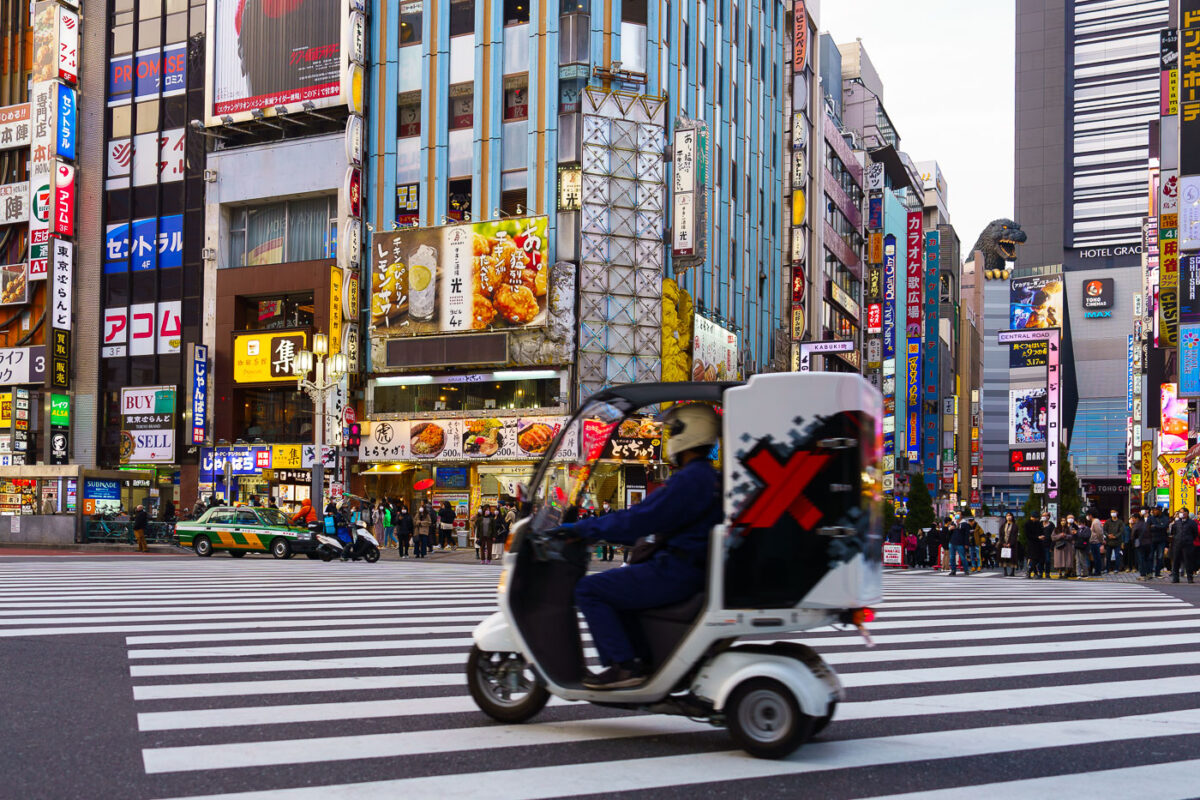
March 2023 — A delivery scooter moves through the large scramble crossing on Central Road in Kabukichō, one of Shinjuku’s busiest commercial corridors. This stretch of the district, located just north of Yasukuni-dōri, has been a dense entertainment zone since the postwar reconstruction era, eventually becoming known for its mix of cinemas, restaurants, arcades, karaoke towers, and neon advertising stacked across narrow mid-rise buildings. The tall signs and narrow storefronts reflect the vertical commercial pattern typical of Shinjuku’s nightlife blocks, where multiple businesses occupy each floor and compete for visibility at street level. In the distance, the Godzilla head mounted atop the Hotel Gracery Shinjuku—installed in 2015 as part of the Toho Cinemas complex—has become one of the district’s most recognizable landmarks, connecting the area’s contemporary tourism appeal with Japan’s long-running film history.
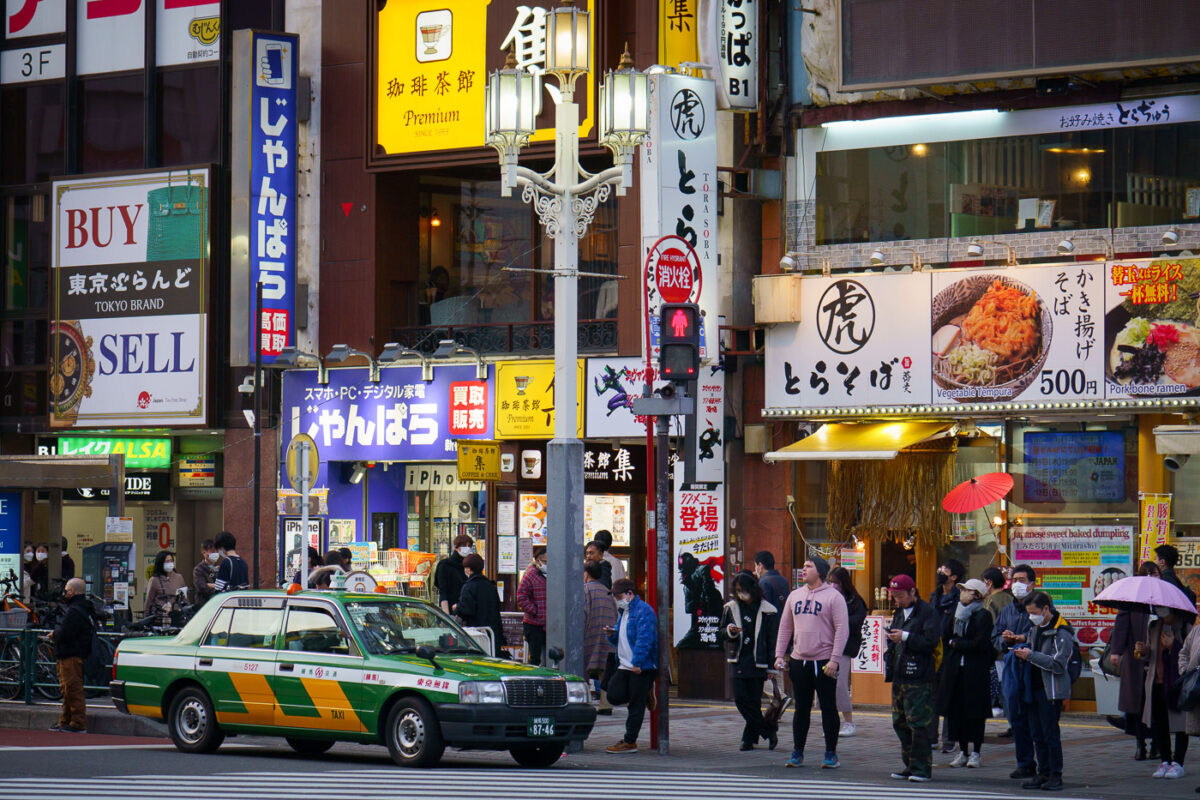
March 2023 — A Tokyo taxi waits at a crossing in Kabukichō, the entertainment district of Shinjuku known for its dense concentration of restaurants, bars, and late-night businesses. The area around Yasukuni-dōri and Shinjuku Station’s east side has long been one of Tokyo’s busiest pedestrian zones, with a mix of small eateries, electronics resellers, and long-established cafés occupying the mid-rise commercial blocks. The green-and-yellow taxi livery seen here is one of Tokyo’s standard color schemes, used by several of the city’s major cab companies since the late twentieth century. The surrounding storefronts reflect Kabukichō’s layered commercial history, where postwar restaurants, national chains, and contemporary pop-culture signage coexist within the same streetscape.
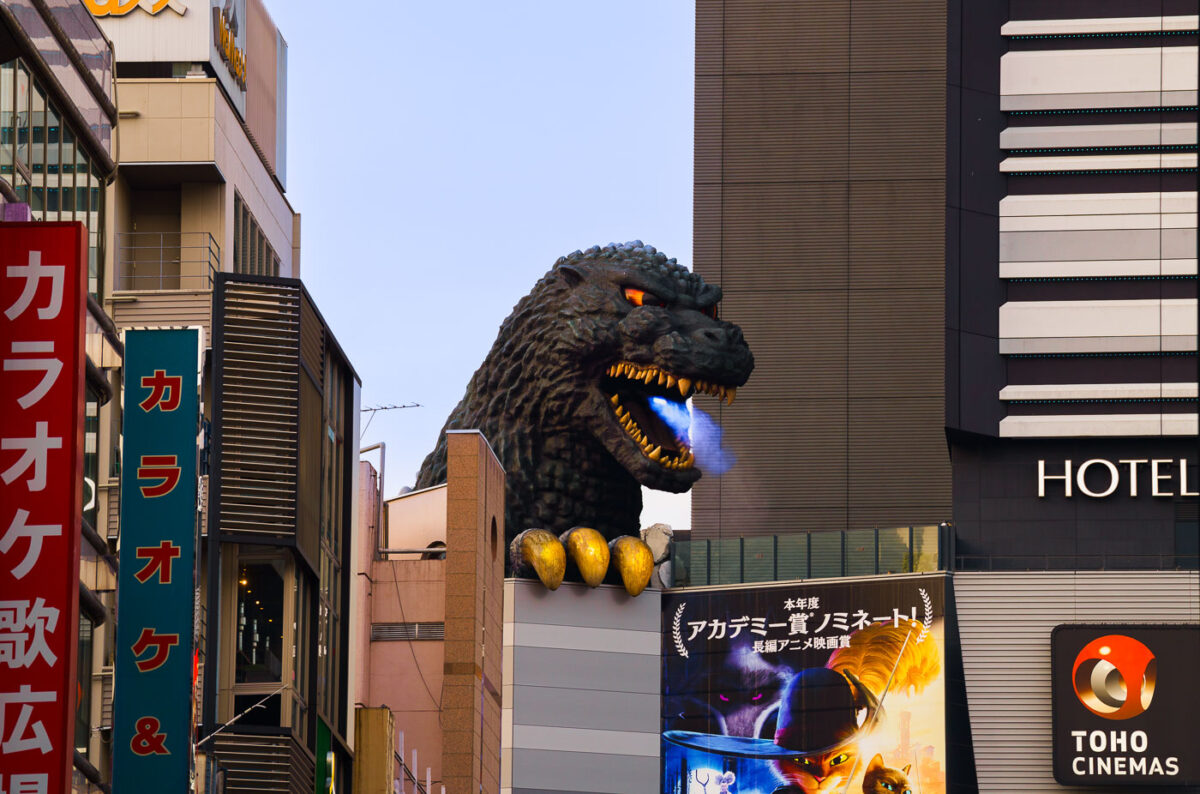
March 2023 — The Godzilla Head overlooking Kabukichō is one of Shinjuku’s most recognizable modern landmarks. Installed in 2015 to mark the opening of the Toho Cinemas Shinjuku complex—the studio responsible for the original 1954 Godzilla film—the sculpture rises above the building’s eighth floor, facing the main entertainment district. The installation recreates Godzilla’s appearance from the 1990s Heisei-era films, and several times a day it emits sound, smoke, and light effects that mimic the creature’s trademark atomic breath. Positioned above the Kabukichō streetscape, the figure is intended as both a tribute to Japan’s most famous movie monster and a visual anchor for this entertainment-heavy part of Shinjuku.
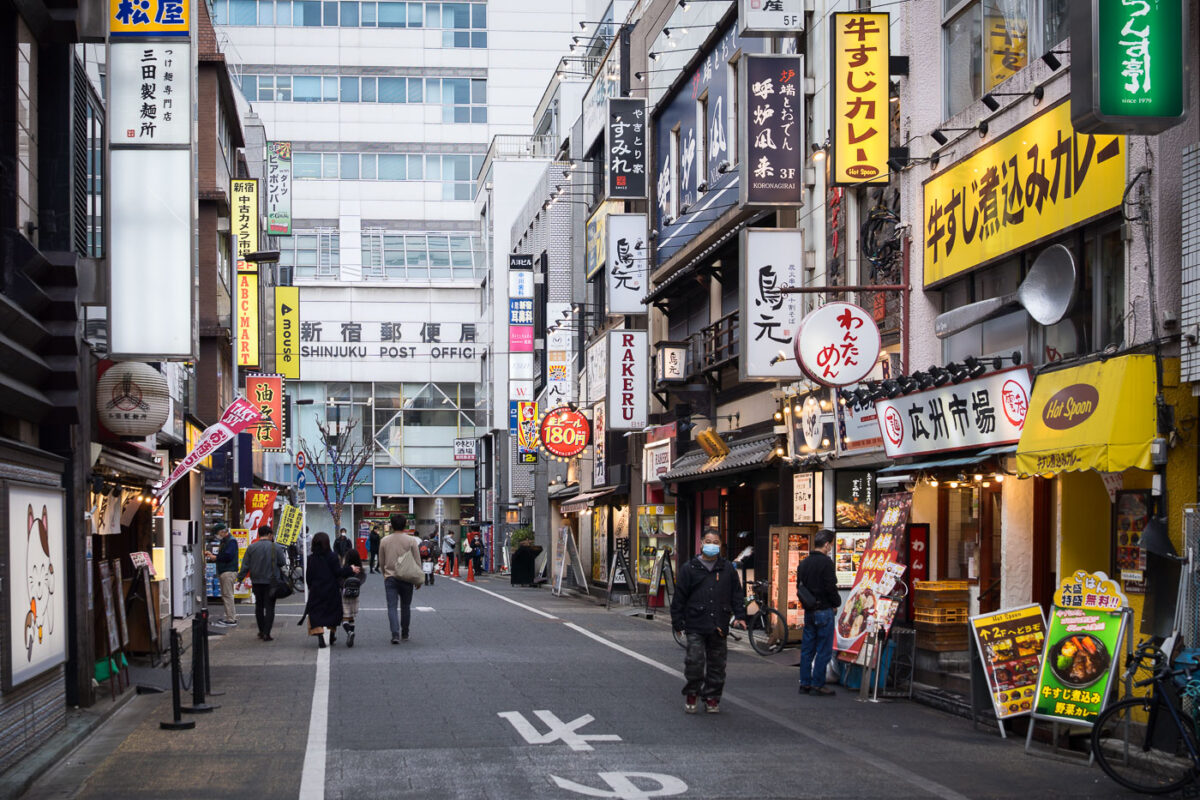
March 2023 — Sanbangai Street sits just west of Shinjuku Station and is part of the dense network of narrow commercial lanes that define this section of the city. The area developed rapidly after the mid-20th-century reconstruction of Shinjuku and is now lined with small restaurants, curry shops, bars, and specialty eateries catering to commuters and office workers moving through the station district each day. The nearby Shinjuku Post Office has long served as a recognizable landmark on the north side of the station, anchoring a neighborhood known for its mix of long-established storefronts and constantly rotating food businesses.
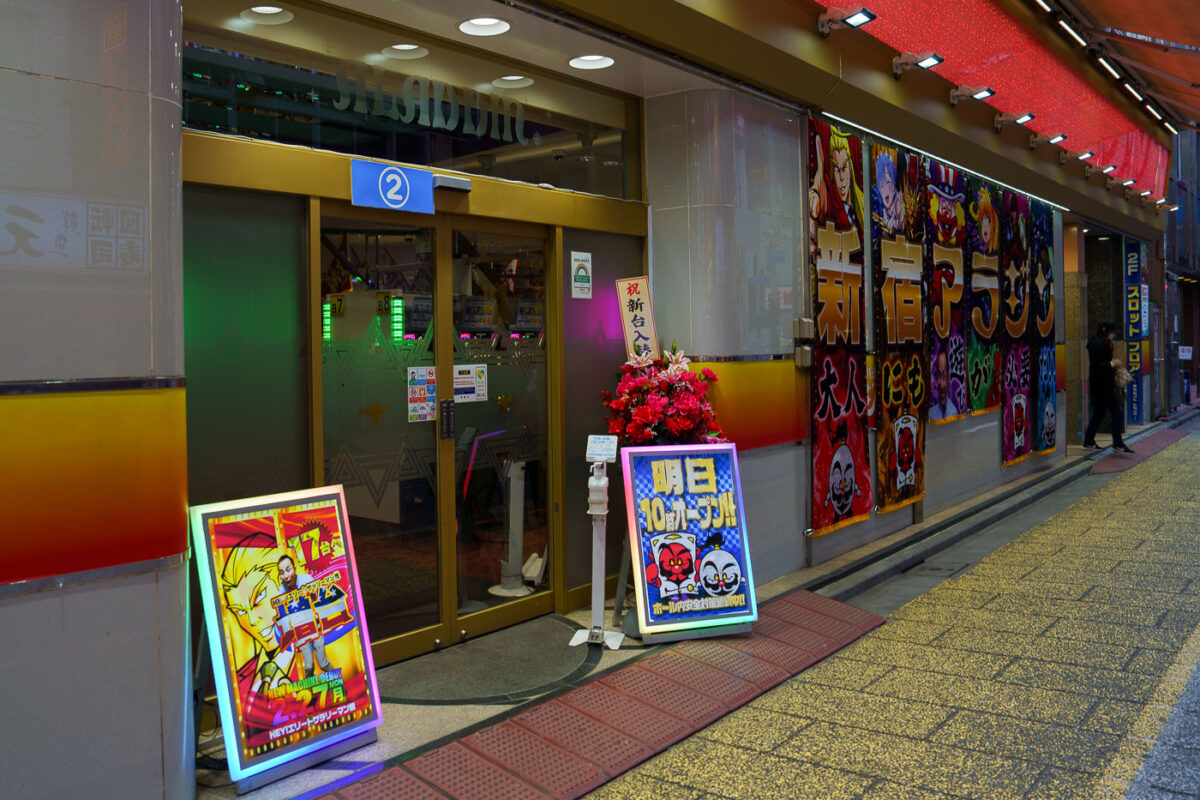
March 2023 — Pachinko parlors remain a defining part of Japan’s postwar entertainment landscape, evolving from small mechanical game halls into large, brightly lit venues that line the streets of major cities. This Shinjuku location reflects the modern industry’s mix of gambling-adjacent gaming, animated advertising, and elaborate storefront displays designed to attract commuters and tourists. Although pachinko operates in a legal gray zone—winnings are exchanged off-site to comply with gambling regulations—it has grown into a multibillion-yen sector with deep cultural roots, from the machines’ lineage in early 20th-century children’s games to their present role as a staple of urban nightlife.
As dusk settles over Shibuya, the illuminated sign of Yoyogi Station (代々木駅) glows against a deep indigo sky, marking one…
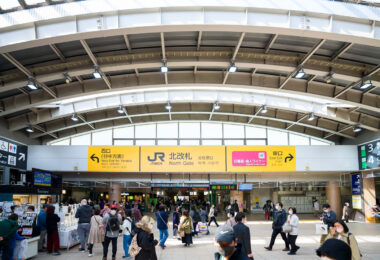
Passengers move through the North Gate of JR Nippori Station, a key interchange for the Yamanote, Keihin-Tohoku, and Joban lines…
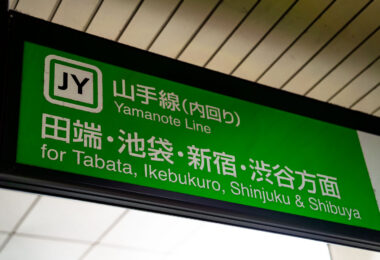
A sign for the JR Yamanote Line displays the inner loop direction toward Tabata, Ikebukuro, Shinjuku, and Shibuya. The familiar…
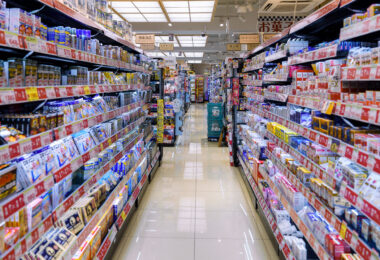
A well-stocked aisle inside a convenience store in Tokyo, photographed in March 2023. Japan’s major chains—such as Lawson, FamilyMart, and…
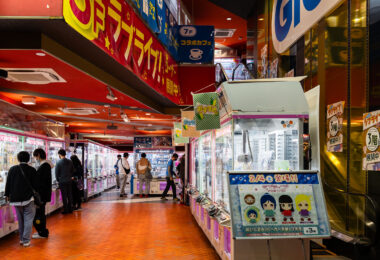
Inside the multi-floor Gigo arcade complex in Akihabara, photographed in March 2023, rows of brightly lit crane and prize machines…
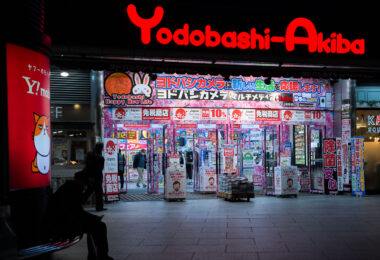
Yodobashi-Akiba, photographed in March 2023, is one of Tokyo’s largest electronics retail complexes and a major landmark in the Akihabara…
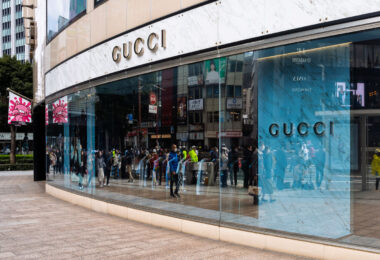
Marathon runners outside the Gucci flagship store in Tokyo’s Ginza district, their reflections merging with the pale blue marble of…
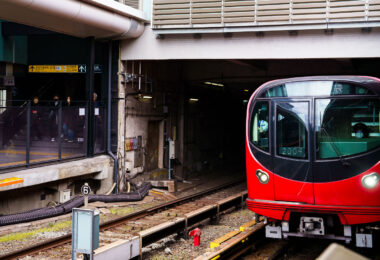
A Tokyo Metro Marunouchi Line train approaches its terminal platforms during a March 2023 visit. The Marunouchi Line, one of…
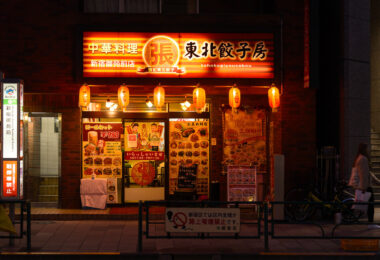
Tohoku Gyozabou, located just east of Shinjuku Gyoen National Garden, is one of many small neighborhood restaurants that serve the…
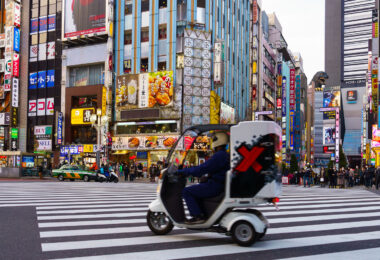
A delivery scooter moves through the large scramble crossing on Central Road in Kabukichō, one of Shinjuku’s busiest commercial corridors….
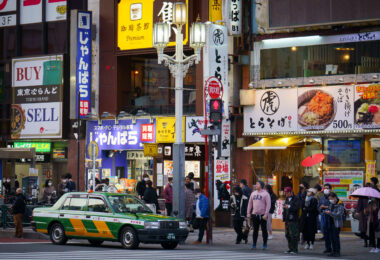
A Tokyo taxi waits at a crossing in Kabukichō, the entertainment district of Shinjuku known for its dense concentration of…
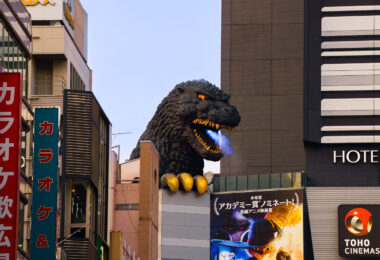
The Godzilla Head overlooking Kabukichō is one of Shinjuku’s most recognizable modern landmarks. Installed in 2015 to mark the opening…
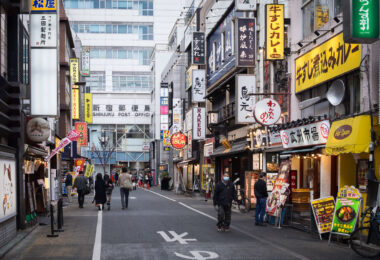
Sanbangai Street sits just west of Shinjuku Station and is part of the dense network of narrow commercial lanes that…
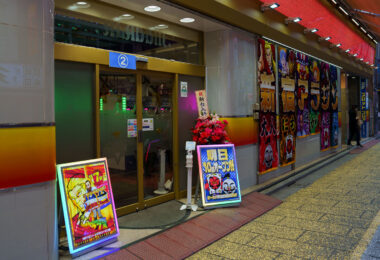
Pachinko parlors remain a defining part of Japan’s postwar entertainment landscape, evolving from small mechanical game halls into large, brightly…
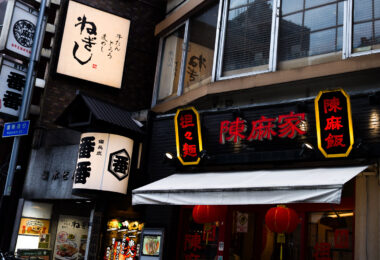
A cluster of restaurants along a narrow Shinjuku street glows with layered signage in both Japanese and Chinese scripts. The…
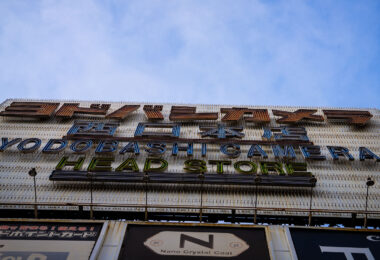
The iconic neon sign of Yodobashi Camera’s head store in Shinjuku is seen from street level, with its mix of…
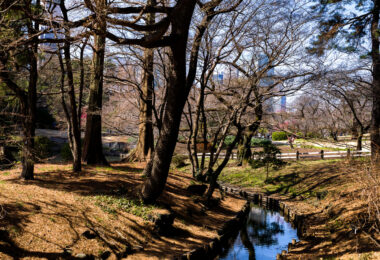
Shinjuku Gyoen National Garden has long served as one of Tokyo’s largest and most historically layered urban parks, transitioning from…
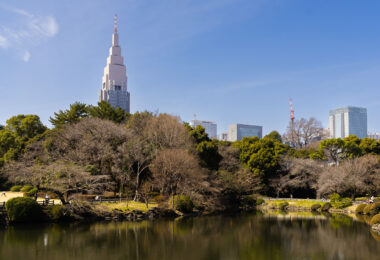
Shinjuku Gyoen National Garden offers a calm, expansive contrast to the dense urban core that surrounds it. Originally part of…
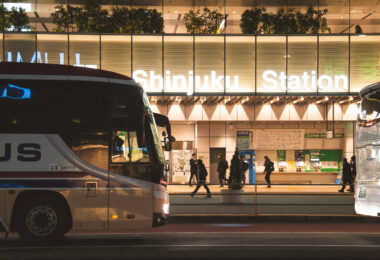
Intercity buses line up outside Shinjuku Station in Tokyo, one of the busiest rail hubs in the world and a…
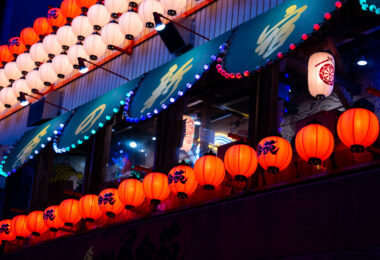
A cascade of red and white paper lanterns illuminates the facade of an izakaya in Shinjuku, Tokyo, casting a warm…
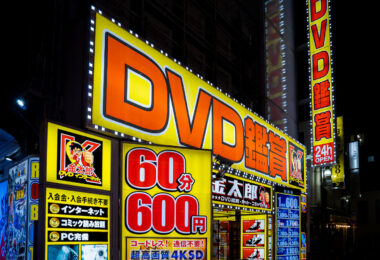
In Tokyo’s Shinjuku district, the saturated glow of neon signage spills across the streets, advertising one of the countless 24-hour…
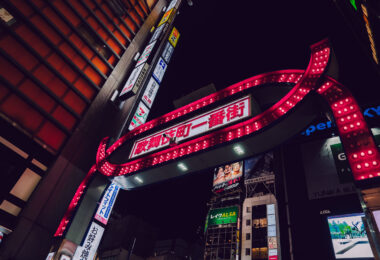
The iconic illuminated gate marking Kabukichō Ichiban-gai, photographed in Shinjuku, Tokyo. Installed in the late 1960s and redesigned several times…
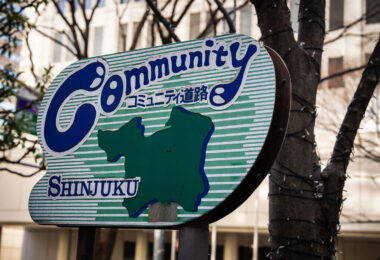
An older enamel “Community Road” sign in Shinjuku, Tokyo, photographed in March 2023. These signs—marked with コミュニティ道路 (“community road”) and…
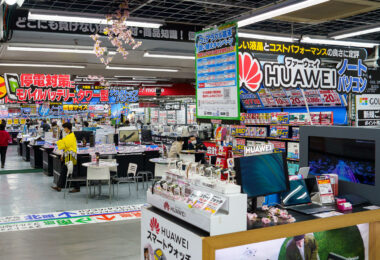
An interior view of Yodobashi Camera’s sprawling Shinjuku complex in March 2023, showing the densely organized electronics floor where computer…
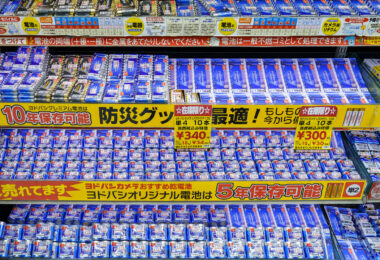
A densely stocked battery display inside Yodobashi Camera’s Shinjuku complex in March 2023. Yodobashi’s in-house battery line is prominently featured,…
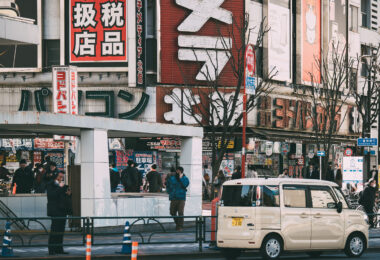
Outside Yodobashi Camera’s flagship complex in Shinjuku, one of Tokyo’s largest and most recognizable electronics retail districts. The chain has…
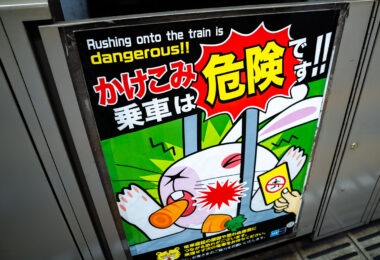
A safety poster inside a Tokyo Metro station warns passengers not to rush onto closing trains—a longstanding focus of the…
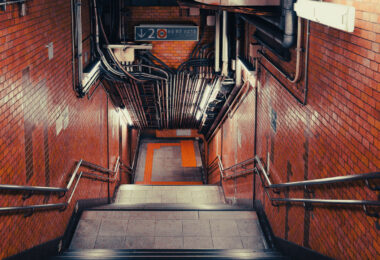
A passageway leading down to the Tokyo Metro Marunouchi Line, part of one of Tokyo’s oldest surviving subway corridors. The…
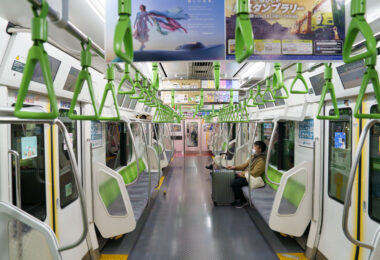
An interior view of a JR East E235 series train on the Yamanote Line, photographed in March 2023. Introduced beginning…
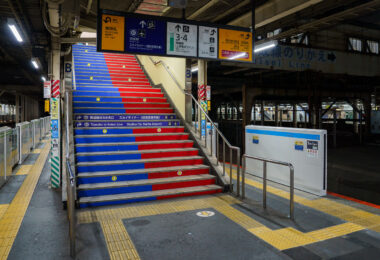
A color-coded stairway inside Nippori Station directs passengers to the Keisei Line platforms, the primary transfer point for travelers heading…
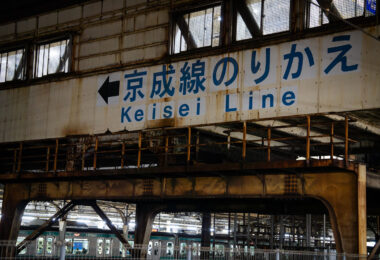
A weathered overhead passage at Nippori Station directs passengers toward the Keisei Line, one of Tokyo’s key links to Narita…
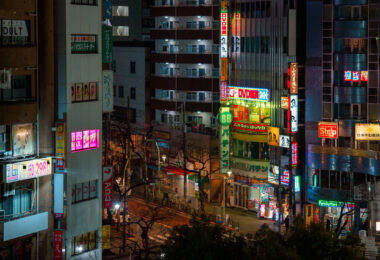
A nighttime view of the commercial streets southwest of Nippori Station in Tokyo’s Arakawa ward, where pachinko parlors, DVD shops,…
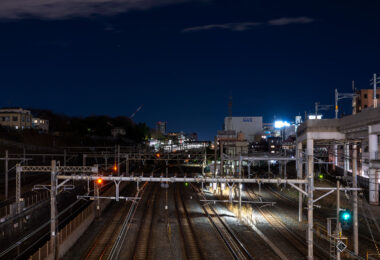
Multiple rail lines converge near Nippori Station in Tokyo, a key junction connecting the JR Yamanote, Keisei, and Joban lines….
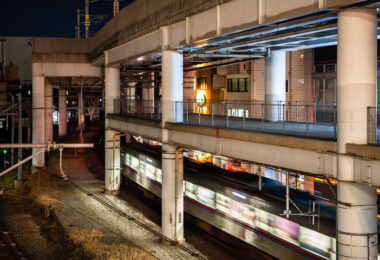
A commuter train passes through Nippori Station in Tokyo beneath an elevated expressway. Nippori is a major interchange for the…
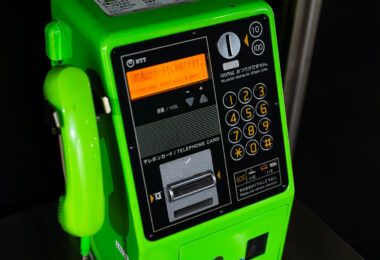
A bright green NTT public payphone, once a fixture of every Japanese street corner and train station, stands as a…
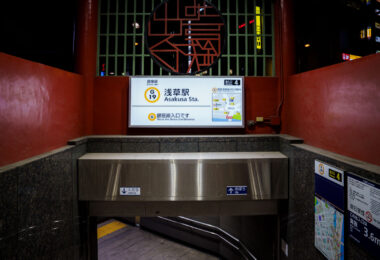
An entrance to Tokyo Metro’s Asakusa Station on the Ginza Line, marked with the station code G-19, leads commuters down…
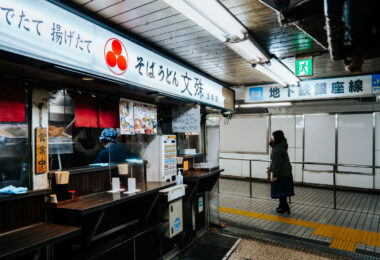
A small soba counter operates inside Asakusa Underground Street, one of Tokyo’s oldest surviving subterranean shopping arcades. Tucked beneath the…
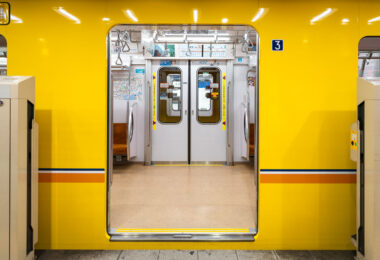
Tokyo’s Marunouchi Line is one of Japan’s oldest and busiest subway routes, linking major commercial and governmental districts through a…
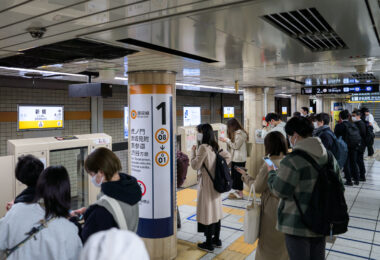
Commuters wait for the next train on the Tokyo Metro Ginza Line, Japan’s oldest underground subway line and one of…
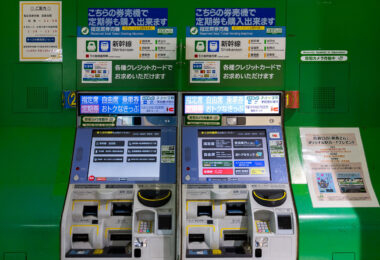
A pair of Shinkansen ticket vending machines at a Japanese railway station, featuring multilingual touchscreens and payment slots for both…
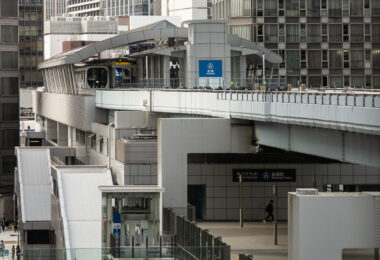
Shimbashi Station serves as a key interchange between Tokyo’s dense urban rail systems, connecting JR East lines with the Yurikamome…
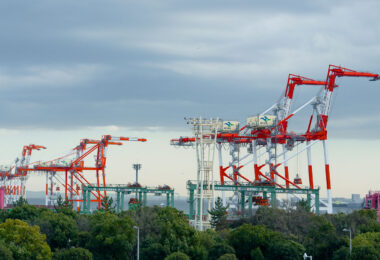
Towering gantry cranes line the waterfront at a Japanese container terminal, their red and white frames contrasting sharply against the…
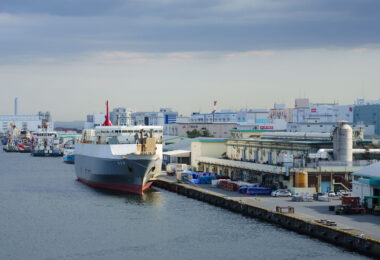
A cargo ship is docked at an industrial pier surrounded by warehouses and factory buildings, their signs bearing familiar Japanese…
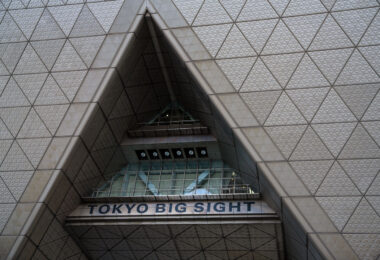
Tokyo Big Sight—officially known as the Tokyo International Exhibition Center—is Japan’s largest convention and exhibition complex, located in the Ariake…
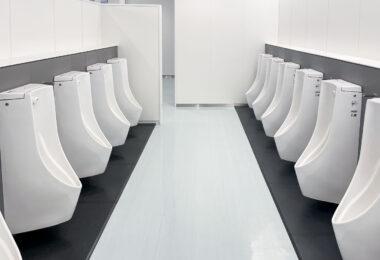
A perfectly symmetrical row of urinals inside a modern public restroom in Japan, where minimalist design meets meticulous cleanliness. The…
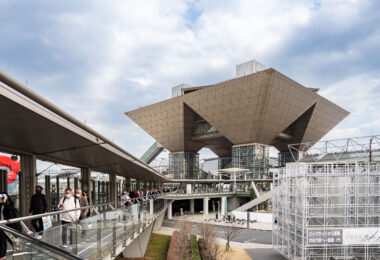
Tokyo Big Sight—officially the Tokyo International Exhibition Center—stands out with its striking inverted-pyramid conference towers, a landmark of the Odaiba…
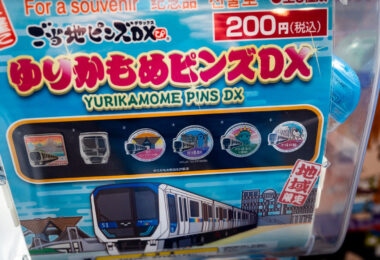
A souvenir capsule vending machine featuring “Yurikamome Pins DX” collectibles, themed after the Yurikamome Line—Tokyo’s automated, elevated transit system linking…
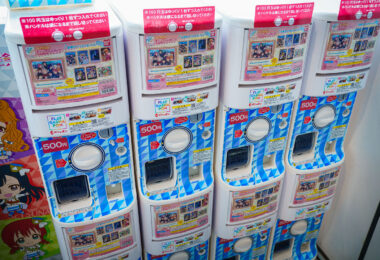
A neat row of colorful Gashapon capsule toy machines stands ready to dispense collectible surprises. Each unit, labeled with the…
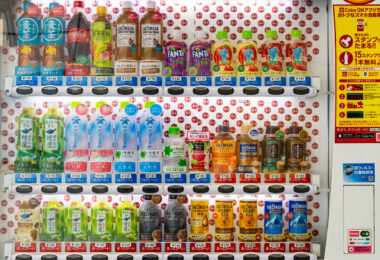
A brightly lit Japanese vending machine displays a meticulously arranged lineup of drinks—from Coca-Cola and Fanta to bottled teas, mineral…
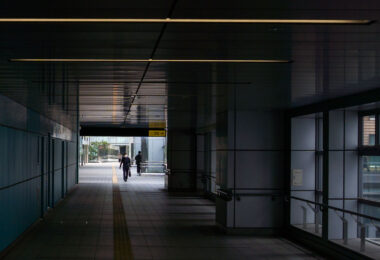
A quiet, modern pedestrian corridor connects parts of a Japanese transit hub, its metallic walls and ceiling panels reflecting soft…
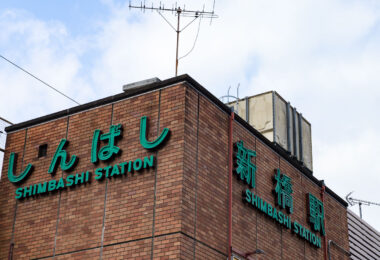
The brick exterior of Shimbashi Station displays its bold green lettering in both Japanese and English, marking one of Tokyo’s…
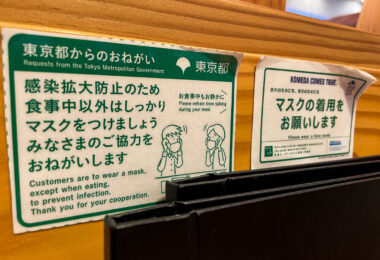
Printed notices from the Tokyo Metropolitan Government remind customers to wear masks except while eating, part of Japan’s ongoing public…

A small black service button sits on a restaurant table in Japan, labeled with both Japanese and English text inviting…
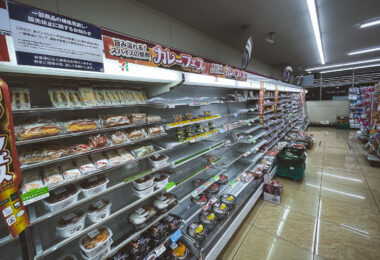
A 7-Eleven convenience store in Japan displays partially empty refrigerated shelves during what appears to be a restocking period or…