Street

16 photos · 2008–2026

16 photographs tagged Street, 2008–2026.
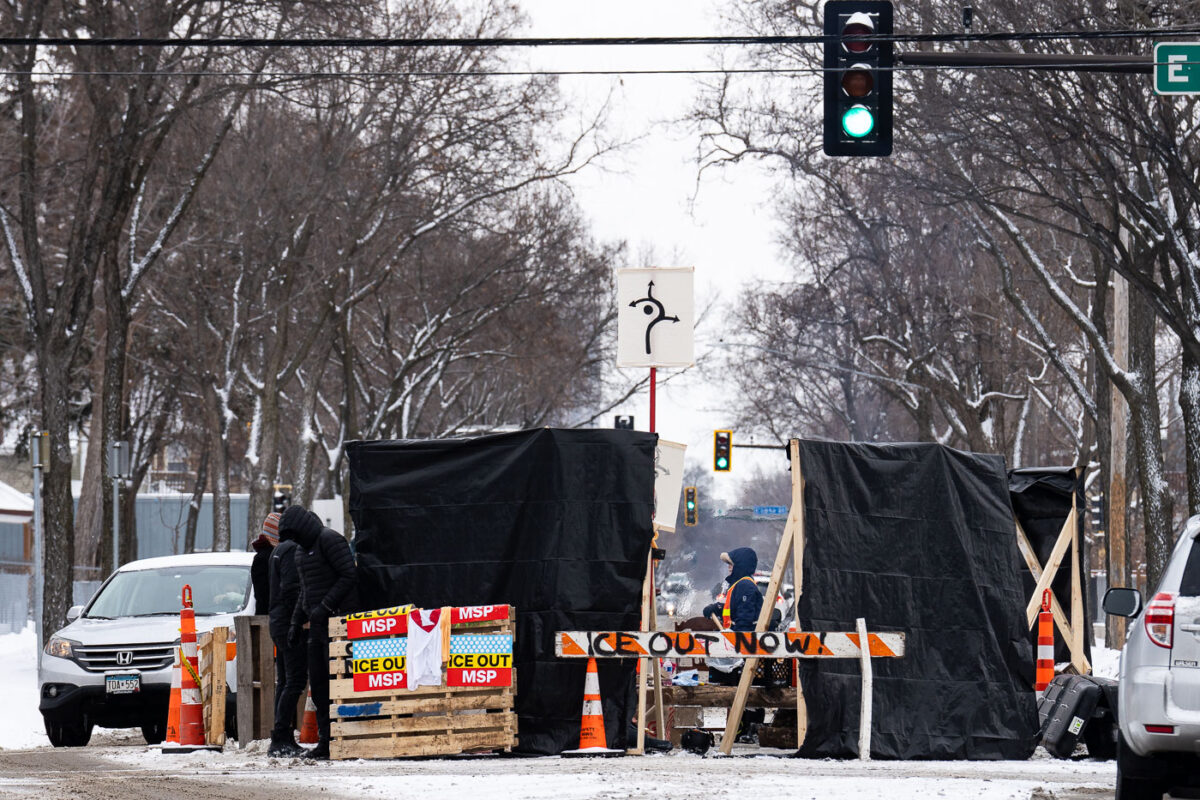
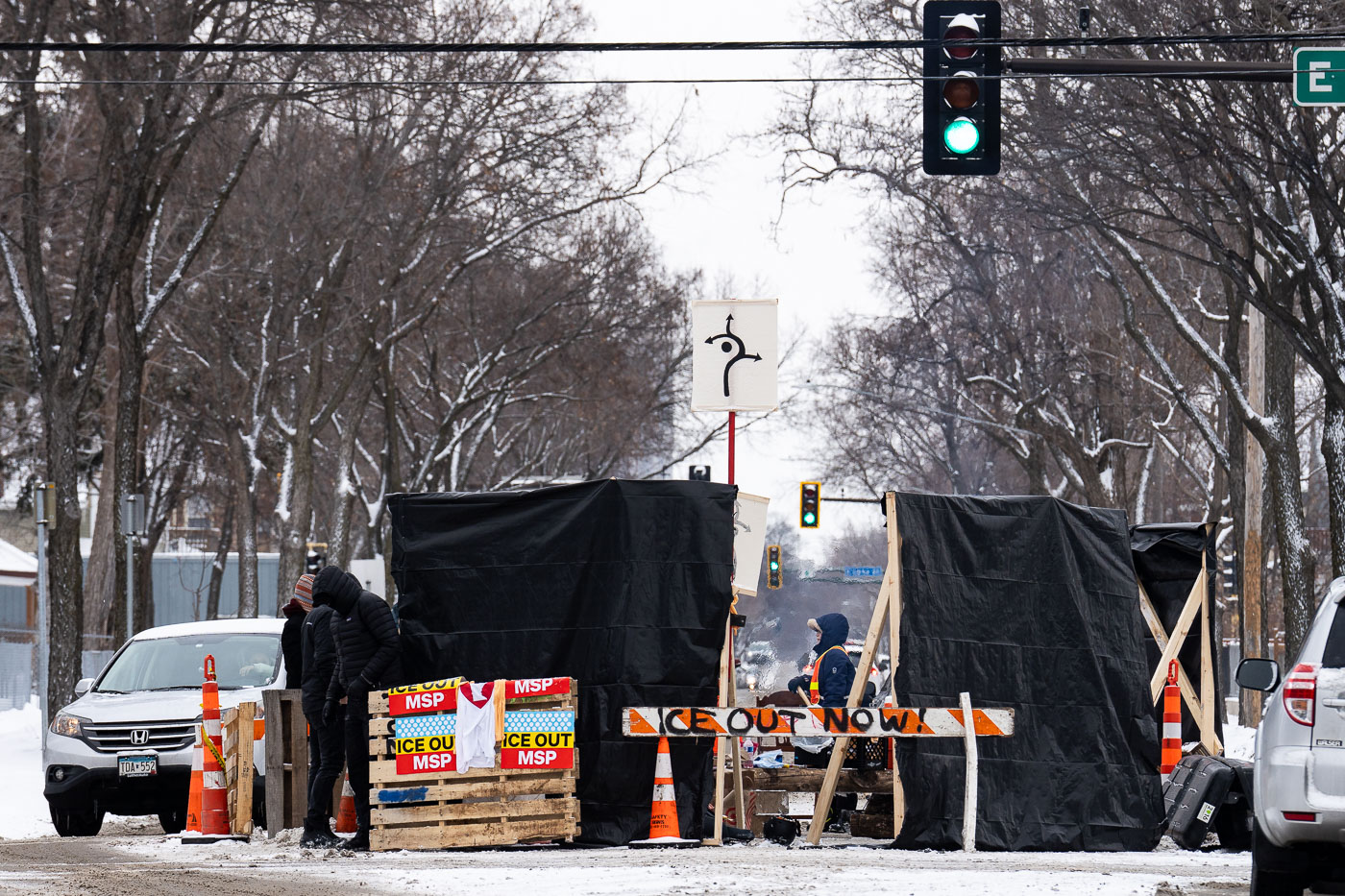
Protesters erect a filter blockade on Cedar Avenue in Minneapolis opposing ICE operations.
On February 1, 2026, protesters in South Minneapolis established "filter blockades" on Cedar Avenue as part of Operation Metro Surge. These makeshift structures, resembling roundabouts, were erected to facilitate community organizing and monitor traffic in opposition to Immigration and Customs Enforcement (ICE) operations. Signs such as "ICE OUT MSP" clearly communicated the local sentiment against ICE's presence in the city.

“Ice Out MSP” Filter Blockade on Cedar Avenue
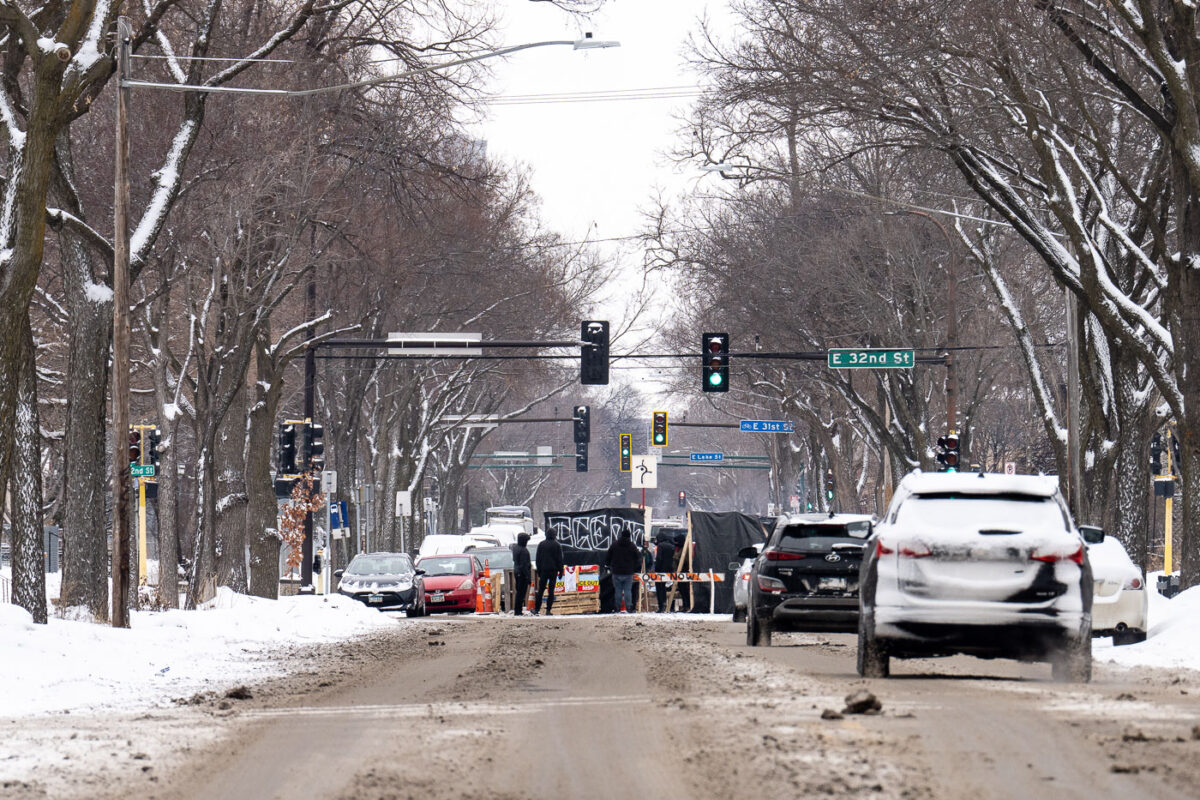
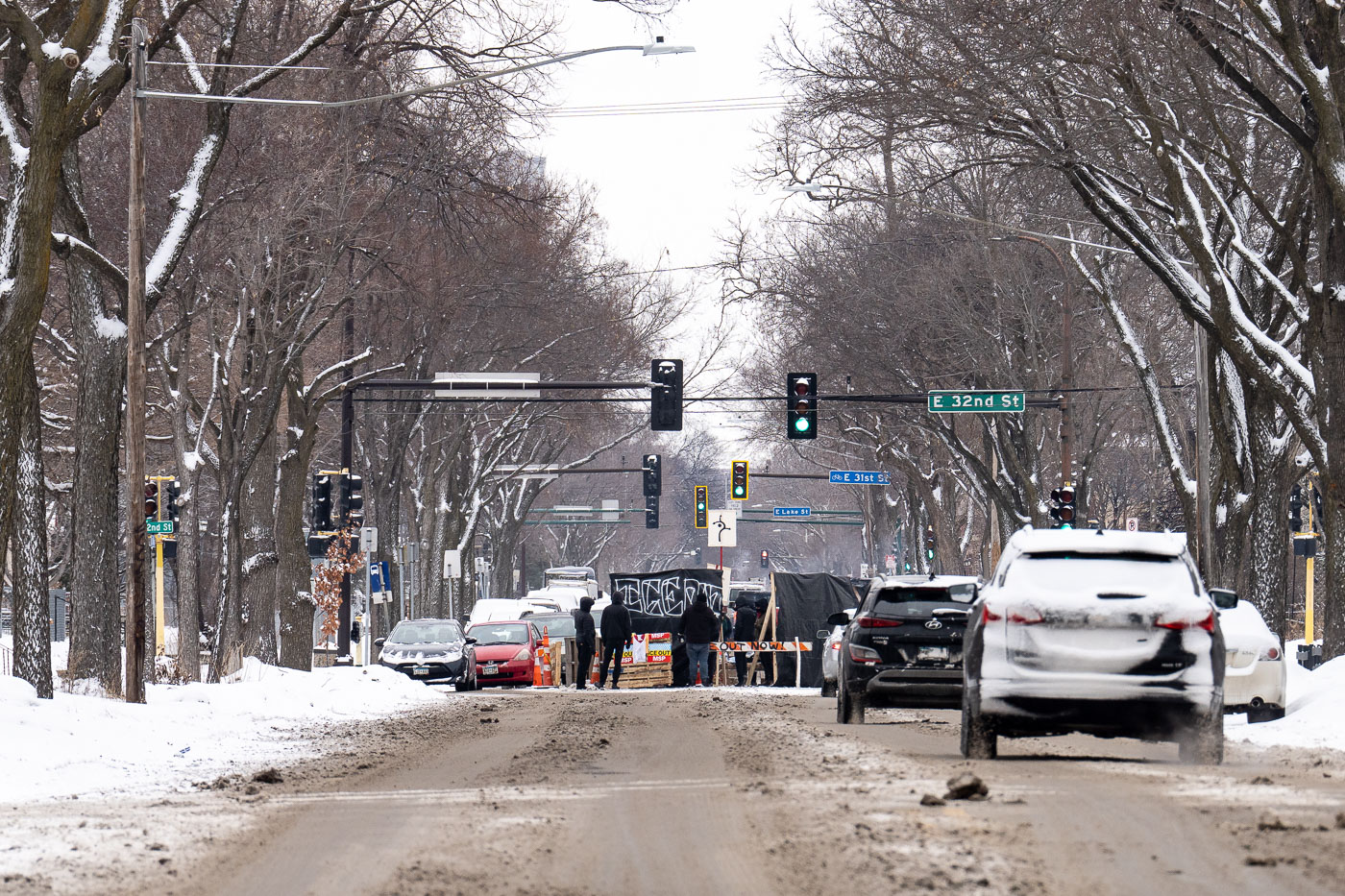
Protesters block Cedar Avenue in Minneapolis with makeshift barriers against ICE operations.
On February 1, 2026, residents of South Minneapolis established "filter blockades" on Cedar Avenue. These makeshift barriers, resembling roundabouts, were organized to strategize against Immigration and Customs Enforcement (ICE) operations and to monitor incoming traffic. The protest aimed to unite neighbors in opposition to ICE activities within the community.

Filter Blockade on Cedar Ave in Minneapolis
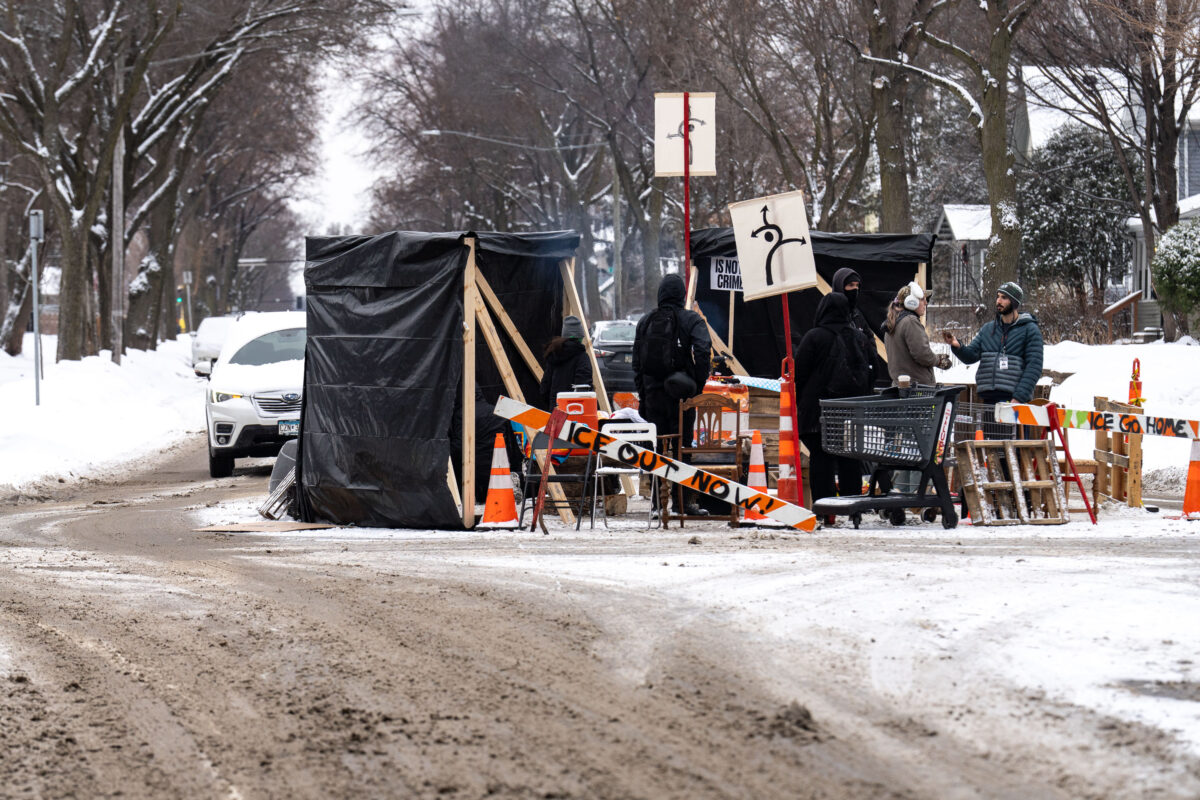
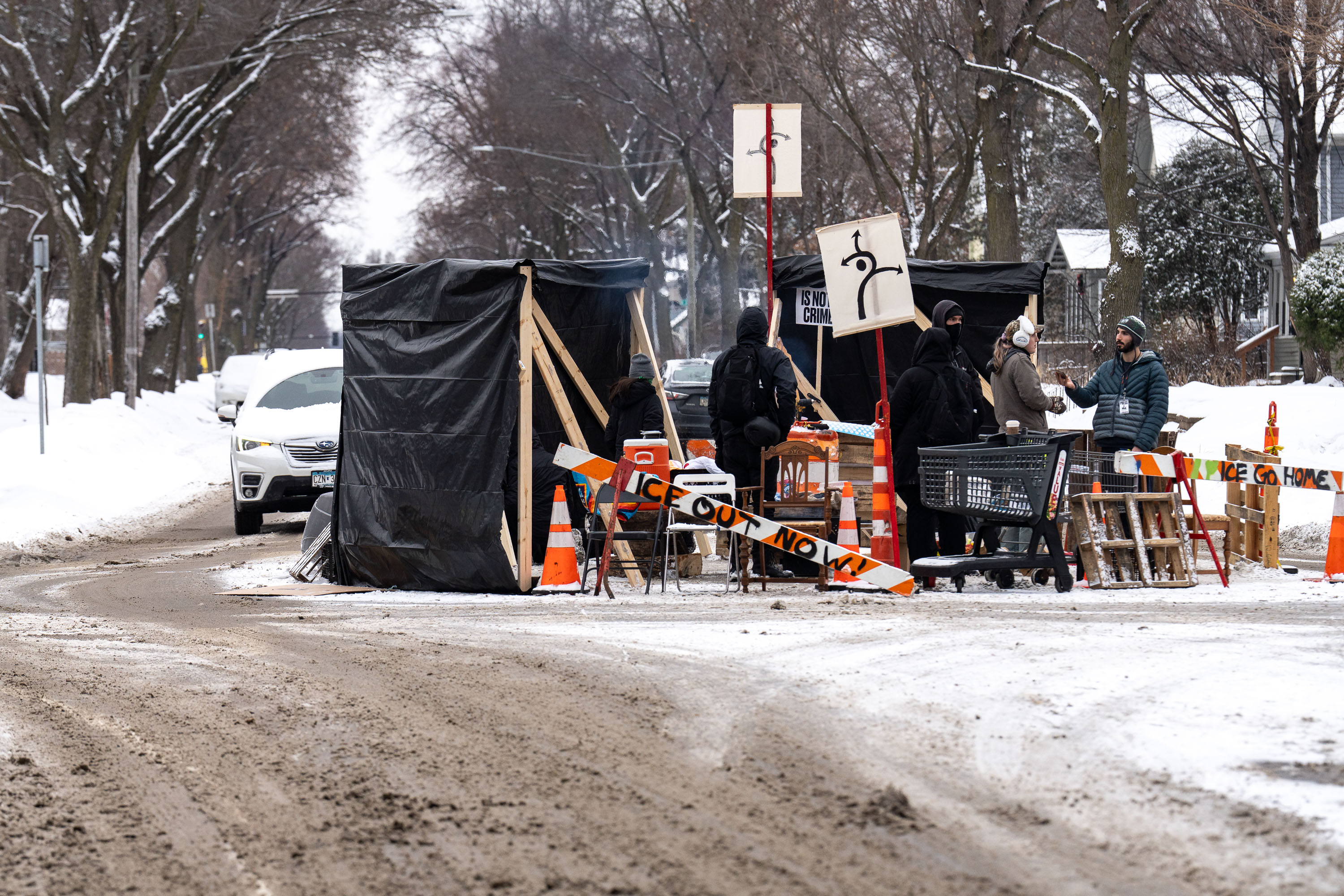
Filter Blockade in South Minneapolis on February 1
Some in South Minneapolis have created what they call “filter blockades” on Cedar Ave. A handout says the roundabout like blockade is meant to bring neighbors together to strategize against ICE while also identifying traffic coming into the area. Minneapolis February 1, 2026

“Ice Out Now” Filter Blockade on Cedar Avenue
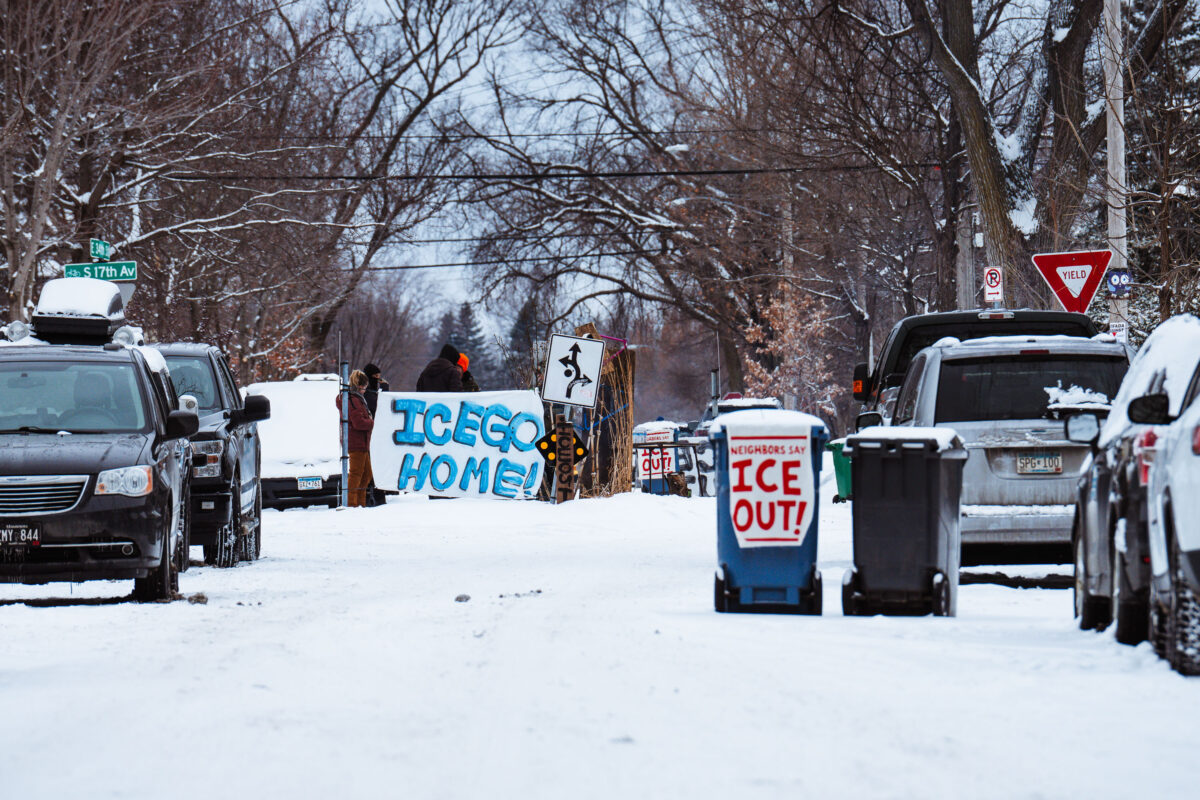
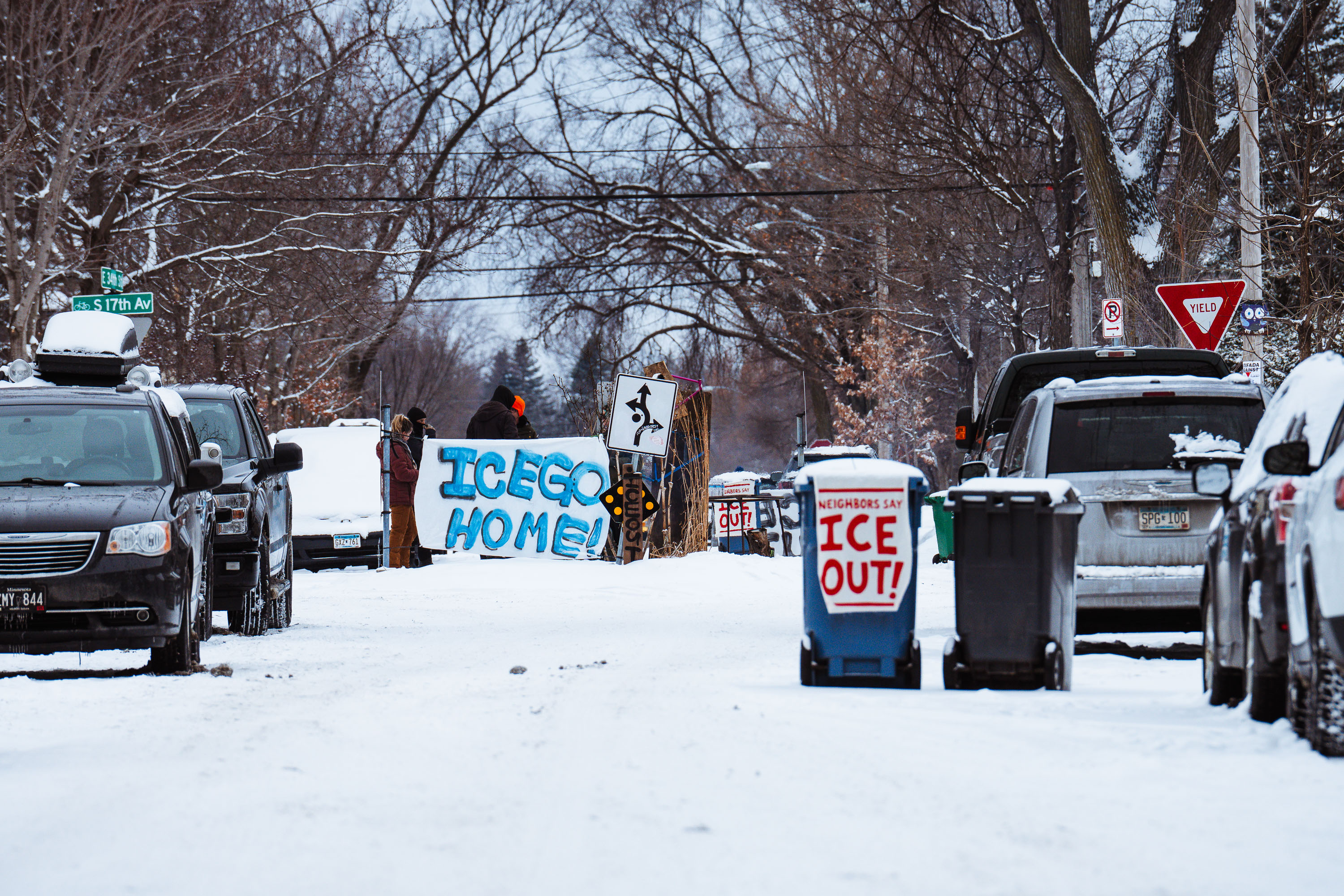
Filter blockade in South Minneapolis
Some in South Minneapolis have created what they call “filter blockades” on Cedar Ave. A handout says the roundabout like blockade is meant to bring neighbors together to strategize against ICE while also identifying traffic coming into the area. Minneapolis February 1, 2026

“ICE Go Home” Sign at South 17th Avenue Filter Blockade

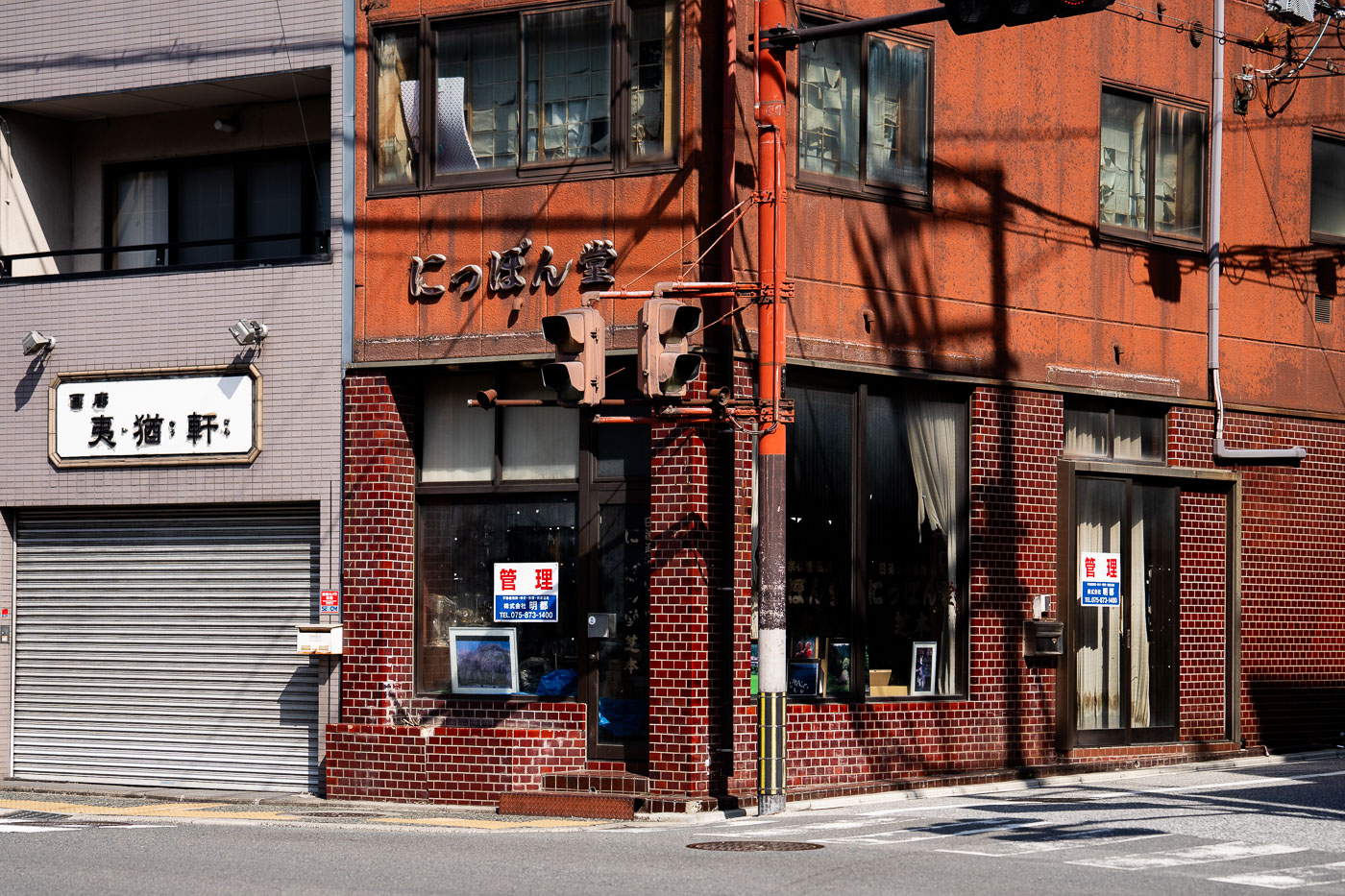
Nippondo Building at a Kyoto street corner with weathered orange and red tile exterior.
Nippondo Building, Kyoto, Japan. The corner commercial building appears to house a small business and sits beside another low-rise structure along a street with traffic signals. Its tiled lower facade and weathered upper exterior suggest an older urban storefront building.

Nippondo Building Corner, Kyoto

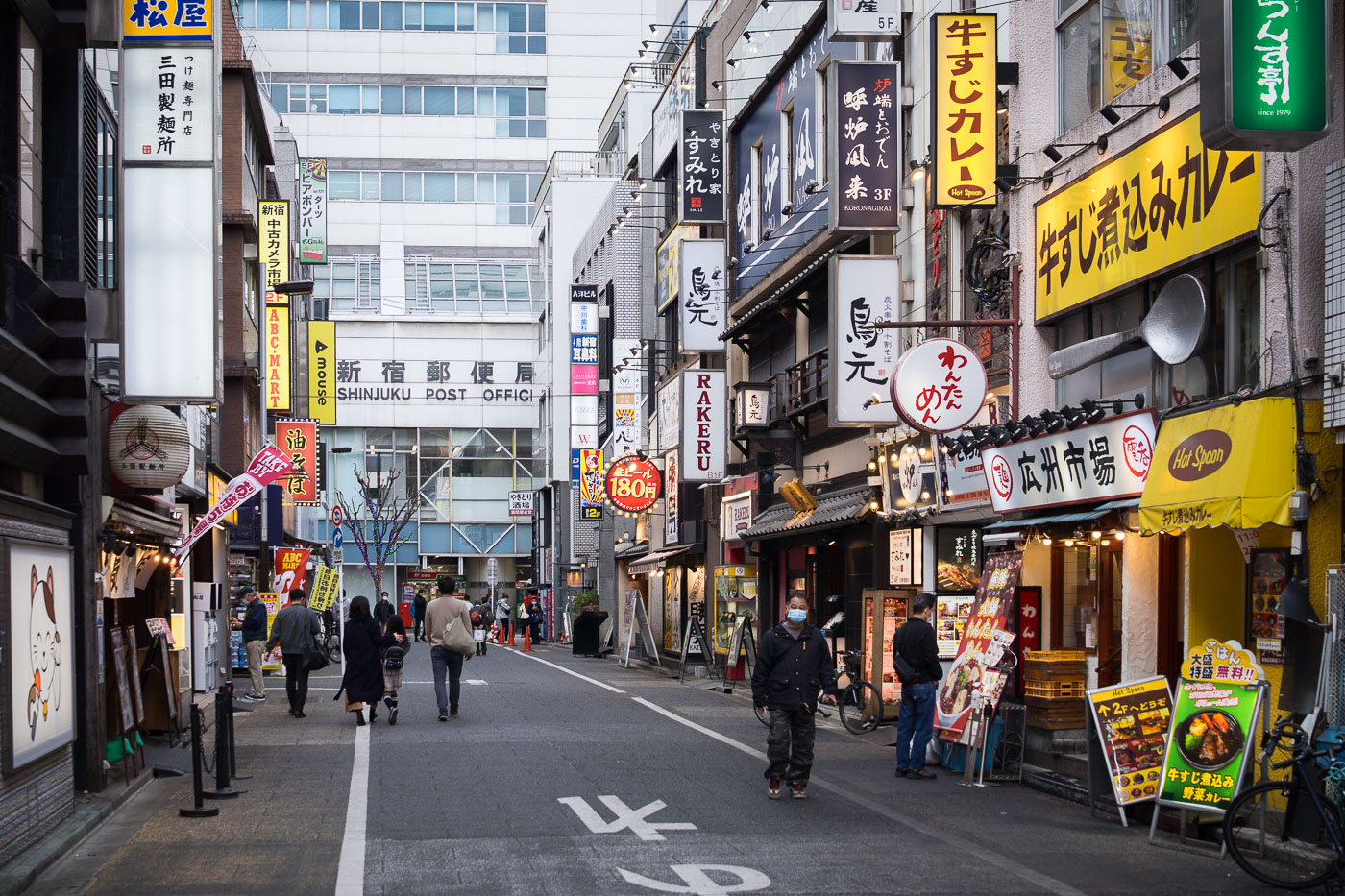
Sanbangai Street pedestrian shopping alley near Shinjuku Station in Tokyo with restaurants and shops.
Sanbangai runs along the west side of Shinjuku Station, one of several narrow lanes packed with small restaurants, izakayas, and noodle shops in the district. The Shinjuku Post Office, one of Tokyo's main postal facilities, anchors the northern end of the street. Many of the shopfronts here operate as tachigui, or standing-and-eating counters, a format common in the area for quick meals between train connections. Shinjuku Station itself handles more daily passengers than any other station in the world, and streets like Sanbangai developed to serve that constant flow of commuters.

Restaurant Row on Sanbangai Street, Shinjuku, Tokyo
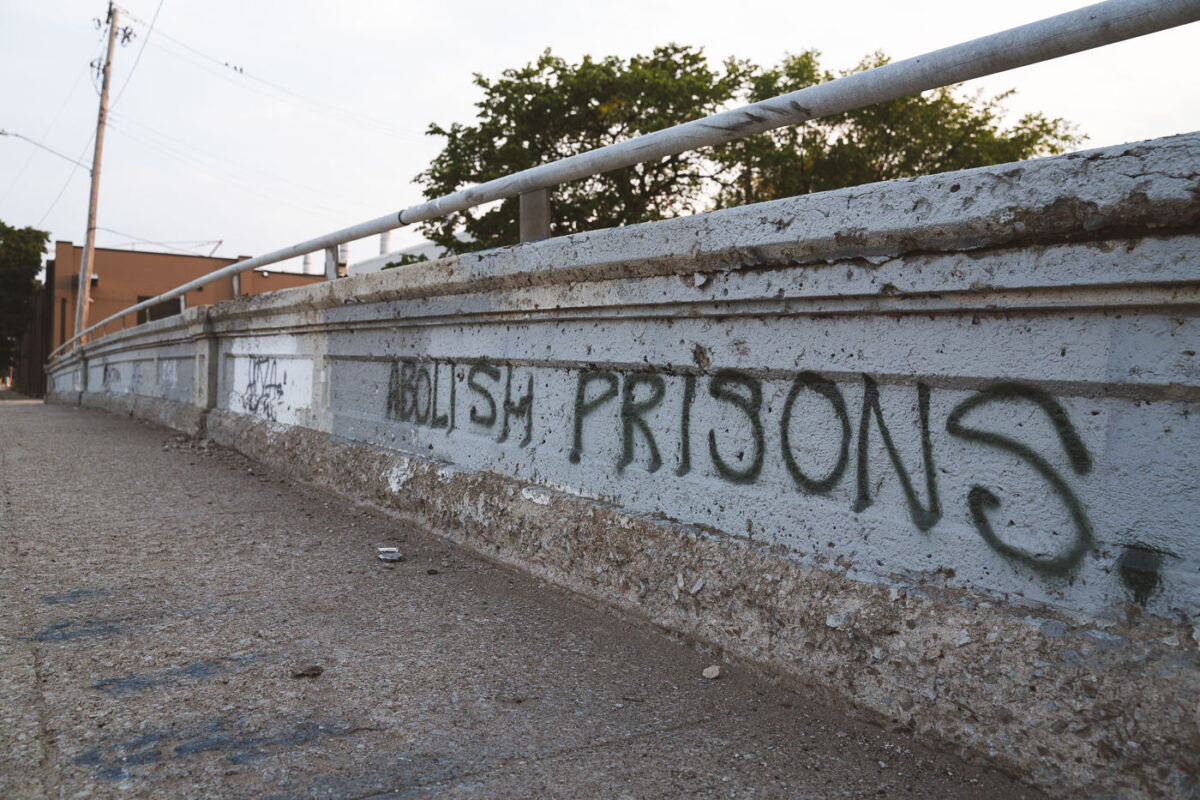
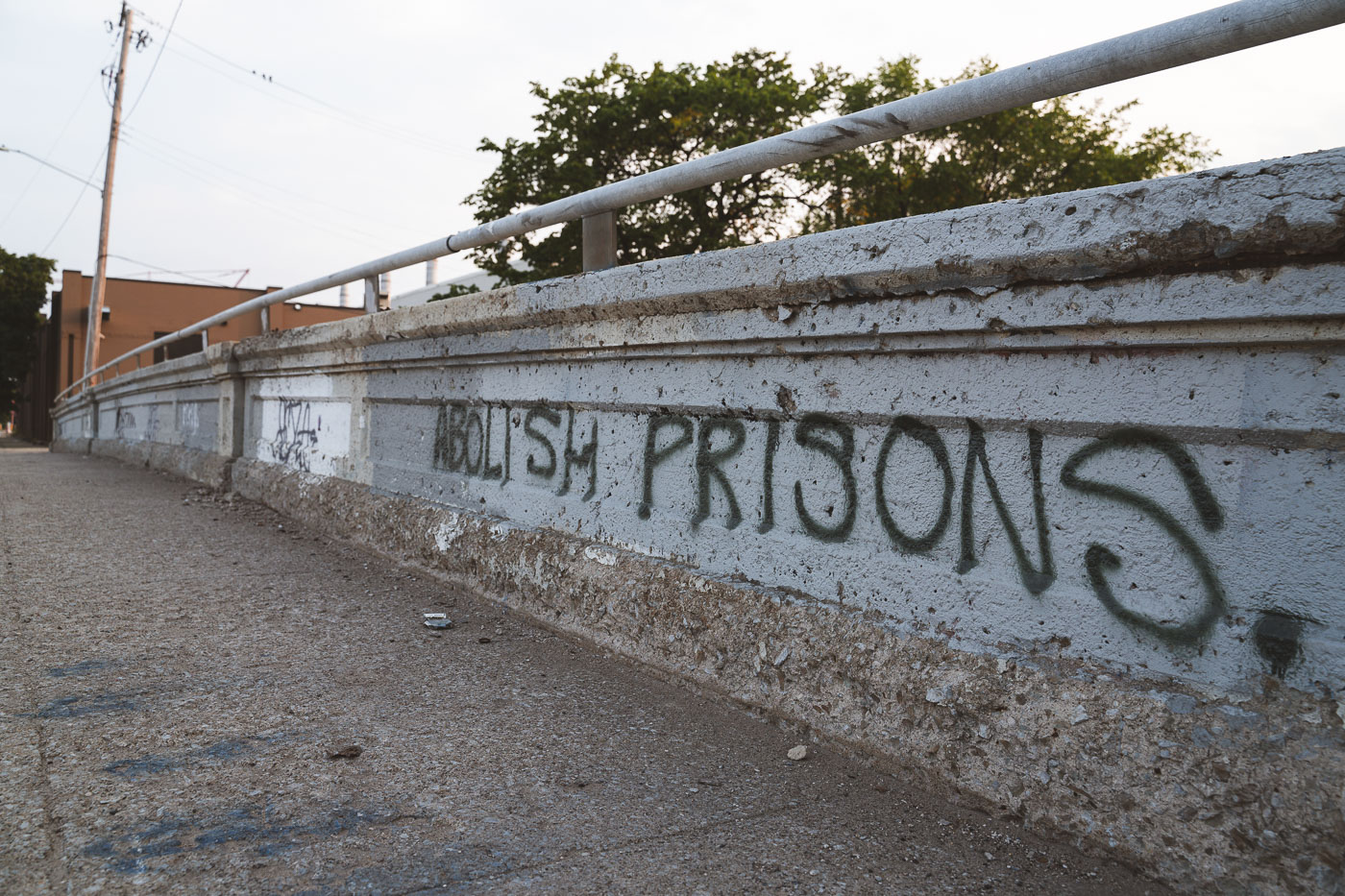
Abolish Prisons graffiti in Minneapolis
Graffiti reading "Abolish Prisons" is spray-painted on the concrete barrier of a bridge in South Minneapolis. This message reflects sentiments expressed during periods of social unrest and calls for reform within the justice system.

Abolish Prisons Graffiti on South Minneapolis Bridge

Daunte Wright mural on West Lake Street
A mural honoring Daunte Wright adorns the exterior of Minnesota Food Grocery on West Lake Street in Minneapolis. The mural appeared following the killing of Daunte Wright by police in nearby Brooklyn Center in April 2021, an event that sparked protests and unrest in the Twin Cities.

Daunte Wright Mural at Minnesota Food Grocery, West Lake Street
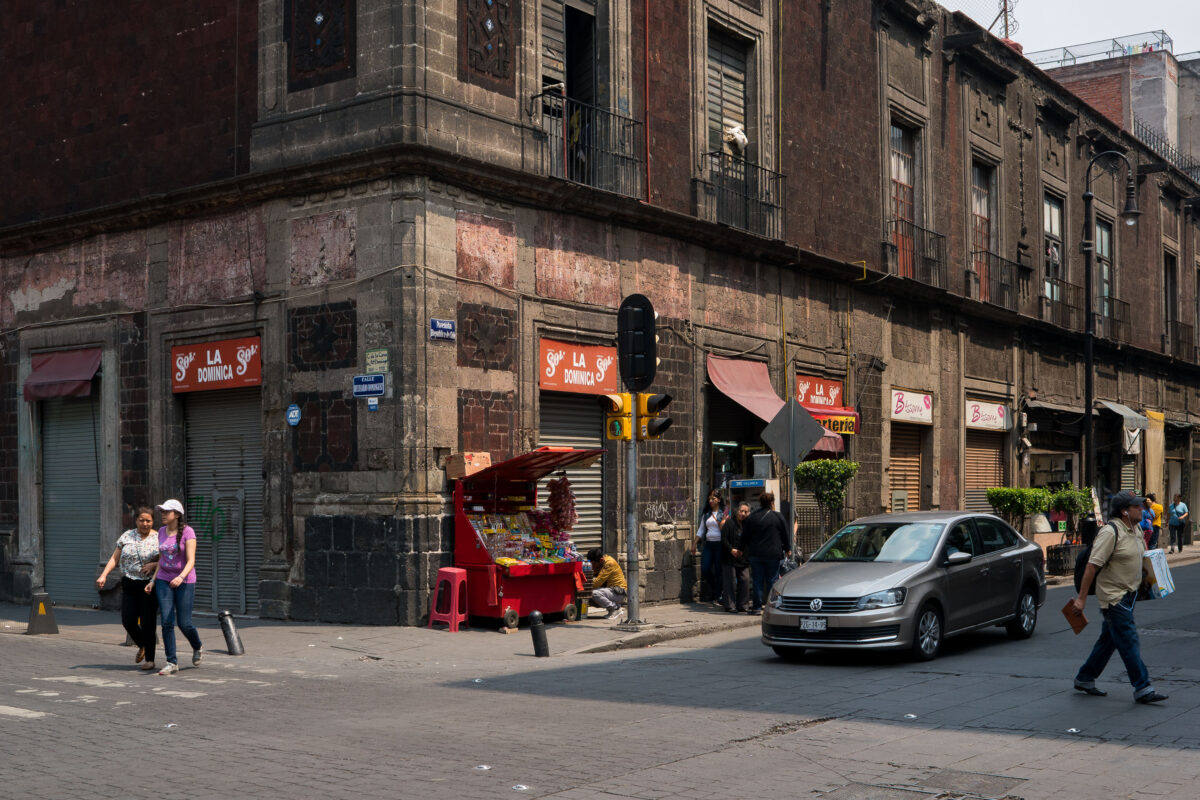
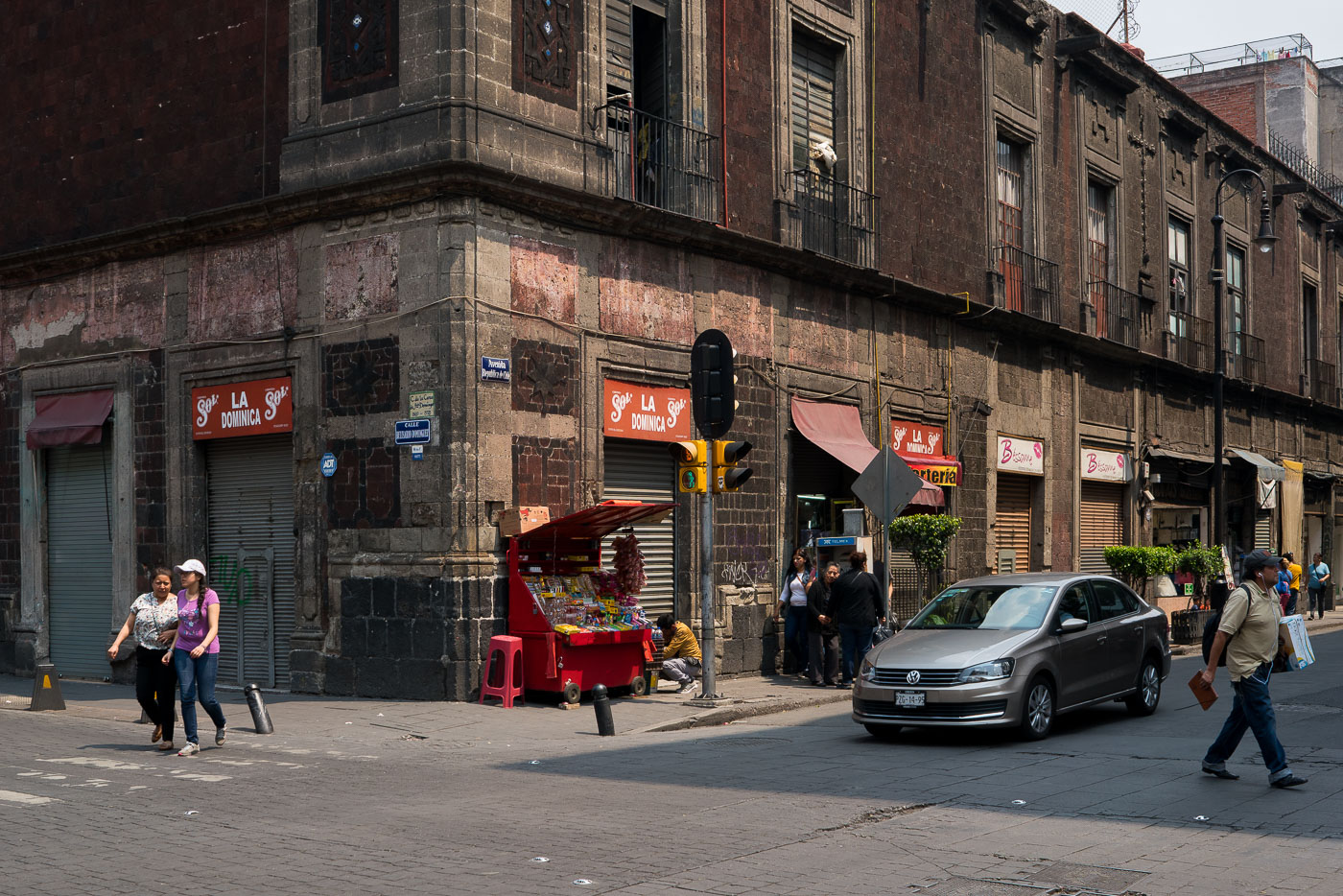
Street vendor stand at República de Uruguay and 5 de Febrero in Mexico City's Centro Histórico.
Calle República de Uruguay and Calle 5 de Febrero sit within Mexico City's Centro Histórico, a district laid out atop the former Aztec capital of Tenochtitlan and designated a UNESCO World Heritage Site in 1987. Many of the area's buildings date to the colonial and early 20th-century periods, when the blocks around the Zócalo served as the commercial core of New Spain and later independent Mexico. Small ground-floor storefronts and informal vendor stands have long operated alongside one another here, a pattern common throughout the historic center's narrow commercial corridors.

Corner Vendor Stand on Calle República de Uruguay, Mexico City
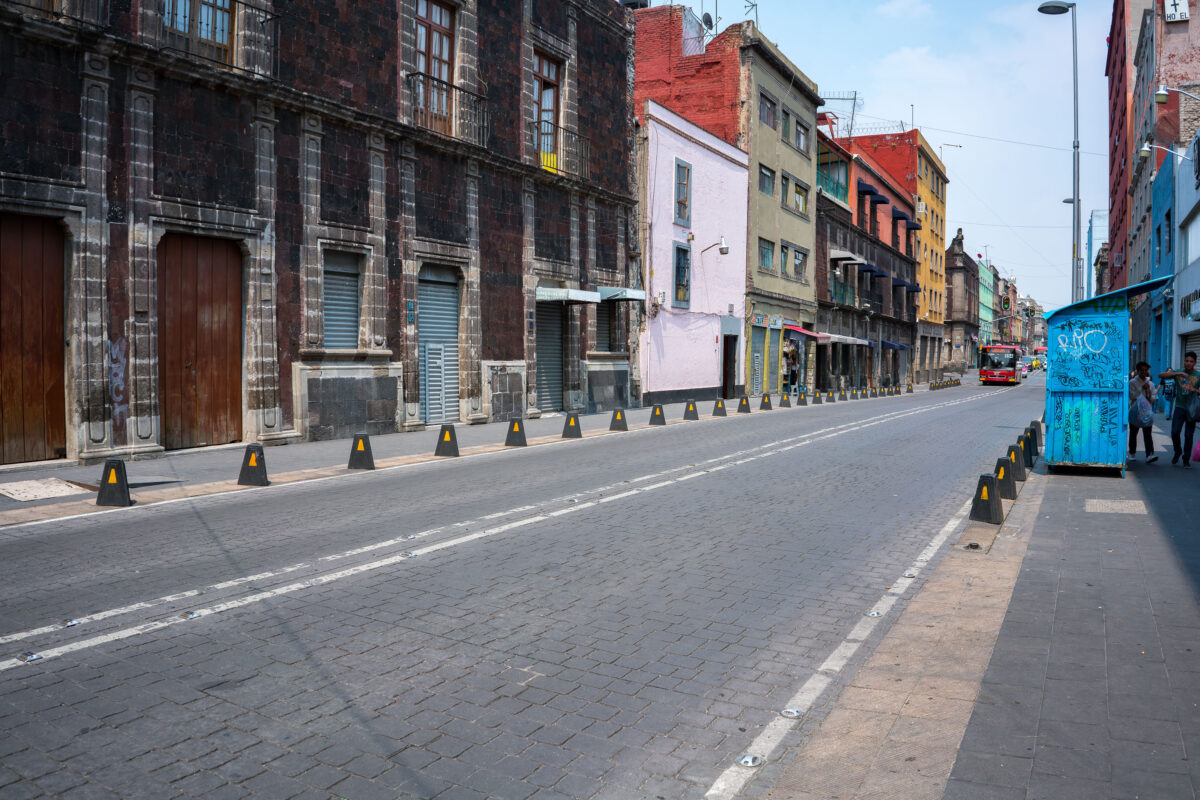
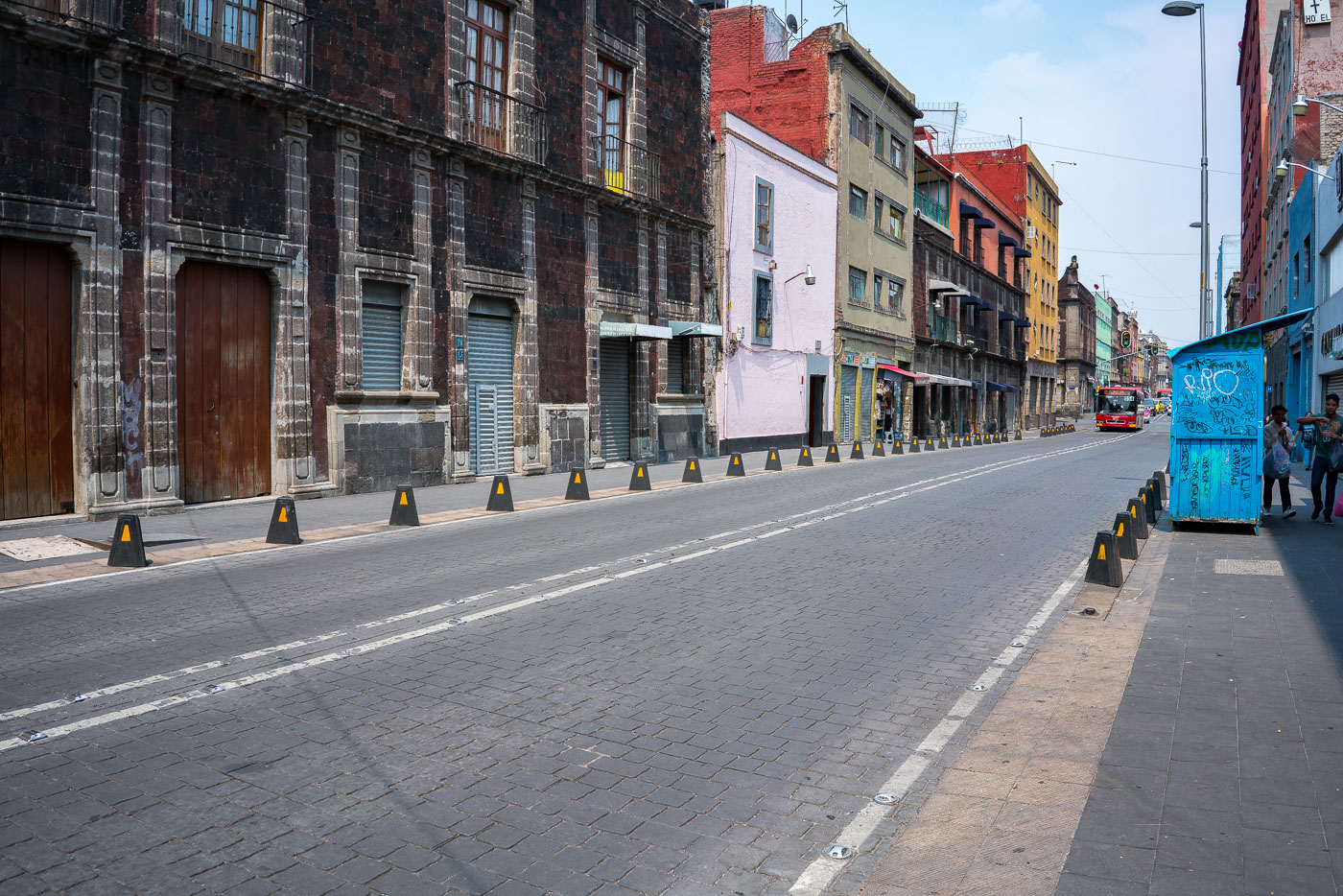
Calle República de Uruguay in Mexico City's Centro Histórico displays colonial and commercial buildings along a pedestrian-controlled street with basalt cobblestones.
Calle República de Uruguay in Mexico City’s Centro Histórico is a historic corridor linking the Zócalo area with Eje Central. The street retains colonial-era façades and later commercial buildings along one of the capital’s older thoroughfares. Basalt cobblestones and modern traffic controls mark its continued use as a central urban route.

Cobblestone Stretch of Calle República de Uruguay, Centro Histórico
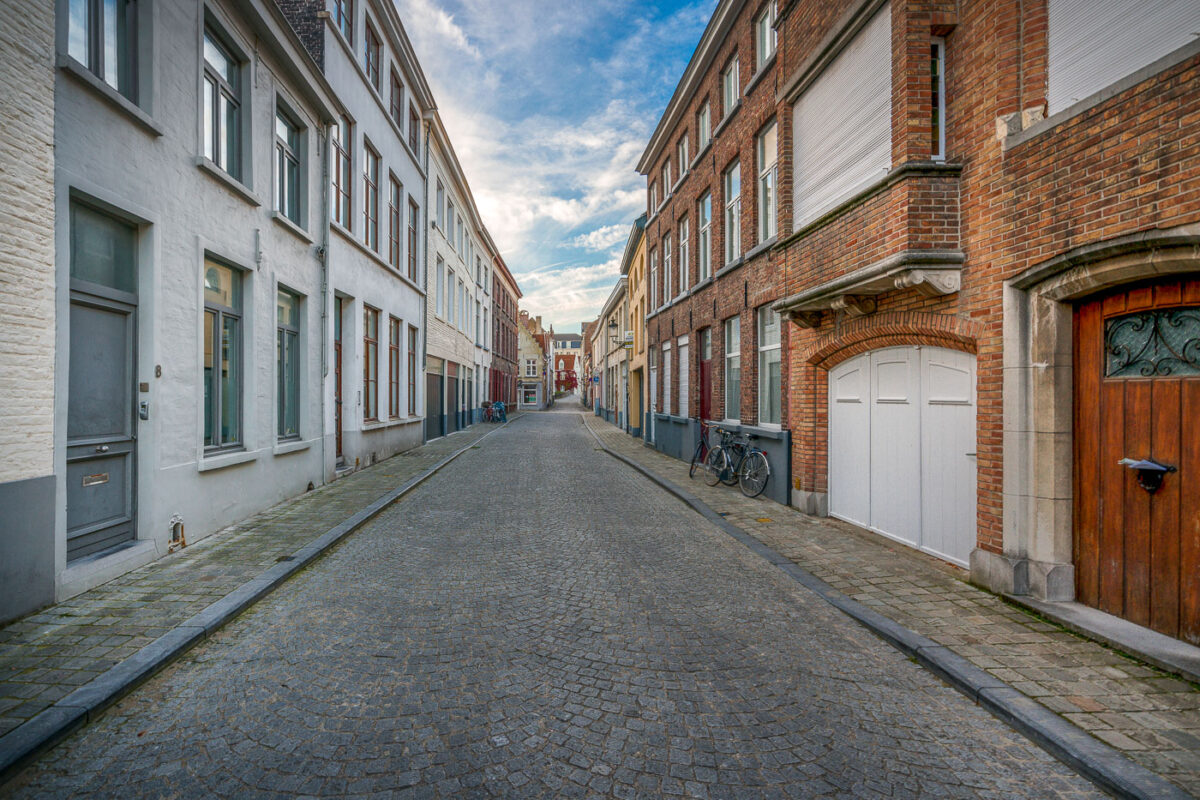
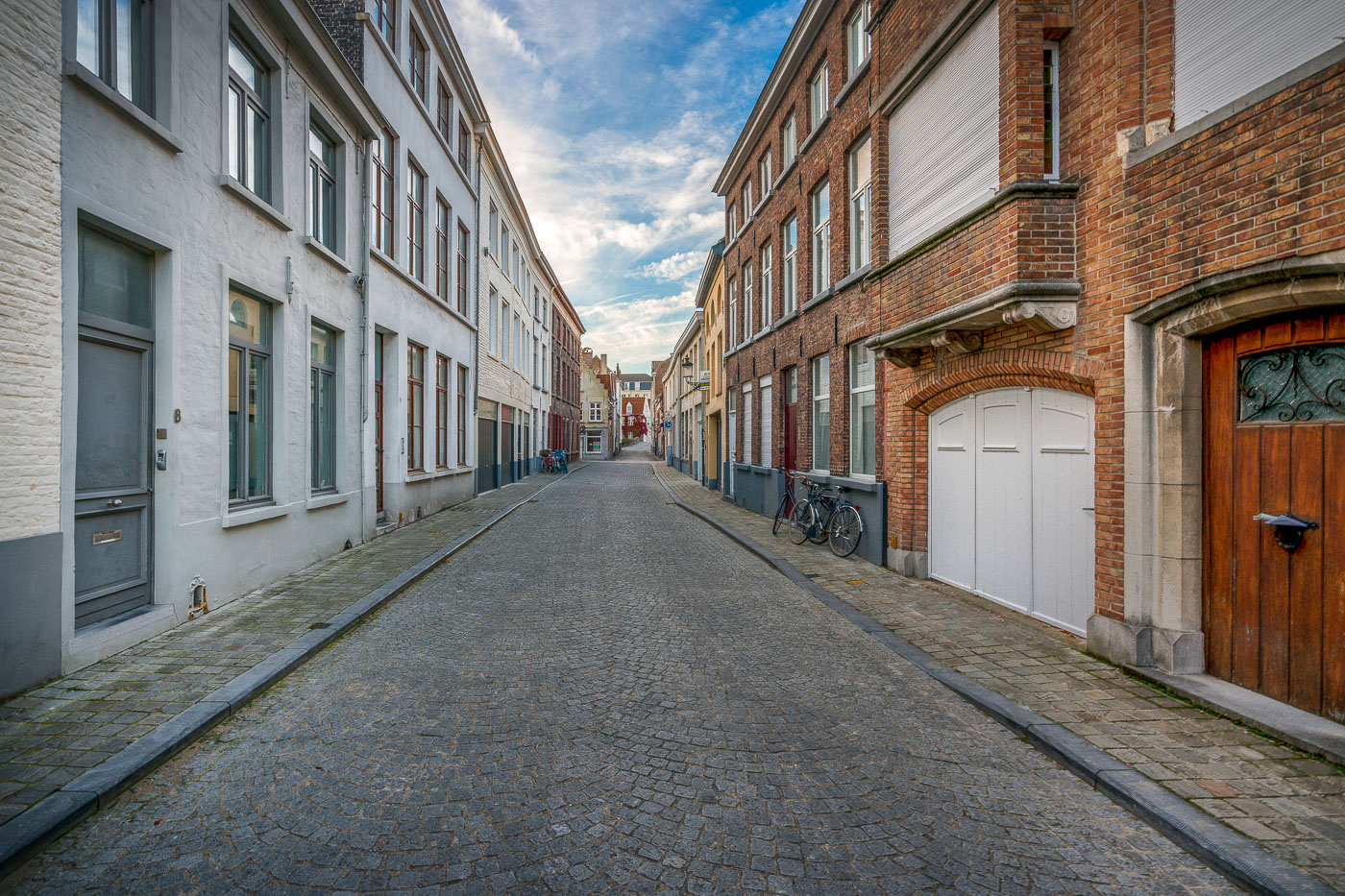
Cobblestone street with historic townhouses and bicycles in Bruges, Belgium.
A narrow cobblestone street in Bruges, Belgium, is lined with historic townhouse façades and parked bicycles. The street surface is paved in granite setts, and the buildings along both sides include brick, plaster, and painted masonry fronts with doors and large windows typical of the city’s historic center.

Bruges Cobblestone Street with Townhouses and Bicycles

Concrete pillars supporting the St. Paul Bridge in downtown Saint Paul, Minnesota, during a rainstorm. The bridge is a vital transportation artery for the city.
Concrete pillars support the St. Paul Bridge in downtown Saint Paul, Minnesota, during a rainstorm. These massive columns are part of the bridge's substructure, designed to bear the weight of traffic and ensure the stability of the crossing. The bridge, a vital artery for the city, facilitates transportation and connects different parts of the downtown area. The rain-slicked ground and reflections of red light highlight the utilitarian nature of this urban infrastructure.

Concrete Pillars Under St. Paul Bridge During Rainstorm
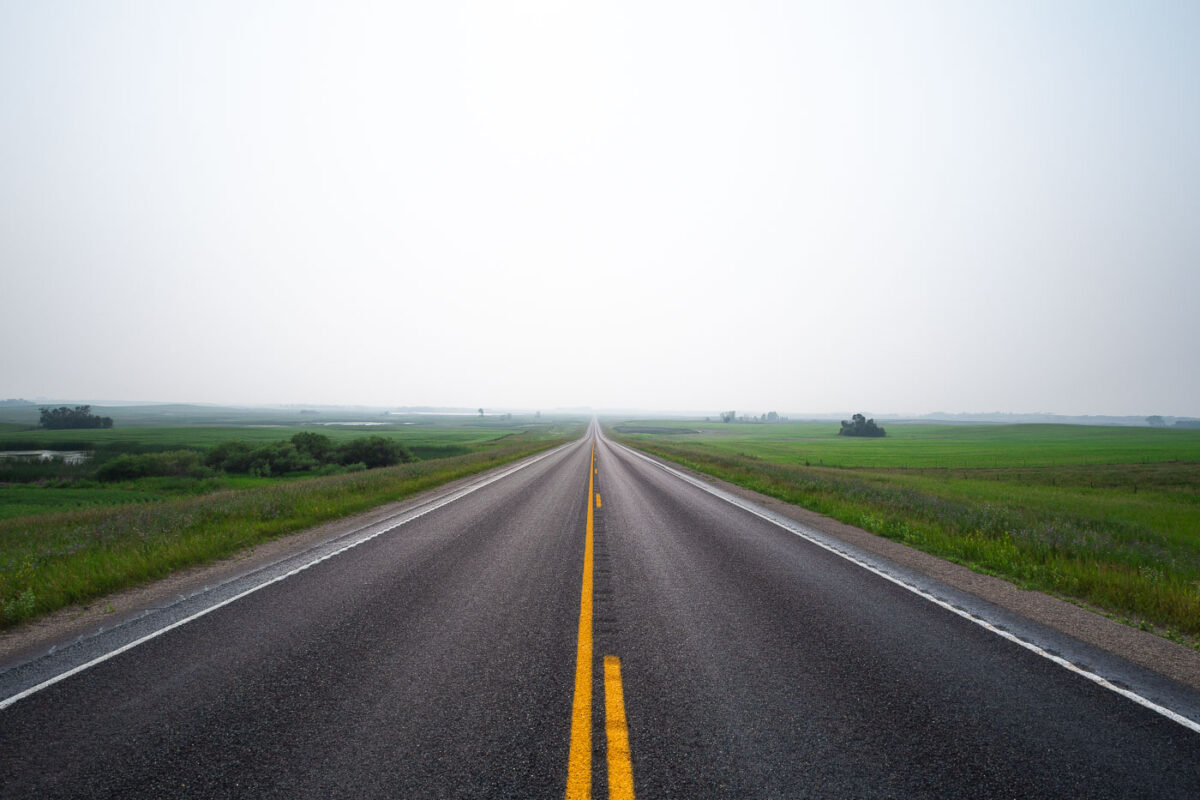
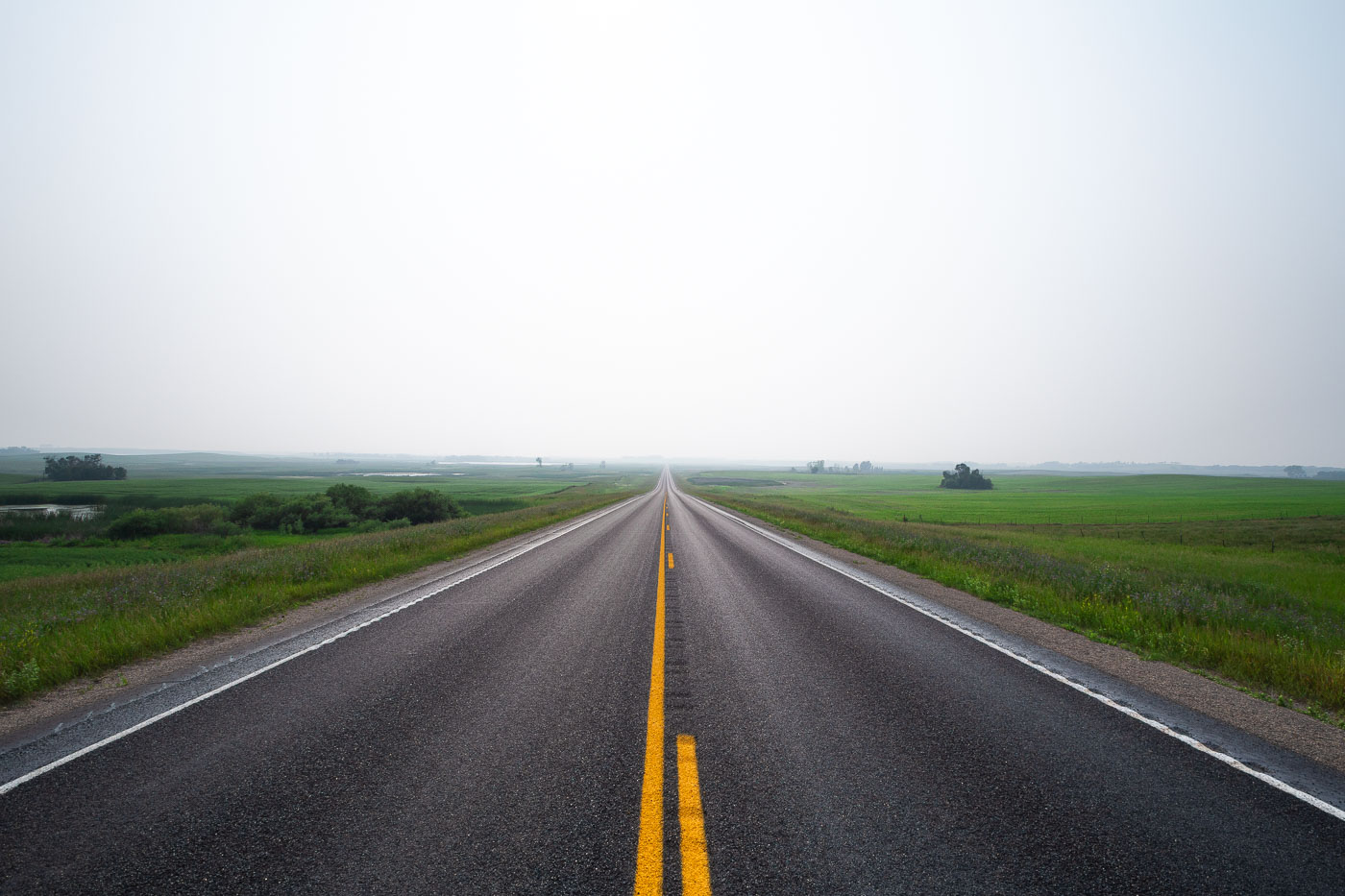
Straight highway with yellow center line stretches through flat green fields near Wolford, North Dakota under hazy sky.
Wolford is a small city in Pierce County, North Dakota, in the north-central part of the state along Highway 17. The surrounding countryside is flat to gently rolling prairie, given over mostly to wheat, canola, and soybean farming, with scattered wetlands typical of the Prairie Pothole Region. Haze events like this one are common in the area during summer months, often tied to smoke drifting south from wildfires in Canada's boreal forest. Pierce County's population has declined steadily since peaking in the mid-20th century, leaving long stretches of two-lane highway like this one with little traffic.

Hazy Two-Lane Highway Near Wolford, North Dakota
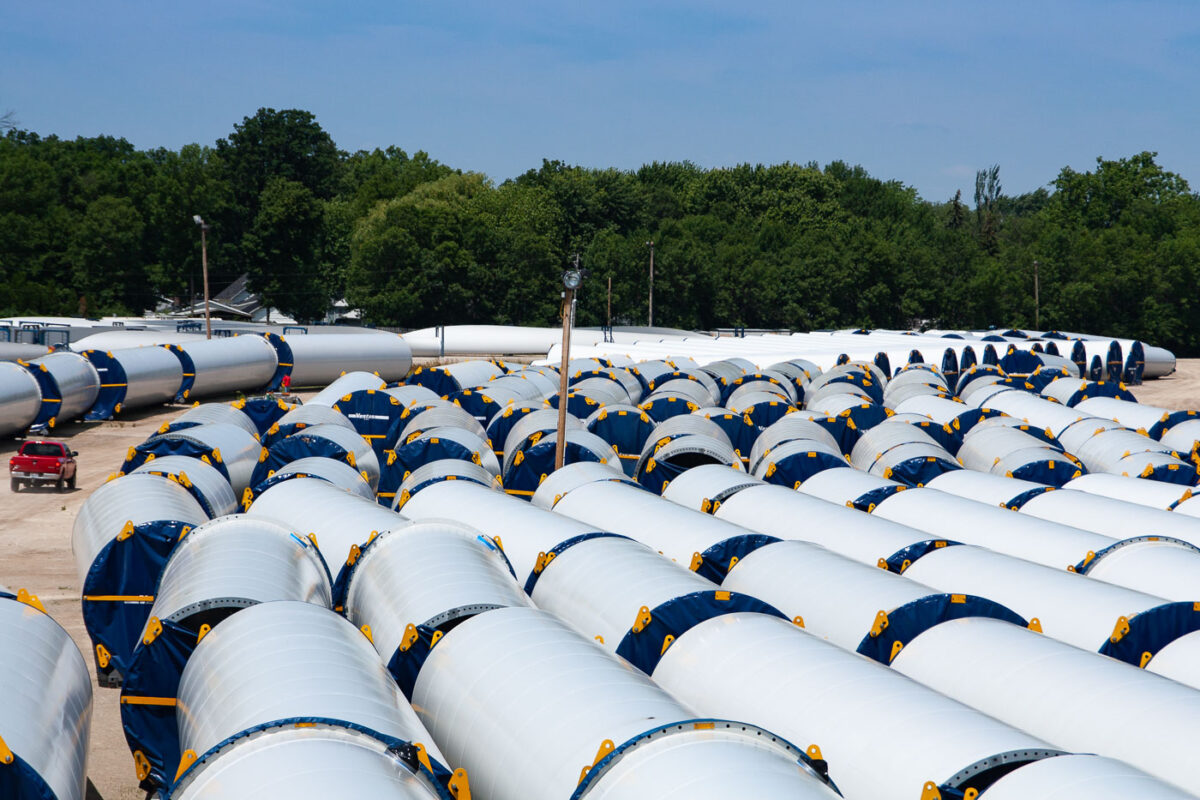
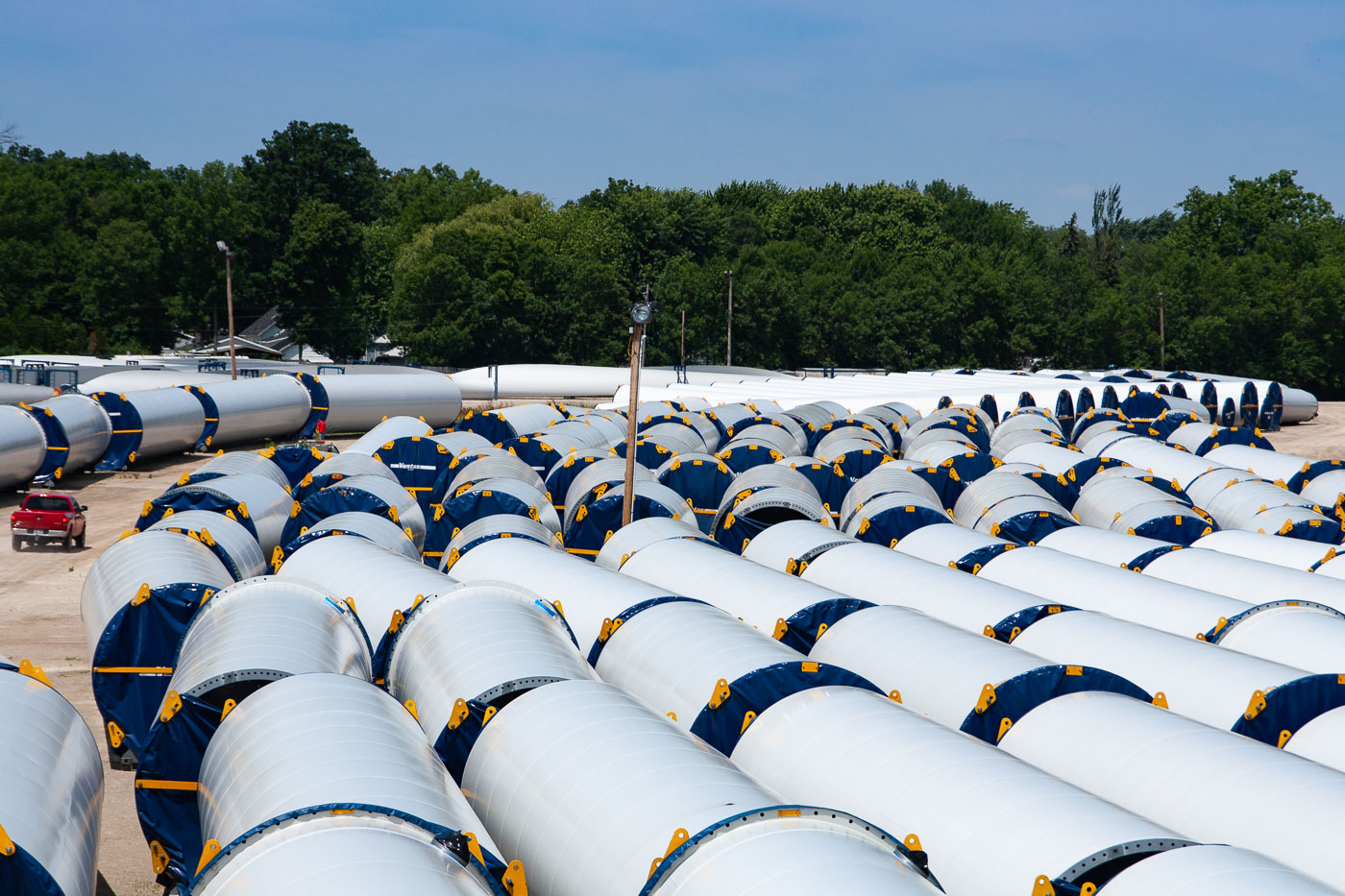
Vestas wind turbine tower sections are stored in rows at a rail yard near Ashland Avenue.
Vestas wind turbine tower sections are stored in a rail yard near Ashland Avenue. The cylindrical tower components are capped and arranged in rows for shipment by freight rail. The staging area supports transport of oversized wind energy equipment to project sites.

Vestas Wind Turbine Tower Sections near Ashland Avenue
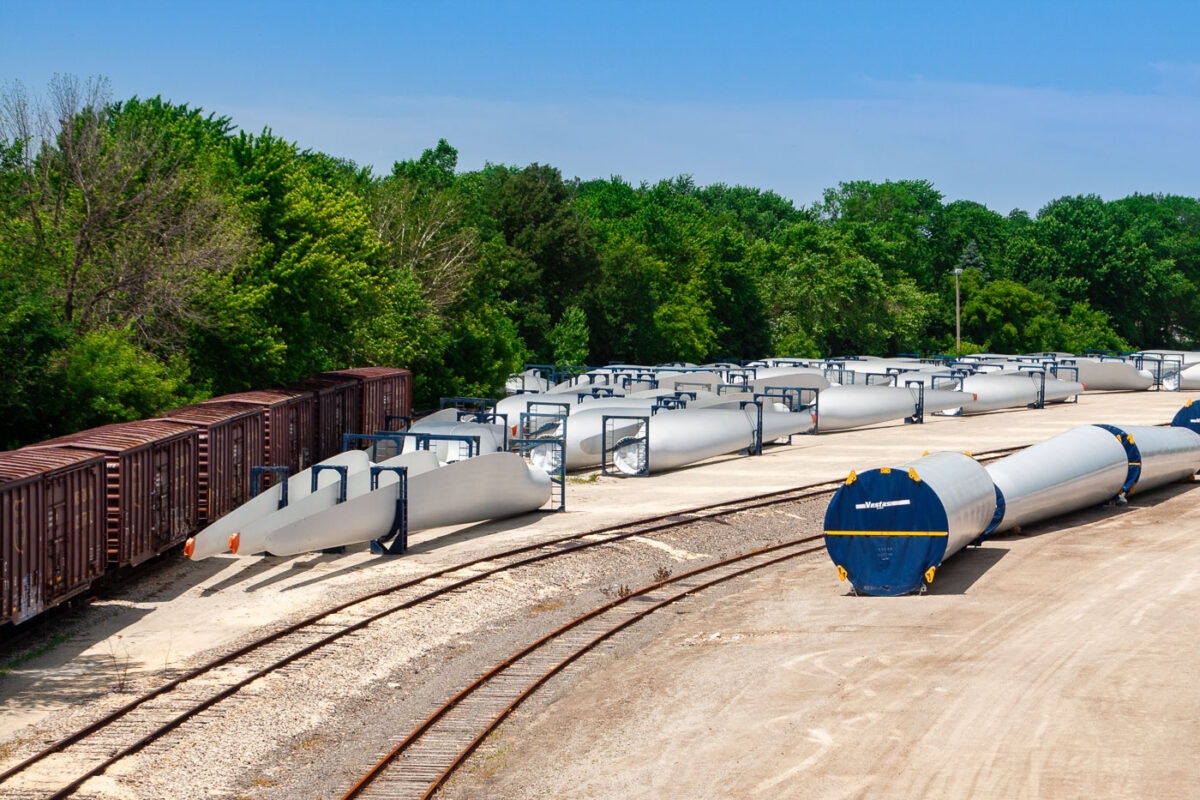
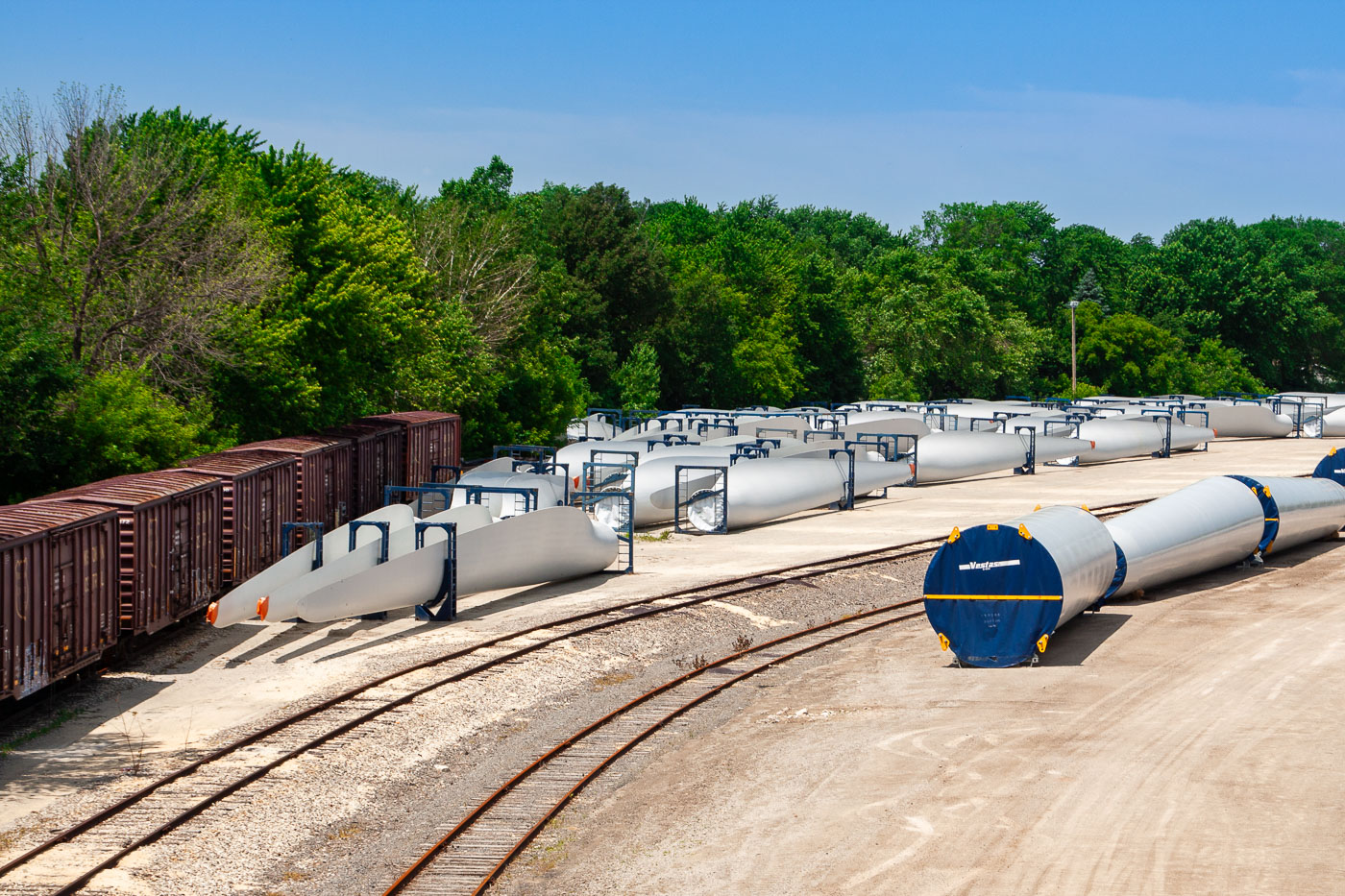
Vestas wind turbine blades are staged at a rail yard in Fond du Lac County, Wisconsin, awaiting transport to a wind farm.
Rows of Vestas wind turbine blades are staged at a rail yard in Fond du Lac County, Wisconsin, awaiting transport to a wind farm. These large components are essential for generating renewable energy and represent a significant investment in sustainable power infrastructure. The rail yard serves as a critical logistical hub, facilitating the movement of these oversized materials from manufacturing facilities to their final installation sites. The presence of these blades underscores the growth of wind energy as a major contributor to the nation's power grid.

Vestas Wind Turbine Blades at Rail Yard, Fond Du Lac County, WI
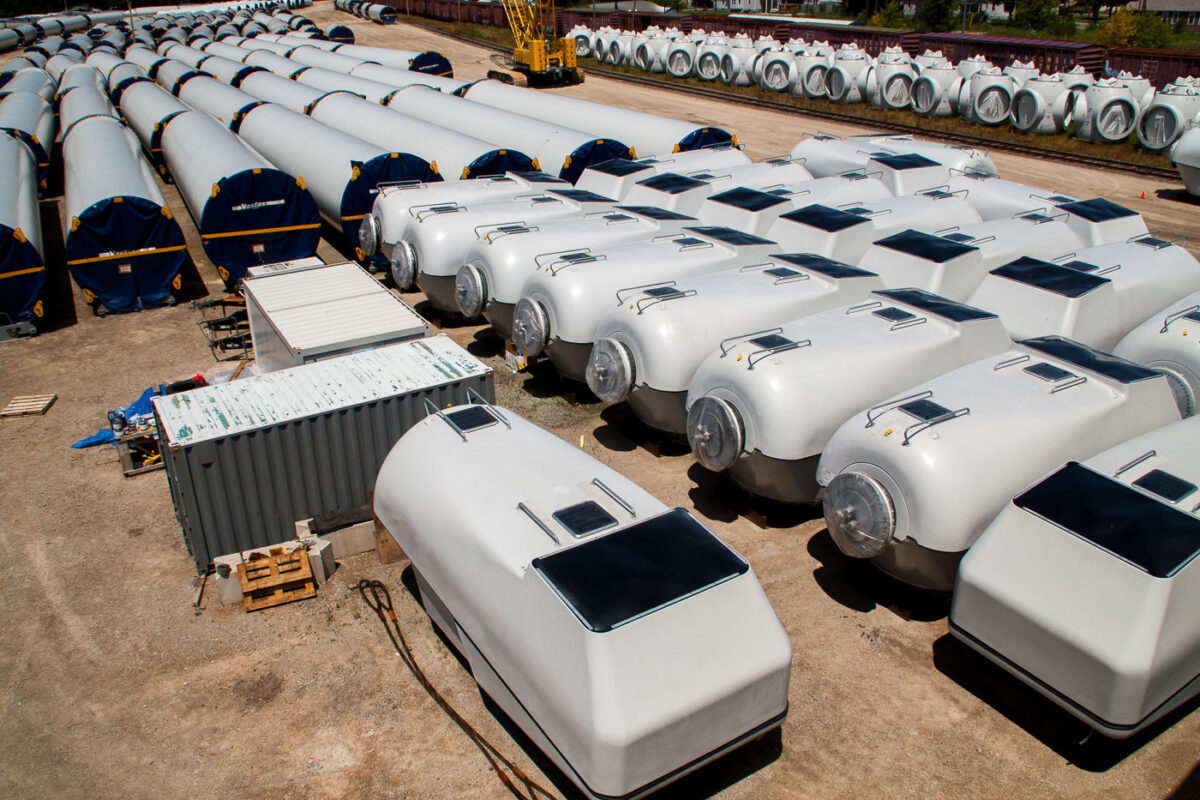
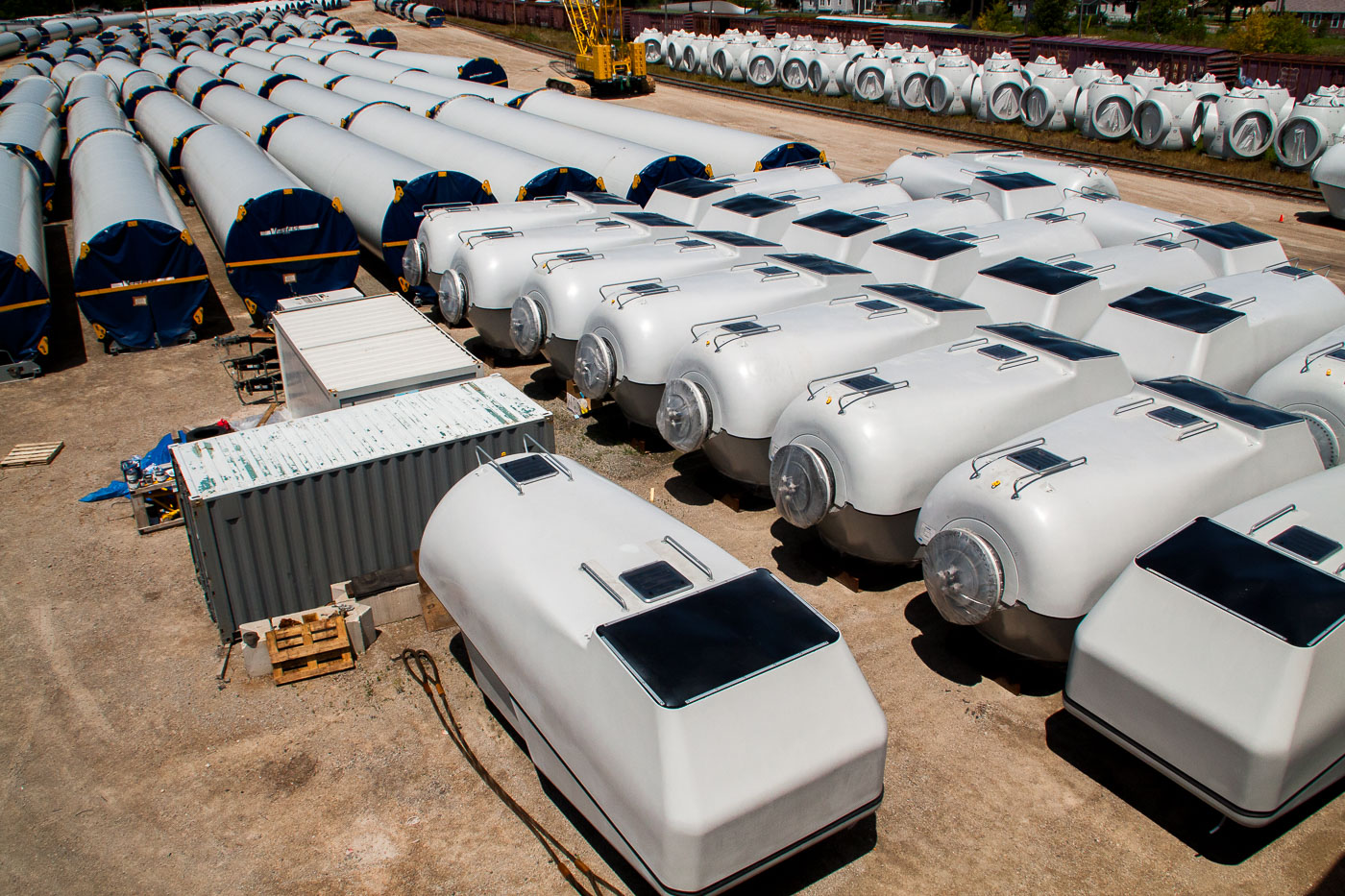
Vestas wind turbine components staged in a rail yard in Fond du Lac County, WI, awaiting transport to wind farm sites.
Rows of Vestas wind turbine components are staged in a rail yard in Fond du Lac County, Wisconsin. These large sections, including nacelles and tower segments, are awaiting transport to wind farm construction sites. The rail yard serves as a critical logistical hub for the distribution of renewable energy infrastructure. The components are manufactured by Vestas, a global leader in wind energy solutions, underscoring the region's role in the expansion of wind power generation.

Vestas Wind Turbine Components in Rail Yard, Fond Du Lac County, WI

Built in Minneapolis

Minneapolis Photographer

Browse by location, move through long-running series, or start with recent work.