MBTA Red Line

8 photos · 2025

8 photographs tagged MBTA Red Line, 2025.
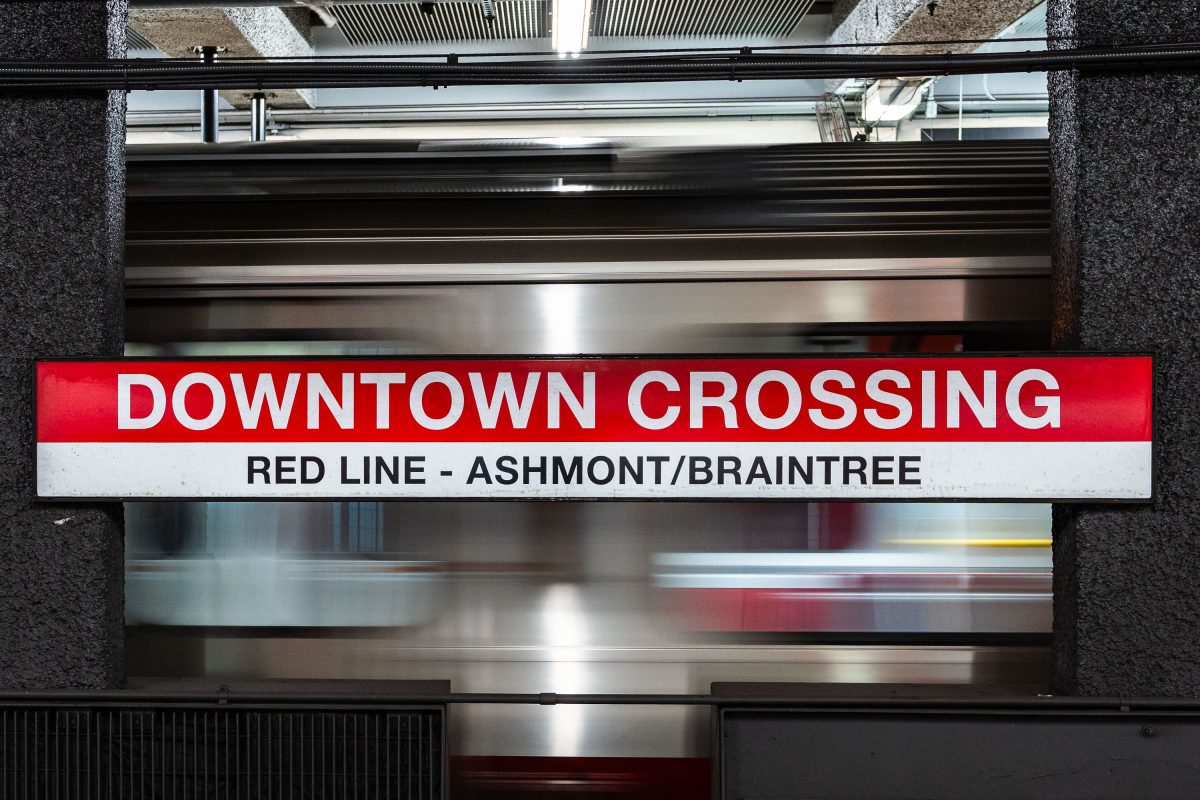
Downtown Crossing Red Line platform sign for Ashmont/Braintree branch at Boston's MBTA station.
Downtown Crossing is a key transfer point on the MBTA's Red Line, linking Ashmont and Braintree branch trains to destinations south of the city. The station opened in 1908 as Winter Street on the old Tremont Street subway, then took its current name in 1975 to reflect the shopping district above, once anchored by Filene's and Jordan Marsh. It also connects to the Orange Line, making it one of the busiest interchange points in the MBTA system.

Downtown Crossing’s Red Line Sign for Ashmont and Braintree
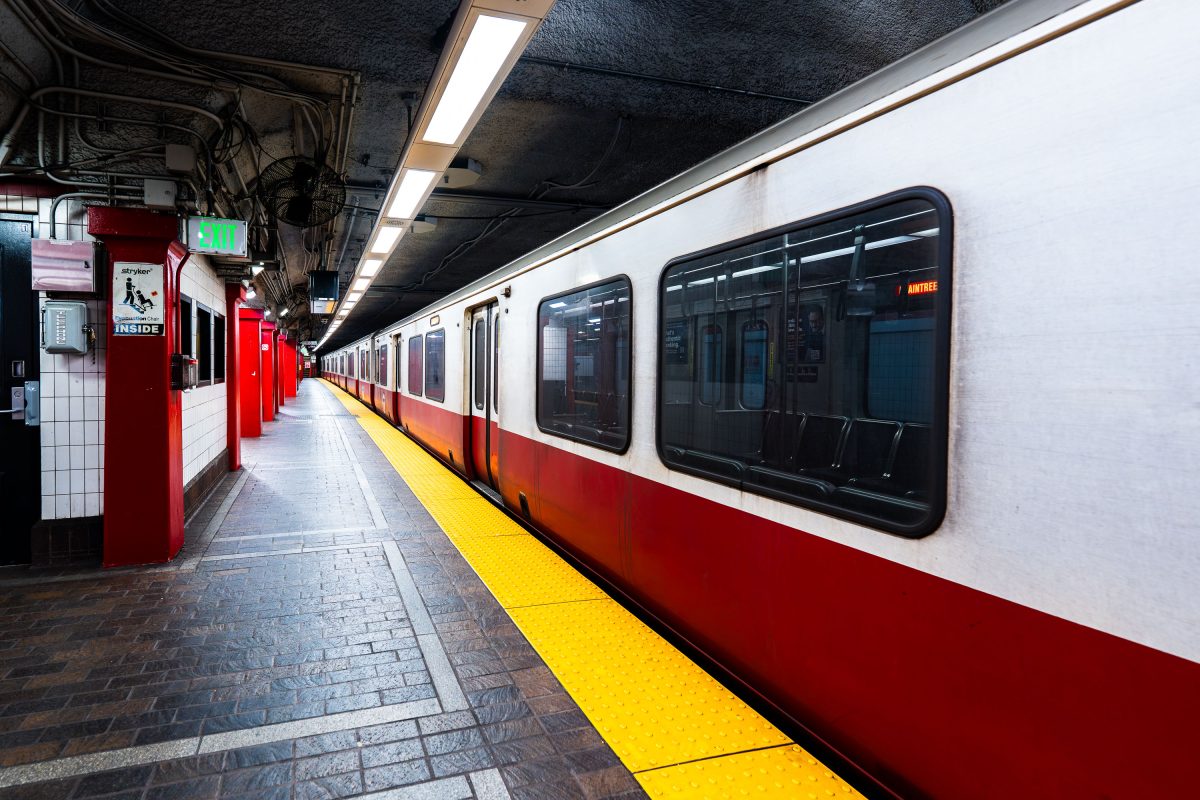
MBTA Red Line train stopped at Park Street Station platform in Boston.
Park Street Station opened in 1897 as part of the Tremont Street Subway, the first subway system built in the United States. It sits beneath Boston Common and serves as the transfer point between the MBTA's Red and Green Lines. The station's twin platforms handle tens of thousands of riders daily, linking downtown Boston to Cambridge, Dorchester, and points south. The Tremont Street Subway, including Park Street Station, is listed on the National Register of Historic Places and designated a National Historic Civil .

A Red Line Train Waits at Park Street Station
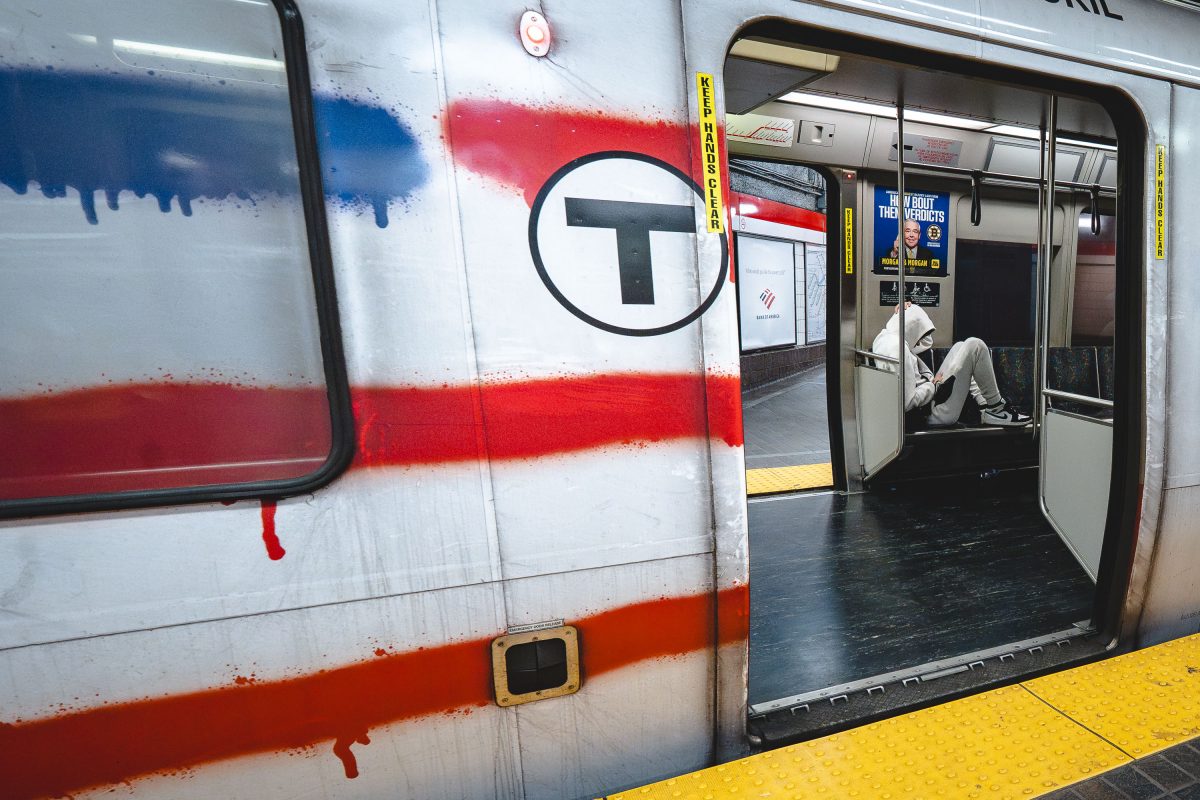
Vandalized MBTA Red Line train at Park Street Station in Boston with graffiti covering the exterior.
Park Street Station opened in 1897 as one of four original stops on the country's first subway tunnel and now serves as the transfer point between the Red and Green Lines. The Red Line itself runs about 22.5 miles from Alewife in Cambridge to the twin terminals at Ashmont and Braintree, making it the longest line in the MBTA system. Its cars, built by Bombardier and later replaced by CRRC, carry roughly 240,000 riders a day in normal years, more than any other MBTA line.

Paint-Streaked Red Line Train at Park Street Station
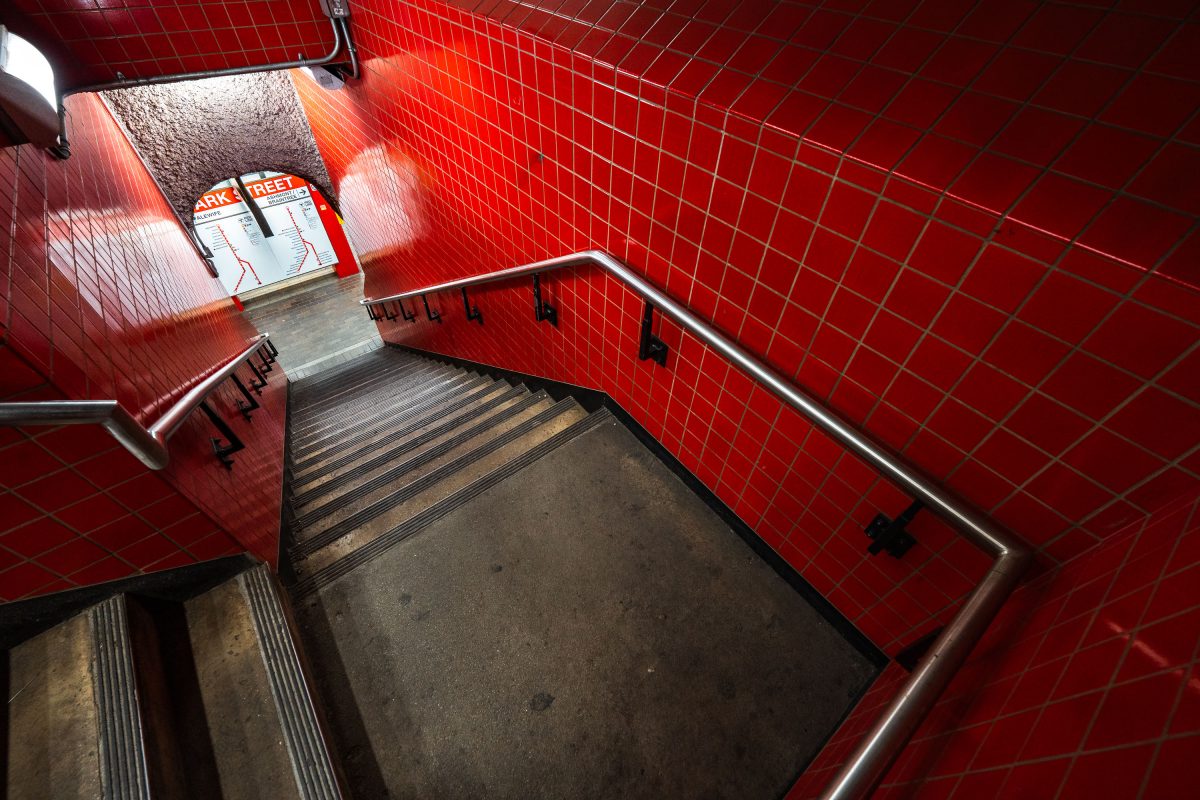
Park Street Station stairwell in Boston's MBTA system features distinctive red tile walls and metal handrails.
Park Street Station opened on September 1, 1897, as part of the Tremont Street Subway, making it the oldest operating subway station in the United States. Built beneath Boston Common, it now functions as the MBTA's main transfer point between the Red and Green Lines. The red tile work seen throughout the station dates to a 1970s renovation, which replaced the original cream-colored finishes installed by the Boston Transit Commission. It remains one of the system's busiest stations, handling tens of thousands of riders daily.

Red-Tiled Stairwell at Park Street Station
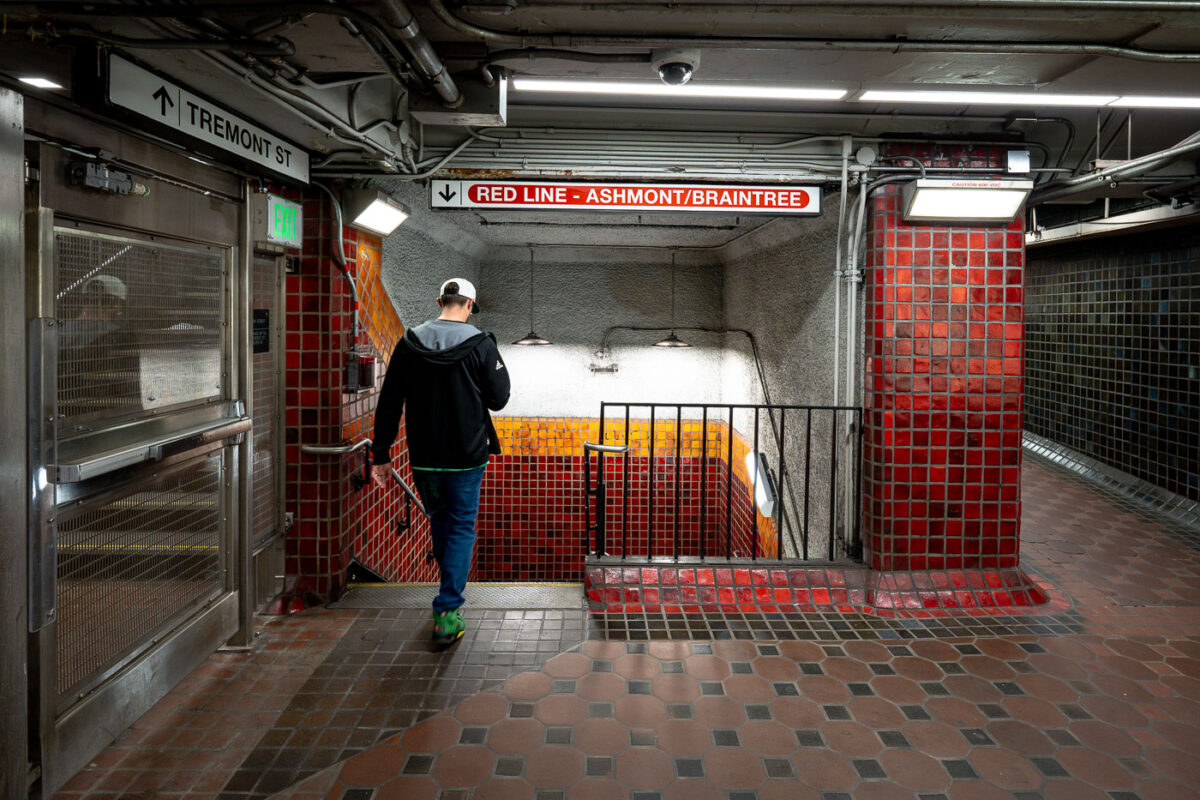
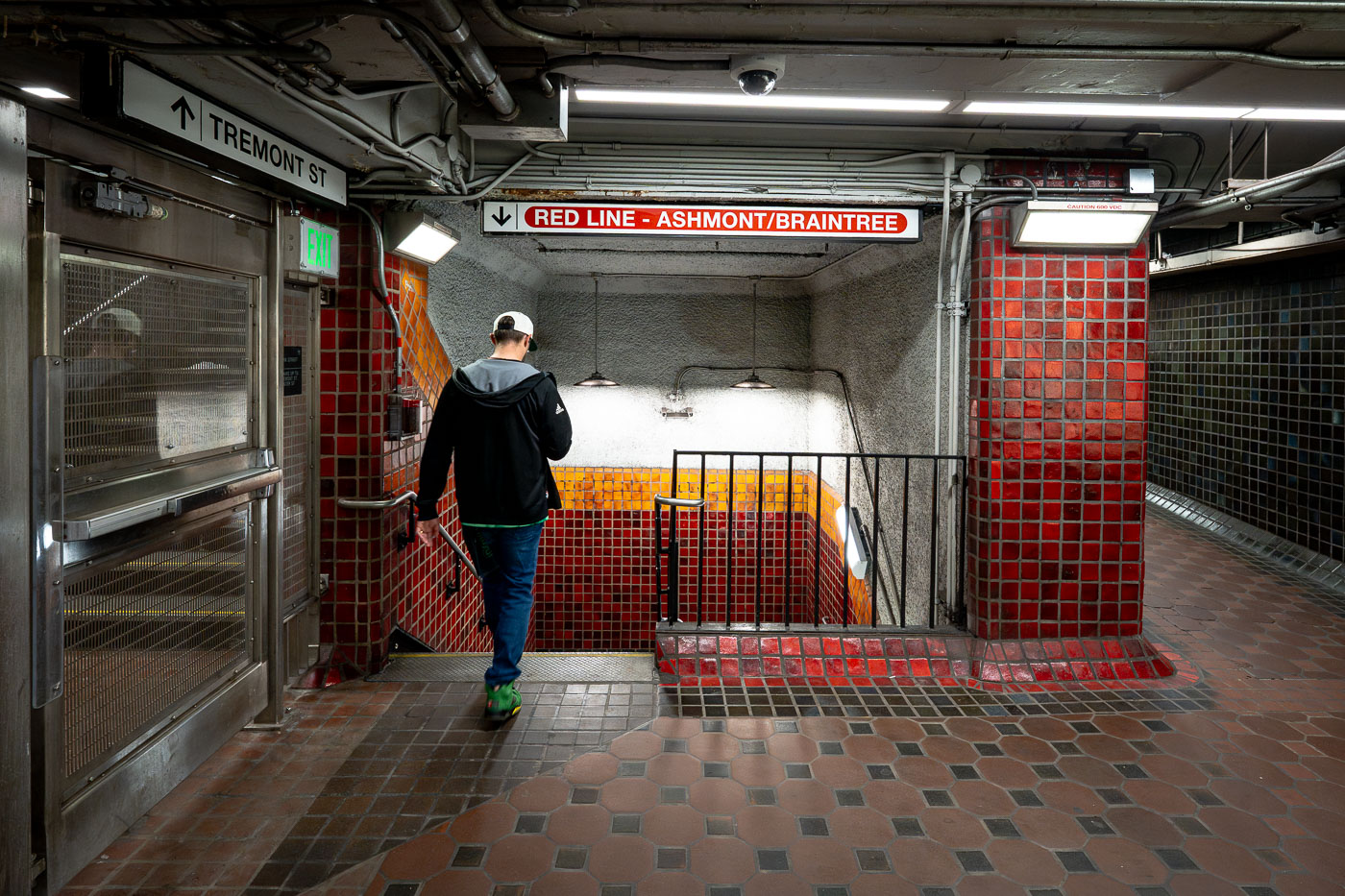
Runner descends stairs at Park Street Station on Boston's MBTA Red Line.
Park Street Station sits beneath Boston Common at the junction of Tremont and Winter streets, where riders can transfer between the Red Line and Green Line. It opened in September 1897 as part of the Tremont Street Subway, the first subway system built in the United States. The station's red and gold tile work marks the Red Line side, a color scheme the MBTA has used system-wide to help riders navigate since the lines were named in the 1960s. Park Street remains one of the busiest stations in the network and is listed on the National Register of Historic Places.

Descending to the Red Line at Park Street Station
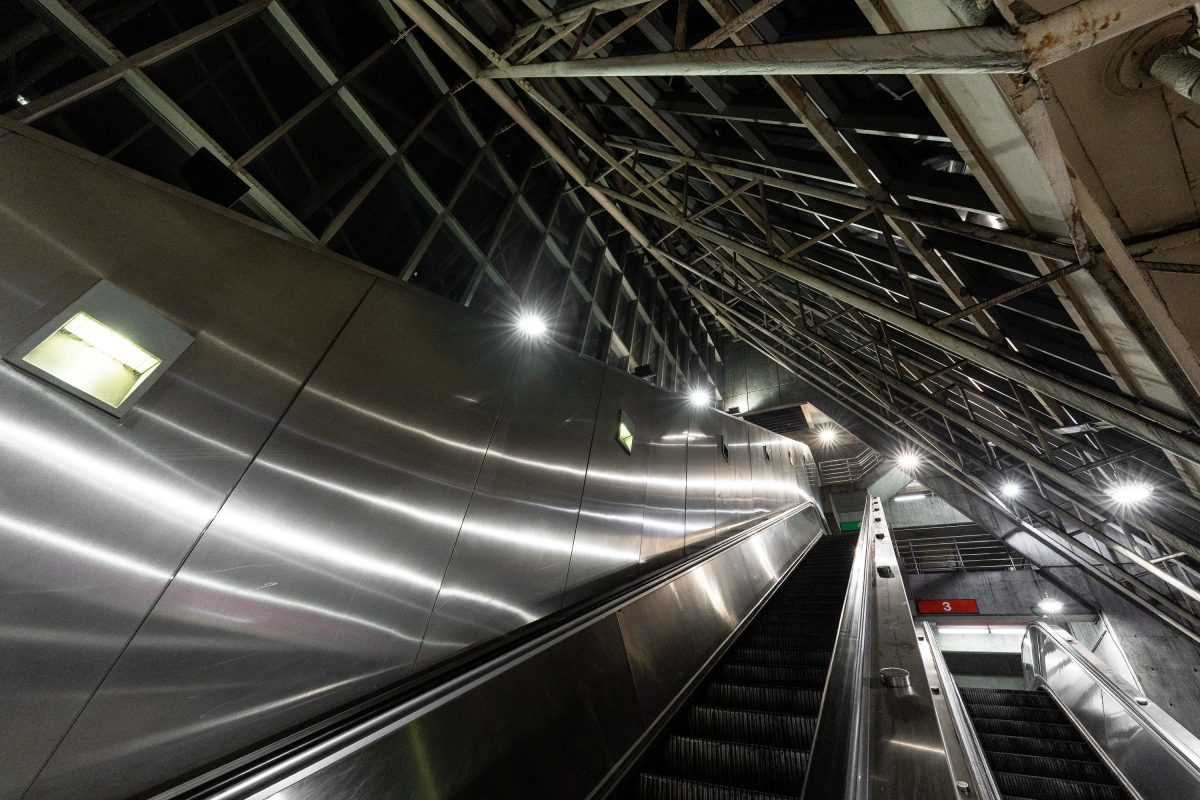
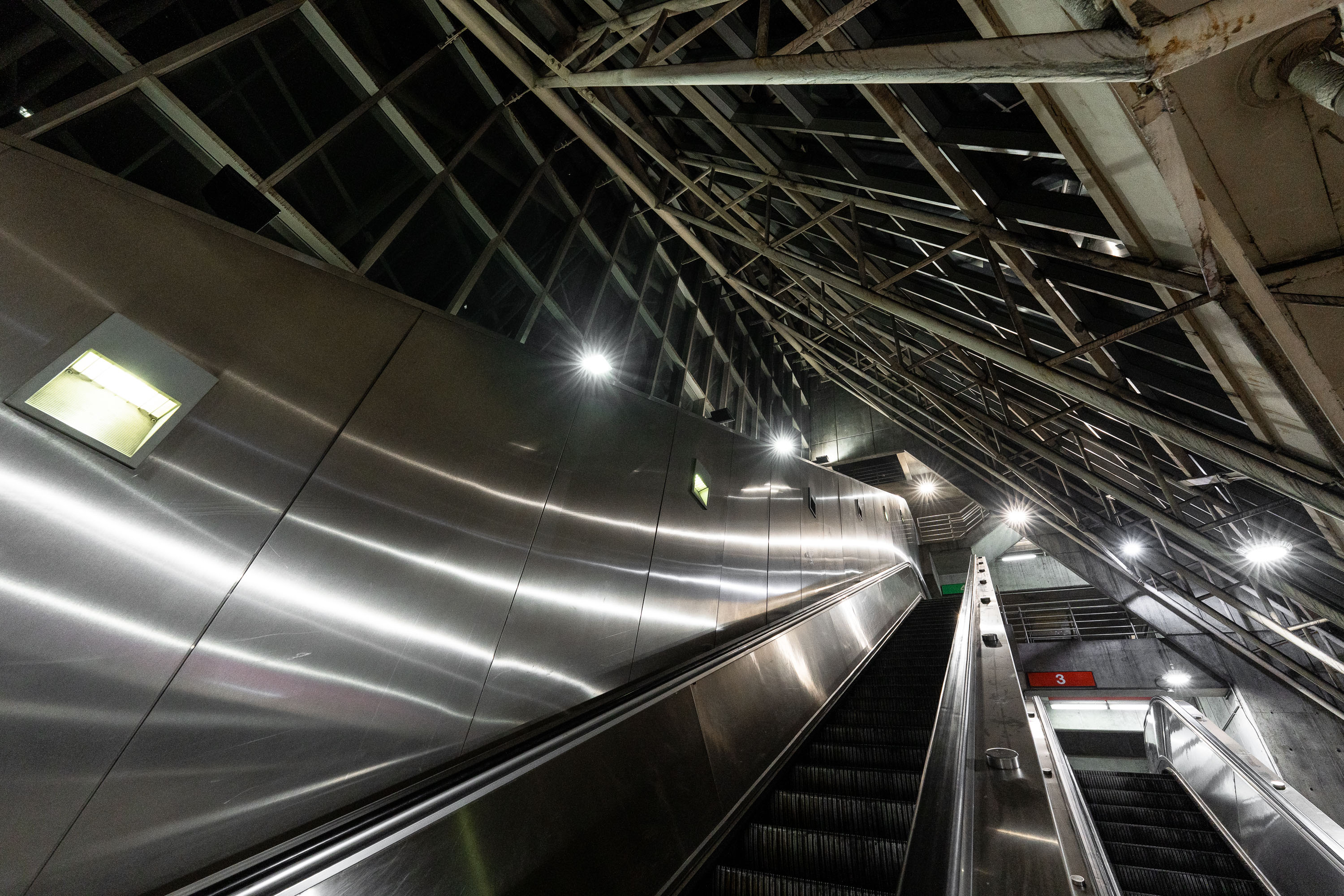
Escalators at MBTA Alewife Station in Cambridge with metal ceiling panels and industrial lighting.
Alewife Station anchors the northern end of the MBTA Red Line, opened in 1985 as the system's newest terminus after a decade of construction through Cambridge's Alewife Brook corridor. The station was designed by the architecture firm Ellenzweig Associates, with a steel-and-glass roof structure meant to bring daylight down to the below-grade platform level. Its attached garage holds roughly 2,700 vehicles, making it one of the largest park-and-ride facilities in the MBTA network. Bus routes serving Arlington, Belmont, and Lexington also converge here, making Alewife a primary transfer point for commuters heading into Boston.

Escalators to the Platform, Alewife Station, Cambridge
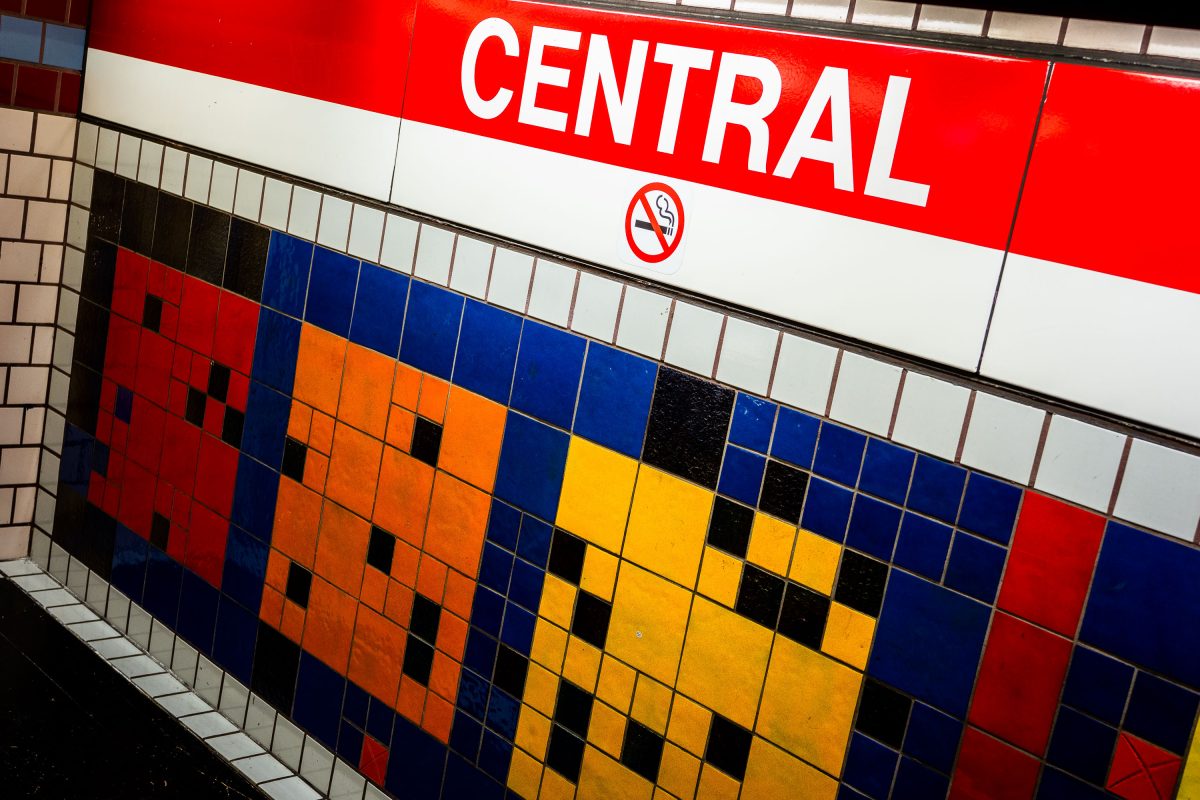
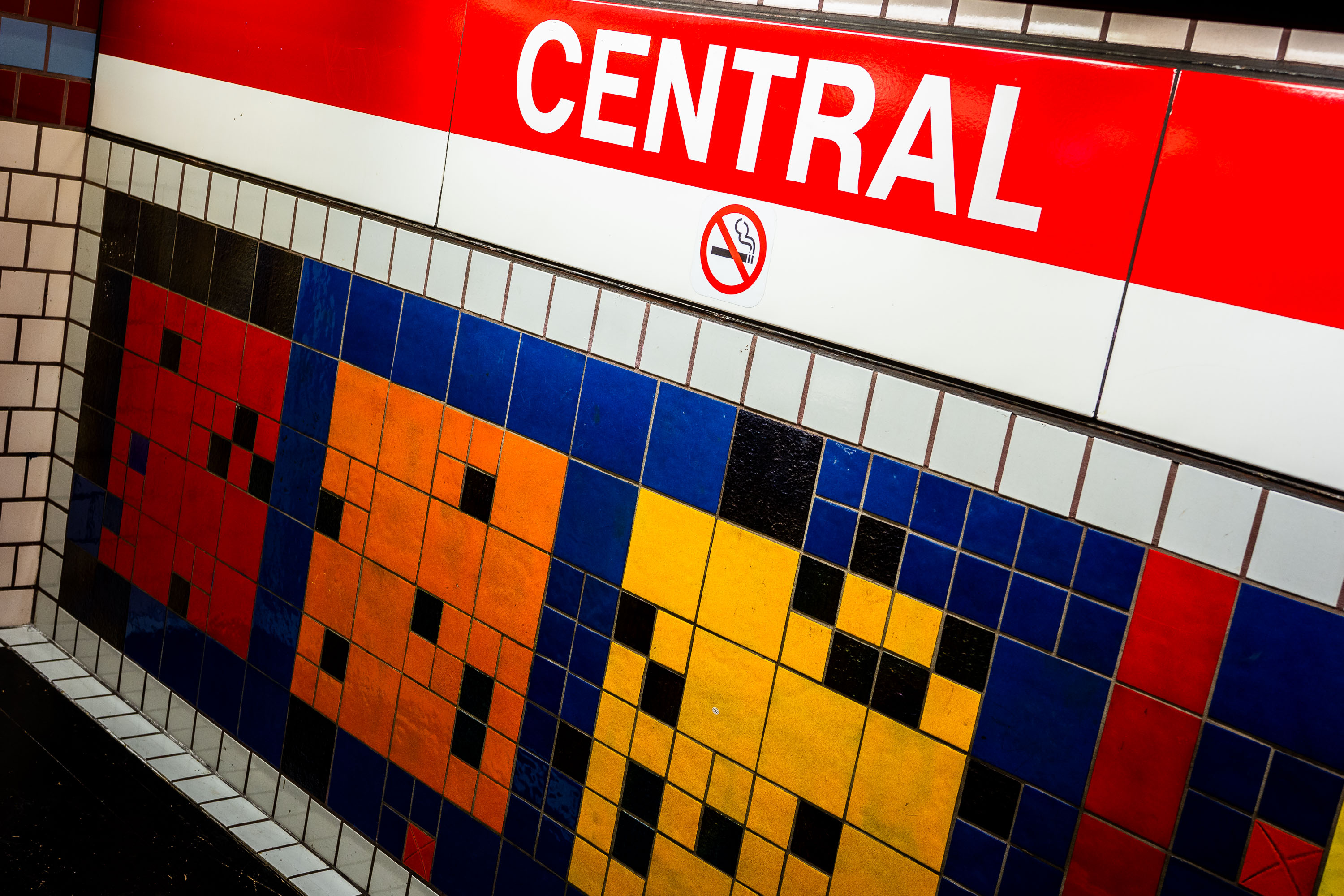
Colorful checkerboard tile mosaic at Central Station, MBTA Red Line in Boston.
Central Station serves the MBTA Red Line in Cambridge, Massachusetts, near Central Square. The station opened in 1912 as part of the original Cambridge tunnel extension, making it one of the oldest subway stops in the country still in operation. Its platforms feature checkerboard-patterned tile work in bands of red, orange, blue, and yellow, a design element used throughout the Red Line's older stations to help riders identify stops by color and pattern. The station sits underground beneath Massachusetts Avenue and is operated by the Massachusetts Bay Transportation Authority.

Checkerboard Mosaic Tiles at Central Station in Cambridge
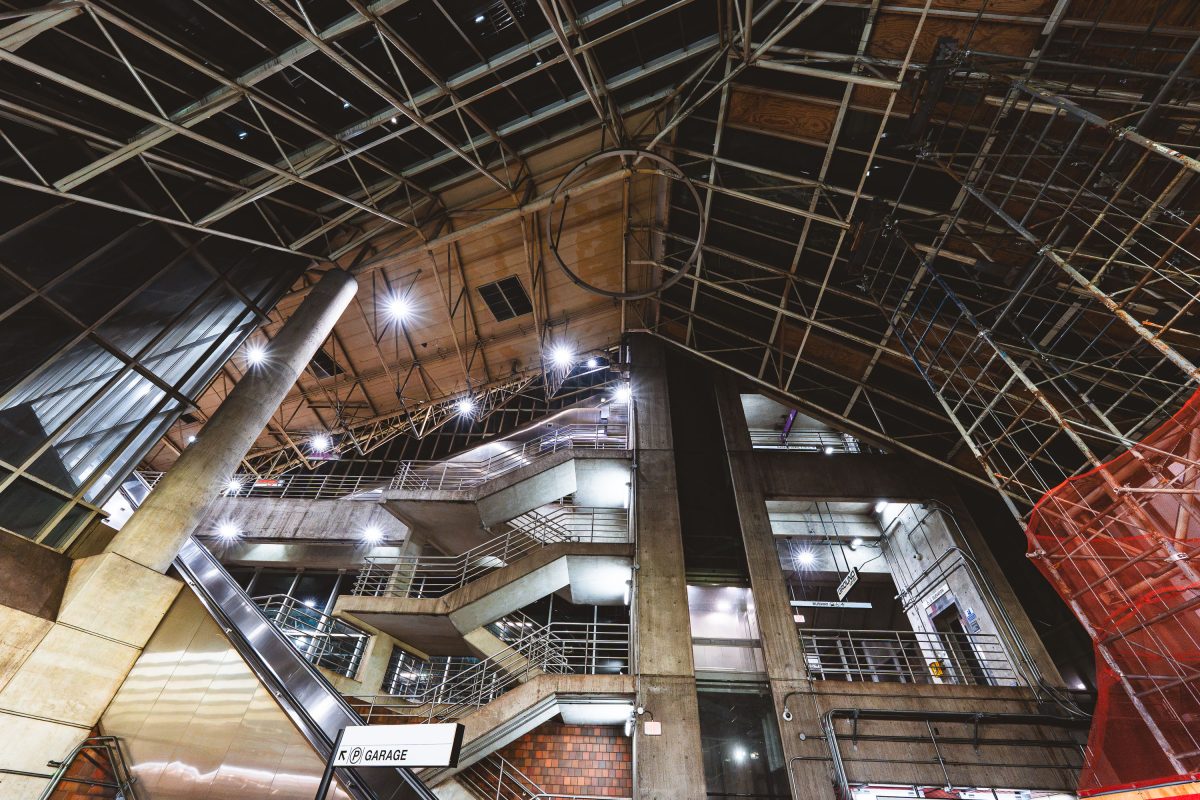
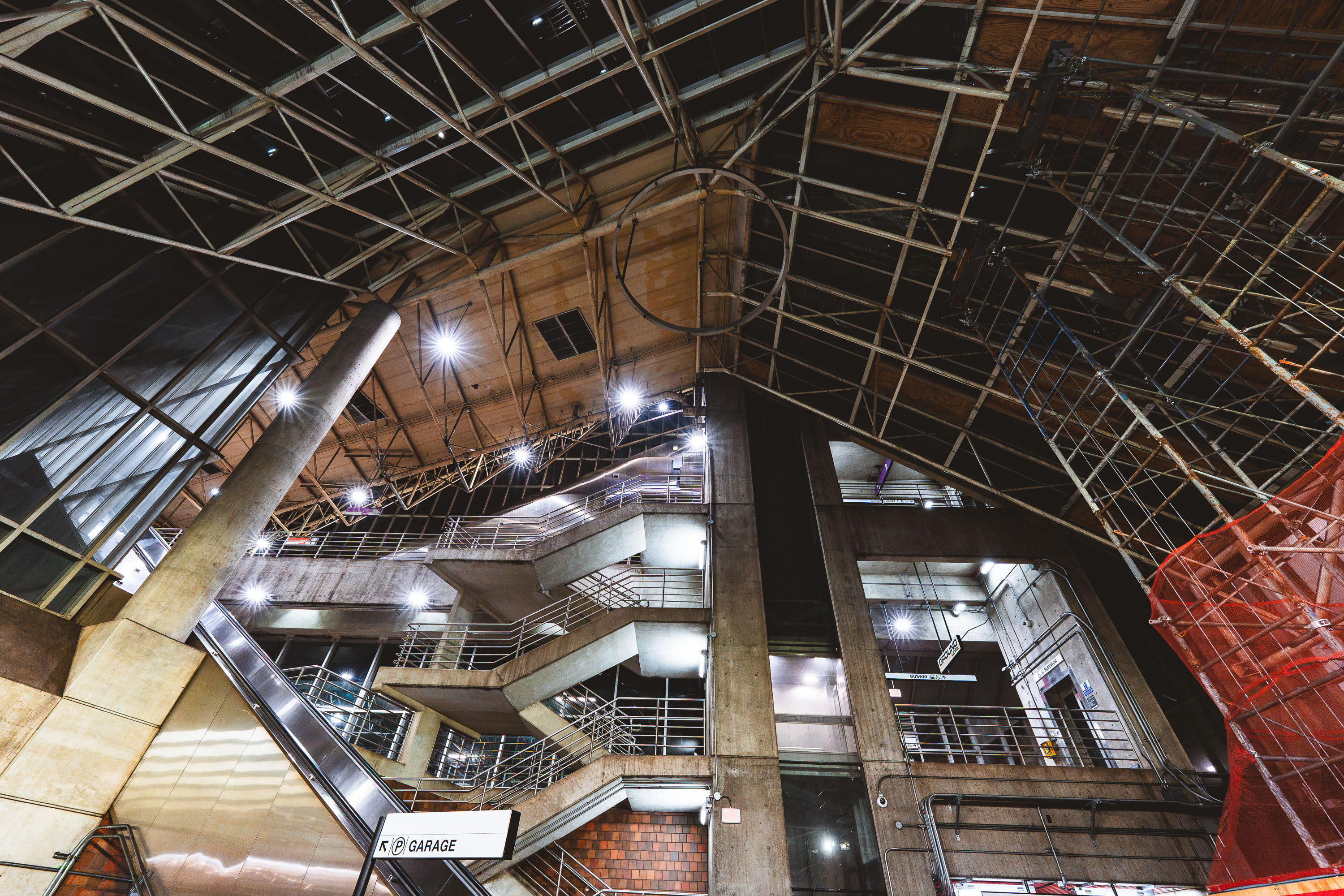
Interior view of Alewife Station's multilevel parking garage with exposed concrete structure and metal framework.
Alewife Station, the northern terminus of the MBTA Red Line, opened in 1985 and was designed by architect Ted Ashton with structural work by Paul Rudolph, whose signature exposed-truss roof and raw concrete forms define the terminal. The station sits atop a large multilevel parking garage, one of the largest transit parking facilities in the MBTA system, built to serve commuters from Cambridge and the northwestern suburbs. Its Brutalist design, unusual for a transit hub, has made it a subject of architectural debate since it opened. The garage and station remain in daily operation, connecting Red Line trains with bus routes and the Minuteman Bikeway.

Exposed Trusses and Parking Garage at Alewife Station

Built in Minneapolis

Minneapolis Photographer

Browse by location, move through long-running series, or start with recent work.