Greensboro

7 photos · 2012

7 photographs tagged Greensboro, 2012.
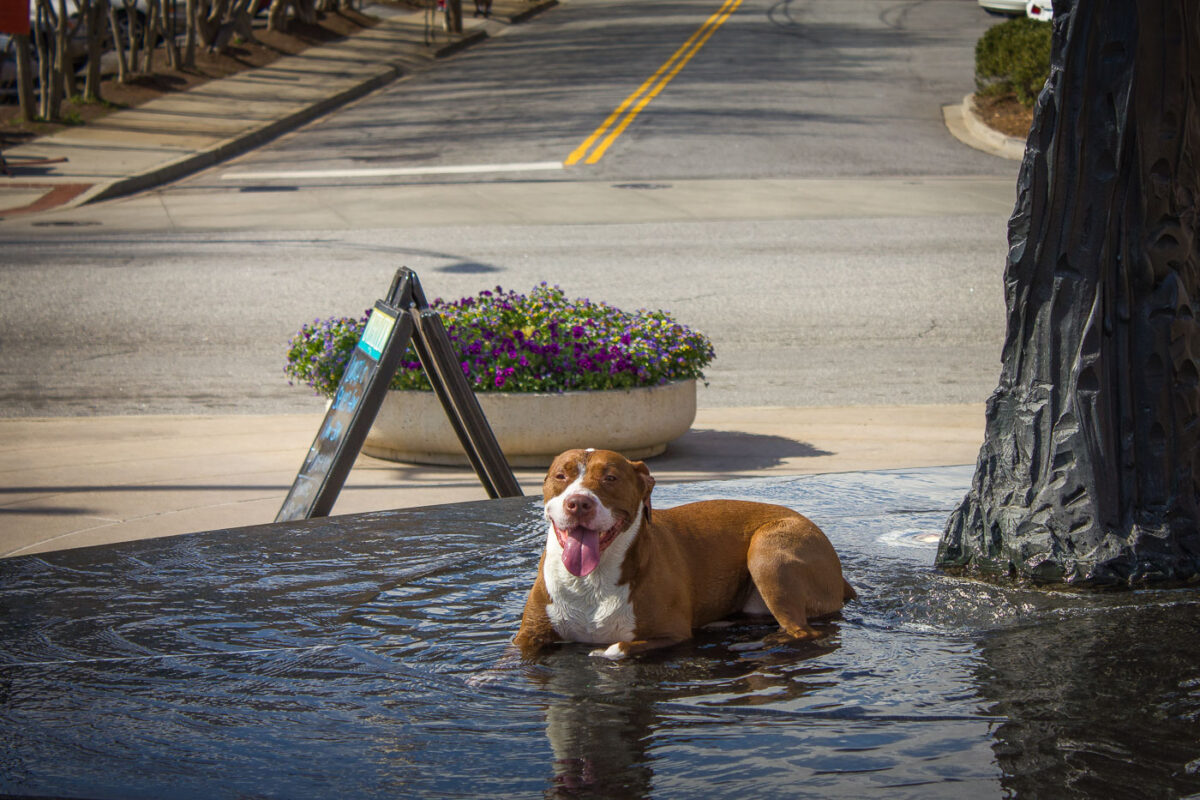
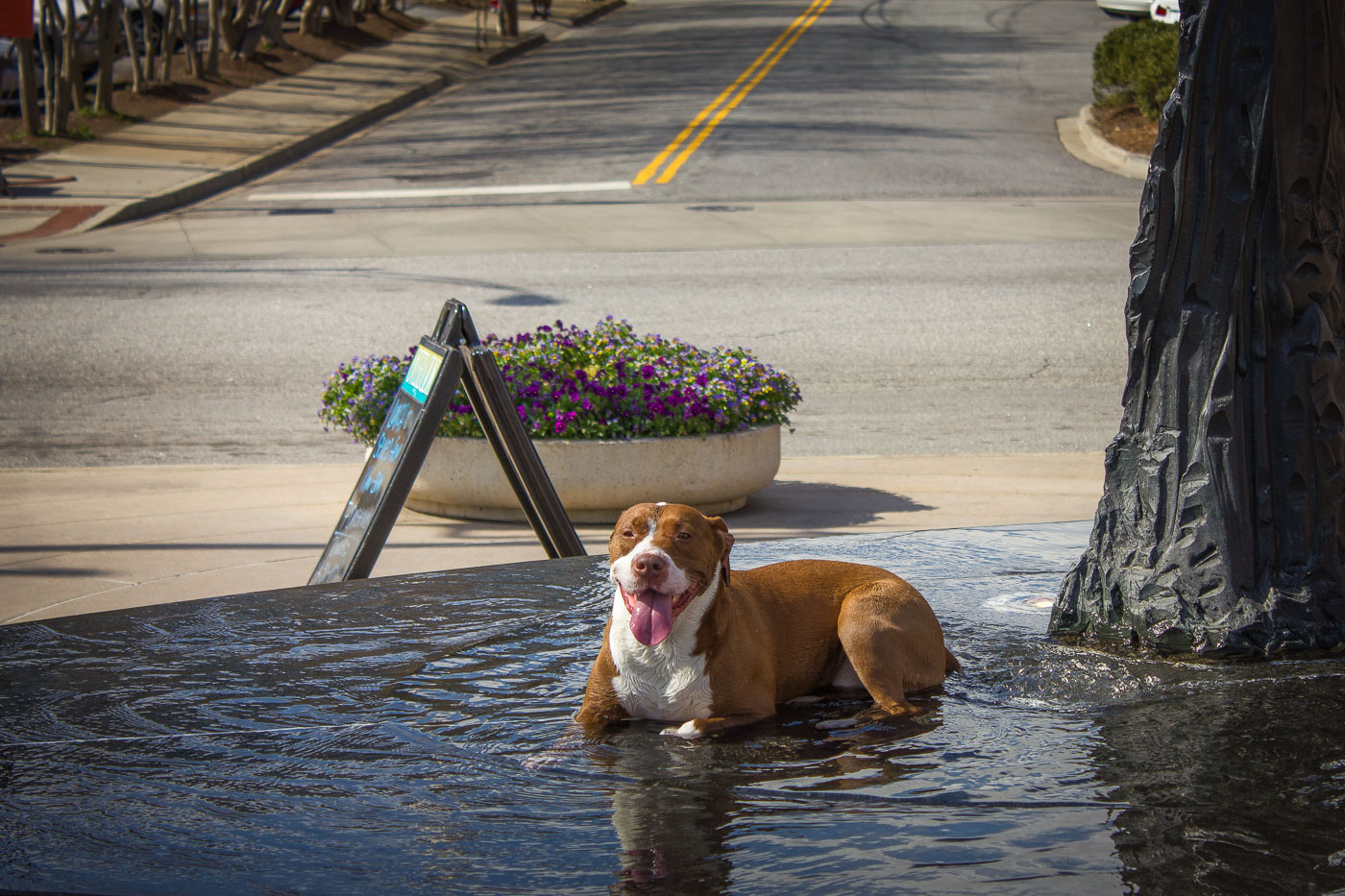
Brown and white dog cooling off in a water fountain in Greensboro, North Carolina.
A pit bull mix wades into a public fountain along a downtown Greensboro street, tongue out and soaking in the water. Downtown fountains like this one typically double as public art and informal cooling spots during warmer months, drawing both people and pets. The surrounding sidewalk planters and street furniture suggest a pedestrian-oriented commercial district designed for foot traffic.

Pit Bull Takes a Dip in a Downtown Greensboro Fountain
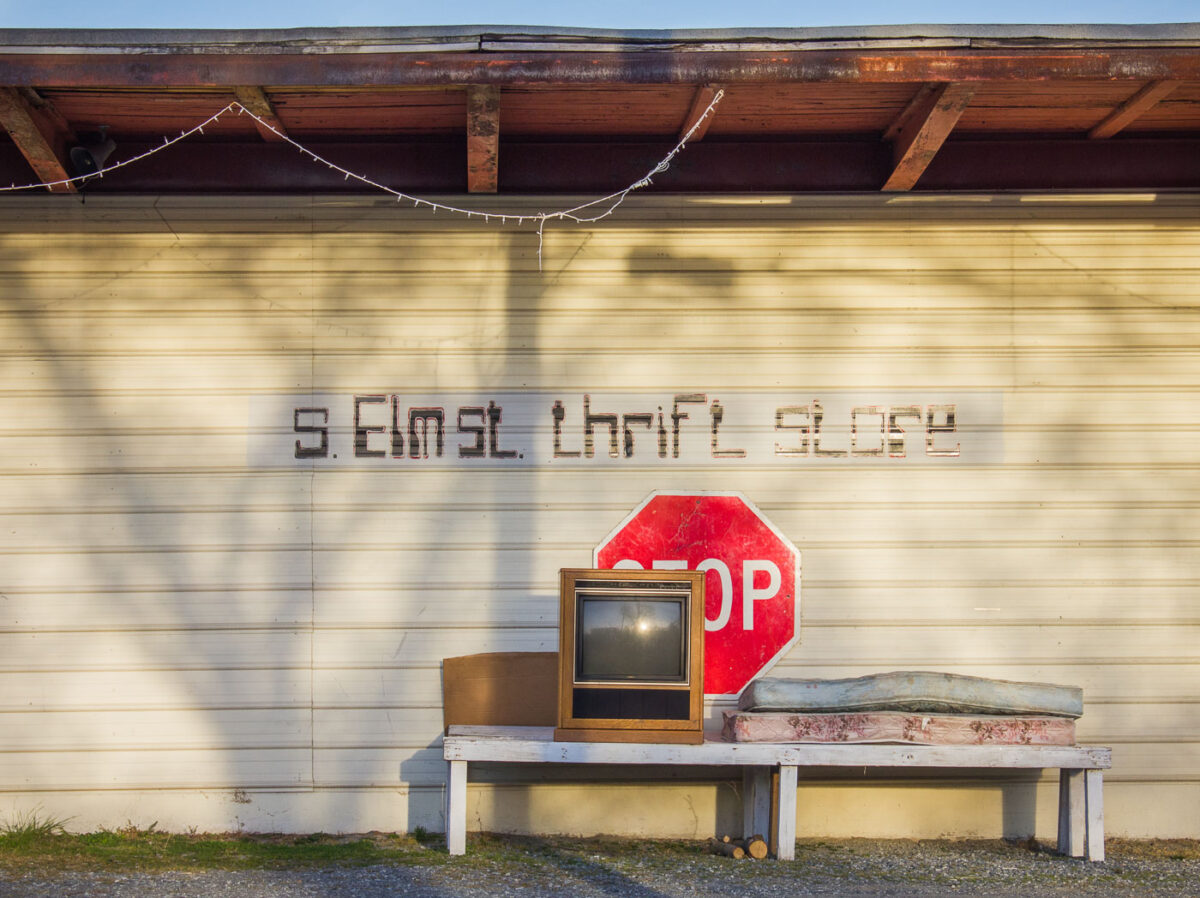
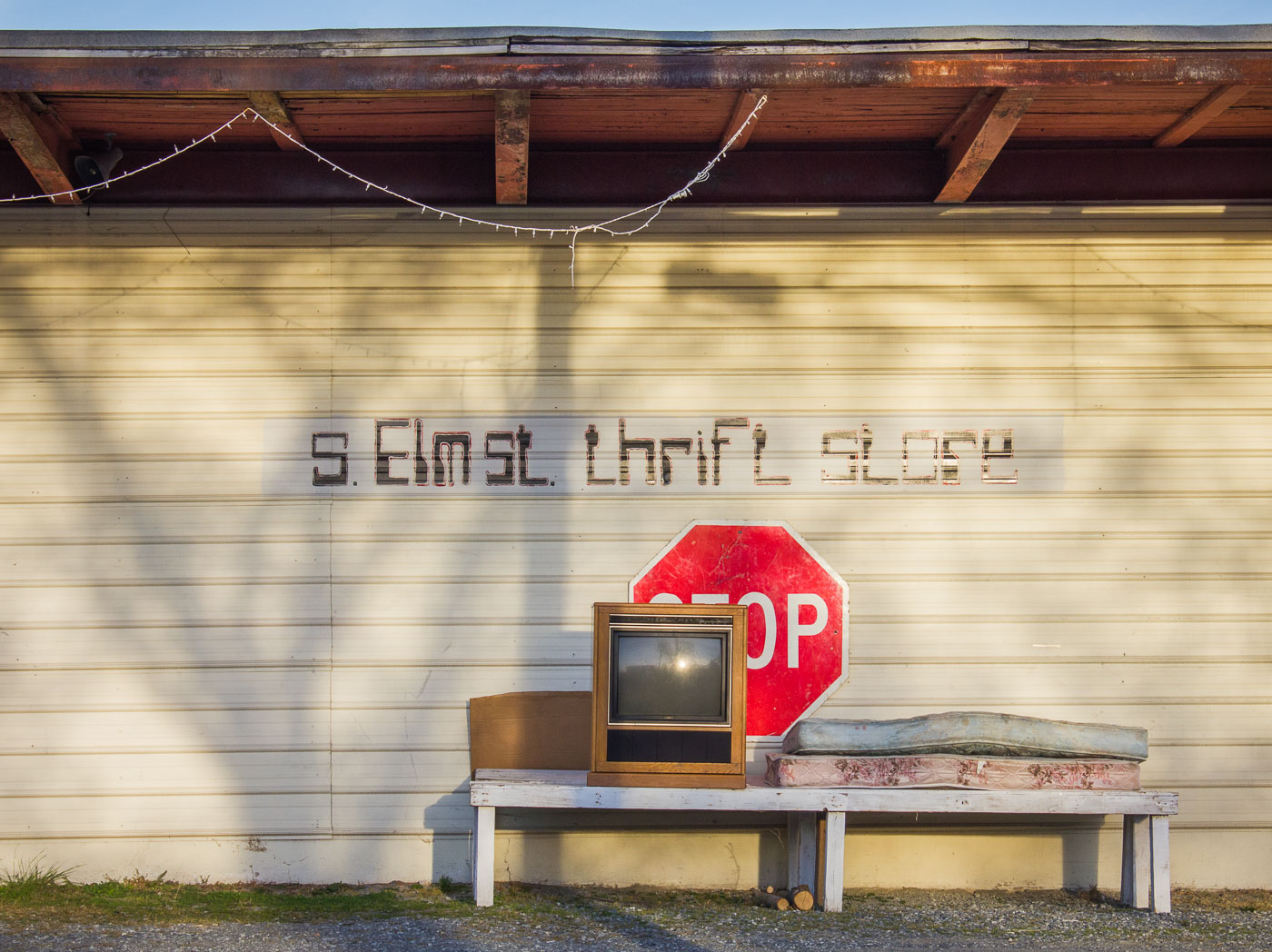
S. Elm Street Thrift Store in Greensboro displays a television, mattresses, and stop sign outside its yellow building.
S. Elm Street runs through south Greensboro, a stretch of the city lined with small, independently run shops rather than chain retailers. A thrift store along the street keeps its name hand-painted directly on the building's metal siding rather than on a manufactured sign. Secondhand goods set out front — a television, a stop sign, and bedding among them — reflect the resale and salvage trade common to small thrift operations, where merchandise often rotates through outdoor display before reaching the sales floor inside.

Secondhand Wares Outside S. Elm St. Thrift Store
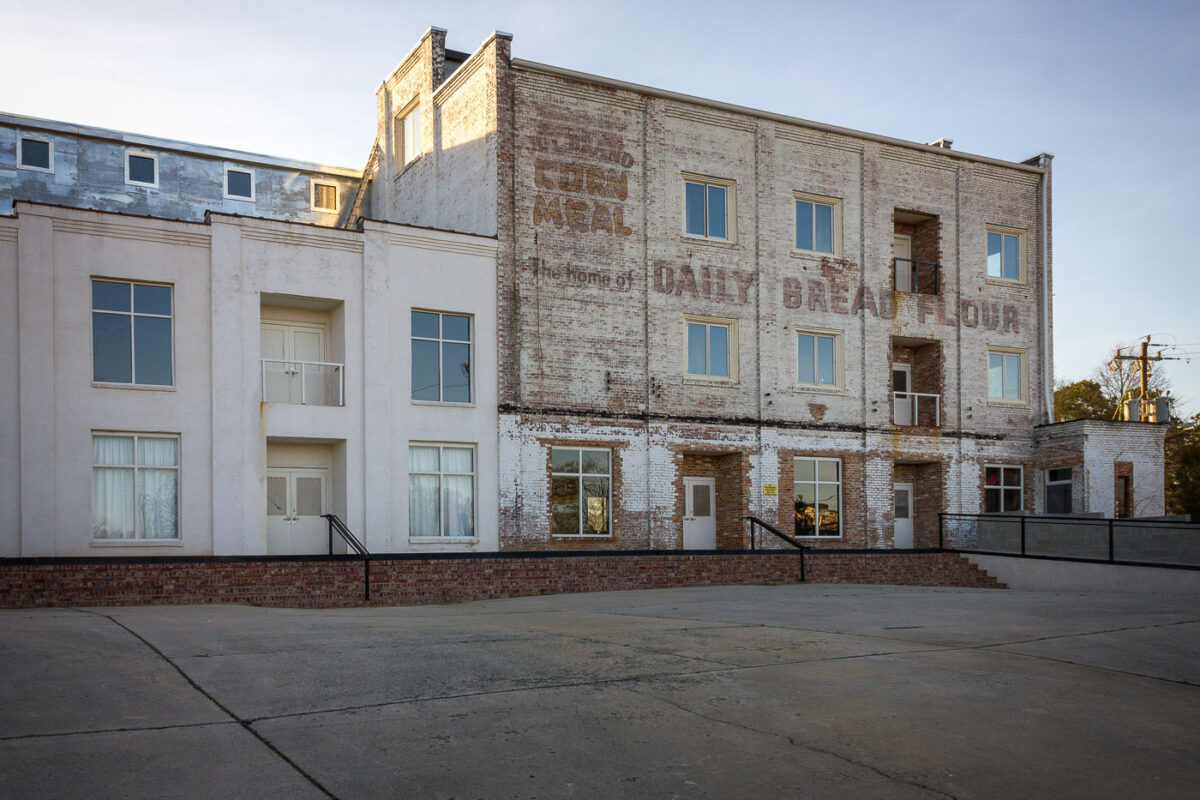
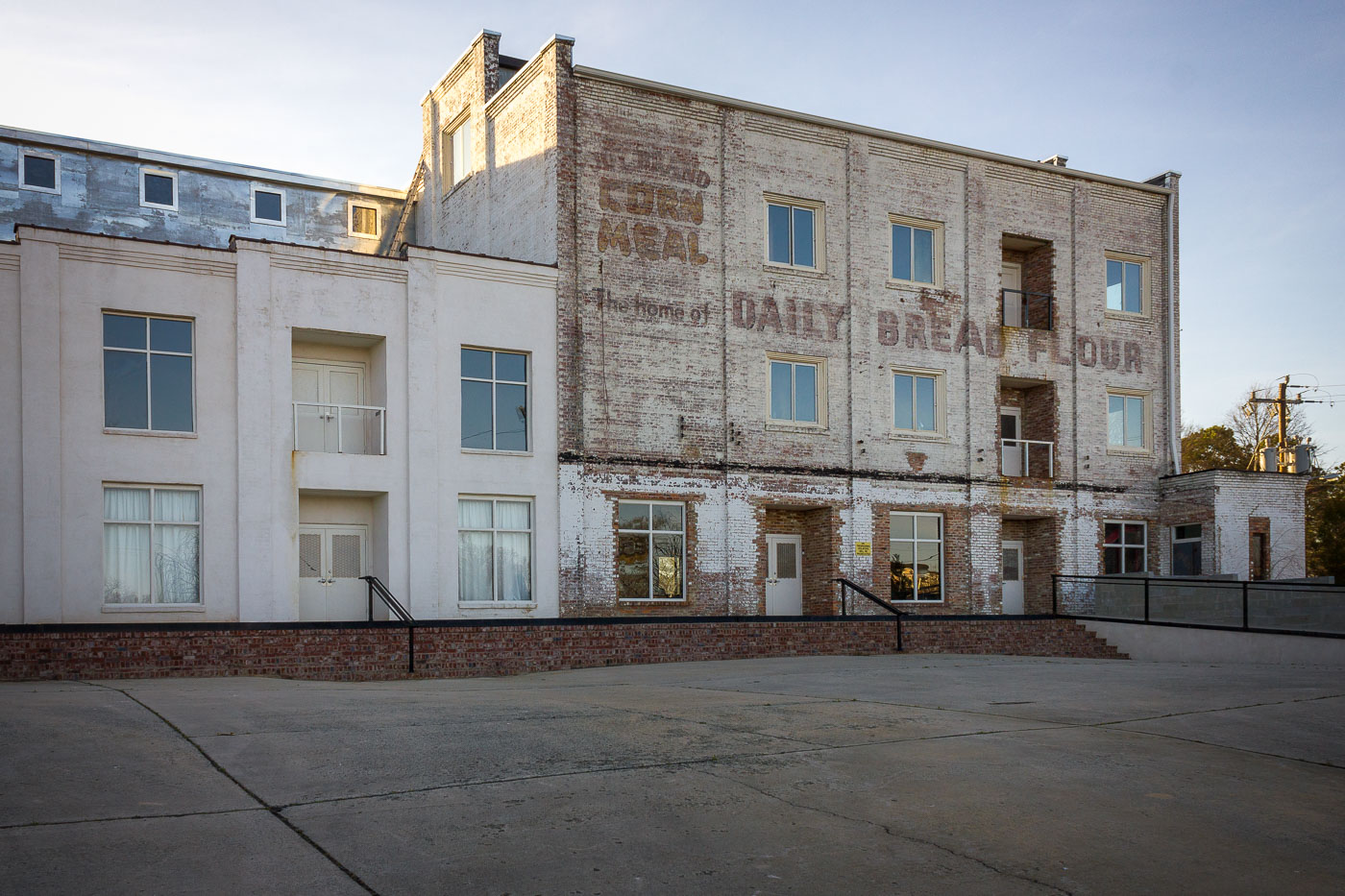
Joy Brand Corn Meal Mill in Greensboro, North Carolina, featuring a faded ghost sign advertising "Daily Bread Flour."
The faded brick advertisement for "Joy Brand Corn Meal" and "The Home of Daily Bread Flour" marks a former grain milling operation that once supplied the Greensboro area. Painted signage of this kind was a common form of early 20th-century advertising, applied directly to a mill's exterior walls to promote its products to passing rail and road traffic. The building has since been converted into residential units, with its original brick and ghost sign left exposed alongside newer stucco additions.

Converted Joy Brand Mill Building on Greensboro’s East Side
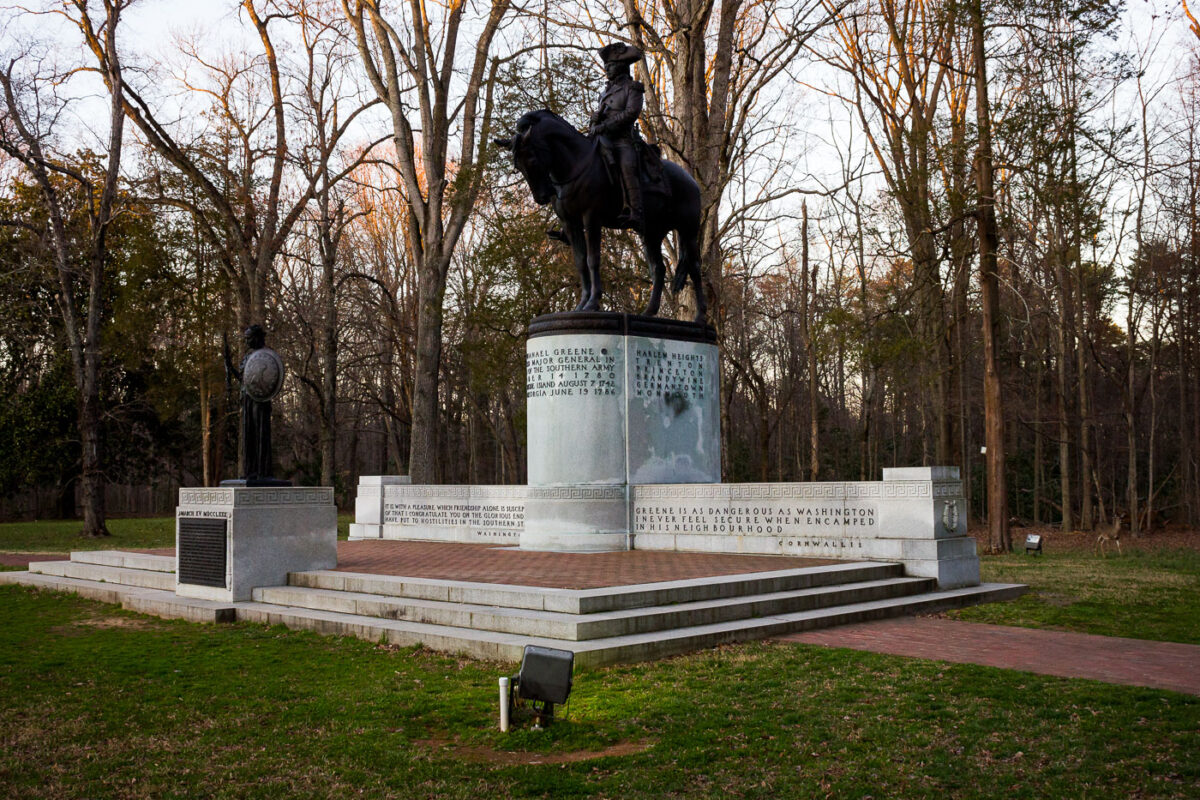
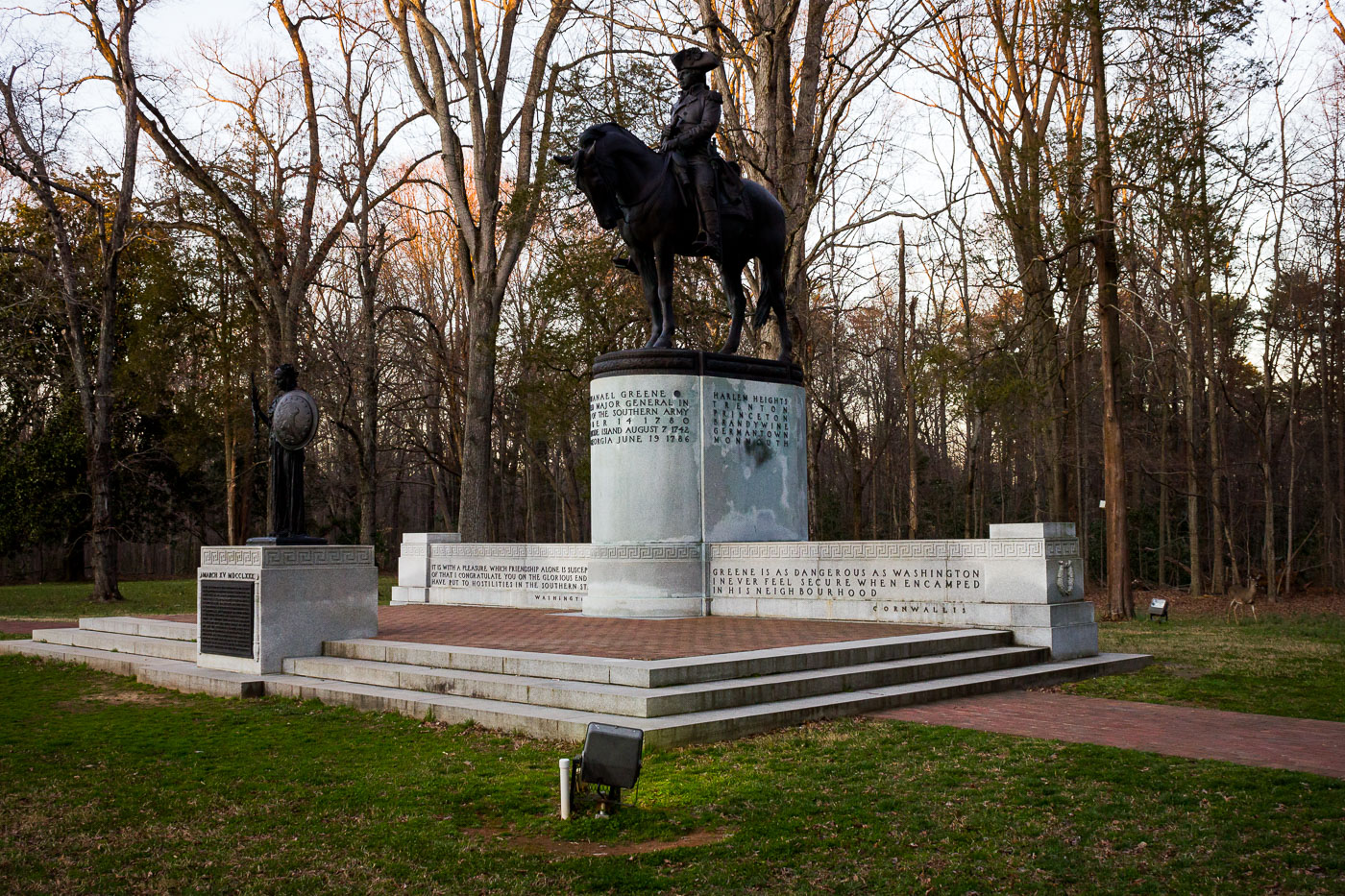
Nathanael Greene Monument in Greensboro, North Carolina, featuring an equestrian statue honoring the Continental Army general.
Nathanael Greene commanded the Continental Army's Southern Department starting in 1780, leading a campaign of strategic retreats and skirmishes that wore down Lord Cornwallis's forces across the Carolinas. His tactics at the Battle of Guilford Courthouse in March 1781, fought just a few miles from this site, left Cornwallis's army so depleted that it withdrew toward Virginia and ultimately surrendered at Yorktown later that year. The monument's base carries a line attributed to Cornwallis himself: "Greene is as dangerous as Washington; I never feel secure when encamped in his neighbourhood." Greensboro, founded in 1808, was named in Greene's honor for his role in turning the tide of the war in the South.

Equestrian Statue of Nathanael Greene in Greensboro
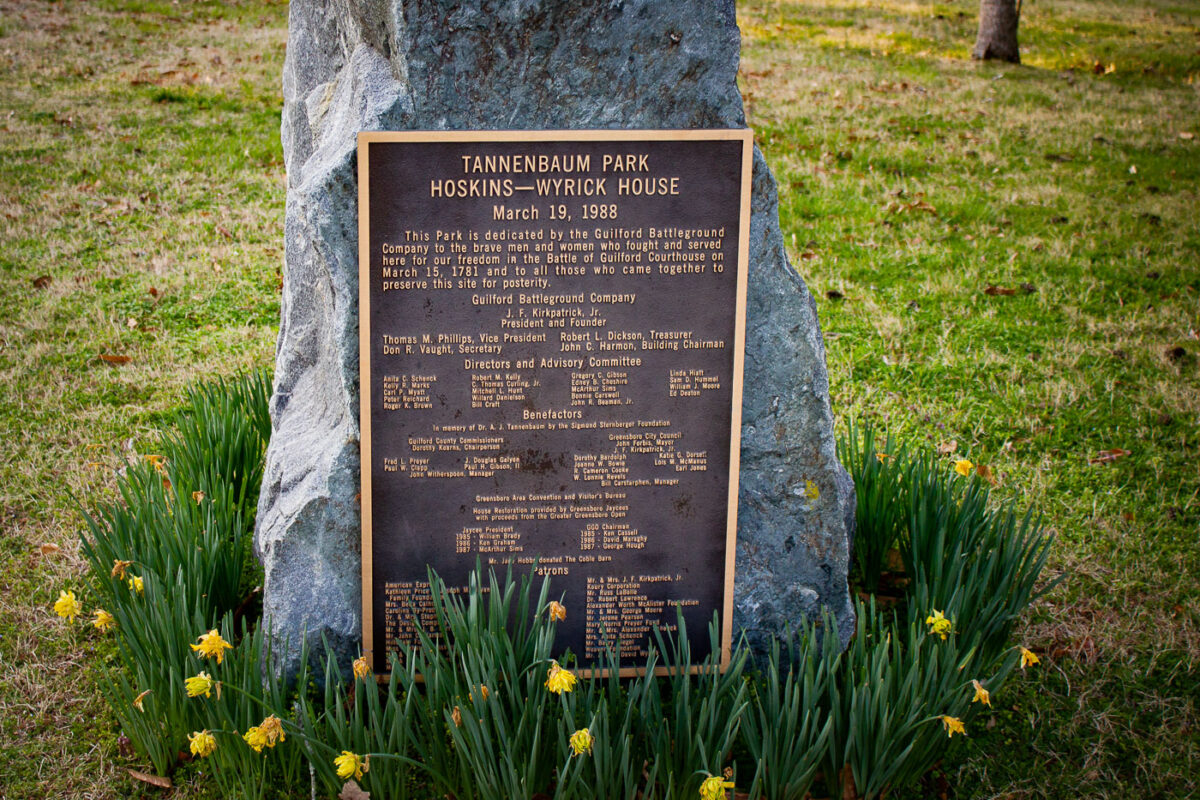
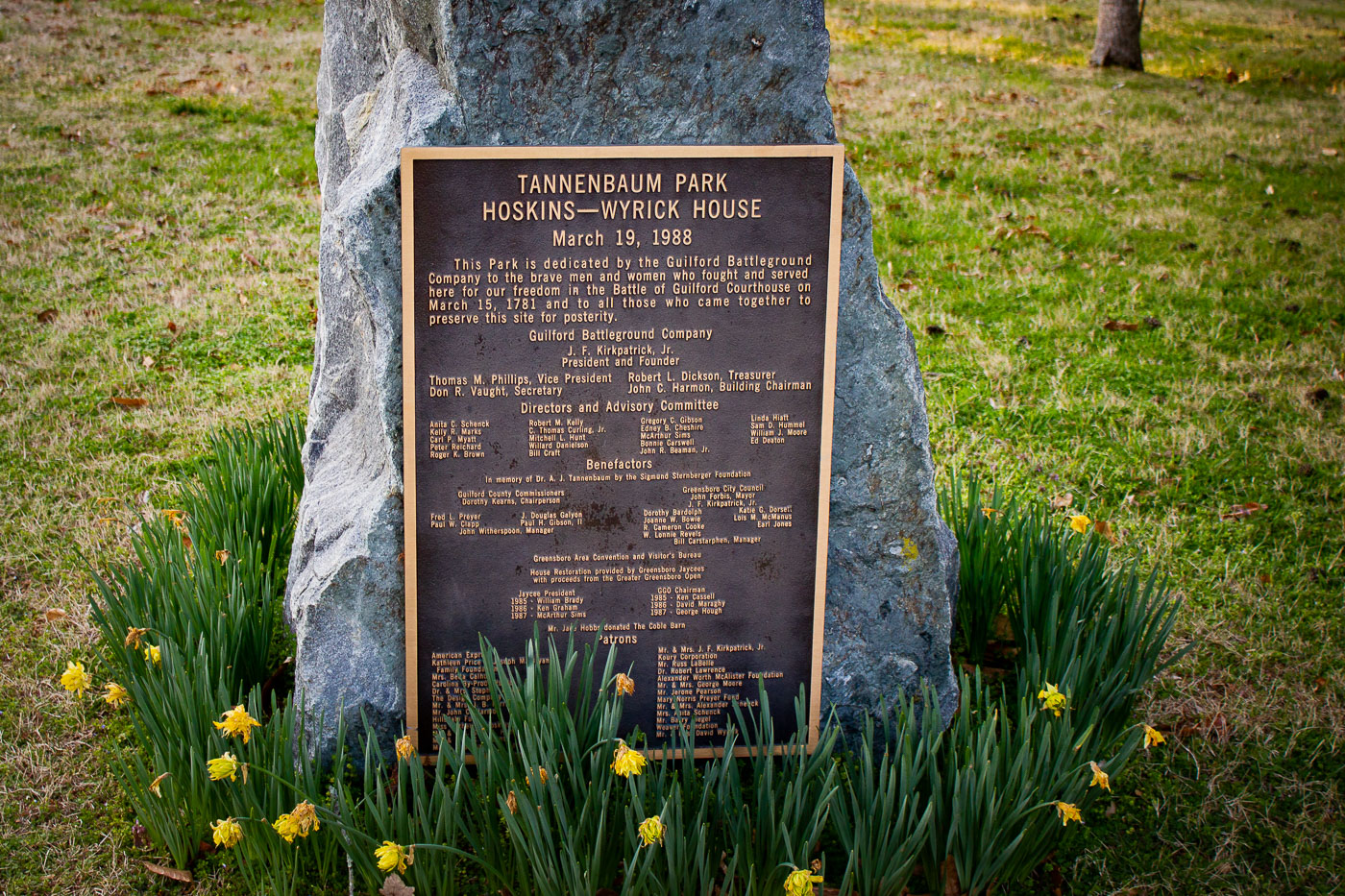
Tannenbaum Park dedication plaque for the Hoskins-Wyrick House in Greensboro, North Carolina, dated March 19, 1988.
Tannenbaum Park sits on the site of the 1781 Battle of Guilford Courthouse, where General Nathanael Greene's forces clashed with Lord Cornwallis's British troops during the Rary War. The Guilford Battleground Company dedicated this plaque on March 19, 1988, commemorating both the battle and the volunteers who worked to preserve the grounds. The Hoskins-Wyrick House, a restored 19th-century farmhouse moved to the park, stands nearby as one of the site's historic structures. The marker lists the park's founders, directors, and benefactors who funded its restoration through the Greensboro Jaycees and other local organizations.

Dedication Plaque at Tannenbaum Park’s Hoskins-Wyrick House
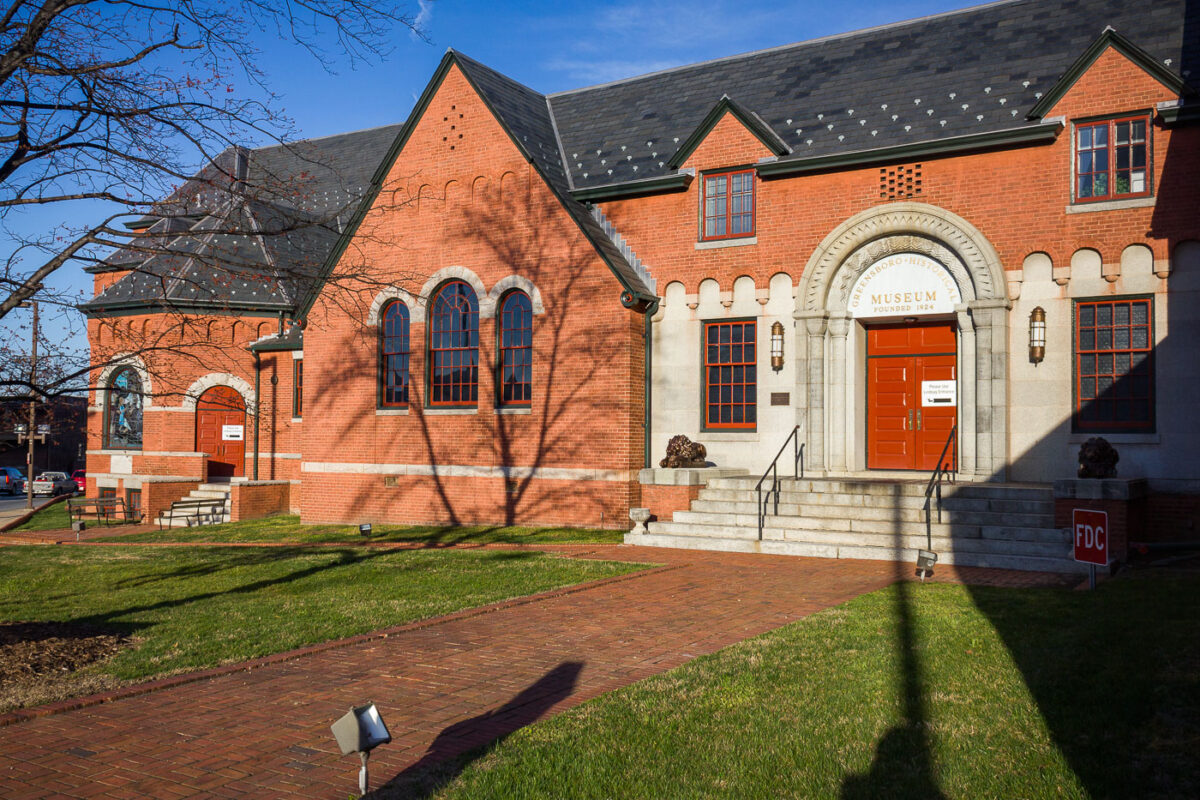
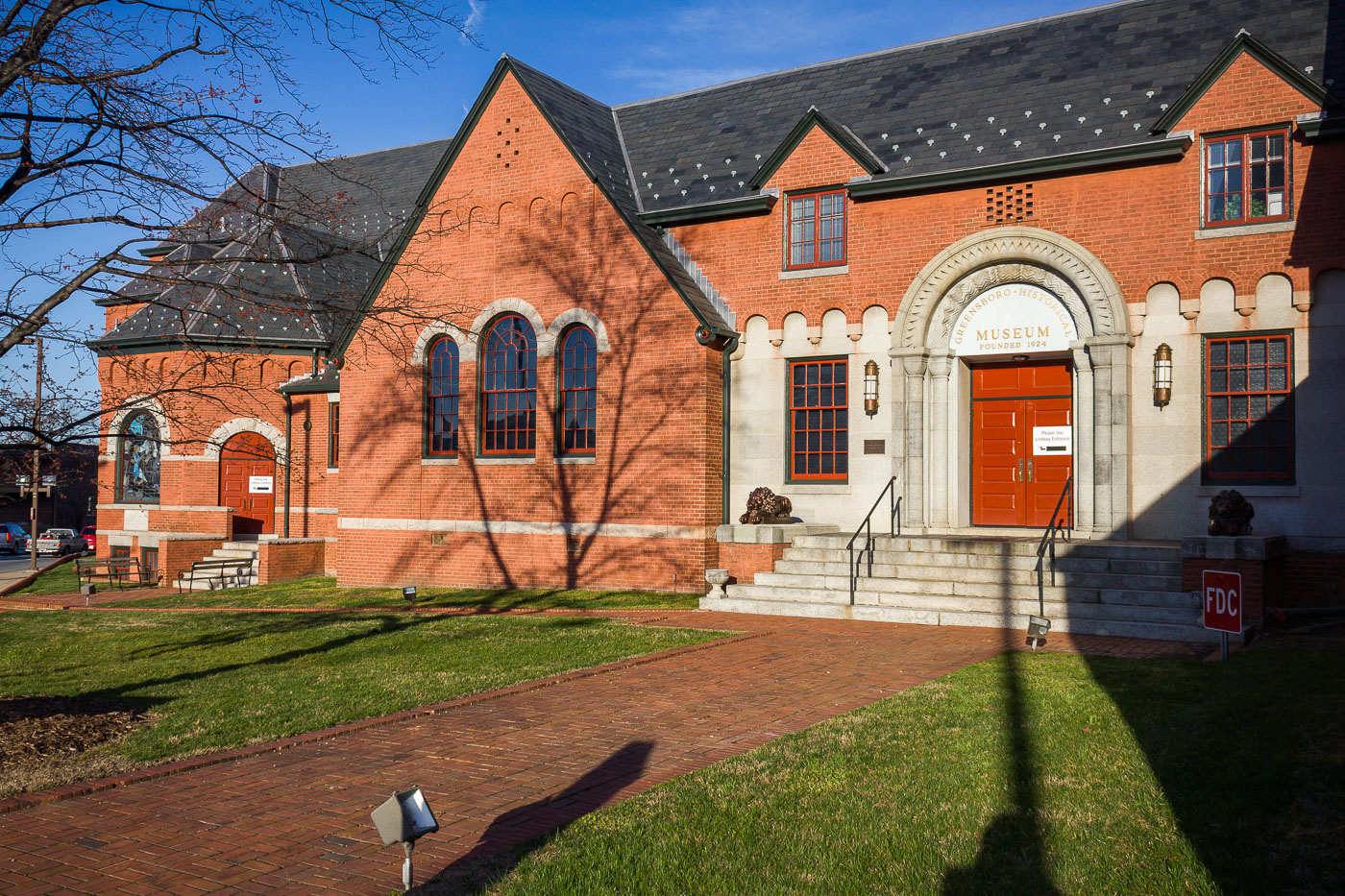
Greensboro History Museum in the former First Presbyterian Church, a red brick building with cream stone entrance at 130 Summit
The Greensboro History Museum occupies the former First Presbyterian Church at 130 Summit Avenue, a Gothic Revival building completed in 1892 with later additions, including the Smith Memorial Building. The congregation moved to a new location in the 1920s, after which the structure was adapted for museum use. Today it houses exhibits on the city's social and industrial history, including displays on textile manufacturing and civil rights. The building is listed on the National Register of Historic Places.

Greensboro History Museum’s Summit Avenue Entrance
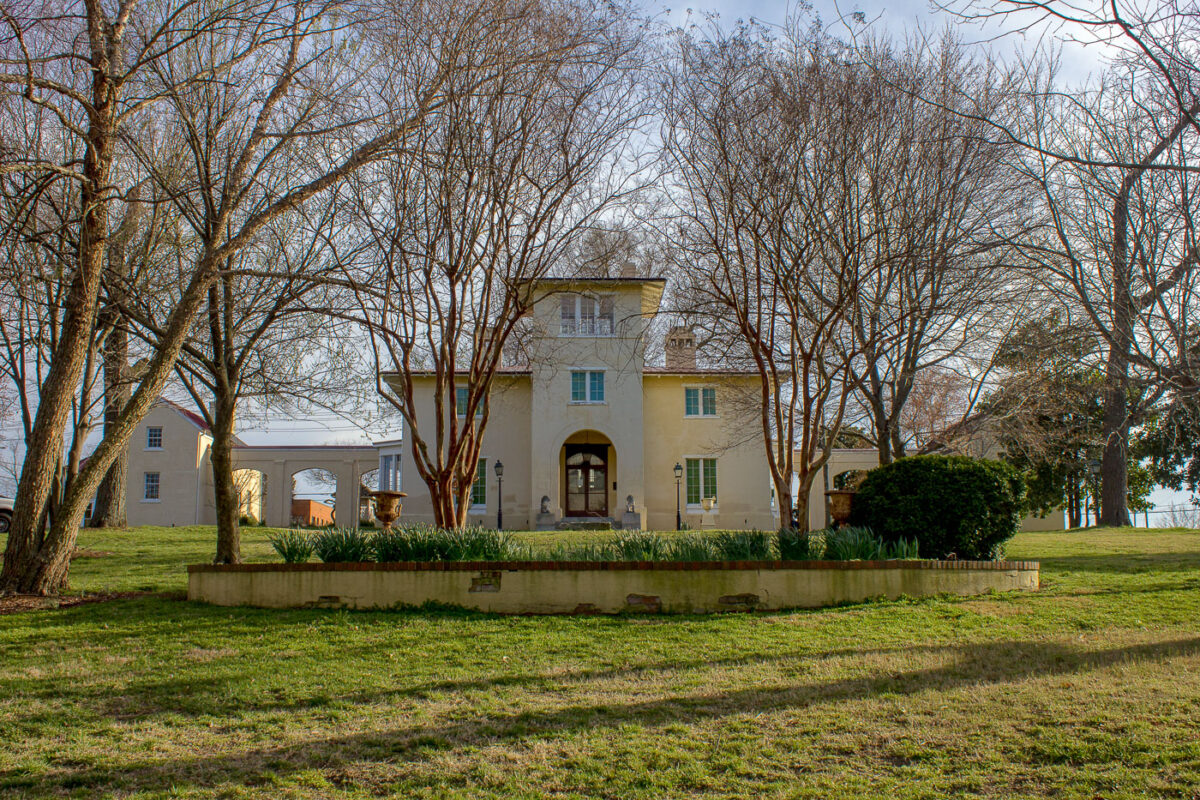
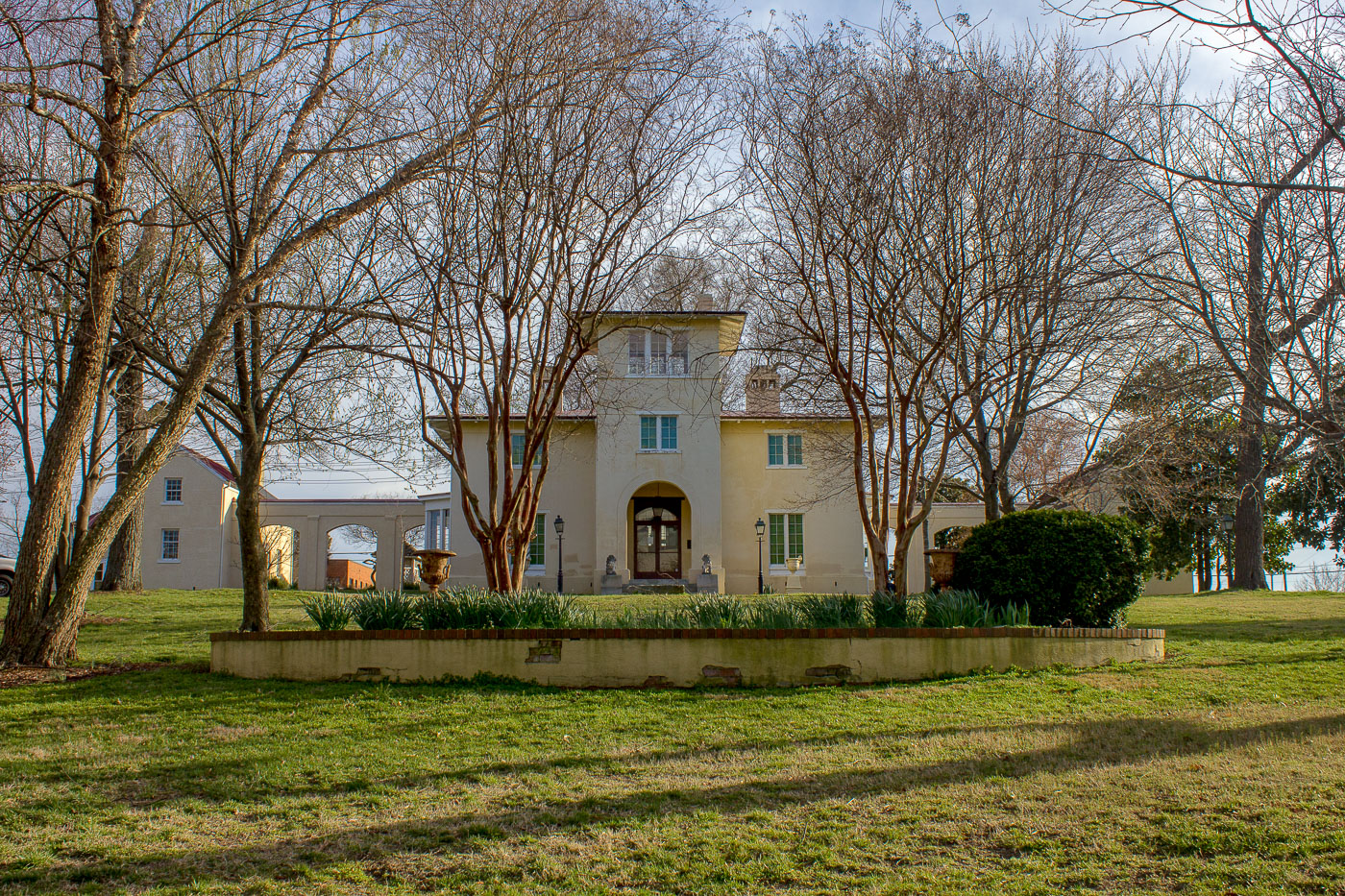
Blandwood Mansion, an Italianate villa-style house with a central tower in Greensboro, North Carolina.
Blandwood Mansion began as a Federal-style farmhouse built around 1795 for Charles Bland. Governor John Motley Morehead purchased the property in 1844 and hired architect Alexander Jackson Davis to remodel it into an Italianate villa, complete with the square tower that still marks the house today. Davis was a leading American architect of the period, known for popularizing the Italianate style in the United States, and Blandwood is considered the earliest full example of that style in the country. Threatened with demolition in the 1960s, the house was saved by Preservation Greensboro and now operates as a historic house museum open to the public.

Blandwood Mansion’s Tower Rises Above Winter Trees in Greensboro