Art

263 photos · 2012–2026

263 photographs tagged Art, 2012–2026.
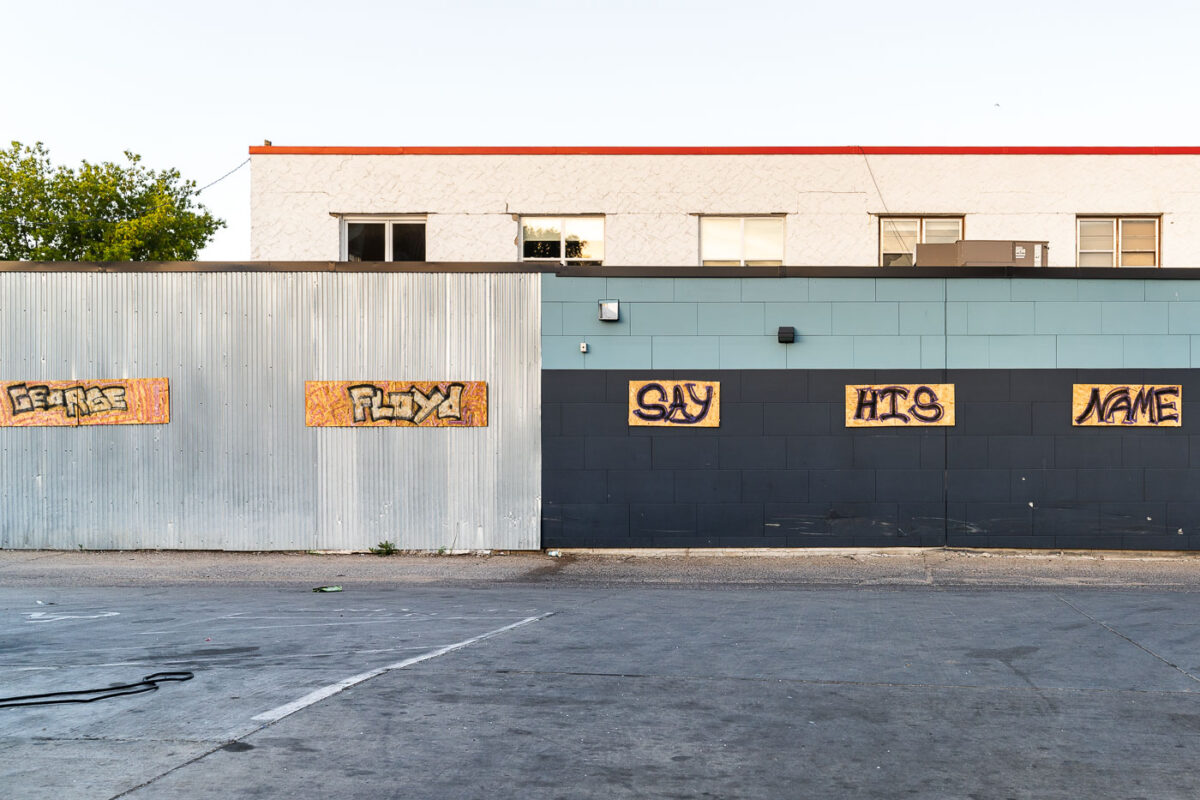
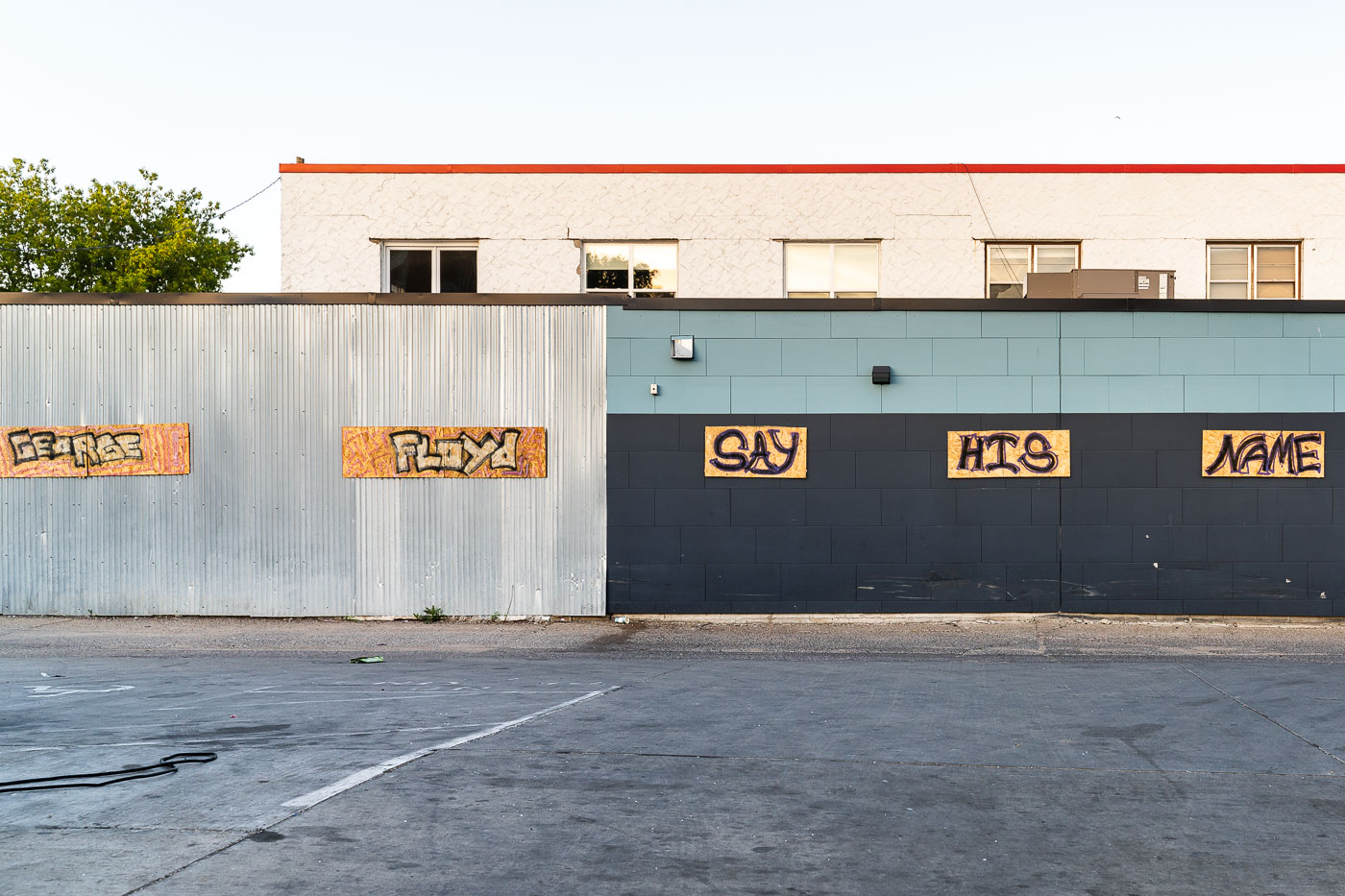
Wooden boards with yellow letters reading "Say His Name" and artist tags cover building facades in North Minneapolis.
Boards bearing the message "George Floyd Say His Name" are displayed on a building facade in North Minneapolis in June 2020.

“George Floyd Say His Name” Boards in North Minneapolis
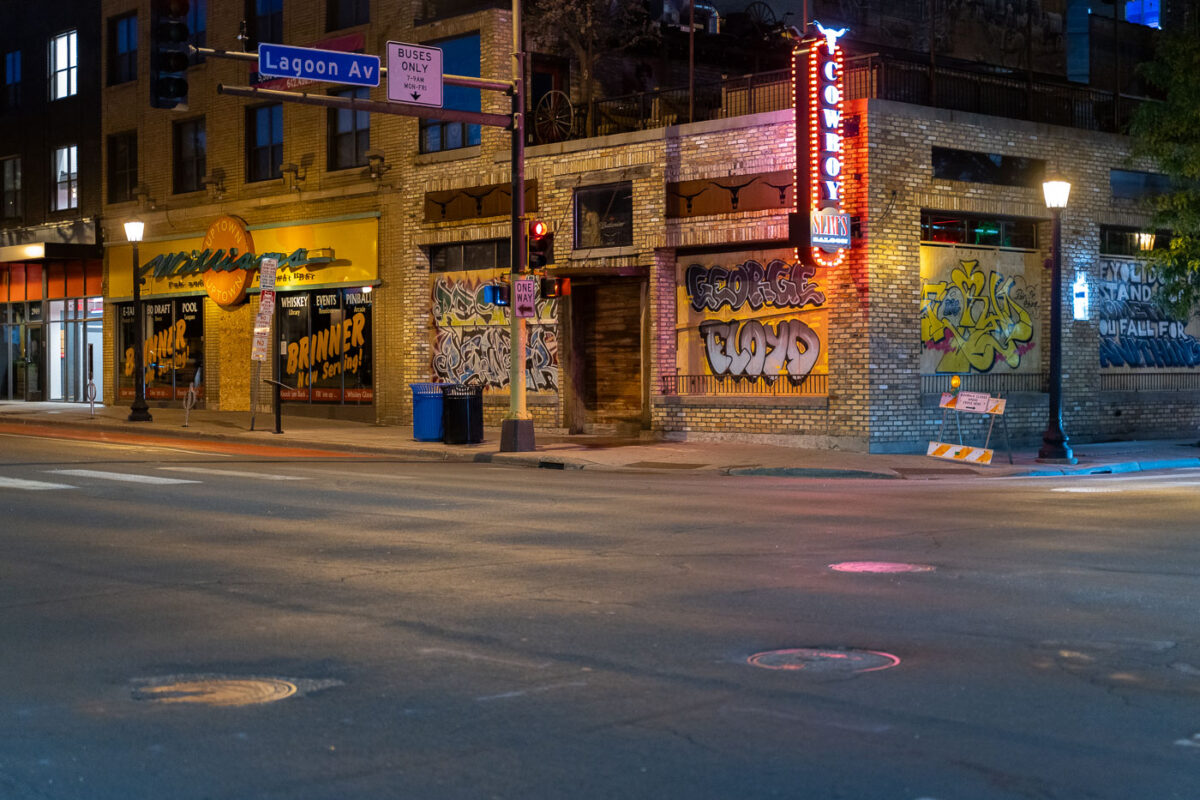
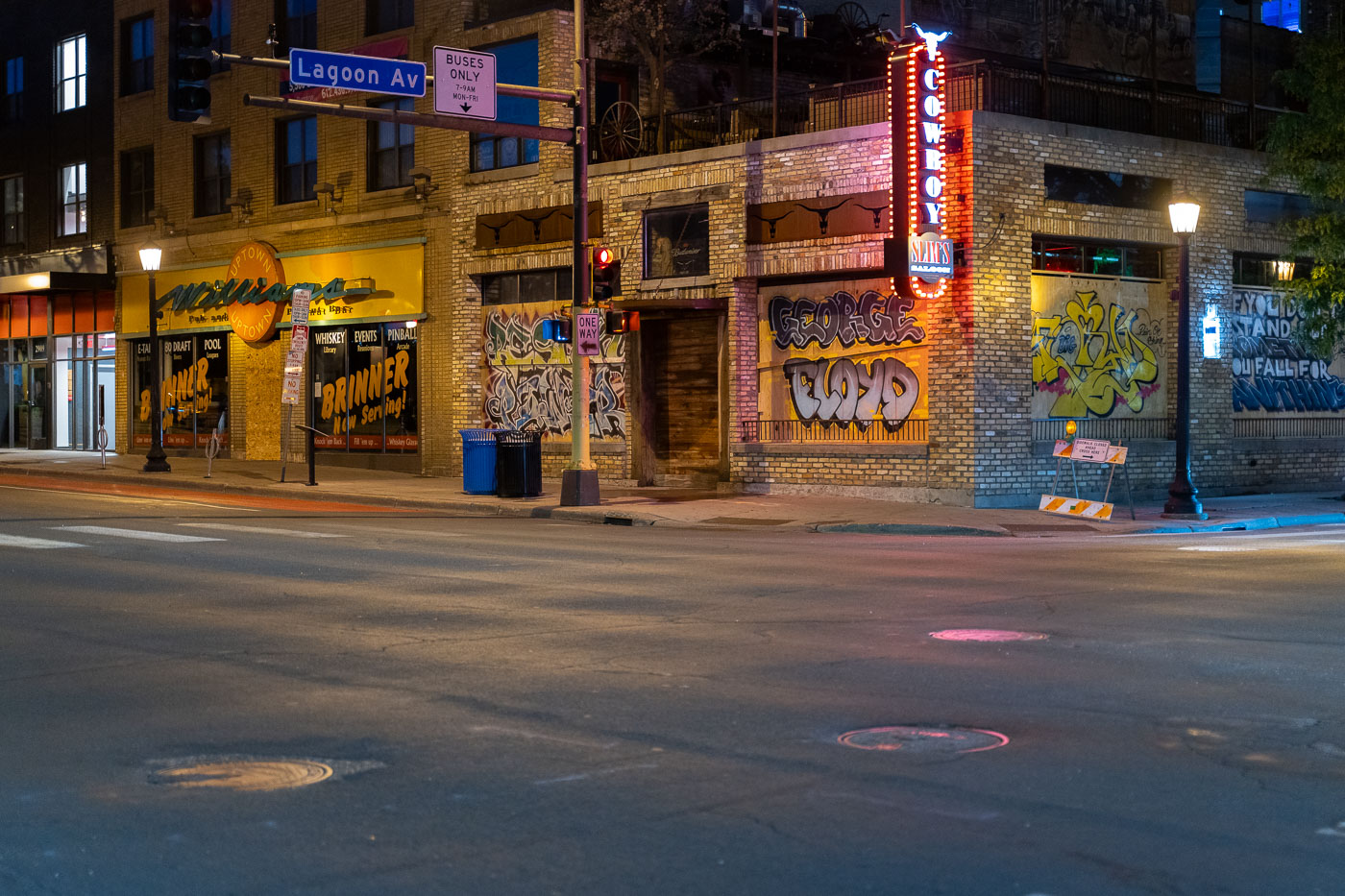
Cowboy Slim’s at Hennepin and Lagoon in Uptown Minneapolis, boarded and covered in George Floyd graffiti.
Cowboy Slim’s Saloon at Hennepin Avenue and Lagoon Avenue in Uptown Minneapolis is boarded up and covered in graffiti, including the words “GEORGE” and “FLOYD,” in a photograph made on June 2, 2020. The temporary plywood barriers and street barricade place the image in the period of protests and unrest following the May 25, 2020 killing of George Floyd. Neon signage remains lit above the boarded windows, contrasting the nightlife business’s normal appearance with the conditions in the neighborhood at that time.

Cowboy Slims, Hennepin & Lagoon, Minneapolis, George Floyd Graffiti
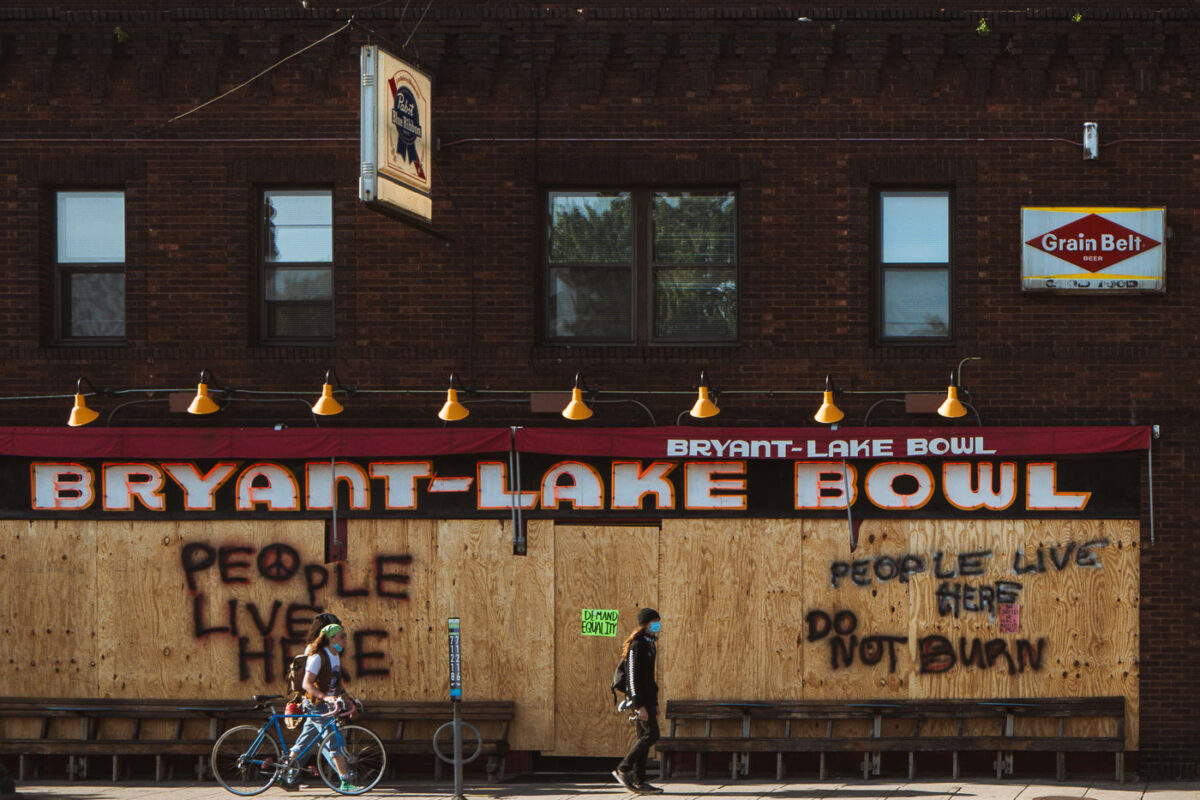
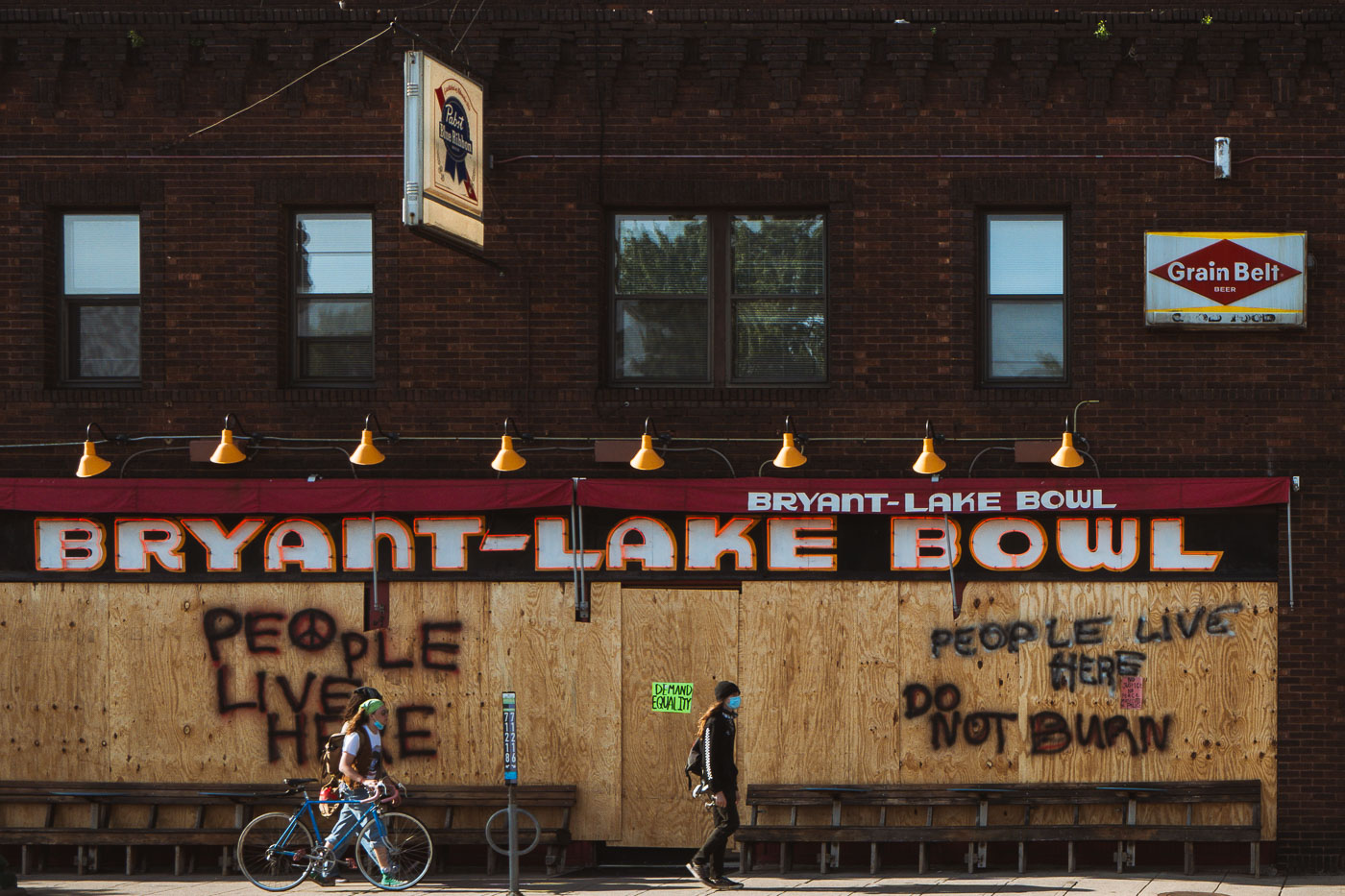
Bryant-Lake Bowl on Lake Street in Minneapolis is boarded with plywood bearing spray-painted messages including "PEOPLE LIVE HERE."
Bryant-Lake Bowl is a bowling alley, theater, and restaurant on Lake Street in Uptown Minneapolis. Plywood covers its ground-floor windows, spray-painted with "PEOPLE LIVE HERE" and "DO NOT BURN." The boards went up after unrest broke out along Lake Street following the killing of George Floyd in May 2020.

“People Live Here” Spray-Painted on Bryant-Lake Bowl’s Boards
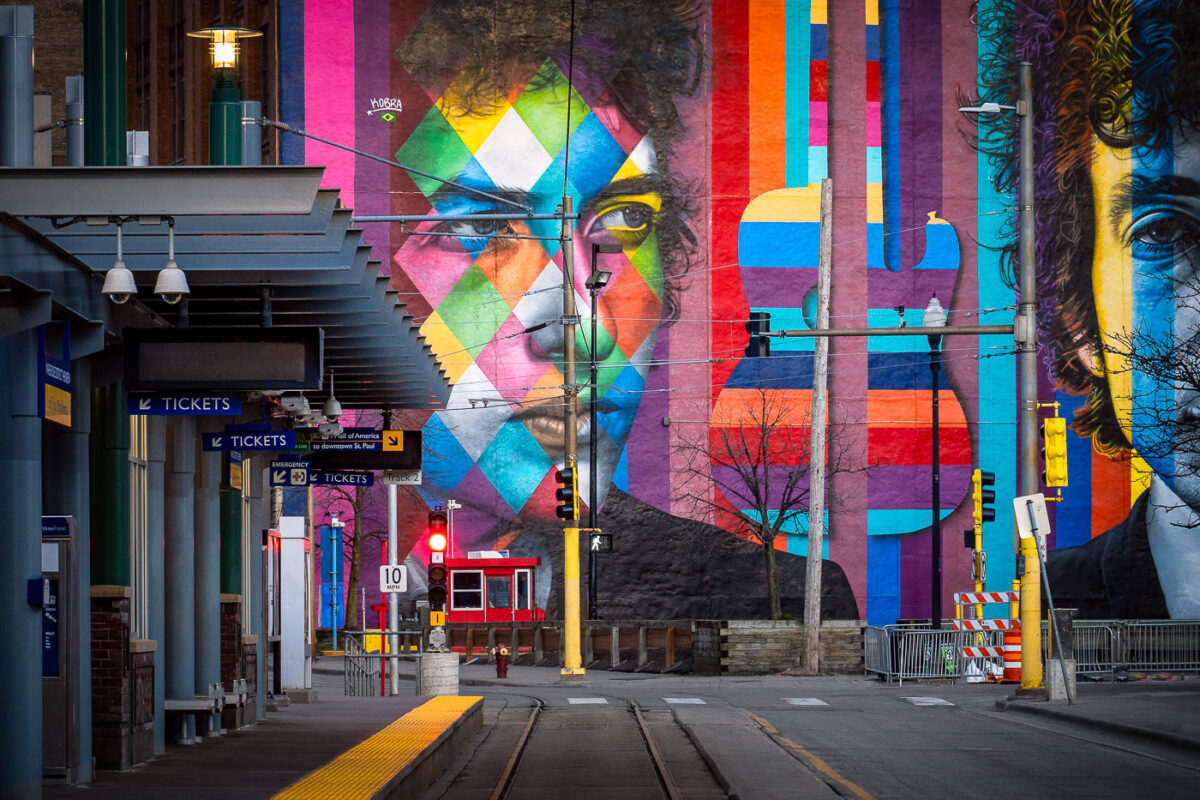
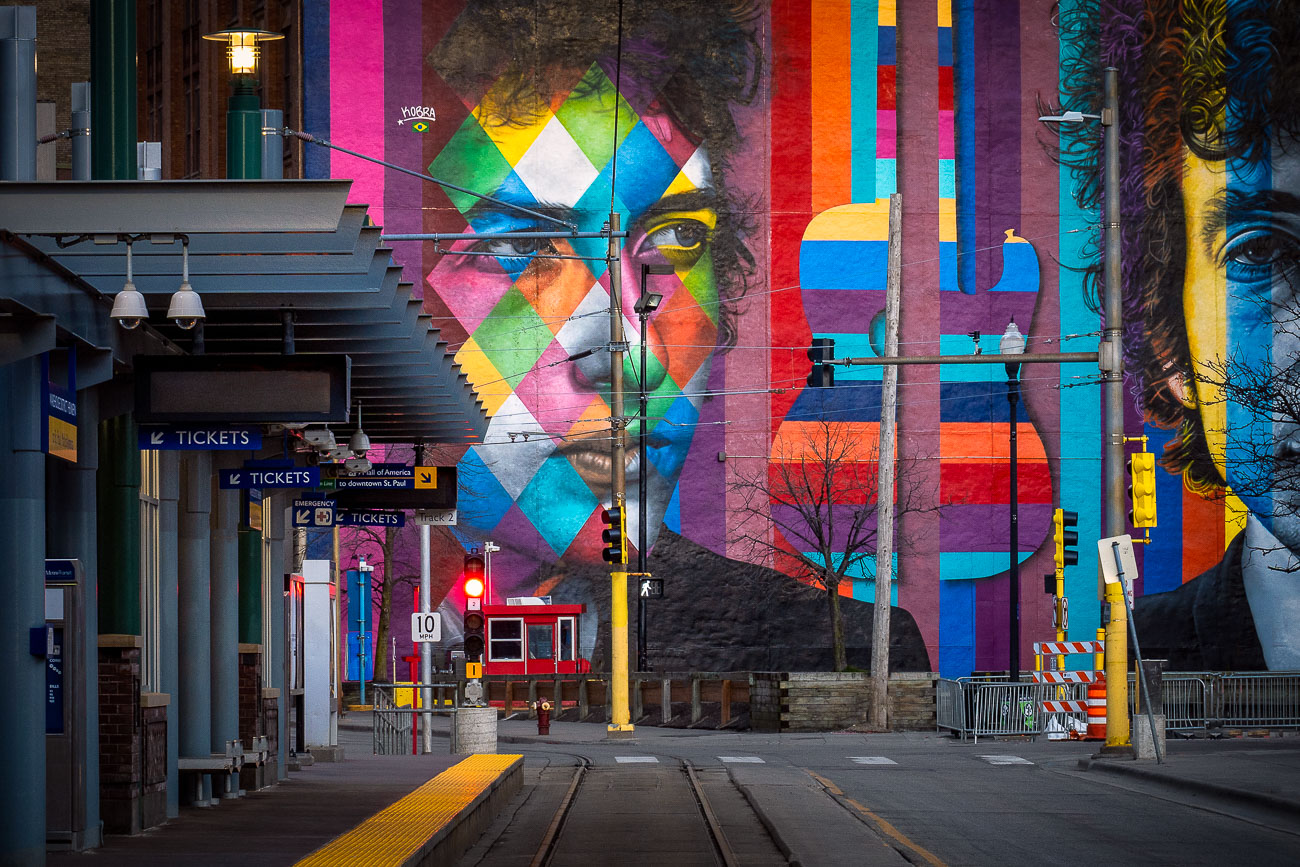
Eduardo Kobra's colorful Bob Dylan mural at Nicollet Mall station in downtown Minneapolis.
Eduardo Kobra painted this mural of Bob Dylan, titled "Face of Music," in 2015 for the Downtown Improvement District's Betsy-Ann Kane public art initiative. Brazilian street artist Kobra is known for his geometric, kaleidoscope-patterned portraits, which he has installed in cities worldwide. The mural covers roughly 90 feet of wall along the light rail corridor near Nicollet Mall Station, close to Hennepin Avenue in downtown Minneapolis. Dylan grew up in Hibbing, Minnesota, and began his music career in Dinkytown near the University of Minnesota before moving to New York in 1961.

Eduardo Kobra’s “Face of Music” Mural on Hennepin Avenue
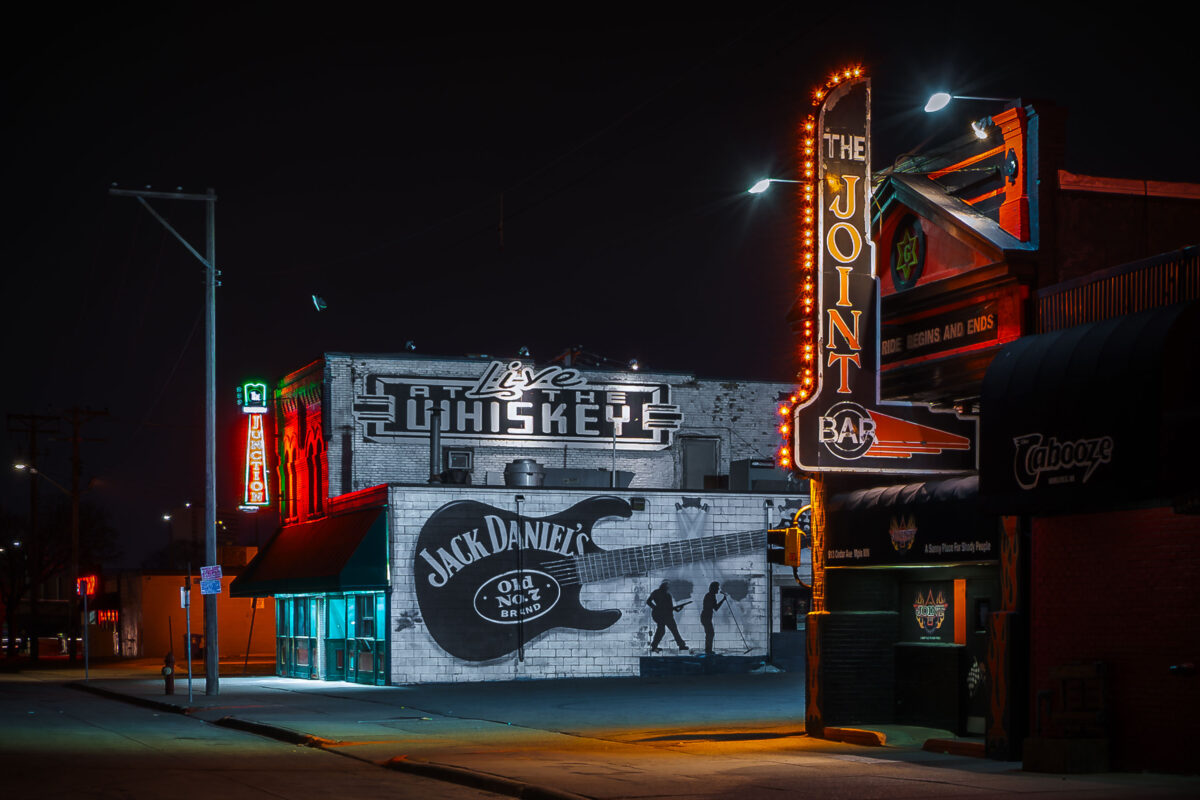
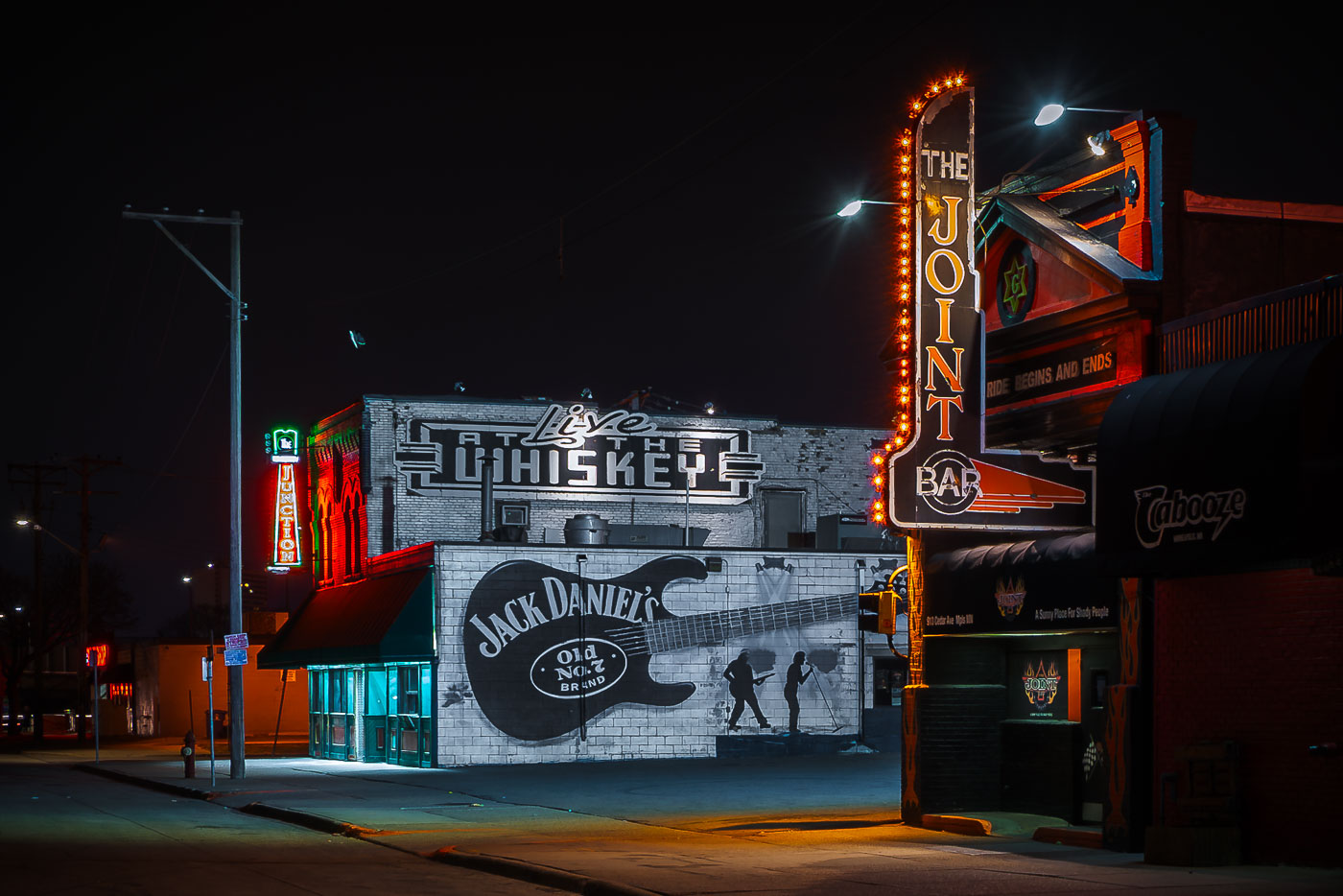
Jack Daniels guitar mural and neon signs illuminate Whiskey Junction nightclub on Cedar Avenue in Minneapolis.
Whiskey Junction sits on Cedar Avenue in the Cedar-Riverside neighborhood, a stretch long associated with live music venues near the University of Minnesota's West Bank. The building's side wall carries a large hand-painted mural advertising Jack Daniel's Old No. 7, styled around an electric guitar, alongside signage for "Live at the Whiskey." Next door, The Joint Bar and The Cabooze occupy the same block, part of a cluster of music clubs that has defined this stretch of Cedar Avenue for decades.

Whiskey Junction’s Jack Daniel’s Mural on Cedar Avenue
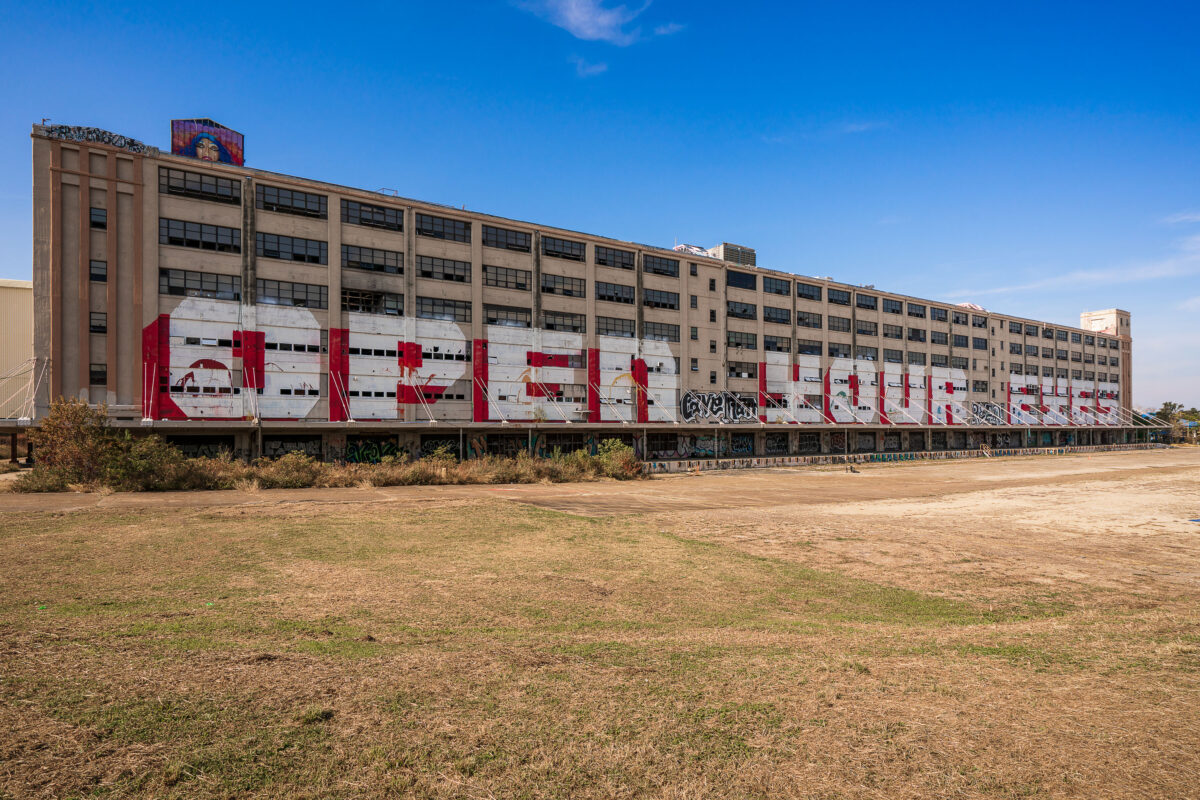
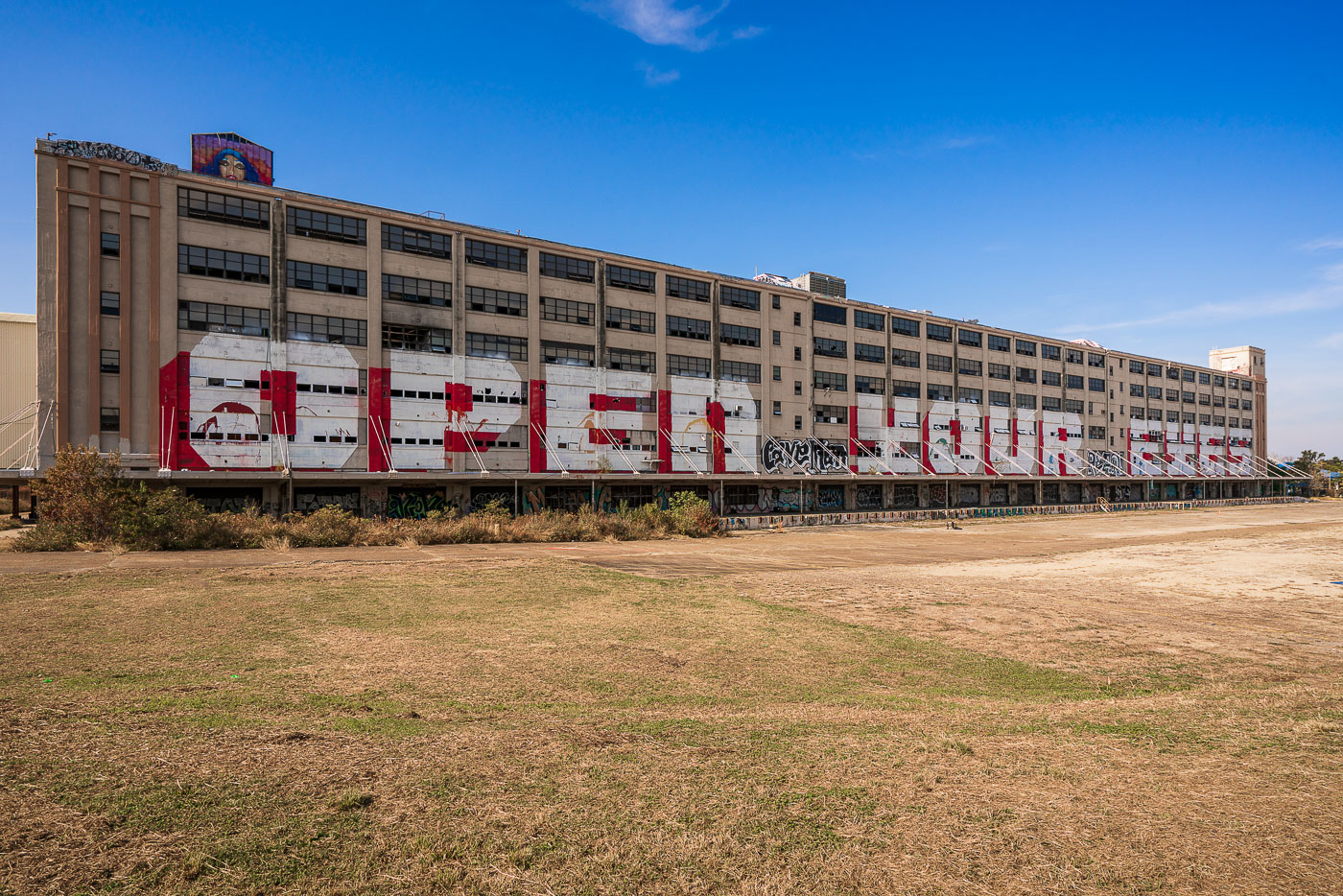
Large-scale red and white graffiti mural covers the facade of an abandoned Naval Support Activity warehouse in New Orleans.
Naval Support Activity New Orleans warehouse, New Orleans. The former military logistics building on the Mississippi River front has been covered with large-scale graffiti murals and tags. The base was decommissioned and has been awaiting redevelopment.

Large-Scale Graffiti Murals on the Naval Support Activity Warehouse
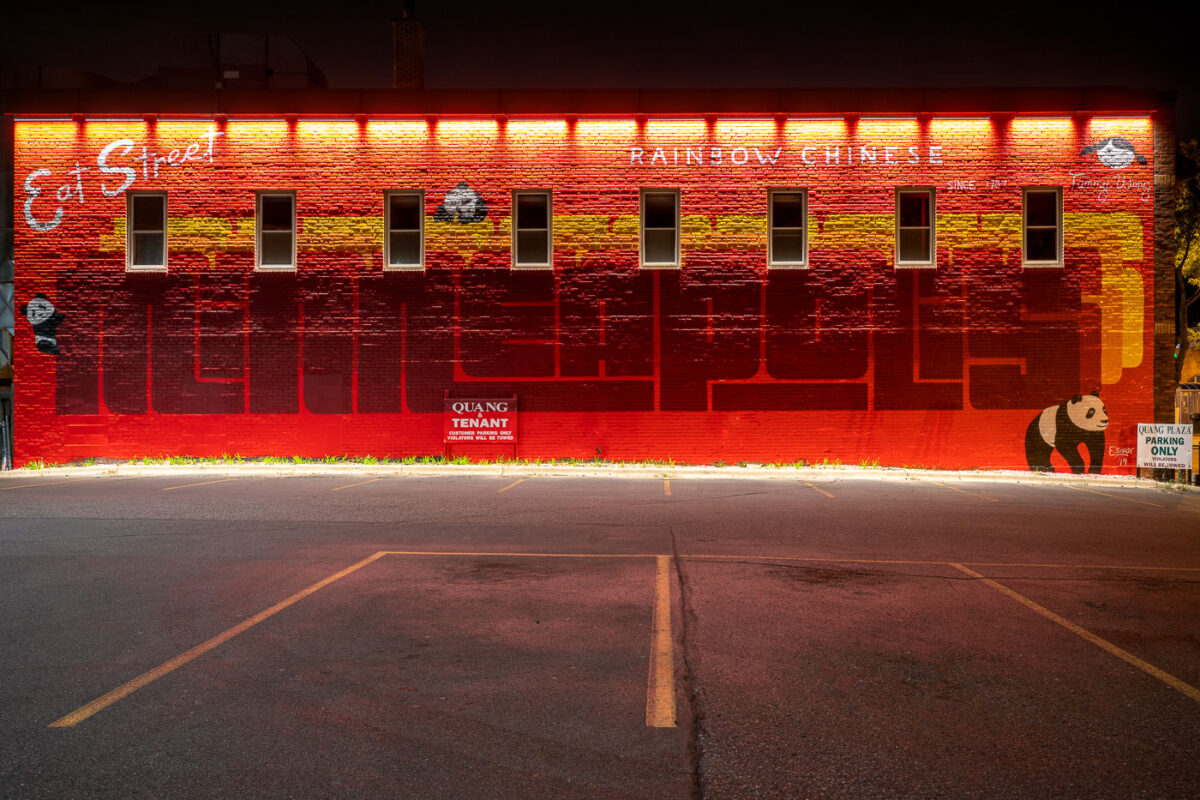
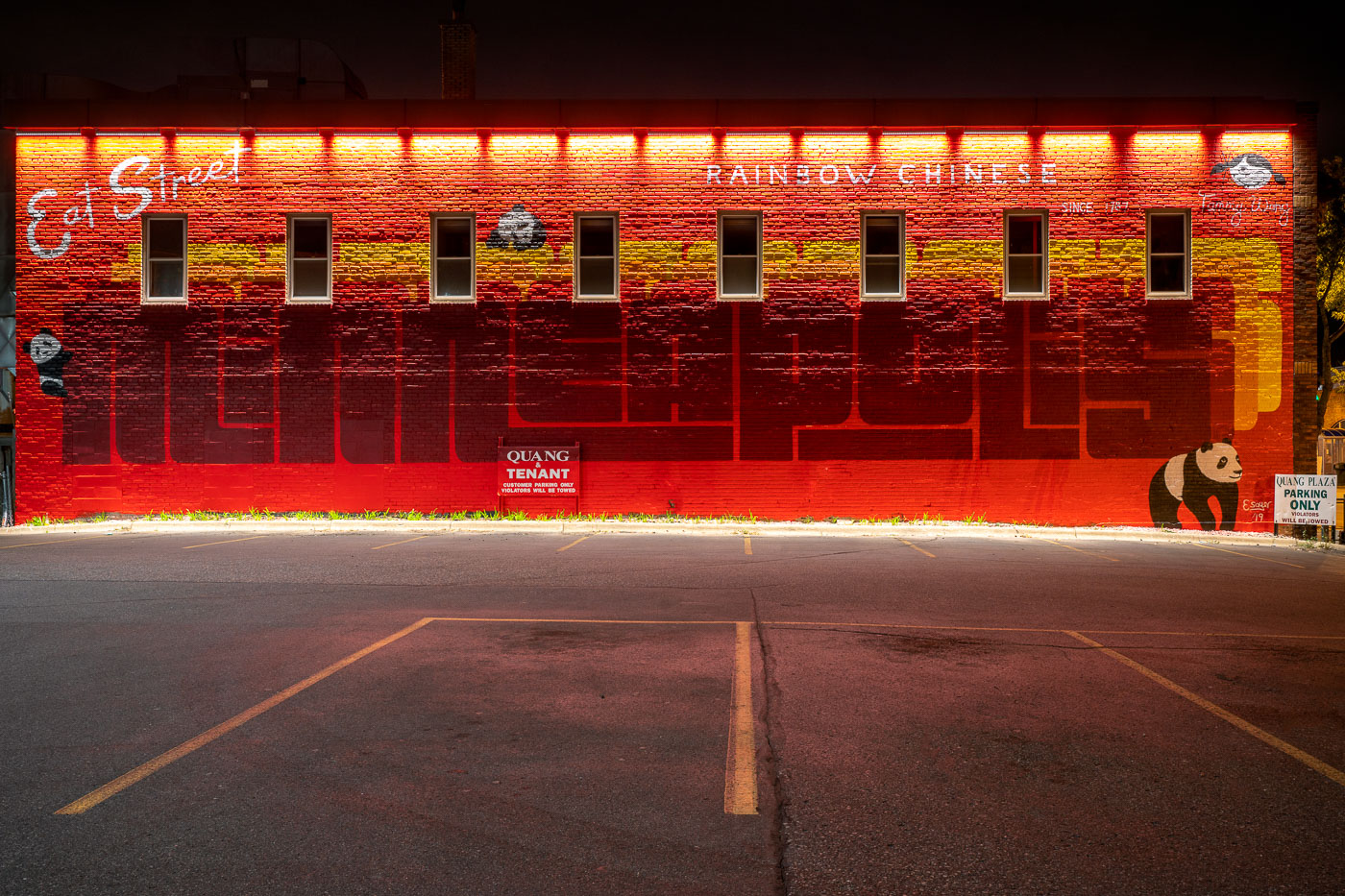
Rainbow Chinese Mural on Eat Street Minneapolis
The bright red mural on the side of Rainbow Chinese Restaurant at 2739 Nicollet Avenue anchors Minneapolis’s iconic “Eat Street” corridor. Painted in bold geometric letters spelling “Minneapolis,” the work was designed to celebrate the neighborhood’s cultural diversity and long history as a hub for immigrant-owned restaurants. The panda motif and stylized lettering nod to the restaurant’s founder, Tammy Wong, whose establishment has been a local fixture since 1987.

Rainbow Chinese Mural on Eat Street, Minneapolis
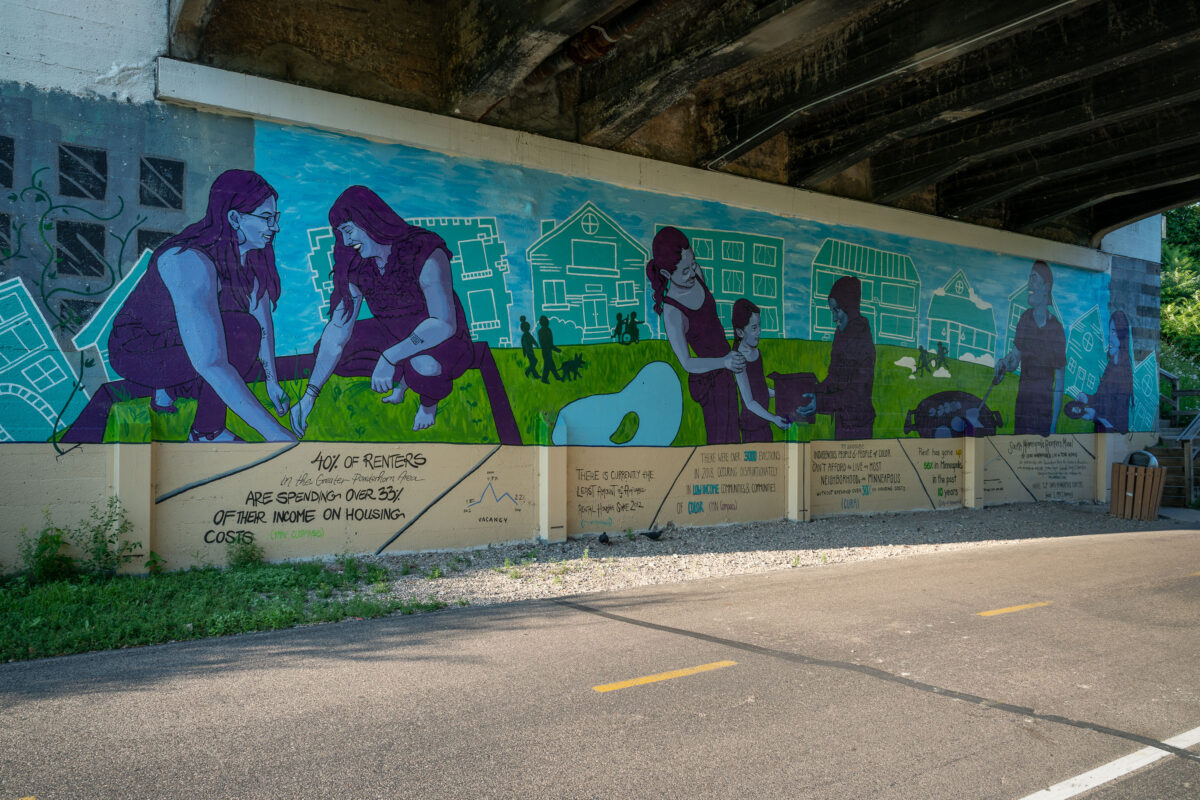
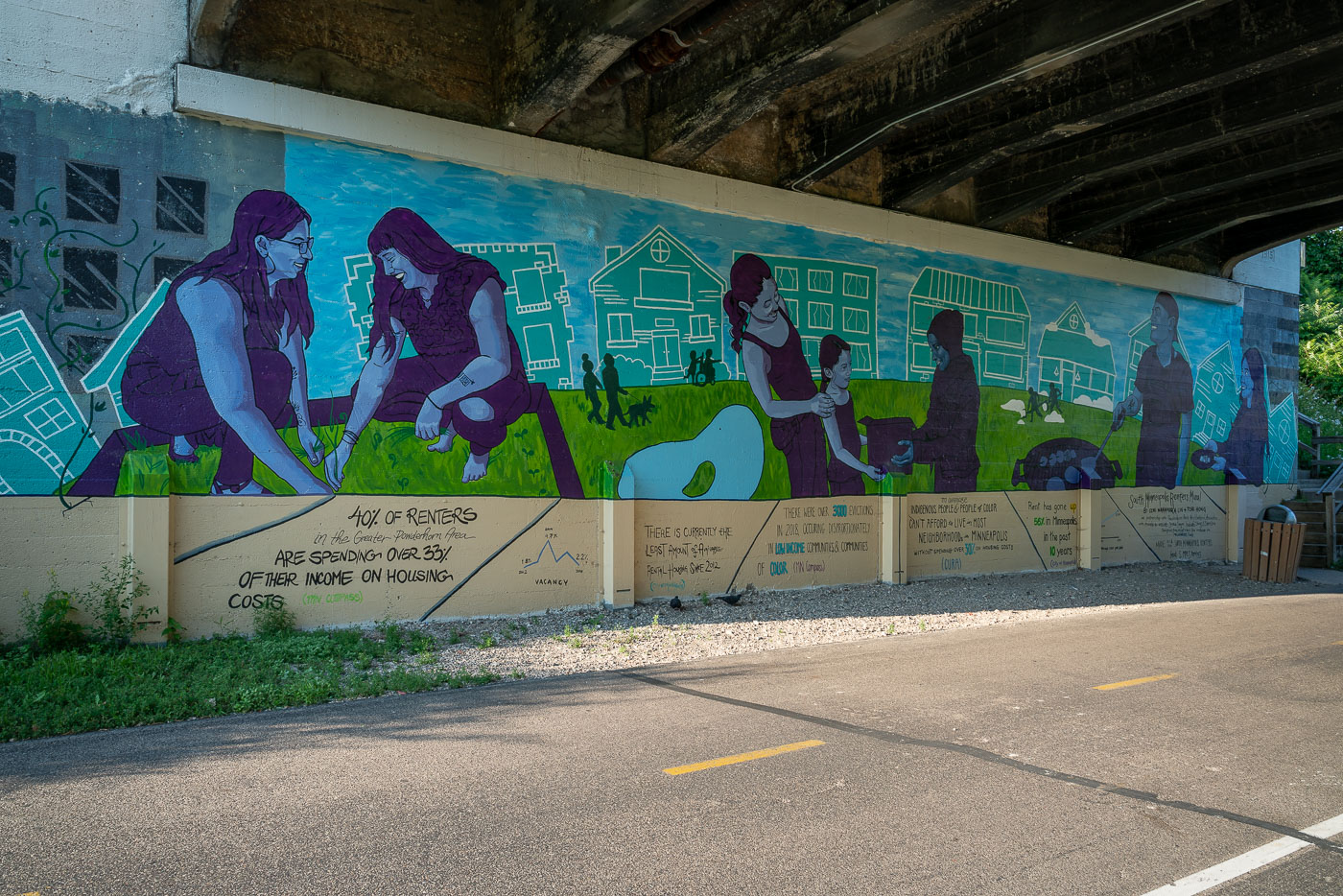
Mural by Cori Nakamura Lin and Tori Hong on Minneapolis's Midtown Greenway addressing housing affordability and renter statistics.
This mural, created by Cori Nakamura Lin and Tori Hong, is located on the Midtown Greenway in Minneapolis. The artwork addresses the issue of housing affordability, highlighting statistics about renters spending a significant portion of their income on housing and the disproportionate impact of evictions on low-income communities and communities of color. The Midtown Greenway is a 5.7-mile paved rail trail that runs through the city, serving as a vital corridor for cyclists and pedestrians.

Cori Nakamura Lin & Tori Hong Mural on Midtown Greenway, Minneapolis
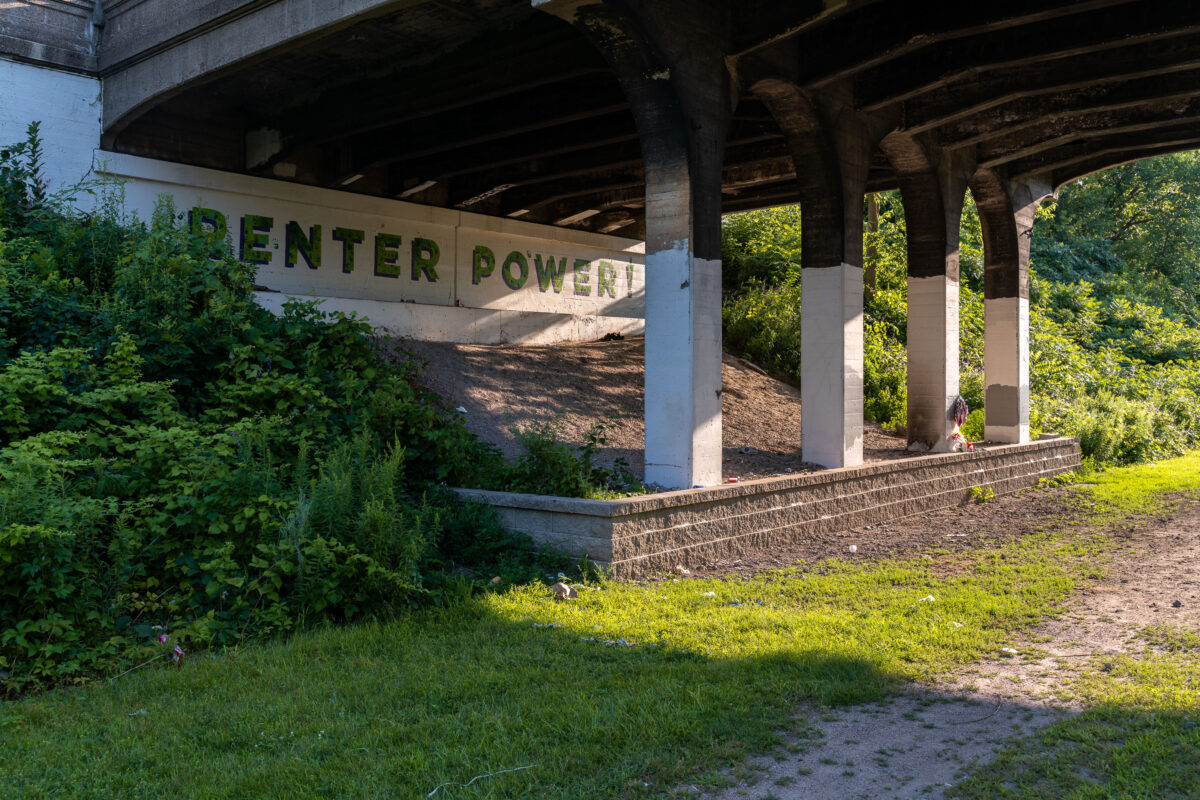
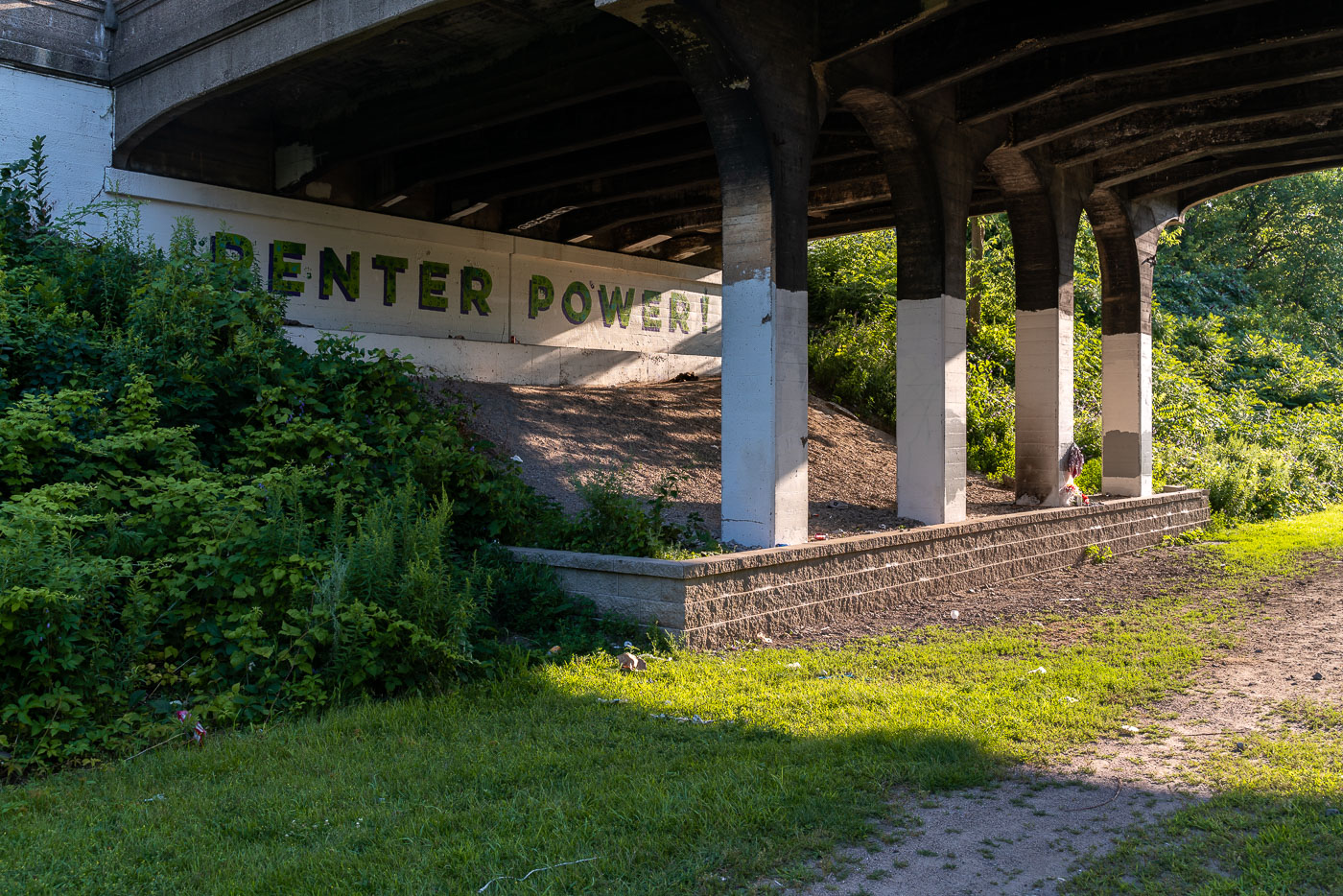
"Renter Power!" mural on a concrete retaining wall beneath the Midtown Greenway bridge in Minneapolis.
A mural proclaiming "Renter Power!" is visible on a concrete retaining wall beneath a bridge along the Midtown Greenway in Minneapolis. The Midtown Greenway is a 5.7-mile-long multi-use trail built on a former railroad corridor, popular with cyclists and pedestrians. The mural's message reflects advocacy for tenant rights and affordable housing.

“Renter Power” Mural Under a Bridge on the Midtown Greenway
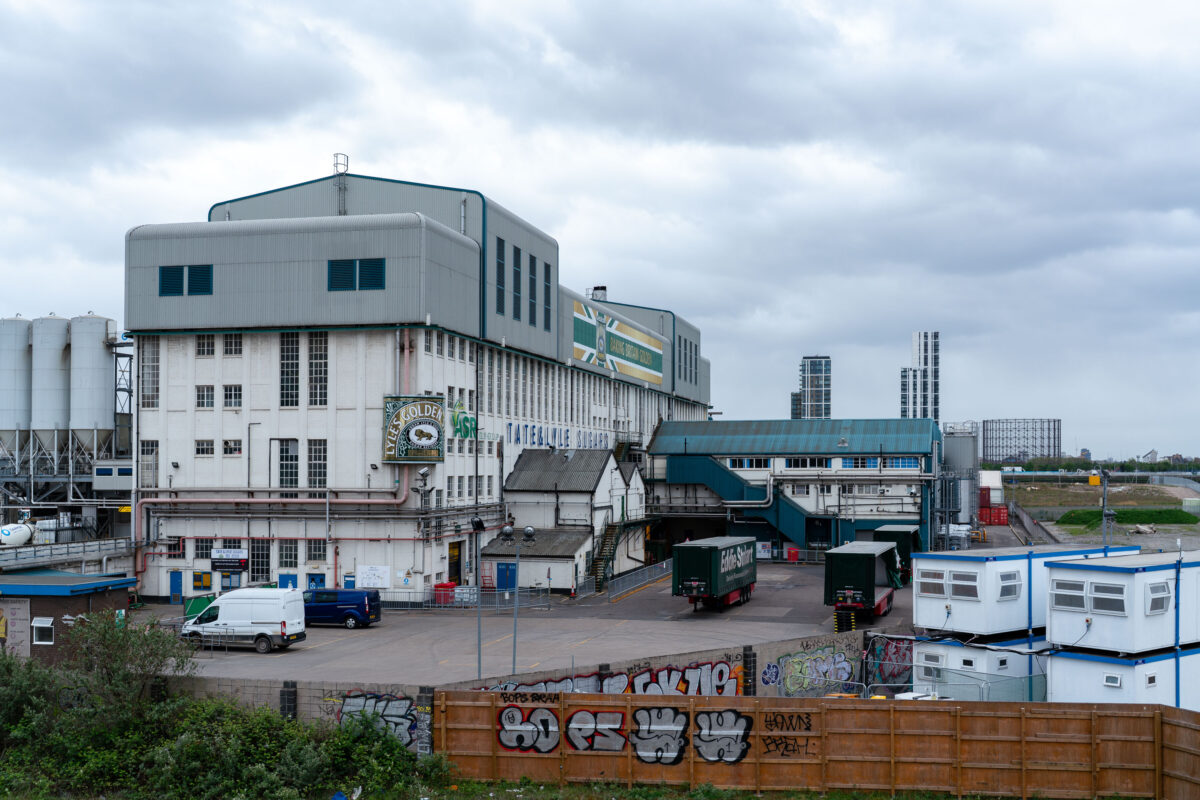
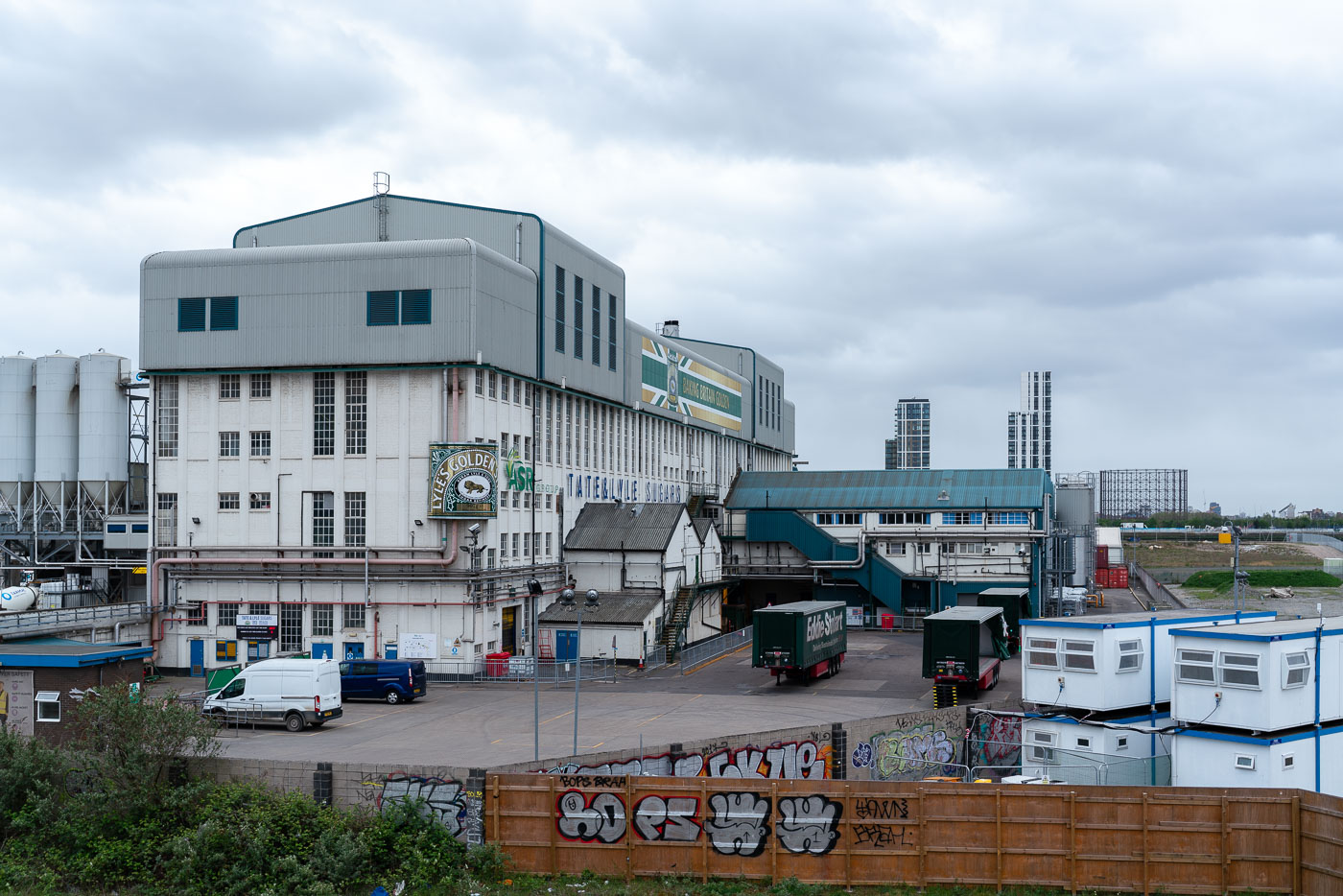
Tate & Lyle sugar refinery in Silvertown, London, with trucks and industrial buildings.
Tate & Lyle’s sugar refinery in Silvertown, east London, operates on the Royal Docks waterfront. The complex processes sugar and is associated with Lyle’s Golden Syrup, a product long linked to the site and its branding.

Tate & Lyle Sugar Refinery, Silvertown, London
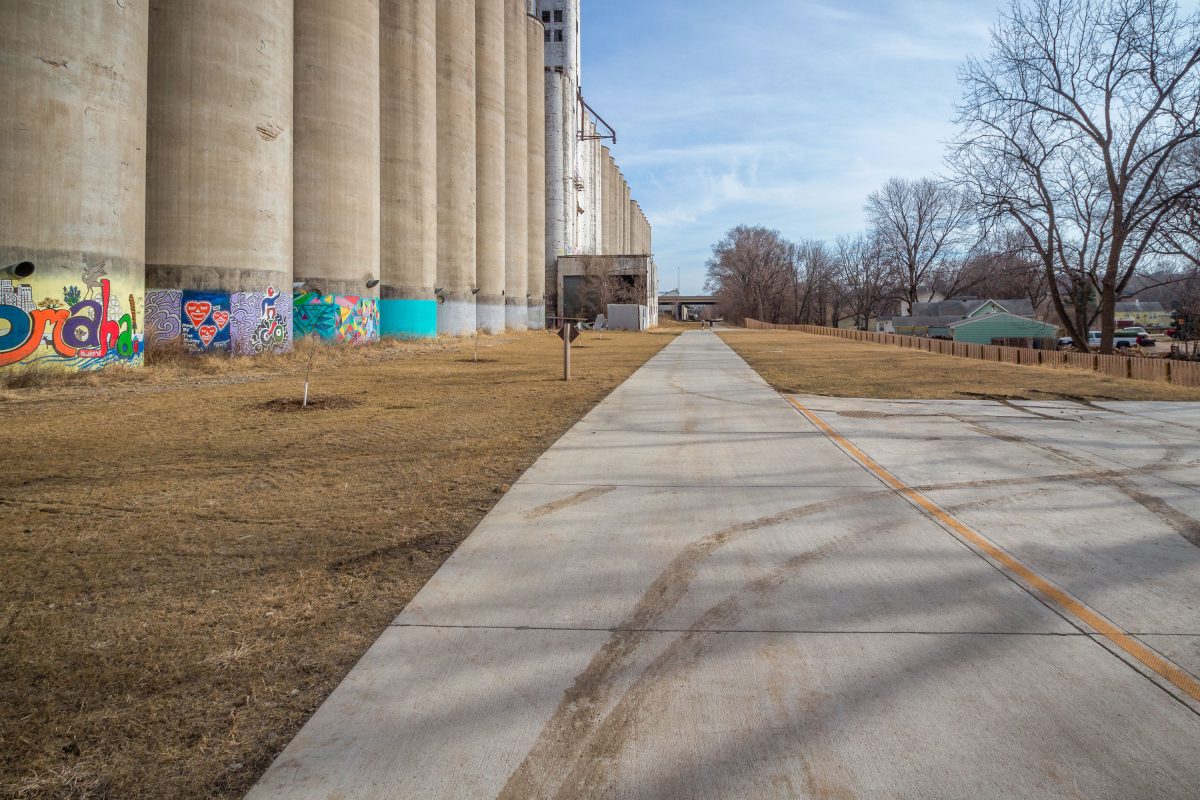
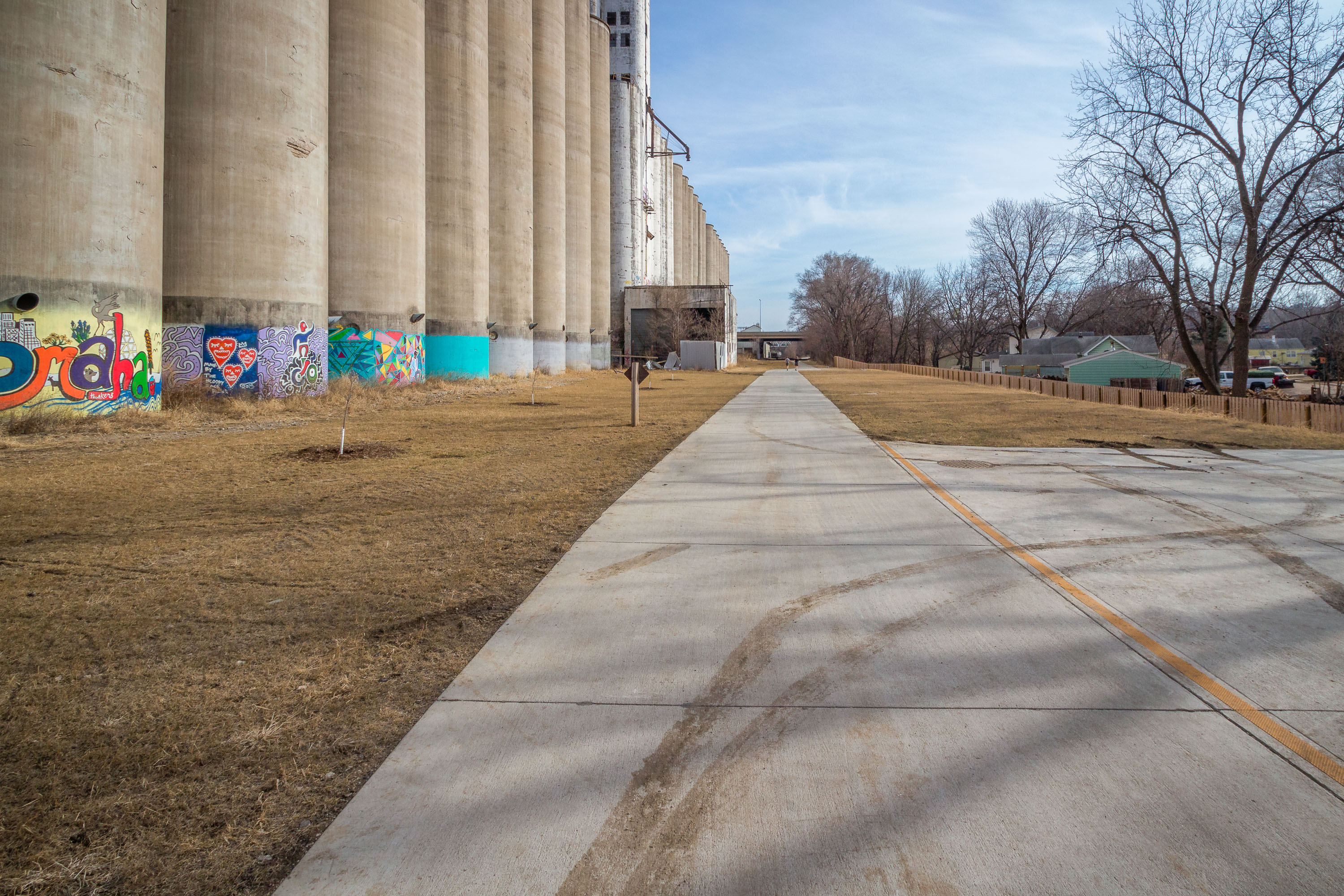
Paved South Omaha Trail runs past concrete grain silos with colorful graffiti murals at their base in Omaha, Nebraska.
Grain elevator silos like these once stored corn and soybeans shipped through Omaha's rail and river networks, a trade that shaped the city's South Omaha industrial corridor through much of the 20th century.

Painted Silo Murals Along the South Omaha Trail
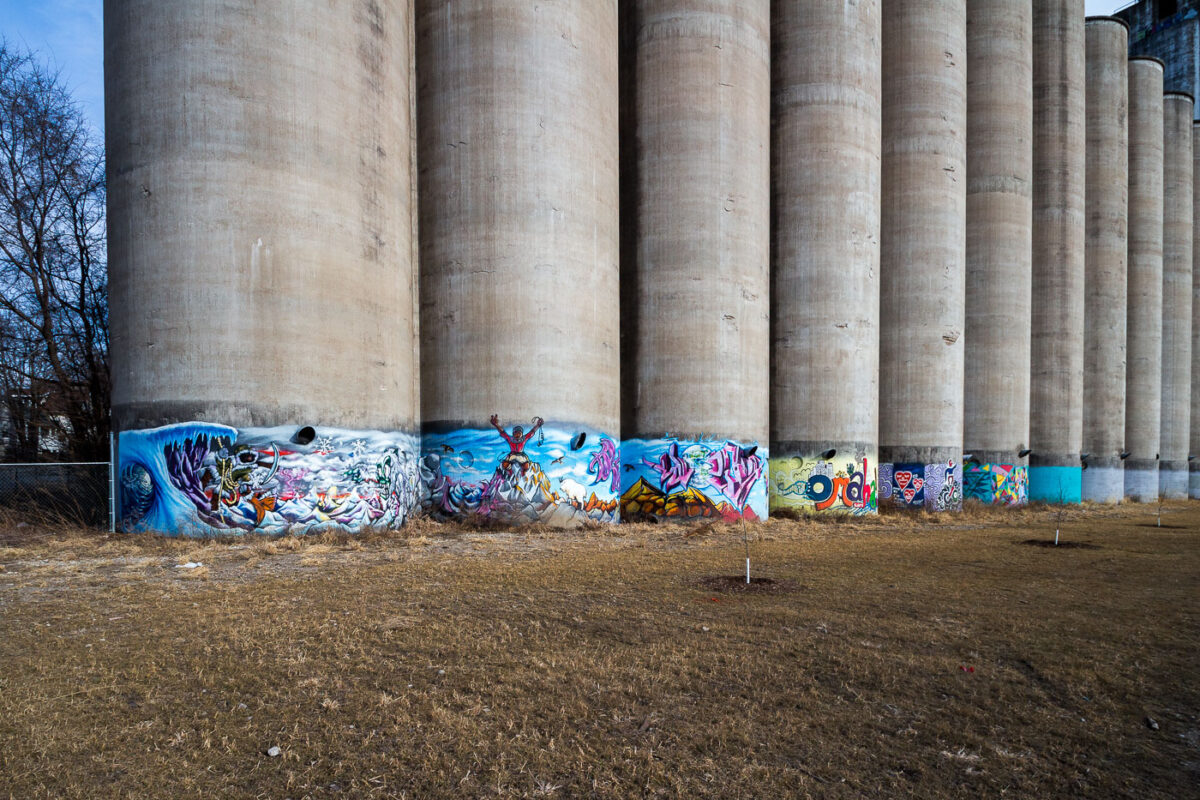
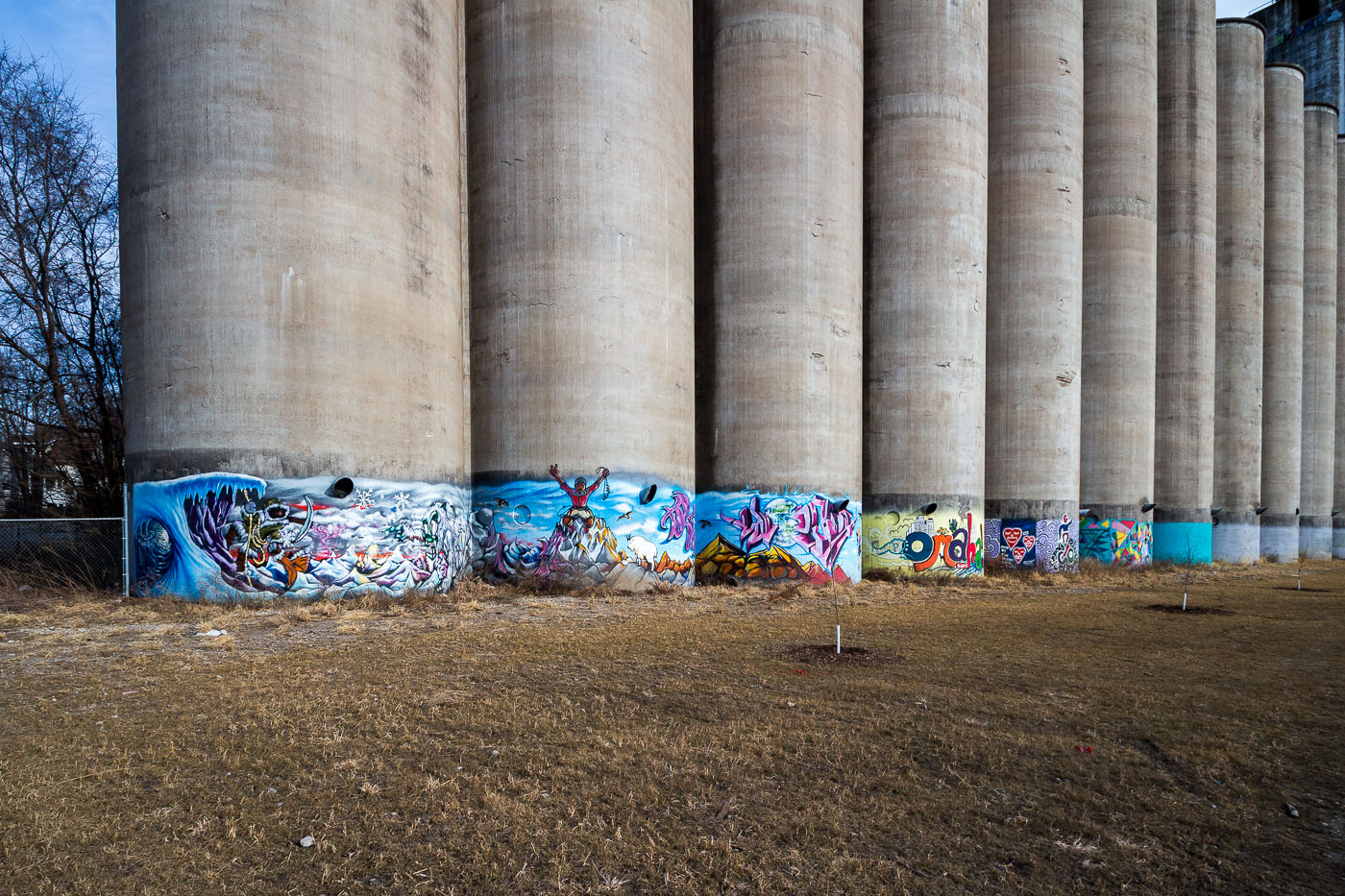
Colorful graffiti murals cover the base of concrete grain silos in Omaha, Nebraska.
Grain silos like these once stored the harvests that made Omaha a major hub of the Midwest grain trade, their concrete columns built tall and round to resist the outward pressure of stored grain.

Mural-Covered Grain Silo Bases in Omaha
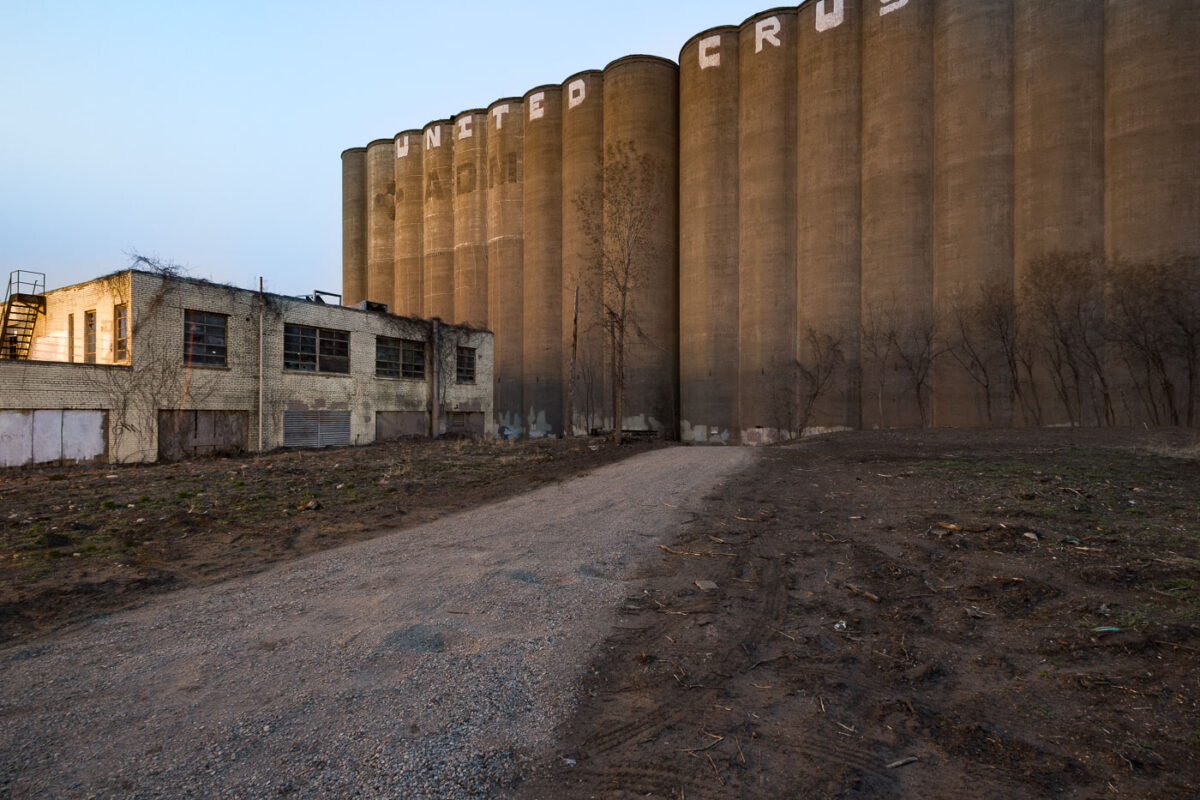
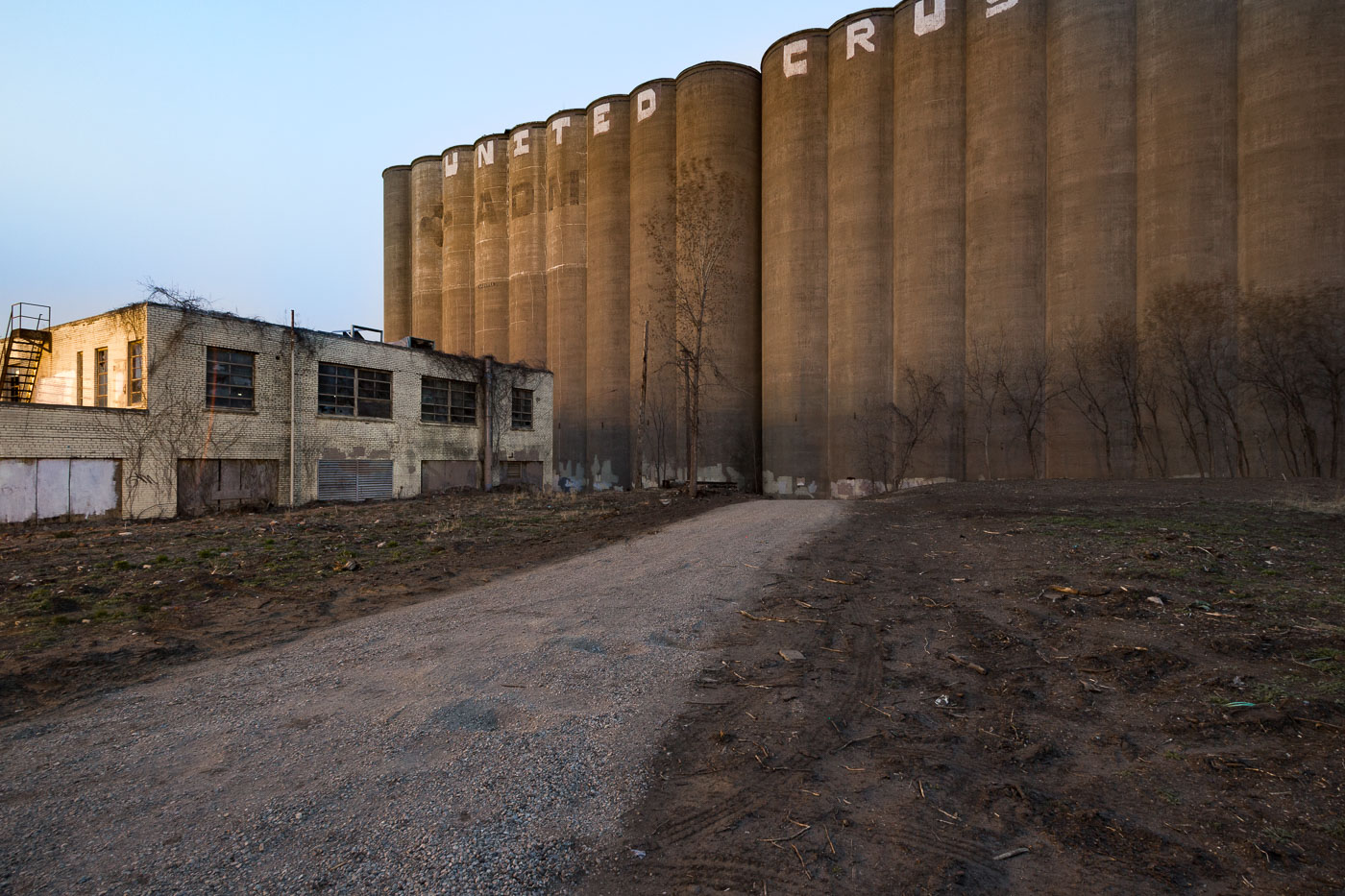
Abandoned ADM grain elevator complex in Dinkytown, Minneapolis, with "UNITED CRUSHERS" branding on silos.
The abandoned ADM grain elevator complex in Dinkytown, Minneapolis, stands as a relic of the city's industrial past. Originally part of the Pillsbury Company's operations, these concrete silos were constructed to store and process grain.

Abandoned ADM Grain Elevator, Dinkytown, Minneapolis
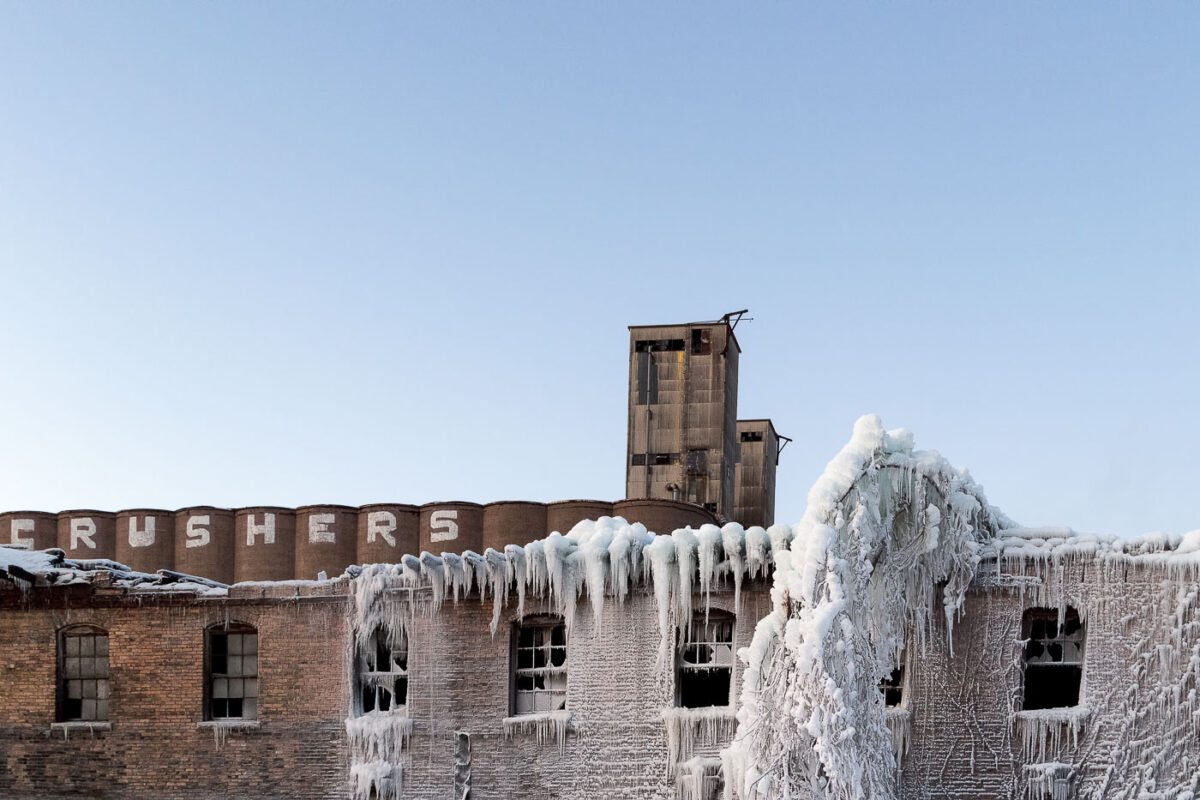
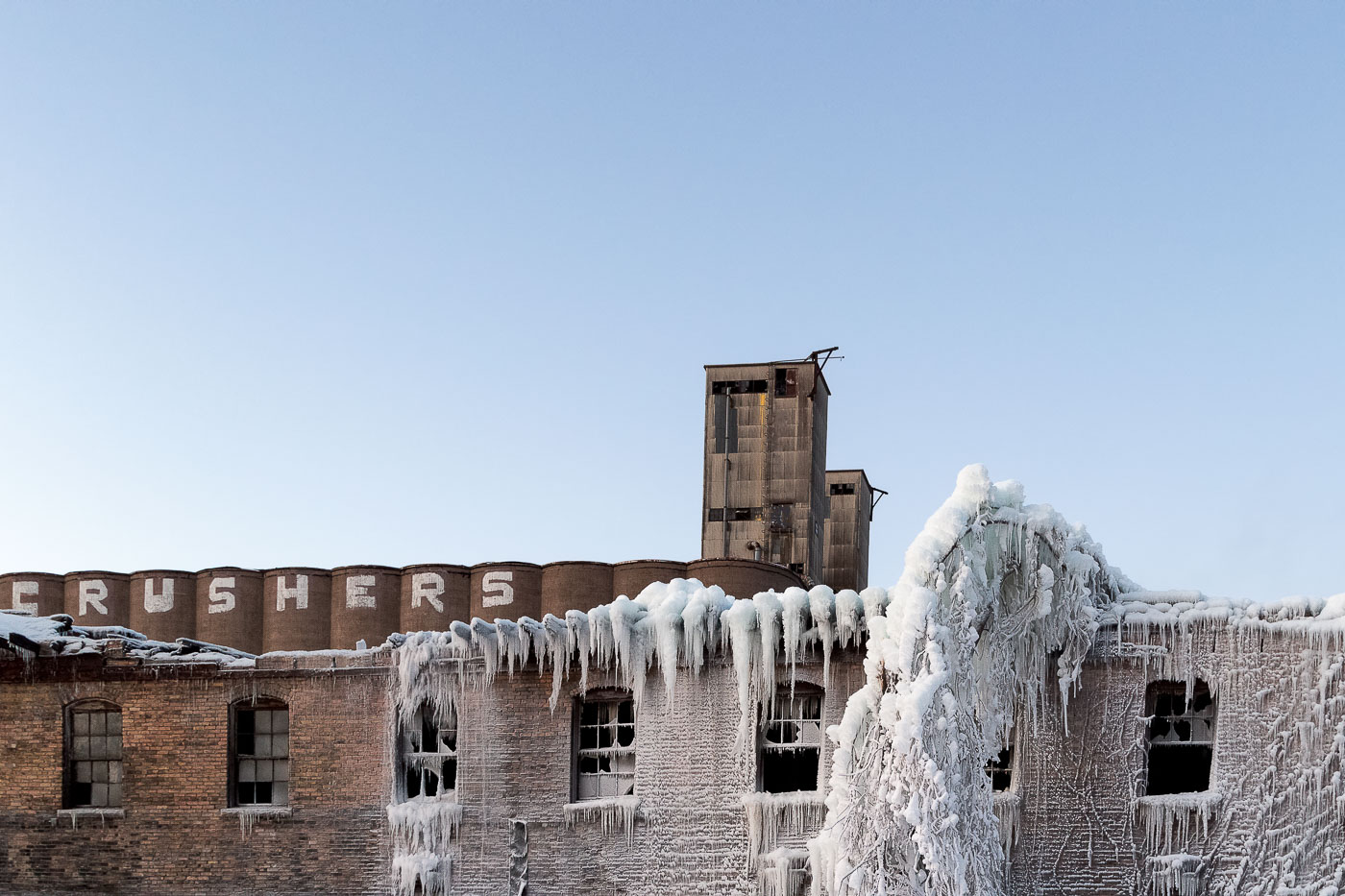
The ADM Grain Elevator and Harris Machinery buildings in Minneapolis's Prospect Park show fire damage and ice accumulation. The ADM silos are marked "CRUSHERS".
The ADM Grain Elevator and Harris Machinery buildings in Prospect Park, Minneapolis, show extensive ice and snow accumulation following a significant fire. The fire gutted the interior of the Harris Machinery structure, leaving its exterior heavily damaged and encased in ice.

ADM Grain Elevator and Harris Machinery Fire Damage, Prospect Park, Minneapolis
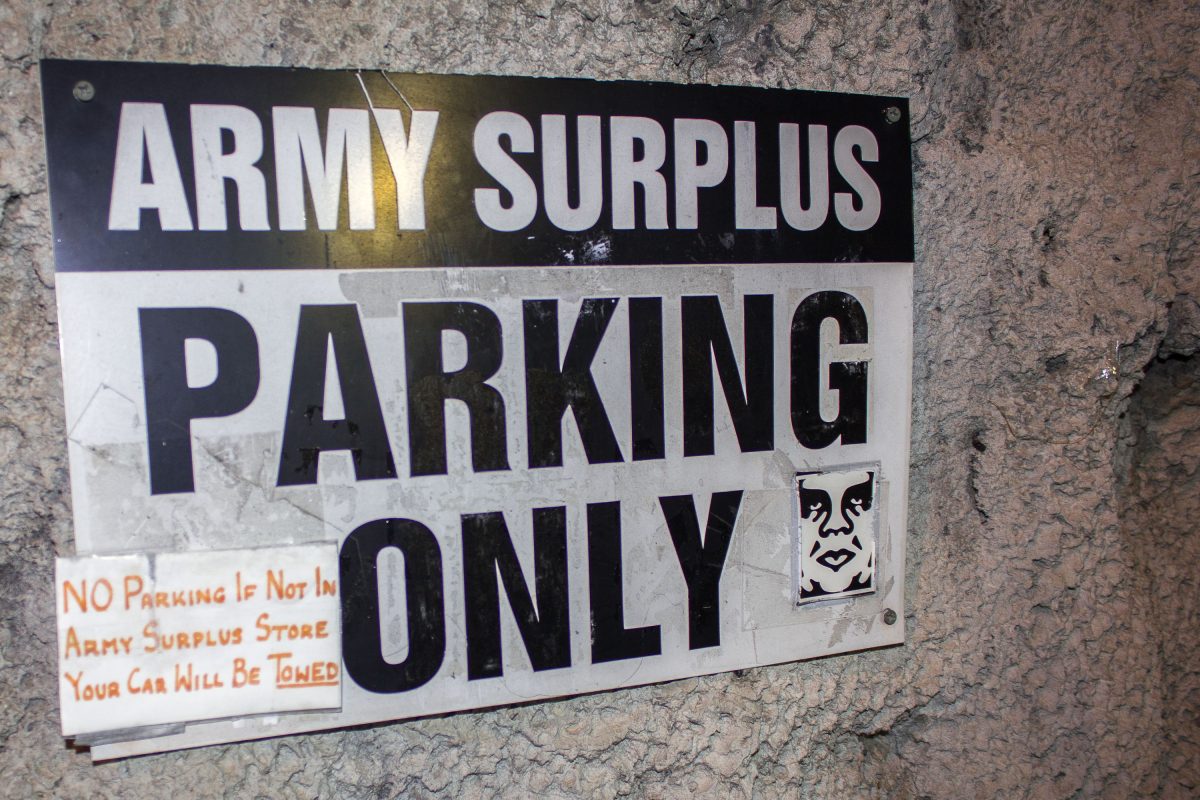
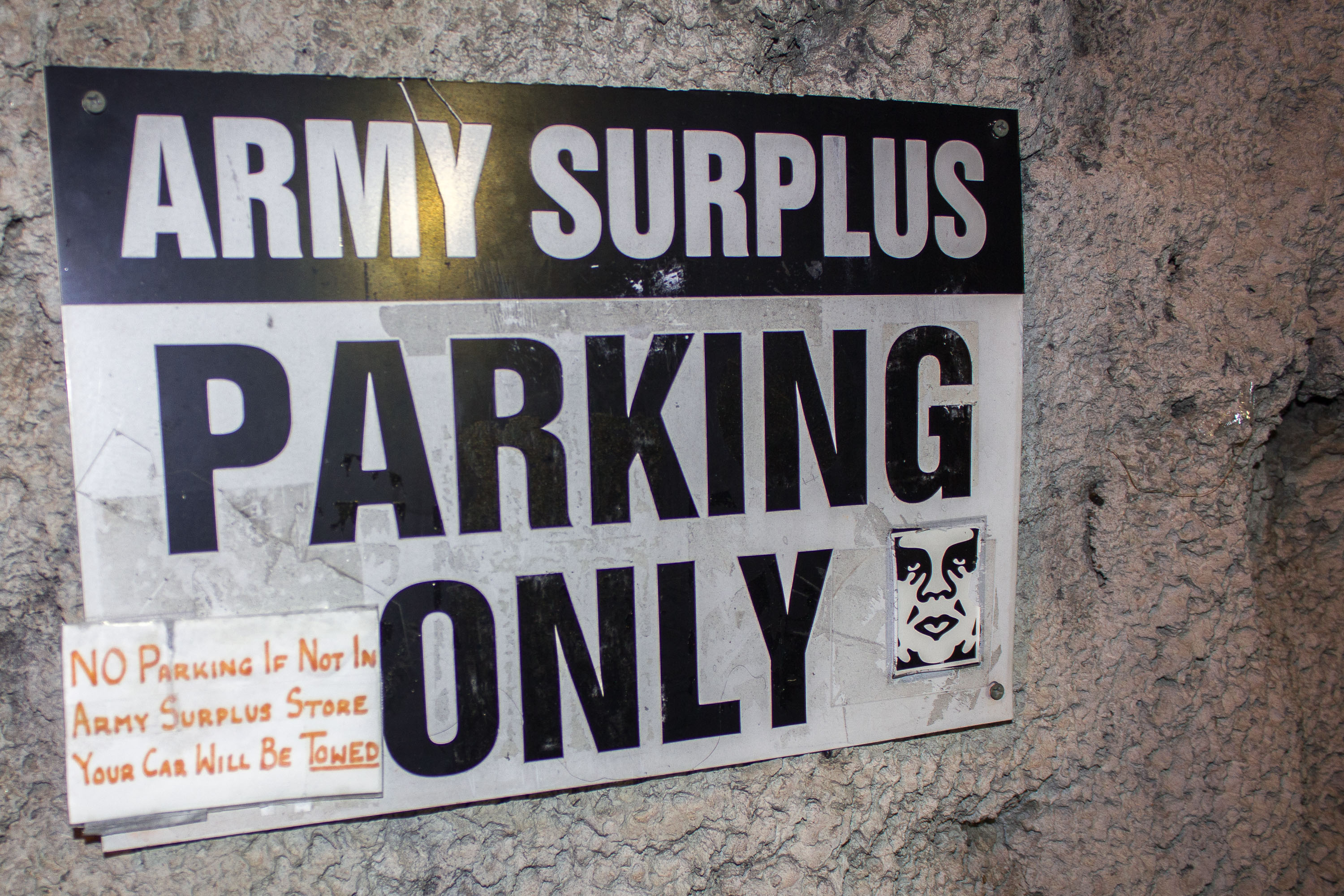
Shepard Fairey OBEY Sticker in Atlanta
Shepard Fairey’s stylized André the Giant face sticker on a Army Surplus store sign in Atlanta, Georgia.

Shepard Fairey OBEY Sticker in Atlanta

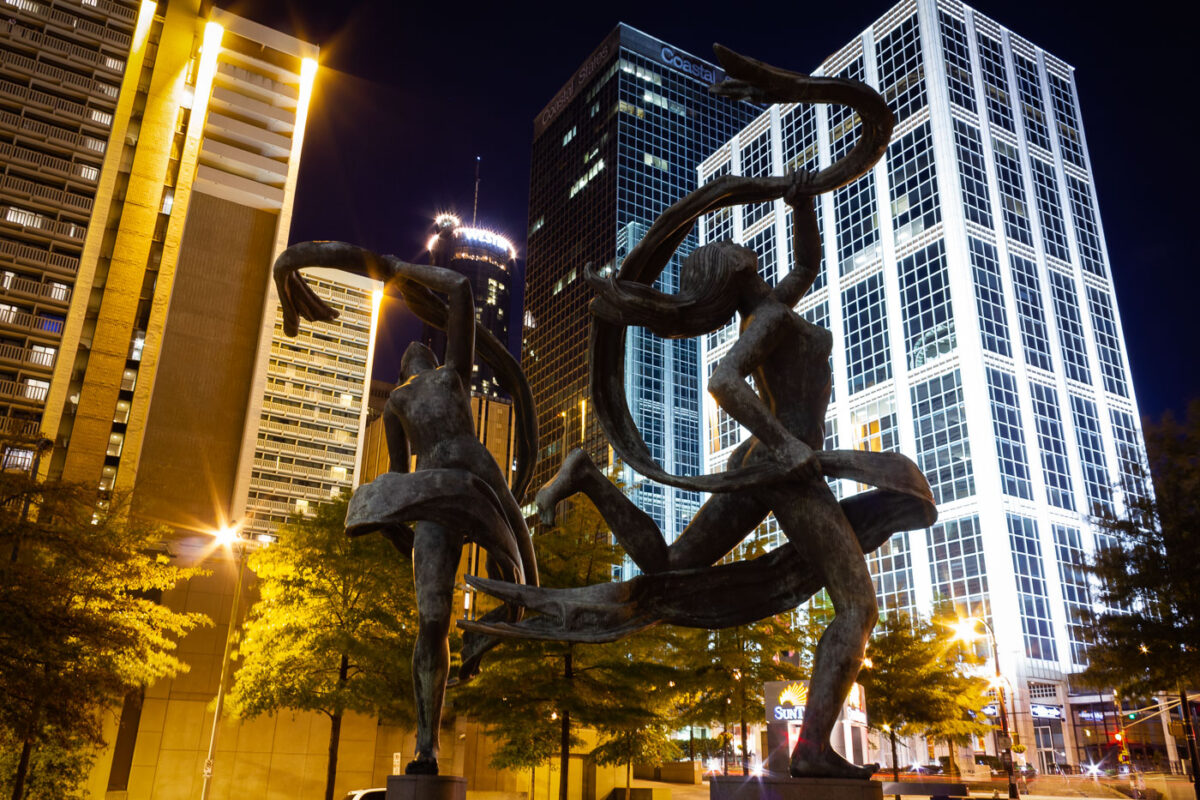
Bronze Dance sculpture by John Seward Johnson II in Centennial Olympic Park, Atlanta, at night.
The bronze "Dance" sculpture, by J. Seward Johnson II, stands in Centennial Olympic Park in downtown Atlanta. The park opened in 1996 as the gathering place for that year's Summer Olympics and spans 21 acres. The Bank of America Plaza tower, at 1,023 feet the tallest building in the Southeast, stands nearby.

“Dance” Sculpture Against the Atlanta Skyline

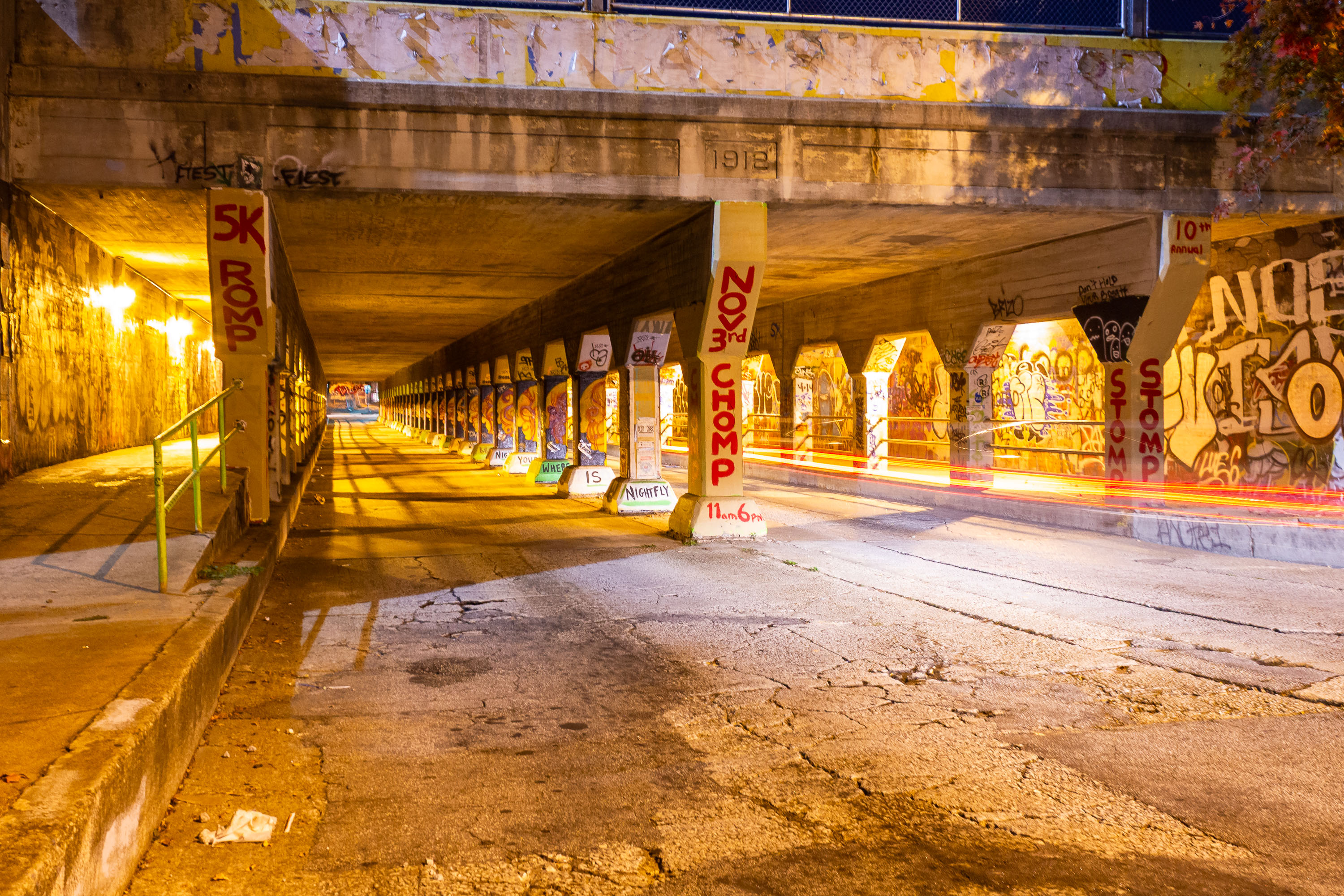
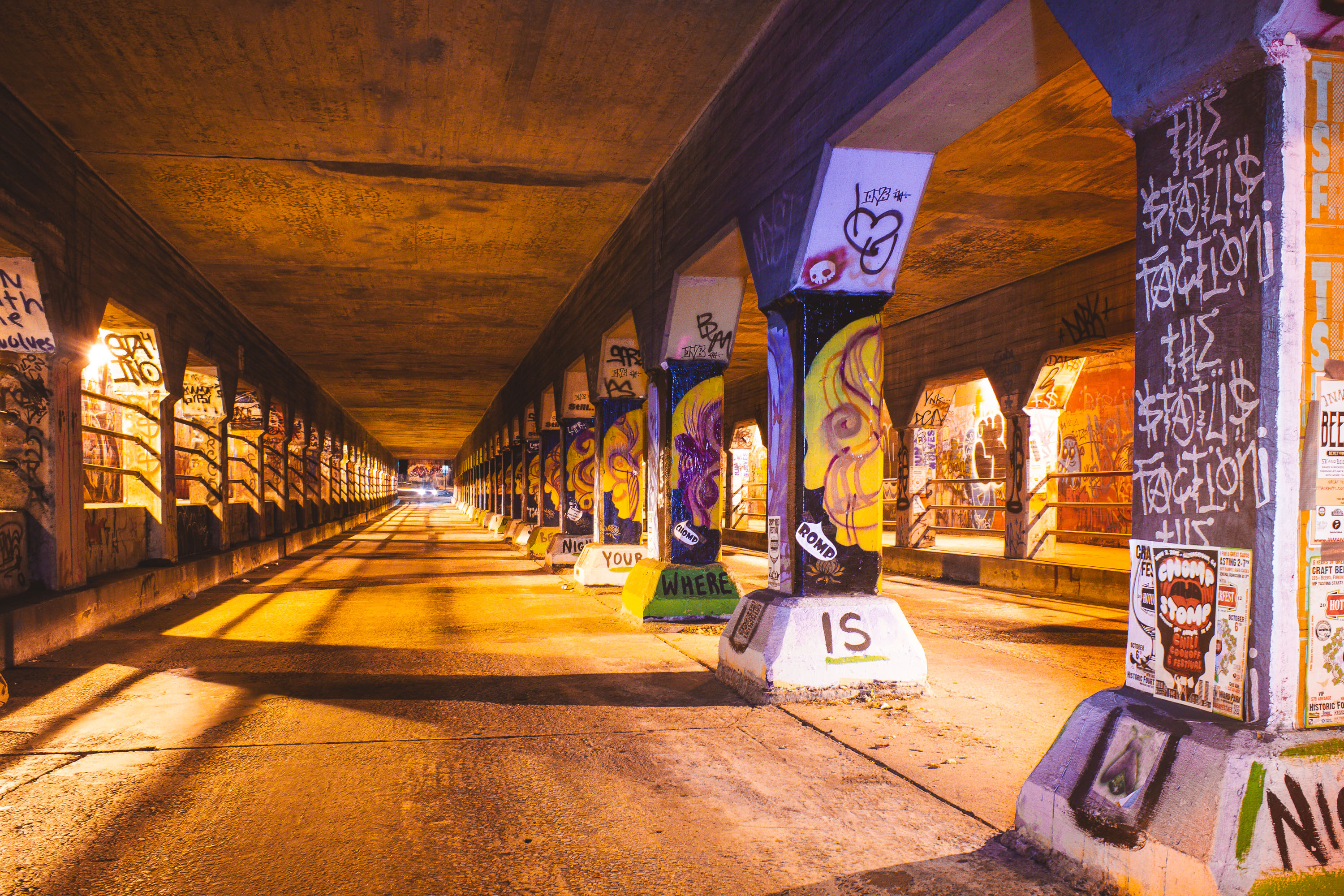
Krog Street Tunnel in Atlanta features colorful graffiti art on concrete pillars and walls illuminated at night.
The Krog Street Tunnel is a pedestrian and vehicle underpass beneath railroad tracks in Atlanta, connecting the Cabbagetown and Inman Park neighborhoods near Old Fourth Ward. A date stamp cast into the concrete reads 1912, the year the underpass was built. Its walls function as an open canvas where graffiti artists repaint murals over one another, often advertising local races and events.

Graffiti Murals Inside the Krog Street Tunnel

Krog Street Tunnel in Atlanta features colorful graffiti art on walls and support columns under warm evening lighting.
The Krog Street Tunnel is a pedestrian and vehicle underpass beneath the Norfolk Southern railroad tracks in Atlanta, connecting the Inman Park and Cabbagetown neighborhoods near Krog Street. Built in the early twentieth century as a rail underpass, it has become an open canvas where artists repaint the walls, columns, and ceiling with graffiti and murals, with new work regularly covering the old.

Painted Columns Inside the Krog Street Tunnel

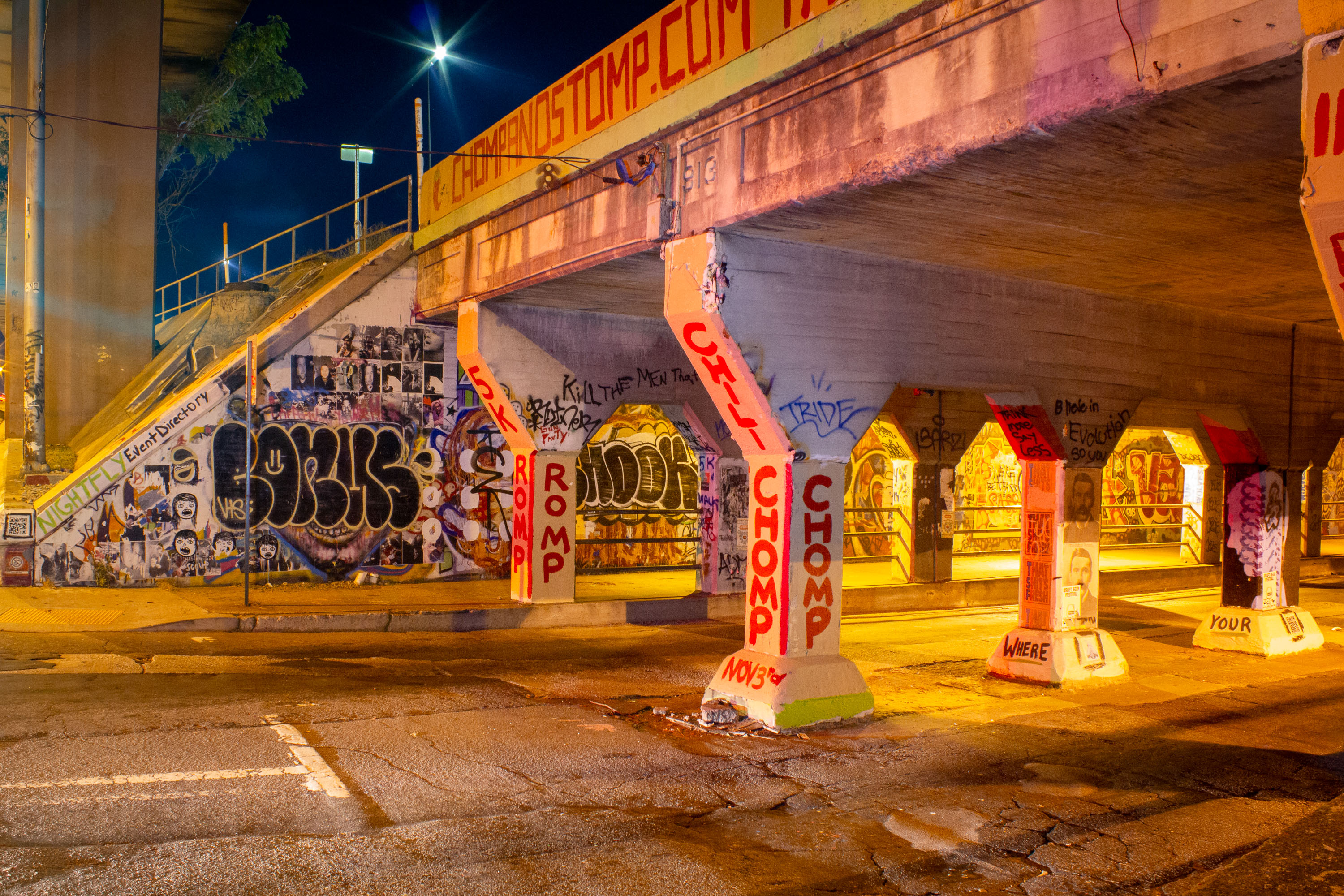
The Krog Street Tunnel in Atlanta displays colorful graffiti art and illuminated structures beneath a yellow pedestrian bridge at night.
The Krog Street Tunnel is a railroad underpass connecting Cabbagetown and Inman Park in Atlanta, covered floor to ceiling in ever-changing graffiti and murals. Artists repaint its walls and columns regularly, so the tunnel's look is never the same for long.

Graffiti Covers the Pillars of the Krog Street Tunnel

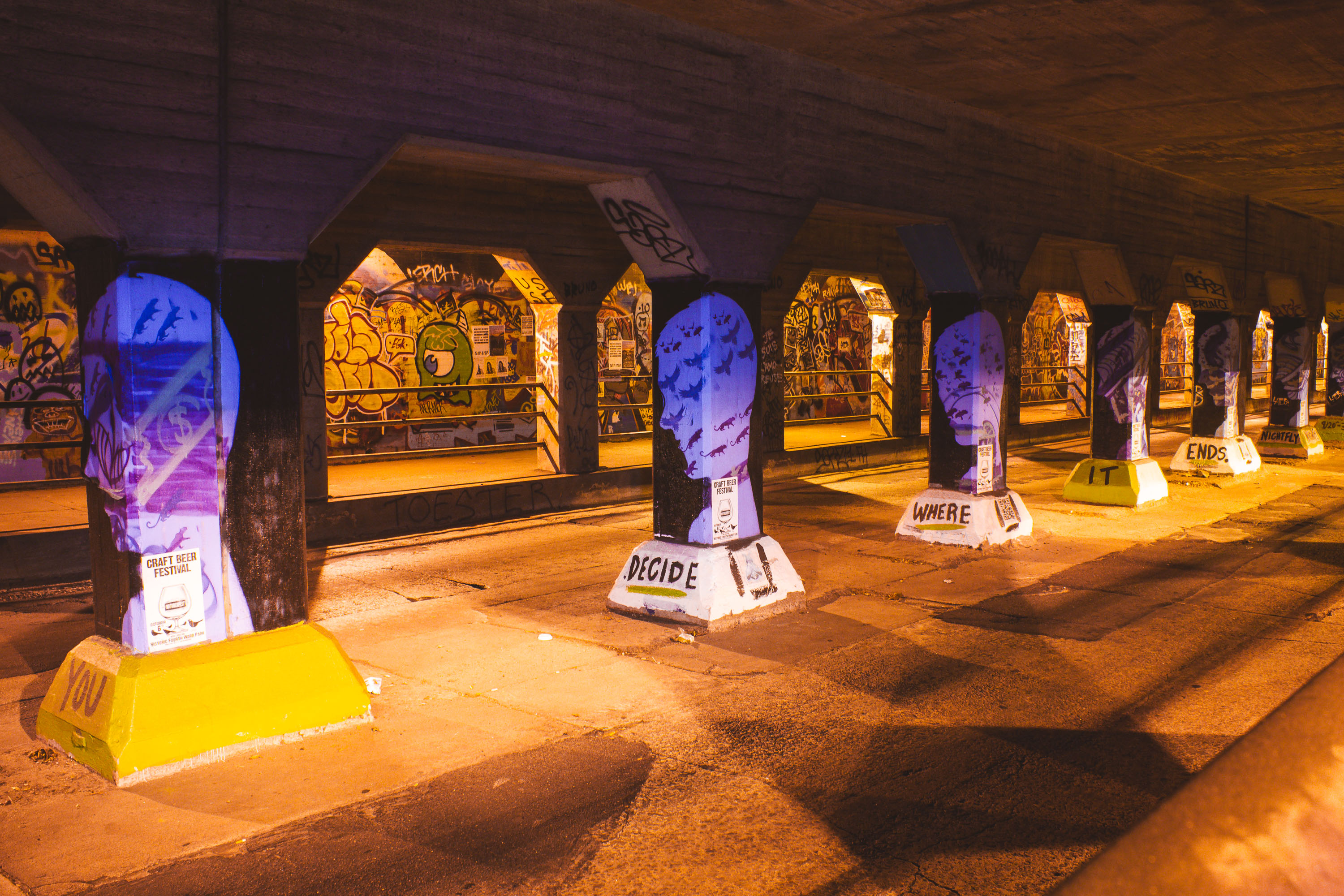
Illuminated pillars with graffiti art line an underpass corridor with yellow and purple lighting and stenciled messages on the ground.
The Krog Street Tunnel is a pedestrian and vehicle underpass beneath the Norfolk Southern railroad tracks, connecting Inman Park and Cabbagetown in Atlanta. Built in the early twentieth century, it has long served as an open canvas for graffiti artists. A row of painted heads line its support columns, spelling out the words "You Decide Where It Ends."

Painted Heads Spell “You Decide Where It Ends” at Krog Street Tunnel

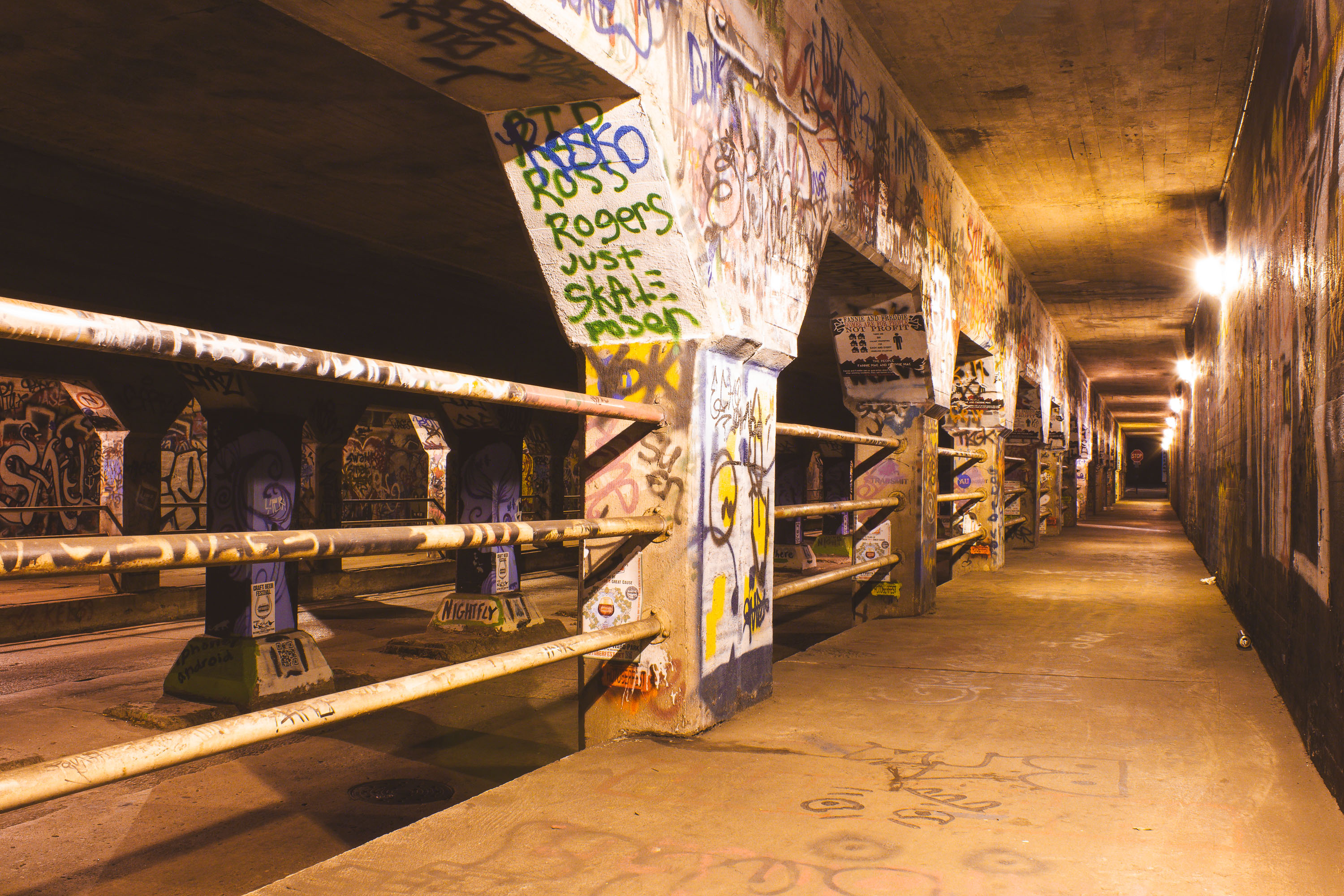
Krog Street Tunnel in Atlanta filled with colorful graffiti art on walls and metal railings under warm lighting.
The Krog Street Tunnel is a pedestrian and vehicle underpass beneath the Norfolk Southern railroad tracks in Atlanta, linking the Cabbagetown and Inman Park neighborhoods. Built in 1912 to carry traffic under the rail line, it has served as an open canvas for graffiti artists since the 1990s, with new work painted over old work on a regular basis.

Graffiti Lines the Walls Inside Atlanta’s Krog Street Tunnel

HOTTEA yarn installation on a chain-link fence in Minneapolis.
HOTTEA yarn installation in Minneapolis. The temporary site-specific work uses stretched yarn on a chain-link fence near downtown, where the artist regularly creates ephemeral public art in unexpected places.

HOTTEA yarn installation, Minneapolis

Peterson’s House of Balls in Minneapolis, Minnesota, filled with sculptures, masks, and found objects.
Peterson’s House of Balls in Minneapolis, Minnesota, is an art installation created by Lee “Peterson” House. The private space combines found objects, sculptures, masks, and memorabilia in an eccentric indoor assemblage. It has long been known as one of Minneapolis’s most unusual artist-built interiors.

Peterson’s House of Balls, Minneapolis

© 1996–2026 Chad Davis