Photo Set
East Chicago Tin and Marktown
Worker housing, recreational spaces, and shuttered mill facilities in Marktown and the Indiana Harbor industrial corridor
MarktownEast Chicago, IN
Marktown is a planned company town in the Indiana Harbor section of East Chicago, Indiana, established in 1917 by industrialist Clayton Mark for employees of his steel pipe manufacturing business. It survives today as one of the most intact examples of early-twentieth-century industrial worker housing in northwest Indiana and is listed on the National Register of Historic Places.
Clayton Mark designed Marktown as a self-contained residential enclave, with compact houses, narrow streets, raised sidewalks, shared open spaces, and a park — an unusual street plan that still distinguishes the neighborhood from the conventional grid of surrounding East Chicago. The layout reflects the company-town planning ideals of the early twentieth century, when industrial employers built housing and community amenities close to their facilities.
The neighborhood sits directly between two of the heaviest industrial operations in the region: the U.S. Steel East Chicago Tin plant, which processed steel for packaging and other industrial products until U.S. Steel ended operations there in 2015, and the BP Whiting Refinery, one of the largest petroleum-processing facilities in the Midwest. Marktown's houses, park, and recreational spaces press against the fencelines of both complexes along the Indiana Harbor industrial corridor.
Residents today live within a few feet of active refinery infrastructure, and the neighborhood's public spaces — a park with posted city rules, a basketball court, a playground — sit immediately beside tank farms, processing units, and industrial outbuildings. Despite that pressure, Marktown remains occupied and retains much of its original housing stock, an anomaly of survival in a corridor where most early industrial-era communities have long since disappeared.
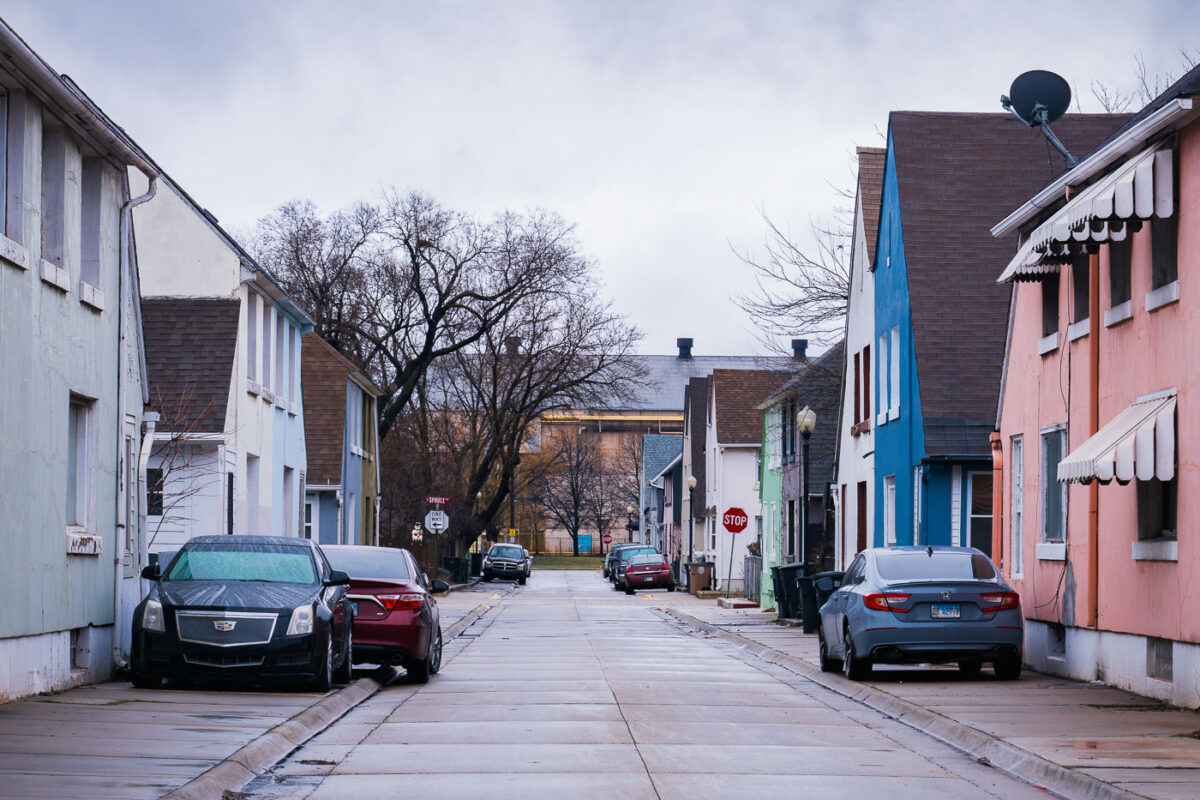
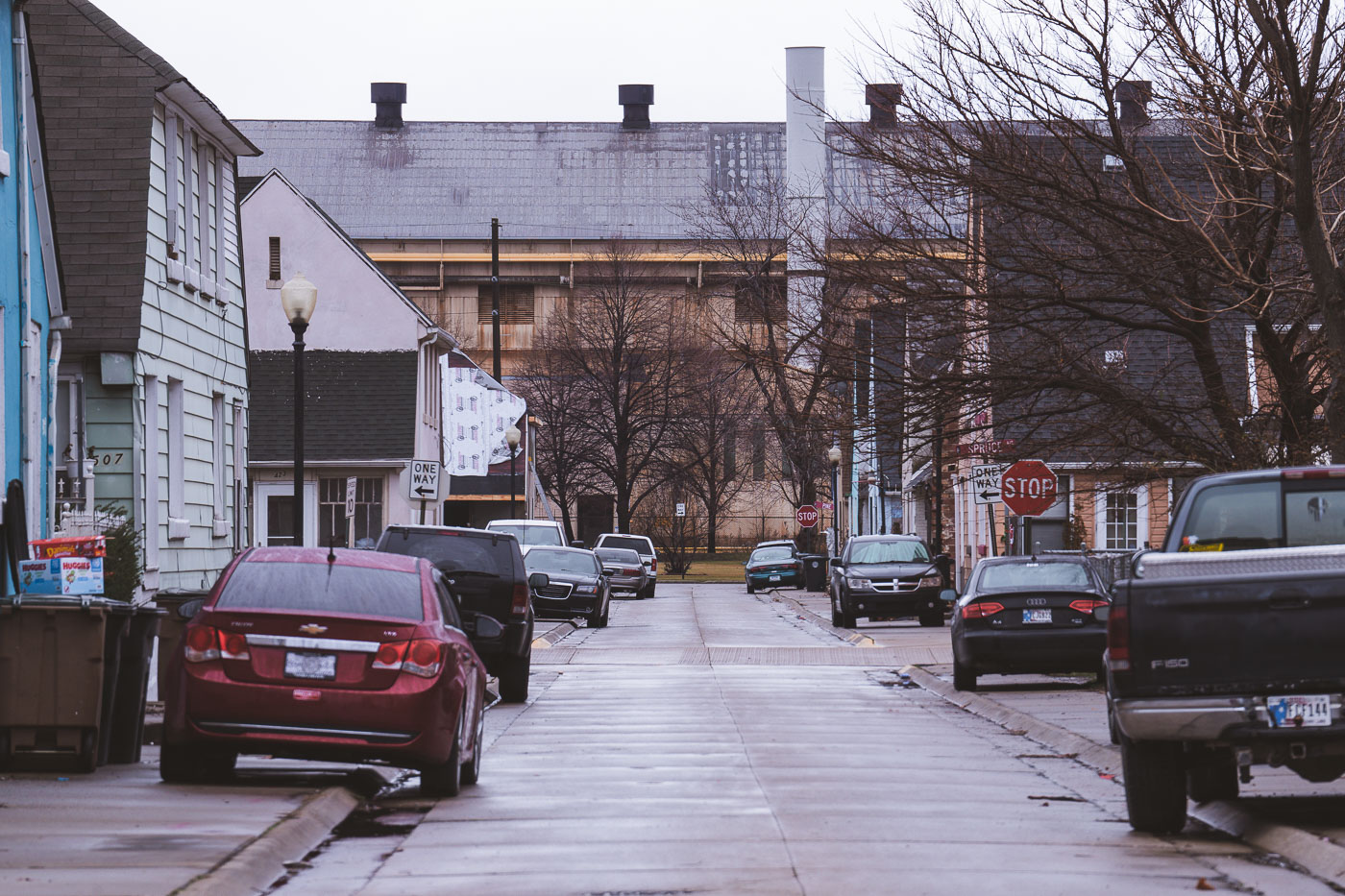 View full post: Parked Cars Line a Marktown Street Near the BP Refinery
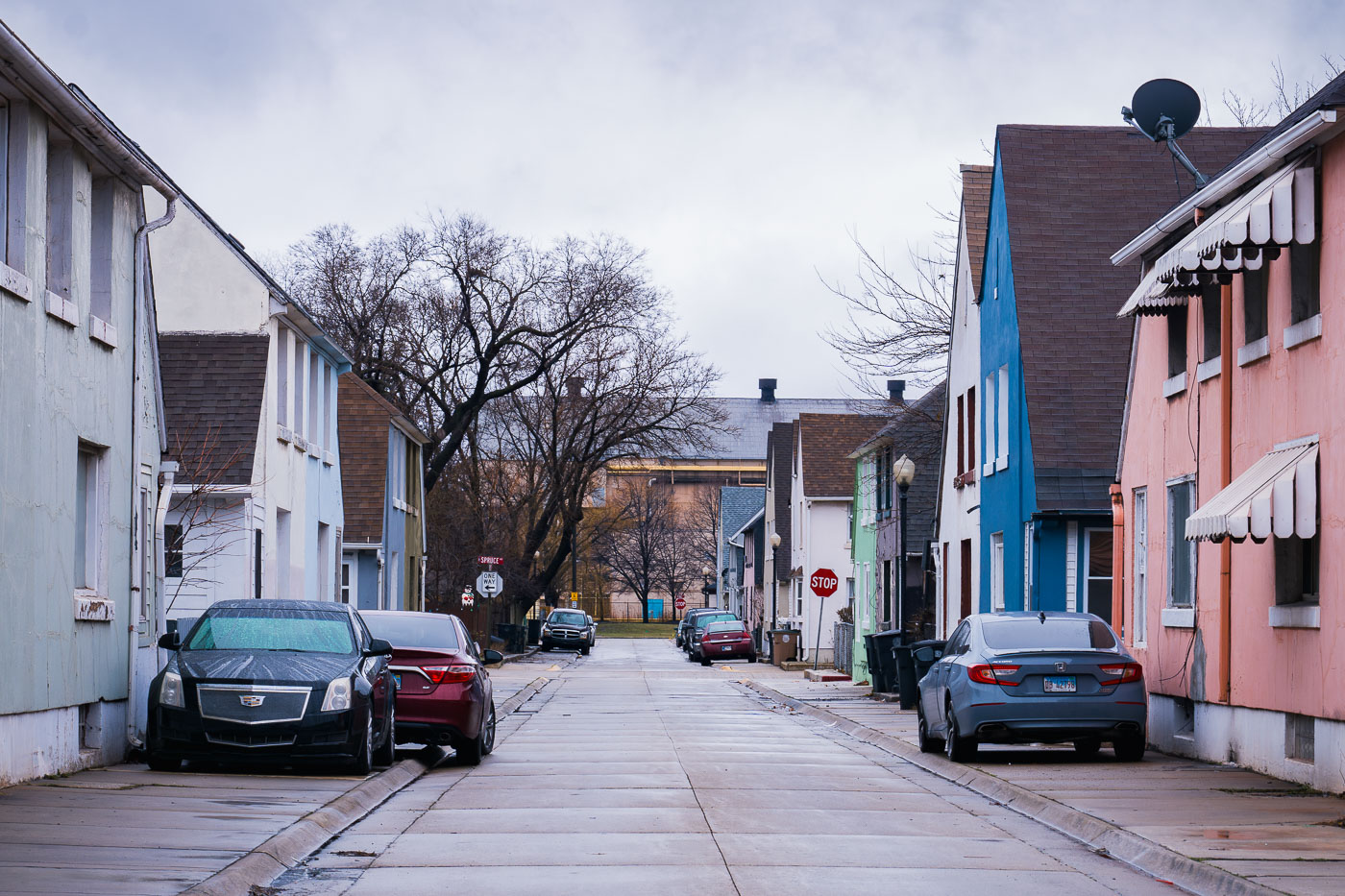 View full post: Spruce Street Row Houses in Marktown, Indiana
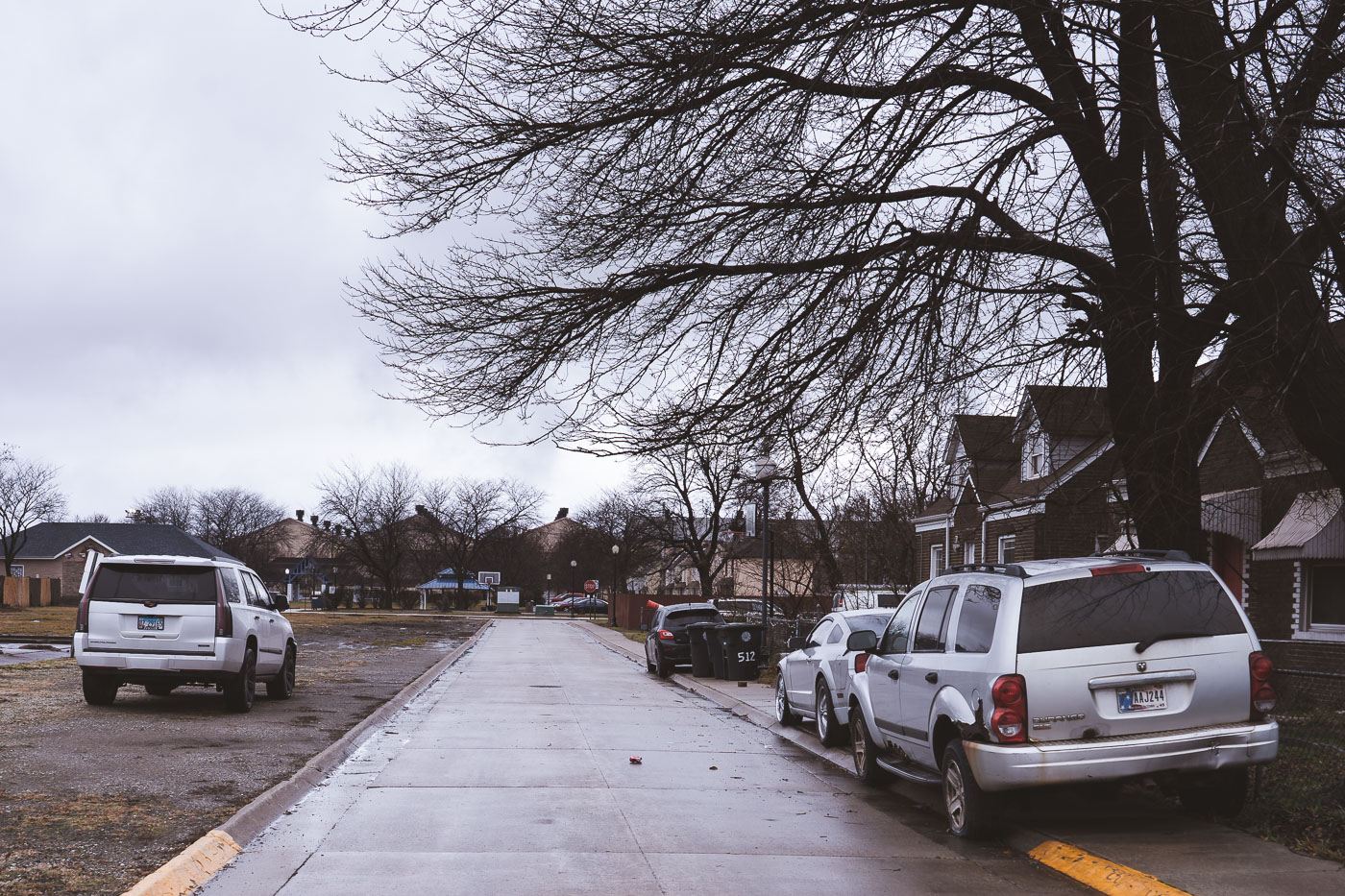 View full post: Parked Cars Along Park Street in Marktown, Indiana
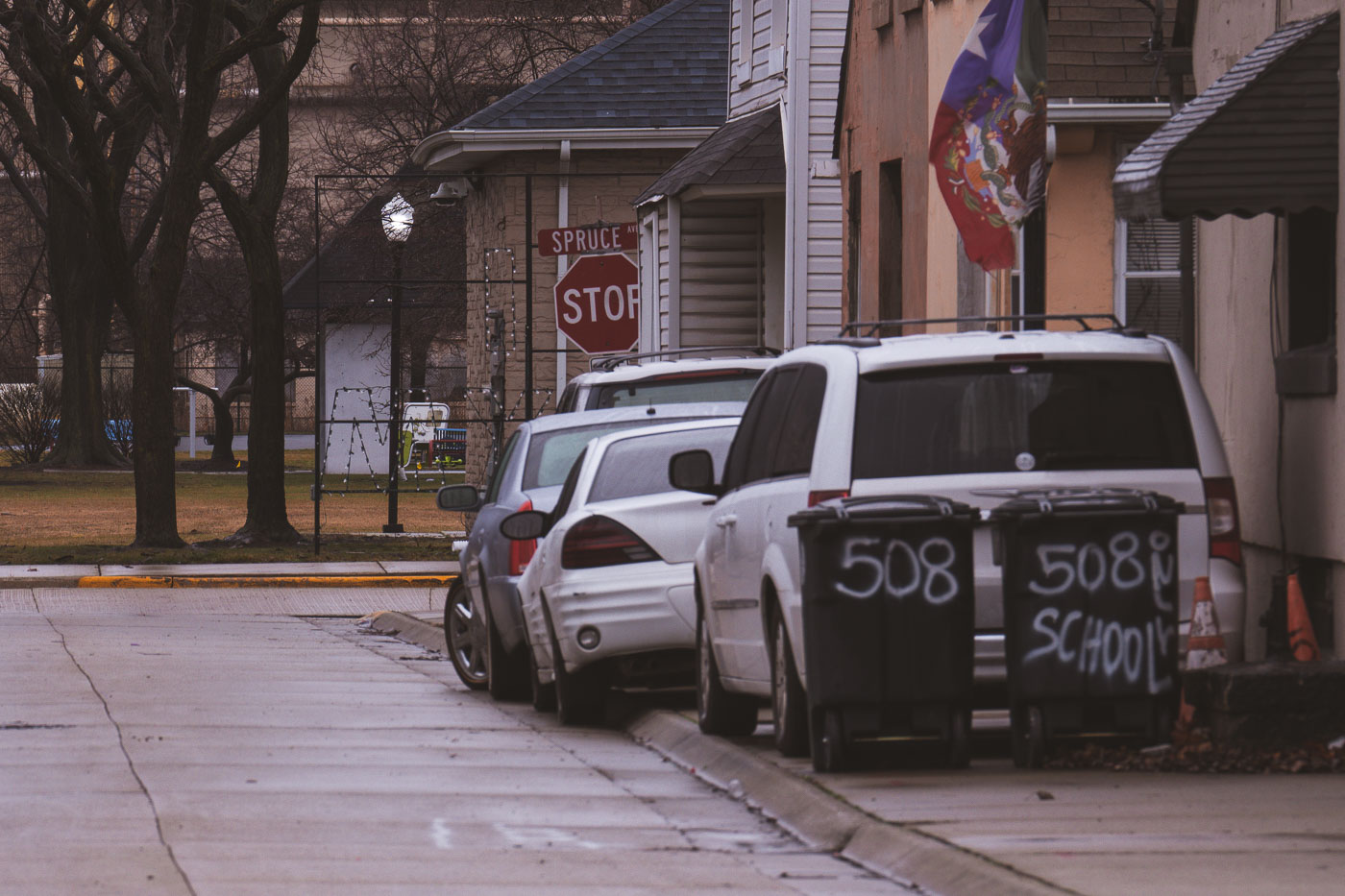 View full post: Trash Bins Marked “508 School” on Spruce Avenue, East Chicago
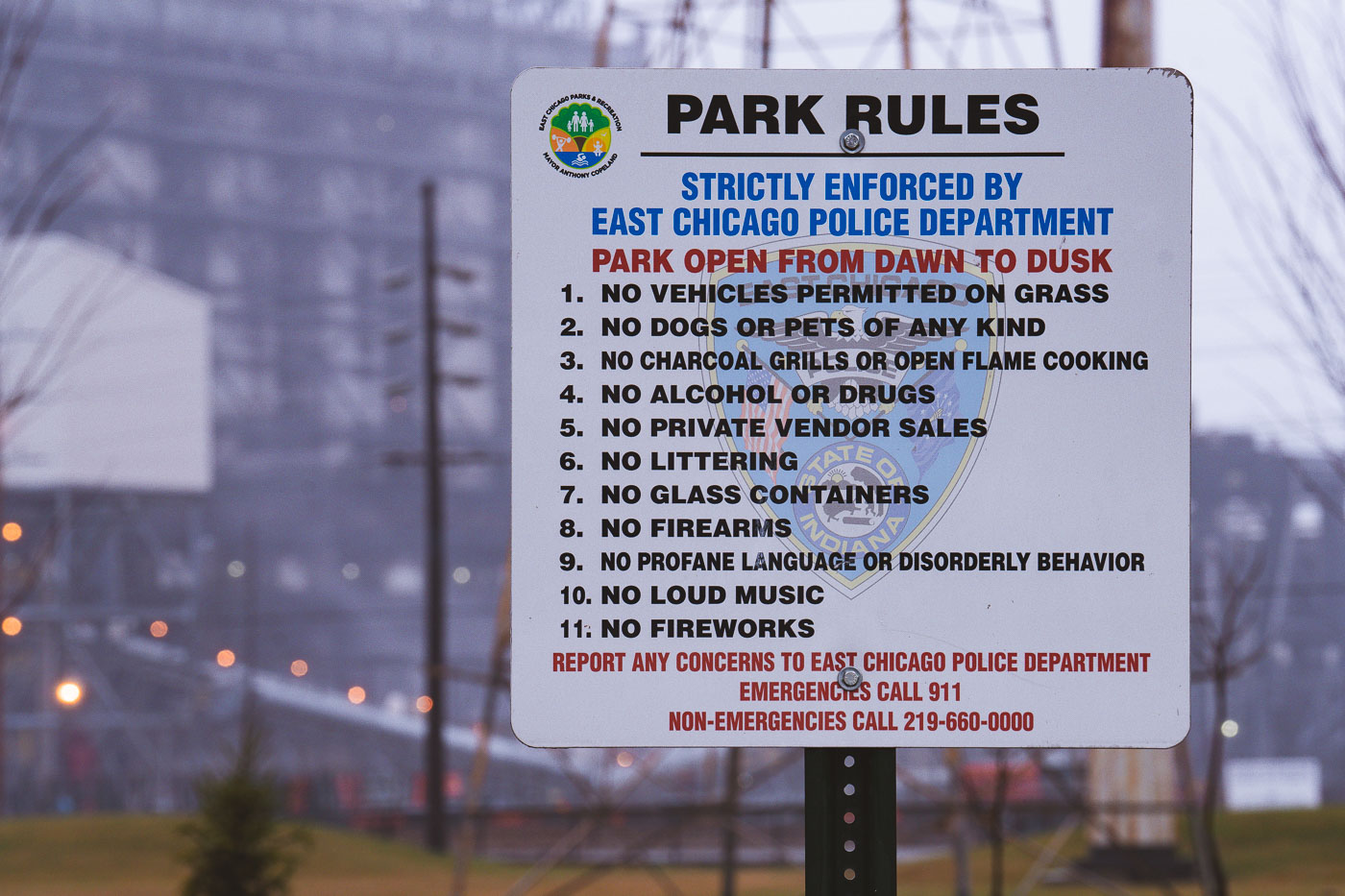 View full post: Park Rules Posted by East Chicago Police Near Marktown
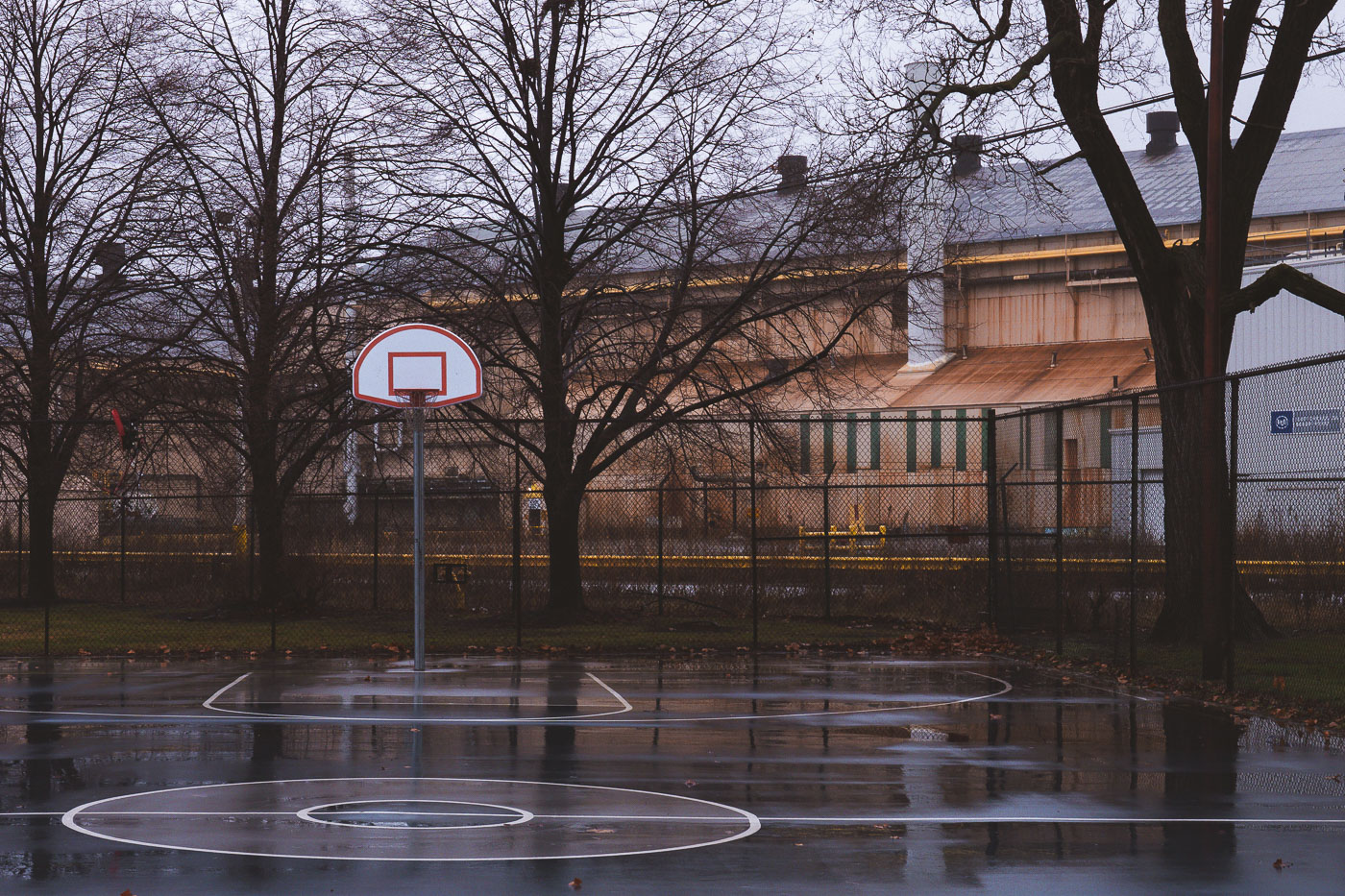 View full post: Rain-Soaked Basketball Court in Marktown
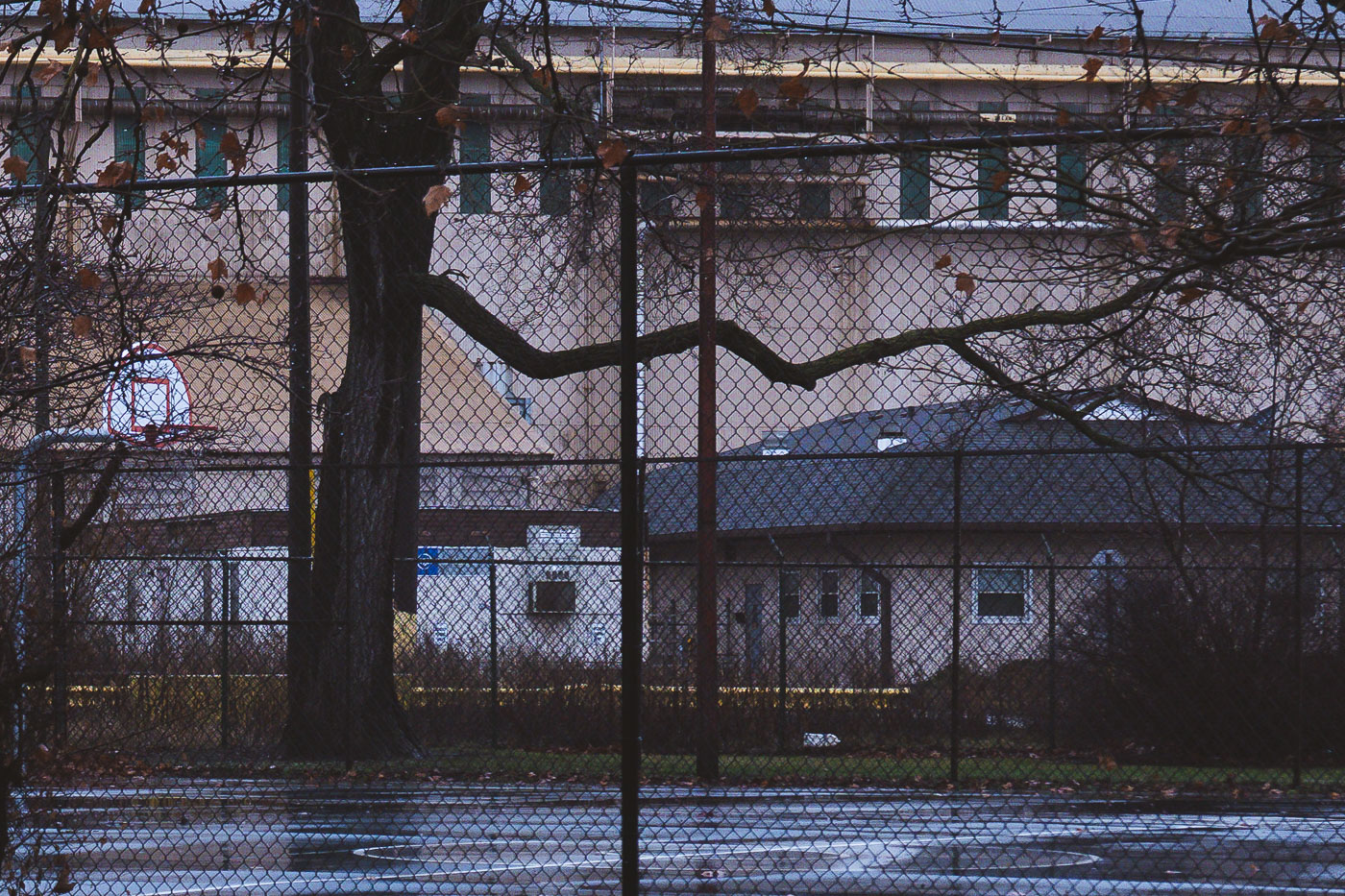 View full post: Basketball Hoop Behind a Chain-Link Fence in Marktown
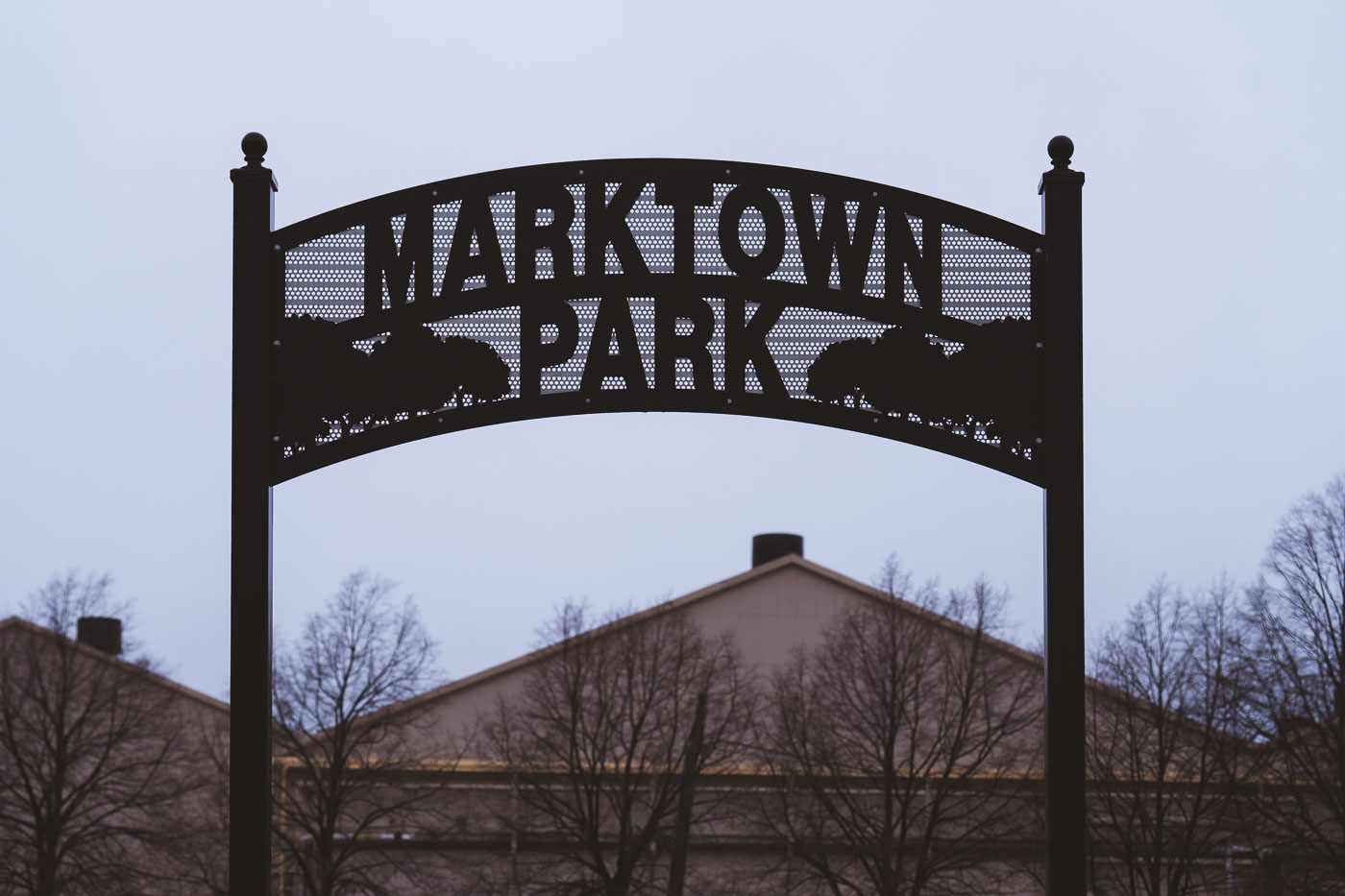 View full post: Marktown Park Sign Against Overcast Skies in East Chicago
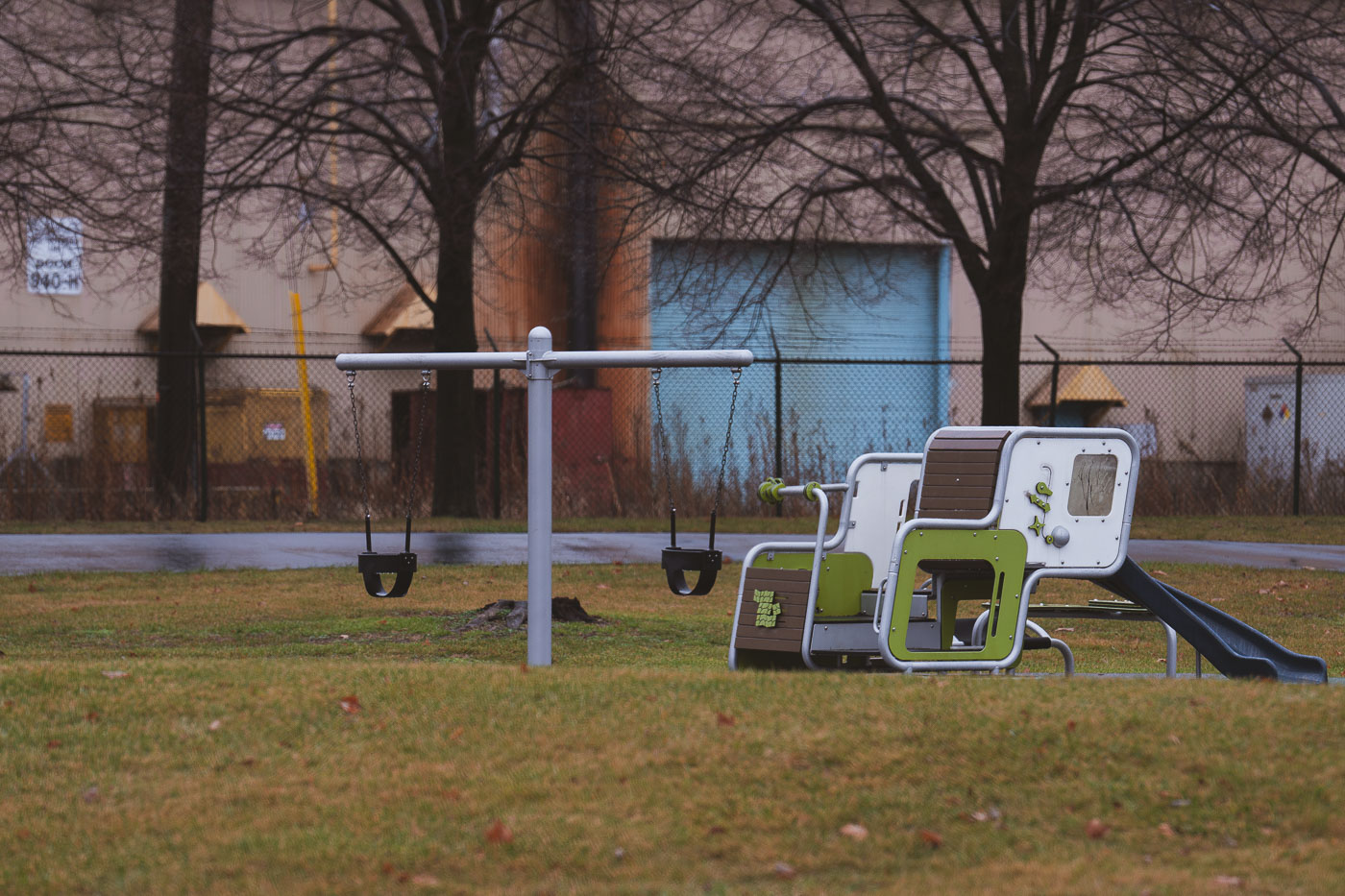 View full post: Empty Swing Set Near Marktown’s Industrial Fence Line
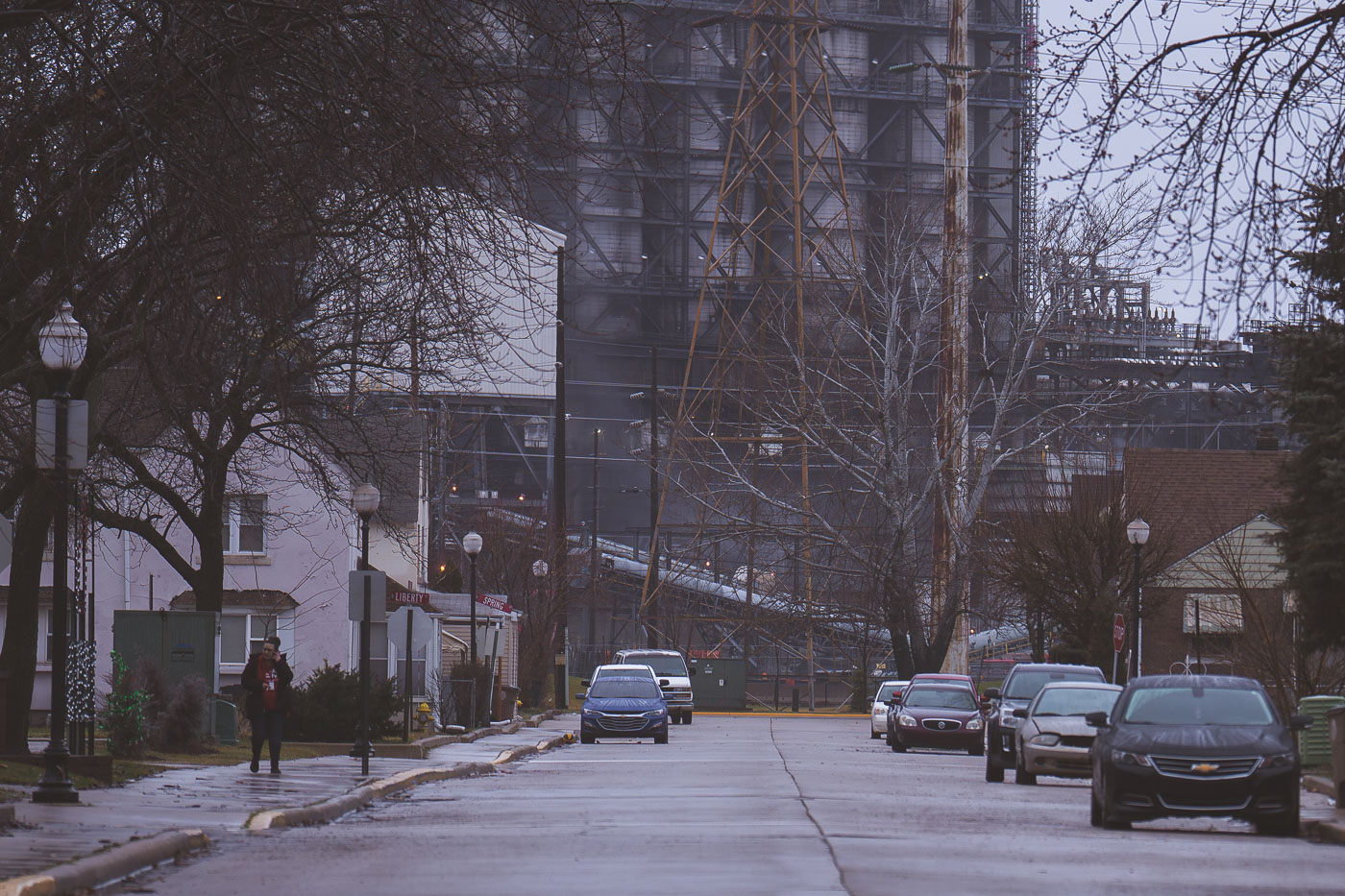 View full post: Liberty Street in Marktown, Dwarfed by the BP Refinery
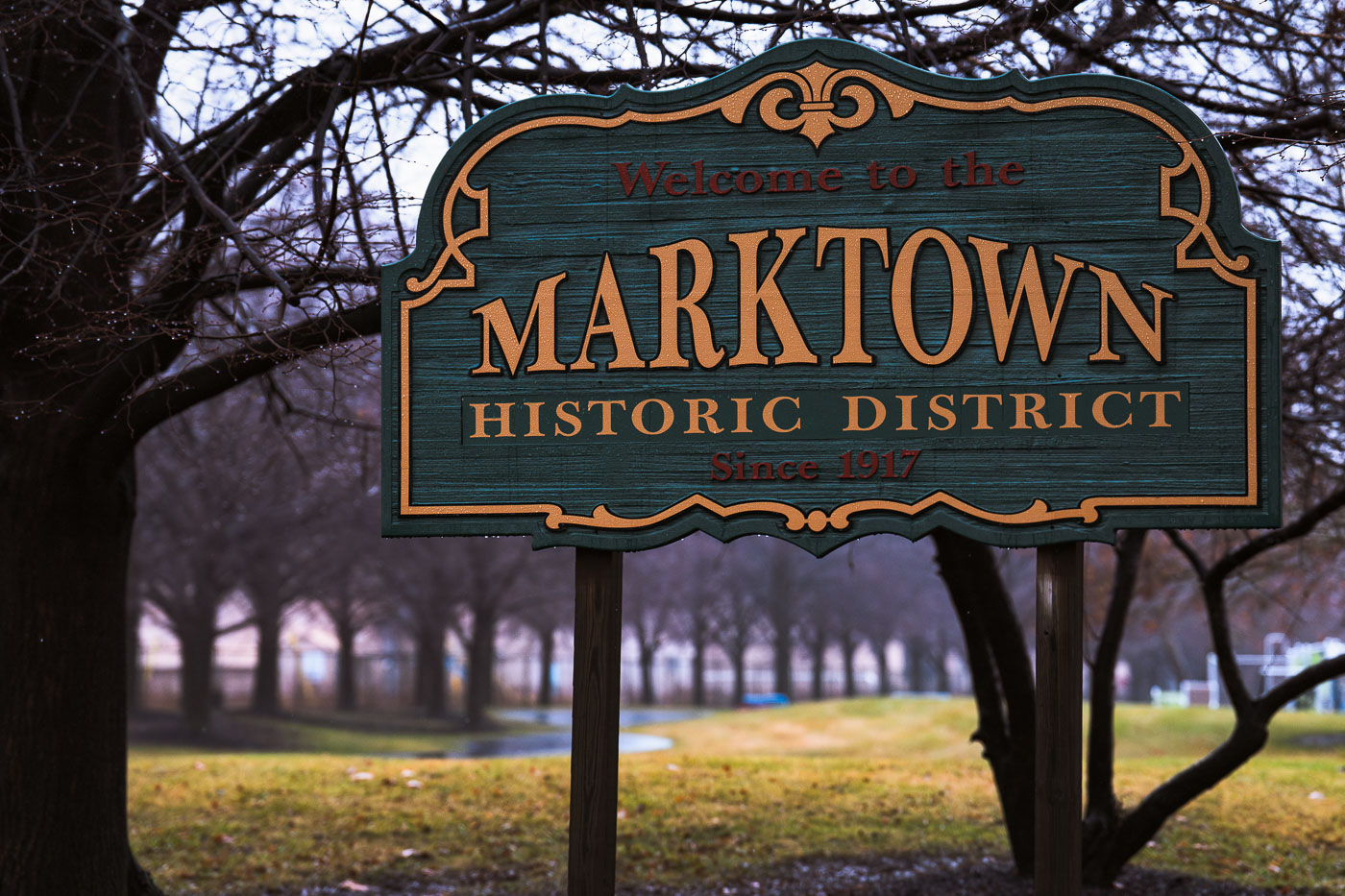 View full post: “Welcome to Marktown” Sign Since 1917, East Chicago
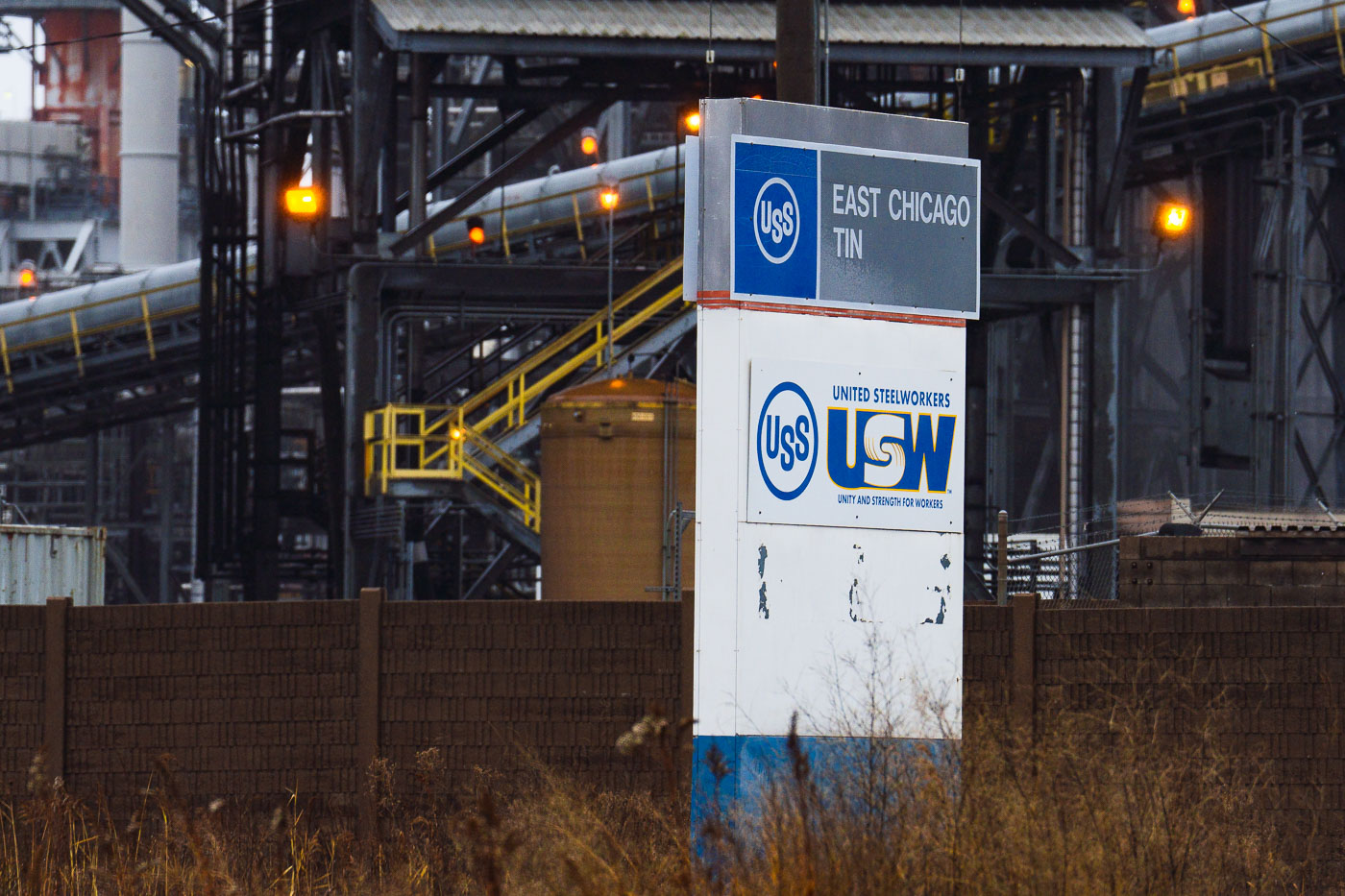 View full post: USS East Chicago Tin Sign and Steelworkers Union Logo