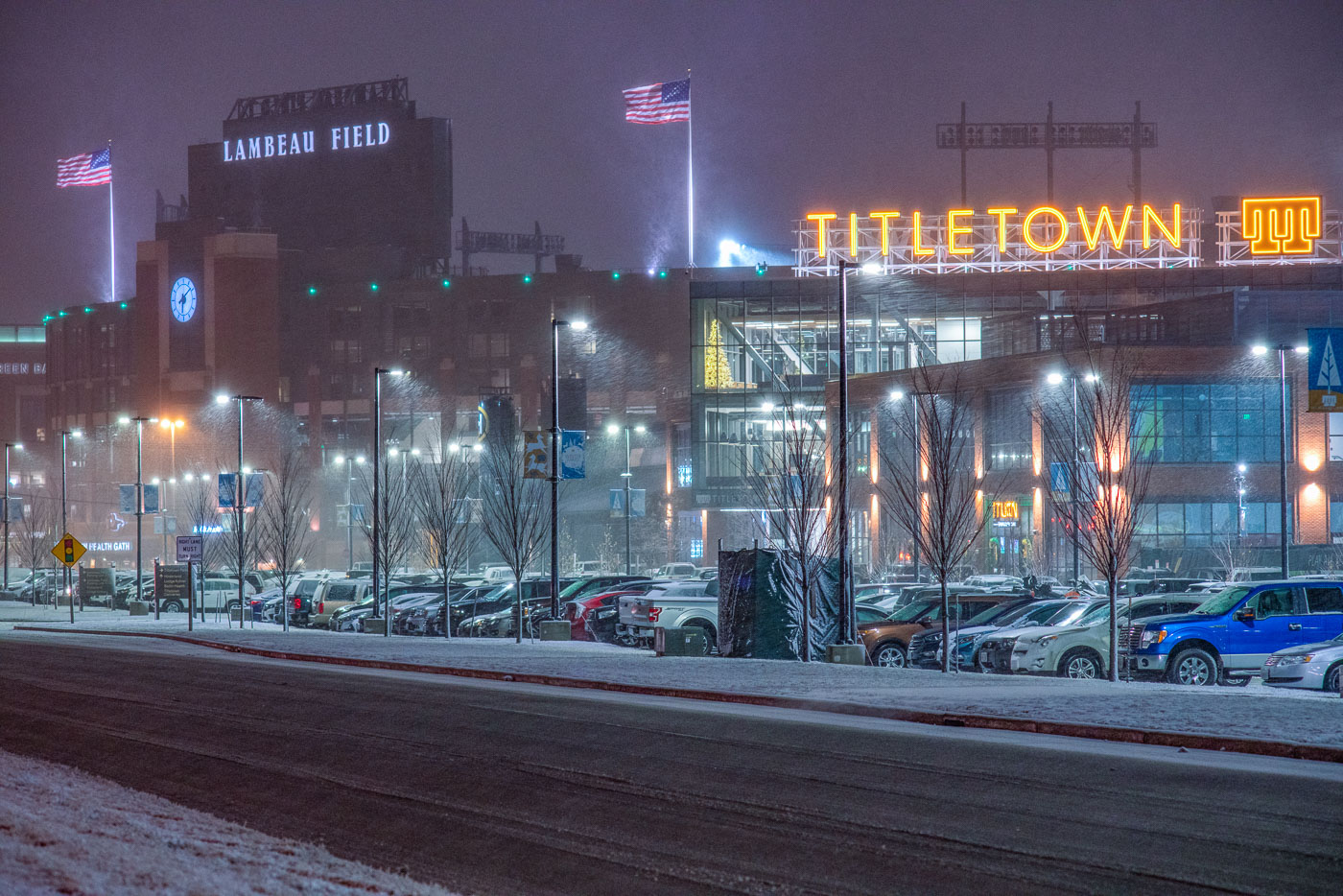
Lambeau Field and Titletown District in Snowstorm
Lambeau Field and the Titletown District on Lombardi Avenue in Green Bay, WI.
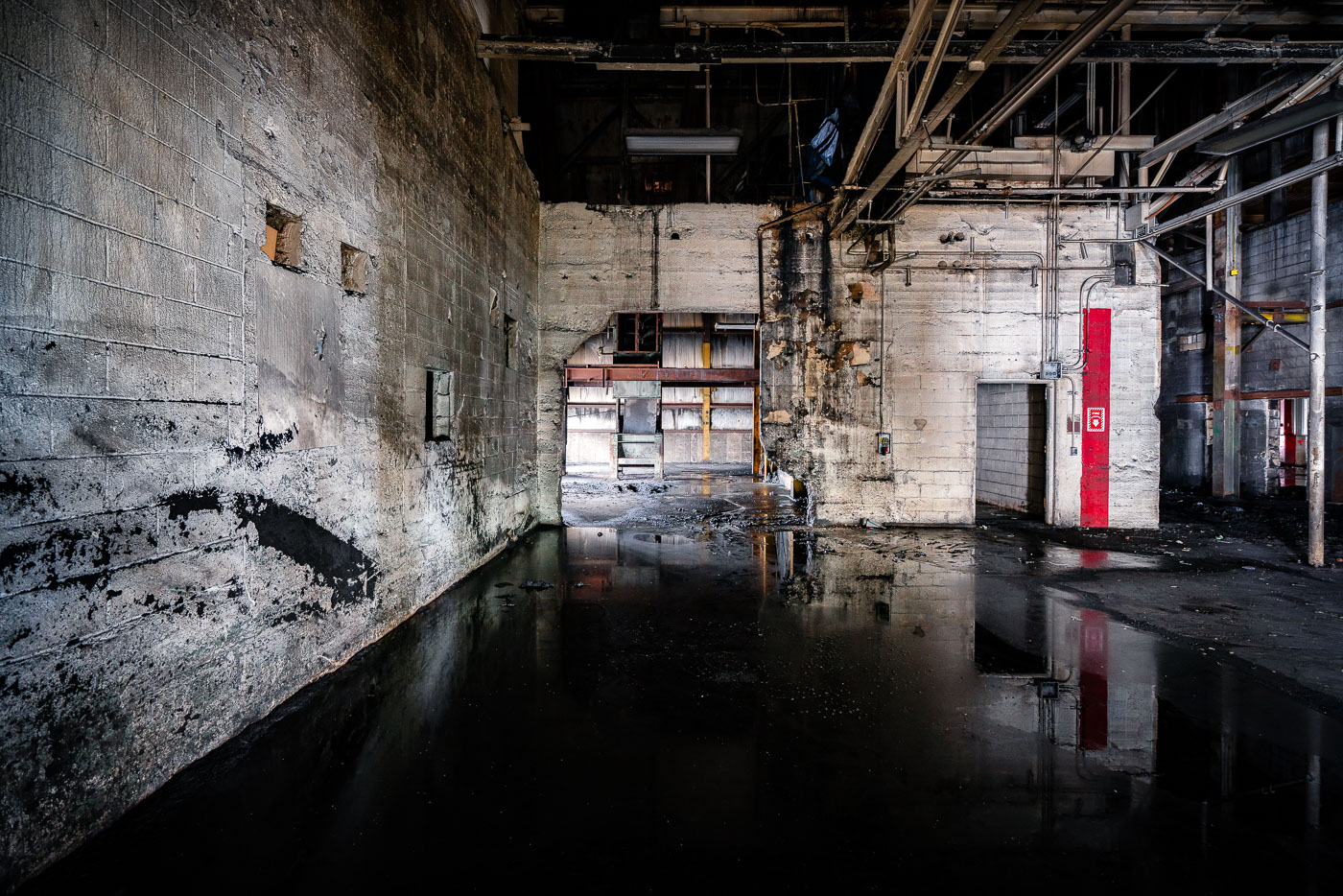
Brillion Iron Works foundry interior, Wisconsin
The Brillion Iron Works (BIW) foundry in Wisconsin. The site was closed in 2016 and demolished in 2019.
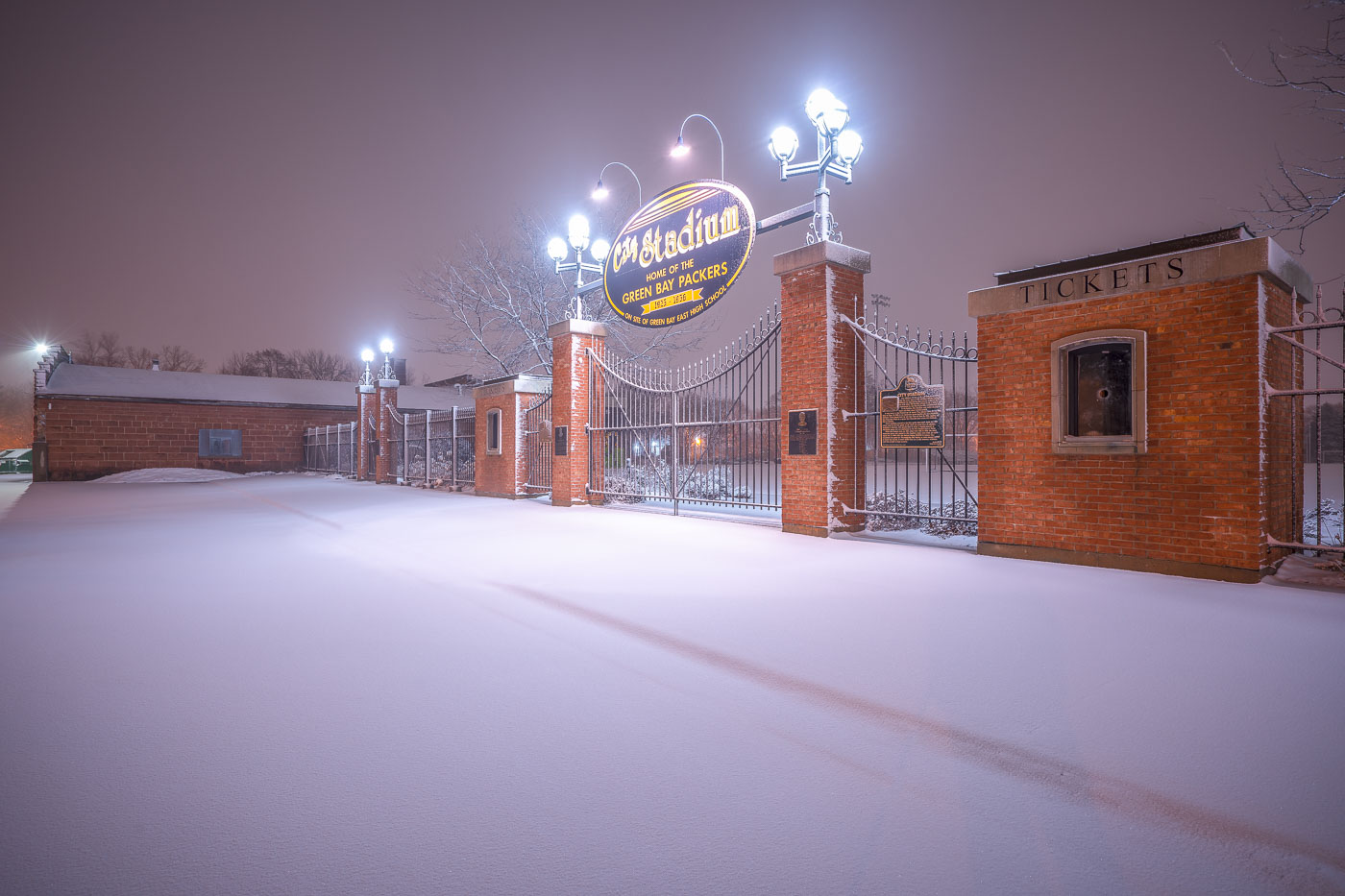
City Stadium Entrance, Green Bay Packers Home 1925-1956
City Stadium, home of the Green Bay Packers from 1925-1956, On the site of Green Bay East High School.
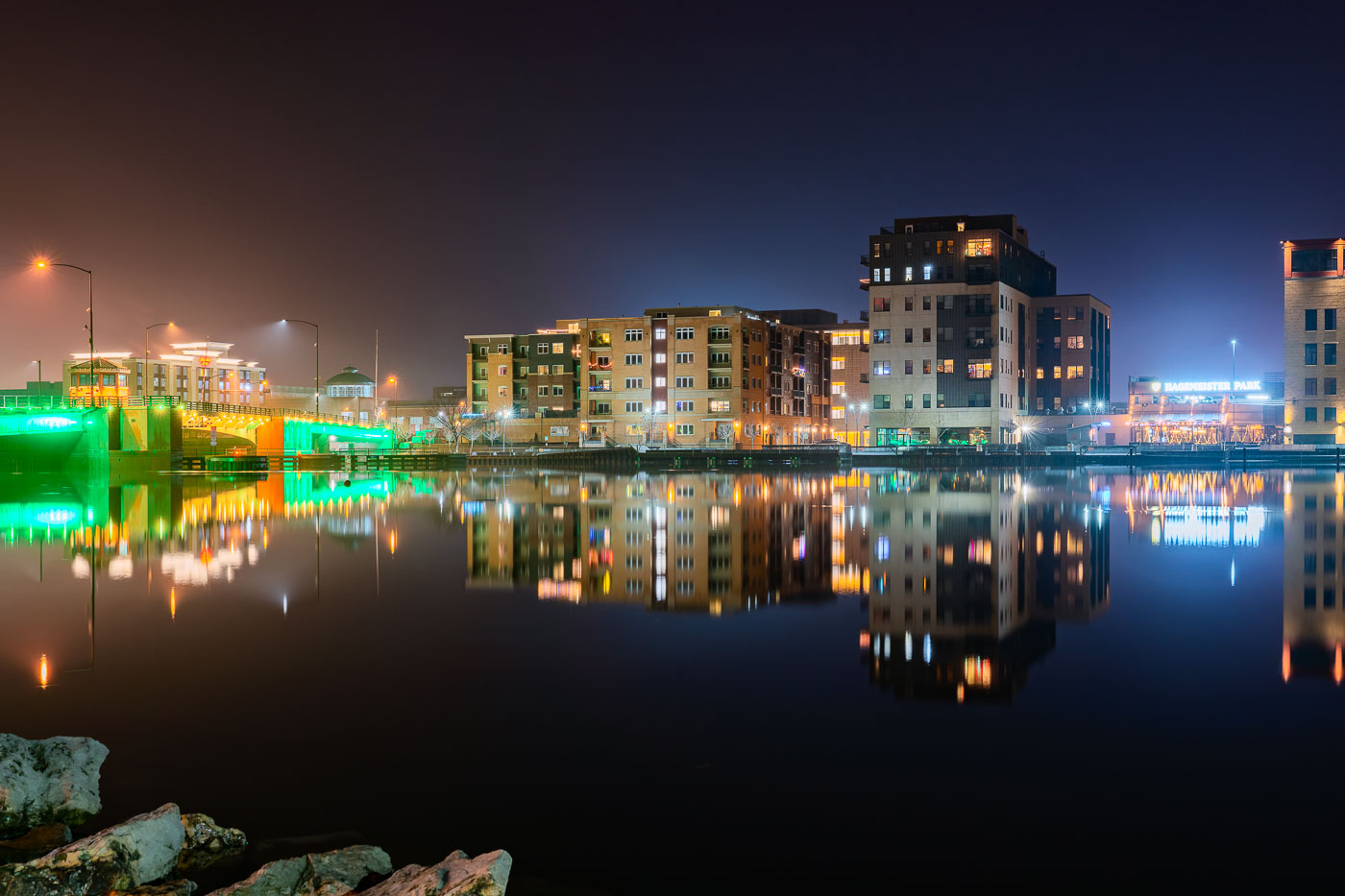
Reflections on Fox River in Downtown Green Bay
Downtown Green Bay, viewed from the west side of the Fox River. Main Street Bridge lit up to the left of the frame.
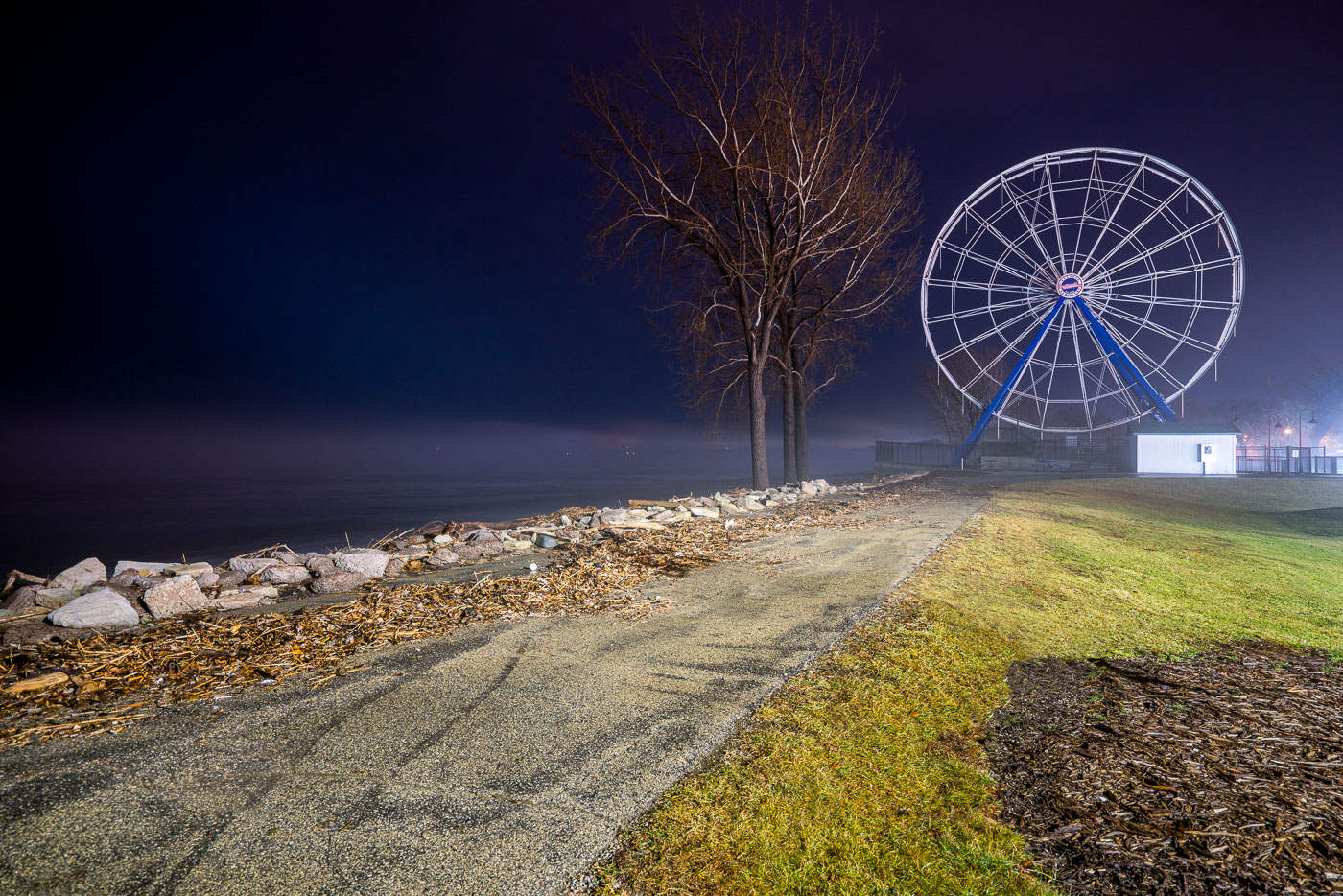
Foggy Ferris Wheel at Bay Beach Amusement Park
Ferris Wheel at Bay Beach Amusement Park in Green Bay, Wisconsin on a foggy December evening.
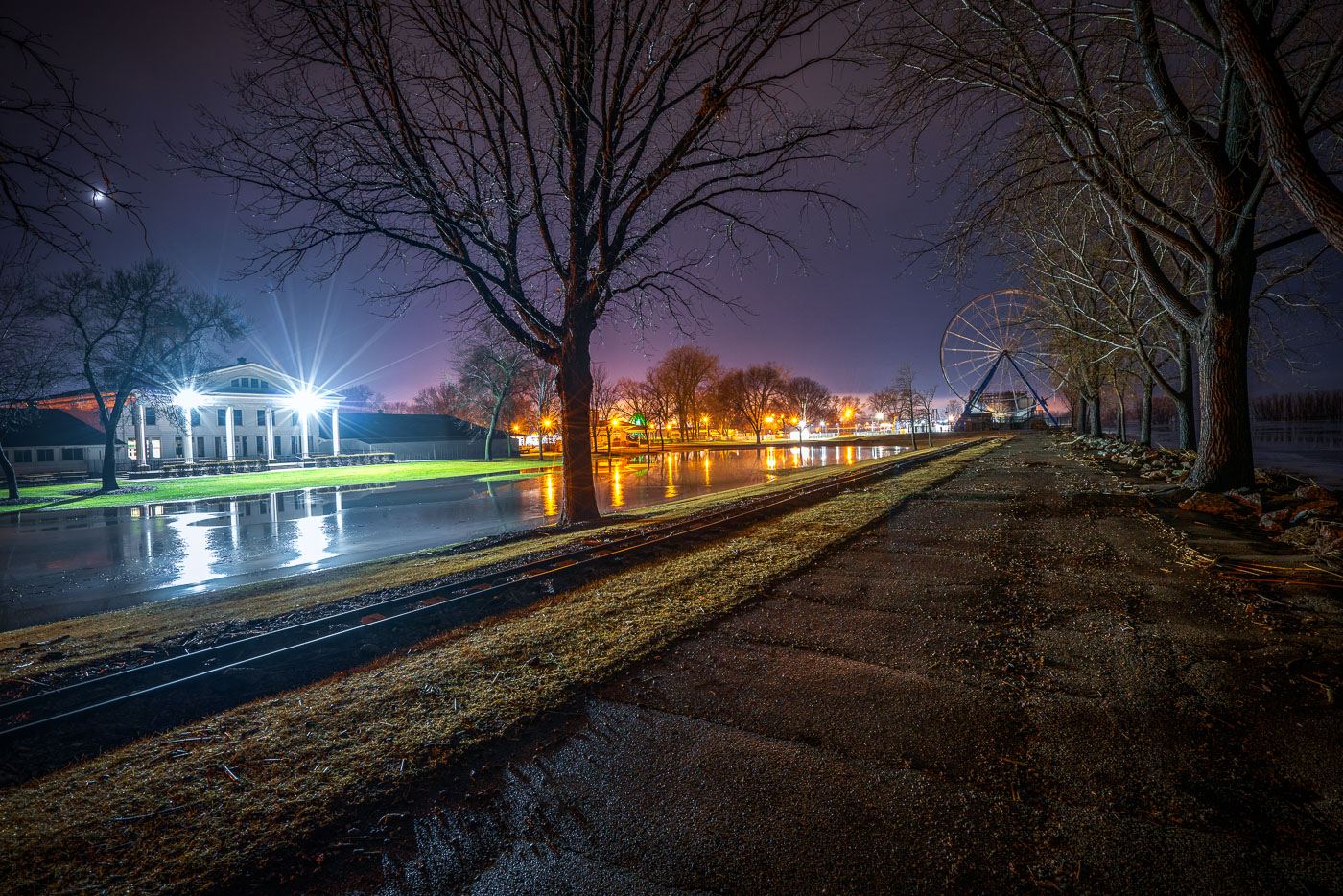
Bay Beach Amusement Park in Winter
Water pools up behind the main building at Bay Beach Amusement Park just before the winter freeze.
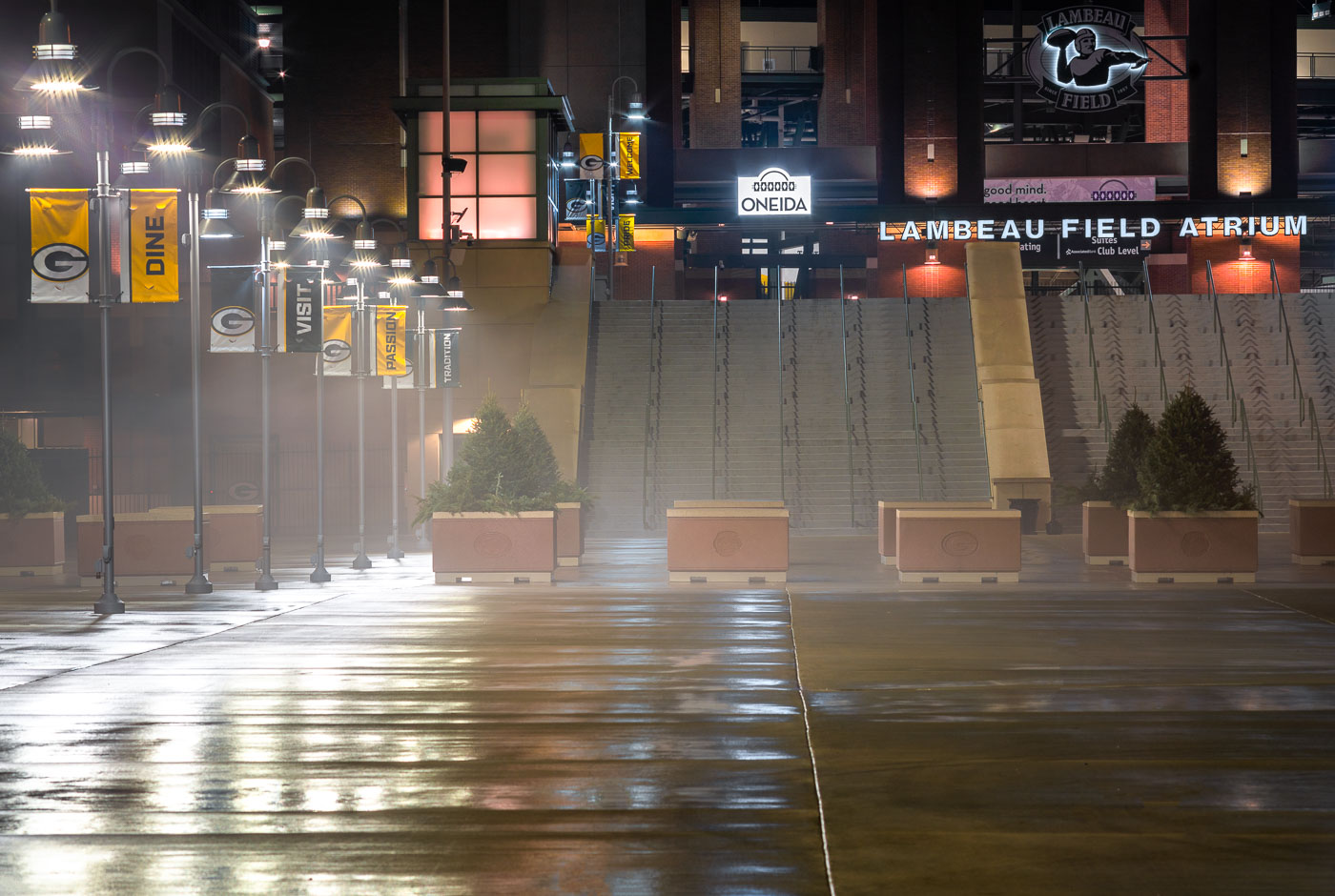
Oneida Nation Entrance, Lambeau Field Atrium
The steps up to the Oneida Nation entrance gate of Lambeau Field, Green Bay, Wisconsin.
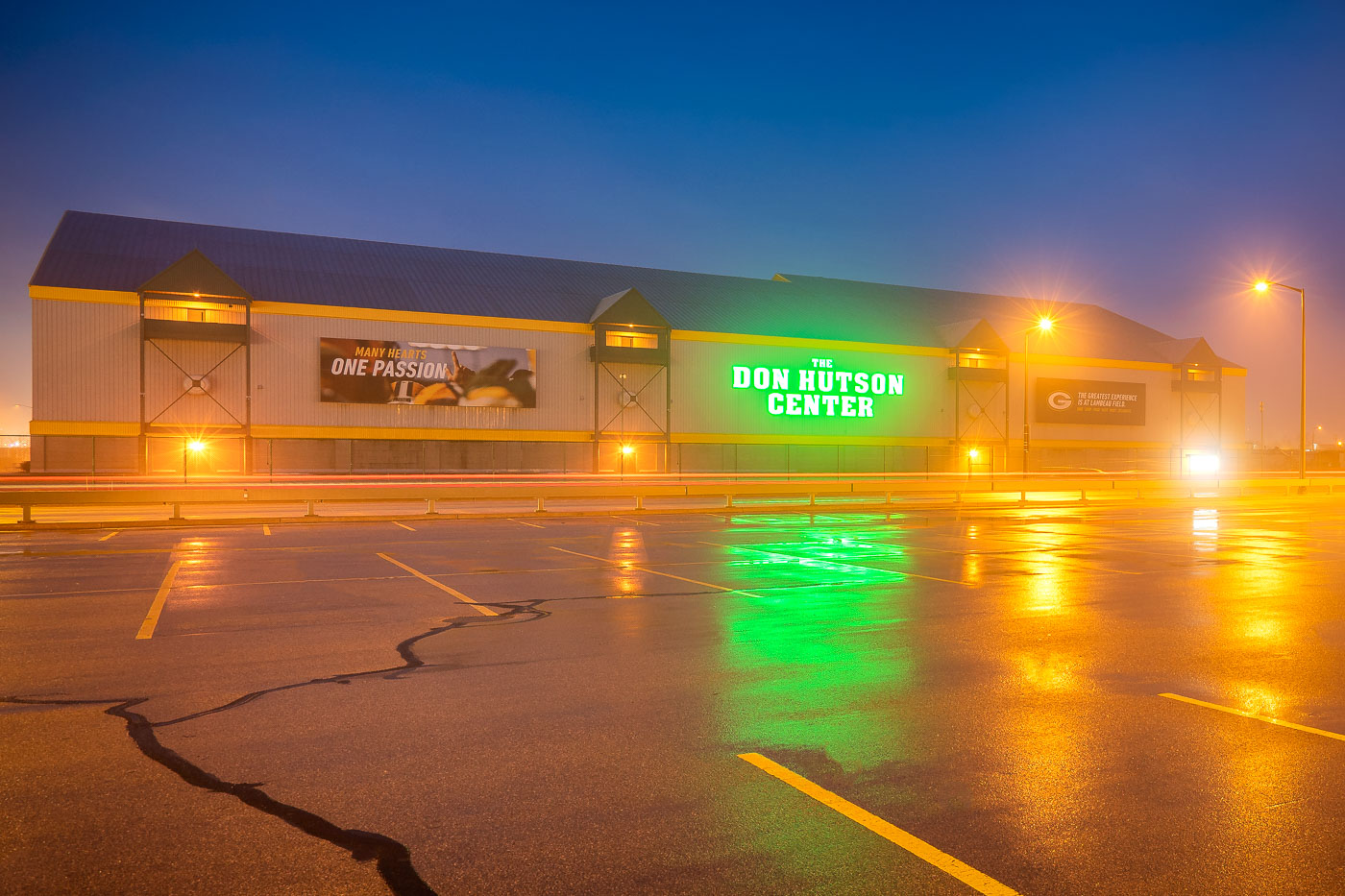
Don Hutson Center, Green Bay, WI
Don Hutson Center on a foggy night in Green Bay. The facility serves as the closed practice facility for the NFL’s Green Bay Packers.
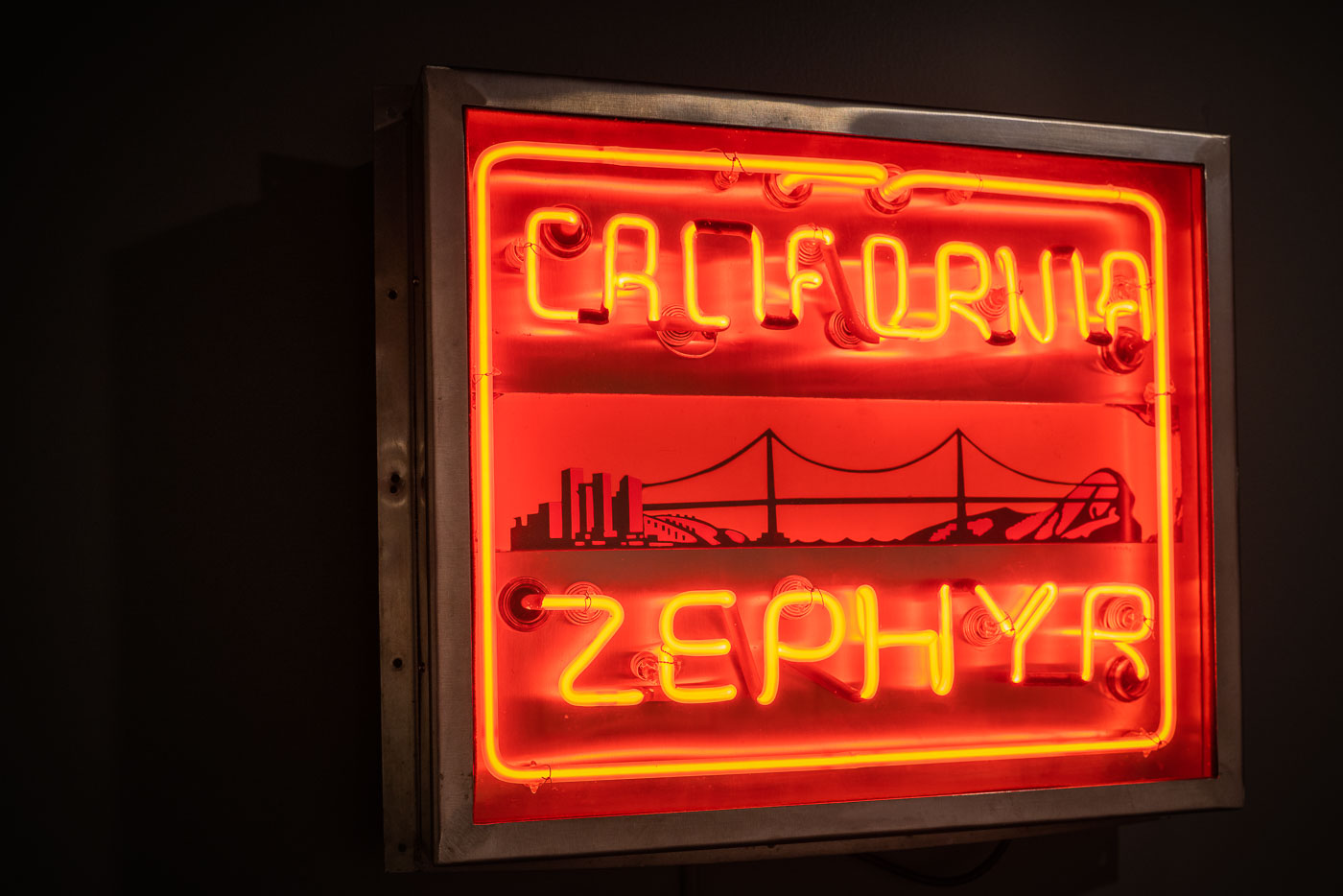
California Zephyr Neon Sign at National Railroad Museum
This neon sign once promoted the California Zephyr, one of the most celebrated passenger trains of the postwar era. First introduced in 1949, the train linked Chicago to the San Francisco Bay Area, offering panoramic views of the Rockies and the Sierra Nevada. The glowing red lettering, paired with imagery of a bridge, skyline, and streamlined locomotive, reflects the optimism of mid-20th-century American rail travel and the romance of crossing the continent in comfort and style.
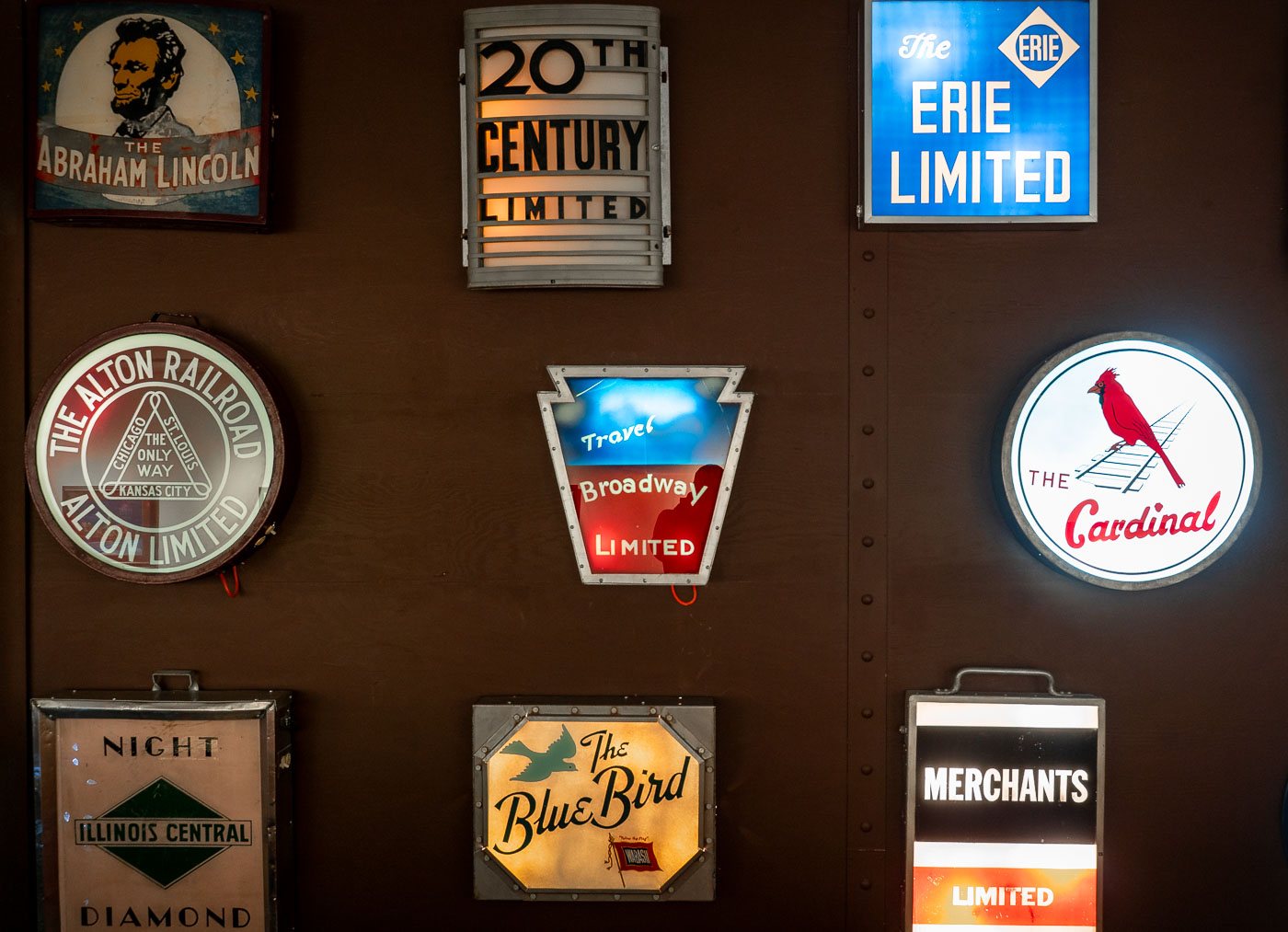
Green Bay Railroad Museum: Historic Train Drumhead Signs
Seen inside the Green Bay Railroad Museum, an exhibit of historic railroad drumhead signs, once mounted on the observation cars of famous American passenger trains. These illuminated signs served both as branding and a wayfinding tool for travelers during the golden age of rail.
• 20th Century Limited – The legendary New York Central luxury express between New York and Chicago, famous for its red carpet treatment.
• Broadway Limited – The Pennsylvania Railroad’s flagship train, symbolized by its keystone-shaped sign.
•The Cardinal – Still in operation today as an Amtrak route between New York and Chicago via Washington, D.C. and Cincinnati.
•The Abraham Lincoln – Operated by the Alton Railroad between Chicago and St. Louis.
•The Blue Bird – Another Alton Railroad streamliner that connected Chicago and St. Louis.
•Erie Limited – A long-distance train operated by the Erie Railroad.
•Night Diamond (Illinois Central) – A named overnight passenger service.
•Merchants Limited – A New Haven Railroad luxury train between Boston and New York, a favorite among business travelers.
•20th Century Limited – The legendary New York Central luxury express between New York and Chicago, famous for its red carpet treatment.
•Broadway Limited – The Pennsylvania Railroad’s flagship train, symbolized by its keystone-shaped sign.
•The Cardinal – Still in operation today as an Amtrak route between New York and Chicago via Washington, D.C. and Cincinnati.
•The Abraham Lincoln – Operated by the Alton Railroad between Chicago and St. Louis.
•The Blue Bird – Another Alton Railroad streamliner that connected Chicago and St. Louis.
•Erie Limited – A long-distance train operated by the Erie Railroad.
•Night Diamond (Illinois Central) – A named overnight passenger service.
•Merchants Limited – A New Haven Railroad luxury train between Boston and New York, a favorite among business travelers.
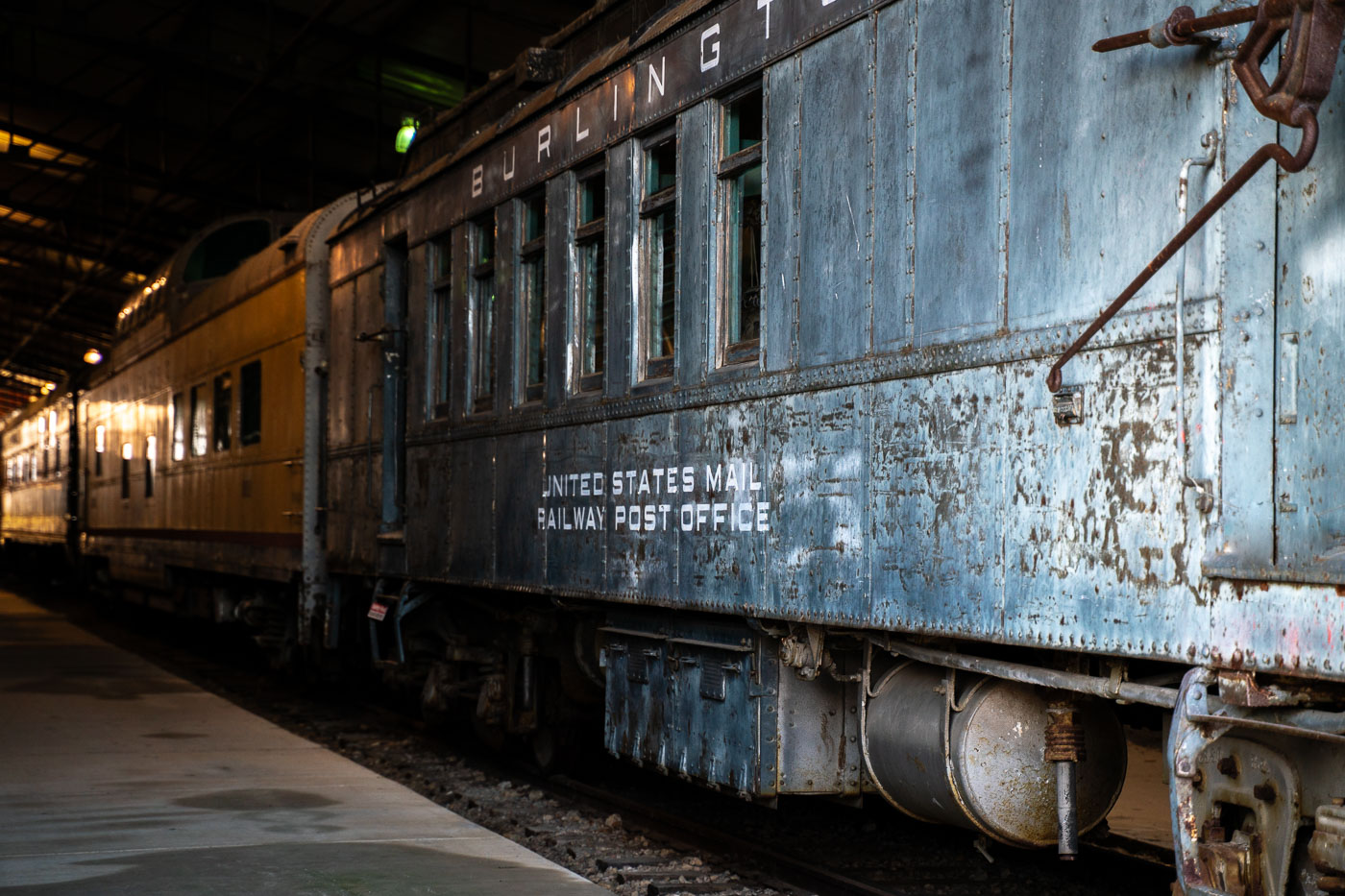
Burlington Railway Post Office Car, National Railroad Museum, Green Bay, WI
Burlington Railway Post Office Car at the National Railroad Museum in Green Bay, WI.
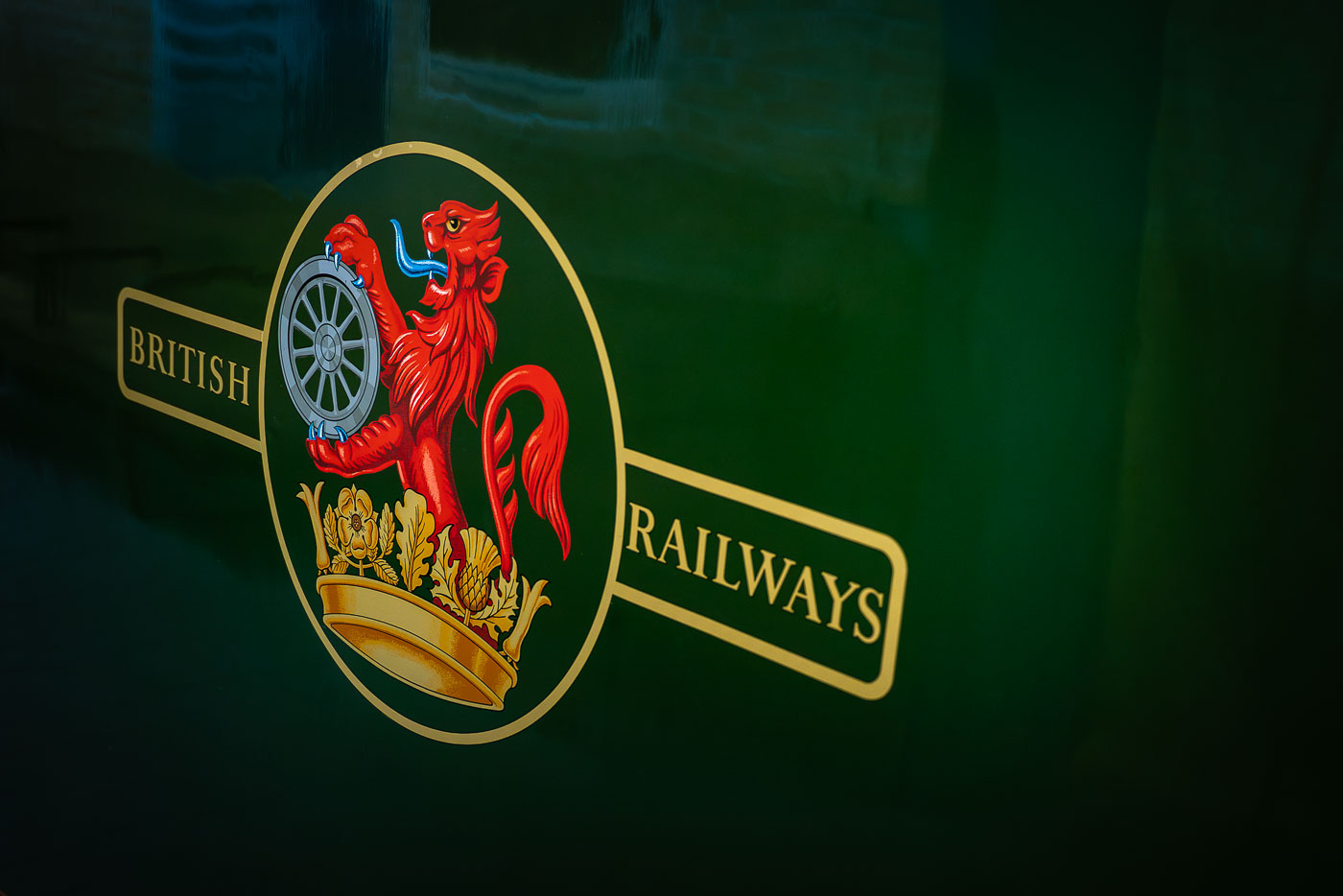
British Railways Logo on Train at Green Bay Railroad Museum
British Railways logo on side of a train. Seen at the Green Bay Railroad Museum
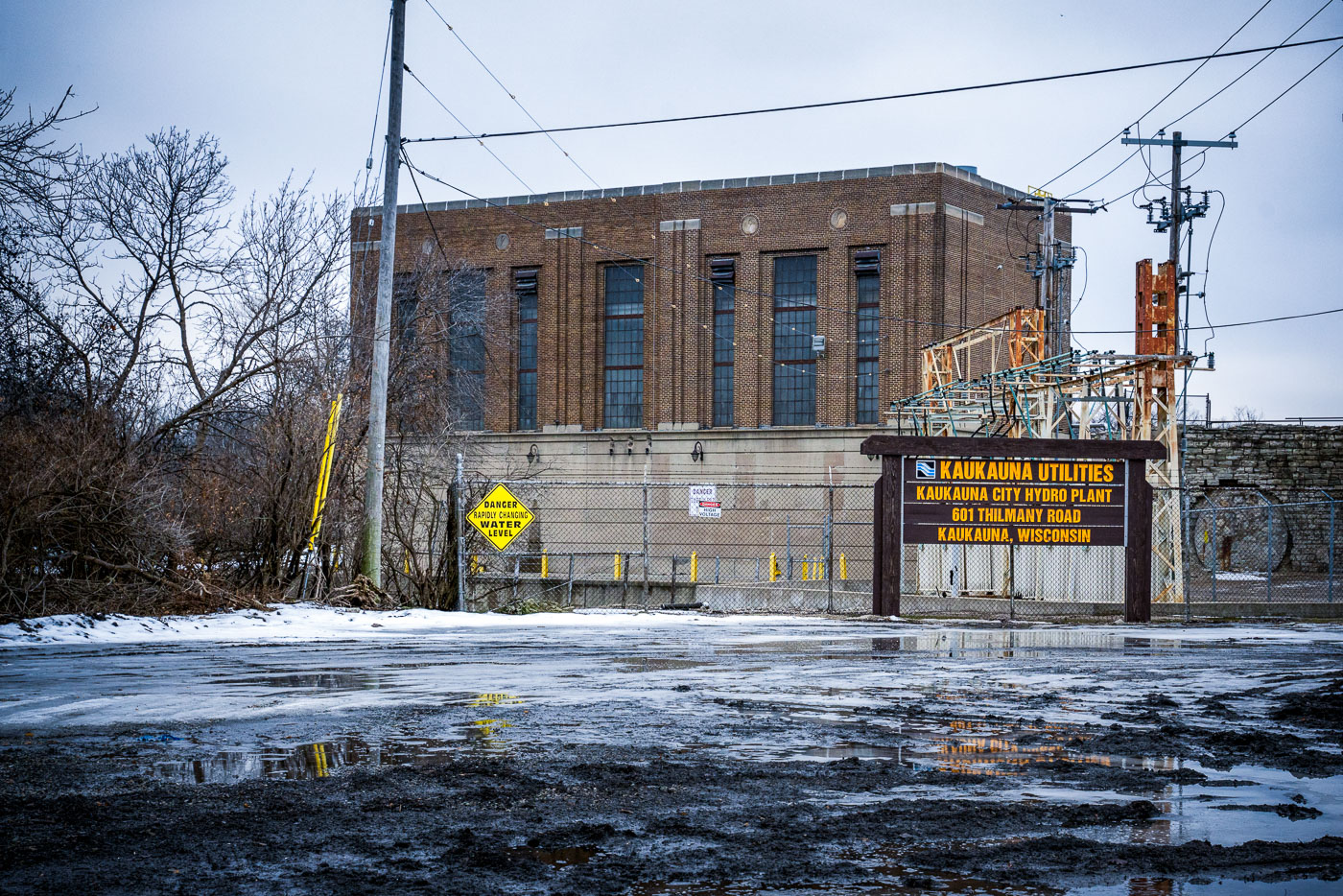
Kaukauna Utilities Hydro Plant, Wisconsin
The Kaukauna City Hydro Plant, operated by Kaukauna Utilities in Wisconsin, stands along the Fox River as part of the city’s long history of generating hydroelectric power. The facility provides renewable energy to the community while maintaining caution around fluctuating water levels.
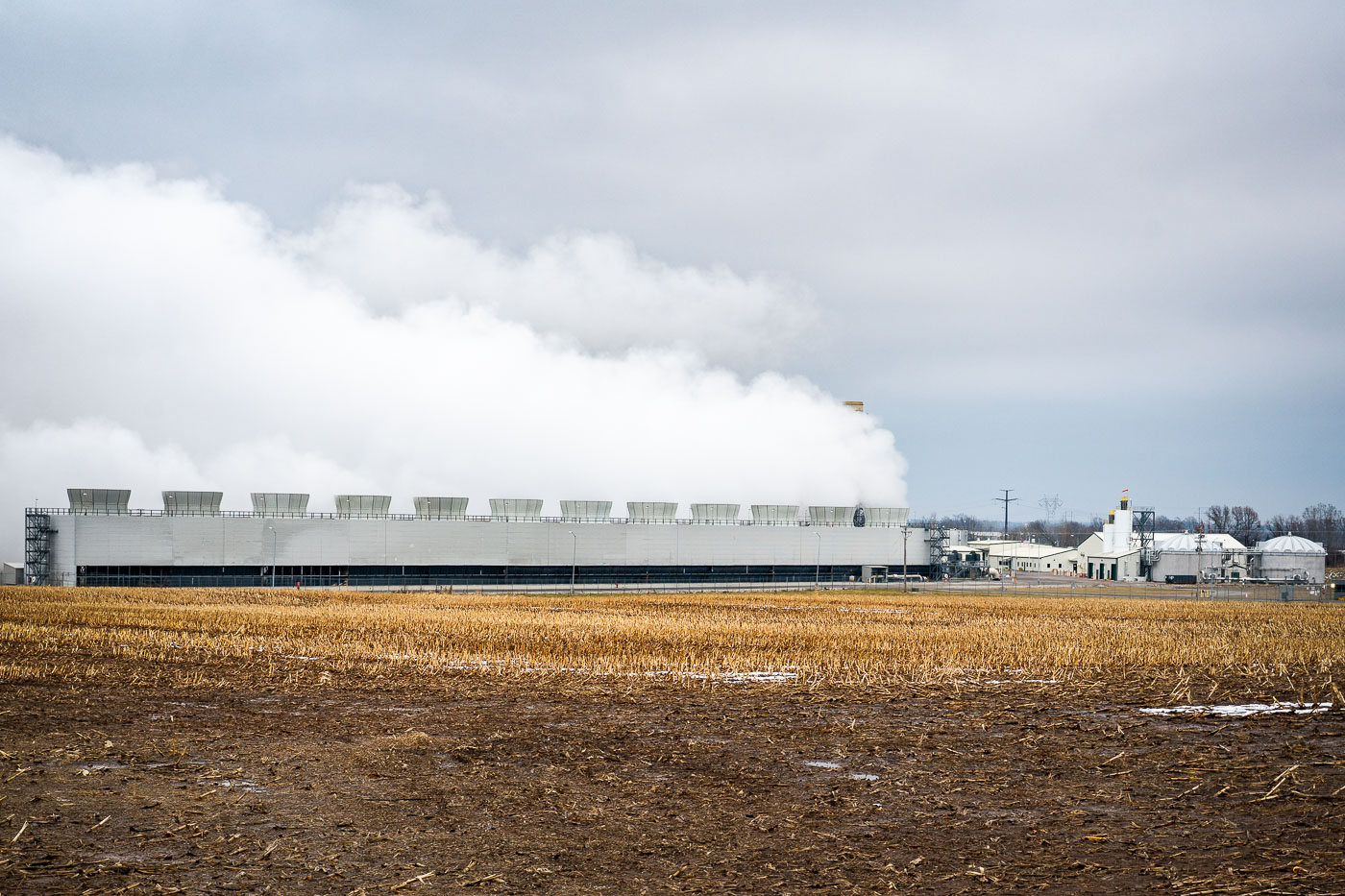
Fox Energy Center, Kaukauna, Wisconsin
Steam billows from the Fox Energy Center near Kaukauna, Wisconsin, a natural gas-fired power plant that supplies electricity to the region. Operated by Wisconsin Public Service, the facility plays a key role in balancing renewable sources with reliable baseload generation across the state’s power grid.
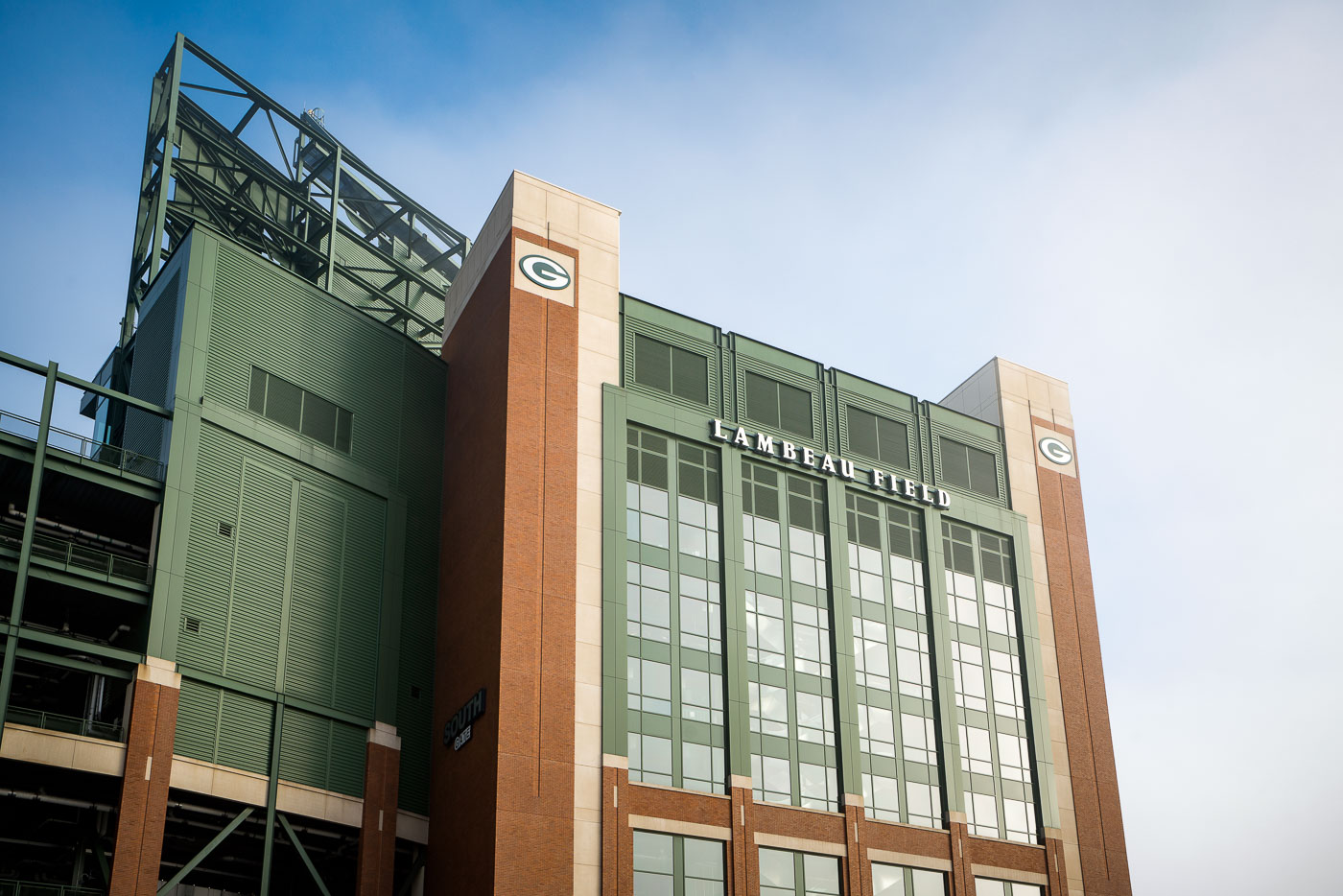
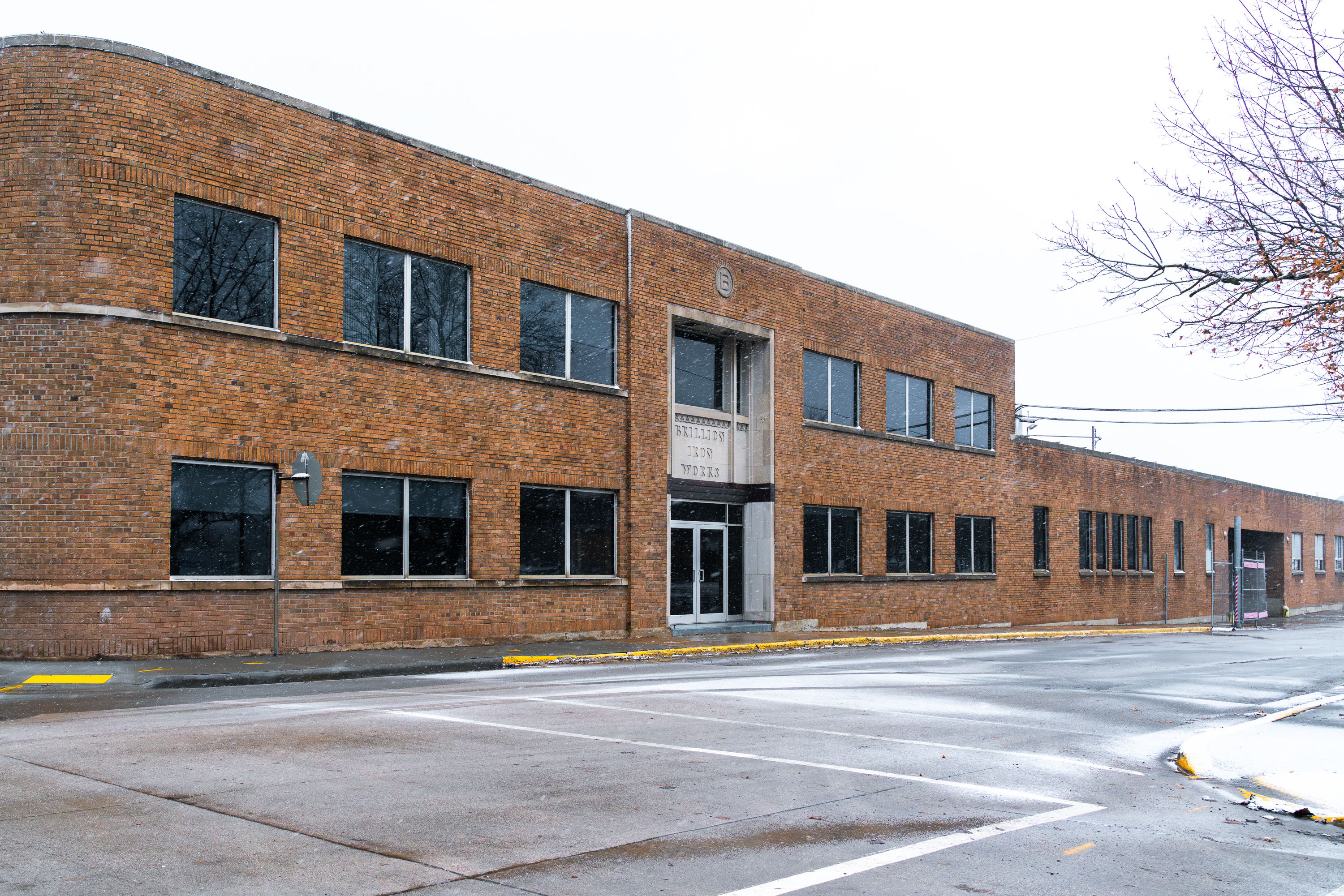
Lambeau Field exterior, Green Bay
A foggy morning at Lambeau Field, the home of the Green Bay Packers.
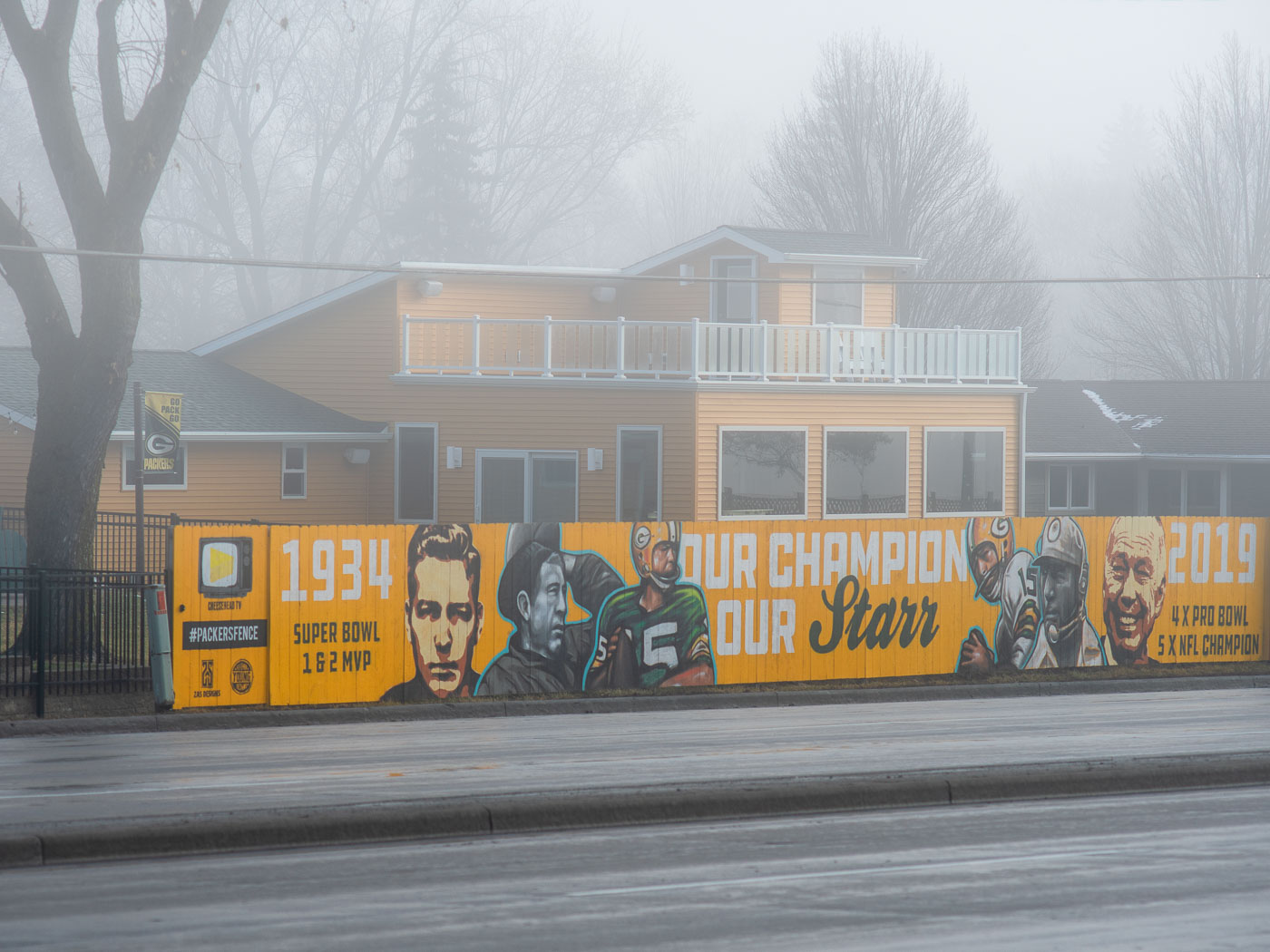
Packers Mural at Lambeau Field, Green Bay
Fence painted with Bart Star memorial across from Lambeau Field in Green Bay, WI.
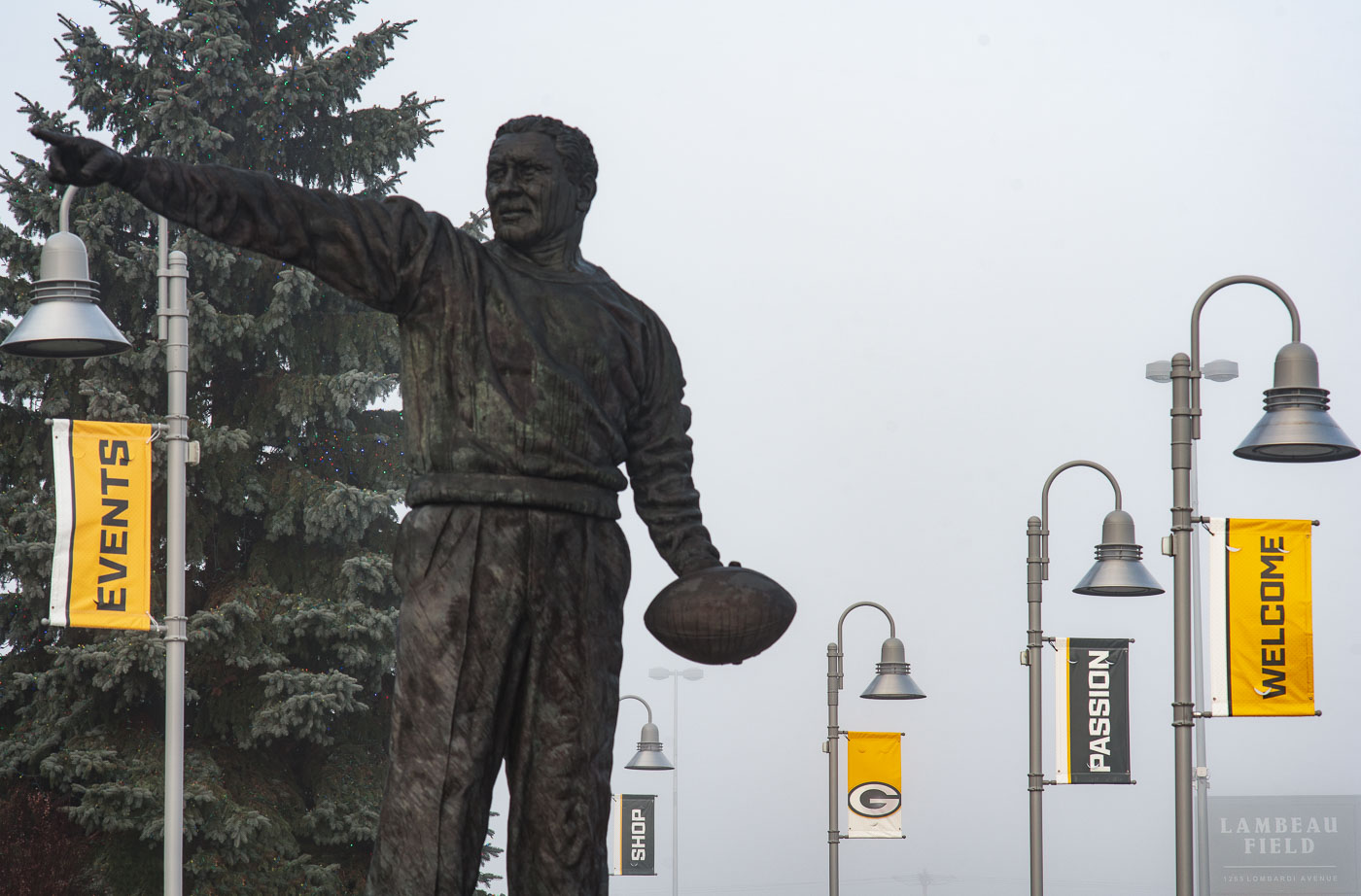
Curly Lambeau Statue at Lambeau Field
Curly Lambeau statue outside of Lambeau Field in Green Bay, WI. Lambeau Field is home to the Green Bay Packers NFL football team.
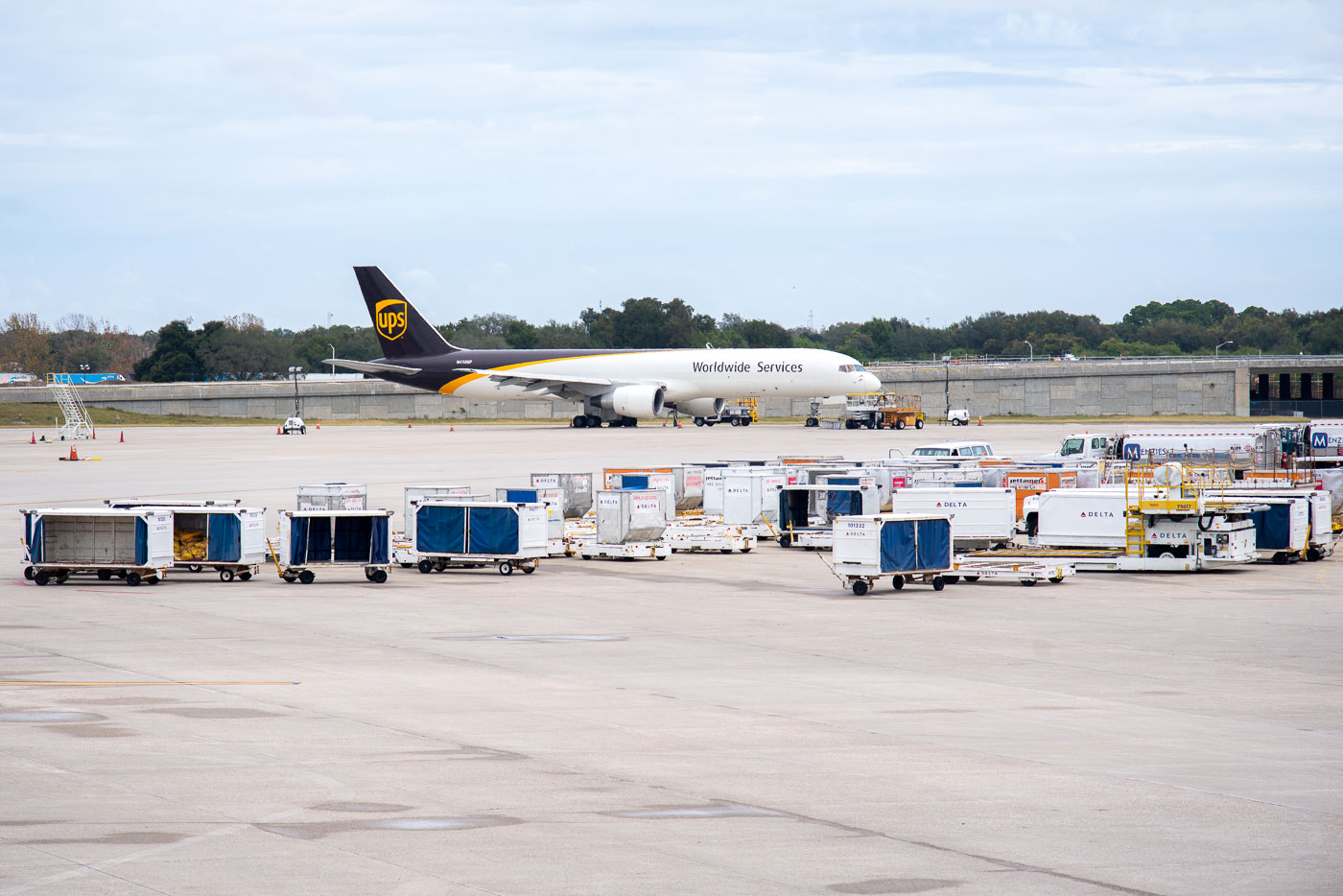
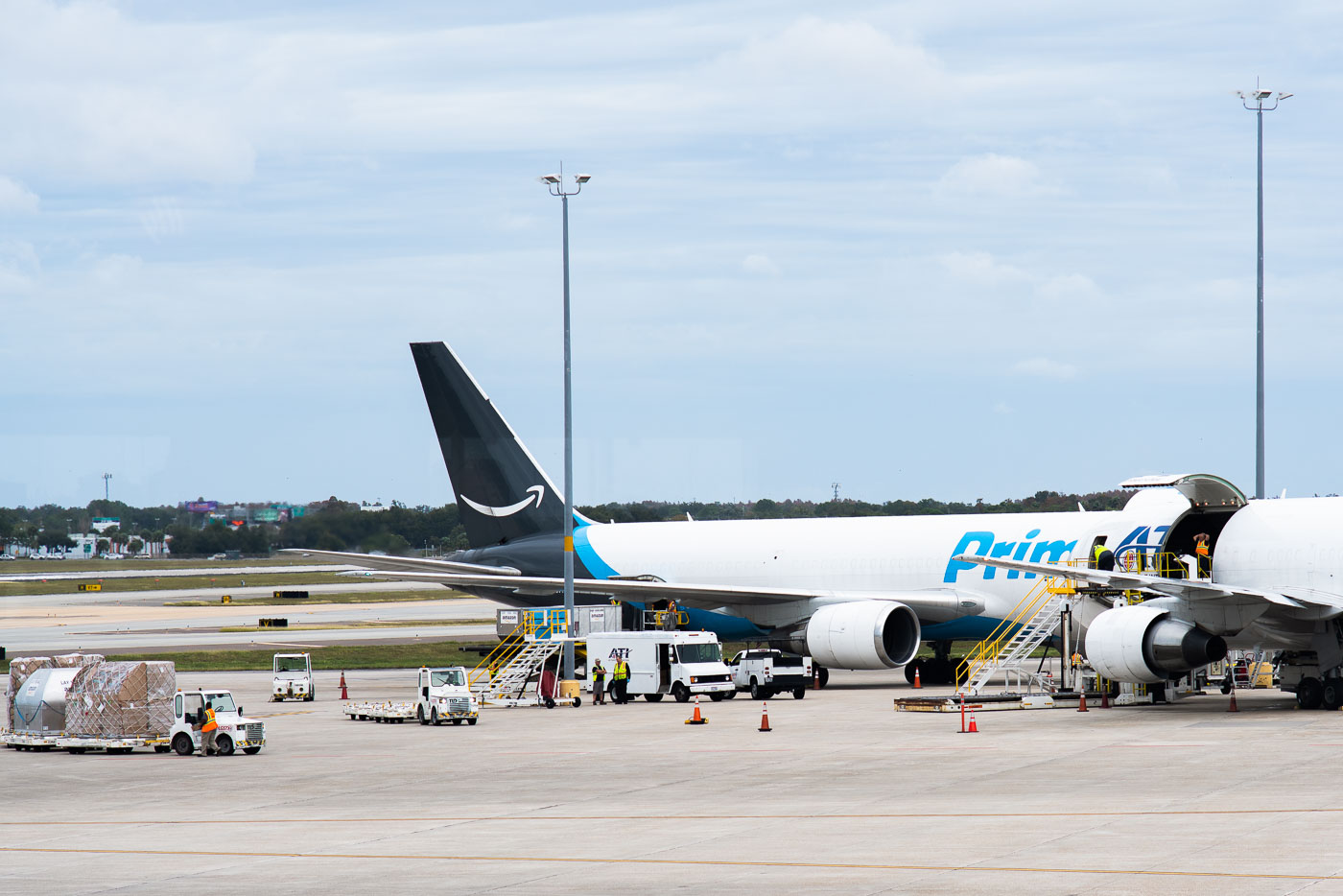
Amazon Prime Air Cargo Plane, Tampa International Airport
An Amazon plane on the tarmac in Tampa, Florida.
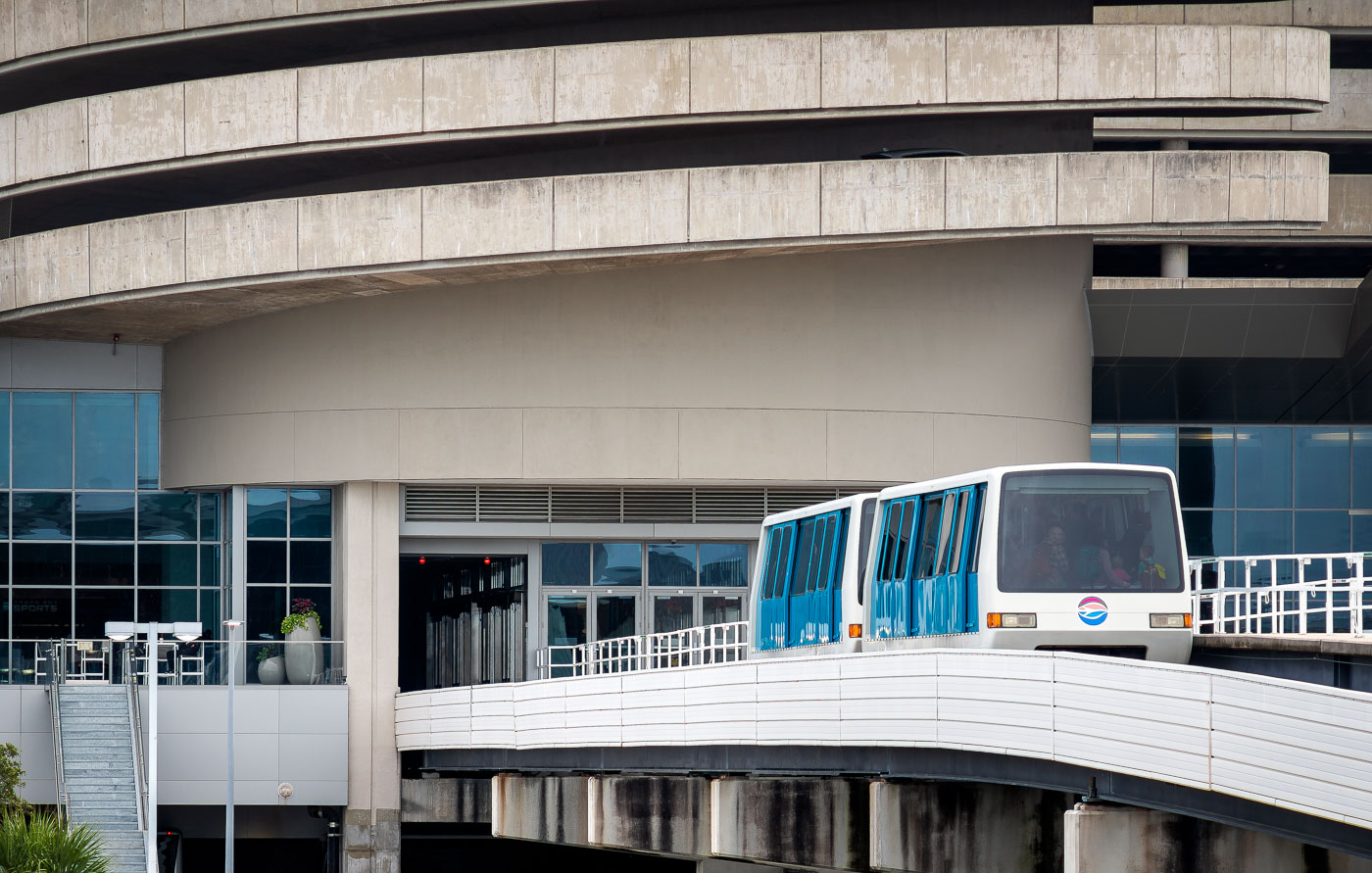
SkyConnect Tram at Tampa International Airport Terminal
SkyConnect tram that connects the airport to the parking garage and rental car center.
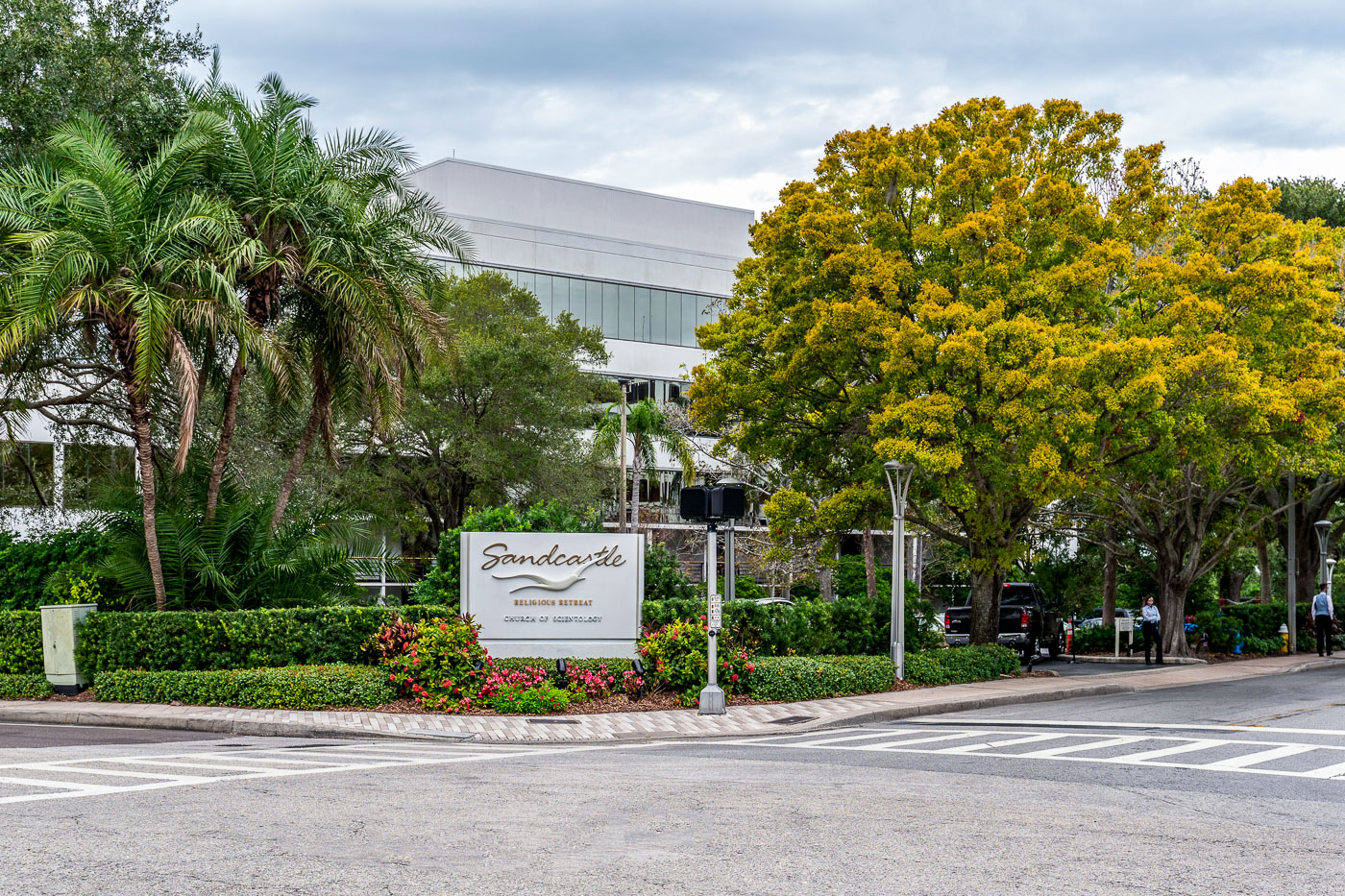
Sandcastle Religious Retreat, Church of Scientology, Clearwater, Florida
Located at 200 N Osceola Ave, the Sandcastle Religious Retreat is operated by the cult of Scientology in Clearwater, Florida. SeaOrg members stand guard outside.
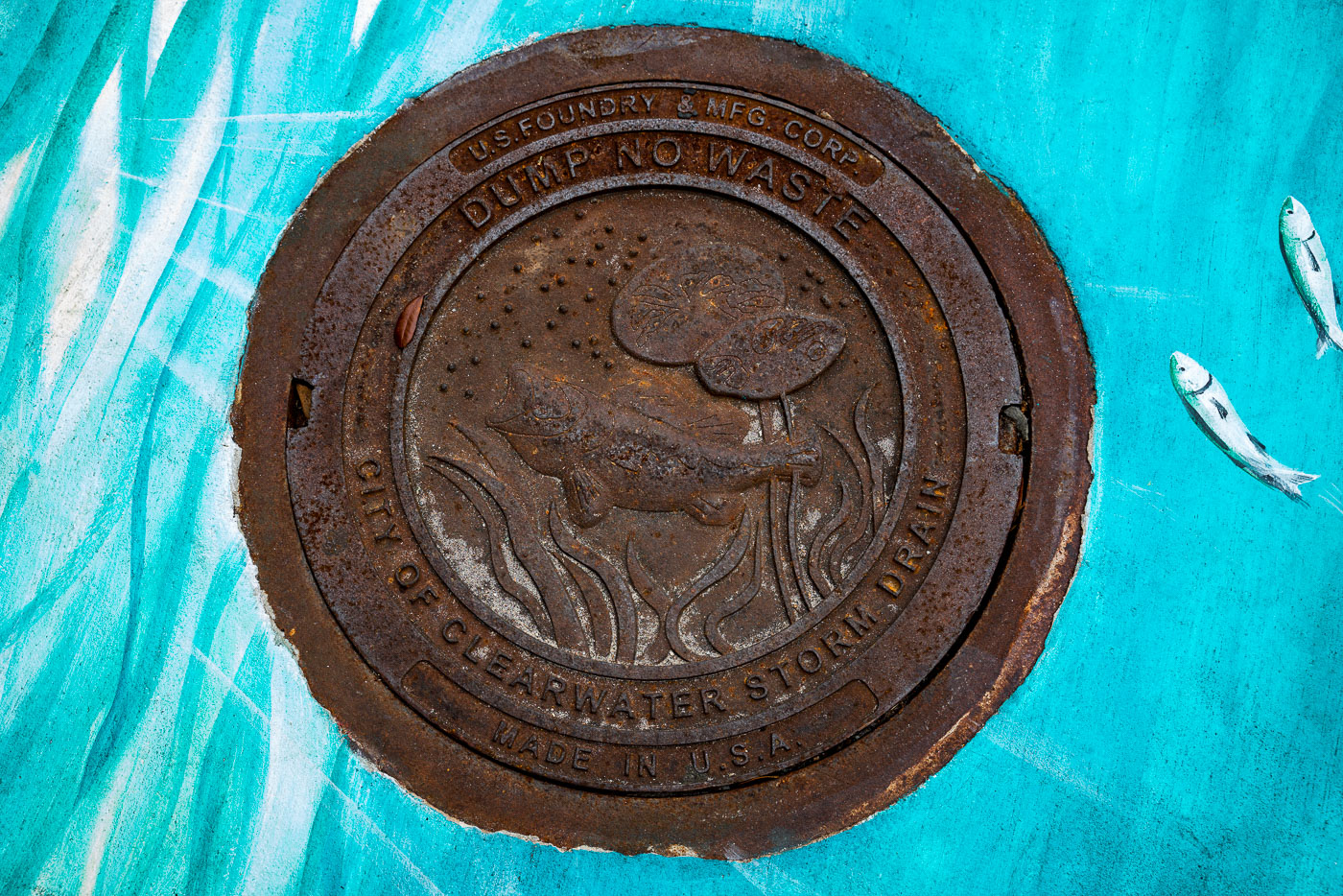
Clearwater Storm Drain Manhole Lid with Fish Design
City of Clearwater storm drain manhole lid with fish design. States Dump No Waste.
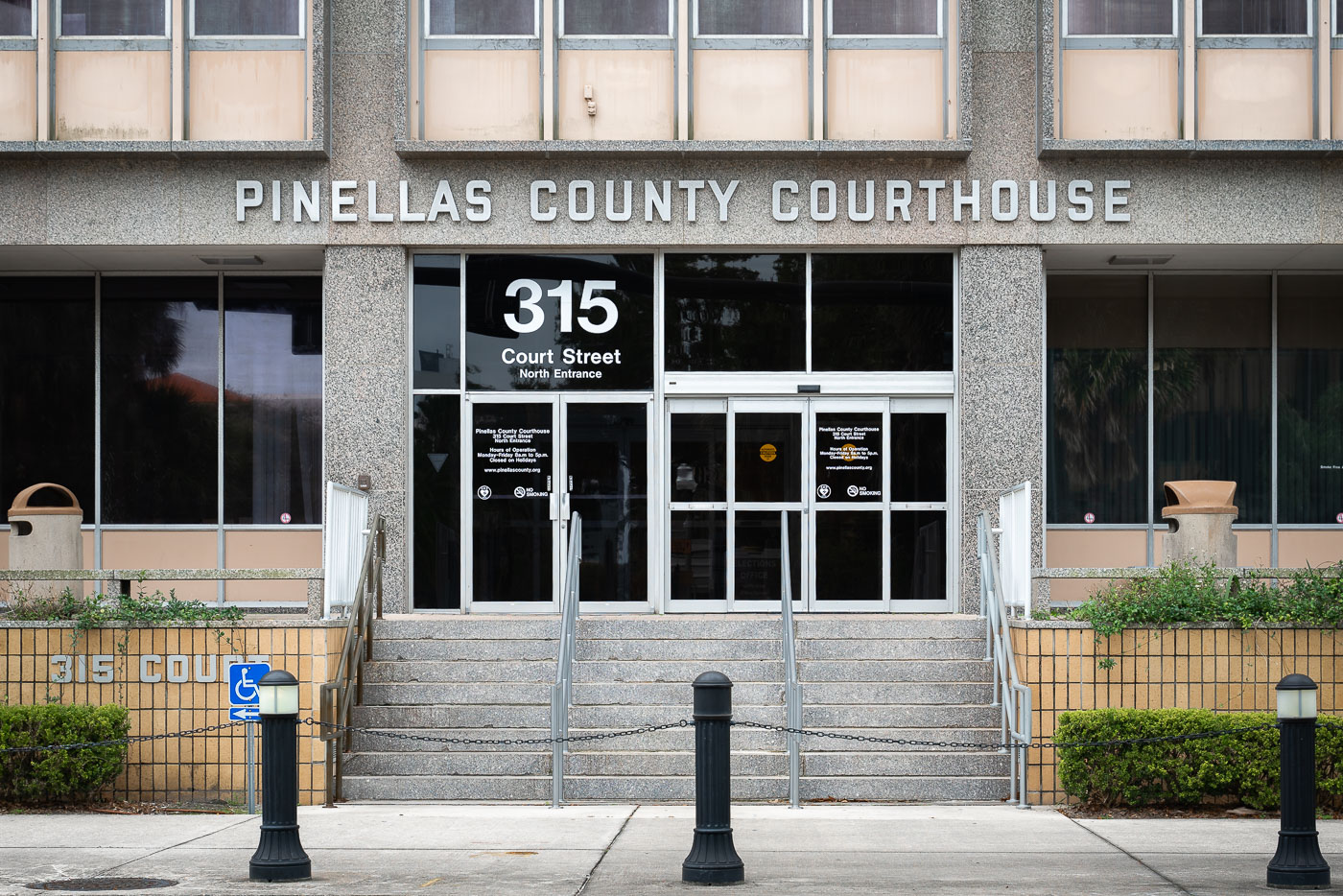
Pinellas County Courthouse, North Entrance, Clearwater, Florida
The Pinellas County Courthouse located at 315 Court Street, Clearwater, Florida.
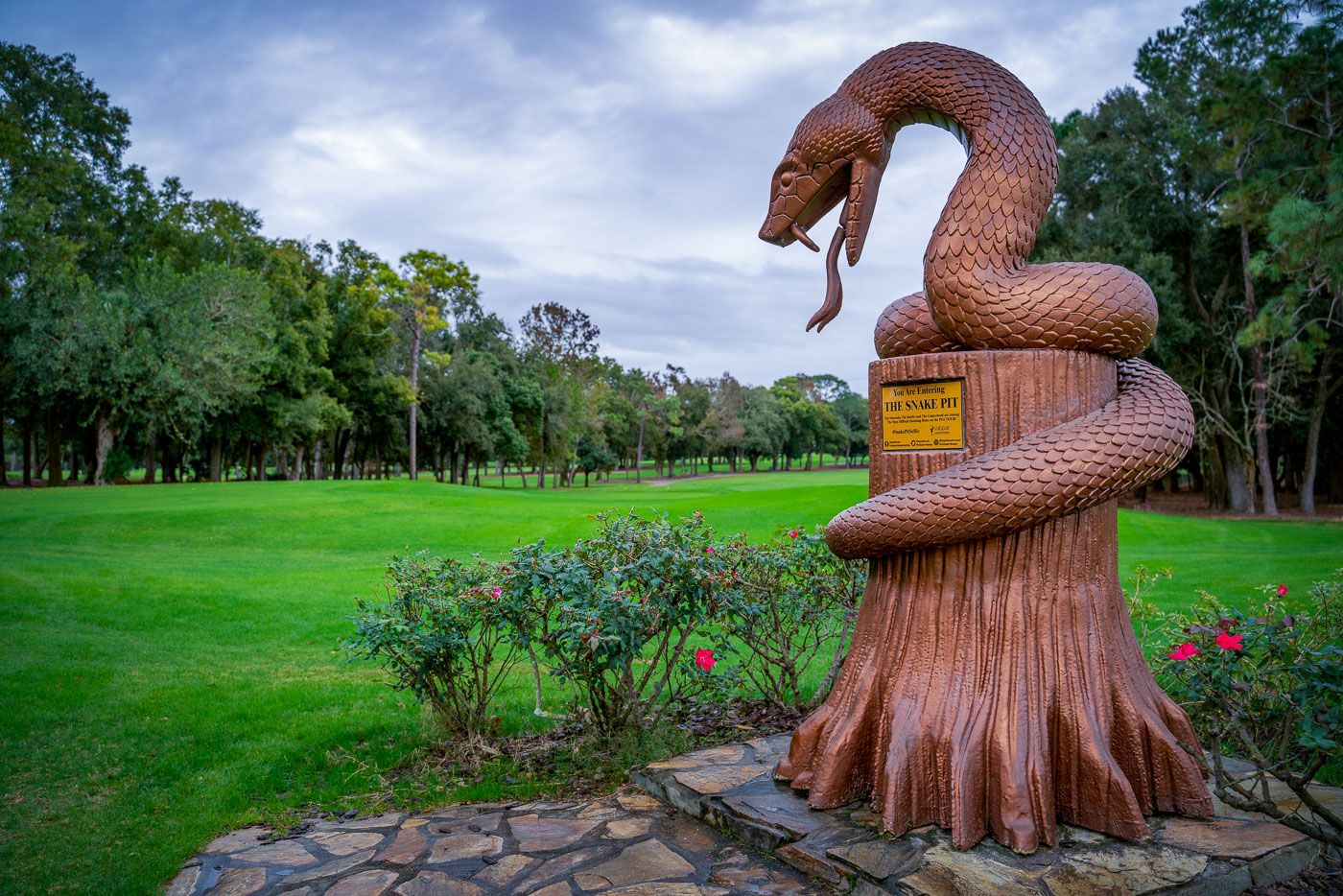
The Snake Pit Sculpture at Copperhead Golf Course, Palm Harbor
The Snake Pit on Copperhead Golf Course at Innisbrook. Tampa, Palm Harbor Florida.
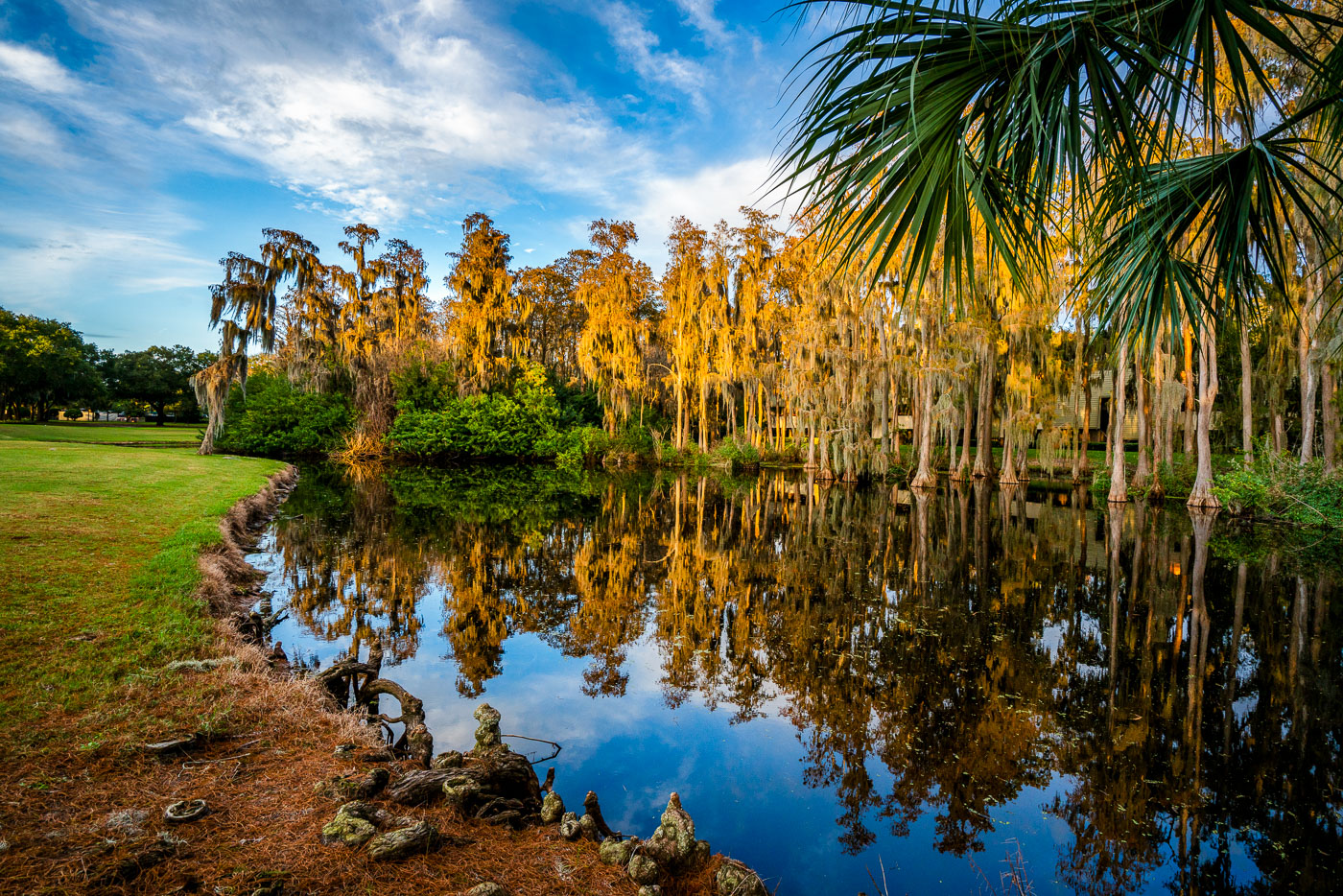
Innisbrook Resort Water Hazard, Palm Harbor, Florida
Island Golf Course at Innisbrook near Tampa, Florida.
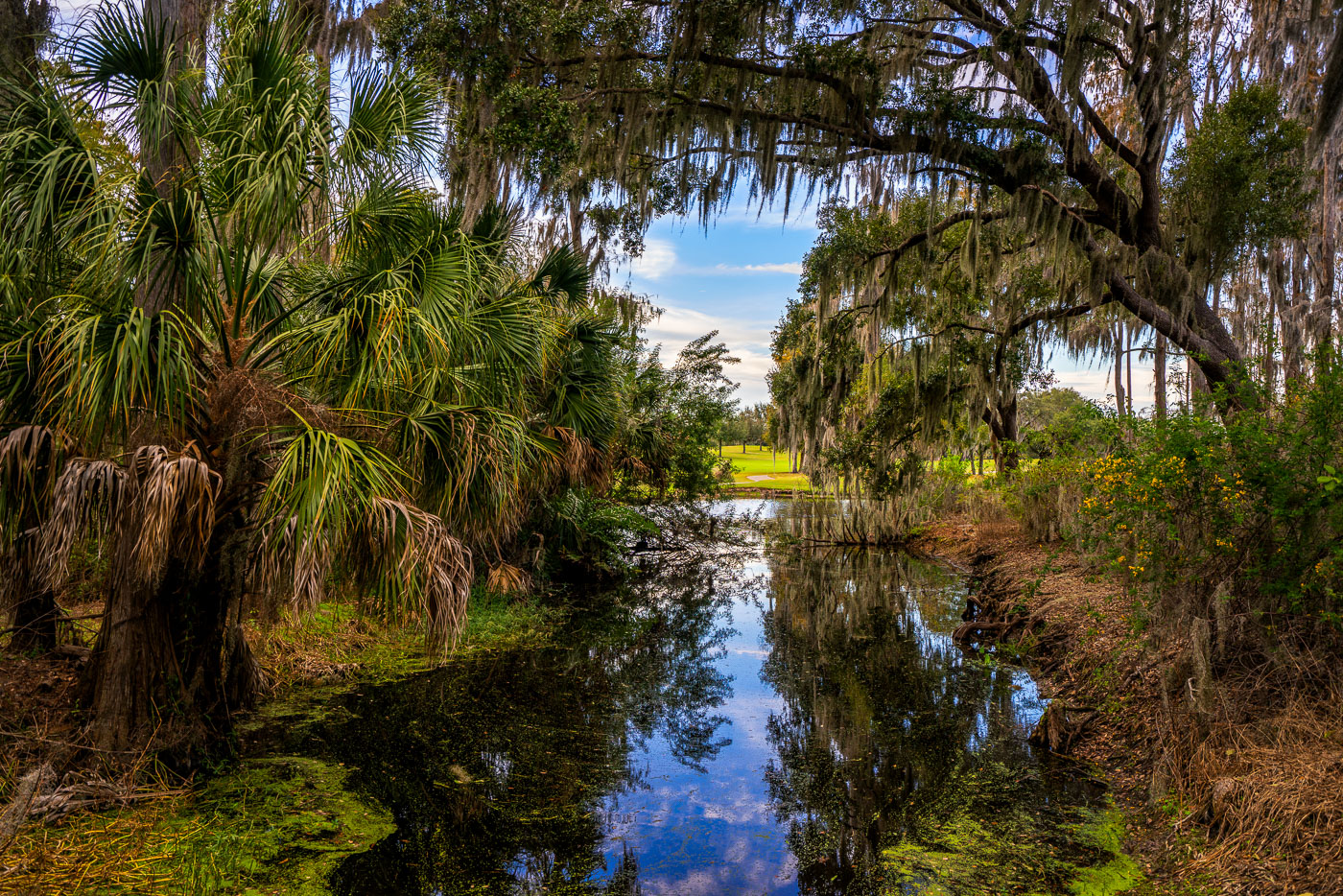
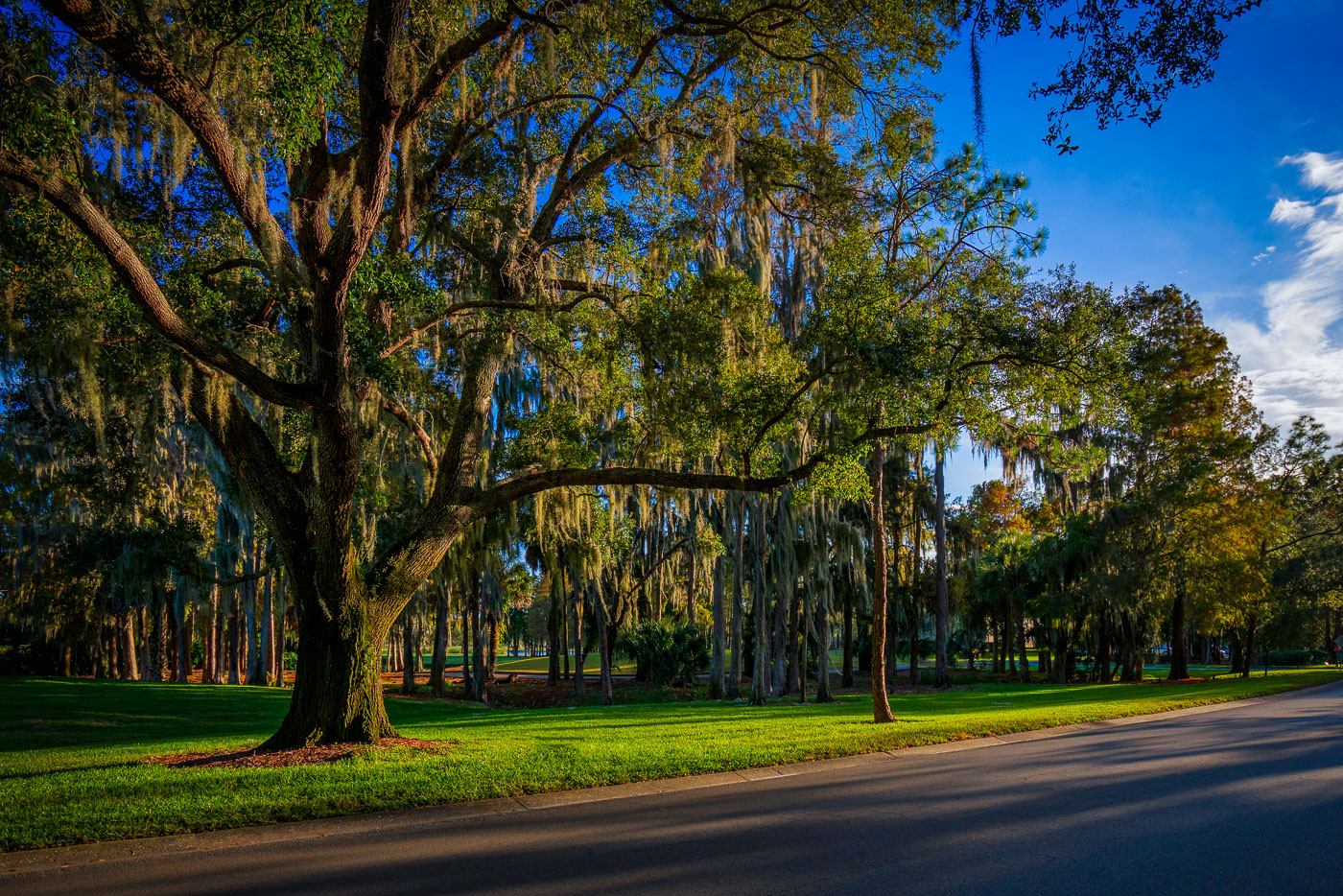
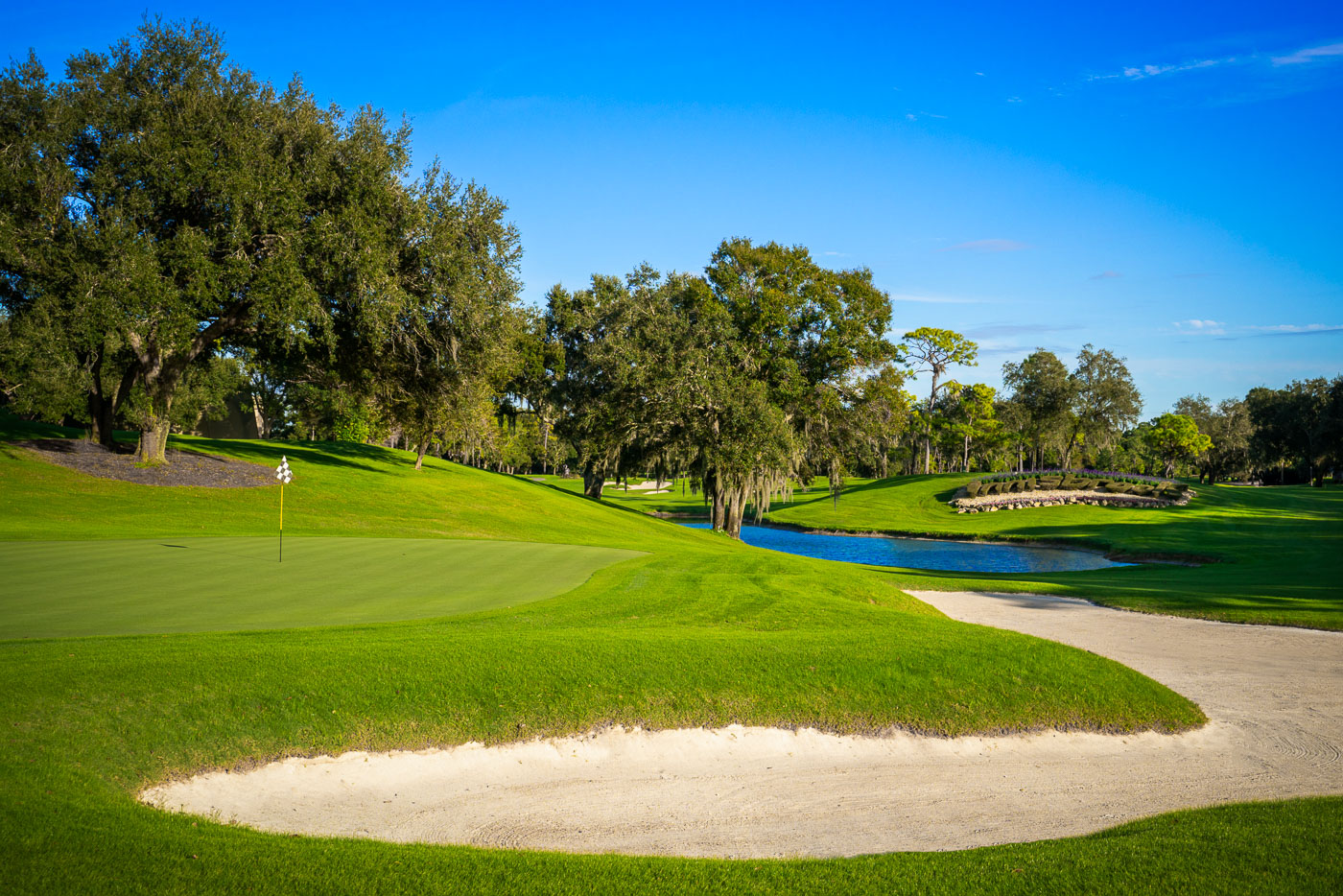
Copperhead Course Green and Bunker, Innisbrook Resort
Copperhead Course at Innisbrook in Palm Harbor, Florida.
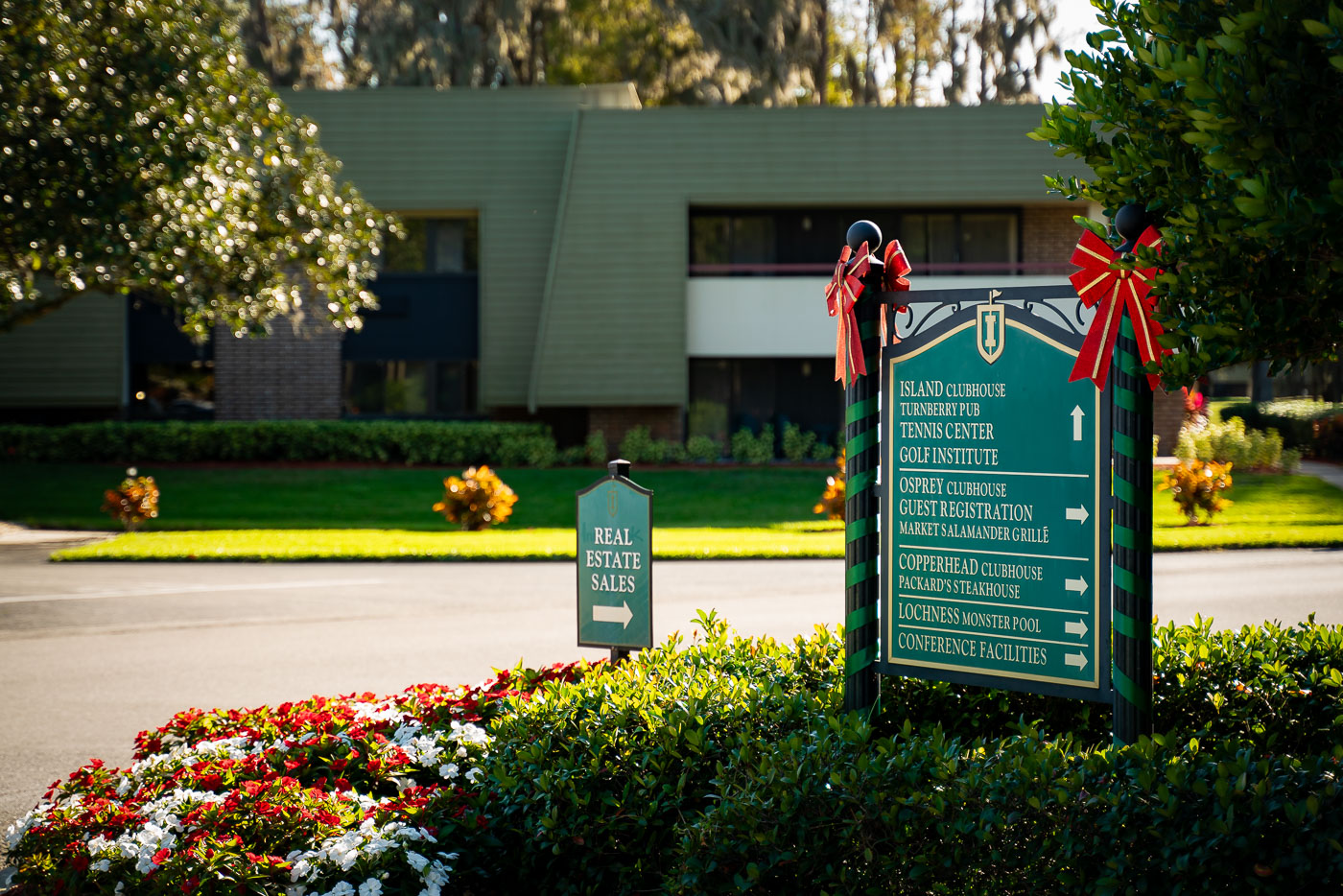
Innisbrook Resort Directional Sign, Palm Harbor, Florida
A sign directing visitors to various buildings around Innisbook Resort in Palm Harbor, Florida.
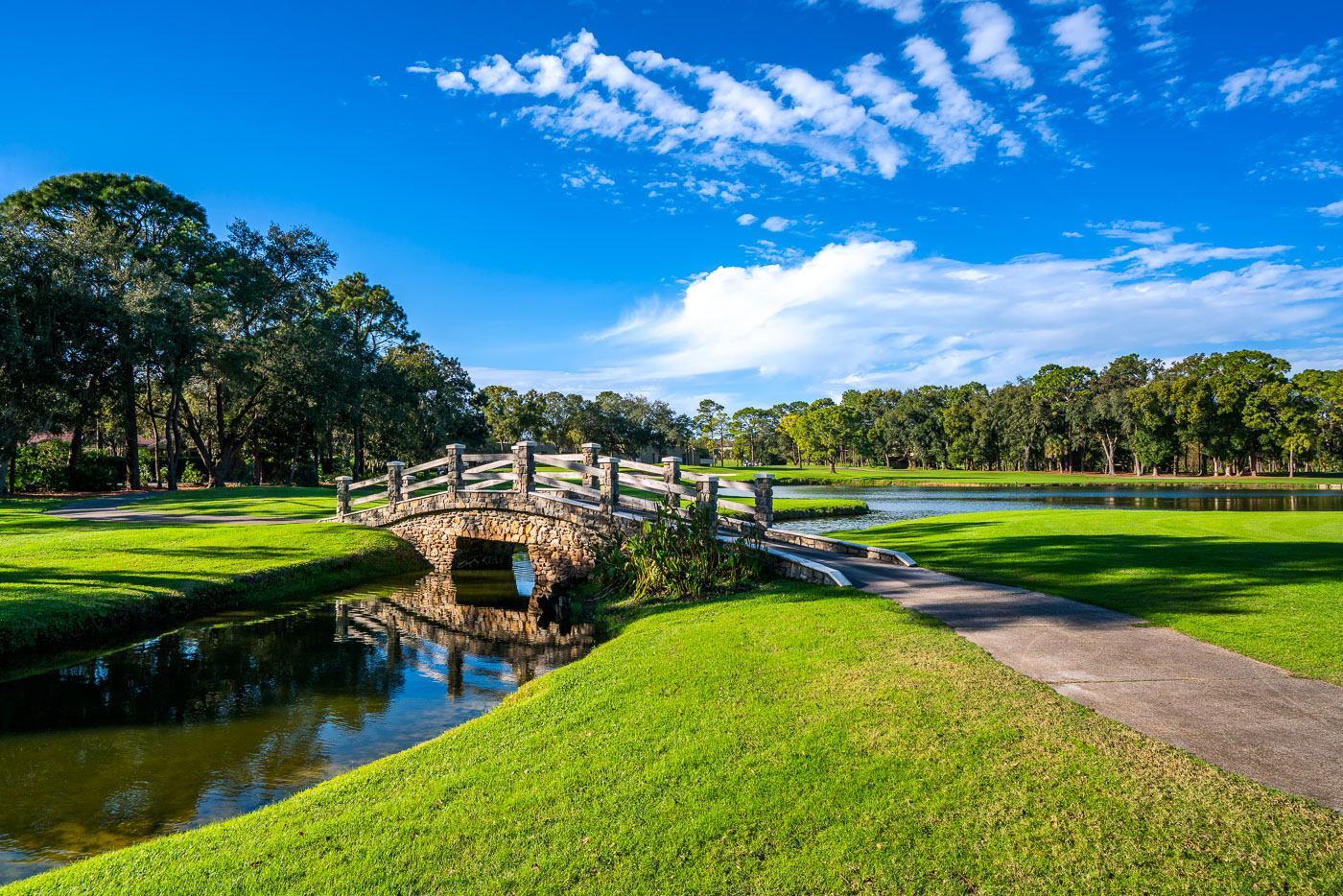
Stone Arch Bridge on Copperhead Course, Palm Harbor, Florida
Bridge on the Copperhead Course at Innisbrook in Palm Harbor Florida.
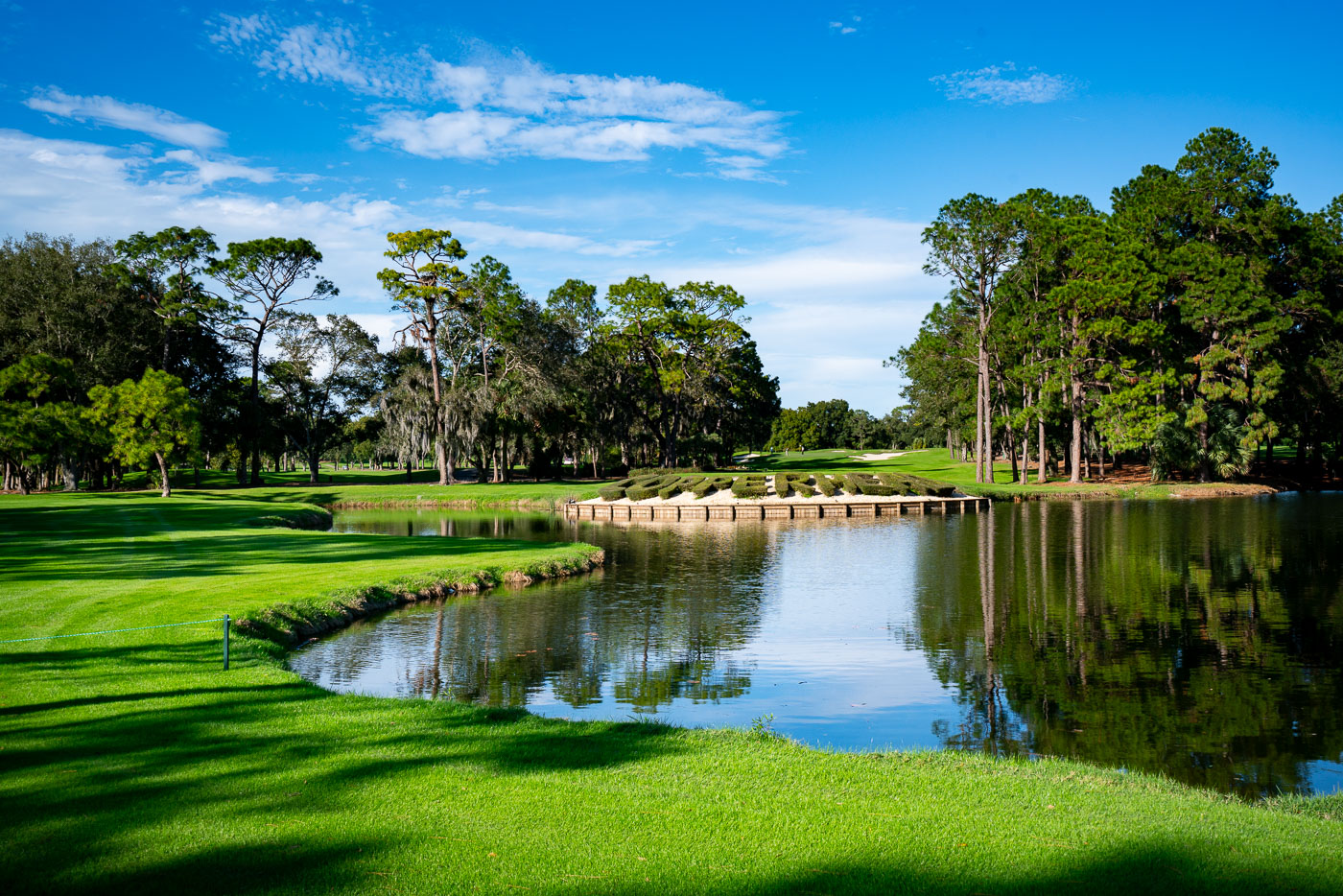
Copperhead Course Water Hazard, Innisbrook Resort, Palm Harbor Florida
Copperhead Course at Innisbrook in Palm Harbor, Florida.
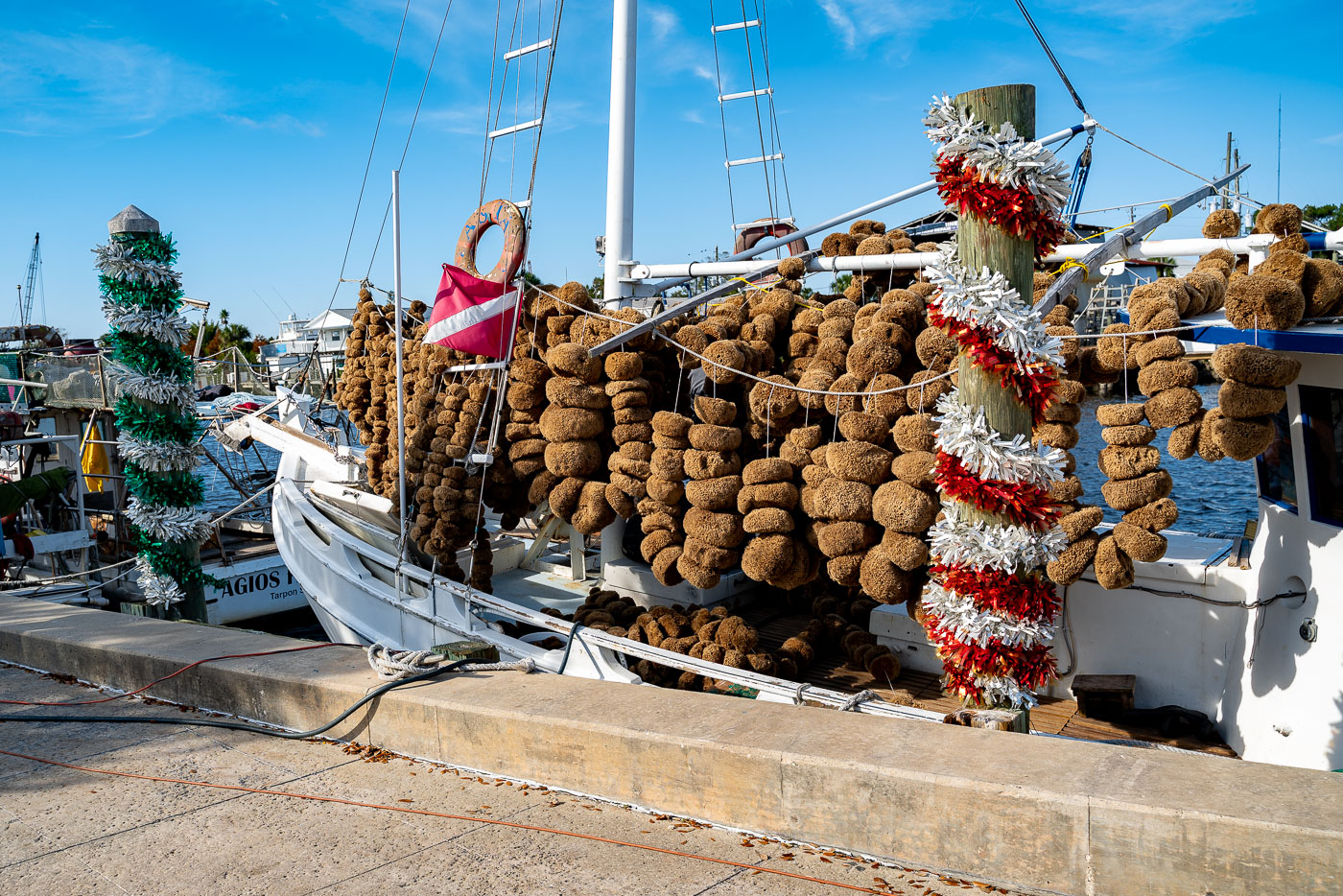
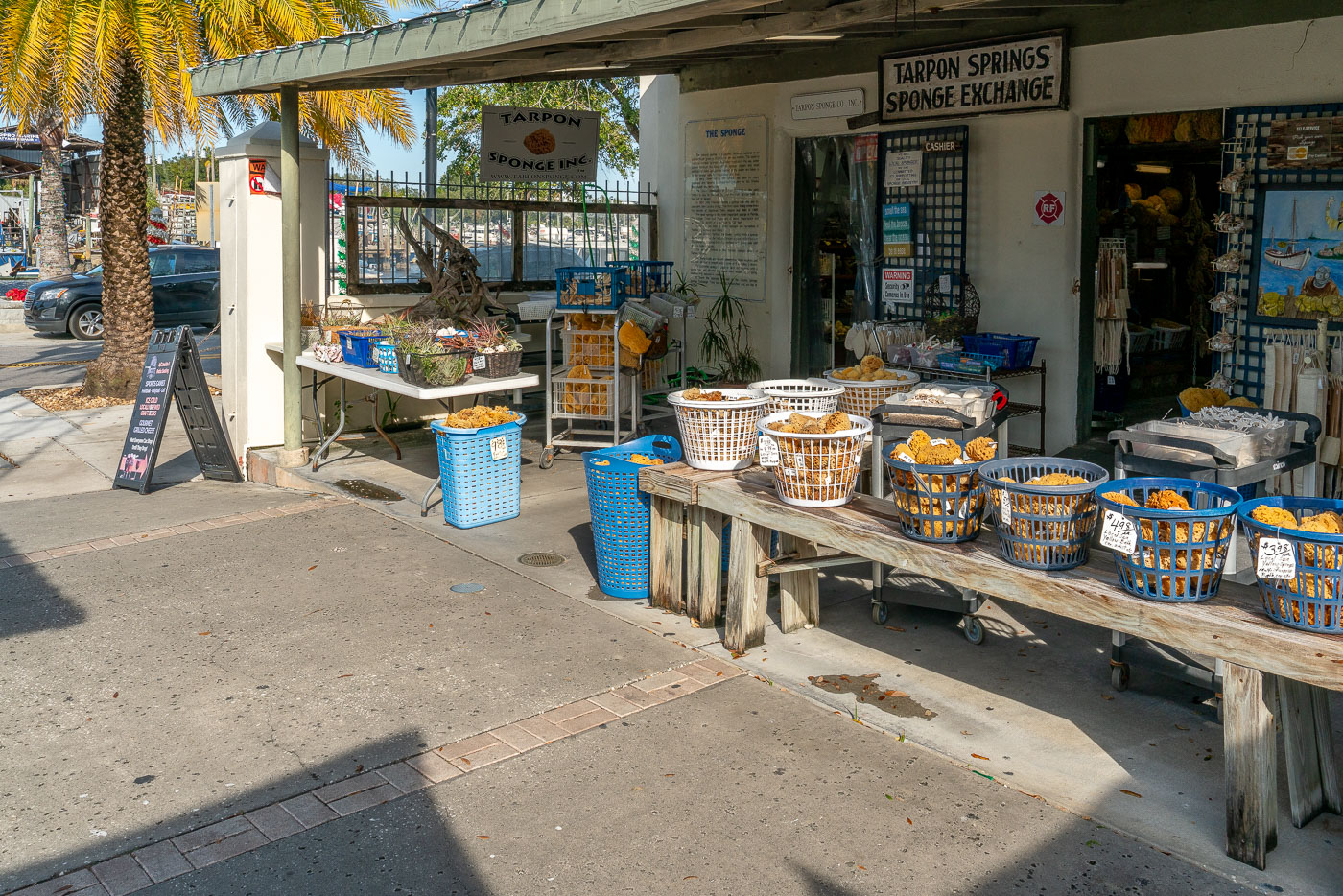
Tarpon Springs Sponge Exchange, Tarpon Springs Florida
Shops selling sponges in Tarpon Springs, Florida.
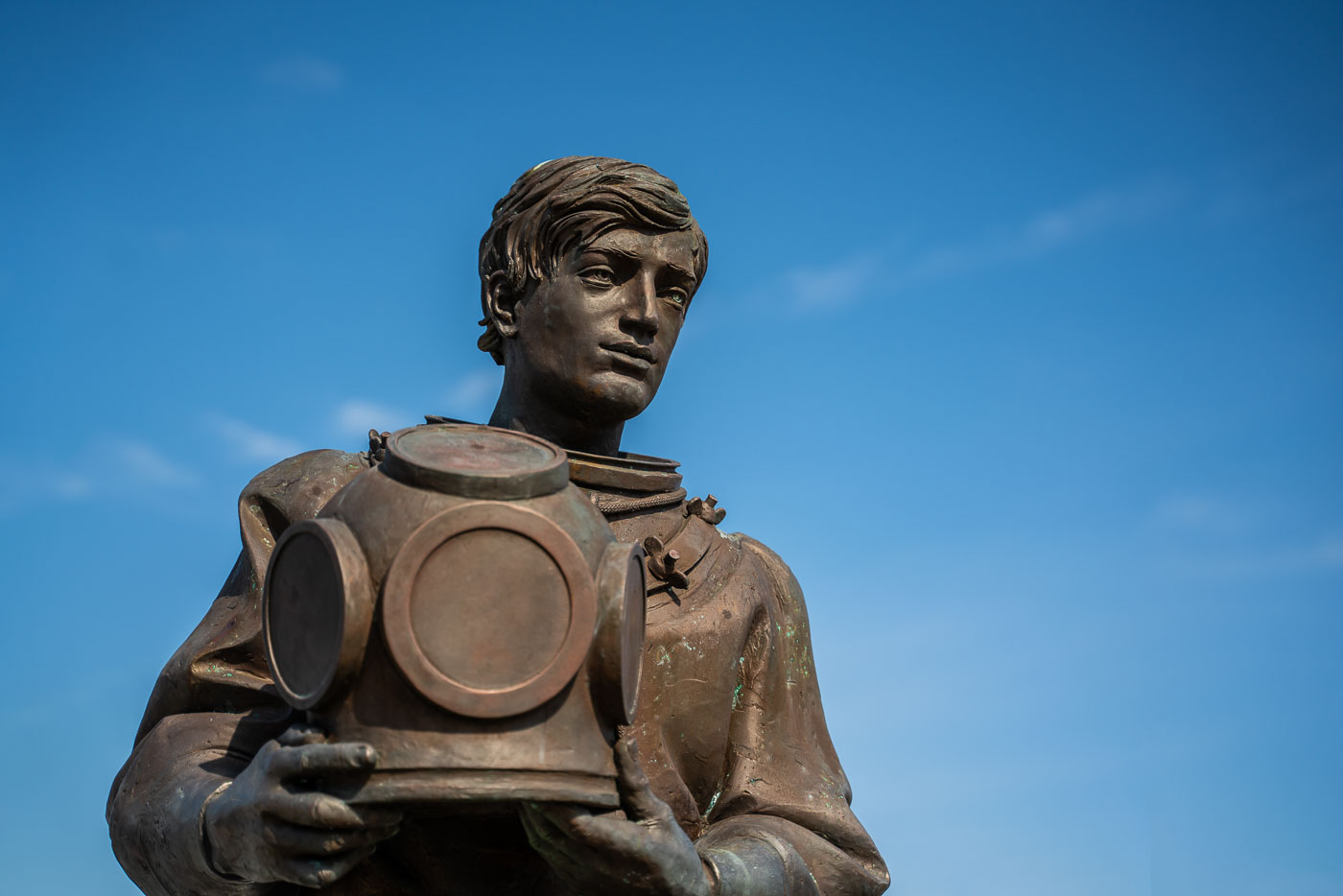
Tarpon Springs Sponge Diver Memorial, Tarpon Springs Florida
The Sponge Diver Memorial in Tarpon Springs, Florida, honors the Greek immigrants who established the town’s sponge diving industry in the early 1900s. The bronze statue depicts a diver holding a traditional brass helmet, symbolizing the skill and danger of the underwater trade. Located near the historic Sponge Docks, it serves as a tribute to the workers who helped shape the community’s maritime heritage.
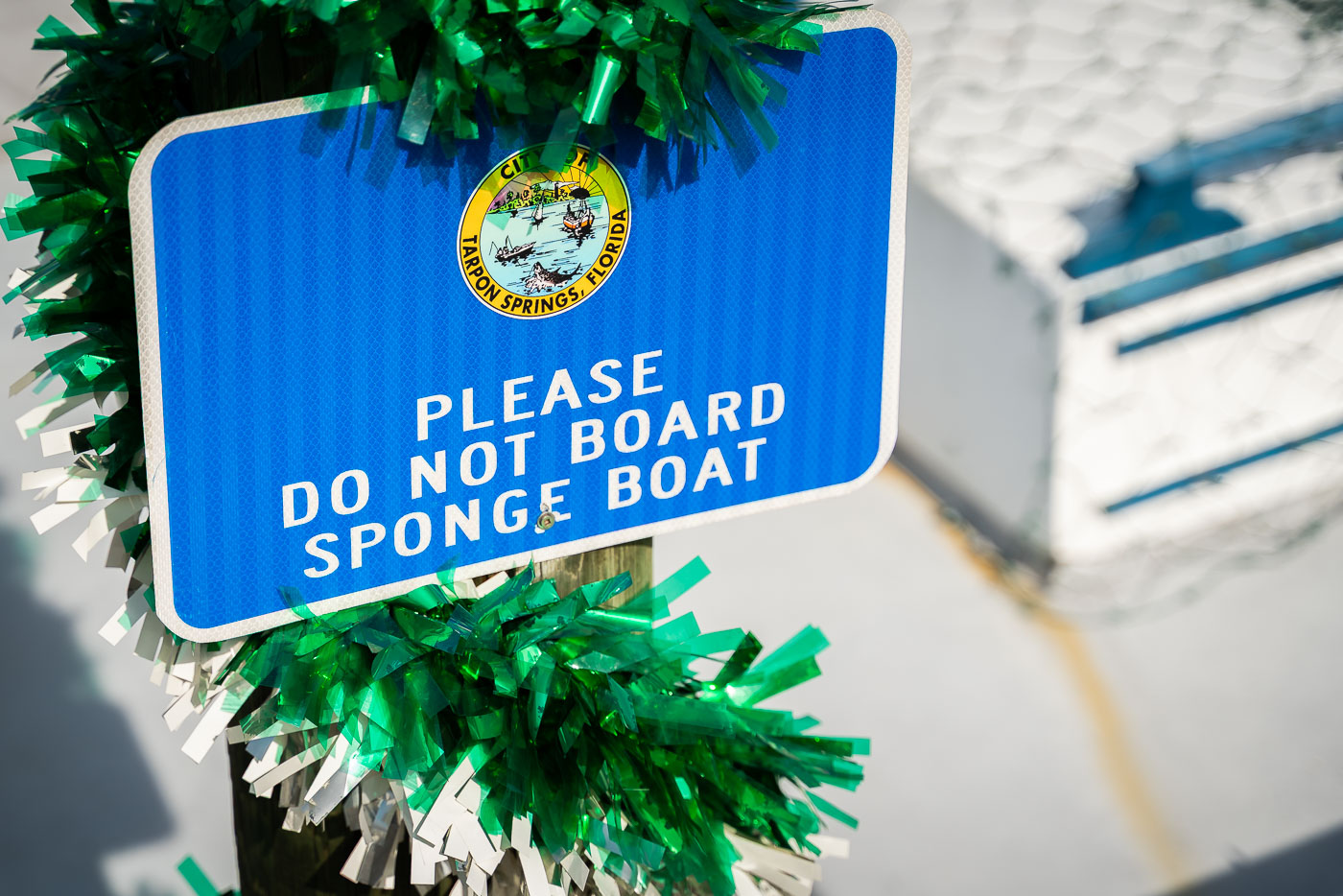
Tarpon Springs Sponge Boat Sign, Tarpon Springs Florida
Sign on a sponge boat in Tarpon Springs, Florida.
Please do not board sponge boat
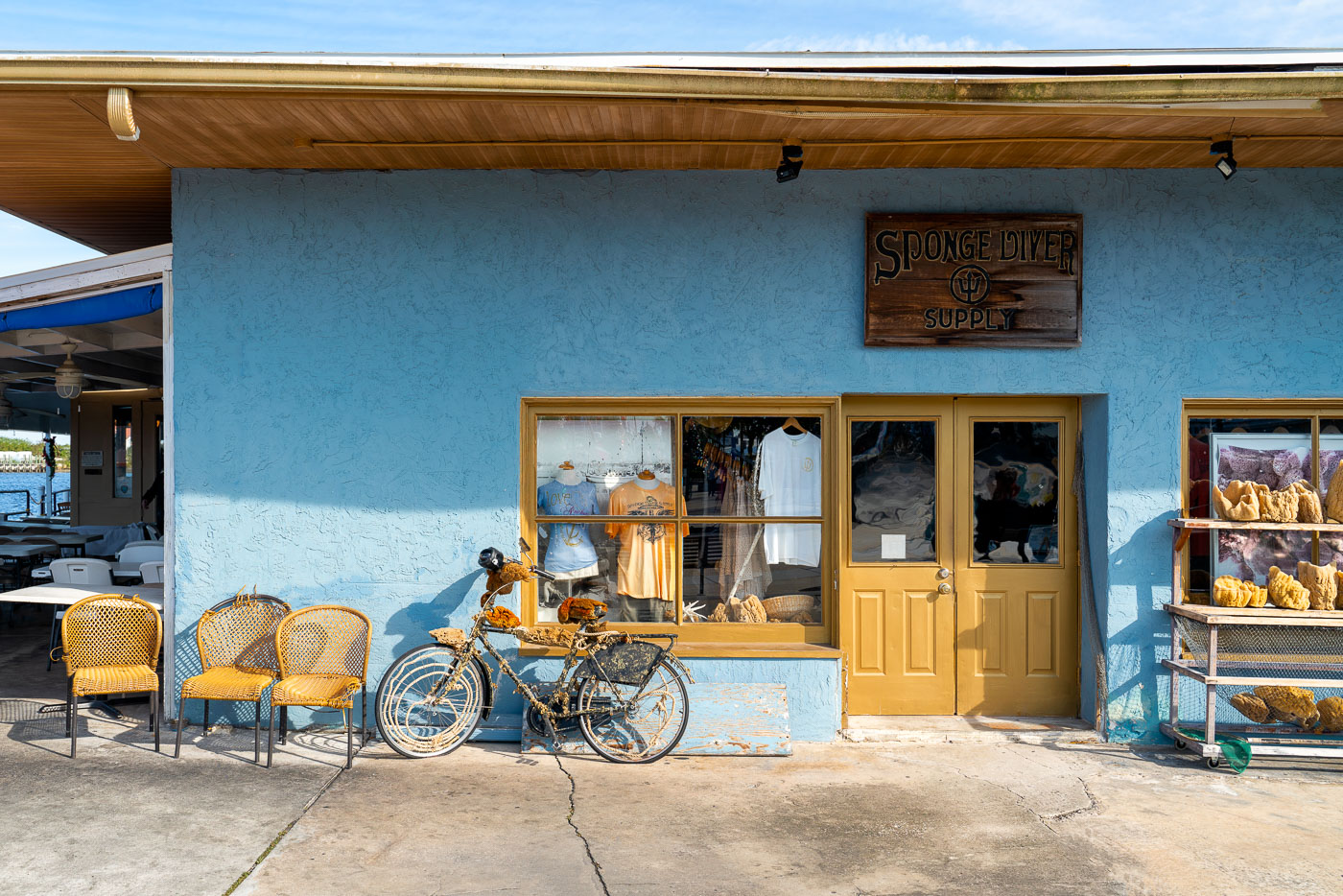
Sponge Diver Supply Storefront, Tarpon Springs Sponge Docks
Sponge Diver Supply store in Tarpon Springs, Florida.
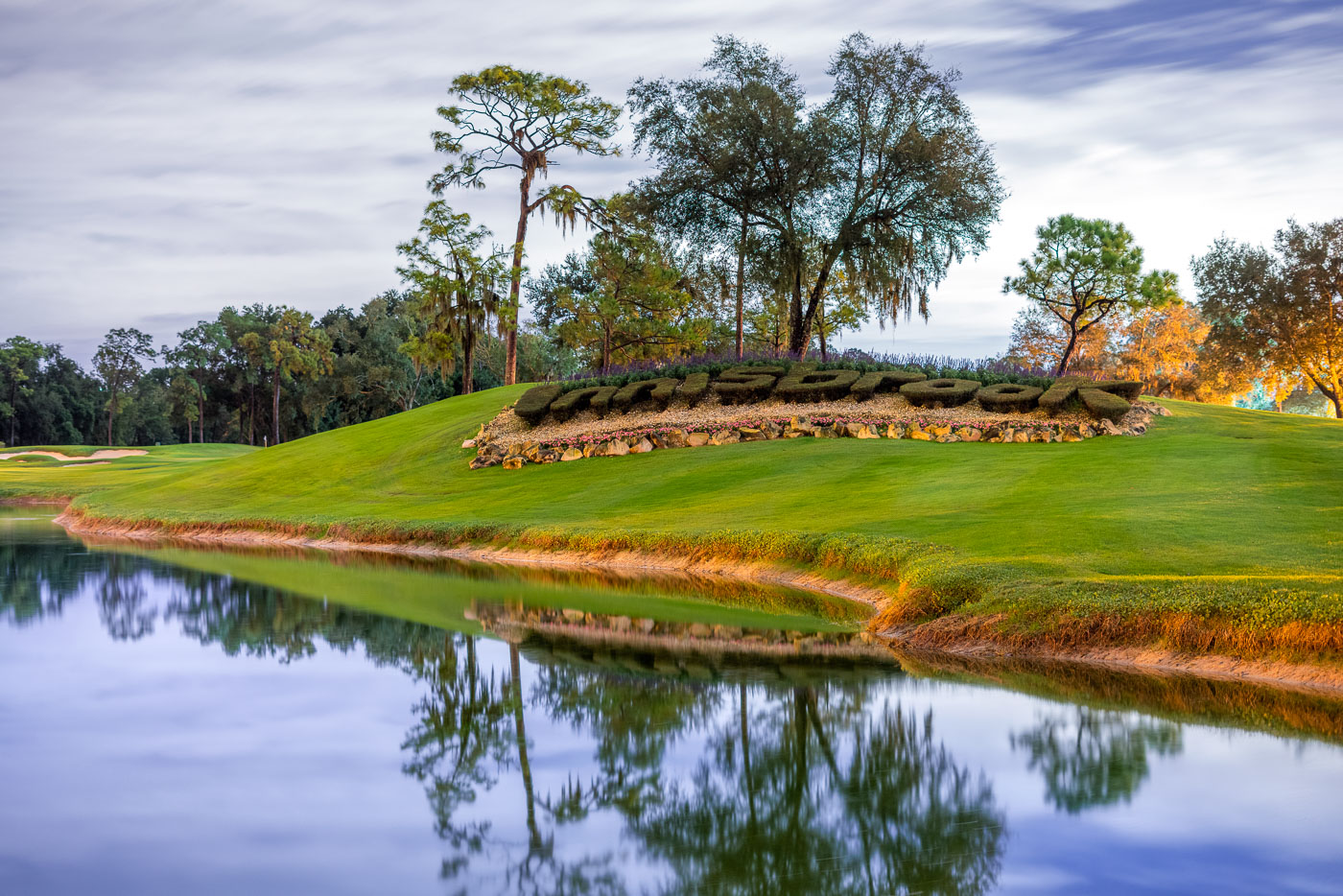
Innisbrook Resort Entrance Topiary, Palm Harbor, Florida
The entrance landscaping at the Innisbrook Resort in Palm Harbor, Florida, features the resort’s name sculpted in trimmed hedges along a manicured hill. Reflected in a nearby pond, the display welcomes guests to the golf and spa property known for its championship courses and natural setting. Tall pines and live oaks frame the scene, emphasizing the resort’s park-like character.
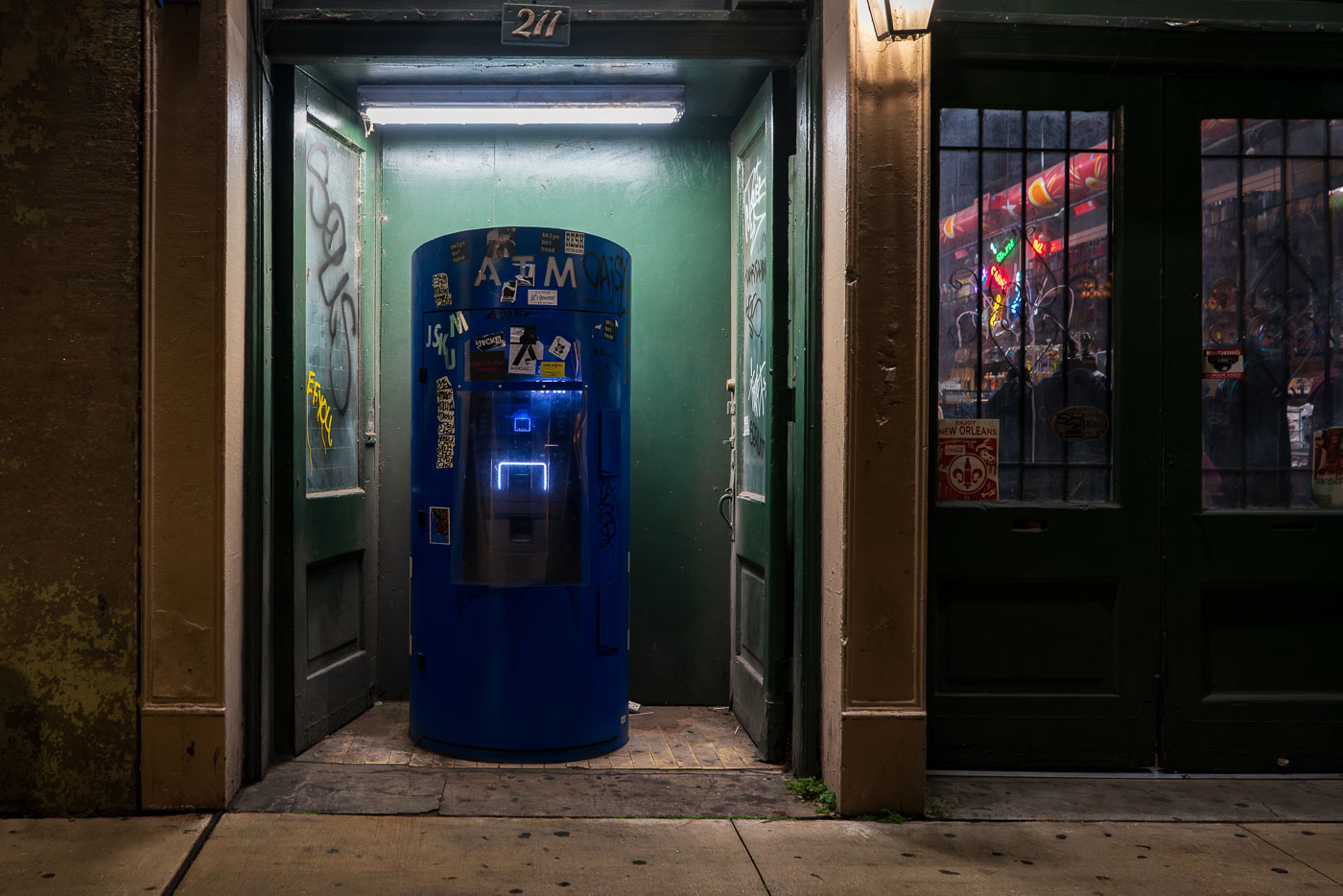
Blue ATM at 211 Decatur Street, New Orleans
A blue ATM sits in a narrow doorway at 211 Decatur Street in New Orleans, surrounded by graffiti and stickers. T
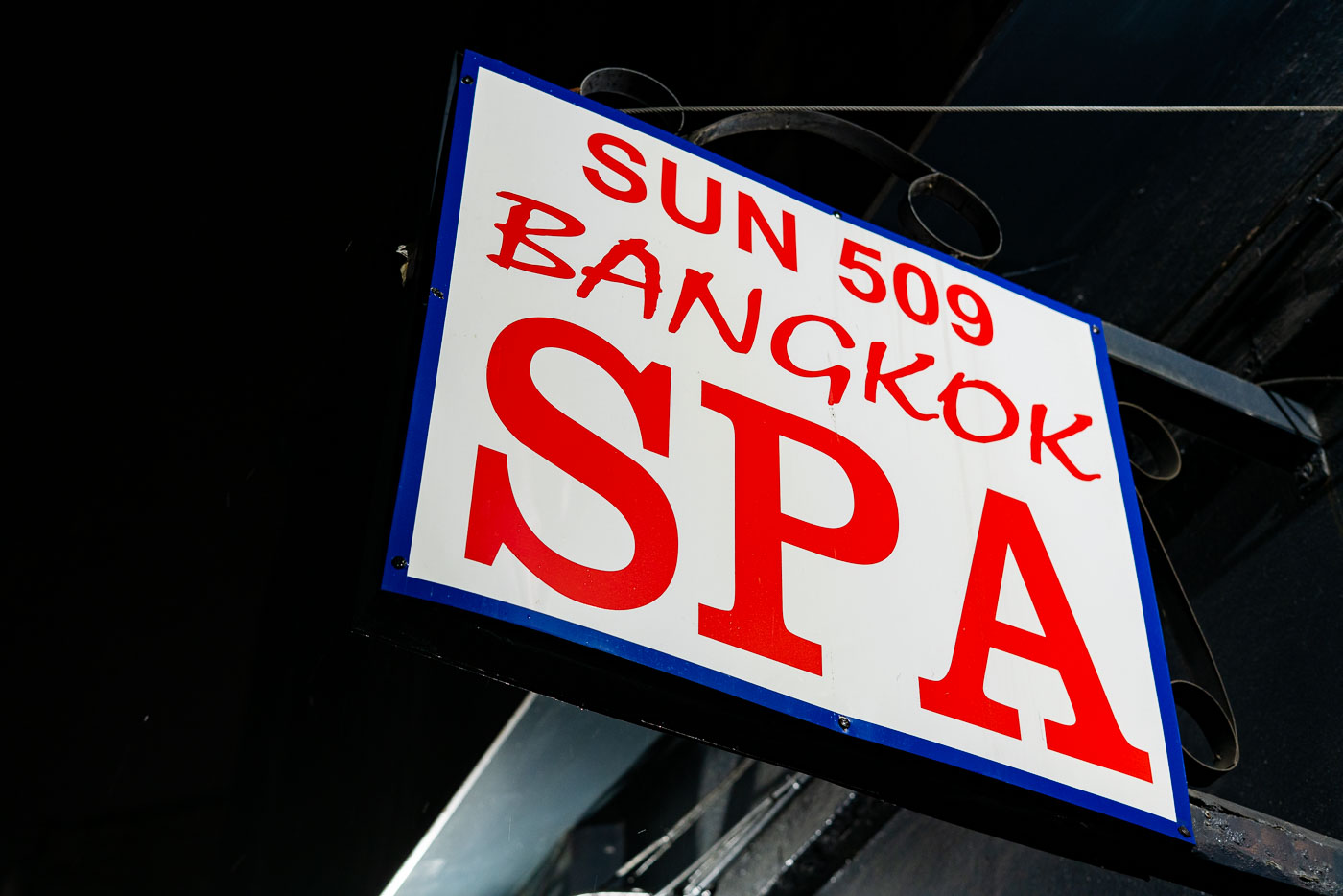
Sun 509 Bangkok Spa Sign, New Orleans – nola-191211-3829.ARW
Sign for Bangkok Spa in New Orleans, Louisiana.
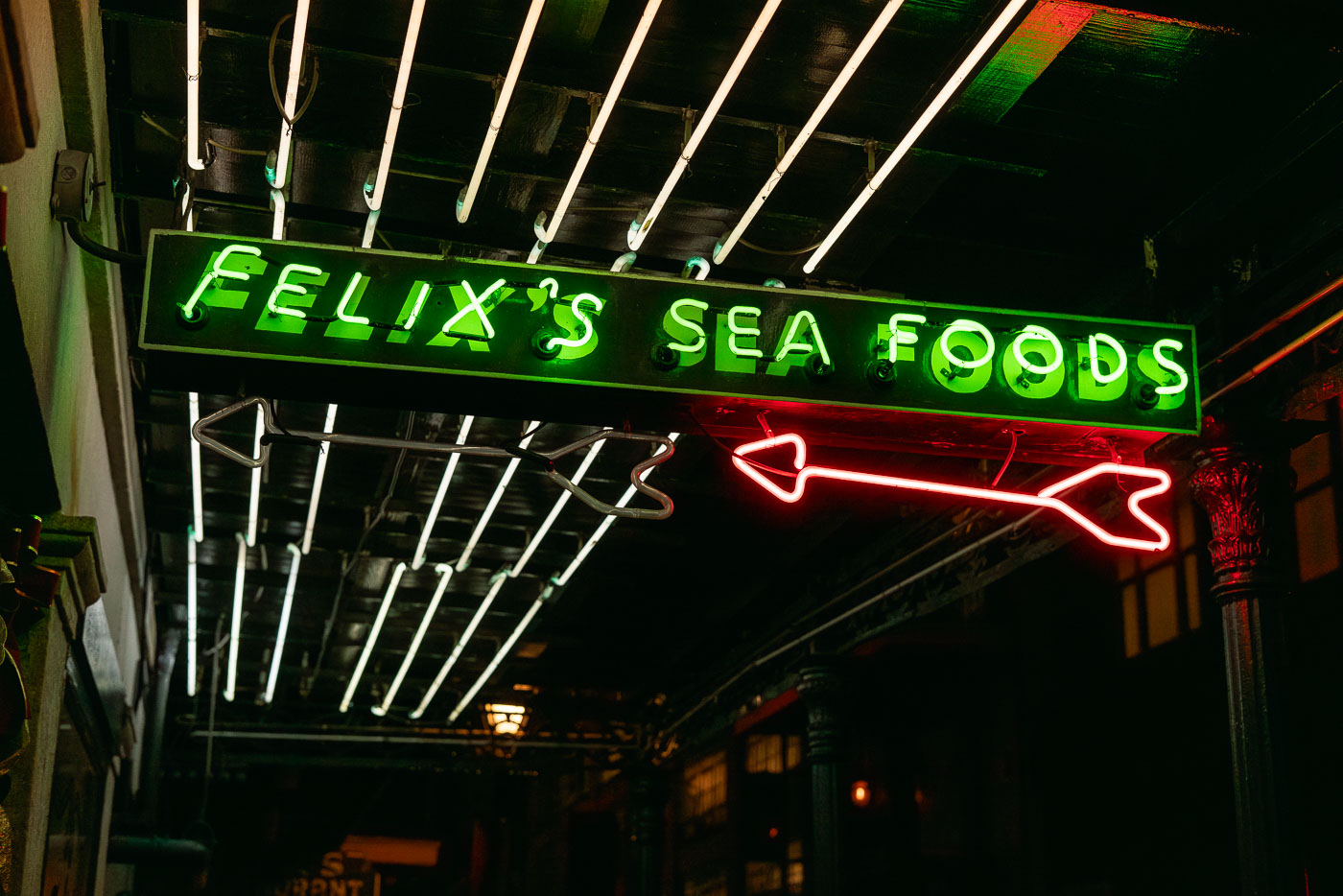
Felix’s Sea Foods Sign, French Quarter
A neon sign glows above the entrance to Felix’s Sea Foods. The restaurant is a well-known spot in New Orleans’ French Quarter, recognized for its oysters and casual seafood dining.
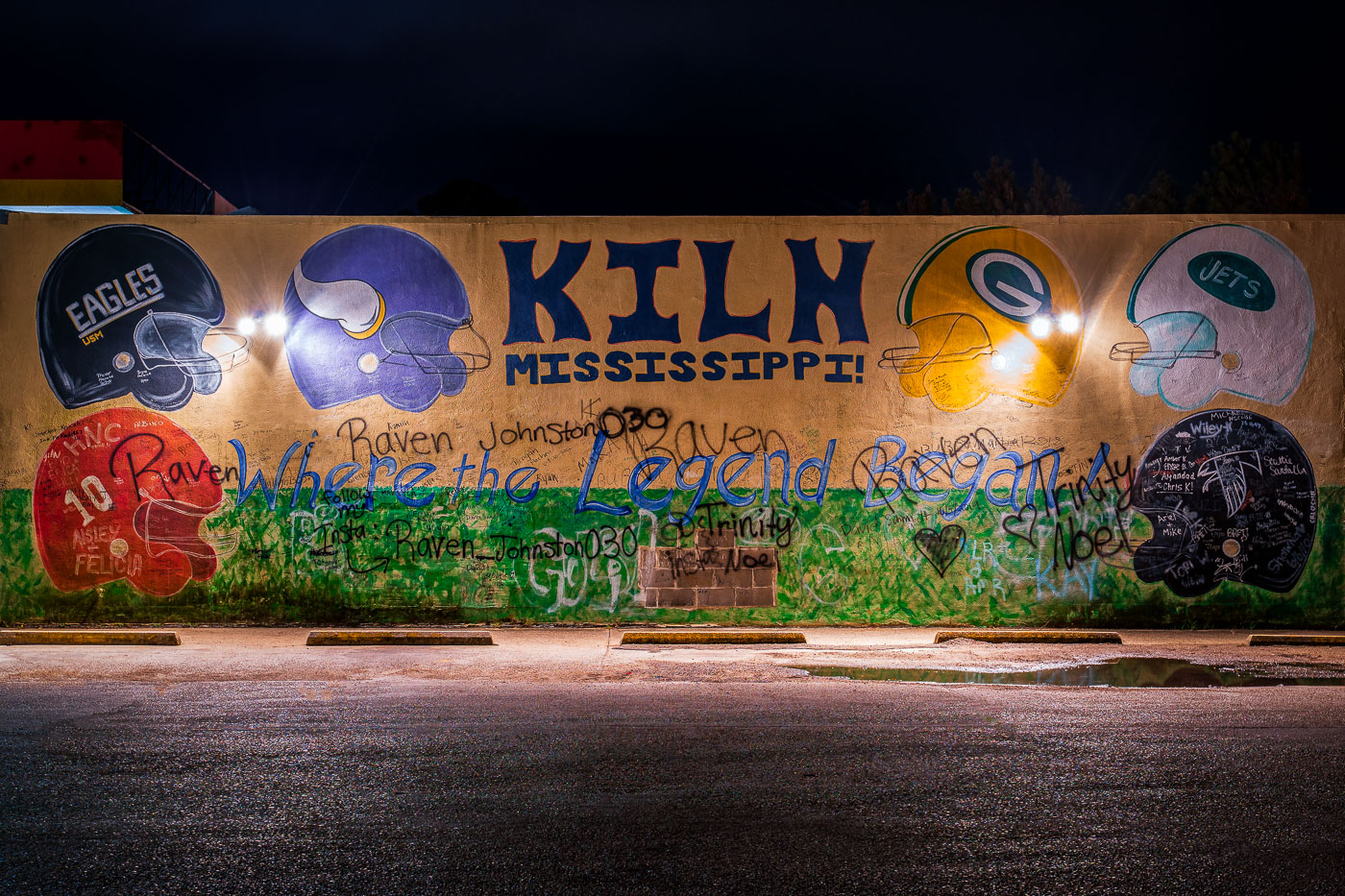
Brett Favre helmet mural, Kiln, Mississippi
A mural painted on the wall of a gas station in Kiln Mississippi with all the helmets Brett Favre wore.
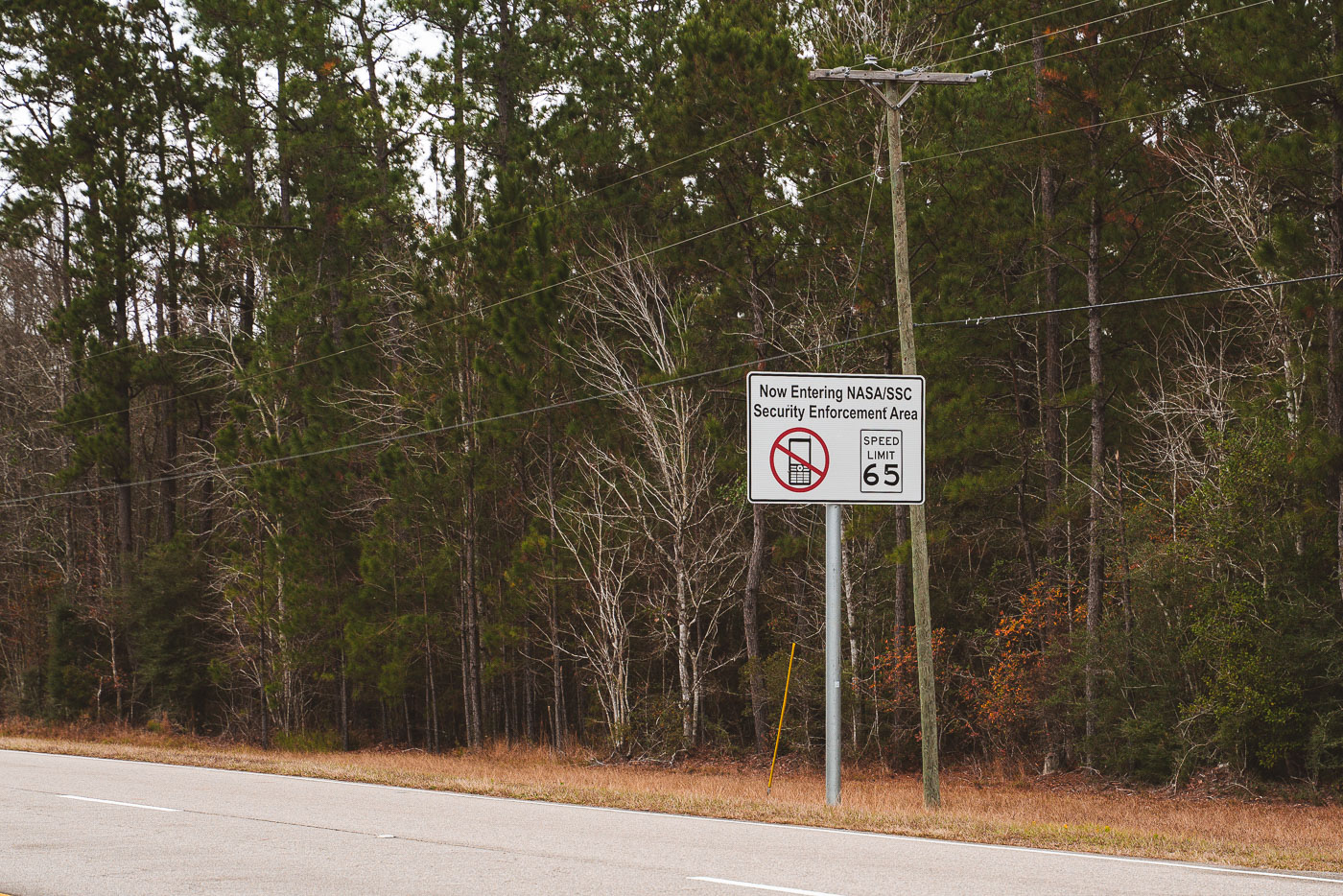
NASA Stennis Security Enforcement Area Sign on Highway 607
Along a quiet stretch of pine-lined Highway 607 in Hancock County, Mississippi, a sign alerts motorists: Now Entering NASA/SSC Security Enforcement Area. Beyond this point lies the vast Stennis Space Center, where engines for Apollo, the Space Shuttle, and Artemis have been tested at full throttle. The reminder of security restrictions — paired with the speed limit notice — reflects how an otherwise ordinary southern highway doubles as the gateway to one of the most advanced propulsion test facilities in the world.
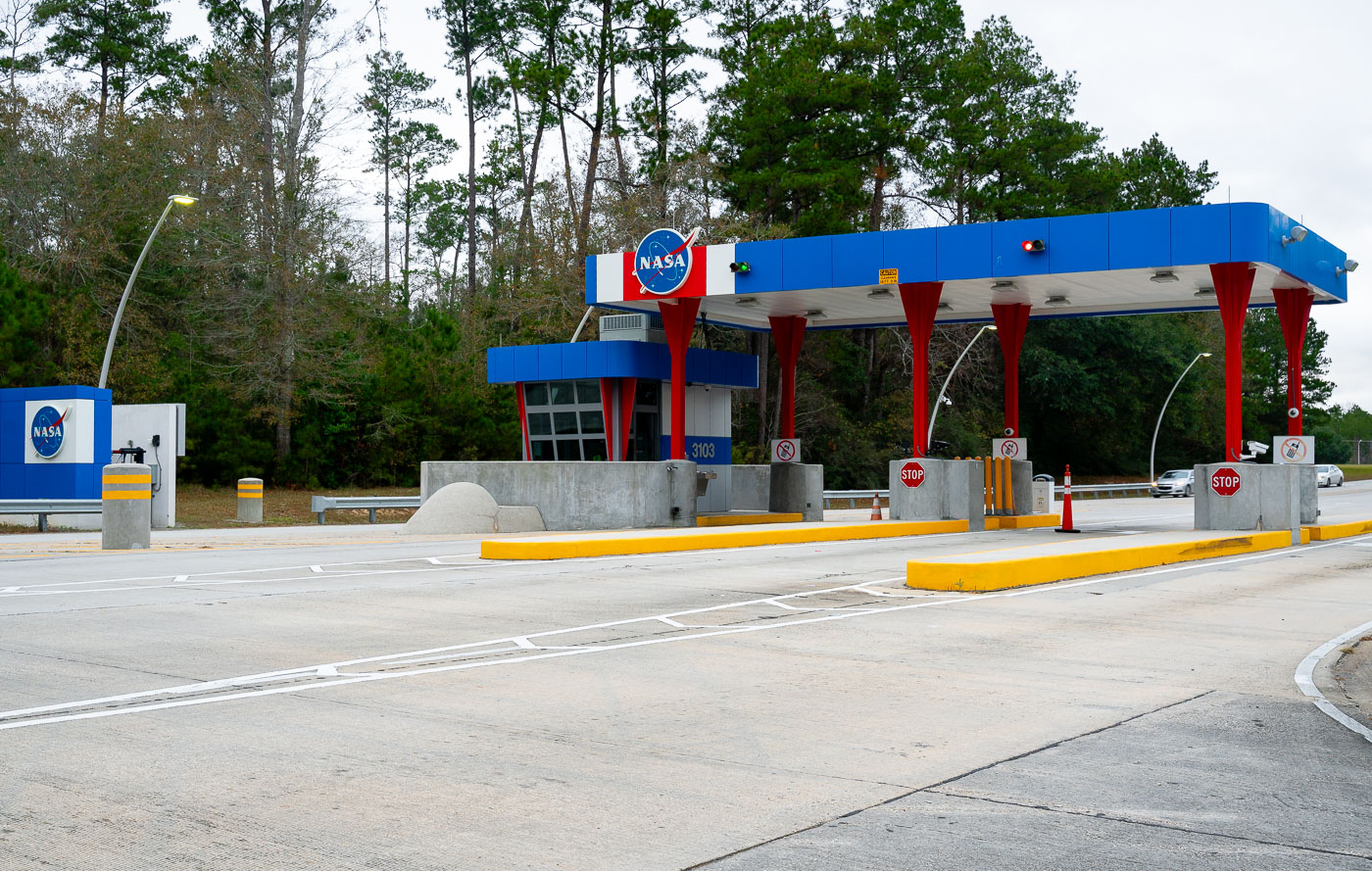
NASA Stennis Space Center Security Gate, Mississippi
Nestled in the woods of Hancock County, Mississippi, the Stennis Space Center has been a cornerstone of NASA’s propulsion testing since the 1960s. The security gate, painted in the agency’s signature red, white, and blue, greets all who enter the sprawling complex where engines for Apollo, the Space Shuttle, and today’s Artemis missions have been put through their paces. The unassuming roadside checkpoint belies the scale of the technological achievements within, underscoring how a quiet patch of southern forest became central to America’s spaceflight history.
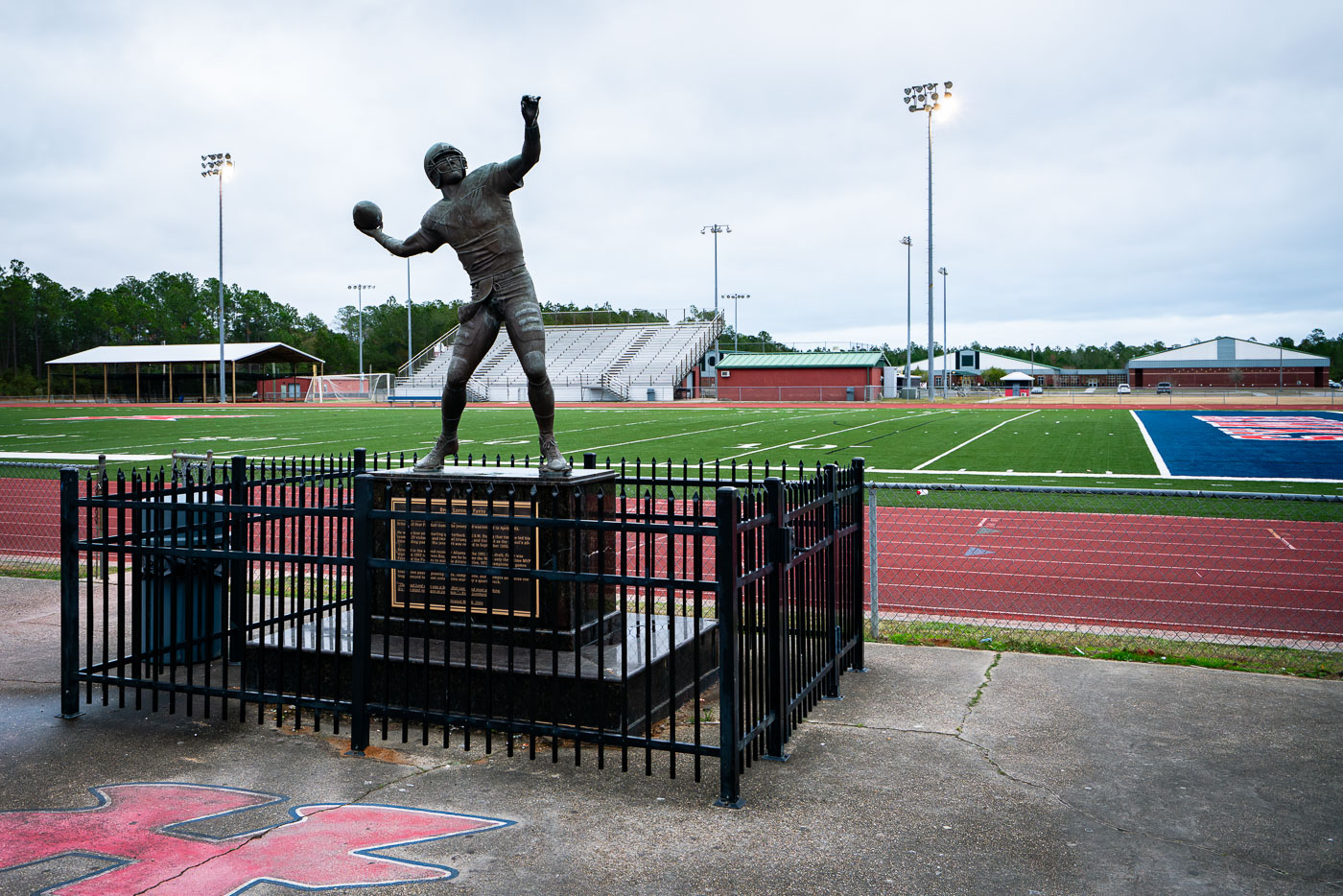
Brett Favre Statue at Hancock High School, Kiln, Mississippi
In Kiln, Mississippi, the legacy of Brett Favre looms large. Outside Hancock High School’s football stadium, a life-sized statue of the quarterback stands mid-throw, immortalizing the local athlete who went on to become one of the NFL’s most prolific passers. Set against the backdrop of the school’s red track and green turf, the monument reflects both community pride and the enduring place of football in Southern culture. For locals, it serves as a reminder that even from a small Gulf Coast town, greatness can reach the national stage.
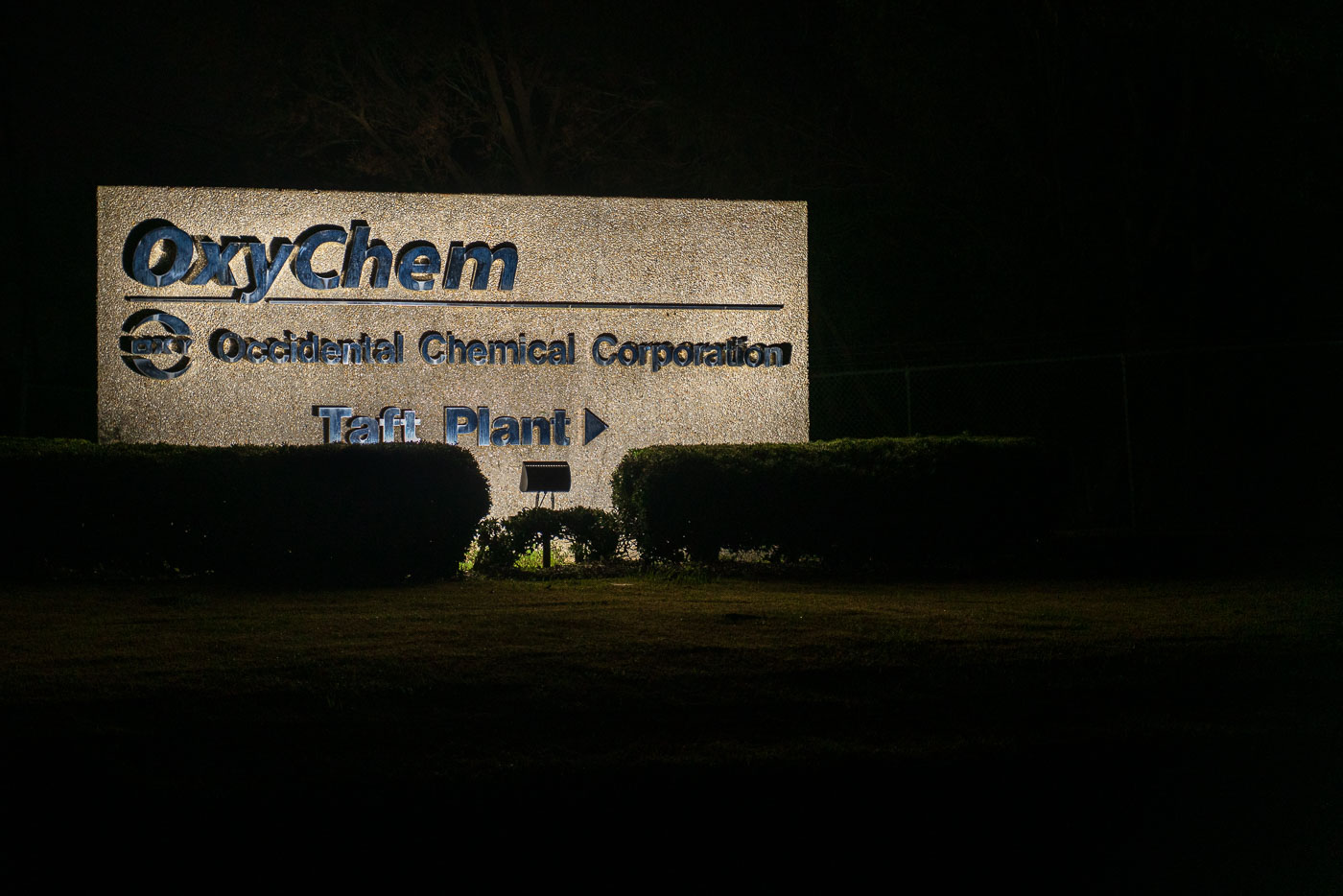
OxyChem Taft Plant Sign at Night, Louisiana
The Taft Plant, operated by Occidental Chemical Corporation (OxyChem), sits along Louisiana’s heavily industrialized river corridor between Baton Rouge and New Orleans. Like many facilities in the region, the plant plays a role in the state’s vast petrochemical network, producing essential compounds for plastics, coatings, and other materials that fuel modern life. At night, its illuminated sign cuts through the darkness, a quiet marker of the sprawling industry that has shaped both the economy and the environmental debates of the Mississippi River corridor.
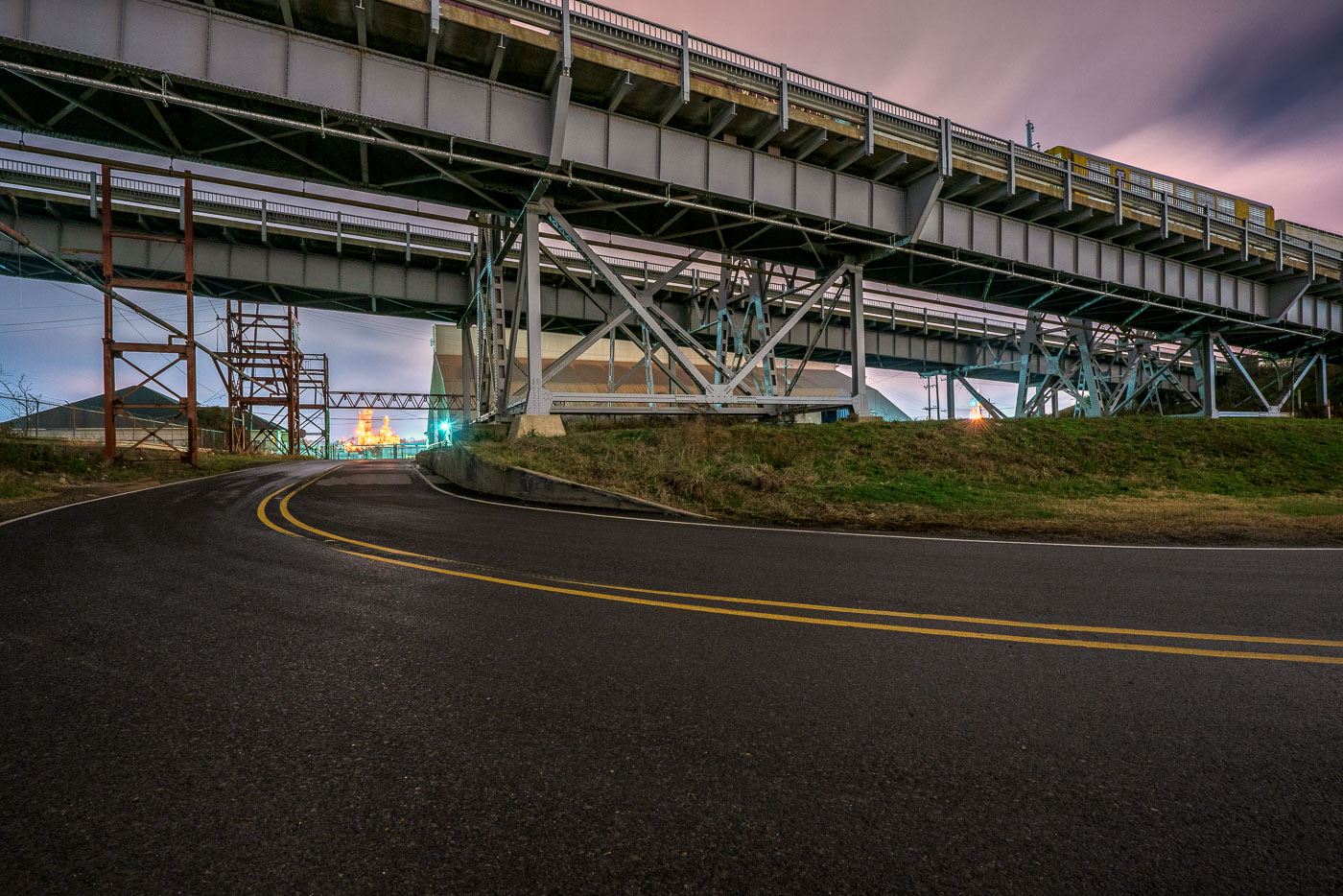
Airline Highway Overpasses, Baton Rouge
On Baton Rouge’s Airline Highway, the road snakes beneath a tangle of overpasses and steel supports, a striking symbol of mid-20th-century infrastructure. Originally developed as a major bypass route, Airline Highway became one of Louisiana’s busiest commercial arteries, linking petrochemical plants, warehouses, and neighborhoods across the capital region. At dusk, the glow of distant lights cuts through the industrial sprawl, underscoring how this corridor remains a vital — if gritty — backbone of the city’s economy and daily life.
ExxonMobil Chemical Plant, Baton Rouge, Louisiana
The Baton Rouge Chemicals North complex of ExxonMobil stands along Scenic Highway in Louisiana’s industrial corridor. Part of one of the largest integrated refining and petrochemical operations in the United States, this facility produces a wide range of industrial chemicals used globally. The illuminated sign reflects both the company’s deep roots in the Baton Rouge area and the economic and environmental legacy of the region’s petrochemical industry.
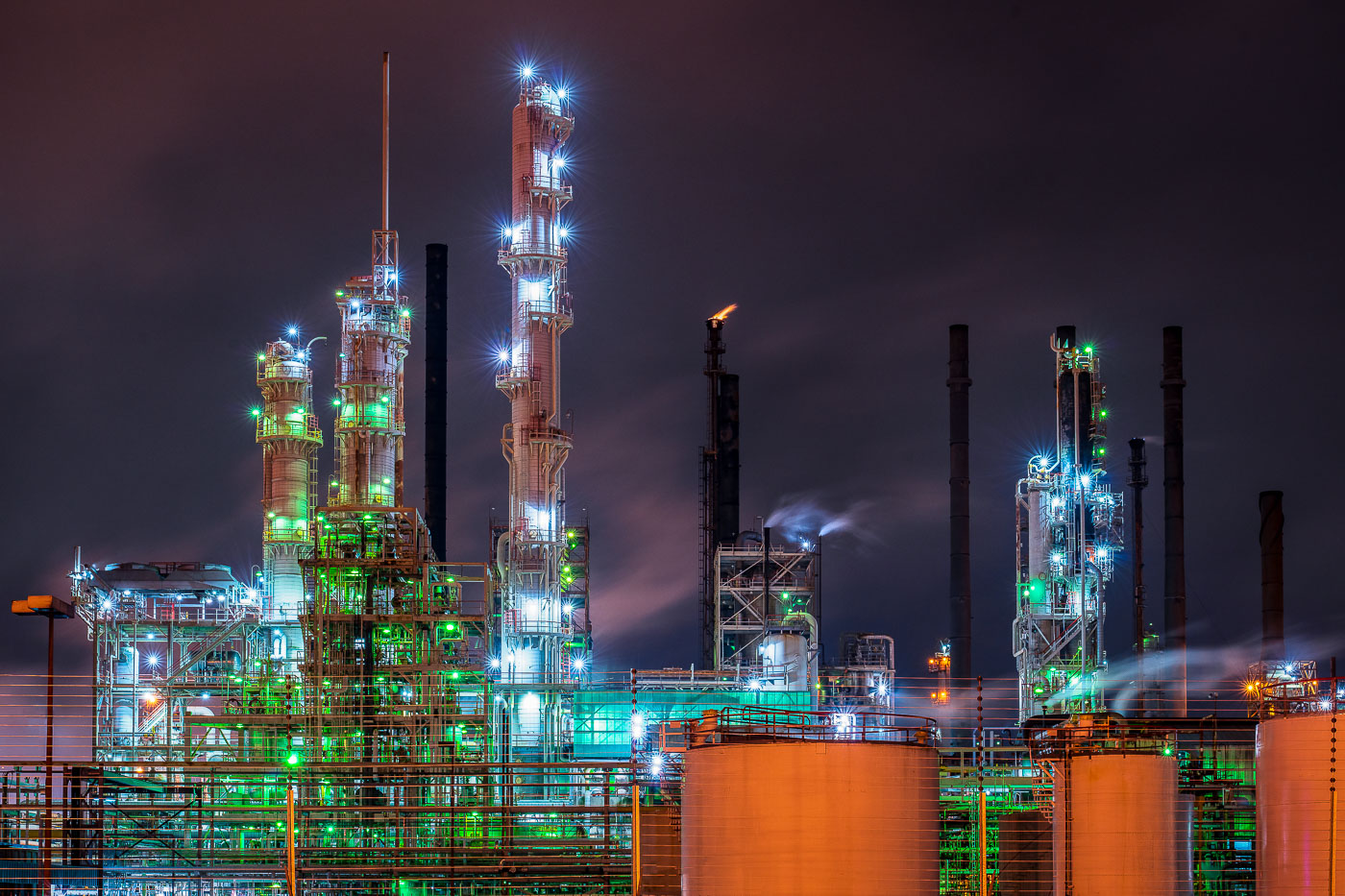
ExxonMobil Refinery, Baton Rouge, Louisiana
This nighttime industrial scene is from Baton Rouge, Louisiana, home to one of the largest oil refining and petrochemical hubs in the United States. The brightly lit towers and distillation columns belong to facilities along the Mississippi River Industrial Corridor, where refineries like ExxonMobil Baton Rouge operate around the clock. Steam and flares mark the ongoing refining processes that produce gasoline, diesel, and chemical feedstocks central to the region’s economy. The image captures the city’s long-standing connection to the energy and manufacturing industries.
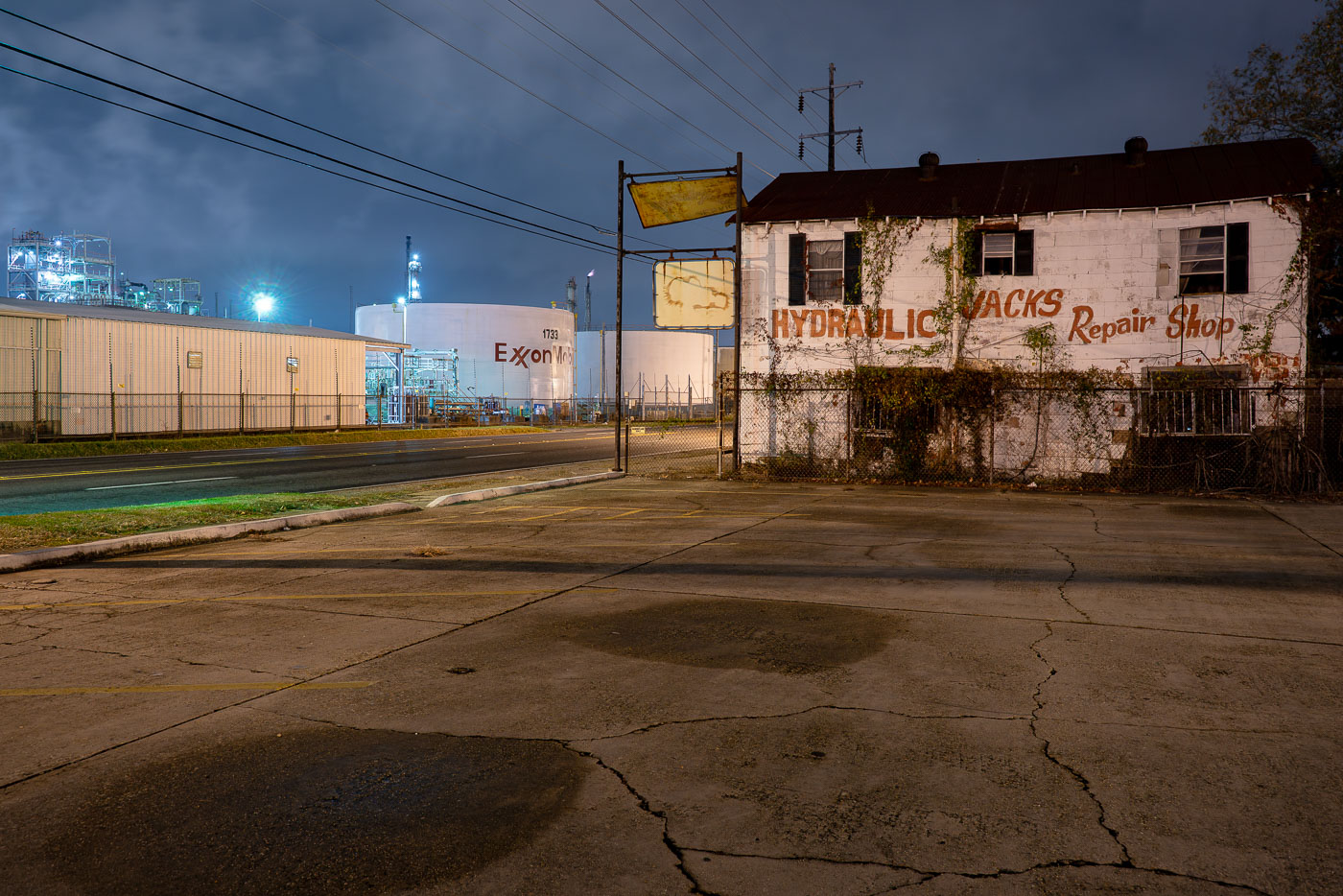
ExxonMobil Refinery and Hydraulic Jacks Repair Shop, Baton Rouge
An abandoned hydraulic jack repair shop sits across from the massive ExxonMobil refinery complex in Baton Rouge, Louisiana. The plant, one of the largest oil refineries in the United States, has operated since 1909 and remains a central fixture of the city’s industrial identity. The decaying storefront in the foreground contrasts sharply with the illuminated refinery tanks and piping behind it — a visual divide between small-scale industry of the past and the enduring scale of the petrochemical operations that define the region’s economy.
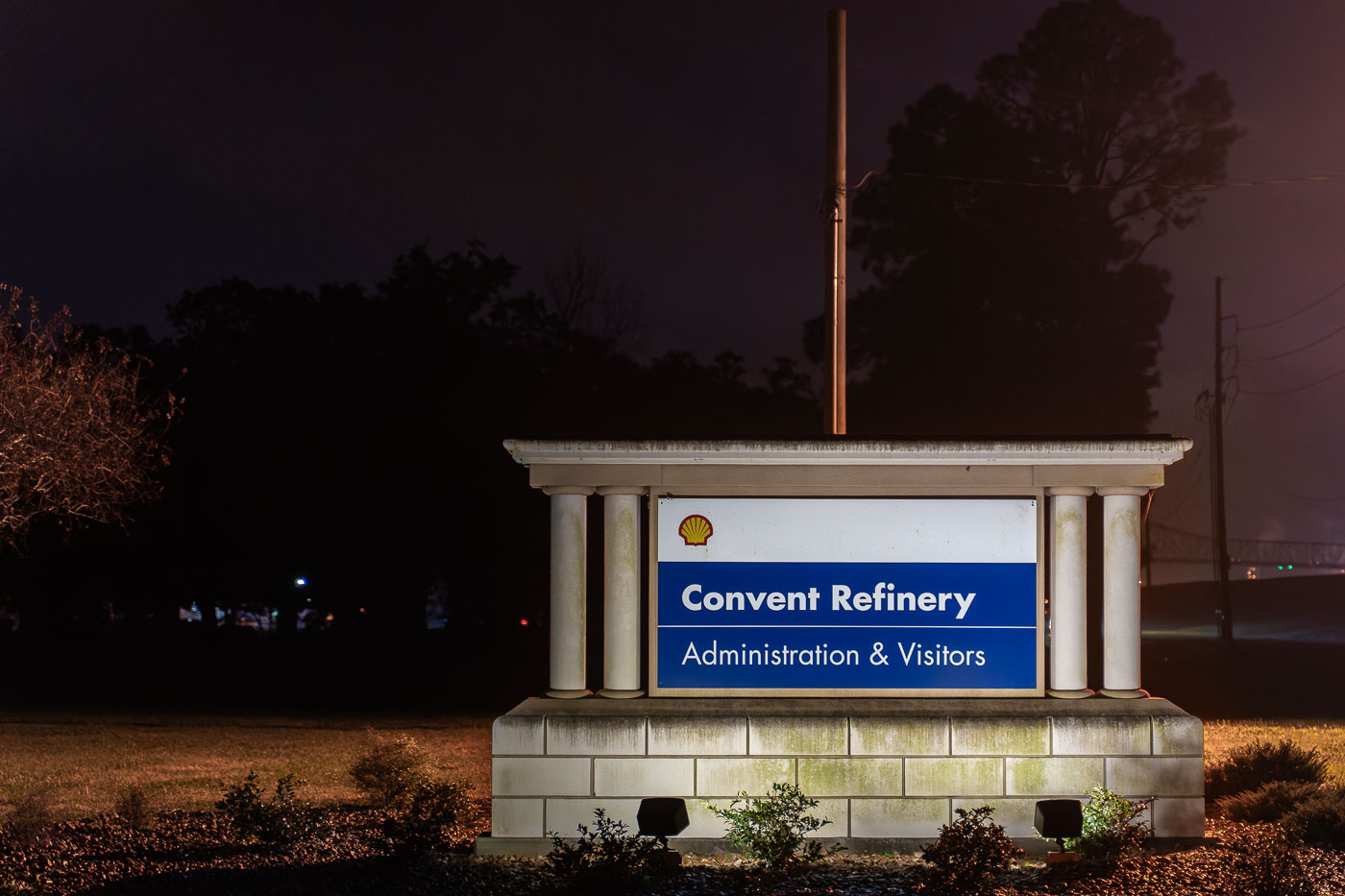
Convent Refinery Administration Sign, St. James Parish, LA
The entrance sign for Shell’s Convent Refinery in St. James Parish, Louisiana, stands illuminated against the night sky. Opened in 1967, the refinery was a major facility in the state’s “Petrochemical Corridor,” processing up to 240,000 barrels of crude oil per day at its peak. Shell permanently shut down operations in 2020 amid declining demand and corporate restructuring, marking the end of one of the region’s most significant industrial sites along the Mississippi River.
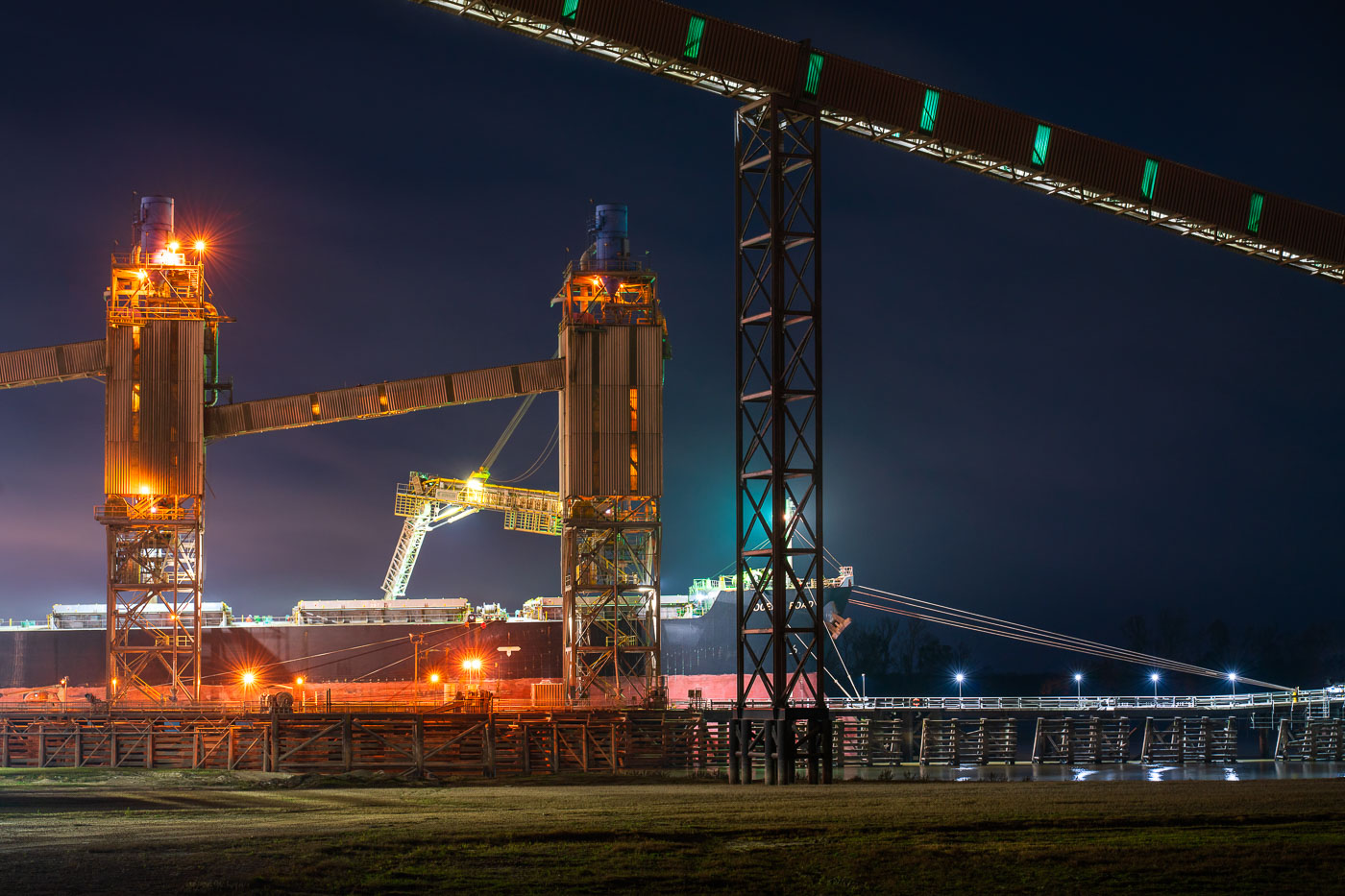
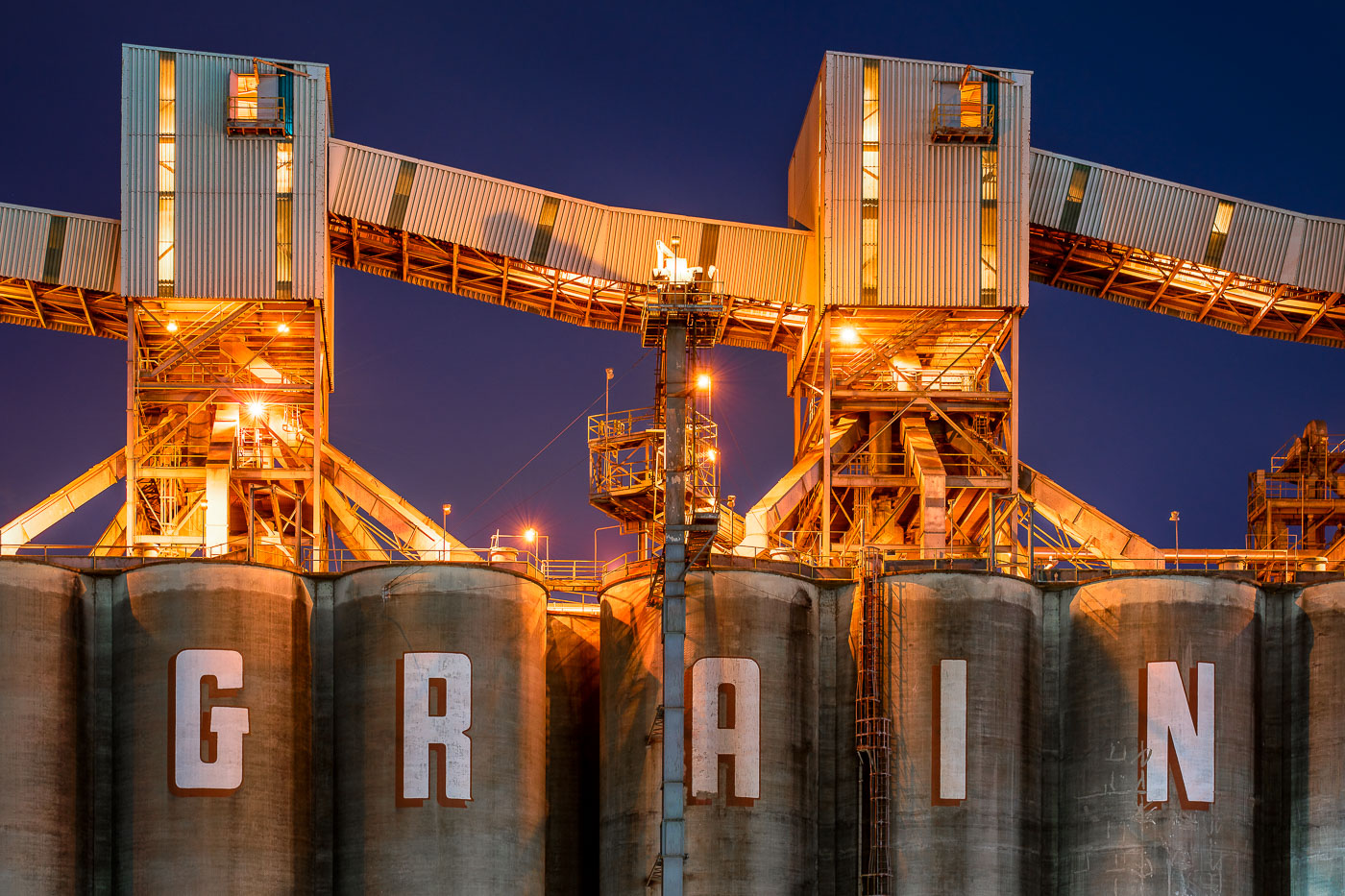
Zen-Noh Grain Terminal at Convent, Louisiana
Illuminated under floodlights, the massive concrete grain silos of the Zen-Noh Grain Corporation terminal rise over the Mississippi River in Convent, Louisiana. Operated by a U.S. subsidiary of Japan’s Zen-Noh agricultural cooperative, this export facility plays a critical role in shipping Midwestern grain to international markets. The illuminated conveyors and loading structures highlight the region’s industrial link between river transport and global food supply chains.
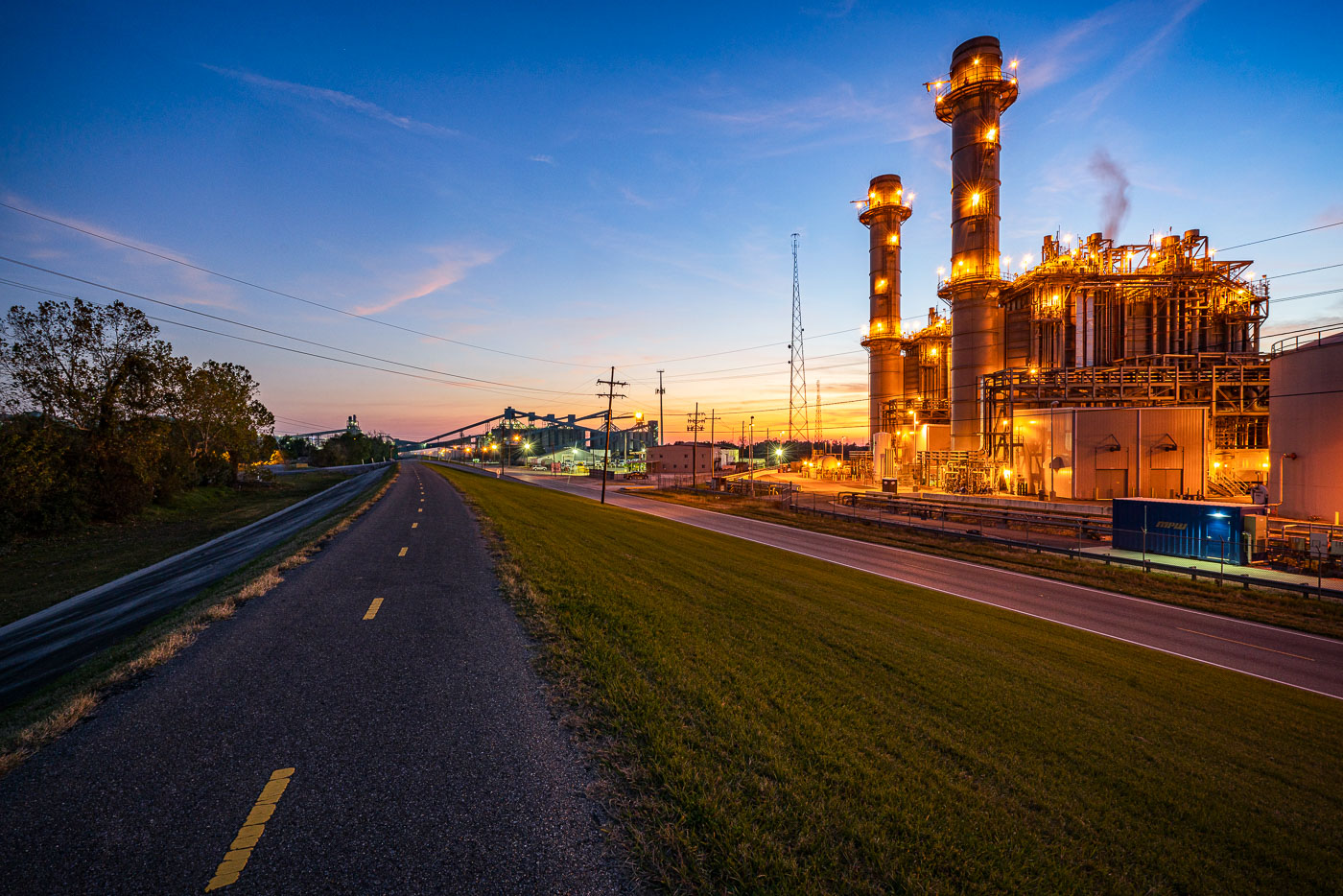
Entergy Ninemile 6 Power Plant, Westwego, Louisiana
Entergy Corp’s natural gas-fired unit at the Ninemile power plant in Westwego. The 560-megawatt unit (known as Ninemile 6) went online in December of 2014 after a construction cost of $655 million.
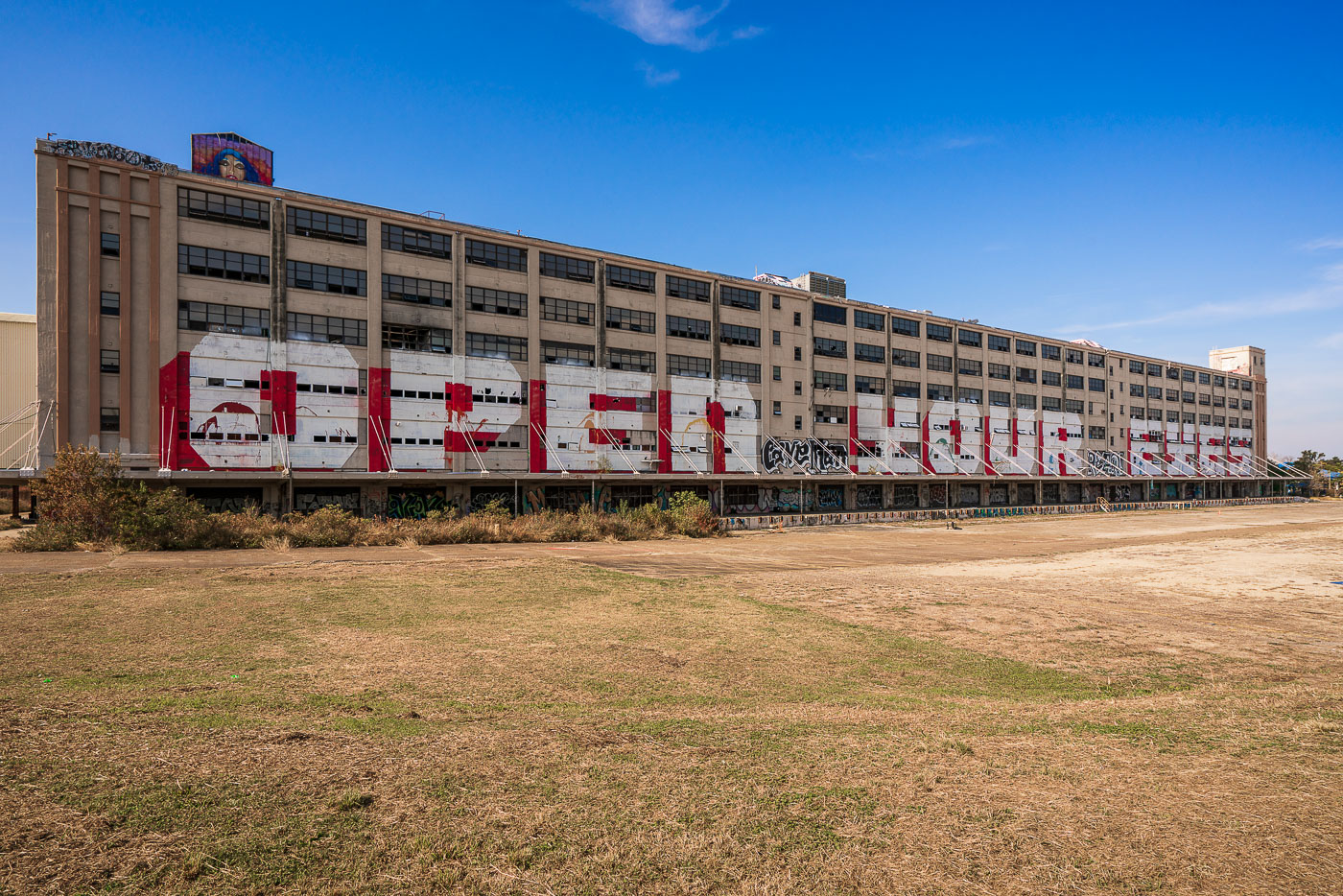
Graffiti on Naval Support Activity Warehouse, New Orleans
Large-scale graffiti covers the façade of a decommissioned warehouse at the former Naval Support Activity base in New Orleans, Louisiana. Once part of a sprawling military logistics hub along the Mississippi River, the site has since become an unofficial canvas for artists and taggers. The “Open House” mural stretches across multiple bays of the building, symbolizing both abandonment and transformation as the complex awaits redevelopment under civic revitalization plans.
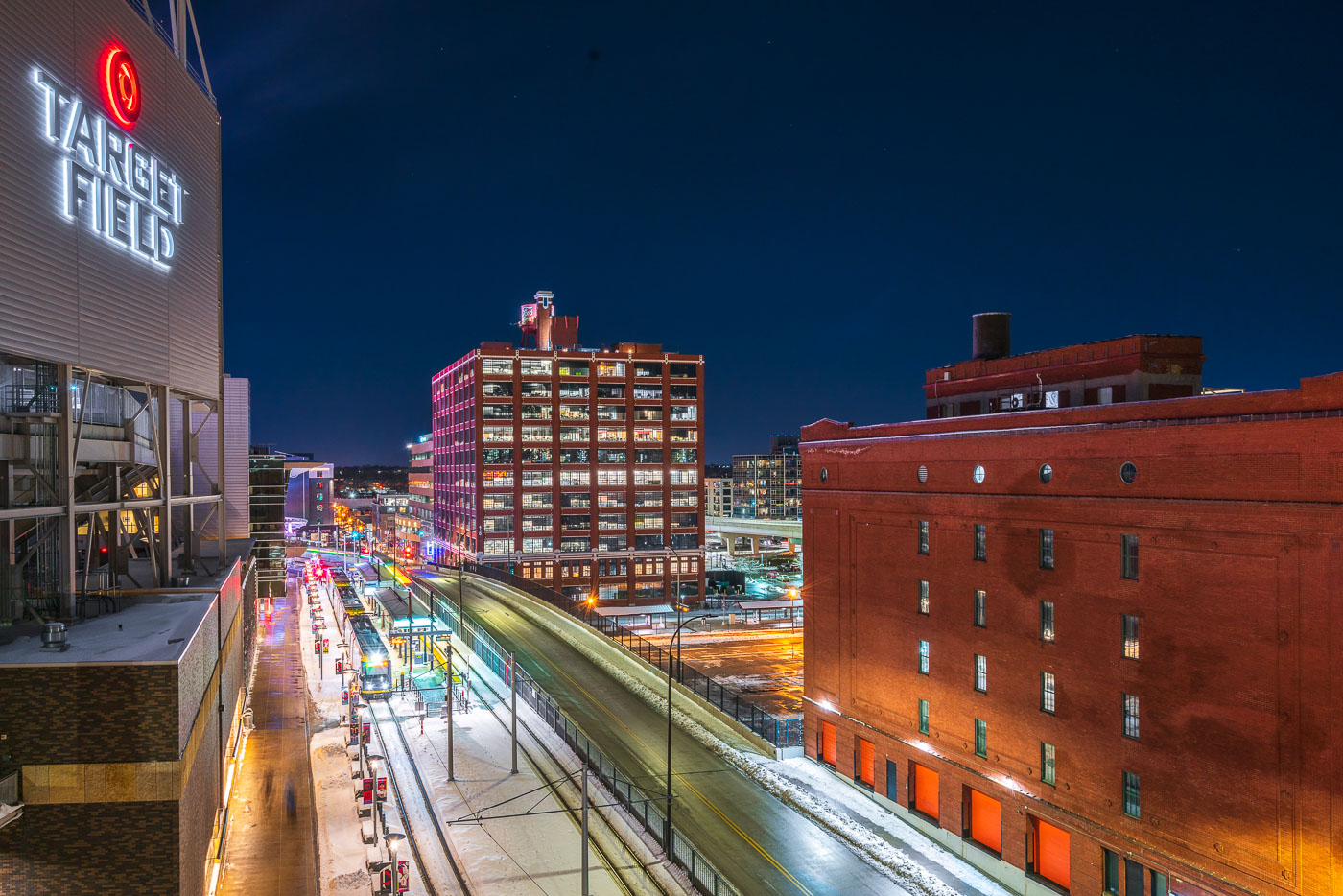
Target Field Station and Warehouse District at Night
The illuminated Target Field sign overlooks the Warehouse District in downtown Minneapolis, where the city’s historic brick warehouses meet modern transit and redevelopment. Below, the Metro Green and Blue Line trains stop at Target Field Station, a multimodal hub linking light rail, commuter rail, and bike paths. The brightly lit Ford Center and preserved brick structures along 5th Street North illustrate the district’s mix of 20th-century industrial architecture and contemporary urban life, framed against the cold clarity of a Minnesota winter night.
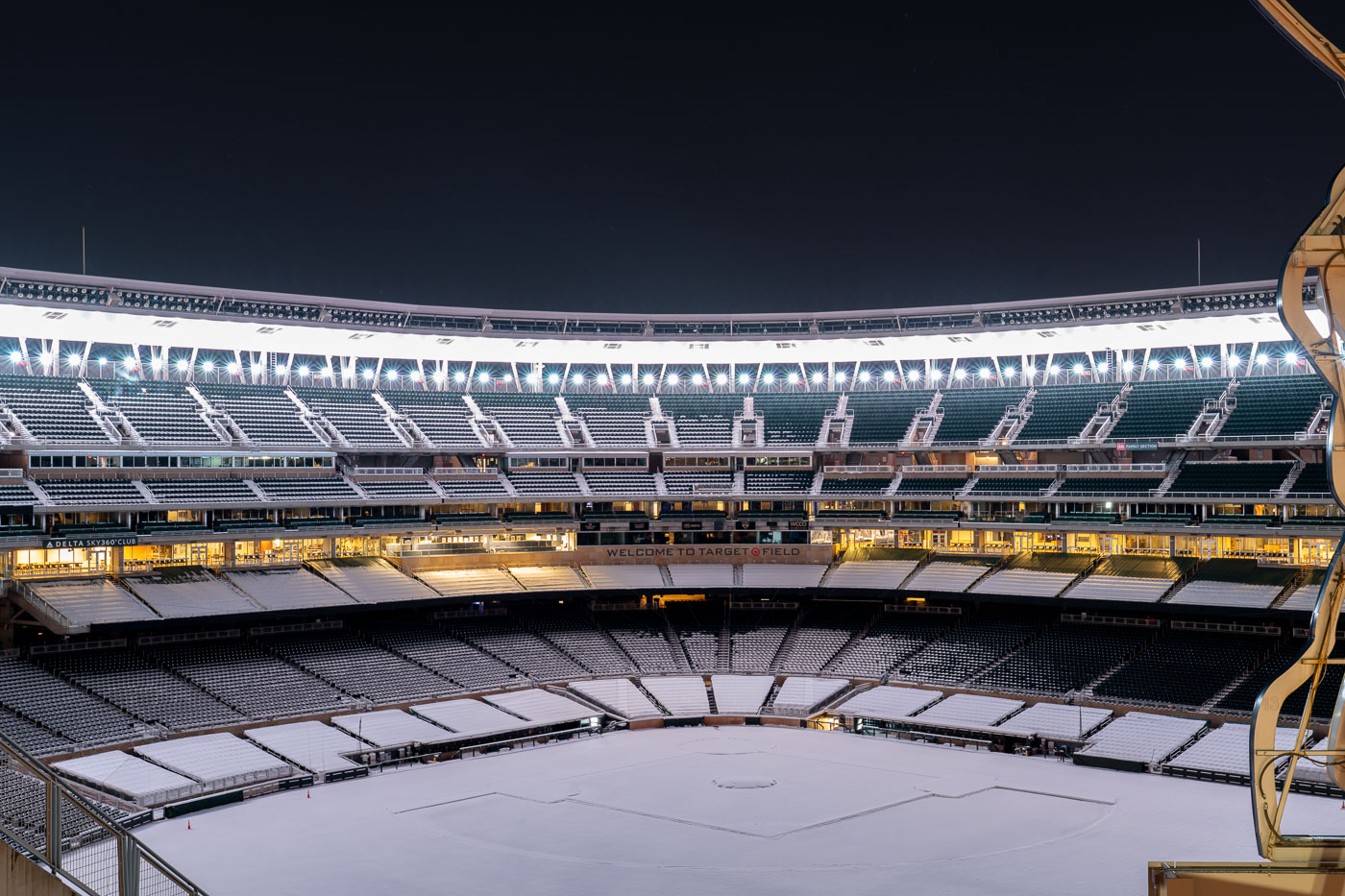
Target Field in December Snow, Minneapolis
Snow covered Target Field, home of the Minnesota Twins MLB team.
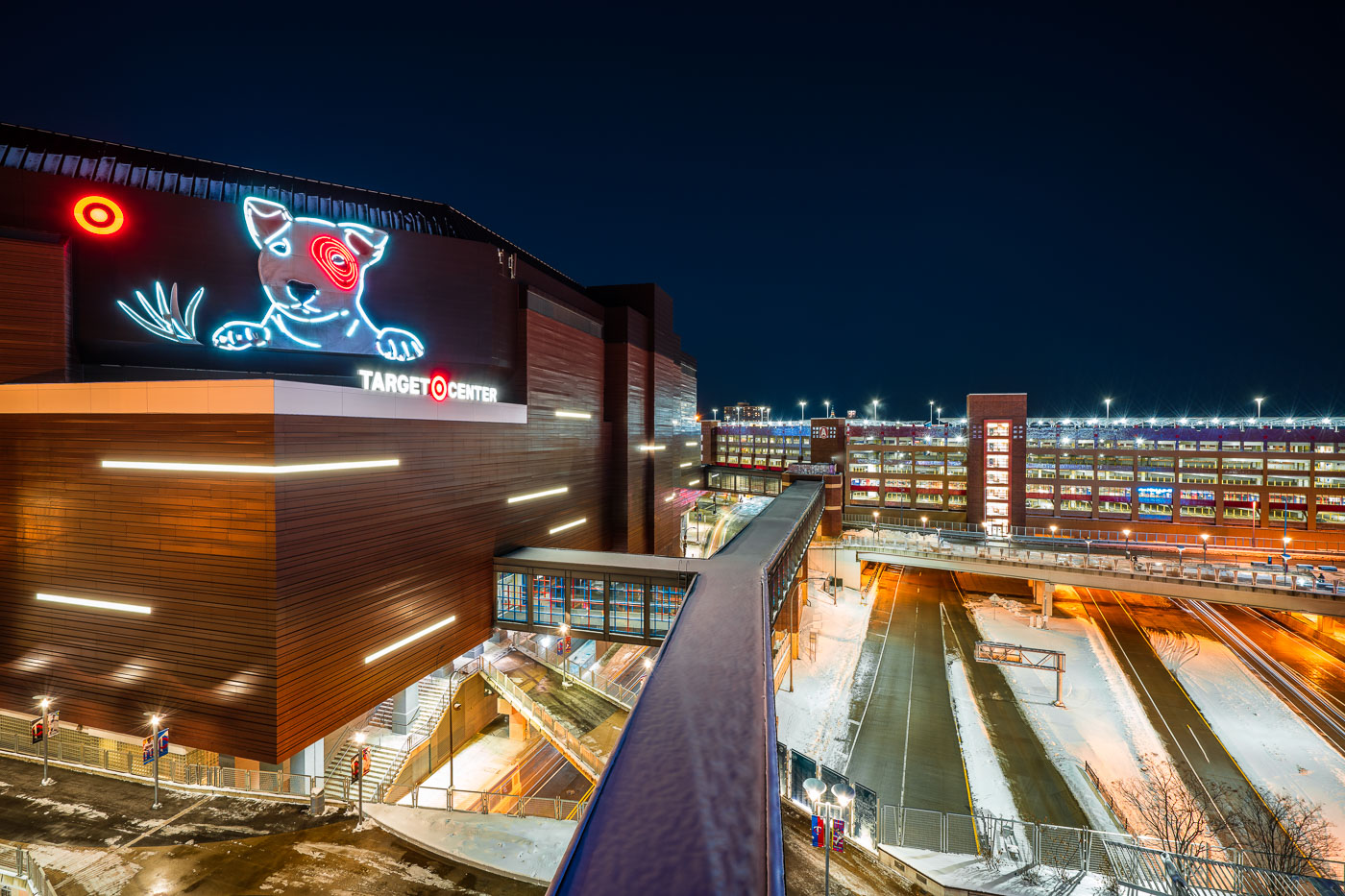
Target Center and Ramp A Skyway, Minneapolis
The Target Center’s neon Bullseye dog glows above 1st Avenue North, marking one of Minneapolis’ most recognizable downtown landmarks. Opened in 1990 and renovated in 2017 with a modern metal facade, the arena is home to the Minnesota Timberwolves and a hub for concerts and civic events. In the foreground, the enclosed skyway leads to Ramp A — part of the city’s expansive elevated walkway network that connects much of downtown. Snow-lined streets and the layered lighting of the ramps emphasize Minneapolis’ engineered adaptation to both density and winter.
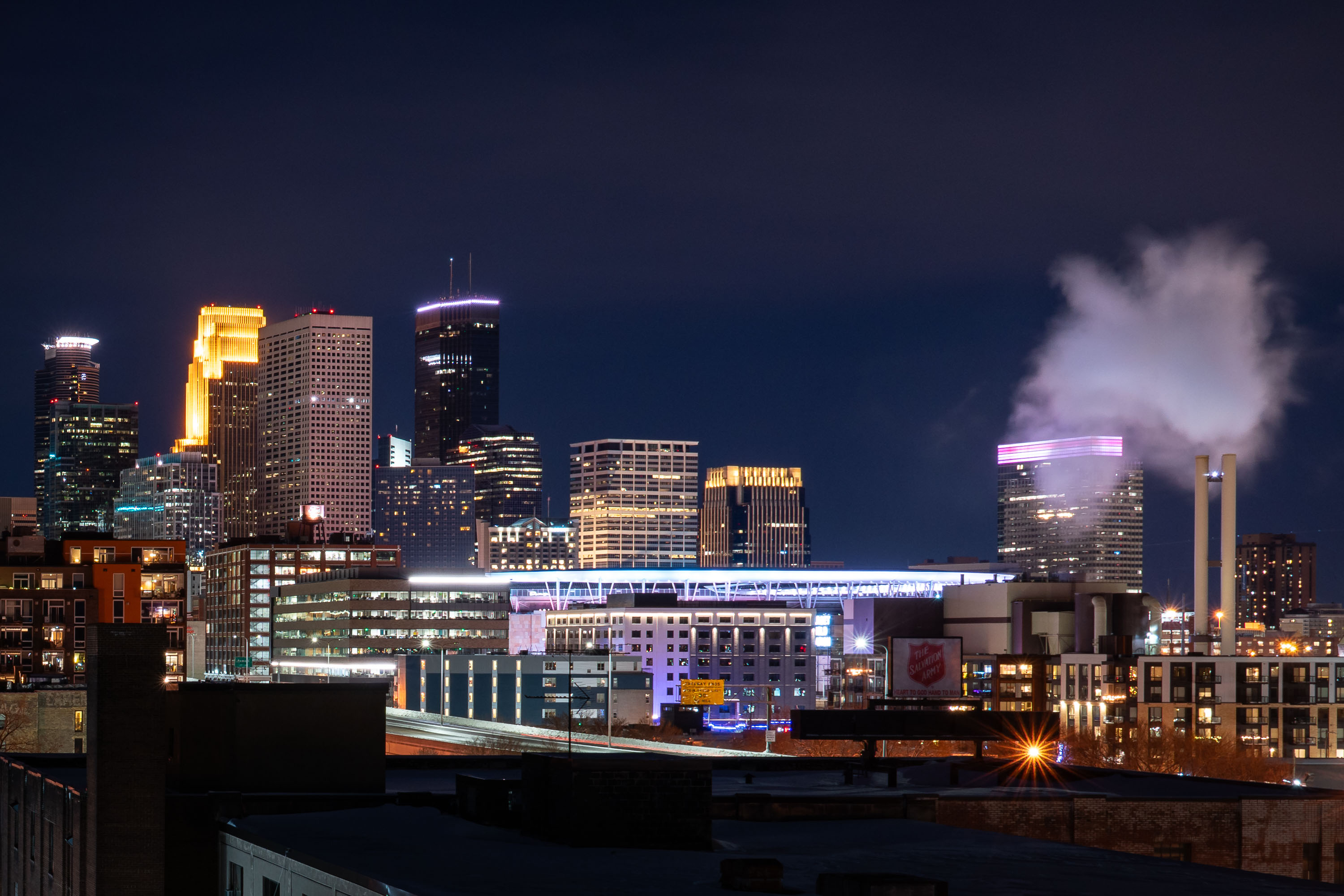
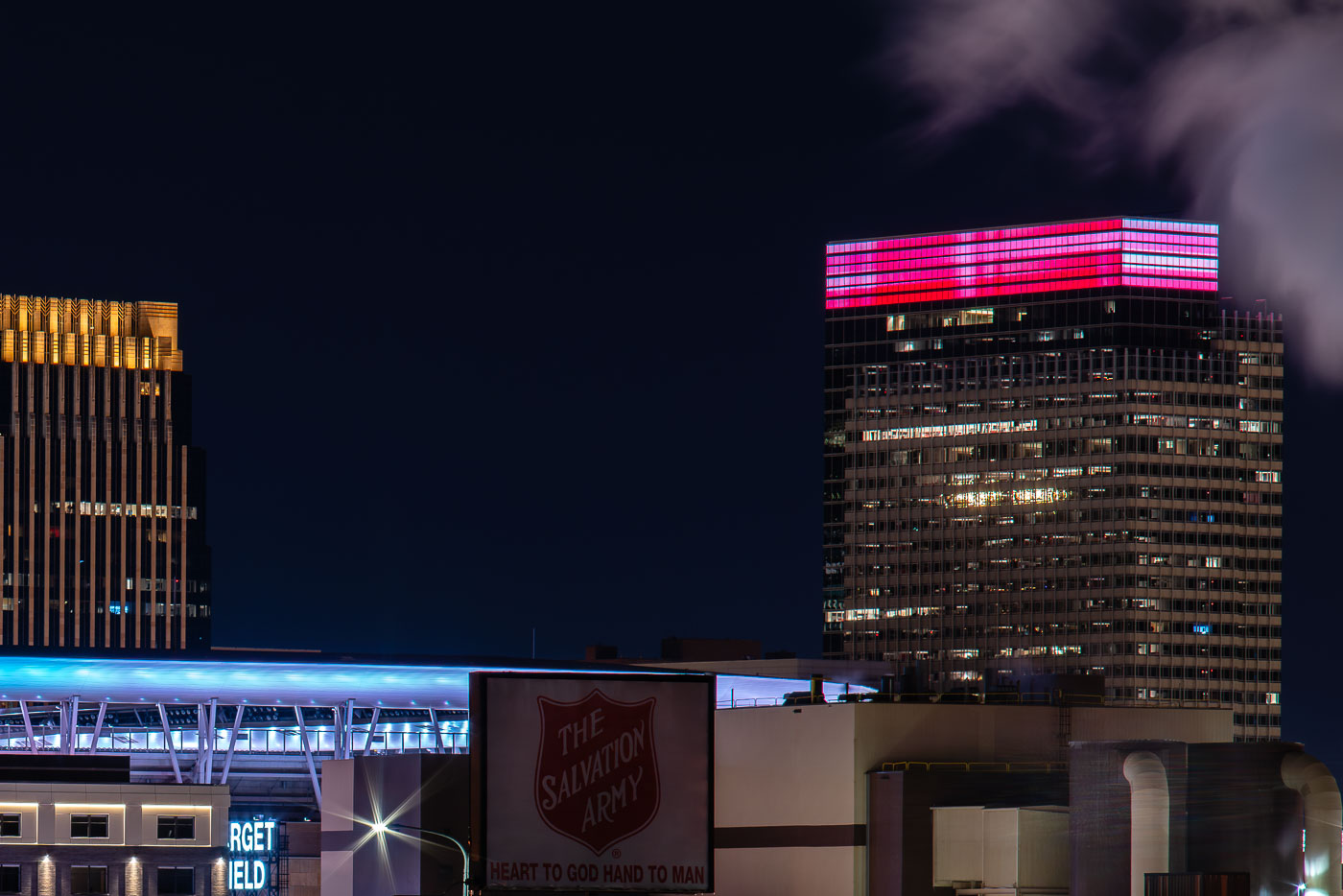
Salvation Army and Target HQ, Minneapolis North Loop
The Salvation Army sign with Target Field and Target Plaza South, Target World Headquarters, in the North Loop in Minneapolis.
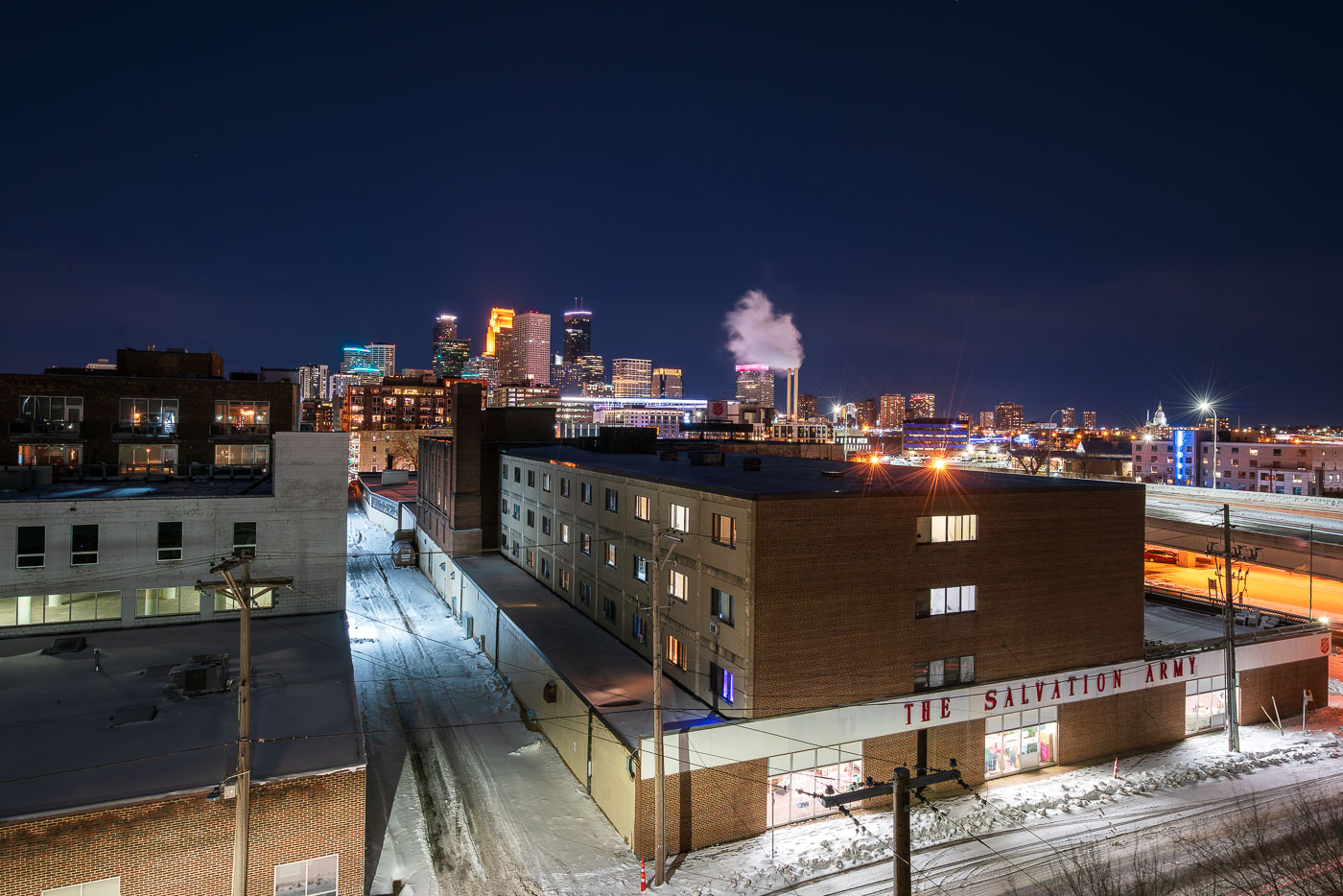
The Salvation Army, Minneapolis at Night
On a cold winter night in Minneapolis, the Salvation Army’s brick building stands in the foreground, a reminder of the nonprofit’s long presence serving those in need near the city’s downtown core. Beyond it, steam rises from the nearby power plant while the illuminated skyline glows with high-rise towers, blending industrial grit with modern glass. The juxtaposition of snowy side streets, mid-century warehouses, and gleaming skyscrapers reflects the city’s layered history — from its working-class roots to its contemporary role as a regional hub of commerce and culture.
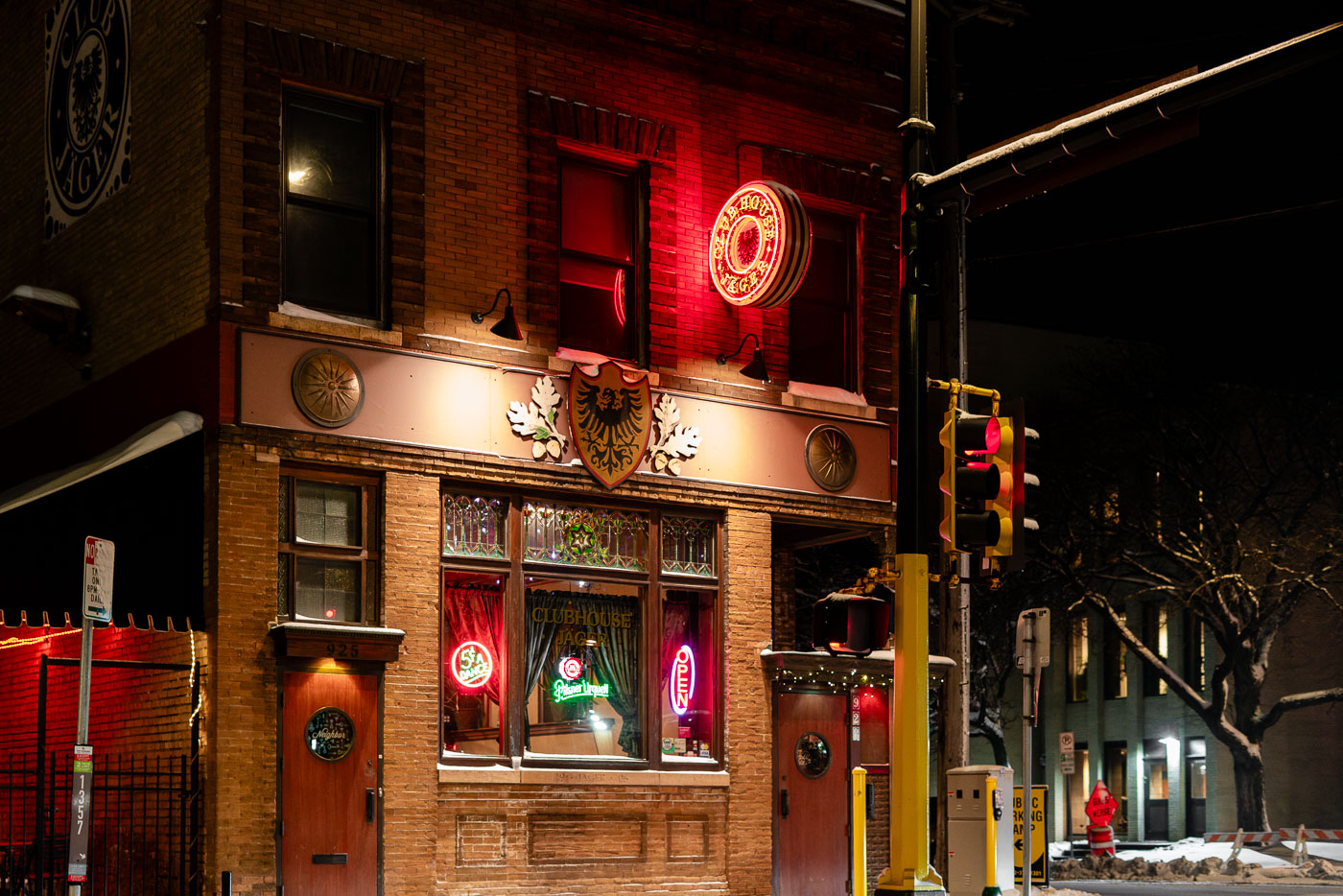
Clubhouse Jäger, North Loop, Minneapolis
The now closed Clubhouse Jager bar in the North Loop Minneapolis.