United States Government

10 photos · 2009–2019

10 photographs tagged United States Government, 2009–2019.

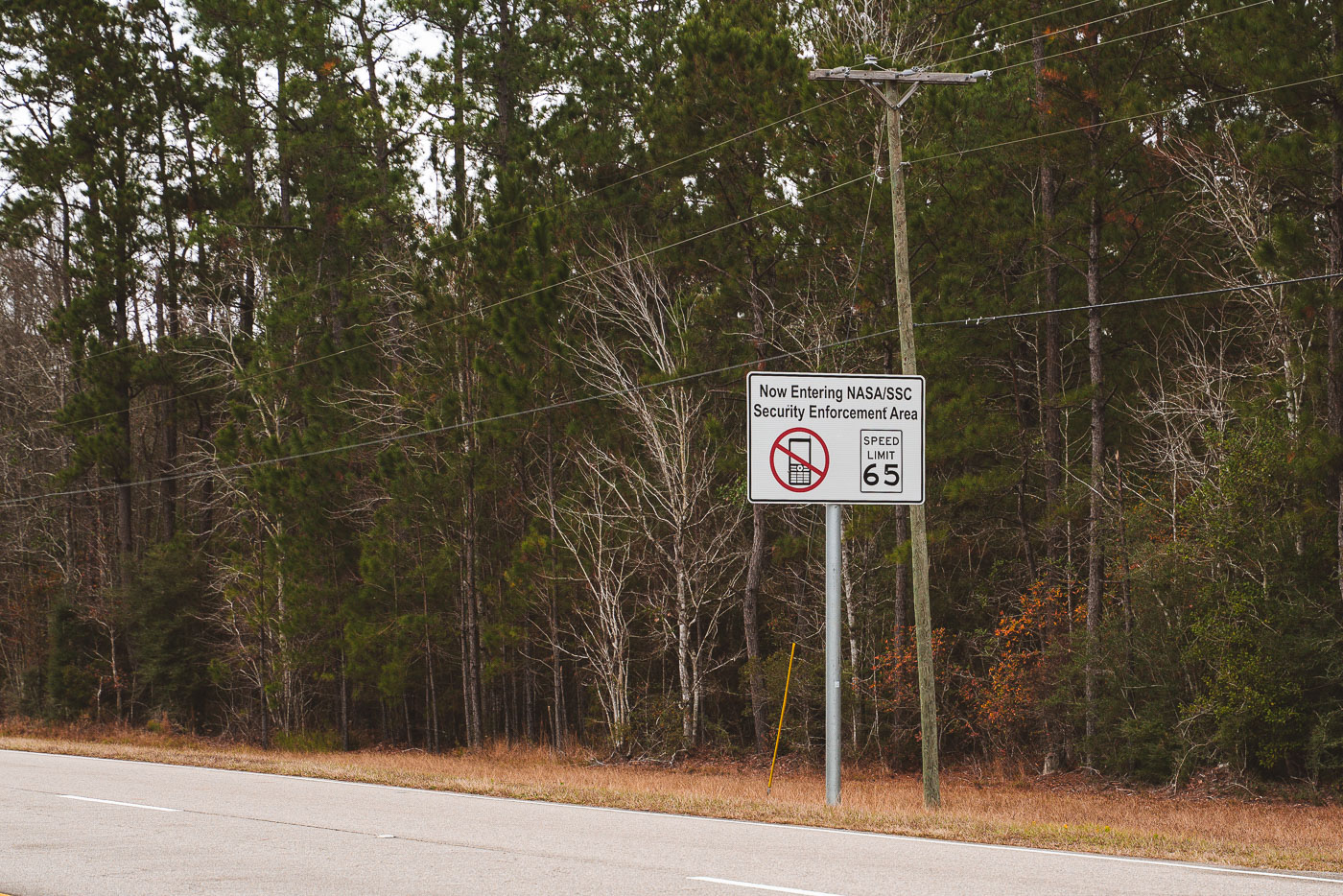
Security enforcement area sign marking NASA Stennis Space Center entrance on Highway 607 in Mississippi.
Stennis Space Center in Hancock County, Mississippi, is NASA's largest rocket propulsion test facility, covering about 125,000 acres of mostly undeveloped buffer land surrounding its test stands. That buffer zone, established to contain noise and provide a safety margin for engine testing, is patrolled under federal security authority, and signs along approaches like Highway 607 warn drivers they are entering a monitored enforcement area. The center has tested engines for the Apollo, Space Shuttle, and Artemis programs since the 1960s, and its test areas remain active NASA property despite the surrounding forest and rural roads.

Security Enforcement Area Sign Near NASA Stennis Space Center
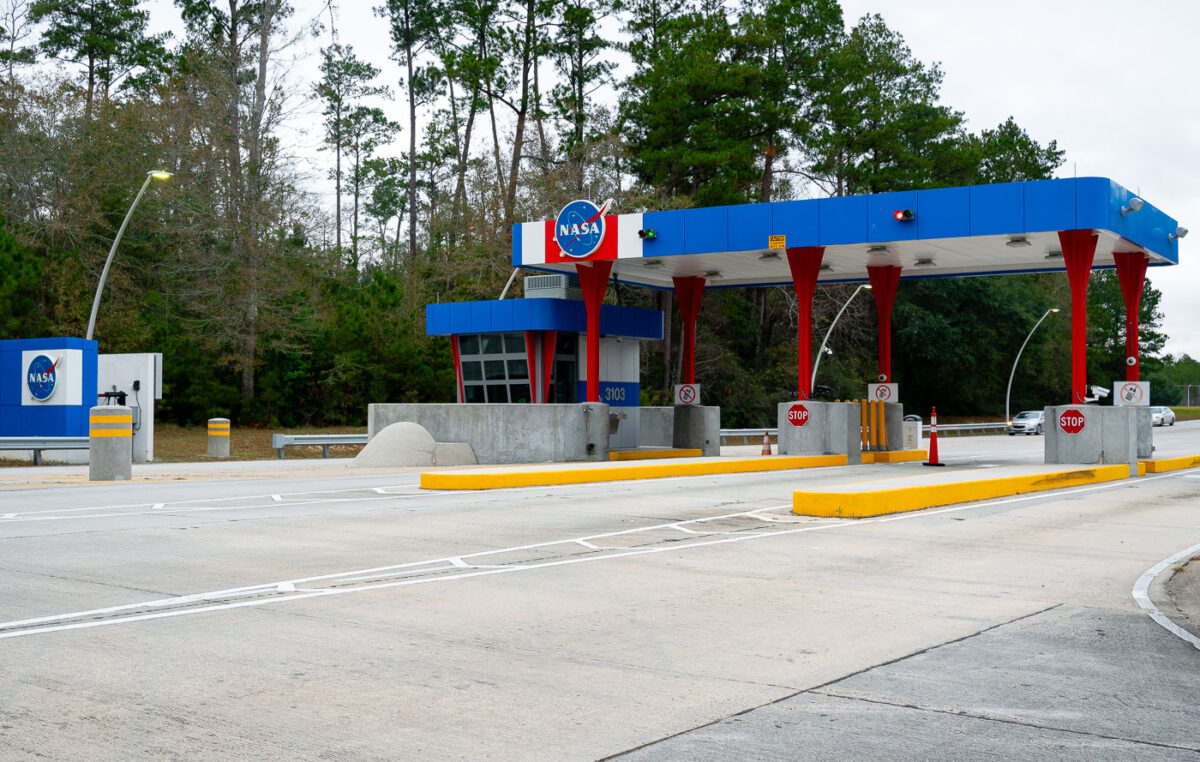
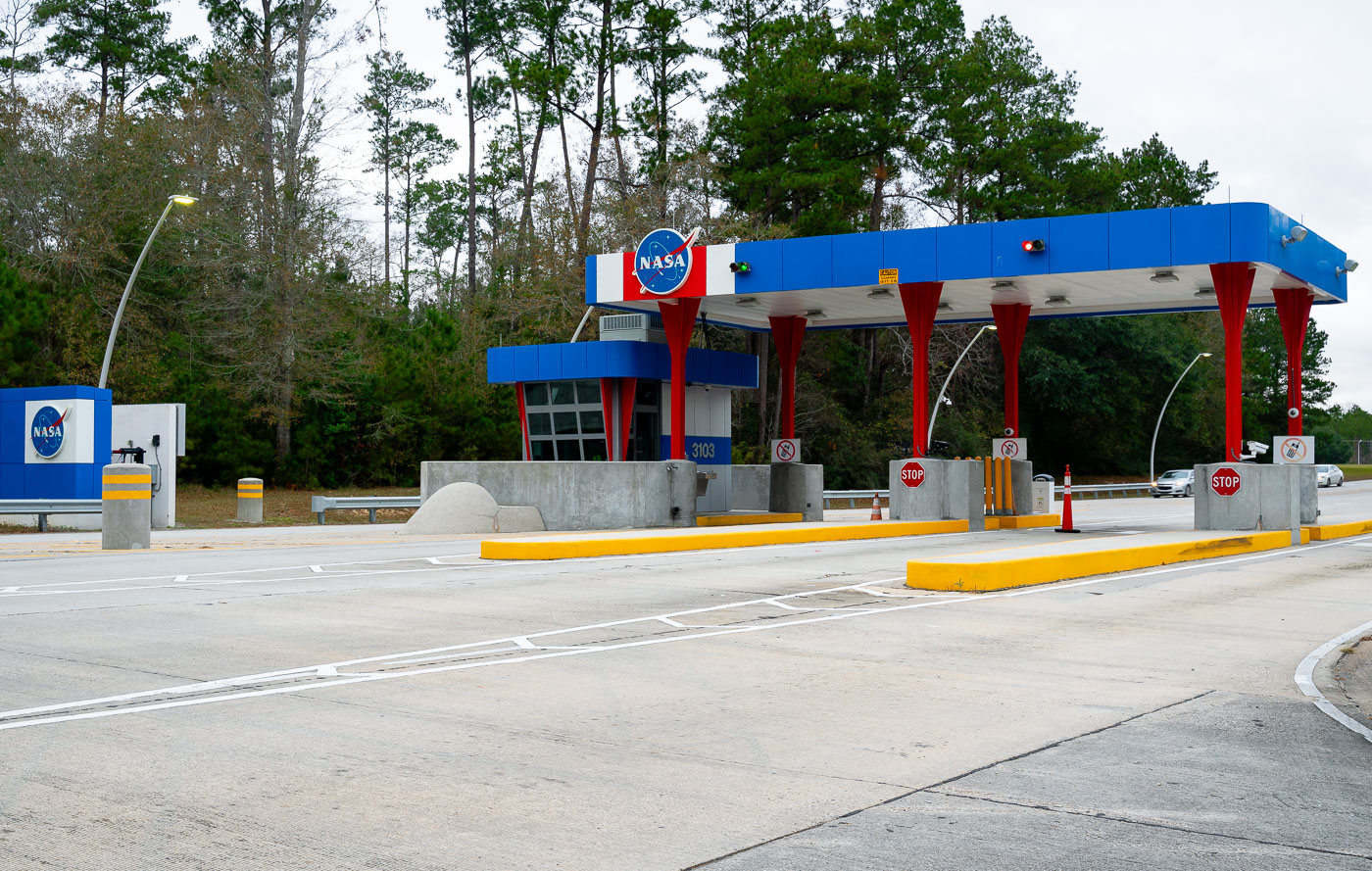
NASA Stennis Space Center security gate in Mississippi controls access to the rocket propulsion test facility.
Stennis Space Center sits on roughly 125,000 acres in Hancock County, Mississippi, near the Pearl River. NASA established the site in the early 1960s to test the Saturn V rocket stages used in the Apollo program, and it later served as the proving ground for Space Shuttle main engines before every shuttle flight. Today the center supports engine testing for NASA's Artemis program and hosts commercial aerospace tenants, including Aerojet Rocketdyne and Relativity Space. Security checkpoints like this one regulate access to the test complex and surrounding federal property, which also includes a buffer zone once used to relocate area residents during the site's construction.

Entrance Checkpoint at NASA Stennis Space Center
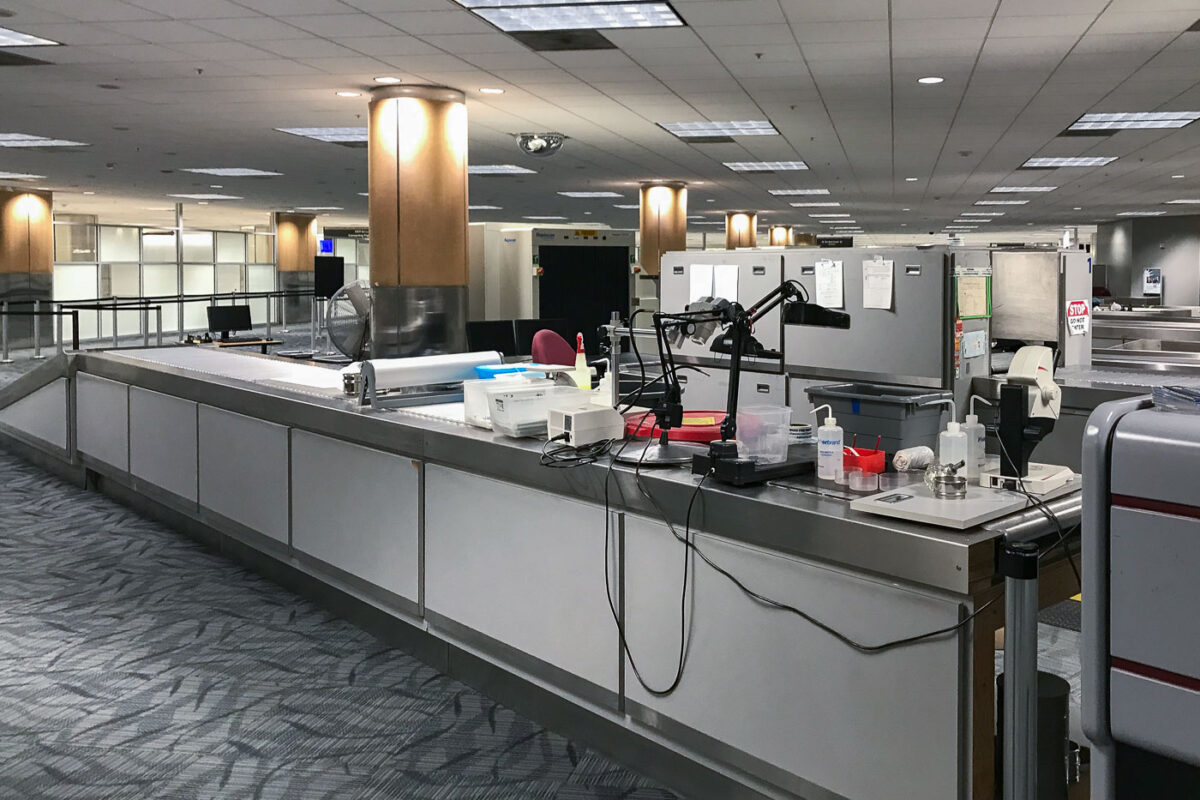
TSA secondary screening area at Hartsfield-Jackson Atlanta International Airport with inspection equipment and conveyor systems.
Hartsfield-Jackson Atlanta International Airport is the world's busiest passenger airport by passenger traffic. The Transportation Security Administration screens checked and carry-on bags at checkpoints like this one, where officers use explosive trace detection swabs, handheld wands, and inspection tables to examine bags that need a closer look beyond the standard X-ray scan. TSA has staffed U.S. airport checkpoints since the agency was created in 2001 under the Department of Homeland Security.

TSA Bag Inspection Table at Hartsfield-Jackson Atlanta Airport
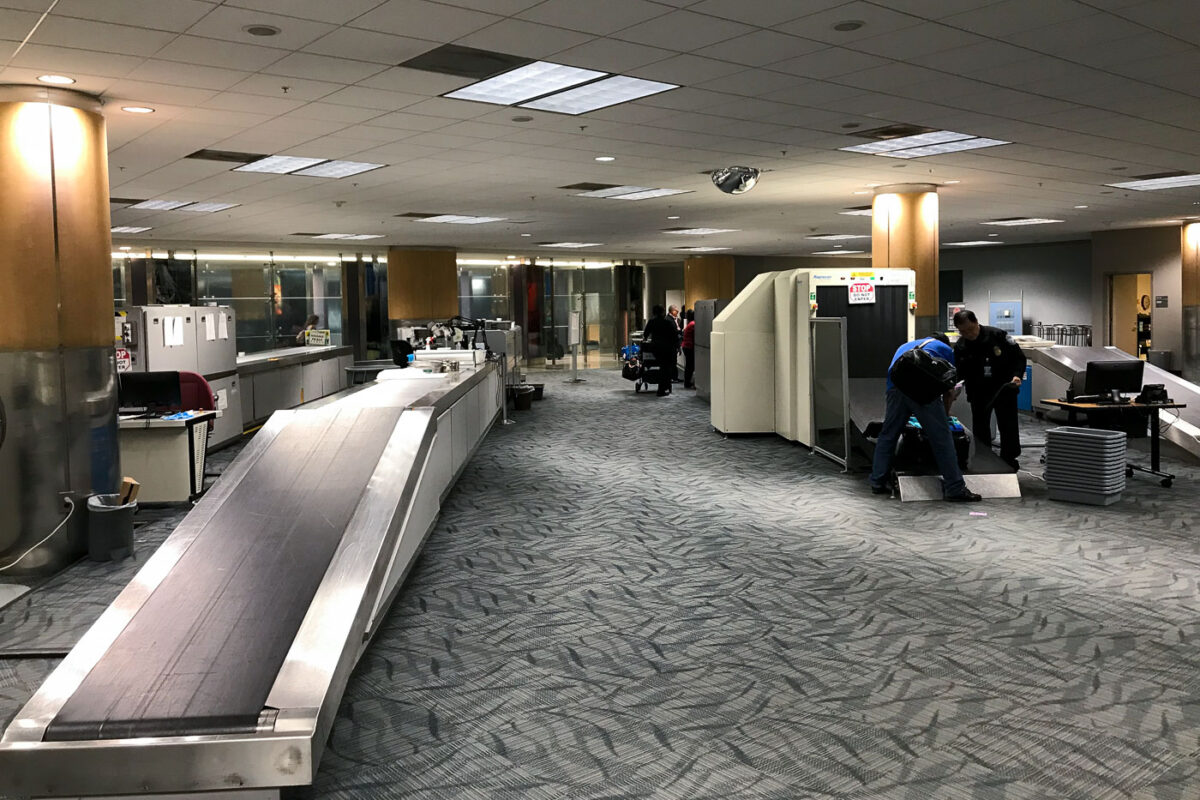
TSA officers conduct secondary screening of travelers at Hartsfield-Jackson Atlanta International Airport security checkpoint.
Hartsfield-Jackson Atlanta International Airport is the world's busiest airport by passenger traffic, handling more than 100 million travelers a year. TSA officers use an X-ray scanner near the baggage carousels to inspect a bag pulled aside for closer inspection.

TSA Baggage Screening Near Carousels at Hartsfield-Jackson Airport
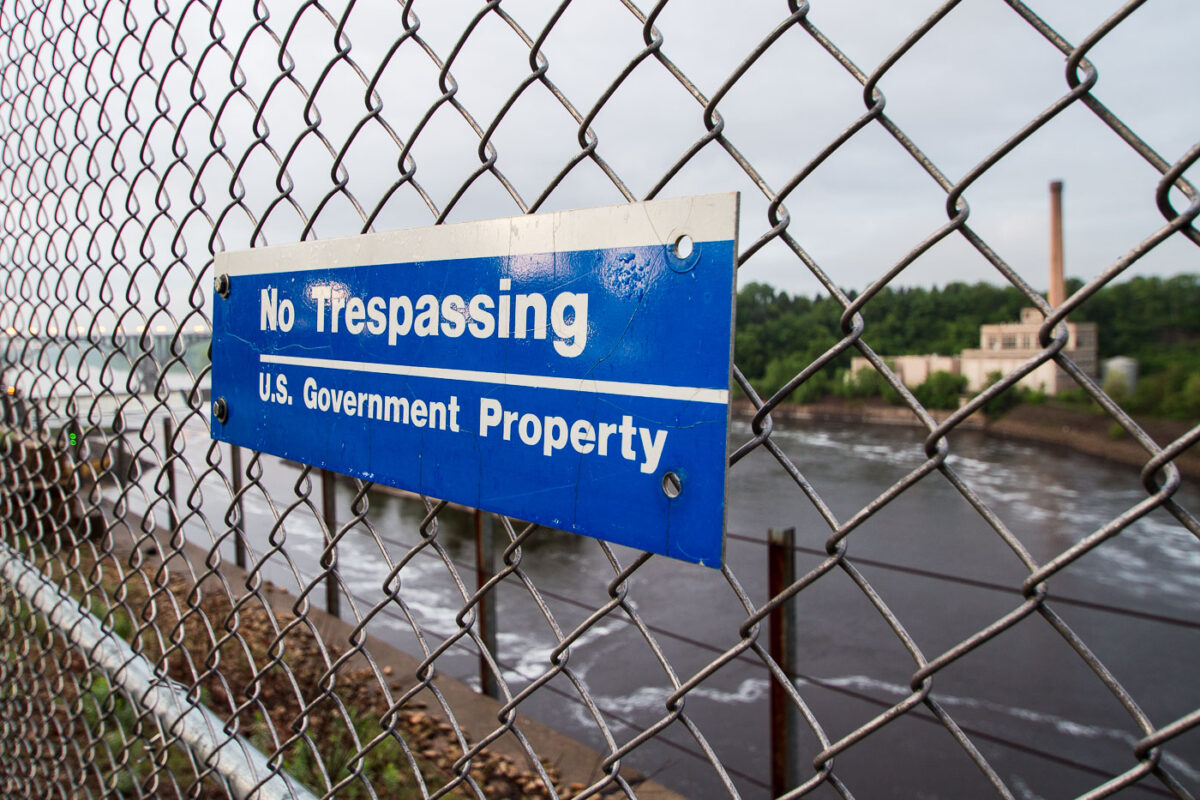
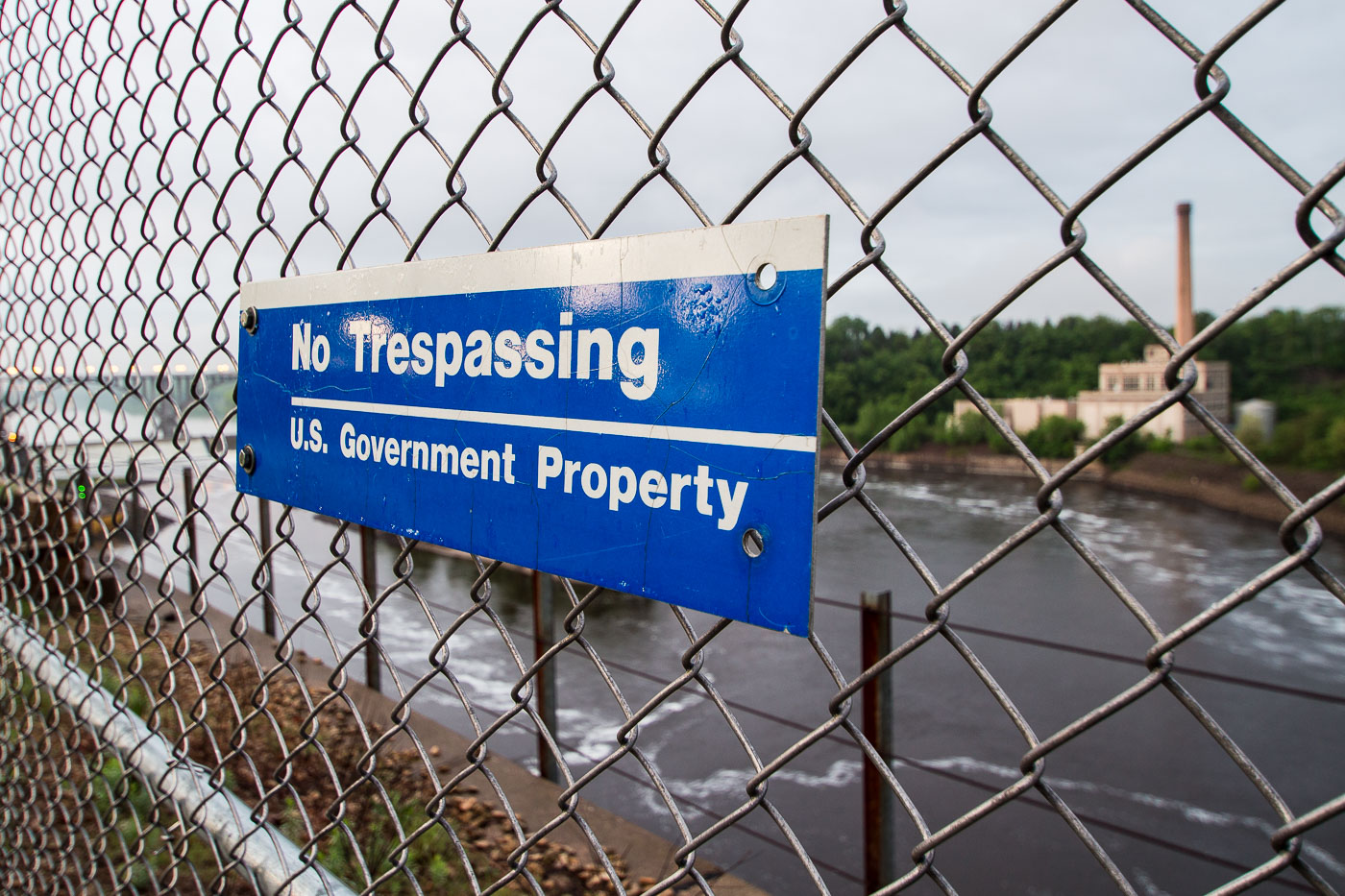
A "No Trespassing, U.S. Government Property" sign on a chain-link fence overlooking the Mississippi River in St. Paul, Minnesota.
A "No Trespassing, U.S. Government Property" sign is visible on a chain-link fence overlooking the Mississippi River in St. Paul, Minnesota.

No Trespassing Sign, Mississippi River, St. Paul
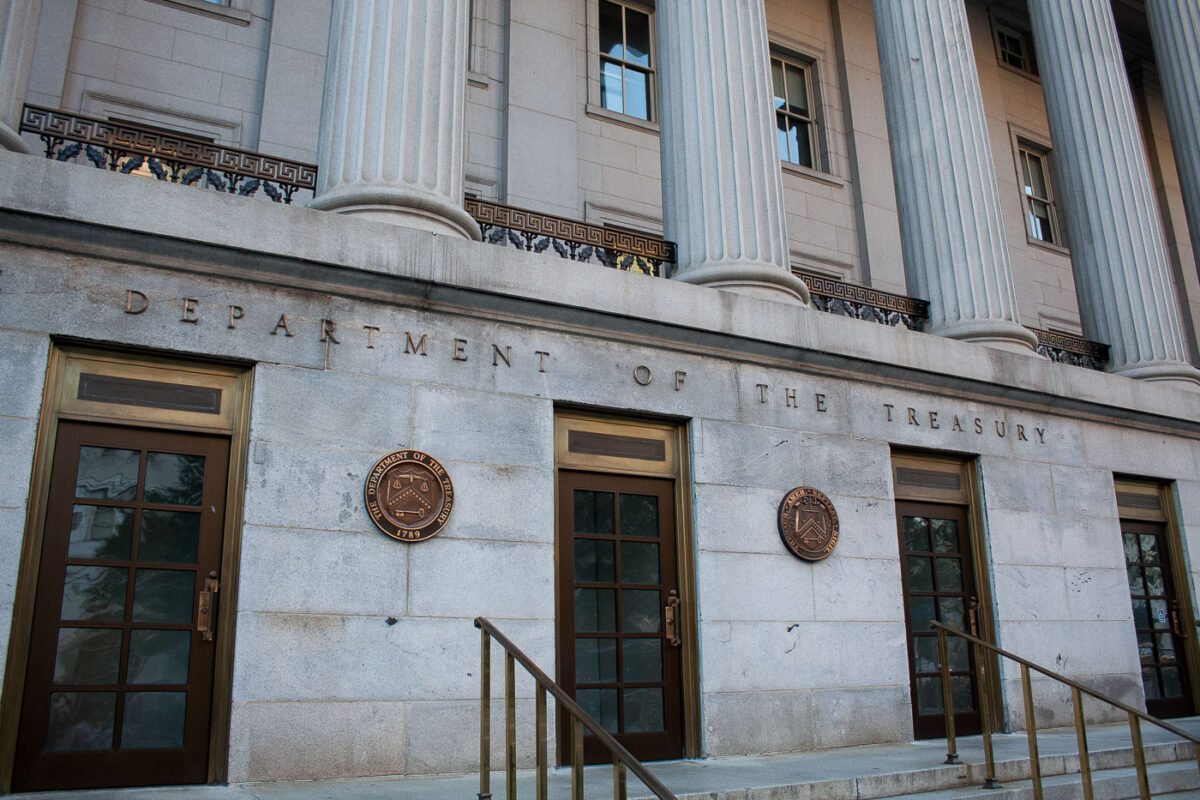
Department of the Treasury Building entrance on Pennsylvania Avenue in Washington DC, showing granite facade with bronze seals.
The Department of the Treasury has occupied this building at 1500 Pennsylvania Avenue since 1869, when architect Alfred B. Mullett completed the final wing of a project begun decades earlier under Robert Mills. The department itself dates to 1789, established by Congress as one of the original executive departments to manage federal revenue and public credit. Bronze seals flanking the entrance doors identify the building as the agency's headquarters, a role it has held for more than 150 years. The structure sits adjacent to the White House grounds, a placement that reportedly irritated President Andrew Jackson, who wanted an unobstructed view down Pennsylvania Avenue.

Entrance to the Department of the Treasury Headquarters
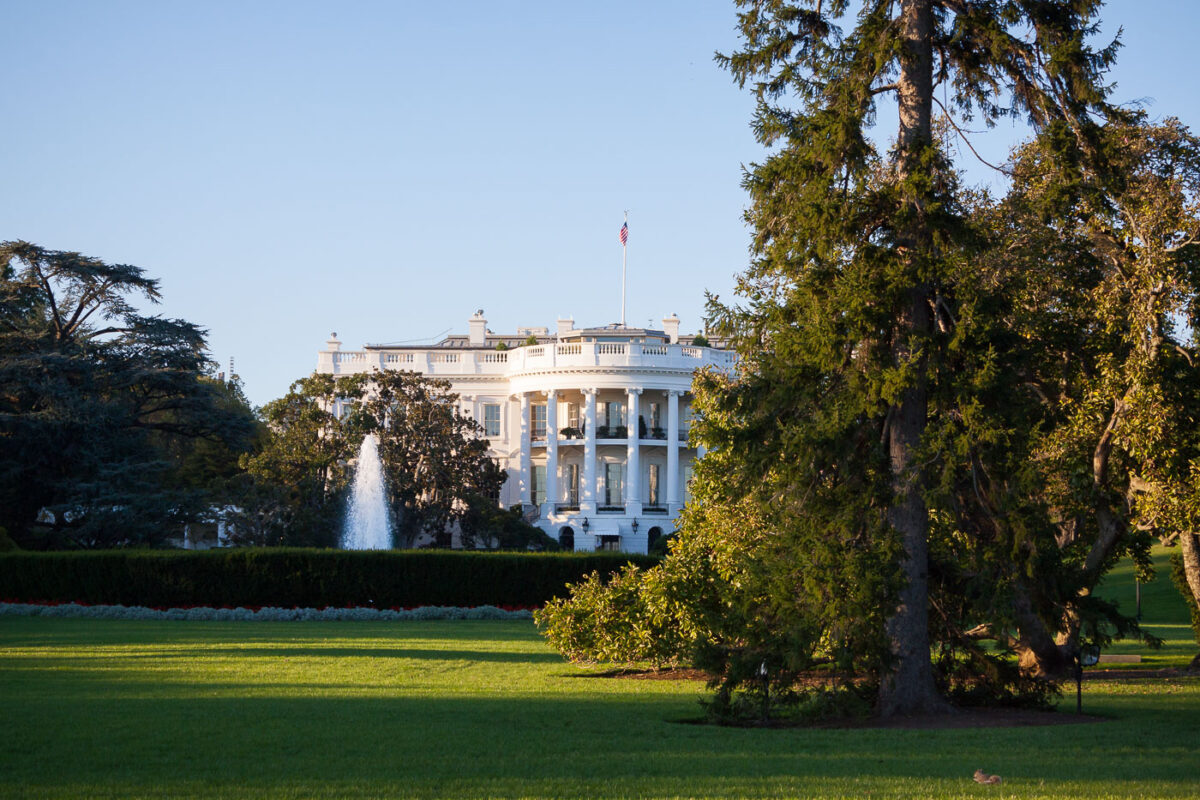
The White House South Portico and fountain viewed across the South Lawn in Washington, DC.
The South Portico, a semicircular addition designed by architect James Hoban, was completed in 1824 during a renovation effort following the building's 1814 burning by British troops. The Truman Balcony, added in 1948 under President Truman, sits within its columns and remains a frequent source of controversy among preservationists who opposed altering Hoban's original design. The fountain on the South Lawn marks the area where Marine One lands when the president travels by helicopter. The South Lawn also hosts the annual Easter Egg Roll, a White House tradition dating to 1878 under President Rutherford B. Hayes.

South Portico of the White House Across the South Lawn

Daniel Chester French's marble statue of Abraham Lincoln seated in the Lincoln Memorial chamber.
Daniel Chester French designed the seated figure of Abraham Lincoln housed in the memorial's central chamber, carved from Georgia marble and assembled from 28 separate blocks. The Piccirilli Brothers of New York carved the statue, which stands 19 feet tall, completing the work in time for the memorial's 1922 dedication. The inscription above the statue reads: "In this temple, as in the hearts of the people for whom he saved the Union, the memory of Abraham Lincoln is enshrined forever." Architect Henry Bacon modeled the surrounding hall on a Greek Doric temple, with 36 exterior columns representing the states of the Union at the time of Lincoln's death.

The Inscription Above Lincoln’s Statue at the Lincoln Memorial

The United States Department of the Interior, Bureau of Mines building in Minneapolis
The United States Department of the Interior, Bureau of Mines building in Minneapolis/ Established in 1910, the Bureau of Mines was tasked with promoting the conservation and efficient utilization of the nation's mineral and fuel resources. It has since been demolished.

US Department of the Interior, Bureau of Mines – Minneapolis

The Minneapolis Bureau of Mines building, part of the Department of the Interior, was a federal facility for mining research. Located in Minneapolis, Minnesota, it was closed in 1996.
The Minneapolis Bureau of Mines building, part of the Department of the Interior, was a federal facility dedicated to research and development in mining and mineral resources. Established to advance the understanding and utilization of the nation's mineral wealth, the Bureau played a significant role in geological surveys, safety research, and resource management. This building, located in Minneapolis, Minnesota, served as a hub for these critical scientific and governmental functions. Its demolition signifies the changing landscape of federal research facilities and the eventual closure of the Bureau of Mines itself in 1996.

Minneapolis Bureau of Mines Building, Department of the Interior

Built in Minneapolis

Minneapolis Photographer

Browse by location, move through long-running series, or start with recent work.