Government Building

5 photos · 2009–2010

5 photographs tagged Government Building, 2009–2010.
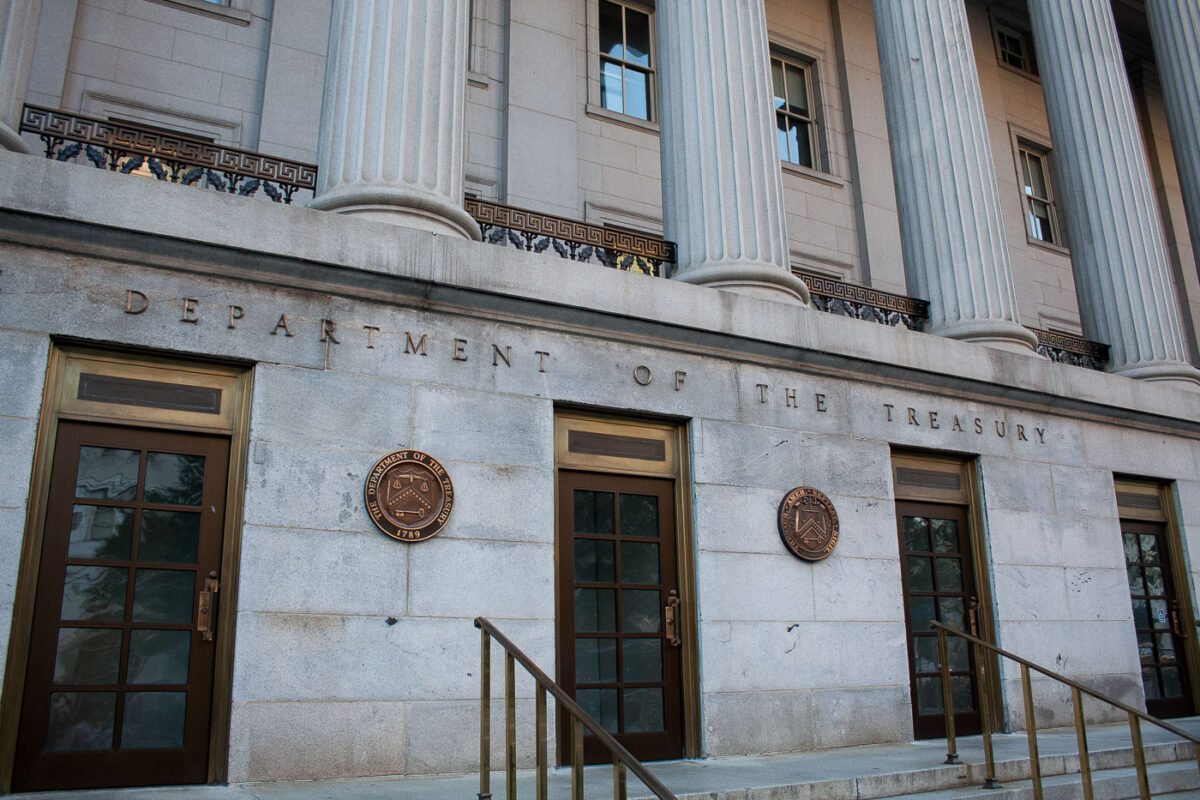
Department of the Treasury Building entrance on Pennsylvania Avenue in Washington DC, showing granite facade with bronze seals.
The Department of the Treasury has occupied this building at 1500 Pennsylvania Avenue since 1869, when architect Alfred B. Mullett completed the final wing of a project begun decades earlier under Robert Mills. The department itself dates to 1789, established by Congress as one of the original executive departments to manage federal revenue and public credit. Bronze seals flanking the entrance doors identify the building as the agency's headquarters, a role it has held for more than 150 years. The structure sits adjacent to the White House grounds, a placement that reportedly irritated President Andrew Jackson, who wanted an unobstructed view down Pennsylvania Avenue.

Entrance to the Department of the Treasury Headquarters
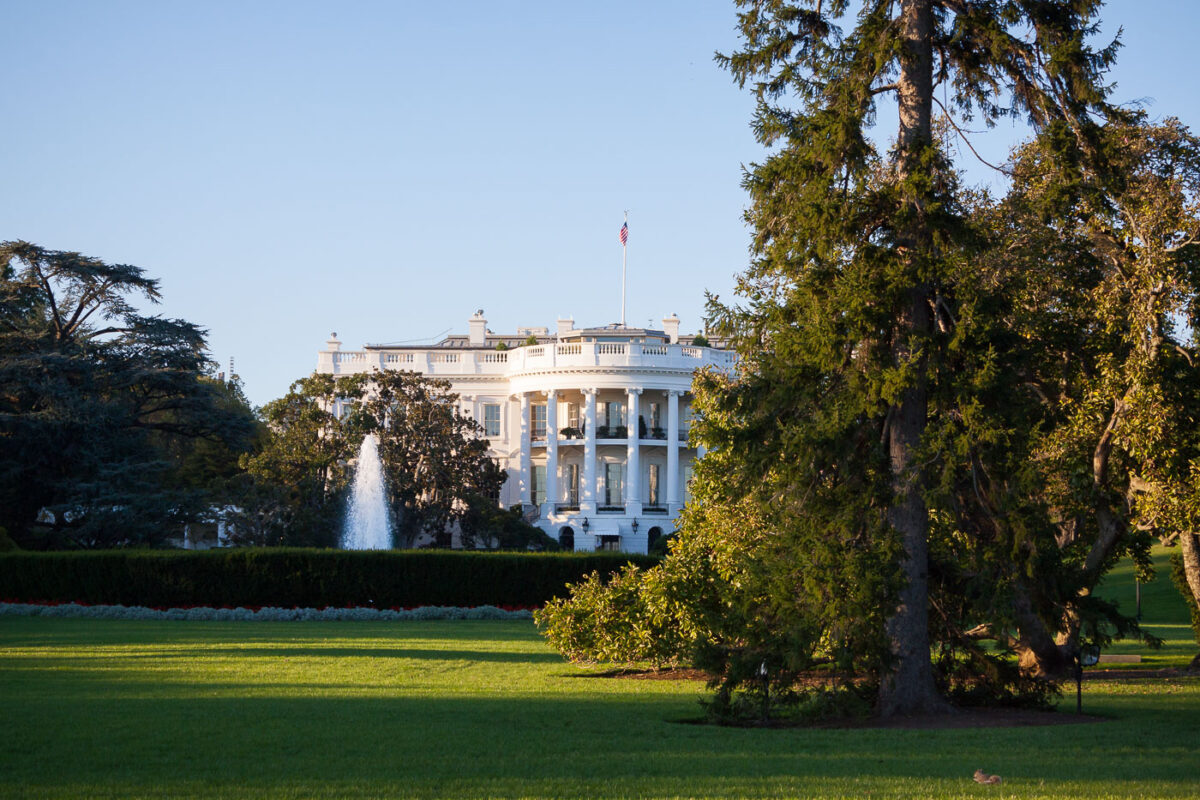
The White House South Portico and fountain viewed across the South Lawn in Washington, DC.
The South Portico, a semicircular addition designed by architect James Hoban, was completed in 1824 during a renovation effort following the building's 1814 burning by British troops. The Truman Balcony, added in 1948 under President Truman, sits within its columns and remains a frequent source of controversy among preservationists who opposed altering Hoban's original design. The fountain on the South Lawn marks the area where Marine One lands when the president travels by helicopter. The South Lawn also hosts the annual Easter Egg Roll, a White House tradition dating to 1878 under President Rutherford B. Hayes.

South Portico of the White House Across the South Lawn

Daniel Chester French's marble statue of Abraham Lincoln seated in the Lincoln Memorial chamber.
Daniel Chester French designed the seated figure of Abraham Lincoln housed in the memorial's central chamber, carved from Georgia marble and assembled from 28 separate blocks. The Piccirilli Brothers of New York carved the statue, which stands 19 feet tall, completing the work in time for the memorial's 1922 dedication. The inscription above the statue reads: "In this temple, as in the hearts of the people for whom he saved the Union, the memory of Abraham Lincoln is enshrined forever." Architect Henry Bacon modeled the surrounding hall on a Greek Doric temple, with 36 exterior columns representing the states of the Union at the time of Lincoln's death.

The Inscription Above Lincoln’s Statue at the Lincoln Memorial

The United States Department of the Interior, Bureau of Mines building in Minneapolis
The United States Department of the Interior, Bureau of Mines building in Minneapolis/ Established in 1910, the Bureau of Mines was tasked with promoting the conservation and efficient utilization of the nation's mineral and fuel resources. It has since been demolished.

US Department of the Interior, Bureau of Mines – Minneapolis

The Minneapolis Bureau of Mines building, part of the Department of the Interior, was a federal facility for mining research. Located in Minneapolis, Minnesota, it was closed in 1996.
The Minneapolis Bureau of Mines building, part of the Department of the Interior, was a federal facility dedicated to research and development in mining and mineral resources. Established to advance the understanding and utilization of the nation's mineral wealth, the Bureau played a significant role in geological surveys, safety research, and resource management. This building, located in Minneapolis, Minnesota, served as a hub for these critical scientific and governmental functions. Its demolition signifies the changing landscape of federal research facilities and the eventual closure of the Bureau of Mines itself in 1996.

Minneapolis Bureau of Mines Building, Department of the Interior

Built in Minneapolis

Minneapolis Photographer

Browse by location, move through long-running series, or start with recent work.