Wildlife

8 photos · 2009–2019

8 photographs tagged Wildlife, 2009–2019.
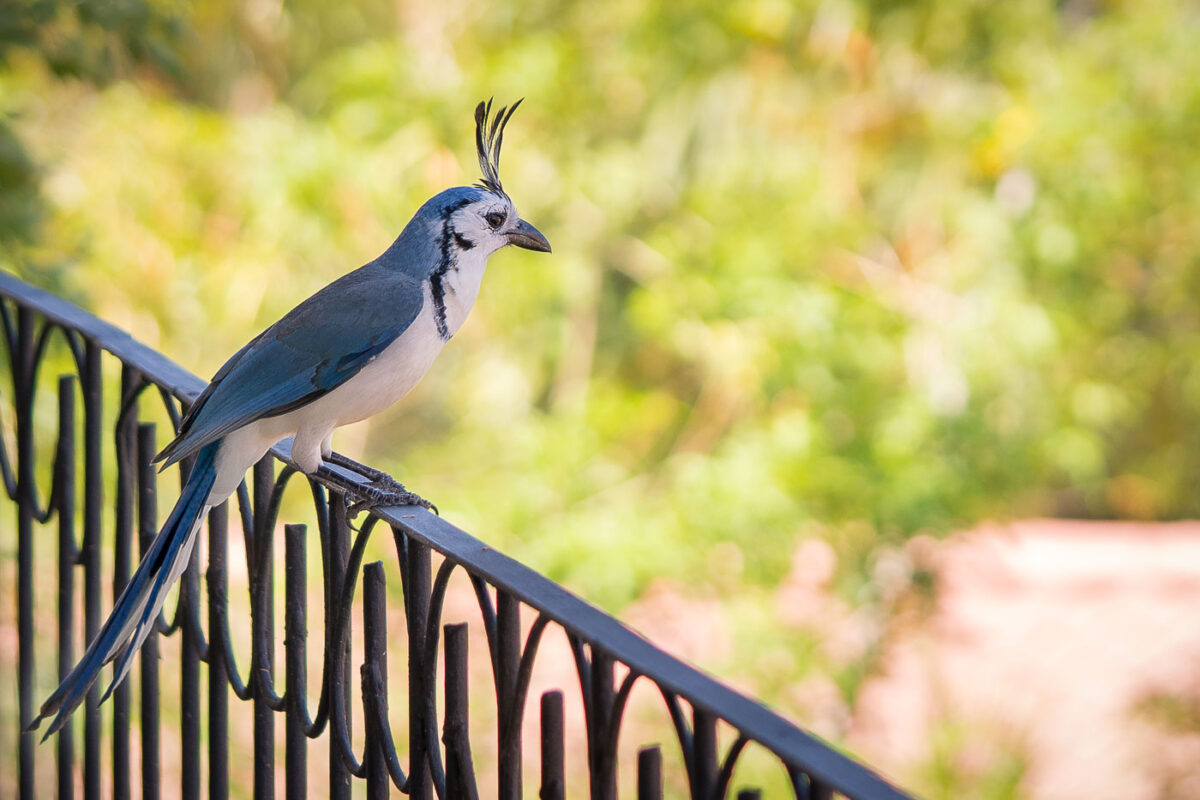
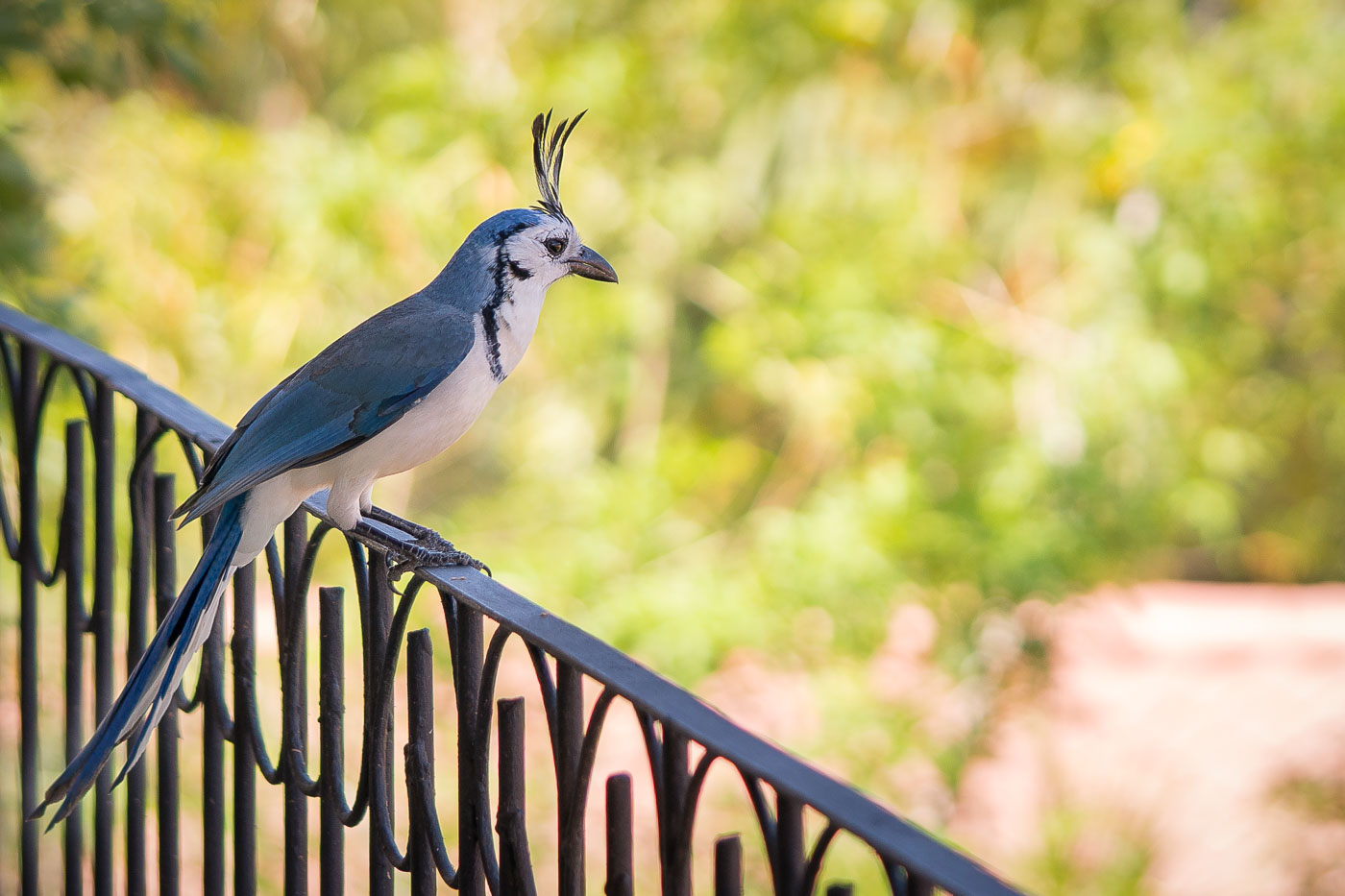
White-throated Magpie-Jay with distinctive crest perched on wrought-iron fence in Costa Rica.
The white-throated magpie-jay is a large jay native to the Pacific slope of Central America, ranging from southern Mexico into northwestern Costa Rica. It's easily identified by its long, graduated tail, curled forward-facing crest feathers, and the blue-and-white plumage with a dark necklace marking across the chest. The species favors dry forest and scrubland, and it has adapted readily to gardens, farms, and developed areas within its range. Magpie-jays are highly social, often traveling and foraging in small family groups that cooperate in raising young from previous broods.

White-throated Magpie-Jay on an Iron Railing in Guanacaste
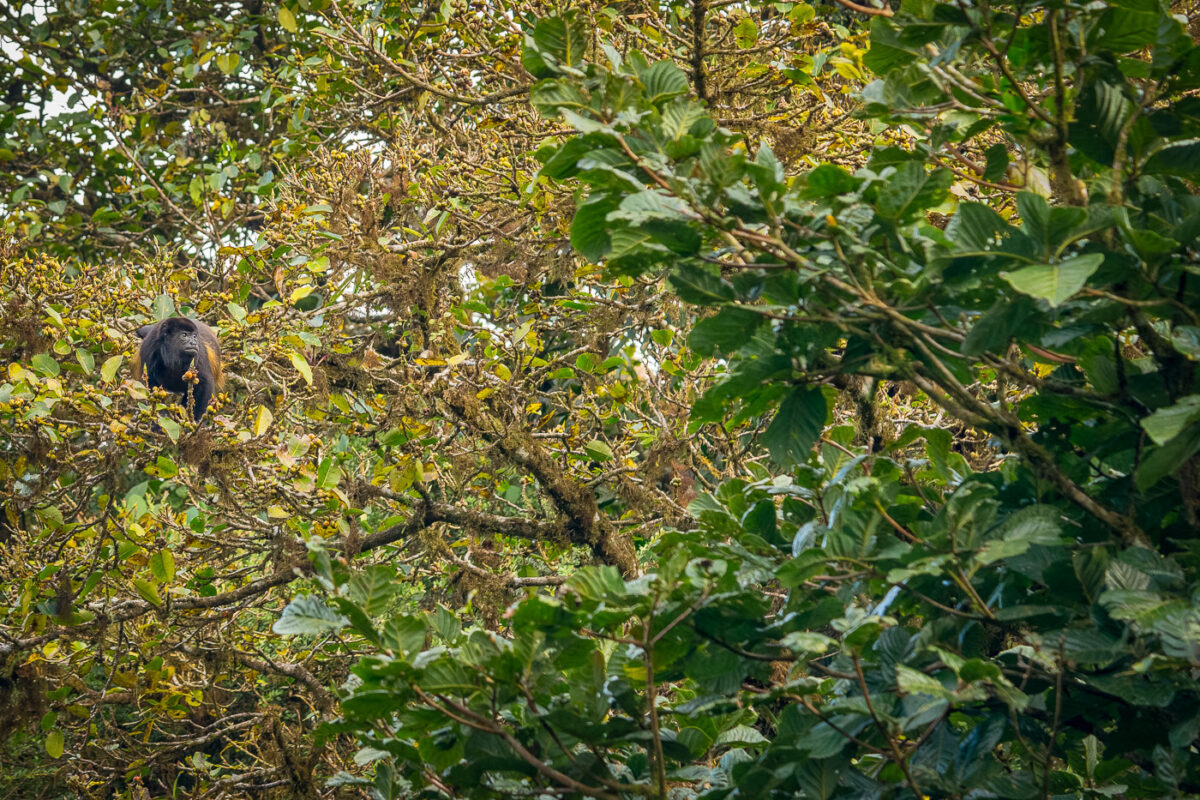
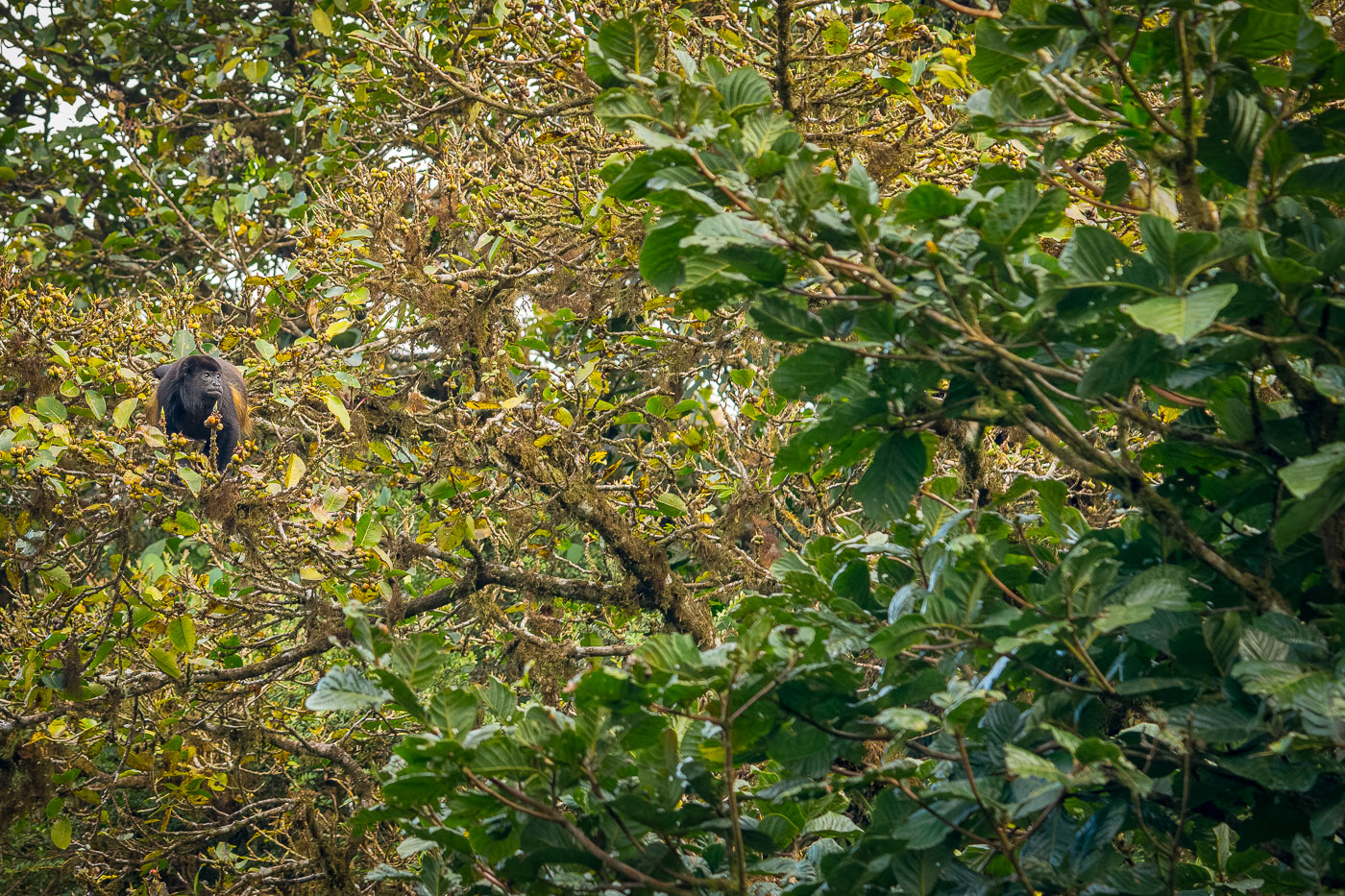
A howler monkey perches in dense canopy branches and foliage in Costa Rica's rainforest.
The mantled howler (Alouatta palliata) is among the loudest land animals on Earth, with males producing calls audible up to three miles away through a specialized, enlarged hyoid bone in the throat. Troops in Costa Rica's cloud forests typically number between six and fifteen and rarely descend to the ground, spending nearly their entire lives in the upper canopy. Their diet consists mainly of leaves supplemented with fruit and flowers, and slow, deliberate movement helps them conserve energy from this low-calorie food source. The species is listed as Vulnerable by the IUCN, with habitat fragmentation posing the primary threat to populations in Costa Rica's forest reserves.

Howler Monkey Feeding in Monteverde’s Canopy
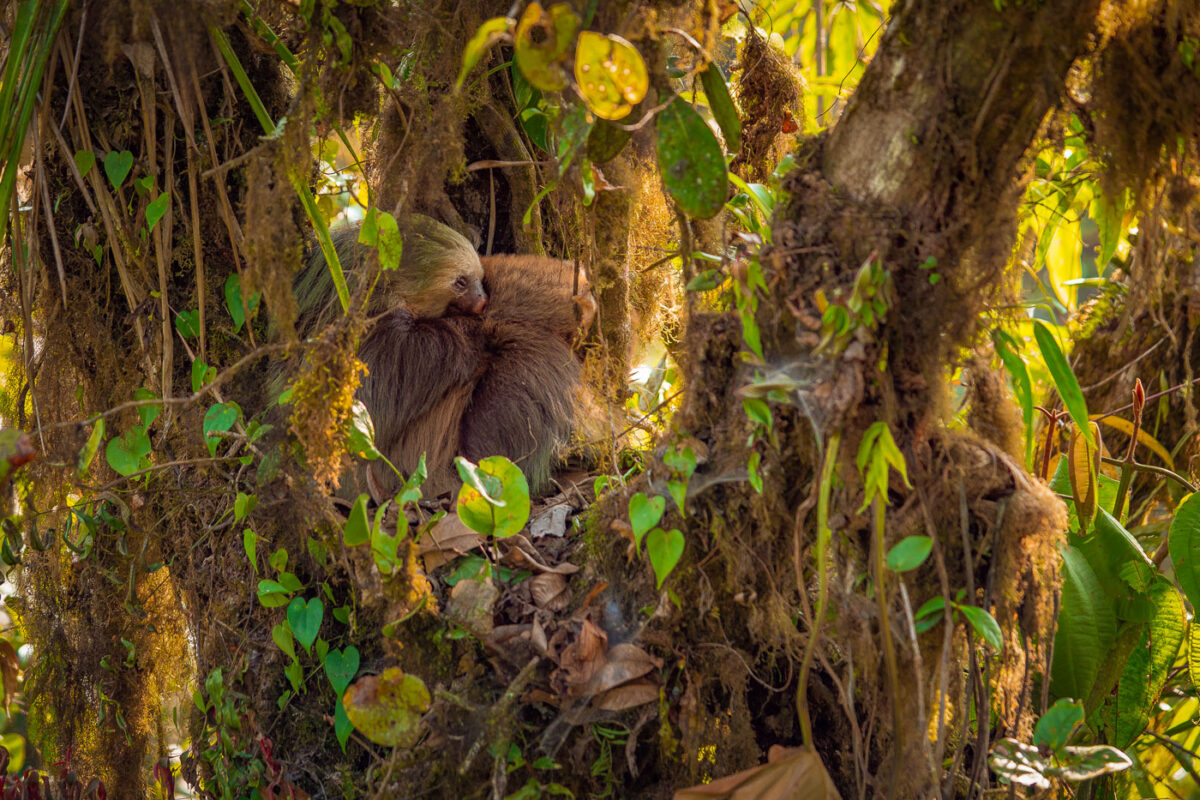
Two sloths rest in moss-covered tree branches surrounded by dense vegetation in Monteverde Cloud Forest, Costa Rica.
Hoffmann's two-toed sloths are among the mammals found in the Monteverde Cloud Forest Reserve, a protected area that spans roughly 10,500 hectares across Costa Rica's Tilarán mountain range. Unlike Costa Rica's other common sloth species, the brown-throated three-toed sloth, Hoffmann's two-toed sloths are primarily nocturnal and spend much of the day curled into dense foliage or epiphyte clusters high in the canopy. Females often carry and nurse a single offspring for up to a year, with young sloths clinging to the mother's fur until they're large enough to forage independently. The reserve's constant moisture and cloud cover support the thick moss and epiphyte growth that gives sloths cover and camouflage from predators like harpy eagles.

Two-Toed Sloths Nestled in Monteverde’s Mossy Canopy
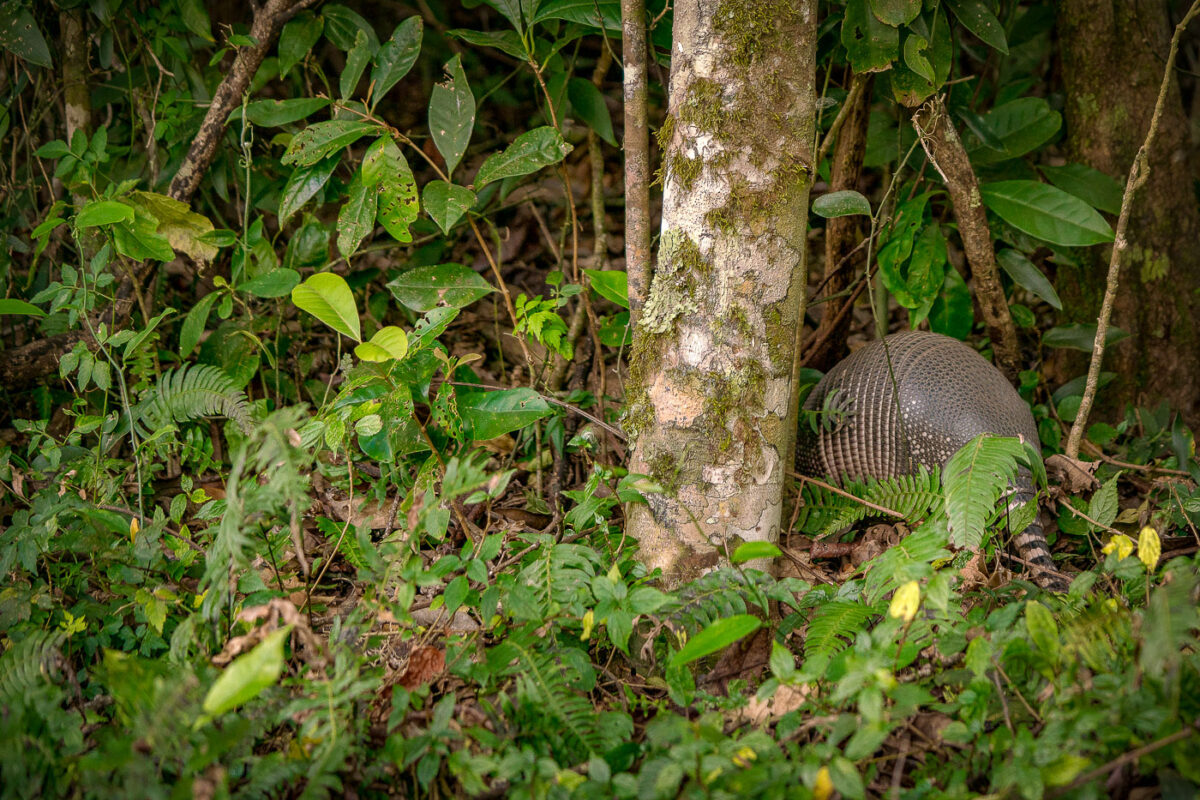
An armadillo forages through dense undergrowth in the Monteverde Cloud Forest Biological Preserve, Costa Rica.
The nine-banded armadillo is the species most likely to turn up along the forest floor at Monteverde, foraging through leaf litter for insects, grubs, and small invertebrates. It's the only armadillo species found as far north as the United States, but in Costa Rica it ranges through both lowland and highland forest, including the cloud forest habitat around Monteverde. The animal's banded armor is made of bony plates called osteoderms, covered in keratin, which allow it to flex while it digs and burrows. Mostly nocturnal or active at dawn and dusk, it relies on a strong sense of smell rather than eyesight to locate food, since armadillos see poorly.

Nine-Banded Armadillo Foraging Near Monteverde, Costa Rica
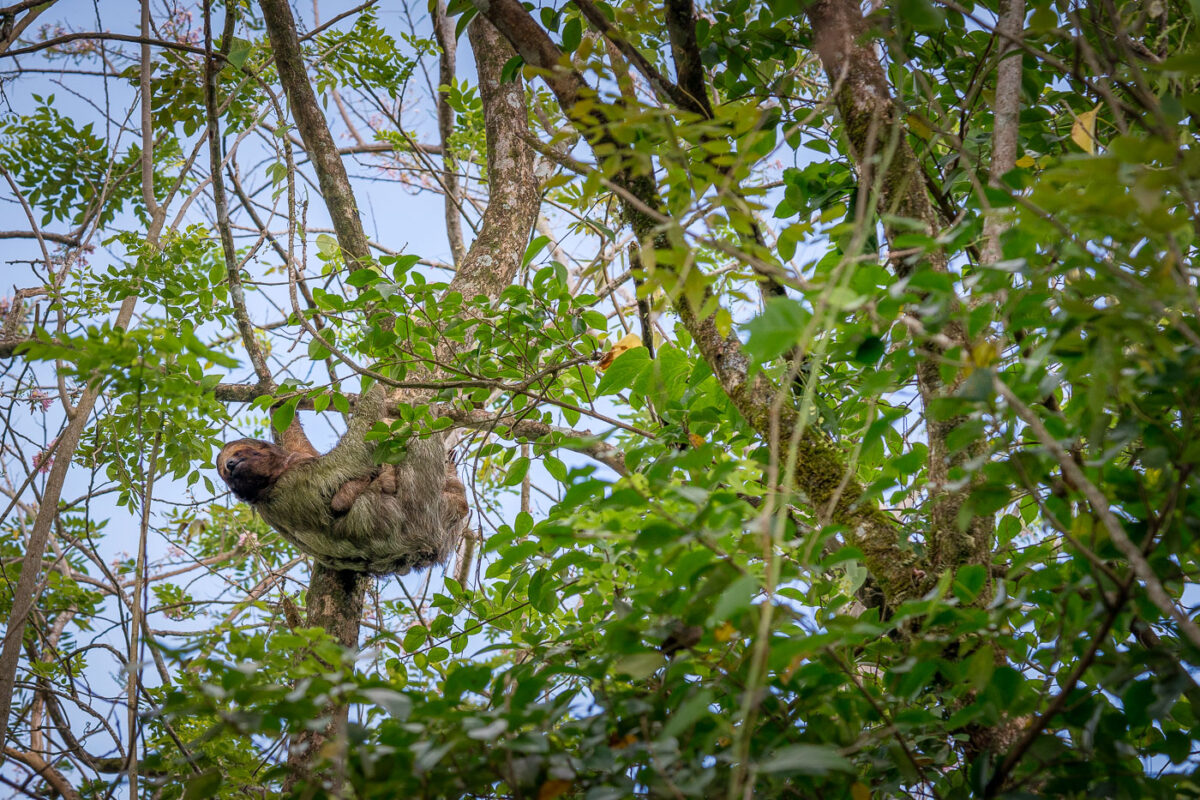
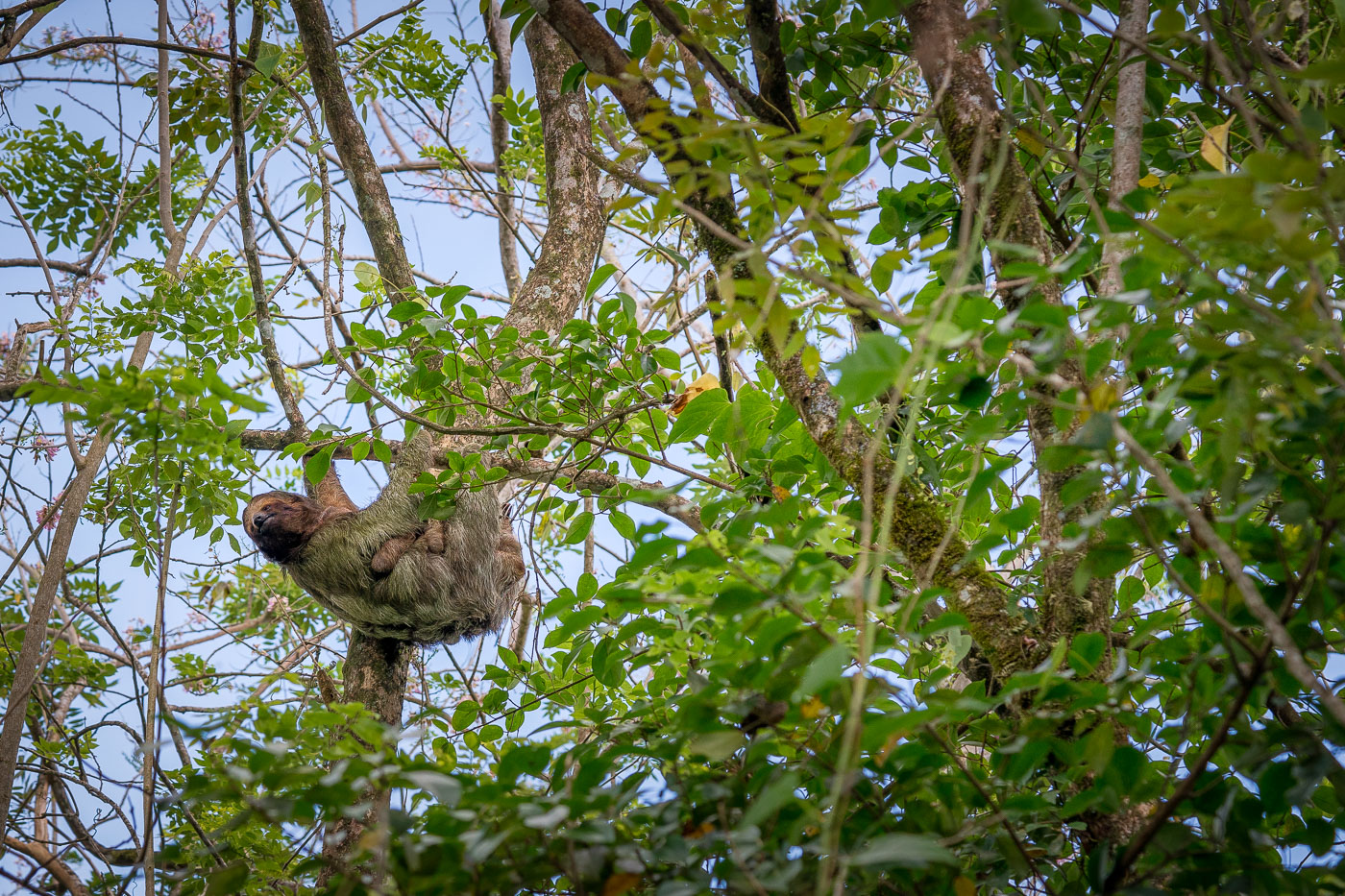
A three-toed sloth with its infant hangs from tree branches in Costa Rica's rainforest canopy.
Costa Rica is home to two sloth species: the brown-throated three-toed sloth (Bradypus variegatus) and Hoffmann's two-toed sloth (Choloepus hoffmanni). Females carry their young on their belly for several months after birth, as the infant lacks the strength to move independently through the canopy. Sloths spend nearly all their lives in trees, descending to the ground only about once a week to defecate. Algae growing in their fur gives many a greenish tint that helps camouflage them from predators like harpy eagles and jaguars.

Mother Sloth with Baby Clinging to a Costa Rican Treetop
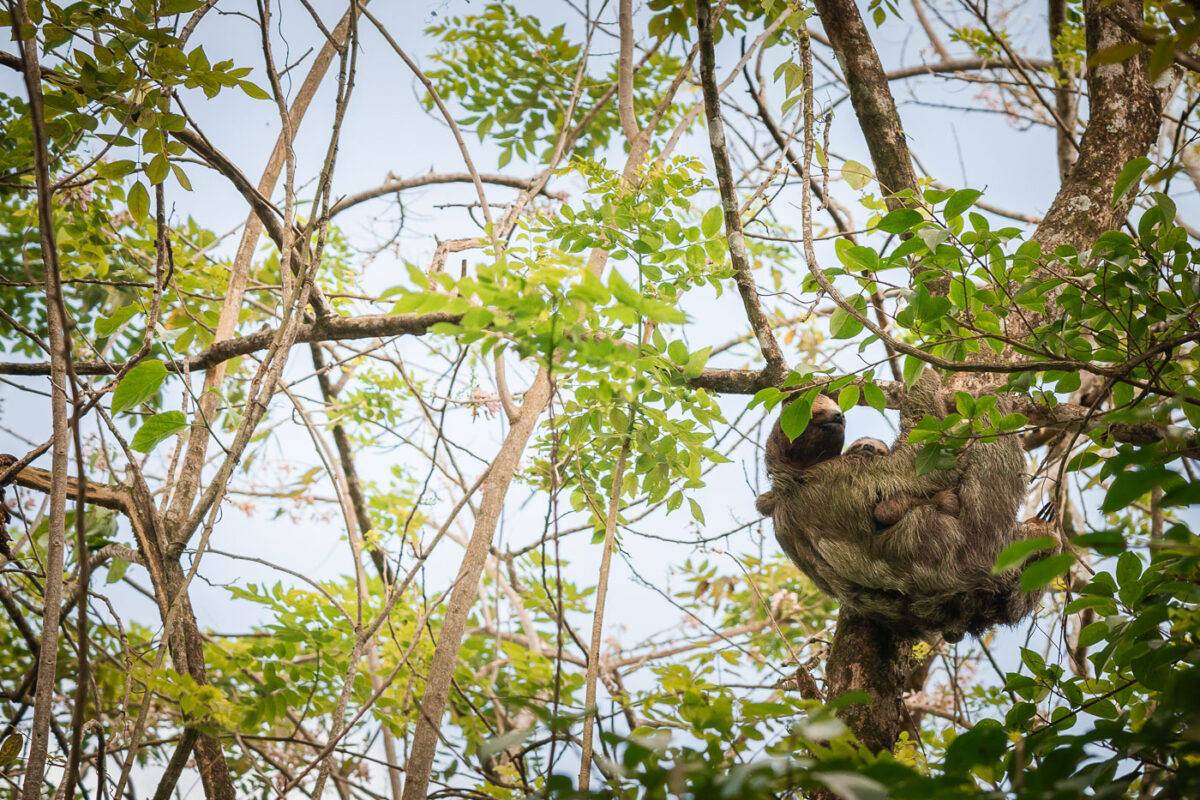
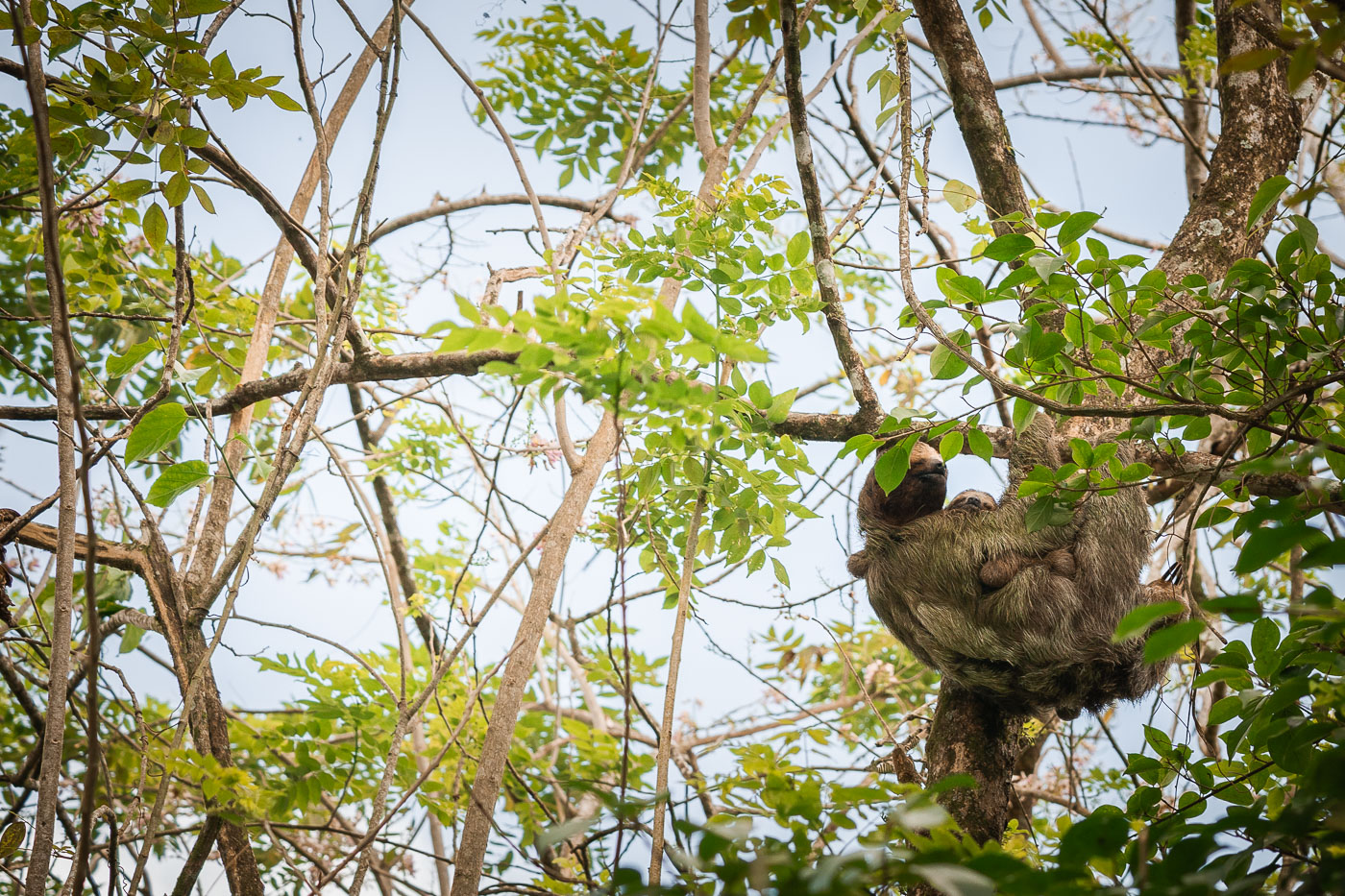
A mother sloth and her baby cling to a tree branch in Costa Rica's tropical forest canopy.
Costa Rica is home to two sloth species: the brown-throated three-fingered sloth and Hoffmann's two-fingered sloth. Both are arboreal and spend the majority of their lives in tree canopies, descending to the ground only about once a week to defecate. Females carry their young continuously for the first several months, with the infant clinging to the mother's belly as she moves slowly through the branches. Sloths have an exceptionally slow metabolism tied to a leaf-based diet, which is low in calories and difficult to digest, and this pace allows them to conserve energy while avoiding the attention of predators like harpy eagles.

Mother Sloth and Baby High in a Costa Rican Tree
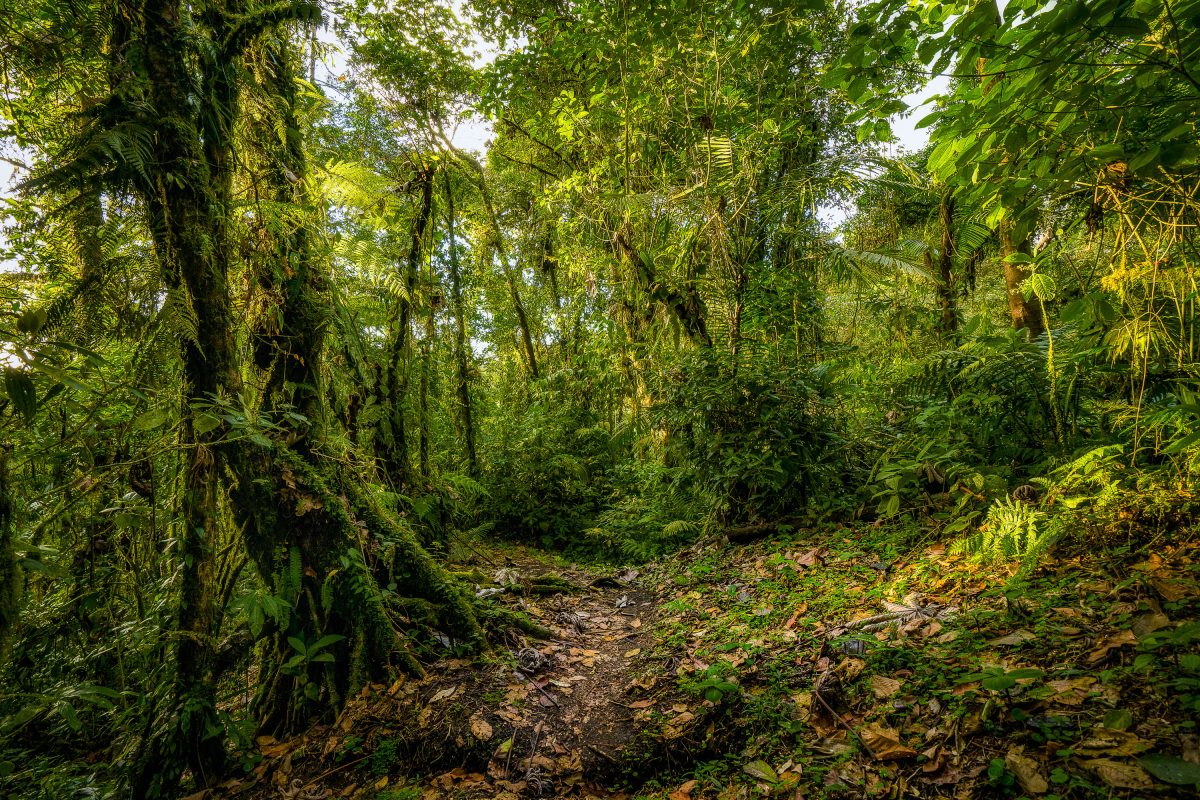
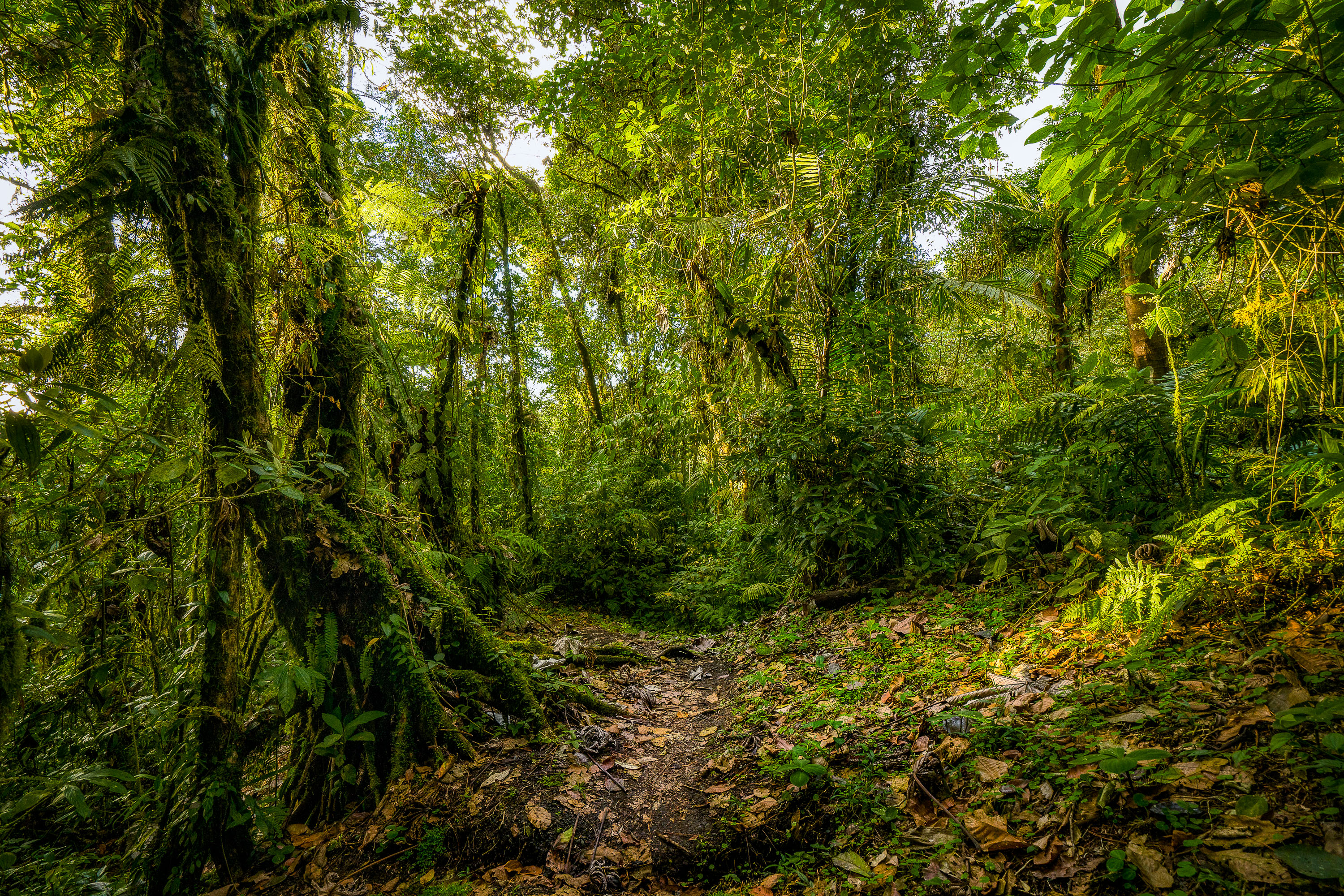
A trail winds through dense moss-covered vegetation and trees in Monteverde Cloud Forest Preserve, Costa Rica.
The Monteverde Cloud Forest Biological Preserve sits along the Continental Divide in Costa Rica's Tilarán Mountains, roughly 1,440 meters above sea level. Established in 1972 and now managed by the Tropical Science Center, it protects more than 10,500 hectares of habitat spanning several life zones. Over 400 bird species and 2,500 plant species have been recorded here, including hundreds of orchid varieties and abundant epiphytes that thrive in the near-constant moisture. A network of marked trails, originally developed for researchers, now gives visitors access to the forest while limiting impact on the surrounding ecosystem.

Hiking Trail in the Monteverde Cloud Forest Preserve

White-tailed deer on snowy slope in Father Hennepin Bluff Park, Minneapolis.
A white-tailed deer traverses a snow-covered slope in Father Hennepin Bluff Park, a natural area along the Mississippi River in Minneapolis. Established in 1961, the park preserves bluff habitat within the city. The deer's presence demonstrates the park's role in supporting wildlife populations in an urban setting.

White-tailed deer, Father Hennepin Bluff Park, Minneapolis