Monteverde

16 photos · 2019

16 photographs tagged Monteverde, 2019.

A green mesh suspension bridge stretches through dense canopy vegetation in Monteverde Cloud Forest, Costa Rica.
The Monteverde Cloud Forest Reserve maintains a network of suspension bridges designed to let visitors cross ravines and move through the forest canopy rather than only along the ground. The reserve itself protects roughly 10,500 hectares of primary forest across the Tilarán mountain range, land set aside since 1972 largely through the efforts of Quaker settlers and conservation groups. Elevations within the reserve range from about 1,400 to over 1,800 meters, conditions that keep the forest in near-constant mist and support the dense epiphyte growth seen along the trail corridors. The bridges give researchers and tourists alike access to the upper forest strata, where much of the reserve's biodiversity — including many of its orchid and bird species — is concentrated.

Crossing the Canopy Walkway at Monteverde Cloud Forest Reserve
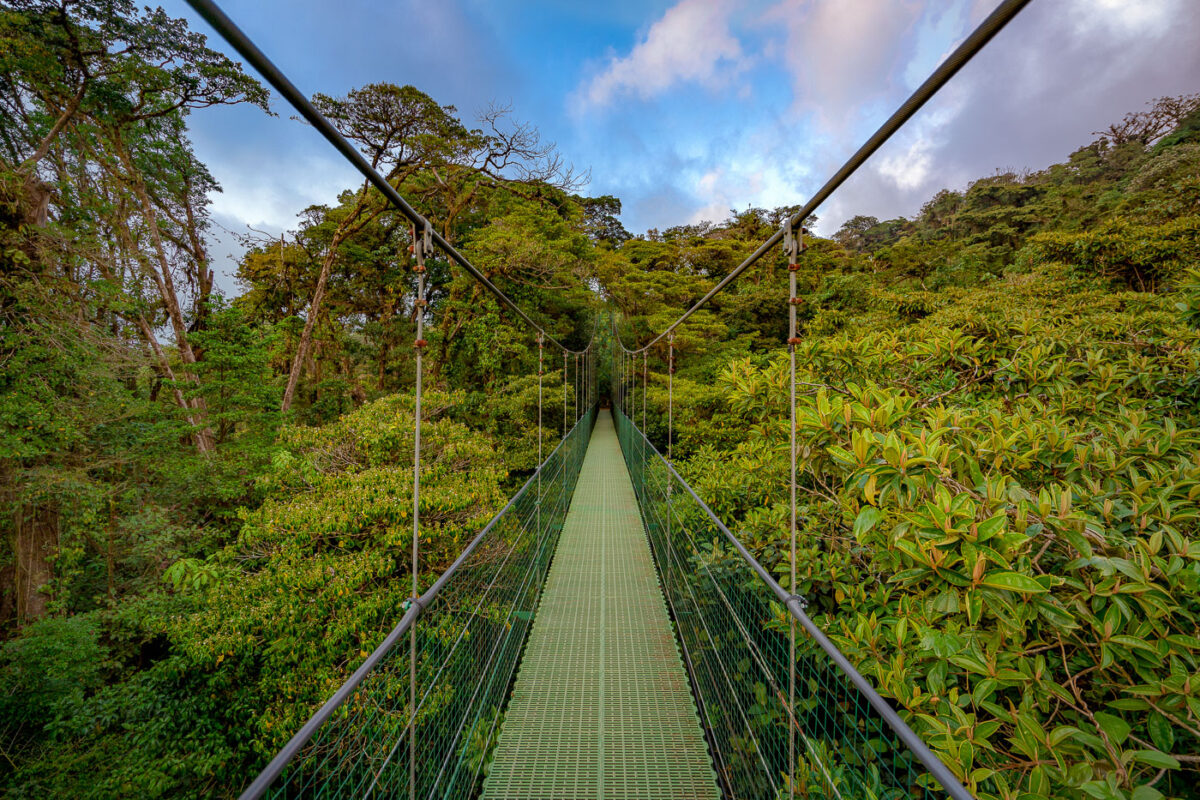
A suspension bridge with green mesh decking stretches through the canopy of Monteverde Cloud Forest Biological Preserve in Costa Rica.
Monteverde's cloud forest reserve sits along the Tilarán mountain range's continental divide, where trade winds off the Caribbean push moisture into the forest, keeping the canopy perpetually damp. The reserve protects roughly 10,500 hectares of forest and is home to an estimated 2,500 plant species, including hundreds of orchids and epiphytes that grow on the trees themselves rather than in soil. Suspension bridges like this one were built to let visitors move through the upper canopy, where much of the forest's biodiversity — birds, insects, and mammals — actually lives, without cutting new trails through the understory below.

Hanging Bridge Through the Monteverde Cloud Forest Canopy
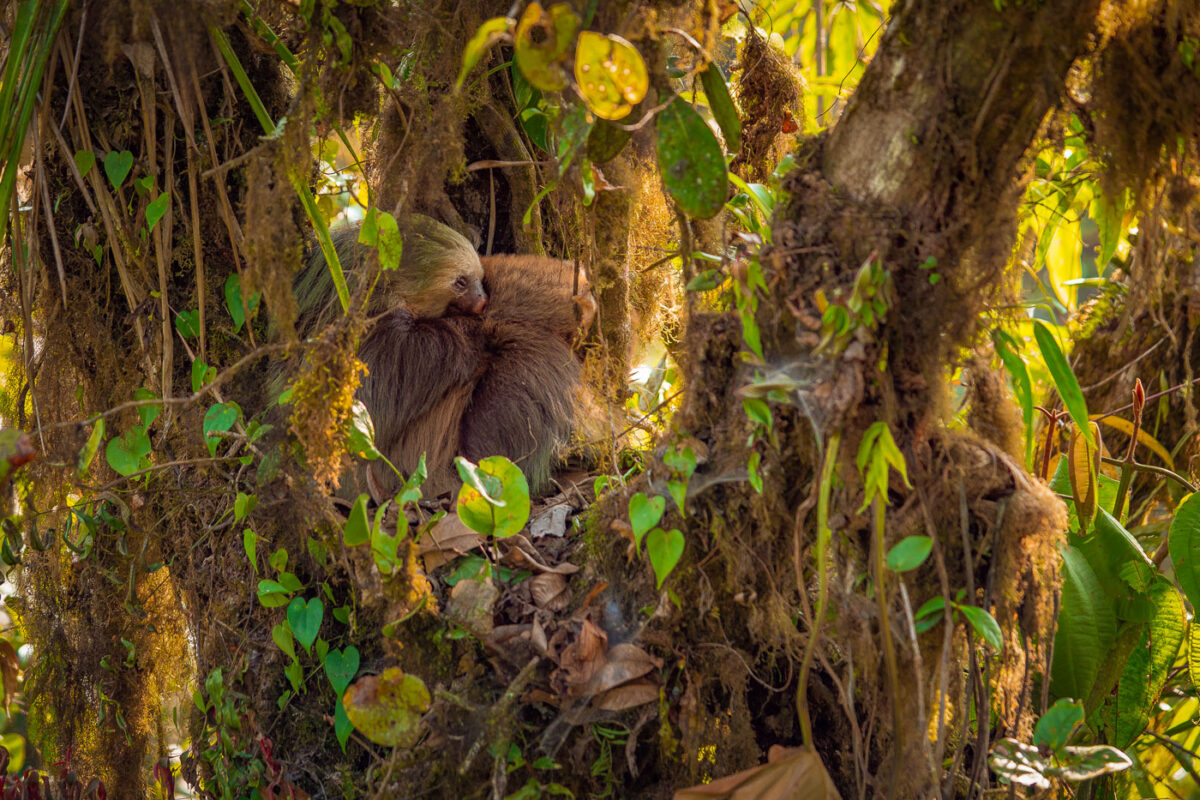
Two sloths rest in moss-covered tree branches surrounded by dense vegetation in Monteverde Cloud Forest, Costa Rica.
Hoffmann's two-toed sloths are among the mammals found in the Monteverde Cloud Forest Reserve, a protected area that spans roughly 10,500 hectares across Costa Rica's Tilarán mountain range. Unlike Costa Rica's other common sloth species, the brown-throated three-toed sloth, Hoffmann's two-toed sloths are primarily nocturnal and spend much of the day curled into dense foliage or epiphyte clusters high in the canopy. Females often carry and nurse a single offspring for up to a year, with young sloths clinging to the mother's fur until they're large enough to forage independently. The reserve's constant moisture and cloud cover support the thick moss and epiphyte growth that gives sloths cover and camouflage from predators like harpy eagles.

Two-Toed Sloths Nestled in Monteverde’s Mossy Canopy
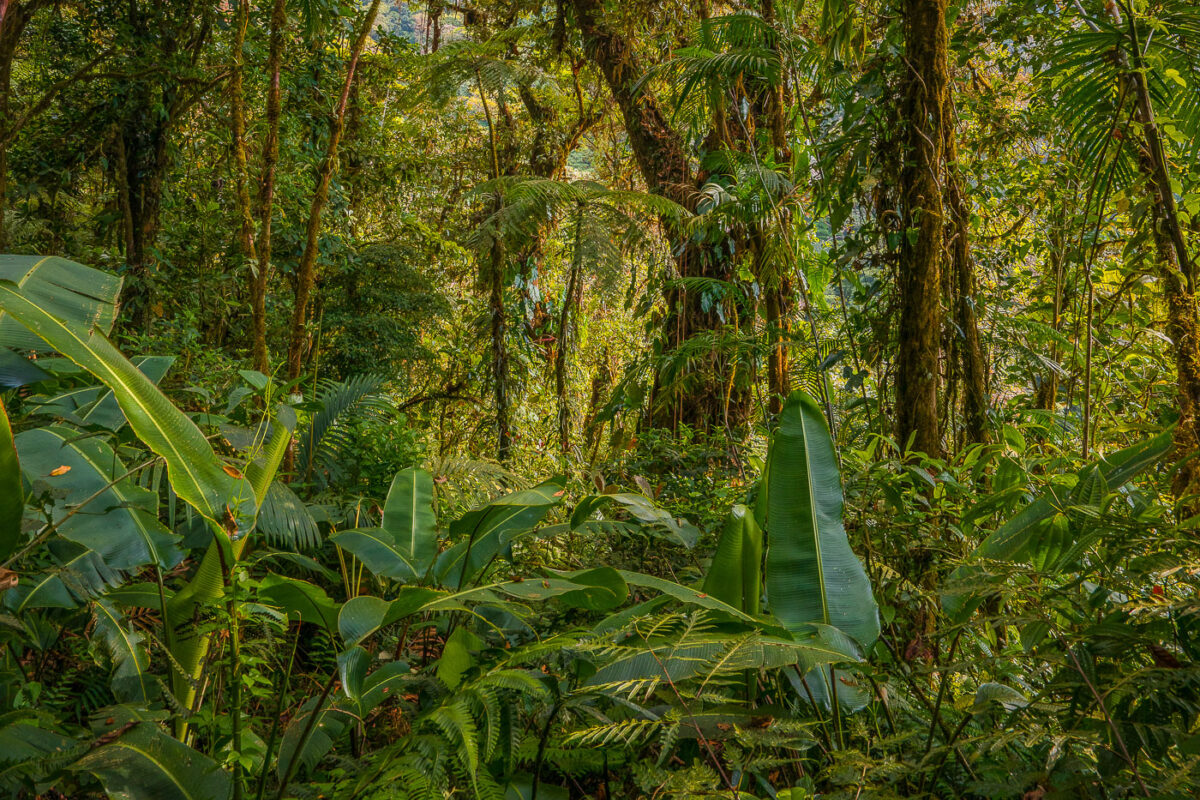
Dense tropical vegetation with banana plants and tall trees in Monteverde Cloud Forest, Costa Rica.
Monteverde's cloud forest sits along the Tilarán Mountains, where trade winds pushing moisture off the Caribbean condense into near-constant mist across the ridge. The reserve protects roughly 10,500 hectares and spans six distinct ecological zones, a range that produces the dense, layered plant growth found at different elevations. Wild banana relatives, tree ferns, and epiphytes common in the understory thrive here due to the reserve's high humidity, which stays above 90 percent for much of the year. Scientists have catalogued more than 2,500 plant species within the reserve, including over 400 types of orchids.

Dense Understory Growth in the Monteverde Cloud Forest
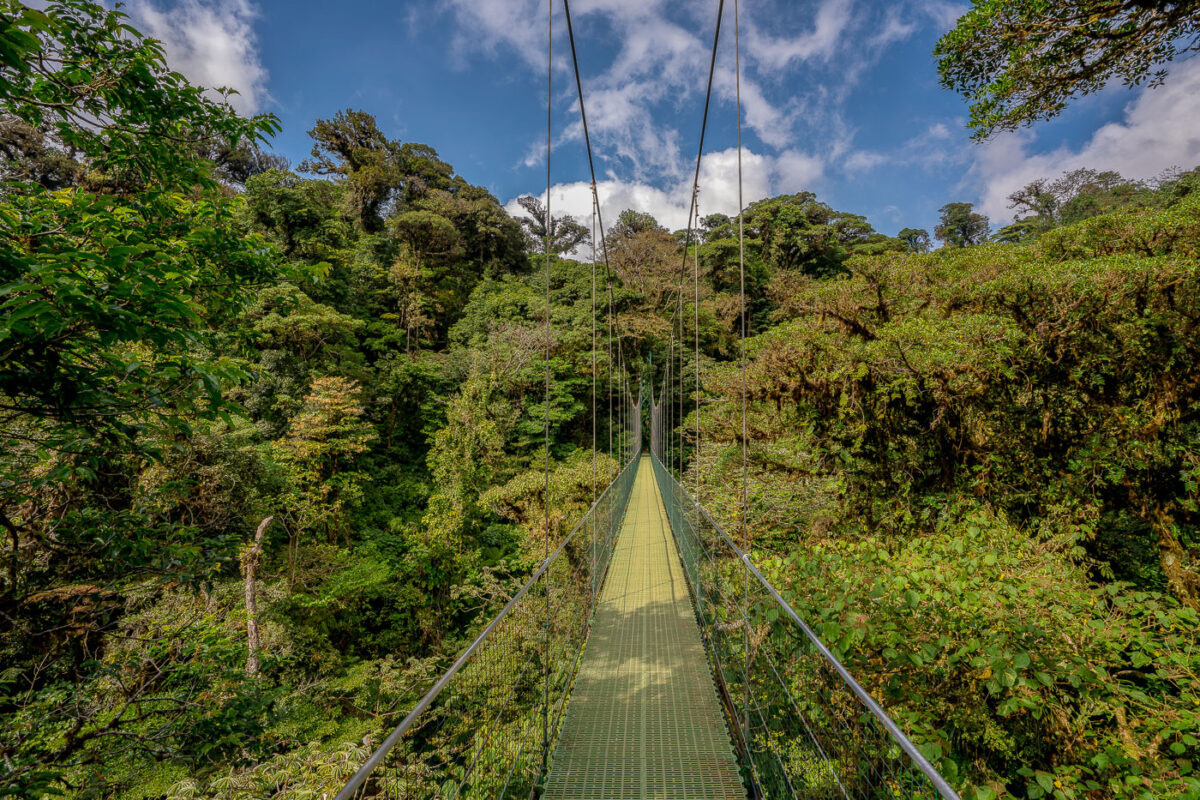
A suspension bridge with a yellow walkway stretches through the canopy of Monteverde Cloud Forest Biological Preserve in Costa Rica.
Monteverde's cloud forest sits along the Tilarán mountain range, where trade winds hold moisture against the slopes and keep the canopy in near-constant mist. Suspension bridges like this one let visitors cross at canopy height, moving through a layer of the forest usually reached only by climbing researchers or resident wildlife. The Monteverde Cloud Forest Biological Preserve protects roughly 10,500 hectares of this habitat, home to more than 400 bird species and an estimated 2,500 plant species, many of them epiphytes growing directly on tree limbs. The reserve was established in 1972, largely through the efforts of Quaker settlers and conservationists who recognized the forest's role in the region's water supply.

Suspension Bridge Over the Monteverde Canopy
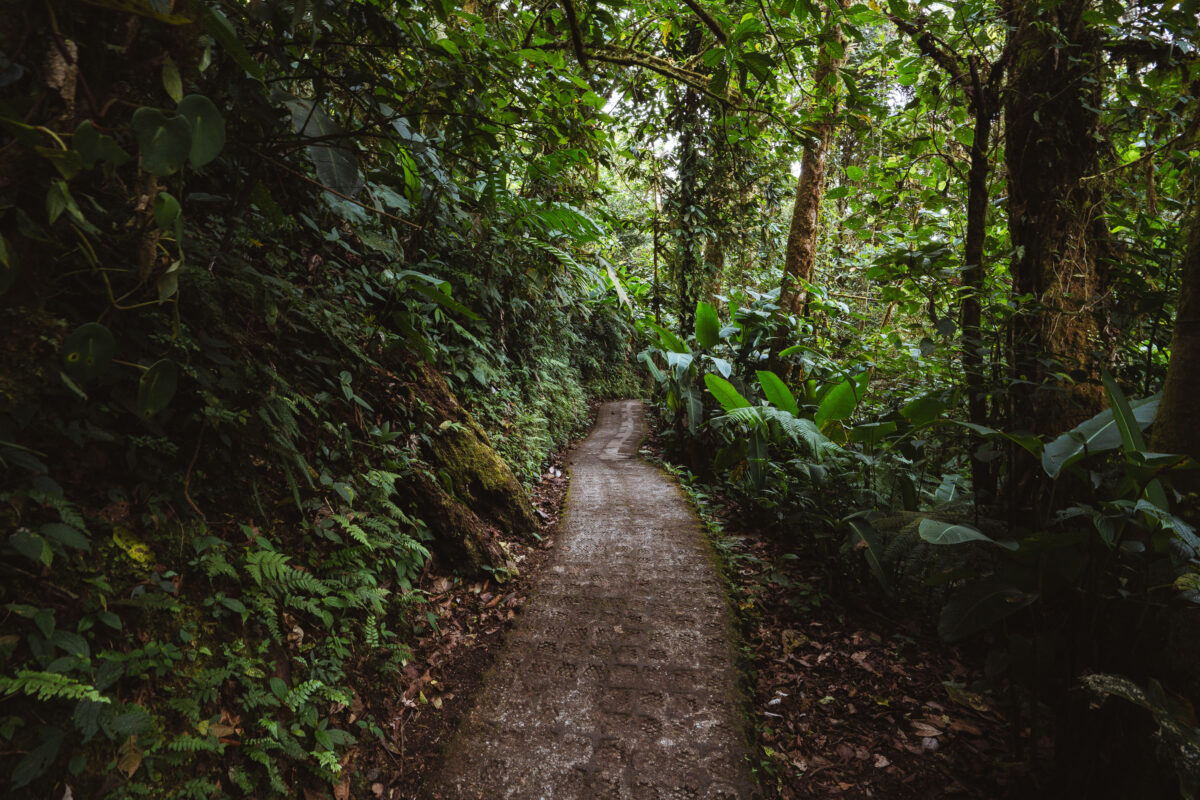
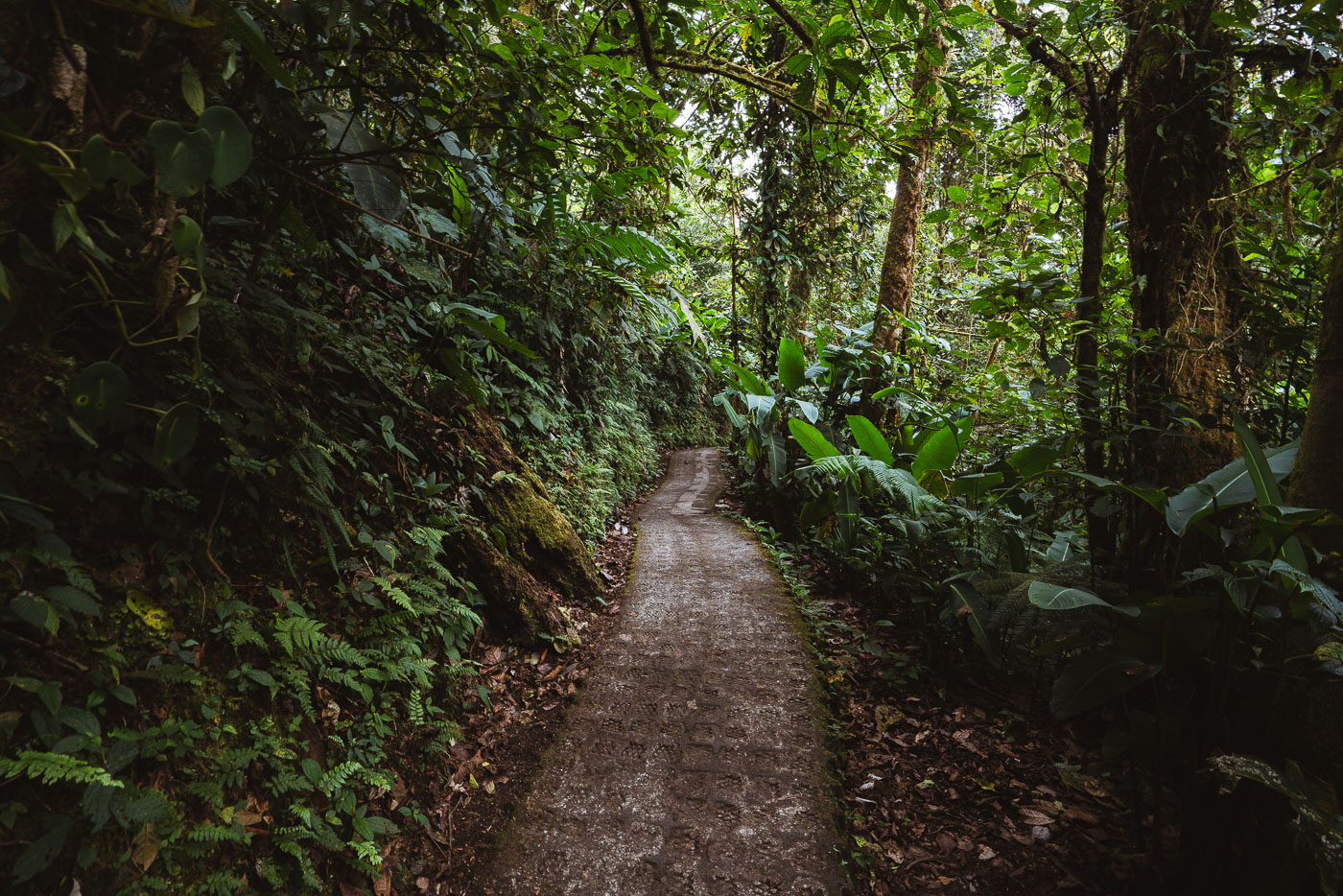
A dirt path winds through dense vegetation in Monteverde Cloud Forest Biological Preserve, Costa Rica.
The Monteverde Cloud Forest Biological Preserve covers roughly 10,500 hectares along the Continental Divide in Costa Rica's Tilarán Mountains. Established in 1972 by the Tropical Science Center, it protects one of the country's last large tracts of primary cloud forest. Elevations within the reserve range from about 1,440 to 1,860 meters, a range that produces the near-constant moisture and fog for which the ecosystem is known. Stone and gravel paths like this one give researchers and visitors access to the reserve's network of trails, which stretch over roughly 13 kilometers combined. The preserve is home to more than 2,500 plant species and over 400 species of birds, including the resplendent quetzal.

Stone Pathway Through the Monteverde Cloud Forest Reserve
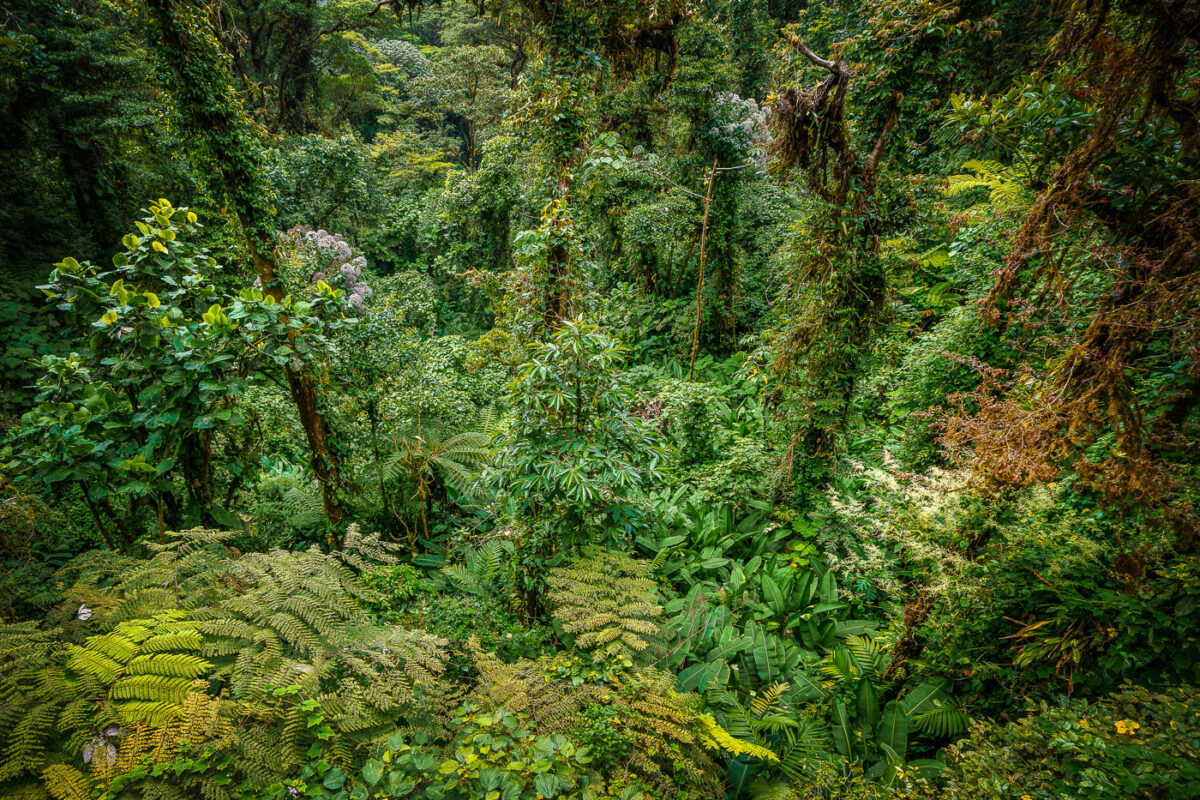
Dense canopy of tree ferns, epiphytes, and moss-covered trees in Monteverde Cloud Forest Biological Reserve, Costa Rica.
Monteverde's cloud forest sits along the Cordillera de Tilarán at elevations between roughly 1,400 and 1,800 meters, where moisture-laden trade winds condense into near-constant mist. The Monteverde Cloud Forest Biological Reserve, established in 1972 by the Tropical Science Center, protects about 10,500 hectares of this habitat. Scientists have cataloged more than 2,500 plant species here, including over 400 types of orchids and some 200 fern species, many of them epiphytes that grow on host trees rather than in soil. The reserve's elevation and humidity support six distinct ecological zones, making it one of the most biologically dense forest systems in Central America.

Tree Ferns and Epiphytes Fill the Monteverde Forest Floor

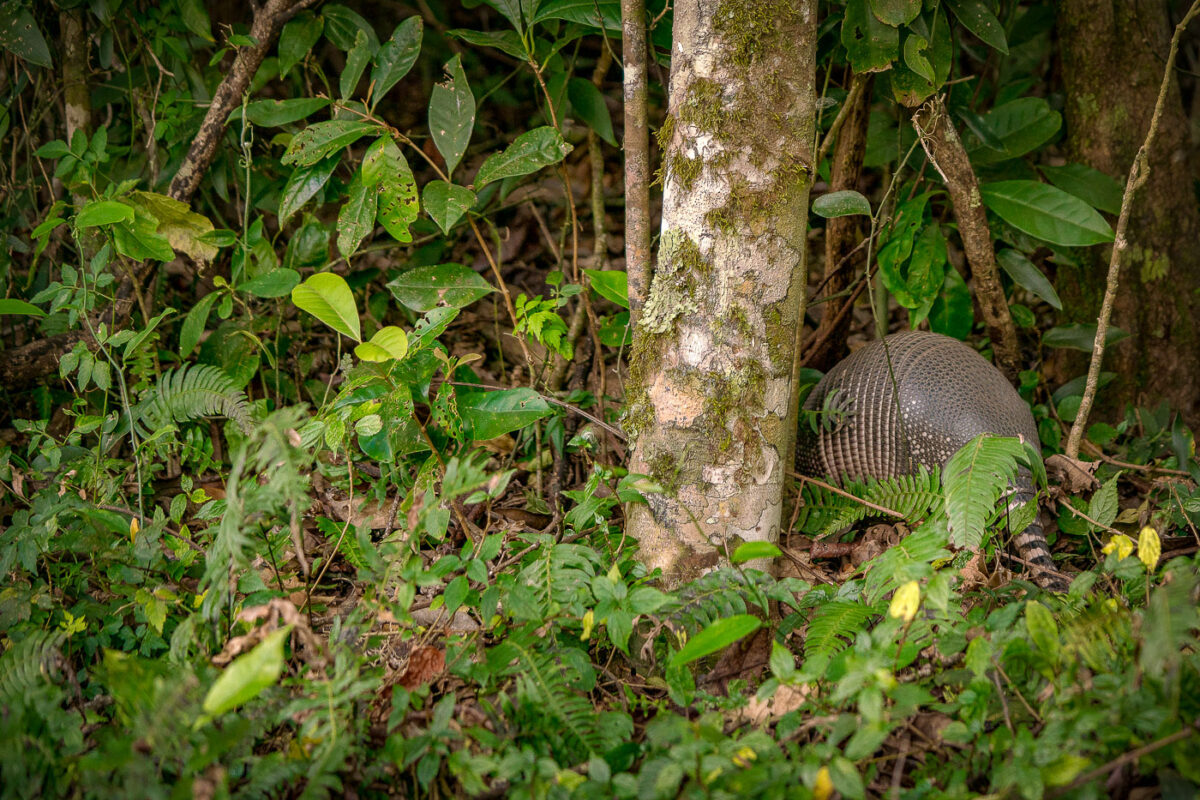
An armadillo forages through dense undergrowth in the Monteverde Cloud Forest Biological Preserve, Costa Rica.
The nine-banded armadillo is the species most likely to turn up along the forest floor at Monteverde, foraging through leaf litter for insects, grubs, and small invertebrates. It's the only armadillo species found as far north as the United States, but in Costa Rica it ranges through both lowland and highland forest, including the cloud forest habitat around Monteverde. The animal's banded armor is made of bony plates called osteoderms, covered in keratin, which allow it to flex while it digs and burrows. Mostly nocturnal or active at dawn and dusk, it relies on a strong sense of smell rather than eyesight to locate food, since armadillos see poorly.

Nine-Banded Armadillo Foraging Near Monteverde, Costa Rica

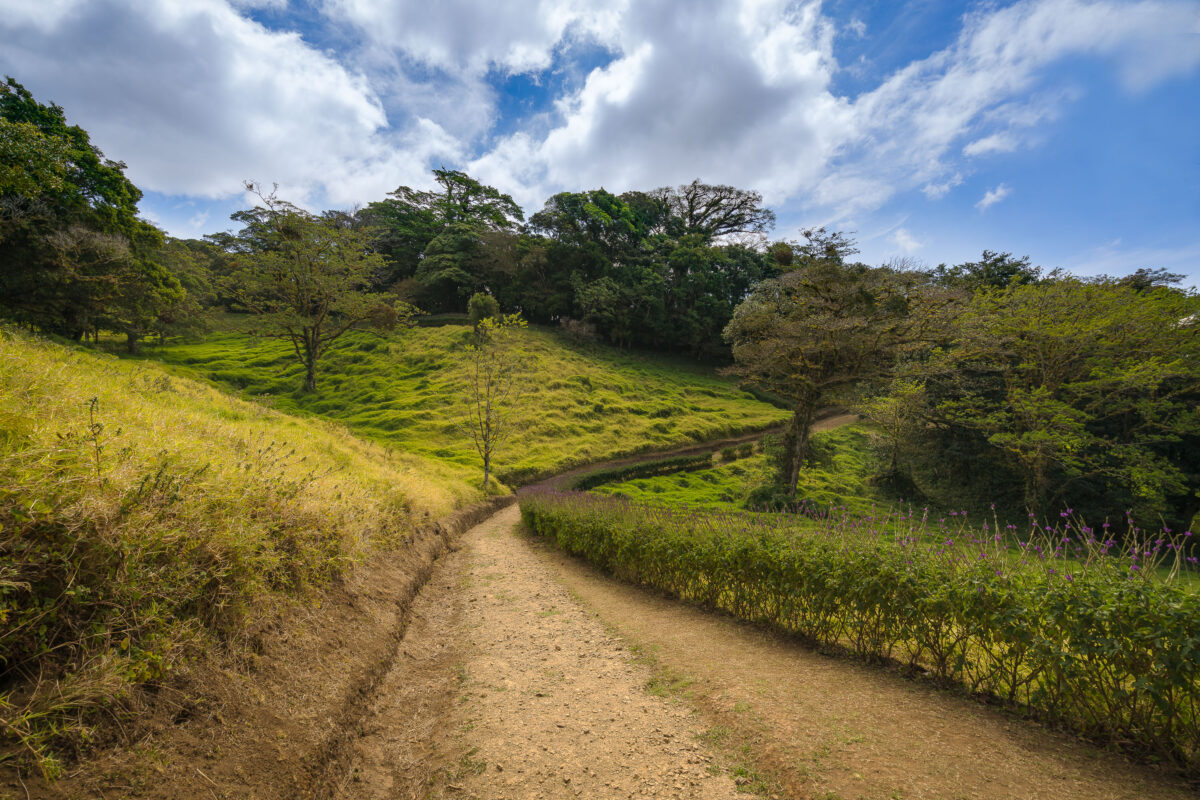
A dirt trail winds through the Monteverde Cloud Forest Biological Preserve in Costa Rica, bordered by lush green vegetation and scattered trees.
The Monteverde Cloud Forest Biological Reserve sits along the Cordillera de Tilarán in Costa Rica's Puntarenas Province, straddling the Continental Divide at elevations between about 1,440 and 1,800 meters. The Tropical Science Center, a Costa Rican nonprofit, has managed the reserve since its founding in 1972, when it was established to protect one of the region's last large tracts of primary cloud forest. The reserve spans roughly 10,500 hectares and supports more than 2,500 plant species, including over 400 types of orchids. Trails like this one allow hikers to move between the reserve's open pasture edges and its denser forest interior while keeping foot traffic confined to a defined route.

A Hillside Trail Through Monteverde’s Cloud Forest Reserve

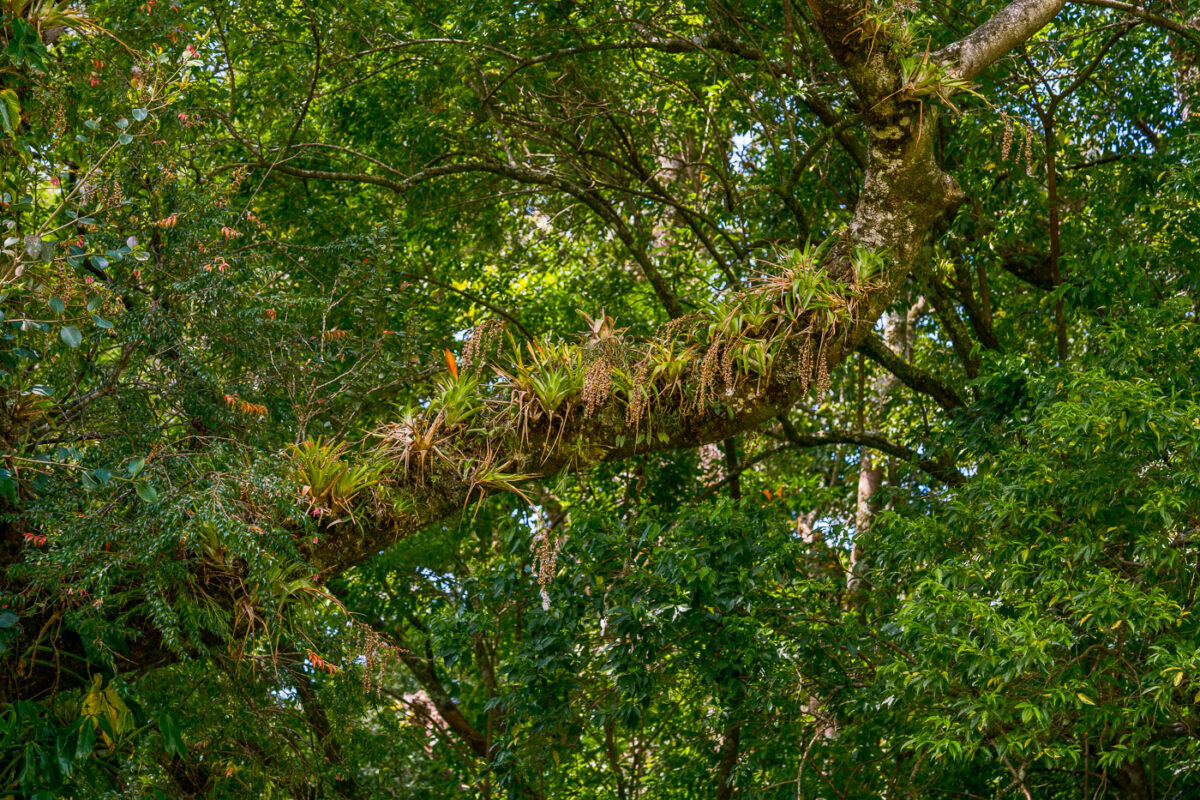
Bromeliads and epiphytic plants grow on a tree branch in the Monteverde Cloud Forest Biological Preserve, Costa Rica.
The Monteverde Cloud Forest Biological Reserve sits along the Continental Divide in Costa Rica's Tilarán mountain range, where moisture-laden trade winds keep the forest in near-constant mist. That humidity supports a dense load of epiphytes — bromeliads, orchids, ferns, and mosses — that grow directly on tree limbs rather than in soil, drawing water and nutrients from the air and debris around them. Researchers have cataloged more than 500 species of epiphytes within the reserve, among the highest counts recorded in any neotropical cloud forest. The reserve itself protects roughly 10,500 hectares and was established in 1972 through the efforts of Quaker settlers and conservationists working with the Tropical Science Center.

Epiphyte-Laden Branch in the Monteverde Cloud Forest Reserve

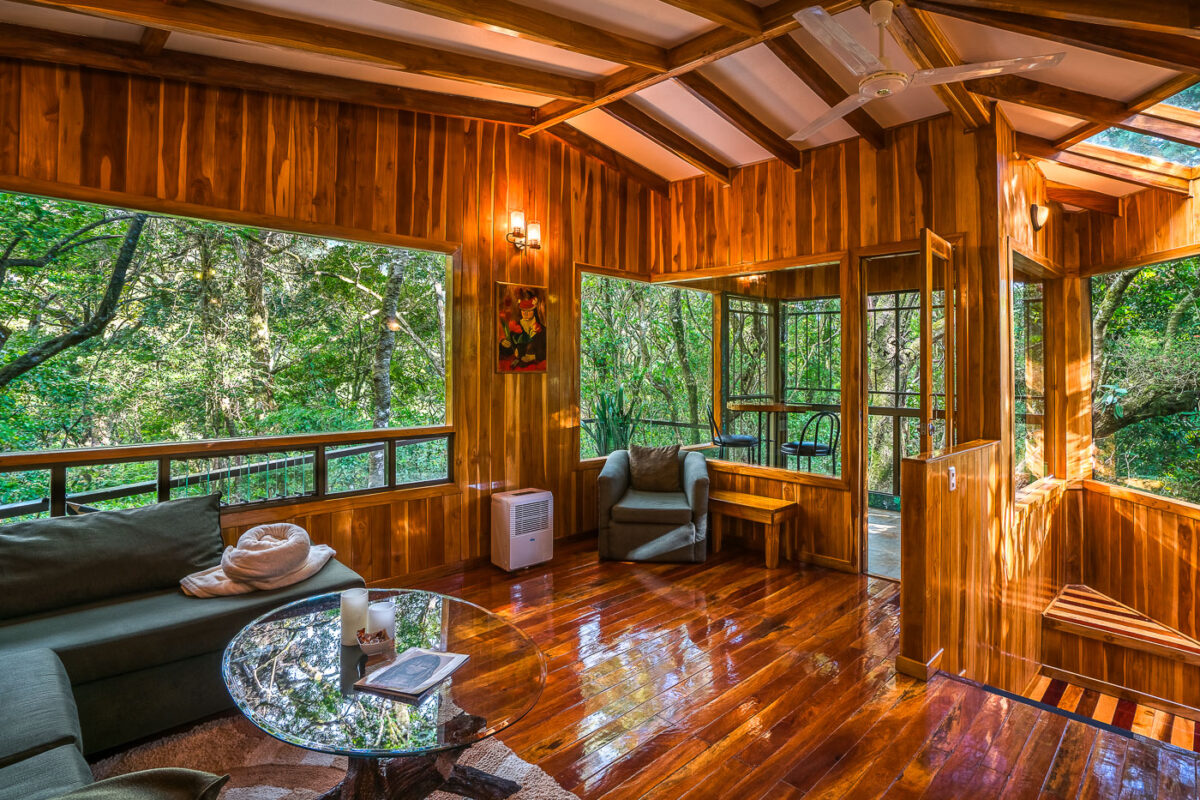
Wood-paneled interior of a treehouse suite at Hidden Canopy Treehouses in Monteverde, Costa Rica, with large windows overlooking cloud forest.
Hidden Canopy Treehouses is a small lodge of private cabins built on stilts above the cloud forest canopy near Monteverde, Costa Rica. Each suite is finished in local hardwood and opens onto a screened balcony facing the surrounding forest. The property sits adjacent to the Monteverde Cloud Forest Biological Reserve, drawing guests for the birdwatching and wildlife viewing possible from the rooms themselves. Interior common areas combine wood paneling and glass to keep the forest visible from nearly every angle of the living space.

Living Room at Hidden Canopy Treehouses, Monteverde

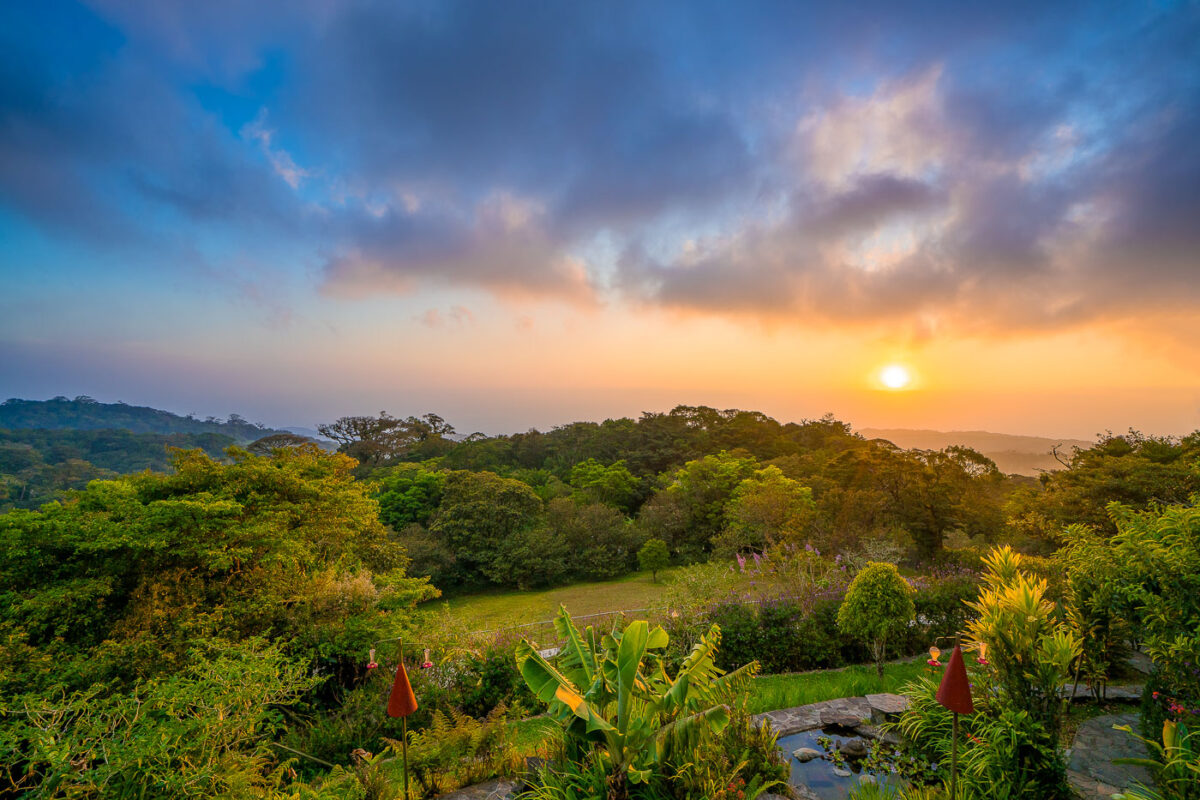
Monteverde Cloud Forest in Costa Rica at sunset, with flowering plants in foreground and forested hills beneath golden sky.
Monteverde sits along Costa Rica's Tilarán Cordillera, where trade winds off the Caribbean push moisture up the slopes and condense into the near-constant mist that gives the cloud forest its name. The Monteverde Cloud Forest Reserve, established in 1972, protects roughly 10,500 hectares and spans six distinct ecological zones across an elevation range of about 1,440 to 1,800 meters. That shift in elevation and moisture supports more than 2,500 plant species, including over 400 types of orchids, along with some 100 mammal species and 400 bird species, among them the resplendent quetzal. Quaker settlers and conservationists who arrived in the 1950s helped set aside the original forest tract, a decision credited with starting the region's long-running ecotourism economy.

Sunset Over the Treetops at Monteverde

A treehouse bedroom in Monteverde, Costa Rica features a canopy bed with mosquito netting, suspended chair, and expansive windows overlooking the cloud forest.
Hidden Canopy Treehouses is a small boutique lodge built into the cloud forest canopy near Monteverde, Costa Rica, with guest rooms raised above the forest floor on stilts. Each suite opens onto a private balcony facing the forest, a design choice meant to put guests at eye level with the canopy rather than looking up at it from the ground. The lodge sits adjacent to the Monteverde Cloud Forest Biological Reserve, one of the region's best-known protected forest areas.

Canopy Bed Suite at Hidden Canopy Treehouses, Monteverde

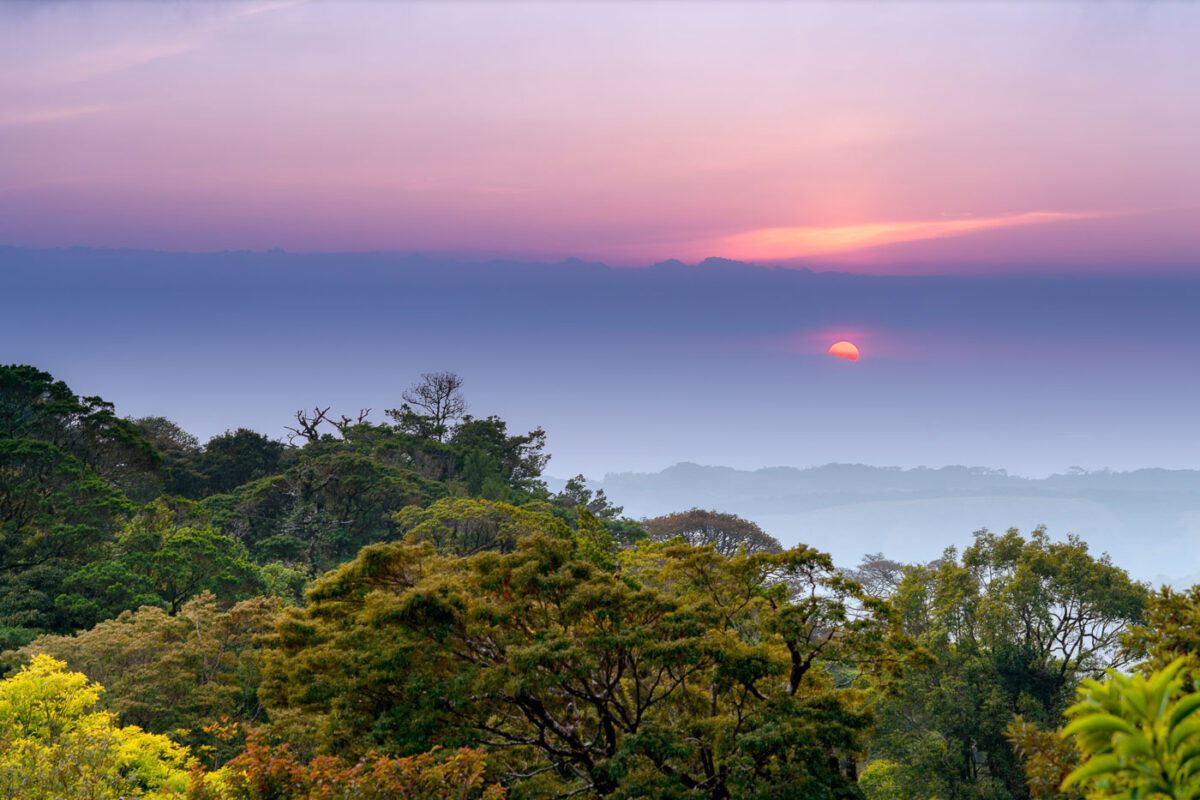
Sun setting over the Monteverde Cloud Forest canopy in Costa Rica with layered mist and vegetation visible below.
The Tilarán Mountains form the continental divide that runs through the Monteverde region, separating Caribbean-draining slopes from those facing the Pacific. Monteverde's cloud forest sits at elevations between roughly 1,400 and 1,800 meters, where moisture-laden trade winds condense into the persistent mist that defines the ecosystem. The Monteverde Cloud Forest Biological Reserve, established in 1972 by the Tropical Science Center, protects more than 10,500 hectares of this habitat and borders the adjacent Children's Eternal Rainforest, one of the largest private reserves in Central America. The region's elevation and position along the divide create the shifting light and layered haze that mark the transition between day and night over the forest canopy.

Sunset Over the Tilarán Mountains Near Monteverde

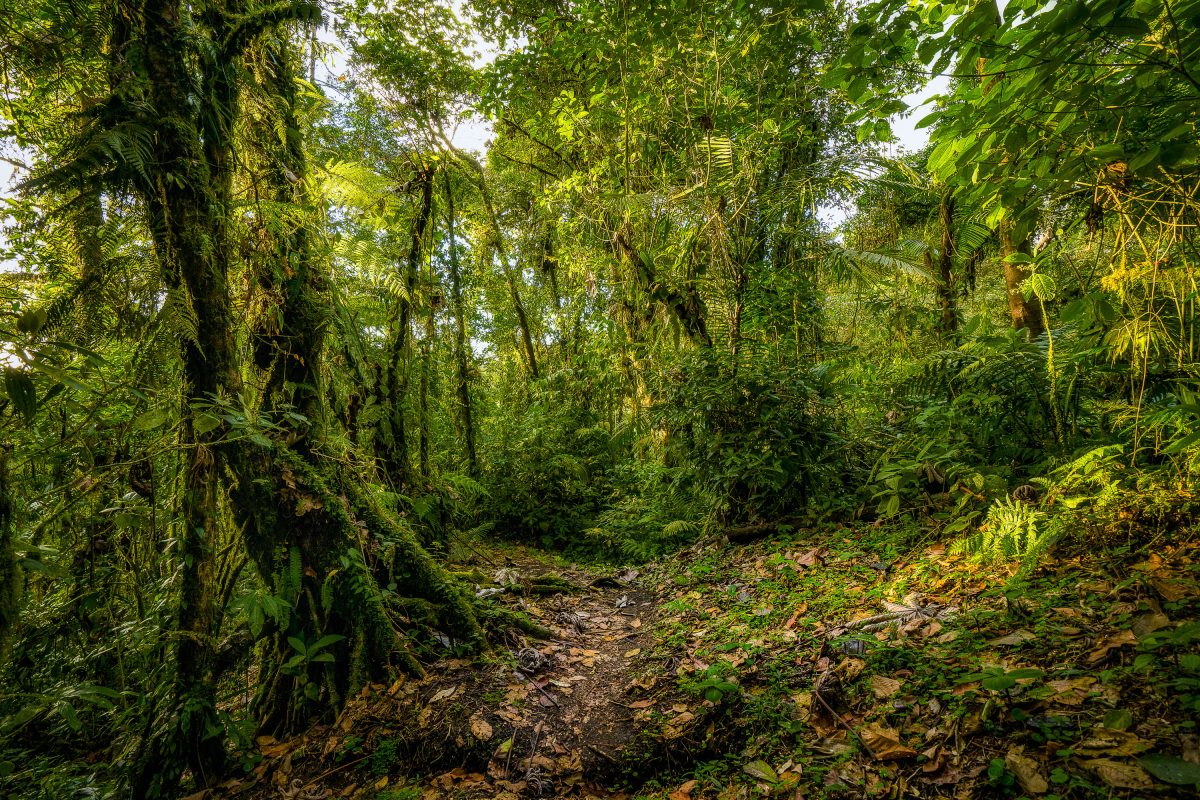
A trail winds through dense moss-covered vegetation and trees in Monteverde Cloud Forest Preserve, Costa Rica.
The Monteverde Cloud Forest Biological Preserve sits along the Continental Divide in Costa Rica's Tilarán Mountains, roughly 1,440 meters above sea level. Established in 1972 and now managed by the Tropical Science Center, it protects more than 10,500 hectares of habitat spanning several life zones. Over 400 bird species and 2,500 plant species have been recorded here, including hundreds of orchid varieties and abundant epiphytes that thrive in the near-constant moisture. A network of marked trails, originally developed for researchers, now gives visitors access to the forest while limiting impact on the surrounding ecosystem.

Hiking Trail in the Monteverde Cloud Forest Preserve

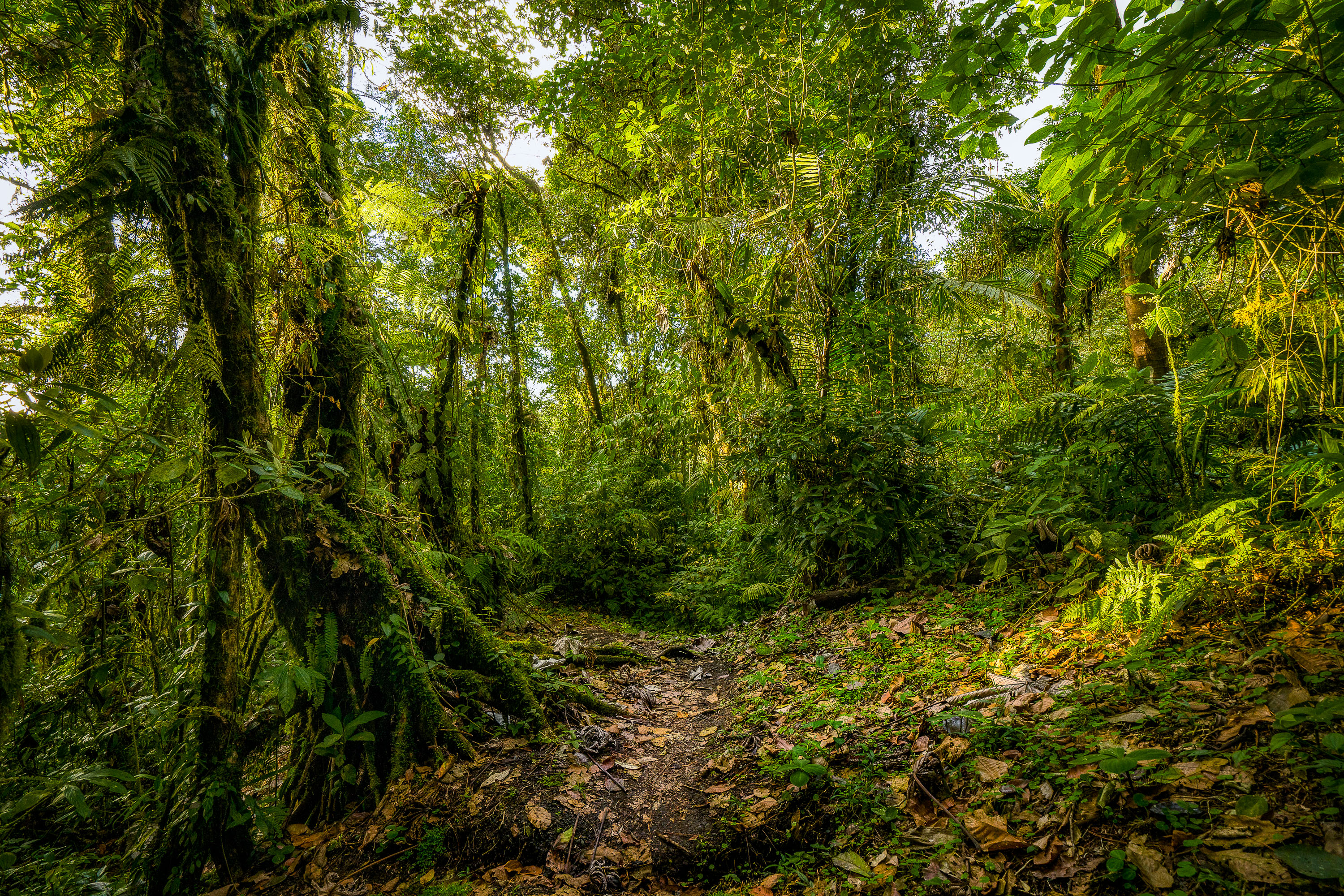
A moss-covered fallen log lies on a dirt trail through the Monteverde Cloud Forest Reserve in Costa Rica.
The Monteverde Cloud Forest Reserve sits along the Cordillera de Tilarán in northwestern Costa Rica, straddling the Continental Divide between the Pacific and Caribbean watersheds. Established in 1972 by the Tropical Science Center, the reserve protects roughly 10,500 hectares of forest across six distinct ecological zones. Elevations within the reserve range from about 1,400 to 1,800 meters, keeping the canopy wrapped in moisture-laden clouds for much of the year. That constant humidity supports one of the densest concentrations of epiphytes in Central America, with orchids, bromeliads, and mosses covering tree trunks and exposed roots along the trail network.

Root-Covered Trail in the Monteverde Cloud Forest Reserve
Built in Minneapolis

Minneapolis Photographer

Browse by location, move through long-running series, or start with recent work.