Ramp

10 photos · 2018–2023

10 photographs tagged Ramp, 2018–2023.
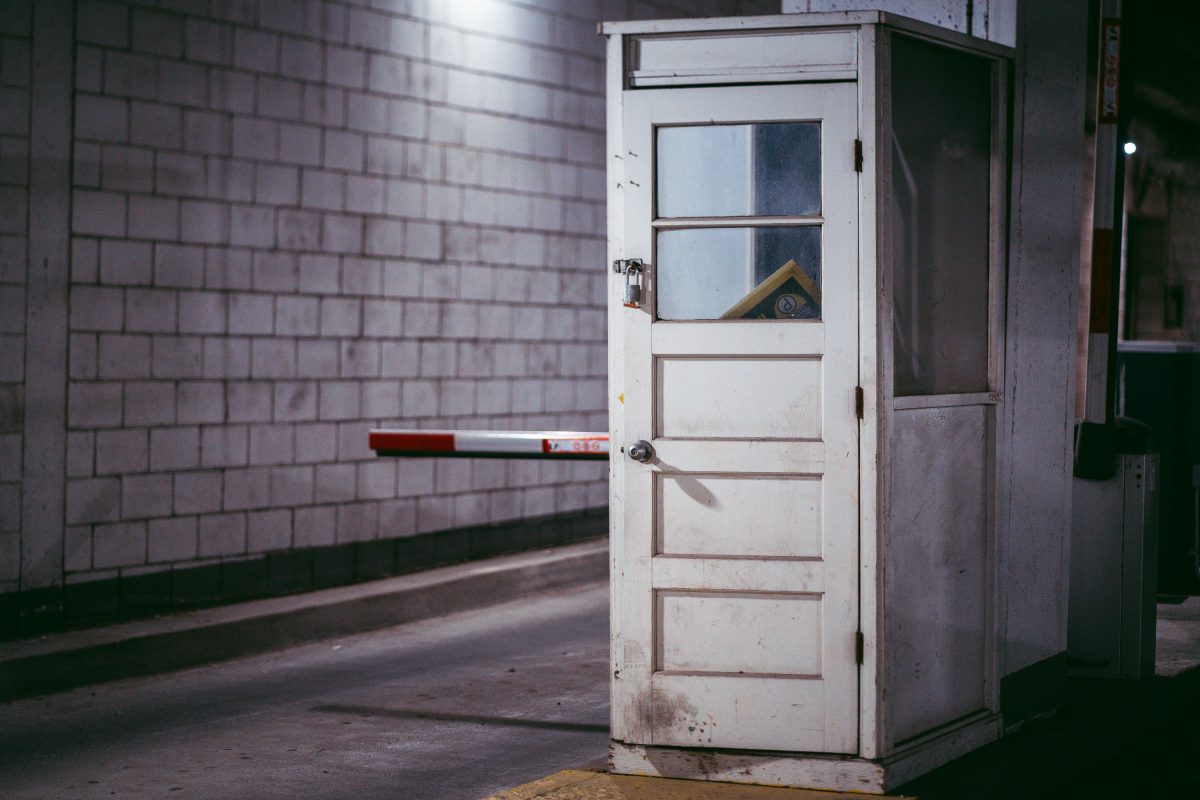
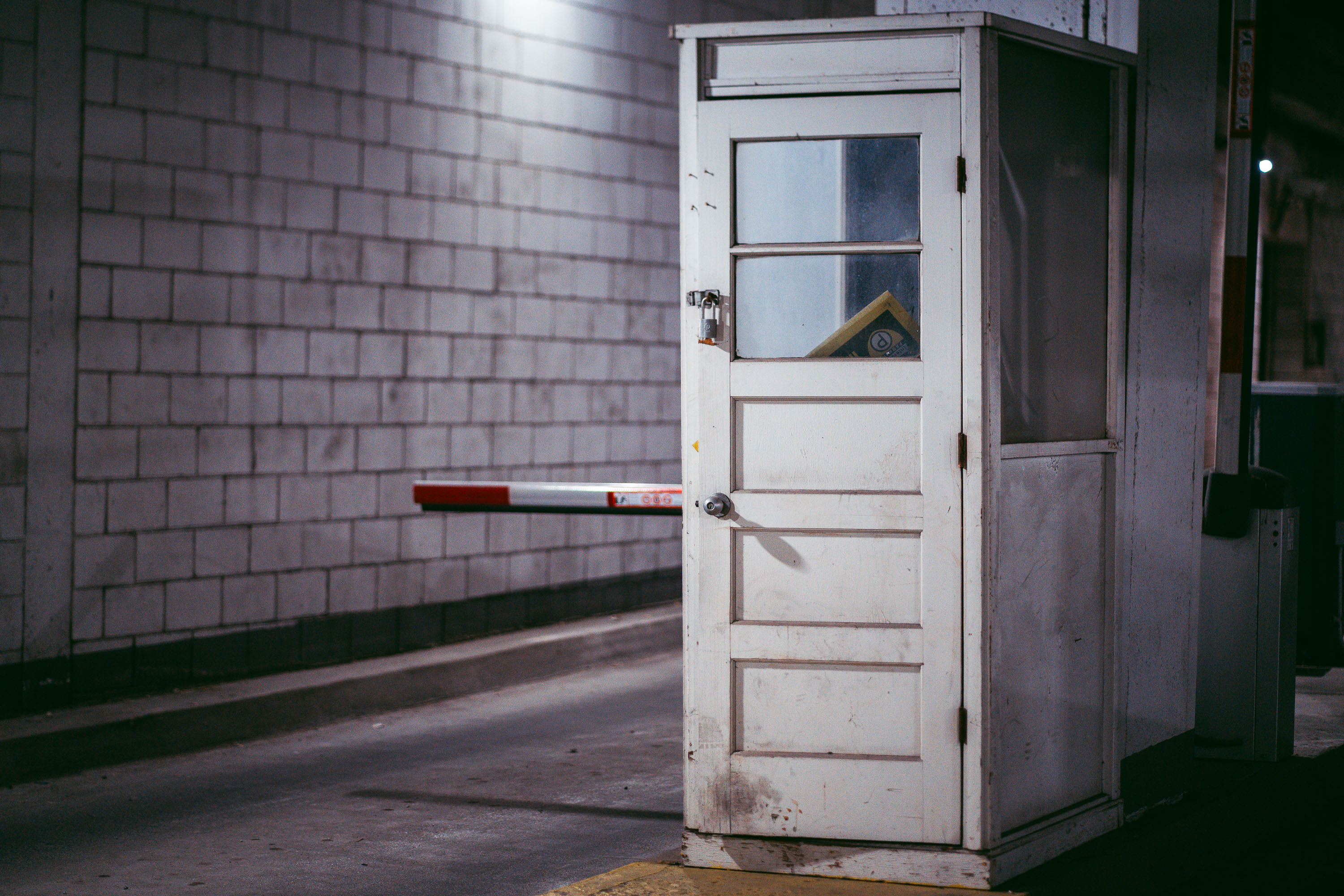
White metal door with window in brick parking garage corridor, Minneapolis.
Parking ramps like this one typically post an attendant's booth near the entrance or exit lane, where a cashier once collected fees before automated pay stations became standard. The swing-arm gate barrier behind it is a common mechanism for controlling vehicle access, tied to a ticket dispenser or card reader that lifts the arm on payment or valid credential. Booths of this style, often built from wood or metal with a glazed upper panel for visibility, have become less common as ramps convert to license-plate recognition and mobile payment systems. Many downtown Minneapolis ramps date to the mid-to-late 20th century, built to serve the skyway system and the office towers that expanded through the area during that period.

Attendant’s Booth, Parking Ramp in Downtown Minneapolis

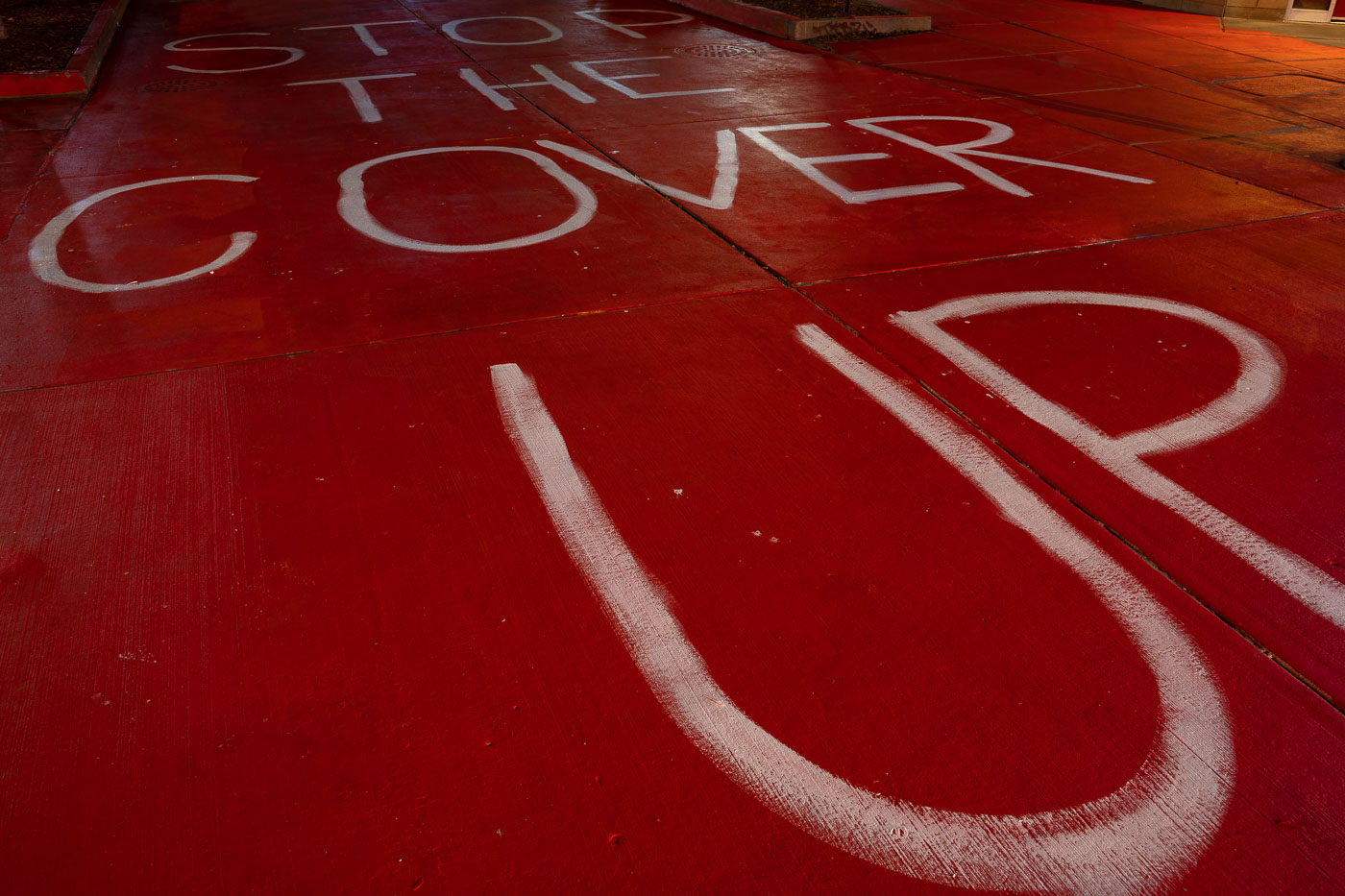
People stand on Lake Street in Minneapolis beside red-painted road text reading “STOP THE COVER UP.”
Protesters painted "Stop the cover up" in red on Lake Street in Minneapolis, near the Seven Points Mall parking ramp. This act of protest occurred after Winston Smith was killed by law enforcement on June 3rd. The message was painted for the second consecutive day, indicating a persistent demand for transparency and accountability following the incident. The location, a prominent urban thoroughfare, became a site for public expression of grief and dissent.

Protesters paint “Stop the cover up” on Lake Street, Minneapolis
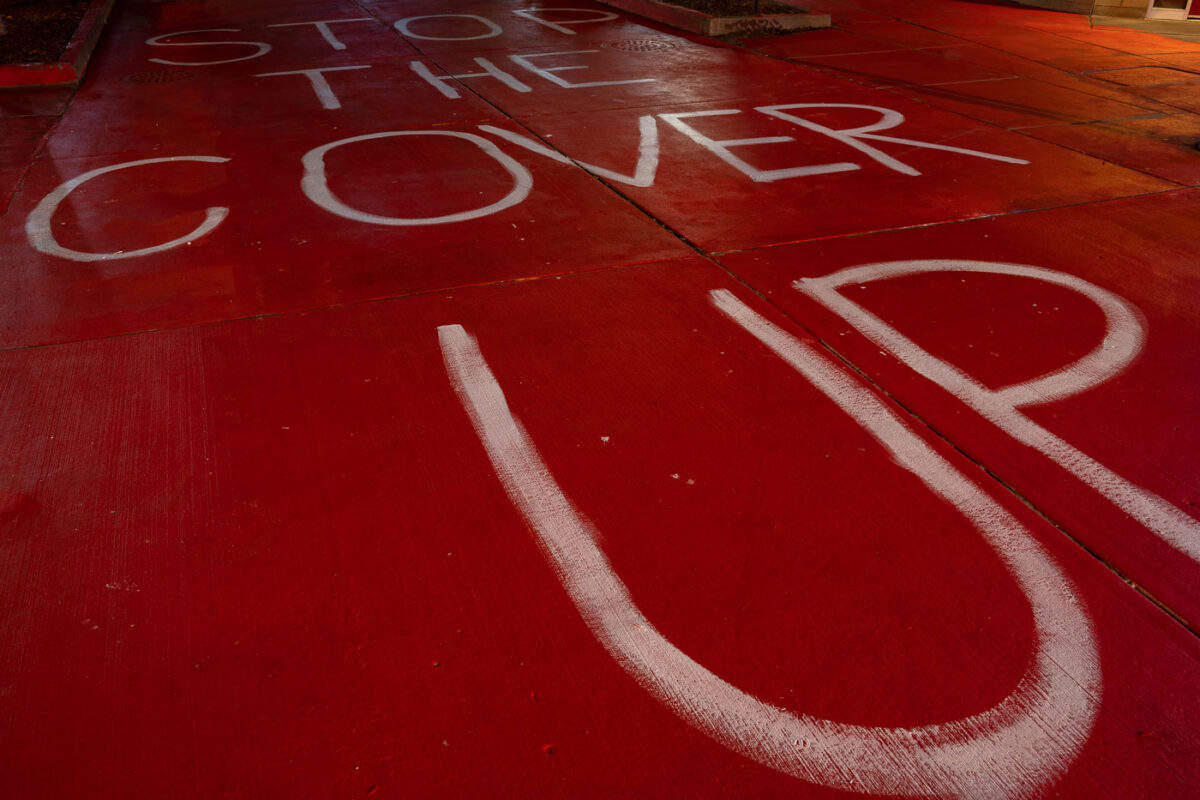
“Stop the cover up” is spray-painted in white on a red parking ramp in Uptown Minneapolis.
"Stop The Cover Up" is spray-painted on a red surface near the parking ramp in Uptown Minneapolis where Winston Smith was killed by Law Enforcement on June 3, 2021. Ten days later, Deona Marie was killed when a vehicle drove through barricades erected to protect protesters. On June 3, 2021, members of a U.S. Marshals Service fugitive task force fatally shot 32-year-old Winston “Boogie” Smith Jr. on the top level of a parking ramp in Minneapolis’ Uptown neighborhood while attempting to arrest him on a felony warrant. Authorities said Smith fired a handgun from inside his vehicle during the encounter, while family members and activists questioned the official account and demanded the release of additional evidence. The killing led to weeks of protests, street occupations, and confrontations with police in Uptown, becoming another major flashpoint in Minneapolis during the period following the murder of George Floyd. Earlier in the day Minneapolis city officials along with The Agape Movement coordinated to open the streets that had been closed at George Floyd Square since his murder.

Protest message on Uptown Minneapolis parking ramp
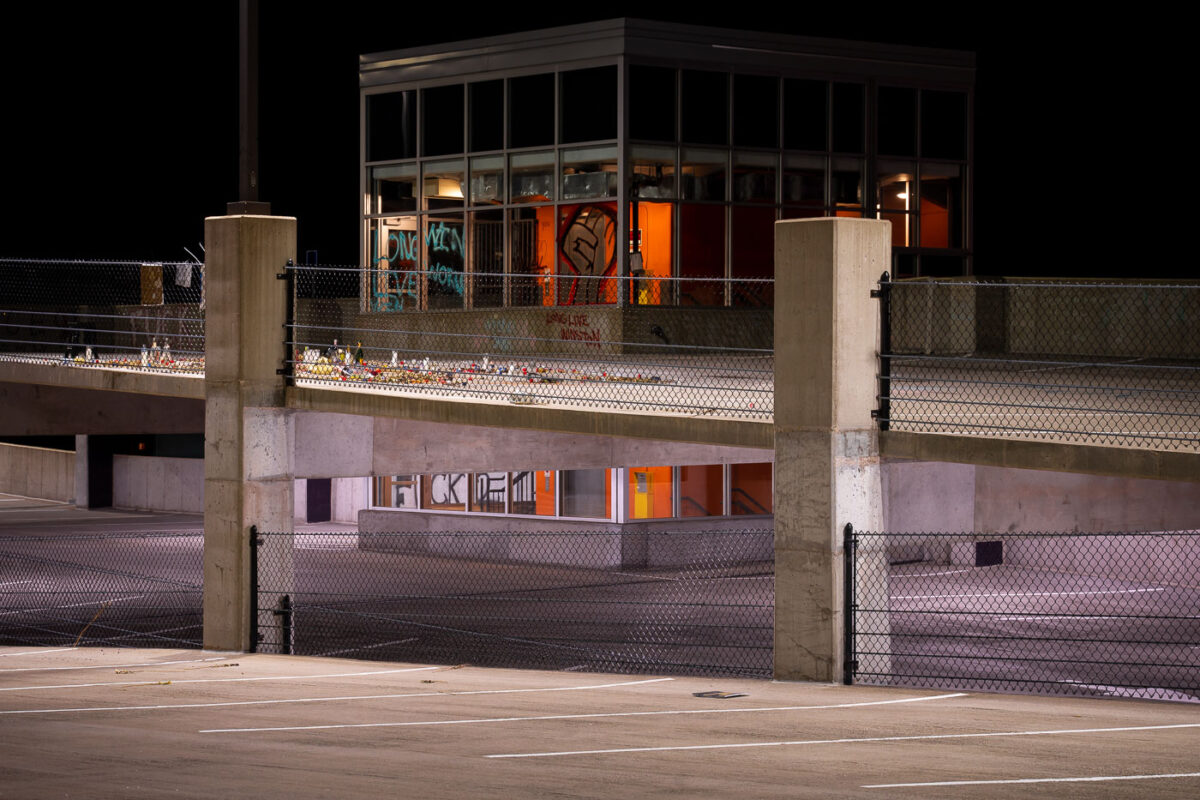
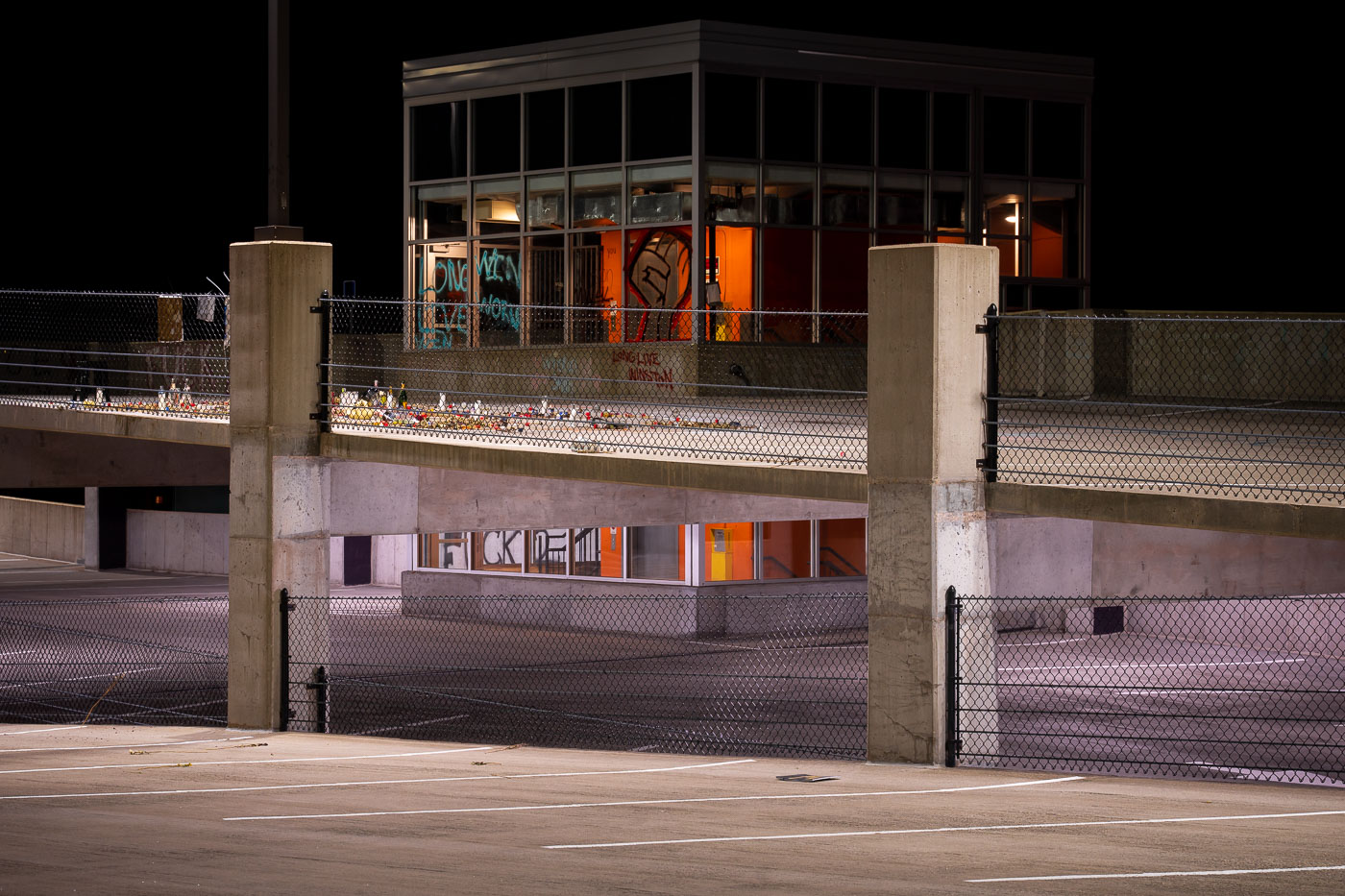
Winston Smith memorial on a Minneapolis parking ramp roof at night.
The Winston Smith Memorial is located on the roof of the parking ramp at 1525 West Lake Street in Minneapolis, where Smith died on June 3, 2020. Smith, a Black man, was shot and killed by law enforcement officers while he was sleeping in his vehicle on the ramp. His death occurred during the widespread protests that followed the murder of George Floyd. The memorial, consisting of flowers, candles, and other tributes, serves as a site of remembrance and a focal point for ongoing activism related to police brutality and racial justice. On June 3, 2021, members of a U.S. Marshals Service fugitive task force fatally shot 32-year-old Winston “Boogie” Smith Jr. on the top level of a parking ramp in Minneapolis’ Uptown neighborhood while attempting to arrest him on a felony warrant. Authorities said Smith fired a handgun from inside his vehicle during the encounter, while family members and activists questioned the official account and demanded the release of additional evidence. The killing led to weeks of protests, street occupations, and confrontations with police in Uptown, becoming another major flashpoint in Minneapolis during the period following the murder of George Floyd. Earlier in the day Minneapolis city officials along with The Agape Movement coordinated to open the streets that had been closed at George Floyd Square since his murder.

Winston Smith Memorial at Minneapolis Parking Ramp
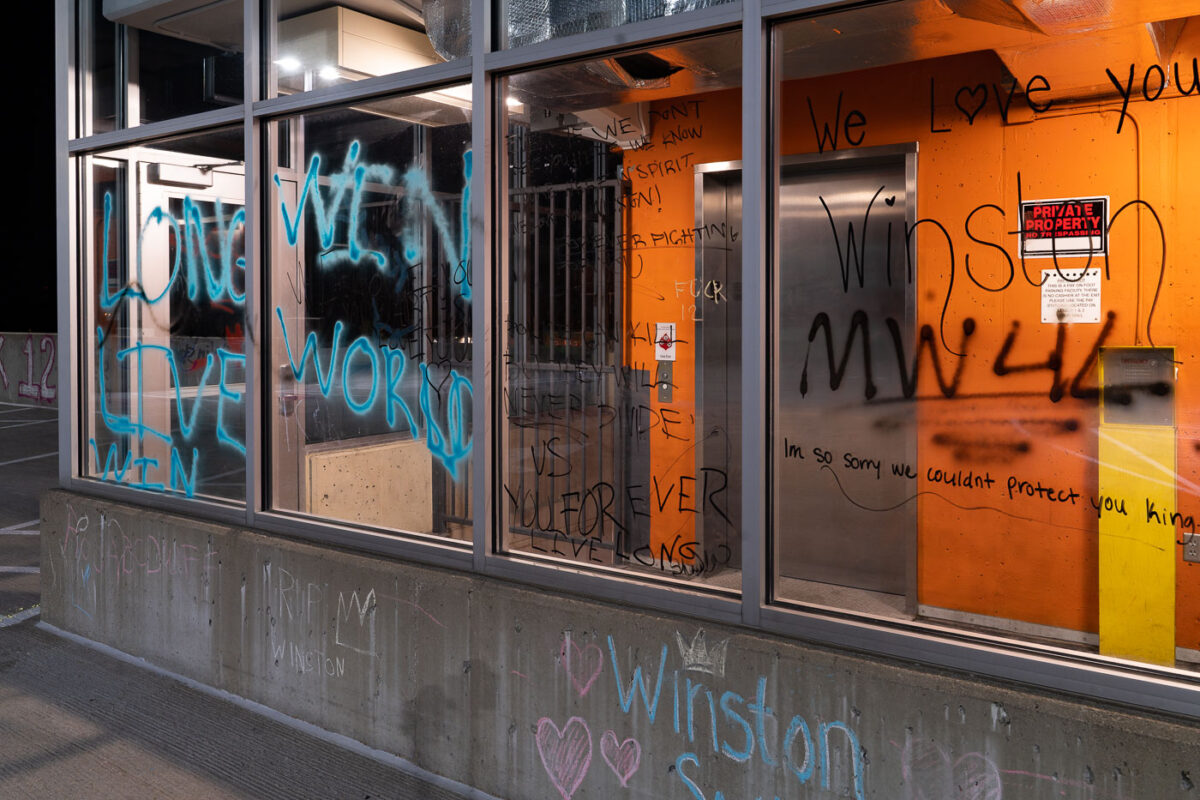
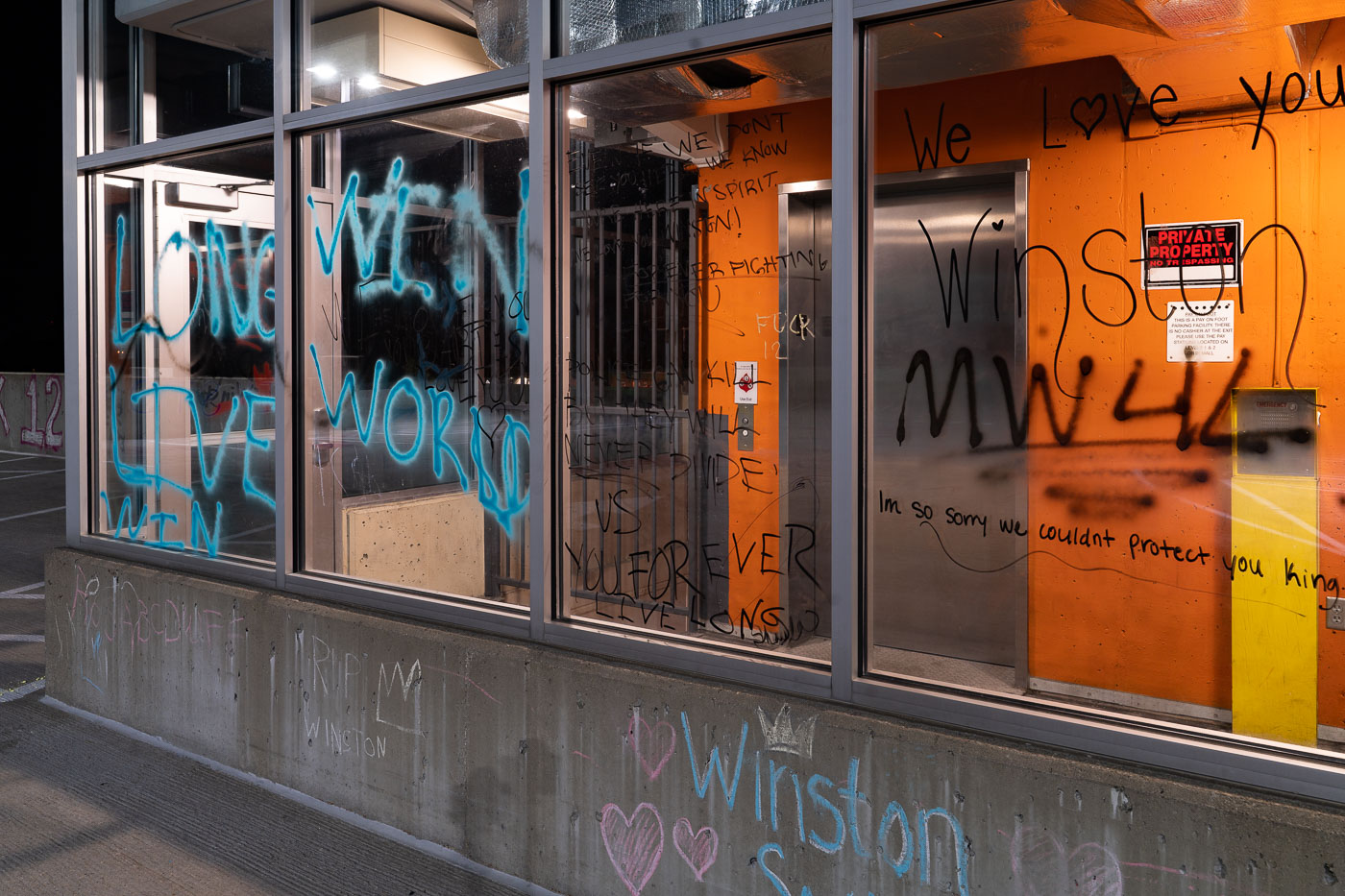
Graffiti memorializing Winston Smith on the Seven Points Parking Ramp in Minneapolis, lit at night.
Graffiti memorializes Winston Smith on the Seven Points Parking Ramp in Minneapolis. Smith was killed by a federal task force on June 3rd, 2021, on the top floor of this structure. The messages spray-painted on the windows and walls express grief, solidarity, and anger. On June 3, 2021, members of a U.S. Marshals Service fugitive task force fatally shot 32-year-old Winston “Boogie” Smith Jr. on the top level of a parking ramp in Minneapolis’ Uptown neighborhood while attempting to arrest him on a felony warrant. Authorities said Smith fired a handgun from inside his vehicle during the encounter, while family members and activists questioned the official account and demanded the release of additional evidence. The killing led to weeks of protests, street occupations, and confrontations with police in Uptown, becoming another major flashpoint in Minneapolis during the period following the murder of George Floyd. Earlier in the day Minneapolis city officials along with The Agape Movement coordinated to open the streets that had been closed at George Floyd Square since his murder.

Graffiti on Seven Points Parking Ramp, Minneapolis
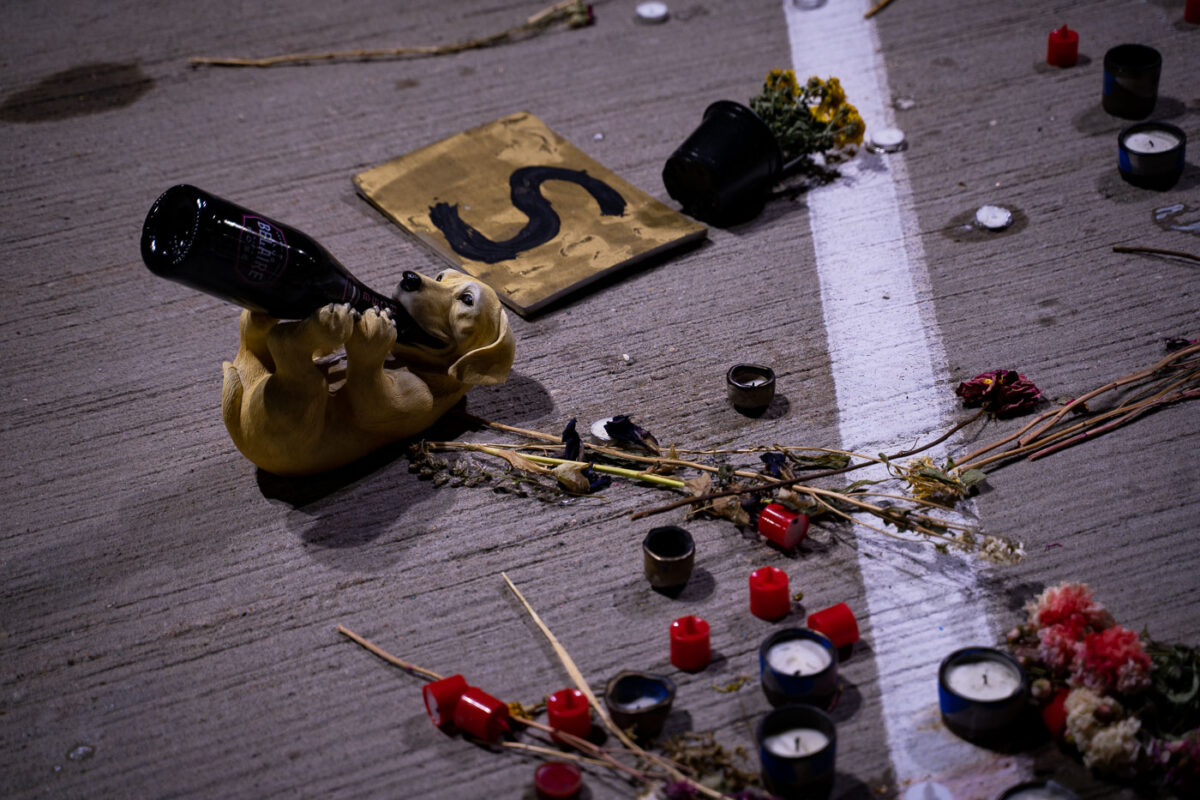
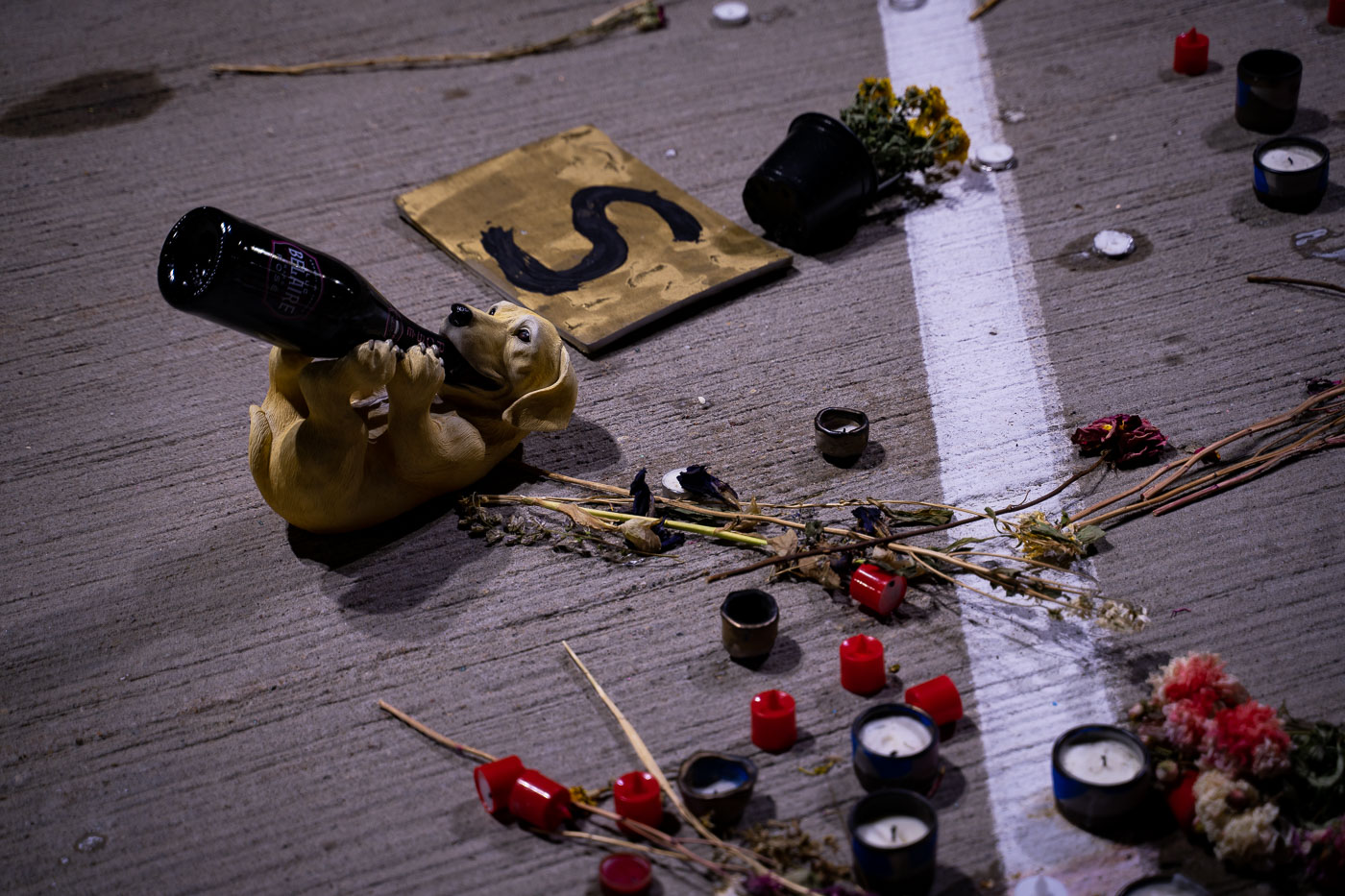
Memorial items on a Minneapolis parking ramp mark the site where Winston Smith was killed.
A memorial tribute to Winston Smith rests on the concrete surface of a Minneapolis parking ramp. Smith died on June 3rd, 2021, on this structure after being shot by officers from a federal task force who were serving a warrant. The memorial includes candles, dried flowers, and a decorative dog holding a bottle, arranged on the ground where the incident occurred. This location became a focal point for protests and mourning following Smith's death. On June 3, 2021, members of a U.S. Marshals Service fugitive task force fatally shot 32-year-old Winston “Boogie” Smith Jr. on the top level of a parking ramp in Minneapolis’ Uptown neighborhood while attempting to arrest him on a felony warrant. Authorities said Smith fired a handgun from inside his vehicle during the encounter, while family members and activists questioned the official account and demanded the release of additional evidence. The killing led to weeks of protests, street occupations, and confrontations with police in Uptown, becoming another major flashpoint in Minneapolis during the period following the murder of George Floyd. Earlier in the day Minneapolis city officials along with The Agape Movement coordinated to open the streets that had been closed at George Floyd Square since his murder.

Winston Smith Memorial, Minneapolis Parking Ramp

Empty parking level at Ramp A garage in downtown Minneapolis with yellow bollards and directional markings.
Ramp A is one of several municipal parking ramps the City of Minneapolis operates in the downtown core, serving nearby government offices, hotels, and retail. The ramp typically fills with commuters and visitors on weekdays but stood empty in early April 2020, during the citywide shutdown ordered in response to the COVID-19 pandemic.

Ramp A’s Upper Levels Sit Empty in Downtown Minneapolis
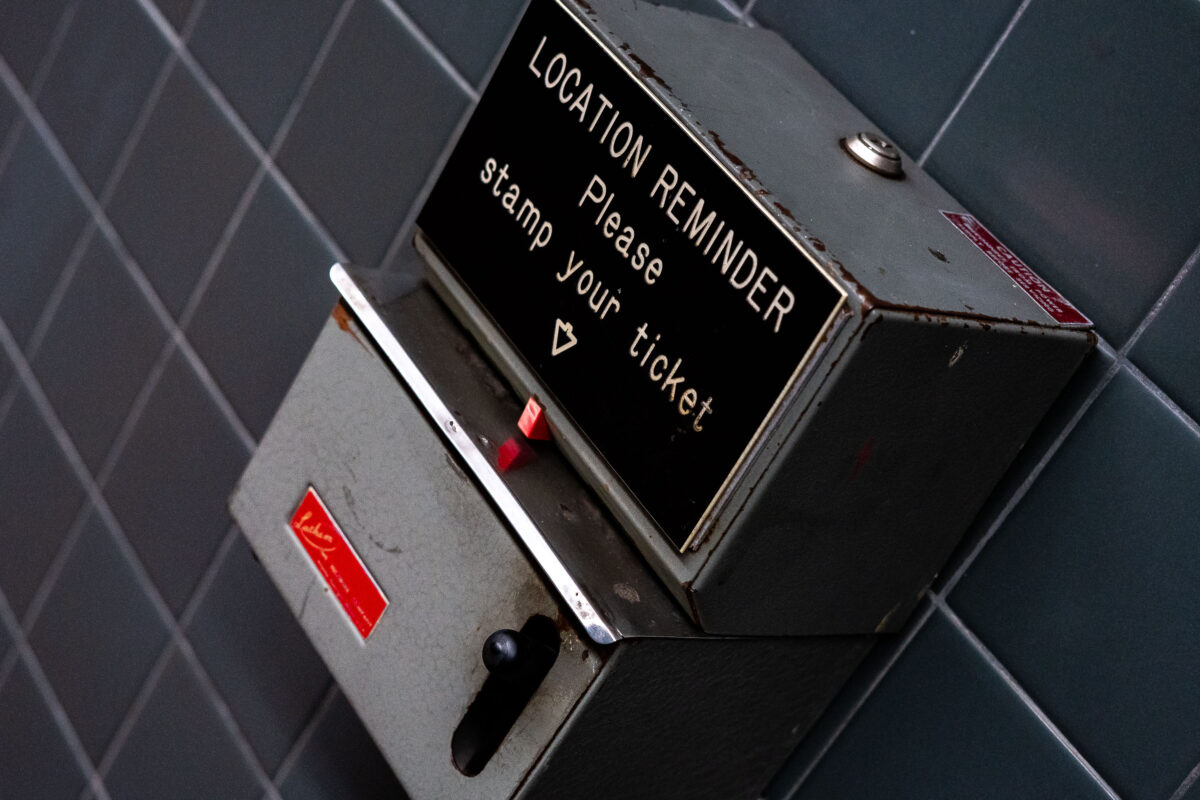
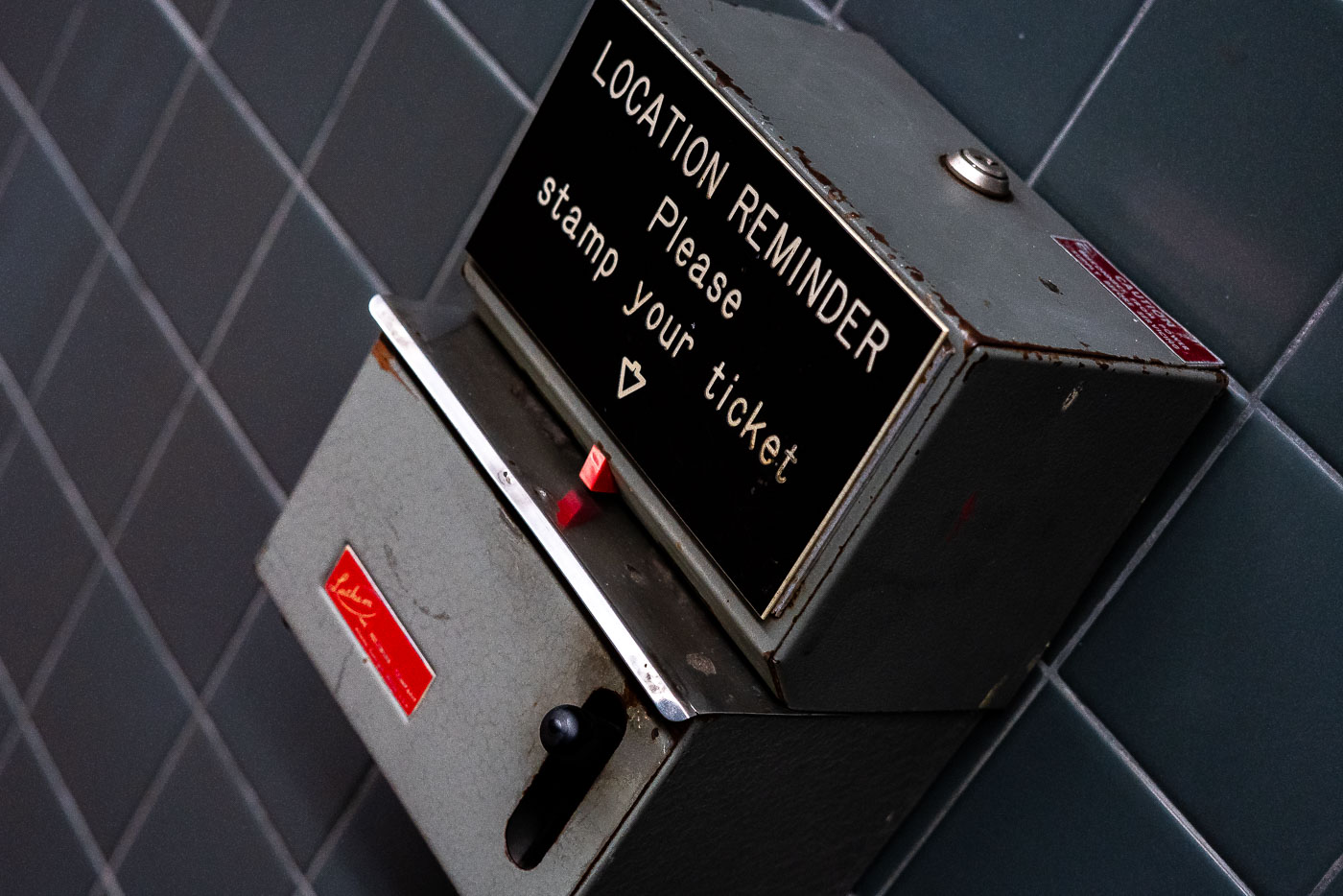
A "Location Reminder" ticket stamping machine, formerly in downtown Minneapolis transit stations, allowed passengers to mark tickets with arrival/departure times. This mid-20th-century device exemplifies transit infrastructure.
A "Location Reminder" ticket stamping machine, formerly installed in downtown Minneapolis transit stations, allowed passengers to mark their tickets with the time and place of their arrival or departure. This utilitarian device, with its lever-operated mechanism and faded instructional label, exemplifies mid-20th-century transit infrastructure. Such machines were essential for manual timestamping in parking facilities and public transit hubs before the widespread adoption of digital systems. The machine's robust, industrial design and its mounting on a tiled wall reflect the functional aesthetics of public transportation facilities of its era.

Location Reminder Ticket Stamping Machine, Downtown Minneapolis

Red-tiled escalator station interior with metal escalators and illuminated ceiling panels in downtown Minneapolis.
Ramp A is one of several municipal parking ramps woven into downtown Minneapolis's skyway system, connecting parking levels directly to the enclosed second-story walkways that link buildings throughout downtown. The city operates a network of these ramps to serve commuters and shoppers without requiring them to step outside, a design common to Minneapolis since the skyway system's expansion in the 1960s and 1970s.

Ramp A Skyway Escalators, Downtown Minneapolis
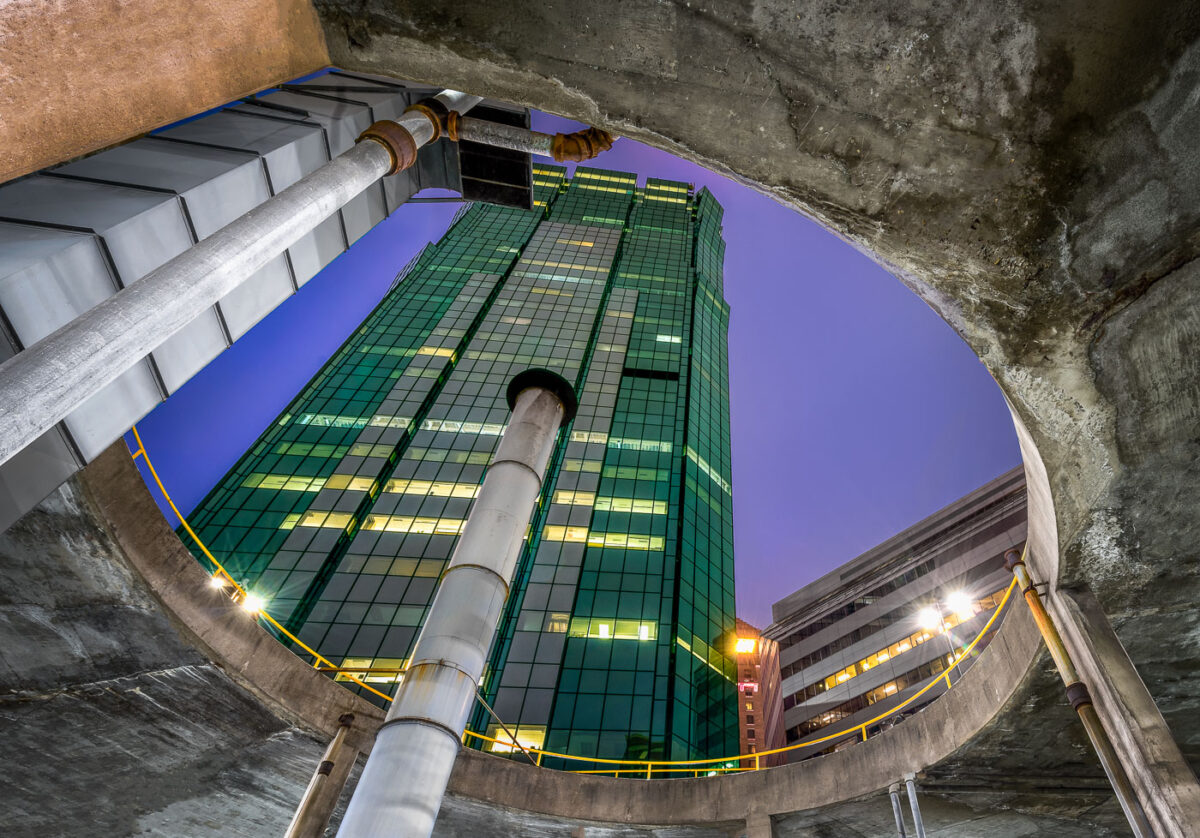
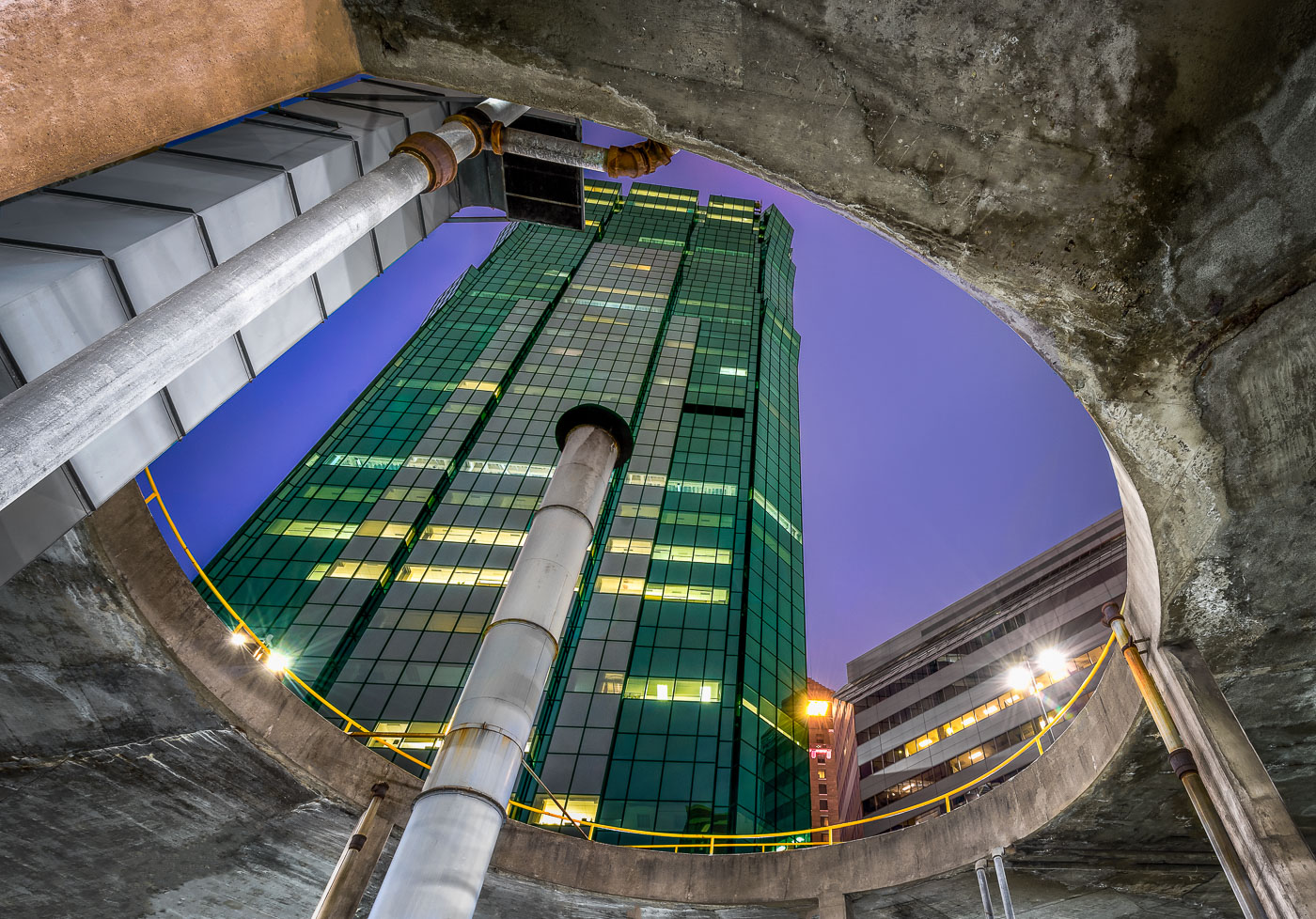
AT&T Tower in downtown Minneapolis rises above a parking ramp.
AT&T Tower, Minneapolis, rises above a downtown parking ramp. The building is a prominent office tower in the city’s central business district.

AT&T Tower, Minneapolis

Built in Minneapolis

Minneapolis Photographer

Browse by location, move through long-running series, or start with recent work.