Berlin

37 photos · 2017

37 photographs tagged Berlin, 2017.

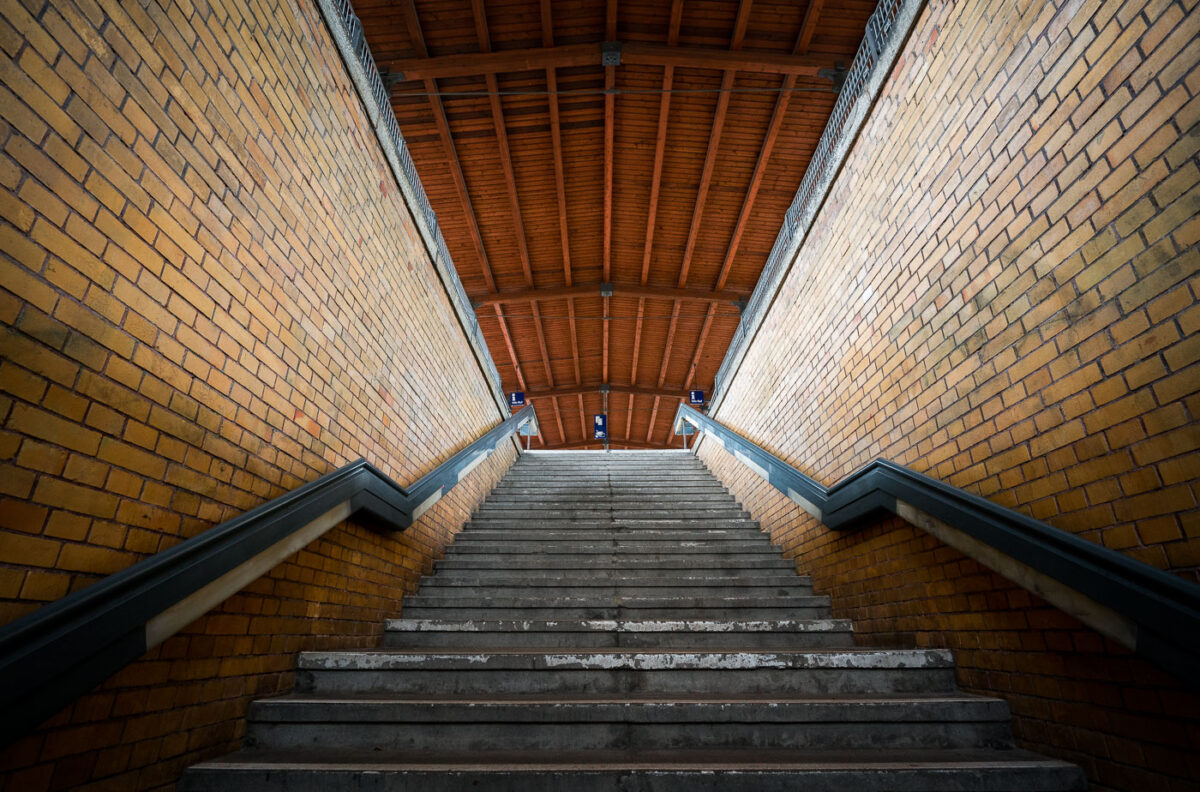
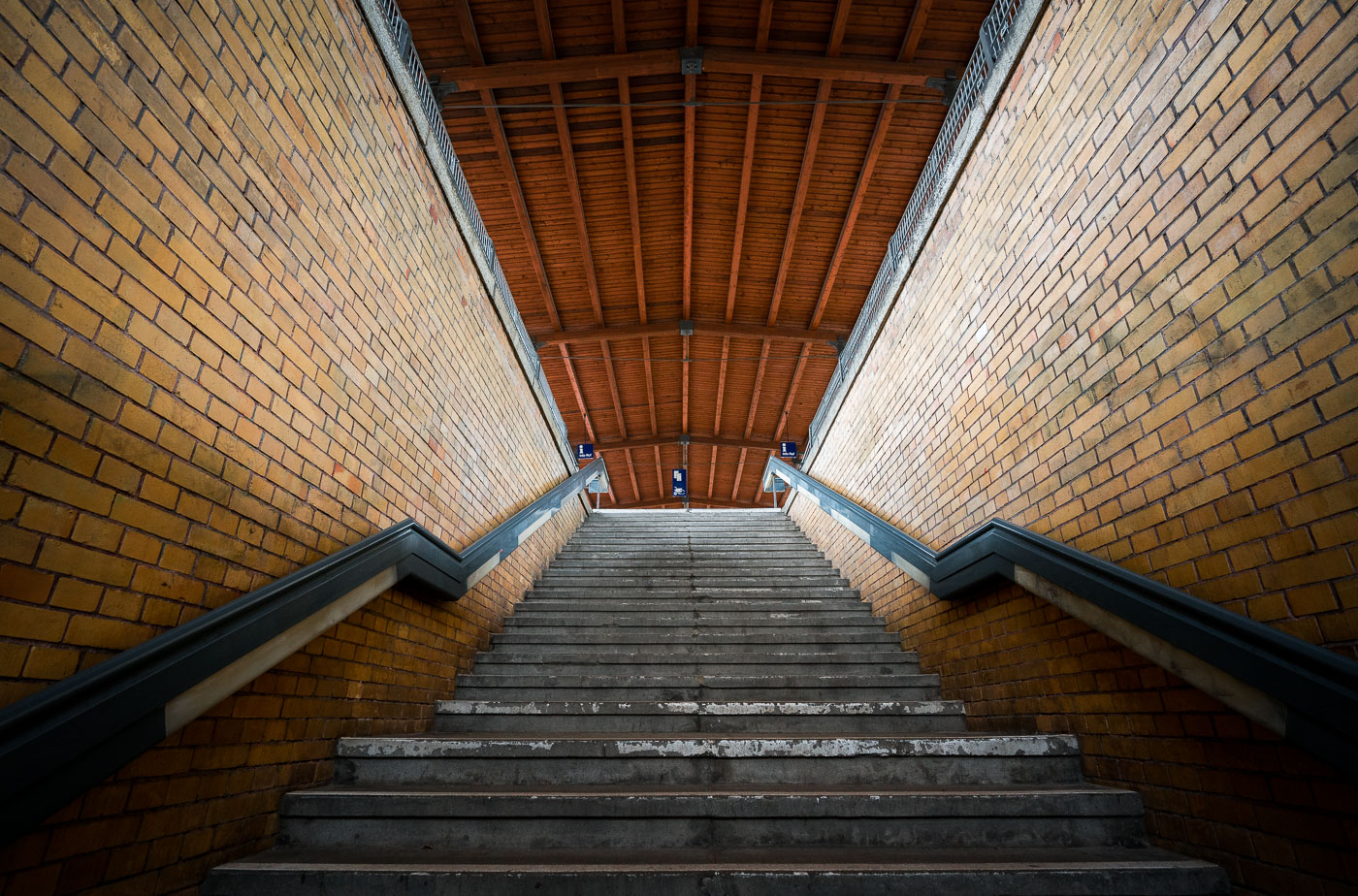
Symmetrical brick stairwell with timber ceiling and metal handrails ascending through a Berlin train station underpass.
A stairway inside a Berlin train station rises between yellow brick walls beneath a timber roof structure. Metal handrails flank the steps, and small platform signs hang near the top of the stairwell.

Yellow Brick Stairwell Beneath a Timber Roof, Berlin
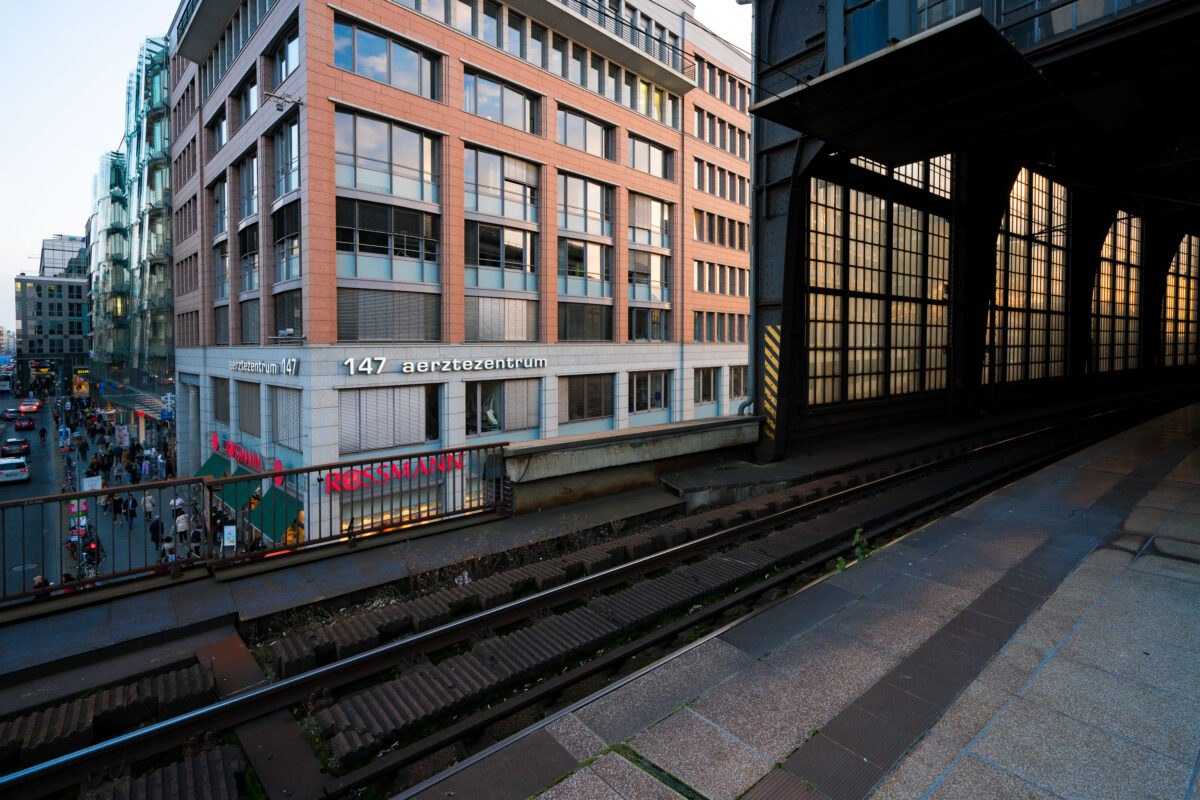
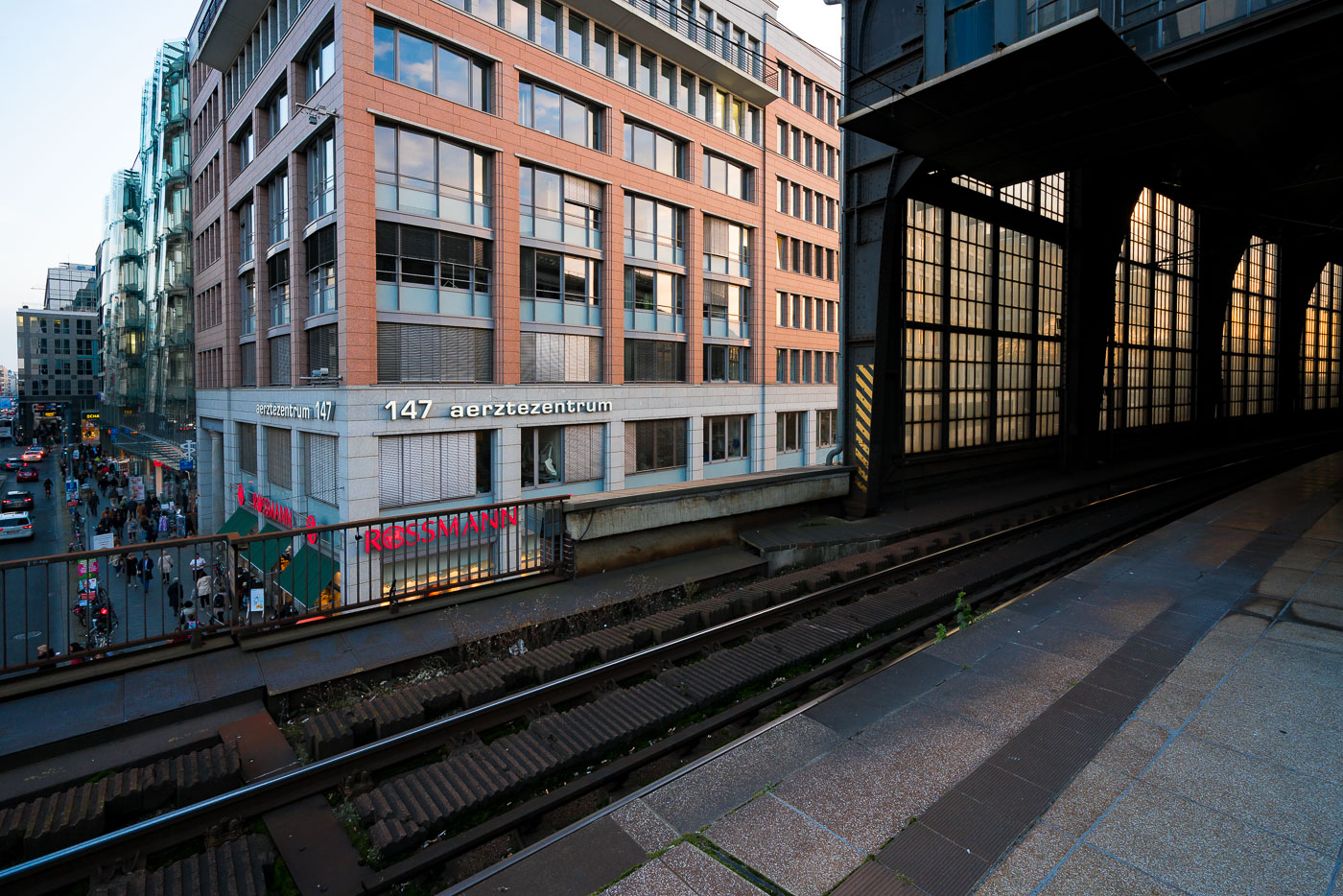
Elevated railway tracks at Berlin Friedrichstraße Station run beside the Aerztezentrum building and surrounding office architecture along Georgenstraße.
Berlin Friedrichstraße Station in Berlin has elevated tracks running beside Georgenstraße. The view looks past the station structure toward the Aerztezentrum at No. 147 and nearby office buildings along the street.

Friedrichstraße Station Platform Overlooking Georgenstraße
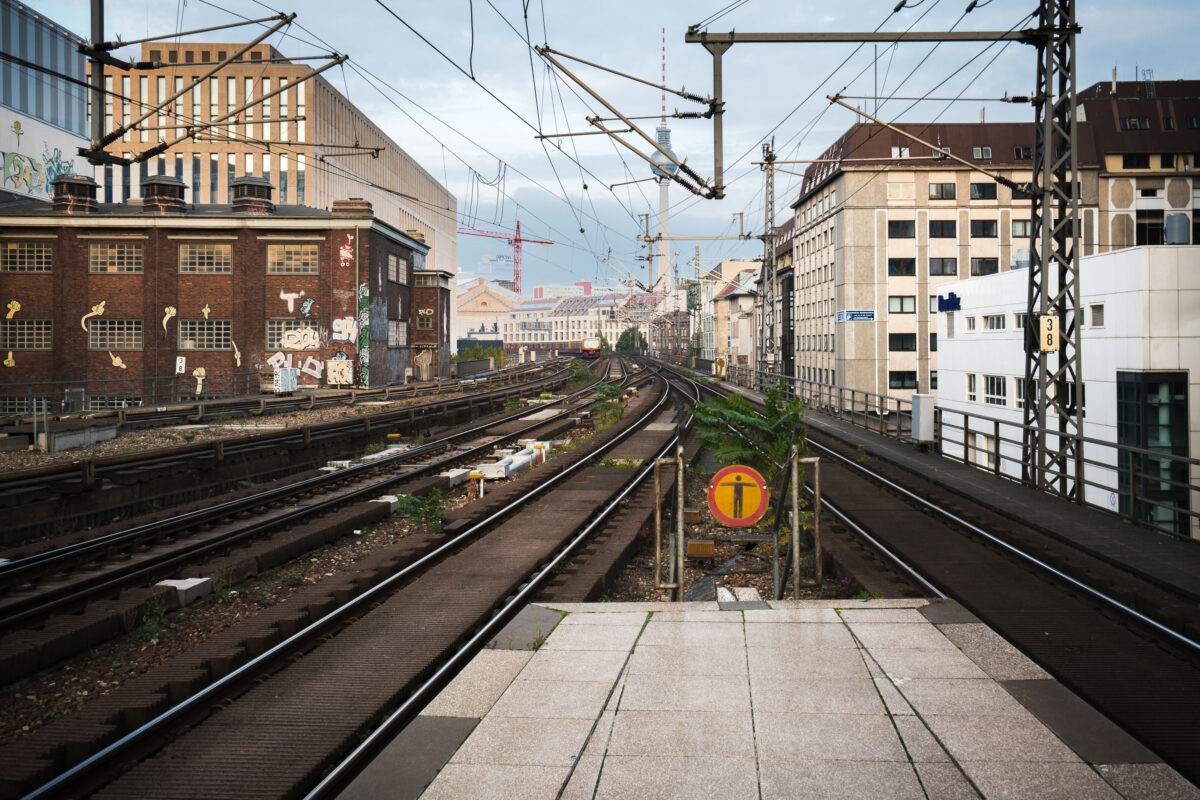
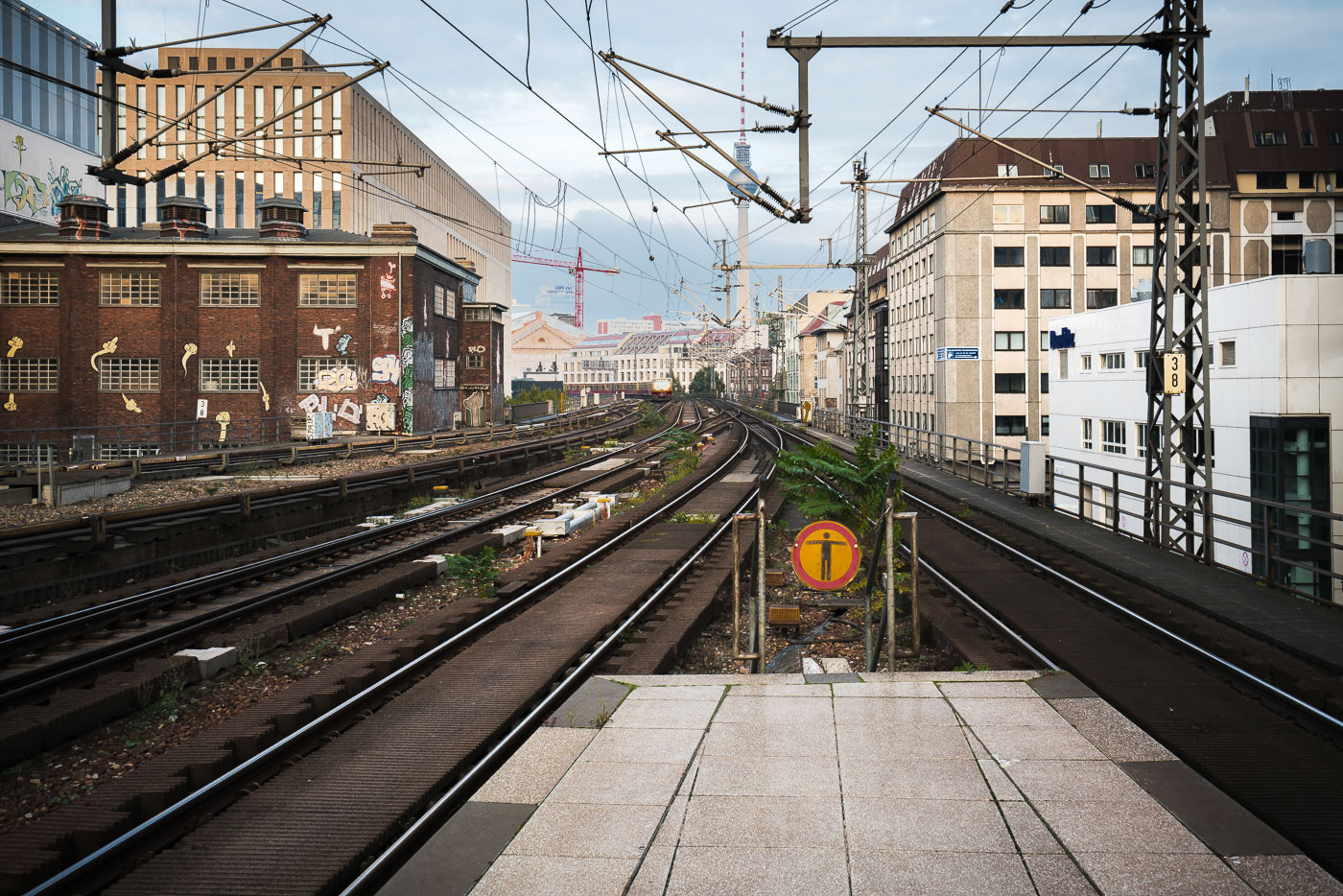
Elevated S-Bahn tracks at Berlin Friedrichstraße station extend eastward between brick and modern office buildings with the Fernsehturm visible in the distance.
Berlin Friedrichstraße station in Berlin looks east along the elevated S-Bahn tracks. The Fernsehturm rises in the distance beyond the rail corridor, which runs through a dense mix of office and older industrial buildings.

Elevated S-Bahn Tracks Toward the Fernsehturm in Berlin
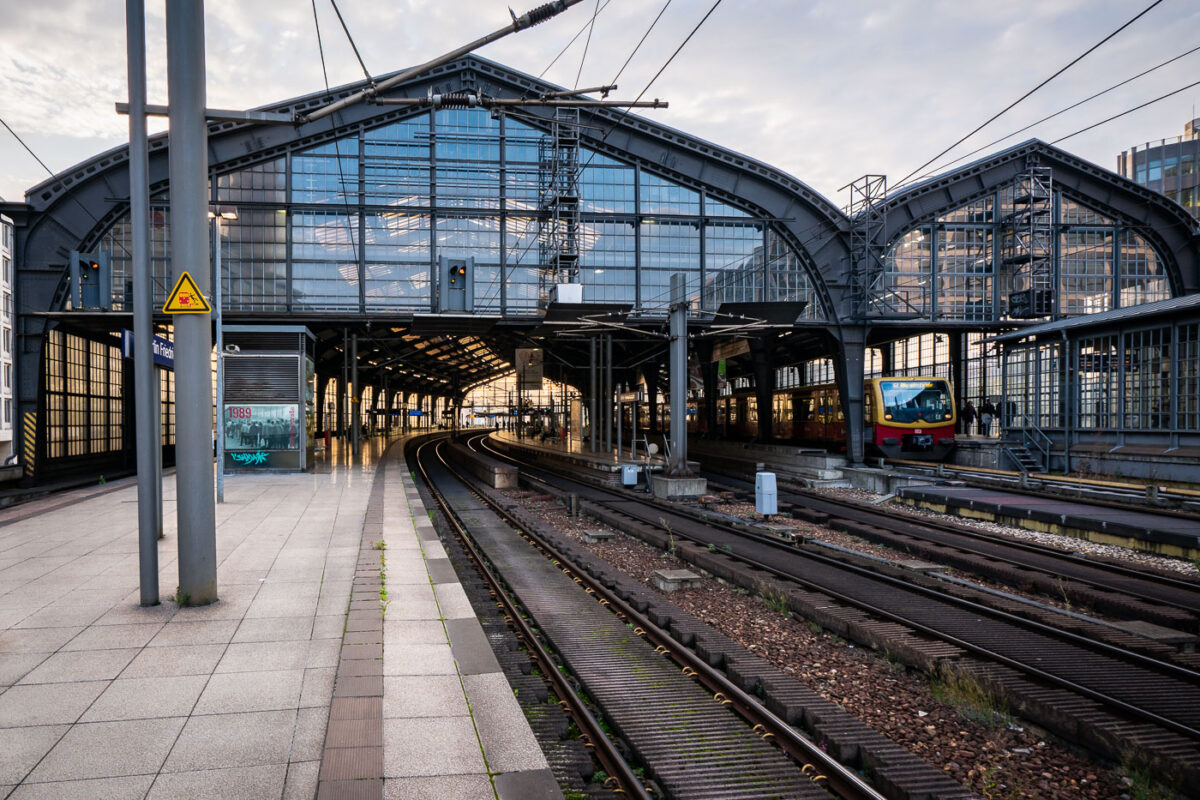
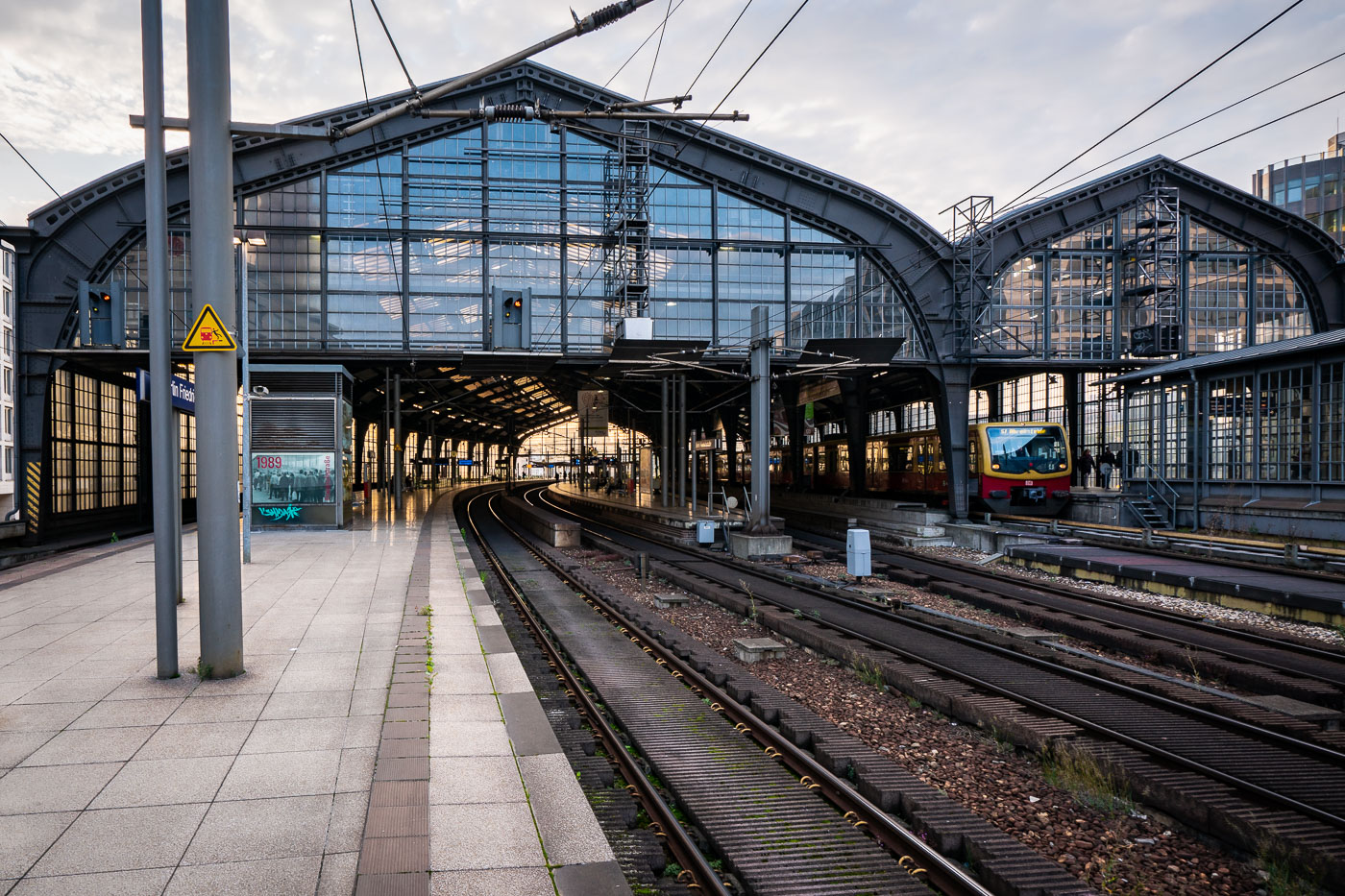
Elevated S-Bahn platforms at Berlin Friedrichstraße Station sit beneath a steel-and-glass canopy with multiple railway tracks visible below.
Berlin Friedrichstraße Station in Berlin, Germany, has elevated S-Bahn platforms under a large steel-and-glass canopy. The station opened in 1882 and serves as a major interchange for S-Bahn, regional, and long-distance rail services.

Glass Canopy Over Friedrichstraße Station’s Platforms
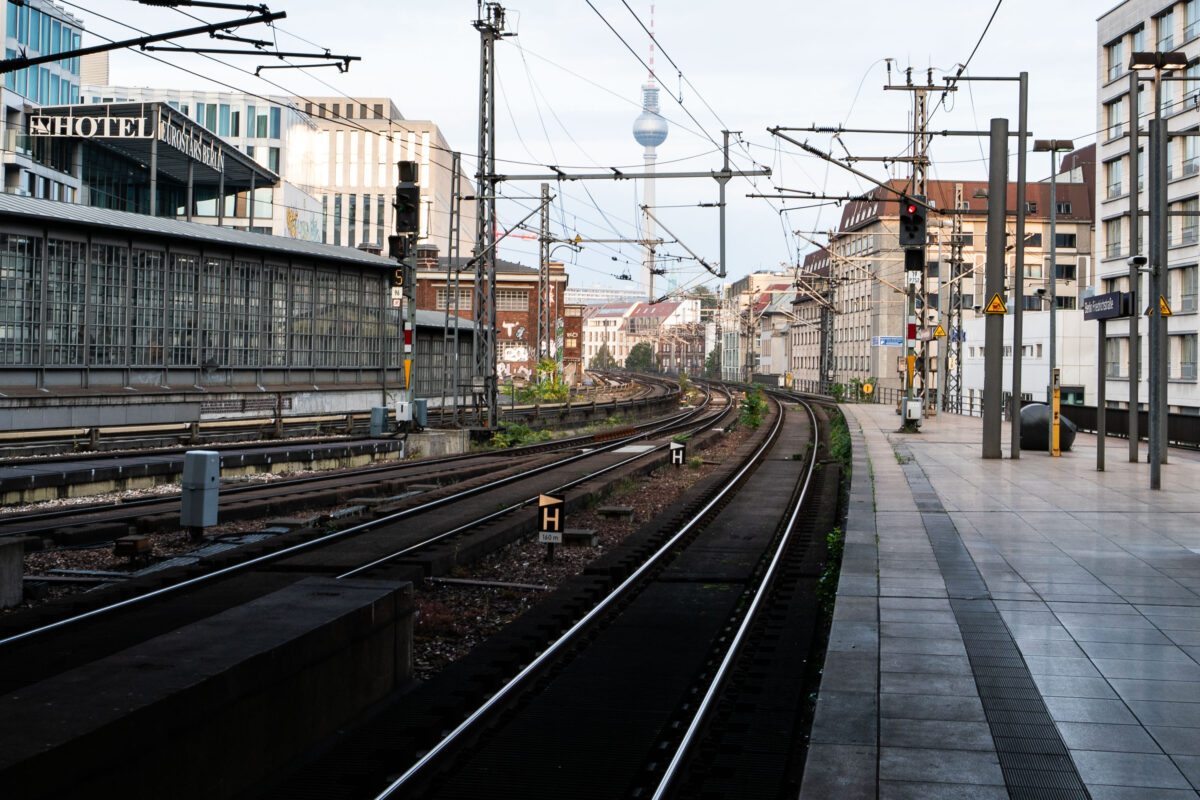
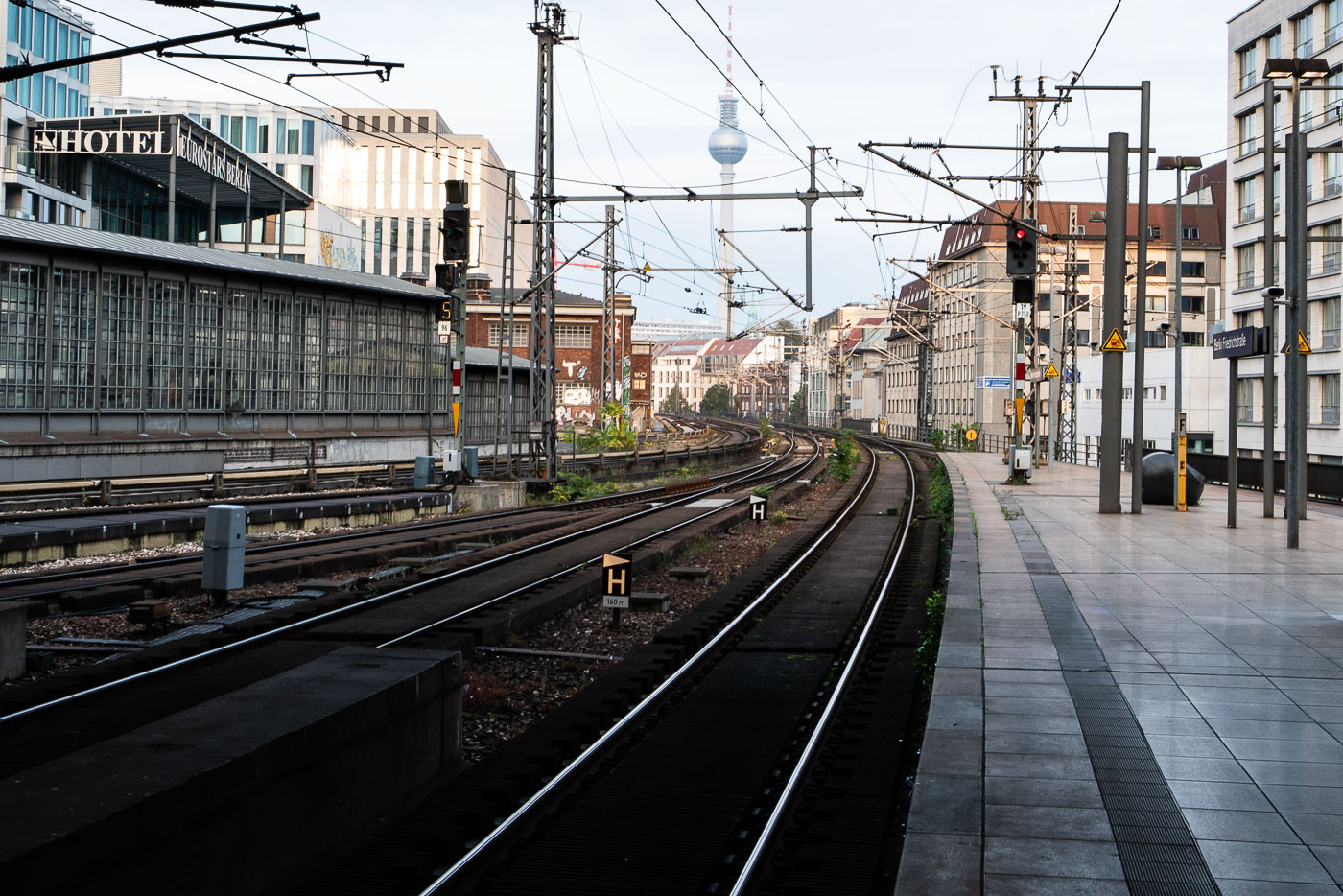
Berlin Friedrichstraße Station platform with curved S-Bahn and regional rail tracks, Fernsehturm visible in the distance, and surrounding urban architecture.
Berlin Friedrichstraße Station in Berlin shows S-Bahn and regional rail tracks curving eastward past the platforms. The Fernsehturm rises in the distance above the station approach, and the Eurostars Berlin hotel stands beside the tracks.

Rail Tracks Curving Toward the Fernsehturm Near Friedrichstraße
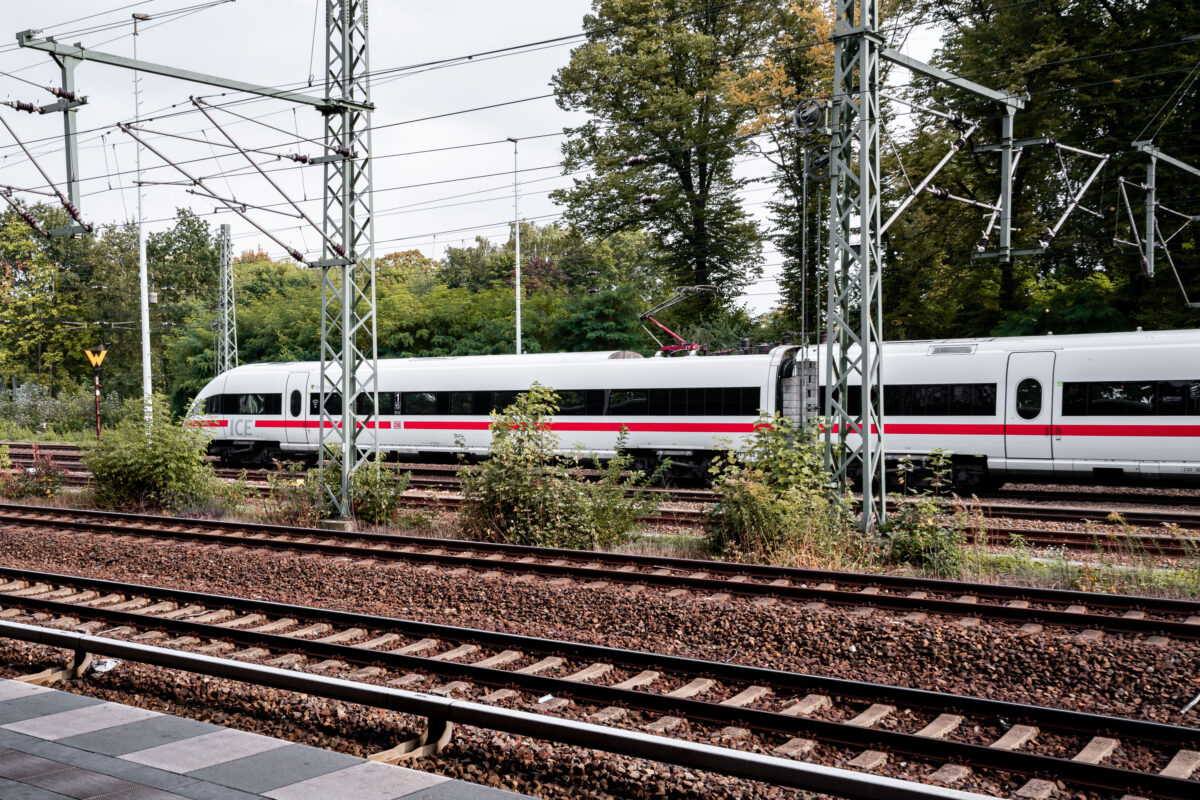
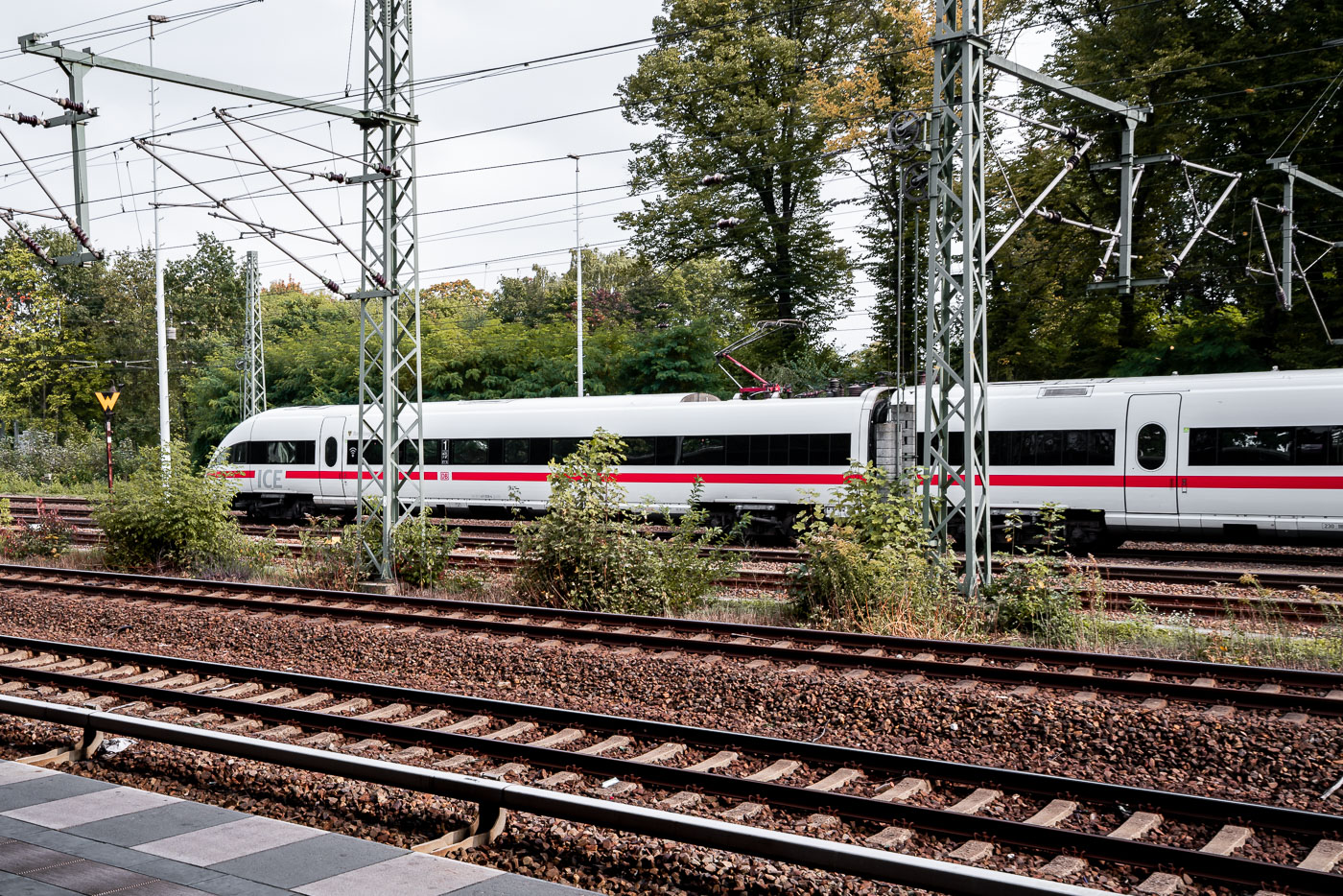
Deutsche Bahn ICE 3 high-speed train passes beneath overhead catenary lines on an electrified Berlin rail line.
A Deutsche Bahn ICE 3 train runs past electrified tracks in Berlin. The high-speed train is shown under the overhead catenary system used on Germany’s mainline rail network.

Deutsche Bahn ICE Train Along the Tracks in Berlin
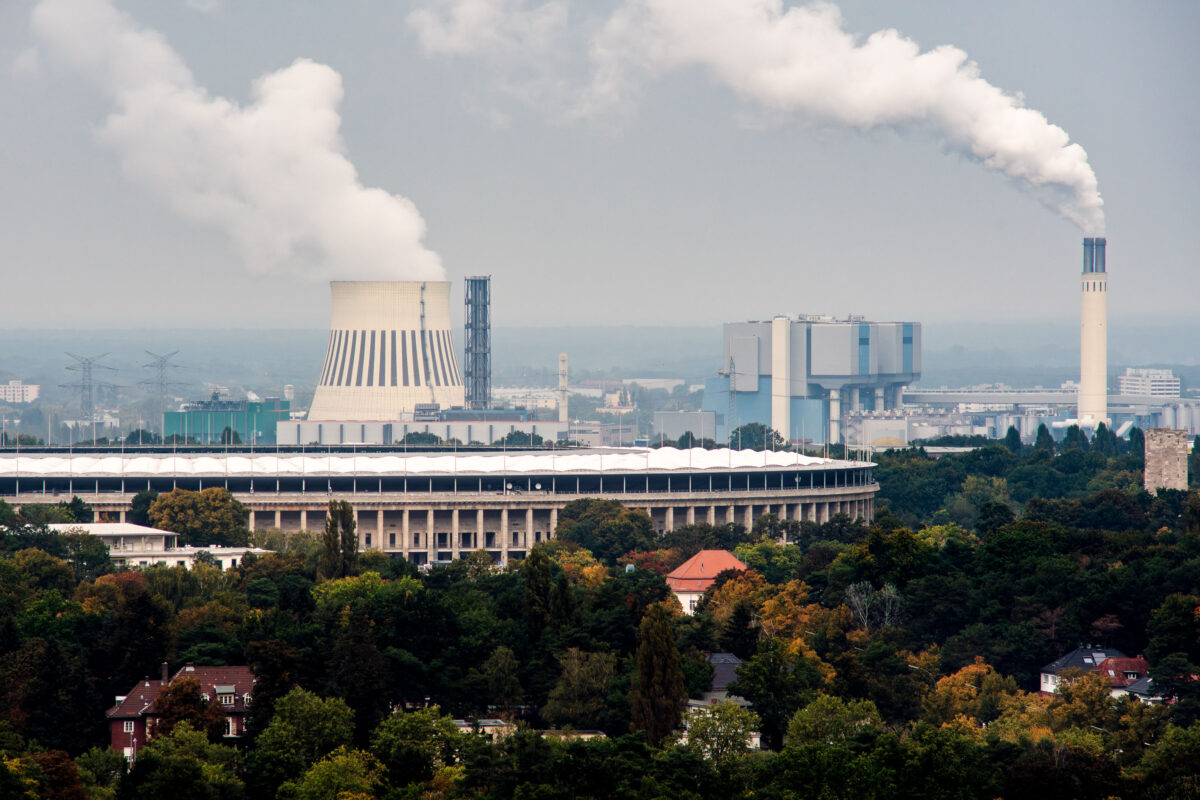
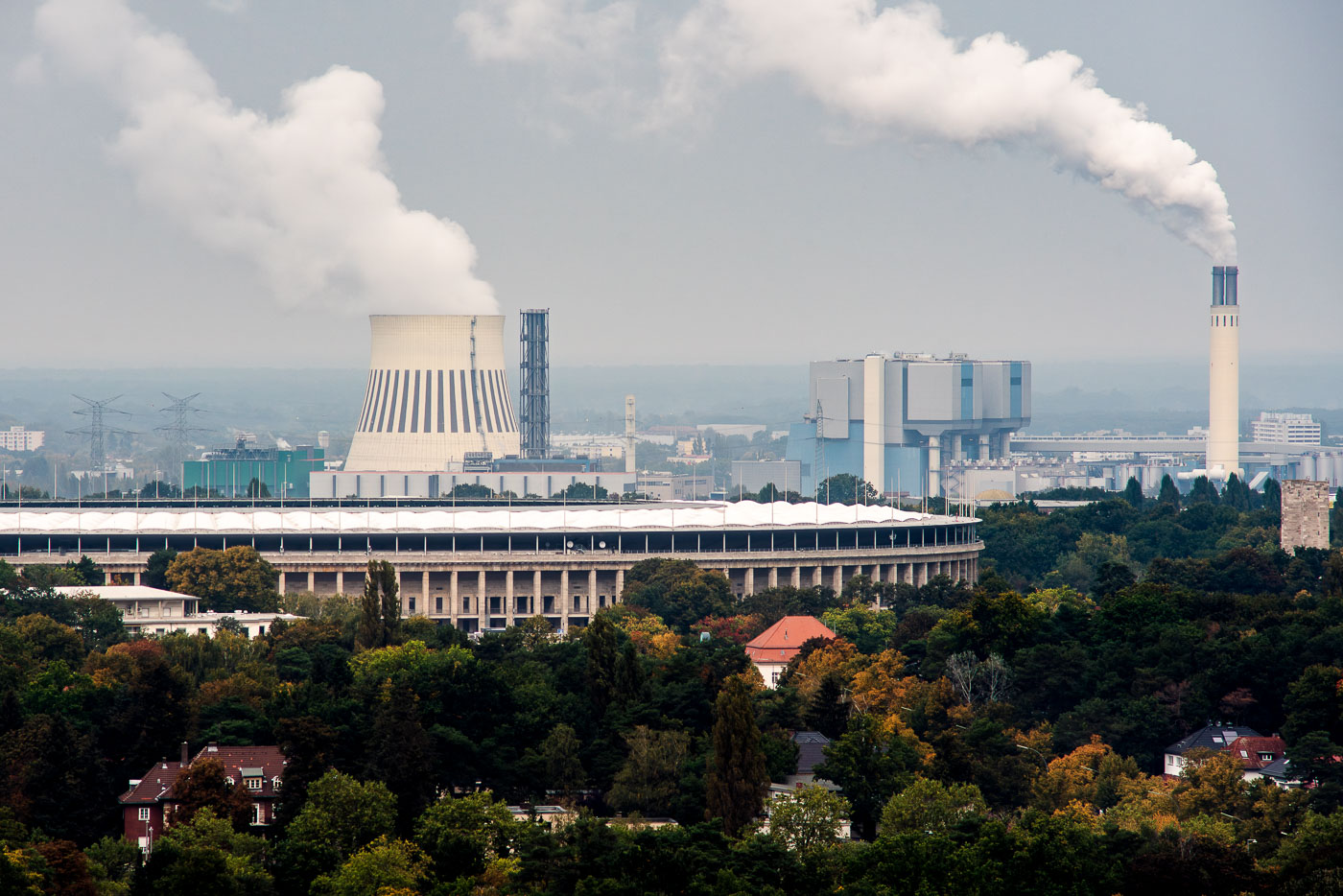
Olympiastadion and Reuter power plant complex in Berlin's Westend district, with the 1936 Olympic stadium and industrial facilities visible.
The Olympiastadion was built for the 1936 Summer Olympics and designed by architect Werner March, replacing an earlier stadium on the same grounds. A 2004 renovation gave the structure a translucent roof and reduced capacity to roughly 74,000 seats; it now serves as the home ground of Hertha BSC and hosts the annual DFB-Pokal final. Behind it, the Reuter West plant generates combined heat and power for western Berlin, operated by Vattenfall on a site in Siemensstadt first developed with the original Kraftwerk Reuter in 1931. Reuter West itself was built in stages between 1987 and 1990 to supply district heating alongside electricity, a dual role reflected in the plant's cooling tower and chimney stack.

Reuter Power Plant Smoke Rises Beyond Berlin’s Olympiastadion
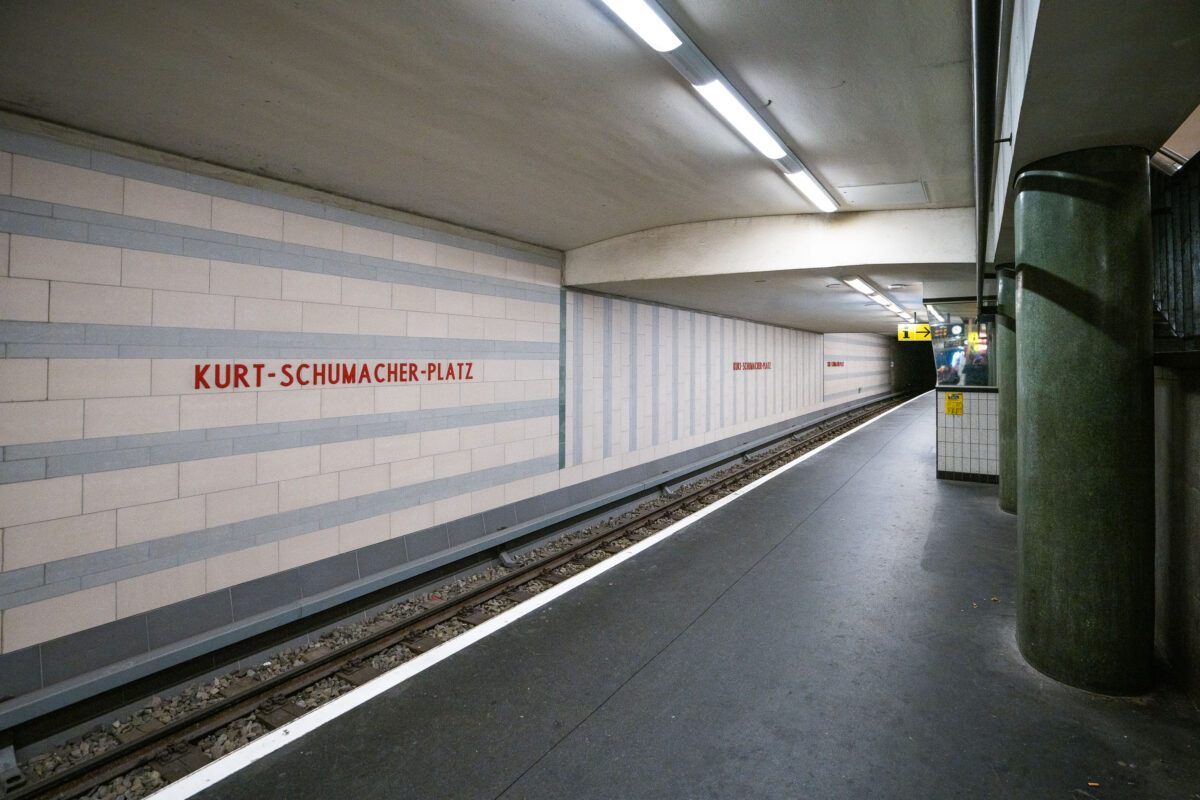
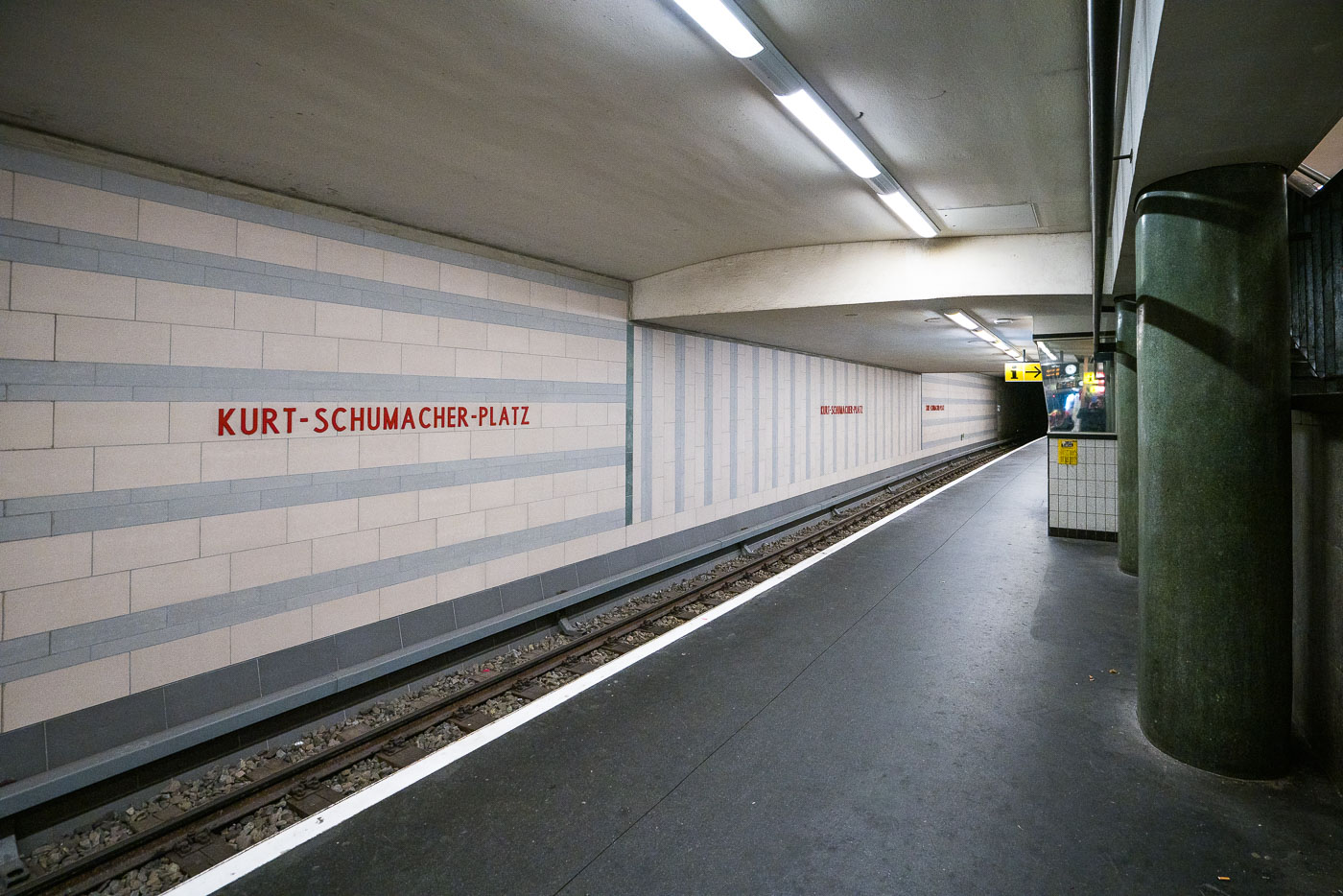
Kurt-Schumacher-Platz U-Bahn platform in Berlin displays light tile walls with gray bands and red station lettering typical of 1950s West Berlin transit design.
Kurt-Schumacher-Platz station in Berlin’s Reinickendorf district is a U6 U-Bahn stop. The platform has light tile walls with gray bands and red station lettering, a design typical of mid-1950s West Berlin transit architecture.

Tiled Platform at Kurt-Schumacher-Platz Station in Berlin
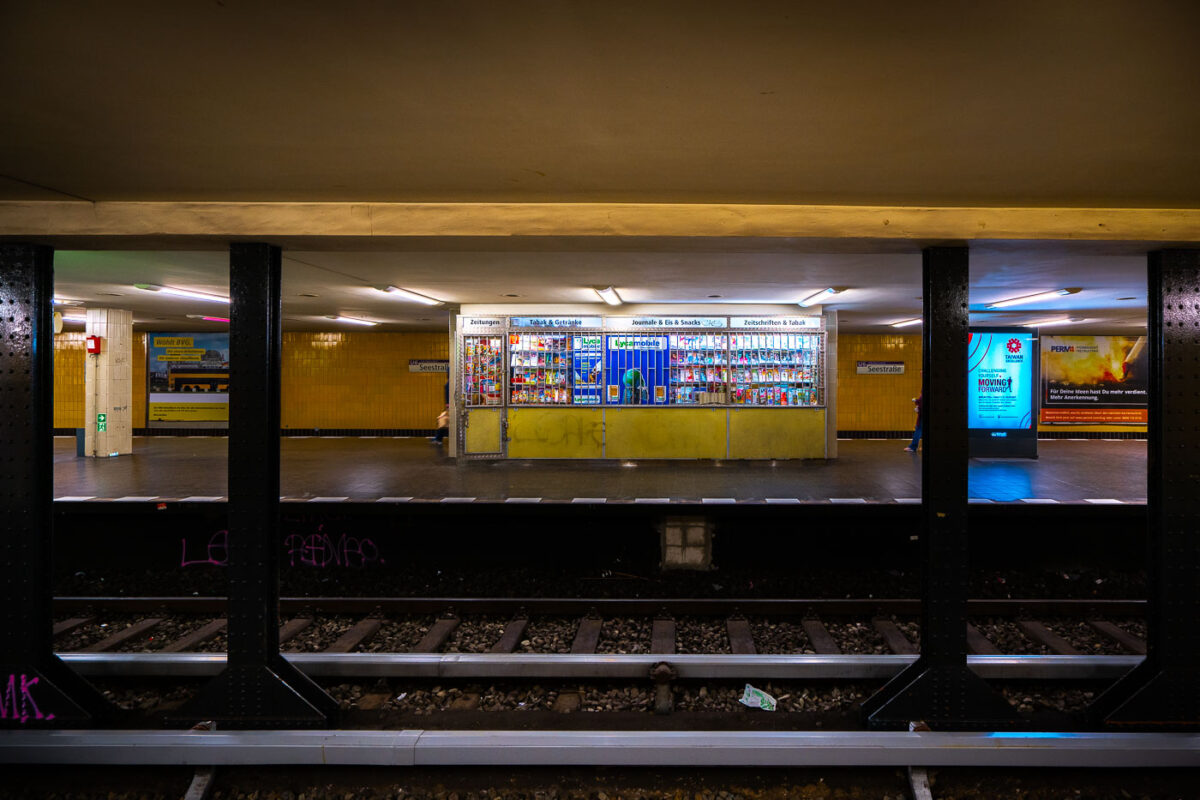
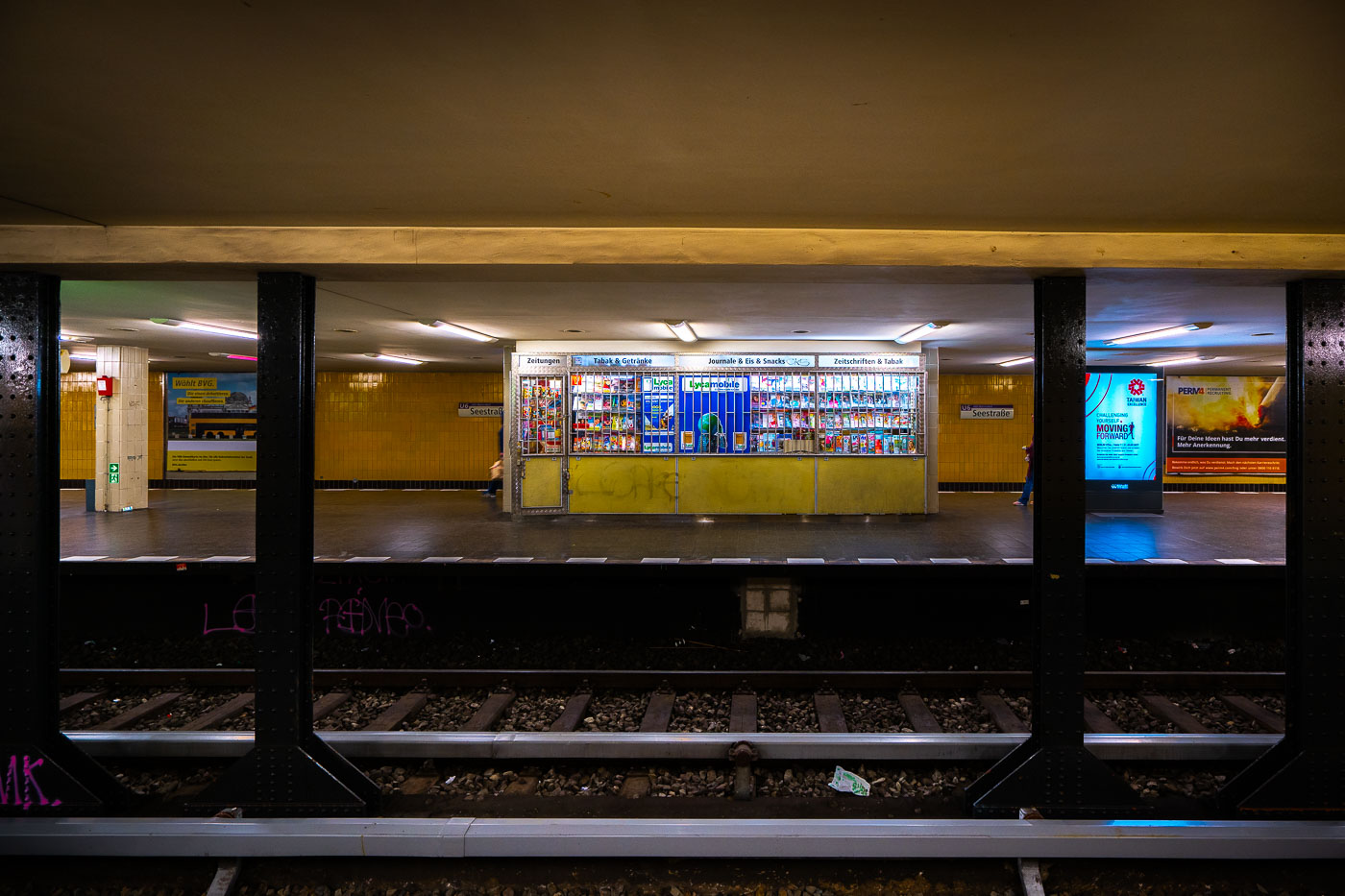
Seestraße U-Bahn station platform in Berlin features a central kiosk with yellow storefront beneath fluorescent lighting.
Seestraße U-Bahn station in Berlin’s Wedding district, with a central kiosk on the platform. The station opened in 1923 and served as the northern terminus of the U6 line until the late 1950s.

Kiosk on the Platform at Seestraße Station
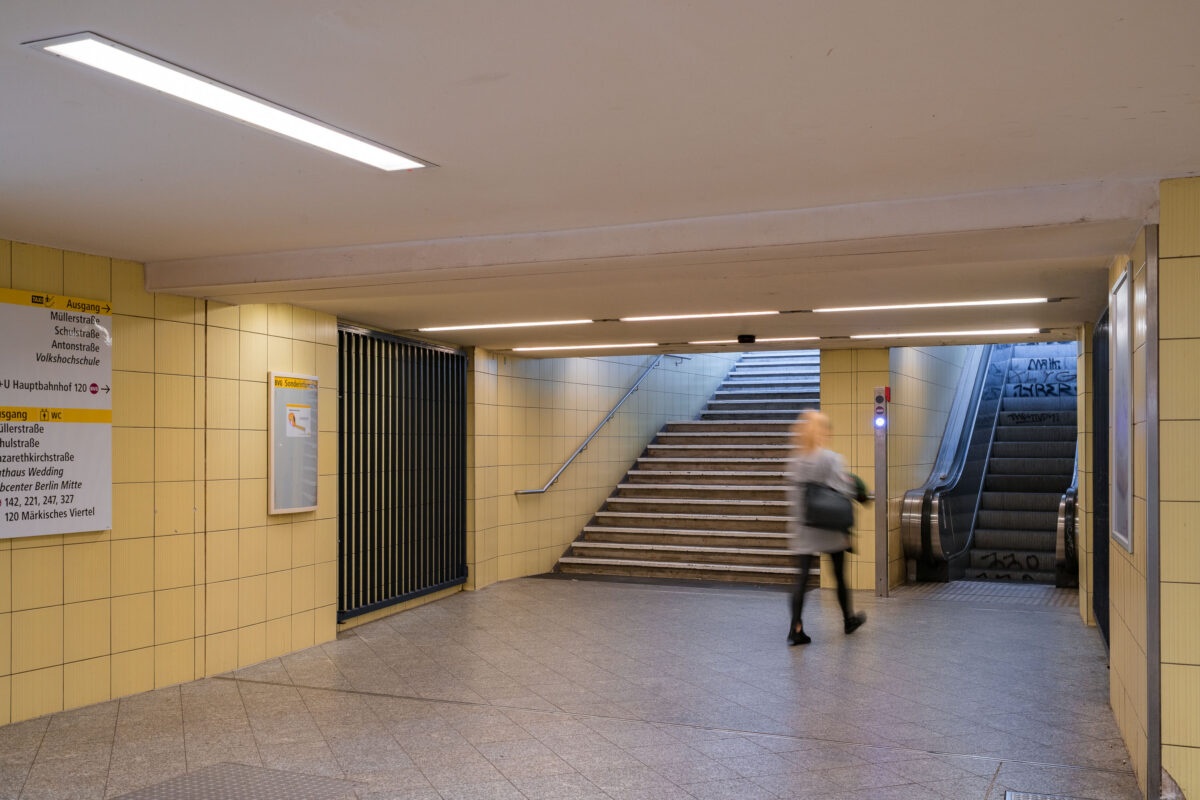
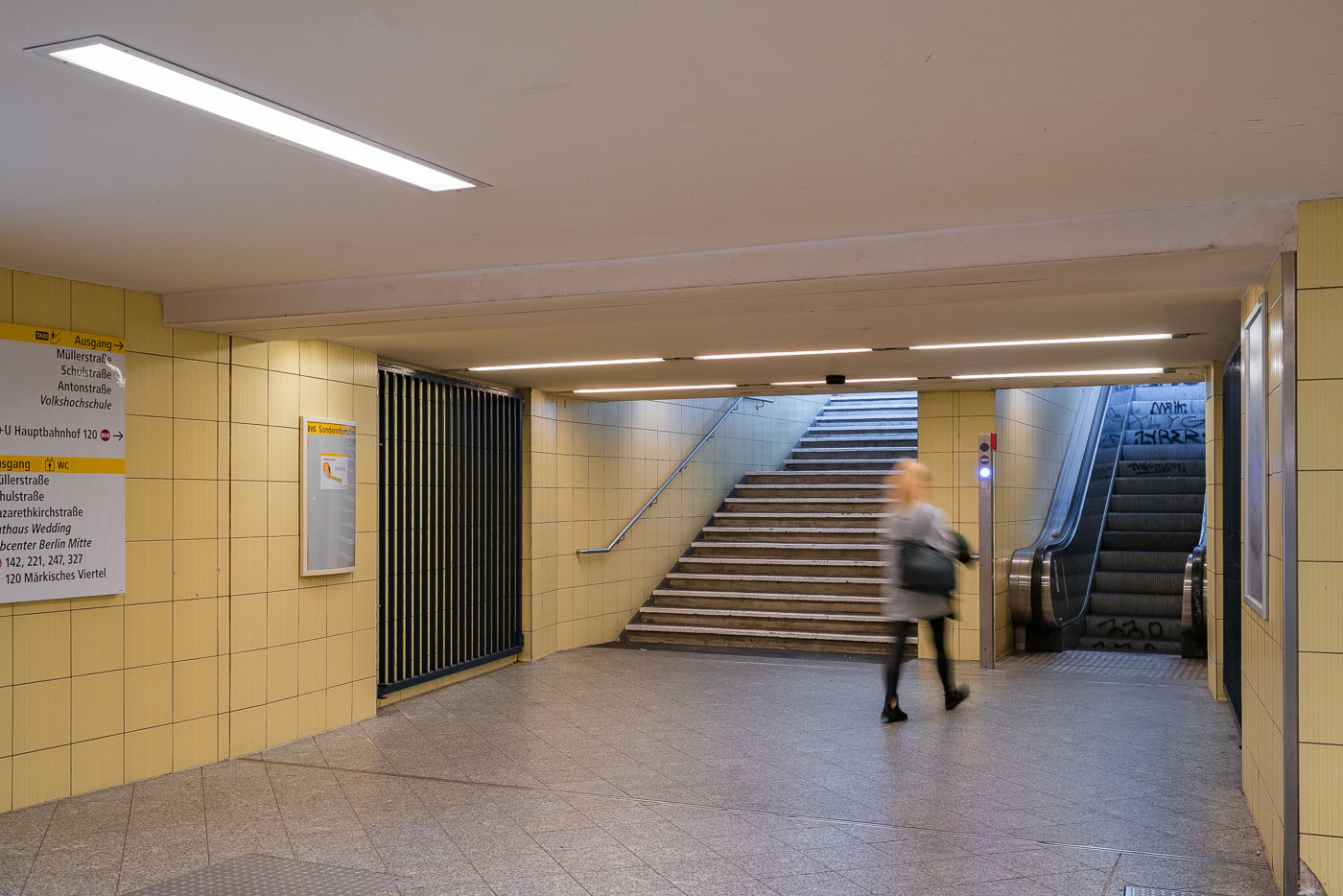
Commuter walking through a yellow-tiled underground passageway at Wedding U-Bahn station in Berlin connecting stairs and escalators.
Wedding U-Bahn station in Berlin has a tiled underground passageway connecting stairways and an escalator to street exits. A commuter passes through the corridor, which is signed for nearby streets and bus connections.

Yellow-Tiled Corridor at Wedding Station
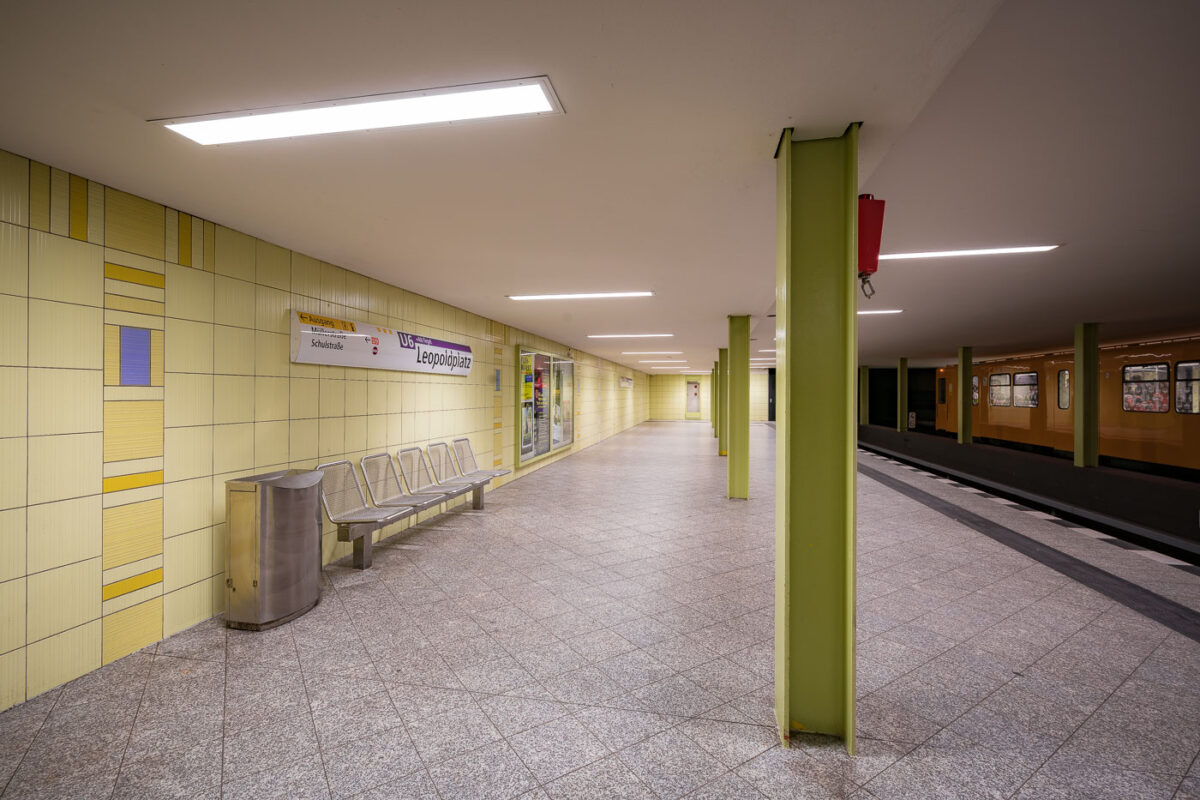
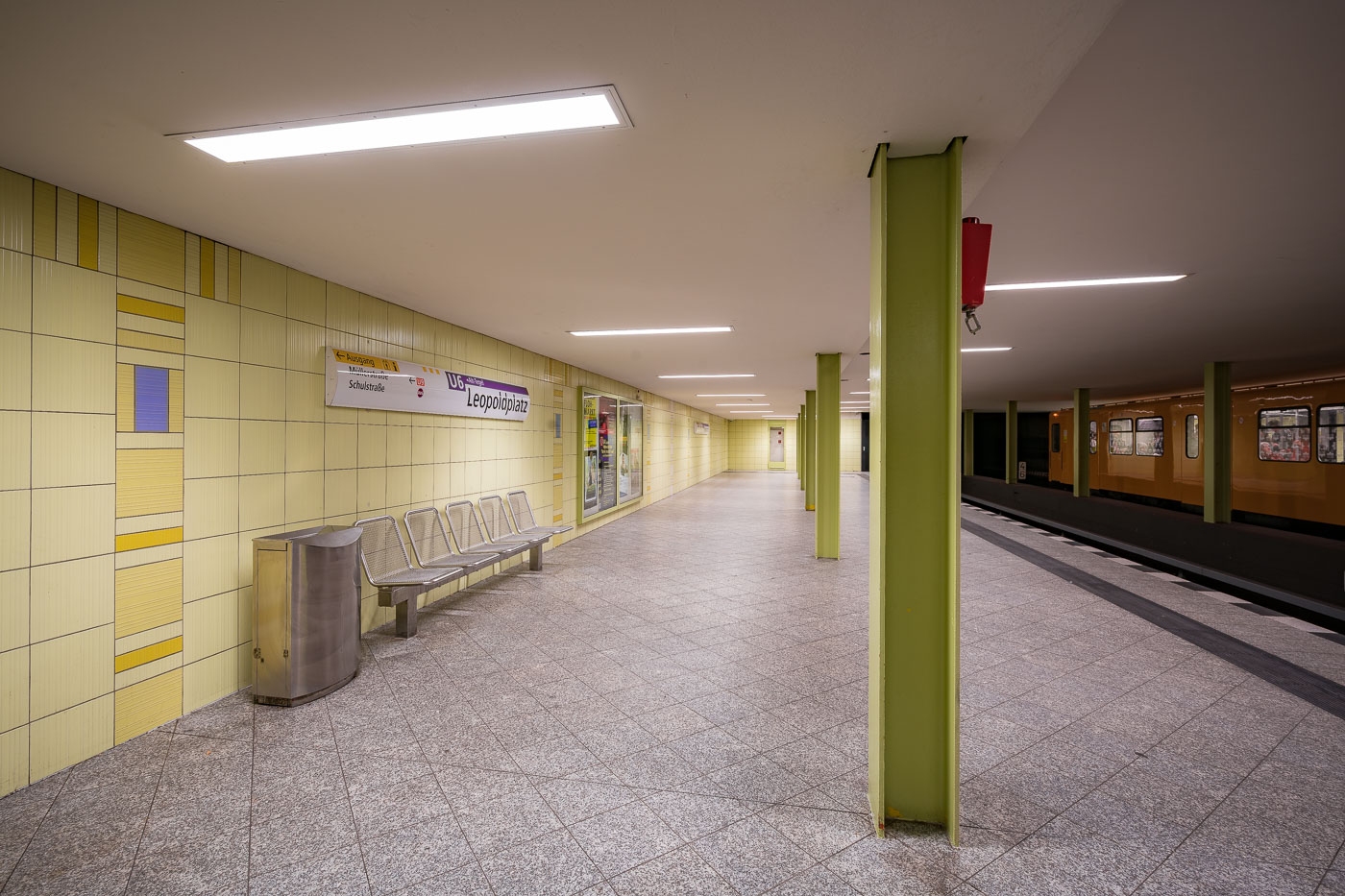
Leopoldplatz U-Bahn station platform on Berlin's U9 line features yellow tiled walls, green support columns, and metal bench seating.
Leopoldplatz U-Bahn station in Berlin includes a lower-level platform on the U9 line. The platform features pale yellow wall tiles, green-painted support columns, and bench seating along the wall.

Yellow-Tiled U9 Platform at Leopoldplatz Station
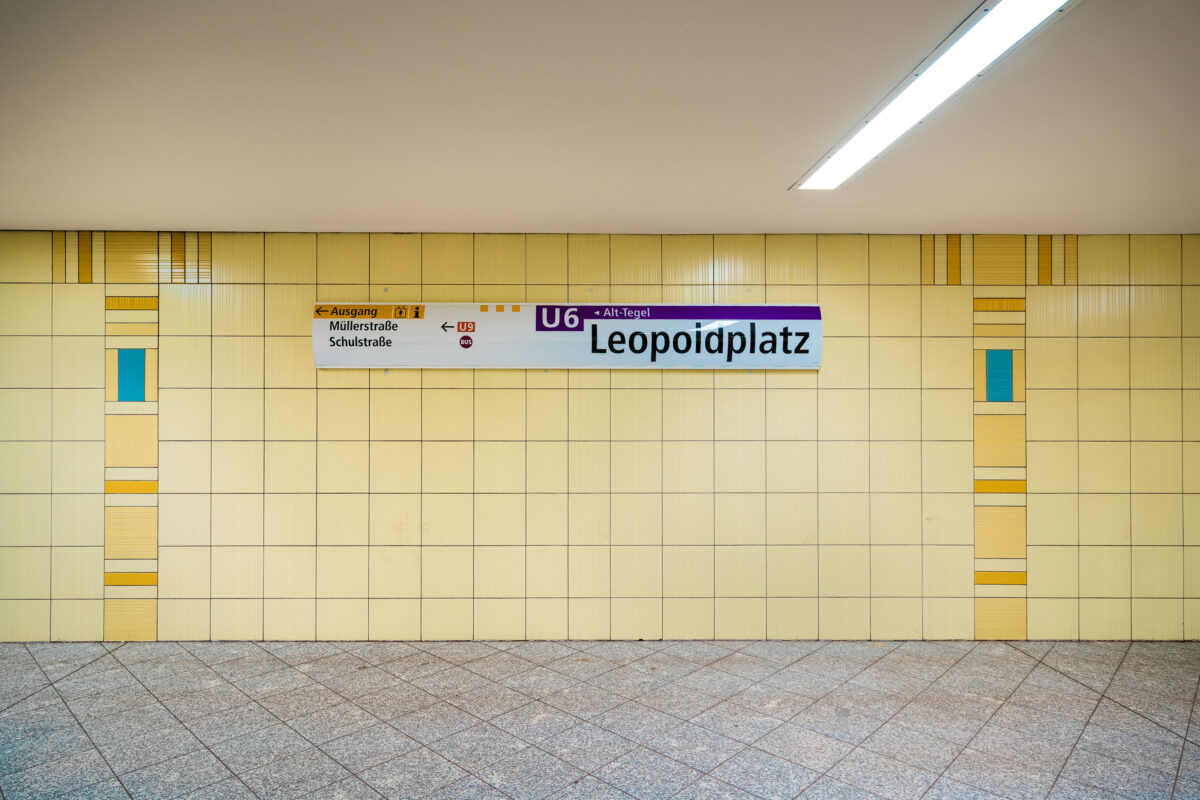
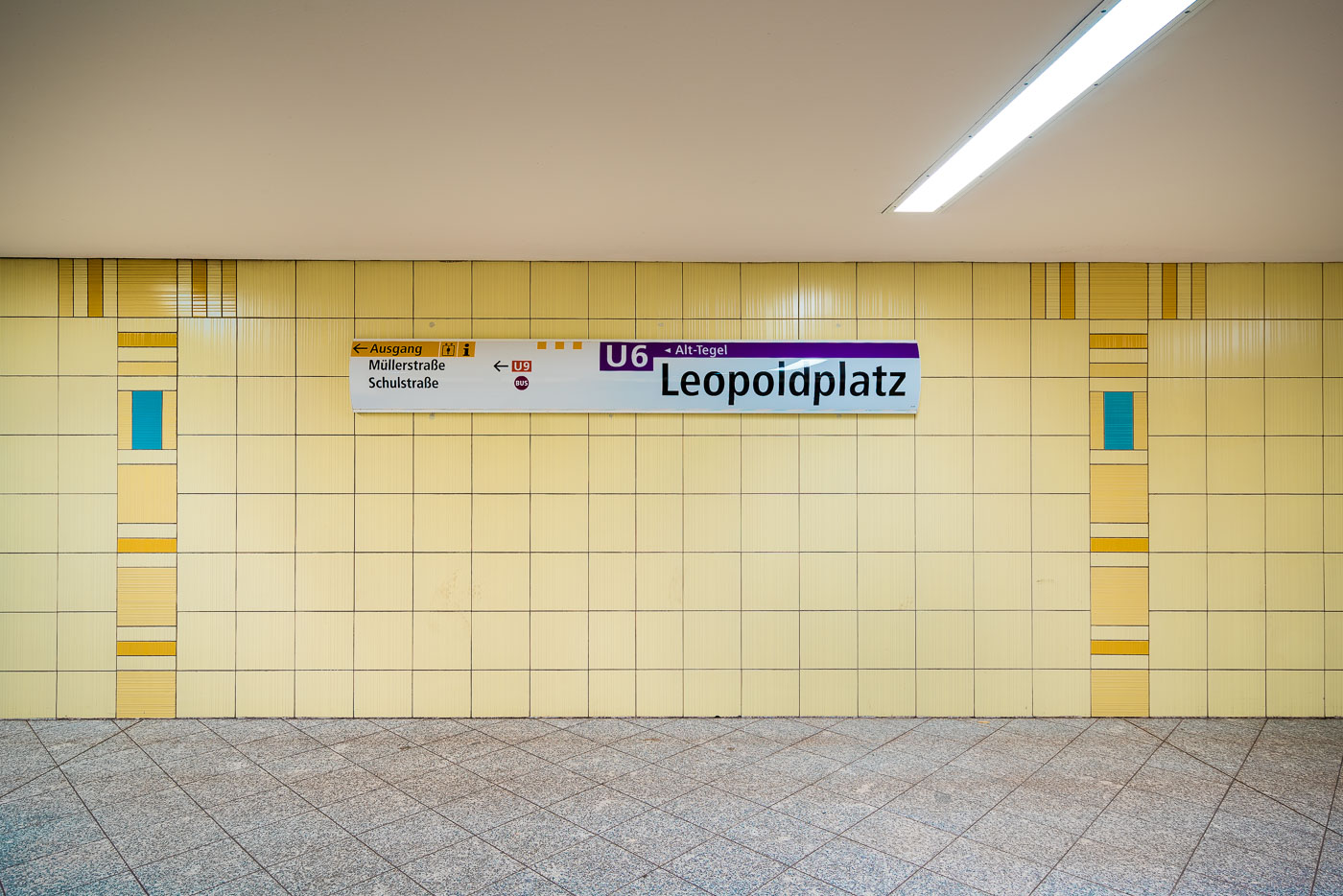
Leopoldplatz U-Bahn station platform in Berlin displays pale yellow ceramic wall tiles with blue and ochre accent bands.
Leopoldplatz U-Bahn Station in Berlin has pale yellow ceramic wall tiles with blue and ochre accents. The station is served by the U6 and U9 lines and sits beneath Leopoldplatz in the Wedding district.

U6 Line Signage at Leopoldplatz Station
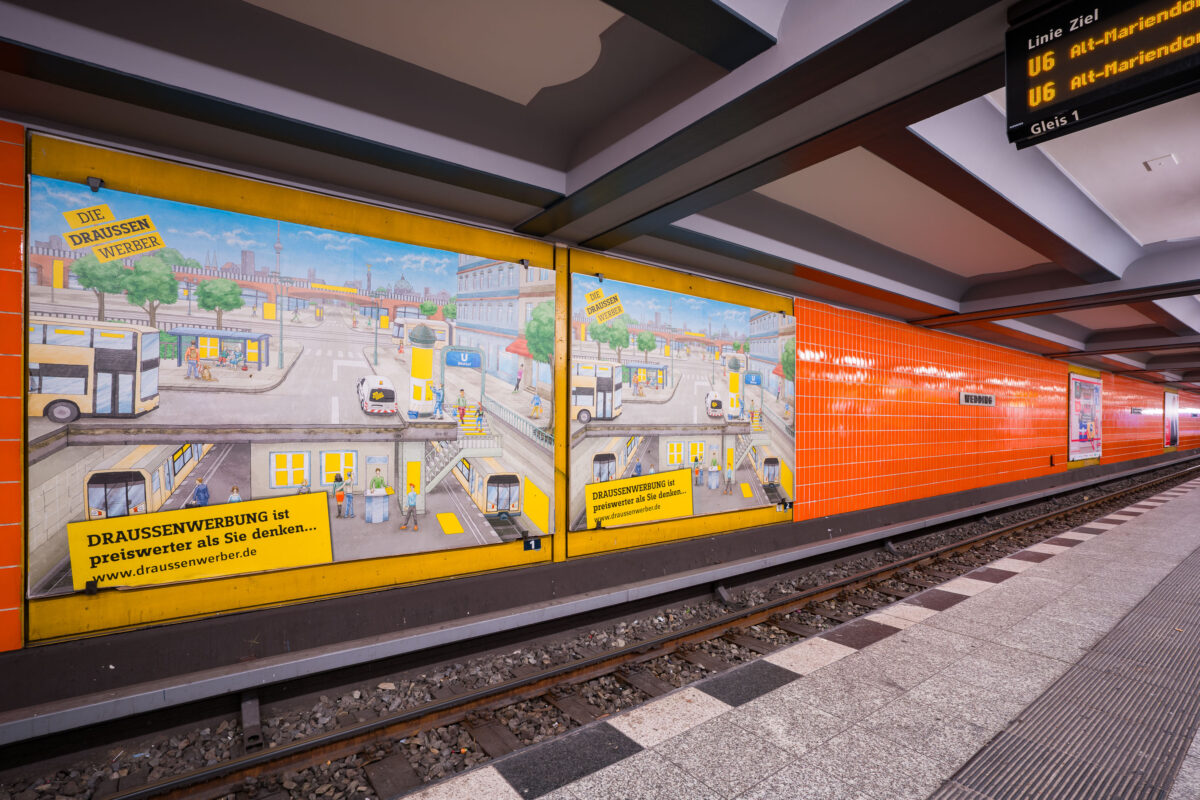
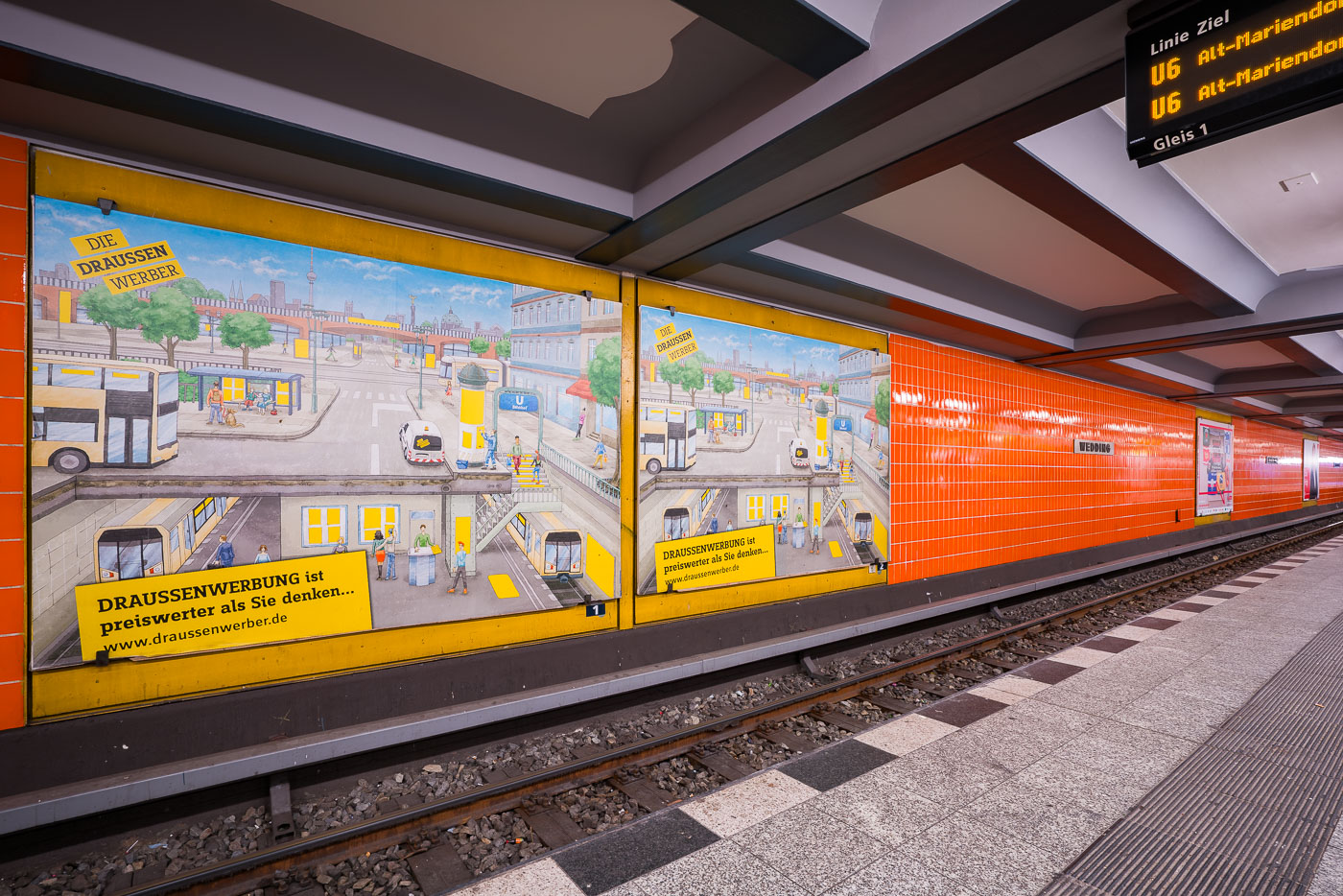
Wedding U-Bahn platform in Berlin displays yellow advertising panels and orange tiled walls along the U6 underground train line.
Berlin Wedding U-Bahn station in Berlin features an orange-tiled platform wall and large advertising murals along track 1. An electronic sign above the platform shows U6 trains toward Alt-Mariendorf.

“Draussenwerber” Ad Murals at Wedding Station
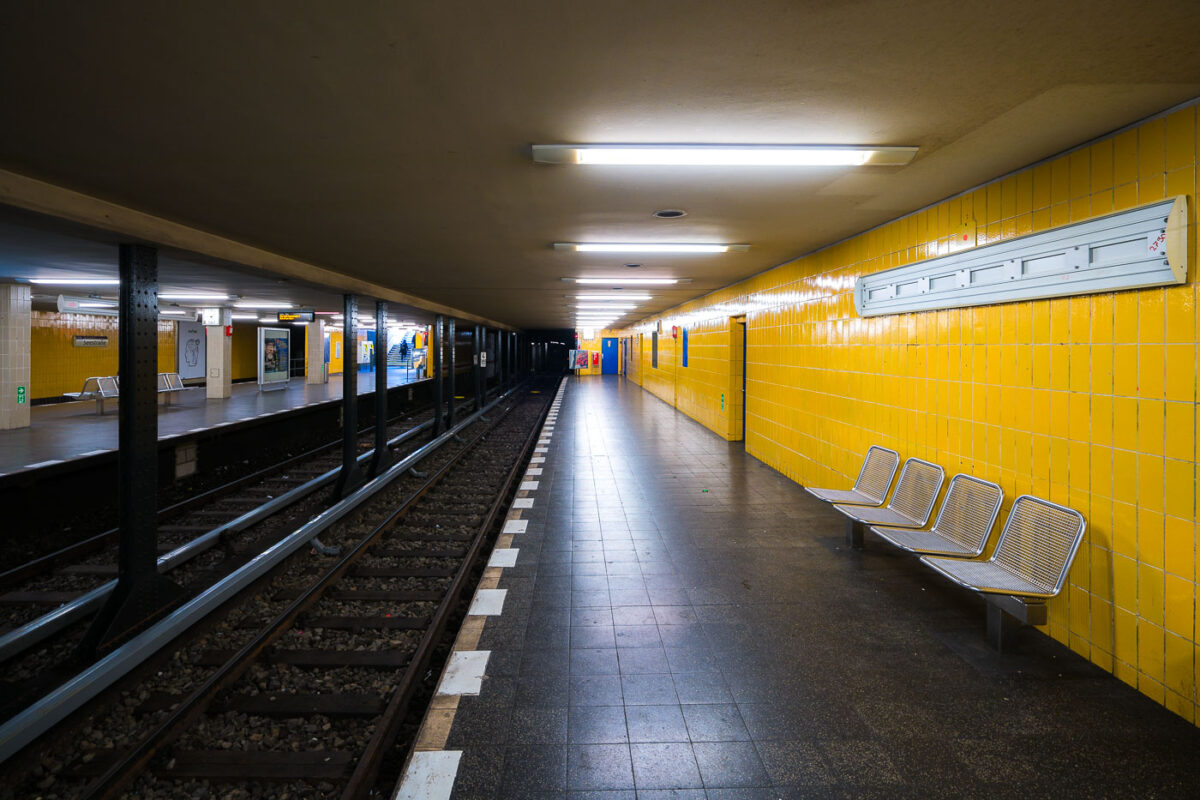
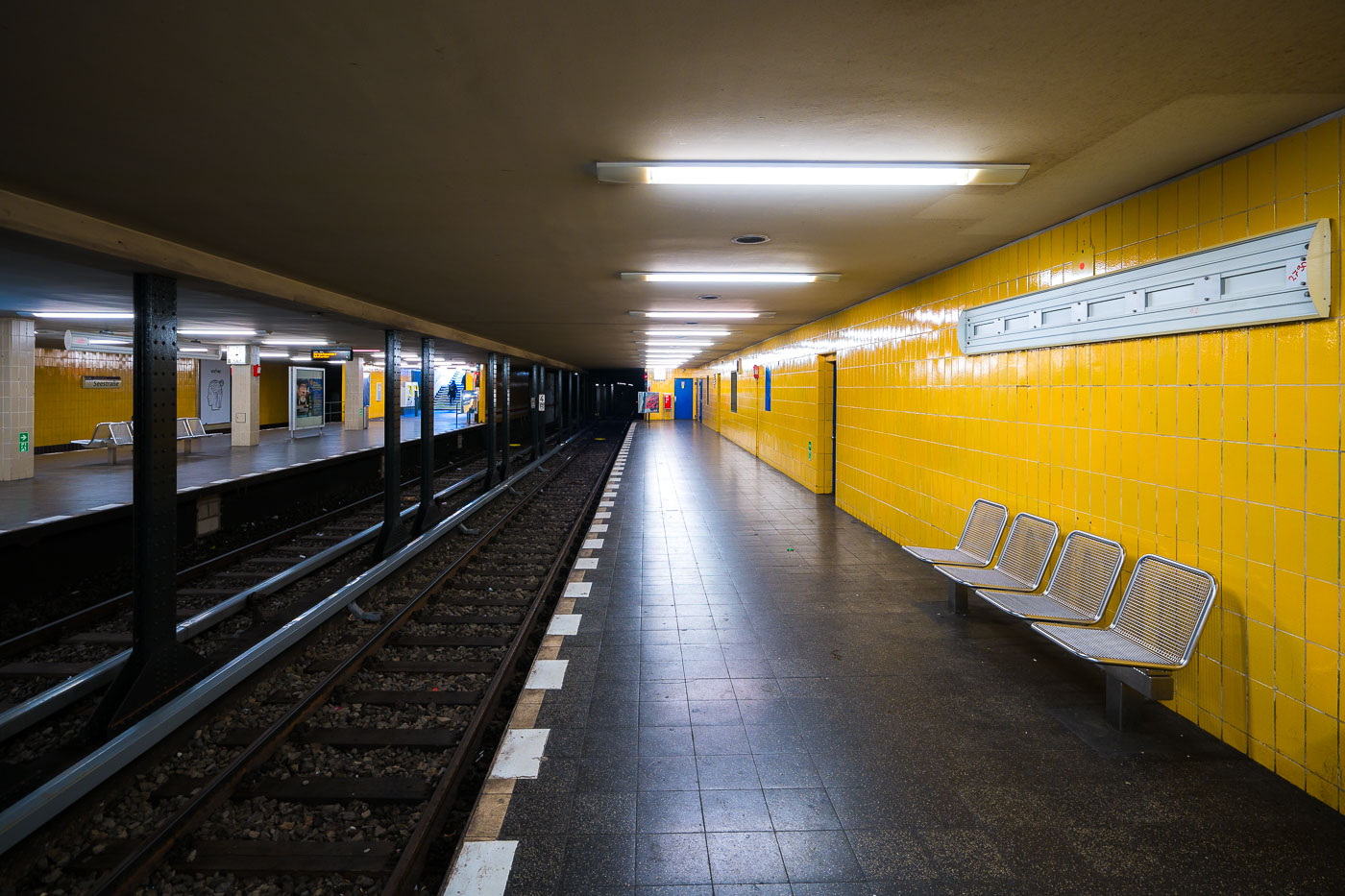
Seestraße U-Bahn station platform in Berlin's Wedding district features bright yellow tiled walls and metal bench seating.
Seestraße U-Bahn station in Berlin’s Wedding district has twin side platforms with bright yellow tile walls and metal benches. The station opened in 1923 and is served by the U6 line.

Yellow-Tiled Platform Benches at Seestraße Station
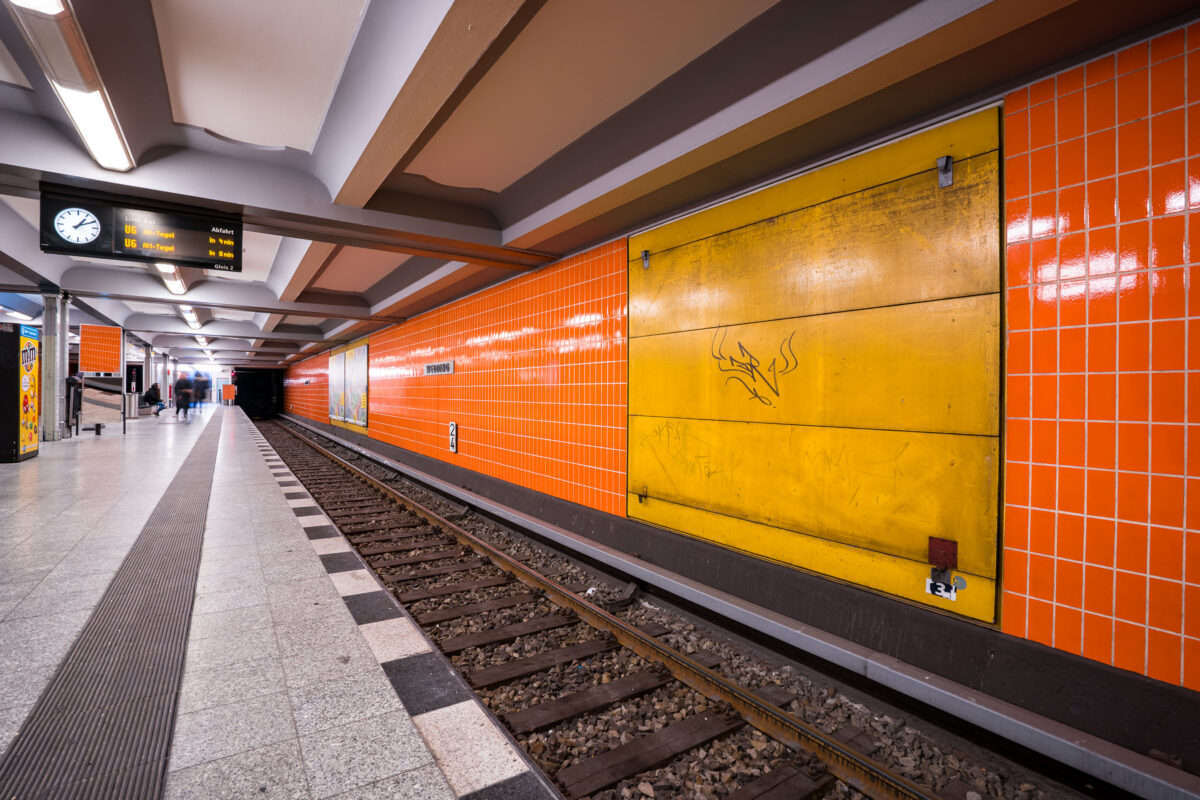
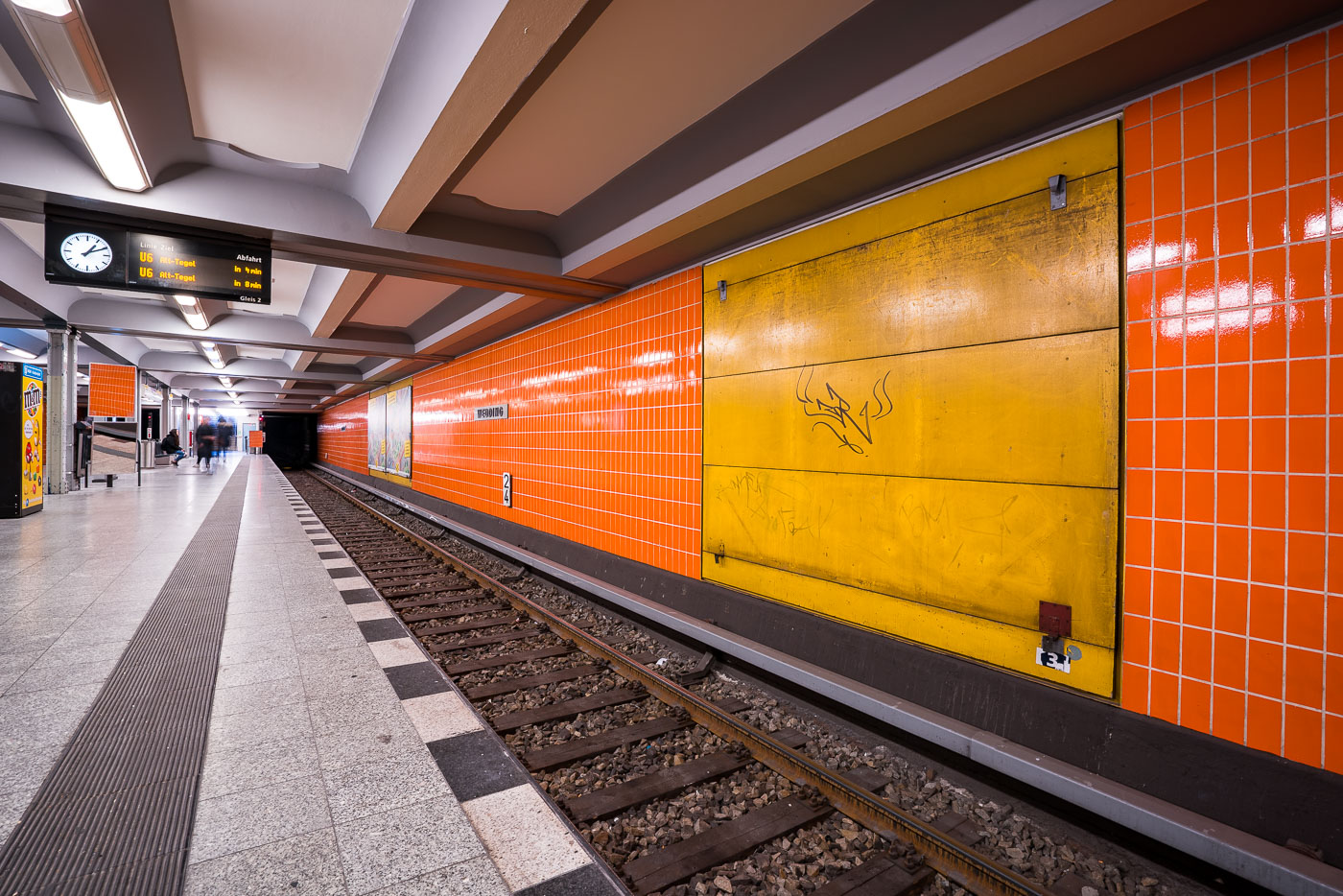
Wedding U-Bahn platform in Berlin features orange tiled walls and yellow service panels along the U6 line underground station.
Wedding U-Bahn station in Berlin has an underground platform lined with orange tiles and yellow service panels. The station is served by the U6 line, which runs through central Berlin to Alt-Tegel.

Graffiti-Marked Service Panel at Wedding Station
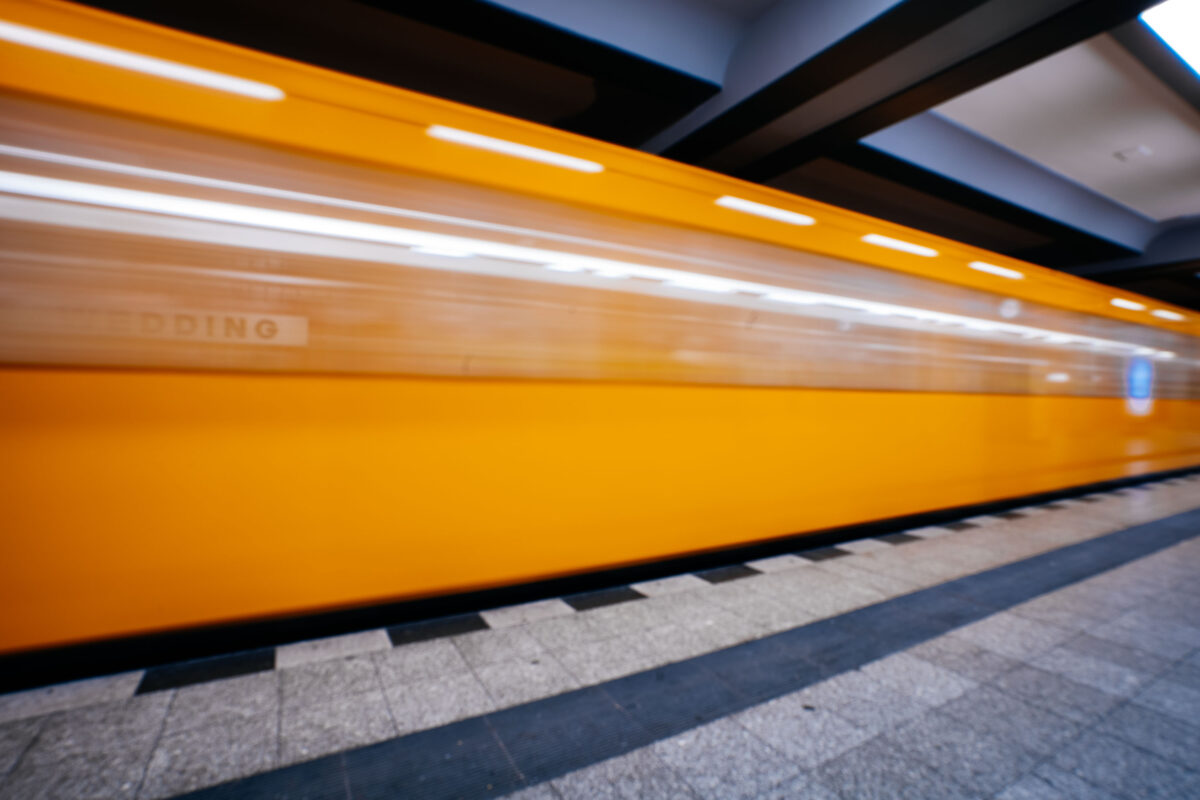
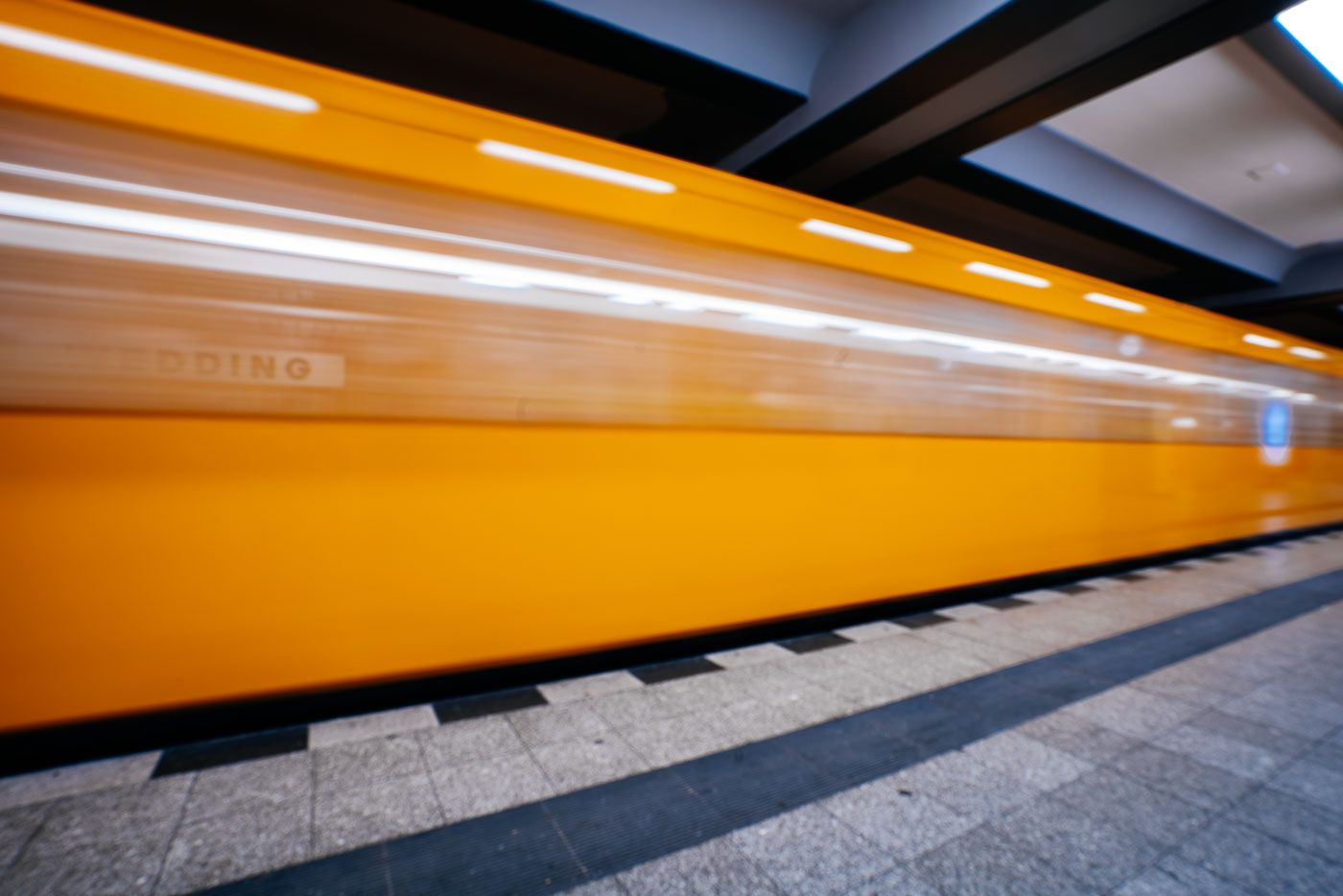
Yellow U6 train passes through Wedding station on Berlin's U-Bahn subway network.
A Berlin U6 train passes through Wedding station on the city’s U-Bahn network. Wedding opened in 1923 and remains a stop on the U6 line in northern Berlin.

Motion Blur of a U6 Train Arriving at Wedding Station
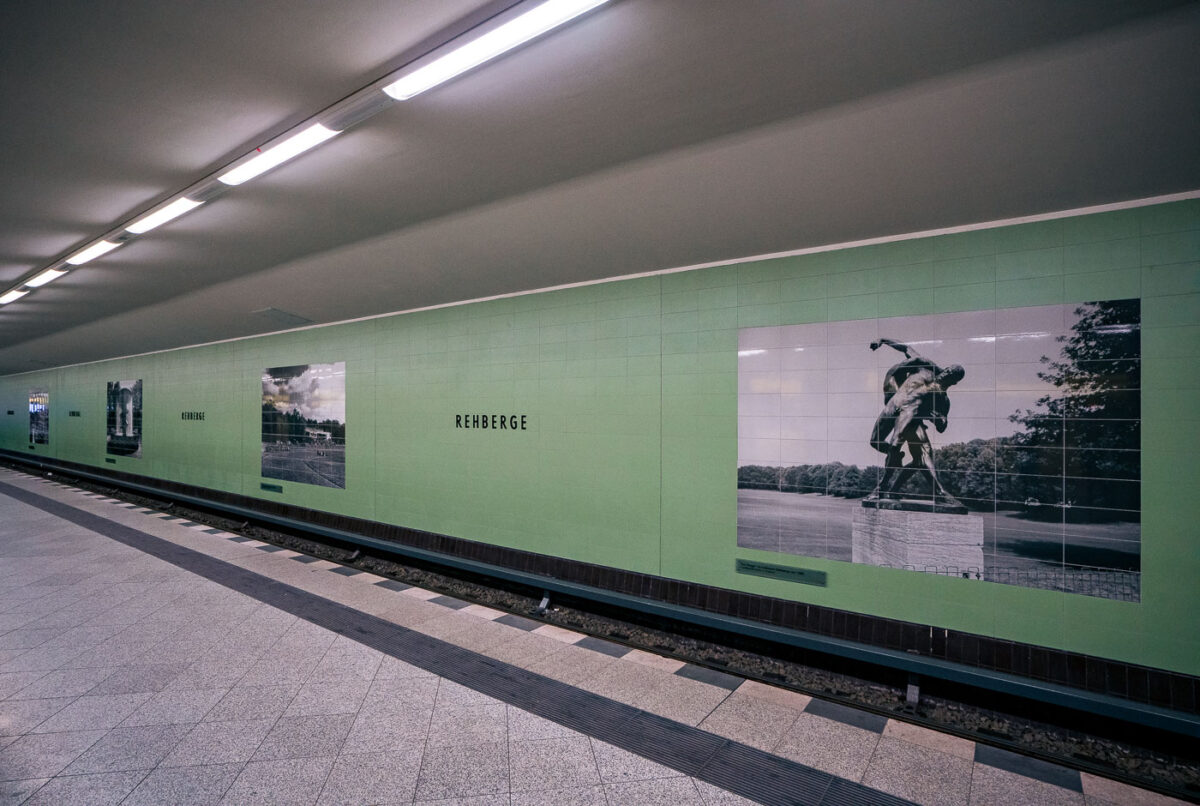
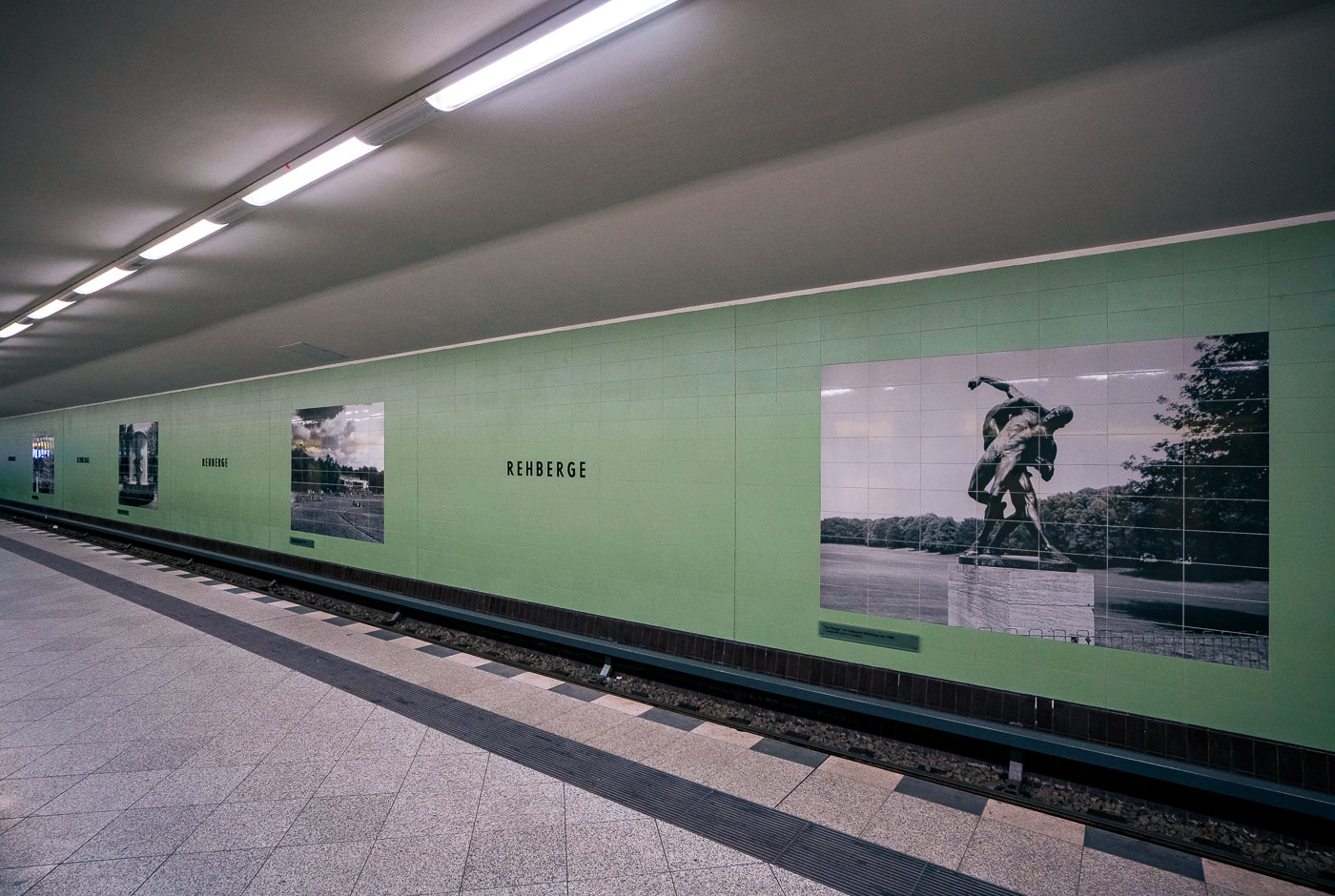
Rehberge U-Bahn station platform in Berlin's Wedding district displays mint-green tiled walls with photographic murals of park landscapes and sculptures.
Rehberge U-Bahn Station, located in Berlin's Wedding district, opened in 1956 as part of the postwar expansion of the U6 line. The station's platform features mint-green tiled walls adorned with large photographic murals depicting local park landscapes and public sculptures, including a piece titled "Der Ringer" in Volkspark Rehberge. These visual elements connect the transit space to its surrounding urban environment and history. Serving as a vital link for commuters, the station continues to function as a key component of Berlin's public transportation network operated by BVG.

Park Murals Along the Platform at Rehberge Station
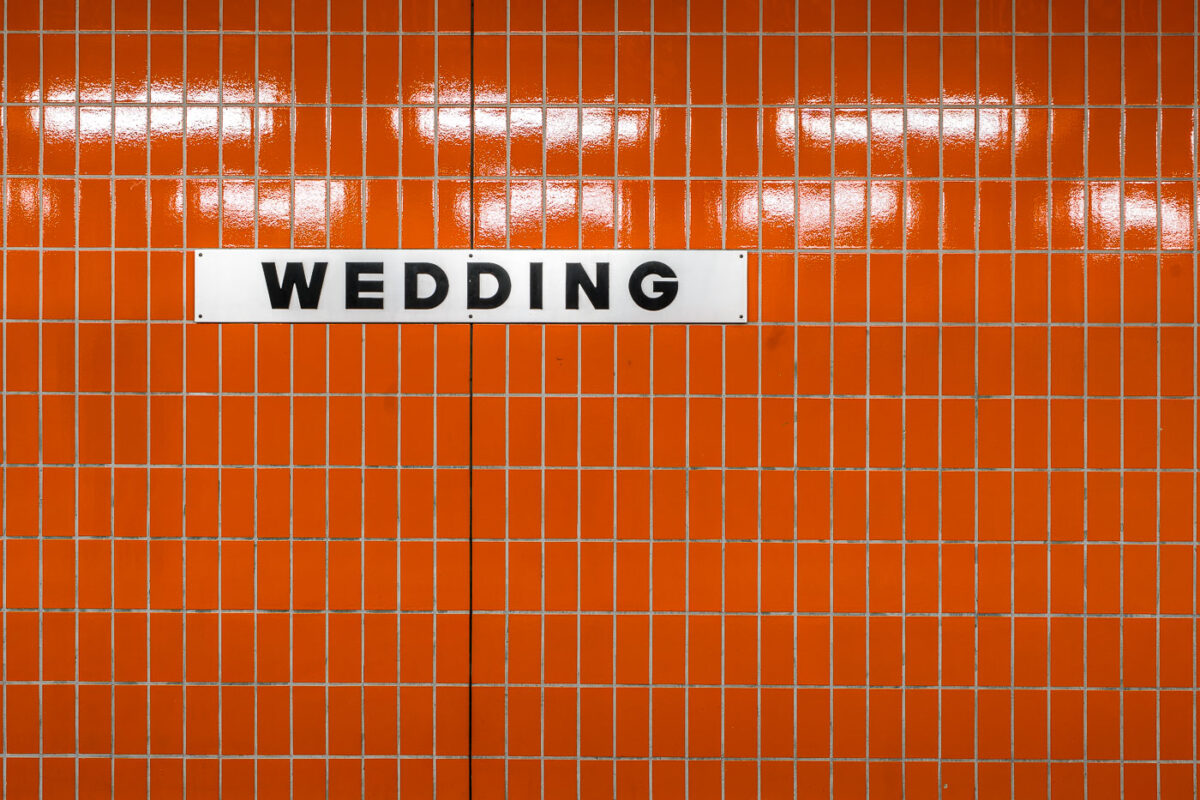
White sign reading "Wedding" mounted on orange tiled wall at Berlin U-Bahn station.
Wedding Station in Berlin, Germany, is identified by a white sign on an orange tiled wall. The station is served by the Berlin U-Bahn and connects with the adjacent S-Bahn station.

Orange Tile Wall at Wedding Station in Berlin
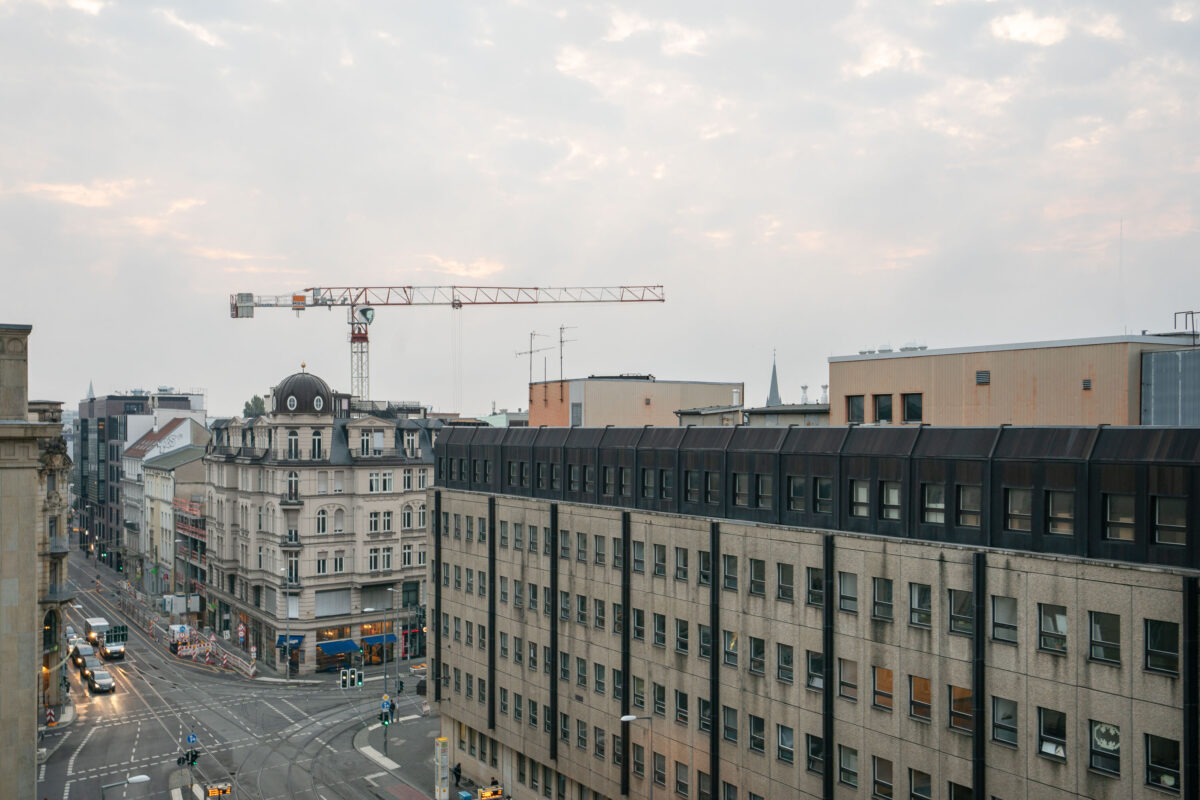
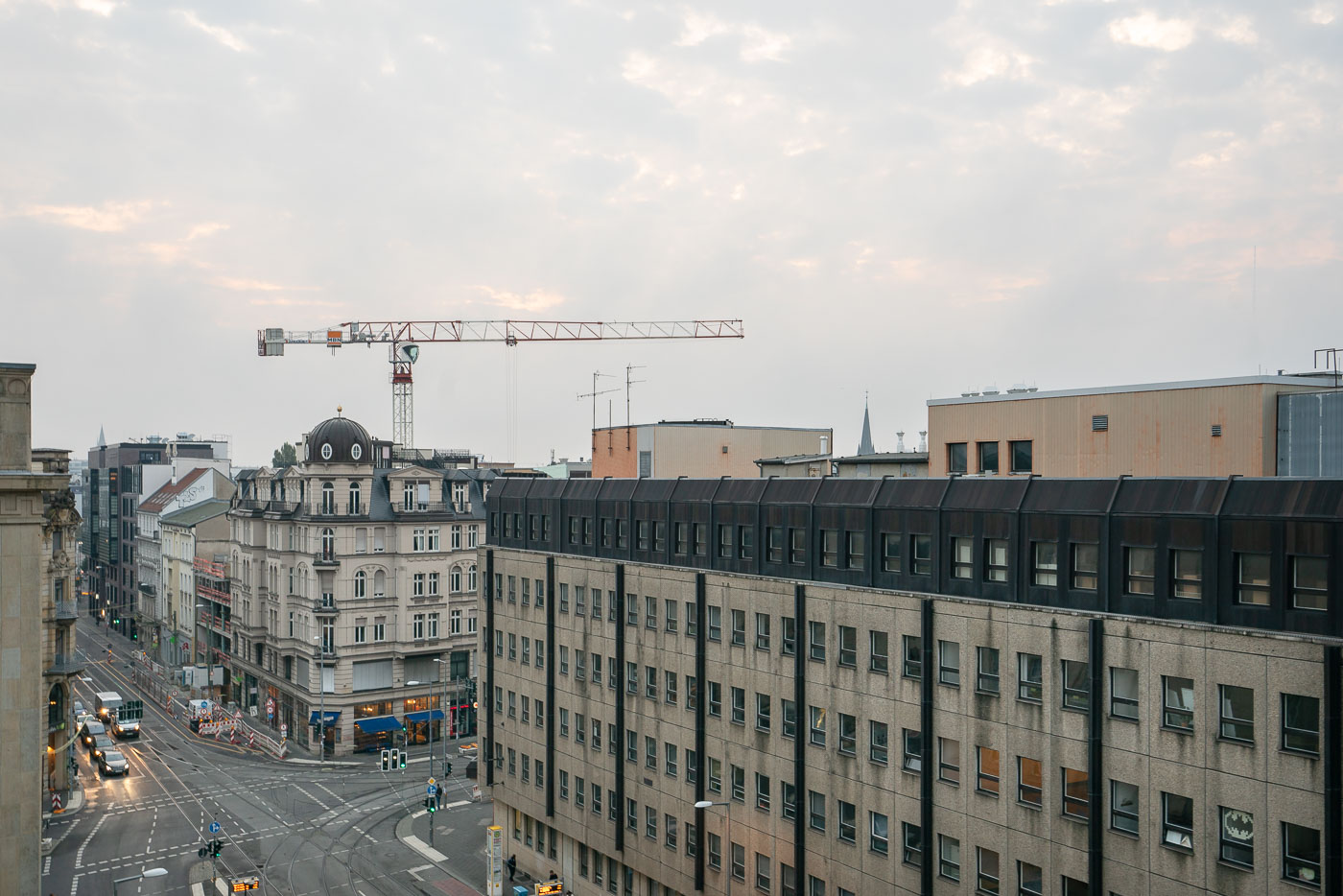
Intersection of Invalidenstraße and Friedrichstraße in Berlin's Mitte district, with postwar apartment blocks and a construction crane above the streets.
Friedrichstraße has anchored Berlin's Mitte district since the late 17th century, when Friedrich I ordered its development as a central thoroughfare. The street became the city's premier shopping and entertainment corridor by the early 20th century, lined with department stores, theaters, and cafés. Cold War division cut Friedrichstraße in two, and Checkpoint Charlie, the former Allied crossing point, sits along its southern stretch. Invalidenstraße takes its name from the Invalidenhaus, a home for disabled soldiers built nearby in the 1700s, and today the street runs east-west through Mitte toward Berlin Hauptbahnhof. Reconstruction has continued in this part of the city since reunification, filling gaps left by wartime destruction and Cold War-era clearance.

Construction Crane Rises Near Friedrichstraße in Berlin-Mitte
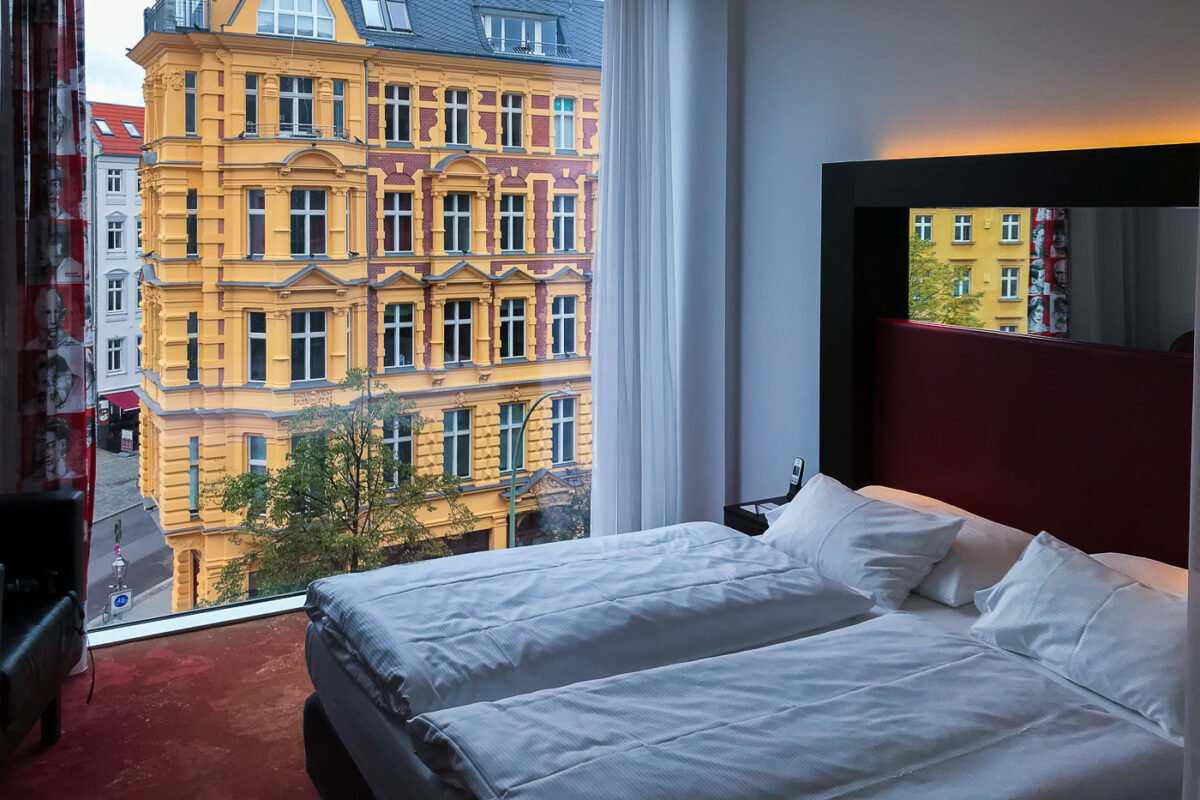
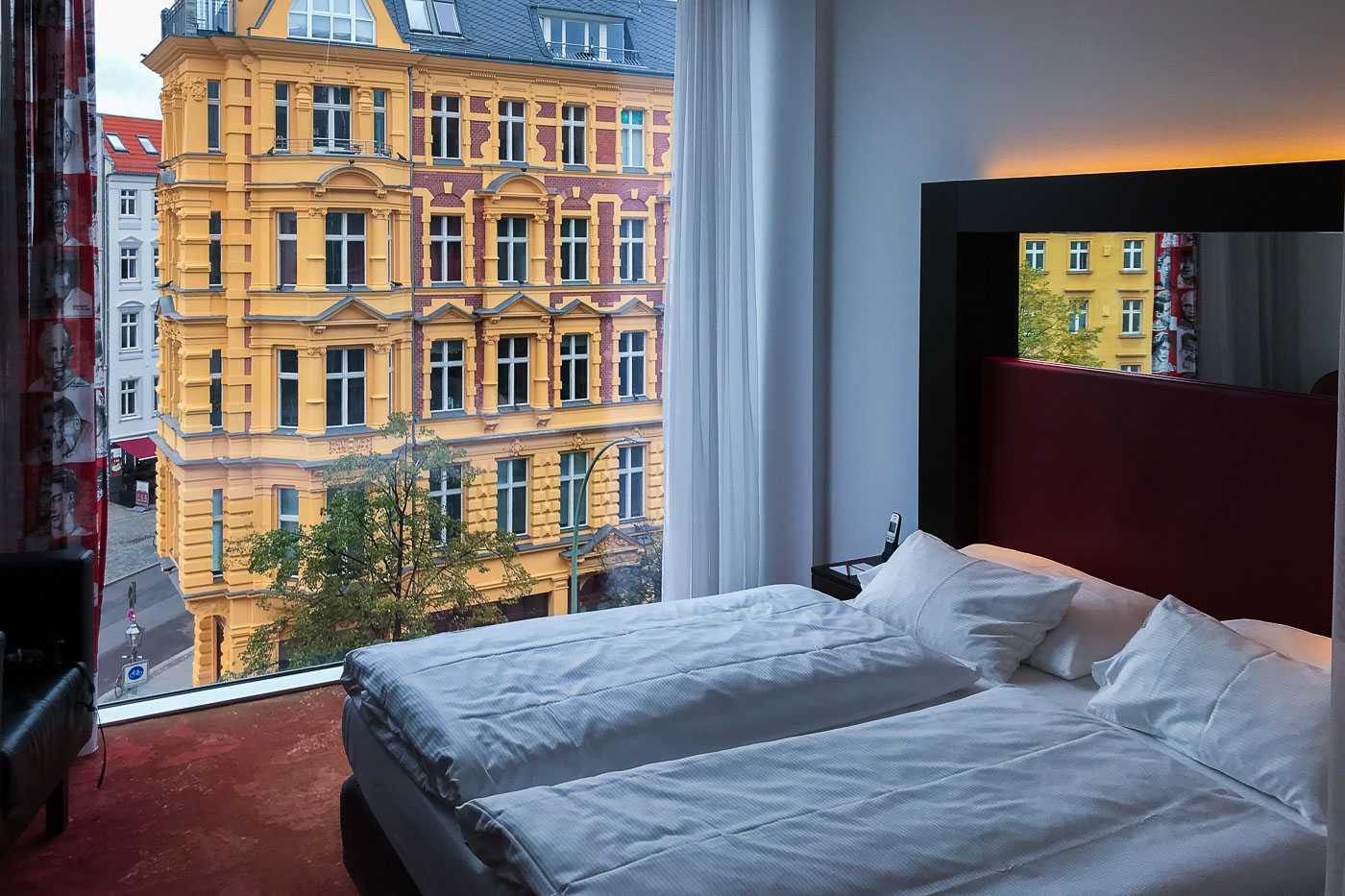
Hotel room bed with view of a yellow Gründerzeit building across the street in Berlin Mitte.
Gründerzeit buildings like this one take their name from Germany's "founders' era," the rapid industrial and urban expansion that followed unification in 1871. Berlin saw entire districts built in this style through the 1880s and 1890s, with stucco facades, bay windows, and brick detailing marking apartment blocks for the city's growing middle class. Many of these buildings in Mitte survived Allied bombing in World War II only to fall into disrepair under East German administration, when maintenance budgets for private housing stock were scarce. Since reunification in 1990, large-scale restoration projects have returned facades across Mitte to something close to their original color schemes and ornamentation, a process that has made the neighborhood one of the most sought-after residential areas in the city.

A Gründerzeit Facade Across the Street in Berlin Mitte
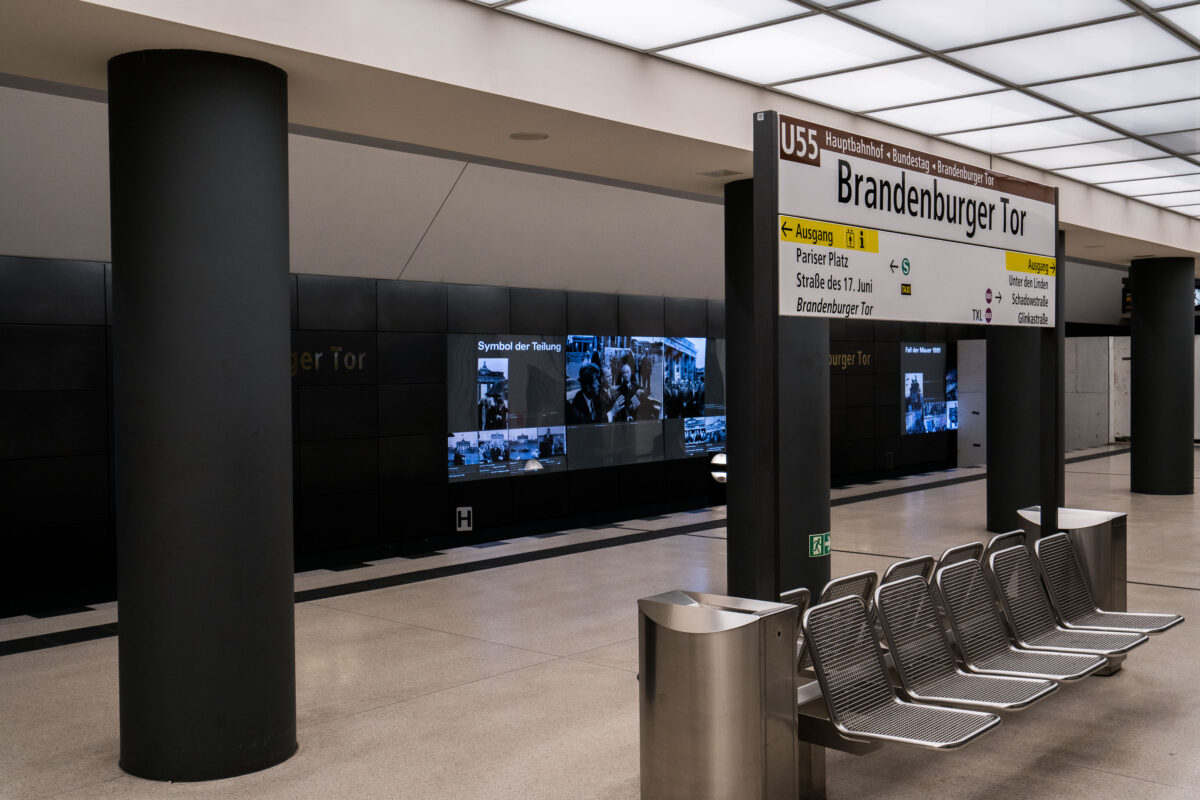
Brandenburger Tor U-Bahn station platform displays a digital exhibit titled "Symbol der Teilung" beneath Berlin's U55 line.
Brandenburger Tor station on Berlin’s U5 line features a digital exhibit titled “Symbol der Teilung.” The display appears on the platform beneath Pariser Platz, where the station connects to the Hauptbahnhof–Bundestag–Brandenburger Tor route.

“Symbol der Teilung” Display on the Brandenburger Tor U-Bahn Platform
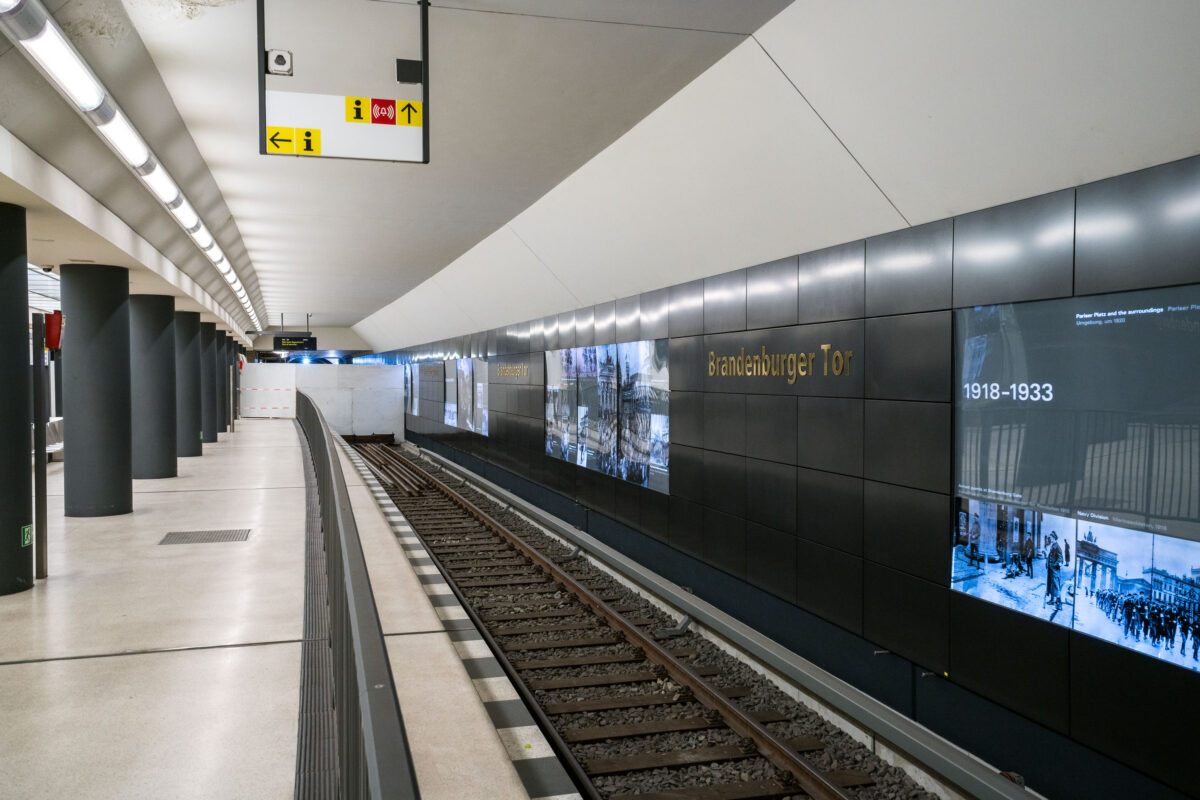
Brandenburger Tor U-Bahn station platform in Berlin displays illuminated historical photo panels on dark walls beneath the U55 line.
Brandenburger Tor U-Bahn station is beneath Pariser Platz in central Berlin. Opened in 2009 on the U55 line, it became part of the U5 in 2020. The station walls feature illuminated panels with historical images and dates related to Berlin and the Brandenburg Gate.

Historical Photo Panels Along the Brandenburger Tor Platform
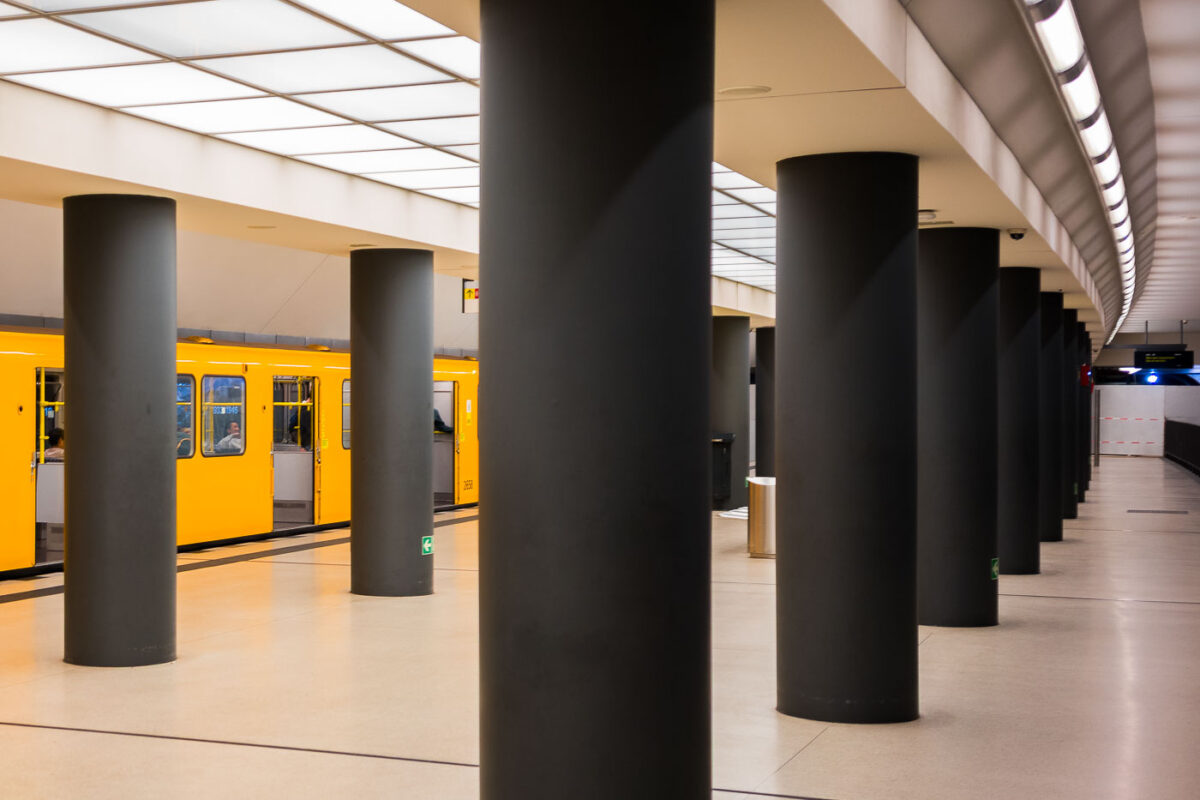
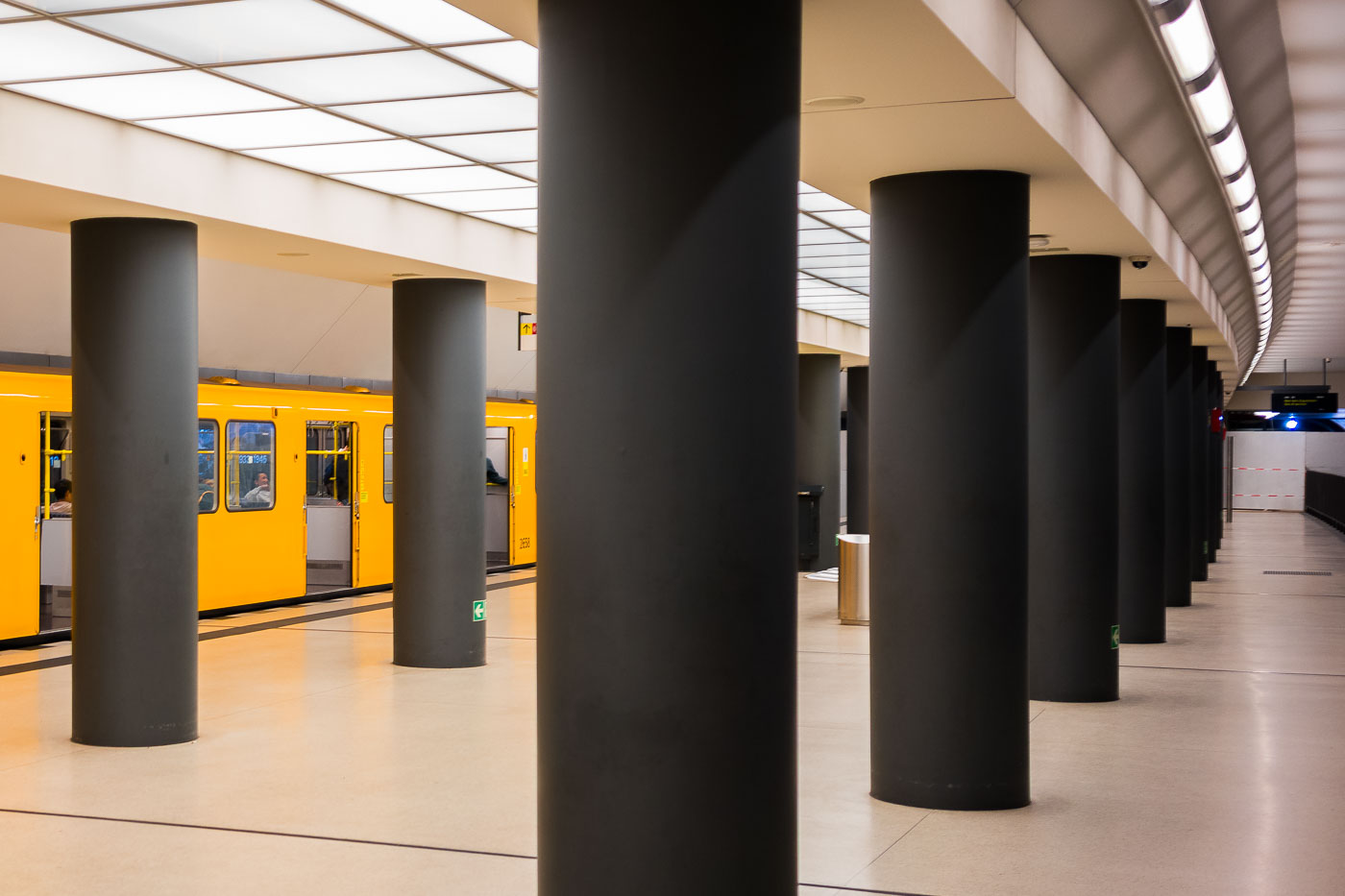
Yellow U-Bahn train at platform inside Brandenburger Tor station on the U55 line in Berlin, Germany.
Brandenburger Tor station in Berlin, Germany, with a yellow U-Bahn train at the platform. The station lies on the U55 branch, which was later incorporated into the U5 line.

Columns Lining the Platform at Brandenburger Tor Station

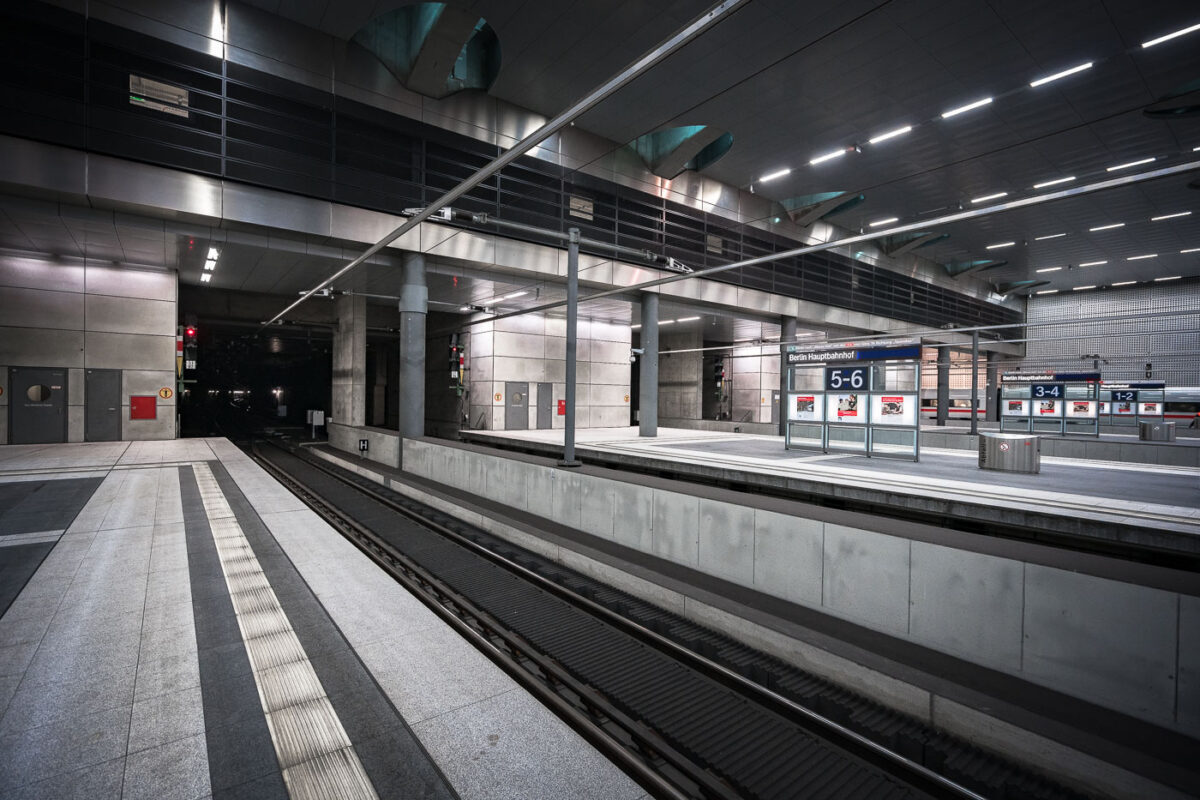
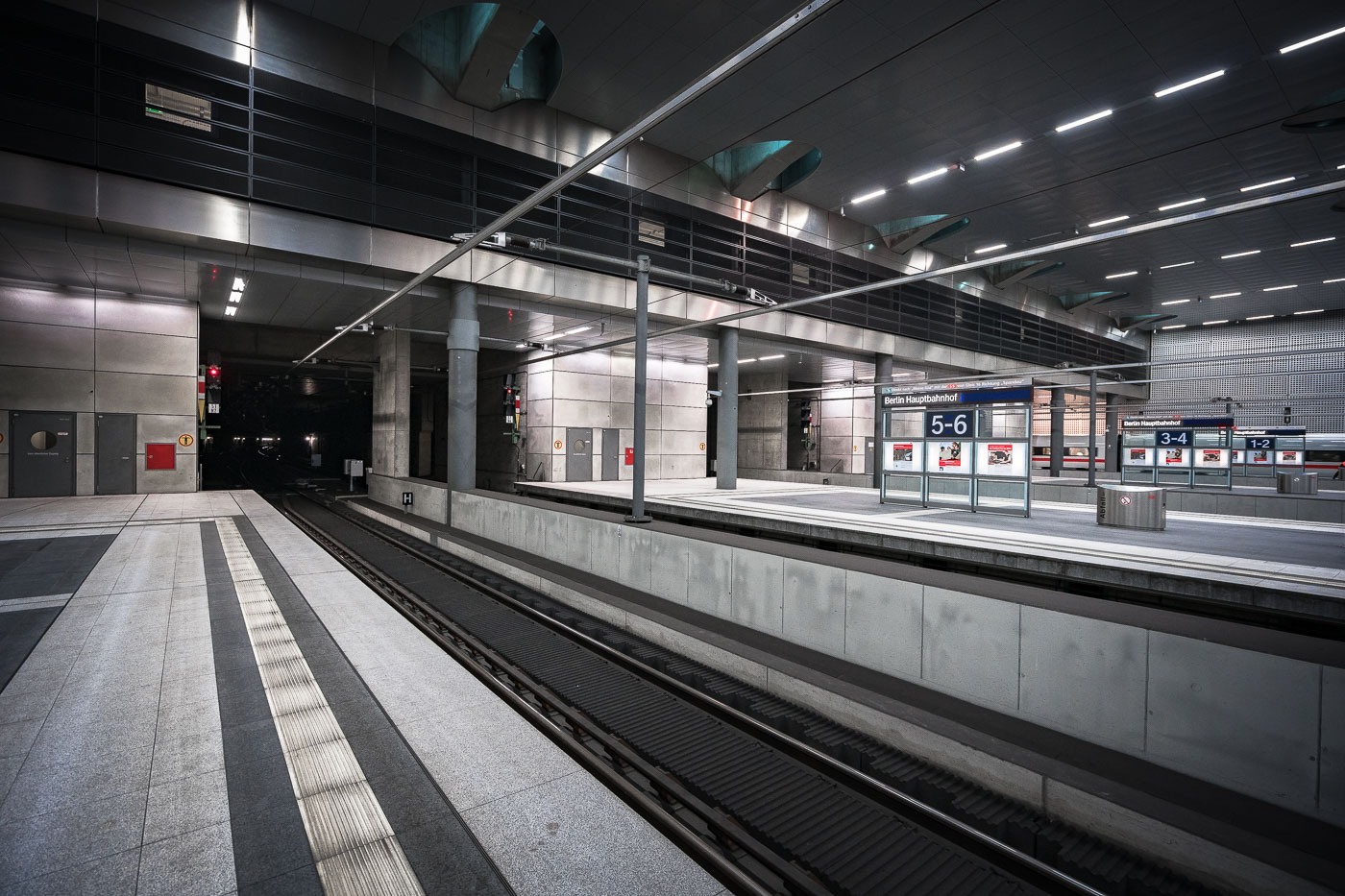
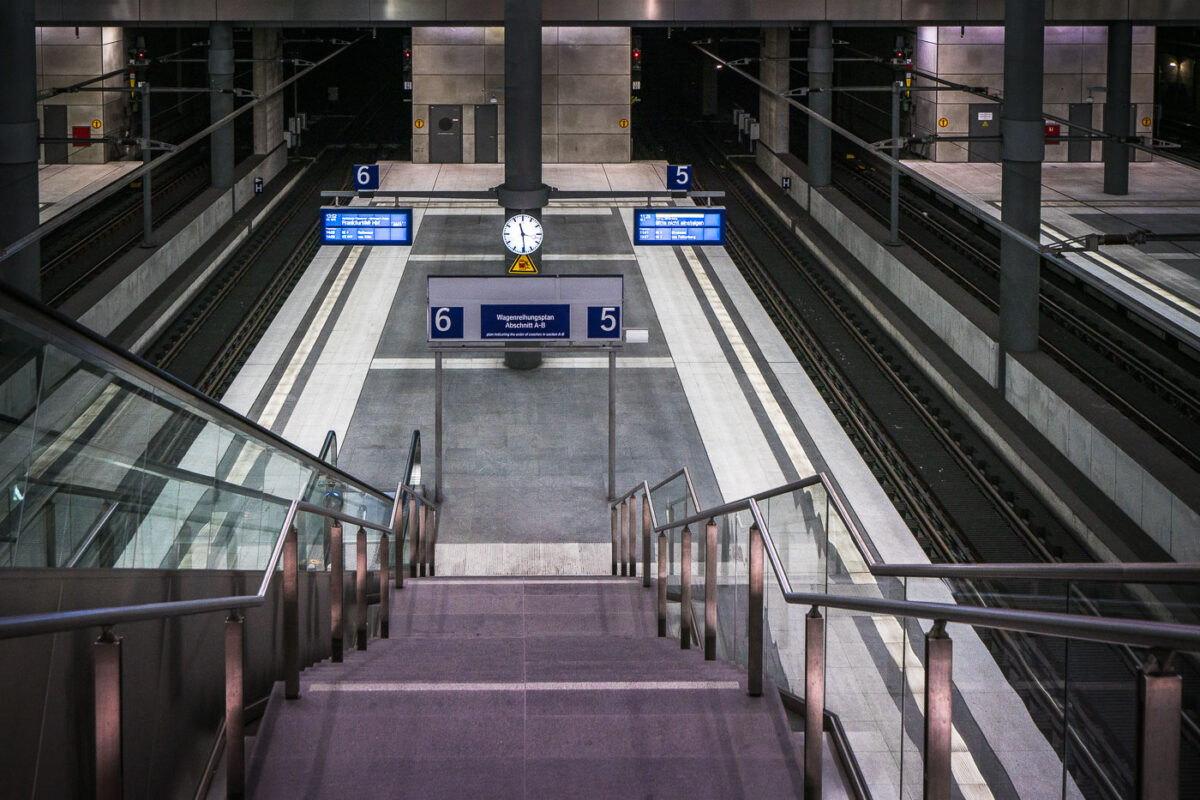
Empty platform 5-6 at Berlin Hauptbahnhof's underground level, with fluorescent lighting and modern architectural infrastructure.
Berlin Hauptbahnhof’s lower-level platforms in Berlin form the station’s underground north-south rail corridor. The platforms opened with the station complex in 2006 and handle long-distance and regional trains beneath the main hall.

Empty Platforms in Berlin Hauptbahnhof’s Underground Rail Corridor

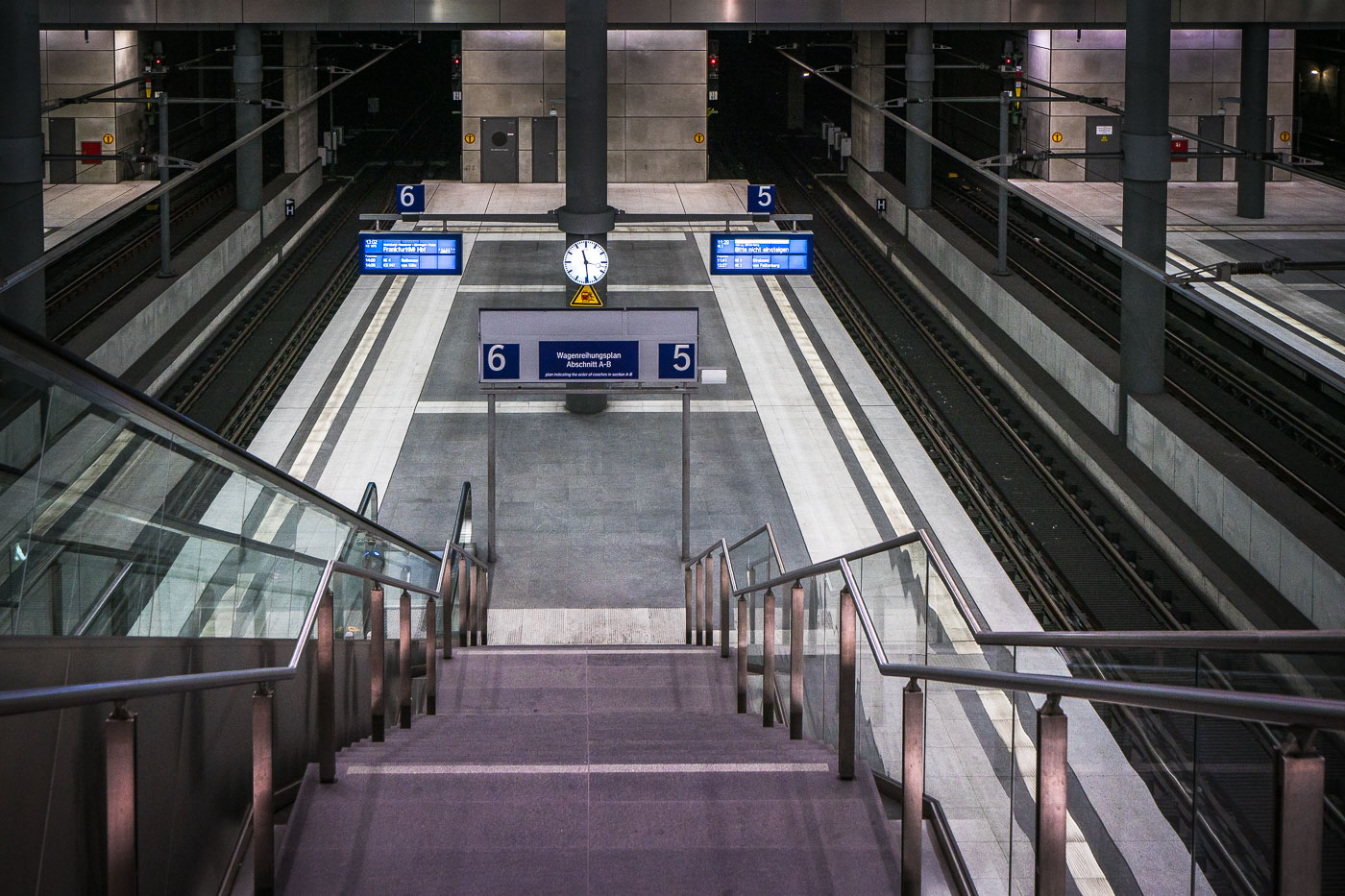
Symmetrical stairway descends to platforms 5 and 6 at Berlin Hauptbahnhof's underground train station level.
Berlin Hauptbahnhof’s lower-level platforms for tracks 5 and 6 are shown in the deep north-south rail link beneath the station in Berlin, Germany. Opened with the station in 2006, this level carries long-distance and regional trains through the Tiergarten Tunnel.

Stairway to Tracks 5 and 6 at Berlin Hauptbahnhof

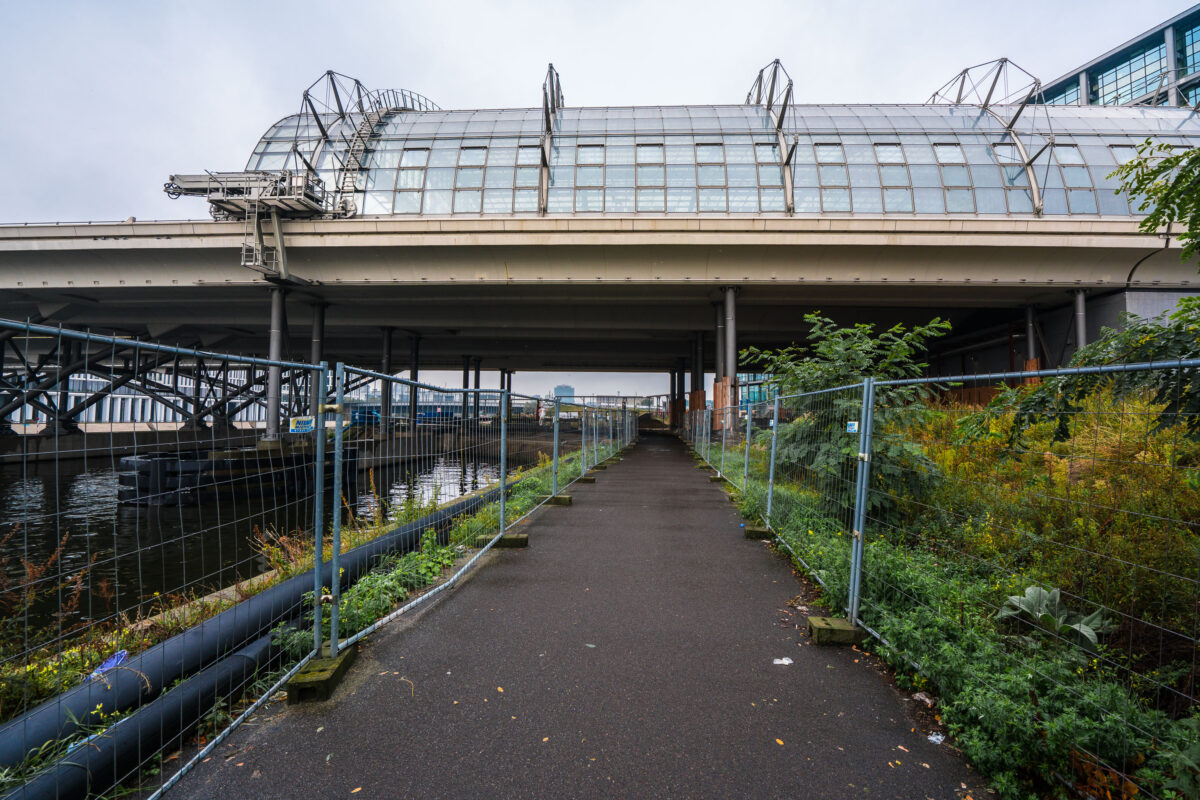
A fenced pedestrian underpass runs beneath Berlin Hauptbahnhof beside the Spree River in Berlin, Germany.
A fenced pedestrian path runs beneath Berlin Hauptbahnhof beside the Spree River in Berlin, Germany. The elevated station opened in 2006 as the city’s central rail hub, linking long-distance, regional, and S-Bahn services.

Fenced Path Beneath Berlin Hauptbahnhof’s Elevated Tracks

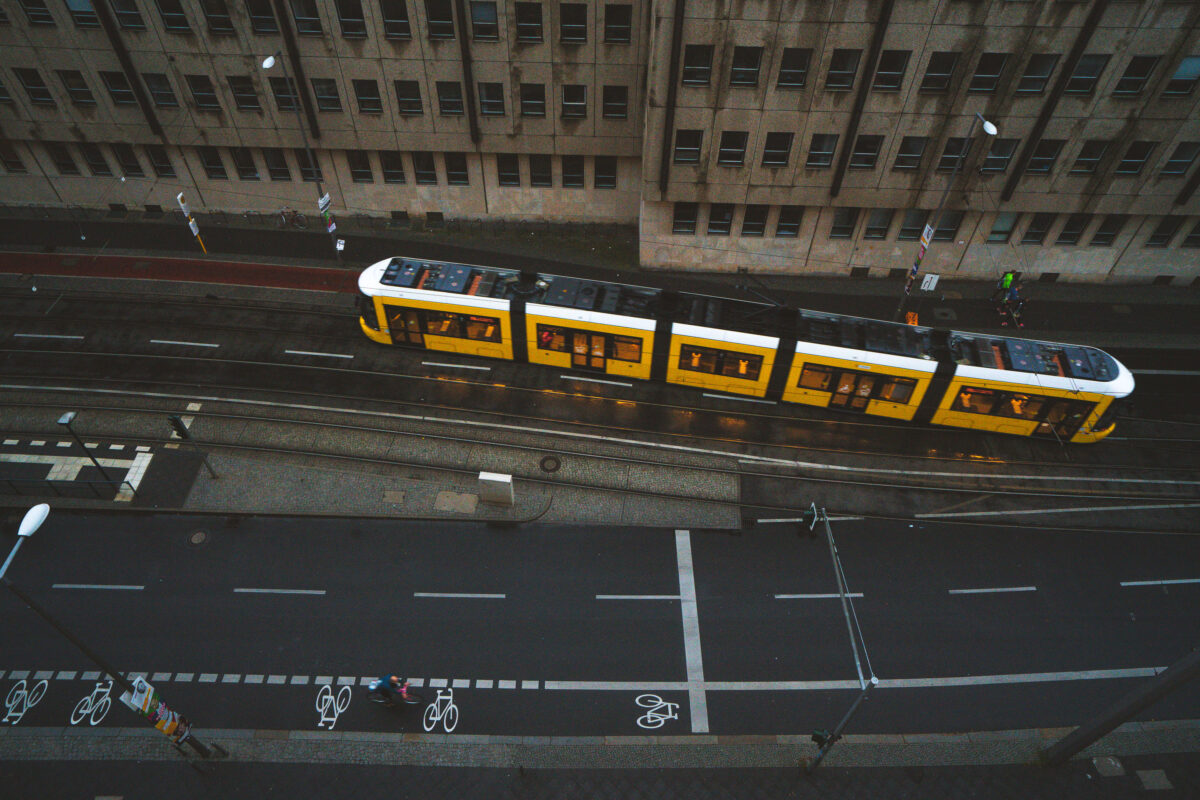
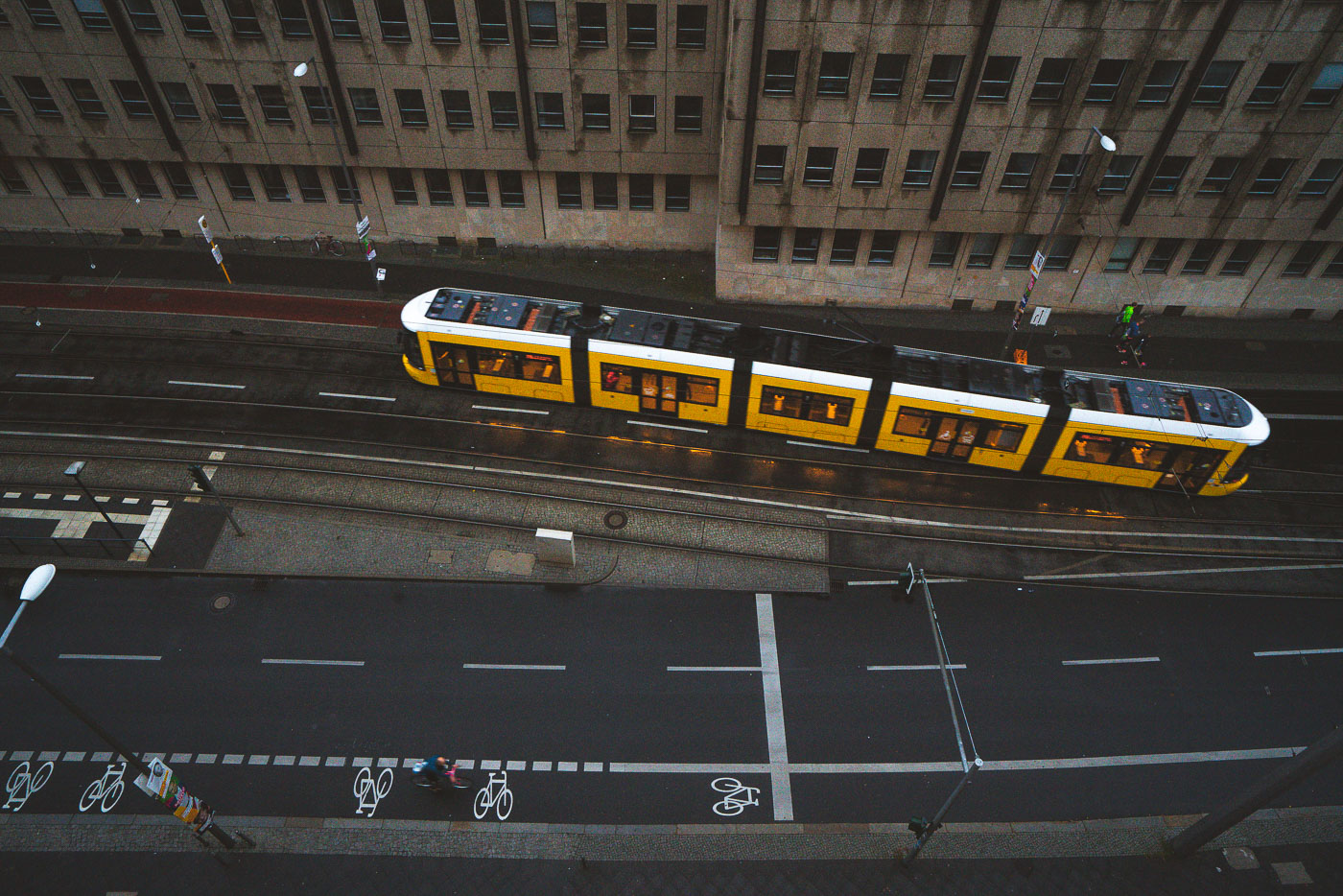
Yellow BVG tram traveling along wet Berlin street with cyclists and office buildings visible from above.
A yellow BVG tram runs along a wet street in Berlin. The tram shares the roadway with cyclists beside a large office building, and the wet pavement shows the vehicle’s lights along the tracks.

Aerial View of a BVG Tram Along Berlin’s Bike Lanes

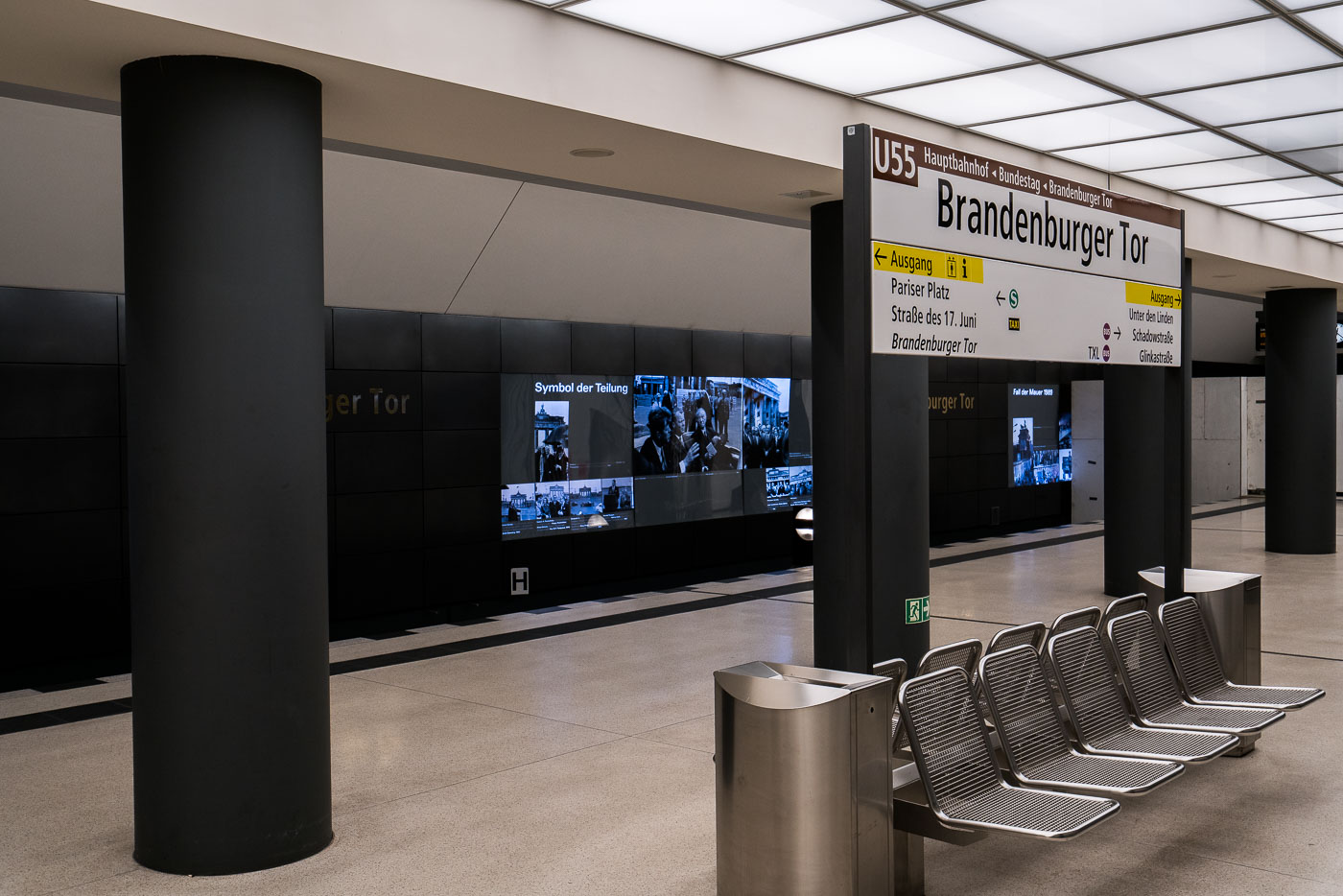
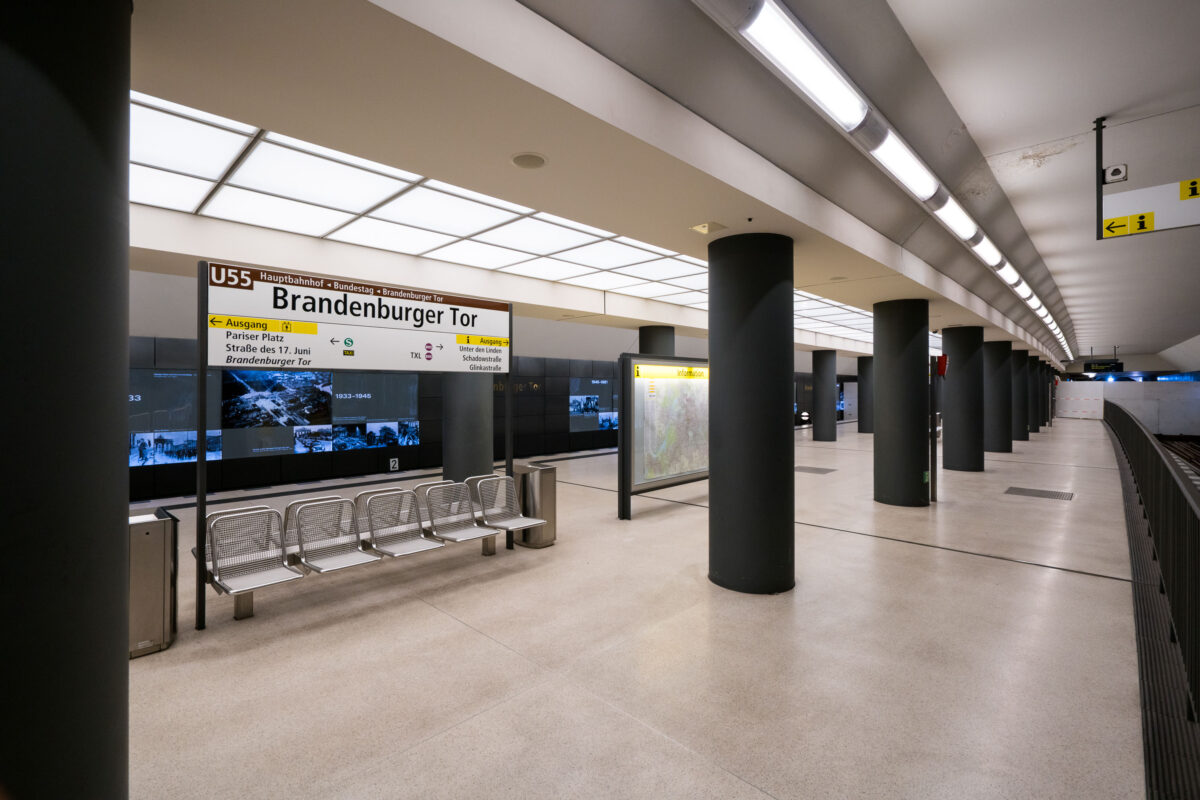
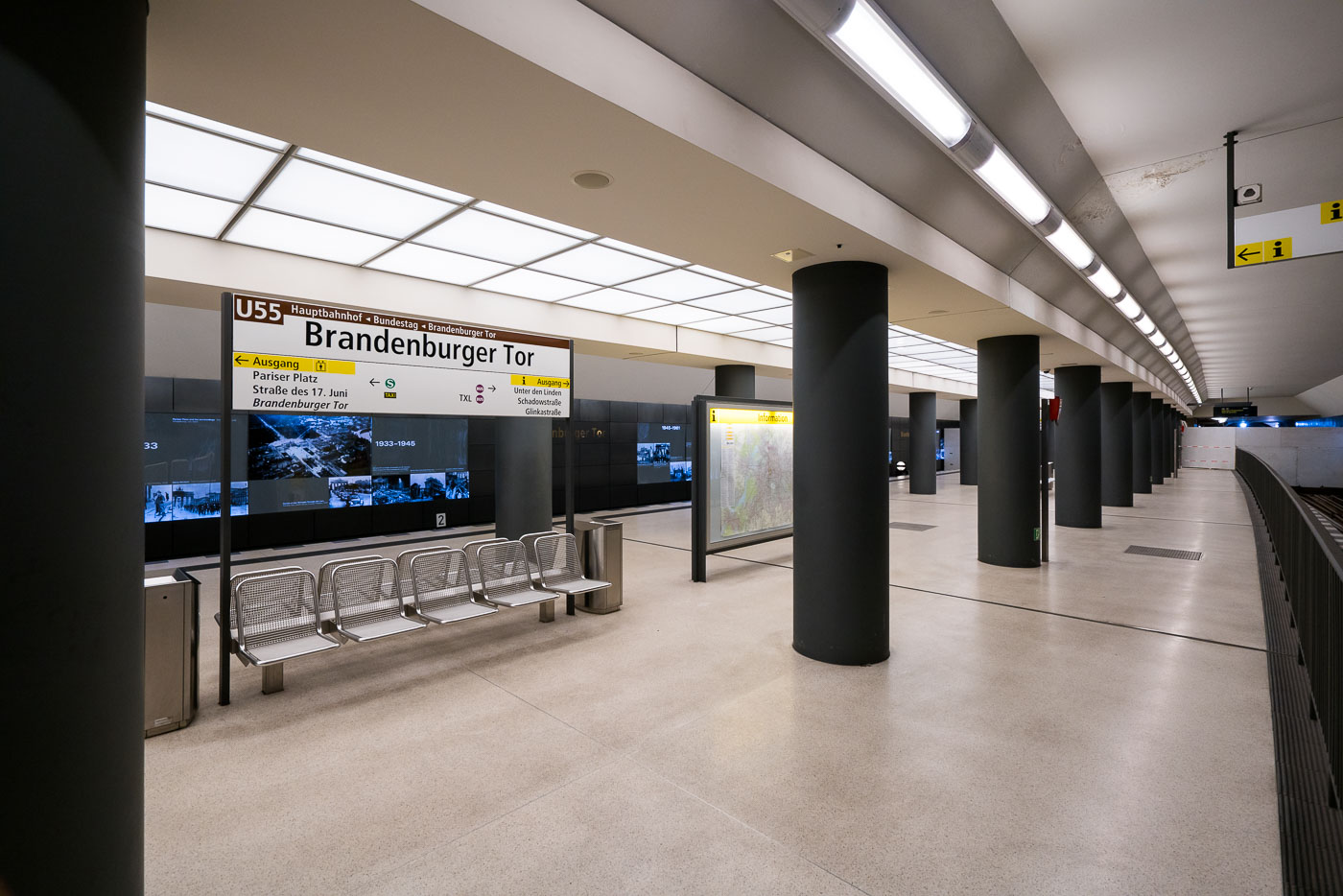
U55 platform at Brandenburger Tor U-Bahn station in Berlin with black support columns and illuminated ceiling.
Brandenburger Tor U-Bahn station in Berlin is served by the U55 line in this platform area. The station opened in 2009 and was later incorporated into the U5 extension in 2020. Black columns, illuminated ceiling panels, and wall displays line the platform.

Platform Signage at Brandenburger Tor Station

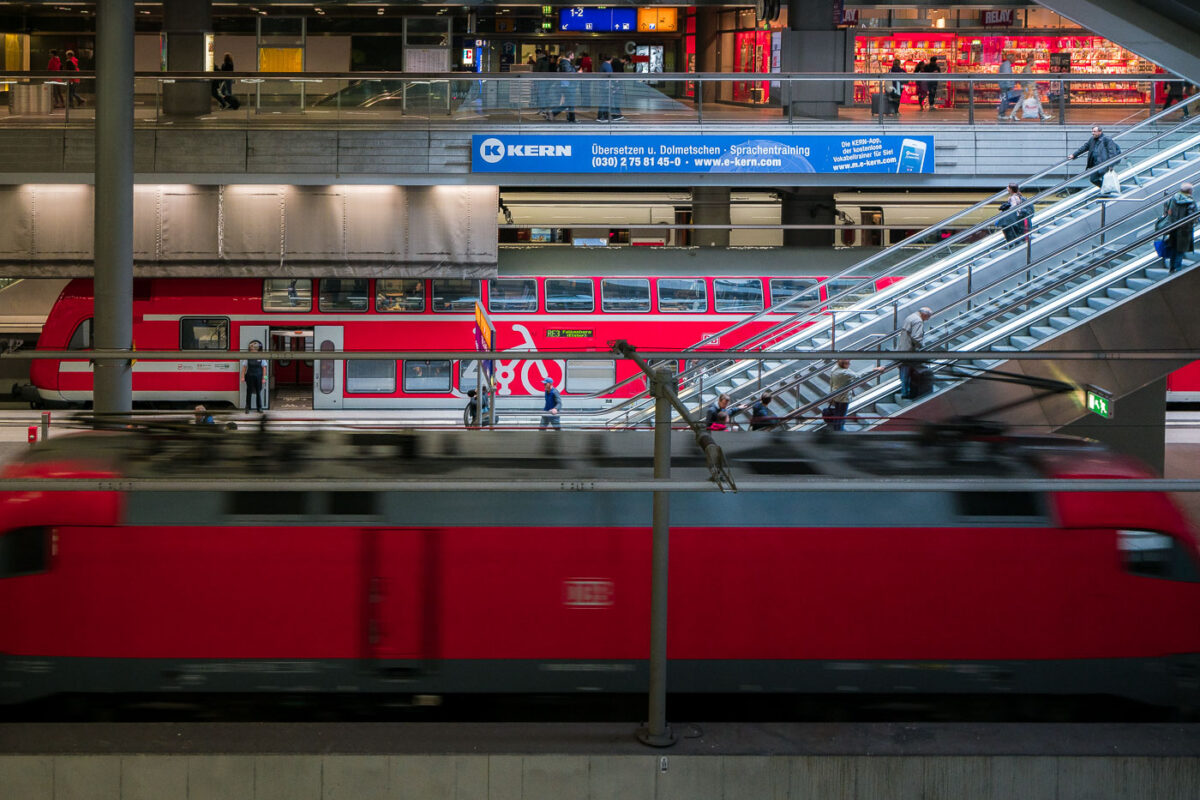
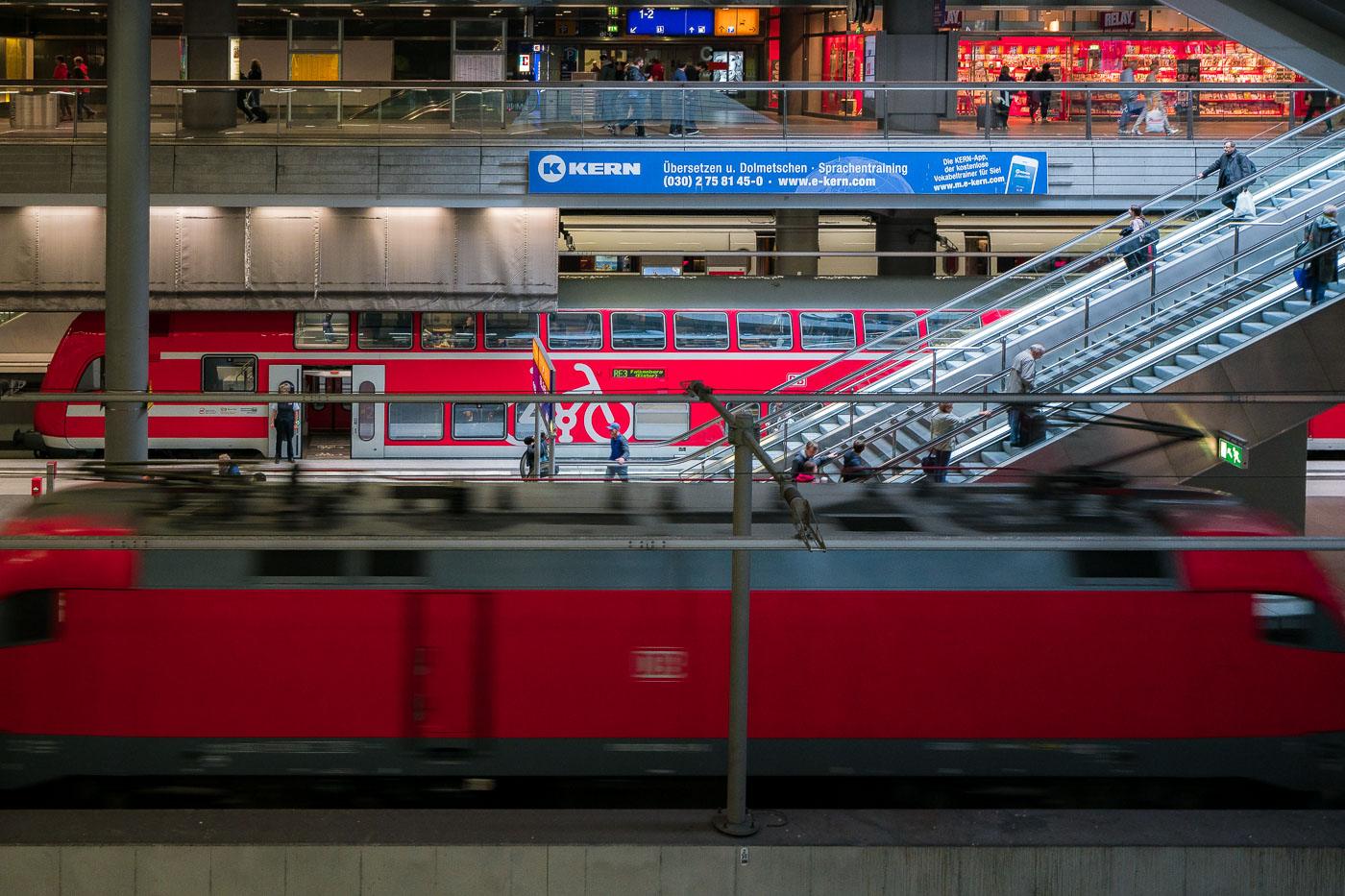
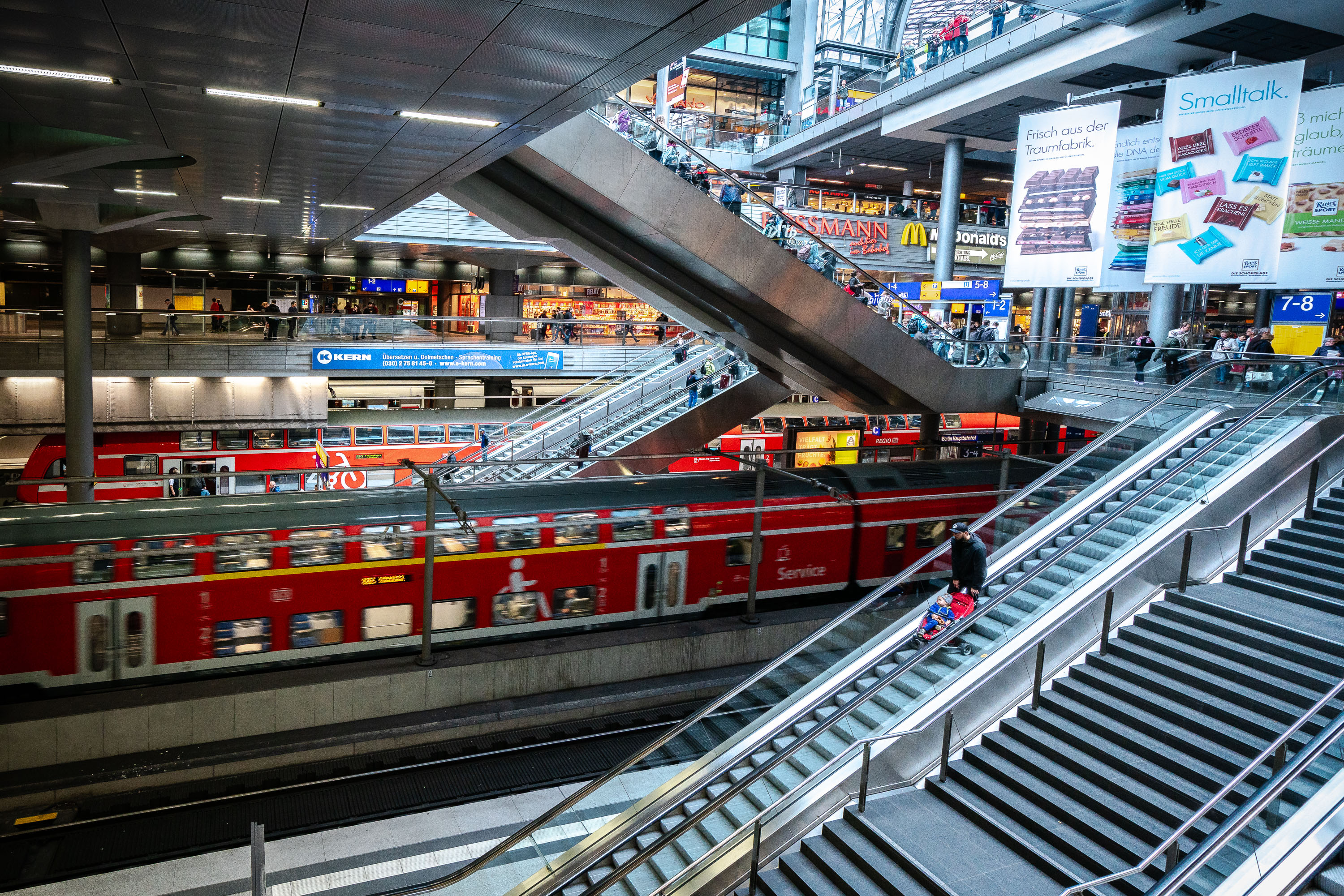
Red double-decker regional train at Berlin Hauptbahnhof platform with passengers on diagonal escalators.
Berlin Hauptbahnhof in Berlin contains multiple levels for regional and long-distance rail traffic. A red double-decker Regionalbahn train stands at a platform while passengers use the diagonal escalators linking the station concourses.

Escalators and Train Platforms at Berlin Hauptbahnhof

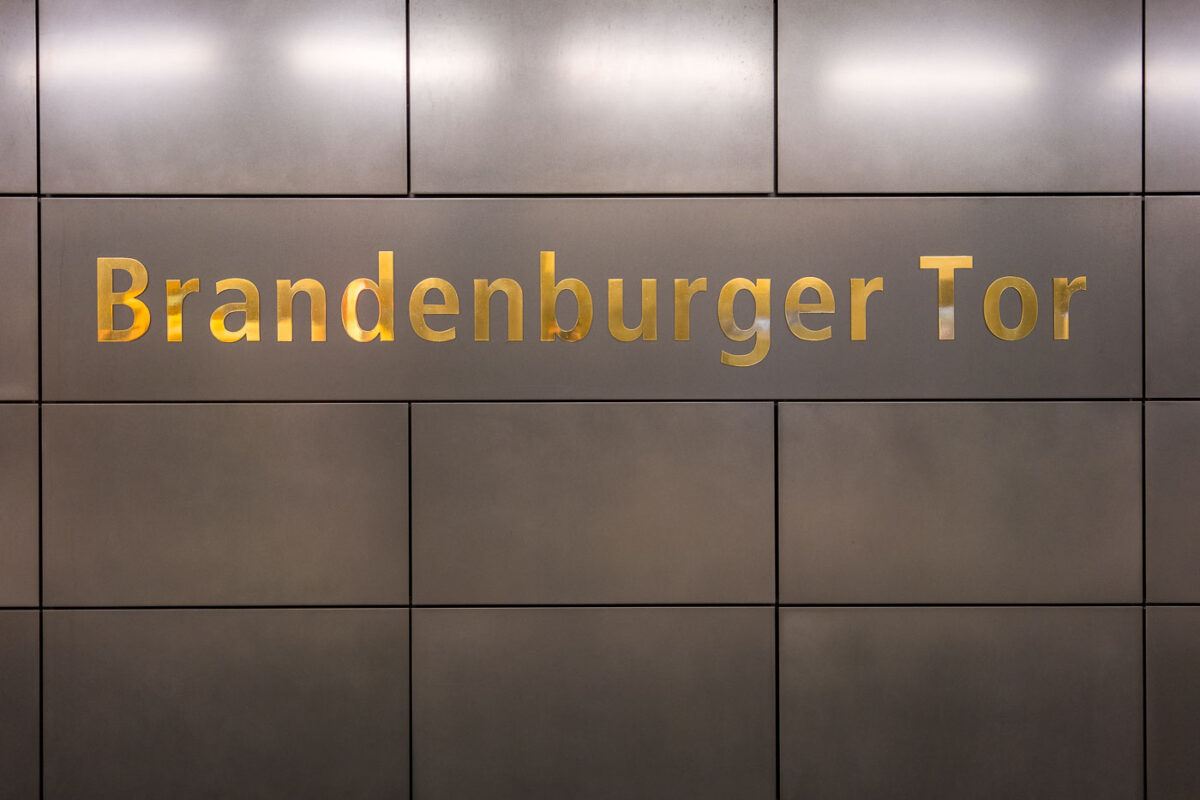
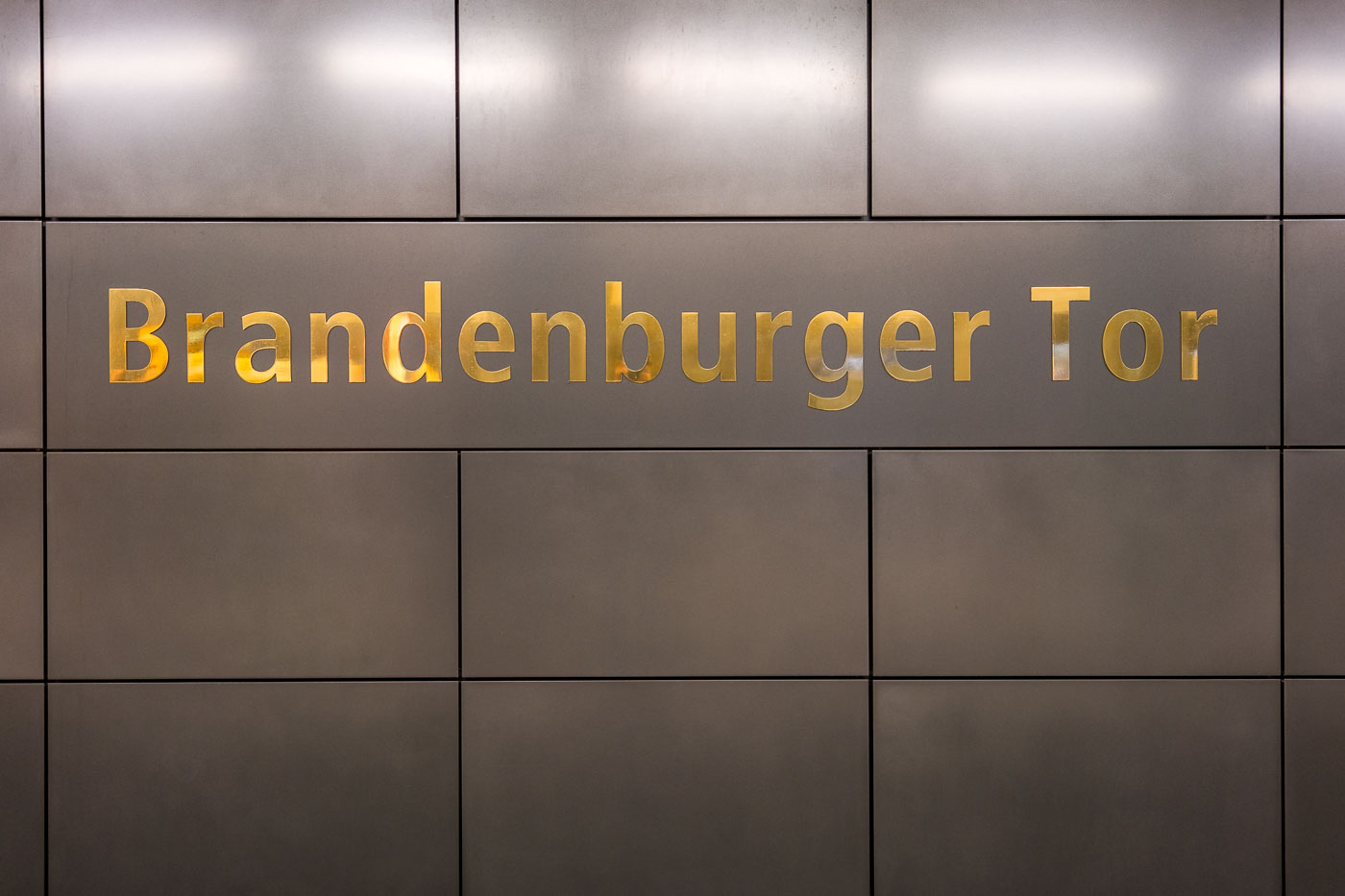
Gold lettering reading "Brandenburger Tor" on a dark tiled wall panel at the Berlin U-Bahn and S-Bahn station.
Brandenburger Tor station in Berlin is identified by gold lettering on dark metal wall panels. The station serves both the U-Bahn and S-Bahn near the Brandenburg Gate and Pariser Platz.

Gold Lettering at Brandenburger Tor Station

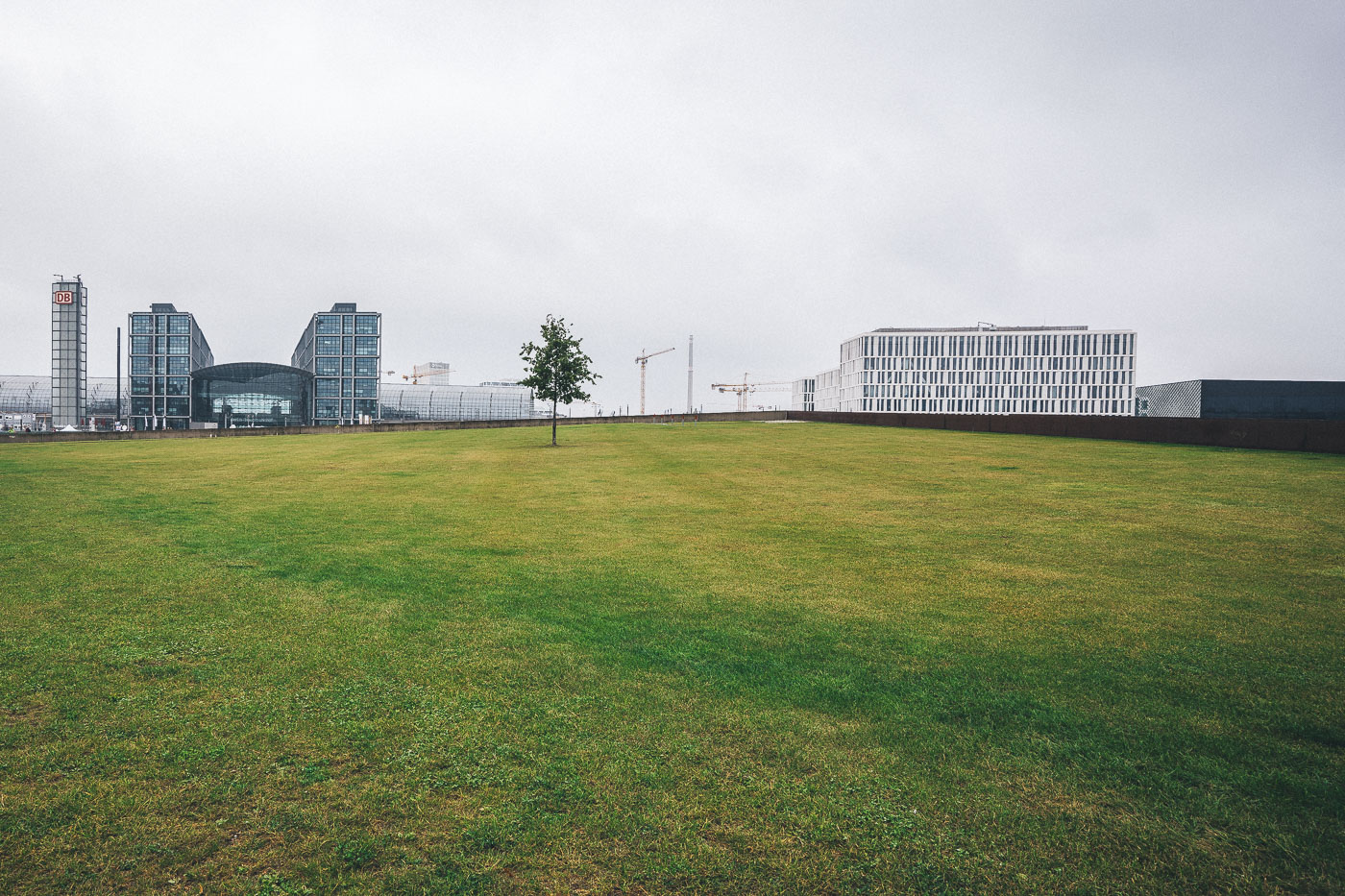
Open lawn extends before Berlin Hauptbahnhof's glass concourse and Federal Quarter office buildings in Berlin.
Berlin Hauptbahnhof and the surrounding Federal Quarter are shown in Berlin, with the station’s glass concourse and adjacent office buildings visible beyond an open lawn. The station, completed in 2006, is the city’s main rail hub and part of the government district near the Spree River.

Open Lawn Near Berlin Hauptbahnhof’s Federal Quarter

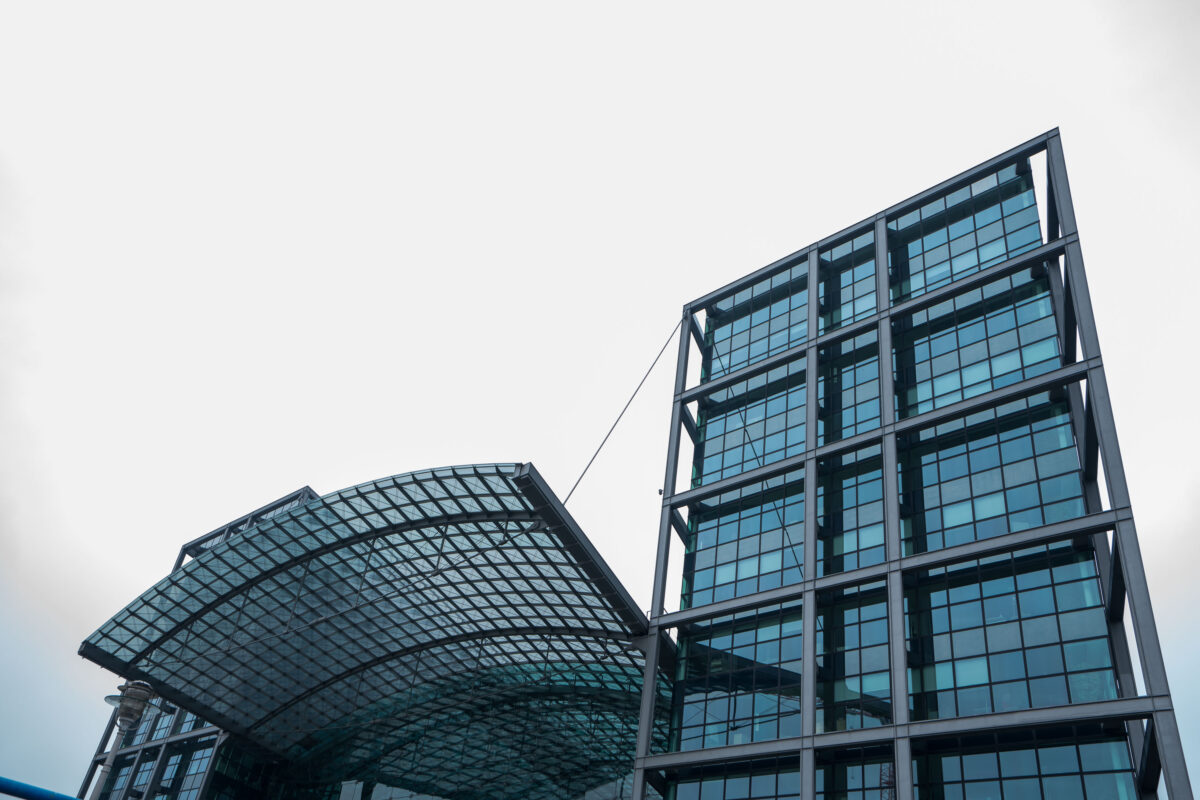
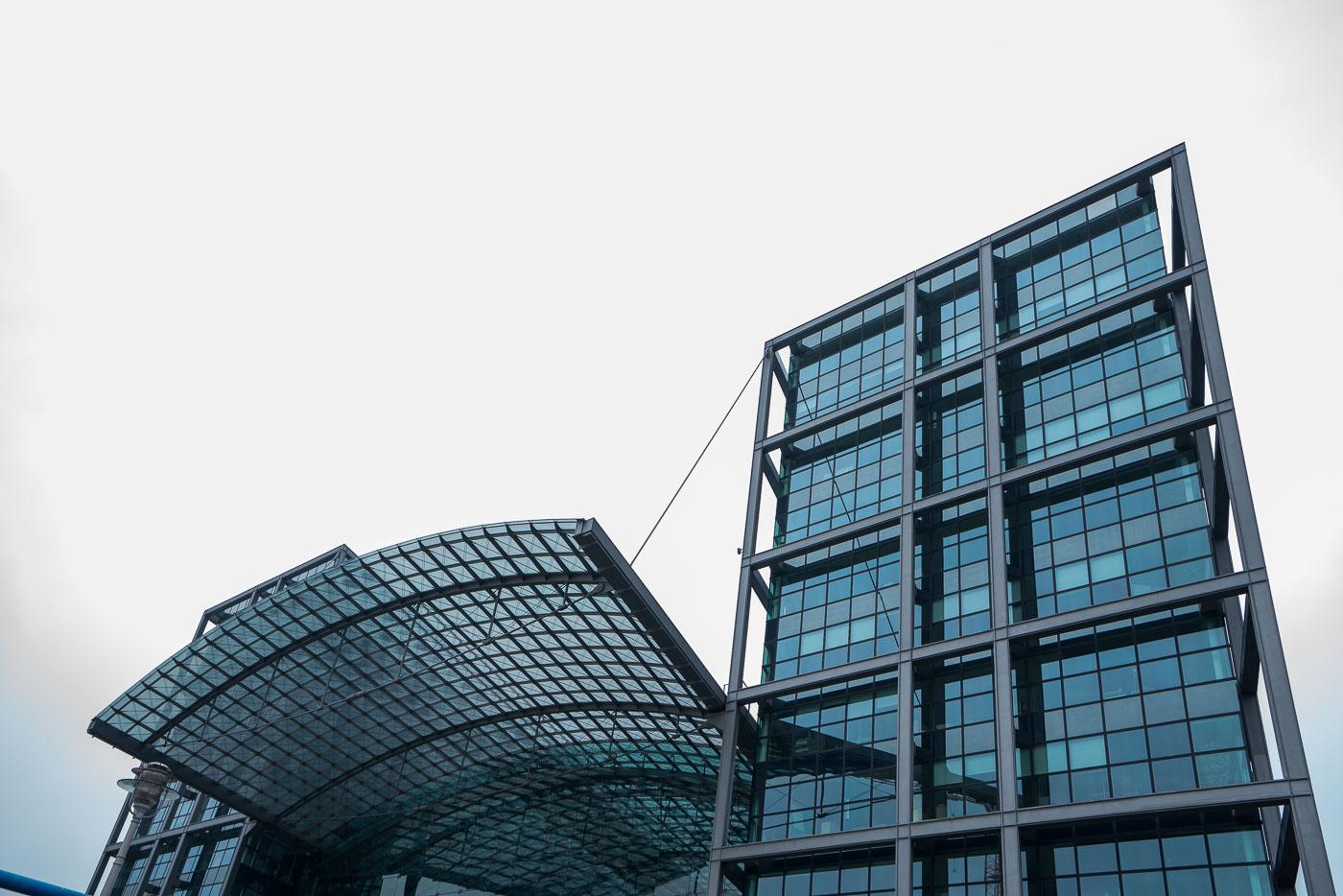
Modern glass and steel entrance structure of Berlin Hauptbahnhof, the city's central railway station opened in 2006.
Berlin Hauptbahnhof in Berlin is the city’s central railway station and a major hub for long-distance, regional, and S-Bahn services. Opened in 2006, the station replaced the former Lehrter Bahnhof on this site and is known for its multi-level layout and glass-and-steel architecture.

Glass Roof and Tower at Berlin Hauptbahnhof

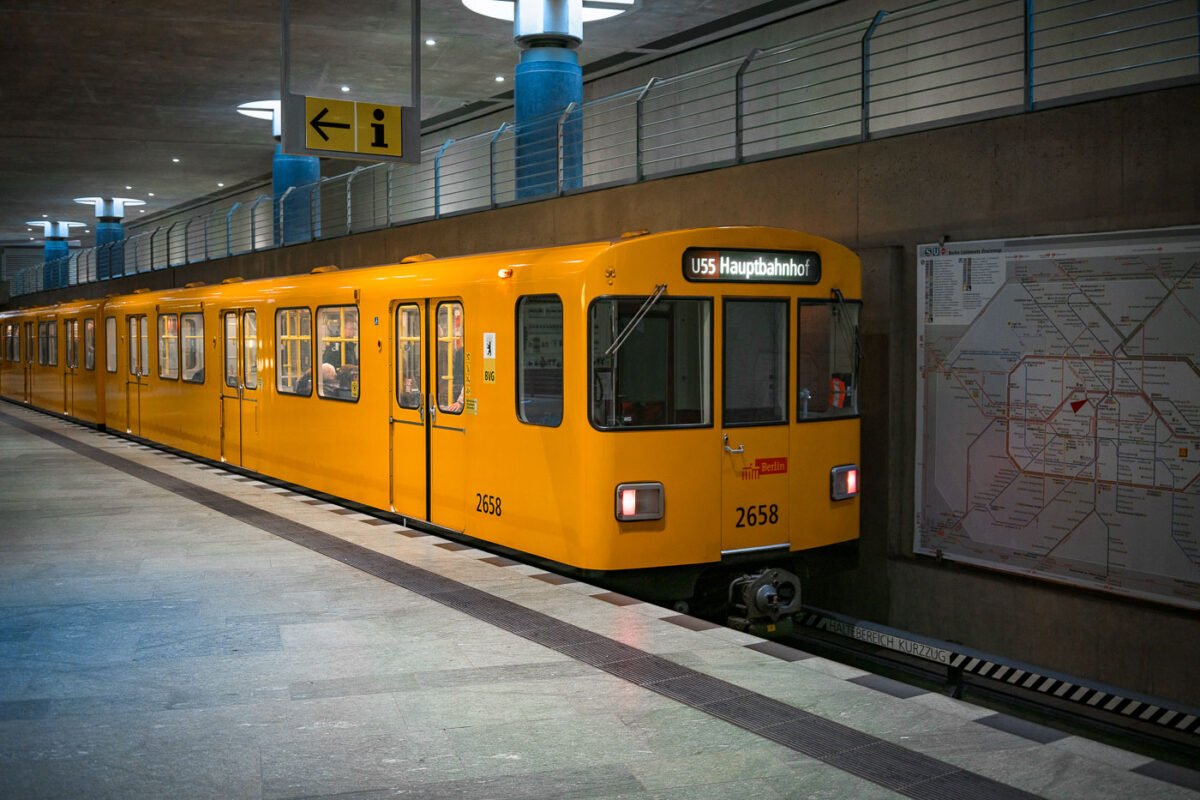
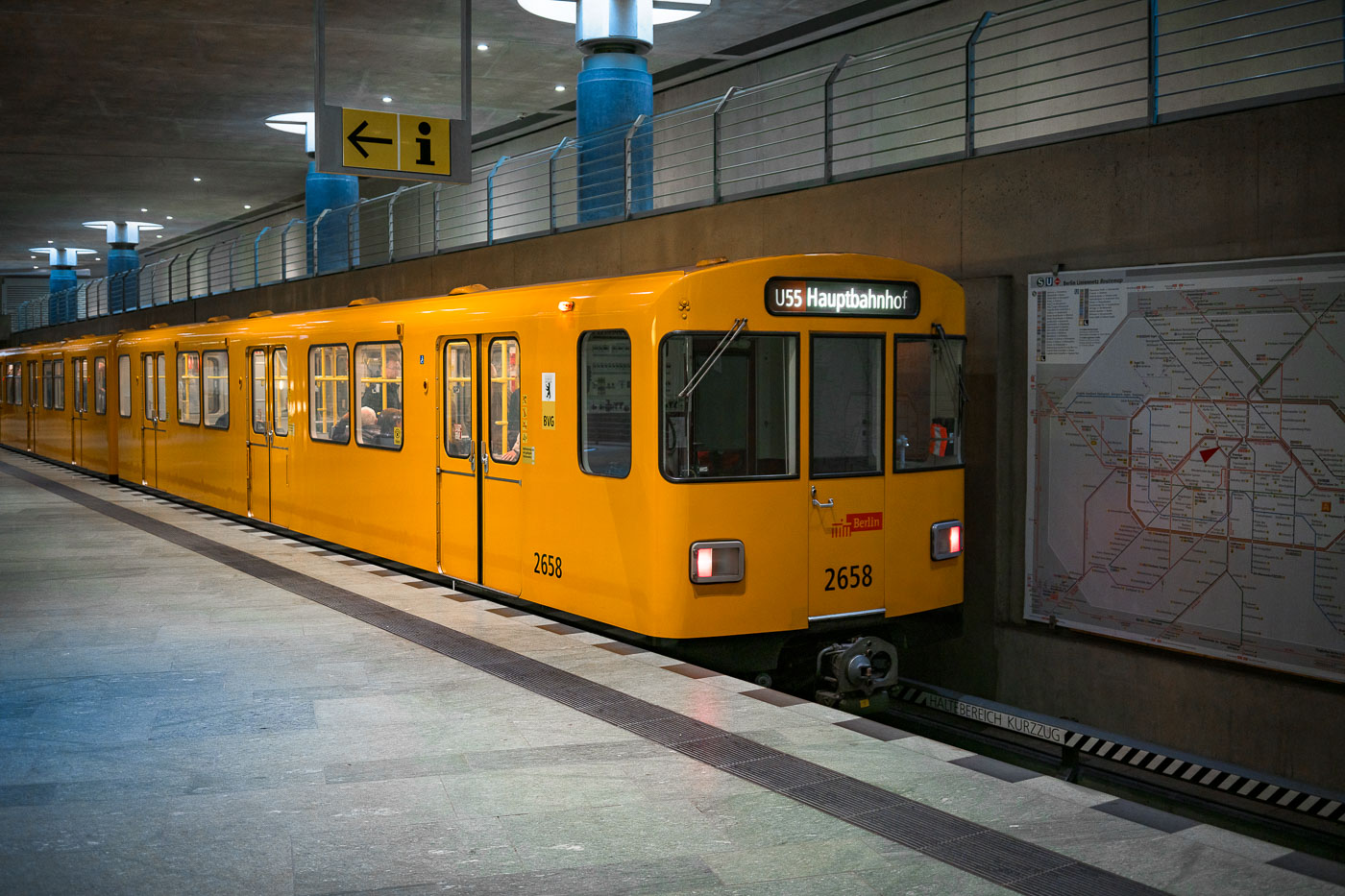
Yellow U55 shuttle train number 2658 at Berlin Hauptbahnhof underground platform in Germany.
A U55 shuttle train stands at the underground platform of Berlin Hauptbahnhof in Berlin, Germany. The short U-Bahn line connected the central station with Brandenburger Tor before being incorporated into the extended U5 in 2020.

U55 Train Bound for Hauptbahnhof at the Platform

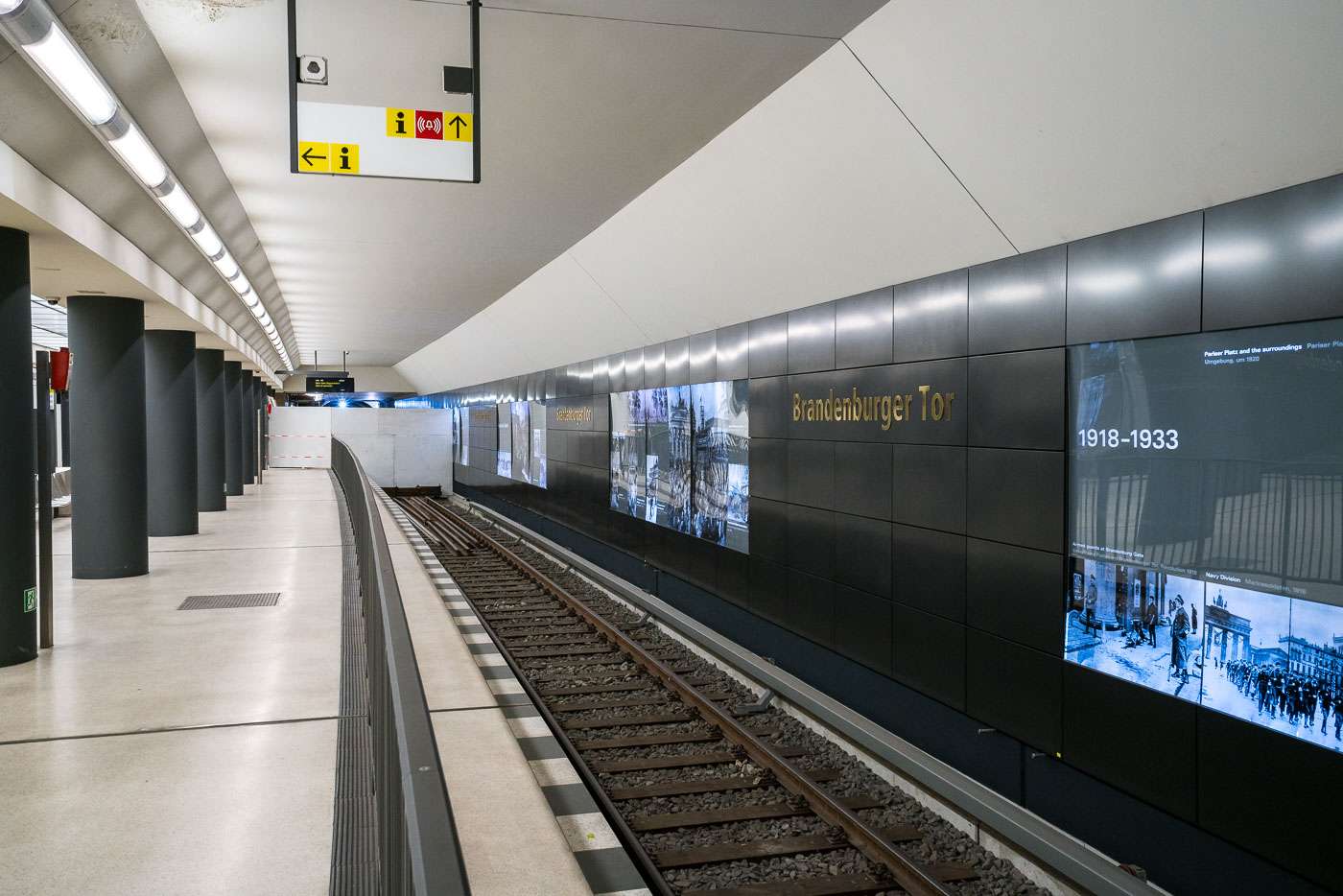
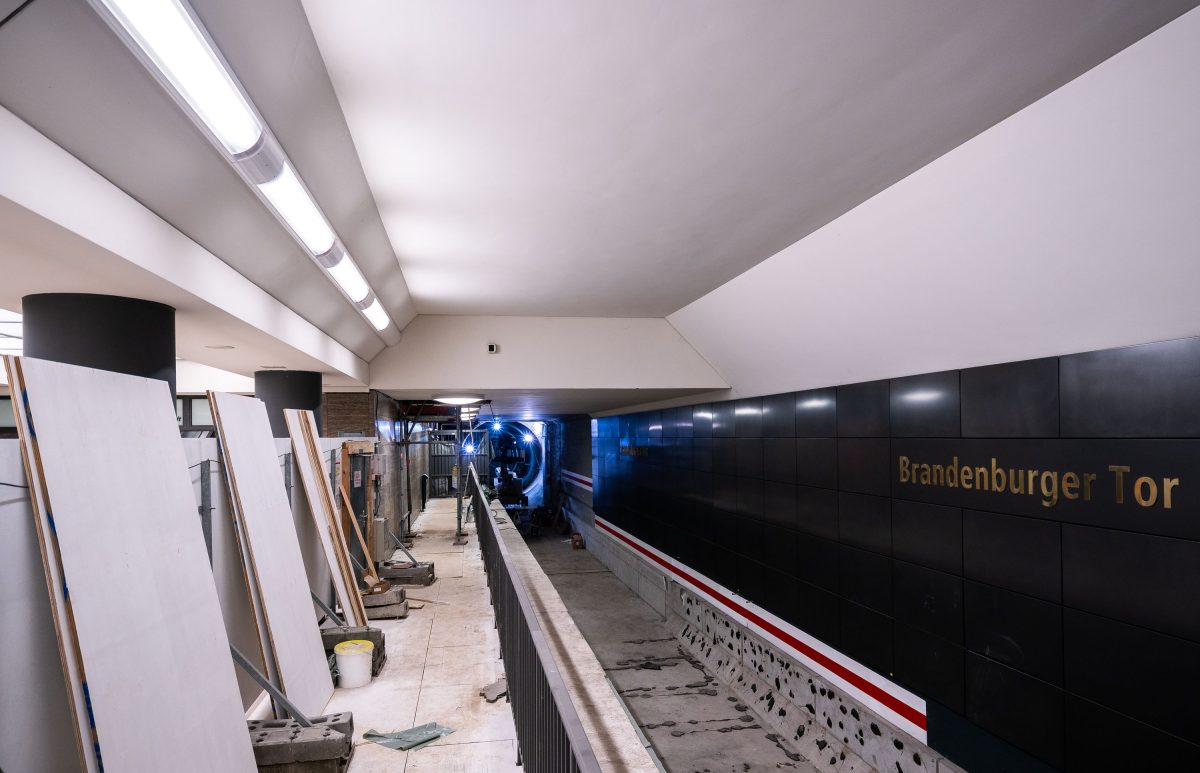
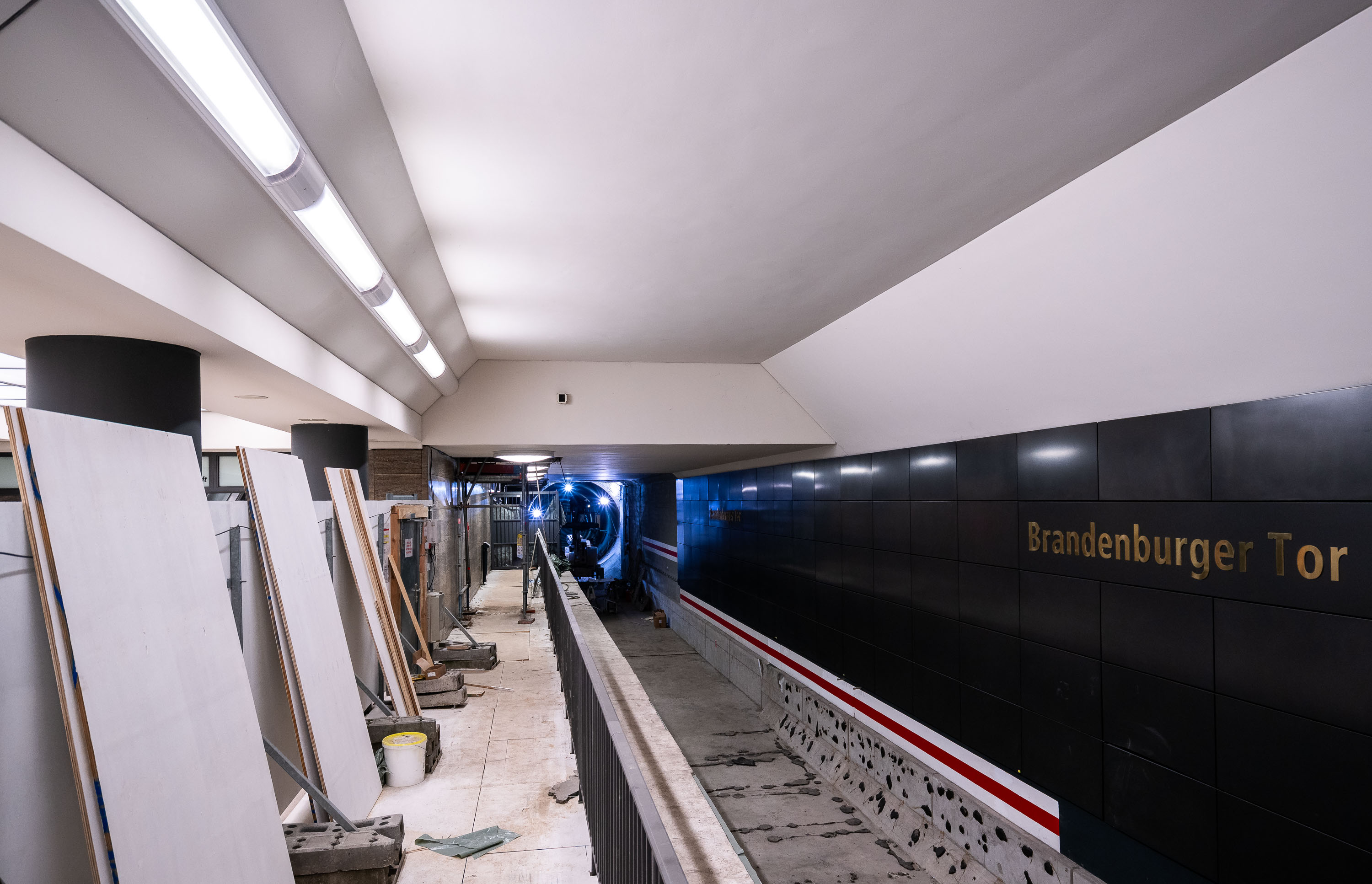
Brandenburger Tor U-Bahn station platform under construction with building materials staged along the tunnel and gold lettering on dark tiled walls.
Brandenburger Tor station serves Berlin's U55/U5 line, linking the area near the Brandenburg Gate with Alexanderplatz since the line's 2020 extension. Its dark tiled walls and gold lettering are consistent with the design used throughout the newly built U5 stations. At the time of this photo, the platform remained under construction, with building materials and equipment staged along its length. Work lighting illuminates the tunnel bore beyond the platform edge, where finishing work was still underway.

Construction Materials Along the Brandenburger Tor Platform
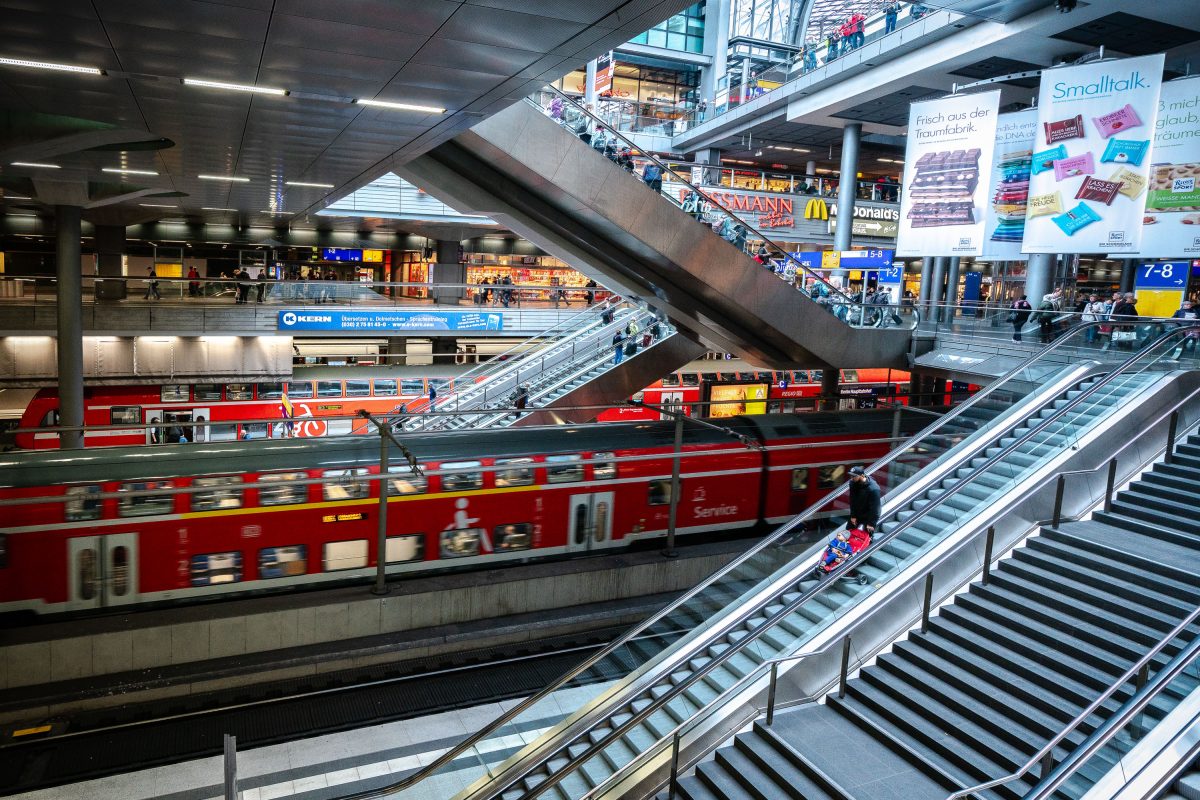
Red regional train at platform level below escalators and shopping concourse at Berlin Hauptbahnhof.
Berlin Hauptbahnhof is Germany's largest railway station and a key interchange in the national and Berlin S-Bahn rail networks. The station's multi-level design stacks regional and long-distance platforms beneath upper concourses lined with shops and services, connected by a network of escalators and stairways. Opened in 2006, it replaced several older Berlin terminals to consolidate east-west and north-south rail traffic through the city center.

Multiple Levels of Escalators and Platforms at Berlin Hauptbahnhof
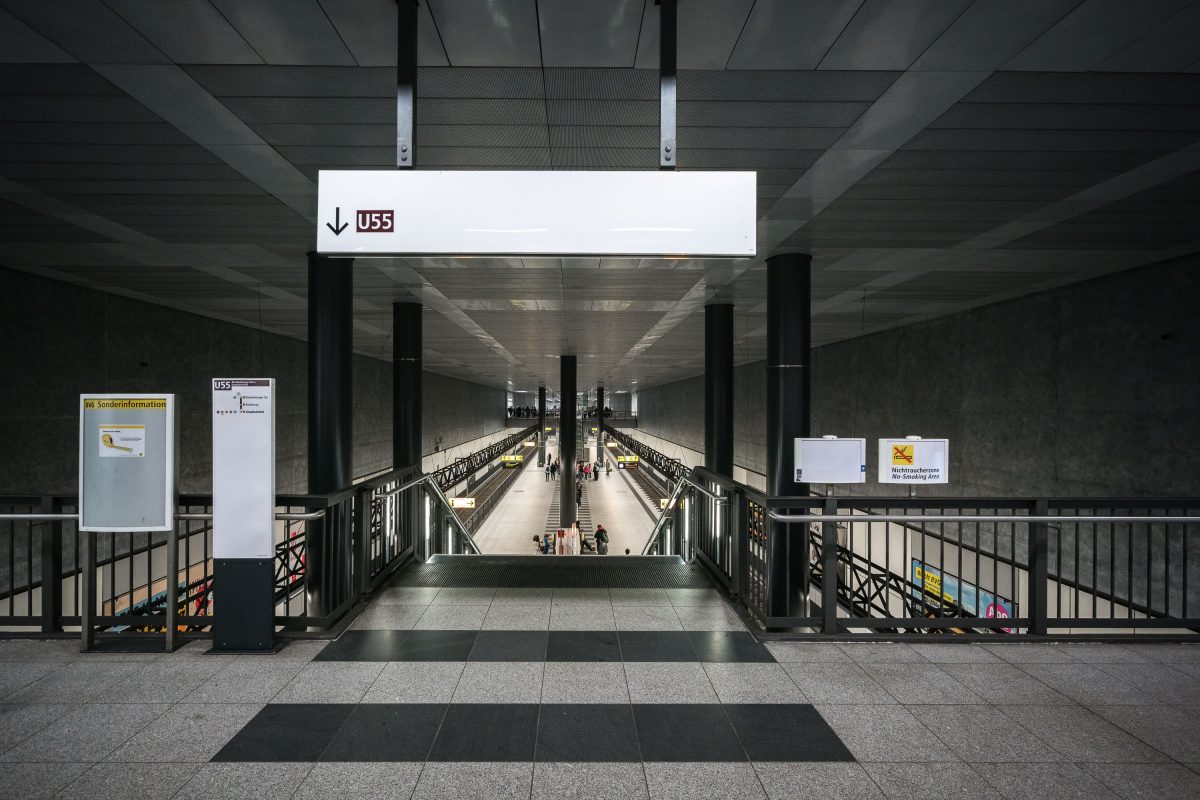
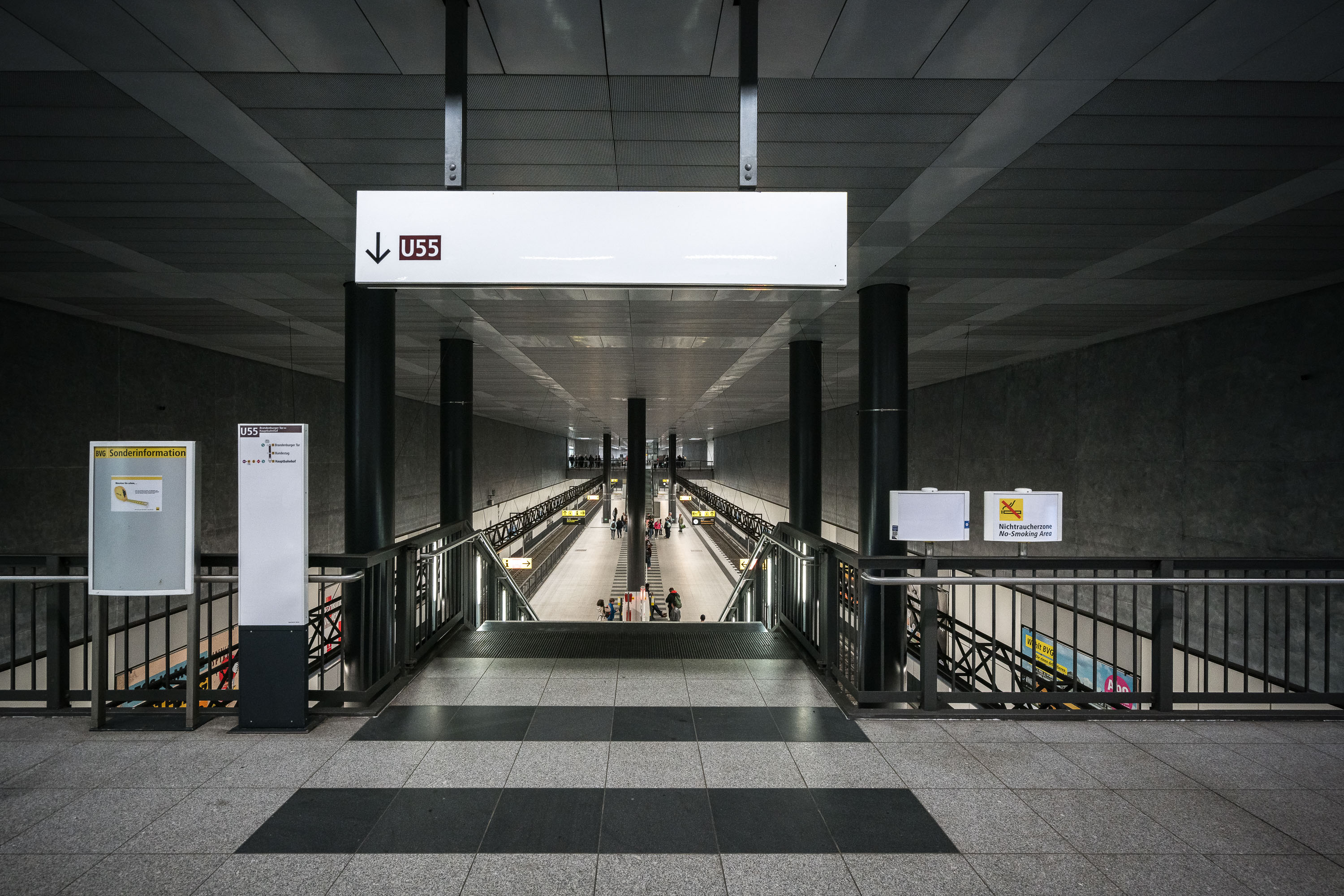
U55 platform at Berlin Hauptbahnhof with symmetrical stairways descending to twin underground train tracks.
The U55 line platform lies beneath Berlin Hauptbahnhof, Germany's central railway station. Opened in 2009, the short line was built to connect the station with the Brandenburg Gate area before later merging into the U5 line in 2020. Its symmetrical concourse features paired escalators and stairways descending to twin platforms serving both directions of the underground route. The station's minimalist gray and black finishes are typical of Berlin's modern U-Bahn extensions built in the early 2000s.

Stairway Down to the U55 Platform at Berlin Hauptbahnhof
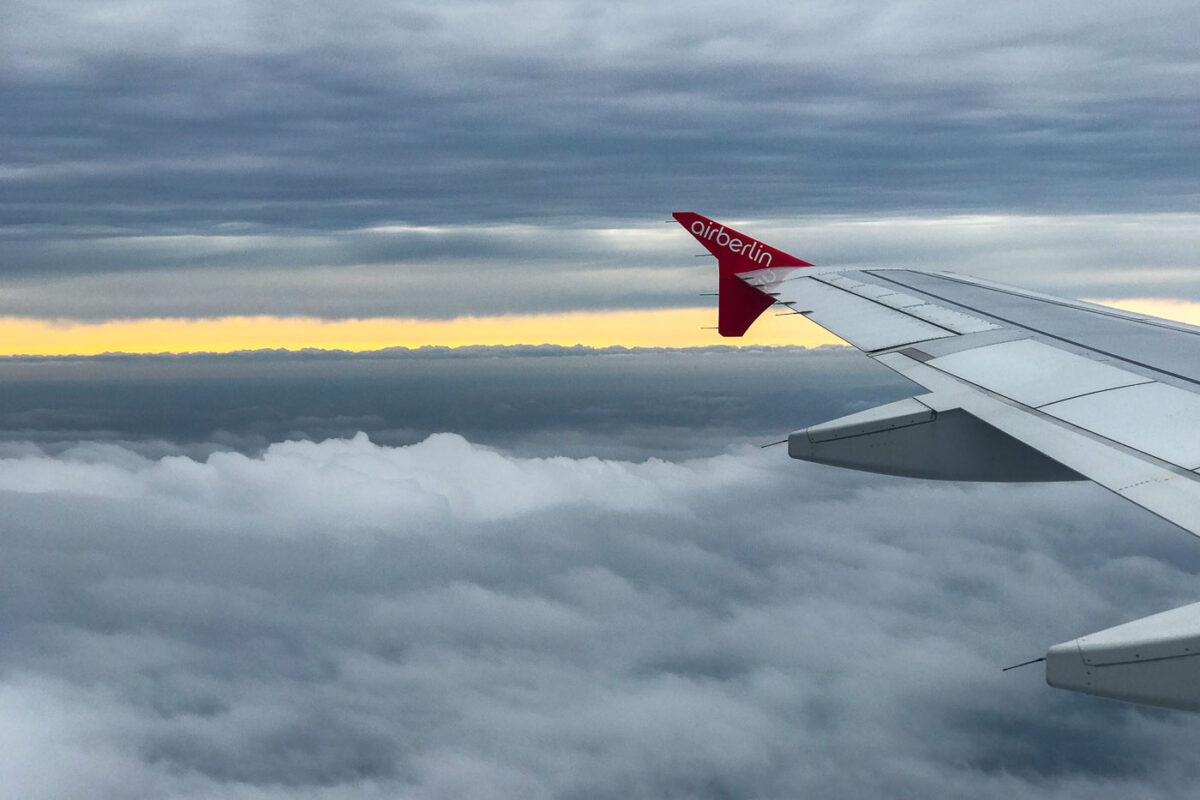
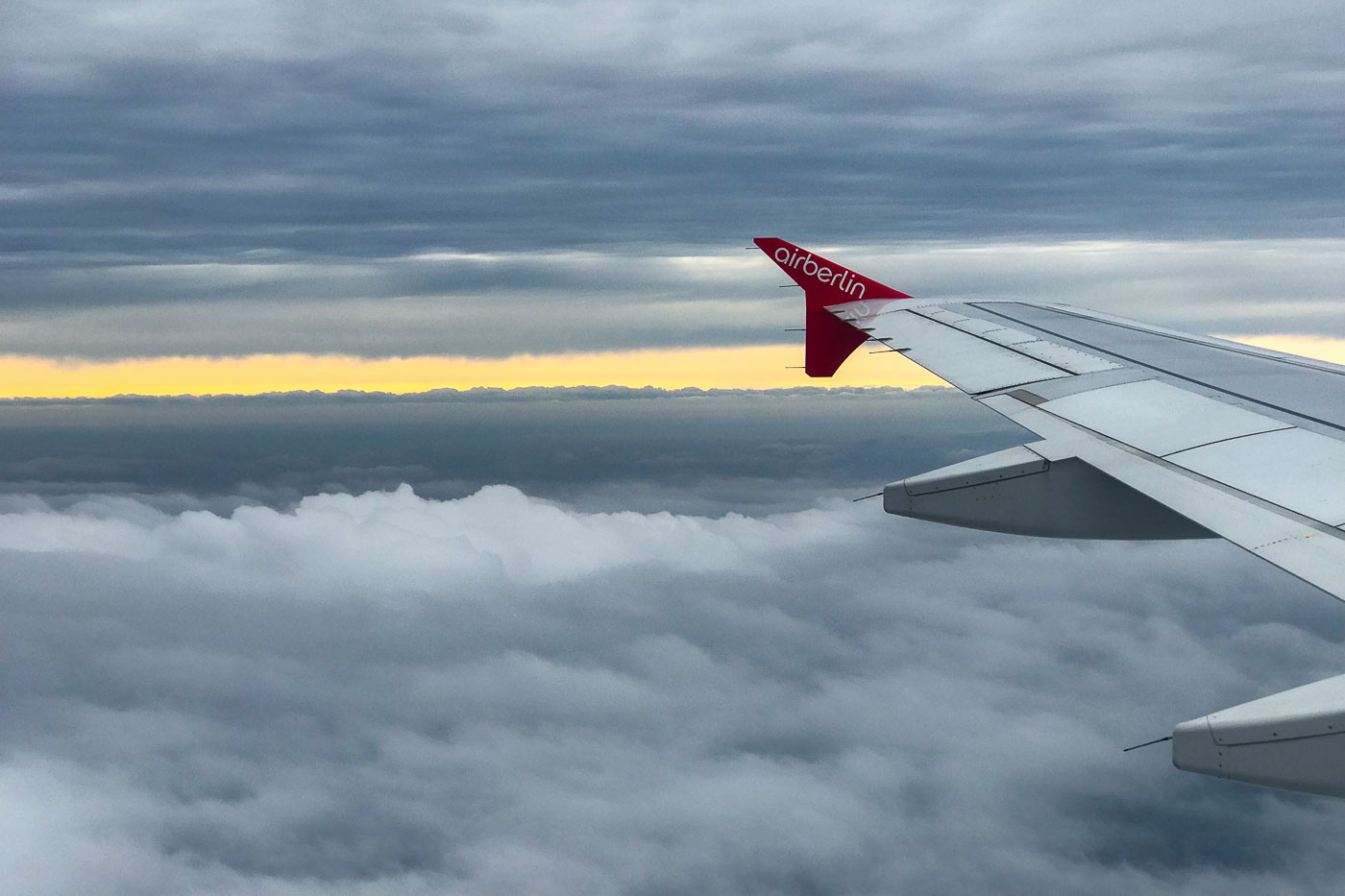
Air Berlin logo in the air from the cabin
The wing of an Air Berlin aircraft is visible above cloud layers at sunset, with a golden band of light on the horizon. Air Berlin, founded in 1978, was a significant German airline that served numerous European routes before ceasing operations in 2017. This image reflects a moment of transit, symbolizing the airline's former reach across the continent.

Air Berlin’s Wingtip Above a Sea of Clouds

Built in Minneapolis

Minneapolis Photographer

Browse by location, move through long-running series, or start with recent work.