Photo Set
Kyoto Trains
JR West commuter trains, Tōzai Line subway platforms, and Shinkansen services at Kyoto Station
Kyoto Station sits at the centre of one of Japan's most layered rail networks, a hub where the Tōkaidō Shinkansen, JR West regional services, and the Kyoto Municipal Subway converge beneath a steel-and-glass structure designed by Hiroshi Hara and opened in 1997 to mark the city's 1,200th anniversary.
This instalment in the ongoing Trains series follows the network across both its surface and underground infrastructure. Above ground, N700A-series Shinkansen arrive and depart on the high-speed corridor linking Tokyo, Nagoya, and Shin-Osaka, while older green-liveried regional railcars — once a standard sight across the Kansai region — still occupy platforms alongside maintenance vehicles like the MO-5527, which tends the track during service gaps.
Below street level, the Kyoto Municipal Subway operates on two intersecting lines. The Karasuma Line opened in 1981; the Tōzai Line followed in 1997, running east to west and meeting the Karasuma Line at Karasuma Oike Station, beneath the intersection of Karasuma-dōri and Oike-dōri. Shiyakusho-mae, a stop east of that interchange, sits adjacent to Kyoto City Hall and reflects how the Tōzai Line was threaded through the dense central city to connect administrative and residential districts that older rail lines had not directly served.
The broader Trains series has moved through rail systems across multiple countries, building a cumulative record of how networks are maintained, used, and how they age. Kyoto presents that question in concentrated form: a city where a centuries-old urban centre is served by infrastructure that ranges from the newly built to the nearly obsolete, all operating within the same station.
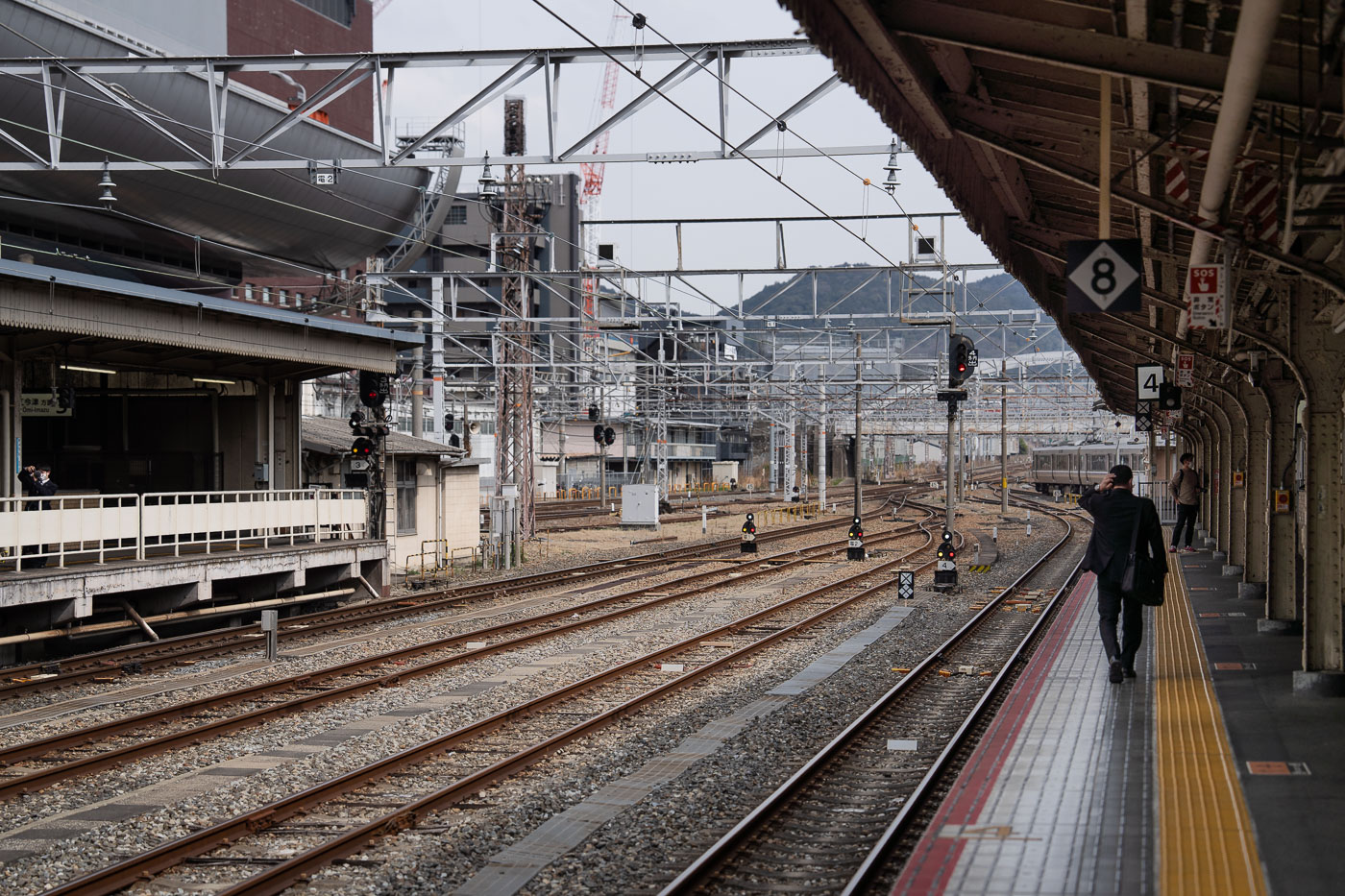 View full post: Passenger Waiting on Platform 8, Kyoto Station
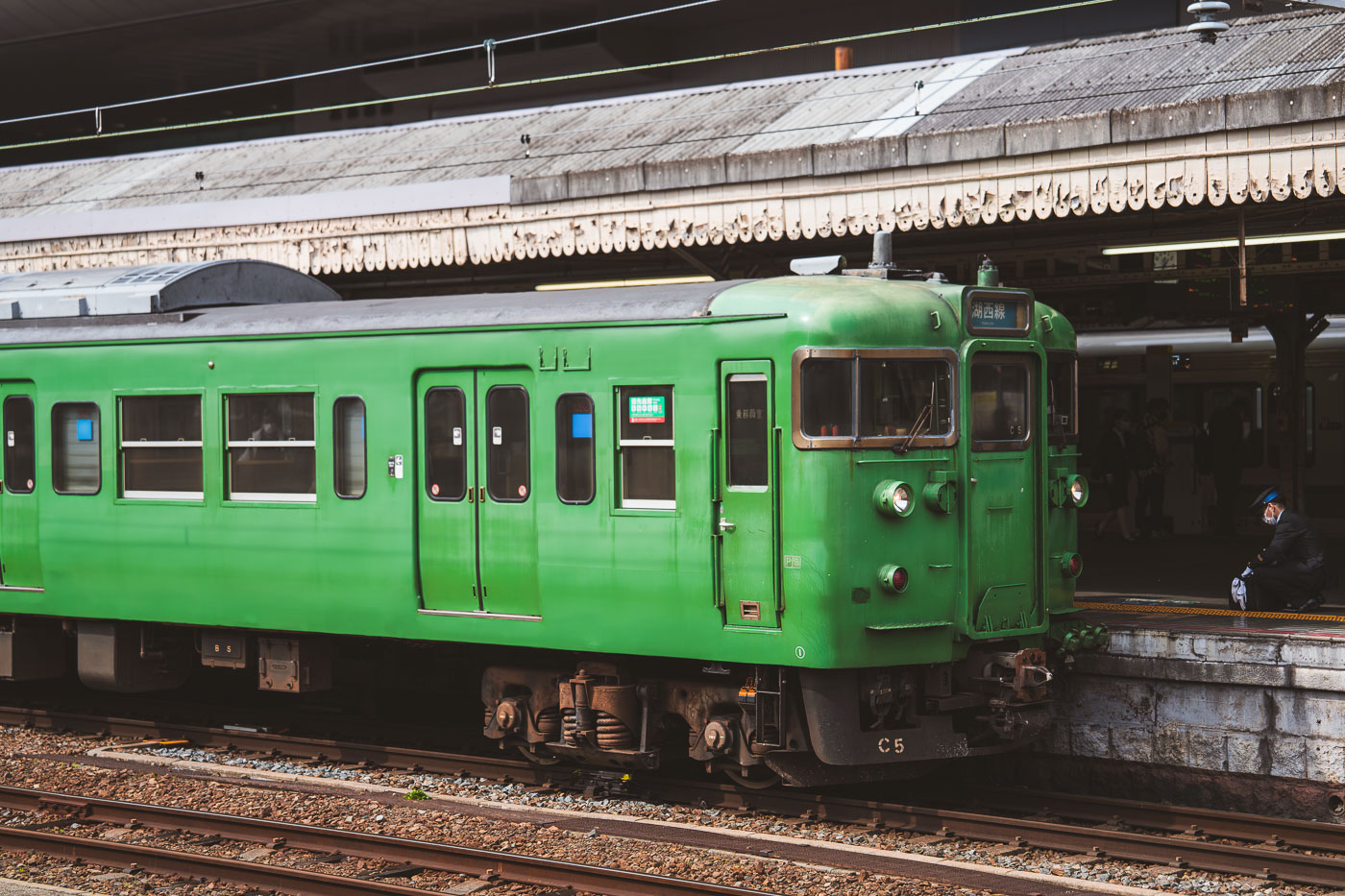 View full post: Vintage Green Local Train, Kyoto Station Platform
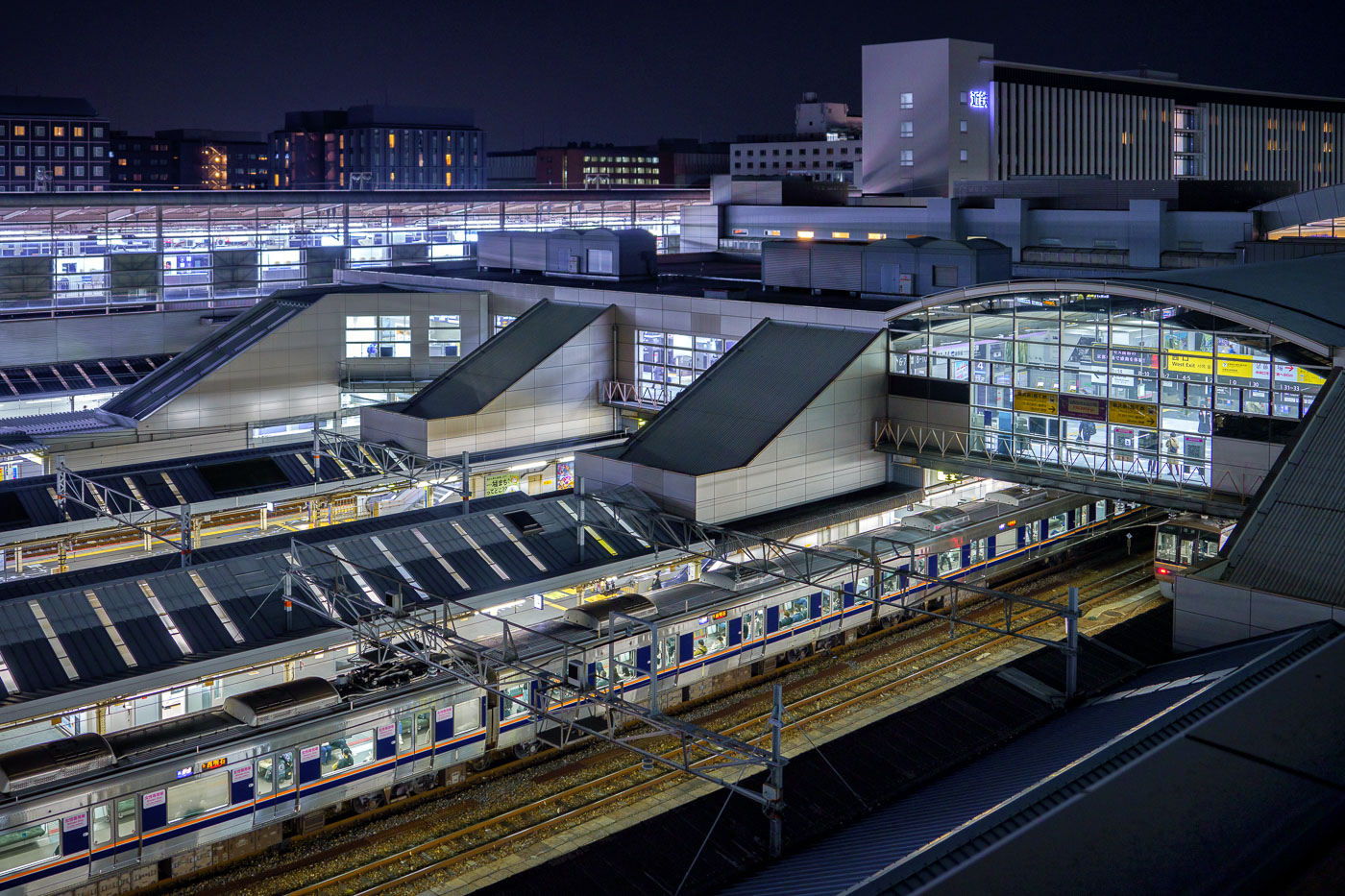 View full post: Train Platforms at Kyoto Station, Kyoto
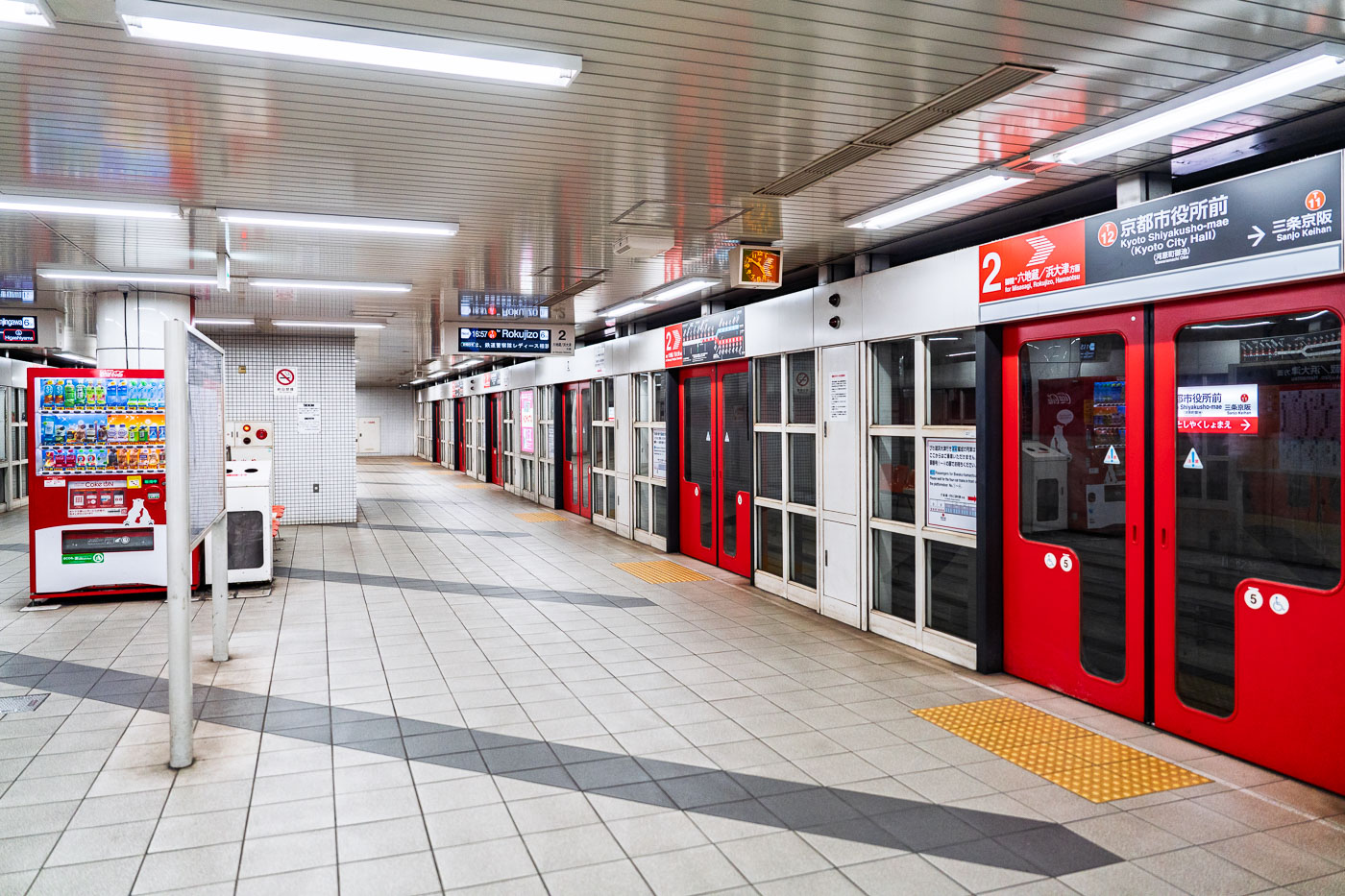 View full post: Kyoto Shiyakusho-mae Station, Tozai Line
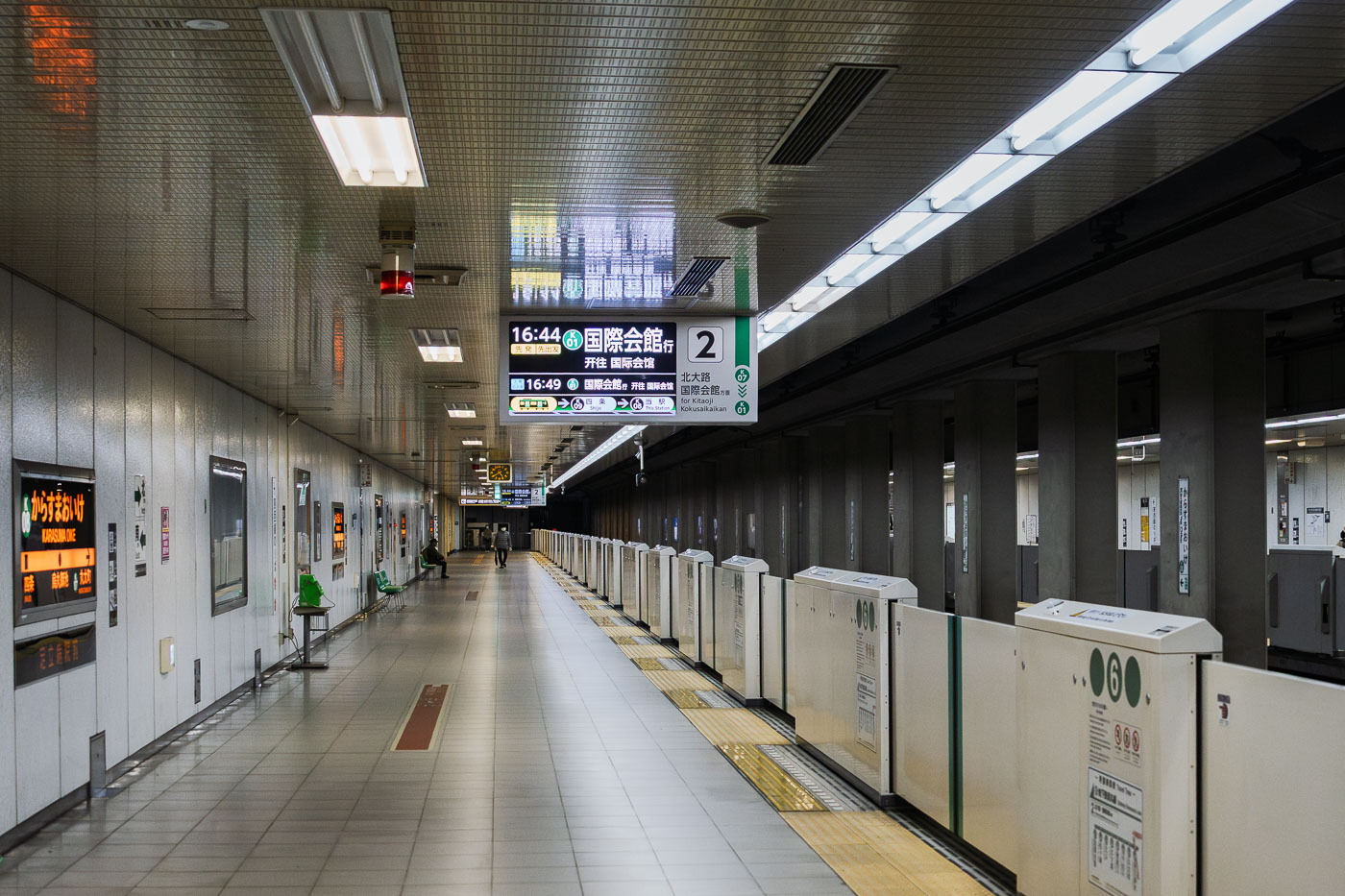 View full post: Tōzai Line Platform, Karasuma Oike Station, Kyoto
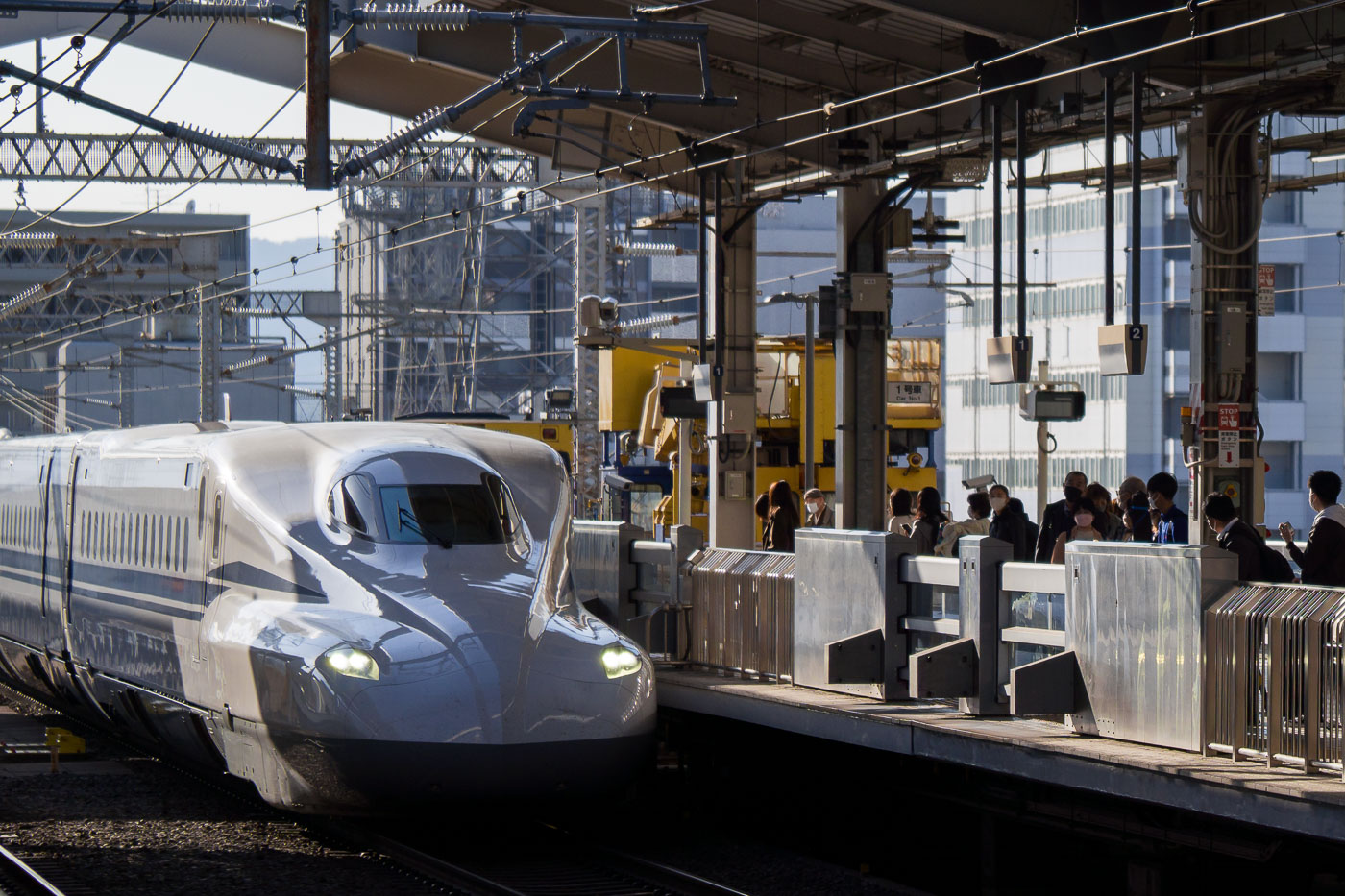 View full post: N700A Series Shinkansen, Tōkaidō Line, Kyoto Station
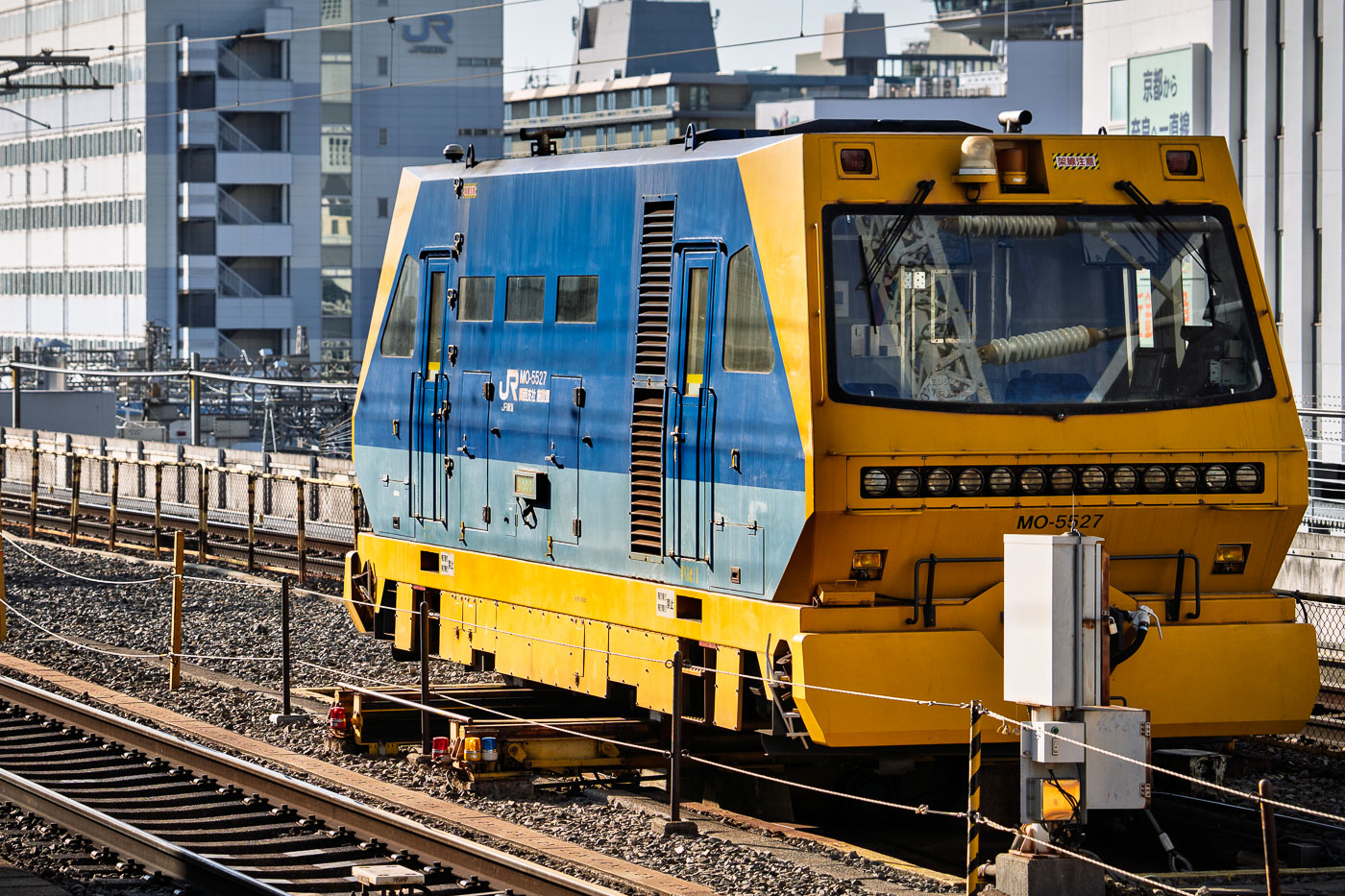 View full post: JR West Rail Maintenance Vehicle MO-5527, Kyoto Station