Corner Sink Beneath a Barred Window at Kings Park Psychiatric Center
Taken September 2008
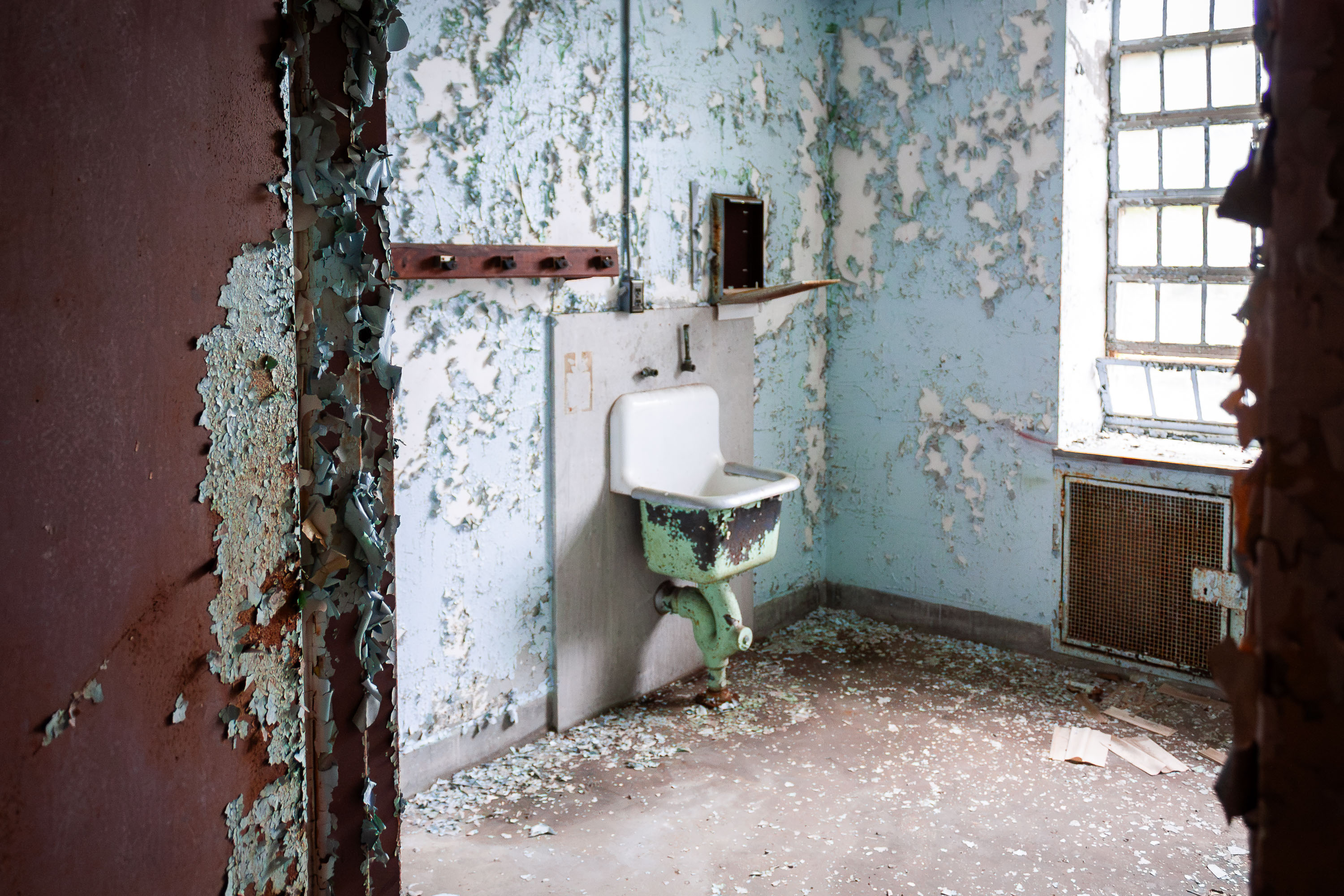
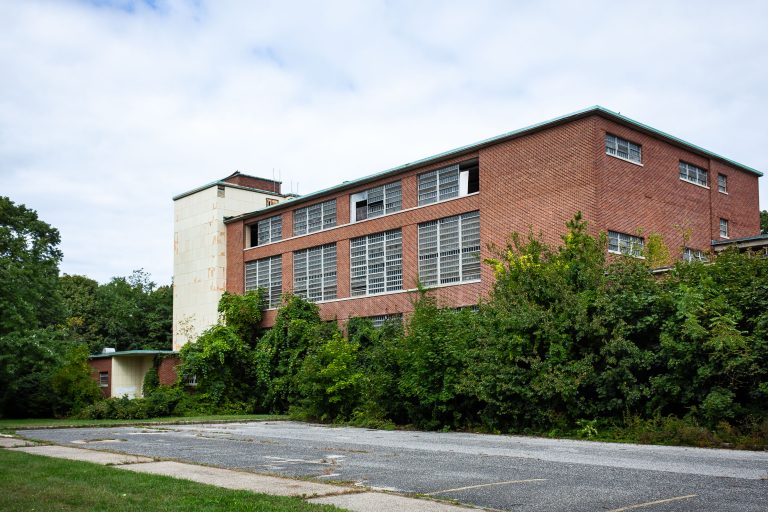
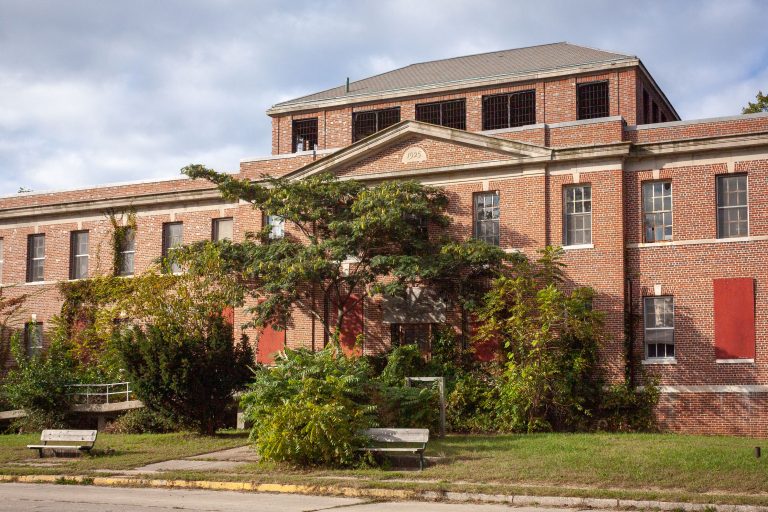
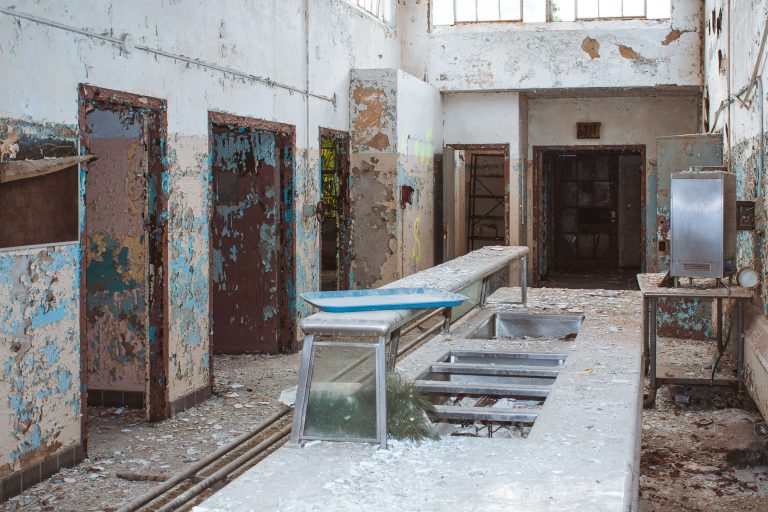
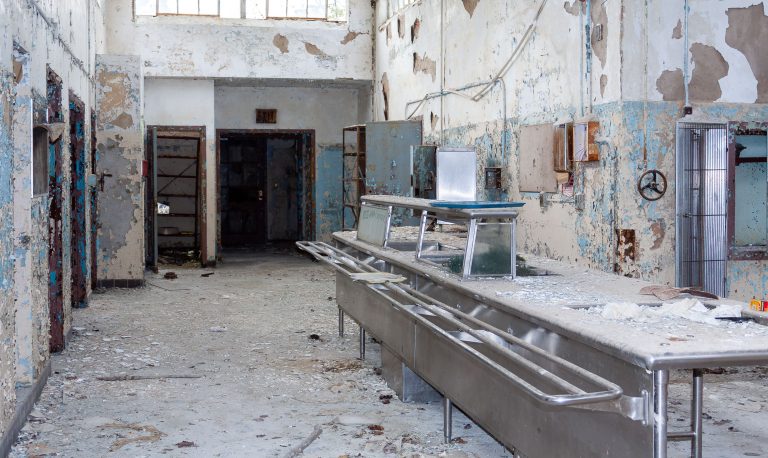
Kings Park Psychiatric Center operated in Suffolk County, New York, from 1885 until its closure in 1996, at its peak housing more than 9,000 patients across dozens of buildings. Many of the wards included utilitarian fixtures like the cast-iron sink typical of the facility's early-to-mid-20th-century plumbing, installed to serve communal patient bathing and washing needs. The hospital's decline began in the 1950s and 1960s as new psychiatric medications and a statewide push toward deinstitutionalization reduced patient populations. Since its shutdown, the campus has been left largely to decay, with lead paint and asbestos contributing to the deterioration seen in structures like this one. Portions of the grounds are now managed by New York State Parks, though most of the original buildings remain unused and inaccessible to the public.
Taken September 2008
More from
Kings Park Psychiatric Center
 Open Door to a Brick Stairwell at Kings Park Psychiatric Center
Kings Park Psychiatric Center opened in 1885 as the Kings County Asylum, later becoming a New York State-run institution that…
 Moss-Covered Radiator Beneath a Window at Kings Park Psychiatric Center
Kings Park Psychiatric Center opened in 1885 as the Kings County Farm for the Insane, built to relieve overcrowding at…
 Stainless Steel Wash Trough Along a Ward Hallway at Kings Park
Kings Park Psychiatric Center operated as a New York State mental hospital from 1885 until its closure in 1996. At…
 Caged Radiator Beneath a Barred Window at Kings Park Psychiatric Center
Kings Park Psychiatric Center operated in Suffolk County, New York, from 1885 until its closure in 1996. At its peak…
 Rusted Door Frames Along a Ward Hallway at Kings Park
Kings Park Psychiatric Center opened in 1885 as the Kings Park State Hospital, part of a wave of New York…
 Rusted Freight Elevator Flanked by Peeling Doors at Kings Park
Kings Park Psychiatric Center opened in 1885 as the Kings Park State Hospital, built to relieve overcrowding at Brooklyn's asylums…