Oil

7 photos · 2016–2022

7 photographs tagged Oil, 2016–2022.

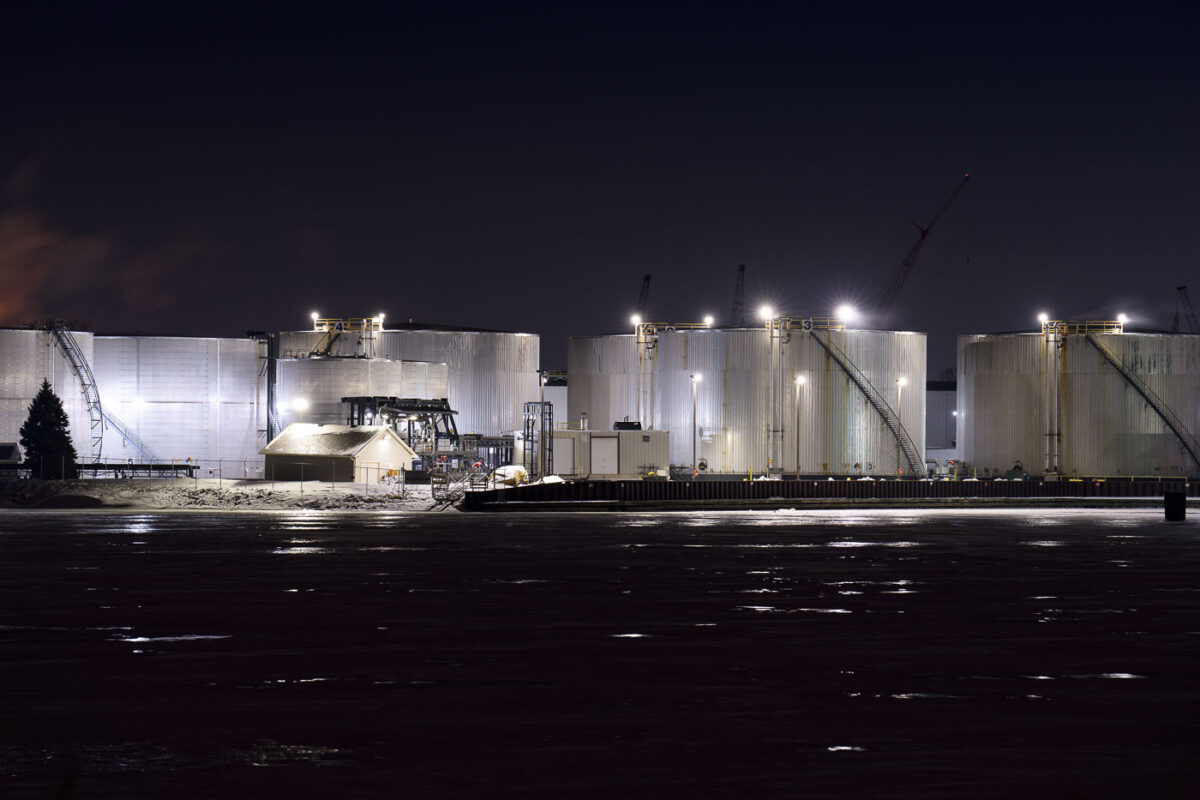
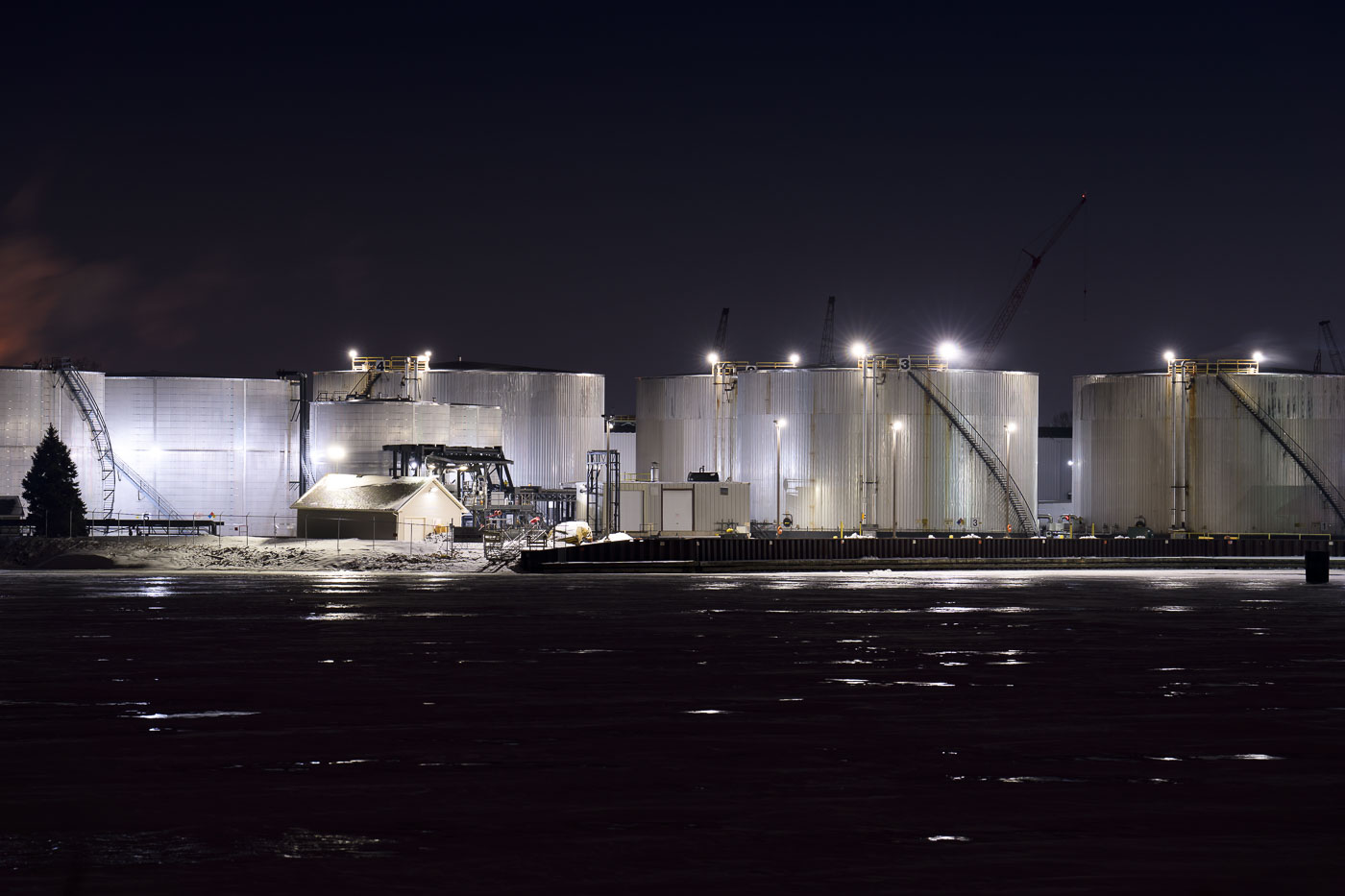
Storage tanks at Construction Resources Management in Green Bay, Wisconsin, illuminated on a winter night.
Large cylindrical storage tanks at Construction Resources Management, Inc. line the west bank of the Fox River in Green Bay, Wisconsin. Viewed from across the frozen river on a winter night, the facility is illuminated by perimeter lighting that reflects faintly off the ice. The site serves regional construction and materials operations, part of the industrial corridor that has long defined the waterfront between downtown Green Bay and the port district.

Storage Tanks Along the Fox River

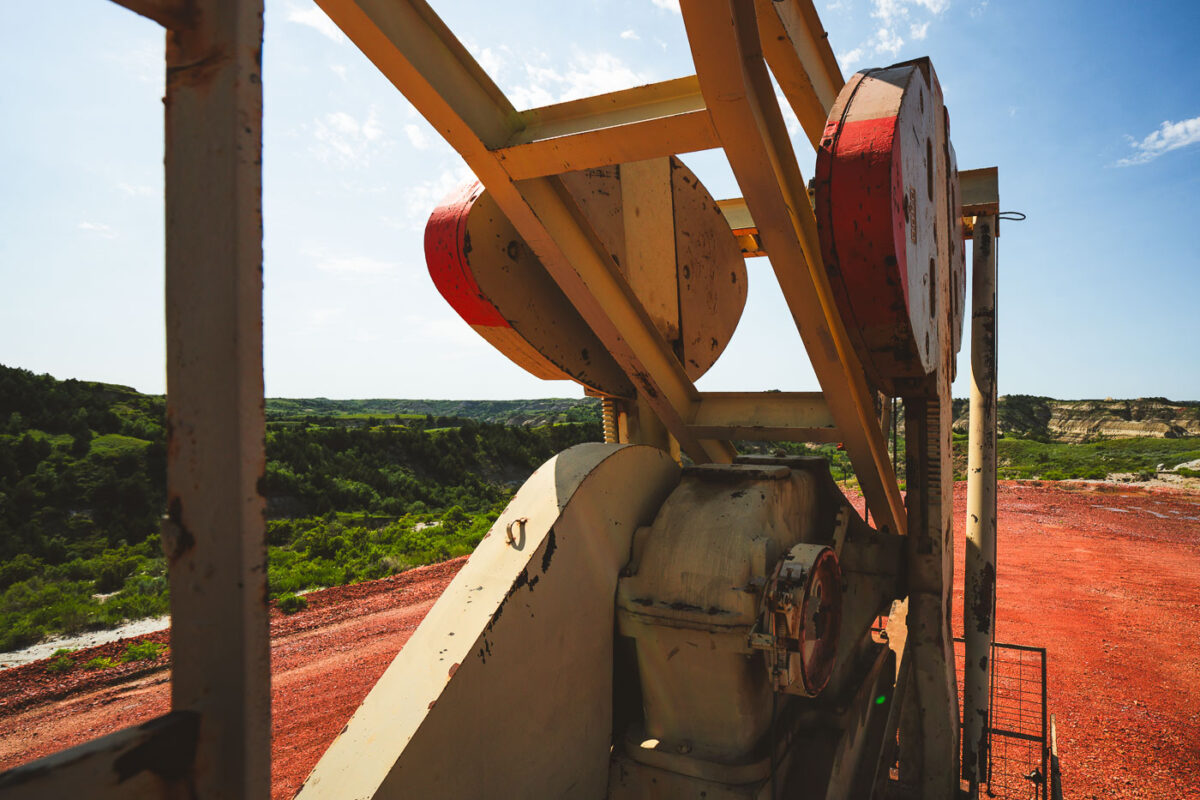
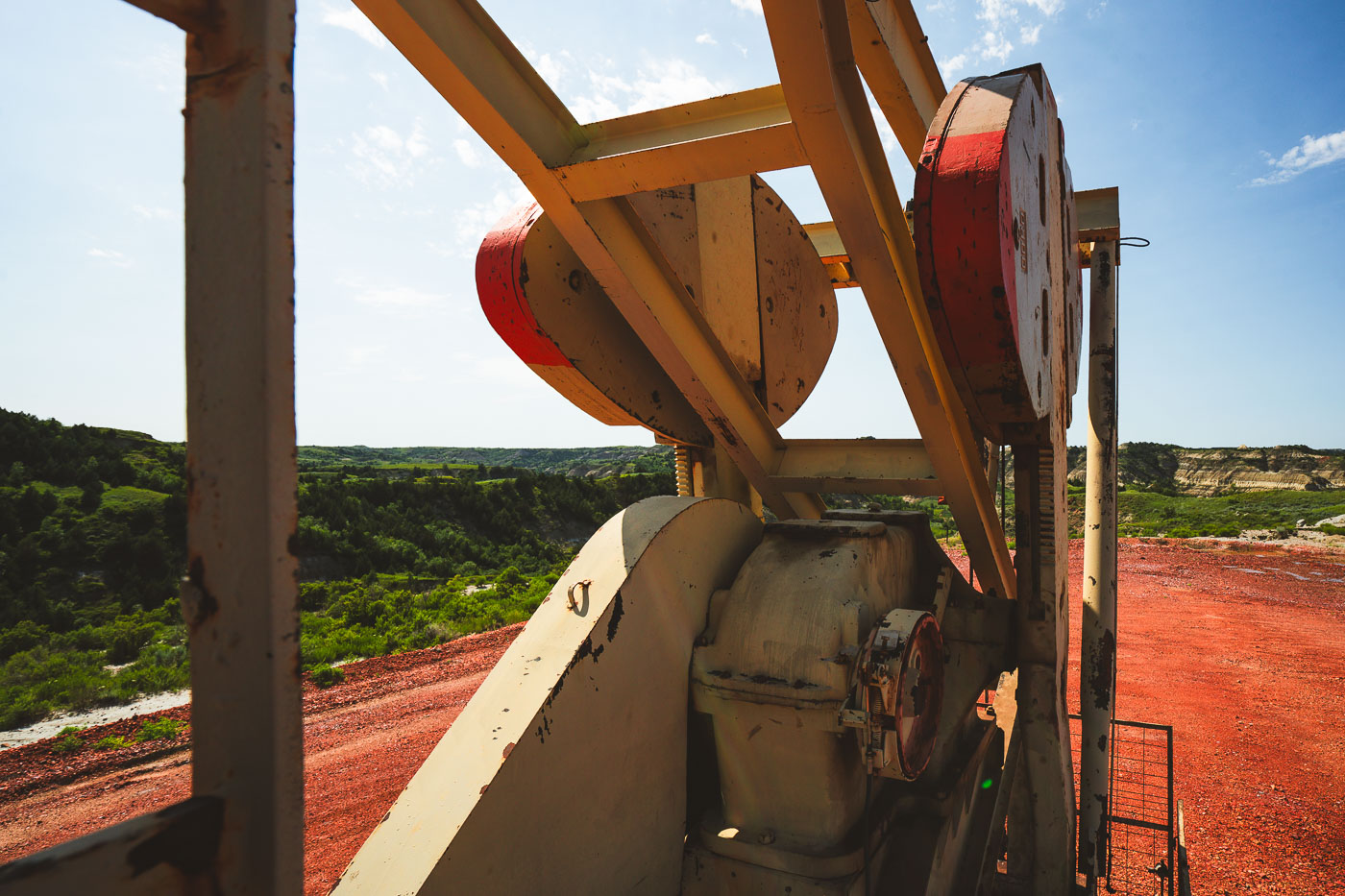
Industrial pump mechanism with red wheels overlooks eroded badlands terrain in North Dakota.
Pumpjacks like this one dot the Bakken Formation, the shale oil region beneath western North Dakota that fueled one of the largest U.S. oil booms of the 21st century. A gearbox and counterweight system converts the rotation of an electric motor into the up-and-down stroke of a sucker rod, which drives a pump thousands of feet underground. Many Bakken wells reach the oil-bearing shale by drilling vertically more than two miles before turning horizontal to follow the rock layer for another mile or more. The badlands terrain surrounding Theodore Roosevelt National Park sits atop some of the same formation, placing working oil sites directly adjacent to protected parkland.

Pumpjack Machinery Above the Badlands Near Medora
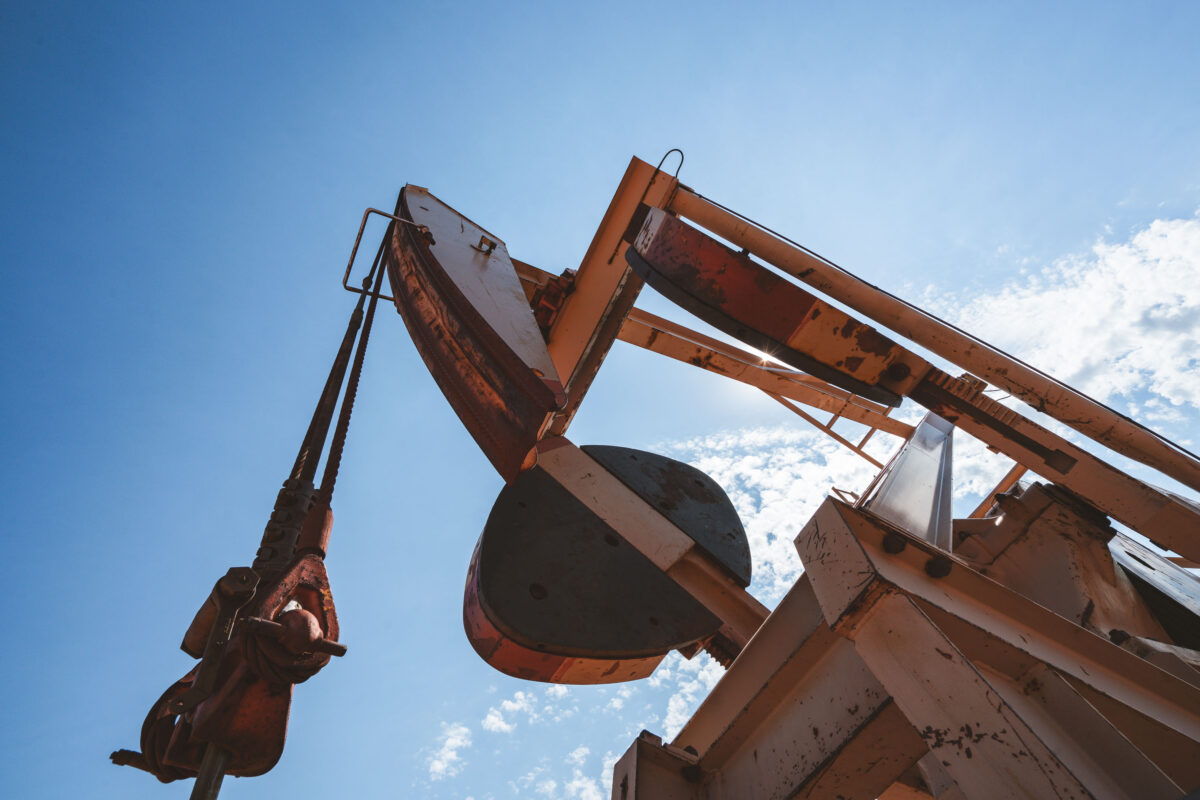
Rusted pumpjack and industrial equipment operate in a North Dakota oil field under clear blue sky.
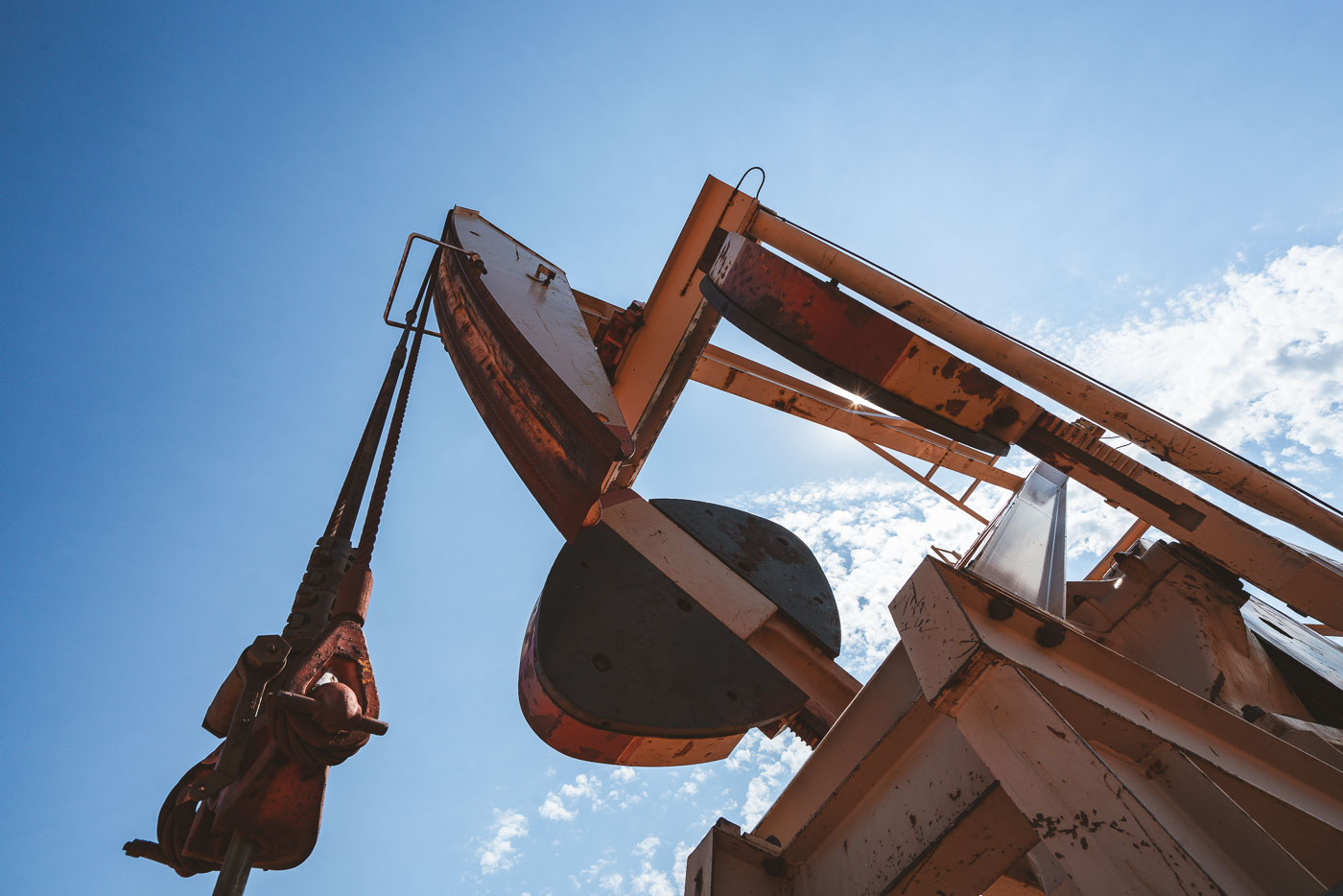
The horsehead and walking beam shown here are part of a beam pump, the standard mechanism used to bring crude oil to the surface across North Dakota's Bakken formation. A motor turns a crank below, which rocks the walking beam up and down; this motion pulls a polished rod and attached sucker rods inside the wellbore, drawing oil upward with each stroke. The counterweight opposite the horsehead offsets the load of the rod string, reducing the energy needed to lift fluid from depths that in the Bakken often exceed two miles. The Bakken shale, spanning parts of North Dakota, Montana, and southern Saskatchewan, became one of the largest U.S. oil-producing formations after horizontal drilling and hydraulic fracturing made its tight shale layers commercially viable starting in the mid-2000s. North Dakota's oil output, driven largely by Bakken wells, made it the second-largest oil-producing state in the country during the following decade.

Walking Beam and Horsehead of a Pumpjack in the Bakken
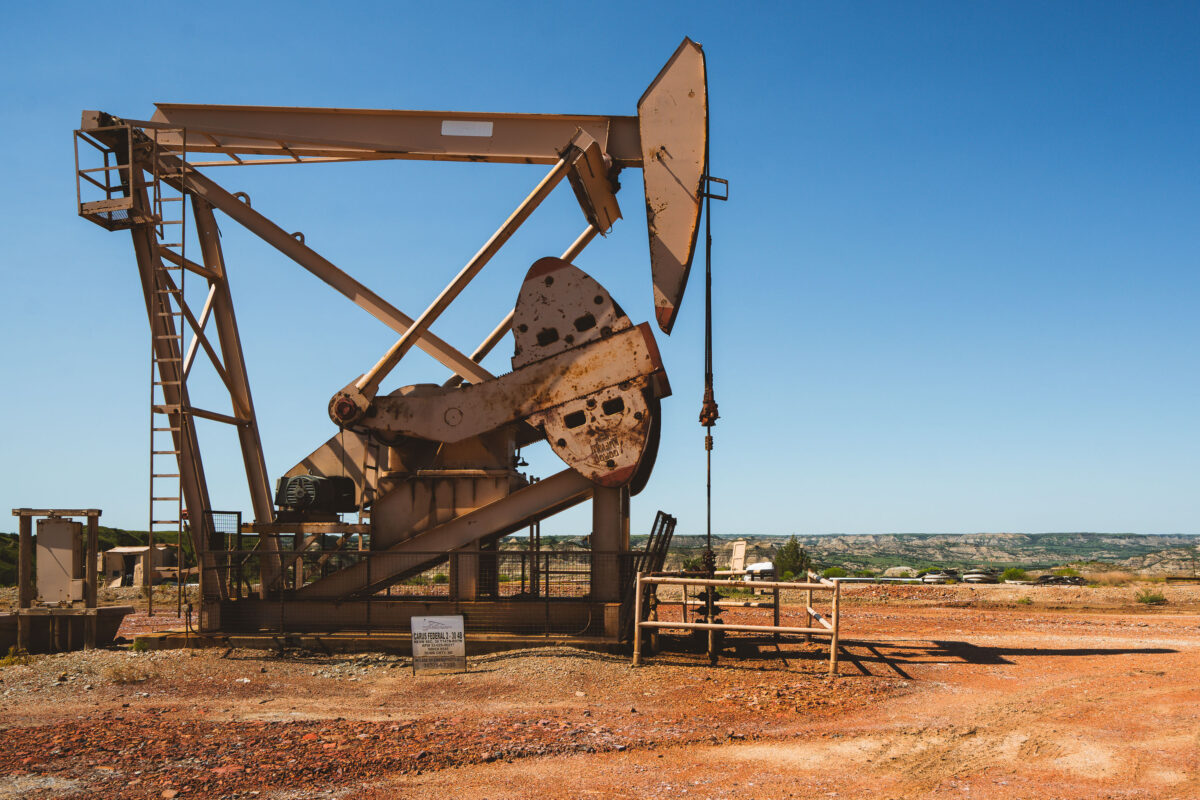
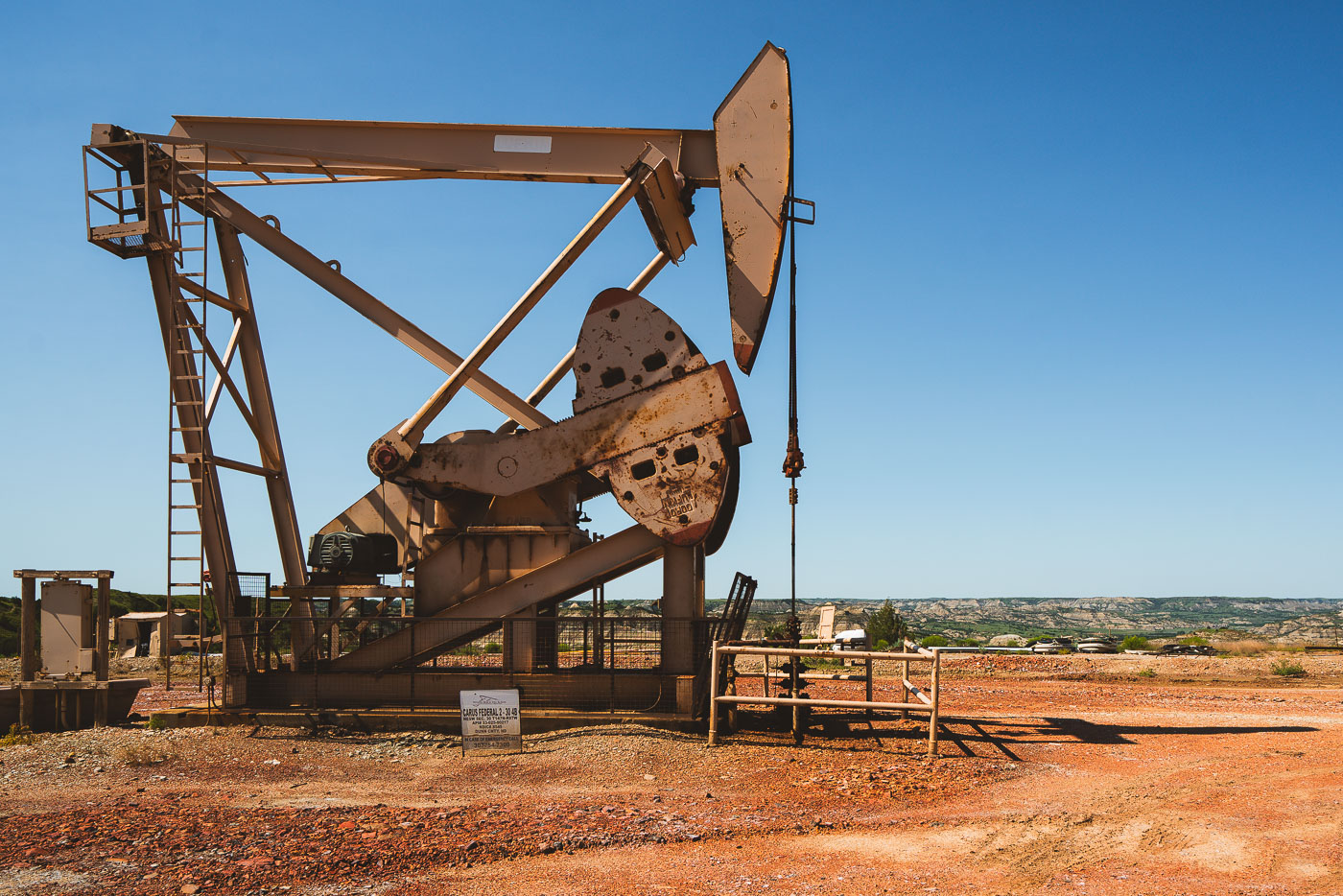
Rusted pumpjack extracting oil in Dunn County, North Dakota under clear sky.
Dunn County sits atop the Bakken formation, one of the largest contiguous oil deposits in the United States, spanning parts of western North Dakota and eastern Montana. The pumpjack converts rotational motion from an electric or gas motor into the vertical pumping action needed to lift crude oil from wells that can run thousands of feet deep. Horizontal drilling and hydraulic fracturing, widely adopted across the Bakken starting in the mid-2000s, turned this stretch of the state into one of the fastest-growing oil-producing regions in the country. Dunn County borders Theodore Roosevelt National Park's badlands terrain, placing active drilling operations near some of North Dakota's most rugged protected land.

Pumpjack Near the Badlands in Dunn County, North Dakota
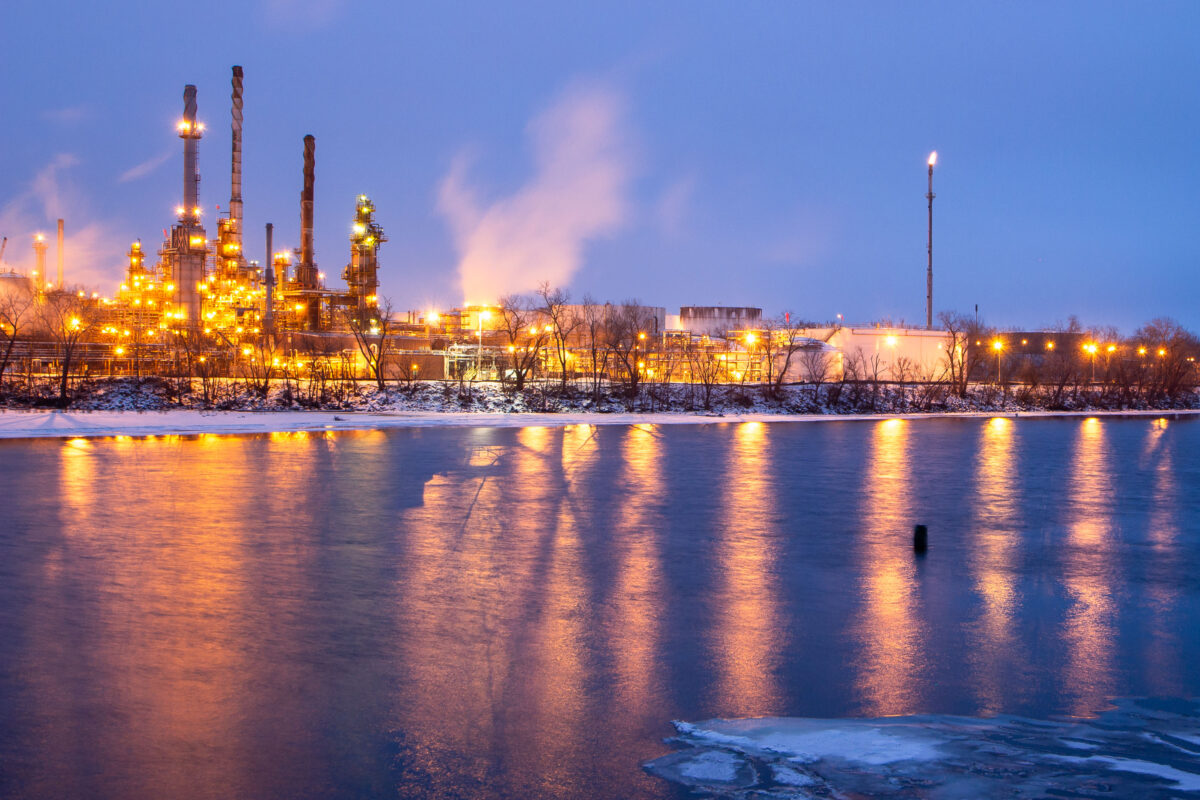
Marathon Petroleum Refinery in St. Paul Park illuminates the frozen Mississippi River at dusk.
Marathon Petroleum's St. Paul Park refinery sits along the Mississippi River southeast of downtown St. Paul. Built in 1939, the plant processes roughly 90,000 barrels of crude oil per day into gasoline, diesel, and asphalt products for the regional market. It's one of only two refineries operating in Minnesota, the other being Flint Hills Resources in Rosemount. Marathon Petroleum acquired the facility in 2010 as part of its purchase of the Minnesota refining business from Marathon Oil's corporate predecessor.

Marathon Refinery Reflected on the Mississippi at St. Paul Park
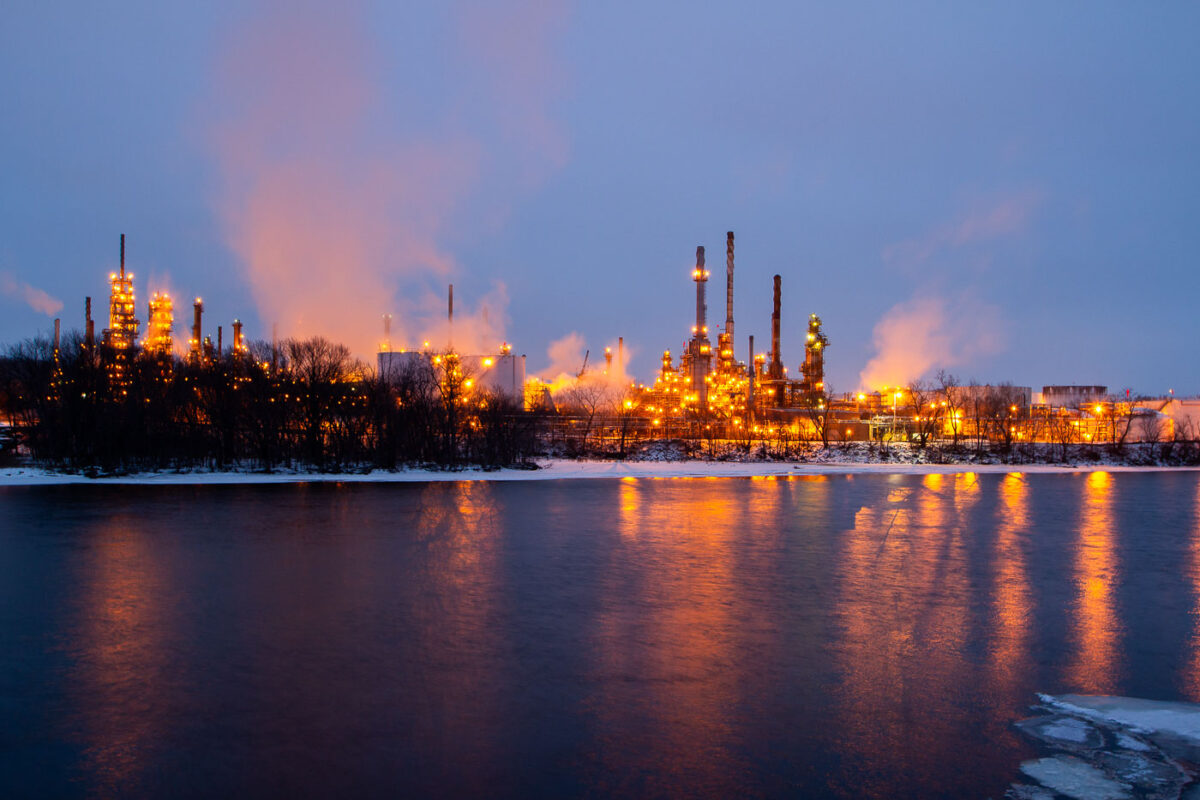
Marathon Petroleum Refinery in St. Paul Park, Minnesota, glows along the Mississippi River at dusk.
Marathon Petroleum Refinery in St. Paul Park, Minnesota, operates along the Mississippi River. The refinery processes crude oil into gasoline, diesel fuel, and other petroleum products. It has been an important industrial facility in the Twin Cities region since 1942.

Marathon Petroleum Refinery, St. Paul Park, Minnesota
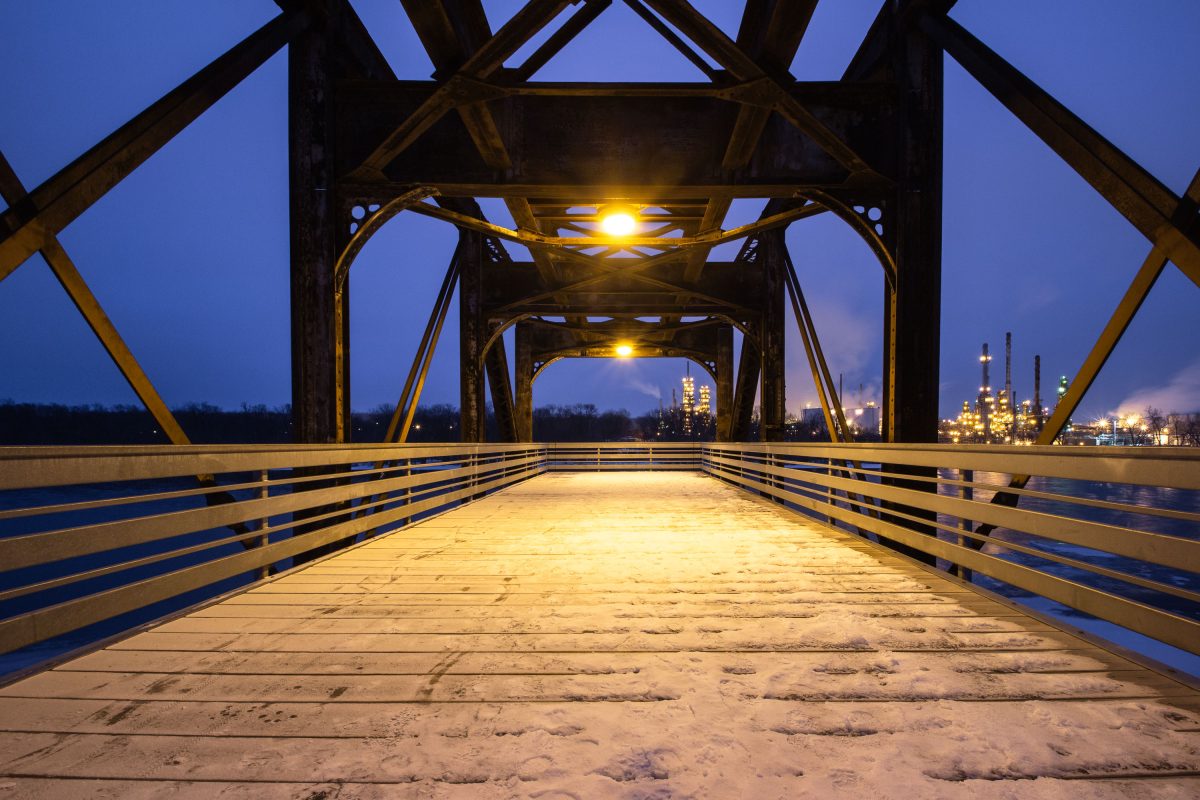
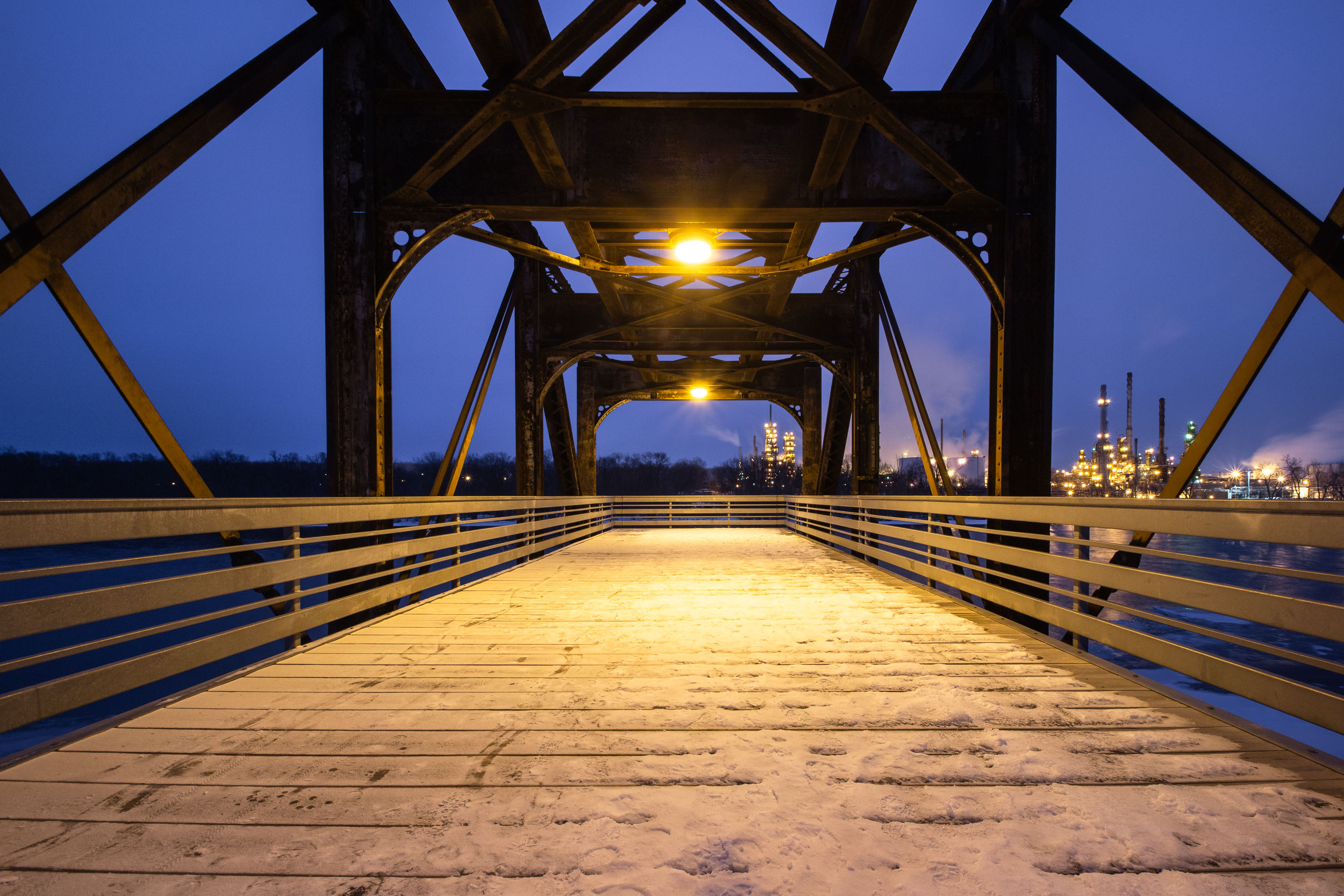
Rock Island Swing Bridge in Inver Grove Heights with Marathon Petroleum refinery lit at dusk.
The Rock Island Swing Bridge crosses the Mississippi River between Inver Grove Heights and St. Paul Park, Minnesota. Built in 1895 for the Chicago, Rock Island and Pacific Railroad, it originally carried freight trains and included a rotating swing span to let river traffic pass. Rail traffic ended in the 1980s, and the span was later converted into a pedestrian and bicycle crossing linking regional trail systems on both sides of the river. Across the water in St. Paul Park stands the Marathon Petroleum refinery, one of Minnesota's major oil processing facilities, which has operated on the site since 1939.

Rock Island Swing Bridge Walkway, Inver Grove Heights