Coffee

8 photos · 2020–2025

8 photographs tagged Coffee, 2020–2025.

Customers inside Yummy Bites Coffee Shop Minneapolis
Yummy Bites Coffee, a local cafe, operates on Lake Street in Minneapolis.

Yummy Bites Coffee Shop on Lake Street, Minneapolis

Marbucks Coffee House in Ambergris Caye, Belize, features an open-air design with wooden stools and a chalkboard menu.
Marbucks Coffee House on Ambergris Caye, Belize, occupies an open-air wooden structure set beside a gravel path and dense tropical vegetation. The café has a shaded counter and outdoor tables, with a chalkboard menu listing daily food and drink specials.

Marbucks Coffee House, Ambergris Caye

Lucky Dragon Restaurant and Hard Times Cafe storefronts illuminated at night in Minneapolis.
Lucky Dragon Restaurant serves Vietnamese and Chinese cuisine from a storefront on Minneapolis's West Bank, in the Cedar-Riverside neighborhood near the University of Minnesota. Next door, Hard Times Cafe has operated as a 24-hour coffeehouse since the early 1990s, drawing a mix of students, night-shift workers, and the neighborhood's longtime punk and counterculture crowd. Cedar-Riverside took shape as a dense immigrant enclave in the late 19th century and later became a center of Minneapolis's Somali and East African community, giving the area its wide range of restaurants and small businesses.

Lucky Dragon Restaurant and Hard Times Cafe on the West Bank

Coffee beans dry on raised beds in San Juan la Laguna Guatemala with volcanic mountains visible in the background.
San Juan La Laguna, a Tz'utujil Maya town on the shores of Lake Atitlán, is home to several small coffee cooperatives that grow and process beans on the volcanic slopes above the water. After picking and washing, coffee cherries are spread out to dry in the sun for one to two weeks before the parchment layer is removed. Rooftop and patio drying remains common practice among smallholder growers in the area, who often sell directly to cooperatives rather than large exporters.

Coffee Beans Drying on a Rooftop in San Juan La Laguna
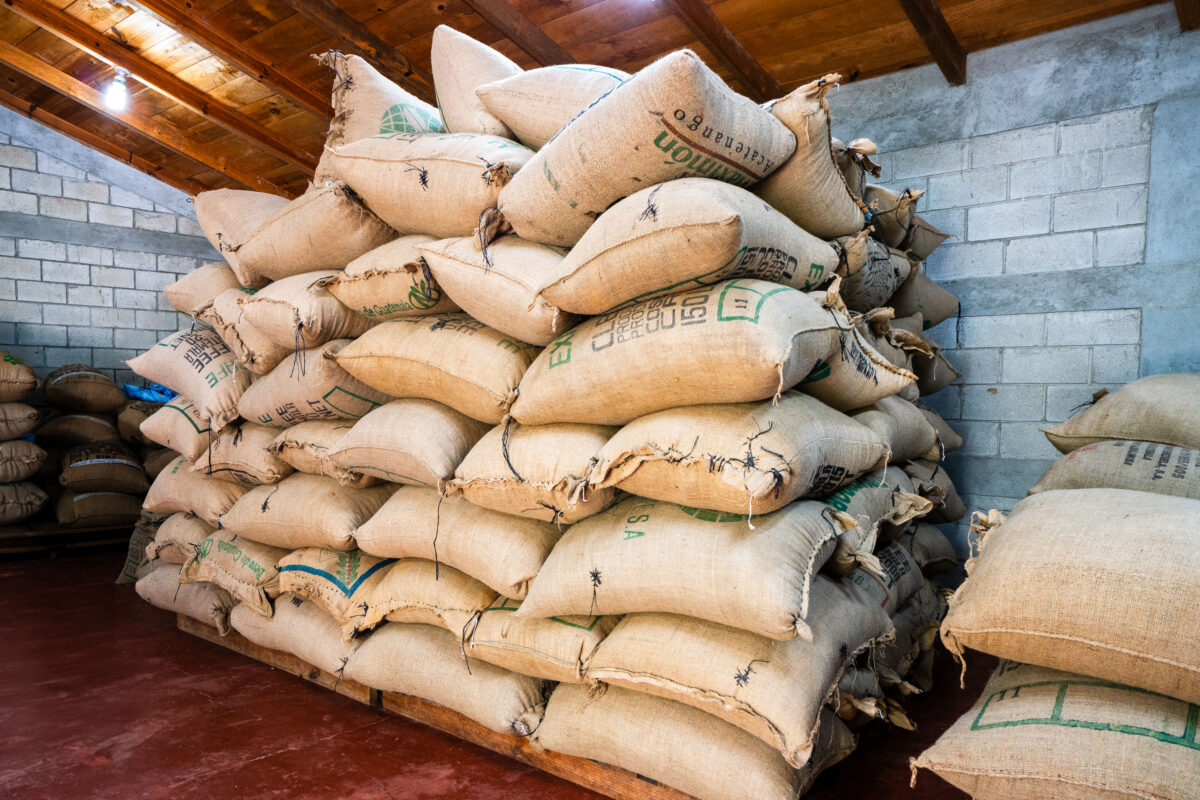
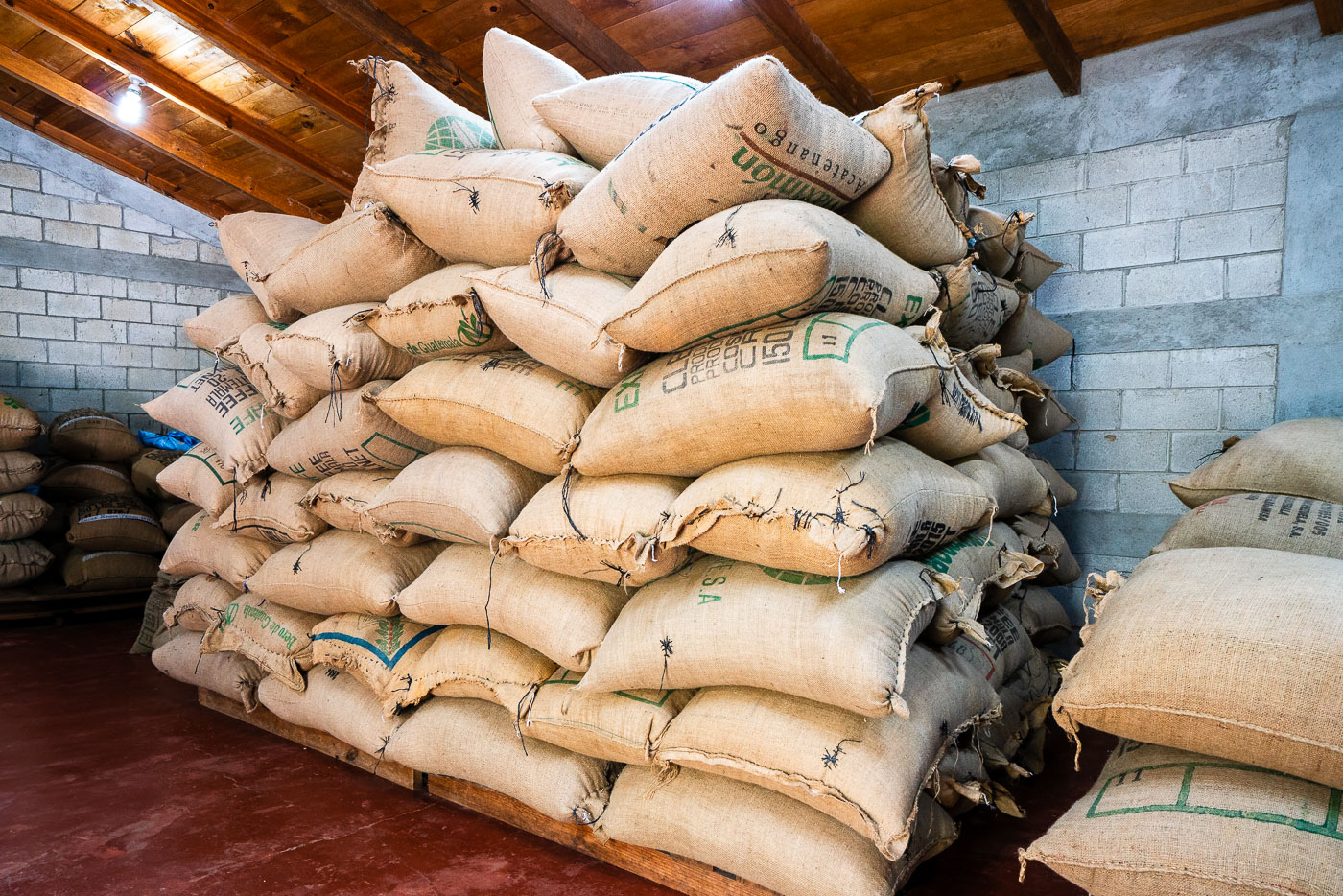
Burlap coffee sacks stacked in a warehouse at La Voz cooperative in San Juan La Laguna, Guatemala.
La Voz Que Clama en el Desierto is a coffee cooperative based in San Juan La Laguna, a Tz'utujil Maya town on the southern shore of Lake Atitlán. Farmers affiliated with the cooperative grow and process organic coffee for export, bagging the dried beans in burlap sacks for storage before shipment. The cooperative's name, Spanish for "the voice that cries in the desert," its founding mission to support local growers through fair-trade coffee production.

Stacked Coffee Sacks at La Voz Cooperative, San Juan La Laguna
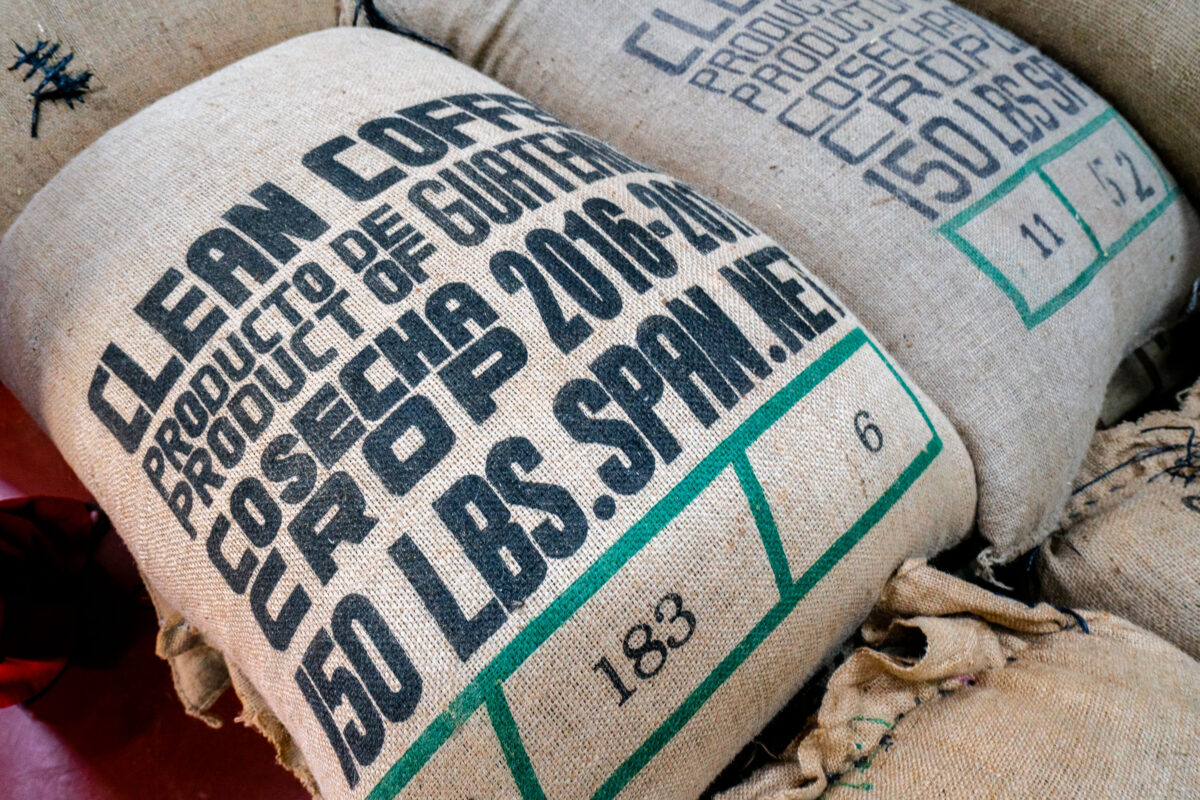
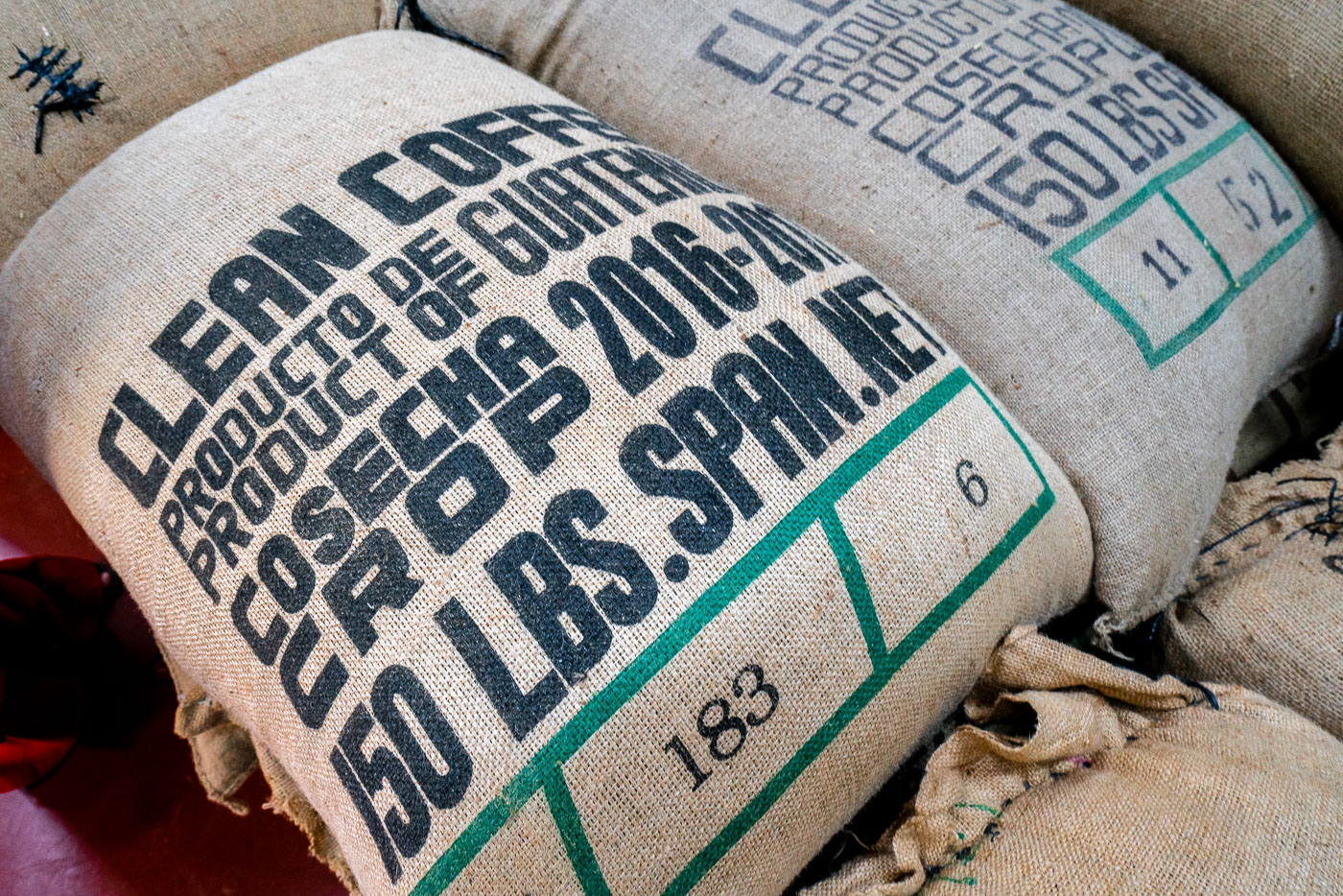
Burlap coffee sacks printed with production details and weight information stacked at La Voz cooperative in San Juan La Laguna, Guatemala.
These burlap sacks hold coffee from La Voz Que Clama en el Desierto, a cooperative based in San Juan La Laguna on the shores of Lake Atitlán. The stenciled markings note "Producto de Guatemala" along with the crop year, 2016–2017, and a standard export weight of 150 pounds per bag. Cooperatives like this one process and bag parchment coffee for shipment abroad, with lot numbers stamped on each sack to track origin and harvest.

“Clean Coffee” Export Sacks at La Voz, San Juan La Laguna

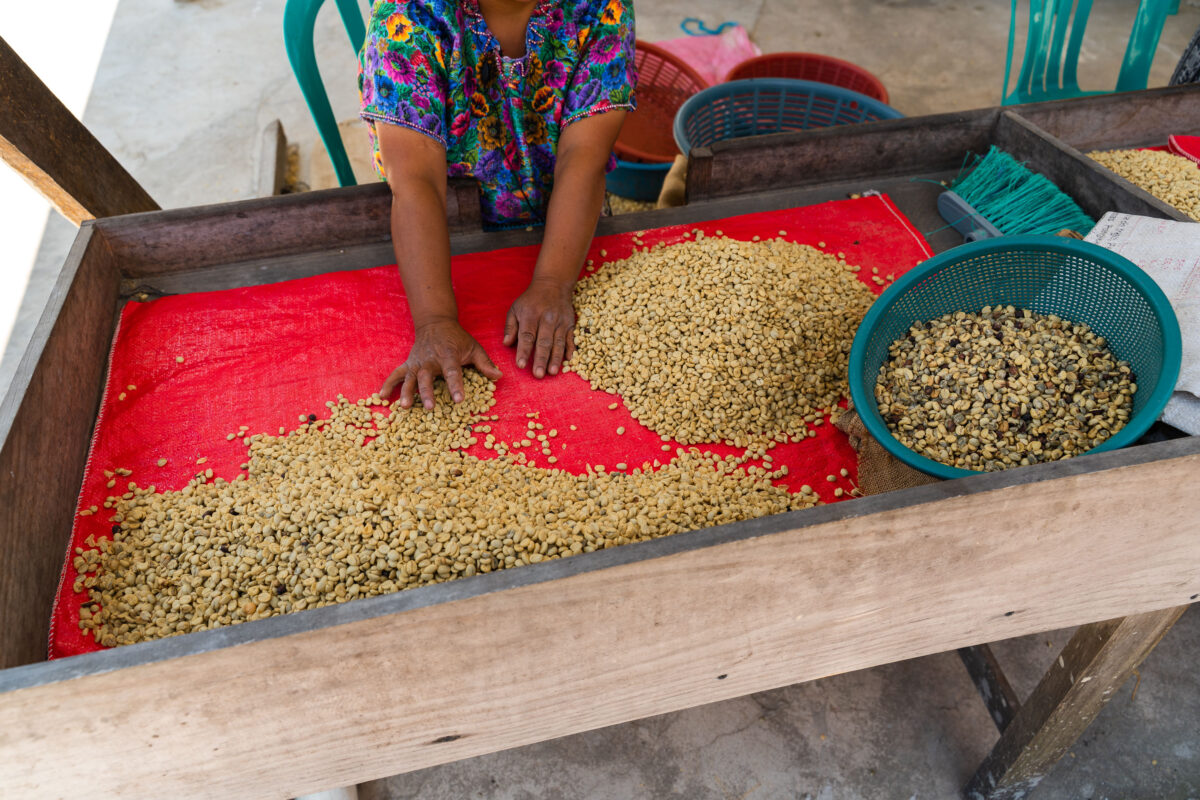
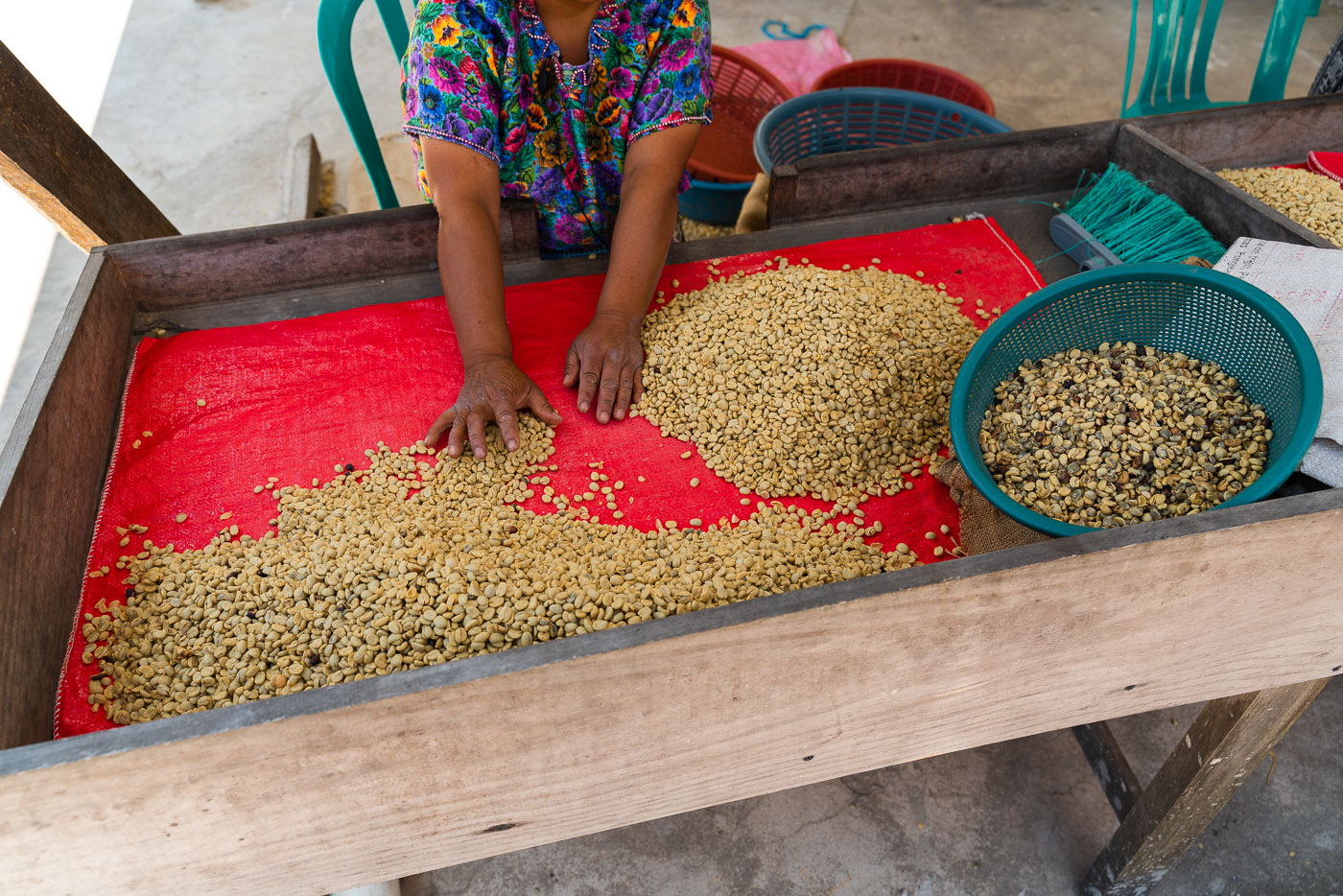
Woman worker at La Voz Coffee Cooperative in San Juan La Laguna, Guatemala, sorts green coffee beans on a red cloth surface.
La Voz is a coffee cooperative based in San Juan La Laguna, a town on the southern shore of Lake Atitlán known for its cooperative-run coffee and textile businesses. Member growers cultivate arabica beans on the volcanic slopes above the lake, at elevations that typically exceed 1,500 meters. After drying, workers hand-sort the parchment coffee to remove broken, discolored, or insect-damaged beans before the lot is milled and prepared for export. This manual grading step is standard practice among small-scale specialty cooperatives aiming to meet buyer quality grades.

Sorting Coffee Beans at La Voz Cooperative, San Juan La Laguna
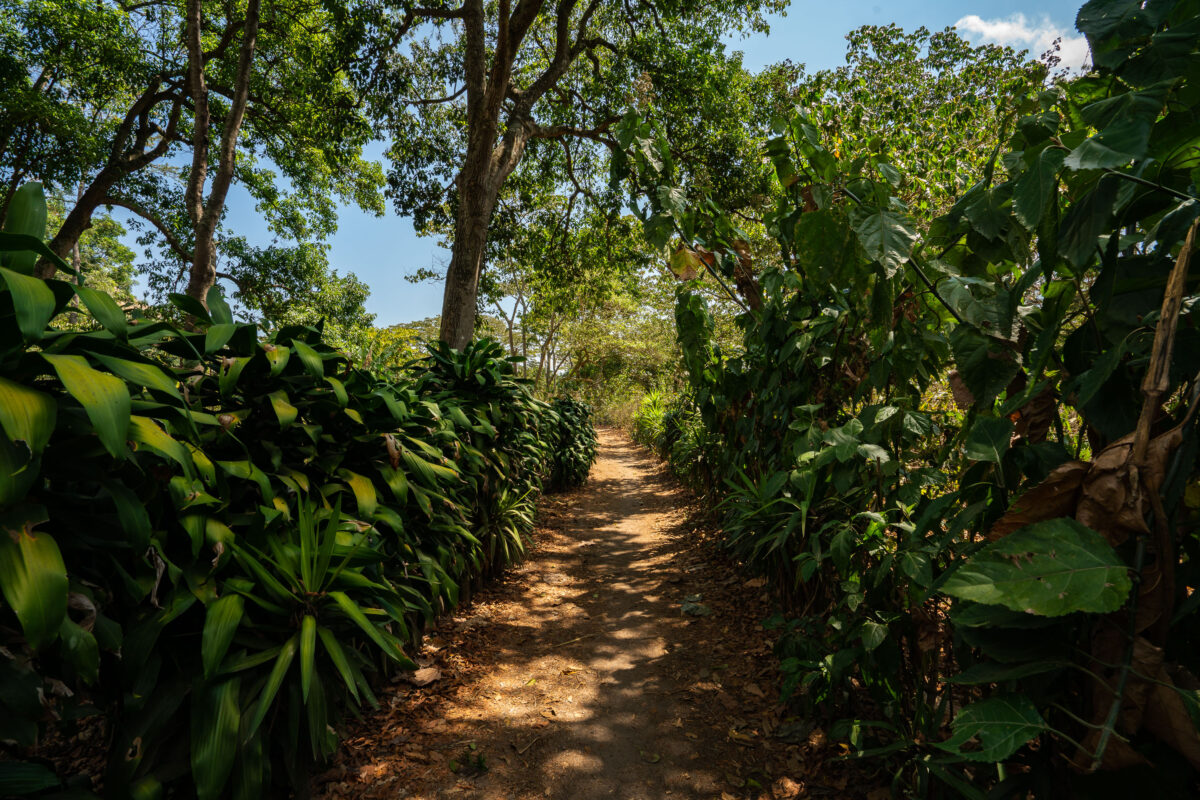
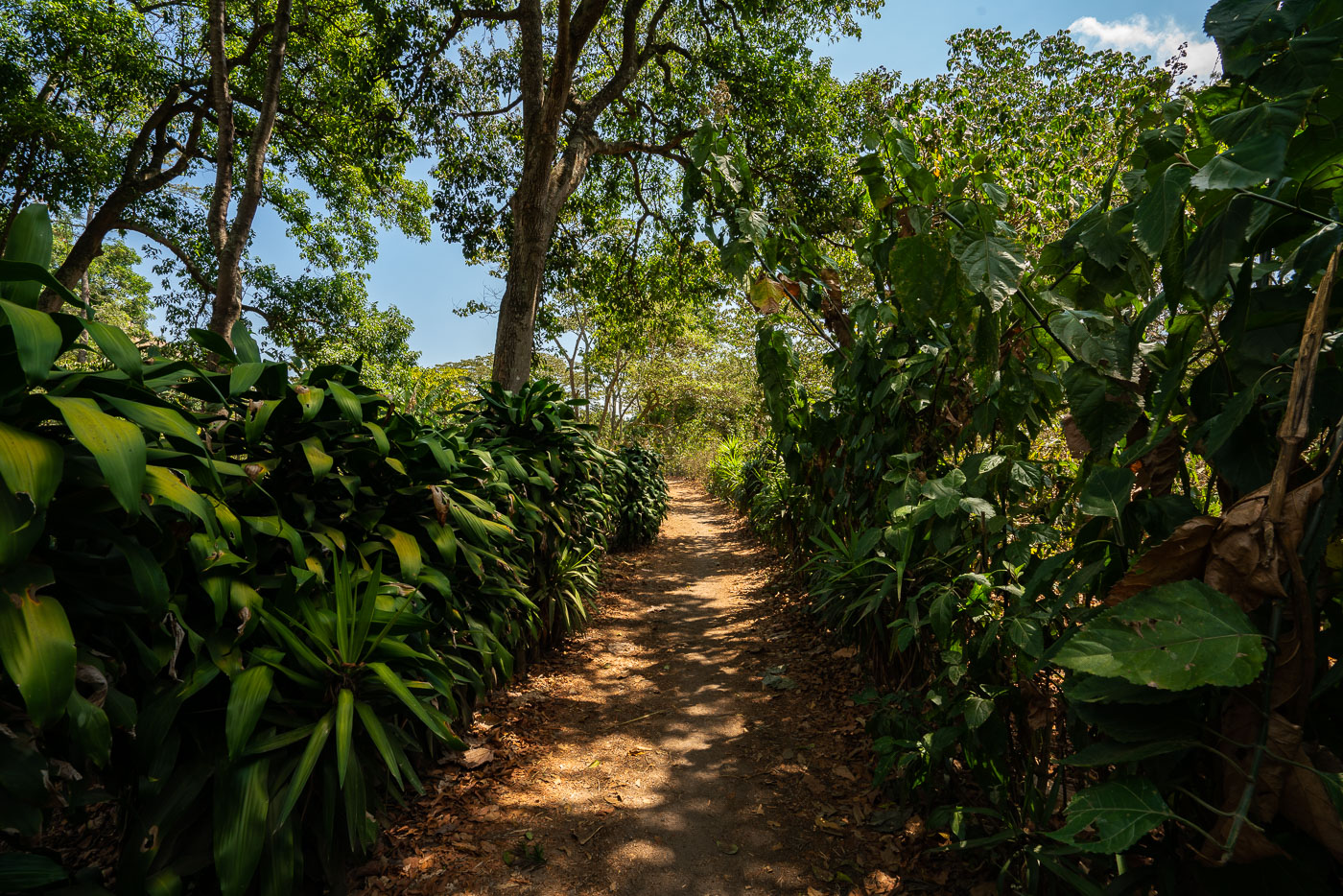
Shaded coffee plantation path winds through dense vegetation on hillside slopes above Lake Atitlán in San Juan La Laguna, Guatemala.
La Voz is a coffee-growing cooperative based in San Juan La Laguna, a Tz'utujil Maya town on the western shore of Lake Atitlán. The cooperative's members farm coffee on the volcanic slopes above the lake, and dirt paths like this one connect the growing plots to processing facilities in town. San Juan La Laguna sits at an elevation of roughly 1,600 meters, conditions well suited to shade-grown arabica coffee.

Trail Through La Voz Coffee Plots, San Juan La Laguna

Built in Minneapolis

Minneapolis Photographer

Browse by location, move through long-running series, or start with recent work.