Photo Set
Washington DC Trains
Platforms, trains, and station architecture along the Washington Metro system
Washington DC's Metro system opened in 1976 as one of the most architecturally deliberate rapid transit networks ever built in the United States. Where most subway systems accumulated their character over decades of piecemeal construction, the Metro was conceived from the start with a unified visual language: coffered concrete vaults, indirect lighting, and a consistency of material that carries from station to station across the entire network.
Crystal City station, which opened in 1977 as part of the system's early expansion into Arlington, Virginia, is a clear expression of that original design thinking. Its side platforms, ranked concrete columns, and tunnel proportions follow the template established at the Metro's founding, before later budget pressures and changing tastes began to soften or complicate the formula elsewhere on the system.
The station also reflects something specific to Crystal City as a place. The neighborhood developed in the late 1960s and 1970s as a dense concentration of office towers, hotels, and retail built almost entirely above and below ground in coordination with one another, and the Metro stop was woven into that underground network from the beginning. Pedestrians can move between the platforms, office lobbies, and restaurants without surfacing, a relationship between transit and development that was unusually close even by the standards of the era.
This instalment in the wider Trains series draws on that continuity — a system still running largely as its architects intended, in a station that has changed less than many around it.
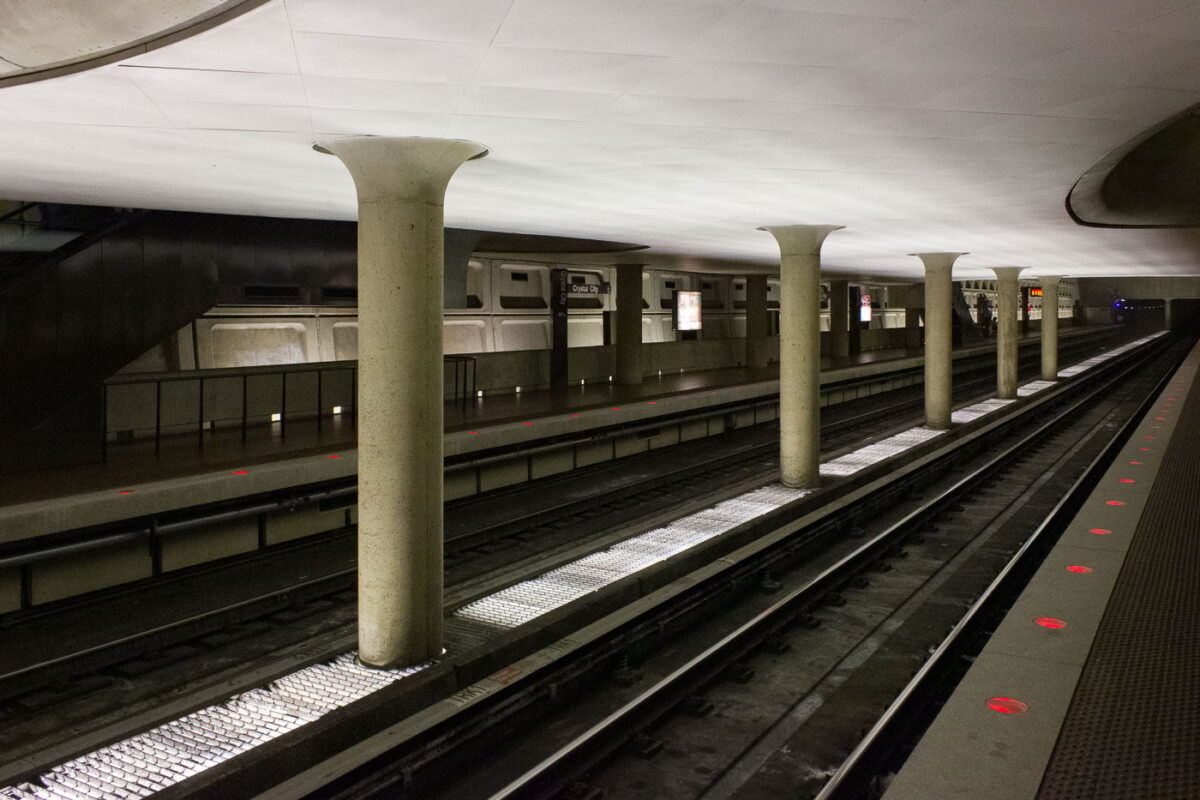
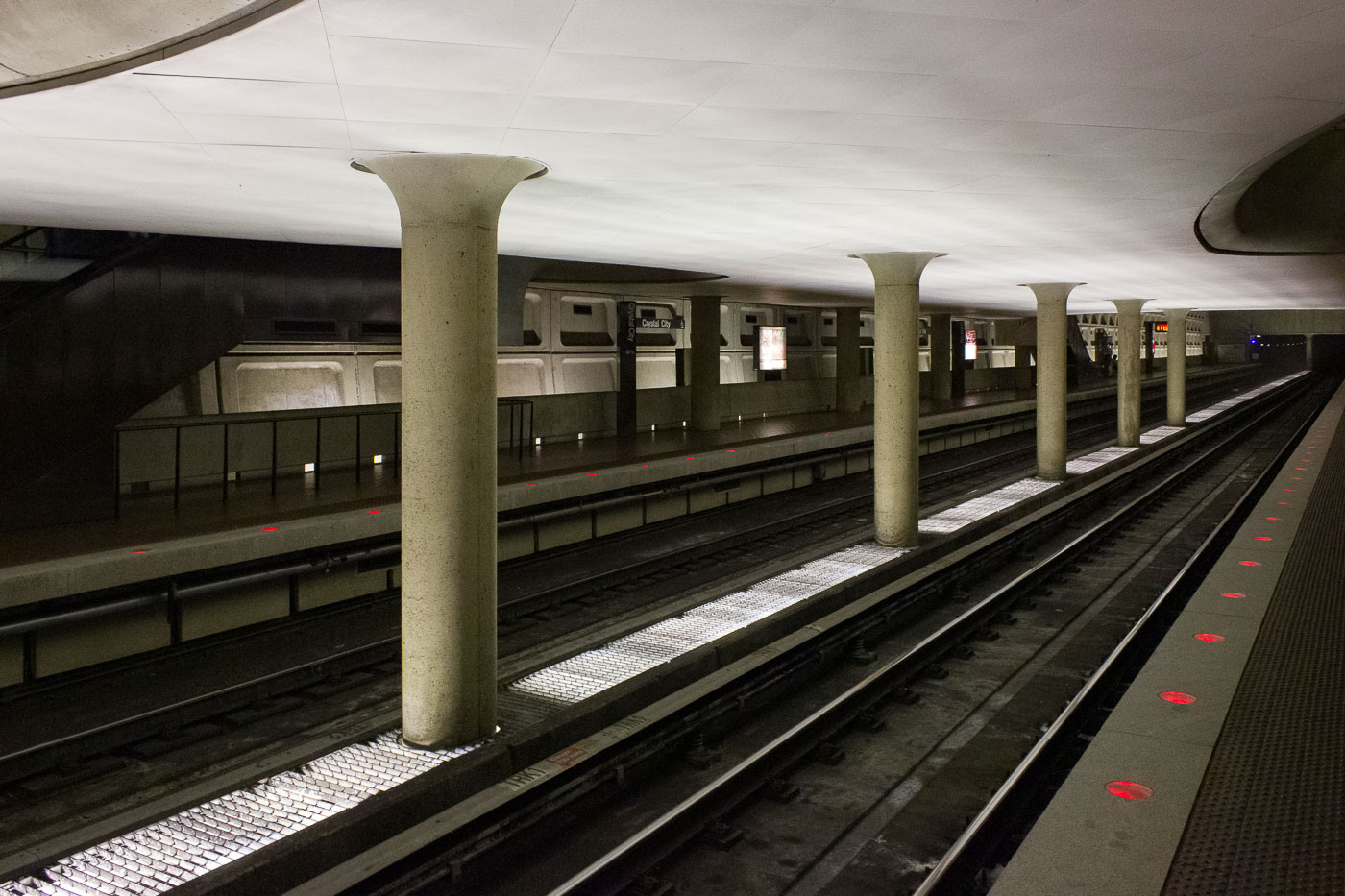 View full post: Crystal City Station Platforms and Tracks, Washington Metro