Photo Set
Chicago CTA
Red Line platforms, Blue Line tunnels, Loop elevated tracks, and the Pedway beneath downtown Chicago
Chicago, IL
Chicago's elevated and subway rail network is one of the oldest continuously operating rapid transit systems in the United States. The Chicago Transit Authority today runs eight lines across the city, from the lakefront neighborhoods of the North Side to the South Side communities served by the Dan Ryan corridor, and west to O'Hare International Airport — all tied together at the downtown Loop.
The elevated structure encircling the Loop dates to the 1890s, when separate private companies built competing lines above the city's central streets. Those competing operations were eventually consolidated, and the city tunneled beneath State Street beginning in the 1930s, opening the State Street Subway in 1943 to relieve surface congestion. The Milwaukee-Dearborn tunnel followed in 1951, carrying what is now the Blue Line through the core of downtown.
Stations across the system reflect the different eras in which they were built or last renovated. Grand/State, opened as part of the 1943 subway, retains its vaulted ceiling and mid-century tilework, while the Blue Line's O'Hare terminal — opened in 1984 as part of a direct airport connection — was designed around the movement of luggage-laden travelers rather than daily commuters. The Sox–35th Red Line station, built in 1969 above the Dan Ryan Expressway, represents a different moment still, when transit planning and freeway construction were treated as a single problem.
Running beneath the Loop itself, the Chicago Pedway connects major subway stations to office towers and shopping concourses through more than forty blocks of underground corridors, a network that began in the 1950s and has expanded piecemeal since.
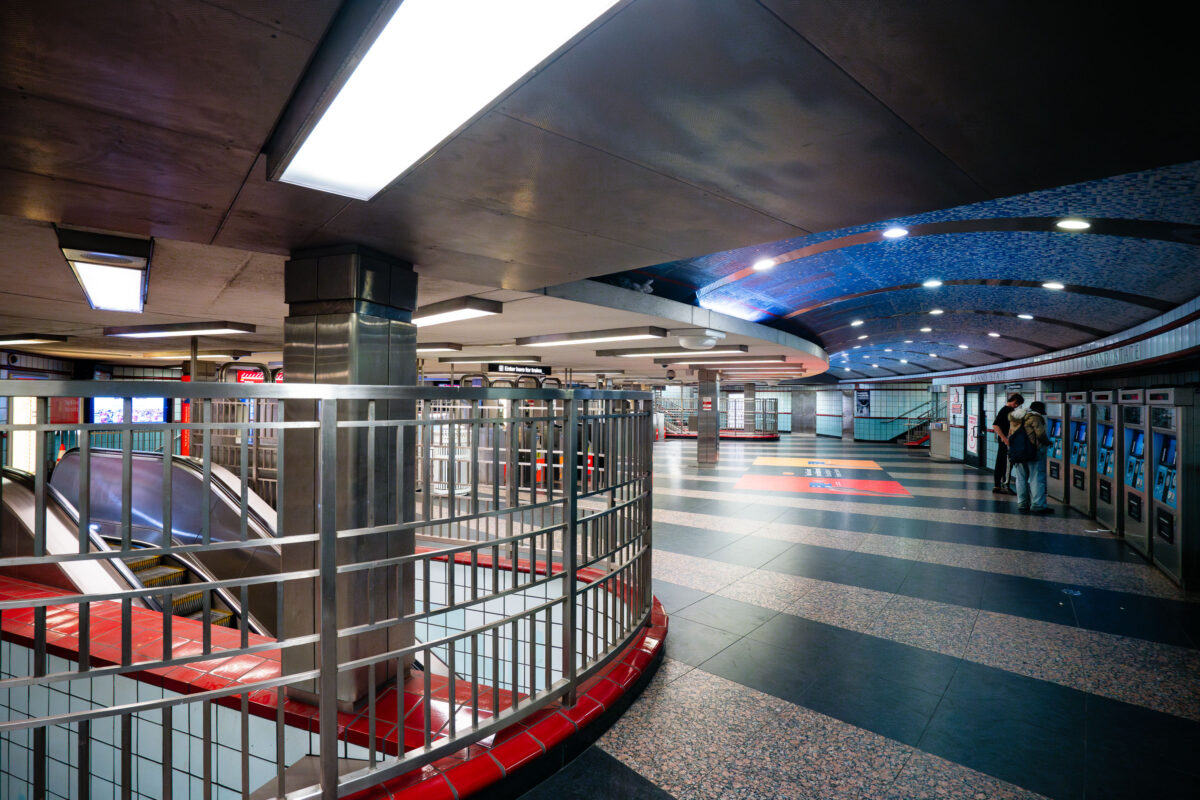
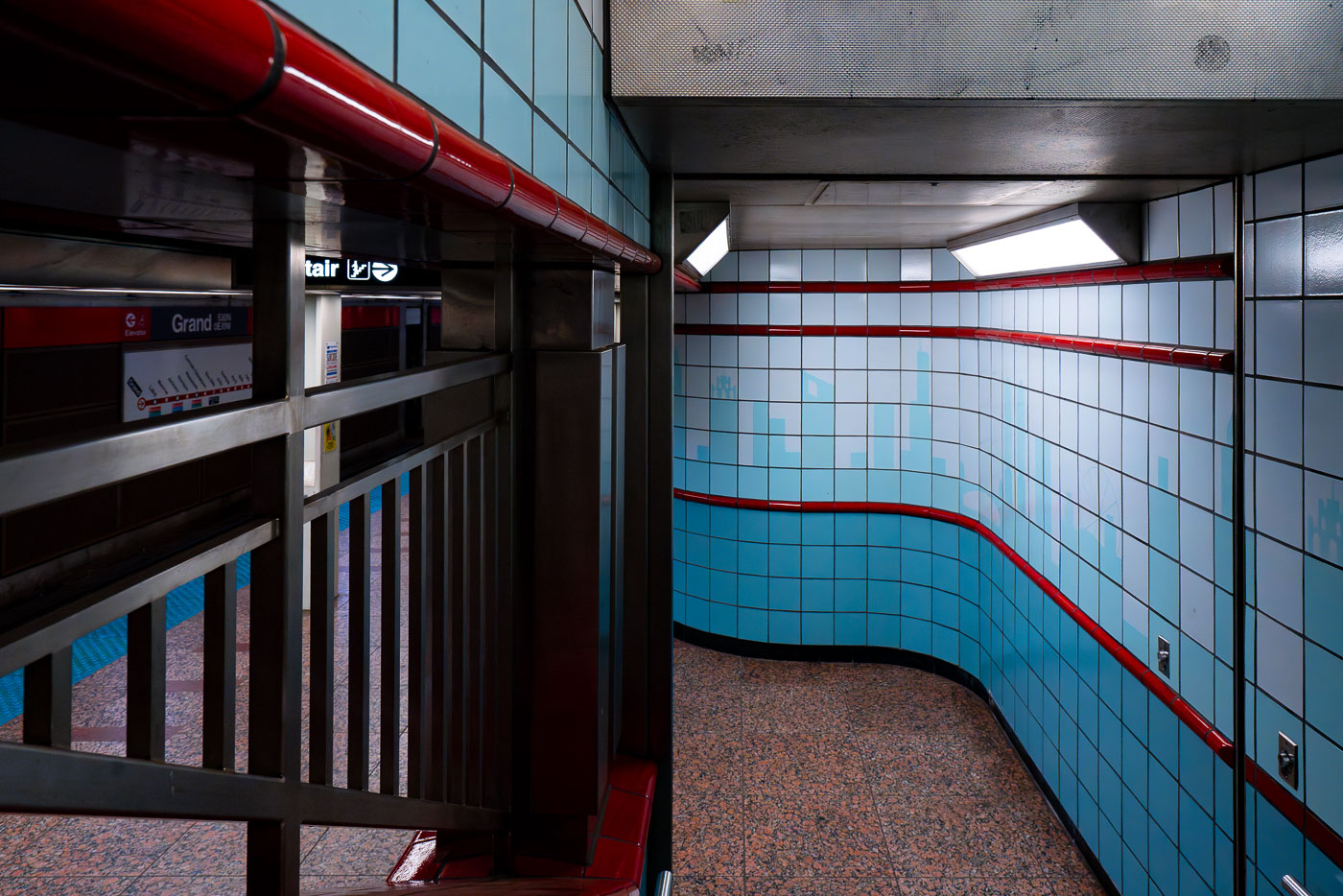 View full post: Curved Tile Passageway at Grand Station, Chicago
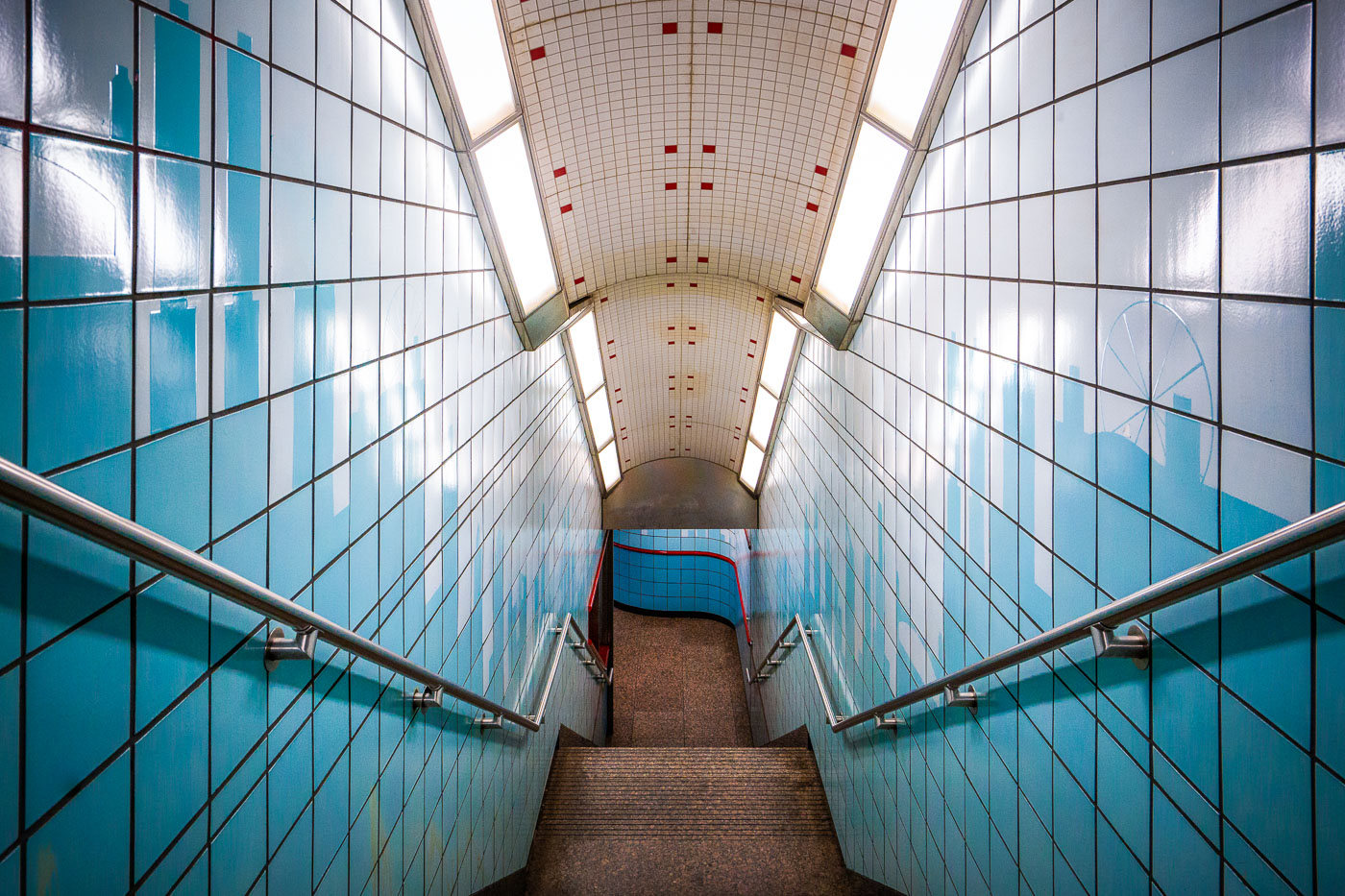 View full post: Skyline Tilework Stairway at CTA’s Grand Red Line Station
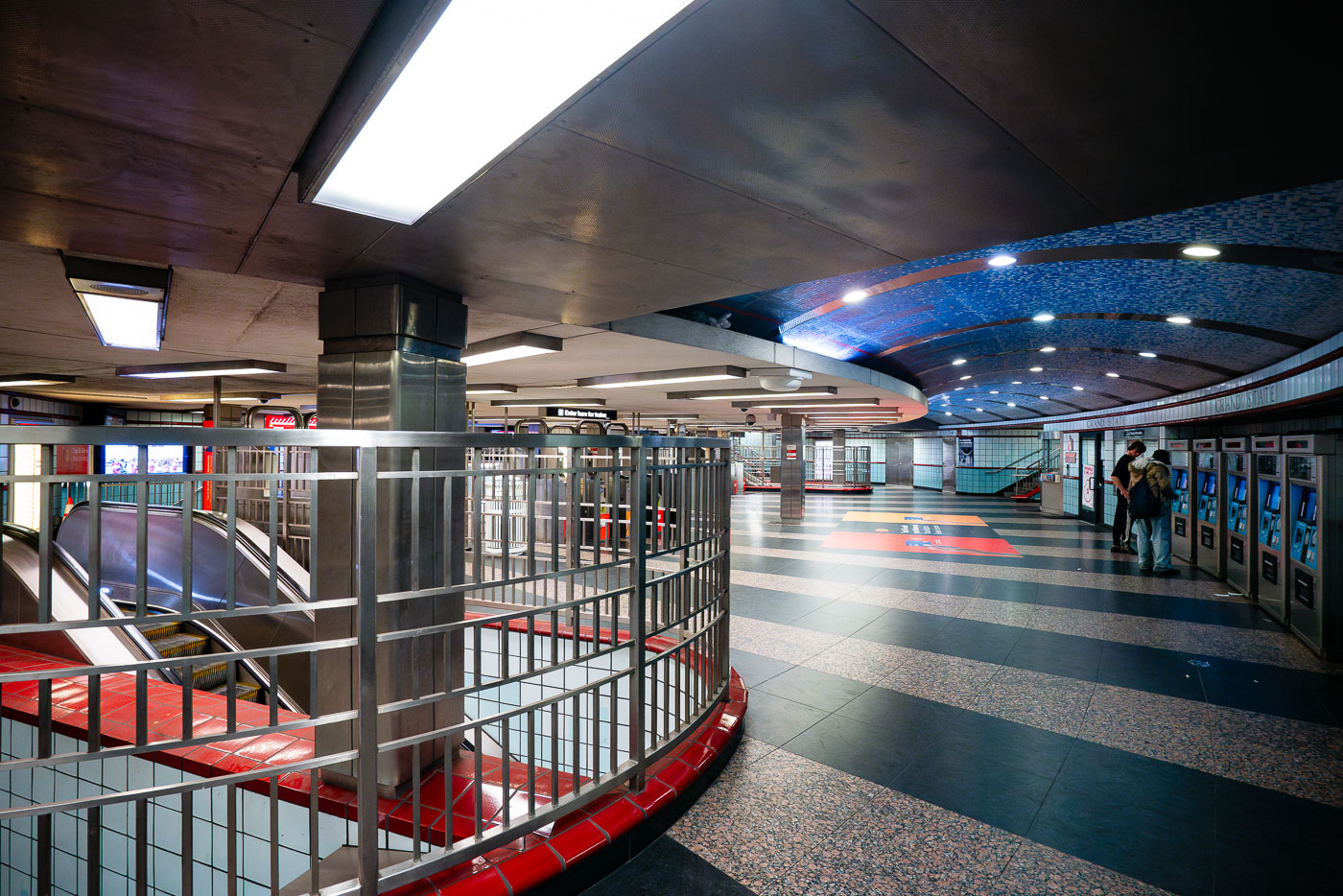 View full post: Fare Machines and Escalators at Grand/State Station, Chicago
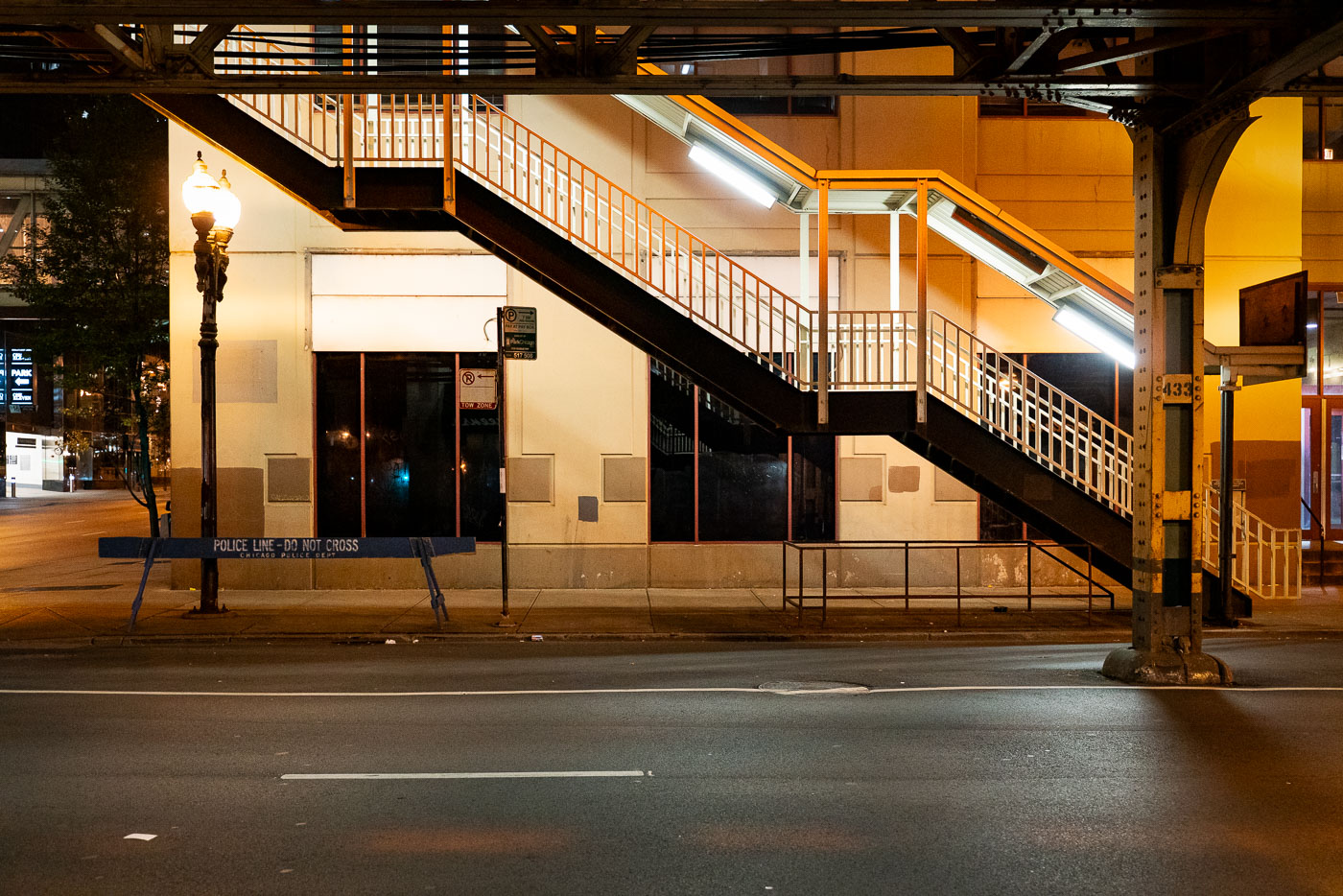 View full post: Police Barricade Beneath the Loop’s Elevated Stairway
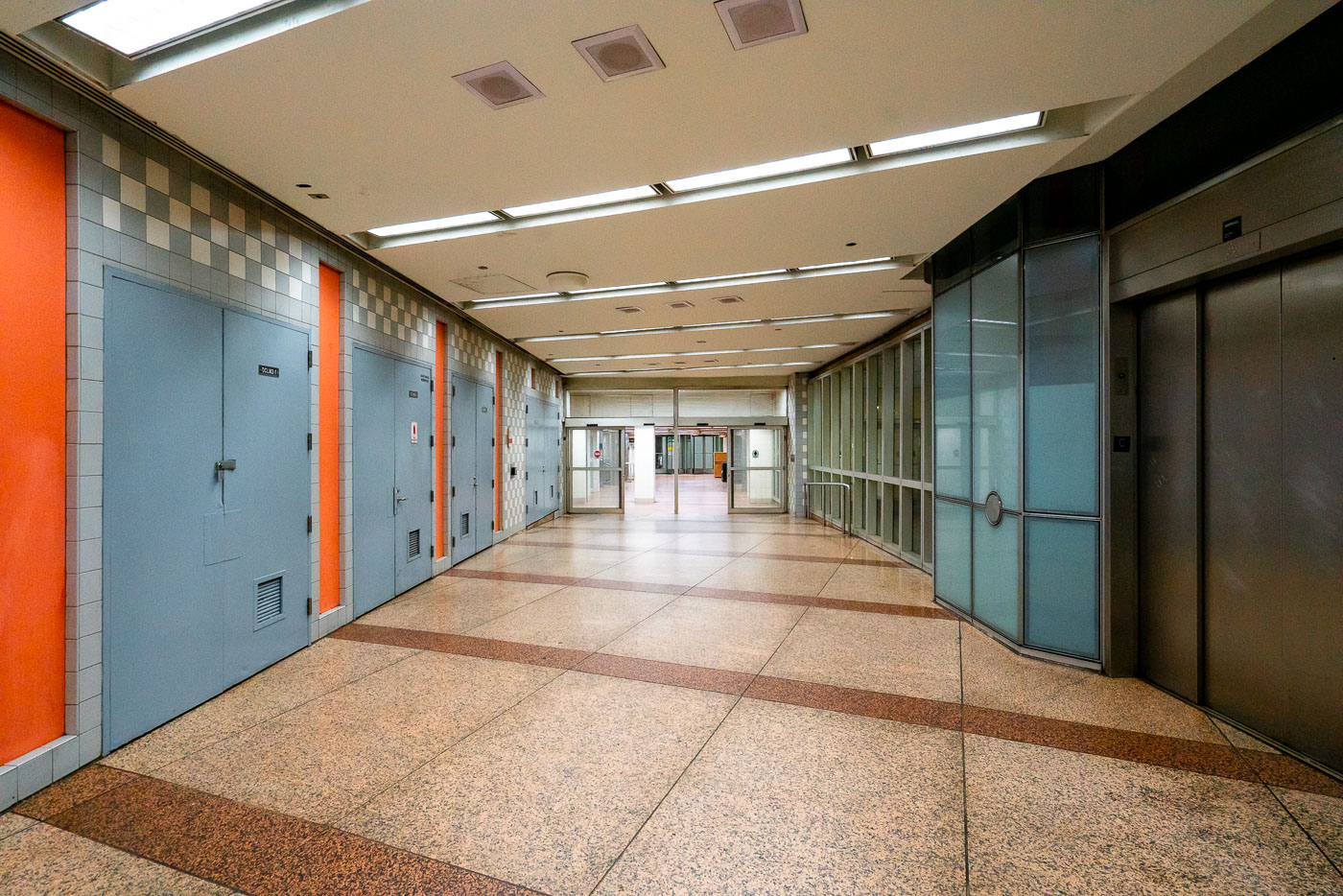 View full post: Terrazzo Corridor in the Chicago Pedway
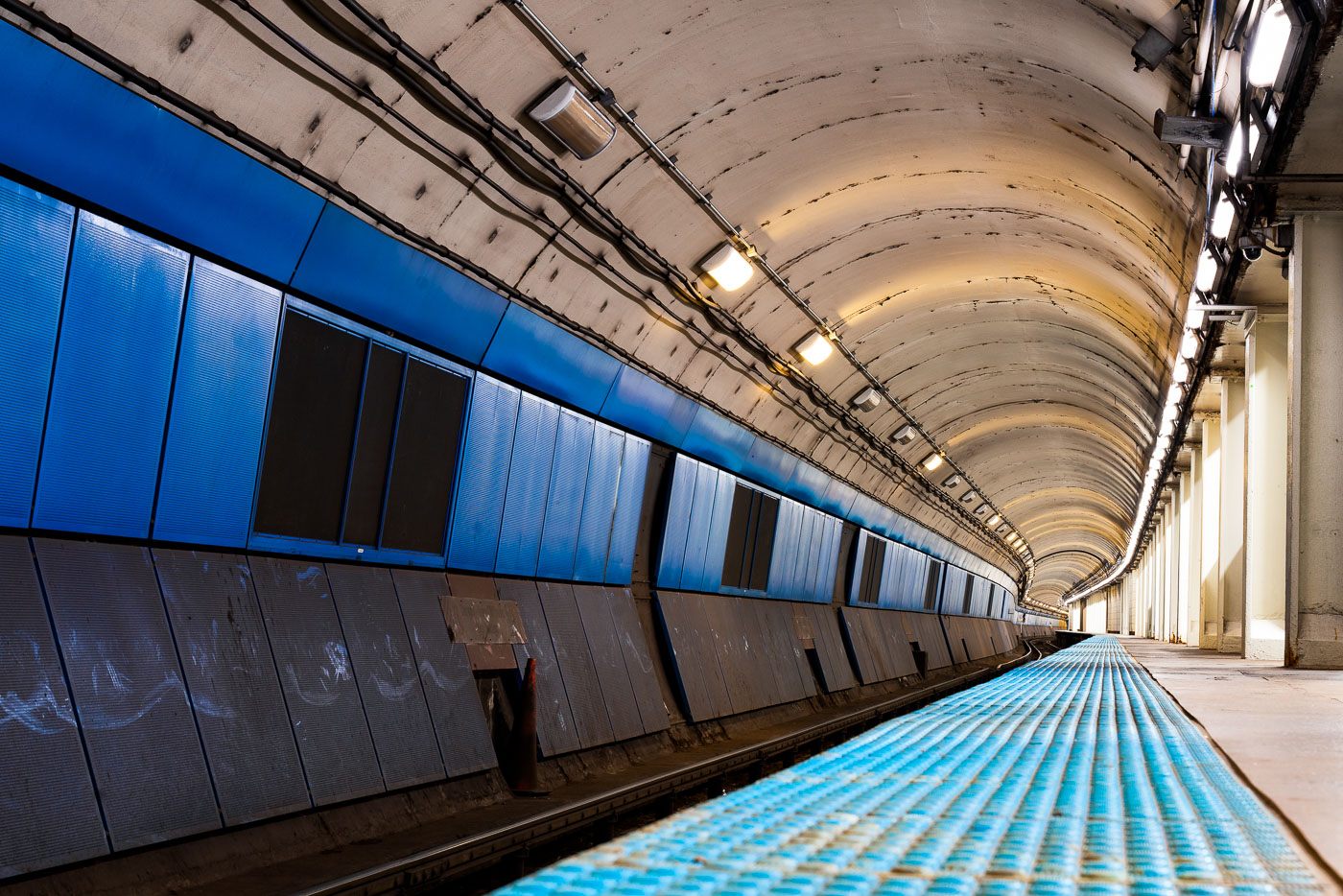 View full post: Milwaukee-Dearborn Subway Tunnel on the CTA Blue Line
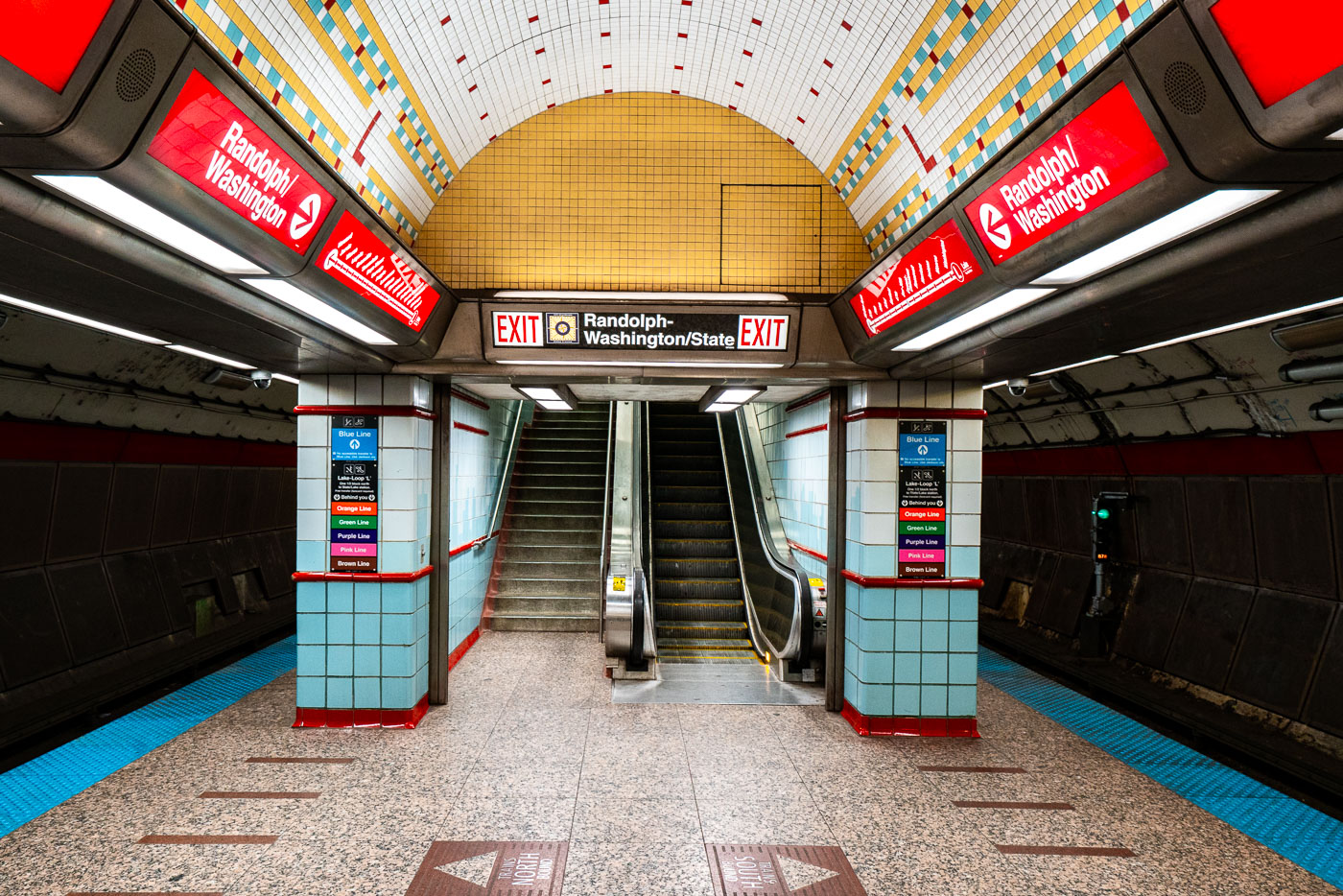 View full post: Exit Stairway to Randolph-Washington/State in Chicago’s Subway
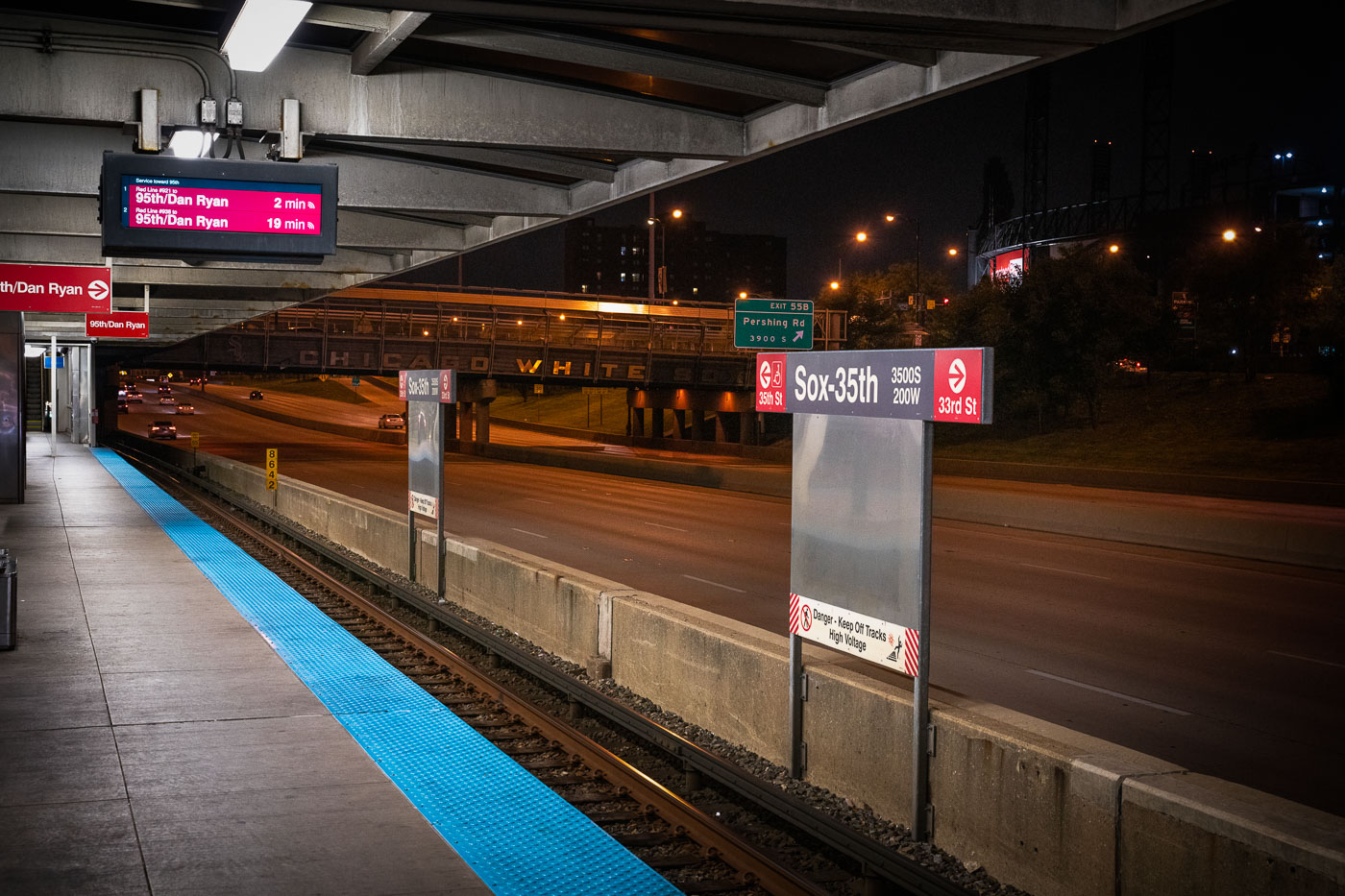 View full post: Night View from Sox–35th Station Over the Dan Ryan Expressway
 View full post: CTA Sign on the Loop’s Elevated Tracks at Night
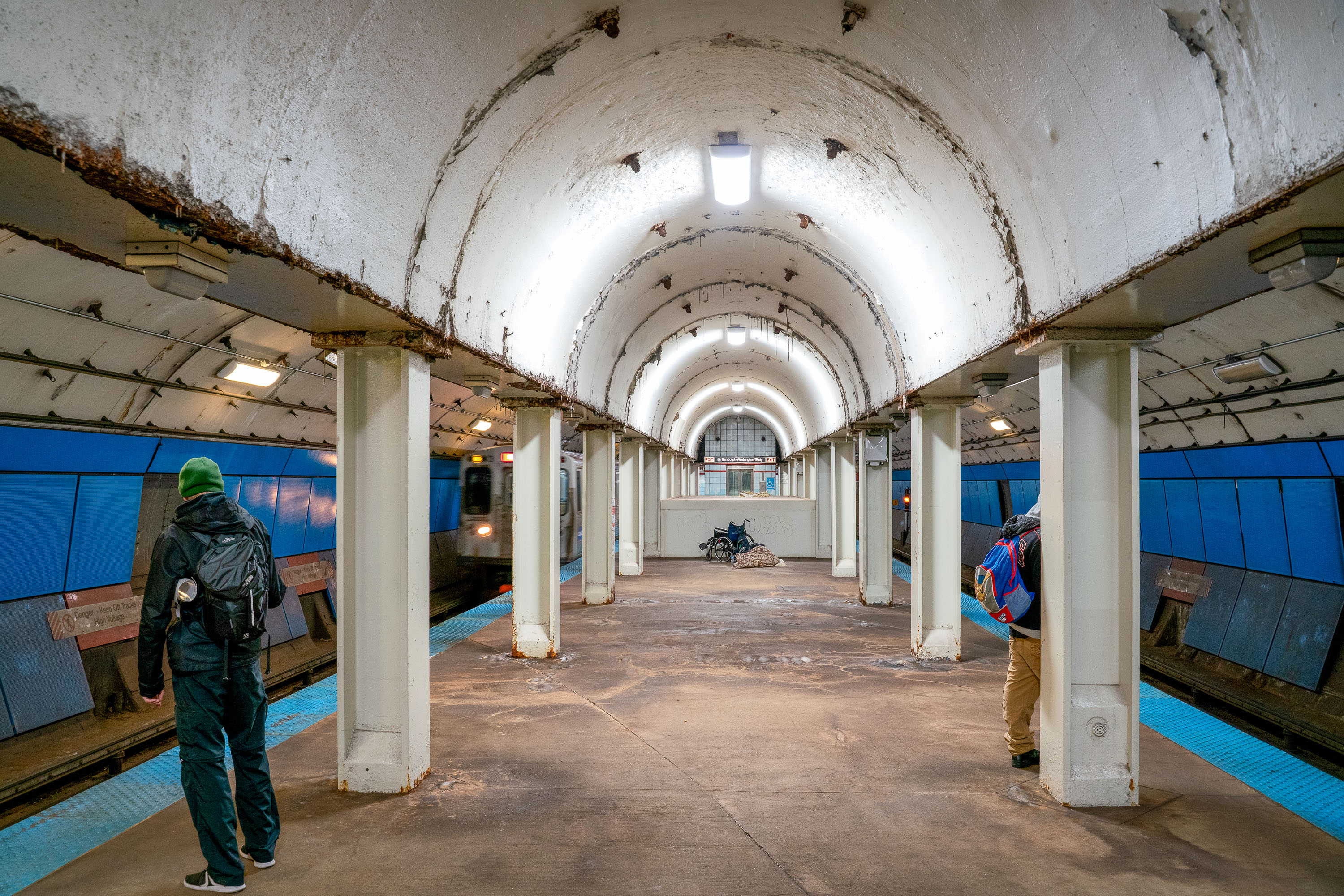 View full post: Waiting for a Train at State/Lake Station, Chicago
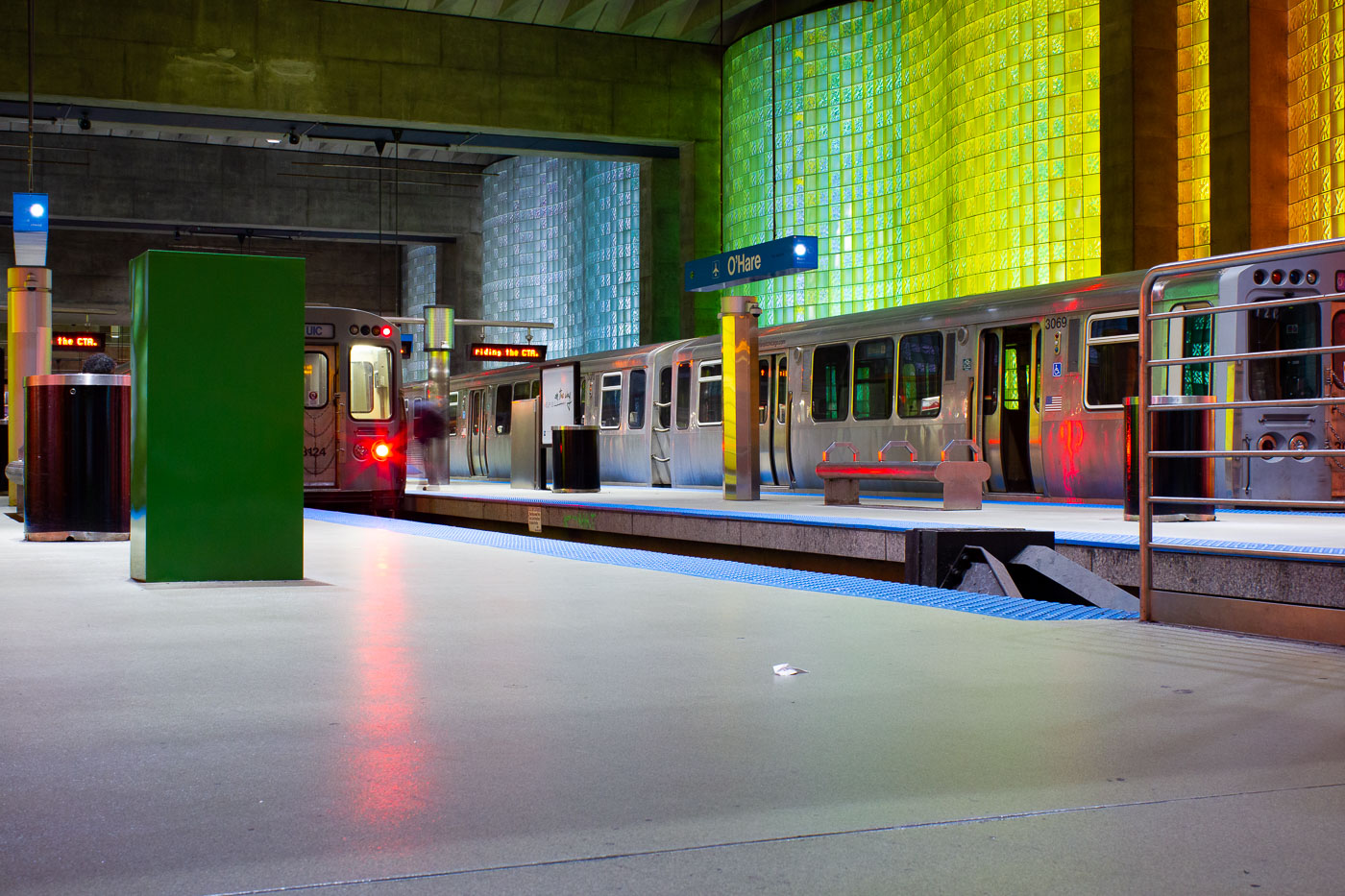 View full post: Blue Line Train Arriving at O’Hare’s Rapid-Transit Terminal
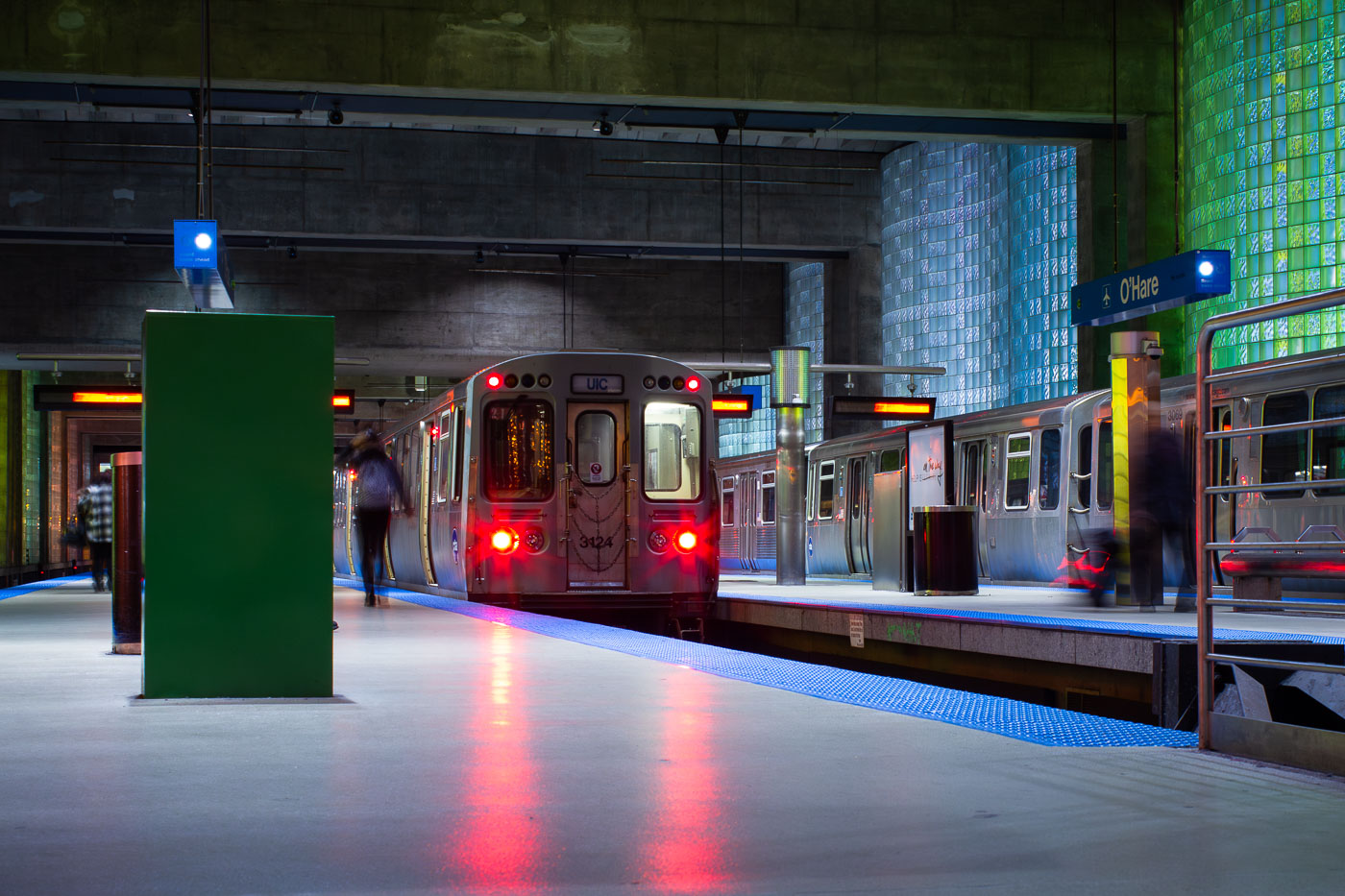 View full post: Blue Line Train Arriving at O’Hare’s Underground Platform