Photo Set
Manhattan
Street-level Manhattan across two decades, from Times Square and the Bowery to Canal Street and the Upper East Side
Manhattan
Manhattan is a borough of particular density and contrast, where the rhythms of daily life play out at close range on streets that shift character from block to block. Midtown's advertising corridors, the subway system running beneath it all, and the older commercial and cultural fabric of Lower Manhattan each operate on their own distinct logic.
The borough's commercial and media identity is perhaps most concentrated in Times Square, which was remade from a dilapidated district into a heavily branded entertainment corridor through a sustained redevelopment effort from the 1990s onward. By the mid-2000s, its wide pavements supported a mix of national retail, Broadway theatre chains, electronic advertising, street vendors, and informal performers. Businesses like the Virgin Megastore and venues like the Loews Theatres that defined the area during that period have since closed or been replaced.
Elsewhere in Manhattan, more durable institutions coexist with shops and streetscapes that change decade by decade. Grand Central Terminal, opened in 1913 and saved from demolition by a 1978 Supreme Court ruling, continues to serve Metro-North commuters beneath its Beaux-Arts facade. CBGB at 315 Bowery, which opened in 1973 and gave early platforms to the Ramones, Blondie, and Talking Heads, closed in 2006 following a rent dispute and is now a clothing store. Canal Street's corridor of discount retail, souvenir shops, and sidewalk vendors persists, though individual storefronts turn over frequently.
The New York City Subway ties the borough together underground, with stations ranging from the original 1904 IRT stops at Astor Place to the Lexington Avenue–63rd Street station, opened as recently as 1989 as part of the Queens connection project. Above ground, the Queensboro Bridge, completed in 1909, still carries traffic and pedestrians across the East River, while the East River waterfront in Midtown frames the United Nations Secretariat, completed in 1952, against the older Art Deco profile of the Chrysler Building.
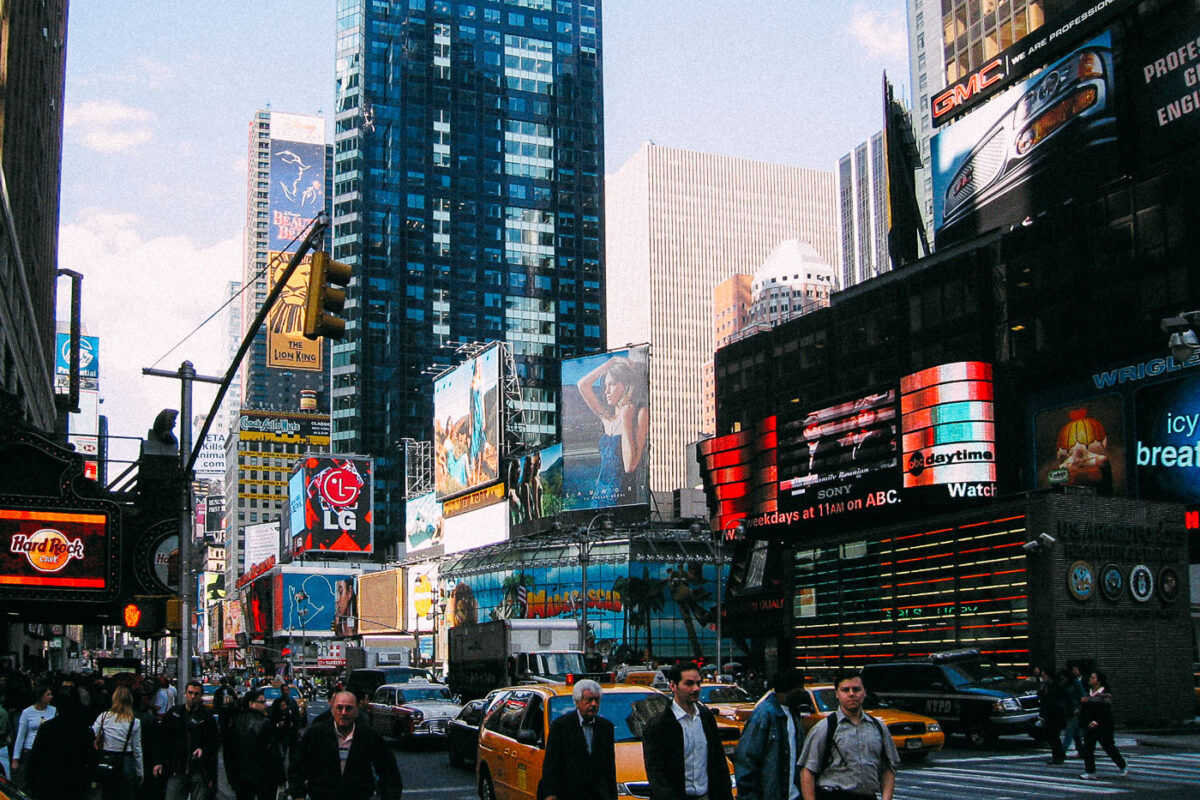
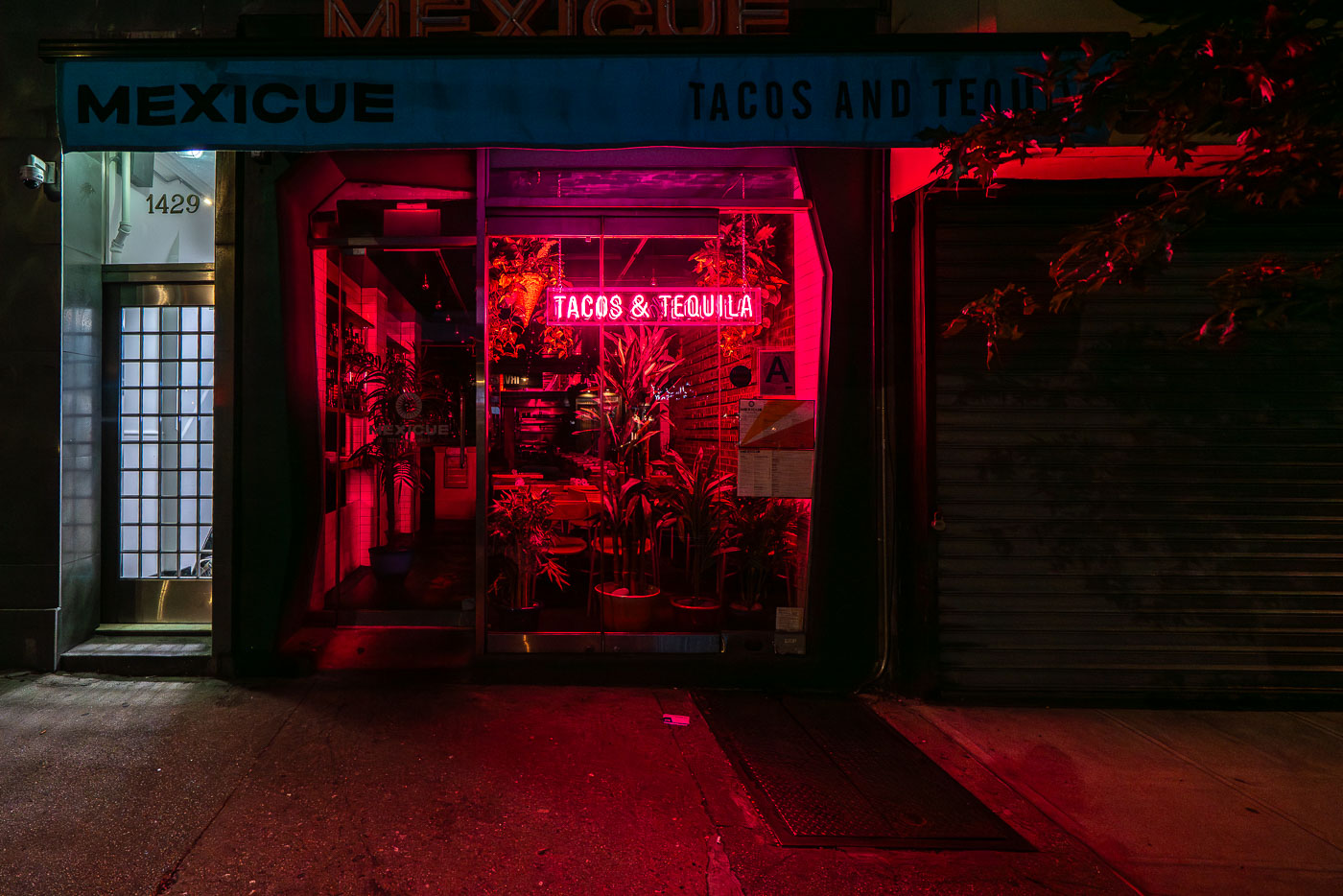 View full post: Mexicue’s Neon “Tacos & Tequila” Sign at Night
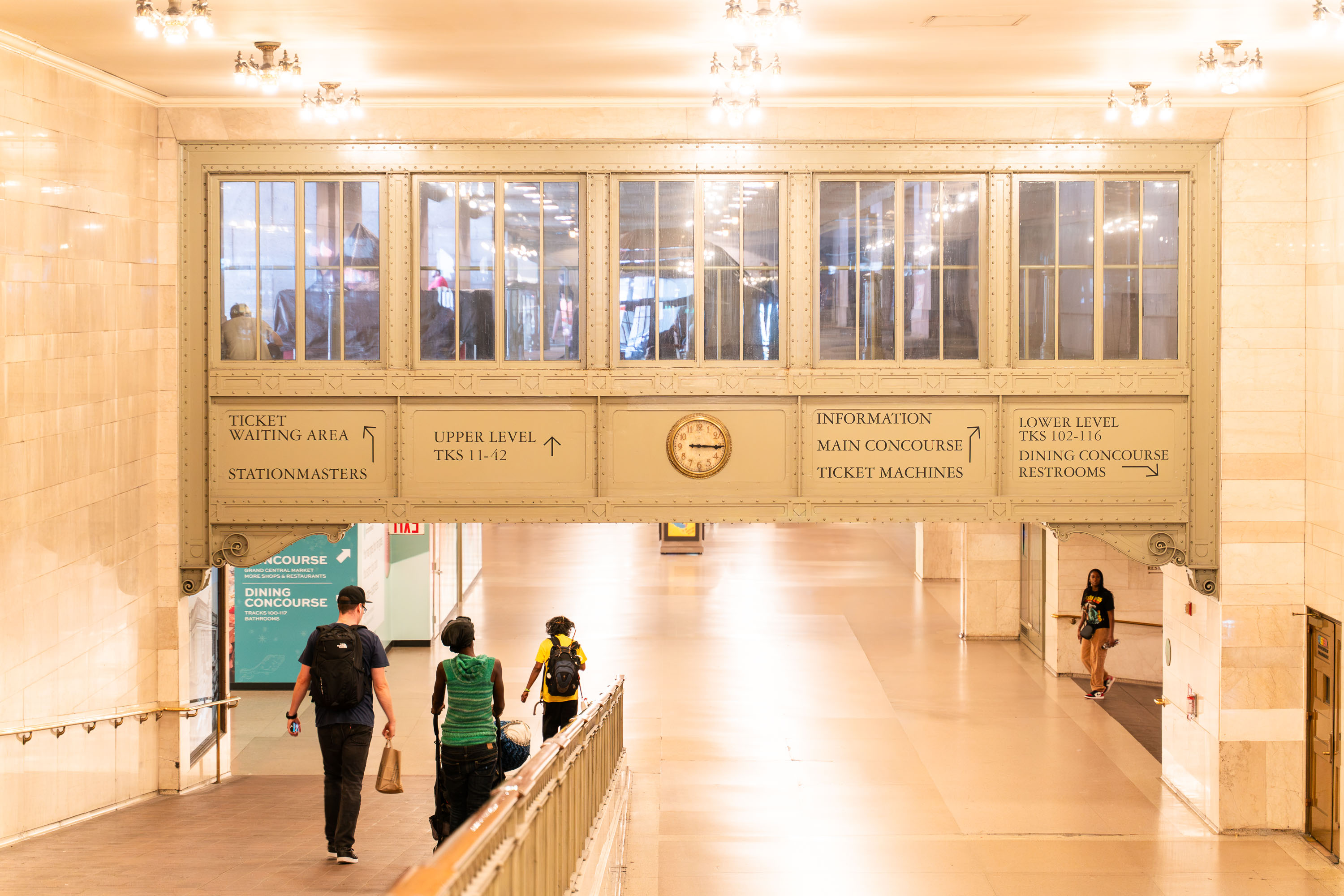 View full post: Ticket Window Signage Above Grand Central’s Dining Concourse
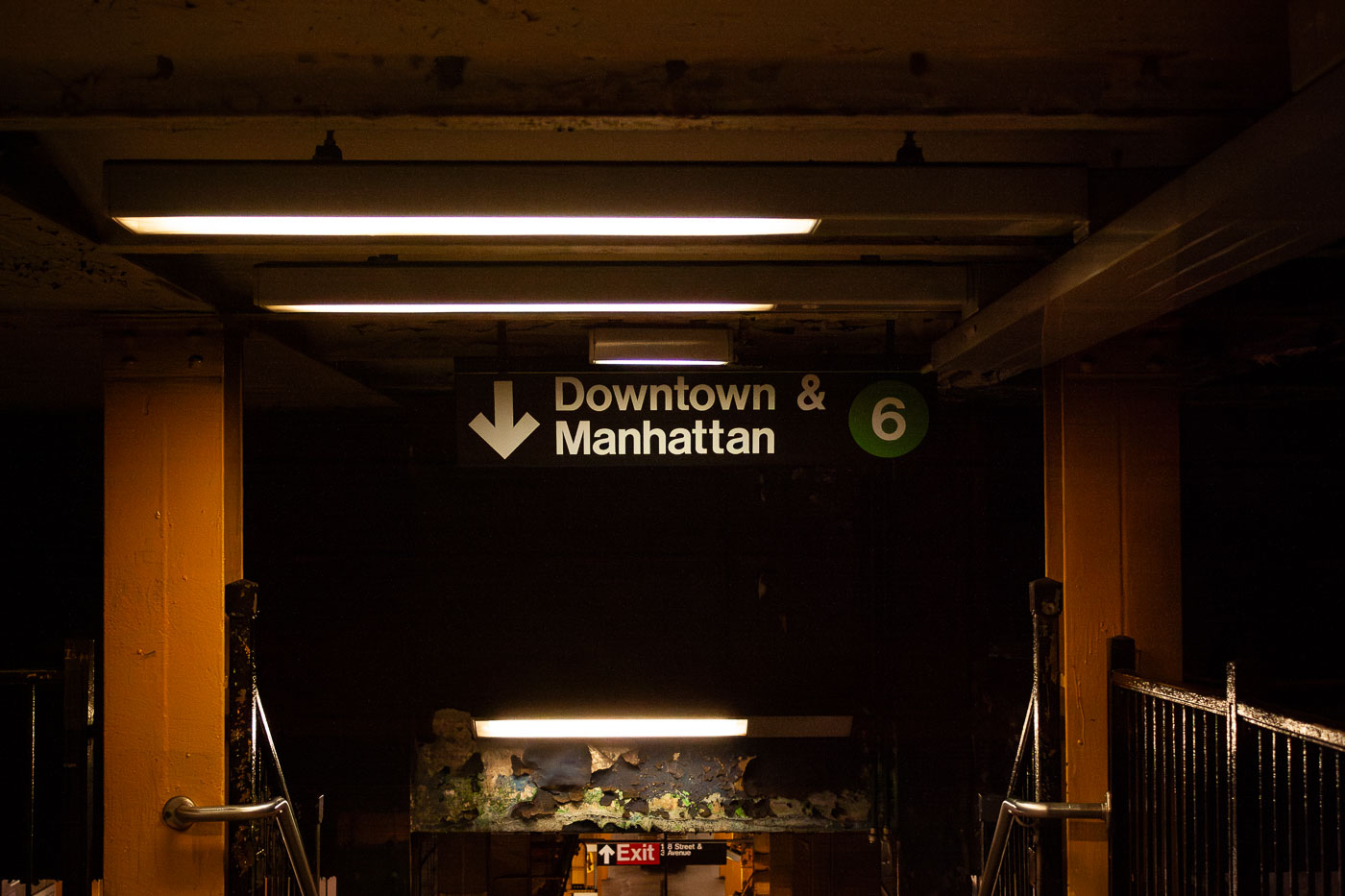 View full post: “Downtown & Manhattan” Sign Above the 6 Train Stairway
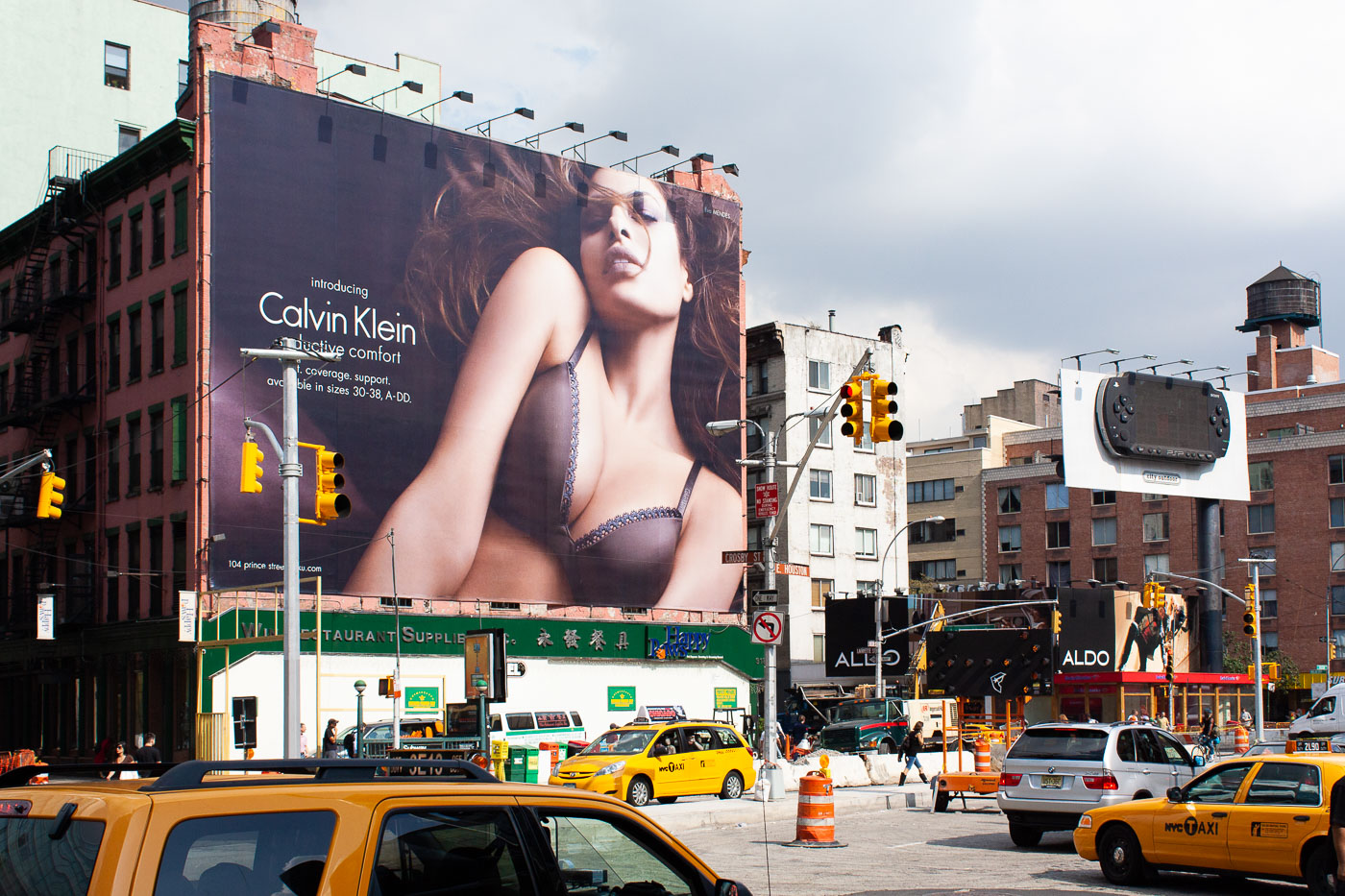 View full post: Taxis Pass a Calvin Klein Billboard in SoHo
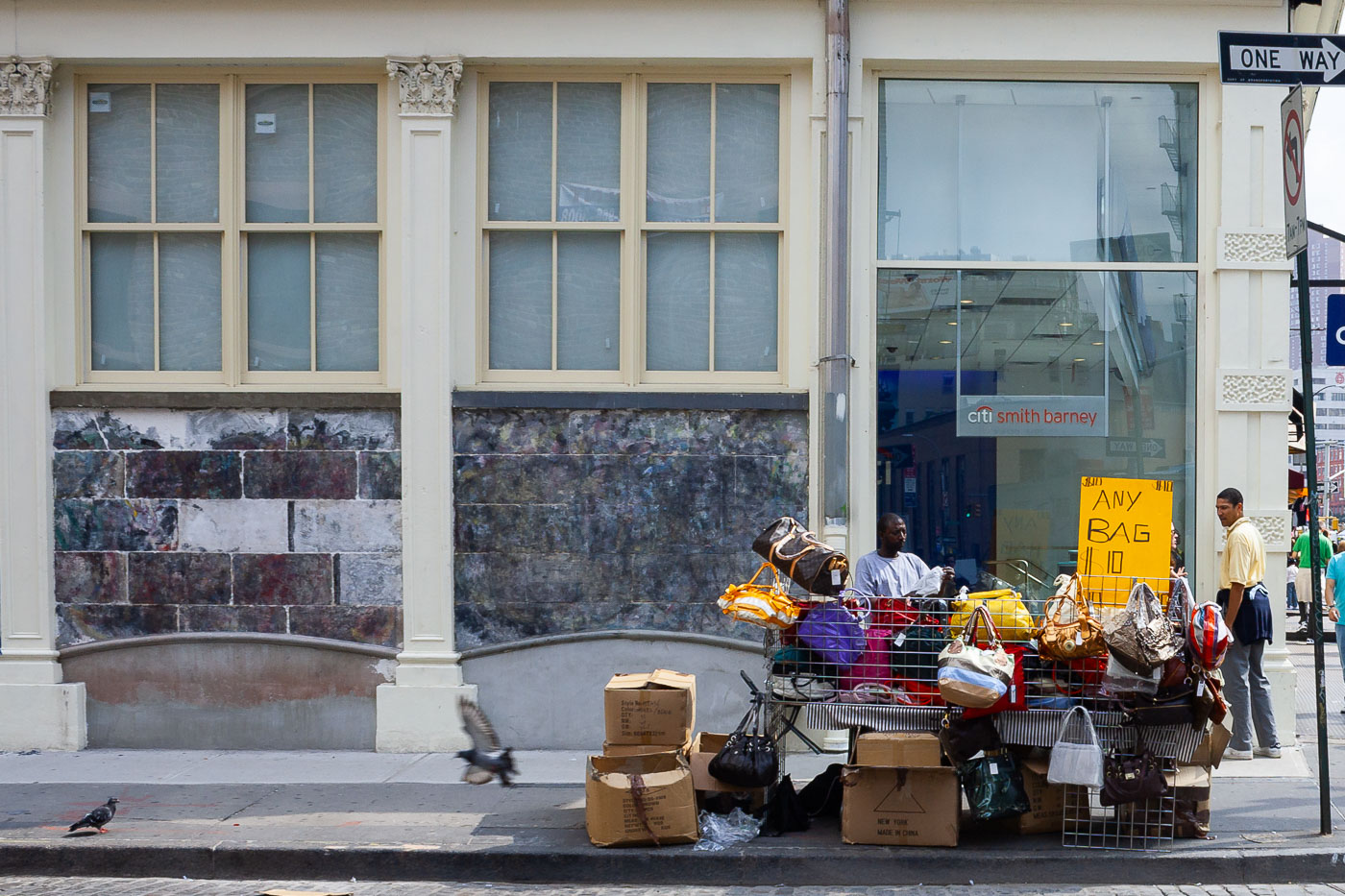 View full post: Sidewalk Bag Vendor’s “Any Bag $10” Sign on Canal Street
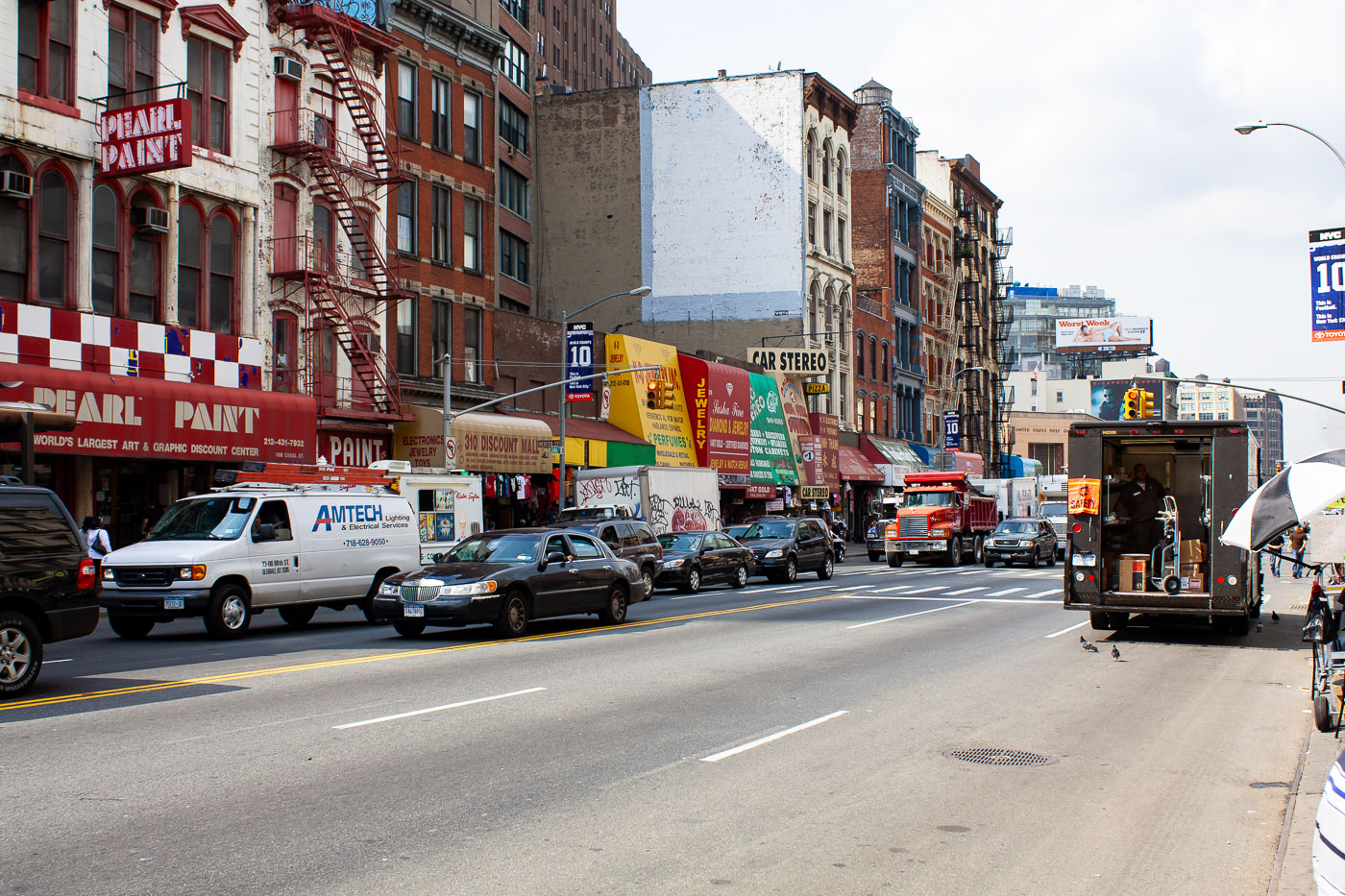 View full post: Traffic on Canal Street Near Pearl Paint’s “World’s Largest” Storefront
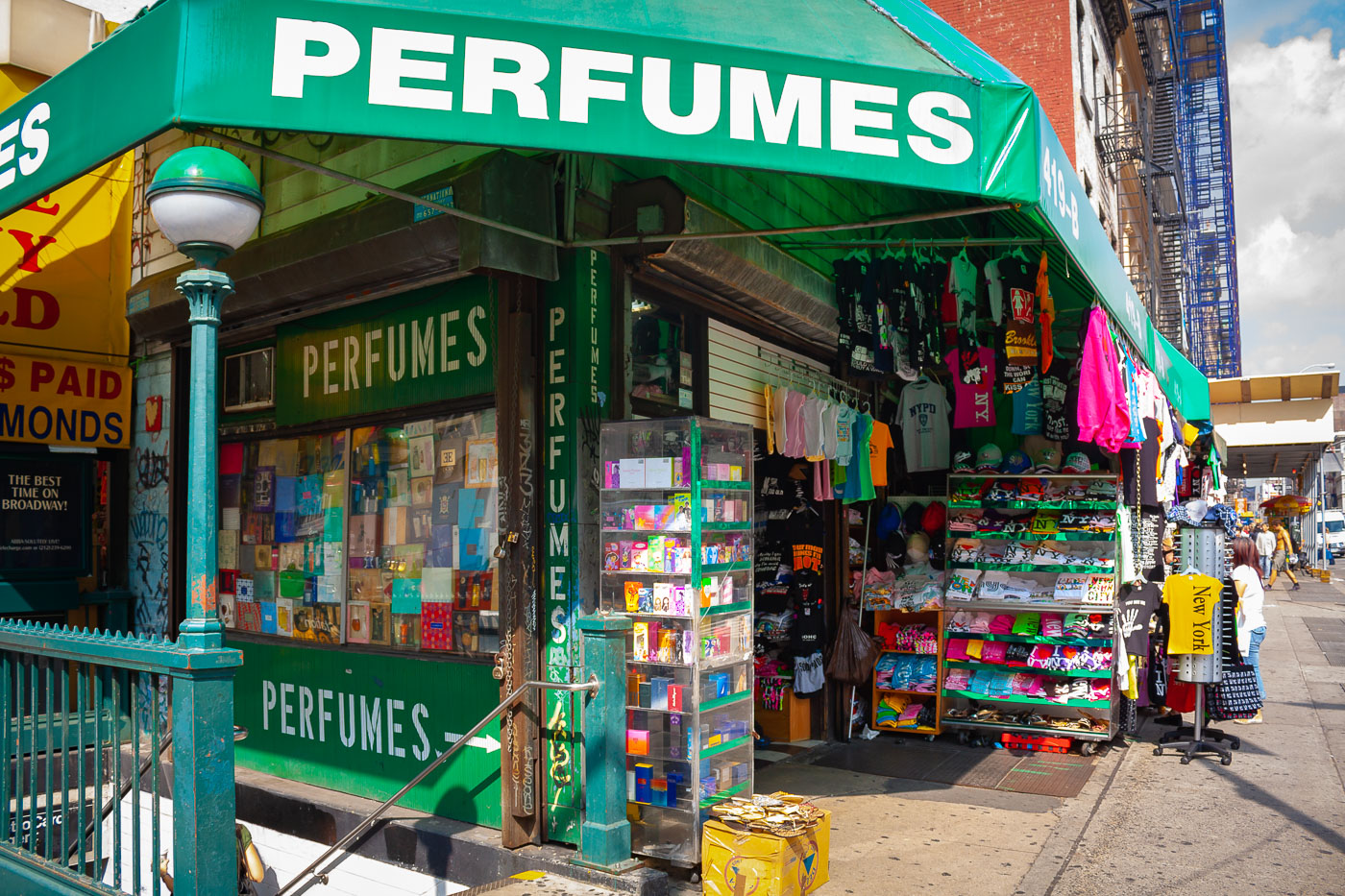 View full post: Perfumes and Souvenir T-Shirts on Canal Street
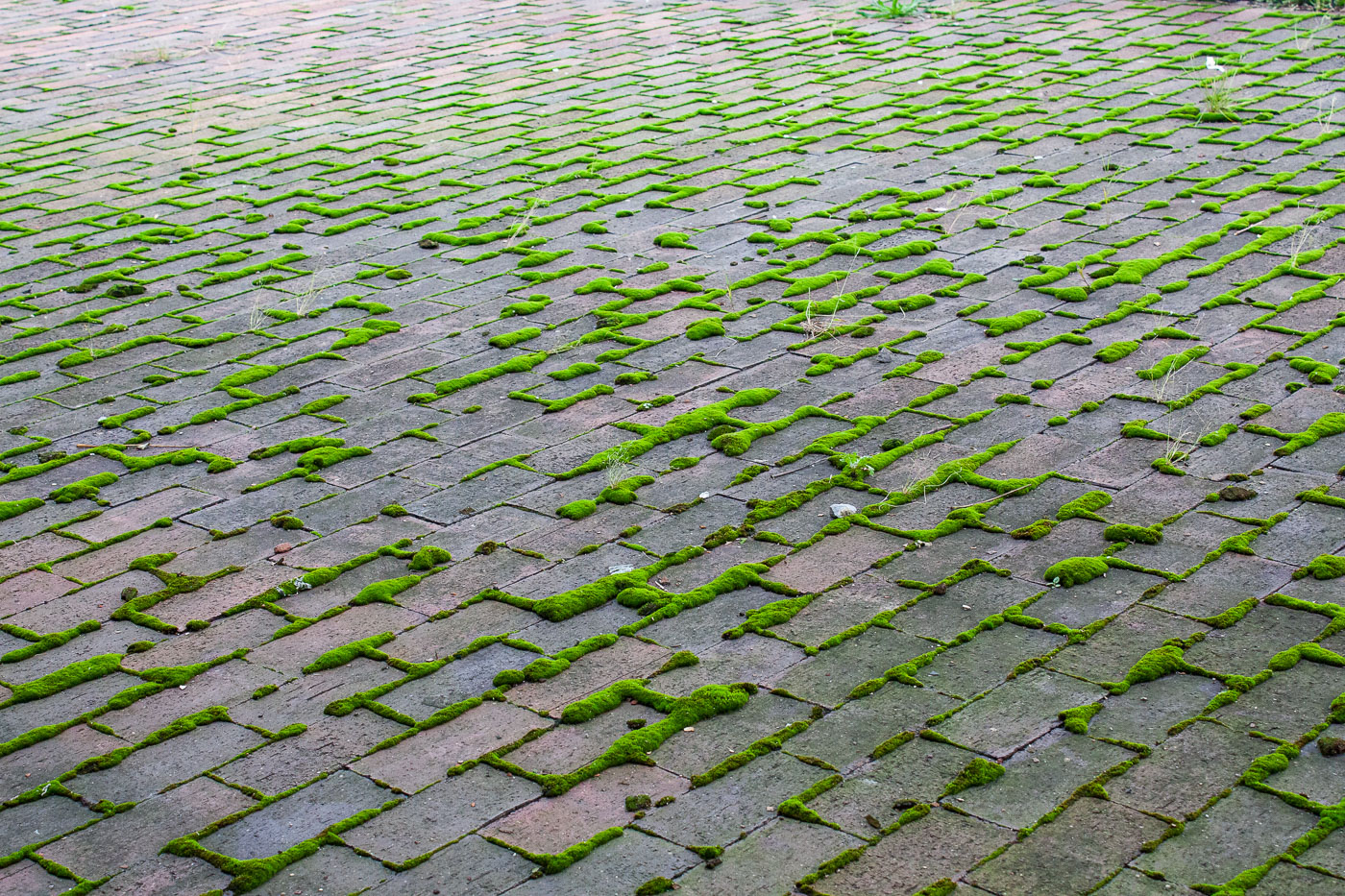 View full post: Moss Filling the Joints of an Old Brick Street
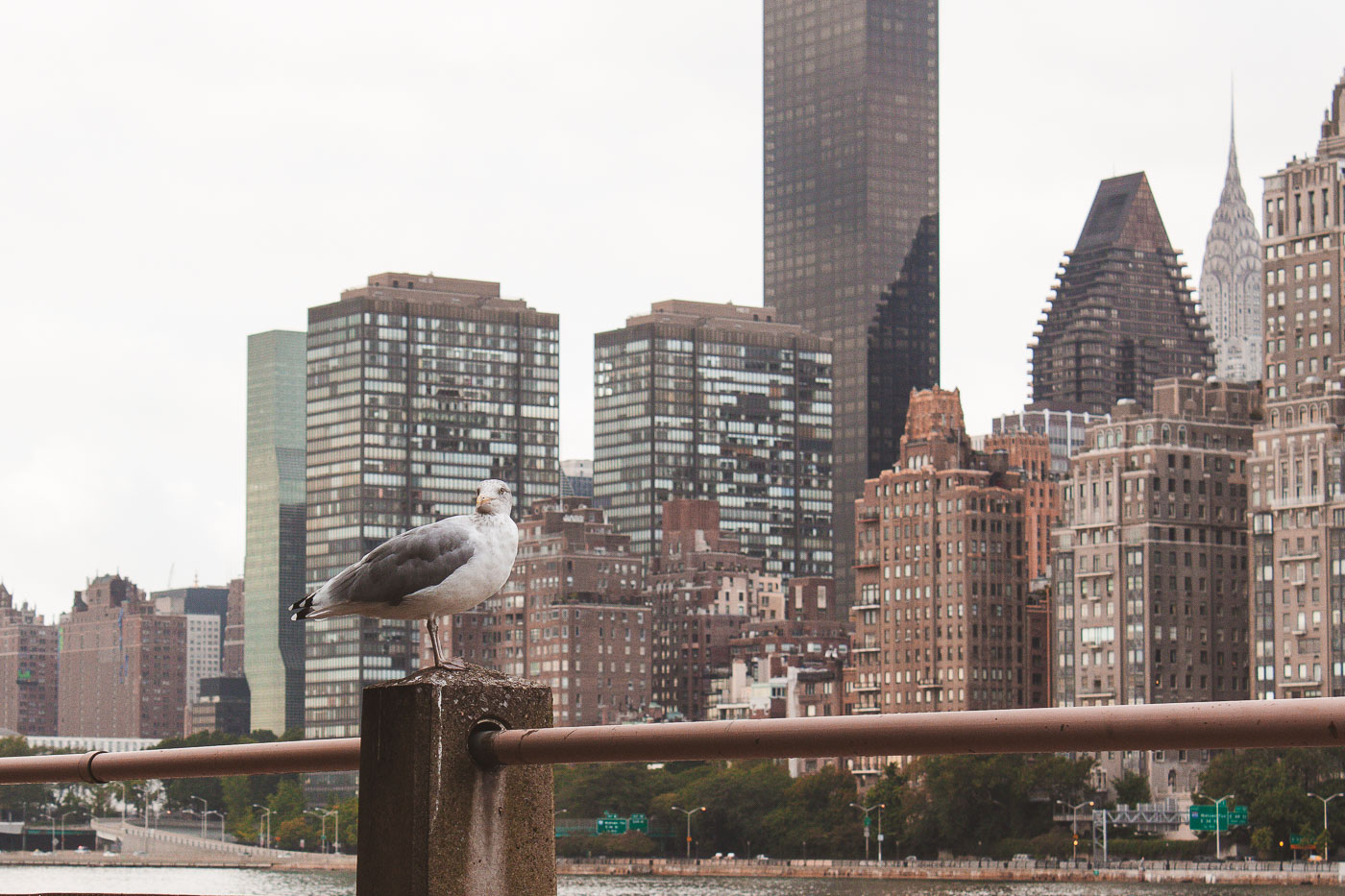 View full post: Gull on a Railing Post With the Chrysler Building Behind It
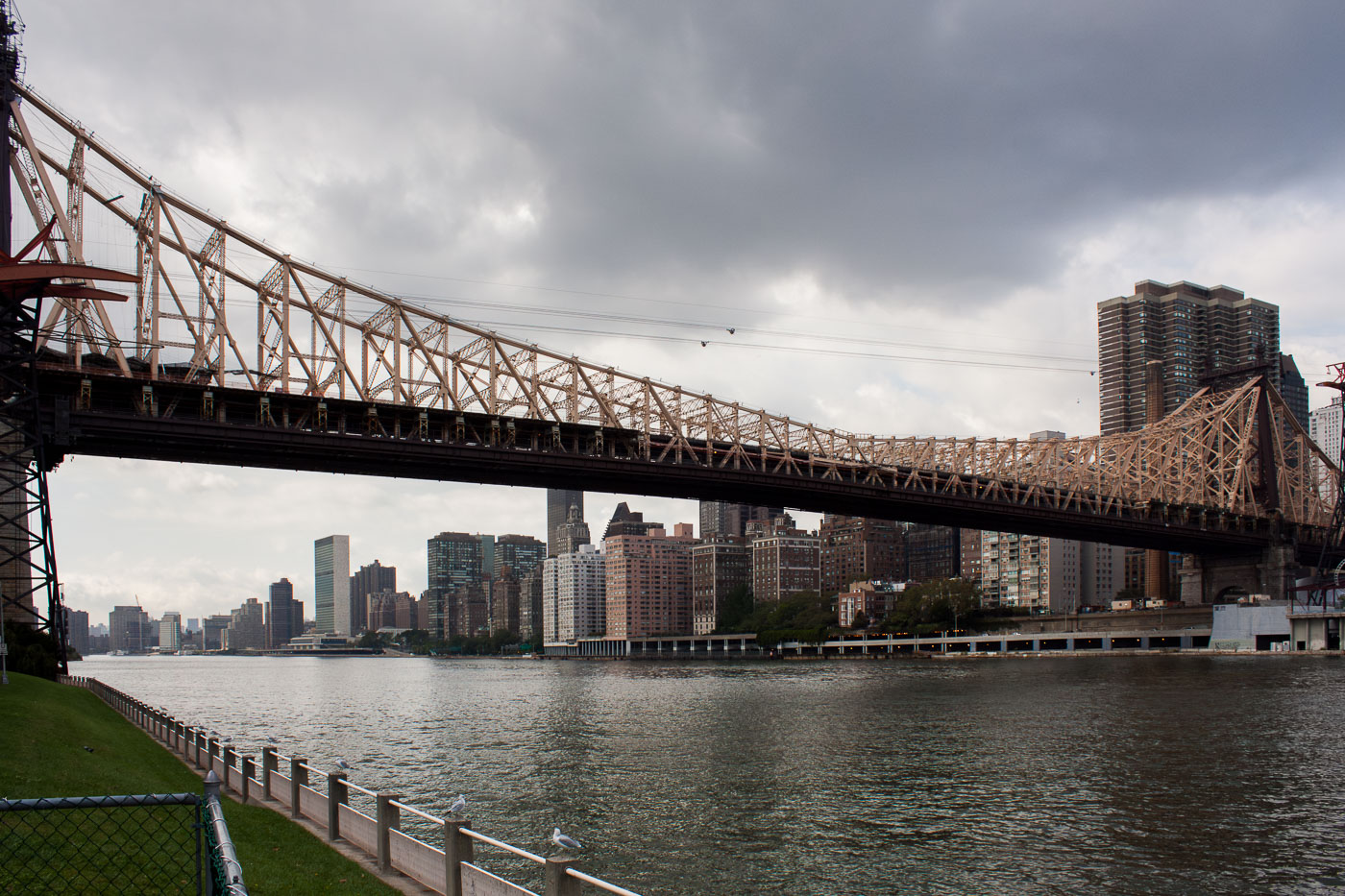 View full post: Queensboro Bridge Over the East River on an Overcast Day
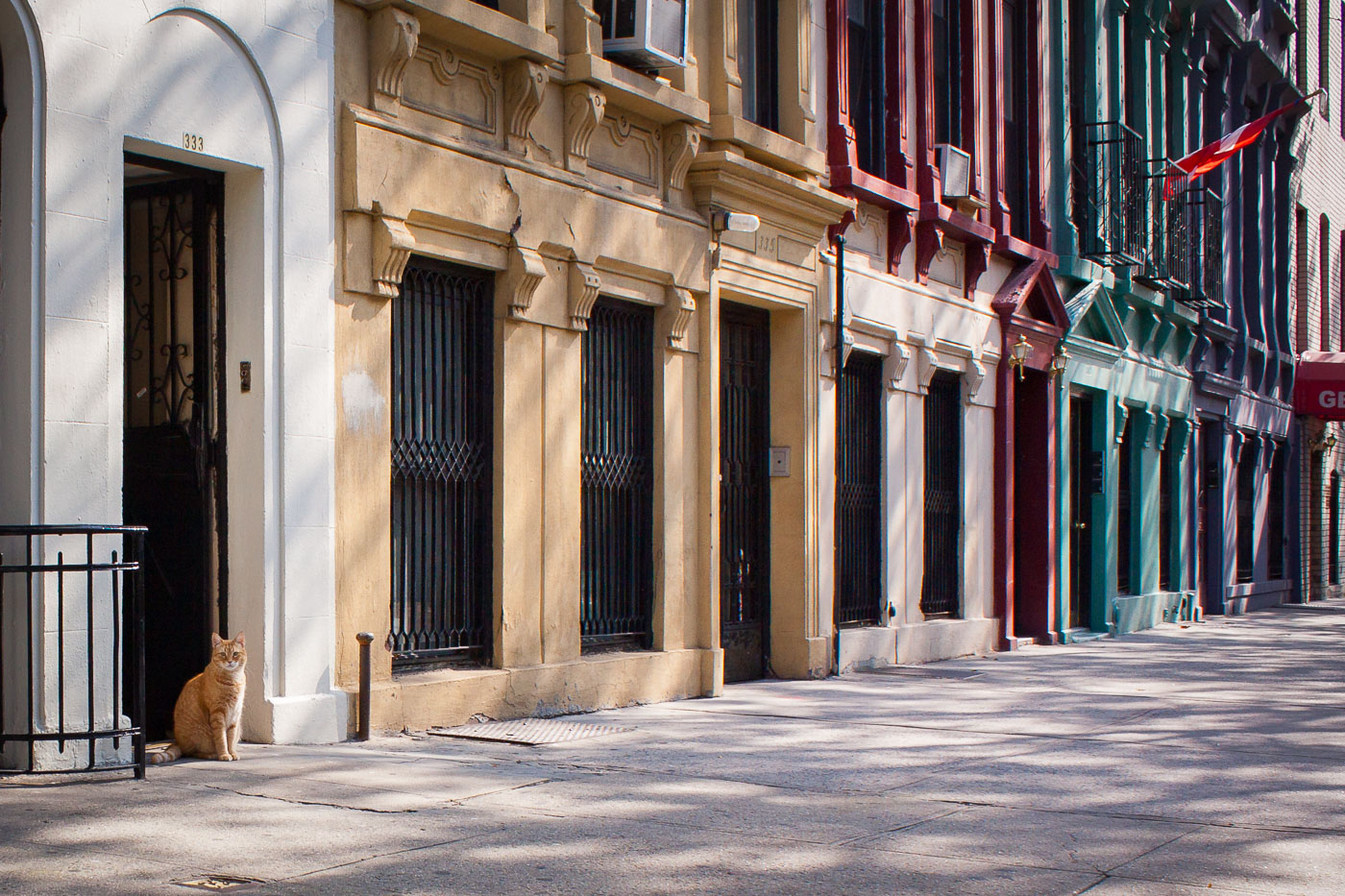 View full post: Ginger Cat in a Doorway at 333 Manhattan Avenue
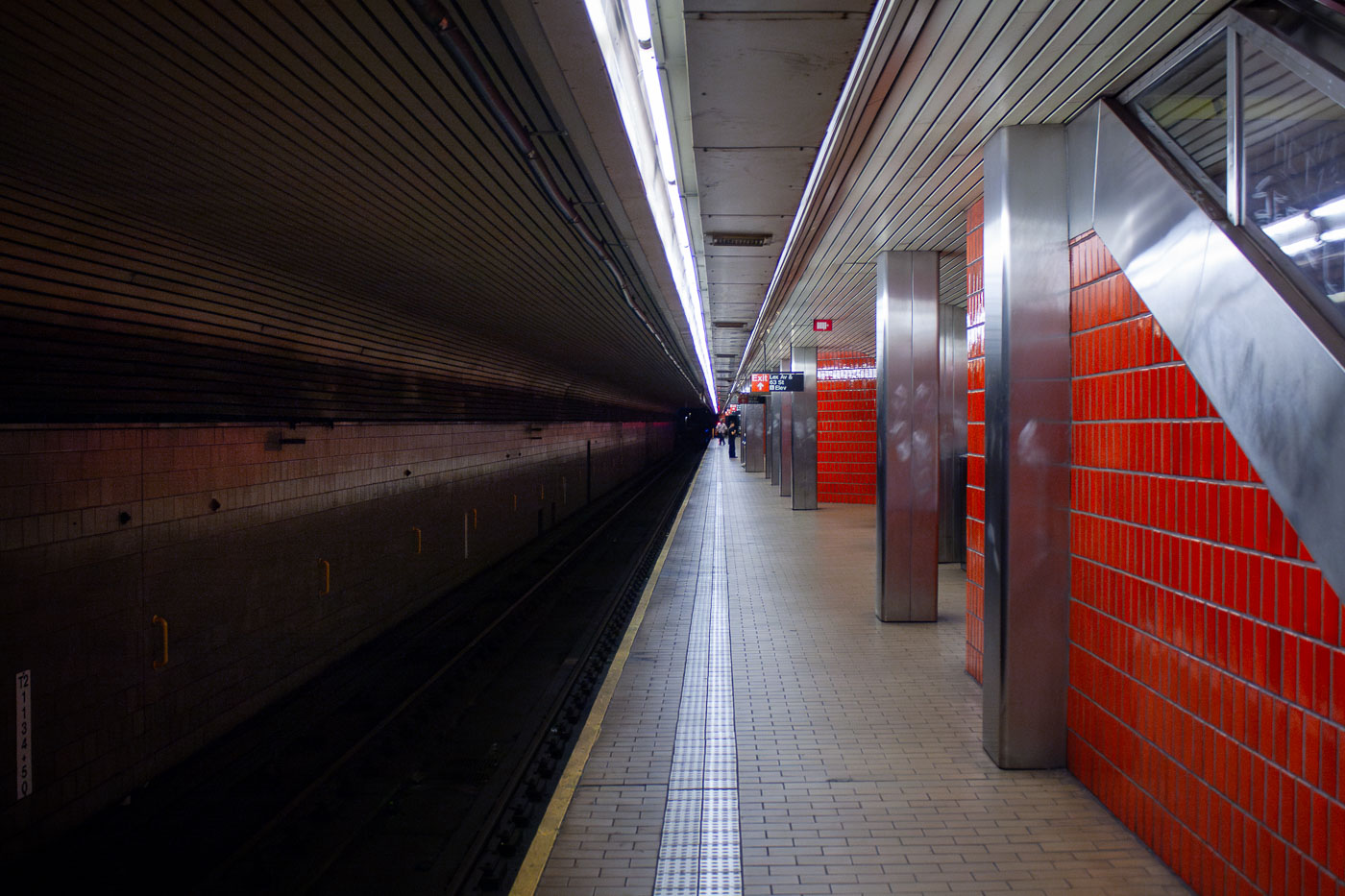 View full post: Red-Tiled Platform at Lexington Avenue–63rd Street Station
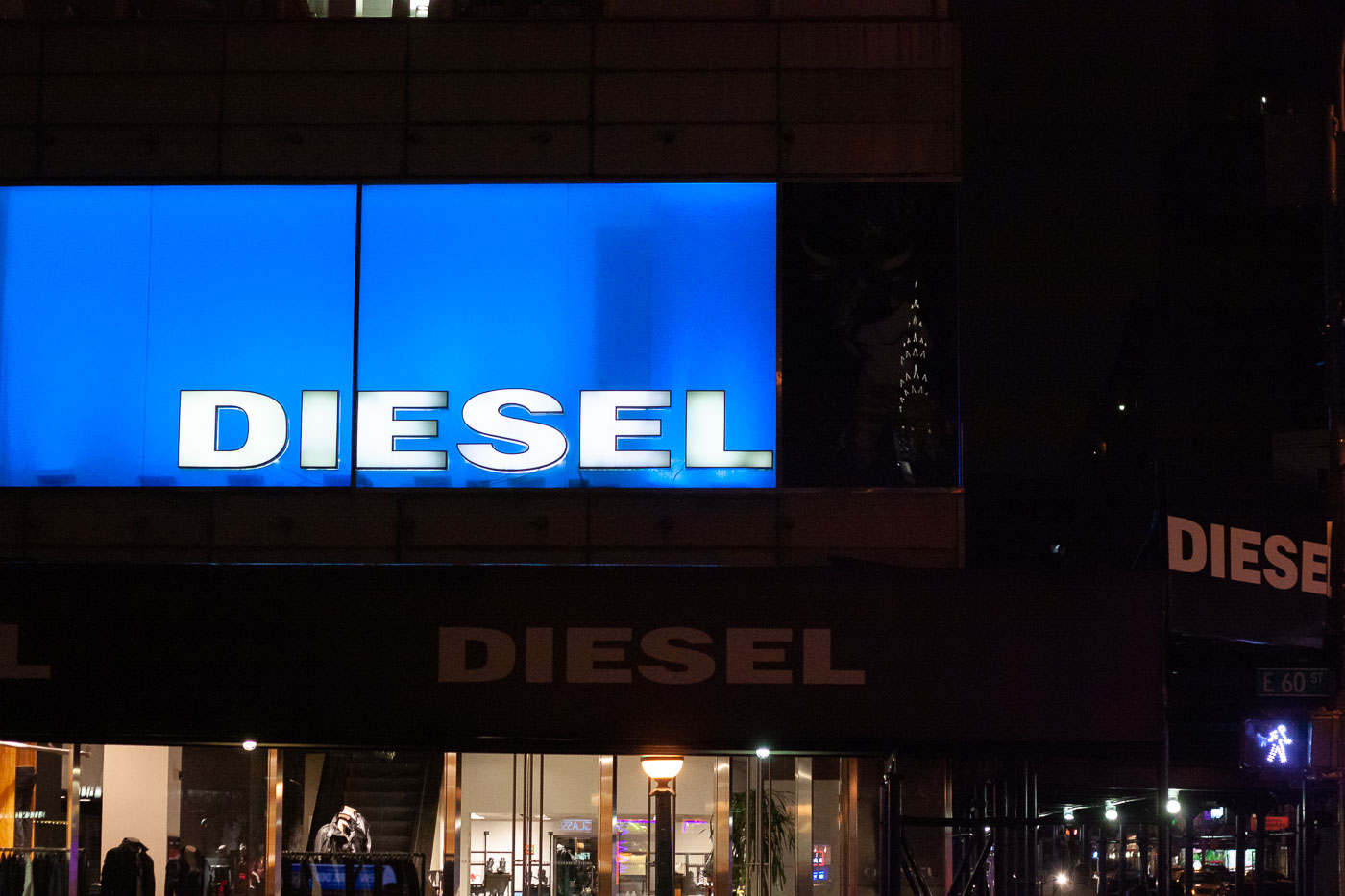 View full post: Diesel Storefront Lit Up at Night on East 60th Street
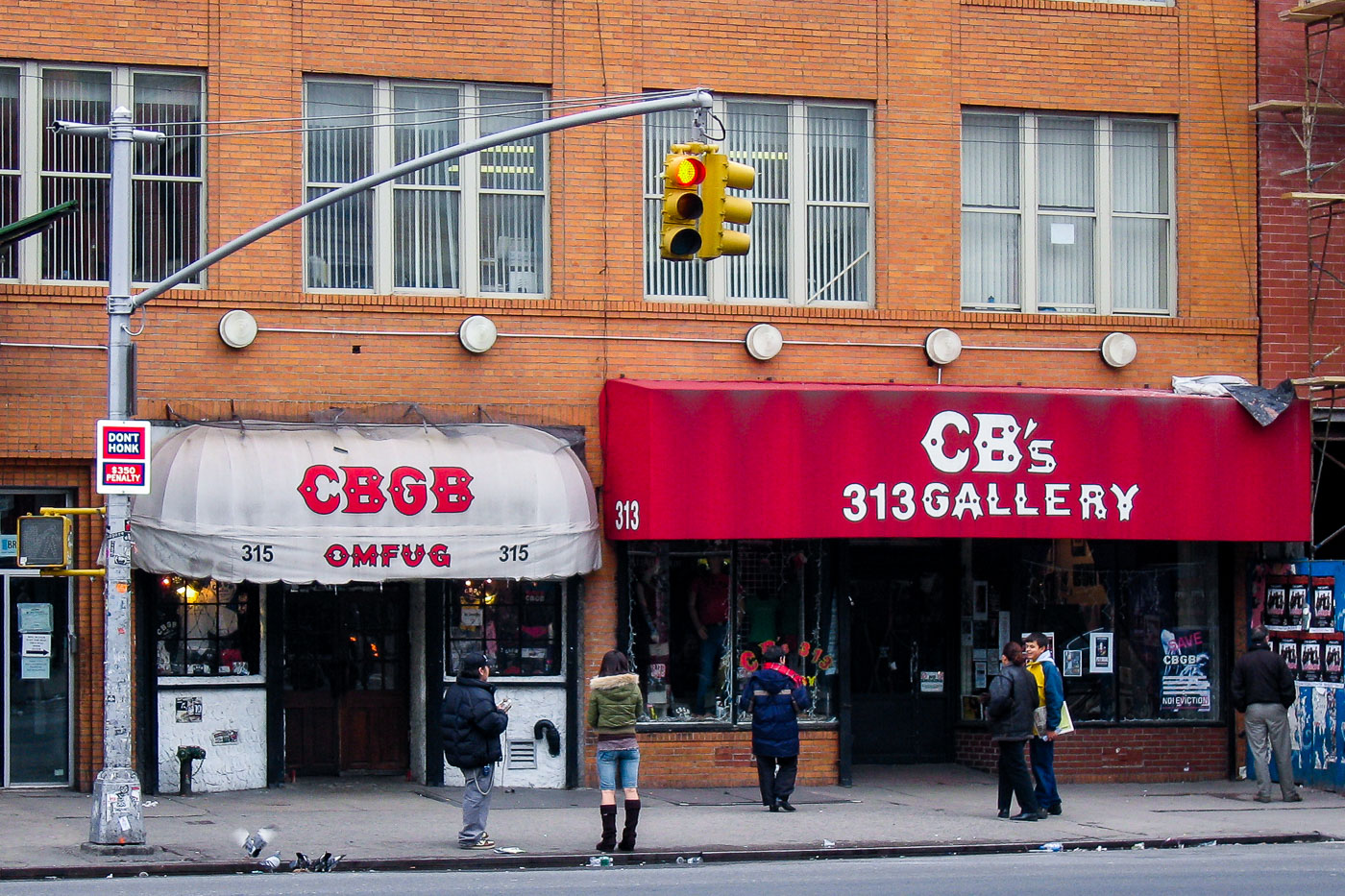 View full post: CBGB’s Storefront on the Bowery Before Its 2006 Closing
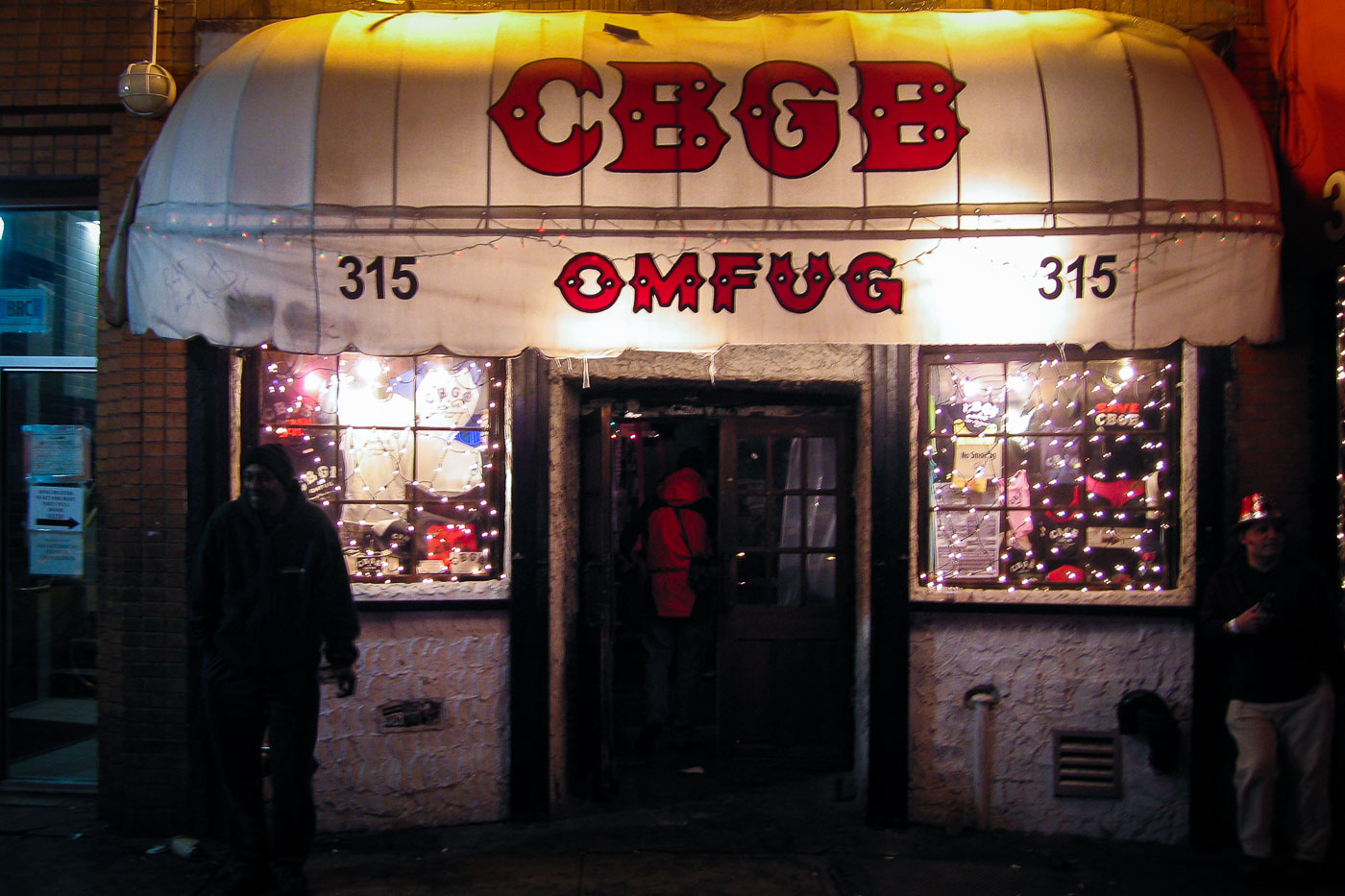 View full post: CBGB’s Awning at Night on the Bowery
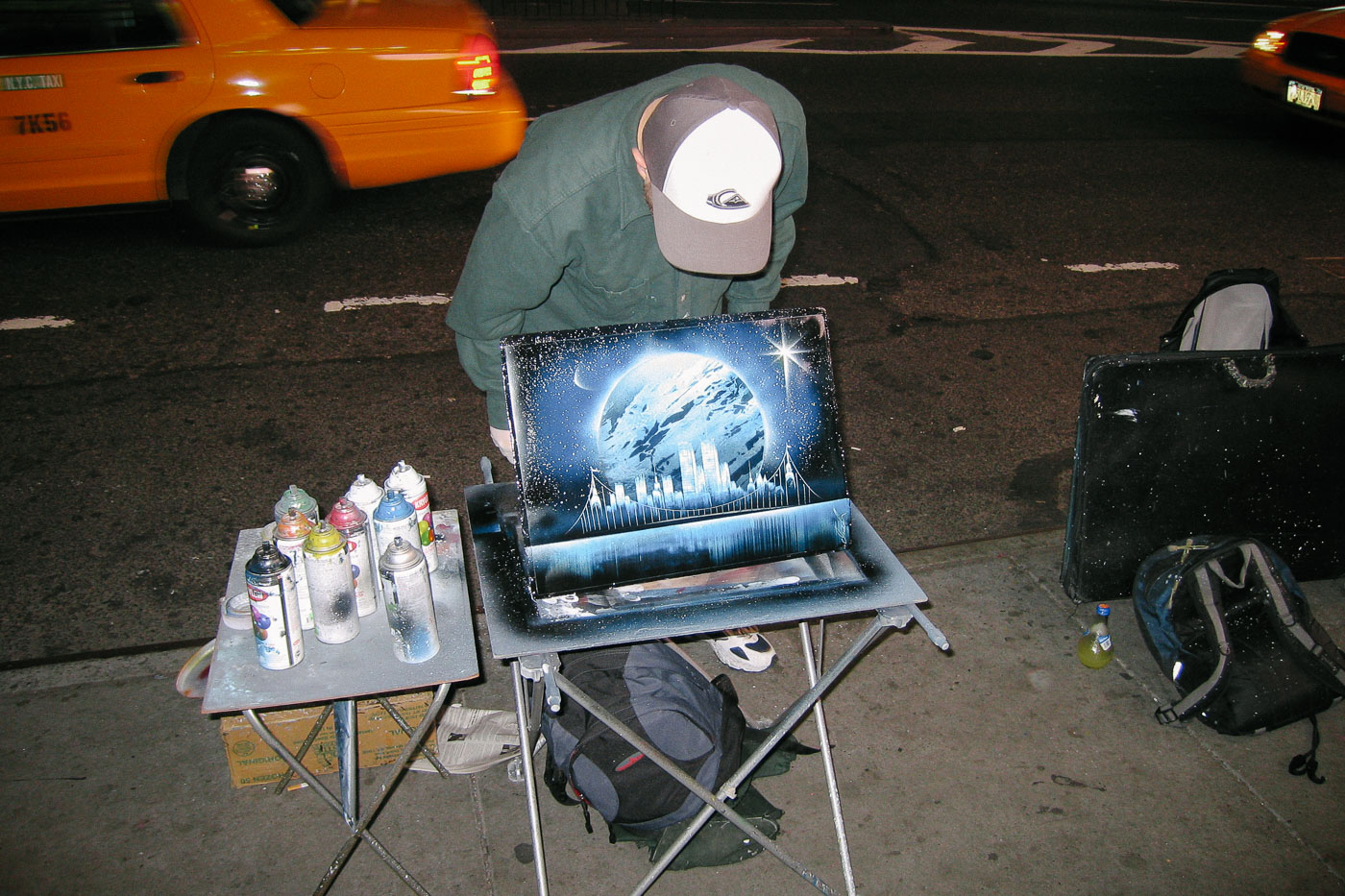 View full post: Spray-Paint Artist Creating a Cityscape Near a Times Square Curb
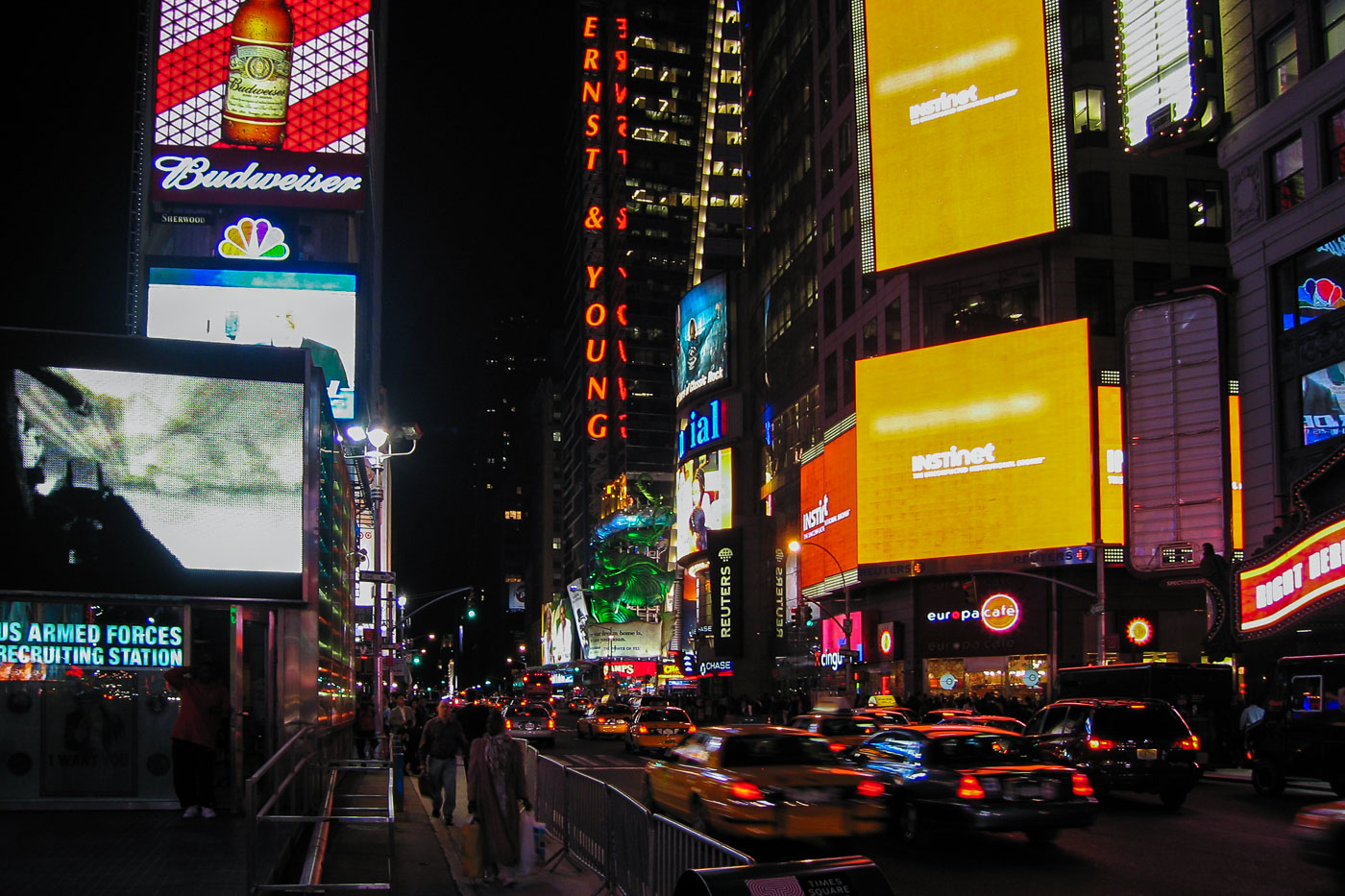 View full post: Taxi Traffic Near the US Armed Forces Recruiting Station in Times Square
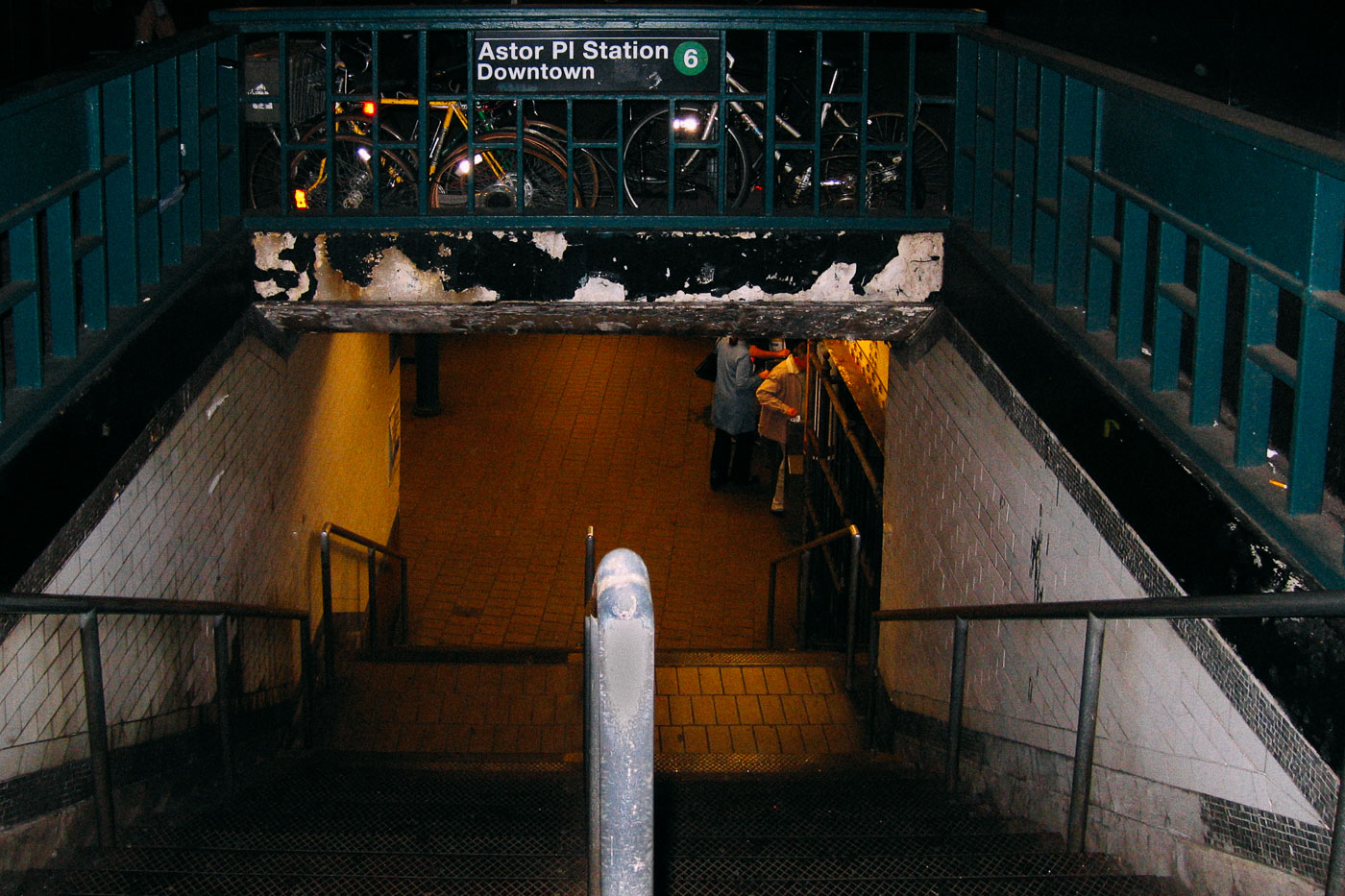 View full post: Downtown 6 Entrance at Astor Place Station
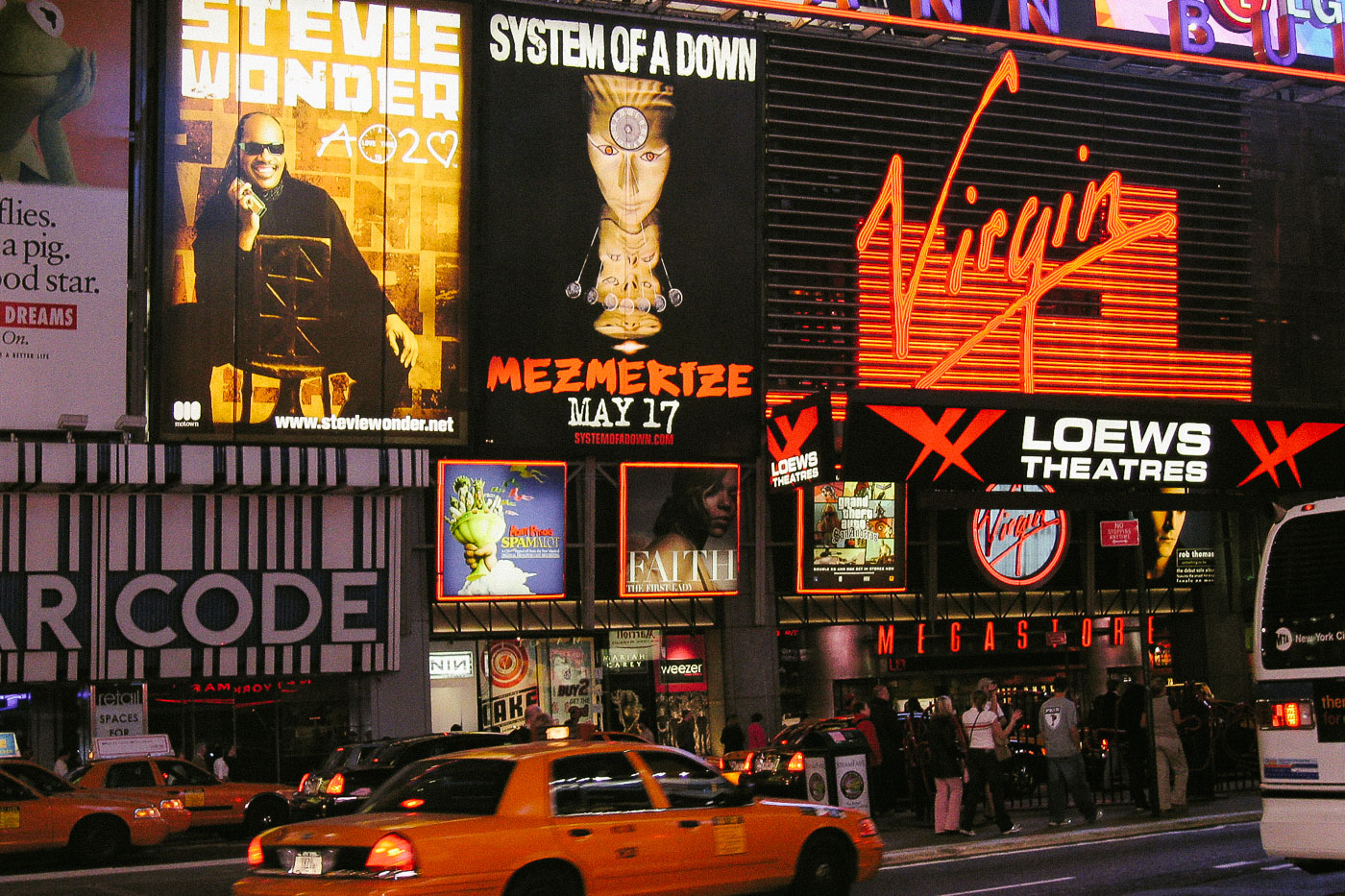 View full post: Stevie Wonder and System of a Down Billboards at Times Square
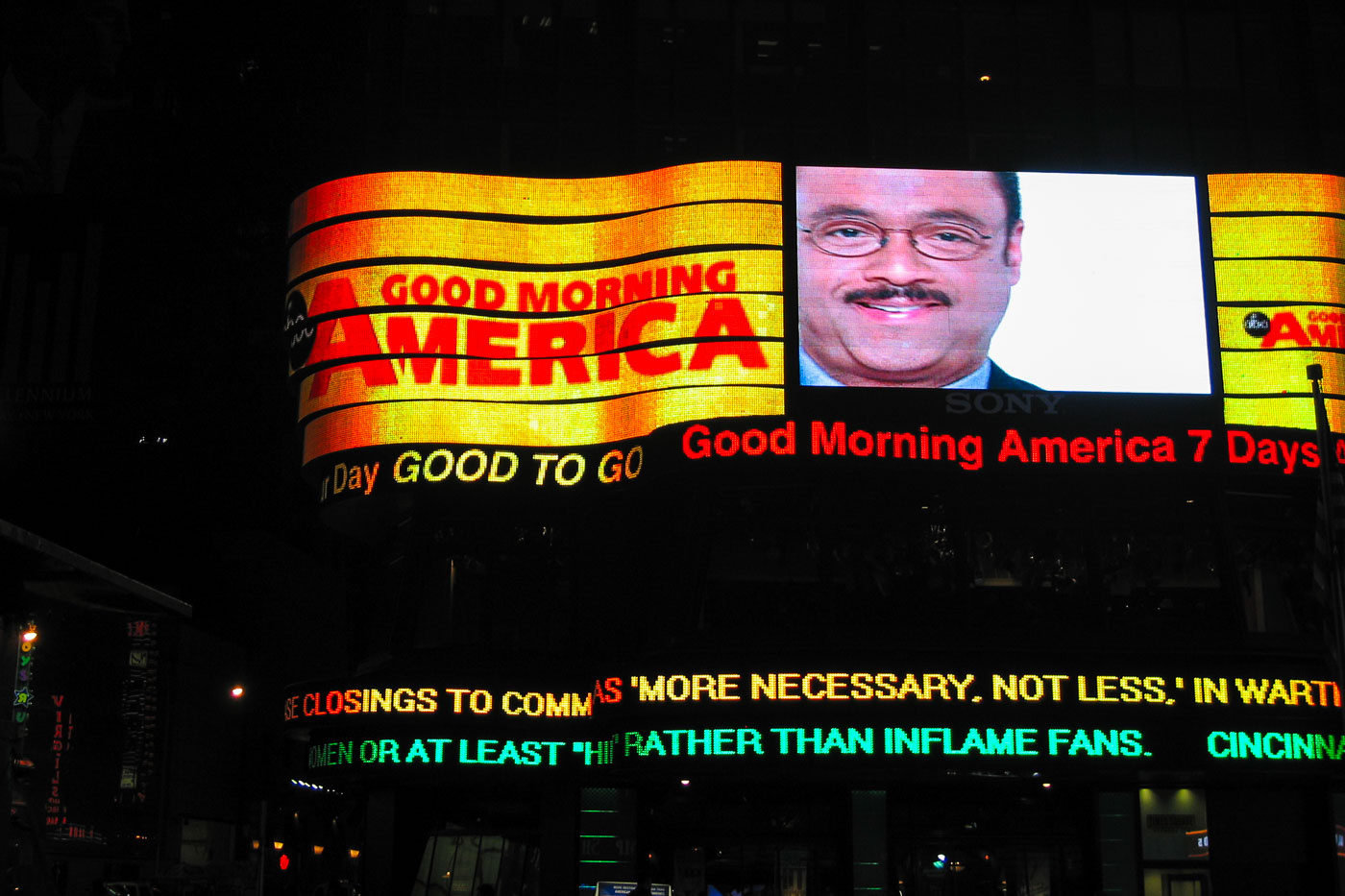 View full post: A “Good Morning America” Sign Above Times Square
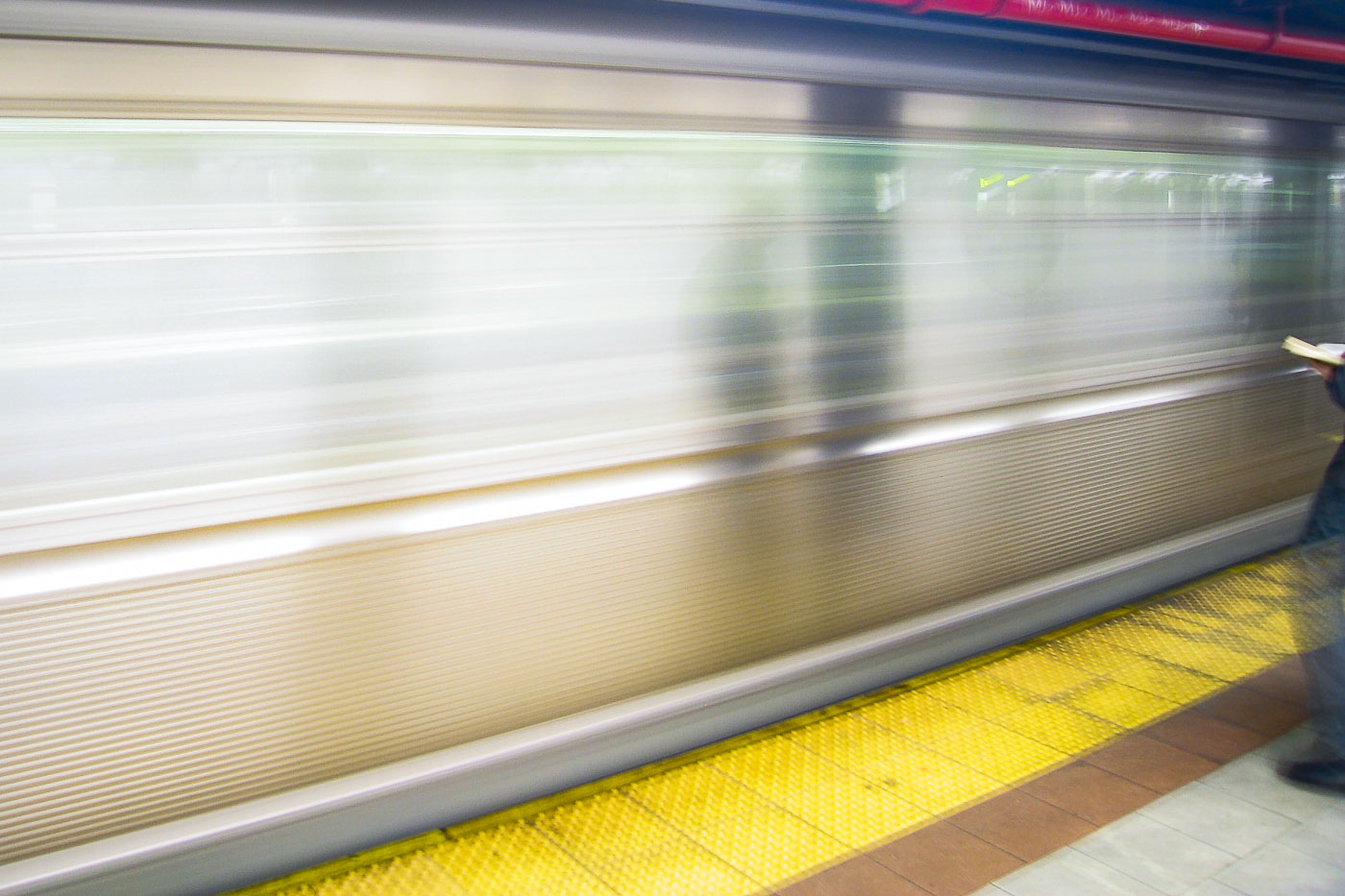 View full post: A New York City Subway Train Speeds Through a Station
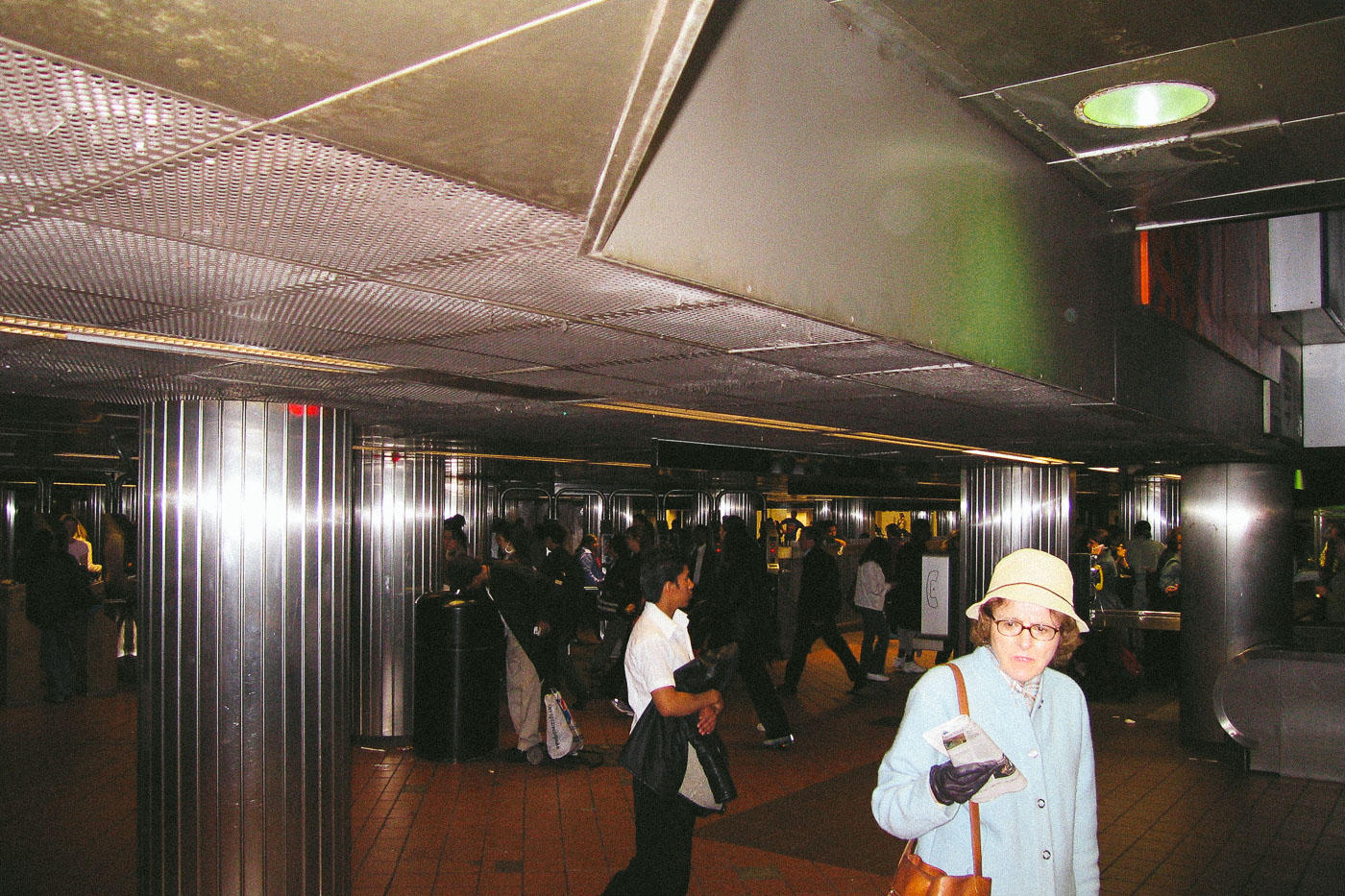 View full post: Woman in a Sun Hat at a Subway Station Mezzanine
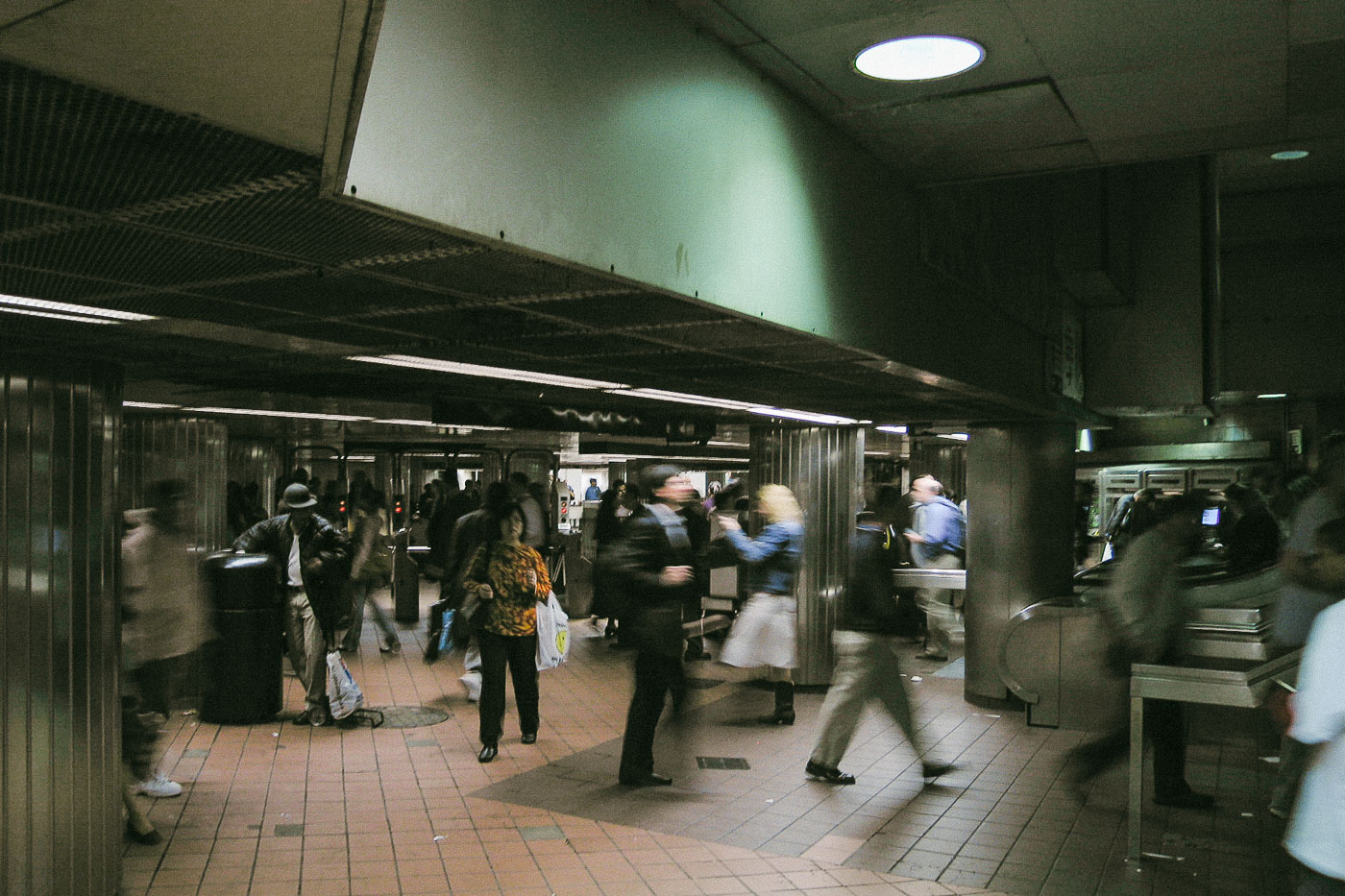 View full post: Commuters Cross a New York City Subway Mezzanine
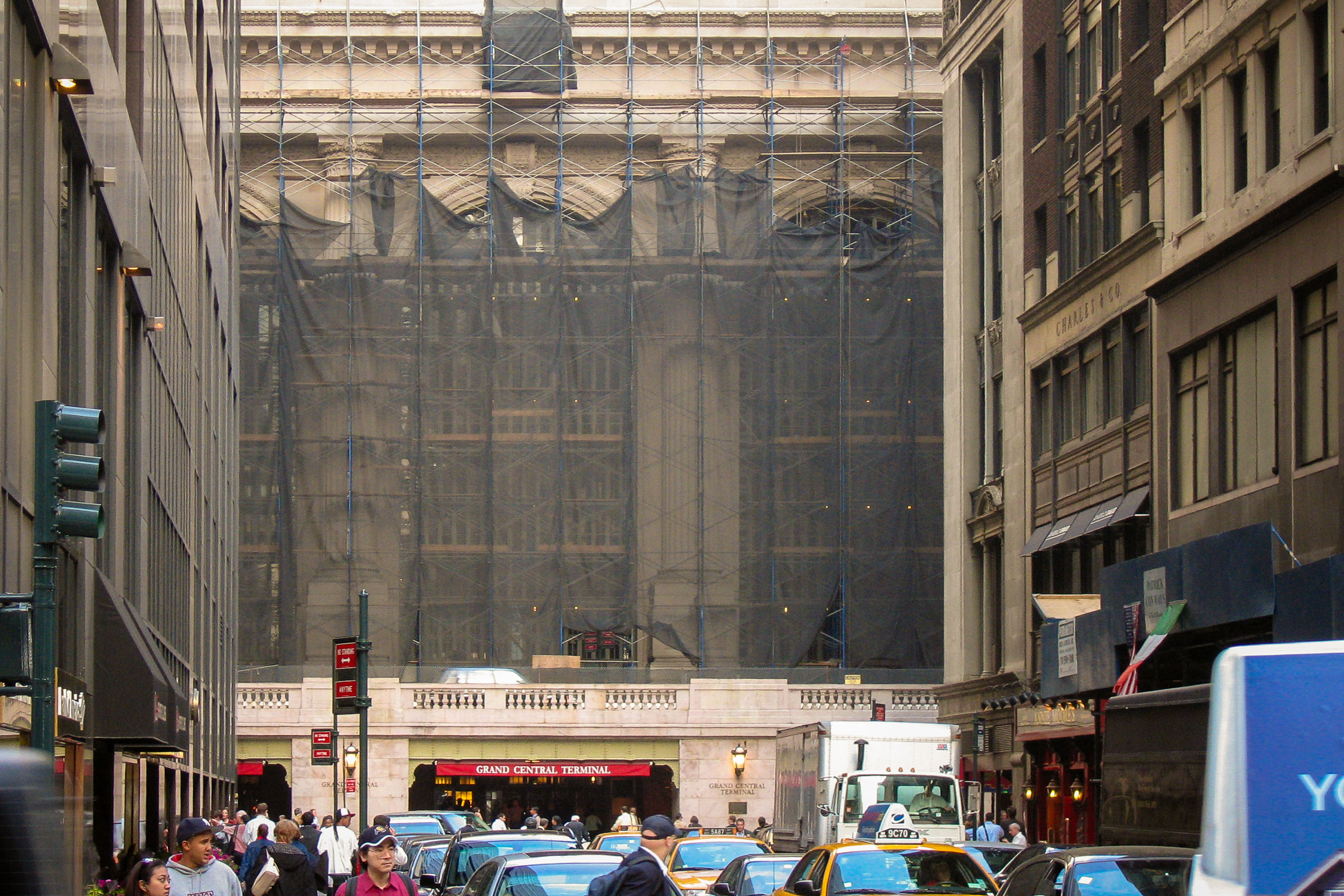 View full post: Scaffolding Shrouds Grand Central Terminal on Vanderbilt Avenue
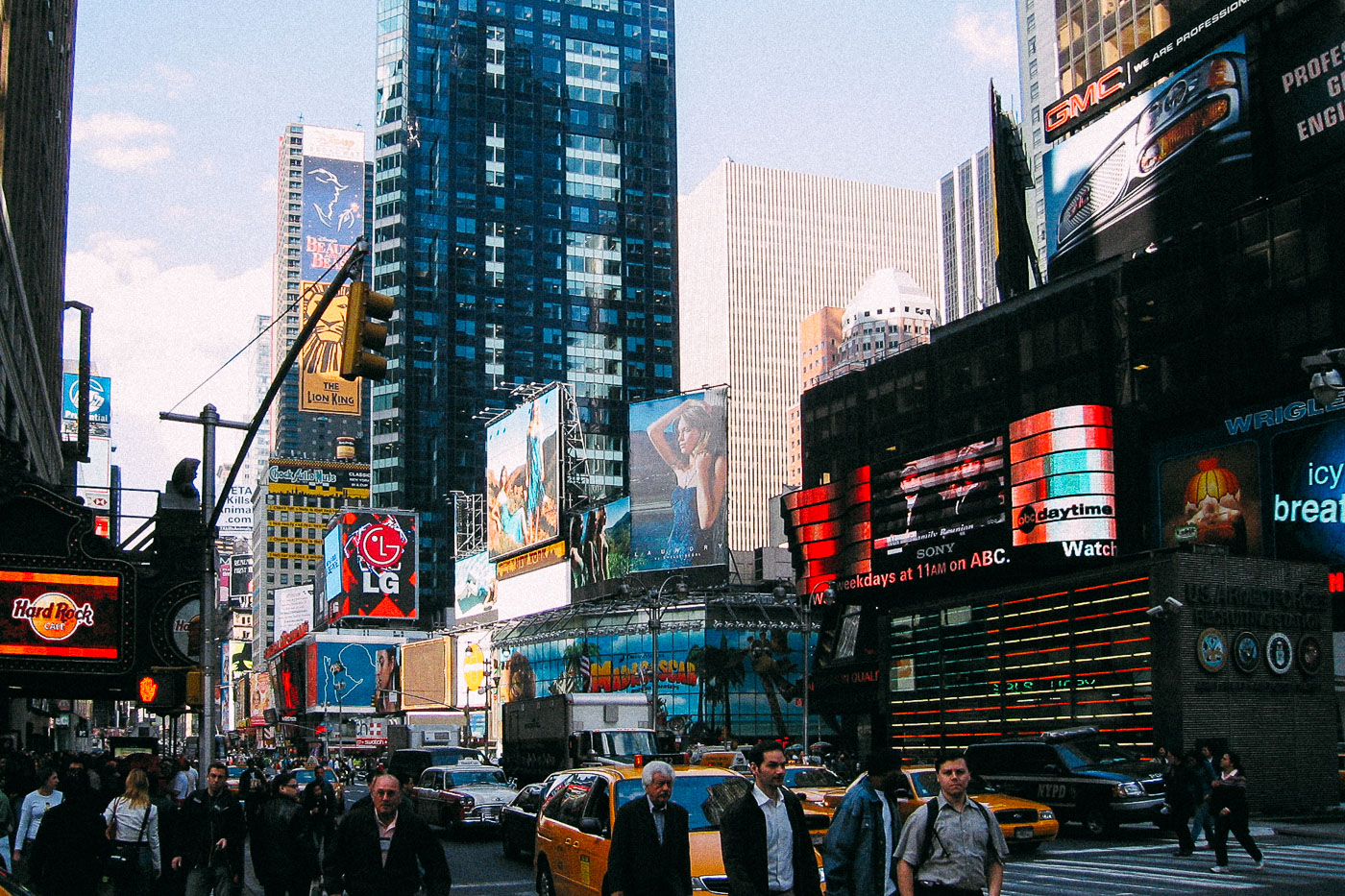 View full post: Midtown Crowds and Taxis Beneath Times Square Billboards
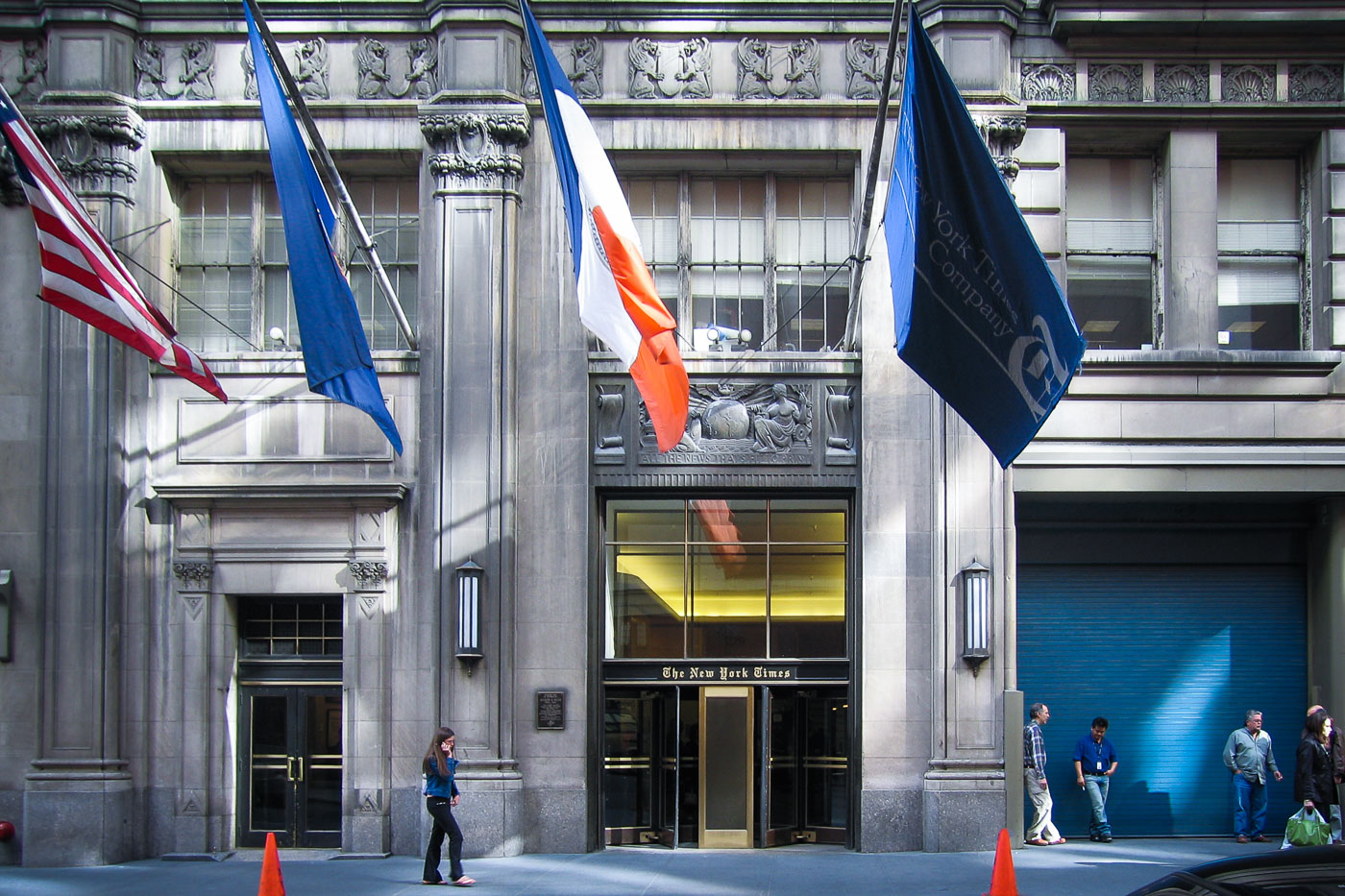 View full post: Flags Flying Outside the Former New York Times Building