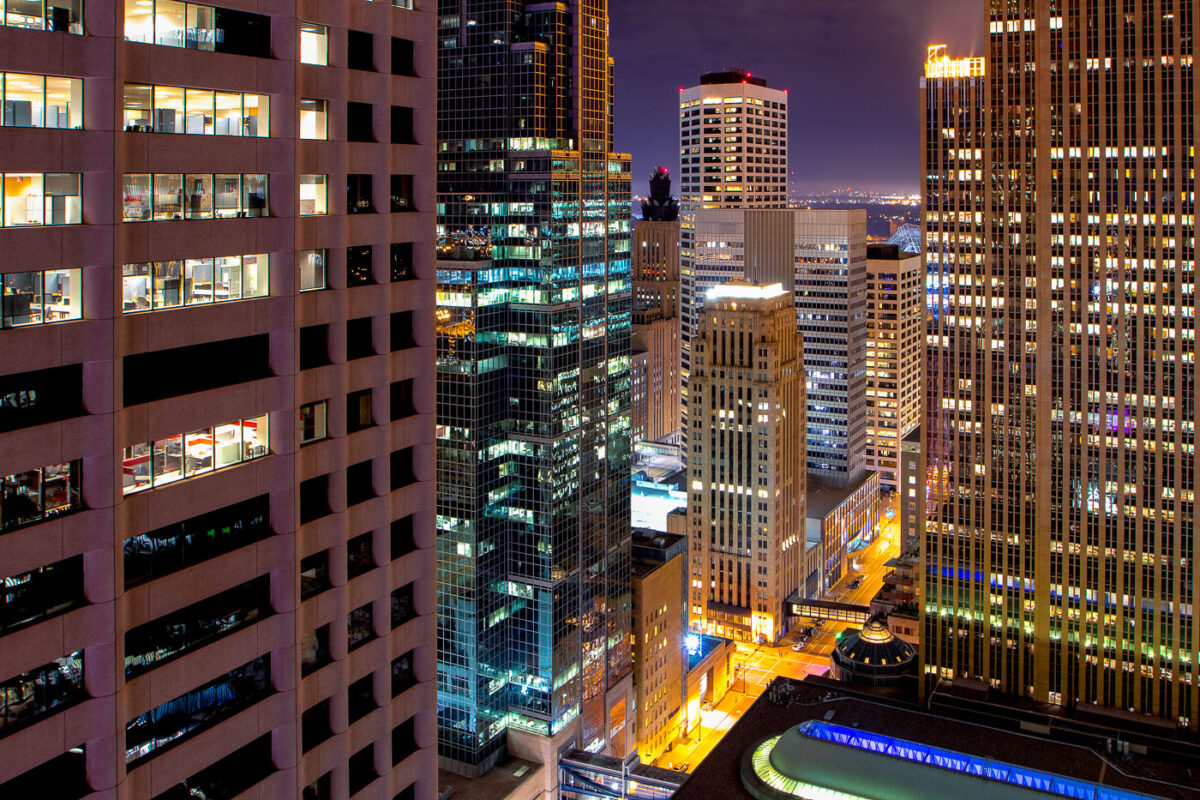
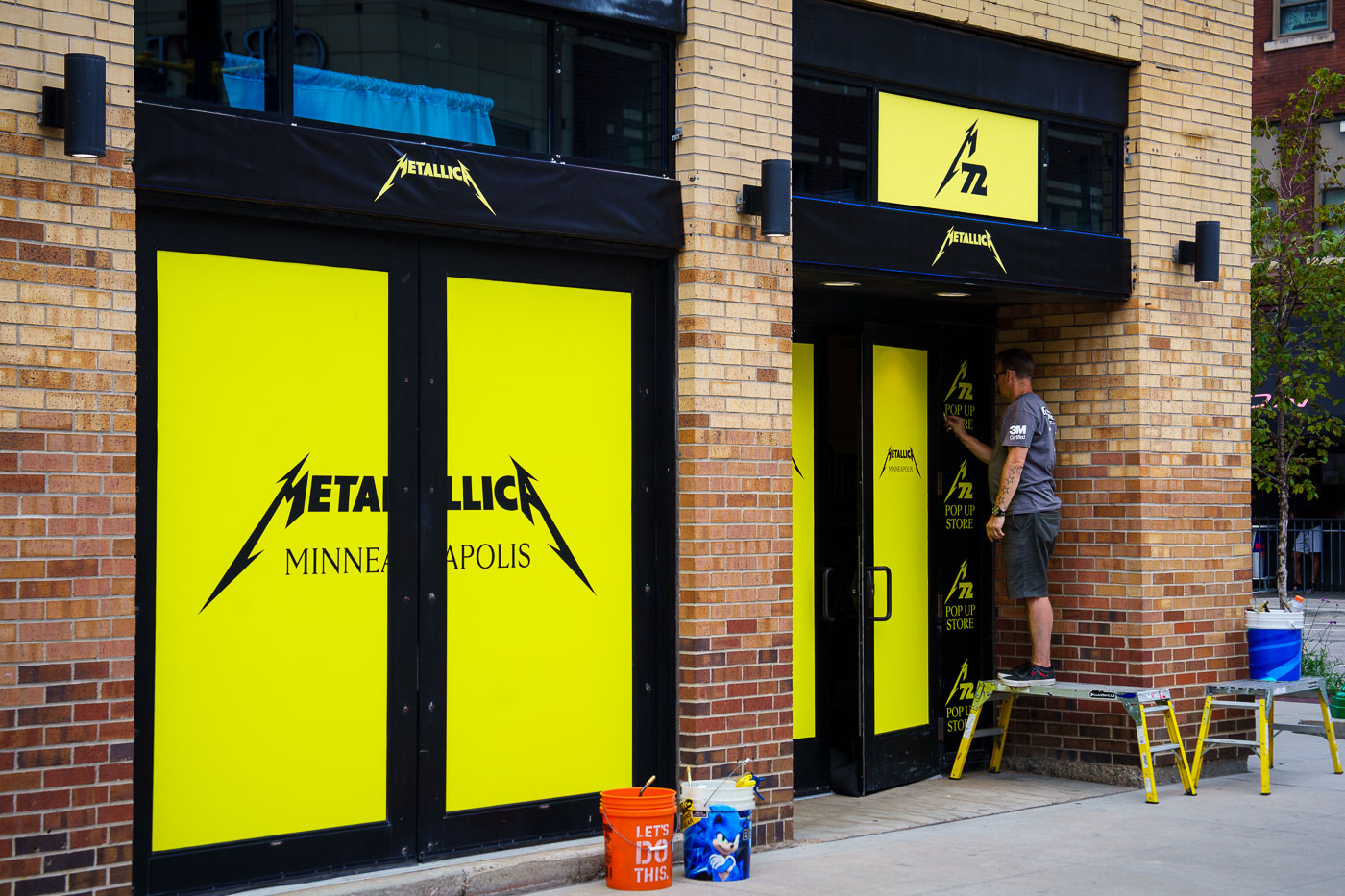
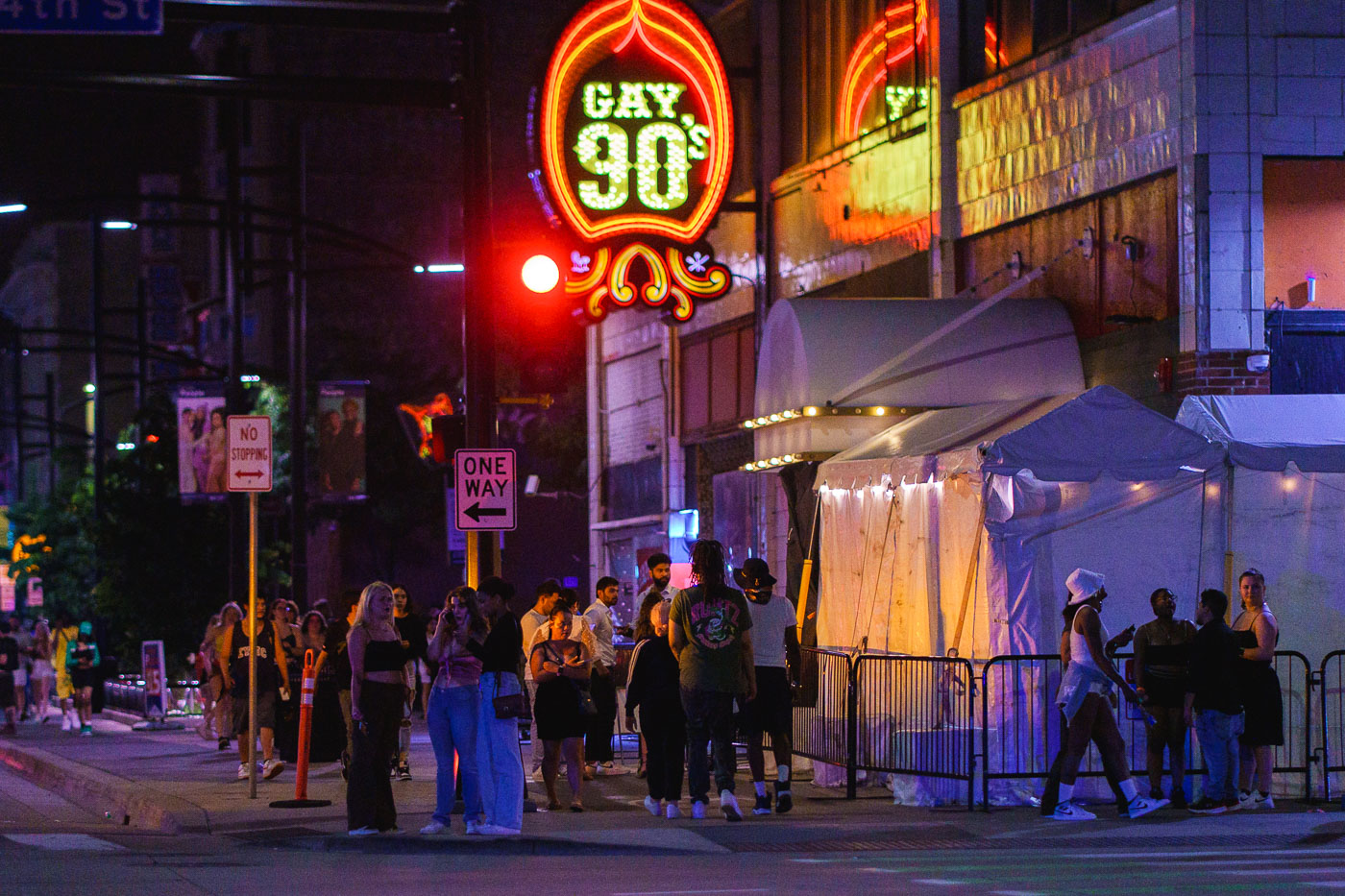
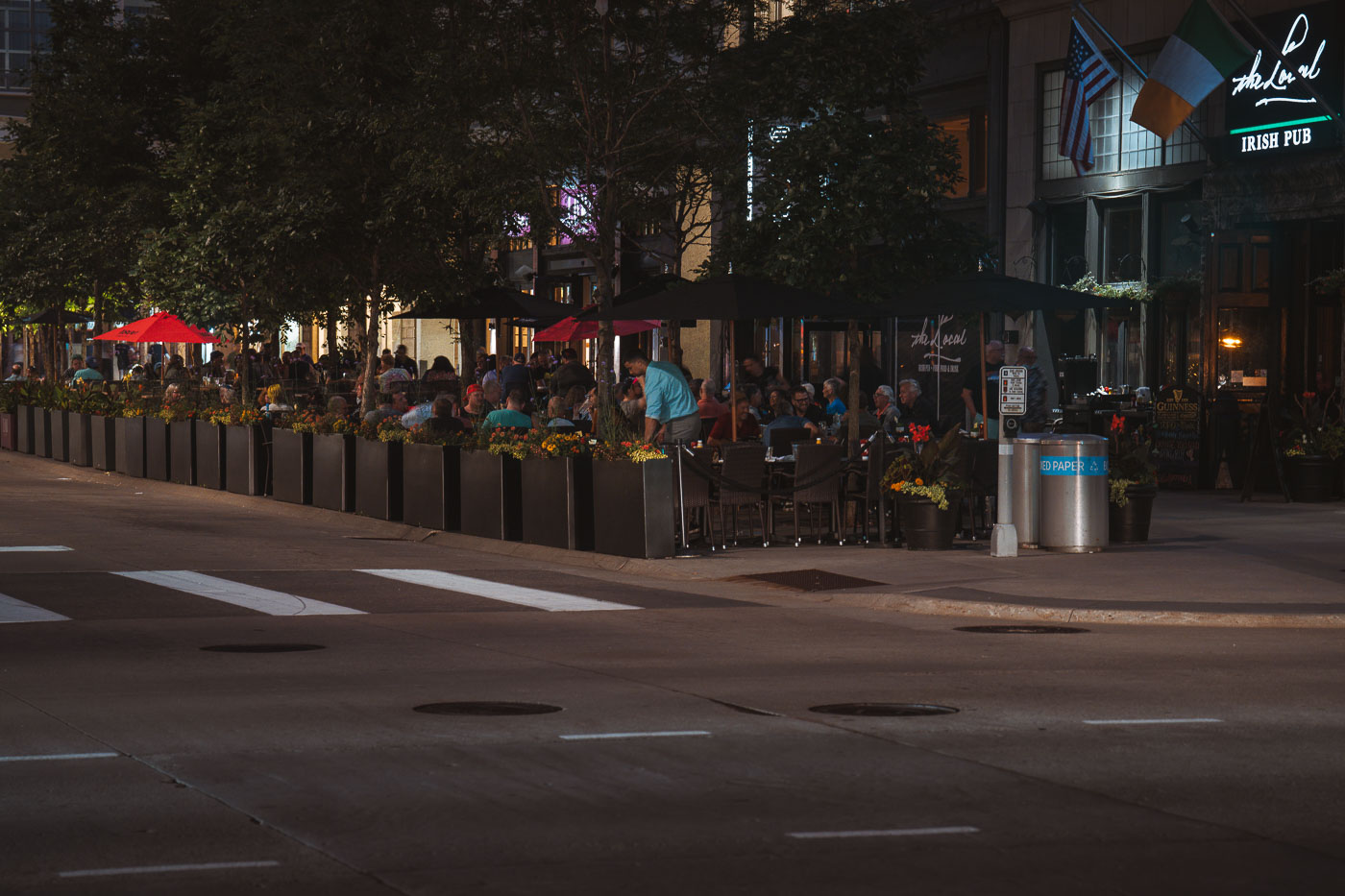
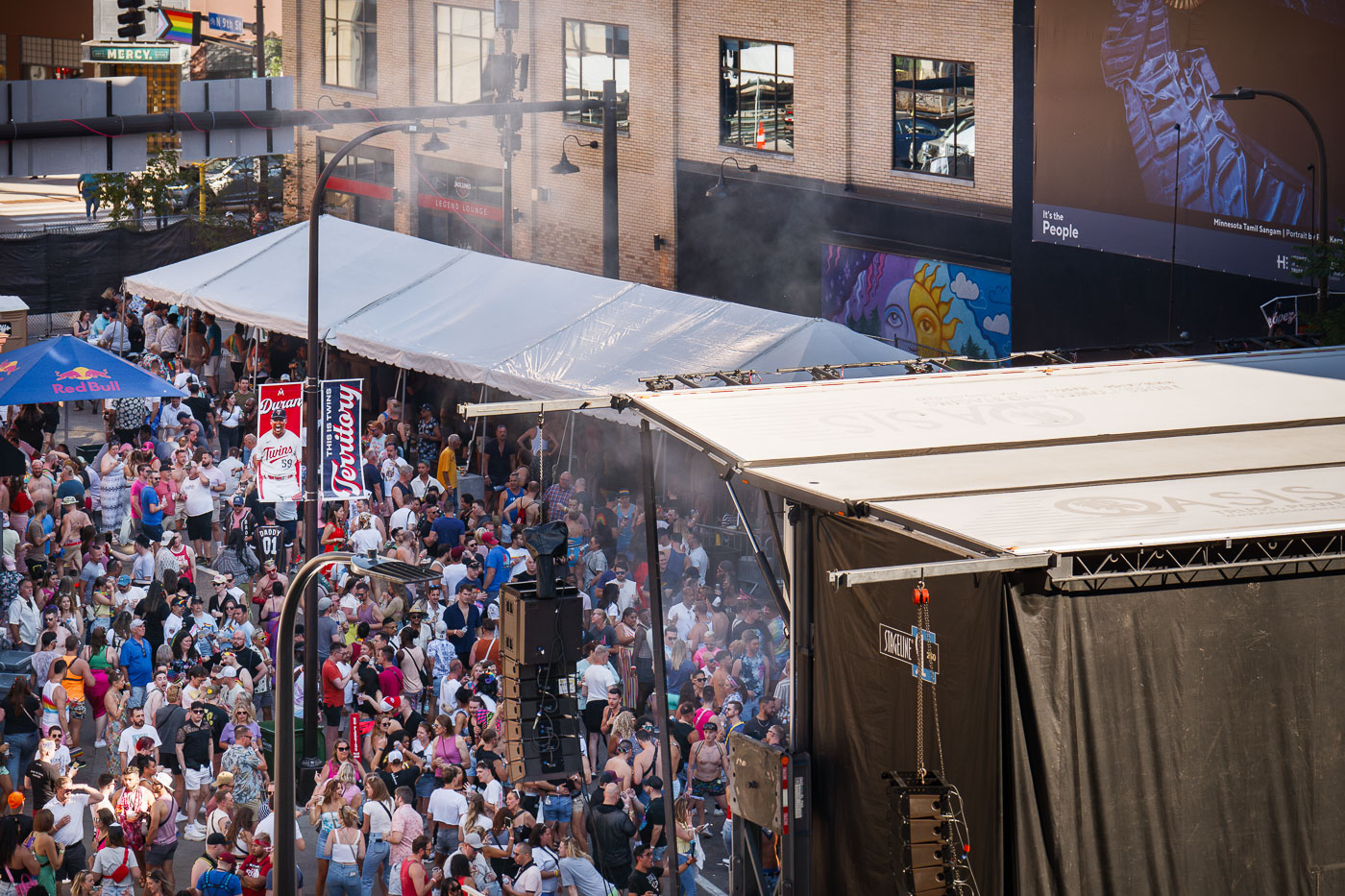
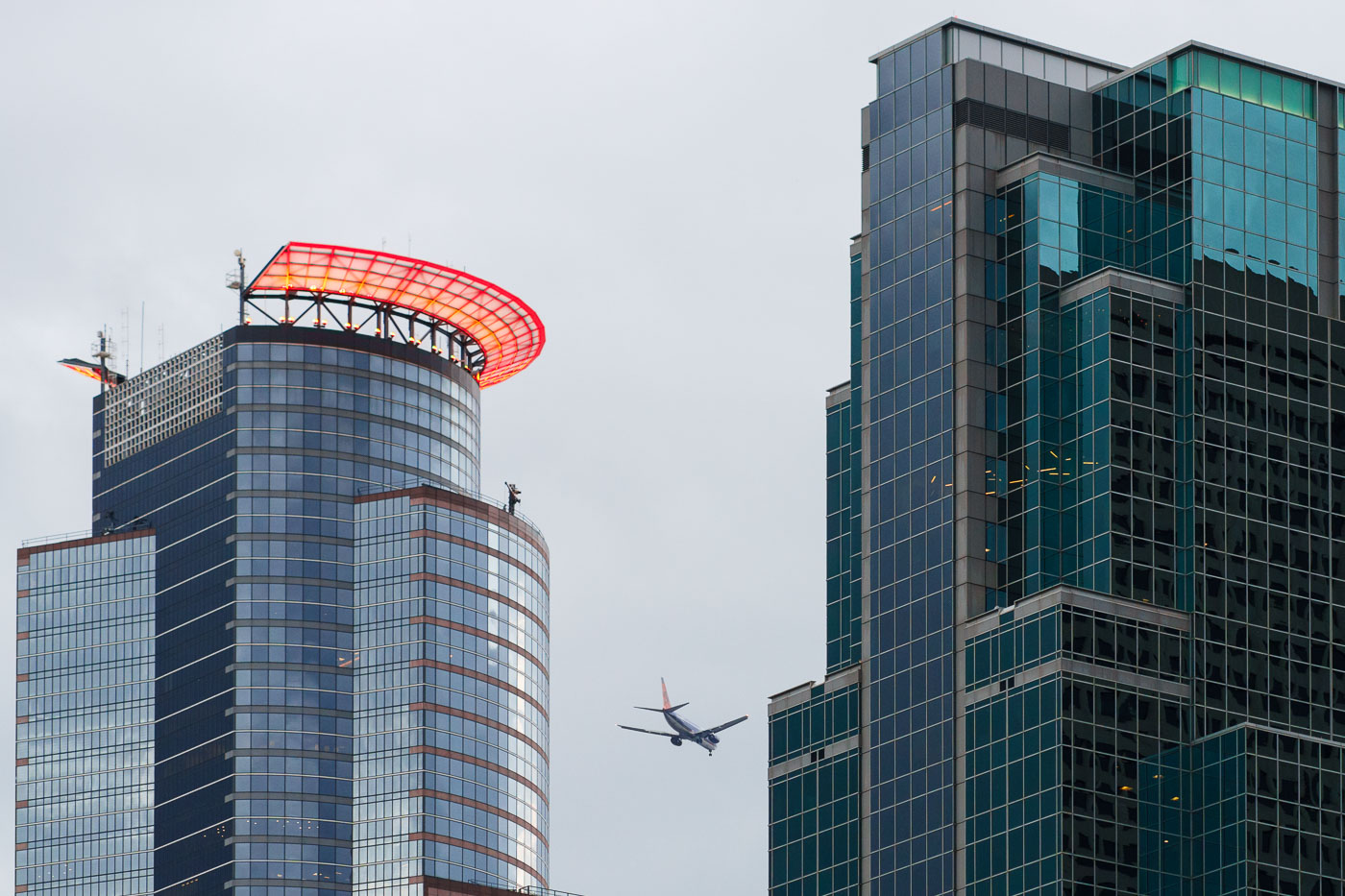
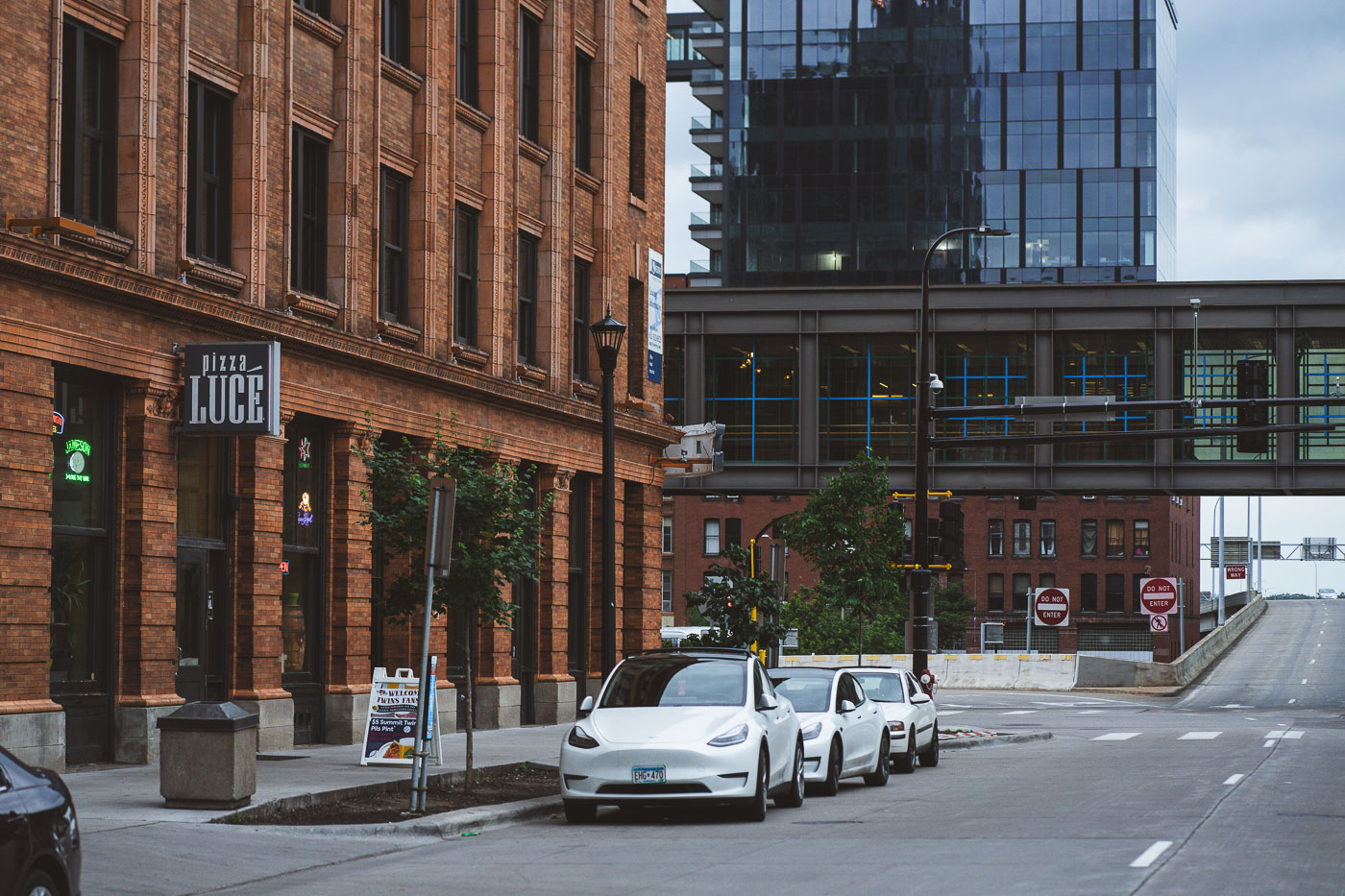
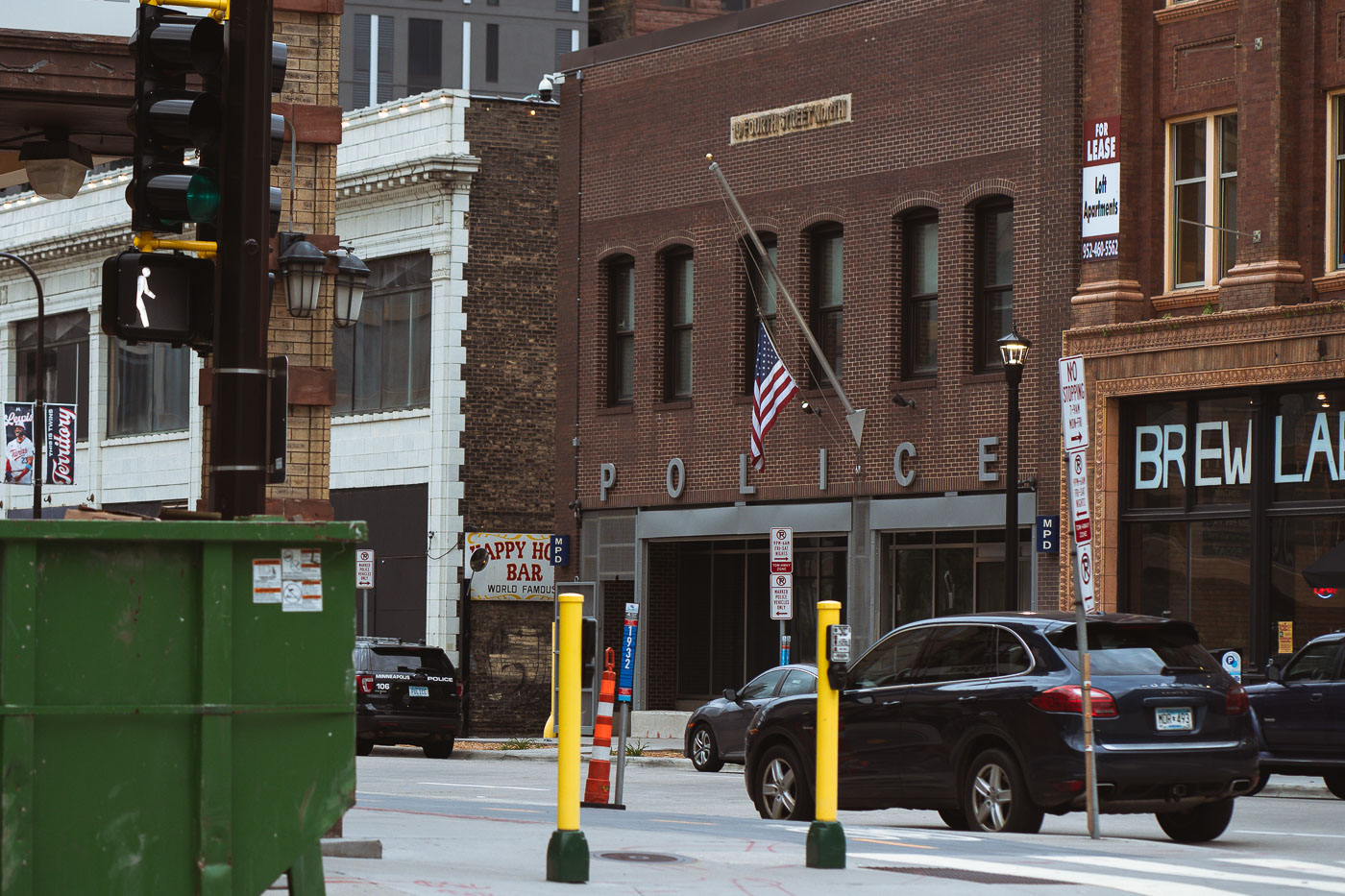
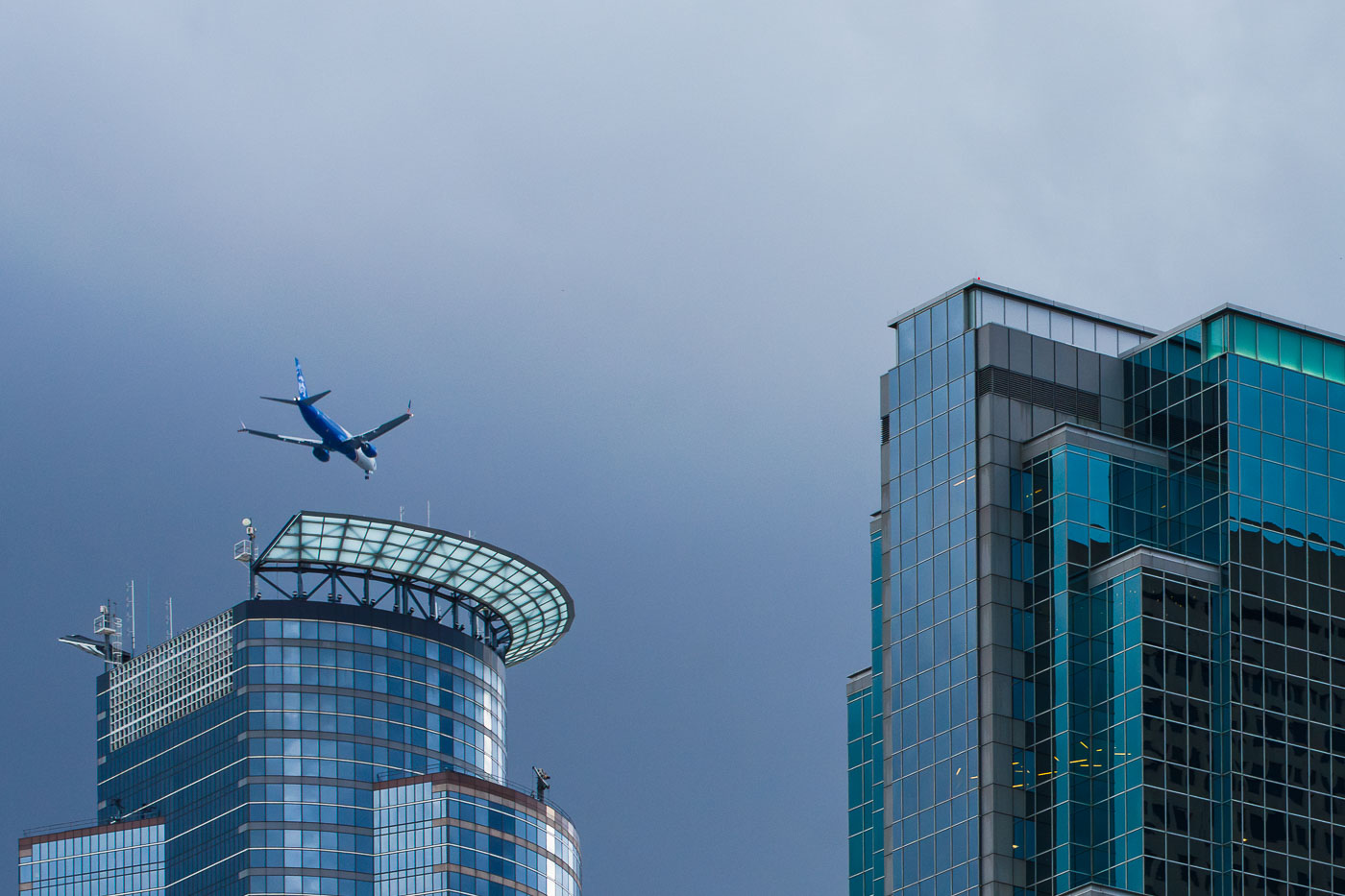
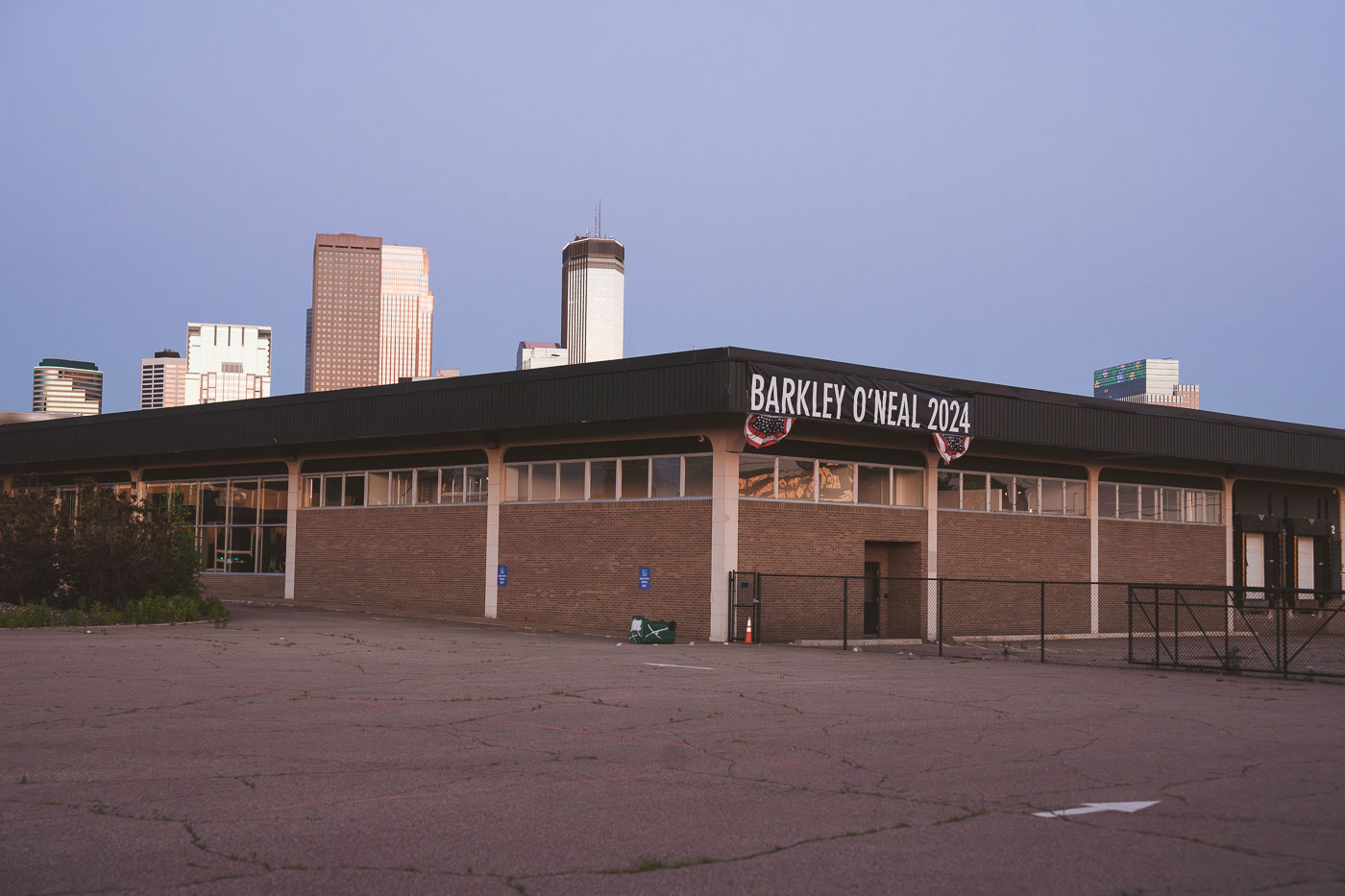
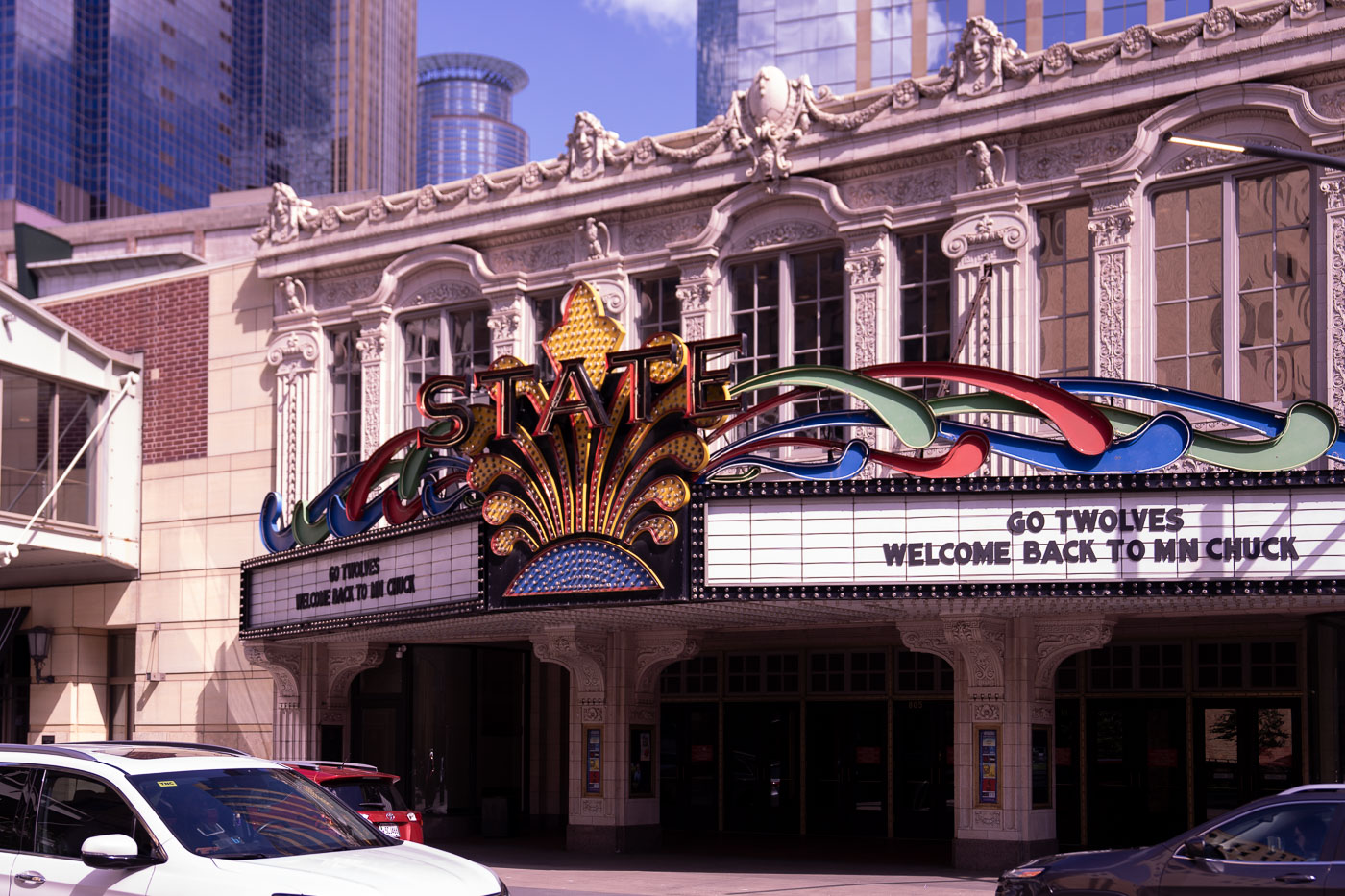
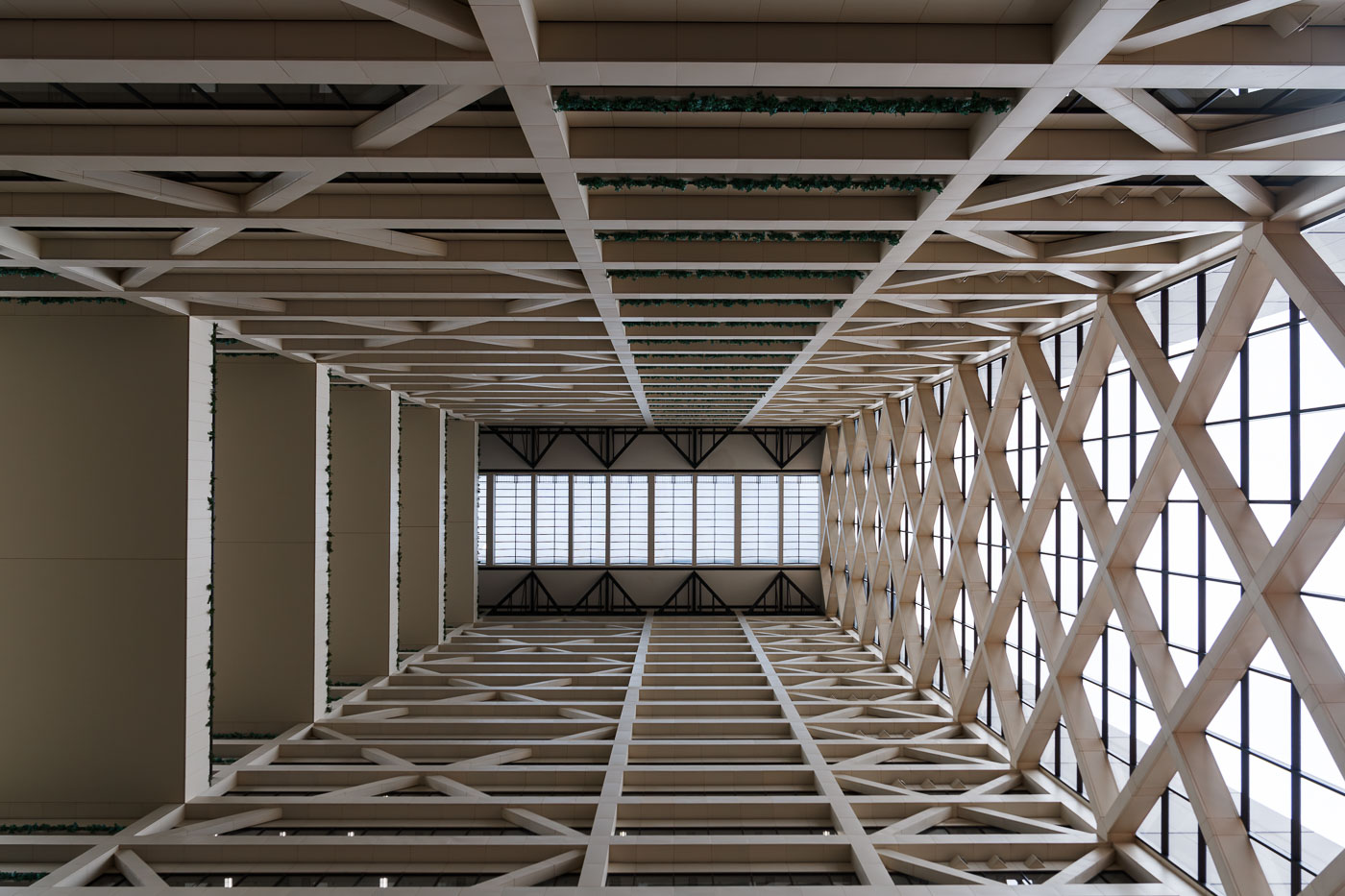
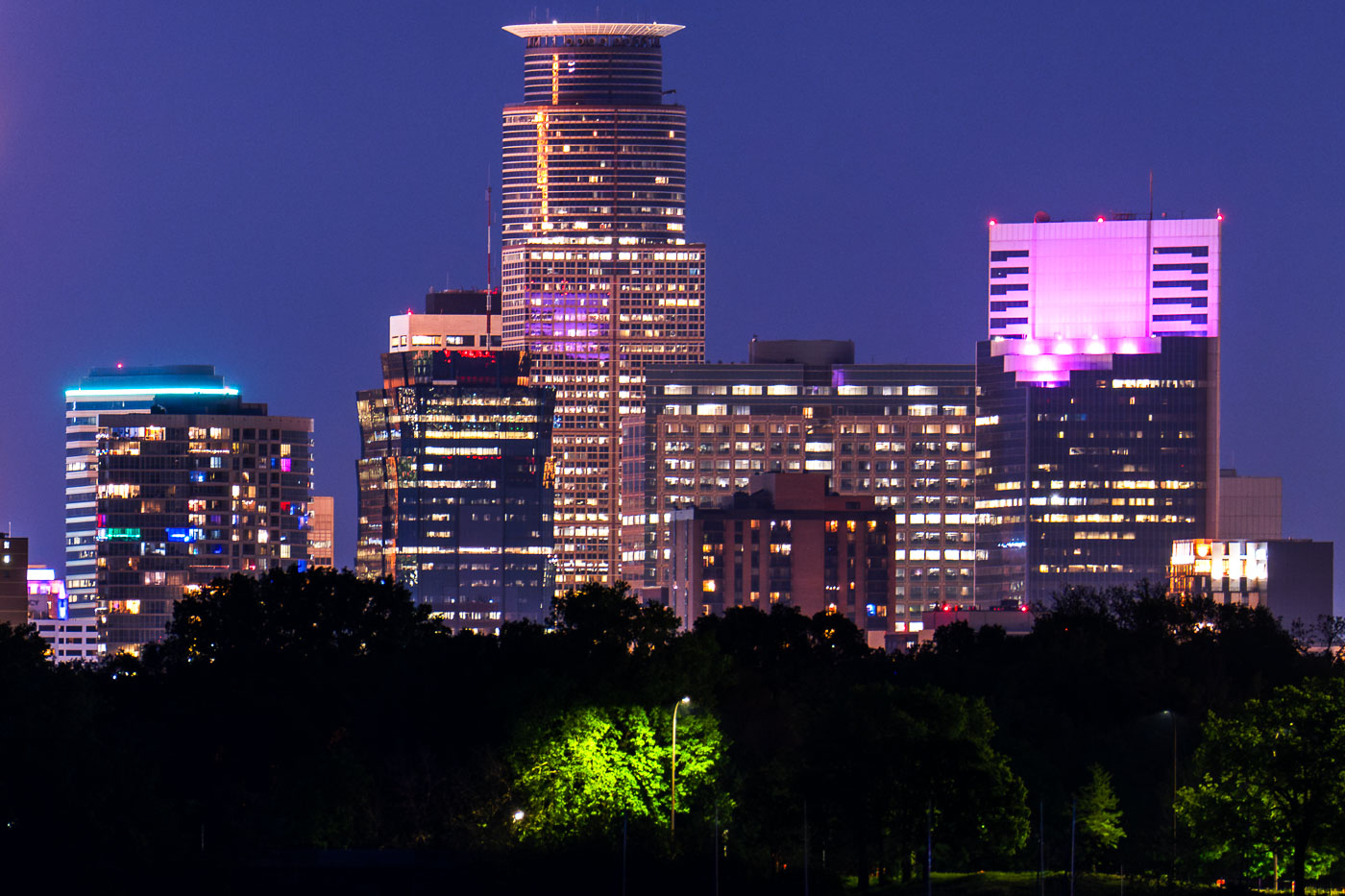
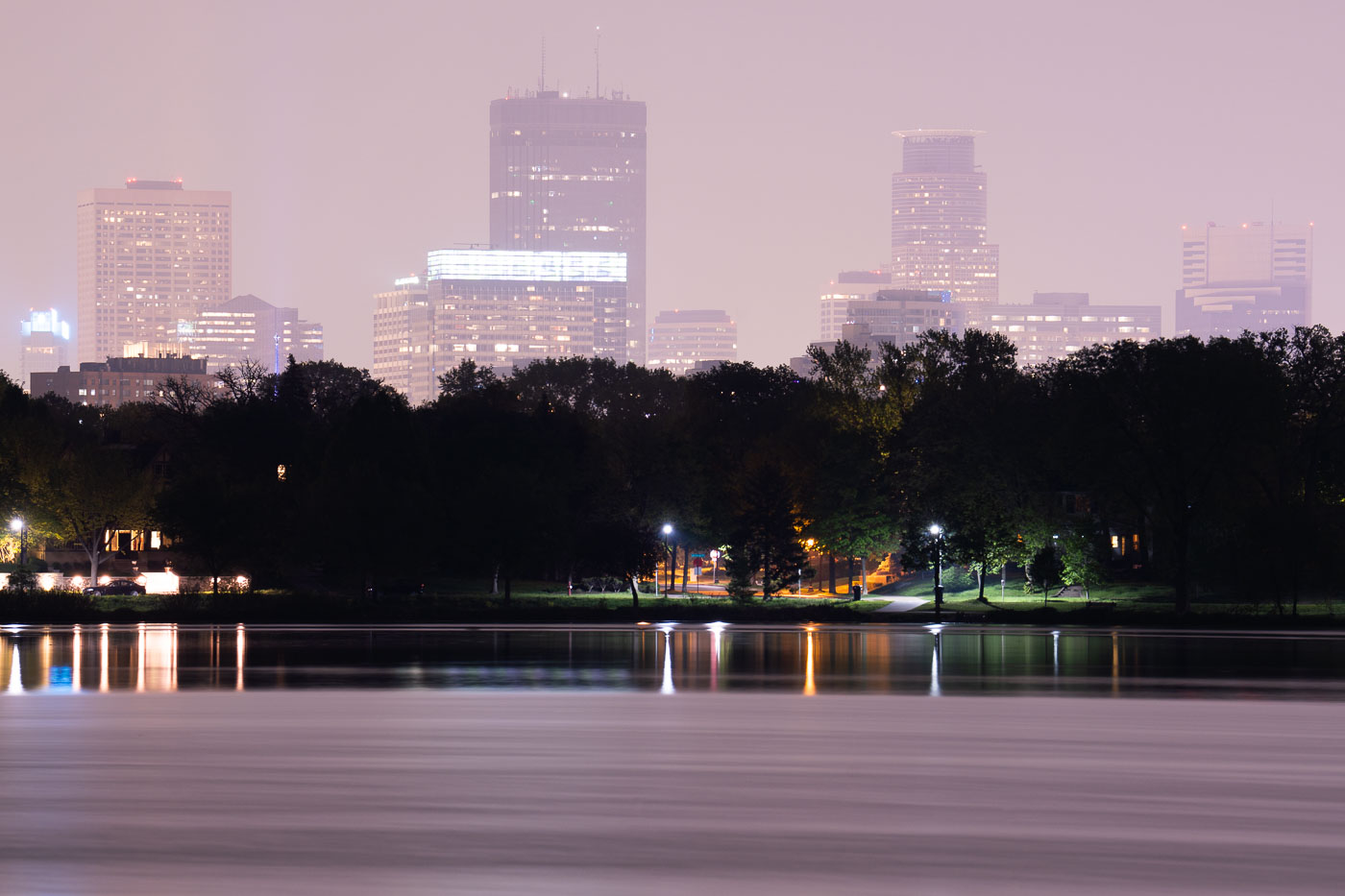
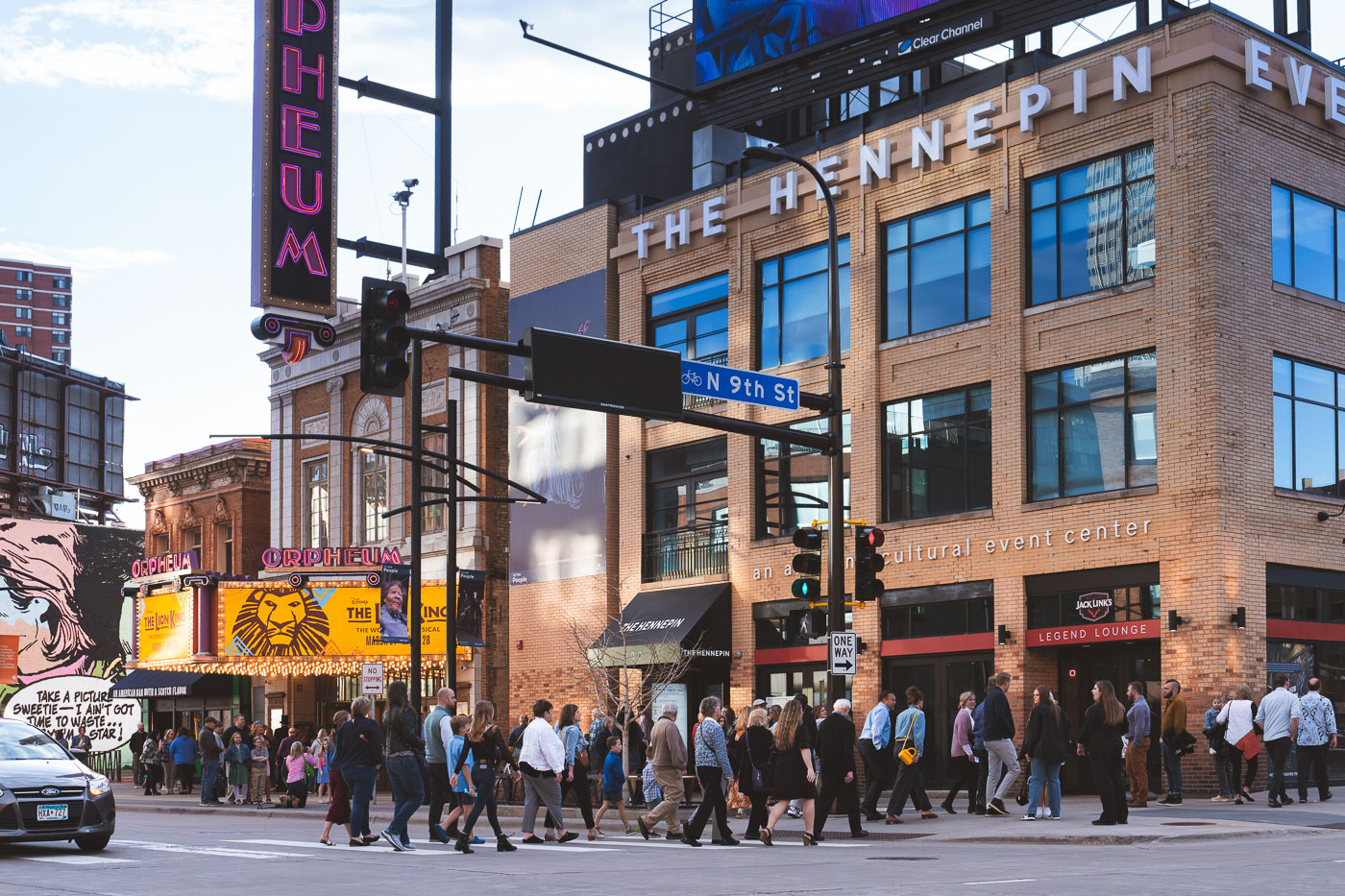
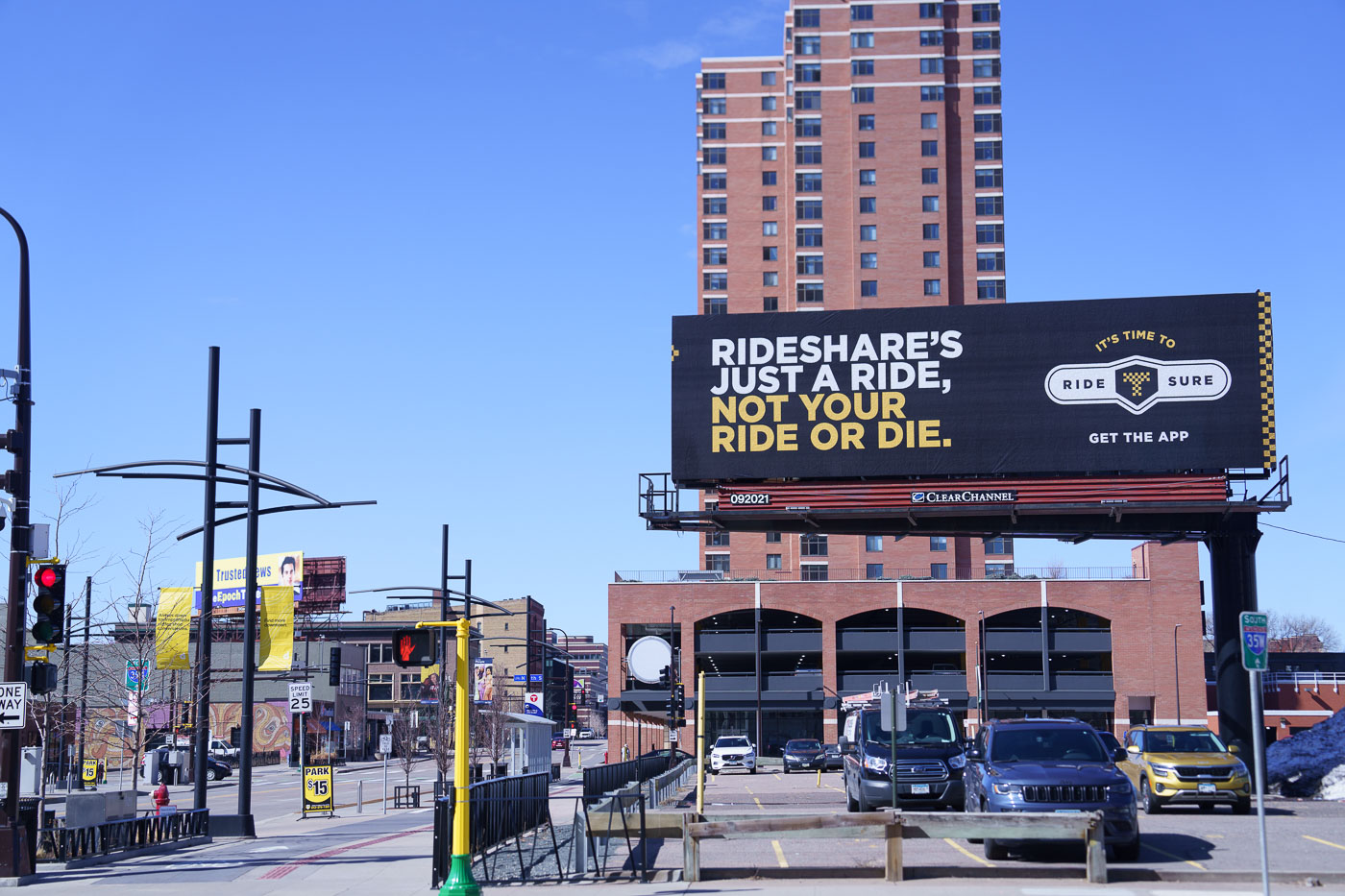
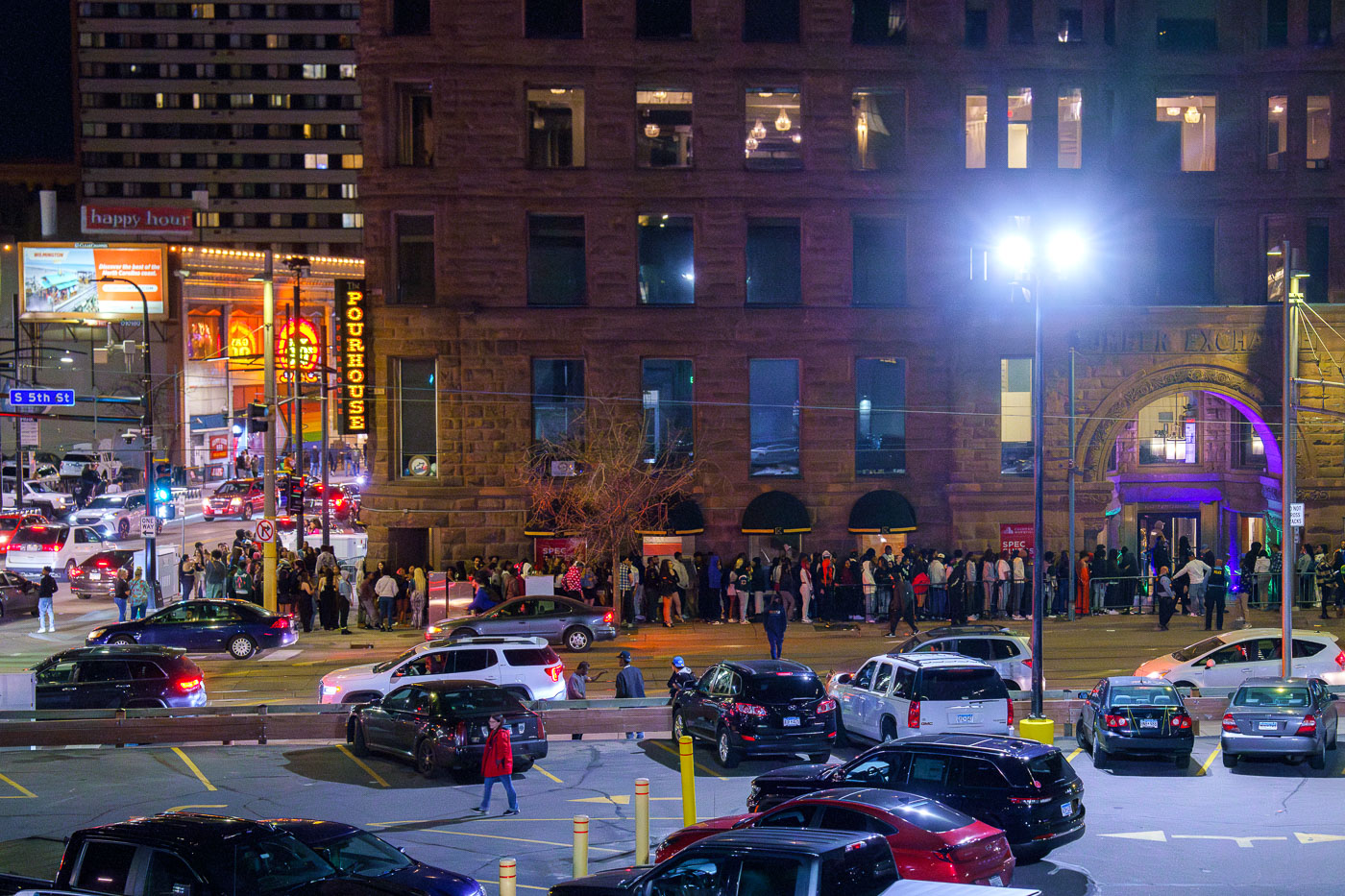
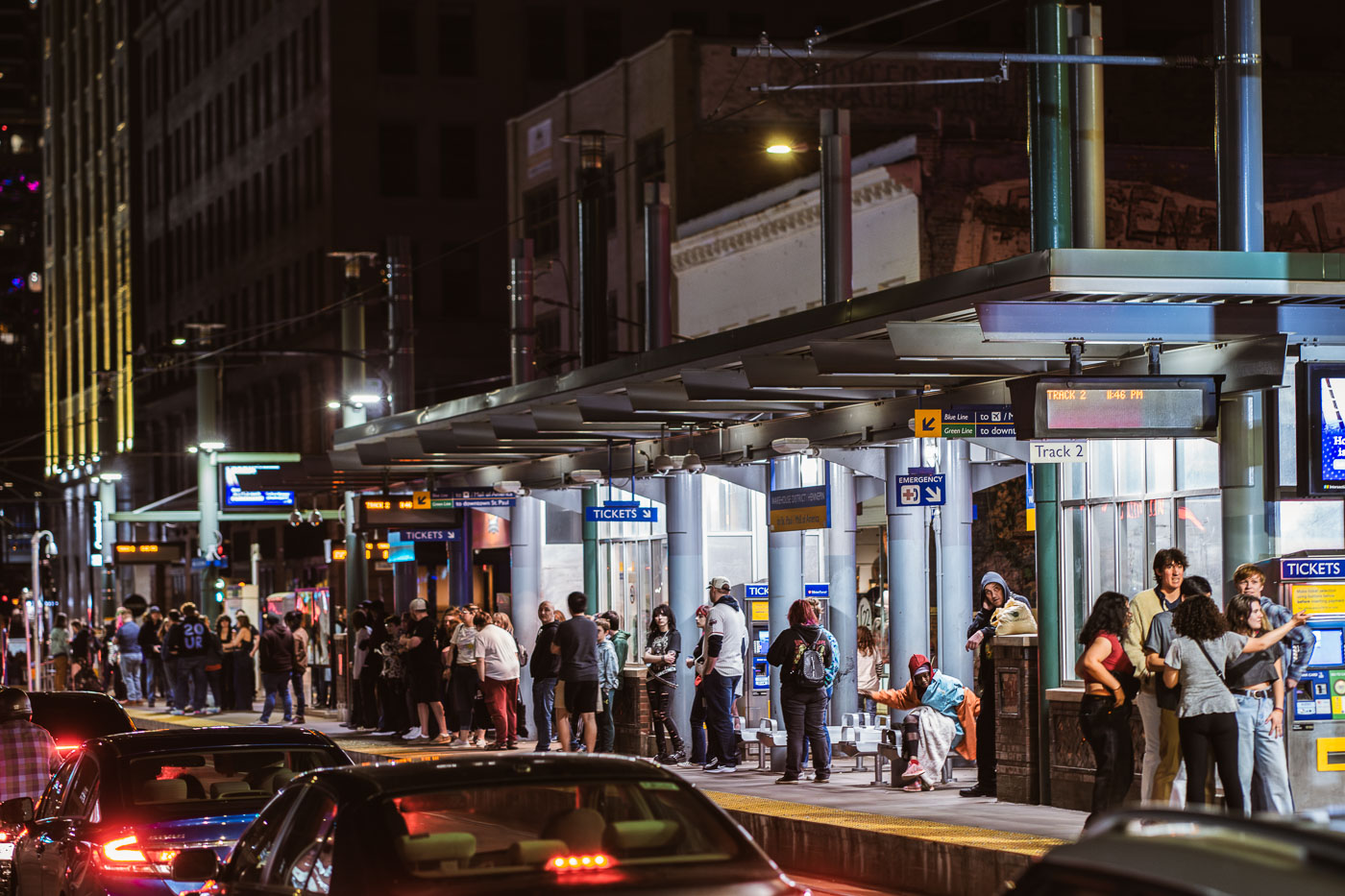
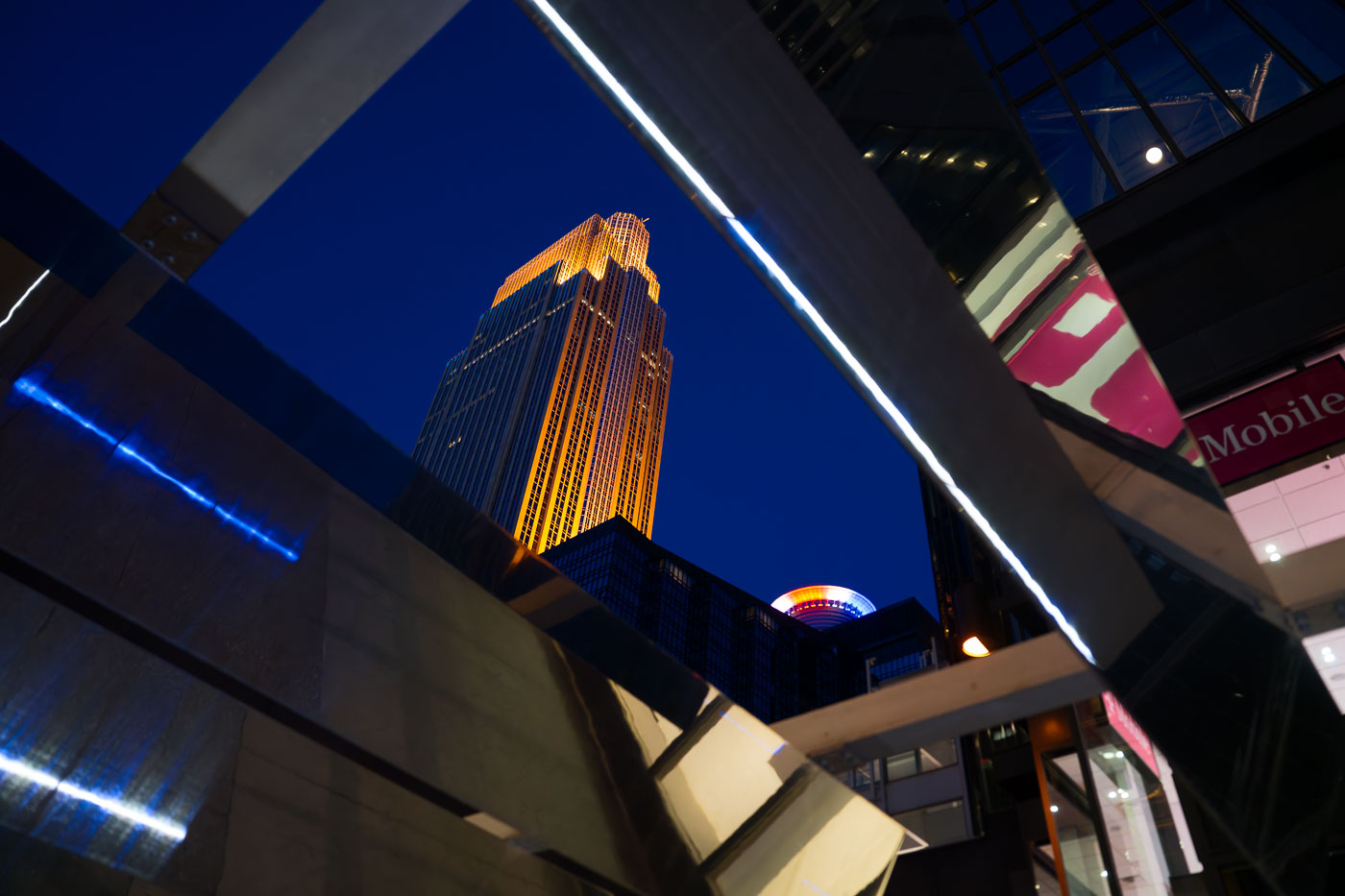
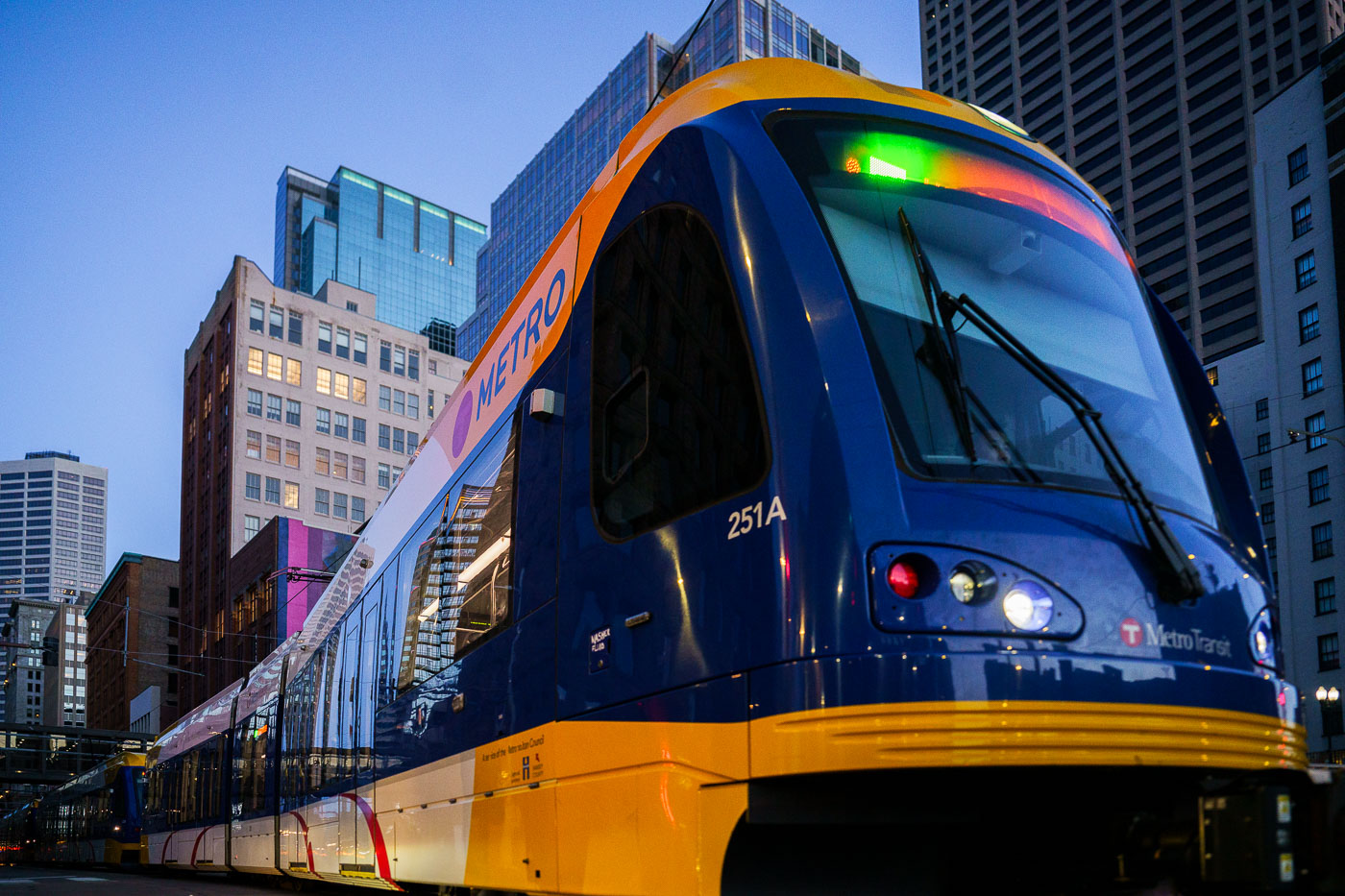
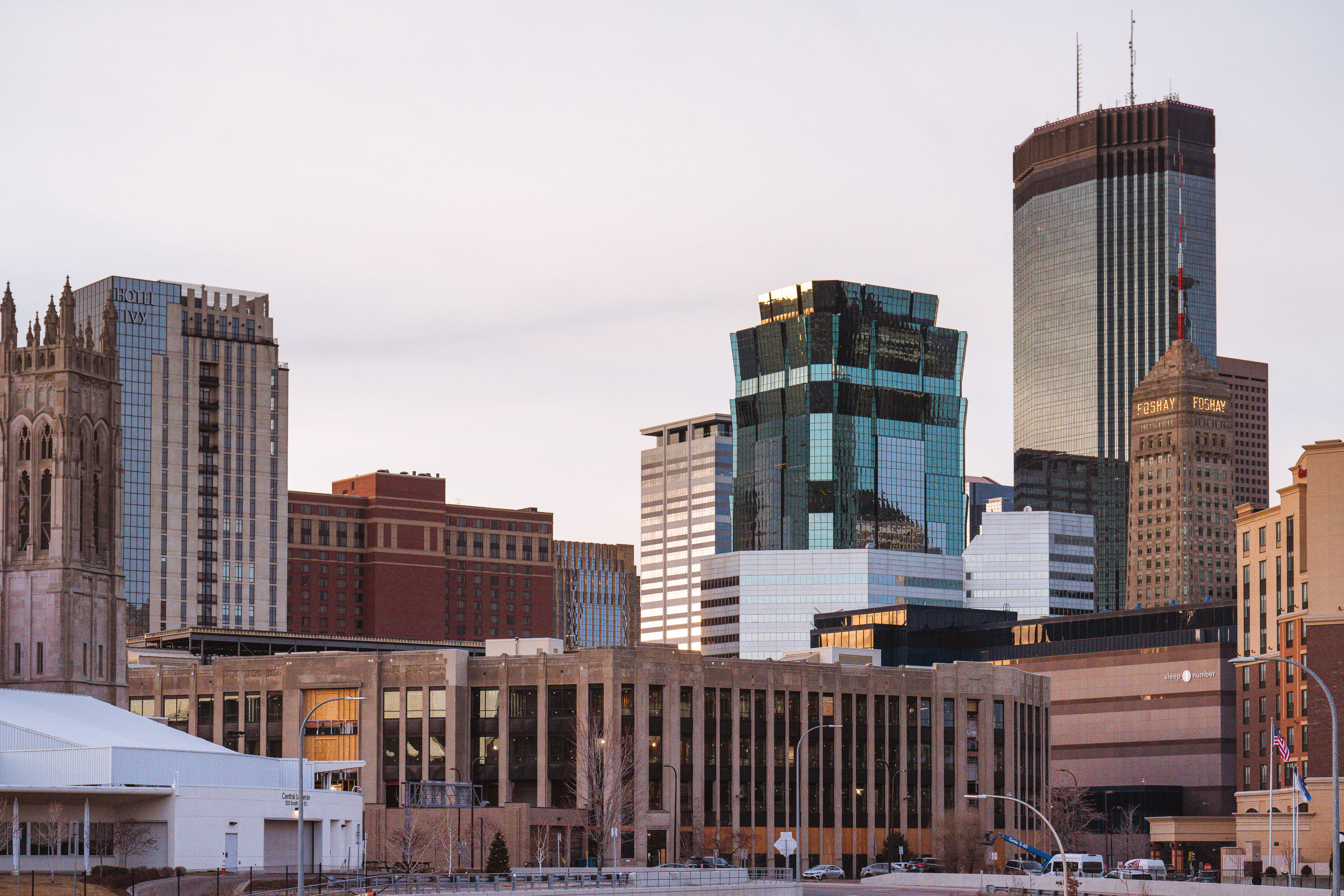
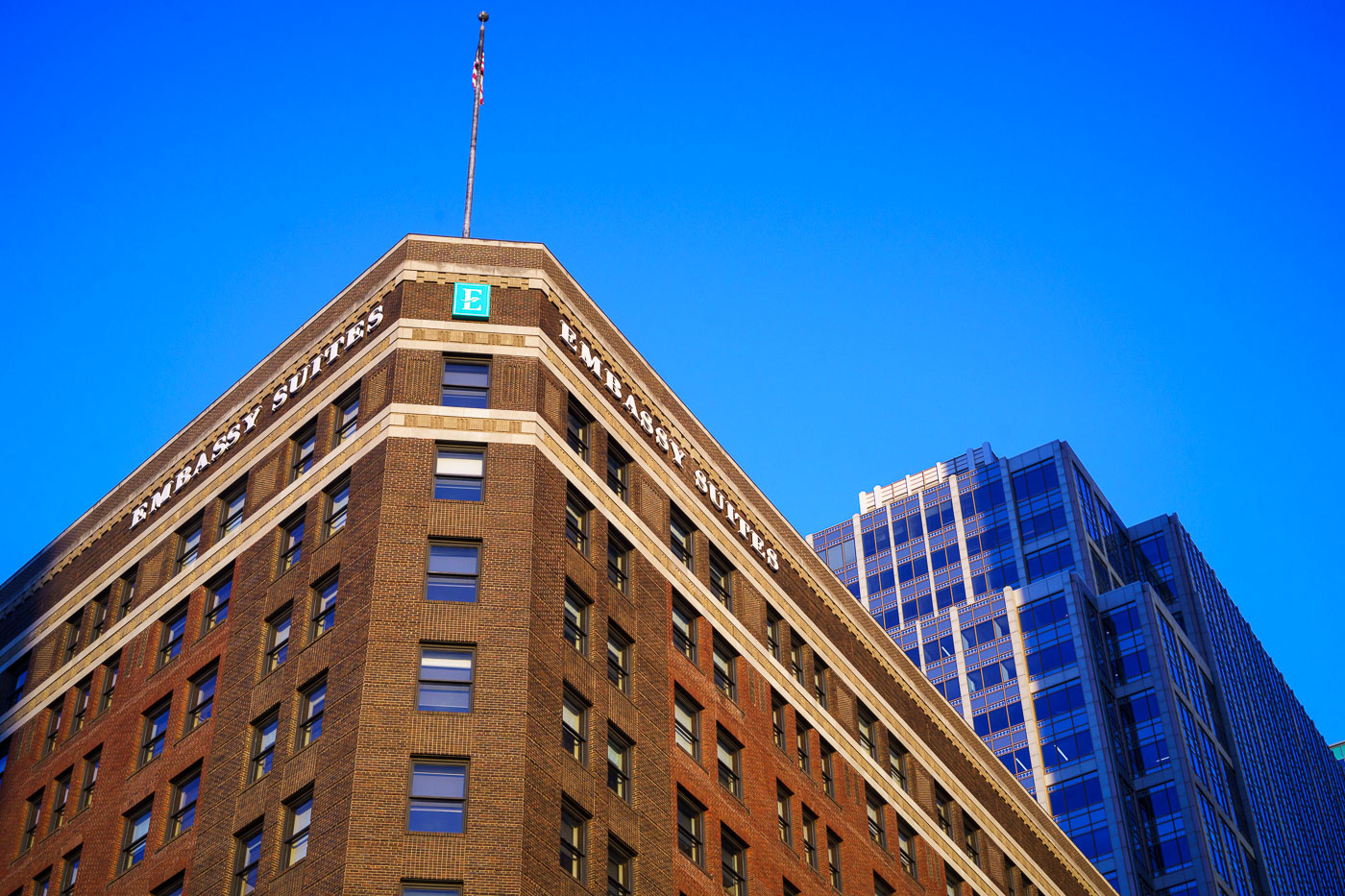
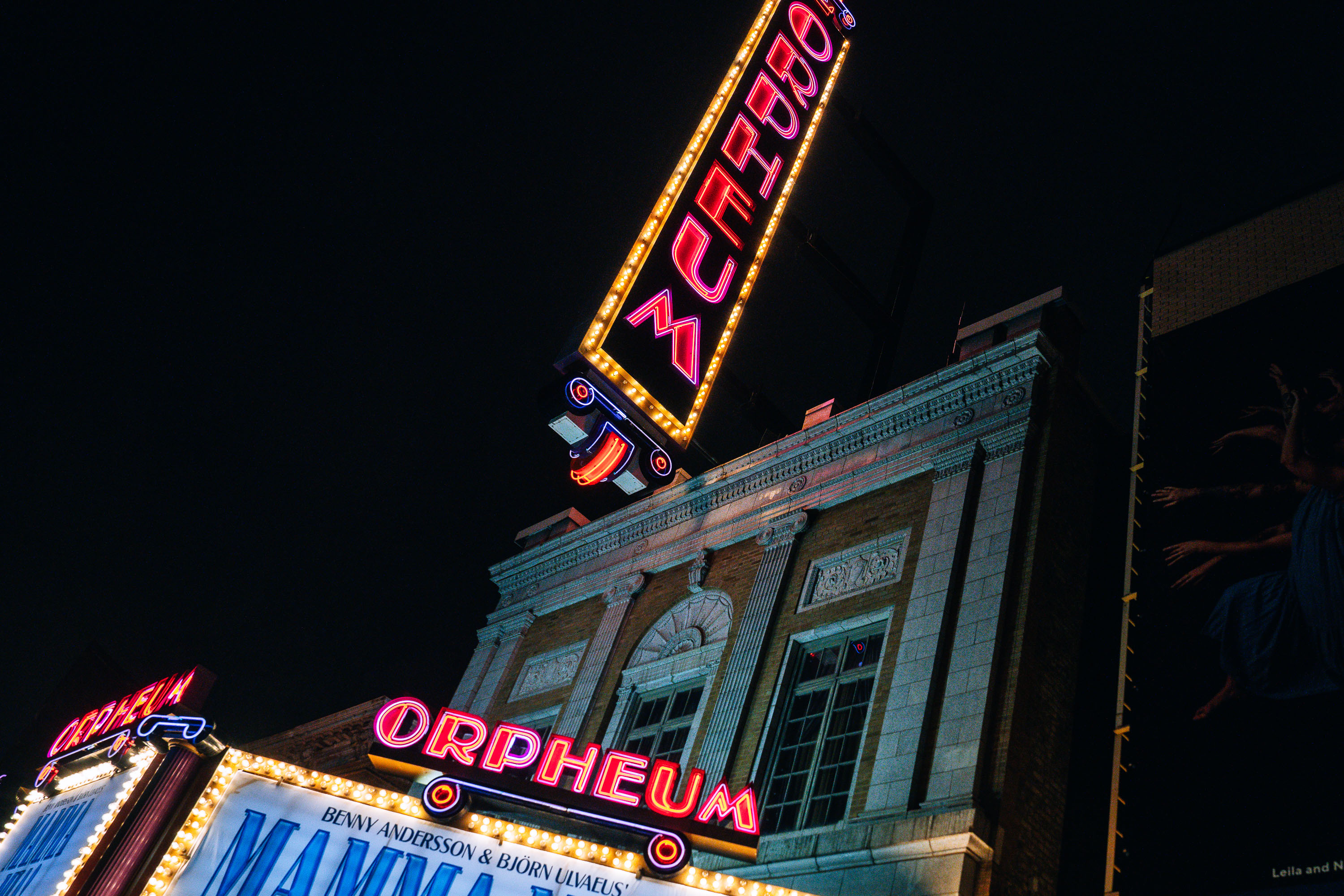
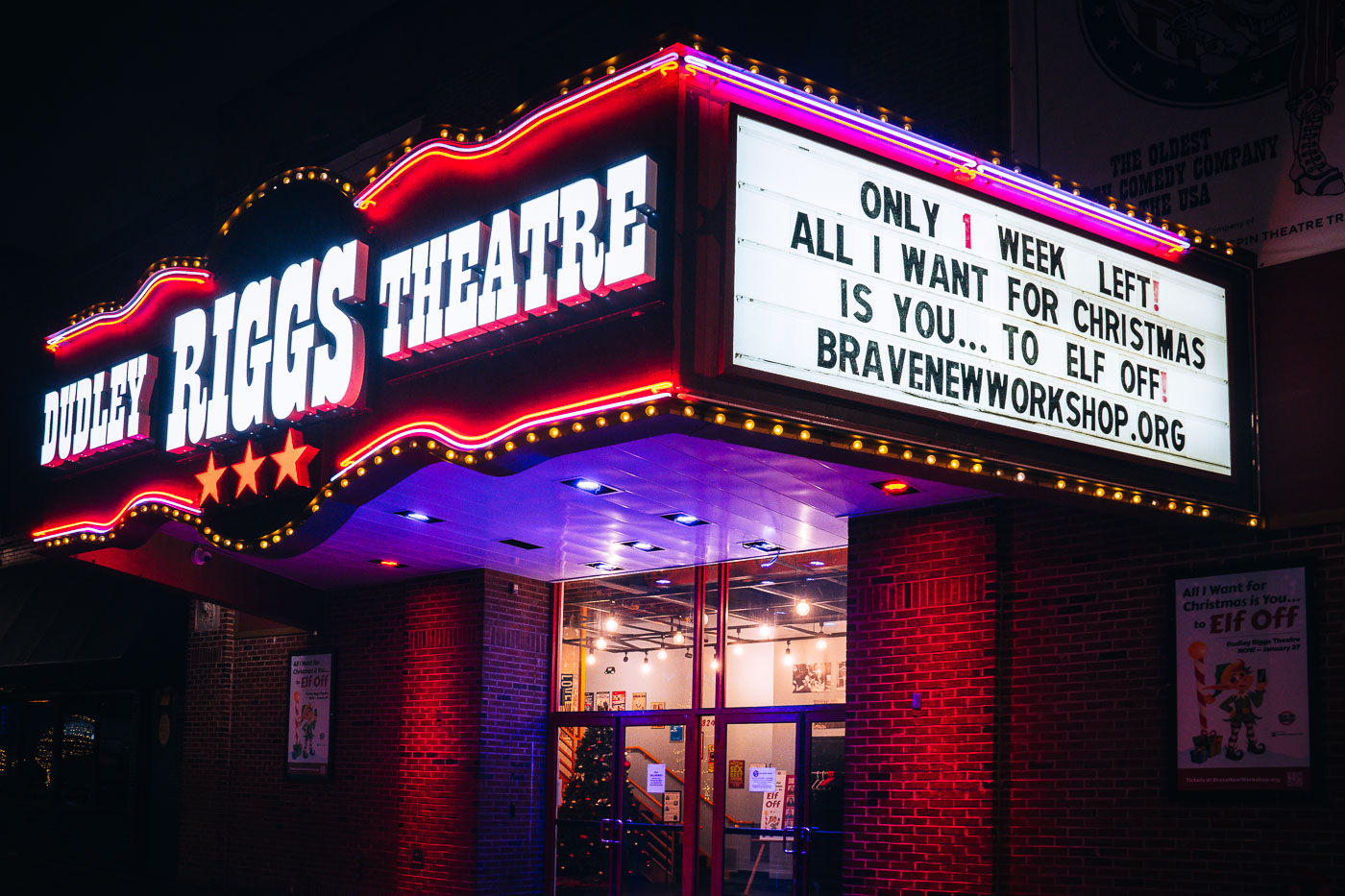
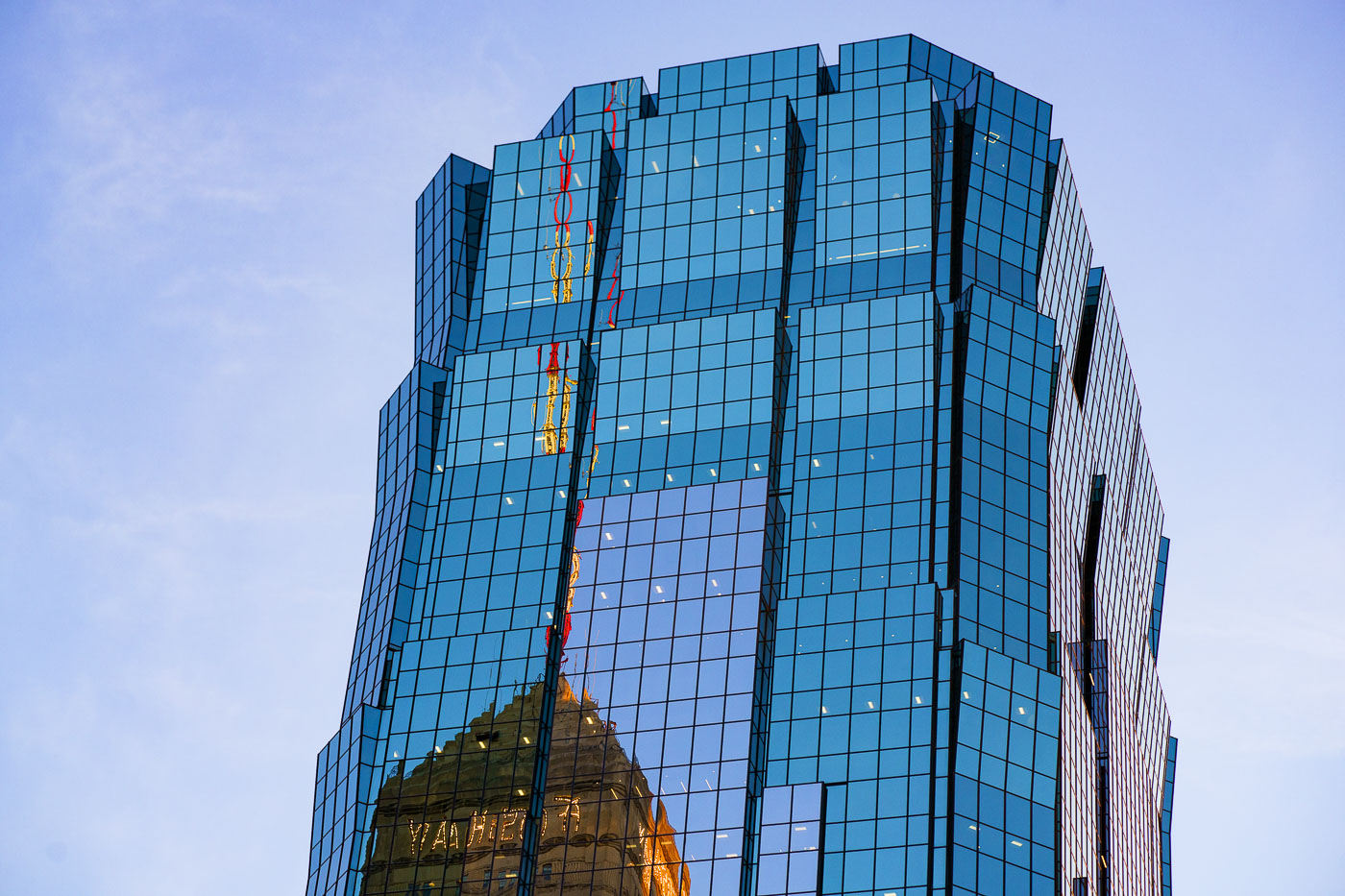
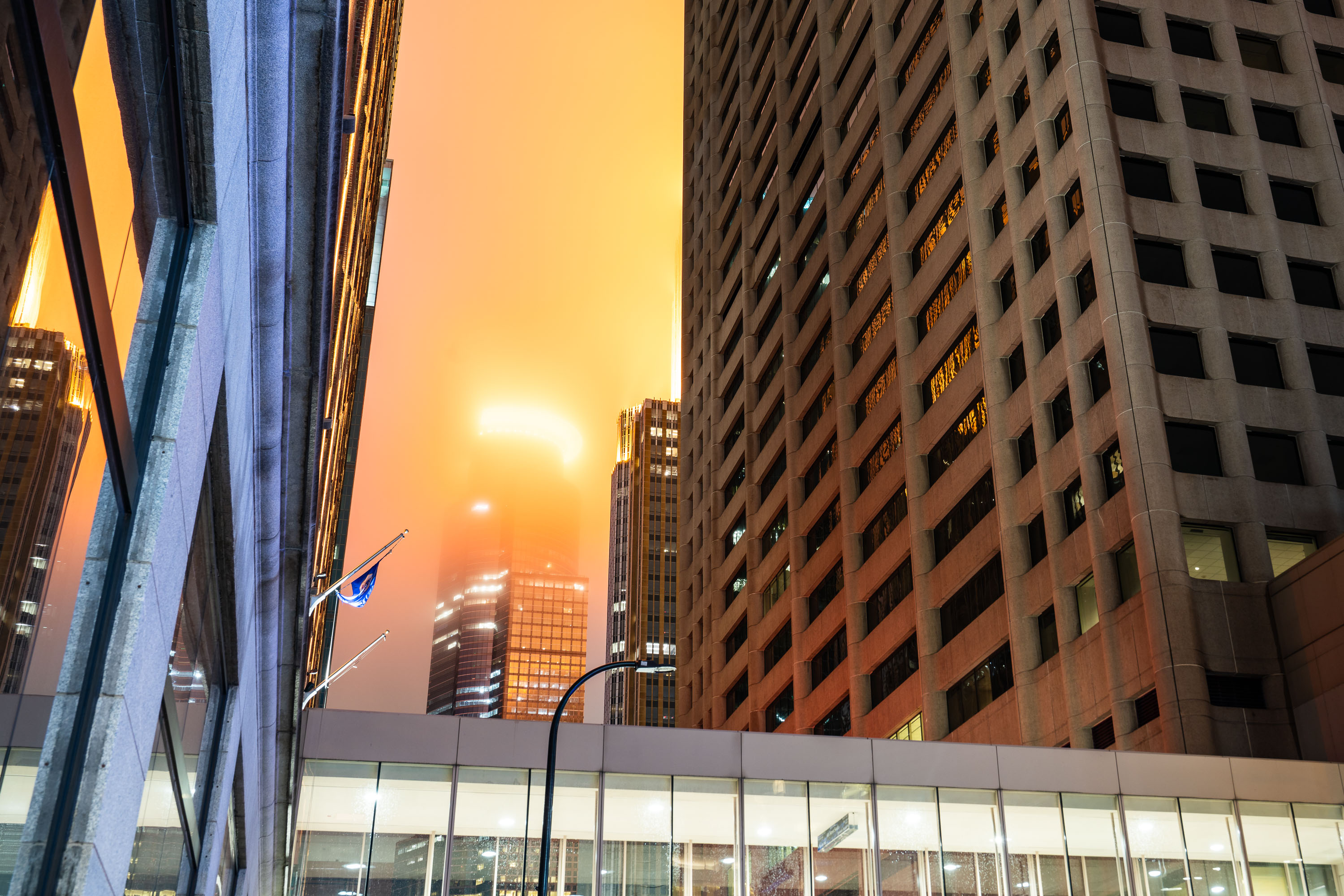
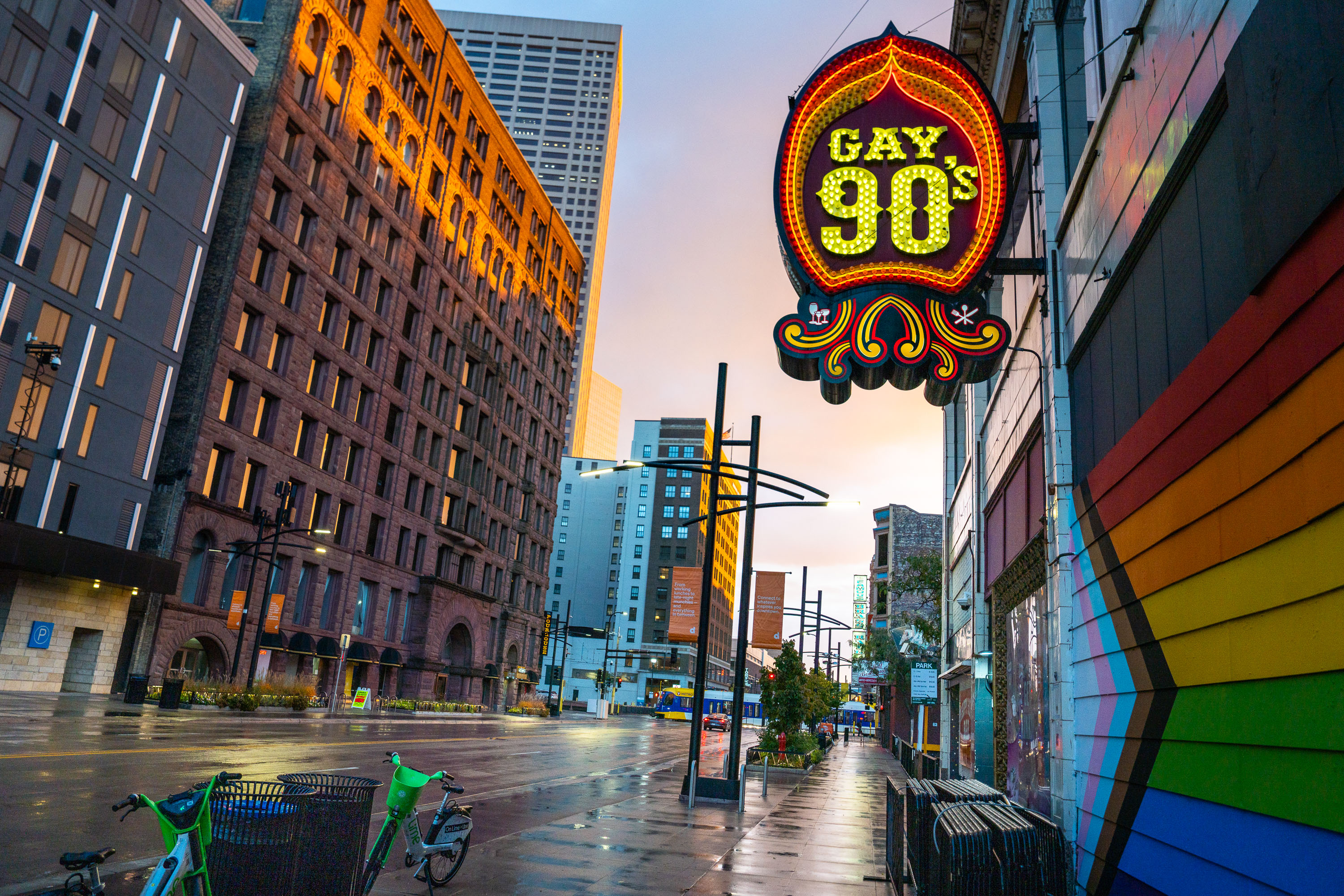
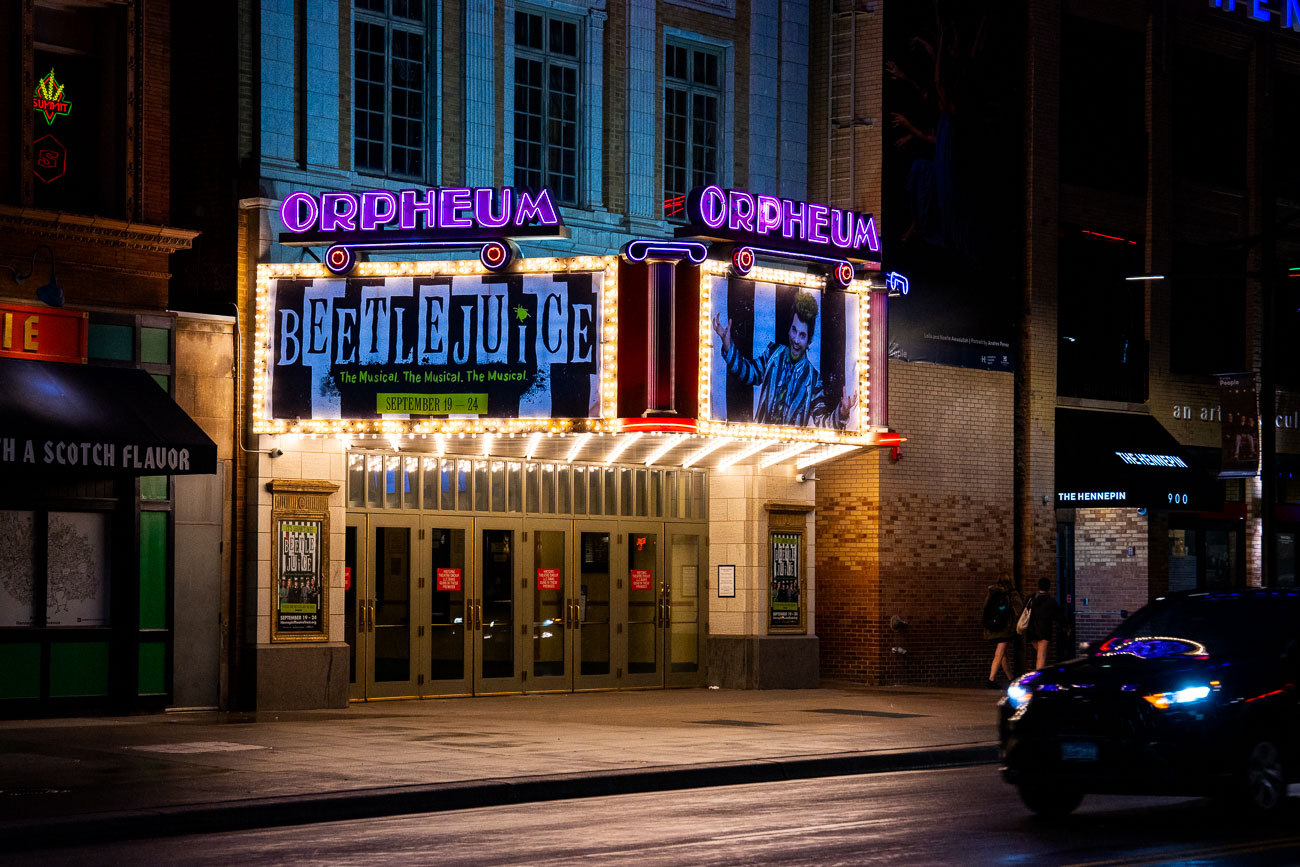
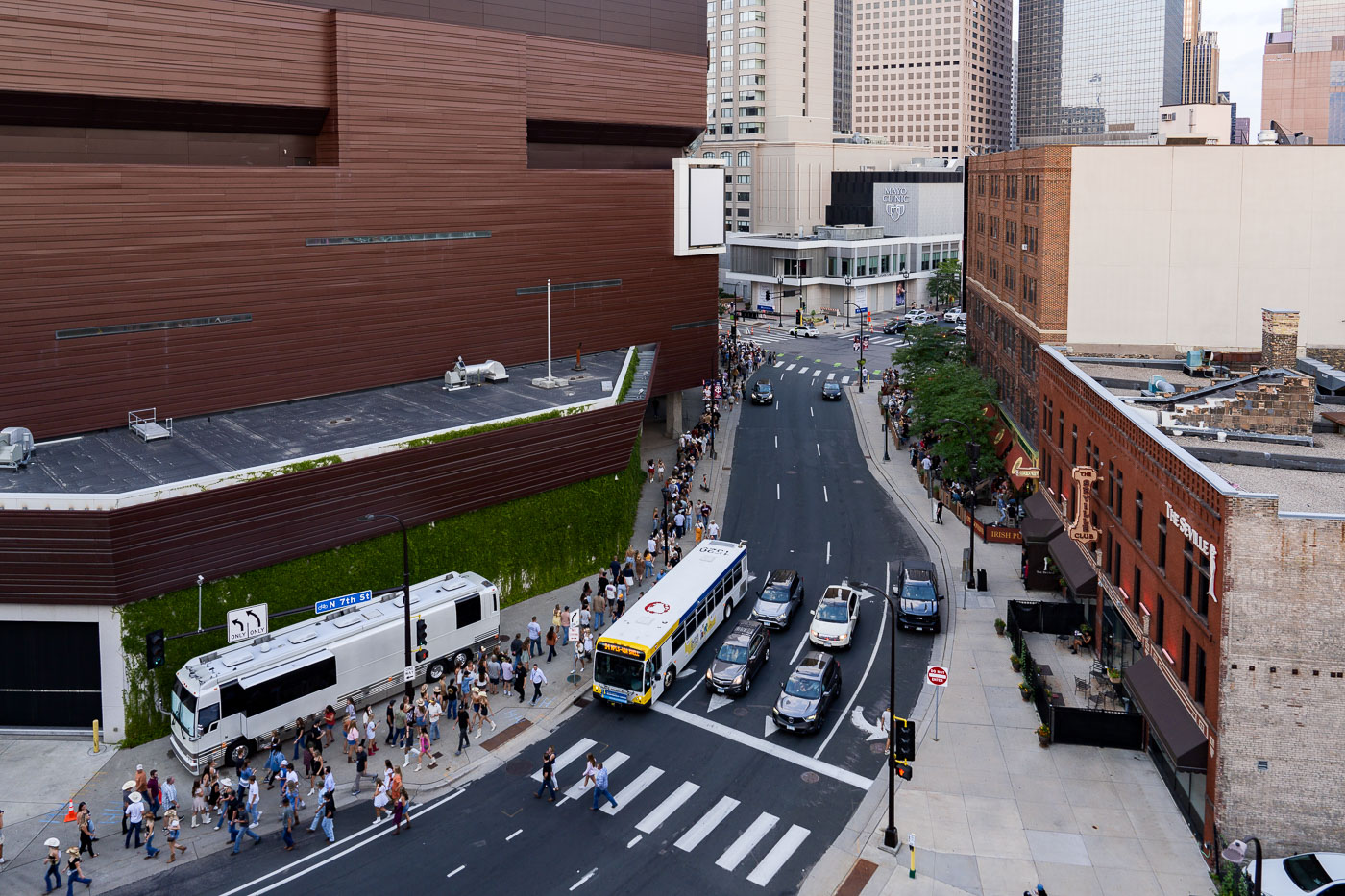
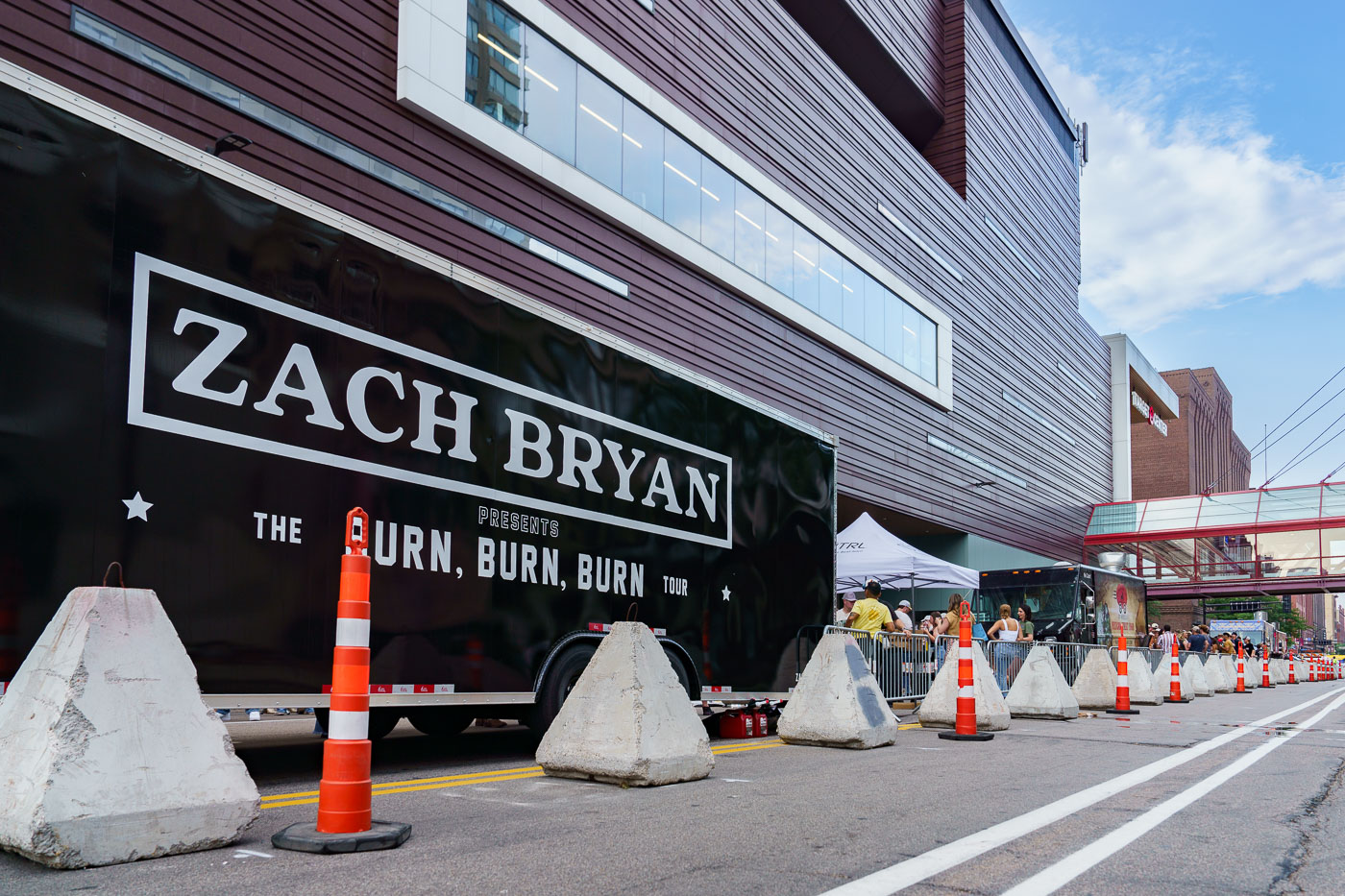
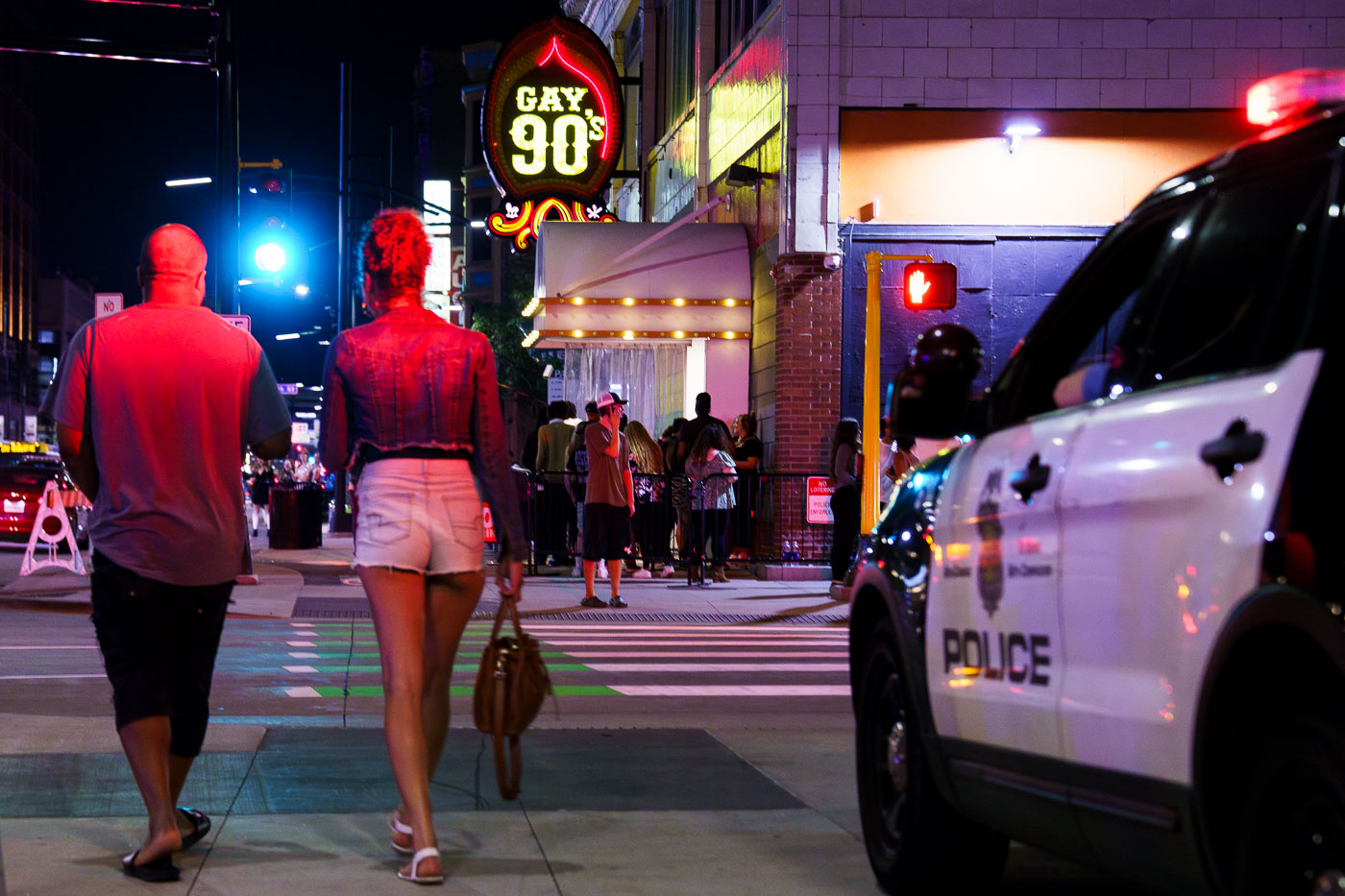
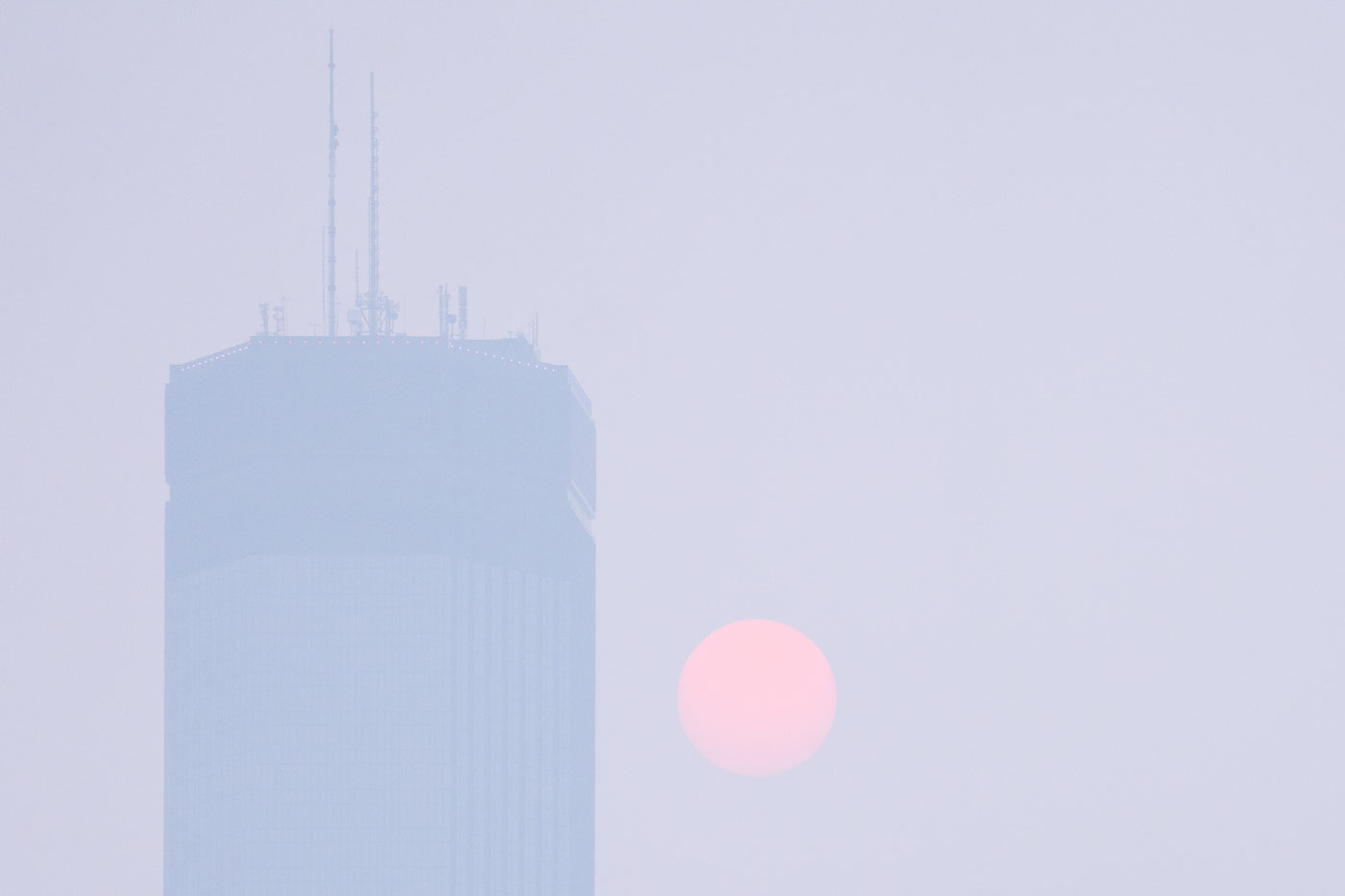
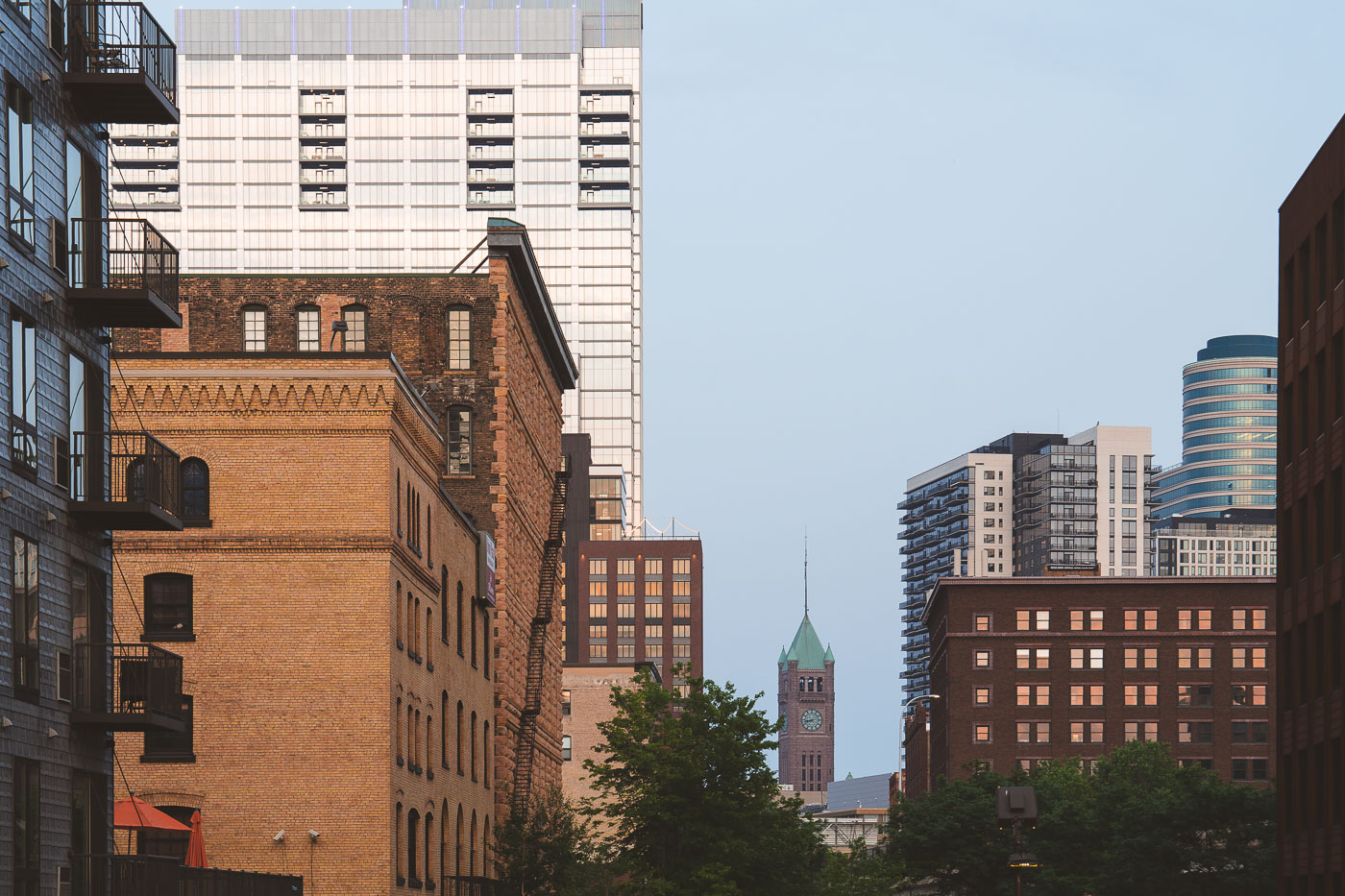
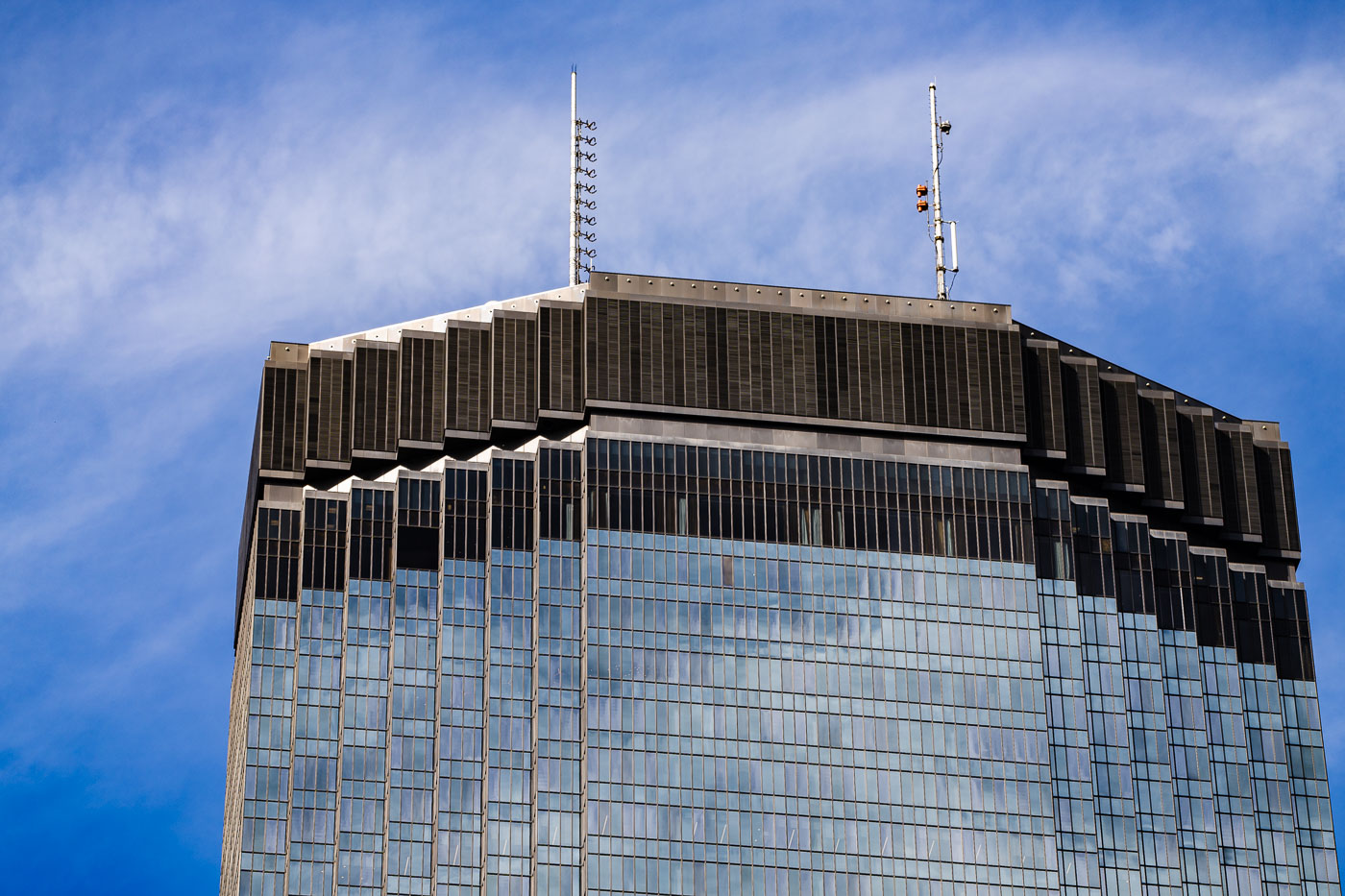
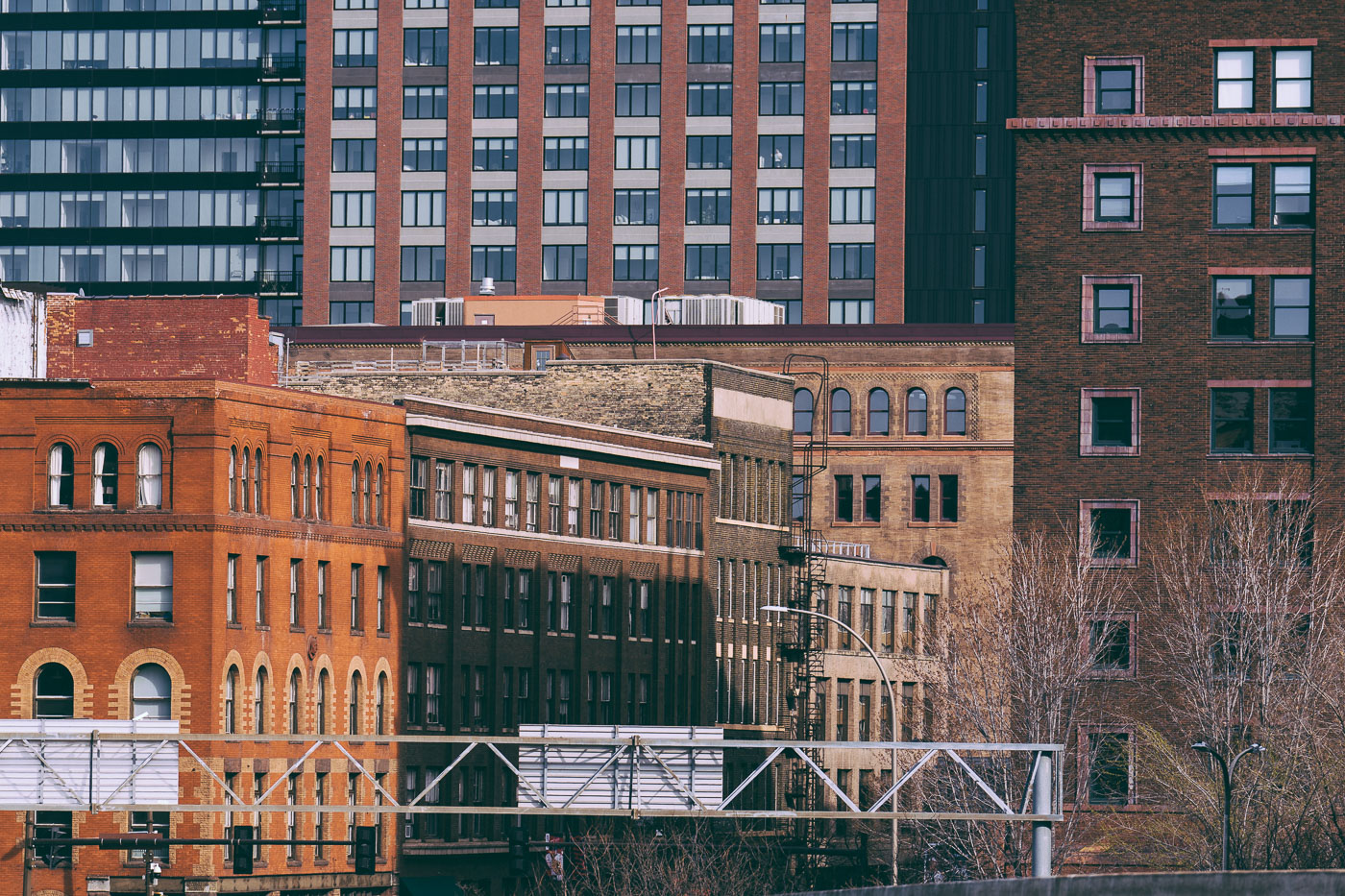
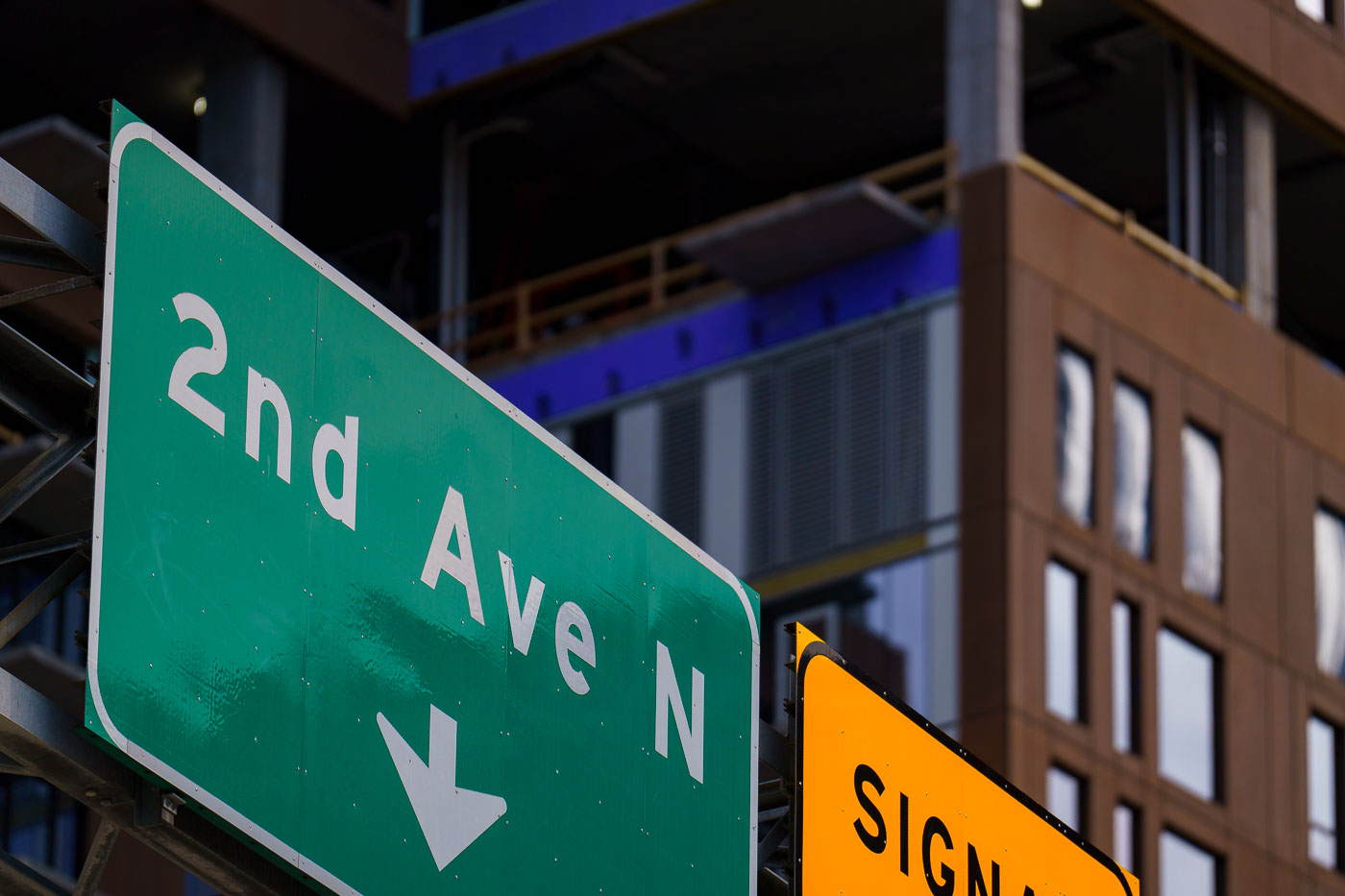
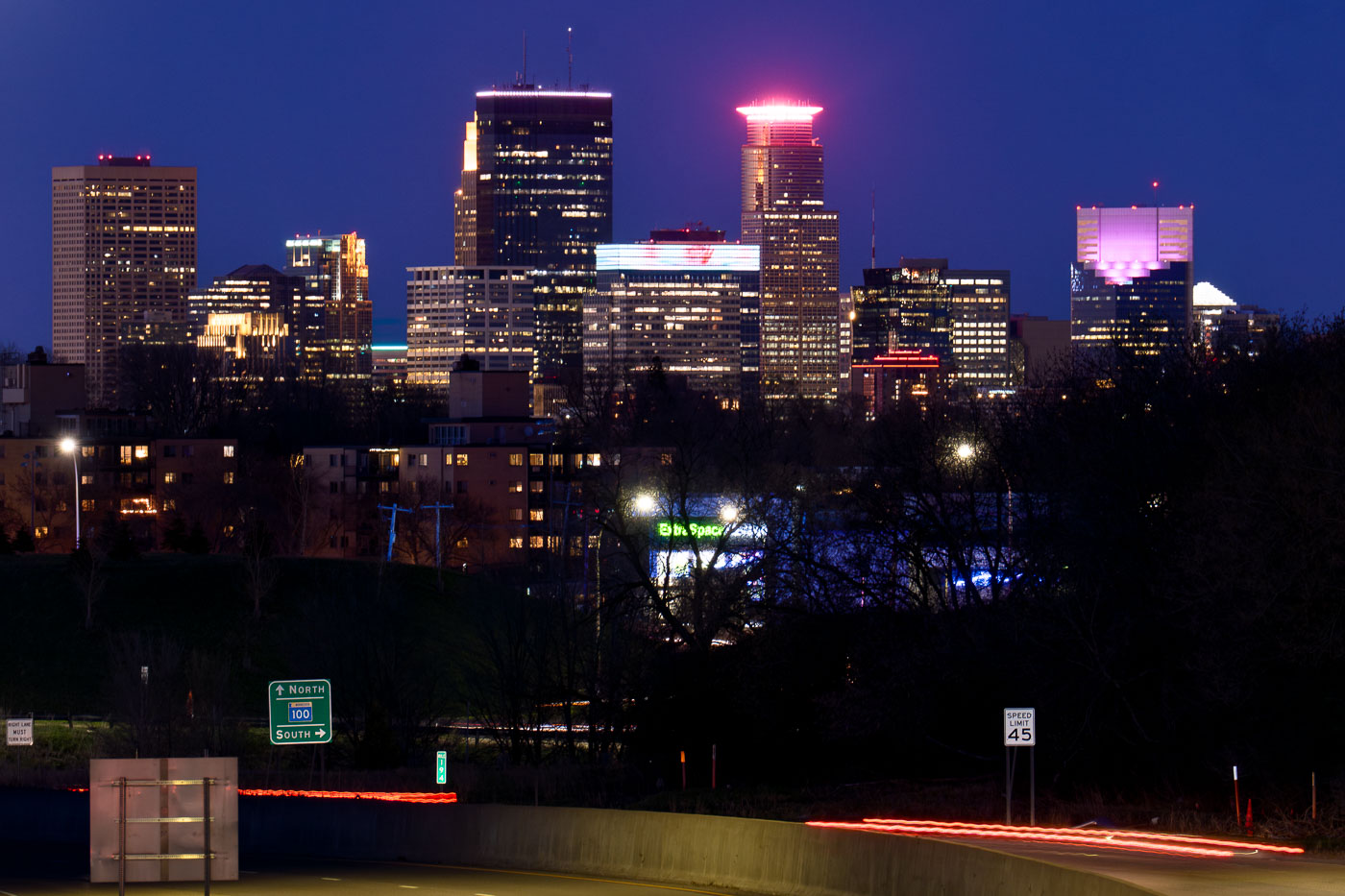
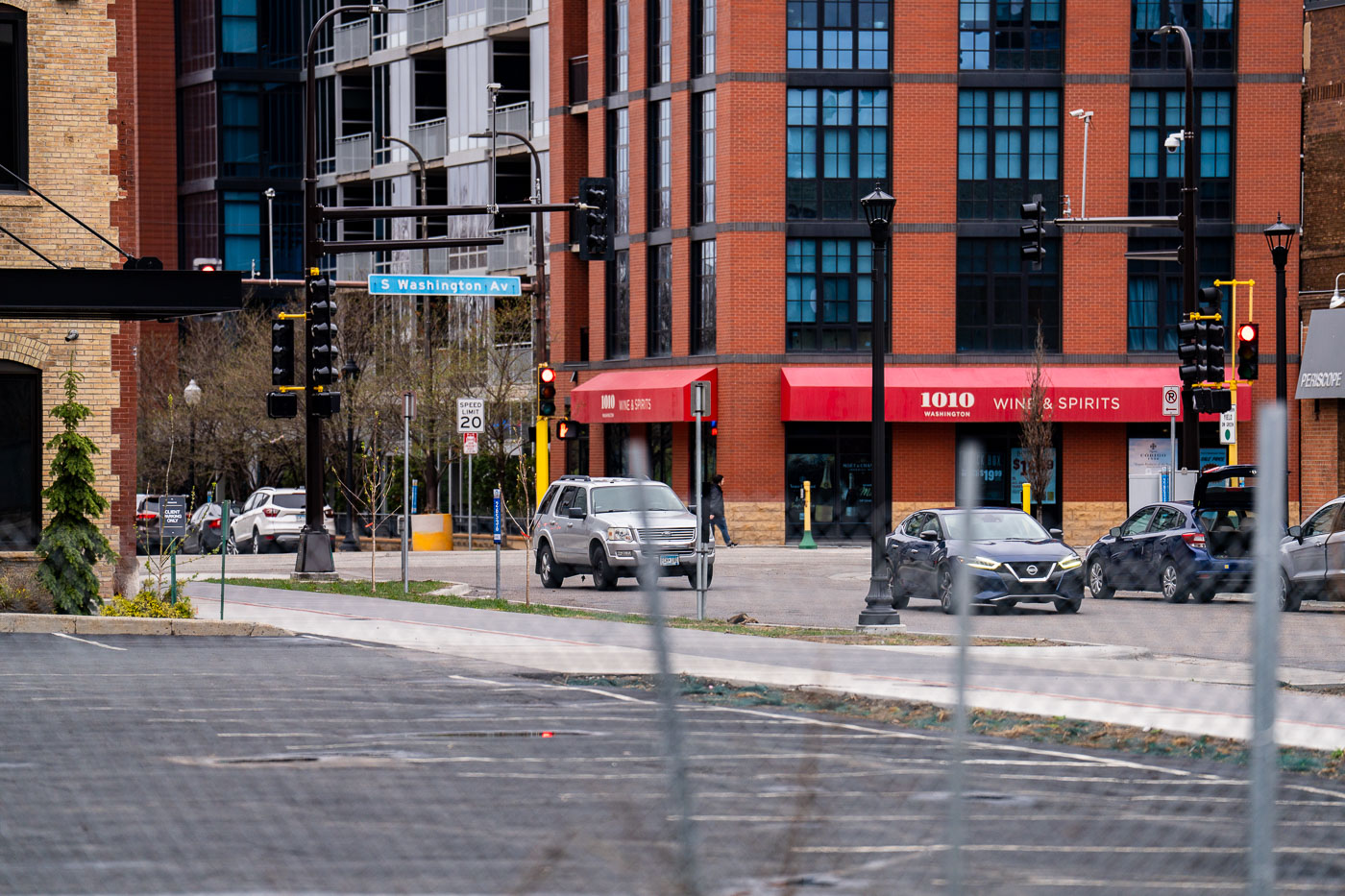
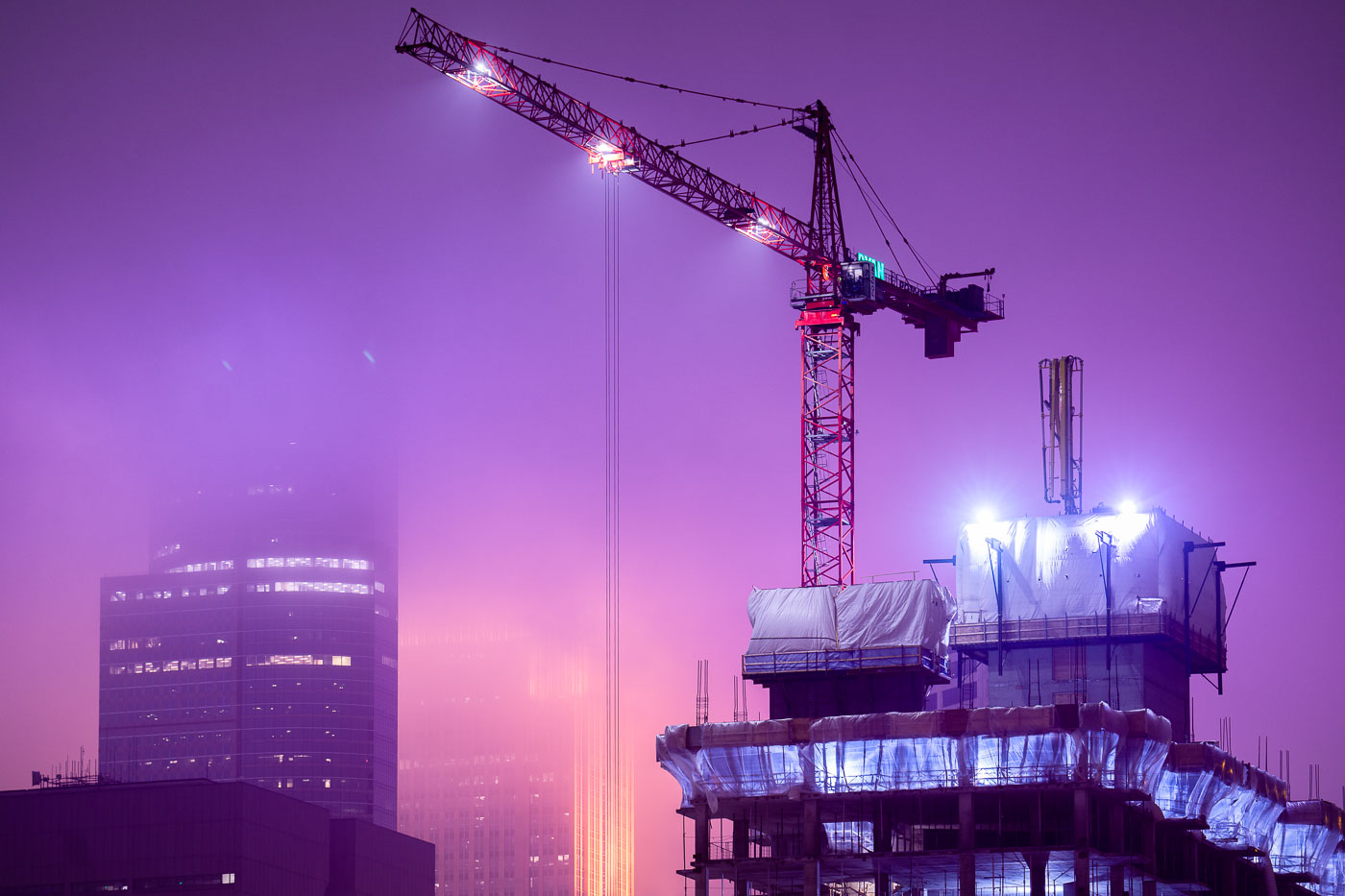
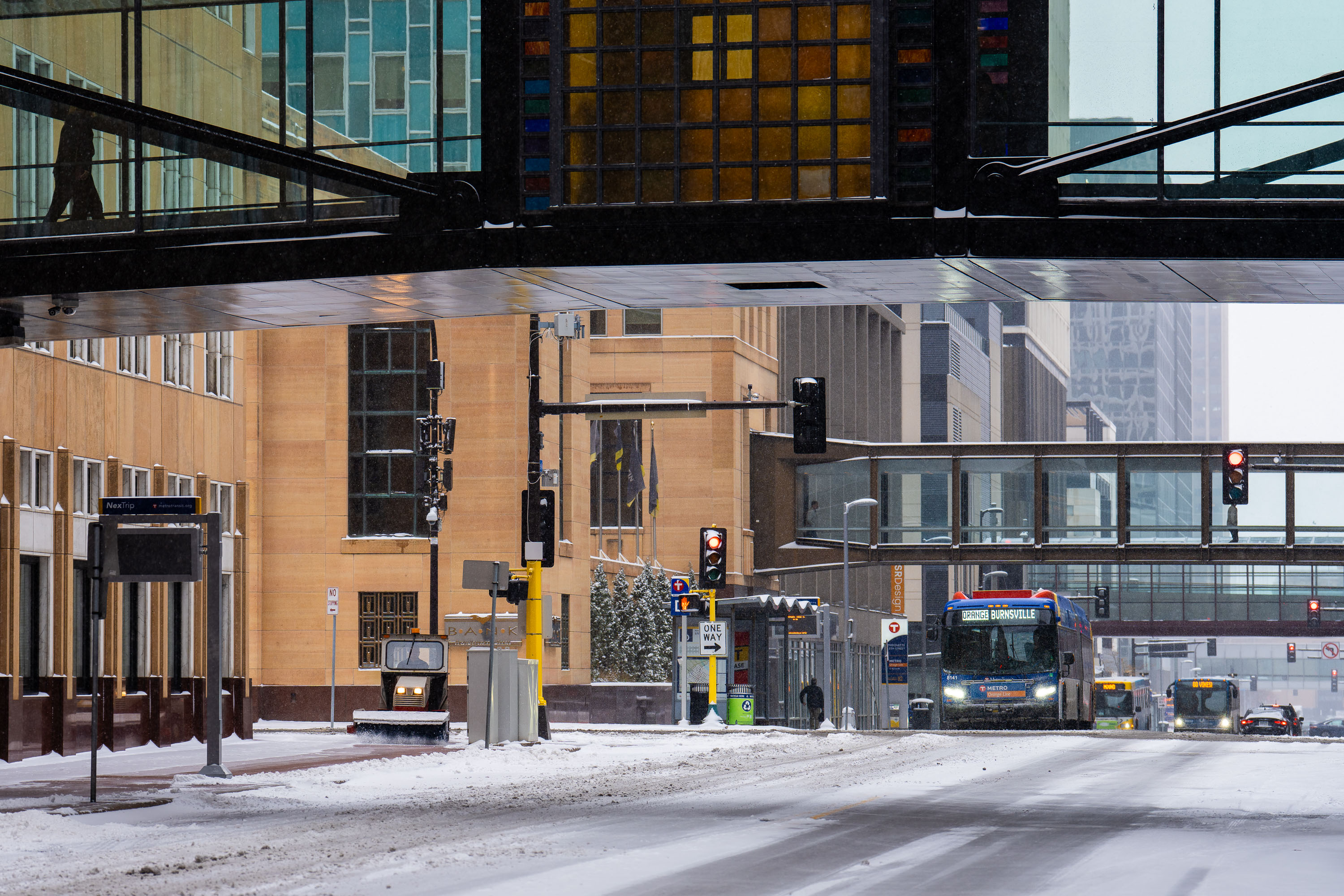
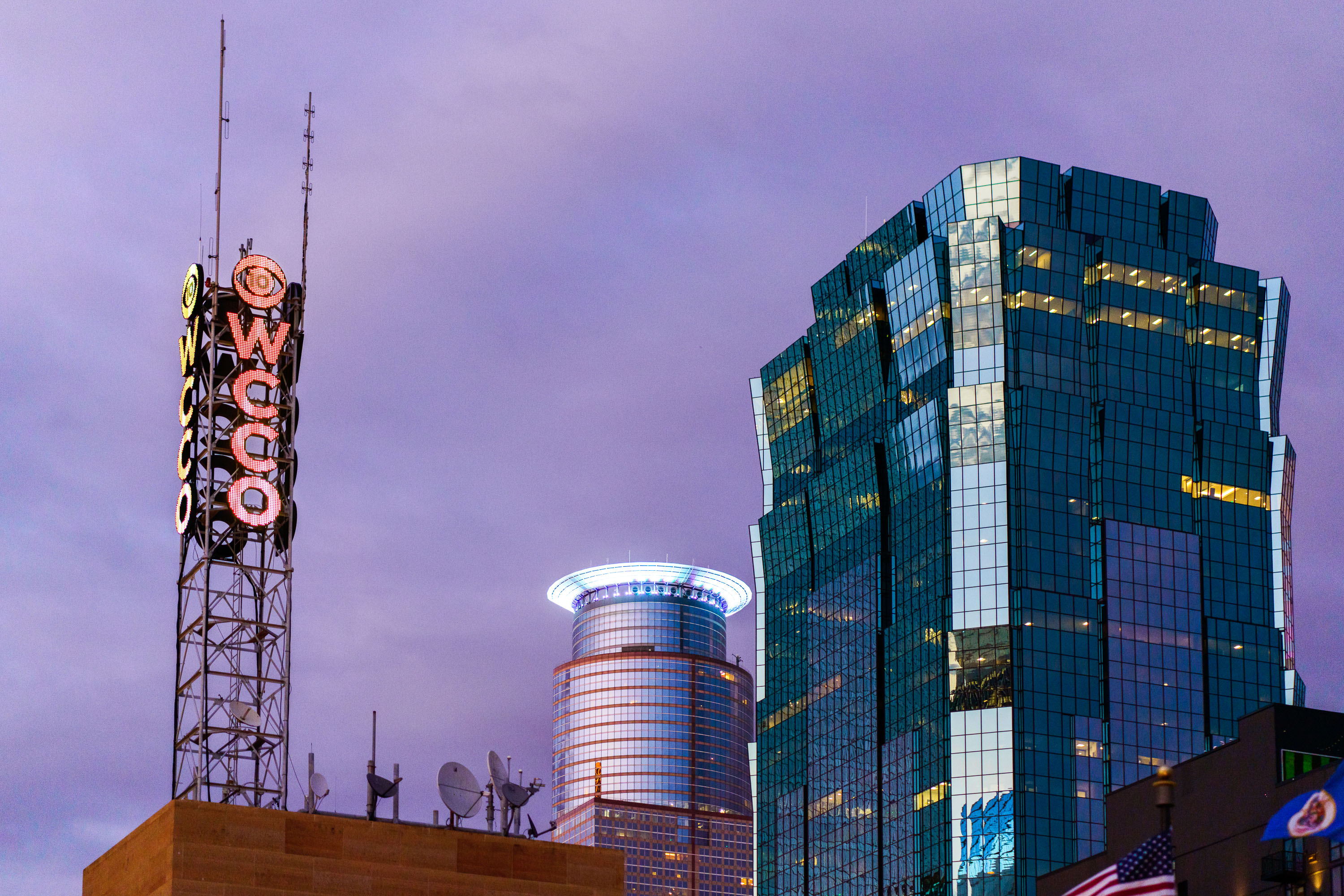
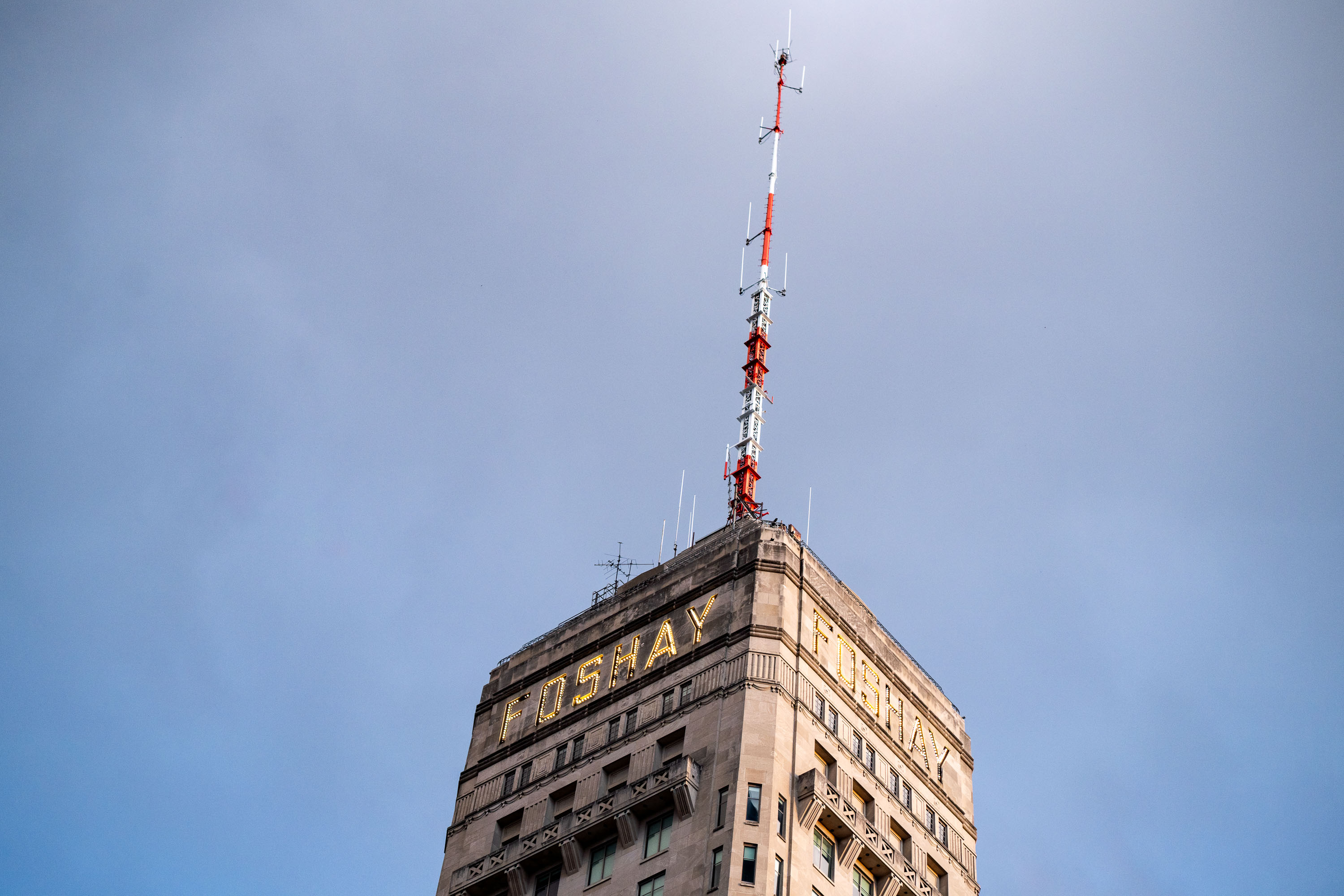
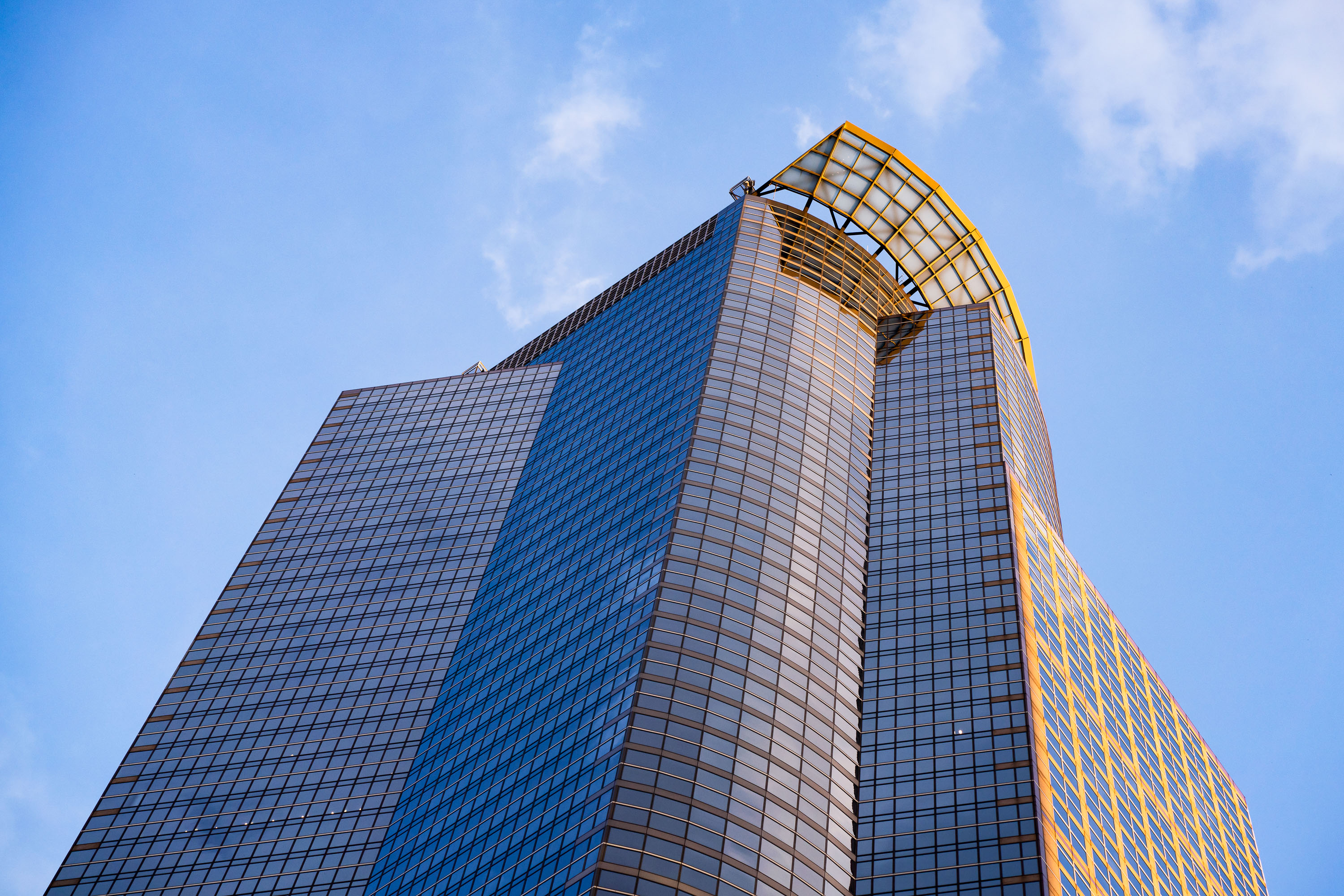
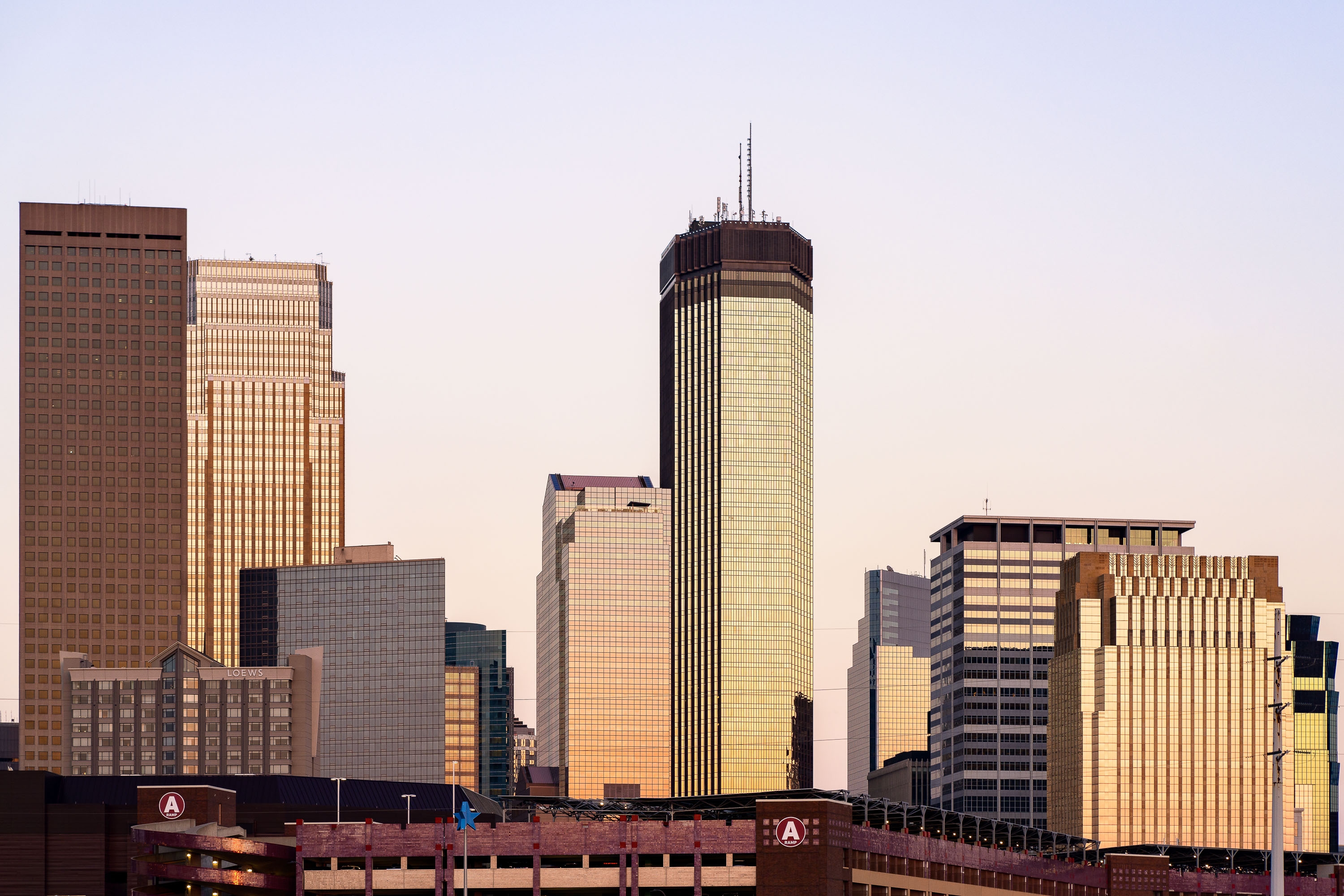
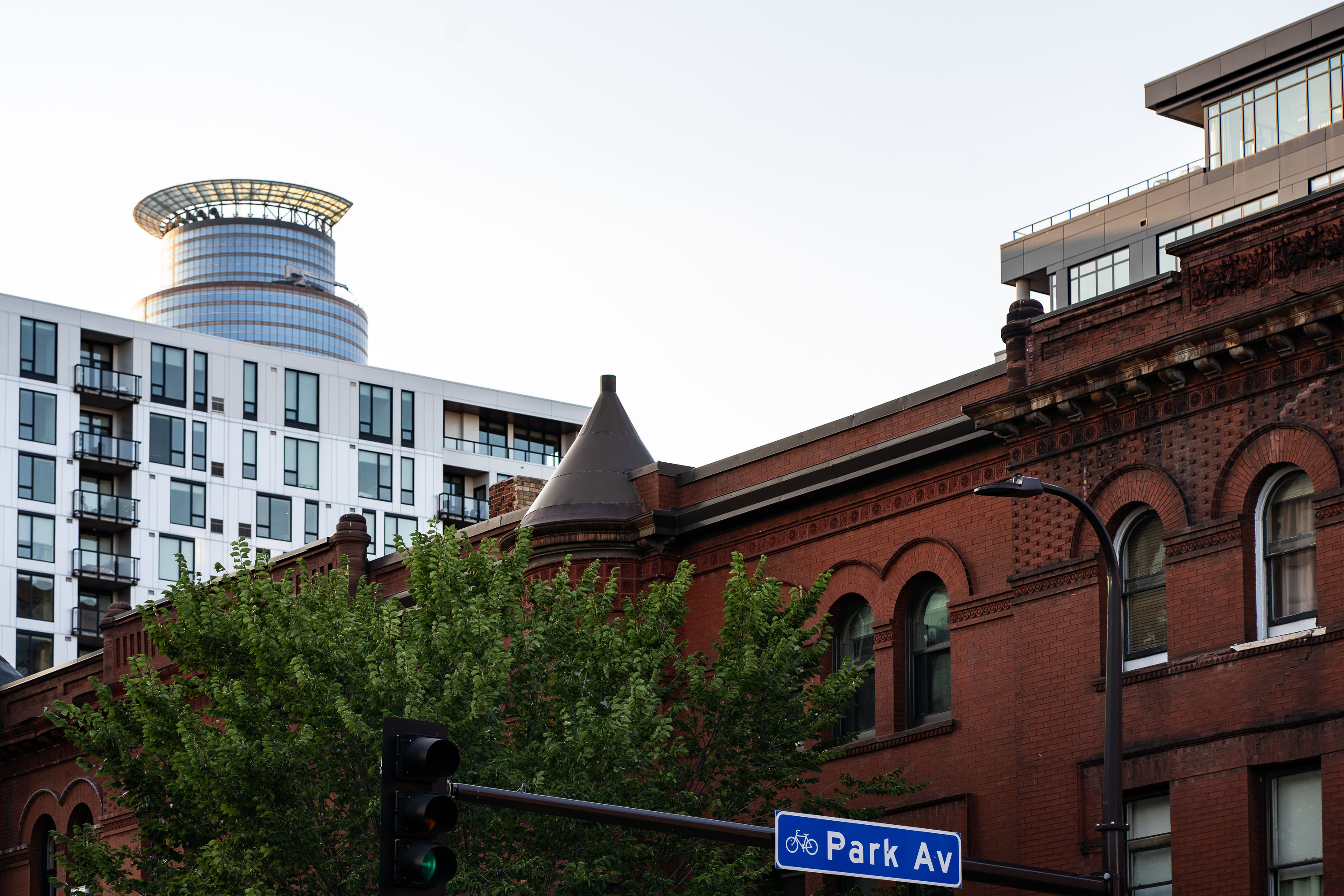
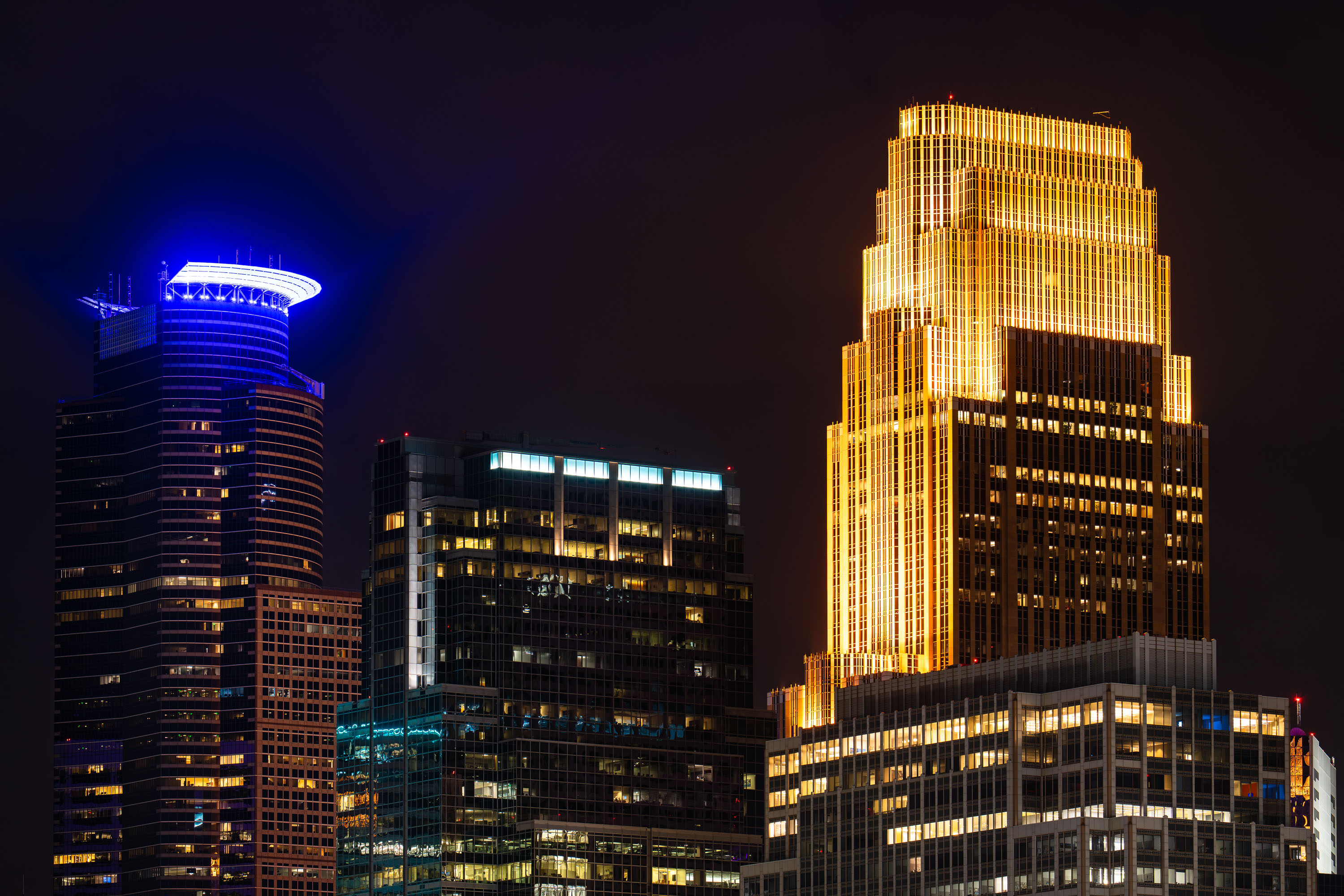
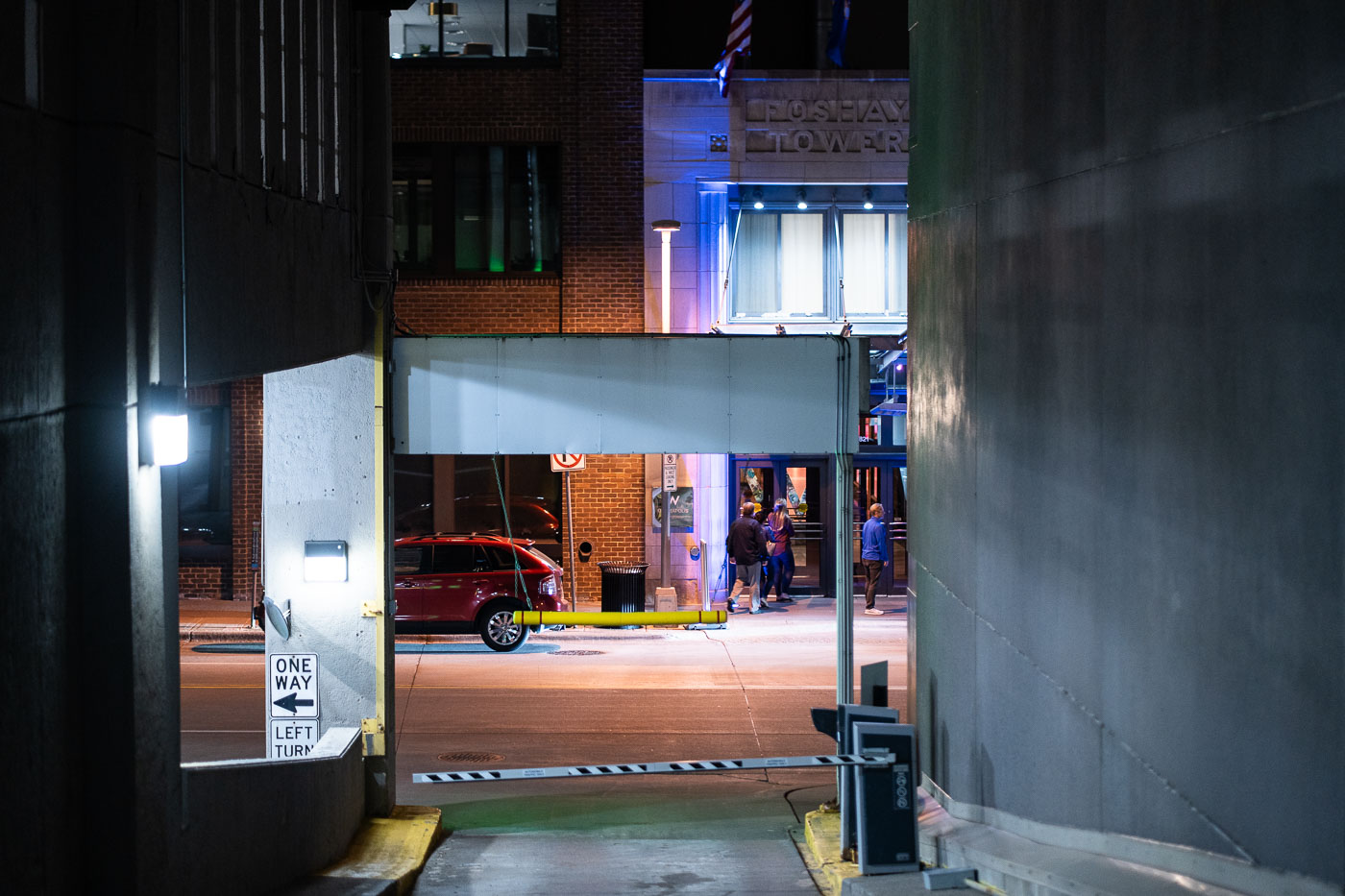
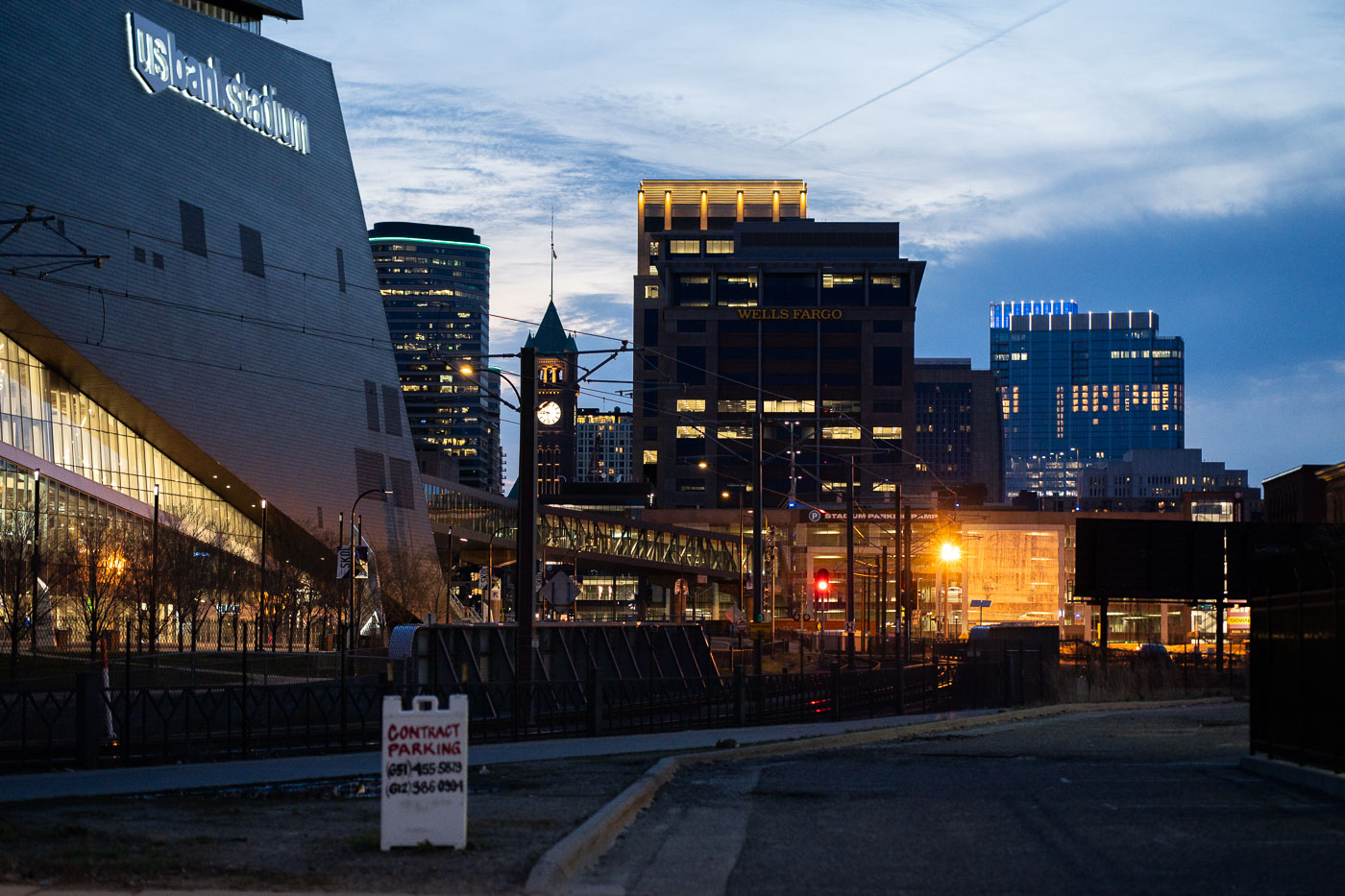
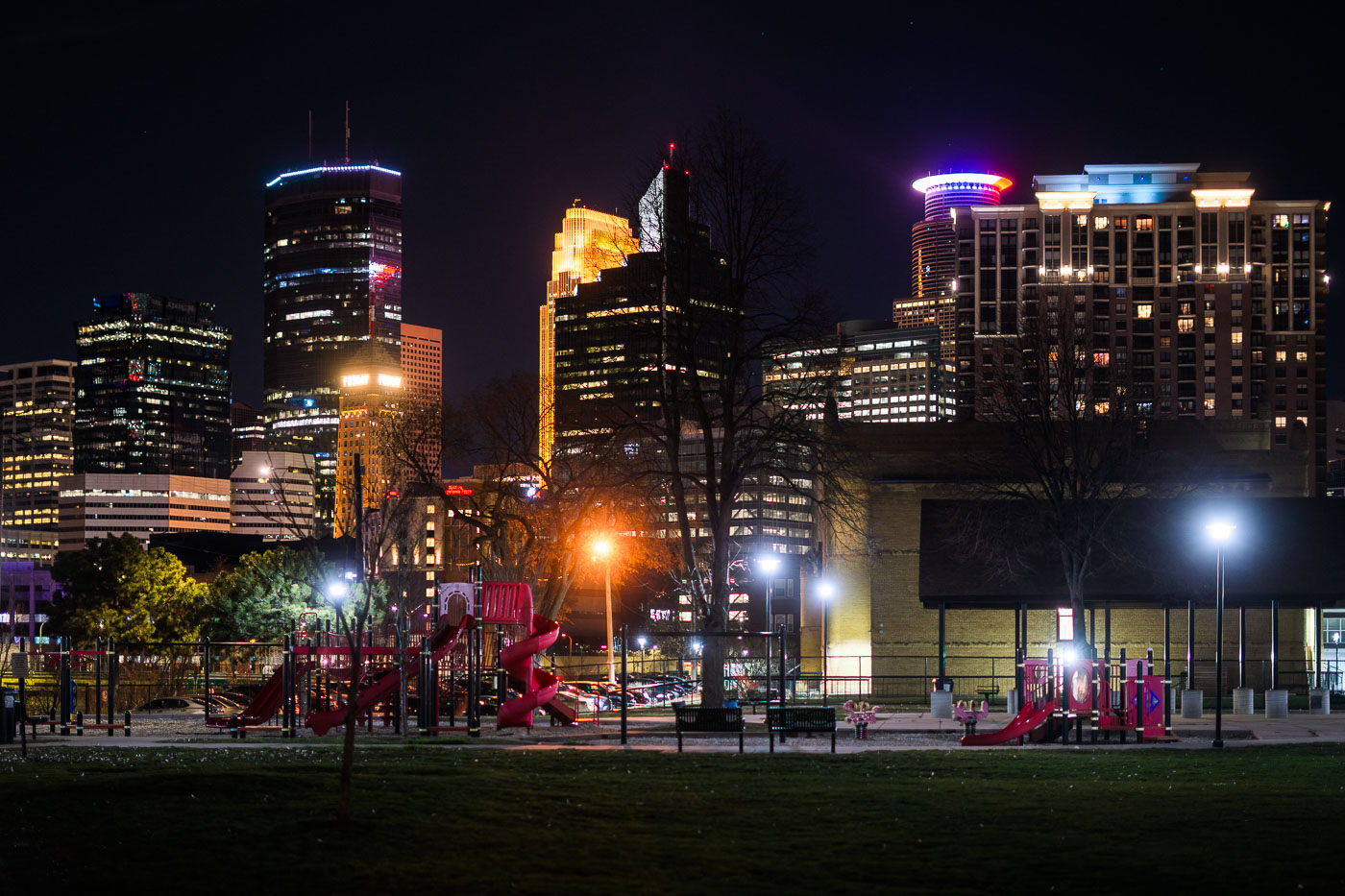
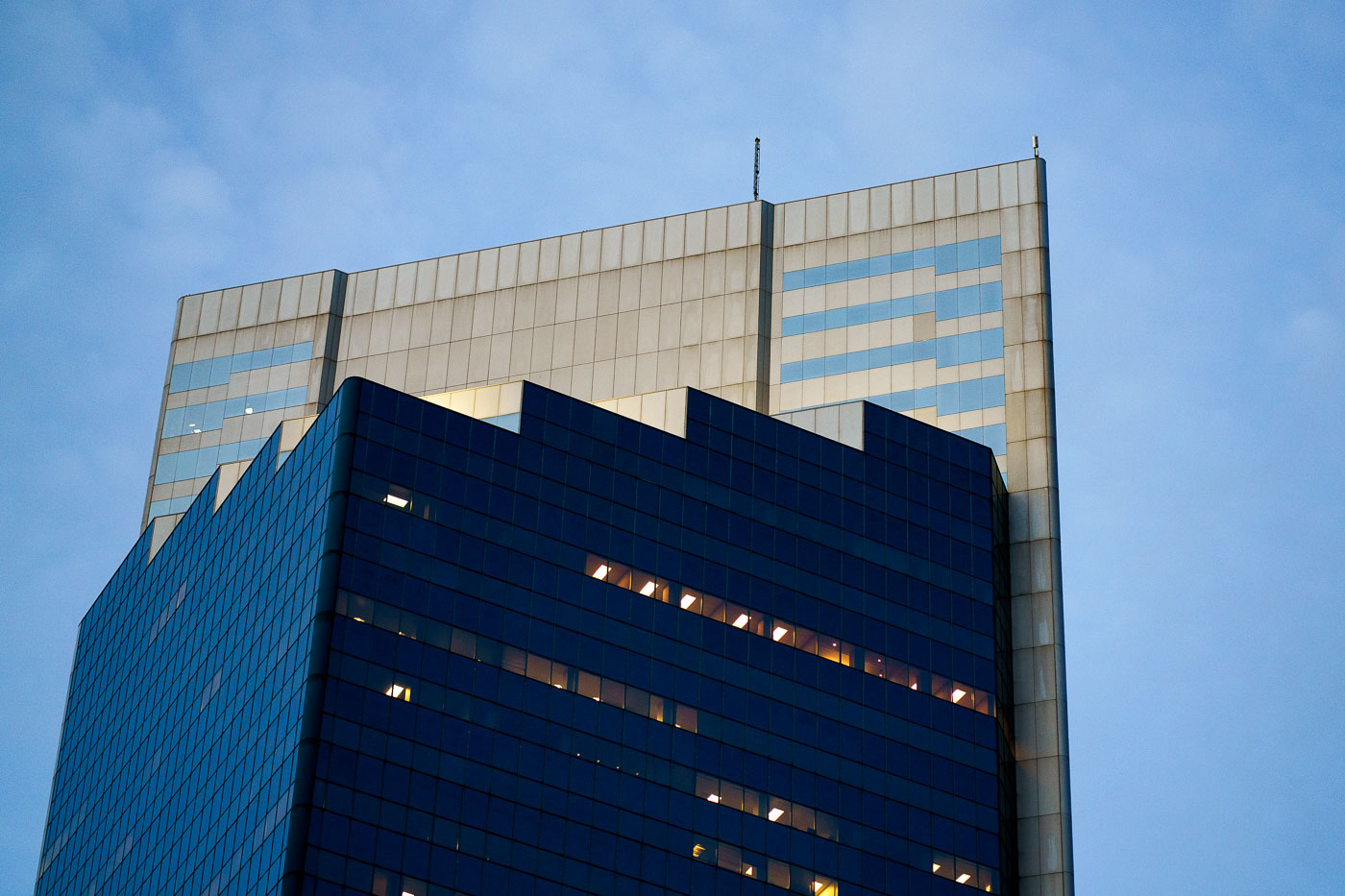
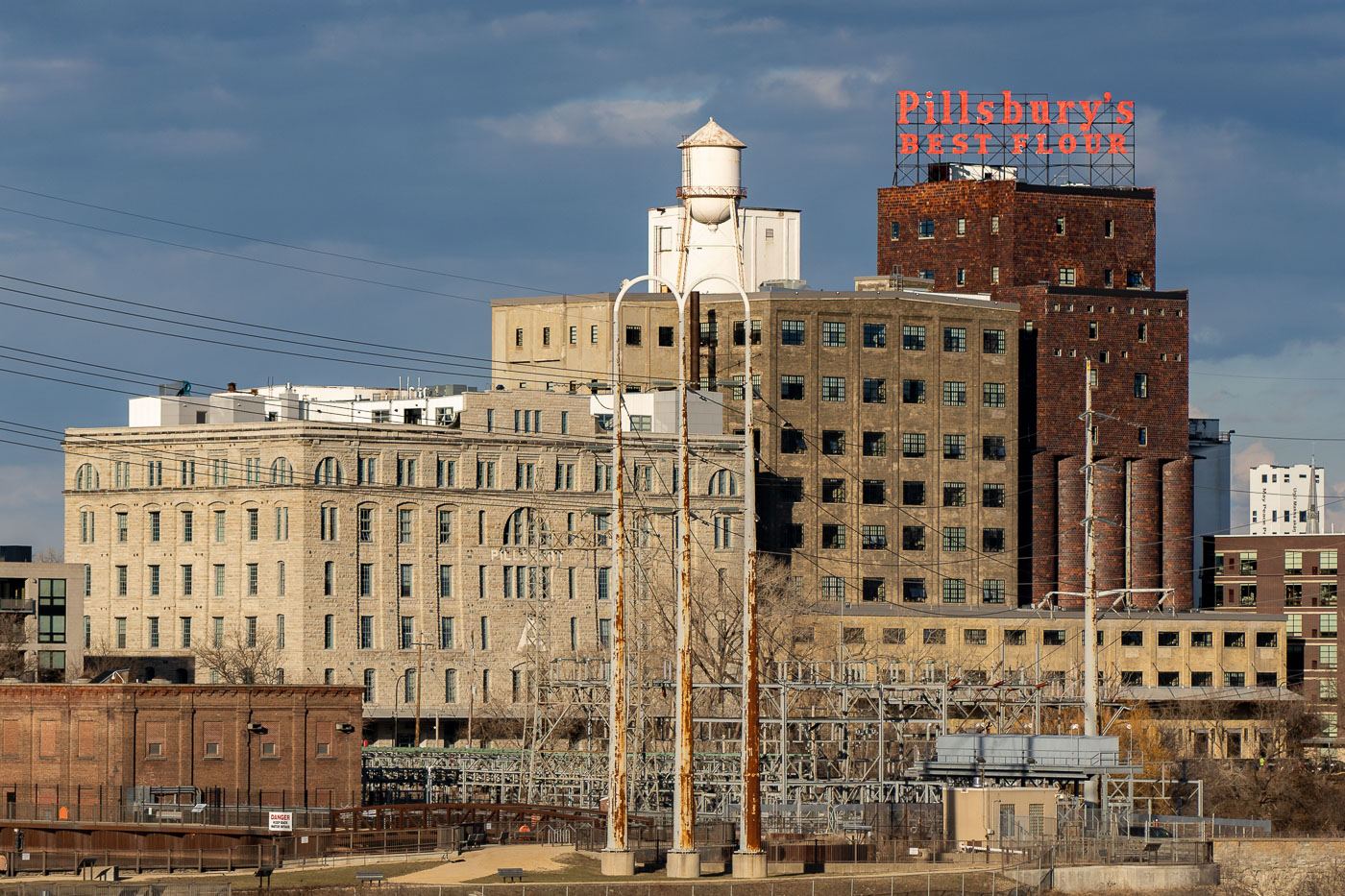
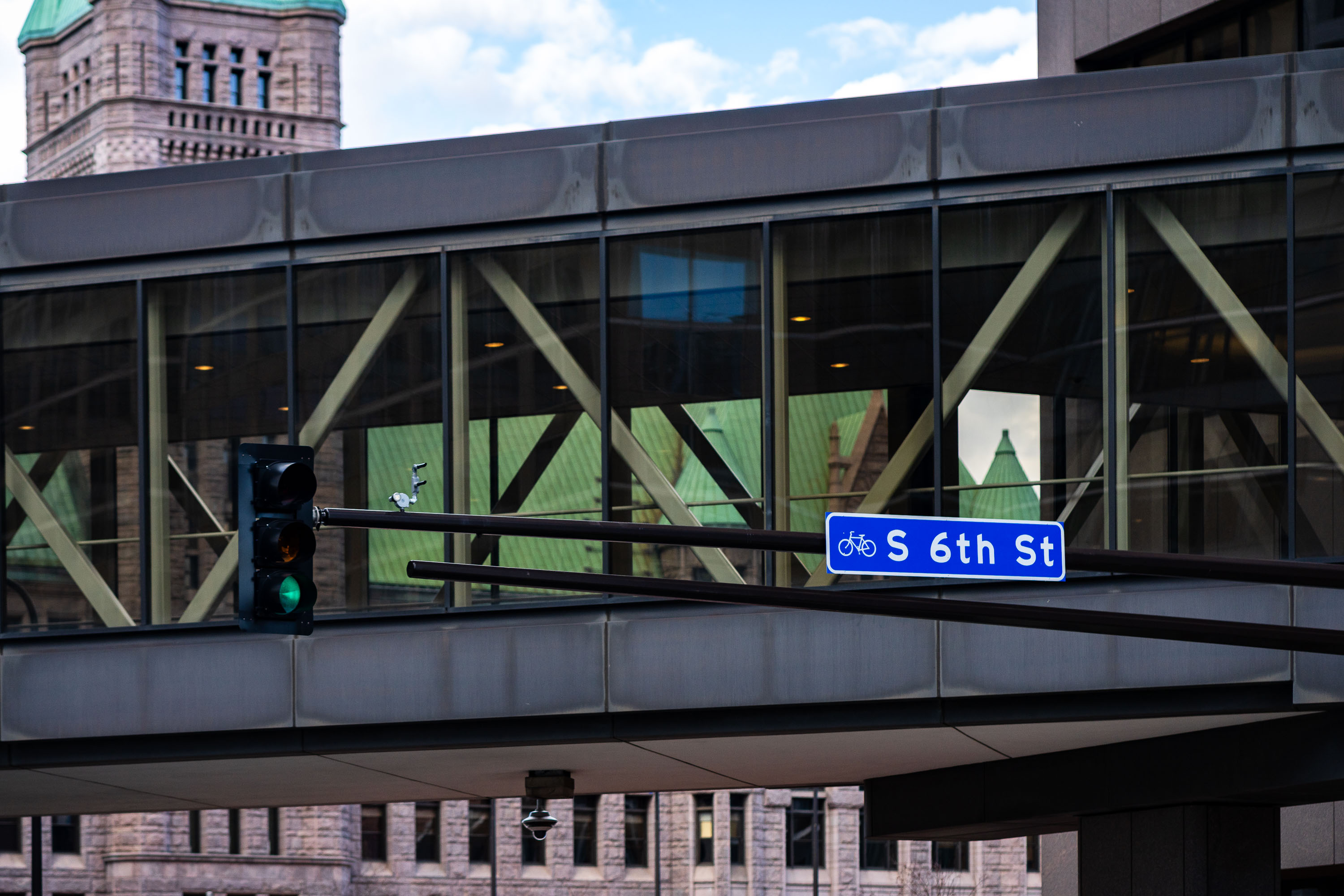
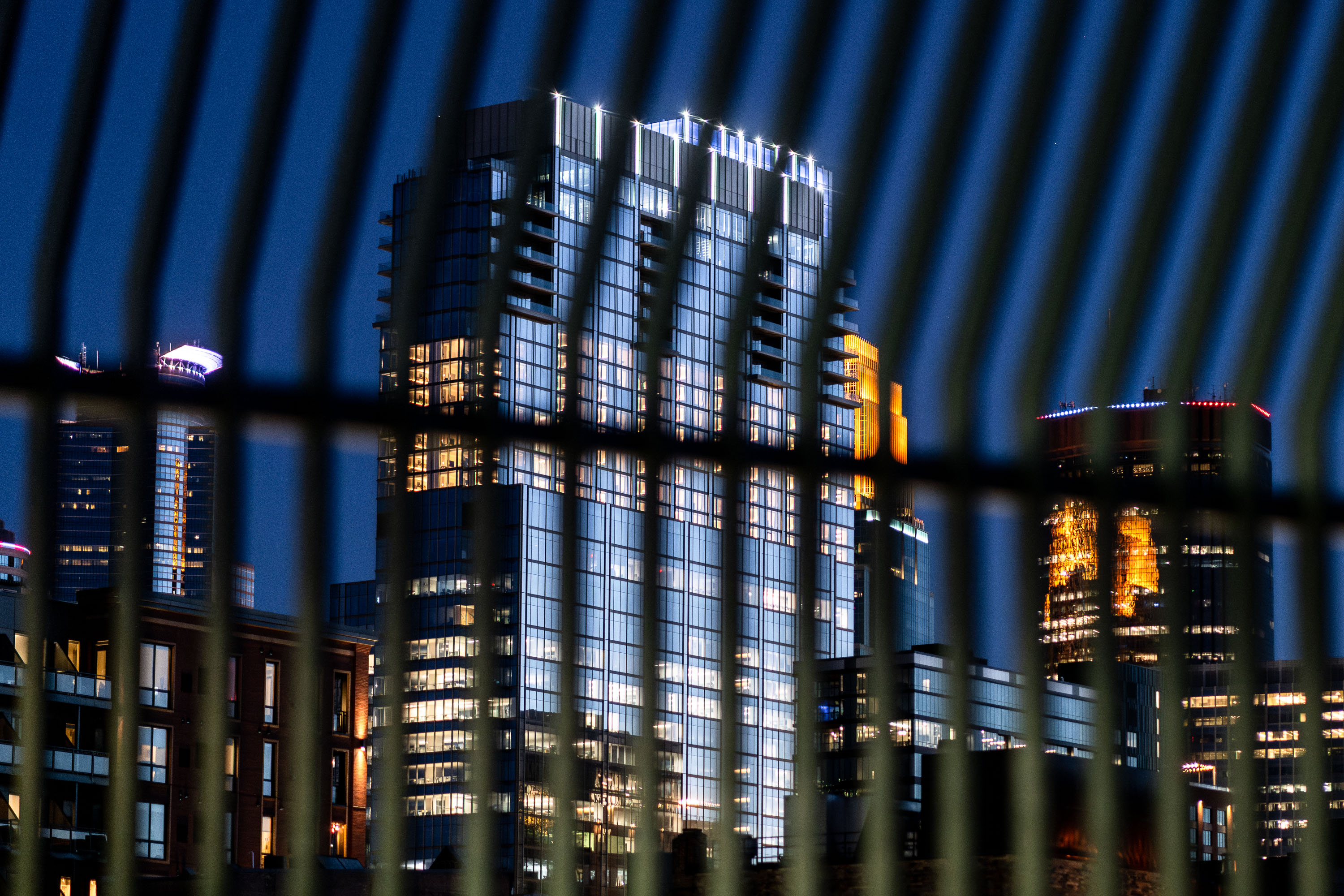
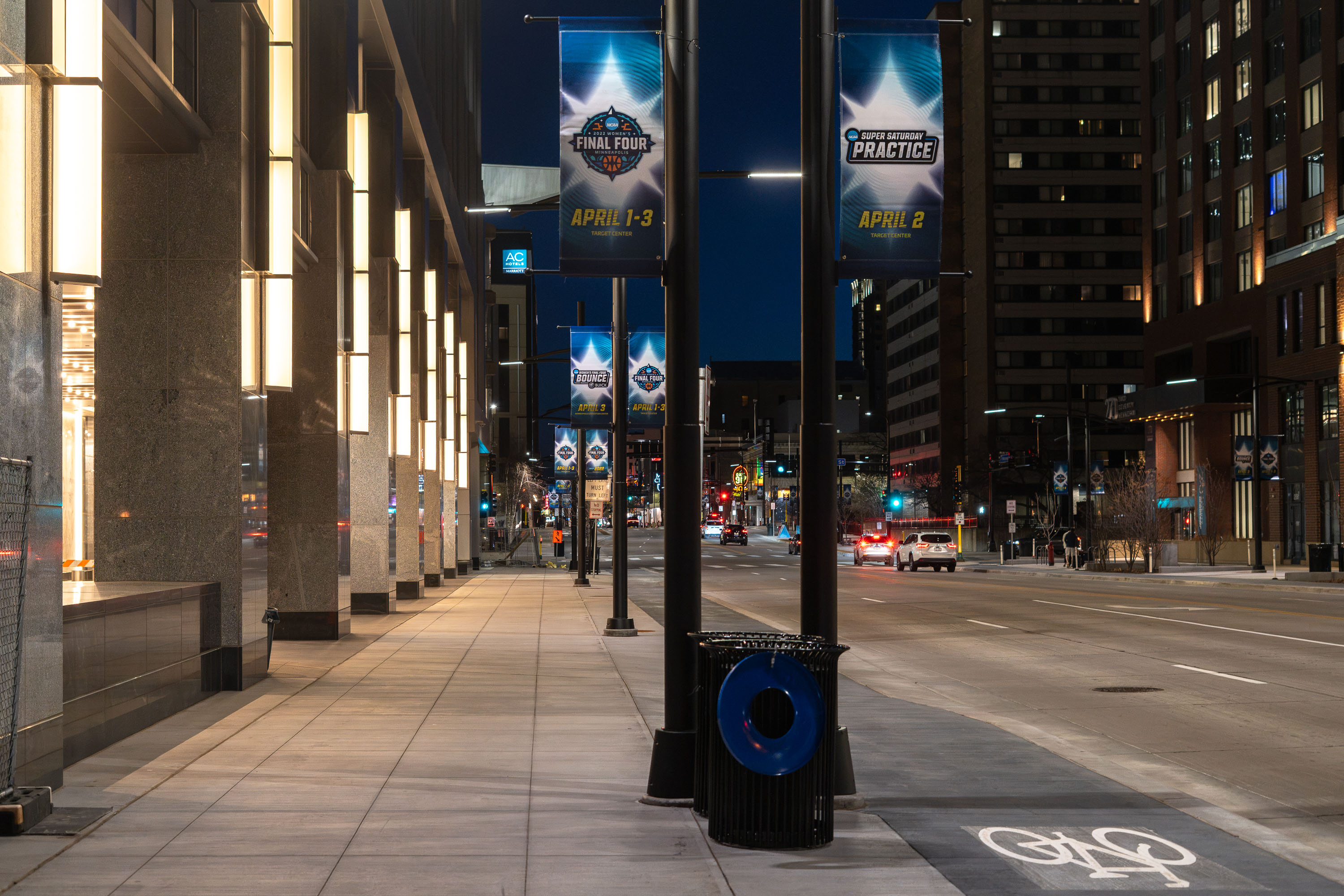
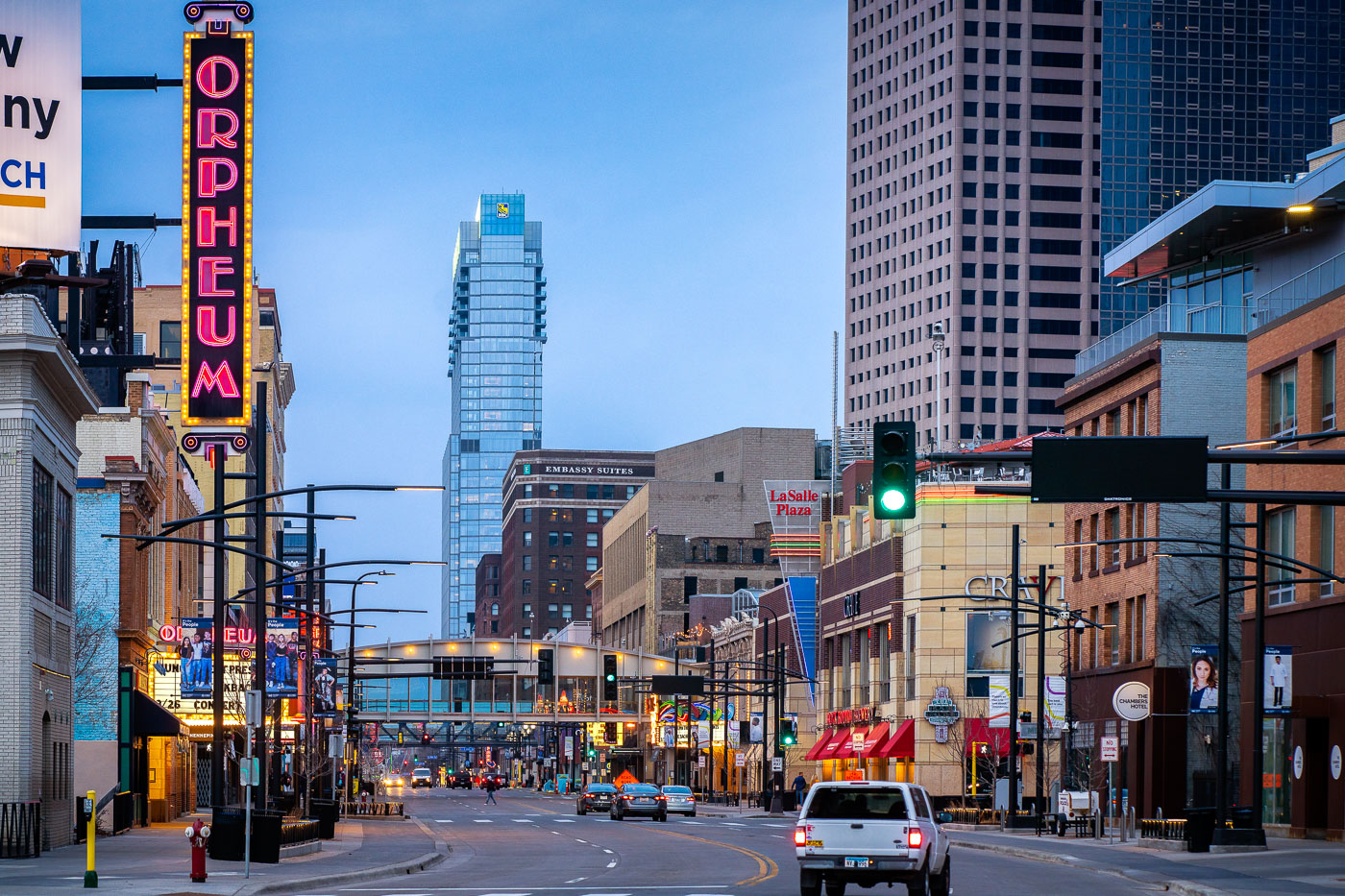
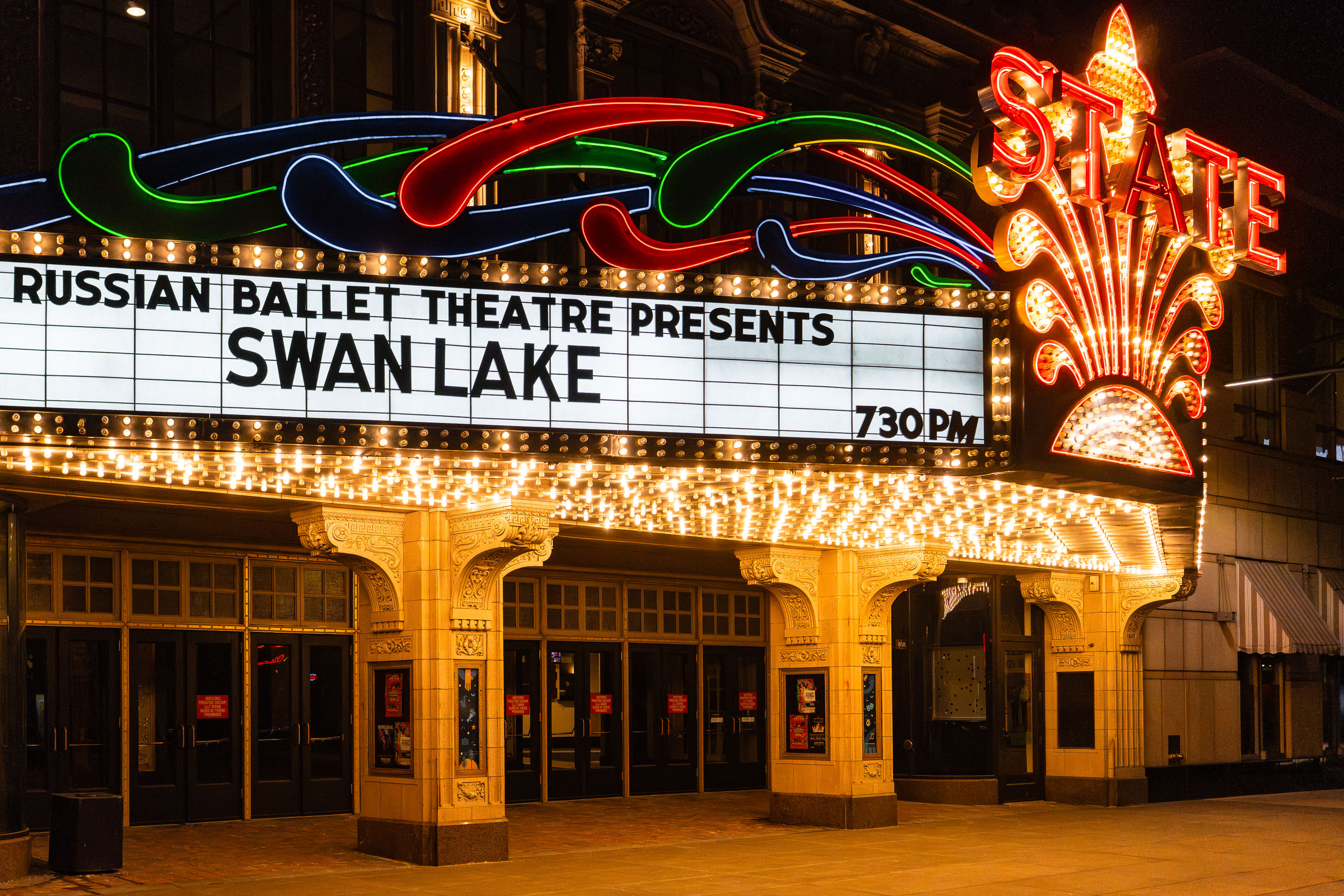
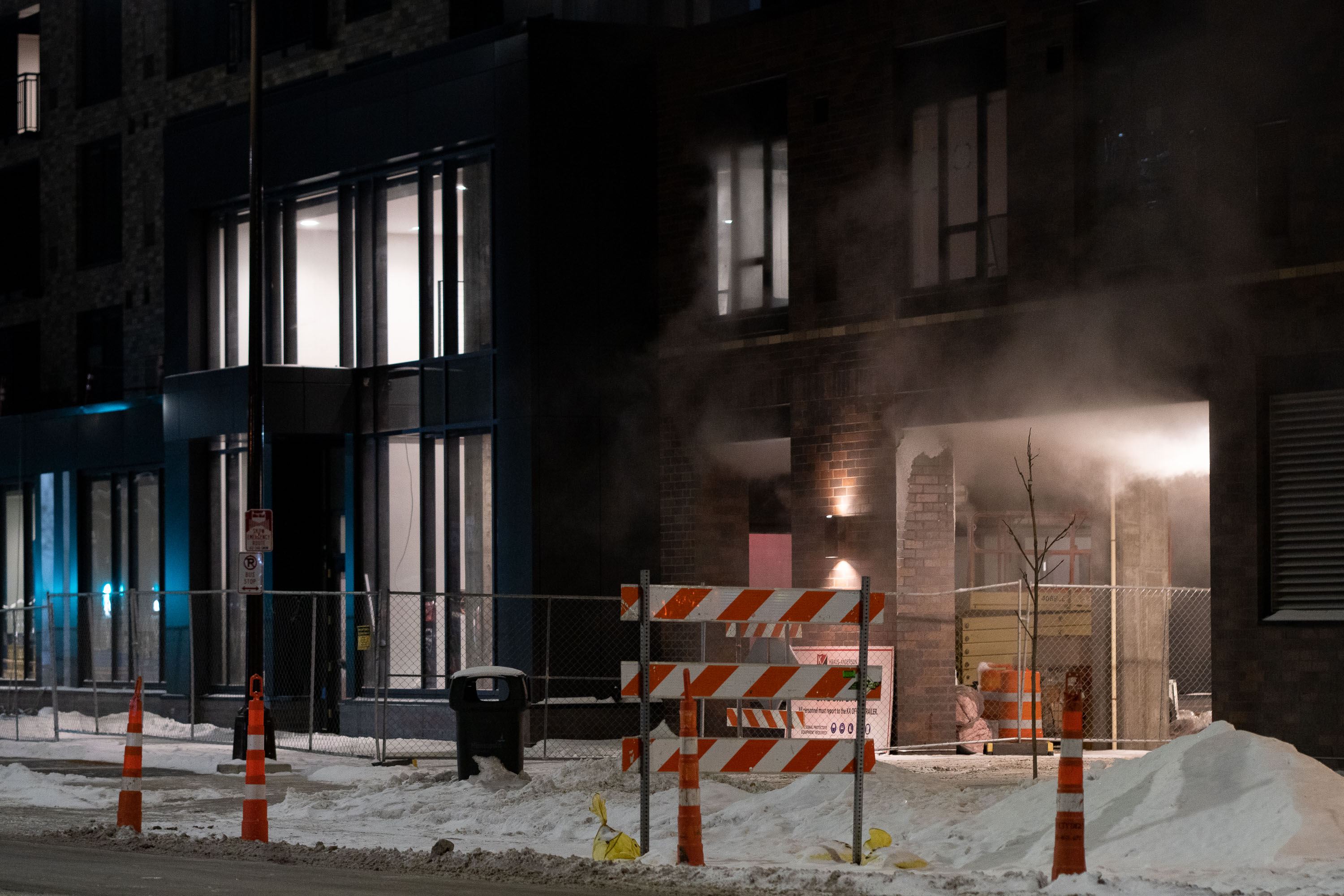
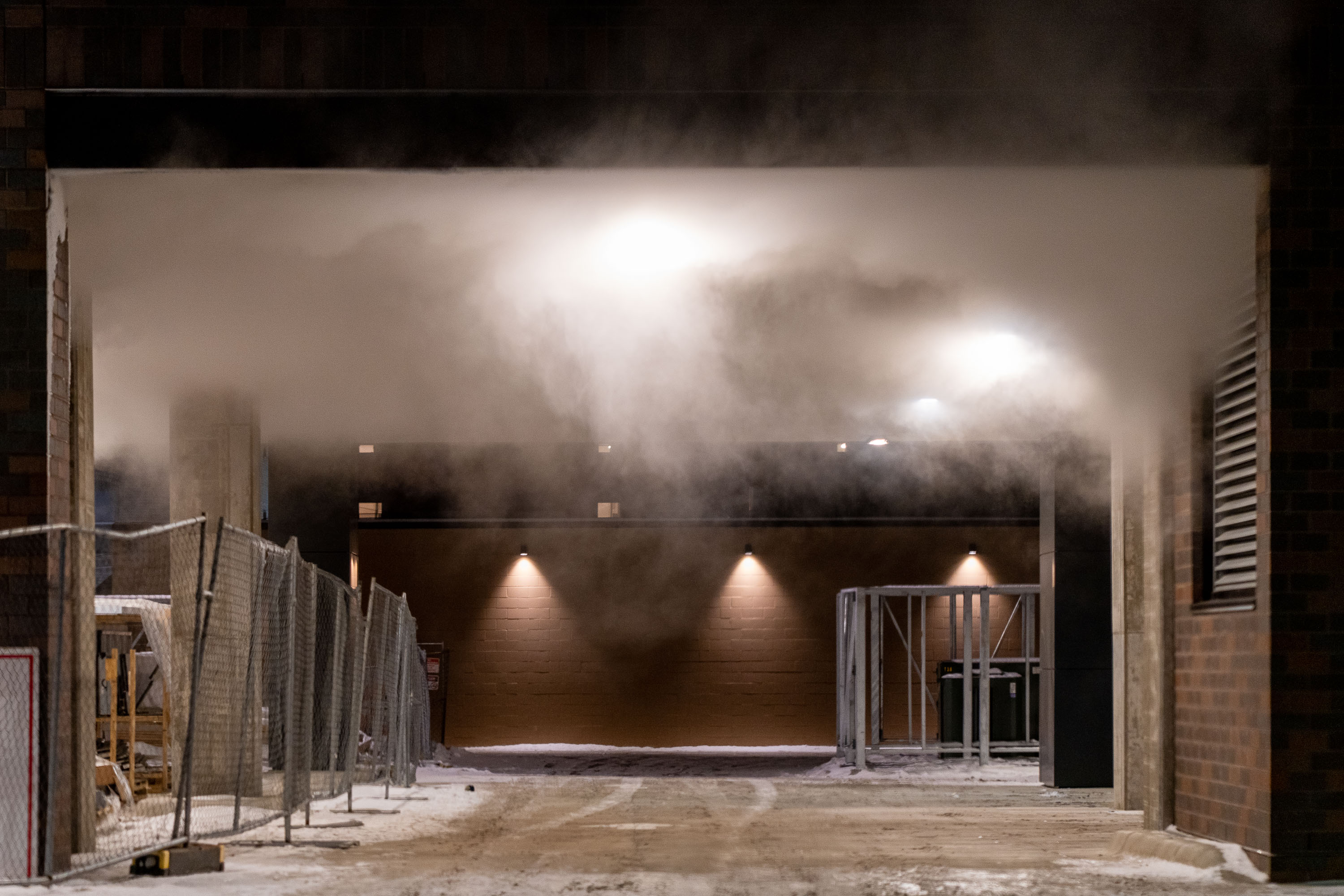
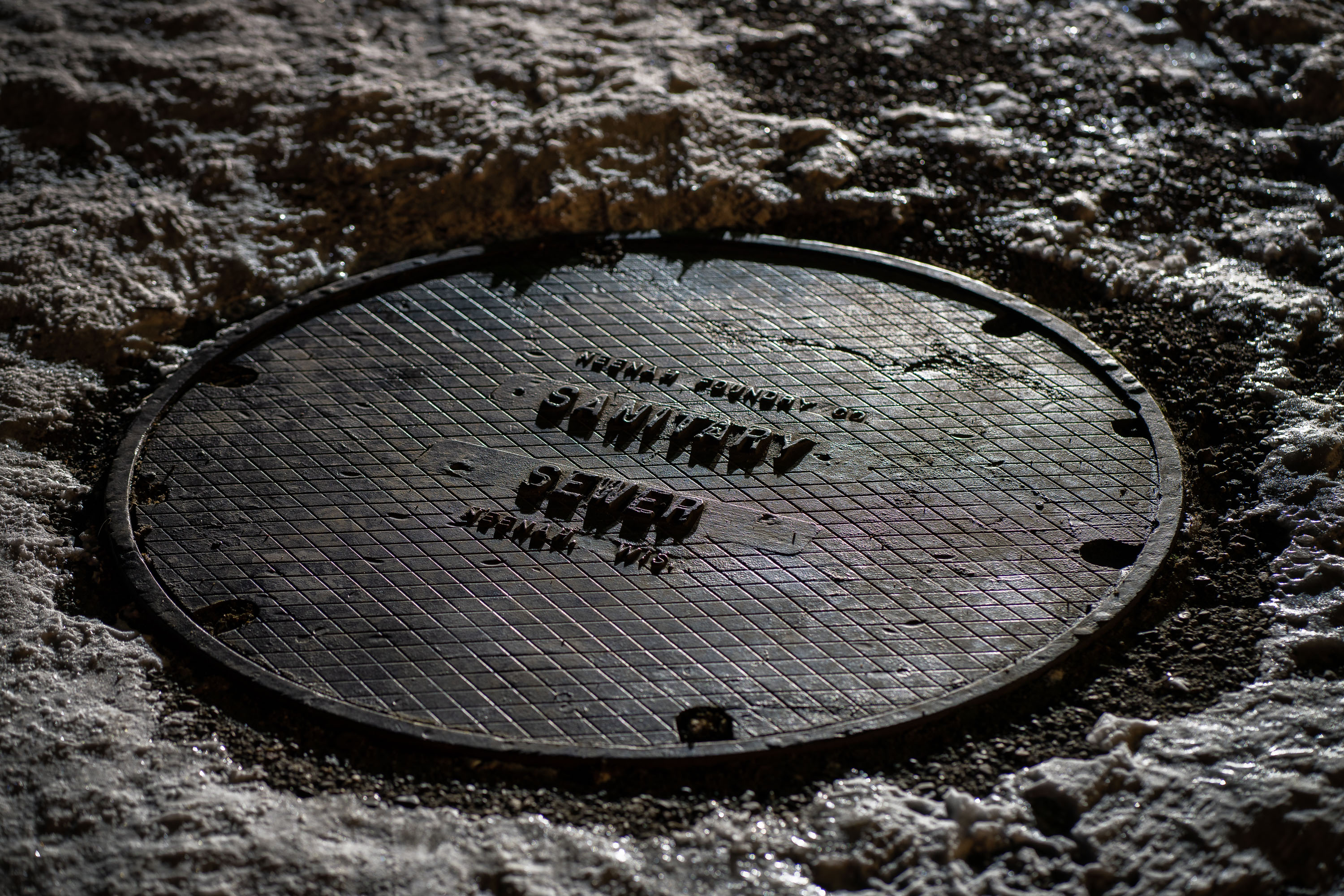
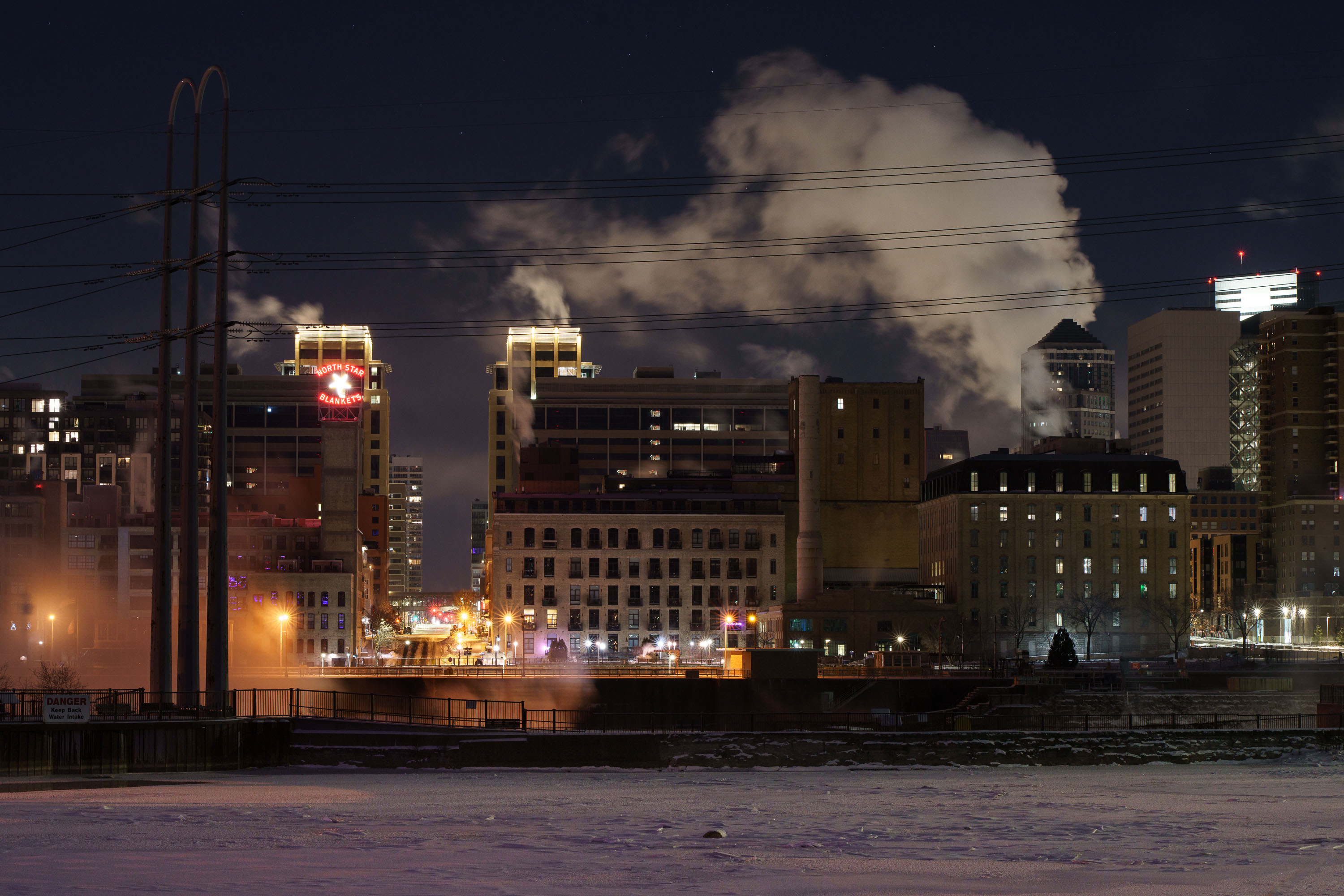
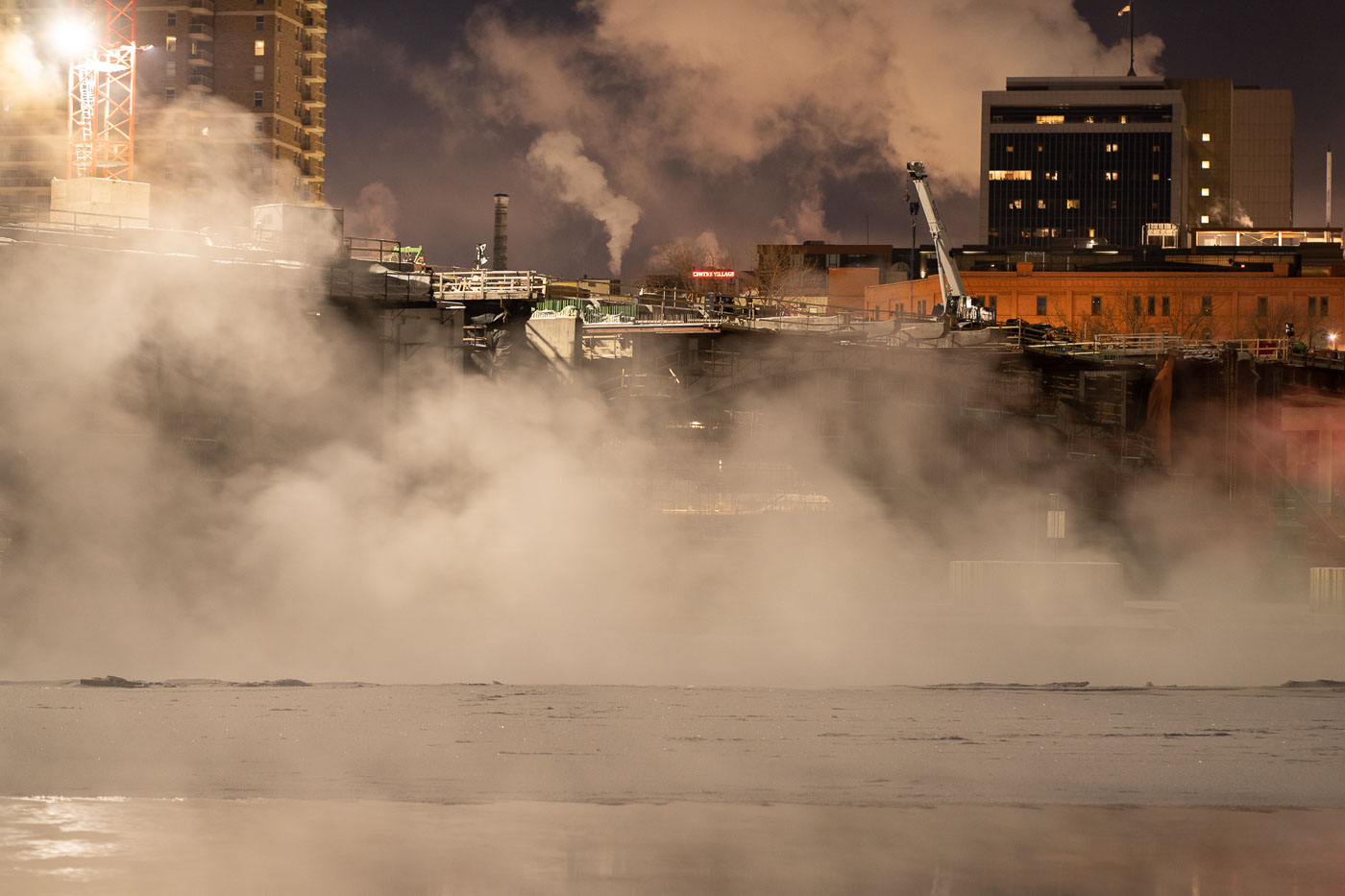
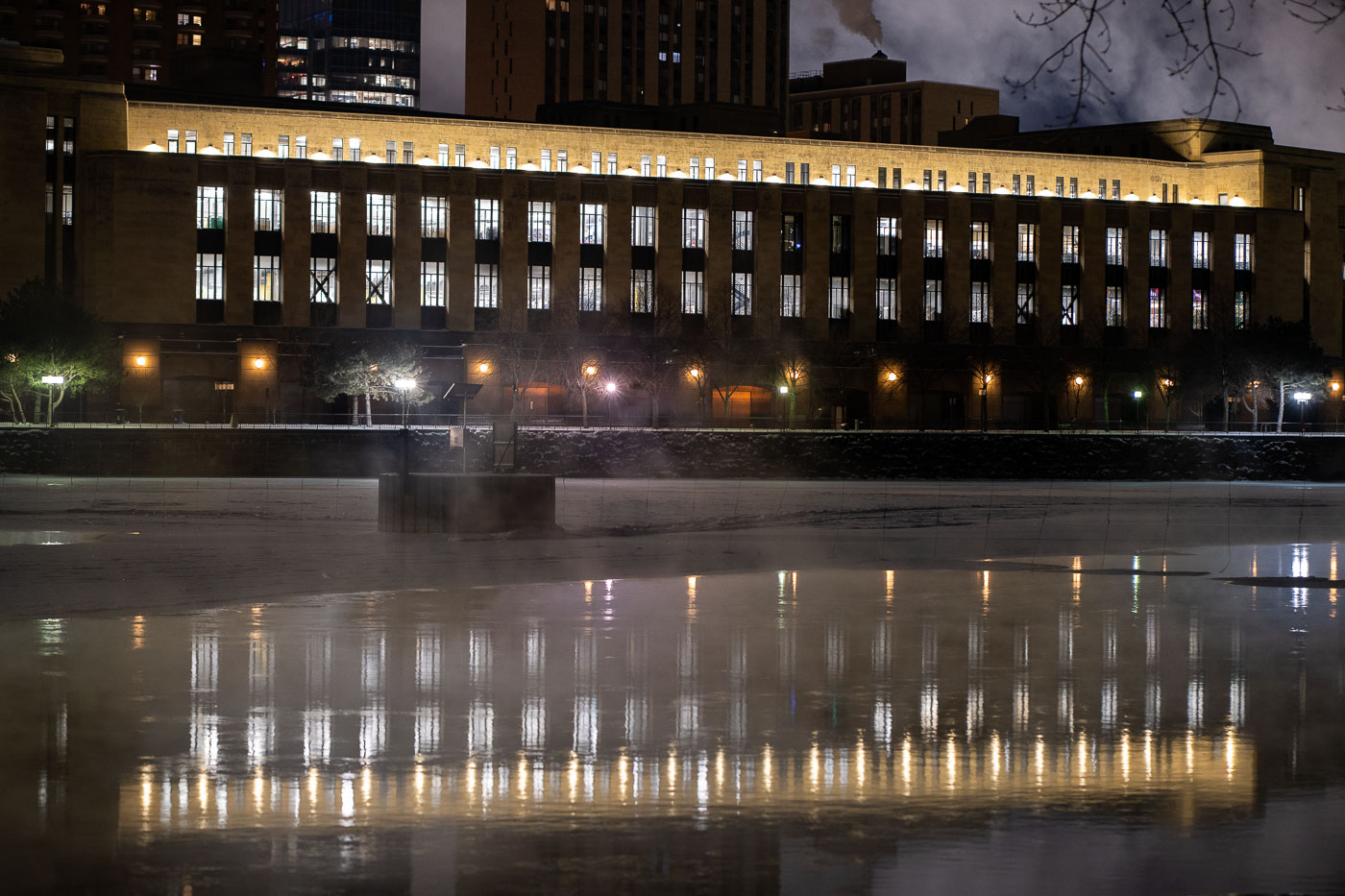
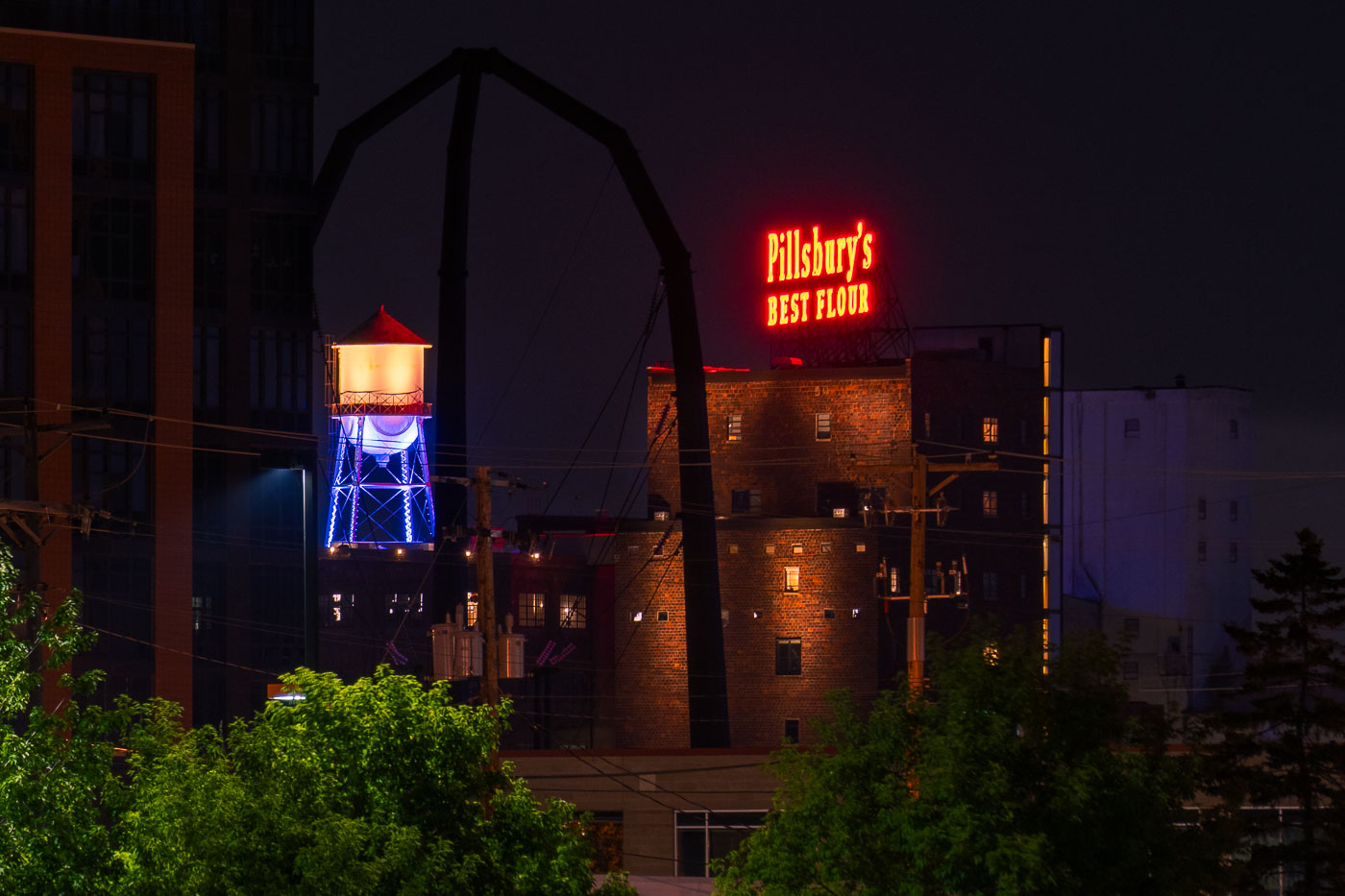
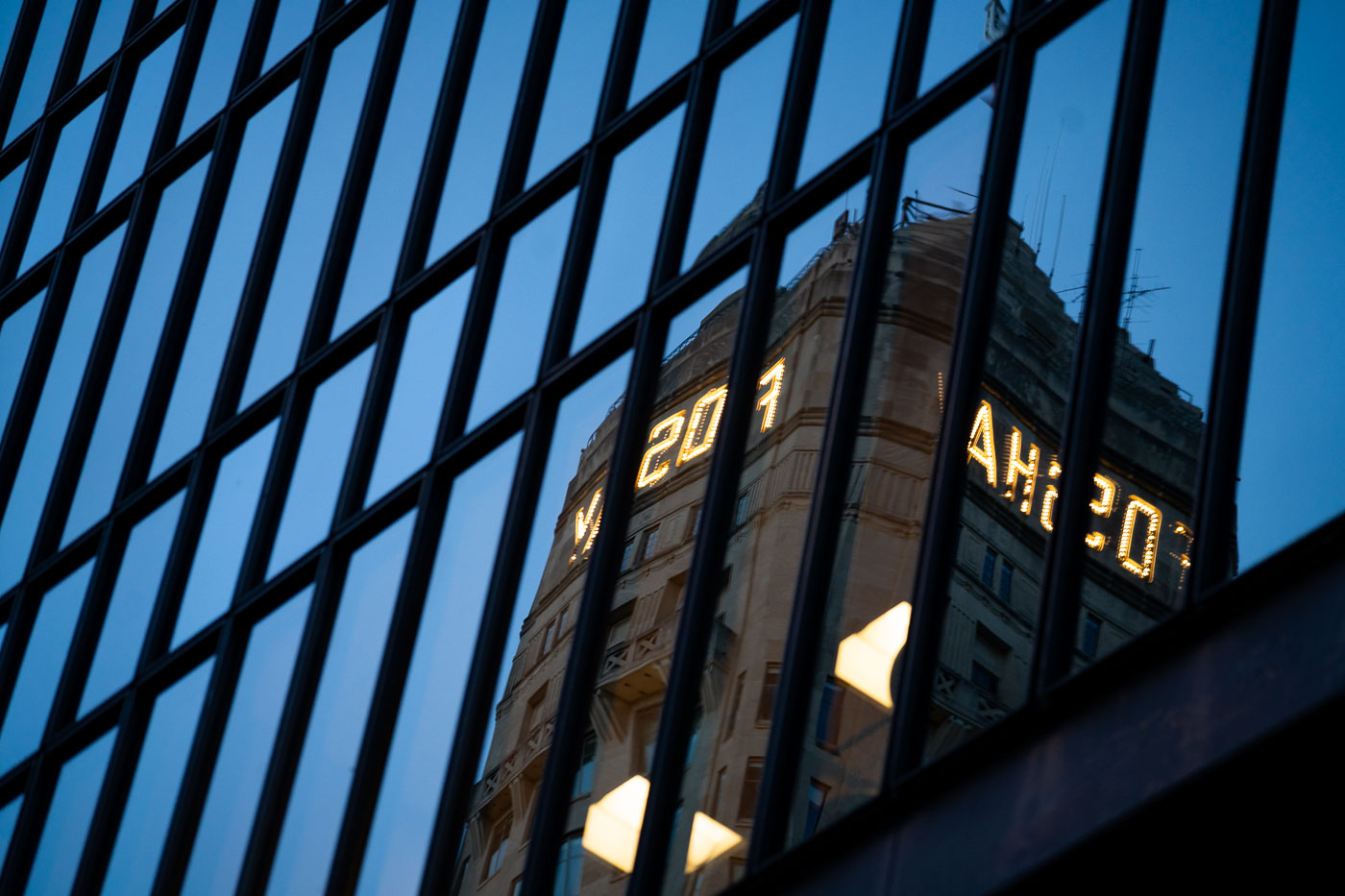
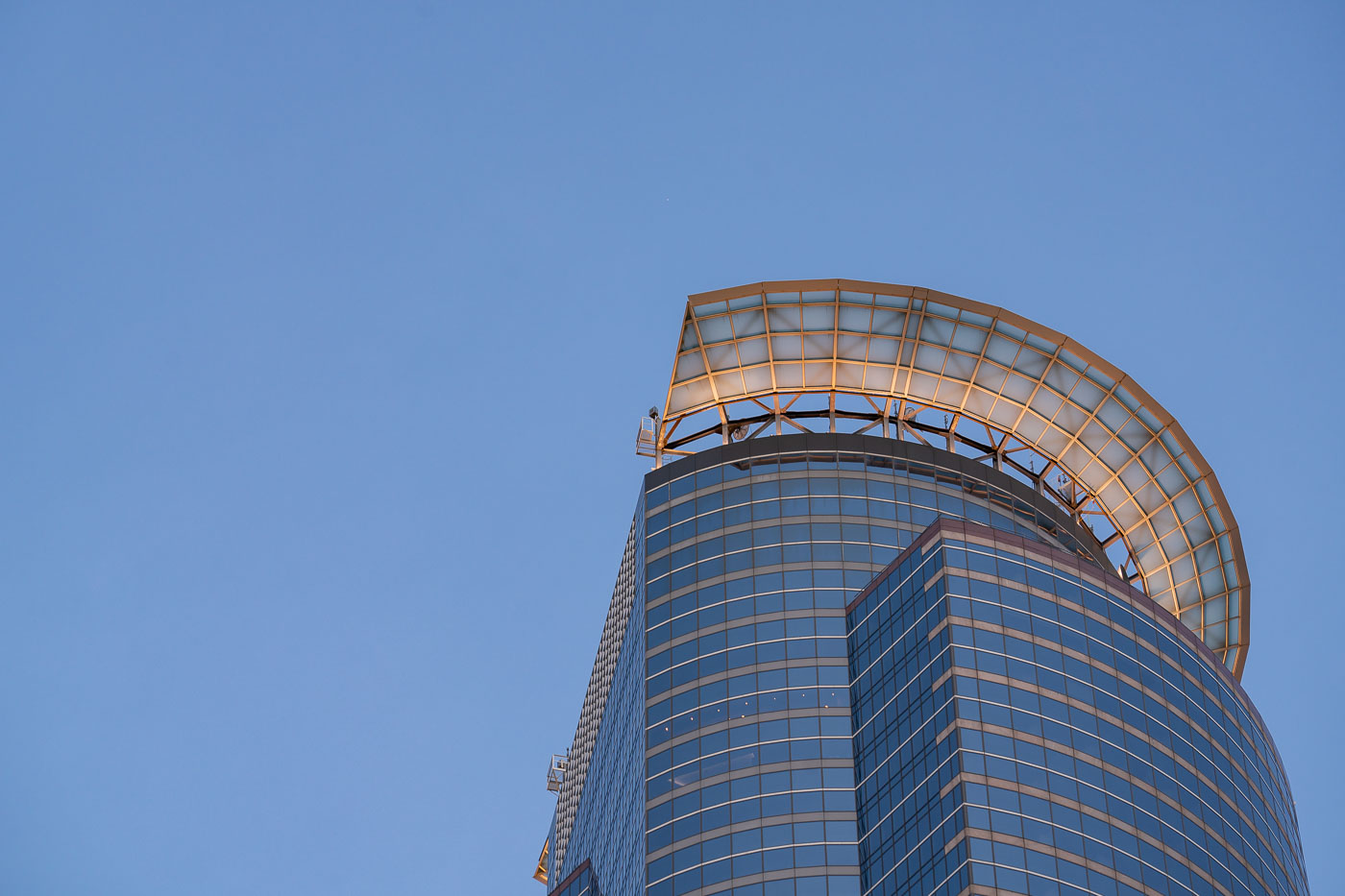
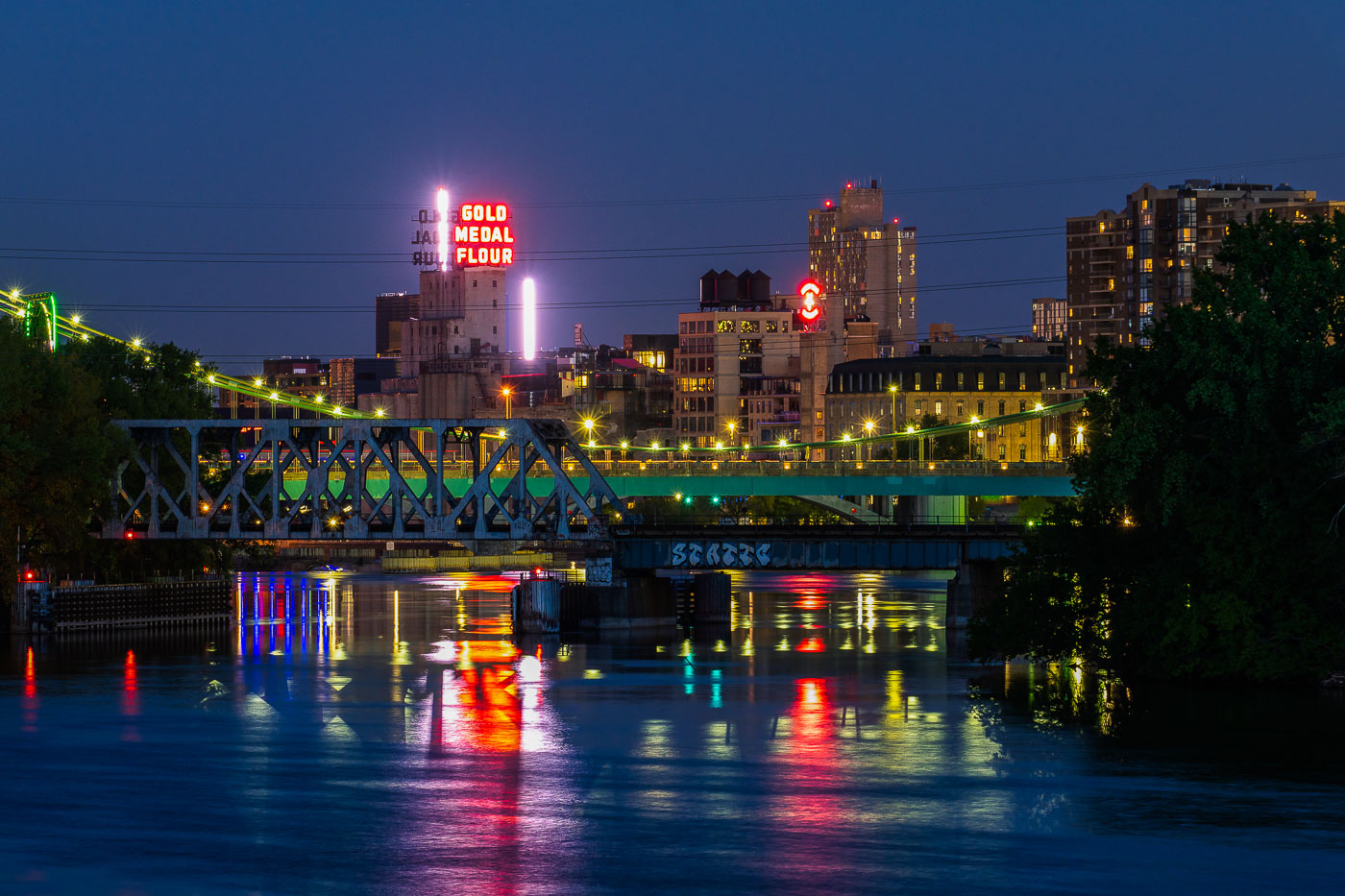
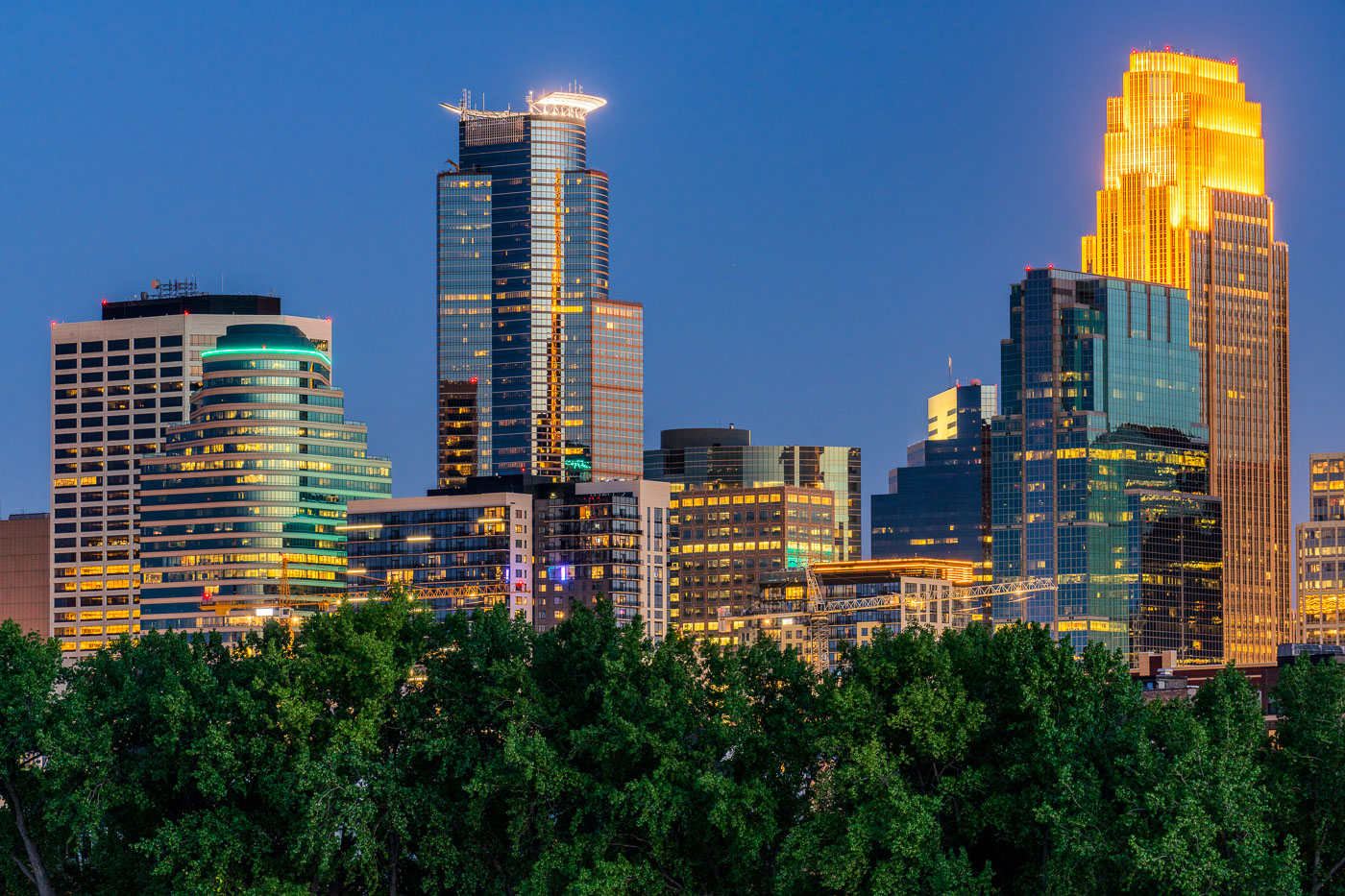
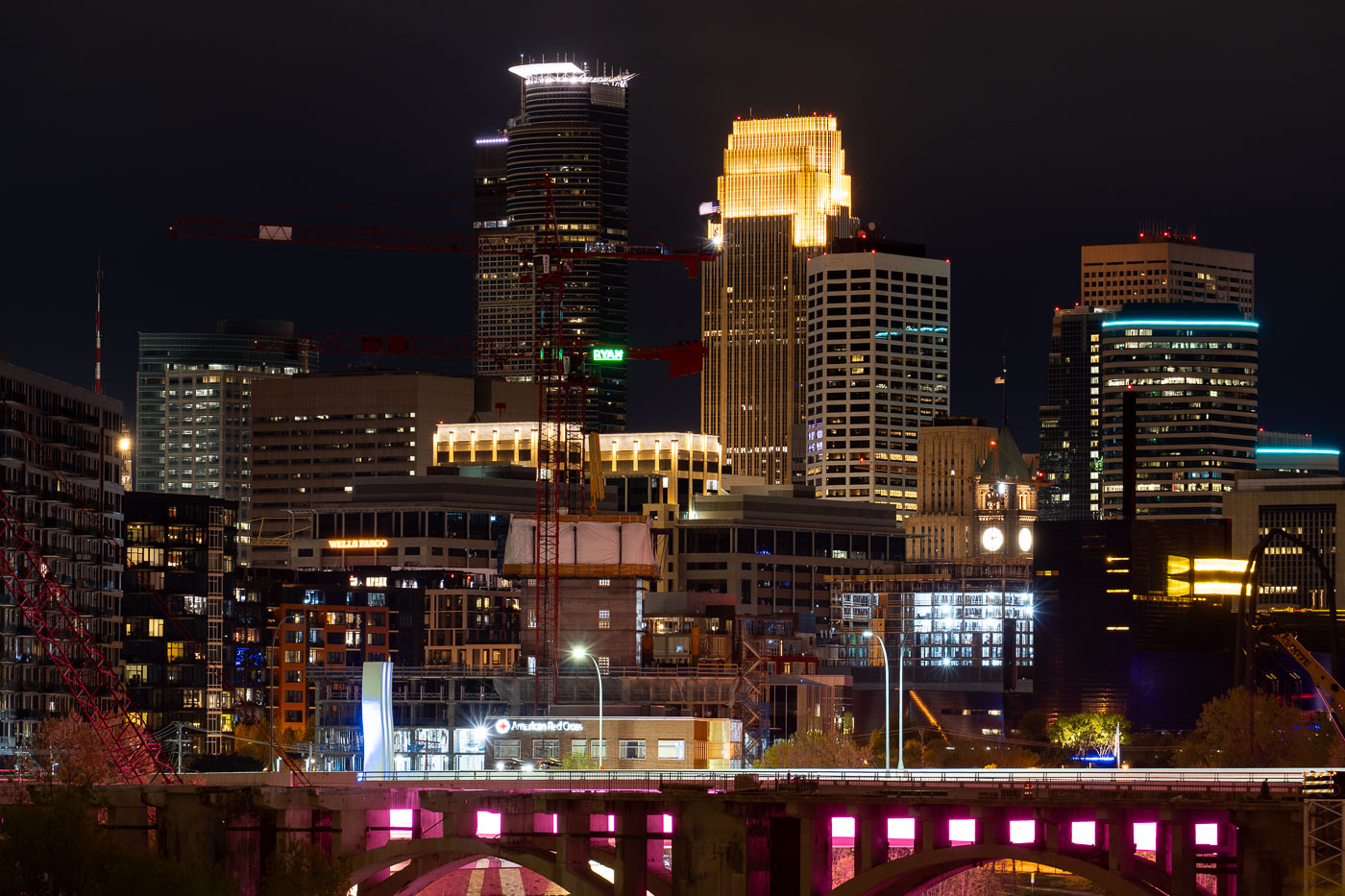
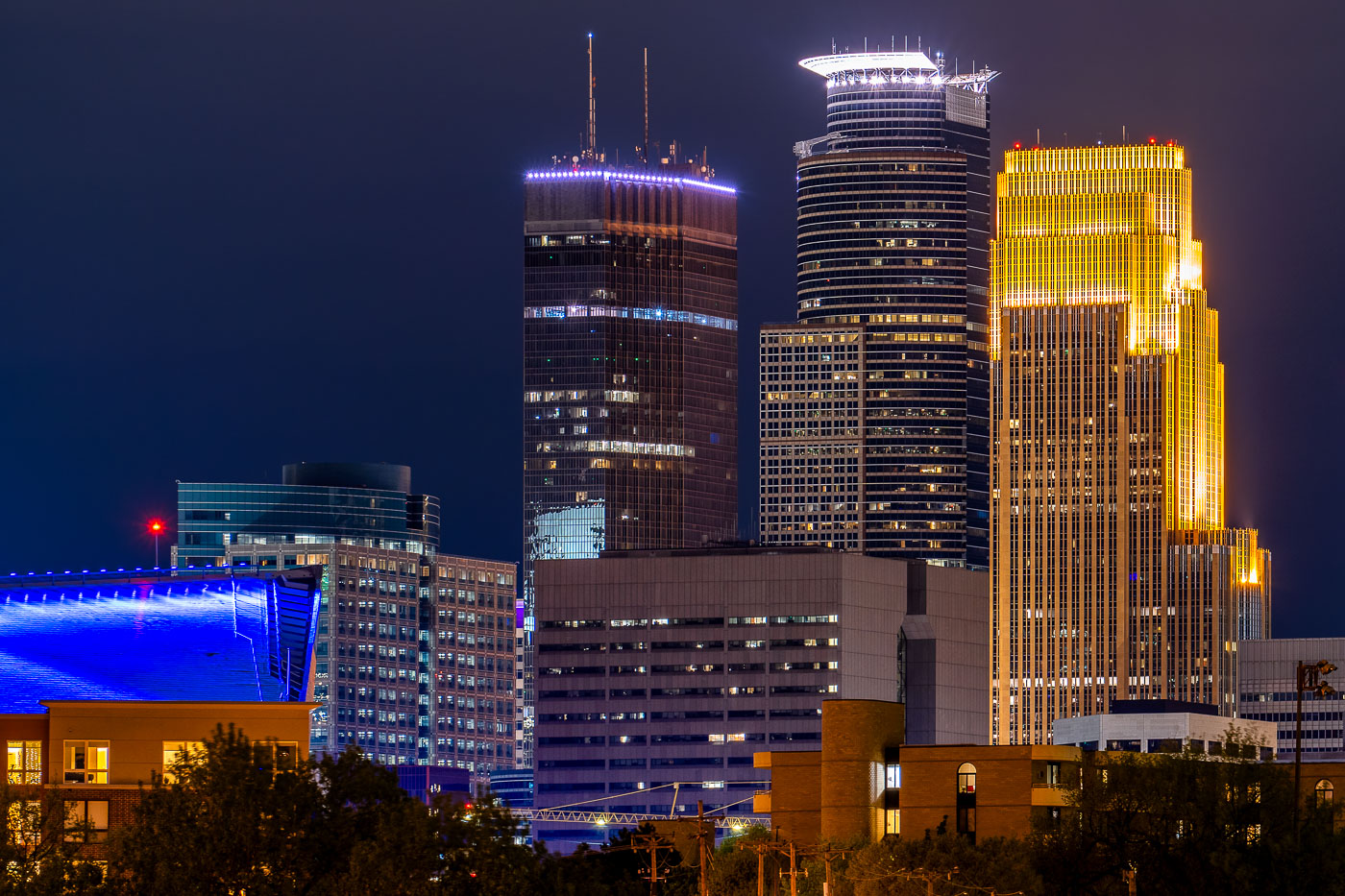
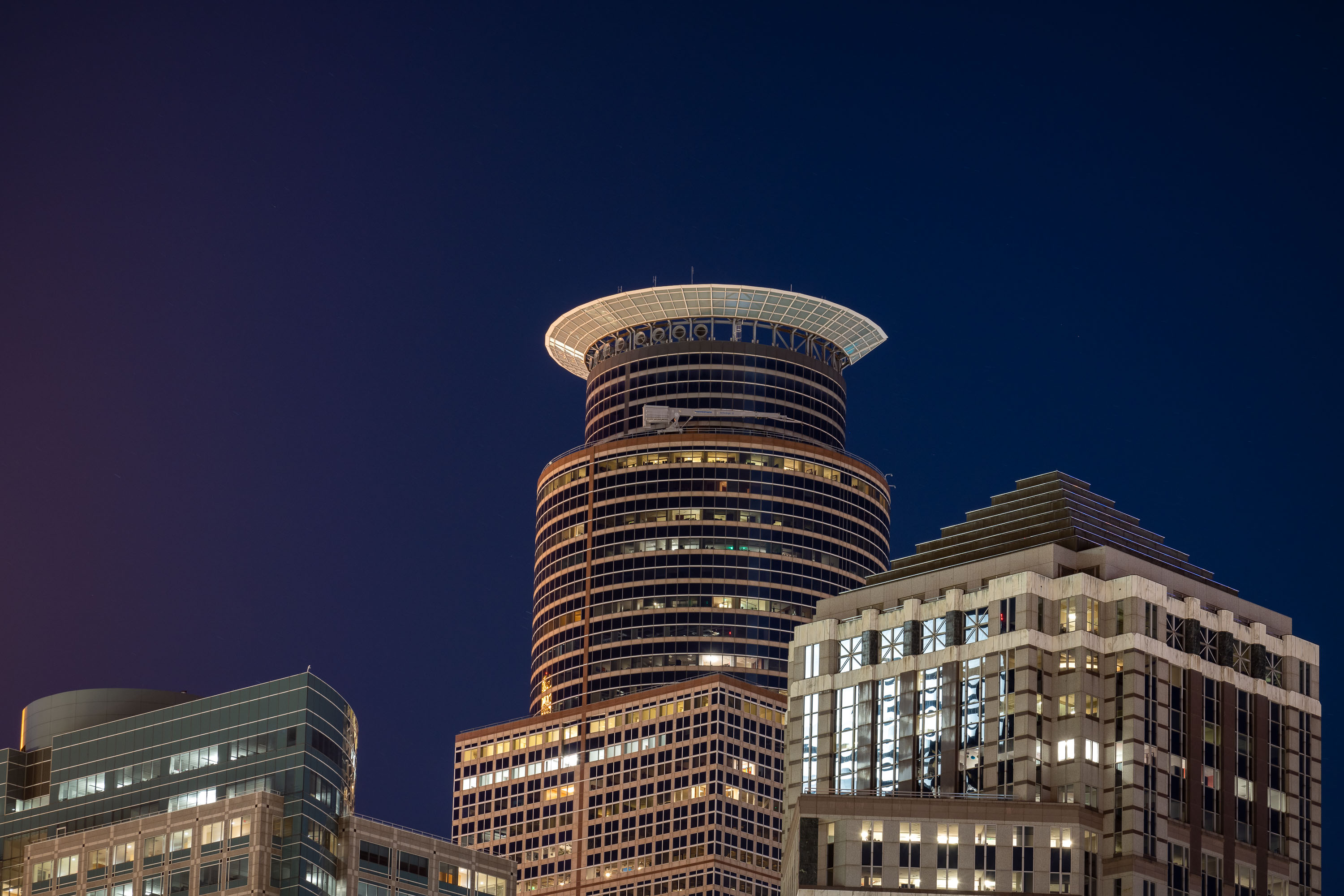
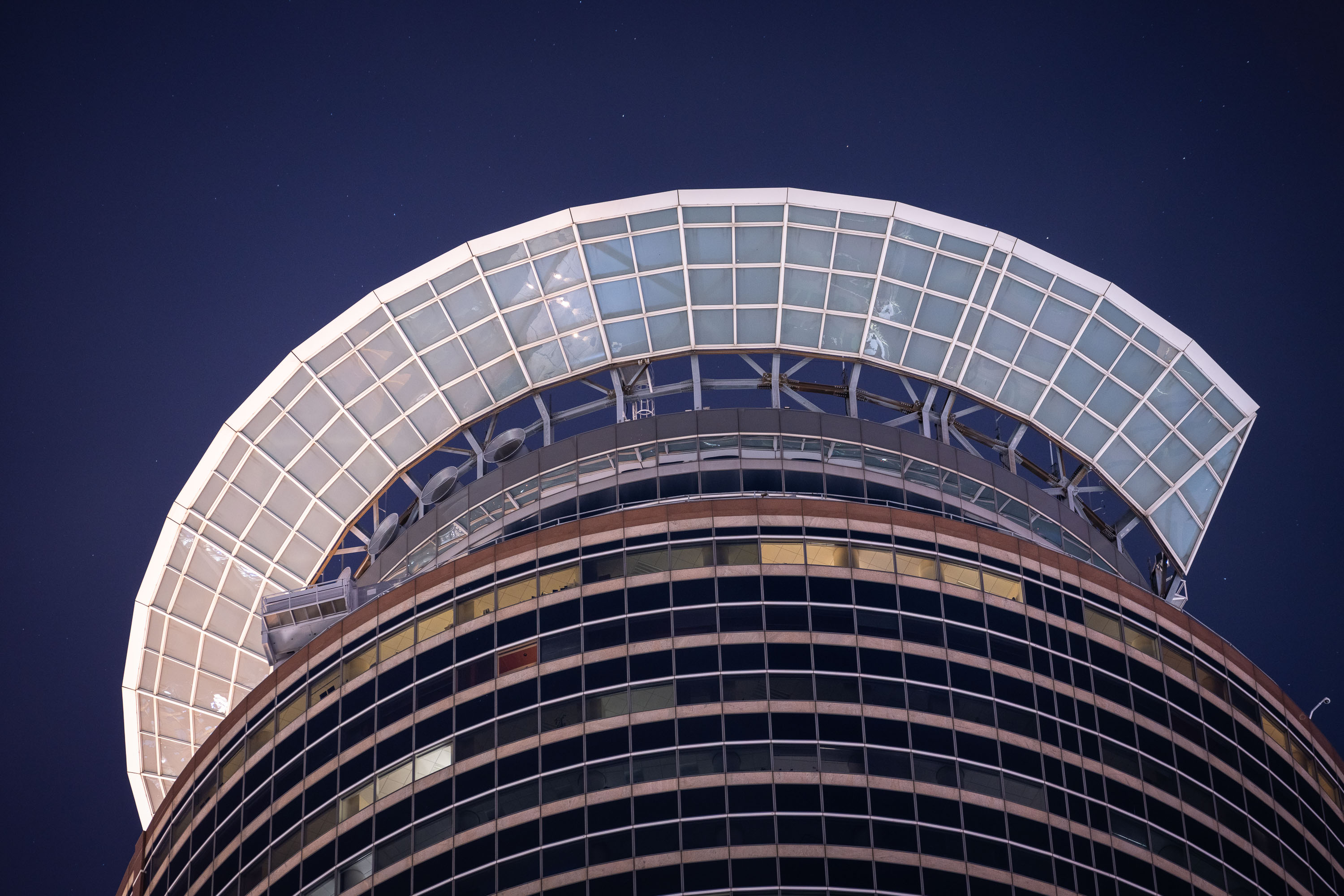
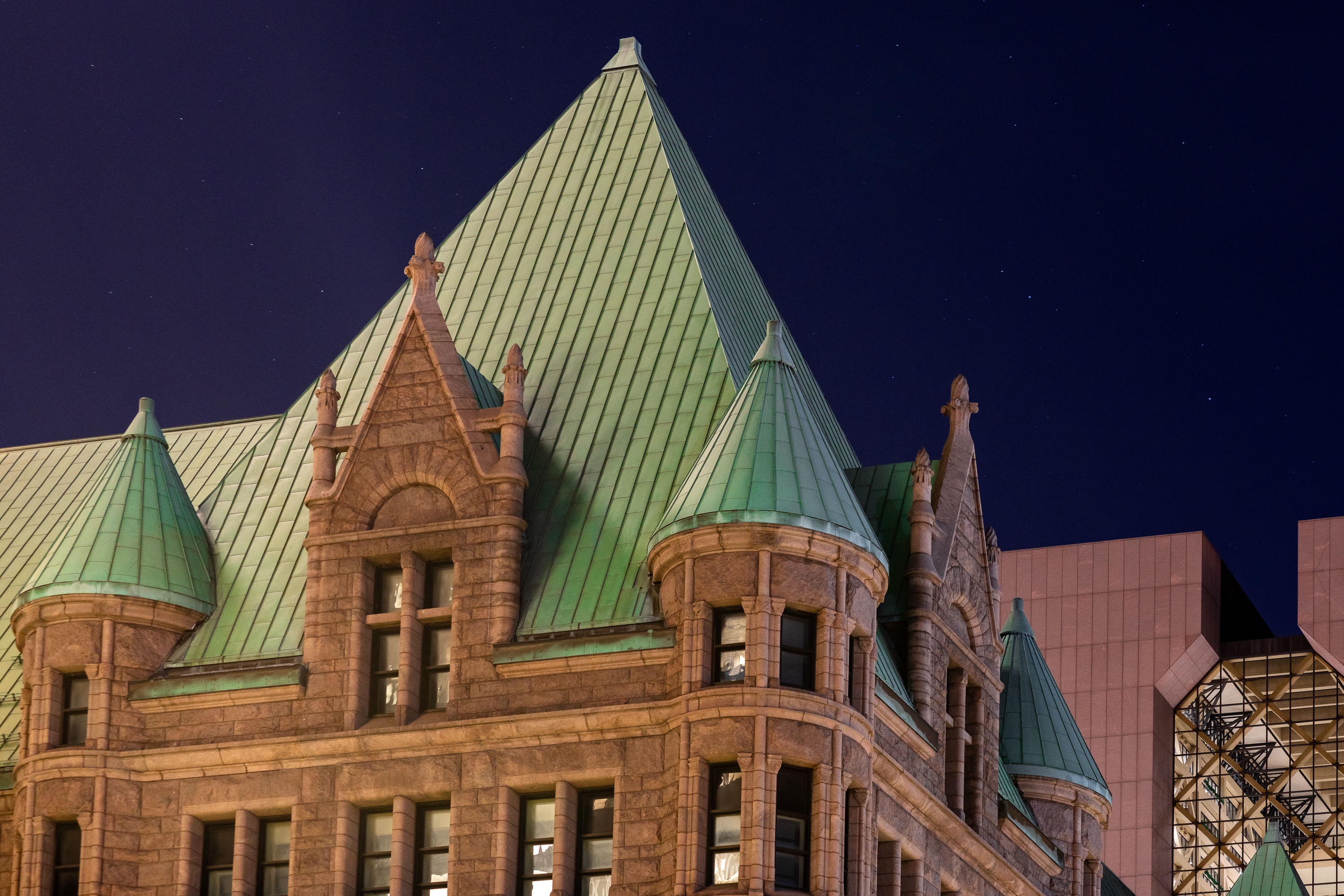
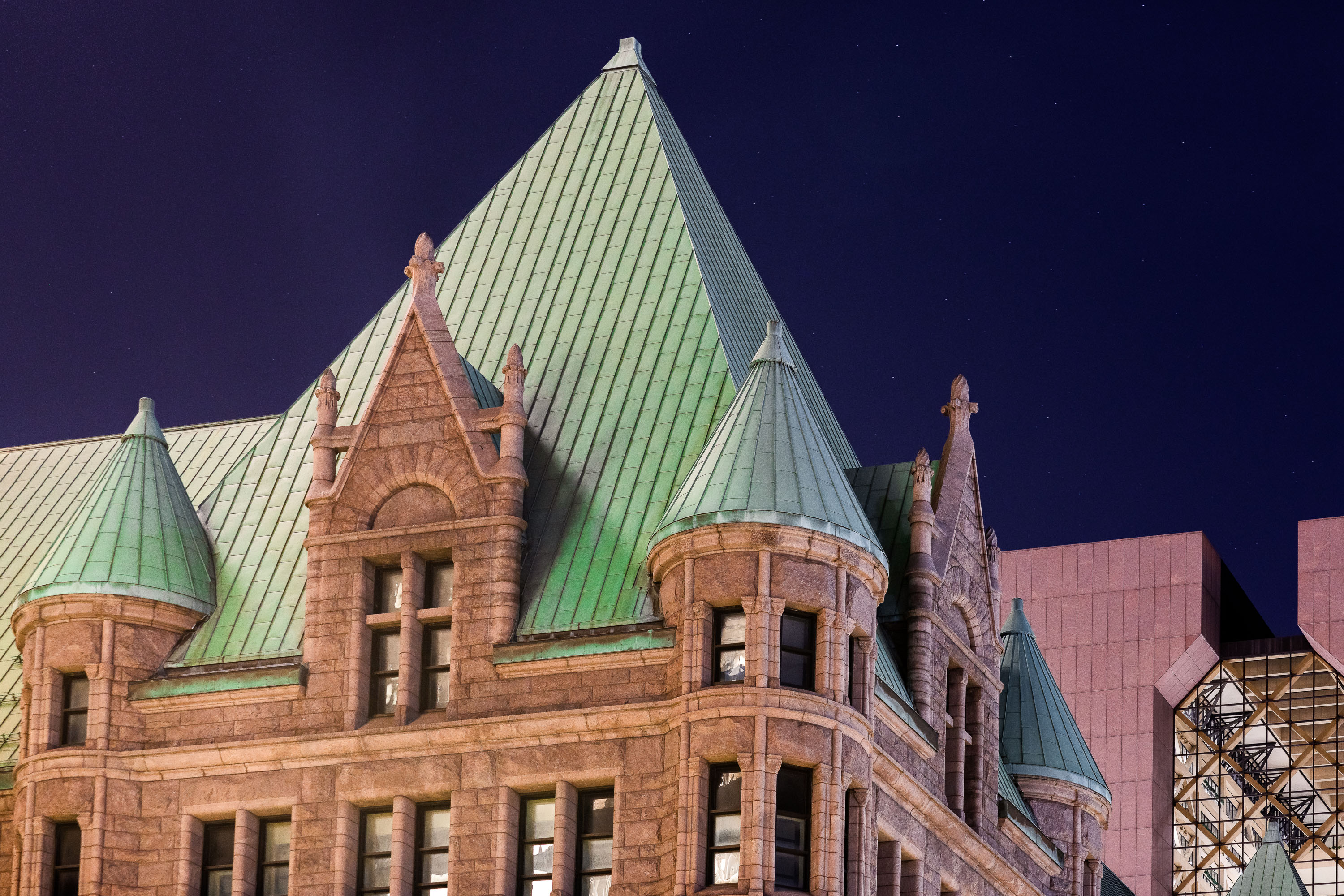
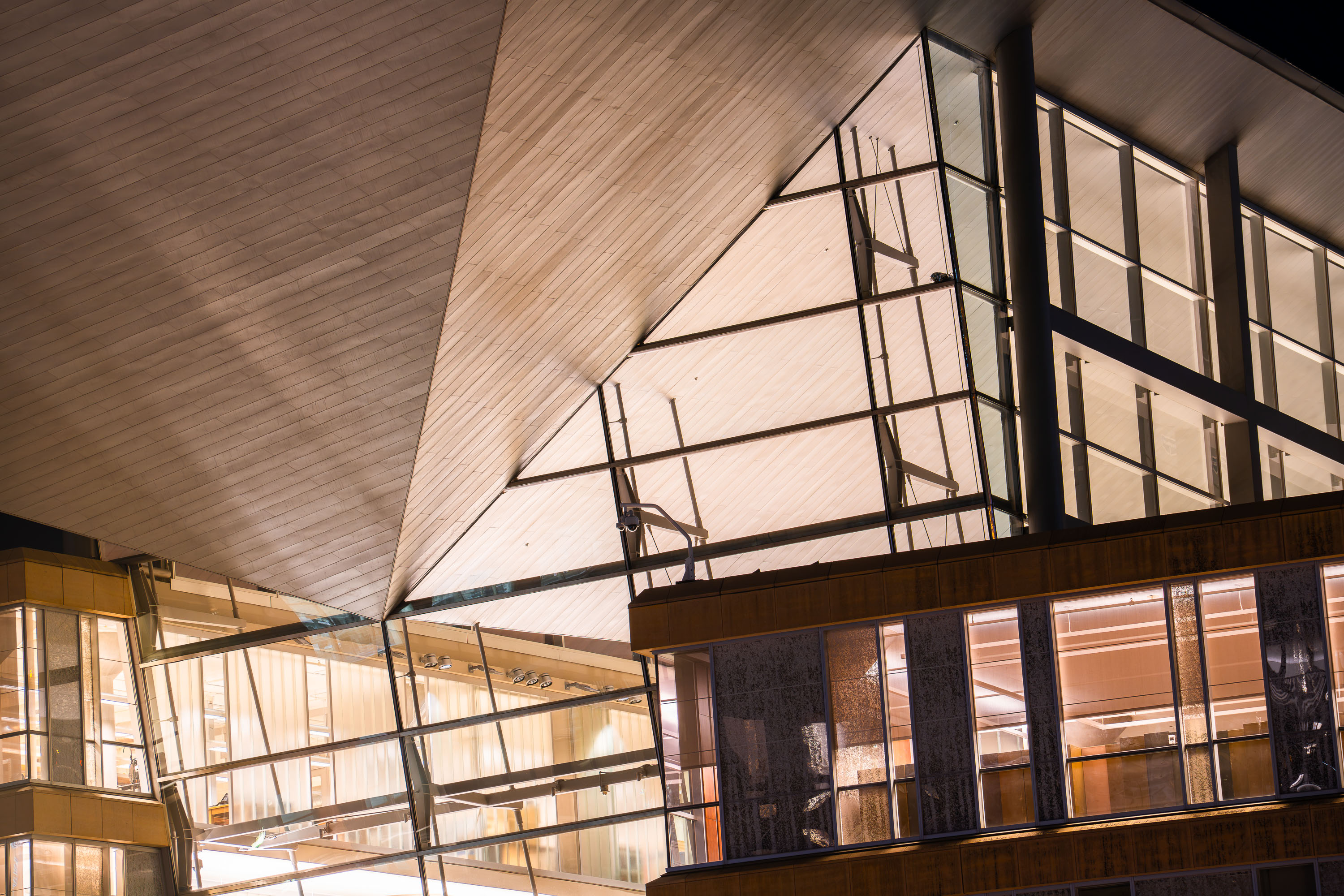
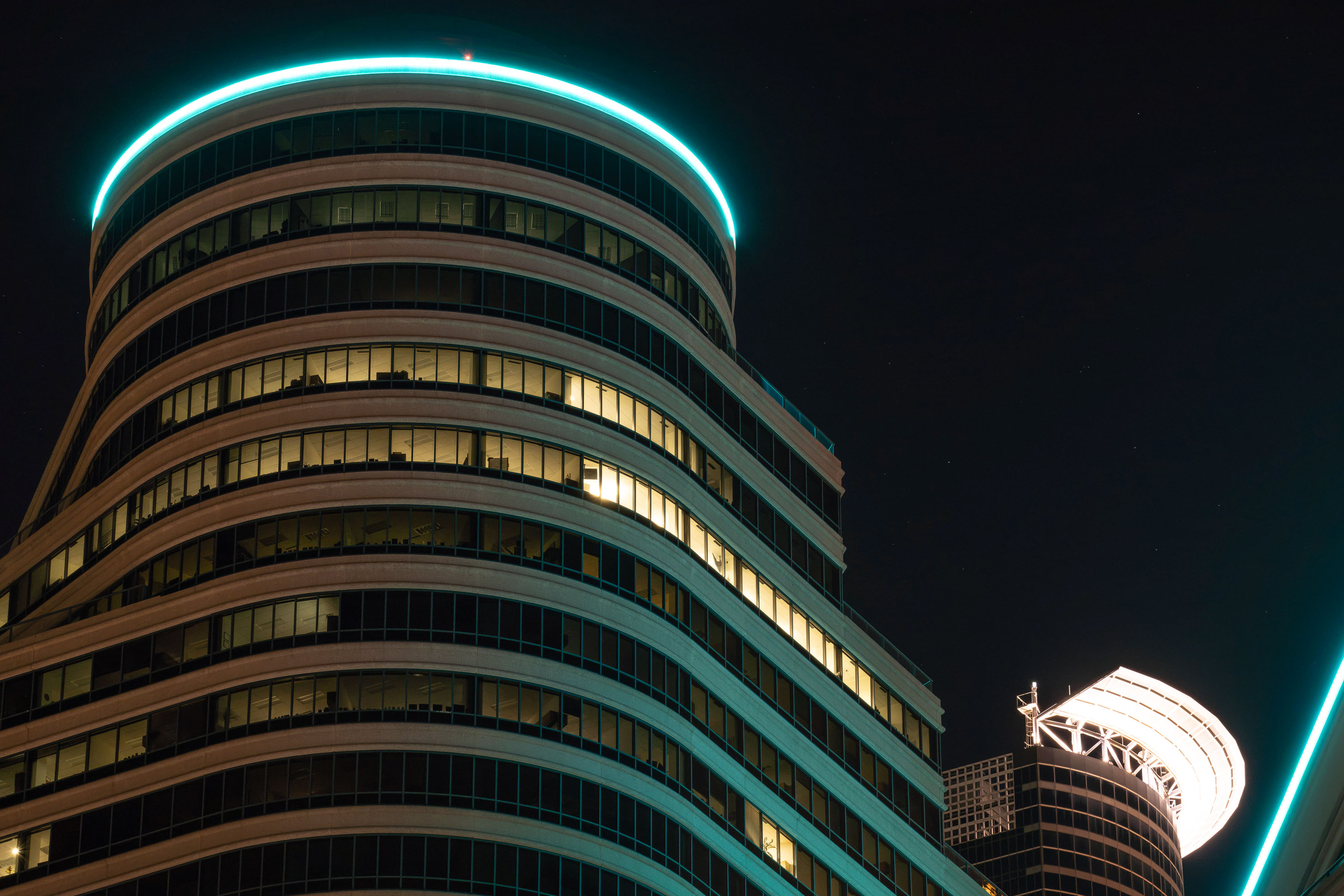
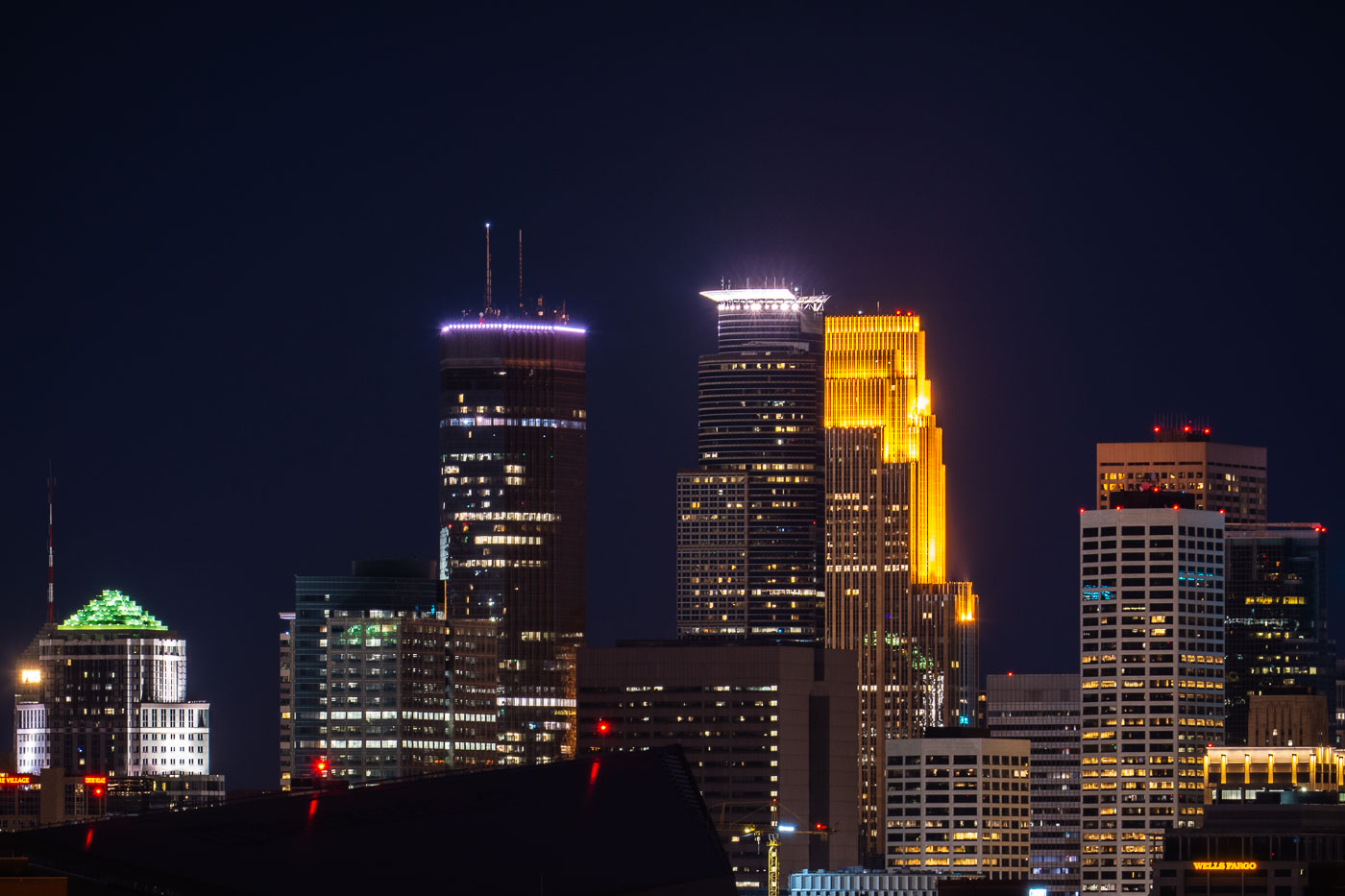
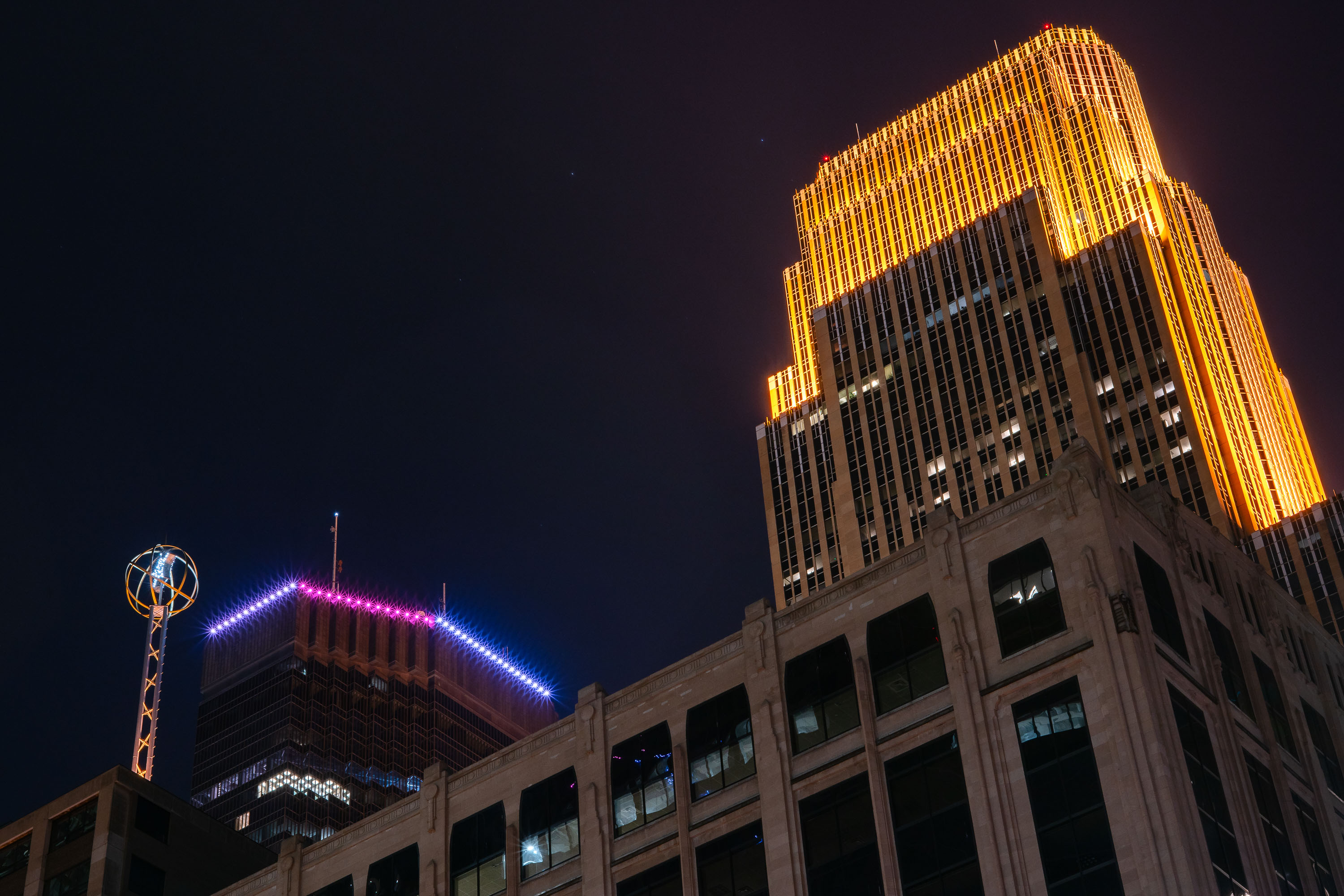
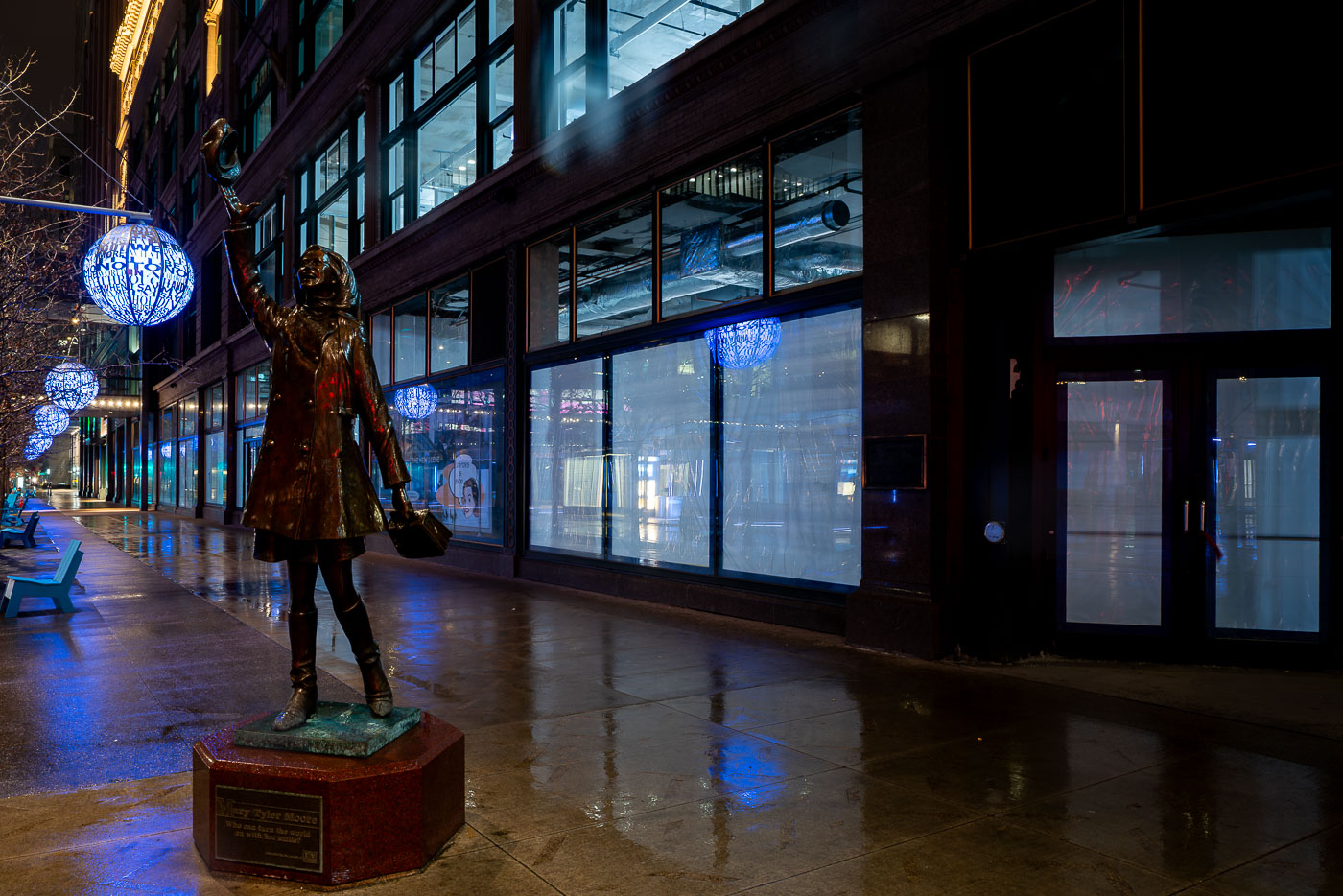
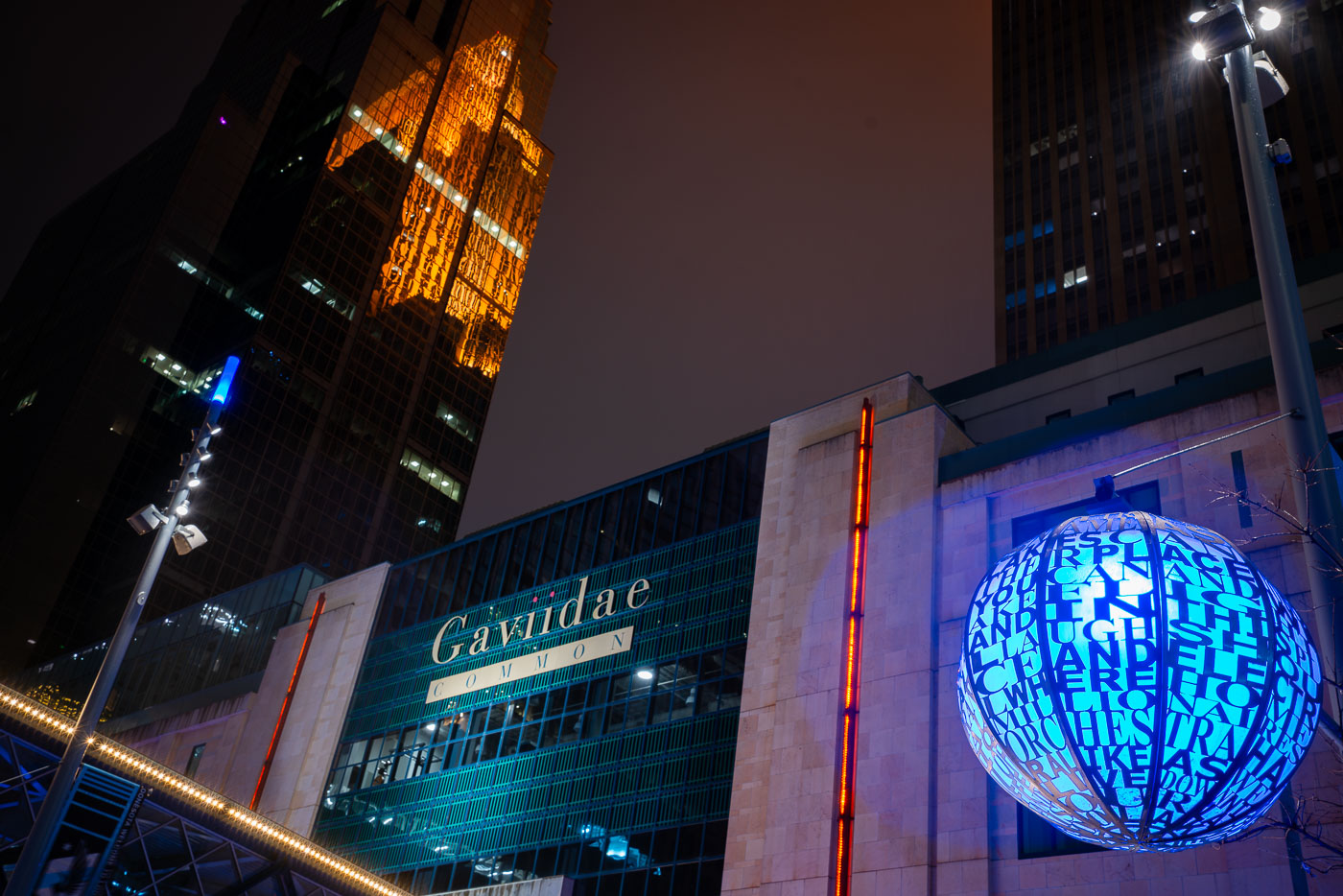
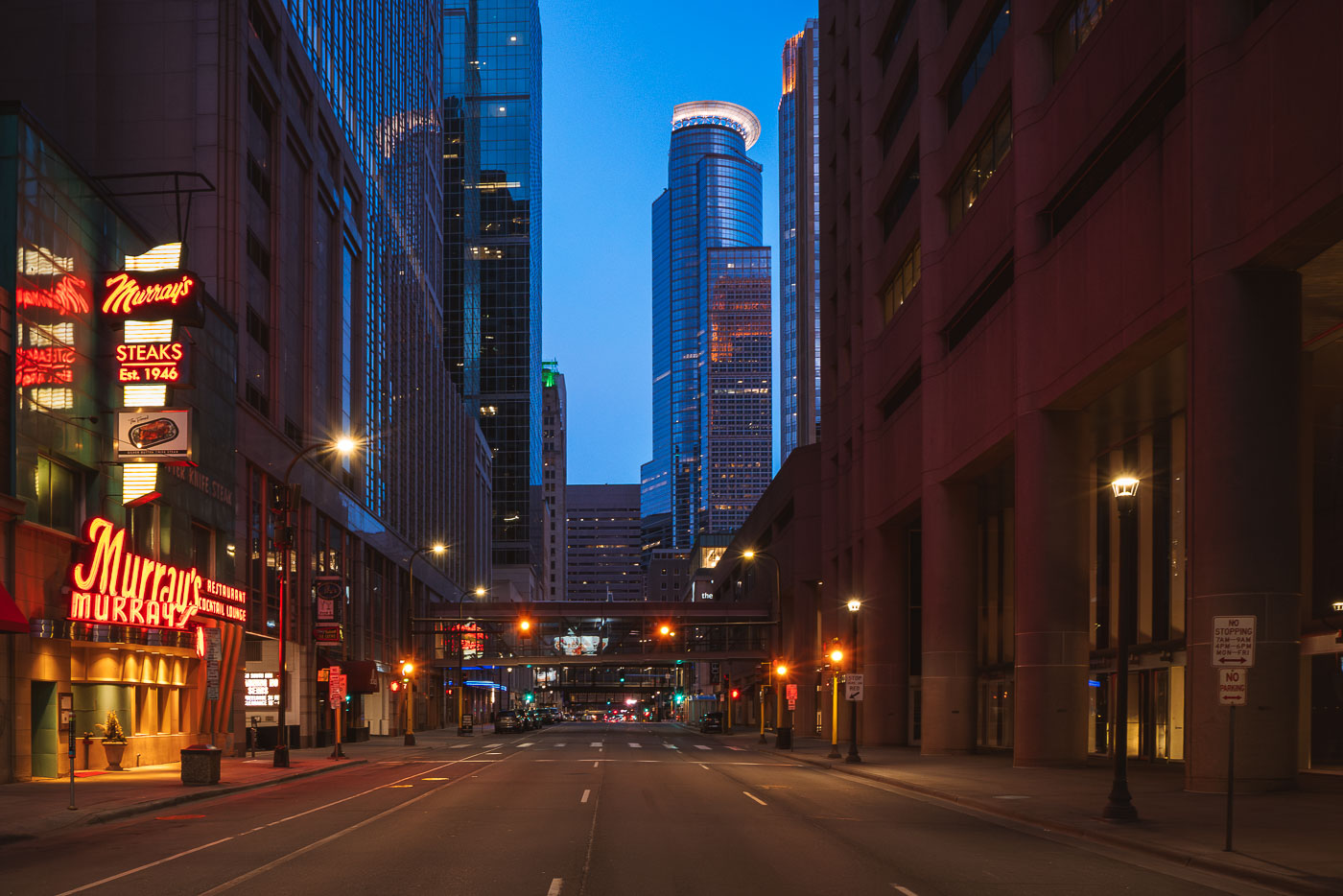
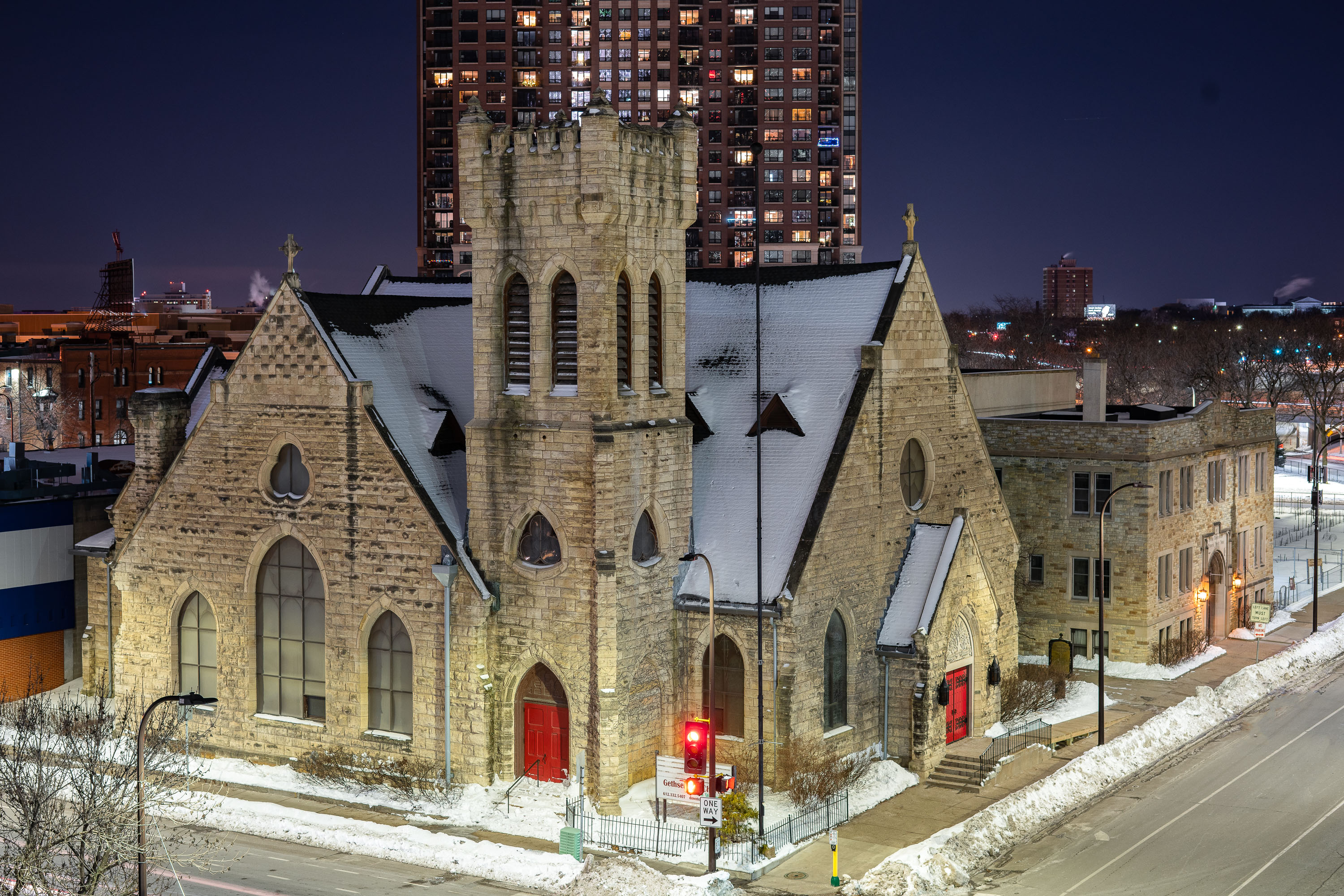
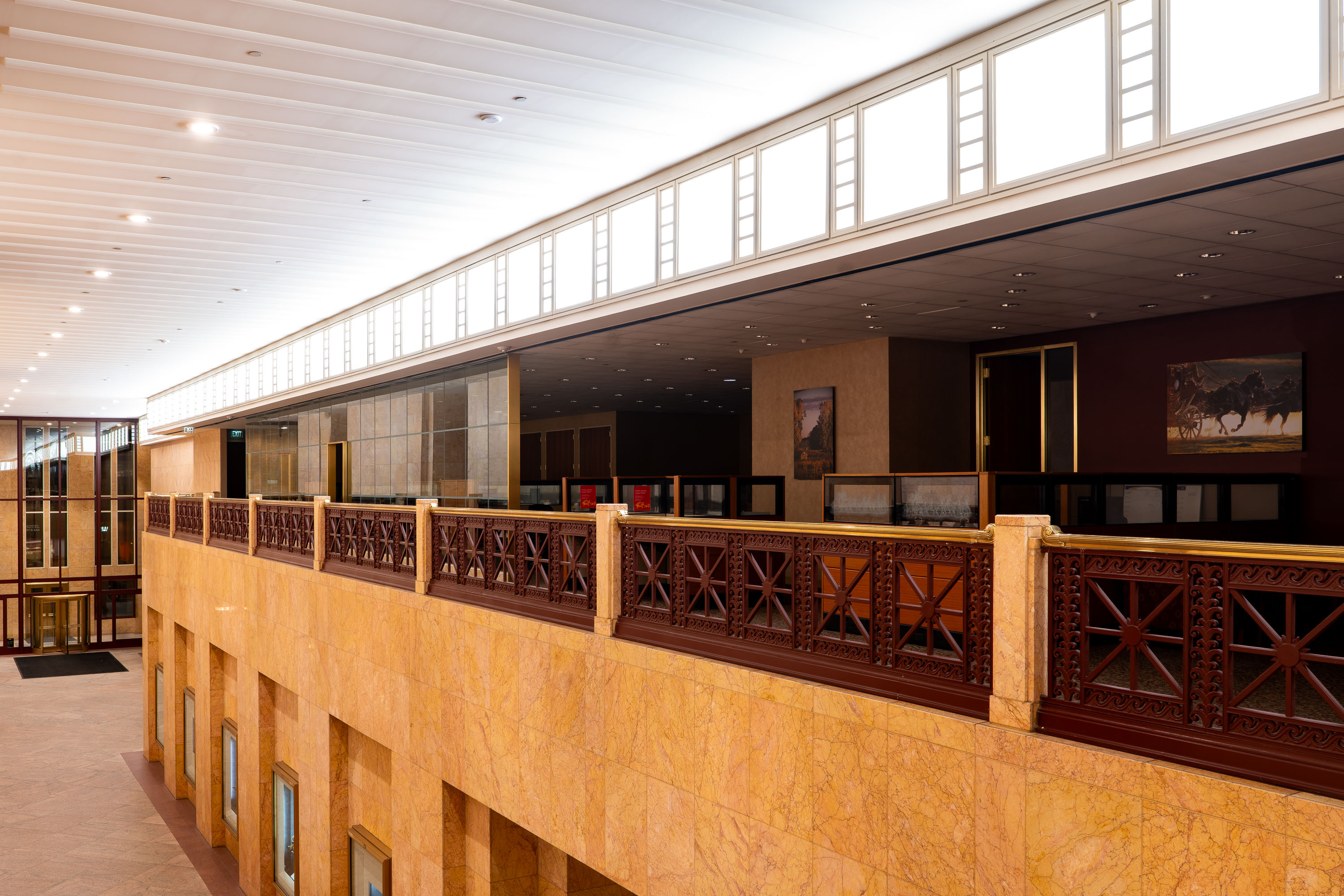
August 14, 2024 — A worker installs bright yellow signage for a temporary Metallica pop-up store in downtown Minneapolis ahead of the band’s summer 2024 performances. The shop featured exclusive merchandise tied to Metallica’s 72 Seasons tour, one of the group’s largest North American runs in years. Pop-up locations like this were part of a coordinated campaign in major cities, connecting fans to the band’s tour stops with limited releases and local collaborations.June 19, 2024 — A Sun Country Airlines plane flies above downtown Minneapolis.June 8, 2024 — A banner reading “Barkley O'Neal 2024” hangs on a building in North Minneapolis with the downtown skyline in the background. The sign is a reference to NBA commentators Charles Barkley and Shaquille O’Neal during the 2024 postseason.May 22, 2024 — The State Theatre marquee in downtown Minneapolis displays messages supporting the Minnesota Timberwolves and welcoming Charles Barkley back to Minnesota. The historic theater sits on Hennepin Avenue in the city’s theater district.May 19, 2024 — The atrium inside the Hennepin County Government Center in downtown Minneapolis.May 14, 2024 — The downtown Minneapolis skyline as seen from the shore of Bde Maka Ska, a Southwest Minneapolis lake.May 13, 2024 — After a couple nights of visible northern lights in Minneapolis, Canadian wildfire smoke moves in to cloud the sky.April 10, 2024 — Lion King draws crowds in downtown Minneapolis.April 10, 2024 — A new billboard on Hennepin Ave in downtown Minneapolis from “Ride Sure”. Per it’s website, the campaign by the owner of Blue & White Taxi wants to debunk what it says are myths that rideshare is a better alternative to taxis.April 4, 2024 — A Metro Transit LRT green line train in Downtown Minneapolis.March 17, 2024 — RBC Gateway and The Churchill towers in Downtown Minneapolis. Reflections from Wells Fargo Tower on the side of RBC Gateway during sunset.March 5, 2024 — An American Flag on top of the Embassy Suites hotel in downtown Minneapolis.January 24, 2024 — Orpheum Theatre on Hennepin Avenue in downtown Minneapolis. January 2024.January 24, 2024 — The Dudley Riggs Theatre in Downtown Minneapolis. January 2024.November 15, 2023 — AT&T Tower in Downtown Minneapolis with reflection of the Foshay Tower. November 2023.August 9, 2023 — Crowd outside the Target Center in downtown Minneapolis waiting to get into the arena for a Zach Bryan concert on August 10, 2023.August 9, 2023 — Zach Bryan trailer outside his show at the Target Center in Minneapolis on August 9, 2023.July 2, 2023 — The Gay 90s Nightclub, a long-standing LGBTQ+ establishment, is located on Hennepin Avenue in Minneapolis. The club has been a significant venue for the city's gay community for decades, offering a space for entertainment and social gathering. In July 2023, a police vehicle was present near the entrance, a common sight in urban environments, particularly in areas with active nightlife. Hennepin Avenue itself is a major thoroughfare in Minneapolis, known for its diverse mix of businesses, entertainment venues, and cultural institutions.June 14, 2023 — The IDS Center, Minneapolis's first skyscraper completed in 1973, is partially obscured by smoke from Canadian wildfires. The building, designed by architect Philip Johnson, was a significant development in the city's downtown core and remains a prominent feature of its skyline. The hazy conditions, caused by smoke drifting south, significantly altered the appearance of the city and the sun, casting a reddish hue across the sky and reducing visibility.June 4, 2023 — The Minneapolis City Hall building as seen from the North Loop. June 2023.May 4, 2023 — Closeup of the top of the IDS Center in downtown Minneapolis.May 3, 2023 — The architecture in the warehouse district in downtown Minneapolis.May 3, 2023 — Street signs in Minneapolis.May 2, 2023 — The Minneapolis skyline is visible from Woodale Avenue in St. Louis Park, with Highway 100 in the foreground. Highway 100, officially known as the Crosstown Highway, was constructed in stages from the 1950s through the 1970s to alleviate traffic congestion in the western suburbs and connect them to Minneapolis. The highway serves as a vital artery for commuters and commerce, facilitating access to the downtown business district and other key areas of the Twin Cities metropolitan area.February 6, 2023 — Construction cranes are visible through the fog in Downtown Minneapolis. The city has a history of significant development, particularly in its downtown core, which has seen numerous construction projects over the decades. These cranes represent ongoing growth and modernization of the urban environment. The presence of construction, especially at night, highlights the continuous activity required to shape and expand metropolitan areas.April 27, 2022 — Downtown Minneapolis as seen from Franklin Steele Square park in South Minneapolis.April 27, 2022 — The Two22 tower in downtown Minneapolis.April 11, 2022 — The former Pillsbury flour mills as seen from downtown Minneapolis.January 2, 2022 — Construction continues in downtown Minneapolis during a winter evening, with steam rising from the site. The area is cordoned off with safety barriers and traffic cones, indicating ongoing work. The presence of snow and steam highlights the challenges of building in a cold climate. The construction appears to be for a new building, as suggested by the modern architectural elements visible in the background.January 2, 2022 — On January 2, 2022, temperatures in Minneapolis, Minnesota, dropped to -15°F, causing steam to rise from the urban environment. This phenomenon, common in extremely cold weather, occurs when warm, moist air from buildings or underground infrastructure meets the frigid outdoor air. The resulting condensation creates a dense fog that can obscure visibility, transforming familiar cityscapes into ethereal landscapes. The image captures this effect in an area with temporary fencing and construction materials, suggesting ongoing development or maintenance within the city.January 2, 2022 — This cast iron manhole cover, manufactured by Neenah Foundry Co. of Wisconsin, is part of Minneapolis's sanitary sewer system. Established in 1906, Neenah Foundry has a long history of producing durable components for public works. Manhole covers are critical for accessing underground utilities, facilitating maintenance and repair of essential services like sewers, electrical, and telecommunications networks. This cover, designed to withstand heavy loads and environmental conditions, represents a fundamental element of urban infrastructure.January 2, 2022 — The Minneapolis riverfront at night showcases the city's transition from its industrial past to its present-day urban environment. The Mississippi River, partially frozen, separates the historic warehouse district, now repurposed for residential and commercial use, from the modern downtown core. Prominent industrial structures, such as the towering electrical transmission poles, hint at the area's historical role in powering the city's growth. The "North Star Blankets" sign on one building recalls the area's manufacturing heritage.January 2, 2022 — On January 2, 2022, the Mississippi River in Minneapolis was shrouded in thick steam as temperatures plummeted to -15 degrees Fahrenheit. This phenomenon, known as "steam fog" or "arctic sea smoke," occurs when extremely cold air moves over warmer water. The image captures the riverfront area, likely near ongoing construction, where the rising steam obscures the urban landscape. The presence of steam fog highlights the extreme winter weather conditions experienced in Minnesota, a state historically shaped by its harsh climate and the waterways that have facilitated its development.January 2, 2022 — The Minneapolis Main Post Office, a neoclassical structure completed in the 1930s, is illuminated at night along the Mississippi River. This building was a vital center for mail processing and distribution for the city and its surrounding region. Its riverside location underscores its historical role in facilitating commerce and communication. The structure continues to serve its original postal function, demonstrating its lasting significance in Minneapolis.July 25, 2021 — The former Pillsbury flour mill near downtown Minneapolis. It's since been renovated into condos.July 24, 2021 — The downtown Minneapolis skyline glows at sunset, viewed from the south side near the Elliot Park and Stevens Square neighborhoods. Prominent landmarks include the IDS Center, Capella Tower, and Wells Fargo Center—each a hallmark of the city’s late-20th-century architectural boom. The mix of older mid-rise apartment structures and new glass towers highlights the city’s ongoing evolution, where historic housing blocks now share the horizon with symbols of modern corporate development.June 4, 2020 — Reflections of the Foshay Tower in downtown Minneapolis.June 4, 2020 — The Capella Tower crown in Downtown Minneapolis.May 20, 2020 — Downtown Minneapolis as seen from Boom Island in May 2020. Gold Medal Flour and Northstar Blankets neon signs visible across the Mississippi River.May 20, 2020 — Downtown Minneapolis is seen from Boom Island Park at dusk. The Wells Fargo Center and U.S. Bank Tower rise above the riverfront, with treetops in the foreground.May 10, 2020 — Tower cranes in downtown Minneapolis during constructon work on the 10th avenue bridge.May 10, 2020 — The Capella Tower, IDS Center, and Wells Fargo Center in Downtown Minneapolis at night.May 8, 2020 — Minneapolis City Hall and the Hennepin County Government Center in downtown Minneapolis on a clear night.May 6, 2020 — The downtown Minneapolis skyline as seen on May 6, 2020.March 22, 2020 — The iconic bronze statue of Mary Tyler Moore along Nicollet Mall in downtown Minneapolis, depicting the memorable hat-tossing moment from the opening of The Mary Tyler Moore Show, which first aired in 1970 and helped cement Minneapolis in television history. Installed in 2002, the statue symbolizes the city’s cultural association with the show’s themes of independence and optimism. At the time of this photograph, Nicollet Mall—normally a busy pedestrian and transit corridor—appears unusually empty, reflecting the early days of COVID-19 shutdowns that drastically reduced public presence in city centers. Blue public art lanterns, added during street improvements completed in 2017, line the renovated streetscape, emphasizing Nicollet Mall’s evolution as both a commercial and cultural landmark.March 22, 2020 — Downtown Minneapolis after dark, with the Gaviidae Common retail and office complex illuminated along Nicollet Mall. The metallic blue spherical public art installation in the foreground—inscribed with words referencing music, light, and community—adds a cultural element to the urban corridor. Reflected dramatically in the golden glass façade of the Westin building behind it is the historic Foshay Tower, one of Minneapolis’s earliest skyscrapers dating back to 1929. Today, Nicollet Mall serves as the city’s primary pedestrian and transit thoroughfare, blending modern commercial redevelopment, historic preservation, and public art into a central civic space.March 15, 2020 — A north–south view through downtown Minneapolis during early evening, with illuminated office towers forming a dense street corridor and minimal traffic on the roadway below. The cylindrical crown of the IDS Center, completed in 1973, anchors the skyline in the distance as the city’s tallest building and a defining element of its modern profile. In the foreground, the neon signage of Murray’s, a Minneapolis institution since 1946, adds a warm counterpoint to the cooler glass-and-steel architecture surrounding Nicollet Mall.December 1, 2019 — The Minneapolis North Loop district is home to both corporate headquarters and community service organizations. The Target World Headquarters, a prominent feature of the city's business landscape, stands adjacent to Target Field, a baseball stadium. Also visible is a sign for The Salvation Army, a non-profit organization dedicated to providing social services. This juxtaposition highlights the diverse functions within this urban area, from commerce to community support.September 12, 2019 — A foggy night in downtown Minneapolis with IDS Center in the background with Xcel Energy Headquarters in the foreground.September 10, 2019 — The Downtown Minneapolis Skyline as seen from the North Loop.August 27, 2019 — A night view of downtown Minneapolis glows in late August 2019. The IDS Center and Wells Fargo Tower stand prominently among the city’s modern high-rises, their lights reflecting the urban energy below. New residential buildings in the foreground contrast with the historic clock tower in the distance, highlighting the city’s mix of old and new architecture.August 11, 2019 — The Gold Medal Flour seen in the distance with the Minneapolis Armory in the foreground. The Armory is noiw a concert venue after being a parking garage for a long time.June 30, 2019 — The Minneapolis skyline is illuminated during blue hour, viewed from the vicinity of Cedar Lake Trail. Prominent structures include the IDS Center, recognizable by its golden-lit upper floors, and the Foshay Tower, topped with its distinctive spire and illuminated "FOSHAY".June 5, 2019 — The Minneapolis skyline at night features prominent corporate structures and historic architecture. The Target Plaza South building, home to Target's headquarters, is illuminated on the left. Adjacent is the Campbell Mithun Tower, characterized by its glass facade. Dominating the background is the Foshay Tower, a historic art deco skyscraper completed in 1929, which served as Minneapolis's tallest building for decades and now houses a hotel and museum, representing a significant period of the city's architectural development.May 28, 2019 — Construction of the Thrivent Financial campus in downtown Minneapolis is underway, with the company's existing building visible alongside the new structure. The project, which began in 2018, is designed to consolidate Thrivent's operations into a single, modern facility. The new building features a distinctive glass facade and is situated adjacent to the historic Milwaukee Road Depot, a landmark of Minneapolis's transportation history. This development represents a significant investment in the city's central business district and aims to create a collaborative workspace for its employees.April 2, 2019 — A Ferris wheel illuminated Nicollet Mall in downtown Minneapolis during the 2019 NCAA Men's Final Four basketball tournament. The temporary attraction was part of the "Tip-Off Tailgate" festivities, which transformed the pedestrian mall into a hub for fan engagement and public events. Nicollet Mall, a mile-long streetcar and pedestrian thoroughfare, serves as a central artery for the city's business and cultural districts. Its design and programming often adapt to host major events, reflecting its role as a versatile public space.April 2, 2019 — The bright blue Ferris wheel rises above Nicollet Mall in downtown Minneapolis, part of the city’s celebrations during the 2019 NCAA Final Four tournament. Set between modern office towers and historic facades, the installation turned the urban corridor into a festive promenade of color and motion. The glow from the wheel’s LEDs reflects off rain-dampened pavement and glass storefronts, capturing a rare moment when the city’s business district became an after-dark fairground alive with light, visitors, and late-spring energy.April 2, 2019 — A ferris wheel set up in downtown Minneapolis during the 2019 NCAA Final Four basketball tournament.April 2, 2019 — A temporary Ferris wheel illuminated downtown Minneapolis during the 2019 NCAA Final Four basketball tournament, transforming the city’s business core into a festive, light-filled gathering space. Installed near Nicollet Mall, the attraction symbolized the city’s embrace of large-scale national events and its ongoing downtown revitalization. With blue LED lights reflecting off surrounding office towers and skyways, the scene captured the blend of sports celebration and urban energy that defined Minneapolis during the tournament weekend.March 26, 2019 — Illuminated office and residential towers rise over downtown Minneapolis after dark, their façade lighting and interior floors forming a dense urban grid against a winter sky. The blue-accented crowns and vertical light bands highlight the city’s mix of late-20th-century corporate towers and newer high-rise residential development that has reshaped the downtown core since the 2000s. In the foreground, a still water feature mirrors the skyline, emphasizing the geometry and lighting strategies used to distinguish individual buildings within a tightly packed central business district. This area reflects Minneapolis’s broader downtown reinvestment, where office, residential, and public infrastructure coexist within a walkable, transit-served core.November 24, 2018 — Some say the Minneapolis City Hall Clock Tower is the largest in the world... There is some conflicting information. But what is known is it is in fact the largest four facing chiming clock in the world.November 24, 2018 — The 625 Building rises in downtown Minneapolis with a red and white facade in the foreground and a glass office tower behind it. A large “625” address sign is mounted on the building’s exterior near the corner.November 21, 2018 — AT&T Tower in downtown Minneapolis from a parking garage.November 21, 2018 — The Target Corporation headquarters building in downtown Minneapolis is illuminated at dusk. Completed in 2001, the structure serves as the central hub for the retail giant's operations. Its modern architecture features a dark glass facade, contrasted by a vibrant red and yellow lighting system on its upper levels. The building is a significant presence in the Minneapolis business district, reflecting the company's prominence in the retail industry.November 21, 2018 — Headquarters of Target Stores in downtown Minneapolis.October 15, 2018 — The Dayton's Project redevelopment as seen from above. Nicollet Mall in the middle of the frame.October 1, 2018 — Hennepin County Government Center, construction was completed in 1977.
While often looked at as a single building, it’s actually 2 different towers with glass in between them. When viewed from the northeast or southeast(such as this photo), the building gives the appearance of the letter H for Hennepin. The towers are accessible from each other via catwalks on each floor. Glass walls were added after multiple suicides.March 31, 2018 — Hotel Ivy in Downtown Minneapolis with snow covered Minneapolis convention center.March 27, 2018 — The Guthrie Theatre in Minneapolis as seen from Gold Medal Park.March 13, 2018 — Downtown Minneapolis as seen from the roof of Century Plaza. Now home to the Minneapolice Police 1st precinct.January 17, 2018 — A temporary danceclub being setup in downtown Minneapolis in preparation for Super Bowl LII, held on February 4, 2018.January 9, 2018 — Target Center and the Mayo Clinic building in downtown Minneapolis are lit at night above an empty street.January 4, 2018 — The Armory and new Downtown East development in Minneapolis.October 24, 2017 — Target Corporate Headquarters in downtown Minneapolis. The building completed in 2001 is a prominent building in the downtown Minneapolis skyline.October 22, 2017 — The Minneapolis skyline is illuminated by sunset, with the Capella Tower, IDS Center, and Foshay Tower prominently featured. The IDS Center, completed in 1972, was once the tallest building in Minneapolis and remains a significant example of modernist architecture. Adjacent to it, the Foshay Tower, built in 1929, was Minneapolis's first skyscraper and served as a symbol of the city's ambition. The Capella Tower, a more recent addition, contributes to the city's evolving architectural profile. These structures collectively represent the commercial and historical development of downtown Minneapolis.October 16, 2017 — A Target-branded basketball court is illuminated at night in downtown Minneapolis. This court is located near the Target Corporation's headquarters, reflecting the company's presence in the city's business district. The surrounding buildings showcase the urban environment of Minneapolis, with the court serving as a recreational amenity within the downtown area. Its presence highlights the integration of corporate branding with public spaces in contemporary urban development.October 16, 2017 — Marquette Avenue in downtown Minneapolis during blue hour in Mid October 2017.October 16, 2017 — Marquette Avenue in Downtown Minneapolis is a central artery for the city's business district. The street is lined with numerous office buildings, reflecting the area's role as a hub for commerce and finance. Many of these structures are illuminated at night, showcasing the active professional environment that continues after business hours. The architecture visible represents a range of modern and mid-century design, contributing to the city's distinct urban character.September 1, 2017 — Hennepin Healthcare's new clinic and specialty center, located on Chicago Avenue in downtown Minneapolis, is illuminated at night. This facility, part of the larger Hennepin County Medical Center (HCMC) system, provides essential healthcare services to the community. The building's modern design contrasts with the historic architecture visible in the background, representing the ongoing development of the urban environment.August 21, 2017 — This photograph looks out from the AT&T Tower, showcasing the downtown Minneapolis cityscape. Prominently featured are the Capella Tower, completed in 1992, and the Wells Fargo Center, which was the city's tallest building upon its completion in 1989. The image also includes the historic Foshay Tower, a landmark built in 1929 that was once the tallest building in Minneapolis. These structures represent significant periods of architectural development and economic growth in the city's central business district.July 12, 2017 — The Minneapolis Downtown Spiral Parking Garage, located in downtown Minneapolis, is a multi-level concrete structure designed to accommodate vehicles. Its distinctive spiral ramp design is a common architectural solution for maximizing parking capacity within a limited urban footprint. Such garages are essential components of urban infrastructure, facilitating access to commercial and residential areas by providing necessary parking facilities. This particular structure serves the needs of the downtown business and entertainment district.July 12, 2017 — Seven Steakhouse Sushi & Rooftop, located in downtown Minneapolis, operated from 2017 until its closure in the winter of 2022. The establishment was situated near prominent landmarks including the Target Center and the Mayo Clinic. This image, taken in June 2017, captures the vibrant atmosphere of the rooftop dining area and the surrounding urban environment, including advertisements for the Minnesota Timberwolves.July 12, 2017 — US Bank Stadium, a multi-purpose venue completed in 2016, anchors the Downtown East neighborhood of Minneapolis. Adjacent to the stadium is the Edition Apartments, a residential building that contributes to the area's mixed-use development.June 21, 2017 — The Fifth Street Towers, located in Downtown Minneapolis, are a pair of modern office buildings that contribute to the city's commercial core. Completed in the late 20th century, these structures feature distinctive curved facades and extensive glass exteriors, reflecting the surrounding urban environment. The towers house various businesses and professional services, serving as a key component of Minneapolis's business district. Their design and placement highlight the ongoing development and density of the downtown area.June 21, 2017 — The setting sun casts a warm glow over Downtown Minneapolis, illuminating the windows of its modern skyscrapers. These buildings represent the city's economic and commercial core, housing numerous businesses and corporate offices. The architecture reflects a blend of contemporary design, with glass facades mirroring the sky and surrounding structures. As evening approaches, the lights within the offices signify the ongoing activity and the city's role as a hub for commerce and industry.June 21, 2017 — The Fifth Street Towers, a pair of modern office buildings in Downtown Minneapolis, are seen at sunset. The building on the right features a distinctive curved facade with horizontal bands of beige stone and blue-tinted glass, reflecting the sky and surrounding architecture. Its counterpart on the left is a more rectilinear structure with a grid of windows. These buildings are part of the central business district, housing various commercial enterprises and contributing to the city's economic activity.June 21, 2017 — The Capella Tower, a prominent skyscraper in downtown Minneapolis, is topped by a distinctive crown structure. This crown was recently retrofitted with energy-efficient LED lighting, enhancing its visibility and reducing its energy consumption. Completed in 1992, the tower stands as a significant piece of the city's architectural landscape and continues to serve as a key commercial and office space.June 15, 2017 — The Baker Center, located in downtown Minneapolis, is a mixed-use development that includes office space and retail. The building's modern facade features large glass windows, allowing views into its interior. Across the street, a historic brick building stands, reflecting the area's architectural diversity. The Baker Center is a significant component of the city's central business district, contributing to its commercial activity and urban character.June 11, 2017 — The Northstar Center, located in downtown Minneapolis, features this exterior walkway. The building, completed in 1960, was designed by architect Minoru Yamasaki, who also designed the World Trade Center towers. The Northstar Center was one of the first mixed-use developments in Minneapolis, intended to revitalize the city's central business district. The walkway connects various parts of the complex and provides pedestrian access, reflecting the mid-century modern architectural style prevalent at the time of its construction.June 11, 2017 — An alleyway in downtown Minneapolis frames the IDS Center and the AT&T Tower. The older brick buildings lining the alleyway, likely dating from the early to mid-20th century, contrast with the modern skyscrapers. The IDS Center, completed in 1972, was Minneapolis's tallest building for many years and a significant example of modernist architecture. The AT&T Tower, also known as the Marquette Building, was completed in 1983. This view highlights the juxtaposition of older industrial or commercial structures with contemporary high-rise development in the city's central business district.May 22, 2017 — Construction is underway for a significant addition to a church located on Nicollet Mall in Downtown Minneapolis. A tower crane dominates the construction site, overseeing the development of new structures adjacent to the existing church building. This project represents ongoing development in the heart of Minneapolis, transforming the urban environment of Nicollet Mall, a prominent street known for its retail, office, and cultural institutions.May 21, 2017 — Construction on Nicollet Mall in downtown Minneapolis is seen in this 2017 photograph. The mall, a pedestrian thoroughfare, underwent a significant reconstruction project during this period to modernize its infrastructure and enhance its public spaces. The project aimed to improve accessibility, incorporate new amenities, and create a more vibrant urban environment for residents and visitors. This image captures the street in a state of transformation, with visible signs of ongoing work and temporary barriers.May 20, 2017 — Construction on Nicollet Mall in downtown Minneapolis is underway, impacting the area between the IDS Center and Nordstrom Rack. This multi-year project aims to revitalize the pedestrian mall, a key thoroughfare in the city's business district. The construction involves significant infrastructure work, including the installation of new utilities and paving. Nicollet Mall, originally developed in the 1960s and redesigned in the 1990s, serves as a central hub for retail, dining, and public life in Minneapolis.May 14, 2017 — The downtown Minneapolis skyline is presented from the north, featuring the prominent US Bank Stadium. Opened in 2016, the stadium serves as the home of the Minnesota Vikings NFL team and hosts major concerts and conventions. Its distinctive angular design and partially transparent roof contribute to the city's modern architectural profile. The facility replaced the Hubert H. Humphrey Metrodome, continuing the site's role as a central venue for sports and public events in Minneapolis.March 18, 2017 — Minneapolis City Hall, a Beaux-Arts building completed in 1909, stands prominently in the foreground. Behind it, the Minneapolis skyline rises, illuminated by the twilight sky. The city's governmental functions are housed within City Hall, which also features a distinctive clock tower. The surrounding skyscrapers represent the city's commercial and residential development over the decades.February 15, 2017 — Hotel Ivy, a luxury hotel in downtown Minneapolis, is illuminated at night. The building, which opened in 2019, is part of the city's modern architectural development. Its rooftop area offers views of the surrounding urban environment, reflecting the ongoing growth and activity within the Minneapolis central business district.November 13, 2016 — US Bank Stadium, a multi-purpose indoor stadium in Minneapolis, Minnesota, serves as the home for the Minnesota Vikings. Opened in 2016, the stadium was built on the former site of the Metrodome and is a prominent feature of the Downtown East development. The surrounding area includes public plazas and transit connections designed to integrate the stadium into the urban fabric. The stadium's distinctive angular design and transparent facade are notable architectural elements.November 13, 2016 — US Bank Stadium, a multi-purpose venue in Downtown East Minneapolis, was completed in 2016. The stadium serves as the home for the Minnesota Vikings of the National Football League and hosts major sporting events, concerts, and other public gatherings. Its distinctive angular design and brick facade are intended to complement the surrounding urban environment. The development of the stadium spurred significant redevelopment in the surrounding Downtown East neighborhood, transforming a former industrial area into a vibrant mixed-use district.October 2, 2016 — Demolition work is underway on Nicollet Mall in downtown Minneapolis, clearing an eight-story office building to make way for an expansion of Westminster Presbyterian Church. The church, a prominent fixture in the city's core, is undertaking this project to increase its capacity and services. The adjacent Millennium Hotel is visible in the background, highlighting the ongoing development in this central business district.June 6, 2016 — The Wells Fargo towers are a prominent feature of the Downtown East development in Minneapolis, a district significantly shaped by the construction of the US Bank Stadium. This area, formerly a less developed part of the city, underwent substantial transformation to accommodate the stadium and surrounding commercial and residential spaces. The Wells Fargo buildings serve as modern office spaces, contributing to the economic activity and urban fabric of this revitalized downtown district.April 15, 2016 — Construction in Minneapolis's Downtown East neighborhood in April 2016, surrounding the development of the new US Bank Stadium. The area, also known as the stadium district, was undergoing significant redevelopment at the time. The project included the construction of the stadium itself, as well as surrounding infrastructure and commercial buildings, such as the Wells Fargo towers visible in the background. This period marked a major transformation for the Downtown East area, aiming to revitalize the district and create a new hub for sports and entertainment.October 5, 2015 — The core of Downtown Minneapolis is illuminated at night, showcasing a collection of office buildings and architectural styles. These structures represent the city's commercial and financial hub, with many dating back to the mid-20th century and later. The lights indicate ongoing activity within these business centers, reflecting their continued use for commerce and employment. This view highlights the density and verticality of the urban environment, characteristic of major American cities.August 7, 2015 — The Capella Tower, completed in 1992, stands as a prominent skyscraper in downtown Minneapolis. Adjacent to it is the Hennepin County Government Center, a Brutalist structure designed by architect Gunnar Birkerts and completed in 1974. The Government Center houses various county administrative offices and courtrooms, serving as a central hub for local governance. Capella Tower, formerly known as First Bank Place, is a mixed-use building containing office spaces and retail establishments, contributing to the commercial vitality of the city's central business district.August 7, 2015 — Construction cranes dominate the Minneapolis skyline in the Downtown East neighborhood during 2015. The image captures the ongoing development of new buildings, including what appears to be a stadium structure in the background, alongside existing architecture. This period marked significant growth and transformation for the area, reflecting its importance as a hub for commerce and public life in the city.August 4, 2015 — Construction of Downtown East and the 2 Wells Fargo towers in 2015.July 27, 2015 — Construction of US Bank Stadium in Minneapolis's Downtown East neighborhood was underway in July 2015. This multi-purpose stadium was built to replace the Metrodome and serve as the home for the Minnesota Vikings. The project aimed to provide a modern venue for professional football, concerts, and other large-scale events. Its development marked a significant investment in the city's infrastructure and entertainment capacity.July 27, 2015 — Construction of the Wells Fargo Towers in Downtown East, Minneapolis, in July 2015. These two skyscrapers, completed in 2019, house offices for Wells Fargo and other businesses. The project was a significant development in the Downtown East area, aiming to revitalize the neighborhood and create a new business hub.July 22, 2015 — The Minneapolis downtown skyline is illuminated by the setting sun, highlighting a mix of architectural styles that reflect the city's growth. Prominent structures such as the IDS Center and Capella Tower represent the commercial and financial core of Minneapolis. This urban center continues to function as a key hub for business, culture, and transportation within Minnesota.July 15, 2015 — The Minneapolis skyline features several notable buildings, including the 901 Marquette building, the IDS Center, and the historic Foshay Tower. The Foshay Tower, completed in 1929, was once the tallest building in Minneapolis and served as a landmark for decades. The IDS Center, designed by Philip Johnson and John Burgee, was completed in 1973 and became the city's tallest building. The 901 Marquette building, a more recent addition, showcases modern architectural design with its distinctive glass facade.March 1, 2015 — The Minneapolis downtown skyline is visible across the Mississippi River during the blue hour. The river, partially frozen, reflects the city lights and the illuminated bridge. This view showcases the central business district, a hub for commerce and culture in the Twin Cities, with its mix of historic and modern architecture.January 30, 2015 — The Minneapolis Grain Exchange skyway system connects buildings in downtown Minneapolis, facilitating pedestrian movement between structures regardless of weather conditions. The skyways, a common feature in many North American cities, were developed to enhance urban accessibility and commerce. This particular skyway is part of a network that links various commercial and office buildings, including the historic Grain Exchange building itself, which was once a central hub for agricultural commodity trading. The image captures the skyway at night, highlighting the illuminated pathways that are integral to the city's infrastructure.January 30, 2015 — Construction progresses on the Wells Fargo towers in Minneapolis's Downtown East neighborhood. This development, a significant project for the area, aims to revitalize the urban core and provide modern office and residential spaces. The towers are part of a larger redevelopment plan for Downtown East, which includes the construction of a new stadium and surrounding amenities. The project's scale and ambition reflect a commitment to the city's economic growth and its future as a vibrant metropolitan center.October 17, 2014 — This photograph looks down from the upper levels of the former Hennepin County Government Center parking garage in Downtown Minneapolis. The structure, located on 4th Avenue South, was demolished to make way for the new Minneapolis Public Service Center. The garage served as a primary parking facility for county employees and visitors for decades. Its demolition marked a significant change in the urban fabric of the central business district.June 24, 2014 — The I-394 and I-94 interchange in Minneapolis is a critical artery connecting the downtown core with western suburbs and the northern regions of the state. Construction on I-94 through Minneapolis began in the 1960s, with I-394 being completed in the late 1980s. This complex network of freeways facilitates significant daily traffic flow, serving as a primary route for commuters and freight. The photograph, taken during the blue hour, highlights the extensive infrastructure that shapes the city's transportation network and its surrounding environment.January 1, 2013 — The Minneapolis skyline is visible from the Hyatt Hotel, a prominent lodging establishment in the city's downtown core. The image showcases a variety of architectural styles, including the modern glass facades of office towers and the historic stone architecture of a church. This perspective highlights the density and verticality of the urban environment, with snow blanketing the ground and rooftops, indicating a winter season.
Built in Minneapolis
Photographs showcasing change over time
Browse by location, move through long-running series, or start with recent work.