Place Archive

Boston

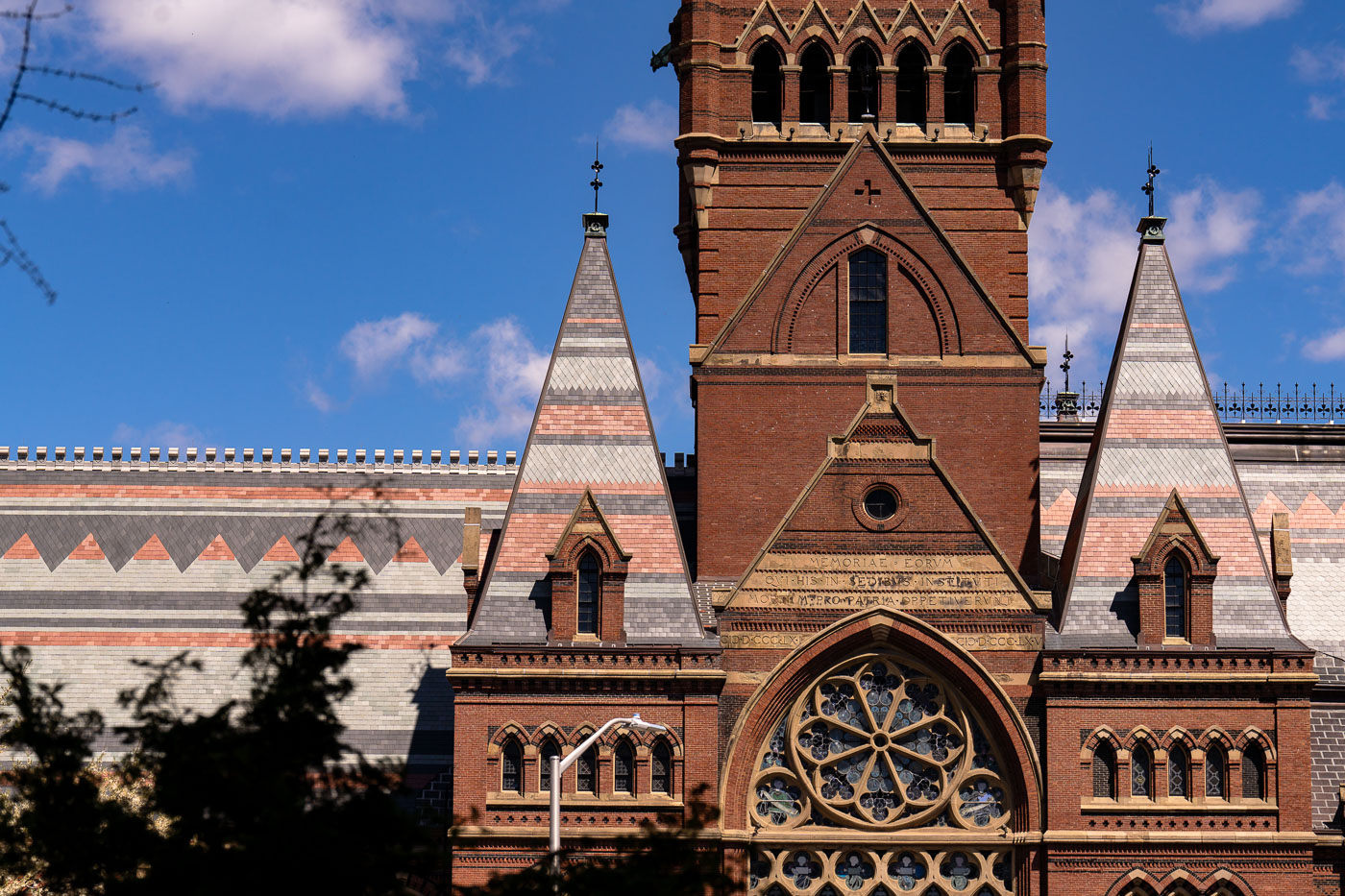
Boston’s urban landscape reflects a blend of historical preservation and active public life. The city’s South End features Victorian-era brownstones, symbolizing 19th-century residential development, while the Massachusetts Bay Transportation Authority (MBTA) continues to play a central role in daily transit with stations like Park Street and State, and trains serving the region’s evolving mobility needs. The Boston Marathon, recognized as the world’s oldest annual marathon, draws local and global participants, underscoring Boston’s status as a hub for both tradition and contemporary sporting achievement. Maritime operations in Boston Harbor and significant academic landmarks such as Harvard’s Memorial Hall further illustrate the region’s multifaceted role in American urban, educational, and transportation history.

26 photos

Photo Sets

Map

Photo Map

Markers

Boston Photo Locations

24 geotagged photos

Photos
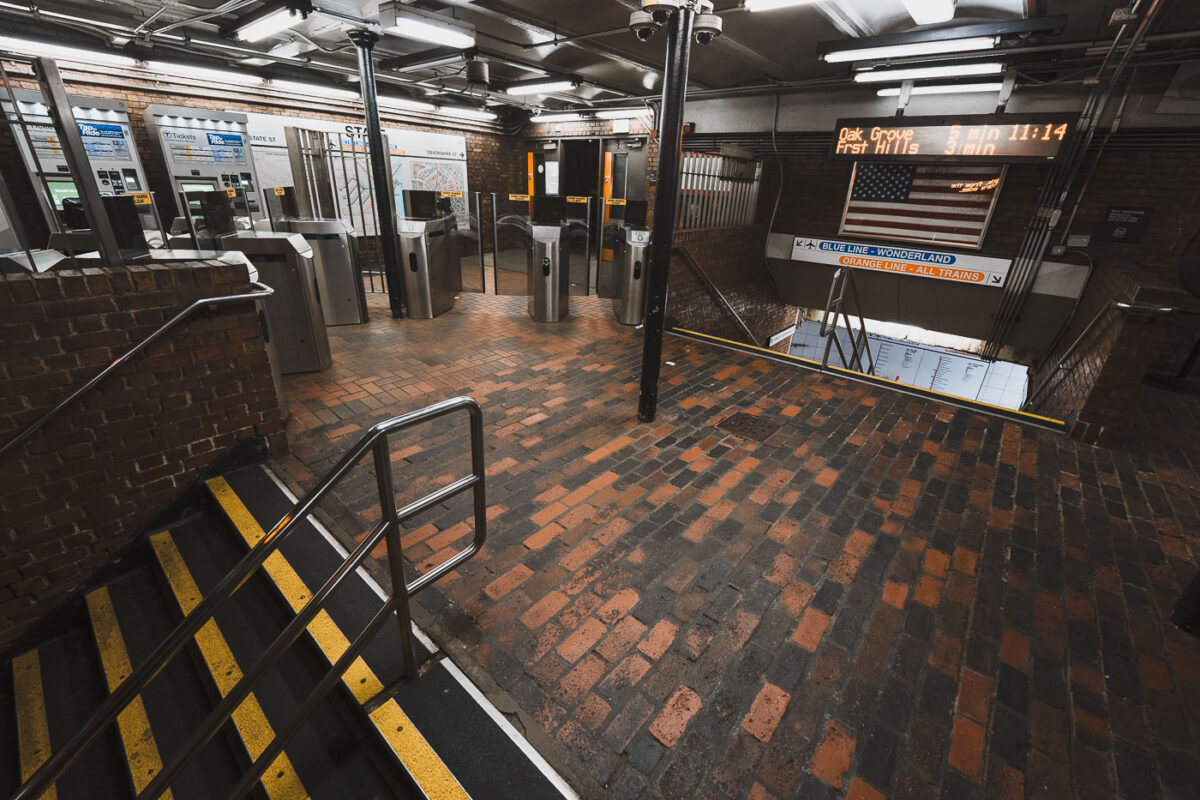
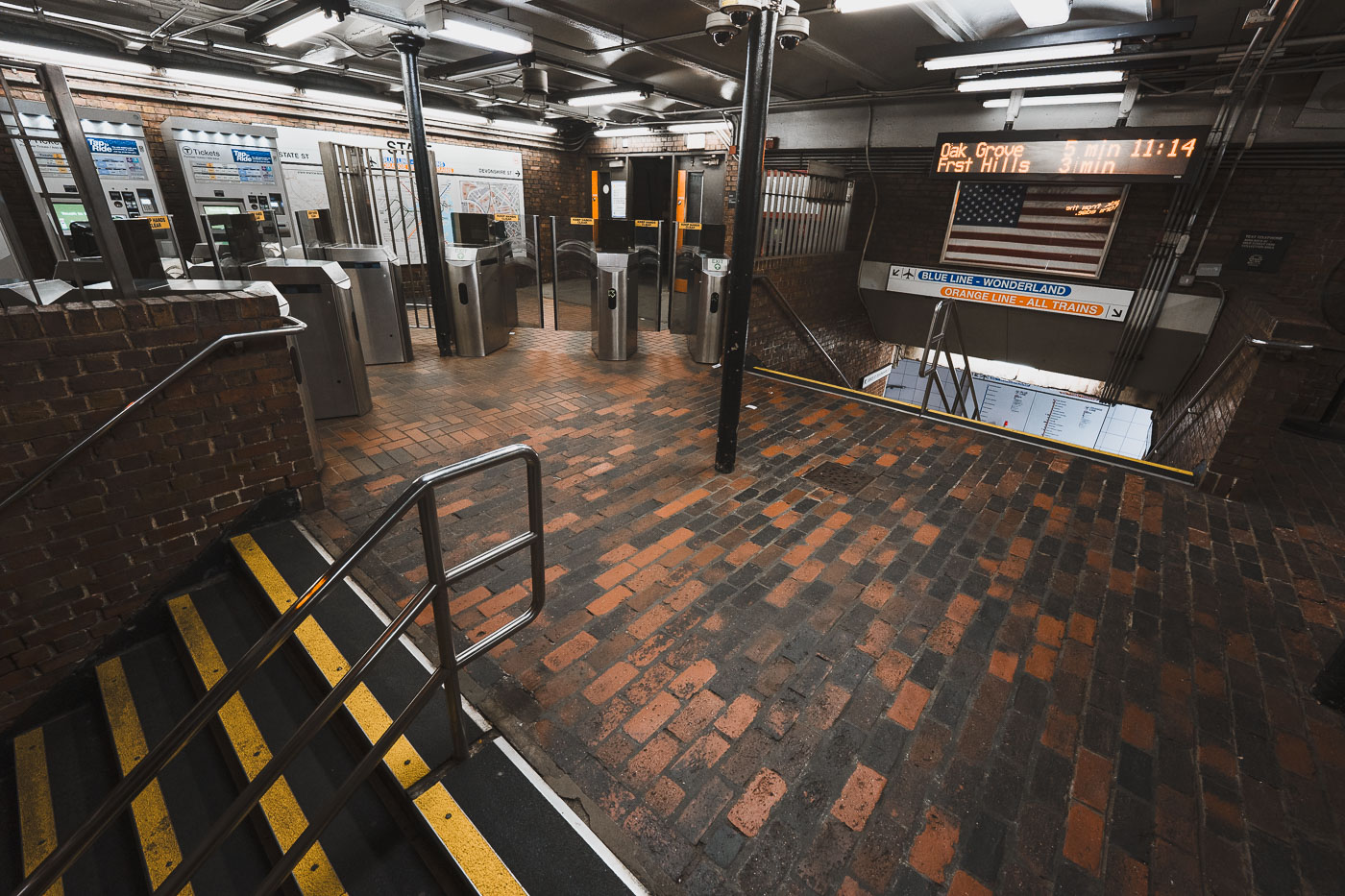
State Street Station Fare Control, Boston
The entrance and fare control area at State Street Station, a key interchange in downtown Boston where the Orange Line and Blue Line intersect. The station opened in 1908 as part of the Washington Street Tunnel and remains one of the MBTA’s oldest continuously operating rapid transit facilities. Brick flooring, steel columns, and low ceilings reflect early 20th-century subway construction, while modern fare gates and electronic arrival boards show later upgrades layered onto the original structure. The signage directing riders to Oak Grove, Forest Hills, and Wonderland highlights the station’s role as a transfer point connecting North Shore riders, downtown commuters, and the broader MBTA network.
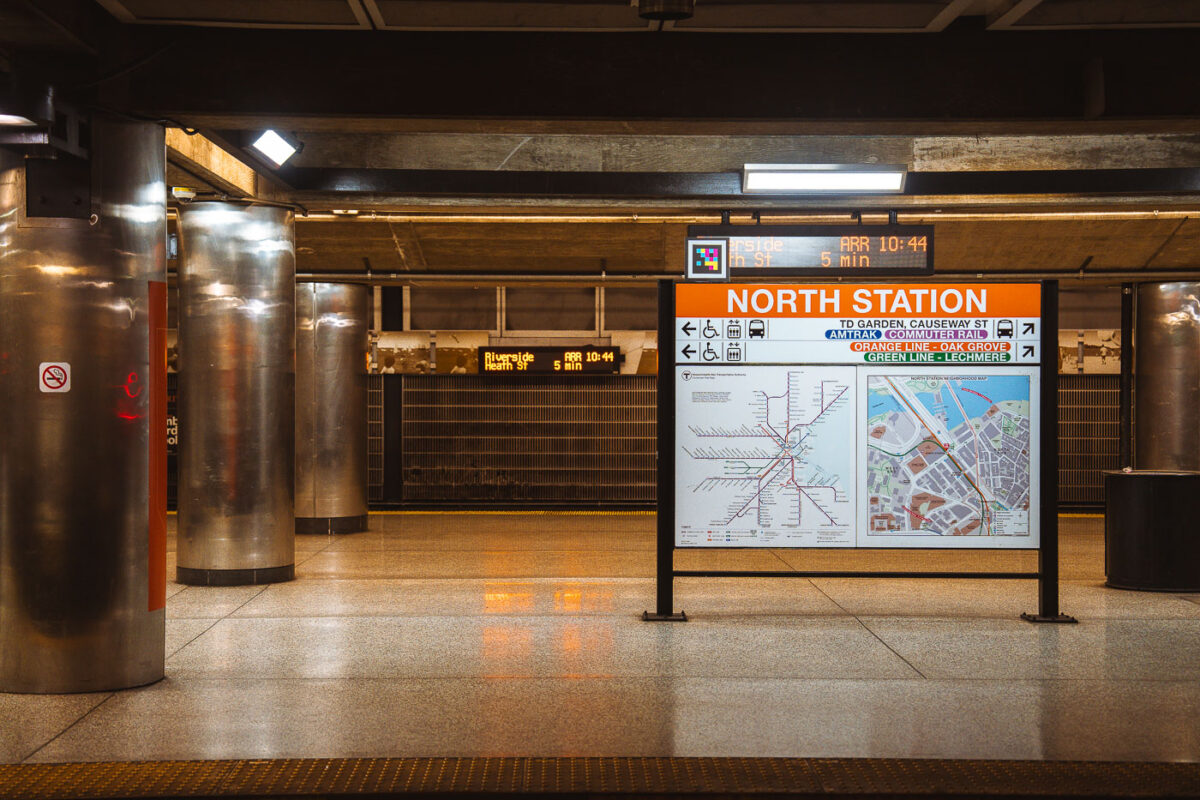
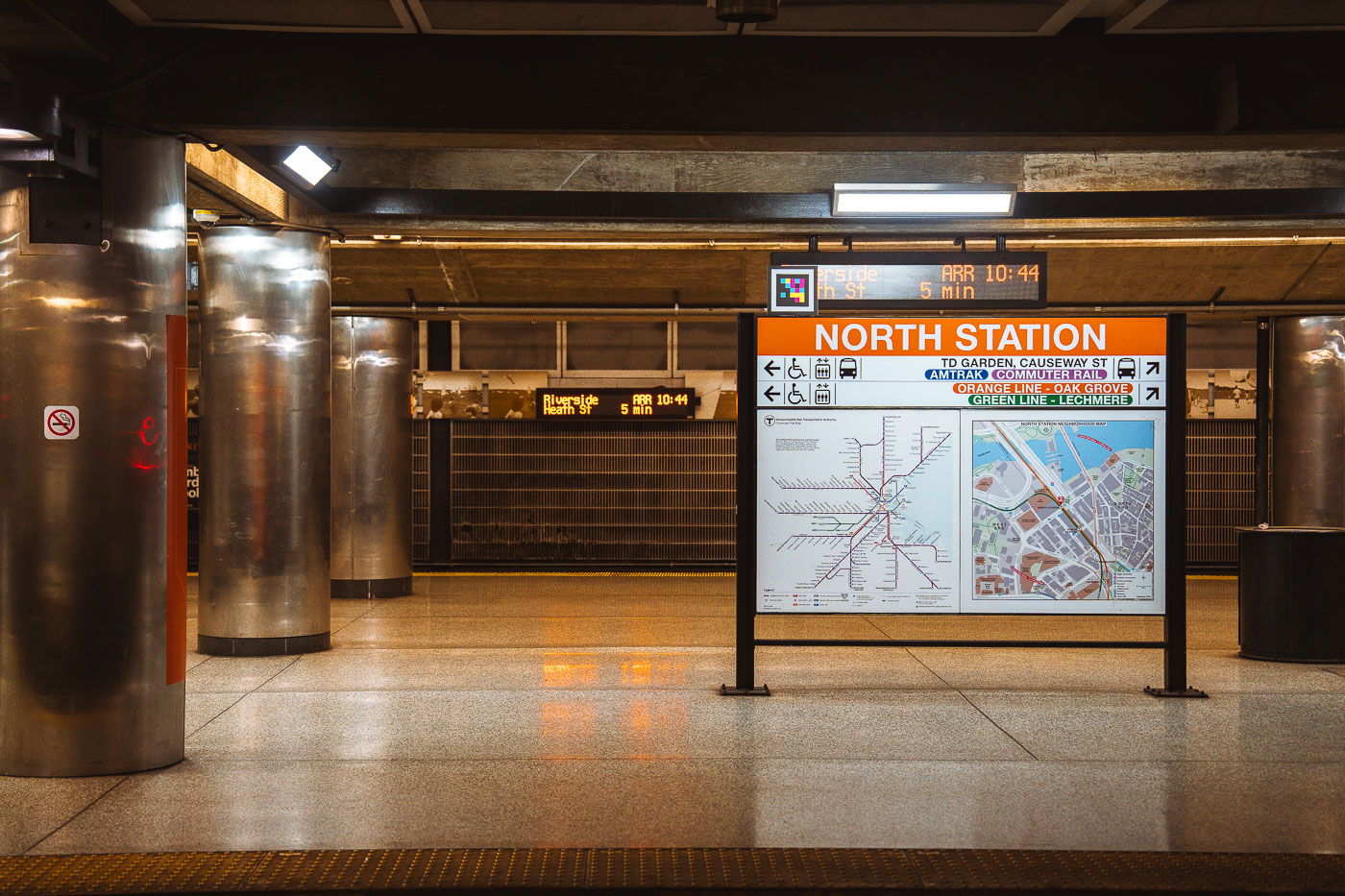
North Station Platform Signage, MBTA Boston
Interior signage at North Station, one of Boston’s oldest and most complex transit hubs. The station sits beneath TD Garden and serves as a major interchange between the MBTA Orange Line, Green Line (north branches), Amtrak Downeaster, and MBTA Commuter Rail. The current underground rapid-transit facilities date largely to the late 20th-century rebuilds, following the demolition of the original above-ground North Station headhouse in the 1920s and subsequent reconstructions tied to Boston’s evolving rail network. The platform wayfinding reflects this layered role: subway lines, regional rail, and intercity service are all integrated into a single information system. Electronic arrival boards and map panels emphasize transfer efficiency in a station that functions as the northern rail gateway to downtown Boston and the broader New England rail network.
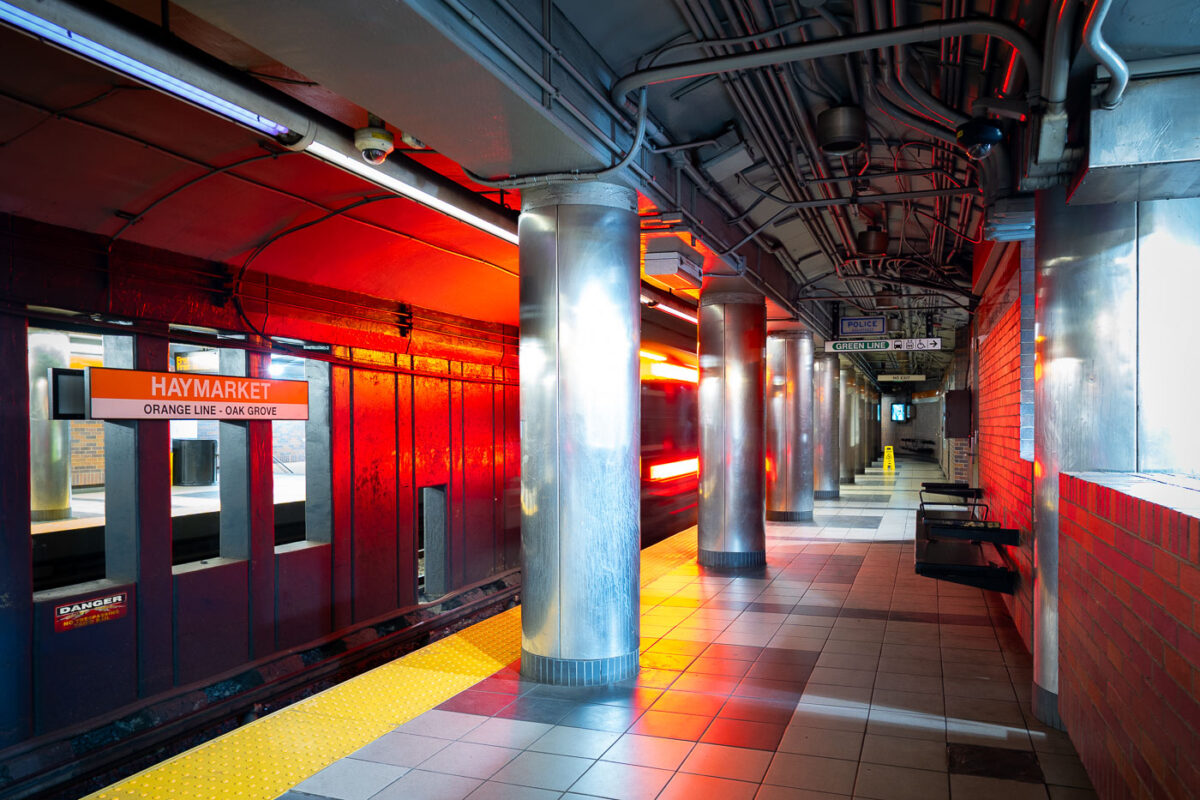
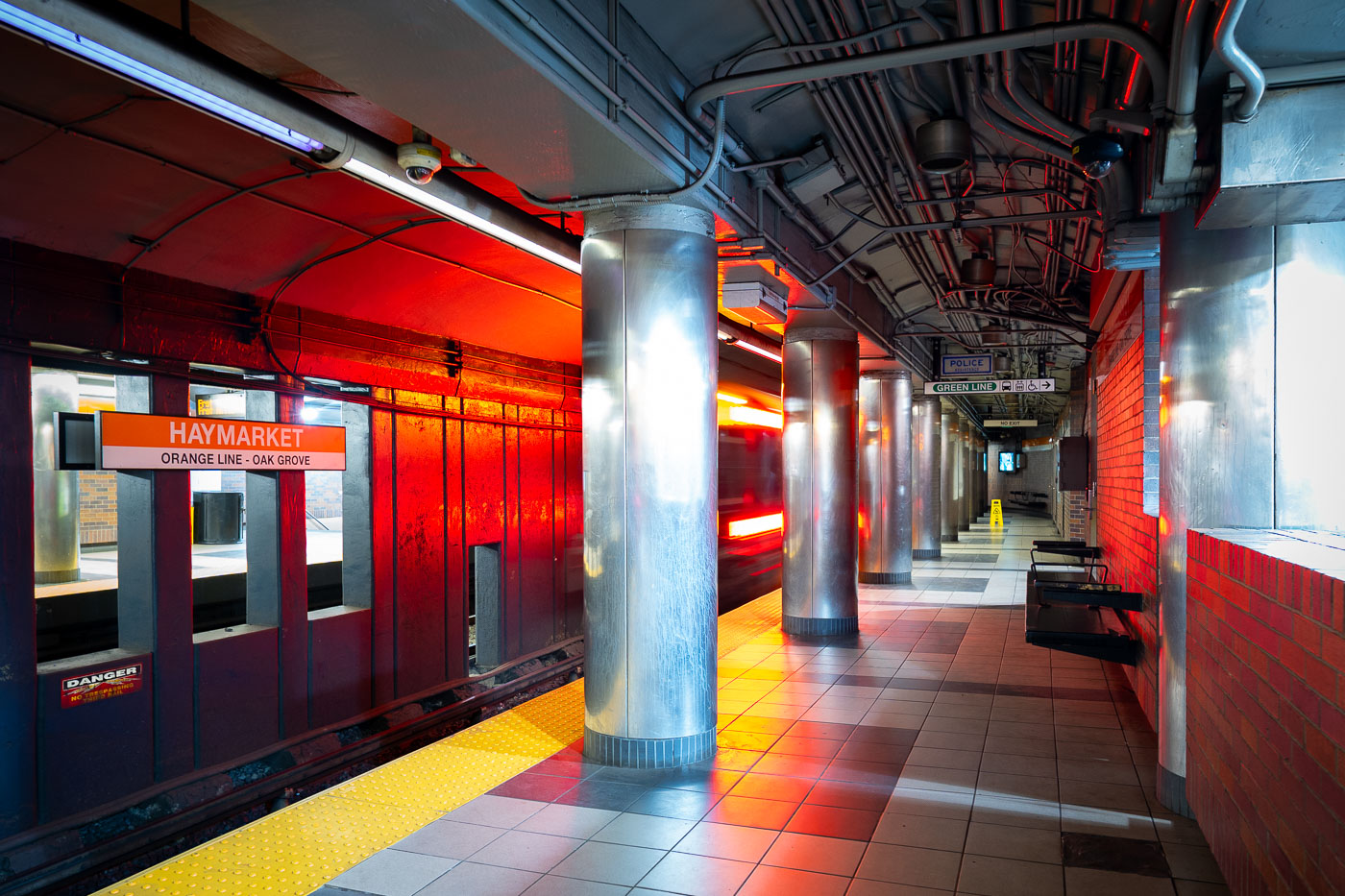
Haymarket Station, Orange Line Platform
Haymarket Station in downtown Boston, one of the oldest transit locations in the city, serving riders since the late 19th century in various forms. The current underground station opened in 1971 as part of the MBTA’s modernization of the Orange Line, replacing earlier elevated structures that once ran through the area. The station sits at the edge of the historic Haymarket district, long associated with public markets and transportation links between downtown and Boston’s North End. The cylindrical steel columns and low-ceilinged platforms reflect mid-20th-century transit design, while the signage and lighting document decades of incremental updates to keep the station functional within one of the system’s busiest transfer points.
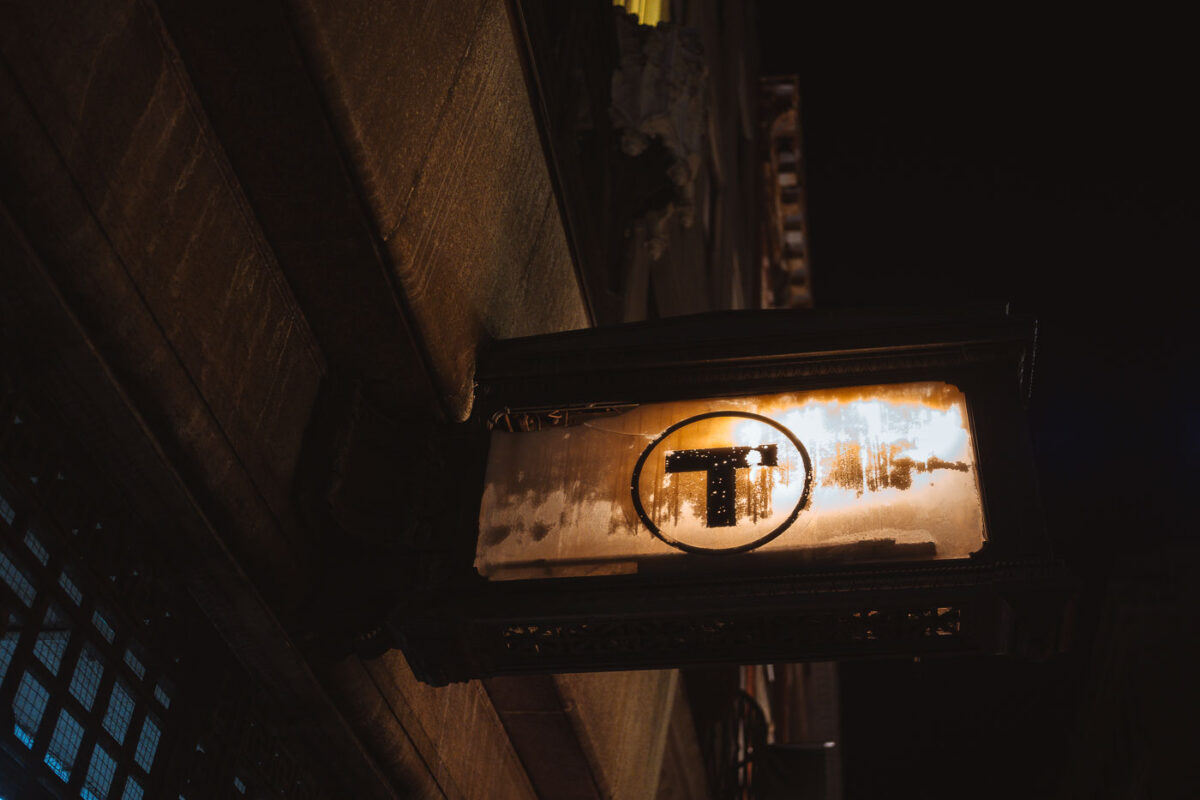
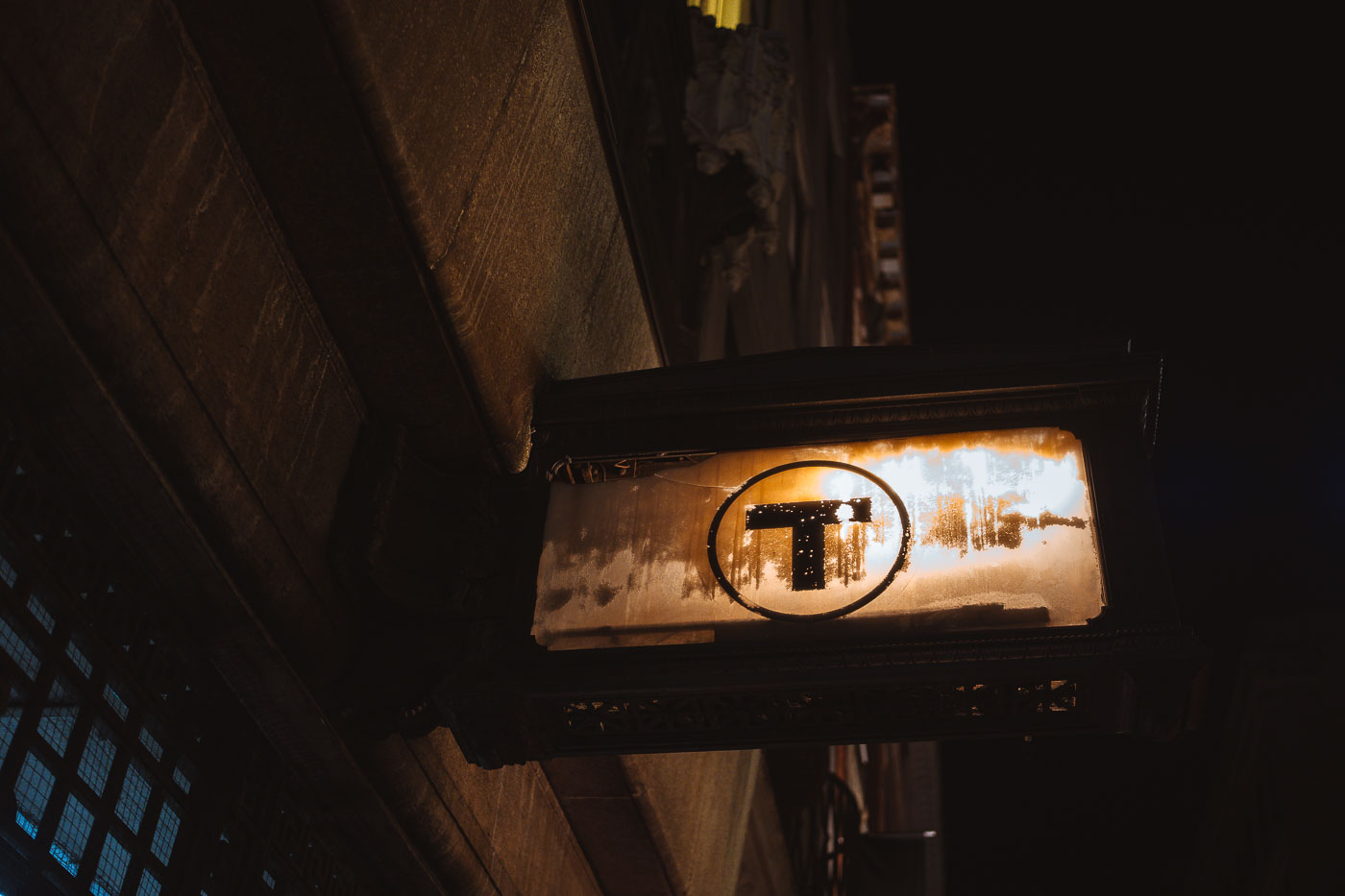
The T Under the Street
An illuminated MBTA roundel mounted beneath a streetscape, marking an entrance to Boston’s subway system. The simple black “T” inside a white circle has been used in various forms since the mid-20th century and became the unified symbol of the MBTA in the 1960s, replacing a mix of earlier streetcar and rapid-transit branding. Designed for quick recognition in dense urban conditions, the sign’s placement below street level reflects how much of Boston’s transit infrastructure is woven directly into older masonry buildings and narrow rights-of-way. The weathered lightbox and surrounding stonework show decades of exposure, maintenance, and adaptation as the system has evolved while keeping its most recognizable identifier largely unchanged.
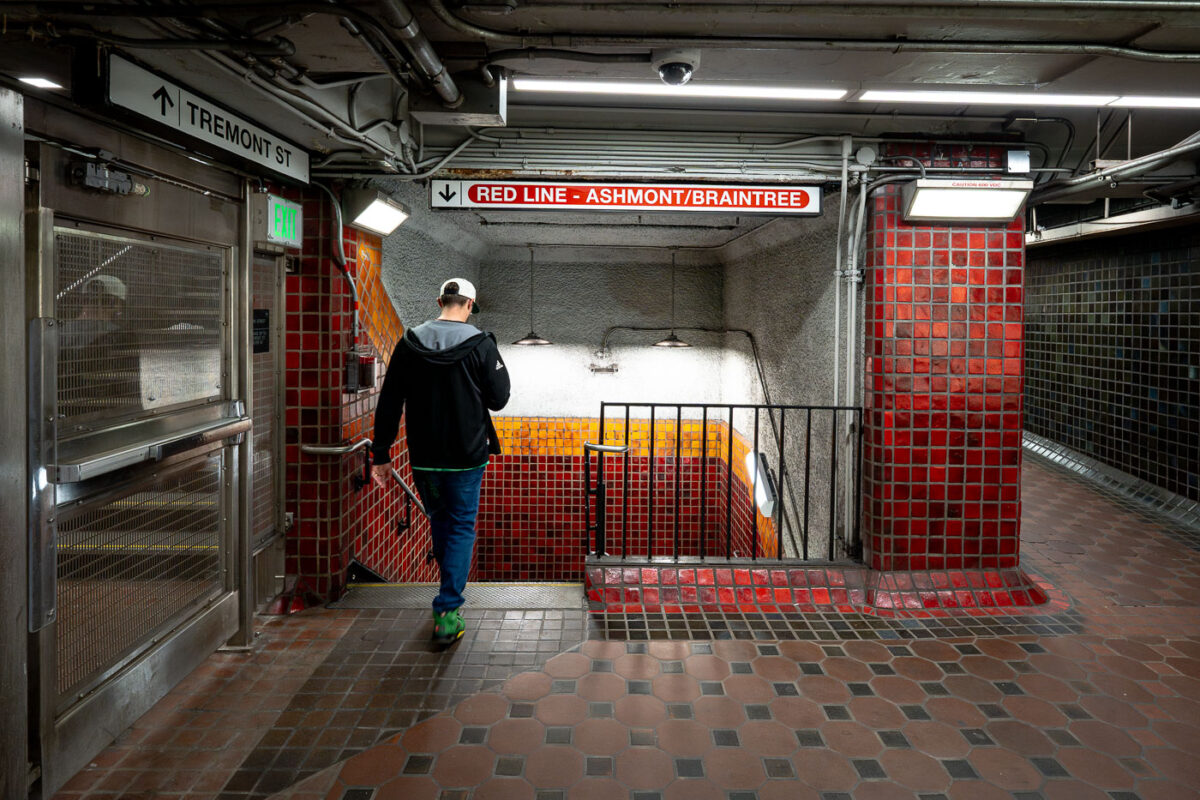
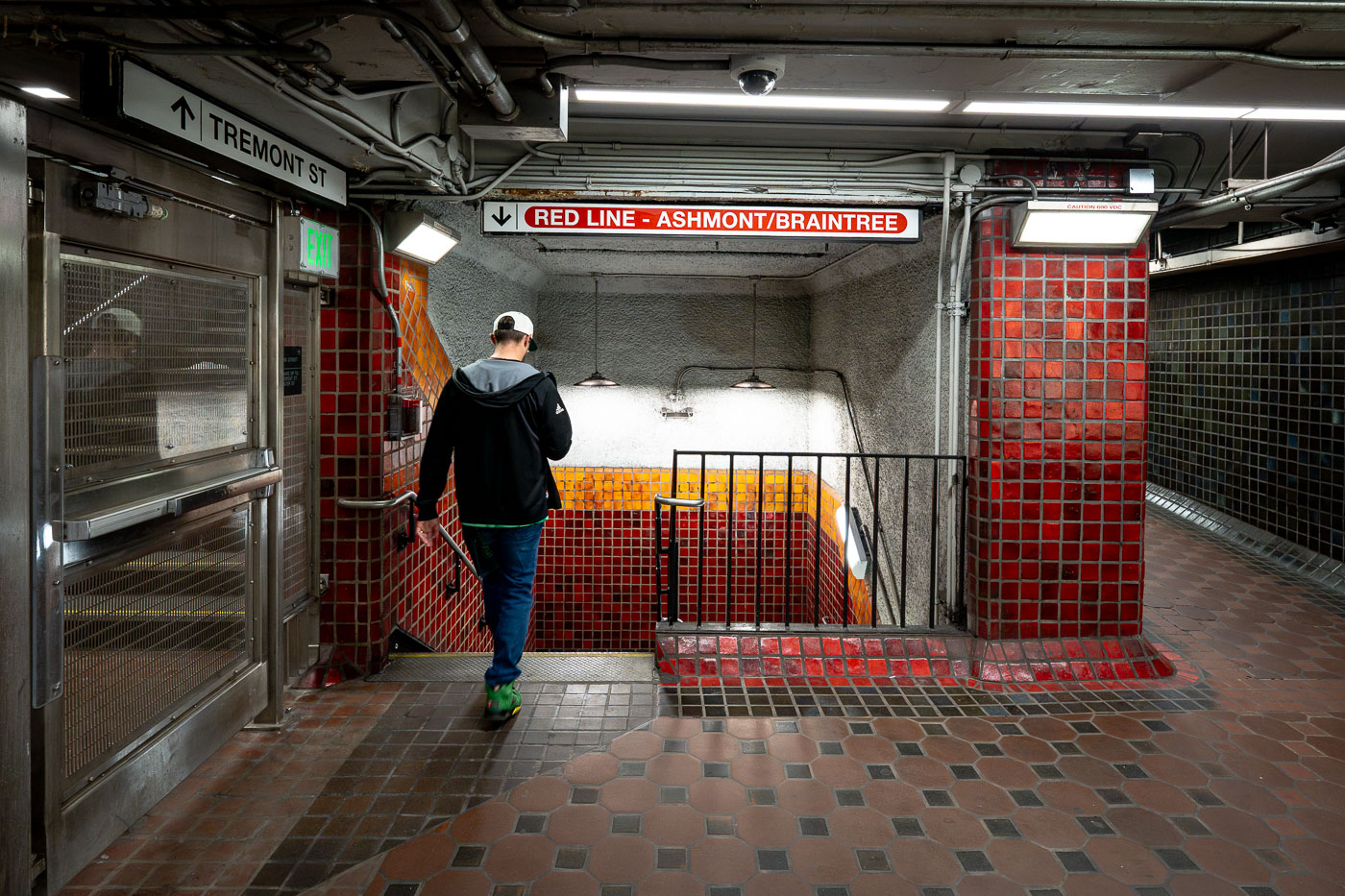
Park Street Station Red Line Passage
Inside Park Street station, one of the oldest active subway stations in the United States. Opened in 1897 as part of the Tremont Street Subway, the station has long served as a central transfer point beneath Boston Common. The tiled corridors and low ceilings reflect early subway construction techniques, with later renovations layering modern lighting, signage, and safety systems onto the original structure. Directional signage for the Ashmont and Braintree branches marks this passage as part of the MBTA Red Line, which continues to use Park Street as a key junction between downtown Boston and the city’s southern neighborhoods.
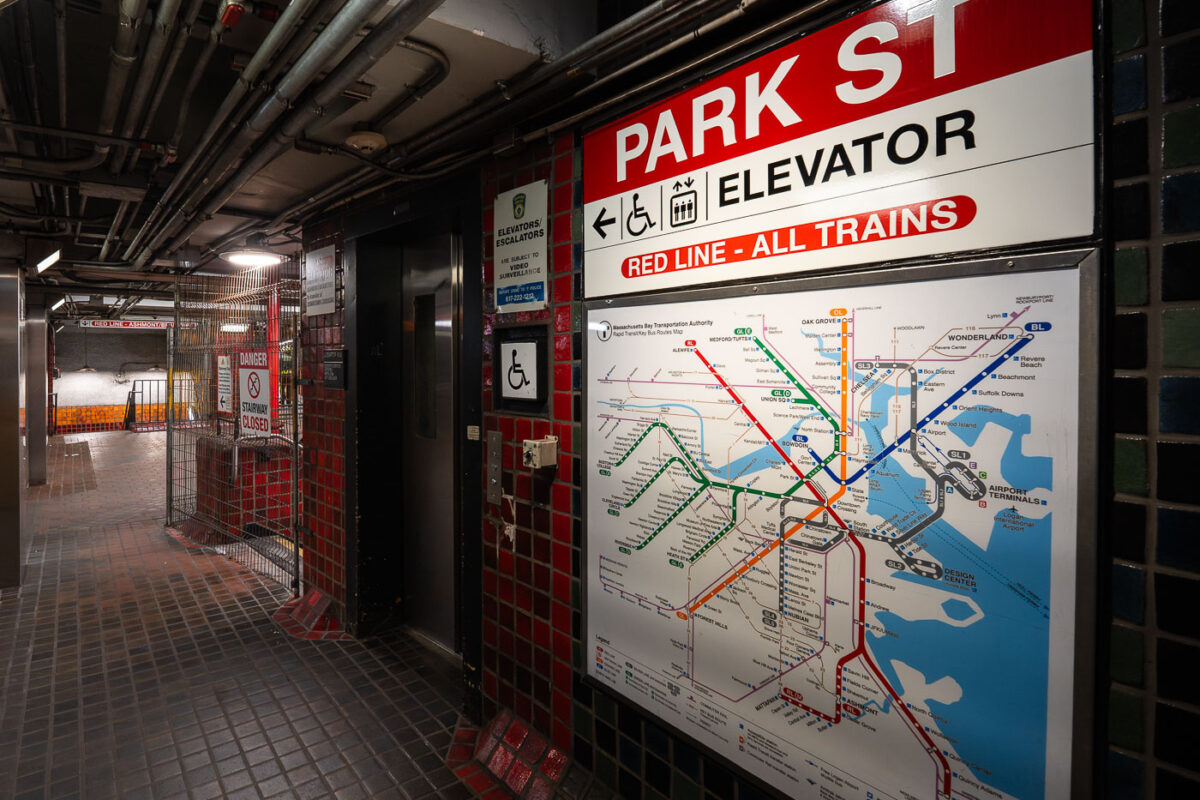
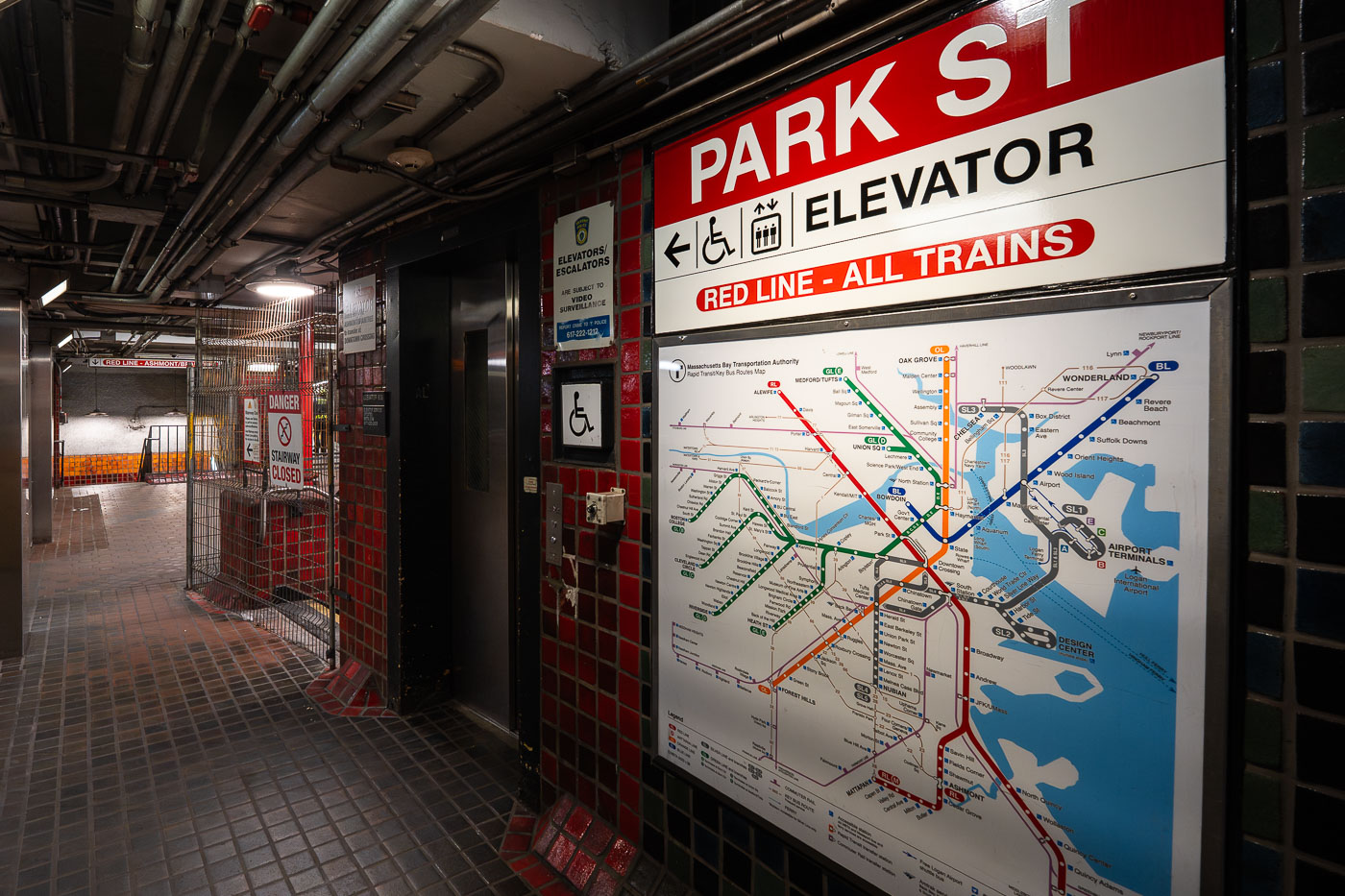
Bostons MBTA Park Street Red Line train station
Park Street Station, a key transfer point on Boston's Massachusetts Bay Transportation Authority (MBTA) subway system, is depicted here with its Red Line signage and an elevator. Opened in 1897, Park Street was Boston's first subway station and remains one of the busiest transfer points for the Red, Green, and Orange Lines. The station's infrastructure, including elevators and escalators, ensures accessibility for all passengers navigating the complex underground network. The map displayed provides a comprehensive overview of the MBTA's rapid transit and bus routes, illustrating the extensive reach of public transportation throughout the Greater Boston area.
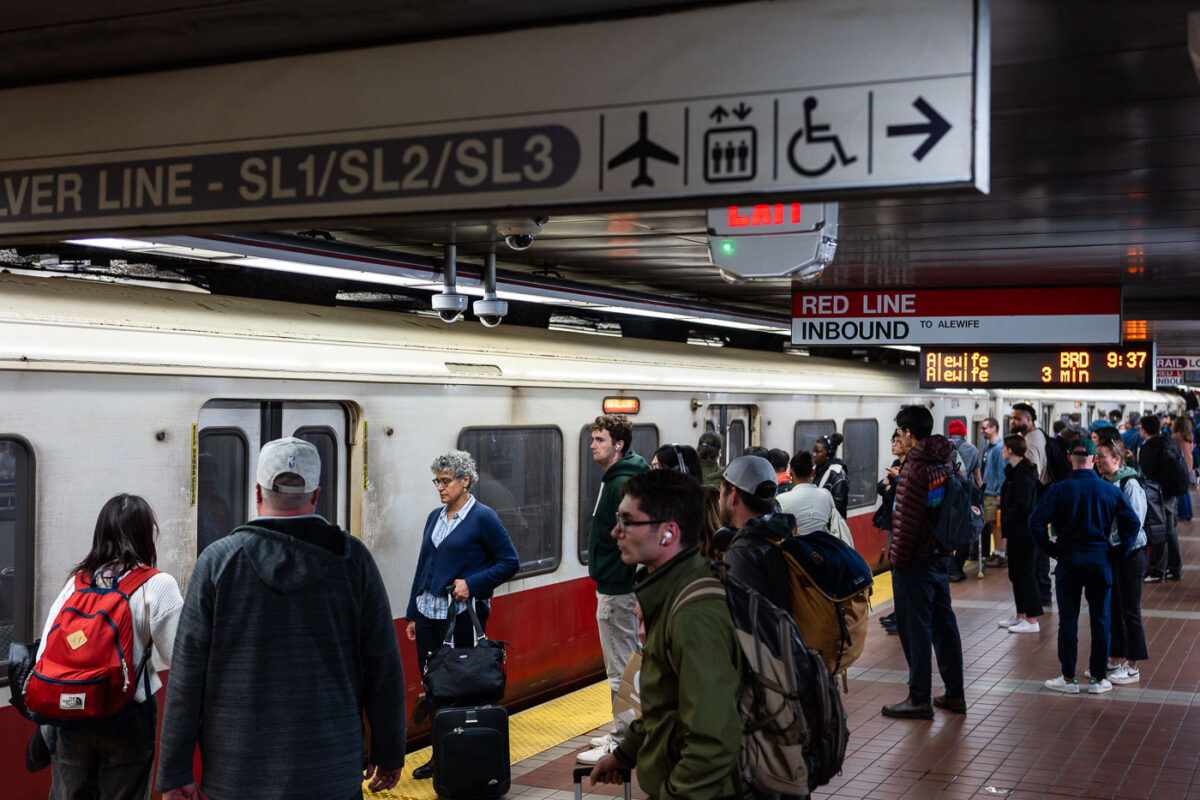
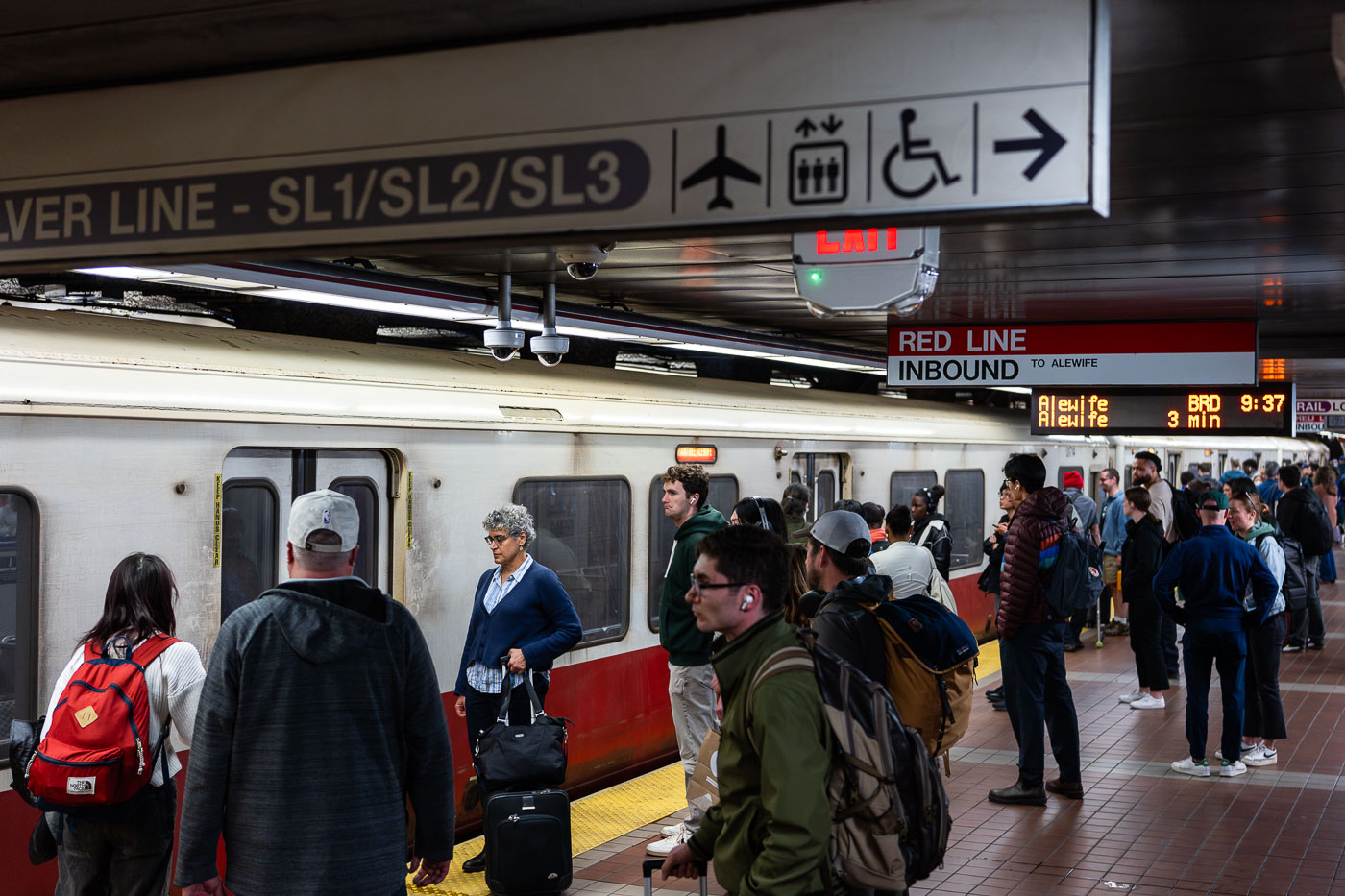
Red Line Inbound Platform, Downtown Boston
Passengers wait alongside an inbound MBTA Red Line train, headed toward Alewife, on a busy underground platform in downtown Boston. The Red Line is the system’s oldest rapid transit route, opening in 1912 and forming the backbone of east–west and north–south travel through the city. The high-floor cars shown here reflect decades of incremental fleet updates, while the tiled platforms, overhead wayfinding, and digital countdown signs illustrate how the MBTA has layered modern passenger information systems onto early-20th-century station infrastructure. The crowding and luggage visible on the platform highlight the line’s dual role serving both daily commuters and airport-bound travelers via transfers to bus and rail connections.
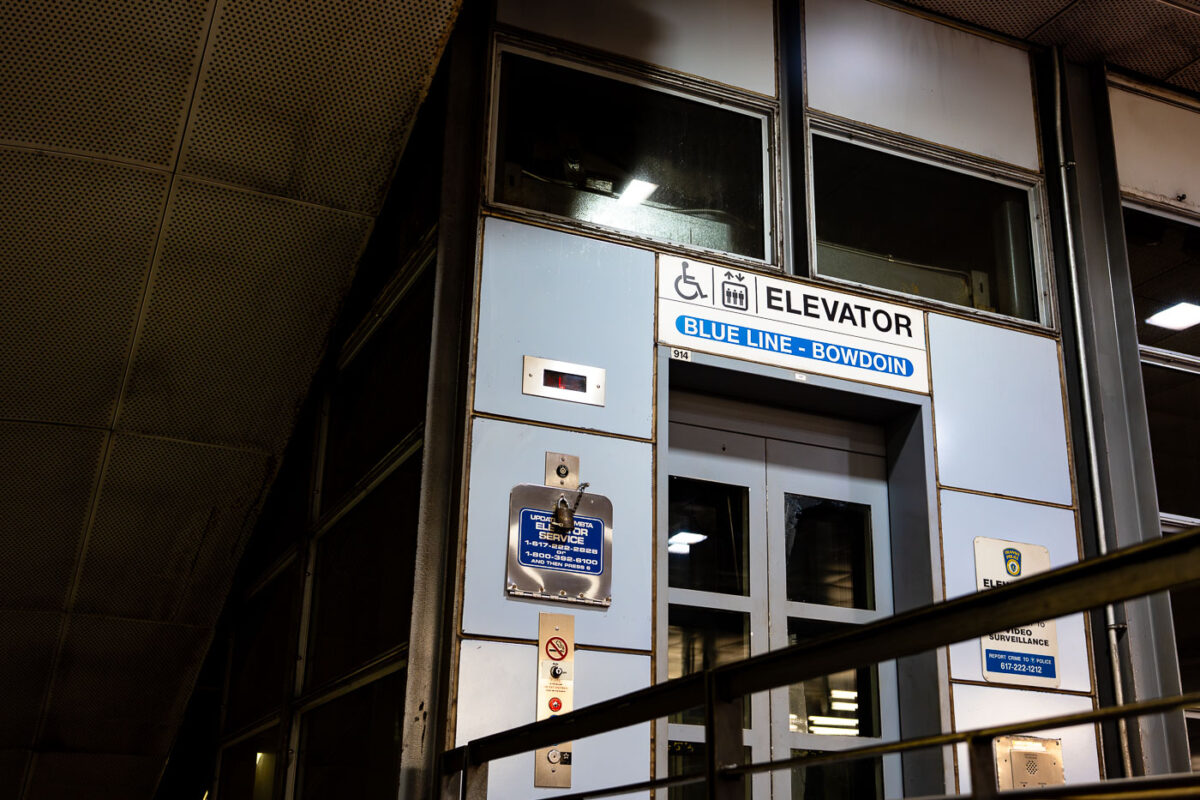
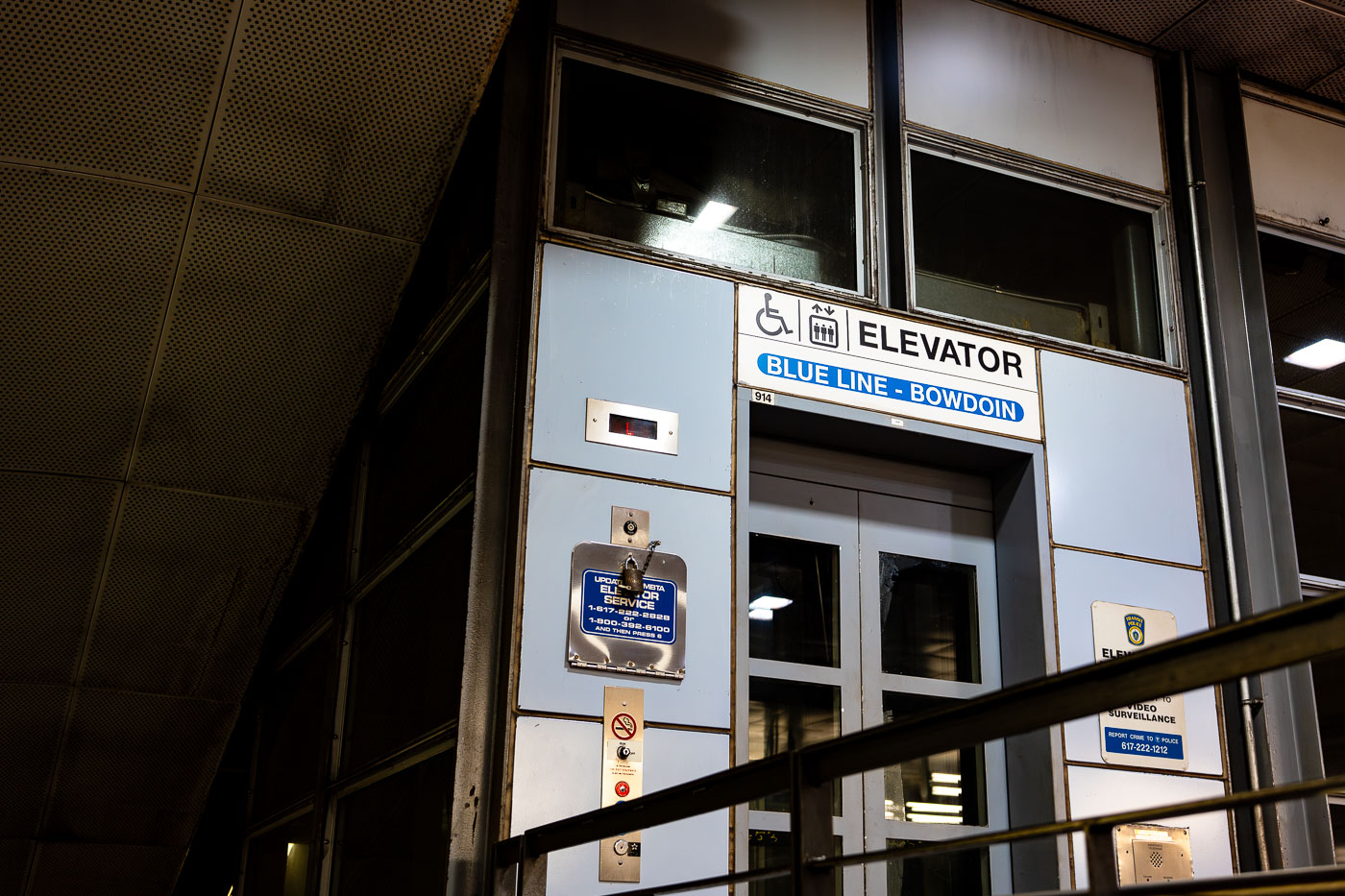
Bowdoin Station Elevator, Blue Line
An elevator entrance at Bowdoin station, the downtown terminal of Boston’s Blue Line. Bowdoin Station opened in 1916 as part of the East Boston Tunnel, one of the earliest underwater rapid-transit tunnels in North America. The station is notable for its compact footprint, tight curves, and historically limited accessibility compared to newer MBTA stations. This elevator provides step-free access between street level and the platform, reflecting later retrofits required by accessibility standards rather than original station design. The utilitarian signage, metal paneling, and enclosed structure are characteristic of mid-to-late 20th century upgrades layered onto early 20th century transit infrastructure, illustrating how legacy subway systems have been incrementally adapted to modern accessibility and safety requirements.
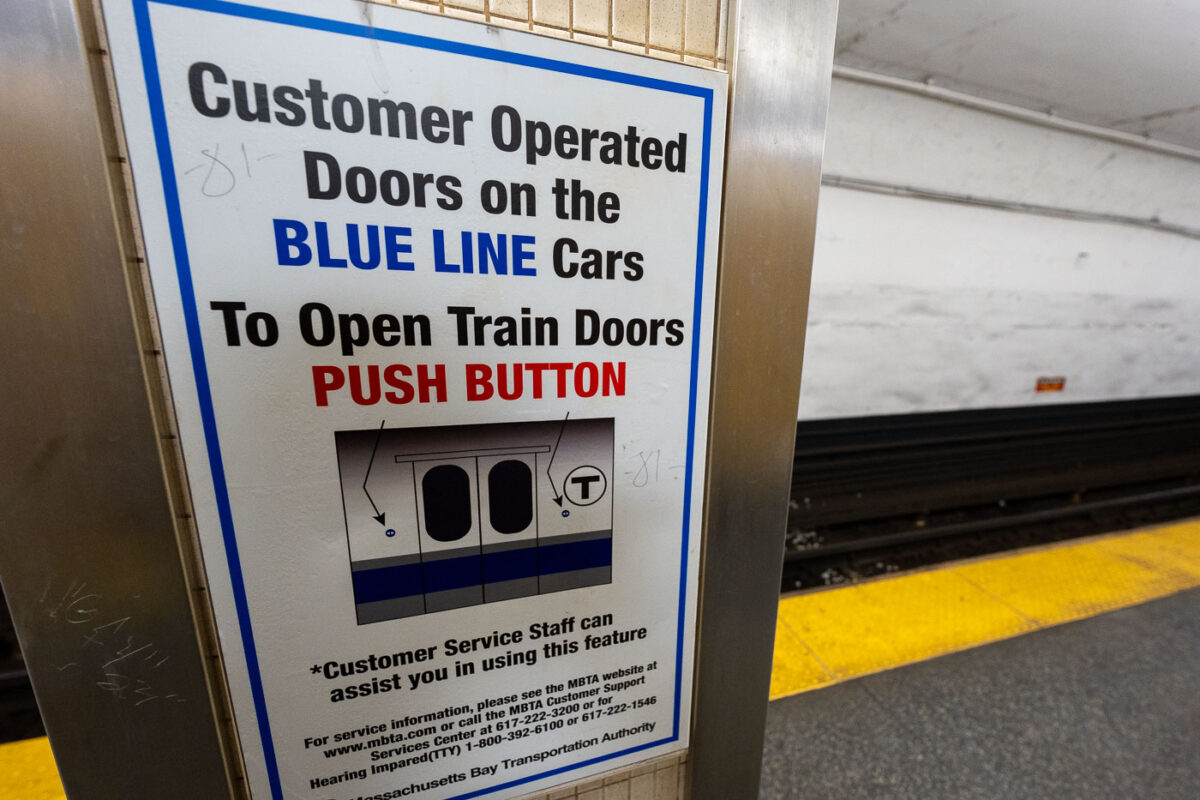
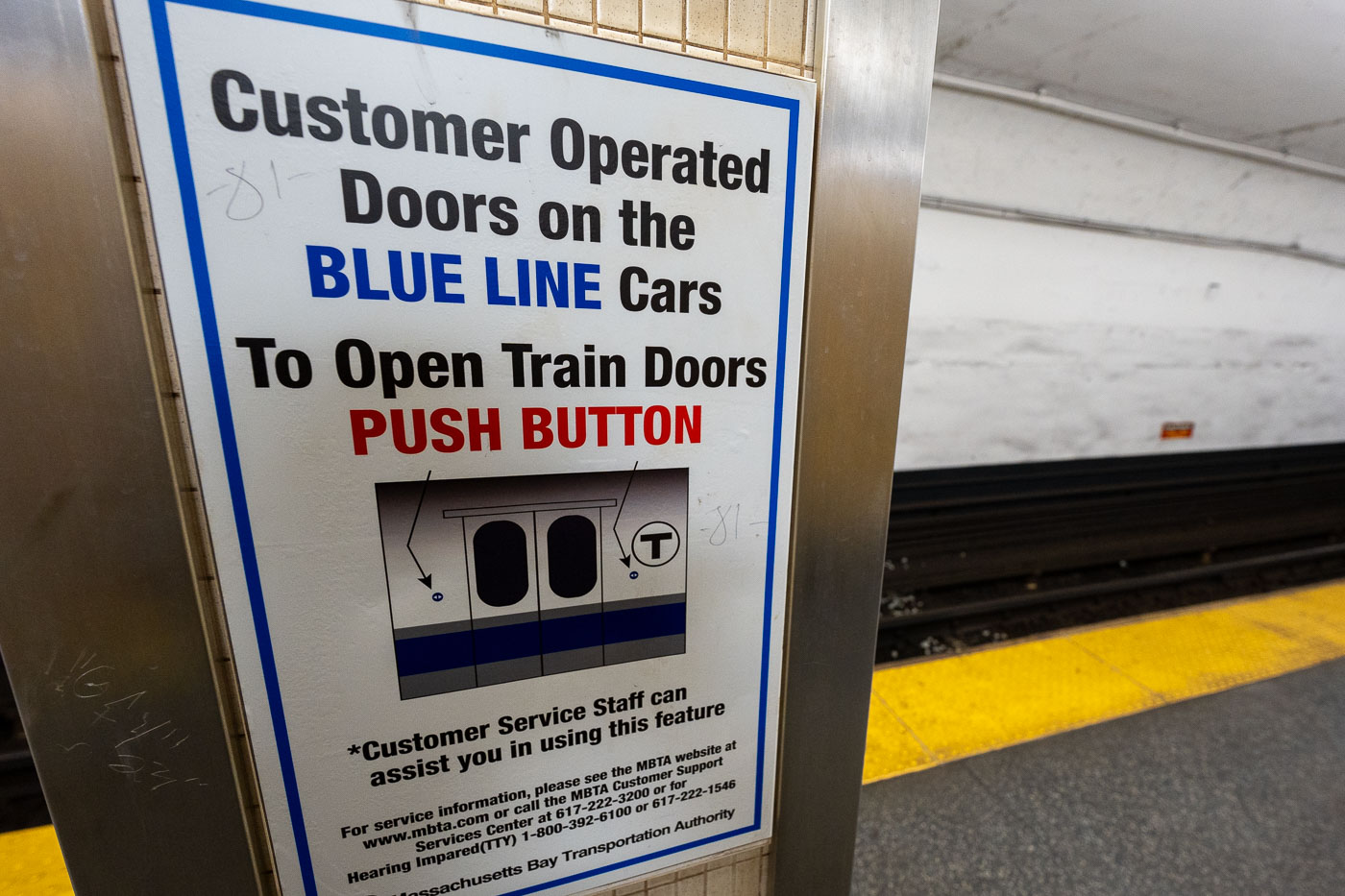
Blue Line Door Operation Sign, MBTA Station
A platform sign explaining customer-operated doors on Blue Line trains of the Massachusetts Bay Transportation Authority. Unlike many rapid-transit systems where doors open automatically at every stop, portions of the MBTA Blue Line fleet require passengers to press a button to open the doors once the train is stopped. This practice dates back to older car designs and cold-weather operating considerations, helping retain heat in winter and reduce unnecessary door cycling. The sign reflects the MBTA’s continued reliance on legacy rolling stock and the need for clear, standardized instructions in stations with high passenger turnover.
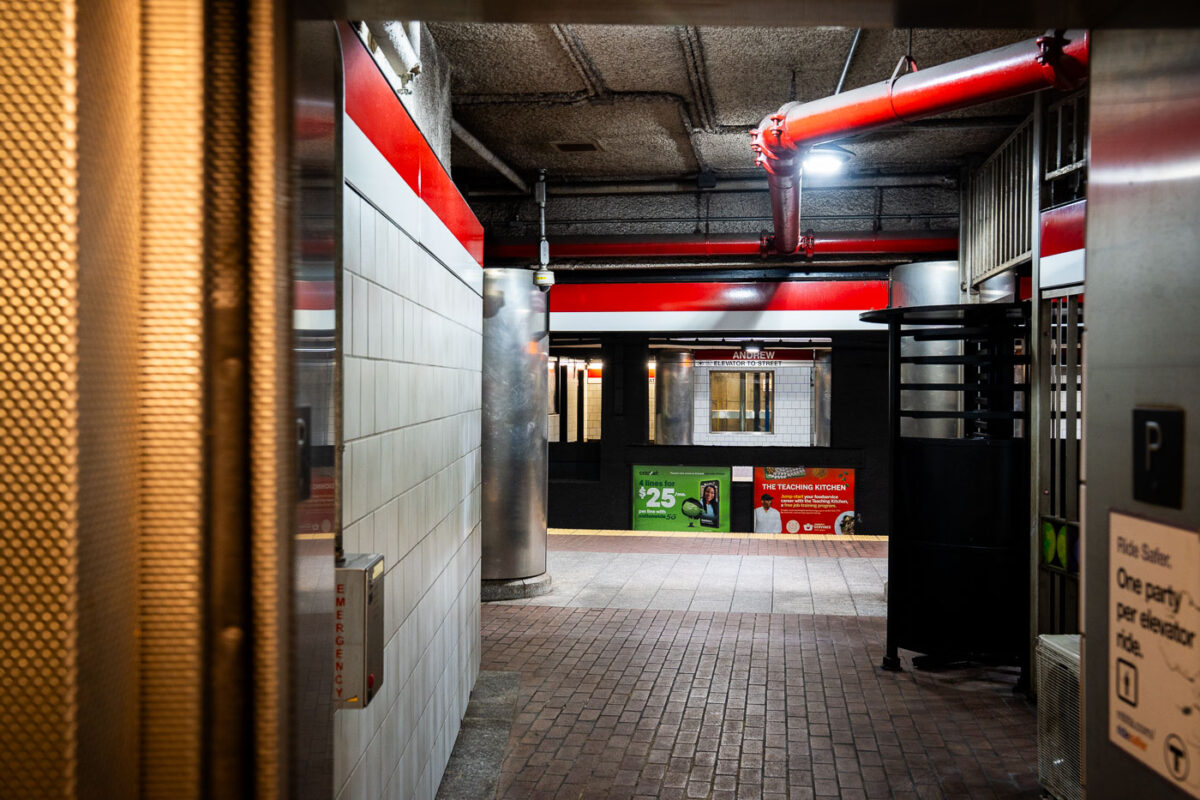
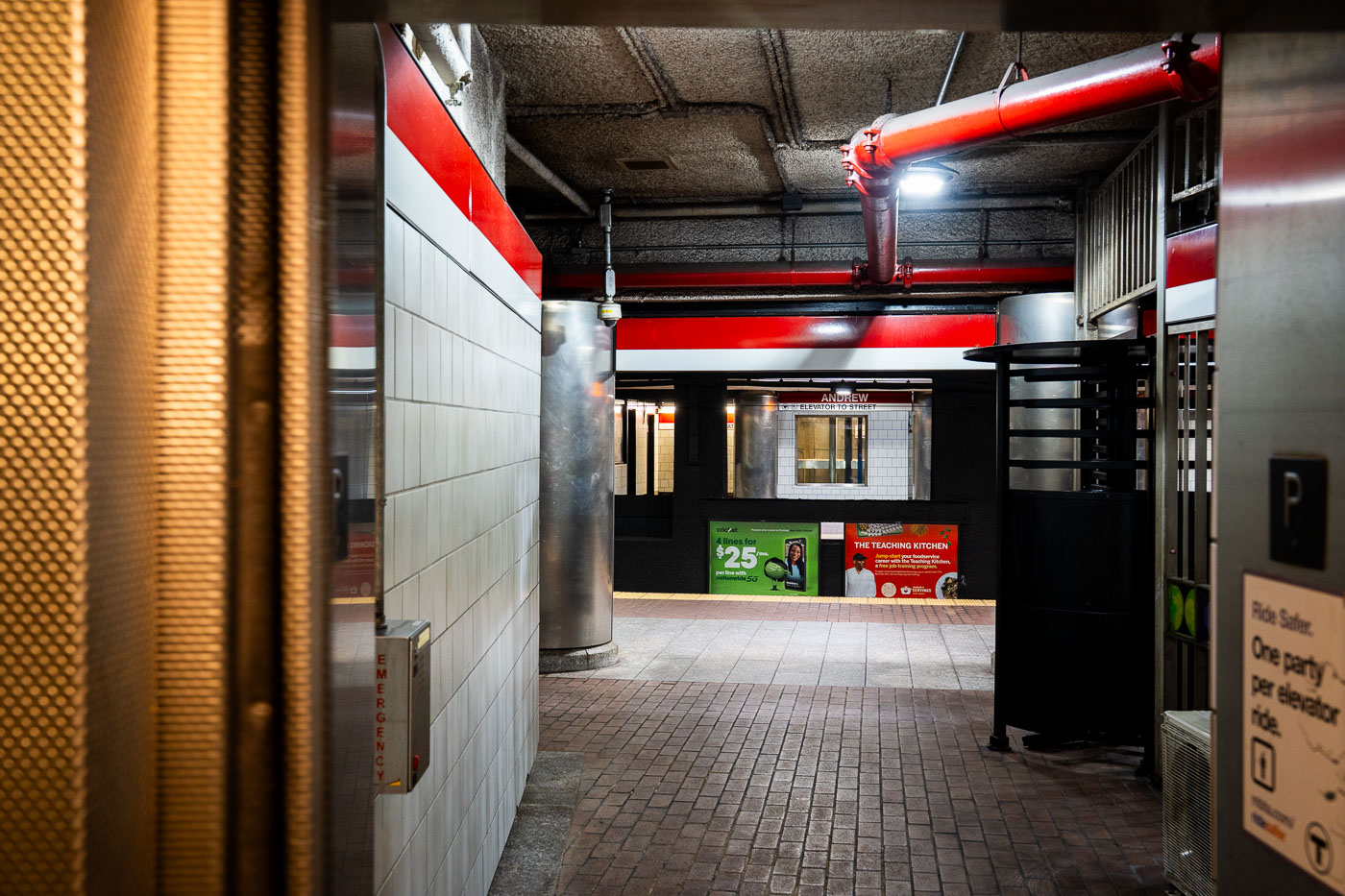
Elevator at Andrew Station, MBTA Boston
Getting off an elevator at Andrew Station on the red line in Boston.
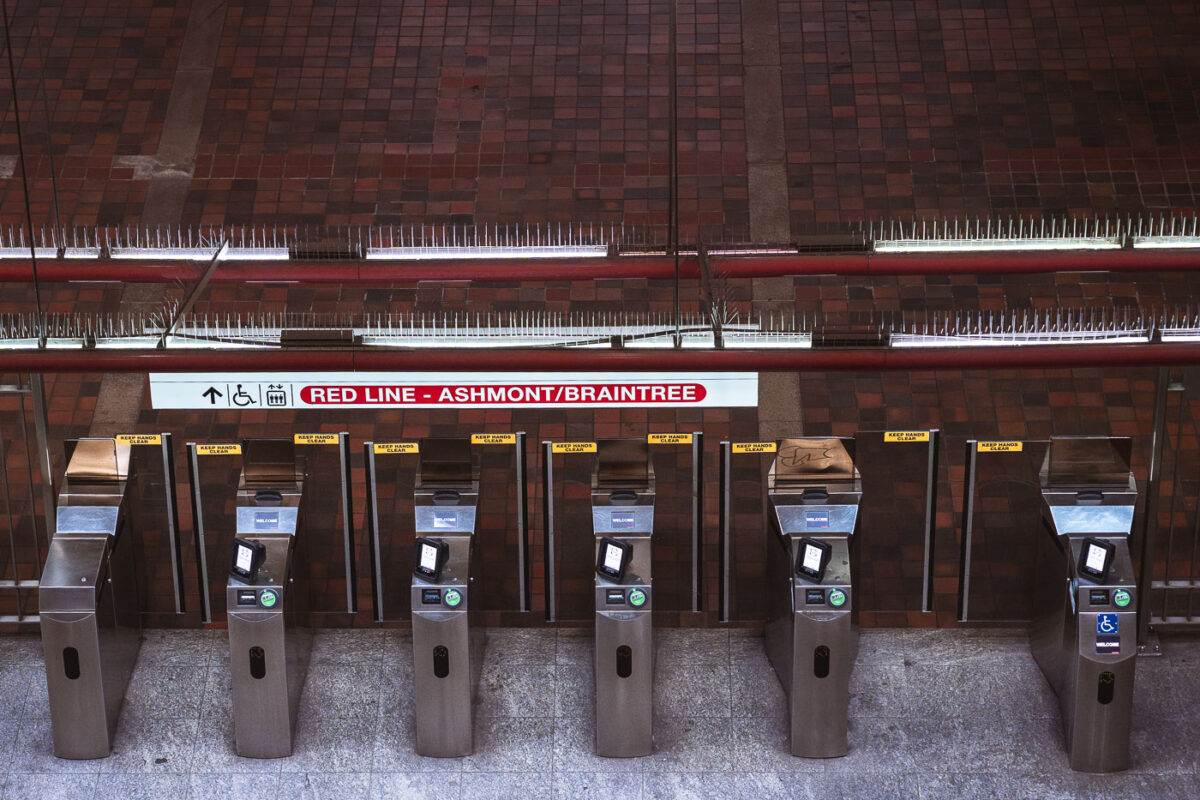
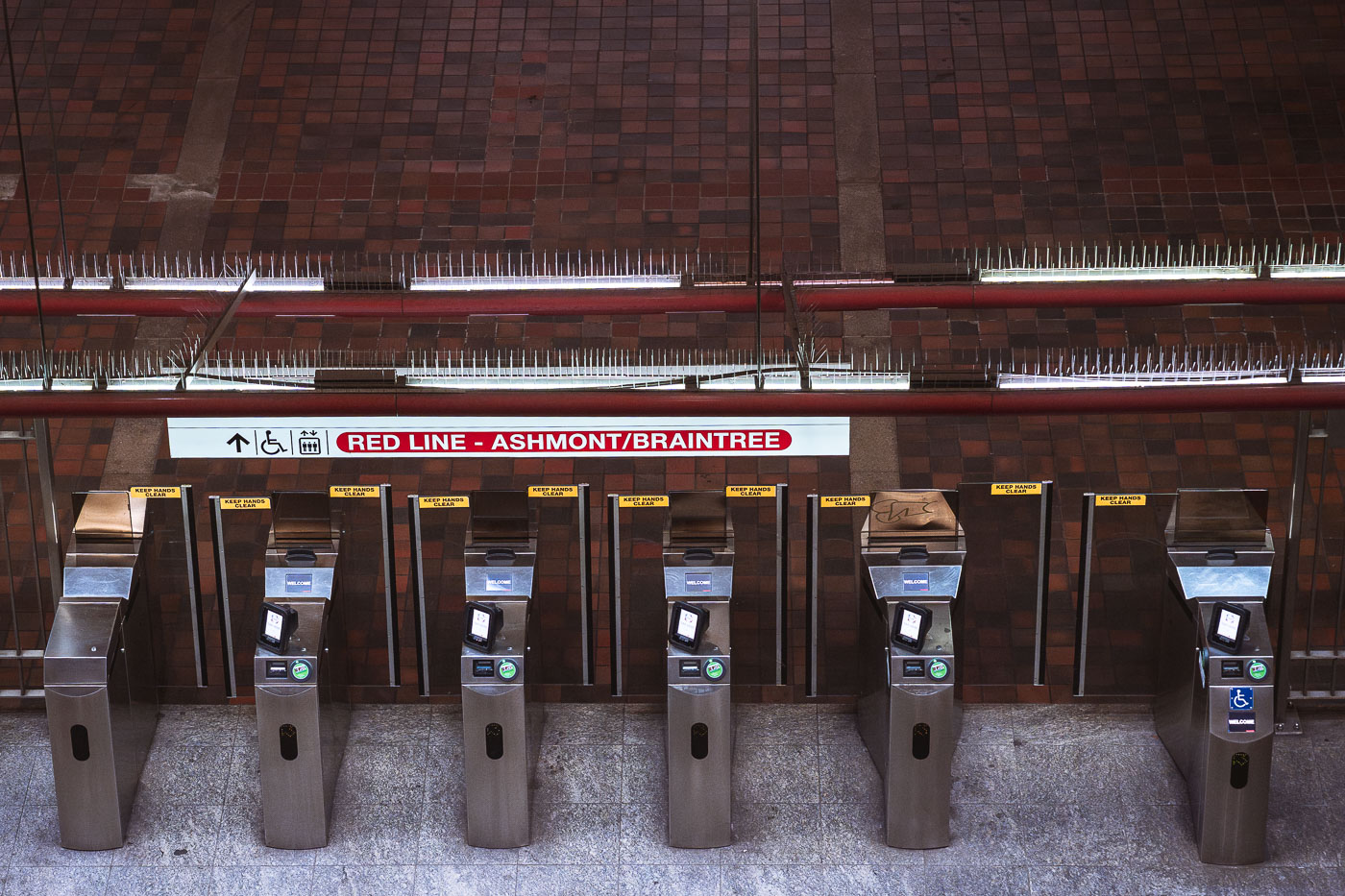
MBTA Alewife Fair Gates
Fare gates line the paid entrance to the Massachusetts Bay Transportation Authority Red Line, directing riders toward Alewife-bound service. This northbound branch terminates at Alewife, the line’s northern endpoint, and serves as a primary commuter gateway for Cambridge and the Route 2 corridor. The stainless-steel fare control equipment reflects systemwide upgrades rolled out during the 2010s to improve ADA accessibility, reliability, and compatibility with modern fare media. Above the gates, the brick-vaulted ceiling and exposed utilities reflect the durable, utilitarian architecture common to many core Boston subway stations built and expanded in the mid-20th century, prioritizing longevity and fire resistance in high-traffic underground spaces.
South Station Immigration Flyer, Boston
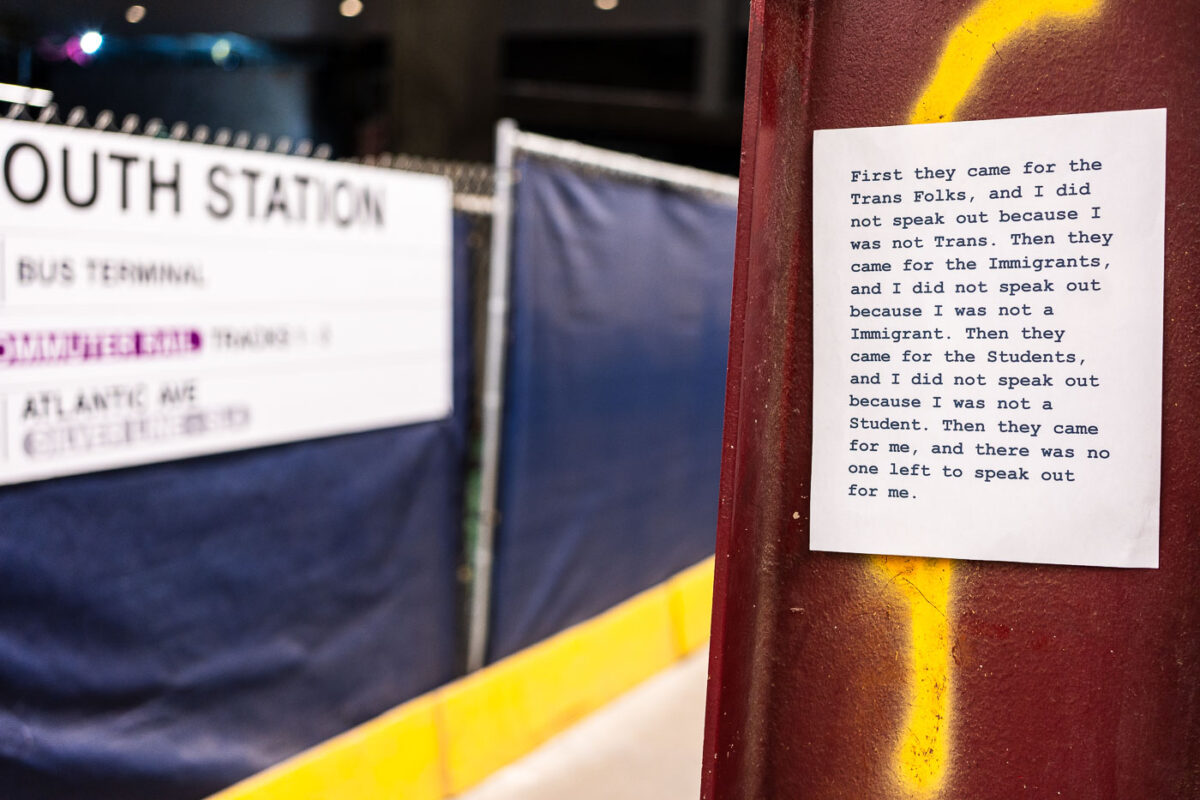
Sign seen at South Station in Boston: "First they came for the Trans Folks, and I did not speak out because I was not Trans. Then they came for the Immigrants, and I did not speak out because I was not a Immigrant. Then they came for the Students, and I did not speak out because I was not a Student. Then they came for me, and there was no one left to speak out for me."
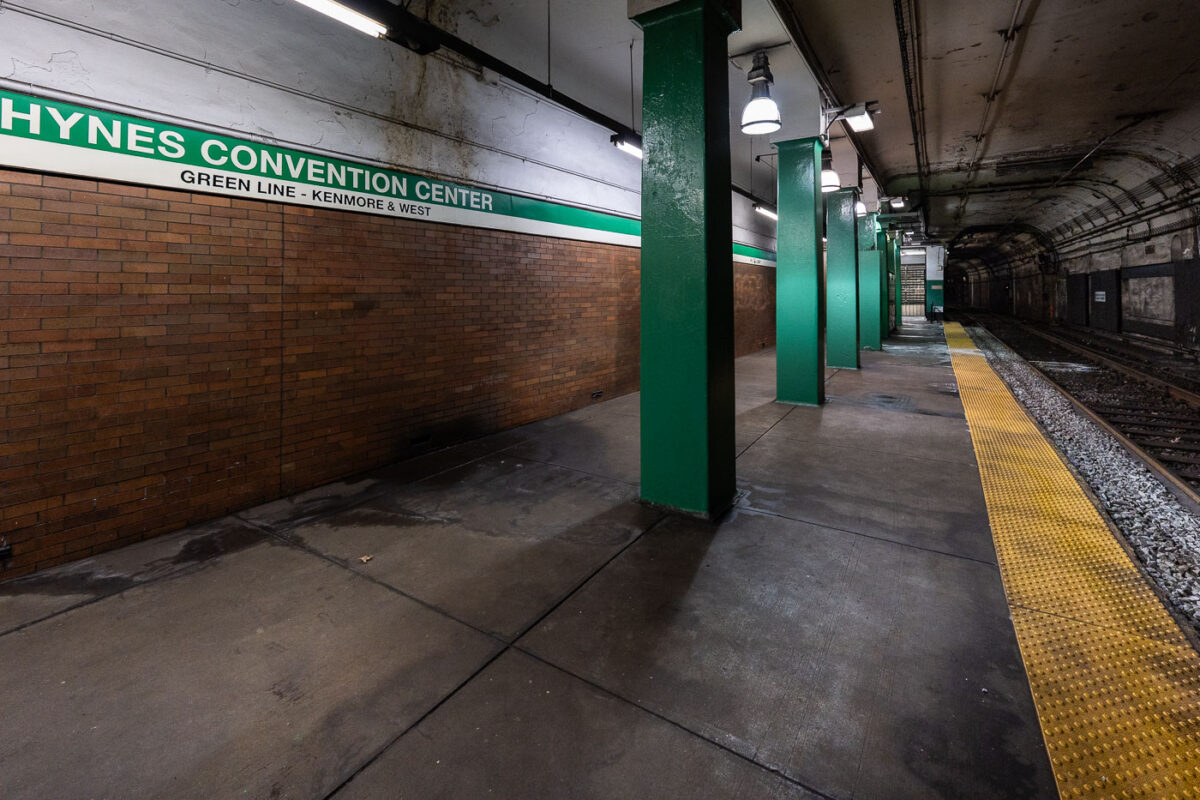
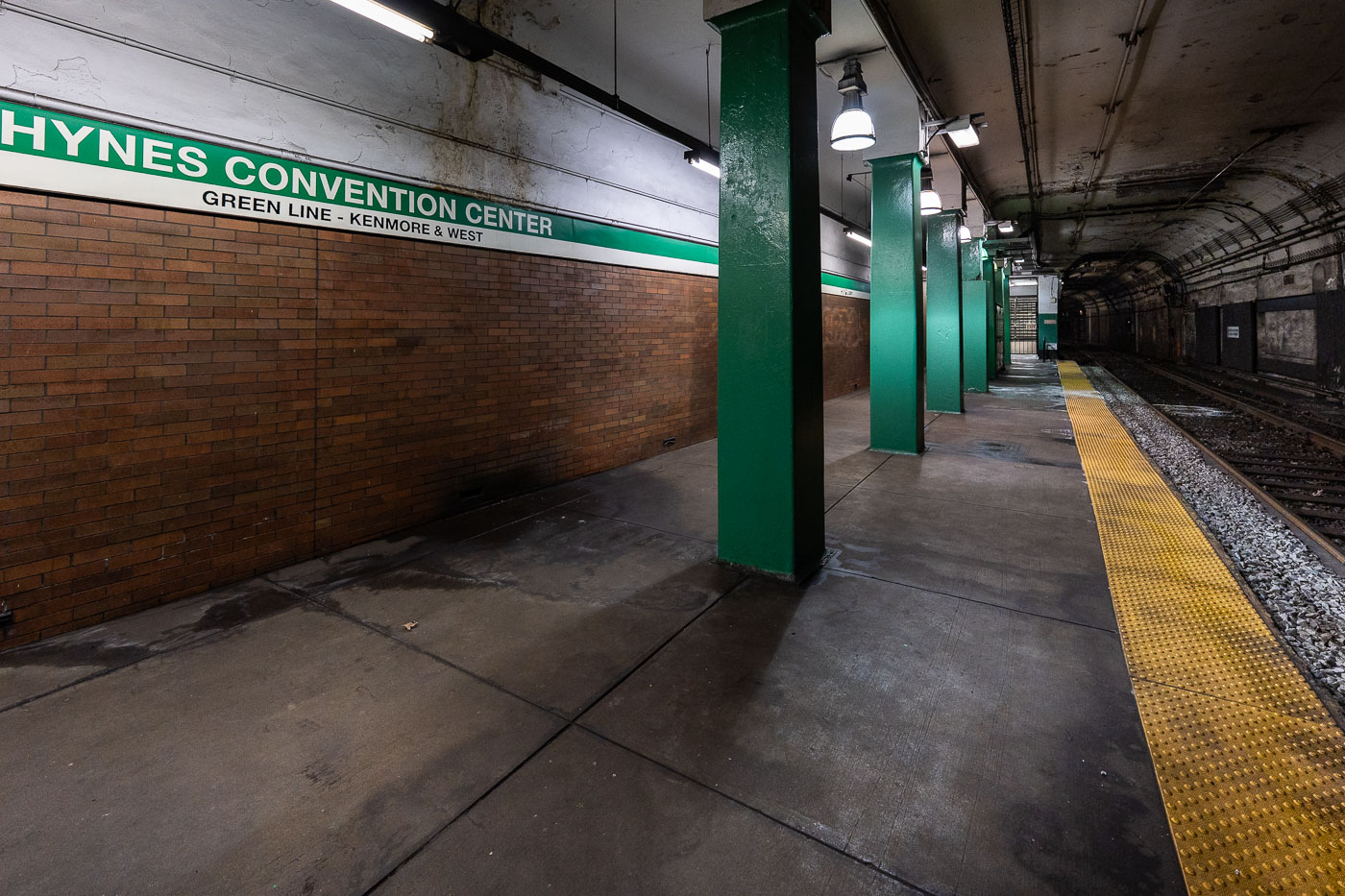
Hynes Convention Center Station Platform in Boston MBTA
MBTA Green Line train platform at Hynes Convention Center.
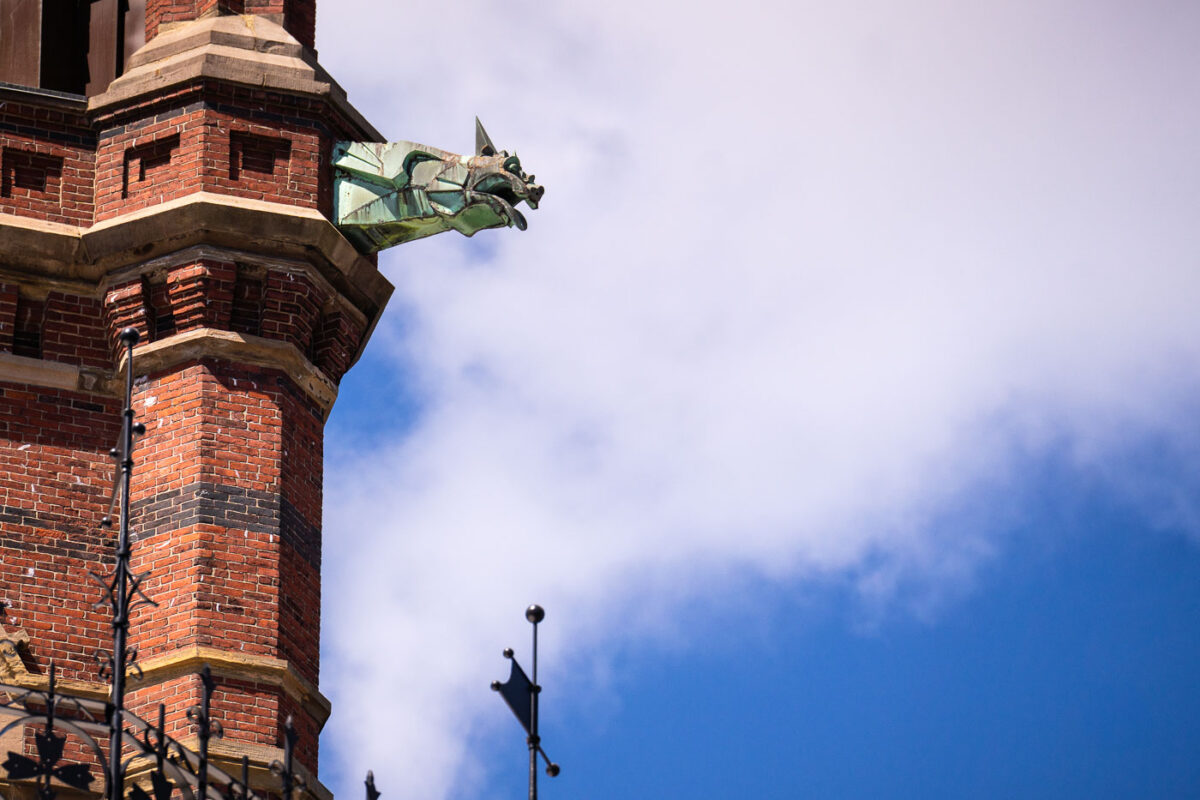
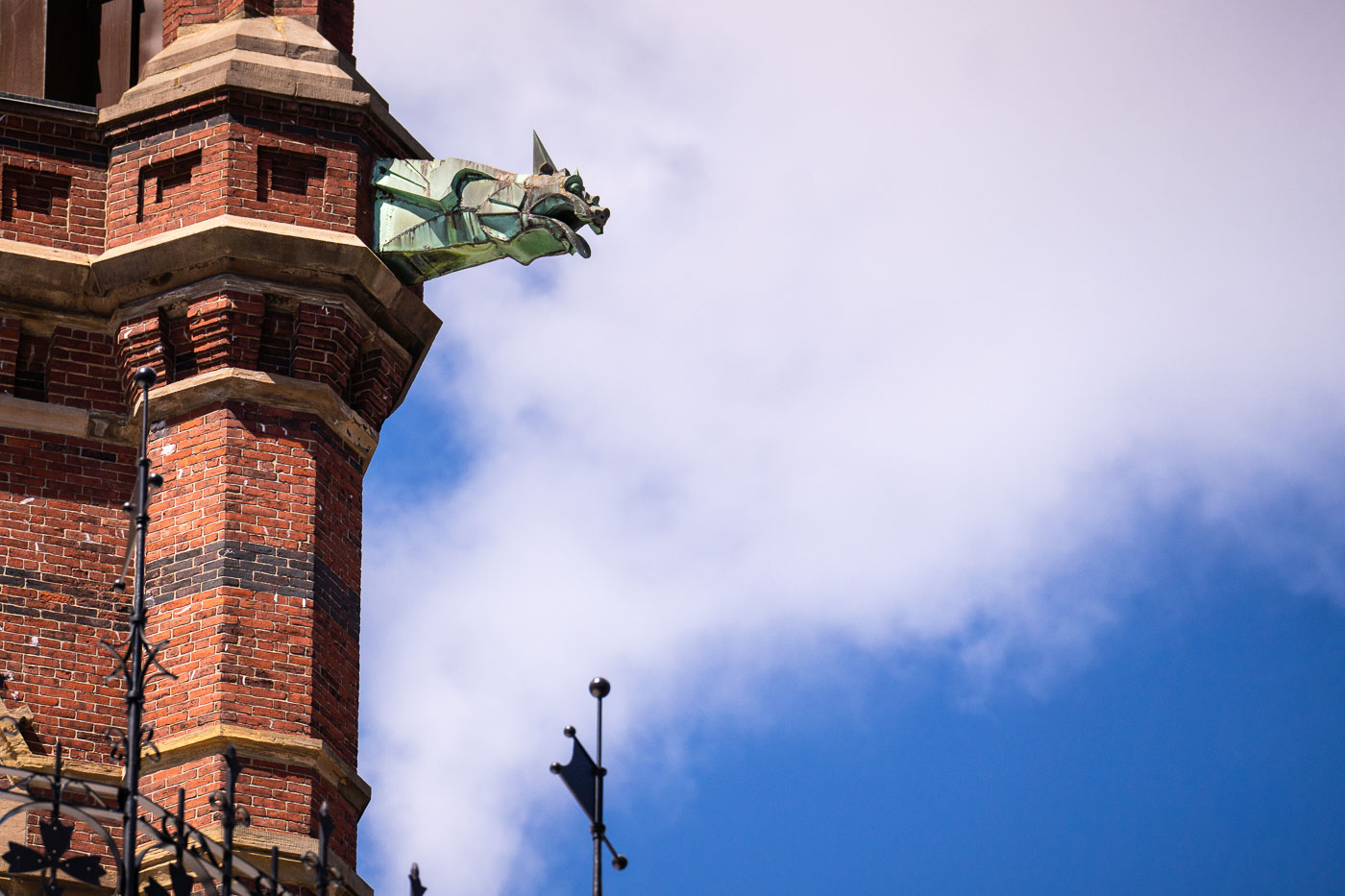
Gargoyle at Harvard University Memorial Hall
A copper gargoyle, weathered to a green patina, adorns the Gothic Revival architecture of Harvard Memorial Hall in Cambridge, Massachusetts. Completed in 1878 and designed by Ware & Van Brunt, the hall serves as a memorial to Harvard alumni who died in the Civil War. The building's ornate brickwork and detailed stonework are characteristic of the collegiate Gothic style prevalent in American universities during the late 19th century. This particular gargoyle, a functional element for water drainage, also contributes to the building's elaborate decorative scheme.
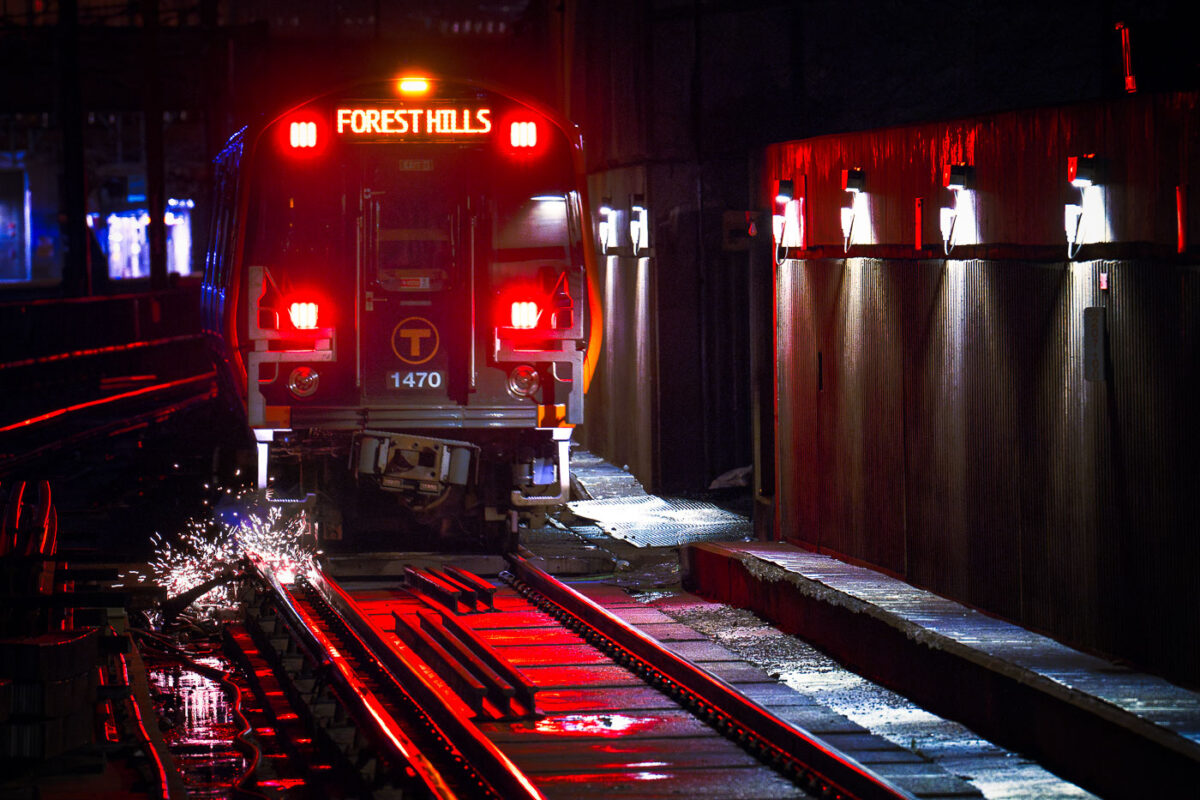
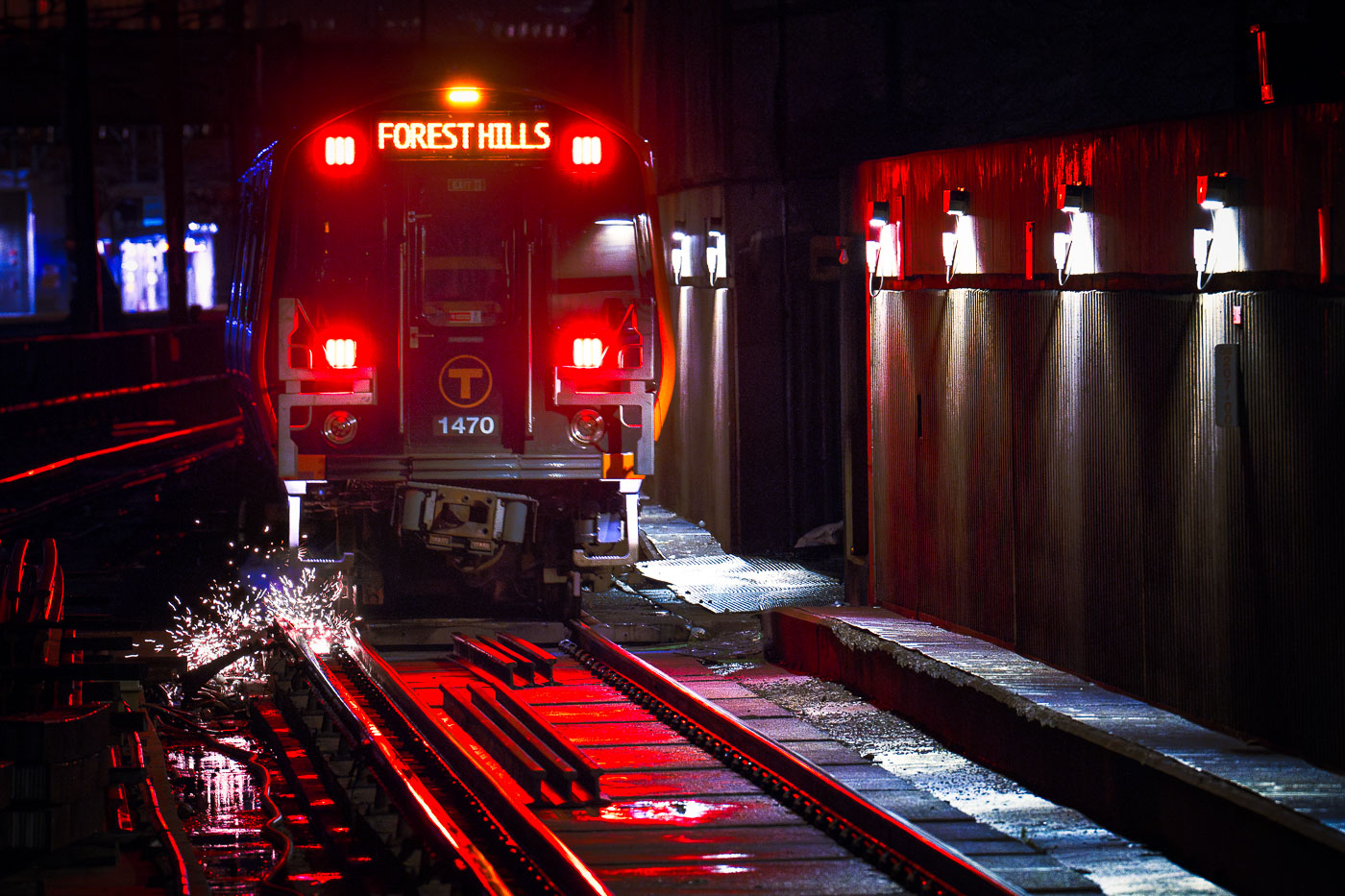
MBTA Orange Line train at Forest Hills Station, Boston, Massachusetts, with sparks flying from the tracks, indicating maintenance work.
MBTA Orange Line train number 1470 is seen at Forest Hills Station in Boston, Massachusetts. Sparks fly from the tracks, suggesting maintenance or repair work is underway. Forest Hills Station, a major transit hub in Jamaica Plain, serves as the southern terminus for the Orange Line. The station complex, originally opened in 1912, has undergone numerous renovations and expansions to accommodate the growing needs of Boston's public transportation system.
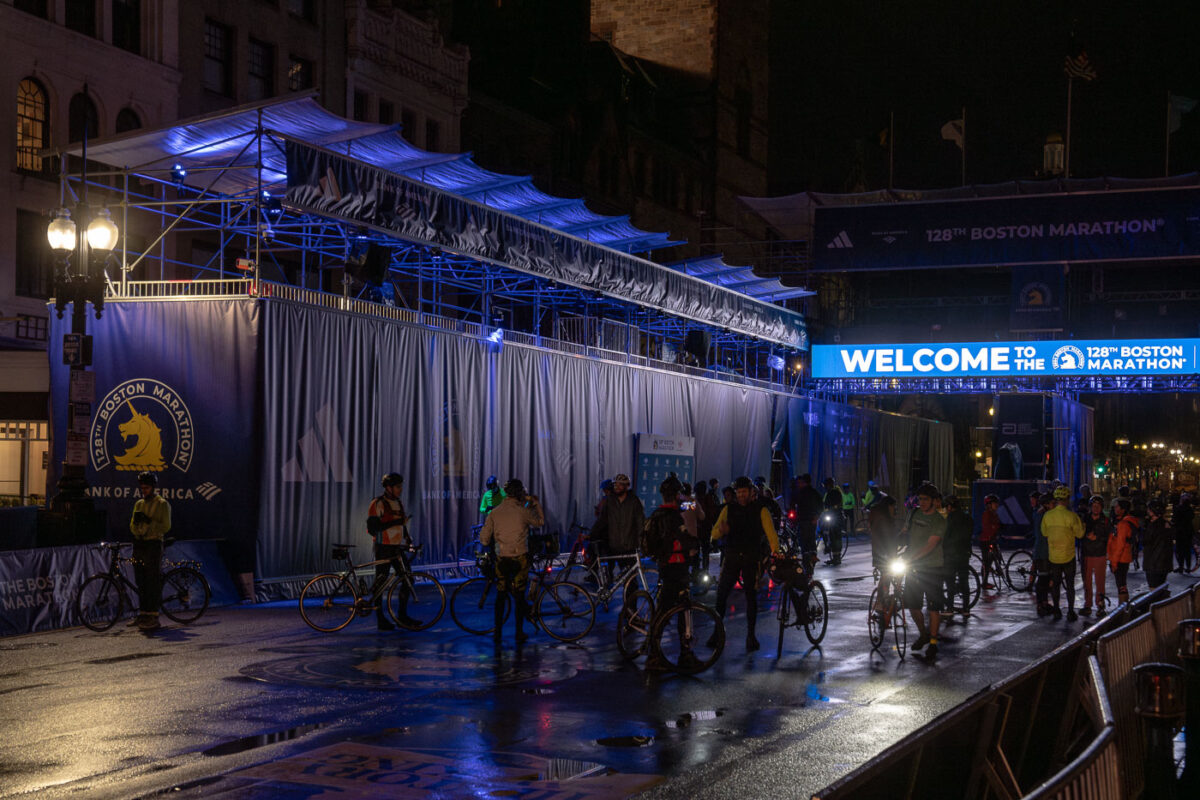
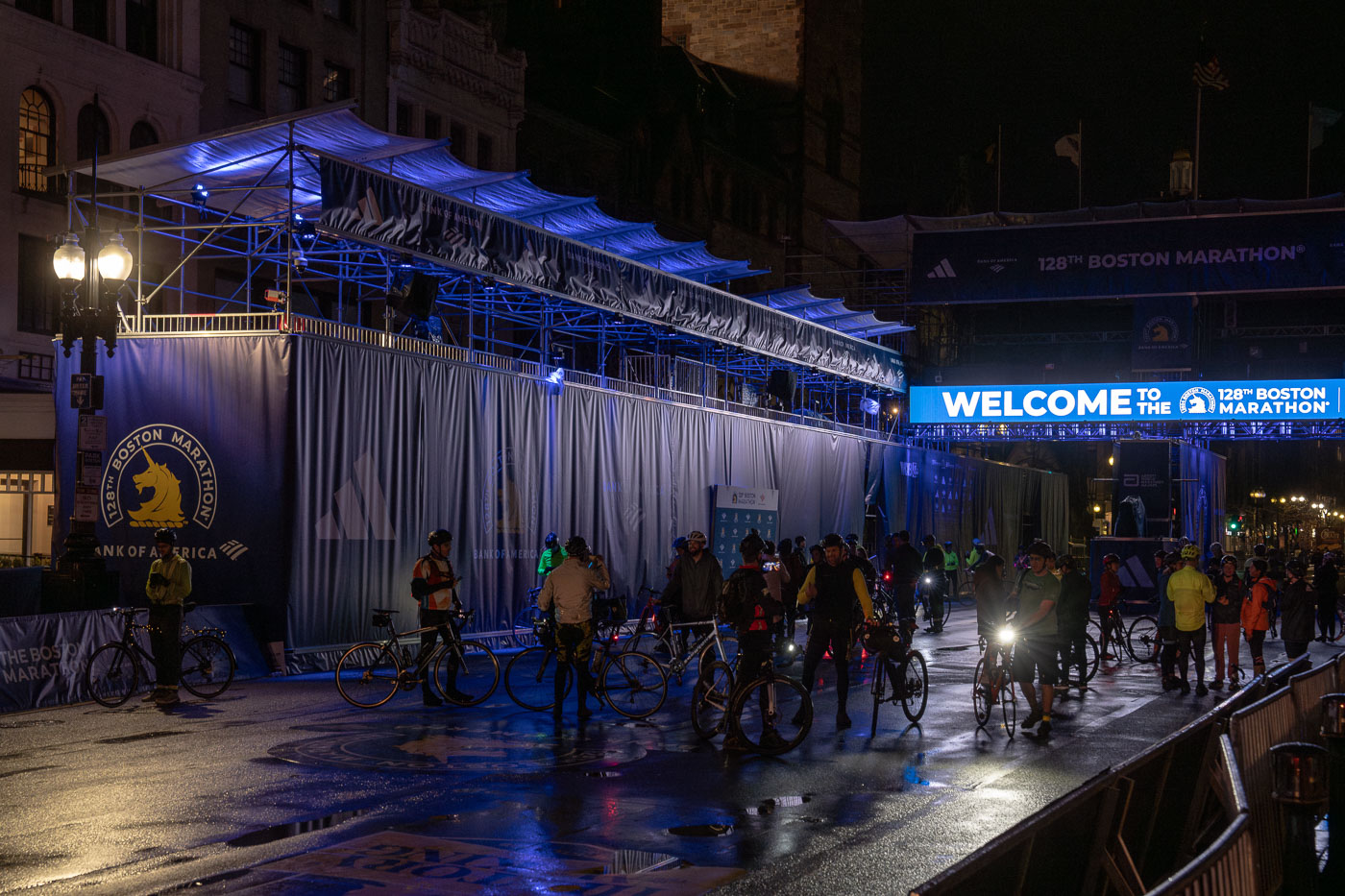
Midnight bike ride tradition at Boston Marathon
The "Midnight Marathon" bike ride takes place annually on the eve of the Boston Marathon, drawing thousands of participants to cycle the race course. This unsanctioned event, now in its 16th year, utilizes the marathon's finish line infrastructure, which is prepared for the official race. The ride highlights the community's engagement with the historic Boston Marathon, a major annual sporting event established in 1897.
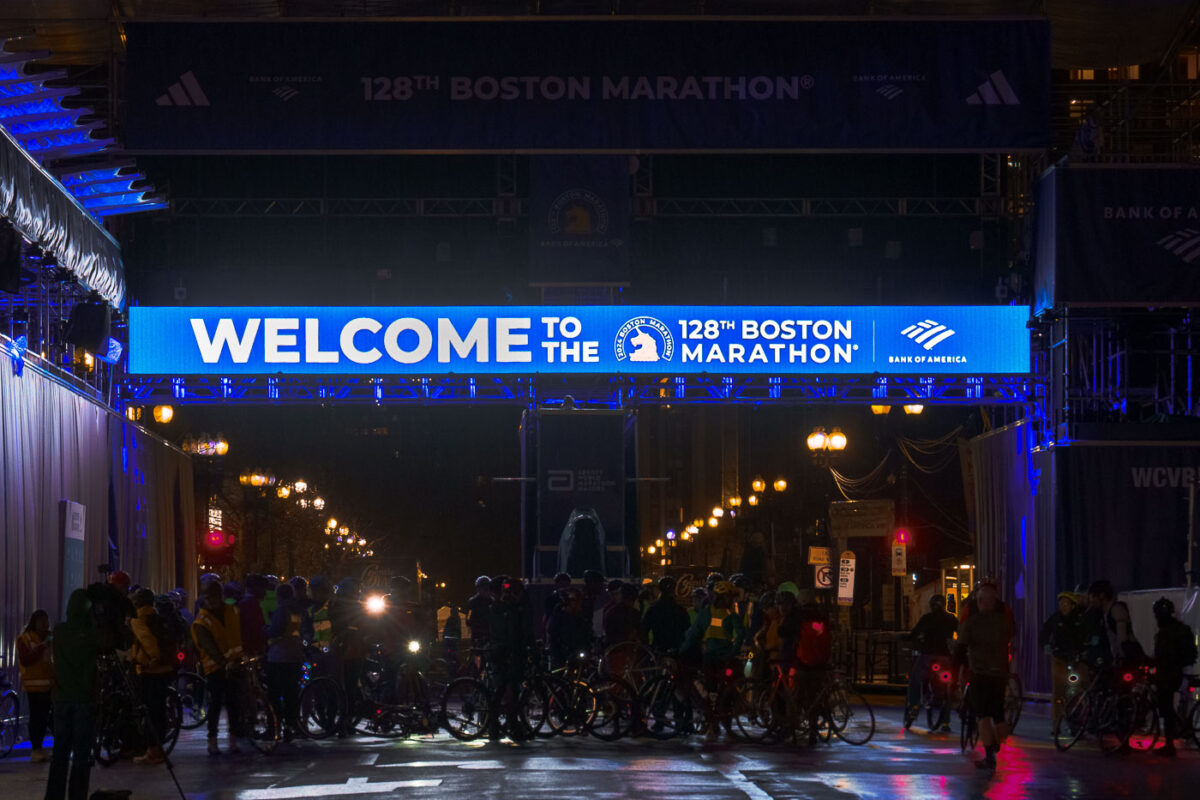
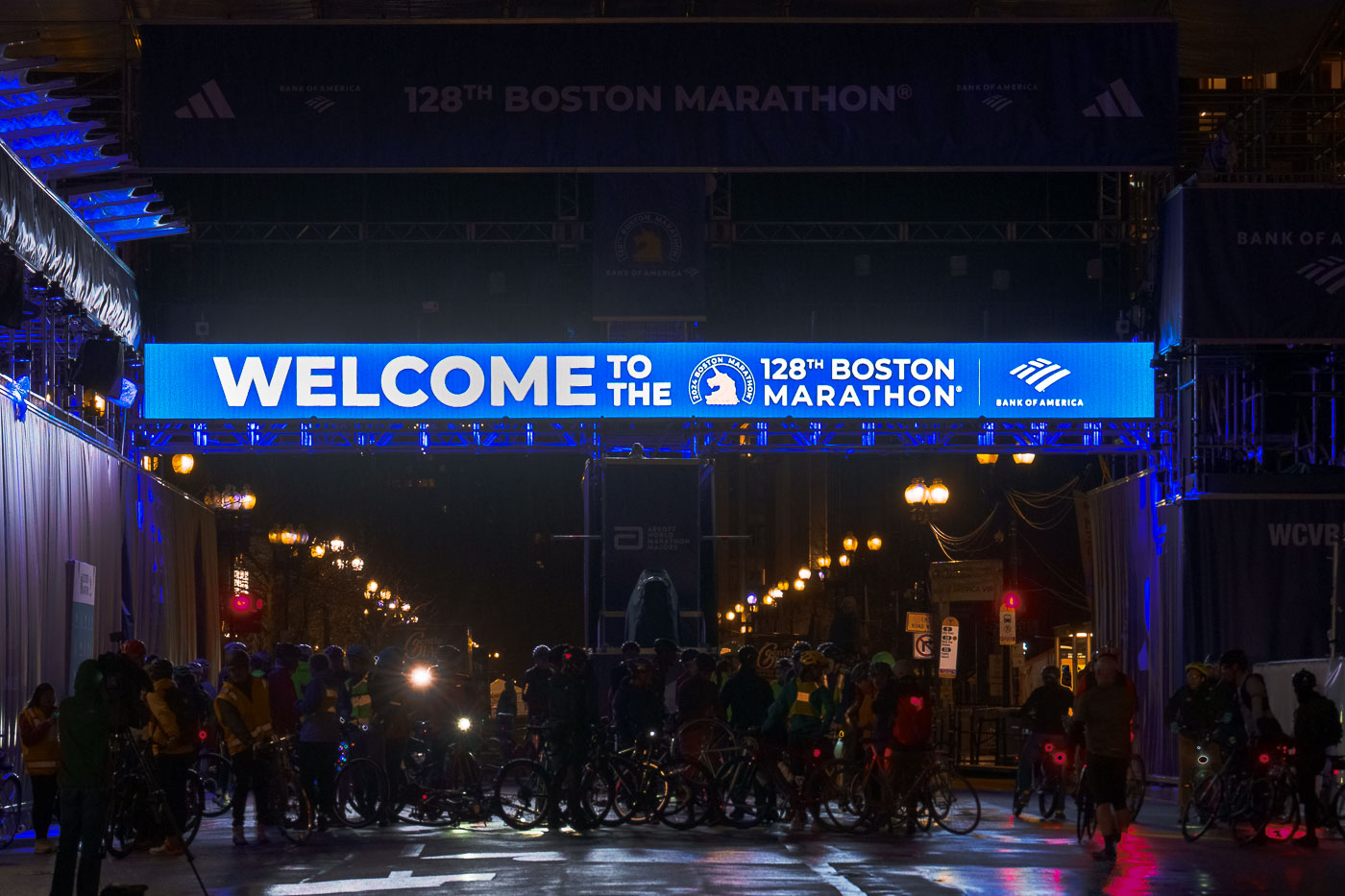
Boston marathon midnight bike ride
The 128th Boston Marathon is announced on a large digital display, with participants of the "Midnight Marathon" bike ride gathered below. This unsanctioned event, now in its 16th year, takes place annually on the night before the official Boston Marathon. Thousands of cyclists ride the marathon route through the city's streets under the cover of darkness. The bike ride has become a notable unofficial tradition preceding the historic marathon, which began in 1897.
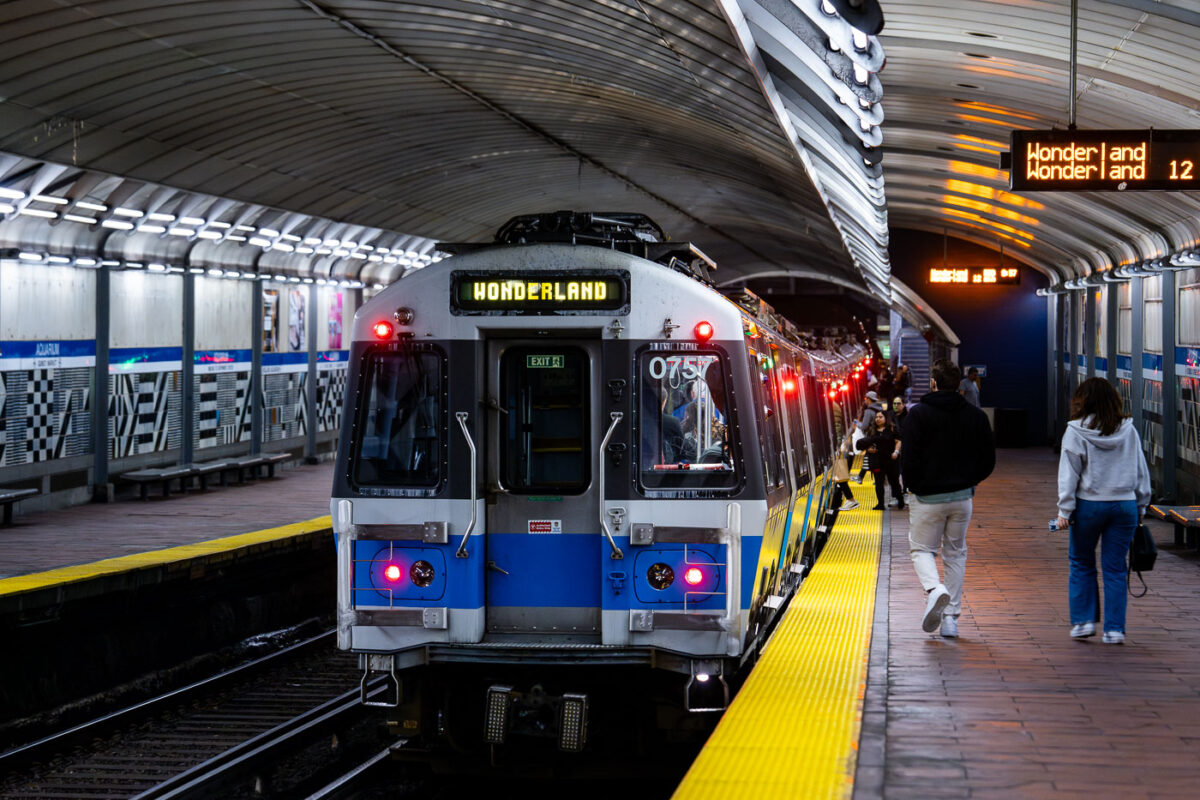
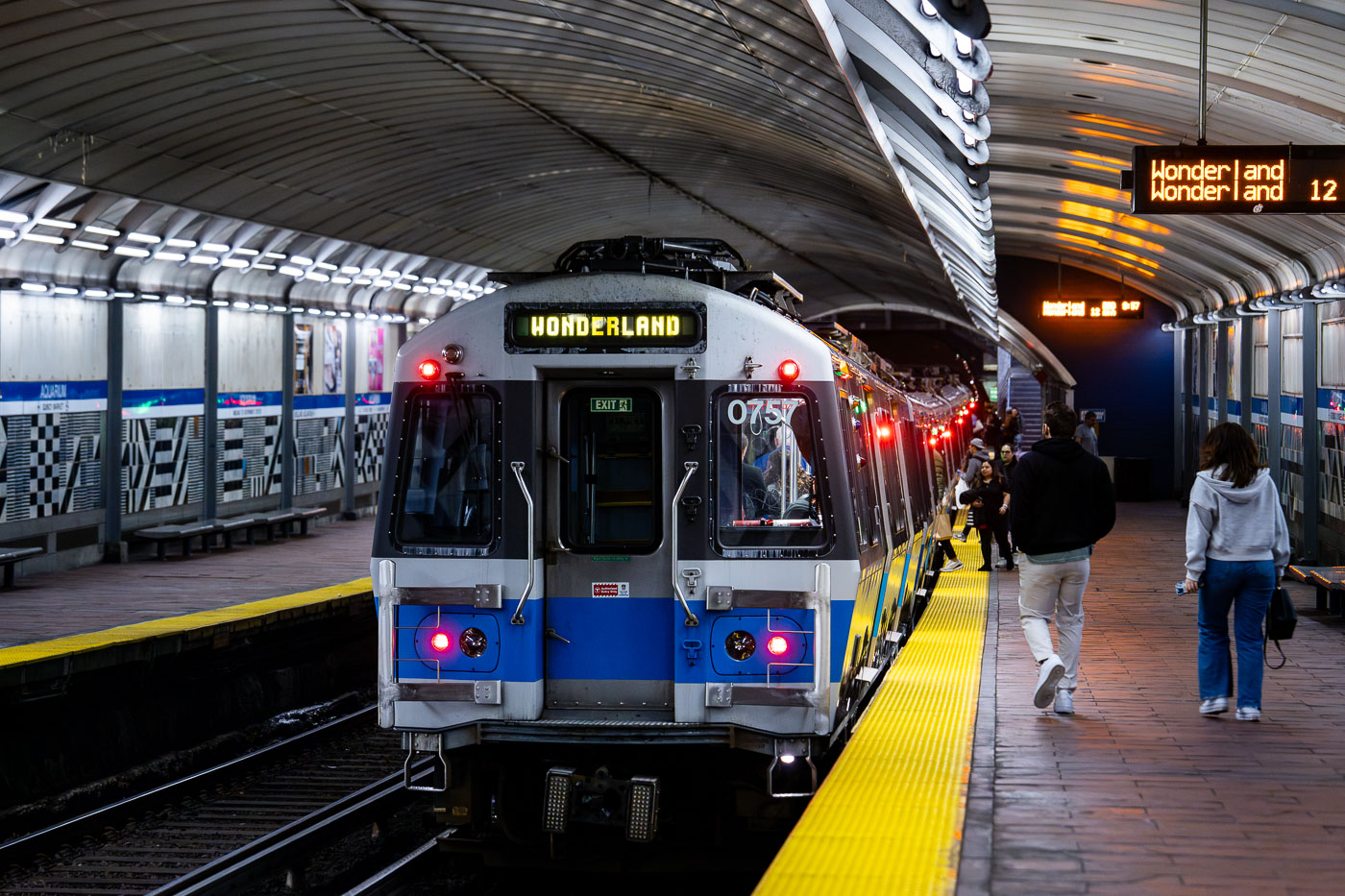
MBTA Wonderland bound train from Aquarium Station
MBTA Train 0757, bound for Wonderland, waits at Aquarium Station in Boston. This station, part of the MBTA's Blue Line, opened in 1997 as part of the extension to the New England Aquarium. The Blue Line itself has a long history, with its earliest segments dating back to the early 20th century as the East Boston Tunnel. Today, Aquarium Station serves as a vital transit hub for commuters and tourists accessing the waterfront and surrounding downtown attractions.
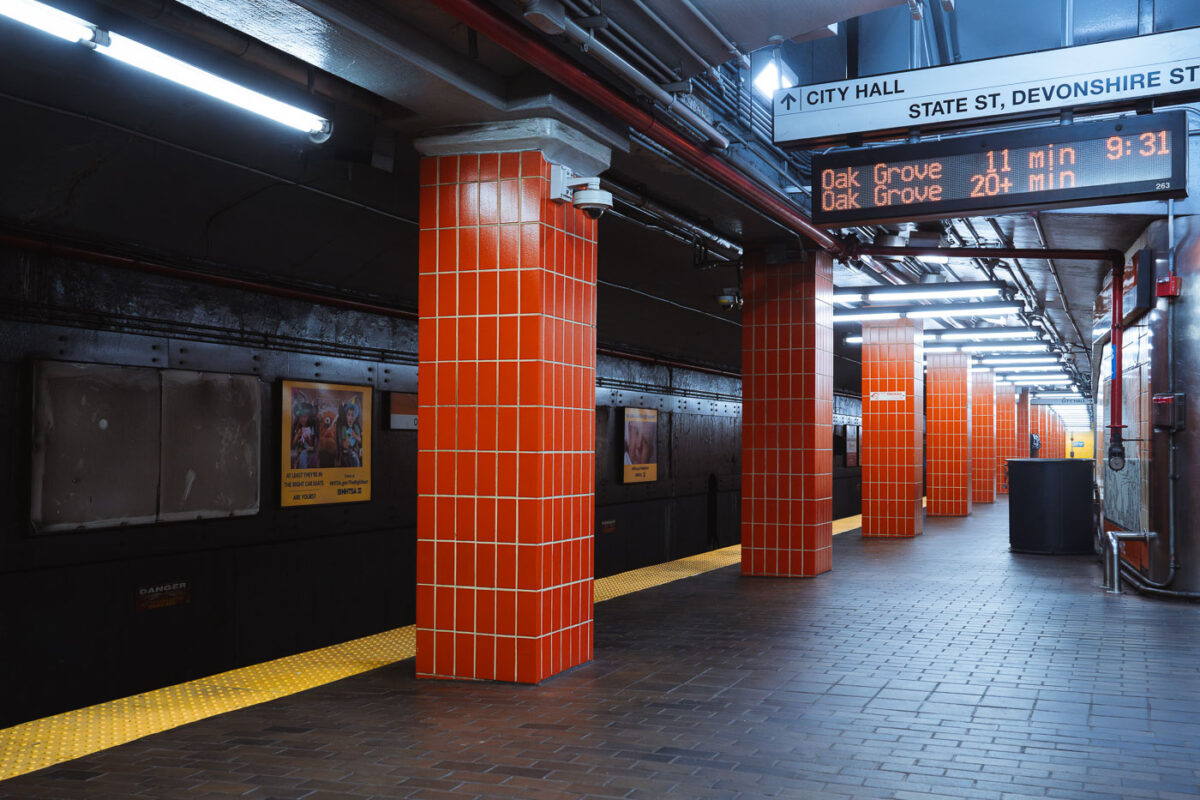
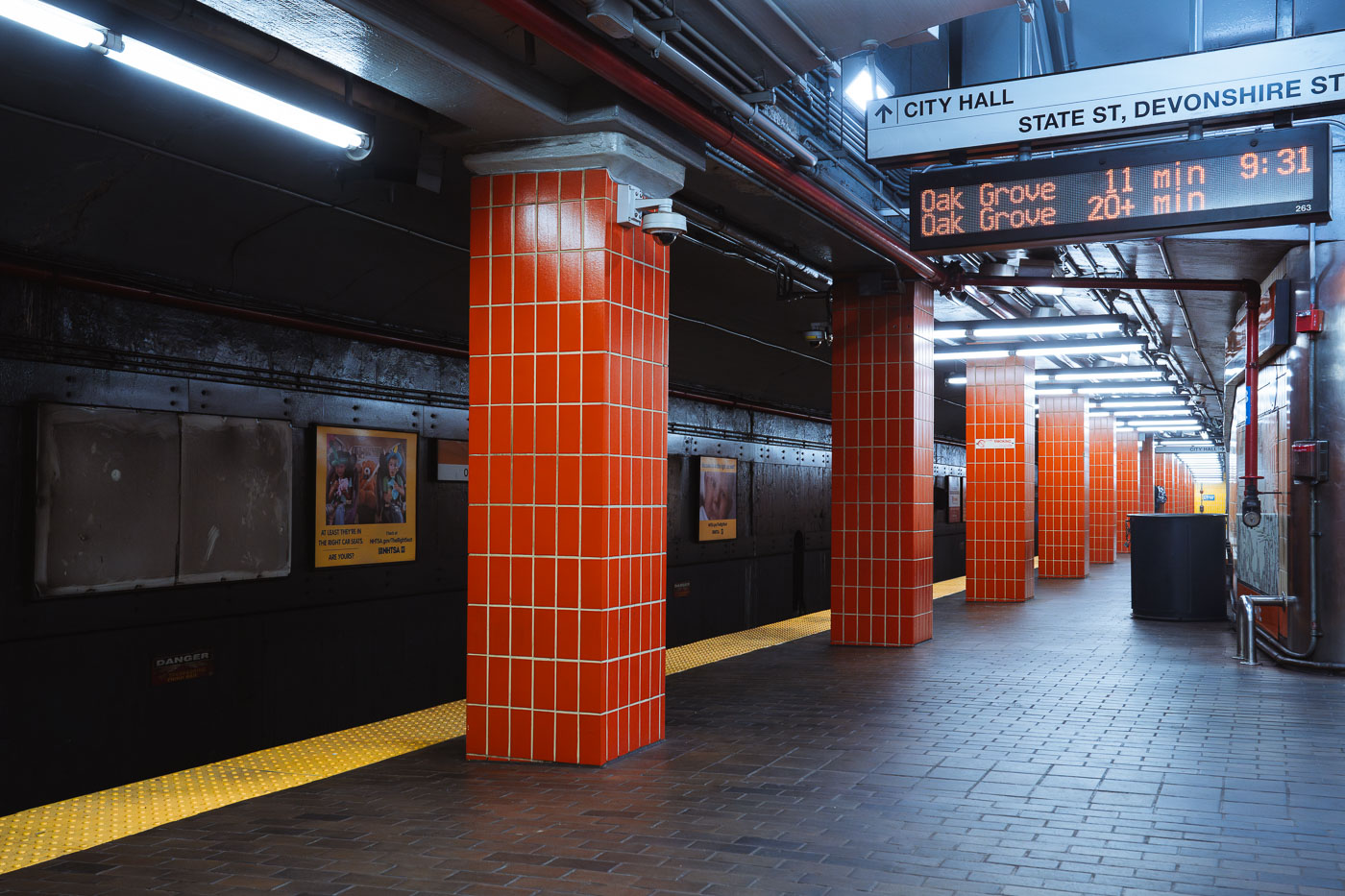
Subway station with orange tiles
The Massachusetts Bay Transportation Authority (MBTA) State Station serves as a key stop on the Orange Line in Boston, Massachusetts. Opened in 1915 as part of the Washington Street Tunnel, it was later integrated into the MBTA's rapid transit system. The station's design features distinctive orange tiled columns and a platform with tactile warning strips, indicative of mid-20th century subway station architecture. Today, it continues to facilitate daily commutes for thousands of passengers, connecting them to various parts of the city.
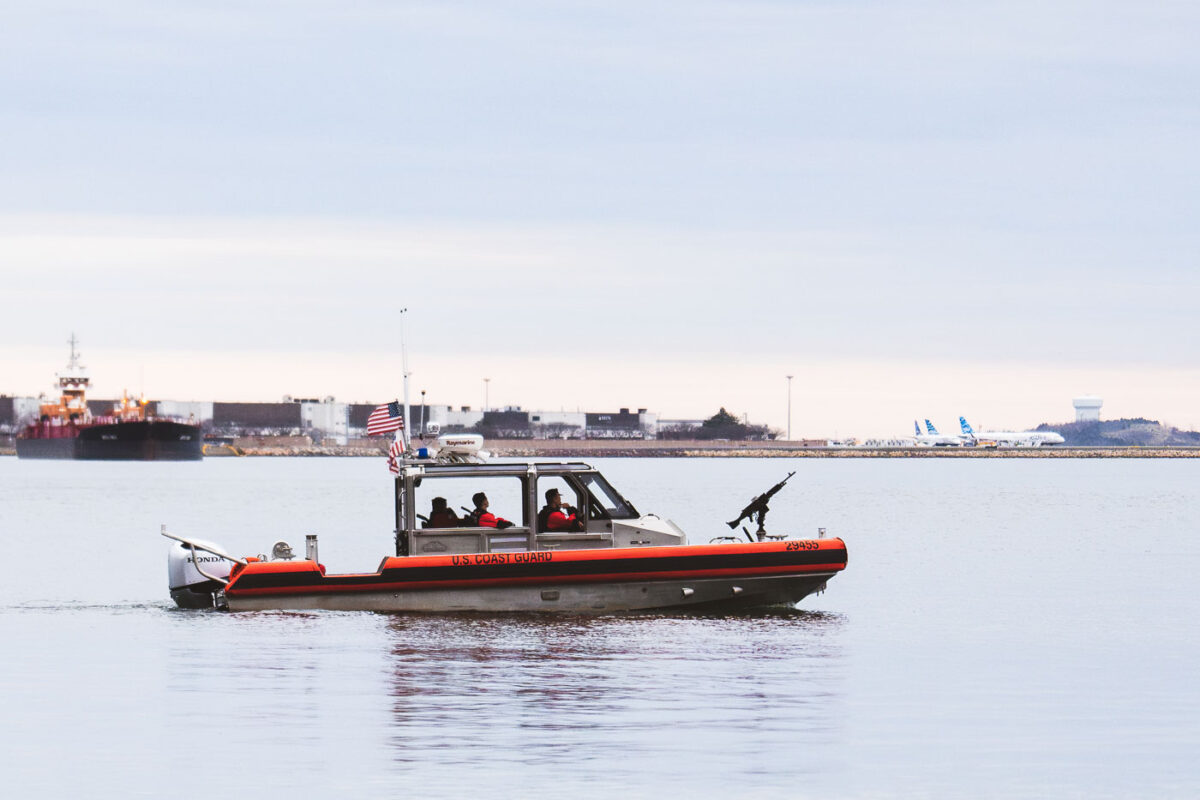
Coast Guard boat with mounted weapon
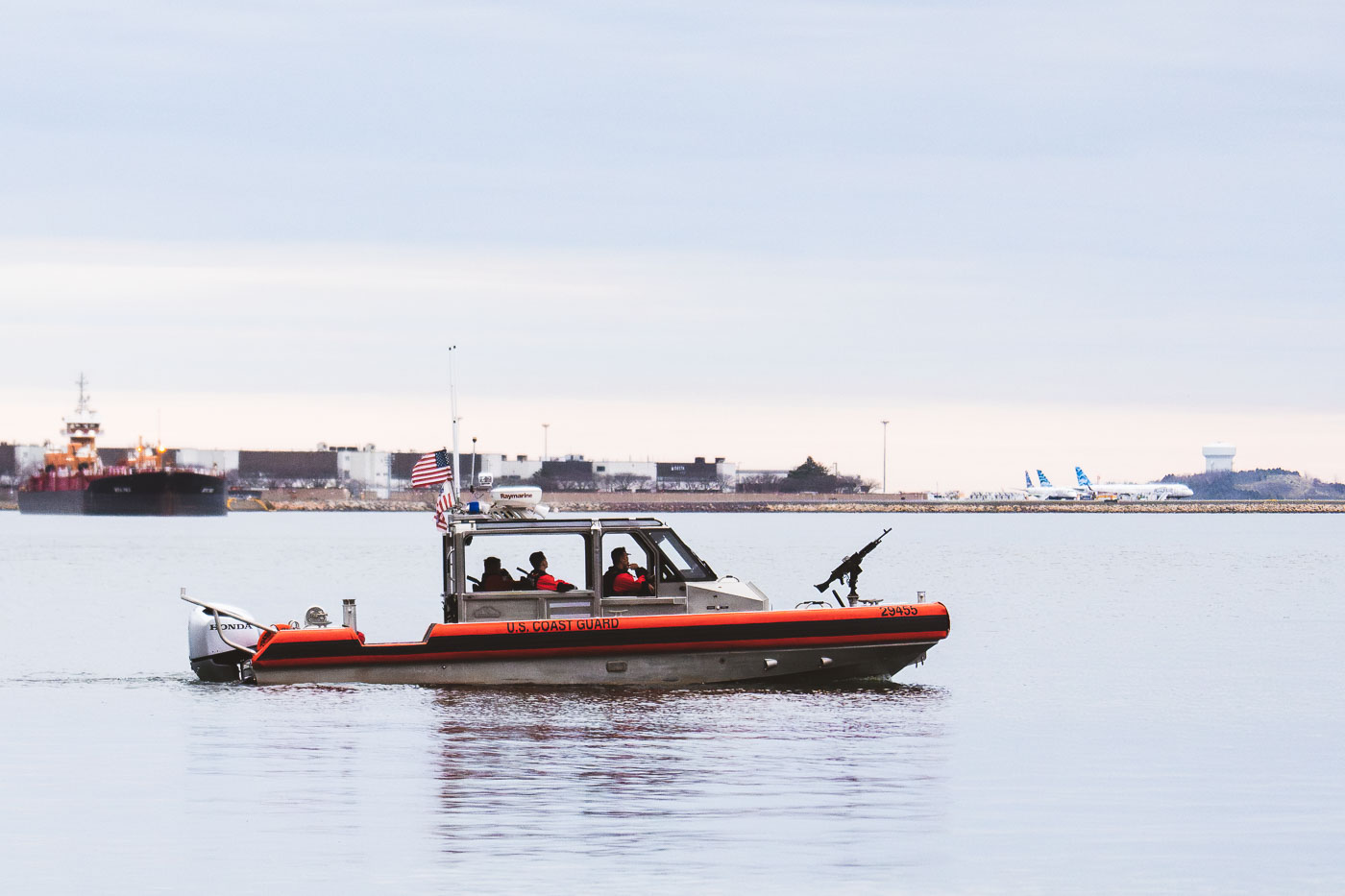
A U.S. Coast Guard patrol boat navigates Boston Harbor, a vital waterway for commerce and transportation in New England. The vessel, marked with "U.S. COAST GUARD" and the hull number 29455, is equipped for maritime security operations. In the background, commercial shipping and aircraft at Logan International Airport underscore the harbor's significance as a major hub for air and sea traffic. The Coast Guard maintains a constant presence to ensure the safety and security of this critical port.
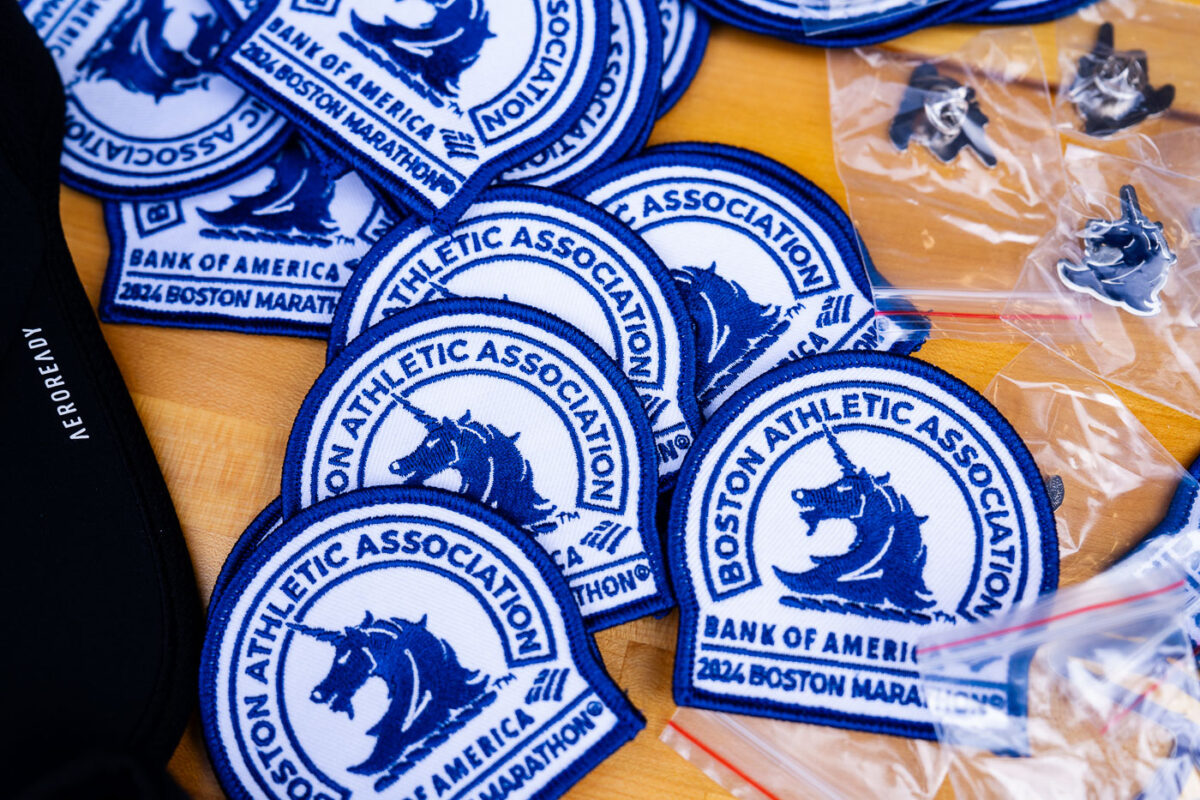
2024 Boston Marathon Patches
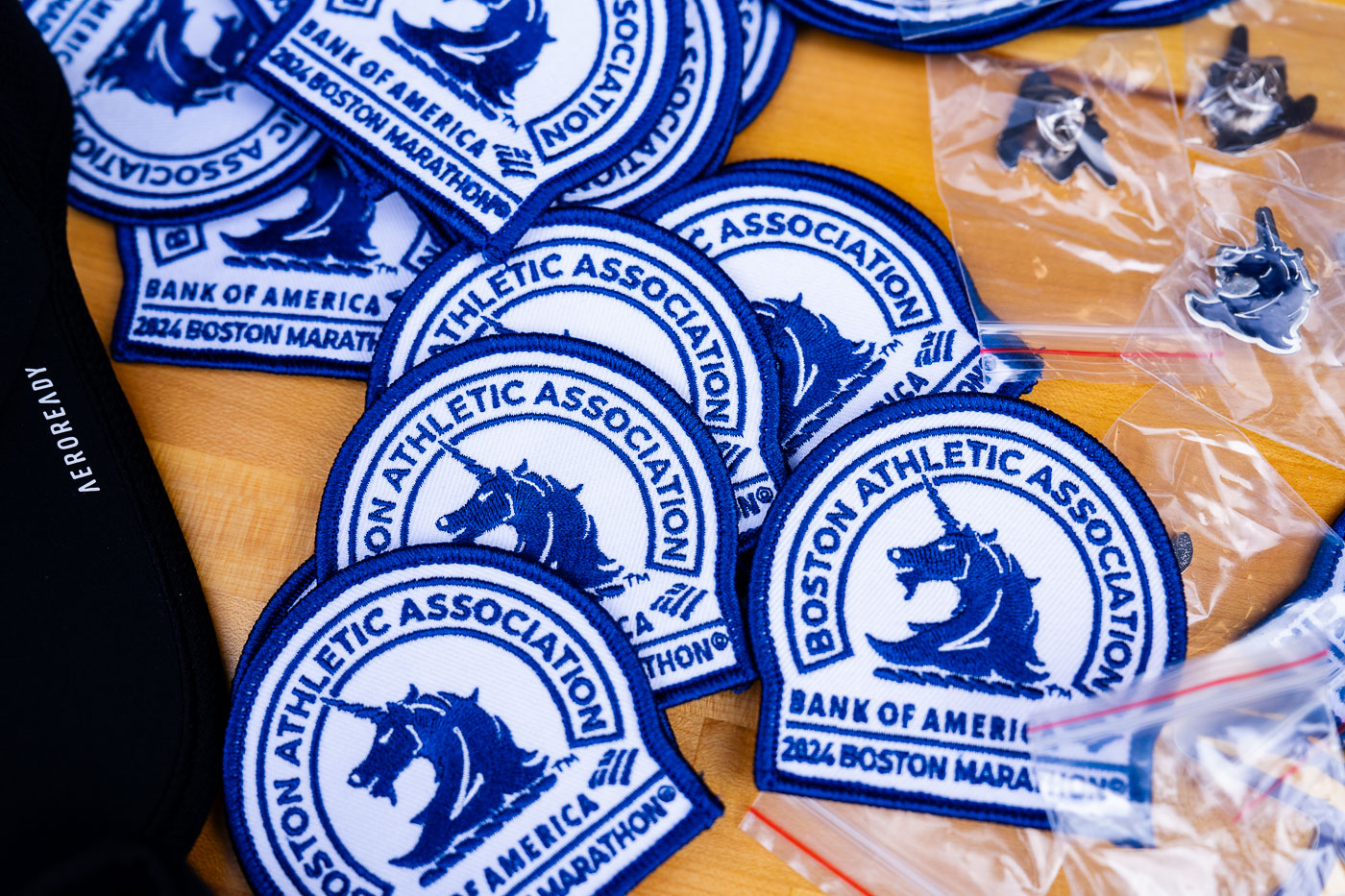
2024 Boston Marathon Patches for sale at the Marathon Expo in 2024.
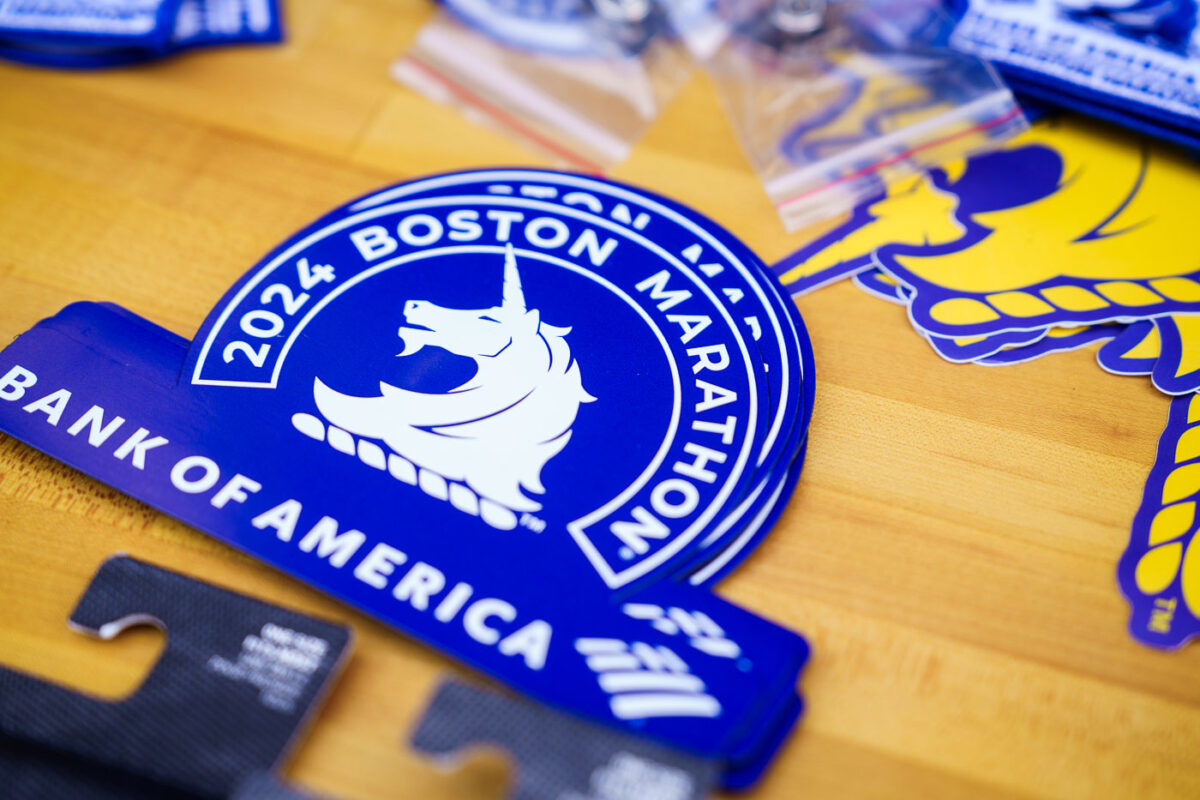
2024 Boston Marathon stickers
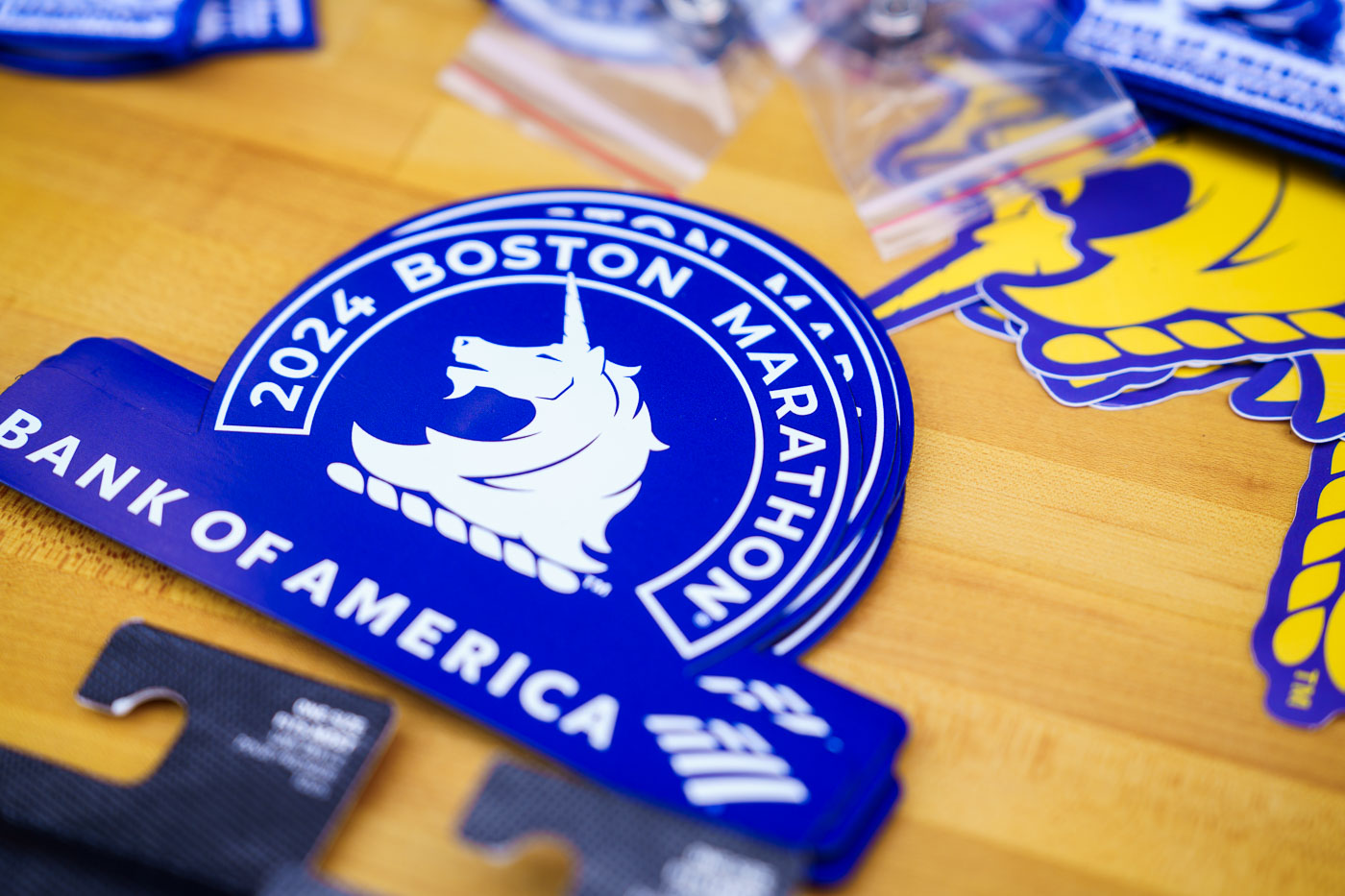
Stickers for the 2024 Boston Marathon, sponsored by Bank of America, are displayed for sale at the event's expo. The Boston Marathon is one of the world's oldest annual marathon races, first held in 1897. It is a significant event in Boston's cultural calendar, drawing participants and spectators from around the globe. The expo serves as a central hub for runners to pick up their race materials and for fans to purchase event-related merchandise.
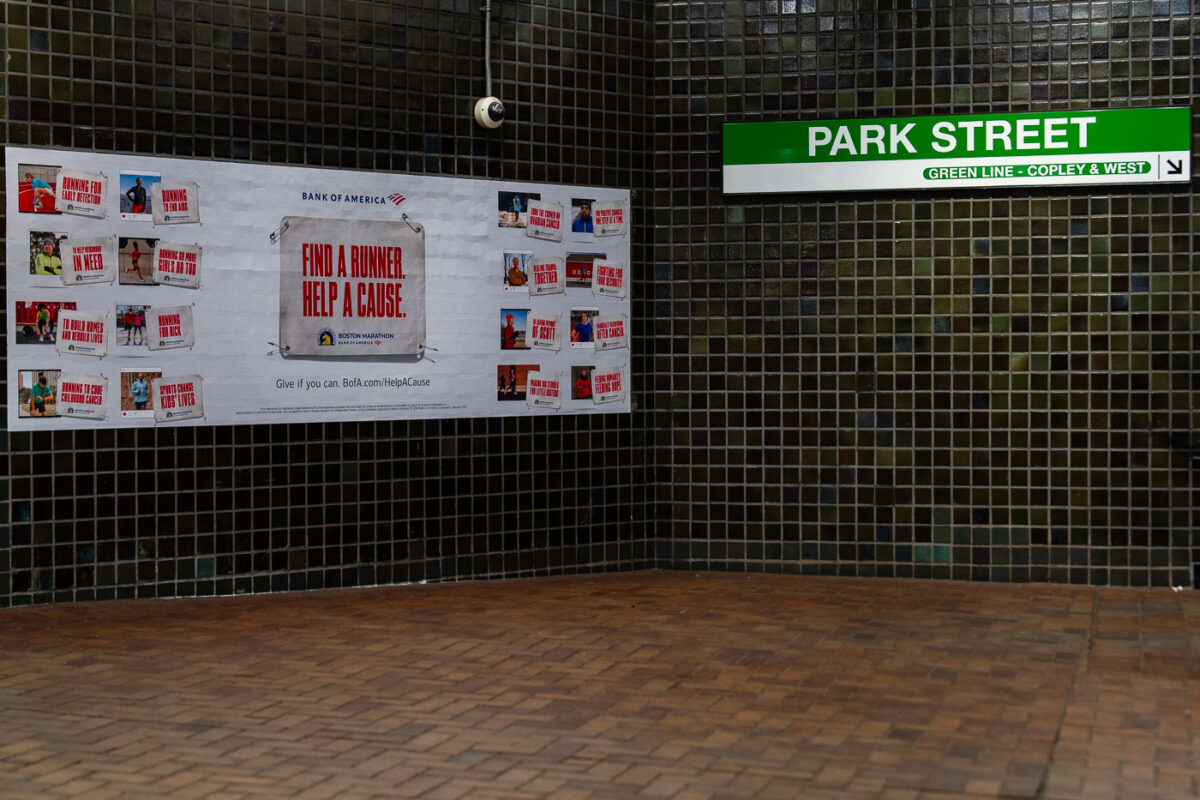
Boston Marathon at Park Street Station
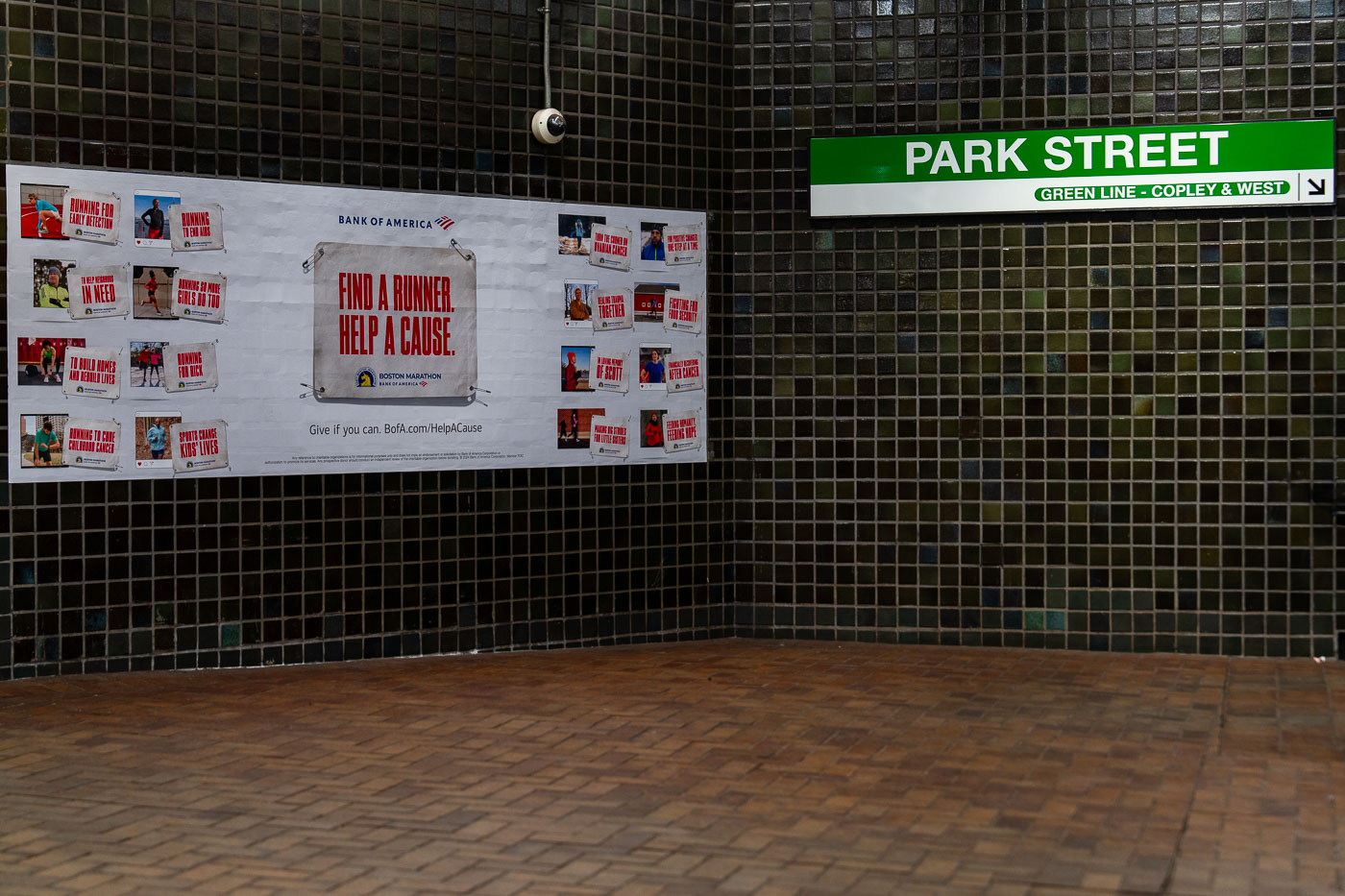
Inside Boston’s Park Street Station, a tiled corridor displays a Bank of America advertisement for the Boston Marathon’s charity initiative. The green and white MBTA sign directs riders toward the Green Line platforms for Copley and westbound service. Park Street—one of the oldest subway stations in the United States—sits beneath the Boston Common, serving as a major interchange for the city’s transit system since 1897.
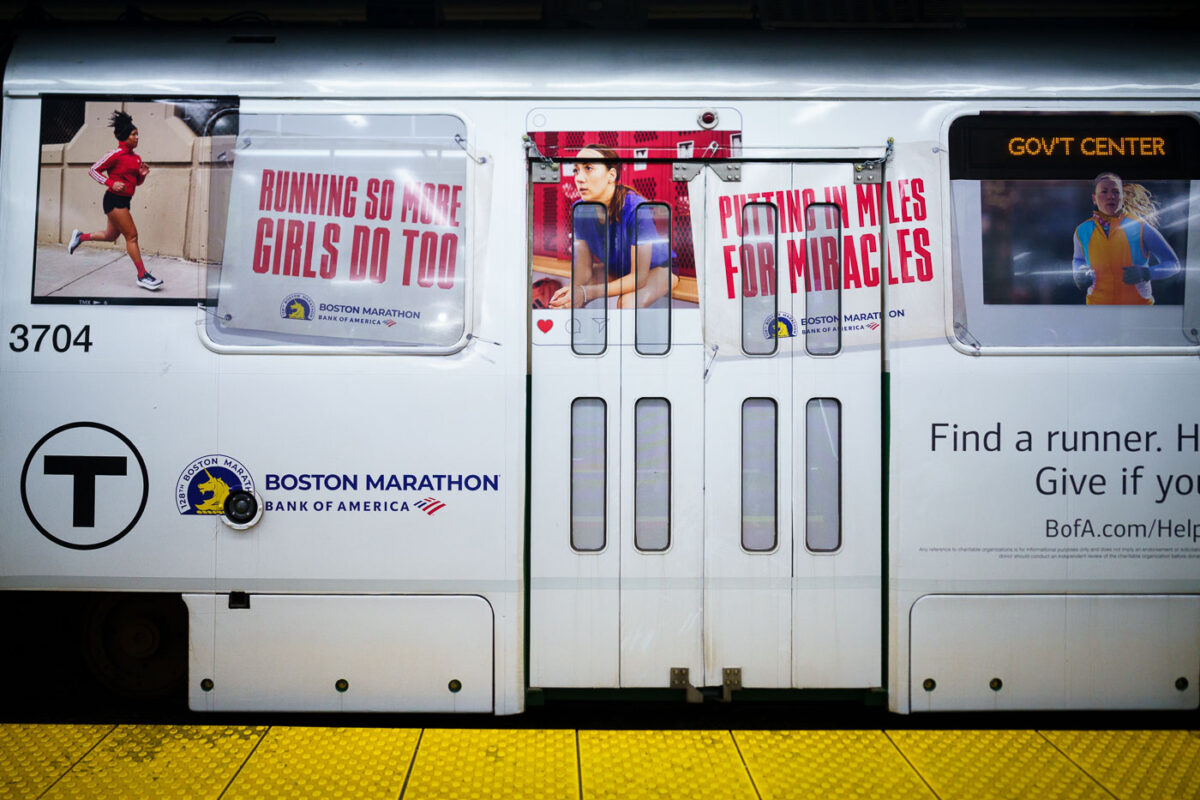
Boston Marathon Train wrap in Boston
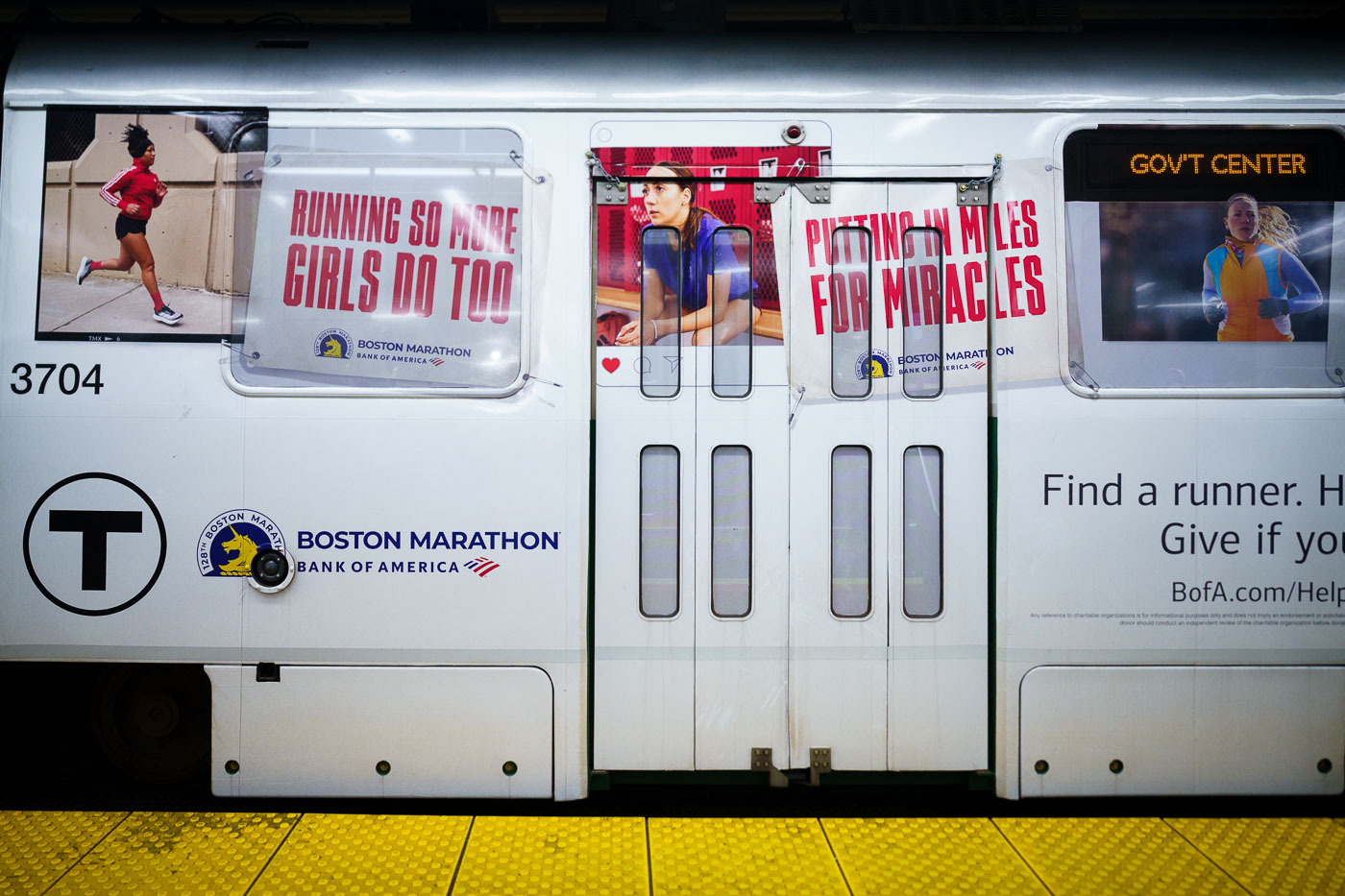
A Massachusetts Bay Transportation Authority (MBTA) "T" train, identified by car number 3704, is wrapped with advertising for the Boston Marathon, sponsored by Bank of America. The wrap features images of runners and slogans such as "RUNNING SO MORE GIRLS DO TOO" and "PUTTING IN MILES FOR MIRACLES." The "GOV'T CENTER" destination sign indicates the train is operating on a route serving that area of Boston. This type of advertising is common on public transit systems, integrating commercial messaging with daily commuter services.

Built in Minneapolis

Photographs made over time, focused on place, public life, and ongoing reporting.

Browse by location, move through long-running series, or start with recent work.

© 1996–2026 Chad Davis