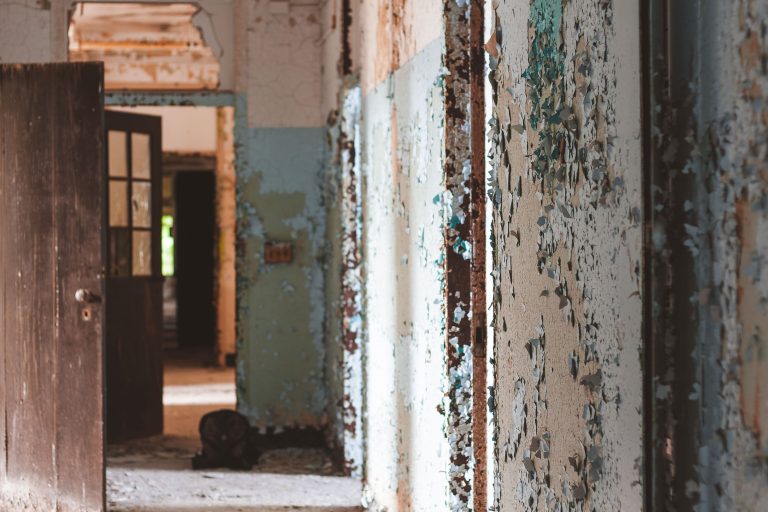
Layers of Peeling Paint Along a Ward Hallway at Kings Park
Taken September 2008
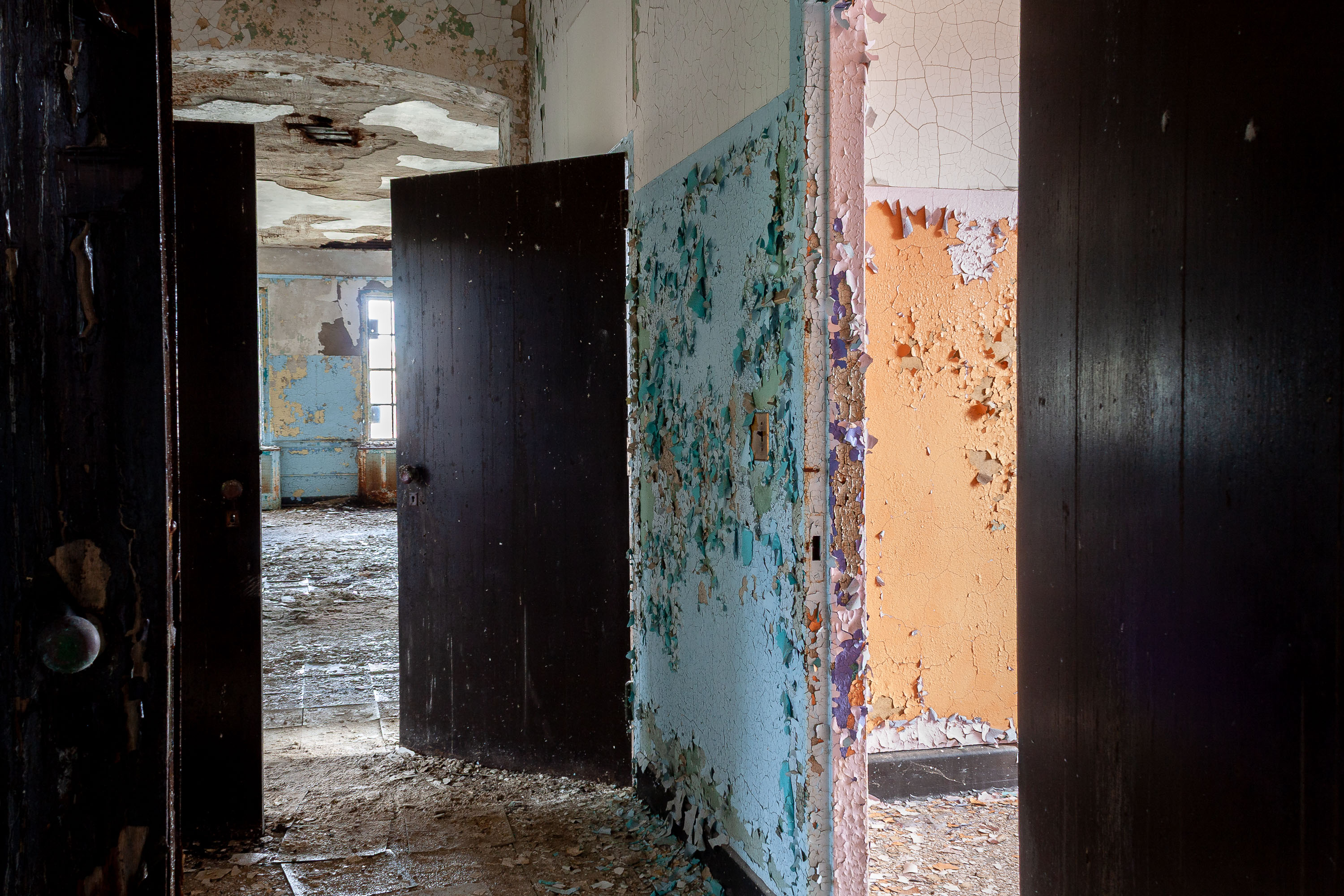
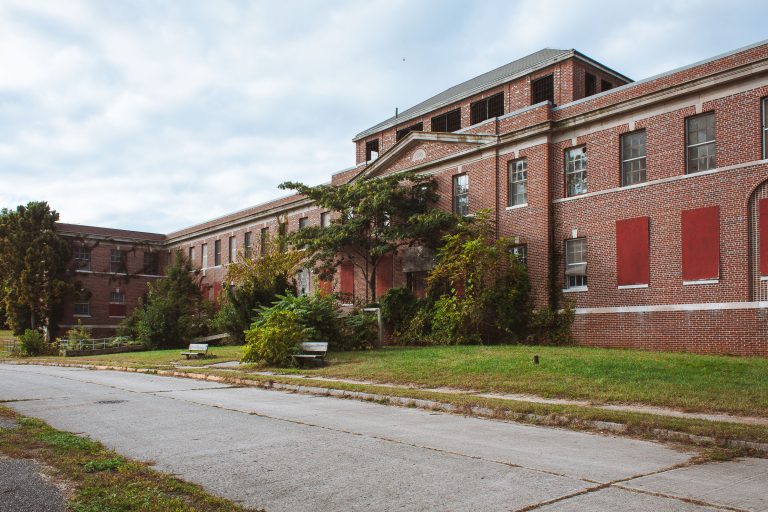
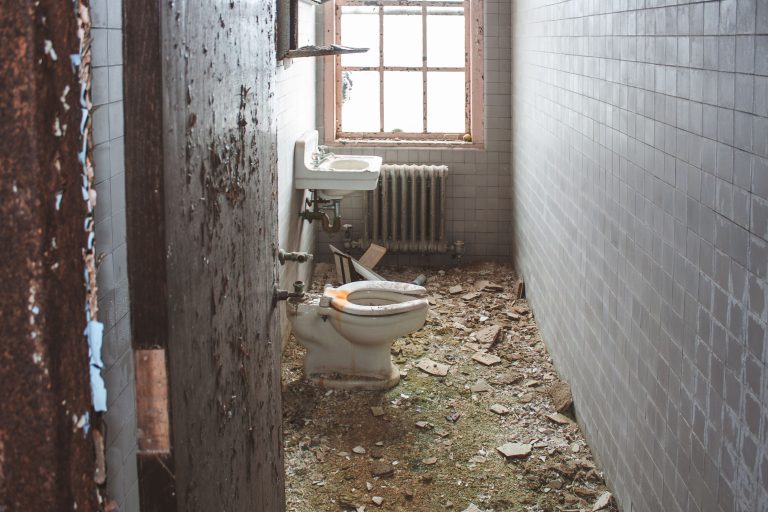
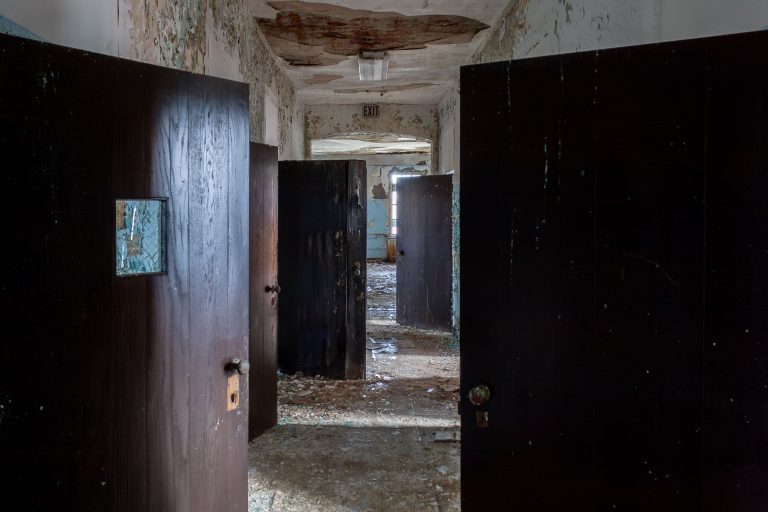
Kings Park Psychiatric Center opened in 1885 as the Kings County Asylum for the Insane, later becoming a New York State institution that at its peak housed more than 9,000 patients across dozens of buildings on the Long Island campus. Many of the wards were built with private rooms and lockable doors rather than open dormitories, a design meant to reflect contemporary ideas about patient dignity. The hospital operated its own power plant, farm, and rail spur to sustain a population that functioned nearly as a self-contained town. State budget cuts and the shift toward outpatient psychiatric care led to a steady decline in the mid-20th century, and the facility closed in 1996. Its vacant buildings have sat untouched for decades, with lead paint and plaster falling from the walls in layers that record decades of use and neglect.
Taken September 2008
More from
Kings Park Psychiatric Center
 Towering Façade of Building 93 at Kings Park Psychiatric Center
Building 93 is the tallest structure at the former Kings Park Psychiatric Center on Long Island, rising thirteen stories above…
 Arched-Window Walkway Between Wards at Kings Park Psychiatric Center
Kings Park Psychiatric Center opened in 1885 as the Kings County Farm for the Insane, growing over the following decades…
 Open Door to a Brick Stairwell at Kings Park Psychiatric Center
Kings Park Psychiatric Center opened in 1885 as the Kings County Asylum, later becoming a New York State-run institution that…
 Discarded Rotary Phone Near a Scorched Iron Gate at Kings Park
Kings Park Psychiatric Center opened in 1885 as the Kings County Farm for the Insane and grew into one of…
 Teal Wall Bracket Peeling at Kings Park Psychiatric Center
Kings Park Psychiatric Center opened in 1885 as the Kings County Asylum for Insane and grew into a self-sufficient village…
 Nested Doorways Through a Ward at Kings Park Psychiatric Center
Kings Park Psychiatric Center opened in 1885 as the Kings Park State Hospital, eventually growing to more than 150 buildings…