
Map
More from Mexico City
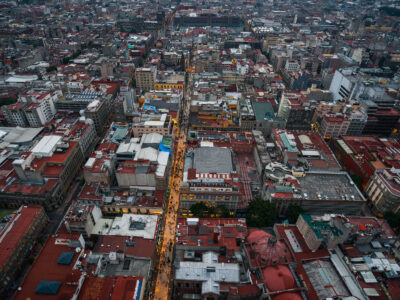
Aerial View of Calle Francisco I. Madero, Centro Histórico
Calle Francisco I. Madero is a pedestrian street in Mexico City’s Centro Histórico, linking the Zócalo area with the Torre…

Pedestrians Crossing Calle República de Uruguay, Centro Histórico
Calle 5 de Febrero and Calle República de Uruguay in Mexico City’s historic center. The area is part of the…
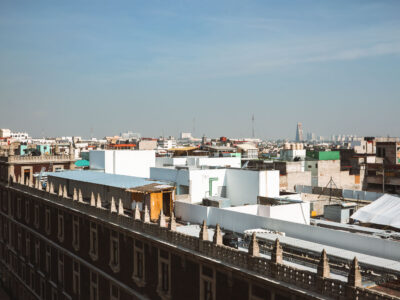
Rooftops of Centro Histórico Toward the City Skyline
Mexico City’s historic Centro Histórico rooftops extend toward the Torre Latinoamericana and nearby high-rises. The district combines older low-rise buildings…
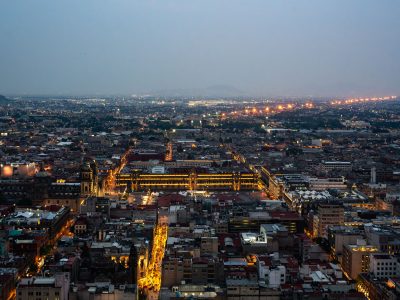
Zócalo Illuminated at Dusk Over Mexico City's Skyline
The Zócalo, officially Plaza de la Constitución, sits at the center of this view, framed by the National Palace to…

Aerial View of Paseo de la Reforma Toward the Alameda Central at Dusk
Paseo de la Reforma in Mexico City runs north from the historic center toward the city’s modern business districts. The…

Ecobici Bikes Parked Beside Graffitied Shutters, Mexico City
Ecobici is Mexico City's public bicycle-sharing system, operated by the city government since its 2010 launch. The system began with…
Nearby Photos