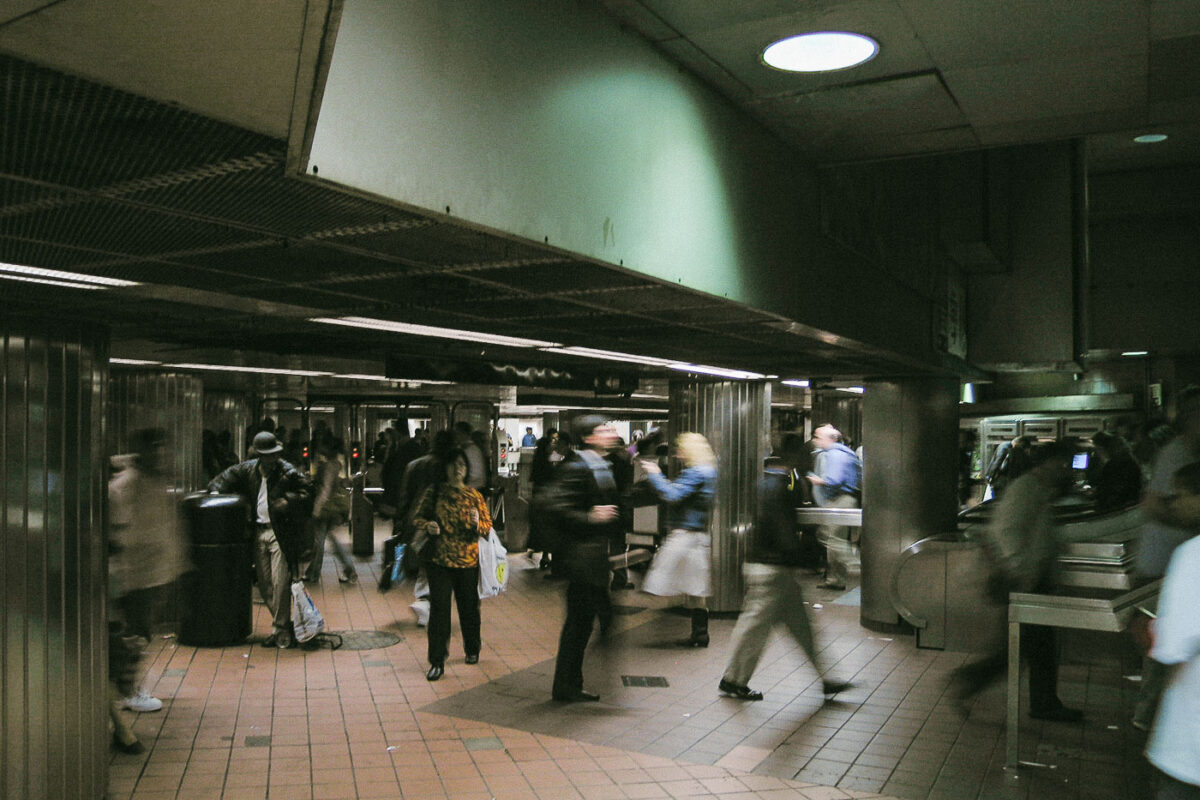
Rush-Hour Crowd at a Subway Turnstile Mezzanine, New York City
May 2005 — People walking through a New York City subway station in May 2005.
Explore photos tagged Train Station.
May 2005 — People walking through a New York City subway station in May 2005.
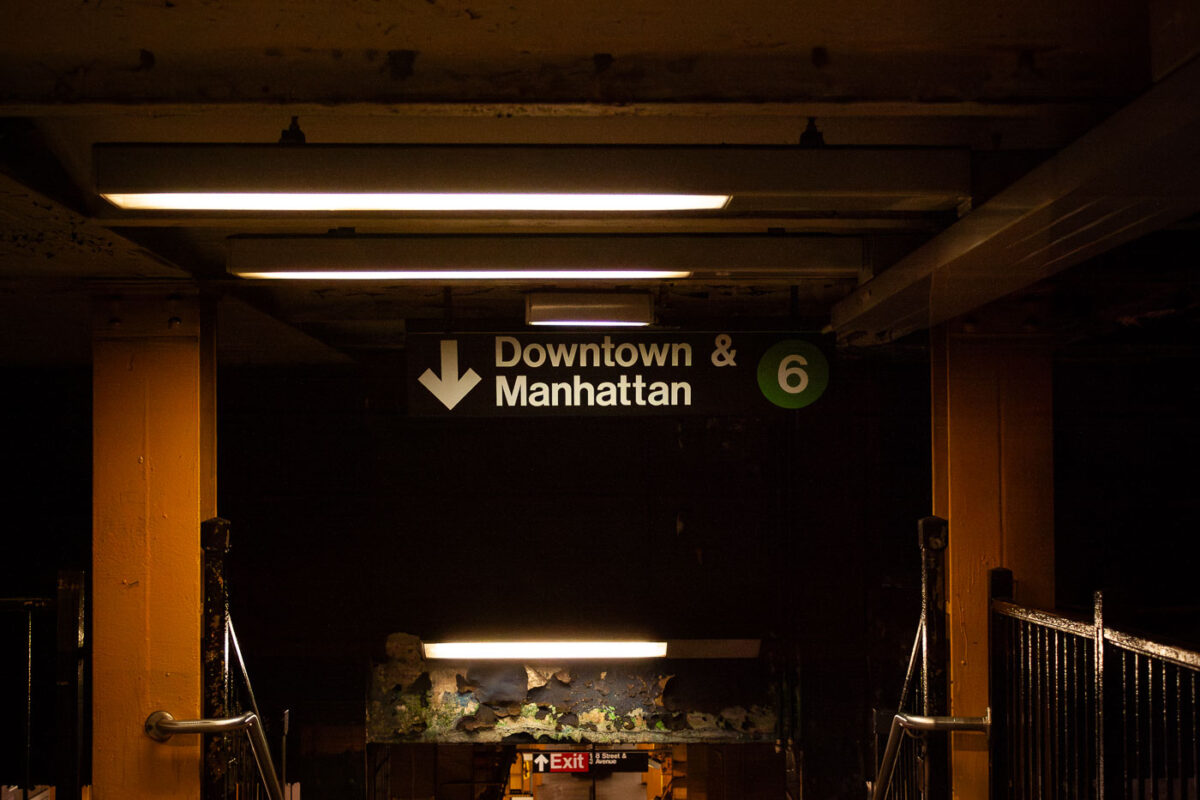
September 2008 — Dimly lit by overhead fluorescent lights, this photograph captures the entrance to the downtown-bound 6 train platform in the New York City Subway system. The black-and-white directional sign with the green circle route marker is part of the MTA’s standardized Helvetica signage, directing riders toward Manhattan. The scene’s warm tones from aged steel columns and peeling paint reveal the enduring character of New York’s century-old transit infrastructure — a utilitarian design that continues to serve millions of daily commuters. In the background, the red exit sign points toward street level, where the pulse of the city resumes above ground.
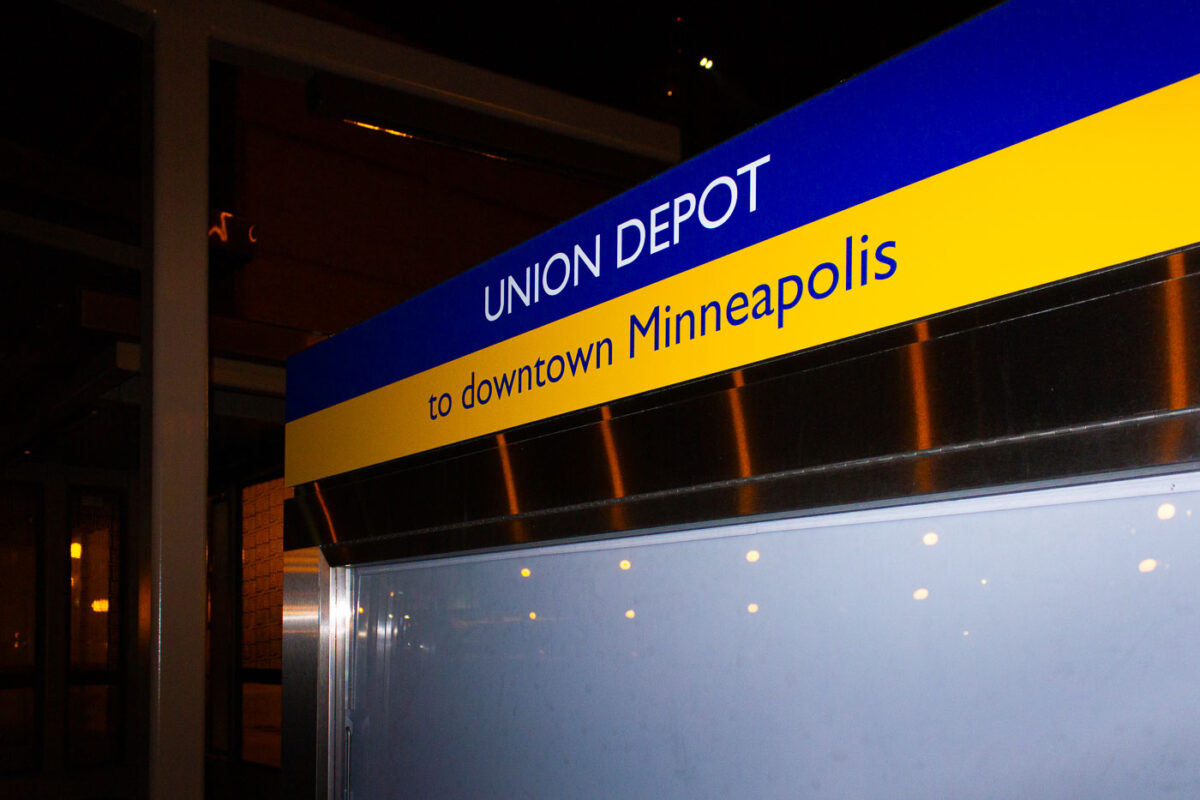
July 2012 — Union Depot station in St. Paul, Minnesota.
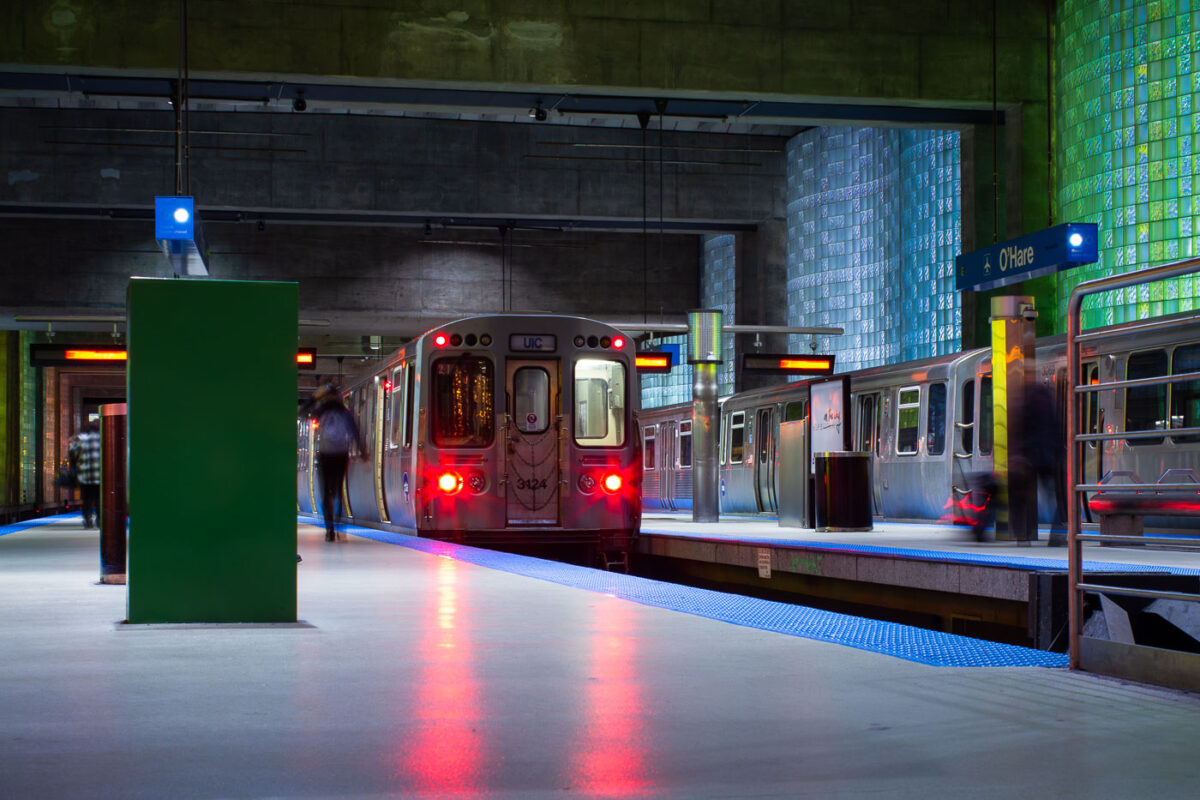
December 2012 — The O'Hare Train Station in Chicago.
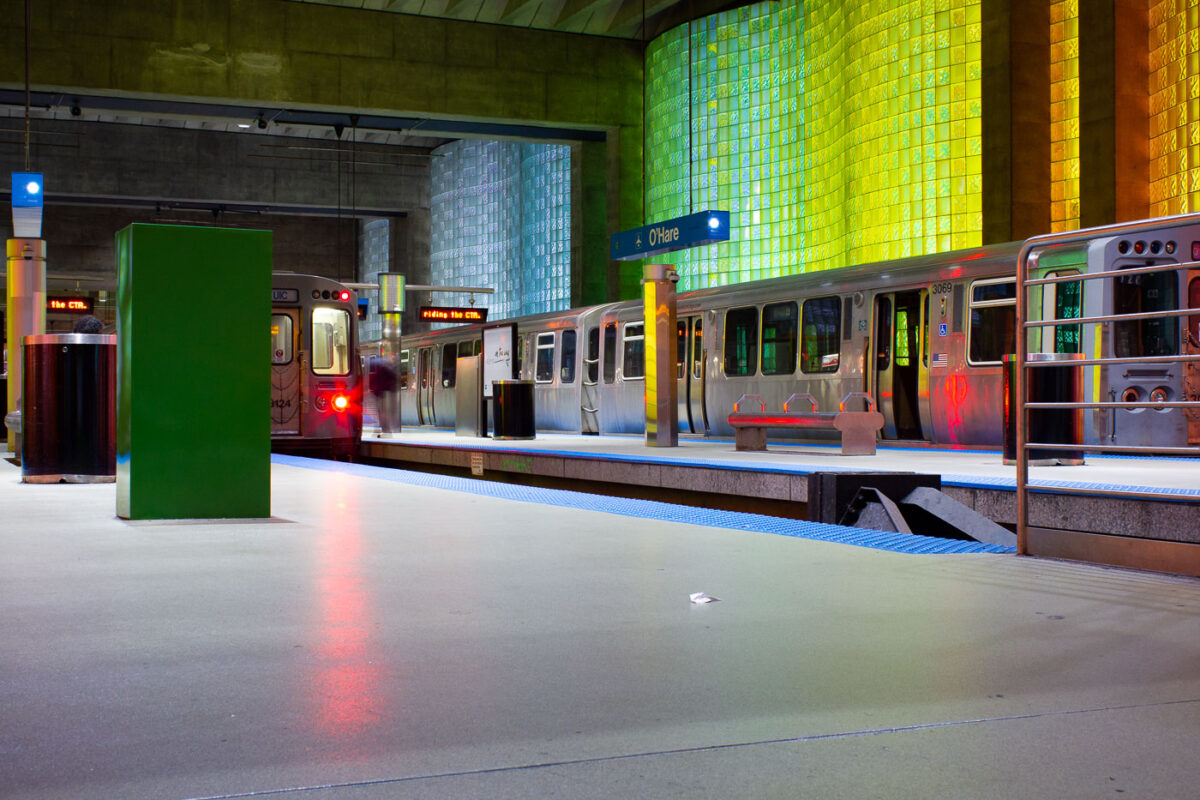
December 2012 — Trains at O'Hare International Airport in Chicago.
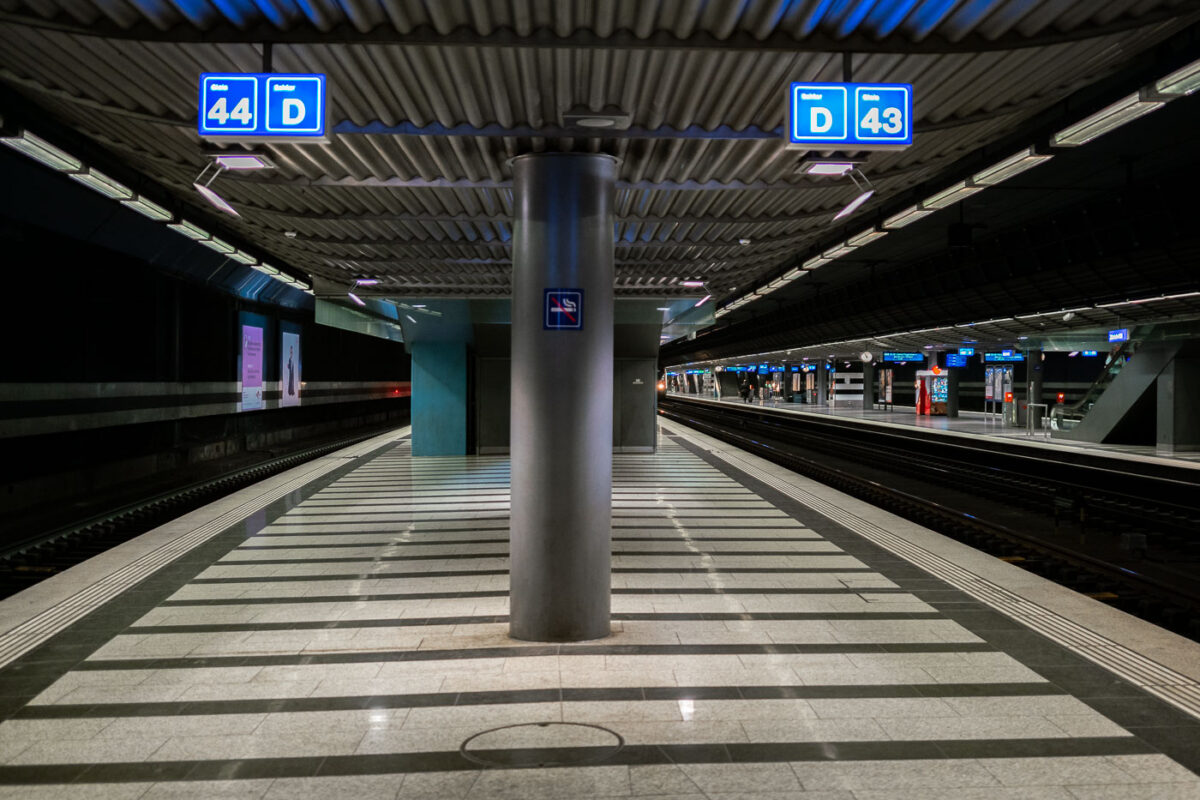
September 2017 — An underground train platform at Zürich Airport station, with tracks 43 and 44 visible. The station features striped tile flooring, overhead signage, and modern lighting. Few passengers are present, and escalators can be seen in the background leading to the upper levels.
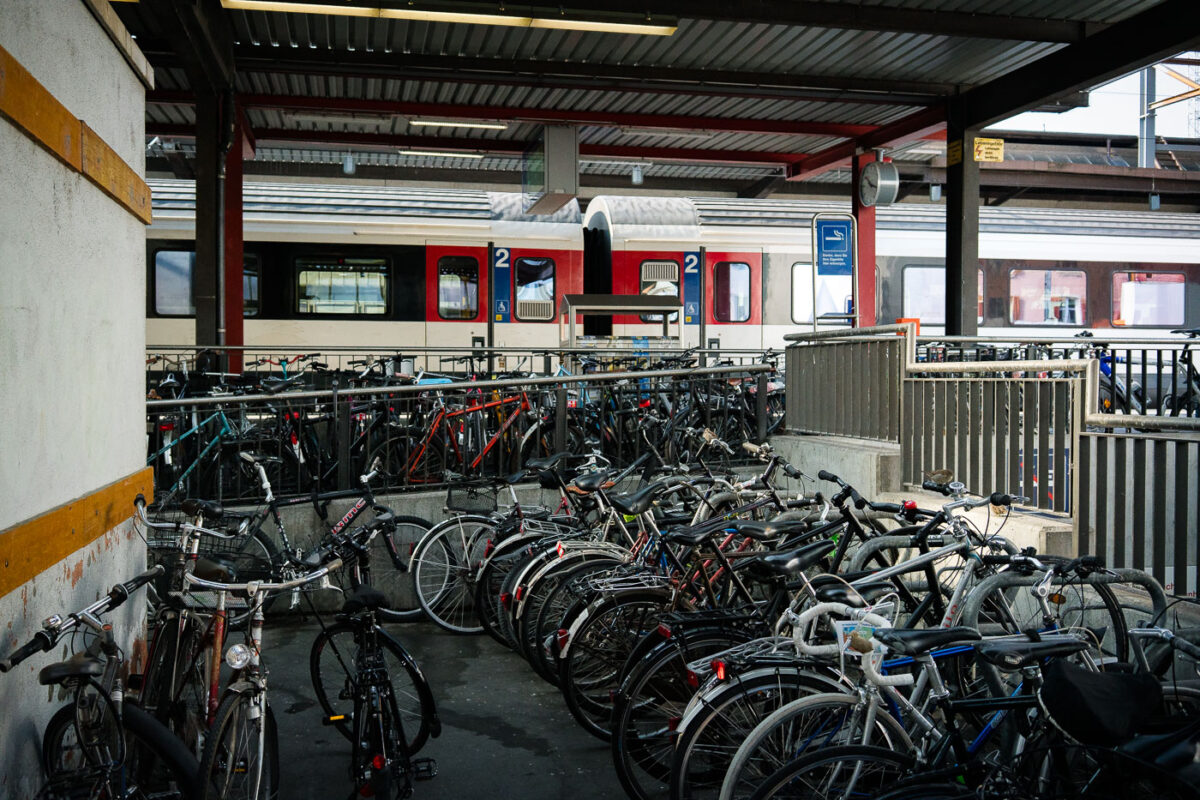
September 2017 — Rows of bicycles fill the parking area beside Zürich Hauptbahnhof, one of Europe’s busiest railway stations. The extensive bike racks serve daily commuters who combine cycling with train travel, a common practice in Swiss cities emphasizing sustainable urban mobility. Behind the bicycles, a Swiss Federal Railways (SBB) regional train waits at the platform, reflecting the integration of rail and cycling infrastructure within Zürich’s public transit system.
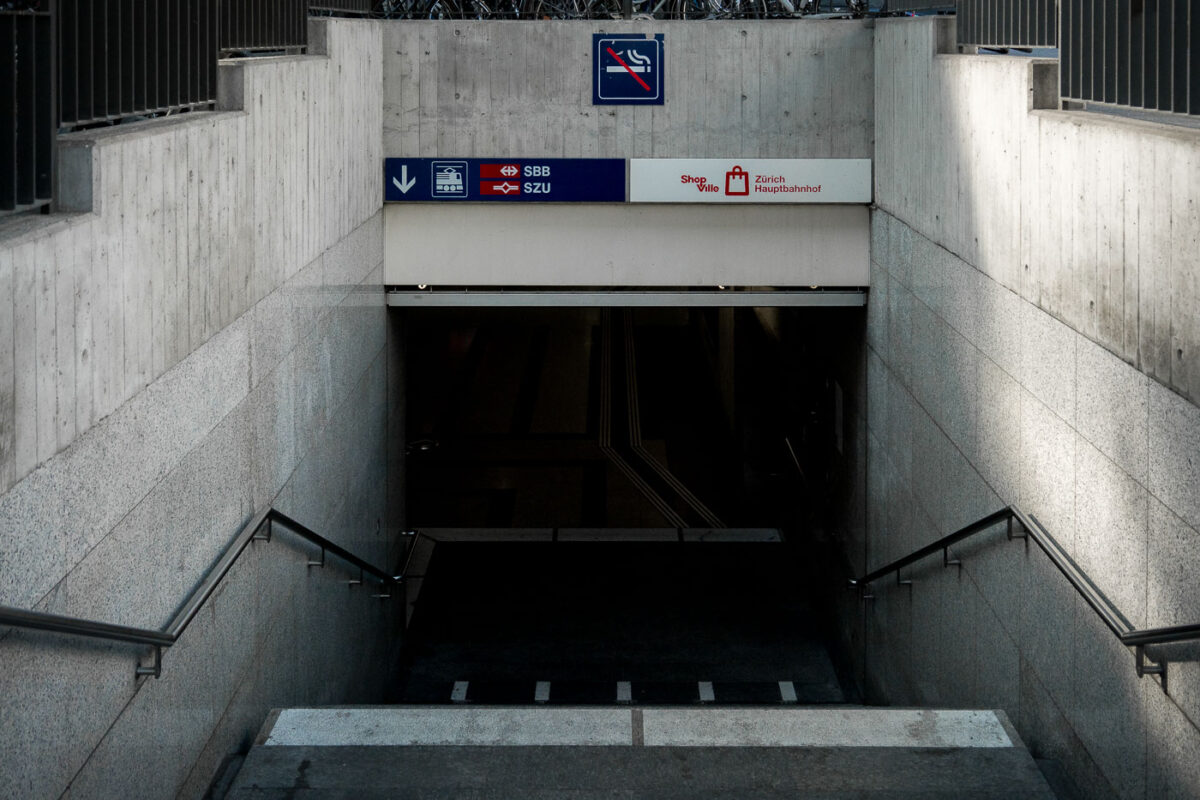
September 2017 — Entrance to the underground level of Zürich Hauptbahnhof (Zurich Central Station), one of Europe’s busiest railway hubs, serving over 400,000 passengers daily. The signage indicates access to the SBB national rail network and SZU suburban lines, along with the underground shopping complex “ShopVille.” Built into the heart of the city, Zürich HB’s design integrates modern transport infrastructure with pedestrian access and retail spaces, showcasing Switzerland’s efficiency in urban transit engineering.
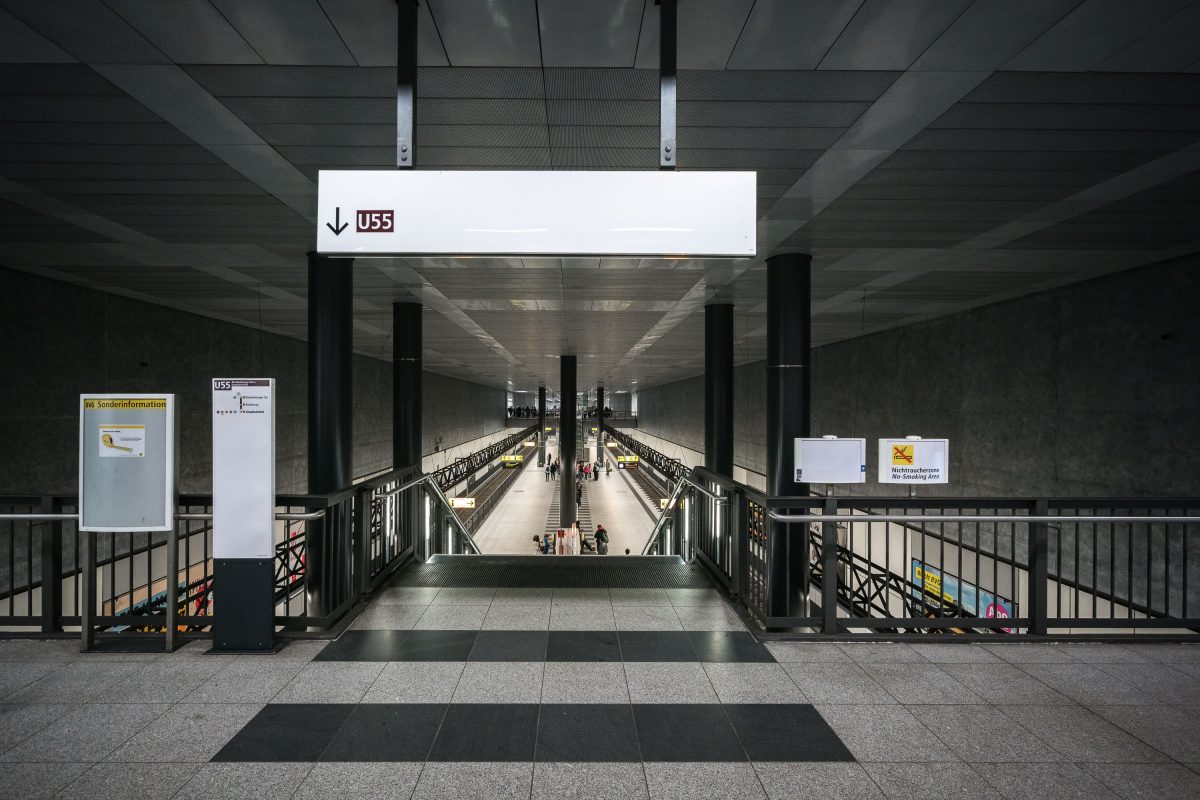
September 2017 —
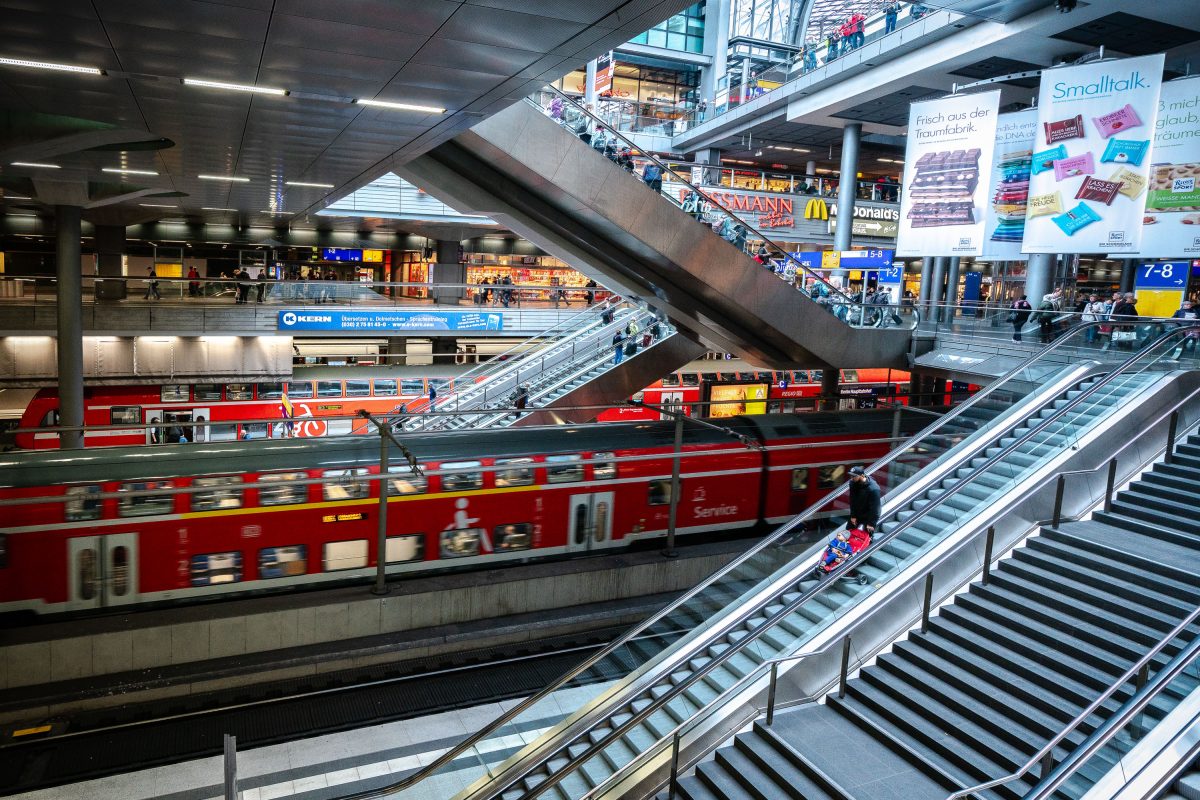
September 2017 —
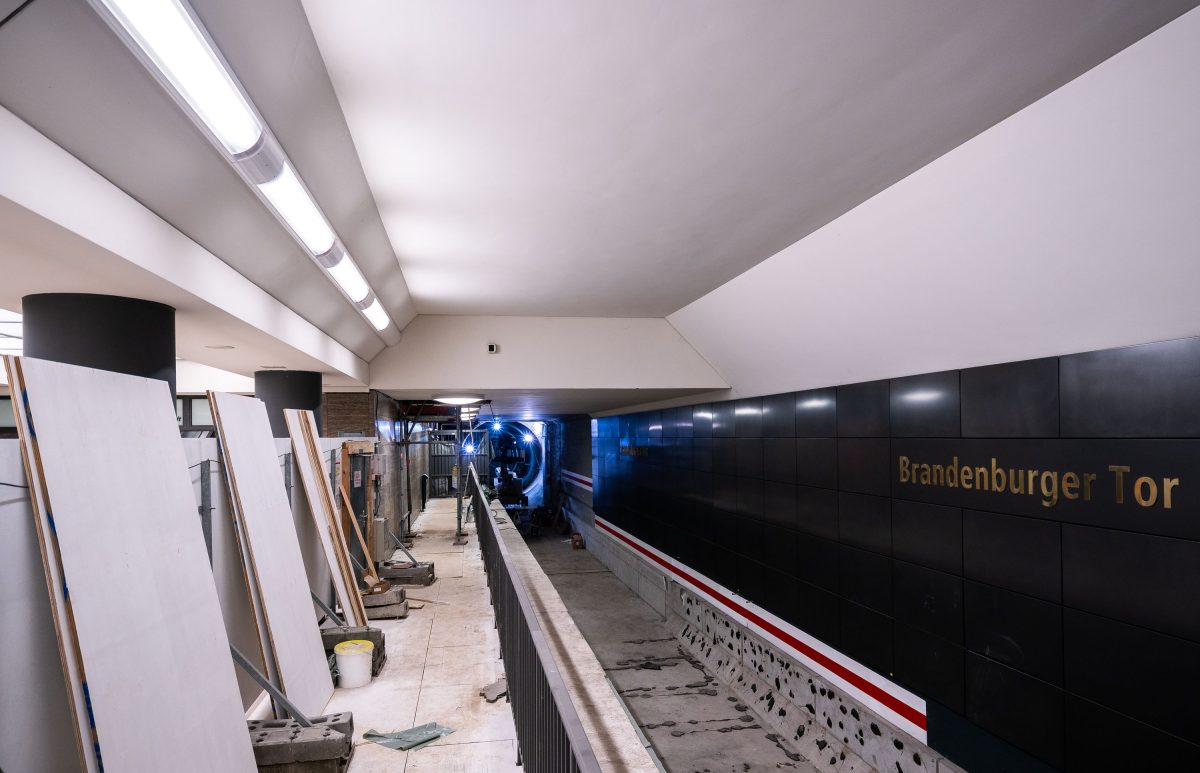
September 2017 —
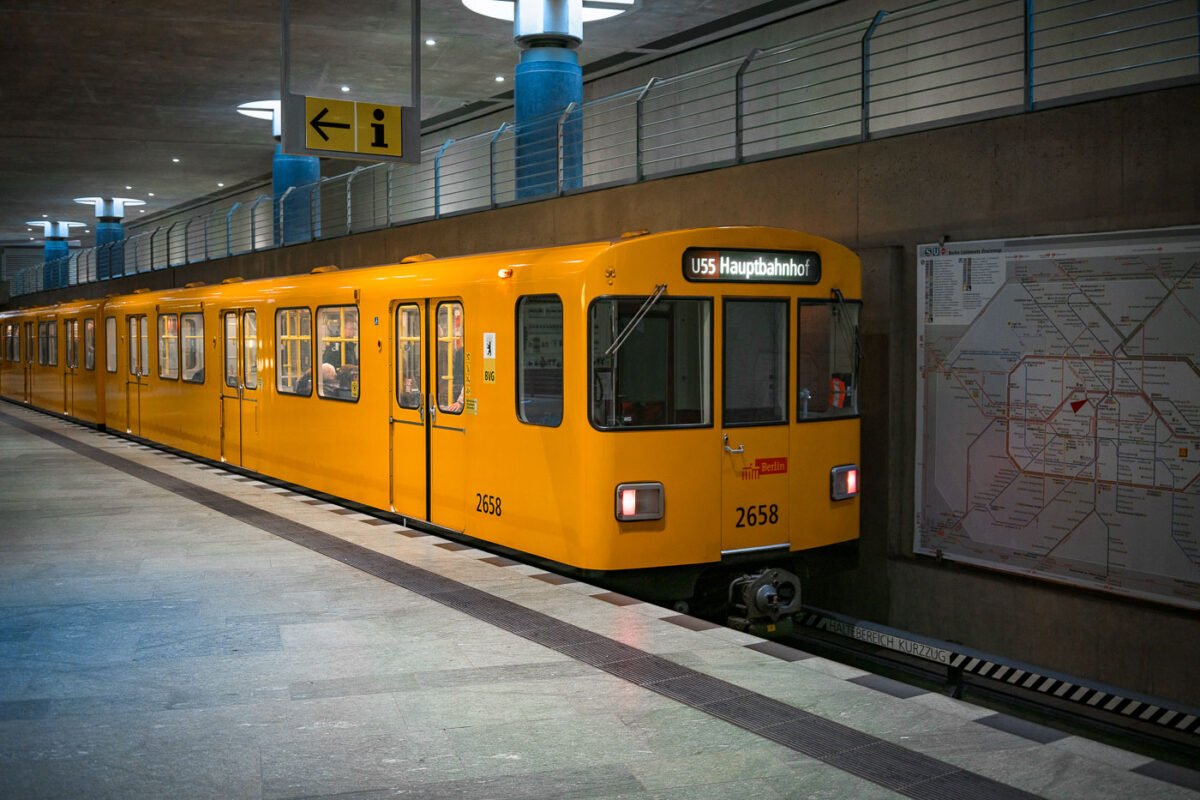
September 2017 — A bright yellow BVG U-Bahn train marked “U55 Hauptbahnhof” stands at the underground platform of Berlin Hauptbahnhof. An information sign with an arrow hangs above the platform, while a large network map of the S- and U-Bahn lines is mounted on the concrete wall to the right. Through the windows, a few seated passengers are visible inside the multi-door carriage numbered 2658. The U55 operated as a short shuttle between Berlin Hauptbahnhof and Brandenburger Tor, opened in 2009 to link the new central station with the government quarter. In December 2020 the shuttle was integrated into the extended U5 line, a major step in Berlin’s east‑west metro connection.
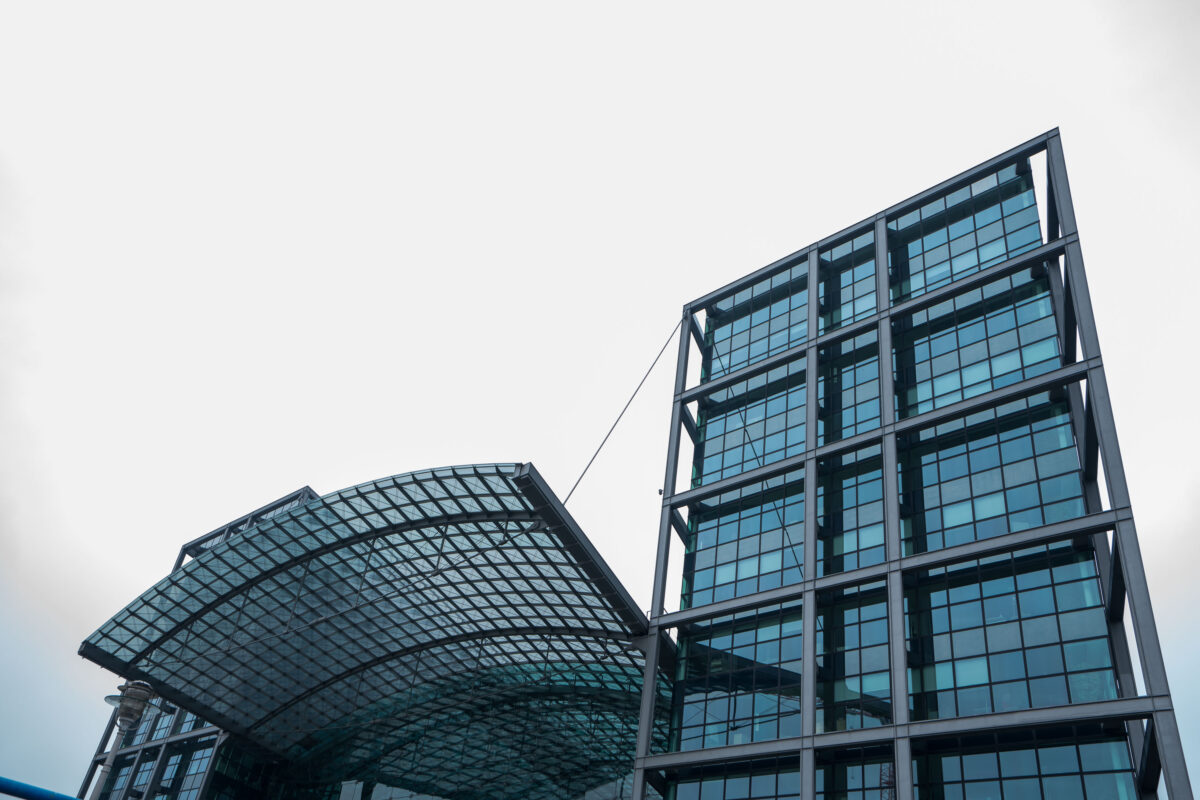
September 2017 — The Berlin Central Station in Berlin, Germany.

September 2017 —
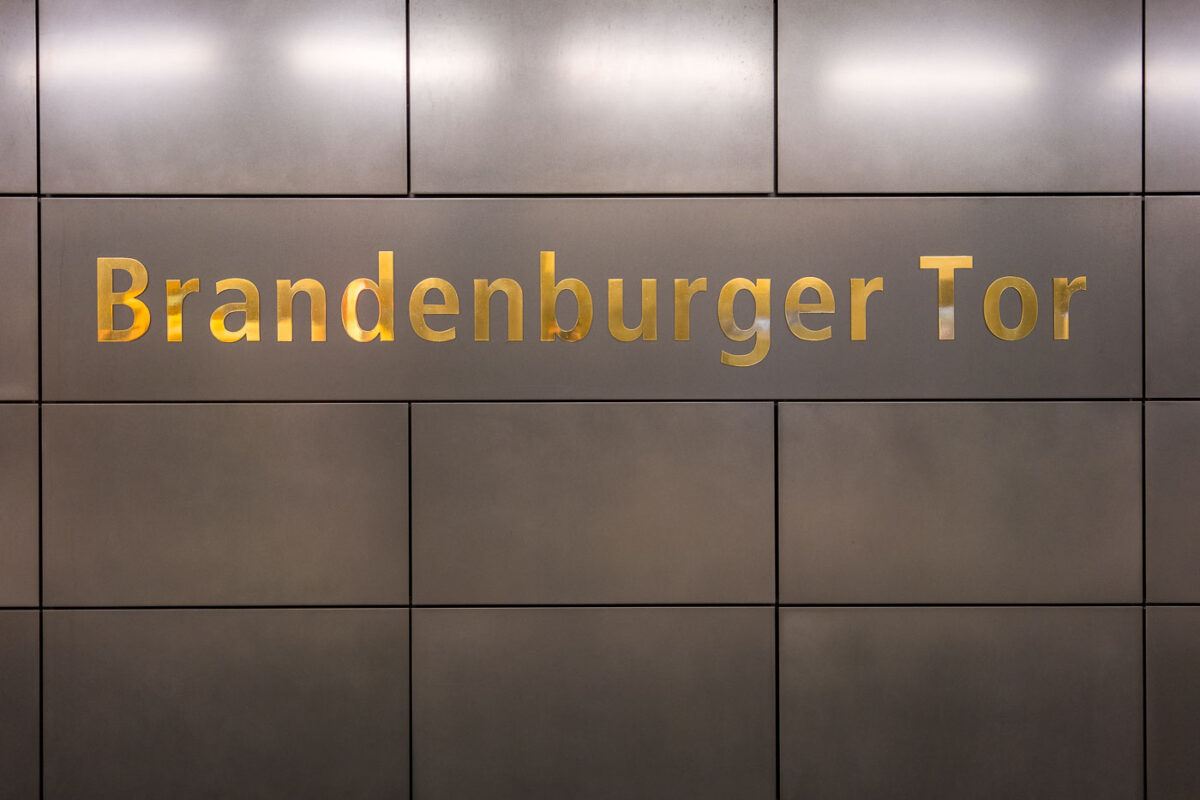
September 2017 — The Brandenburger Tor station in Berlin, Germany.
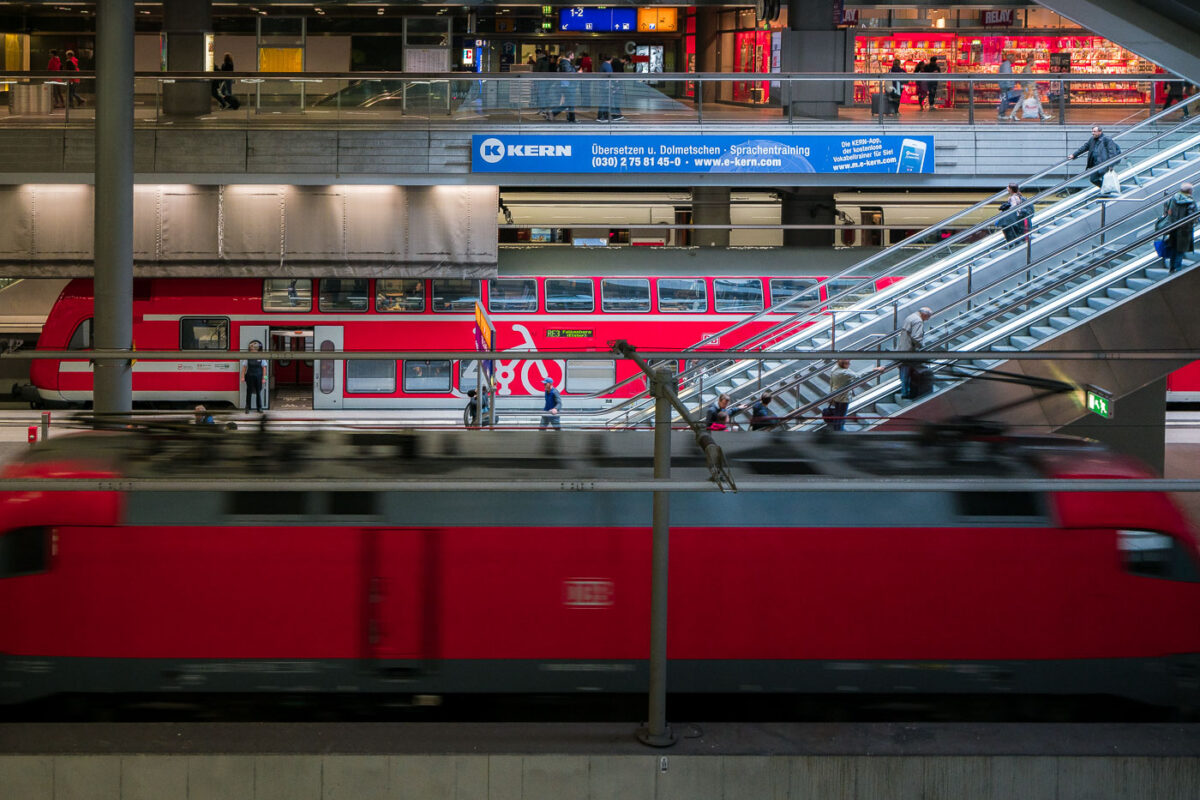
September 2017 — The Berlin Central Station in Berlin, Germany.
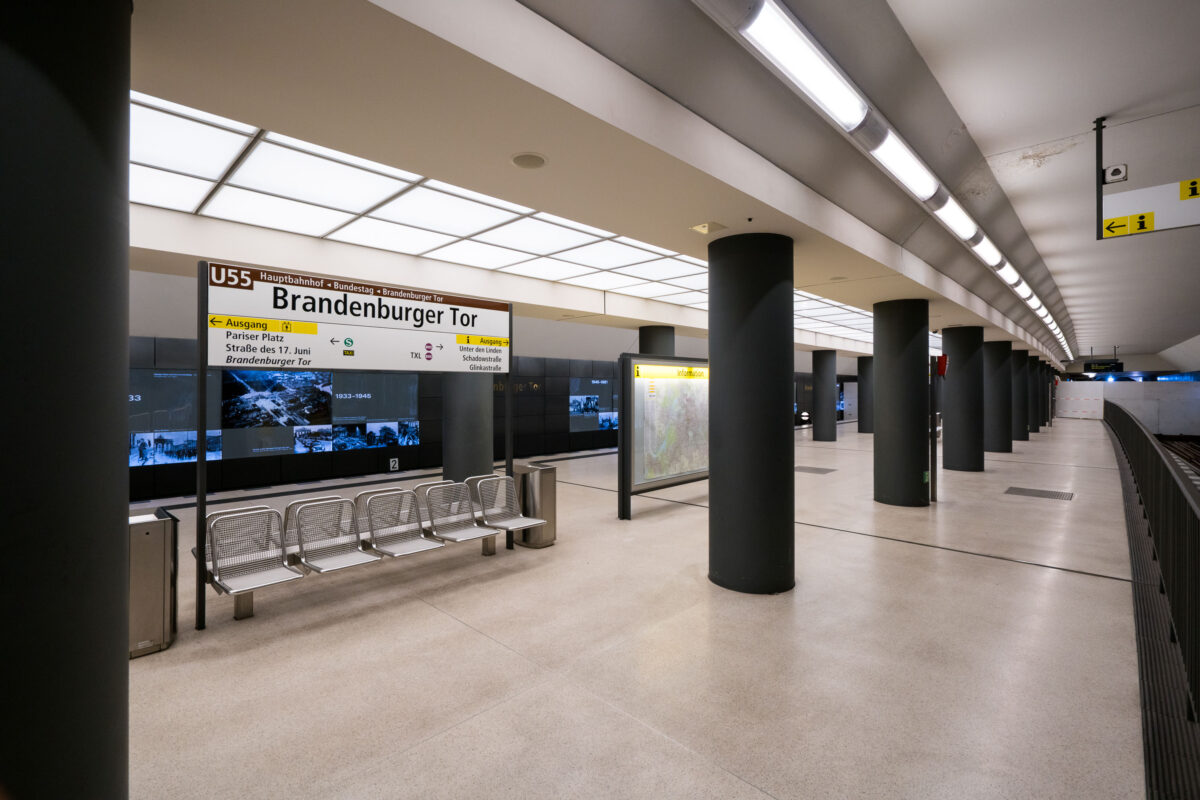
September 2017 — The Brandenburger Tor station in Berlin, Germany.
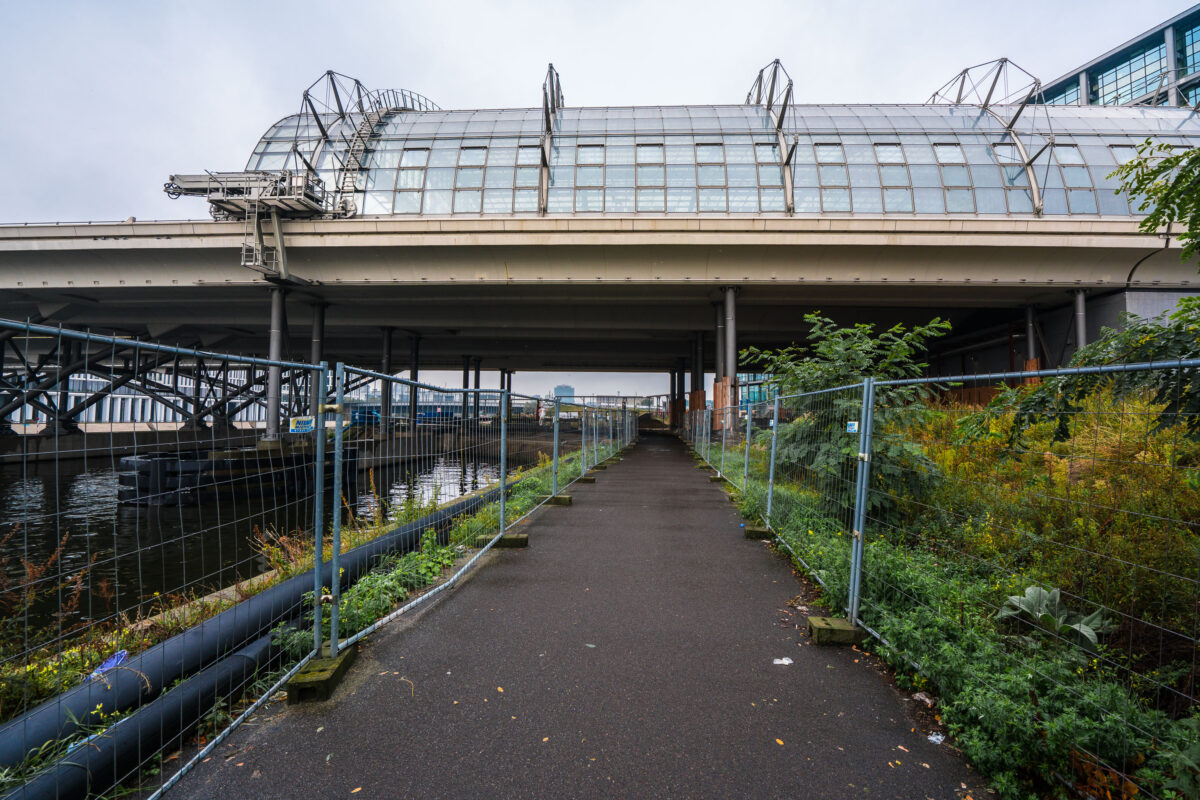
September 2017 — A narrow, fenced pathway runs beneath the towering structure of Berlin Hauptbahnhof — Germany’s largest and most complex railway station — where elevated train lines stretch above the Spree River. The gleaming glass panels and steel framework of the upper platforms contrast sharply with the damp pavement and industrial underpass below. Puddles glisten from a recent rain, while construction barriers and wild greenery frame the scene, hinting at the city’s perpetual state of transformation. Built as a symbol of reunified Berlin, the Hauptbahnhof connects north to south, east to west — a convergence of architecture, engineering, and history that mirrors Berlin’s layered identity. The stillness here beneath the trains creates a hidden perspective on one of Europe’s busiest transport hubs, where modern motion meets quiet decay.
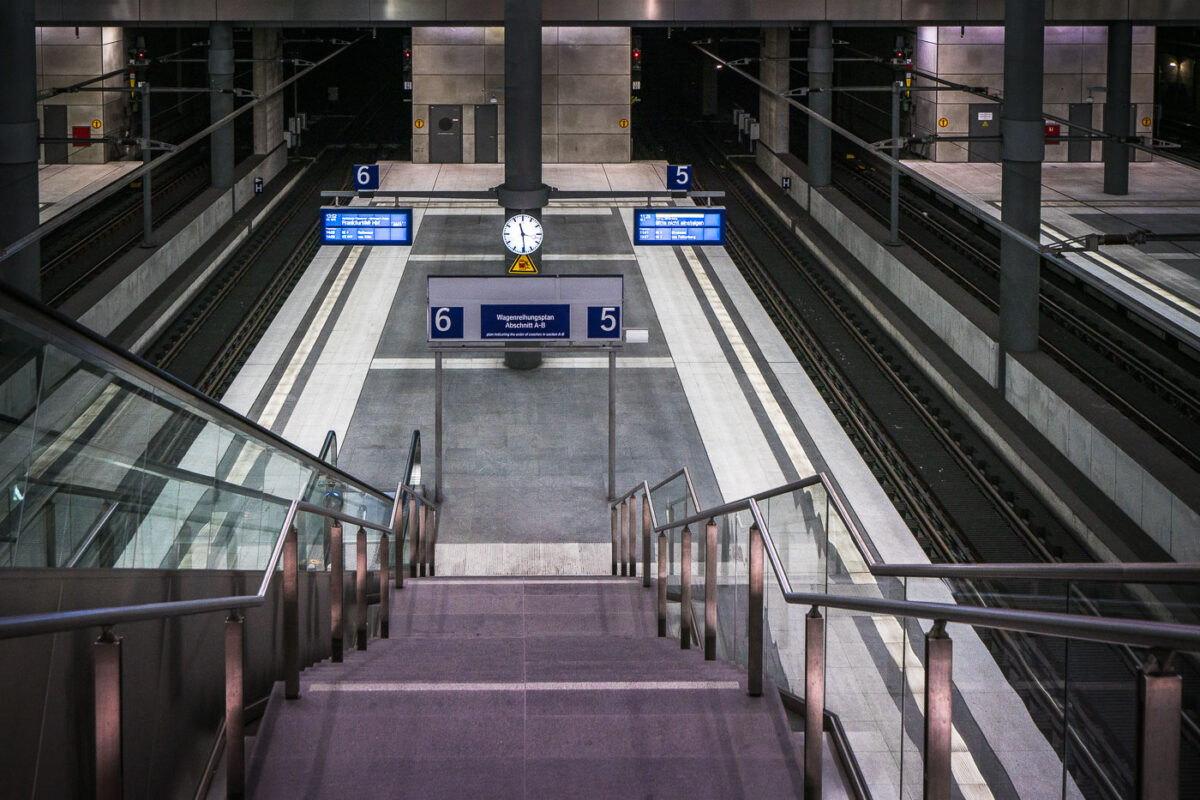
September 2017 — The lower platforms of Berlin Hauptbahnhof, serving tracks 5 and 6, form part of the deep-level north–south route opened with the station in 2006. This subterranean level, approximately 15 meters below ground, connects long-distance ICE services between Hamburg, Leipzig, and Munich through the Tiergarten Tunnel. The design reflects the precision and uniformity of modern German rail architecture—clean concrete forms, stainless steel fixtures, and bright LED signage. The symmetrical layout, glass partitions, and central clock emphasize efficiency and clarity, key elements of the Hauptbahnhof’s function as Europe’s largest crossing-station hub.
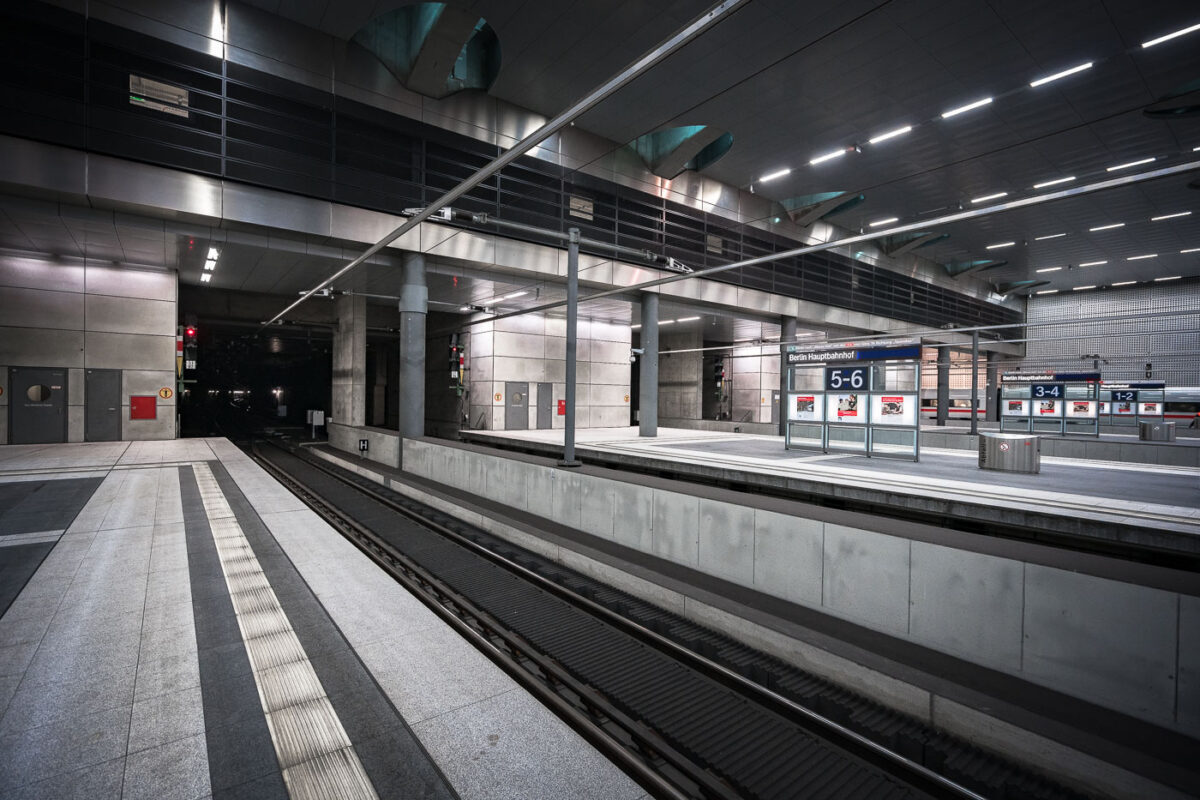
September 2017 — Berlin Hauptbahnhof’s lower-level platforms, located roughly 15 meters below street level, form part of Germany’s central north–south high-speed rail corridor. The underground section, opened in 2006 alongside the completion of the station’s glass-and-steel main hall, accommodates long-distance and regional trains running through the Tiergarten tunnel. The design emphasizes polished concrete, steel, and indirect lighting—elements typical of the Deutsche Bahn architectural style of the early 2000s. Platforms 1 through 8 serve ICE and IC services linking Berlin with cities such as Munich, Frankfurt, and Hamburg, while upper levels connect to the S-Bahn and U-Bahn networks.
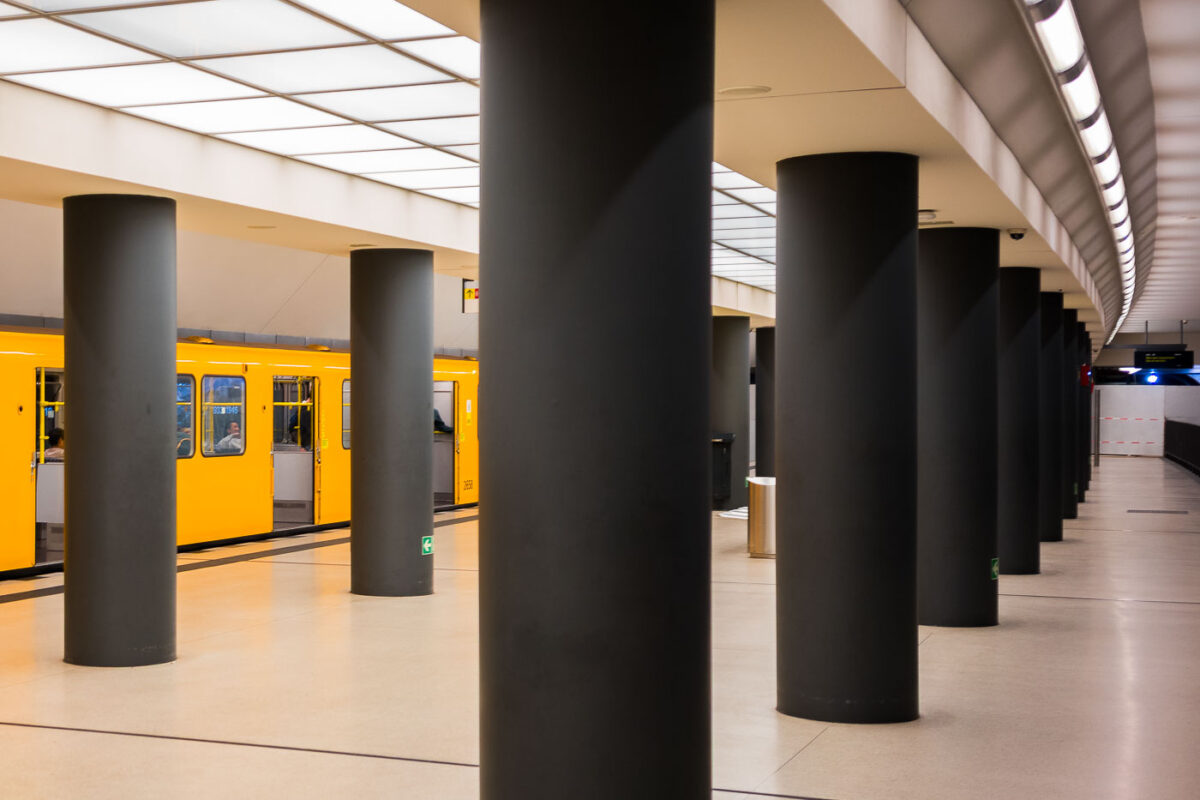
September 2017 — The Brandenburger Tor station in Berlin, Germany.
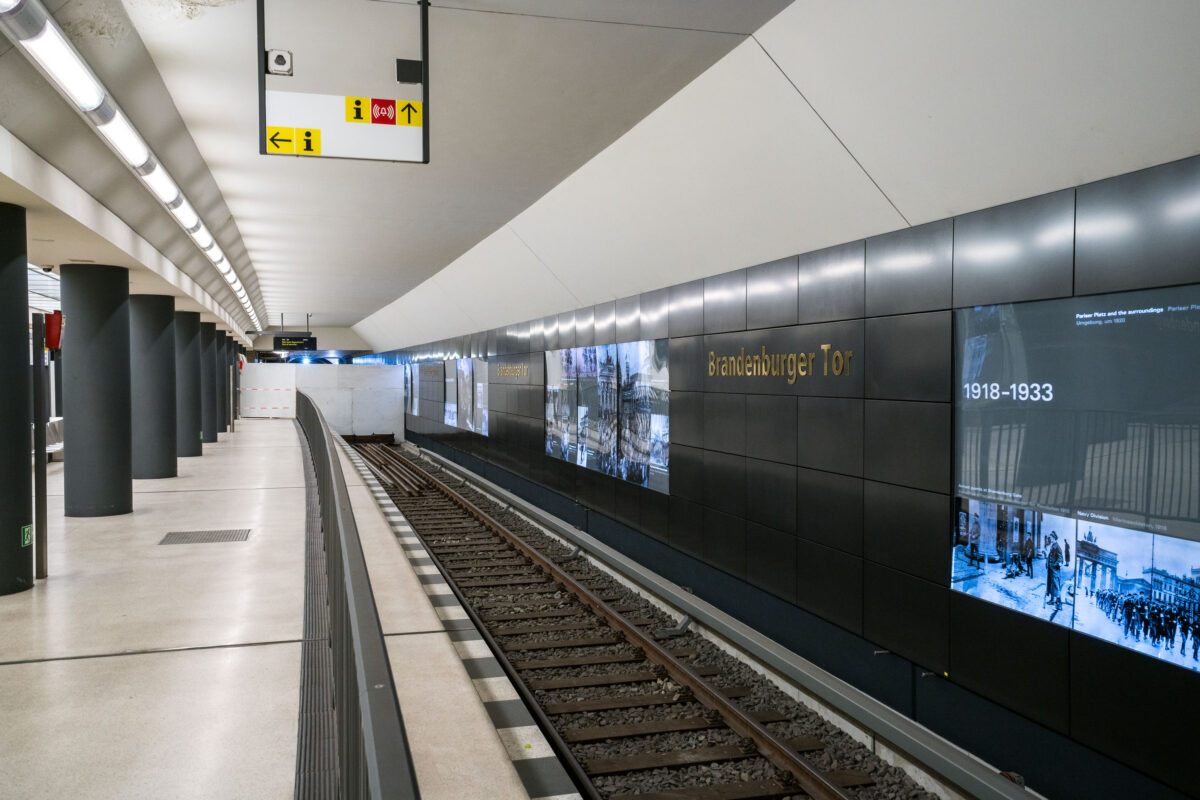
September 2017 — The Brandenburger Tor station on Berlin’s U5 line sits directly beneath Pariser Platz, adjacent to the Brandenburg Gate. The interior features dark composite wall panels inlaid with gold lettering and a series of illuminated displays tracing Berlin’s 20th-century history, including the city’s division and post-reunification development. Originally opened in 2009 as part of the short U55 shuttle between Hauptbahnhof and Bundestag, the station became a through stop in December 2020 when the U5 extension to Alexanderplatz was completed, reconnecting the eastern and western portions of the U-Bahn network after nearly six decades of separation.
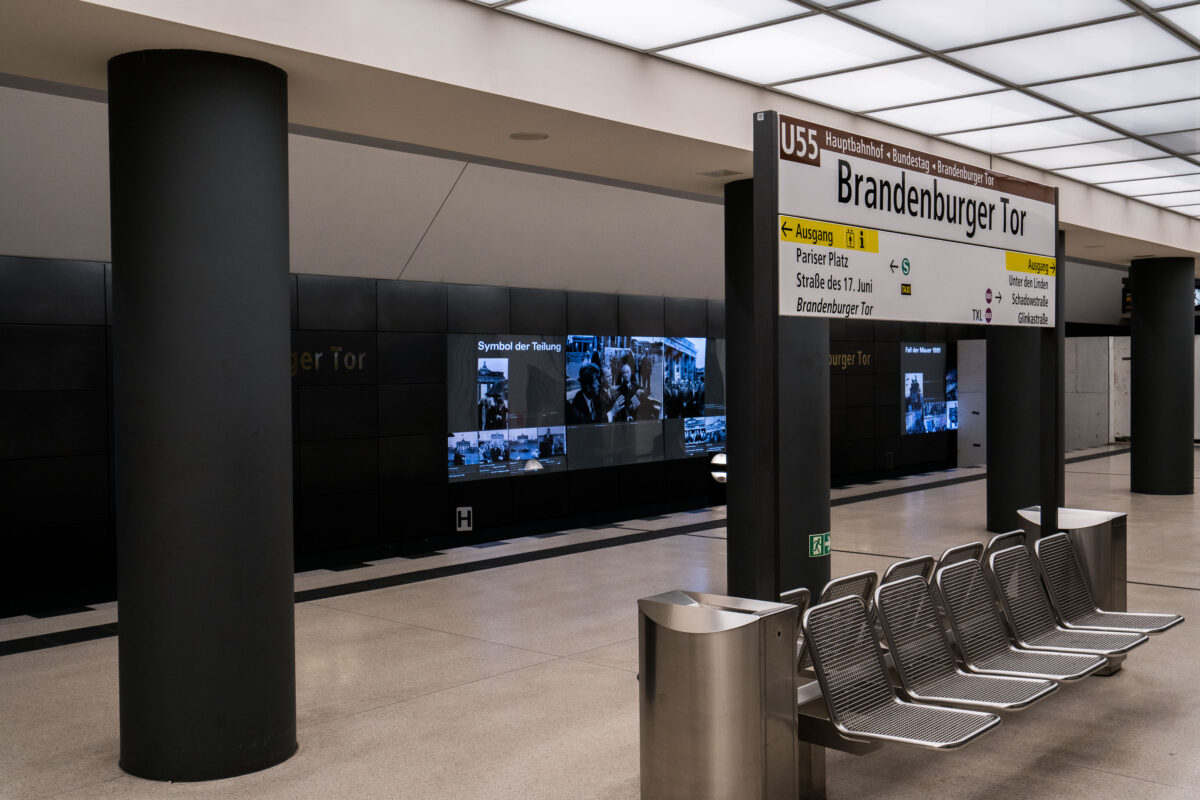
September 2017 — The Brandenburger Tor station in Berlin, Germany. Metal benches on the train platform.
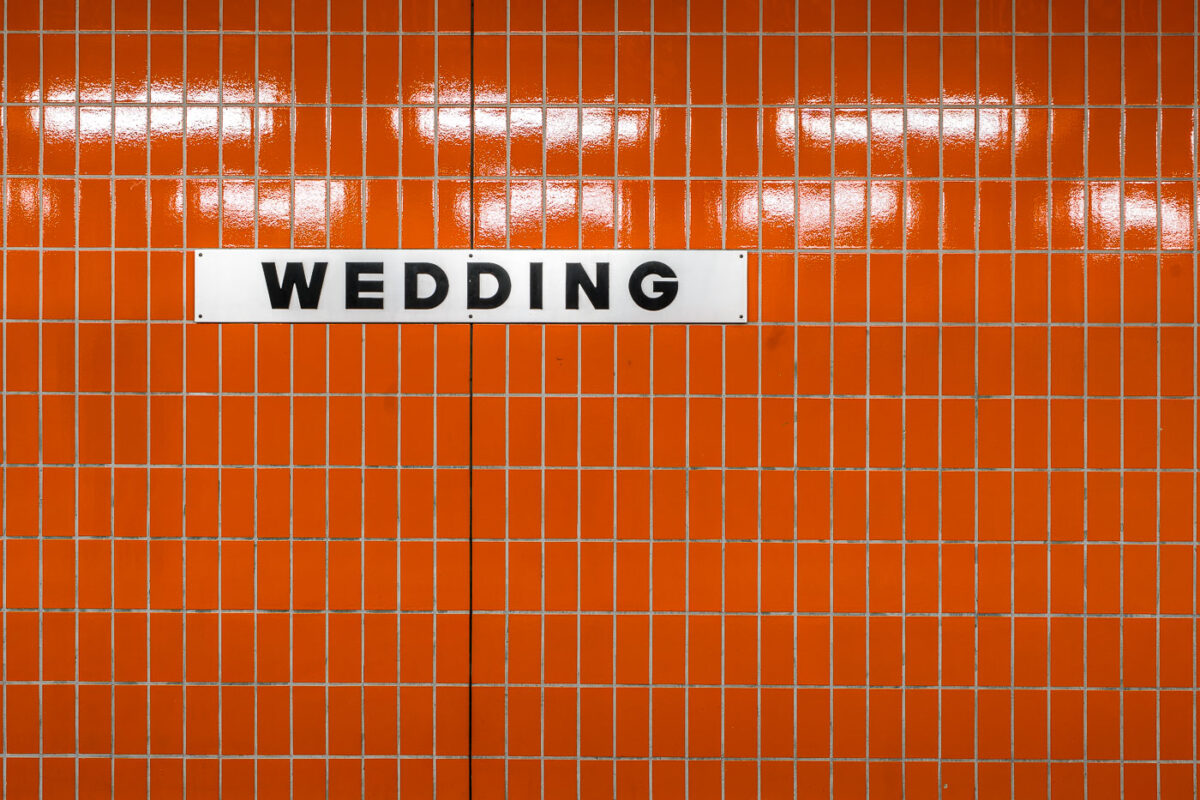
September 2017 — A white station sign reading “Wedding” in black block letters is mounted on an orange, small-rectangle tiled wall inside Wedding station in Berlin, Germany. The station serves the Wedding neighborhood in the Mitte district and functions as an interchange between the U6 U‑Bahn line and the Berlin Ringbahn S‑Bahn. The stark typography and modular tiles reflect the practical design found across much of Berlin’s postwar transit architecture. Operated by BVG for the U‑Bahn and S‑Bahn Berlin GmbH for suburban rail, Wedding is a local hub for commuters moving between the north of the city and central Berlin. No passengers are visible in the frame, emphasizing the graphic clarity of the station’s wayfinding.
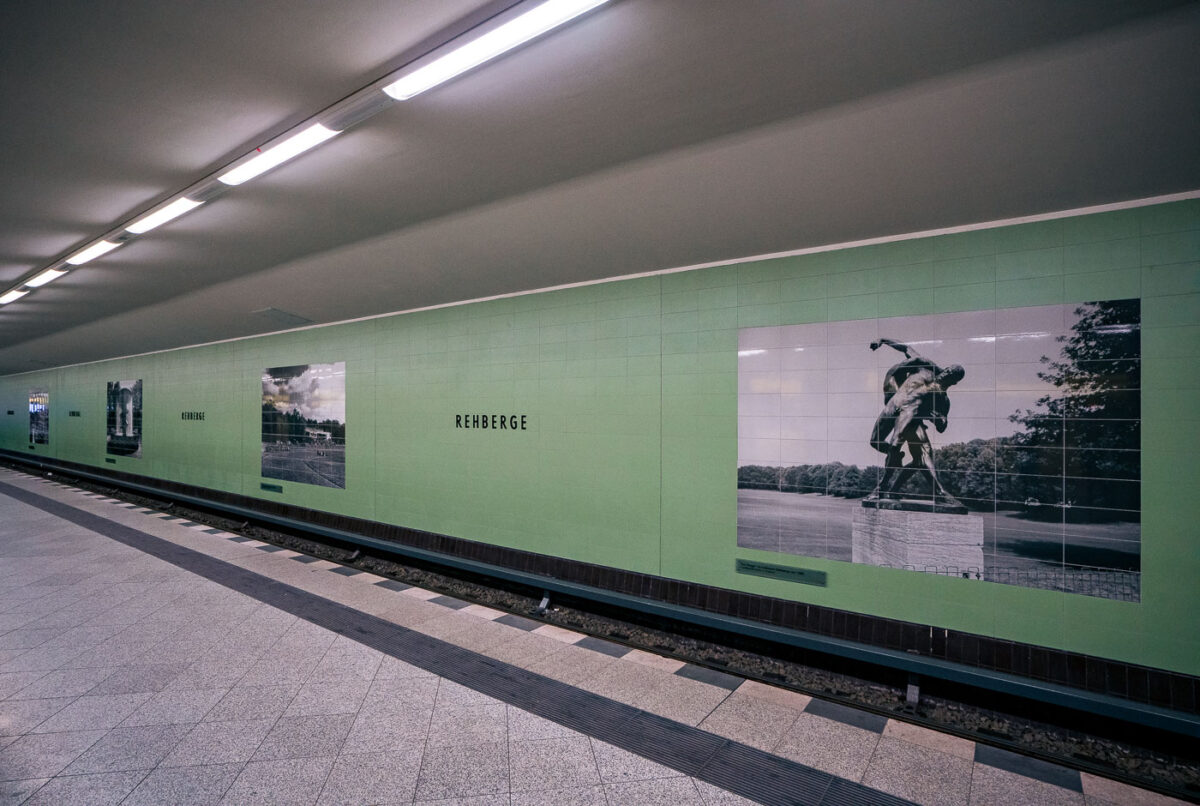
September 2017 — Rehberge U-Bahn Station, Berlin
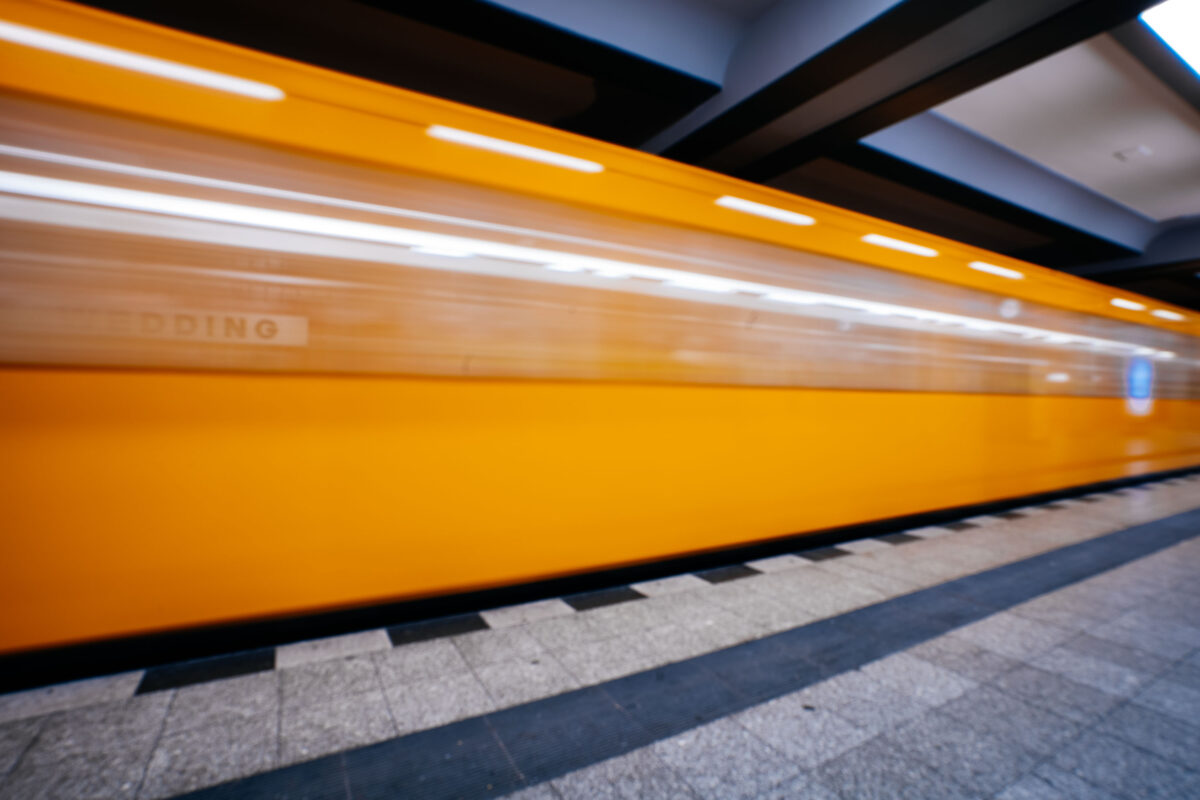
September 2017 — A train passes through the Wedding station in Berlin Germany.
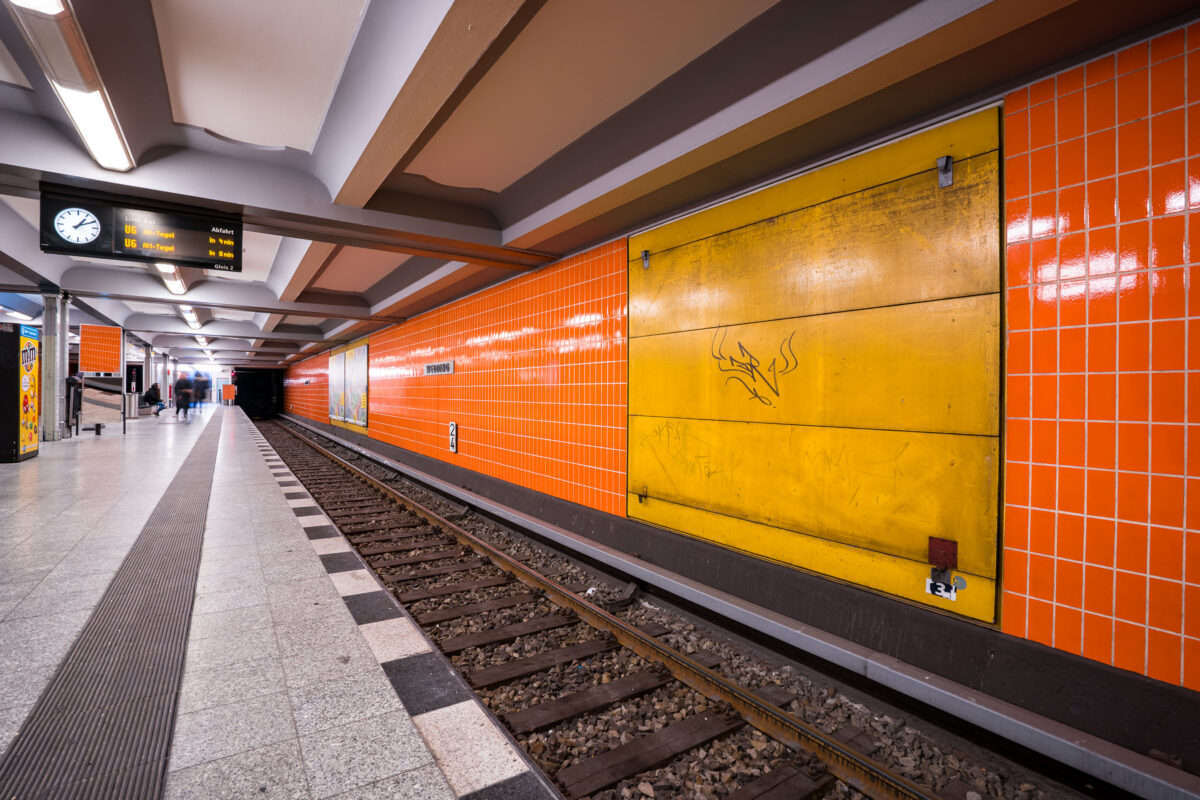
September 2017 — Berlin-Wedding station S-Bahn station in Berlin, Germany
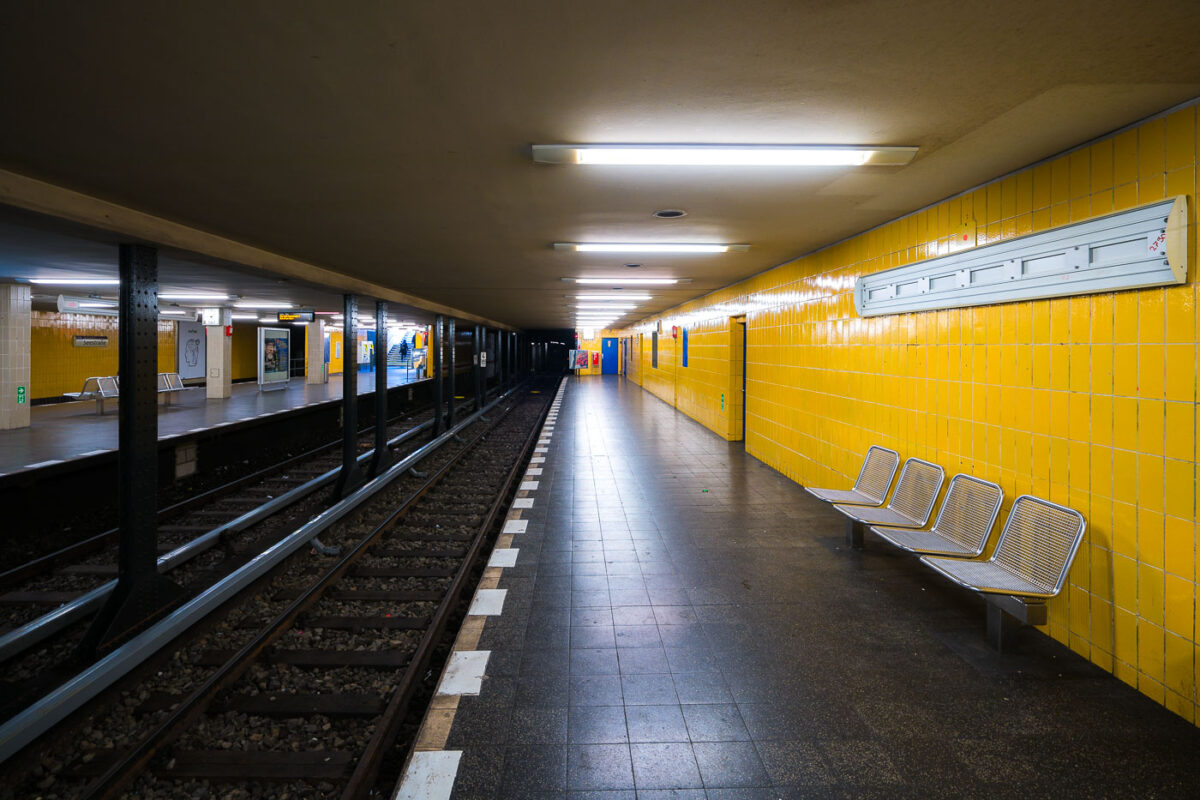
September 2017 — Seestraße U-Bahn Station, Berlin Germany
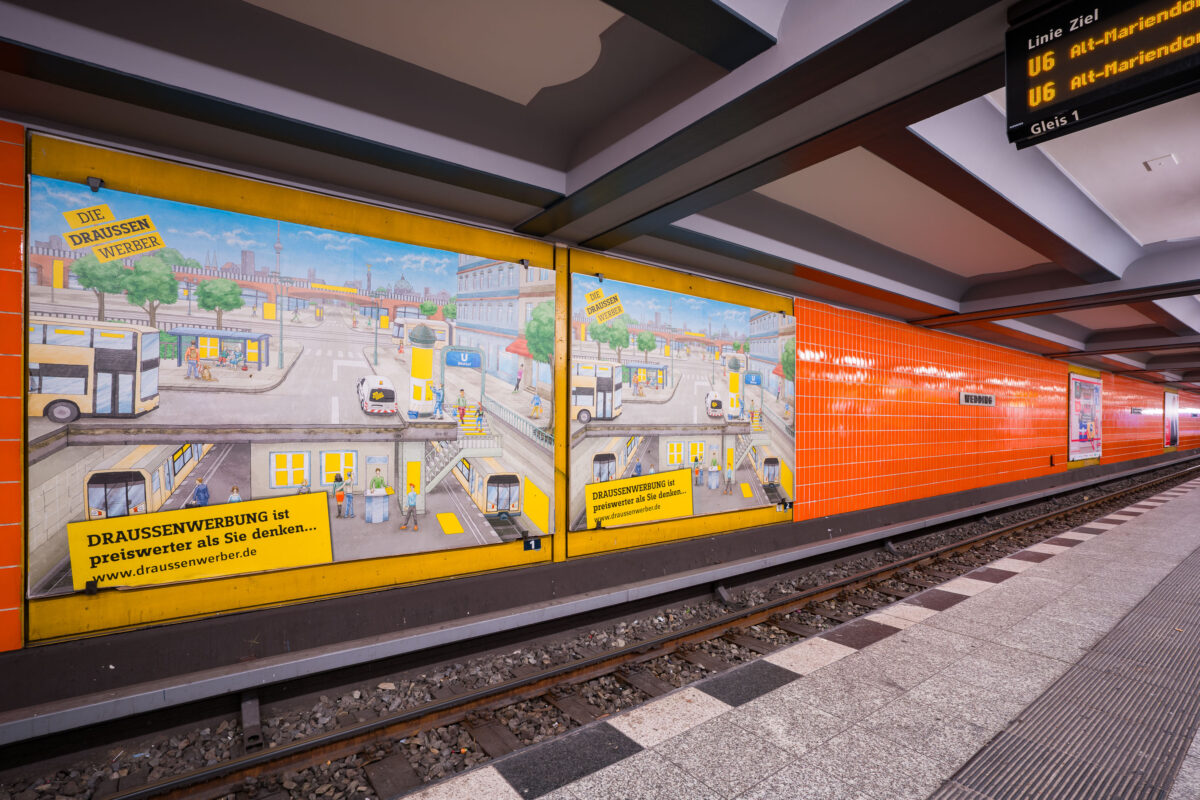
September 2017 — Wittenbergplatz station on Berlin’s U2 line features a distinctive orange-tiled design characteristic of the city’s postwar modernization of U-Bahn interiors. The platform level seen here includes advertising panels with hand-illustrated city scenes, part of a campaign promoting outdoor advertising (“Draussenwerbung”) by Wall GmbH, a longtime transit advertising company in Berlin. Opened in 1902 as part of the city’s first underground railway, Wittenbergplatz is one of Berlin’s oldest stations and a key junction serving the U1, U2, and U3 lines. The orange tiles were installed during mid-20th-century refurbishments to brighten the subterranean space, contrasting with the original Jugendstil architecture preserved at the main hall above. The modern signage displays U6 connections, while the station’s layout—with three island platforms—continues to serve one of the busiest interchange points in Berlin’s U-Bahn network.
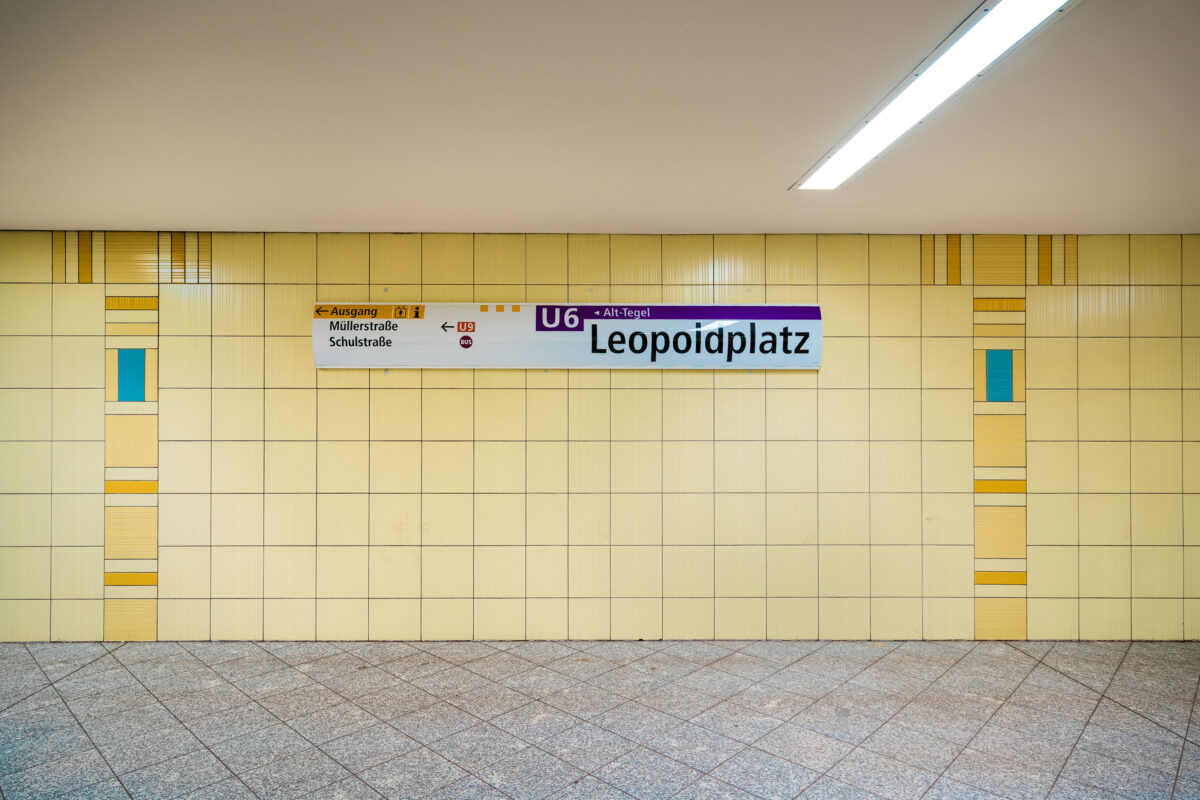
September 2017 — The Leopoldplatz U-Bahn Station in Berlin Germany.
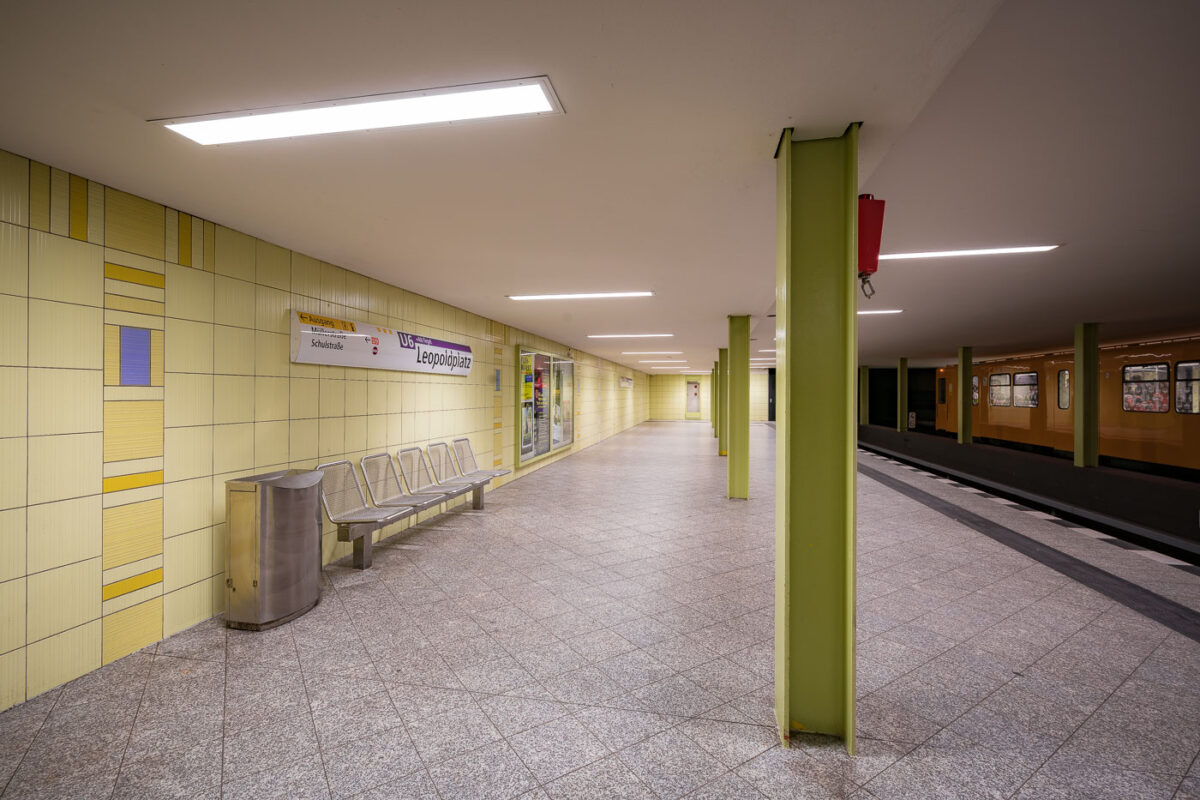
September 2017 — The Leopoldplatz U-Bahn Station in Berlin Germany.
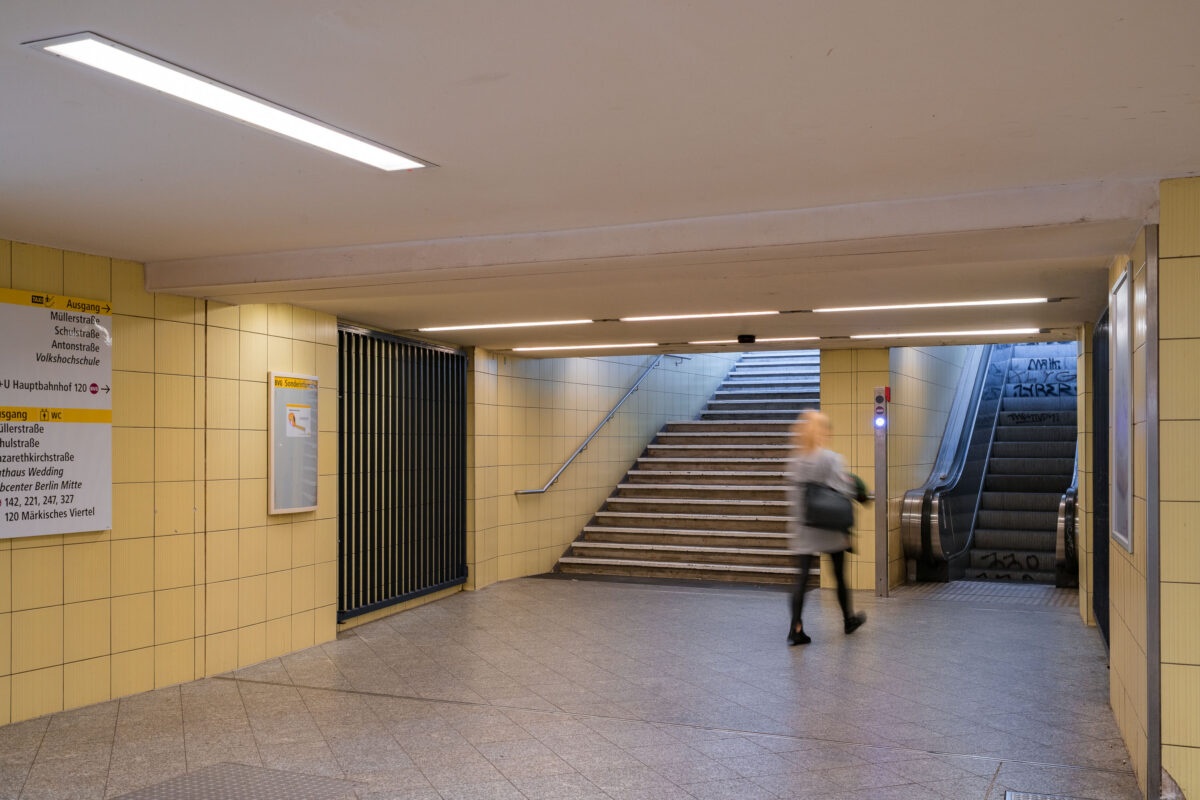
September 2017 — An underground passageway connects the platforms of Wedding U-Bahn station to its street-level exits on Müllerstraße in Berlin’s Mitte district. The corridor is tiled in light yellow ceramic, part of the BVG’s standardized postwar design used throughout many West Berlin stations rebuilt or renovated in the 1960s and 1970s. Directional signage guides passengers toward exits, connecting bus routes, and public facilities, while an escalator and stairway lead to the main entrance. The faint graffiti on the walls and motion blur of a passing commuter emphasize the station’s everyday function within Berlin’s public transport network. Wedding station serves both the U6 line and the S-Bahn Ring, forming a key interchange point in the city’s northern transit system.
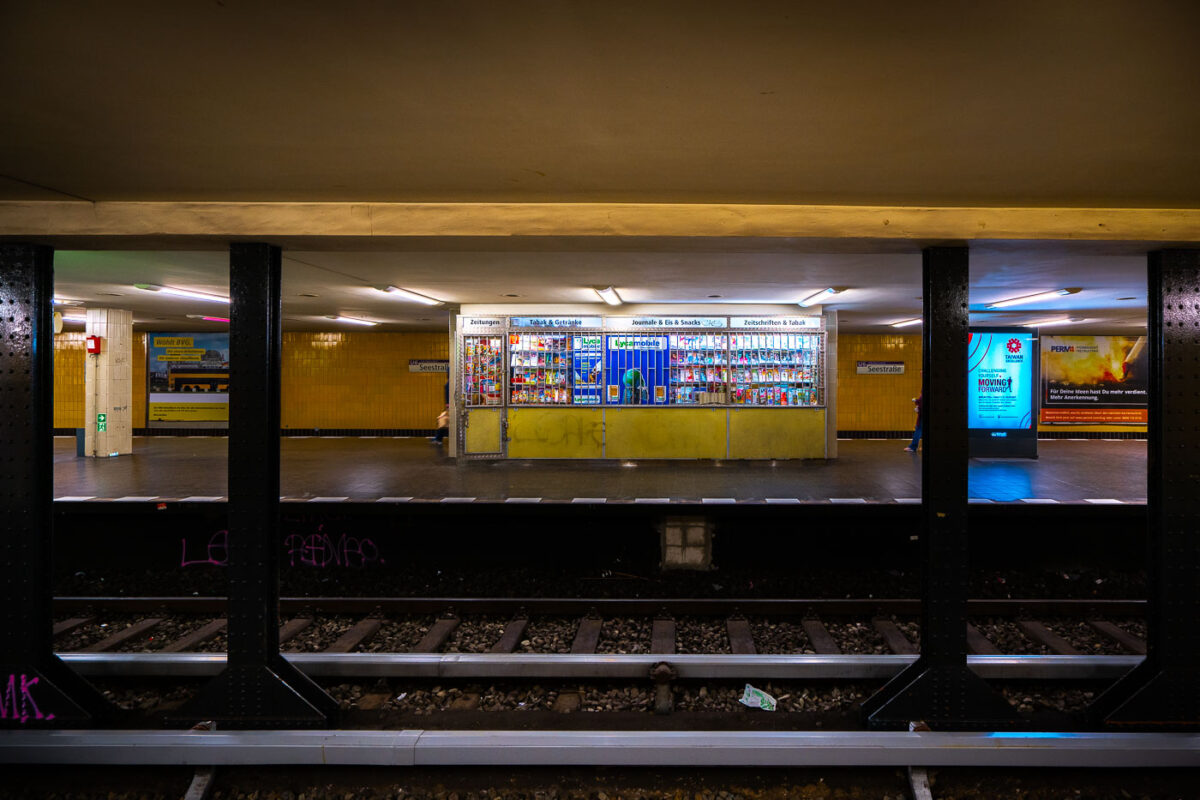
September 2017 — A store at the Seestrabe Station in Berlin.
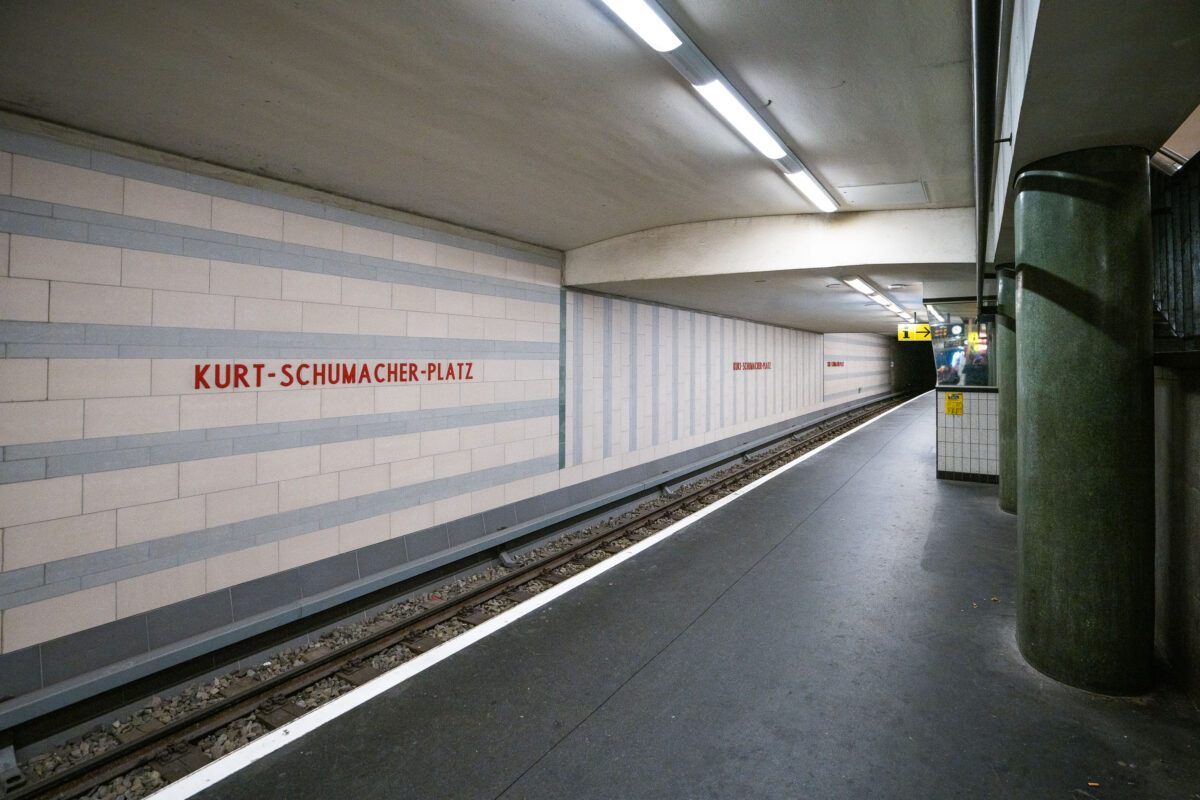
September 2017 — Kurt-Schumacher-Platz station serves Berlin’s U6 U-Bahn line in the Reinickendorf district, located in the city’s northwest. Opened on May 3, 1956, the station was part of the first postwar U-Bahn expansion and named after German statesman Kurt Schumacher, a key figure in rebuilding the Social Democratic Party after World War II. The station features light-colored wall tiles with horizontal gray stripes and minimalist red lettering, reflecting mid-1950s West Berlin design. It includes a central island platform and two tracks, serving as an important stop between Afrikanische Straße and Scharnweberstraße. Above ground, the station connects to several bus routes and lies near the approach to the U6 tunnel under the former Tegel Airport area. Today, it remains a key link for northern Berlin commuters traveling toward the city center.
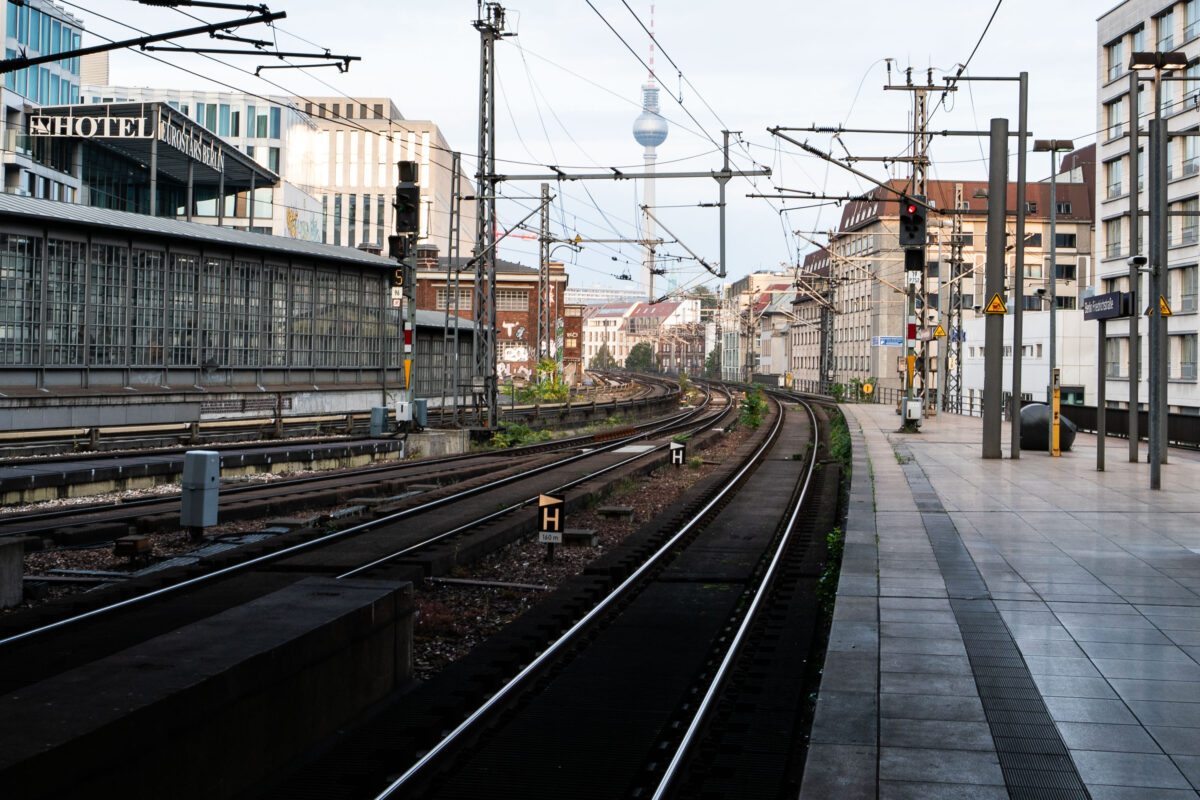
September 2017 — Tracks curve eastward from Berlin Friedrichstraße station, one of the city’s busiest S-Bahn and regional rail interchanges. The elevated viaduct carries multiple lines, including the S3, S5, S7, and S9, which link central Berlin with its outer districts and neighboring cities. The view looks toward Alexanderplatz, with the Fernsehturm television tower visible in the distance — a defining landmark of the former East Berlin skyline. Friedrichstraße station opened in 1882 and served as a symbolic and logistical border crossing during the Cold War, when it connected both East and West Berlin rail networks. Today, the station remains a major transit hub, handling thousands of passengers daily and sitting at the junction of the north–south and east–west S-Bahn corridors. The surrounding area has since been redeveloped with modern offices, hotels, and shops while retaining its role as one of Berlin’s central transport arteries.
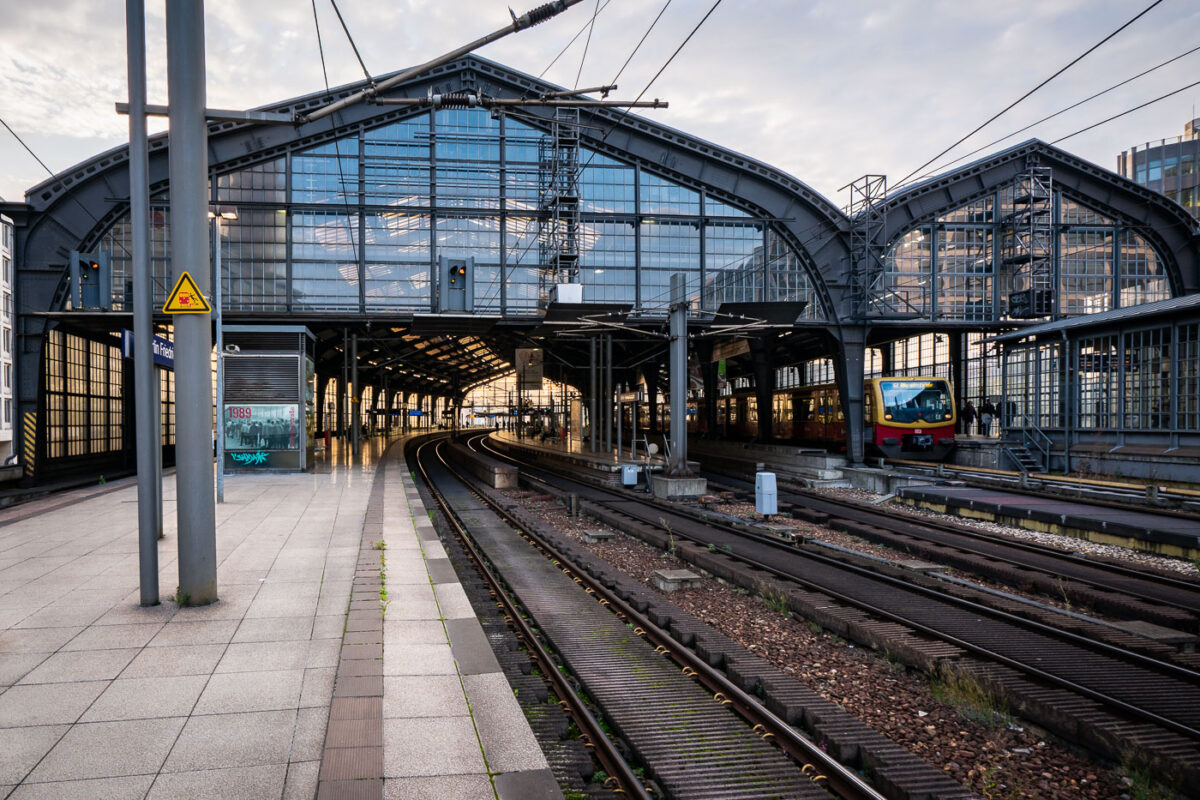
September 2017 — Berlin Friedrichstraße station in the early evening, with an S-Bahn BR 481 series train stopped under the steel and glass canopy. The curved elevated tracks lead into the main hall, a design characteristic of the city’s prewar rail architecture. Overhead wires and support structures frame the scene, while a few commuters move along the quiet platform as daylight fades into artificial light.
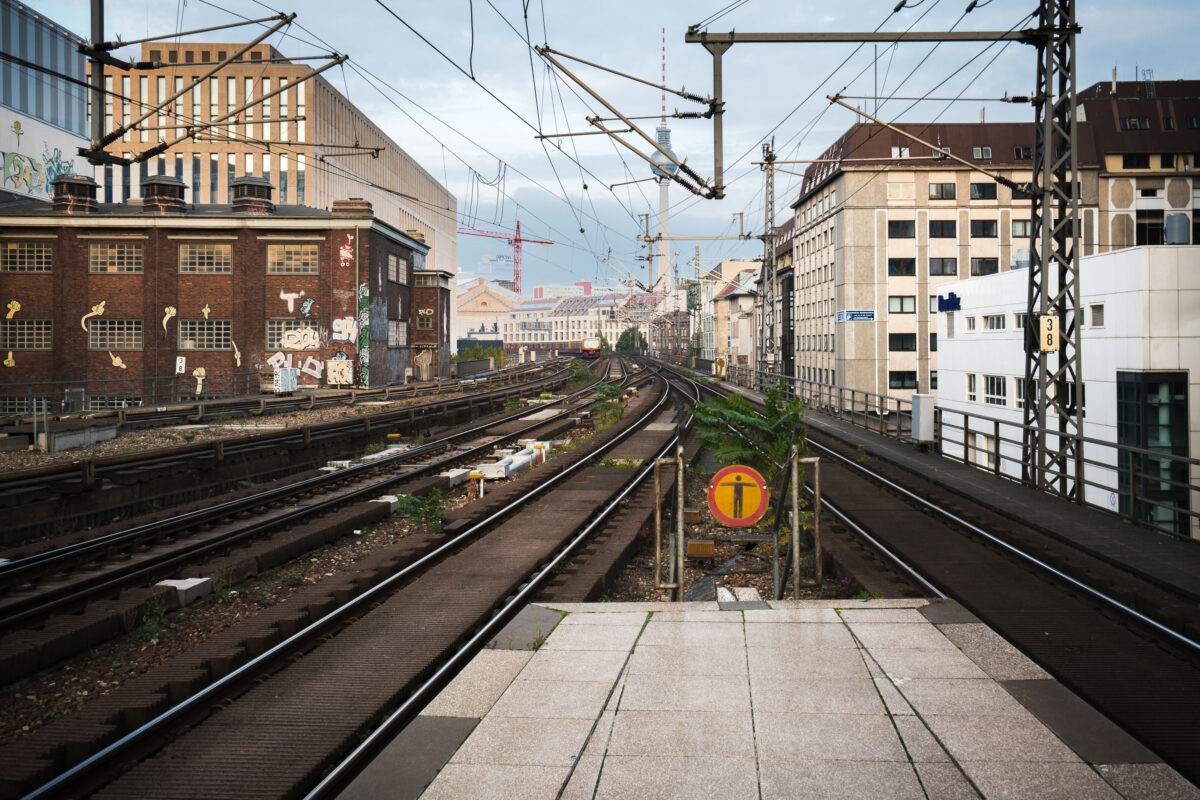
September 2017 — View east from Berlin Friedrichstraße station showing the elevated S-Bahn tracks leading toward Alexanderplatz. Overhead wires and supporting steel structures frame the route, with graffiti-covered industrial buildings on the left and mid-century offices on the right. The Berlin TV Tower (Fernsehturm) rises in the distance, a landmark visible across the city skyline.
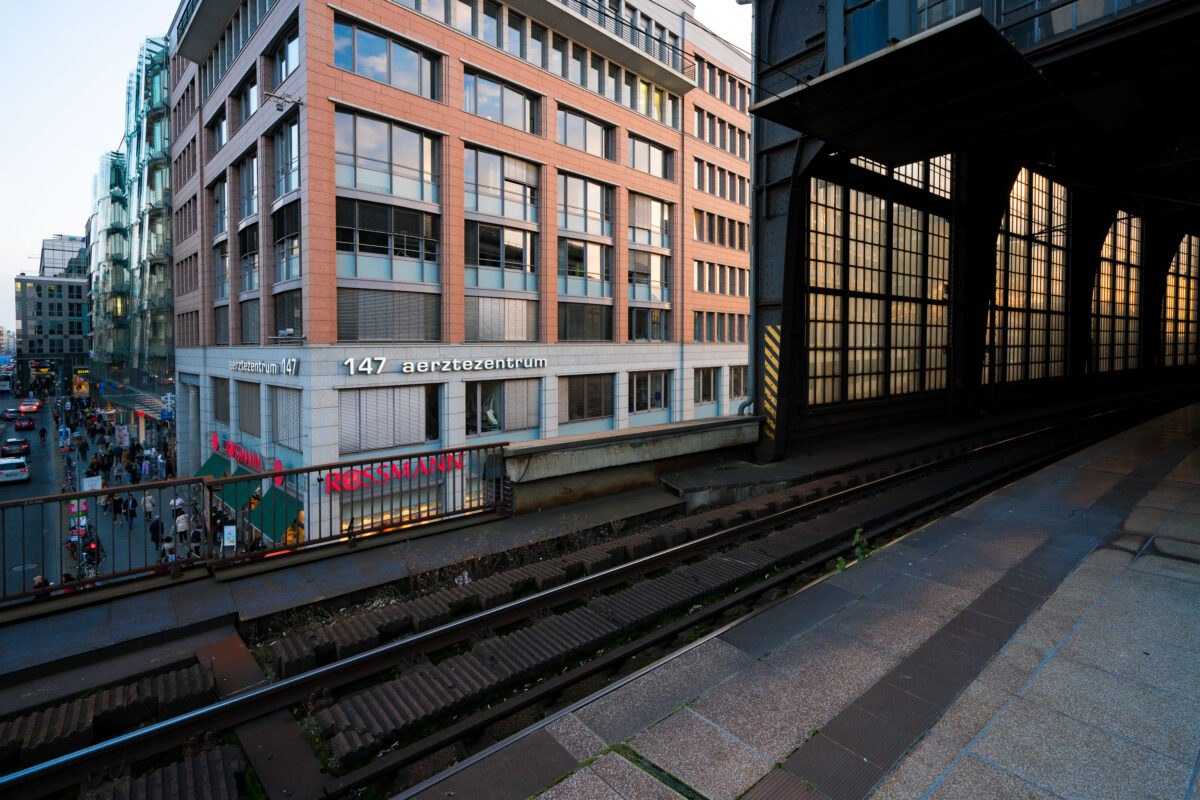
September 2017 — View from the platform at Berlin Friedrichstraße station overlooking Georgenstraße below. The elevated tracks run alongside a mix of modern and postwar office buildings, including the Aerztezentrum at No. 147. Pedestrians and cyclists move through the busy commercial street beneath, while the station’s glass and steel structure reflects the late-day light.
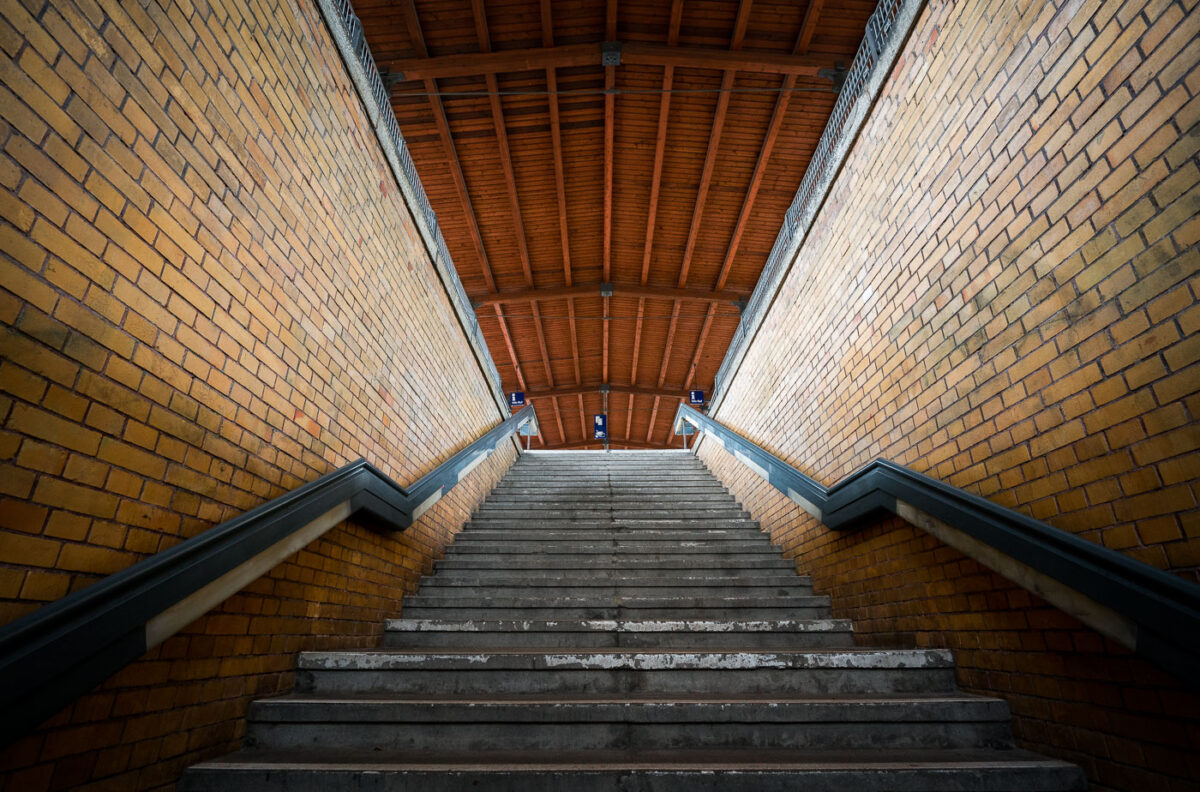
September 2017 — Entering a Berlin train station.
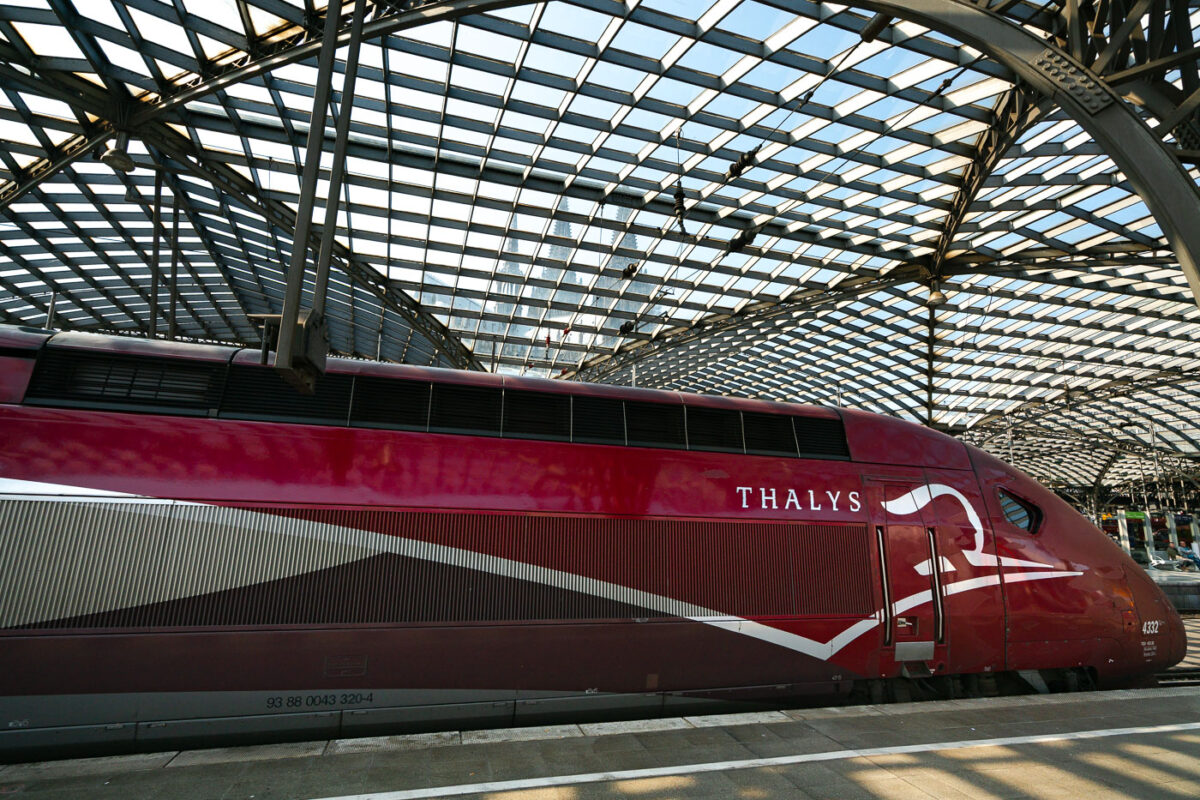
September 2017 — A Thalys PBKA high-speed train waits at Köln Hauptbahnhof beneath the station’s large arched glass canopy. The streamlined red train, built by Alstom and operated on international routes between Germany, Belgium, France, and the Netherlands, reflects the late-afternoon light along its metallic bodywork. Overhead, the steel lattice roof filters the daylight across the platforms, and through the patterned glass, the spires of Cologne Cathedral rise faintly in the background—a visual reminder of the station’s central location beside one of Europe’s most recognizable landmarks.
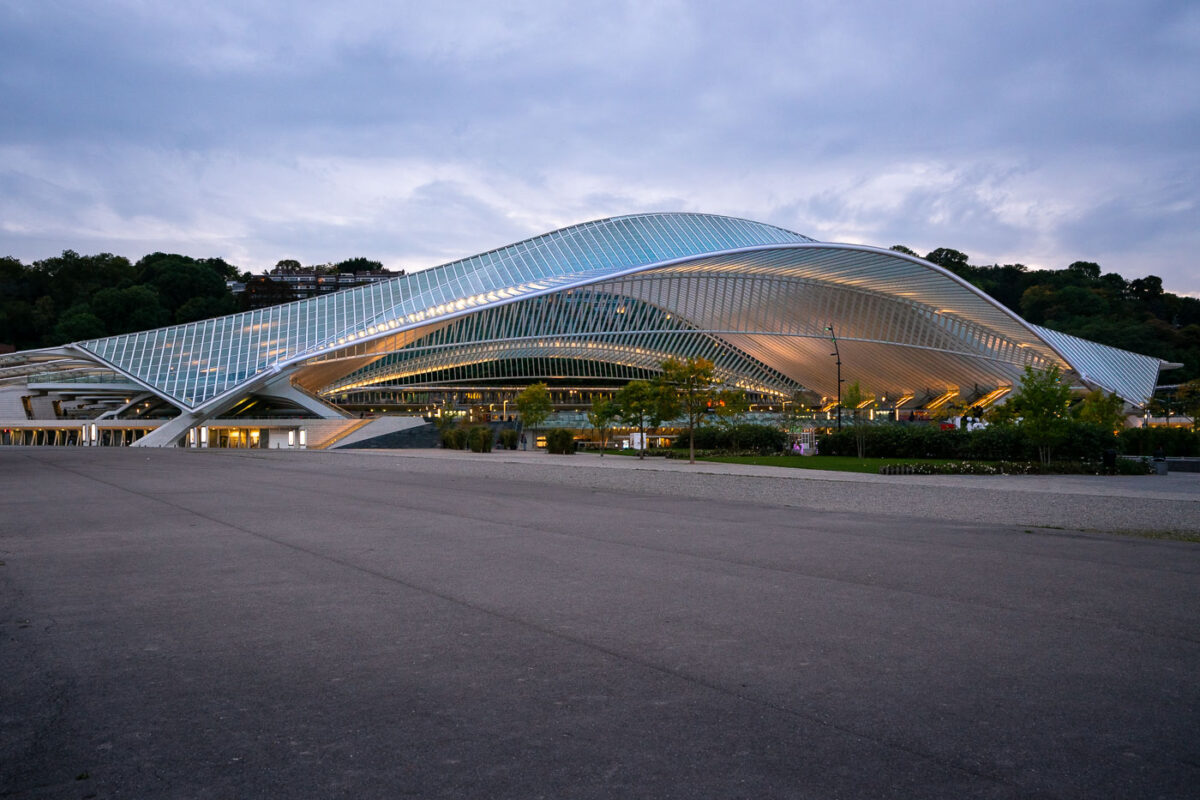
September 2017 — Liège-Guillemins Station, located in Liège, Belgium, serves as one of the country’s primary high-speed rail hubs and a striking example of modern European transport architecture. The current structure, designed by Spanish architect Santiago Calatrava, officially opened on September 18, 2009, following nearly a decade of planning and construction. Built to accommodate Belgium’s integration into the European high-speed rail network, the station connects Liège with major cities such as Brussels, Paris, Aachen, and Cologne through Thalys, ICE, and InterCity services. The building’s sweeping glass and steel canopy extends over 160 meters in length and 32 meters in height, eliminating the need for traditional walls and creating a sense of openness and transparency. Beneath its arched form, five railway platforms are arranged along ten tracks, with pedestrian bridges and elevators providing clear lines of movement between levels. The structure replaced a 1958 station on the same site, symbolizing Liège’s transition from its industrial past toward a contemporary, design-focused identity. Today, Liège-Guillemins stands not only as a critical piece of transportation infrastructure but also as a civic landmark. The station anchors a redeveloped district along the Meuse River, linking the city’s historic center with new public spaces, and continues to draw attention for its combination of engineering precision and architectural expression.
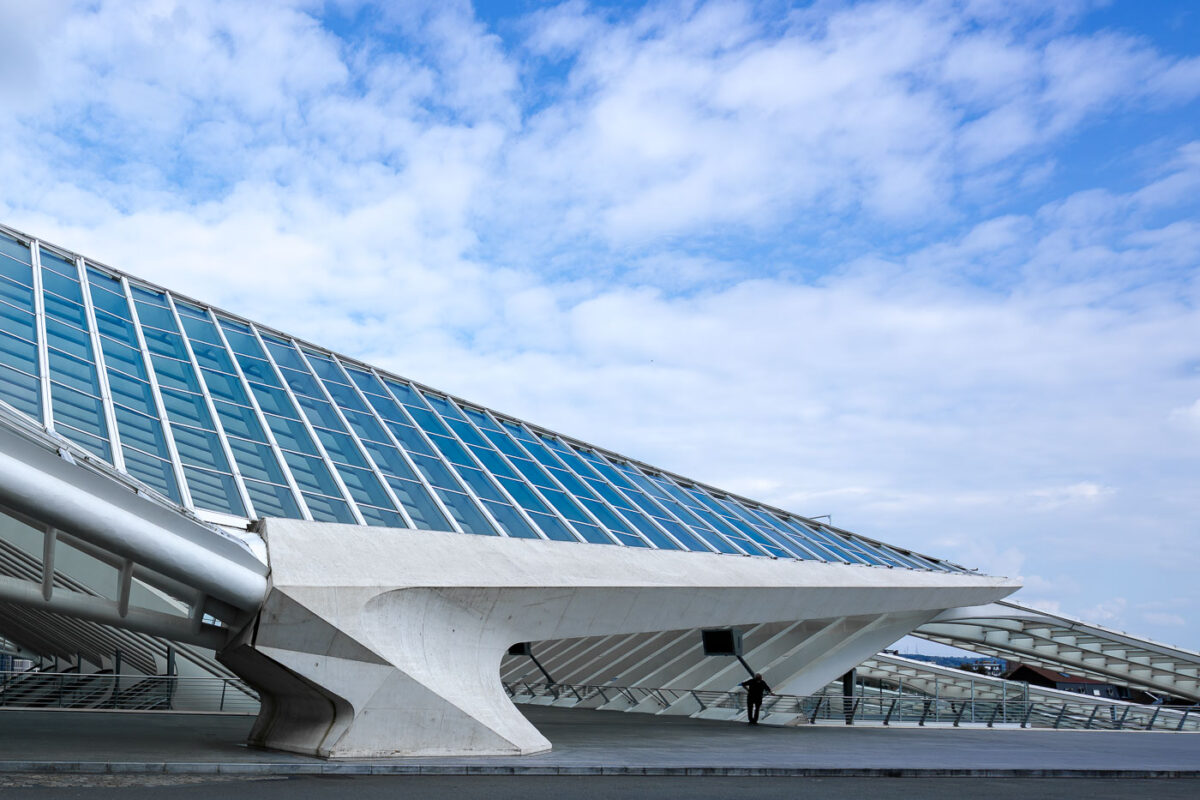
September 2017 — The sweeping steel-and-glass structure of Liège-Guillemins railway station stands as one of Europe’s most recognizable contemporary transport terminals. Designed by Spanish architect Santiago Calatrava and opened in 2009, the station was conceived as both a functional rail hub and a civic landmark, replacing an older mid-20th-century facility on the same site. Its vast, arching roof—constructed without a traditional façade—allows daylight to flood the platforms while emphasizing openness and movement rather than enclosure. Liège-Guillemins serves as a major junction on Belgium’s high-speed rail network, connecting Liège with Brussels, Paris, Cologne, and Frankfurt. The station’s design reflects early 21st-century priorities in European rail infrastructure: intermodality, passenger flow efficiency, and architectural visibility as a symbol of urban reinvestment. The exposed structure, rhythmic ribs, and inclined glazing make the engineering legible, turning the building itself into an expression of transit in motion.
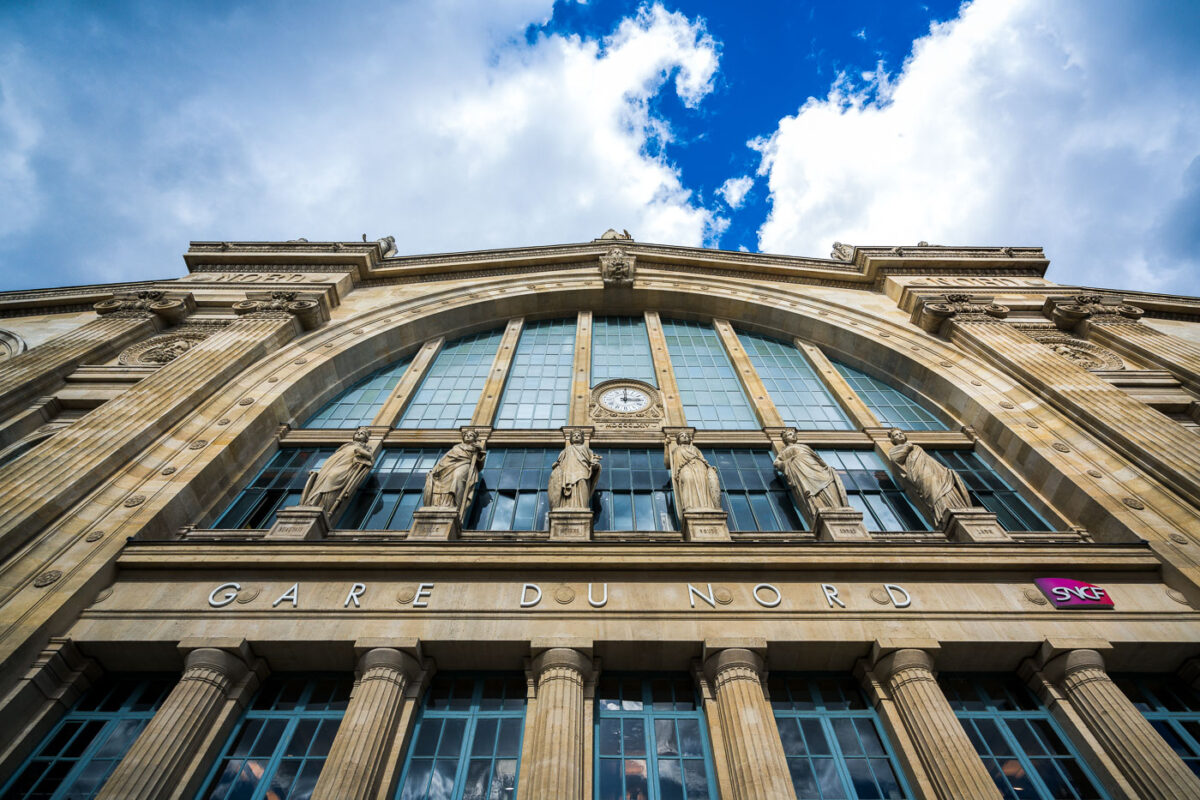
September 2017 — Gare du Nord’s monumental Beaux‑Arts facade is pictured from street level in the 10th arrondissement of Paris, France. The stone frontage features tall arched windows, a central clock, and a row of allegorical statues that represent major European cities historically served by the station’s routes. The inscription “GARE DU NORD” is set above fluted columns, and a magenta SNCF logo marks the national rail operator; cumulus clouds break over a blue sky above the cornice. Opened in the 1860s and designed by architect Jacques-Ignace Hittorff, Paris-Nord is among Europe’s busiest rail hubs, linking regional Transilien lines, RER services, the Paris Métro, and international trains including the Eurostar to London. The station has long served as a gateway for commuters and cross‑border travelers, reflecting the growth of rail travel in northern Europe since the 19th century.
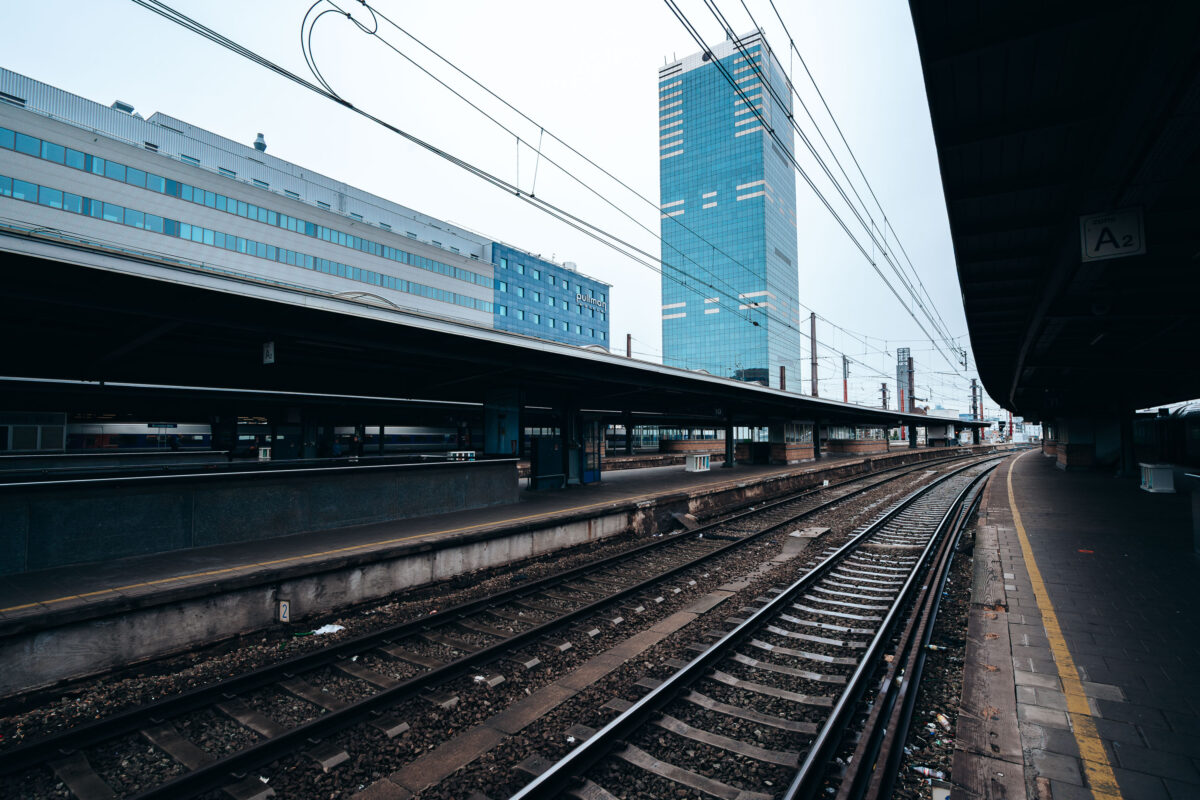
September 2017 — Brussels South/Midi Train Station in Belgium. September 2017.
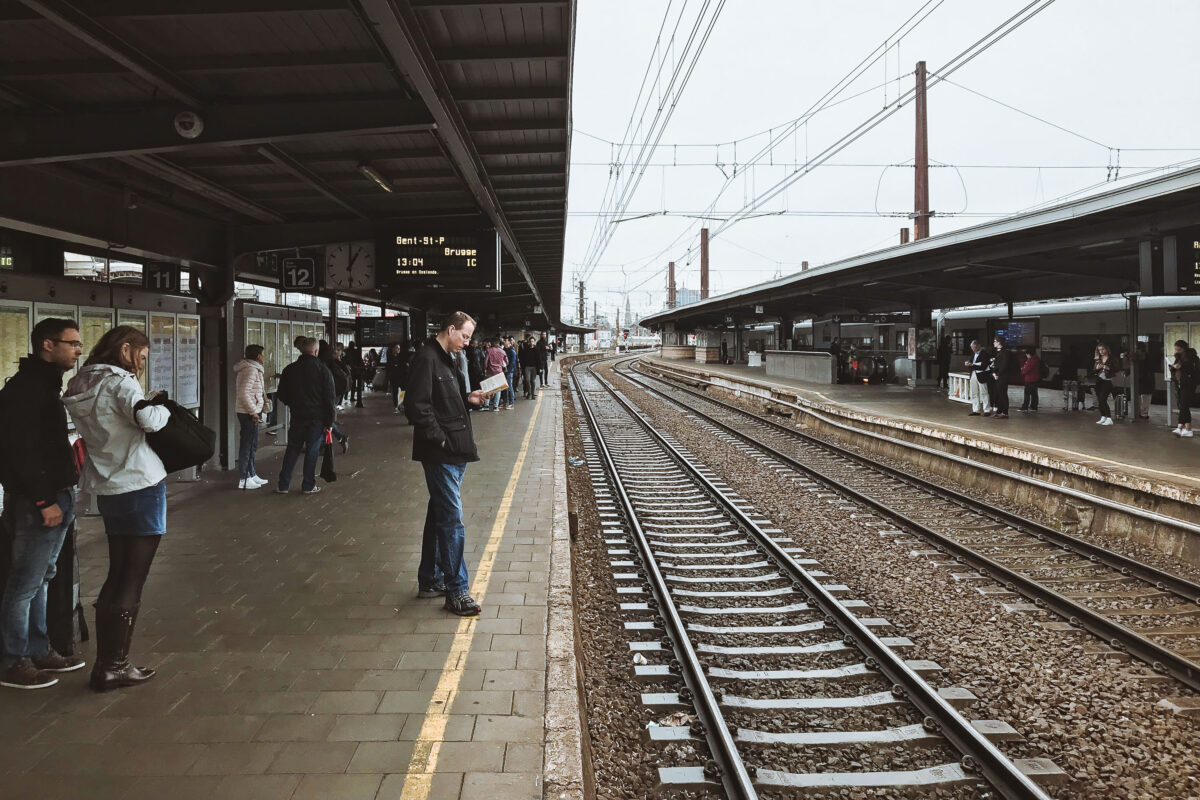
September 2017 —
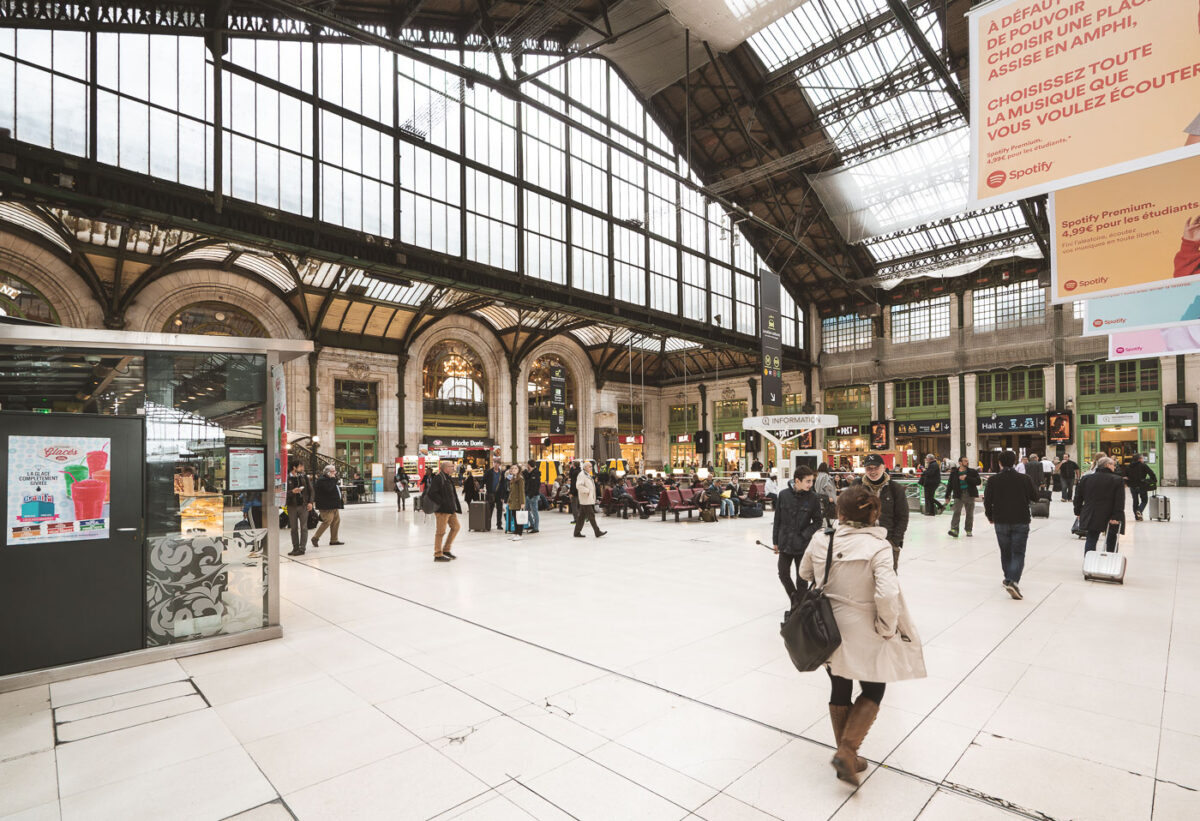
October 2017 — Passengers cross the main concourse of Paris Gare de Lyon, 12th arrondissement, France, near coordinates. Under the iron-and-glass train shed, travelers wheel suitcases past an information point, rows of red seats, and storefronts with green-trimmed windows. Large banners in French promoting a music-streaming service hang from the rafters, while overhead signs direct people toward Hall 2 and other platforms. The Beaux-Arts arches and clerestory windows, part of a station complex inaugurated for the 1900 Exposition Universelle, frame the busy interior. Gare de Lyon is one of Paris’s principal rail hubs, serving TGV and regional lines to southeastern France and beyond, as well as RER and Métro connections for city transit.
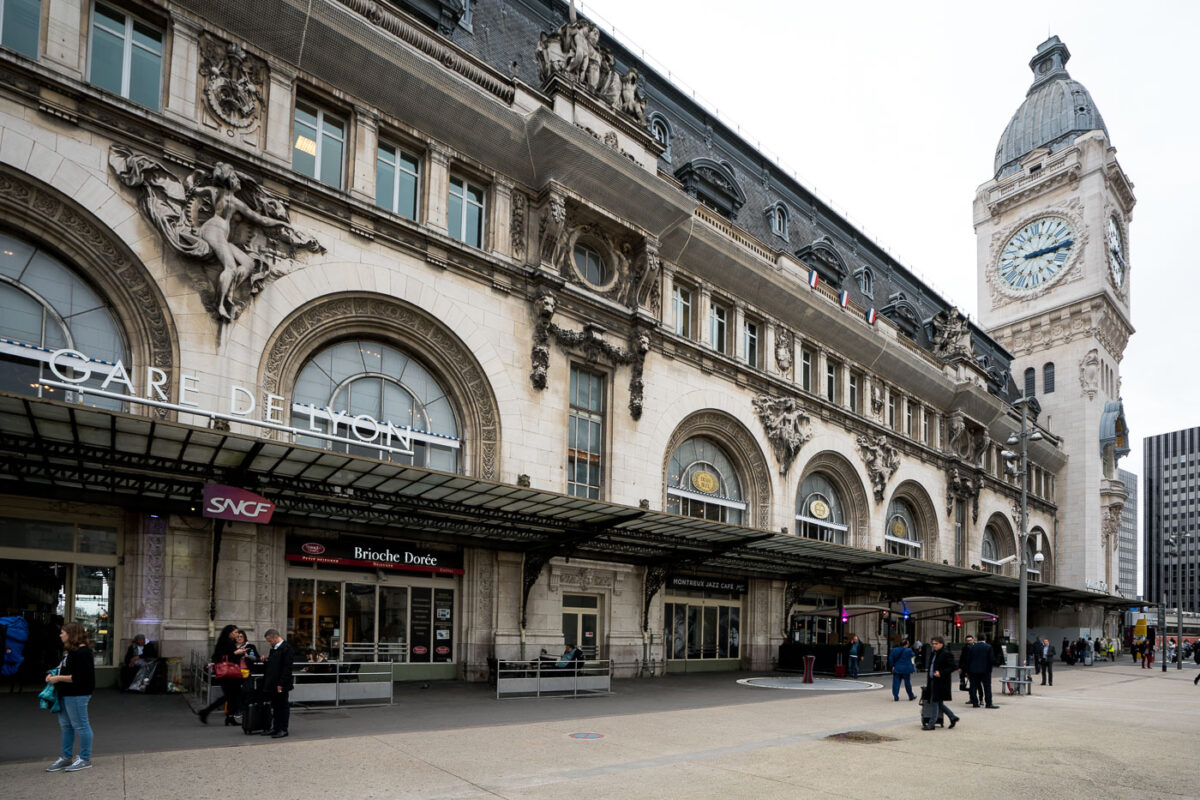
October 2017 — The Gare de Lyon train station in Paris, France, is depicted in this photograph taken during daytime. The historic building features ornate architectural details, including sculptures and decorative stonework, with a prominent clock tower displaying the time. The station's entrance is visible, with signs indicating SNCF and other services, and people are seen walking and waiting outside. The scene captures the bustling activity typical of a major transportation hub in the city.
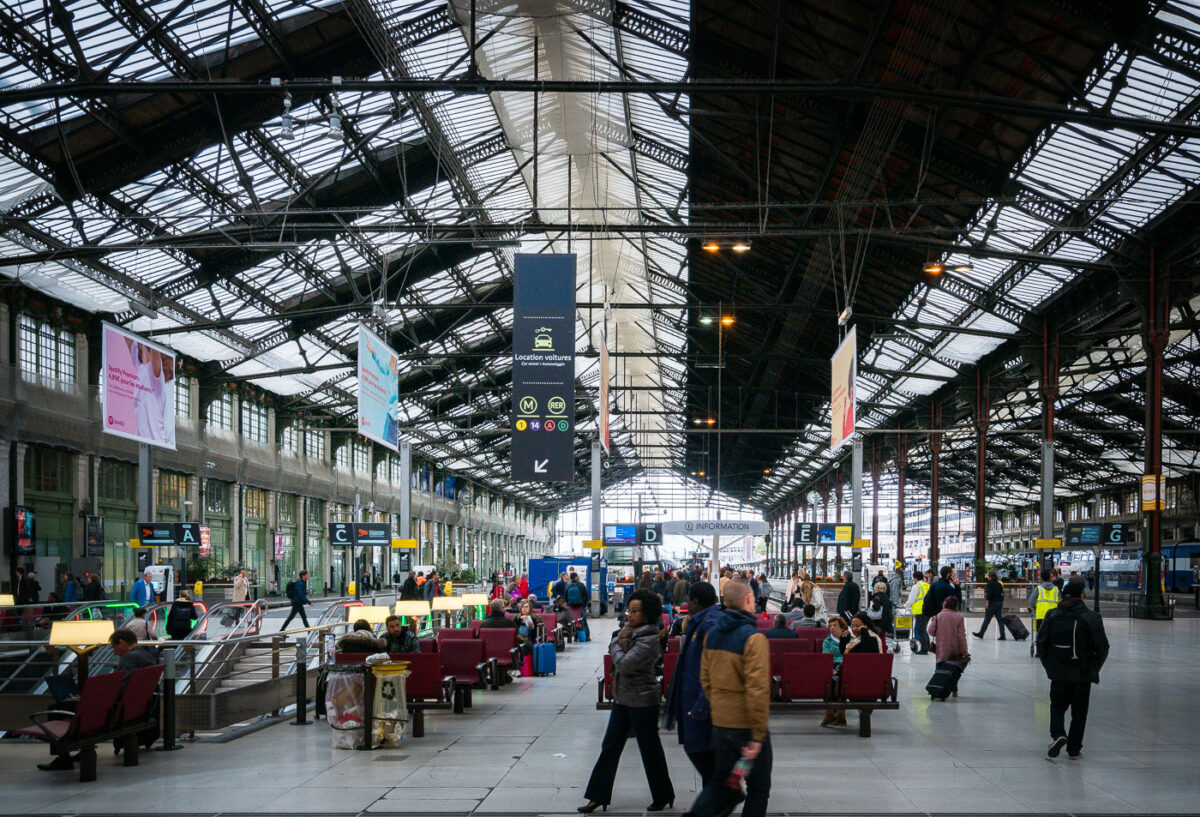
October 2017 — Passengers wait and walk through the main concourse of Gare de Lyon in Paris, France, a major rail hub located in the 12th arrondissement. Rows of red seating, baggage trolleys, and electronic boards marked with concourse letters C through G line the iron-and-glass train hall, while SNCF trains are visible at the platforms to the right. Overhead signage points to “Information,” car rental, and connections to Paris Métro lines 1 and 14 and the RER A and D. The station, opened for the 1900 Exposition Universelle, serves high-speed TGV and regional services toward southeastern France and international destinations, making it one of the city’s busiest gateways.
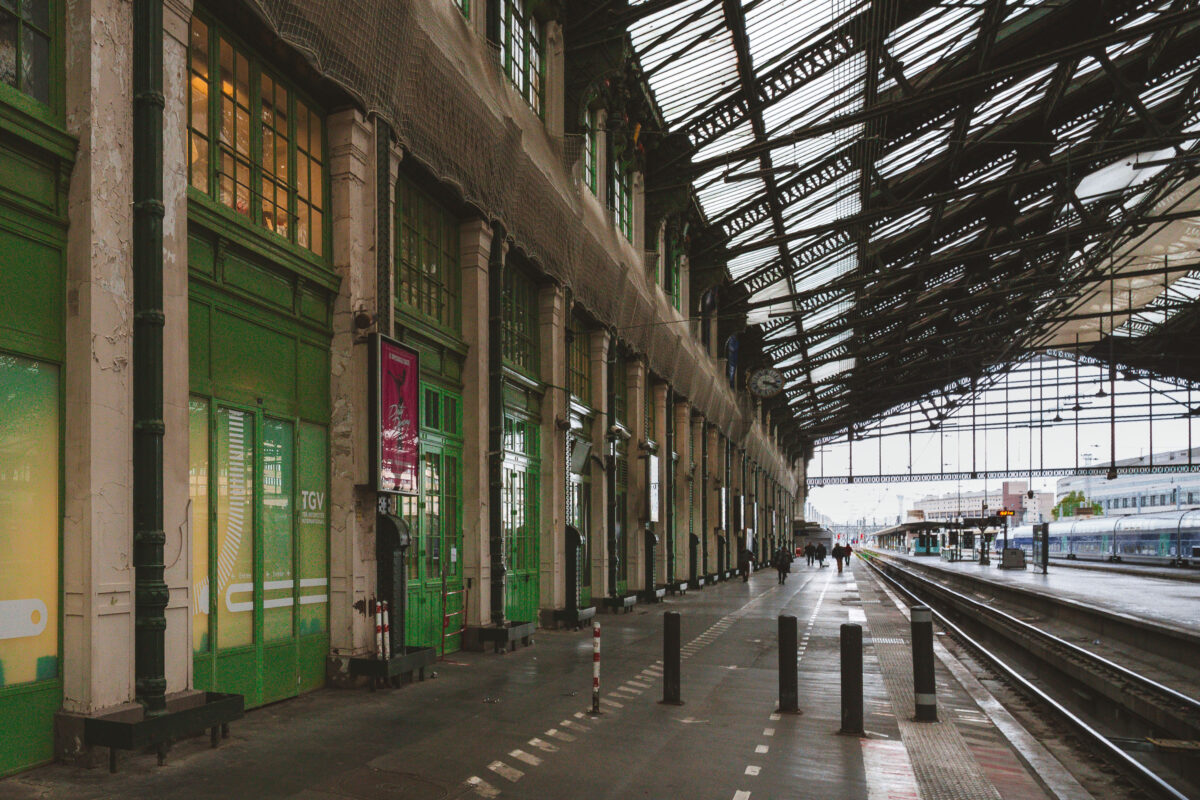
October 2017 — Platforms under the iron-and-glass train shed at Paris Gare de Lyon appear quiet as a few travelers walk along the concourse beside multiple sets of tracks. On the left, a row of weathered stone pillars and green-painted doors bears signage for TGV services, with protective netting strung high above the facade. Dark bollards line a marked pedestrian lane, and electronic displays and clocks hang near the platform edge. Through the canopy, an overcast sky is visible, and long-distance SNCF trains wait in the distance. Located in the 12th arrondissement, the station is one of France’s busiest hubs, connecting Paris to southeastern cities via high-speed lines since the late 20th century and serving conventional routes established long before.
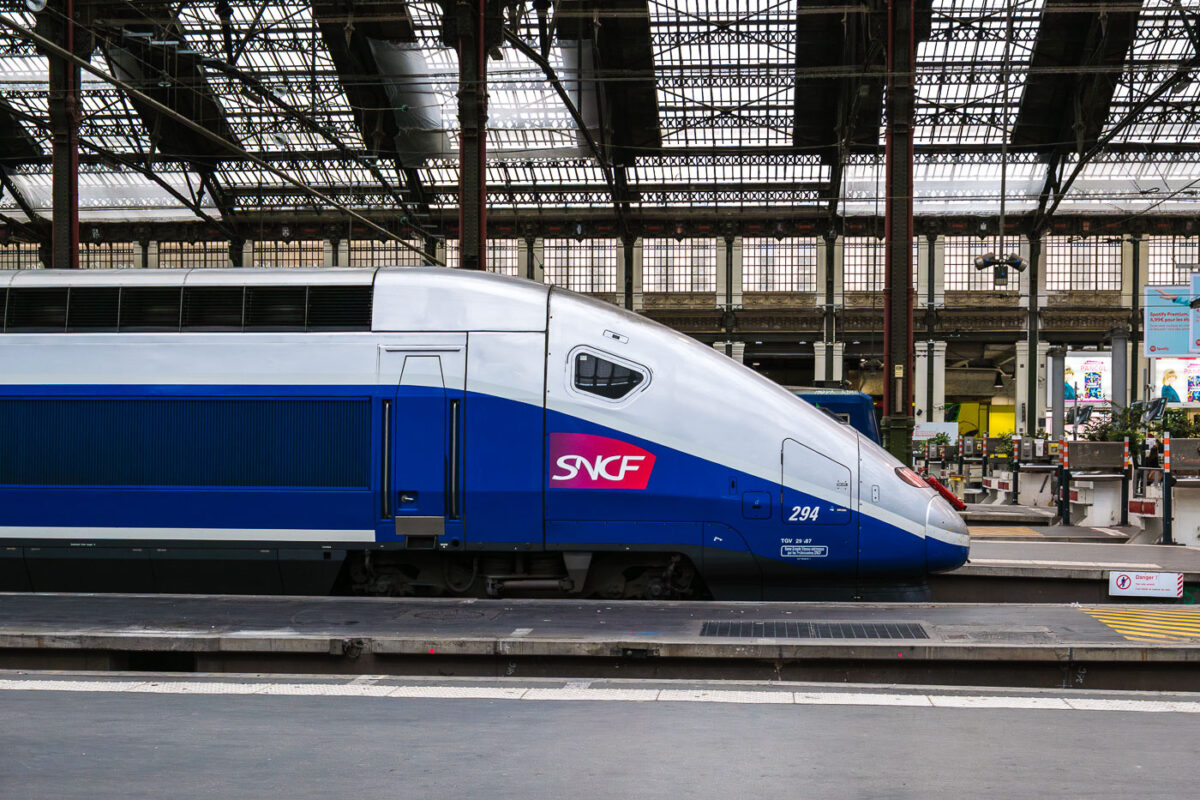
October 2017 — SNCF high‑speed service at Paris’s Gare de Lyon. A blue‑and‑silver TGV unit marked with the SNCF logo and the number 294 stands at a platform beneath the station’s iron-and-glass train shed at Gare de Lyon in Paris, France. The streamlined nose of the train faces a row of barriers and signage, while maintenance equipment and timetable boards are visible in the concourse behind. Open work bays, columns, and tall windows define the historic terminal architecture, one of the capital’s main gateways to southeastern France. Operated by the national rail company SNCF, Gare de Lyon handles frequent high‑speed services toward Lyon, Marseille, the French Riviera, and cross‑border connections to Switzerland.
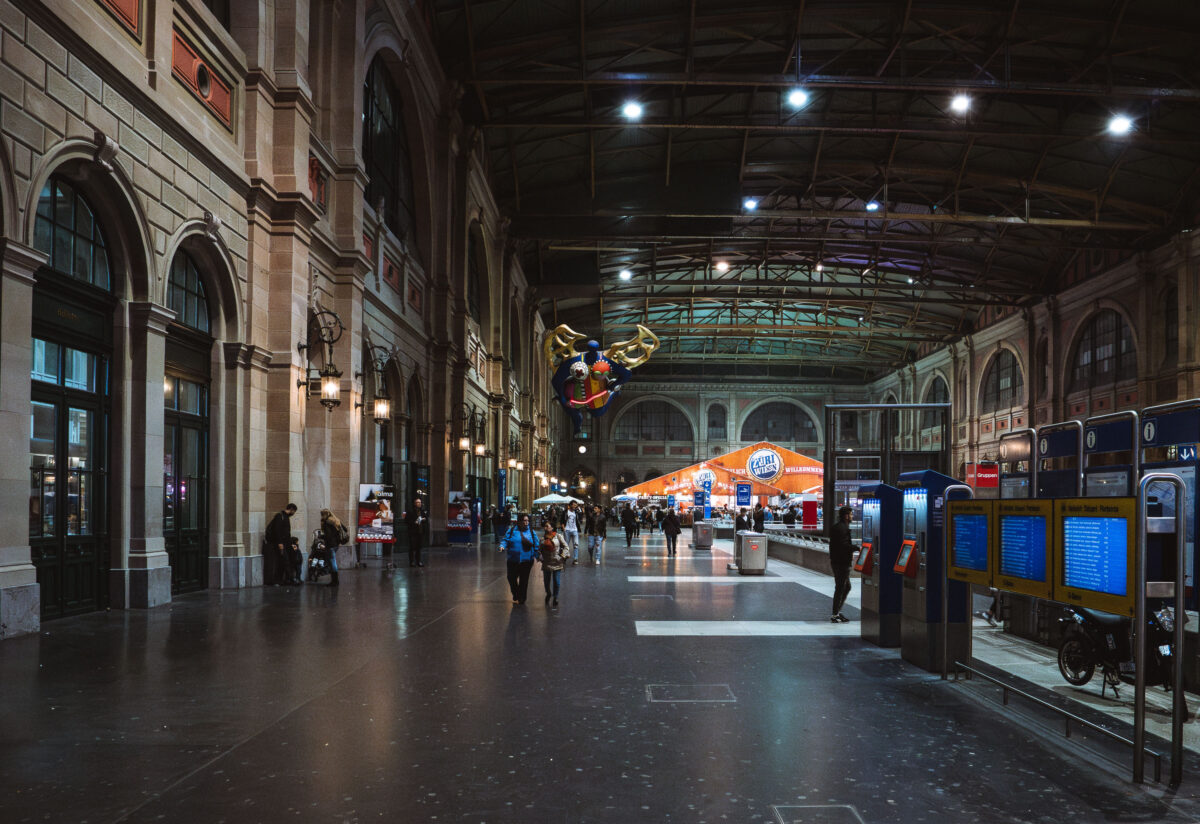
October 2017 — The interior of Zurich Hauptbahnhof, the main train station in Zurich, Switzerland, is shown in this nighttime photograph. The station features a high, arched ceiling with exposed metal framework and large windows along the walls. Several passengers are seen walking or waiting near ticket machines and information boards. In the background, a brightly lit orange tent with the Zurich logo and a festive decoration hanging from the ceiling add a lively atmosphere to the historic station. The station's architecture combines classic European design with modern amenities, serving as a central hub for travelers in Zurich.
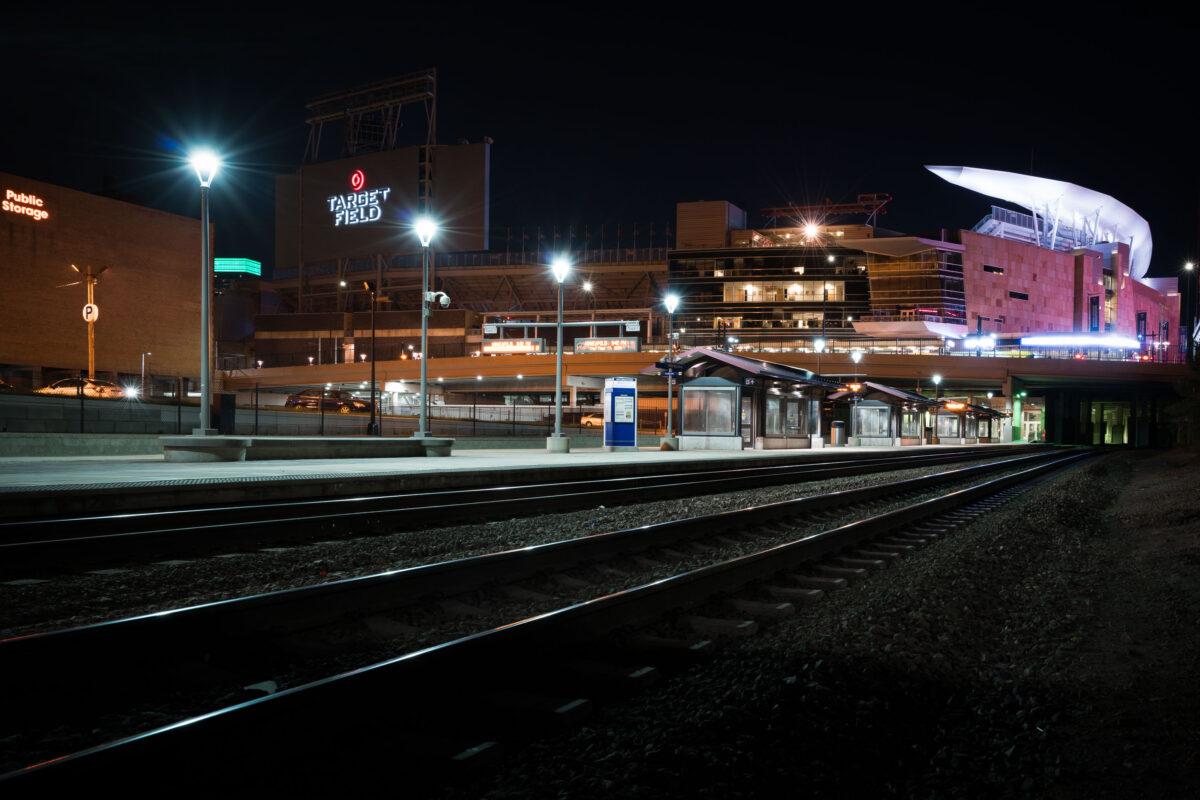
May 2018 — Target Field in Minneapolis. Homem of the Minnesota Twins.
September 2018 —
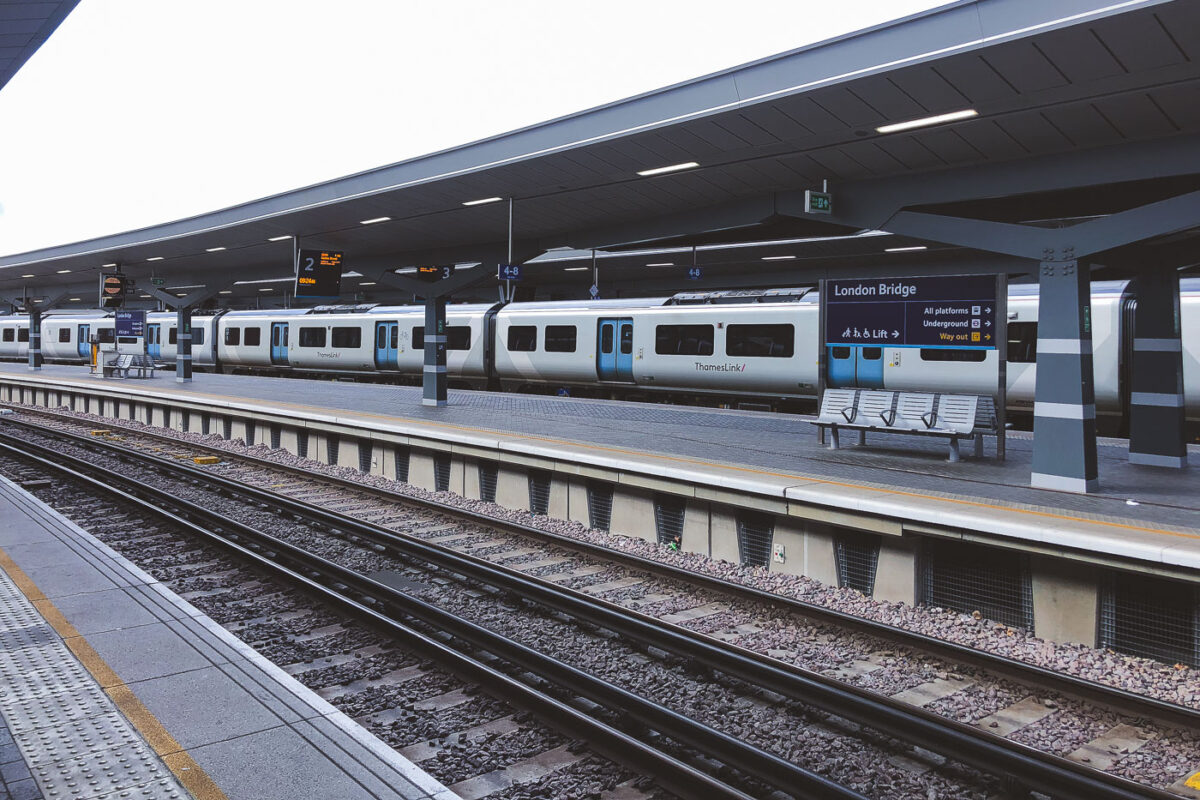
April 2019 — London Bridge Station’s Thameslink platforms represent one of the most advanced pieces of commuter rail infrastructure in the UK, rebuilt as part of the £1 billion redevelopment completed in 2018. The redesign introduced a vast concourse beneath the platforms, new canopies, and digital passenger systems to accommodate over 50 million travelers annually. Visible here is a Class 700 Thameslink train, part of Siemens’ Desiro City fleet, which operates high-frequency services linking Bedford, Brighton, and Cambridge through central London via the core Thameslink route. The streamlined architecture and wide canopies were engineered to handle both heavy peak-hour volumes and seamless integration between National Rail and the London Underground’s Jubilee and Northern Lines, establishing London Bridge as a key interchange in Britain’s modern rail network.
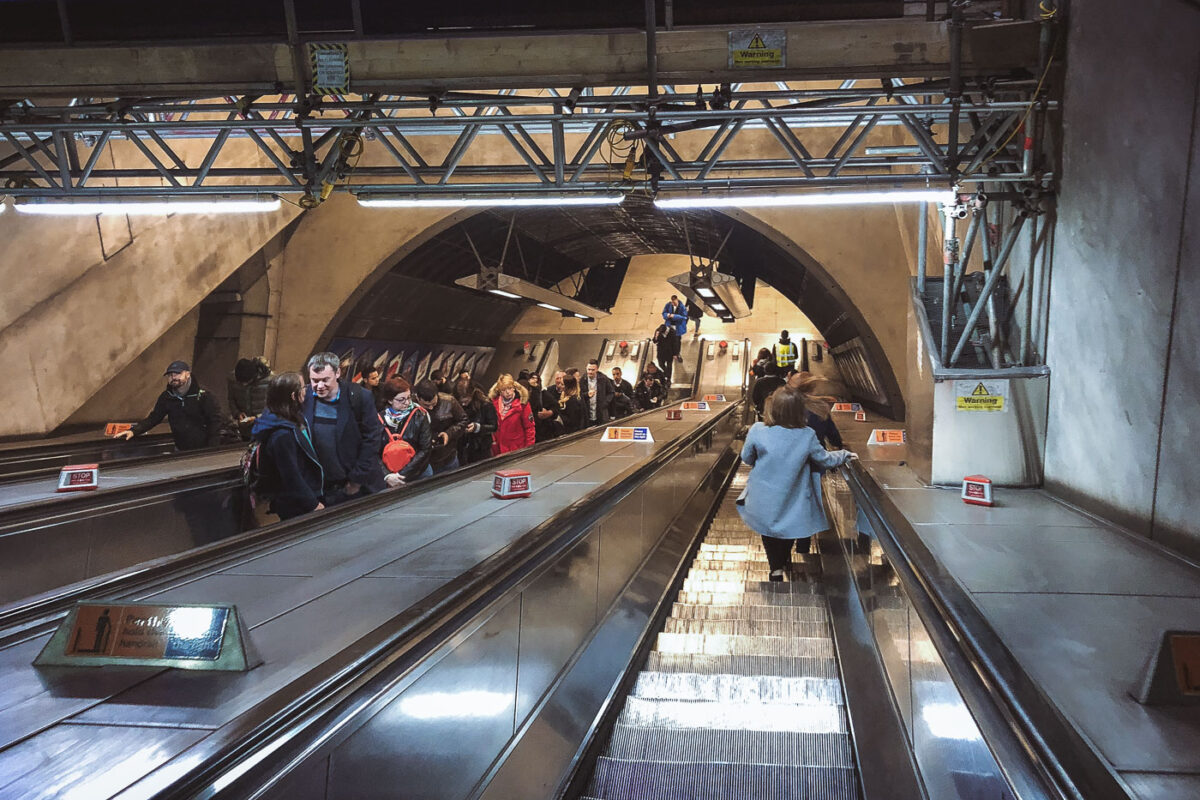
April 2019 — Passengers ascend and descend the deep escalator shafts of London Bridge Underground Station, one of the busiest interchanges in the capital’s rail network. Rebuilt and expanded during the Jubilee Line Extension project of the 1990s, the station’s concrete-lined tunnels and exposed mechanical framework represent a fusion of industrial engineering and modern architectural design. At nearly 26 meters below ground, these escalators connect the Northern and Jubilee lines with the mainline concourse above, handling tens of thousands of passengers daily. The structural bracing and utilitarian lighting were deliberately retained as visual elements, emphasizing the monumental scale of London’s deep-level transport infrastructure.
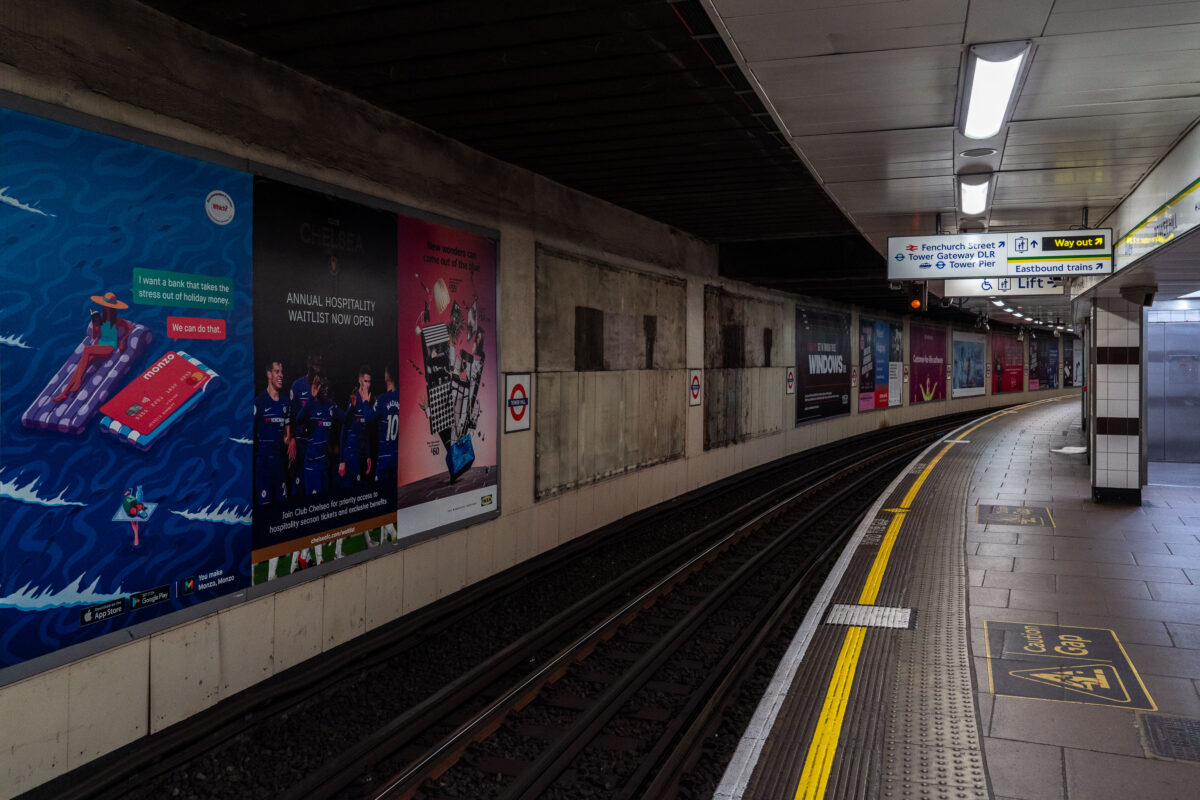
April 2019 — The eastbound platform at Tower Hill Underground Station, serving the District and Circle lines, curves gently beneath the City of London’s historic core. The tiled walls, layered advertising panels, and utilitarian ceiling panels reflect the practical design language of the post-war London Underground system. Located adjacent to Tower Gateway DLR and just steps from the Tower of London, this interchange is one of the busiest tourist-access stations in central London. Its narrow curvature and close tunnel clearances are characteristic of legacy sub-surface lines built in the 19th century—still forming the backbone of the modern network more than 150 years later.
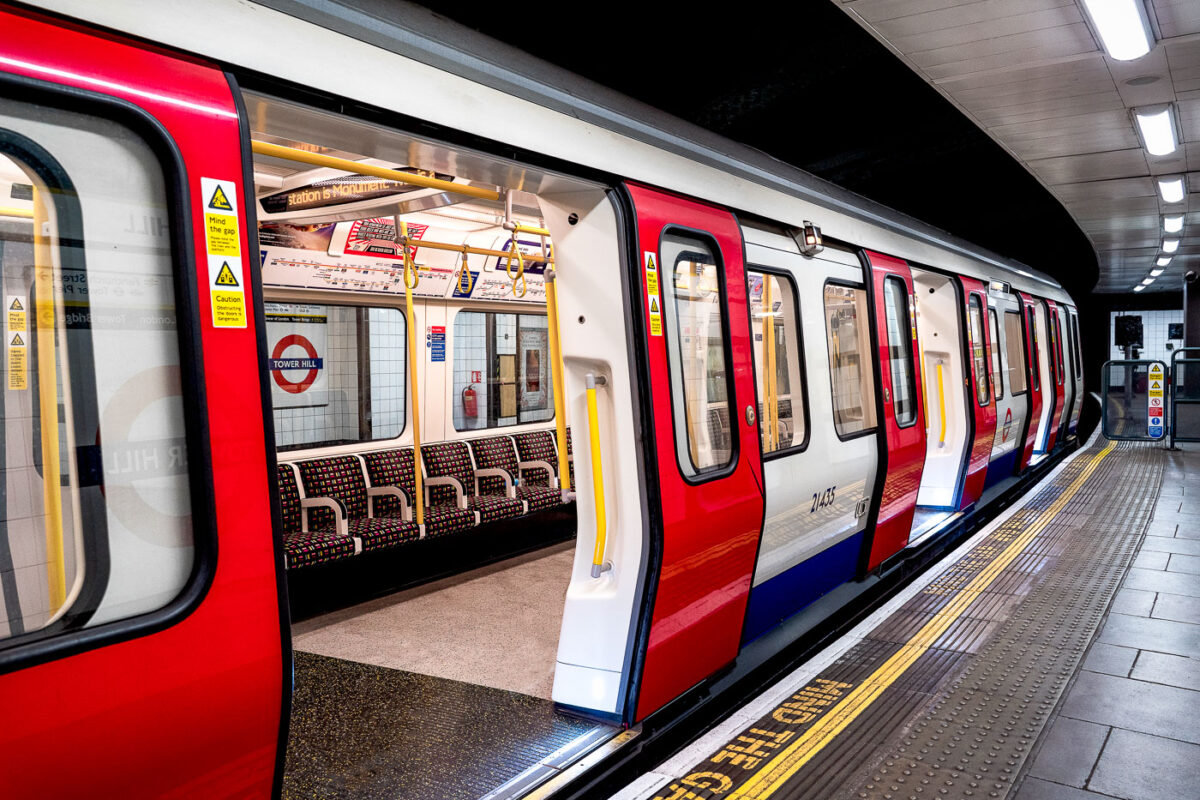
April 2019 — An S7 Stock train stands at Tower Hill Station on the District and Circle lines, its doors open beneath the curved tunnel roof. These Bombardier-built trains, introduced between 2010 and 2017, form part of London Underground’s Sub-Surface Railway modernization program—featuring wider gangways, air conditioning, and regenerative braking. The tiled walls and bright signage retain the visual identity of the Underground, while the yellow safety line and tactile paving mark the boundary of one of London’s busiest commuter platforms. Tower Hill’s proximity to the Tower of London and the Thames makes it both a vital interchange for daily travelers and a gateway for millions of visitors exploring the city’s historic core.
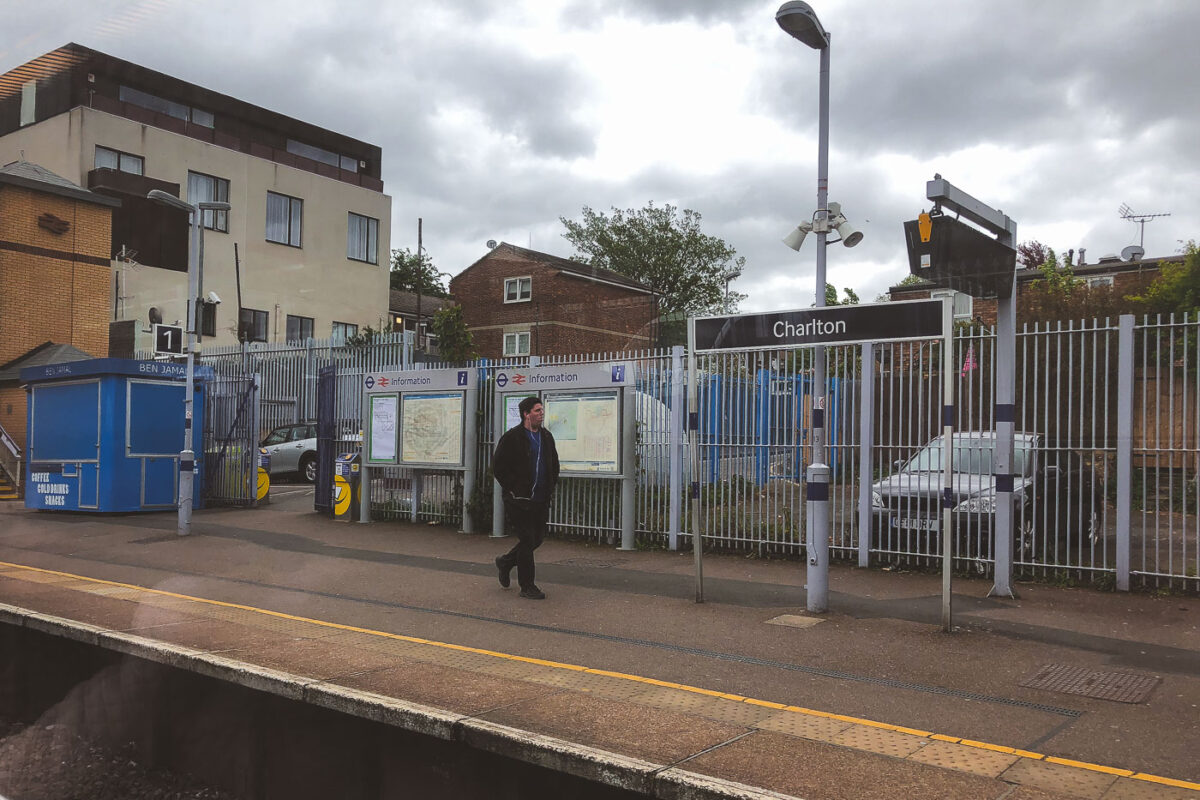
April 2019 — Charlton railway station in southeast London sits along the North Kent Line and serves as a key commuter stop between Greenwich and Woolwich. The small, utilitarian station retains classic British Rail design elements, including simple platform shelters, iron fencing, and black-and-white signage introduced under National Rail branding. Behind the platform, a mix of mid-century flats and newer infill buildings reflects the area’s transition from industrial suburb to residential corridor. The station is managed by Southeastern, with frequent services connecting passengers to central London and the Thames Gateway region.
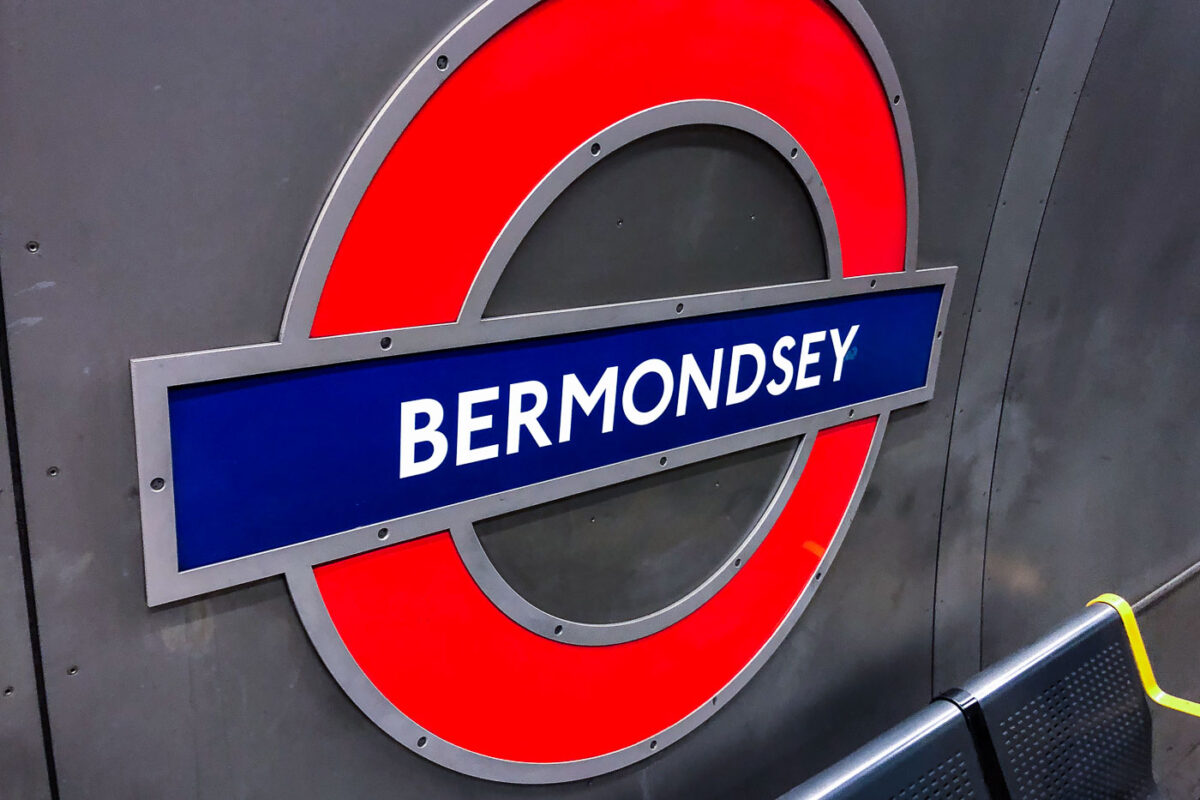
April 2019 — The distinctive red-and-blue roundel of Bermondsey Station marks one of the Jubilee Line’s most modern stops in southeast London. Opened in 1999 as part of the Jubilee Line Extension, the station features stainless steel panels, subdued lighting, and a minimalist aesthetic typical of late-20th-century London Transport design. The bold signage, designed to the original Transport for London typographic standards, stands out against the brushed metal backdrop—an enduring emblem of the Underground’s fusion of history and modern engineering.
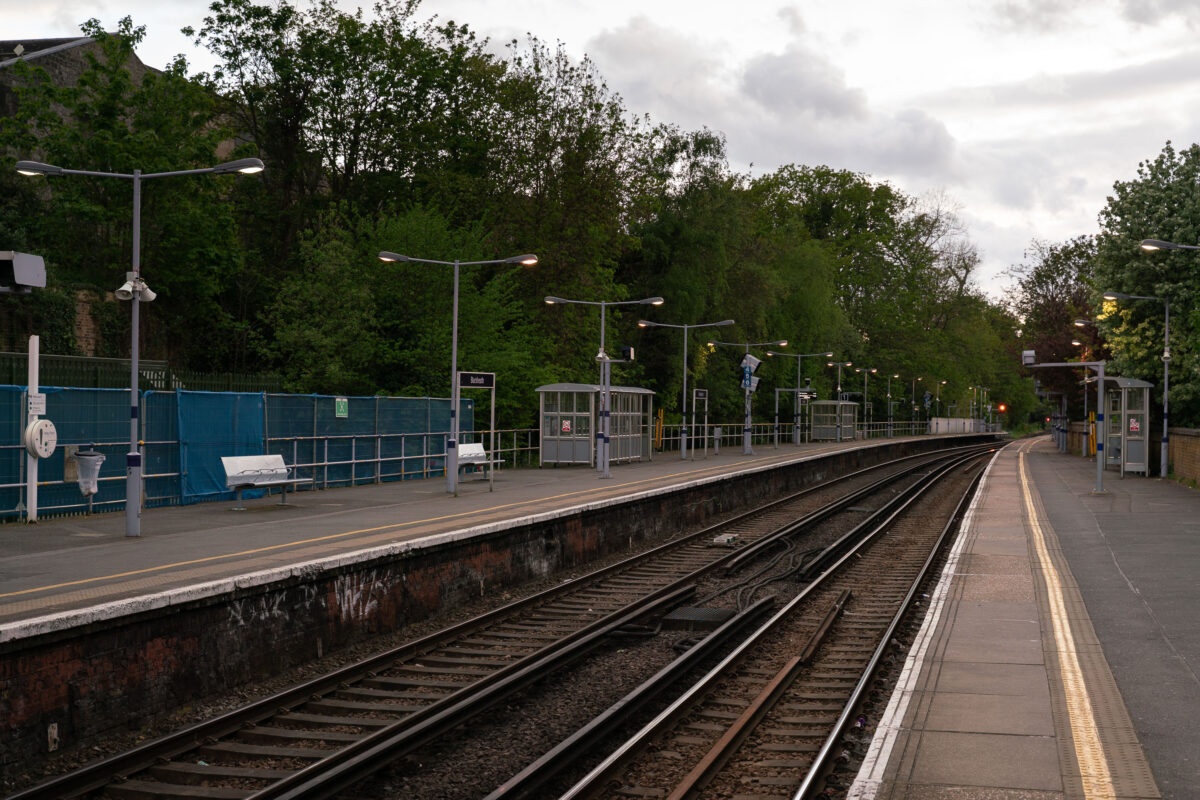
April 2019 — Blackheath railway station, located in southeast London, serves as a key stop on the Southeastern network connecting the capital to Kent. The twin platforms and simple iron canopies reflect mid-Victorian railway architecture, though much of the station has been modernized with LED lighting, CCTV, and accessible ramps. The gentle curve of the tracks and the subdued lighting of the evening evoke the quiet rhythm of the commuter hour, as trains shuttle between London Cannon Street, Charing Cross, and the suburbs beyond.
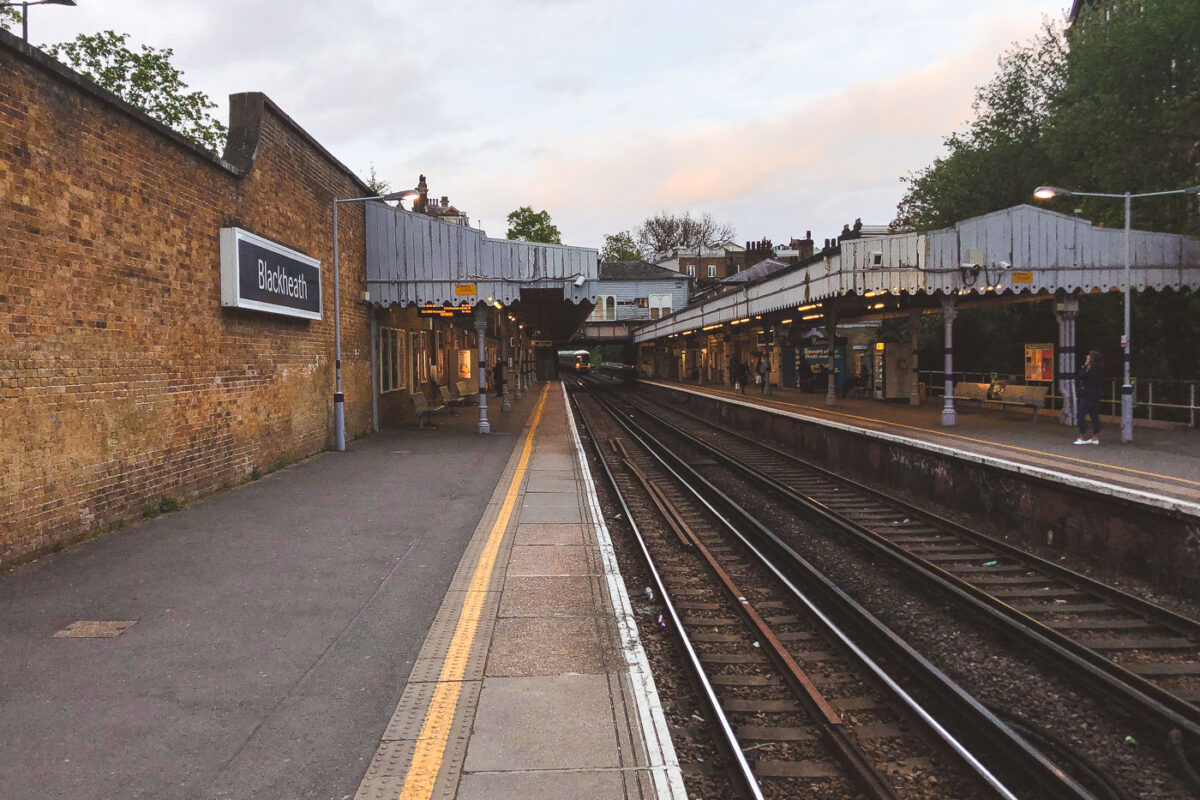
April 2019 — Blackheath railway station, a historic stop on the Southeastern line in southeast London, dates to the mid-19th century and still retains much of its Victorian charm. Its cast-iron canopies, decorative awnings, and brickwork walls reflect the architectural style of early suburban railway expansion. The platforms here serve frequent trains between London Charing Cross, Cannon Street, and Kent, making it a busy commuter link by day. In the quiet of dusk, however, the station takes on a tranquil character — a rare pause in the constant rhythm of London’s rail network.
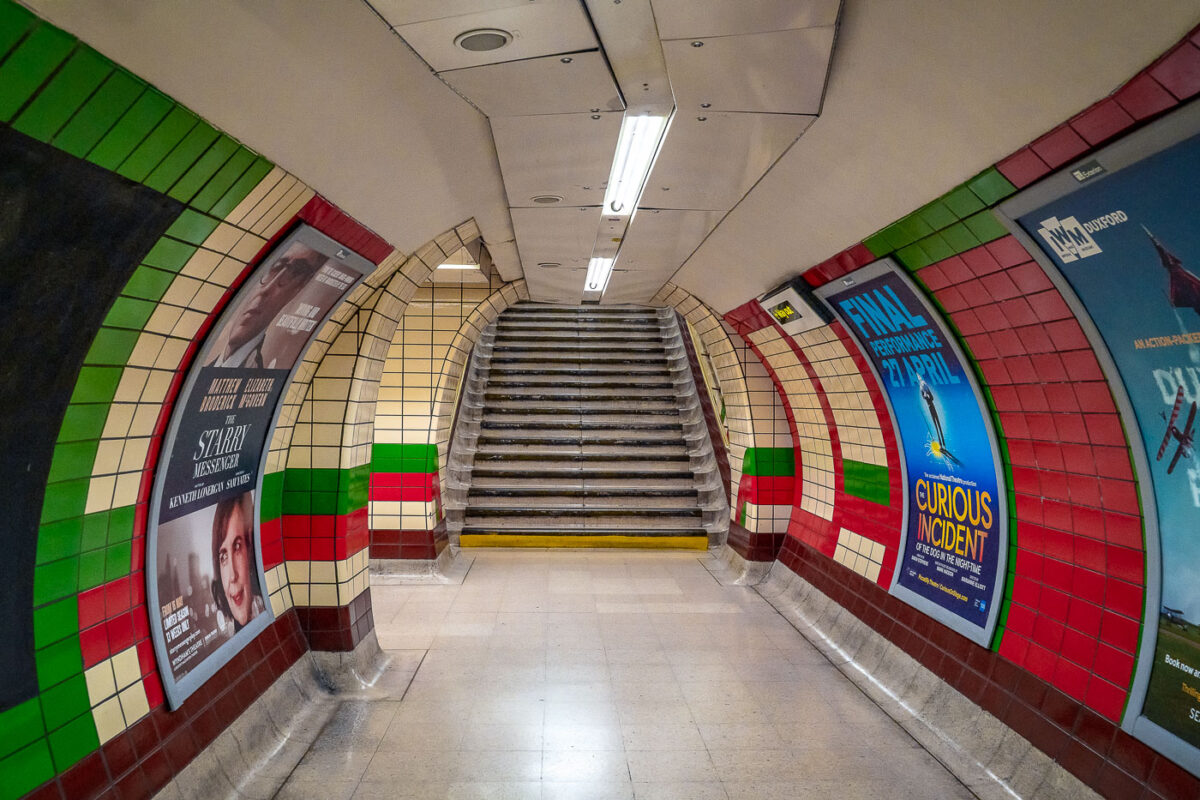
April 2019 — An underground corridor at London’s Piccadilly Circus Station connects the Bakerloo and Piccadilly line platforms deep beneath central London. Opened in 1906, the station sits directly under the city’s busiest intersection and handles tens of millions of passengers each year. The tunnels were rebuilt in the 1920s to improve crowd circulation, creating a complex network of escalators and passages like this one that channel travelers toward exits under Shaftesbury Avenue and Regent Street. Despite its age, the station remains one of the Underground’s most recognizable and heavily trafficked transport hubs in the West End.
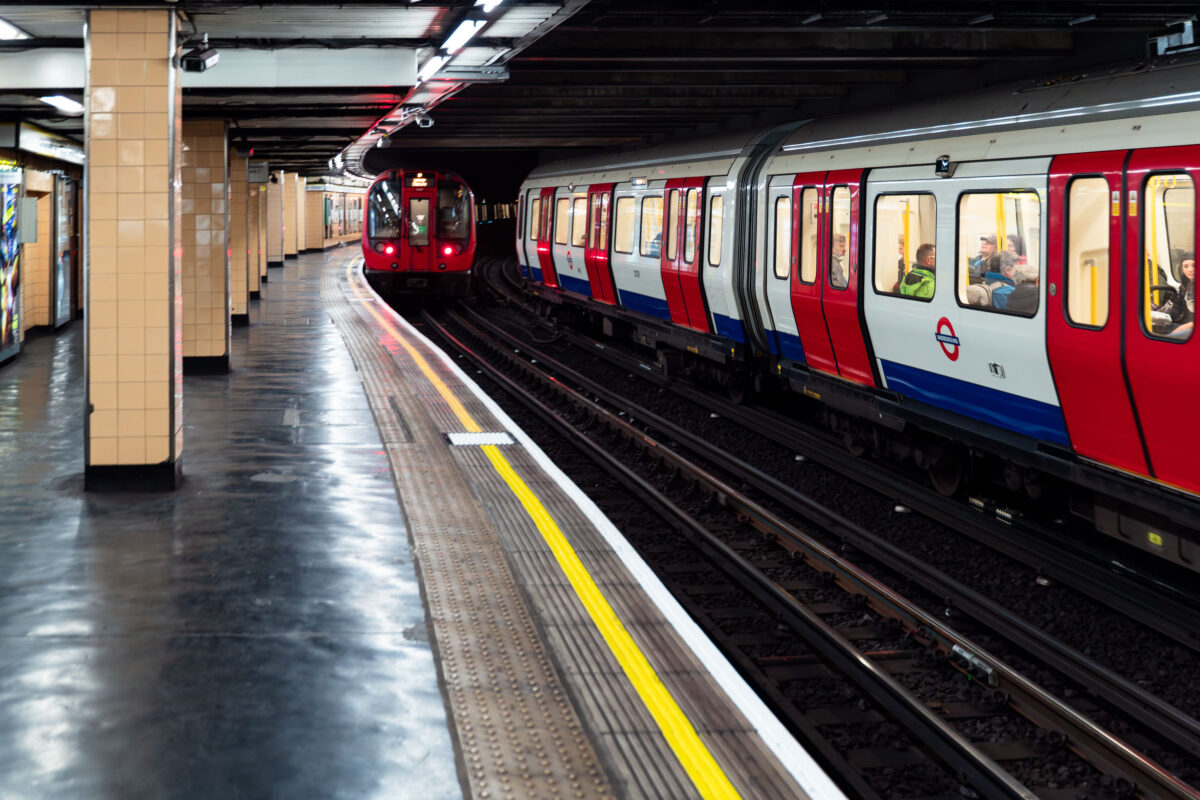
April 2019 — A pair of London Underground trains pass through Piccadilly Circus Station, one of the most recognizable stops in the network’s deep-level system. The curved platforms and distinctive cream-colored tilework reflect the 1920s modernization that gave the station its Art Deco influence, while the red, white, and blue train livery remains a symbol of the city’s transport identity. The platform’s polished floor and yellow safety line guide passengers along the busy interchange, located beneath the heart of London’s West End.
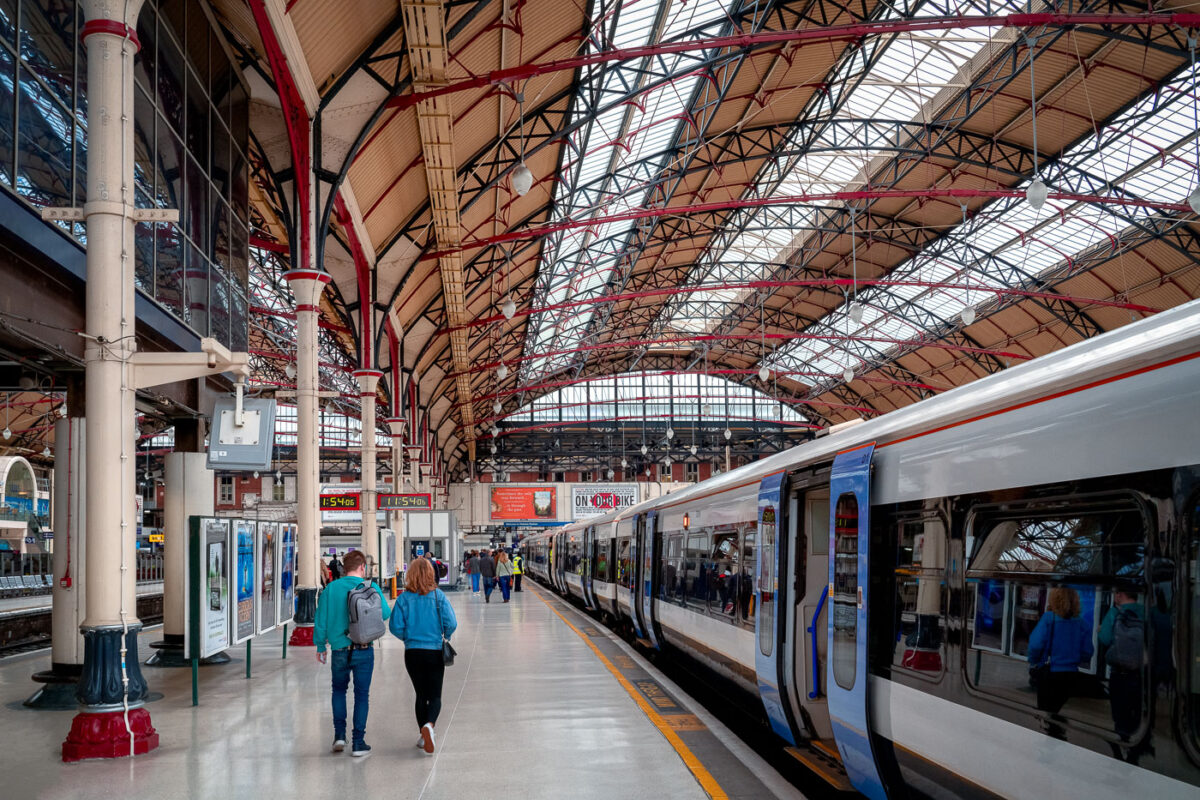
April 2019 — The platforms of London Victoria Station stretch beneath an ornate iron-and-glass roof, a hallmark of late 19th-century railway engineering. The intricate red and black trusses, designed for both strength and elegance, frame the soft natural light filtering through the skylights above. Commuters move toward the waiting trains of the Southern and Southeastern networks, a daily rhythm set against one of London’s most architecturally distinctive termini, where Victorian design continues to serve the modern rail era.
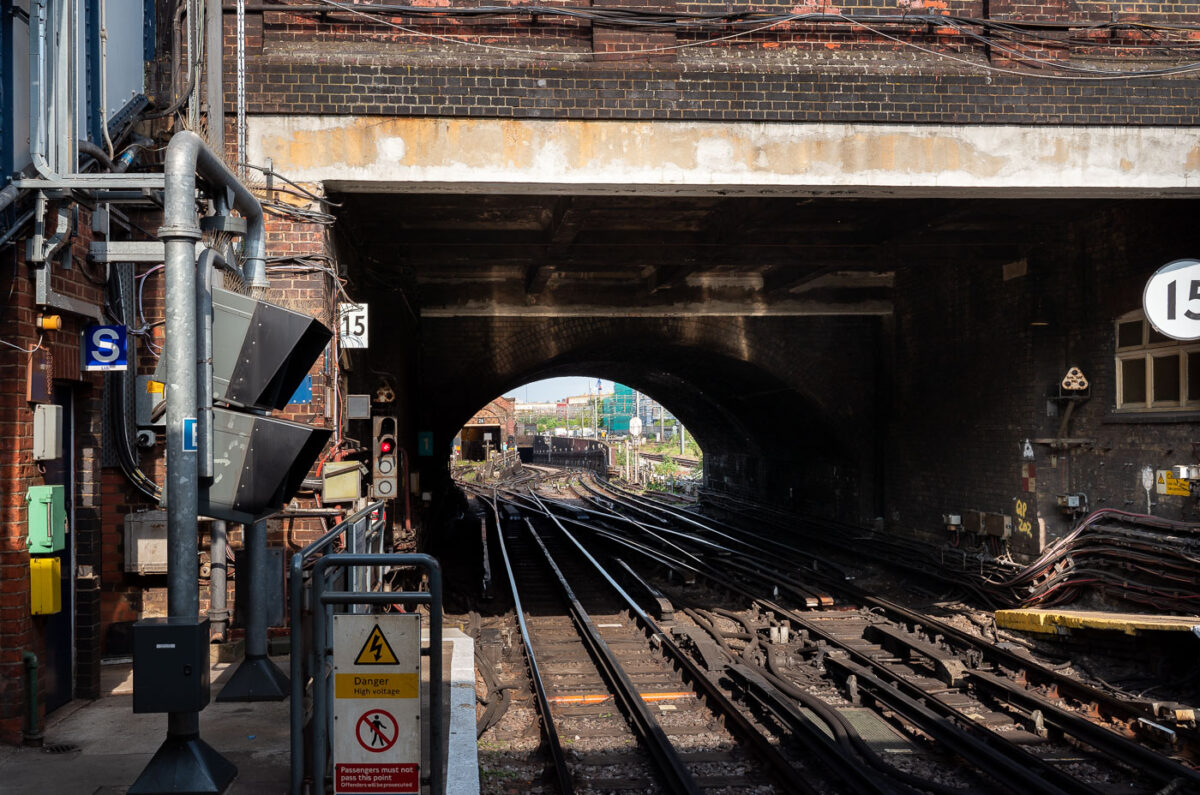
April 2019 — The intricate trackwork and tunnel entrance at Queen’s Park Station in northwest London reveal the dual identity of this site as both a passenger stop and a key depot for the Bakerloo Line. Opened in 1915, Queen’s Park serves as the operational transition point where London Underground trains share Network Rail tracks toward Harrow & Wealdstone. The junction’s dense web of points, signals, and electrified rails embodies over a century of continuous modernization—bridging early 20th-century tube engineering with today’s integrated mainline-underground operations.
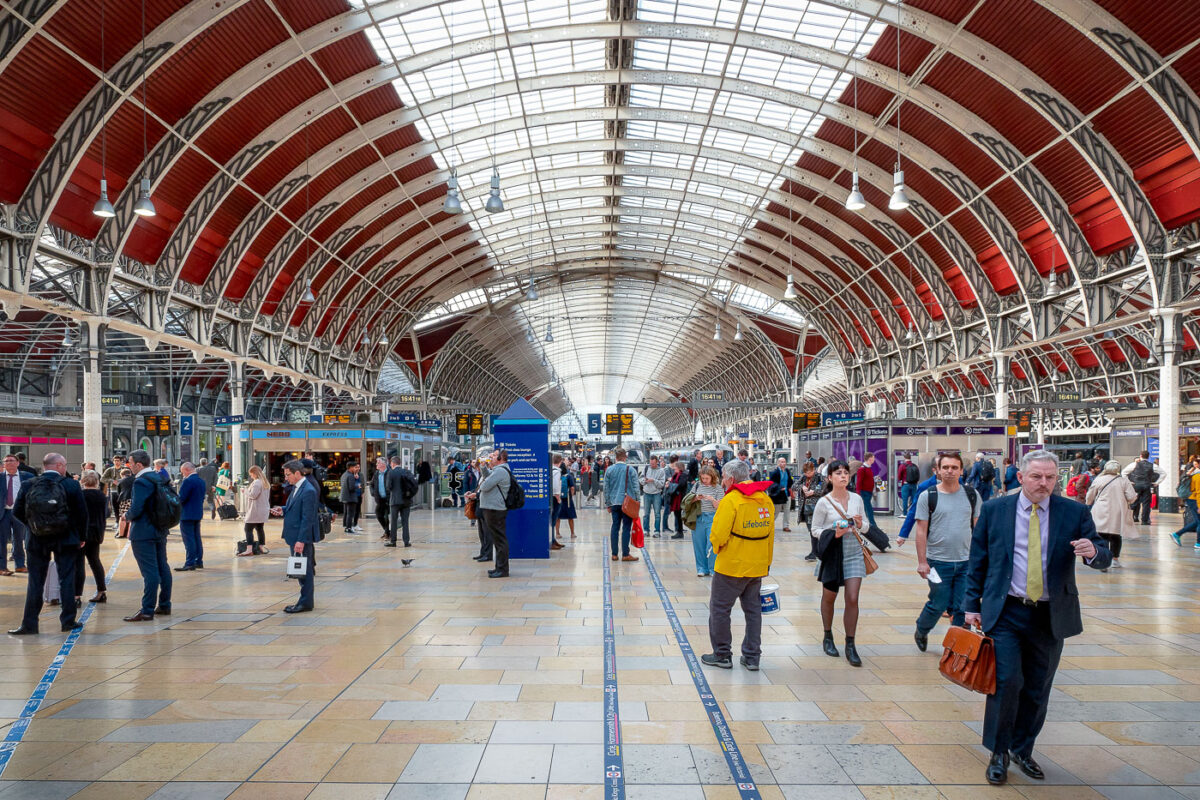
April 2019 — Victoria station, also known as London Victoria, is a central London railway terminus and connected London Underground station in Victoria, in the City of Westminster, managed by Network Rail. Named after the nearby Victoria Street (not the Queen), the main line station is a terminus of the Brighton main line to Gatwick Airport and Brighton and the Chatham main line to Ramsgate and Dover via Chatham. From the main lines, trains can connect to the Catford Loop Line, Dartford Loop Line, and the Oxted line to East Grinstead and Uckfield. Southern operates most commuter and regional services to south London, Sussex and parts of east Surrey, while Southeastern operates trains to south east London and Kent. Gatwick Express trains run direct to Gatwick. The Underground station is on the Circle and District lines between Sloane Square and St. James's Park, and the Victoria line between Pimlico and Green Park. The area around the station is an important interchange for other forms of transport: a local bus station is in the forecourt and Victoria Coach Station is nearby.
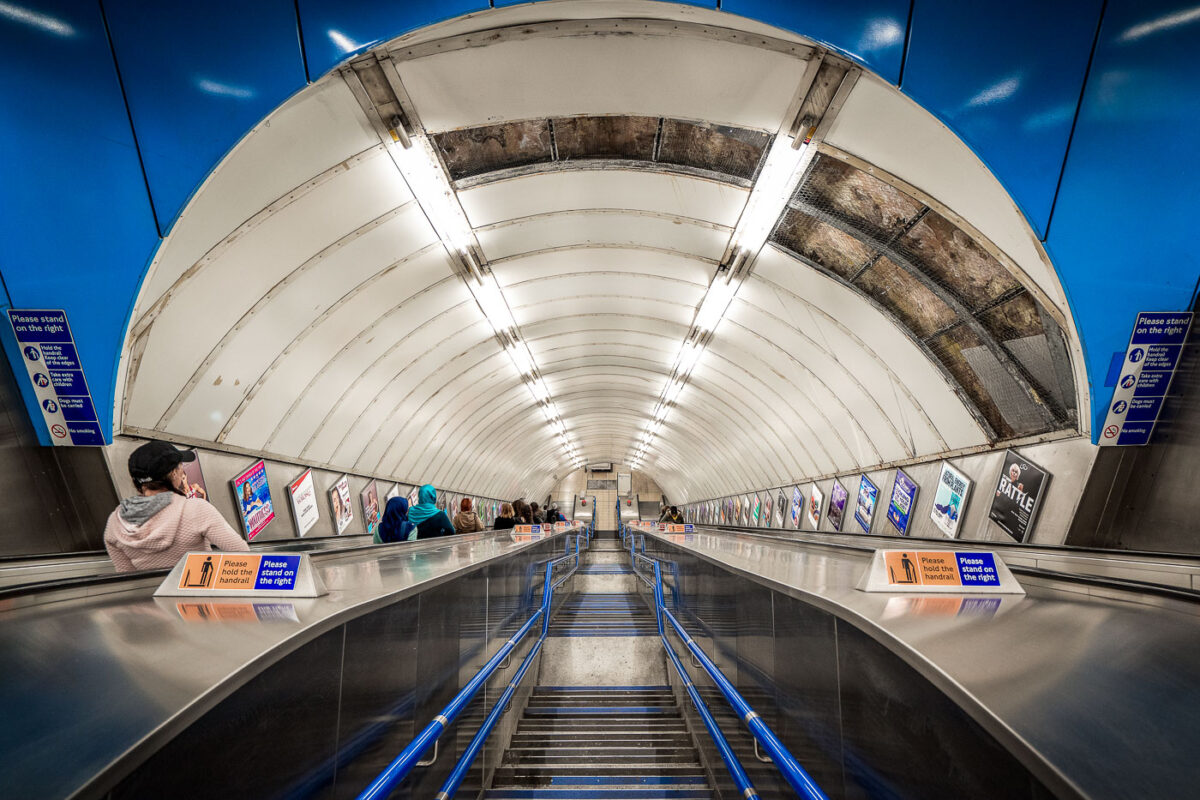
April 2019 — Commuters ride the long escalators inside Charing Cross Underground Station in central London. The station, a busy interchange on the Northern and Bakerloo lines, is known for its deep tunnels, heavy foot traffic, and role as a gateway to Trafalgar Square and the West End. Rows of posters line the walls, while bright fluorescent lighting and metallic finishes highlight the stark, utilitarian design typical of the London Tube.
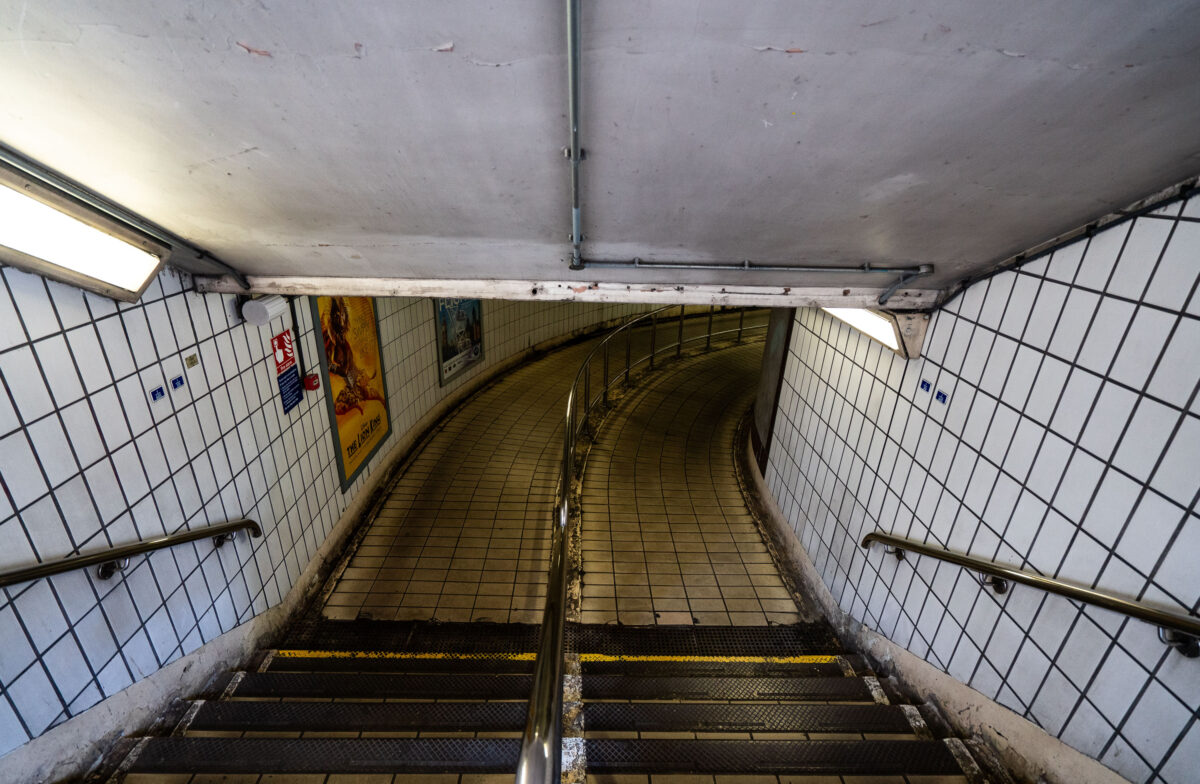
April 2019 — Descending into the tiled corridors of Charing Cross Station, this curved passageway reflects the classic utilitarian design of the London Underground’s mid-20th-century refurbishments. The white-tiled walls, stainless-steel handrails, and fluorescent lighting form a distinctly familiar aesthetic across the network, guiding travelers toward the Northern and Bakerloo lines. Once part of the original terminus for trains entering central London, Charing Cross remains a vital interchange linking rail and Tube services near Trafalgar Square—its passages echoing the constant rhythm of London commuters.
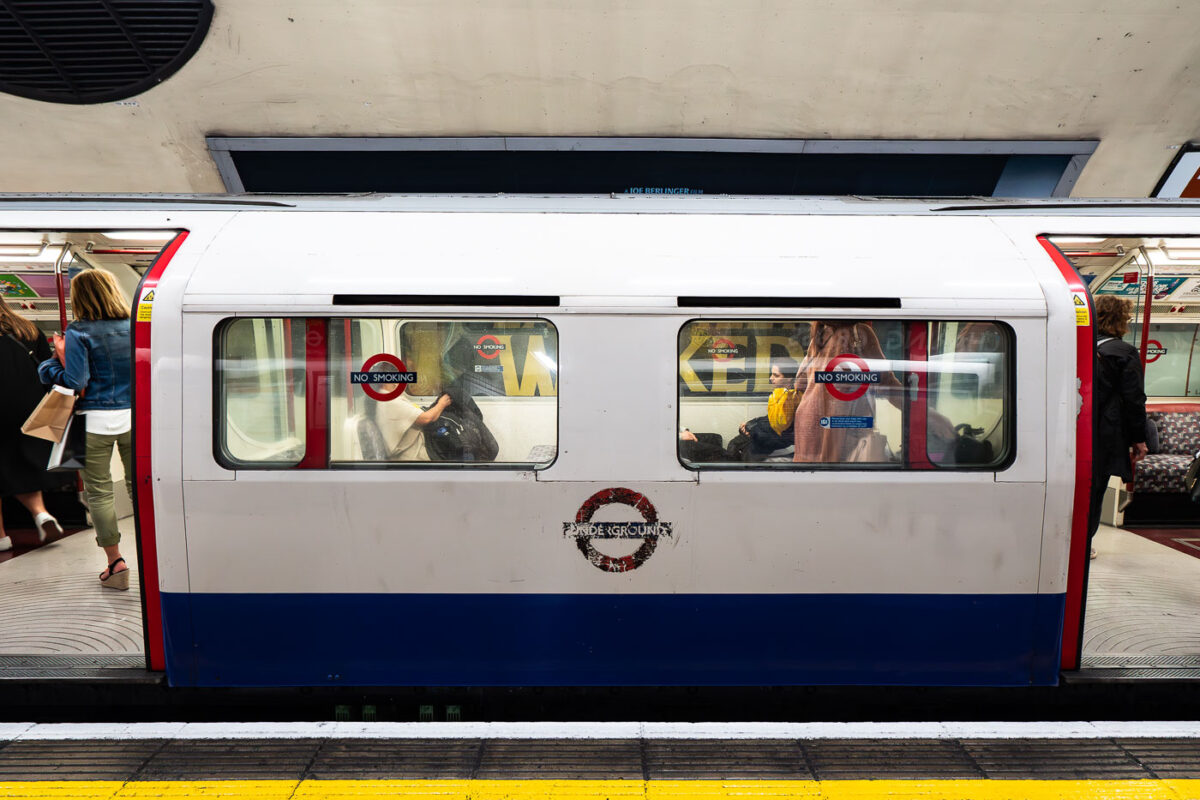
April 2019 — A Bakerloo Line train pauses at Charing Cross Underground Station, one of the most historically layered stations in central London. Opened in 1906, Charing Cross became a key interchange point connecting the Bakerloo and Northern lines beneath the Strand. The photograph captures the distinctive orange-tiled tunnel portal and overhead “Way Out” signage leading toward the mainline station above. Once part of the Jubilee Line until 1999, this section now serves as a terminus for Bakerloo trains, blending Edwardian design elements with the operational systems of a 21st-century network.
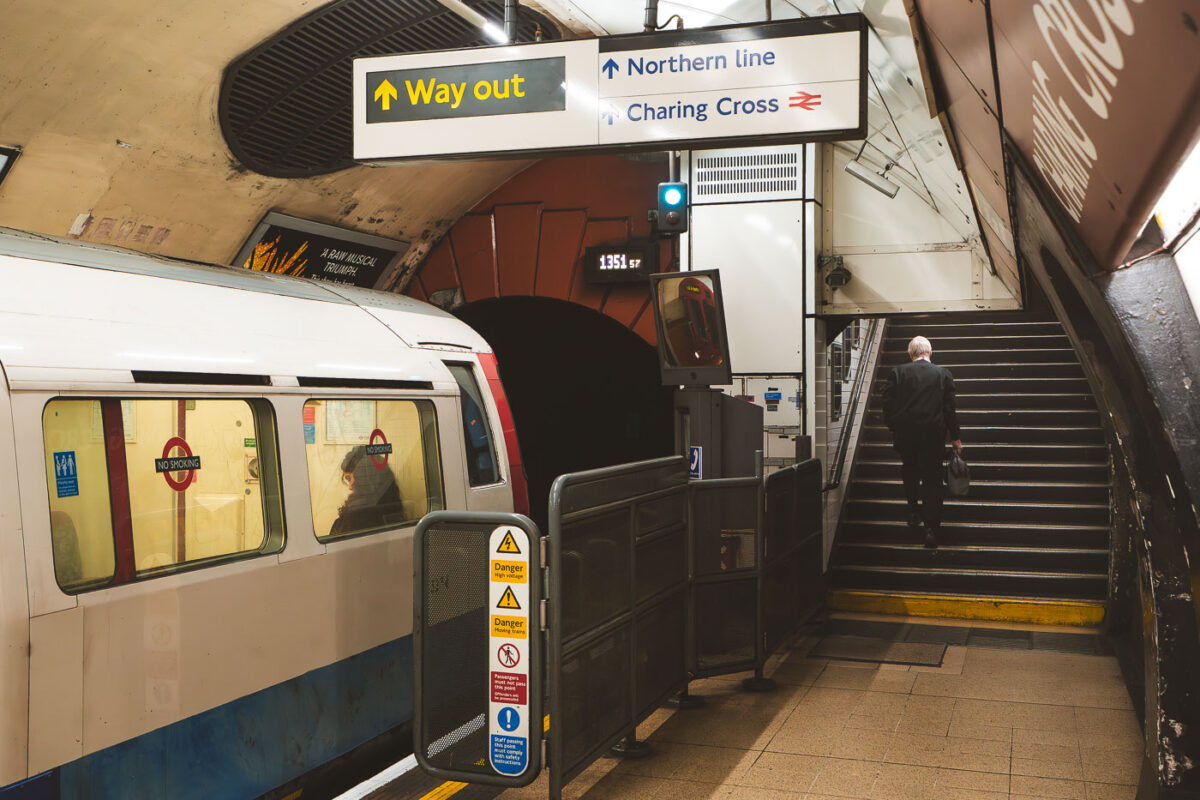
April 2019 — A Bakerloo Line train rests at Charing Cross Underground Station, beneath the heart of central London. Once a junction for both the Bakerloo and Jubilee lines, Charing Cross now functions as the southern terminus for Bakerloo services, connecting to the mainline station above. The photograph highlights the tunnel portal with its characteristic red tiles and the clean signage pointing toward the Northern line and the National Rail concourse. Opened in 1906 and expanded through the 1970s, the station remains an emblem of the Underground’s architectural layering—where Edwardian infrastructure meets modern transit demands.
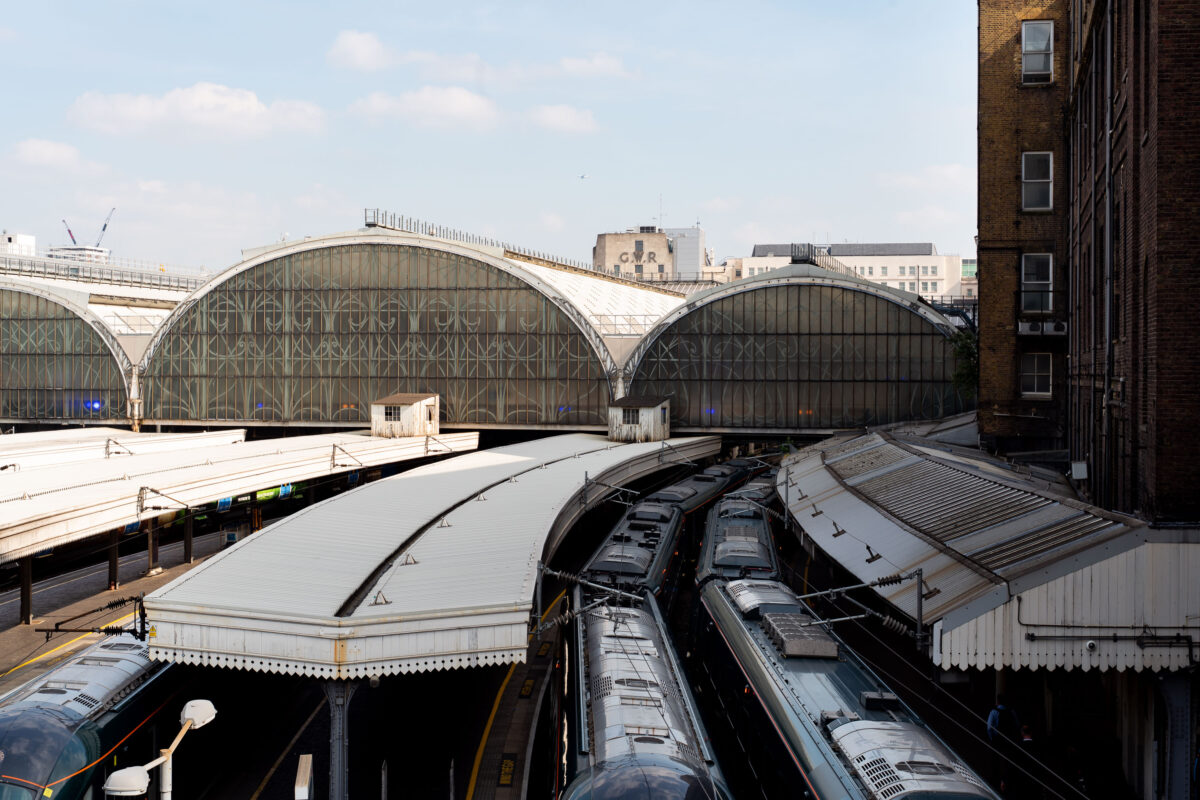
April 2019 — The trains at Paddington Station sit beneath the grand arched glass-and-iron roofs first designed by Isambard Kingdom Brunel and Matthew Digby Wyatt in the 1850s. The repeating barrel-vaulted structures—still marked by the faded “GWR” insignia for the Great Western Railway—remain a hallmark of Victorian railway engineering. Now serving modern intercity services such as the GWR and Heathrow Express, the station continues to blend historic design with contemporary rail operations, standing as one of London’s most architecturally significant transport hubs.
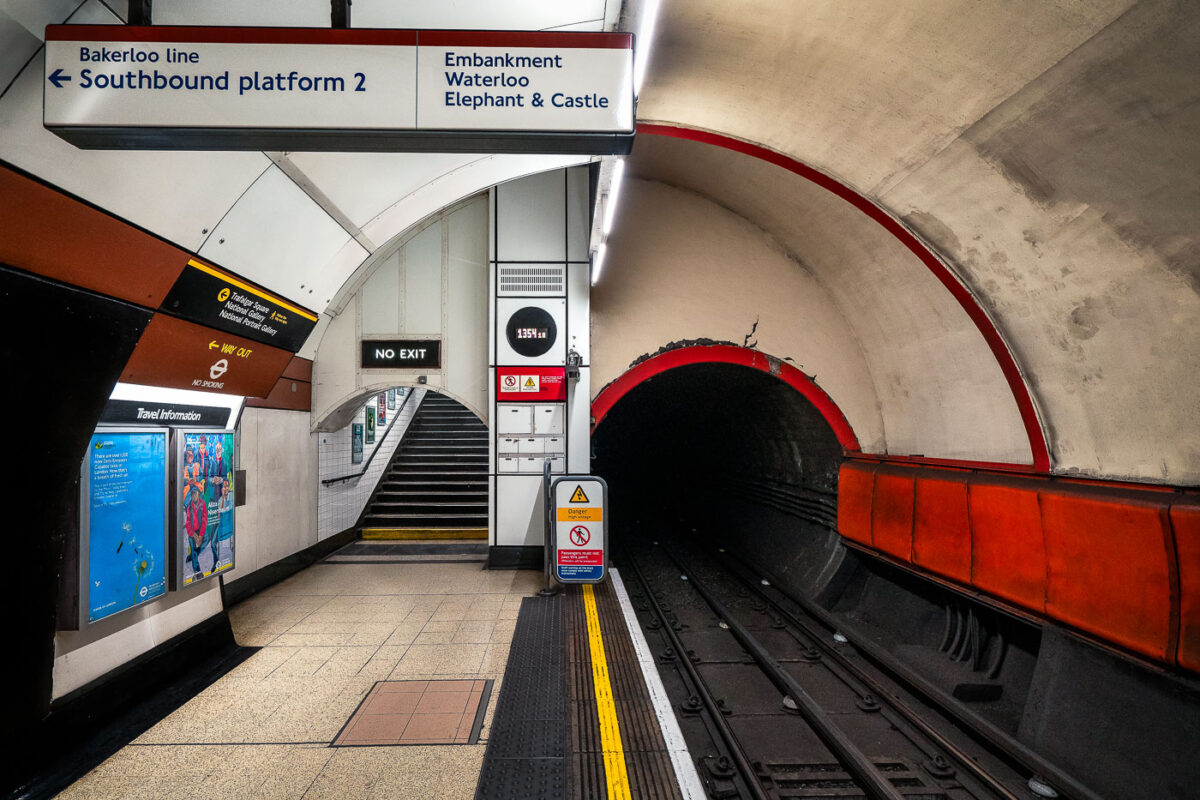
April 2019 — The southbound Bakerloo line platform at Charing Cross Underground Station in central London, showing the distinctive narrow tube tunnel built in the early 1900s. The red-edged lining around the tunnel mouth and the tiled passageway reflect classic London Transport design standards. Opened in 1906, the Bakerloo line was one of the early deep-level “tube” lines, and this station once served as its southern terminus before extensions carried it to Elephant & Castle. The signage and steep staircases illustrate the compact engineering that defined London’s early subterranean railways.
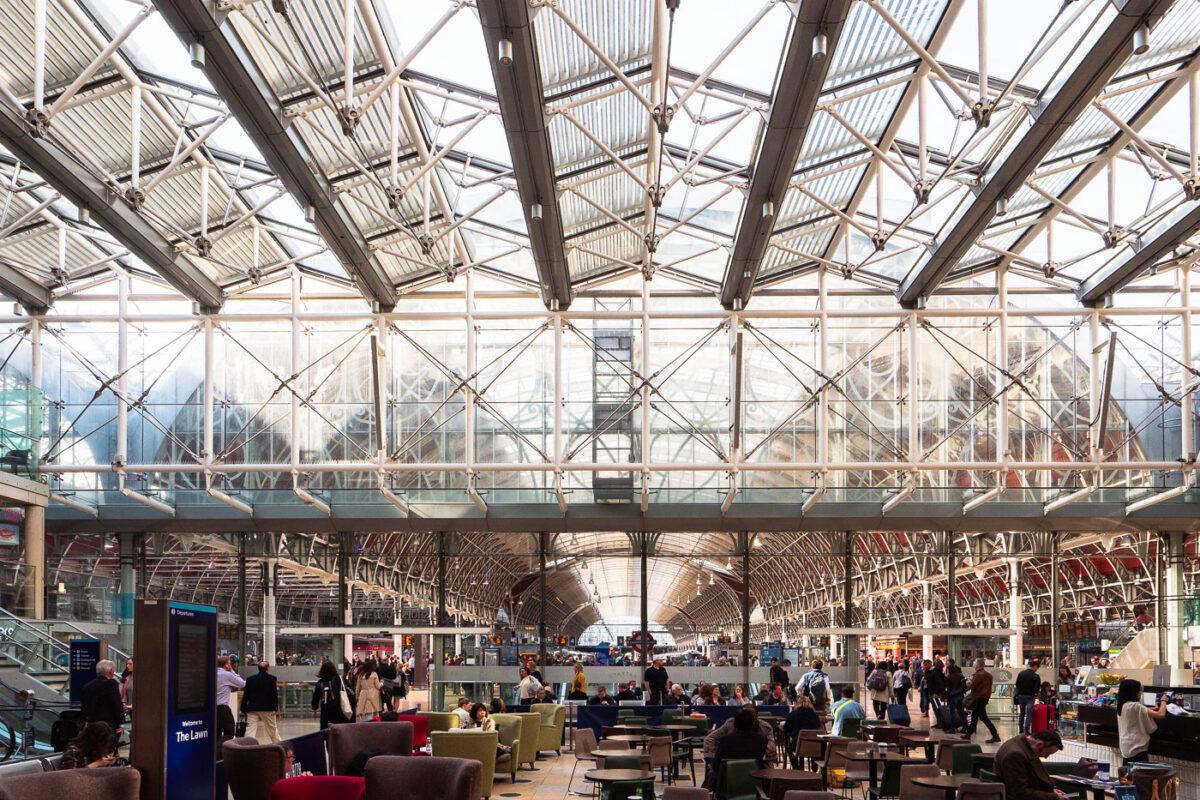
April 2019 — The Lawn at Paddington Station serves as the heart of the concourse, framed by the vast iron and glass canopy that defines Isambard Kingdom Brunel’s 19th-century design. Originally constructed in the 1850s, the station’s signature arched roof spans over the main platforms and the modernized public area below, now filled with cafés, travelers, and commuters. The space was reimagined in the early 2000s as part of a major restoration effort that preserved the Victorian ironwork while adding new steel and glass elements for natural light and openness. Beneath this intricate structure, passengers gather in a place where industrial heritage meets contemporary travel design.
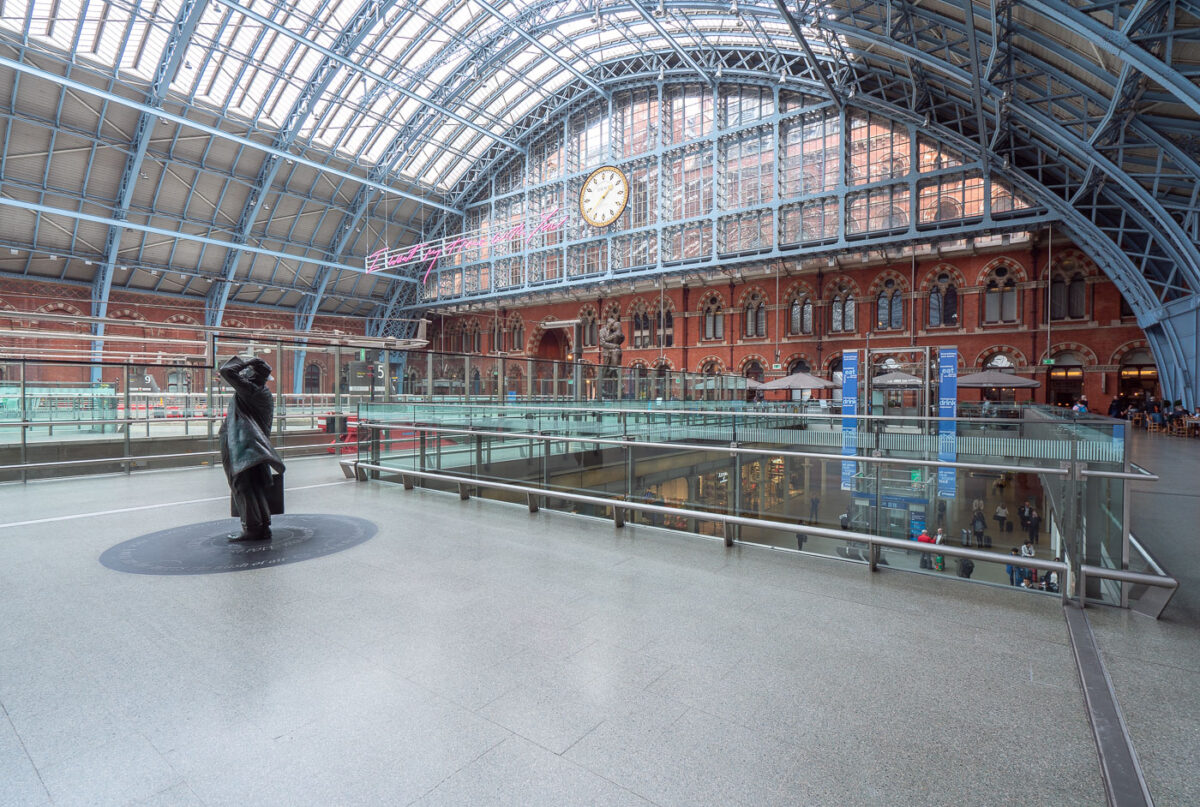
May 2019 — King's Cross St. Pancras (formerly King's Cross) is a London Underground station on Euston Road in the Borough of Camden, Central London. It serves King's Cross and St Pancras main line stations in fare zone 1, and is an interchange between six Underground lines. The station was one of the first to open on the network; as of 2017, it is the most used station on the network for passenger entrances and exits combined.
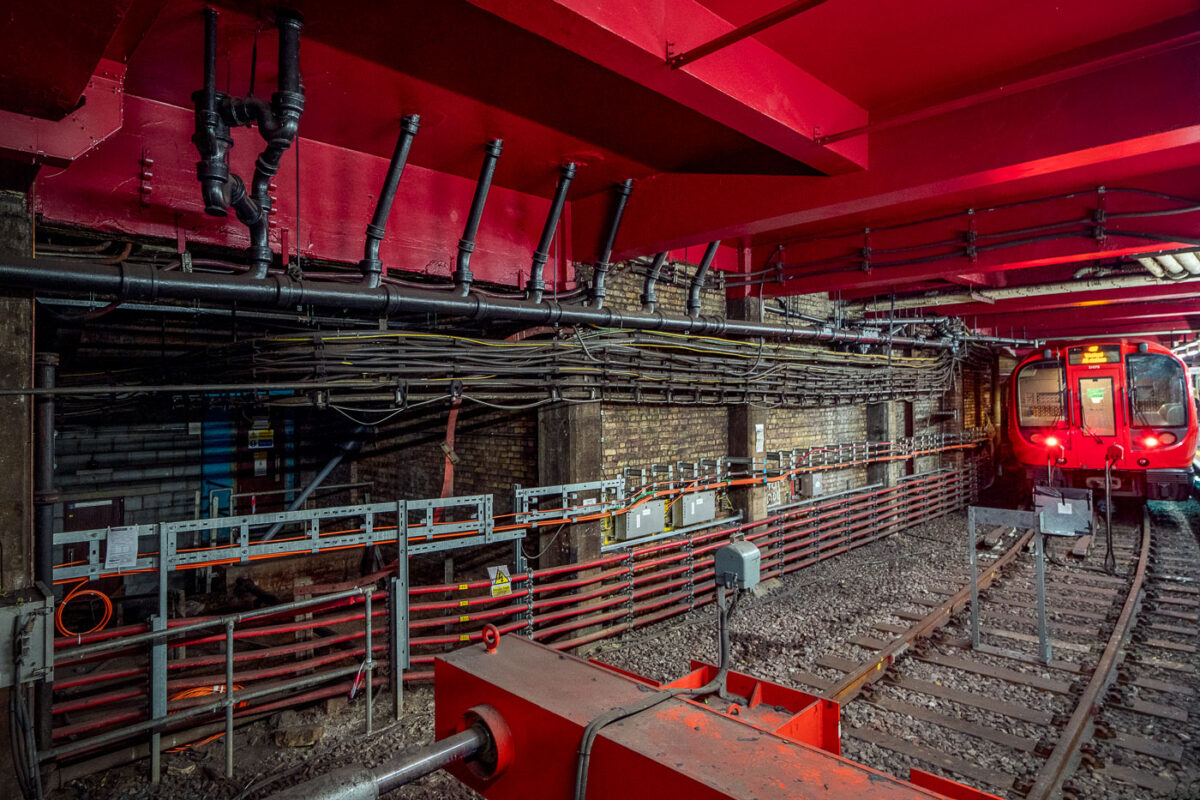
May 2019 — Deep beneath central London, Baker Street’s Metropolitan Line platforms reveal the layered engineering of one of the oldest functioning railway systems in the world. The exposed brick tunnel and steel framing date back to the Victorian “cut-and-cover” era of the 1860s, when steam locomotives first ran through these very corridors. The heavy red girders seen above were reinforced during modern refurbishments, supporting the city streets above while housing utilities and cable conduits that power today’s Underground network. The train at the far end belongs to the S8 Stock series, introduced in 2010 by Bombardier for the Metropolitan Line, equipped with air conditioning and regenerative braking. The dense web of cables and control boxes along the wall carries signal, communication, and traction power circuits, all vital to the line’s safe operation. Baker Street’s infrastructure embodies London Transport’s continual evolution—from soot-covered tunnels to precision-controlled, electrically powered systems still running along the same 19th-century alignments.
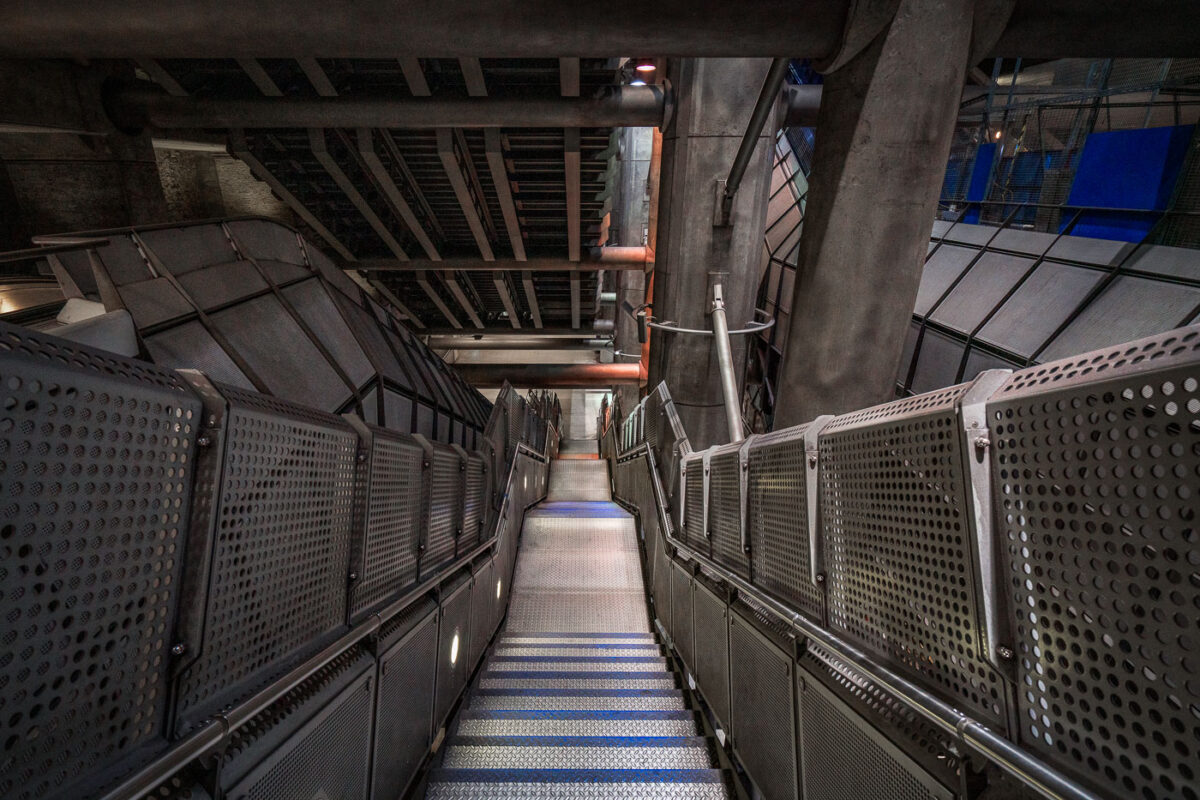
May 2019 — The angular steel and concrete design of Westminster Underground Station represents one of the most ambitious architectural undertakings of London’s Jubilee Line Extension, opened in 1999. Designed by Foster + Partners, the station descends more than 30 meters below ground beside the Houses of Parliament, requiring deep excavation and advanced structural engineering to stabilize the surrounding historic area. The stairwell seen here showcases the station’s signature industrial aesthetic — exposed concrete ribs, perforated metal panels, and massive supporting beams that evoke the look of a subterranean cathedral of infrastructure. Built within a massive box excavated beneath Bridge Street, Westminster’s layout integrates vertical circulation through lifts, escalators, and these steep stairways connecting the ticket hall to multiple underground levels. The design not only accommodates heavy passenger volumes but celebrates the raw mechanics of public transit, merging utility with architectural expression.
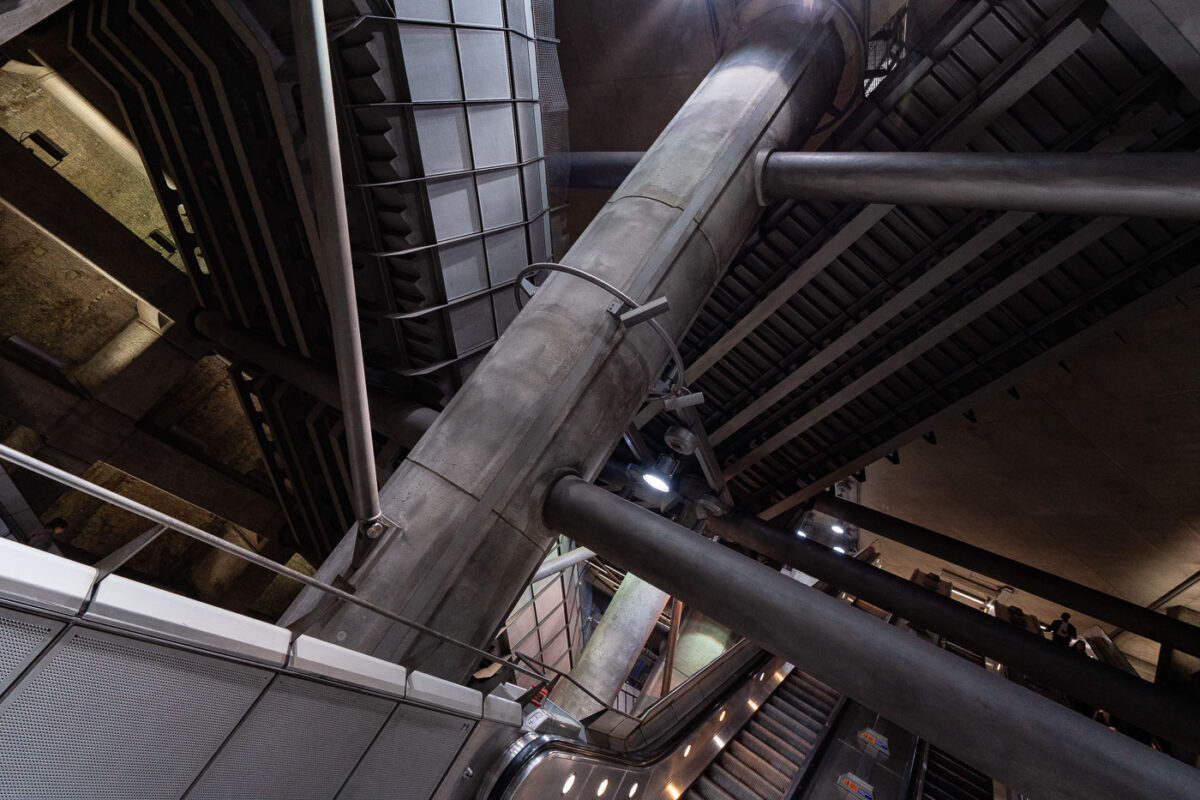
May 2019 — Westminster is a London Underground station in the City of Westminster. It is served by the Circle, District and Jubilee lines. On the Circle and District lines, the station is between St. James's Park and Embankment, and on the Jubilee line it is between Green Park and Waterloo. It is in Travelcard Zone 1. The station is located at the corner of Bridge Street and Victoria Embankment and is close to the Houses of Parliament, Westminster Abbey, Parliament Square, Whitehall, Westminster Bridge, and the London Eye. Also close by are Downing Street, the Cenotaph, Westminster Millennium Pier, the Treasury, the Foreign and Commonwealth Office, and the Supreme Court.
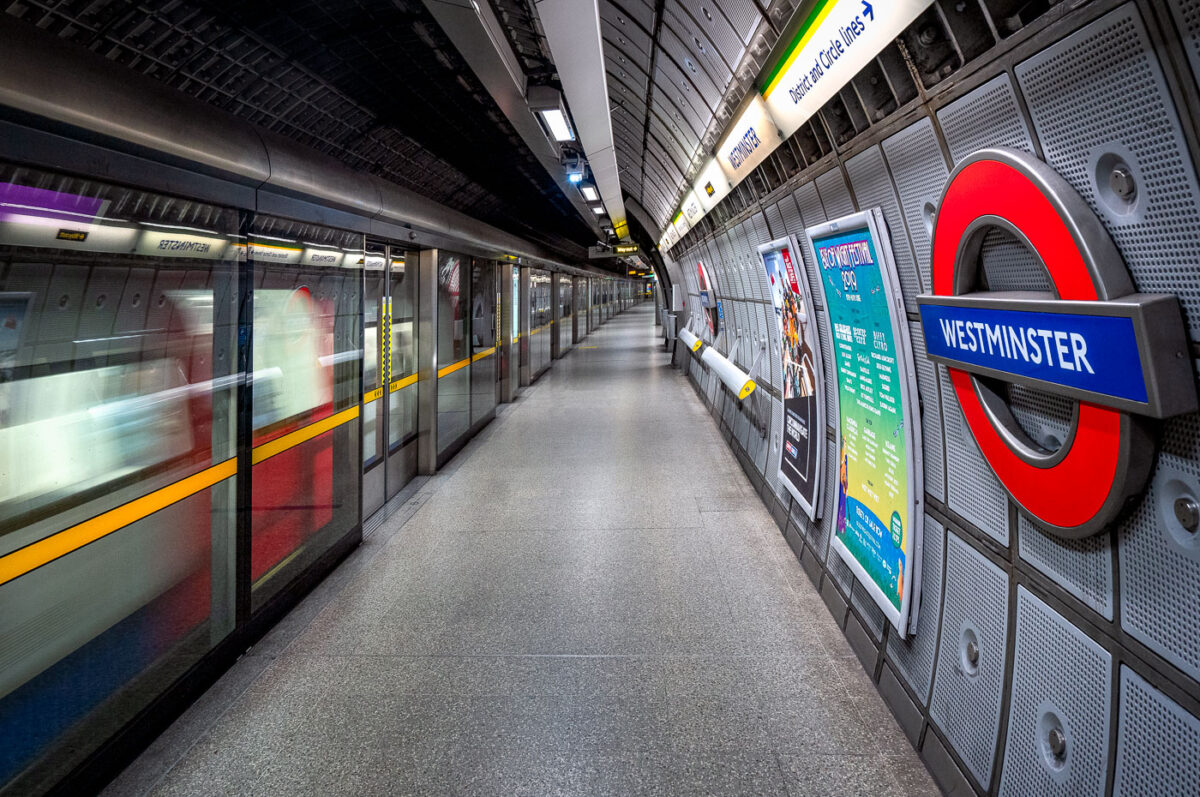
May 2019 — The Jubilee Line platforms at Westminster Underground Station represent the deep-level engineering and modernist design of London’s late-20th-century transit expansion. Constructed as part of the 1999 Jubilee Line Extension, these platforms sit approximately 30 meters below ground, directly beneath the District and Circle line tunnels. Designed by Foster + Partners, the station features full-height platform screen doors — a safety innovation uncommon on most of the Underground — and a sleek system of acoustic panels and perforated aluminum cladding that enhance both sound control and visual uniformity. Every structural and material detail reflects the project’s dual purpose: to manage immense passenger flow serving Parliament and Whitehall above, while preserving architectural clarity within a highly constrained urban site. The smooth curvature of the platform walls, precision lighting, and isolation of mechanical systems behind layered steel panels highlight the station’s integration of industrial functionality with the aesthetics of modern infrastructure.
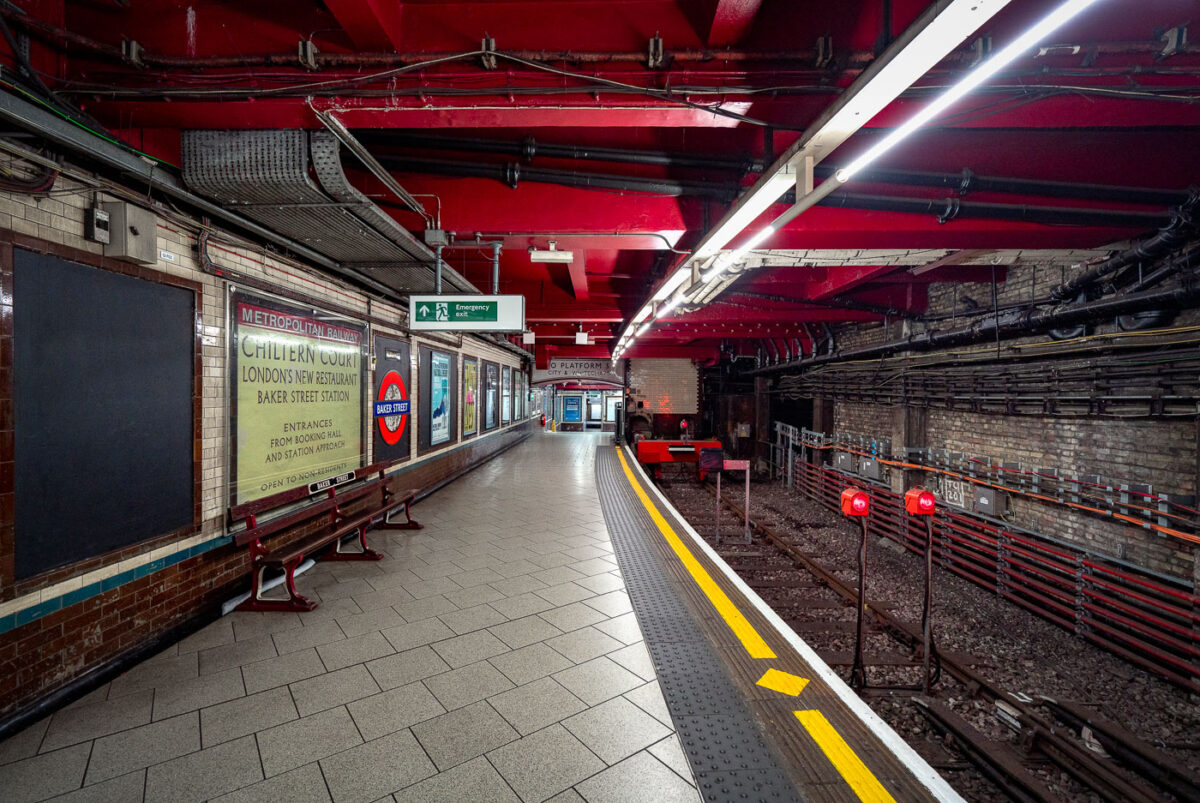
May 2019 — Baker Street Station’s Metropolitan Line platforms represent one of the oldest sections of the London Underground, opened in 1863 as part of the world’s first subterranean railway. The terminus platforms, seen here, retain their cut-and-cover Victorian brickwork paired with modern safety updates and striking red-painted steel reinforcements added during later refurbishments. The station originally served the Metropolitan Railway’s steam-hauled trains running between Paddington and Farringdon before electrification in the early 20th century transformed the network. Period signage advertising “Chiltern Court” and the original Metropolitan Railway branding pay homage to its heritage, contrasting with the exposed wiring, signal lights, and tiling that reveal more than 160 years of evolving underground infrastructure. Today, Baker Street remains a key interchange, connecting five Underground lines while preserving much of the industrial atmosphere that defined London’s pioneering approach to mass transit.
August 2019 —
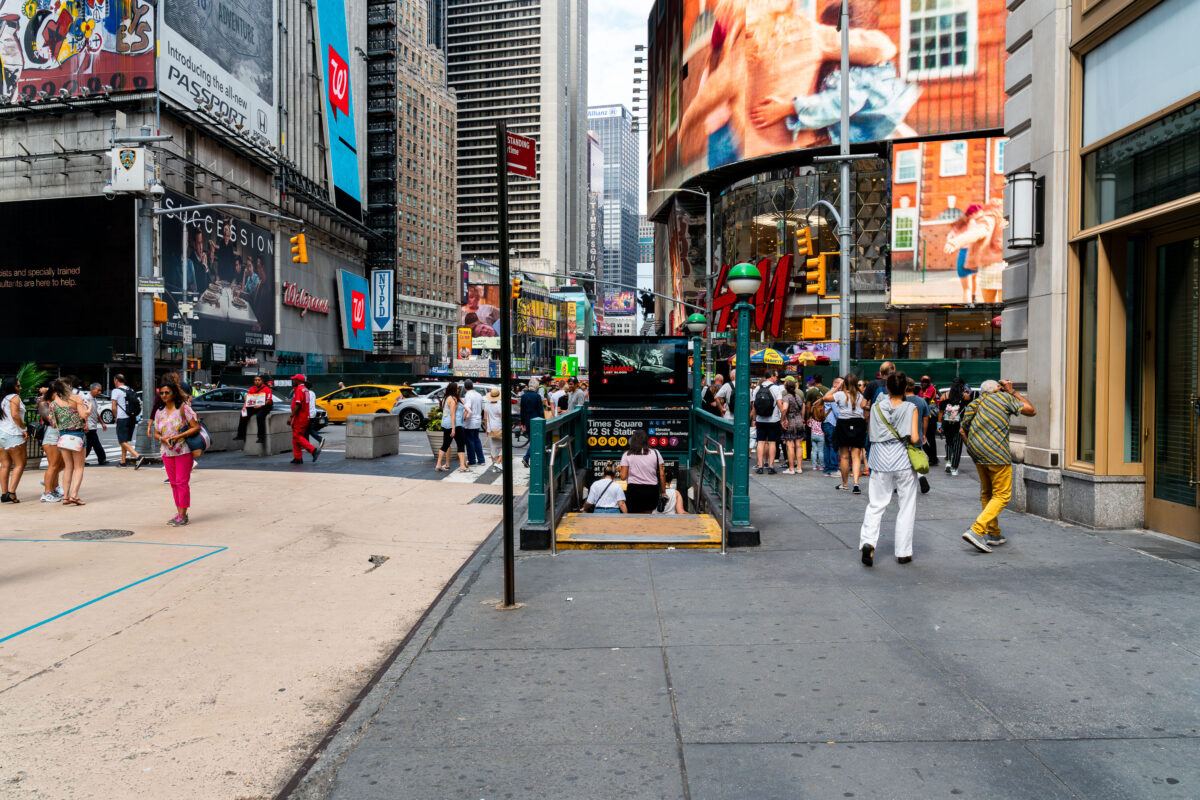
September 2019 — Pedestrians crowd the sidewalks around a subway entrance in Times Square, Manhattan. The 42nd Street–Times Square station, one of the busiest in New York City, connects multiple subway lines beneath the bright billboards, storefronts, and heavy traffic of the theater district.
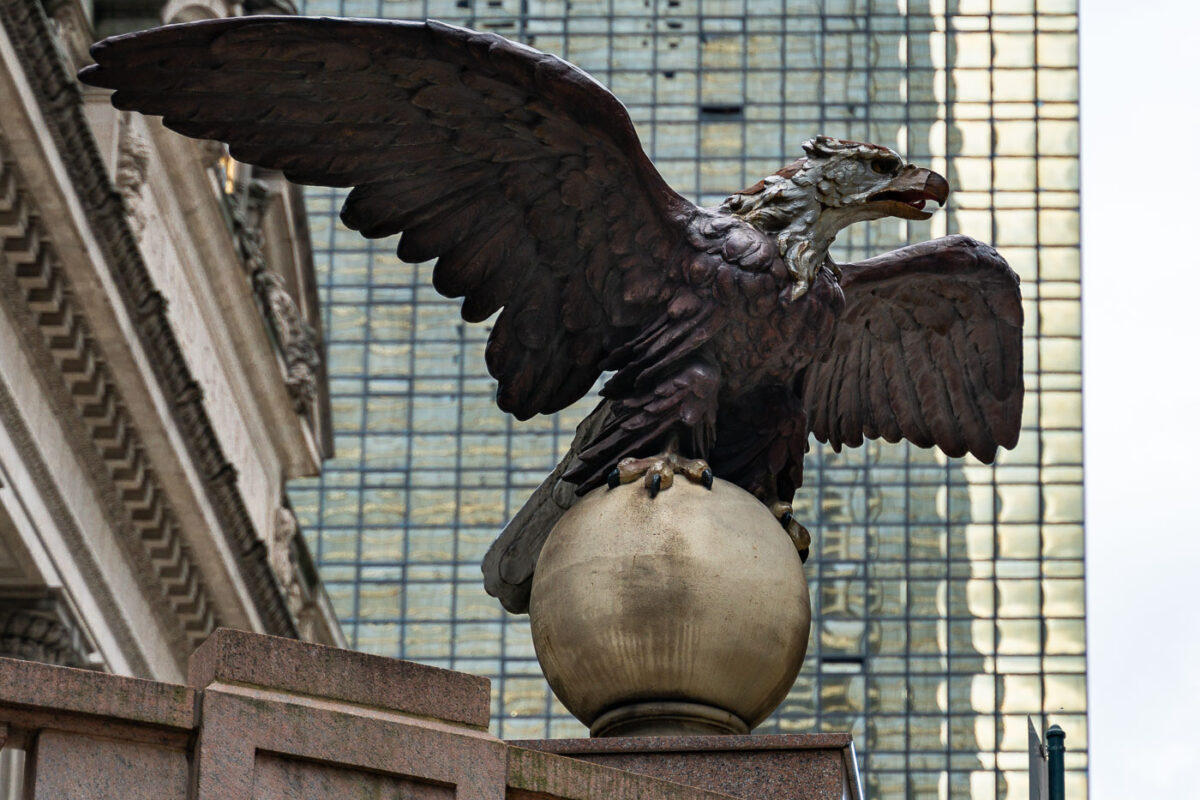
September 2019 — An eagle statue perched on a globe stands outside Grand Central Terminal in Manhattan. The bronze sculpture, one of several around the historic landmark, looks out over Midtown with the glass facade of the MetLife Building rising in the background.
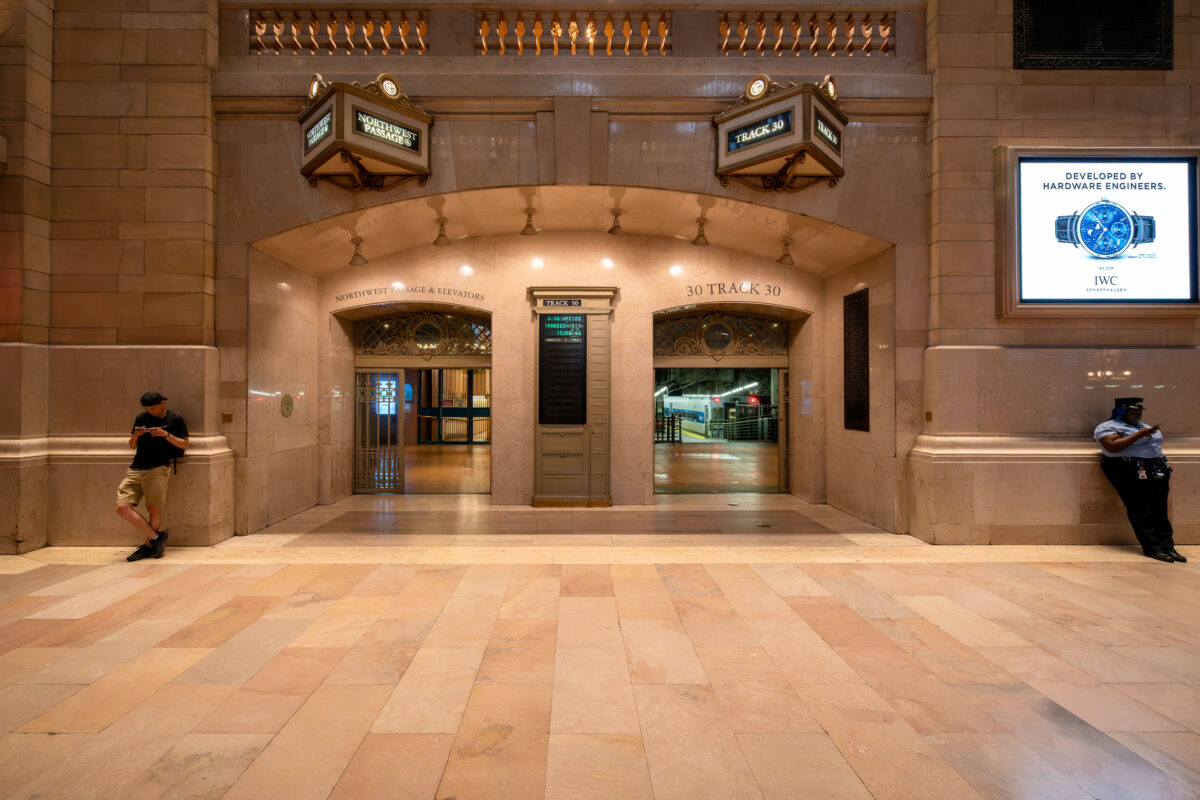
September 2019 — The entrance to Track 30 inside Grand Central Terminal in Manhattan is seen at night. The marble hallways of the landmark station lead to the train platforms below, as a commuter and a security officer stand near the archways beneath illuminated signs.
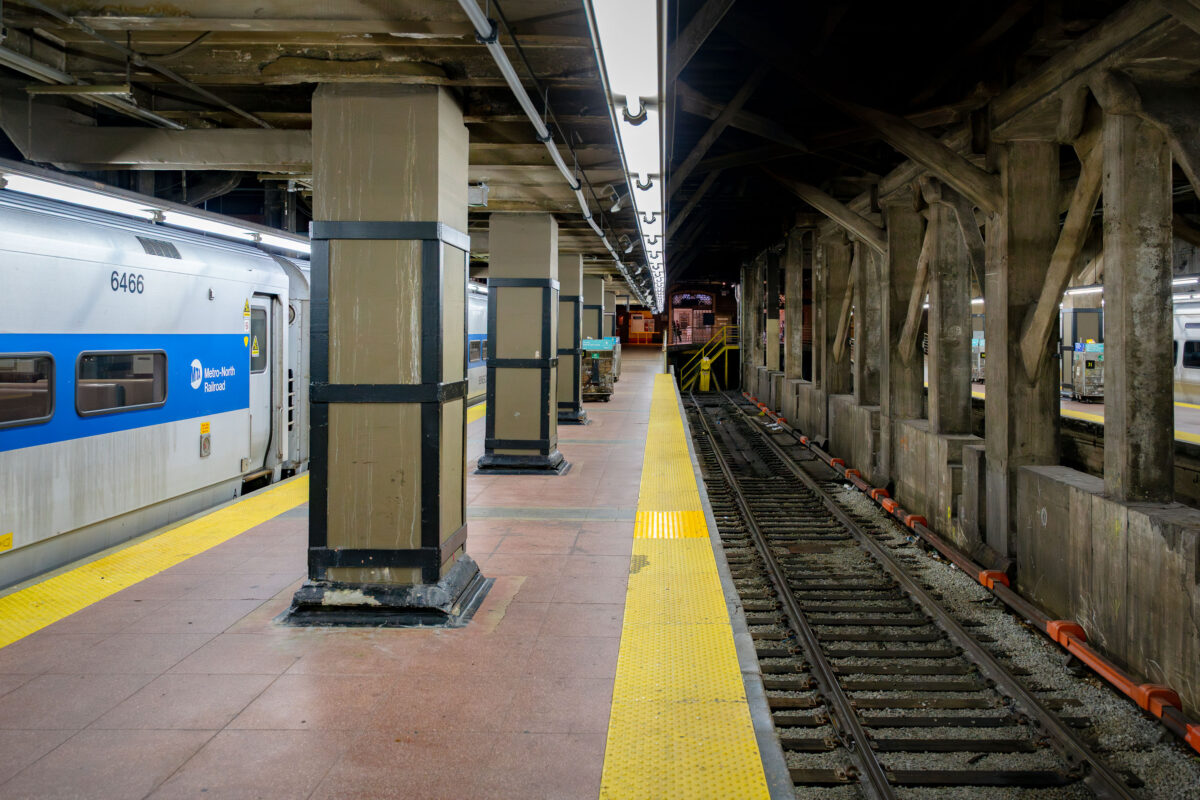
September 2019 — A Metro-North Railroad train waits at a platform inside Grand Central Terminal in Manhattan. The concrete pillars and exposed beams of the underground station frame the tracks, where the yellow warning strip lines the edge of the platform.
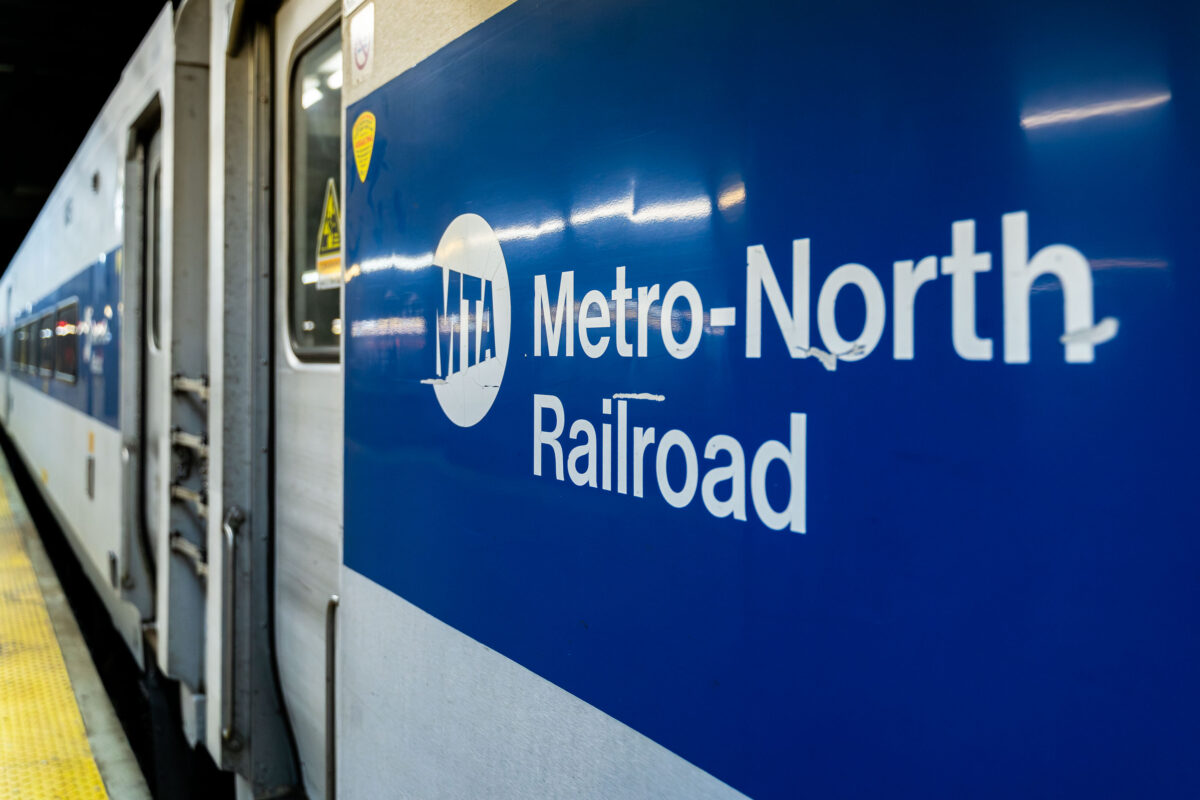
September 2019 — A Metro-North Railroad train is seen at a station platform, its blue-and-white exterior bearing the MTA logo. The commuter rail line, operated by the Metropolitan Transportation Authority, connects New York City with suburbs across New York State and Connecticut.
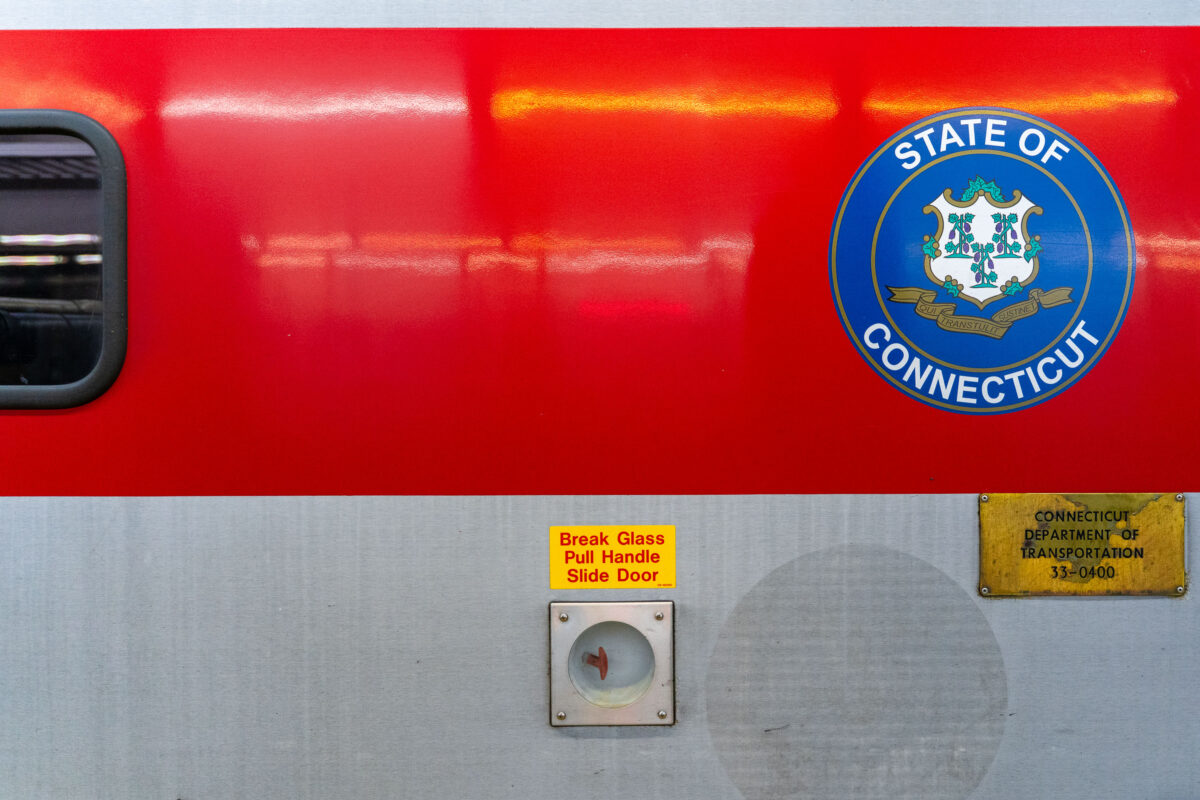
September 2019 — A Connecticut state seal is displayed on the side of a Metro-North Railroad train car, operated in partnership with the Connecticut Department of Transportation. The red-and-silver exterior includes safety instructions and signage, highlighting the regional rail system that connects commuters between New York and Connecticut.
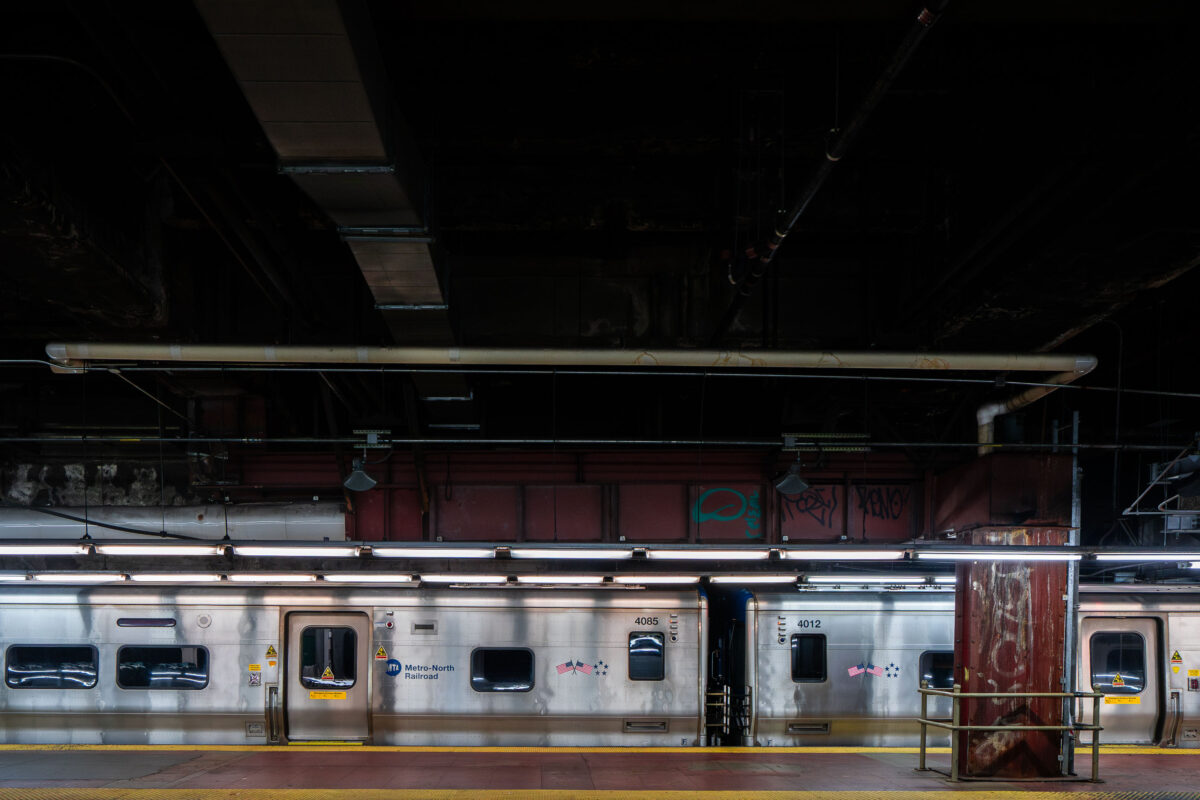
September 2019 — A Metro-North Railroad train sits at a platform inside Grand Central Terminal in Manhattan. The stainless-steel cars reflect the dim lighting of the underground station, where exposed pipes and graffiti-marked beams highlight the aging infrastructure of the busy commuter hub.
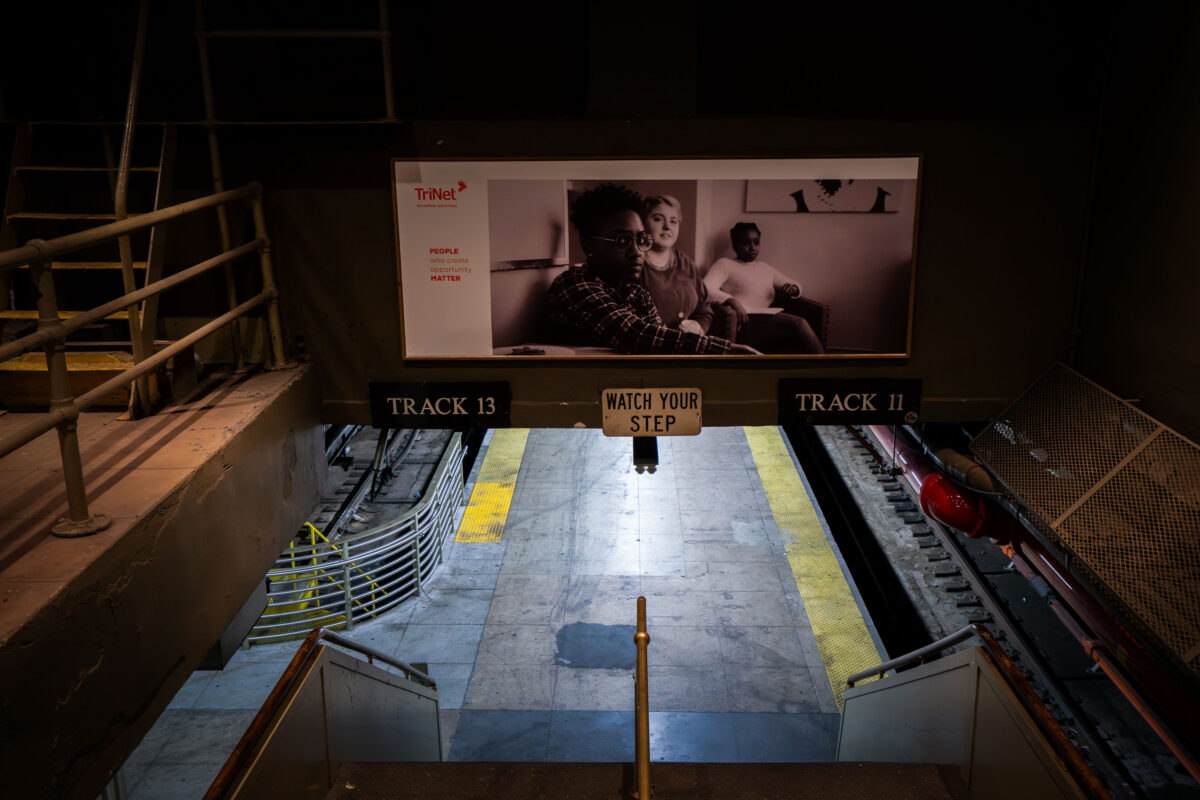
September 2019 — A stairway leads down to the train platforms for Tracks 11 and 13 at Penn Station in Manhattan. A sign reading “Watch Your Step” hangs above the stairs, while a black-and-white advertisement looms over the tracks in the busy transit hub.
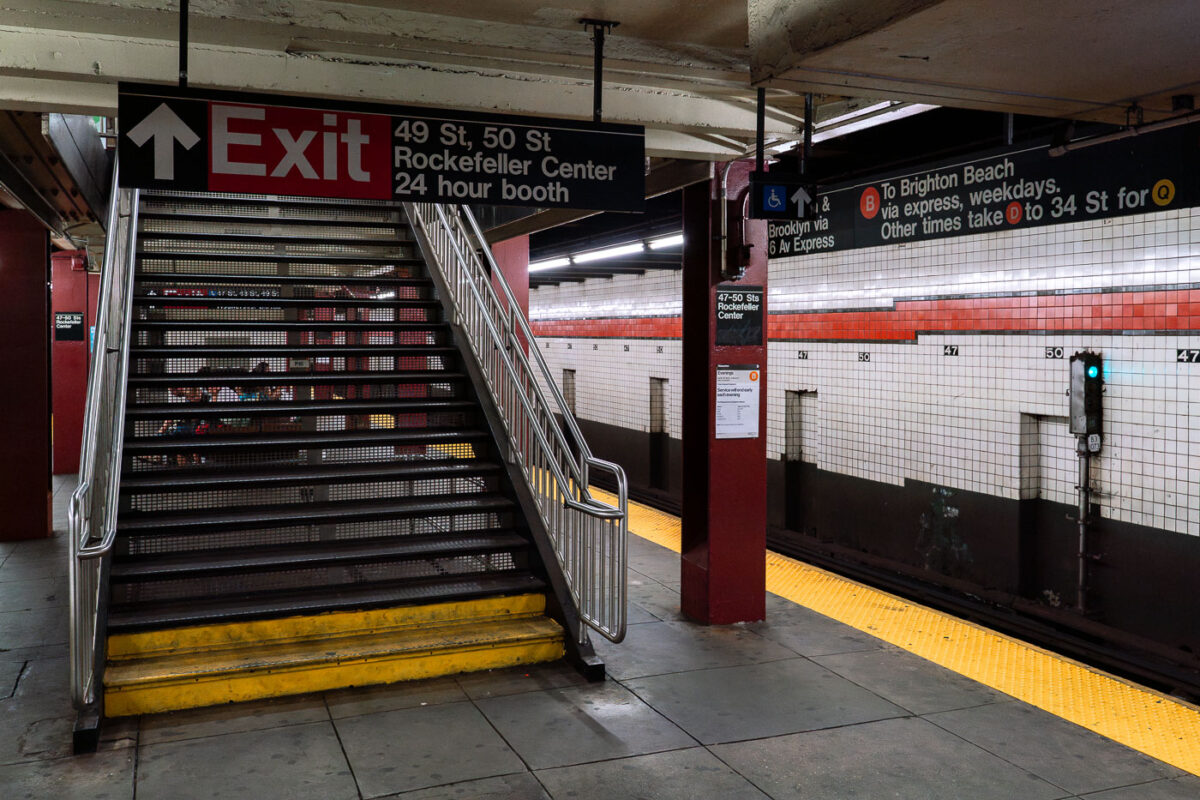
September 2019 — A staircase leads to the exit at the 47–50 Streets Rockefeller Center subway station in Manhattan. The station serves the B, D, F, and M lines.
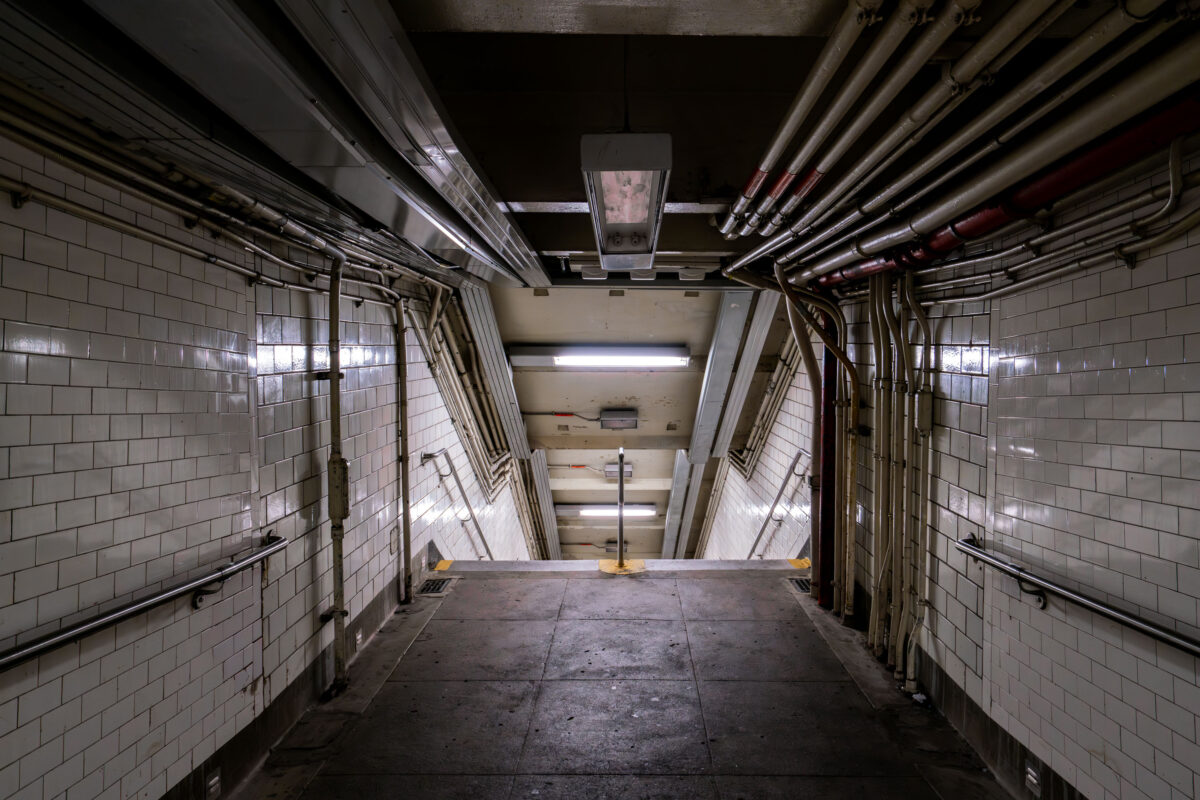
September 2019 — A dimly lit stairway leads down into a New York City subway station on Sunday, Sept. 14, 2025. Aging infrastructure and exposed piping are visible along the tiled walls.
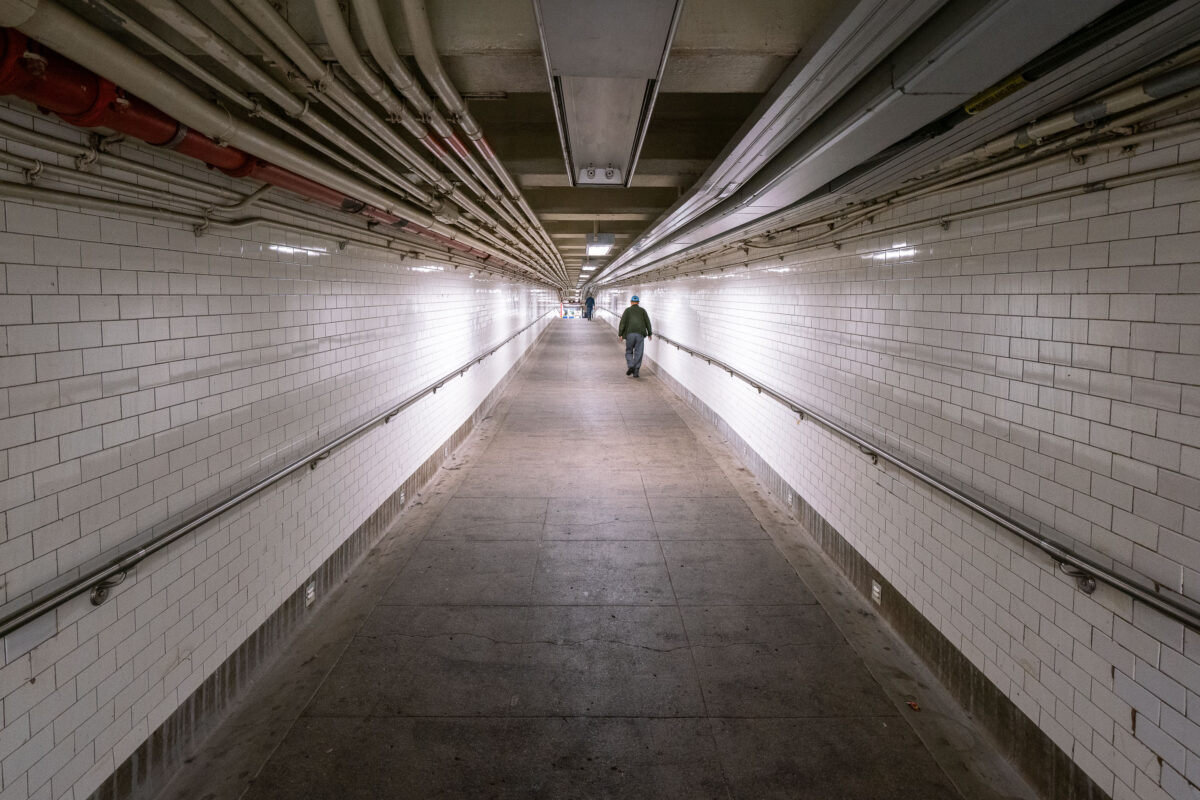
September 2019 — A man walks down a long hallway in the New York City Subway system.
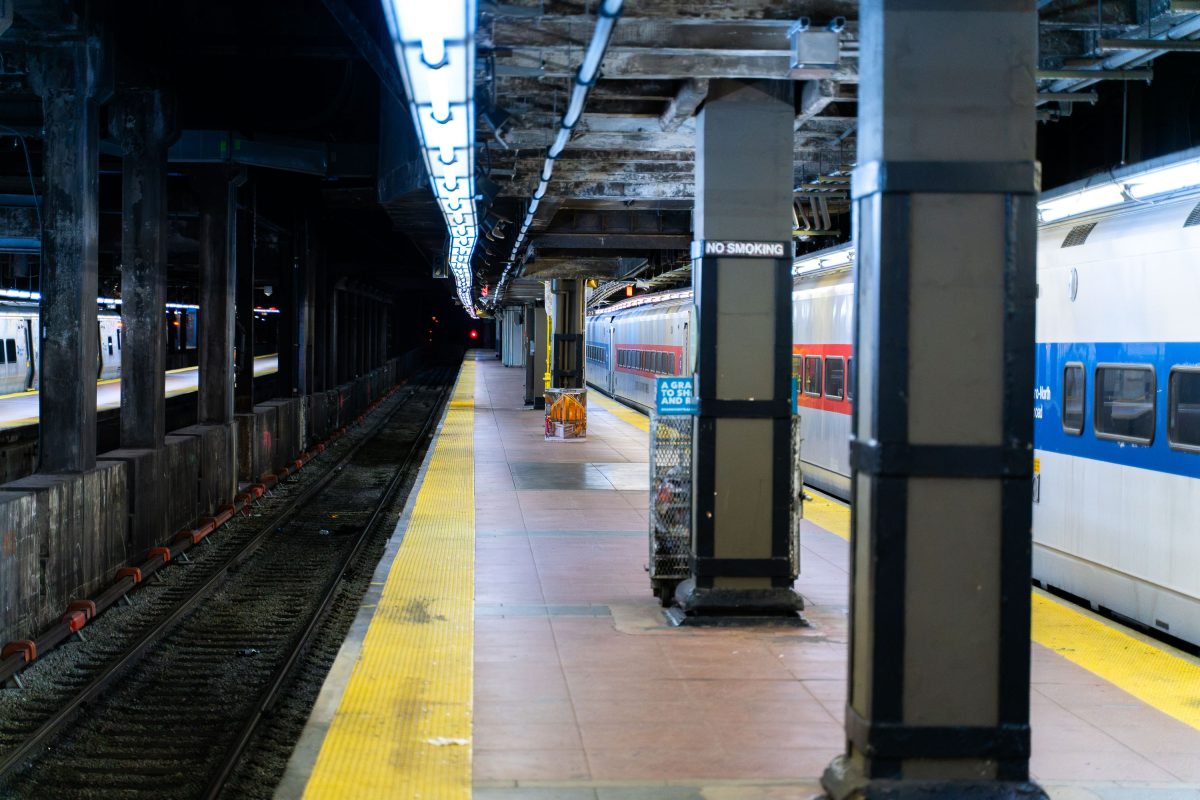
September 2019 —
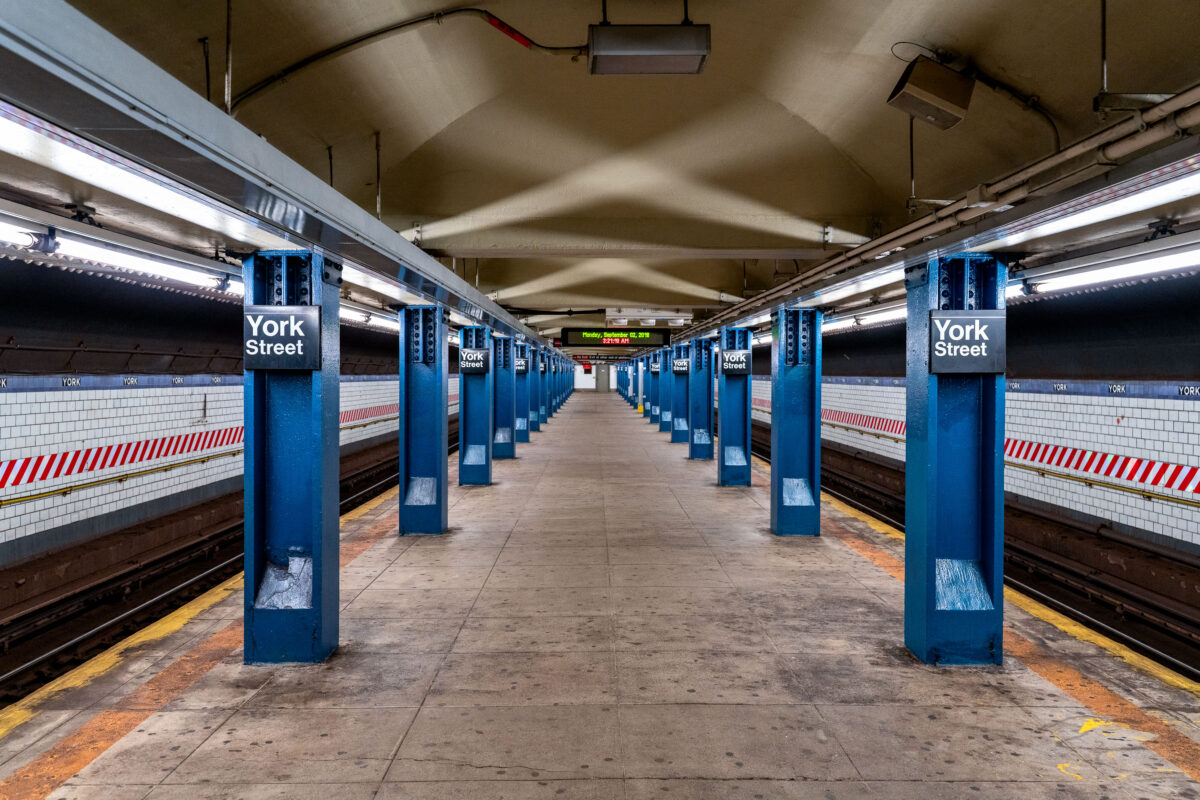
September 2019 — The York Street Station in Brooklyn, New York.
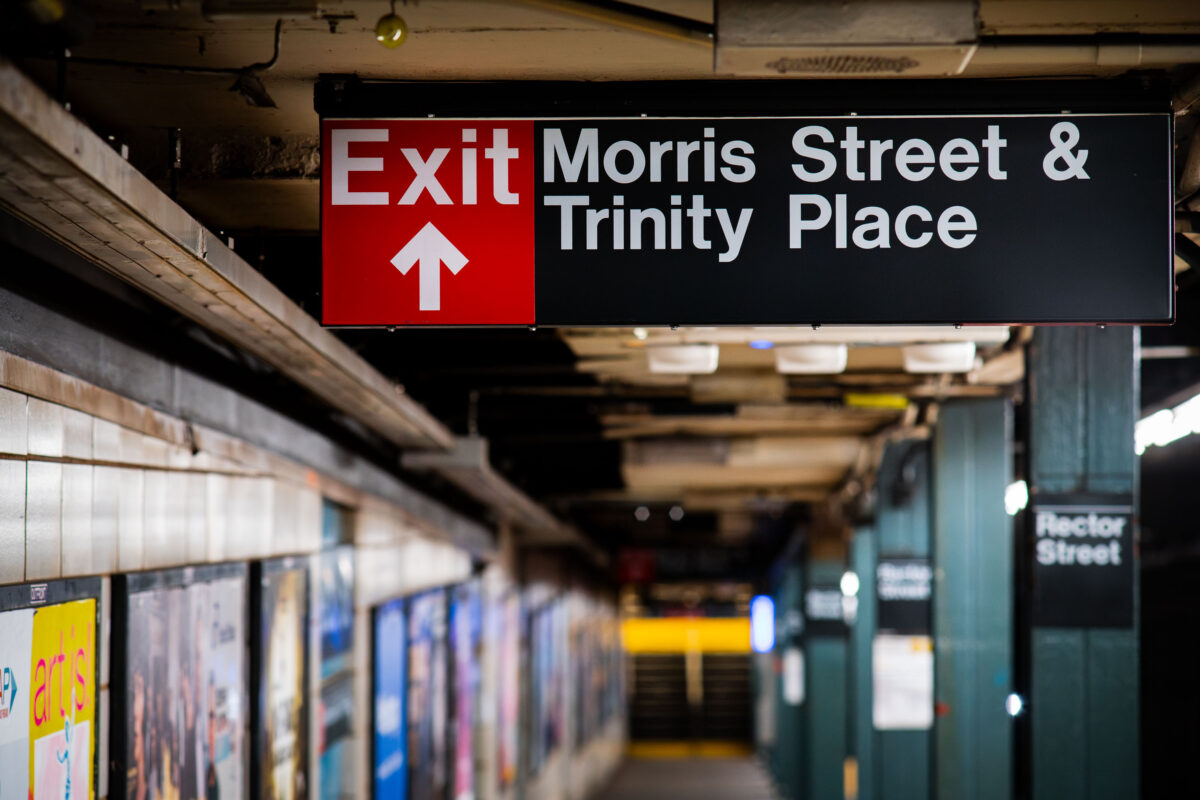
September 2019 — Rector Street subway station in Manhattan New York City.
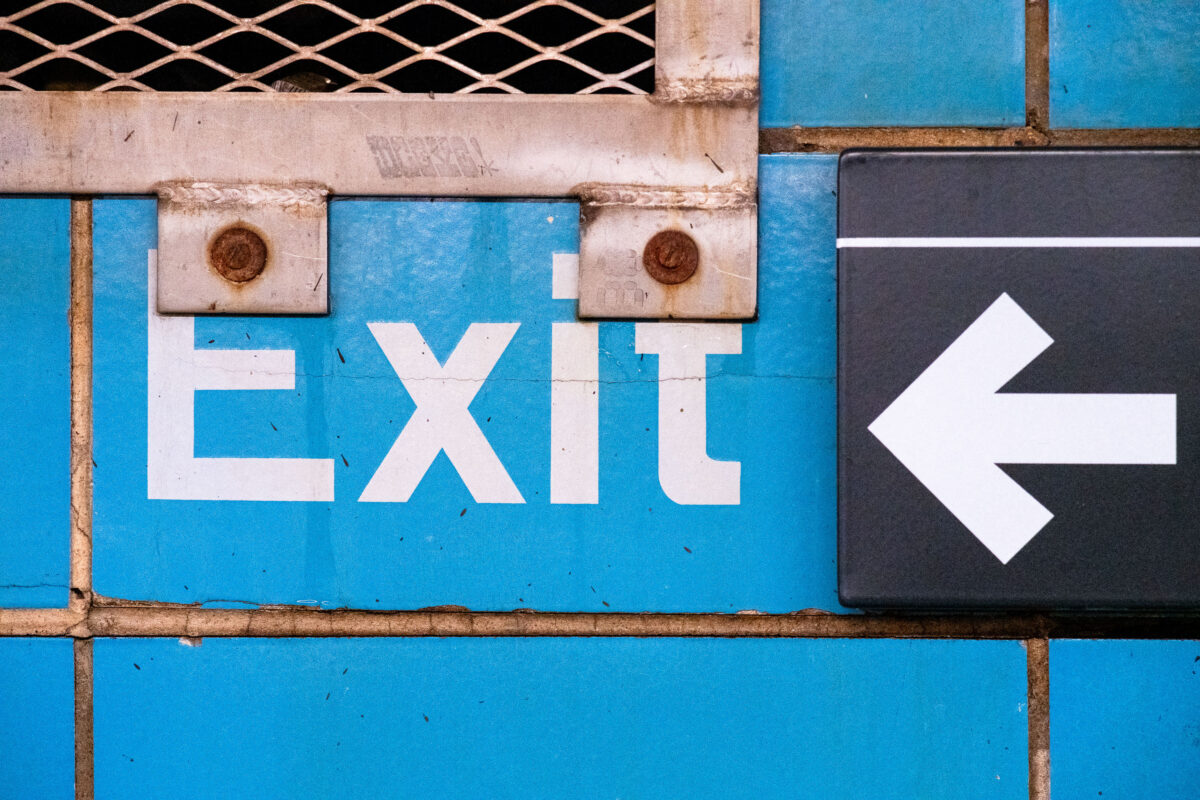
September 2019 — Exit signage at the Rector Street subway station in Manhattan New York City.
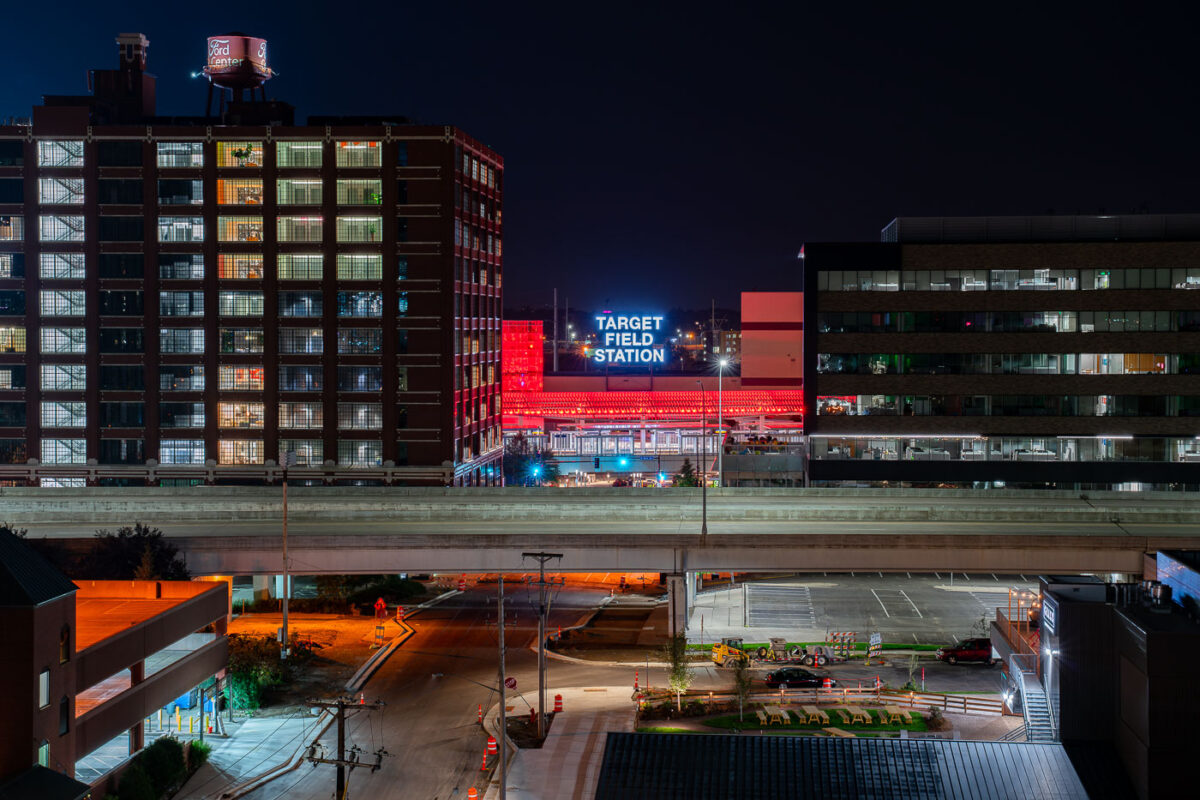
September 2019 — Opened in 2014, Target Field Station is a multimodal transit hub serving the METRO Blue and Green light rail lines, Northstar commuter rail, and several Metro Transit bus routes. It sits adjacent to Target Field, home of the Minnesota Twins, and doubles as a public gathering space with an amphitheater, green plaza, and year-round programming. In this night view, the glowing red canopy and bold “Target Field Station” signage stand out against the dark sky, framed between the historic Ford Center (left, built in 1912 as an assembly plant) and a modern office building (right). A freeway bridge cuts through the foreground, symbolizing the layered infrastructure of the city. This mix of historic brickwork, modern transit, and illuminated signage captures Minneapolis’s ongoing balance of industrial heritage and urban redevelopment.
October 2019 —
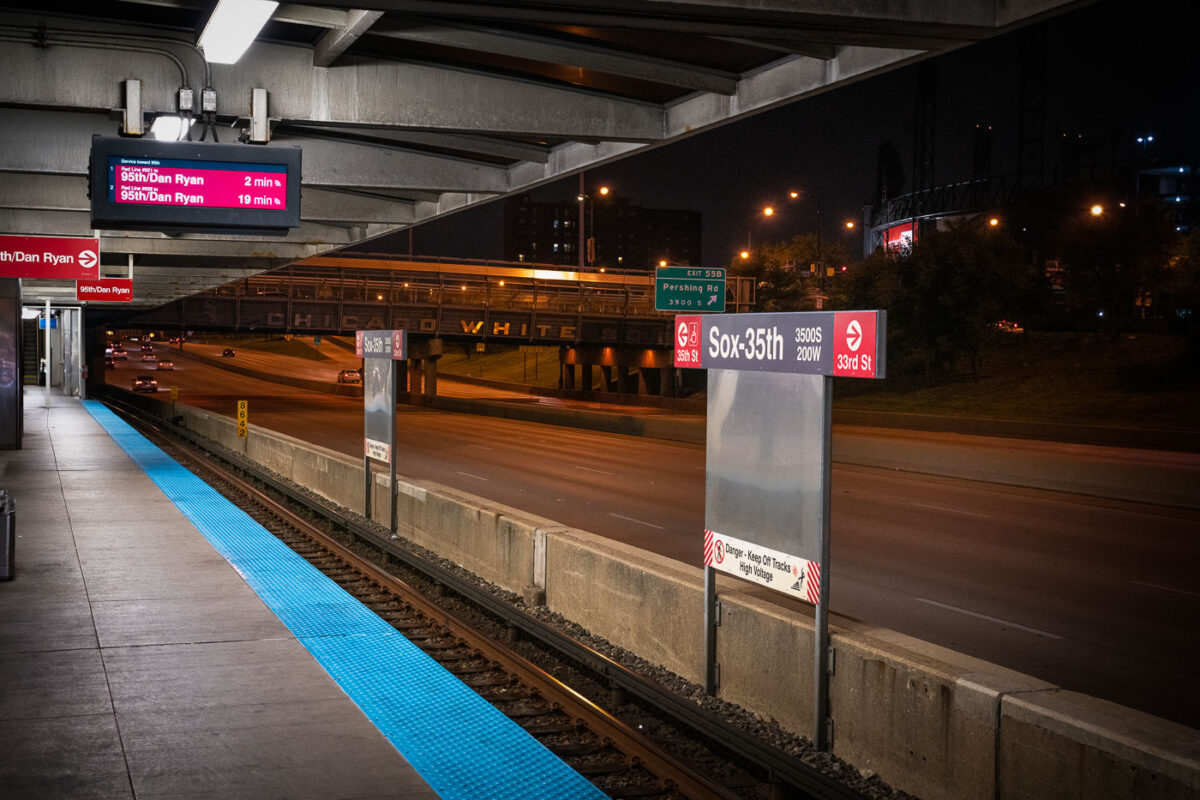
October 2019 — The Chicago Transit Authority’s Sox–35th station serves the Red Line on the city’s South Side, positioned above the Dan Ryan Expressway near Pershing Road. The station provides direct access to Guaranteed Rate Field, home of the Chicago White Sox, whose name can be seen across the pedestrian bridge in the background. Opened in 1969 as part of the Dan Ryan branch of the Red Line, the elevated structure was designed for efficiency amid highway traffic, symbolizing mid-century Chicago’s integration of mass transit and freeway infrastructure.
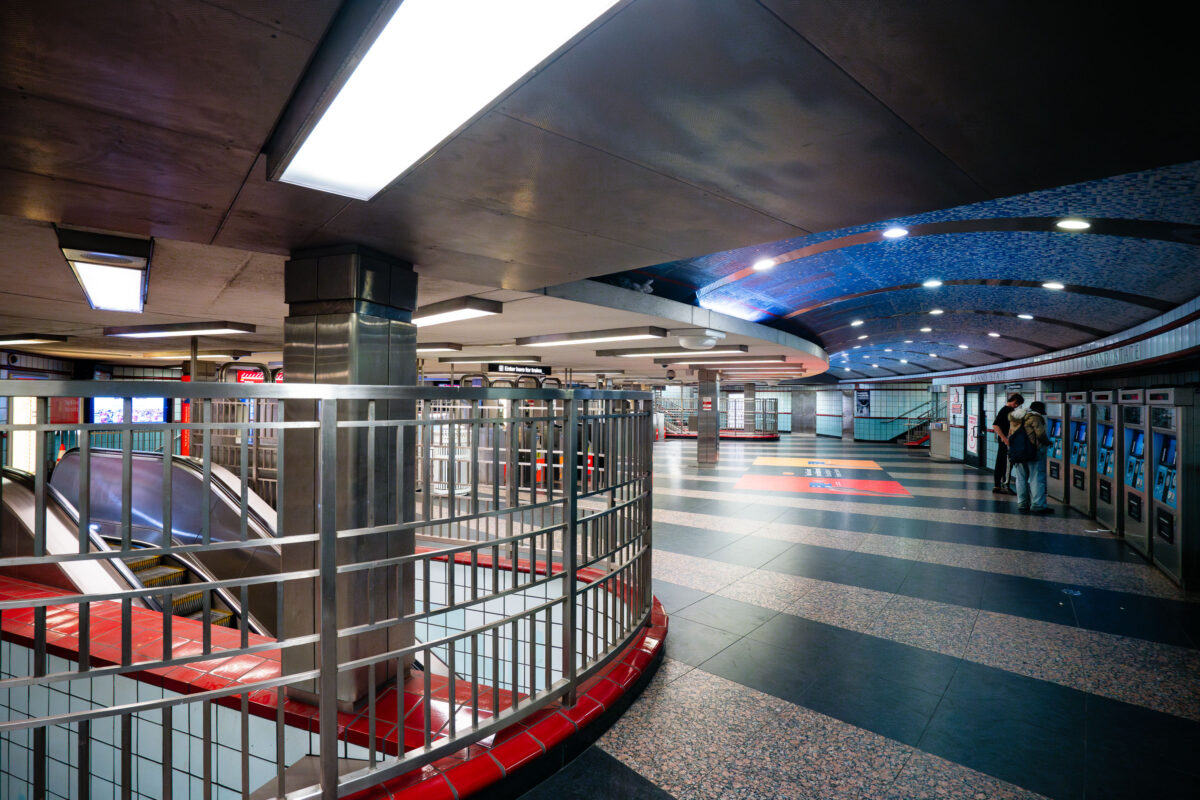
October 2019 — Passengers purchase tickets inside the Grand/State train station in Chicago.
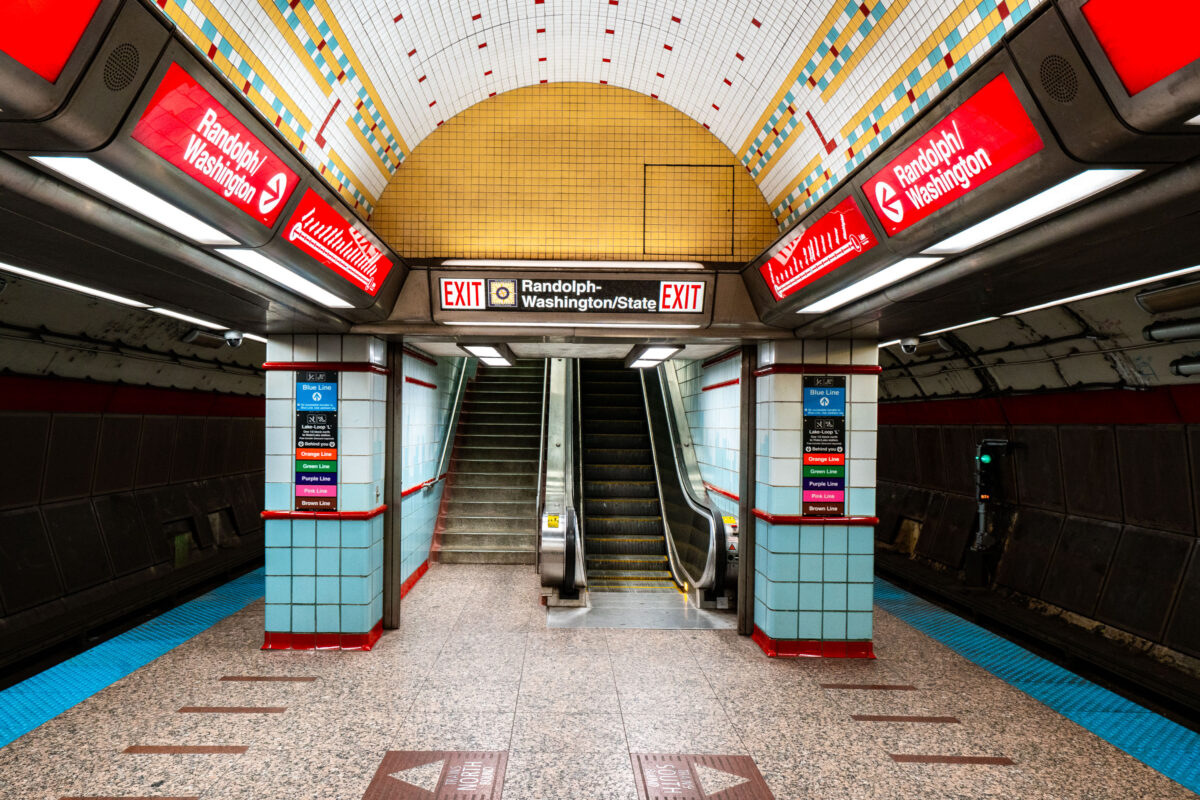
October 2019 — Randolph/Washington station sits beneath the heart of downtown Chicago, forming part of the CTA Red Line that runs through the State Street subway. Opened in 1943 as part of the city’s ambitious subway expansion, the station connects directly to the extensive Chicago Pedway system, linking offices, retail centers, and civic buildings underground. Its tiled vault and distinctive 1940s-era design remain largely intact, representing the Art Moderne phase of Chicago’s transit infrastructure.
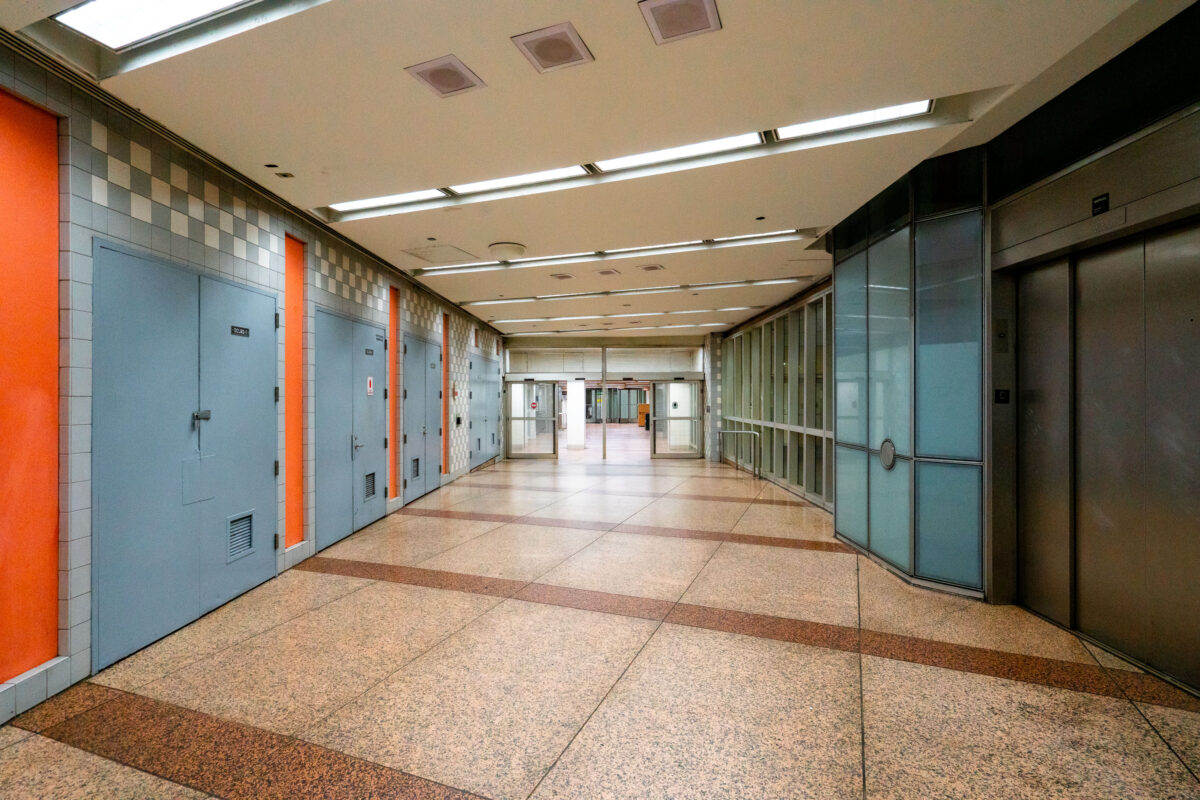
October 2019 — An empty corridor of the Chicago Pedway connects the Randolph/Washington subway station to surrounding office buildings and shopping centers beneath the Loop. The Pedway system, developed beginning in the 1950s, extends for more than 40 city blocks, linking major transit lines with civic and commercial spaces. Its mid-century design—terrazzo floors, tiled walls, and fluorescent lighting—reflects the city’s practical approach to all-weather pedestrian infrastructure, a defining feature of downtown Chicago’s urban core.
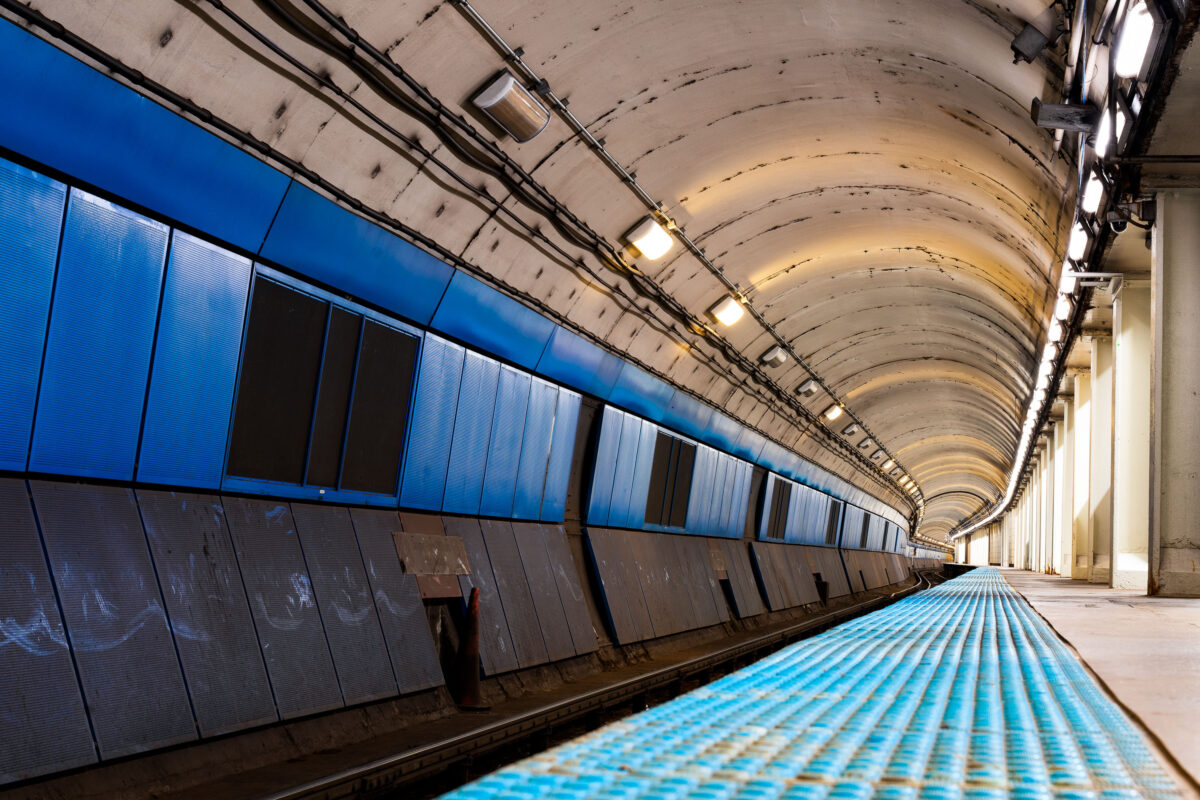
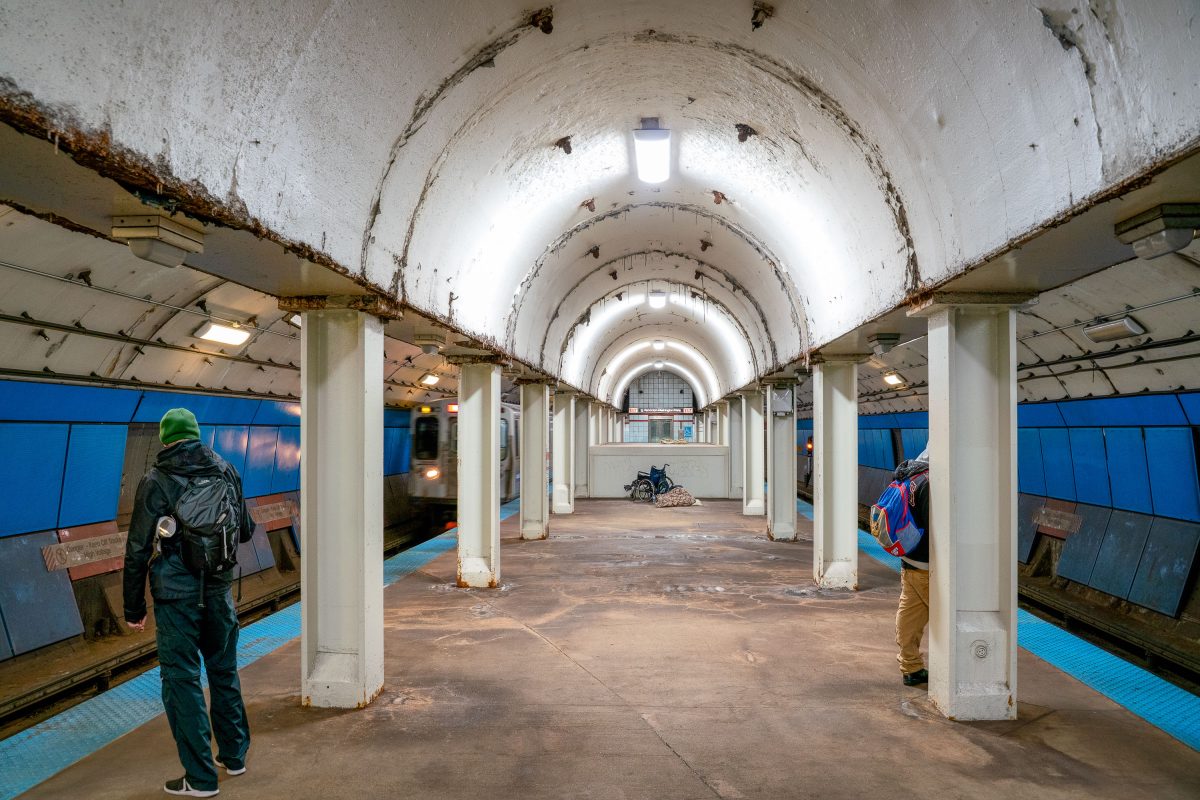
October 2019 — The curved platform of a Chicago Transit Authority Blue Line station reveals the utilitarian design of the city’s subway infrastructure, part of the Milwaukee–Dearborn subway opened in 1951. The tunnel’s tiled blue panels and low arched ceiling reflect the postwar engineering era that brought rapid transit beneath the Loop and the West Side, connecting O’Hare International Airport to downtown. Despite its age, this corridor remains a vital artery in Chicago’s daily commuter network, a symbol of mid-century urban mobility still in constant motion beneath the city streets.
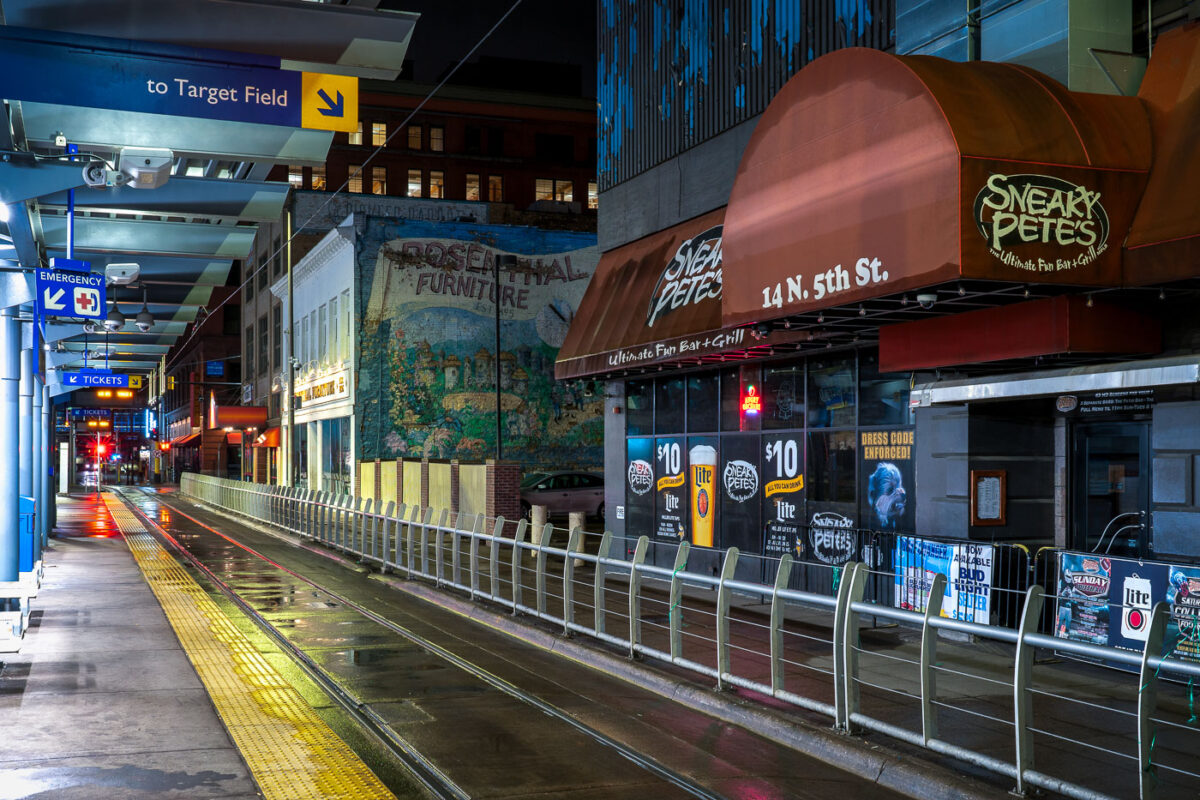
March 2020 — Sneaky Pete’s bar during the first night of Minnesota’s Stay At Home Order on 03/28/20.
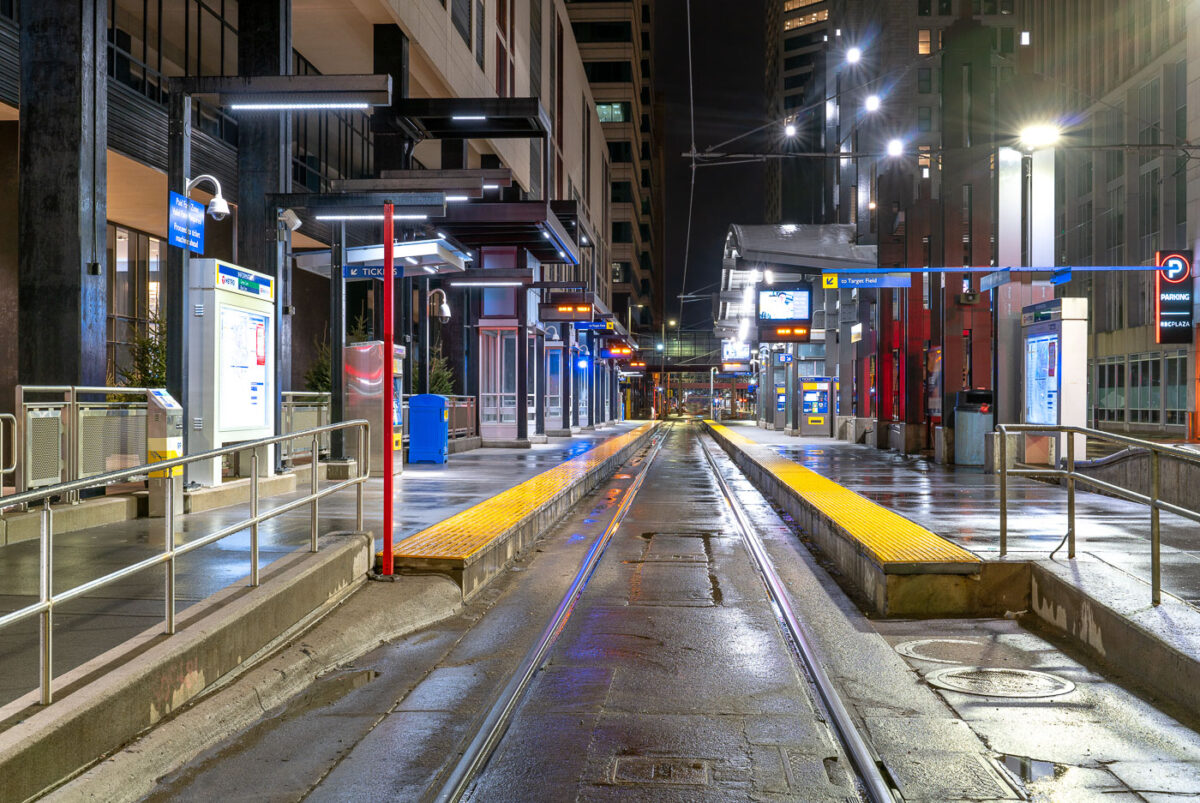
March 2020 — Nicollet Mall Light Rail Station on a rainy night in Downtown Minneapolis during Minnesota’s Stay At Home orders.
March 2020 —
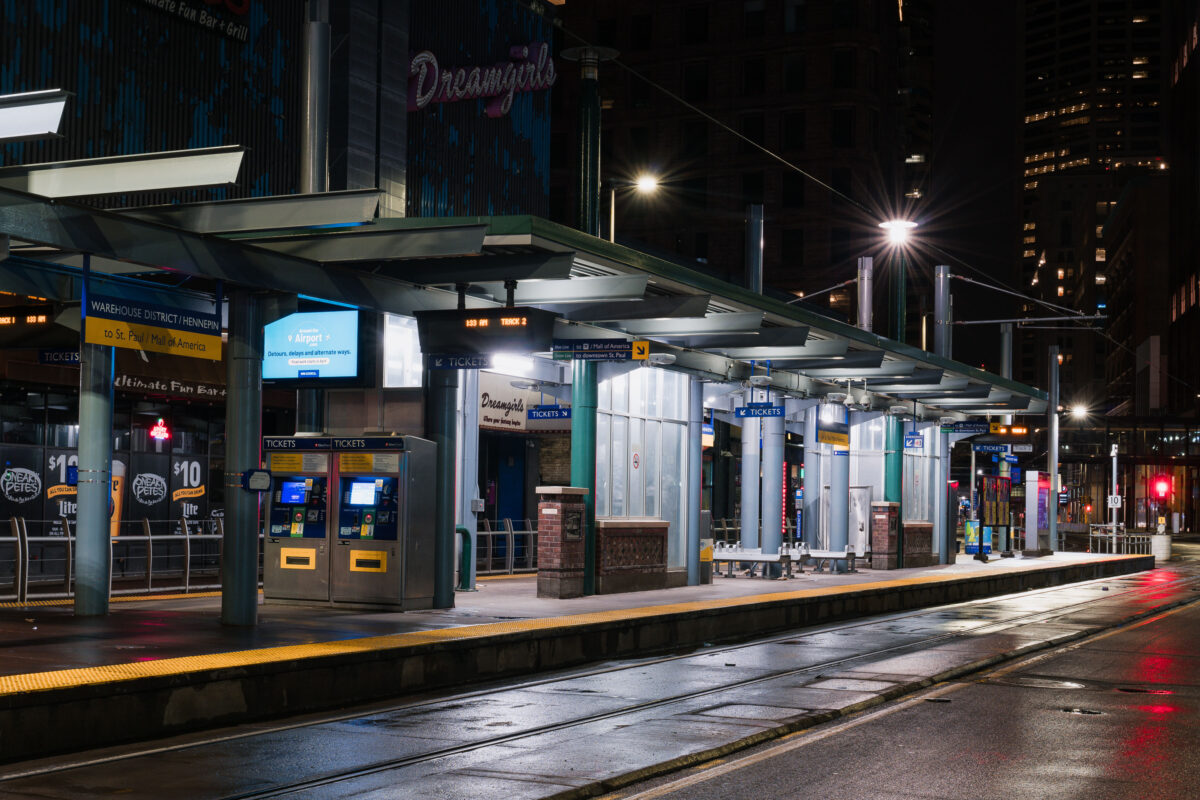
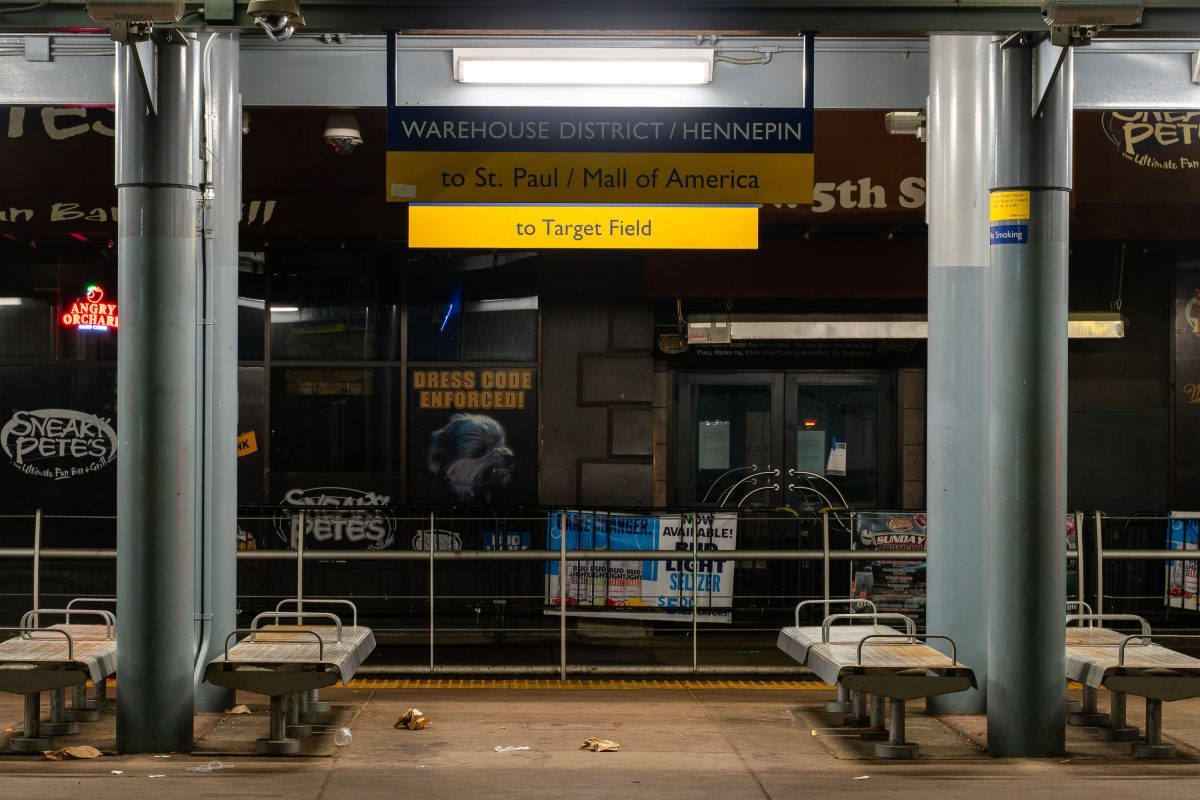
March 2020 — Warehouse District/Hennepin light rail station in Downtown Minneapolis in the hours after the Minnesota Stay At Home order went into effect.
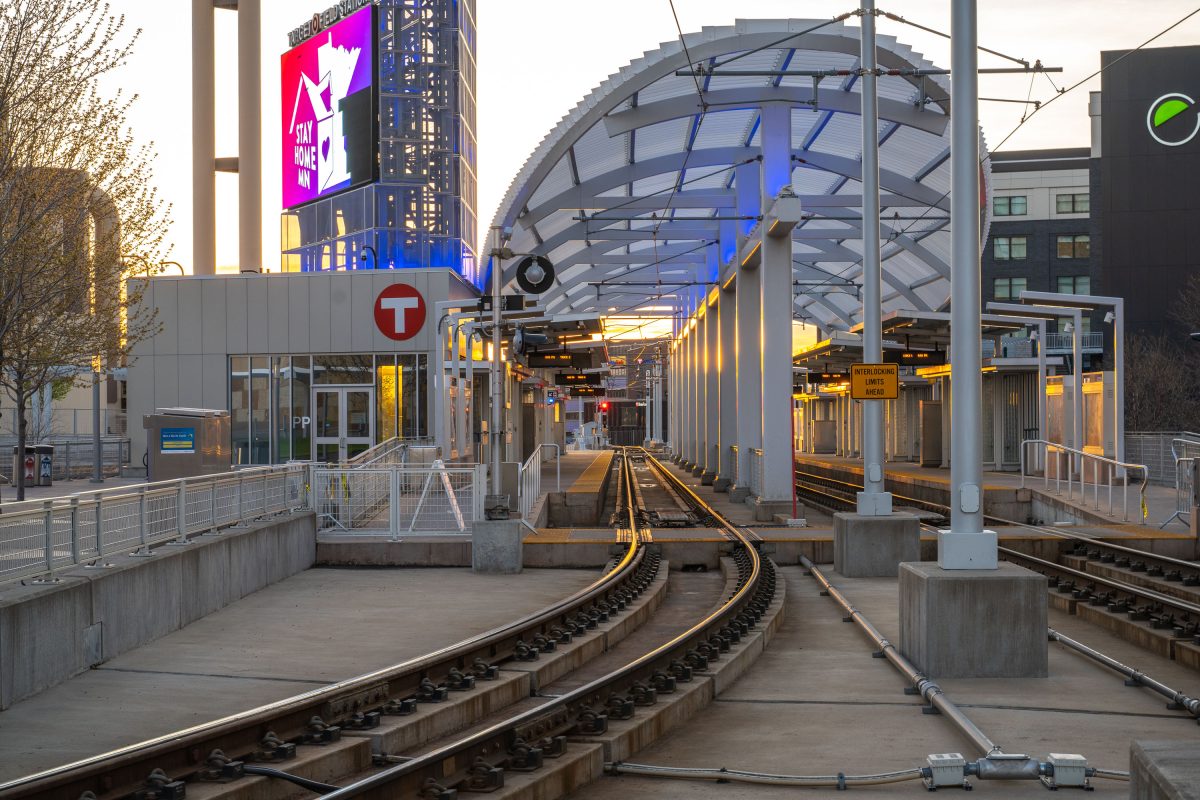
April 2020 —
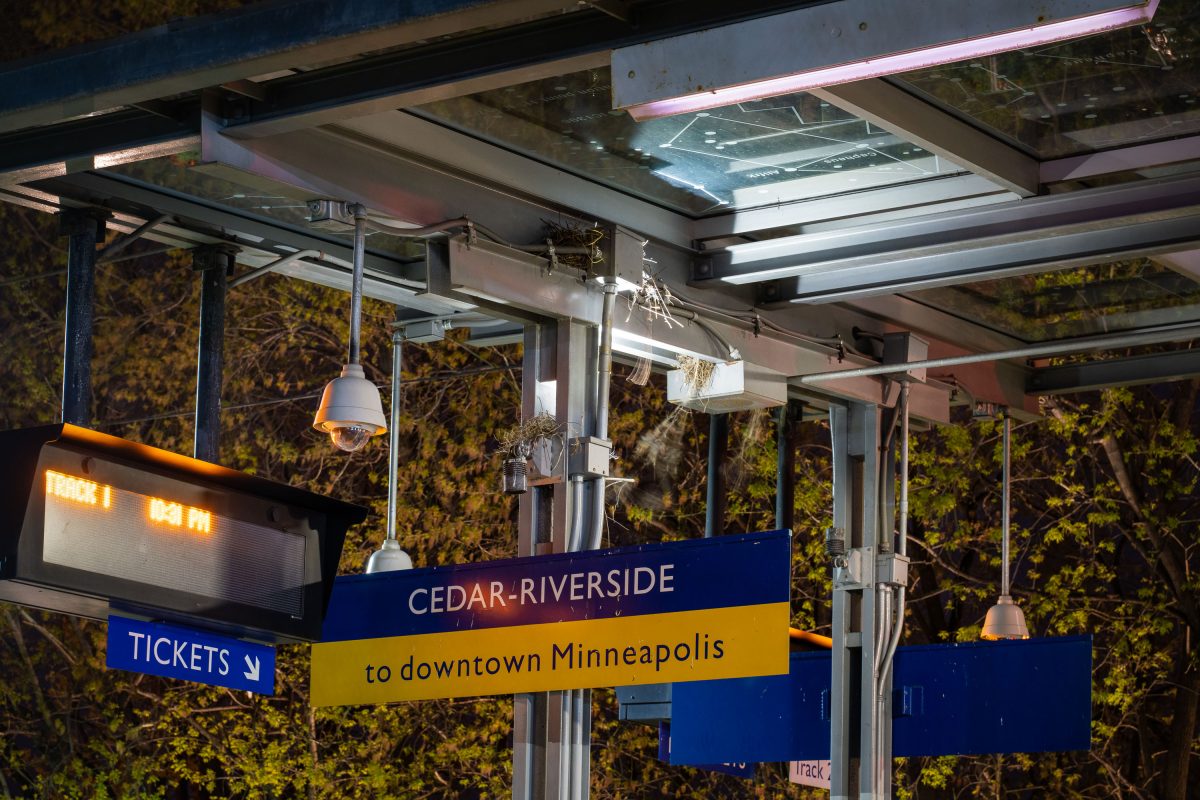
April 2020 —
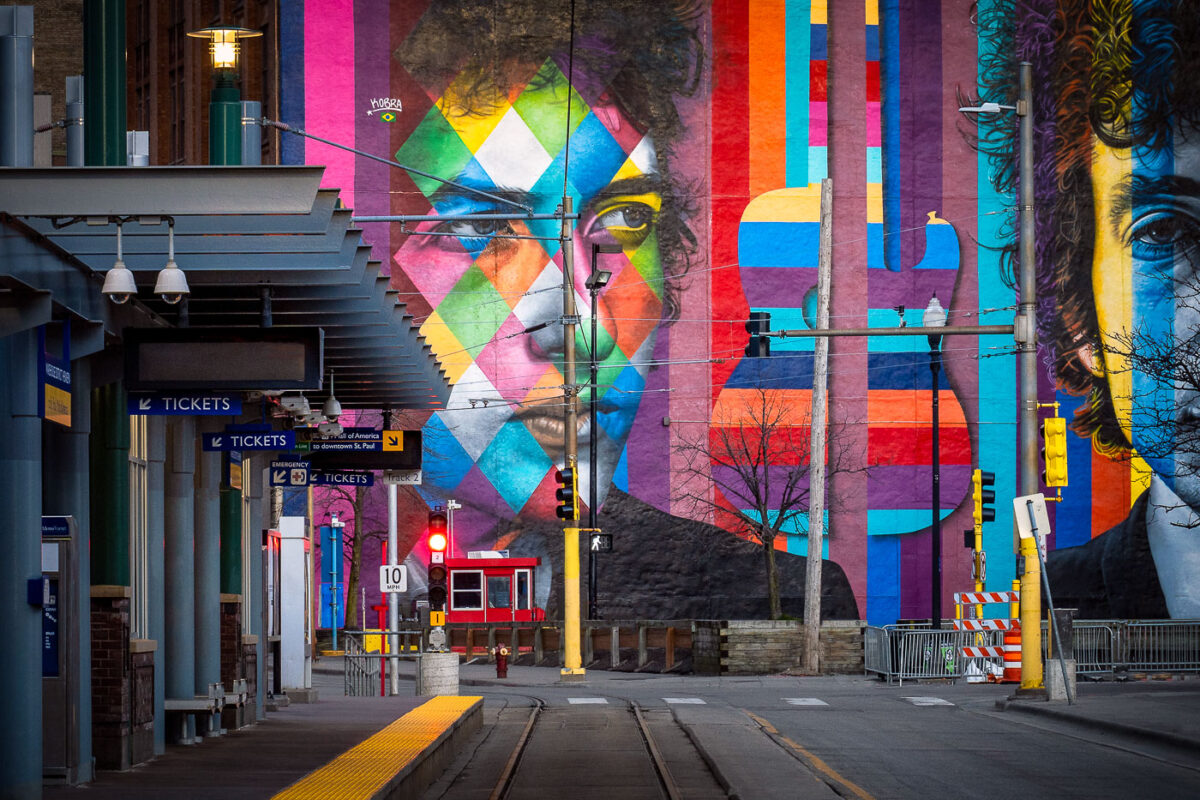
April 2020 — Bob Dylan Mural in downtown Minneapolis by Kobra during COVID-19 shutdown.
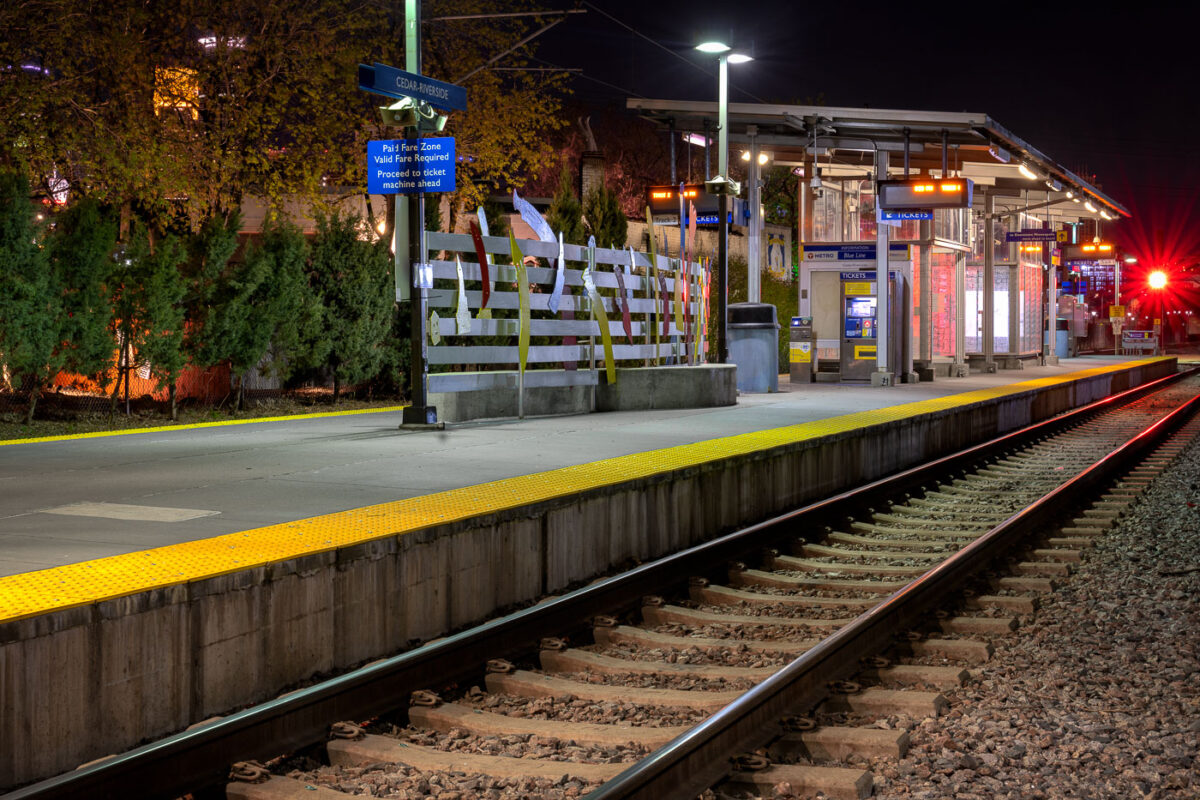
April 2020 — Cedar-Riverside LRT trains station in Minneapolis, Minnesota.
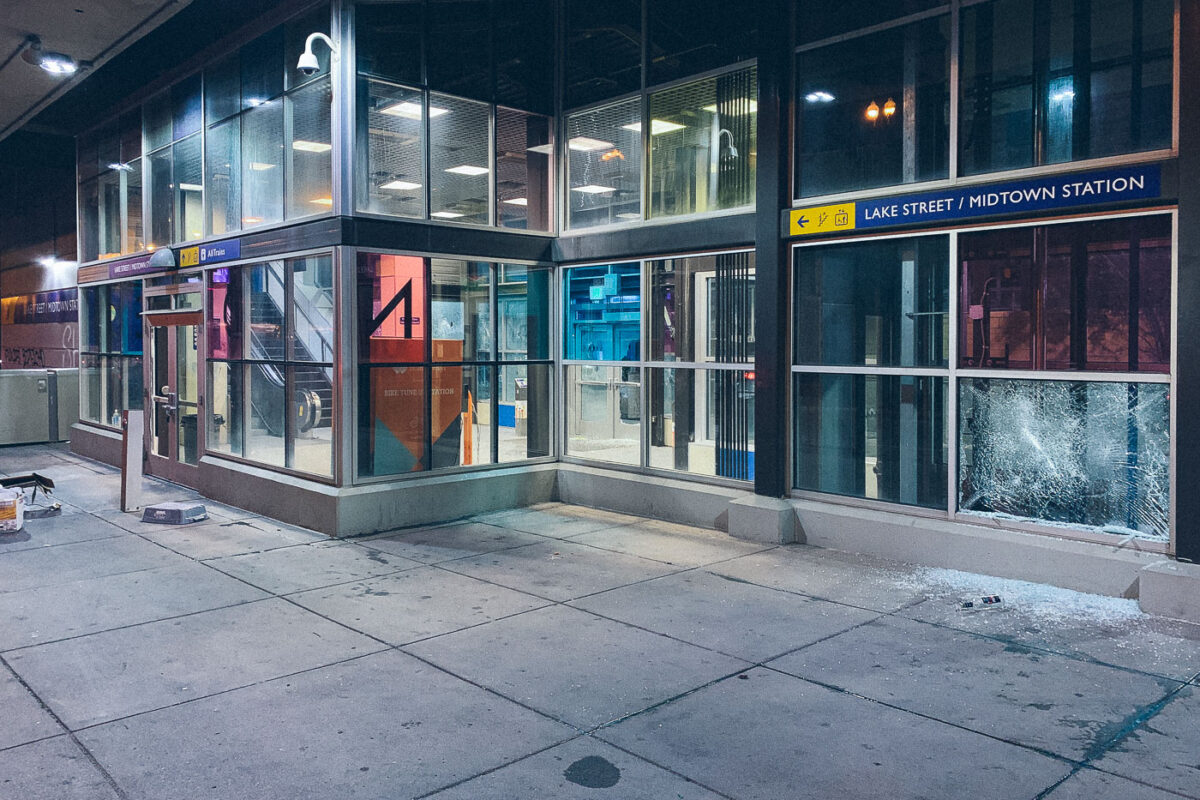
May 2020 — Broken windows on May 28, 2020 at the Lake Street/Midtown Station on the 3rd day of protests in Minneapolis following the death of George Floyd.
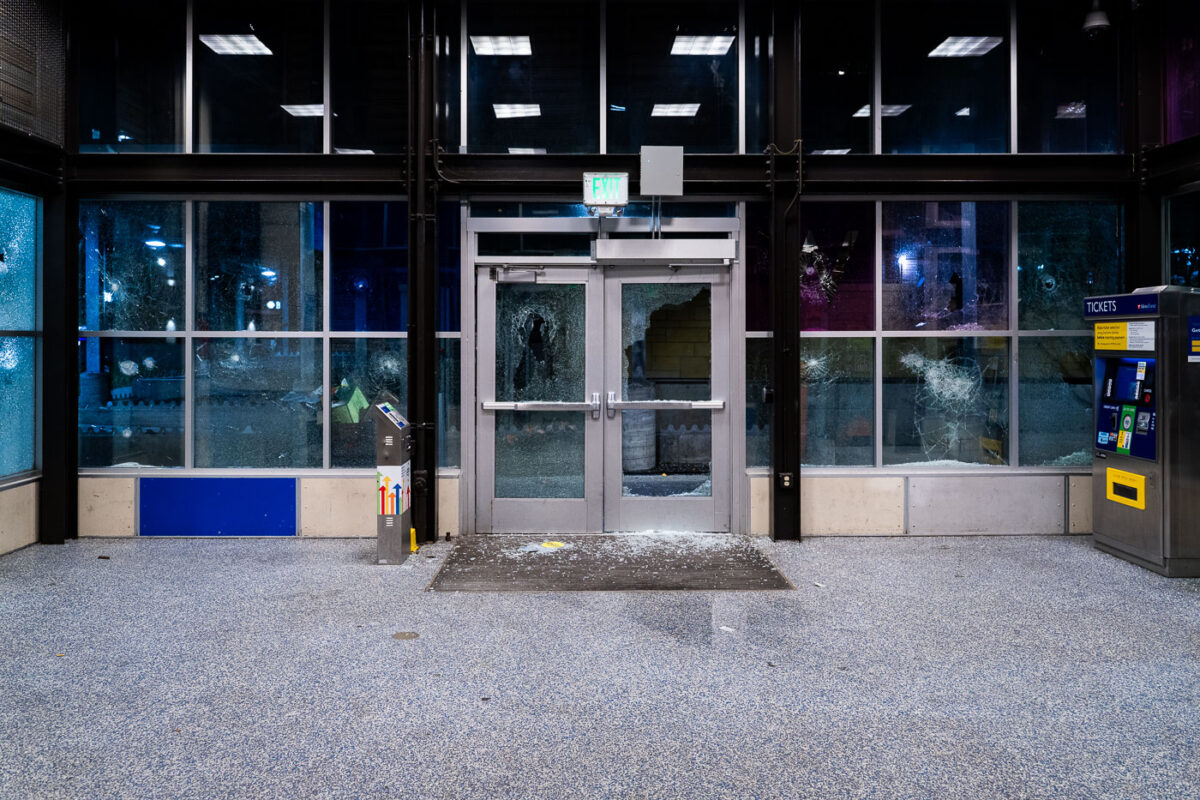
May 2020 — Broken windows at the Lake Street/Midtown Light Rail Station on May 28, 2020 during the 3rd day of protests in Minneapolis following the death of George Floyd.
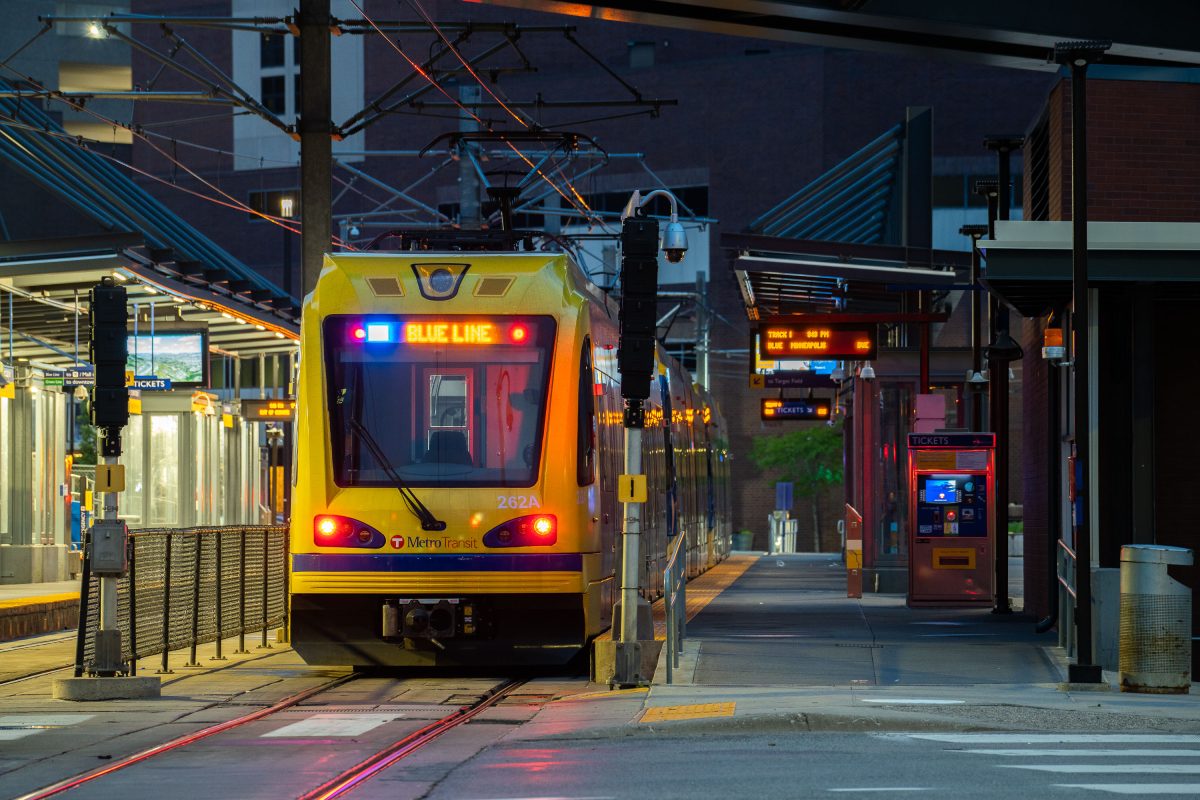
June 2020 —
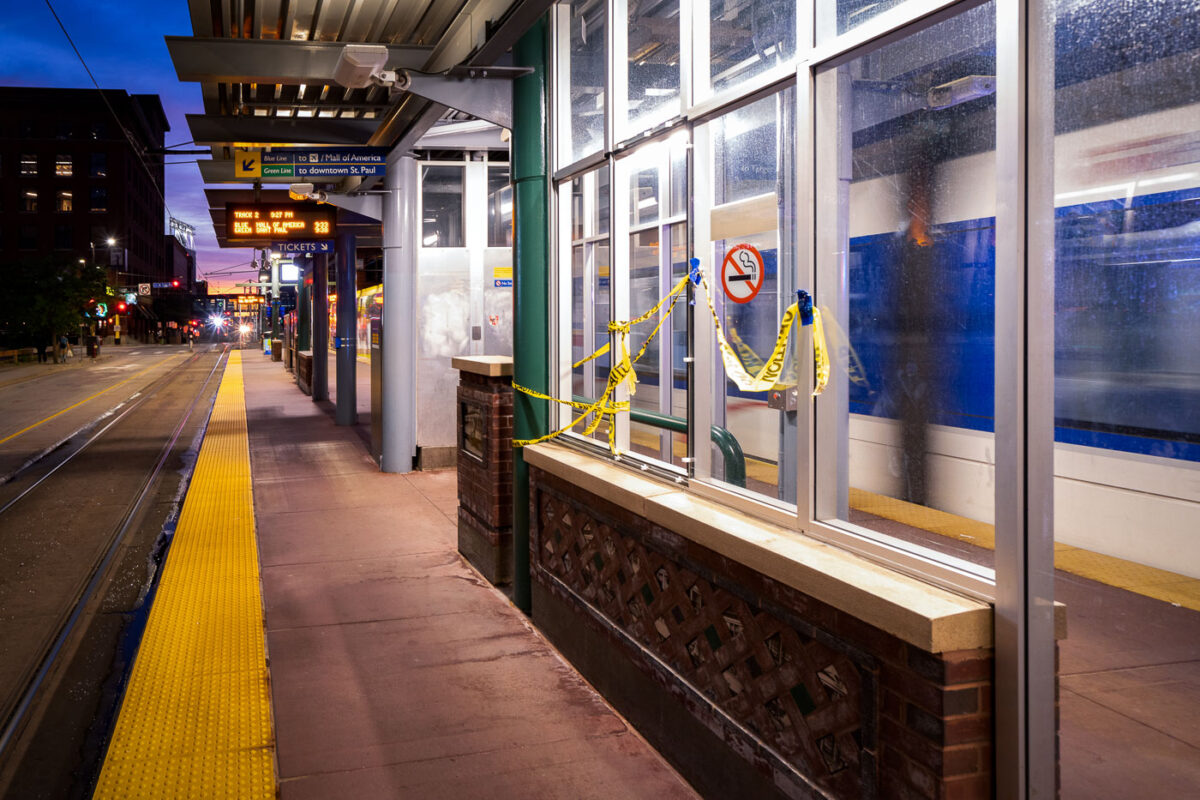
July 2020 — The Warehouse District Light Rail platform in Downtown Minneapolis with caution tape.
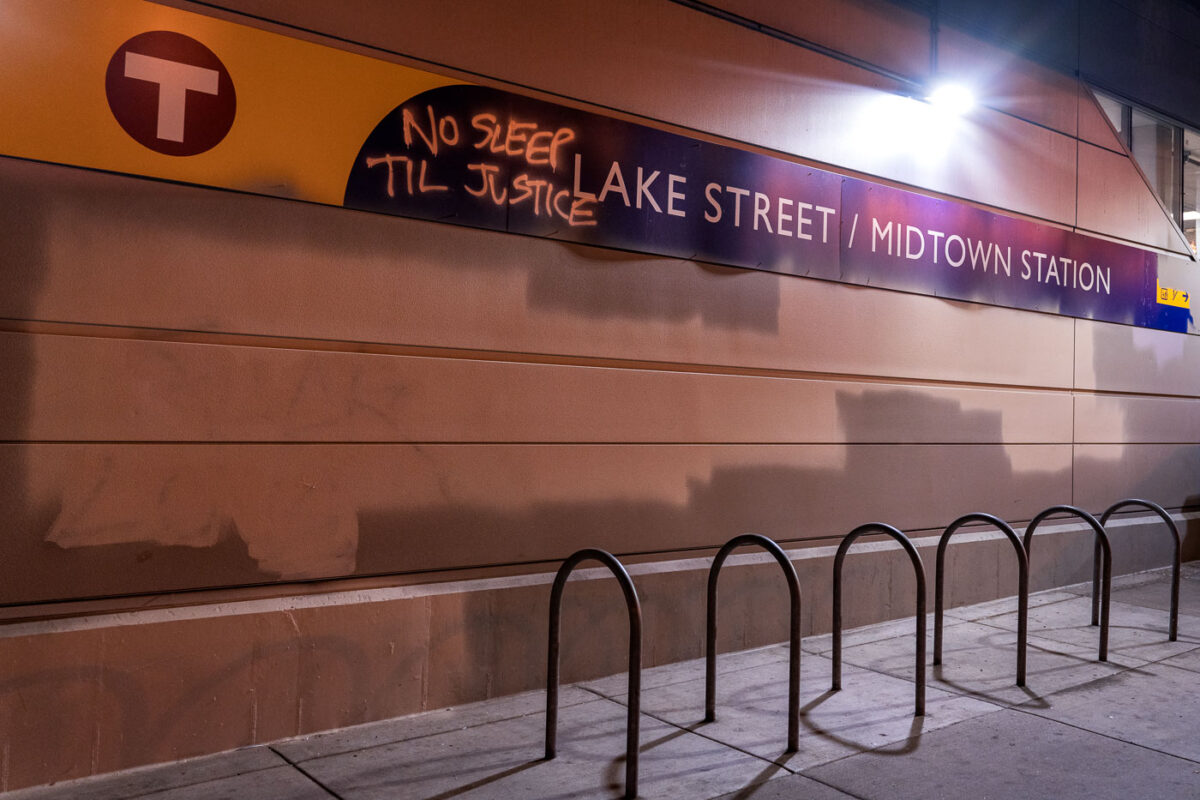
August 2020 — Graffiti reading No Sleep Til Justice on the Lake Street/Midtown Station signage in South Minneapolis.
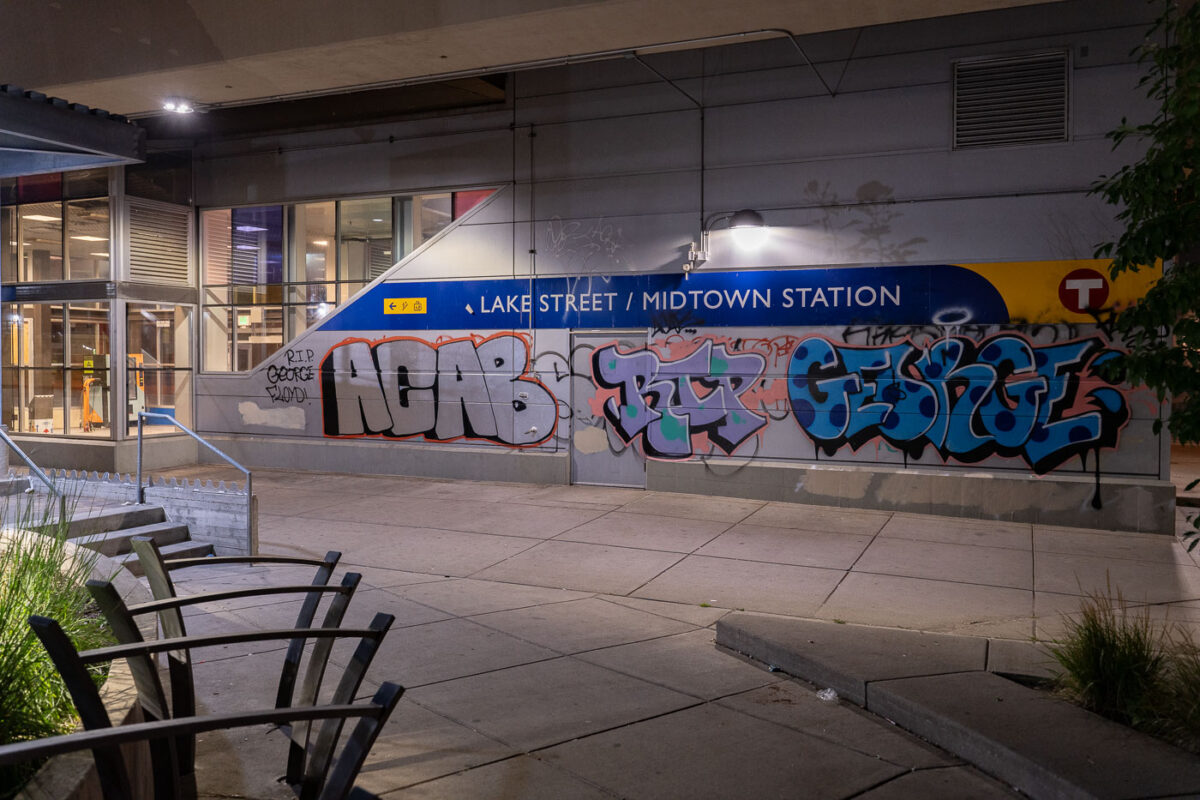
August 2020 — George Floyd graffiti on Midtown Station in South Minneapolis seen on August 22, 2020.
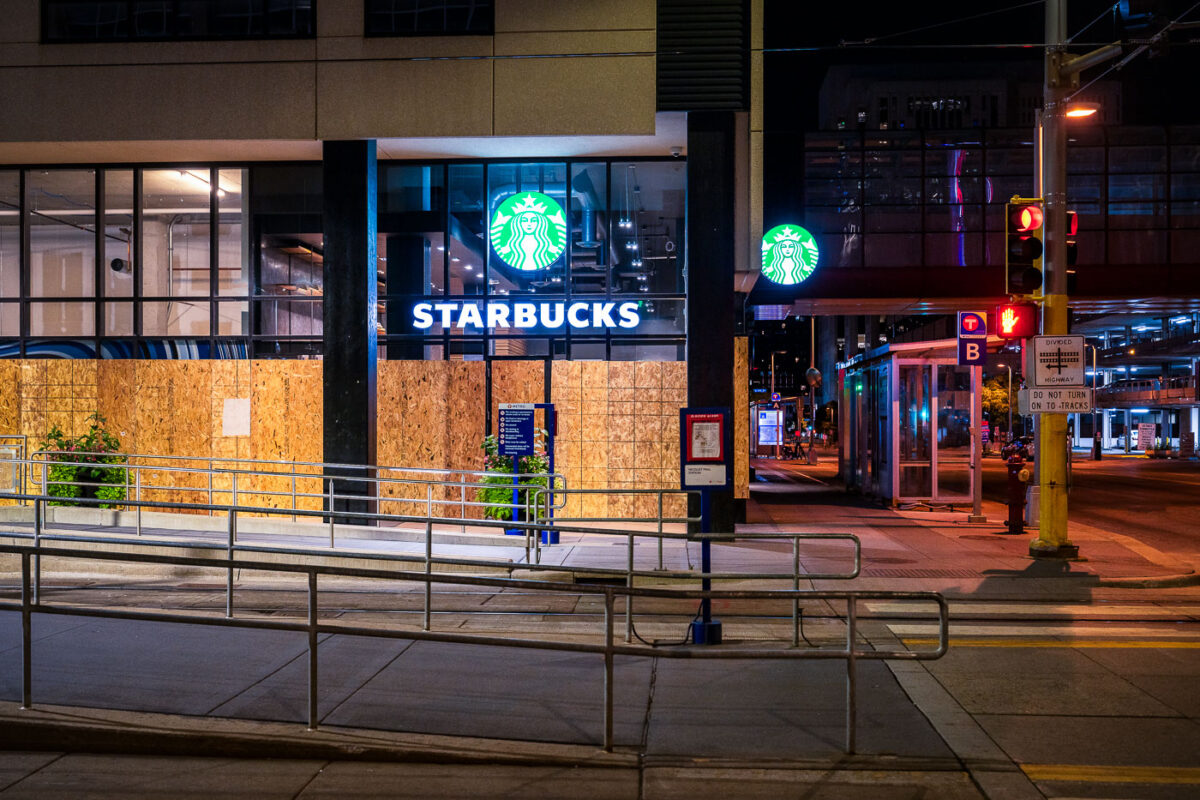
September 2020 — Starbucks located at 450 S Marquette Ave. in Downtown Minneapolis after it was boarded up following the murder of George Floyd.
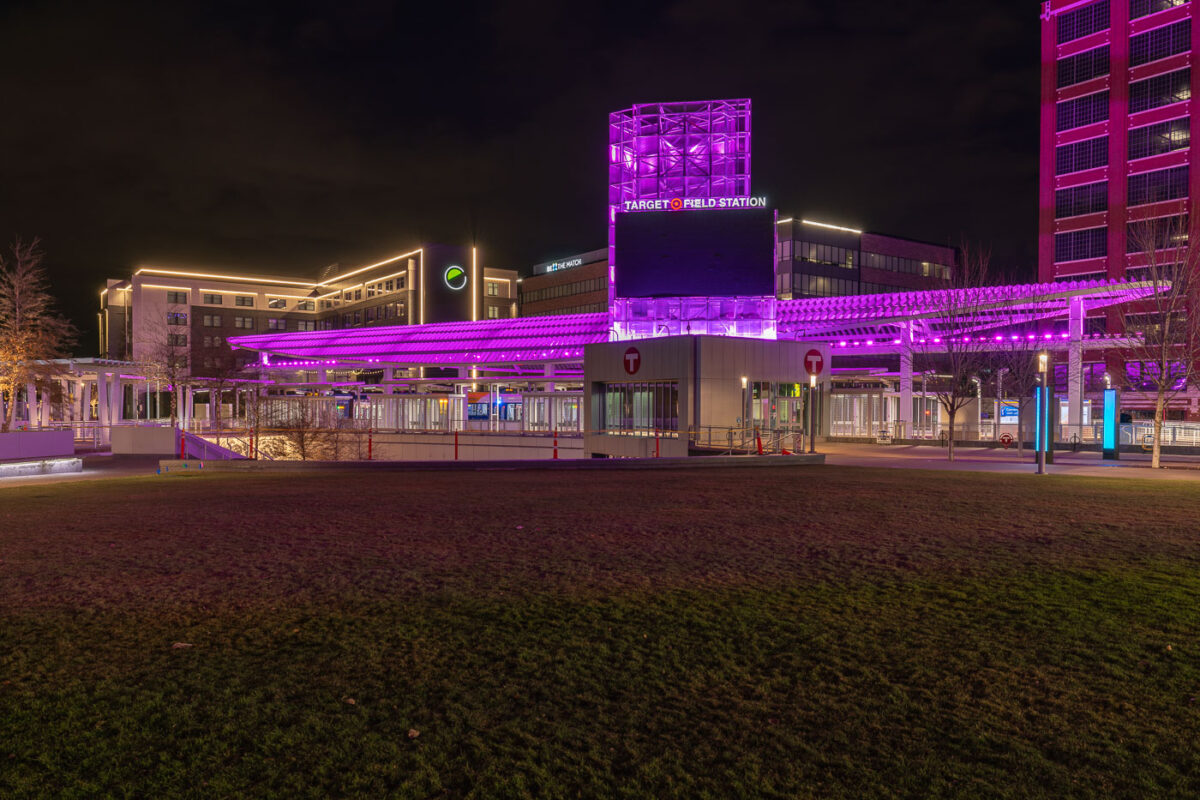
November 2020 — Target Field Station in Downtown Minneapolis at night.
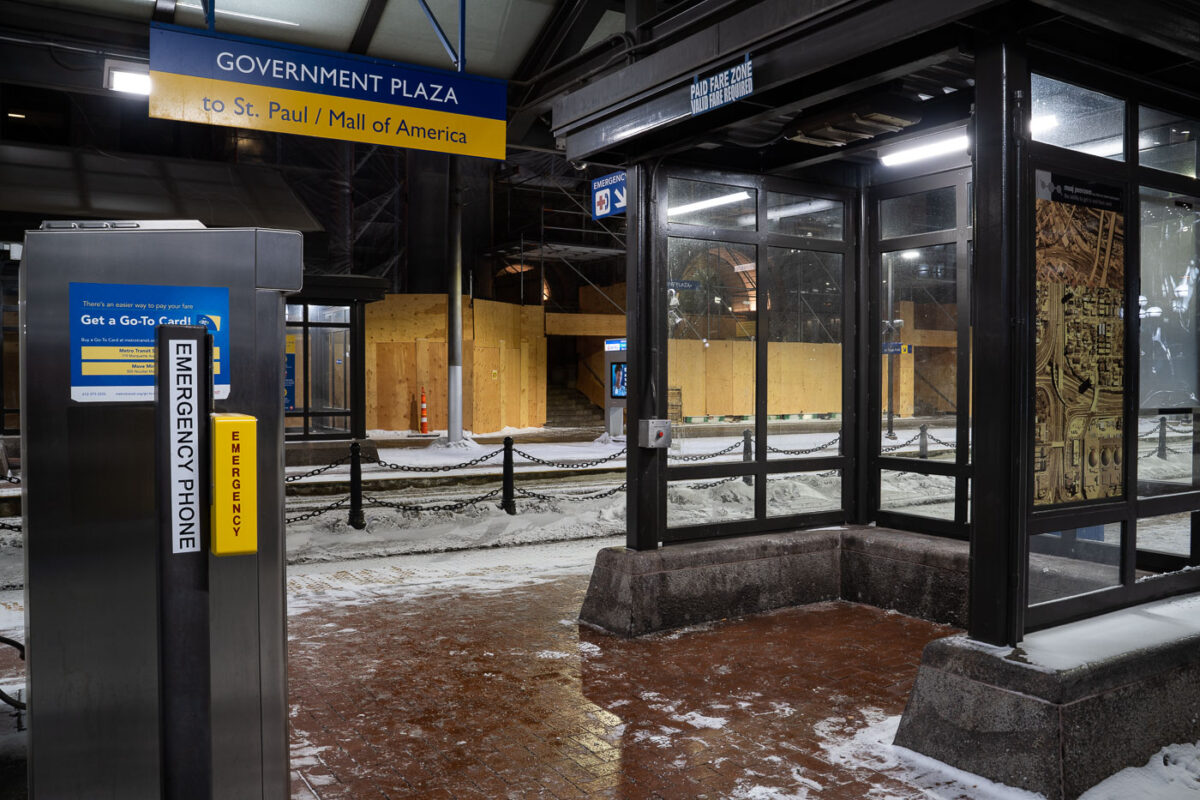
February 2021 —
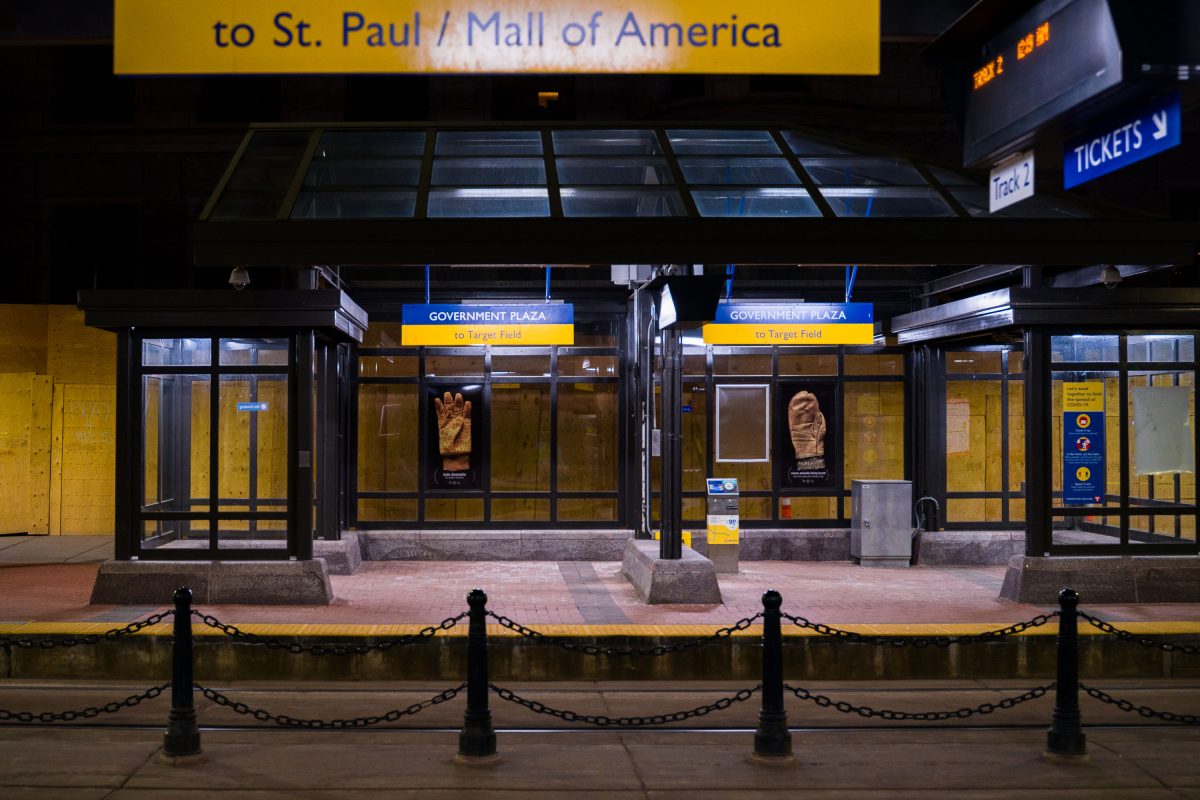
April 2021 —