San Pedro La Laguna

8 photos · 2020

8 photographs tagged San Pedro La Laguna, 2020.
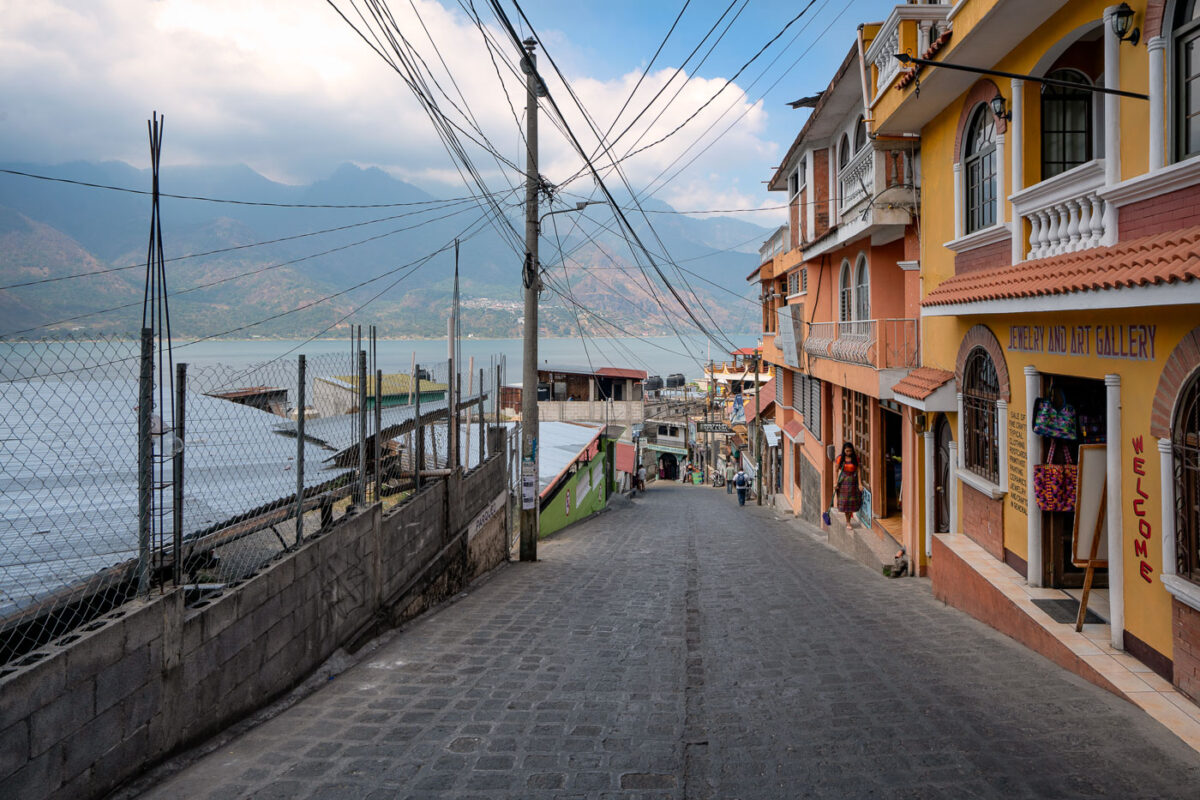
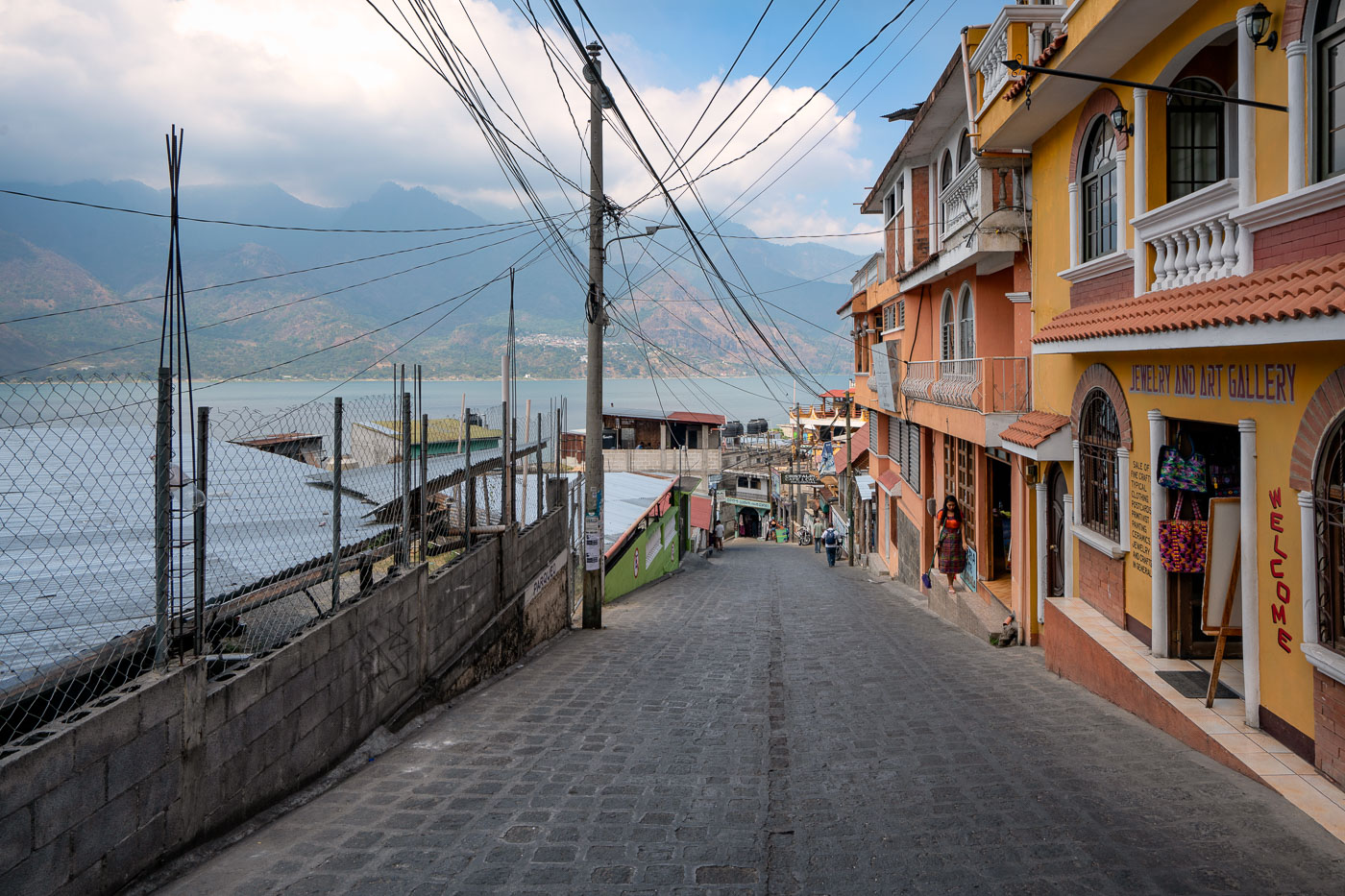
Colorful colonial buildings line a steep cobblestone street descending to Lake Atitlán in San Pedro La Laguna, Guatemala, with mountains visible across the water.
San Pedro La Laguna sits on the southwestern shore of Lake Atitlán, below the twin peaks of Volcán San Pedro. The town's steep, cobbled streets run directly down to the water, linking the lakeshore docks with shops and guesthouses built up the hillside. Many of these streets have no vehicle access beyond tuk-tuks, so pedestrians share the cobblestones with motorbikes and foot traffic headed to and from the boat landings. San Pedro has long drawn visitors for its lake views and Maya Tz'utujil culture, and storefronts selling jewelry, textiles, and local artwork line several of its central blocks.

Sloping Street Toward Lake Atitlán in San Pedro La Laguna
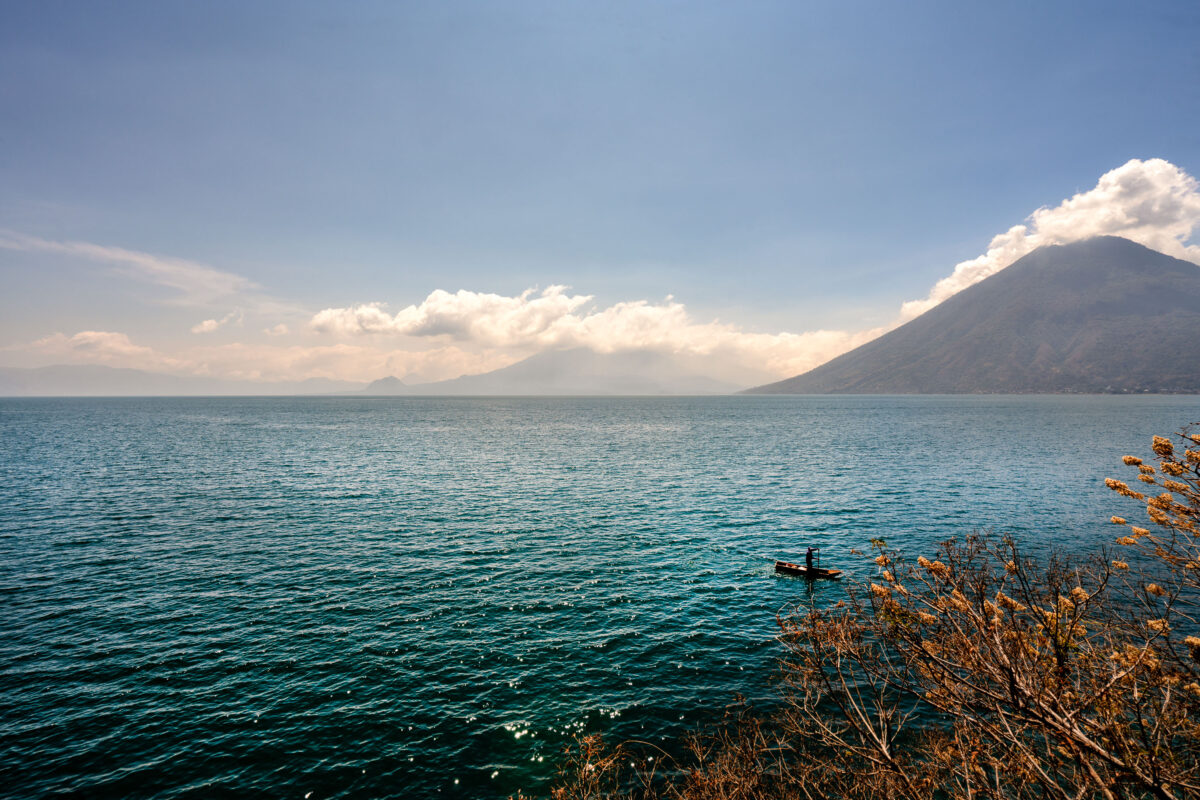
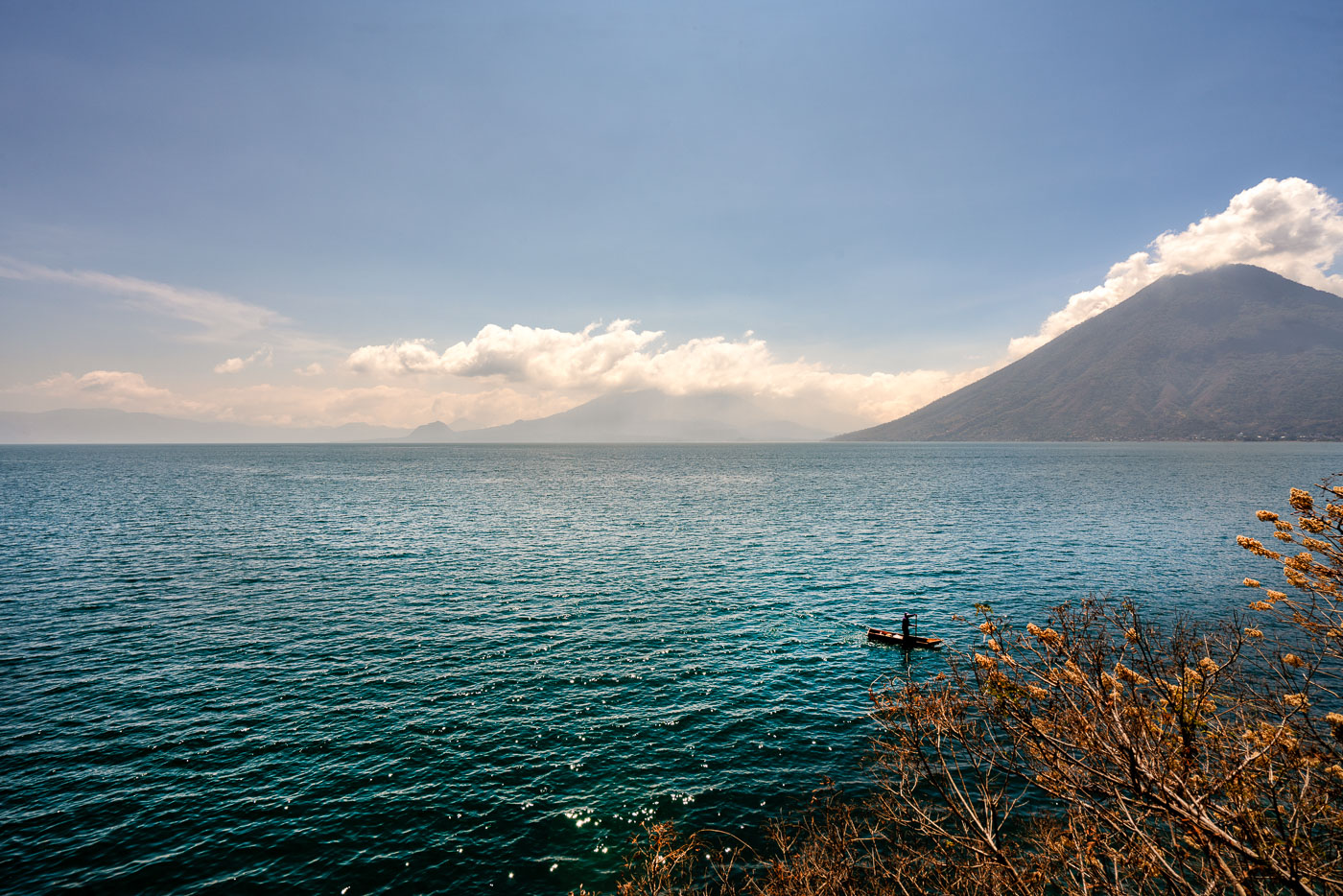
Volcán San Pedro rises above Lake Atitlán in Guatemala's western highlands with clouds gathering around its cone.
Volcán San Pedro rises 3,020 meters above Lake Atitlán on the lake's southwestern shore, near the town of San Pedro La Laguna. The volcano is dormant and draws hikers who climb a marked trail to its summit for views across the caldera. Lake Atitlán itself formed roughly 84,000 years ago after a massive volcanic eruption collapsed the magma chamber beneath it, leaving a basin that in places reaches depths of more than 300 meters. Small motorized boats remain the primary way to travel between the lake's dozen or so Maya villages, since few roads connect them directly.

Fisherman on Lake Atitlán Near Volcán San Pedro
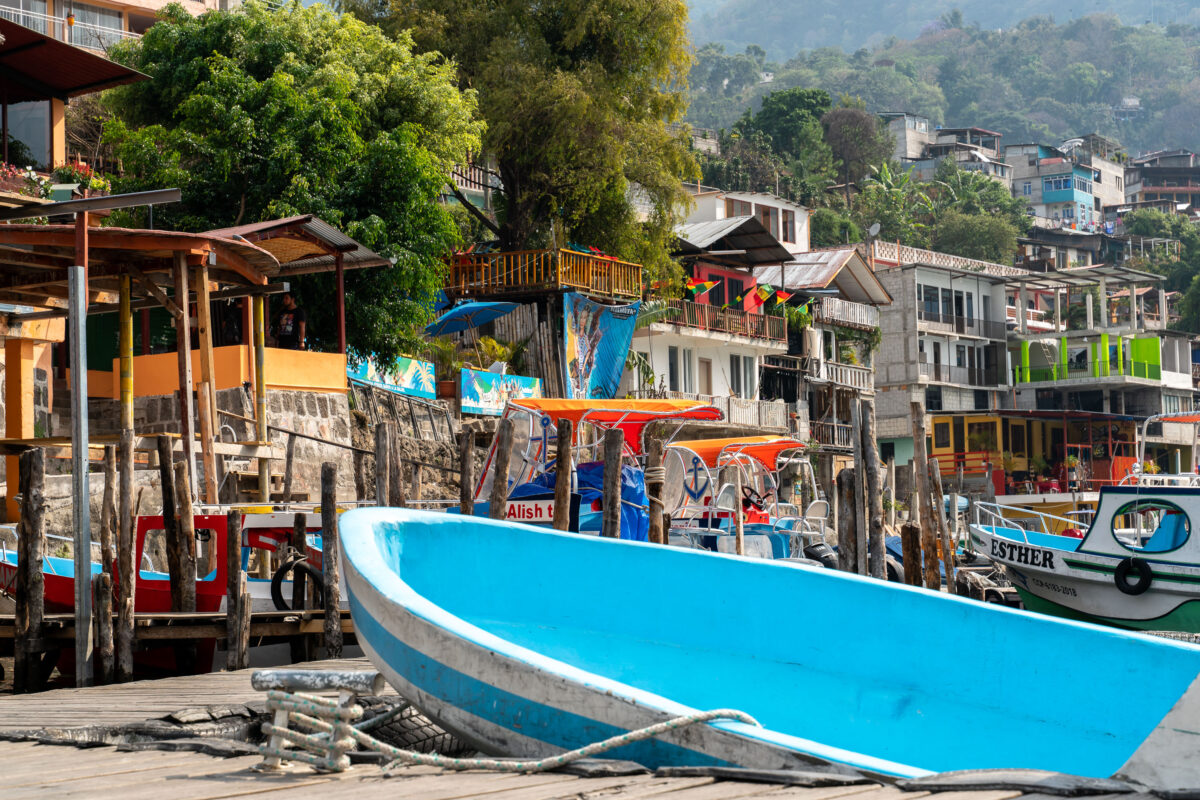
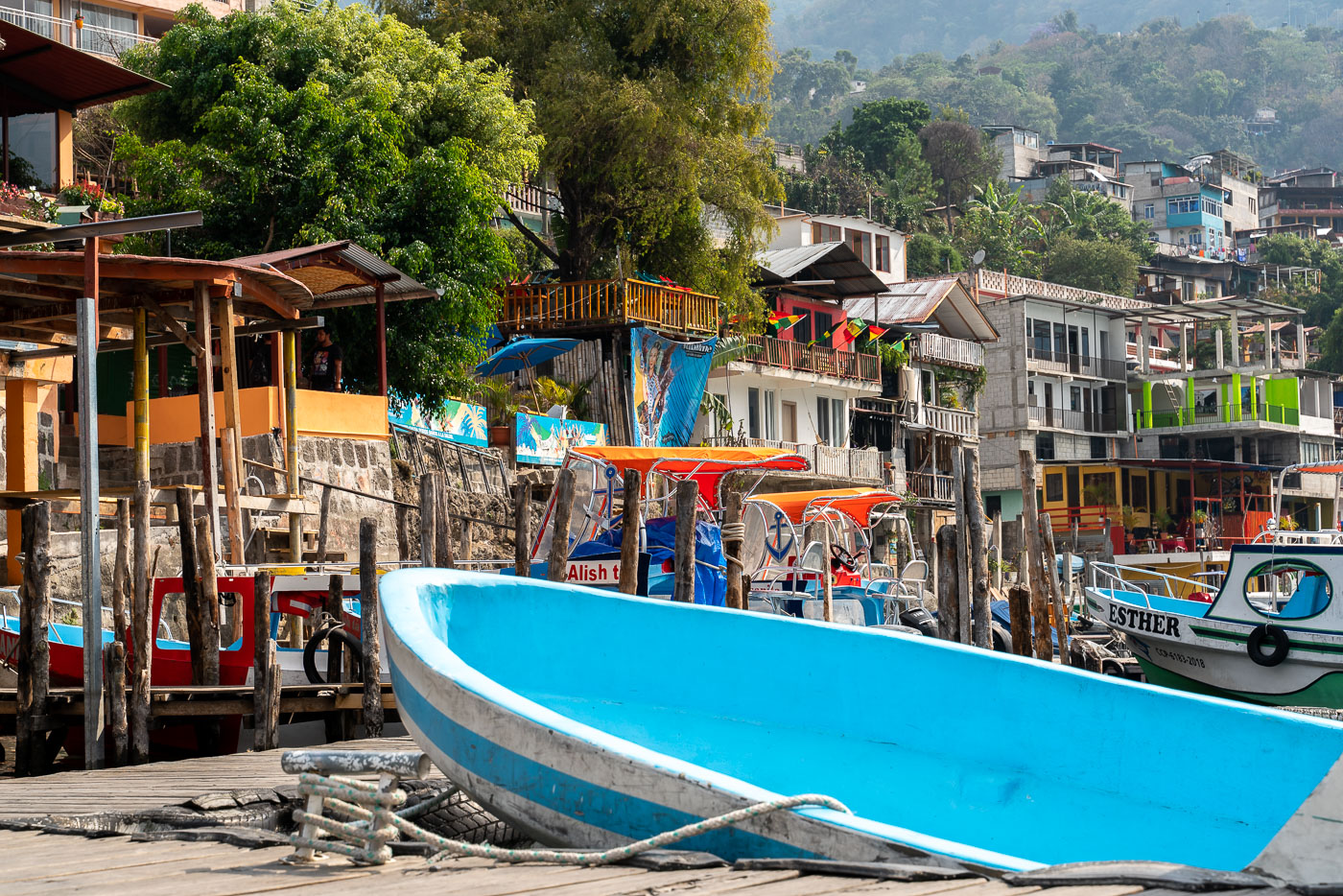
Blue and red fishing boats dock at a wooden pier on Lake Atitlán in San Pedro La Laguna, Guatemala.
San Pedro La Laguna sits on the southwestern shore of Lake Atitlán, a crater lake formed roughly 84,000 years ago by a massive volcanic eruption. Lanchas — open motorized launches like these — remain the primary way residents and visitors move between San Pedro and the lake's other towns, since no road circles the entire shoreline. Public lancha routes typically connect San Pedro to Panajachel, Santiago Atitlán, and San Marcos La Laguna, with docks doubling as informal gathering points for vendors and waiting passengers. The town itself is one of the larger Tz'utujil Maya communities on the lake, known for Spanish-language schools and coffee cultivation on the surrounding volcanic slopes.

Lanchas Moored Along the Dock in San Pedro La Laguna
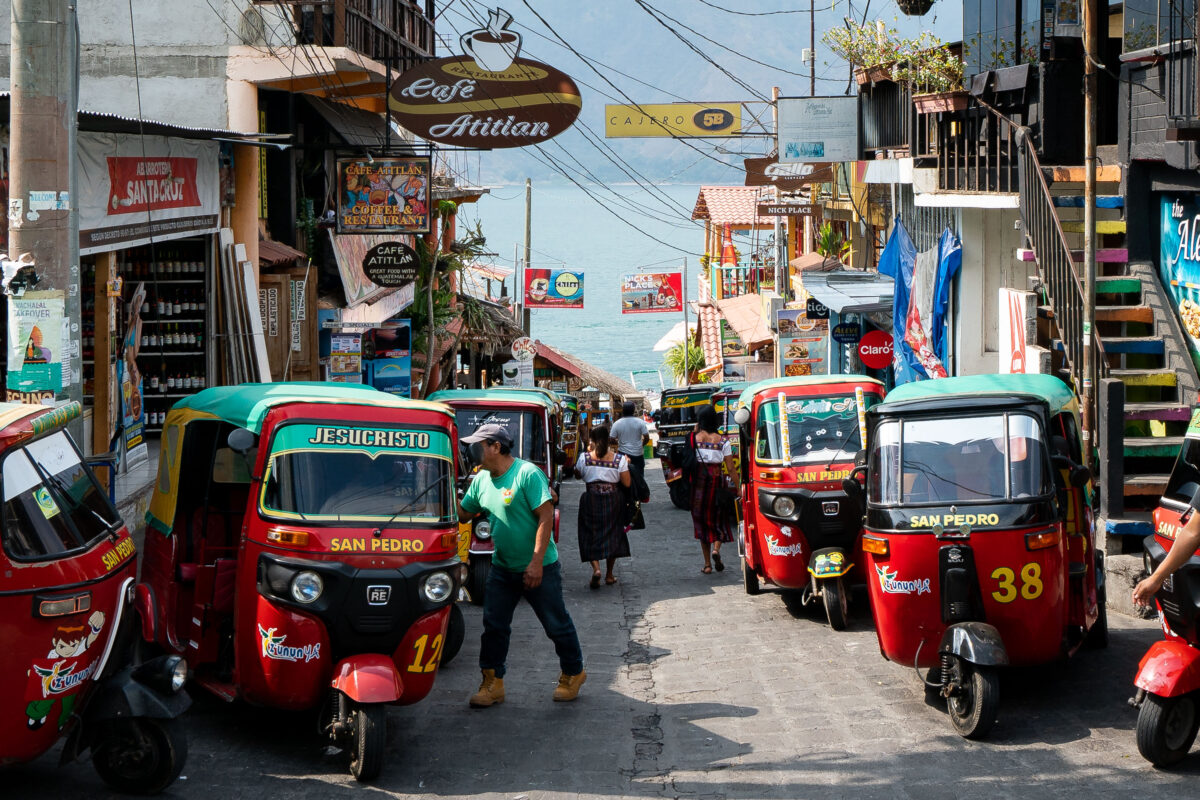
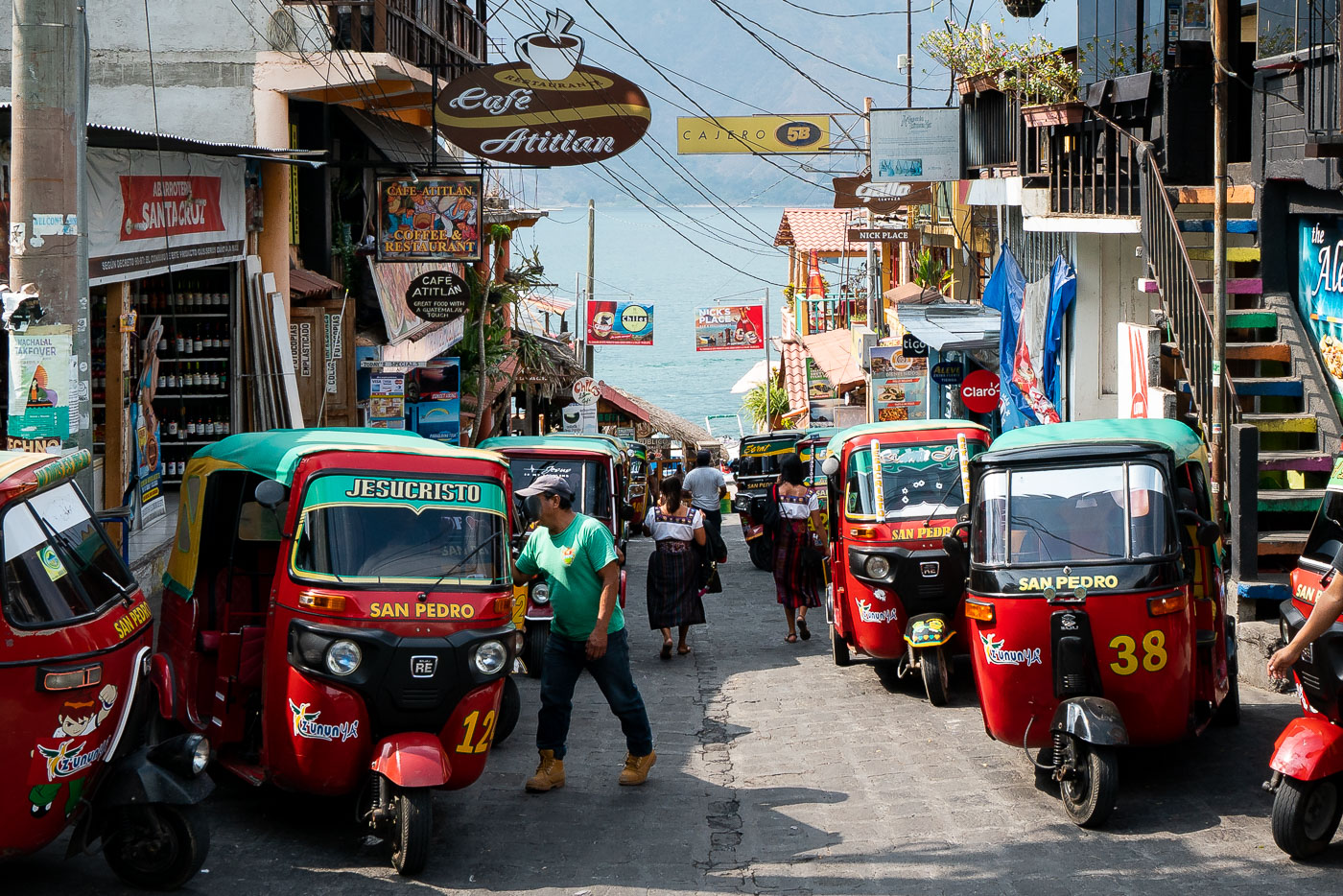
Mototaxis parked on a colorful commercial street in San Pedro La Laguna, Guatemala with shops and pedestrians visible.
San Pedro La Laguna sits on the southwestern shore of Lake Atitlán, below the slopes of Volcán San Pedro. Tuk-tuks, known locally as mototaxis, the main form of transport through the town's steep, narrow streets, which were laid out long before motorized vehicles and leave little room for cars. Drivers typically charge a flat fare for short trips between the lakeshore, the market, and surrounding neighborhoods. The town's economy is tied closely to Lake Atitlán tourism and to coffee grown on the surrounding hillsides, both of which keep a steady flow of passengers moving through its commercial streets.

Tuk-Tuks Line a Busy Street in San Pedro La Laguna
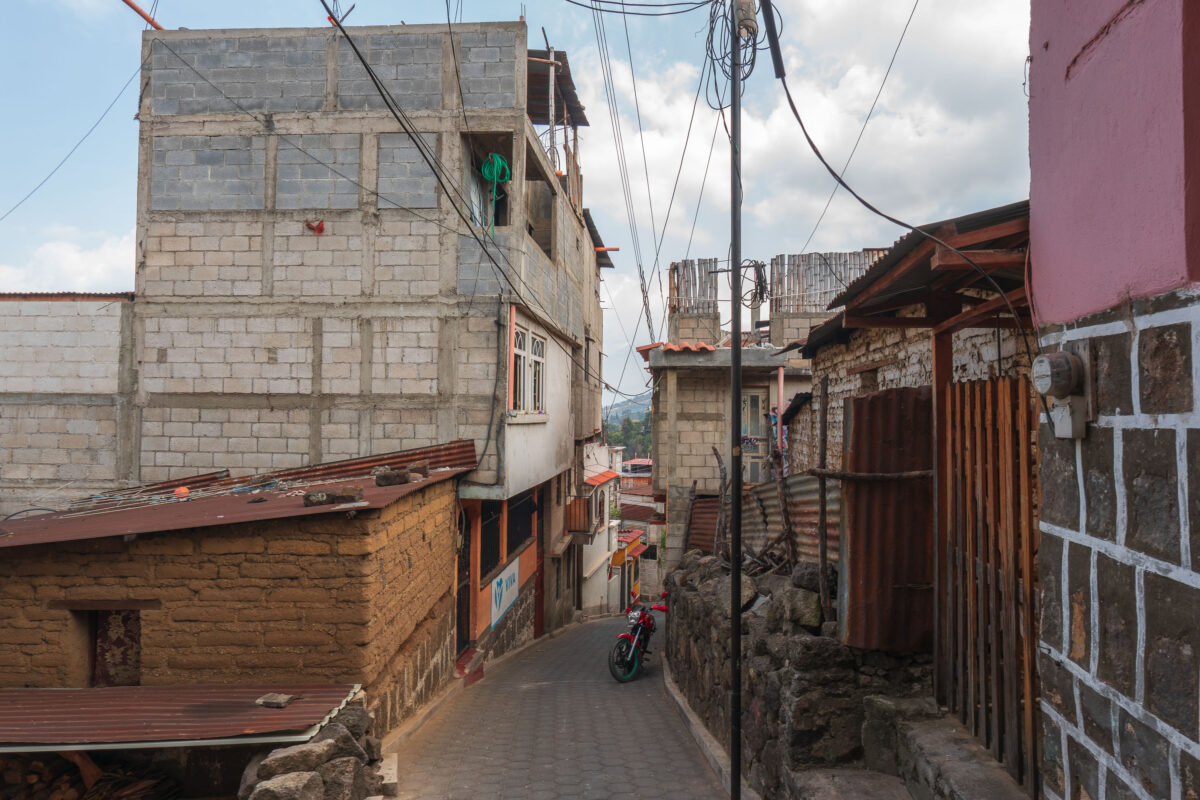
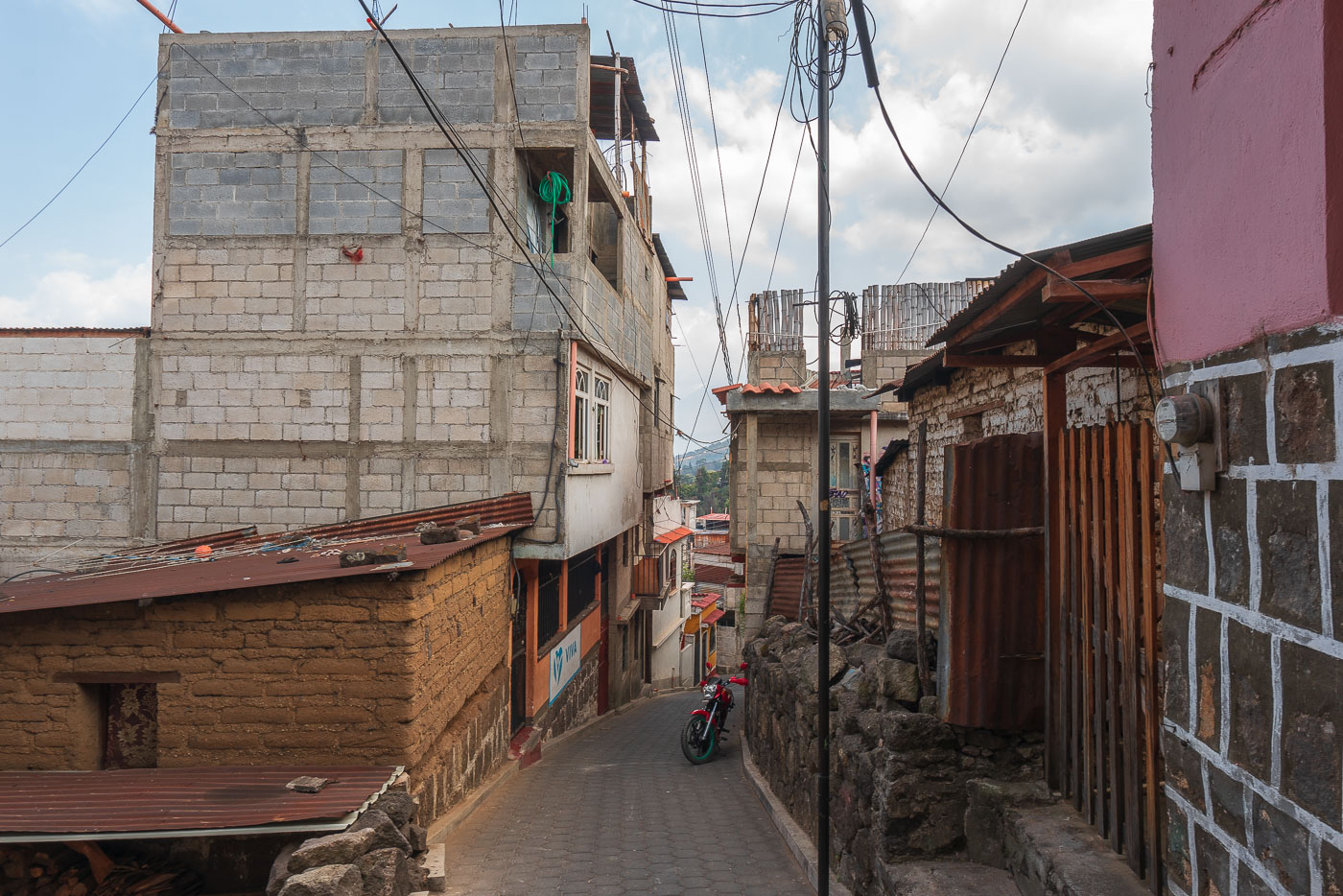
Red motorcycle parked on a steep residential lane in San Pedro La Laguna, Guatemala, lined with concrete block and stone buildings.
San Pedro La Laguna sits on the southwestern shore of Lake Atitlán in Guatemala's Sololá Department, at the base of its namesake volcano. The town is home to a largely Tz'utujil Maya population and has grown into one of the lake's busiest centers for Spanish-language schools and backpacker tourism. Its older residential streets climb steeply away from the waterfront, built with concrete block, stone, and corrugated metal, and are often too narrow or steep for anything larger than motorcycles and pedestrians. Overhead utility lines strung along these lanes supply power to homes built incrementally over generations.

A Narrow Residential Street in San Pedro La Laguna
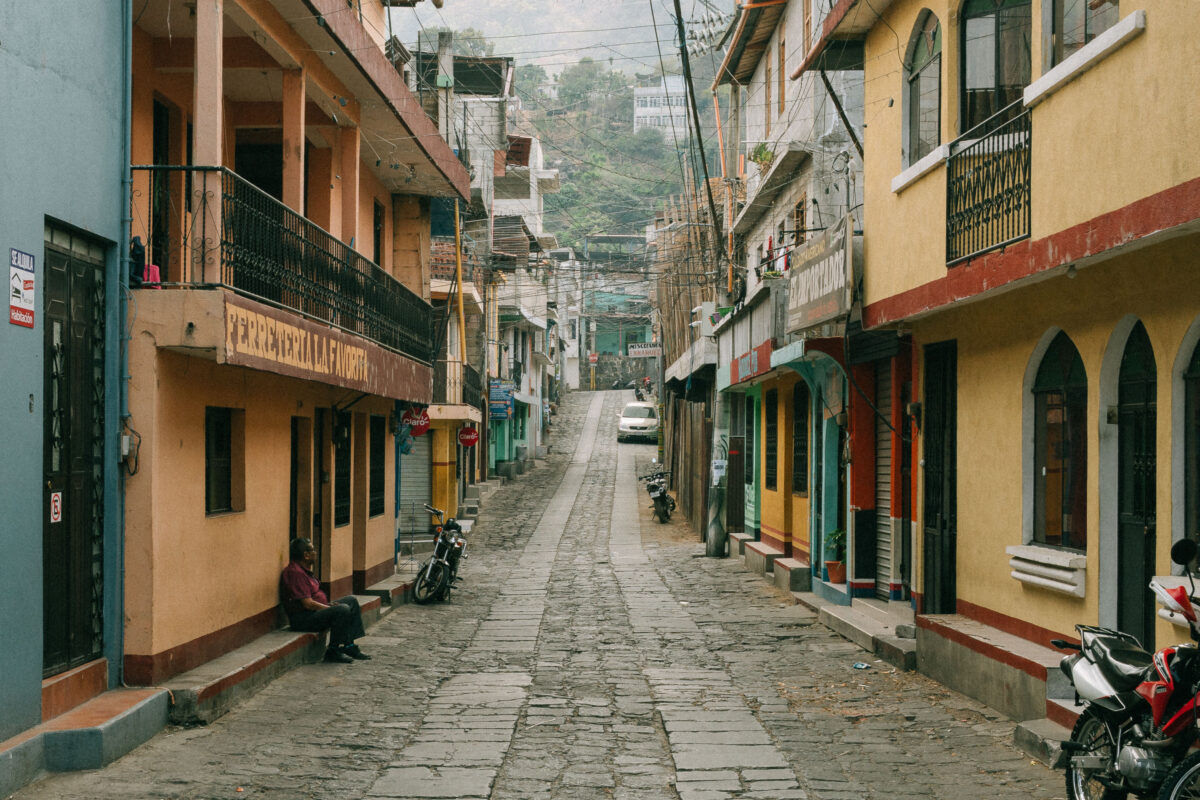
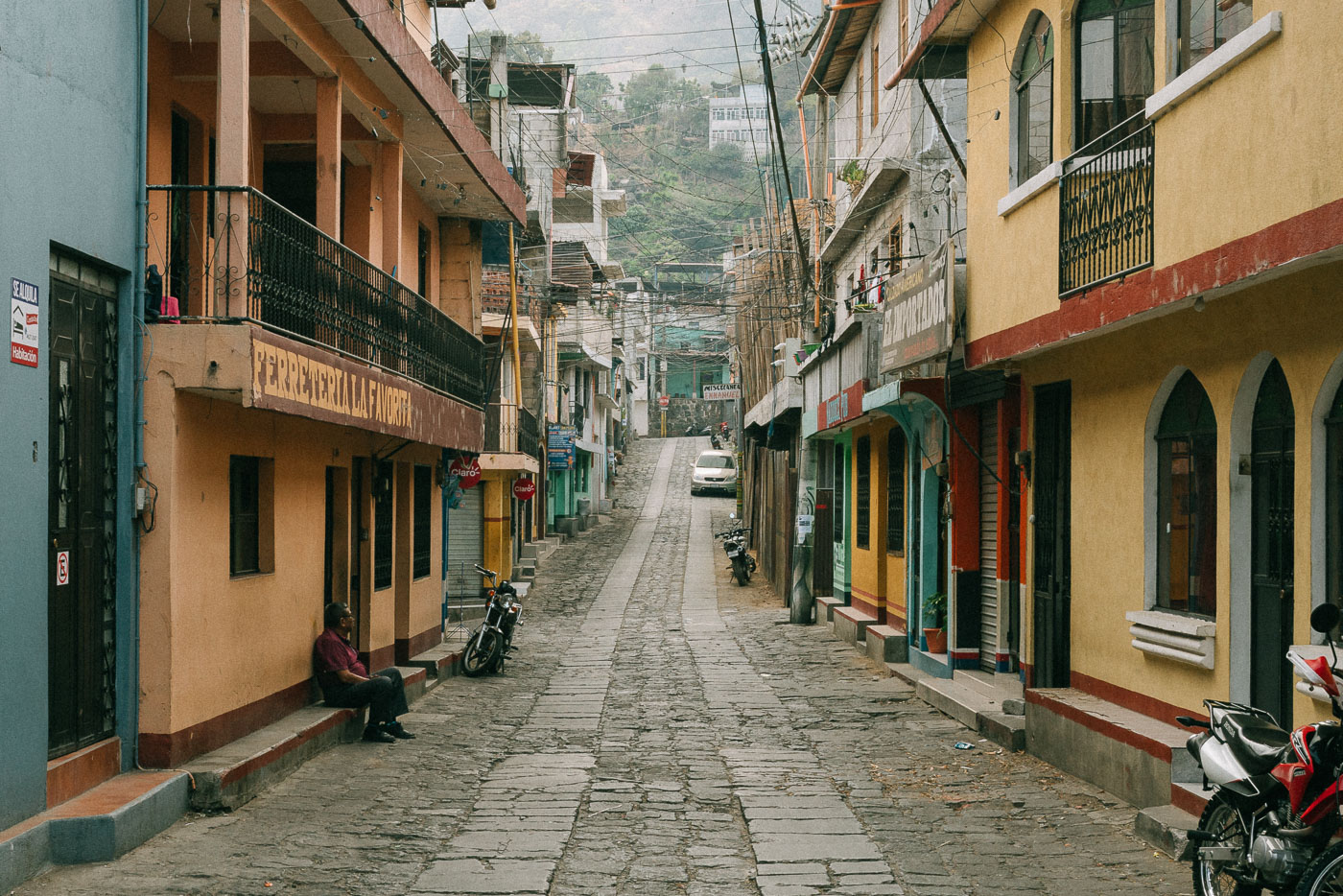
Cobblestone street in San Pedro La Laguna, Guatemala lined with colorful colonial buildings and parked motorcycles.
San Pedro La Laguna sits on the southwestern shore of Lake Atitlán, below the volcano that shares its name. The town's narrow cobblestone streets climb steeply from the dock area into the hillside, linking the lakefront to residential blocks above. Small guesthouses, tiendas, and family residences line these routes, many painted in the bright colors common throughout the lake's Tz'utujil Maya communities. Motorcycles and tuk-tuks remain the primary transport here, since the steep grades and narrow width of most streets limit car access.

Motorcycles Parked Along a Side Street in San Pedro La Laguna
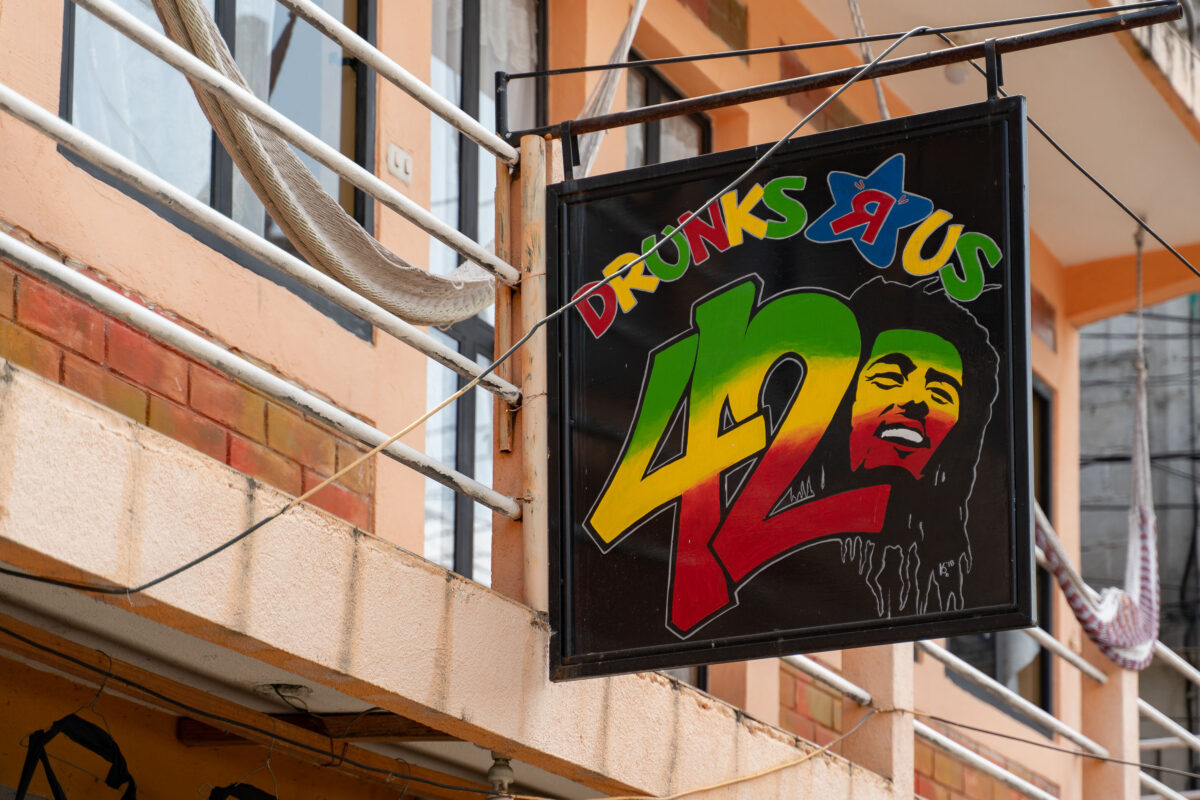
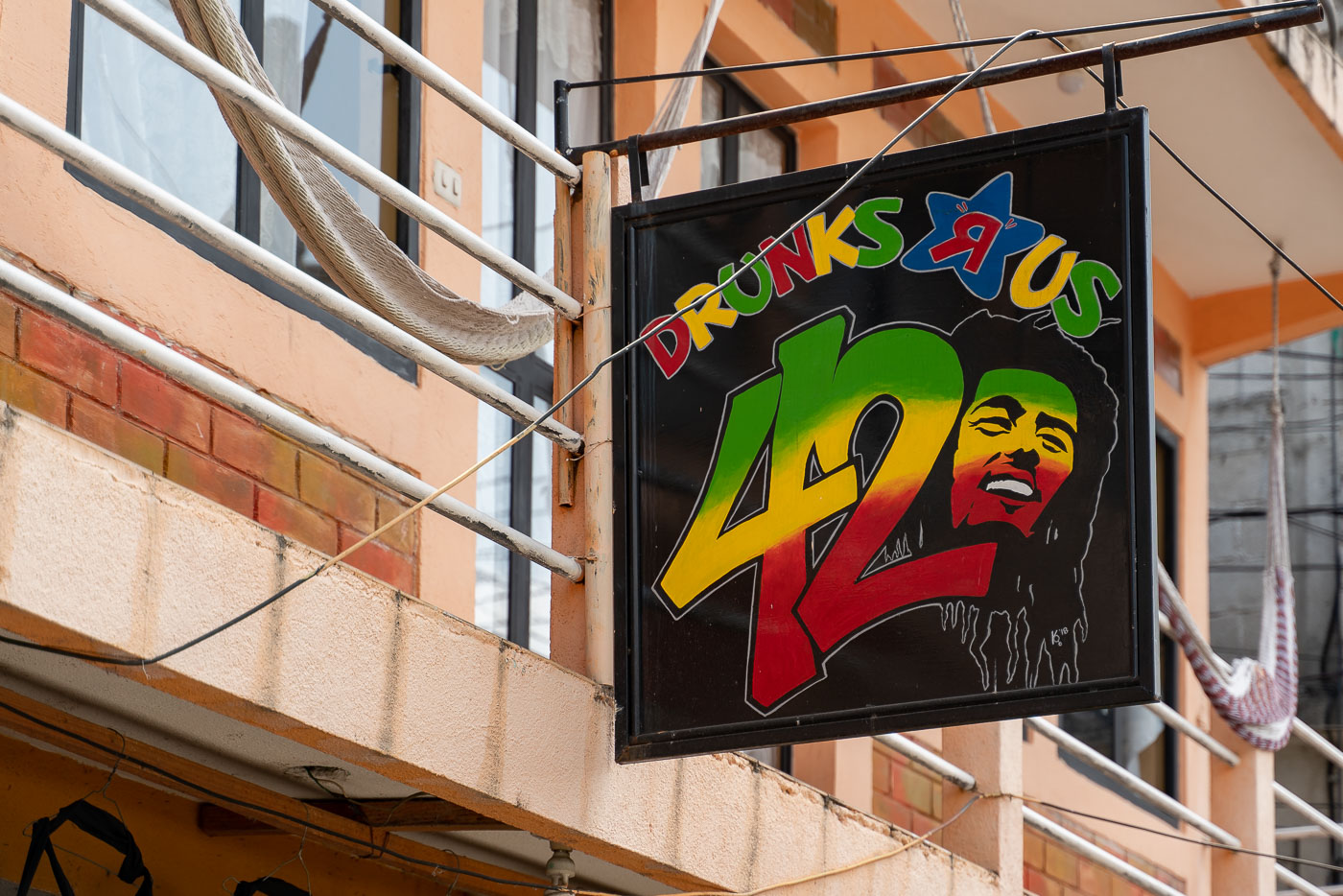
Drunks R Us storefront sign in San Pedro La Laguna, Guatemala, featuring Bob Marley imagery and Rastafarian colors.
Drunks R Us is a bar in San Pedro La Laguna, a lakeside town on Lake Atitlán popular with backpackers. Its sign plays on the name Alcoholics Anonymous, pairing a portrait of Bob Marley with Rastafarian colors. The number 420, a common reference to cannabis culture, sits alongside the reggae imagery as part of the bar's branding.

Drunks R Us Bar Sign in San Pedro La Laguna

Brightly painted red, green, and yellow tuk-tuk taxi parked on a street in San Pedro La Laguna, Guatemala.
Tuk-tuks like this one are the main form of short-distance transport in San Pedro La Laguna, a town on the southwestern shore of Lake Atitlán. The three-wheeled vehicles, adapted from motorcycle frames, are suited to the steep, narrow streets that wind up from the lakeshore into the hillside neighborhoods. Most operate independently, with owners painting and numbering their vehicles for identification within the local taxi fleet. A Banrural branch, part of Guatemala's state-affiliated rural development bank, stands in the background along the town's commercial strip.

Red and Green Tuk-Tuk No. 64 in San Pedro La Laguna

Built in Minneapolis

Minneapolis Photographer

Browse by location, move through long-running series, or start with recent work.