Osaka

10 photos · 2023

10 photographs tagged Osaka, 2023.

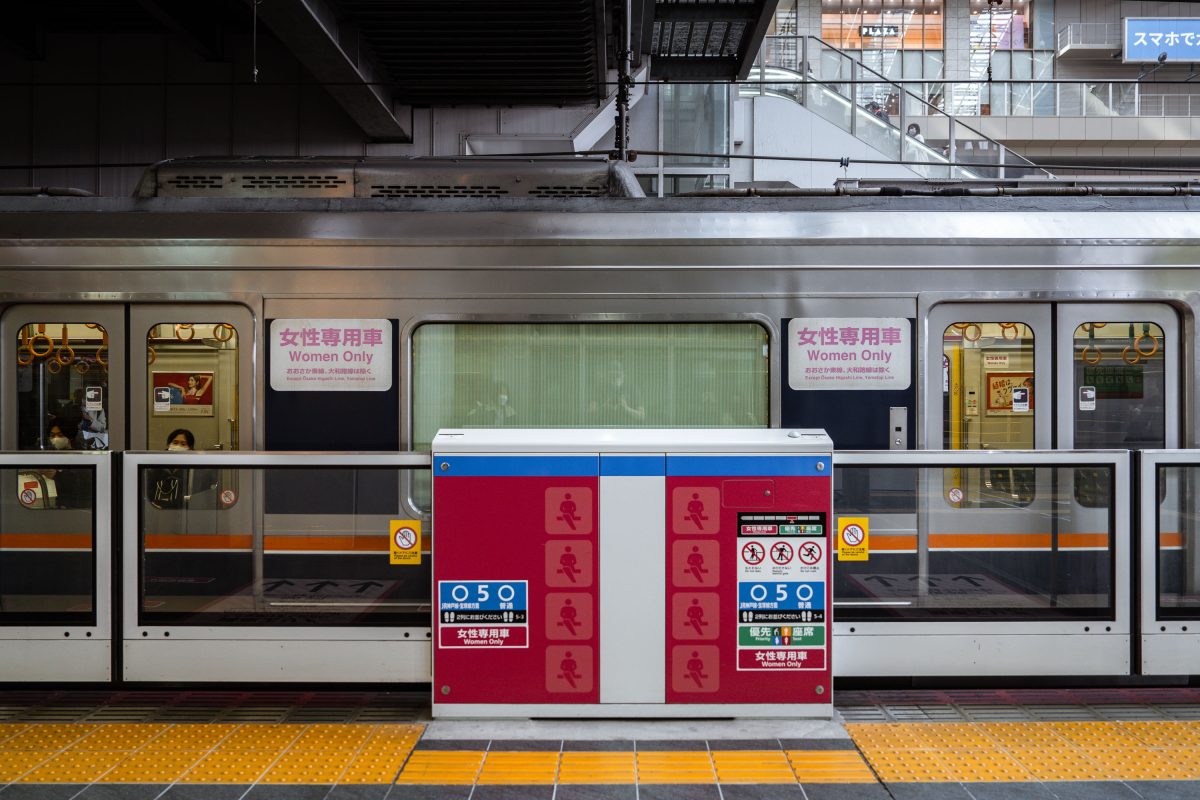
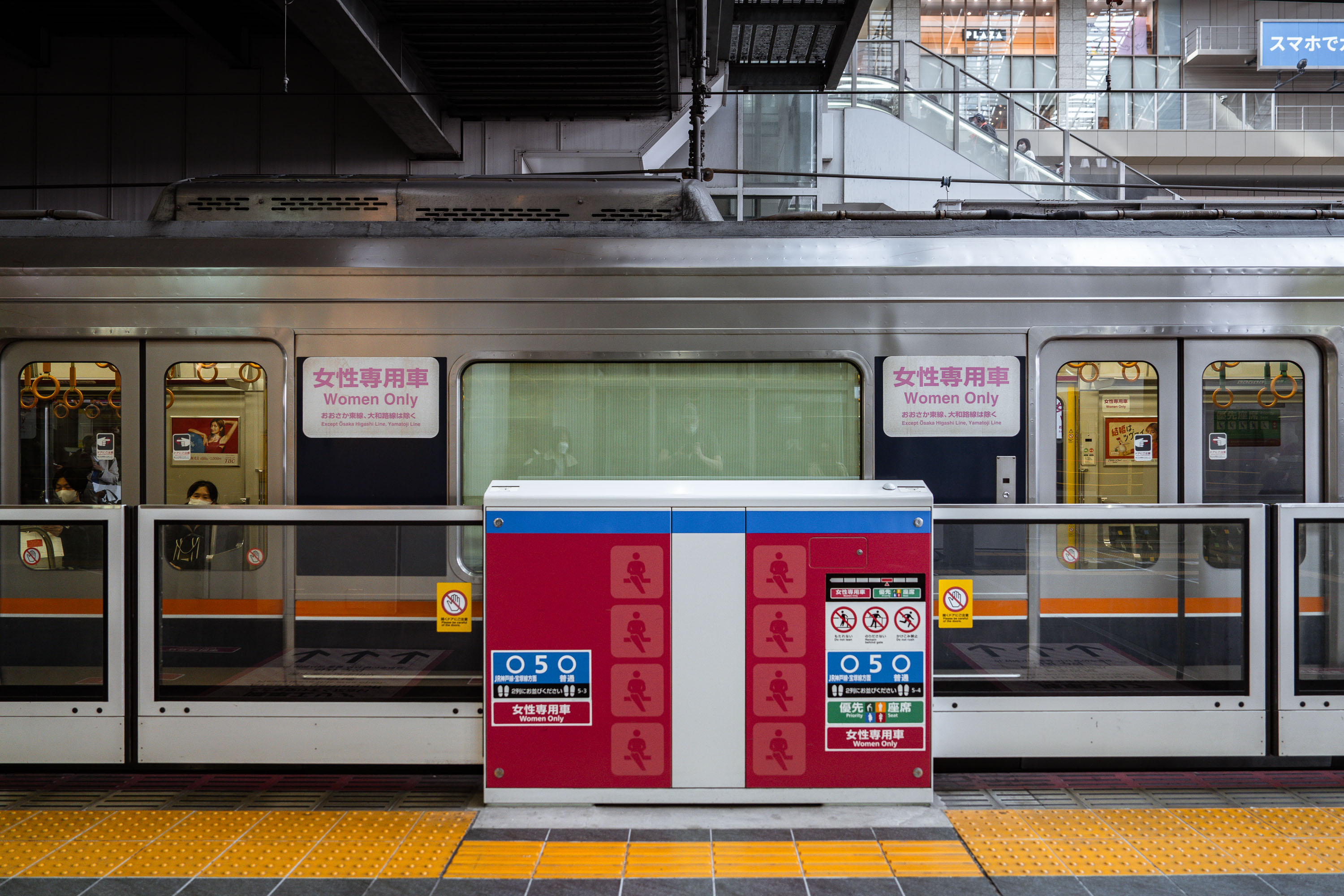
Women-only train car at an Osaka station platform with Japanese signage and safety markings.
A platform marker for a women only train car stands on an Osaka Loop Line platform, matching the "Women Only" signs posted on the train doors behind it. The Osaka Loop Line circles central Osaka and connects with the Yamatoji Line, both named on the car signage.

Women Only Car Sign on an Osaka Loop Line Train
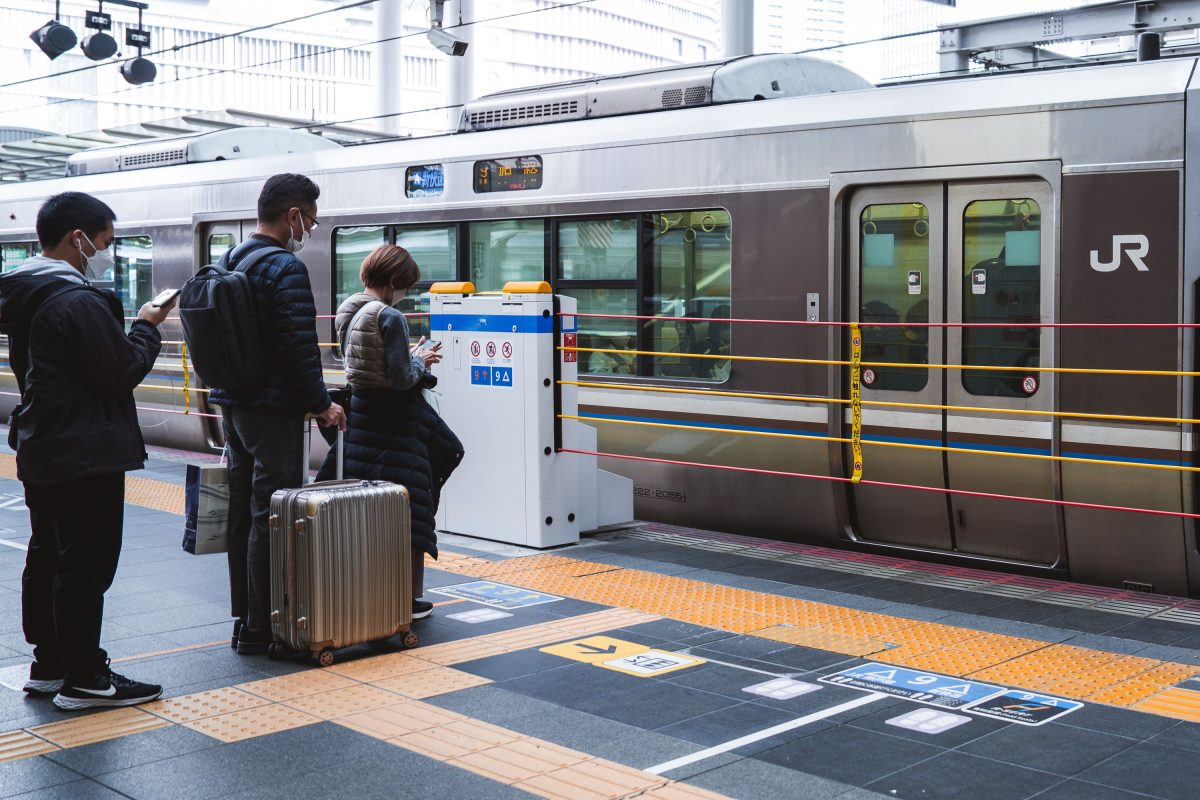
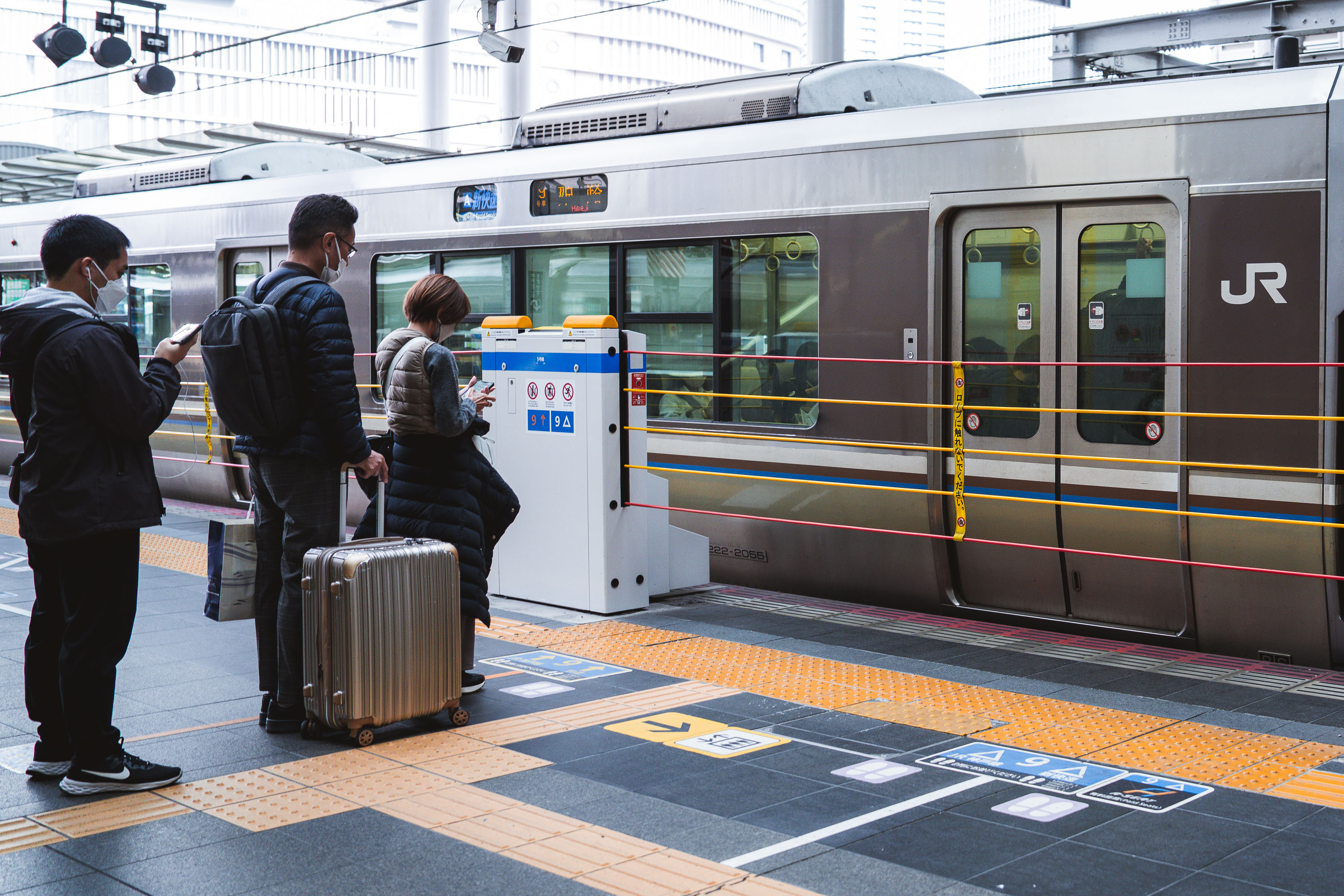
Passengers board a JR train at an Osaka station platform with luggage and belongings.
JR West operates this commuter train on one of its Osaka area lines. Travelers with rolling luggage wait on the platform as the train sits at the station with its doors closed.

Travelers Wait for a JR Train in Osaka
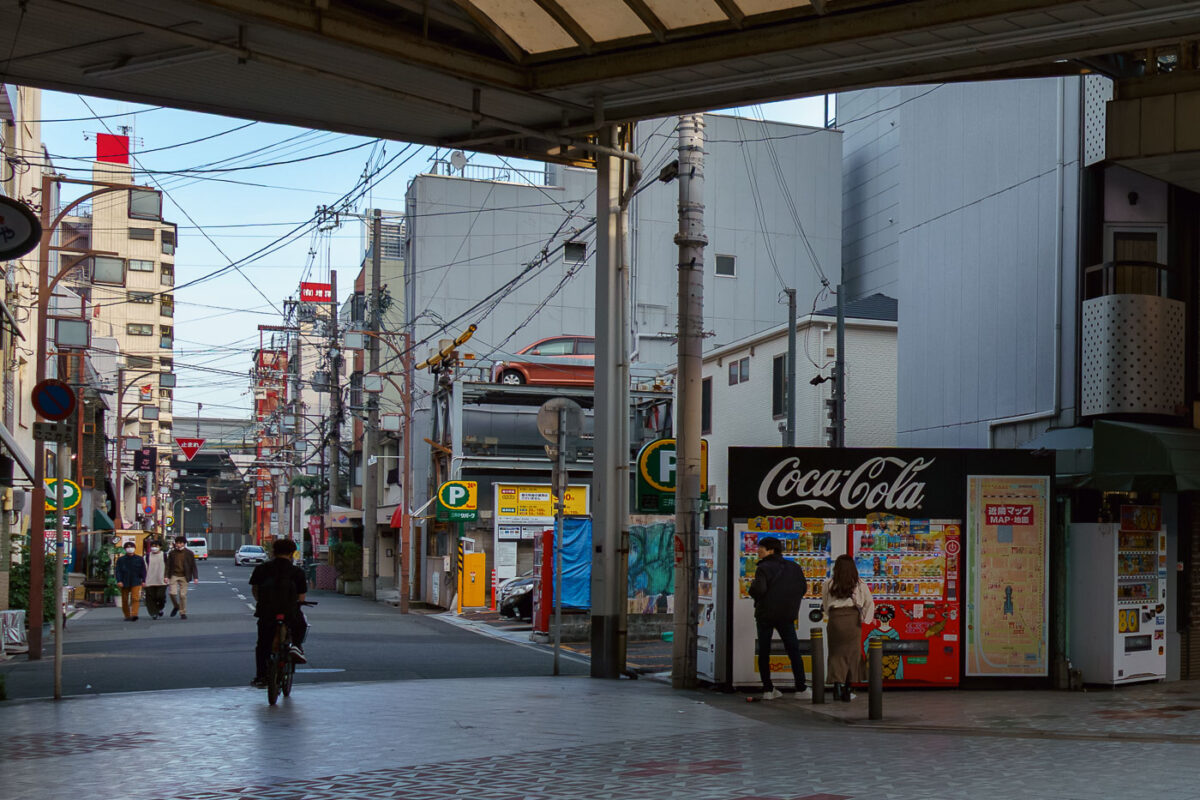
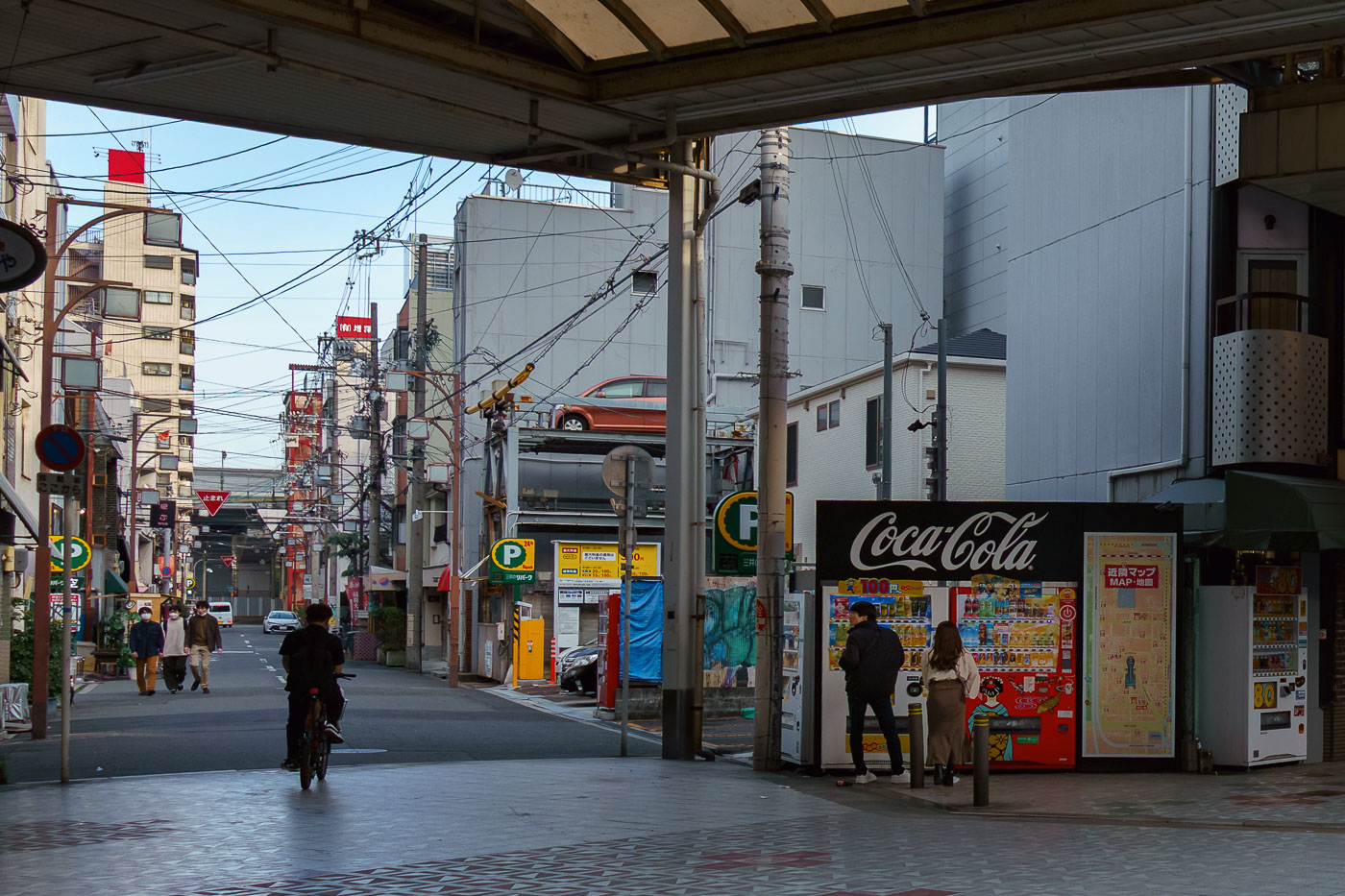
Coca-Cola vending machines on a street in Osaka, Japan, beside a local area map.
Coca-Cola vending machines on a street in Osaka, Japan, offer drinks and a local area map for nearby pedestrians. Vending machines are widely used throughout Japan for convenient beverage sales in public spaces.

Coca-Cola Vending Machine, Osaka

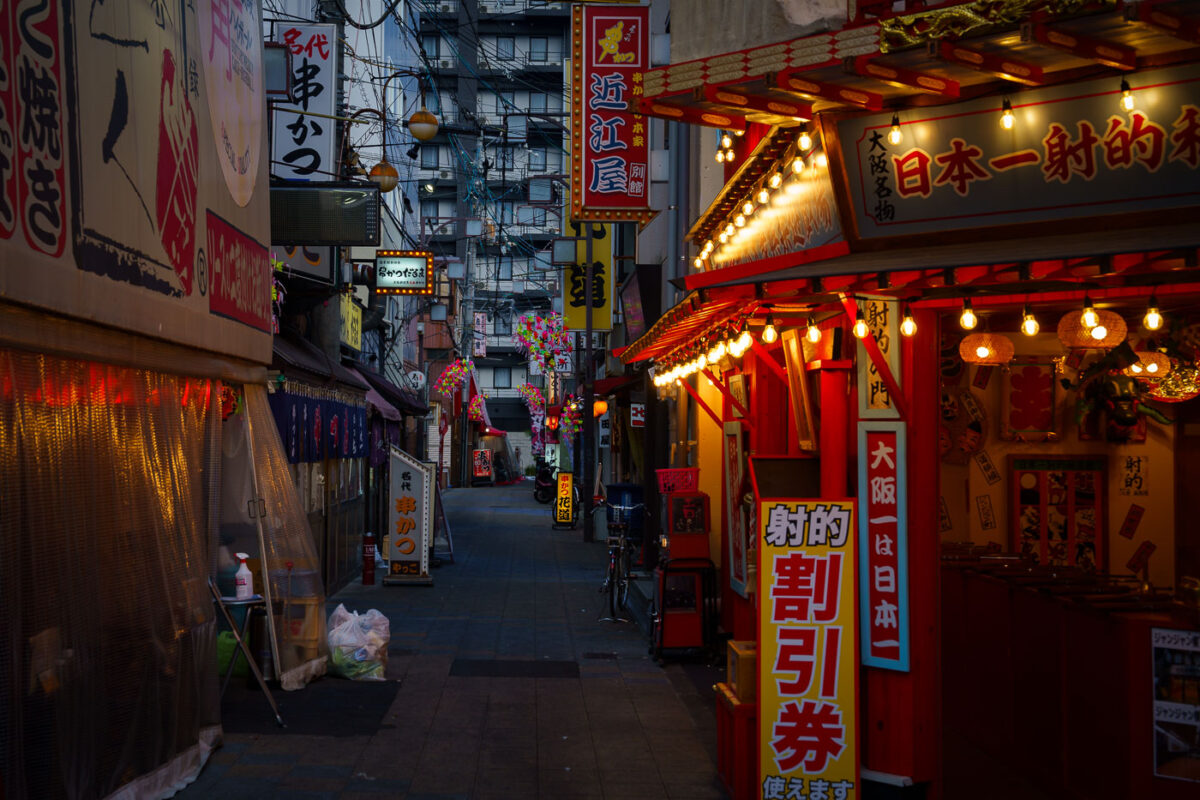
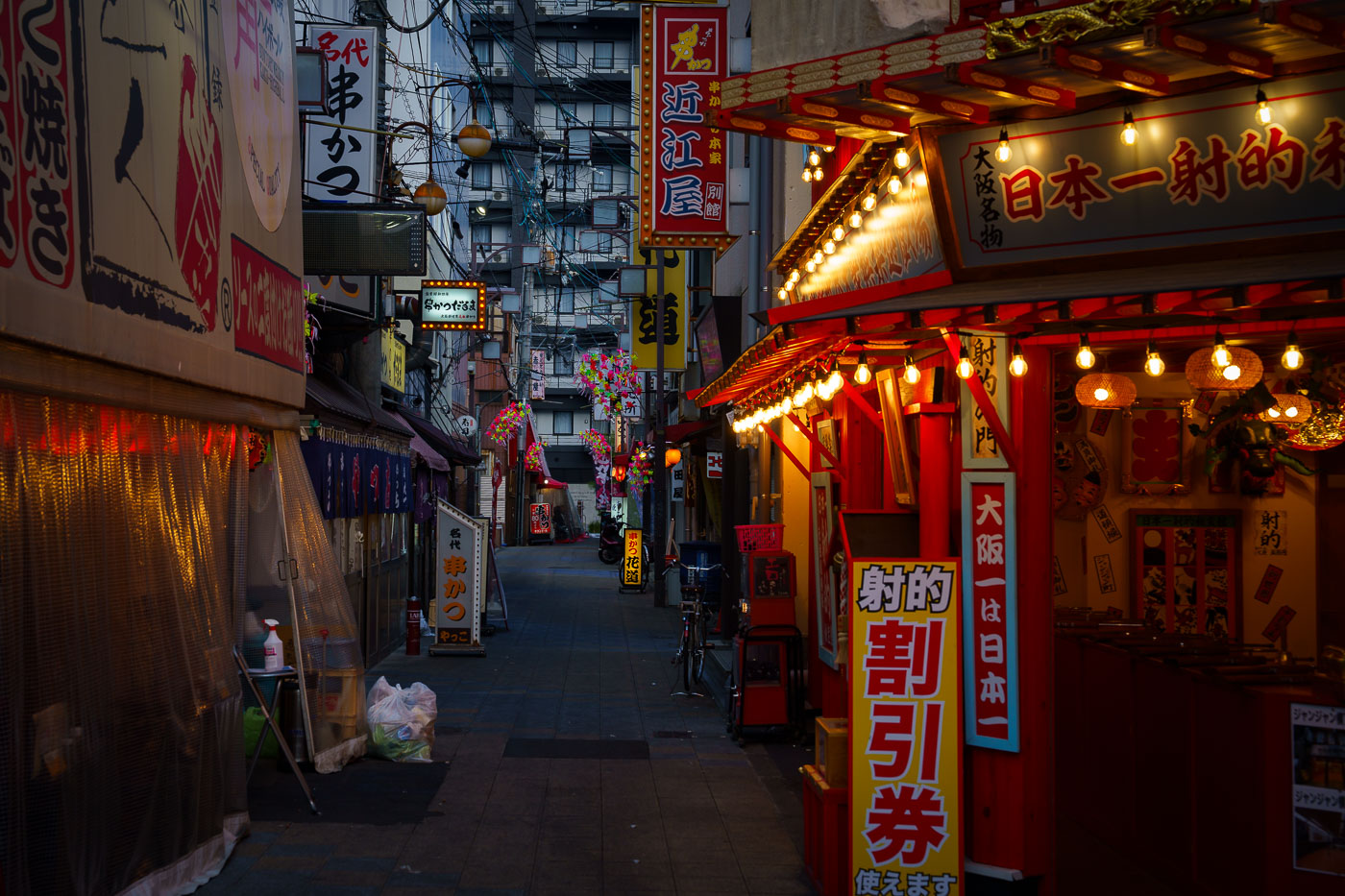
Shinsekai entertainment district in Osaka, Japan, with illuminated restaurant signs along a narrow street.
Shinsekai, Osaka, Japan, is a historic entertainment district known for its dense clusters of restaurants, game parlors, and illuminated signage. Developed in 1912, the neighborhood was modeled in part on Western amusement districts and remains associated with retro-style nightlife and dining.

Shinsekai Entertainment District, Osaka
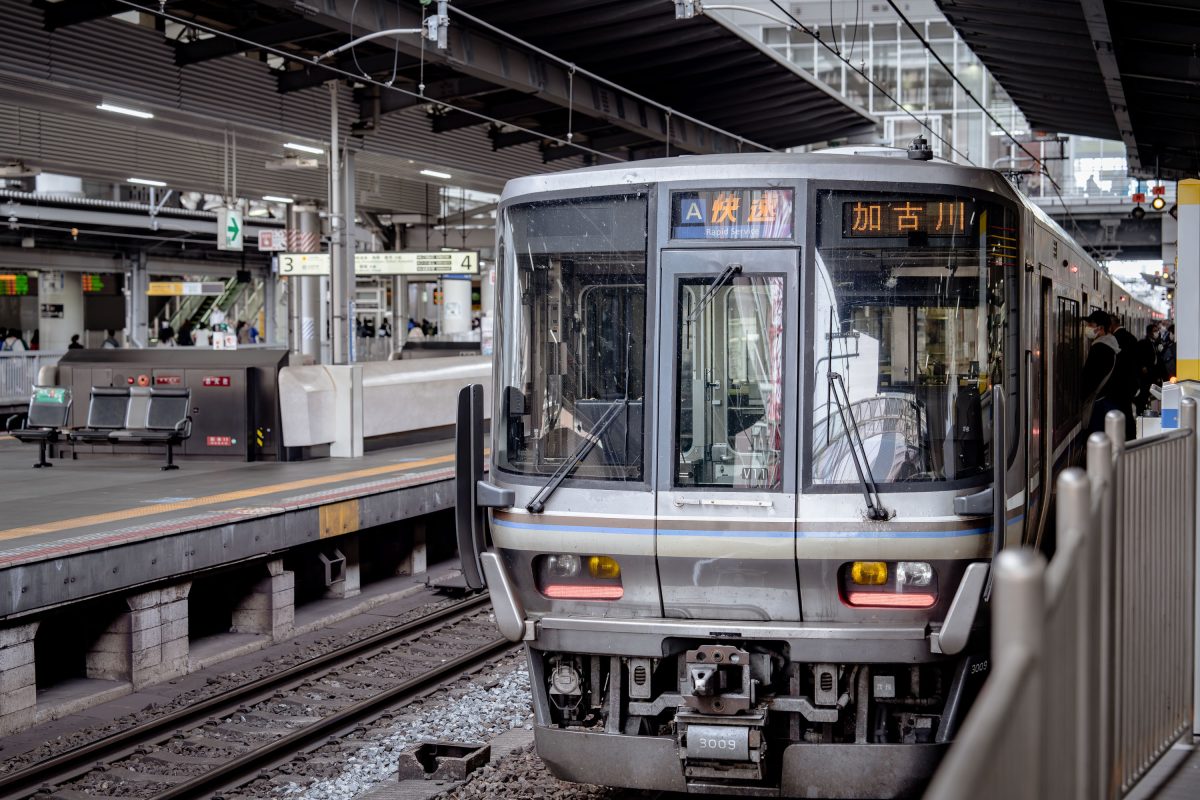
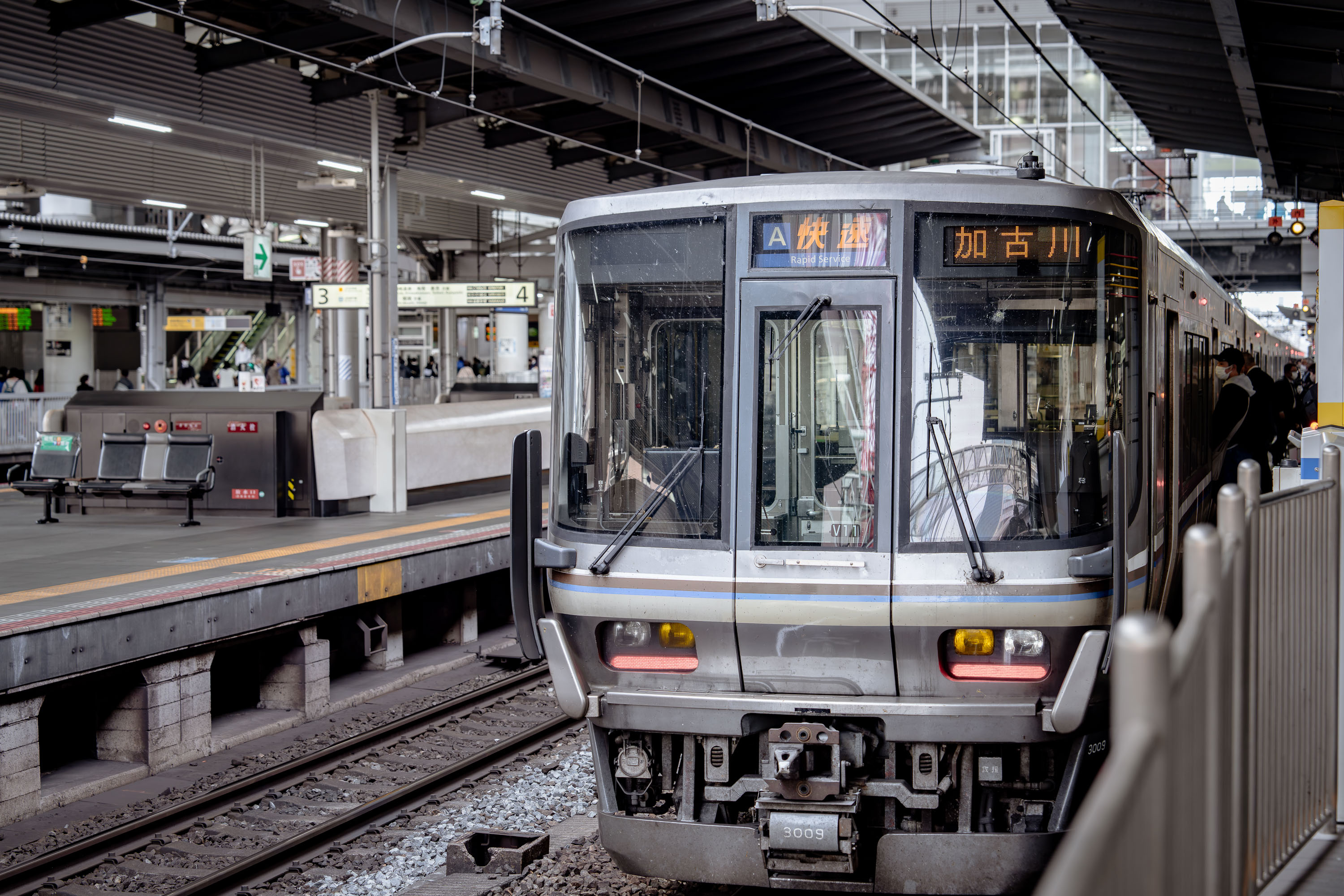
A commuter train at Kyoto Station displays Japanese destination signs on its front panel.
Osaka Station opened in 1874 in the Umeda district and is served by the JR Kyoto, JR Kobe, and Osaka Loop lines. A JR West 223 series train waits at the platform on a rapid service bound for Kakogawa, a city in Hyogo Prefecture about 50 miles west along the JR Kobe Line.

Rapid Service to Kakogawa at Osaka Station
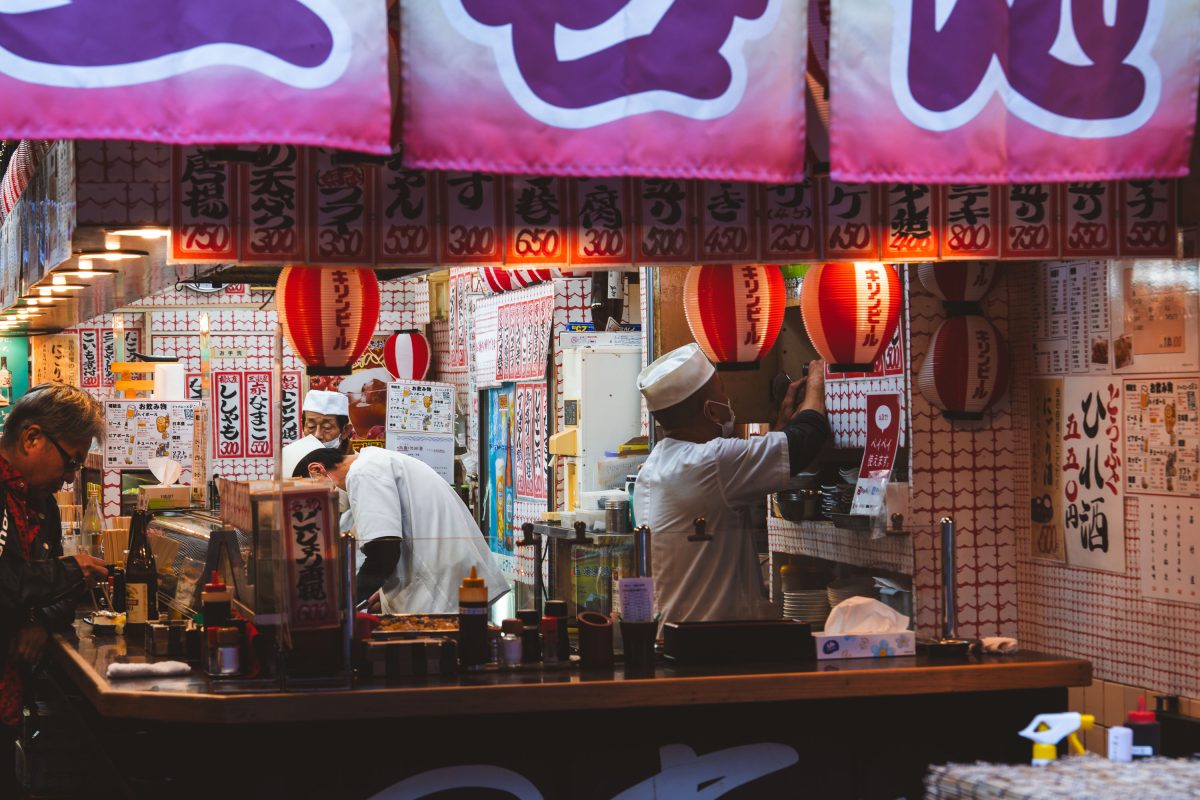
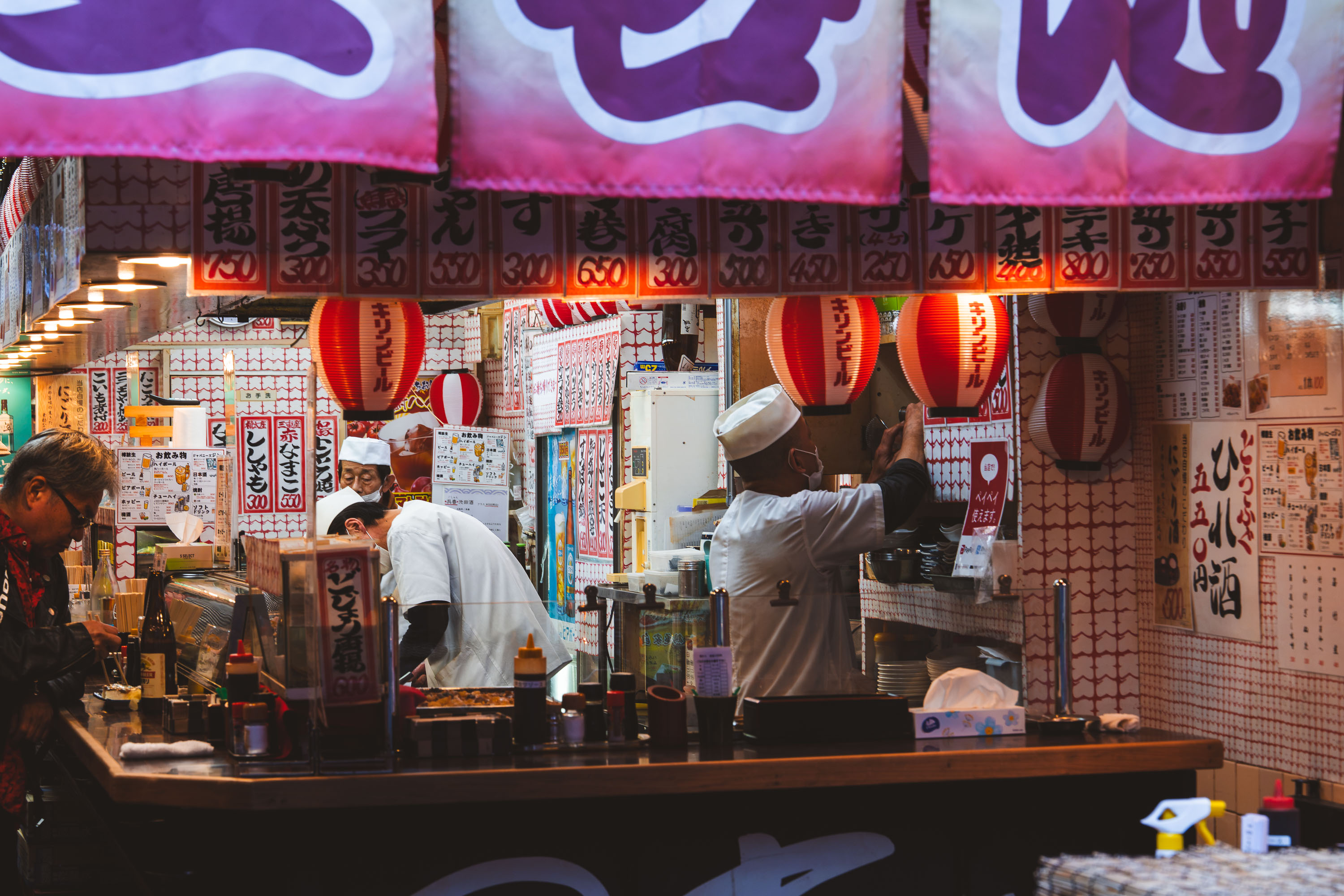
Workers prepare food at a traditional Japanese restaurant stall decorated with purple and pink banners and red lanterns.
This open-air kitchen sits in Shinsekai, a retro entertainment district in southern Osaka that grew up around Tsutenkaku Tower in the early twentieth century. The neighborhood is known for kushikatsu, skewers of meat and vegetables deep fried and dipped in a shared sauce, served at small counters like this one.

Kushikatsu Stall Kitchen in Osaka’s Shinsekai District
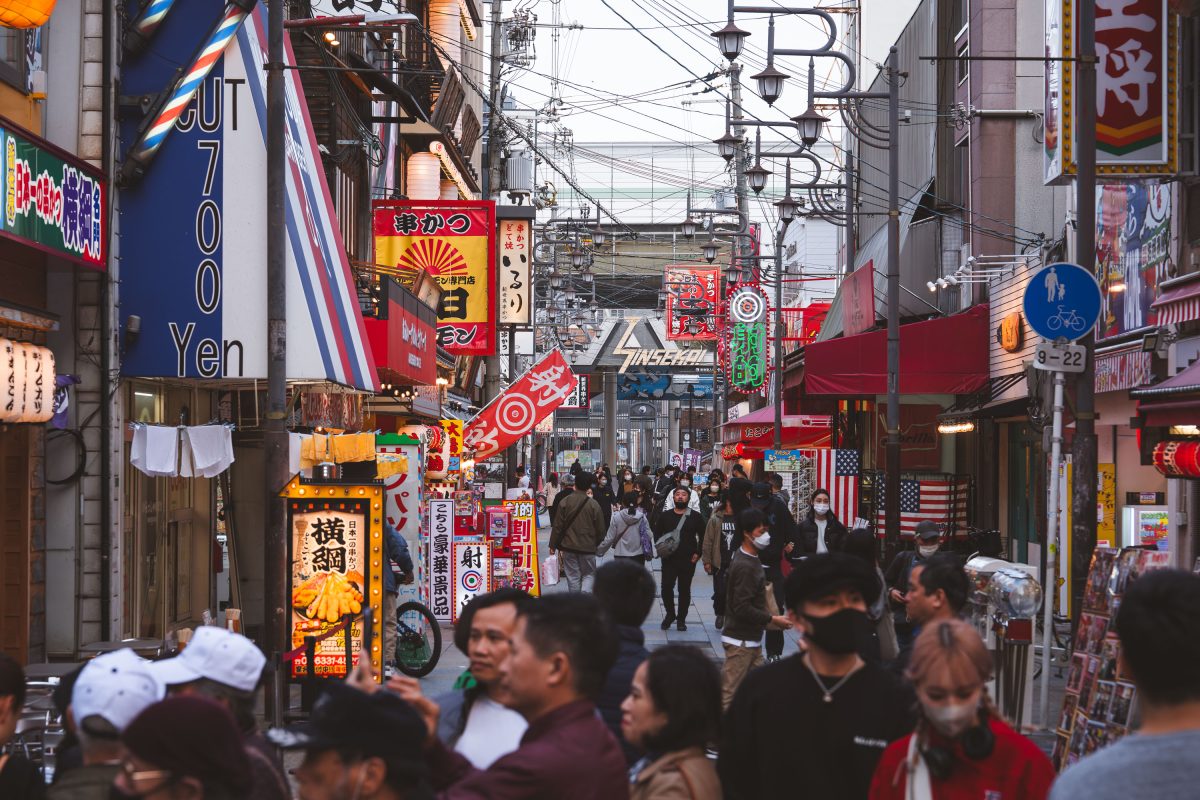
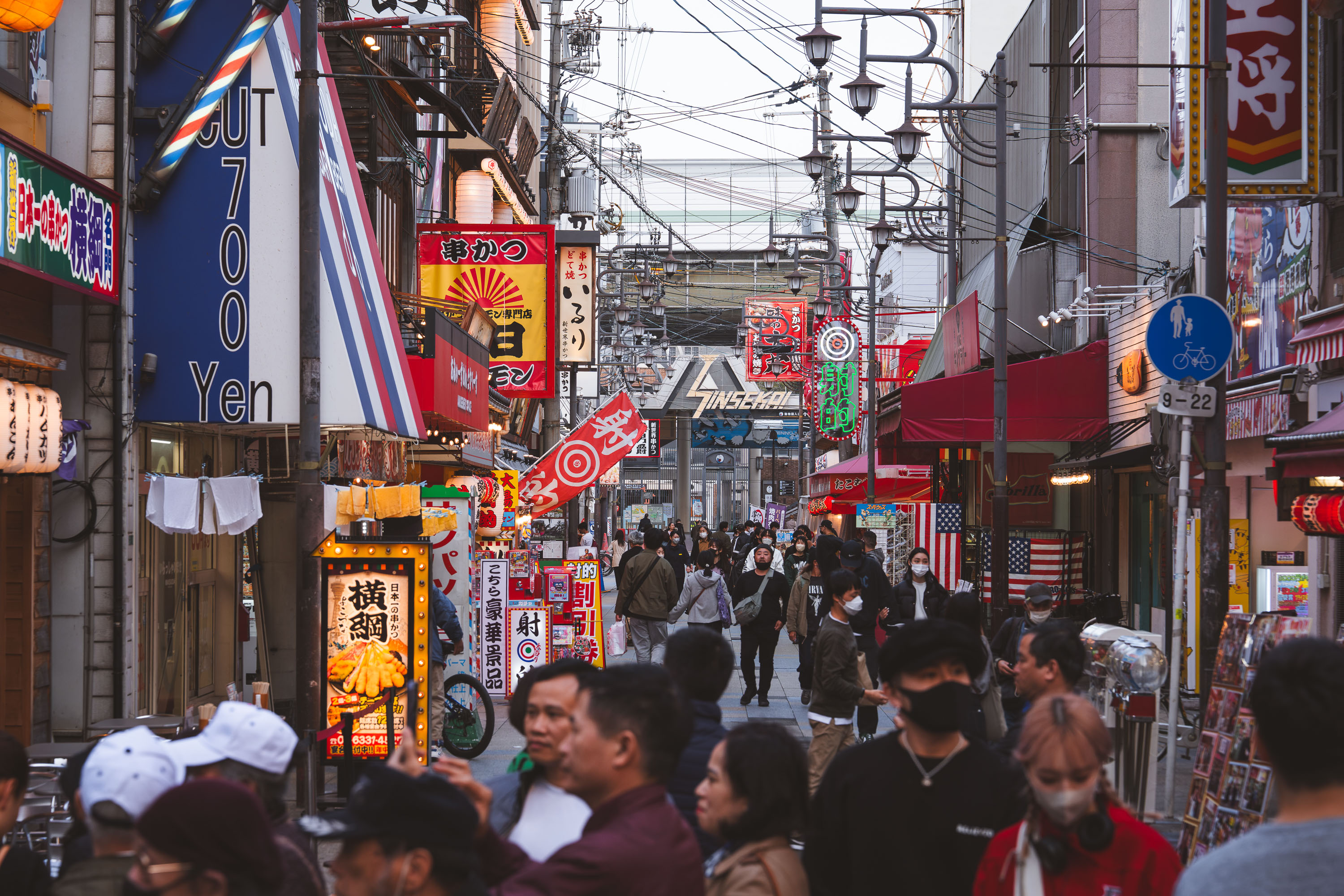
Crowded shopping street in Osaka, Japan lined with colorful neon signs and restaurant storefronts.
Shinsekai is an entertainment district in Osaka's Naniwa Ward, built in 1912 around the original Tsutenkaku Tower and loosely modeled on Paris and Coney Island. The current tower, a 103-foot rebuild from 1956 after the first was dismantled for scrap metal in 1943, stands at the north end of the district's main strip. The neighborhood is known for kushikatsu, breaded and deep-fried skewers served with a shared dipping sauce that customers are asked not to dip into twice.

Kushikatsu Signs Along a Shinsekai Street in Osaka
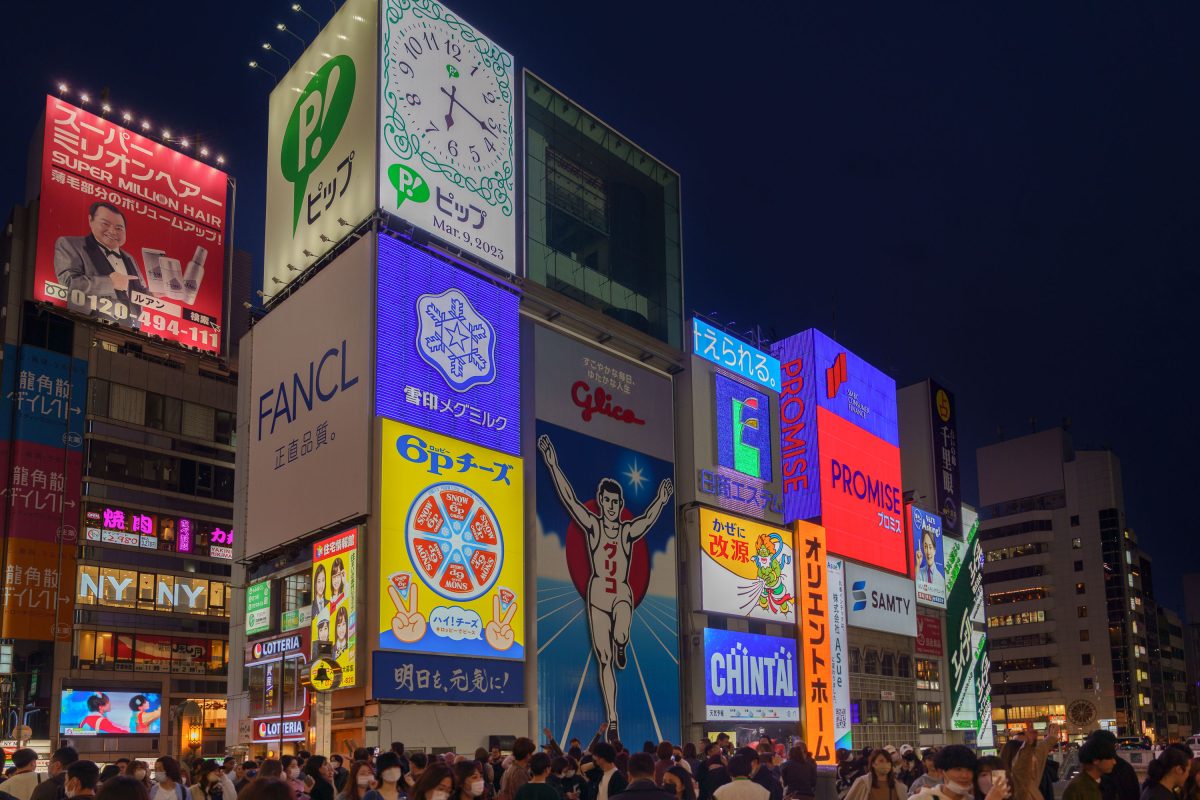
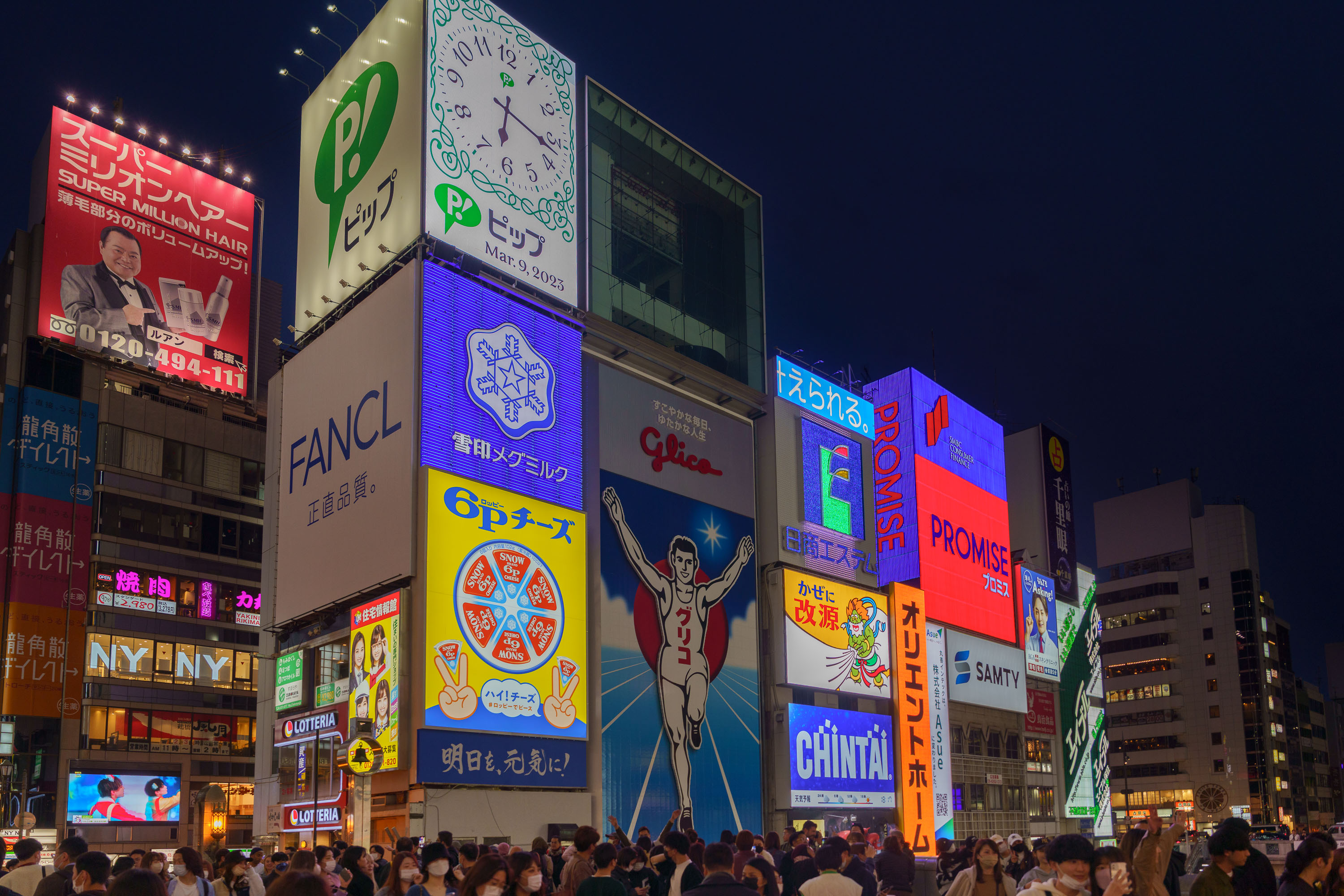
Crowds gather at night in Dotonbori, Osaka, surrounded by illuminated commercial signs and digital displays.
The Glico sign stands above Dotonbori, the entertainment district along the Dotonbori Canal in Osaka, Japan. Dotonbori grew up as a theater district in the early seventeenth century and is now lined with restaurants, bars, and competing billboards from companies such as Promise and FANCL. The Glico sign remains the best known of these and a common meeting point in the district.

The Glico Running Man Sign in Dotonbori, Osaka
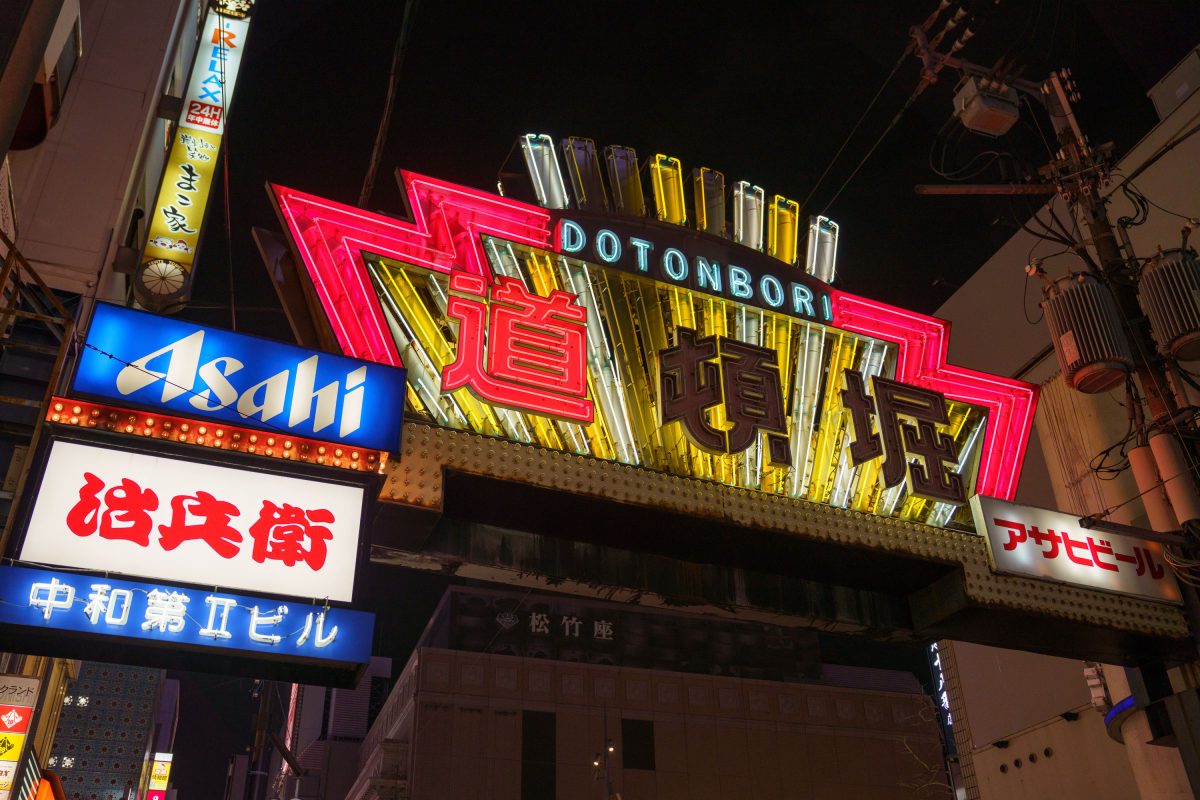
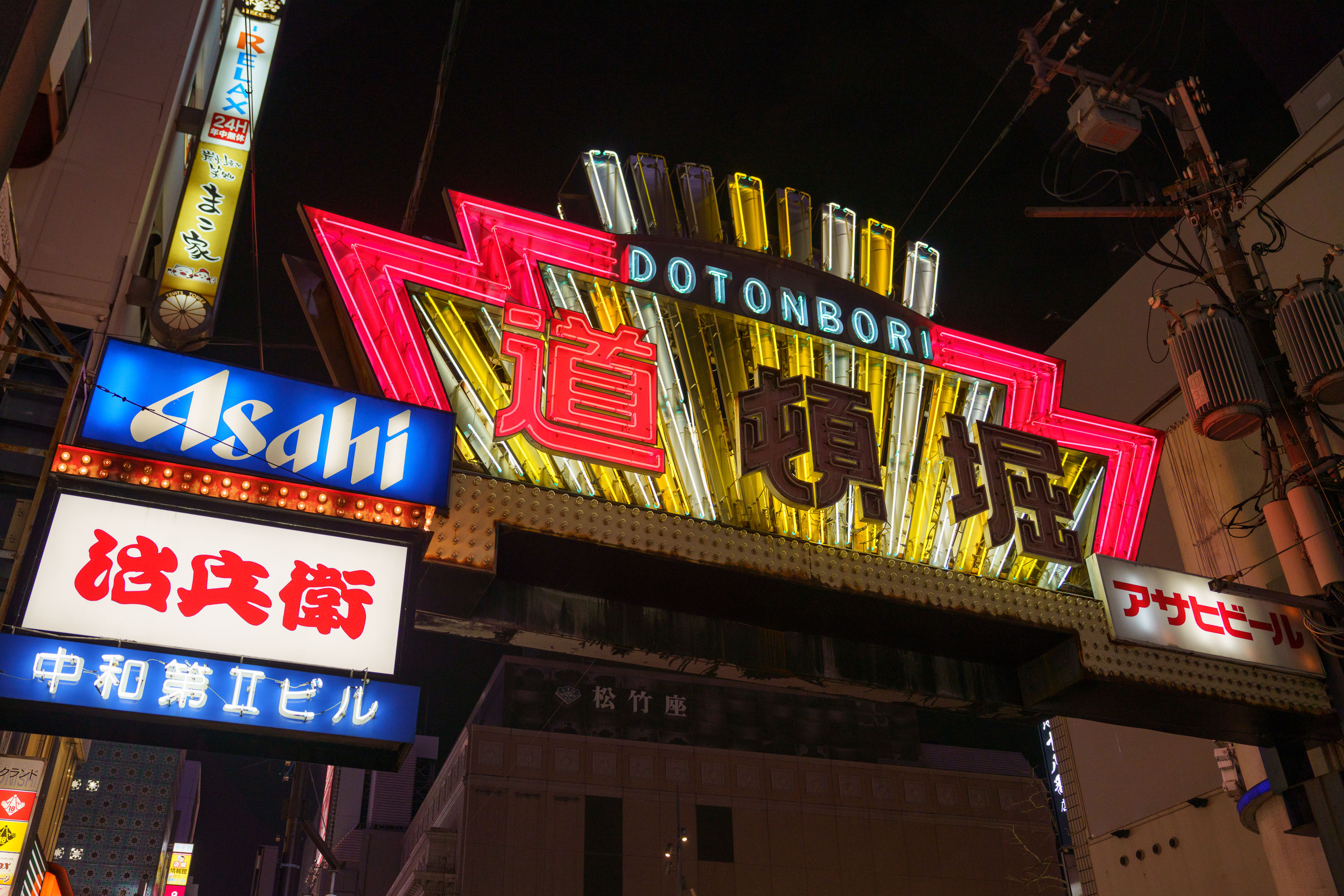
Neon signs for Dotonbori restaurant and bar district illuminate a nighttime street in Osaka, Japan.
Dotonbori is a canal and entertainment district in Osaka's Chuo ward, built along a canal dug in 1612 by the merchant Yasui Doton, for whom it was later named. The sign spanning the street spells out the district's name in kanji, 道頓堀, marking the entrance to its main strip of bars and restaurants. An Asahi Breweries advertisement and smaller signs for local izakayas hang beside it, including one for the Chuwa Dai-ni Building. The Shochikuza theater, named on the building below the arch, opened in 1923 as a venue for kabuki performances and film screenings. The district sits along the Dotonbori canal, which once served as a route for cargo boats supplying the area's theaters and restaurants.

Dotonbori Sign Above Osaka’s Canal District
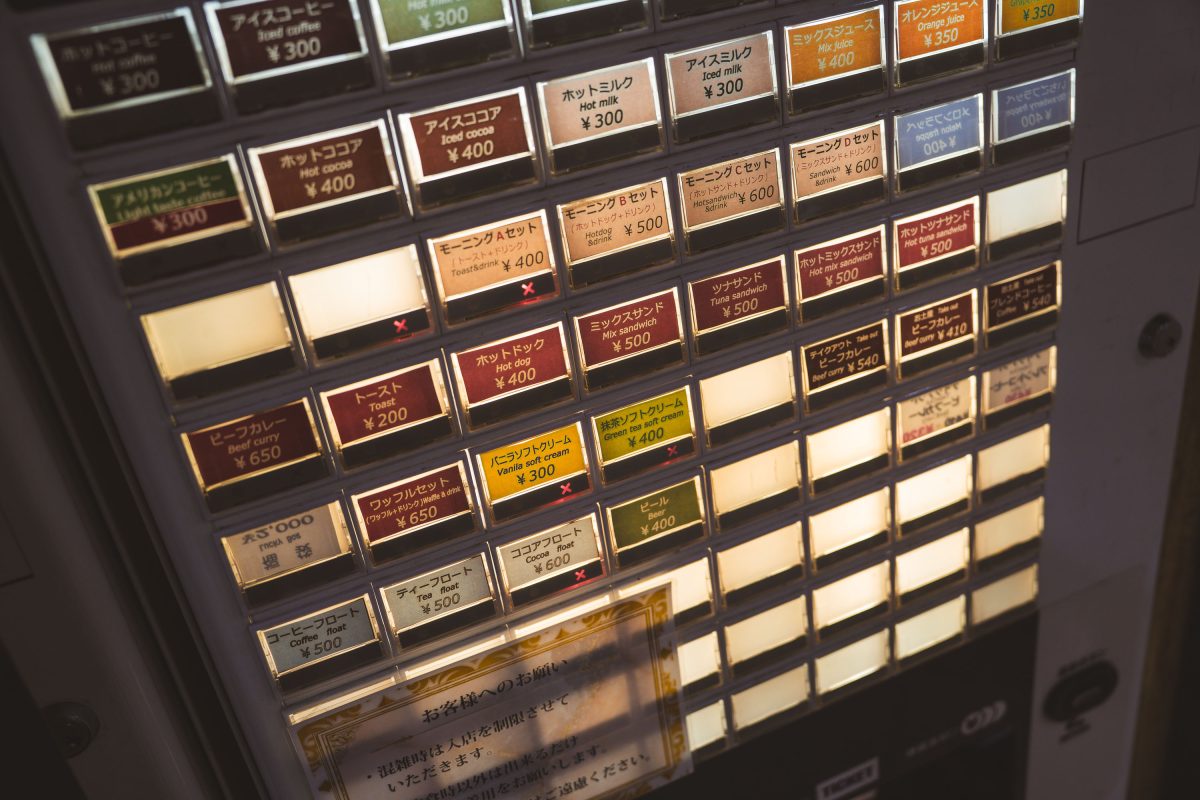
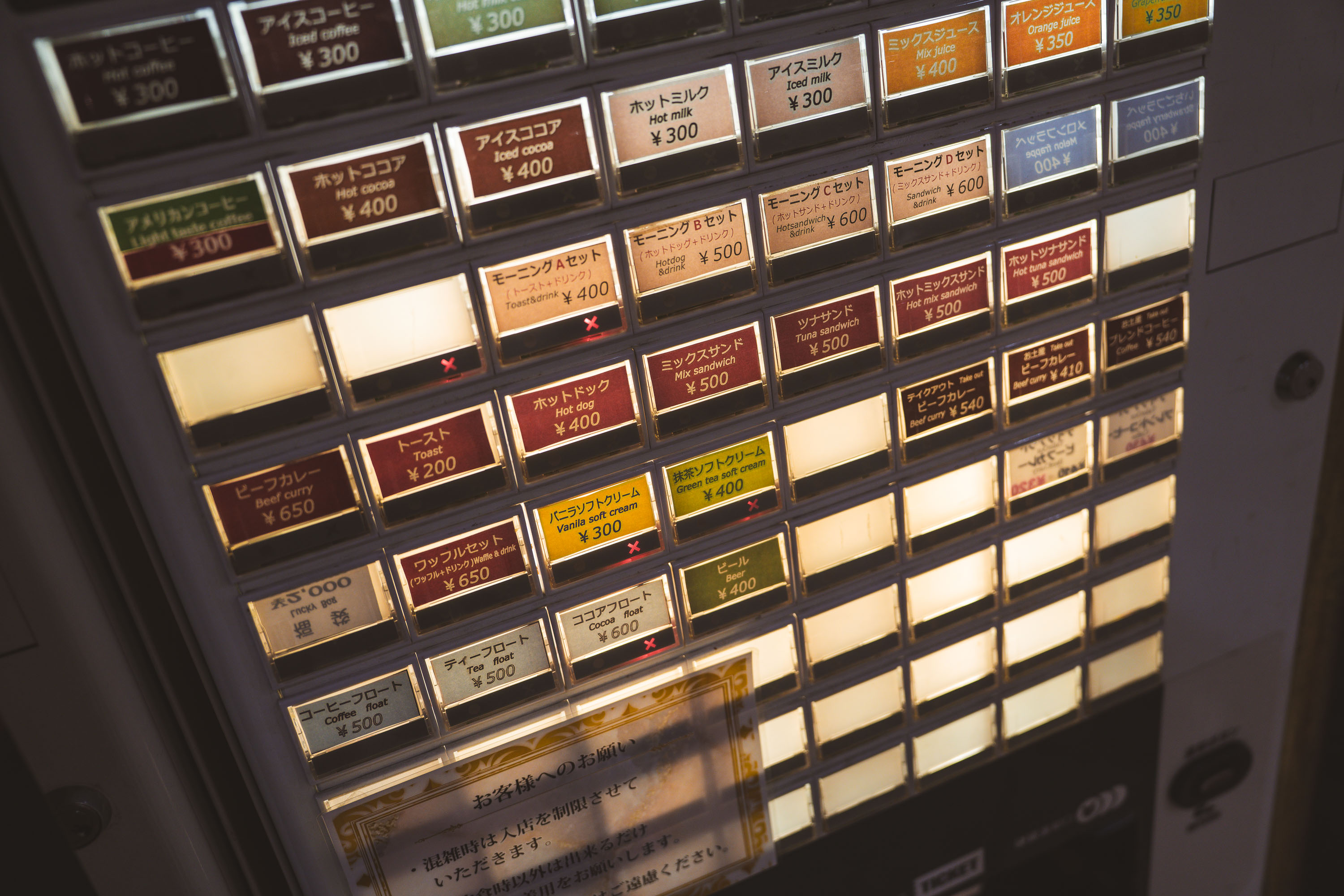
Japanese café menu board displaying beverage and food items with prices in yen.
A ticket vending machine stands at the entrance of a Japanese kissaten, a style of coffee shop dating back to the early twentieth century. Customers press a button to buy a ticket for their order, then hand it to staff at the counter instead of ordering by voice. The buttons list drinks like hot coffee, iced coffee, and hot cocoa alongside food such as toast, sandwiches, hot dogs, and beef curry. A few set meals bundle toast or a sandwich with a drink, priced from 400 to 600 yen. Prices on the machine range from 200 yen for plain toast to 650 yen for beef curry or a waffle set.

Ticket Vending Machine at a Japanese Kissaten

© 1996–2026 Chad Davis