Northeast Minneapolis

39 photos · 2009–2024

39 photographs tagged Northeast Minneapolis, 2009–2024.
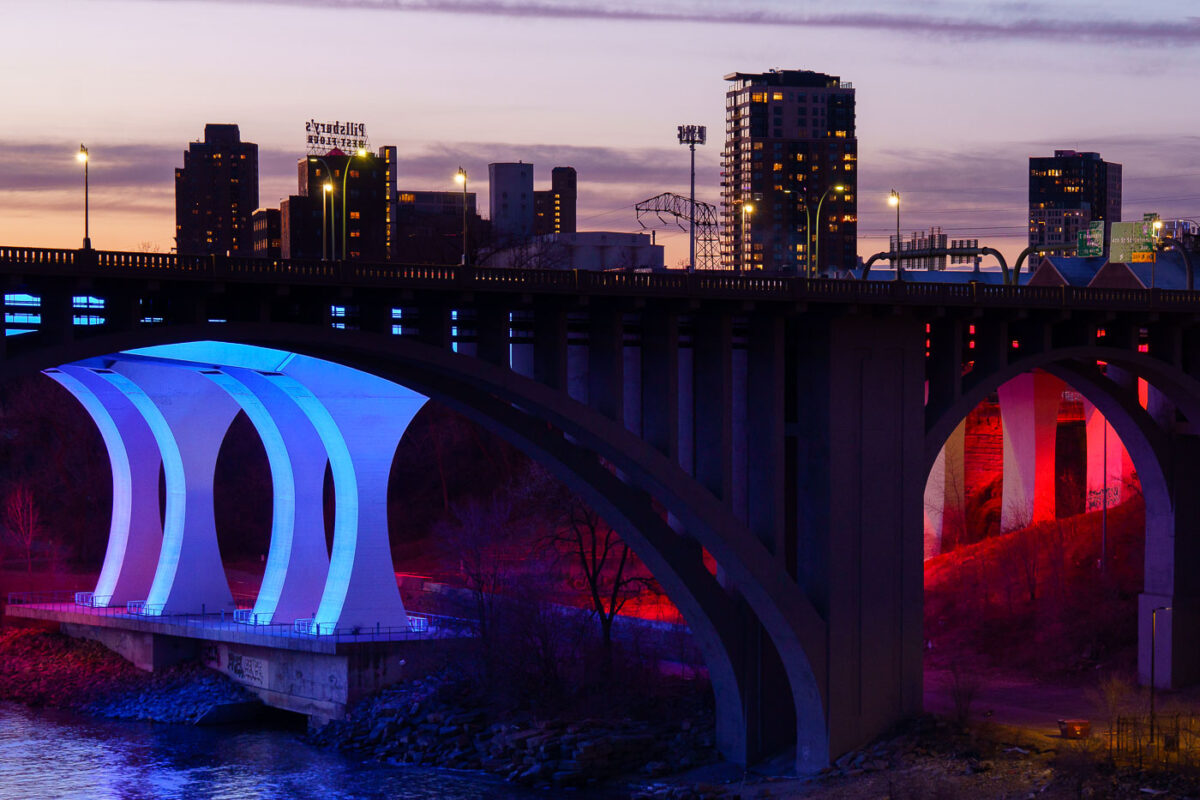
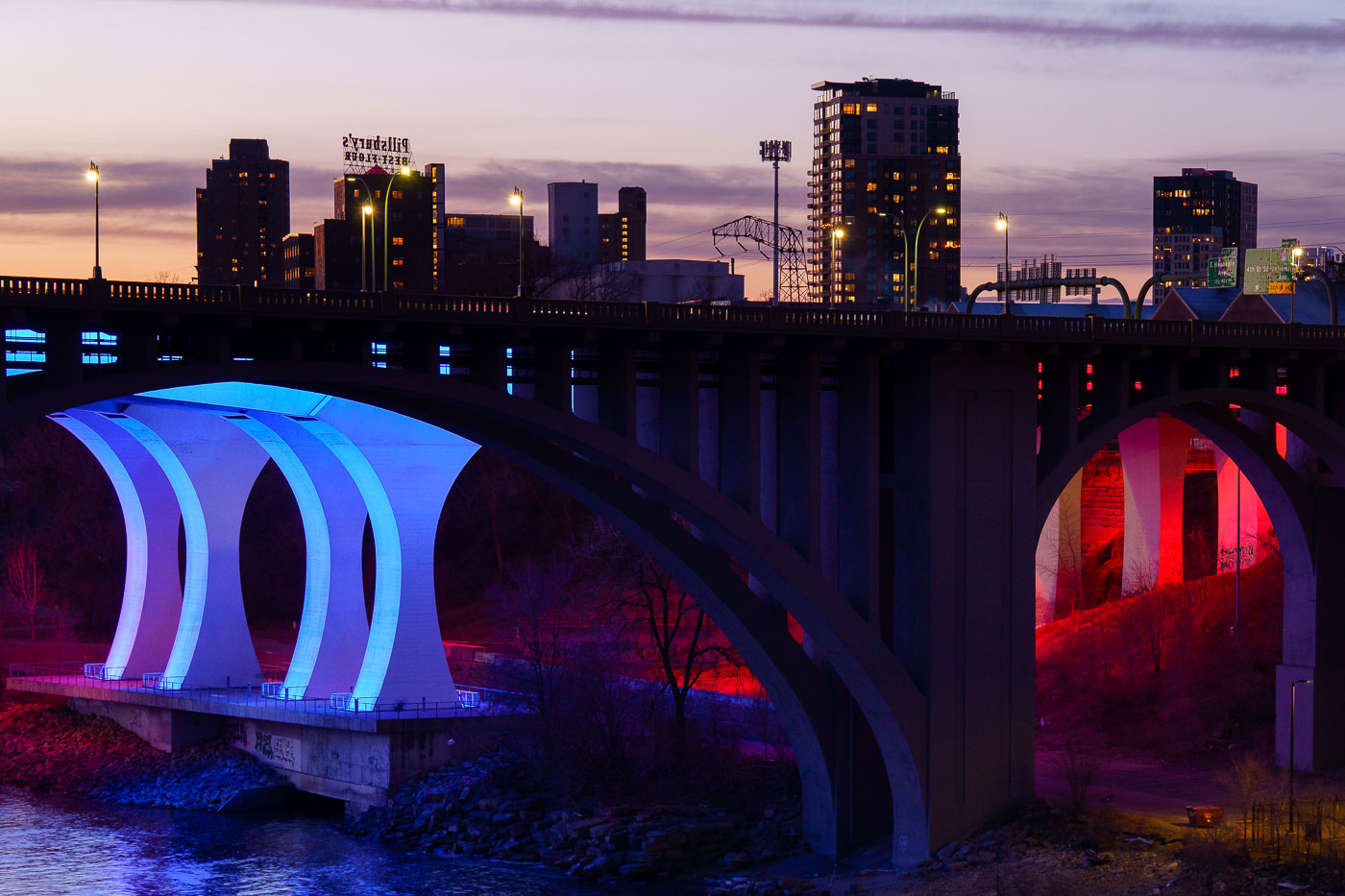
The 10th Avenue Bridge illuminated in blue and the I-35W Bridge lit in red span the Mississippi River at dusk in Minneapolis.
The 10th Avenue Bridge and the I-35W Bridge span the Mississippi River near downtown Minneapolis at sunset in March 2024.

10th Avenue Bridge Lit Blue and Red Over the Mississippi River
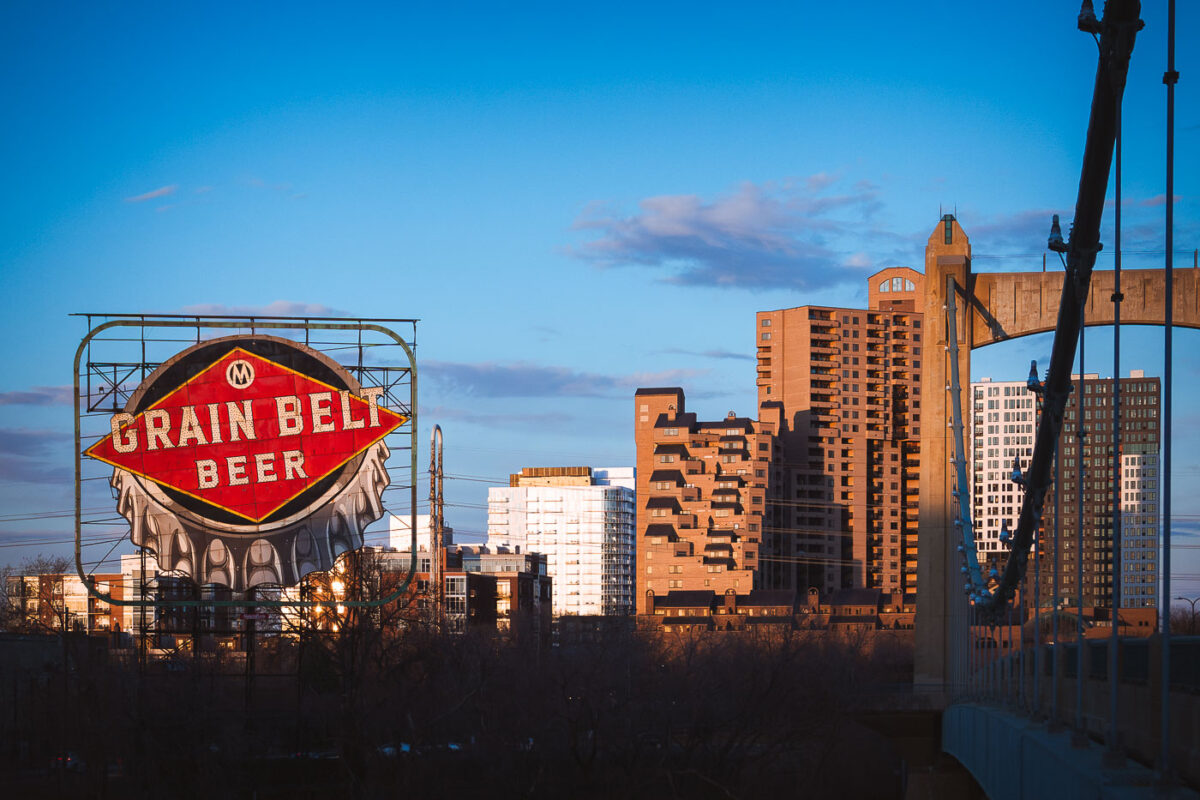
The vintage Grain Belt Beer sign illuminates at dusk on Nicollet Island with Minneapolis skyline and Hennepin Avenue Bridge behind.
The Grain Belt Beer sign, a historic Minneapolis landmark, stands on Nicollet Island overlooking the Mississippi River. Originally installed in 1941, this illuminated sign once advertised the nearby Grain Belt Brewery, which operated in Northeast Minneapolis. In the background, the Hennepin Avenue Bridge, the first bridge to cross the Mississippi River at Minneapolis, connects downtown with the city's northeast side.

Grain Belt Beer Sign at Dusk Over the Minneapolis Skyline

Epoch Times billboard on Central Ave Minneapolis
An illuminated billboard for The Epoch Times stands along Central Avenue in Northeast Minneapolis.

“#1 Trusted News” Billboard Over an Empty Central Avenue at Night
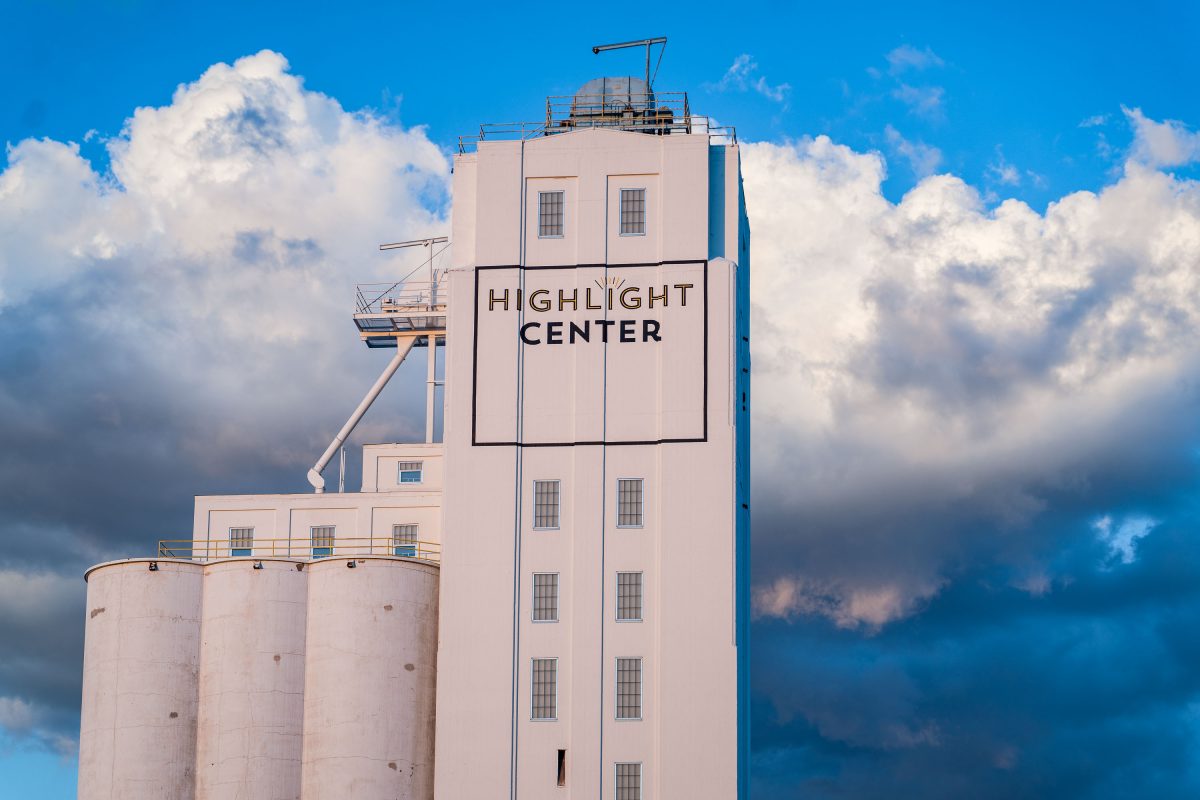
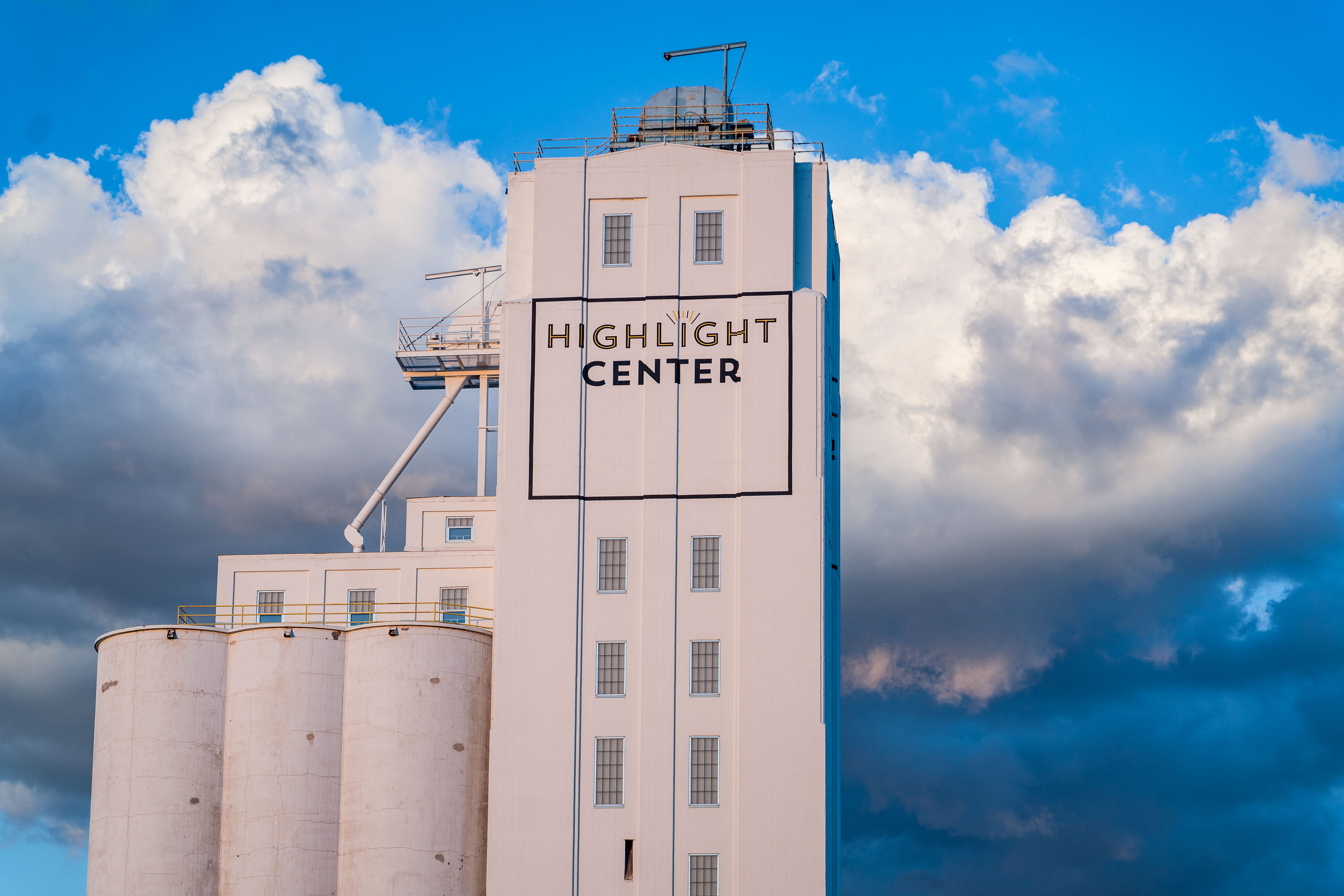
Highlight Center, a repurposed General Mills grain elevator facility in Northeast Minneapolis.
The Highlight Center occupies a former grain elevator complex in Northeast Minneapolis, built to store and process grain for regional milling operations. General Mills once operated the facility as part of its industrial network before the property fell out of use for agricultural processing. Developers later converted the concrete silos and headhouse into commercial office and creative space, retaining the original structure's tanks and tower as the building's defining architecture.

Highlight Center Grain Elevator, Northeast Minneapolis
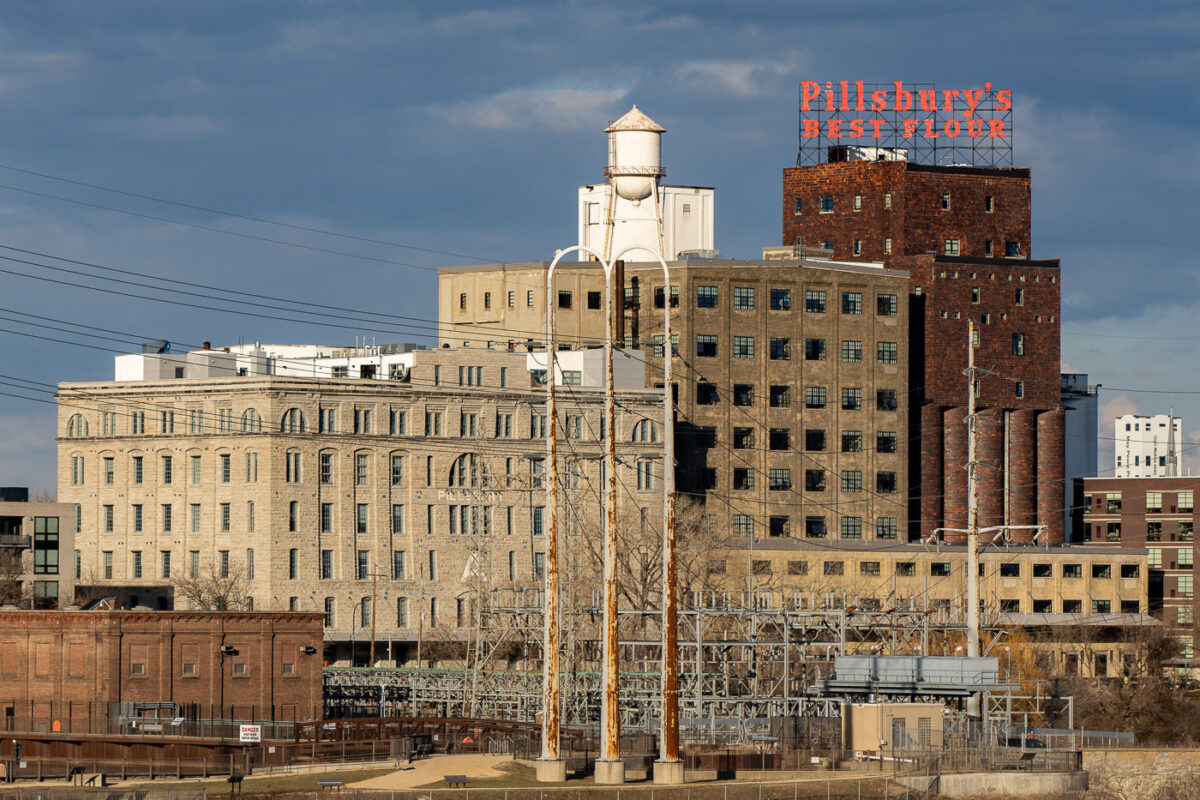
Pillsbury A Mill complex with red neon sign on brick building overlooking Mississippi River in Minneapolis.
Pillsbury A Mill complex in Minneapolis stands on the east bank of the Mississippi River near St. Anthony Falls. Built for the Pillsbury Company in the 1880s, the former flour mill was part of the city’s milling district and later adapted for other uses.

Pillsbury’s Best Flour Sign Atop the A Mill in Minneapolis

Protester holding a Black Lives Matter sign on a Minneapolis street at night near New Bohemia Wurst + BierHaus.
On February 4, 2022, protesters gathered outside the Minneapolis Mayor's residence to demand justice for Amir Locke, who was killed by police earlier that day. The protest, organized by the Black Lives Matter movement, saw participants, including many young people, voicing demands for accountability and systemic change in policing.

Minneapolis Protest for Amir Locke at Mayor’s Residence

Protester with an Amir Locke sign outside Purdy's Liquor in Minneapolis.
Protesters gathered outside Purdy's Liquor & Cheese Shop in Minneapolis to demand justice for Amir Locke. Locke, a 22-year-old Black man, was killed by Minneapolis police during a no-knock warrant execution on February 2, 2022.

Protest for Amir Locke at Purdy’s Liquor, Minneapolis

Protester with "We are here to protect the water" sign in Northeast Minneapolis at a nighttime march.
Protesters gathered outside the Minneapolis Mayor's residence to advocate for justice for Amir Locke who waw killed earlier a week prior.

Minneapolis Protestors Rally for Amir Locke and Water Protection

Protester holding an Amir Locke sign in Minneapolis during a justice march.
Protesters gathered outside the Minneapolis Mayor's home in Northeast Minneapolis to call for justice for Amir Locke. Locke, a 22-year-old Black man, was killed by Minneapolis police during a no-knock warrant execution on February 2, 2022.

Minneapolis Protest for Amir Locke Justice

Speaker at an Amir Locke protest in Northeast Minneapolis addresses a crowd outside a building.
A speaker addresses a crowd outside the Minneapolis Mayor's residence in Northeast Minneapolis, calling for justice for Amir Locke. The protest occurred following the fatal shooting of Locke by Minneapolis police officers during a no-knock warrant execution in February 2022.

Northeast Minneapolis Protest for Amir Locke

Protester holding a "Frey Lied, Amir Died" sign outside the Minneapolis mayor's home.
Protesters gathered outside the Minneapolis Mayor's home, holding signs that read "Frey Lied, Amir Died." This protest was in response to the death of Amir Locke, who was killed during a police raid in February 2022. The sign also references "Banning the Use of No-Knock Warrants in the City of Minneapolis," an action taken by Mayor Jacob Frey's administration in response to public outcry following Locke's death.

Minneapolis Protest: Frey Lied, Amir Died Sign

The Pioneers Statue in Northeast Minneapolis vandalized with red paint and protest messages at night.
The Pioneers Monument was sculpted by John K. Daniels and dedicated in 1936 to honor early European settlers in Minnesota. Vandals covered the granite base in red paint, writing "Decolonize," "Land Back," and "All Colonizers Are Bastards" across the statue and its steps. The monument depicts pioneer figures in bronze atop a stone pedestal and has drawn criticism in recent years from Indigenous activists who argue it glorifies colonization. Similar defacement has targeted other Minneapolis monuments tied to settler history amid broader calls to reconsider public memorials.

“Land Back” Graffiti Sprayed on the Pioneers Monument in Minneapolis

Protest sign reading "Bye Bye Mayor Frey Evicted" held outside Minneapolis Mayor Jacob Frey's residence.
Jacob Frey has served as mayor of Minneapolis since 2018, following an earlier term on the city council representing the city's Third Ward. His administration drew sustained criticism over its handling of homelessness and encampment closures, as well as its response to policing after the killing of George Floyd in 2020. Protesters gathered outside his residence to demand his resignation, part of a wider pattern of demonstrations that targeted his home throughout that period. The sign's reference to "BLM, NLM, ULM, Justice" points to overlapping coalitions — Black Lives Matter, Native Lives Matter, and allied justice groups — that organized jointly in Minneapolis during 2020.

“Bye, Bye Mayor Frey” Sign at Northeast Minneapolis Protest

Housing protest outside Minneapolis Mayor Jacob Frey's home disrupted by men carrying American and Thin Blue Line flags.
A housing protest outside Mayor Jacob Frey's home in Northeast Minneapolis drew a confrontation with counter-demonstrators. Two men wearing "Make America Great Again" caps carried an American flag alongside a Thin Blue Line flag, a symbol associated with pro-police messaging that has become common at counter-protests since 2014. The exchange took place amid a broader wave of demonstrations demanding action on homelessness and housing policy in Minneapolis following the unrest of 2020.

Confrontation Between Protesters and MAGA Counter-Protesters in Northeast Minneapolis

Protester holding sign reading "PUBLIC SAFETY SHOULD BE PROACTIVE NOT REACTIVE" during Minneapolis march at Mayor Frey's
A hand-lettered sign reading "PUBLIC SAFETY SHOULD BE PROACTIVE NOT REACTIVE" appears during a march through Northeast Minneapolis on November 2, 2020. Demonstrators walked from Holmes Park to Mayor Jacob Frey's residence, calling on the city to address rising homelessness rather than respond only after problems escalate. The route passed Old Town Saloon on Hennepin Avenue, a longtime bar in the Marcy-Holmes neighborhood.

‘Public Safety Should Be Proactive’ Sign Near Old Town Saloon

Residents stand on apartment balconies overlooking a homelessness protest march in northeast Minneapolis.
Residents step onto their balconies to watch a march pass below in northeast Minneapolis.

Balcony Watchers as a Protest Passes Through Northeast Minneapolis

Pedestrians and diners gather on a Northeast Minneapolis street during a housing protest on Hennepin Avenue.
This demonstration over housing and homelessness passed along Hennepin Avenue near Bishops Barbershop, a stretch of Northeast Minneapolis lined with restaurants and retail storefronts. The march took place on November 2, 2020, the night before the U.S. presidential election, as organizers pressed Mayor Jacob Frey's administration on the city's rising number of unsheltered residents. Patio heaters and outdoor seating along the block reflect Minneapolis restaurants' pandemic-era shift to expanded outdoor dining, a practice the city fast-tracked through temporary permitting that year.

Housing Protest Passes Bishops Barbershop on Hennepin Avenue

Protesters gather around a large banner reading "EVICTION NOTICE JACOB FREY SIGNED BY THE PEOPLE" during a housing demonstration
A banner reading "EVICTION NOTICE JACOB FREY SIGNED BY THE PEOPLE" was laid on the sidewalk outside Minneapolis Mayor Jacob Frey's home in Northeast Minneapolis. The demonstration called attention to the city's handling of homelessness and encampment policy under Frey's administration. One protester carried a sign reading "NO EVICTIONS ON STOLEN LAND," tying the housing dispute to broader arguments about Indigenous land rights.

“Eviction Notice” Banner Outside Mayor Jacob Frey’s Home

Chalk on the sidewalk outside the mayors home
Chalk art on the street outside Minneapolis Mayor Jacob Frey's home in Northeast Minneapolis, The protest addressed the city's policies regarding homeless encampment evictions. The message, 'Jacob + Police = ", reflects public sentiment and criticism directed at the mayor and law enforcement.

Chalk Message at Minneapolis Mayor Frey’s Home Protest
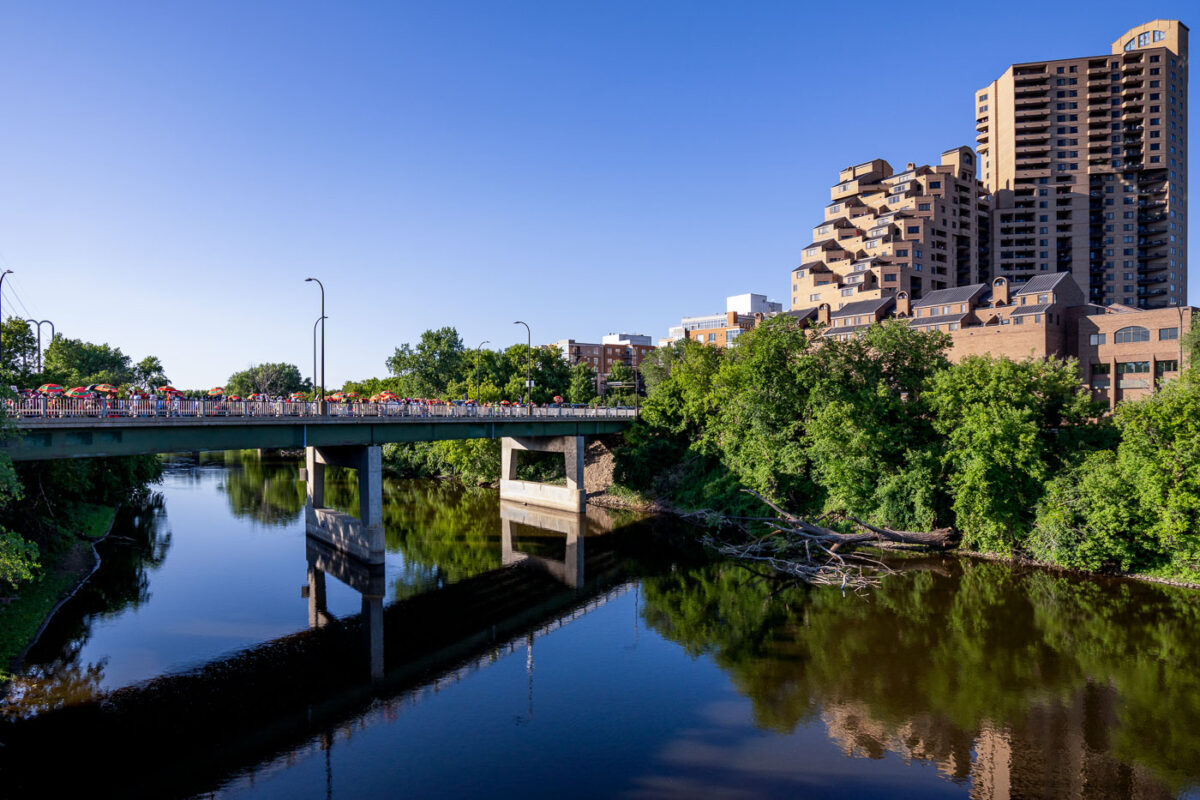
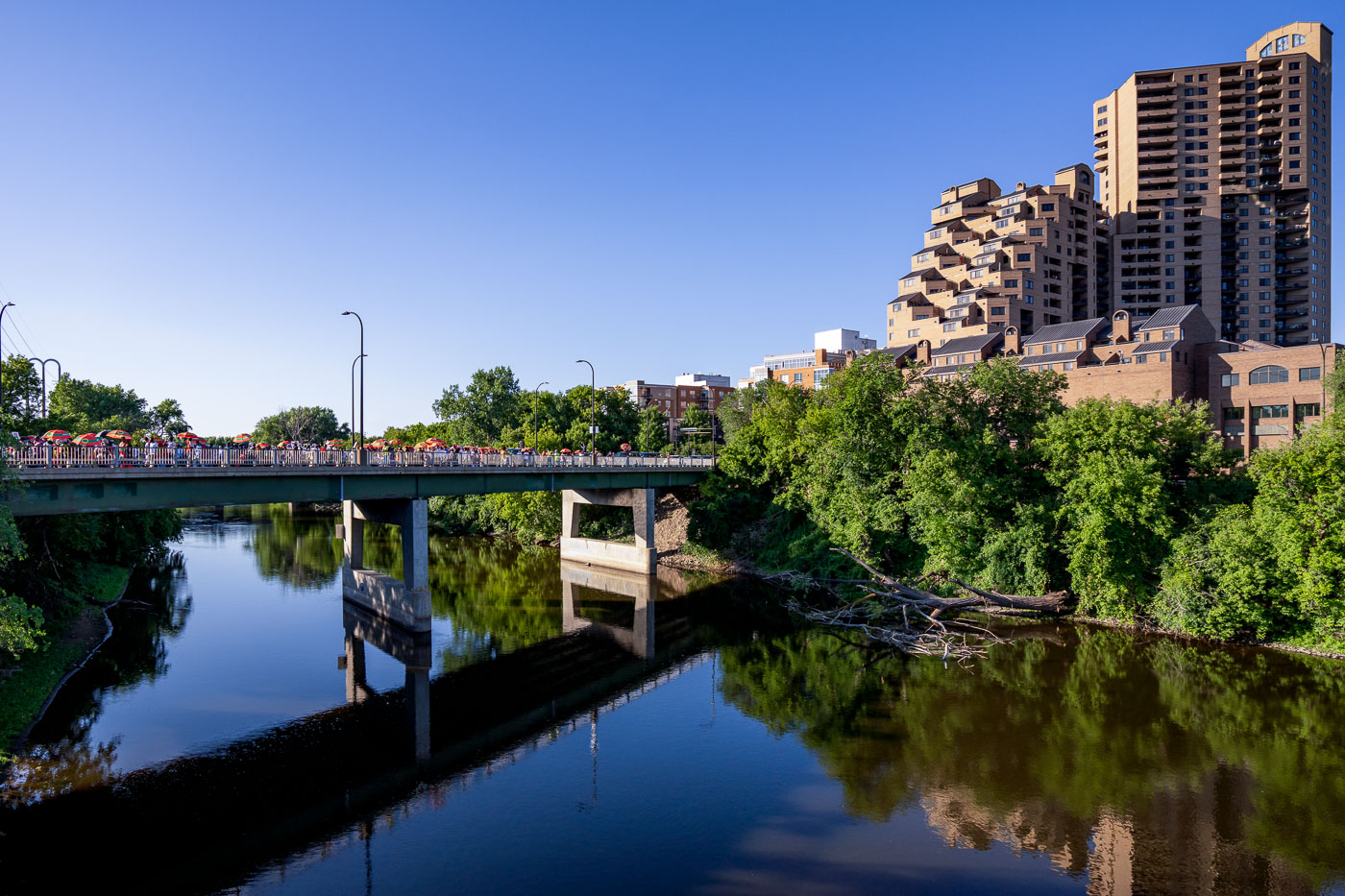
Oromo protesters march across a bridge spanning the Mississippi River in Minneapolis during a demonstration regarding Ethiopia.
Oromo protesters march across a bridge spanning the Mississippi River in Minneapolis. This protest drew attention to ongoing unrest in Ethiopia.

Oromo March Crosses a Mississippi River Bridge in Minneapolis

A woman sits on a car roof holding an Oromo flag umbrella during a march in Northeast Minneapolis.
A woman sits atop a vehicle during an Oromo march in Northeast Minneapolis on July 10, 2020.

Woman Rides Atop a Car Under an Oromo Flag Umbrella
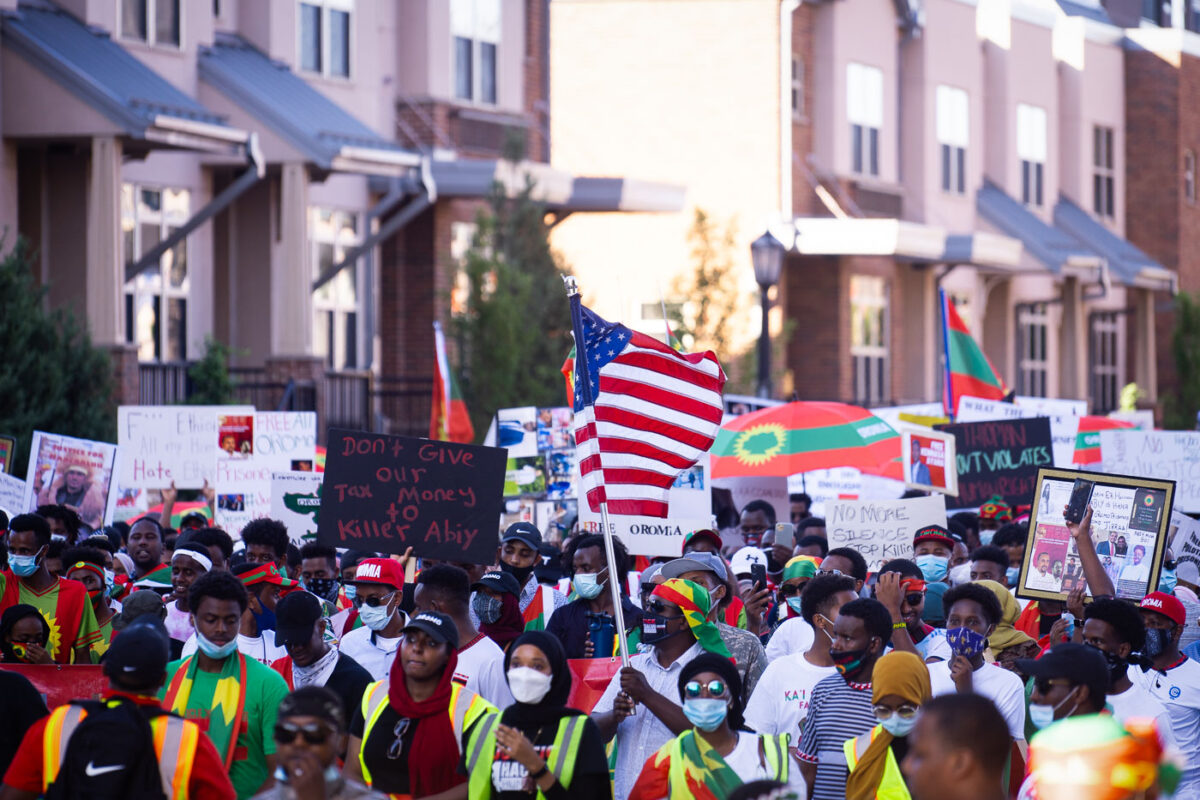
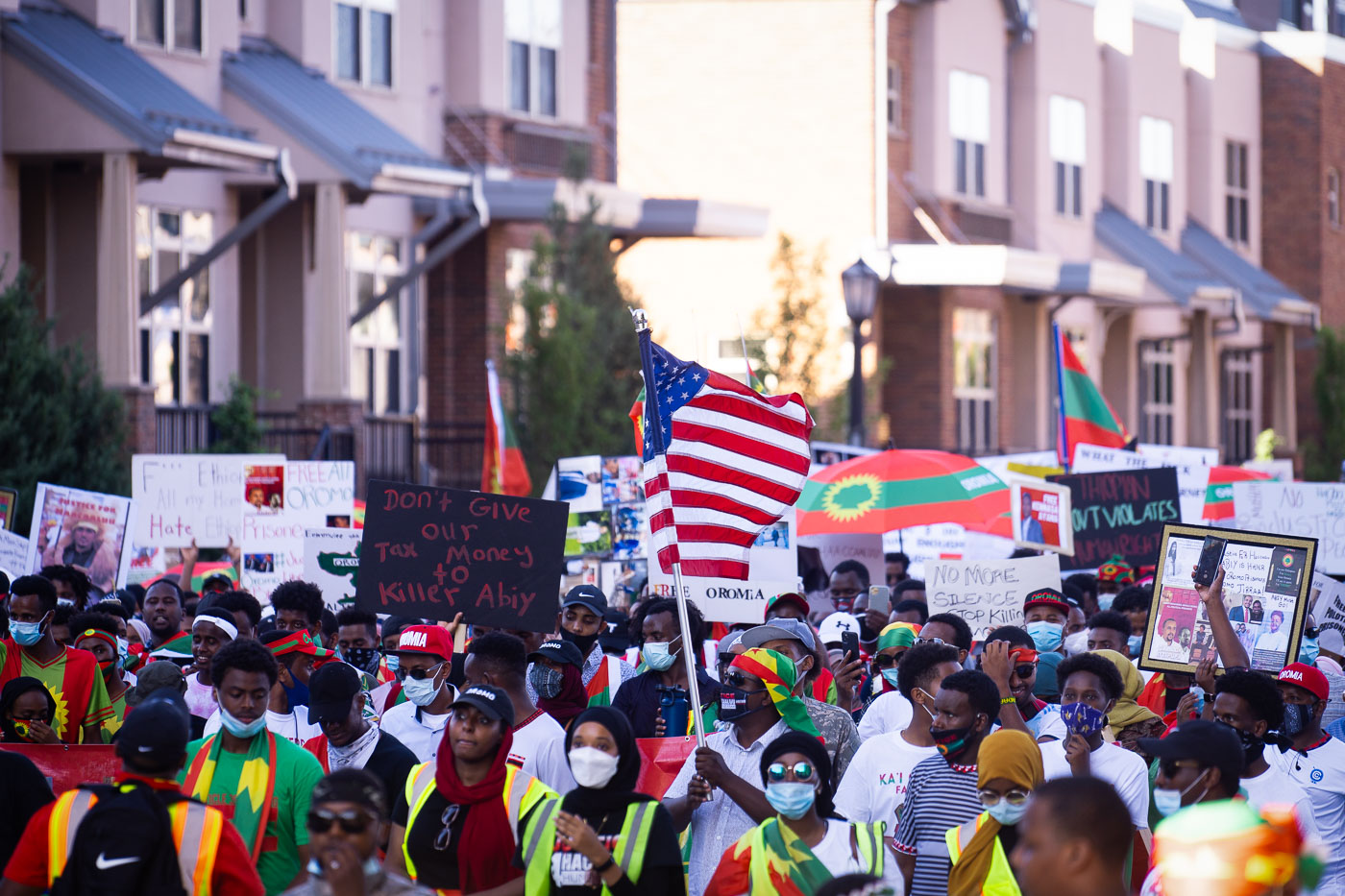
Oromo protesters march through Northeast Minneapolis carrying flags and signs demanding freedom for political prisoners in Ethiopia.
An Oromo protest march in Northeast Minneapolis calls attention to political conditions in Ethiopia. Demonstrators carry Oromo flags and signs criticizing Prime Minister Abiy Ahmed and demanding freedom for Oromo political prisoners. The march took place in July 2020.

“Don’t Give Our Tax Money to Killer Abiy” Sign at Oromo March
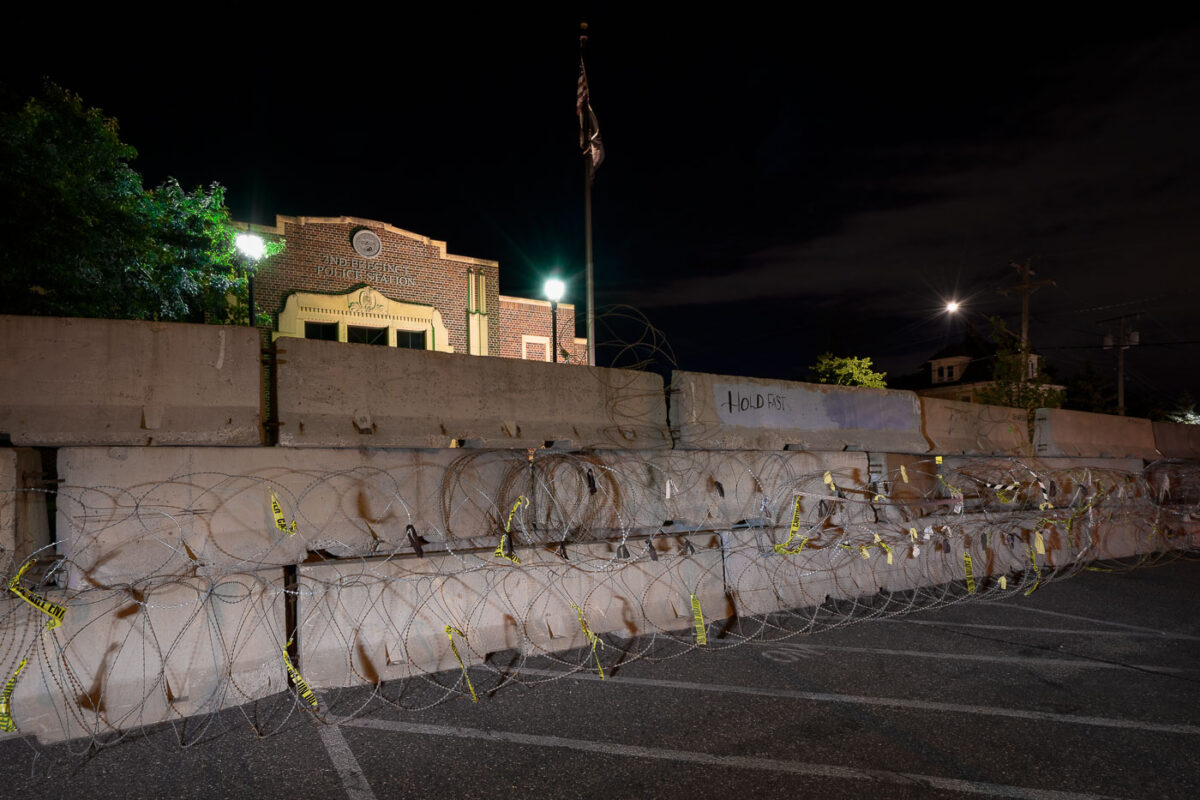
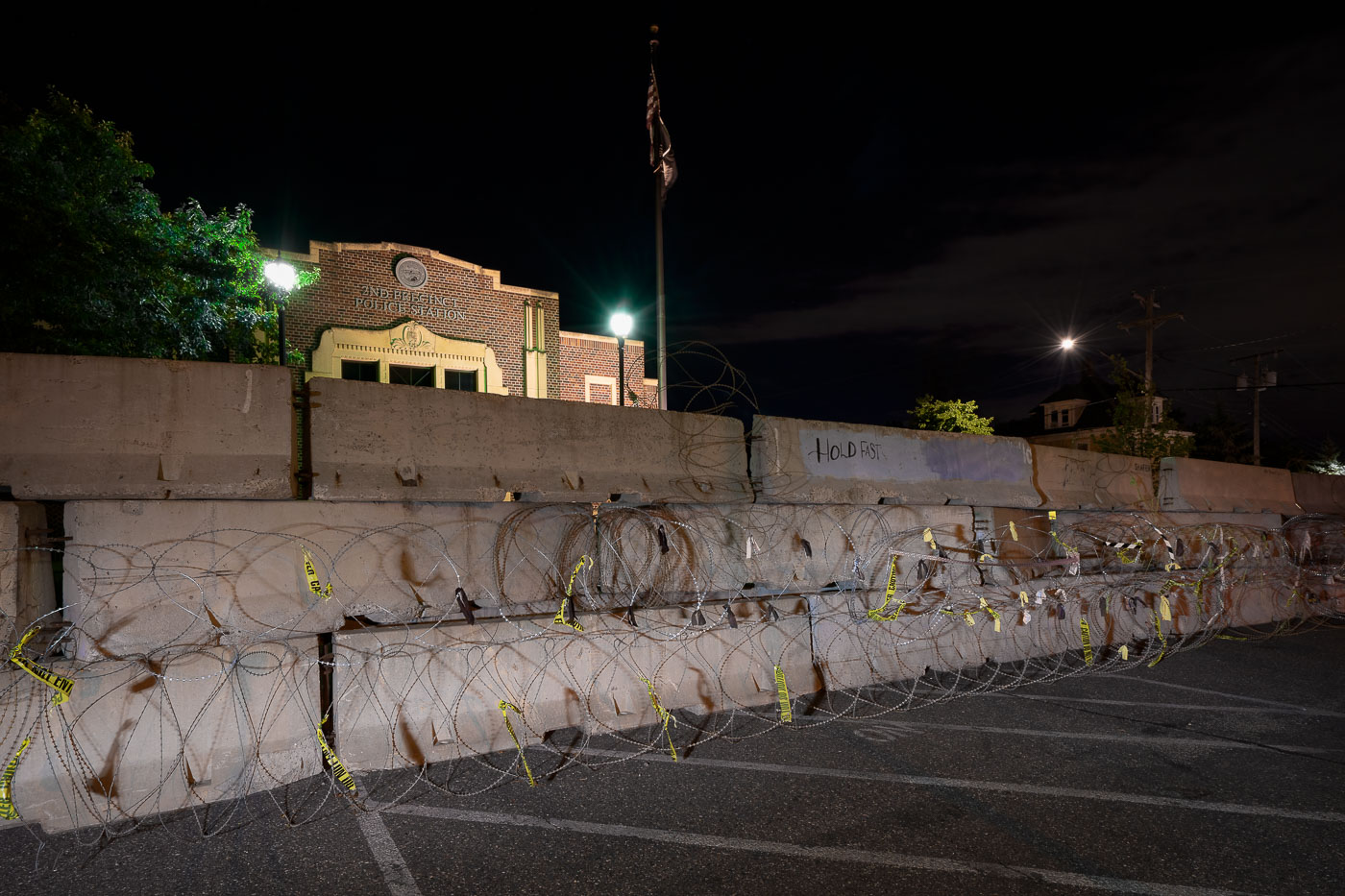
Minneapolis Police 2nd Precinct in Northeast Minneapolis behind concrete barricades and razor wire, June 2020.
The Minneapolis Police Department Second Precinct station in Northeast Minneapolis is shown behind stacked concrete barricades and coils of razor wire on June 23, 2020. The security perimeter was erected after protests and unrest following the murder of George Floyd in May 2020. Graffiti reading “Hold Fast” is visible on one of the barriers in front of the station.

Minneapolis Police 2nd Precinct with Razor Wire & Barricades
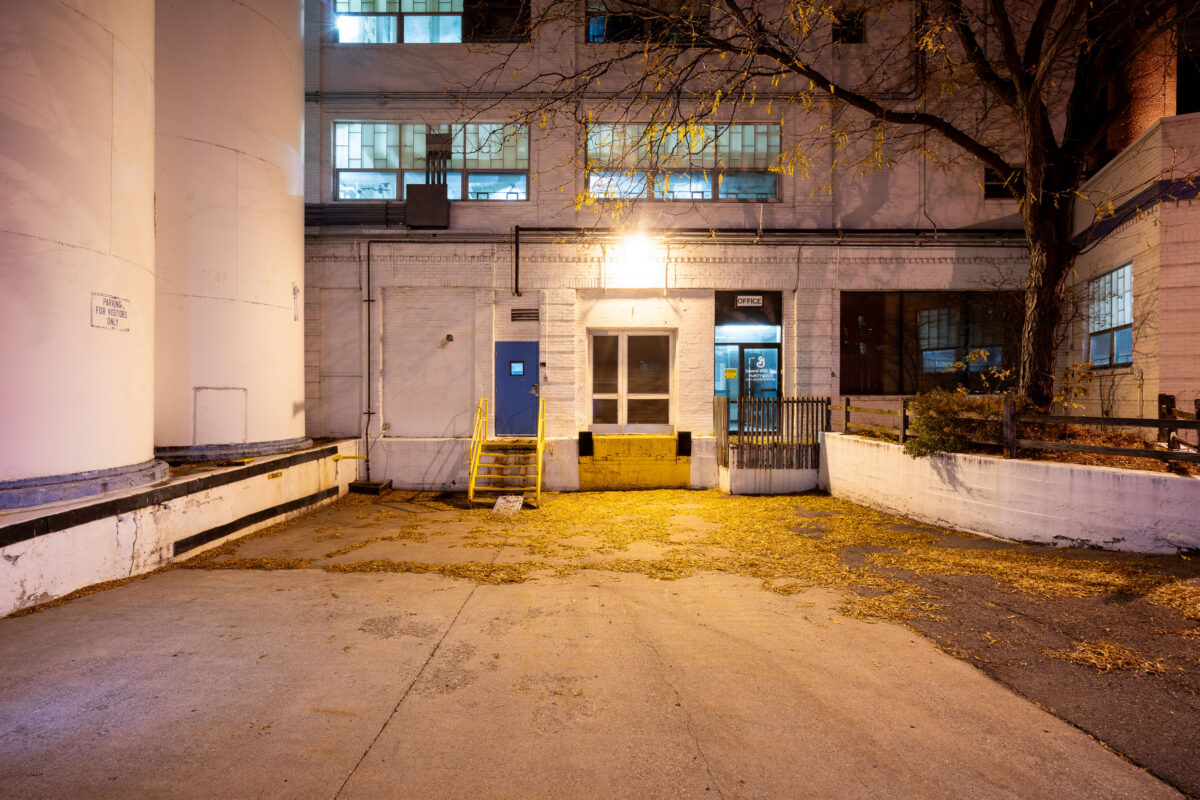
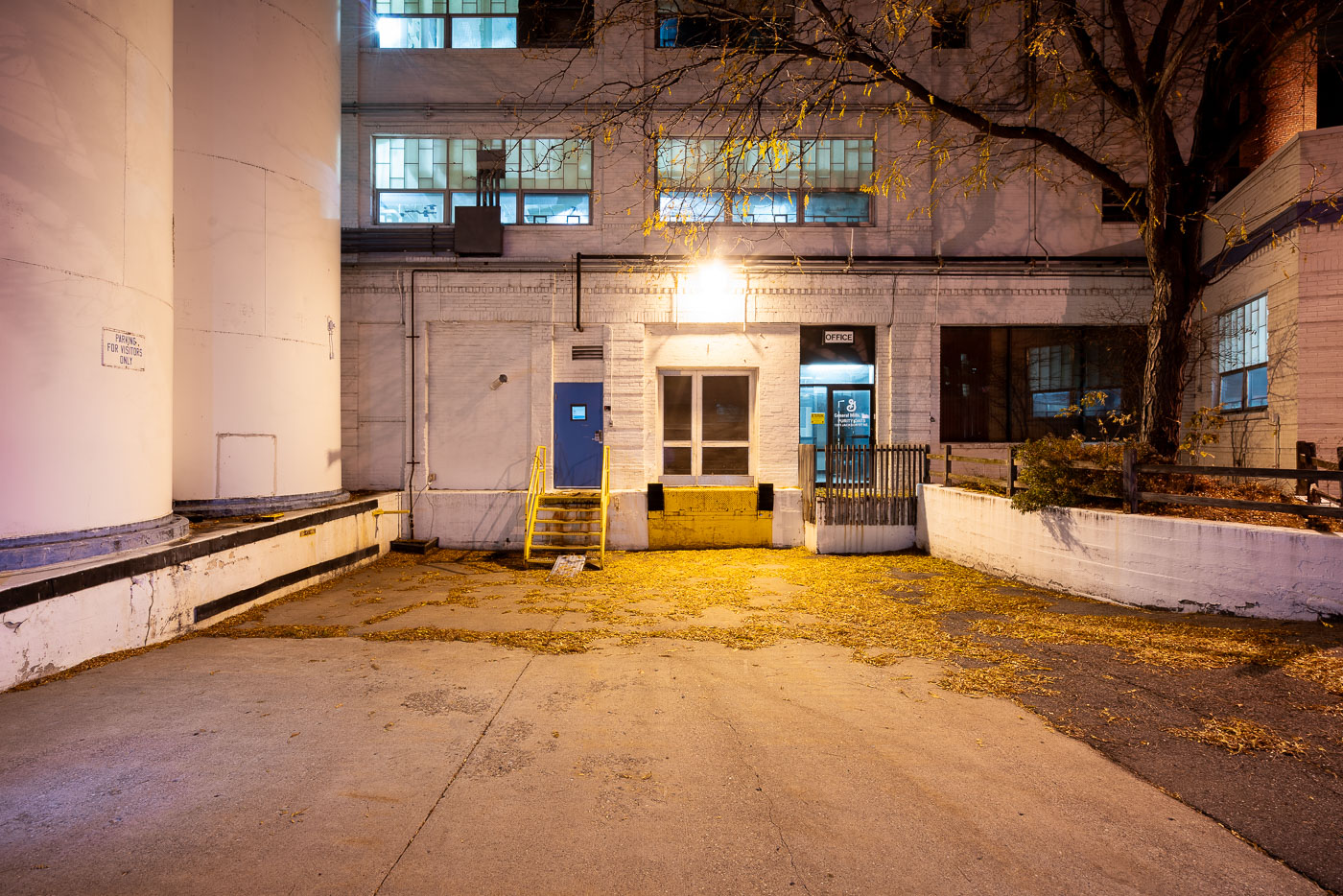
Rear loading entrance of the former General Mills Purity Oats plant in Northeast Minneapolis, illuminated at night.
This view shows the rear loading and office entrance of the former General Mills Purity Oats facility in Northeast Minneapolis. Built during the city’s industrial boom, the complex once handled oat processing and packaging for one of the nation’s largest cereal producers.

Rear Entrance of the General Mills Purity Oats Plant at Night
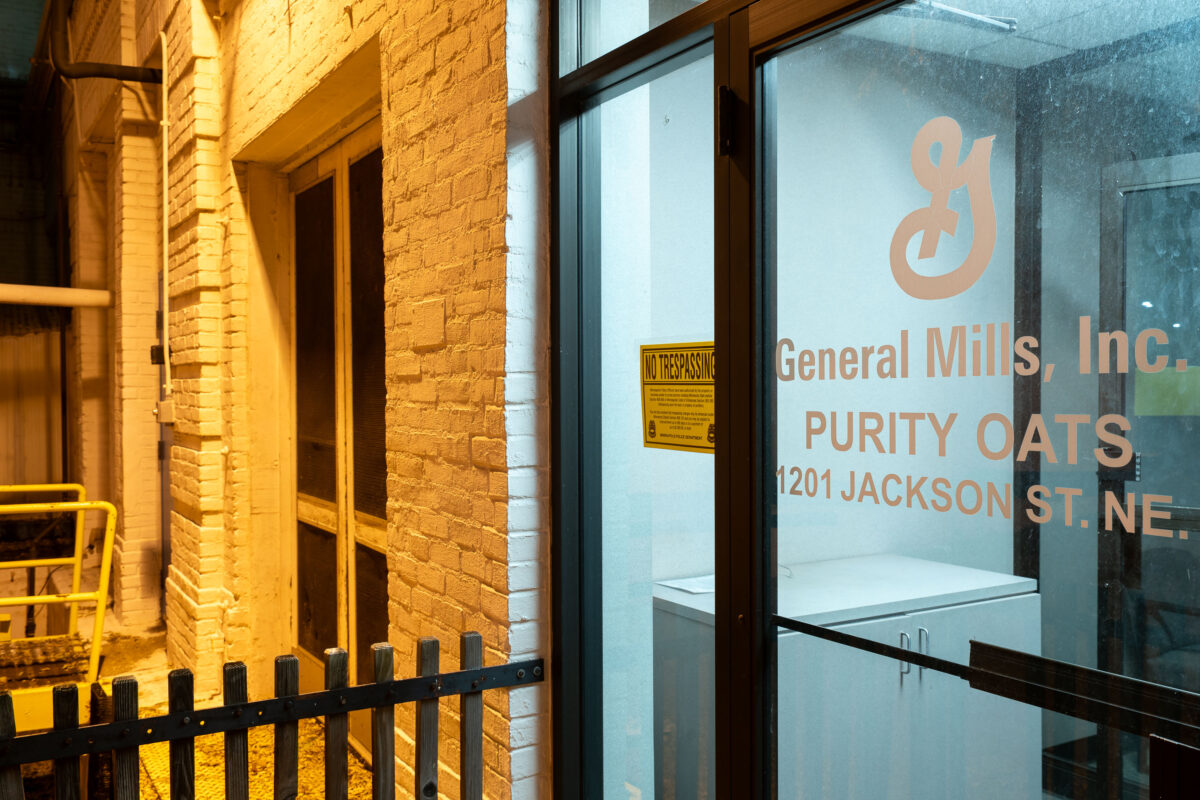
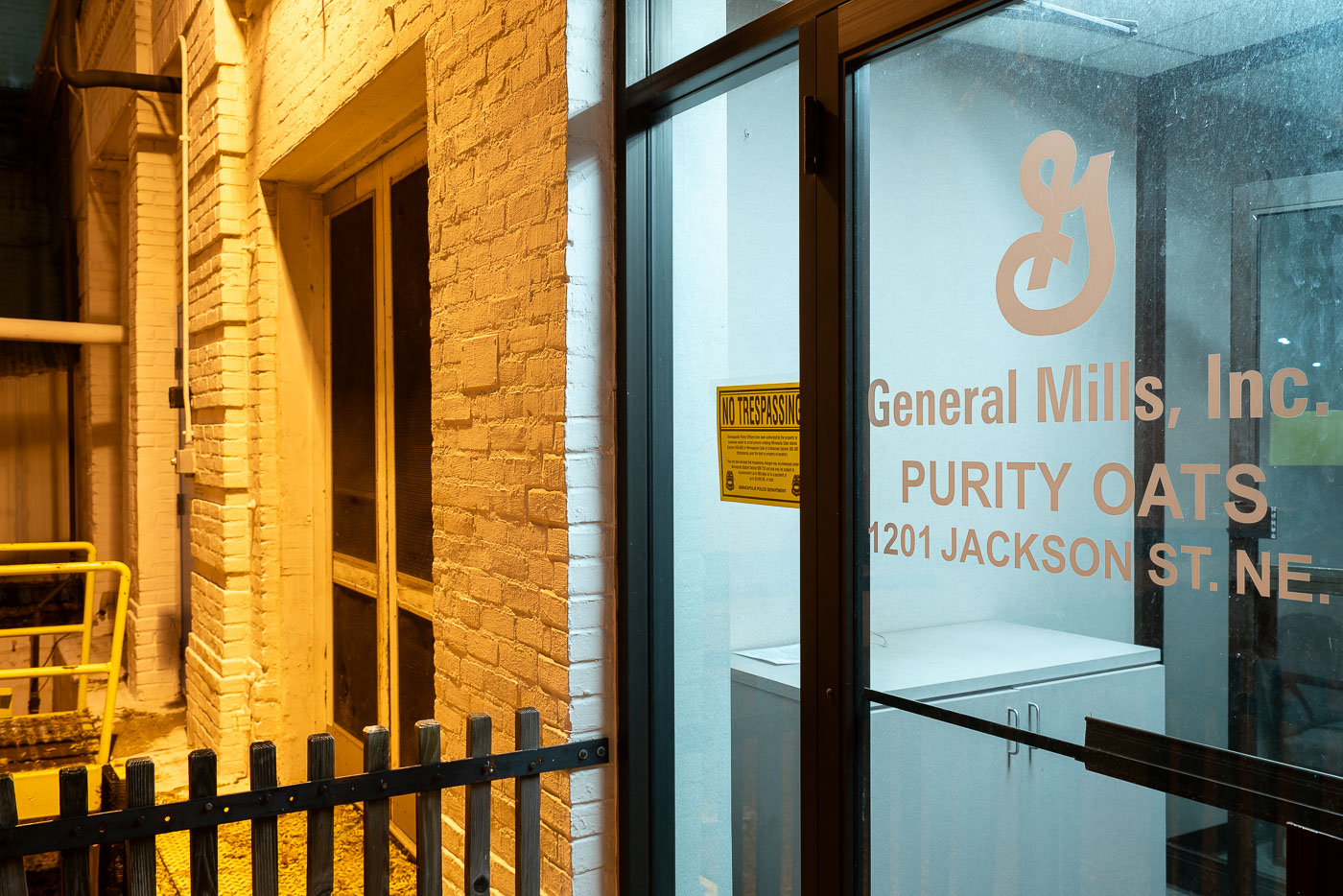
General Mills Purity Oats facility storefront at 1201 Jackson Street NE in Northeast Minneapolis.
General Mills Purity Oats Facility, Minneapolis, at 1201 Jackson Street NE. The former industrial building in Northeast Minneapolis was part of General Mills’ grain and cereal processing operations.

General Mills Purity Oats Entrance on Jackson Street NE
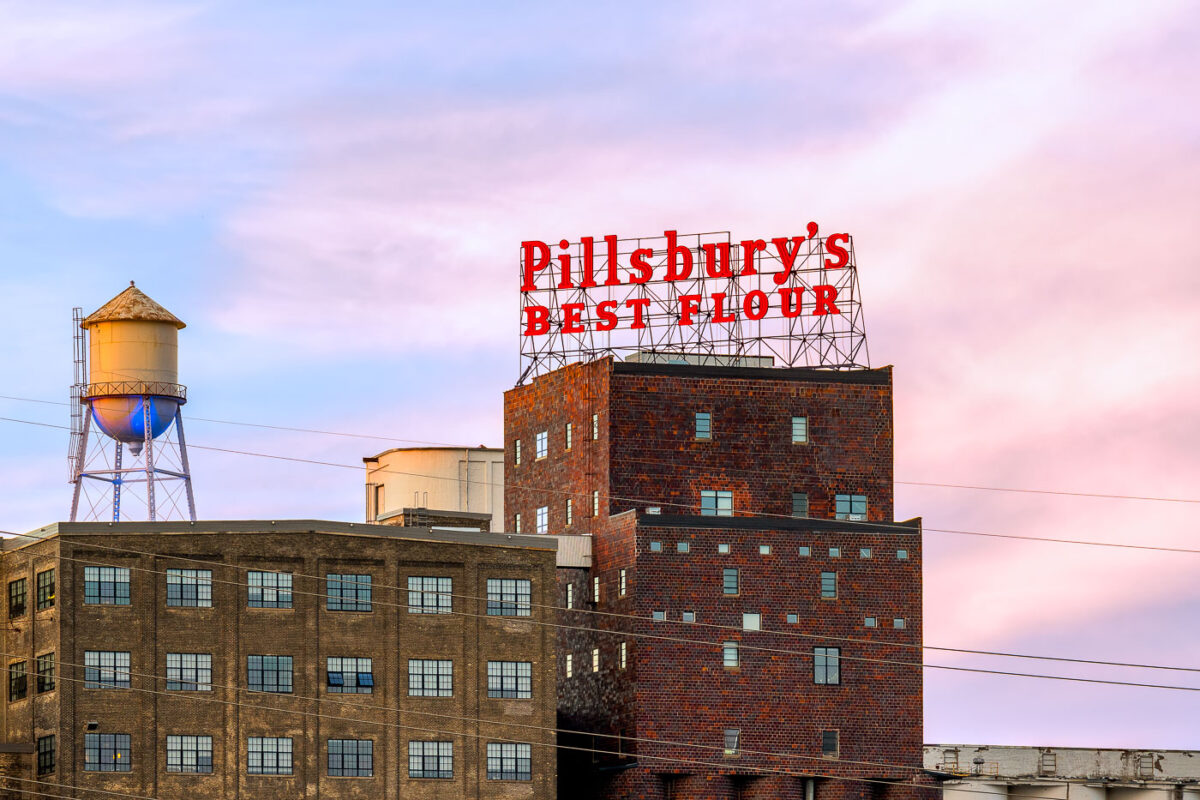
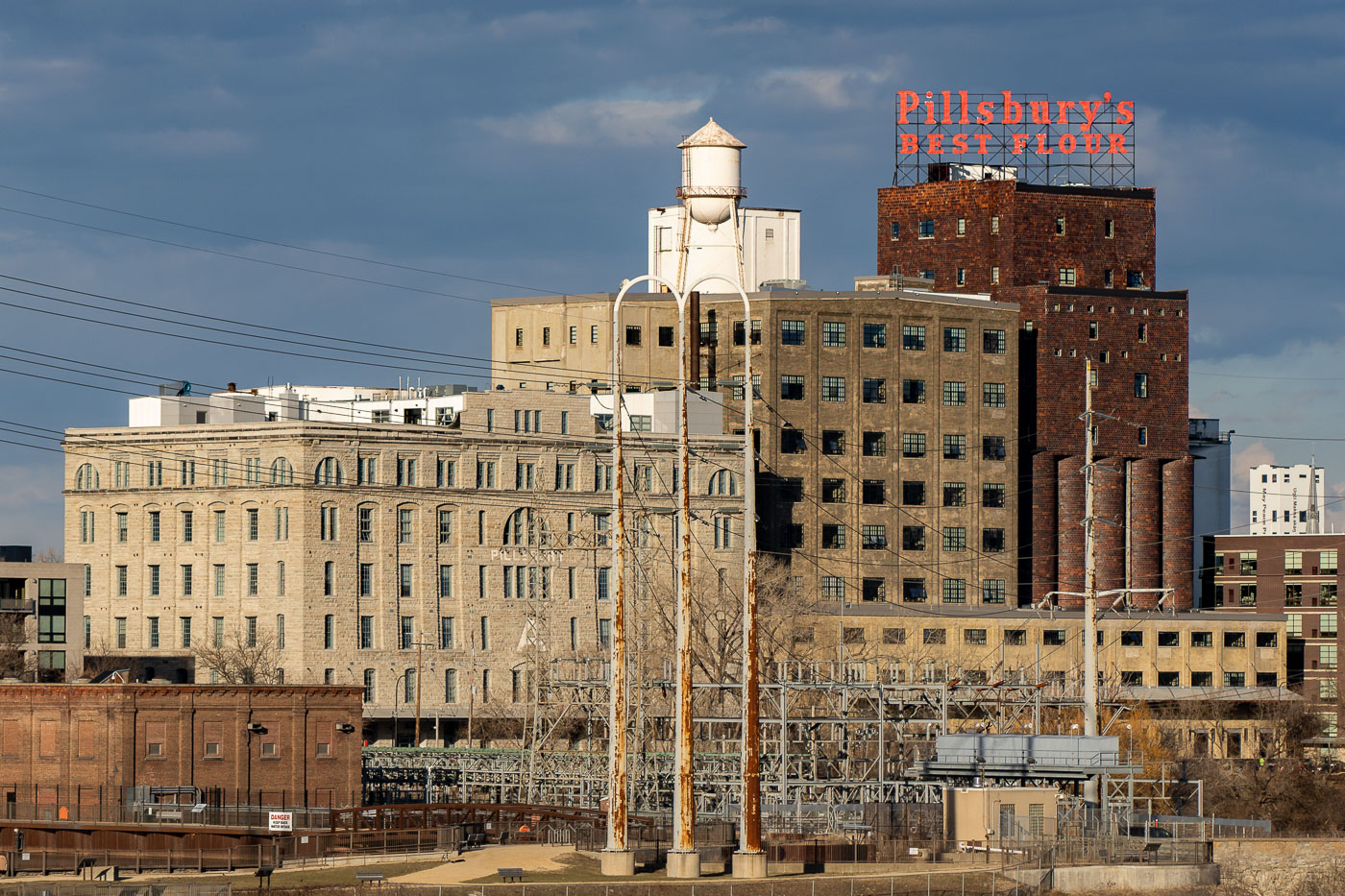
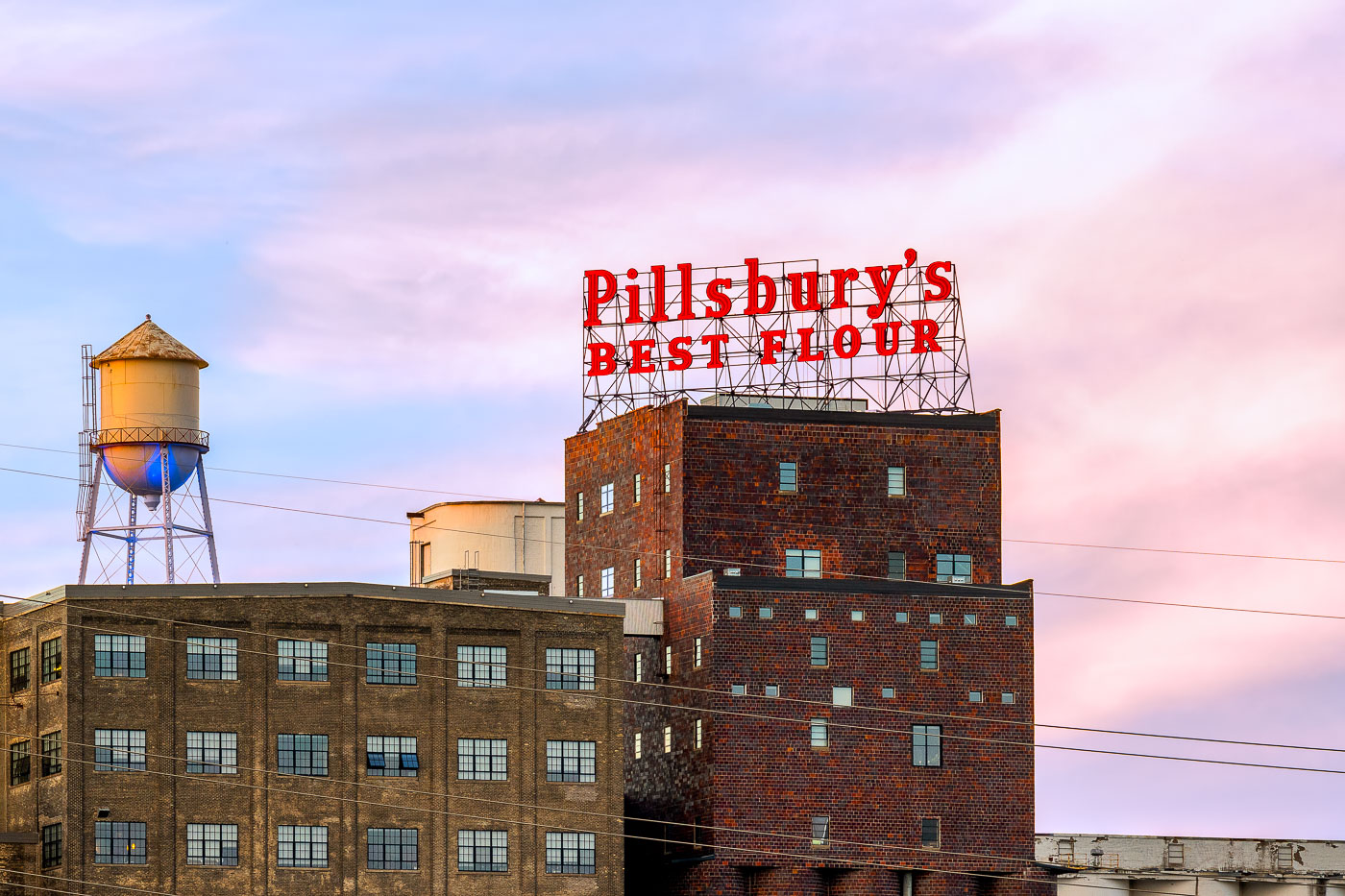
The Pillsbury's Best flour mill sign glows red atop a historic brick mill building in Minneapolis at sunset.
The Pillsbury A-Mill, a former flour mill on the Mississippi River in Minneapolis, Minnesota, was once the world's largest flour mill for four decades. Completed in 1881, it utilized two powerful 1,200-horsepower waterwheels. Recognized as a National Historic Landmark in 1966, the structure has since been repurposed into resident artist lofts.

Pillsbury’s Best Flour Sign and Water Tower at Dusk
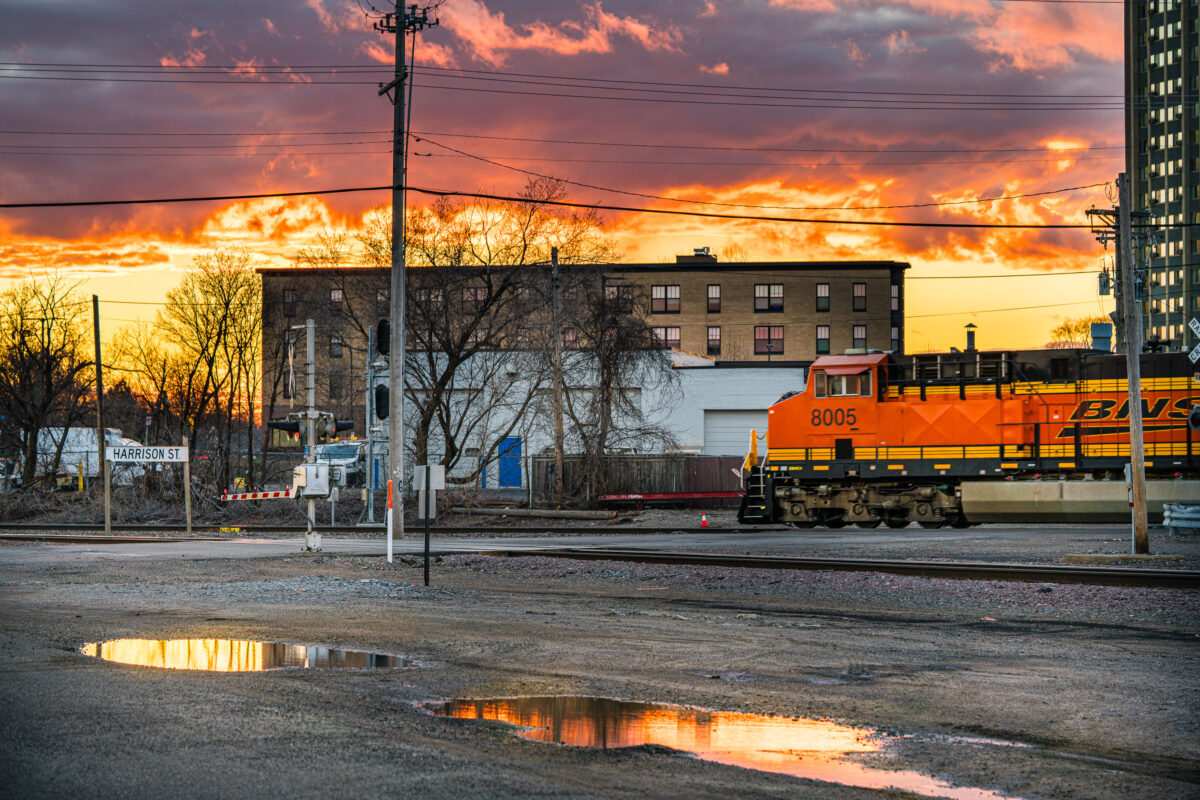
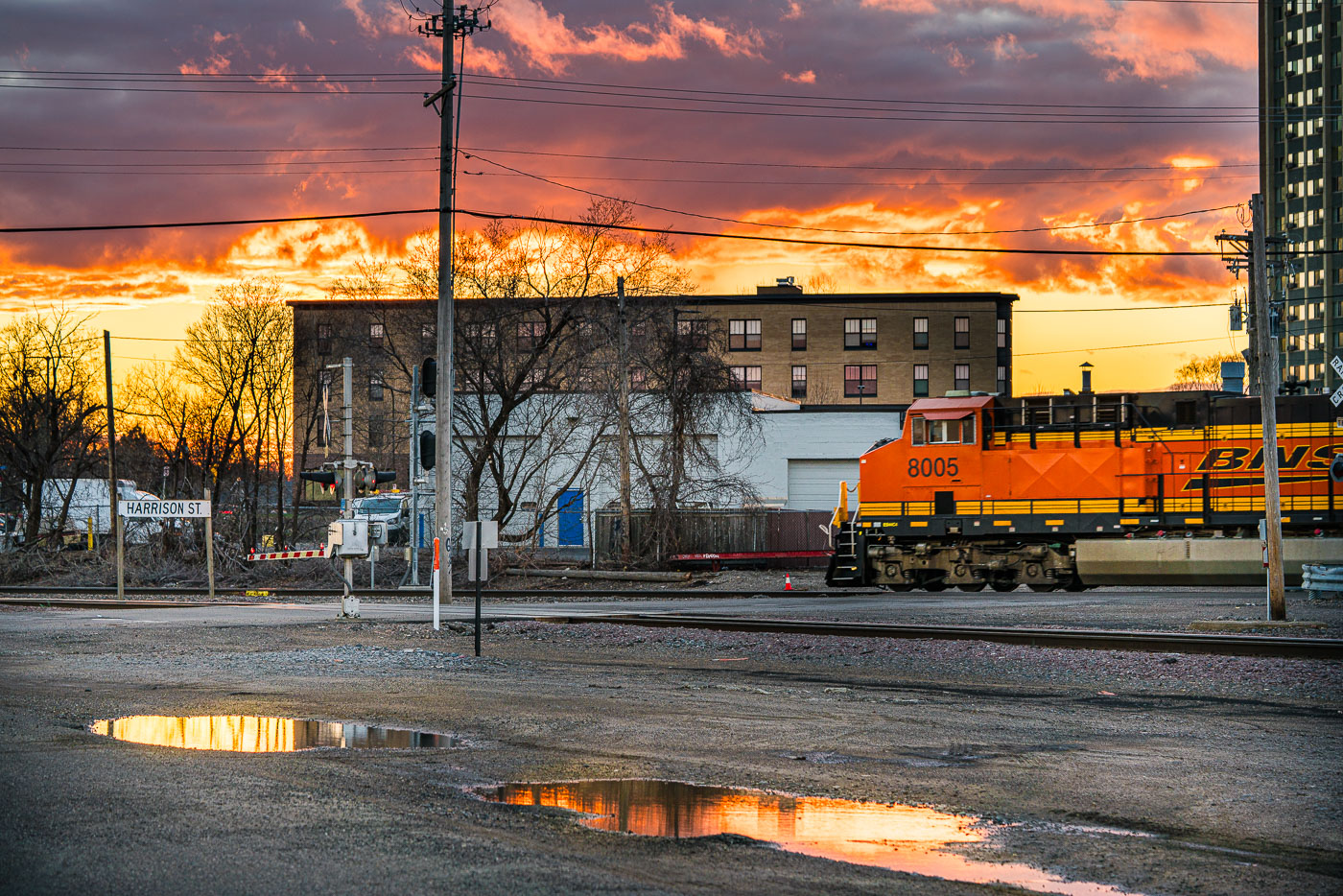
BNSF Railway locomotive number 8005 passes Harrison Street crossing in Northeast Minneapolis at sunset.
A BNSF Railway locomotive passes the Harrison Street crossing in Northeast Minneapolis. The crossing is part of the rail corridor that runs through the neighborhood near the Mississippi River.

Sunset Over the BNSF Crossing on Harrison Street

Bench in Father Hennepin Bluff Park beside snow and open water in Northeast Minneapolis.
Father Hennepin Bluff Park in Northeast Minneapolis, with a bench beside a snow-covered area near open water. The park sits along the Mississippi River and offers views toward downtown Minneapolis.

Bench in Father Hennepin Bluff Park, Northeast Minneapolis
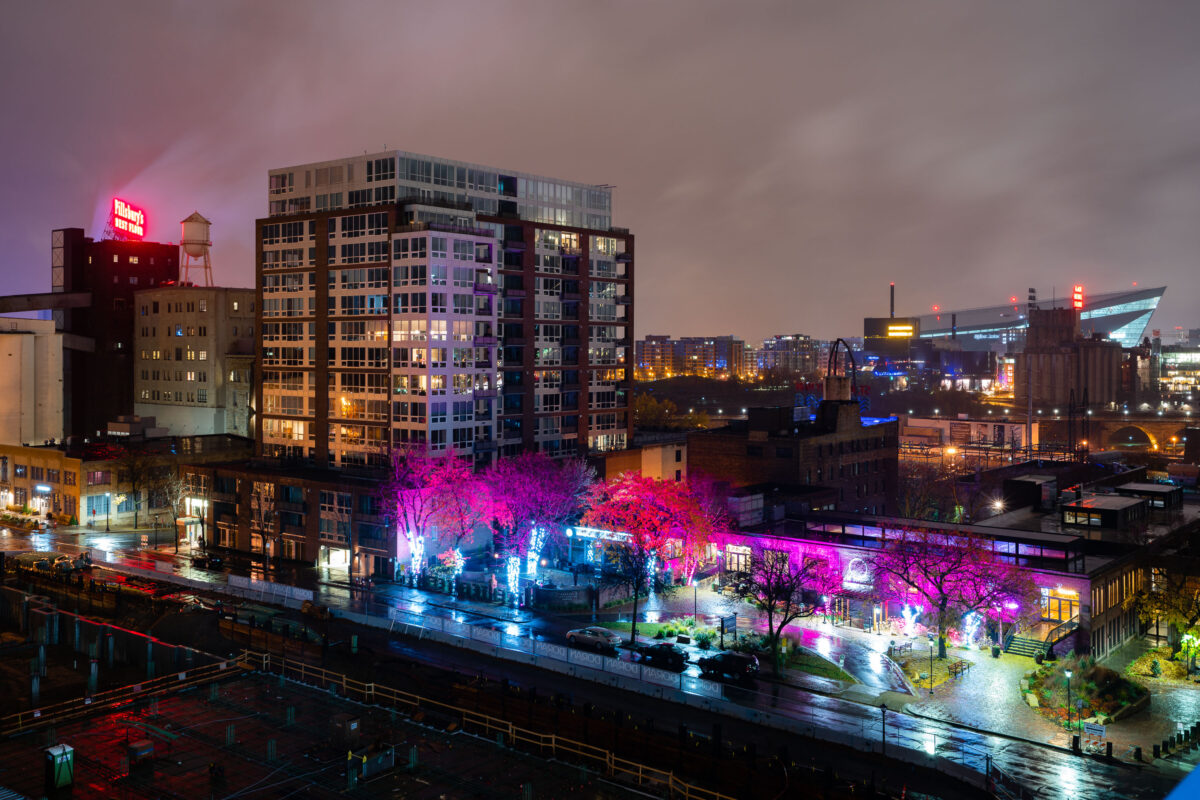
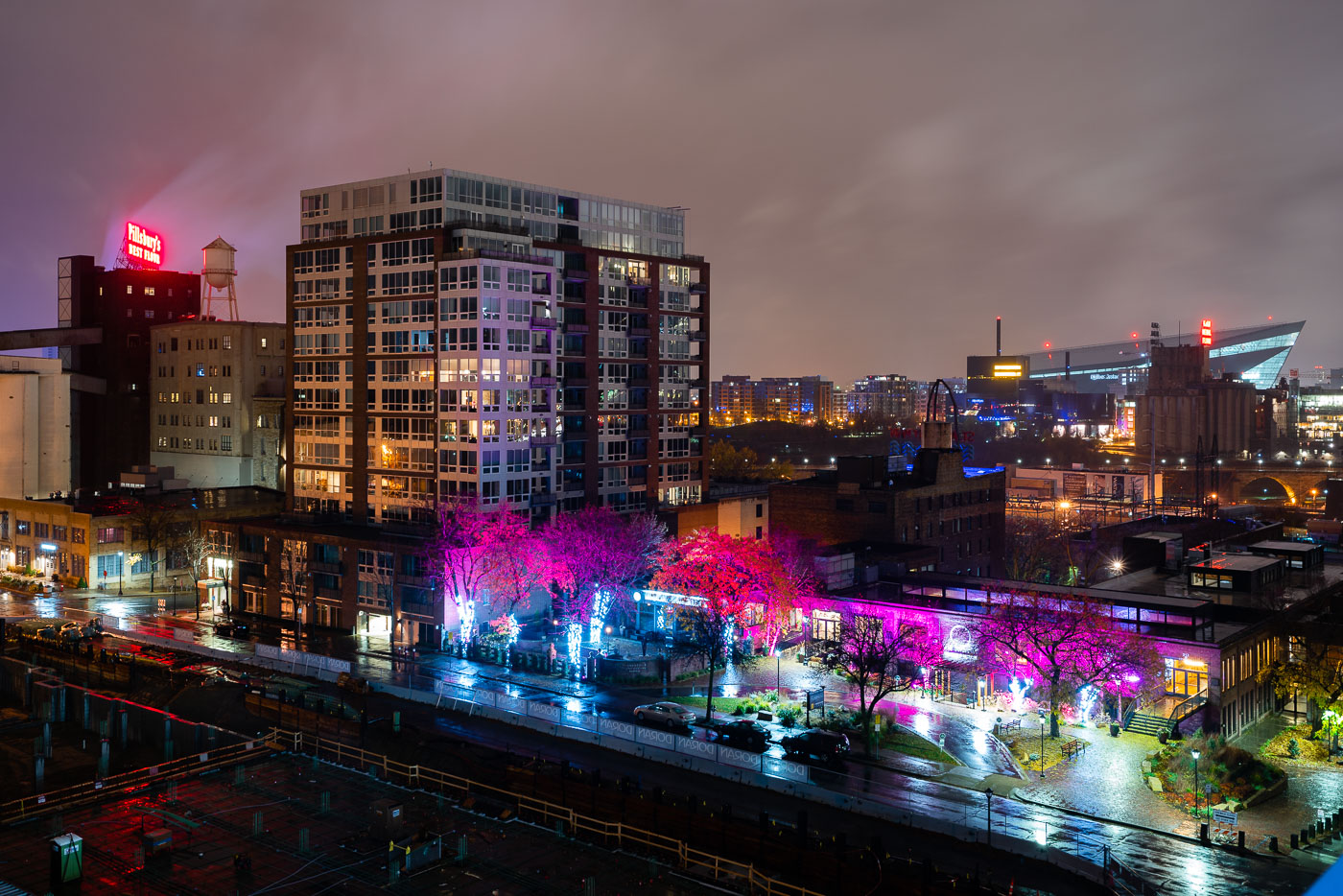
Northeast Minneapolis riverfront at night with illuminated Pillsbury A Mill and US Bank Stadium visible across the Mississippi River.
US Bank Stadium, a multi-purpose venue completed in 2016, is visible across the Mississippi River from Northeast Minneapolis. In the foreground, the historic Pillsbury A Mill, once the largest flour mill in the world, stands as a reminder of the area's industrial past.

Pink-Lit Trees on St. Anthony Main Near US Bank Stadium
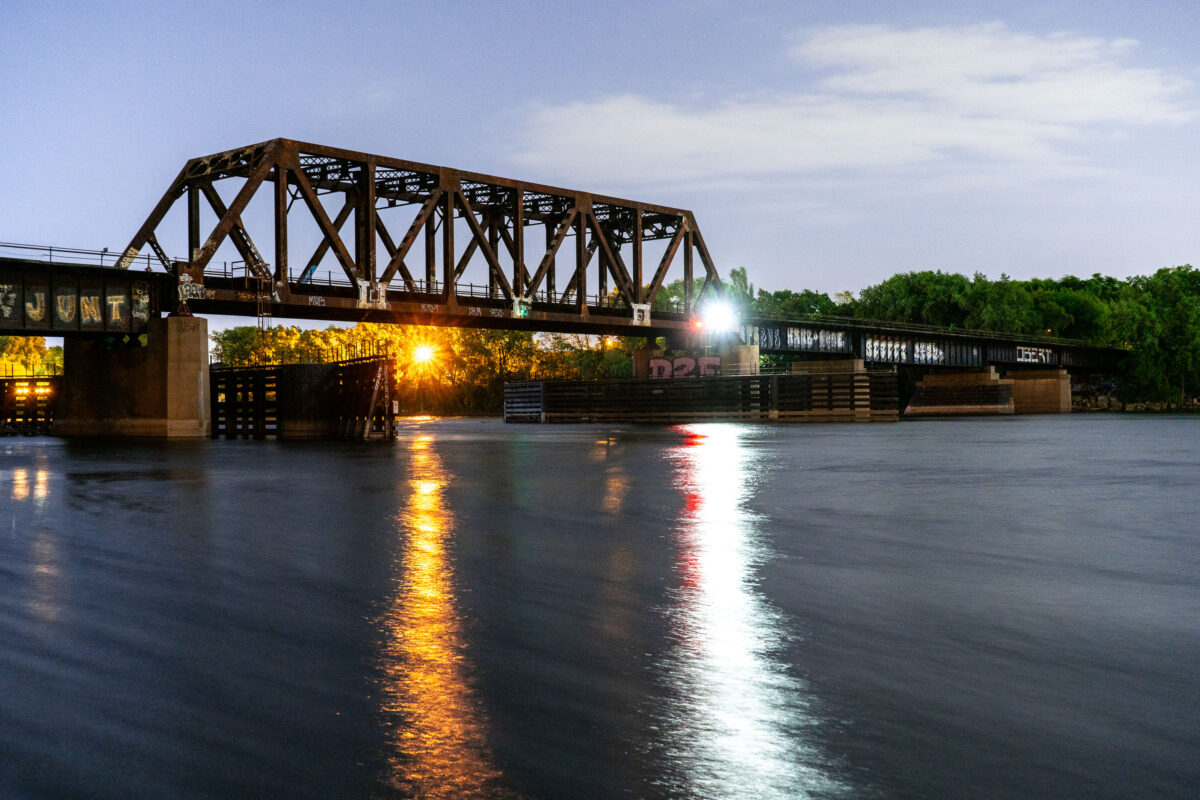
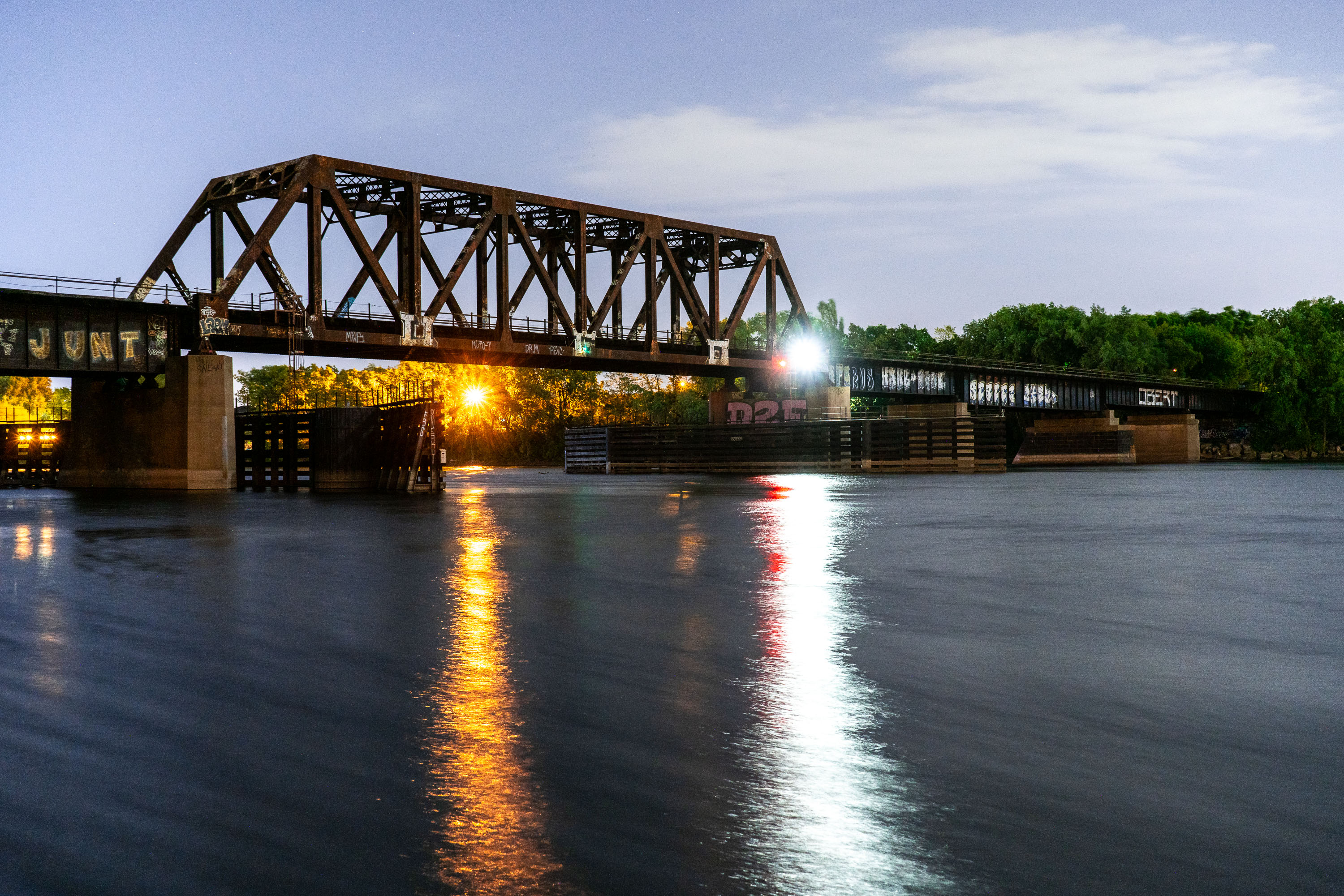
Northern Pacific BNSF Rail Bridge crosses the Mississippi River in Minneapolis.
Northern Pacific BNSF Rail Bridge spans the Mississippi River in Minneapolis between downtown and Northeast Minneapolis. Originally built in 1884 for the Northern Pacific Railway, it provided rail access to yards north of downtown. The bridge has been altered and repaired over time and remains part of BNSF Railway operations in the city.

Northern Pacific BNSF Rail Bridge, Minneapolis
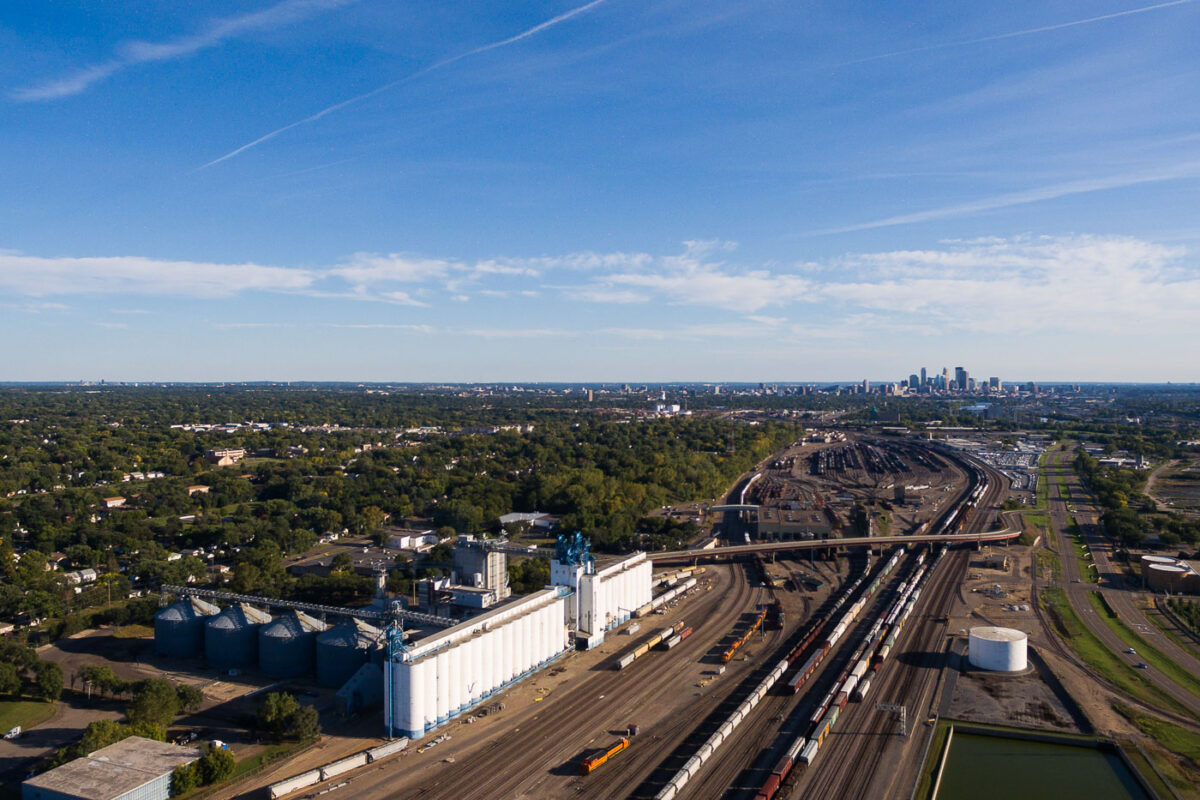
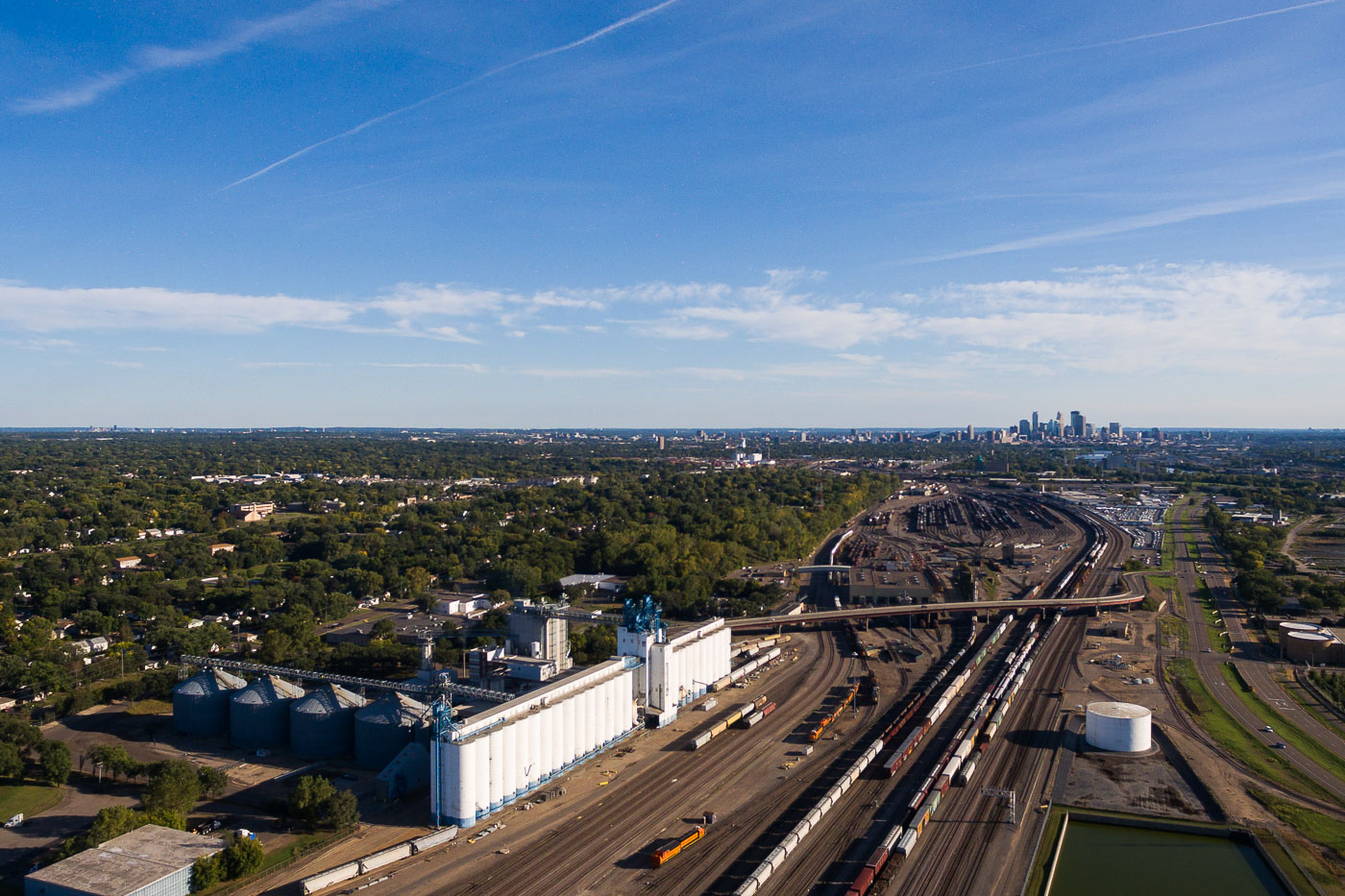
General Mills Grain Elevator and Rail Yard in Northeast Minneapolis, a key industrial facility for grain storage and transportation connecting to national markets.
The General Mills Grain Elevator and Rail Yard in Northeast Minneapolis is a critical component of the region's agricultural and industrial infrastructure. This facility, designed for the storage and transportation of grain, plays a vital role in the food processing industry, particularly for a company with deep roots in Minneapolis's milling history. The extensive rail yard adjacent to the elevators facilitates the efficient movement of commodities, connecting local production to national and international markets. Its presence underscores the historical importance of grain processing and transportation to the economic development of Minneapolis.

General Mills Grain Elevator and Rail Yard, Northeast Minneapolis
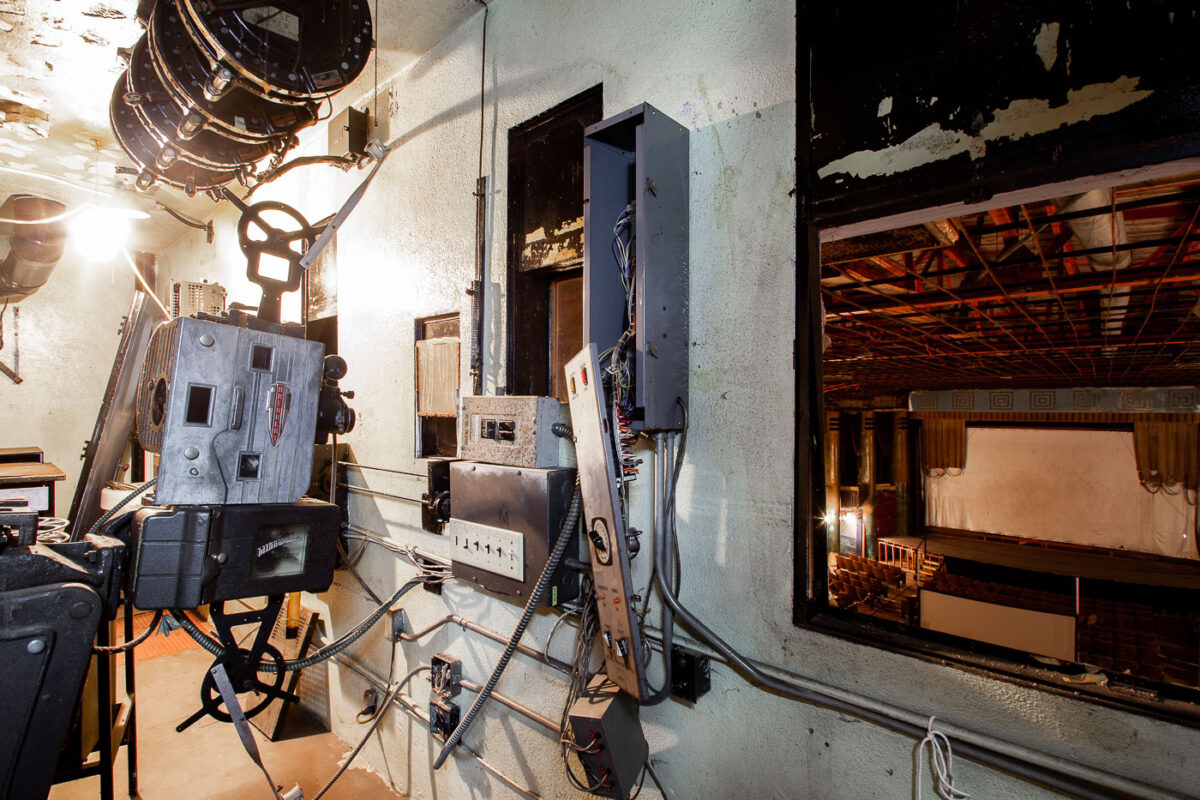
Camera equipment at abandoned theater in Minneapolis
The projection booth of the Hollywood Theater at 2815 Johnson Street in Minneapolis, Minnesota, once housed the equipment essential for screening films in this Streamline Moderne cinema. Opened in 1935, the theater operated until 1987, succumbing to competition from video stores and multiplexes. The building, recognized for its distinctive architecture, is listed on the U.S. National Register of Historic Places. Although sold in 2015 with plans for renovation, the projection booth remains a testament to the theater's past.

Hollywood Theater Projection Booth, Minneapolis
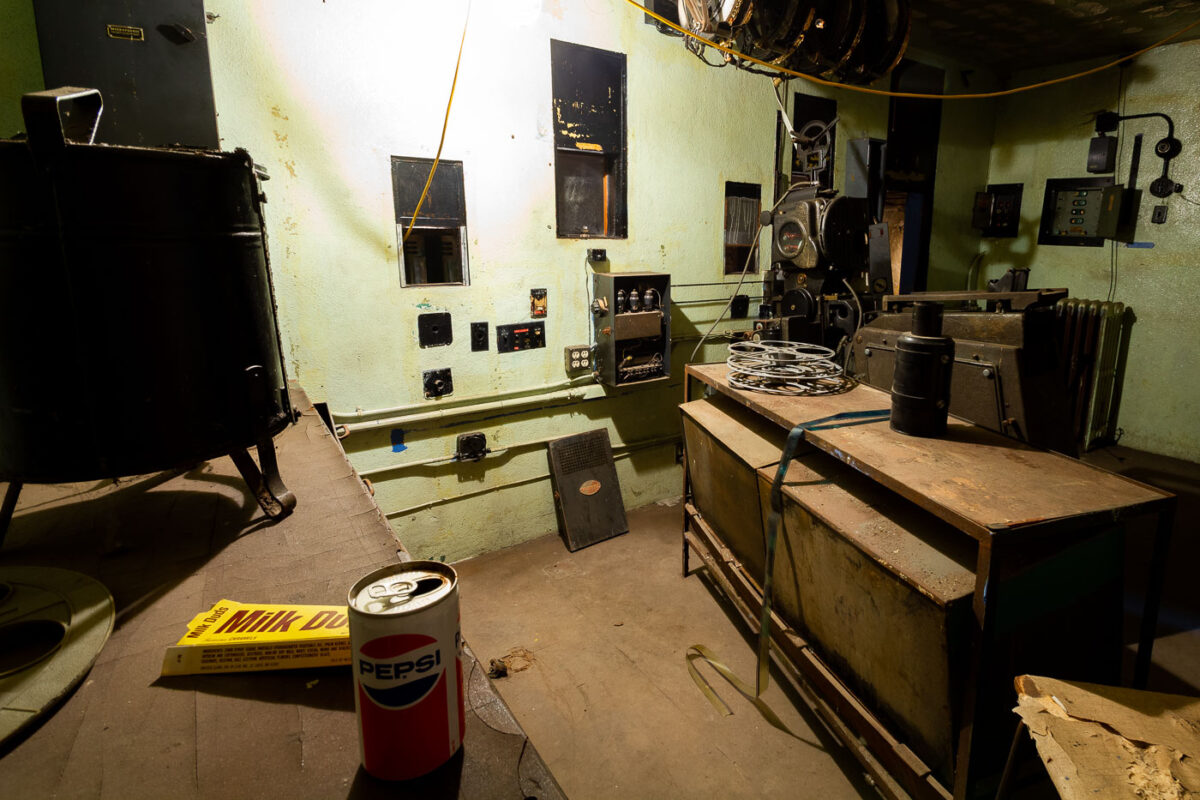
Old pepsi can and milk duds at abandoned Hollywood Theater
The projection room of the Hollywood Theater at 2815 Johnson Street in Minneapolis, Minnesota, contains remnants of its operational past, including a Pepsi can and Milk Duds box. This Streamline Moderne cinema, opened in 1935, is listed on the US National Register of Historic Places for its architectural significance. The theater closed in 1987, unable to compete with video stores and larger venues, leaving its equipment and personal items behind. The property was sold in 2015 to a developer with plans to renovate the historic structure.

Hollywood Theater Projection Room: Pepsi Can and Milk Duds
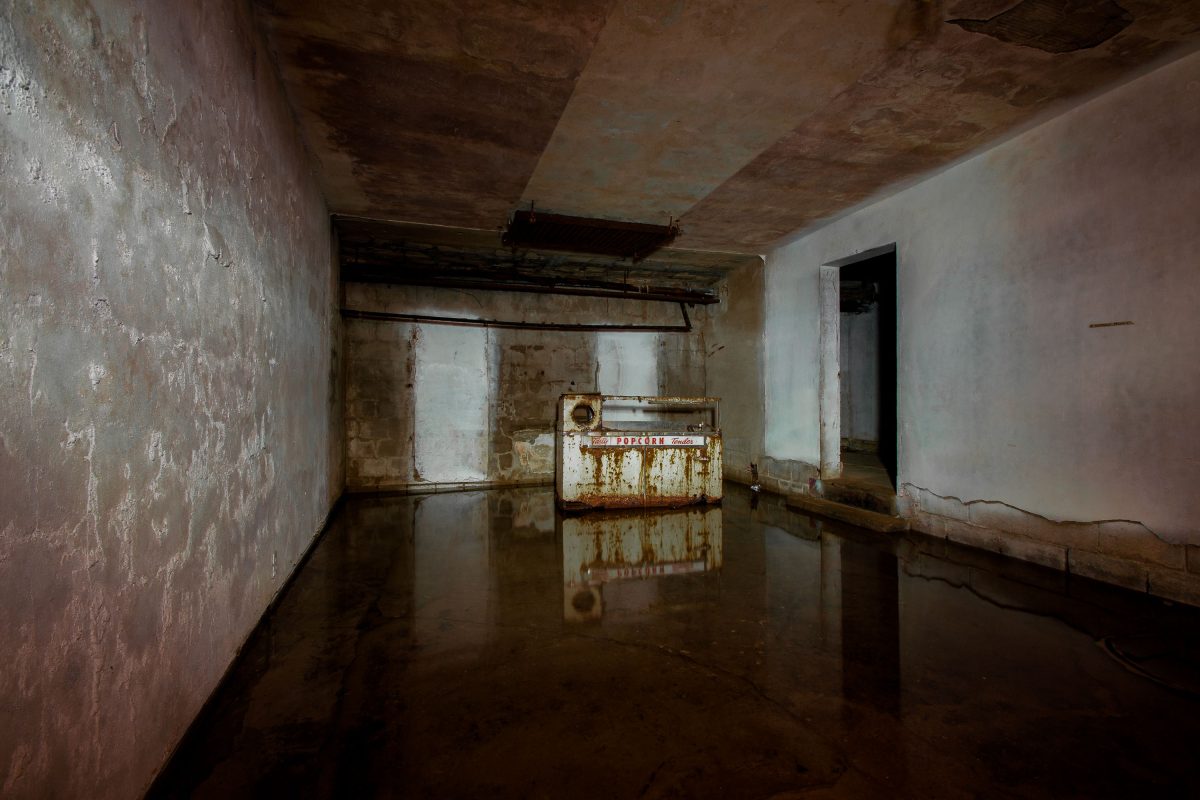
Popcorn machine at Minneapolis Hollywood Theater
The Hollywood Theater located at 2815 Johnson Street, Minneapolis. Listed on the US National Register of Historic Places and notable for it’s Streamline Moderne design. It opened in 1935 and closed in 1987 after not being able to compete with video stores and new larger theaters. The theater was sold in 2015 to a developer who plans to renovate the property.

Flooded Lobby and Popcorn Stand at Hollywood Theater
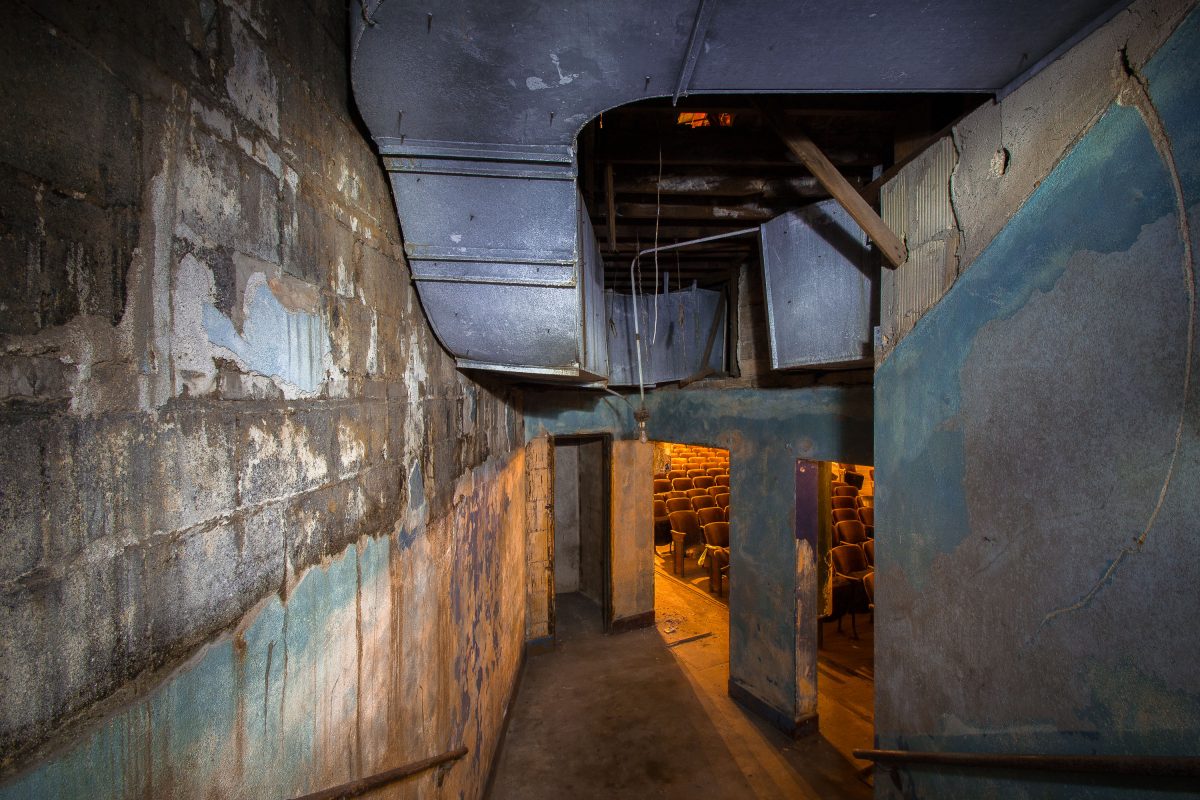
Hollywood Theater Abandoned in Minneapolis
The Hollywood Theater located at 2815 Johnson Street, Minneapolis. Listed on the US National Register of Historic Places and notable for it’s Streamline Moderne design. It opened in 1935 and closed in 1987 after not being able to compete with video stores and new larger theaters. The theater was sold in 2015 to a developer who plans to renovate the property.

Backstage Passage to the Auditorium at Hollywood Theater
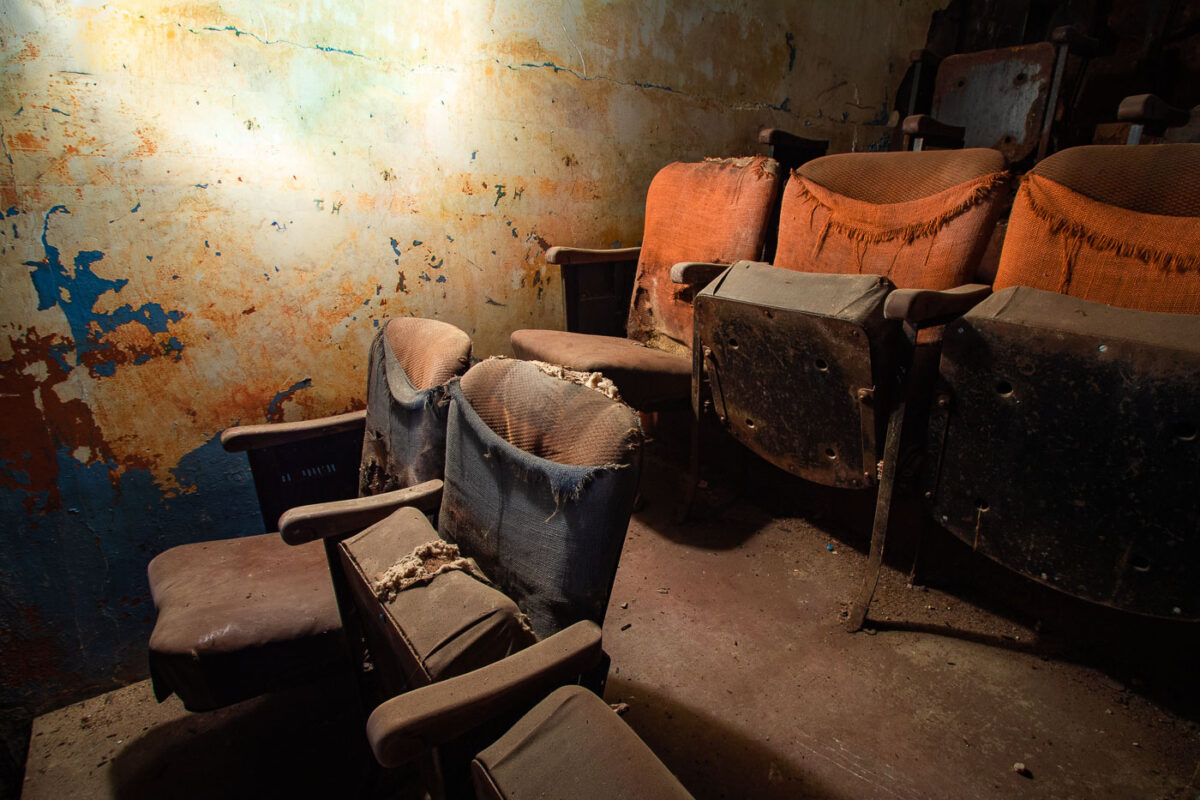
Hollywood Theater seating while abandoned
Worn seats and peeling walls inside the Hollywood Theater, Minneapolis. This Streamline Moderne cinema, located at 2815 Johnson Street, opened in 1935 and operated for over five decades before closing in 1987. The theater was a significant cultural venue in the Northeast Minneapolis neighborhood until changing entertainment trends led to its closure. Listed on the US National Register of Historic Places, the building was sold in 2015 with plans for its renovation and preservation.

Tattered Upholstery and Toppled Chairs at the Hollywood Theater
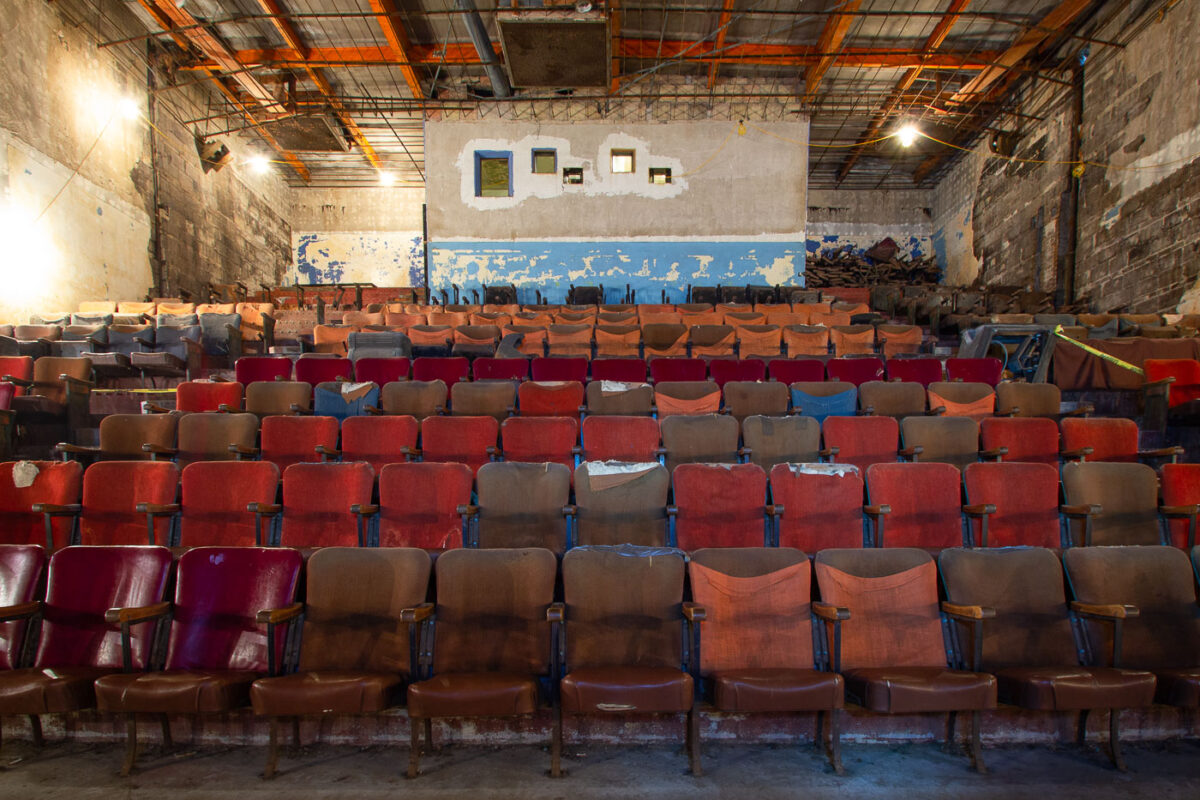
Seats at the abandoned Hollywood Theater in Minneapolis
The auditorium seats of the Hollywood Theater, located at 2815 Johnson Street in Minneapolis, remain as a testament to its closure in 1987. Originally opened in 1935, the Streamline Moderne building, now listed on the US National Register of Historic Places, ceased operations due to competition from video rental stores and multiplex cinemas. Despite a developer's acquisition in 2015 with plans for renovation, the theater's interior continues to show signs of disuse and decay.

Rows of Faded Seats Inside the Hollywood Theater
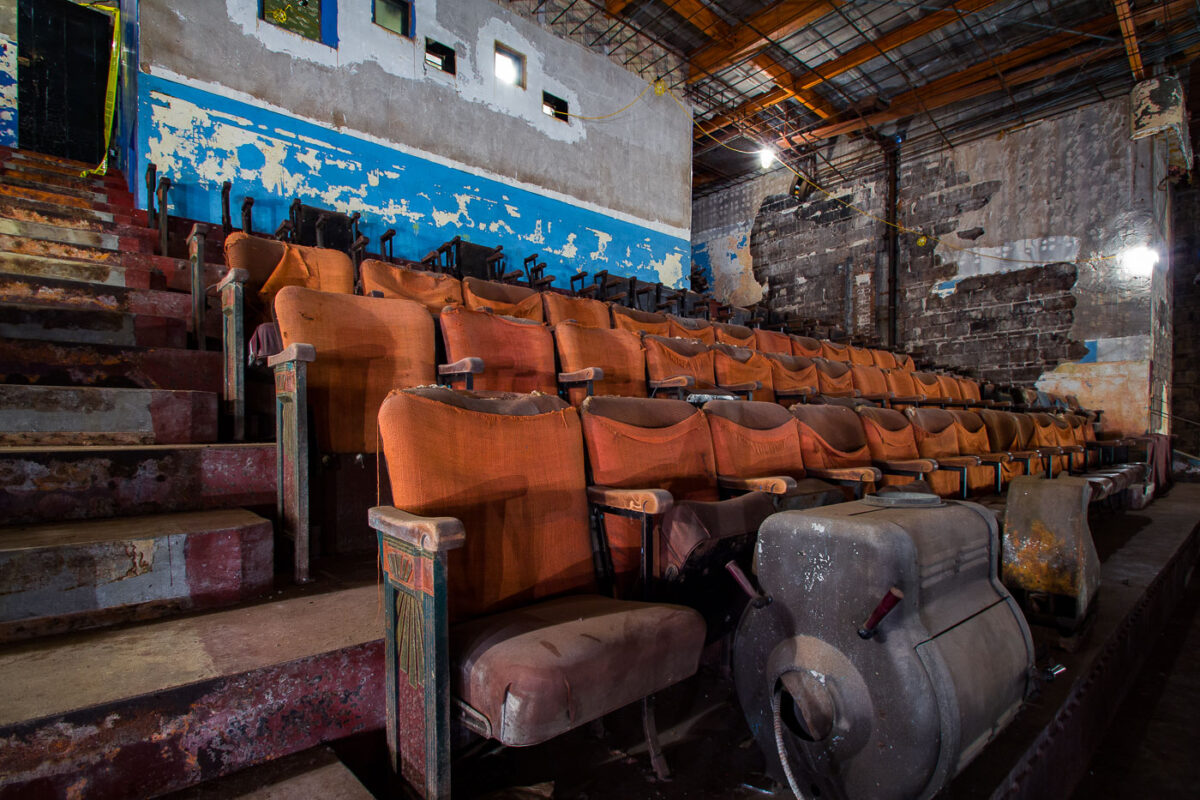
Abandoned Hollywood Theatre in Minneapolis
The auditorium of the abandoned Hollywood Theater in Minneapolis, Minnesota, shows the wear of decades since its closure in 1987. Opened in 1935, the Streamline Moderne building served the Northeast neighborhood for over fifty years before succumbing to competition from multiplex cinemas and video rentals. The theater, listed on the US National Register of Historic Places, was acquired in 2015 with plans for its preservation and renovation.

Rusted Seating Rows Inside the Hollywood Theater in Northeast Minneapolis
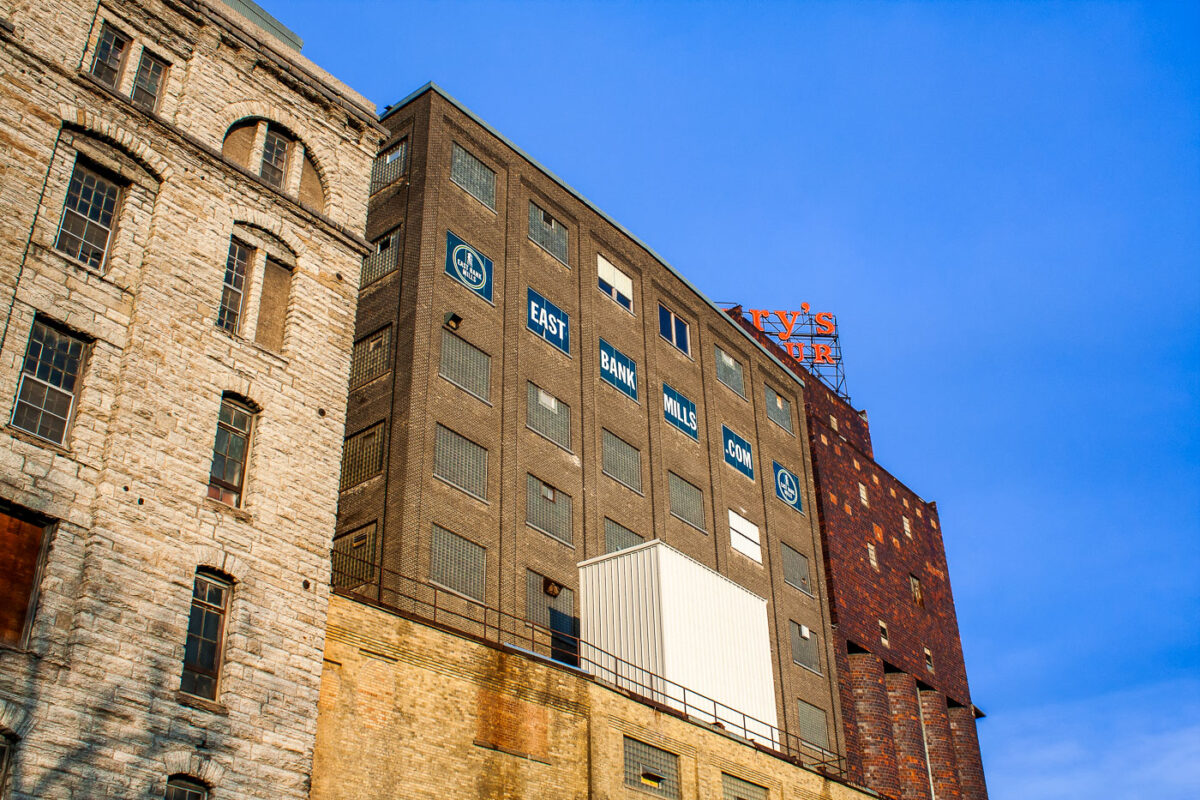
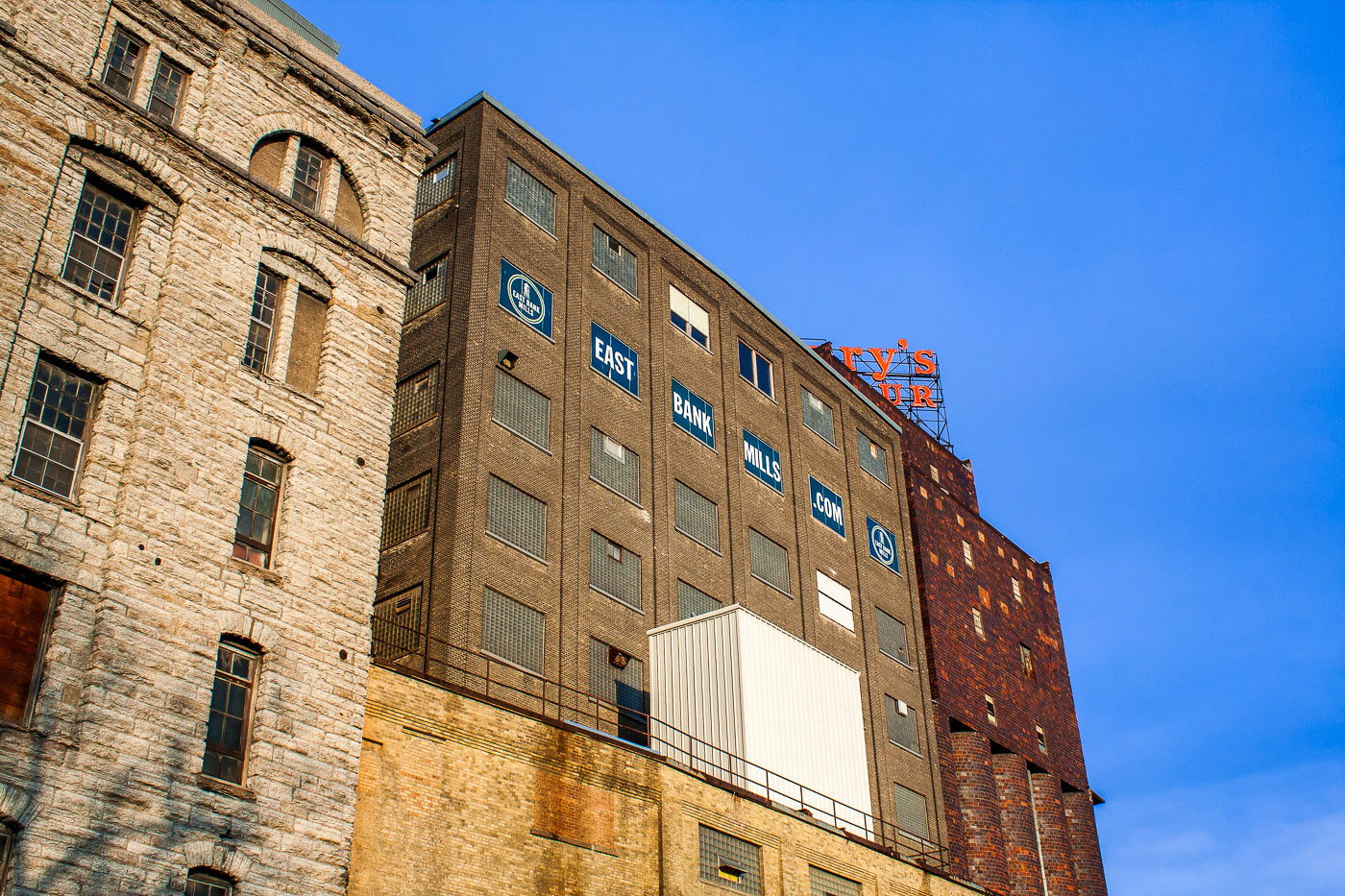
East Bank Mills historic flour mill complex in Northeast Minneapolis with blue signage on tan brick buildings under clear sky.
East Bank Mills is a historic flour mill complex in Northeast Minneapolis. The industrial buildings visible here are part of the milling operations that made Minneapolis a major flour production center in the late 19th and early 20th centuries.

East Bank Mills Signage on a Northeast Minneapolis Flour Mill