Monkey

3 photos · 2019

3 photographs tagged Monkey, 2019.

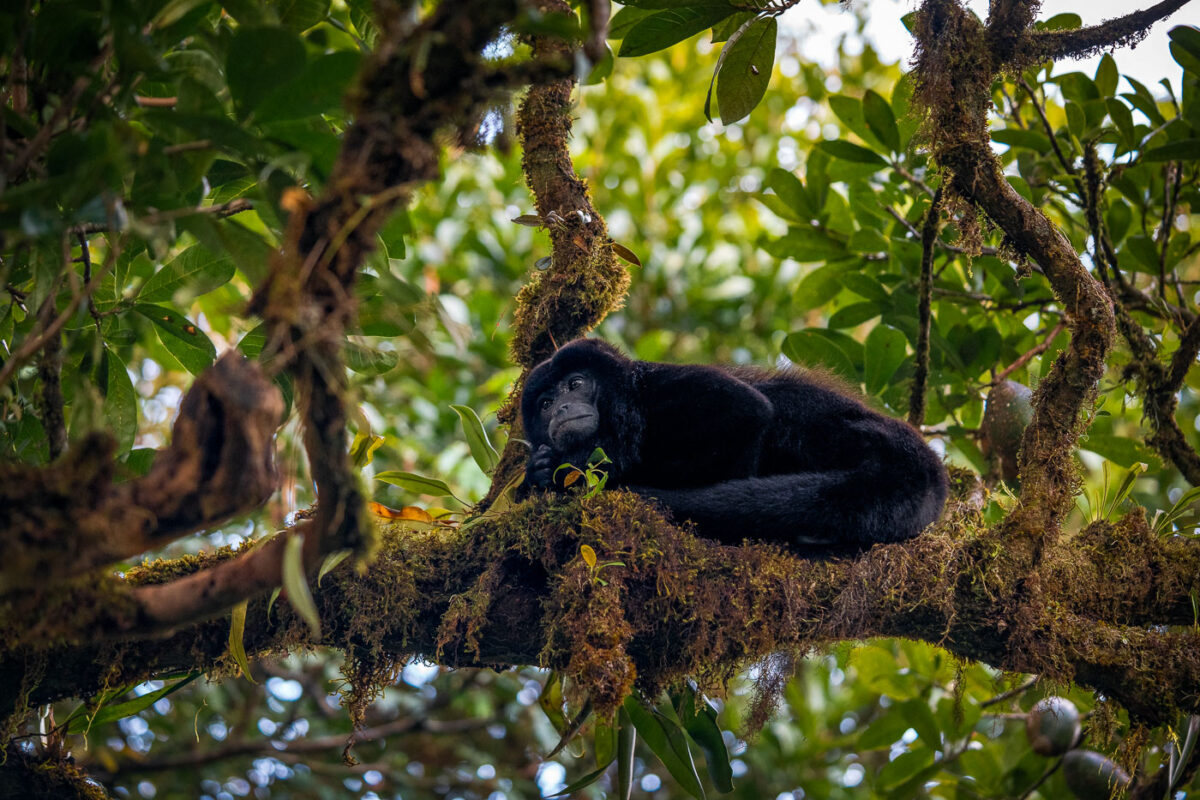
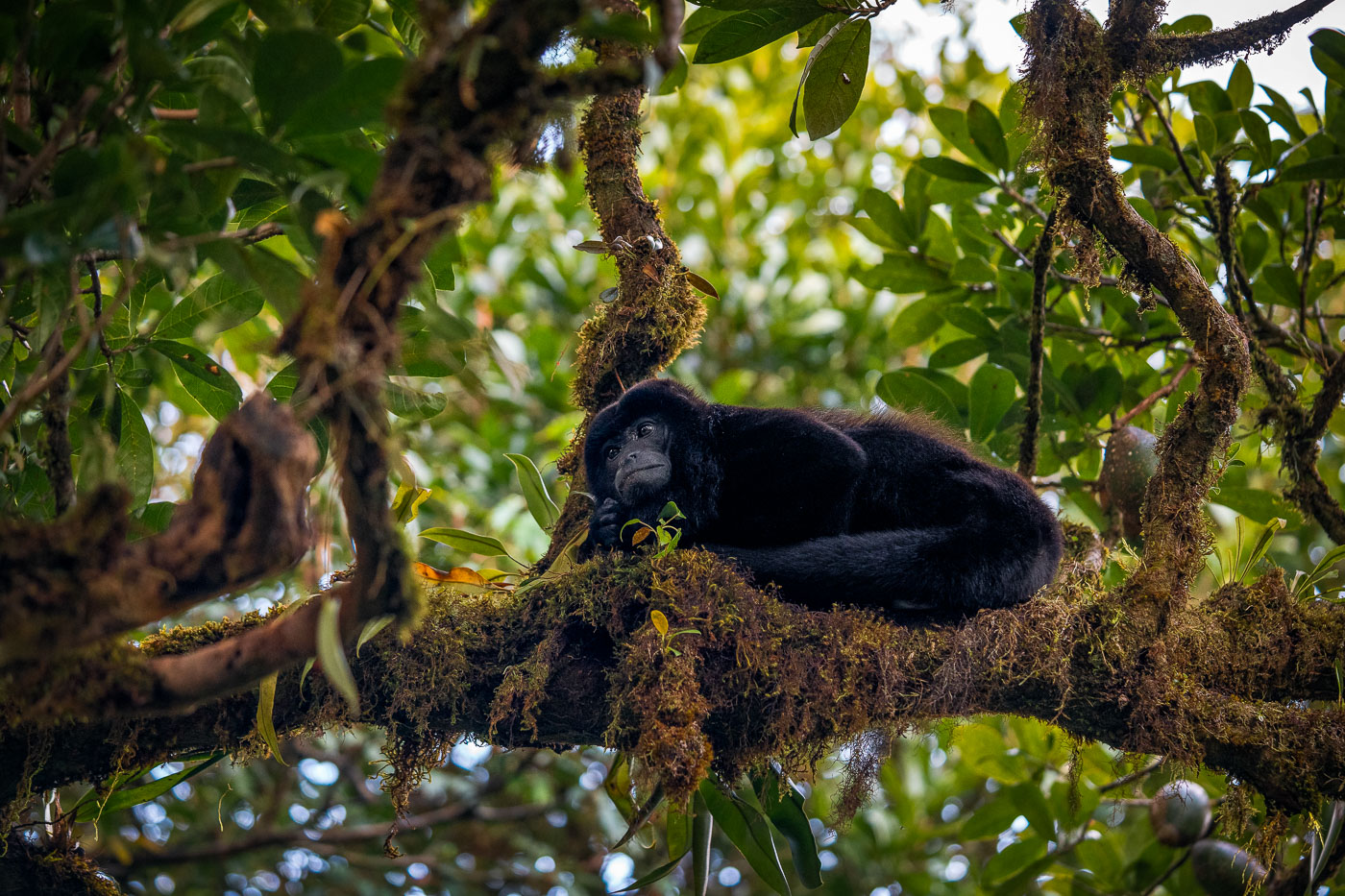
A black howler monkey rests on moss-covered branches in the canopy of a Costa Rican cloud forest.
This is a mantled howler monkey, Alouatta palliata, the species found in Costa Rica's cloud forests rather than the black howler, which ranges farther south. Adult males can weigh up to 9 kilograms and are among the loudest land animals, with calls audible up to five kilometers through dense canopy via an enlarged hyoid bone that amplifies sound. Mantled howlers spend most of their lives in the forest canopy, rarely descending to the ground, and rely on a prehensile tail that can support their full body weight on branches. Their diet is mostly leaves supplemented with fruit and flowers, an adaptation that requires long rest periods to digest tough, low-calorie foliage. The species is listed as vulnerable by the IUCN, with habitat fragmentation from deforestation posing its main threat across Central America.

Howler Monkey Curled on a Mossy Limb in Monteverde
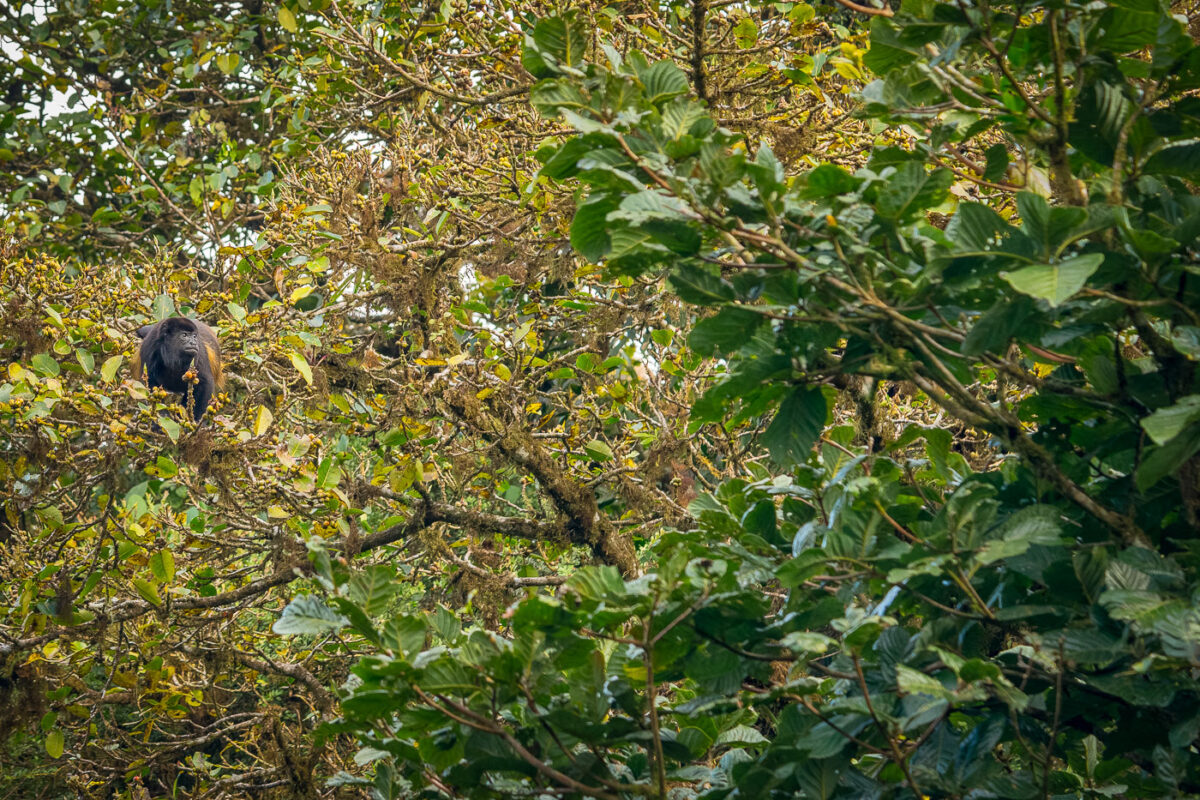
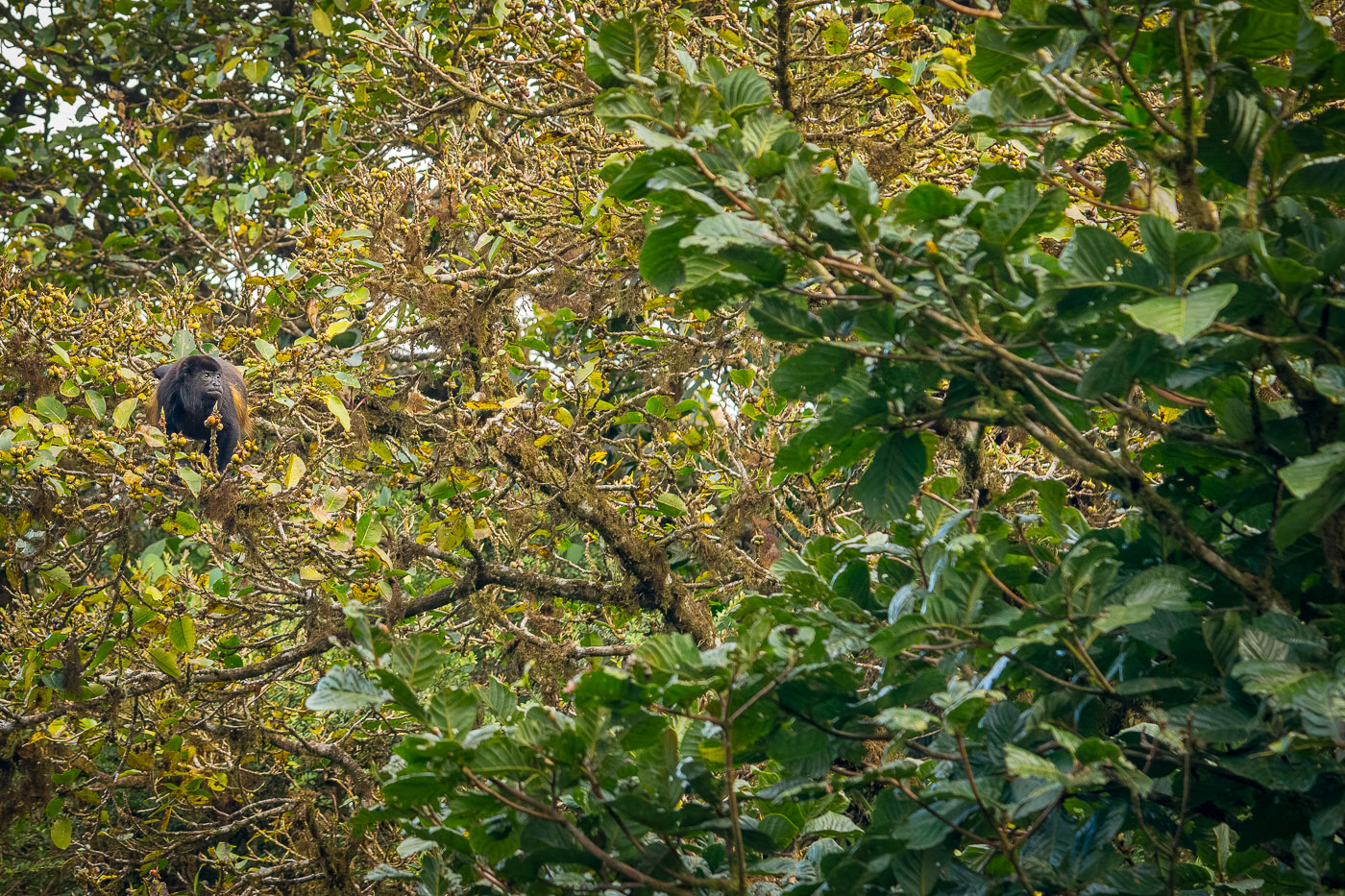
A howler monkey perches in dense canopy branches and foliage in Costa Rica's rainforest.
The mantled howler (Alouatta palliata) is among the loudest land animals on Earth, with males producing calls audible up to three miles away through a specialized, enlarged hyoid bone in the throat. Troops in Costa Rica's cloud forests typically number between six and fifteen and rarely descend to the ground, spending nearly their entire lives in the upper canopy. Their diet consists mainly of leaves supplemented with fruit and flowers, and slow, deliberate movement helps them conserve energy from this low-calorie food source. The species is listed as Vulnerable by the IUCN, with habitat fragmentation posing the primary threat to populations in Costa Rica's forest reserves.

Howler Monkey Feeding in Monteverde’s Canopy
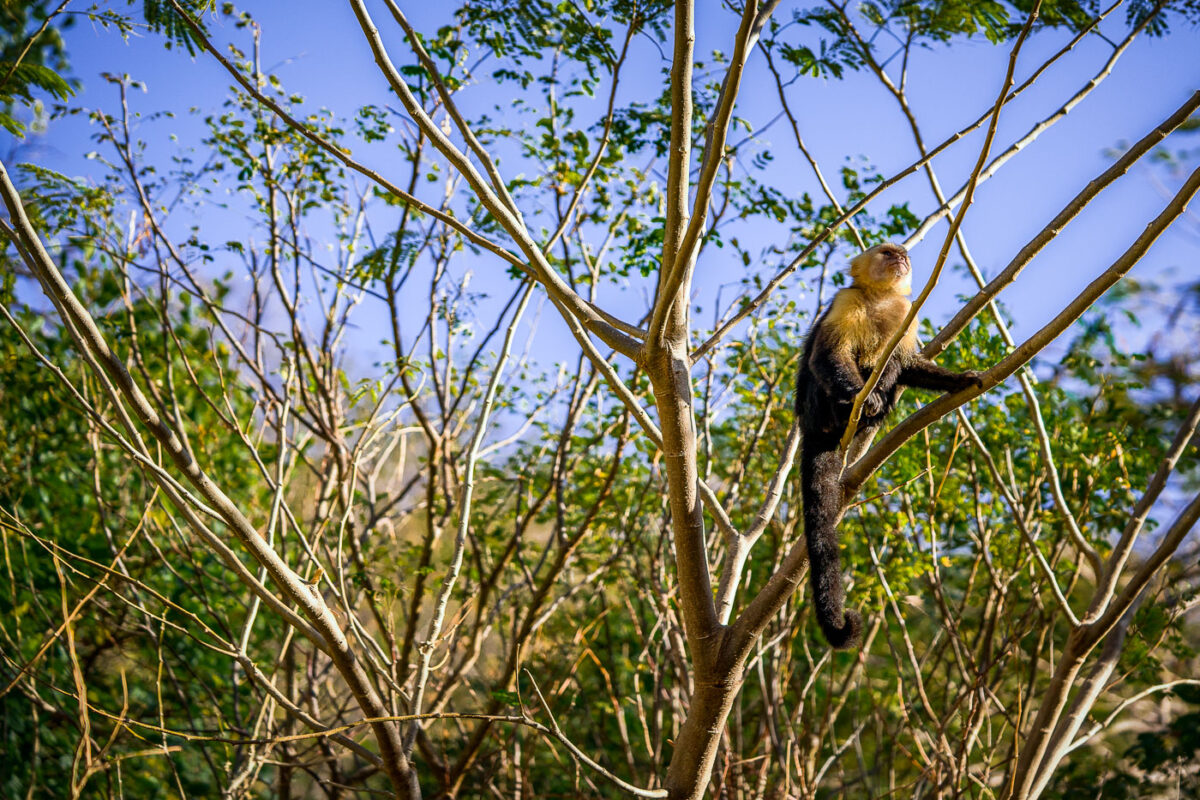
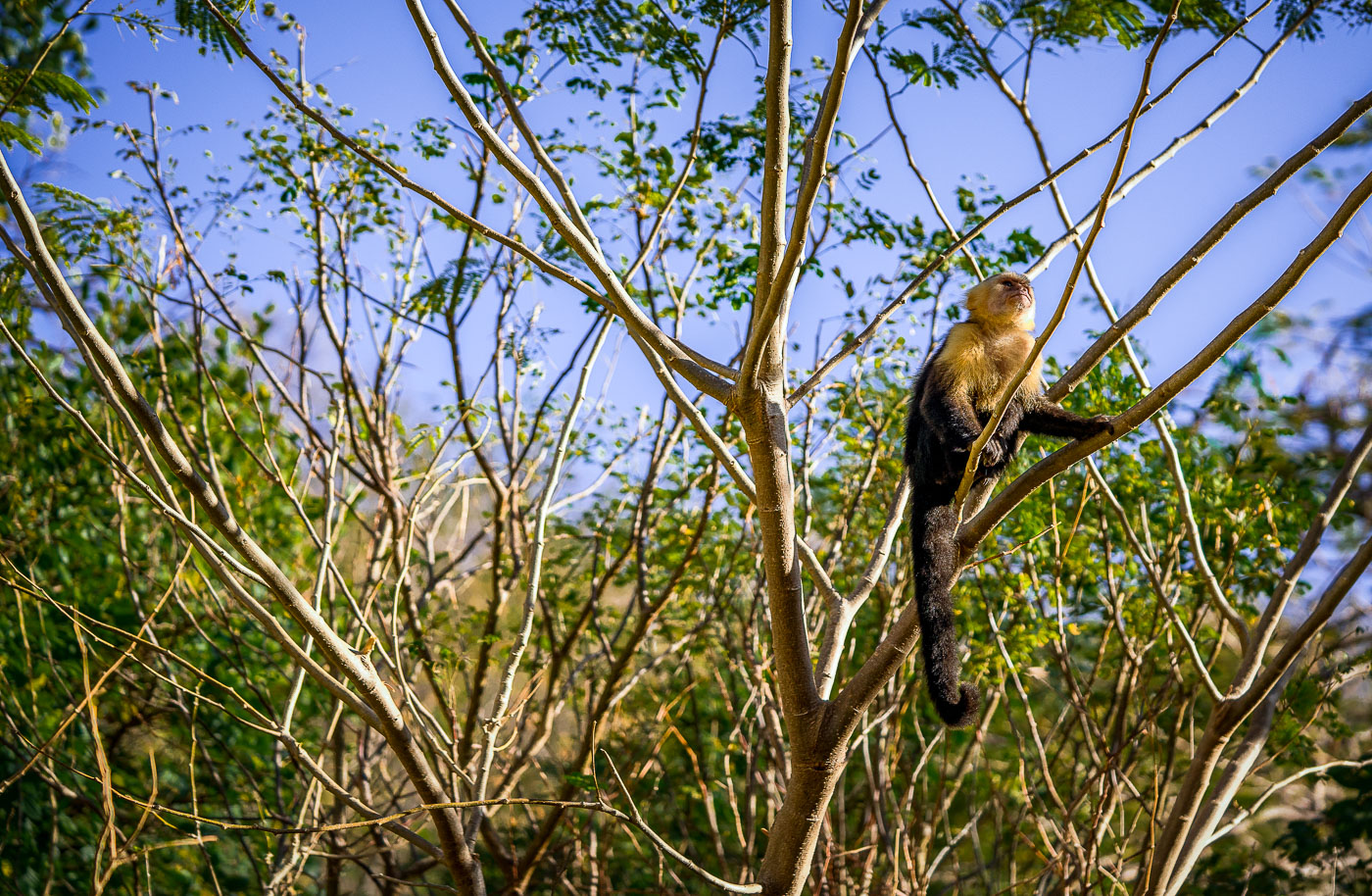
A white-faced capuchin monkey perches on a tree branch in Jobo Bay, Costa Rica.
The white-faced capuchin (Cebus imitator) ranges throughout the dry forests of Guanacaste, including the coastal scrub around Jobo Bay near the Nicaraguan border. Troops typically number between ten and twenty animals and spend most daylight hours foraging in the canopy for fruit, insects, and small vertebrates. The species is known for using tools, including rocks and sticks, to crack open nuts and shellfish — a trait documented in only a handful of primate species outside the great apes. Guanacaste's tropical dry forest, where this monkey was ed, is one of the most endangered forest types in the Americas, with less than two percent of its original range remaining intact.

White-Faced Capuchin Scanning the Treetops at Jobo Bay

Built in Minneapolis

Minneapolis Photographer

Browse by location, move through long-running series, or start with recent work.