Minneapolis

5,178 photos · 2008–2026

5,178 photographs tagged Minneapolis, 2008–2026.

Lacuna Coil vocalist performs with microphone at Target Center during Music As A Weapon IV concert.
Lacuna Coil formed in Milan in 1994, building its sound around the dual vocals of Cristina Scabbia and Andrea Ferro. The Italian gothic metal band played Target Center on May 8, 2009, as part of the Music As A Weapon IV tour, co-headlined with Disturbed and featuring Killswitch Engage.

Cristina Scabbia, Lacuna Coil, Music As A Weapon IV, Target Center

Cristiano "Pizza" Migliore performs on stage with long dark hair and beard, wearing a dark blue shirt.
Cristiano "Pizza" Migliore has played guitar for the Italian gothic metal band Lacuna Coil since 2006, joining after the departure of original guitarist Claudio Leo. Lacuna Coil formed in Milan in 1994 and built an international following with albums including "Comalies" (2002) and "Karmacode" (2006), the latter reaching the top 40 on the Billboard 200. This performance came during the Music As a Weapon IV tour, a package trek co-headlined by Disturbed that stopped at Minneapolis's Target Center on May 8, 2009.

Cristiano “Pizza” Migliore, Lacuna Coil Guitarist, at Target Center

David Draiman of Disturbed performs at Target Center in Minneapolis during Music As A Weapon IV.
Disturbed performs on the Music as a Weapon IV tour at the Target Center in Minneapolis. Killswitch Engage and Lacuna Coil were also part of the tour.

David Draiman of Disturbed Performs at Target Center, Minneapolis

The United States Department of the Interior, Bureau of Mines building in Minneapolis
The United States Department of the Interior, Bureau of Mines building in Minneapolis/ Established in 1910, the Bureau of Mines was tasked with promoting the conservation and efficient utilization of the nation's mineral and fuel resources. It has since been demolished.

US Department of the Interior, Bureau of Mines – Minneapolis

The Minneapolis Bureau of Mines building, part of the Department of the Interior, was a federal facility for mining research. Located in Minneapolis, Minnesota, it was closed in 1996.
The Minneapolis Bureau of Mines building, part of the Department of the Interior, was a federal facility dedicated to research and development in mining and mineral resources. Established to advance the understanding and utilization of the nation's mineral wealth, the Bureau played a significant role in geological surveys, safety research, and resource management. This building, located in Minneapolis, Minnesota, served as a hub for these critical scientific and governmental functions. Its demolition signifies the changing landscape of federal research facilities and the eventual closure of the Bureau of Mines itself in 1996.

Minneapolis Bureau of Mines Building, Department of the Interior

Grand Rounds Scenic Byway wayfinding sign at Bde Maka Ska park in Minneapolis.
A wayfinding sign for the Grand Rounds Scenic Byway stands at Bde Maka Ska in Minneapolis. The Grand Rounds is a system of parkways designed by Horace Cleveland in the late 19th century to connect Minneapolis's chain of lakes and parks.

Trail Signs for Grand Rounds Scenic Byway at Bde Maka Ska

Illuminated neon sign for Broadway Liquors on a brick building in North Minneapolis.
Broadway Liquors is a retail liquor store located on Broadway in North Minneapolis. The establishment's neon signage, characteristic of mid-20th century commercial storefronts, identifies the business and its street presence. Neon signs such as this were standard features of neighborhood commercial districts, providing wayfinding and establishing visual identity along commercial corridors.

Broadway Liquors neon sign, Broadway and West Broadway, Minneapolis

Fourth Police Precinct building with marquee sign in North Minneapolis, 2009.
The Minneapolis Police Fourth Precinct is a law enforcement facility serving North Minneapolis. The building's marquee advertises a precinct meeting scheduled for March 17, 2009, reflecting ongoing community engagement activities. The facility operates as a neighborhood police station within the city's public safety infrastructure.

Fourth Police Precinct, North Minneapolis

Paul Masson brandy bottle and McDonald's fries box discarded on grass in North Minneapolis.
A Paul Masson brandy bottle and McDonald's French fries box lie discarded on grass and dead leaves in North Minneapolis. The image litter found in an urban neighborhood, showing the presence of branded consumer products in public spaces.

Discarded Bottles and Food Packaging, North Minneapolis

The Minneapolis Police Department's 4th Precinct building in North Minneapolis, Minnesota, photographed in 2009. The precinct served as a law enforcement facility for the area.
The Minneapolis Police Department's 4th Precinct building, located in North Minneapolis, served as a key law enforcement facility for the area. Established to provide public safety and community services, the precinct's operations were integral to the functioning of this part of the city.

Minneapolis Police 4th Precinct, North Minneapolis, 2009
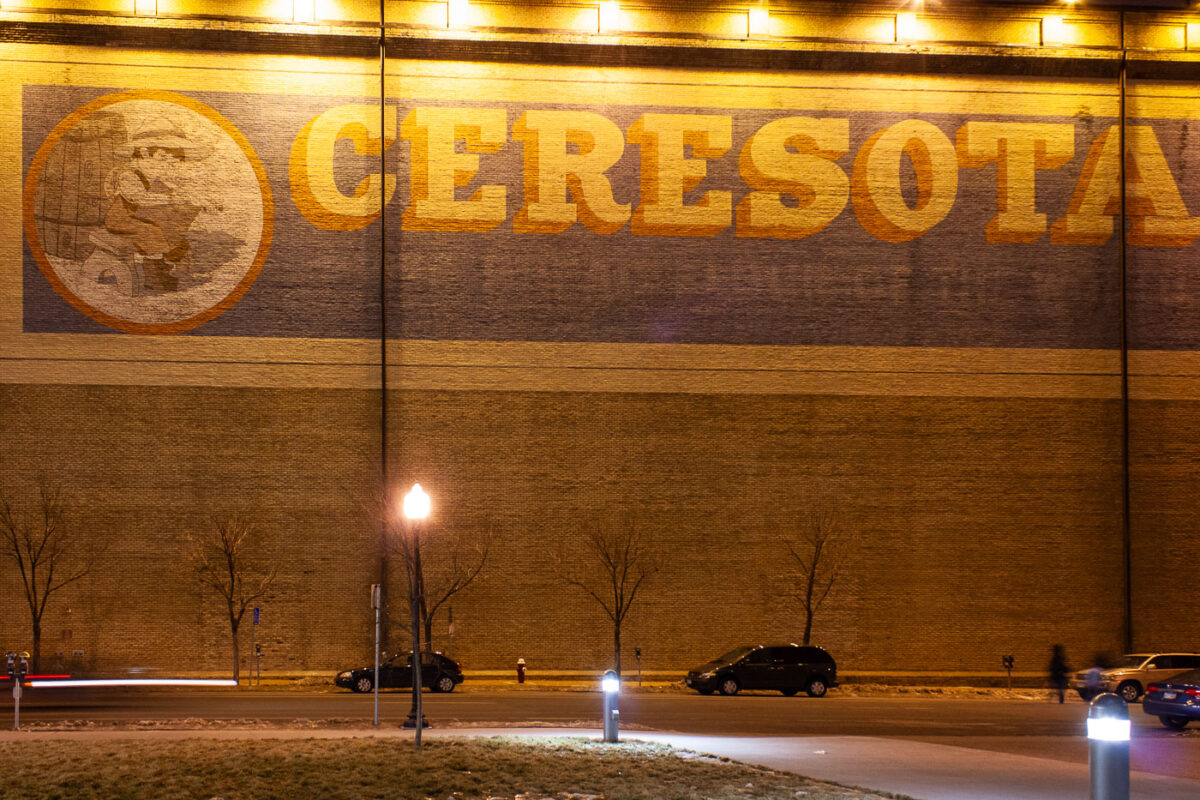
Golden Ceresota Building mural with portrait on brick facade, downtown Minneapolis.
The Ceresota Building mural in downtown Minneapolis commemorates the Ceresota Milling Company, a major flour miller that operated in the city. The building's prominent brick facade displays a portrait and the company name in large golden letters. Ceresota was one of numerous milling operations that made Minneapolis the nation's leading flour production center in the late 19th and early 20th centuries.

Ceresota Building Mural, Minneapolis

Illuminated Boom Island Lighthouse on the Mississippi River with Minneapolis skyline at night.
The Boom Island Lighthouse stands on the Mississippi River in Minneapolis, illuminated at night with the city skyline visible beyond. Built as a navigational aid for river traffic, the structure now functions as a landmark within Boom Island Park. The park occupies a former industrial site along the river, providing public access to the waterfront and views of downtown Minneapolis.

Boom Island Lighthouse, Minneapolis

Wafana's Grocery and Deli storefront on Lyndale Avenue, North Minneapolis, with orange and cream facade.
Wafana's Grocery and Deli operated on Lyndale Avenue in North Minneapolis as a neighborhood retail establishment offering both grocery and deli services. The storefront displays signage for WIC and EBT acceptance, participation in federal food assistance programs. Boarded sections of the facade reflect the commercial challenges faced by small retail businesses in the area.

Wafana’s Grocery and Deli, Lyndale Avenue

White-tailed deer on snowy slope in Father Hennepin Bluff Park, Minneapolis.
A white-tailed deer traverses a snow-covered slope in Father Hennepin Bluff Park, a natural area along the Mississippi River in Minneapolis. Established in 1961, the park preserves bluff habitat within the city. The deer's presence demonstrates the park's role in supporting wildlife populations in an urban setting.

White-tailed deer, Father Hennepin Bluff Park, Minneapolis
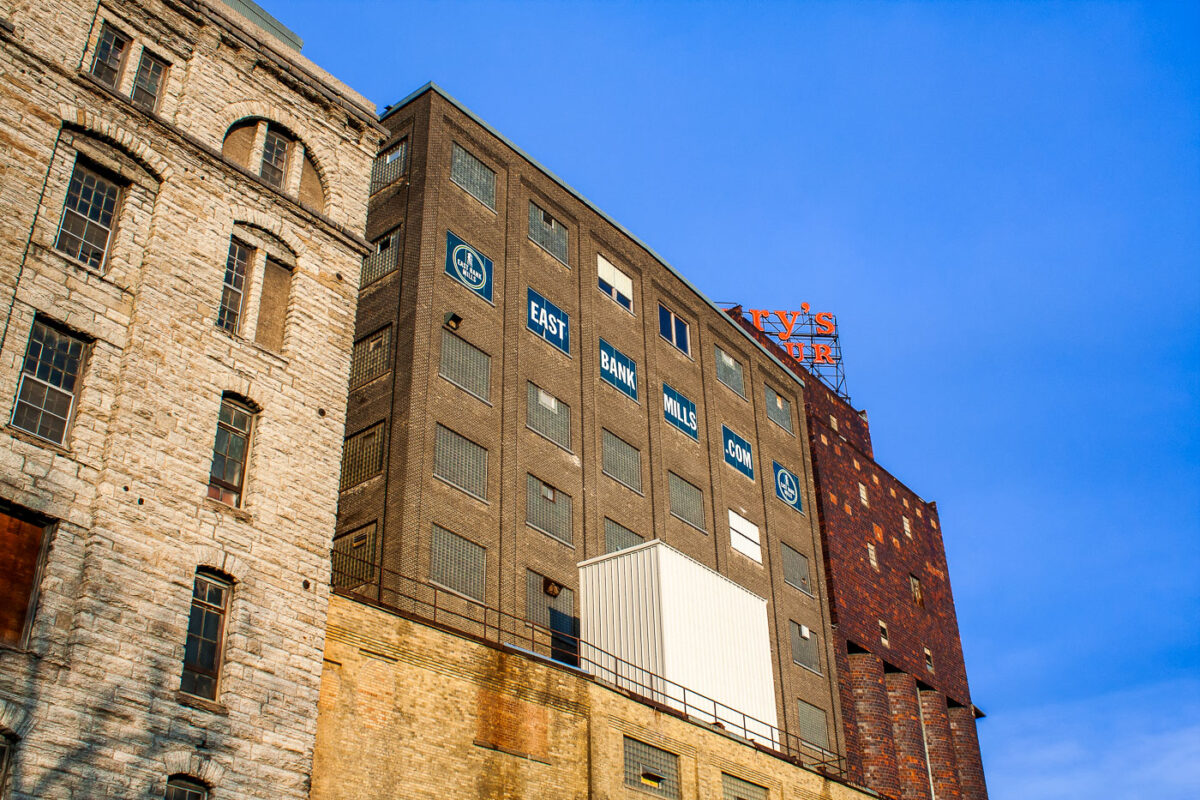
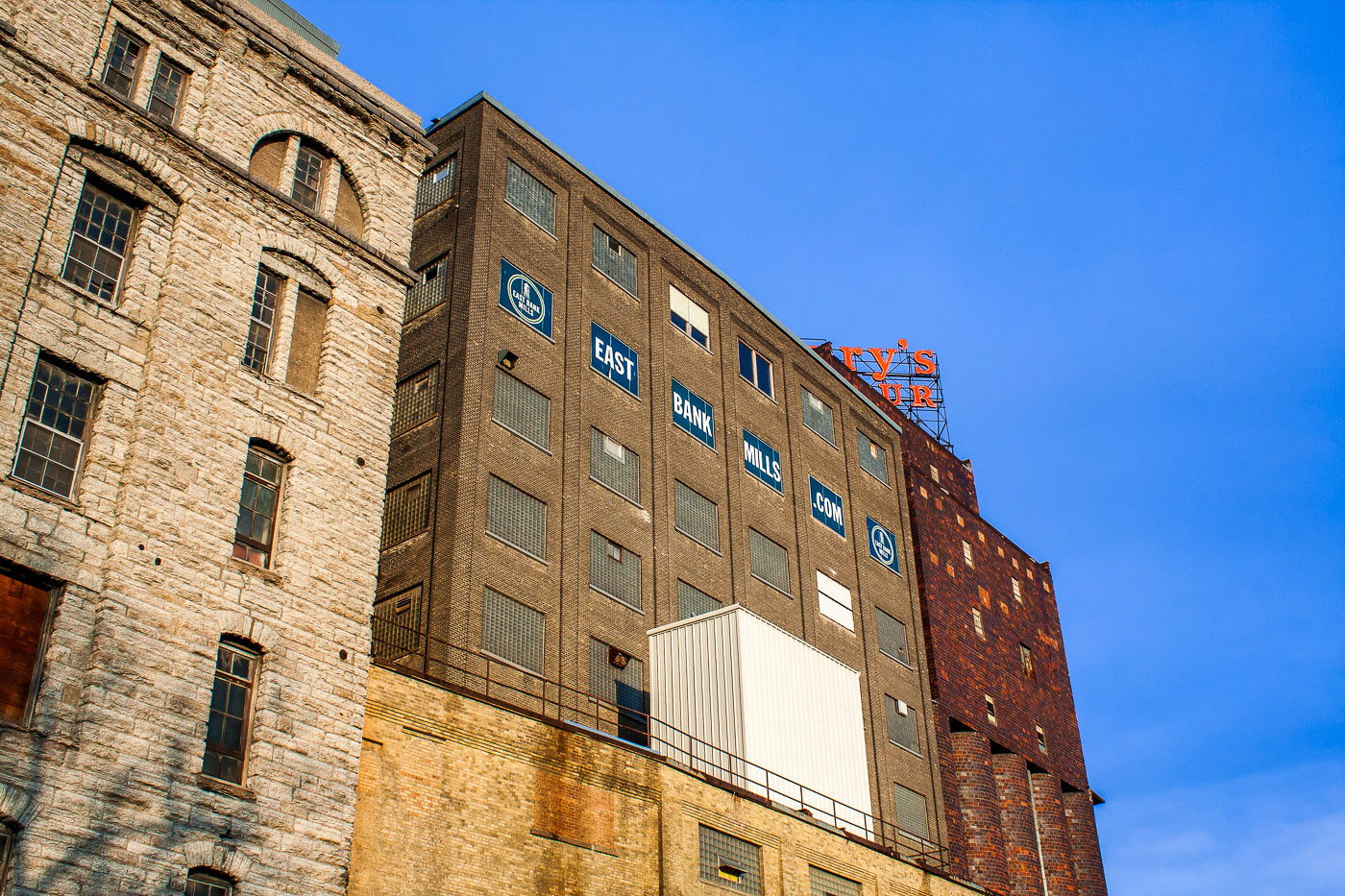
East Bank Mills historic flour mill complex in Northeast Minneapolis with blue signage on tan brick buildings under clear sky.
East Bank Mills is a historic flour mill complex in Northeast Minneapolis. The industrial buildings visible here are part of the milling operations that made Minneapolis a major flour production center in the late 19th and early 20th centuries.

East Bank Mills Signage on a Northeast Minneapolis Flour Mill

Boarded foreclosure auction house with yellow and black signage in North Minneapolis.
A residential property in North Minneapolis advertises a public foreclosure auction with open house dates and contact information displayed on boarded windows. The auction resulted from lender foreclosure proceedings. Foreclosure auctions were common outcomes of mortgage defaults during the 2008–2009 financial crisis, which significantly impacted housing markets and neighborhoods across Minneapolis.

Lender Foreclosure Auction, North Minneapolis

Interior view of the Lowry Avenue Bridge steel truss structure, Minneapolis, 1905–2009.
The Lowry Avenue Bridge connected north and south Minneapolis across the Mississippi River. Built in 1905 as a steel truss structure, the bridge served the city for over a century. Structural deterioration led to its closure in April 2008, and it was demolished by controlled explosions in June 2009 to make way for a replacement.

Lowry Avenue Bridge, Minneapolis, 1905-2009
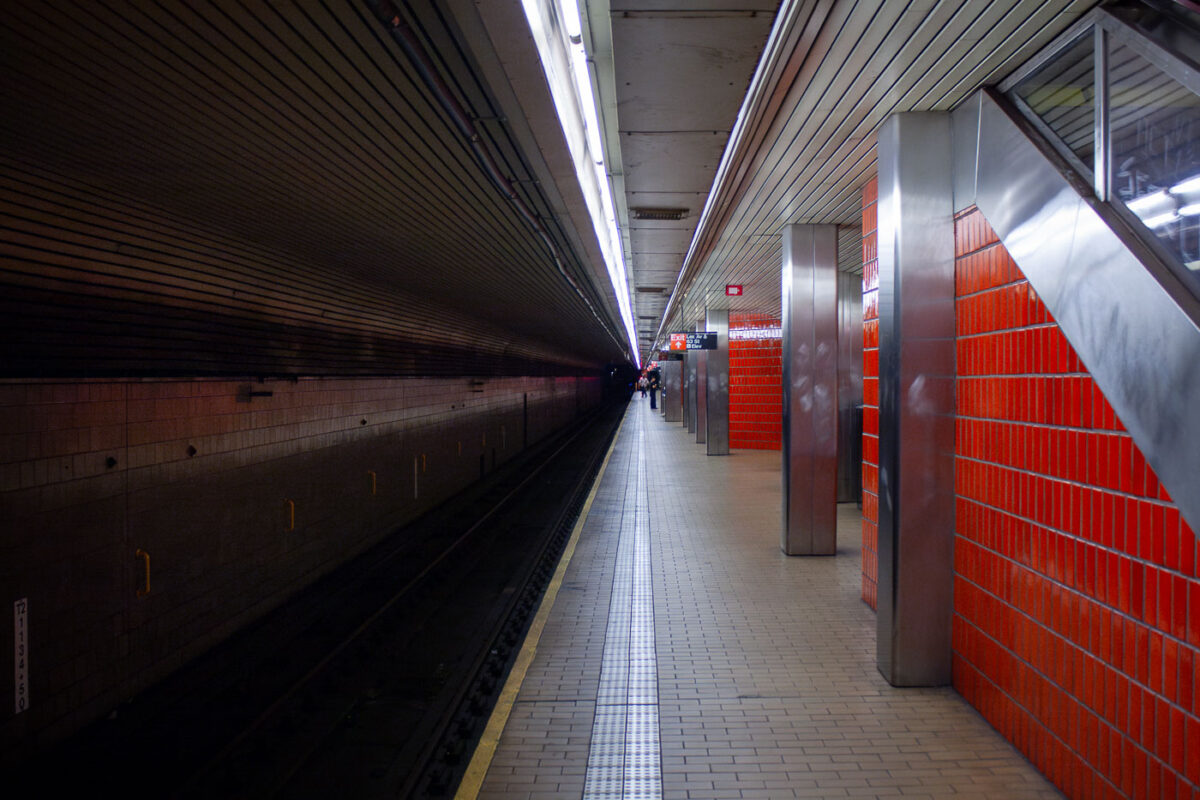
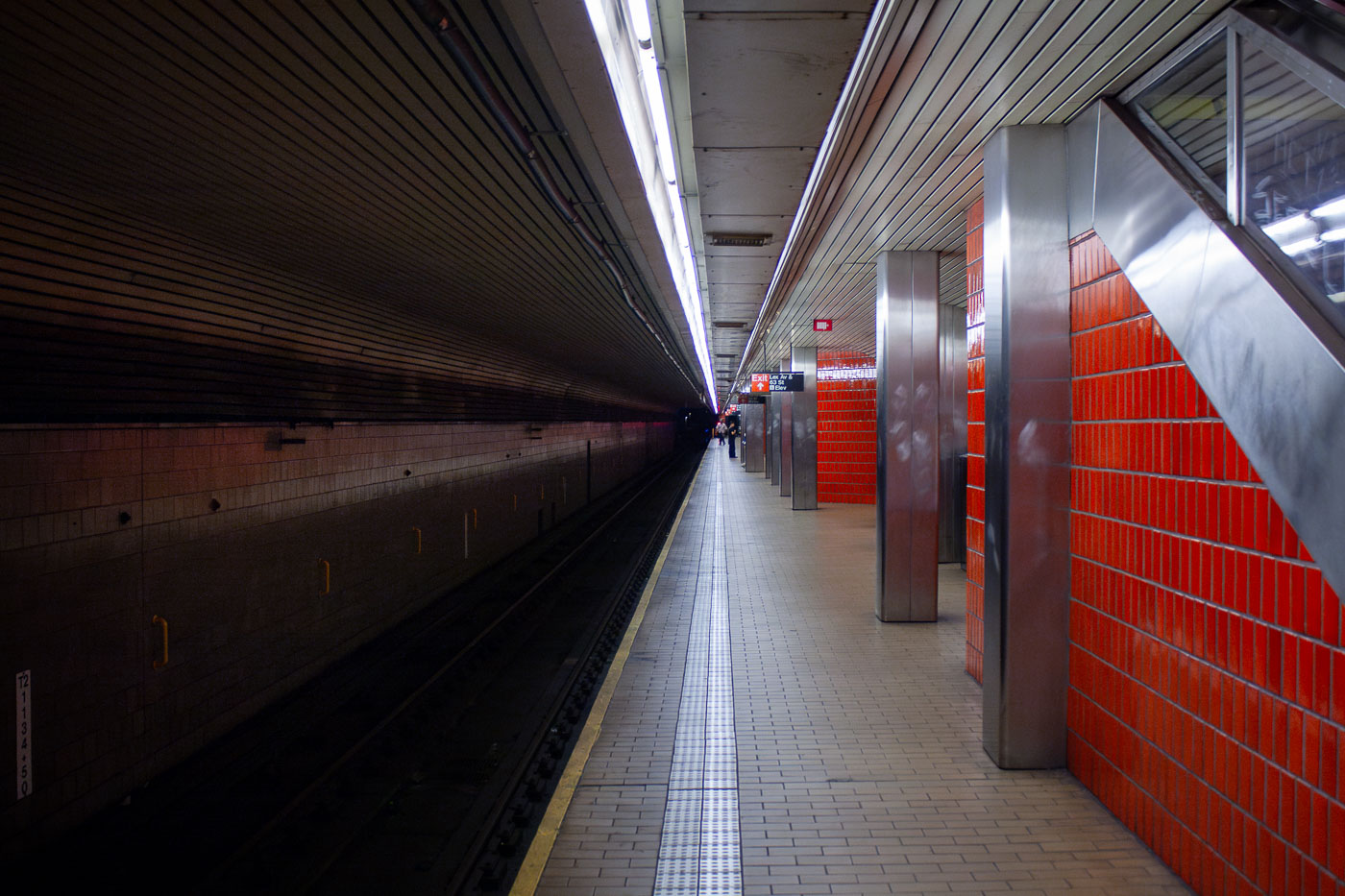
Empty platform at Lexington Avenue–63rd Street subway station in Manhattan with red brick wall and metal support columns.
Lexington Avenue–63rd Street station platform in Manhattan. Opened in 1989 as part of the 63rd Street Tunnel project, the station links the Upper East Side with Queens through the IND 63rd Street Line. It is served by the F train at all times and by the Q train on weekdays.

Red-Tiled Platform at Lexington Avenue–63rd Street Station

© 1996–2026 Chad Davis