Interstate 94

10 photos · 2019–2022

10 photographs tagged Interstate 94, 2019–2022.
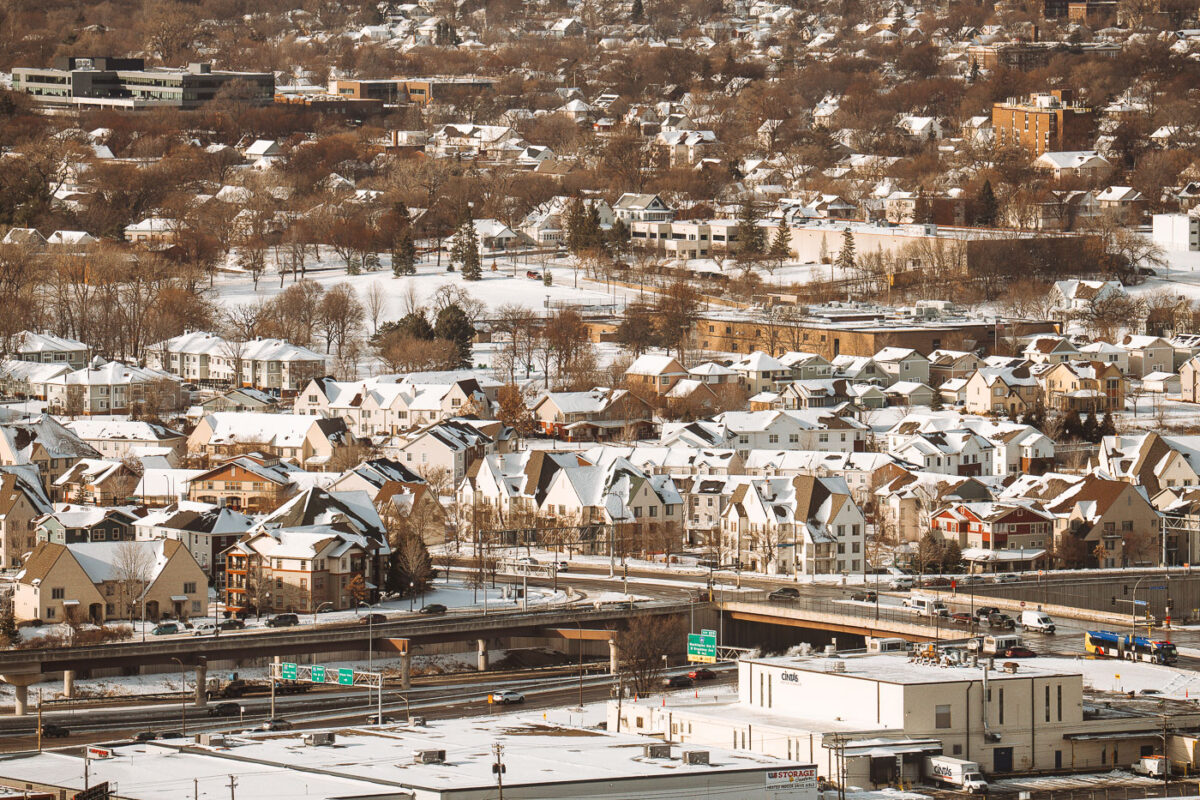
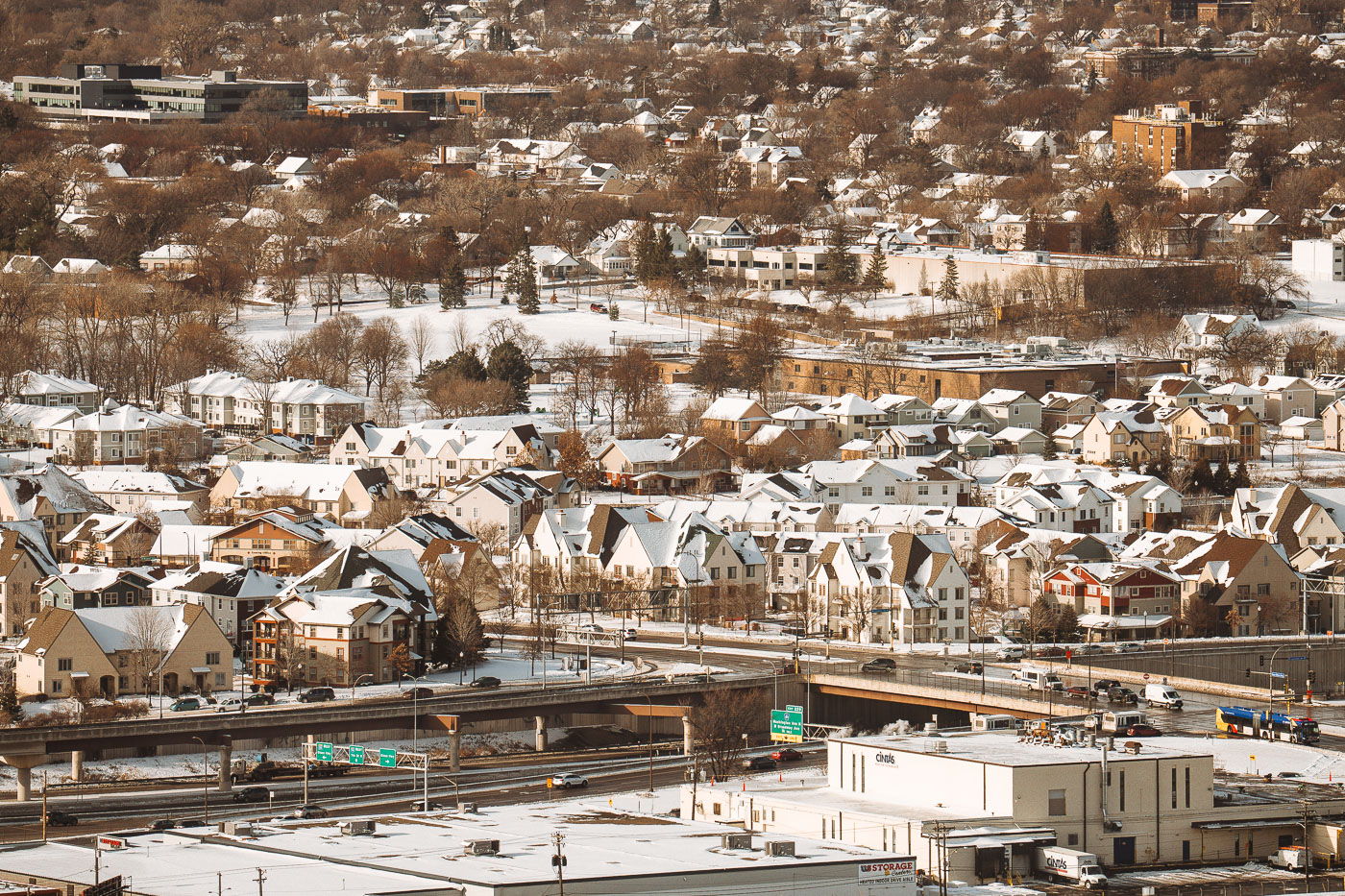
Winter Housing and Highway Corridor along I-94, Minneapolis
This view looks across the residential neighborhoods bordering Interstate 94 in Minneapolis, an area shaped heavily by mid-20th-century highway construction. When I-94 was built between the 1950s and early 1970s, it cut through several established communities—including parts of Cedar-Riverside, Seward, and Phillips—reshaping street grids, housing patterns, and long-standing cultural districts. The snow-covered homes clustered above the highway reflect a mix of older housing stock and later infill development that emerged after the corridor was completed. The elevated ramps and interchanges shown here connect local streets to one of the region’s primary east–west routes, linking downtown Minneapolis with St. Paul and the wider interstate system.

Winter Housing and Highway Corridor along I-94, Minneapolis

Chicago Avenue Bridge over Interstate 94 in Minneapolis at night.
Chicago Avenue crosses Interstate 94 in Minneapolis, Minnesota. The bridge carries traffic over the freeway near downtown, with the city skyline visible beyond.

Chicago Avenue Bridge over Interstate 94, Minneapolis

Minneapolis police officer stands guard near Interstate 94 during a November 4, 2020 protest, with "FLOYD" graffiti visible on
Interstate 94 cuts through central Minneapolis, connecting downtown to the University of Minnesota area and beyond. On the night of November 4, 2020, demonstrators marched onto the freeway following the presidential election, part of a wave of protests that had continued in the city since George Floyd's killing that May. State troopers and Minneapolis police shut down the highway and moved in to clear it, ultimately arresting roughly 646 people—the largest single mass arrest in Minnesota history. Graffiti reading "FLOYD" marks the concrete retaining wall beneath the overpass, one of many such markings left across the city during that period.

Police Officer Near “FLOYD” Graffiti Along I-94 in Minneapolis

Police officers and Minnesota State Patrol conduct mass arrests of protesters on Interstate 94 in Minneapolis on November 4, 2020.
Interstate 94 in Minneapolis was the site of a mass arrest on November 4, 2020, the day after Election Day, when Minnesota State Patrol troopers and Minneapolis police stopped a march that had moved onto the freeway's eastbound lanes near downtown. Officers detained 646 people that night, one of the largest mass arrests in Minnesota history, loading protesters onto transit buses brought in for the operation. The march followed the national call of the presidential race for Joe Biden and was one of several demonstrations moving through downtown Minneapolis that week.

Armored State Patrol Vehicle on I-94 During Minneapolis Mass Arrest

Police officers confront protesters on Interstate 94 in Minneapolis on November 4, 2020, during post-election demonstrations.
Minnesota State Patrol troopers moved in on Interstate 94 near downtown Minneapolis after marchers left city streets and walked onto the highway on the night of November 4, 2020, hours after Election Day. Officers blocked both directions of traffic and held the group on the roadway before arresting 646 people, one of the largest mass arrests in Minnesota history. Most of those detained were released without formal charges in the days that followed.

State Patrol Detains Protesters on I-94 After Election Night March

Minneapolis police officers monitor protesters marching on Interstate 94 during a November 2020 demonstration.
Officers from the Minneapolis Police Department hold a pedestrian overpass above Interstate 94 as protesters fill the freeway below. The demonstration followed the November 2020 election, when marchers moved from downtown Minneapolis toward Cedar-Riverside to protest the presidential race outcome. Minnesota State Patrol and Minneapolis Police later blocked both ends of the freeway and detained roughly 646 people, one of the largest mass arrests in the state's history. Interstate 94 links Minneapolis and St. Paul and has been a repeated site of demonstrations shutting down traffic in both cities.

Police Line an I-94 Overpass During Minneapolis Protest

Minnesota State Patrol officers form a line across Interstate 94 in Minneapolis during a November 2020 nighttime protest march.
Interstate 94 runs through the heart of Minneapolis, connecting downtown to St. Paul and serving as a major route for commuters and freight alike. On the night of November 4, 2020, following the presidential election, Minnesota State Patrol troopers formed a line across the freeway's lanes to stop a march that had moved onto the highway from surrounding streets. State Patrol, rather than Minneapolis police, holds jurisdiction over incidents on the interstate system within city limits. That night's march ended with 646 arrests, one of the largest mass detentions in Minnesota history, after demonstrators were held on the freeway for several hours before being processed and released.

State Patrol Blocks I-94 During Post-Election Protest March

Nighttime protest on Interstate 94 in Minneapolis with hundreds of demonstrators holding signs and banners advocating for police
Interstate 94 cuts through downtown Minneapolis, linking the Twin Cities and carrying tens of thousands of vehicles daily under normal conditions. Marchers shut the freeway down as they moved through carrying banners reading "No Killer Cops" and "The Whole Damn System Is Guilty as Hell." Protesters occupying the interstate led Minnesota State Patrol and Minneapolis police to close lanes and, on several nights that fall, make mass arrests of demonstrators for blocking the roadway. Banners referencing Black, Native, and immigrant communities point to organizing coalitions that linked police violence with ICE raids and broader demands for systemic change.

Banners and Marchers Fill Interstate 94 at Night

Night protest march on Interstate 94 in Minneapolis with participants carrying signs and banners for social justice.
This march moved onto Interstate 94 near downtown Minneapolis, shutting down a stretch of the freeway that links the city's core to neighborhoods on its edges. Demonstrators carried signs and a banner reading "All Power to the People," part of a wave of protests that followed the 2020 election. Minnesota State Patrol and Minneapolis police later closed in on marchers on the freeway, leading to roughly 646 arrests and citations — one of the largest mass detentions in the state's history.

Protesters March Onto Interstate 94 at Night in Minneapolis
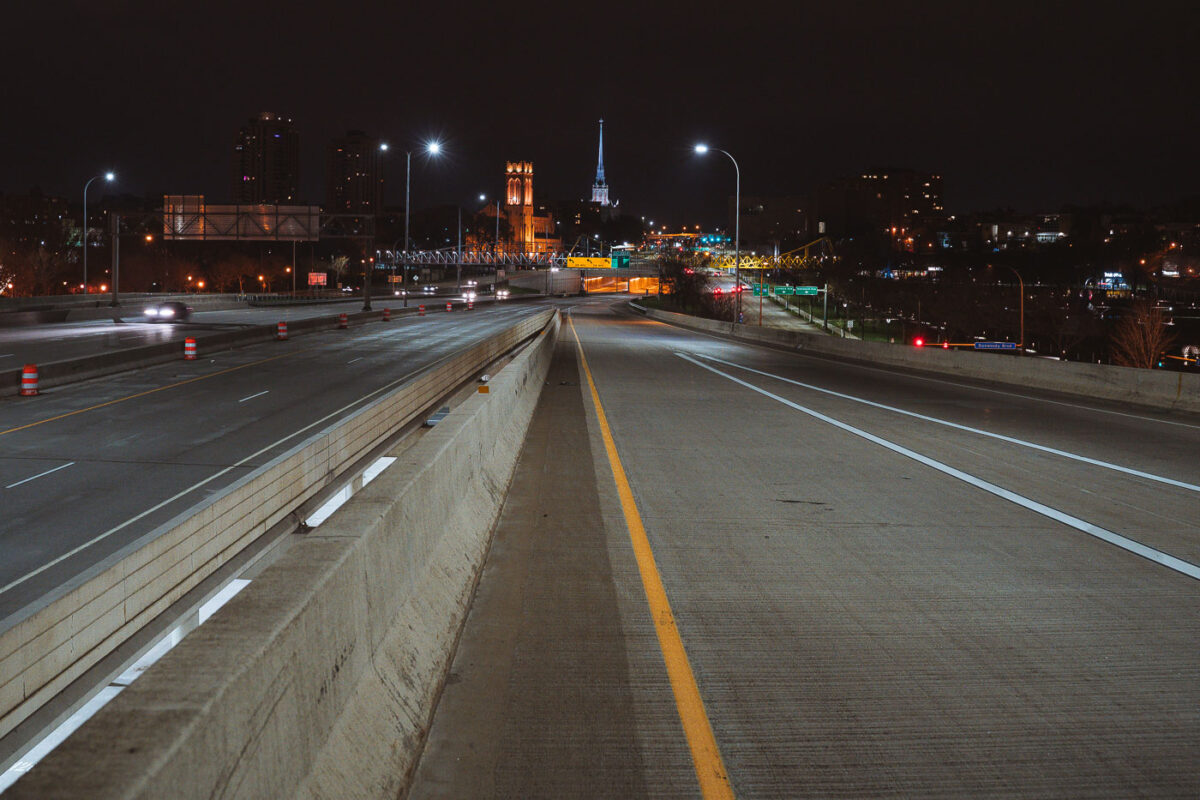
Interstate 94 at night, cutting through downtown Minneapolis. The highway connects the city core with suburbs and facilitates regional commerce.
Interstate 94 cuts through downtown Minneapolis at night. This major artery, completed in stages from the 1960s through the 1980s, was designed to connect the city's core with surrounding suburbs and facilitate regional commerce. The highway's construction significantly altered the urban fabric of Minneapolis, influencing development patterns and transportation habits. Today, I-94 remains a critical component of the Twin Cities' transportation network, serving millions of vehicles annually and shaping the city's economic and social geography.

Interstate 94 at Night, Downtown Minneapolis

Built in Minneapolis

Minneapolis Photographer

Browse by location, move through long-running series, or start with recent work.