Hennepin County

214 photos · 2014–2025

214 photographs tagged Hennepin County, 2014–2025.
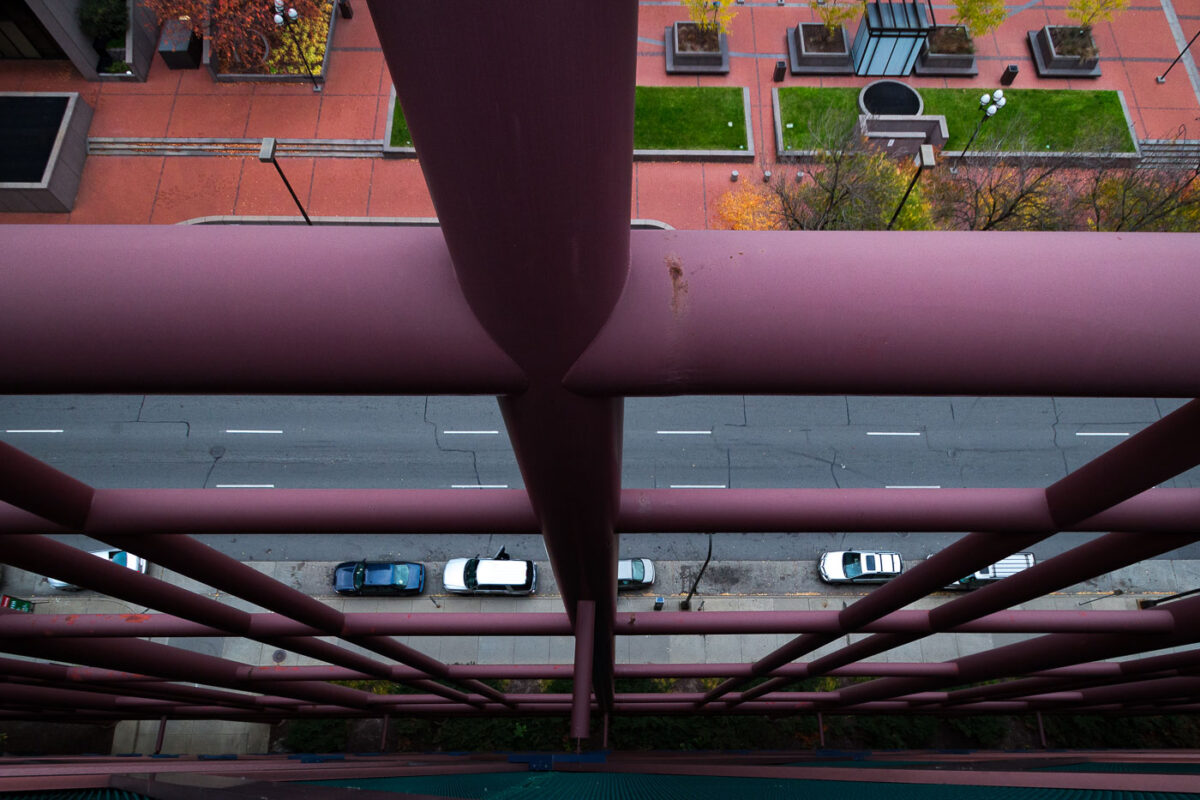
Former Hennepin County Government Center parking garage on 4th Avenue South in Downtown Minneapolis.
Former Hennepin County Government Center parking garage, 4th Avenue South, Downtown Minneapolis. The garage stood beside the Hennepin County Government Center and was demolished to clear the site for the Minneapolis Public Service Center. For decades it provided parking for county employees and visitors in the central business district.

Demolished Parking Garage, Downtown Minneapolis

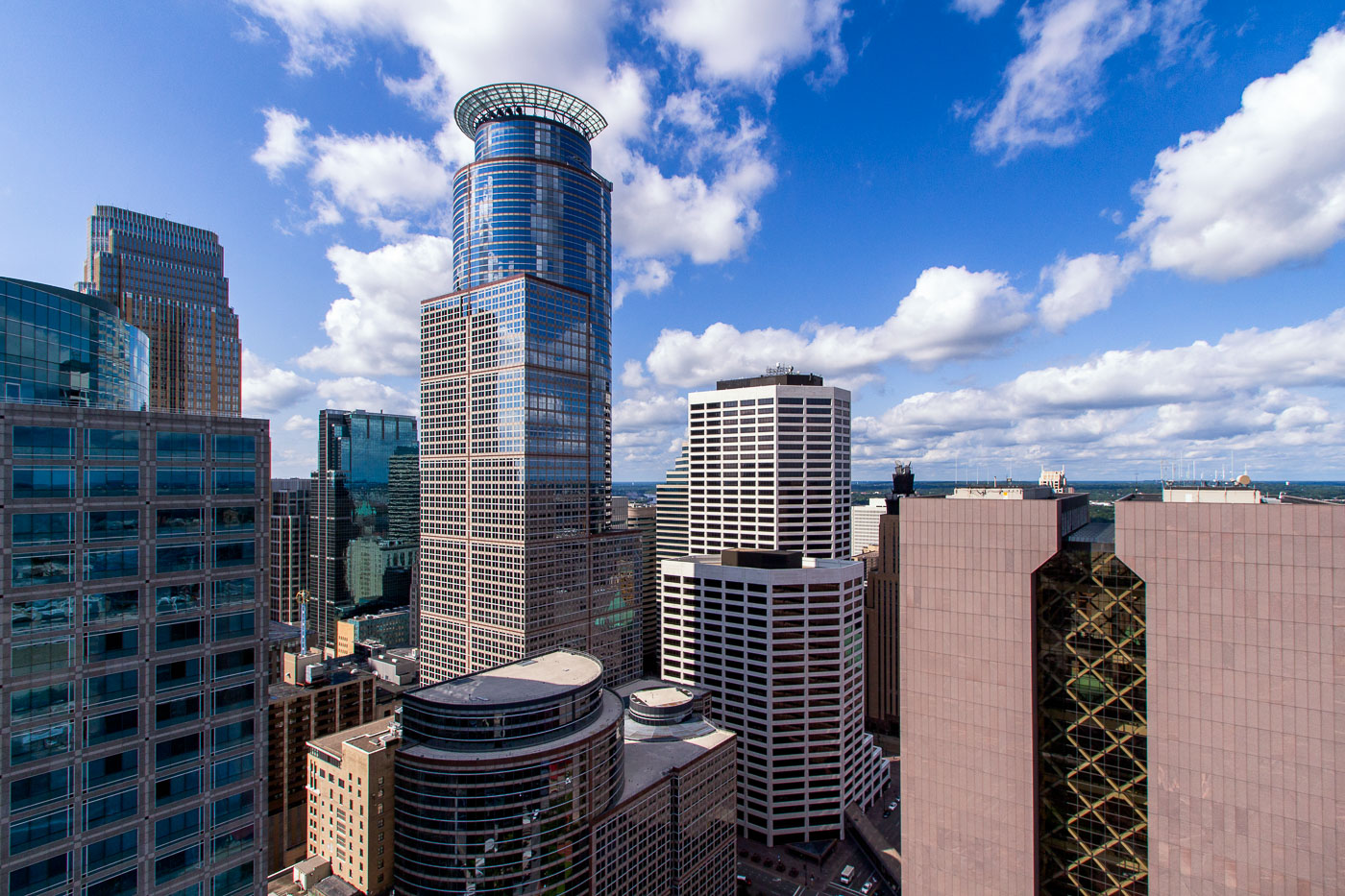
Capella Tower in downtown Minneapolis with surrounding skyscrapers under a blue sky
The Capella Tower, completed in 1992, stands as a prominent skyscraper in downtown Minneapolis. Adjacent to it is the Hennepin County Government Center, a Brutalist structure designed by architect Gunnar Birkerts and completed in 1974. The Government Center houses various county administrative offices and courtrooms, serving as a central hub for local governance. Capella Tower, formerly known as First Bank Place, is a mixed-use building containing office spaces and retail establishments, contributing to the commercial vitality of the city's central business district.

Capella Tower and Hennepin County Government Center, Minneapolis
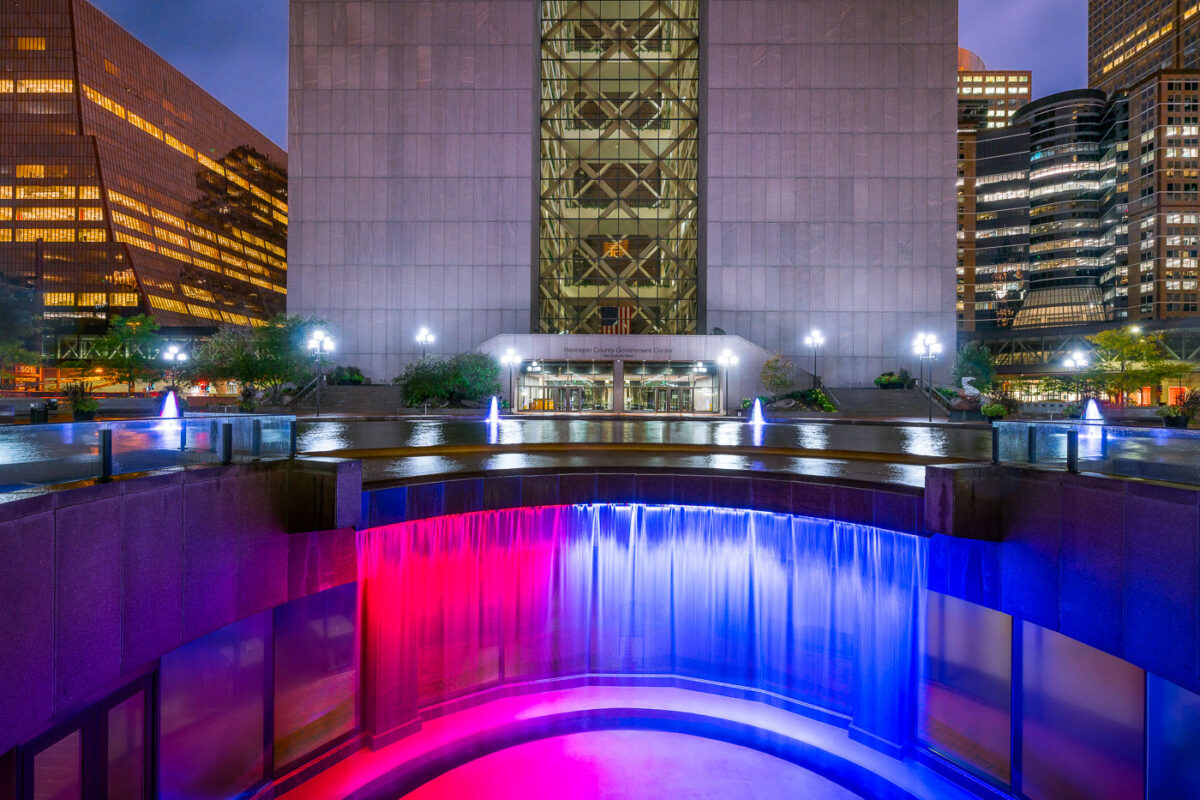
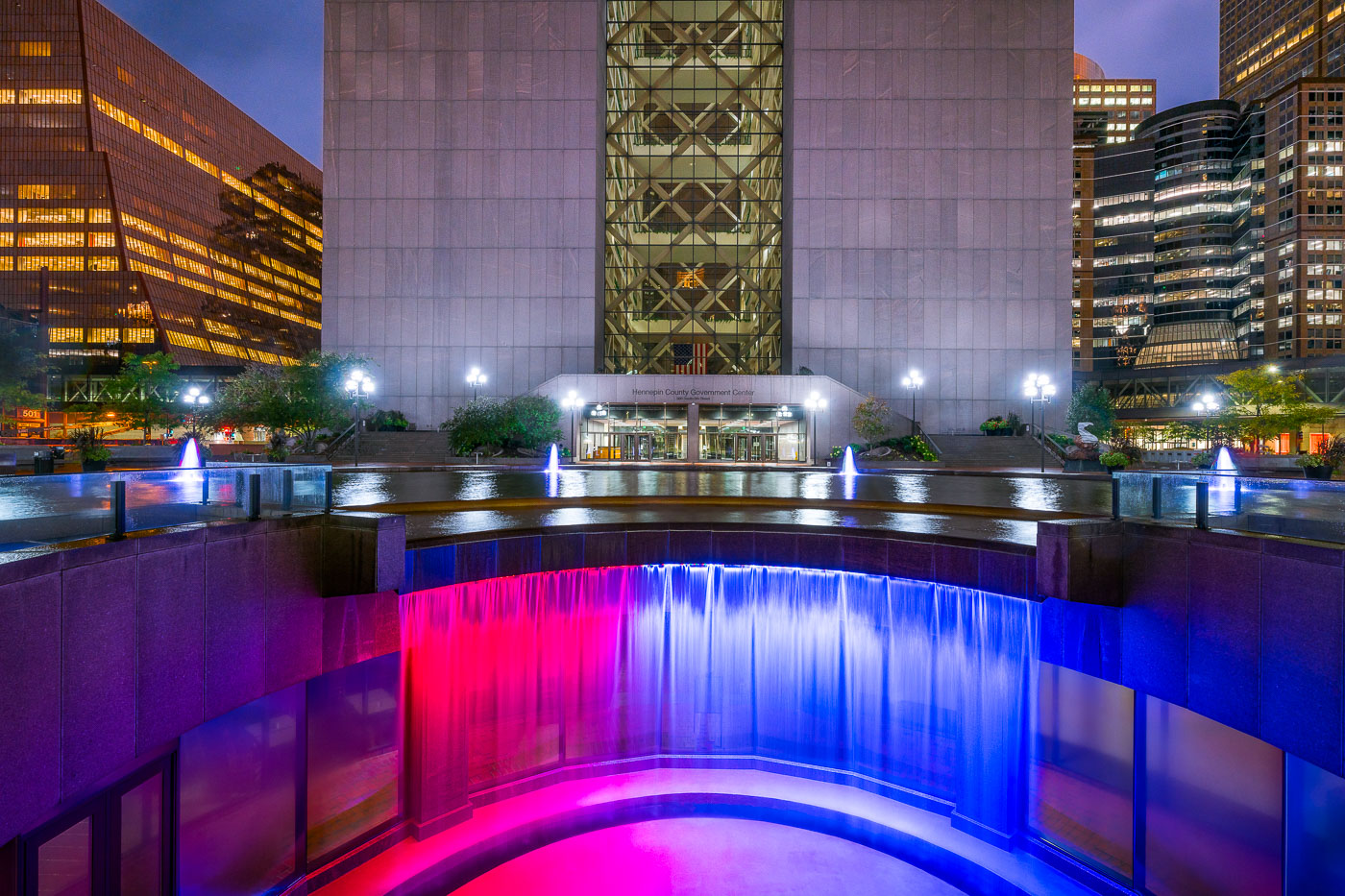
Colorful waterfall outside Hennepin County GC
Hennepin County Government Center, construction was completed in 1977. While often looked at as a single building, it’s actually 2 different towers with glass in between them. When viewed from the northeast or southeast(such as this photo), the building gives the appearance of the letter H for Hennepin. The towers are accessible from each other via catwalks on each floor. Glass walls were added after multiple suicides.

Hennepin County Government Center, Minneapolis MN

A welder works inside a large cylindrical structure during the replacement of a water tank at the Hennepin Energy Recovery Center in Minneapolis, Minnesota.
A welder works inside a large cylindrical structure at the Hennepin Energy Recovery Center (HERC) in Minneapolis, Minnesota. This facility, which began operation in 1989, processes waste to generate electricity for the local grid. The ongoing work involves the replacement of a water tank, a critical component for the plant's cooling and operational systems. The HERC plays a significant role in waste management and energy production for the Twin Cities metropolitan area.

Welder at Hennepin Energy Recovery Center Water Tank Replacement
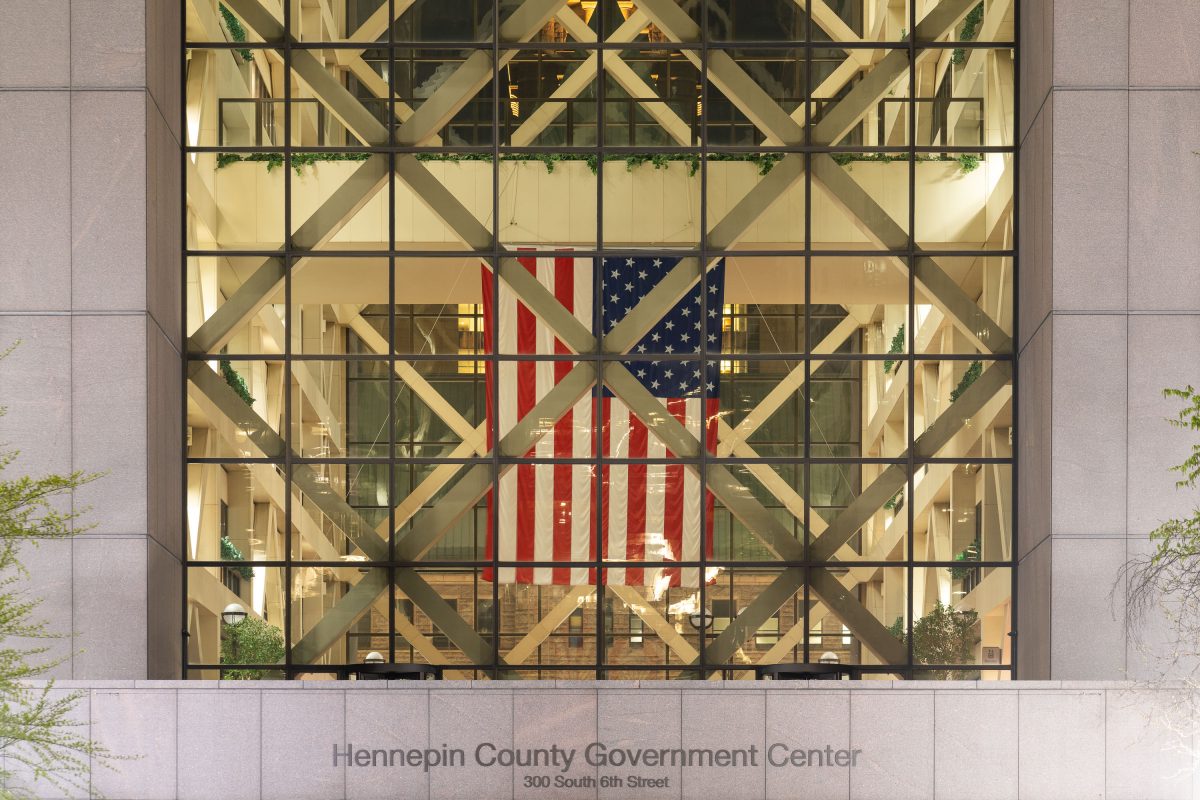
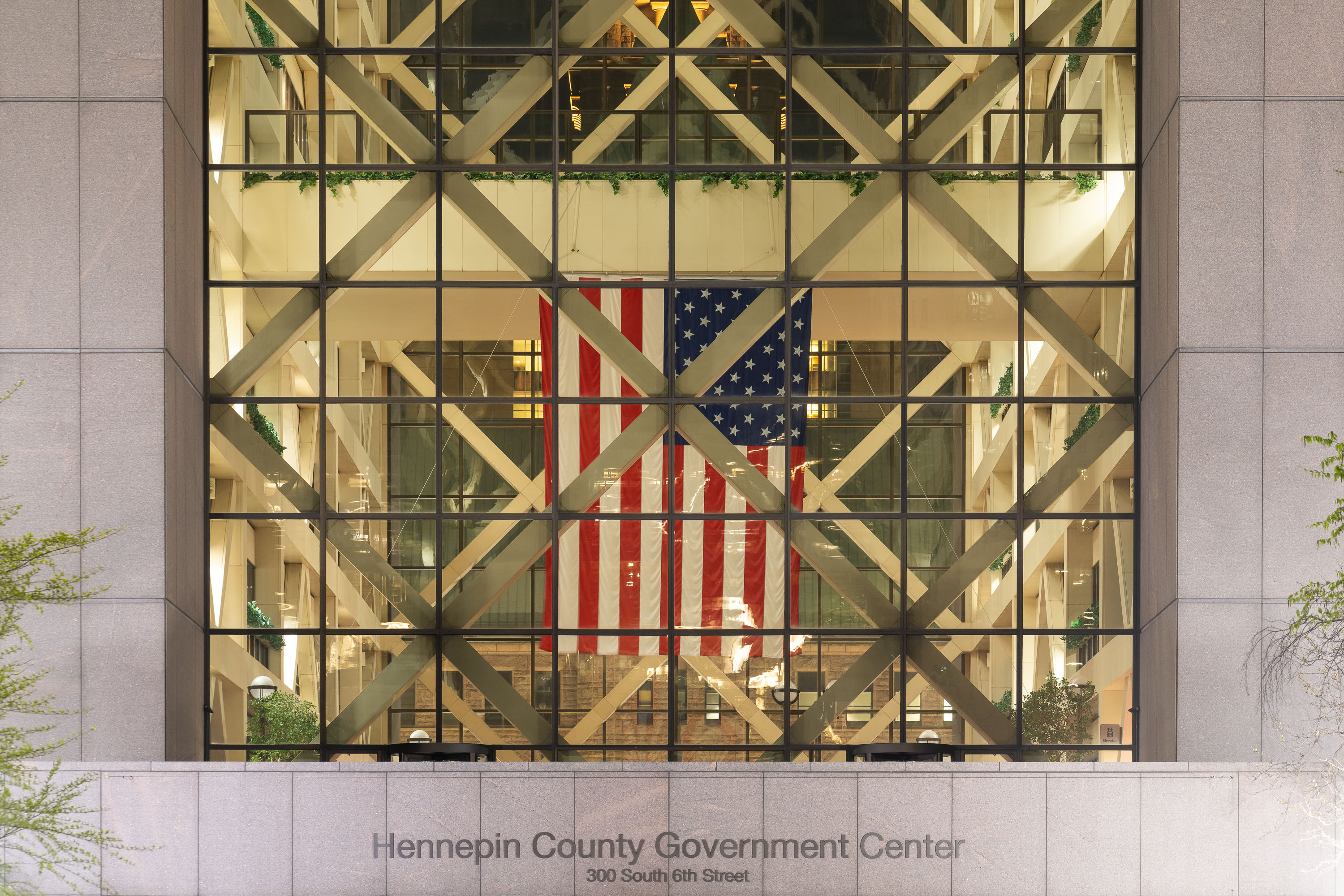
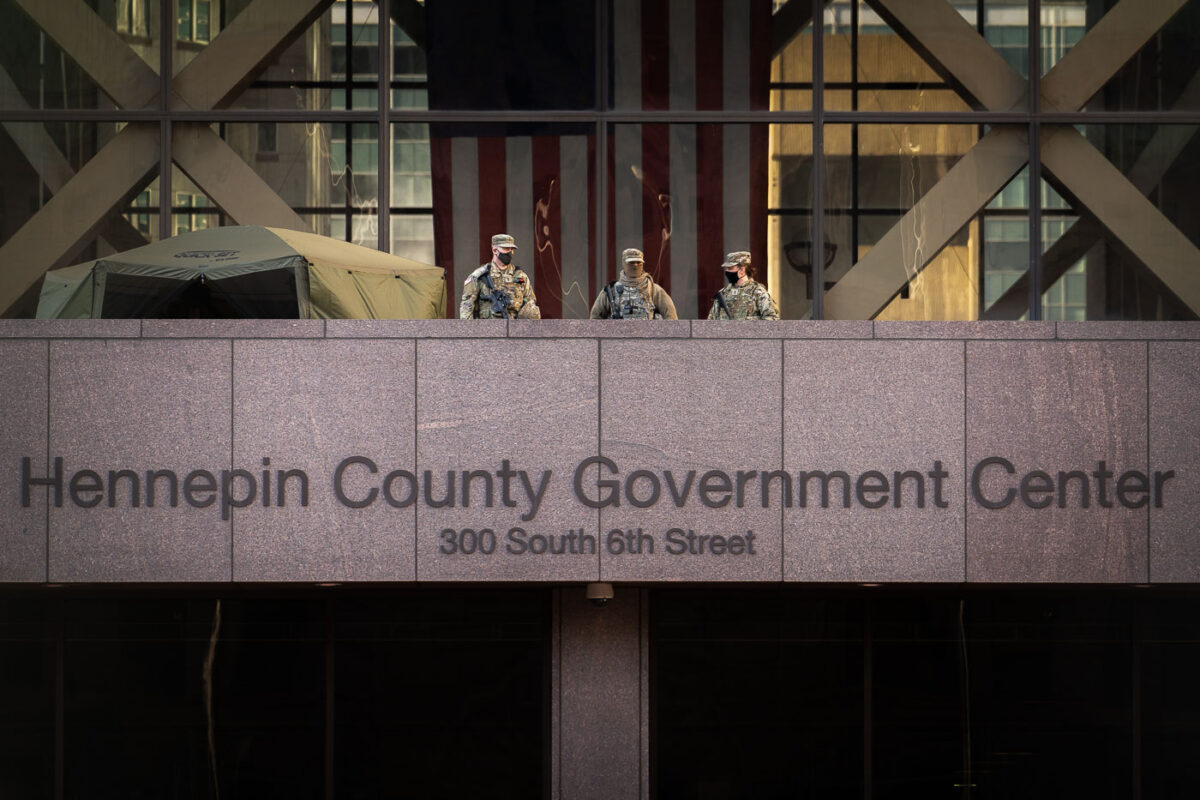
Hennepin County Government Center and the American Flag
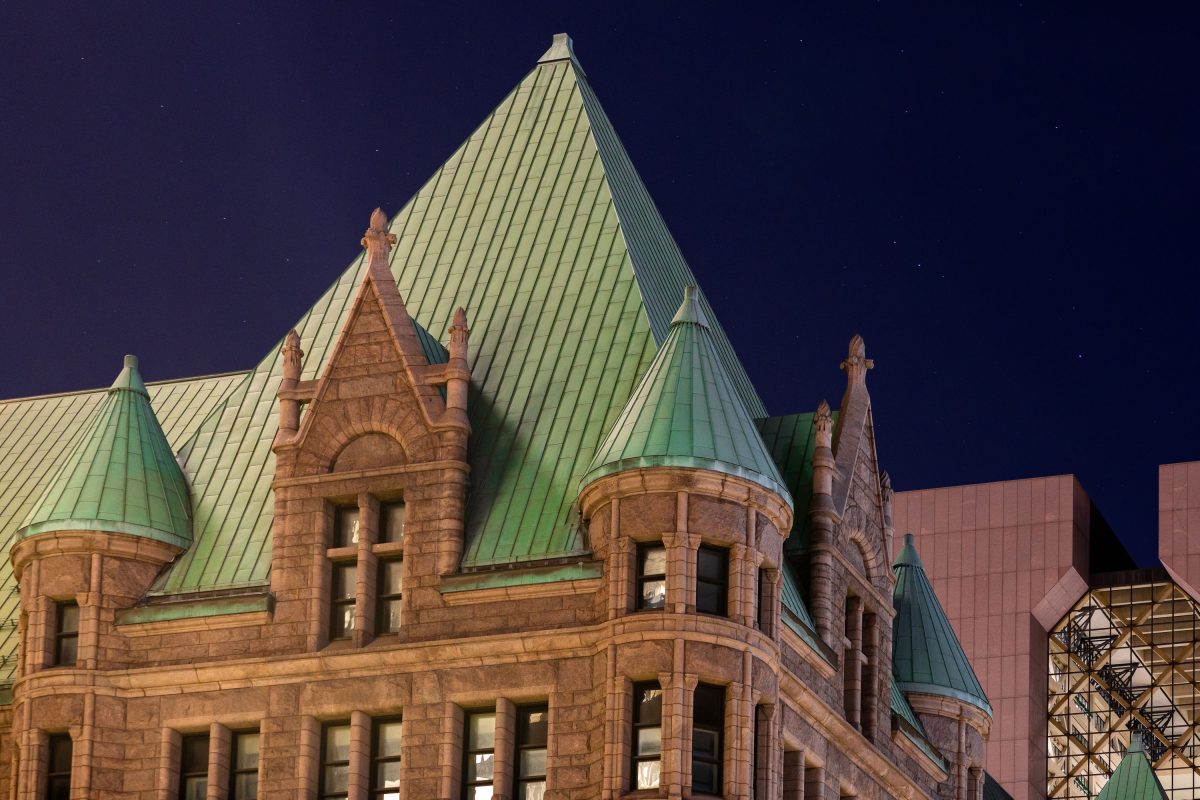
An American Flag hangs inside the Hennepin County Courthouse in Downtown Minneapolis in May 2020.

Hennepin County Government Center and the American Flag

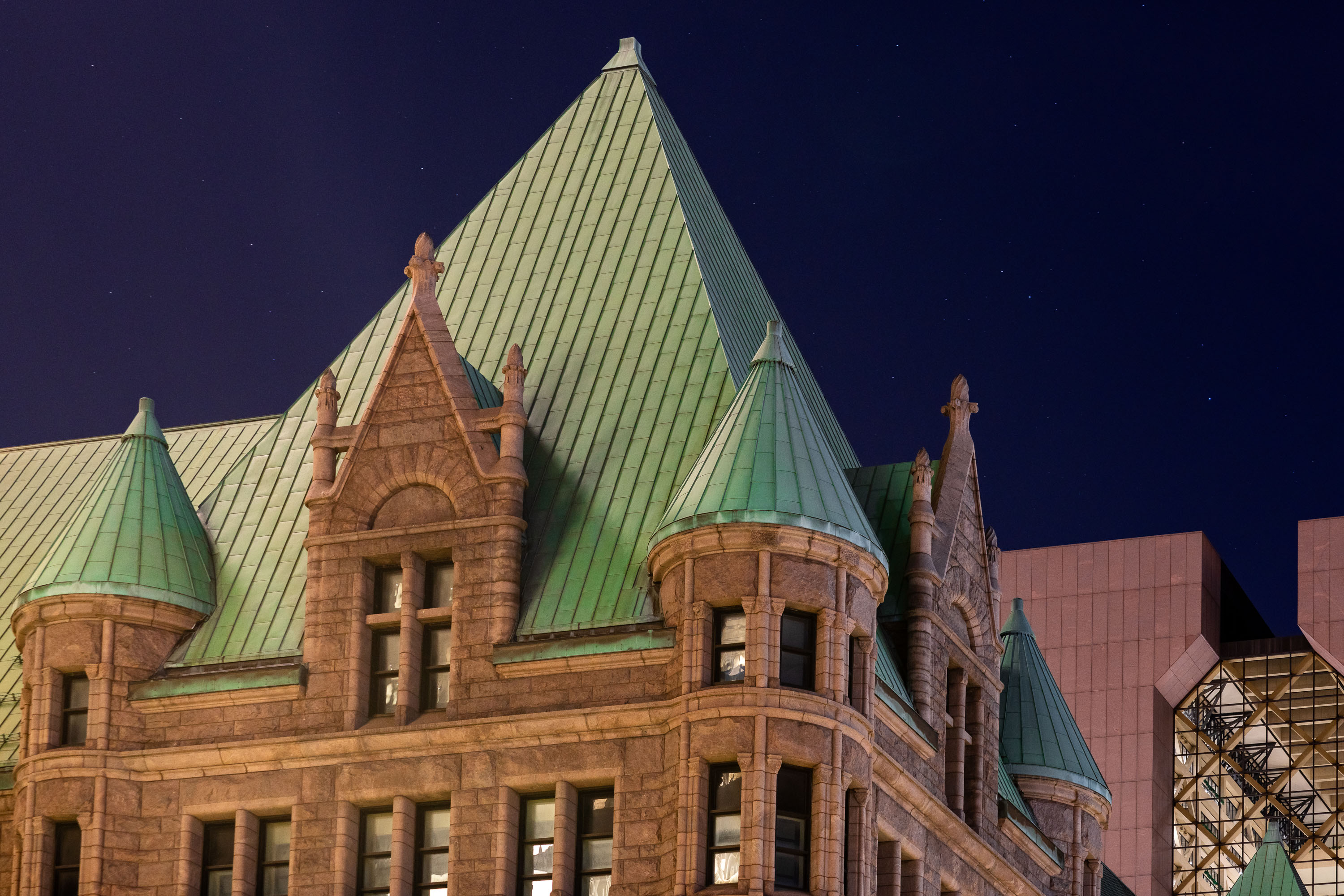
Minneapolis City Hall and Hennepin County Government Center at night
Minneapolis City Hall and the Hennepin County Government Center in downtown Minneapolis on a clear night.

Downtown Minneapolis City Hall At Night
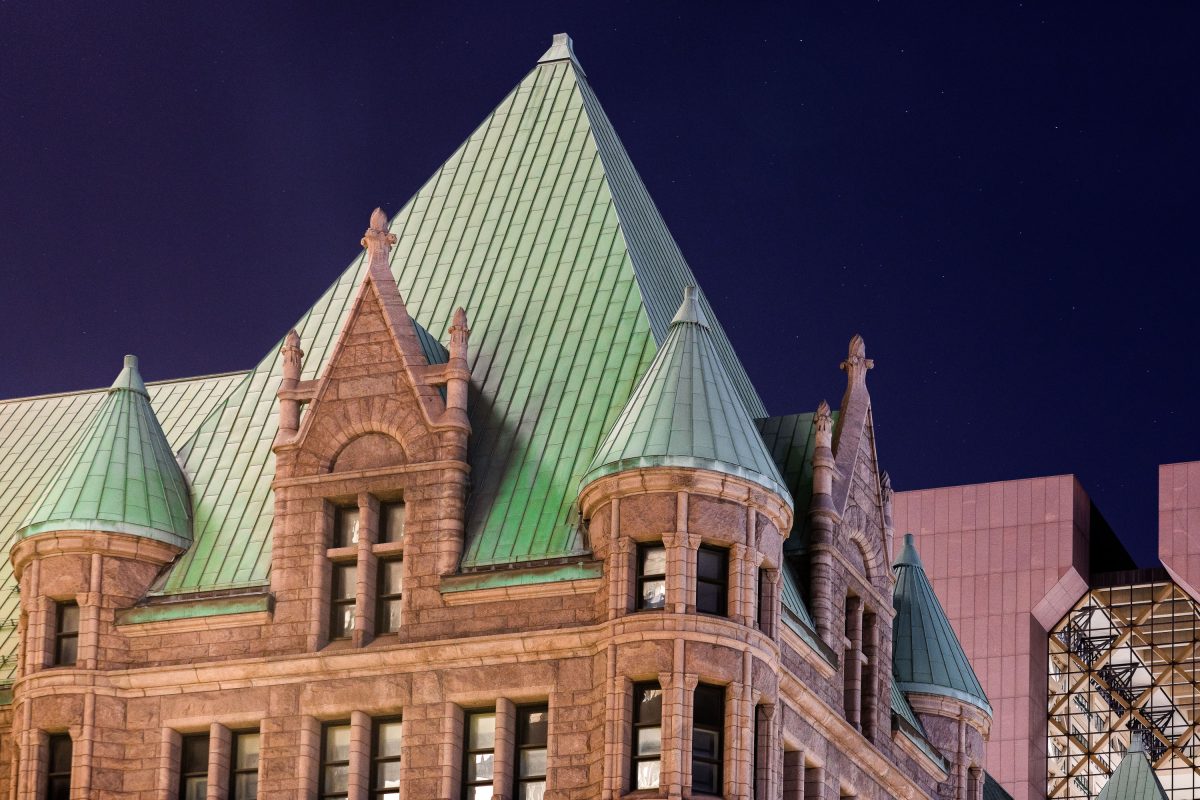
Minneapolis City Hall at night in May 2020
The Minneapolis City Hall and Hennepin County Government Center in the background.

Minneapolis City Hall at night in May 2020

Protesters with signs gather outside the Hennepin County Government Center in downtown Minneapolis on May 28, 2020.
Protesters gather outside the Hennepin County Government Center in downtown Minneapolis on May 28, 2020, during demonstrations following the murder of George Floyd.

Crowd Marches Past Hennepin County Government Center
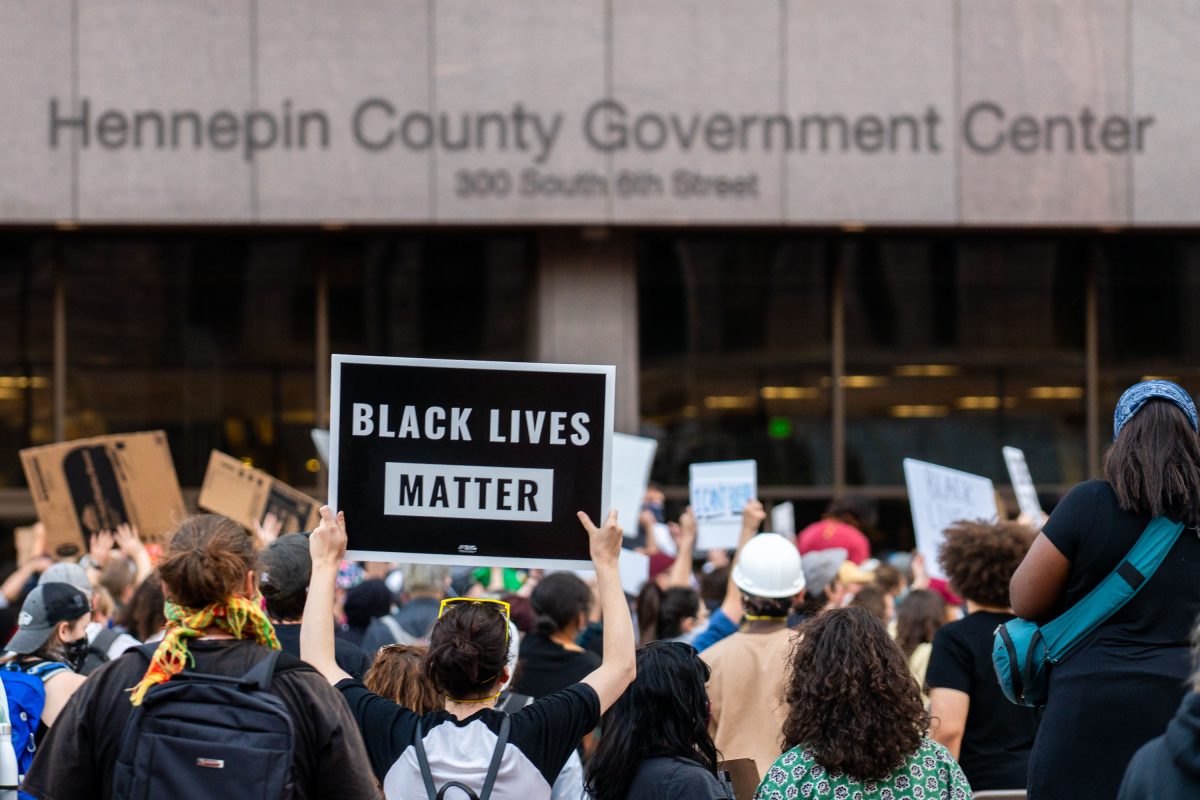
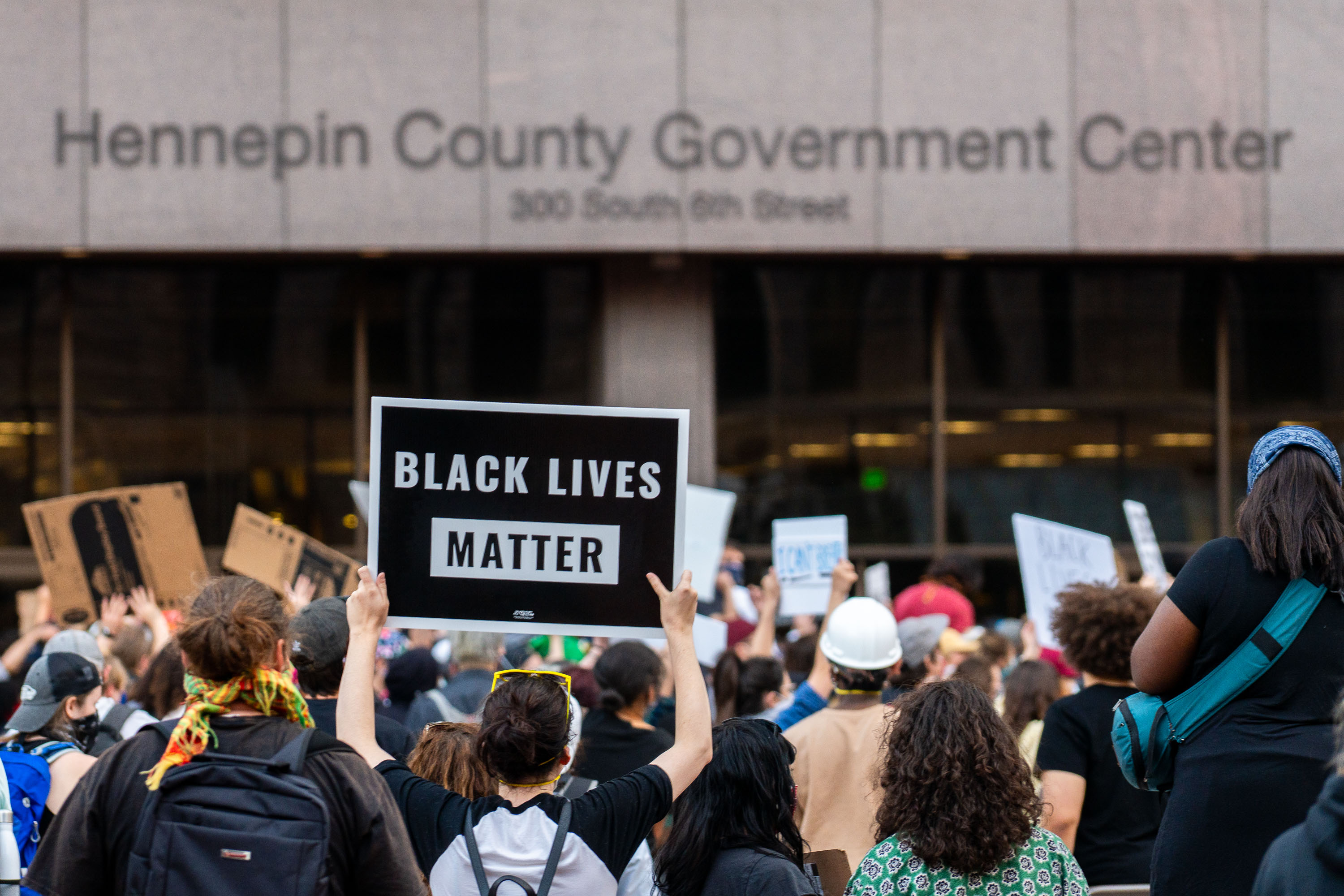
Protesters hold signs at the Hennepin County Government Center in downtown Minneapolis.
Protesters gather outside the Hennepin County Government Center in downtown Minneapolis on May 28, 2020, with signs including one reading “Black Lives Matter". The protest took place 3 days after George Floyd was killed.

“Black Lives Matter” Sign Raised Outside Hennepin County Government Center
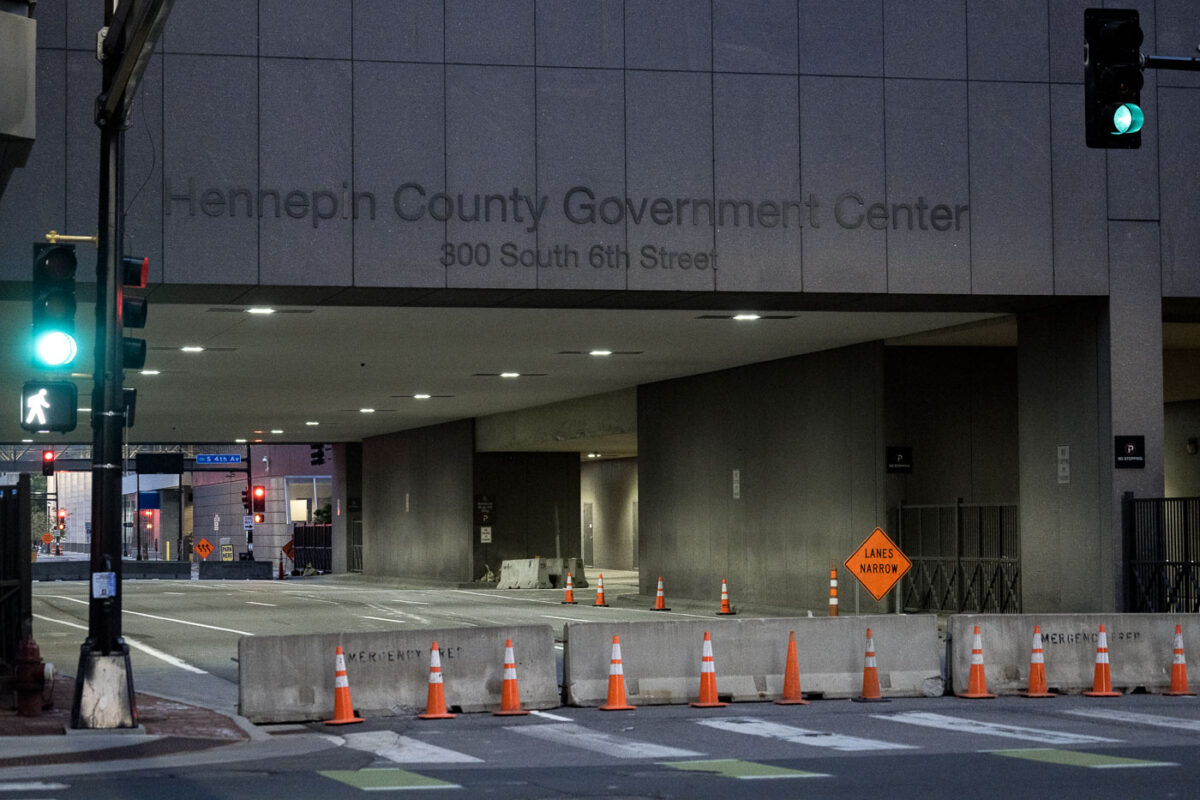
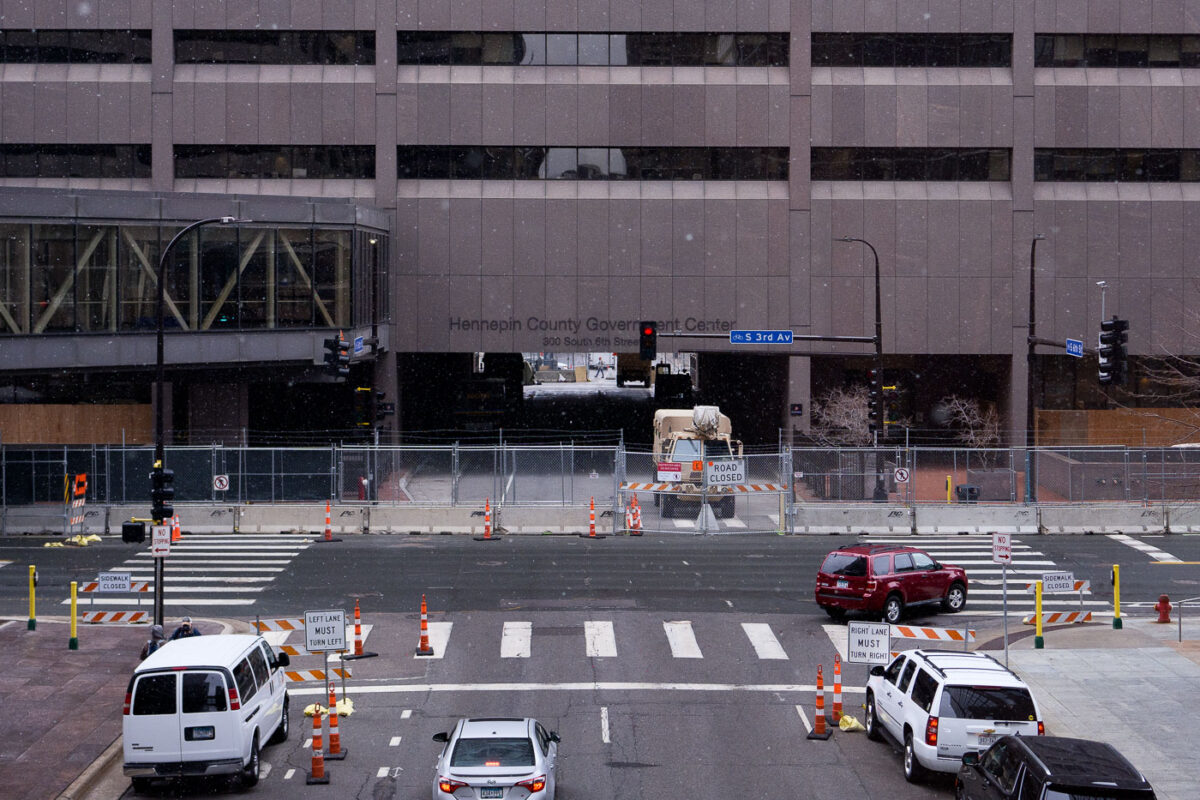
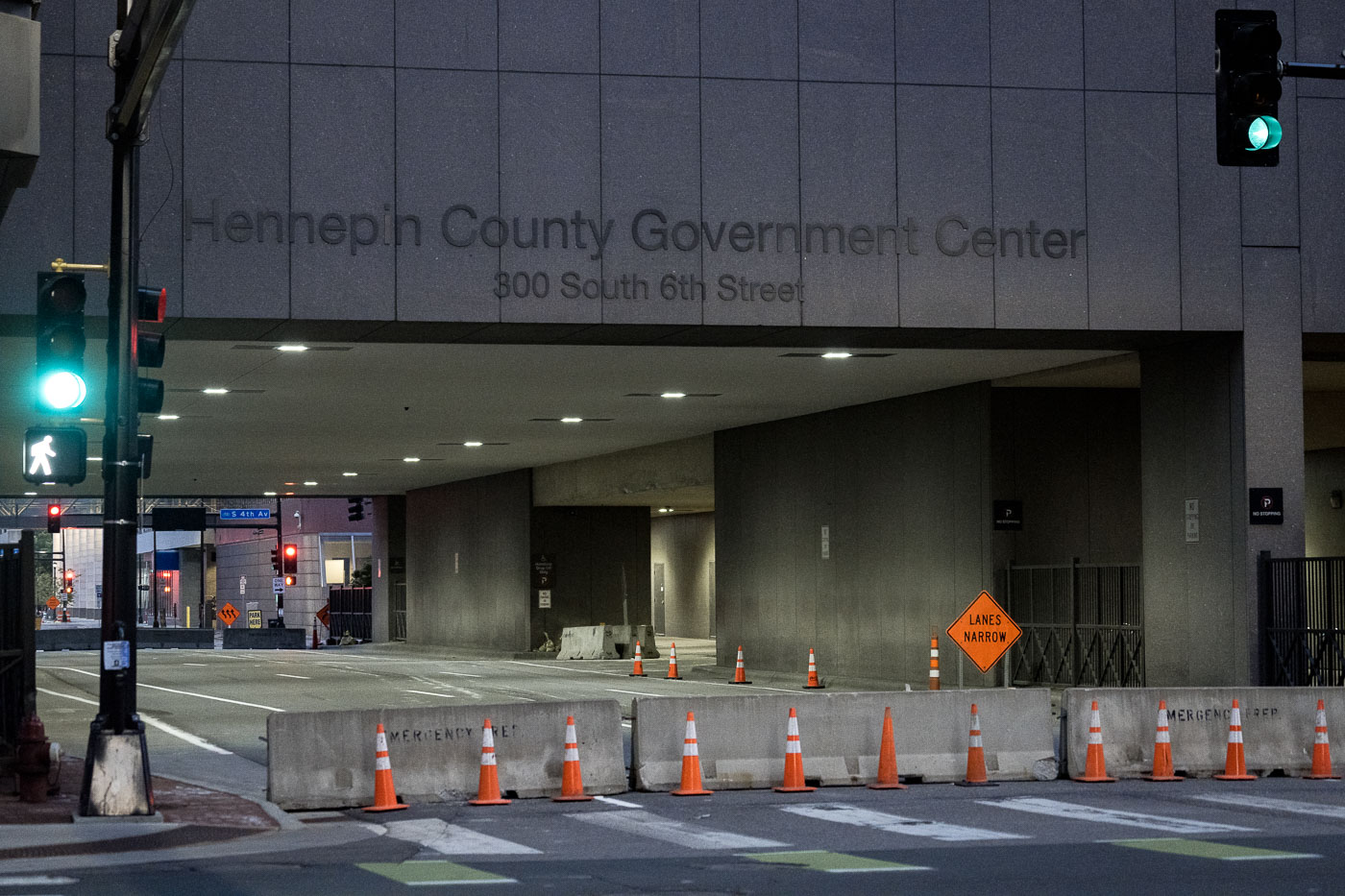
Barricades outside the Hennepin County Government Center on South 6th Street in downtown Minneapolis during curfew.
The Hennepin County Government Center at 300 South 6th Street in downtown Minneapolis is barricaded with concrete barriers and traffic cones across the street outside the building. The county complex houses administrative offices and courts, and the road restrictions appear to have been put in place during the nighttime security measures that accompanied the citywide curfew in early June 2020. The curfew followed protests after the police killing of George Floyd.

Hennepin County Government Center Barricades, Minneapolis Curfew

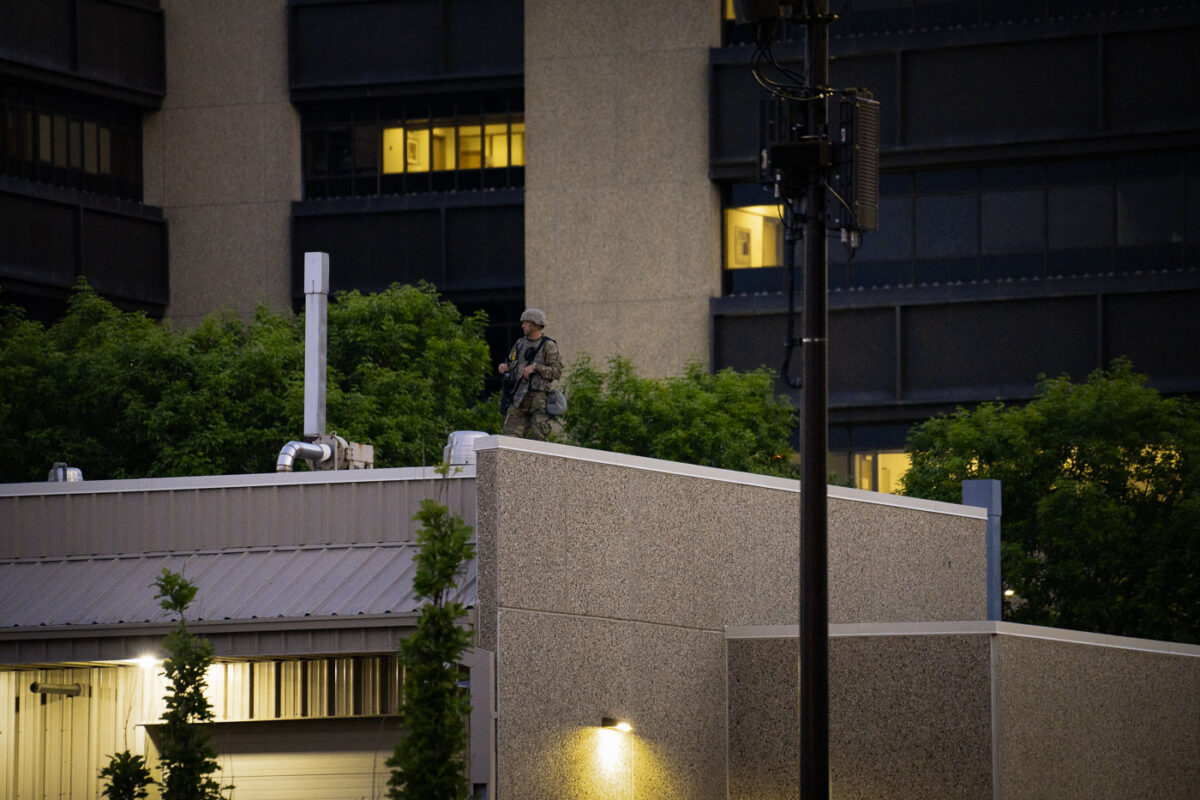
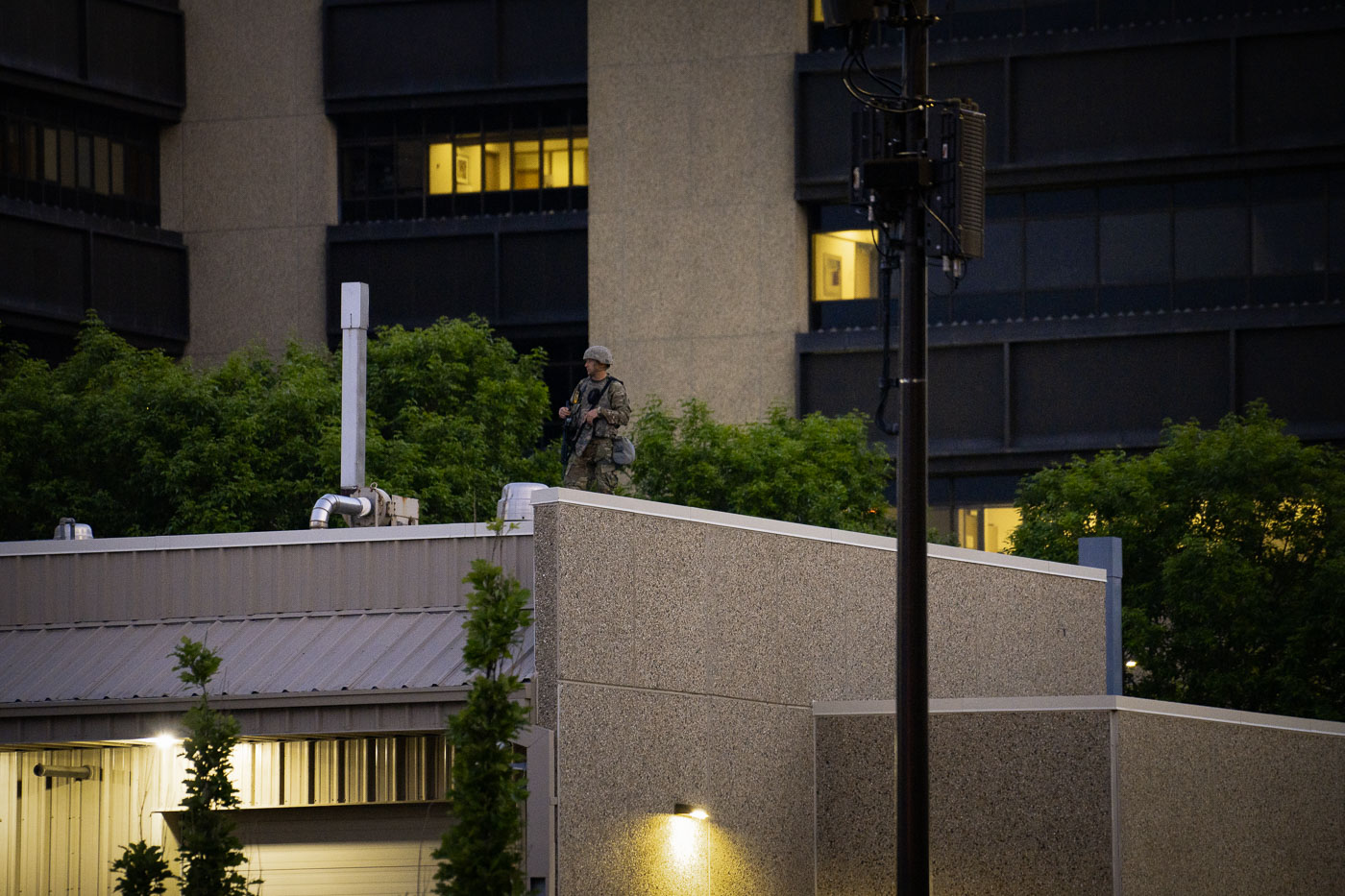
Minnesota National Guard member on the Hennepin County Forensic Science Laboratory roof in downtown Minneapolis.
A Minnesota National Guard member stands watch on the roof of the Hennepin County Sheriff’s Forensic Science Laboratory in downtown Minneapolis. The photograph was made on June 1, 2020, during the period of protests and heightened security that followed the killing of George Floyd. The laboratory is a Hennepin County law enforcement facility used for forensic analysis, and National Guard troops were deployed around Minneapolis as a nighttime curfew took effect.

National Guard on Hennepin County Forensic Lab Roof, Minneapolis

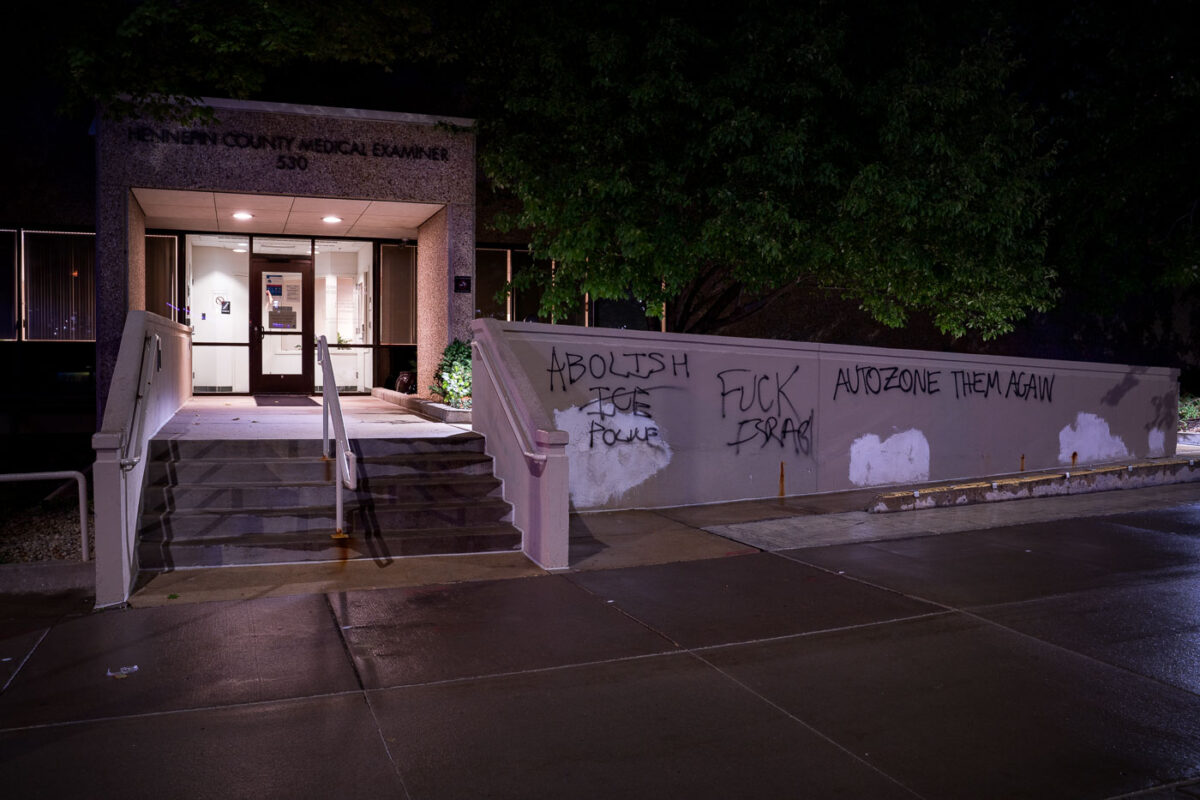
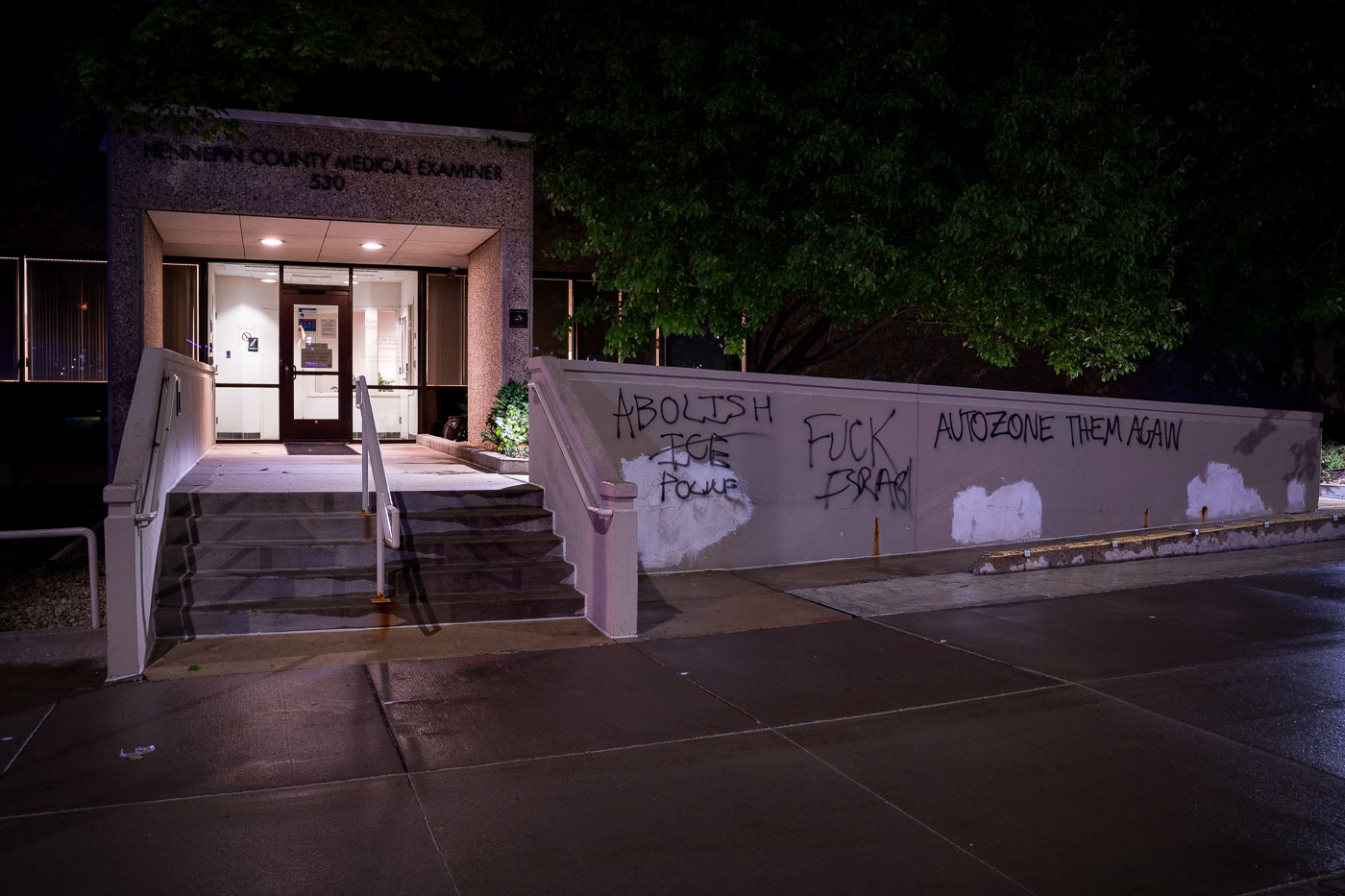
Abolish the police and autozone them again graffiti
Graffiti covers a wall of the Hennepin County Medical Examiner building in downtown Minneapolis. The spray-painted messages include "Abolish the police" and "AutoZone them again," referencing the burning of the AutoZone building during the 2020 Minneapolis Uprising. The AutoZone fire was one of the first major acts of property destruction during the widespread protests and civil unrest that followed the murder of George Floyd. As the official body responsible for investigating deaths in Hennepin County, including those involving law enforcement, the Medical Examiner's office became a site for expressions of public dissent and calls for systemic change.

Hennepin County Medical Examiner: Abolish Police, Autozone Graffiti

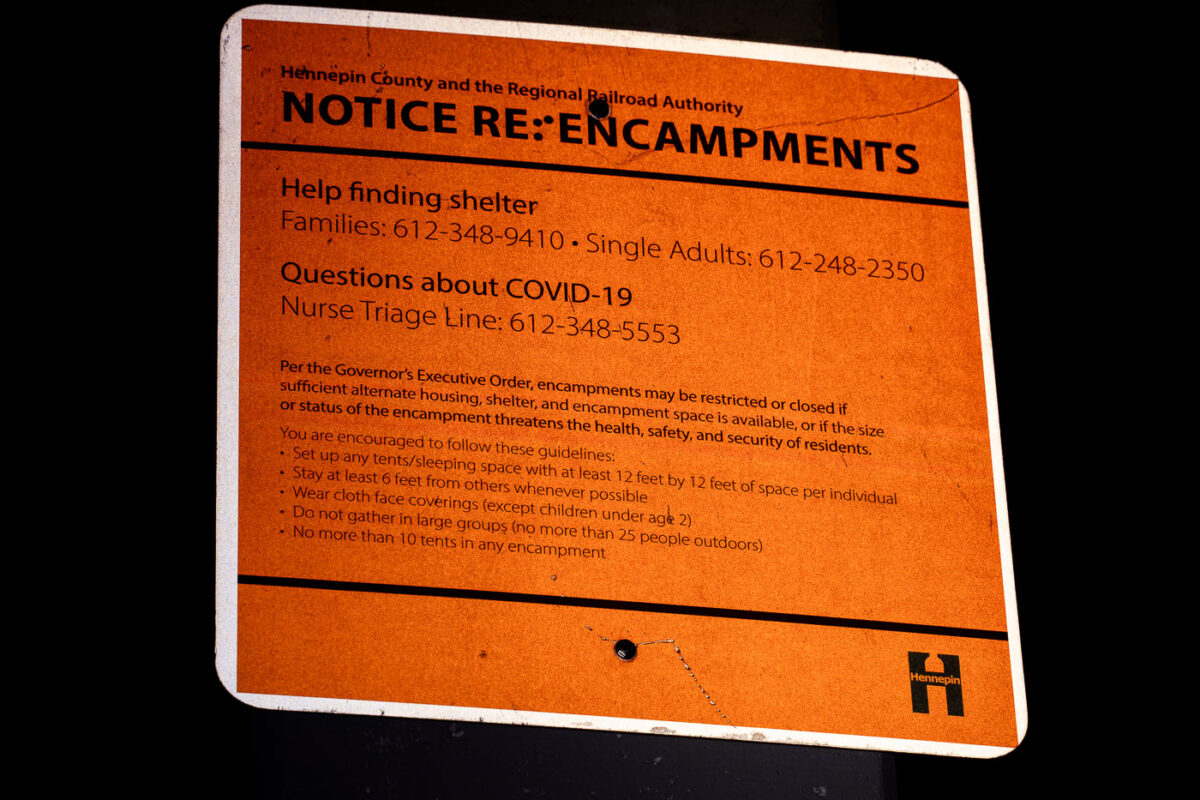
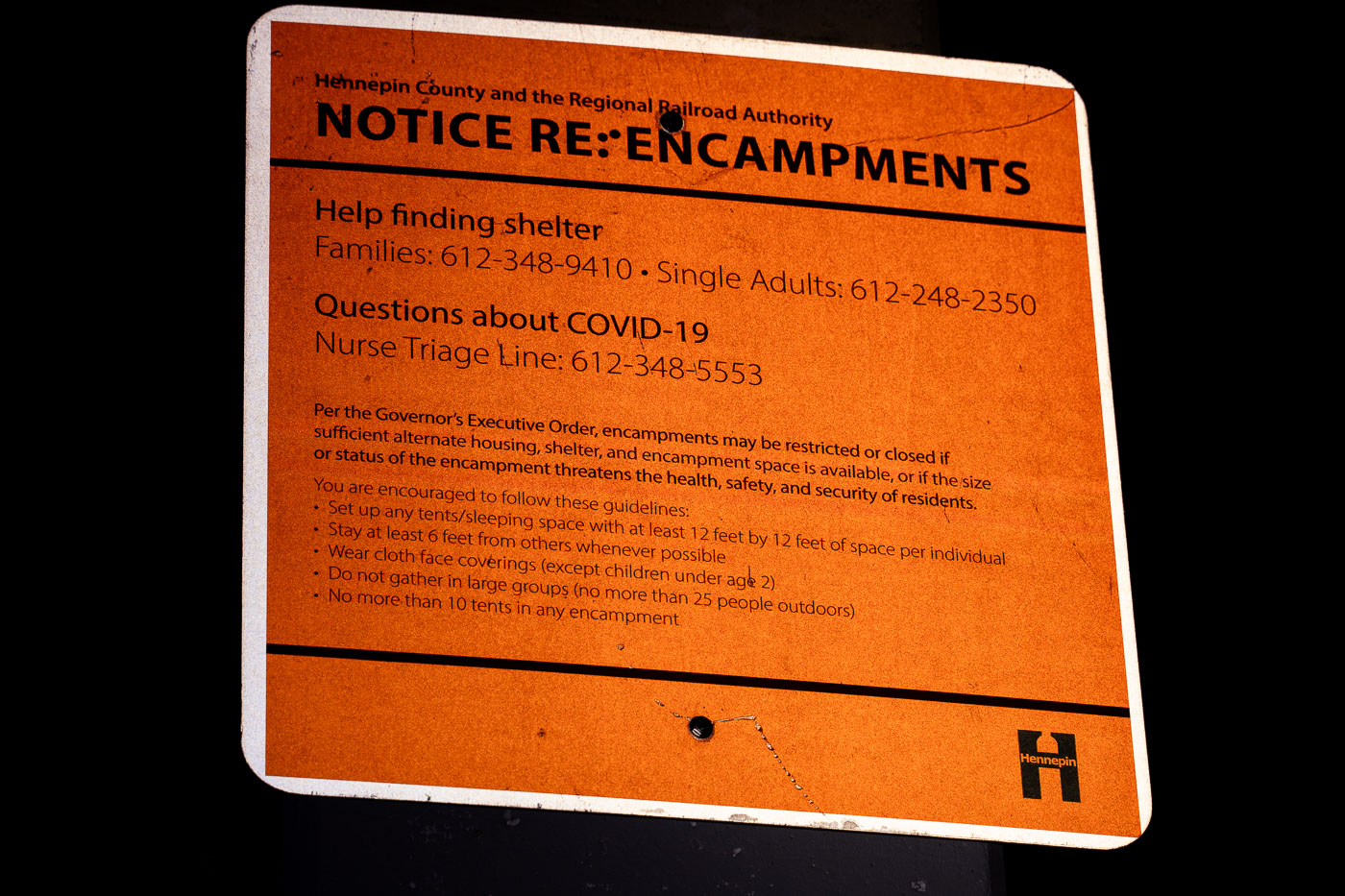
Orange notice from Hennepin County regarding encampment restrictions and COVID-19 resources posted on the Midtown Greenway in
Hennepin County and the Metropolitan Council's Regional Railroad Authority posted this notice along the Midtown Greenway during the summer of 2020, directing people living in encampments to shelter hotlines — 612-348-9410 for families, 612-248-2350 for single adults — and a COVID-19 nurse triage line at 612-348-5553. The notice cited Governor Tim Walz's executive order allowing counties to restrict or close encampments if adequate housing or shelter space became available, or if an encampment's size threatened residents' health and safety. It also listed pandemic guidelines: tents spaced at least 12 by 12 feet apart, six feet of distance between people, cloth face coverings for anyone over age two, outdoor gatherings capped at 25 people, and no more than 10 tents per encampment. The Midtown Greenway runs roughly five and a half miles through south Minneapolis along a former Milwaukee Road rail corridor, now used as a bicycle and pedestrian trail beneath street level.

Hennepin County Notice on Encampments Along the Midtown Greenway

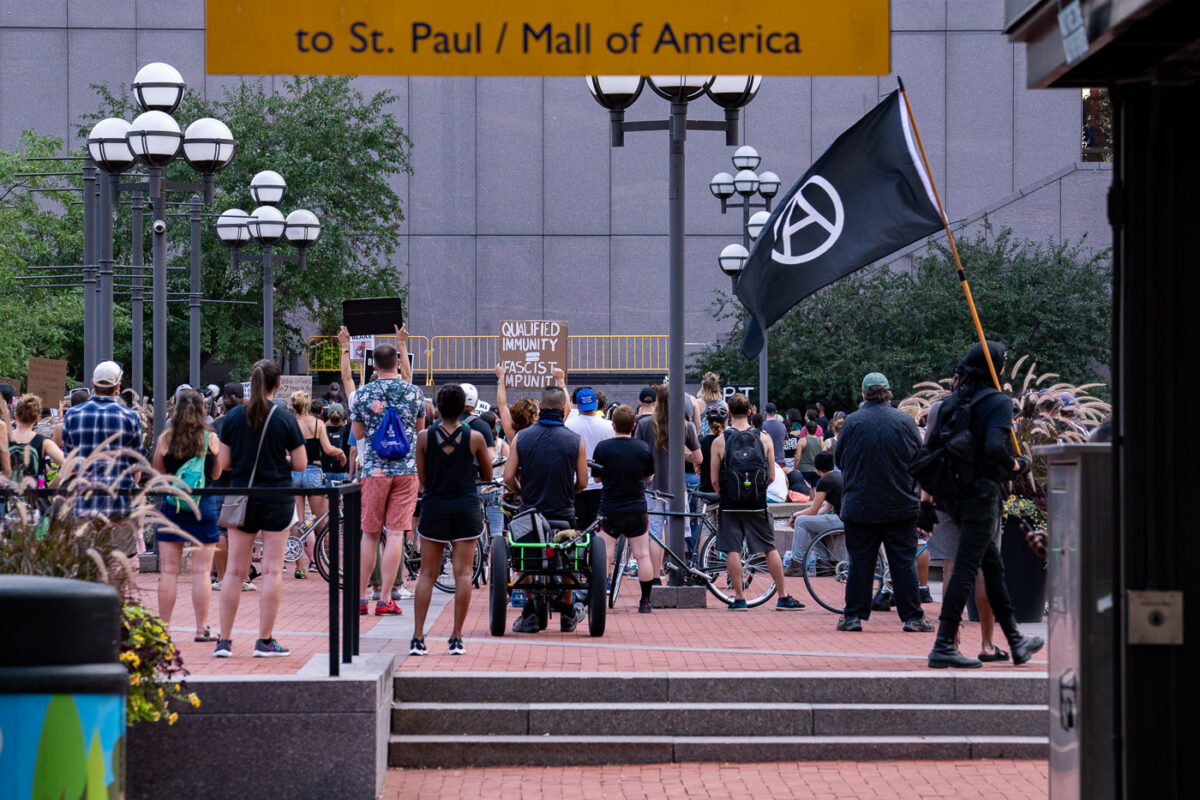
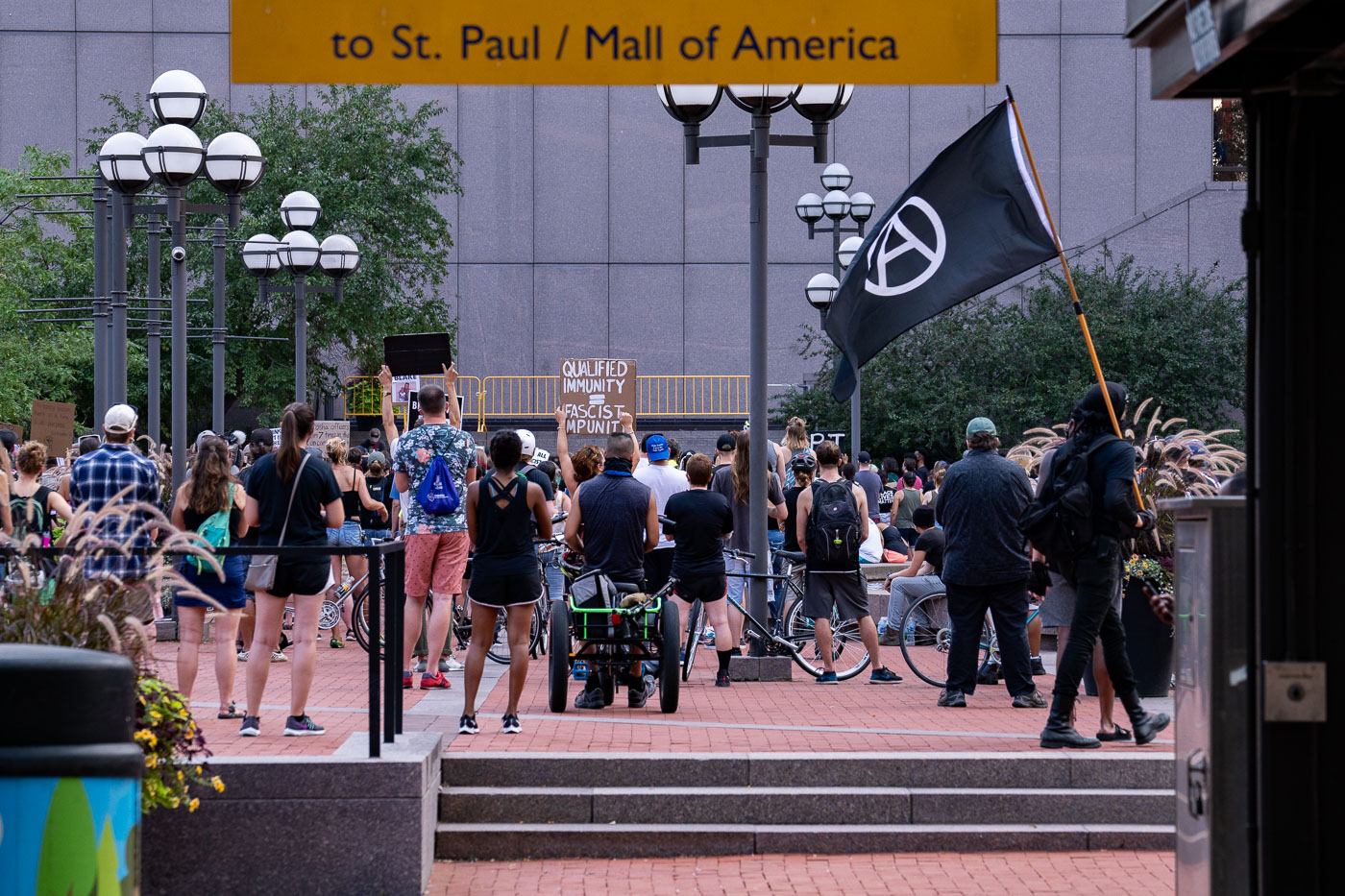
Jacob Blake rally in Downtown Minneapolis August 2020
A protest and rally gathered outside the Hennepin County Government Center in Downtown Minneapolis in solidarity with Jacob Blake after he was shot by police in Kenosha, Wisconsin, on August 24, 2020. This event was part of broader social justice movements in Minneapolis and across the nation, advocating for police accountability and an end to qualified immunity.

Jacob Blake Protest & Rally, Anarchy Flag, Downtown Minneapolis

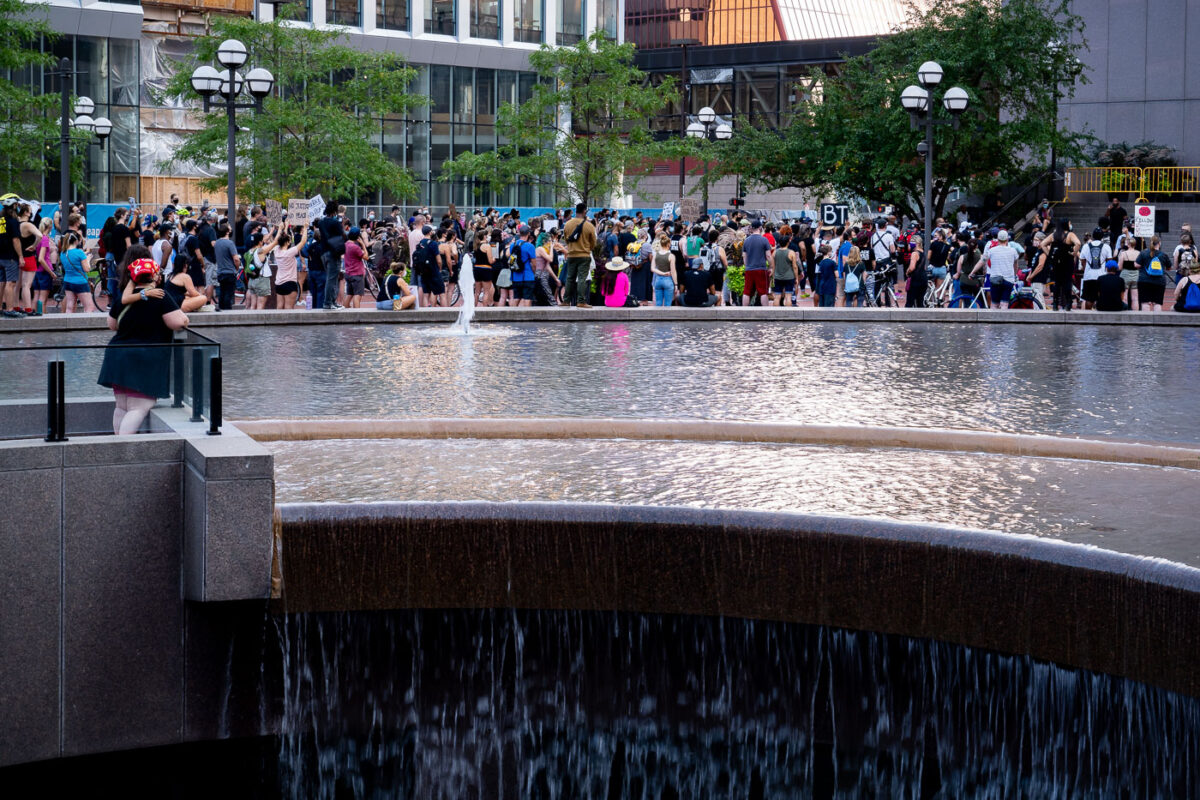
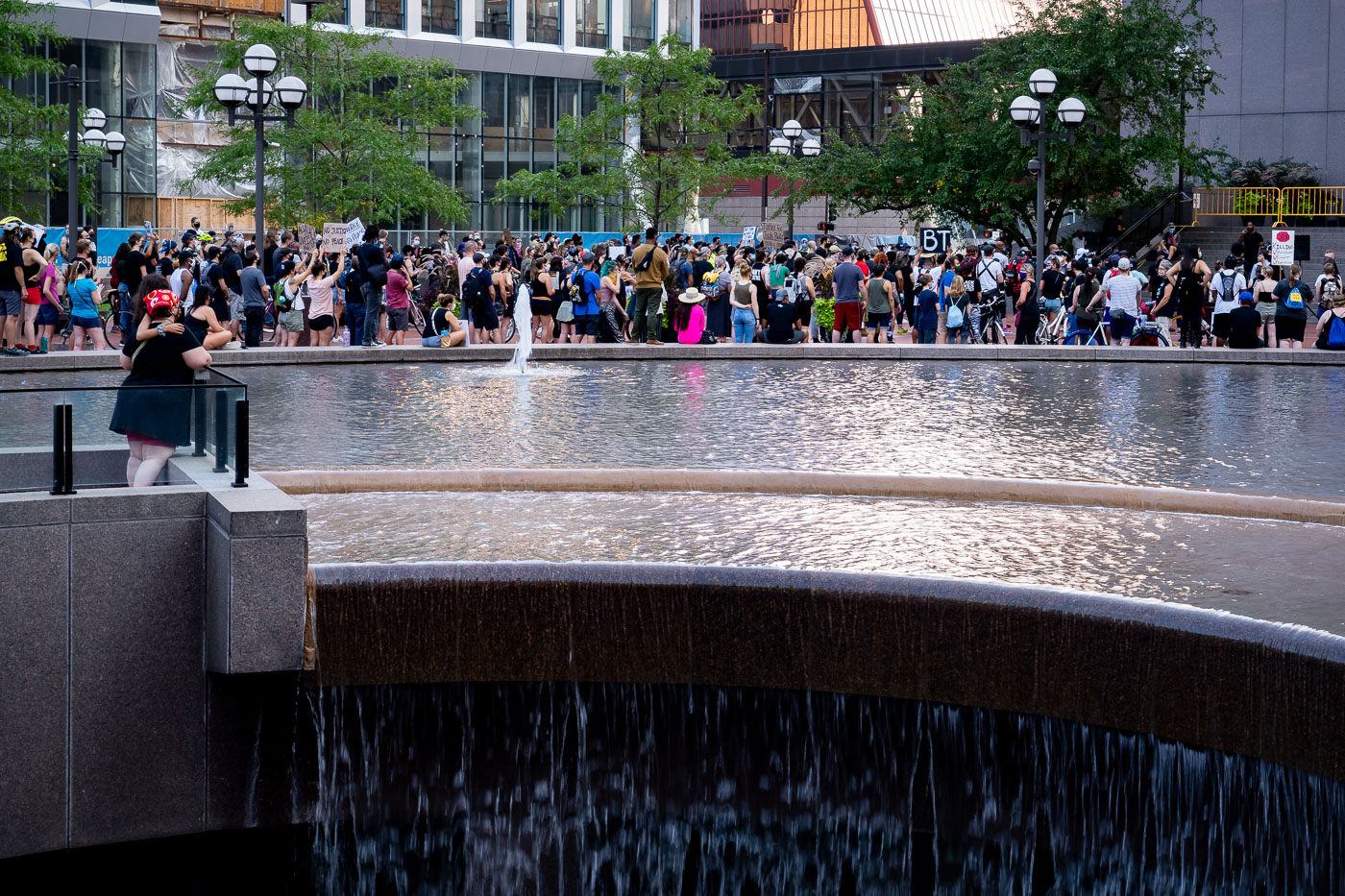
Jacob Blake rally at Hennepin County Government Center
A protest gathered outside the Hennepin County Government Center in Downtown Minneapolis in solidarity with Jacob Blake. This rally occurred after Jacob Blake was shot by police in Kenosha, Wisconsin, in August 2020, sparking widespread protests against police violence.

Downtown Minneapolis Jacob Blake Solidarity Rally

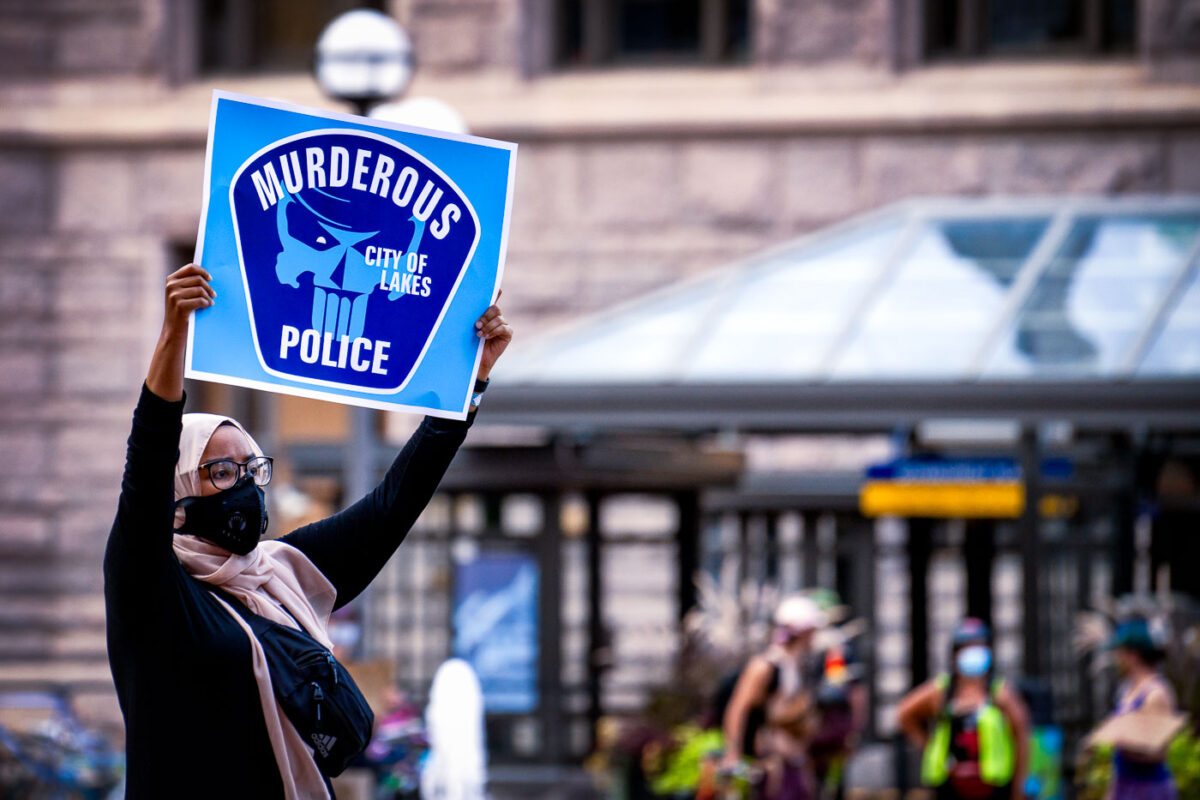
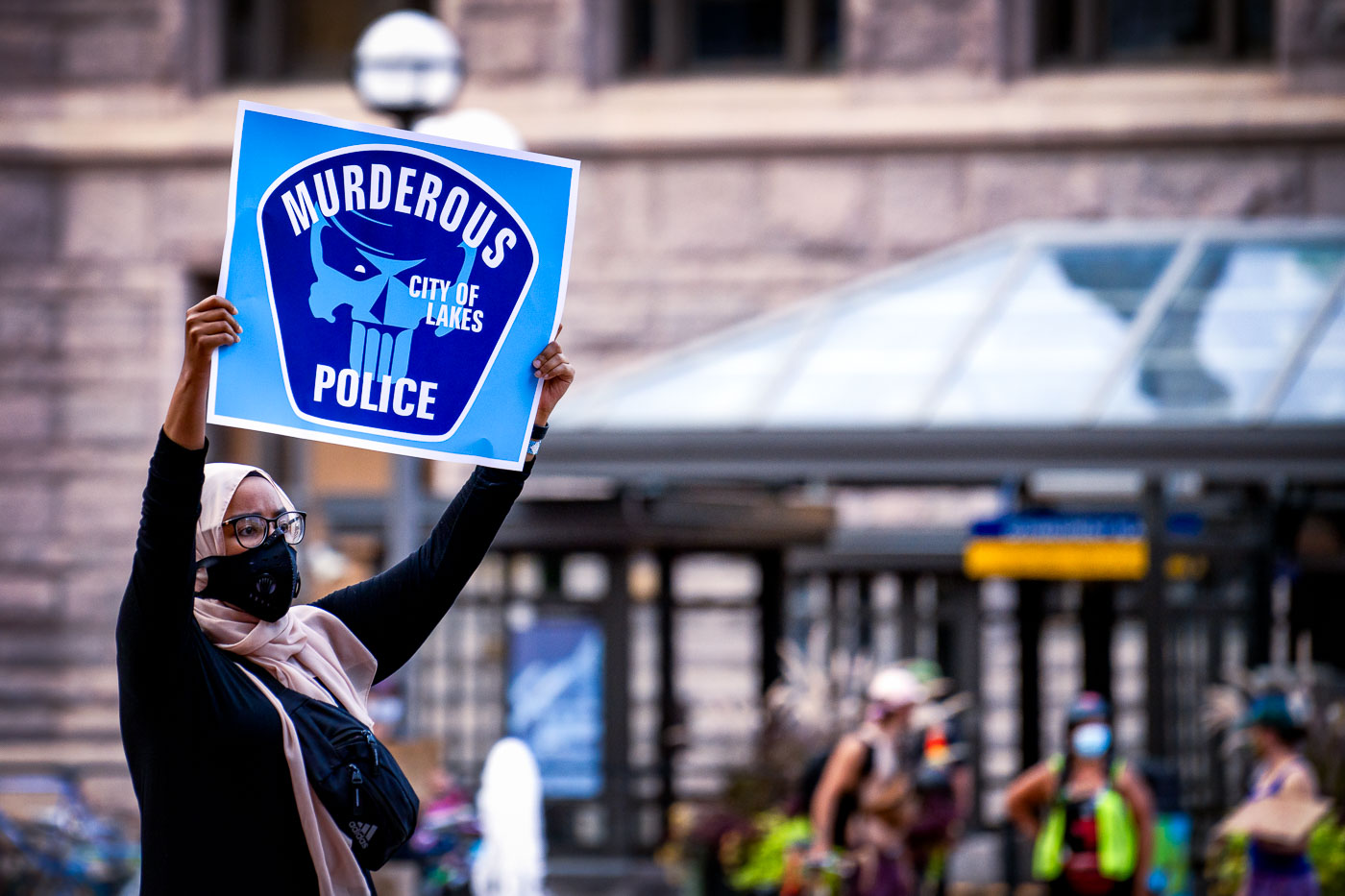
City of Lakes Murderous Police sign
A protester holds a sign during a march in downtown Minneapolis, outside the Hennepin County Government Center. This protest was held in solidarity with Jacob Blake, whose shooting by police in Kenosha, Wisconsin, in August 2020, sparked widespread demonstrations against police brutality and racial injustice. The sign, which reads "Murderous Police City Of Lakes" refers to the Minneapolis Police Department.

Minneapolis Jacob Blake protest: ‘Murderous Police’ sign

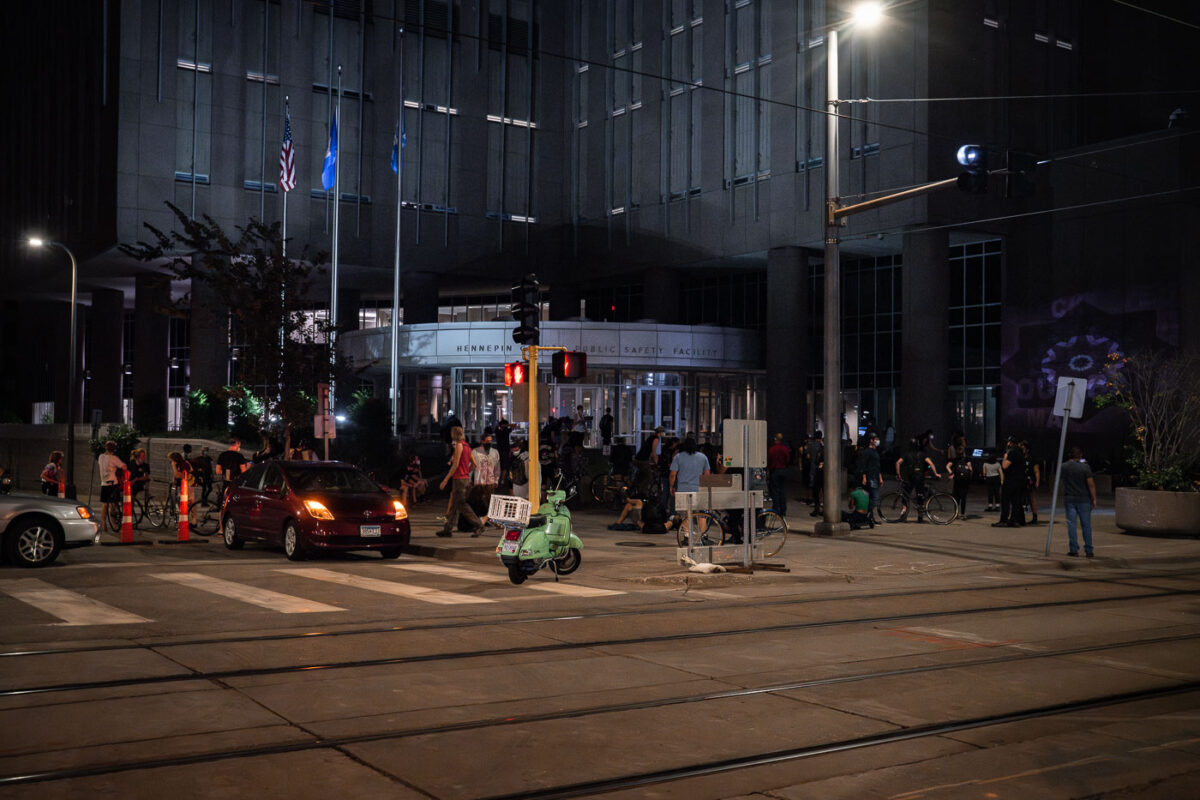
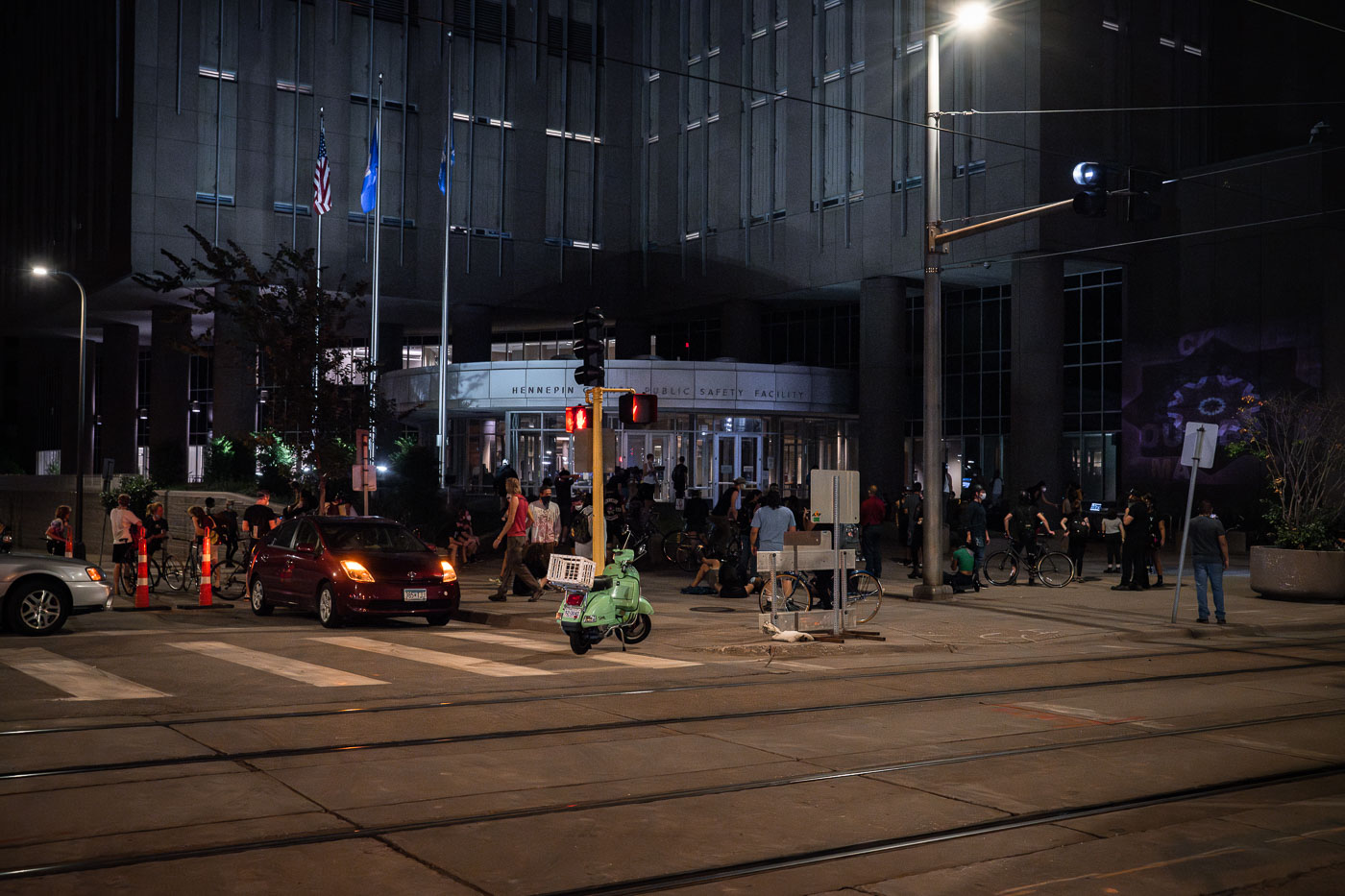
Inmates in windows of Downtown Minneapolis county jail
Inmates inside the Hennepin County Public Safety Facility, also known as the Hennepin County Jail, look down on a protest occurring below in Downtown Minneapolis. This facility, which serves as the primary detention center for Hennepin County, is situated adjacent to the historic Minneapolis City Hall. During the protest, individuals gathered outside, playing music and advocating for the release of those incarcerated.

Hennepin County Jail Inmates Listen to Protesters Below

Protesters demand release of other protesters
Protesters gather outside the Hennepin County Public Safety Facility in Downtown Minneapolis. The gathering seeks the release of individuals arrested during a downtown Minneapolis march earlier in the evening. Completed in 1982, the facility houses the Hennepin County Jail and serves as a central hub for public safety operations in the county.

Minneapolis Protesters at Hennepin County Jail after arrests

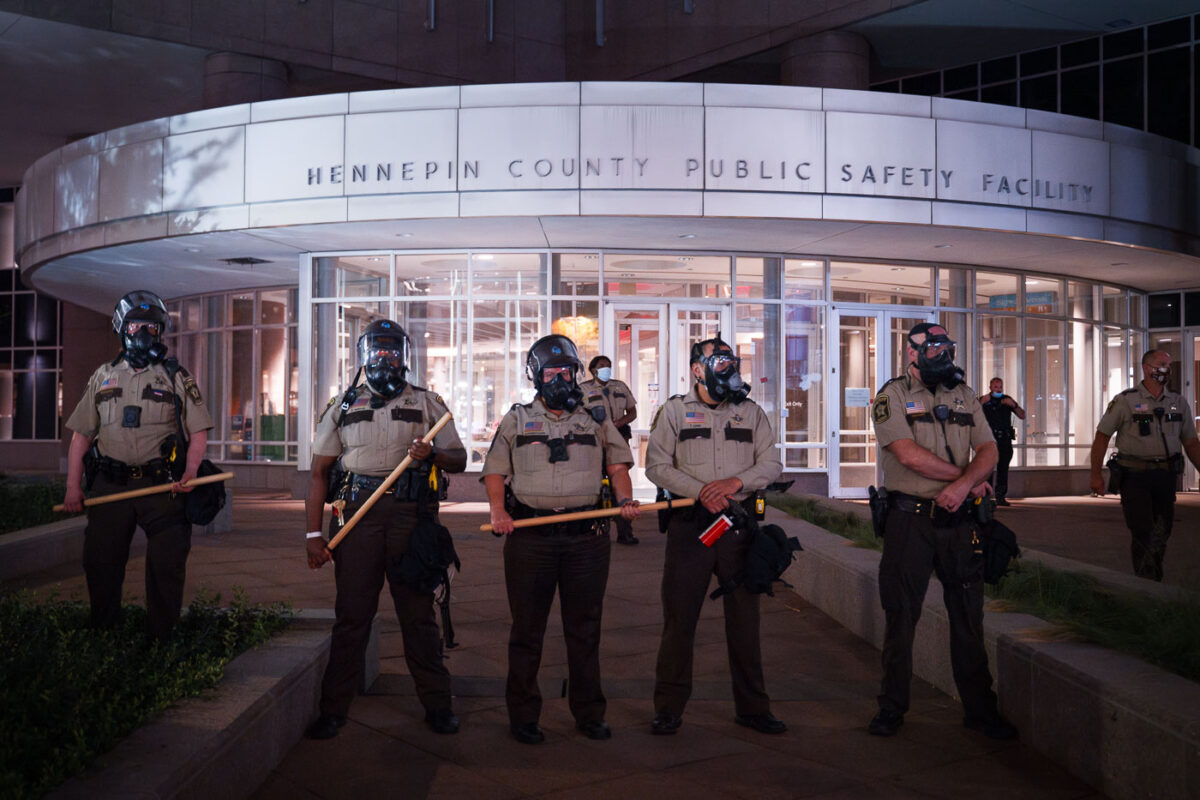
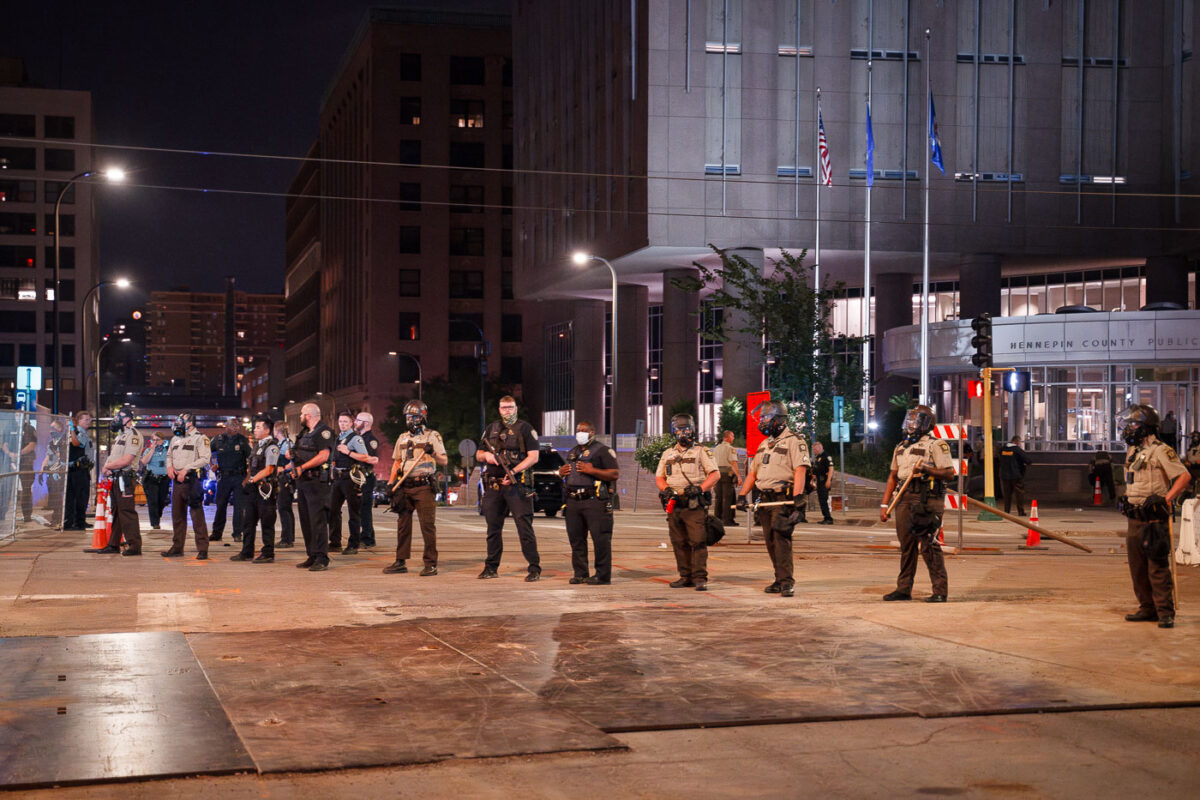
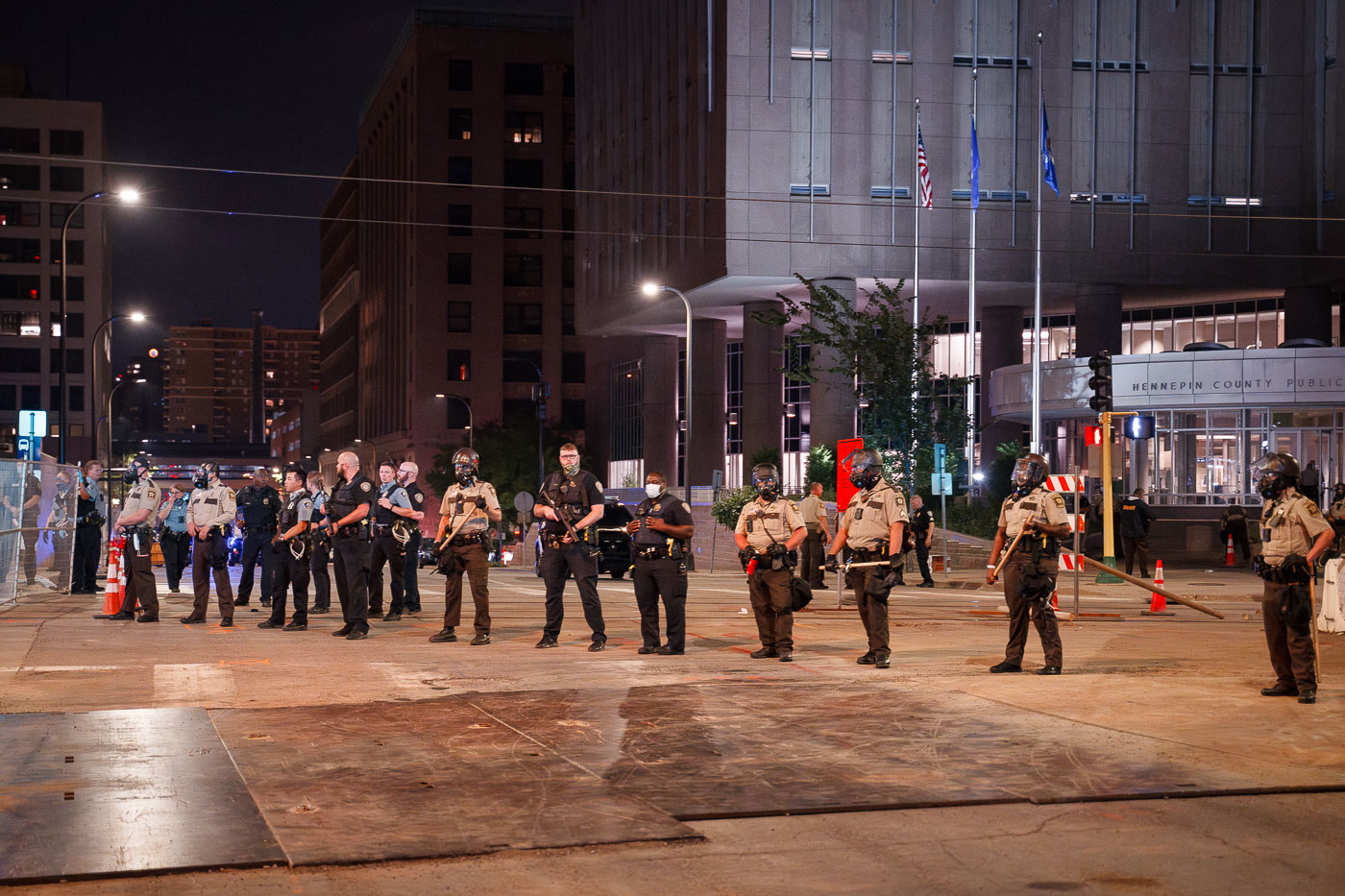
Hennepin County Sheriff Officers Outside County Jail
Hennepin County Sheriff's Officers stand guard outside the Hennepin County Public Safety Facility in downtown Minneapolis. This complex houses the Hennepin County Jail and other public safety operations, serving as a central point for the county's justice system. Officers were deployed as protesters gathered following arrests made during a march in solidarity with Jacob Blake.

Hennepin County Sheriff’s Officers Guarding Public Safety Facility

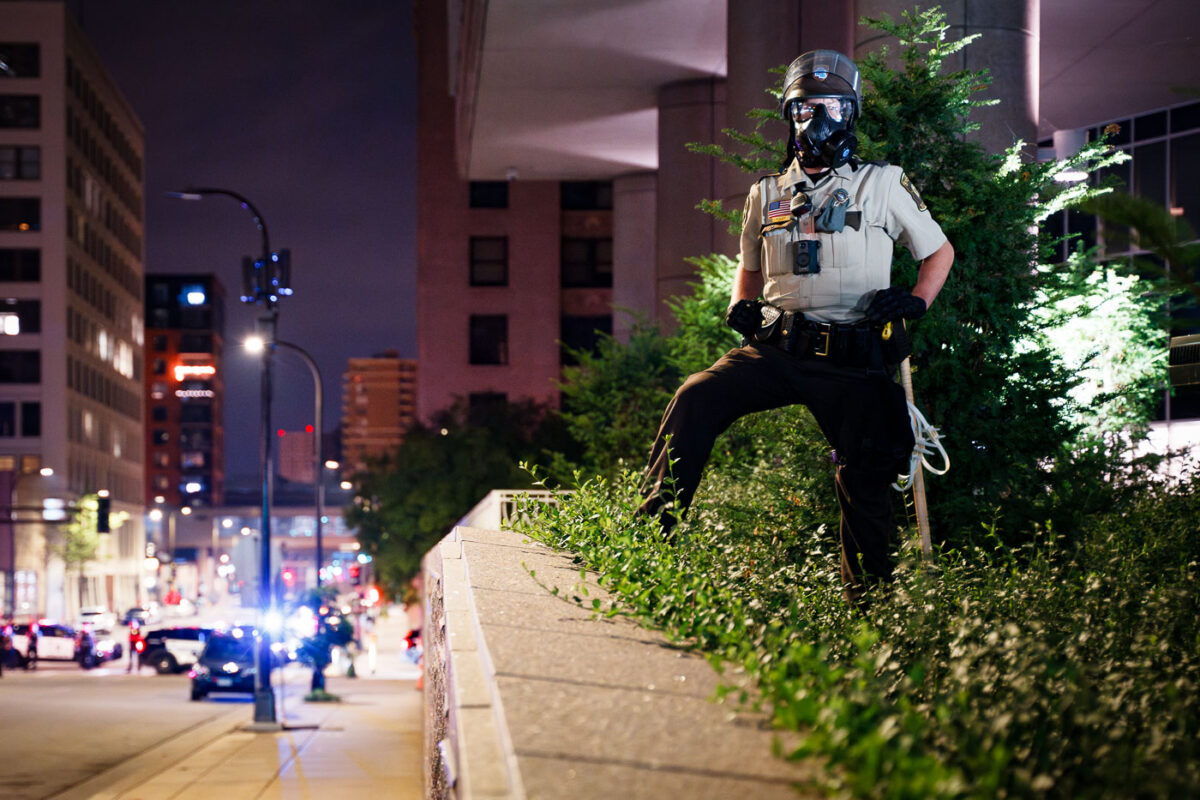
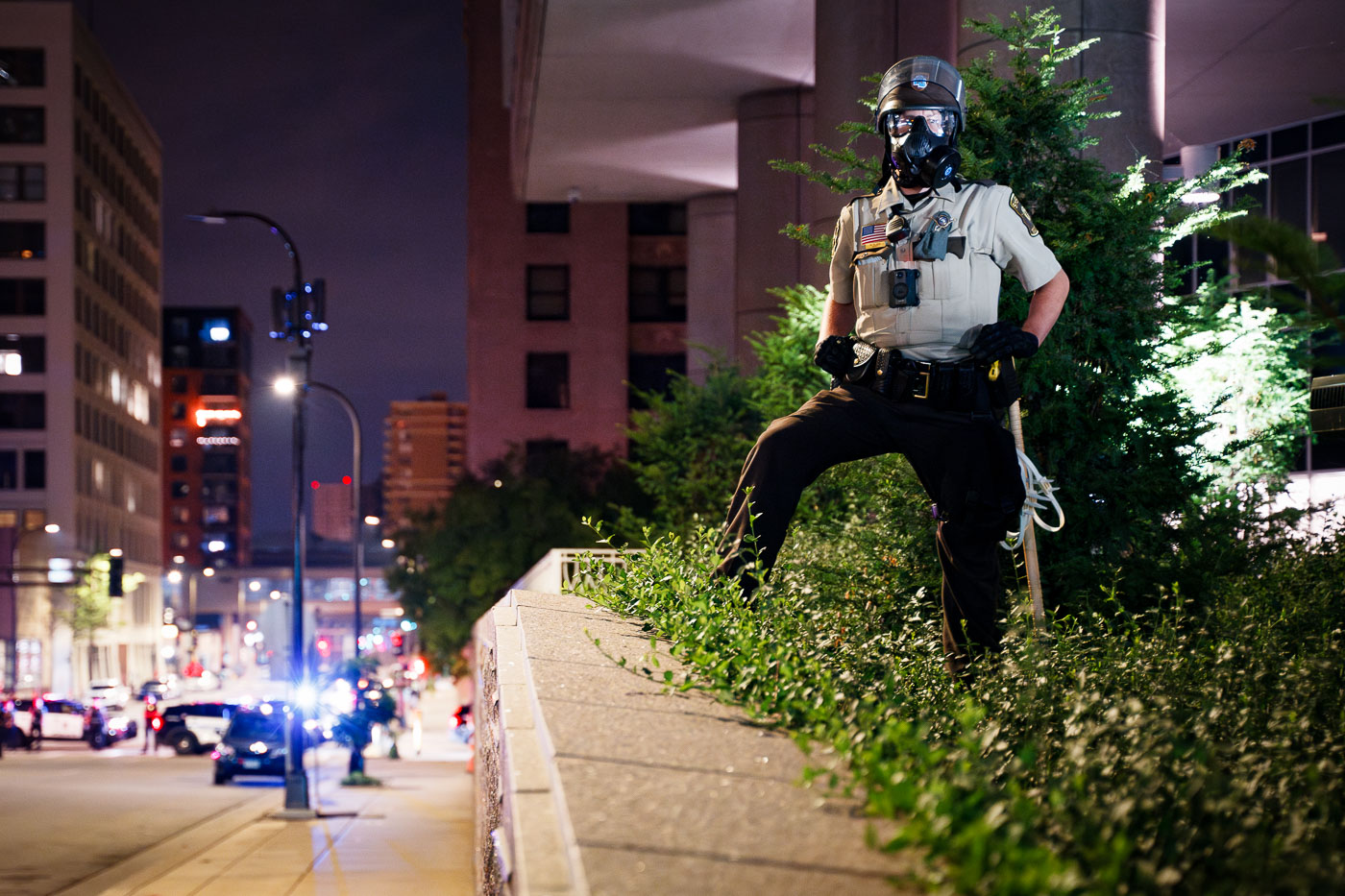
Hennepin County Sheriff Officer guards jail outside
A Hennepin County Sheriff's Officer stands outside the Hennepin County Public Safety Facility in downtown Minneapolis. This occured during a march seeking justice for Jacob Blake.

Hennepin County Sheriff’s Officer, Gas Mask, Minneapolis Jail

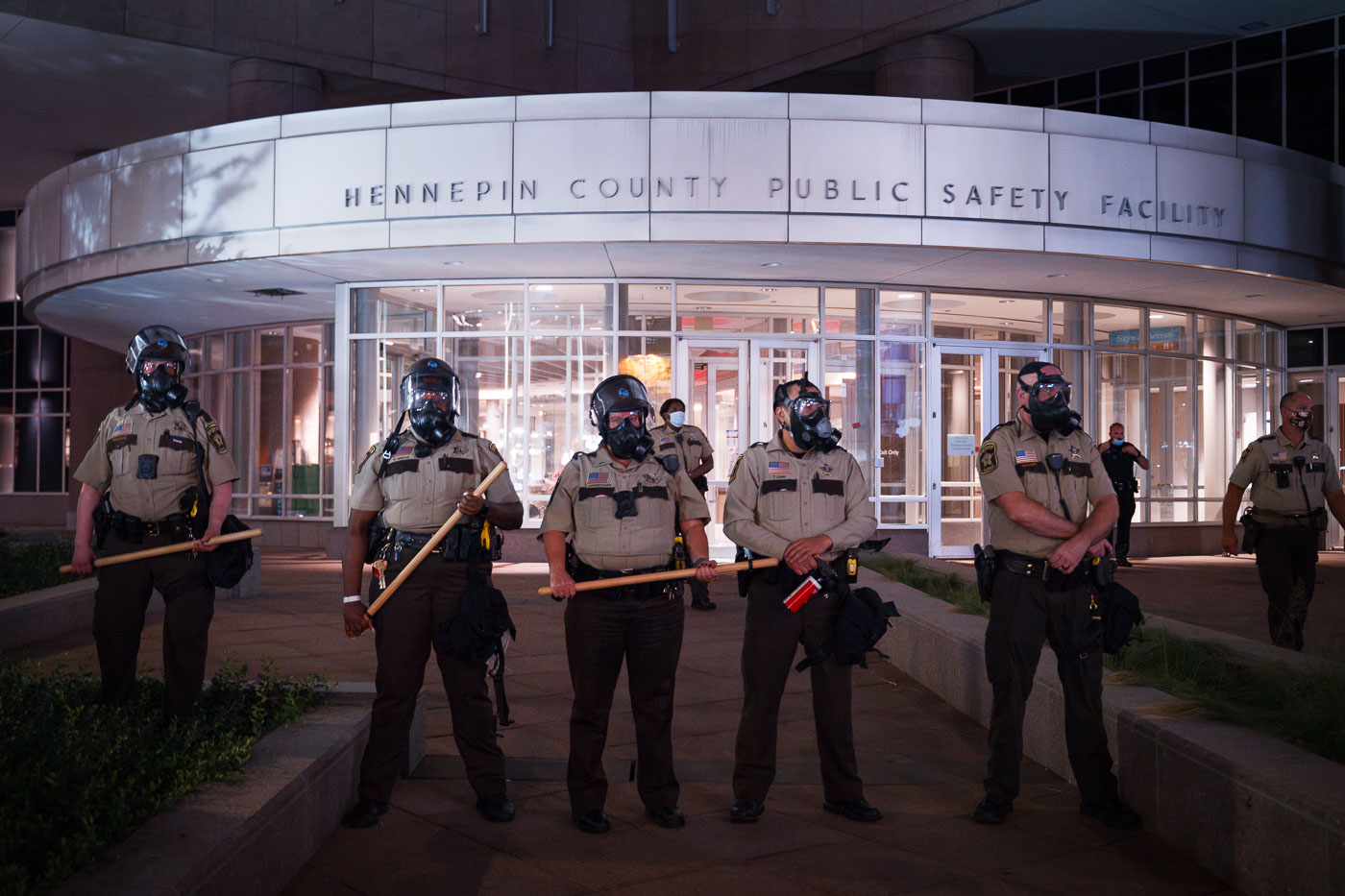
Police officers surround county jail in Downtown Minneapolis
Hennepin County Sheriff's Officers and other law enforcement personnel stand guard outside the Hennepin County Public Safety Facility in downtown Minneapolis. This complex serves as a central hub for the county's justice system, including the Hennepin County Jail. The officers were deployed during a protest that occurred after several individuals were arrested following a large march downtown. This march was held in solidarity with Jacob Blake, highlighting ongoing public concerns regarding law enforcement actions and civil rights.

Sheriff’s Officers Guard Hennepin County Public Safety Facility

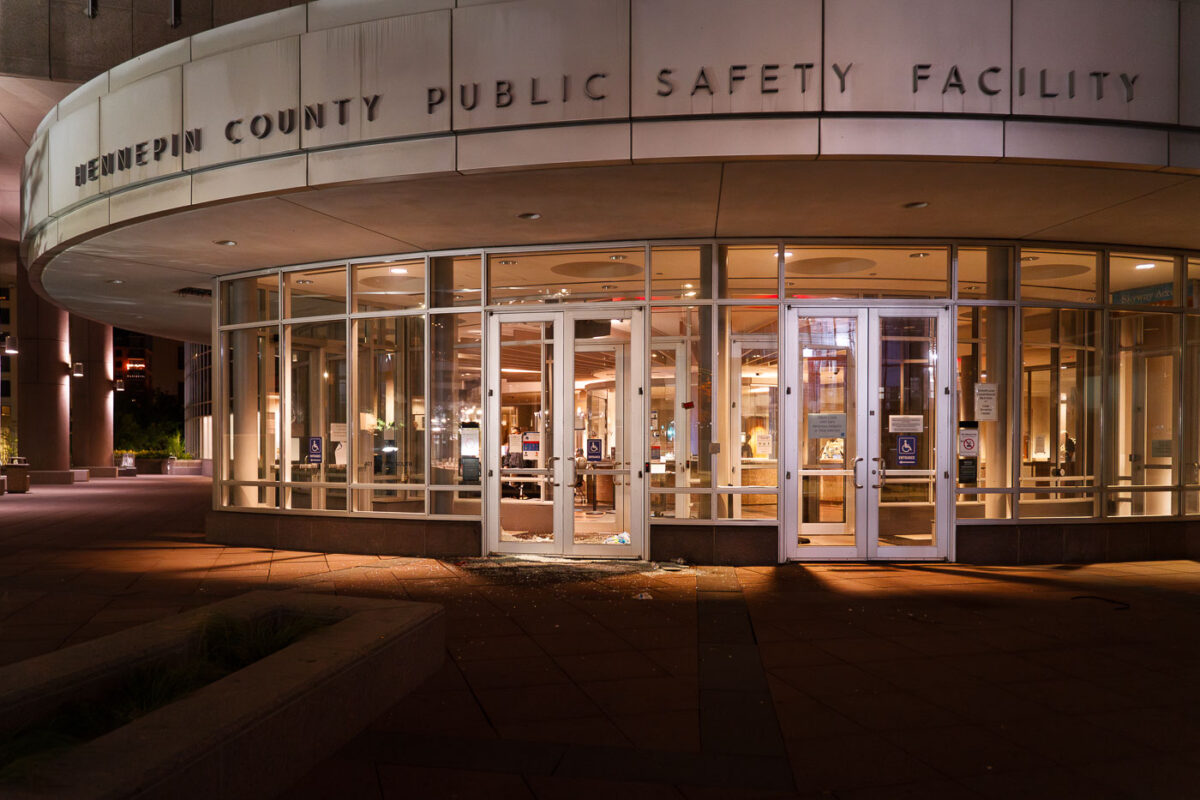
Broken windows at county jail in Downtown Minneapolis
The main entrance of the Hennepin County Public Safety Facility in downtown Minneapolis displays damage to its glass doors. This facility, which includes the Hennepin County Jail, serves as a central hub for the county's public safety and justice operations.

Vandalized doors at Hennepin County Public Safety Facility

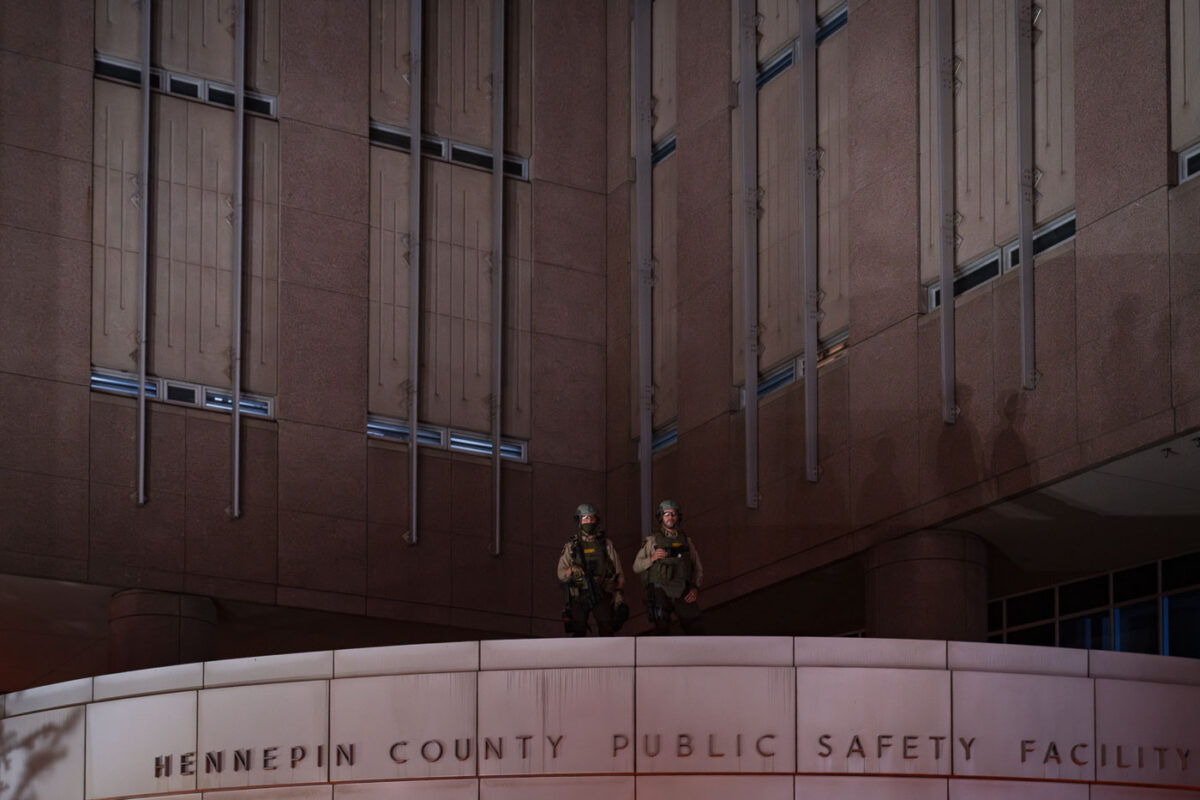
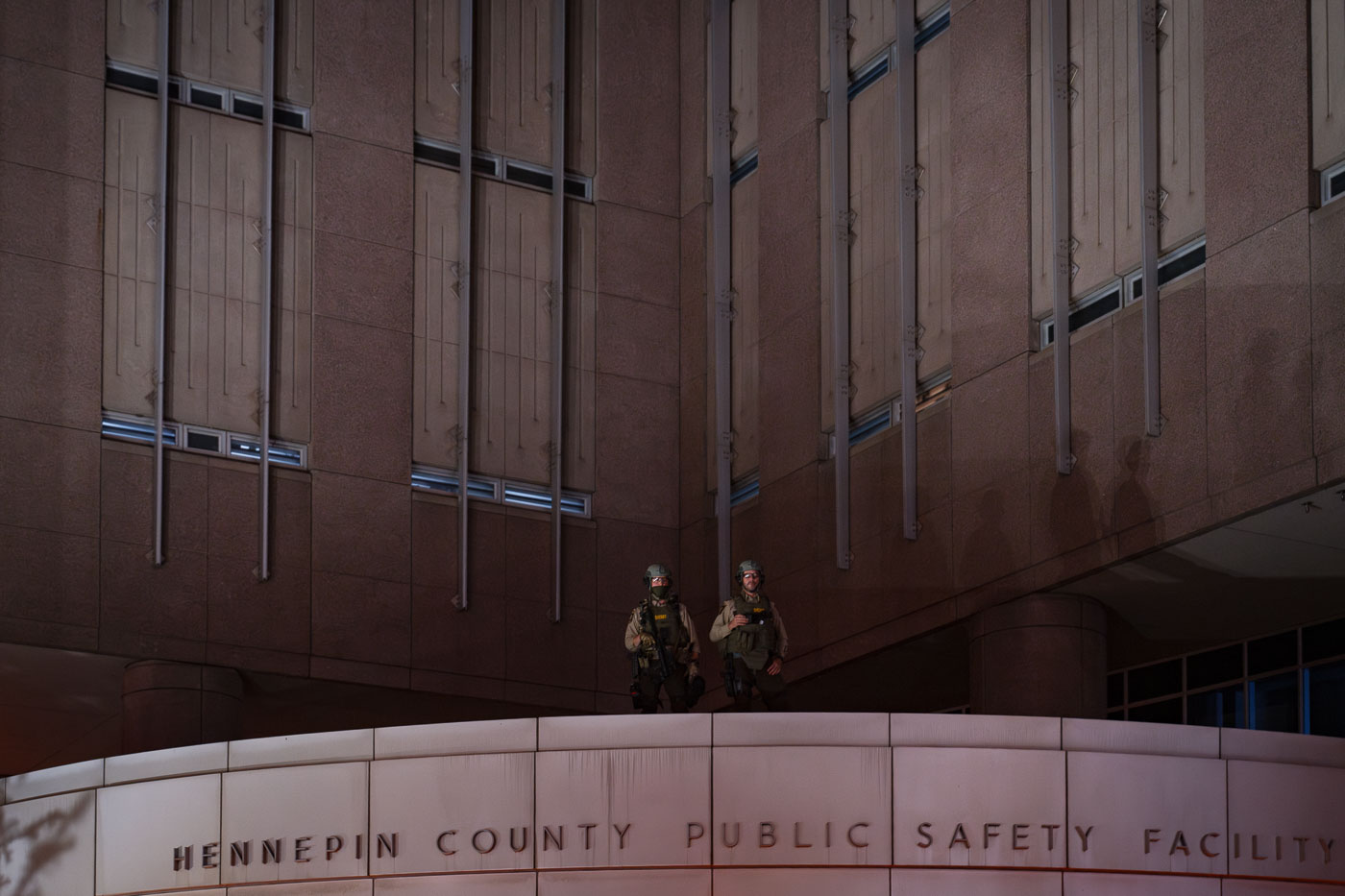
Armed police on top of Minneapolis Jail
Hennepin County Sheriff's Officers stand guard on the Hennepin County Public Safety Facility in downtown Minneapolis. This occurred during a protest in August 2020, following the arrest of a dozen individuals after a large march in solidarity with Jacob Blake. Completed in 1982, the Hennepin County Public Safety Facility houses the Hennepin County Jail and other public safety operations for the county.

Armed Sheriff’s Officers on Hennepin County Public Safety Facility

Police offficers in riot gear coming out of garage doors
Hennepin County Sheriff's officers, some equipped with riot gear and holding cans of irritants, stand inside the garage of the Hennepin County Public Safety Facility in downtown Minneapolis. Their deployment was in response to a protest gathering outside the facility, where individuals demanded the release of those arrested earlier. The protest was part of a Jacob Blake solidarity march through downtown Minneapolis, reflecting broader unrest. The Hennepin County Public Safety Facility functions as a primary jail for the county, serving as a central point for law enforcement operations and public demonstrations concerning justice.

Hennepin County Officers in riot gear at Public Safety Facility

Inmate support pizza at Downtown Minneapolis jail
Pizza boxes, some with slices remaining, are seen outside the Hennepin County Jail in downtown Minneapolis in August 2020. These provisions were supplied by "jail support" for protesters who had gathered at the Hennepin County Public Safety Facility. The protest demanded the release of individuals arrested earlier that evening, following a march in response to the shooting of Jacob Blake in Kenosha, Wisconsin. A handwritten note on one box, "ONLY TOUCH YOUR SLICE," indicates a practical instruction for sharing food during the event.

Pizza Boxes, ‘Only Touch Your Slice’, Hennepin County Jail, Aug 2020

Police officers during False Rumors riot
Hennepin County Sheriff's Department officers patrol outside the Nordstrom Rack and IDS Center in Downtown Minneapolis on August 27, 2020. This deployment followed widespread looting and vandalism that erupted after false rumors circulated throughout the city.

Hennepin Sheriffs patrol Nordstrom Rack after False Rumors riot

National Guard vehicles on Nicollet Mall in August 2020
A Minnesota National Guard M-ATV and a Hennepin County Sheriff's Department vehicle are positioned on Nicollet Mall in downtown Minneapolis on August 29, 2020. Their presence followed civil unrest that erupted after false rumors of a police shooting circulated days earlier. Nicollet Mall, a prominent pedestrian and transit mall, serves as a central artery in the city's commercial district. The vehicles are stationed near a Target store, a major retailer with a significant presence in the area, reflecting the heightened security measures in the urban environment during this period.

National Guard M-ATV & Sheriff Vehicle, Nicollet Mall, 2020

Boarded up Hennepin County Government Center August 2020
The Hennepin County Government Center in Downtown Minneapolis stands boarded up in August 2020. This measure was taken amidst widespread unrest and protests following the killing of George Floyd, and specifically after false rumors of a police shooting circulated in the city. Designed by John Carl Warnecke & Associates and completed in 1974, the building serves as the primary seat for Hennepin County government, housing the Hennepin County District Court and various administrative offices. The boarding reflects the extensive security measures implemented across Minneapolis during a period of significant social upheaval.

Boarded Hennepin County Government Center, Downtown Minneapolis, August 2020

Hennepin County Family Justice Center storefront boarded with plywood behind chain-link fencing in downtown Minneapolis.
The Hennepin County Family Justice Center in downtown Minneapolis is boarded over at street level behind chain-link fencing and concrete barriers. The building houses Hennepin County court functions related to family law and domestic matters. The protective barriers and plywood cover much of the ground-floor facade along the street, reflecting heightened security measures in place in September 2020.

Boarded Entrance at the Hennepin County Family Justice Center

Hennepin County Public Safety Facility in downtown Minneapolis barricaded at night with graffiti on a street sign.
The Hennepin County Public Safety Facility in downtown Minneapolis is shown at night behind metal barricades, traffic barrels, and stacked crowd-control fencing. Plywood covers the building’s ground-level windows and doors, and graffiti reading “fuck MPD” is written on the back of a street sign in the foreground. The county complex houses jail and court functions, and the security measures visible here were in place in September 2020 after protests in the area.

“Fuck MPD” Graffiti Outside Hennepin County Public Safety Facility

Jail not bail for killer kkkops
Protesters gathered outside the Hennepin County Government Center in Downtown Minneapolis, advocating for "Jail Not Bail" following the release of former Minneapolis Police Officer Derek Chauvin on bond. Chauvin was charged in connection with the May 25th death of George Floyd.

Minneapolis Protest: ‘Jail Not Bail’ for Derek Chauvin

Hennepin County Government Center waterfall
Protesters gather outside the Hennepin County Government Center in Downtown Minneapolis on October 8, 2020. This protest occurred the day after former Minneapolis Police Officer Derek Chauvin was released from jail on bond. Chauvin was charged in the May 25, 2020, death of George Floyd, an event that sparked widespread protests in Minneapolis and globally. The Hennepin County Government Center serves as the primary administrative and judicial hub for Hennepin County, housing courts and government offices.

Hennepin County Government Center Protest after Chauvin Bail

Law enforcement officers conduct arrests at Bryant Square Park in Minneapolis on Election Night.
Bryant Square Park sits at Bryant Avenue South and West 31st Street in the Uptown neighborhood of Minneapolis, a few blocks from the corridor where a march passed earlier that night. Officers from the Minneapolis Police Department, Minneapolis Park Police, and Hennepin County Sheriff's Office converged on the park following the demonstration, making a series of arrests. The operation came on Election Night 2020, months after the killing of George Floyd had drawn sustained protest activity to Minneapolis streets and parks.

Police Move Through Bryant Square Park After Election Night March

Noise demo protest in Minneapolis
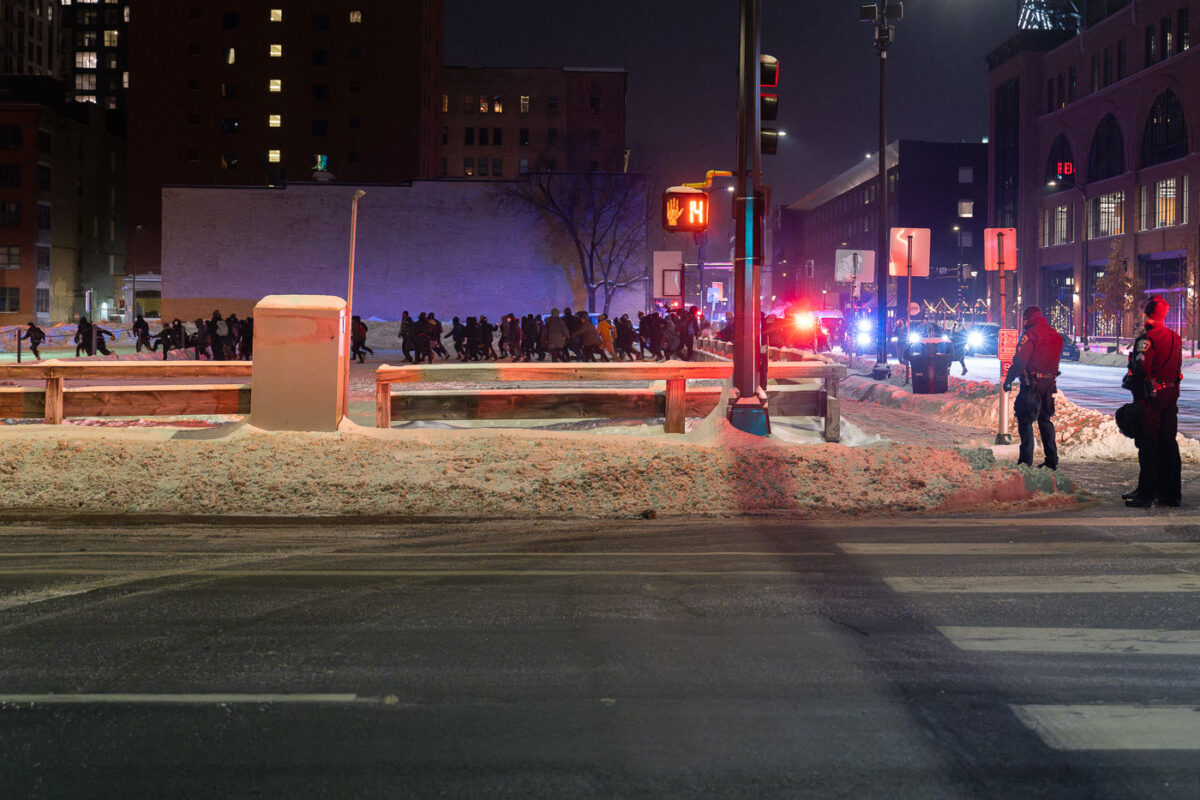
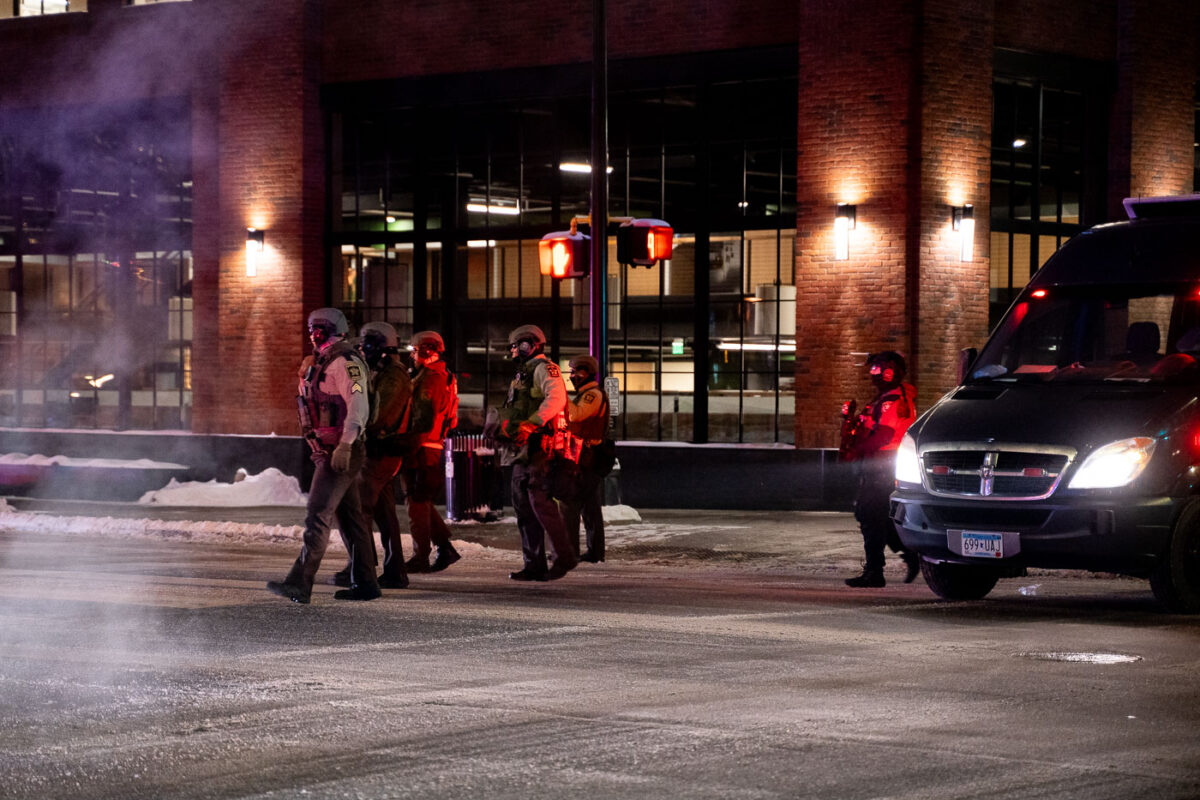
A New Year's Eve protest took place in Downtown Minneapolis, part of a nationwide call to support individuals imprisoned by the state. Approximately one hundred participants gathered in the urban environment. Law enforcement agencies, including the Minneapolis Police, State Patrol, Golden Valley PD, and Hennepin Sheriffs, responded to the event. Dozens of arrests were made after the Hennepin County Jail was spray-painted during the protest.

Downtown Minneapolis Protest, Police Response

Police at new years eve protest
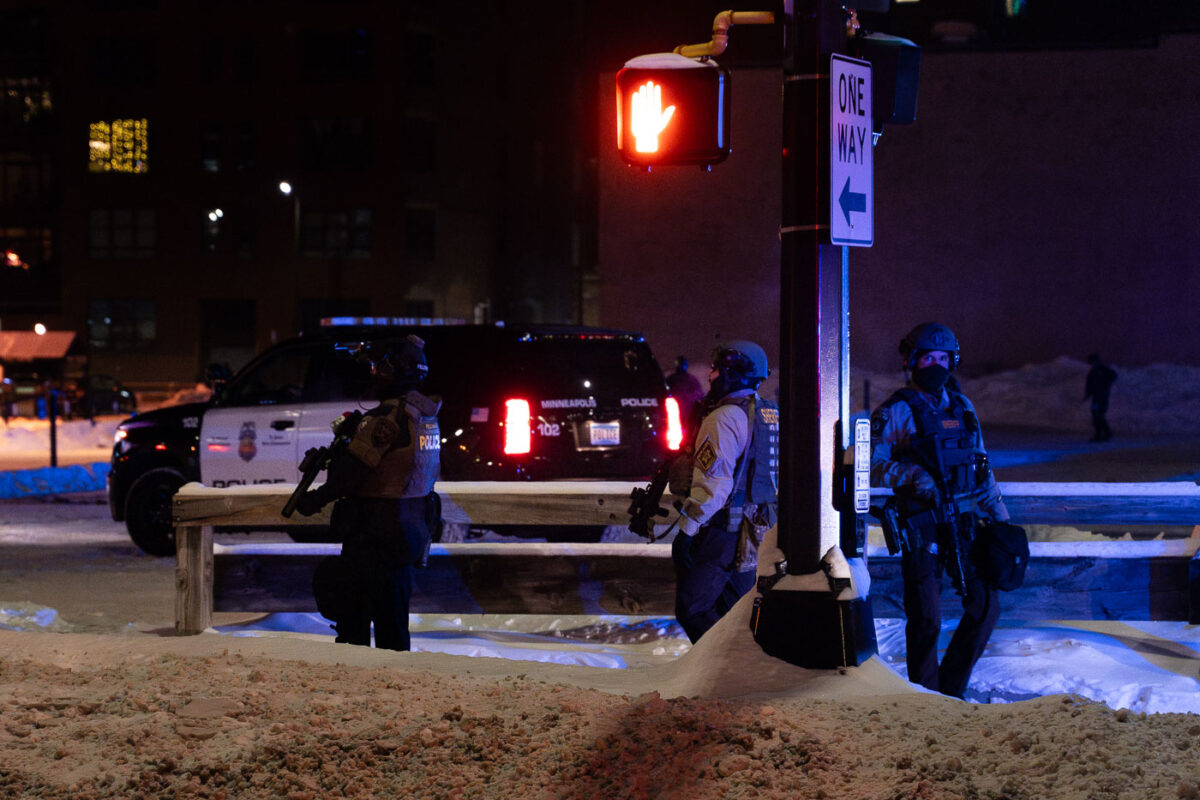
Hennepin County Sheriff's Department deputies are present in Downtown Minneapolis during a New Year's Eve protest. This event was part of an annual nationwide "Noise Protest" organized to call for the abolishing of prisons and to stand in solidarity with incarcerated individuals. The protest in Minneapolis led to approximately 40 arrests, reflecting ongoing public engagement with issues of criminal justice and incarceration.

Hennepin County Sheriff at Minneapolis New Year’s Eve Protest

Police look for protesters on new years
On New Year's Eve, approximately 100 individuals gathered in Downtown Minneapolis for a nationwide protest supporting those imprisoned by the state. Following an incident where the Hennepin County Jail was spray-painted, multiple law enforcement agencies, including Minneapolis Police, State Patrol, Golden Valley Police Department, and Hennepin County Sheriffs, responded to the area. This coordinated response, which included state aerial surveillance, led to the arrest of dozens of participants.

Minneapolis Police & Hennepin Sheriff Respond to Noise Demo

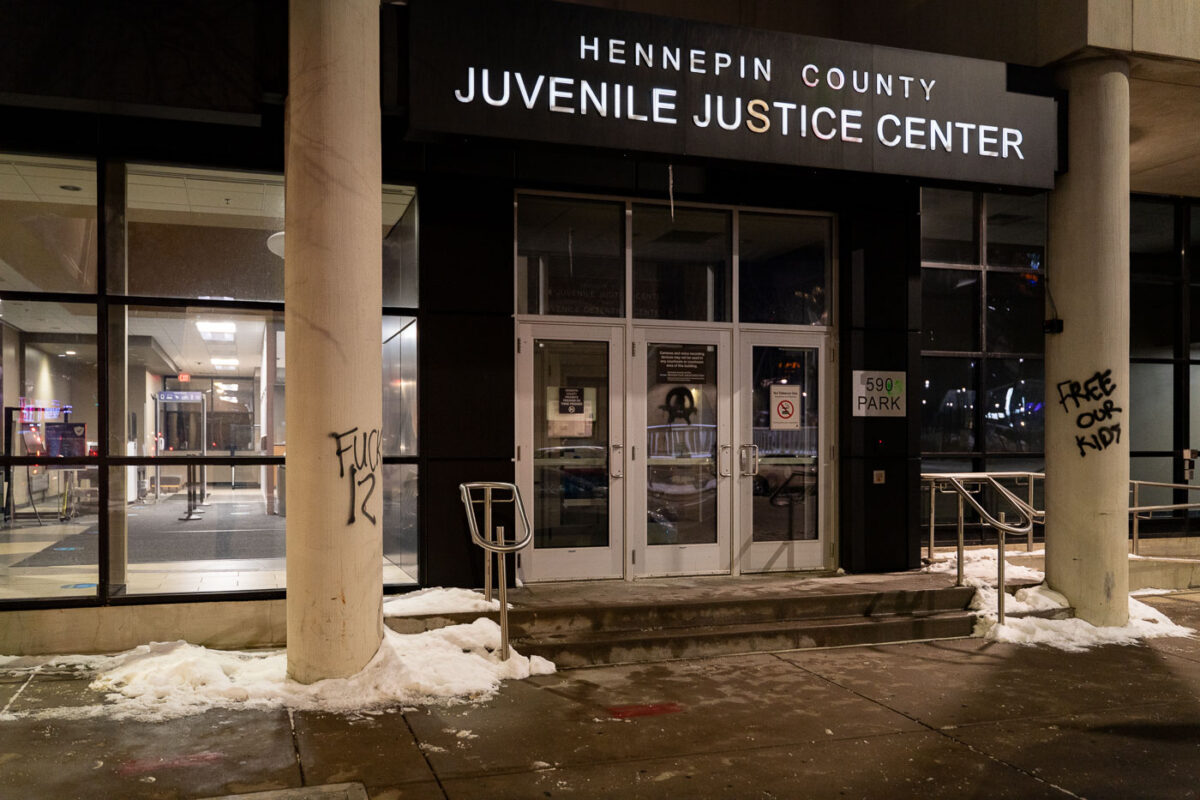
Anarchist Graffiti on Hennepin County Juvenile Justice center
On New Year's Eve, approximately one hundred individuals gathered for a nationwide call to protest in support of those incarcerated by the state. The Minneapolis Police Department, State Patrol, Golden Valley Police Department, and Hennepin County Sheriff's Office, along with aerial surveillance, responded to the Hennepin County Juvenile Justice Center. This response occurred after the building was spray-painted with graffiti, leading to the arrest of dozens of participants. The graffiti visible on the building's pillars includes the phrases "Fuck 12" and "Free Our Kids," reflecting anti-police sentiment and concern for youth in the justice system.

Minneapolis Juvenile Justice Center Graffiti and Protest Site

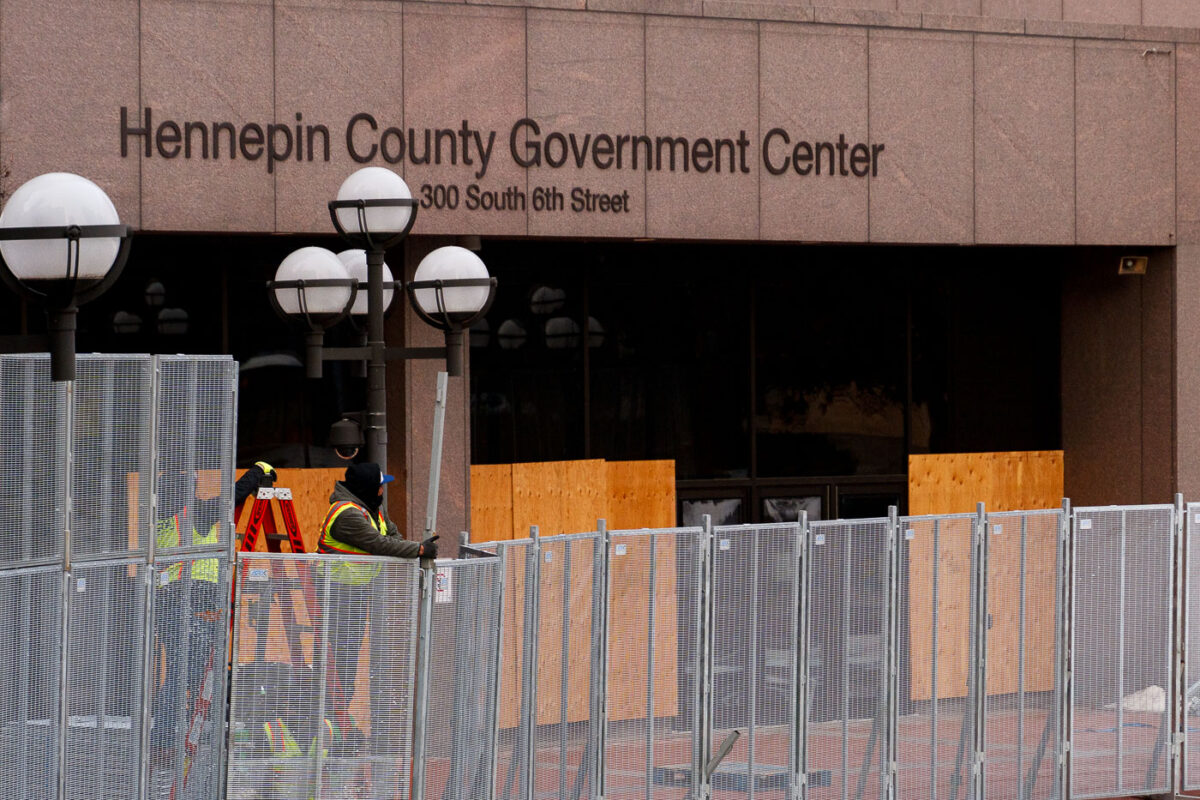
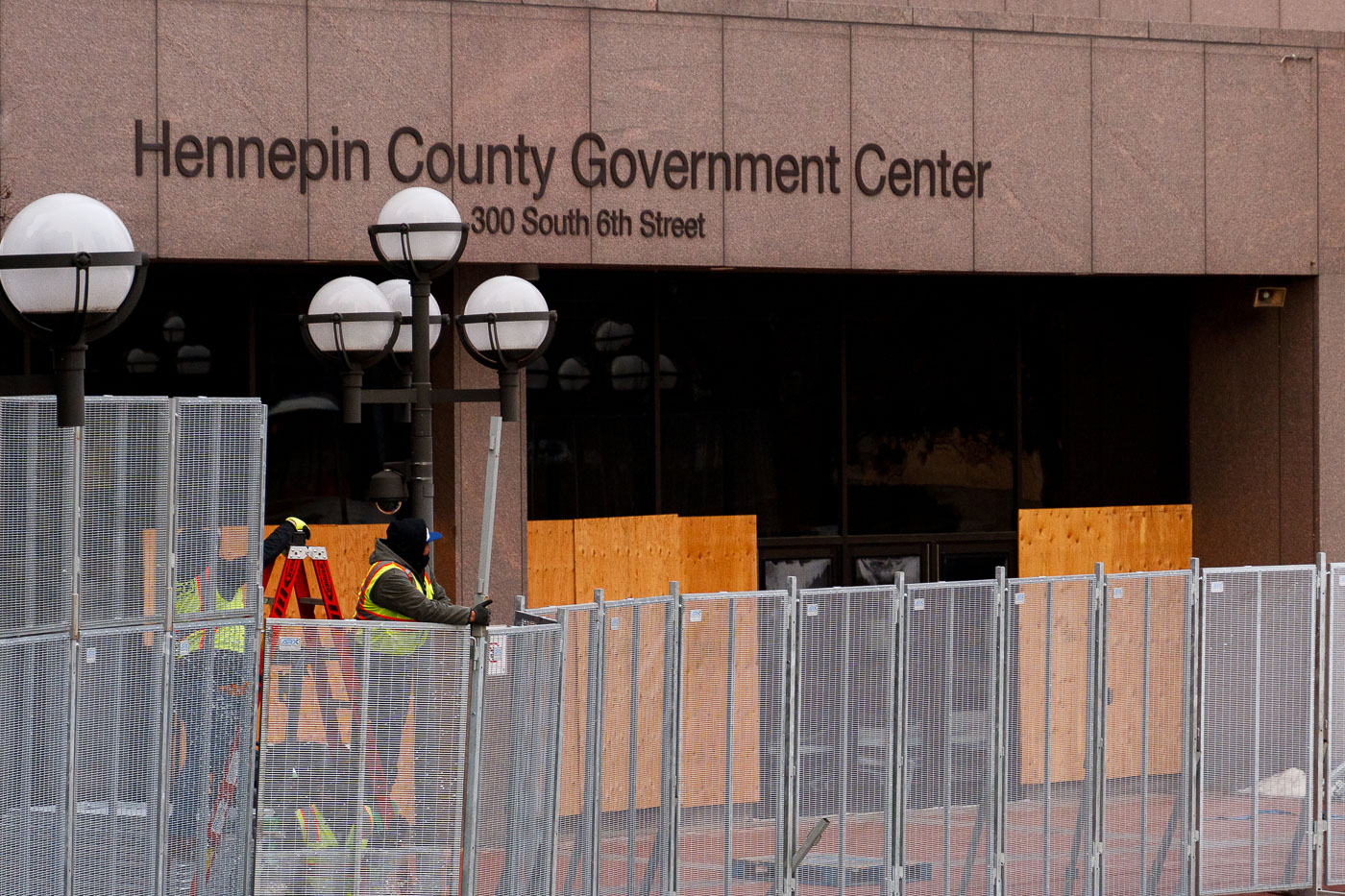
Hennepin County Government Center's ground-floor windows and entrances boarded with plywood during February 2021 security preparations.
The Hennepin County Government Center in downtown Minneapolis has plywood covering several ground-floor windows and entrances. The county courthouse complex was being secured in February 2021 ahead of the Derek Chauvin trial in the death of George Floyd. The building stands at 300 South 6th Street.

Plywood Covers Windows at Hennepin County Government Center Ahead of Chauvin Trial

Hennepin County Government Center in downtown Minneapolis, a brick and glass civic building at 300 South 6th Street.
Hennepin County Government Center in downtown Minneapolis houses county courts and administrative offices.

Looking Up at the Hennepin County Government Center Towers

Hennepin County Jail surrounded by temporary metal fencing and concrete barriers during February 2021 security preparations in downtown Minneapolis.
Hennepin County Jail, Minneapolis. Temporary fencing and concrete barriers surround the jail complex in downtown Minneapolis during security preparations tied to the Derek Chauvin trial in February 2021. The jail stands next to the Hennepin County Government Center campus.

Aerial View of Hennepin County Jail Security Barriers Before Chauvin Trial

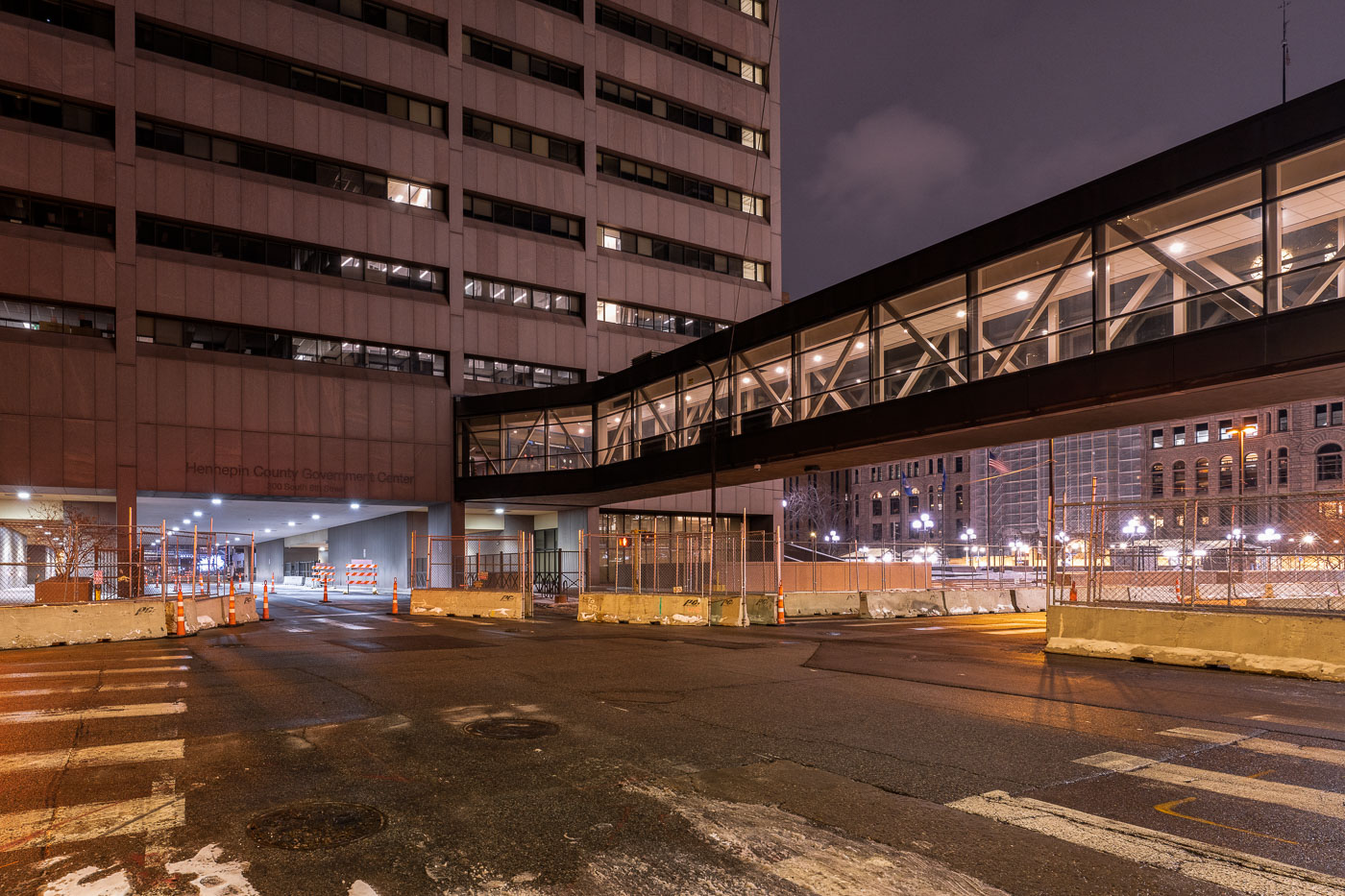
Hennepin County Government Center with overhead skyway and concrete barriers lining the street at night in downtown Minneapolis.
Hennepin County Government Center in downtown Minneapolis is surrounded by temporary fencing and concrete barriers. The county complex houses courts and county offices, and was under expanded security in early 2021 ahead of the Derek Chauvin trial. A skyway connects the Government Center to adjacent buildings above the secured street level.

Skyway Over a Barricaded Street at Hennepin County Government Center

Hennepin County Jail surrounded by chain link security fencing and metal poles at night in downtown Minneapolis.
Hennepin County Jail in downtown Minneapolis was surrounded by temporary security fencing in February 2021. Additional barriers were installed around government buildings in the area before the Derek Chauvin trial. The jail is part of the Hennepin County public safety and court complex.

Razor Wire Fencing Outside Hennepin County Jail at Night

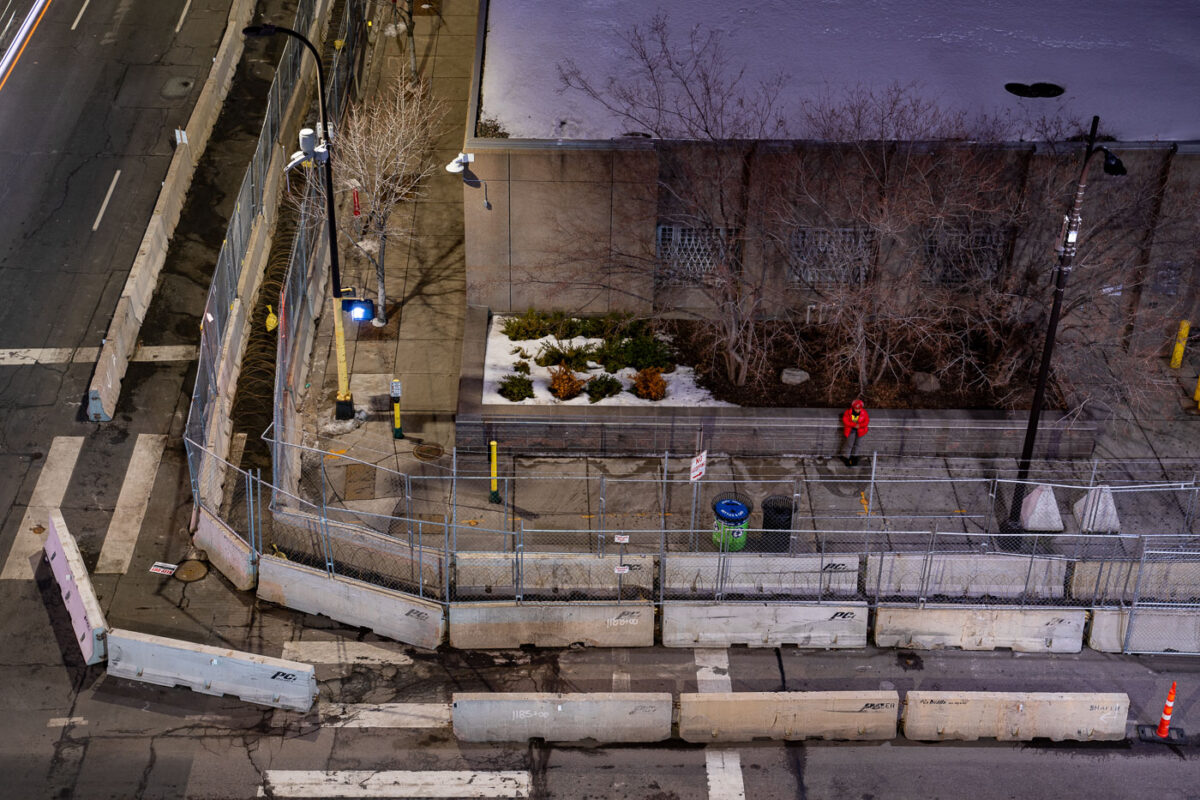
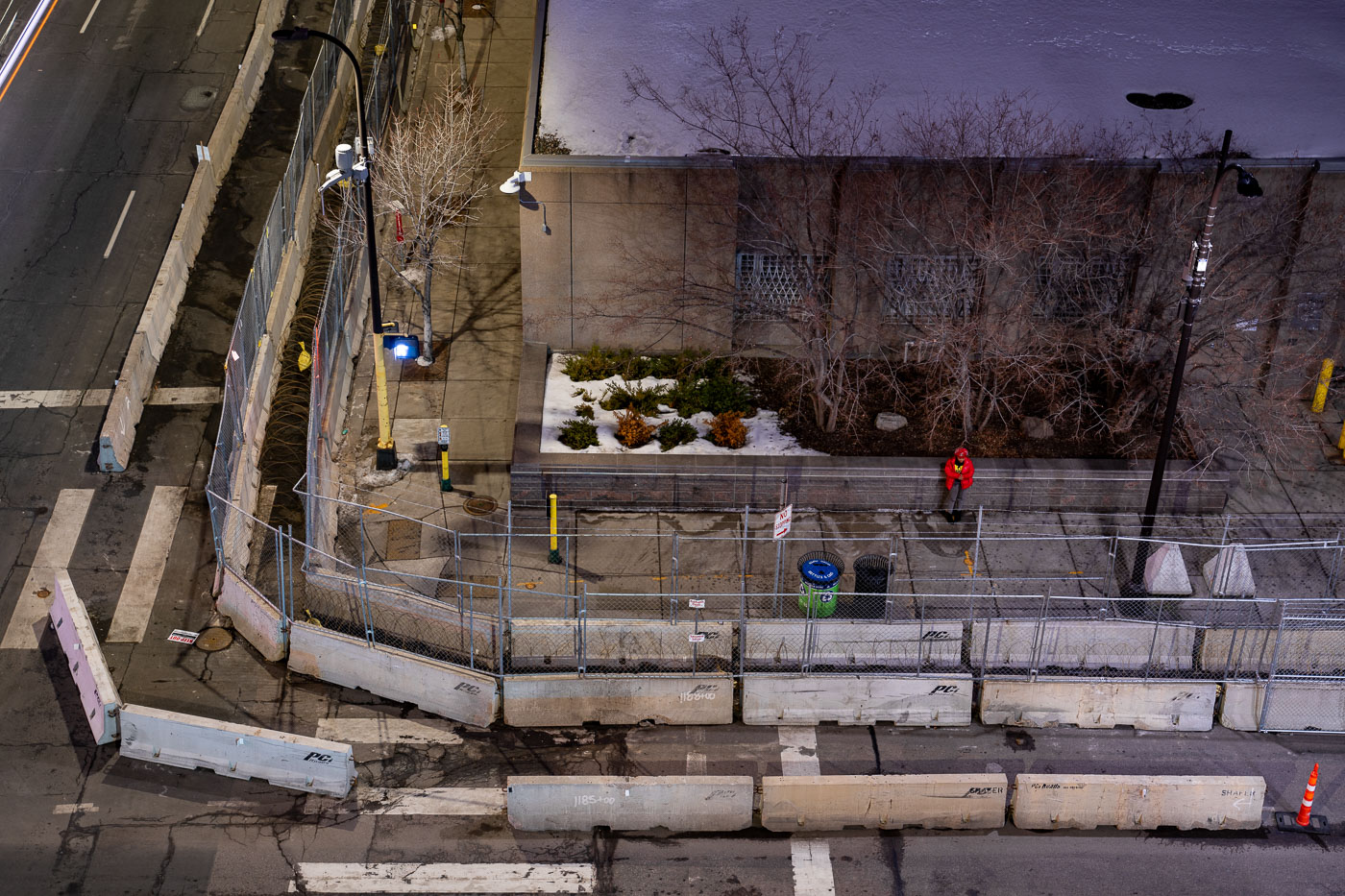
Concrete barriers line a snowy downtown Minneapolis street at night near the Hennepin County Medical Examiner's Office during trial security preparations.
Concrete barricaded shown on February 22, 2021 around the Hennepin County Medical Examiner's Office in downtown Minneapolis in anticipation of the Derek Chauvin murder trial. On May 25, 2020, Minneapolis police officer Derek Chauvin murdered 46-year-old George Floyd during an arrest outside Cup Foods at the intersection of 38th Street and Chicago Avenue in south Minneapolis. Video recorded by bystanders showed Chauvin kneeling on Floyd’s neck for more than nine minutes while Floyd repeatedly said he could not breathe. Three other Minneapolis police officers - J. Alexander Kueng, Thomas Lane, and Tou Thao — were also present during the arrest and later faced criminal charges for their roles in Floyd’s death. Floyd’s murder sparked protests and civil unrest across Minneapolis and around the world, leading to widespread demonstrations against police violence, major policy debates on policing, and the conviction of Chauvin on murder and manslaughter charges in 2021.

Concrete Barriers Outside the Hennepin County Medical Examiner’s Office

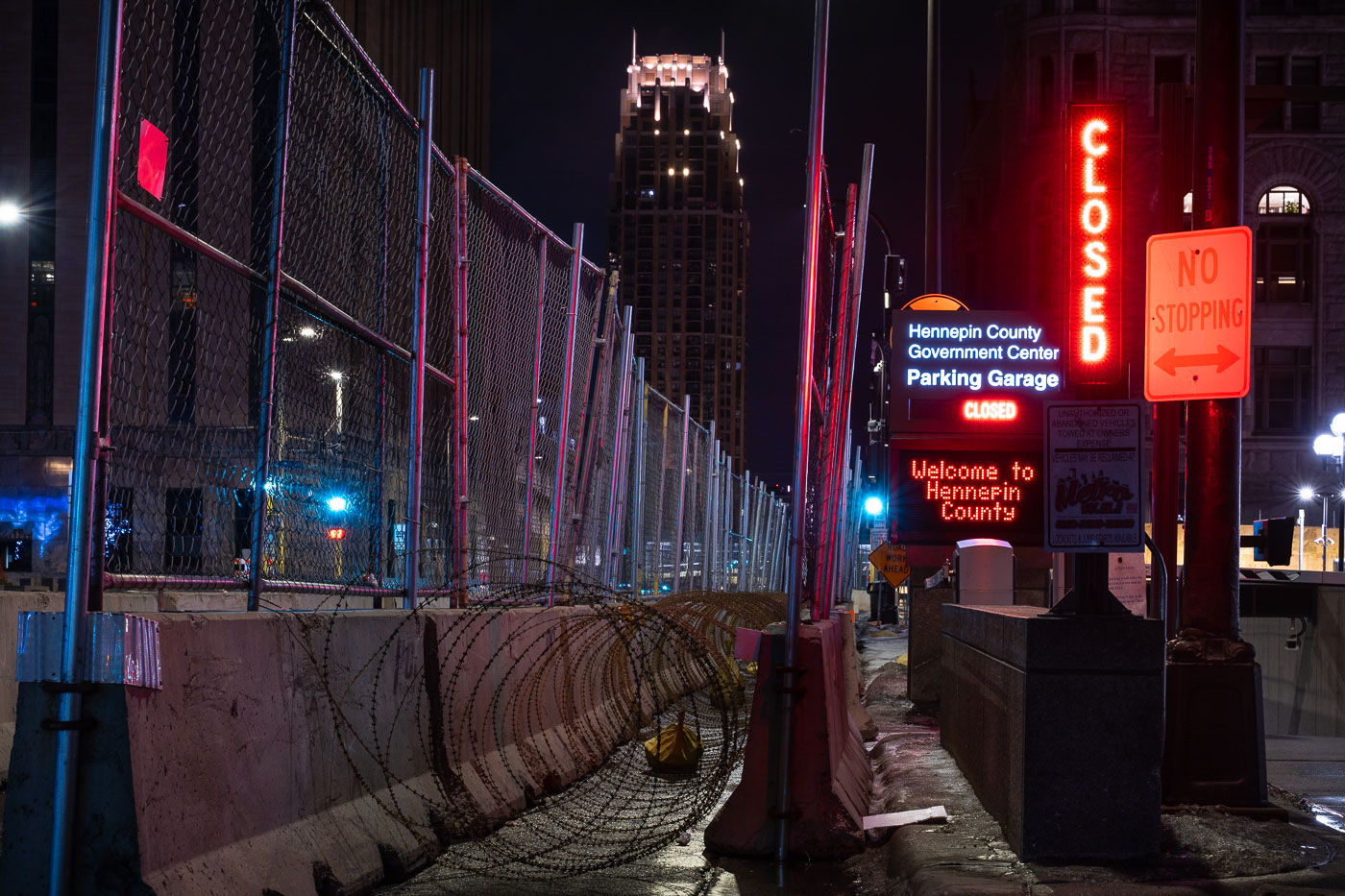
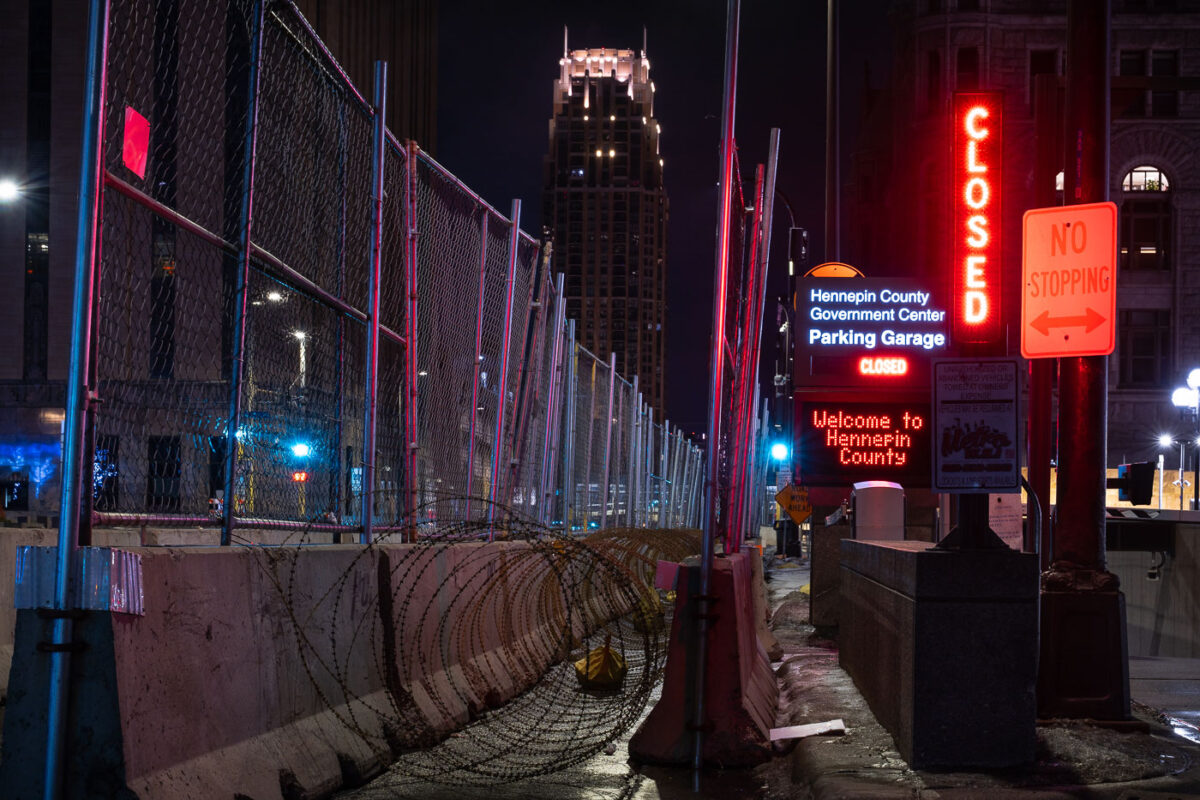
Razor wire fencing secures the Hennepin County Government Center in downtown Minneapolis during trial security preparations in February 2021.
Razor wire fencing is installed around the Hennepin County Government Center in Minneapolis, Minnesota. This security measure was put in place in anticipation of the Derek Chauvin trial, which was scheduled to begin less than two weeks after this photograph was taken. The trial stemmed from the death of George Floyd, whose killing by Chauvin in May 2020 sparked widespread protests and unrest in Minneapolis and across the nation.

“Closed” Parking Garage Sign Near Hennepin County Government Center at Night

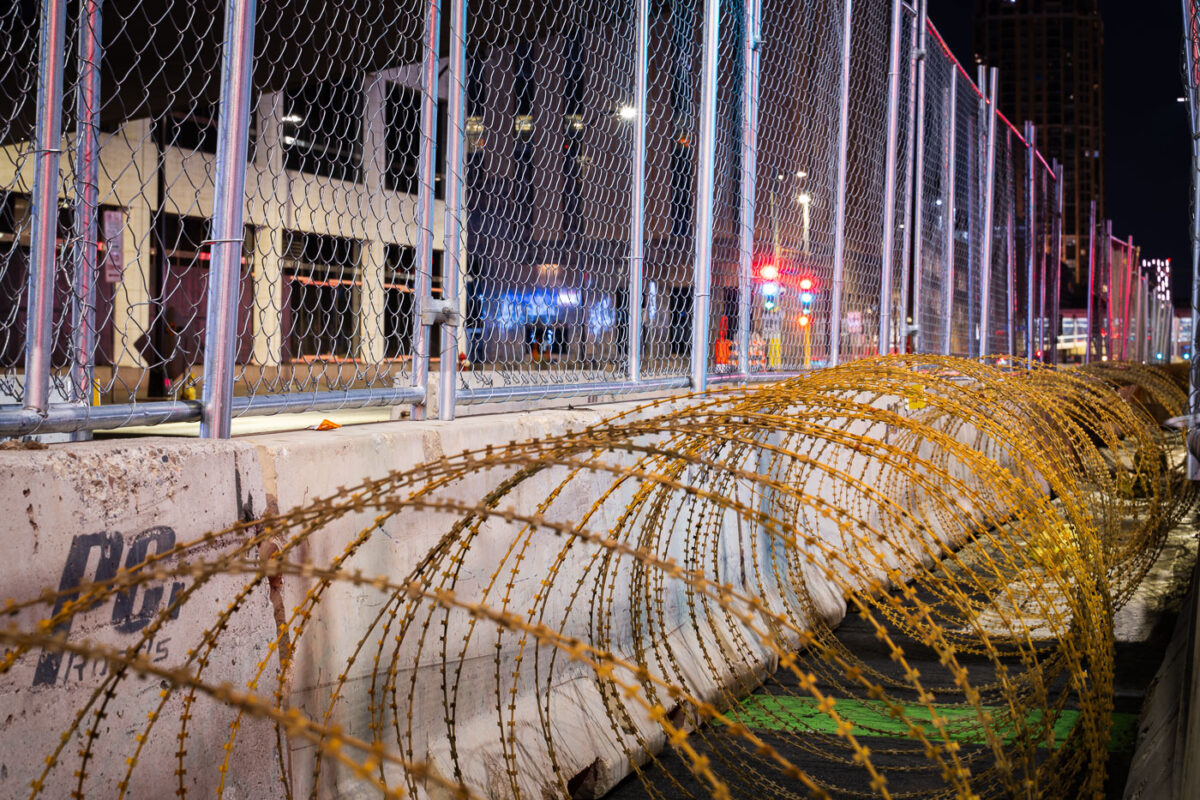
Yellow mesh security fencing and razor wire surround the Hennepin County Government Center during Derek Chauvin trial preparations in downtown Minneapolis.
Security measures, including razor wire and concrete barriers, were erected around the Hennepin County Government Center in Minneapolis in anticipation of the Derek Chauvin trial. On May 25, 2020, Minneapolis police officer Derek Chauvin murdered 46-year-old George Floyd during an arrest outside Cup Foods at the intersection of 38th Street and Chicago Avenue in south Minneapolis. Video recorded by bystanders showed Chauvin kneeling on Floyd’s neck for more than nine minutes while Floyd repeatedly said he could not breathe. Three other Minneapolis police officers - J. Alexander Kueng, Thomas Lane, and Tou Thao — were also present during the arrest and later faced criminal charges for their roles in Floyd’s death. Floyd’s murder sparked protests and civil unrest across Minneapolis and around the world, leading to widespread demonstrations against police violence, major policy debates on policing, and the conviction of Chauvin on murder and manslaughter charges in 2021.

Razor Wire Lines a Concrete Barrier Near Minneapolis City Hall at Night

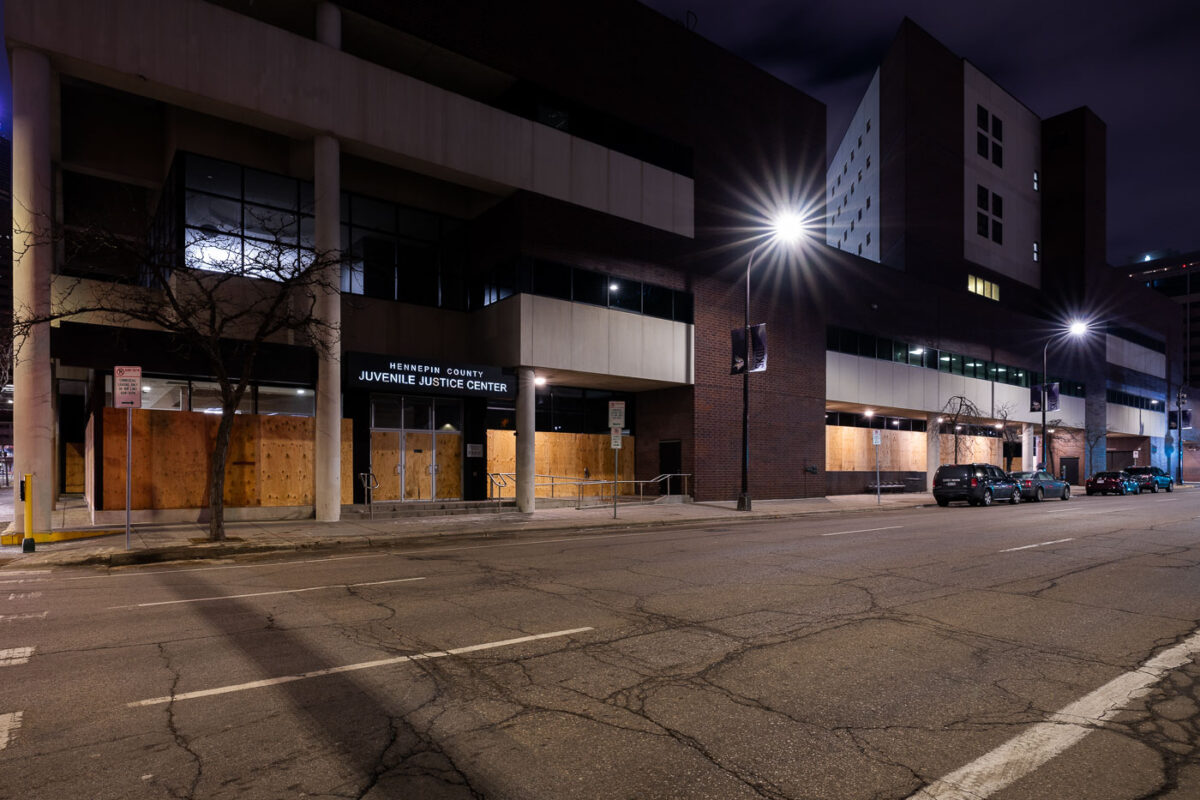
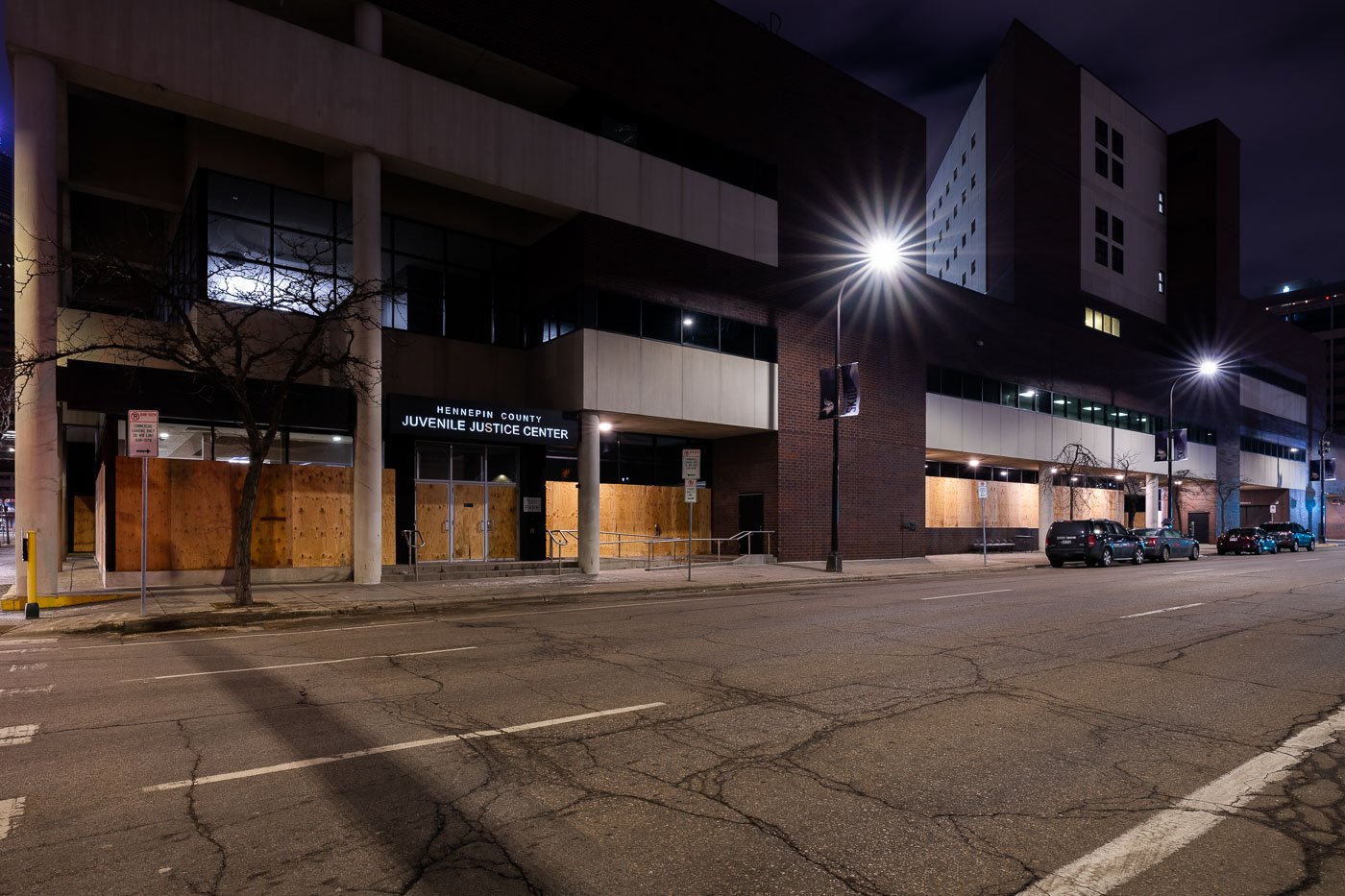
Hennepin County Juvenile Justice Center in downtown Minneapolis boarded with plywood panels during February 2021 trial security preparations.
The Hennepin County Juvenile Justice Center in downtown Minneapolis is shown boarded up in anticipation of the Derek Chauvin trial in April 2021. The building, located at 590 Park Avenue, serves as a courthouse for juvenile legal proceedings. The extensive boarding and security measures were implemented in response to concerns about potential unrest and protests stemming from the trial, which followed the murder of George Floyd in May 2020.

Plywood Covers Entrances at the Hennepin County Juvenile Justice Center

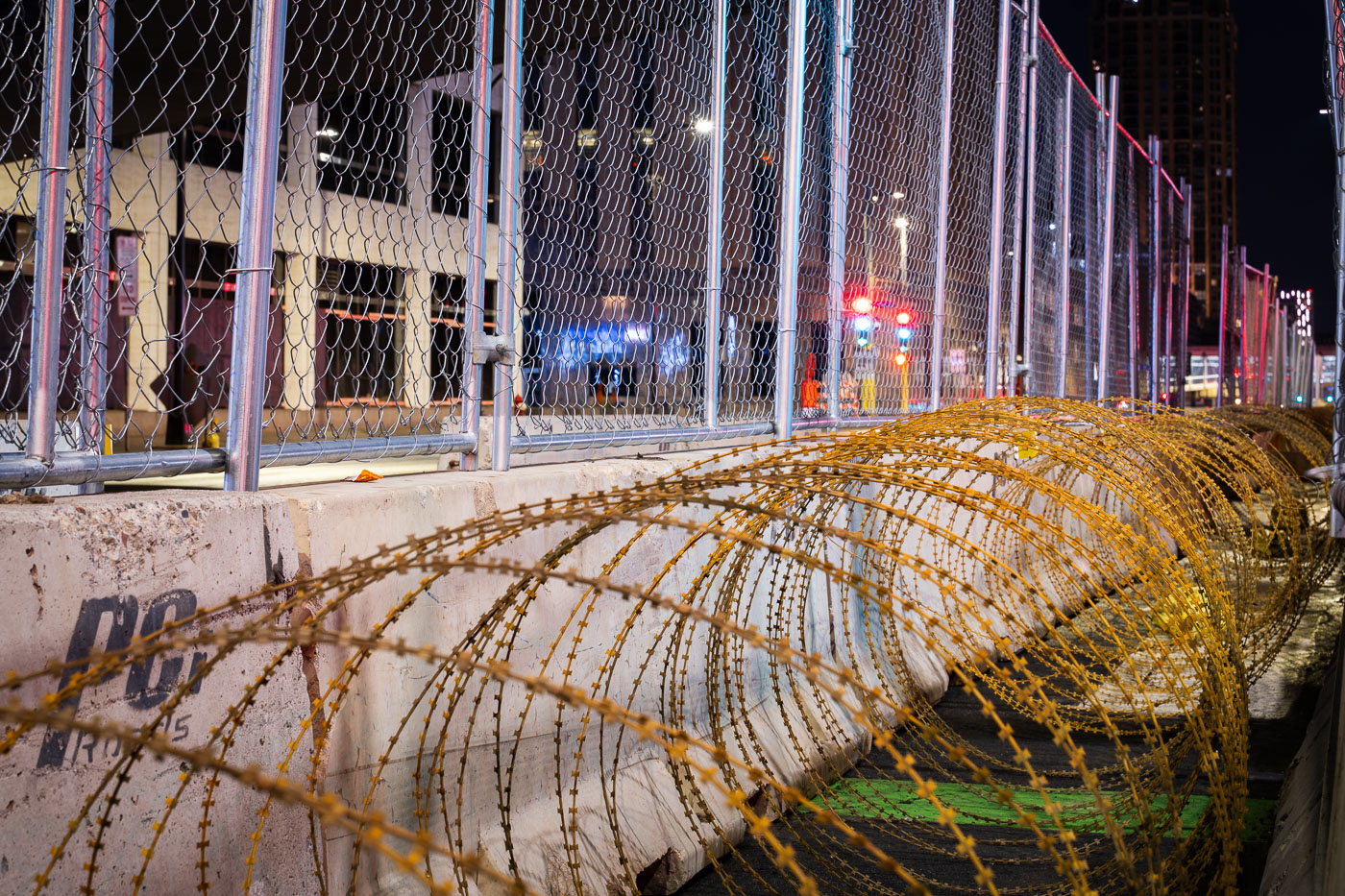
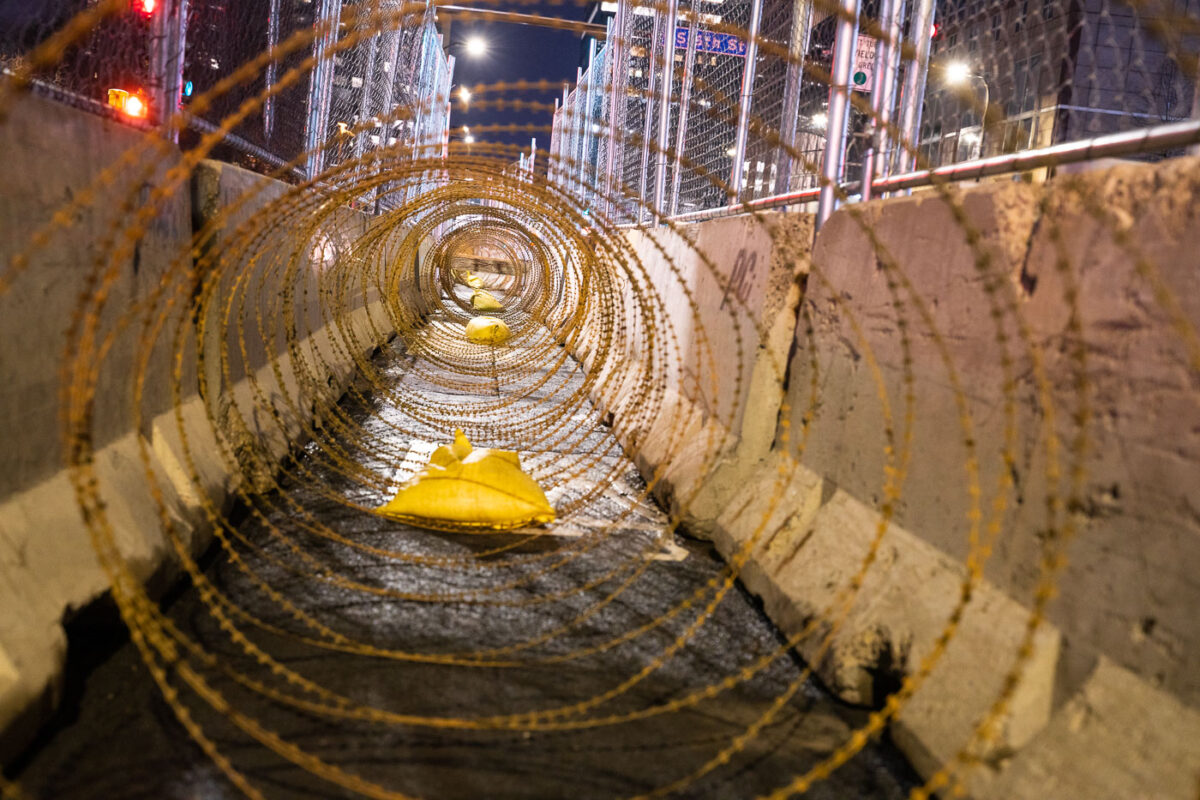
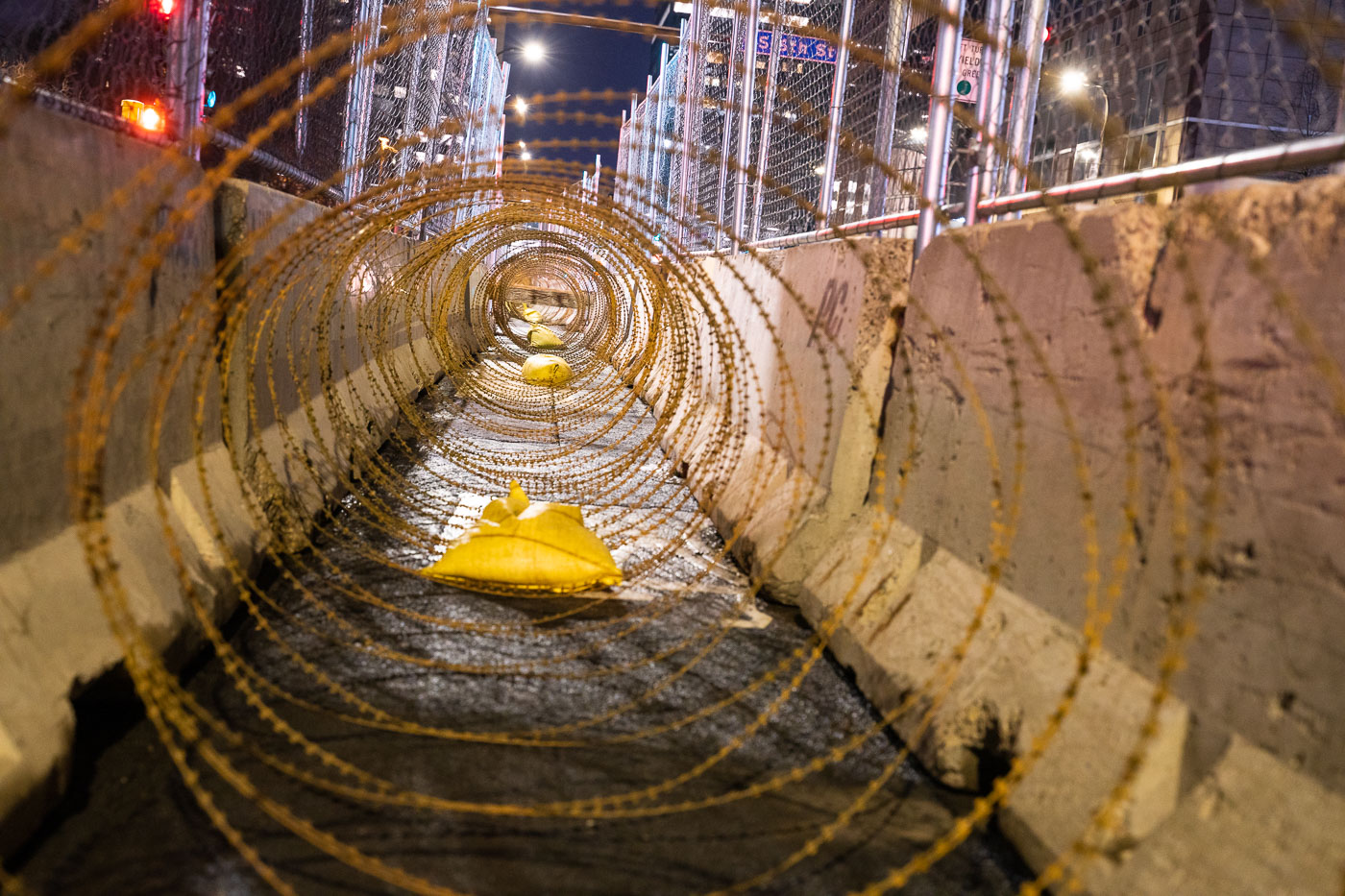
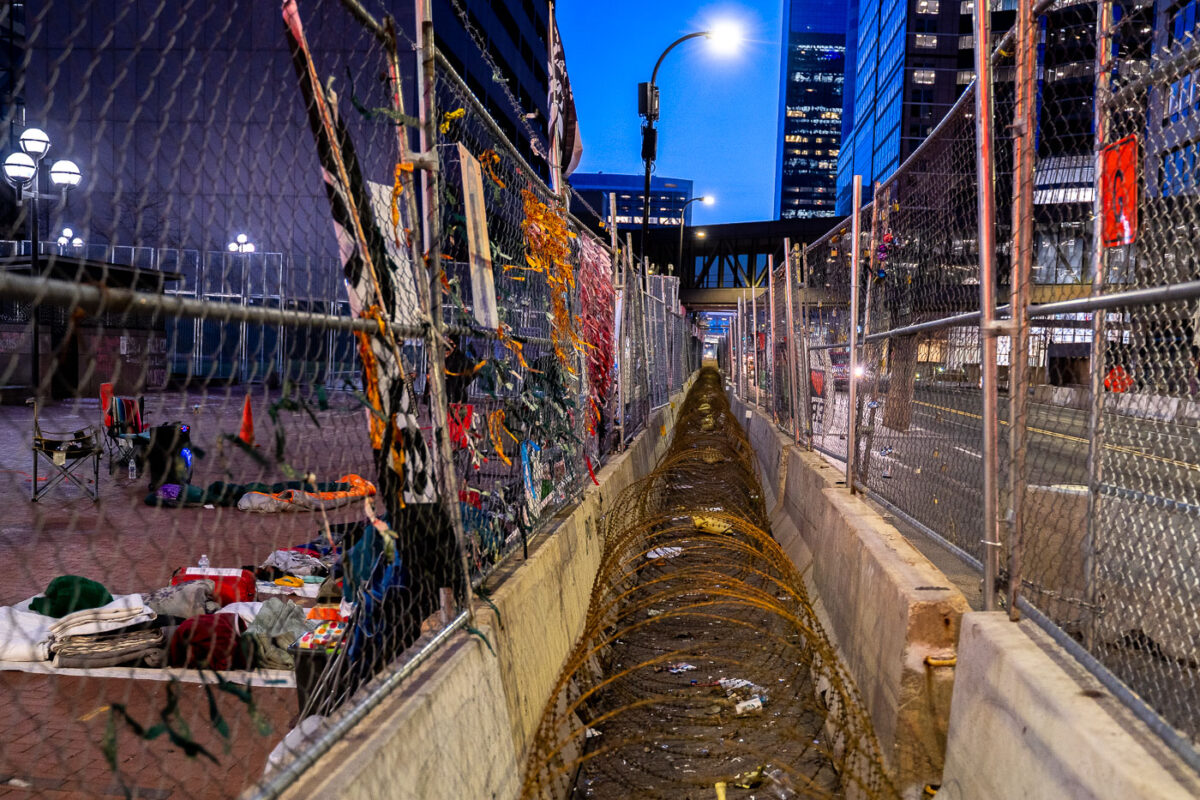
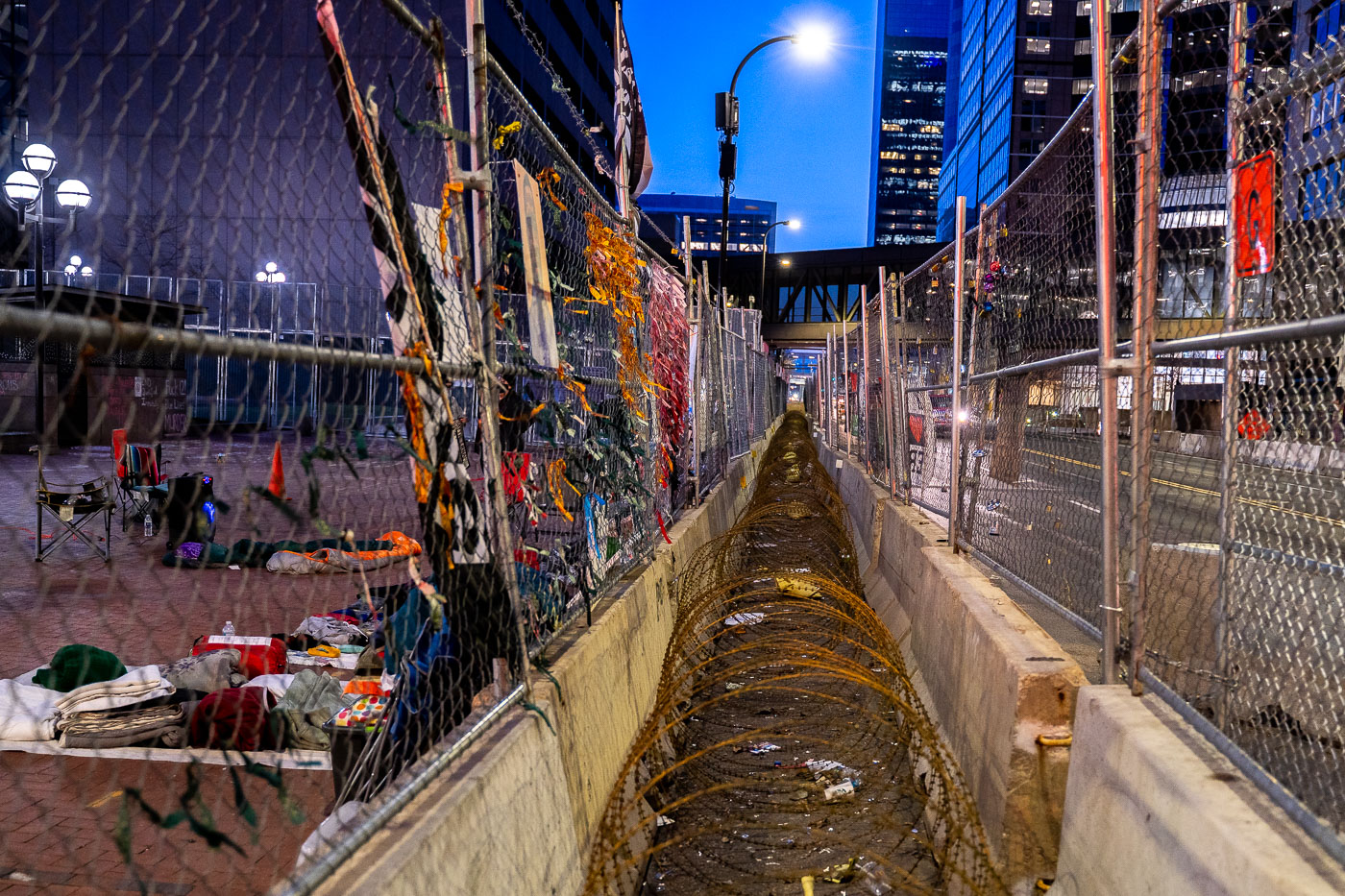
Yellow security tape and chain-link fencing create a tunnel-like corridor outside Hennepin County Government Center in downtown Minneapolis at night.
Razor wire and concrete barriers form a secured corridor outside the Hennepin County Government Center in downtown Minneapolis. The government center houses county courts and administrative offices. Temporary fencing and barricades were installed around the complex during security preparations in early 2021.

Coiled Razor Wire Lines a Barricaded Walkway at Night in Minneapolis

Barricades at the Hennepin County Public Safety Facility
Security barricades and fencing surround the Hennepin County Public Safety Facility in Minneapolis on February 24, 2021 in anticipation of the Derek Chauvin murder trial. The extensive security measures, including concrete barriers and razor wire, were implemented to manage potential protests and ensure the safety of the courthouse and surrounding areas. On May 25, 2020, Minneapolis police officer Derek Chauvin murdered 46-year-old George Floyd during an arrest outside Cup Foods at the intersection of 38th Street and Chicago Avenue in south Minneapolis. Video recorded by bystanders showed Chauvin kneeling on Floyd’s neck for more than nine minutes while Floyd repeatedly said he could not breathe. Three other Minneapolis police officers - J. Alexander Kueng, Thomas Lane, and Tou Thao — were also present during the arrest and later faced criminal charges for their roles in Floyd’s death. Floyd’s murder sparked protests and civil unrest across Minneapolis and around the world, leading to widespread demonstrations against police violence, major policy debates on policing, and the conviction of Chauvin on murder and manslaughter charges in 2021.
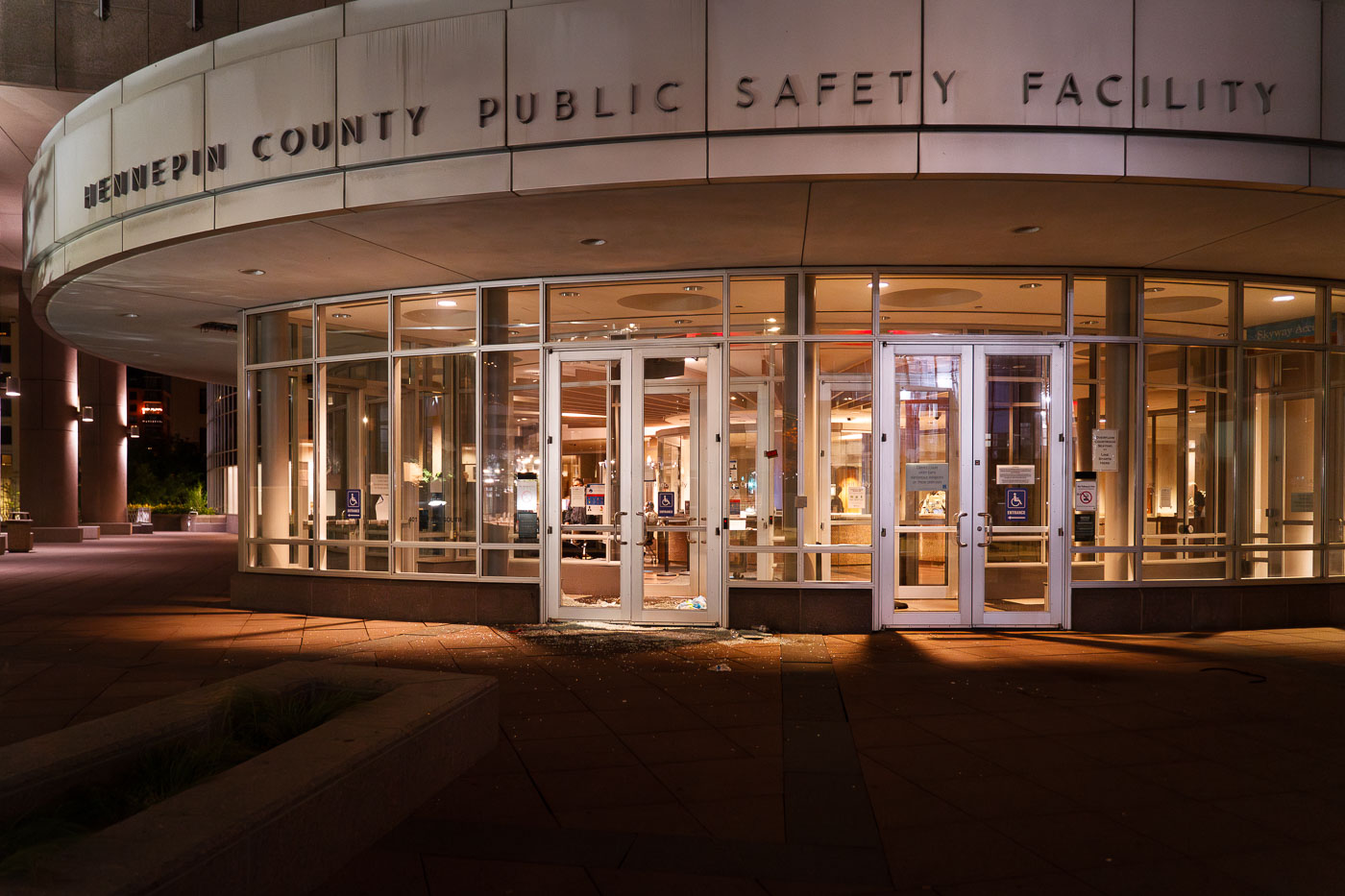
Hennepin County Jail Barricades for Chauvin Trial

CourtTV broadcast van parked outside Hennepin County Government Center during Derek Chauvin trial coverage in February 2021.
CourtTV van outside the Hennepin County Government Center in downtown Minneapolis. The broadcast vehicle was stationed near the courthouse during coverage of the Derek Chauvin trial in February 2021.

Court TV Satellite Truck Parked at Night Near Hennepin County Government Center

Community Control of MPD
A protester holds a sign reading "COMMUNITY CONTROL OF MPD" outside the Hennepin County Government Center in Minneapolis on February 25, 2021. The protest was announced for March 8th, coinciding with the start of the Derek Chauvin trial. This event highlights ongoing calls for police reform and community oversight of law enforcement in Minneapolis, a movement that gained significant momentum following the murder of George Floyd in 2020. On May 25, 2020, Minneapolis police officer Derek Chauvin murdered 46-year-old George Floyd during an arrest outside Cup Foods at the intersection of 38th Street and Chicago Avenue in south Minneapolis. Video recorded by bystanders showed Chauvin kneeling on Floyd’s neck for more than nine minutes while Floyd repeatedly said he could not breathe. Three other Minneapolis police officers - J. Alexander Kueng, Thomas Lane, and Tou Thao — were also present during the arrest and later faced criminal charges for their roles in Floyd’s death. Floyd’s murder sparked protests and civil unrest across Minneapolis and around the world, leading to widespread demonstrations against police violence, major policy debates on policing, and the conviction of Chauvin on murder and manslaughter charges in 2021.

Minneapolis Protest for Community Control of MPD

Michelle Gross speaks prior to Derek Chauvin Trial
Michelle Gross speaks at a press conference outside the Hennepin County Government Center in Minneapolis on February 25, 2021. Activists gathered to announce a protest planned for that day, demanding justice and change in the wake of the Derek Chauvin trial. The signs held by attendees called for the conviction of Chauvin and justice for George Floyd. On May 25, 2020, Minneapolis police officer Derek Chauvin murdered 46-year-old George Floyd during an arrest outside Cup Foods at the intersection of 38th Street and Chicago Avenue in south Minneapolis. Video recorded by bystanders showed Chauvin kneeling on Floyd’s neck for more than nine minutes while Floyd repeatedly said he could not breathe. Three other Minneapolis police officers - J. Alexander Kueng, Thomas Lane, and Tou Thao — were also present during the arrest and later faced criminal charges for their roles in Floyd’s death. Floyd’s murder sparked protests and civil unrest across Minneapolis and around the world, leading to widespread demonstrations against police violence, major policy debates on policing, and the conviction of Chauvin on murder and manslaughter charges in 2021.

Michelle Gross speaks at press conference before Derek Chauvin Trial

Nekima Levy Armstrong at 2021 rally
Nekima Levy Armstrong, a prominent activist, speaks at a press conference held outside the Hennepin County Government Center in Downtown Minneapolis on February 25, 2021. The conference announced a March 8th protest, with participants expressing their determination to demand justice and change despite perceived fortifications around government buildings. The signs held by attendees call for the conviction of Derek Chauvin and justice for George Floyd and other victims, reflecting the ongoing protests and calls for accountability following the murder of George Floyd. On May 25, 2020, Minneapolis police officer Derek Chauvin murdered 46-year-old George Floyd during an arrest outside Cup Foods at the intersection of 38th Street and Chicago Avenue in south Minneapolis. Video recorded by bystanders showed Chauvin kneeling on Floyd’s neck for more than nine minutes while Floyd repeatedly said he could not breathe. Three other Minneapolis police officers - J. Alexander Kueng, Thomas Lane, and Tou Thao — were also present during the arrest and later faced criminal charges for their roles in Floyd’s death. Floyd’s murder sparked protests and civil unrest across Minneapolis and around the world, leading to widespread demonstrations against police violence, major policy debates on policing, and the conviction of Chauvin on murder and manslaughter charges in 2021.

Nekima Levy Armstrong at Downtown Minneapolis Protest

Michelle Gross speaks at Hennepin County Government Center
Michelle Gross speaks to a crowd at the Hennepin County Government Center announcing plans to protest the start of the Derek Chauvin murder trial.

Michelle Gross speaks at Hennepin County Government Center

Workers installing security fencing at courthouse for Chauvin trial
Temporary fencing is being installed around the Hennepin County Government Center in Minneapolis, located at 300 South 6th Street. This security measure was put in place in anticipation of the trial of Derek Chauvin, a former Minneapolis police officer. On May 25, 2020, Minneapolis police officer Derek Chauvin murdered 46-year-old George Floyd during an arrest outside Cup Foods at the intersection of 38th Street and Chicago Avenue in south Minneapolis. Video recorded by bystanders showed Chauvin kneeling on Floyd’s neck for more than nine minutes while Floyd repeatedly said he could not breathe. Three other Minneapolis police officers - J. Alexander Kueng, Thomas Lane, and Tou Thao — were also present during the arrest and later faced criminal charges for their roles in Floyd’s death. Floyd’s murder sparked protests and civil unrest across Minneapolis and around the world, leading to widespread demonstrations against police violence, major policy debates on policing, and the conviction of Chauvin on murder and manslaughter charges in 2021.

Hennepin County Government Center Security Fencing Installation

Hennepin County Government Center Derek Chauvin Trial Security
Temporary security fencing is erected around the Hennepin County Government Center in Minneapolis on February 28, 2021, in anticipation of the Derek Chauvin murder trial. The installation of this fencing, part of Operation Safety Net, was a measure to secure the courthouse and manage potential public gatherings during the high-profile trial, which began jury selection on March 8, 2021. The courthouse complex, a significant piece of Brutalist architecture in downtown Minneapolis, was the site of the trial for the death of George Floyd, an event that sparked widespread protests and unrest. On May 25, 2020, Minneapolis police officer Derek Chauvin murdered 46-year-old George Floyd during an arrest outside Cup Foods at the intersection of 38th Street and Chicago Avenue in south Minneapolis. Video recorded by bystanders showed Chauvin kneeling on Floyd’s neck for more than nine minutes while Floyd repeatedly said he could not breathe. Three other Minneapolis police officers - J. Alexander Kueng, Thomas Lane, and Tou Thao — were also present during the arrest and later faced criminal charges for their roles in Floyd’s death. Floyd’s murder sparked protests and civil unrest across Minneapolis and around the world, leading to widespread demonstrations against police violence, major policy debates on policing, and the conviction of Chauvin on murder and manslaughter charges in 2021.

Hennepin County Government Center: Trial Security Fencing

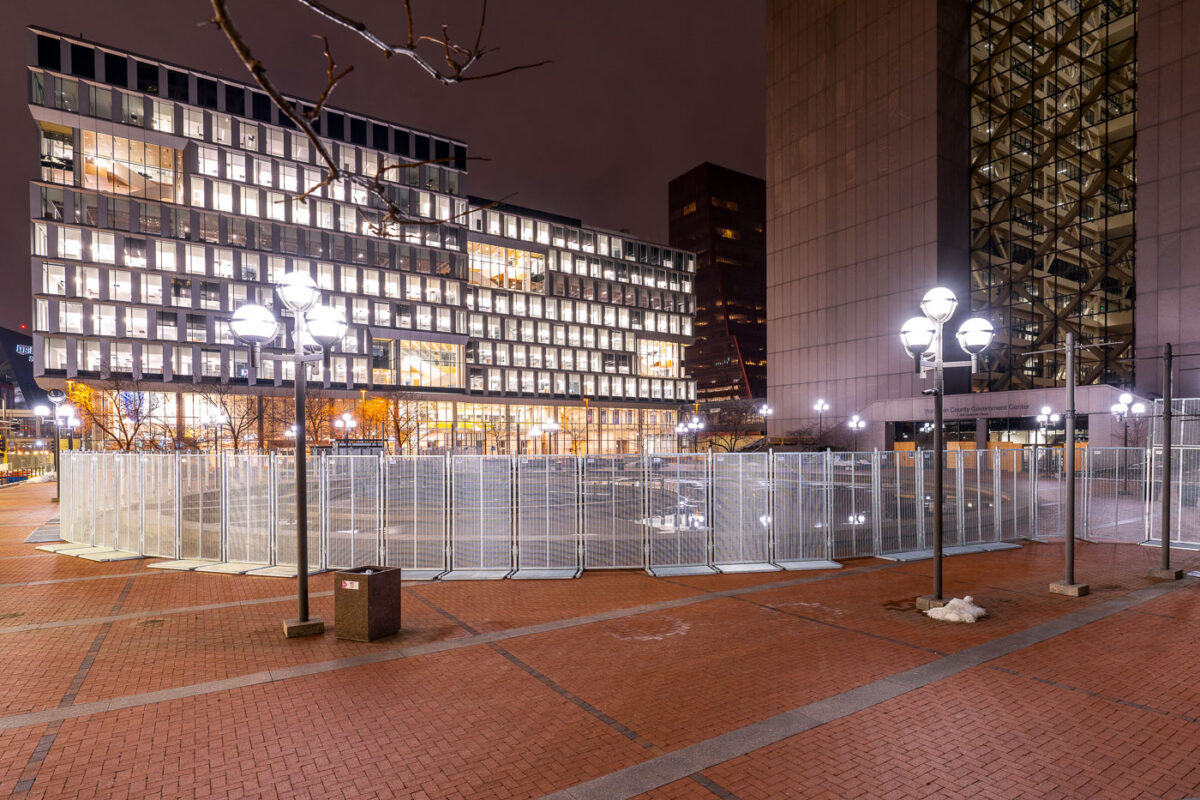
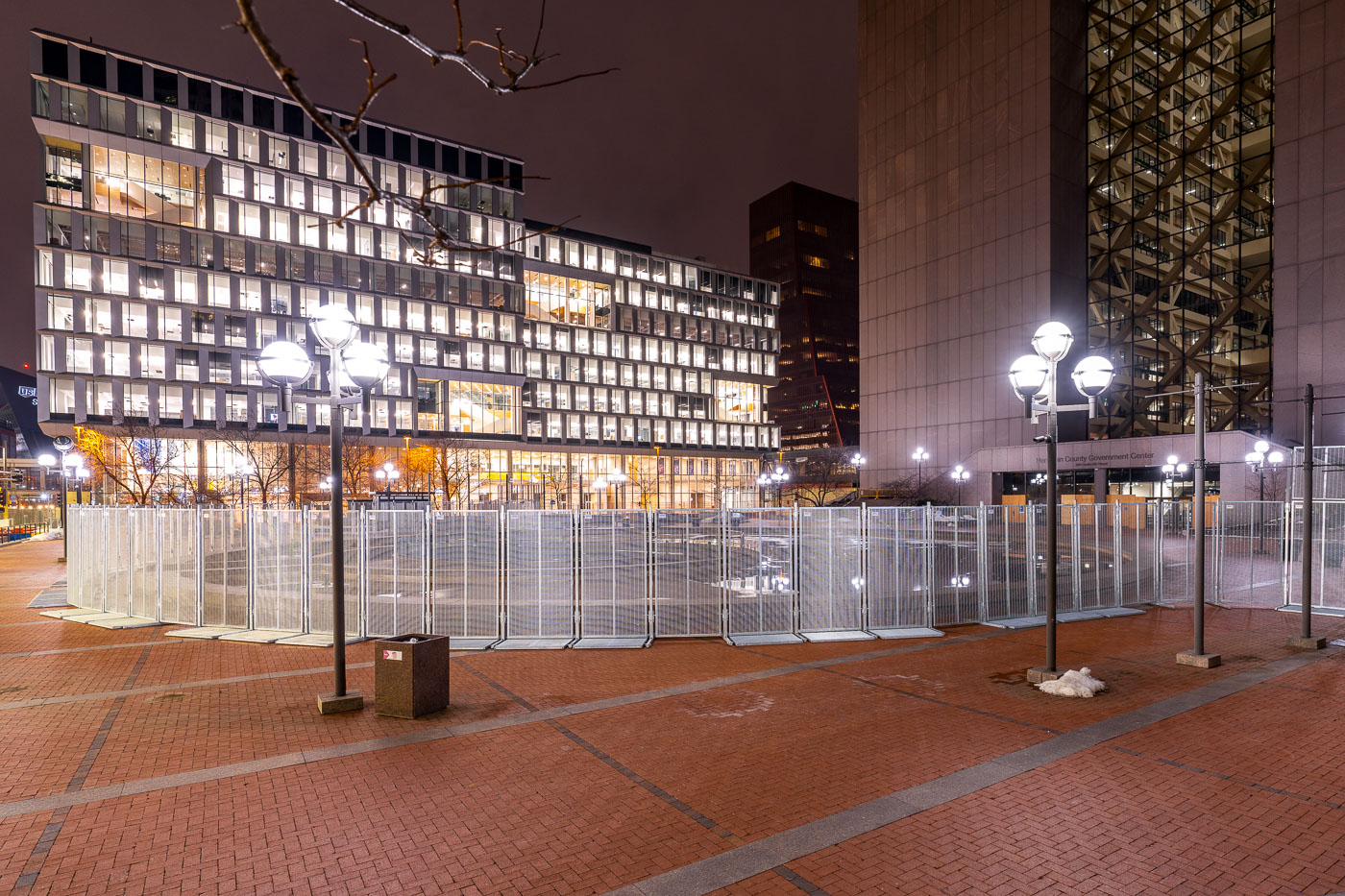
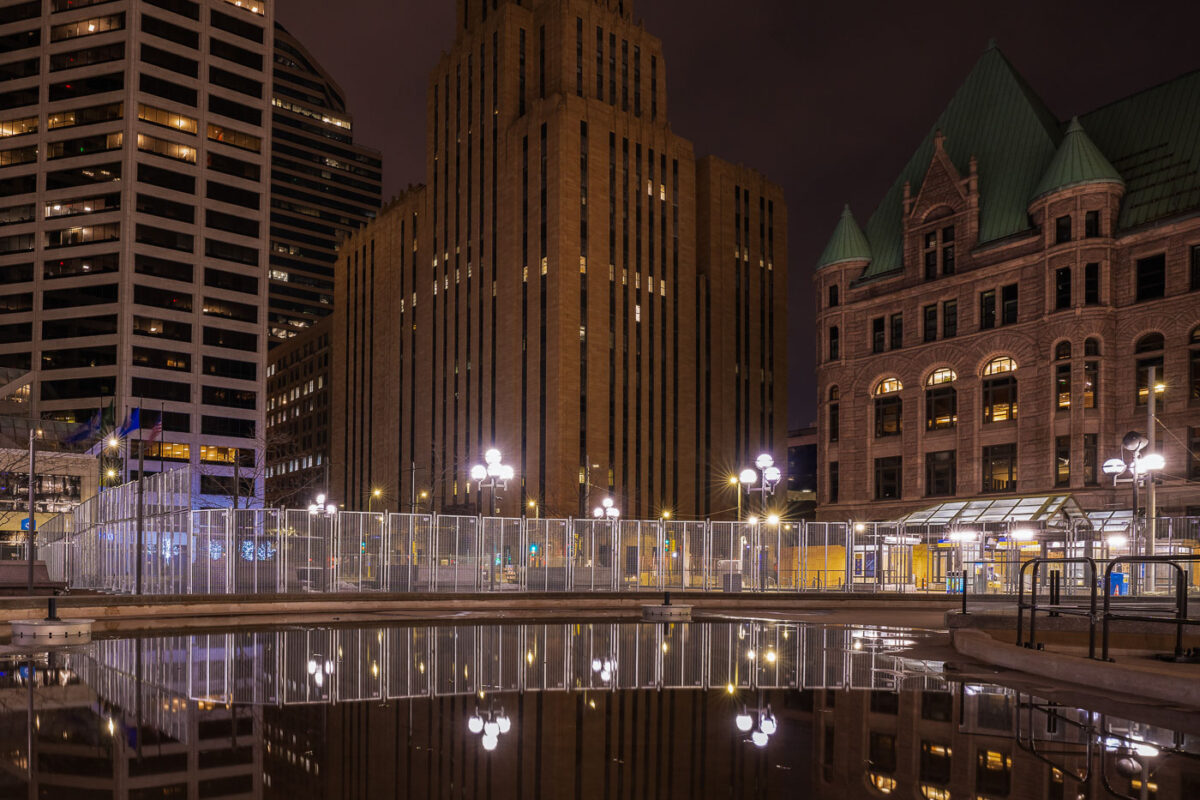
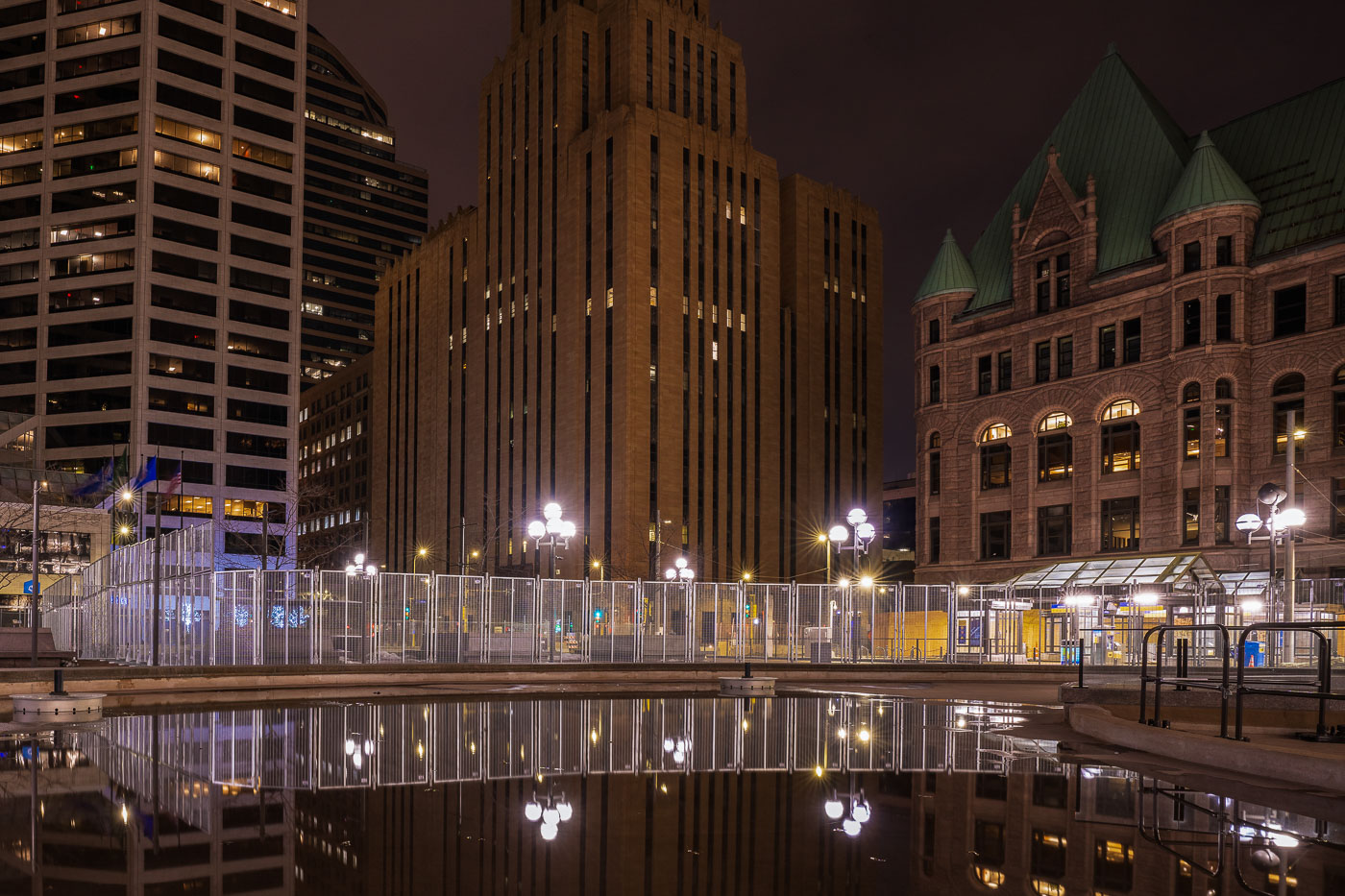
Reflections outside Minneapolis City Hall and Government Center
Security fencing surrounds the Hennepin County Government Center in Minneapolis, Minnesota, in anticipation of the Derek Chauvin murder trial. The trial, which began jury selection on March 8, 2021, followed the death of George Floyd and subsequent protests. The fencing, part of Operation Safety Net, was installed to secure the courthouse and surrounding areas during the high-profile legal proceedings. On May 25, 2020, Minneapolis police officer Derek Chauvin murdered 46-year-old George Floyd during an arrest outside Cup Foods at the intersection of 38th Street and Chicago Avenue in south Minneapolis. Video recorded by bystanders showed Chauvin kneeling on Floyd’s neck for more than nine minutes while Floyd repeatedly said he could not breathe. Three other Minneapolis police officers - J. Alexander Kueng, Thomas Lane, and Tou Thao — were also present during the arrest and later faced criminal charges for their roles in Floyd’s death. Floyd’s murder sparked protests and civil unrest across Minneapolis and around the world, leading to widespread demonstrations against police violence, major policy debates on policing, and the conviction of Chauvin on murder and manslaughter charges in 2021.

Minneapolis Courthouse Fencing for Chauvin Trial

APX Perimeters fencing at Derek Chauvin murder trial
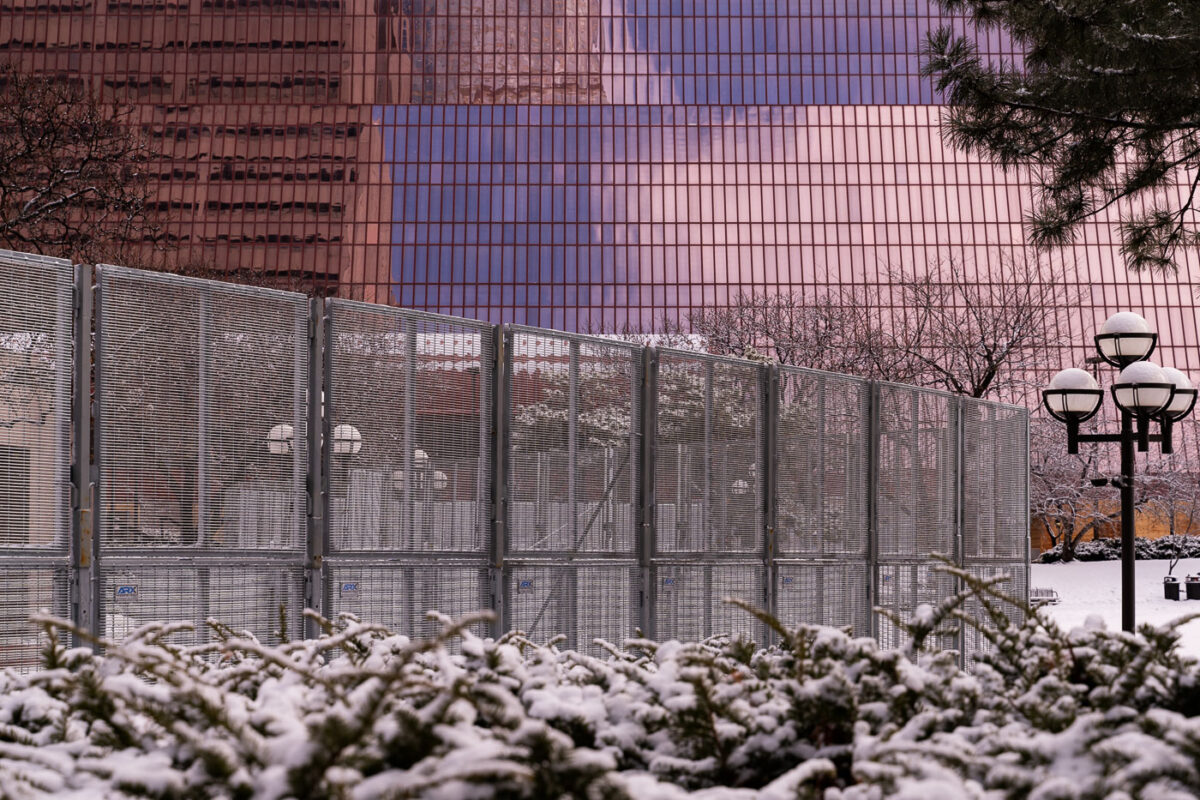
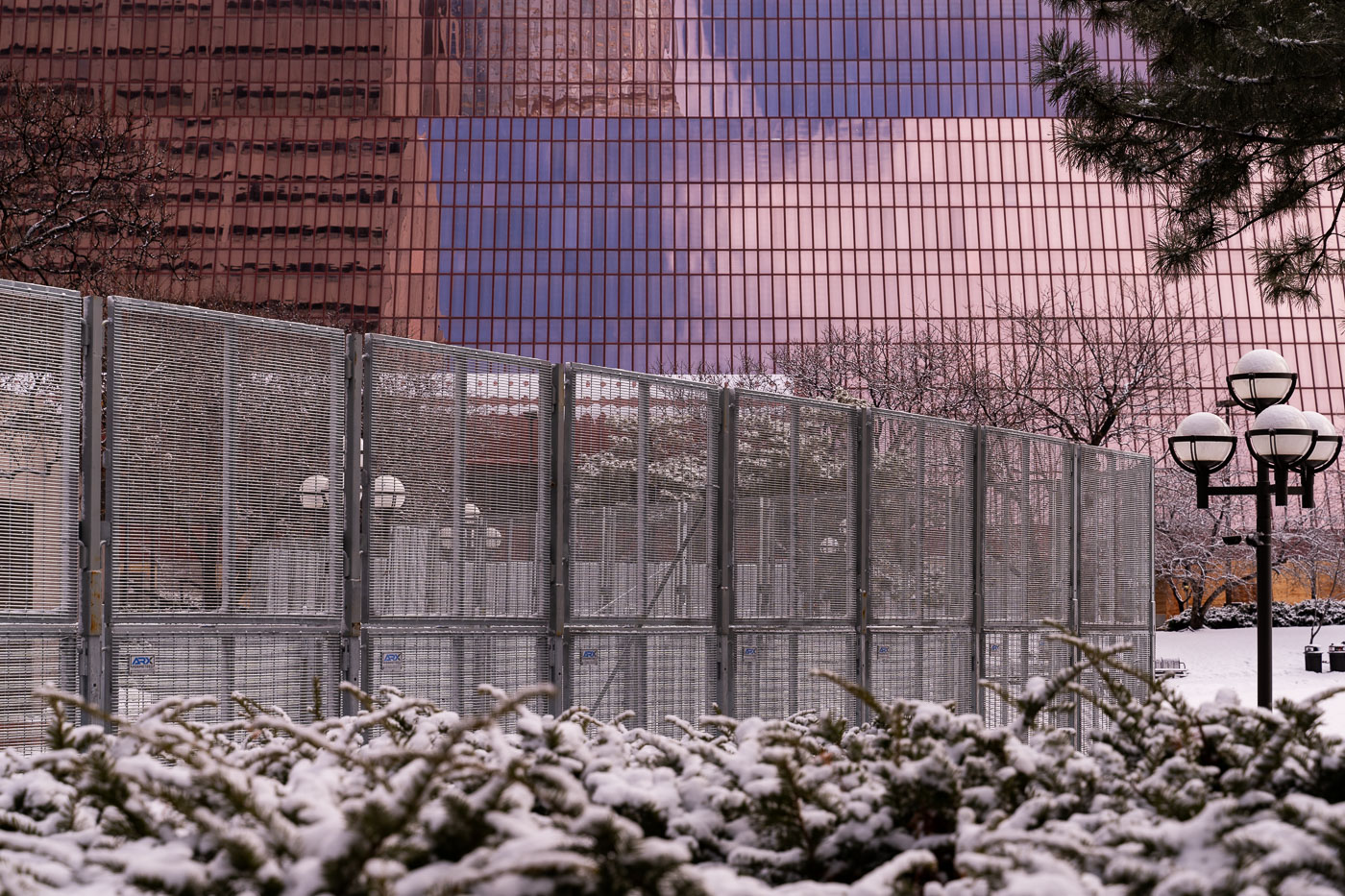
Temporary fencing by APX Perimeters surrounds the Hennepin County Government Center in Minneapolis, in anticipation of the Derek Chauvin murder trial. The installation of this security measure was part of Operation Safety Net, a multi-agency response to ensure public safety during the trial and potential unrest following the death of George Floyd. Jury selection was scheduled to begin on March 8, 2021, making the courthouse a focal point of national attention.

APX Perimeters Fencing at Hennepin County Government Center, Minneapolis

Derek Chauvin Razor Wire at Hennepin Courthouse
Razor wire fencing, a security measure, surrounds the Hennepin County Government Center in Minneapolis. This installation was part of Operation Safety Net, a multi-agency effort to provide security during the Derek Chauvin murder trial. The trial, which began with jury selection on March 8, 2021, followed the death of George Floyd and subsequent protests. On May 25, 2020, Minneapolis police officer Derek Chauvin murdered 46-year-old George Floyd during an arrest outside Cup Foods at the intersection of 38th Street and Chicago Avenue in south Minneapolis. Video recorded by bystanders showed Chauvin kneeling on Floyd’s neck for more than nine minutes while Floyd repeatedly said he could not breathe. Three other Minneapolis police officers - J. Alexander Kueng, Thomas Lane, and Tou Thao — were also present during the arrest and later faced criminal charges for their roles in Floyd’s death. Floyd’s murder sparked protests and civil unrest across Minneapolis and around the world, leading to widespread demonstrations against police violence, major policy debates on policing, and the conviction of Chauvin on murder and manslaughter charges in 2021.

Razor Wire Security at Hennepin Courthouse, Minneapolis

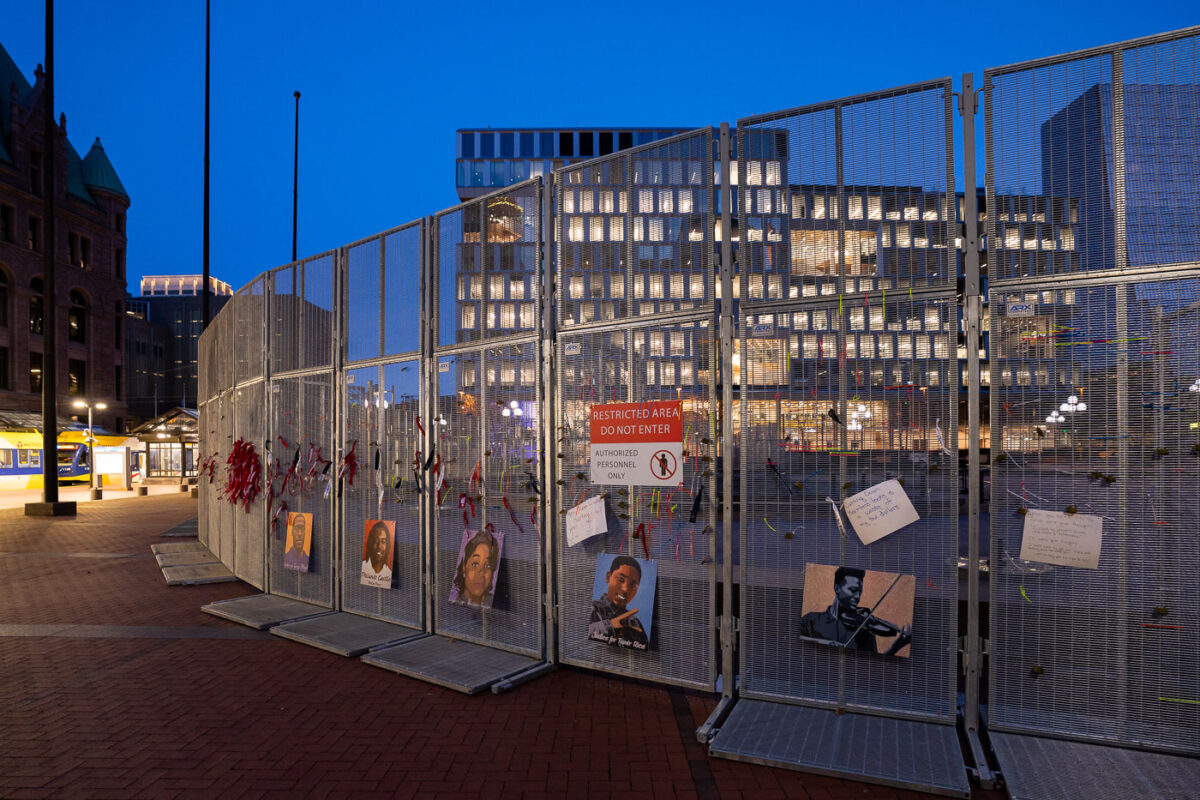
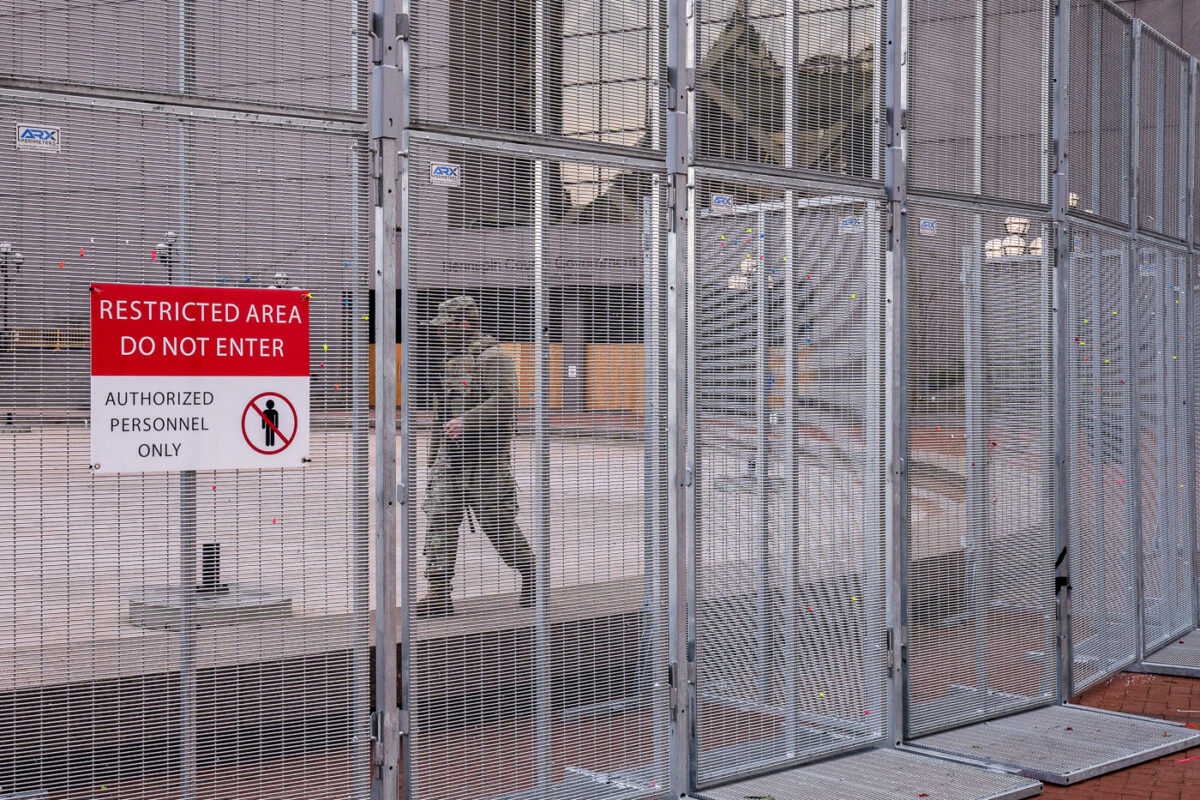
Red and white restricted area sign and detailed use of public spaces regulations posted on chain link fencing at Hennepin County Government Center.
Signage indicating a restricted area and "Authorized Personnel Only" is posted on secure fencing surrounding the Hennepin County Government Center in Minneapolis.

“Do Not Enter” Signs on Fencing at Hennepin County Government Center

Special operation officers outside Derek Chauvin trial
A Hennepin County Sheriff's Special Operations vehicle is visible behind security fencing and concrete barriers outside the Hennepin County Government Center in Minneapolis. The building served as the courthouse for the trial of Derek Chauvin, the former Minneapolis police officer charged in the murder of George Floyd. The trial, which began in March 2021, drew significant public attention and necessitated heightened security measures in the downtown area. The presence of the Special Operations vehicle underscores the security protocols implemented during this high-profile legal proceeding.

Hennepin County Sheriff Special Operations Vehicle at Derek Chauvin Trial

Thousands march at the start of Derek Chauvin trial
Thousands marched in downtown Minneapolis on March 7, 2021, the day before jury selection began in the trial of Derek Chauvin. The former Minneapolis police officer was charged with the murder of George Floyd, who died on May 25, 2020, sparking widespread protests against police brutality and racial injustice. The marchers carried signs and a casket adorned with flowers, symbolizing their grief and demand for accountability.

Minneapolis Protest for George Floyd, Trial Begins

Defund White Supremacy protest sign
Protesters gather outside the Hennepin County Government Center in downtown Minneapolis on March 7, 2021, during a march and rally held the day before jury selection began in the trial of former Minneapolis police officer Derek Chauvin for the murder of George Floyd. Demonstrators carry signs calling for justice for Floyd and denouncing white supremacy, while many participants wear masks during the ongoing COVID-19 pandemic. The Government Center was a regular assembly point for demonstrations tied to Floyd’s killing on May 25, 2020, and to court proceedings in the Chauvin case.

Minneapolis Protest: Defund White Supremacy Sign

Protesters in downtown Minneapolis in March 2021
A protest march took place in downtown Minneapolis on March 7, 2021, the day before Derek Chauvin's trial for the murder of George Floyd began. Participants carried a scroll listing over 470 names of individuals killed by Minnesota police officers. Organizers highlighted that Chauvin was involved in five of those cases, underscoring the broader issue of police brutality. The march proceeded from the Hennepin County Government Center down Hennepin Avenue, drawing attention to systemic issues of racial injustice and police accountability.

Minneapolis Protest for George Floyd Victims March 2021

Thousands march at start of Chauvin trial
Thousands of protestors marched near the Hennepin County Government Center in Minneapolis on March 7, 2021. The march occurred the day before the start of jury selection in the trial of former Minneapolis police officer Derek Chauvin, who was charged with the murder of George Floyd on May 25, 2020. The event was part of ongoing protests against police brutality and racial injustice that followed Floyd's death.

Protestors march near Hennepin County Government Center, Minneapolis

Police are tools of white supremacy
Thousands marched in downtown Minneapolis the day before jury selection began in the trial of former police officer Derek Chauvin. Chauvin was charged with the murder of George Floyd on May 25, 2020, an event that sparked widespread protests against police brutality and racial injustice. The marchers carried signs with messages such as "Police = Tools of White Supremacy" and "Dismantle White Supremacy," reflecting the broader movement for Black Lives Matter. The protests highlighted deep-seated issues of systemic racism and police accountability in the United States.

Minneapolis Protest: “Police = Tools of White Supremacy” Sign

Dismantle White Supremacy protest
Thousands marched in Downtown Minneapolis on March 7, 2021, the day before the start of jury selection in the trial of former Minneapolis Police officer Derek Chauvin. Chauvin was charged with the murder of George Floyd on May 25, 2020, an event that sparked widespread protests against police brutality and white supremacy. The marchers carried signs with messages such as "Dismantle White Supremacy" and "We Need Justice," reflecting the ongoing calls for racial equity and accountability.

Minneapolis Protest: Dismantle White Supremacy, March for Justice

Protesters enter a secured area around Chauvin trial
Protesters approach the Hennepin County Government Center in Minneapolis, Minnesota, during the trial of Derek Chauvin. The "Cage," a temporary security perimeter constructed with chain-link fencing, plywood, and barbed wire, was erected around the courthouse to manage crowds and ensure safety. This measure was implemented in response to widespread protests against police brutality and racial injustice that followed the murder of George Floyd in May 2020. The "Justice for All" signs carried by some individuals reflect the broader movement's demands for accountability and systemic change.

Protesters enter security perimeter at Hennepin County Government Center

Protesters put hands up outside courthouse during Chauvin trial
Protesters gather outside the Hennepin County Government Center in Minneapolis on March 7, 2021. The demonstration occurred the day before the start of jury selection in the trial of Derek Chauvin, the former Minneapolis police officer charged with the murder of George Floyd on May 25, 2020. The government center is a prominent civic building in downtown Minneapolis, serving as the seat of county government and a site for significant public events and protests.

Protesters raise fists outside Hennepin County Government Center, Minneapolis

Heavy security outside Derek Chauvin trial
Minnesota National Guard members stand behind fencing at the Hennepin County Government Center in Minneapolis. This security presence was established during the trial of Derek Chauvin, the former Minneapolis police officer charged in the murder of George Floyd. The trial, which began in March 2021, drew significant public attention and heightened security measures around the courthouse. The presence of the National Guard underscored the tense atmosphere and concerns about potential unrest following the widely publicized events of George Floyd's death.

National Guard at Hennepin County Government Center during Chauvin trial

Hennepin County Government Center Security March 2021
Security measures were heightened around the Hennepin County Government Center in Minneapolis in March 2021. This increased security was in place due to the ongoing murder trial of Derek Chauvin, the former police officer whose actions led to the death of George Floyd. The trial, held within the courthouse, drew significant national attention and prompted concerns about public safety and potential unrest. The presence of barriers and personnel underscored the sensitive nature of the proceedings and the broader context of the Minneapolis Uprising that followed Floyd's death.

Hennepin County Courthouse Security, Minneapolis, March 2021

Military vehicles arrive for Derek Chauvin murder trial
Members of the Minnesota National Guard were deployed to secure the Hennepin County Government Center in Minneapolis during the trial of Derek Chauvin in April 2021. The trial followed the murder of George Floyd in May 2020, which sparked widespread protests and unrest in the city. The government center, a prominent civic building in downtown Minneapolis, was fortified with fencing and security personnel to prevent potential disturbances during the highly publicized legal proceedings. The presence of military forces underscored the heightened tensions and the perceived need for enhanced security measures in the city.

National Guard at Hennepin County Government Center during Chauvin trial

Convict all 4 killer cops protest signs in Minneapolis
A memorial for George Floyd outside the Hennepin County Government Center in Minneapolis on March 7, 2021. The memorial features "Justice for All" signs, "Black Lives Matter" messages, and numerous lit candles, placed during the trial of Derek Chauvin. This site became a focal point for protests and tributes following Floyd's murder in May 2020. The "Justice for All" and "My Life Matters" signs reflect the broader movement for racial justice and accountability that emerged from the event.

Minneapolis George Floyd Memorial: “Justice for All” Signs

The World Is Watching protest in Minneapolis
Protesters gathered outside the Hennepin County Government Center in Minneapolis on March 8, 2021, the morning of the Derek Chauvin trial. Chauvin, a former Minneapolis police officer, was charged with the murder of George Floyd on May 25, 2020. The banner reads "Justice 4 George Floyd & All Stolen Lives. The World Is Watching." This event highlights the broader Black Lives Matter movement and calls for accountability in cases of police brutality.

Minneapolis Protest for George Floyd Outside Hennepin County Government Center

Abolish Police and Prisons protest sign
Protesters gathered outside the Hennepin County Government Center in Minneapolis on March 8, 2021, ahead of the Derek Chauvin trial. Chauvin, a former Minneapolis police officer, was charged in the murder of George Floyd on May 25, 2020. The sign "Abolish Police + Prisons" reflects a central demand of the Black Lives Matter movement, which gained widespread attention following Floyd's death and has continued to advocate for systemic reform of law enforcement and the justice system.

Minneapolis Protest: Abolish Police and Prisons Sign

Large protest in Minneapolis at start of Chauvin trial
Protesters gathered outside the Hennepin County Government Center in Minneapolis on March 8, 2021, awaiting the start of the trial for former police officer Derek Chauvin. Chauvin was charged with murder and manslaughter in the death of George Floyd on May 25, 2020, an event that sparked widespread protests against police brutality and racial injustice. The Hennepin County Government Center serves as a key administrative and judicial hub for the county, and its proximity to the site of Floyd's murder made it a focal point for demonstrations.

Minneapolis Protest Outside Hennepin County Government Center

Protesters behind security fencing at Chauvin trial
Protesters gathered outside the Hennepin County Government Center in Minneapolis during the trial of Derek Chauvin. The courthouse was surrounded by security fencing, a measure implemented due to the high-profile nature of the trial and concerns about potential unrest. The trial, which began in March 2021, stemmed from the murder of George Floyd by Minneapolis police officer Derek Chauvin in May 2020. Protests against police brutality and racial injustice, often under the banner of Black Lives Matter, had been ongoing in Minneapolis and across the nation since Floyd's death.

Protesters at Hennepin County Government Center during Chauvin Trial

Protester writes with chaulk at Chauvin trial
During the trial of Derek Chauvin, a protester writes messages in chalk outside the Hennepin County Courthouse in Minneapolis. The trial, which began in March 2021, centered on the murder of George Floyd, a Black man who died in police custody. The courthouse and surrounding areas became a focal point for protests and demonstrations related to police brutality and racial justice. The chalk messages serve as a form of public expression and a visual record of the community's response to the ongoing legal proceedings and broader social issues.

Chalk message at Hennepin County Courthouse during Chauvin trial

Minneapolis is under military occupation
Protesters gathered outside the Hennepin County Government Center in Minneapolis on March 8, 2021, the day the Derek Chauvin murder trial began. The sign, held by a protester, reads "Minneapolis is under military occupation," reflecting the sentiment of many during the widespread protests against police brutality that followed George Floyd's murder. The trial itself was a focal point for ongoing activism and calls for justice and accountability within the Minneapolis community and beyond.

Minneapolis Protest Sign: “Minneapolis is under military occupation”

George Floyd pins being sold outside courthouse
Pins commemorating George Floyd and bearing the slogan "I Can't Breathe" are displayed for sale outside the Hennepin County Courthouse in Minneapolis. This location was the site of the trial of Derek Chauvin, the former Minneapolis police officer convicted of Floyd's murder in April 2021. The sale of such merchandise reflects the broader cultural and political impact of Floyd's death and the subsequent Black Lives Matter movement, which gained significant momentum following the incident in May 2020. The courthouse itself is a significant civic building in downtown Minneapolis, serving as a central hub for legal proceedings in the county.

George Floyd Pins Sold Outside Hennepin County Courthouse

Protesters march through downtown at start of Chauvin trial
A large crowd gathered in downtown Minneapolis for a protest related to the trial of Derek Chauvin, the former Minneapolis Police Officer charged in the murder of George Floyd on May 25, 2020. The protest took place outside the Hennepin County Government Center prior to the start of the trial. Many carried signs with messages such as "Justice for George Floyd," "Convict Killer Cops," and "Black Lives Matter," reflecting the broader movement against police brutality and racial injustice.

Protesters march downtown Minneapolis for Derek Chauvin trial

Justice 4 George Floyd and All Stolen Lives in Minneapolis
A large crowd gathered in downtown Minneapolis on March 8, 2021, to protest the murder of George Floyd and demand justice. The protest occurred outside the Hennepin County Government Center on the morning of the first day of the trial for former Minneapolis police officer Derek Chauvin. Chauvin was charged with second-degree murder and manslaughter in connection with Floyd's death on May 25, 2020. The "Black Lives Matter" movement gained significant momentum following Floyd's death, highlighting issues of police brutality and racial injustice.

Minneapolis Protest for George Floyd and Stolen Lives

Minnesota National Guard outside Hennepin Courthouse
A member of the Minnesota National Guard stands in front of a military vehicle outside the Hennepin County Government Center in Minneapolis. This deployment occurred during a period of heightened tension and unrest in the city, following the murder of George Floyd and the subsequent trial of Derek Chauvin. The National Guard was activated to support local law enforcement and maintain order amidst widespread protests against police brutality. The Hennepin County Government Center, a prominent civic building in downtown Minneapolis, served as a focal point during these events.

Minnesota National Guard at Hennepin County Government Center

Black Lives Matter chalk on black boards
Messages of protest and solidarity are chalked onto boarded-up windows of a building near the Hennepin County Government Center in Minneapolis. The messages, including "Justice for George Floyd," "Stop Killing Us," and "Black Lives Matter," were created in the context of the trial of former Minneapolis Police Officer Derek Chauvin. Chauvin was charged with murder in the death of George Floyd on May 25, 2020, an event that sparked widespread protests against police brutality and racial injustice.

Minneapolis: BLM messages on boarded-up building near Chauvin trial

Bringing In the National Guard flyer
A sign posted on a chain-link fence surrounding the Hennepin County Government Center in Minneapolis reads "Bringing in the National Guard. What Could Possibly Go Wrong?" The poster includes a photograph from the Kent State shootings on May 4, 1970, where the Ohio National Guard fired on unarmed students during a protest. This juxtaposition of historical imagery with the contemporary presence of the National Guard in Minneapolis, likely during the protests following the murder of George Floyd, serves as a pointed commentary on the potential for state-sanctioned violence. The inclusion of flowers suggests a memorial or a somber reflection on the events.

Hennepin County Government Center: National Guard Sign

Protesters with mirrors and flowers outside Chauvin trial
Flowers and mirrors are placed on the street outside the Hennepin County Government Center in Minneapolis, Minnesota. This display occurred during the period of protests and unrest following the murder of George Floyd in May 2020 and the subsequent trial of Derek Chauvin. The mirrors, some bearing red paint, likely symbolize reflection and accountability, while the flowers serve as a memorial to victims of police brutality. The Hennepin County Government Center was a focal point for many demonstrations during this time.

Flowers and mirrors outside Hennepin County Government Center

Reflect art installation outside Chauvin trial
An art installation reading "REFLECT" stands outside the Hennepin County Government Center in Minneapolis. The installation was present during the trial of Derek Chauvin, a former Minneapolis police officer charged with the murder of George Floyd on May 25, 2020. The trial, which began on March 8, 2021, drew significant public attention and protests related to police brutality and racial justice. The "REFLECT" installation, along with scattered roses and protest signs, served as a visual reminder of the ongoing discourse surrounding Floyd's death and its broader implications.

Reflect art installation outside Hennepin County Government Center

Roses in blood art installation at Chauvin trial
Roses, some appearing to be stained with red paint to resemble blood, were placed in a puddle outside the Hennepin County Government Center in Minneapolis. This installation occurred during the trial of Derek Chauvin, a former Minneapolis police officer charged with the murder of George Floyd. The trial, held in April 2021, drew significant national attention to issues of police brutality and racial justice.

Roses in paint outside Hennepin County Government Center during Chauvin trial

Hennepin County Courthouse Derek Chauvin Security
The Hennepin County Government Center in Minneapolis, Minnesota, served as the courthouse for the trial of Derek Chauvin, the former police officer charged in the death of George Floyd. The incident occurred on May 25, 2020, in South Minneapolis, sparking widespread protests and national attention. The building, completed in 1977, houses county administrative offices and courtrooms, functioning as a central hub for local government operations. During the trial, security measures were significantly heightened around the courthouse, reflecting the gravity of the proceedings and the public interest they generated.

Hennepin County Government Center during Derek Chauvin Trial

National Guard military vehicle outside Chauvin trial
A Minnesota National Guard vehicle is parked near the Hennepin County Government Center in Minneapolis. The courthouse was the site of the trial for Derek Chauvin, the former Minneapolis police officer charged in the May 25, 2020, murder of George Floyd. The presence of military vehicles underscored the heightened security and tension surrounding the trial, which began in March 2021.

National Guard vehicle near Hennepin County Government Center, Minneapolis

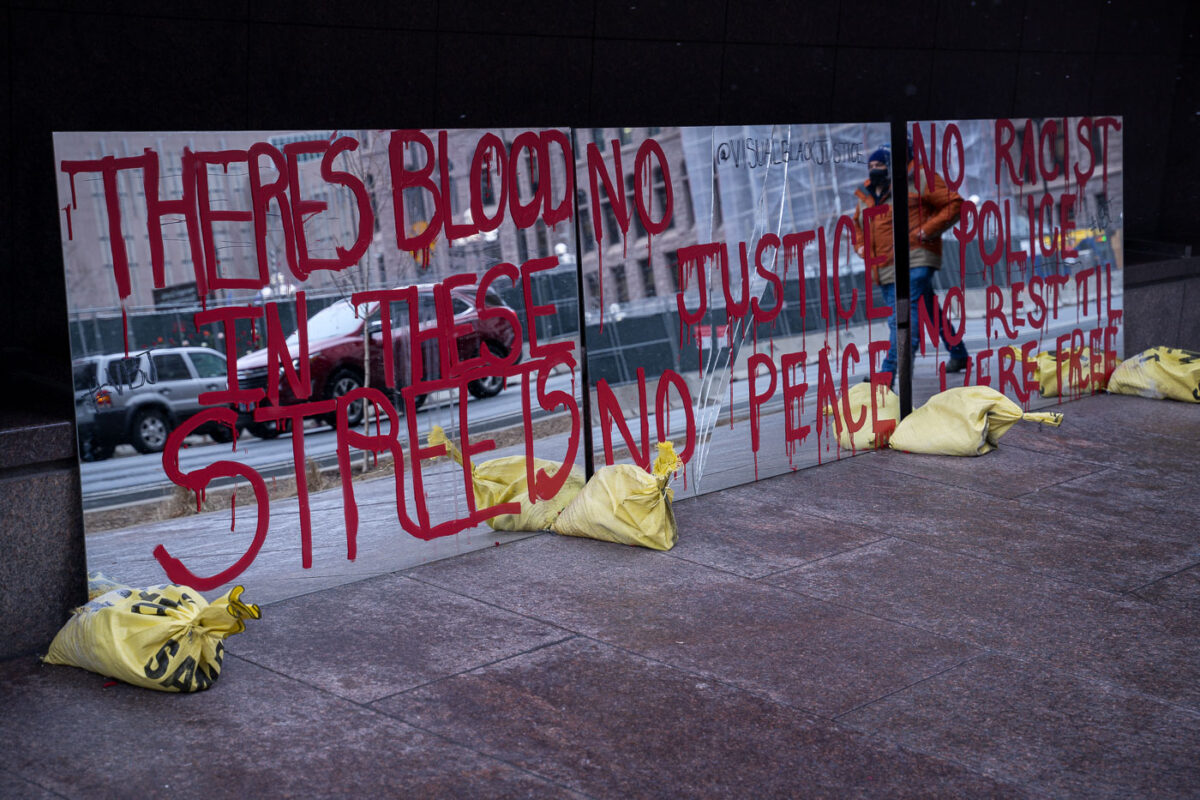
Theres Blood In These Streets mirror art
Mirrored panels bearing protest messages, including "There's Blood In These Streets" and "No Justice No Peace," are displayed outside the Hennepin County Government Center in Minneapolis. The courthouse was the site of the trial for Derek Chauvin, a former Minneapolis police officer charged in the death of George Floyd on May 25, 2020. The messages reflect the ongoing protests and calls for justice that followed Floyd's murder and highlighted systemic issues within law enforcement.

Minneapolis: Mirror Art at Hennepin County Government Center During Chauvin Trial

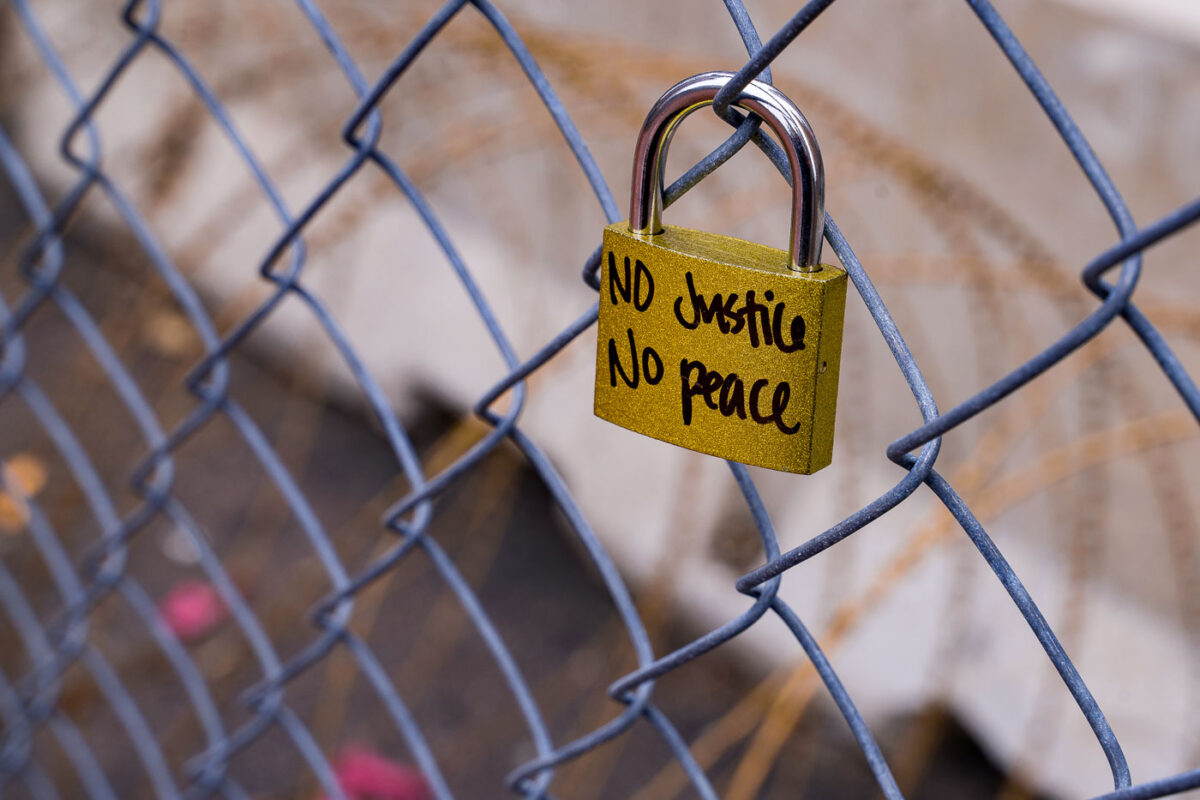
No Justice No Peace lock at Chauvin trial
A padlock inscribed with "No justice, No peace" is affixed to a chain-link fence surrounding the Hennepin County Government Center in Minneapolis. This security measure was in place during the 2021 trial of Derek Chauvin, a former Minneapolis police officer charged with the murder of George Floyd. The trial, held in the same building, drew significant public attention and protests related to racial justice and police brutality.

Minneapolis: Lock on fence at Hennepin County Government Center during Chauvin trial

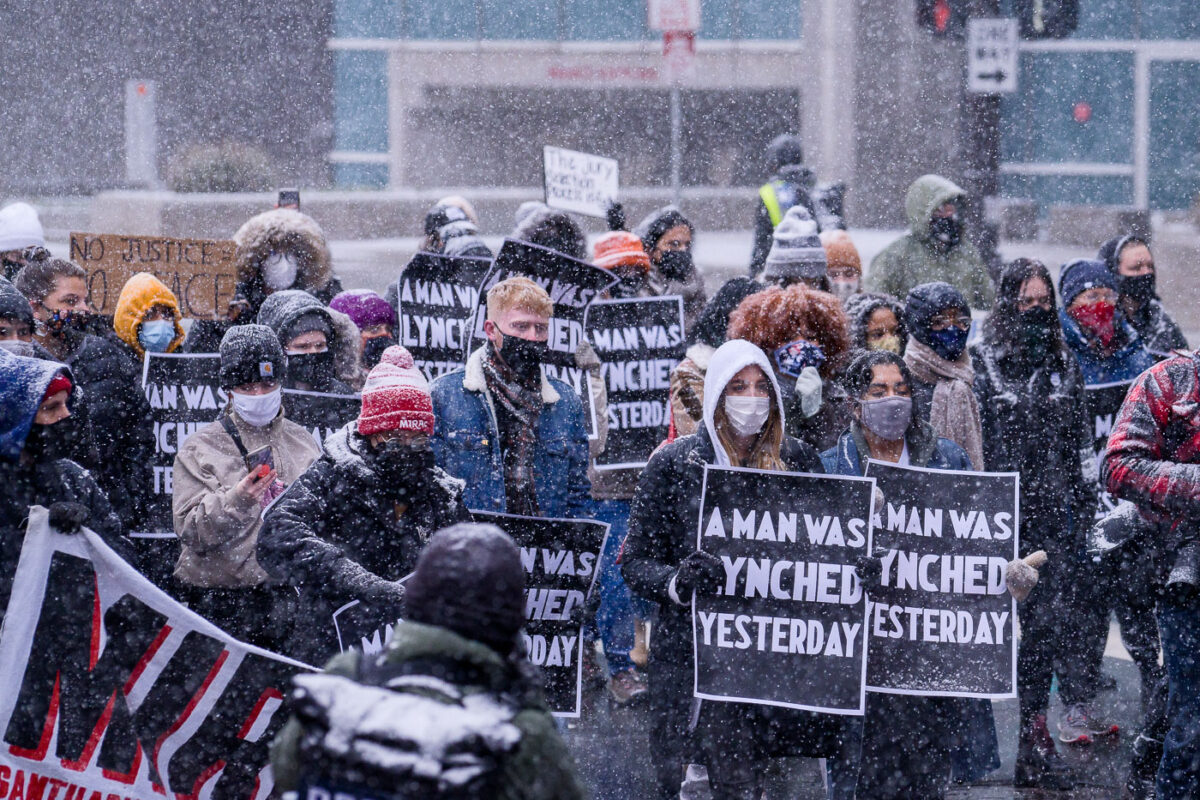
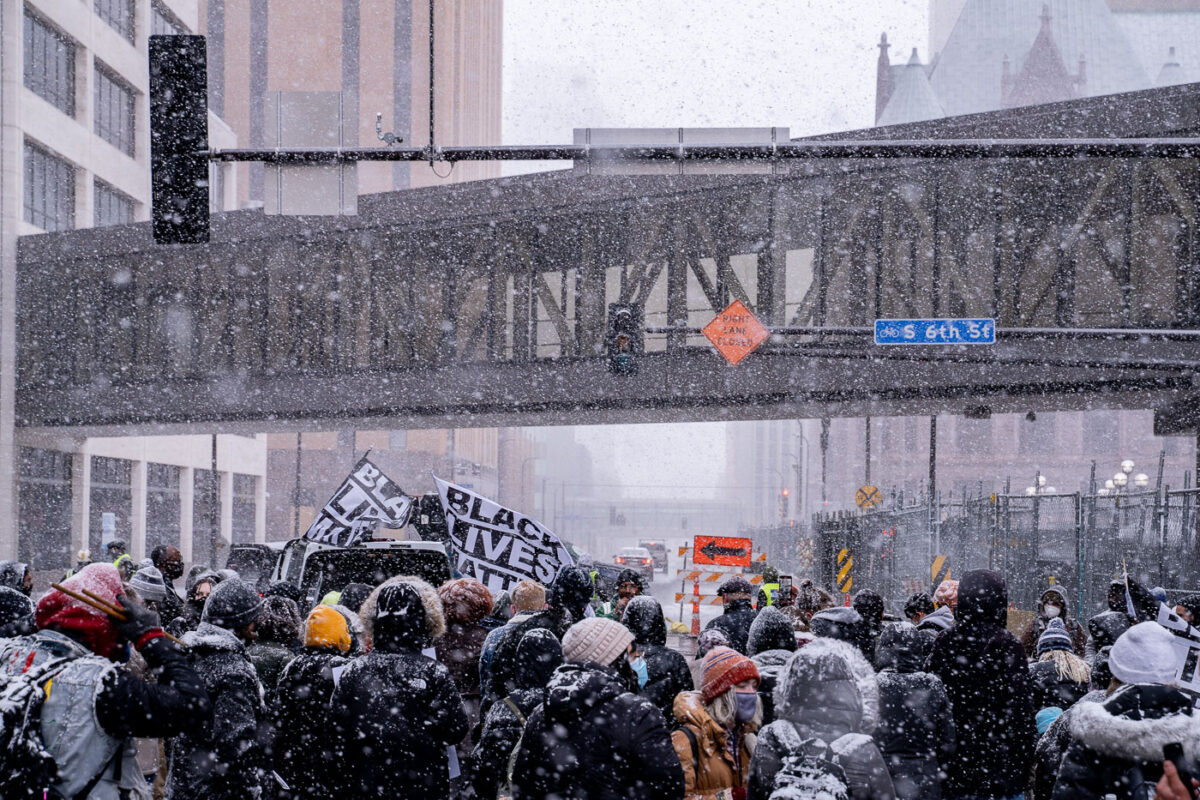
A Man Was Lynched Yesterday Protest Signs
Protesters gathered outside the Hennepin County Government Center in Minneapolis during a snowstorm. The courthouse was the site of the Derek Chauvin murder trial, who was charged in the death of George Floyd. Signs carried by the protesters read "A Man Was Lynched Yesterday," referencing the ongoing racial injustice and police brutality protests that followed Floyd's murder on May 25, 2020.

Minneapolis Protest: “A Man Was Lynched Yesterday” Signs

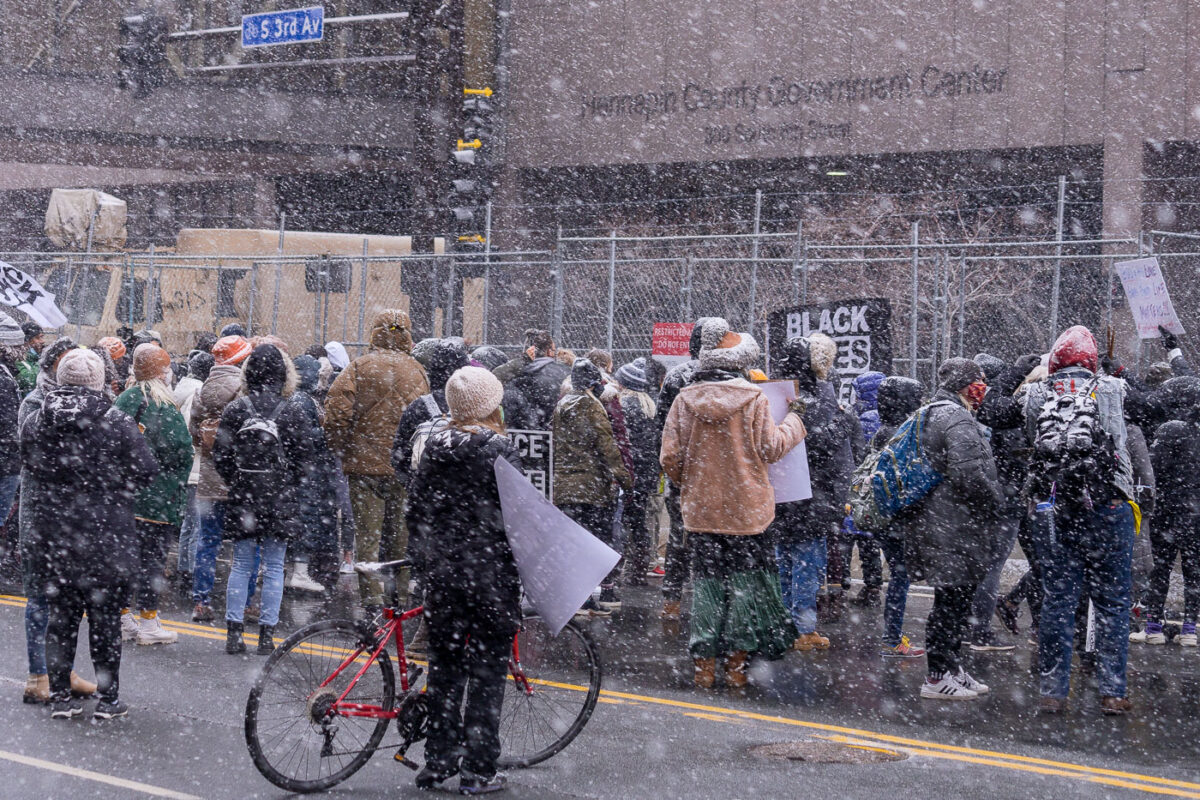
Snow falls at Hennepin County Courthouse with protesters
Protesters gathered in falling snow outside the Hennepin County Government Center in Minneapolis, demanding a fair jury selection process in the trial of Derek Chauvin. Chauvin, a former Minneapolis police officer, was accused of murdering George Floyd on May 25, 2020. The government center serves as a primary administrative and judicial hub for Hennepin County. This protest occurred during the trial, highlighting public scrutiny of the justice system.

Protesters March in Snow at Hennepin County Government Center

Protest looks at National Guard officers during Chauvin trial
During the trial of former Minneapolis Police Officer Derek Chauvin, protesters gathered outside the Hennepin County Government Center. The trial, which began in March 2021, concerned the murder of George Floyd on May 25, 2020. The presence of the National Guard and barricades indicated the heightened security measures in place due to the potential for civil unrest, a concern amplified by the ongoing protests and the Minneapolis Uprising that followed Floyd's death.

Minneapolis: Protesters face National Guard during Chauvin trial

Protest in the snow outside Chauvin trial in Minneapolis
Protesters gathered in downtown Minneapolis during a snowstorm outside the Hennepin County Government Center. The demonstration occurred during the trial of Derek Chauvin, the former Minneapolis police officer charged in the death of George Floyd. The "Black Lives Matter" flags visible indicate the protest's alignment with the movement advocating for racial justice and police accountability.

Minneapolis Protest in Snow Outside Chauvin Trial

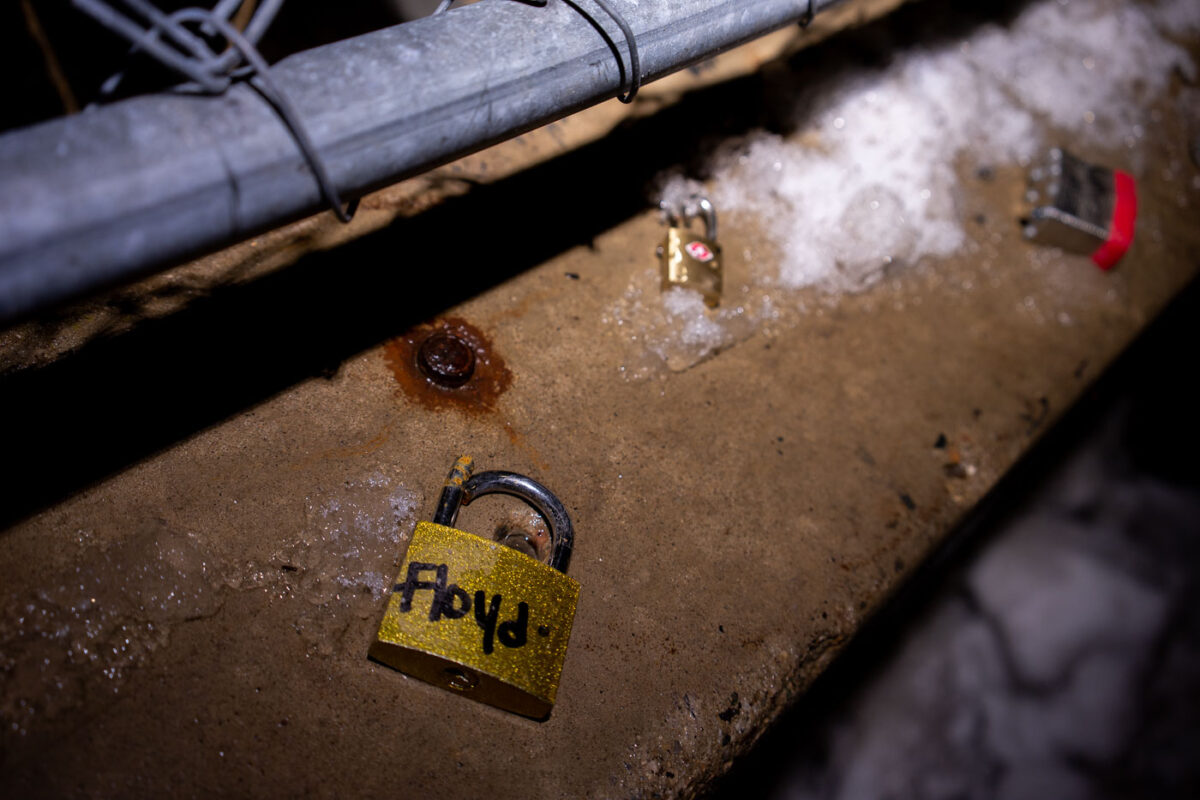
Floyd lock outside Hennepin County courthouse during Chauvin trial
Locks bearing the names of victims of police violence were placed on fencing surrounding the Hennepin County Government Center in Minneapolis during the trial of Derek Chauvin for the murder of George Floyd. The locks served as a memorial and a symbol of protest. They were removed from the fencing the following day, April 14, 2021, after being in place for approximately one week.

Floyd Lock at Hennepin County Courthouse During Chauvin Trial

National Guard security at Derek Chauvin murder trial
National Guard vehicles and a Hennepin County Sheriff's vehicle were stationed near the Hennepin County Courthouse in Minneapolis during the trial of Derek Chauvin. The trial, held in April 2021, stemmed from the death of George Floyd in May 2020, an event that sparked widespread protests and unrest. The presence of military and law enforcement vehicles underscored the heightened security measures and the tense atmosphere surrounding the proceedings.

National Guard vehicle at Hennepin County Courthouse, Minneapolis

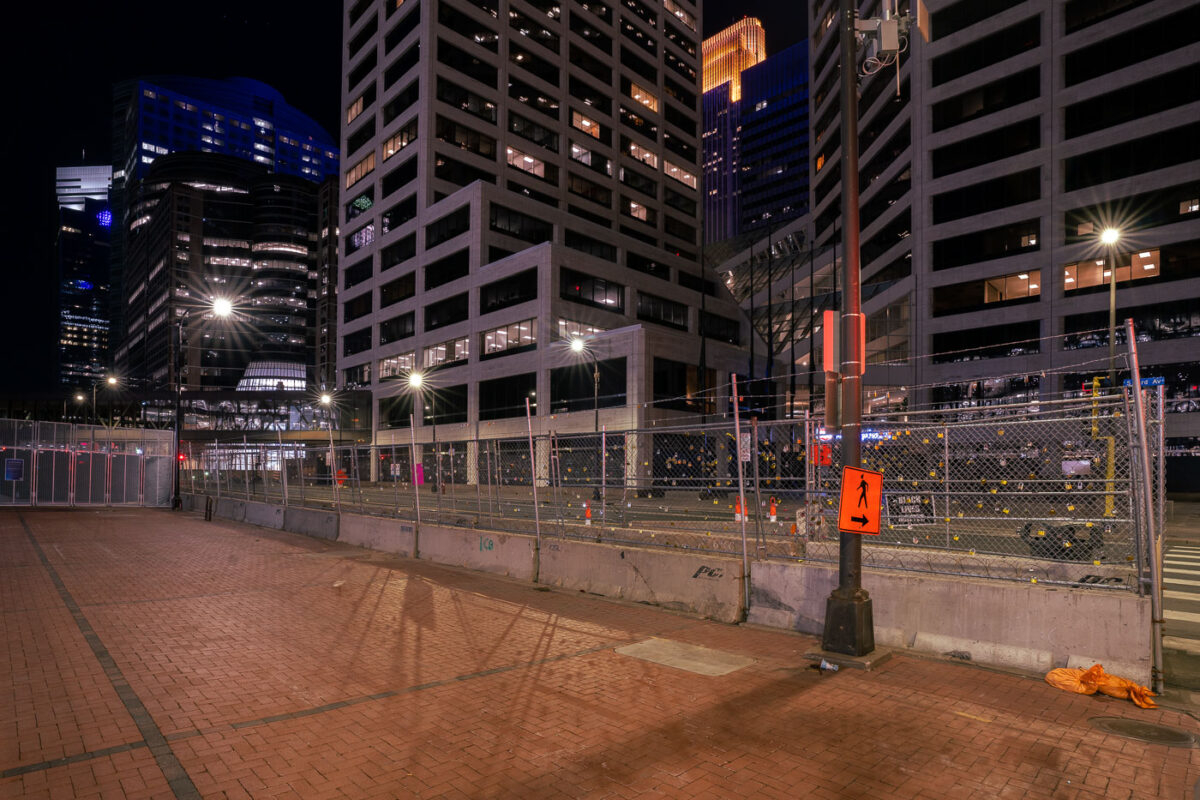
Locks bearing messages affixed to security fencing surrounding the Hennepin County Government Center in downtown Minneapolis at night.
Locks, many bearing messages, are affixed to the security fencing surrounding the Hennepin County Government Center in Minneapolis. These locks serve as a memorial to victims of police violence, placed during the period of heightened tension and protests following the murder of George Floyd in 2020.

Empty Plaza Near Hennepin County Government Center at Night

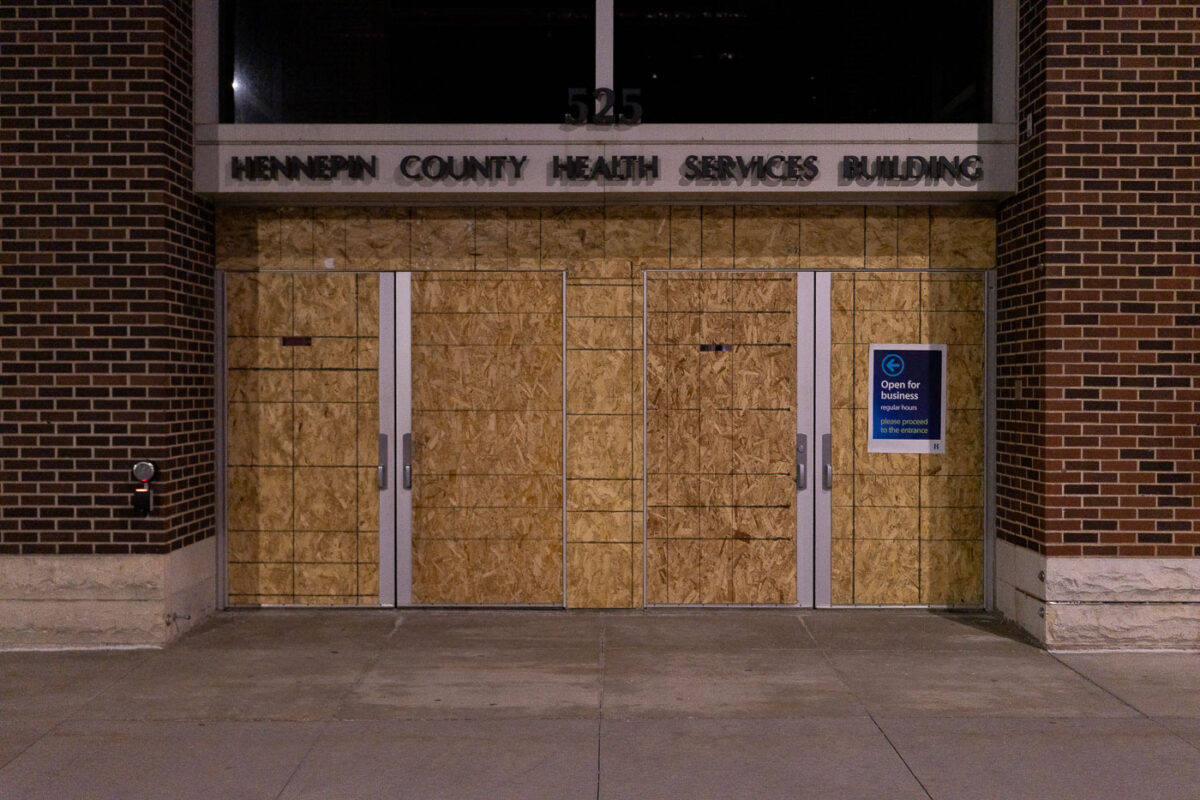
Hennepin County Health Services Building with boards
The Hennepin County Health Services Building at 525 Park Avenue South in Minneapolis is shown boarded up. This facility has historically provided essential public health services to the community. The plywood covering suggests a response to damage or security concerns, possibly related to the civil unrest that occurred in Minneapolis in 2020. A sign indicates that services remain available during regular hours, directing visitors to an alternative entrance.

Hennepin County Health Services Building Boarded Up, Minneapolis

Armed security on courthouse balcony during Chauvin trial
Members of the National Guard are stationed outside the Hennepin County Government Center in Minneapolis. The building, located at 300 South 6th Street, serves as a central hub for county government operations. Its security was heightened during the trial of Derek Chauvin, a former Minneapolis police officer charged in the death of George Floyd. The presence of the National Guard underscored the significant public attention and potential for unrest surrounding the trial.

National Guard at Hennepin County Government Center during Chauvin Trial

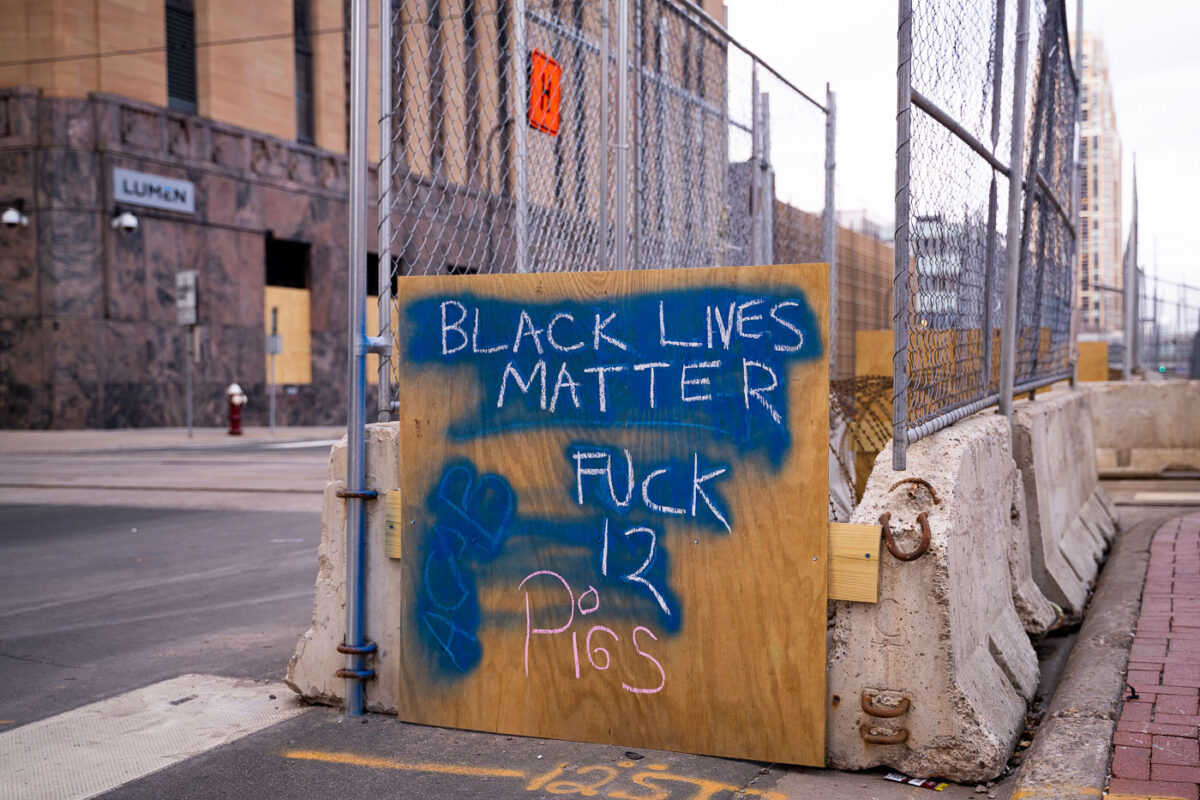
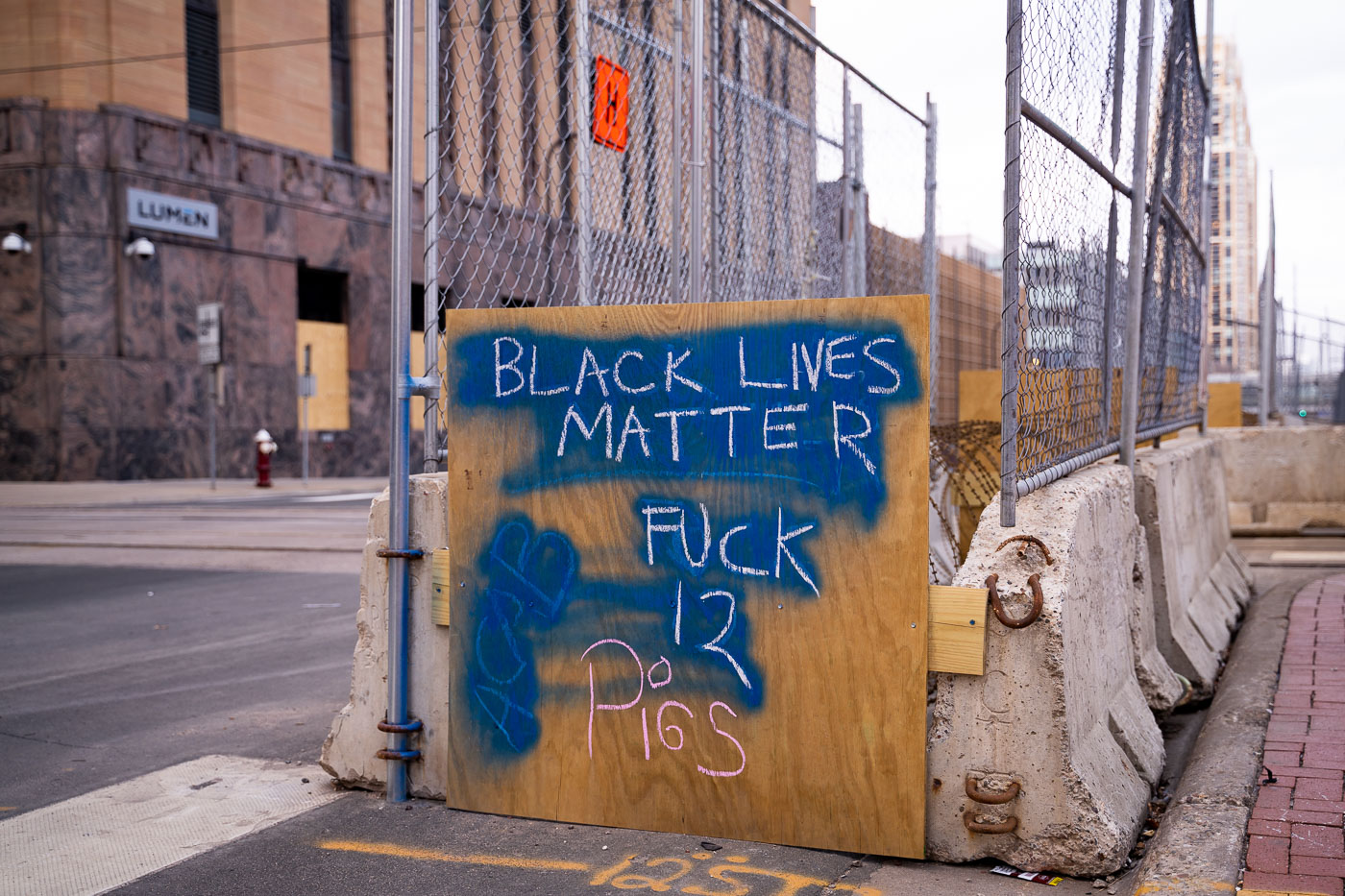
Black Lives Matter ACAB Fuck 12 Pigs
Security fencing and concrete barriers surround the Hennepin County Government Center in Minneapolis, a measure taken during the trial of Derek Chauvin for the murder of George Floyd. The plywood barrier displays protest art, including "Black Lives Matter" and "Fuck 12 Pigs," reflecting the sentiments of demonstrators. This fencing was erected to secure the courthouse and maintain order amidst significant public attention and potential unrest surrounding the trial.

Minneapolis Government Center Fencing with Protest Art

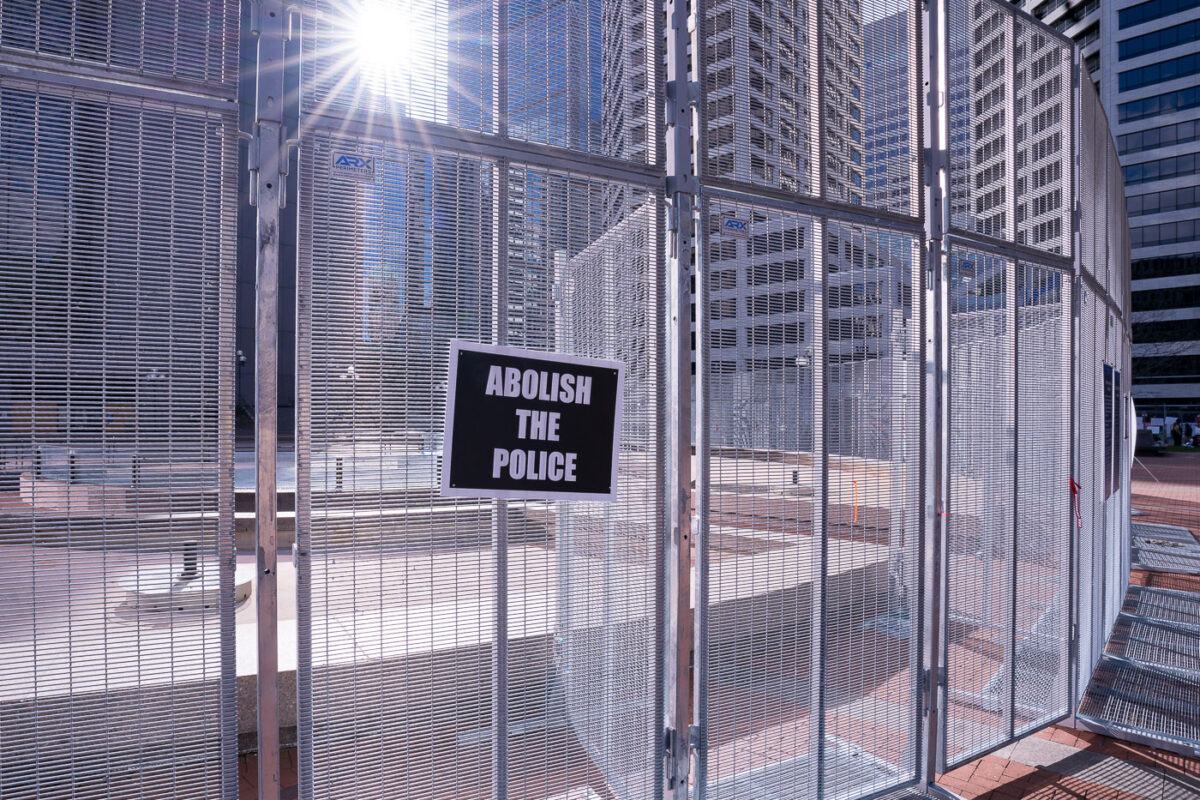
Abolish the Police sign on courthouse fencing in Minneapolis
A sign reading "Abolish The Police" is affixed to security fencing surrounding the Hennepin County Government Center in Minneapolis. This fencing was erected during the trial of Derek Chauvin, who was charged with the murder of George Floyd on May 25, 2020. The trial and its aftermath sparked widespread protests and discussions about policing in the United States. The courthouse, a significant piece of mid-century modern architecture, serves as a central hub for legal proceedings in Hennepin County.

Abolish The Police Sign at Chauvin Trial, Minneapolis

Protesters occupy courthouse property during George Floyd trial
Since March 15th, families and supporters have been placing locks inscribed with the names of victims of police brutality on the fencing surrounding the Hennepin County Government Center in Minneapolis. These locks are periodically removed by authorities, prompting protesters to maintain a continuous presence, with individuals locking themselves to the fence 24/7. Their demands include meetings with city and state officials, the abolition of qualified immunity for police officers, and legislative action on police accountability bills. The protest highlights ongoing concerns about police violence and accountability in the wake of high-profile incidents.

Hennepin County Courthouse Protest: Locks for Stolen Lives

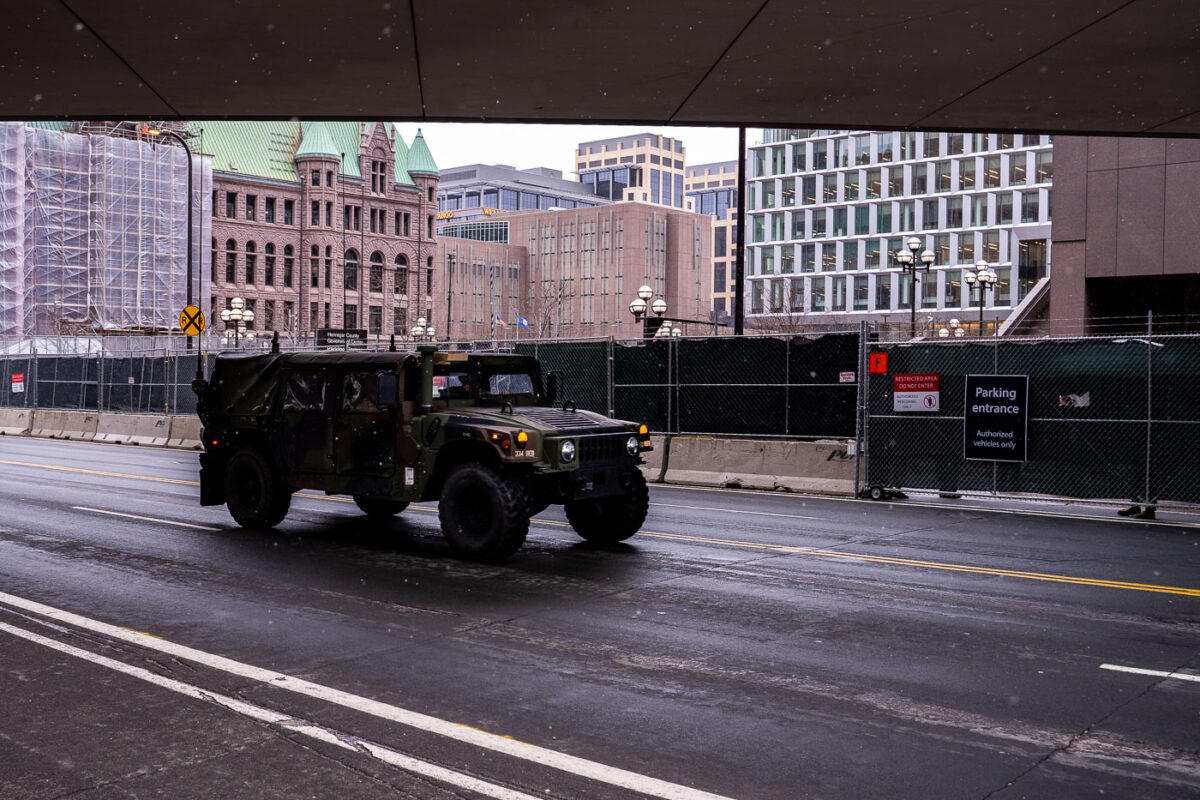
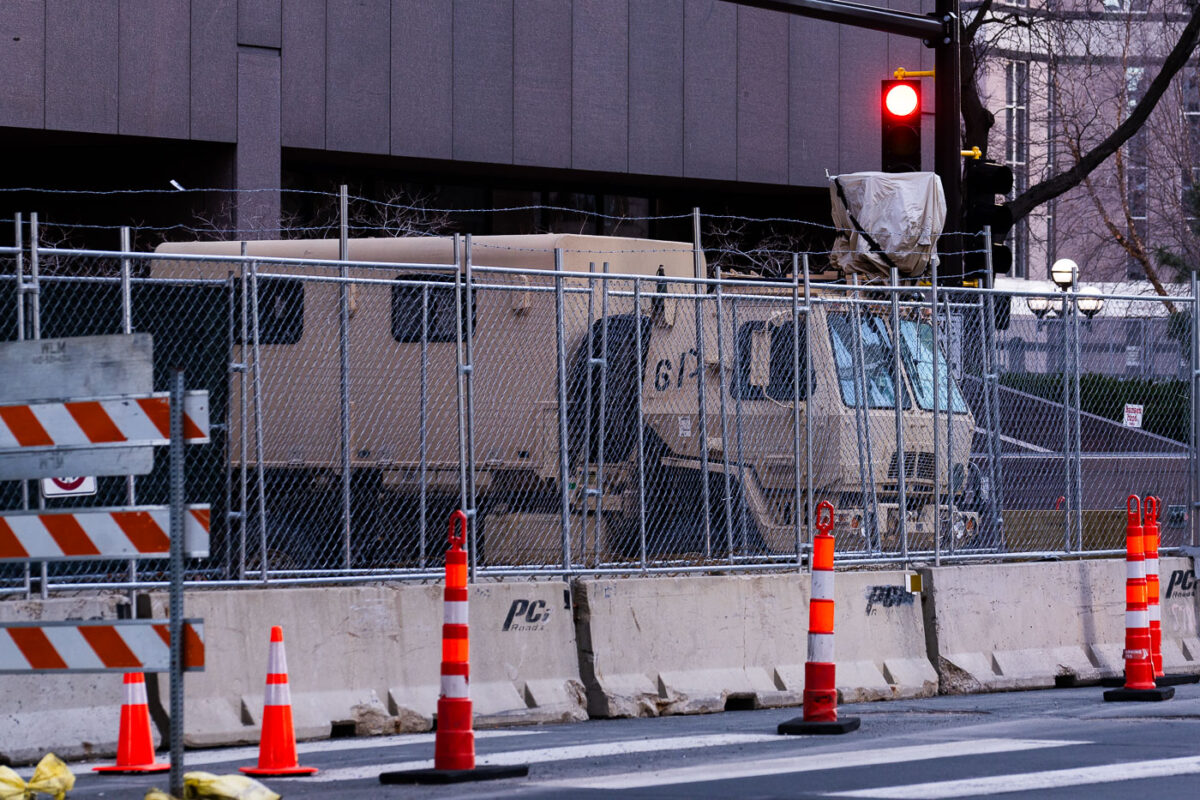
National Guard vehicle behind fencing at Hennepin County Government Center in Minneapolis.
A National Guard vehicle is visible behind fencing and barricades outside the Hennepin County Government Center in Minneapolis. This security measure was in place during the trial of Derek Chauvin, who was accused of the murder of George Floyd.

National Guard Vehicle at Hennepin County Courthouse, Minneapolis

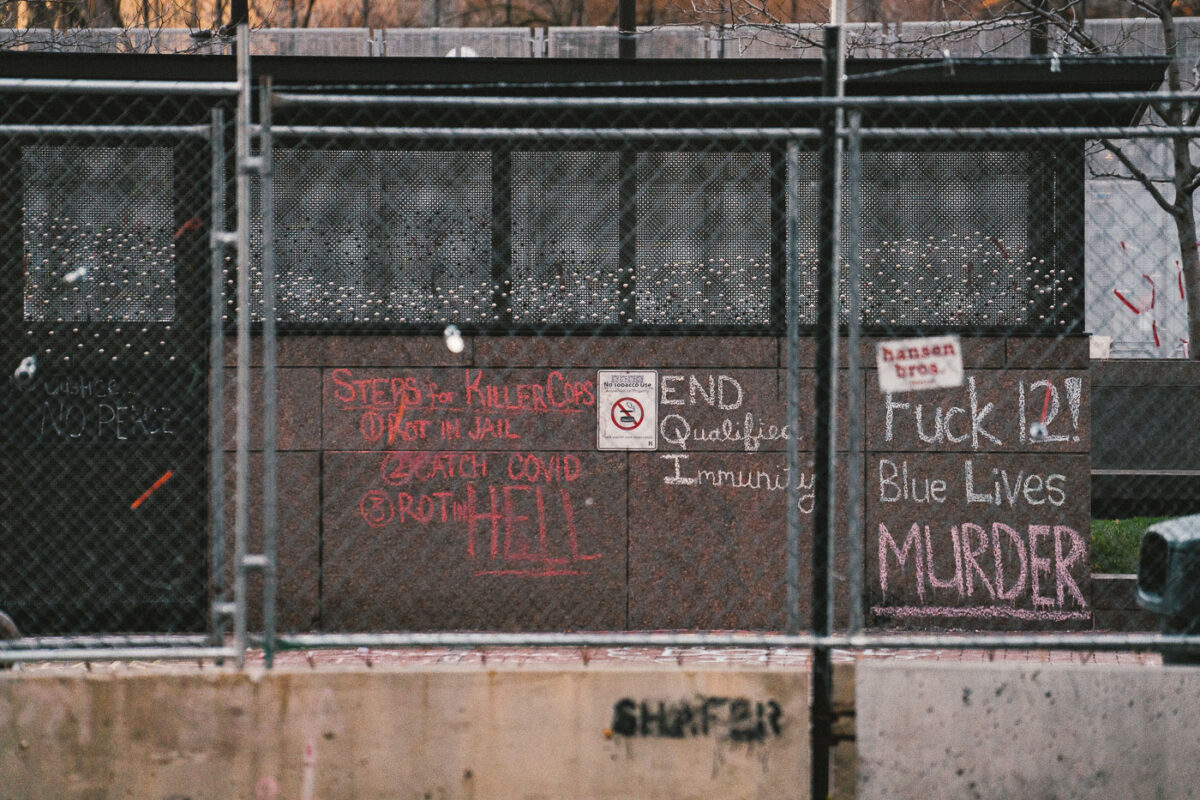
Chalk protest graffiti at Hennepin County Government Center in Minneapolis behind security fencing.
Chalk graffiti adorns the exterior of the Hennepin County Government Center in Minneapolis, a site that became a focal point during the protests following the murder of George Floyd on May 25, 2020. The messages, including "Steps for Killer Cops," "End Qualified Immunity," and "Fuck 12! Blue Lives MURDER," reflect the public outcry and demands for justice and accountability. The trial of Derek Chauvin, the officer accused of Floyd's murder, took place in Minneapolis, amplifying the significance of these messages as expressions of dissent and calls for systemic change.

Chalk Graffiti at Hennepin County Government Center, Minneapolis

Security fencing with memorial portraits at Hennepin County Government Center in downtown Minneapolis.
Security fencing surrounds the Hennepin County Government Center in downtown Minneapolis, a site that became a focal point during the 2020 protests following the murder of George Floyd. The fencing, adorned with portraits of victims of police brutality and handwritten messages, serves as a memorial and a barrier. It reflects the heightened security measures and the community's response to racial injustice and police violence that characterized the period.

Hennepin County Government Center Fencing with Memorials

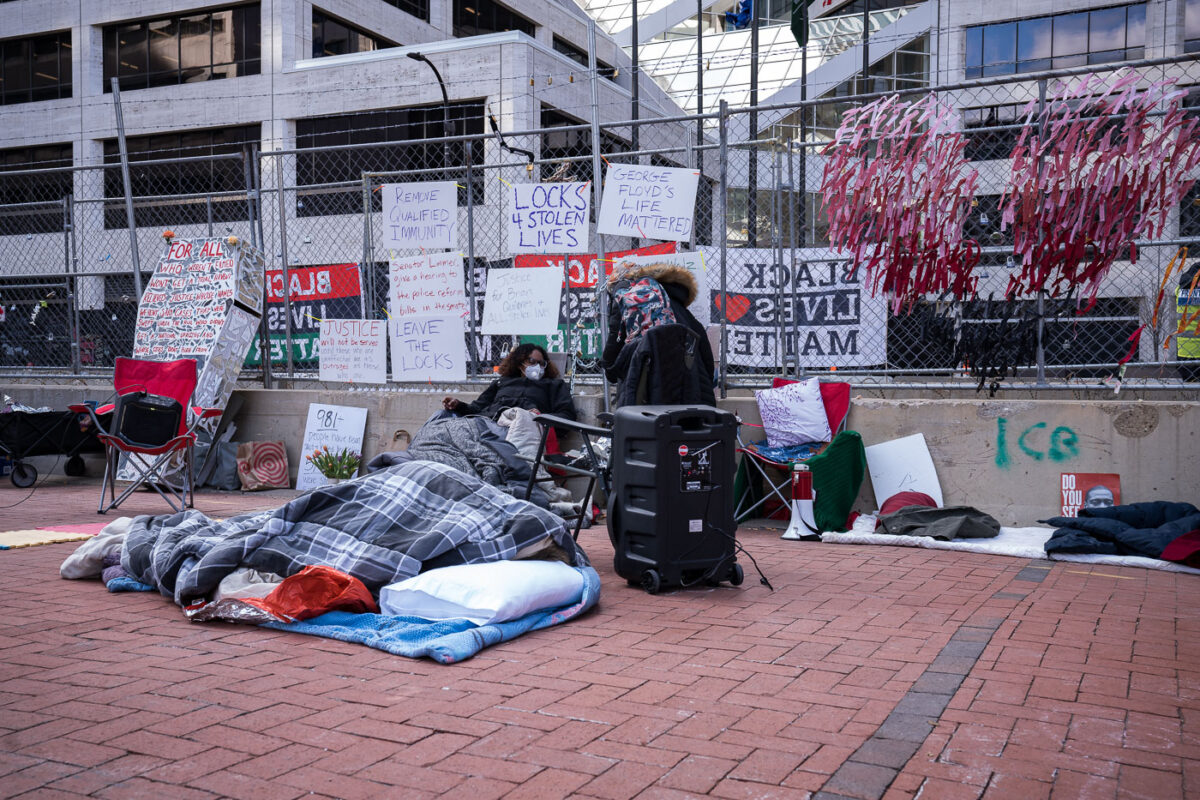
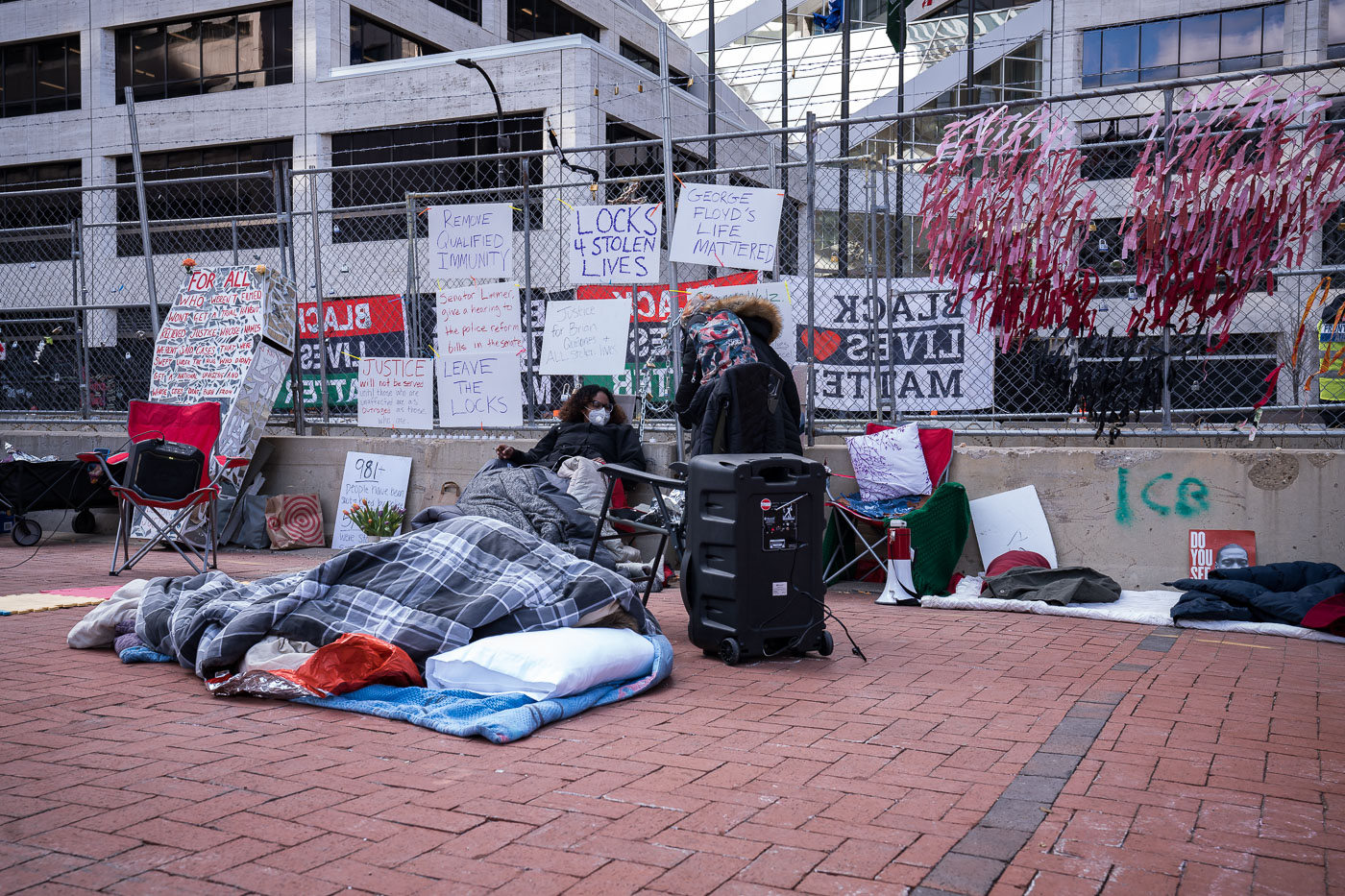
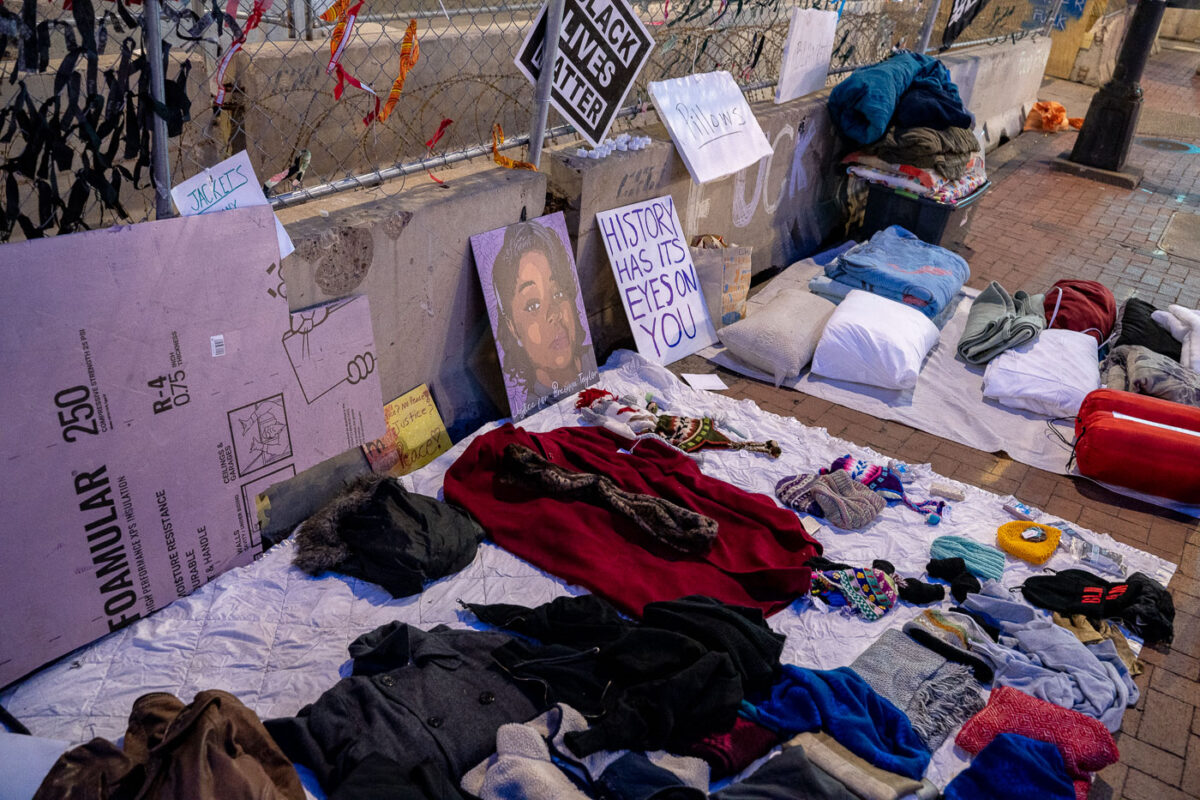
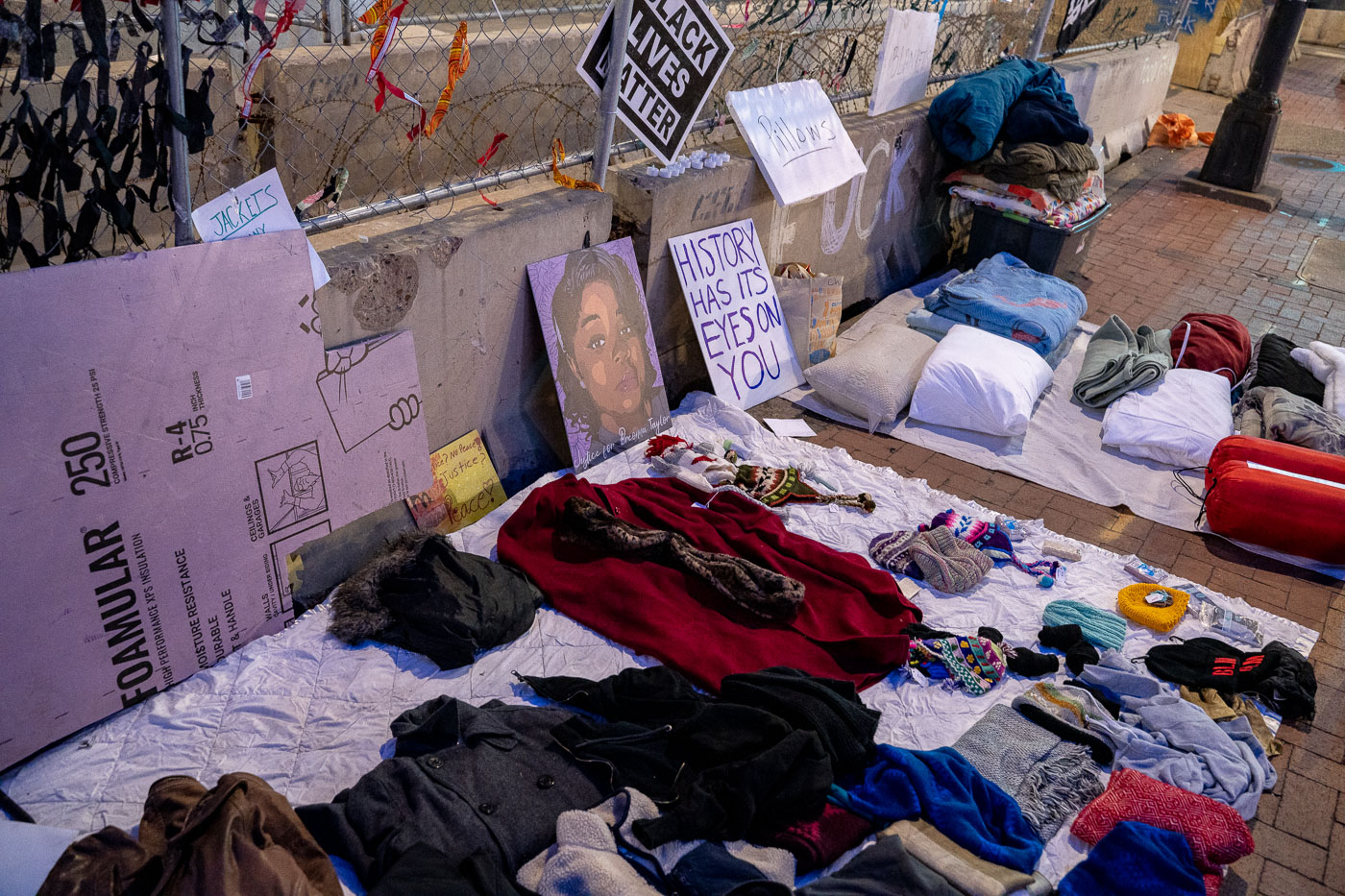
Blankets and clothing for protesters at Hennepin County Government Center in Minneapolis.
Supplies including blankets, pillows, and jackets were made available to protesters occupying the Hennepin County Government Center in Minneapolis. The occupation occurred during the 2021 Derek Chauvin trial, a period of heightened activism following the murder of George Floyd. The presence of these supplies highlights the sustained nature of the protest and the community's efforts to support those participating. The "Black Lives Matter" signs and portraits of victims of police brutality, such as Breonna Taylor, underscore the movement's core demands for racial justice and police accountability.

Minneapolis: Supplies for protesters at Hennepin County Government Center

Razor wire and protest signs at Hennepin County Government Center in Minneapolis during the Derek Chauvin trial.
Razor wire and protest signs surround the Hennepin County Government Center in Minneapolis during the trial of Derek Chauvin. The security measures were put in place following the death of George Floyd on May 25, 2020, and the subsequent protests. The area has become a focal point for demonstrations, with protesters decorating the fencing with signs and ribbons, indicating a continuous occupation of the space.

Minneapolis Government Center: Razor wire and protest signs

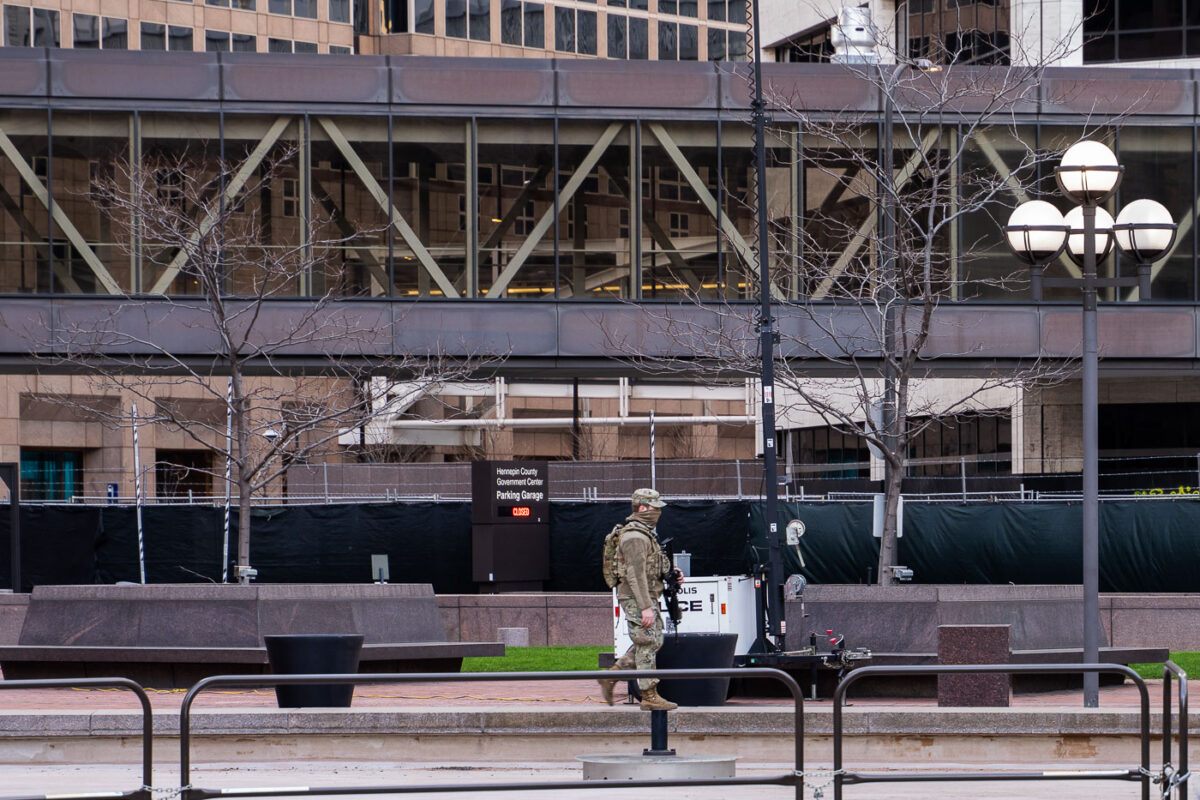
Minnesota National Guard personnel near Hennepin County Government Center in Minneapolis during the Derek Chauvin trial.
Hennepin County Government Center, Minneapolis, during the Derek Chauvin trial. Minnesota National Guard personnel were stationed near the courthouse complex as security during the proceedings.

National Guard at Hennepin County Government Center, Minneapolis

National Guard member outside Hennepin County Government Center in Minneapolis during the Chauvin trial.
Minnesota National Guard members were deployed to secure the Hennepin County Government Center in Minneapolis during the trial of Derek Chauvin for the murder of George Floyd in 2021. The courthouse complex, a significant civic structure in downtown Minneapolis, was surrounded by enhanced security measures, including fencing and visible patrols, to maintain order and prevent disruptions. This deployment underscored the heightened tensions and the national significance of the trial, which followed widespread protests against police brutality.

National Guard Patrols Outside Hennepin County Courthouse During Chauvin Trial

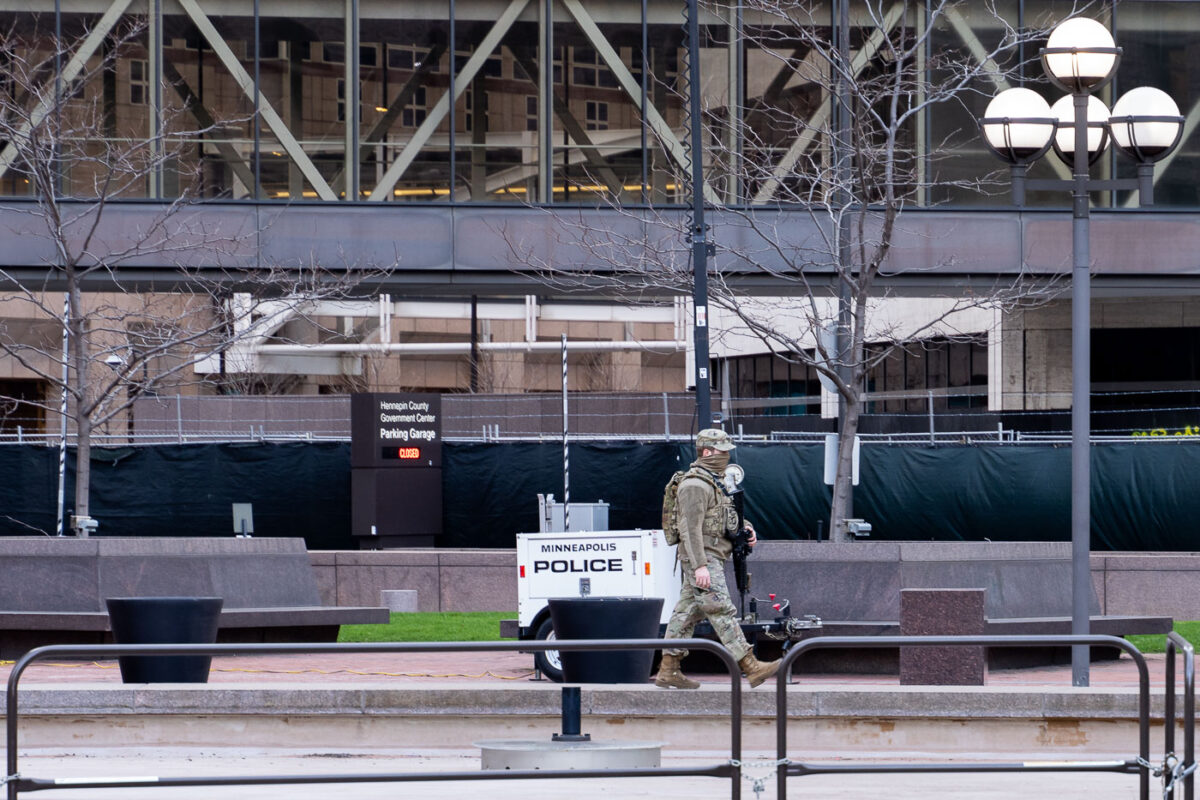
National Guard patrol behind security fencing at Hennepin County Government Center in Minneapolis.
National Guard members patrolled the perimeter of the Hennepin County Government Center in Minneapolis during the 2021 murder trial of Derek Chauvin. The trial, which followed the death of George Floyd, drew significant public attention and necessitated heightened security measures. Temporary fencing was erected around the government center to control access and ensure the safety of the building and its occupants. The presence of the National Guard underscored the tense atmosphere and the potential for civil unrest during this period.

National Guard patrols Hennepin County Government Center during Chauvin trial

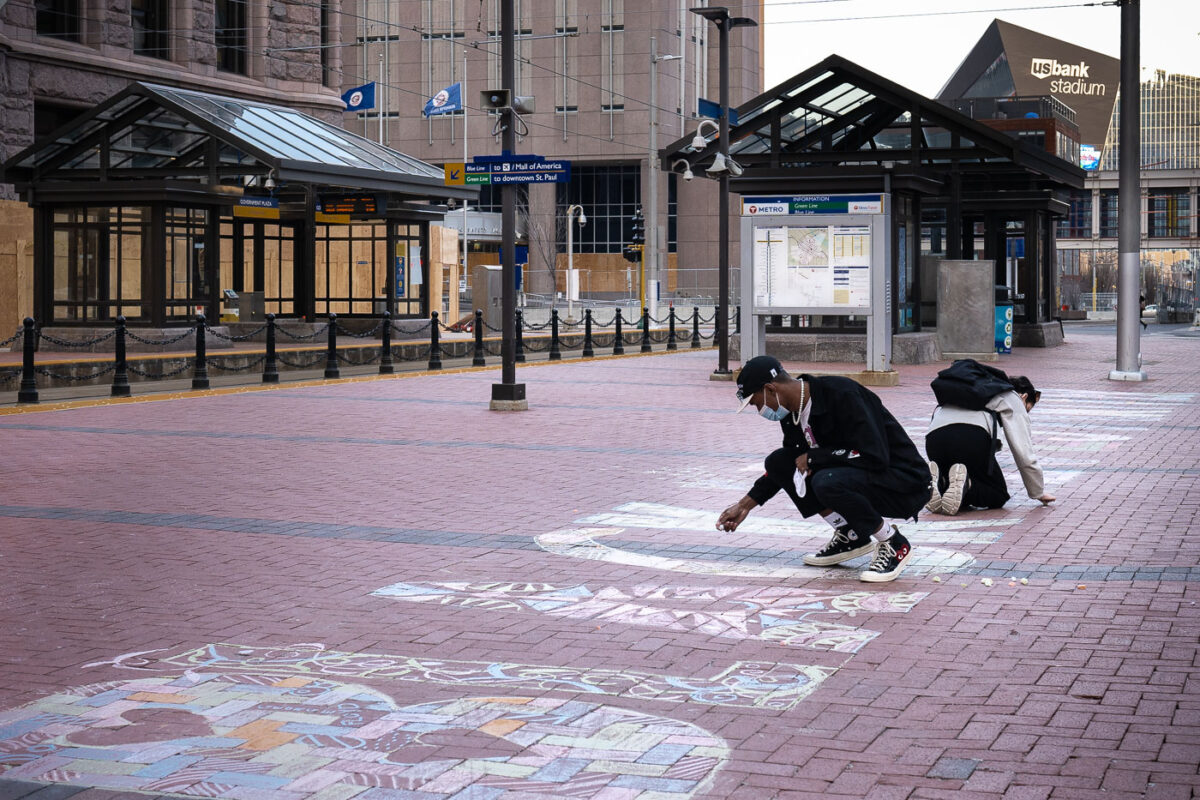
People making chalk art at Hennepin County Government Center plaza in downtown Minneapolis.
During the trial of Derek Chauvin, a Minneapolis police officer charged with the murder of George Floyd, community members created chalk art on the plaza outside the Hennepin County Government Center. The mural, which included Black Lives Matter messaging, was a public expression of solidarity and a call for justice. The Government Center is a prominent civic building in downtown Minneapolis, serving as the seat of county government and a courthouse.

Minneapolis: BLM Mural Chalk Art at Hennepin County Government Center

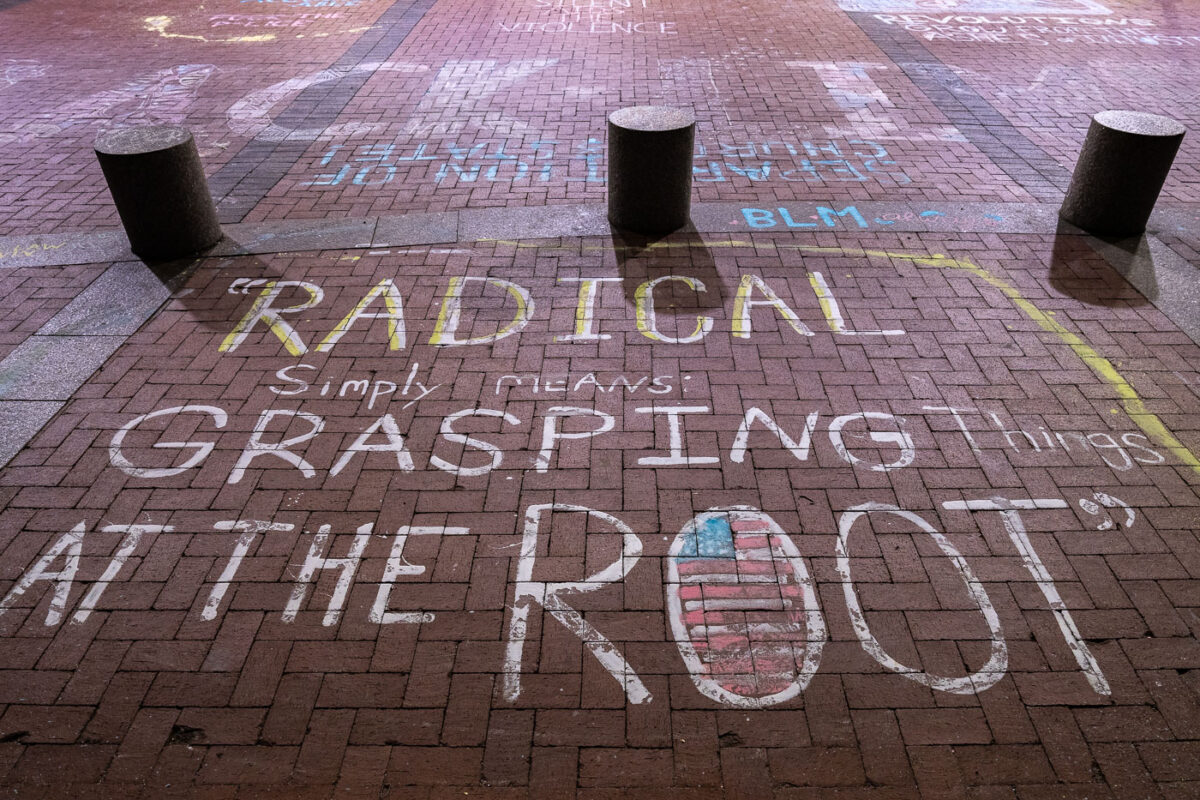
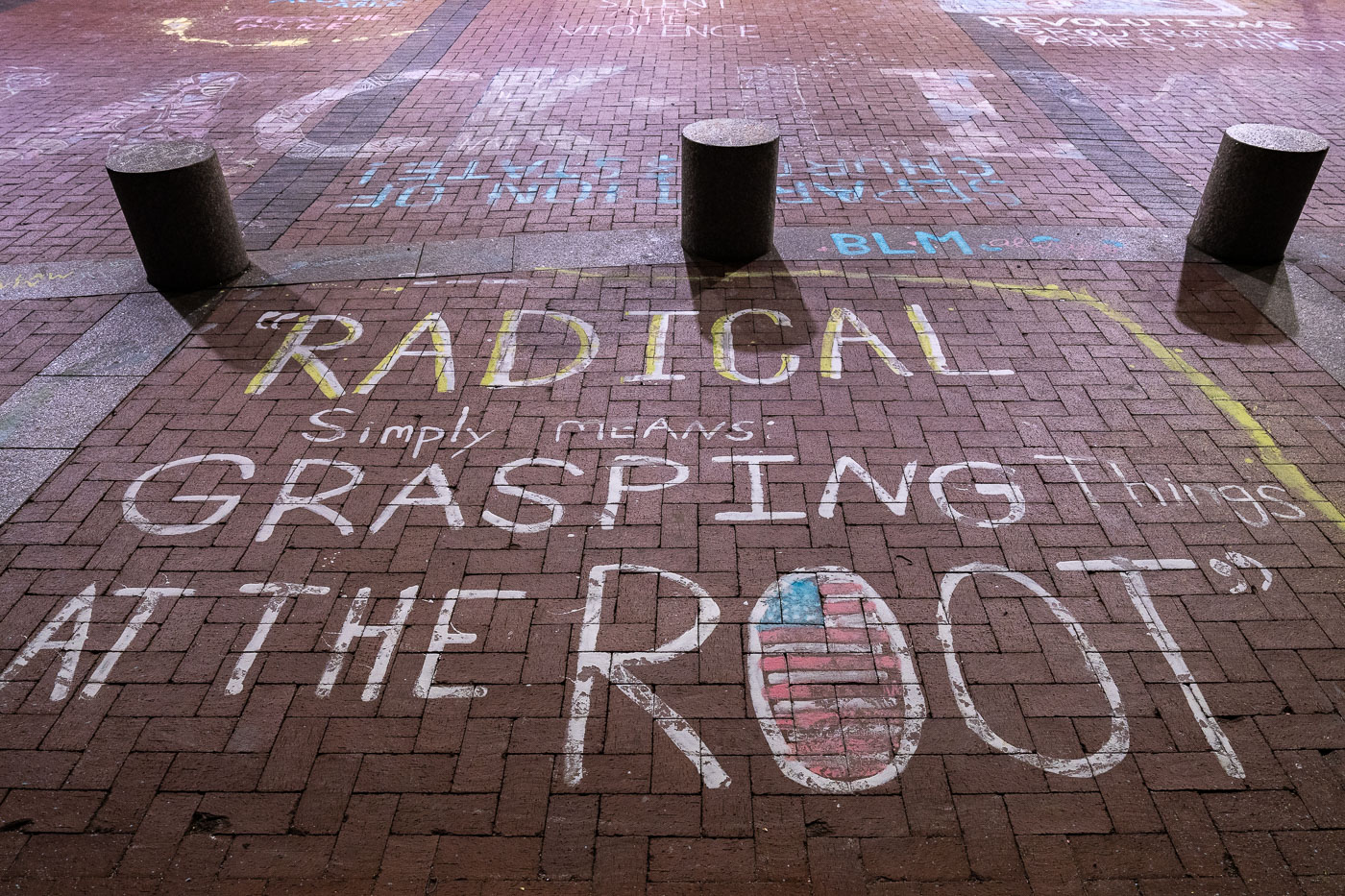
Chalk protest messages outside Hennepin County Government Center in Minneapolis, including “Radical” and “BLM.”
Chalk messages, including "RADICAL SIMPLY MEANS: GRASPING THINGS AT THE ROOT" and "BLM," adorn the plaza outside the Hennepin County Government Center in Minneapolis. This occurred during the period when the courthouse was the site of the Derek Chauvin murder trial. Chauvin was charged in the death of George Floyd on May 25, 2020, in South Minneapolis, an event that sparked widespread protests and a reckoning with racial injustice.

Chalk message outside Hennepin County Government Center, Minneapolis

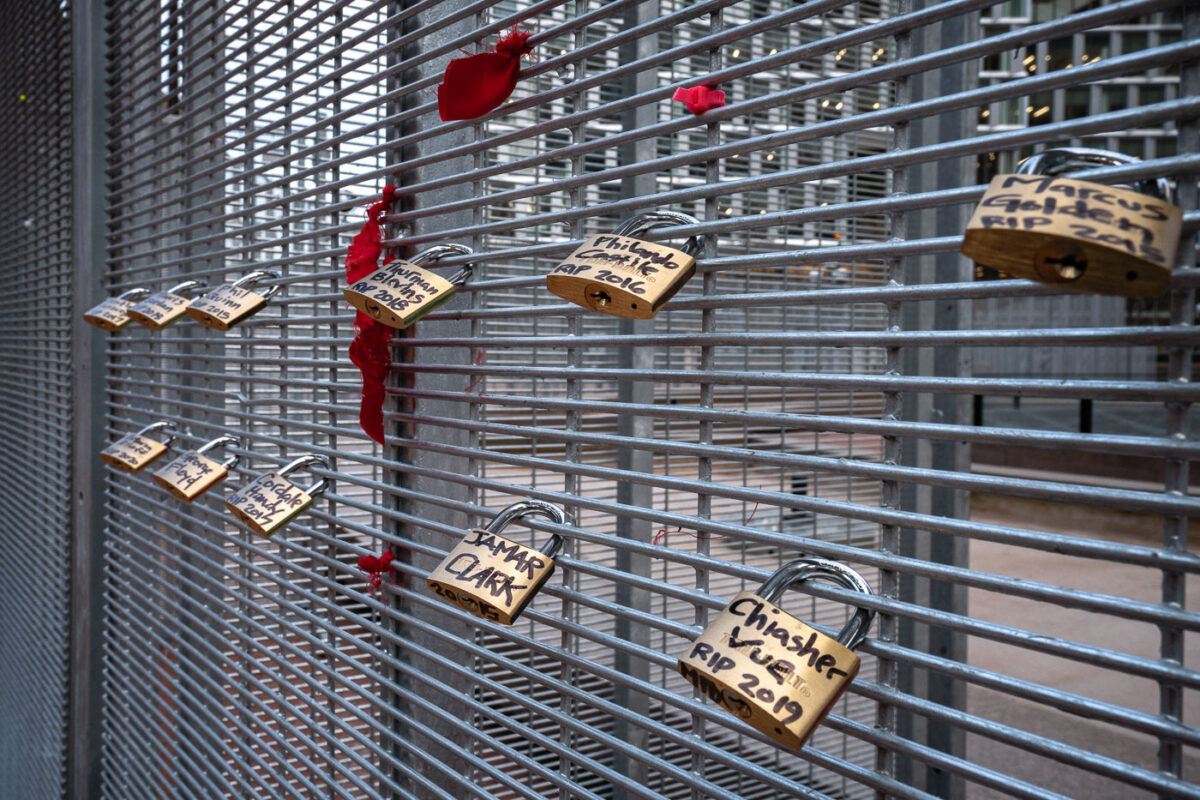
Memorial locks for victims of police violence on fencing at Hennepin County Government Center, Minneapolis.
During the trial of Derek Chauvin, a former Minneapolis police officer, locks bearing the names of victims of police violence were attached to the fencing surrounding the Hennepin County Government Center. These locks serve as a memorial to individuals such as Jamar Clark, Thurman Blevins, Philando Castile, Marcus Golden, Chiasher Vue, Cordale Handy, and George Floyd, all of whom died in incidents involving law enforcement. The display reflects the community's grief and demands for accountability in the wake of police brutality.

Hennepin County Government Center: Locks for Police Violence Victims

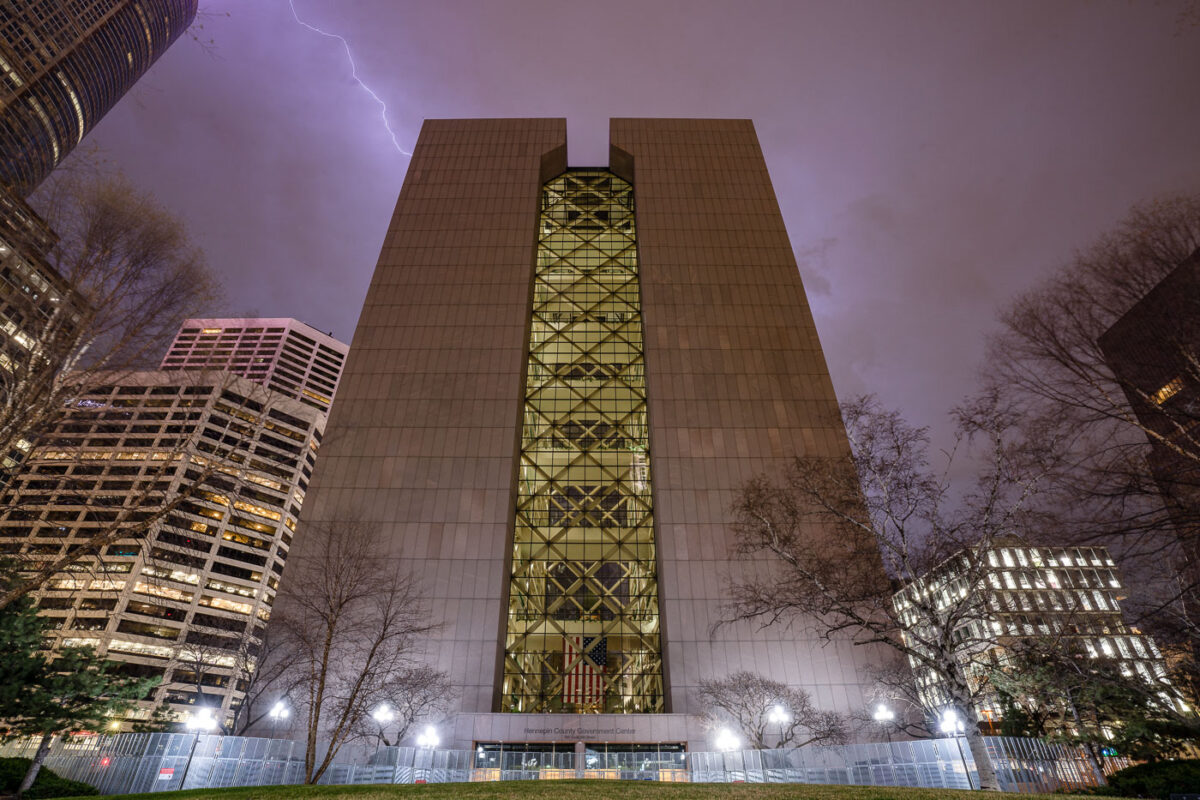
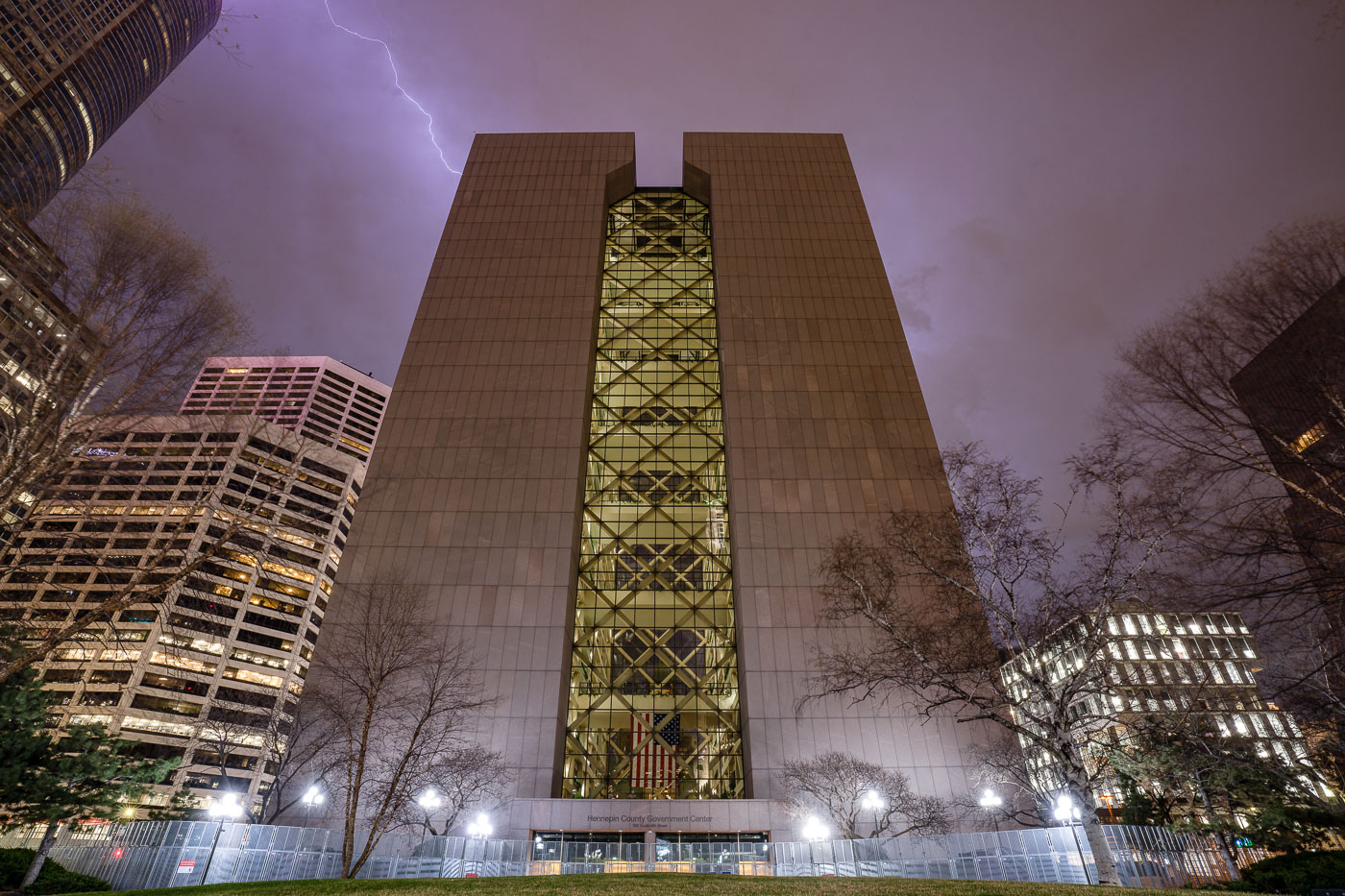
Lightning over Hennepin County Government Center in Minneapolis during the Derek Chauvin trial.
Lightning strikes the Hennepin County Government Center in Minneapolis during the trial of Derek Chauvin. The building, completed in 1977, serves as the primary administrative center for Hennepin County. During the trial for the murder of George Floyd, which took place in spring 2021, the courthouse was surrounded by extensive security fencing. The trial and its aftermath were significant events in the ongoing national conversation about racial justice and policing.

Lightning strikes Hennepin County Government Center during Chauvin trial

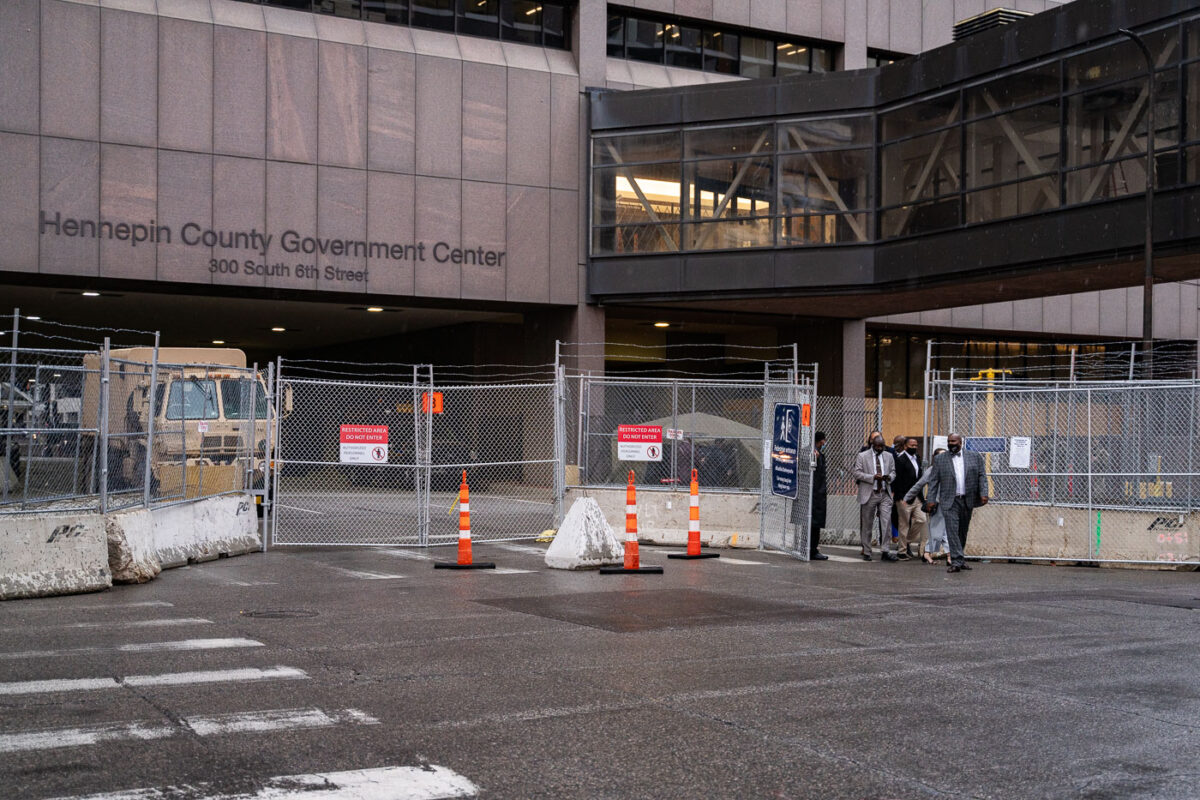
George Floyd's family leaving Hennepin County Government Center in Minneapolis past security fencing.
George Floyd's family departs the Hennepin County Government Center in downtown Minneapolis. The building, located at 300 South 6th Street, serves as a central hub for county administration and judicial proceedings. Its presence in the downtown core underscores its role in the civic life of Minneapolis. The security measures visible, including fencing and barricades, reflect the heightened tensions and public attention surrounding the Derek Chauvin trial, which was held within this government center.

George Floyd Family Departs Hennepin County Government Center

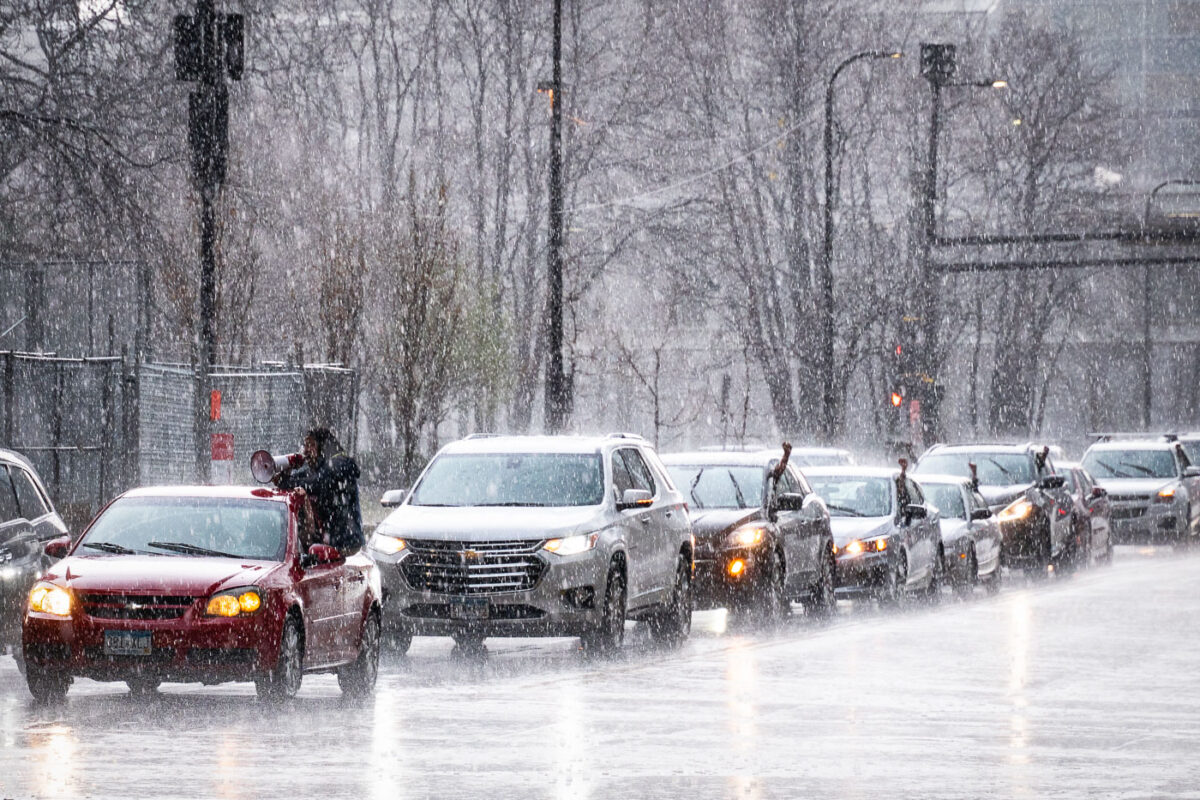
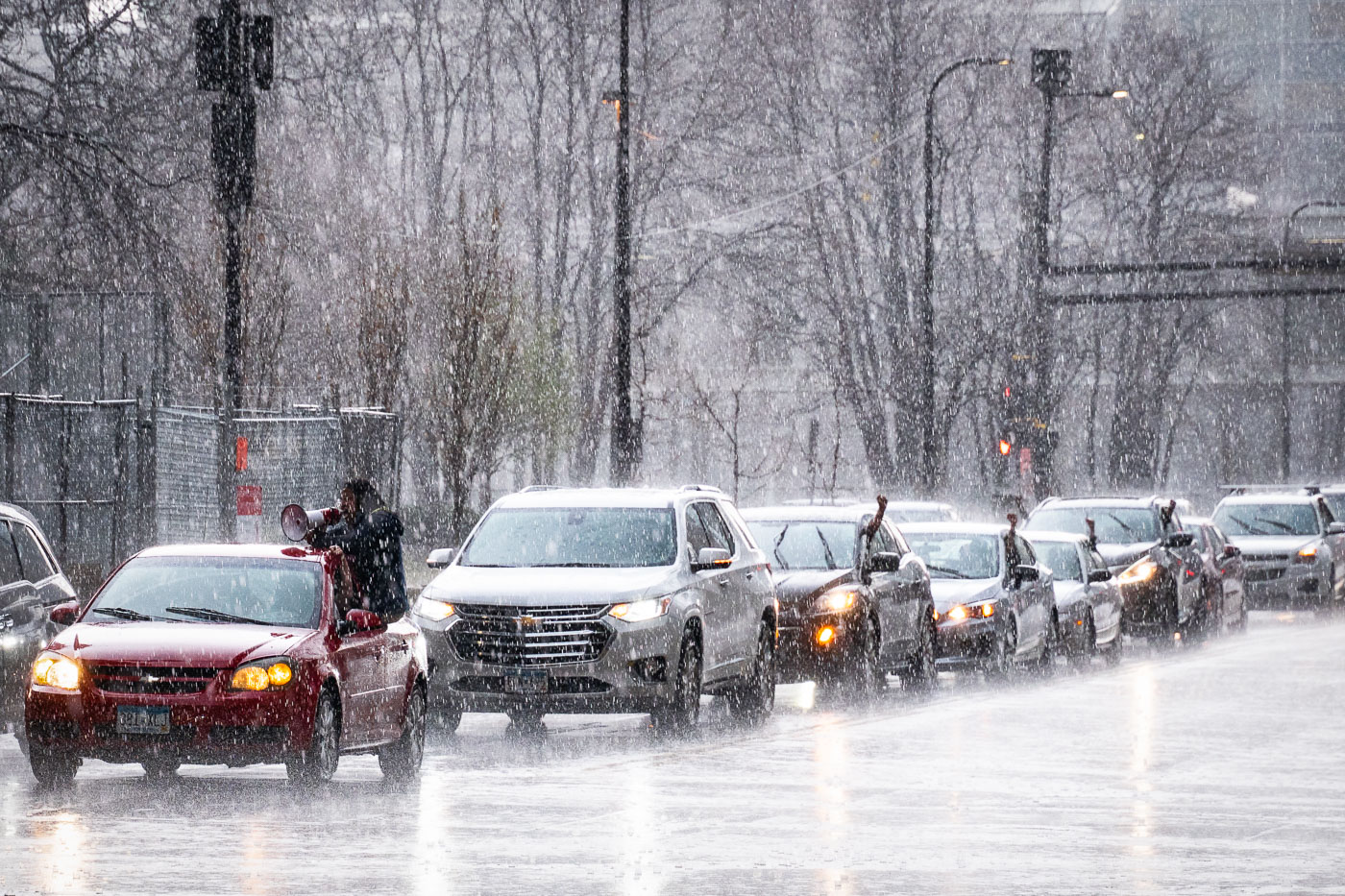
Protest caravan in downtown Minneapolis during heavy rain near the Hennepin County Government Center.
A protest caravan proceeds through downtown Minneapolis in heavy rain on April 19, 2021. The procession circled the Hennepin County Government Center, where the trial of former police officer Derek Chauvin was underway. Chauvin was on trial for the murder of George Floyd, an event that occurred on May 25, 2020, in South Minneapolis and sparked widespread protests. The caravan's route highlighted the courthouse's significance as the site of this nationally scrutinized legal proceeding.

Minneapolis Protest Caravan in Pouring Rain During Chauvin Trial

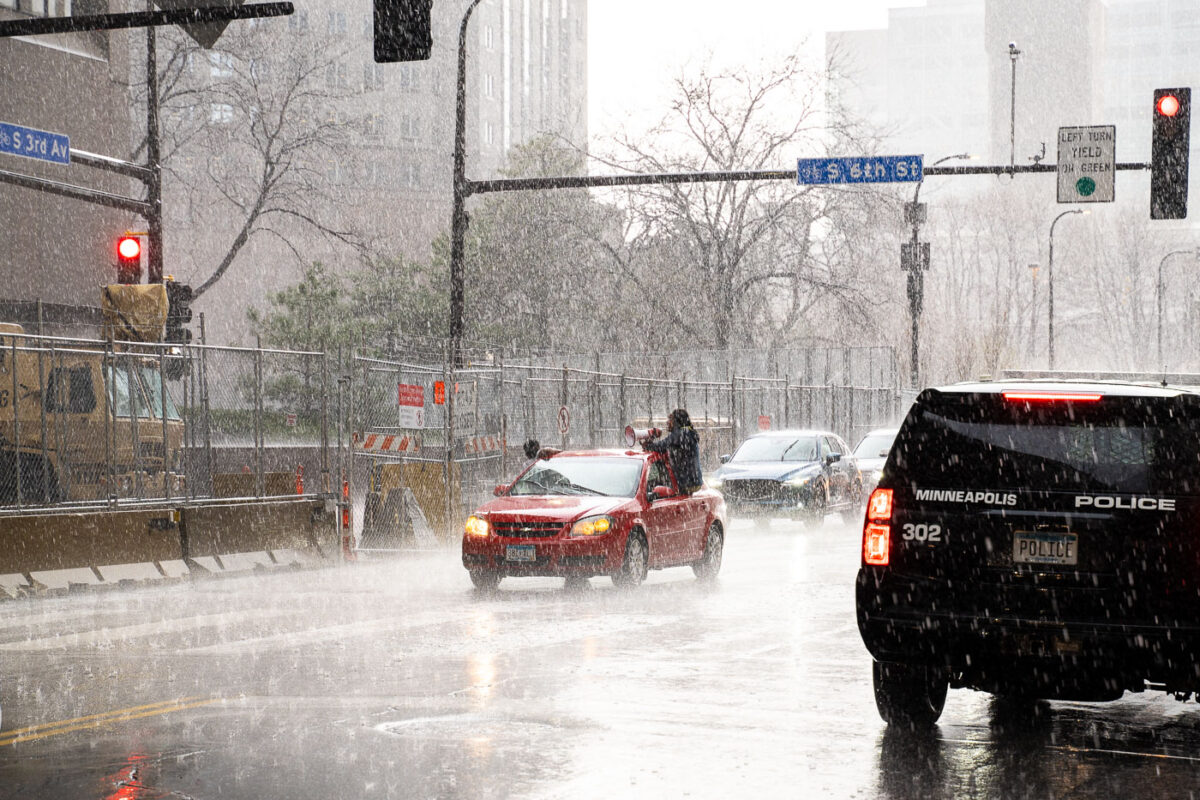
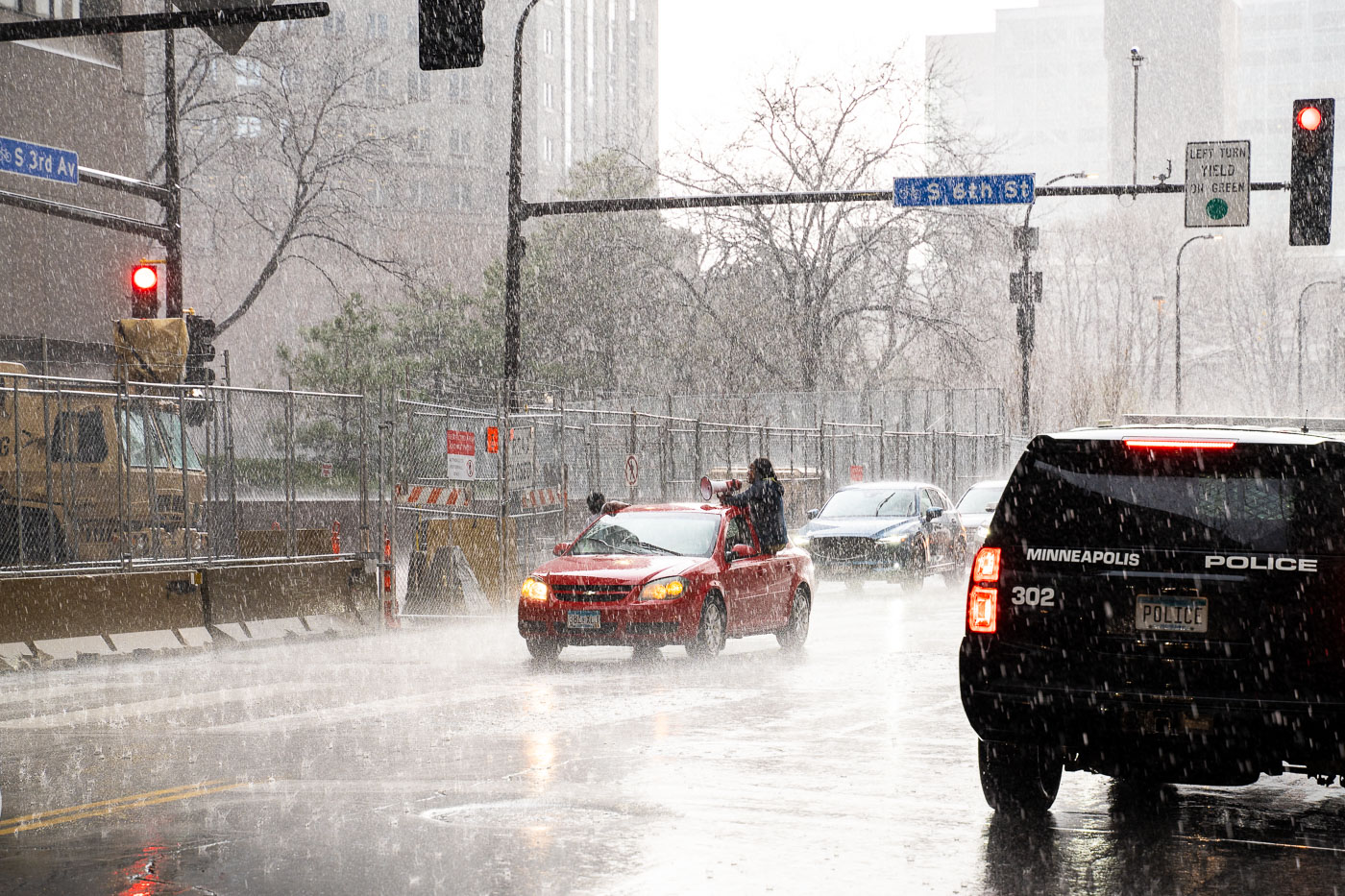
Protest caravan on South 5th Street in downtown Minneapolis during heavy rain.
A protest caravan navigates through heavy rain in downtown Minneapolis, approaching the Hennepin County Government Center. This event occurred during the trial of Derek Chauvin, the former Minneapolis police officer charged with the murder of George Floyd on May 25, 2020. The caravan's presence underscored the ongoing public attention and activism surrounding the trial and the broader issues of racial justice and police accountability.

Minneapolis protest caravan during Derek Chauvin trial in rain

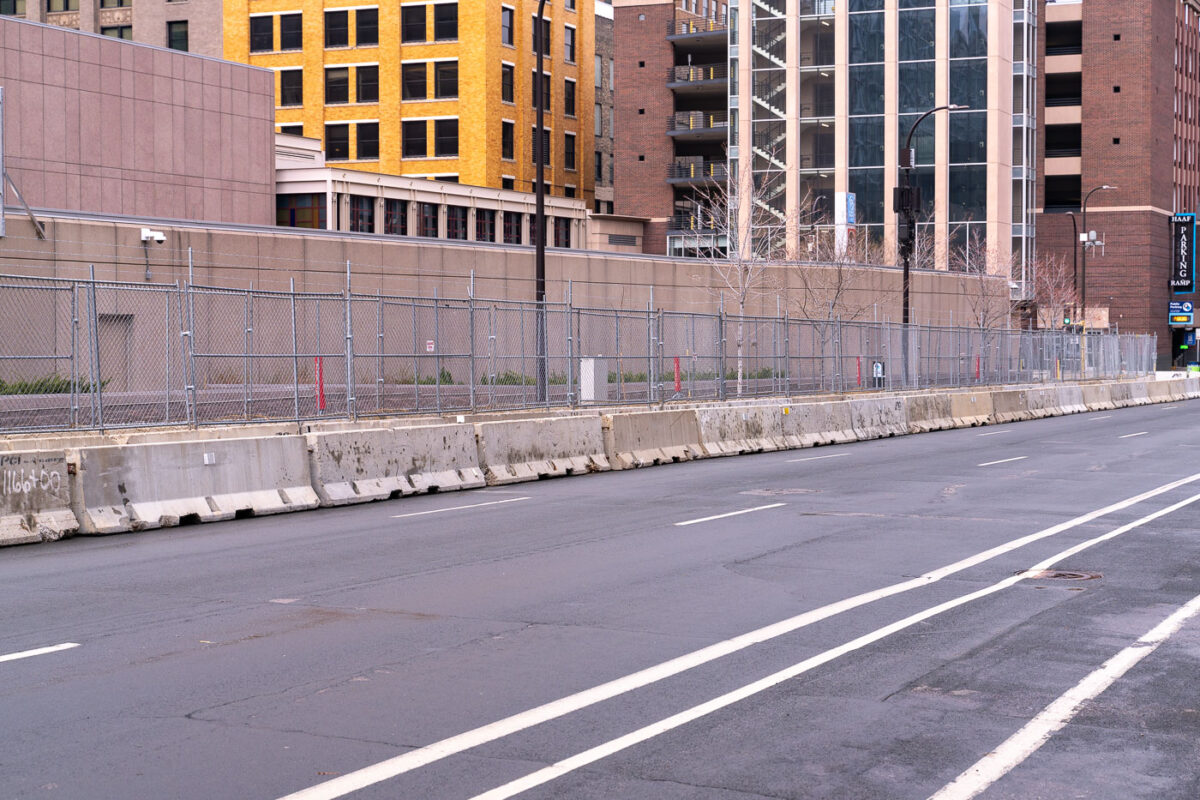
Barricades and fencing outside the federal courthouse in downtown Minneapolis during the Chauvin trial.
Barricades and fencing surround the United States Federal Courthouse in Minneapolis during the Derek Chauvin murder trial in April 2021. The courthouse, located in downtown Minneapolis, served as the venue for the trial of former police officer Derek Chauvin, who was accused of the murder of George Floyd. The extensive security measures were implemented to manage potential public gatherings and ensure the safety of the courthouse and its surroundings during this high-profile legal proceeding. The trial concluded with Chauvin's conviction on all charges.

Minneapolis Federal Courthouse Barricaded During Chauvin Trial

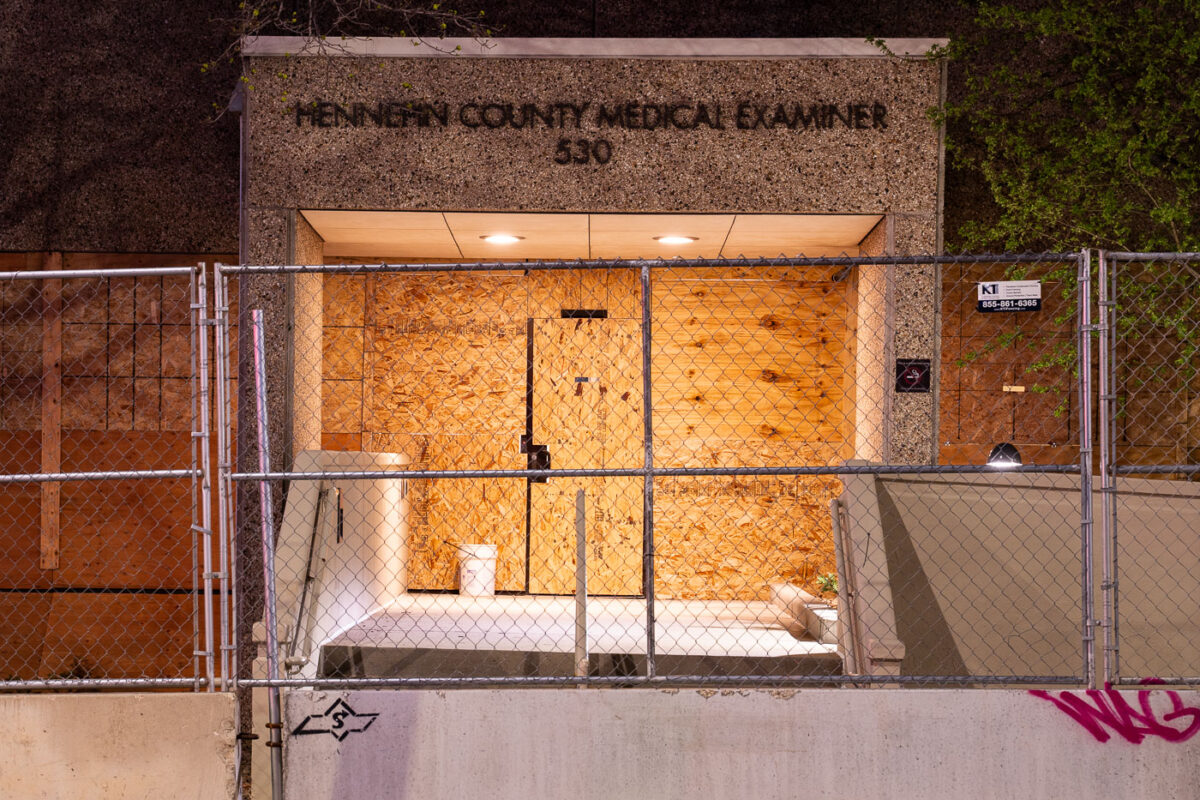
Boarded entrance at the Hennepin County Medical Examiner in Minneapolis behind security fencing.
Security fencing and boarded-up entrances surround the Hennepin County Medical Examiner's office at 530 5th Avenue in Minneapolis. This measure was taken in anticipation of the Derek Chauvin trial, which began in March 2021. The office is responsible for investigating deaths in Hennepin County, including those that occur under suspicious circumstances or involve law enforcement. The plywood covering the building's entrances suggests a response to potential unrest or damage during the period of heightened public attention surrounding the trial.

Hennepin County Medical Examiner’s Office Boarded Up
Built in Minneapolis

Minneapolis Photographer

Browse by location, move through long-running series, or start with recent work.