Gold Medal Flour

18 photos · 2013–2024

18 photographs tagged Gold Medal Flour, 2013–2024.
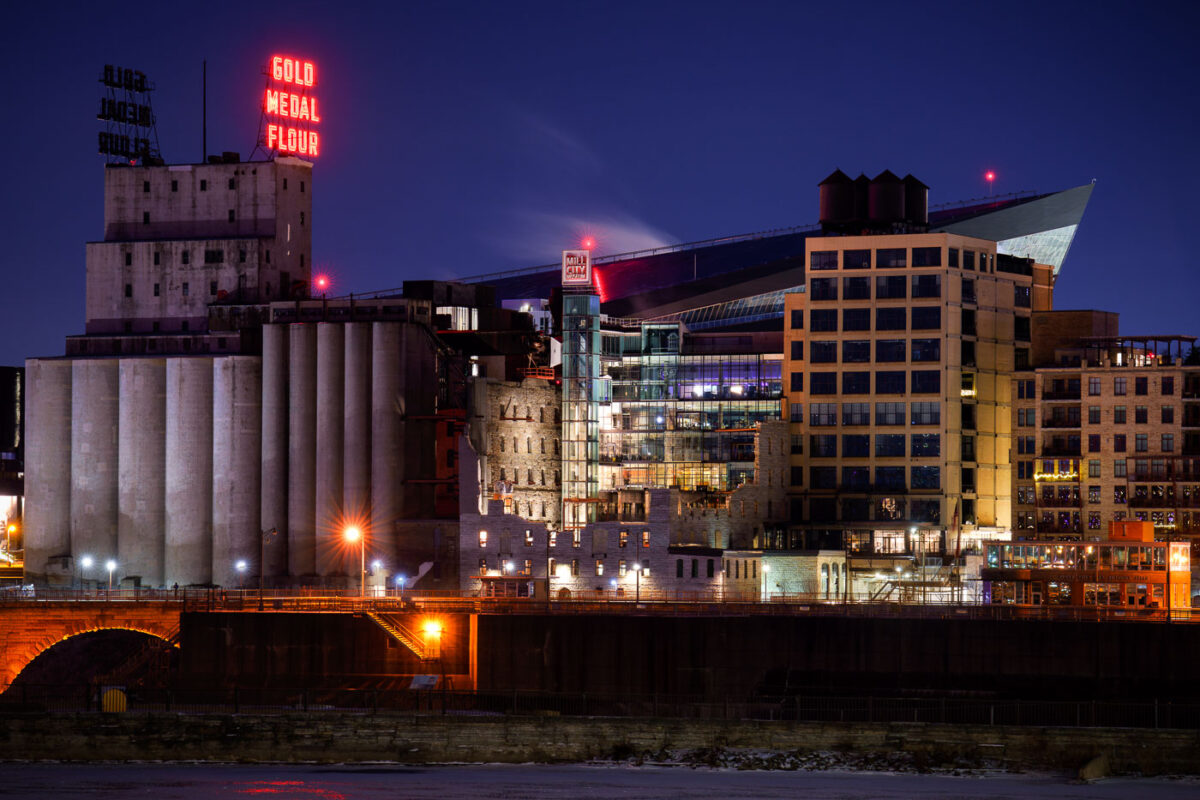
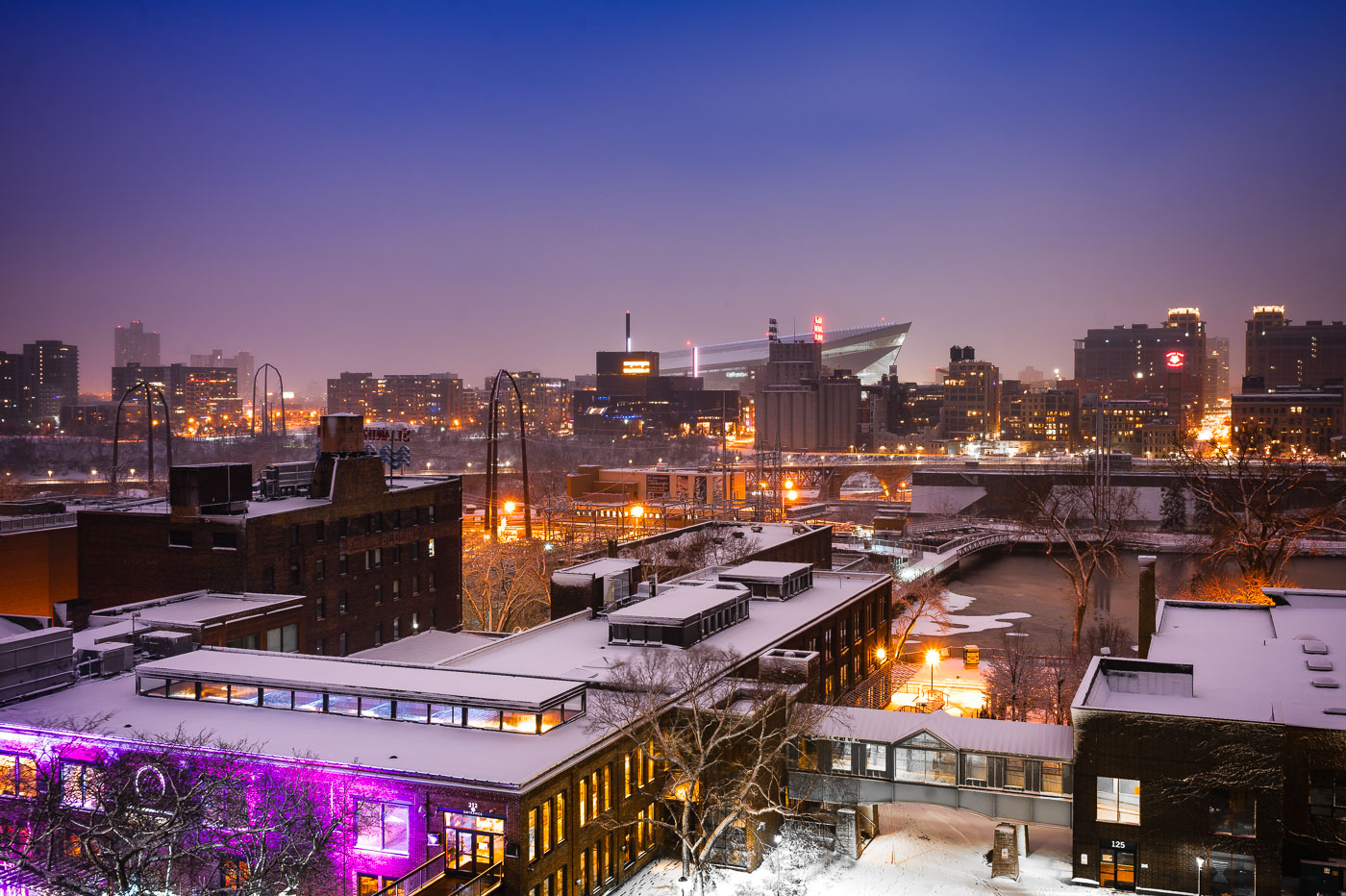
US Bank Stadium and Mill City Museum neon signs
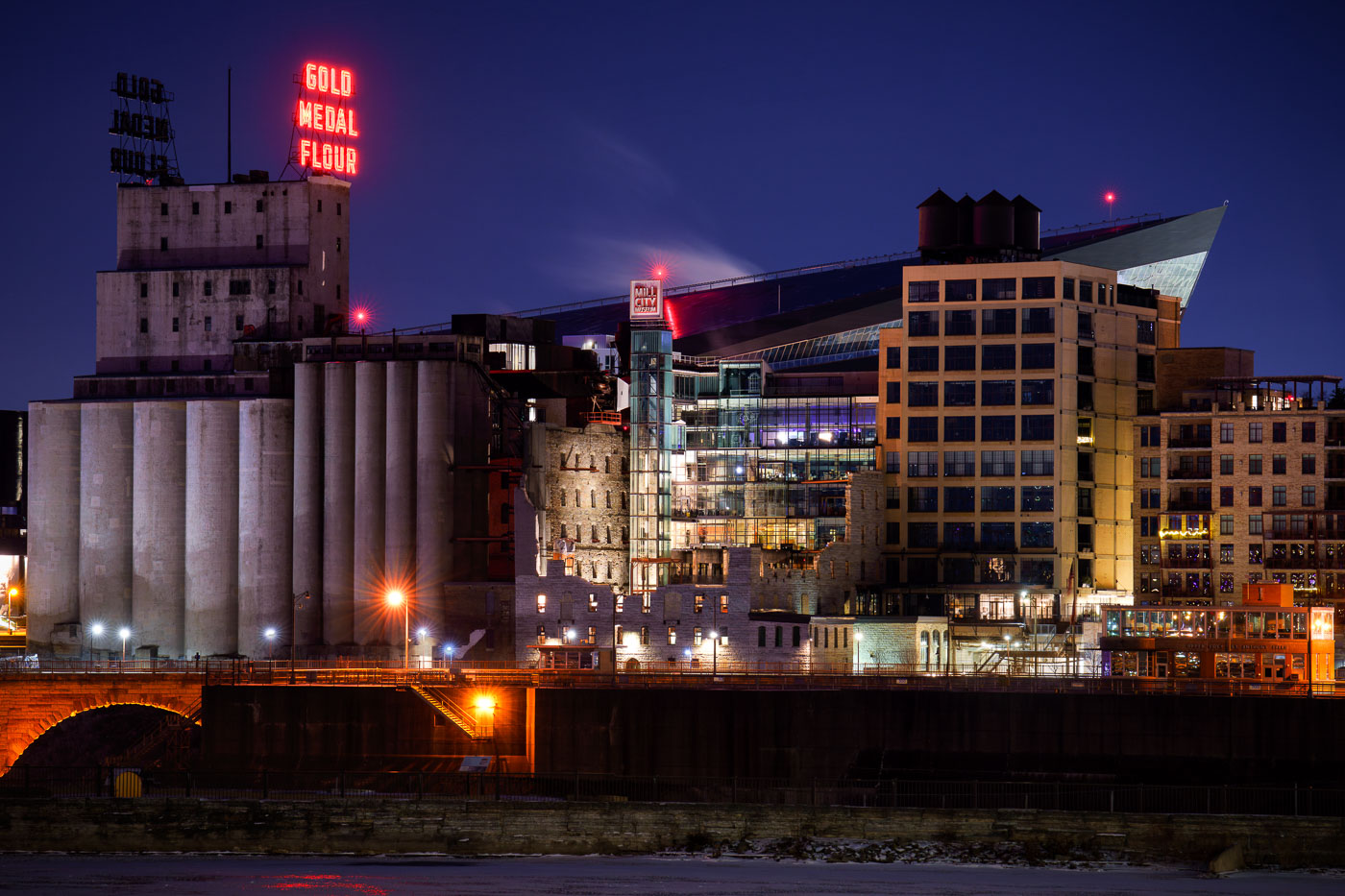
The Washburn A Mill, once the world's largest flour mill, stands illuminated along the Mississippi River in Minneapolis. This historic structure now houses the Mill City Museum, which interprets the city's industrial past as a global flour milling center. In the background, the contemporary architecture of US Bank Stadium signifies Minneapolis's modern urban landscape.

Mill City Museum and Gold Medal Flour Sign Along the Mississippi River
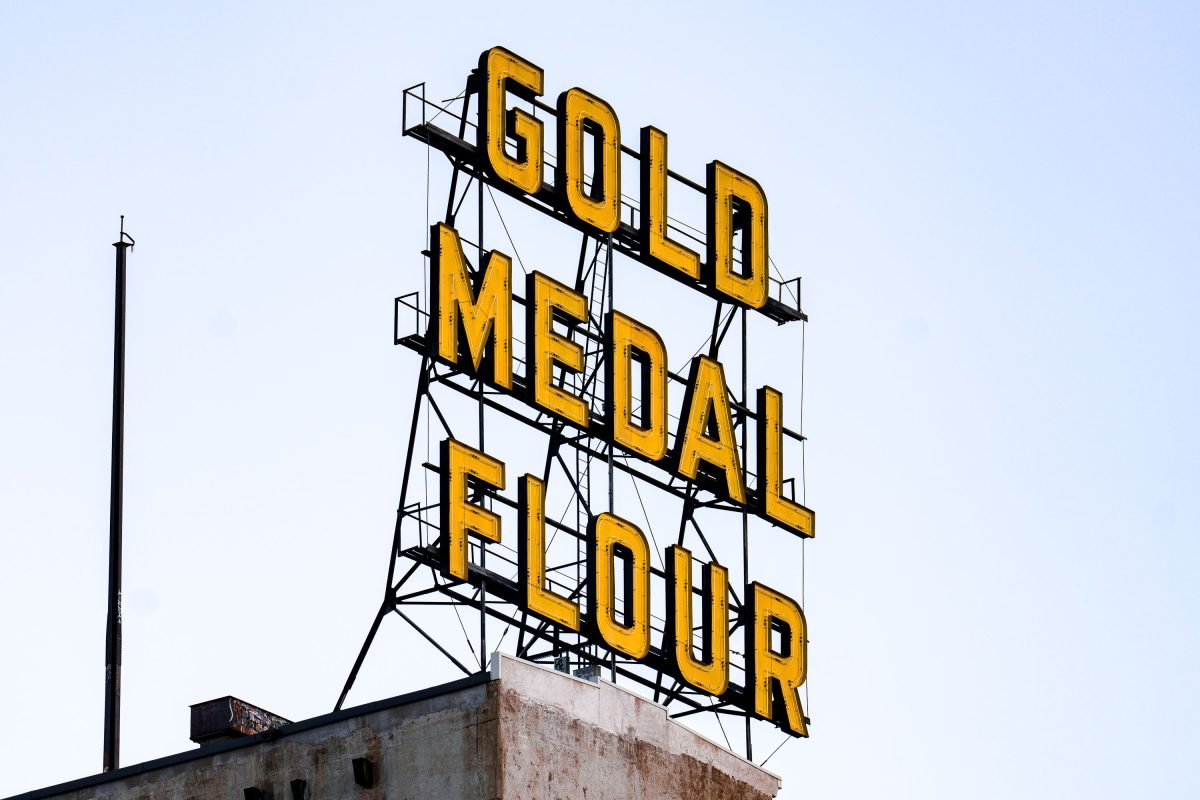
Gold Medal Flour neon sign atop a grain elevator in downtown Minneapolis.
The Gold Medal Flour sign marks the former Washburn-Crosby Company mill complex along the Mississippi River in Minneapolis. Washburn-Crosby, a predecessor of General Mills, adopted the Gold Medal name in 1880 after its flour won top honors at a Millers' International Exhibition in Cincinnati. The rooftop sign has stood above the mill district since the early 20th century, a period when Minneapolis produced more flour than any other city in the world. The surrounding complex, including the Washburn A Mill, is now preserved as part of the Mill City Museum and the St. Anthony Falls Historic District.

Gold Medal Flour Sign, Mississippi Riverfront, Minneapolis
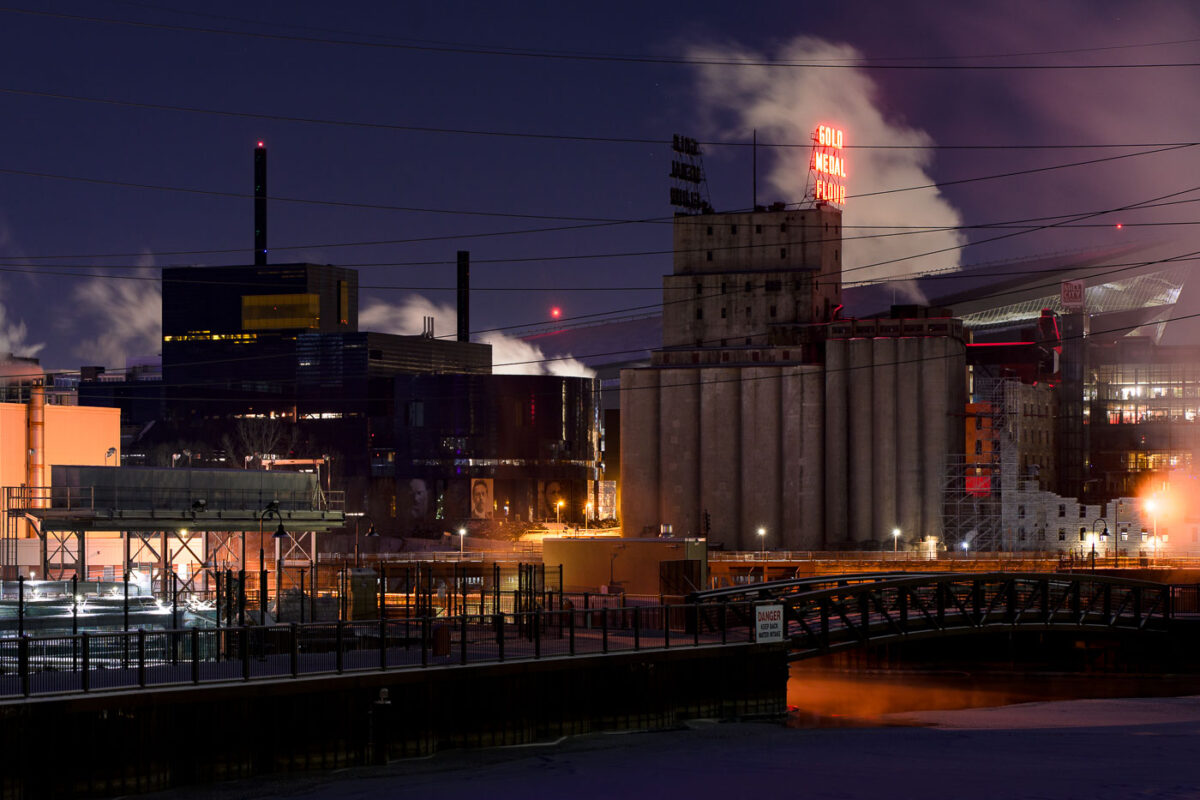
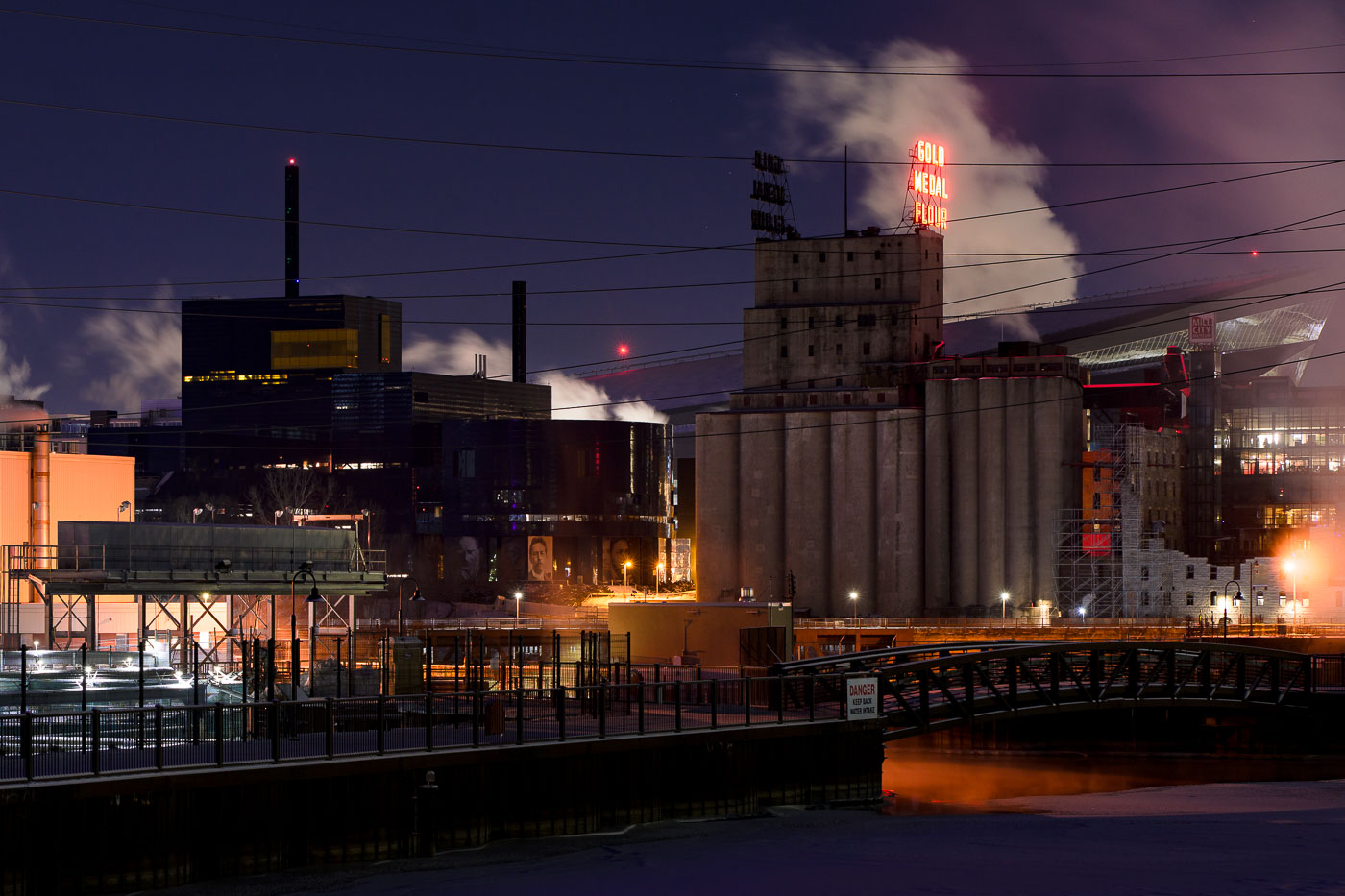
Steam from double digit below zero in Minneapolis
The Gold Medal Flour sign sits atop the old Washburn A Mill on the Mississippi River in downtown Minneapolis. Built in 1874 and rebuilt in 1880 after an explosion destroyed the original structure, the mill produced flour for the Washburn Crosby Company, later absorbed into General Mills in 1928. It closed in 1965 and reopened in 2003 as the Mill City Museum.

The Gold Medal Flour Sign Above the Mississippi River in Minneapolis
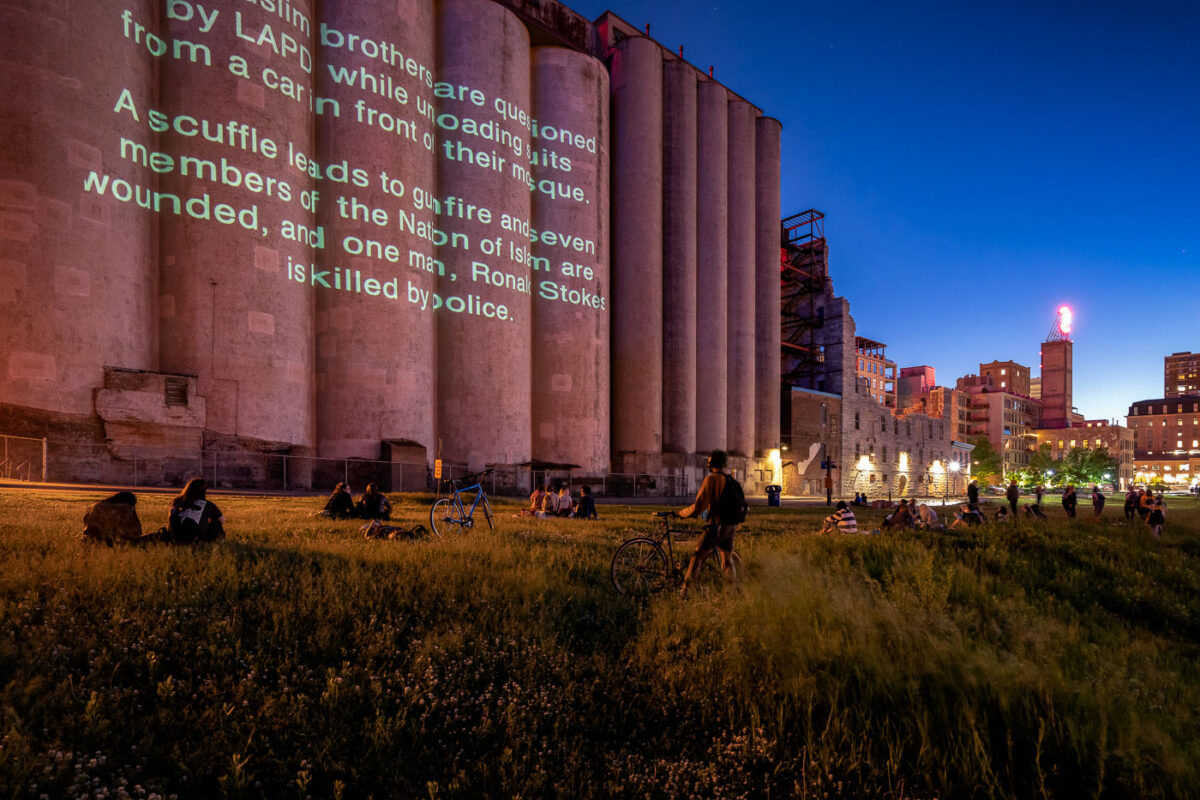
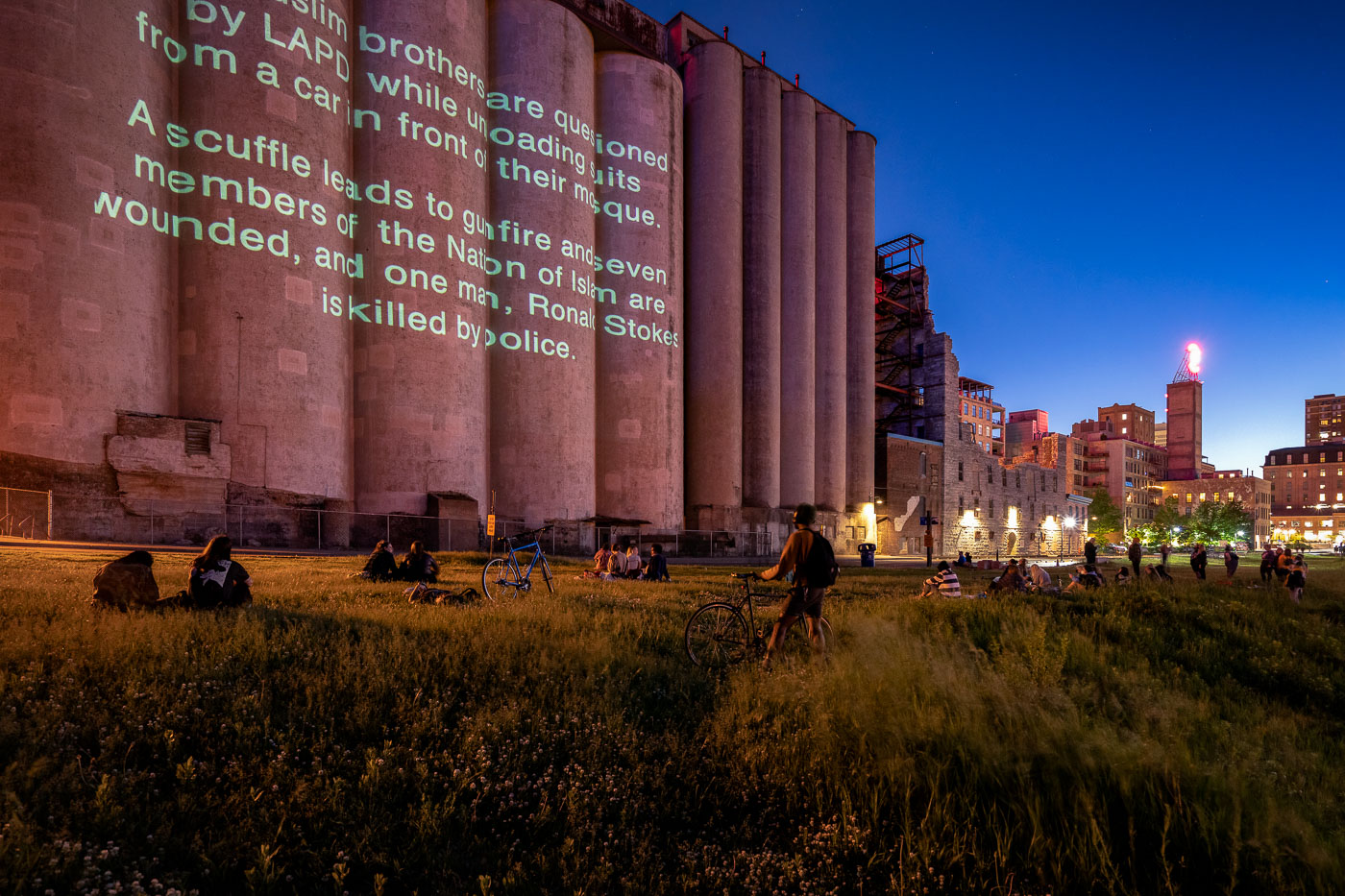
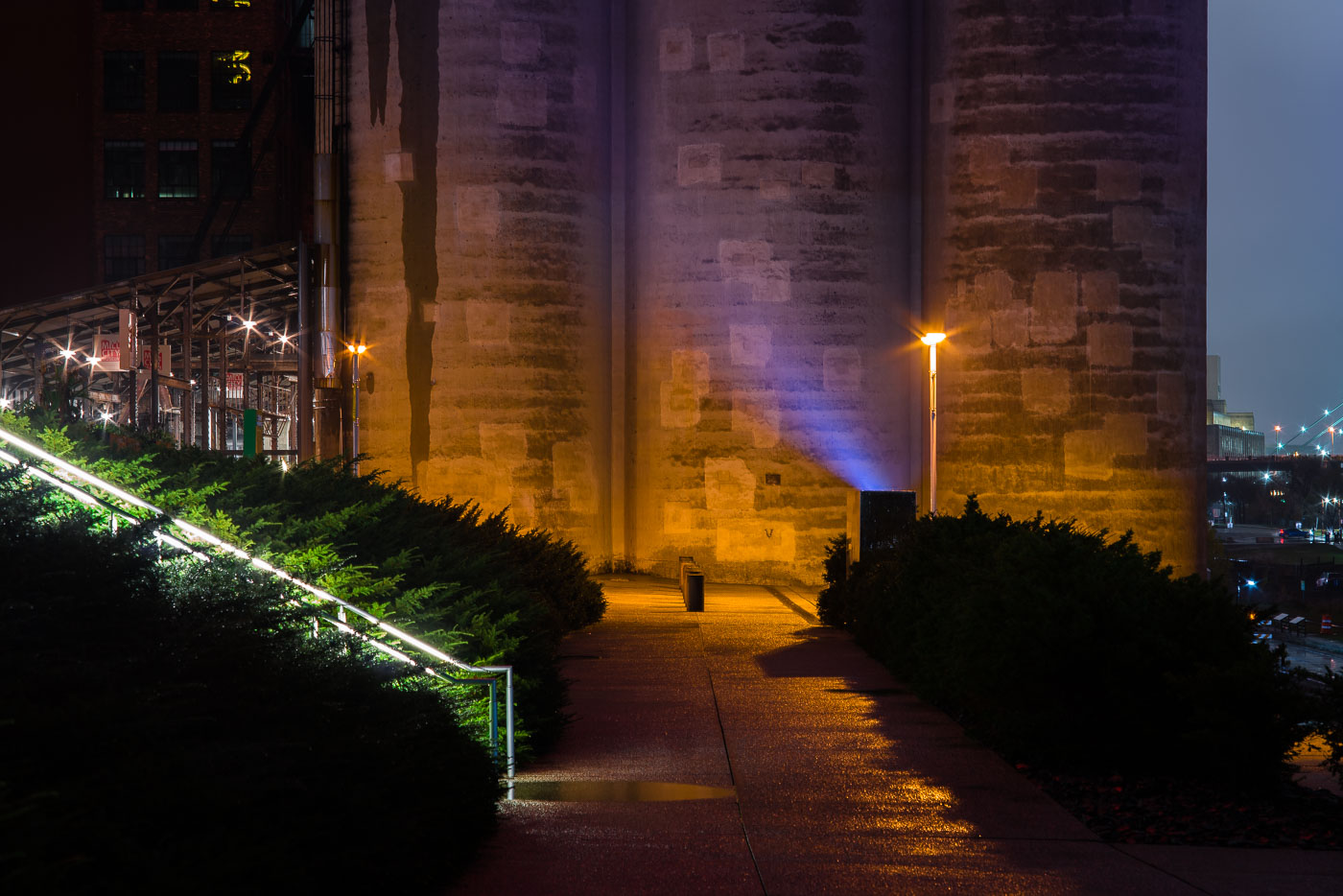
Projection on Gold Medal Flour elevators in Minneapolis, with people gathered in Gold Medal Park.
A projection titled "Revolution Will Be Televised" illuminates the historic Gold Medal Flour grain elevators in downtown Minneapolis. The art installation, displayed on the concrete silos, features text recounting historical events related to police actions and social justice, resonating with themes from the Minneapolis Uprising. Viewers gather in Gold Medal Park, a public green space adjacent to the former industrial complex, to observe the temporary display. The Gold Medal Flour complex, once a major industrial site, represents Minneapolis's milling history and now stands as a prominent landmark in the city's riverfront district.

“Revolution Will Be Televised” Projection on Gold Medal Flour Elevators
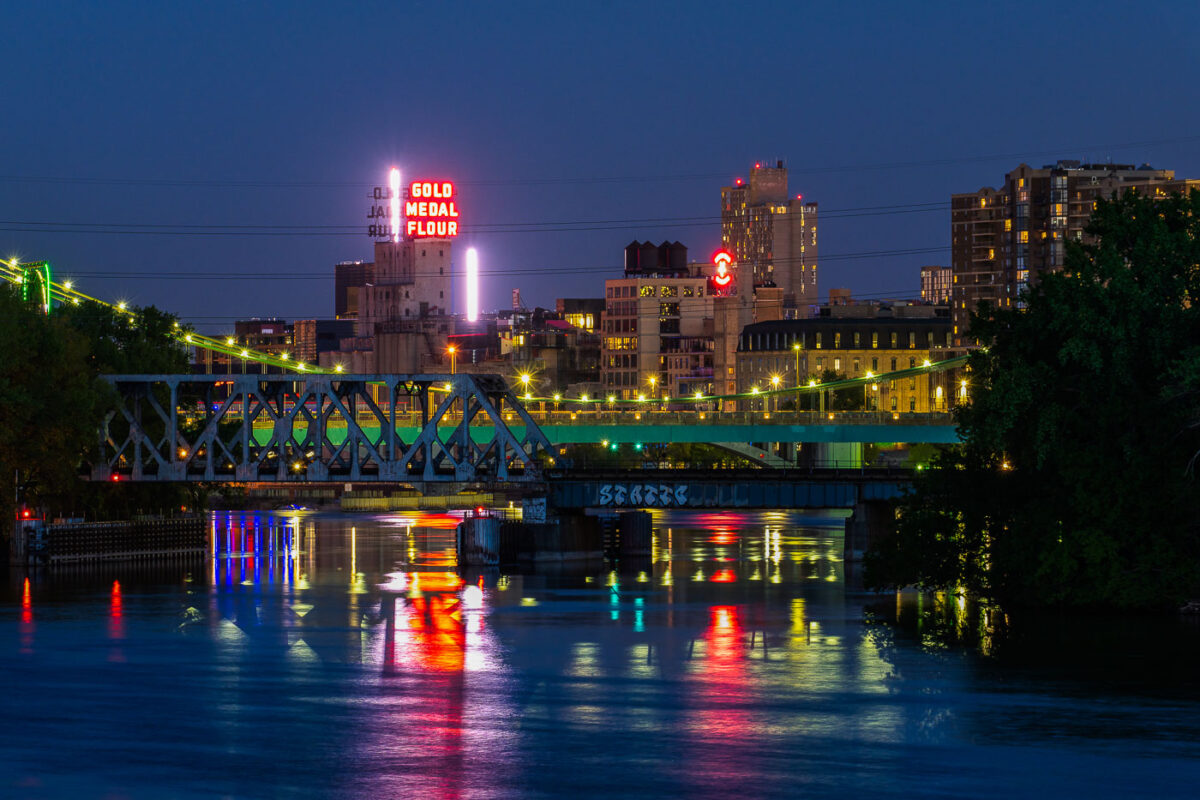
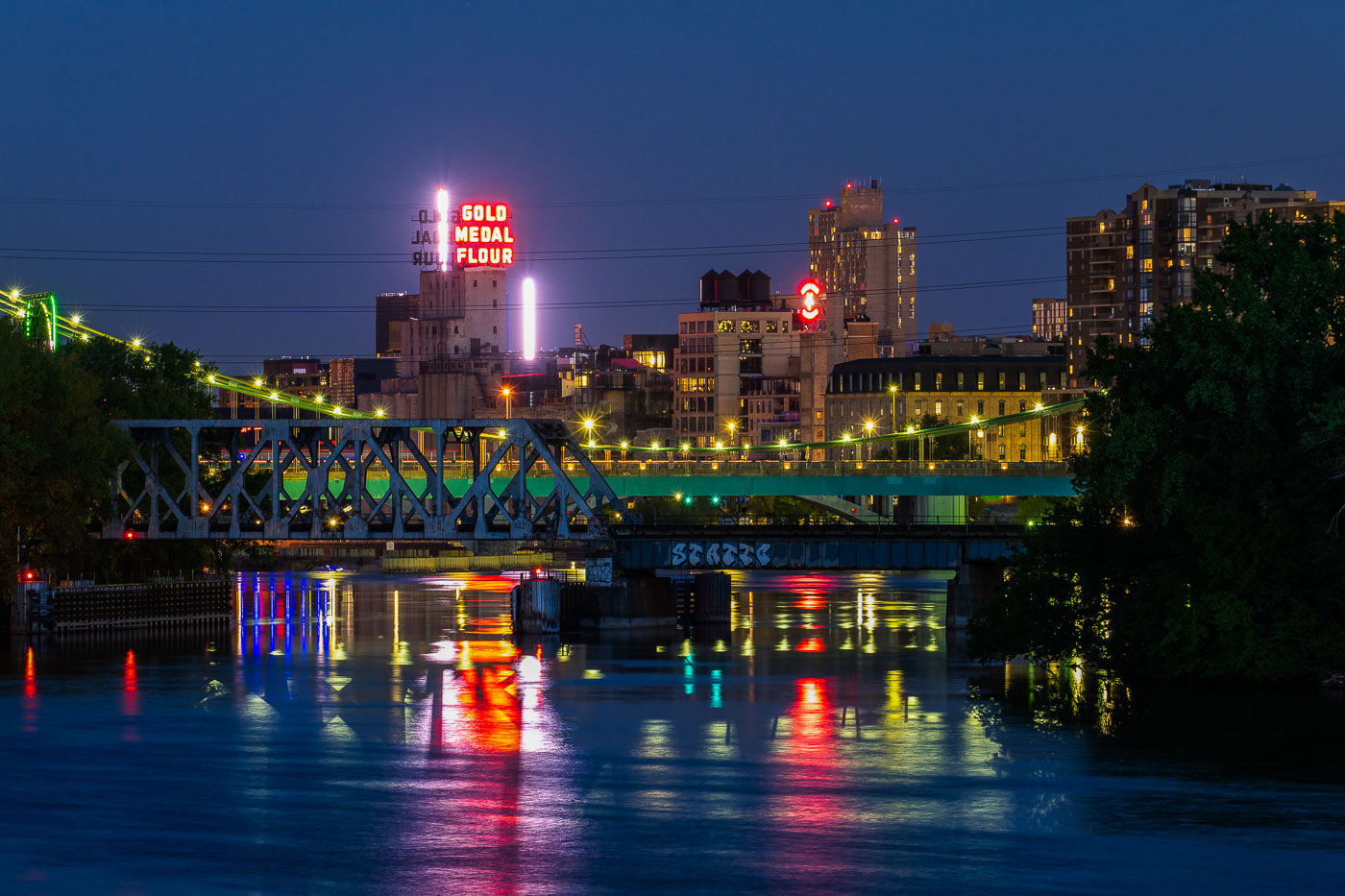
Gold Medal Flour seen from Boom Island in May 2020
Downtown Minneapolis as seen from Boom Island in May 2020. Gold Medal Flour and Northstar Blankets neon signs visible across the Mississippi River.

Neon signs of Downtown Minneapolis

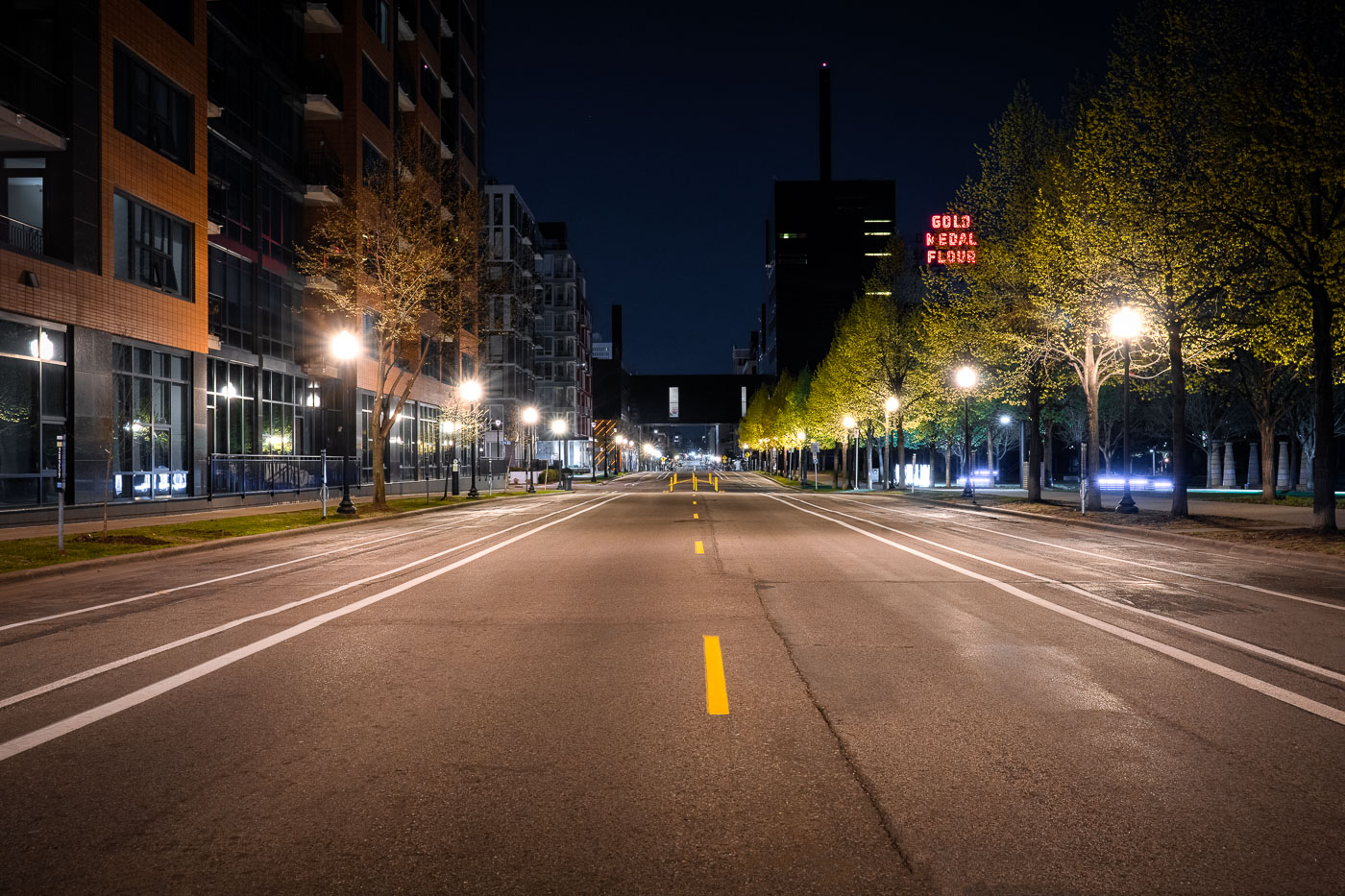
Gold Medal Flour neon sign as seen from 2nd st
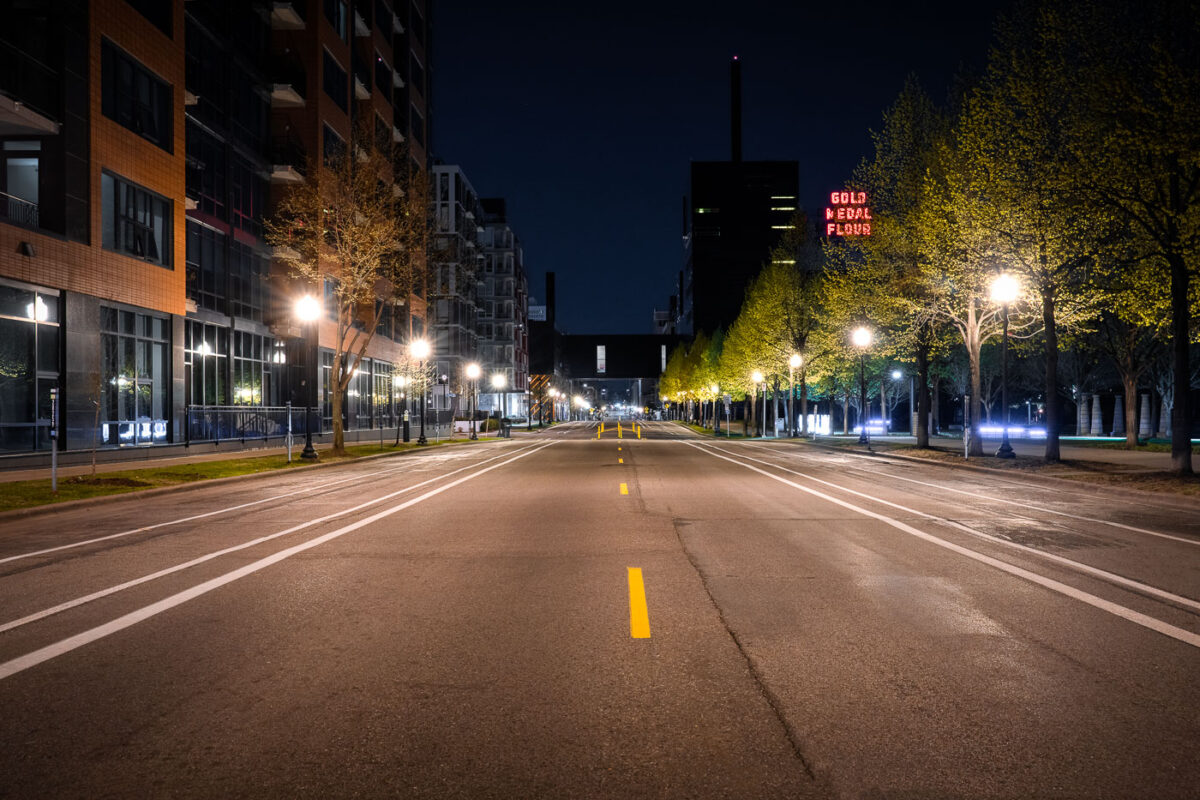
South Second Street in downtown Minneapolis during the coronavirus (COVID-19) shutdown.

South Second Street in Downtown Minneapolis
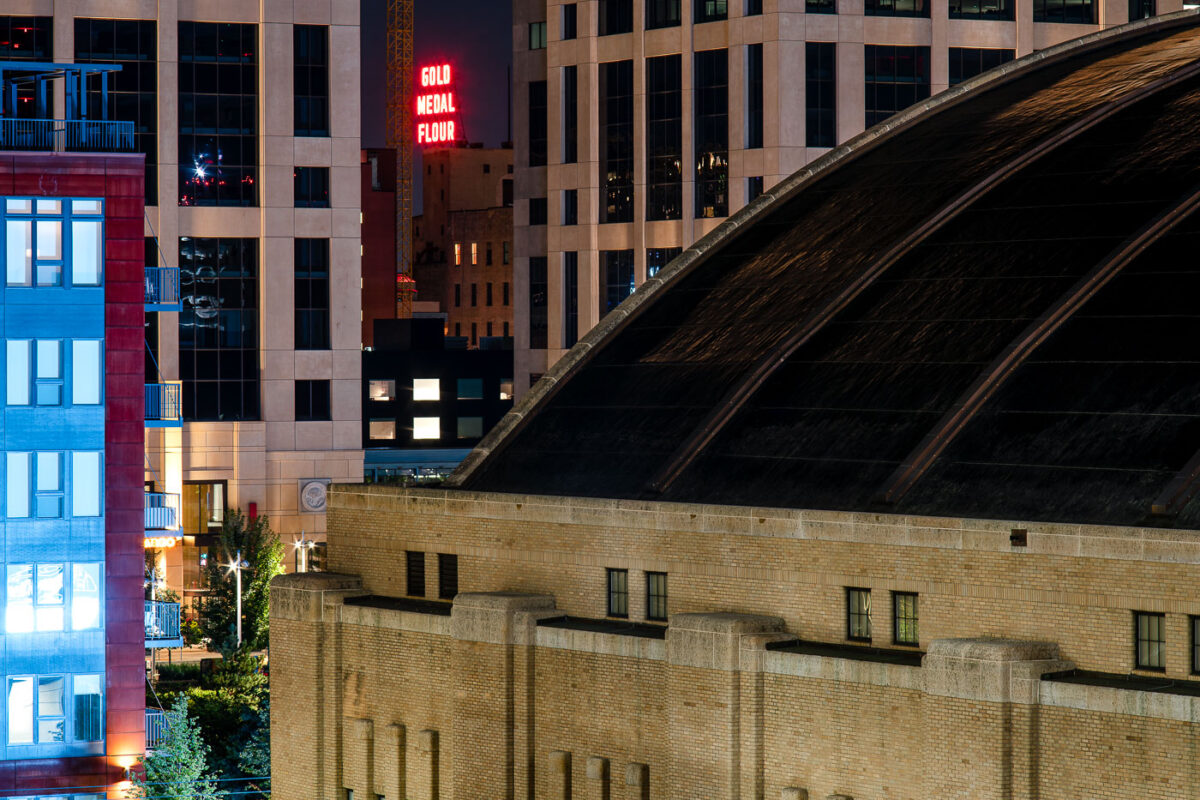
The Armory and Gold Medal Flour sign in Downtown Minneapolis
The Gold Medal Flour seen in the distance with the Minneapolis Armory in the foreground. The Armory is noiw a concert venue after being a parking garage for a long time.

The Armory and Gold Medal Flour sign in Downtown Minneapolis

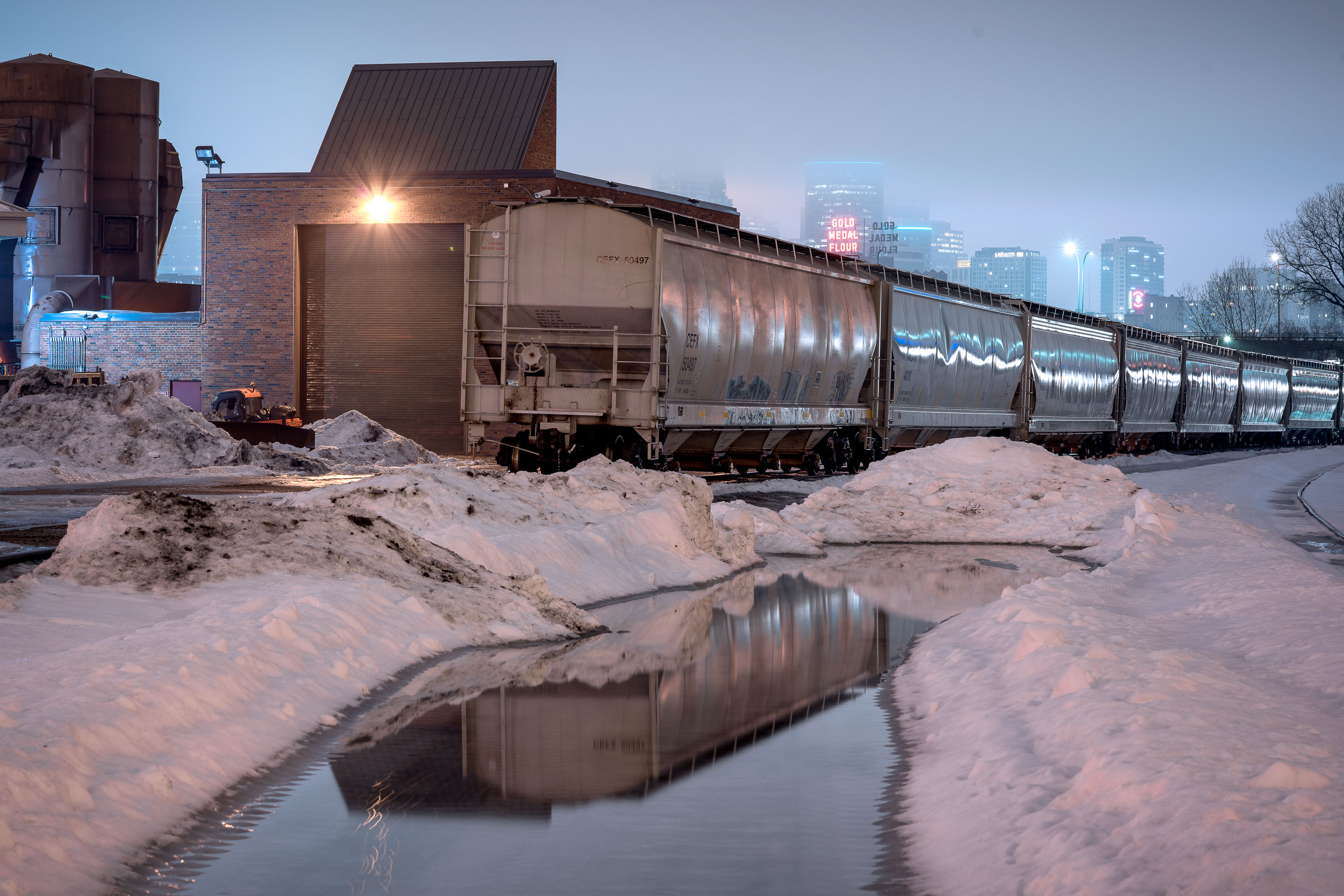
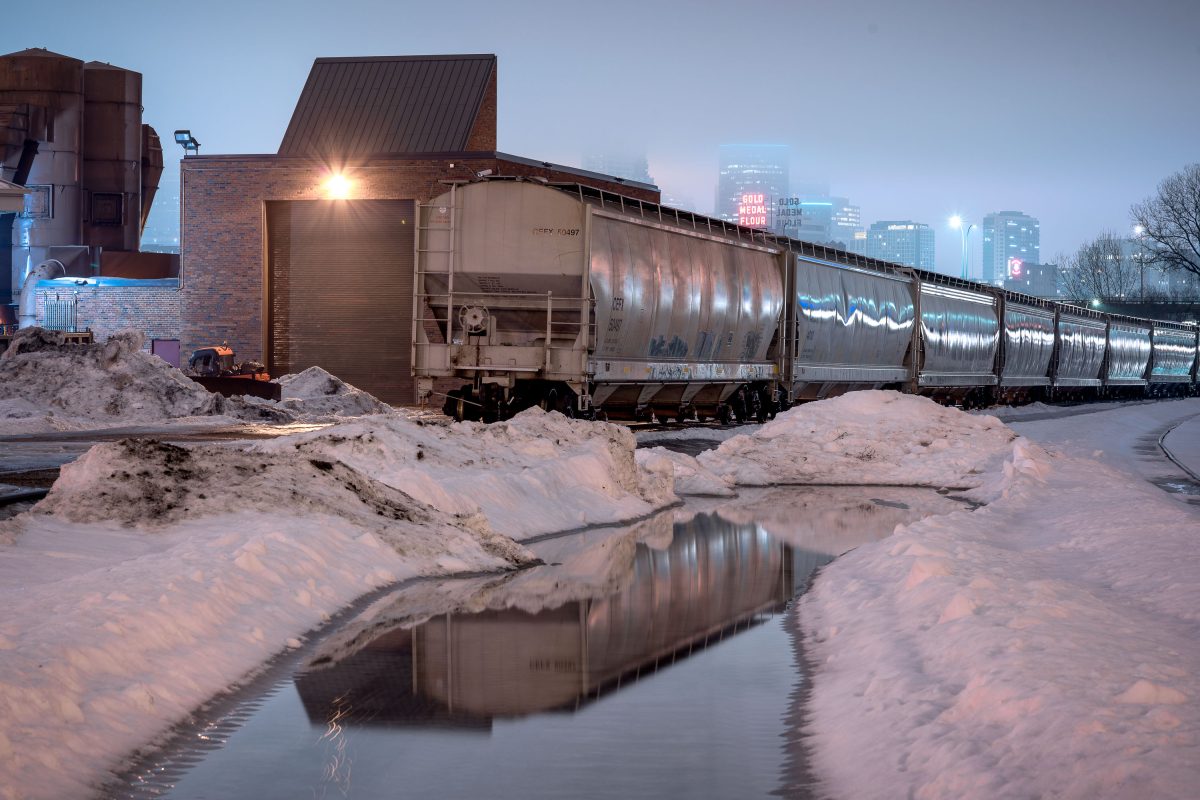
Freight train with graffiti parked beside Old Main Heating Plant in Minneapolis during winter.
These hopper cars sit on tracks running past the University of Minnesota's Old Main Heating Plant, which has long supplied steam heat to the East Bank campus through a network of underground tunnels. Across the Mississippi River, the Gold Medal Flour sign marks the site of the former Washburn-Crosby mill complex, once among the largest flour-milling operations in the world and the namesake of General Mills. The rail corridor along this stretch of river served Minneapolis's milling district for more than a century, moving grain in and flour out to markets across the country.

Freight Train Reflections, Gold Medal Flour Sign, Minneapolis
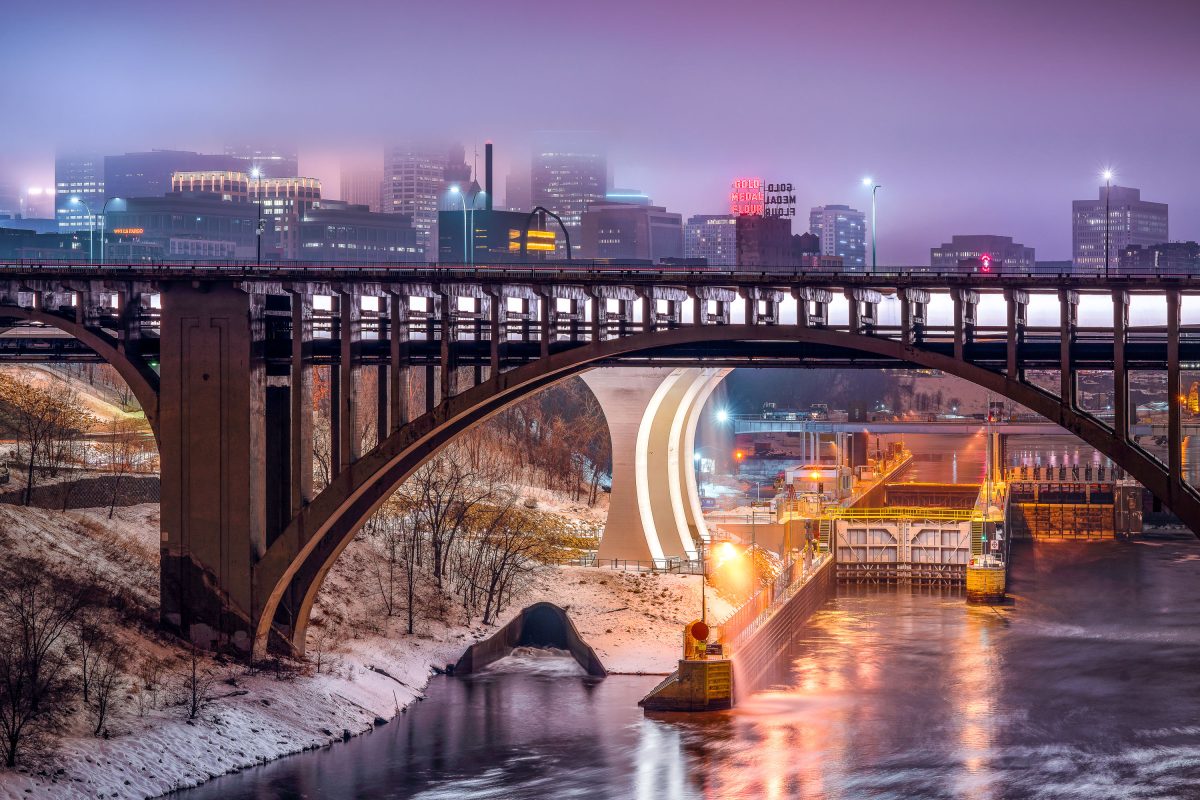
Third Avenue Bridge crosses the Mississippi River with the Gold Medal Flour sign and downtown Minneapolis skyline illuminated at dusk.
The Third Avenue Bridge crosses the Mississippi River just downstream from Saint Anthony Falls, linking downtown Minneapolis to the university area to the east. Completed in 1918, it's a concrete arch span designed by engineer Kristoffer Olsen Oustad with a slight curve to fit the site's geology. Below it, the Lower St. Anthony Falls Lock and Dam helps vessels pass the falls, while the Gold Medal Flour sign, raised above the old Washburn-Crosby mill site in 1908, still marks the skyline behind it.

Foggy Dusk at Third Avenue Bridge and St. Anthony Falls
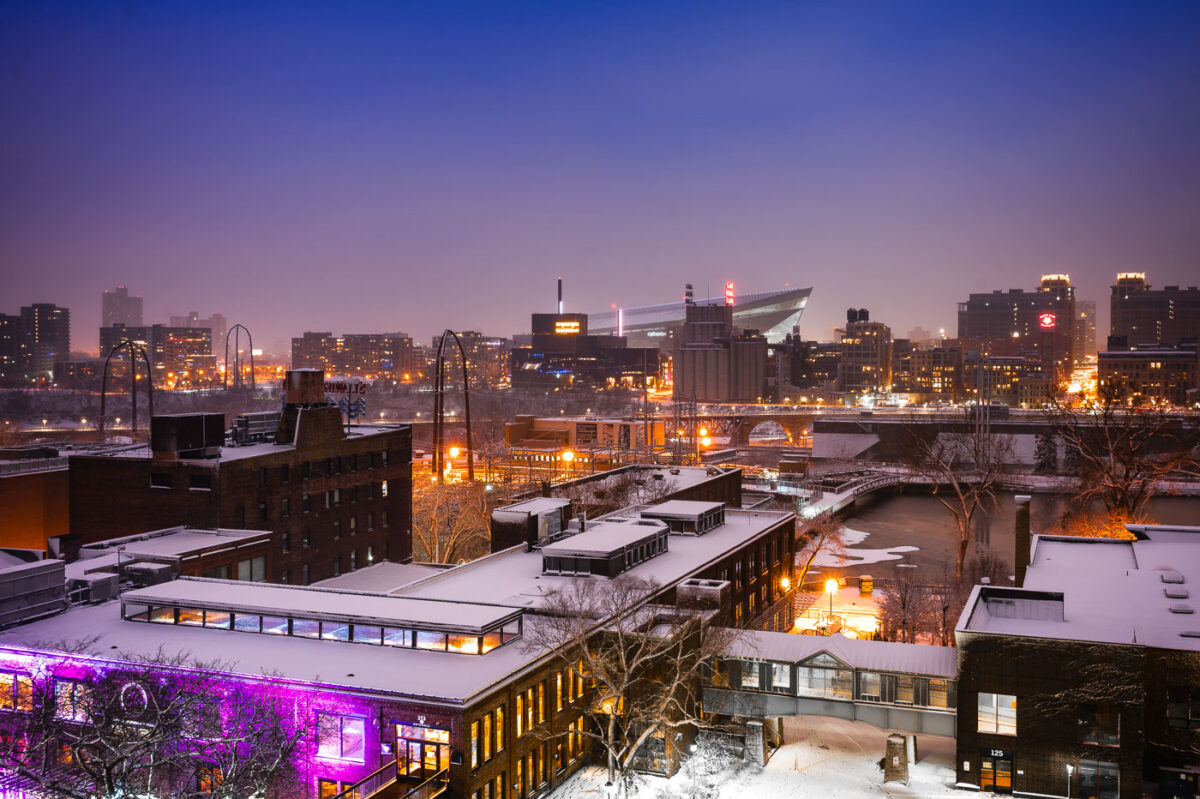
Downtown Minneapolis from St. Anthony Main
The Minneapolis skyline is visible in the distance, with US Bank Stadium prominently featured. In the foreground, the historic Stone Arch Bridge spans the Mississippi River, connecting the St. Anthony Main district to the city's core. Originally built in 1883 for the Great Northern Railway, the bridge is now a pedestrian and bicycle path, offering views of the river and the former industrial buildings that once defined this area.

Minneapolis Skyline and Stone Arch Bridge in Winter
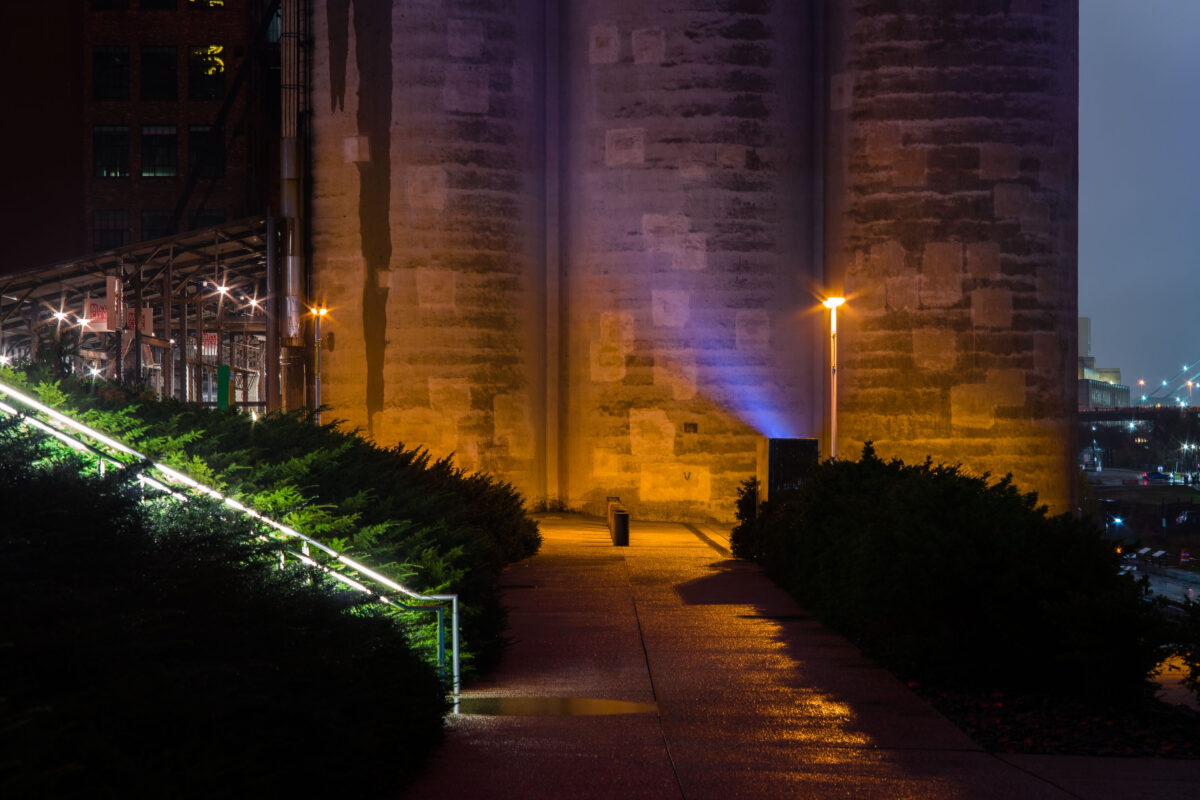
The Mill City Museum, housed in the former Washburn "A" Grain Elevator in Minneapolis, preserves the history of the city's flour milling industry.
The Mill City Museum in Minneapolis is housed in the former Washburn "A" Grain Elevator, a structure that was once the largest flour mill in the world. The museum preserves and interprets the history of the mill and the city's flour milling industry, which was central to Minneapolis's development. The grain elevator, built in 1880, is a prominent example of industrial architecture from the era. Today, the museum offers exhibits on the milling process, the lives of mill workers, and the impact of the industry on the city's growth and identity.

Gold Medal Flour Grain Elevator, Mill City Museum, Minneapolis
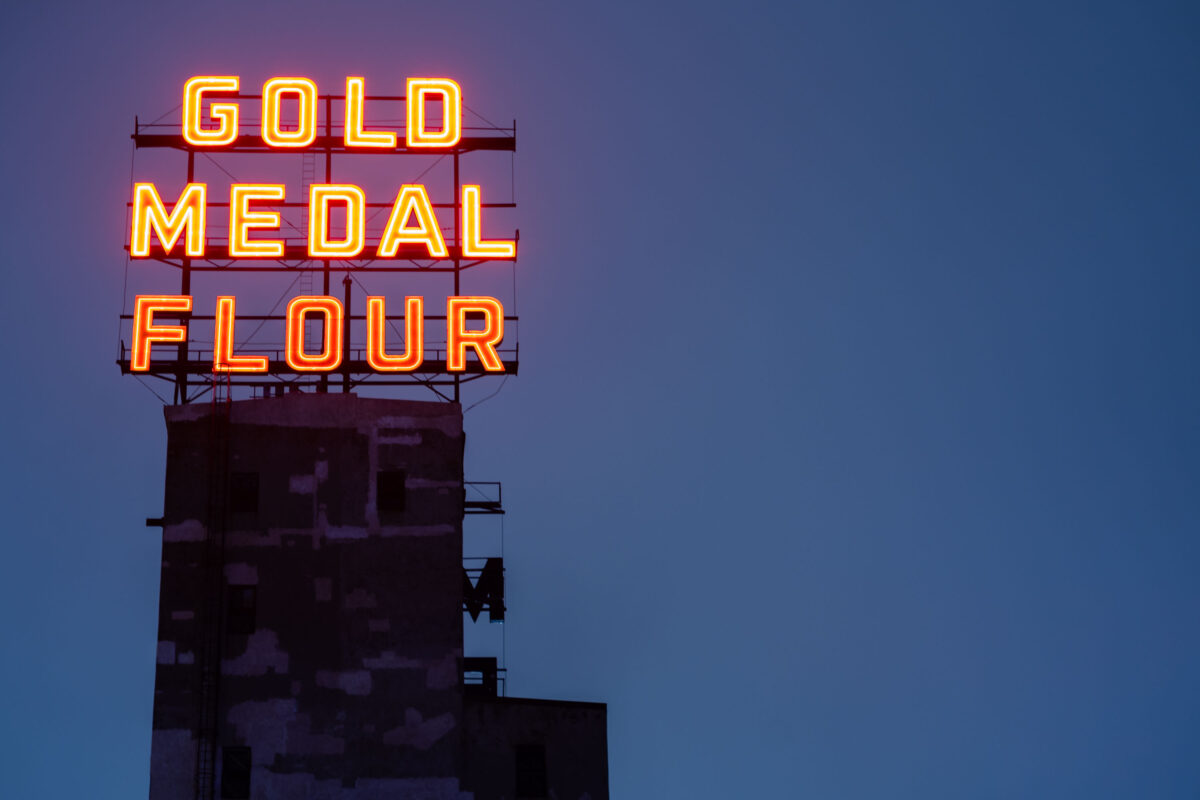
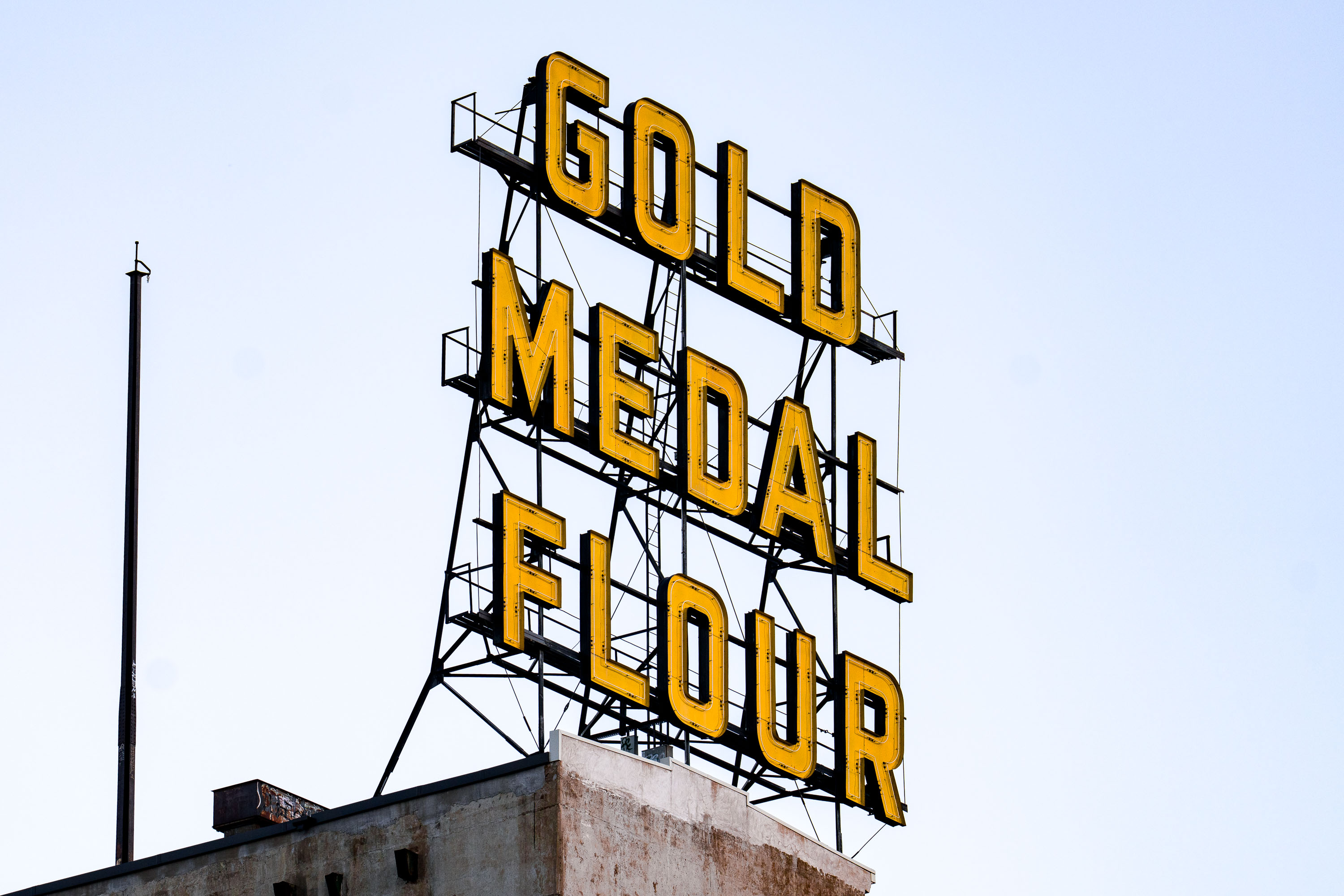
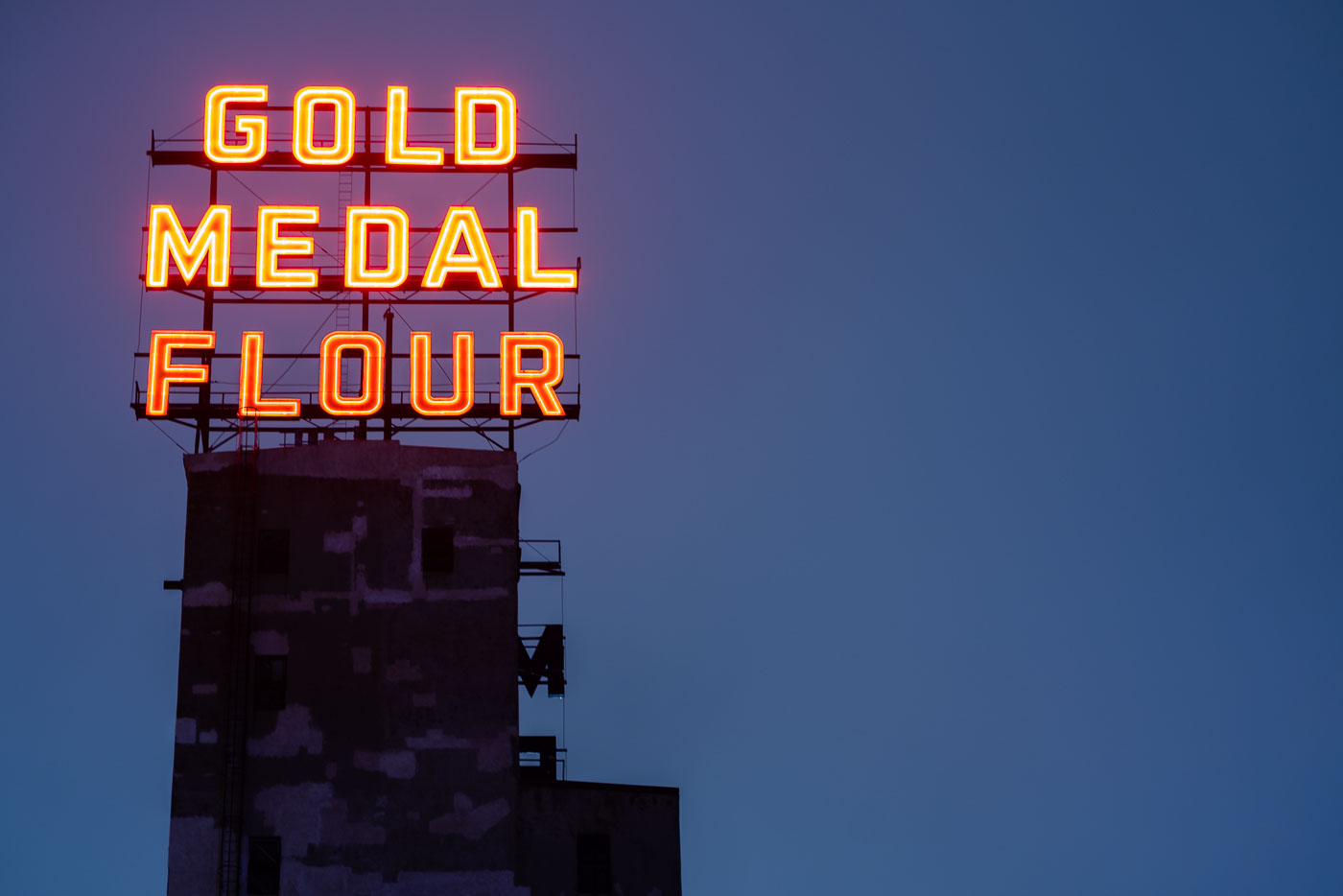
The Gold Medal Flour neon sign illuminates a historic grain elevator in downtown Minneapolis, a reminder of the city's industrial past.
The "Gold Medal Flour" neon sign stands atop a historic grain elevator in downtown Minneapolis.

Gold Medal Flour Neon Sign, Downtown Minneapolis
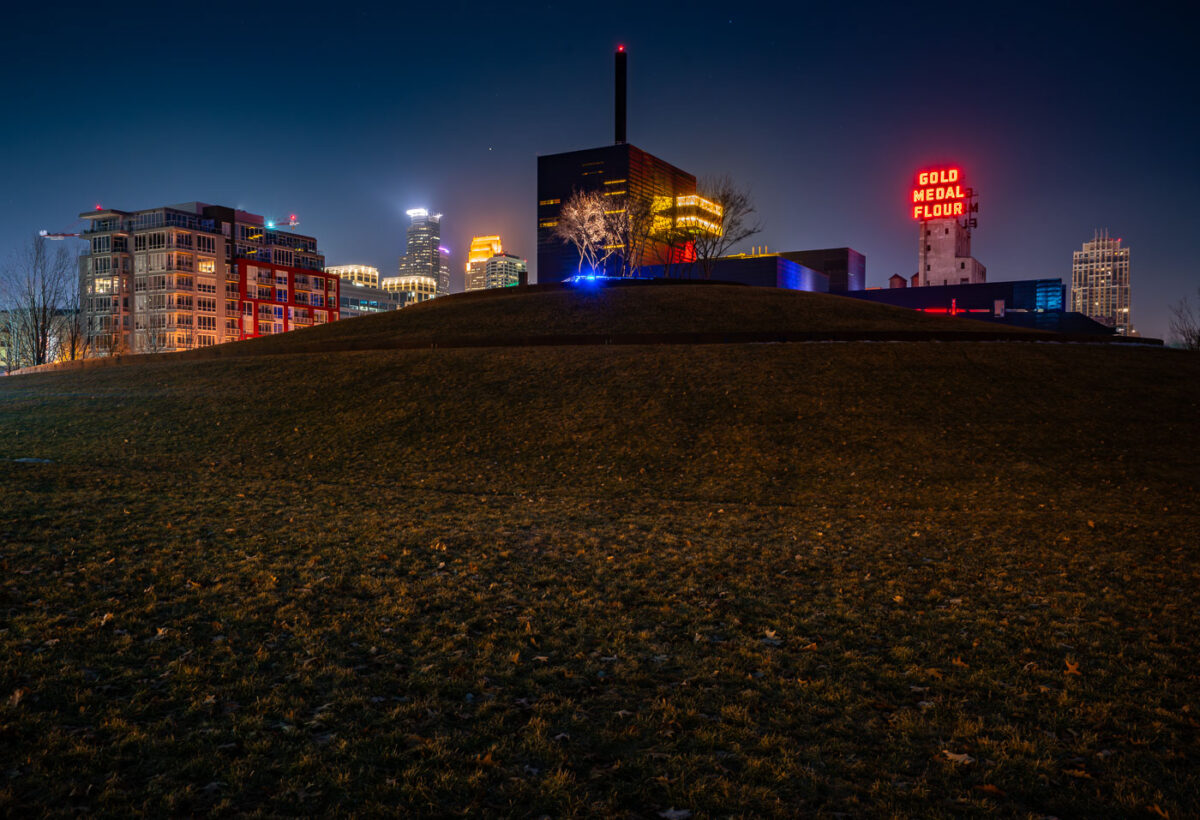
Gold Medal Park in Minneapolis with the Guthrie Theater and Gold Medal Flour sign at night.
Gold Medal Park in Minneapolis's Mill District sits beside the Guthrie Theater near the Mississippi riverfront. The park opened in 2007 on land tied to the area's former flour-milling district. The Gold Medal Flour sign marks the historic Washburn-Crosby milling complex near Mill City Museum.

Gold Medal Park and Guthrie Theater, Minneapolis
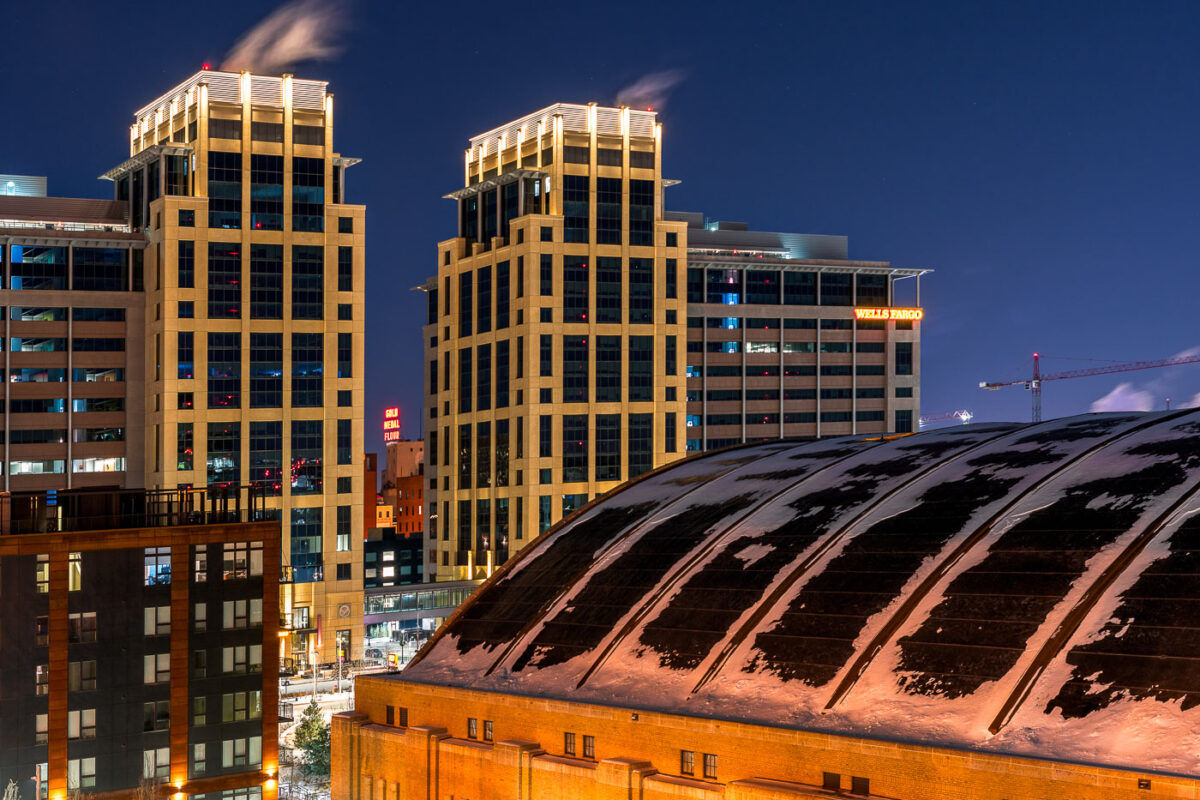
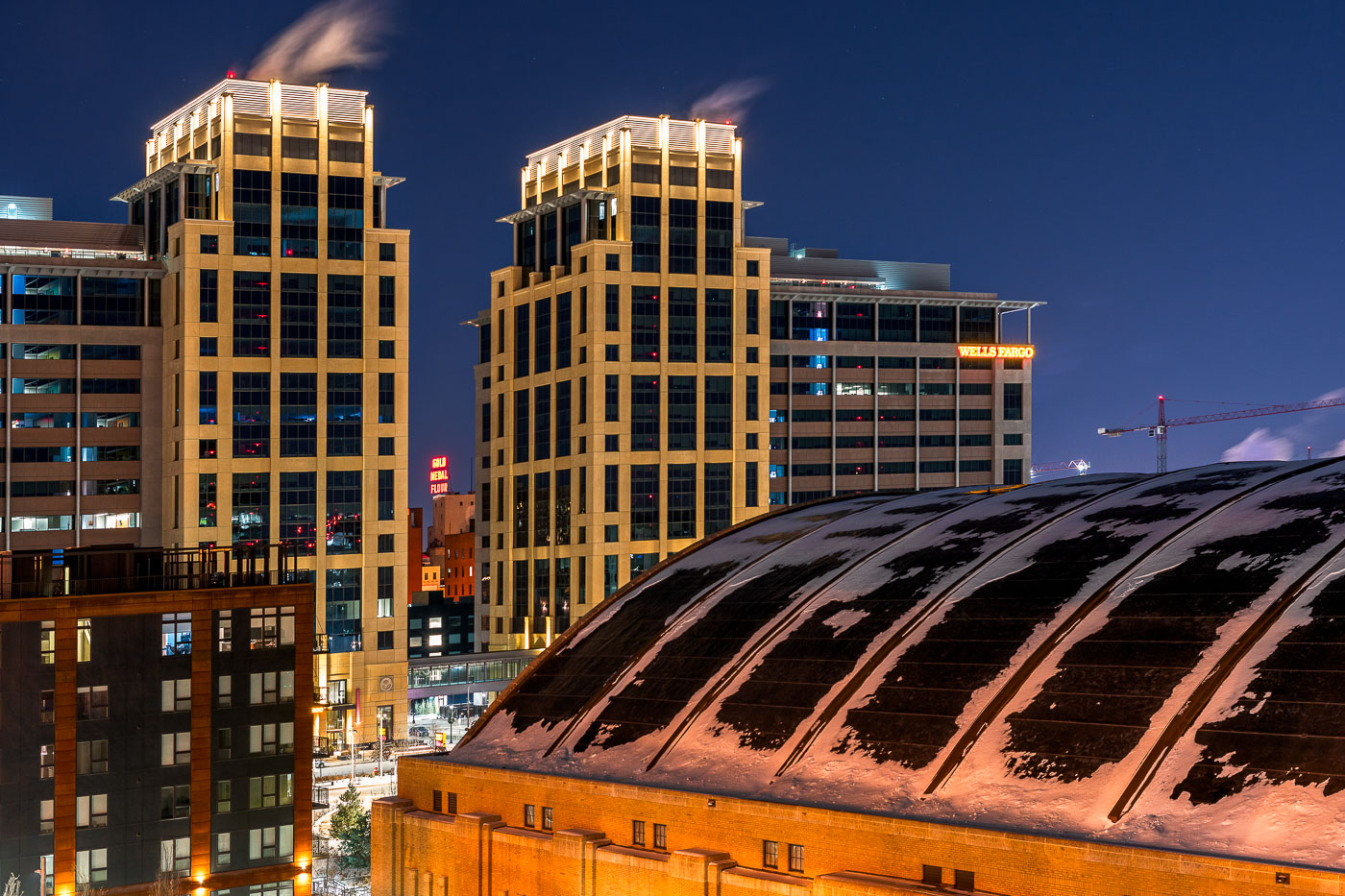
The Armory building and illuminated Wells Fargo office towers stand in downtown Minneapolis at night.
The Armory and the new Wells Fargo Towers in Downtown East, Minneapolis.

Snow-Dusted Armory Roof Beneath the Wells Fargo Towers at Night
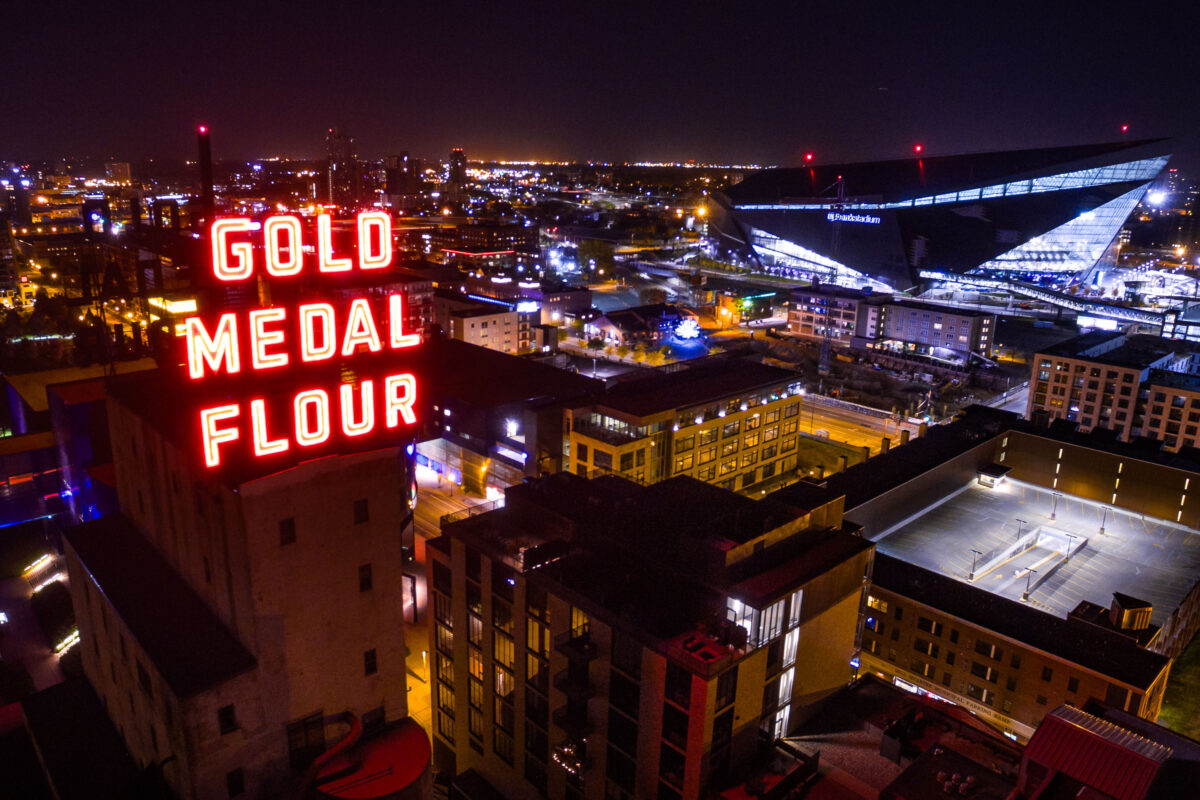
Lit up neon sign reading Gold Medal Flour, Minneapolis
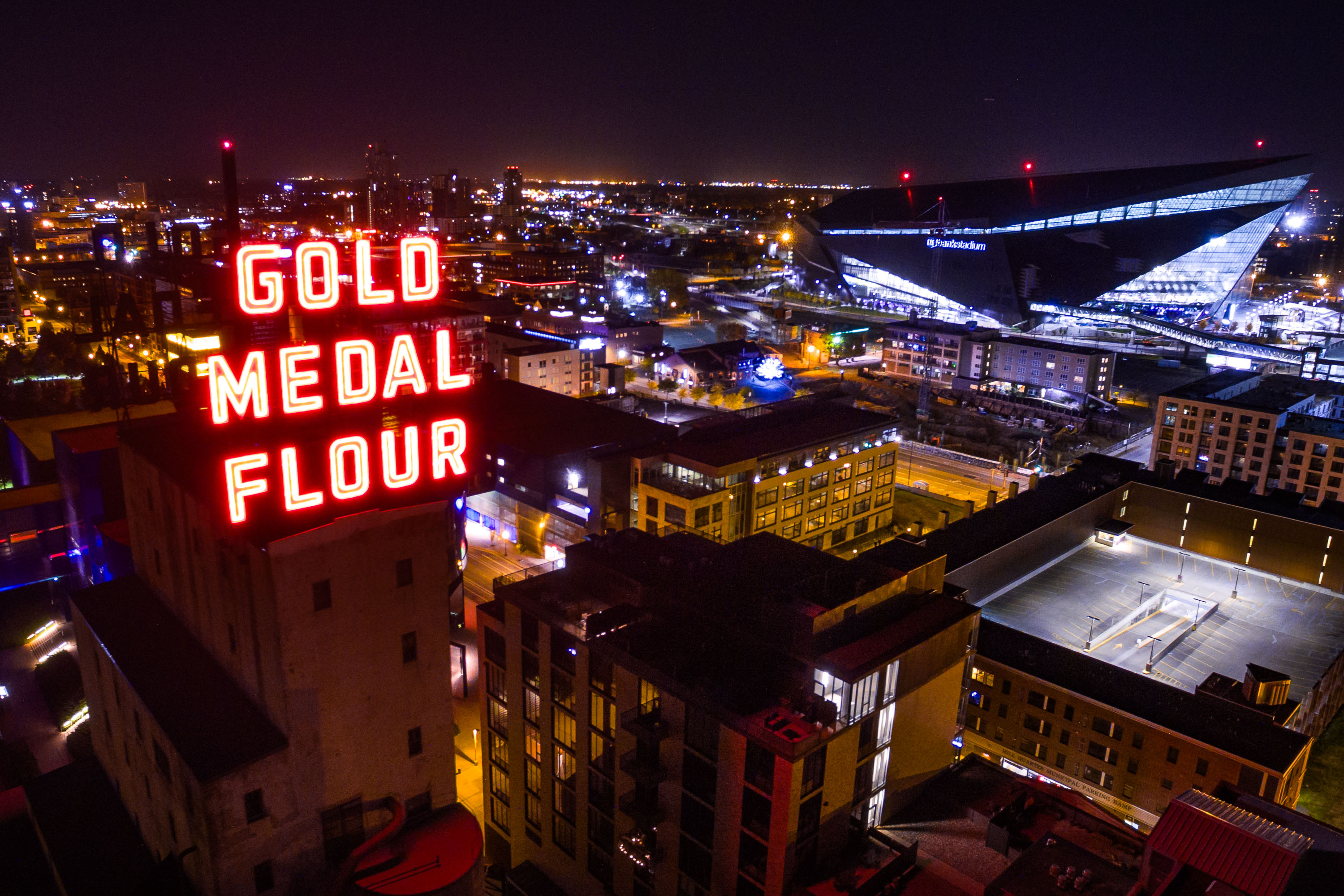
Gold Medal Flour and US Bank Stadium in downtown Minneapolis.

Gold Medal Flour and US Bank Stadium, Minneapolis
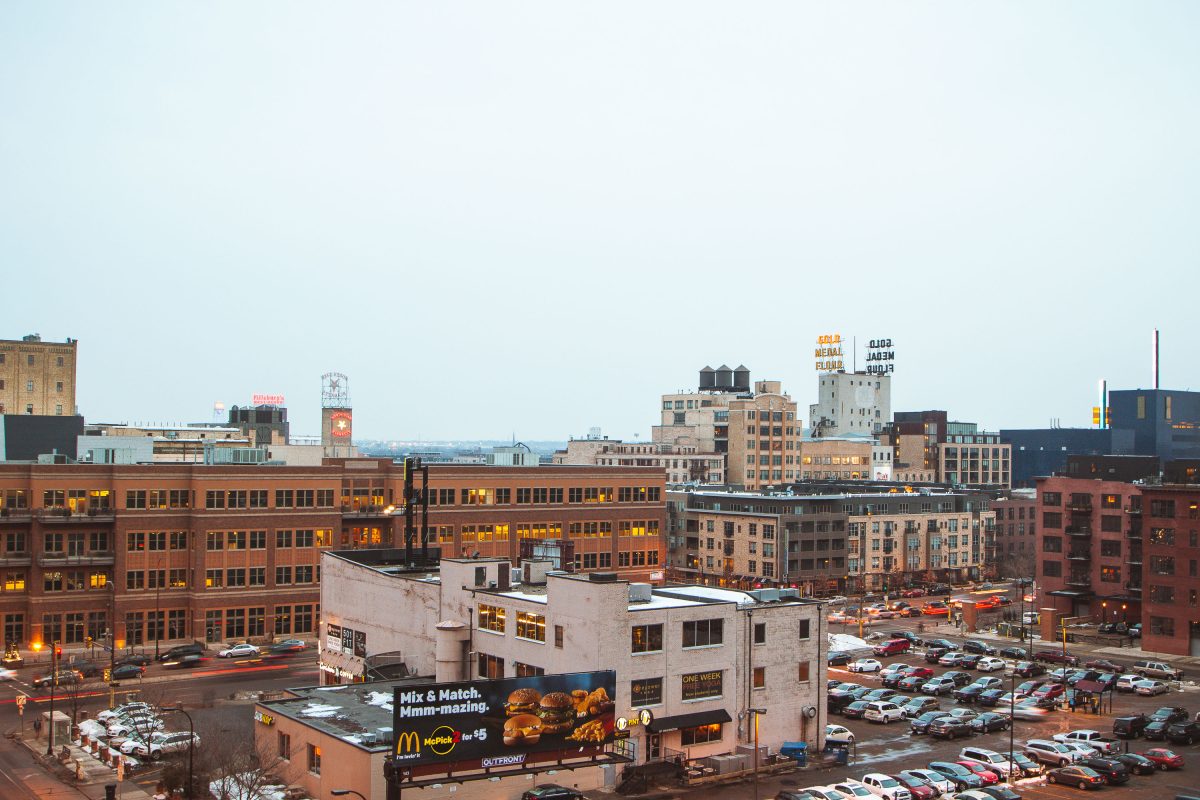
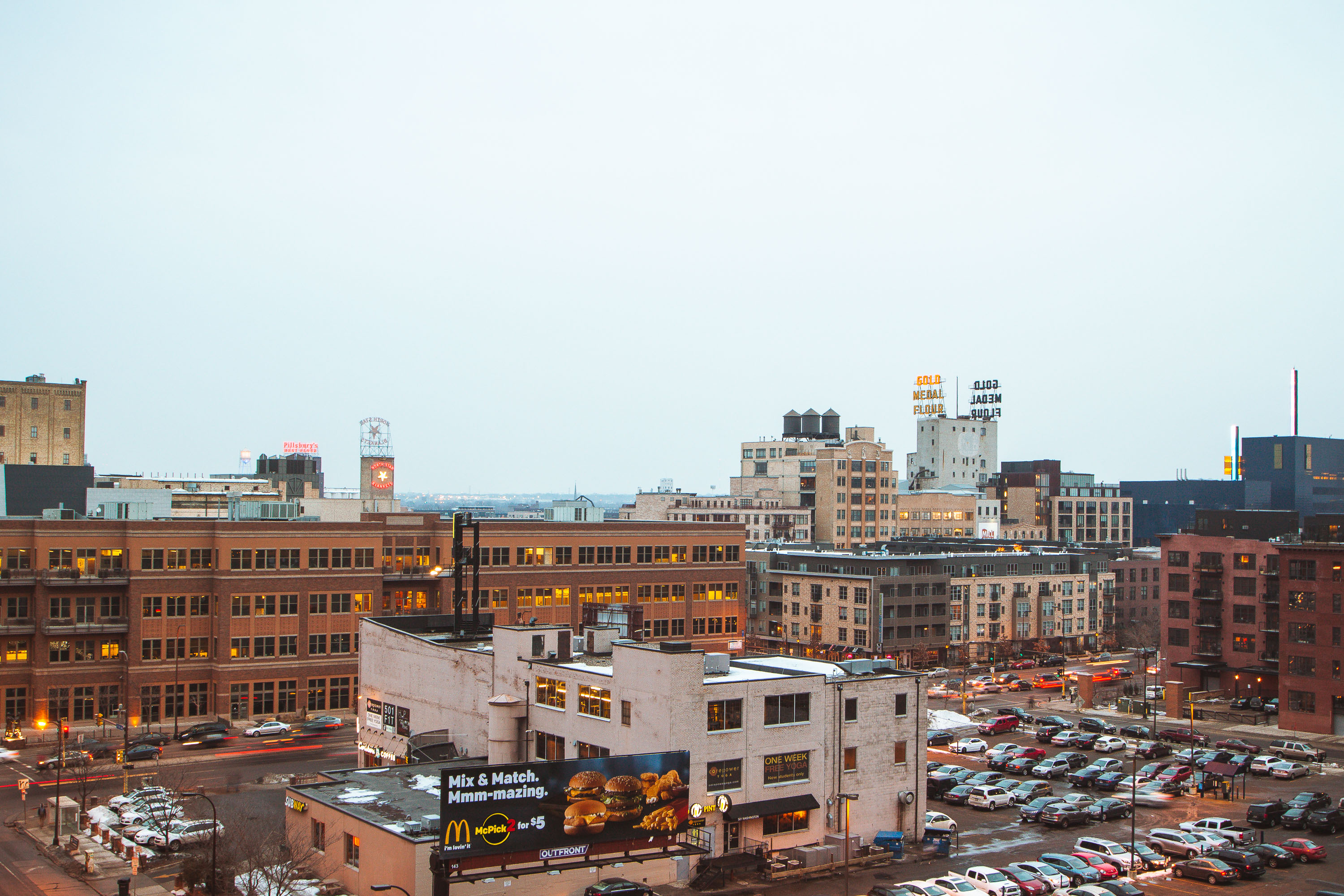
Downtown Minneapolis skyline with historic brick buildings and parking lot along Washington Avenue.
A look at Washington Avenue in Downtown Minneapolis with the old flour mills in the background.

Gold Medal Flour Sign Above Downtown Minneapolis at Dusk
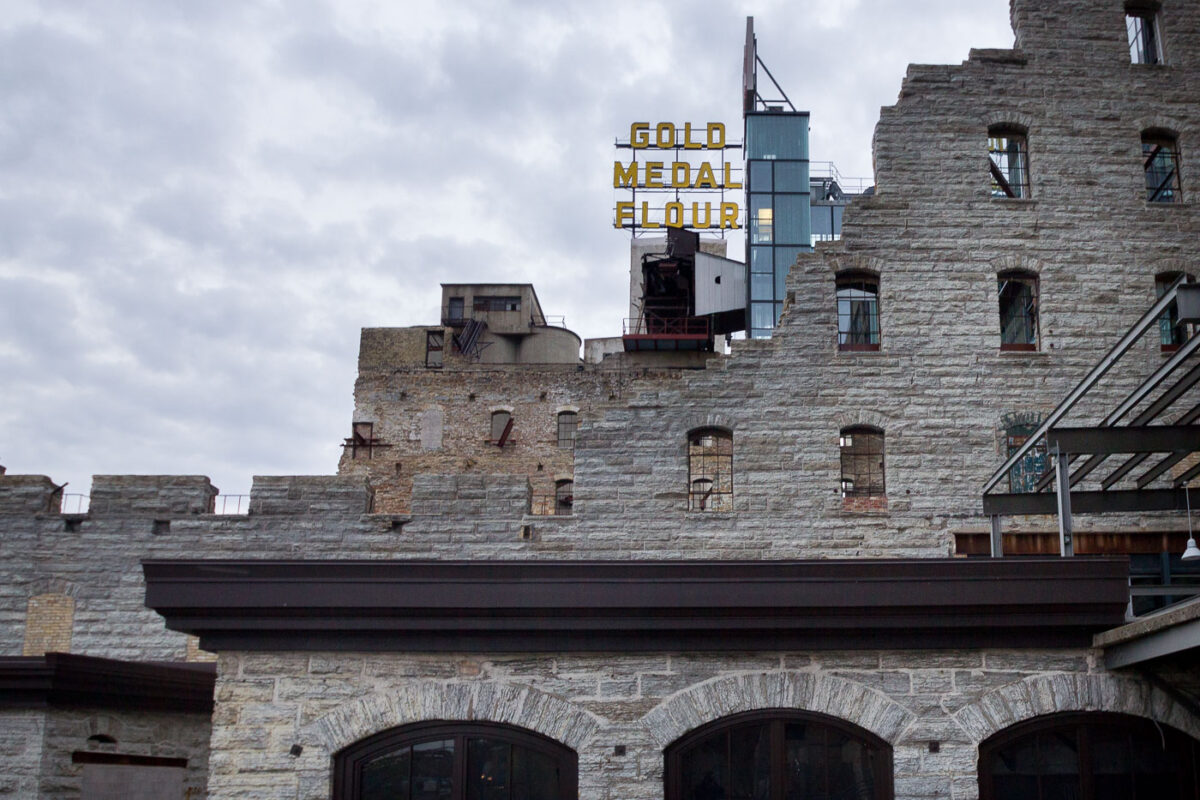
The Gold Medal Flour sign is displayed on the historic Washburn Mill in Minneapolis, once the world's largest flour mill, now part of the Mill City Museum.
The Gold Medal Flour sign stands atop the historic Washburn Mill in Minneapolis, a structure that was once the largest flour mill in the world. The mill, part of the Mill City Museum complex, represents a significant chapter in the city's industrial past. Its conversion into a museum preserves the legacy of Minneapolis's flour milling industry, which was central to the city's economic development in the late 19th and early 20th centuries. The sign itself is a recognizable landmark, evoking the area's heritage as a major center for grain processing and flour production.

Gold Medal Flour Sign on Washburn Mill, Minneapolis
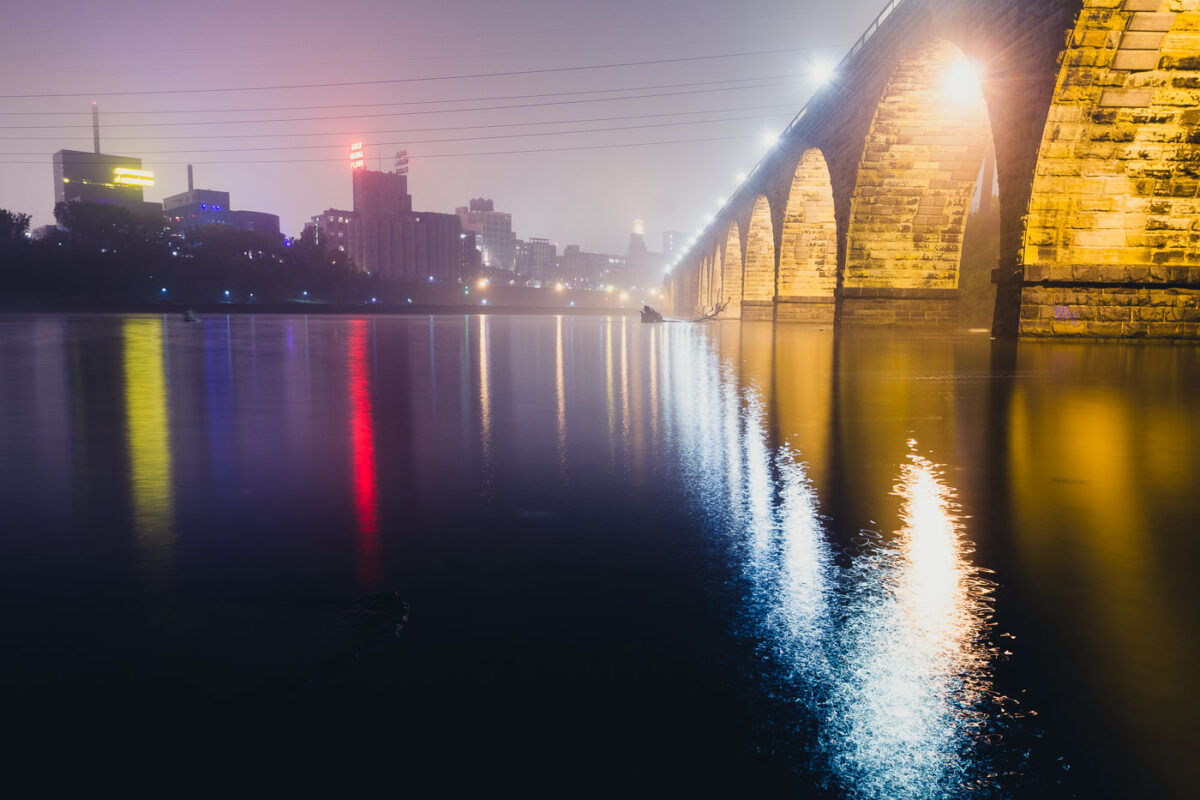
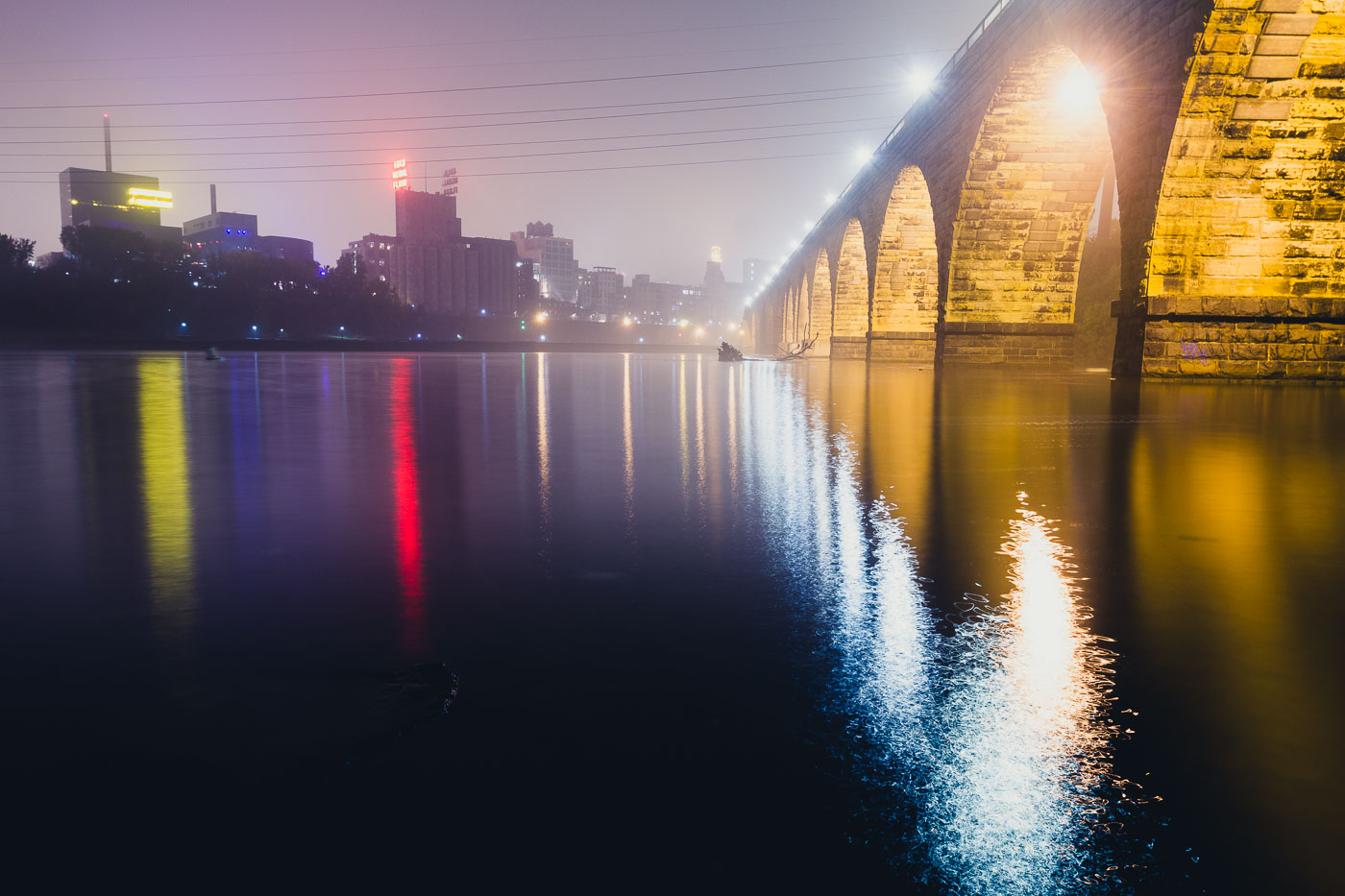
The Stone Arch Bridge spans the Mississippi River in Minneapolis, illuminated at dusk with the city skyline beyond.
The Stone Arch Bridge, a historic railroad bridge spanning the Mississippi River in Minneapolis. Constructed between 1881 and 1883, the bridge was built for the Great Northern Railway.

Foggy Night Reflections Along the Stone Arch Bridge