Driftless Area

5 photos · 2026

5 photographs tagged Driftless Area, 2026.
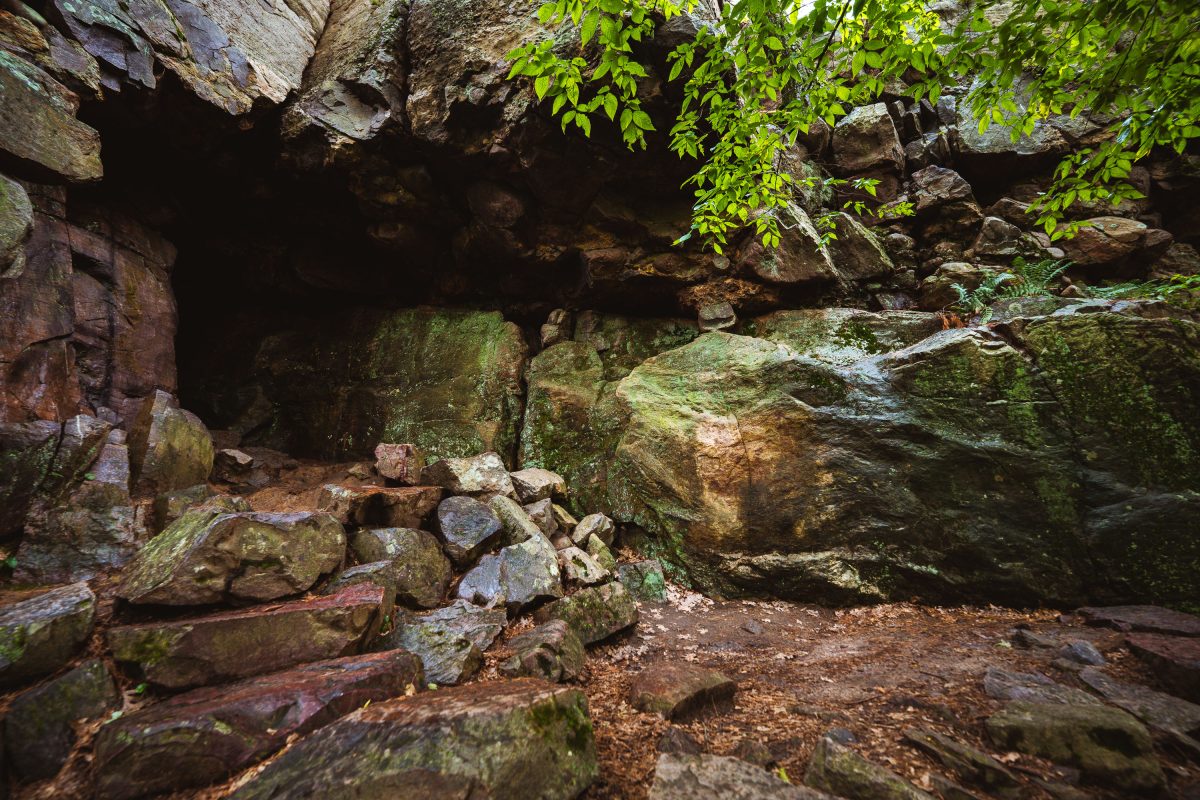
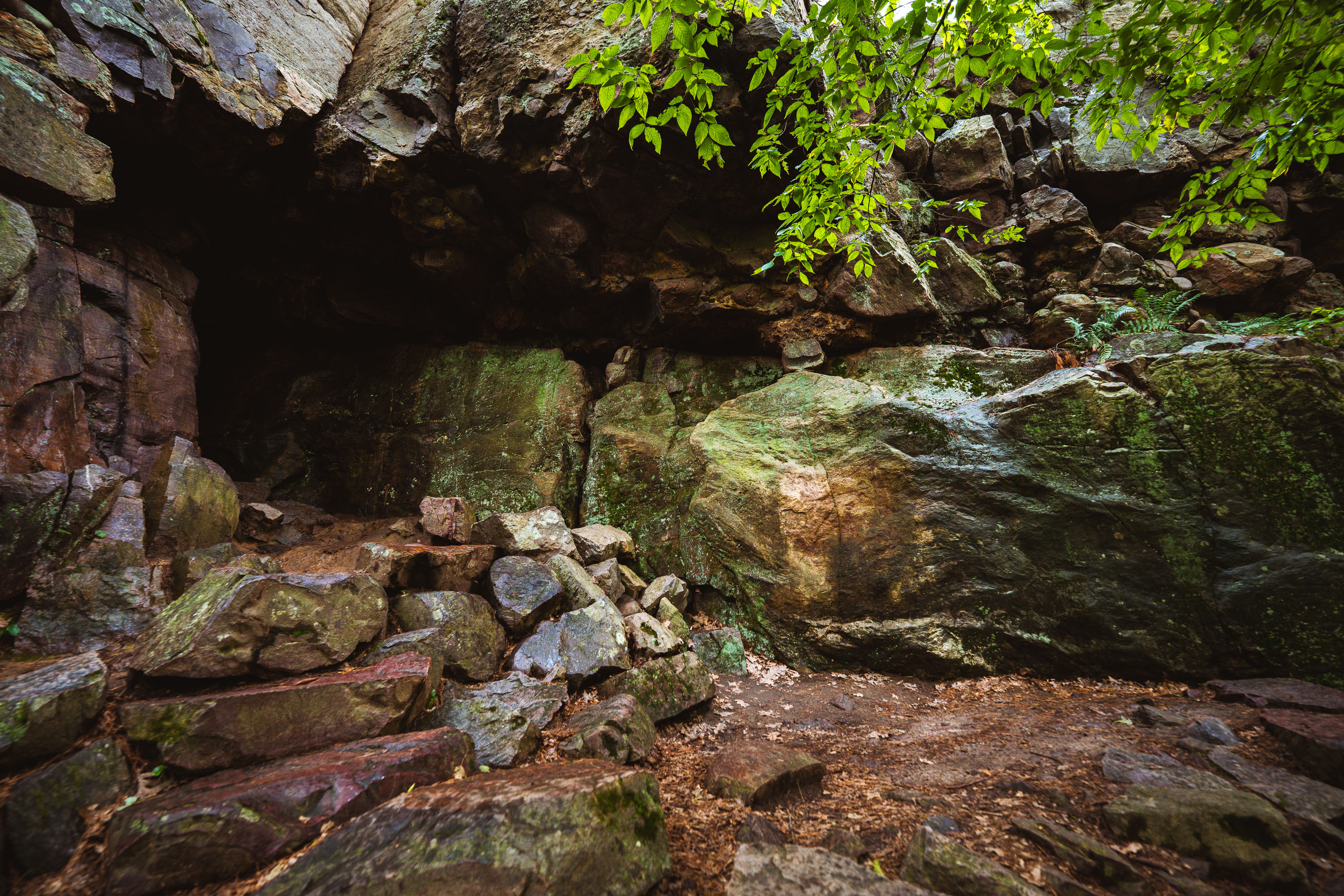
Elephant Cave entrance nestled in moss-covered quartzite rocks at Devil's Lake State Park, Wisconsin.
Elephant Cave sits along the East Bluff at Devil's Lake State Park, near Baraboo, Wisconsin. The bluff's quartzite boulders formed roughly 1.5 billion years ago and were later shaped by glacial meltwater during the last Ice Age, when the ancient Wisconsin River was dammed and diverted around the area. Devil's Lake is the most-visited state park in Wisconsin's system, drawing over two million visitors a year to its bluffs, talus slopes, and lake below. The park lies within the Baraboo Range, one of the oldest exposed rock formations in North America.

Rock Formations Near Elephant Cave on Devil’s Lake State Park’s East Bluff
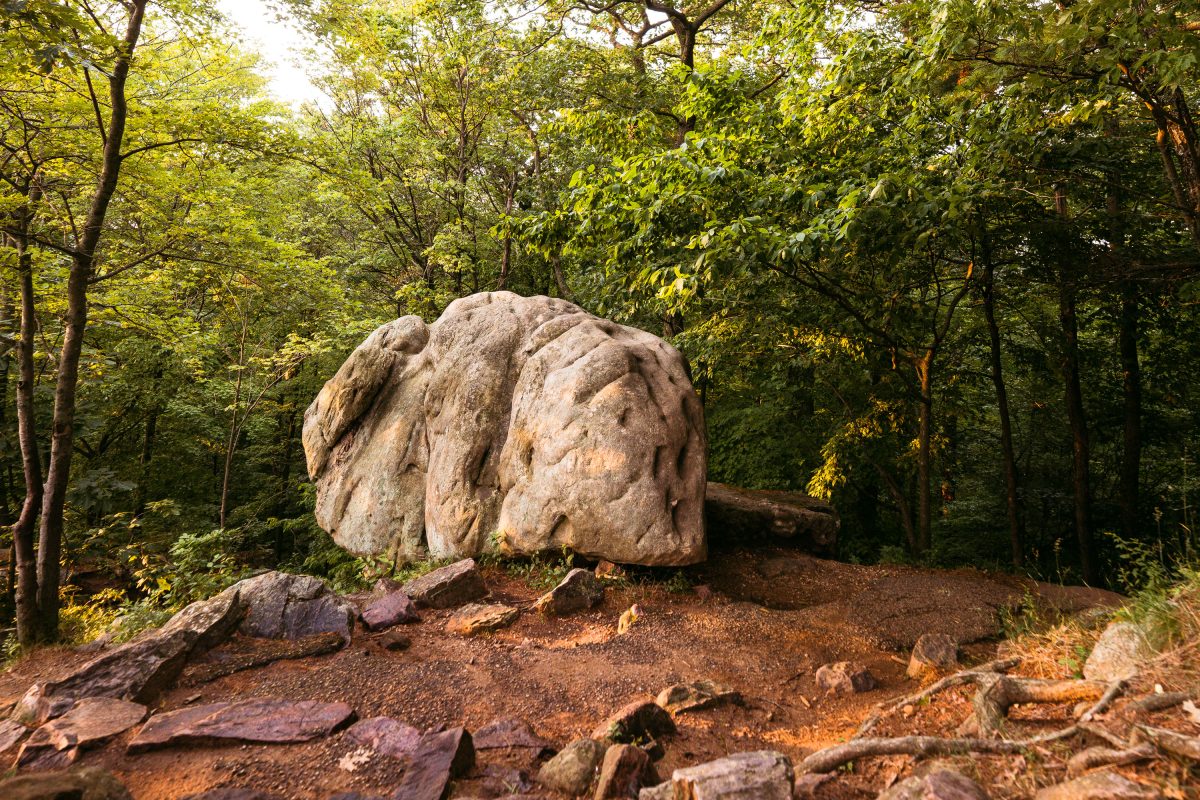
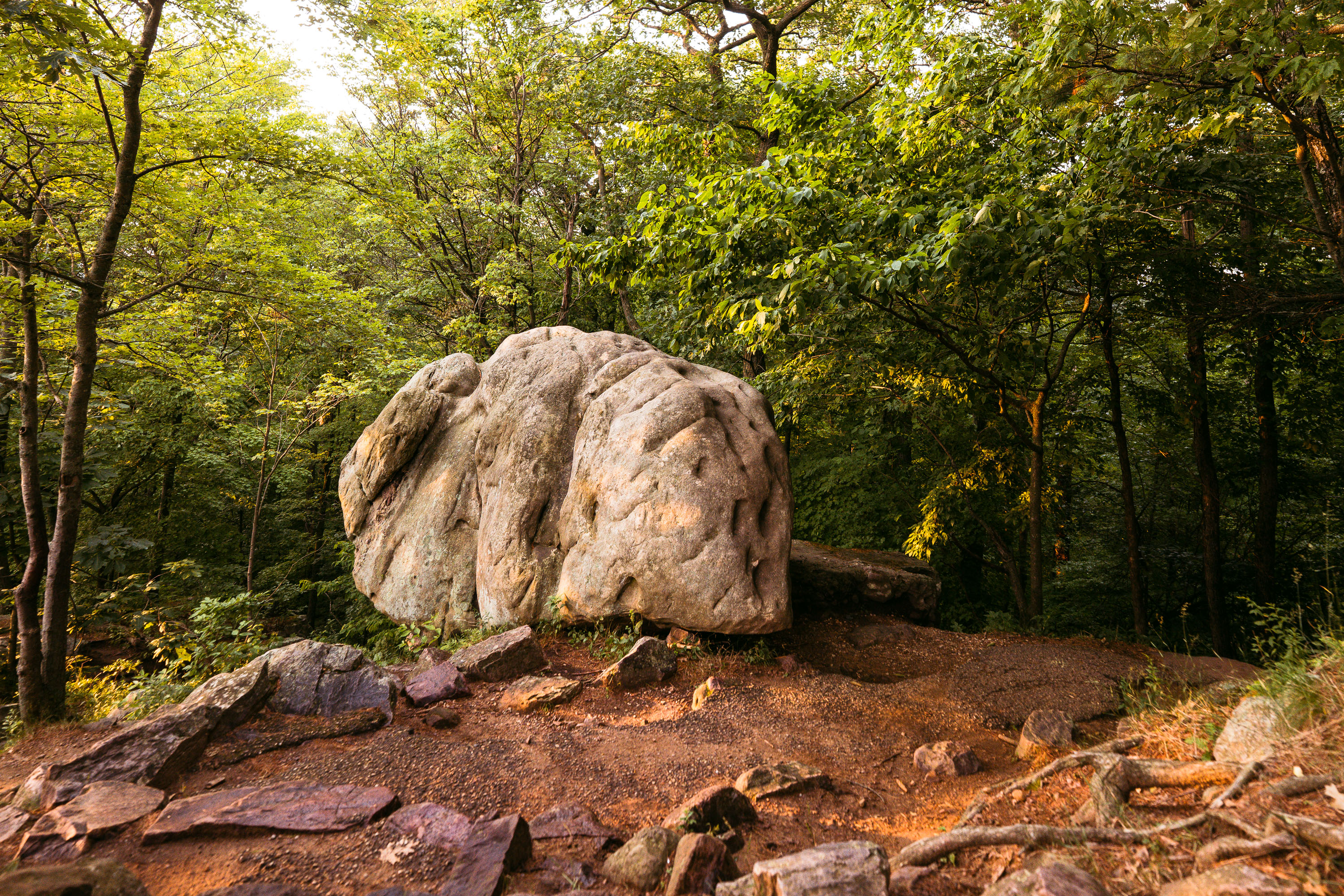
Elephant Rock, a large quartzite boulder, sits among forest trails at Devil's Lake State Park in Baraboo, Wisconsin.
Elephant Rock is a large quartzite boulder along the bluff trails at Devil's Lake State Park near Baraboo. The park's quartzite formed roughly 1.6 billion years ago, making it among the oldest exposed rock in North America, and boulders like this one resulted from ancient rock layers weathering and splitting apart over time. Devil's Lake State Park covers more than 9,000 acres and draws more annual visitors than any other park in the Wisconsin state system. The Ice Age Trail, a National Scenic Trail, runs through the park's bluffs near formations such as this one.

Elephant Rock on the Bluff Trail at Devil’s Lake State Park
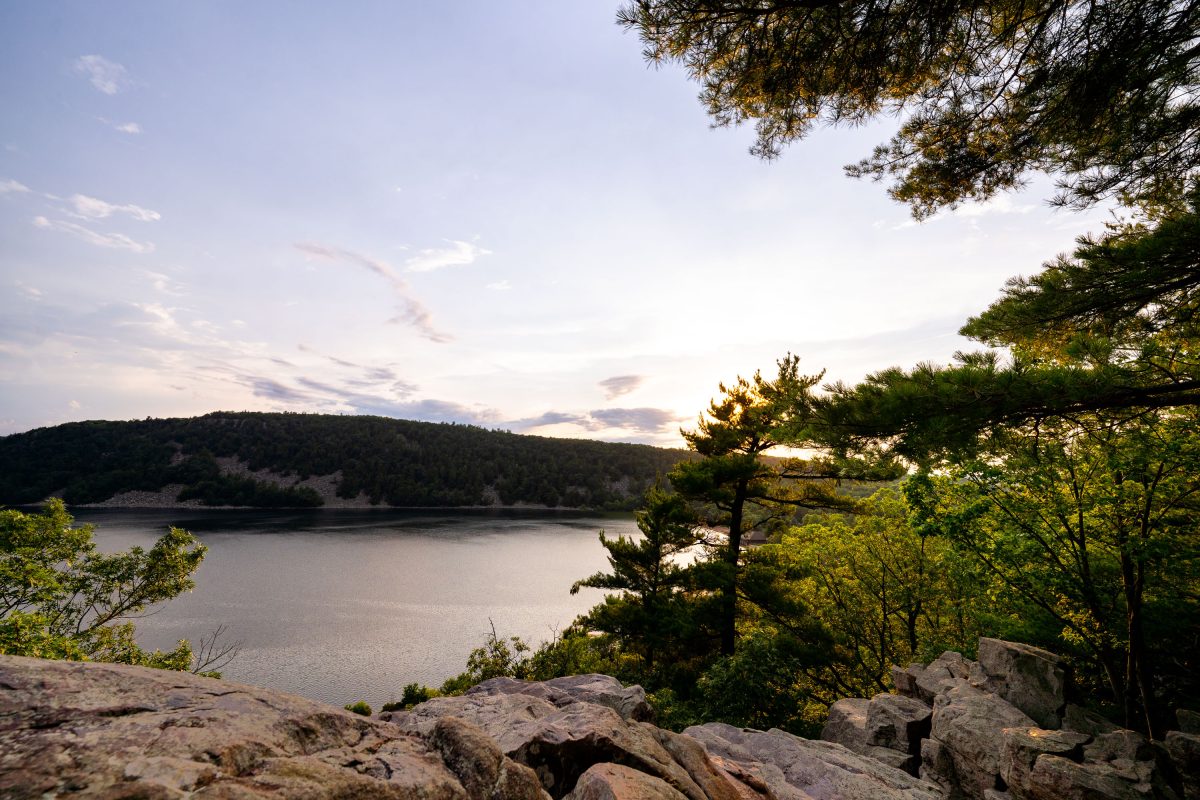
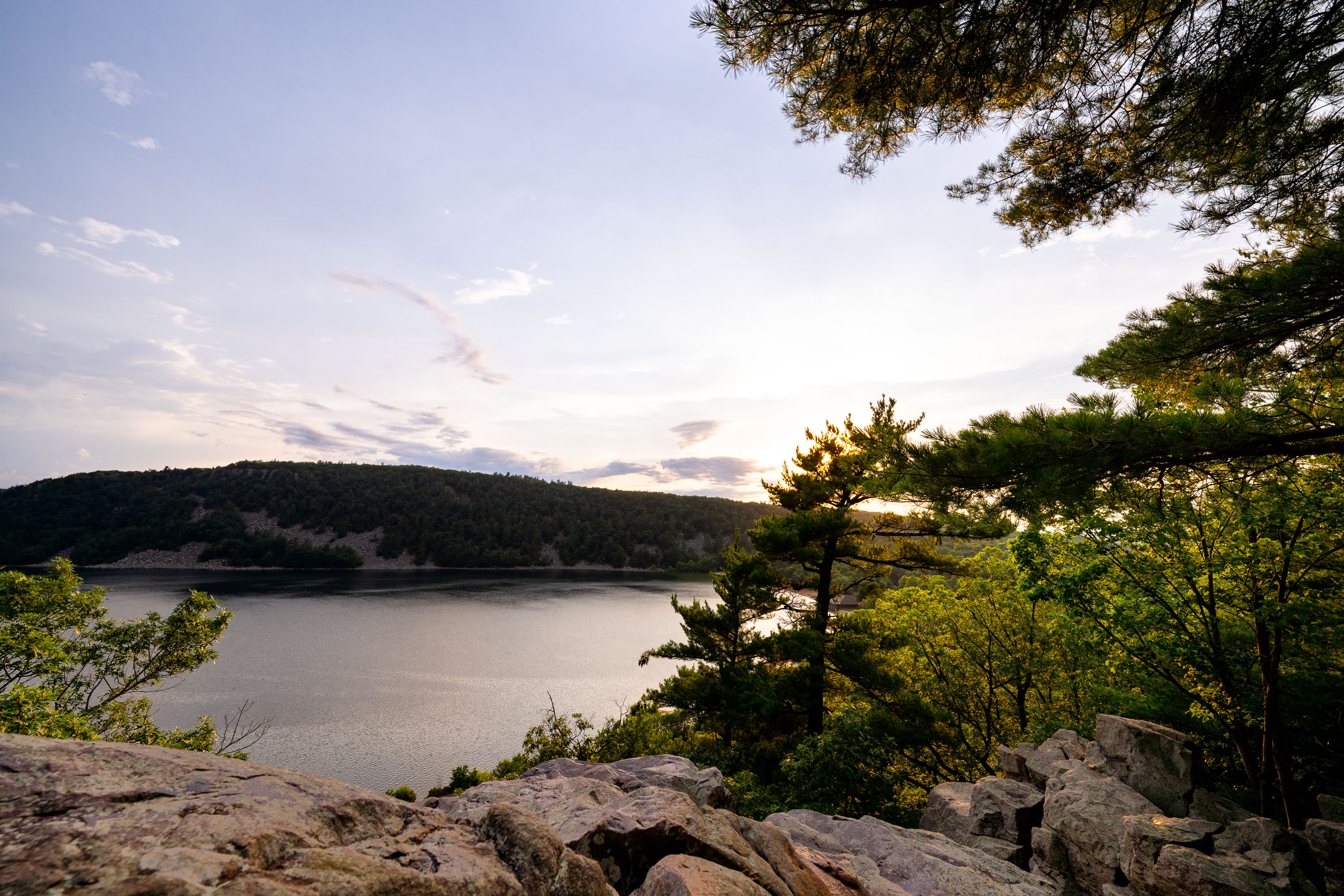
Forested shoreline and quartzite bluffs frame Devil's Lake at sunset in Wisconsin.
Devil's Lake State Park draws more visitors than any other state park in Wisconsin, with over three million arriving each year. The 360-acre lake at its center formed roughly 15,000 years ago when glacial debris blocked both ends of an ancient river gorge, leaving quartzite bluffs rising several hundred feet on either side. Those bluffs rank among the oldest exposed rock formations in North America, dating back nearly 1.6 billion years. The park sits within Wisconsin's Driftless Area, a region bypassed by glaciers during the last ice age, which left its river valleys and rock outcrops largely unaltered. Trails along the East Bluff and West Bluff give hikers elevated views of the lake below.

Sunset From the East Bluff Trail at Devil’s Lake State Park
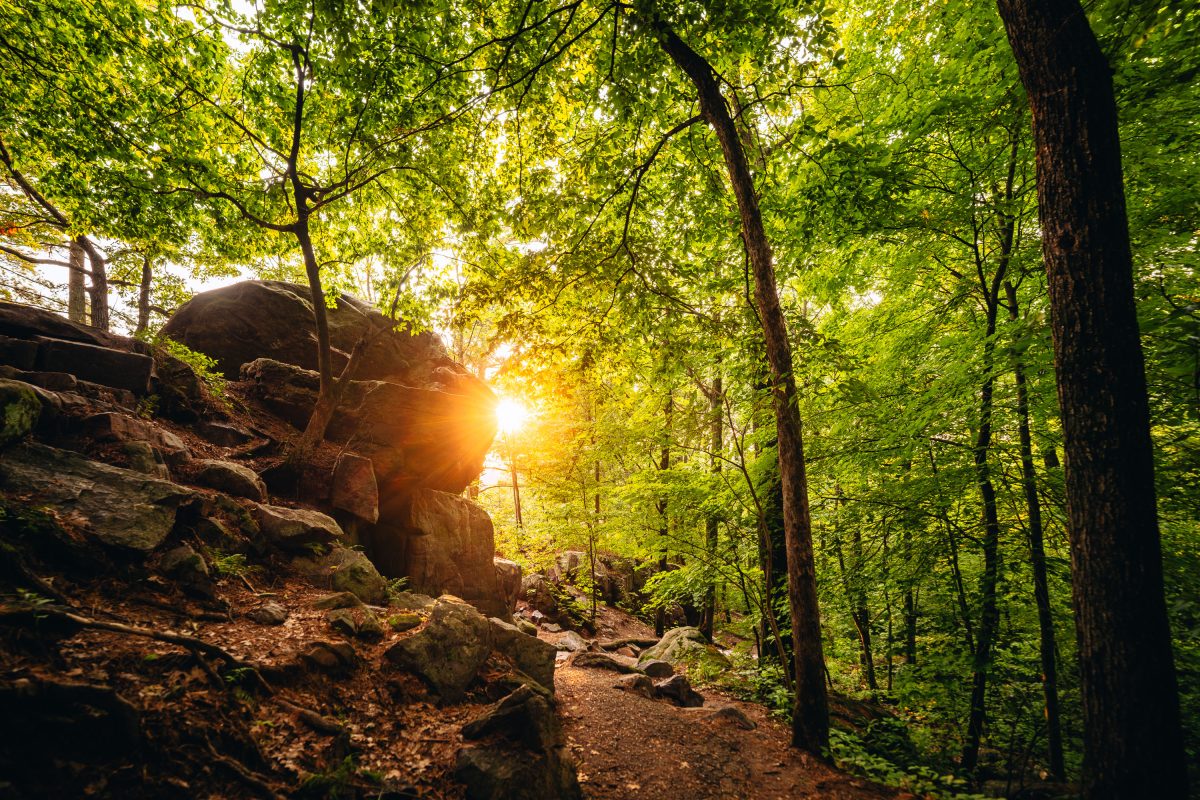
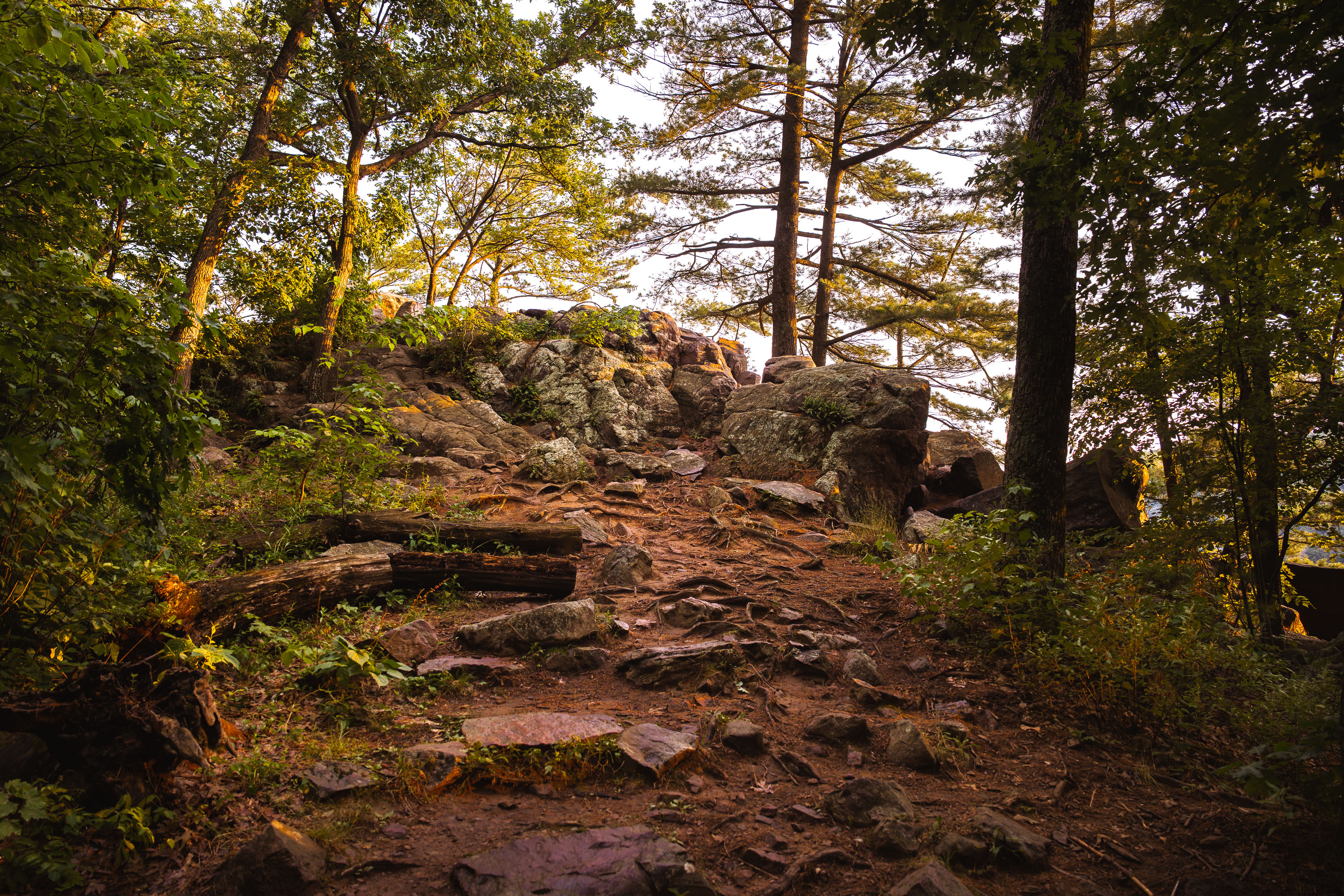
Sunlight filters through dense forest canopy above a rocky hiking trail at Devil's Lake State Park in Wisconsin.
Devil's Lake State Park sits within Wisconsin's Baraboo Range, among the oldest exposed rock formations in North America, with quartzite dating back some 1.6 billion years. The East Bluff Trail climbs along a talus slope of massive quartzite boulders left behind as ancient cliff faces broke apart over time. At more than 9,000 acres, Devil's Lake is the largest property in the Wisconsin State Park System and consistently draws more visitors than any other park in the state. The lake itself formed when glacial debris dammed an ancient river channel, sealing off the valley at both ends and creating the basin seen today.

Sunset Through the Trees on the East Bluff Trail at Devil’s Lake
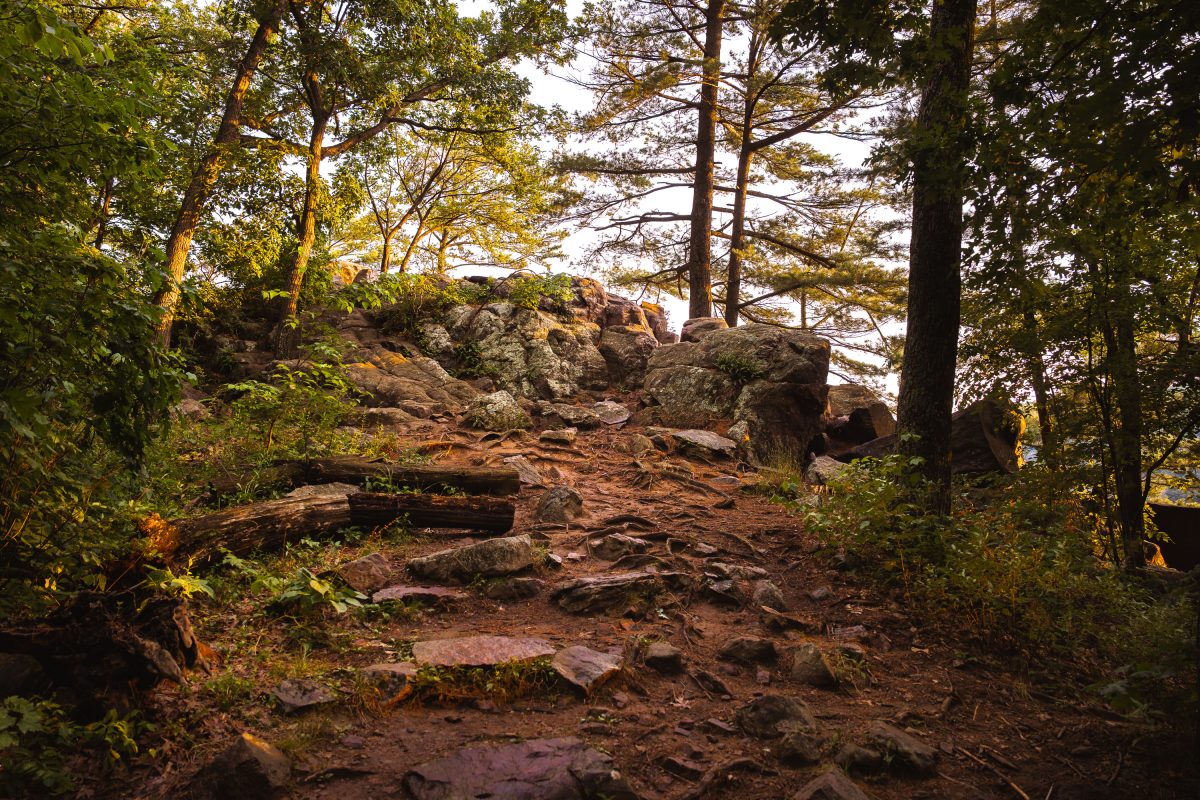
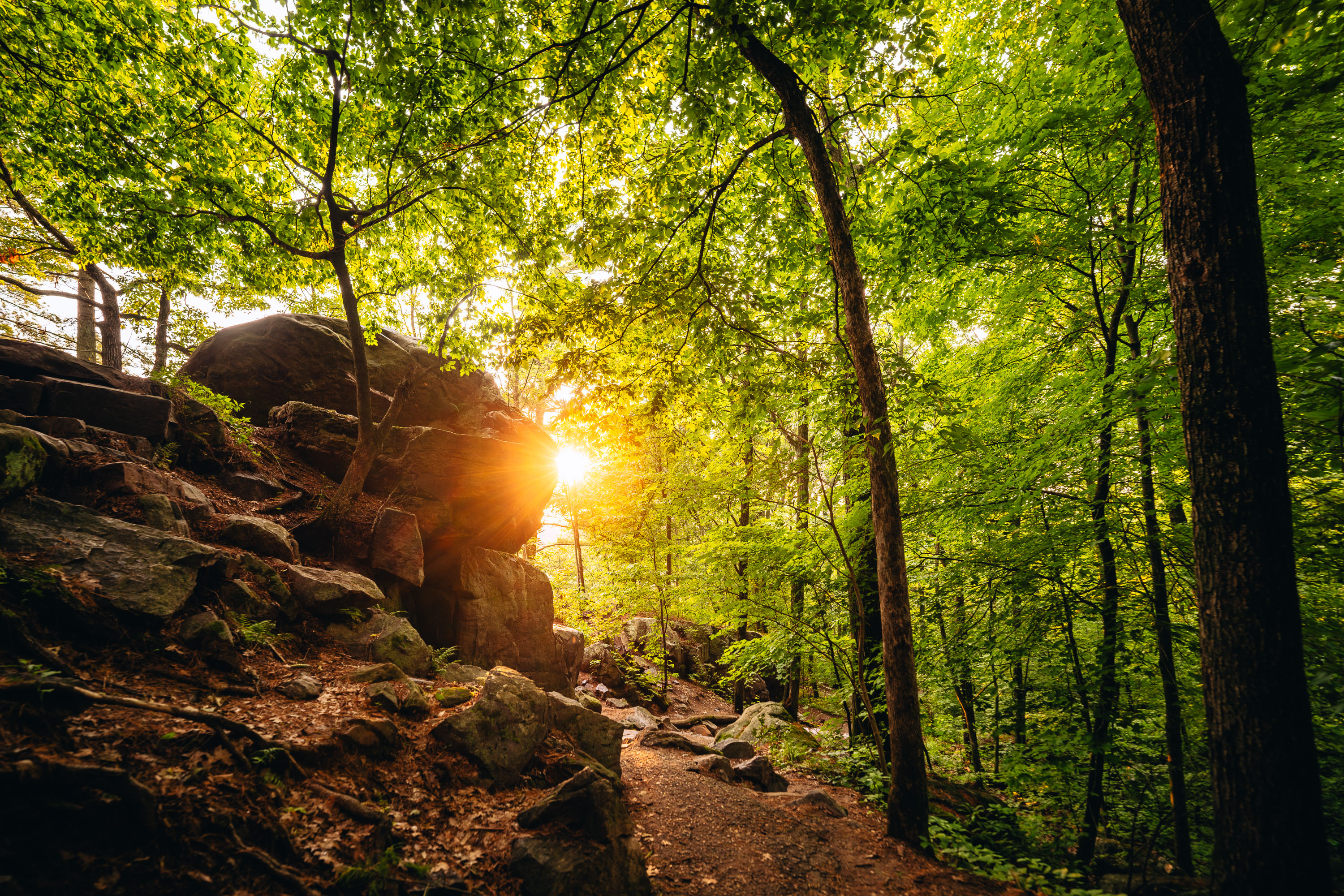
Rocky trail with boulders and trees on East Bluff at Devil's Lake State Park in Baraboo, Wisconsin.
Devil's Lake State Park sits in the Baraboo Range, a band of quartzite hills formed roughly 1.6 billion years ago among the oldest exposed rock in North America. The East Bluff trail climbs about 500 feet above the lake, crossing talus fields of quartzite boulders left behind as the surrounding cliffs eroded over millions of years. Glacial ice sheets stopped just short of this valley during the last ice age, damming the ancient Wisconsin River and creating the lake that gives the park its name. At roughly 9,200 acres, Devil's Lake draws more visitors annually than any other property in the Wisconsin state park system.

Rocky Trail to the East Bluff at Devil’s Lake State Park