Abandoned Brewery

27 photos · 2009–2013

27 photographs tagged Abandoned Brewery, 2009–2013.
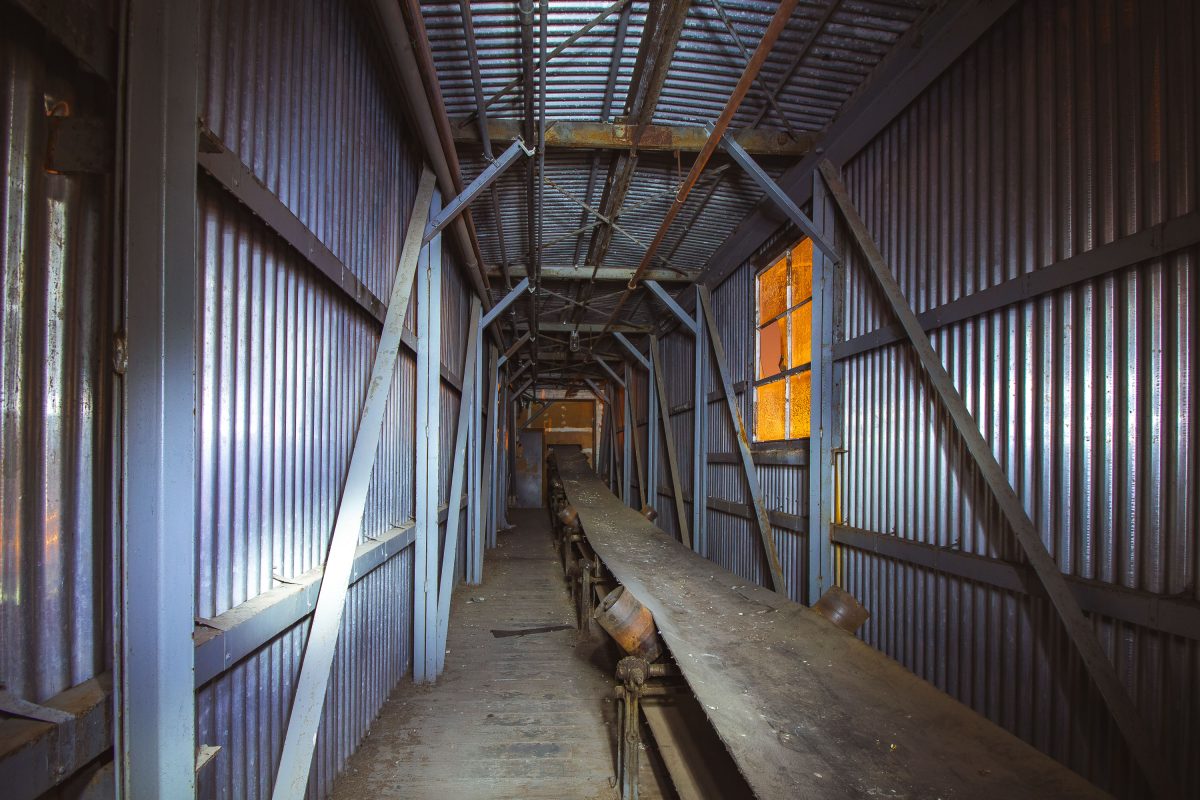
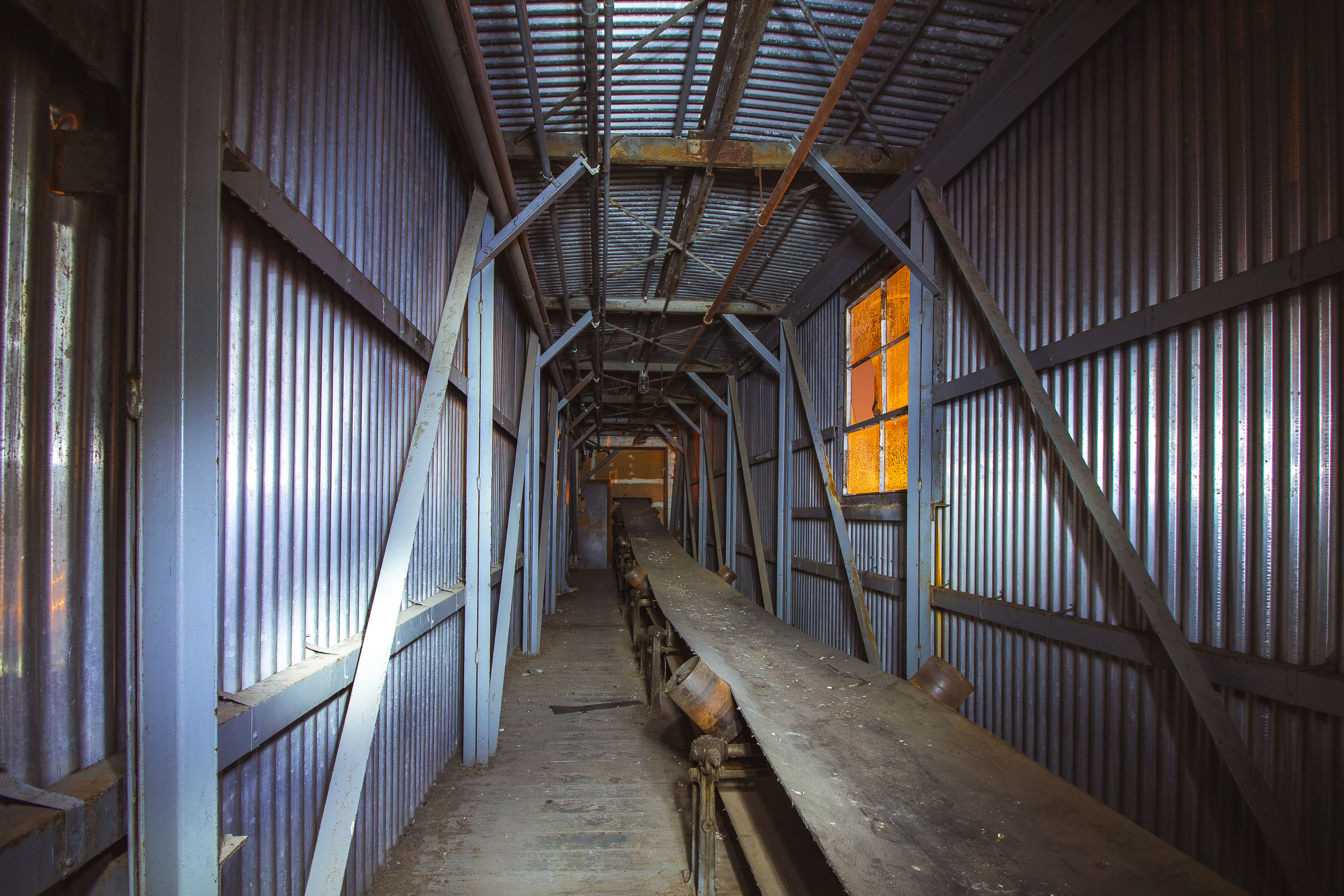
Enclosed conveyor tunnel with corrugated metal walls and structural supports inside the abandoned Schmidt Brewery in St.
The Schmidt Brewery complex at 882 West Seventh Street in St. Paul traces back to 1855, when Christopher Stahlmann established what grew into one of Minnesota's largest brewing operations. Jacob Schmidt bought the company around 1900, and it operated under the Schmidt name for most of the twentieth century, later passing to the Minnesota Brewing Company. Enclosed conveyor passages like this one linked the malt house, brew house, and bottling plant, moving grain and materials between production stages. Brewing at the site ended in 2002, and the complex was later listed on the National Register of Historic Places before being redeveloped into artist lofts and apartments.

Enclosed Conveyor Passage at the Former Schmidt Brewery
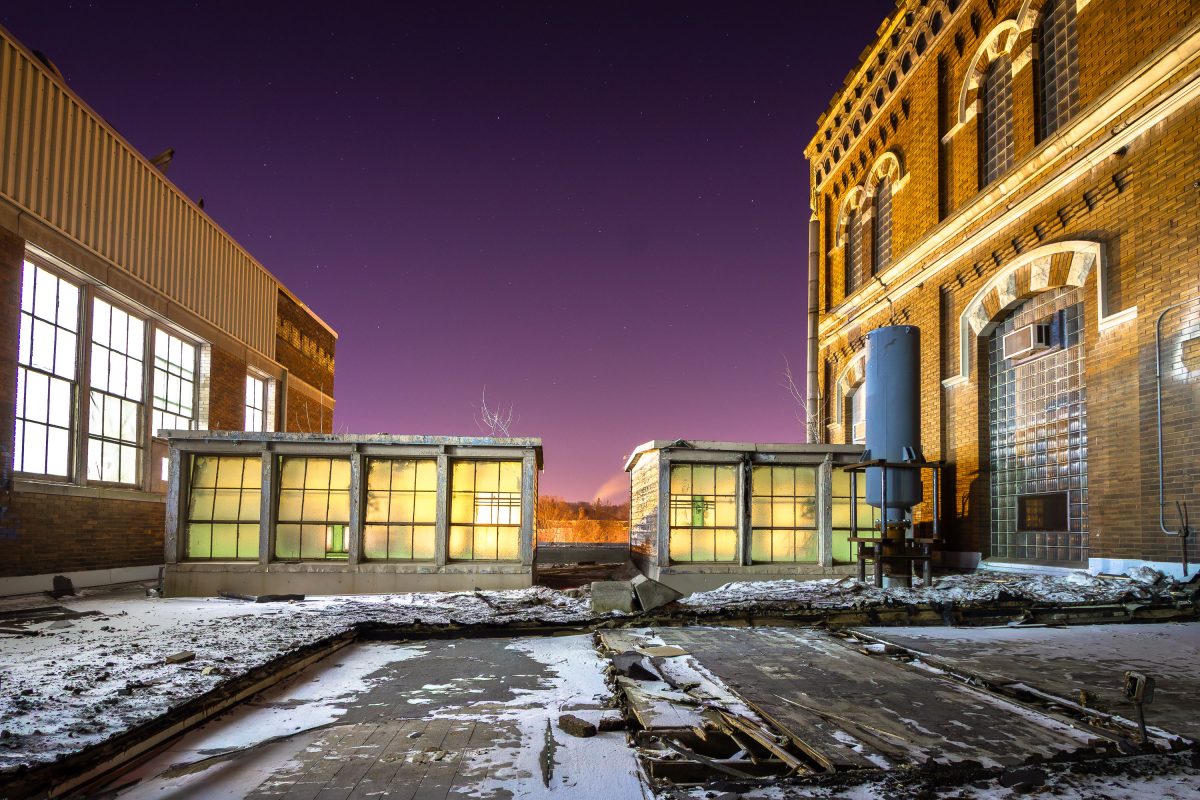
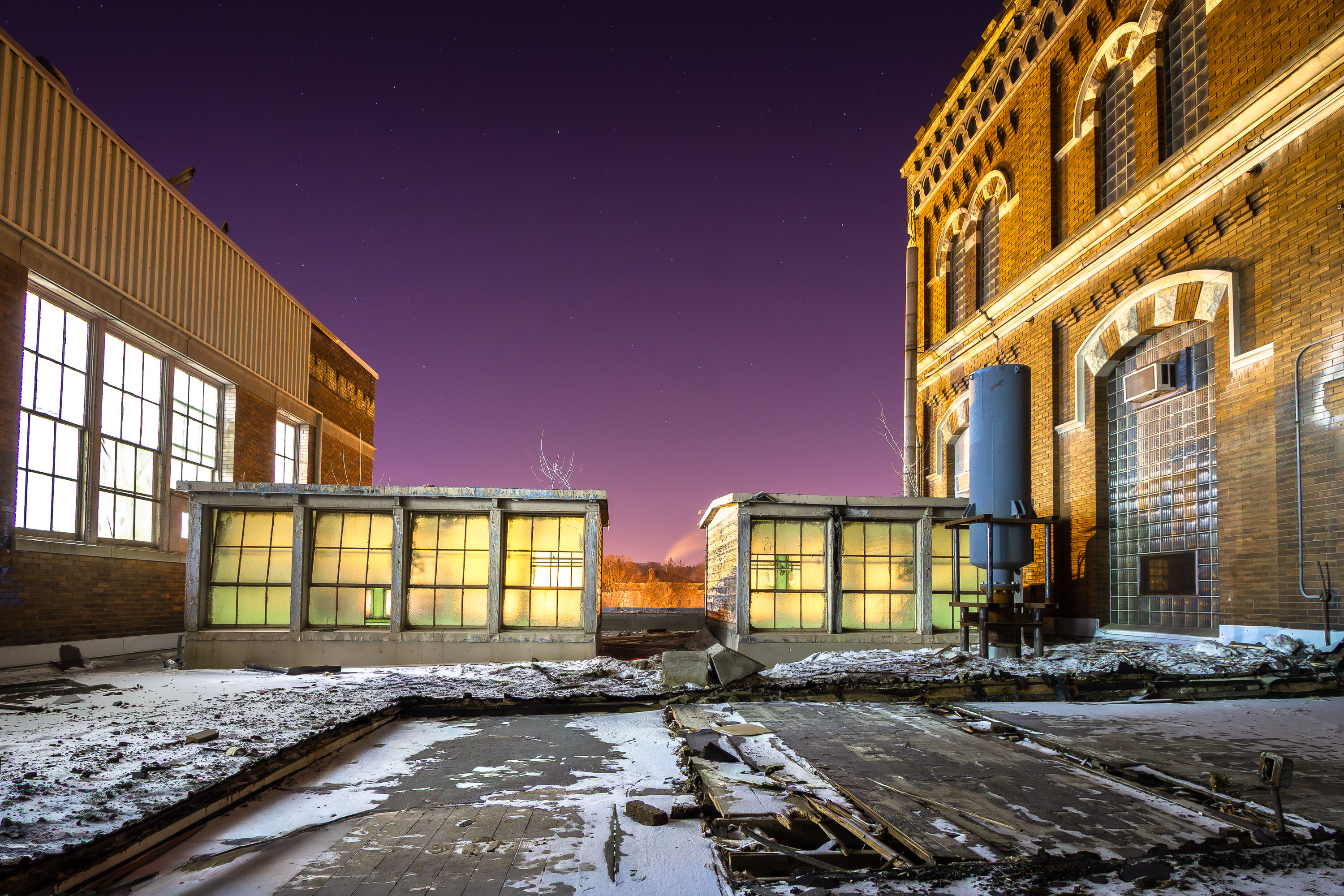
Historic Jacob Schmidt Brewery complex in St.
The Jacob Schmidt Brewing Company operated at this West Seventh Street complex in St. Paul from the 1900s until its closure in 1990. The brewery grew out of the earlier North Star Brewery, founded in the 1850s, and by the early twentieth century had become one of Minnesota's largest beer producers. Its brick buildings, including the landmark brew house with the arched windows and painted brand signage, are listed on the National Register of Historic Places. After decades of vacancy, the complex was redeveloped in 2013 into the Schmidt Artist Lofts, a mixed-use residential project that preserved much of the original industrial architecture.

Snow-Covered Rooftop at the Former Schmidt Brewery
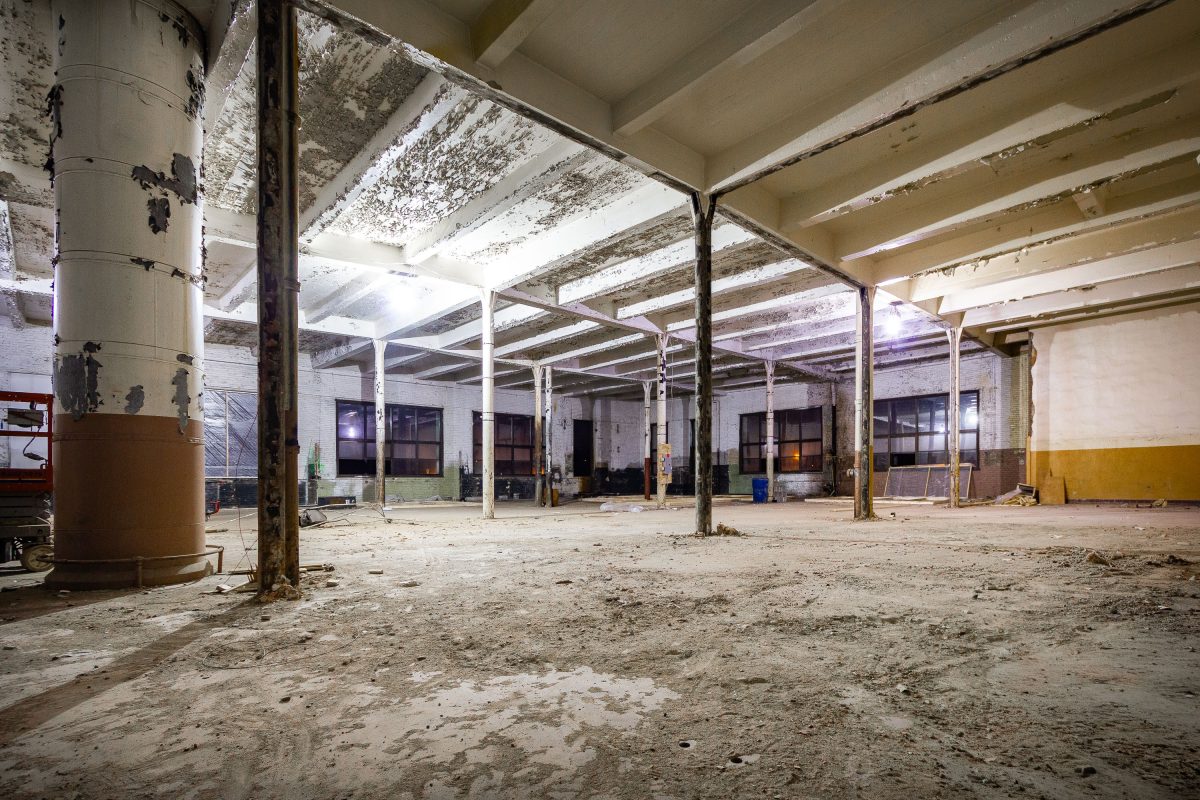
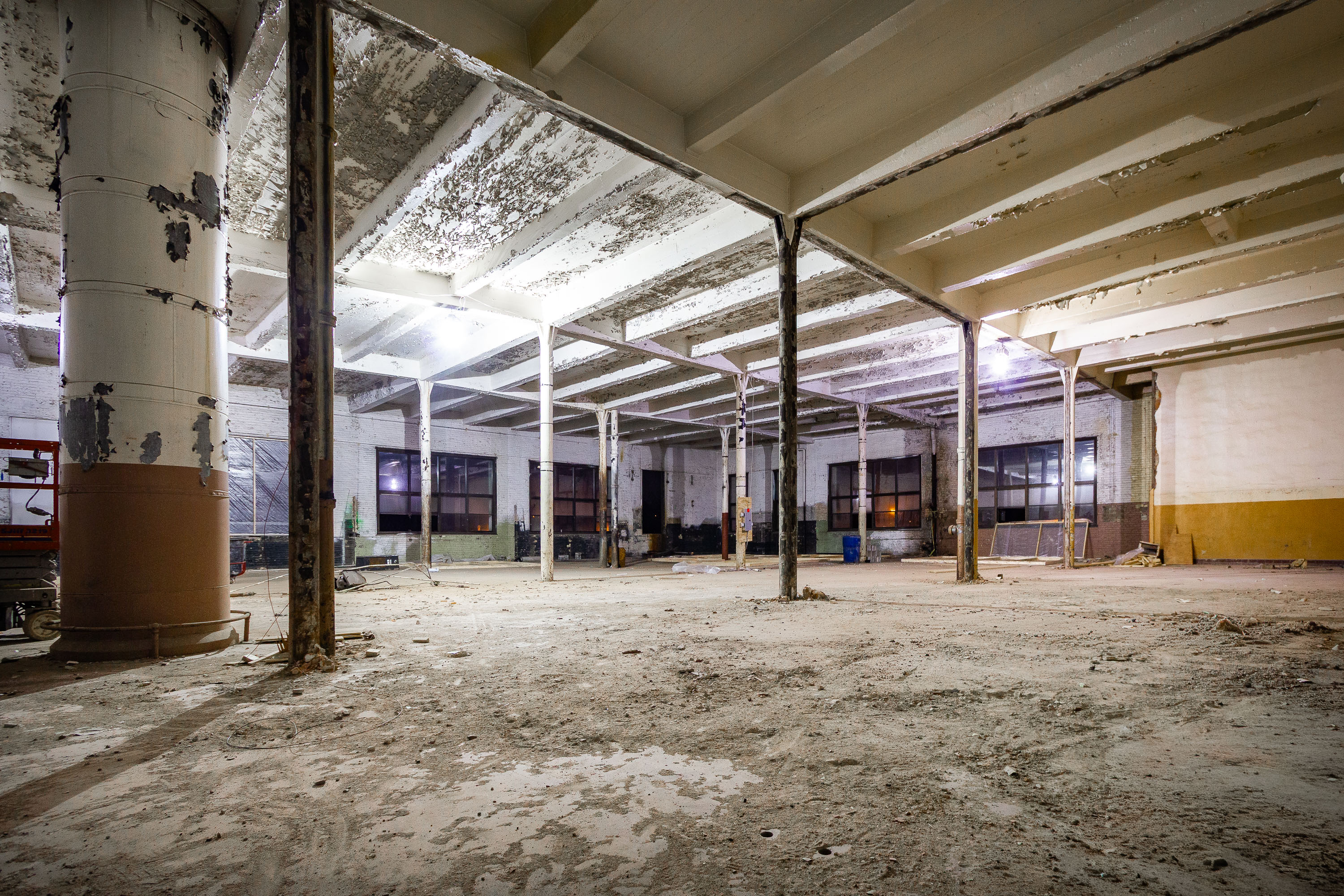
Vacant production floor of the abandoned Schmidt Brewery in St.
The Schmidt Brewery complex on St. Paul's West Seventh Street traces back to 1855, when German immigrant brewers founded the operation as the North Star Brewery. Jacob Schmidt took over in 1900, and the company's beer became a regional staple for much of the 20th century. Production continued under various owners until 2002, when the plant closed for good. The site sat empty for years before developers began converting the complex into the Schmidt Artist Lofts, completed in 2013, and the brewery buildings are listed on the National Register of Historic Places.

Open Production Hall at the Former Schmidt Brewery
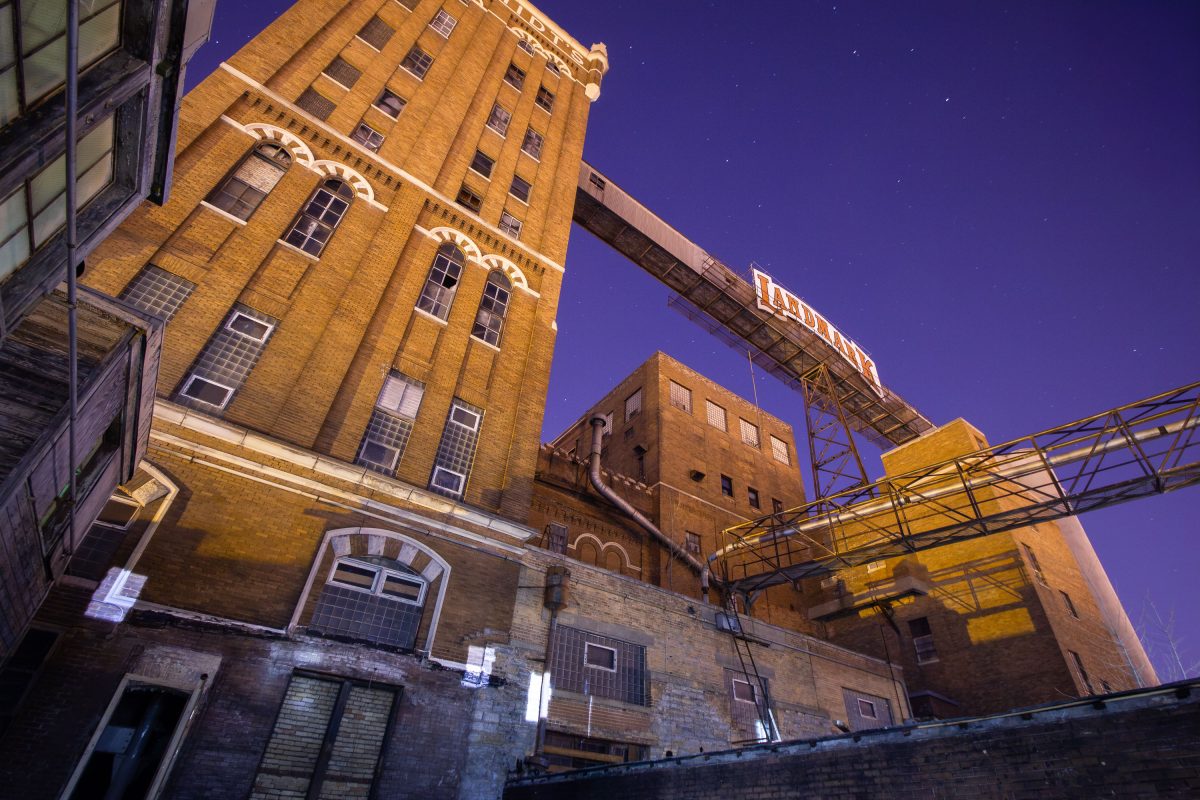
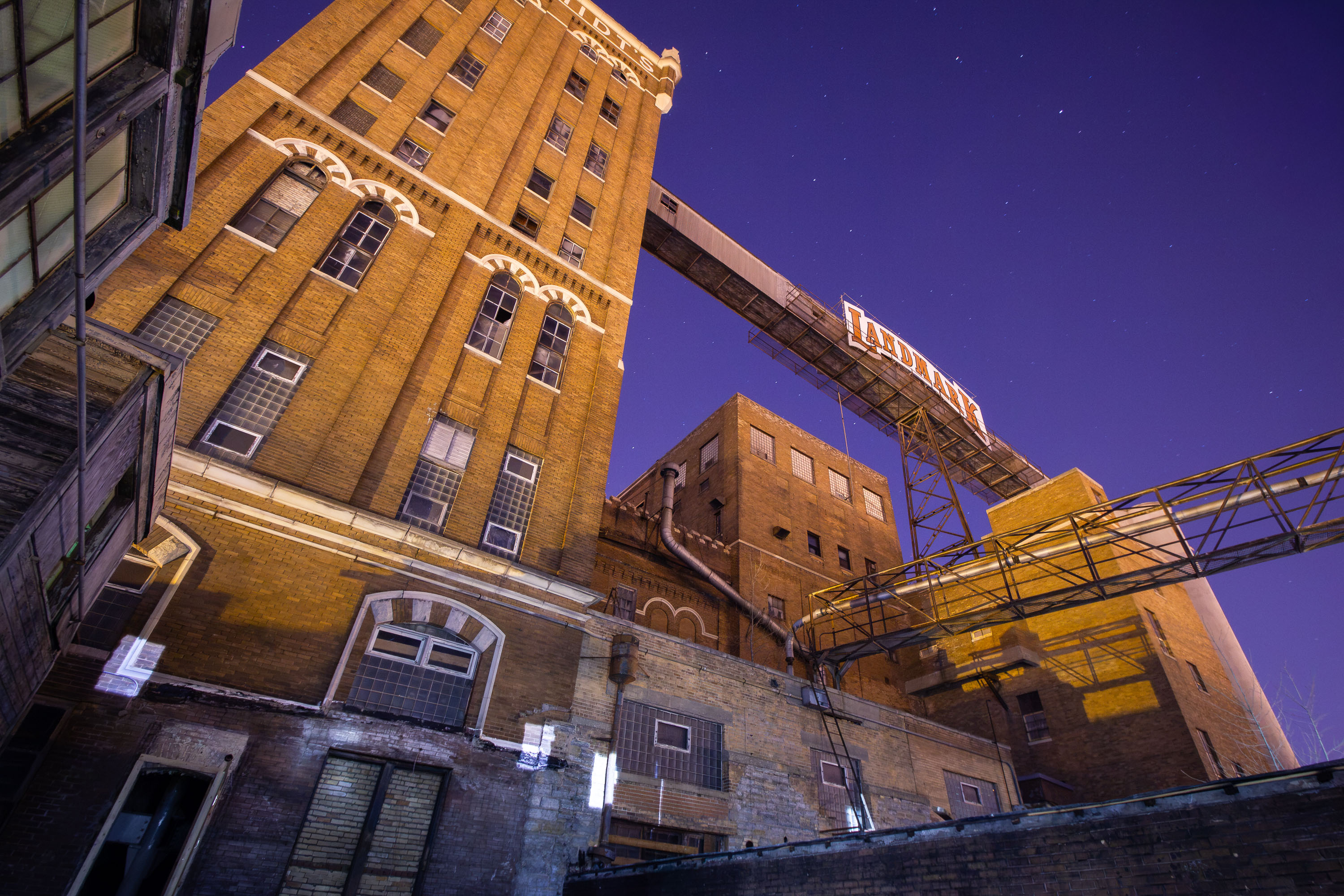
Historic Jacob Schmidt Brewery complex illuminated at night in St.
The Jacob Schmidt Brewing Company built this complex along West Seventh Street in St. Paul, with the brew house tower dating to a 1904 expansion. Schmidt brewed beer here for most of the 20th century, at one point ranking among the largest breweries in the country before the plant closed in 2002. The building sat vacant for over a decade, its "Landmark" sign a holdover from a later owner, before a renovation converted the complex into the Schmidt Artist Lofts in 2013. The site is listed on the National Register of Historic Places for its role in the region's brewing industry.

Brew House Tower and “Landmark” Sign at Schmidt Brewery
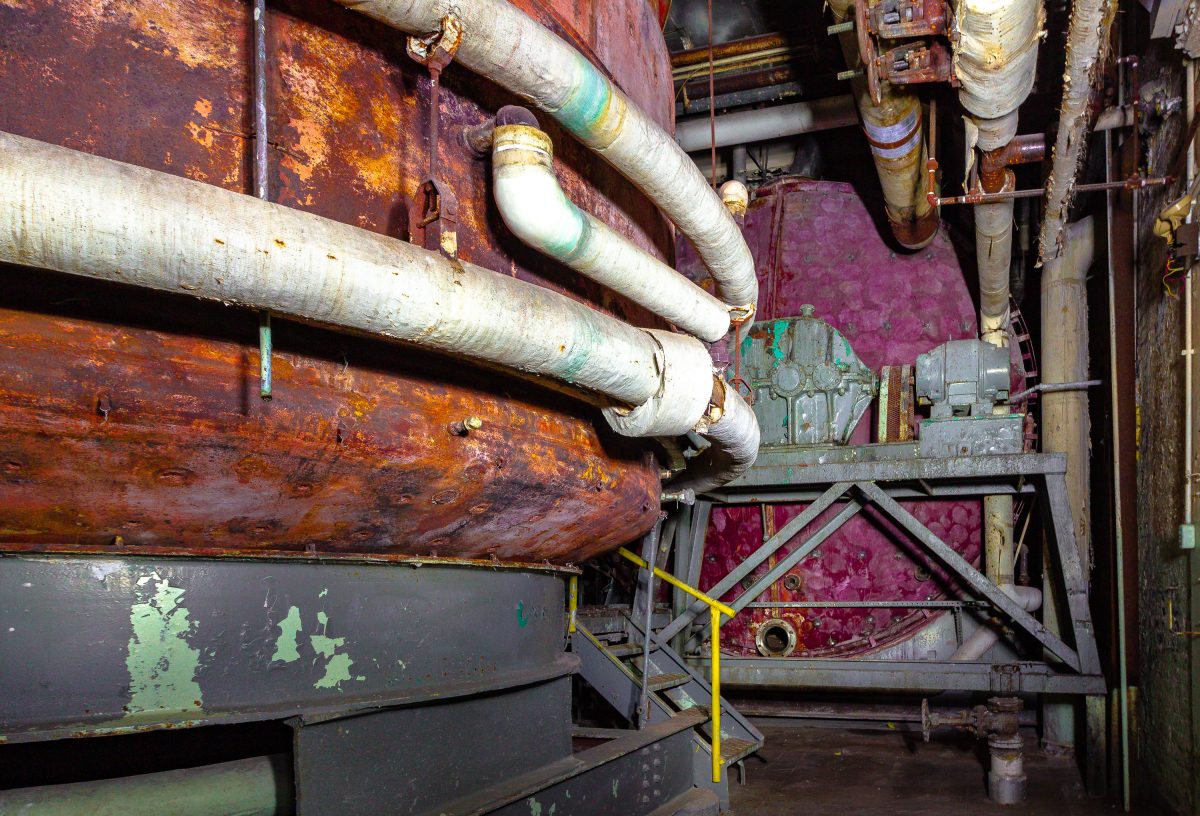
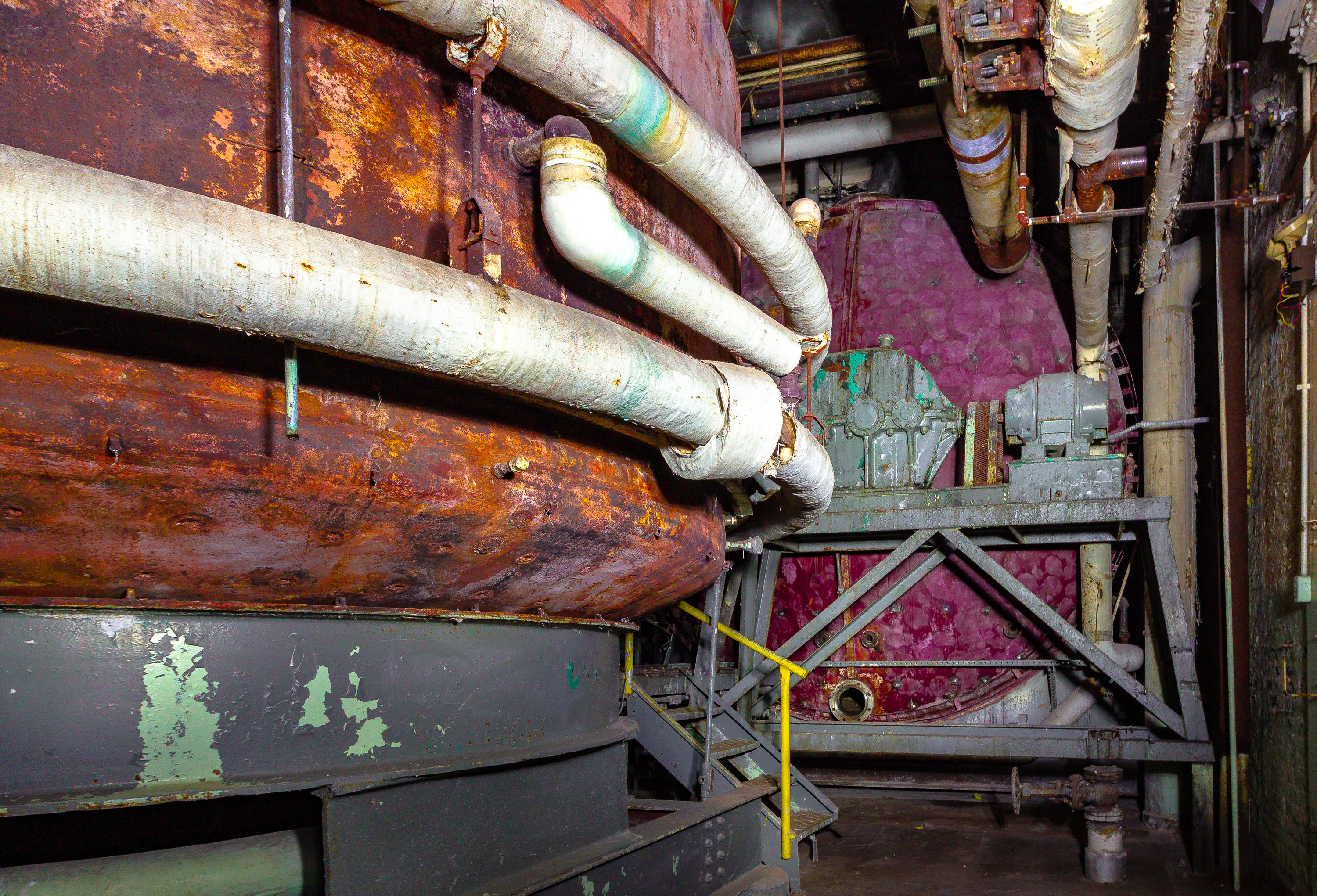
Corroded pipes, valves, and insulated tubing in the boiler room machinery of the abandoned Schmidt Brewery in St. Paul, Minnesota.
The Jacob Schmidt Brewing Company operated on West Seventh Street in St. Paul from the 1900s until production ended in 2002 under the Minnesota Brewing Company name. The complex traces its roots to the Stahlmann Brewery, founded on the site in 1855, and grew into one of the largest breweries in the Midwest by the early twentieth century. Its castle-style brew house and adjoining industrial buildings were added to the National Register of Historic Places in 1988. Boilers and mechanical equipment like this once powered the brewing and bottling lines that supplied Schmidt beer across the region before the plant's closure ended nearly a century and a half of brewing on the site.

Rusted Boiler Tank and Piping at the Schmidt Brewery
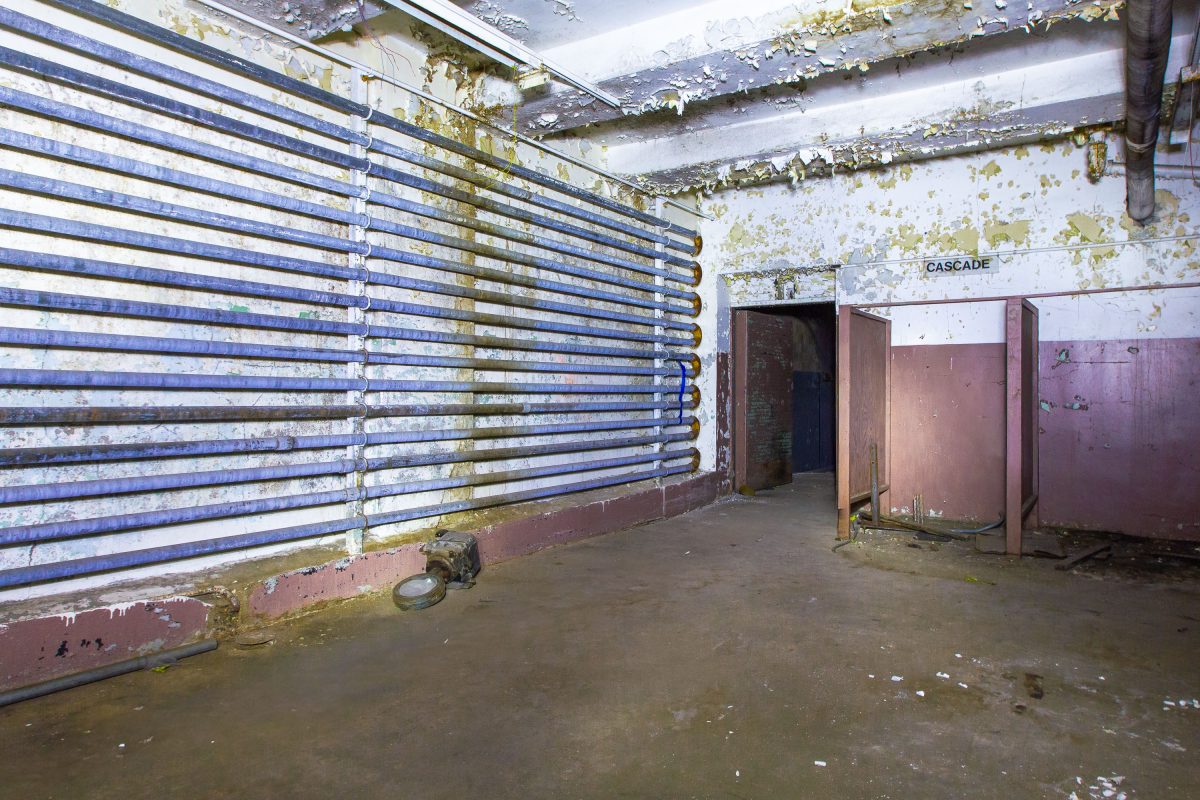
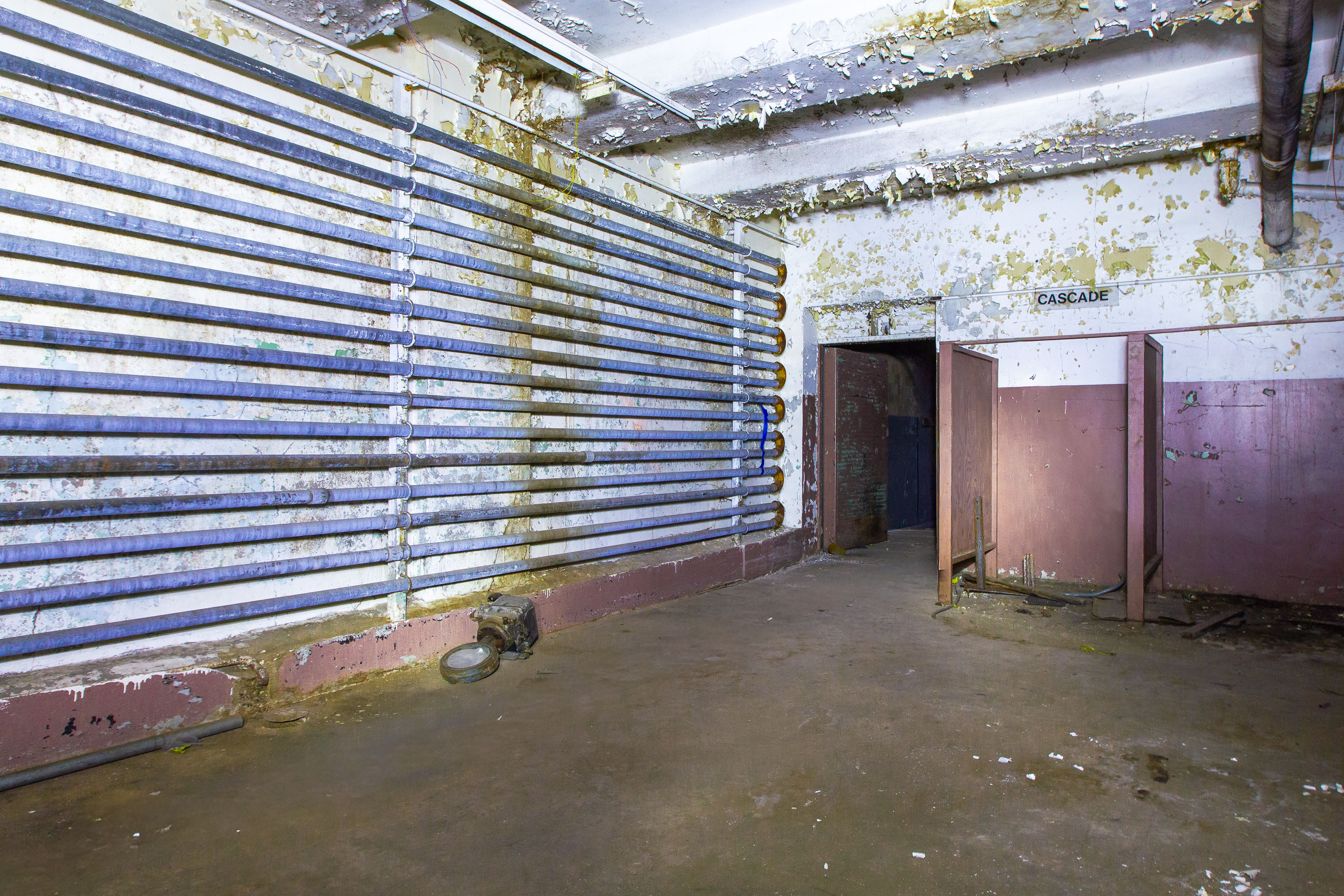
Deteriorated interior room with blue and white horizontal louvers and rusted metal storage boxes at the abandoned Schmidt Brewery in St.
The Jacob Schmidt Brewing Company operated at 882 West Seventh Street in St. Paul, tracing its roots to the North Star Brewery founded on the site in 1855. Schmidt acquired the operation in 1900 and built it into one of the largest breweries in Minnesota, producing beer under the Schmidt name for most of the 20th century. Pabst bought the company in 1972 and kept the plant running under contract brewing arrangements until production finally ceased in 2002. The complex was added to the National Register of Historic Places and later redeveloped into the Schmidt Artist Lofts, with much of the original brewhouse and support buildings preserved in the conversion.

Entrance to the Cascade Room at the Former Schmidt Brewery
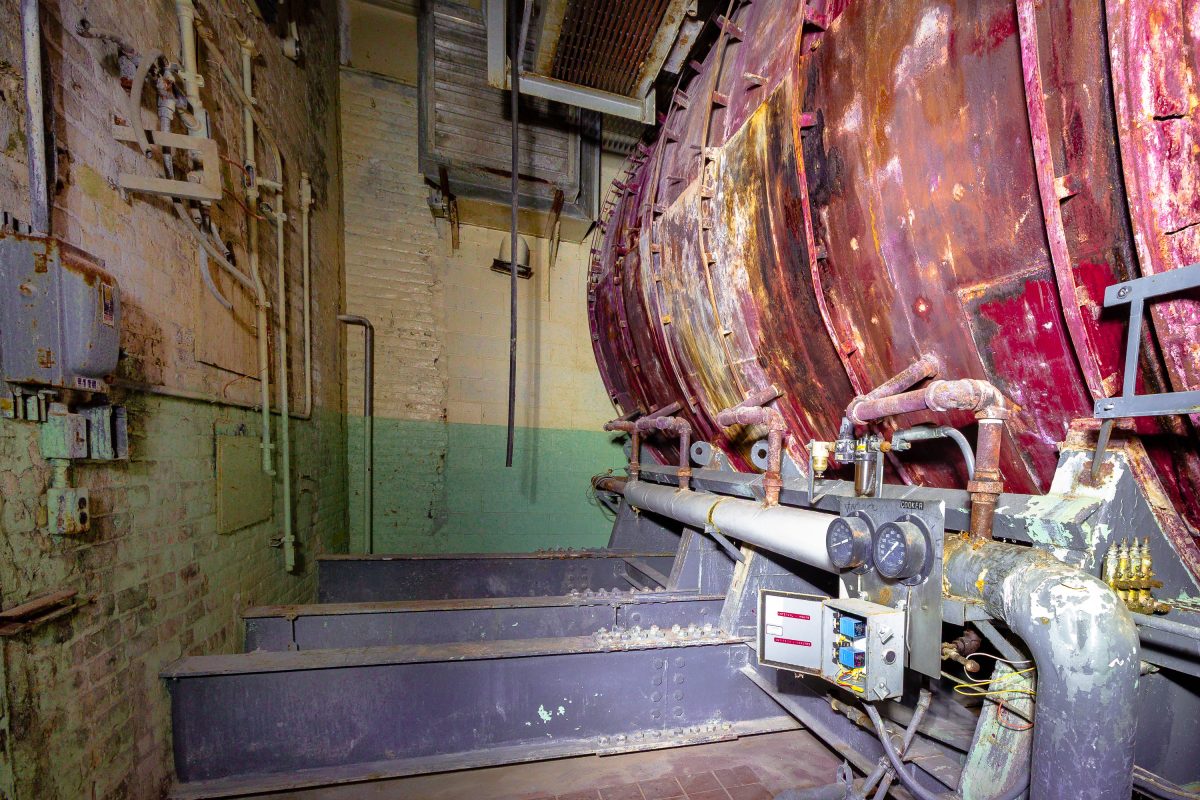
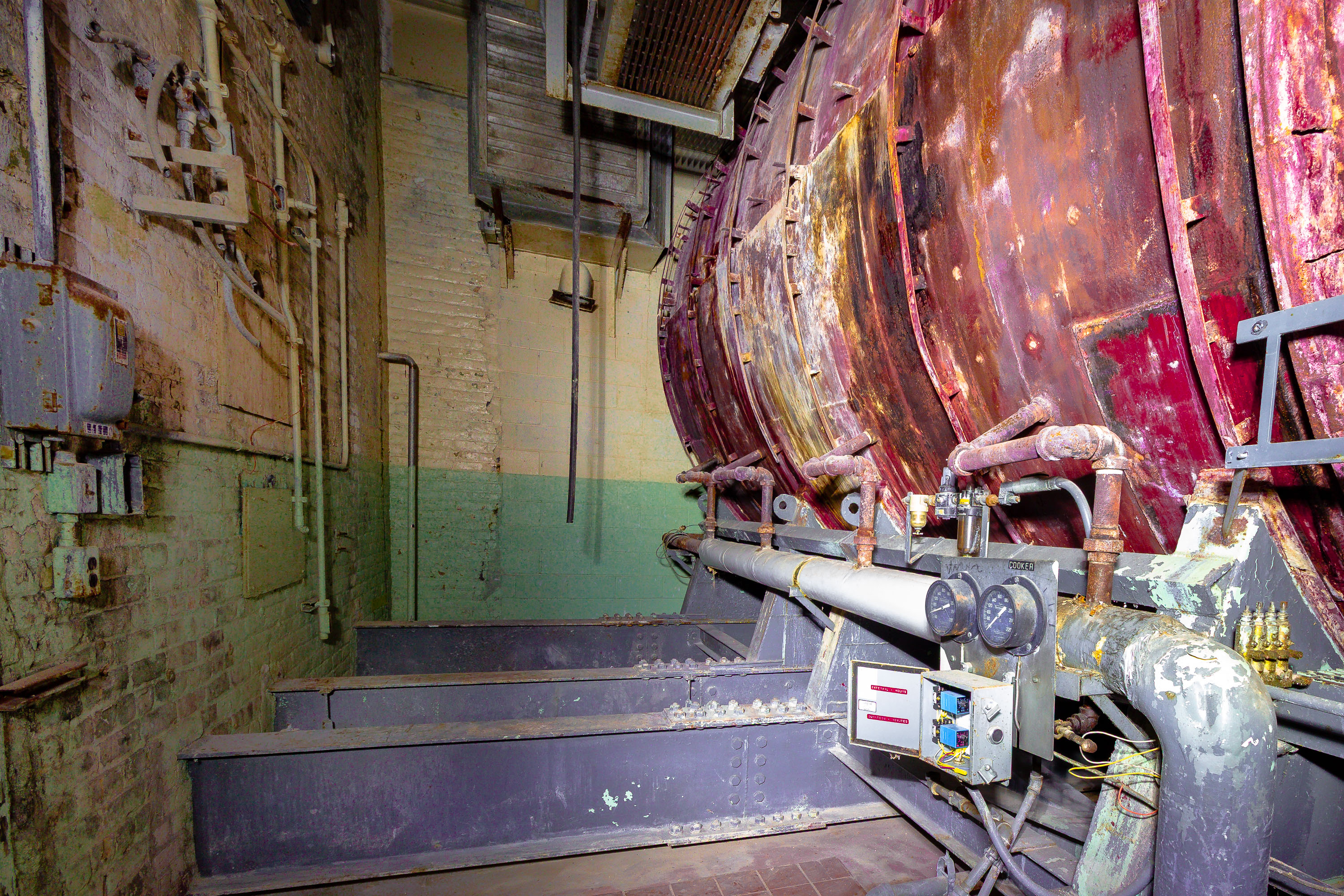
Rusted boiler and steam machinery in the abandoned Schmidt Brewery boiler room in St. Paul, Minnesota.
The Schmidt Brewery complex on West Seventh Street traces its roots to 1855, when Jacob Schmidt began brewing on the site after taking over an earlier operation founded by German immigrant Christopher Stahlmann. By the early 1900s it had grown into one of the largest breweries in the country, producing Schmidt Beer and City Club under a sprawling campus of production and power buildings along the Mississippi River bluff. Brewing operations continued under various owners until the plant closed in 1990, ending more than a century of continuous production. The boiler and mechanical rooms housed the steam systems that powered brewing kettles, bottling lines, and refrigeration throughout the complex. In 2013 the site was redeveloped into the Schmidt Artist Lofts, and the brewery's main buildings were later listed on the National Register of Historic Places.

Rusted Boiler Tank at the Former Schmidt Brewery
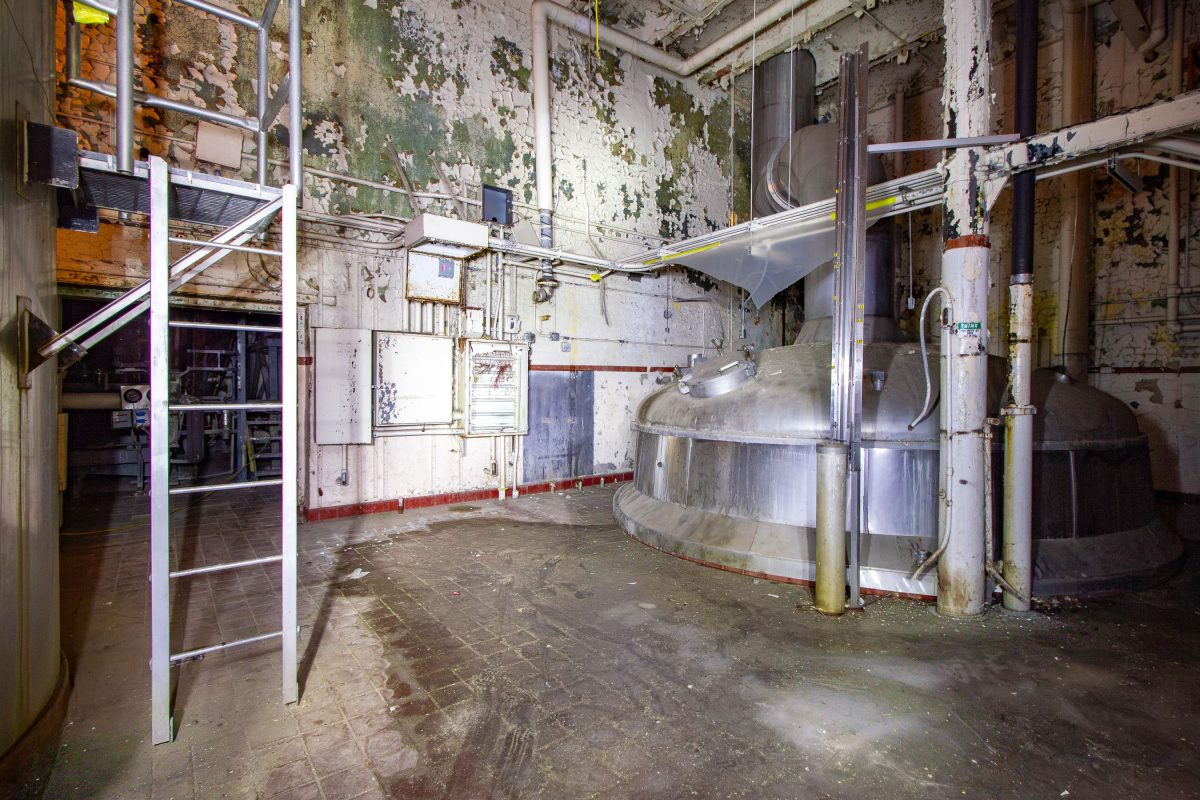
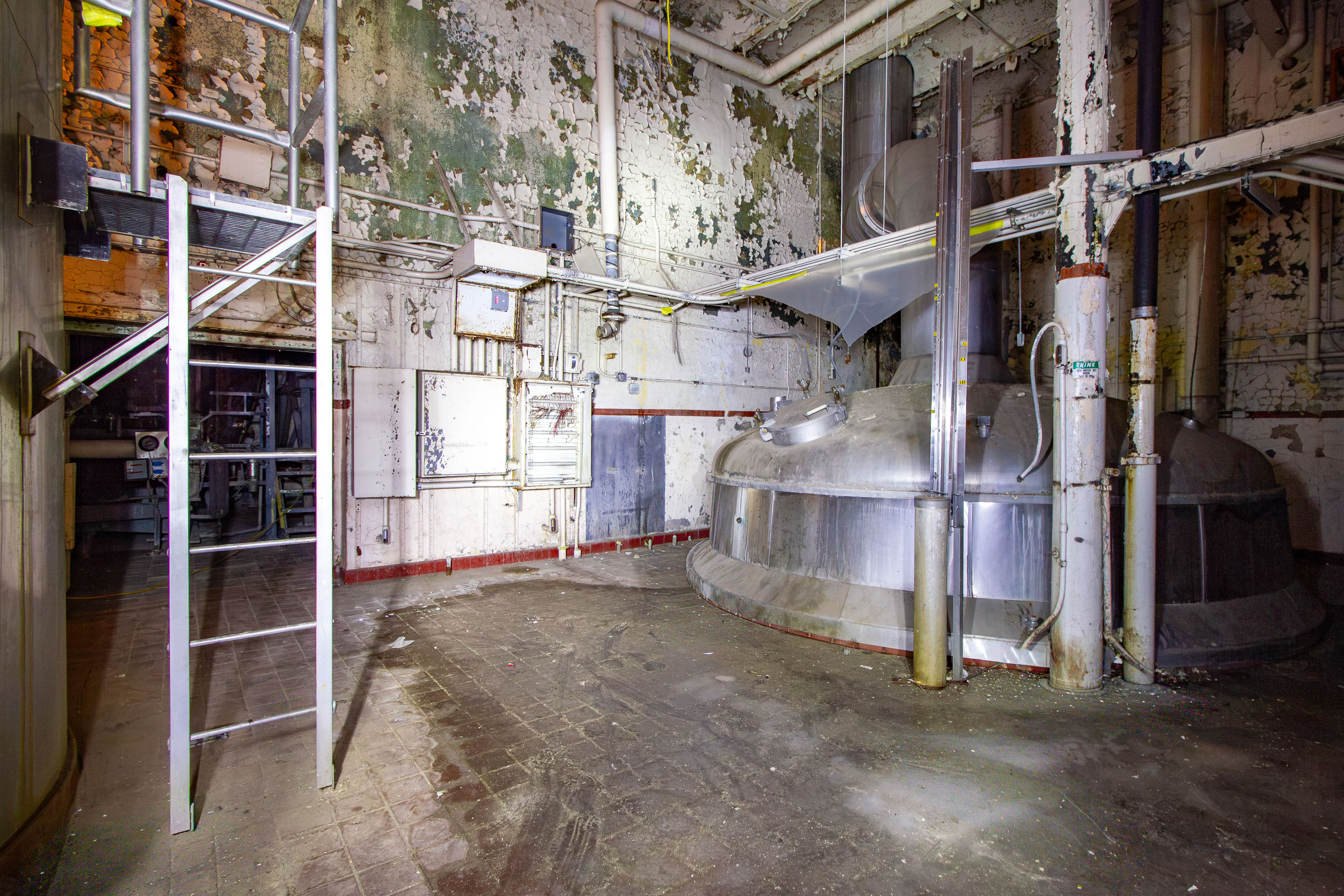
Abandoned brew kettle and industrial machinery in the brew house of Schmidt Brewery in St. Paul, Minnesota.
The Jacob Schmidt Brewing Company operated on West Seventh Street in St. Paul from 1900 until production ceased in 2002, when the Minnesota Brewing Company, its final owner, shut the plant down. Schmidt's beer had been a regional staple for much of the 20th century, at one point ranking among the largest breweries in the country by output. The brew house, listed on the National Register of Historic Places, held the kettles and tanks used to mash and boil grain into wort before fermentation. After sitting vacant for over a decade, the complex was redeveloped into the Schmidt Artist Lofts, reopening in 2013 with the old brewing equipment left in place as a reminder of the site's industrial past.

Kettle Room in the Former Schmidt Brewery’s Brew House
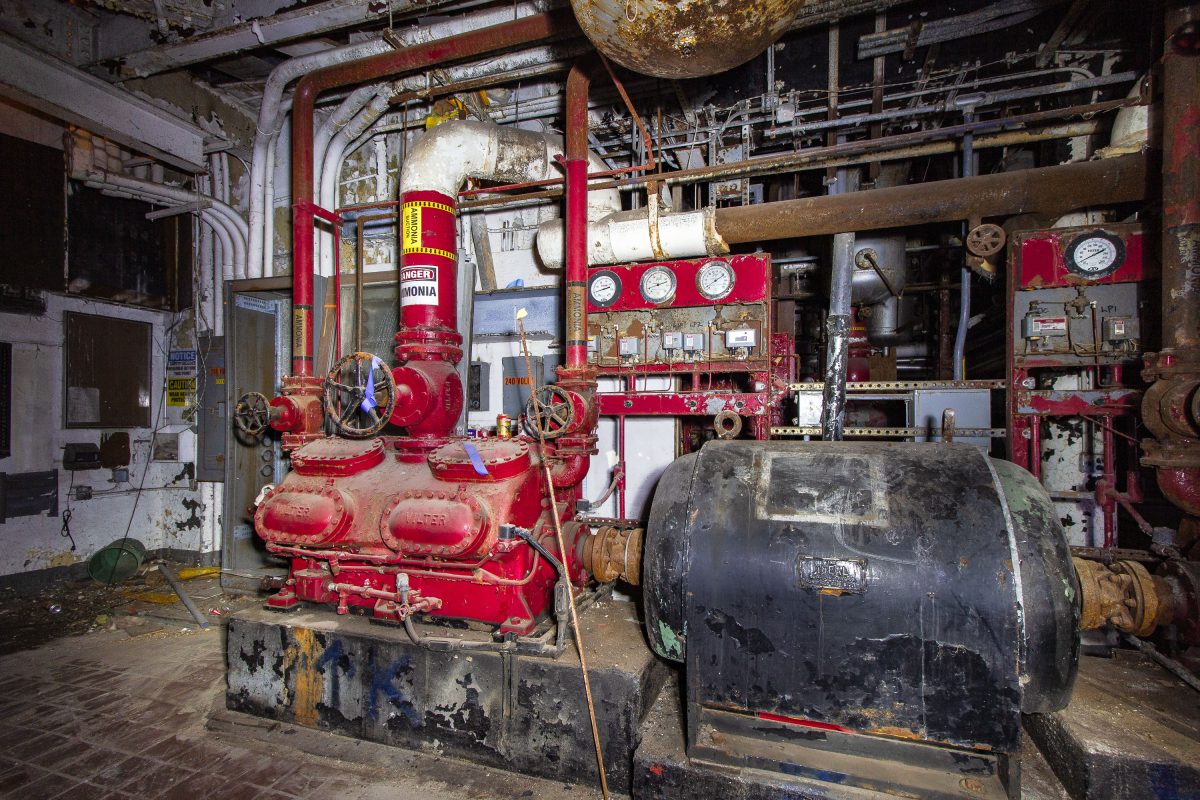
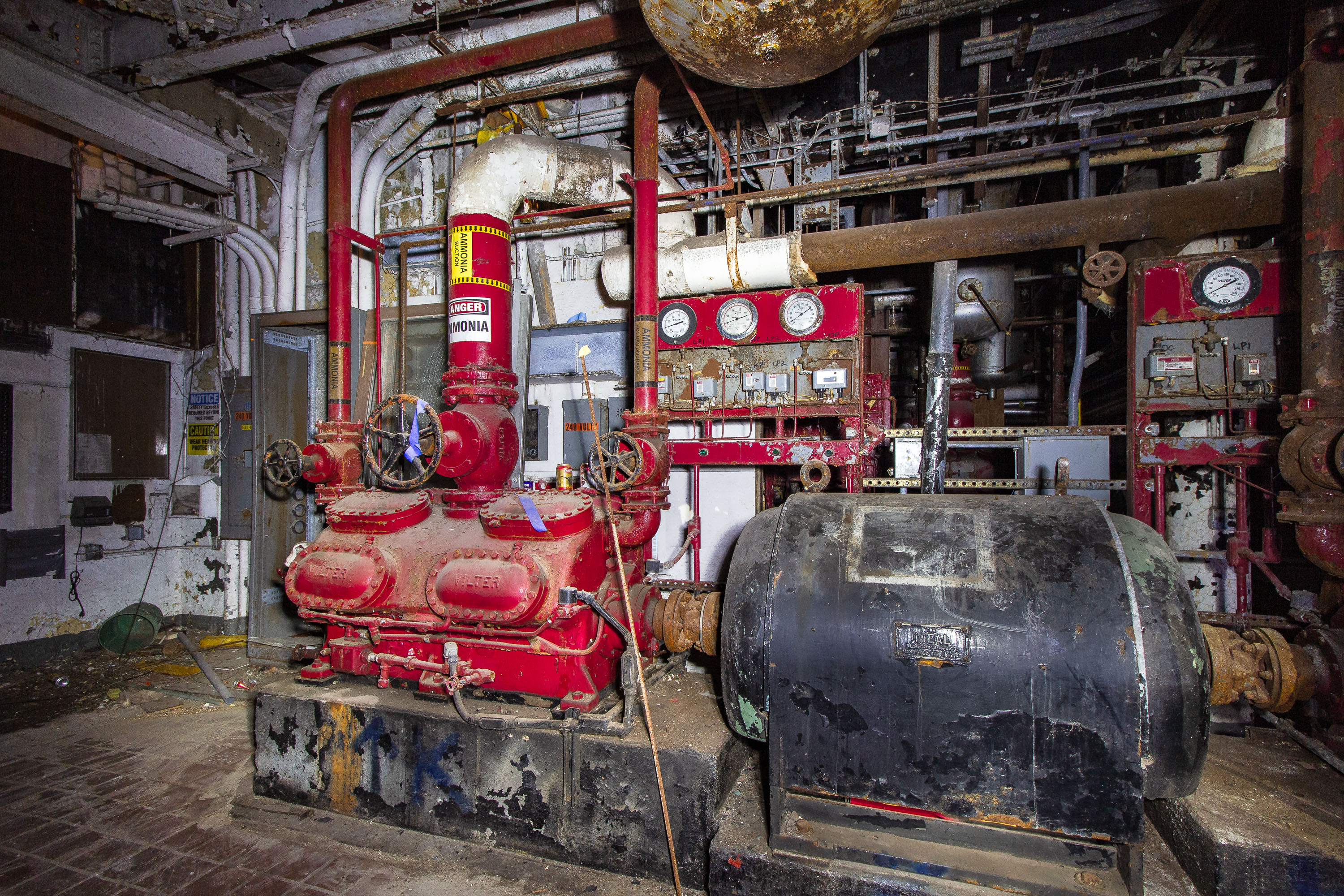
Ammonia compressor system in the machinery room of Schmidt Brewery in St. Paul, Minnesota.
The Jacob Schmidt Brewing Company operated this complex on West Seventh Street in St. Paul from the 1900s until its closure in 2002. Ammonia compressors like this one powered the plant's refrigeration systems, a necessity for lagering beer at controlled temperatures before modern electric cooling took over. The brewery traces its roots to 1855 as the North Star Brewery, later reorganized under Jacob Schmidt in 1900, and grew into one of the largest beer producers in the Upper Midwest. Machinery of this kind remained in service for decades after brewing ceased, left in place when production ended. The property is listed on the National Register of Historic Places and has since been redeveloped into apartments known as the Schmidt Artist Lofts.

Red Ammonia Compressor at the Former Schmidt Brewery
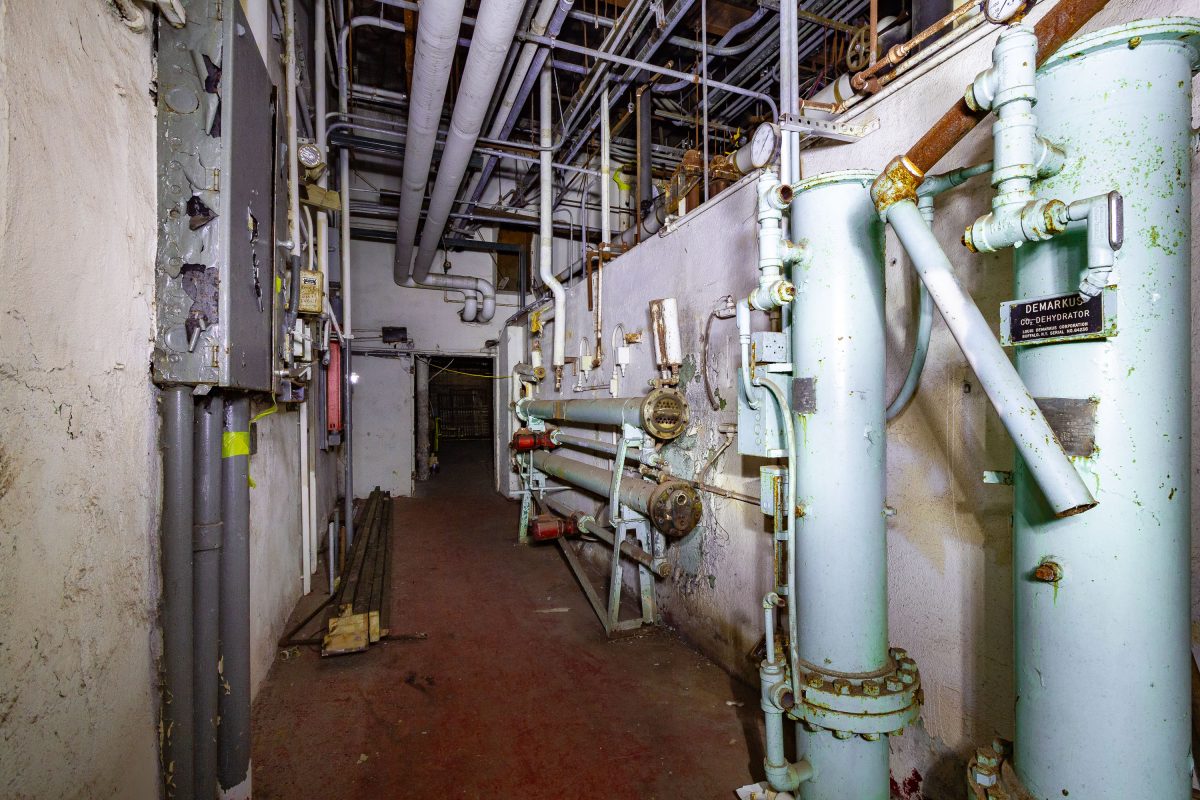
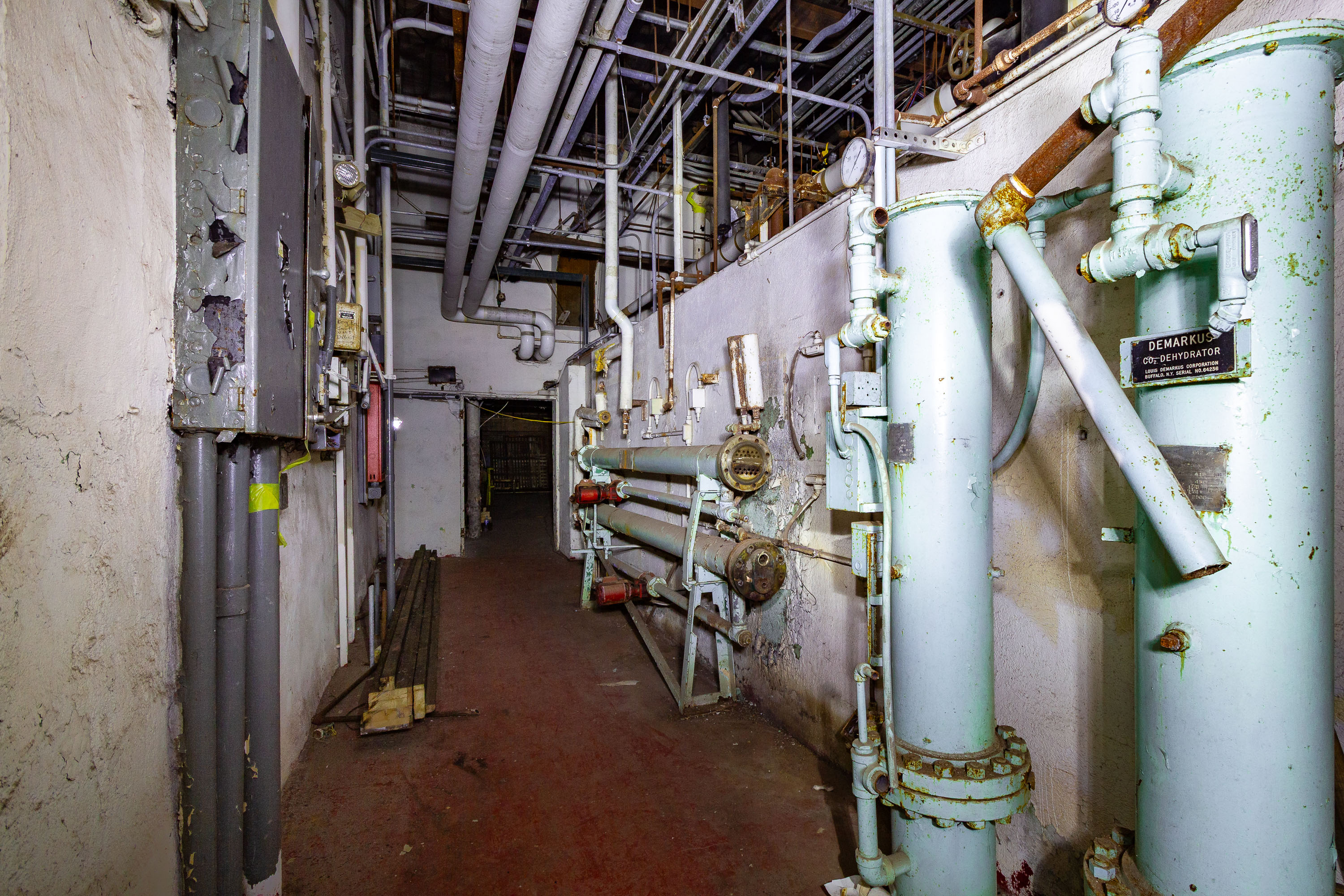
Industrial corridor in Schmidt Brewery's CO2 dehydrator room with rusted pipes, valves, and equipment lining the walls.
The Jacob Schmidt Brewing Company operated at this West Seventh Street site in St. Paul from 1900 until production ended in 2002 under later owner Minnesota Brewing Company. Machinery like the CO2 dehydrator unit pictured here supported the carbonation and packaging lines that once turned out beer under the Schmidt label and, later, contract brands. The complex is listed on the National Register of Historic Places for its role in Minnesota's brewing industry. Following a lengthy vacancy, developers converted the property into the Schmidt Artist Lofts, completed in 2013, preserving portions of the original industrial infrastructure within the residential redevelopment.

Demarkus CO2 Dehydrator Tank at Schmidt Brewery
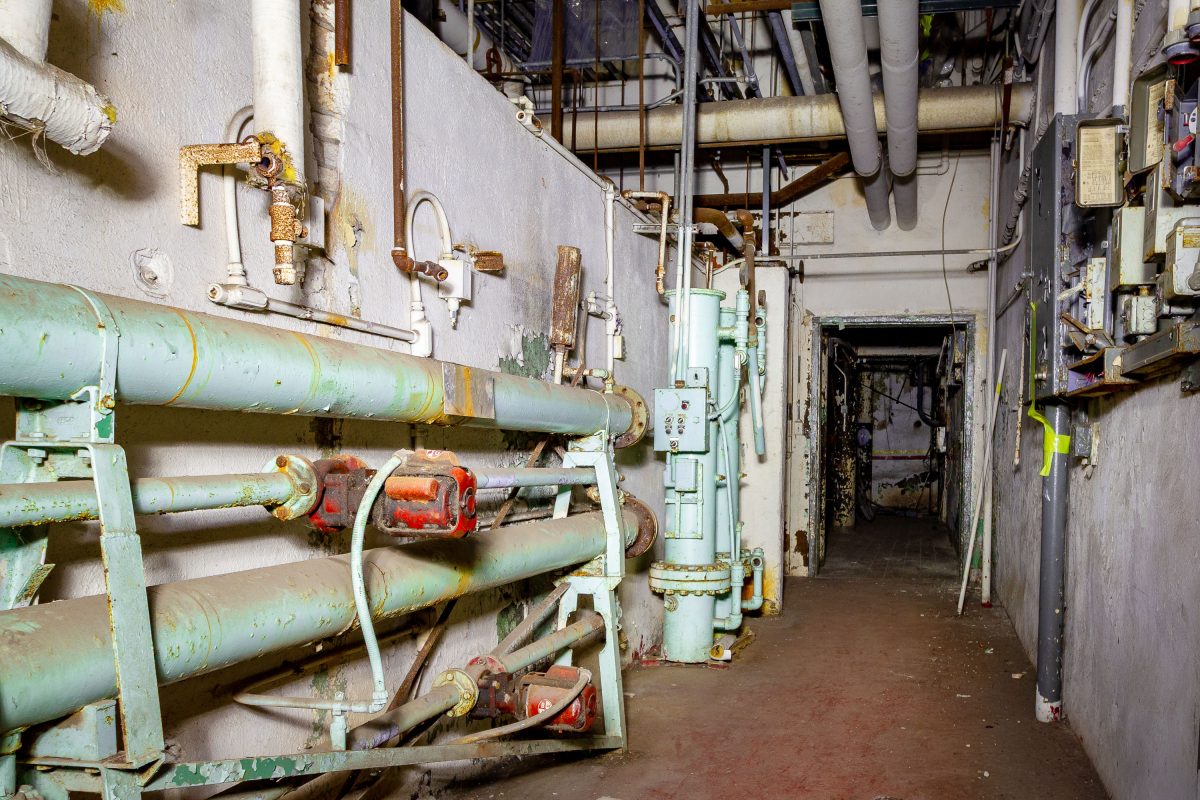
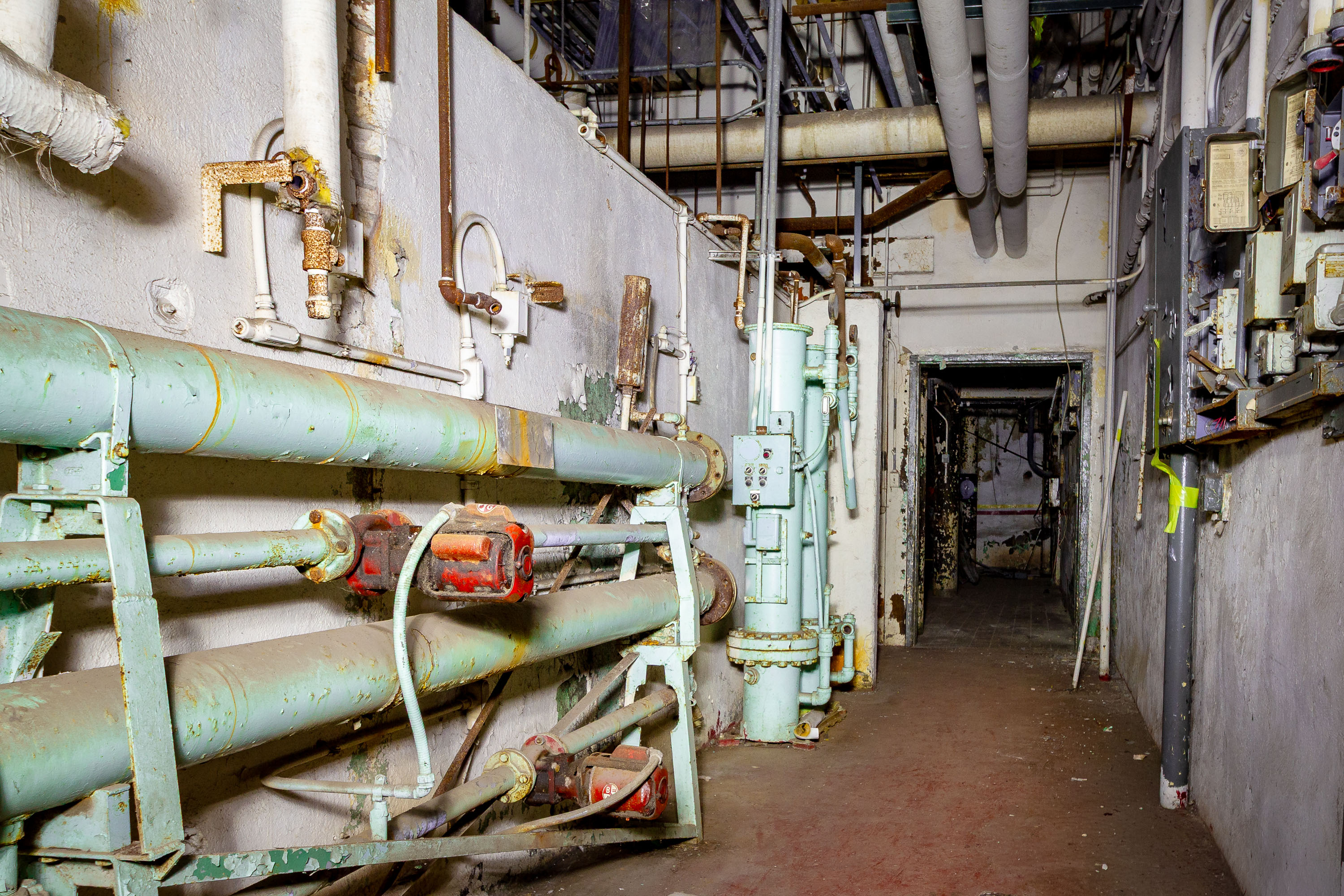
Industrial pipe corridor with rusted valves and fittings inside the abandoned Schmidt Brewery in St. Paul, Minnesota.
The former Schmidt Brewery complex sits along West Seventh Street in St. Paul, where the Jacob Schmidt Brewing Company operated for much of the 20th century after taking over an earlier plant founded in the 1850s. Production continued under various owners until the brewery closed in 2002, leaving behind a network of boiler rooms, pipe galleries, and mechanical corridors built to support large-scale brewing operations. Many of these service areas, lined with steam and process piping, were later gutted or left untouched during the site's redevelopment into artist studios and apartments starting in the 2010s. The complex was added to the National Register of Historic Places in 2006, recognizing its role in Minnesota's brewing industry.

Pipe Gallery Inside the Former Schmidt Brewery
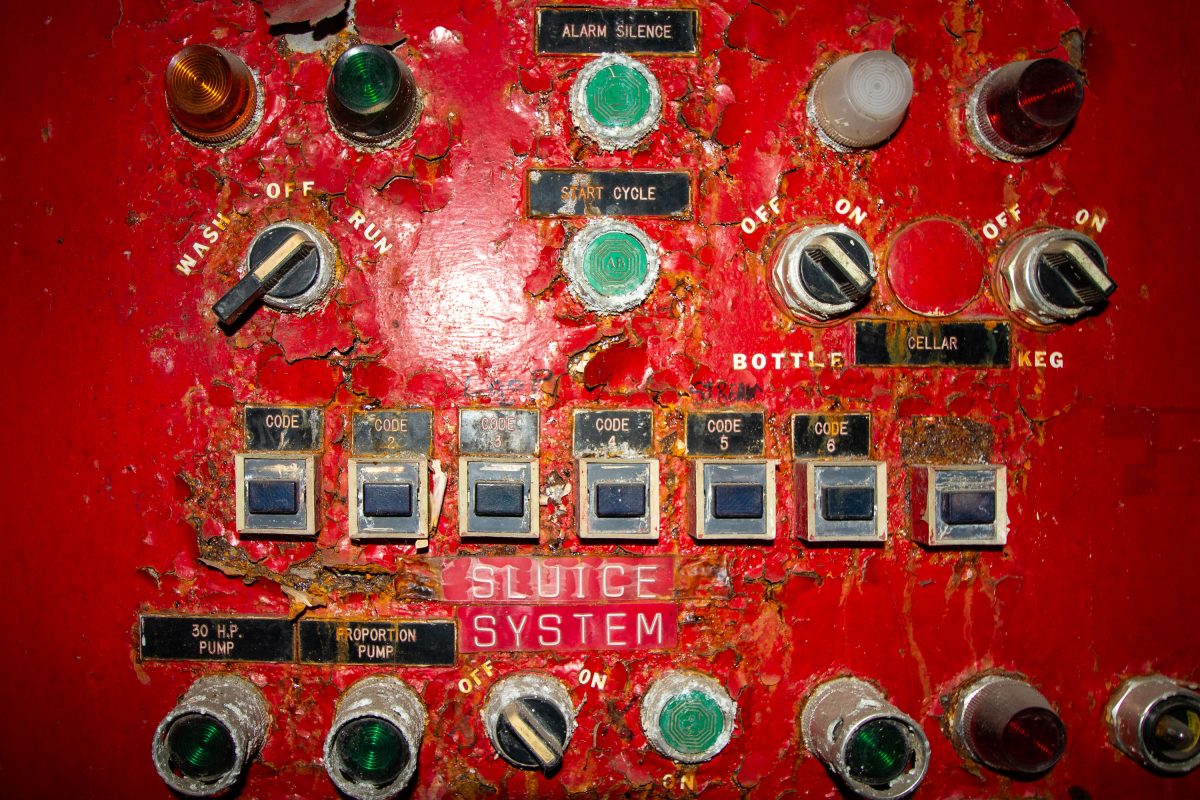
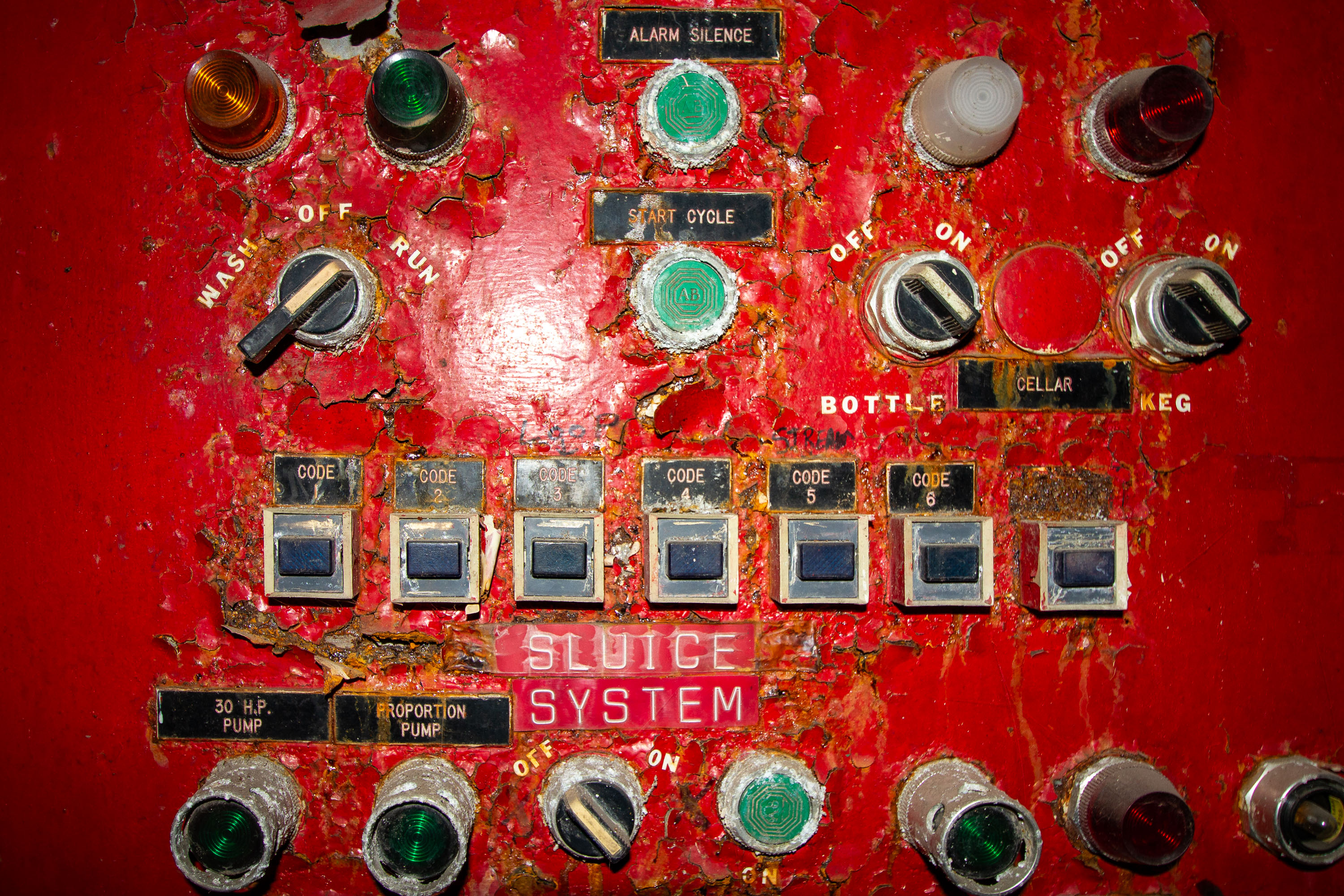
Weathered red control panel from Schmidt Brewery's sluice system with labeled switches, buttons, and indicator lights for bottling and keg operations.
The Jacob Schmidt Brewing Company operated at 882 West Seventh Street in St. Paul from 1900 until its closure in 2002. Panels like this one governed the plant's sluice and pumping operations, routing product between the bottling and keg lines noted on its switches. The brewery once ranked among the largest in Minnesota, producing Schmidt beer for distribution across the Upper Midwest. After decades of vacancy, the complex was redeveloped starting in 2013 into the Schmidt Artist Lofts, and the site is listed on the National Register of Historic Places.

Rusted “Sluice System” Panel at the Schmidt Brewery
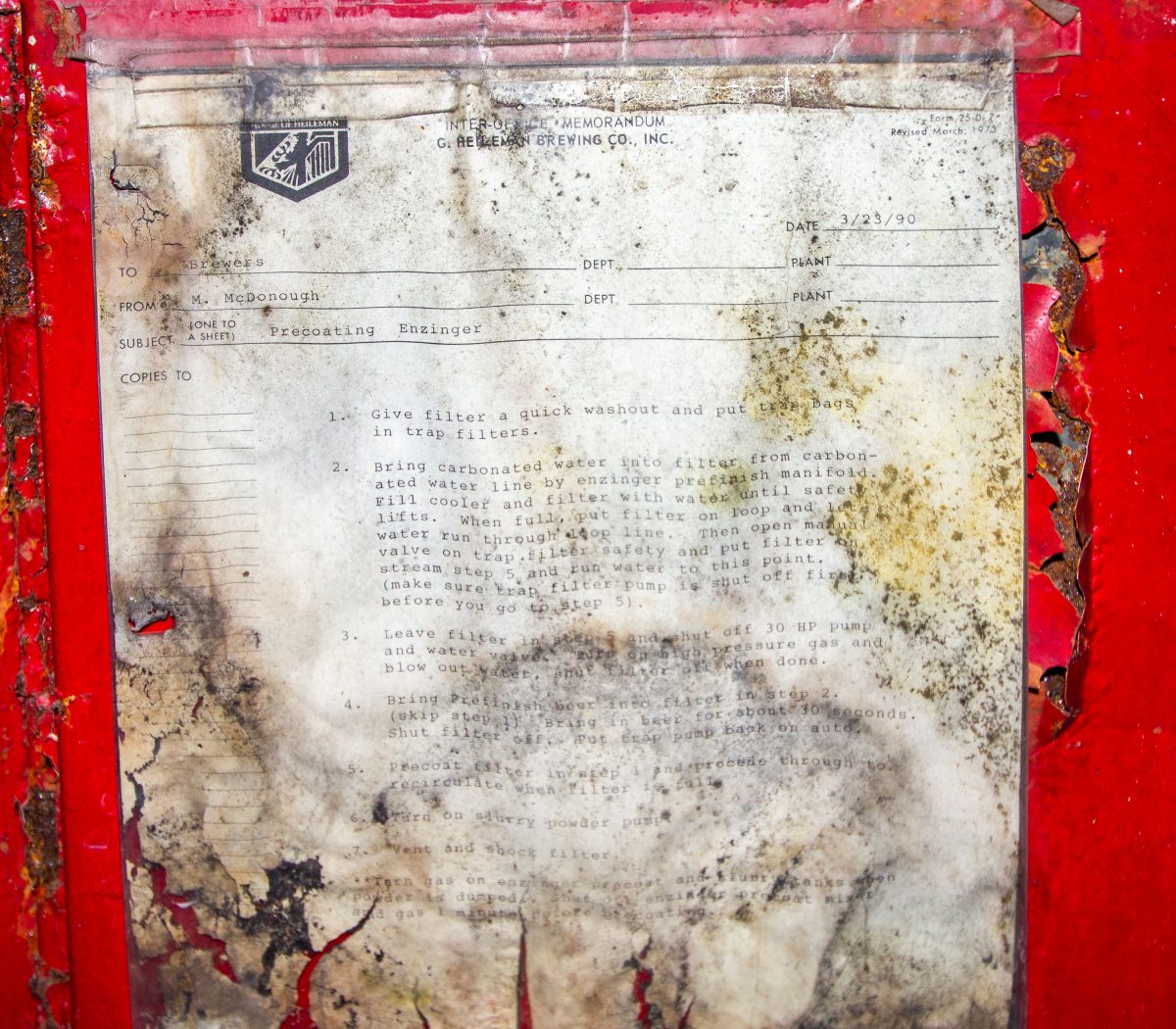
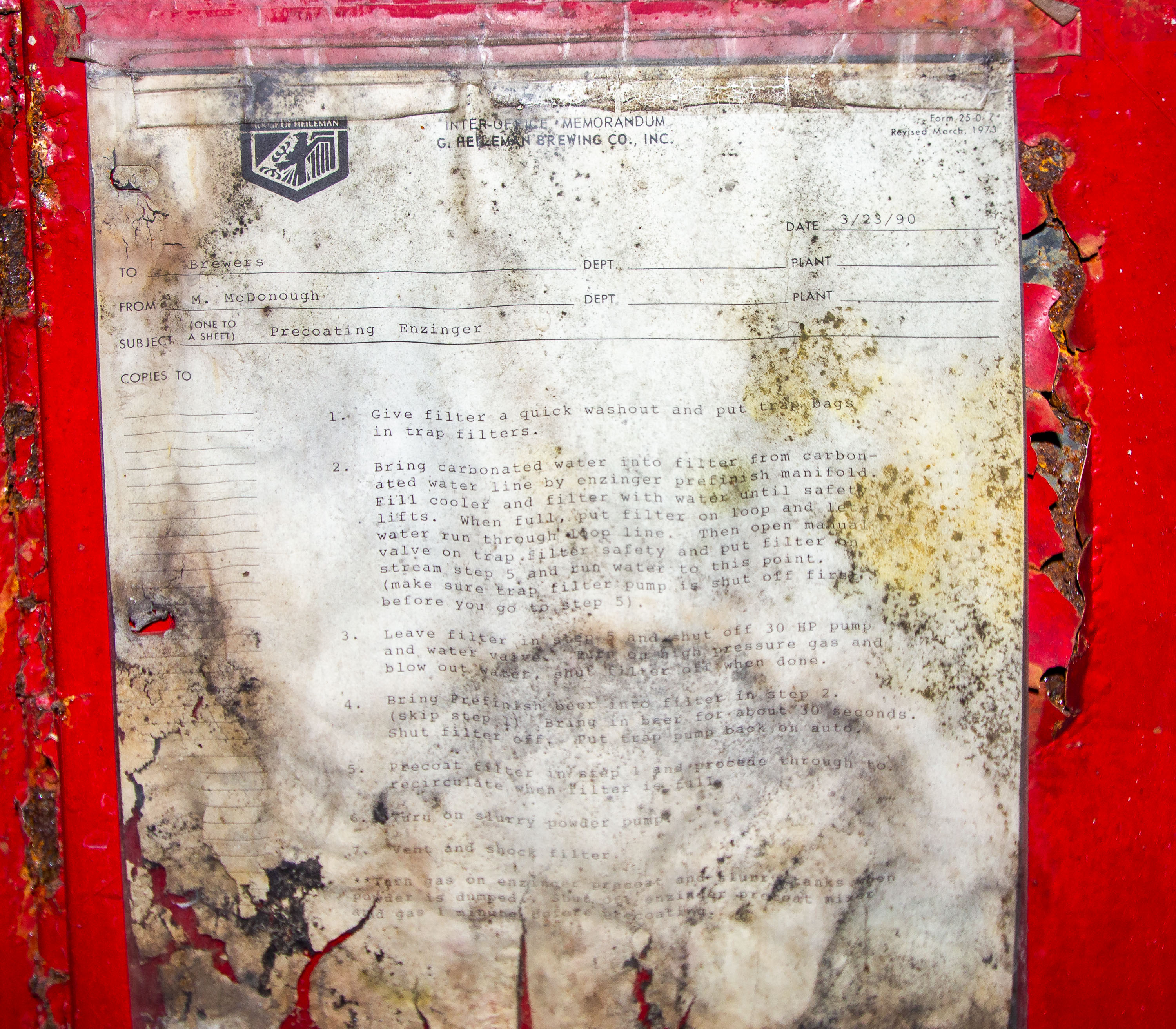
Aged interoffice memorandum from G. Heileman Brewing Co.
G. Heileman Brewing Co., Inc. took over the Jacob Schmidt Brewing Company's St. Paul plant in 1972, continuing beer production there under the Schmidt name for nearly two more decades. This interoffice memorandum, dated March 23, 1990, is addressed from M. McDonough to the brewery's staff and outlines a step-by-step procedure for precoating an Enzinger filter, a rotary vacuum filter used to clarify beer before it was packaged. Heileman halted brewing at the West Seventh Street complex later that year, after which Minnesota Brewing Company took over the site. The Schmidt Brewery complex, parts of which date to 1900, is listed on the National Register of Historic Places.

Precoating Enzinger Memo at Schmidt Brewery
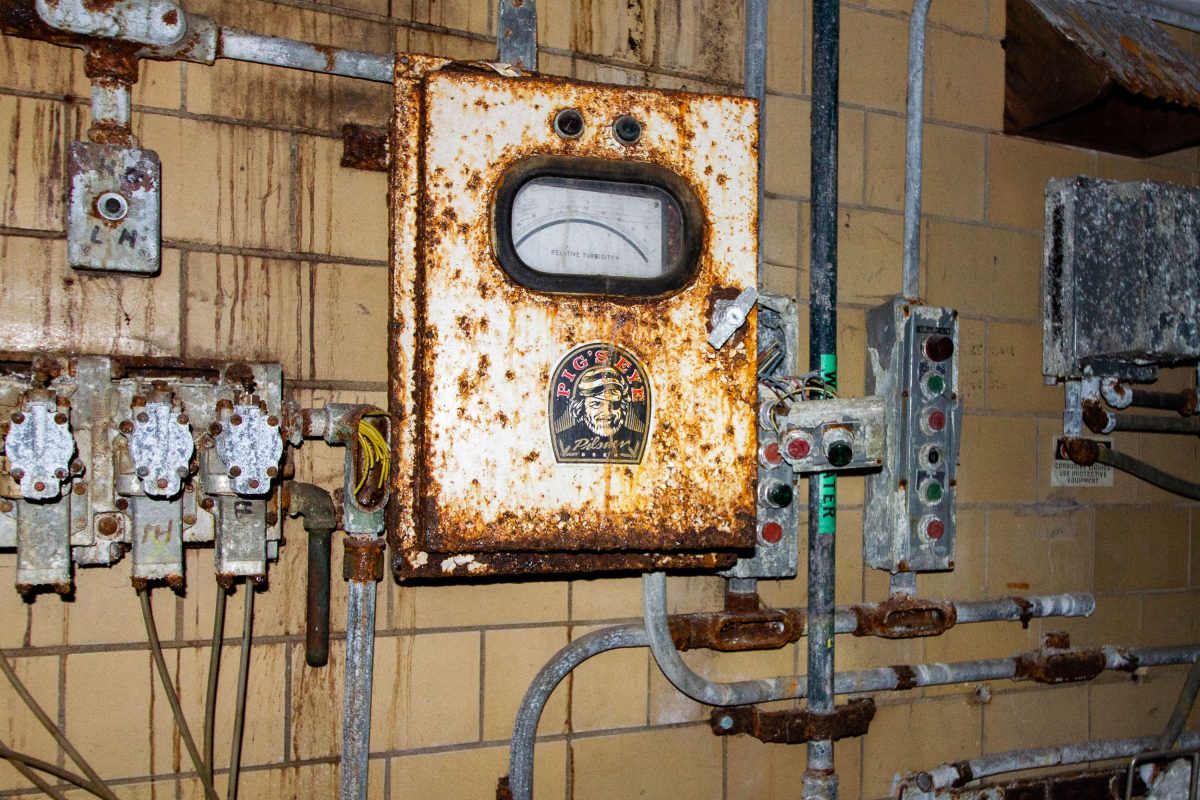
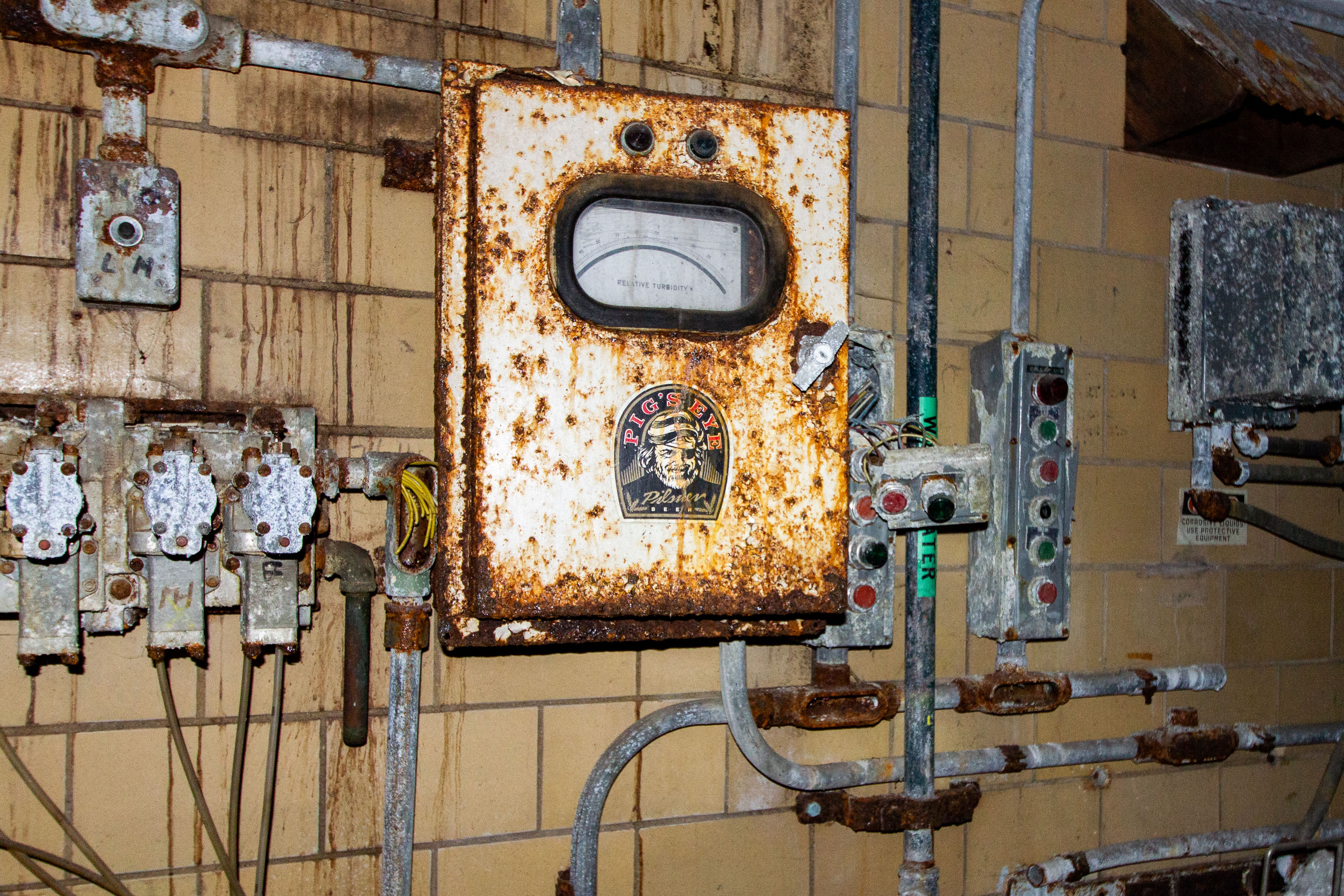
Rusted electrical control panel with Pig's Eye Pilsner emblem from Jacob Schmidt Brewery in St. Paul.
The Pig's Eye Pilsner sticker on this control panel ties it to the Jacob Schmidt Brewing Company, which operated on West Seventh Street in St. Paul from 1900 until it closed in 2002. The Pig's Eye name honors Pierre "Pig's Eye" Parrant, a fur trader and bootlegger regarded as one of St. Paul's earliest settlers. The brewery's industrial complex, developed over the early twentieth century, was listed on the National Register of Historic Places in 1990. Following years of vacancy after closure, the site was redeveloped into housing known as the Schmidt Artist Lofts.

Pig’s Eye Pilsner Sticker on a Gauge Panel at Schmidt Brewery
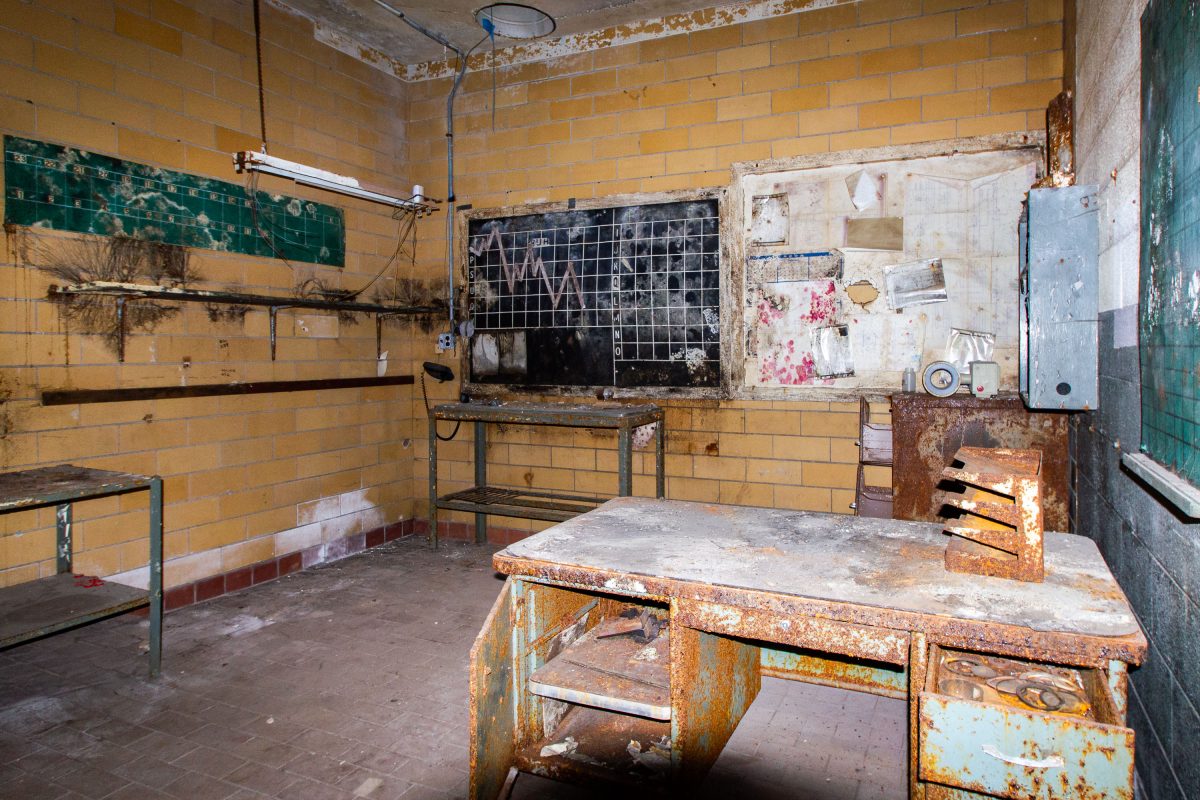
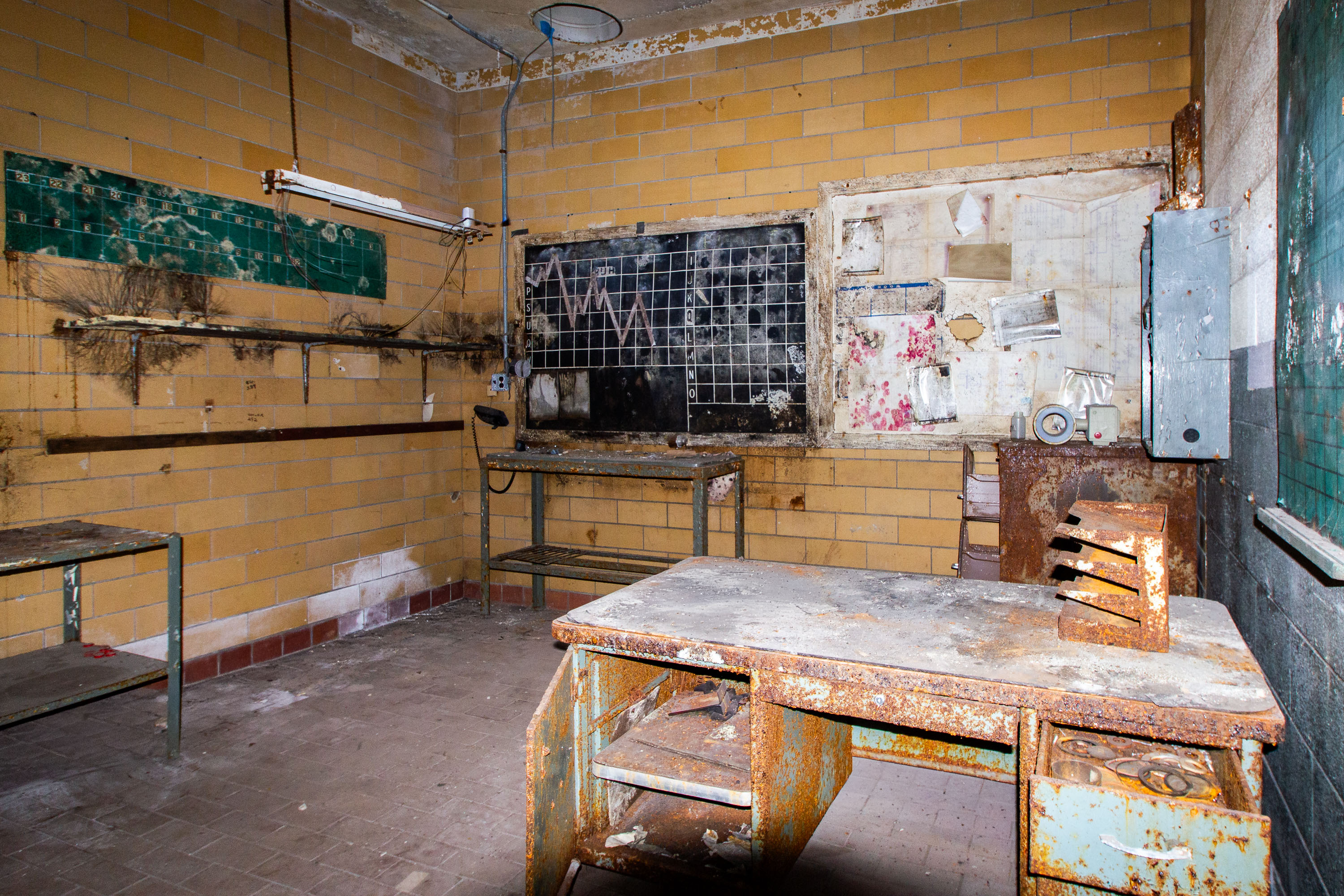
Abandoned testing lab at Schmidt Brewery in St. Paul featuring rusted tables, yellow tile walls, and deteriorated equipment.
The Schmidt Brewery complex on West Seventh Street in St. Paul traces its roots to 1855, when it began as the St. Paul Brewing Company before Jacob Schmidt took control in 1900 and renamed it. By the mid-20th century it ranked among the largest breweries in the country, producing Schmidt beer along with brands like Old Style and Grain Belt after later mergers. The brewery closed production in 2002, and much of the site sat vacant for over a decade afterward. Portions of the complex are listed on the National Register of Historic Places, and the property was eventually redeveloped into artist lofts and event space starting in 2013.

Chalkboard and Rusted Workbenches, Schmidt Brewery, St. Paul

Abandoned fermentation tanks in the yard of the closed Dixie Brewery on Tulane Avenue in New Orleans.
Dixie Brewery operated at this site on Tulane Avenue from 1907 until Hurricane Katrina forced its closure in 2005. Founded by Valentine Merz, the brewery was once one of the largest beer producers in the South, known for its Dixie Beer and Blackened Voodoo Lager brands. The circular concrete structures in the yard held the fermenting and lagering tanks used in the brewing process. Production never resumed at the original plant after the storm, and Dixie Beer is now contract-brewed elsewhere, leaving the historic complex vacant.

Overgrown Tank Yard at the Former Dixie Brewery

Deteriorating courtyard behind the abandoned Dixie Brewery on Tulane Avenue in New Orleans, with rusted metal stairway and
Dixie Brewery operated on Tulane Avenue in New Orleans from 1907 until Hurricane Katrina forced its closure in 2005. Founded by Valentine Merz, it was for decades the city's most recognized locally brewed beer, distributed throughout Louisiana and the Gulf South. The complex grew in stages over the twentieth century, combining brick production buildings with wood-frame additions used for storage and processing. After the storm, ownership disputes and unresolved insurance claims kept the site vacant for years, and the brand was eventually licensed out for brewing elsewhere while the original buildings sat empty.

Courtyard Tanks and Catwalk Behind the Dixie Brewery

Abandoned Dixie Brewery courtyard in New Orleans with concrete tank foundations and overgrown vegetation.
Dixie Brewing Company operated at this Tulane Avenue site from 1907 until Hurricane Katrina forced its closure in 2005. The circular concrete pads scattered across the courtyard once anchored large storage tanks used in the brewing process. Founded by Valentine Merz, Dixie was for decades the dominant local beer in New Orleans, sold under the "the beer you love, in the city you love." After the flood damaged the plant beyond repair, production moved elsewhere while the original buildings sat vacant. Wooden siding, exterior stairways, and open bays from the old production building still frame the overgrown yard.

Overgrown Tank Pads Behind the Dixie Brewery’s Production Building

Red steel door inside the abandoned Dixie Brewery building in New Orleans.
Dixie Brewery operated on Tulane Avenue in New Orleans from 1907 until Hurricane Katrina forced its closure in 2005. Founded by Valentine Merz, it was one of the last independent breweries in the South, known for Dixie Beer, a regional staple for much of the 20th century. Floodwaters and looting damaged the plant badly enough that production never resumed on site, though the Dixie Beer brand was later revived and brewed elsewhere. The building has sat empty since the storm, part of a stretch of Mid-City New Orleans slow to recover from the 2005 flooding.

Green-Walled Brewhouse Bay at the Former Dixie Brewery

Weathered industrial pendant lamp hangs inside the abandoned Dixie Brewery in New Orleans.
Dixie Brewery opened on Tulane Avenue in 1907 and brewed Dixie Beer for nearly a century, becoming one of New Orleans' best-known regional labels. Flooding and wind damage from Hurricane Katrina in 2005 forced the plant to shut down, and brewing operations never resumed at the site. The Dixie Beer brand was later revived and is now brewed elsewhere, while the original building has sat empty for close to two decades. Fixtures like this pendant lamp remain from the plant's working days, left in place as the structure awaits redevelopment.

Industrial Pendant Lamp and Exhaust Fan at Dixie Brewery

Second-floor gallery interior of the abandoned Dixie Brewery on Tulane Avenue in New Orleans.
Dixie Brewery operated on Tulane Avenue from 1907 until Hurricane Katrina forced its closure in 2005. Founded by Valentine Merz, it was Louisiana's oldest brewery and once produced Dixie Beer, a regional staple sold throughout the South. The main production hall shows the timber framing and raised gallery level typical of early 20th-century brewhouse construction, built to accommodate brewing equipment and grain storage above the working floor. The site has stood vacant since the storm, with redevelopment plans debated for years amid its listing on preservation watch lists for historic industrial buildings in New Orleans.

Open Timber-Framed Production Hall at Dixie Brewery

Raised wooden platform and support columns inside the abandoned Dixie Brewery production floor in New Orleans.
Dixie Brewery opened in 1907 on Tulane Avenue and brewed Dixie Beer, once one of the best-known labels in New Orleans. Flooding from Hurricane Katrina in 2005 knocked out the brewery's equipment and forced production to move elsewhere under contract brewing arrangements. The Tulane Avenue building was never reopened for brewing and sat vacant for years afterward. Wooden support posts and a raised loading platform remain from the plant's original production floor.

Loading Dock and Wooden Posts Inside the Dixie Brewery

Wooden support columns and plank flooring inside the abandoned Dixie Brewery in New Orleans.
Dixie Brewery operated on Tulane Avenue in New Orleans from 1907 until Hurricane Katrina forced its closure in 2005. The brand was founded by Valentine Merz and became one of the city's best-known regional beers before production shifted elsewhere and the original complex was abandoned. Wooden support columns and plank flooring throughout the building reflect its early-20th-century industrial construction. The site has remained vacant for years, subject to redevelopment proposals that stalled amid disputes over its historic status.

Open Timber Framing on the Upper Floor of Dixie Brewery

Ornate wrought-iron gates at the entrance to the former Dixie Brewery on Tulane Avenue in New Orleans.
Dixie Brewery operated on Tulane Avenue from 1907 until Hurricane Katrina forced its closure in 2005, making it one of New Orleans' longest-running regional beer producers. The wrought-iron gates seen here mark one of the site's entrances, decorative ironwork typical of the era's industrial architecture. The brewery building was later added to the National Register of Historic Places, though redevelopment plans for the property have stalled for years amid disputes over its future.

Wrought-Iron Gate Shadows Inside the Former Dixie Brewery

Abandoned machine room at Dixie Brewery in New Orleans with industrial equipment bases and overhead piping.
Dixie Brewery operated on Tulane Avenue from 1907 until Hurricane Katrina forced its closure in 2005, making it one of the longest-running breweries in New Orleans history. The complex fell into disrepair in the years after the storm, with equipment and fixtures left in place as the buildings deteriorated. Floor-mounted machine bases and overhead piping remain from the brewery's production era, remnants of the systems once used to process and package beer. The property has been the subject of redevelopment proposals for years, though much of the original structure has continued to sit vacant.

Equipment Bases and Overhead Piping Inside Dixie Brewery

Abandoned interior of Dixie Brewery in New Orleans filled with bagged debris and discarded furniture.
Dixie Brewery operated at 2401 Tulane Avenue in New Orleans from 1907 until Hurricane Katrina forced its closure in 2005. Founded by Valentine Merz, it was one of the city's last local breweries before shutting down, and its beer had been a regional staple for much of the 20th century. By the time this photo was taken in 2009, the plant had sat vacant for years, filled with abandoned furniture, bagged debris, and leftover industrial equipment from its final days of production.

Trash Bags and Office Chairs in the Dixie Brewery Production Hall

Wire-mesh partitions divide the abandoned production floor of the Dixie Brewery in New Orleans.
The Dixie Brewery operated at 2401 Tchoupitoulas Street from 1907 until Hurricane Katrina forced its closure in 2005. Founded by Valentine Merz, it was for decades the only brewery still operating in New Orleans, producing Dixie beer for regional distribution. Flooding and storm damage ended production at the site, and ownership later shifted brewing operations elsewhere while the original building sat vacant. The wood-frame floors and caged partitions inside date to the plant's early twentieth-century construction, built to separate work areas within the production floor.

Caged Partitions on the Production Floor at Dixie Brewery