Place Archive

San Diego

La Jolla’s rocky shores serve as essential haul-out sites for California sea lions and habitats for seabirds like brown pelicans and cormorants. The San Diego Zoo, established in 1916, maintains extensive exhibits including Asian elephants and giant pandas, supporting conservation and education efforts.

11 photos

Map

San Diego Photo Map

Location

Photos from San Diego

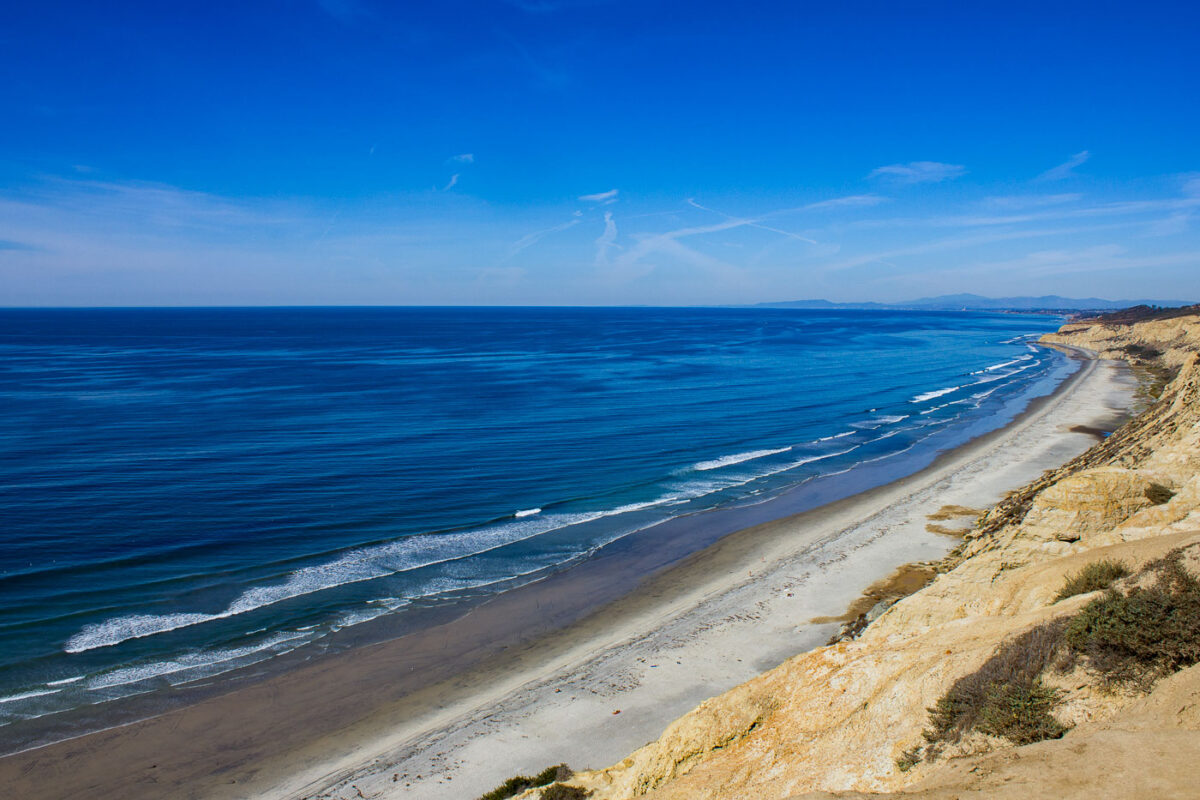
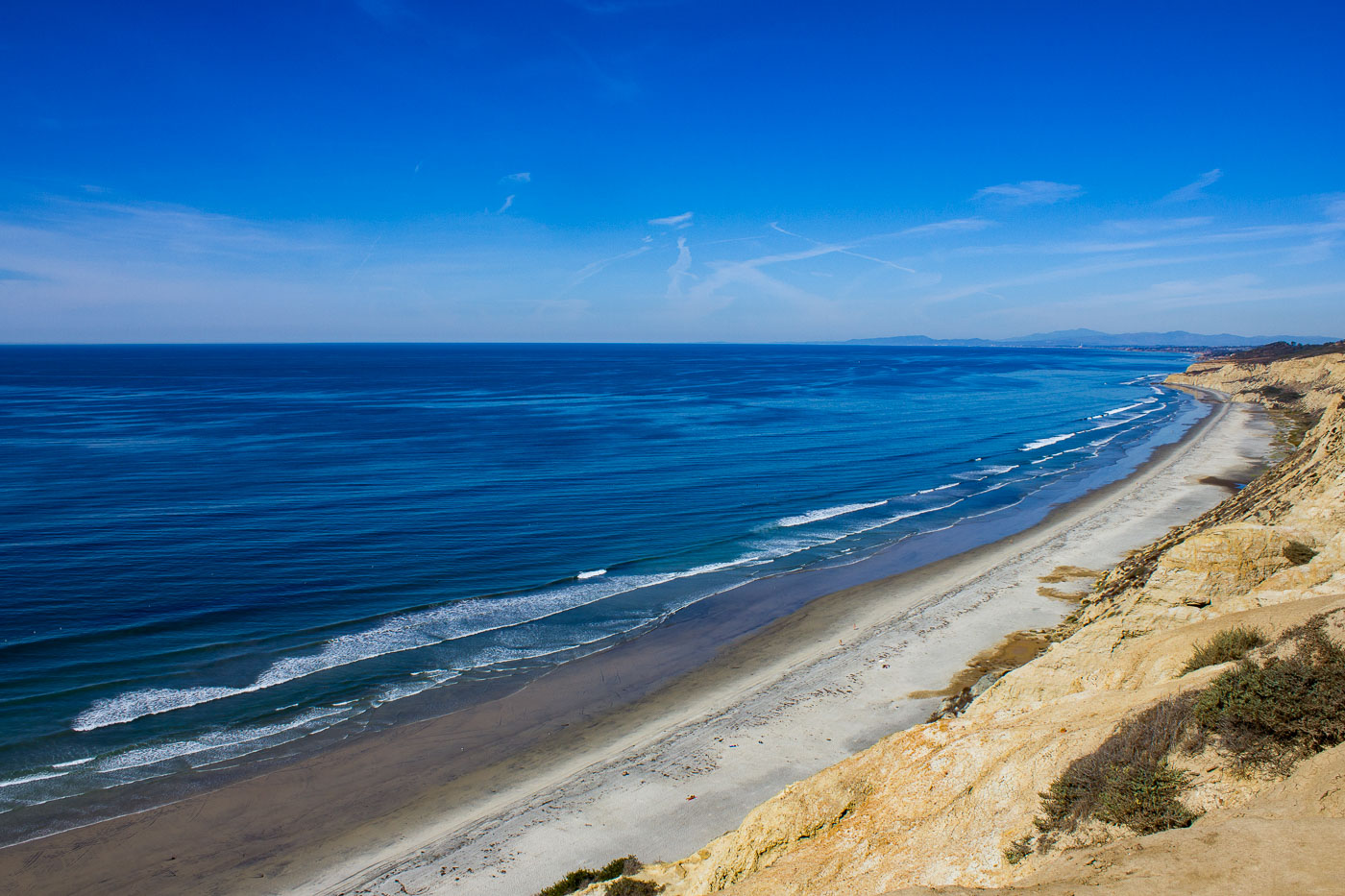
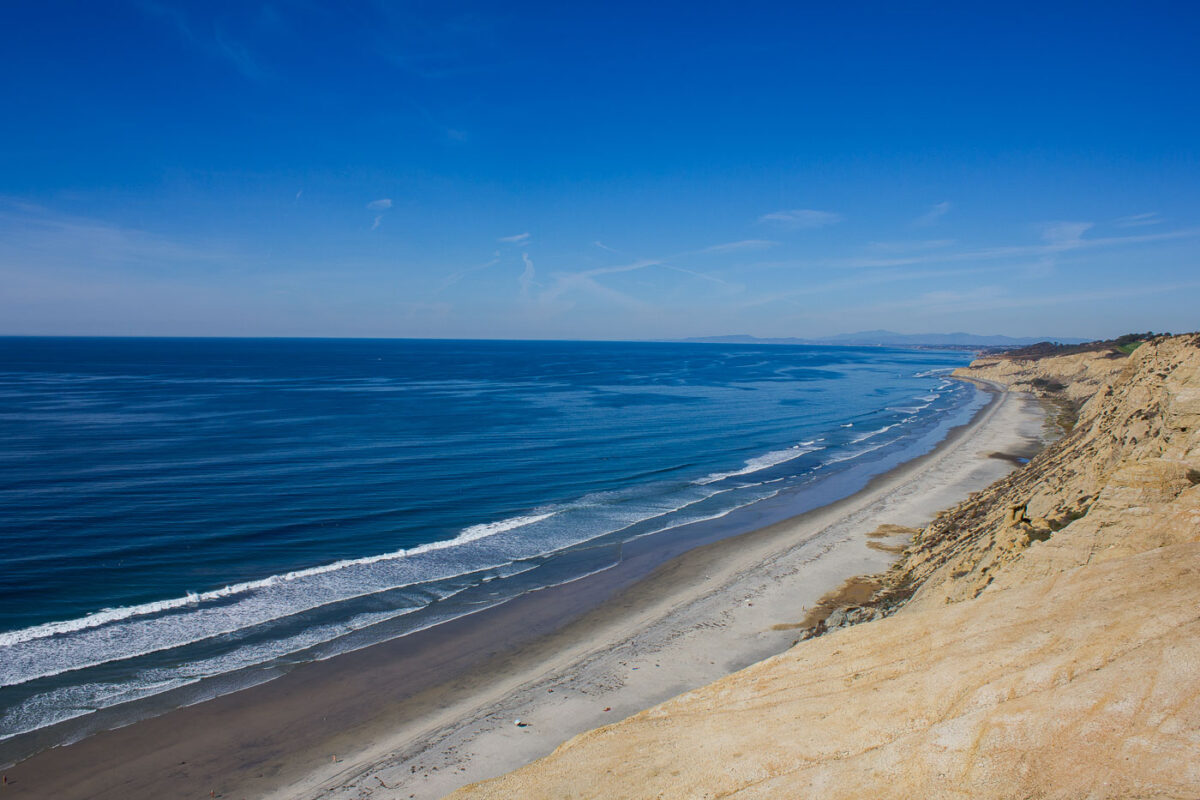
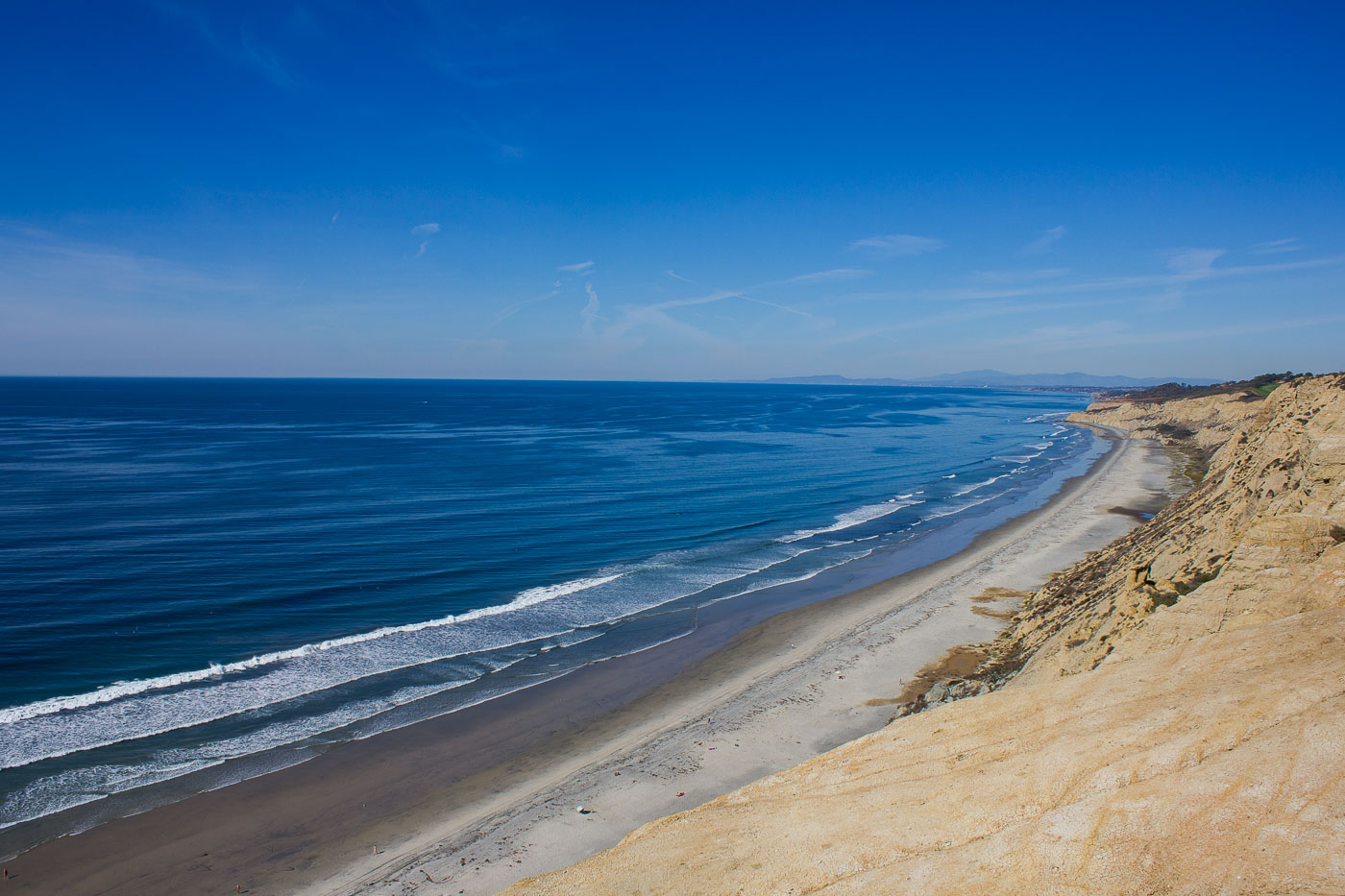
Black's Beach cliffs and the Pacific Ocean in San Diego, California, a popular coastal area known for its geological features and surfing.
Black's Beach, located in San Diego, California, is a popular stretch of coastline known for its dramatic cliffs and the Pacific Ocean. Adjacent to the Torrey Pines Gliderport, the beach is a significant natural area within the city. The cliffs themselves are composed of sedimentary rock, offering a striking geological feature that has been shaped by erosion over time. The beach is utilized by locals and visitors for various activities, including sunbathing and surfing, and is recognized for its scenic beauty.
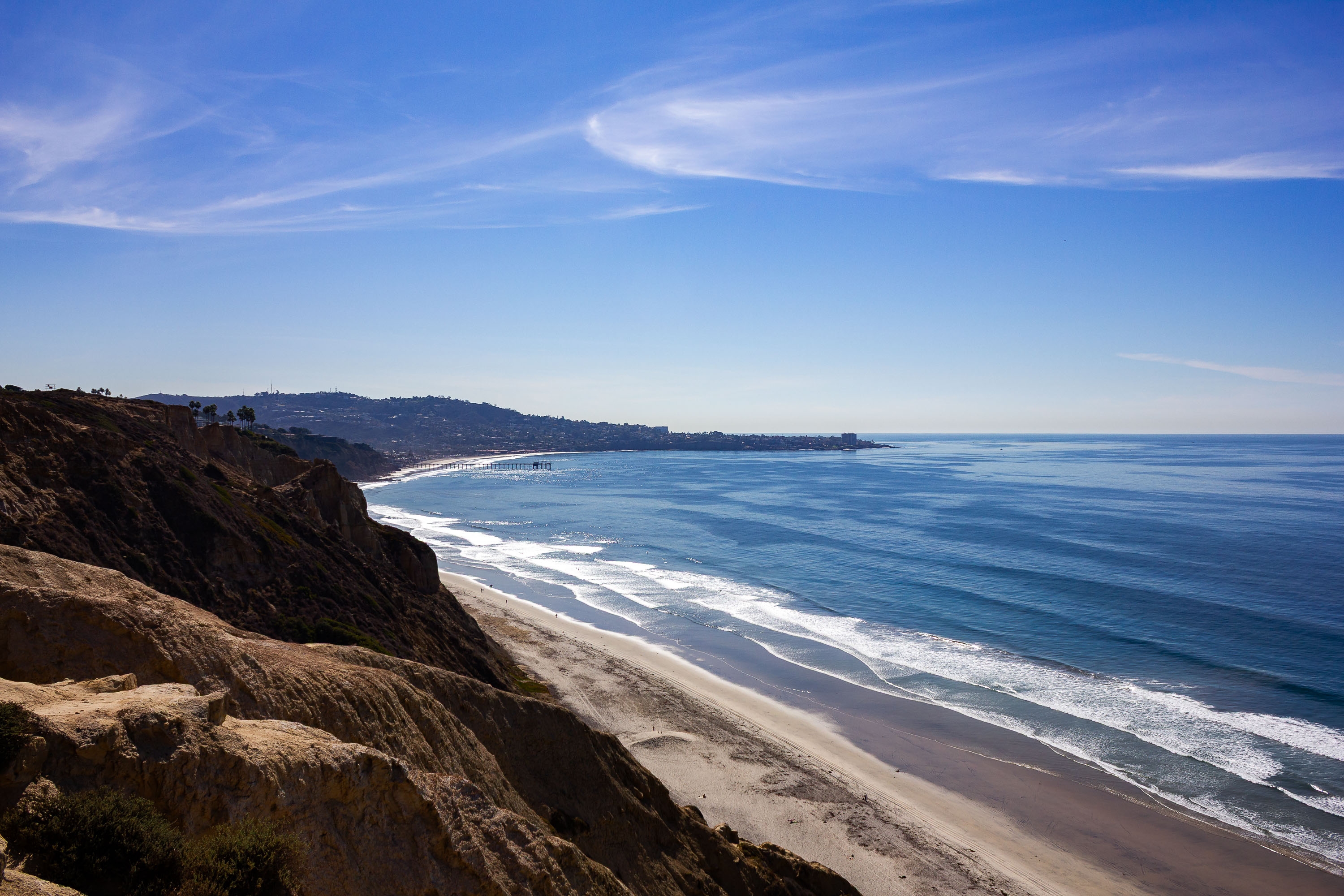
The coastline of Torrey Pines State Natural Reserve in San Diego, California, features cliffs overlooking Black's Beach and the Torrey Pines Gliderport.
The coastline of Torrey Pines State Natural Reserve in San Diego, California, features dramatic cliffs overlooking Black's Beach. The Torrey Pines Gliderport, visible atop the cliffs, has been a popular site for paragliding and hang gliding since the 1930s. Below, Black's Beach is known for its rugged beauty and is a popular spot for surfers and sunbathers, though access can be challenging due to the steep terrain. The area is also recognized for its unique Torrey pine trees, the rarest pine species in the United States.
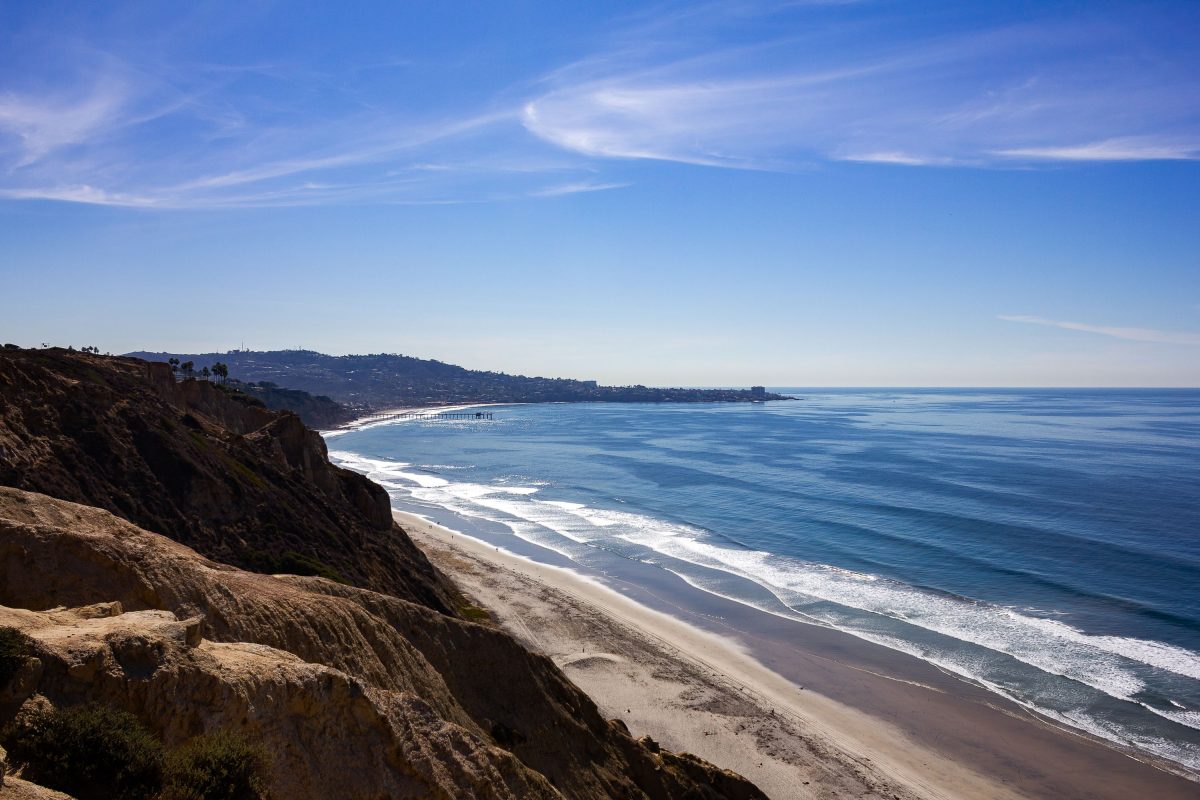
Torrey Pines State Natural Reserve in San Diego, California, features sandstone cliffs overlooking the Pacific Ocean and a popular beach.
The Torrey Pines State Natural Reserve in San Diego, California, features dramatic coastal cliffs overlooking the Pacific Ocean. These sandstone cliffs, formed over millions of years, are a significant geological formation and a protected natural area. The adjacent beach is a popular destination for visitors, while the cliffs themselves are known for their hiking trails and scenic overlooks, including the Torrey Pines Gliderport, which offers paragliding and hang gliding opportunities.
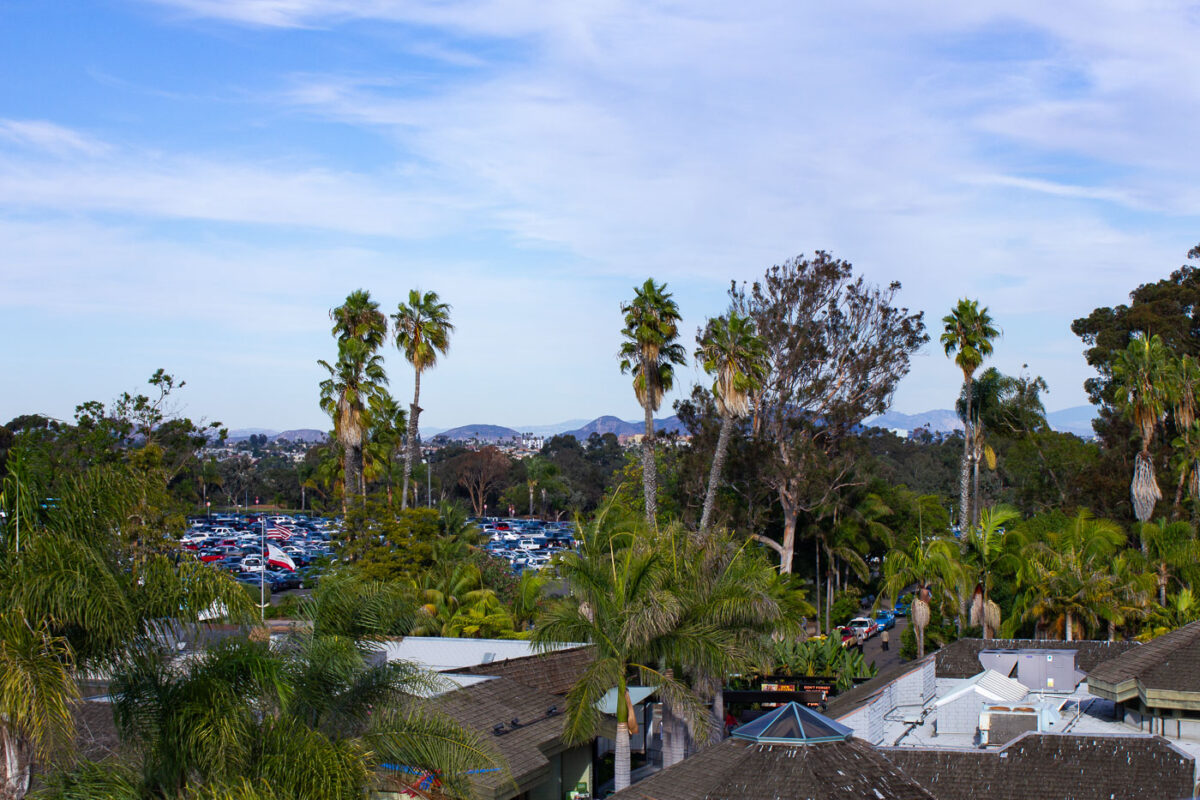
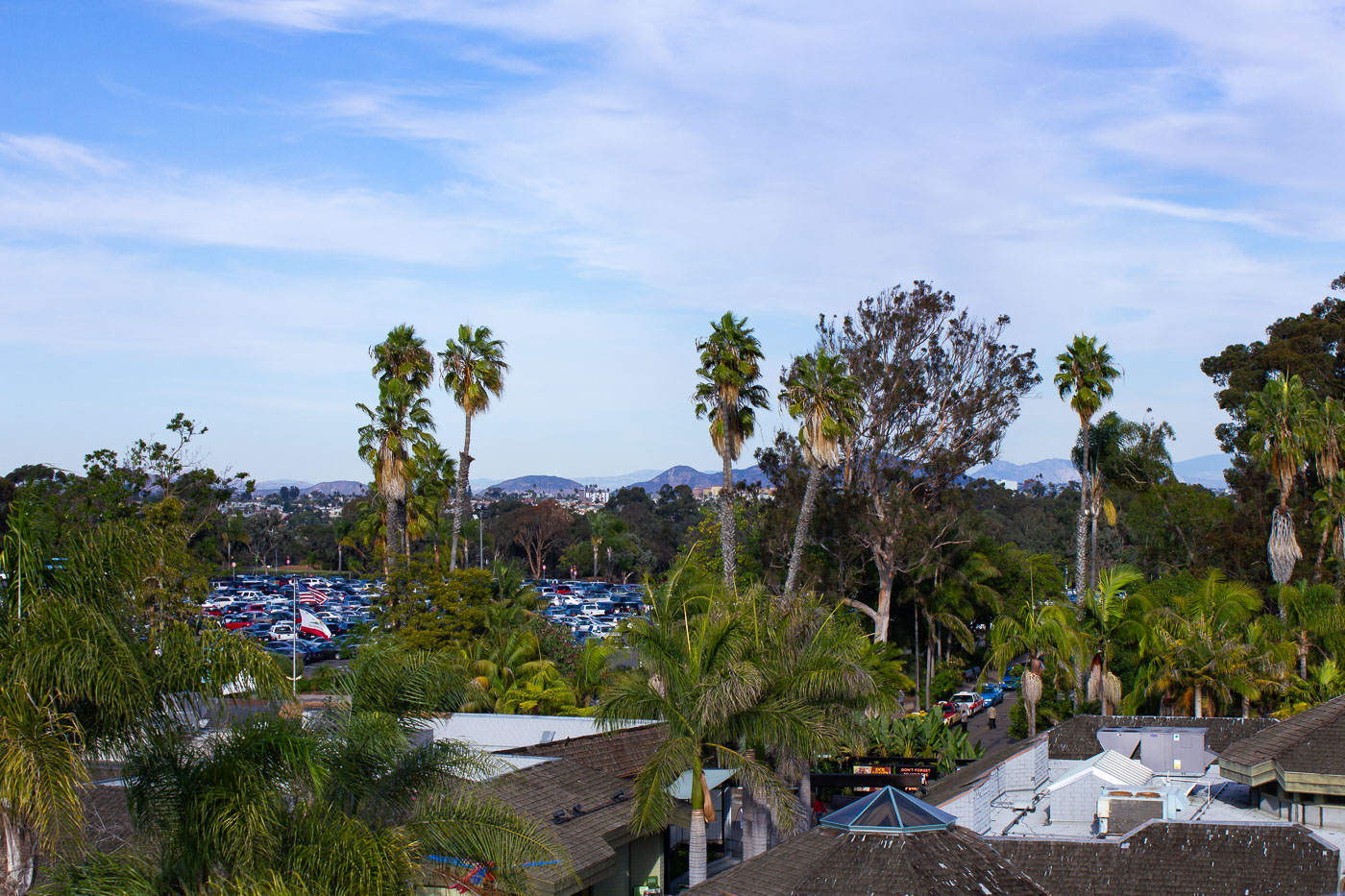
The San Diego Zoo parking lot, surrounded by palm trees, provides essential visitor access to the zoological park in California.
The San Diego Zoo parking lot, seen here with numerous vehicles, serves as essential infrastructure for visitors to the popular zoological park. Established in 1916, the San Diego Zoo is renowned for its extensive collection of animals and its commitment to conservation. The surrounding palm trees are characteristic of Southern California's climate and contribute to the zoo's tropical ambiance. This parking area facilitates access for the millions of guests who visit the zoo annually, making it a vital component of the visitor experience.
A giant panda rests in its habitat at the San Diego Zoo, California. The exhibit is designed to replicate the animal's natural environment with climbing structures and bamboo.
A giant panda rests within its habitat at the San Diego Zoo in California. The zoo, established in 1916, is a prominent zoological park known for its conservation efforts and diverse animal collections. Its panda exhibit aims to replicate the natural environment of these endangered animals, providing them with climbing structures and bamboo, essential elements of their native habitat in China. The San Diego Zoo has been a significant institution in animal welfare and research for over a century.
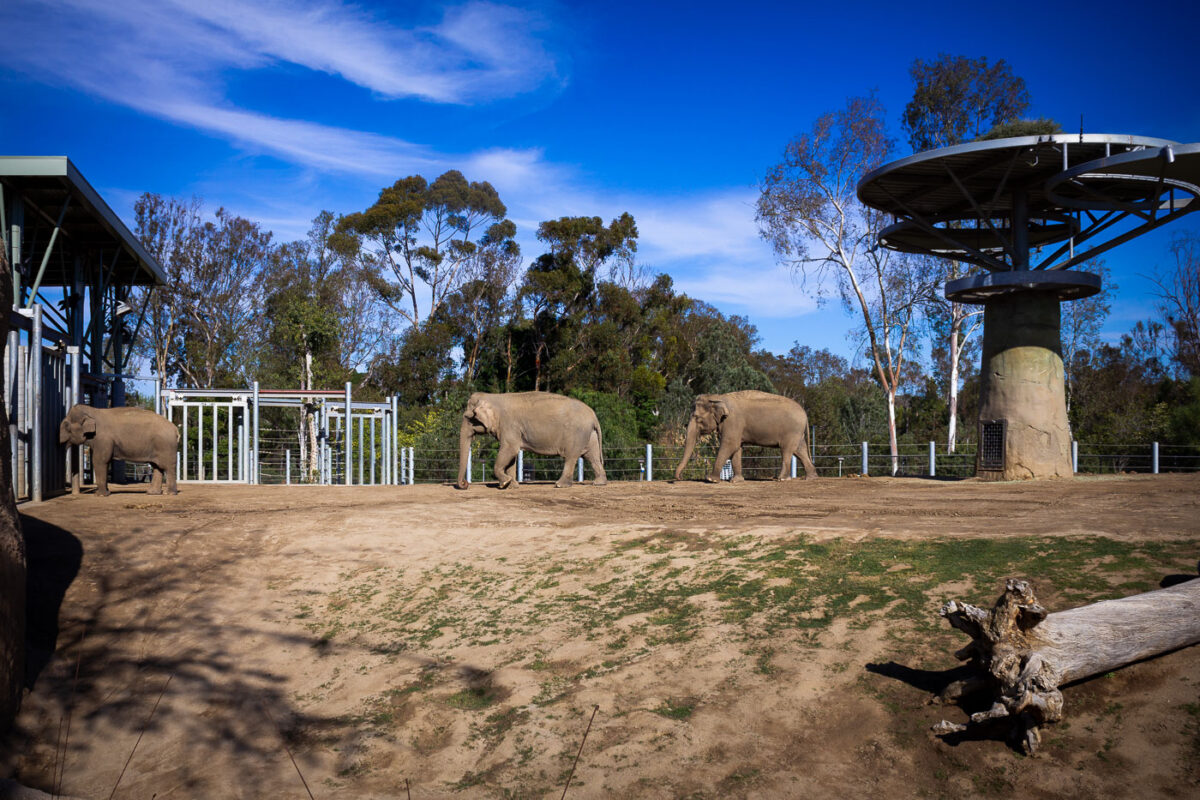
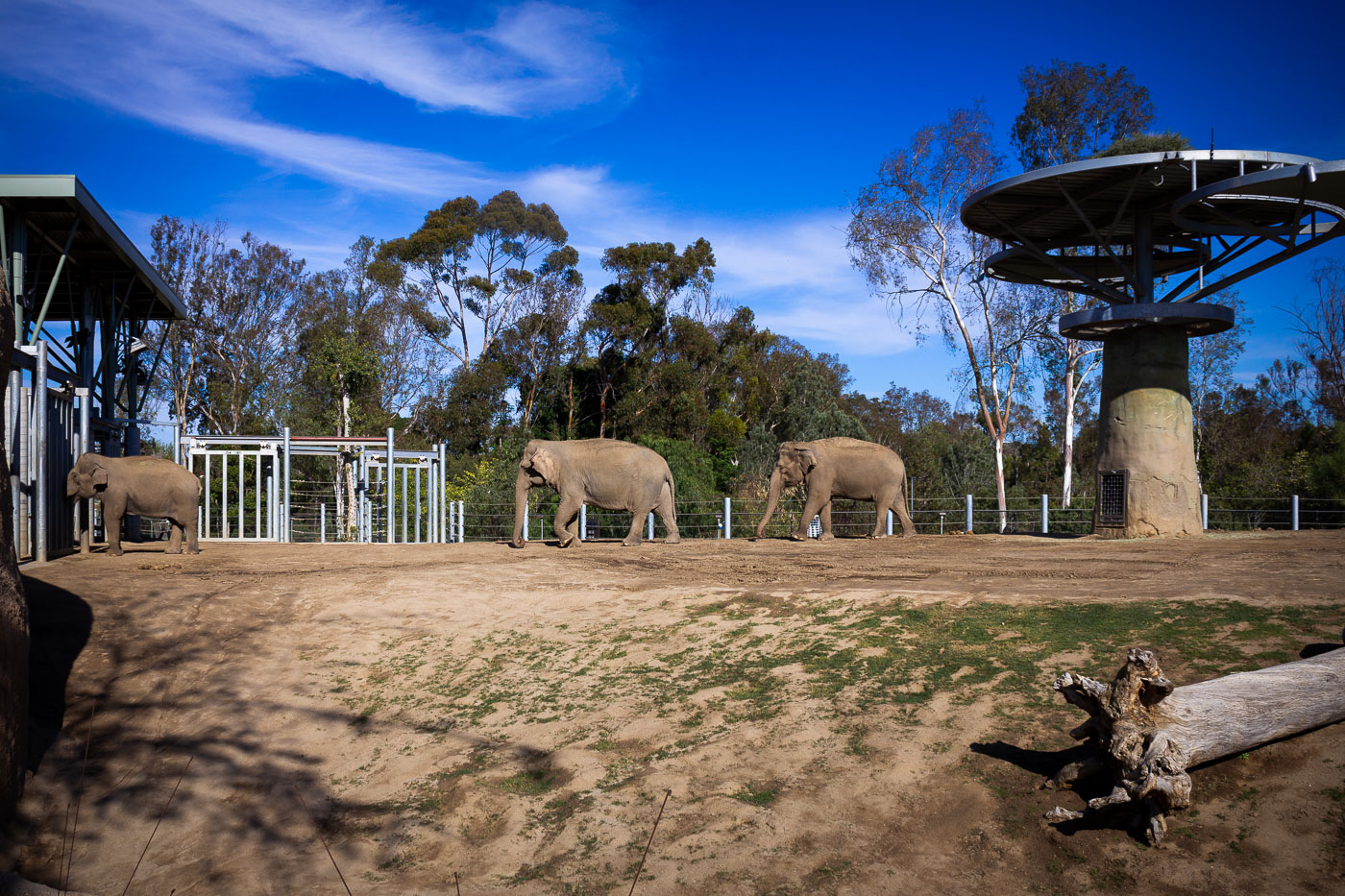
Asian elephants walk in their enclosure at the San Diego Zoo, California, known for its naturalistic habitats and conservation efforts.
Elephants roam within their enclosure at the San Diego Zoo in California. The zoo, established in 1916, is renowned for its conservation efforts and its expansive, naturalistic habitats designed to mimic the animals' native environments. This particular exhibit showcases Asian elephants, a species facing significant threats in the wild due to habitat loss and poaching. The zoo's commitment to education and research aims to foster greater understanding and support for elephant conservation worldwide.
A lifeguard tower stands on a California beach at sunset, overlooking the Pacific Ocean. These towers are vital for ensuring beach safety.
A lifeguard tower stands on a beach along the Pacific Ocean in California as the sun sets. These towers are a common feature of California's coastline, serving as elevated posts for lifeguards to monitor swimmers and ensure beach safety. Their presence highlights the state's extensive public beach access and the ongoing efforts to manage and protect its popular coastal areas.
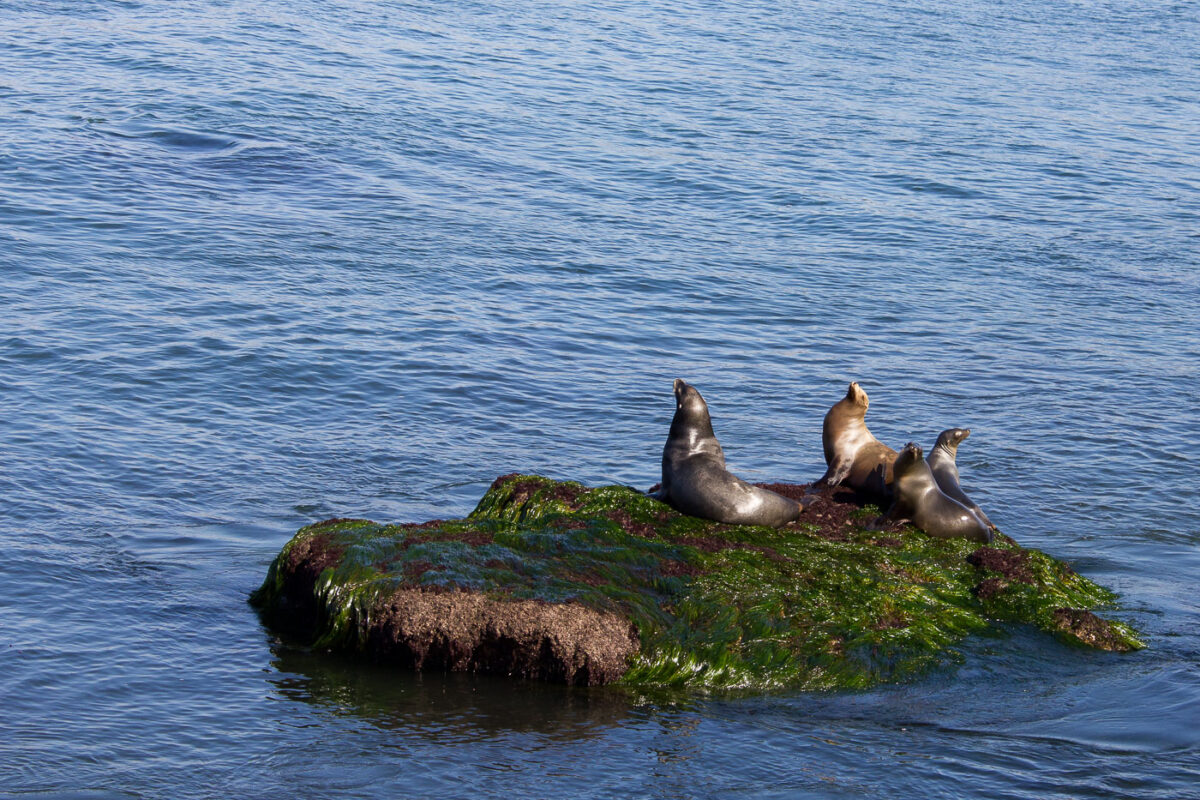
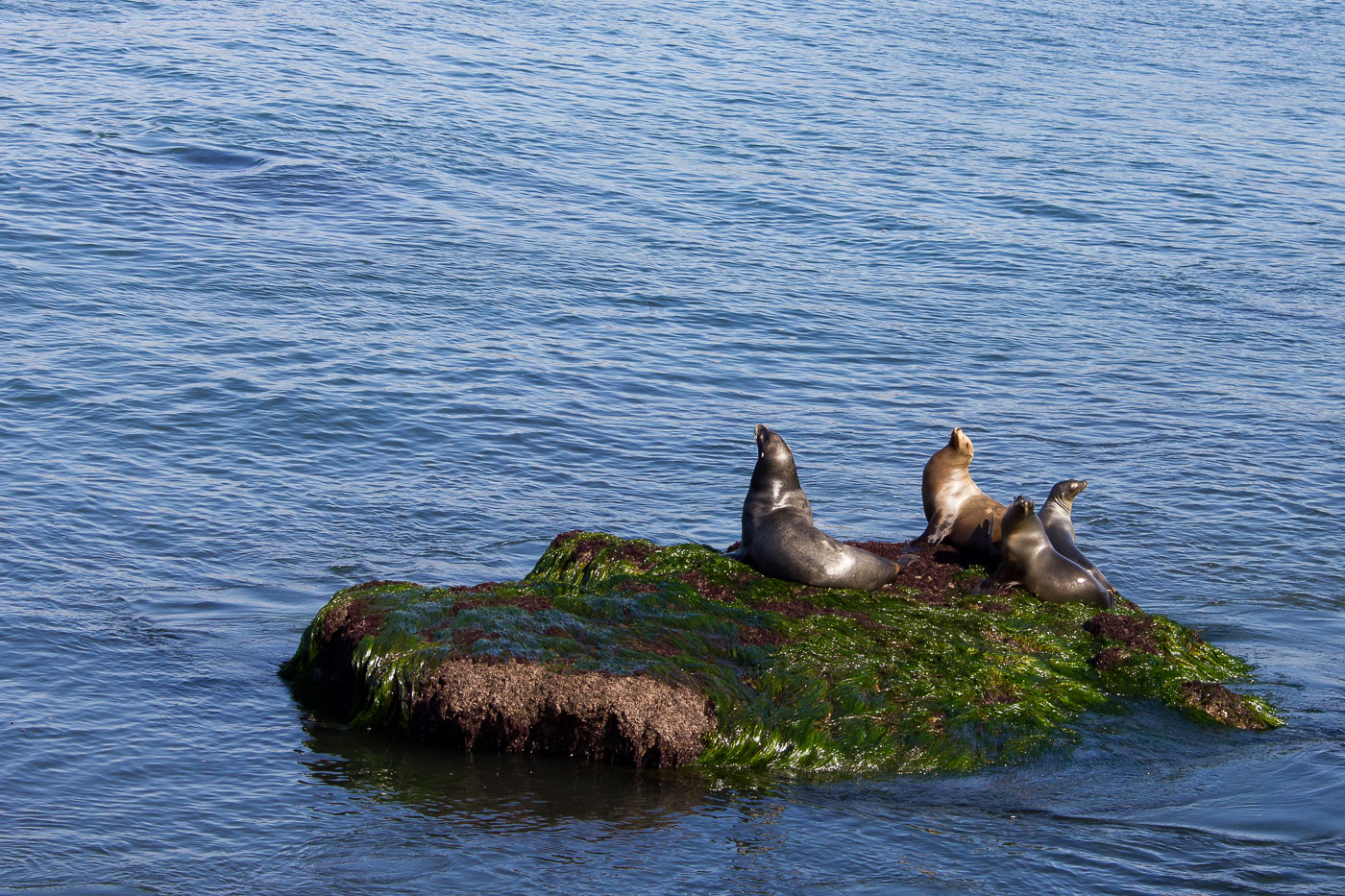
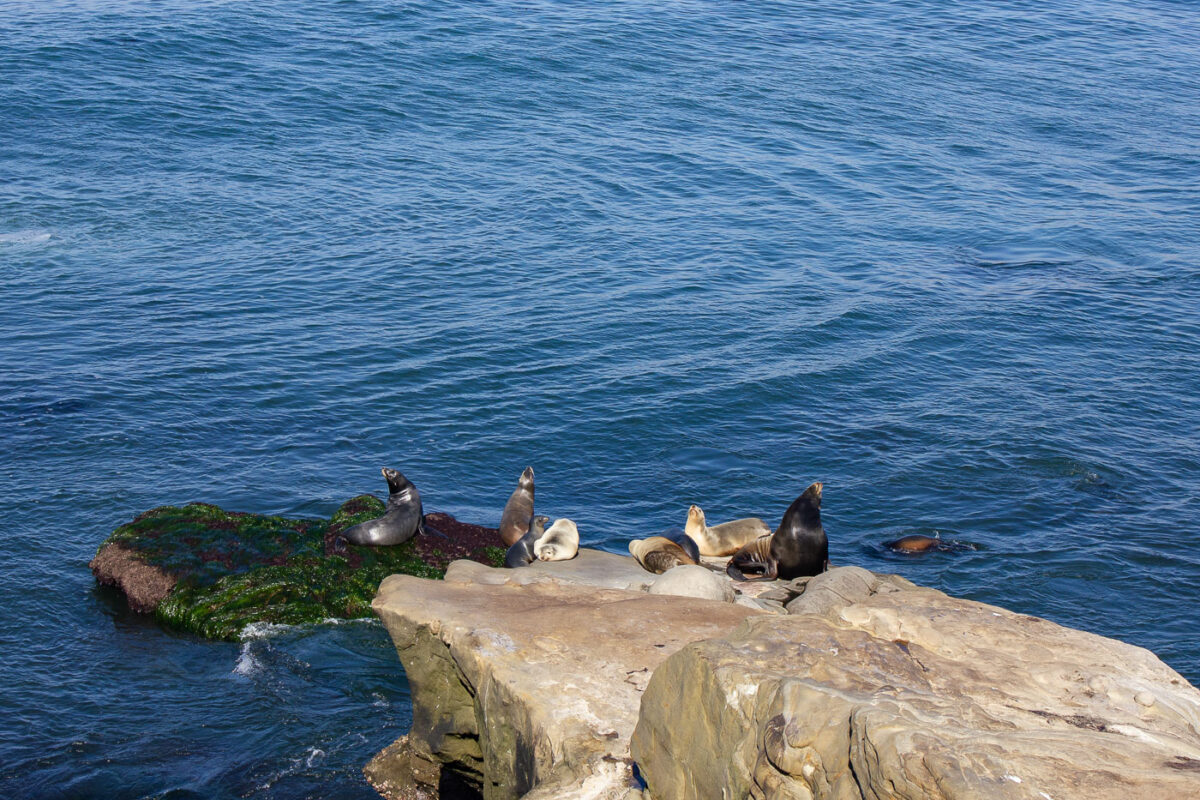
California sea lions rest on an algae-covered rock in the Pacific Ocean off La Jolla, California, a known haul-out site for marine mammals.
California sea lions rest on a rock covered in algae off the coast of La Jolla, California. This area of the Pacific Ocean is a known haul-out site for pinnipeds, including California sea lions (Zalophus californianus) and harbor seals (Phoca vitulina). La Jolla's coastline is renowned for its marine life, attracting both researchers and visitors interested in observing these animals in their natural habitat. The presence of algae on the rocks indicates a healthy marine ecosystem supporting the local wildlife.
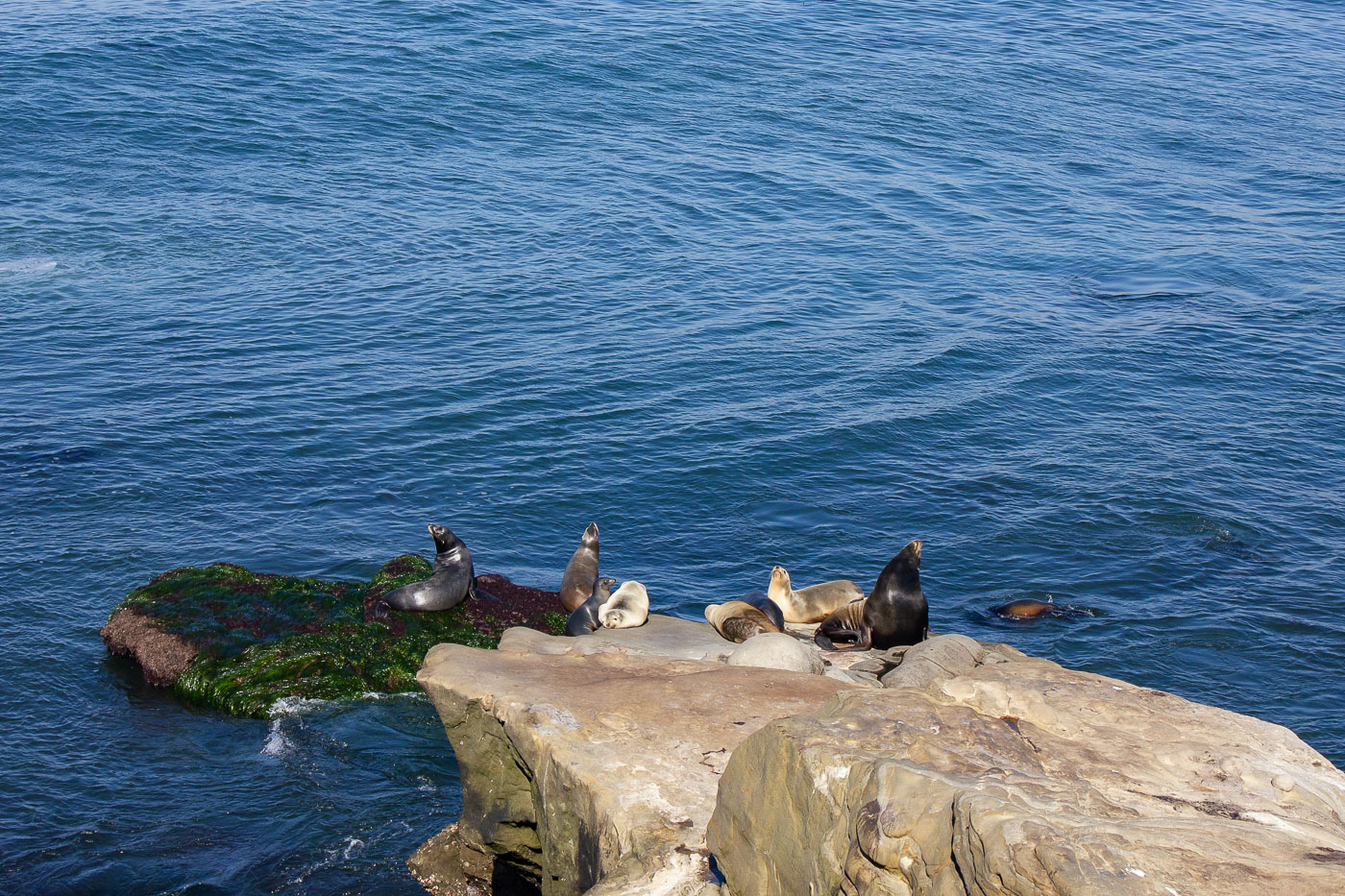
California sea lions rest on the rocky shores of La Jolla, California, a known haul-out site on the Pacific coast.
California sea lions (Zalophus californianus) rest on the rocky shores of La Jolla, California. This coastal area is a well-known haul-out site for these marine mammals, providing a crucial resting and social gathering place. The presence of sea lions is a significant aspect of the natural heritage of the La Jolla coastline, attracting visitors and contributing to the area's ecological identity. Their behavior here reflects natural resting patterns essential for their survival and well-being in the Pacific Ocean.
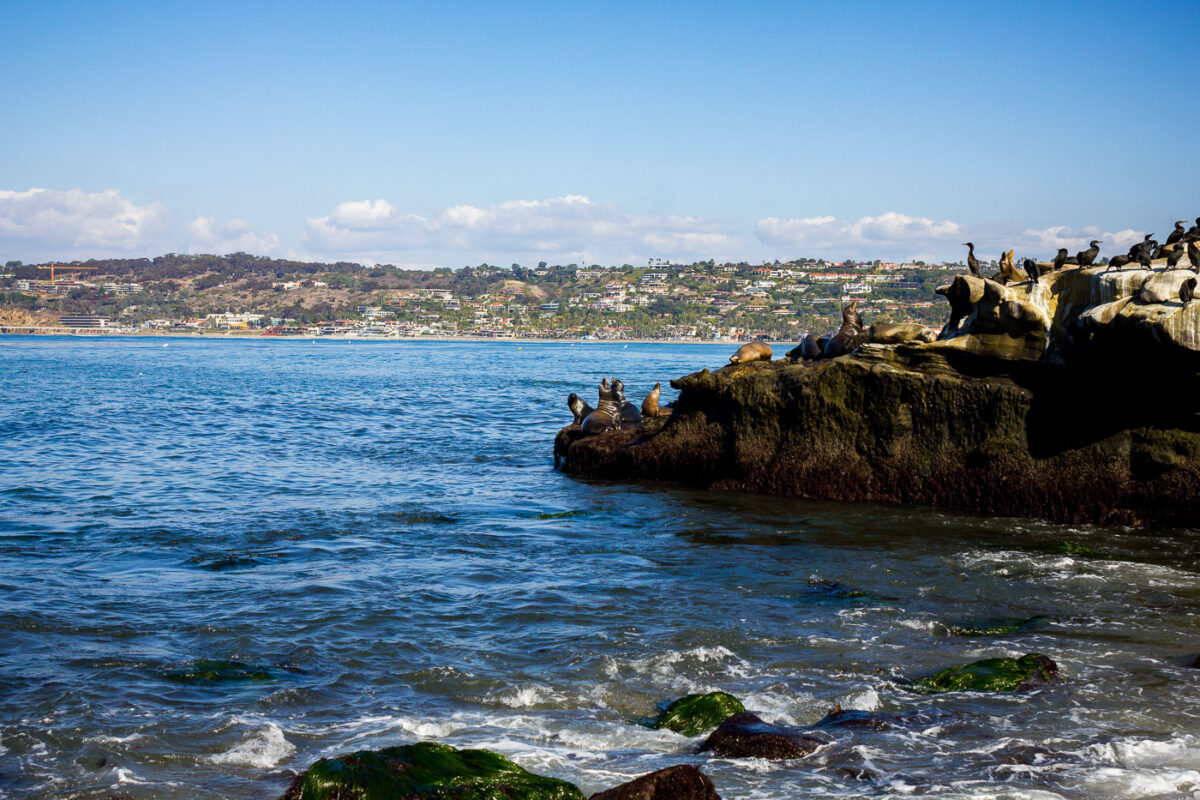
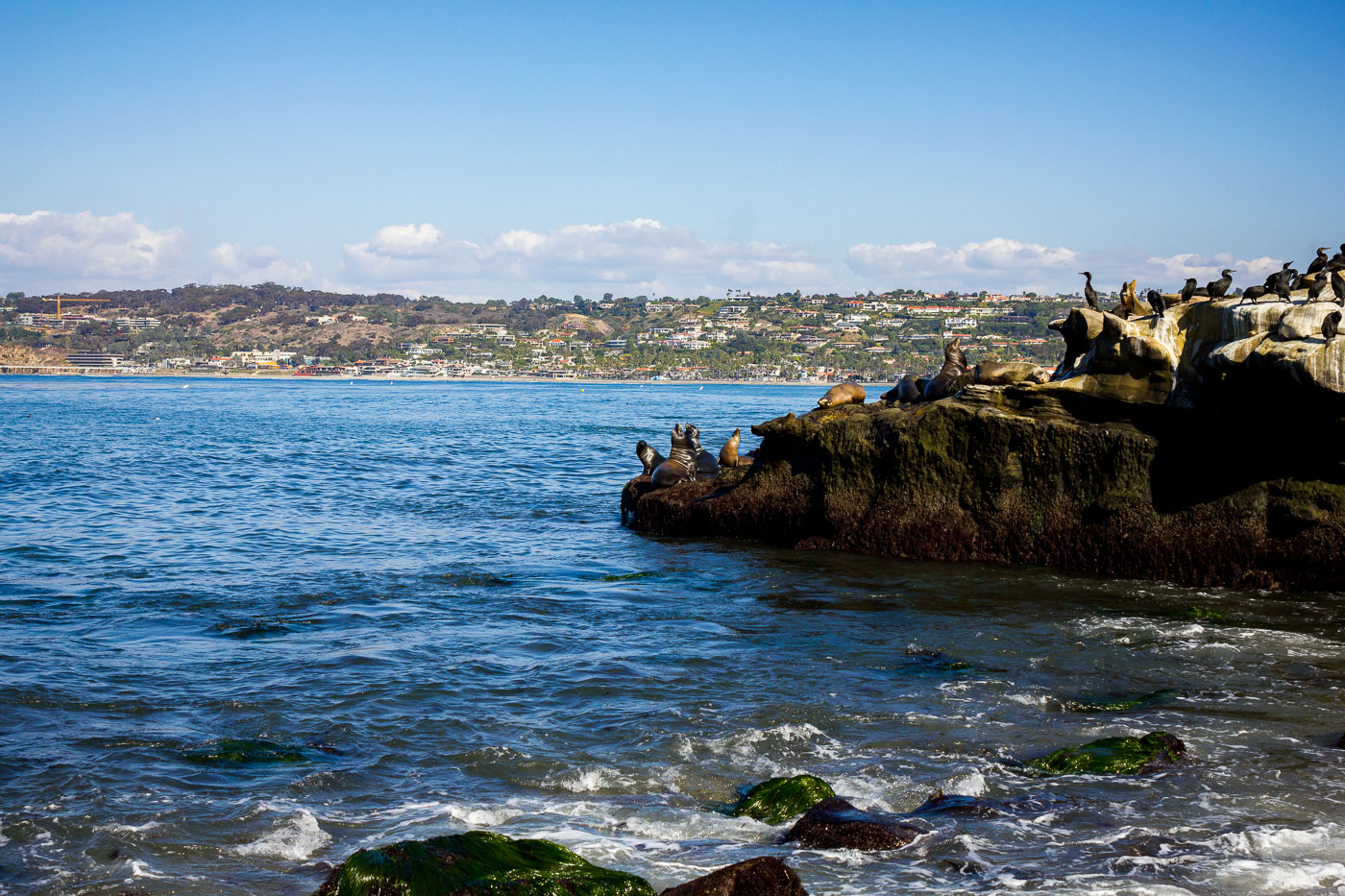
Sea lions and cormorants rest on rocks along the La Jolla coastline in San Diego, California, a vital habitat for marine wildlife.
Sea lions and cormorants rest on the rocky shores of La Jolla, California. This coastal area, part of the San Diego coastline, is known for its abundant marine wildlife, including California sea lions and various seabirds. The natural rock formations provide essential resting and breeding grounds for these animals, contributing to the ecological significance of the La Jolla coastline. The presence of these species highlights the area's importance as a habitat within the Pacific Ocean ecosystem.
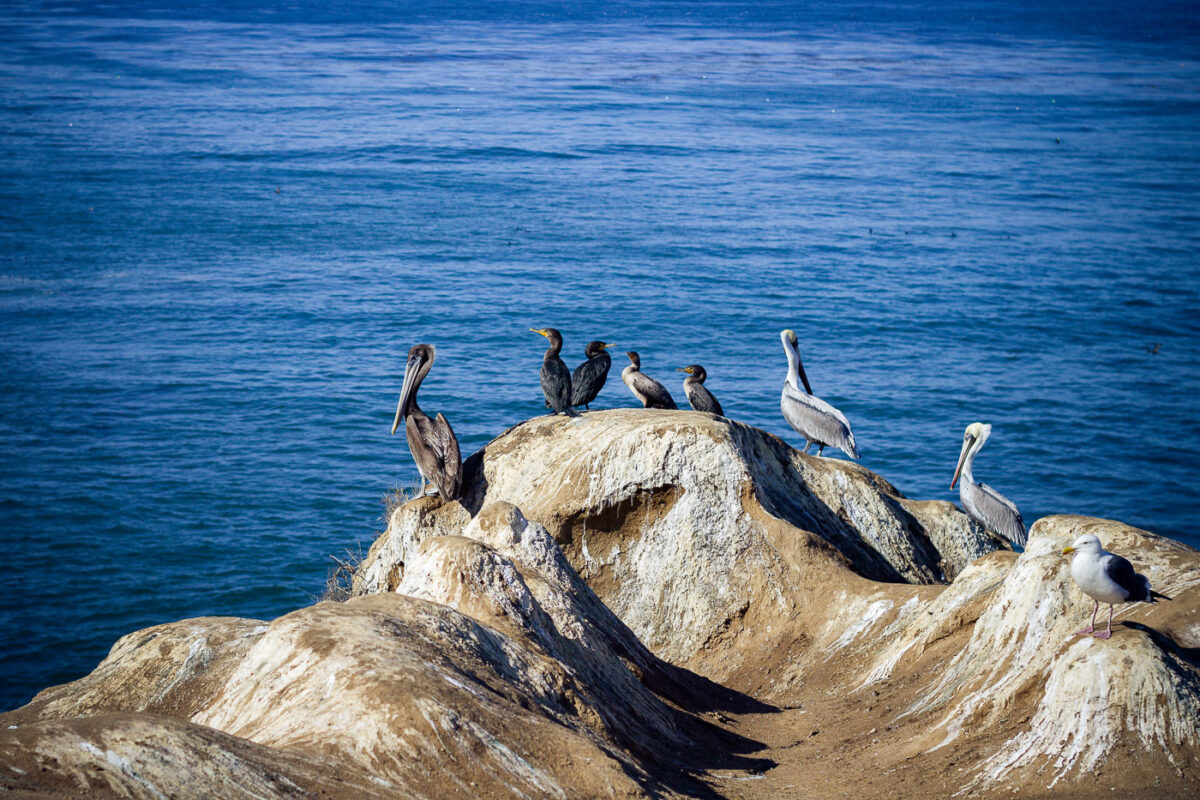
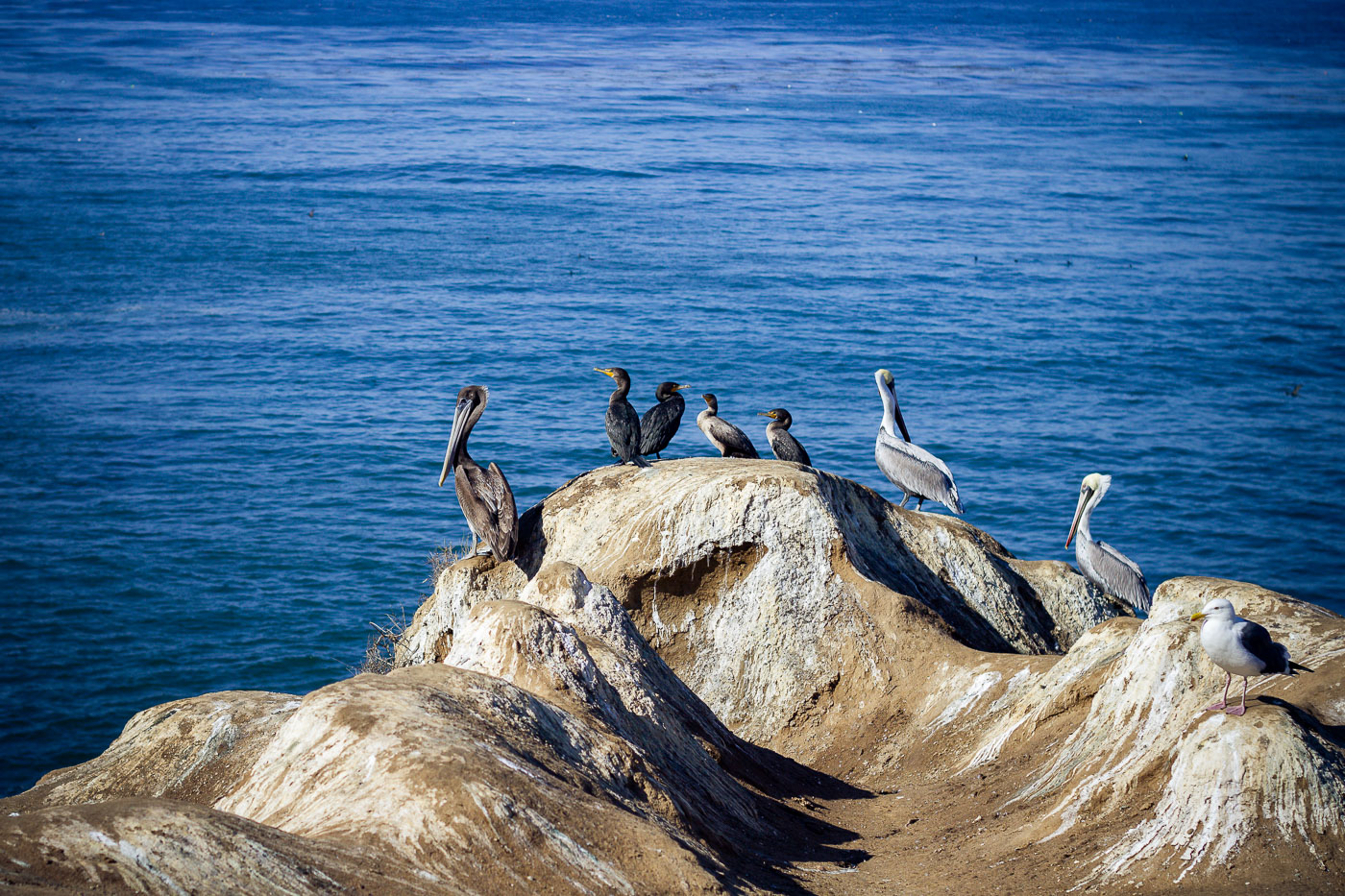
Brown pelicans and cormorants rest on coastal rocks in La Jolla, California, a vital resting and nesting site for seabirds along the Pacific Ocean.
Brown pelicans and cormorants perch on coastal rocks in La Jolla, California. These rocky outcroppings along the Pacific Ocean serve as vital resting and nesting sites for various seabird species. La Jolla, a coastal community within San Diego, is known for its marine life and protected ecological reserves, which support populations of these birds. The presence of pelicans and cormorants highlights the area's significance as a marine habitat.

Built in Minneapolis

Photographs showcasing change over time

Browse by location, move through long-running series, or start with recent work.